Empathetic skill development through emotion recognition, cultural diversity appreciation, and bias confrontation. Targets multi-perspective analysis to support respectful interactions and complex social responses.
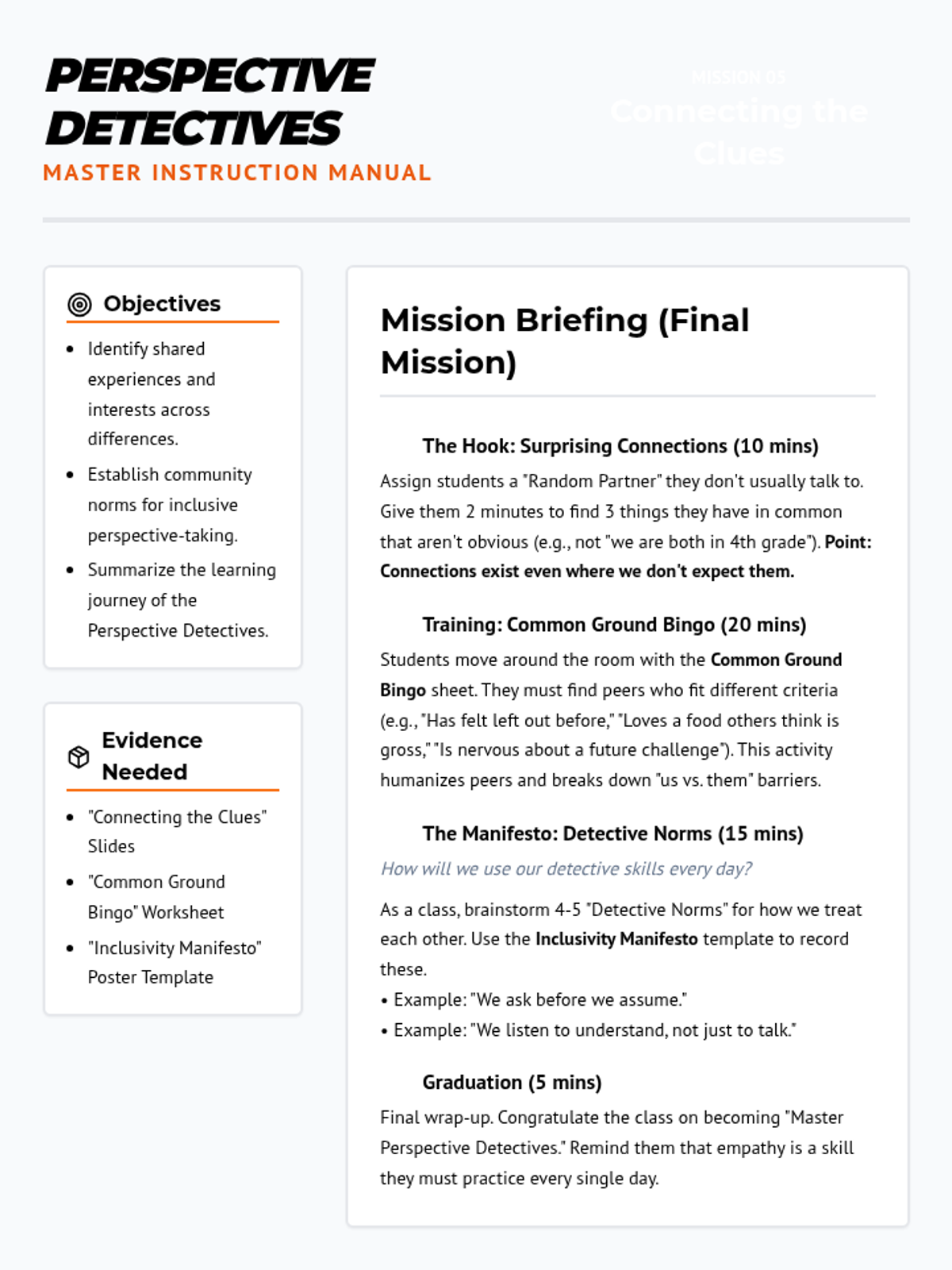
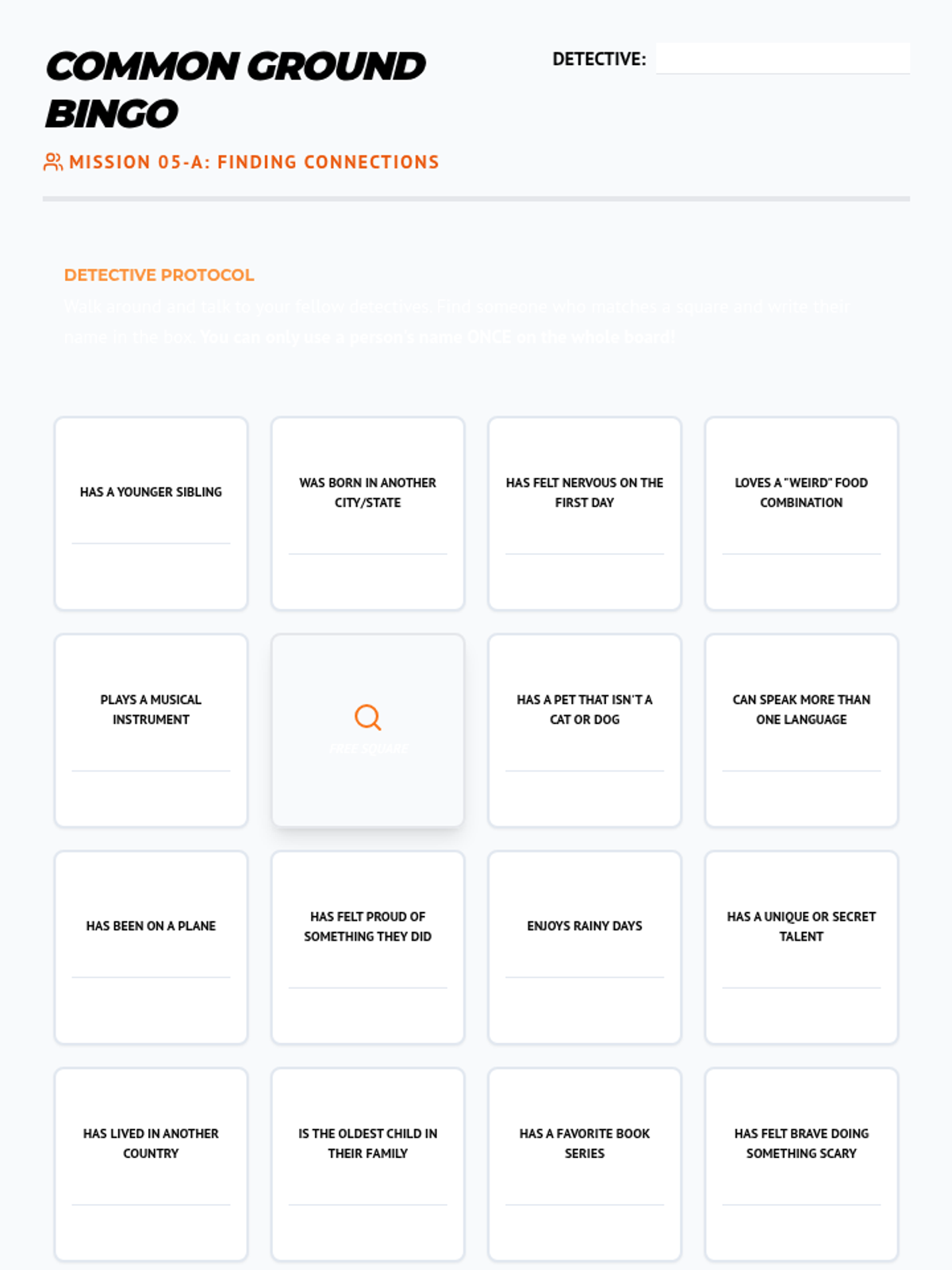
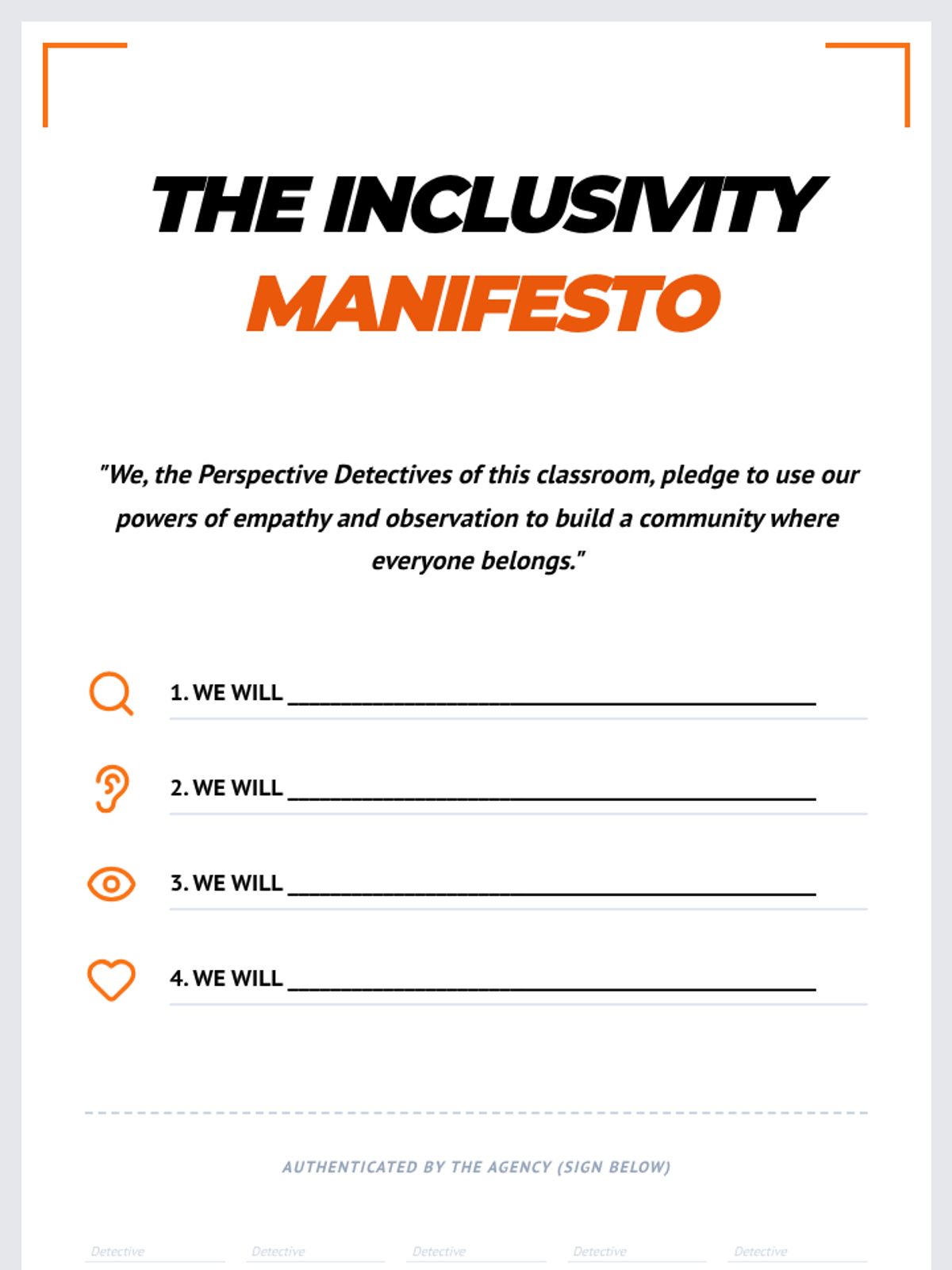
Students discover shared experiences across differences and collaborate to establish inclusive community norms.
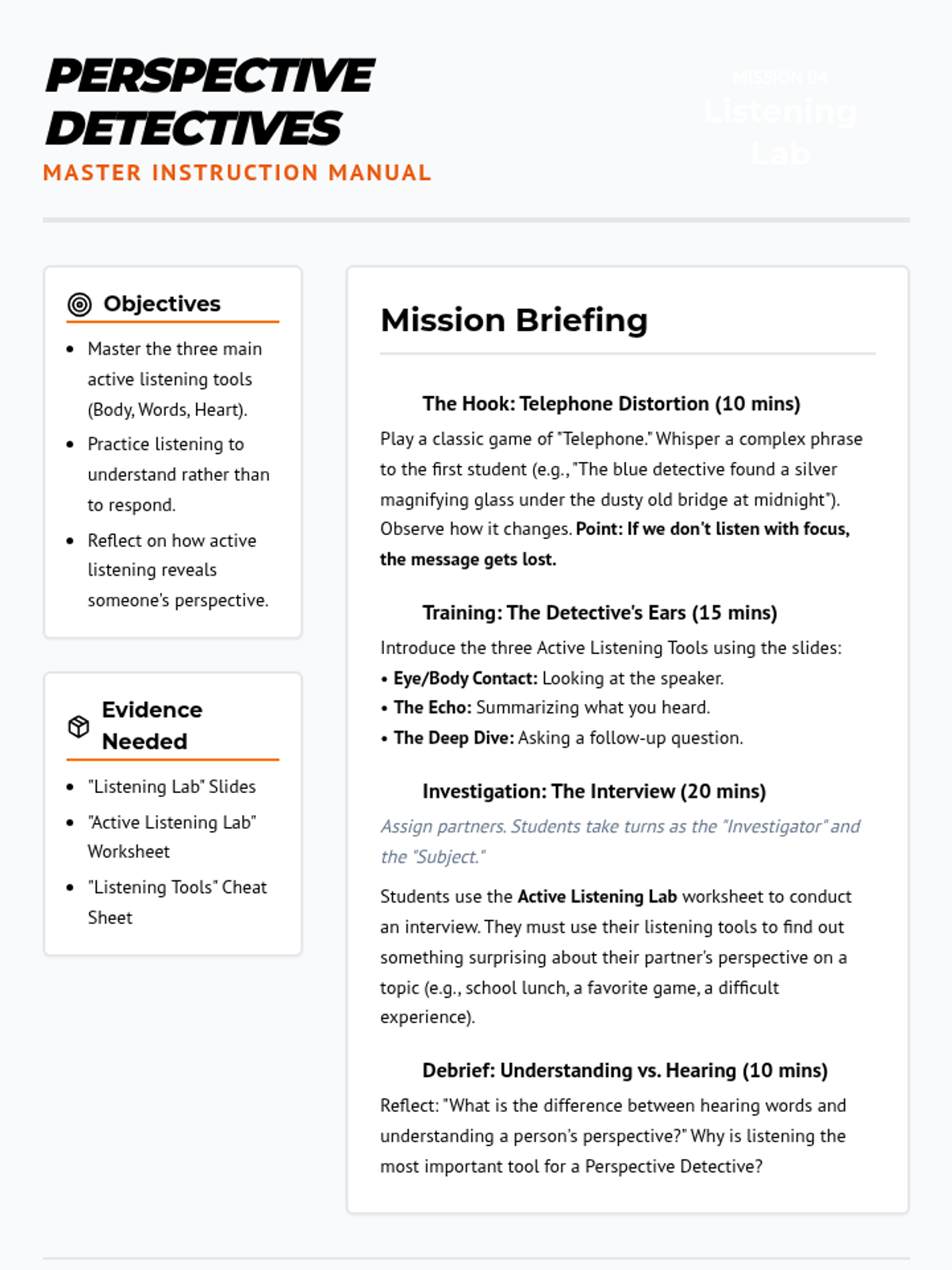
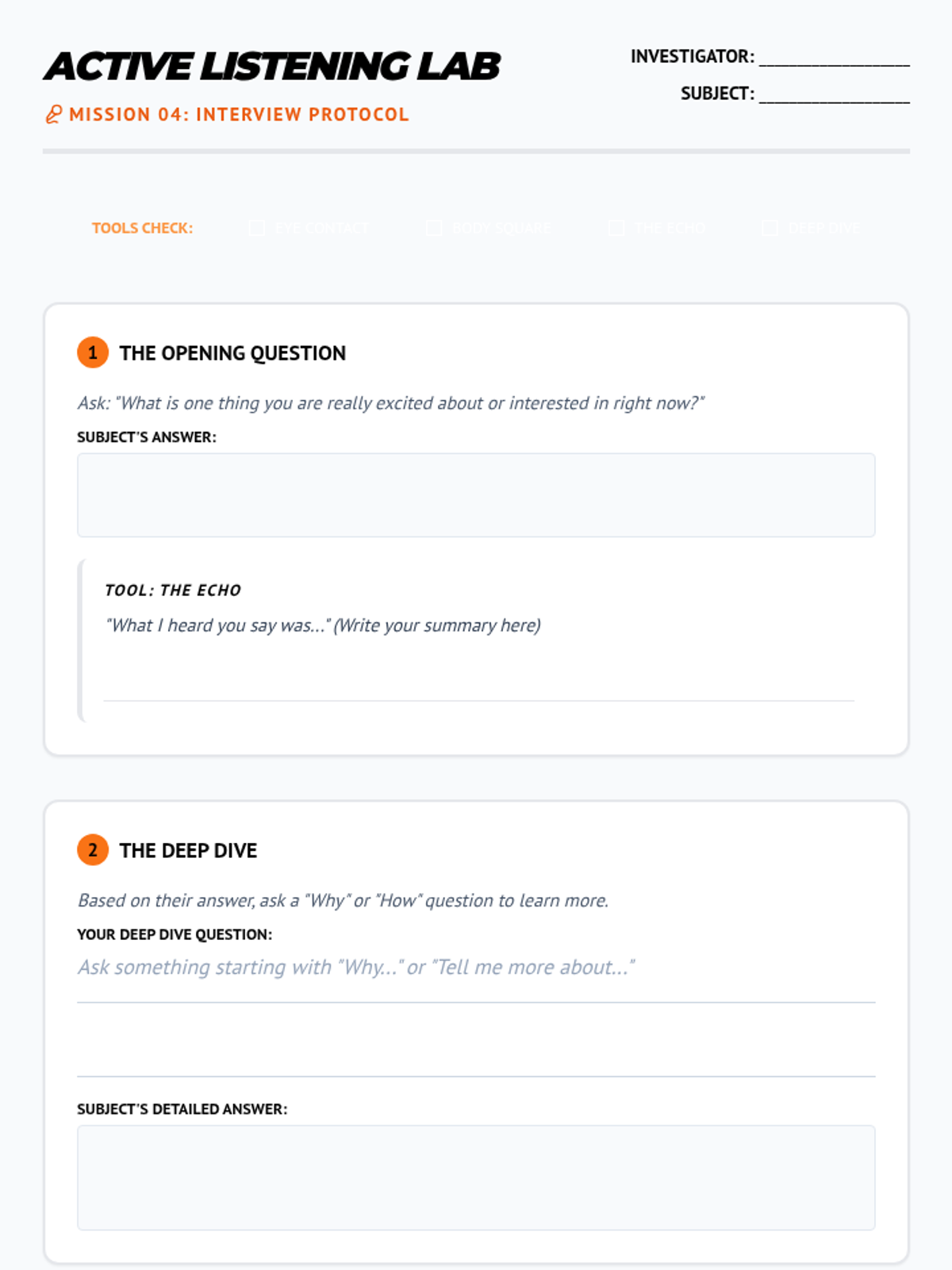
Students master the tools of active listening to truly understand others' viewpoints, practicing through structured interviews.
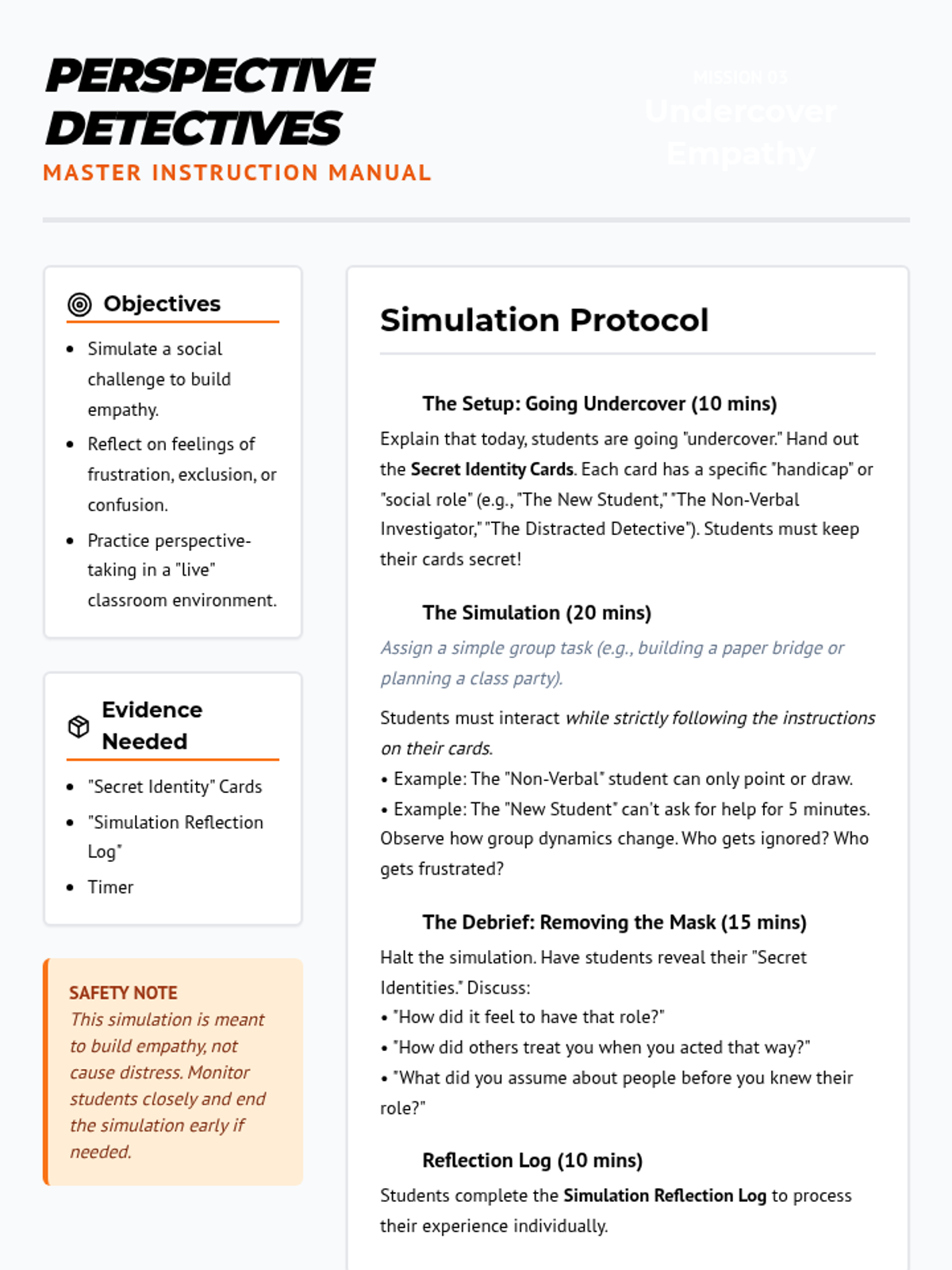
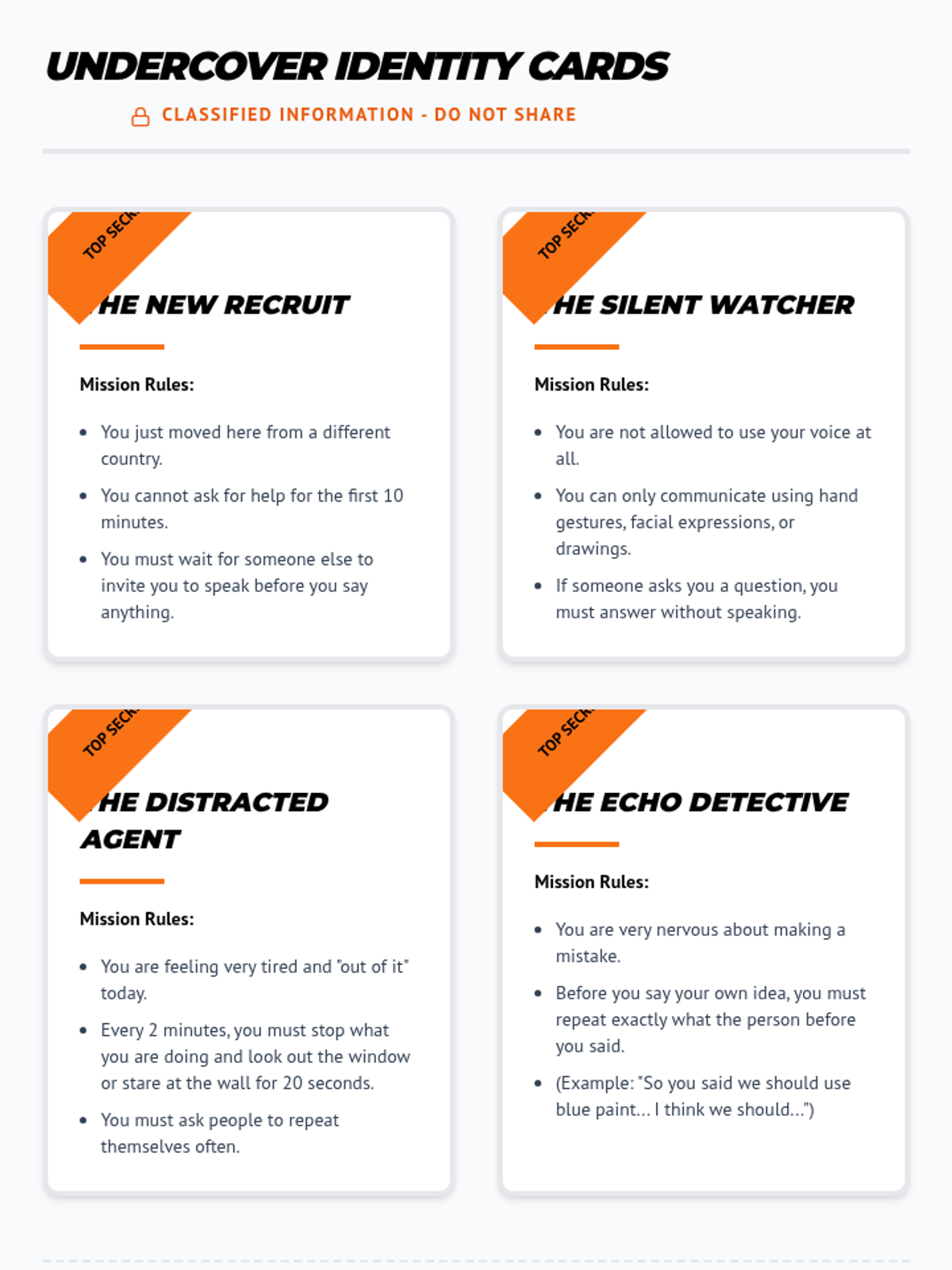
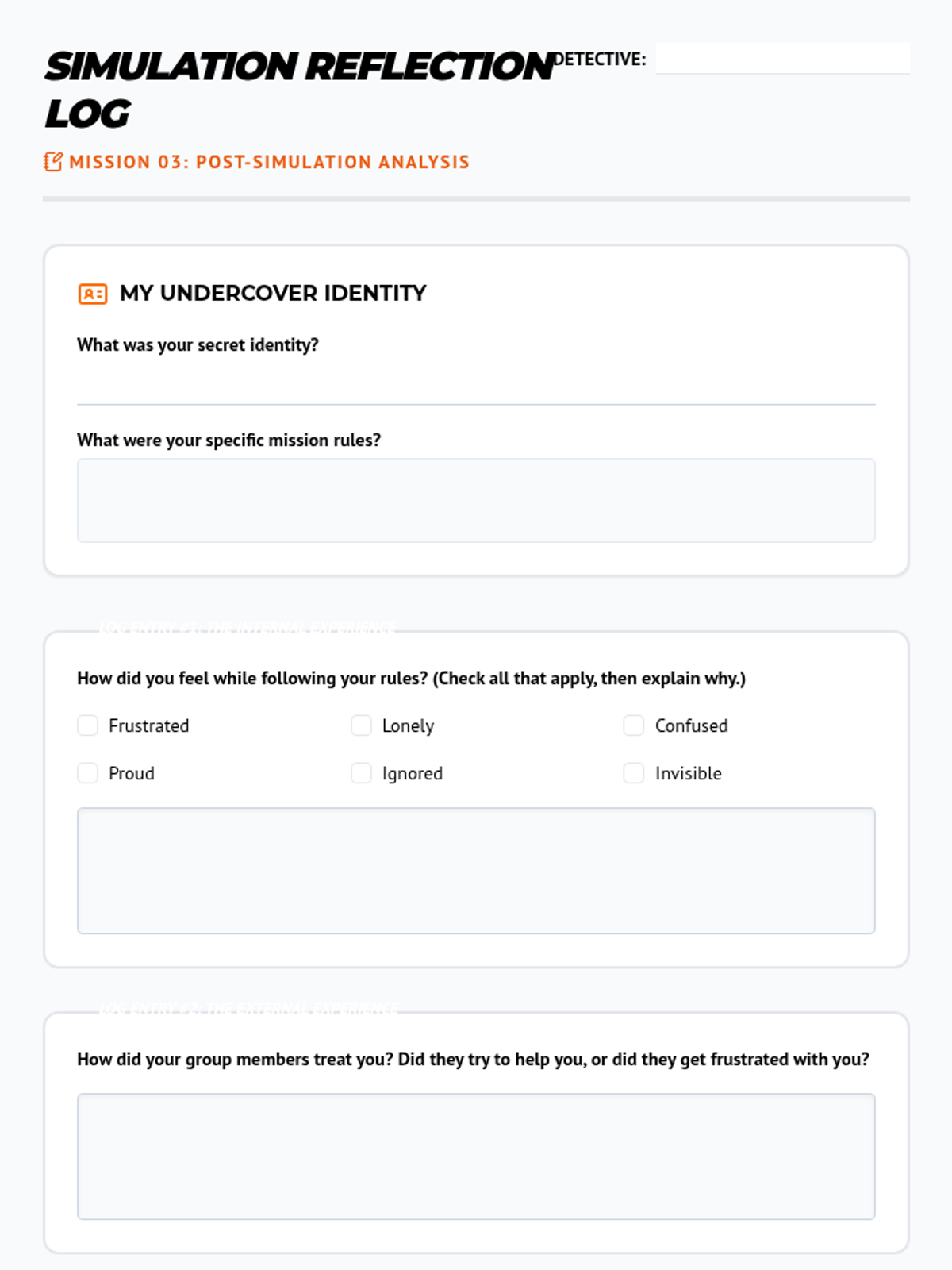
Students navigate a school day with 'secret identities' that present specific challenges, reflecting on the experience to build deep empathy.
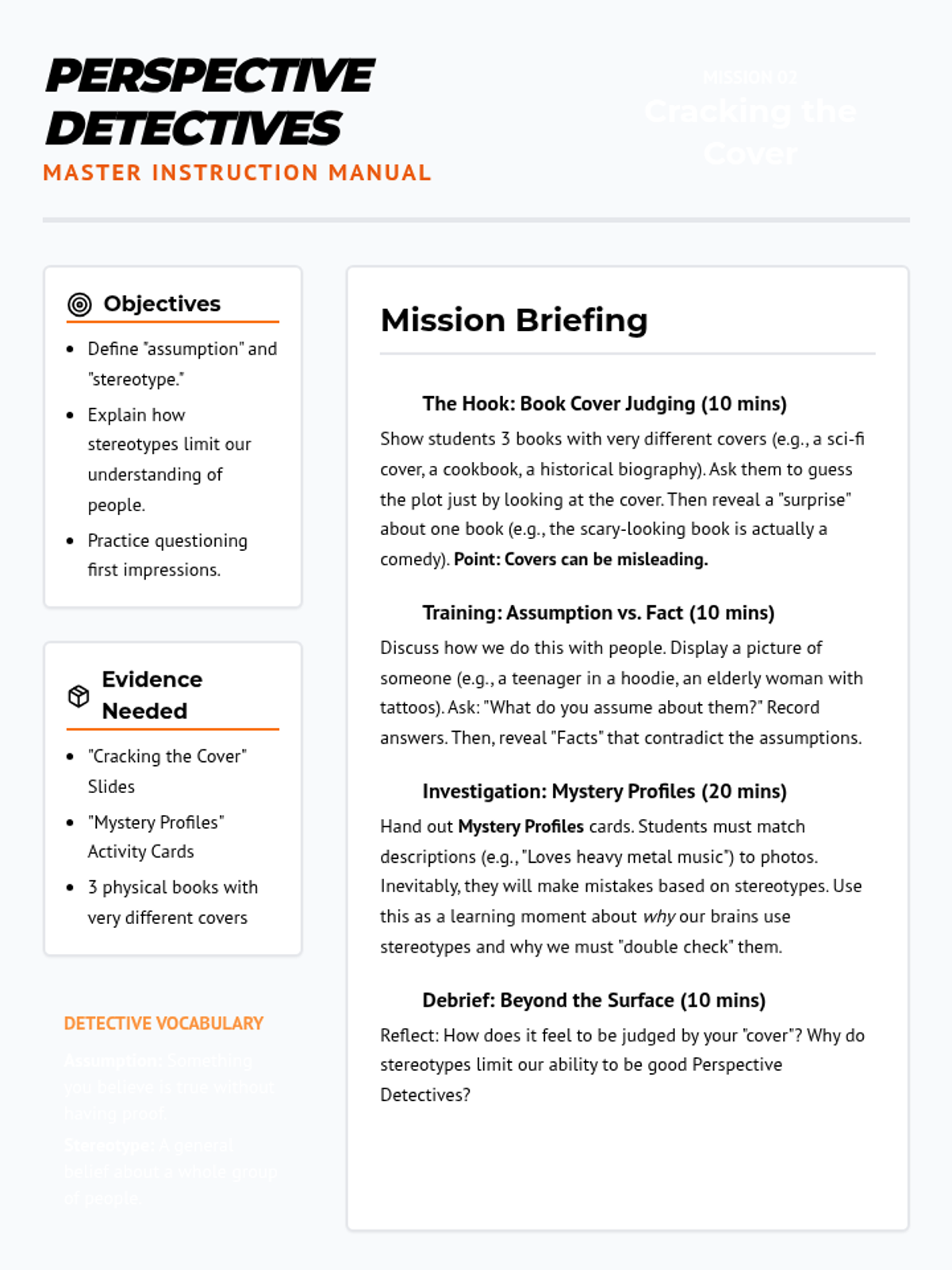
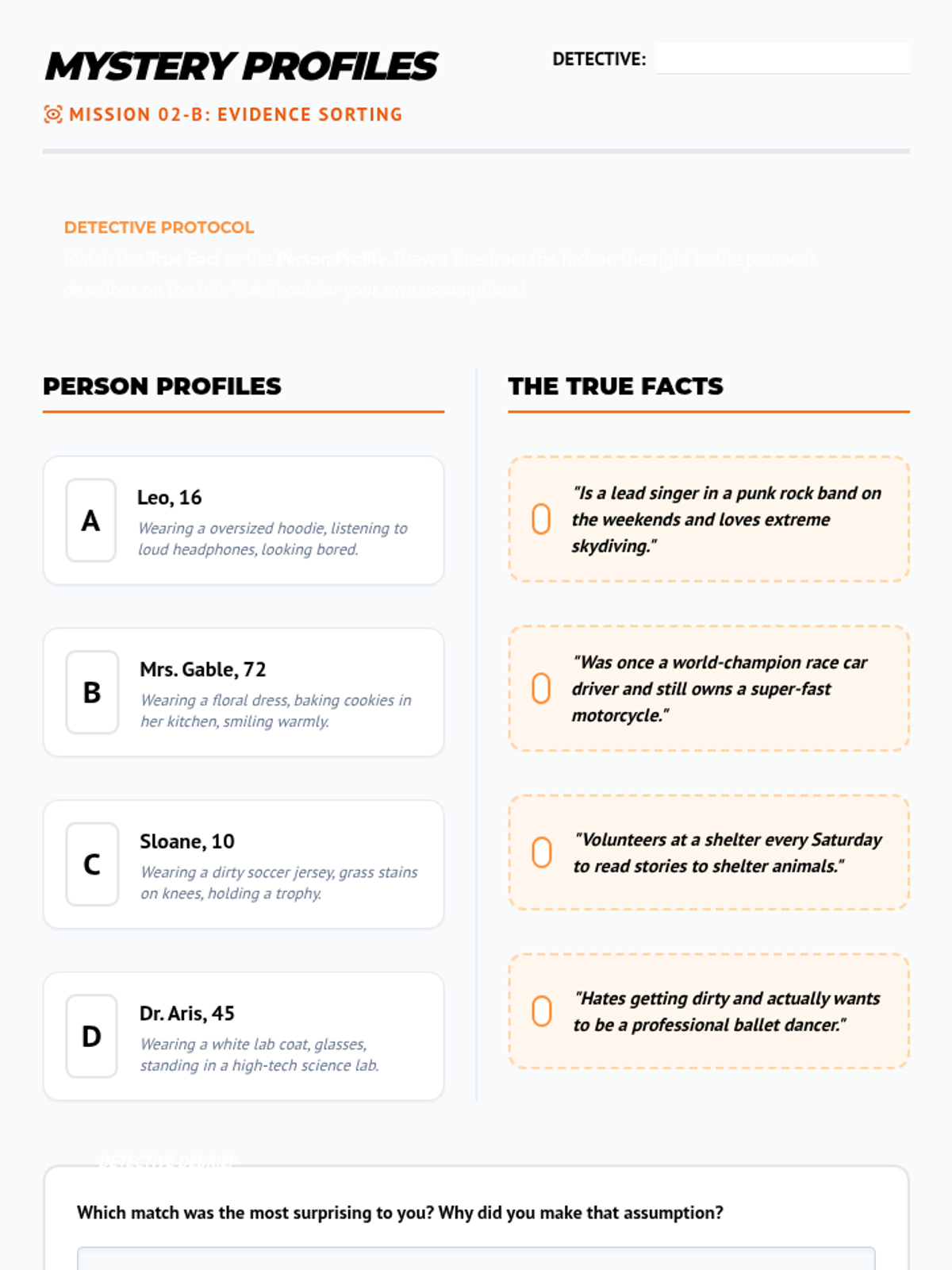
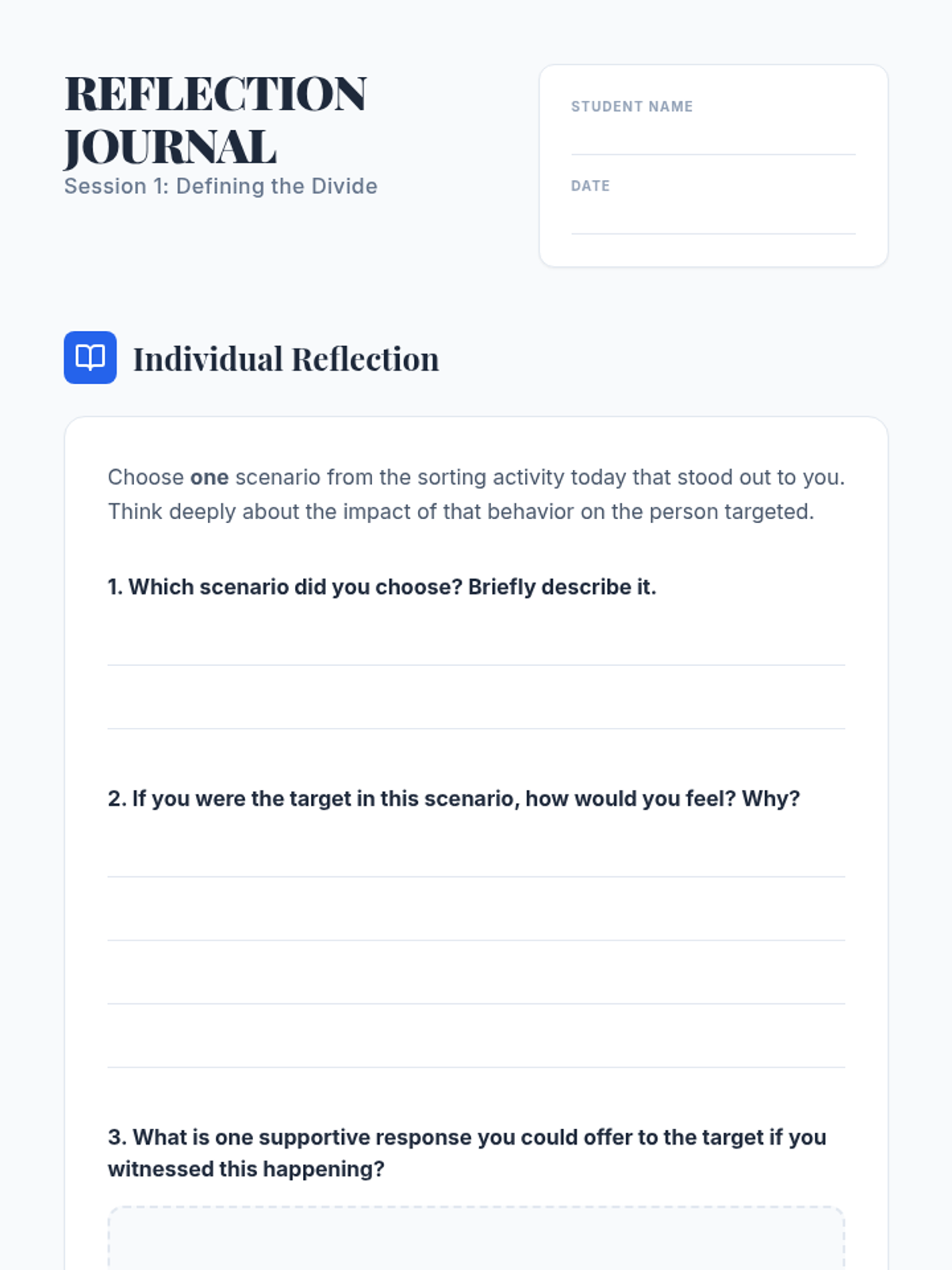
Students investigate how assumptions and stereotypes limit our understanding of others through a sorting game and critical discussion.
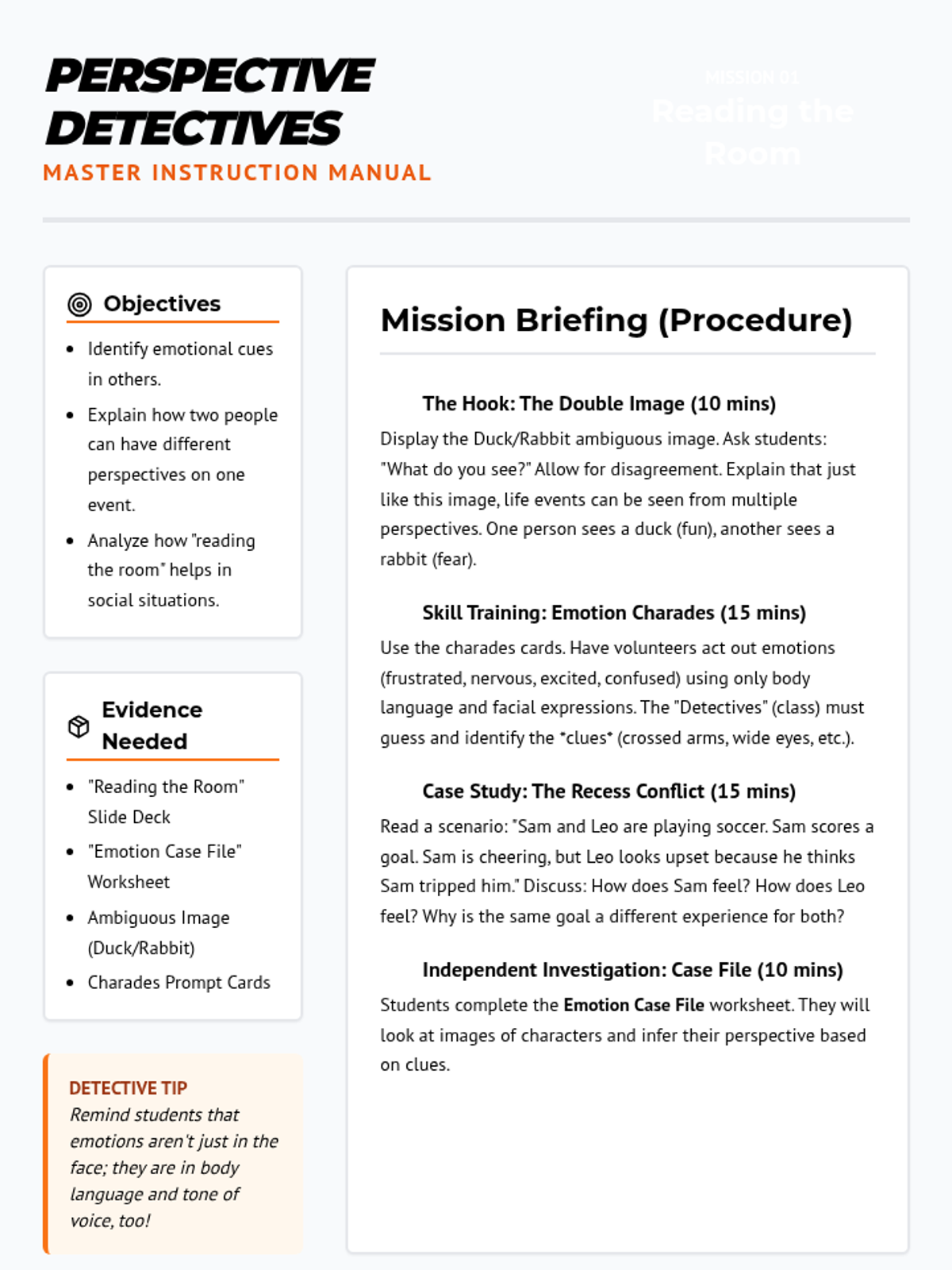
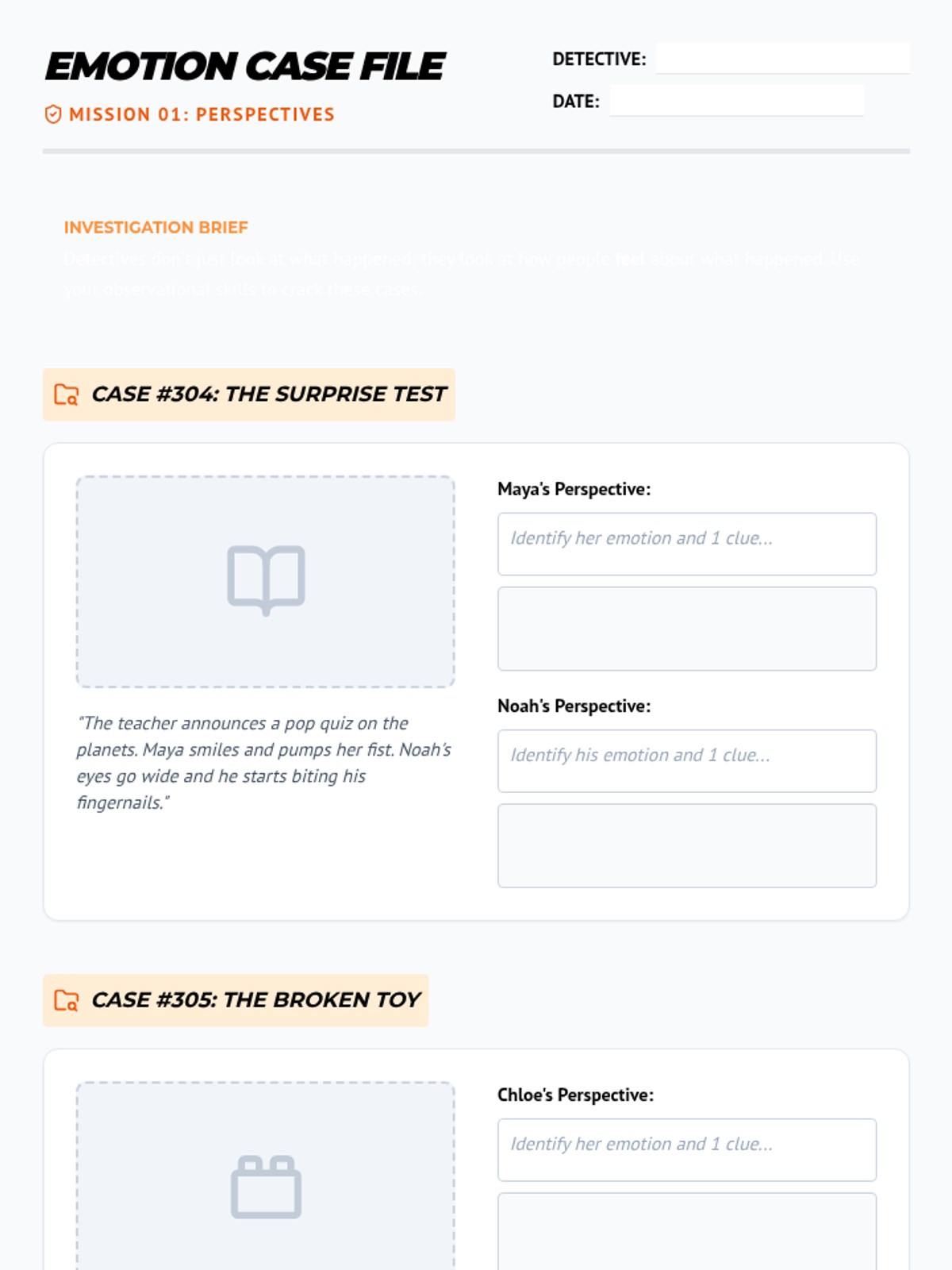
Students practice reading emotional cues and recognize that people can have different perspectives on the same event using ambiguous images and charades.
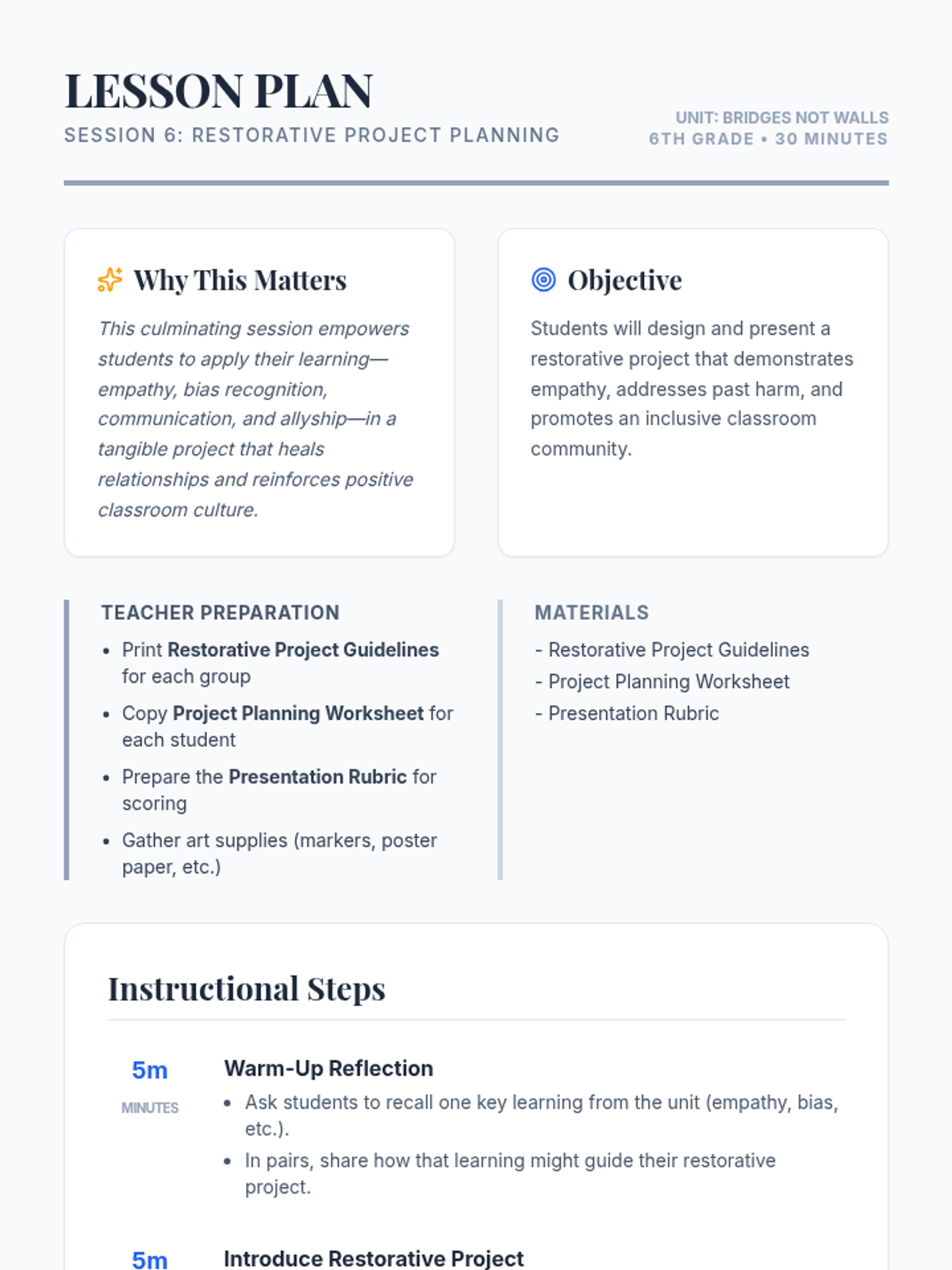
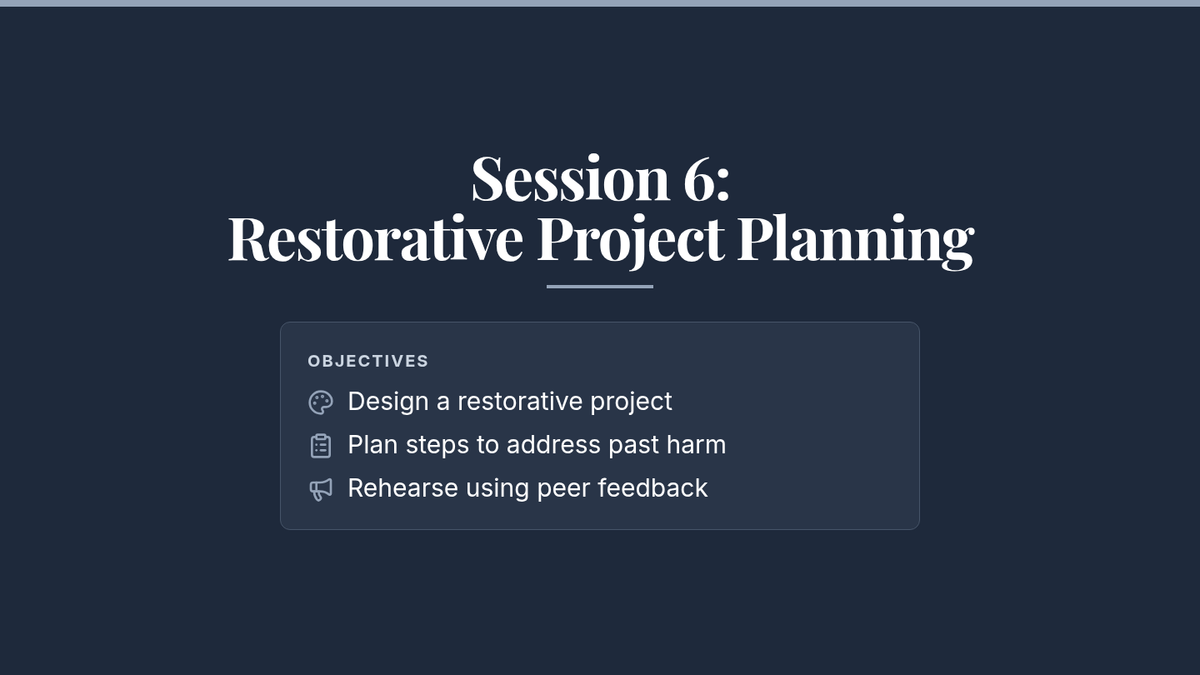
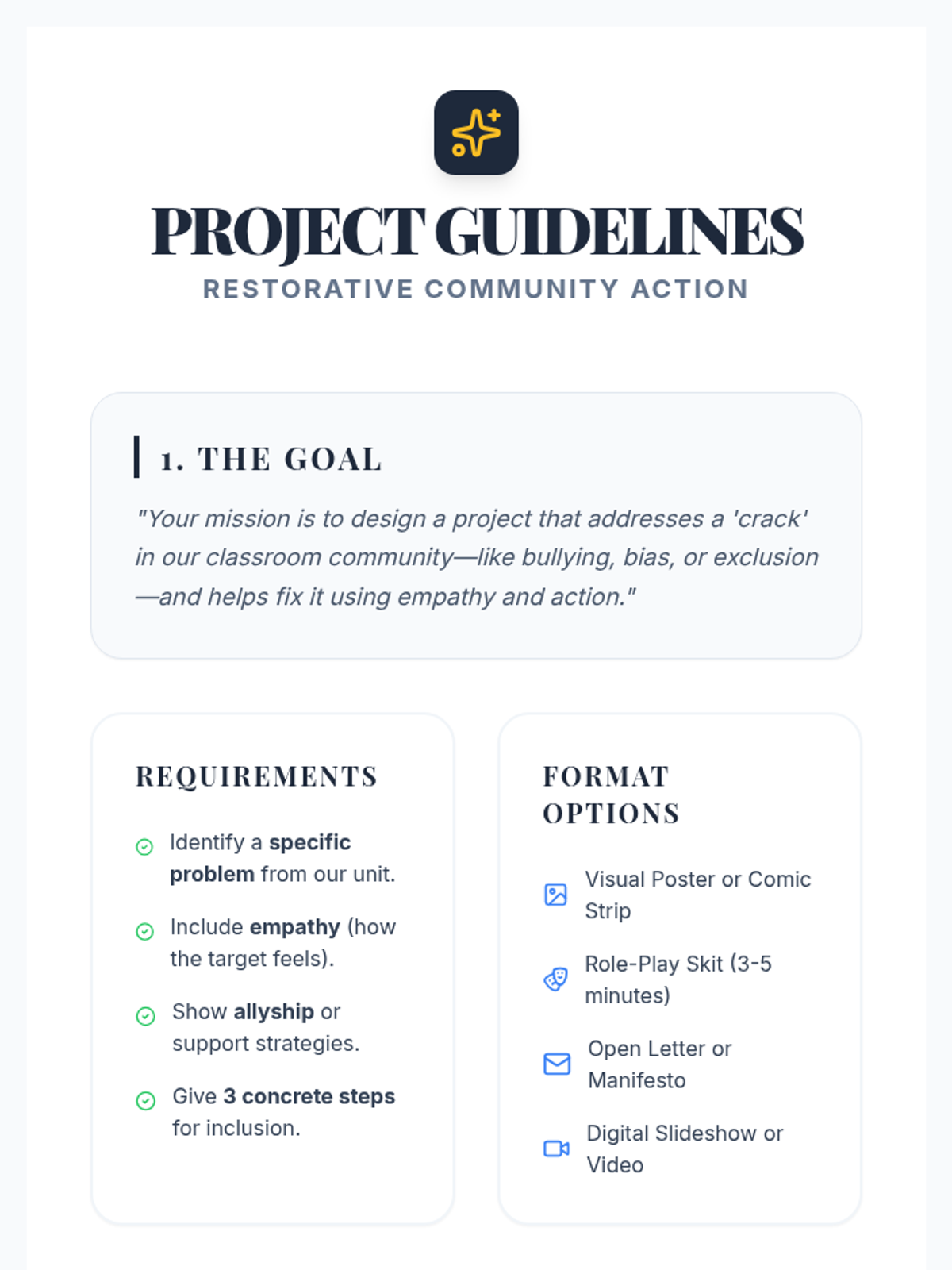
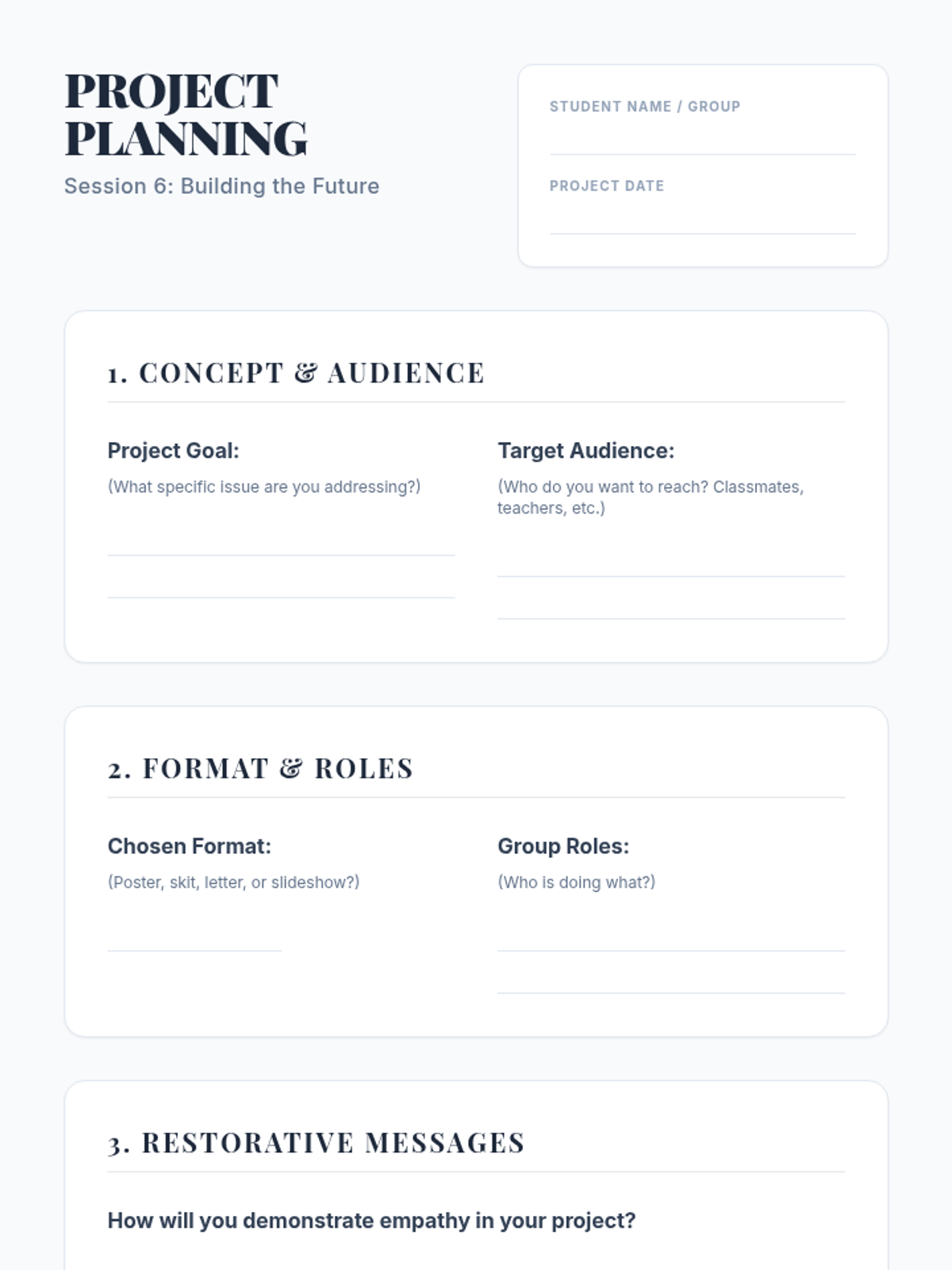
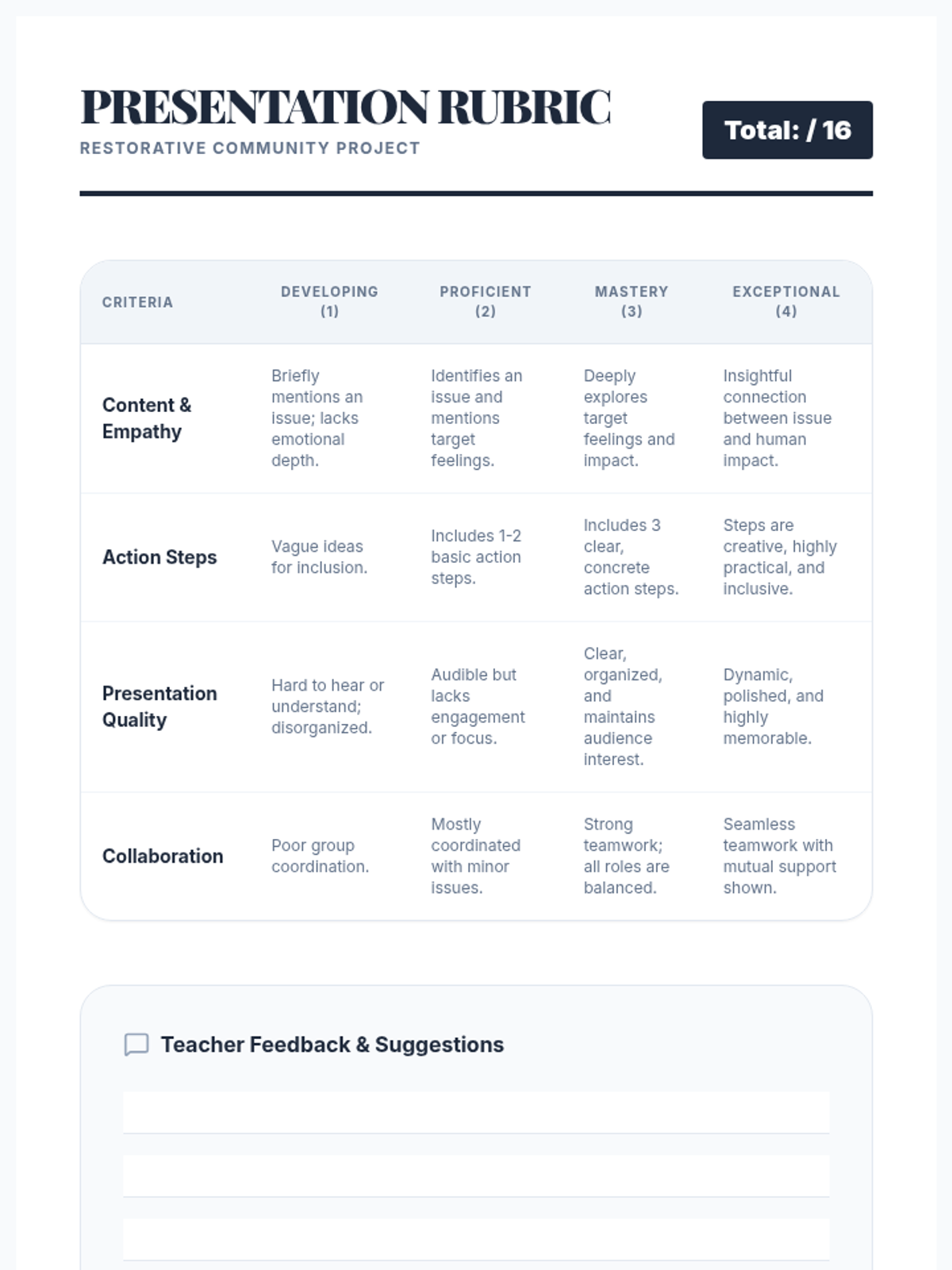
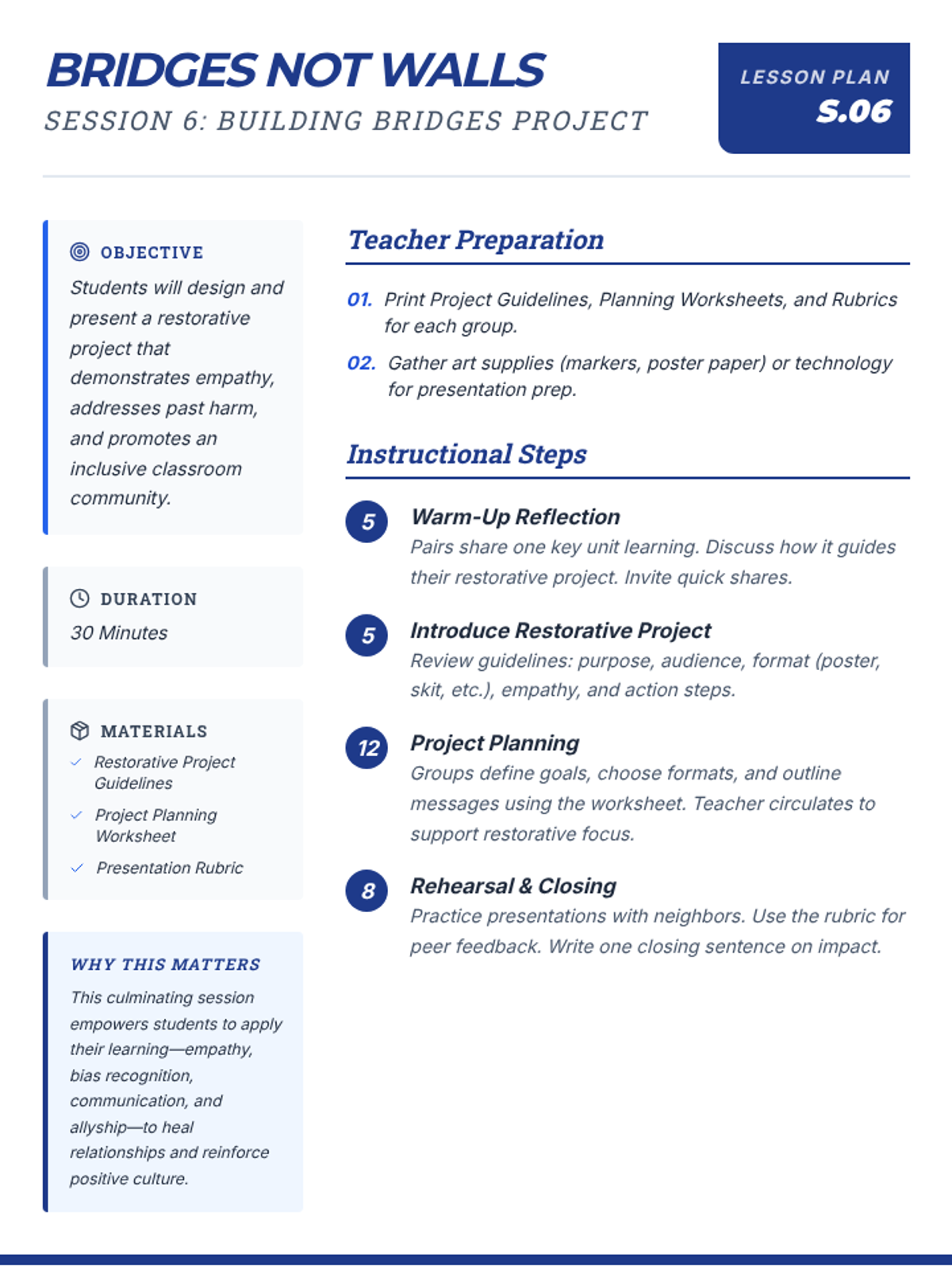
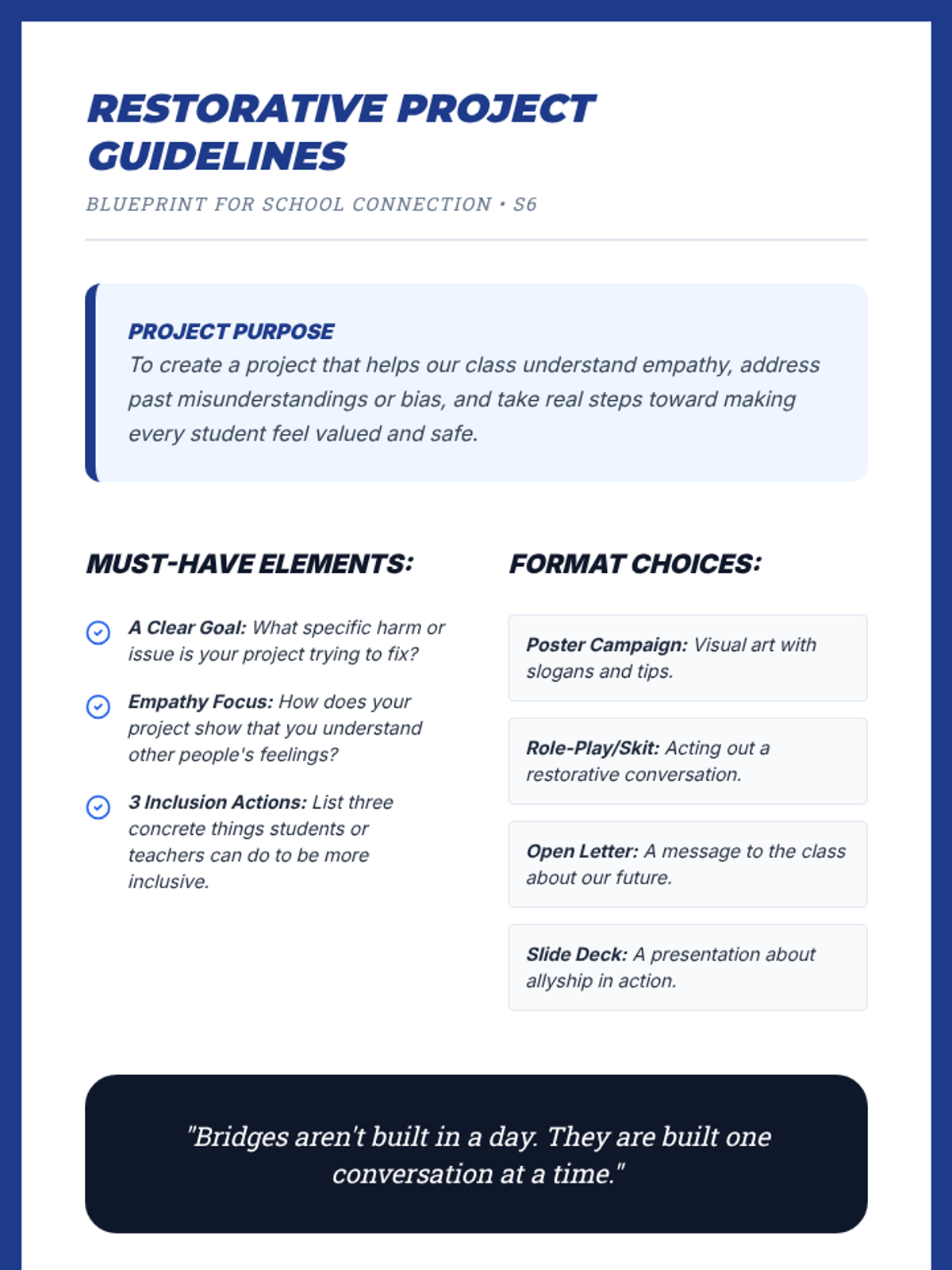
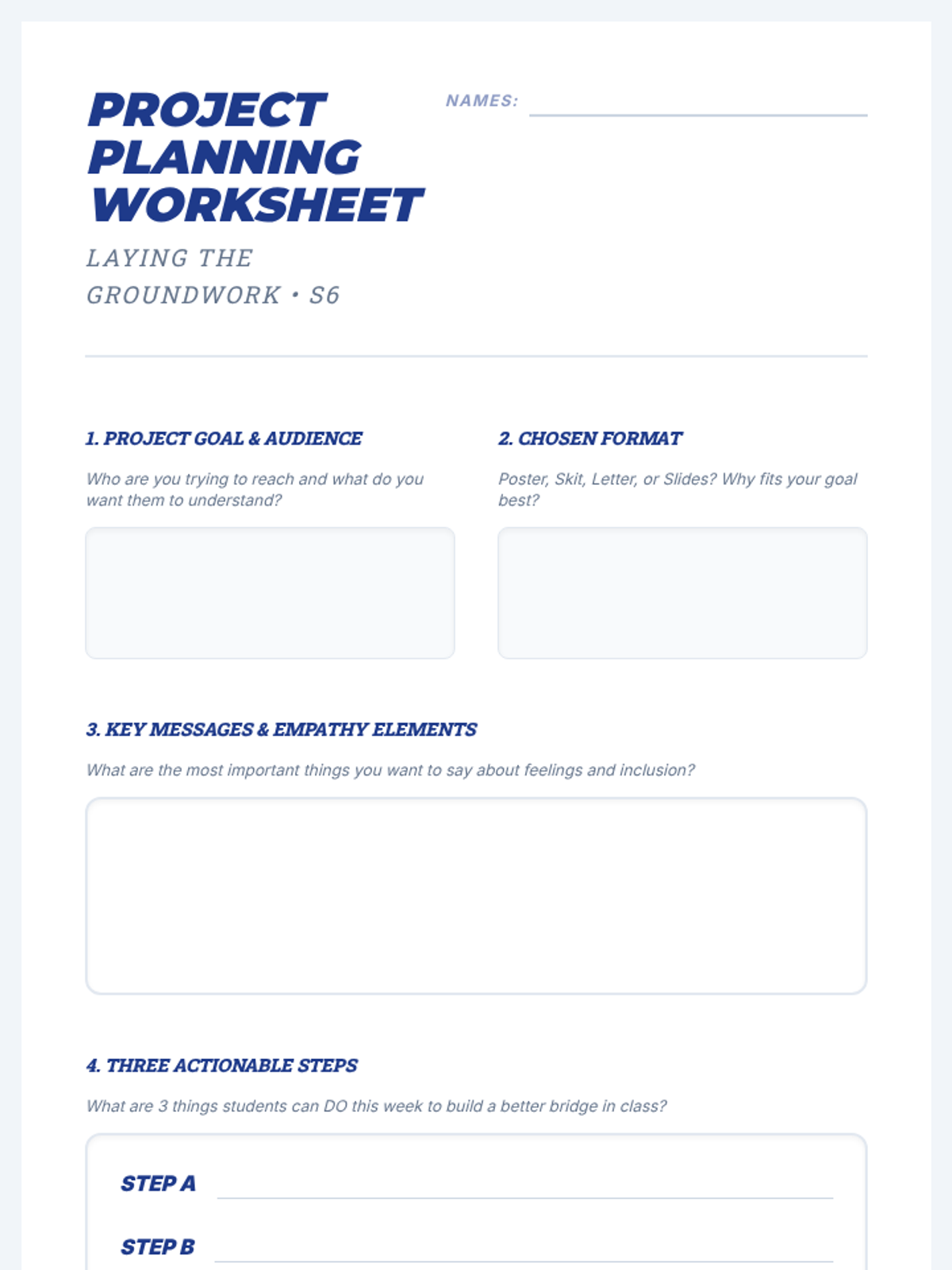
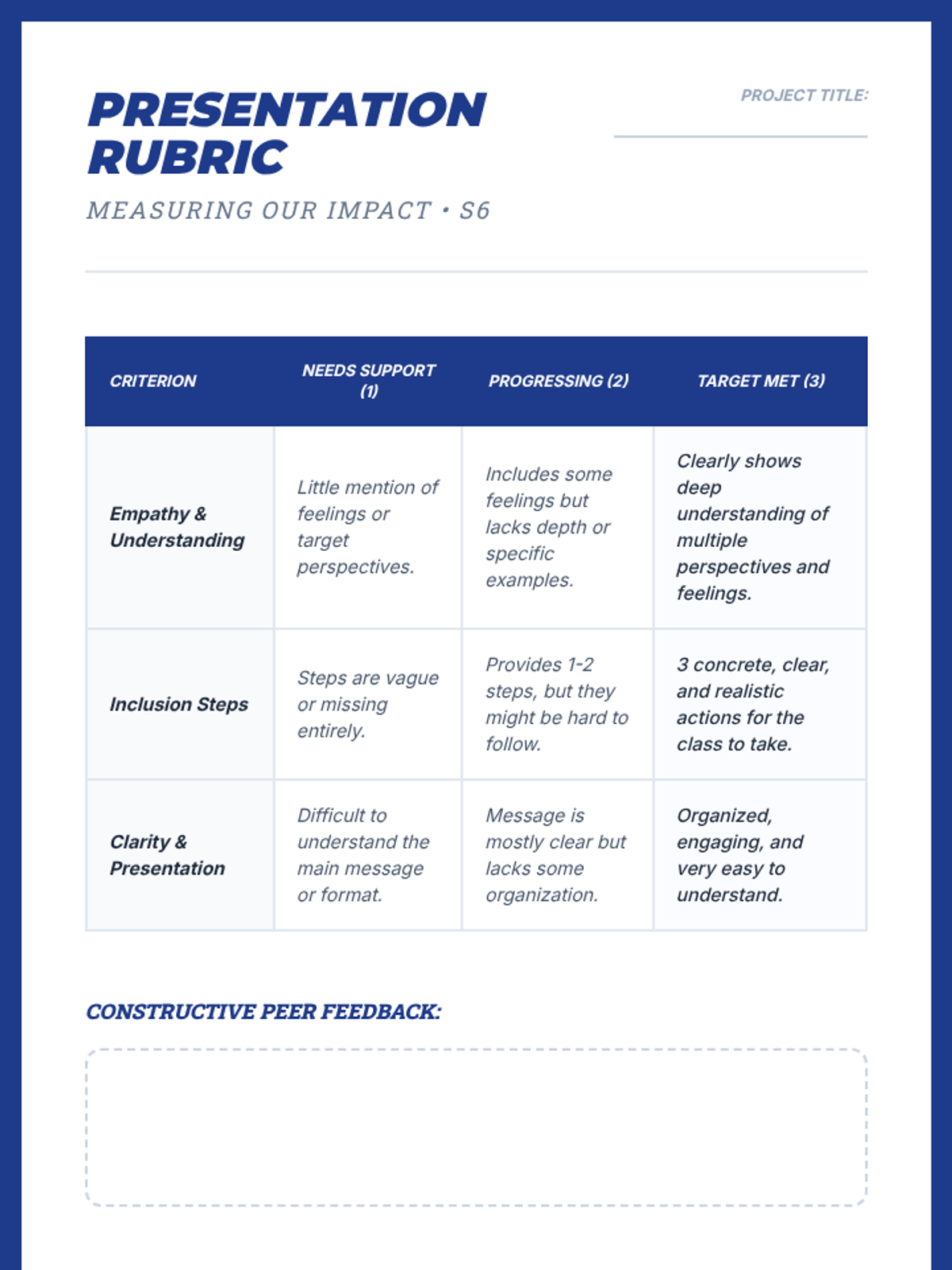
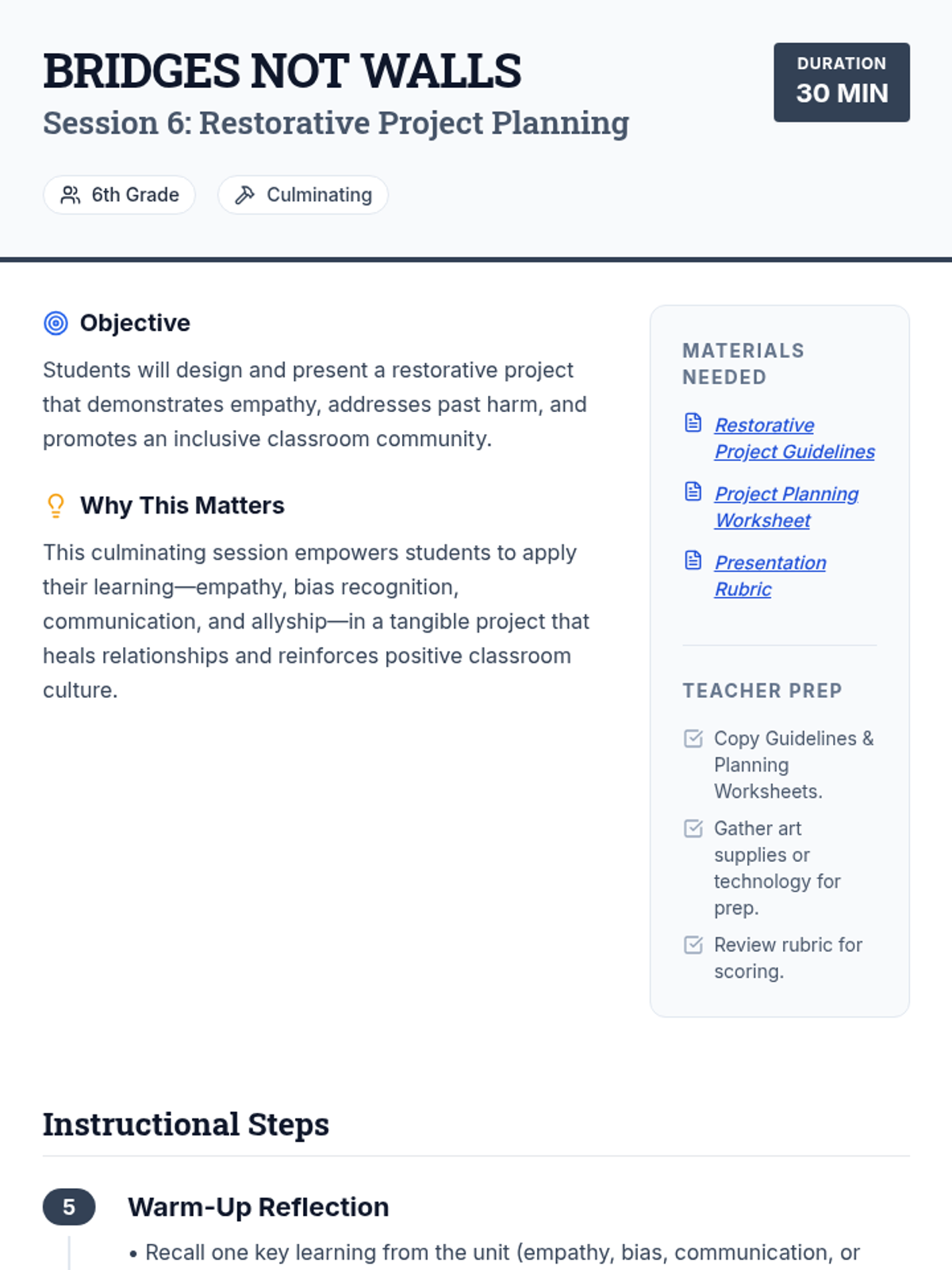
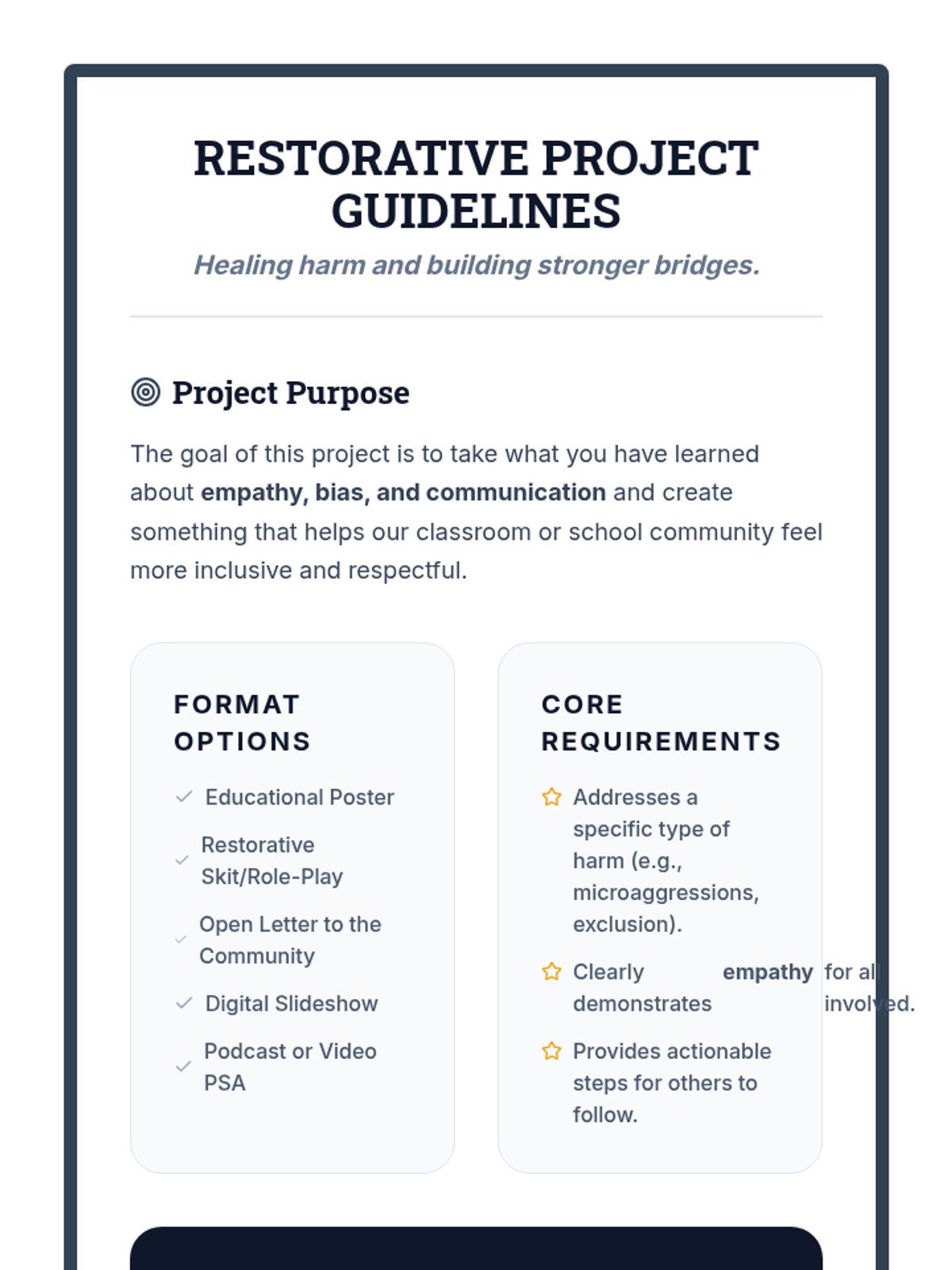
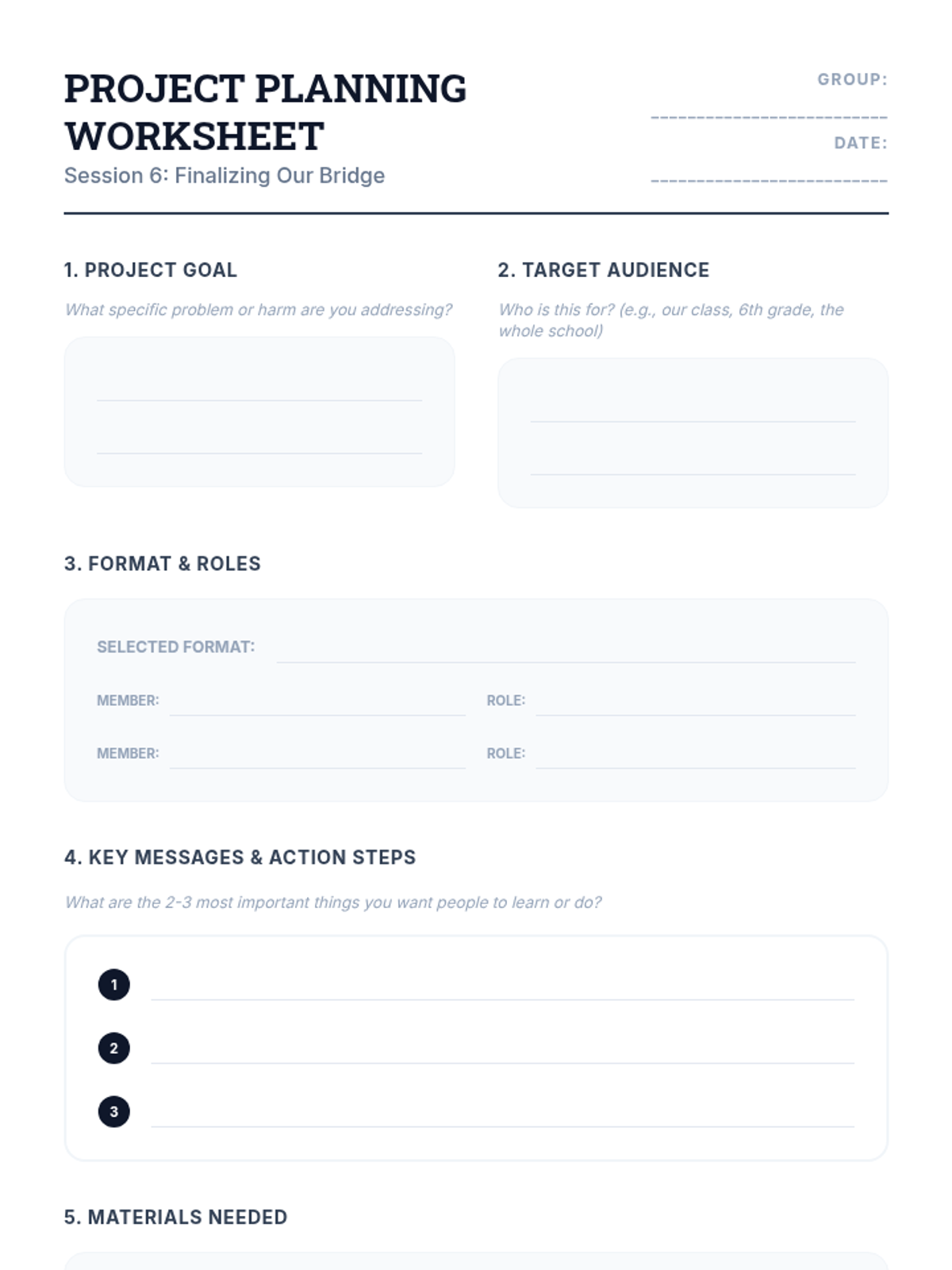
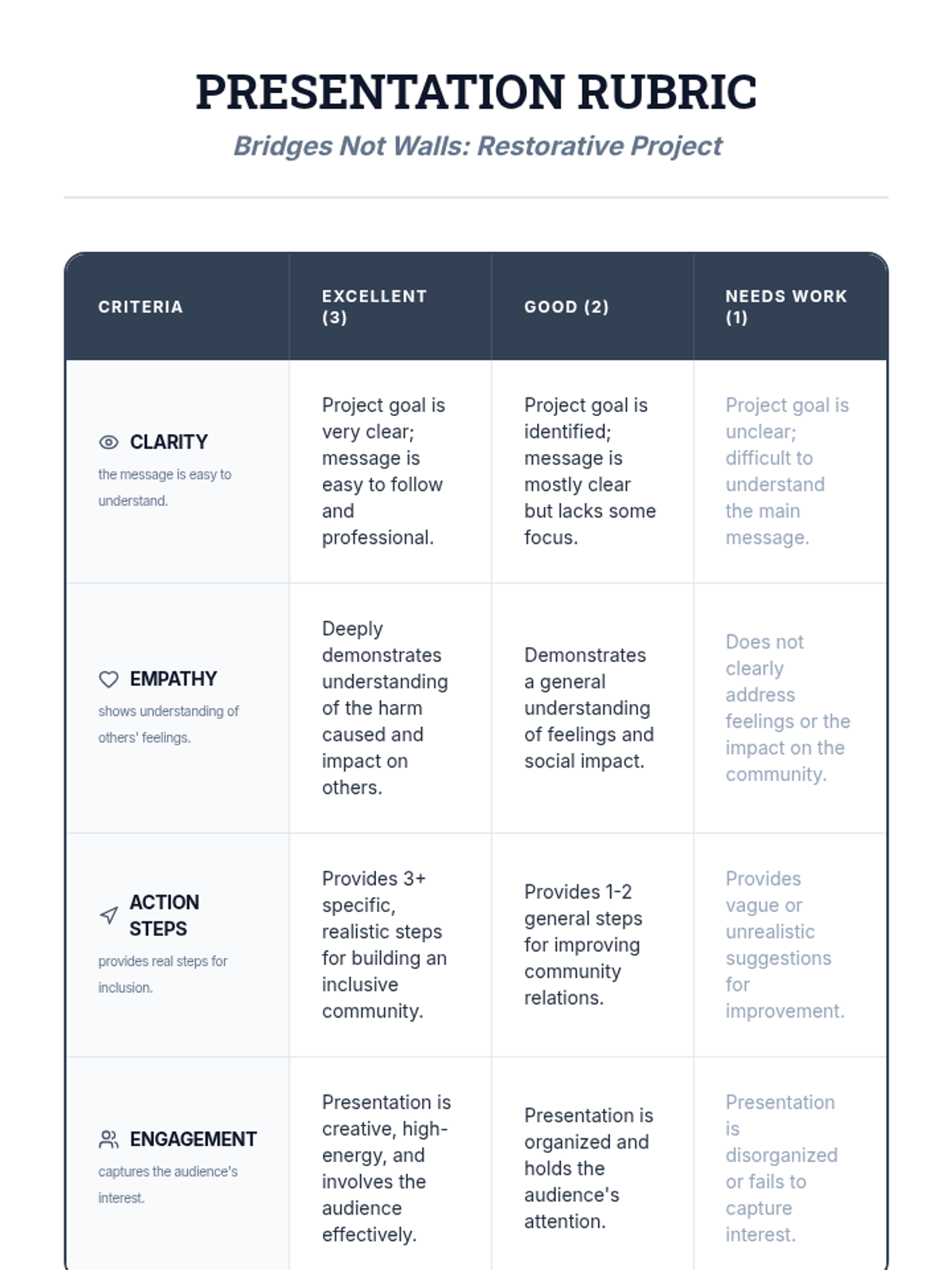
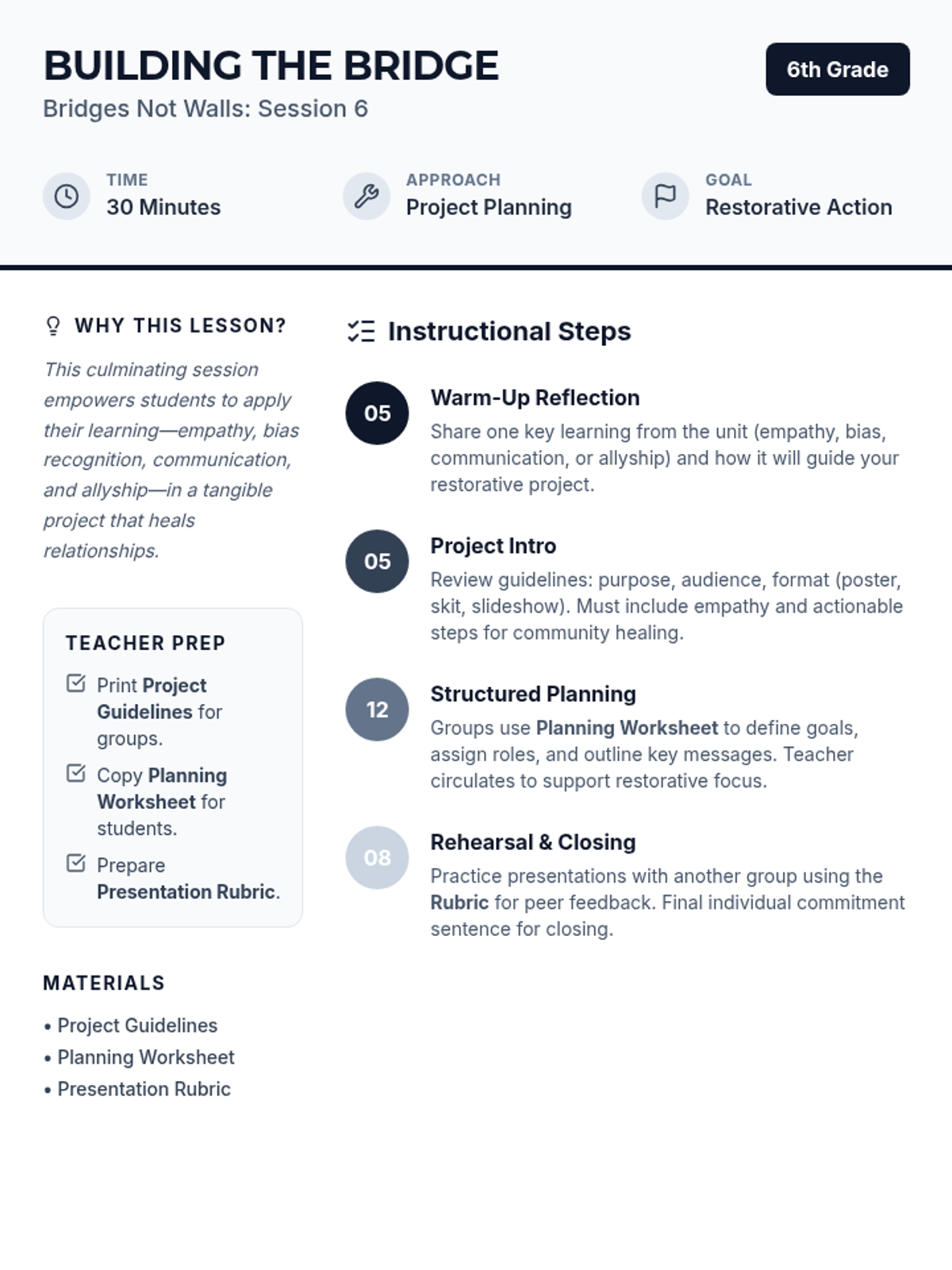
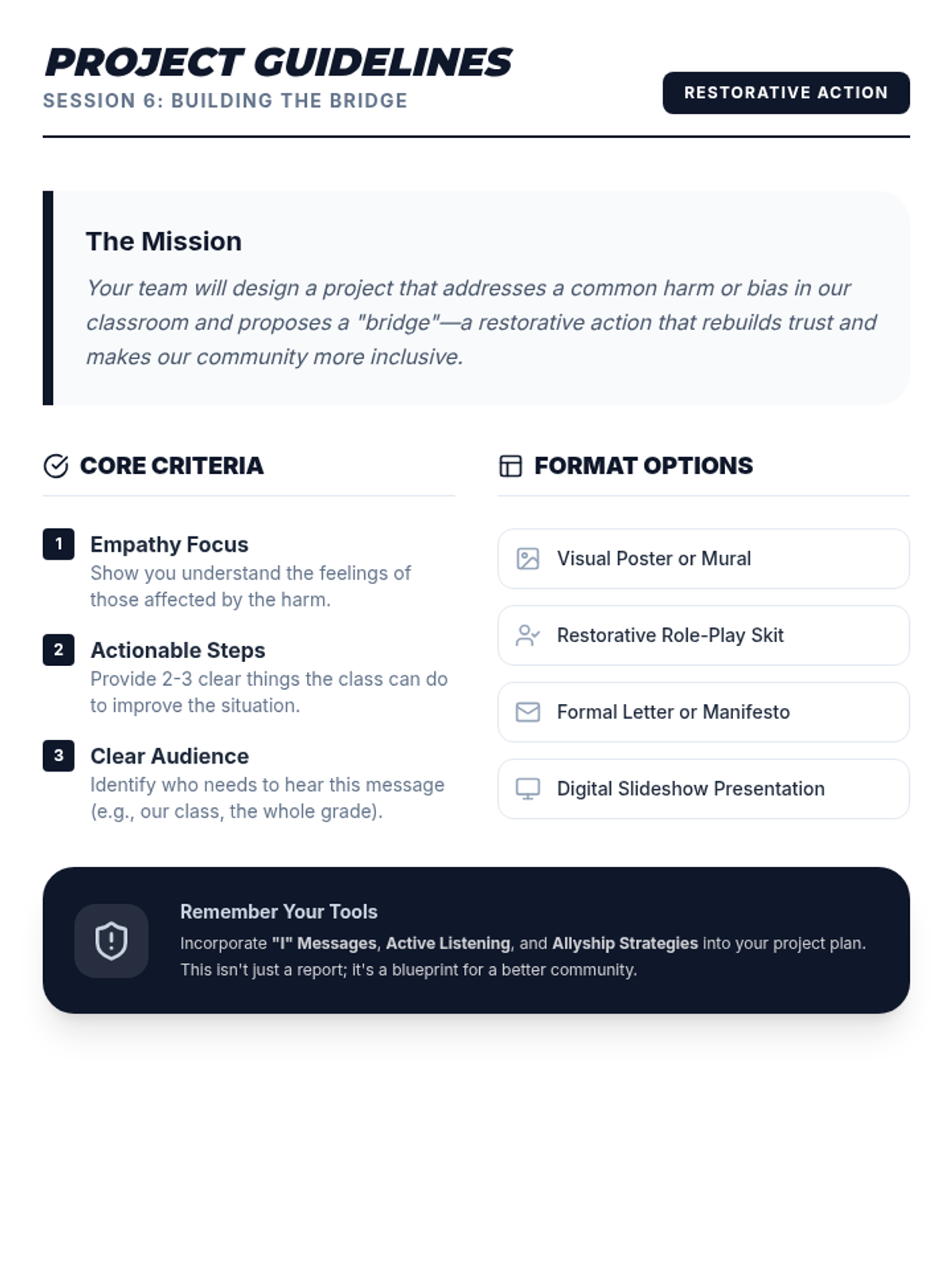
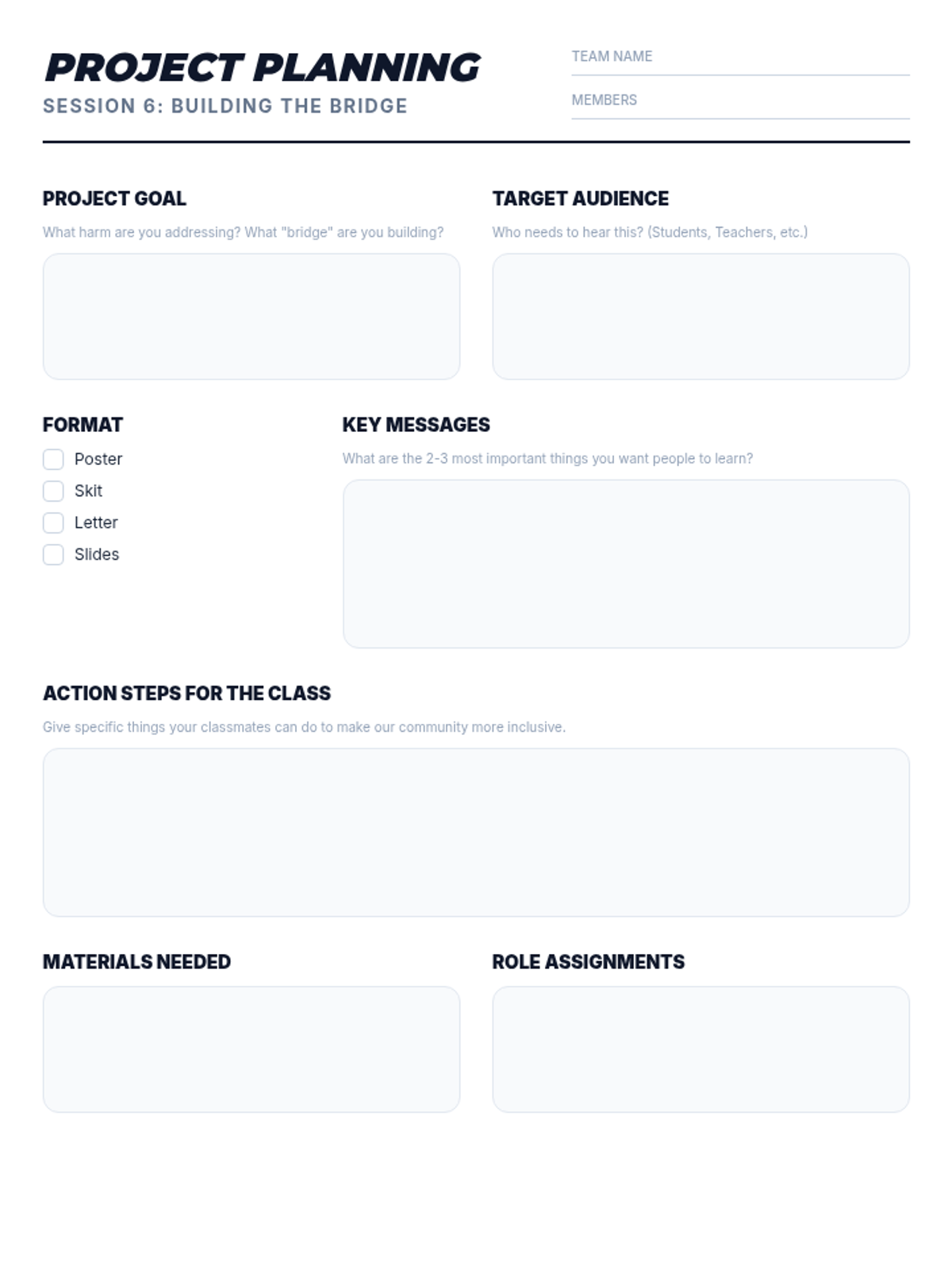
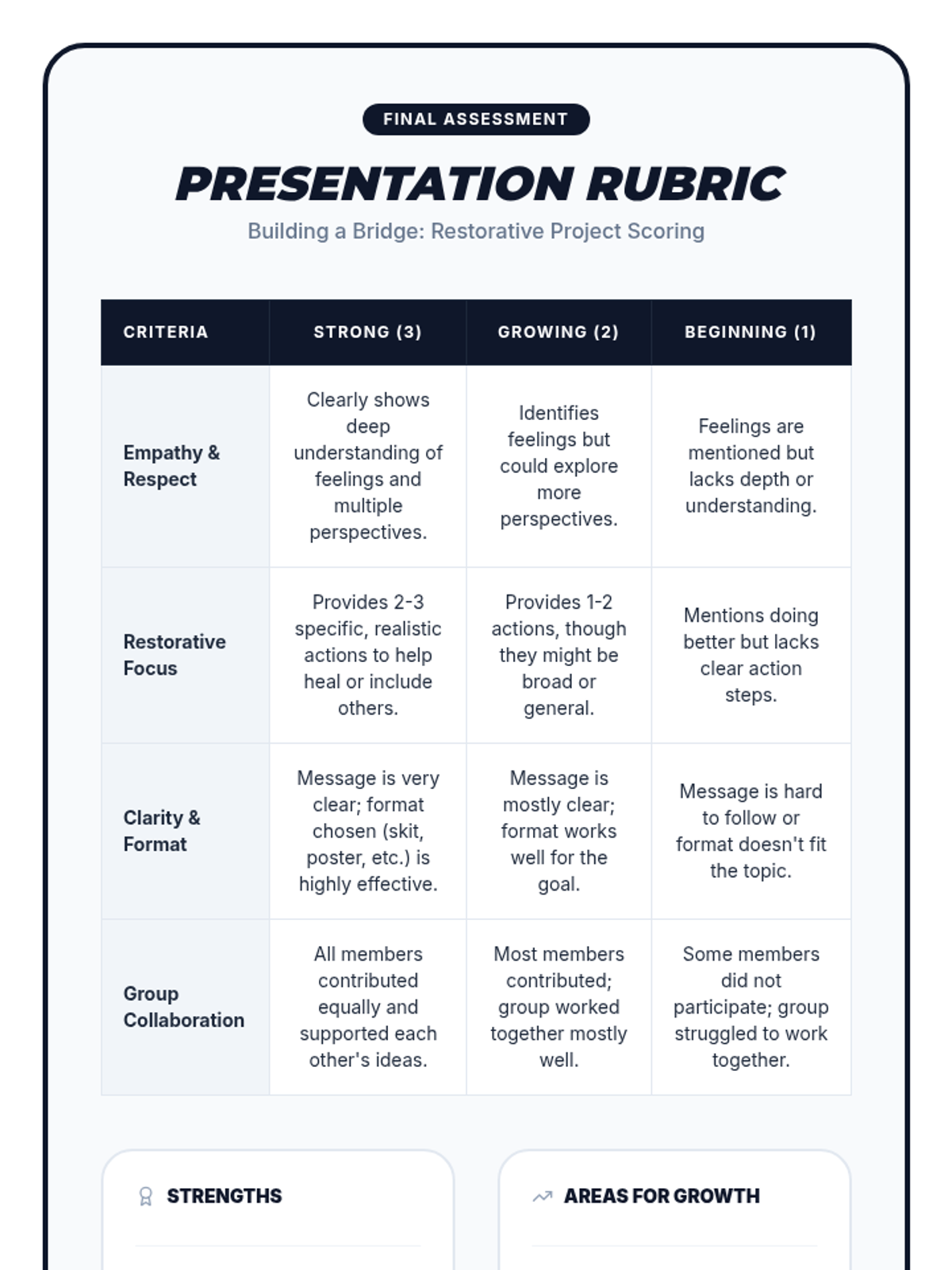
Students design and present a restorative project that demonstrates empathy, addresses past harm, and promotes an inclusive classroom community.
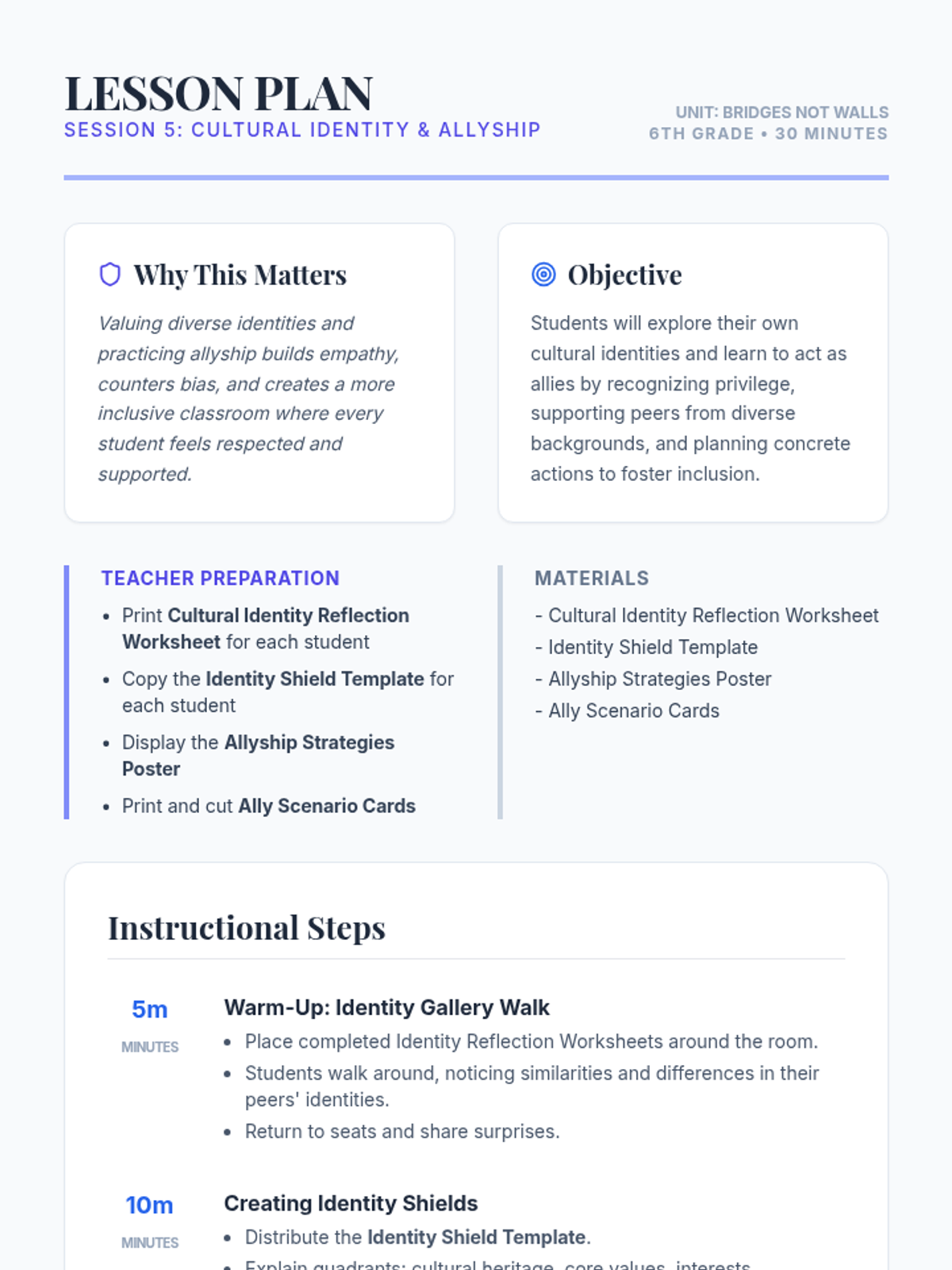
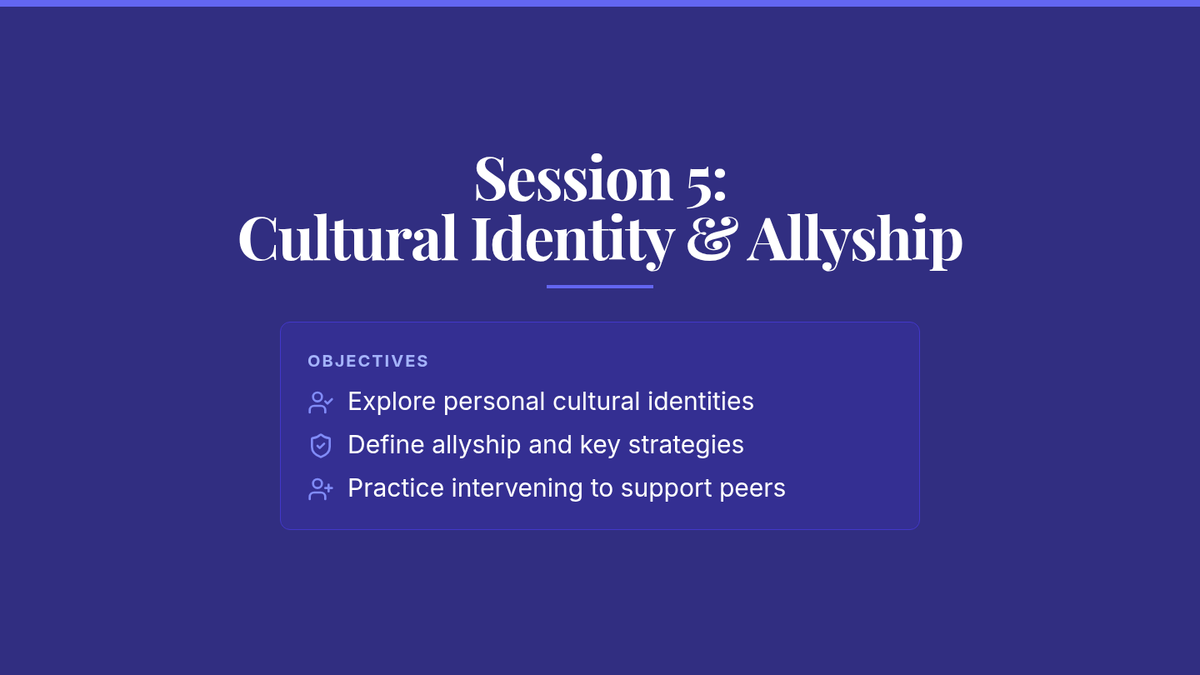
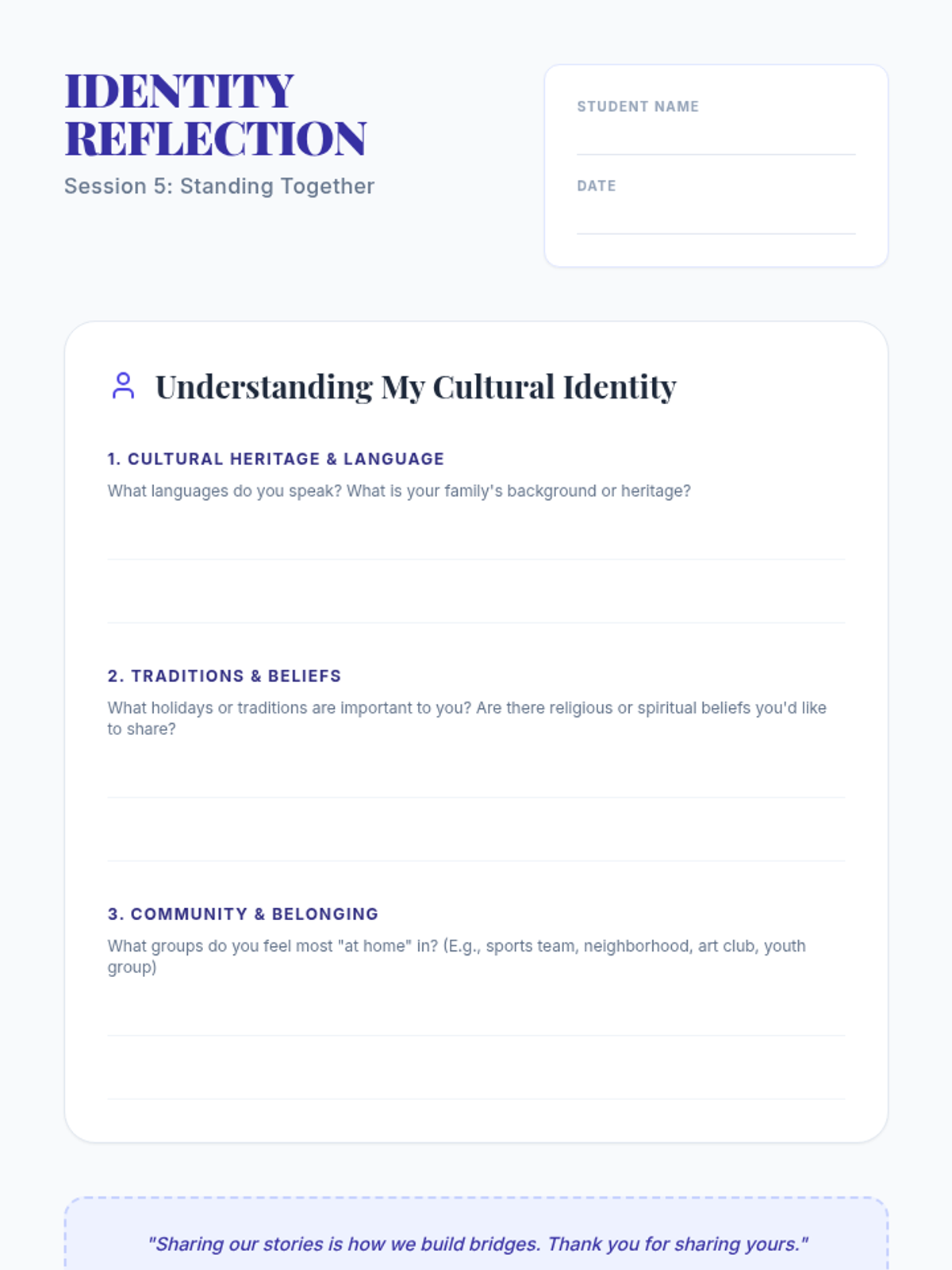
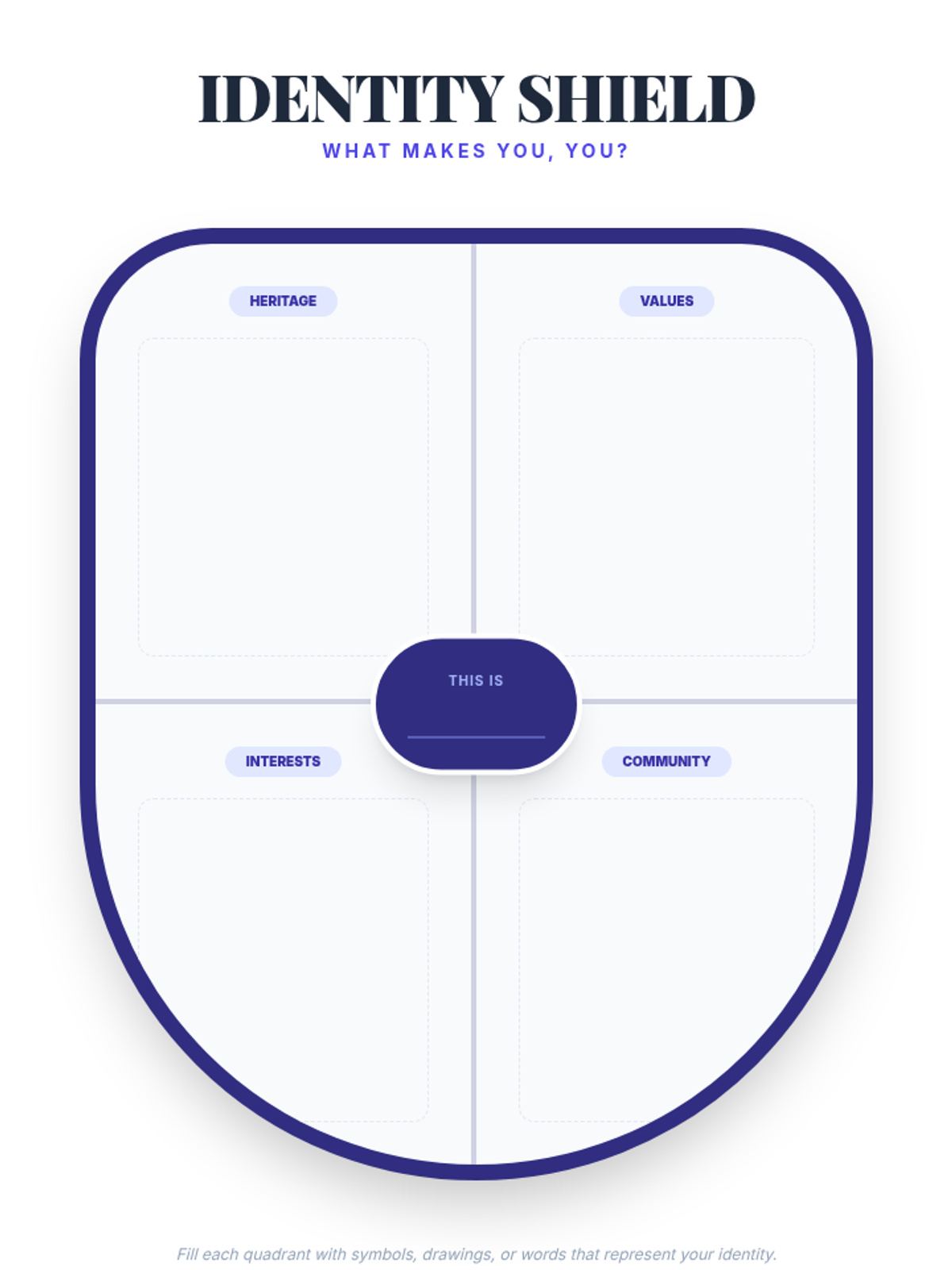
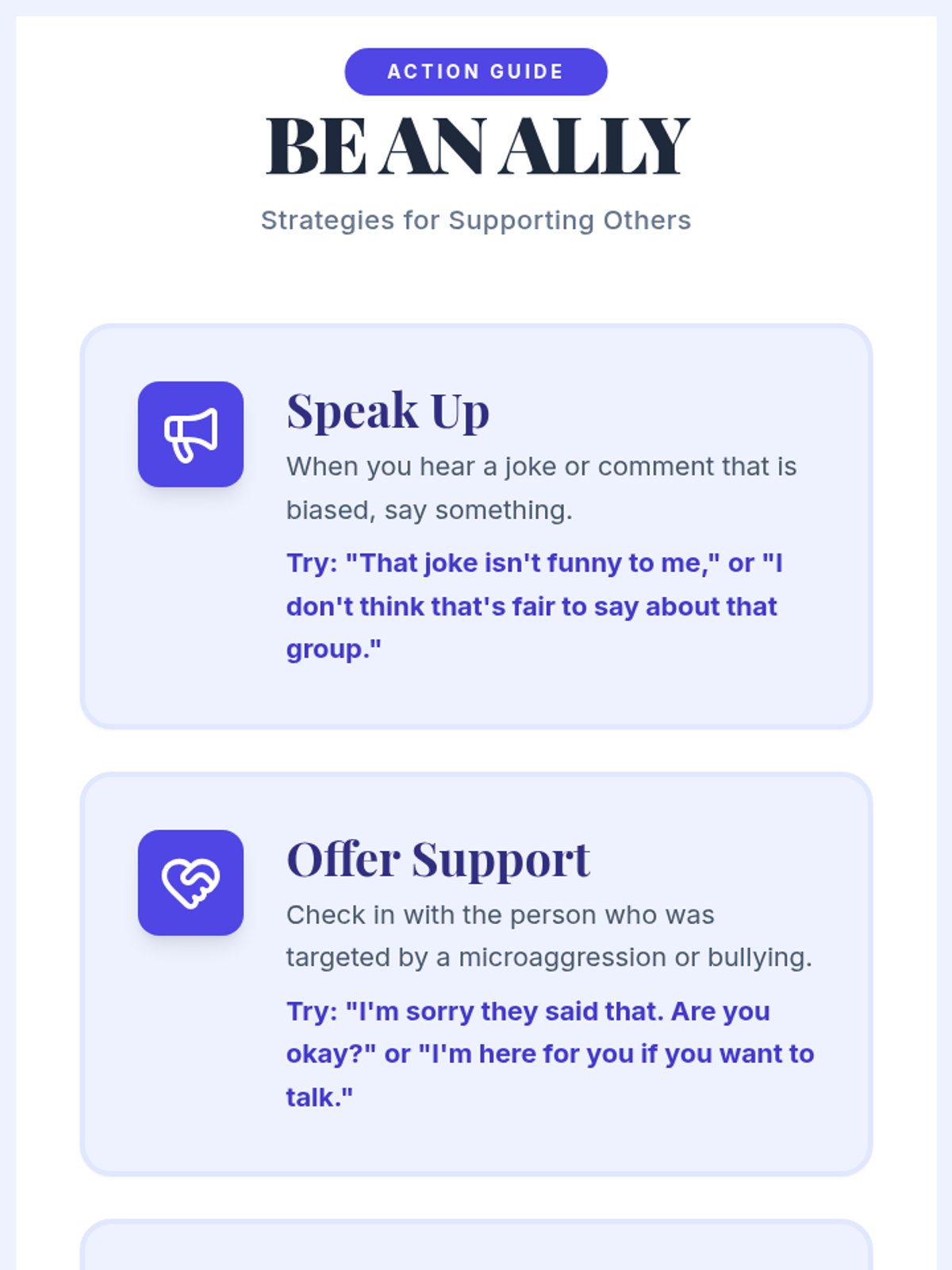
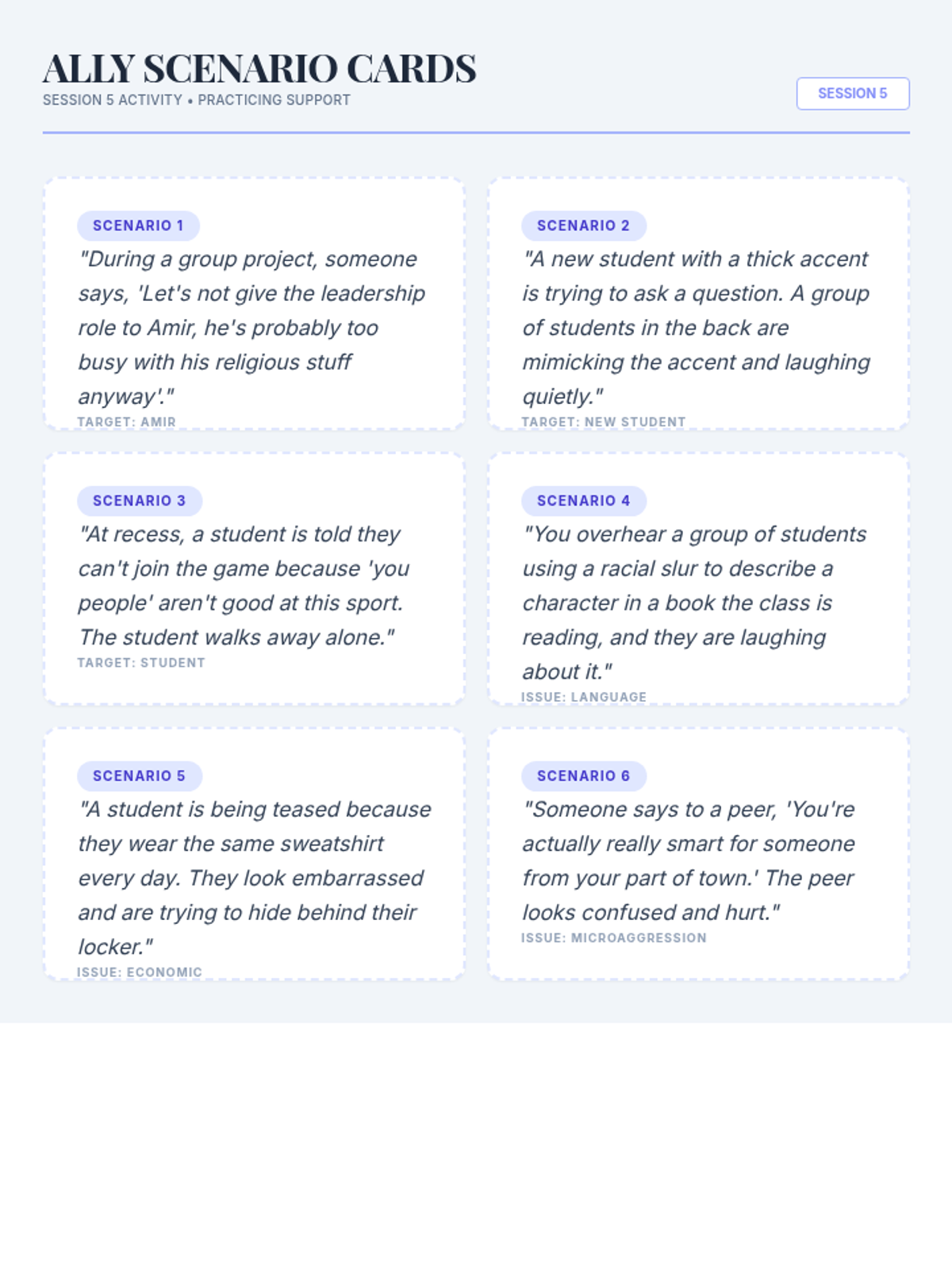
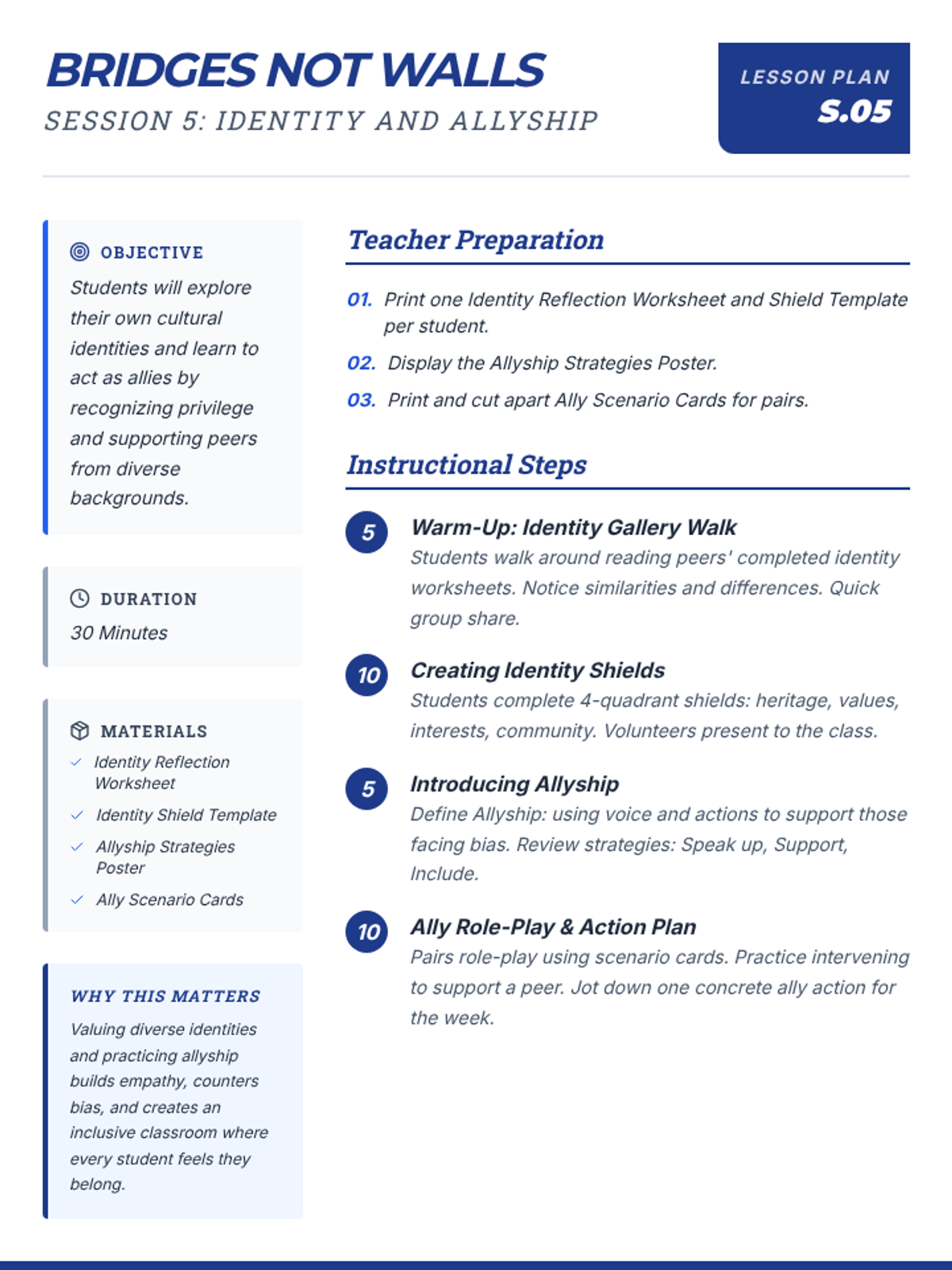
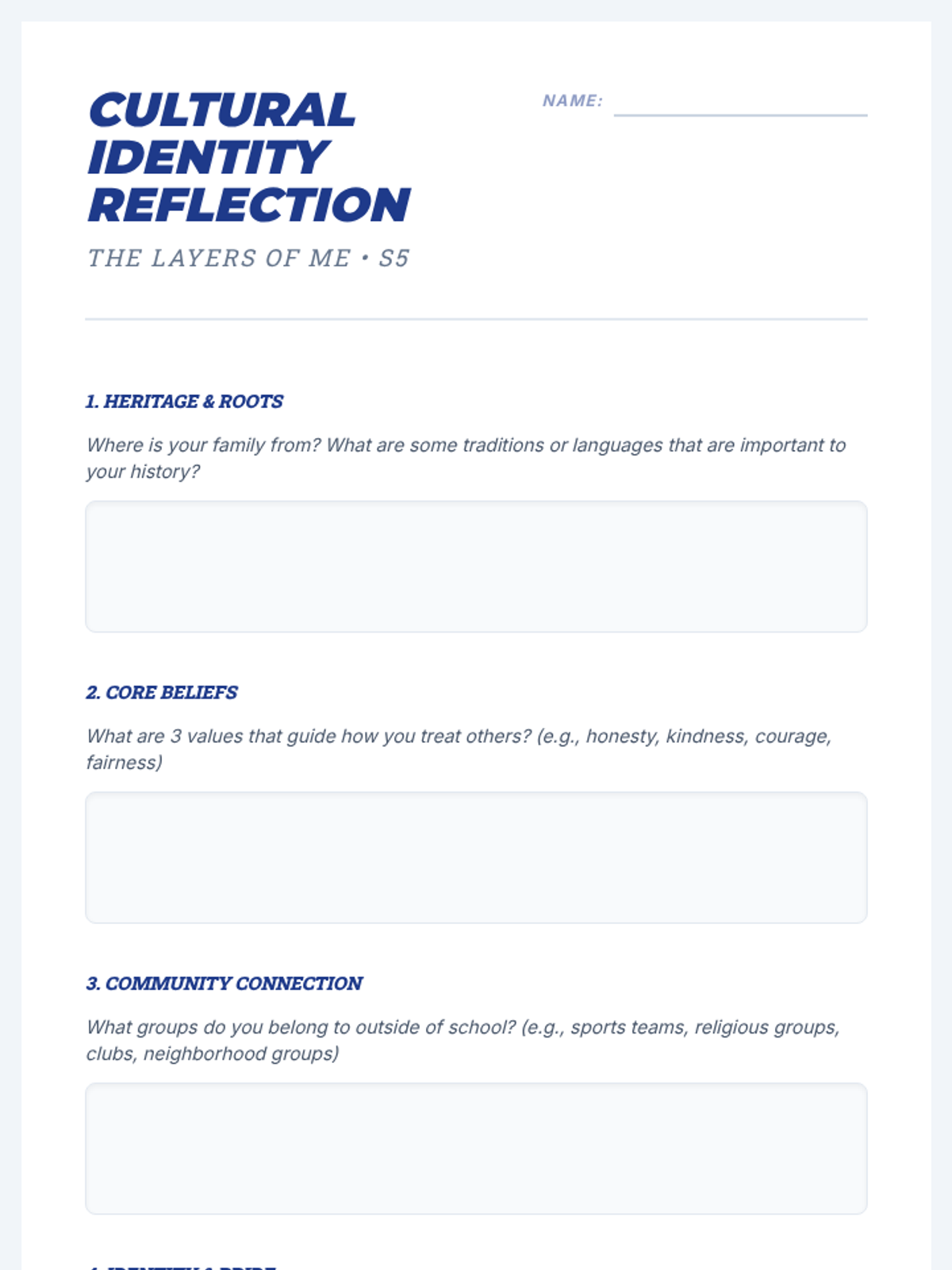
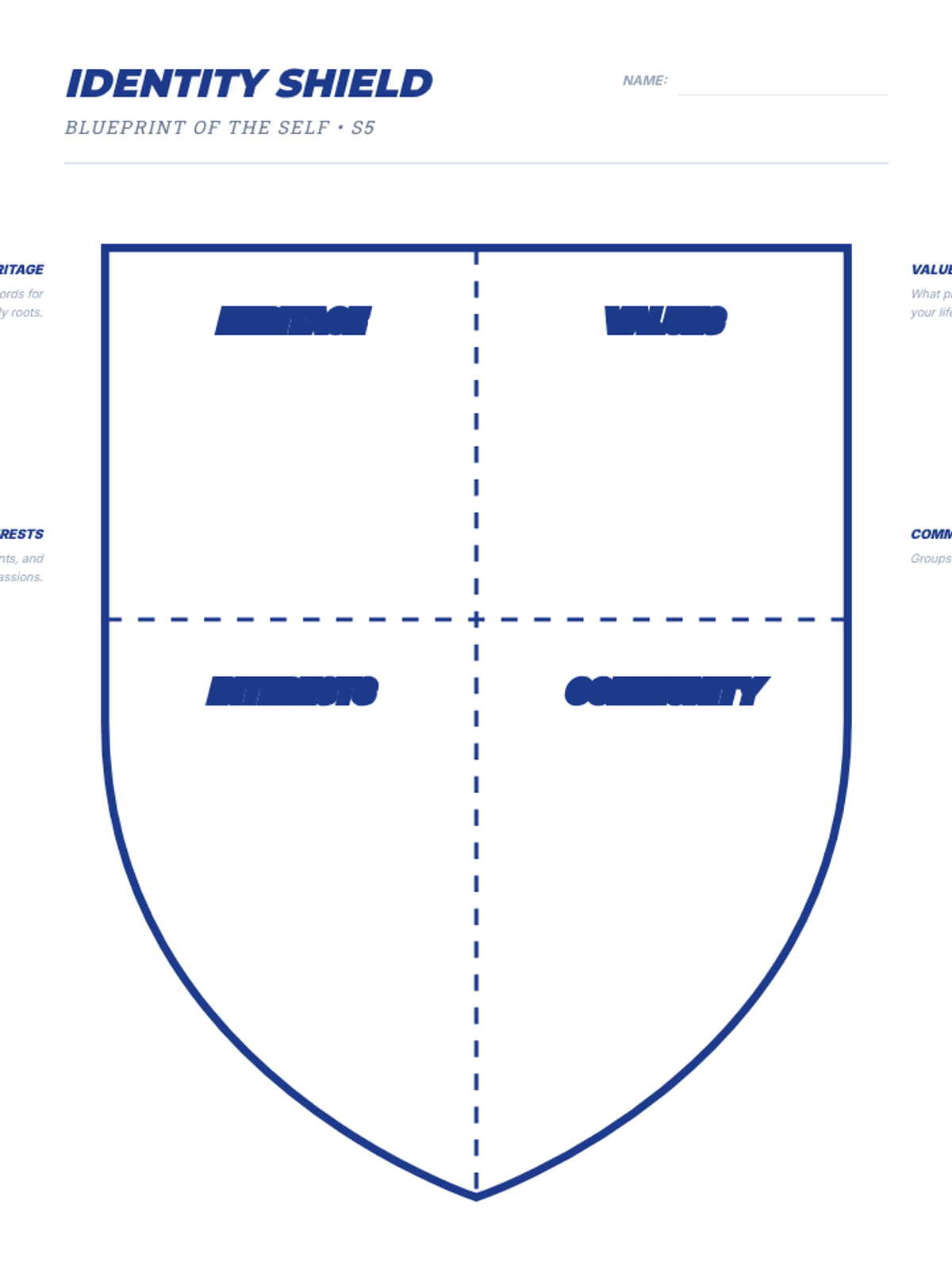
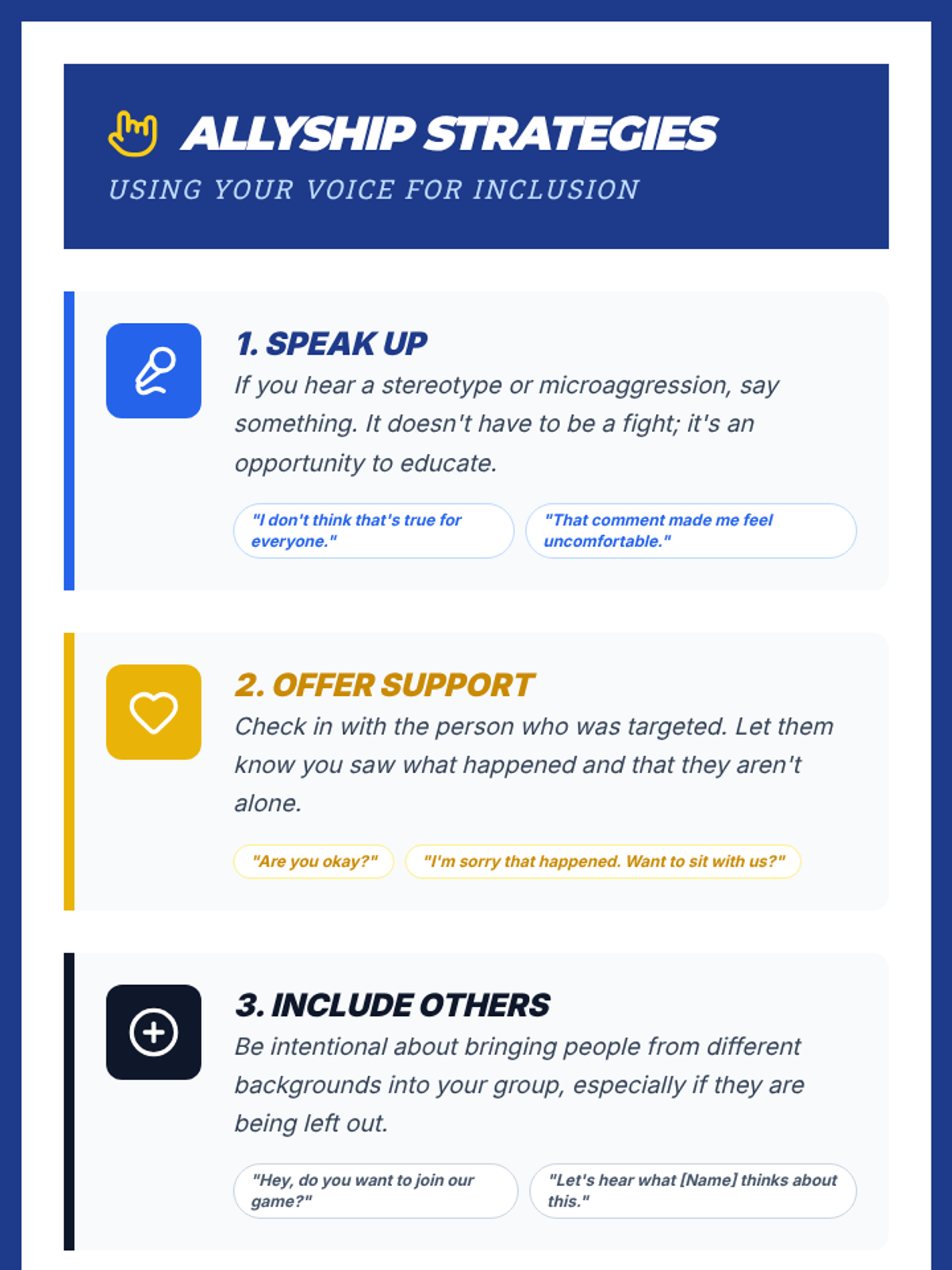
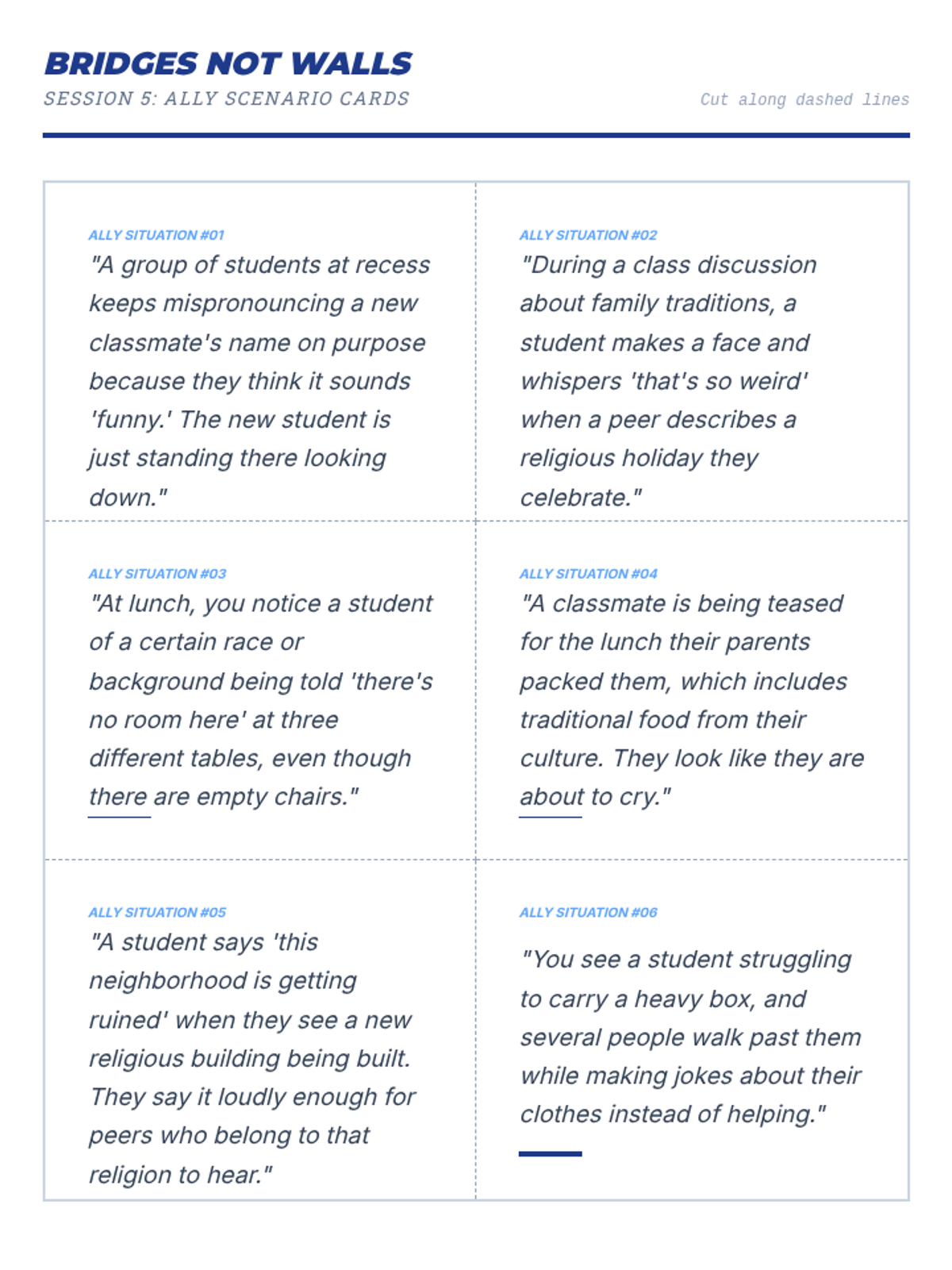
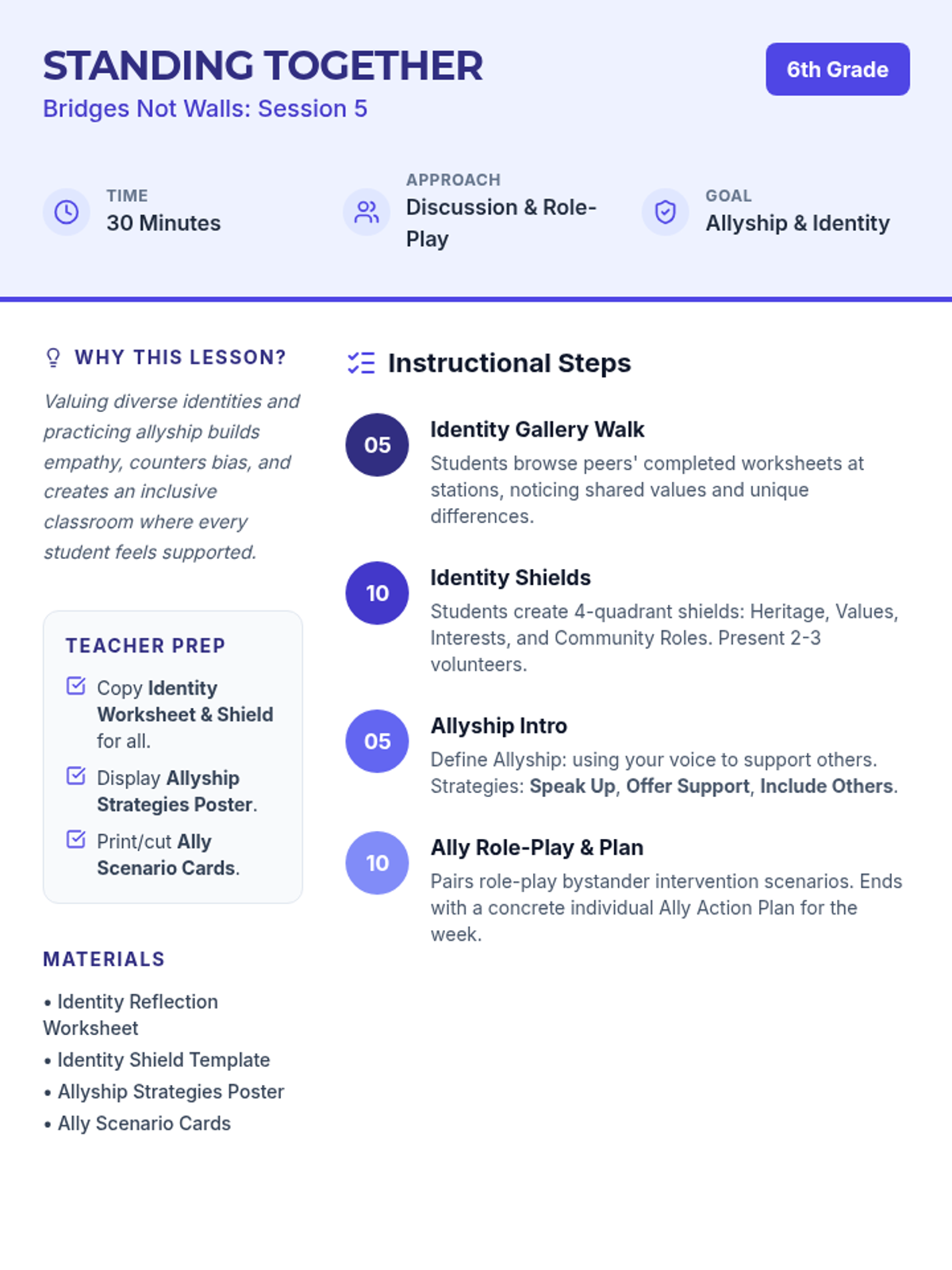
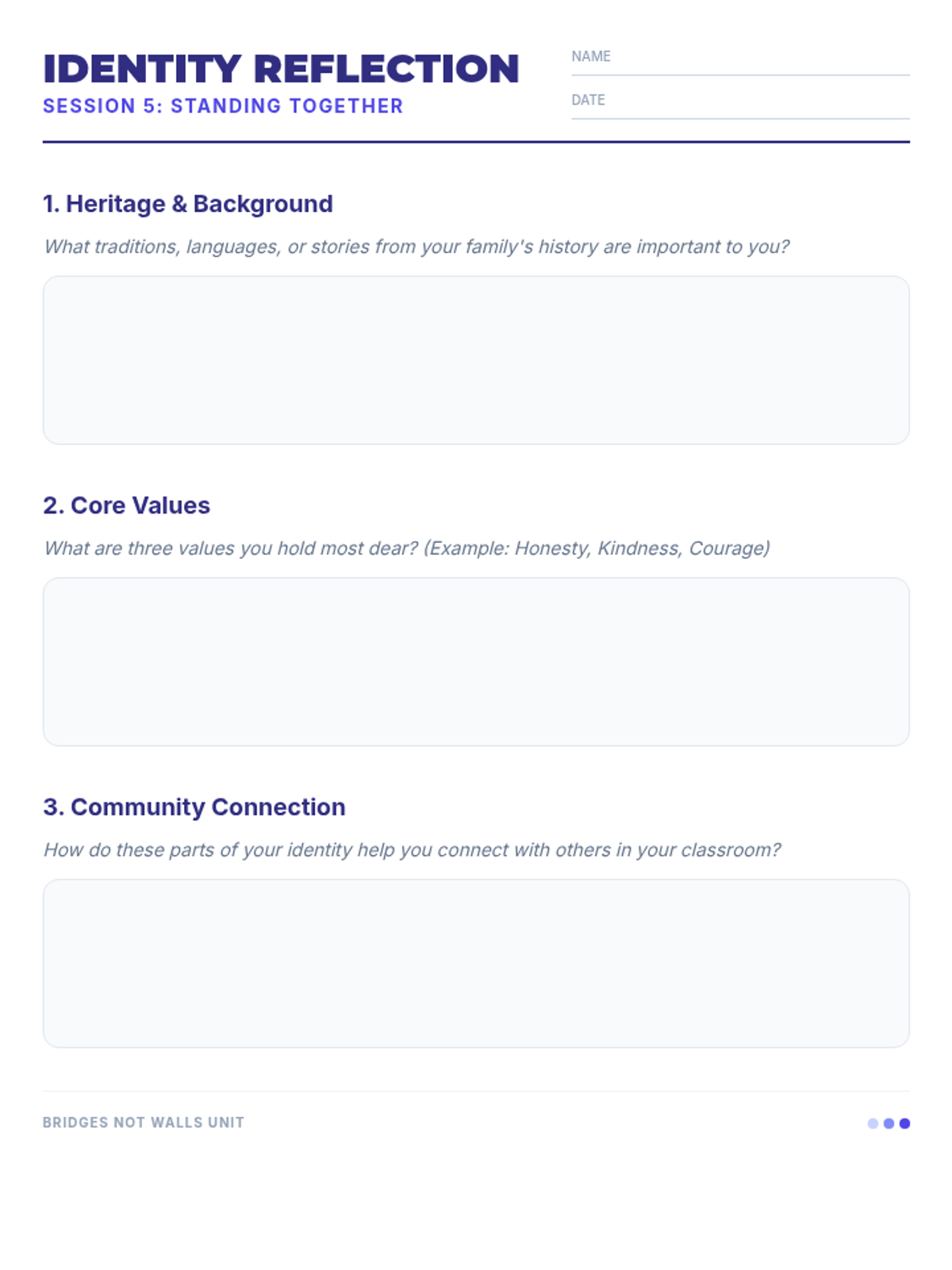
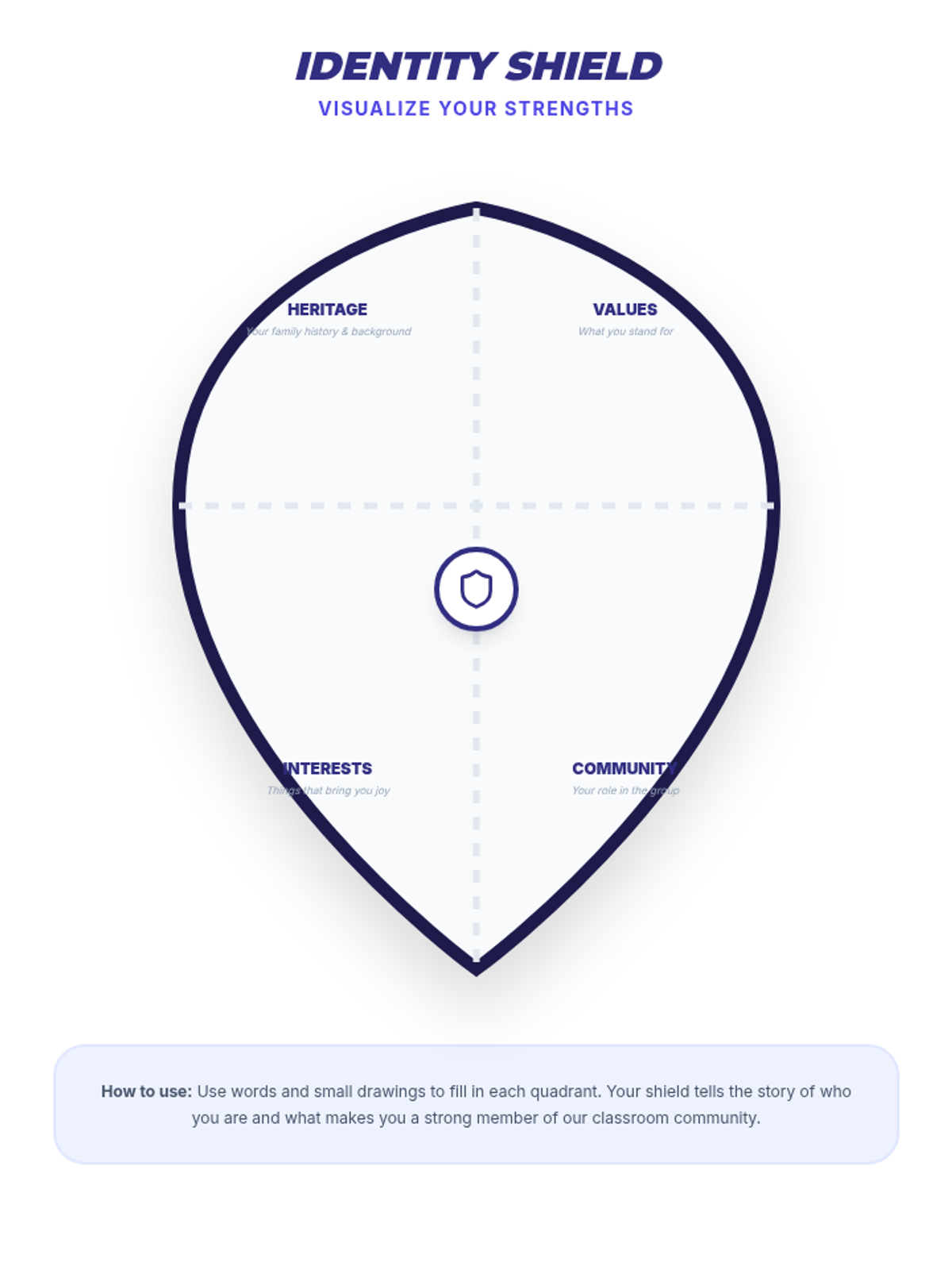
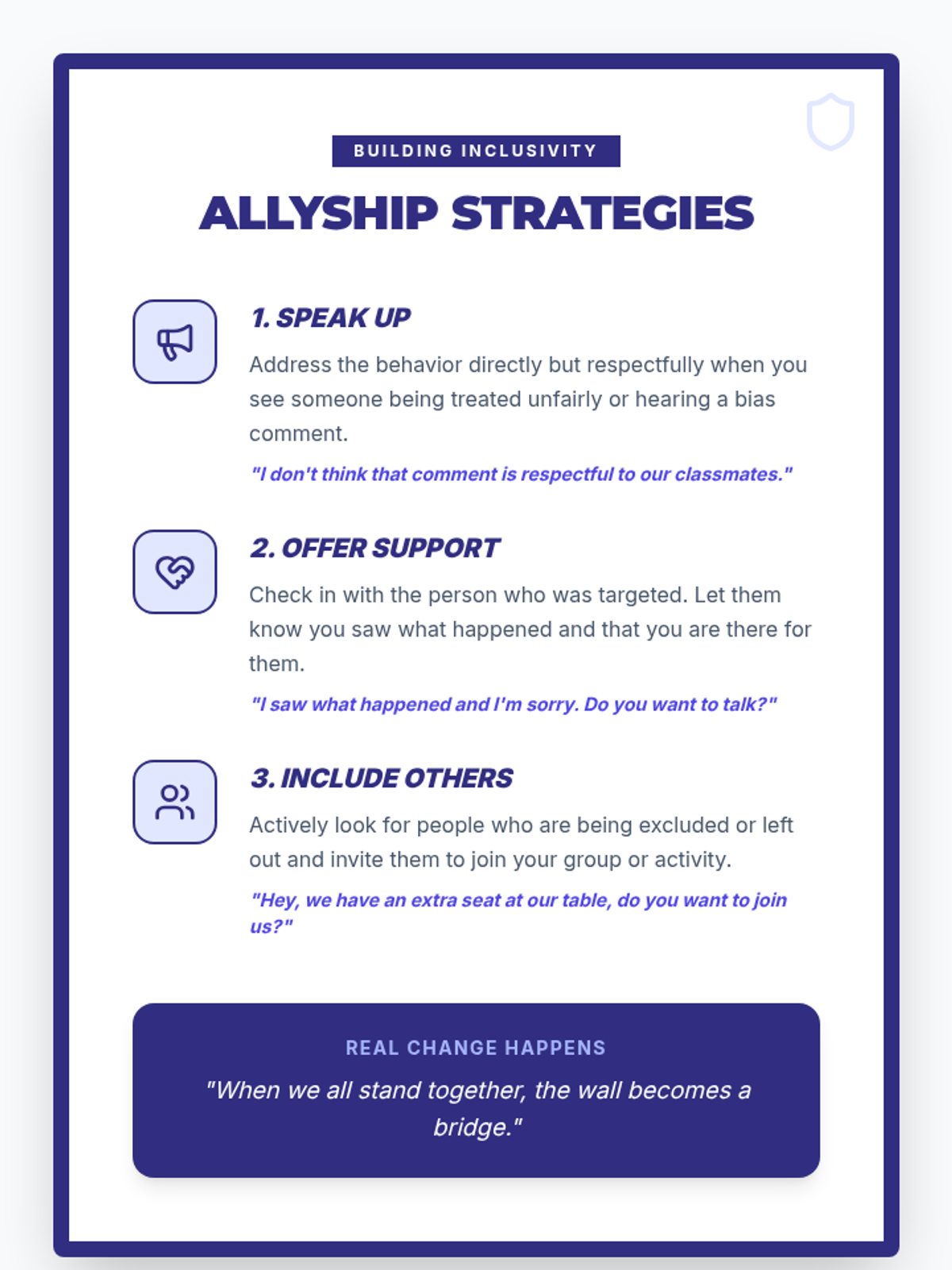
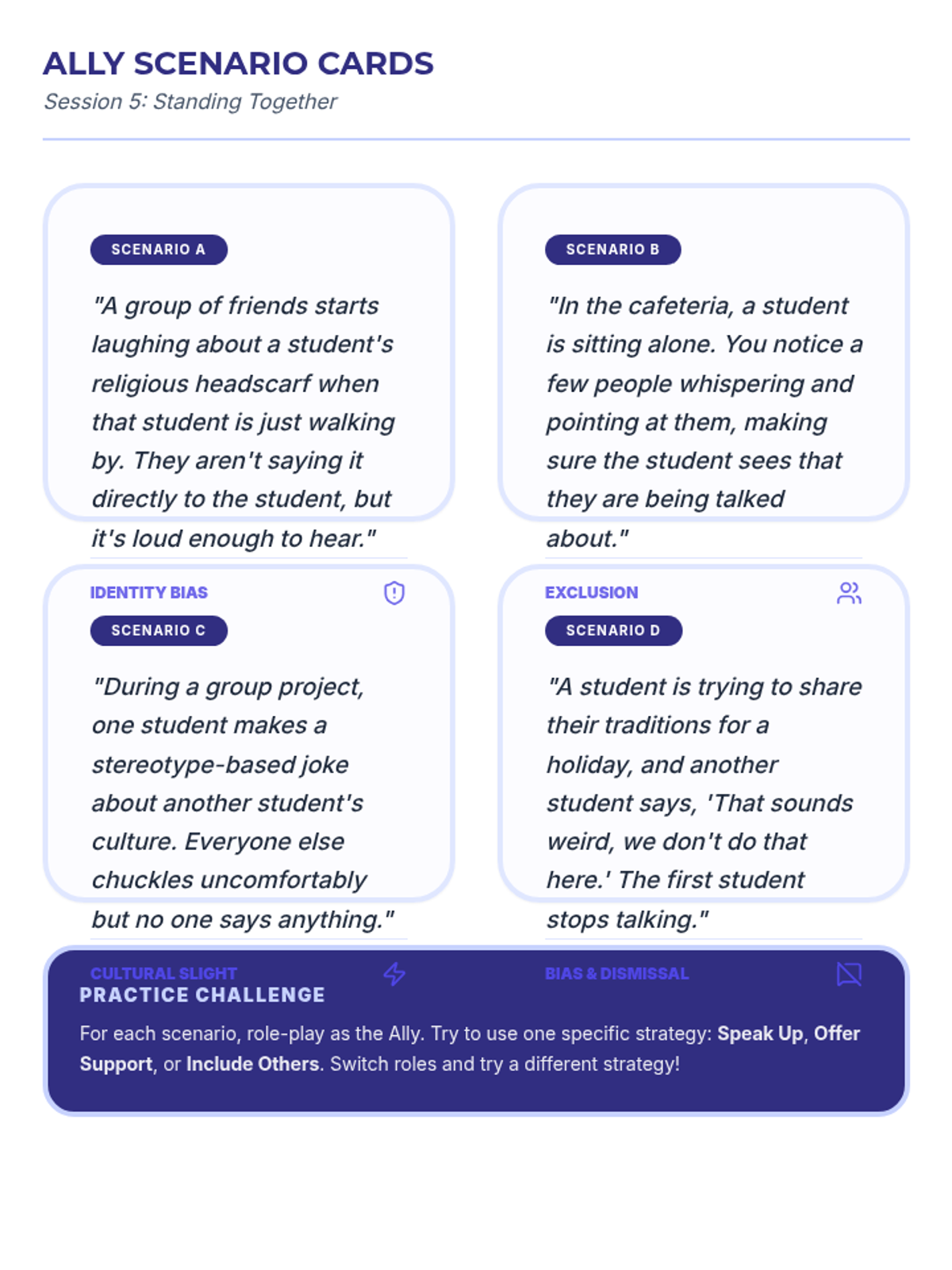
Students explore their own cultural identities and learn to act as allies by recognizing privilege, supporting peers from diverse backgrounds, and planning concrete actions to foster inclusion.
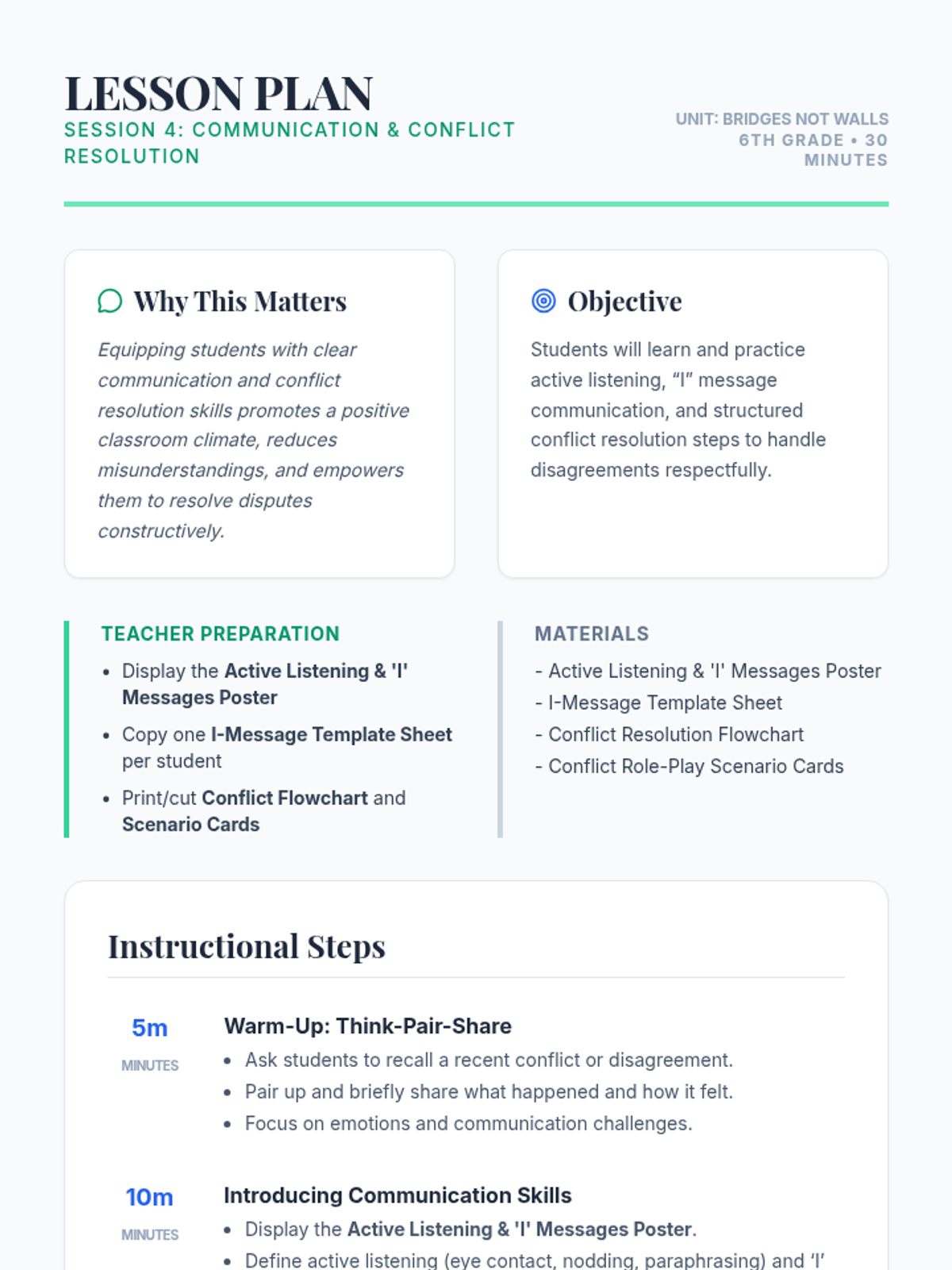
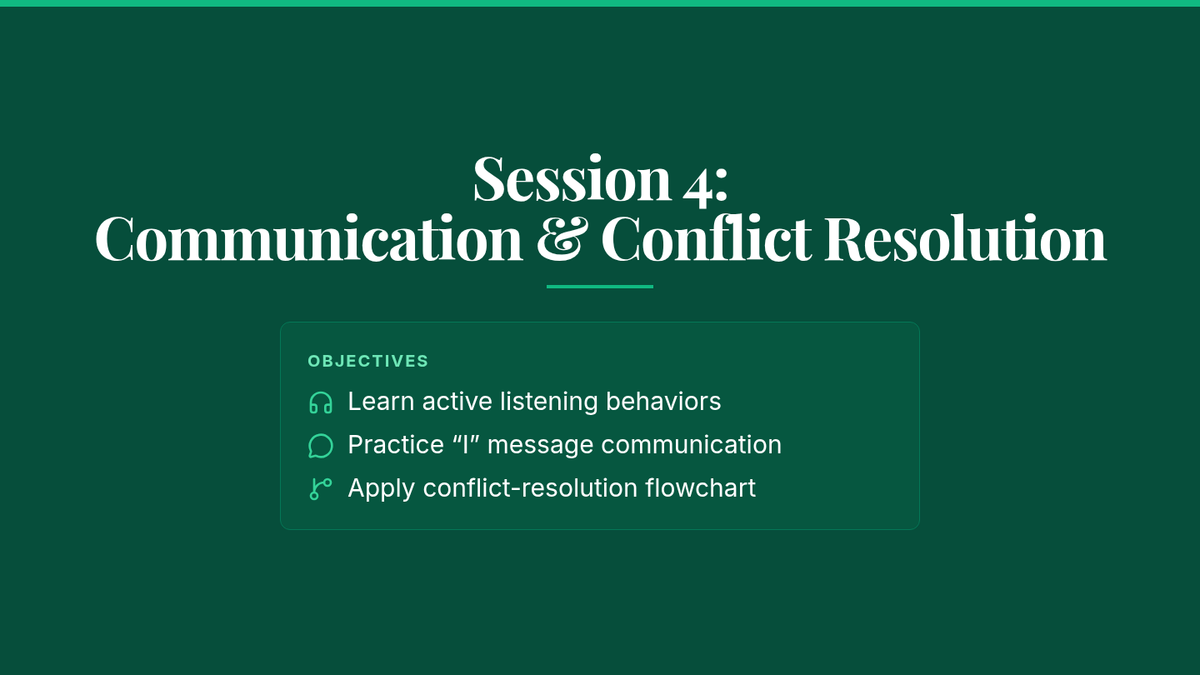
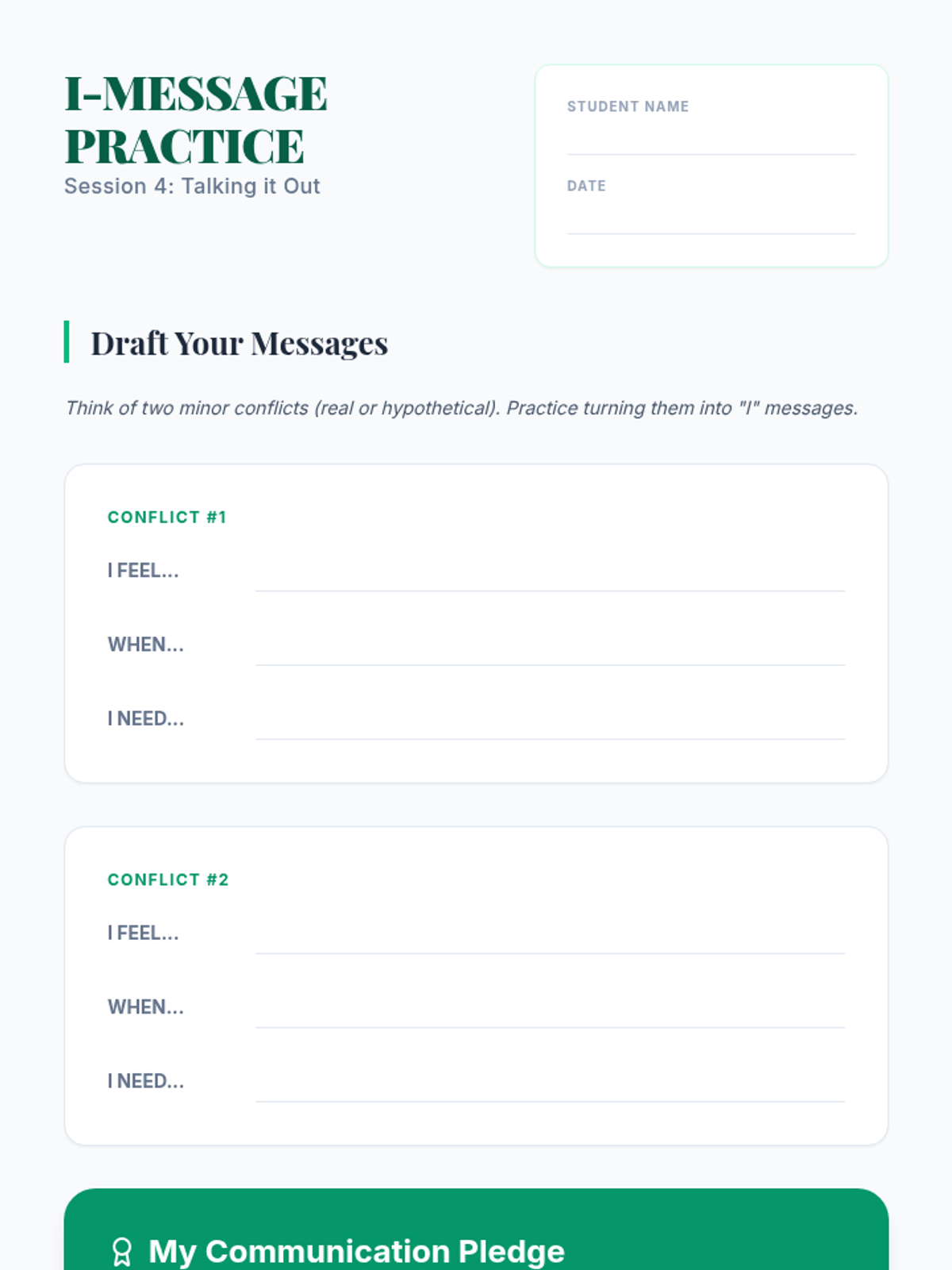
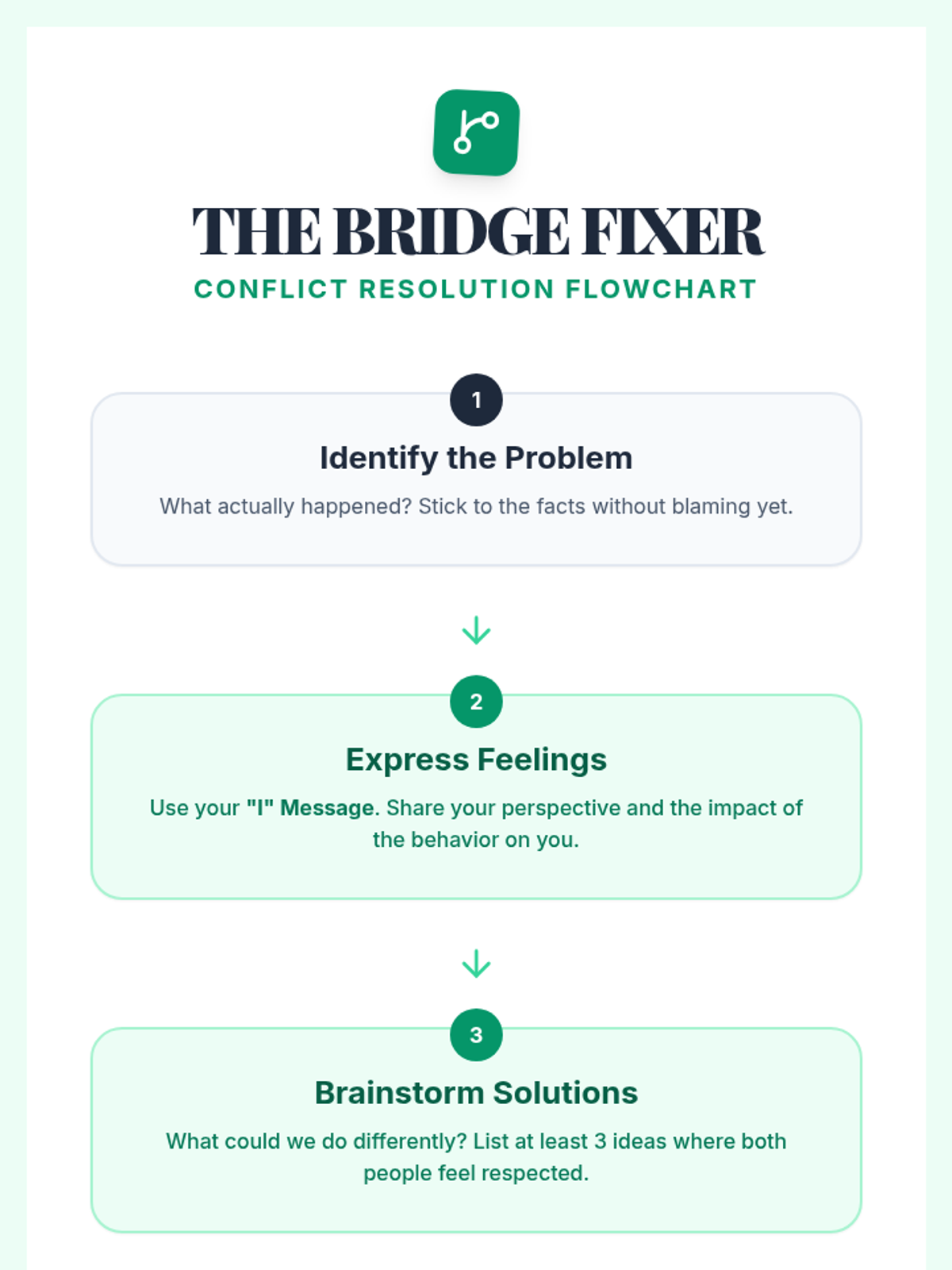
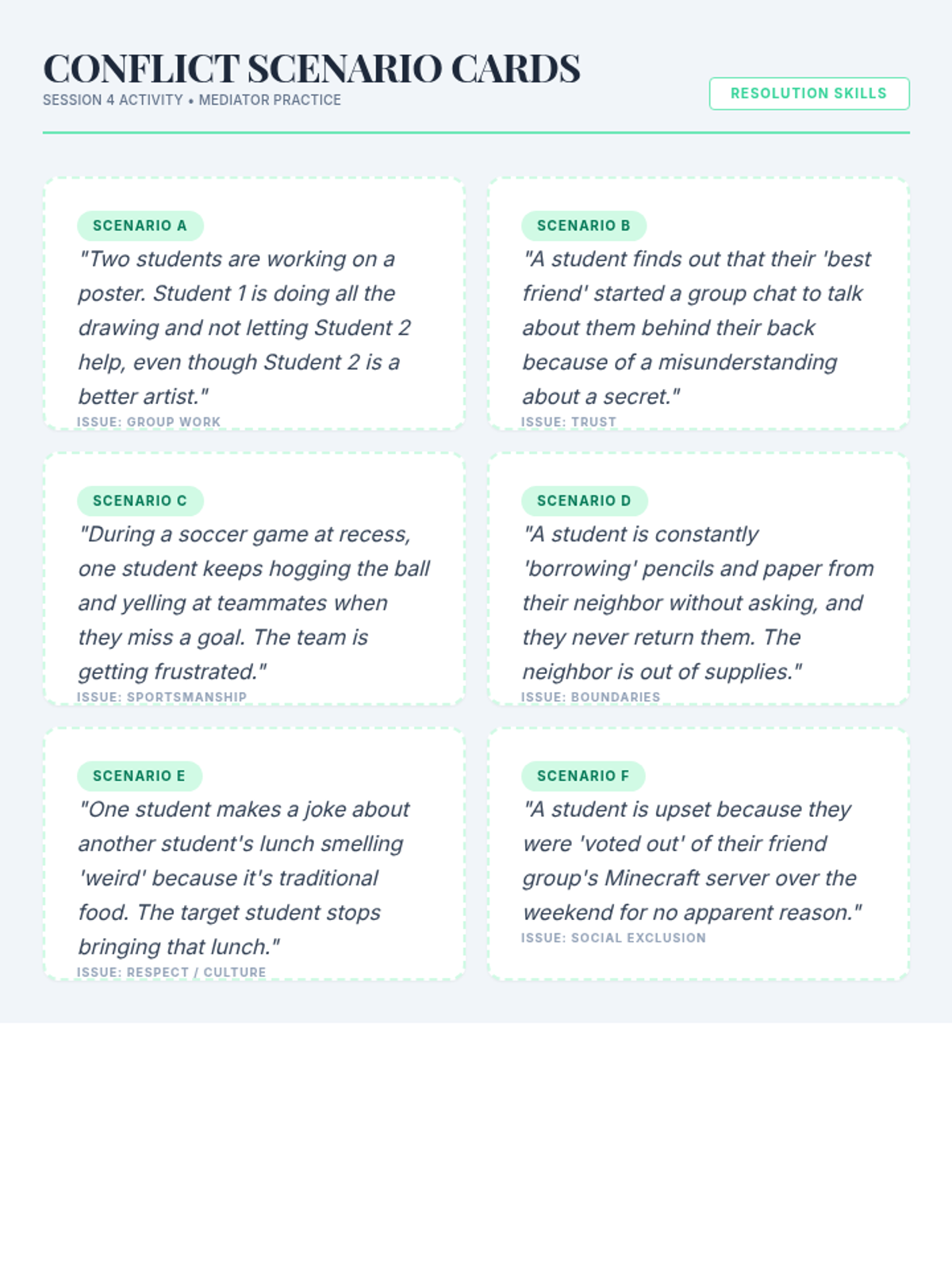
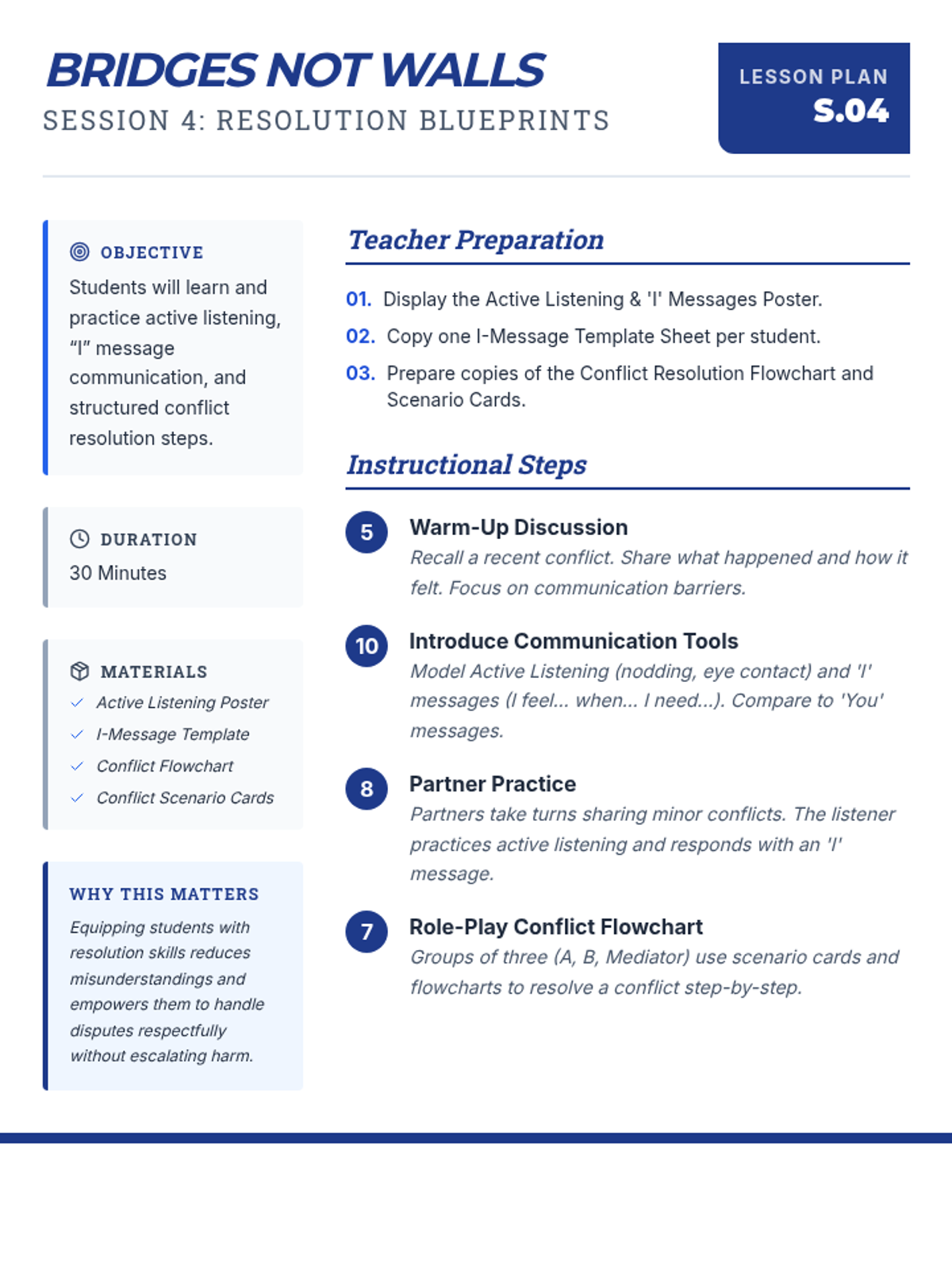
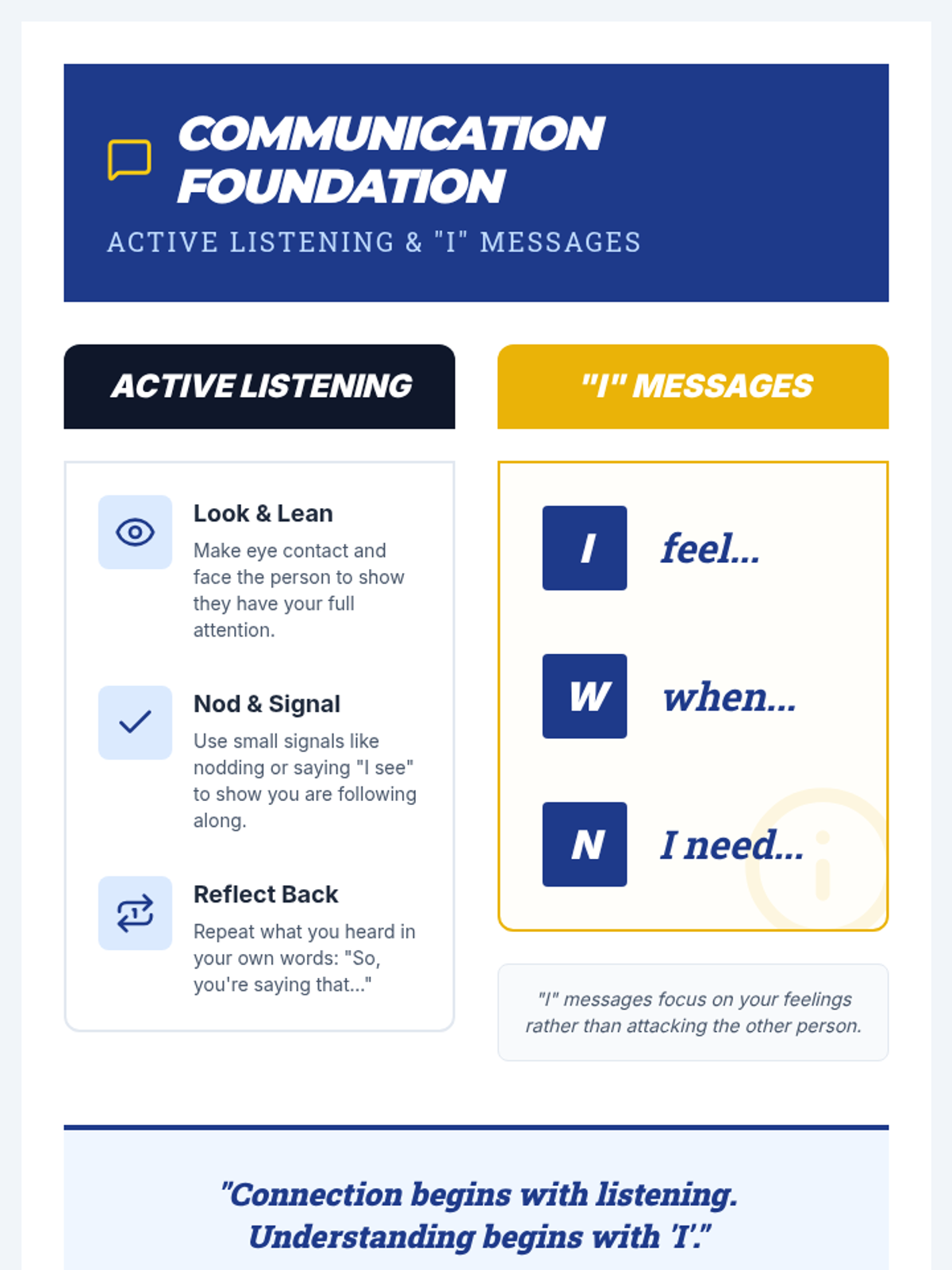
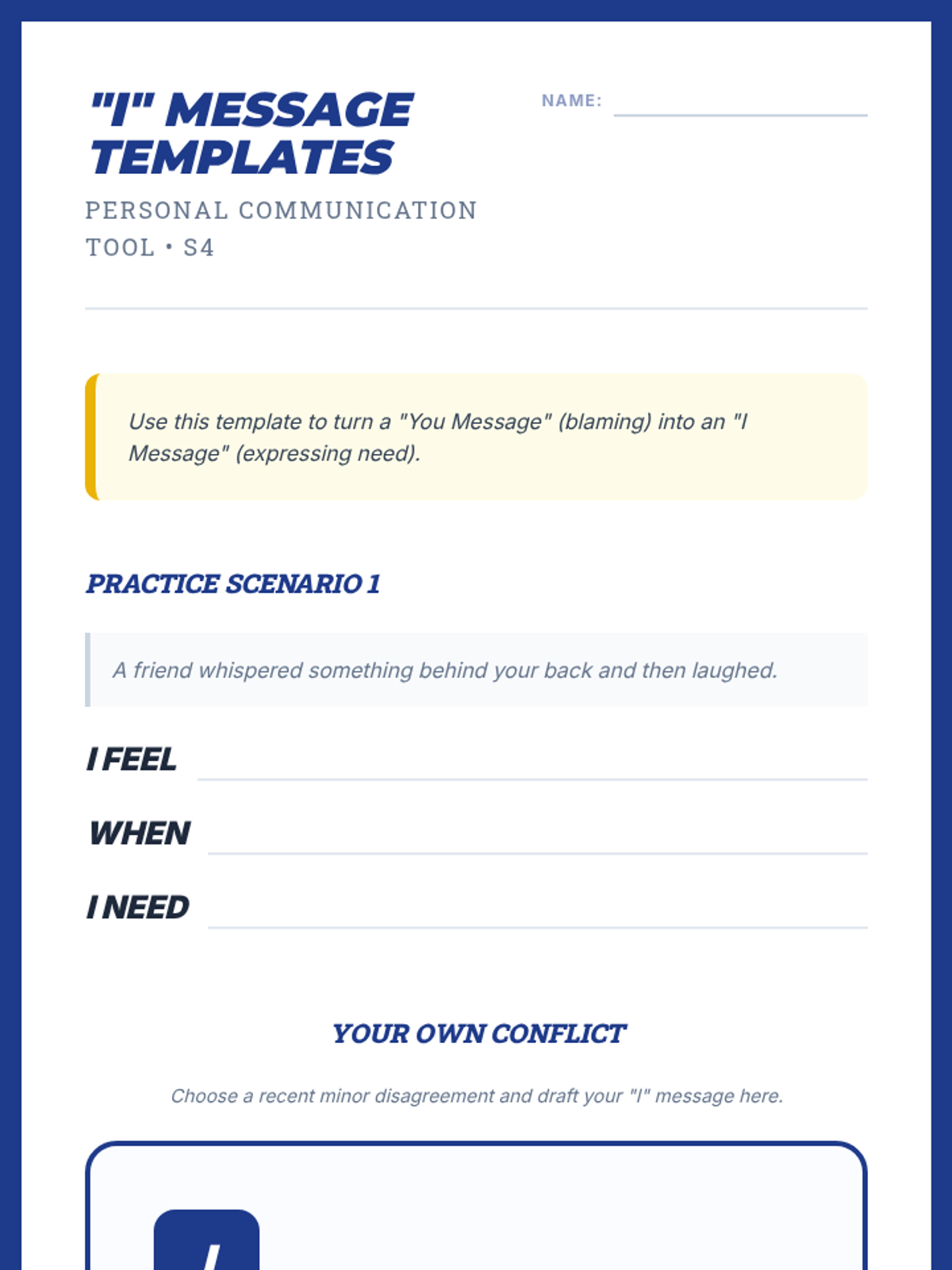
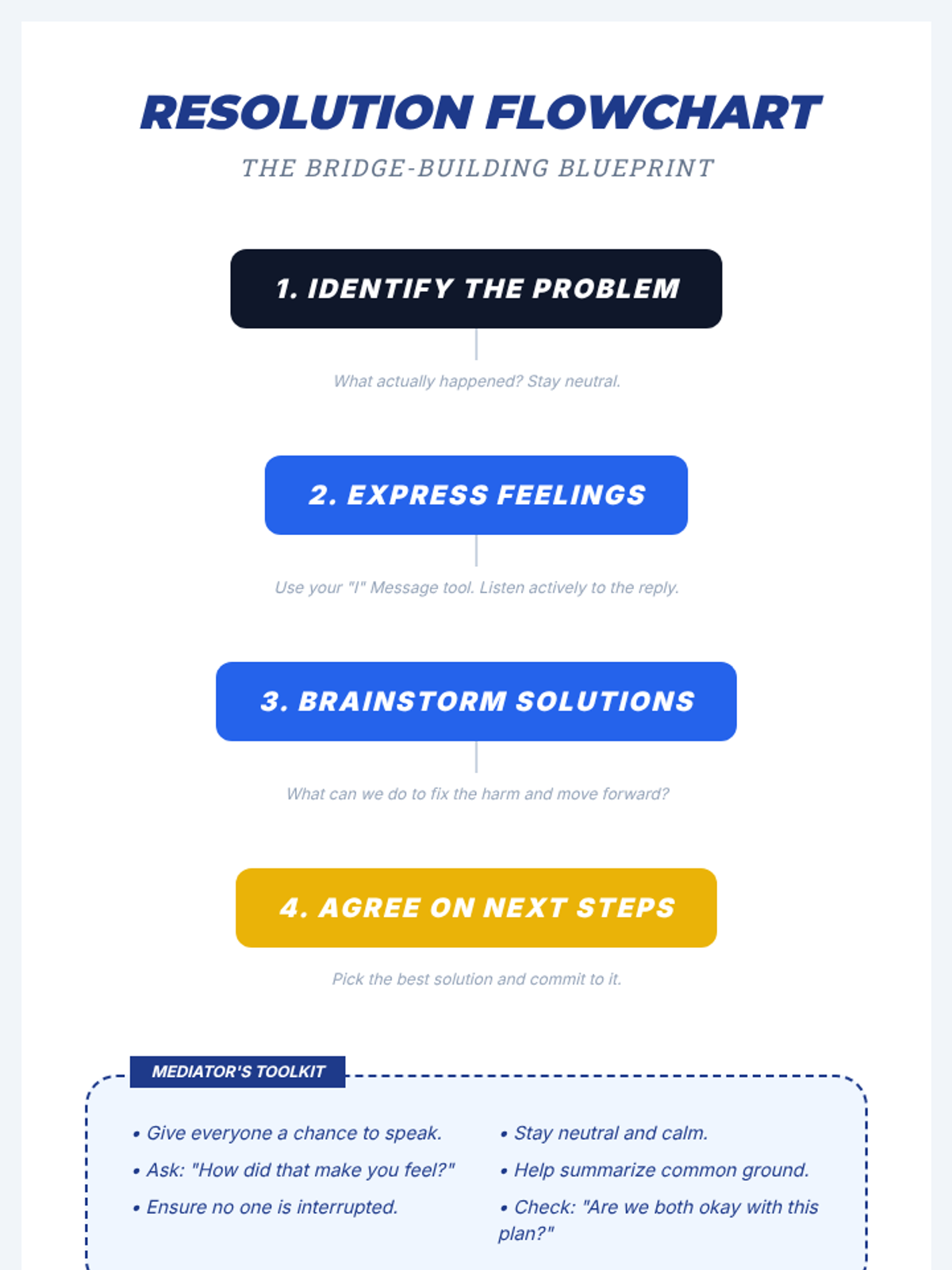
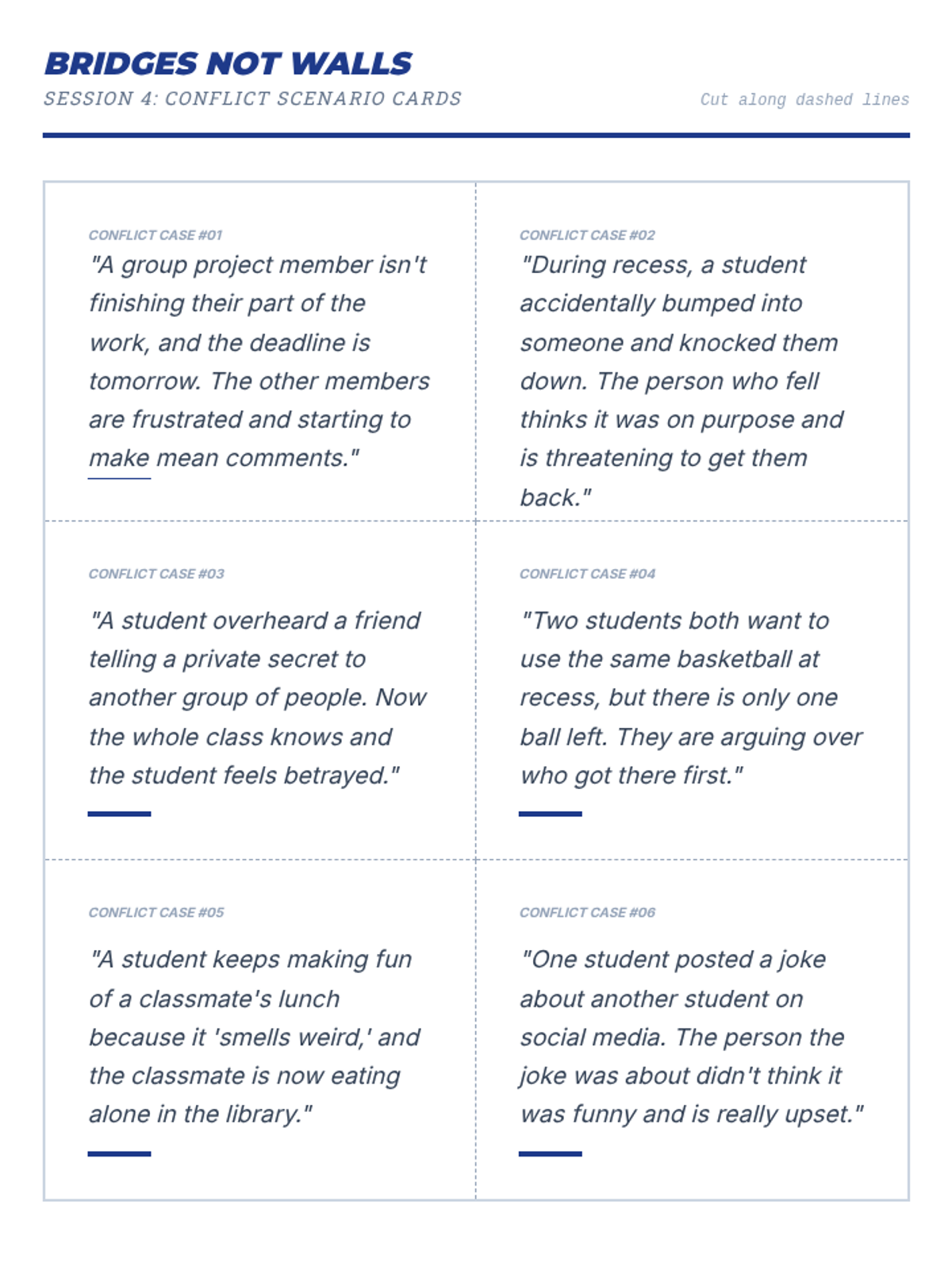
Students learn and practice active listening, “I” message communication, and structured conflict resolution steps to handle disagreements respectfully.
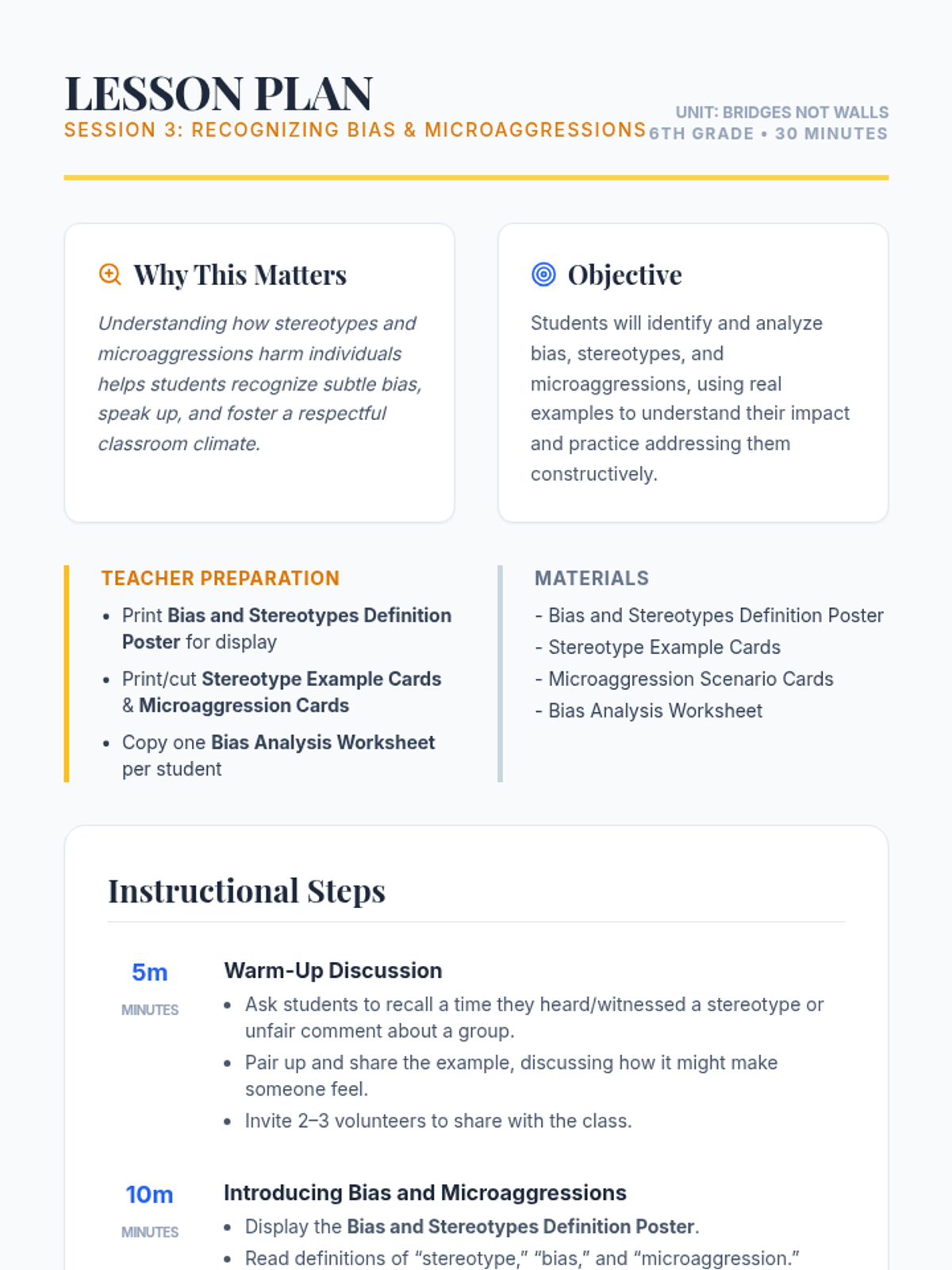
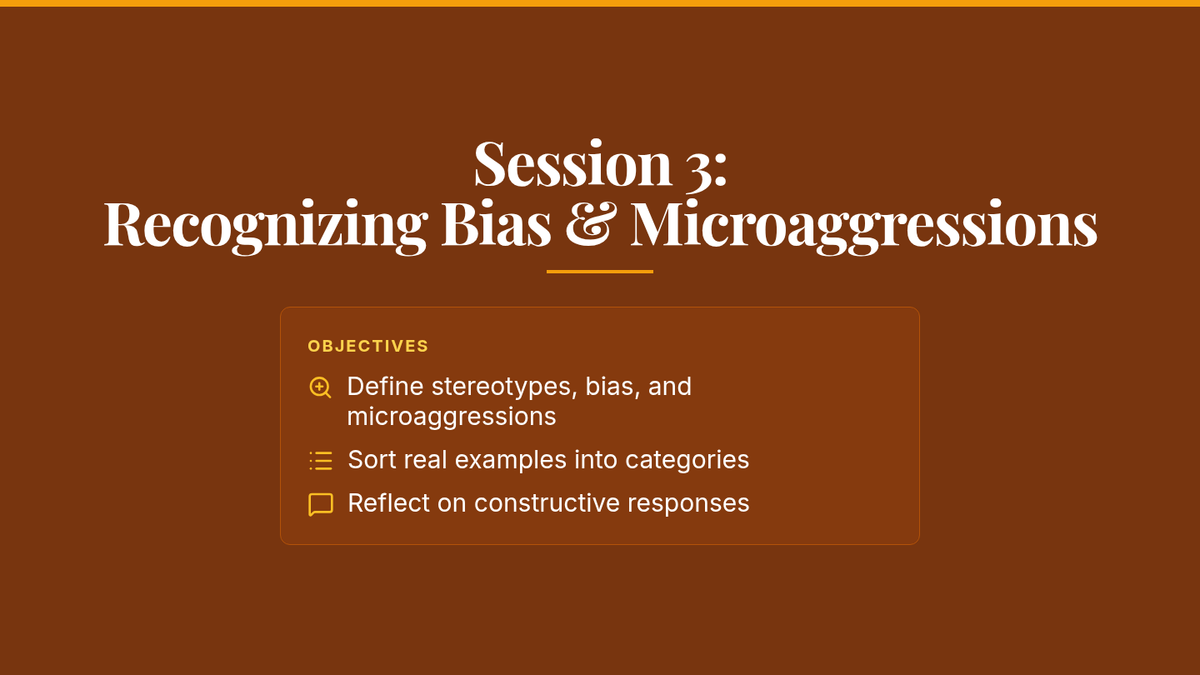
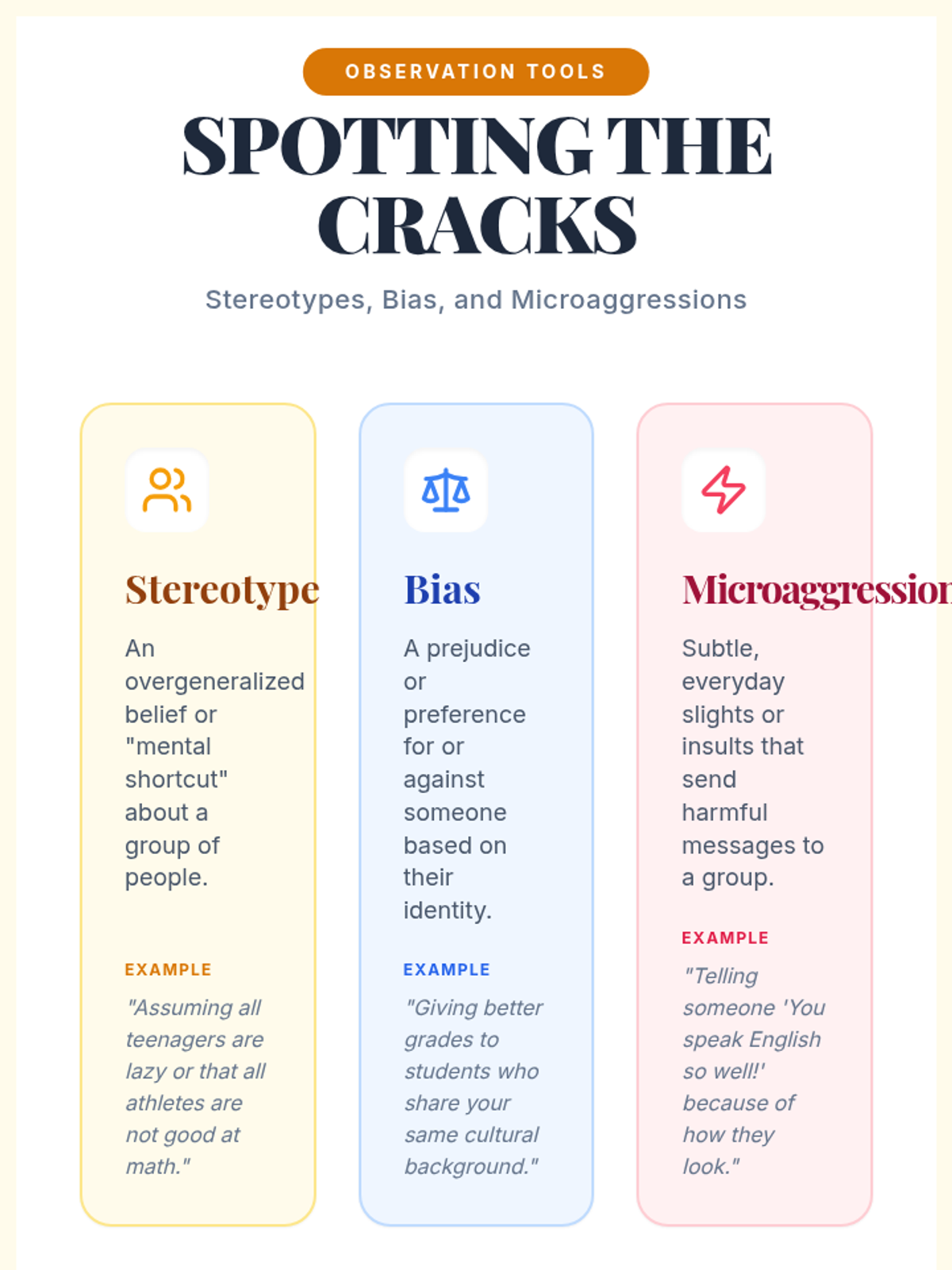
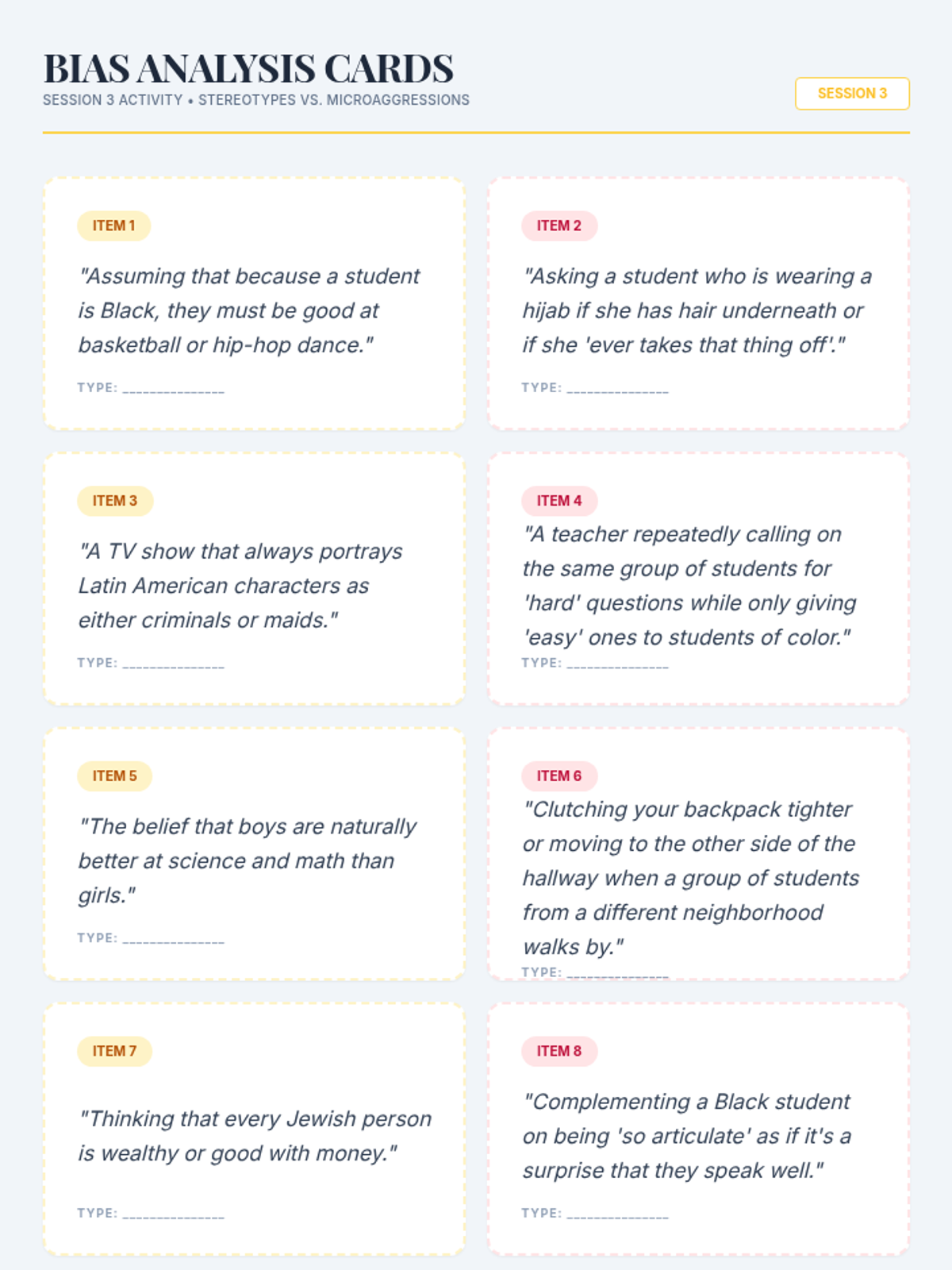
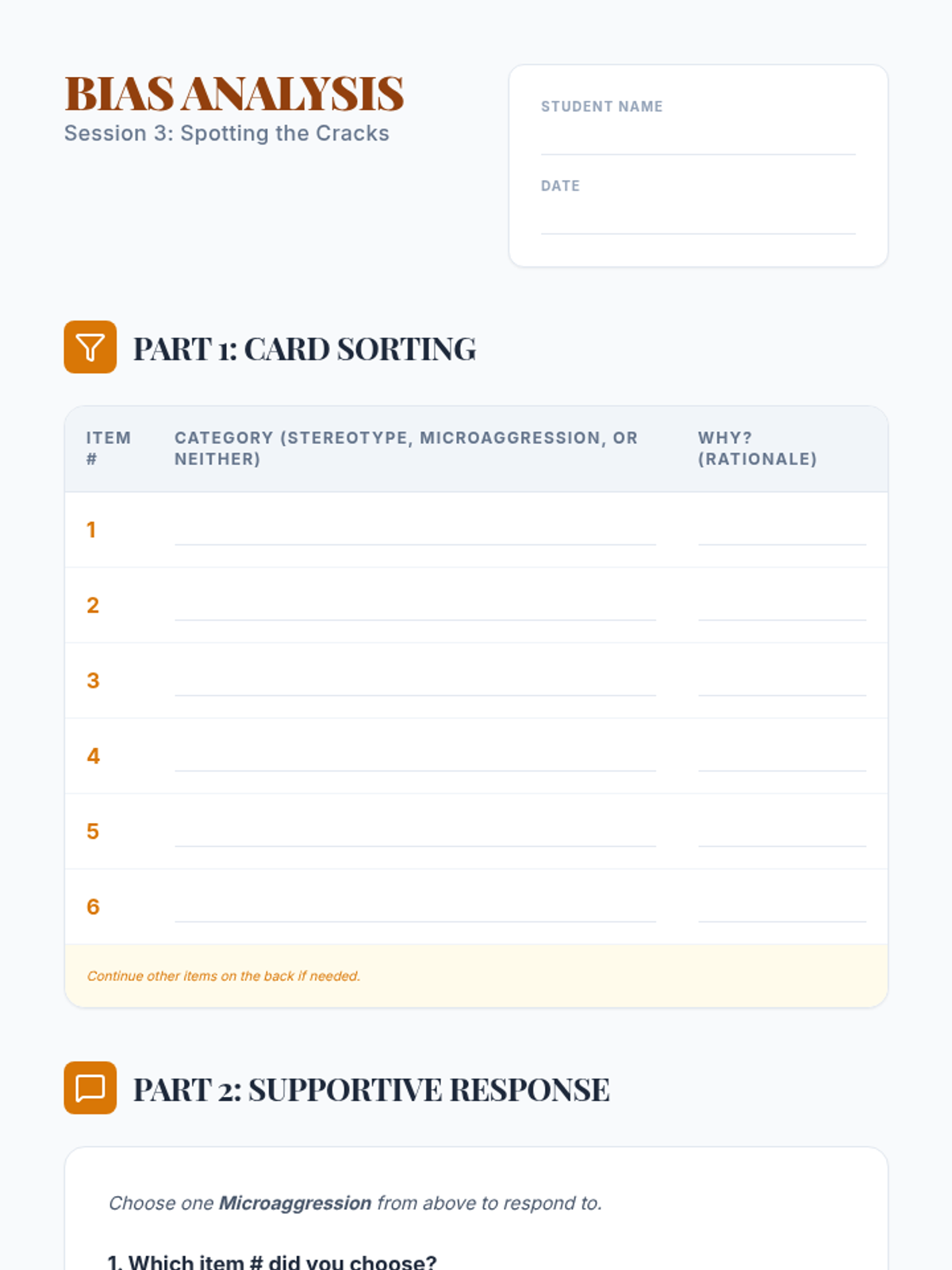
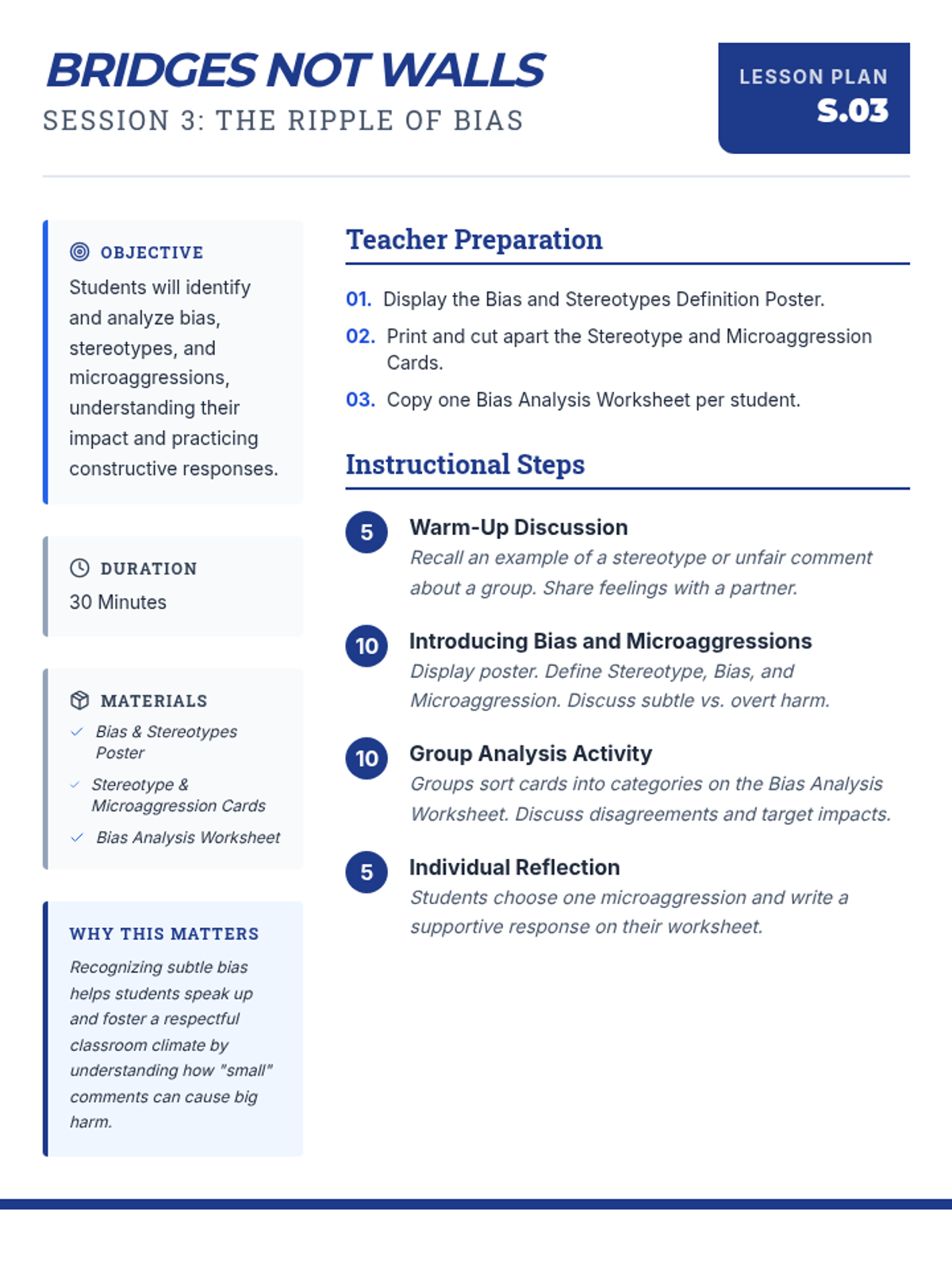
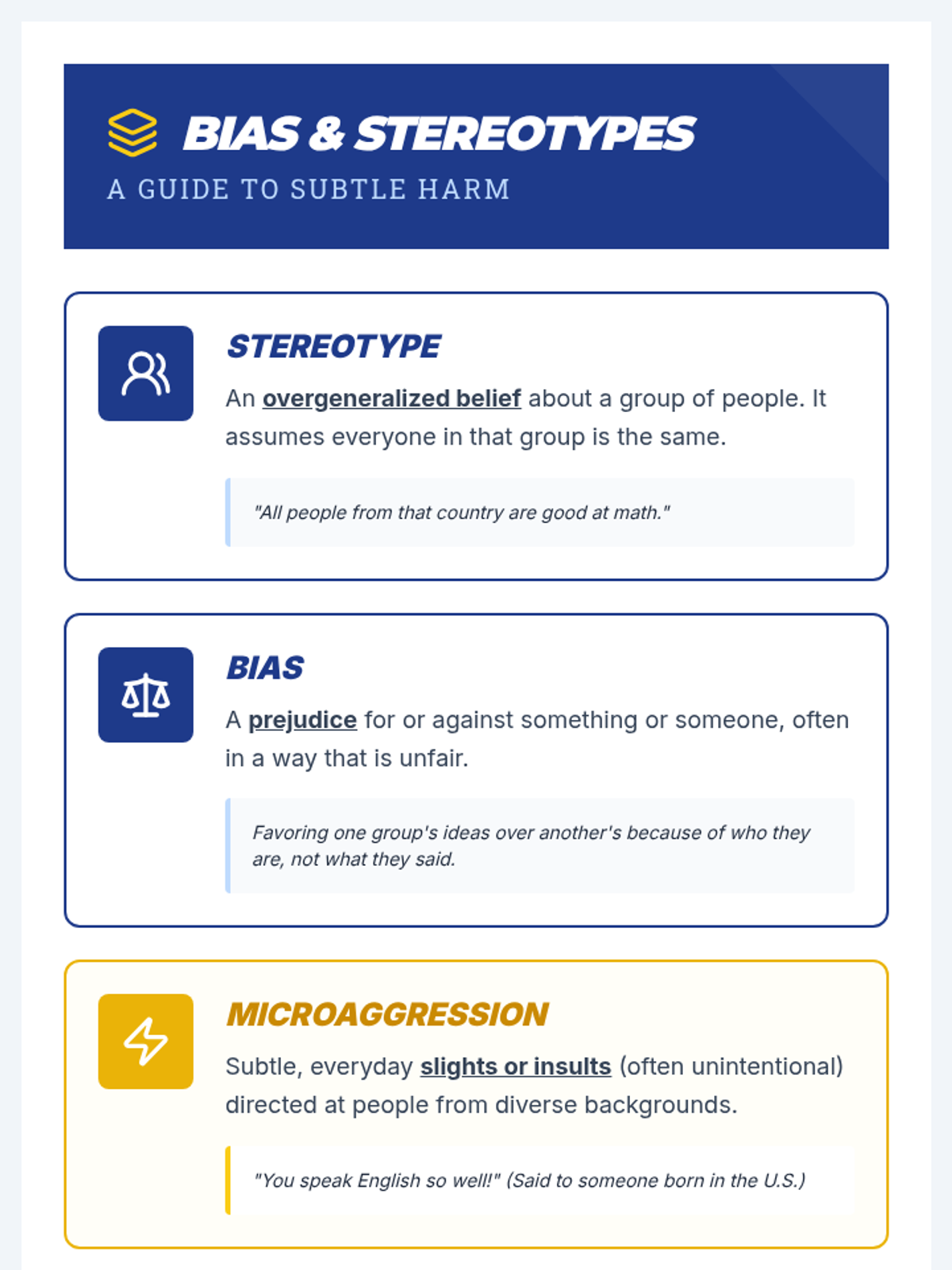
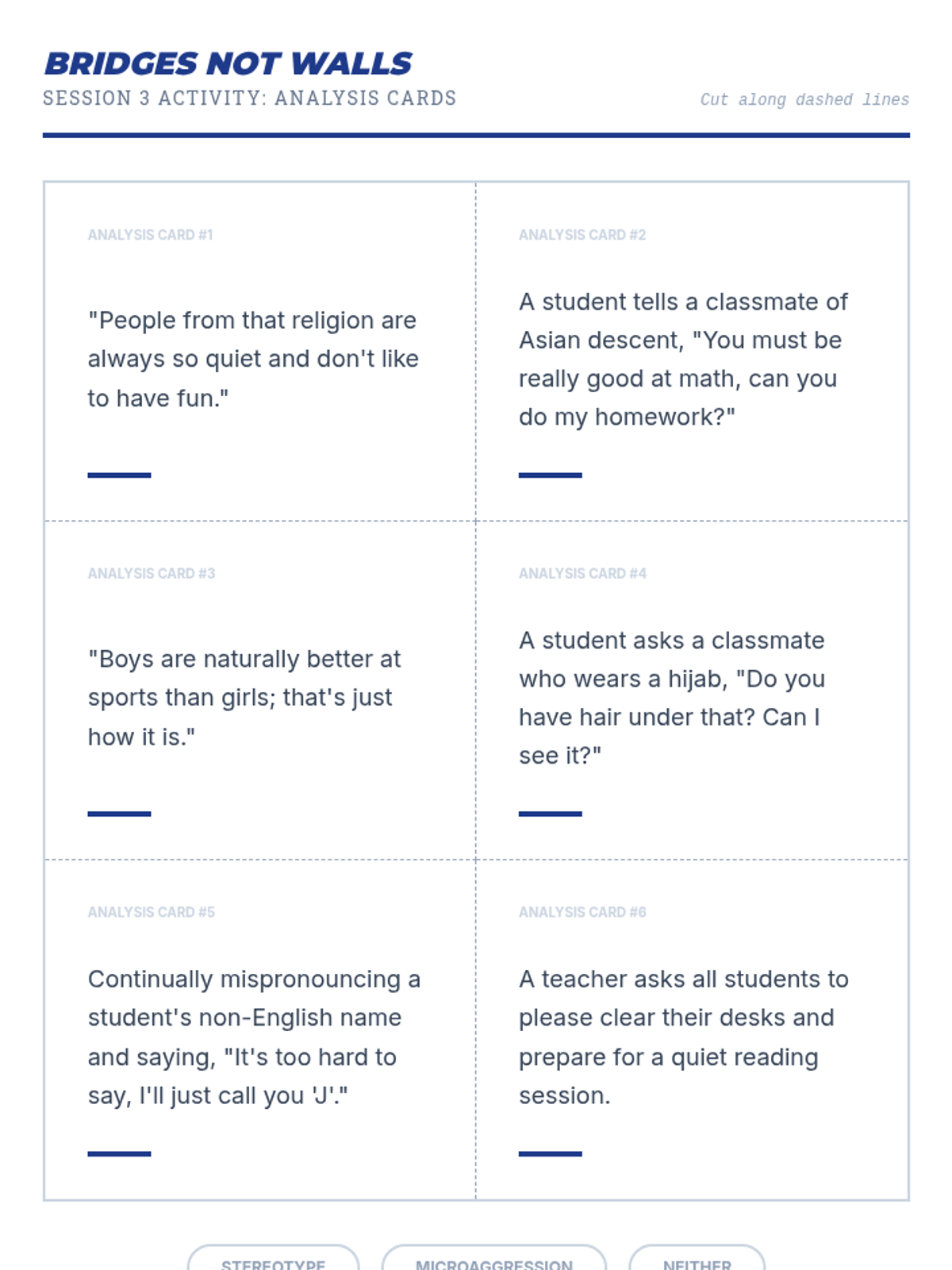
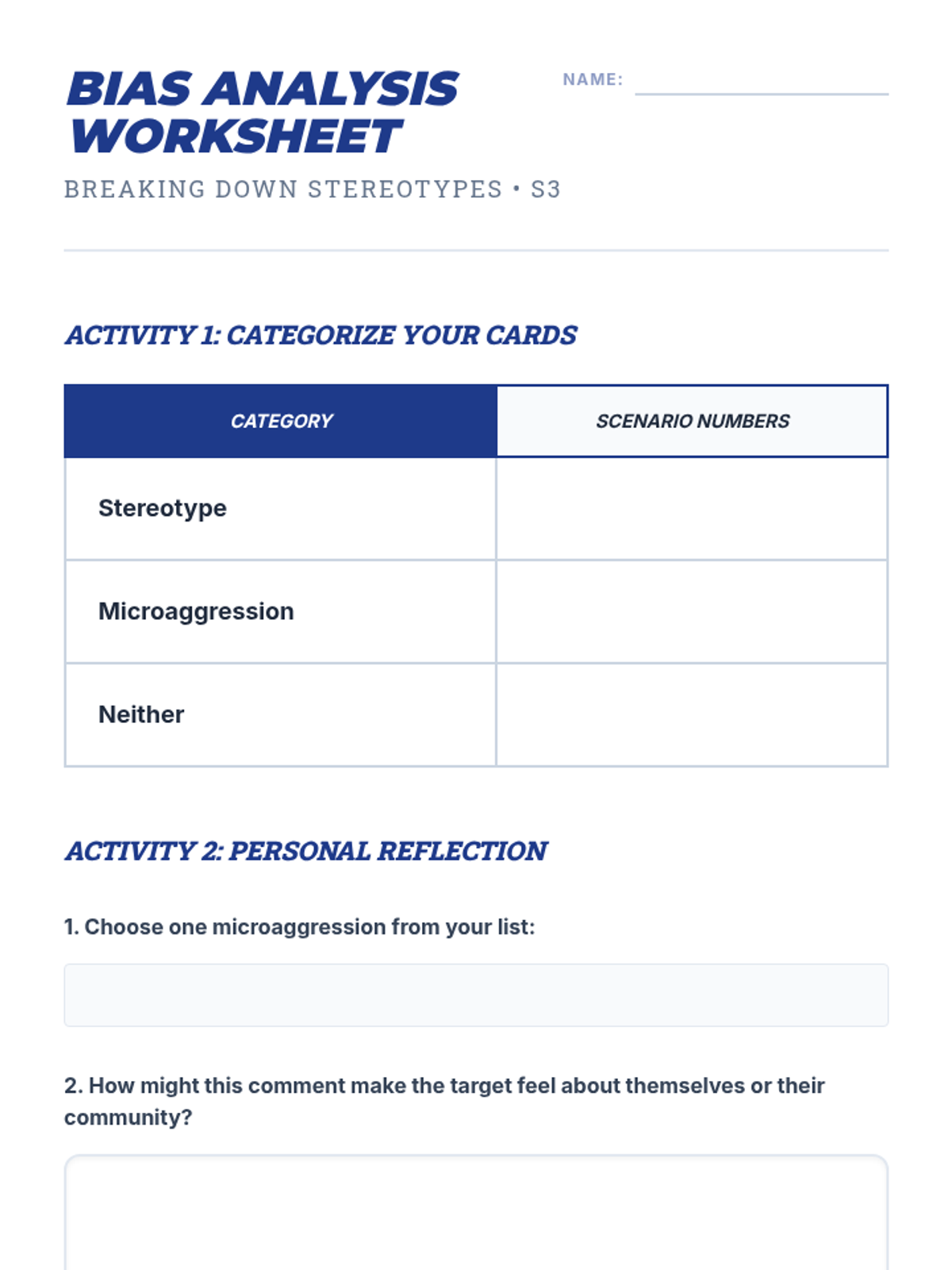
Students identify and analyze bias, stereotypes, and microaggressions, understanding their impact and practicing constructive responses.
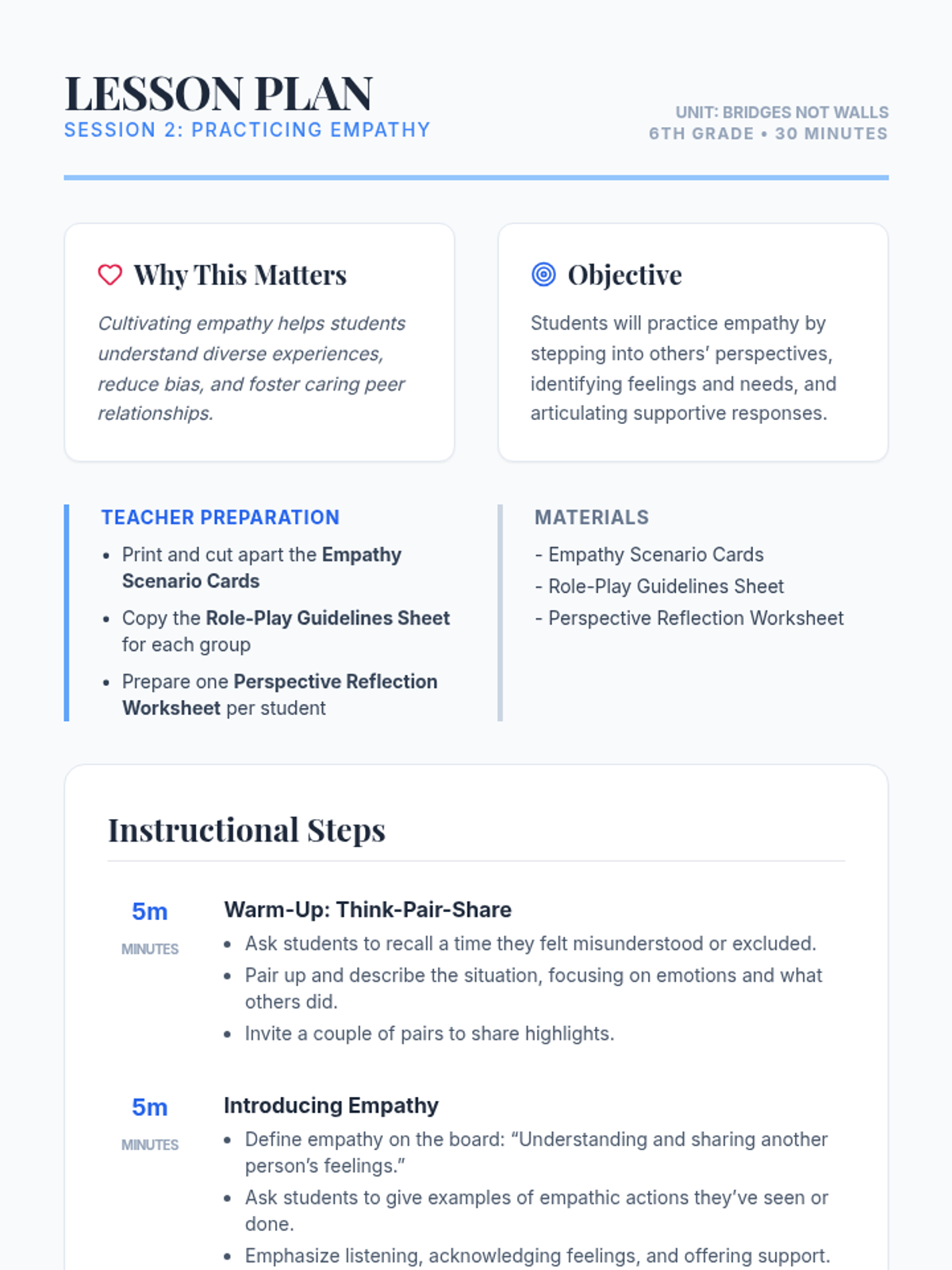
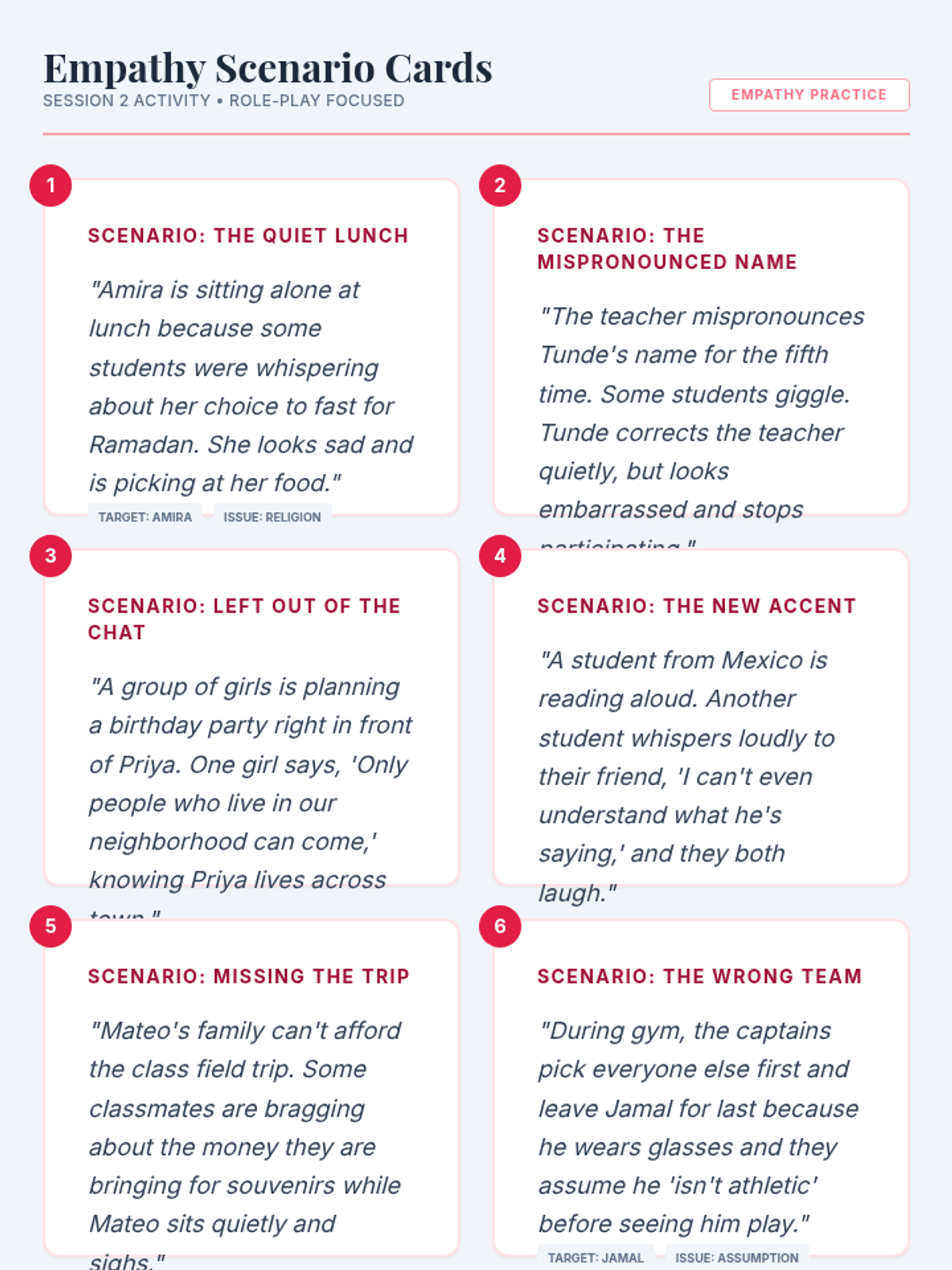
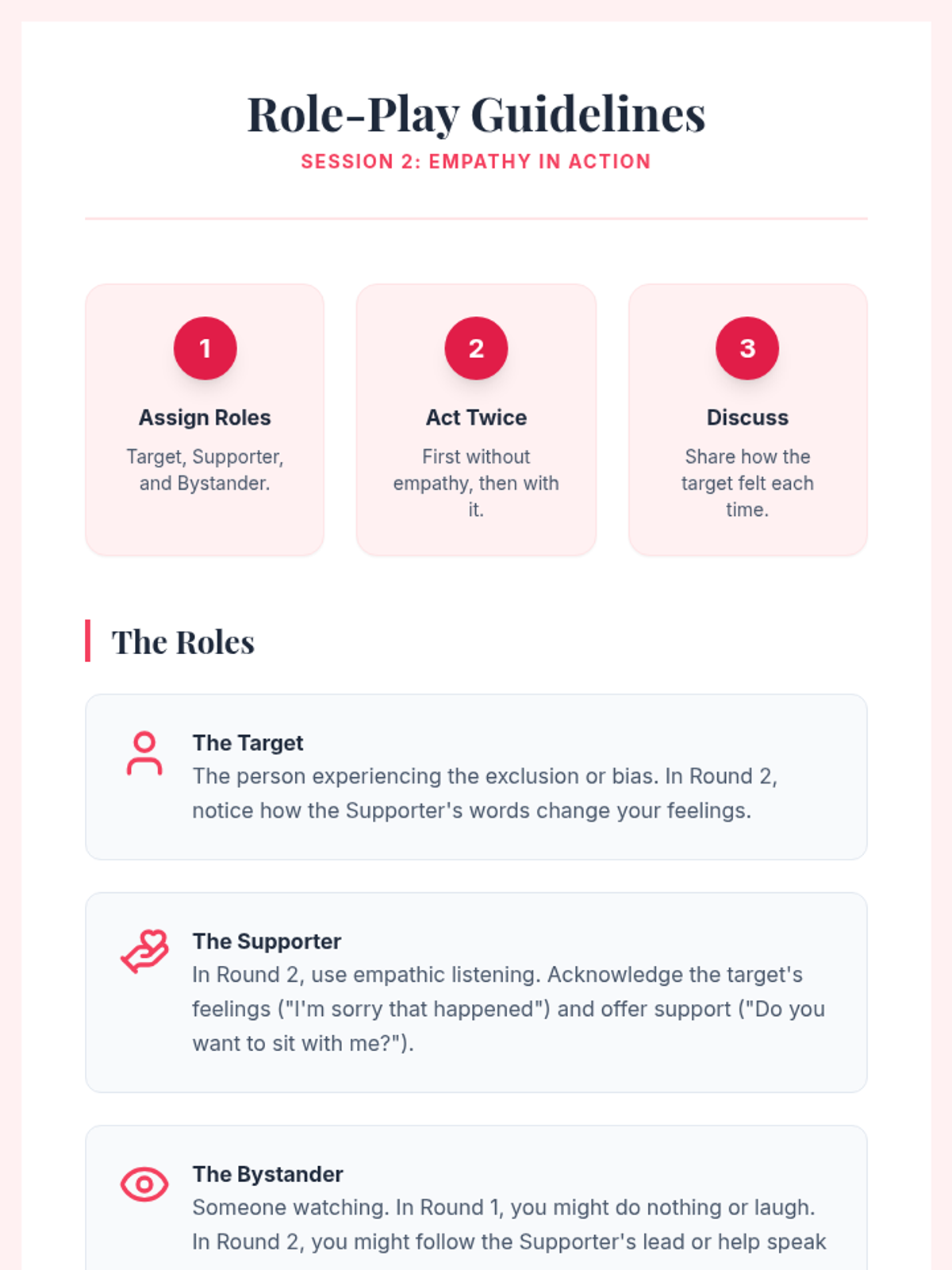
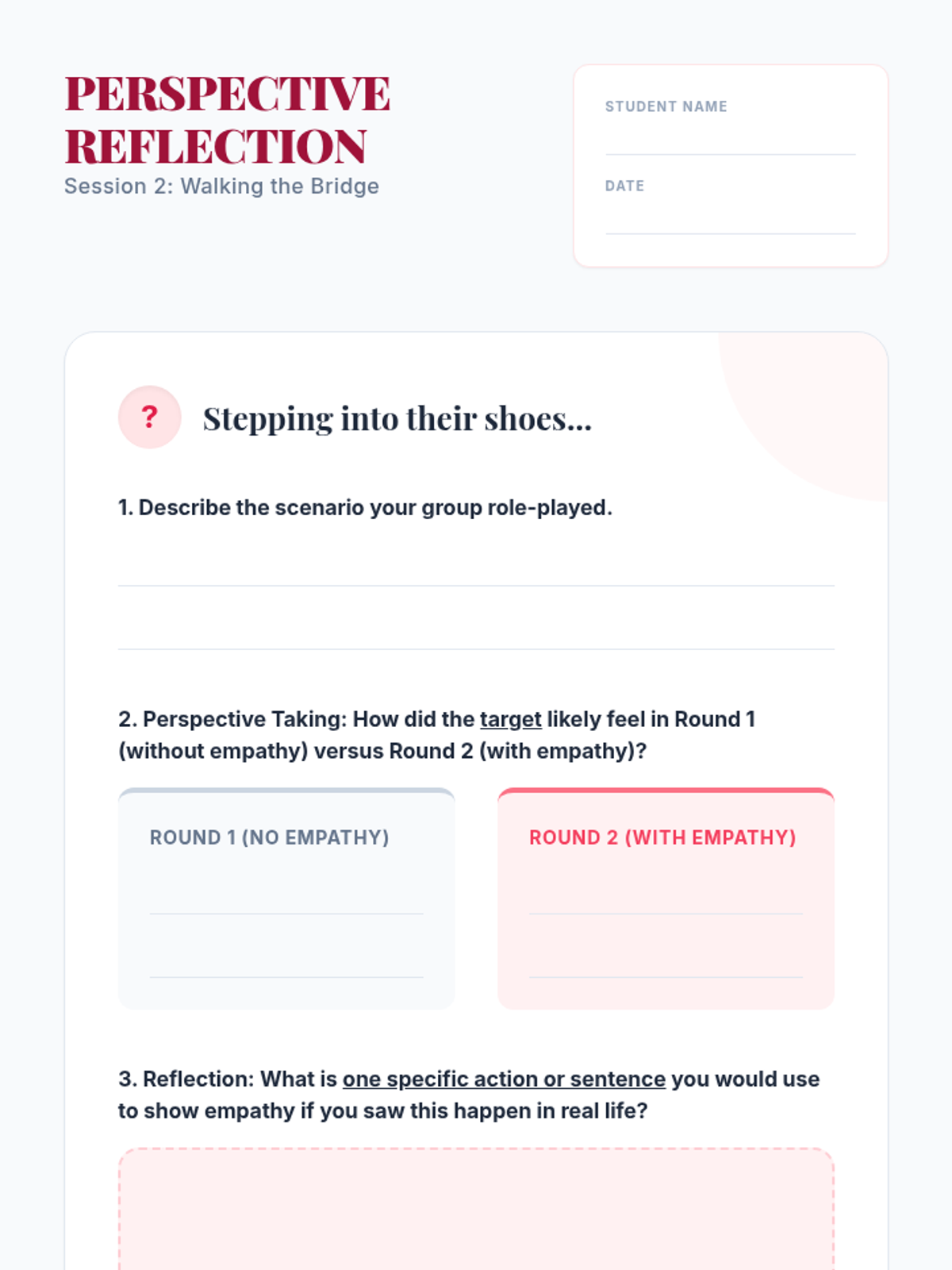
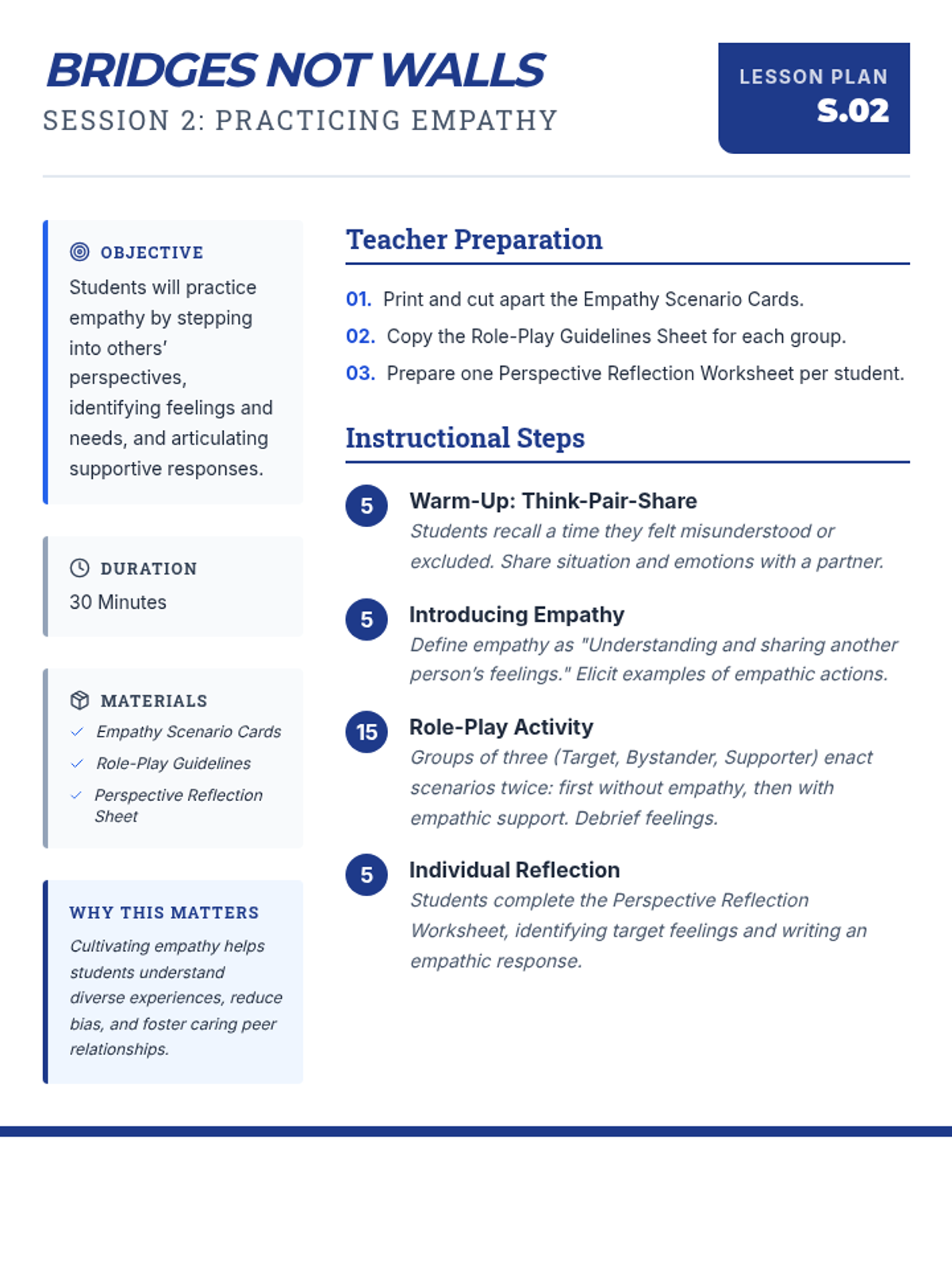
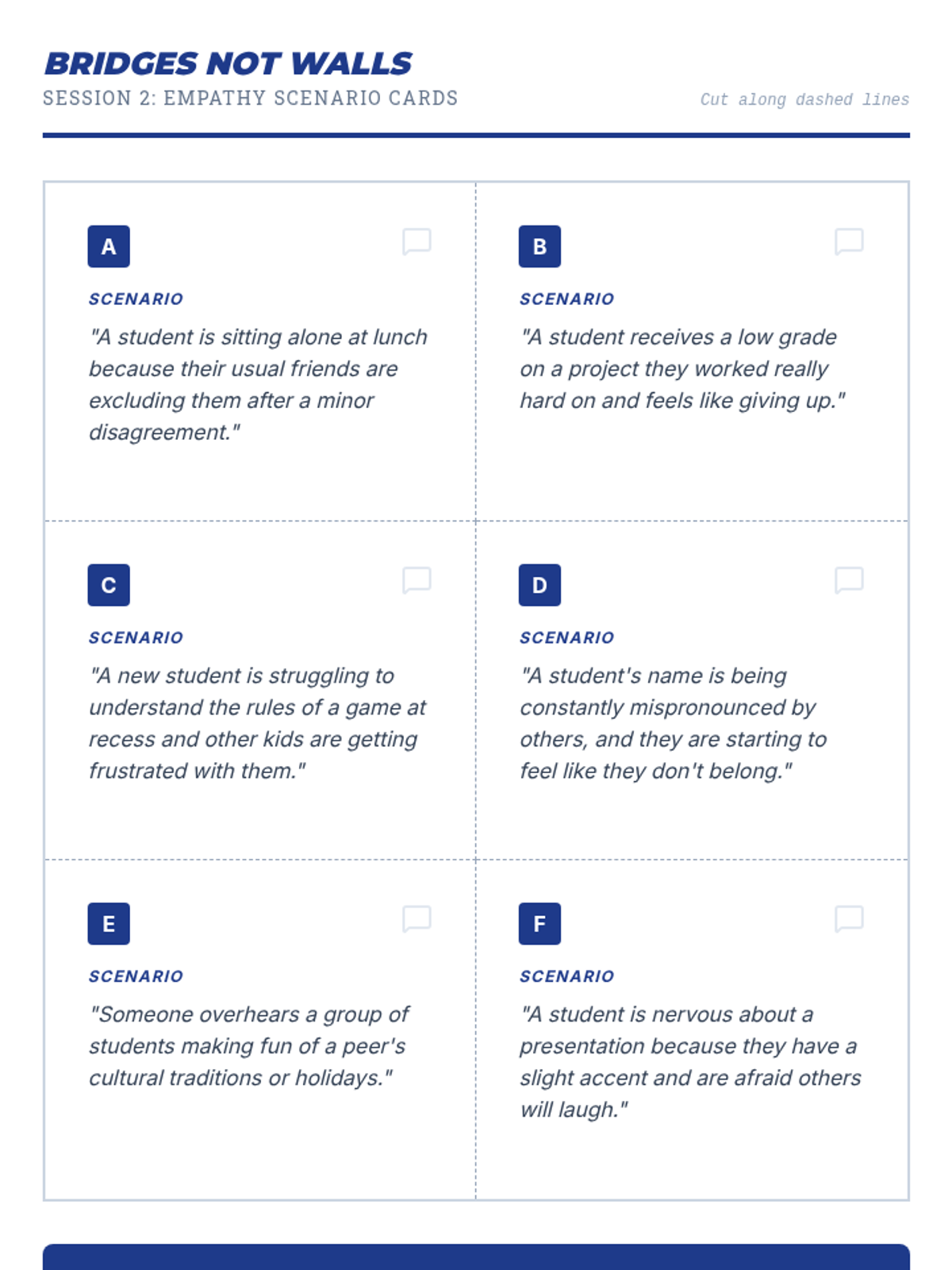
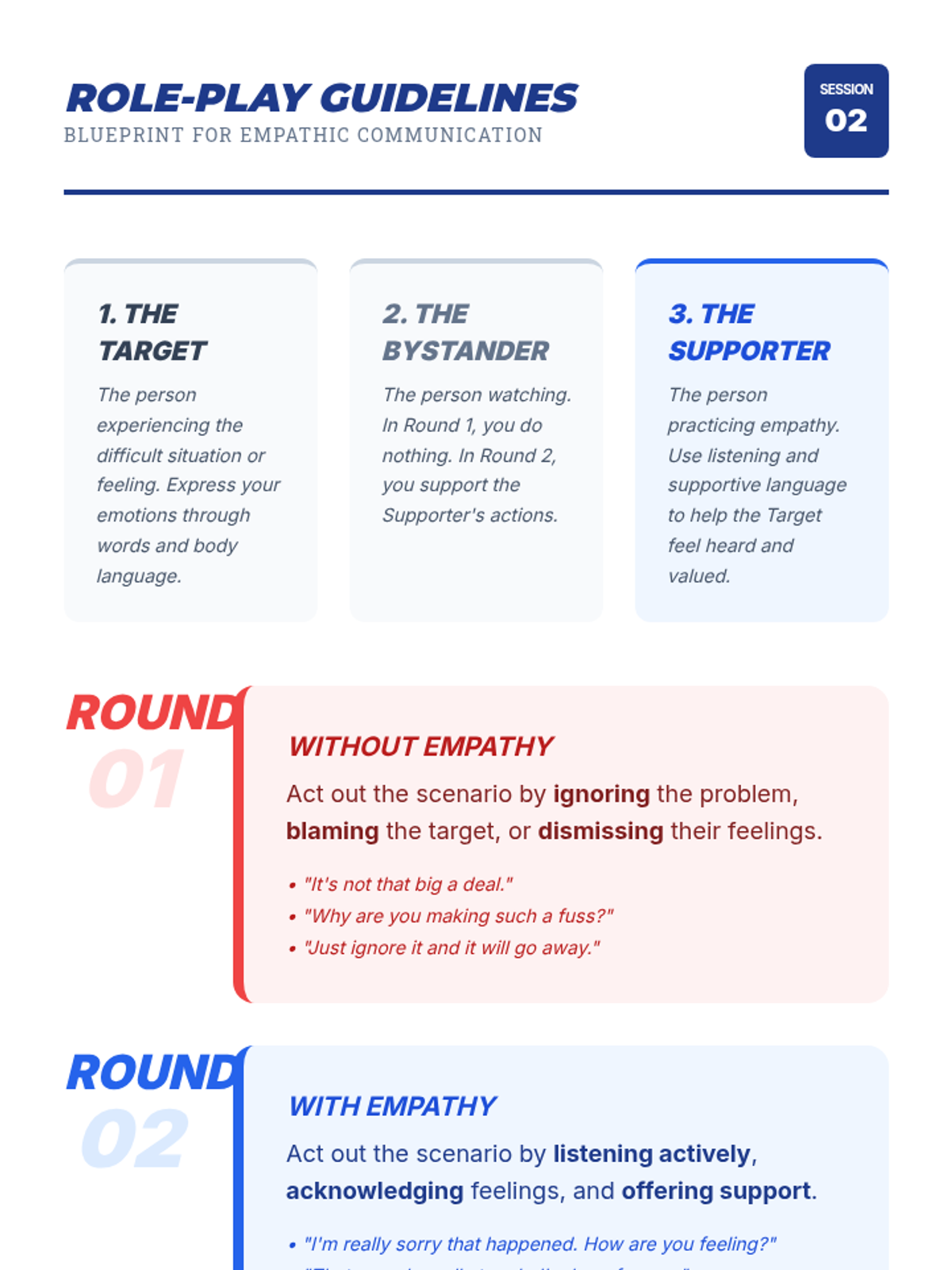
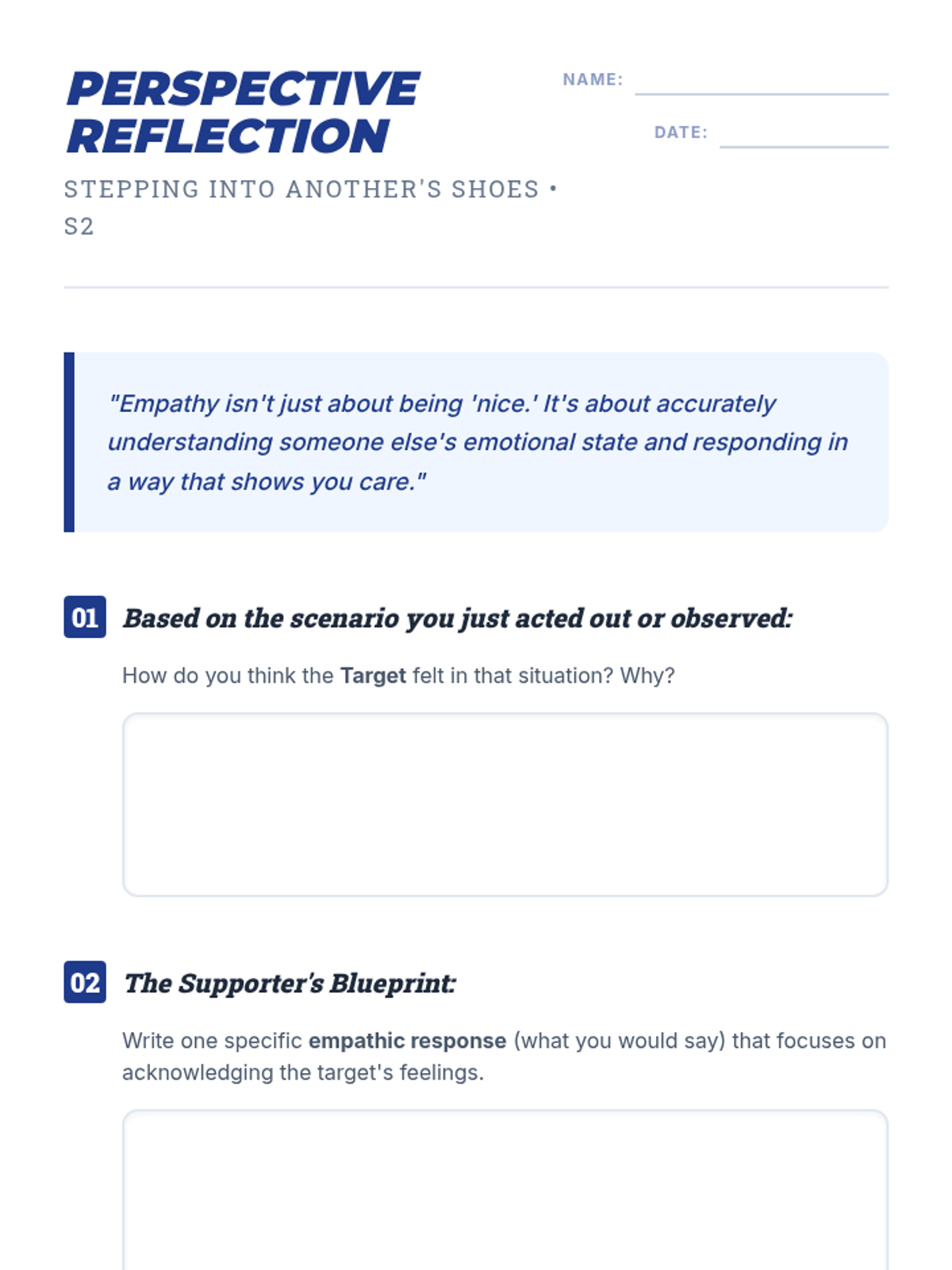
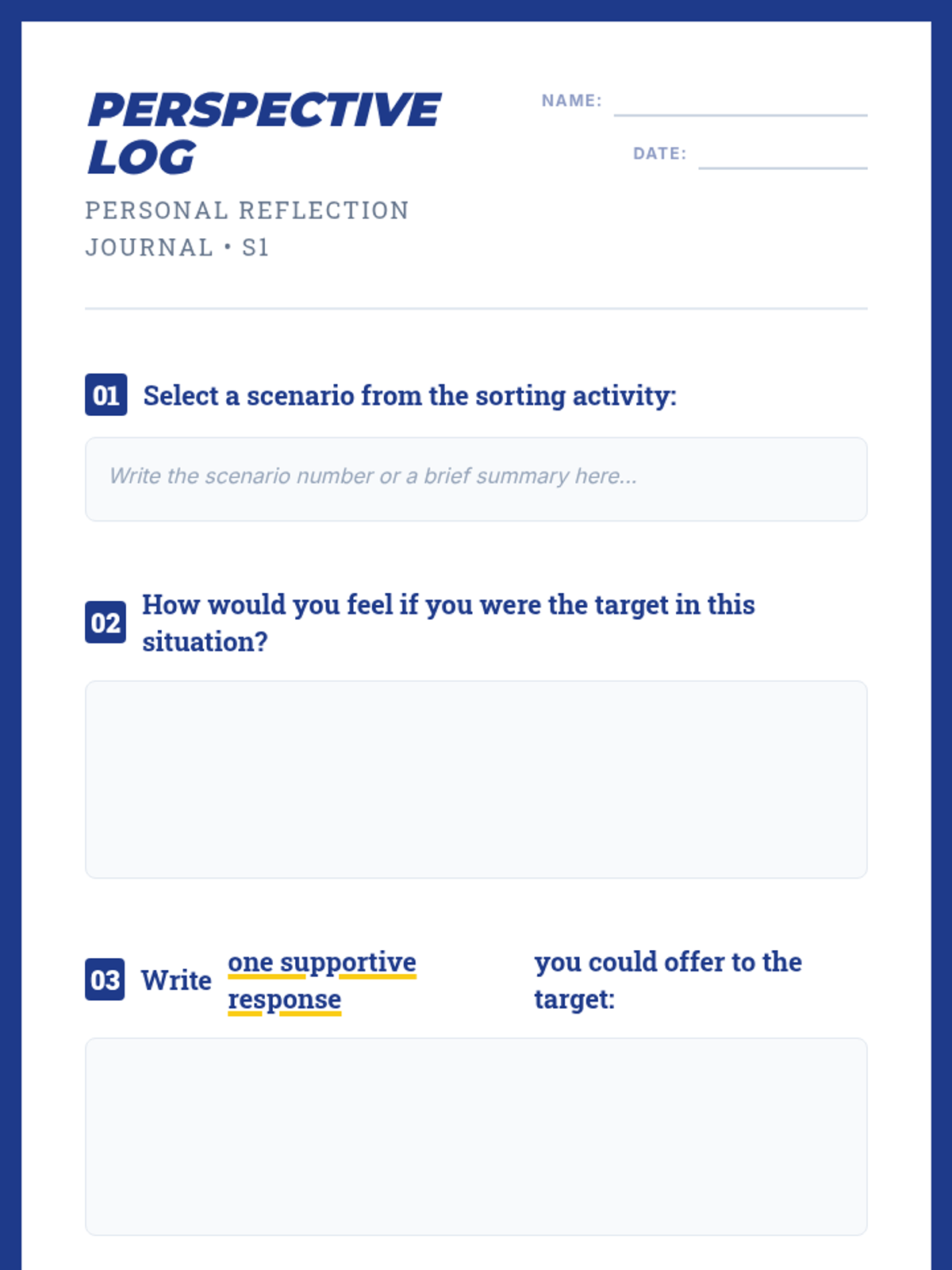
Students practice empathy by stepping into others’ perspectives, identifying feelings and needs, and articulating supportive responses through role-play.
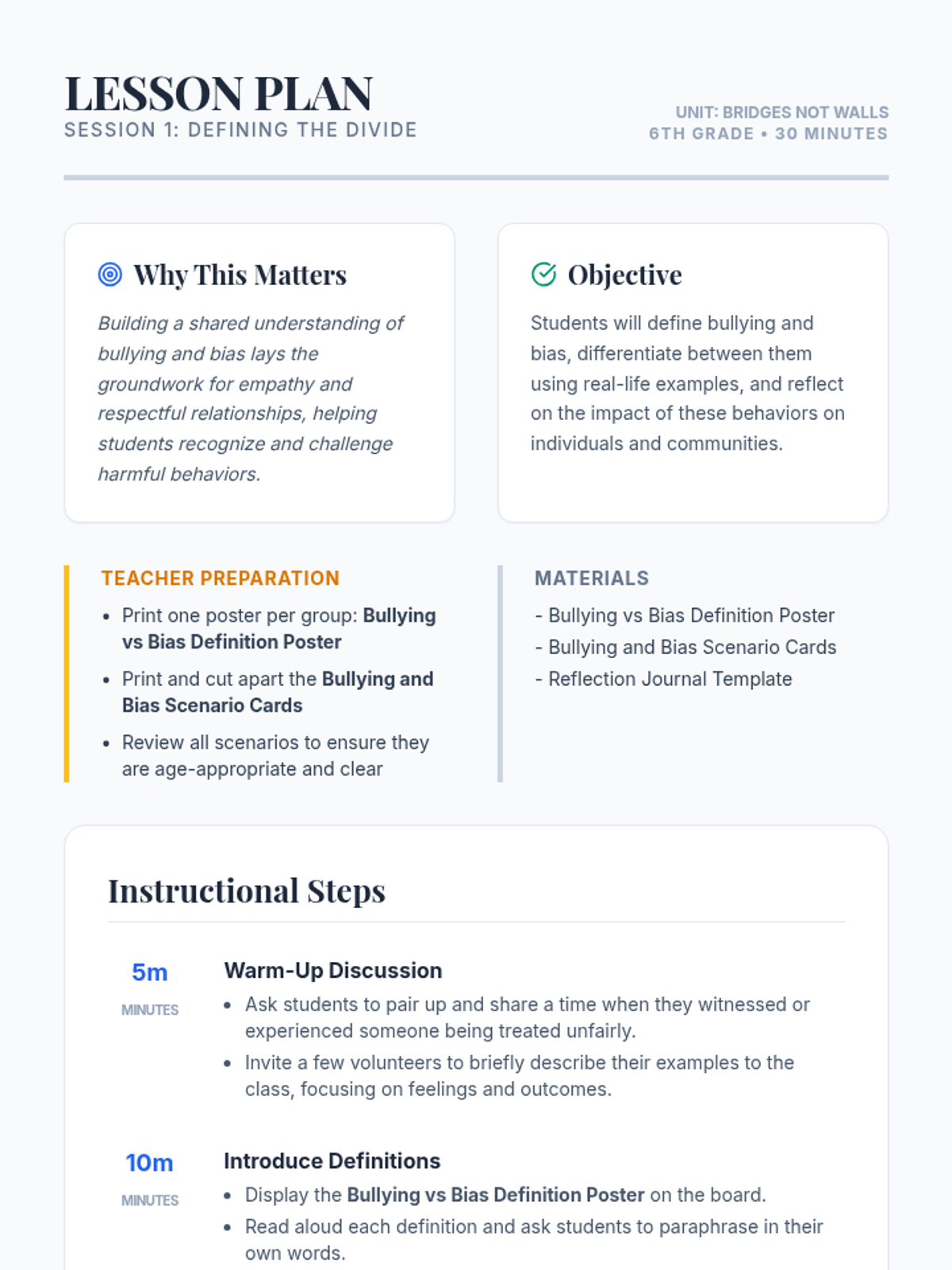
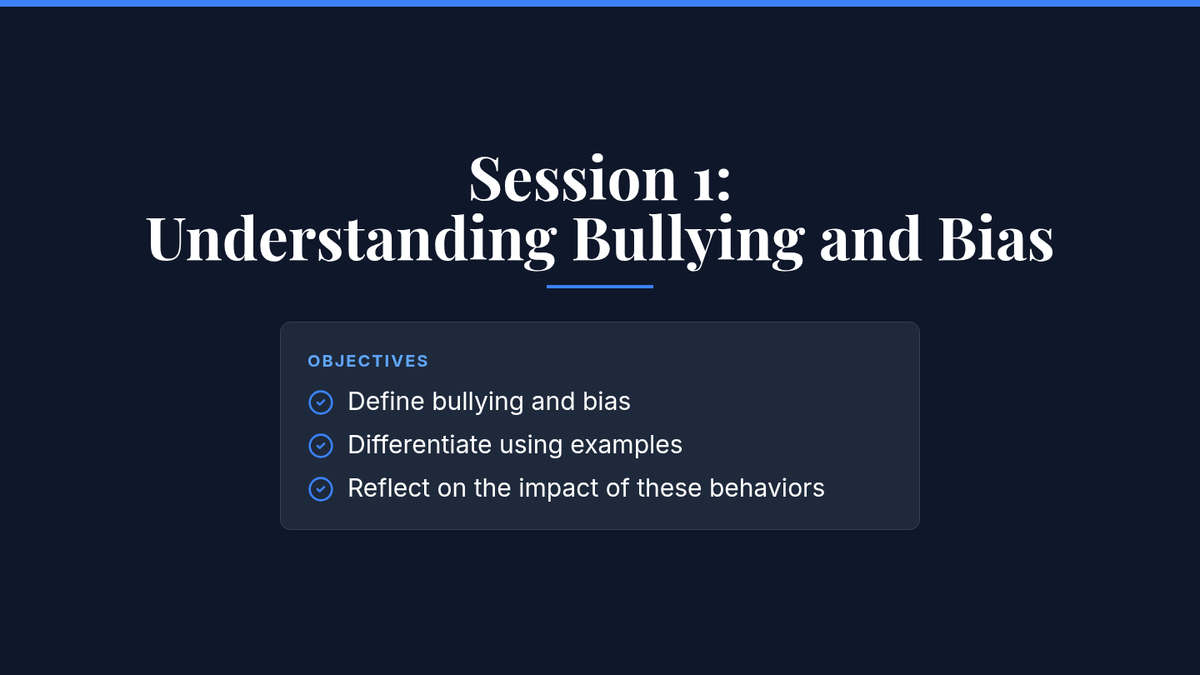
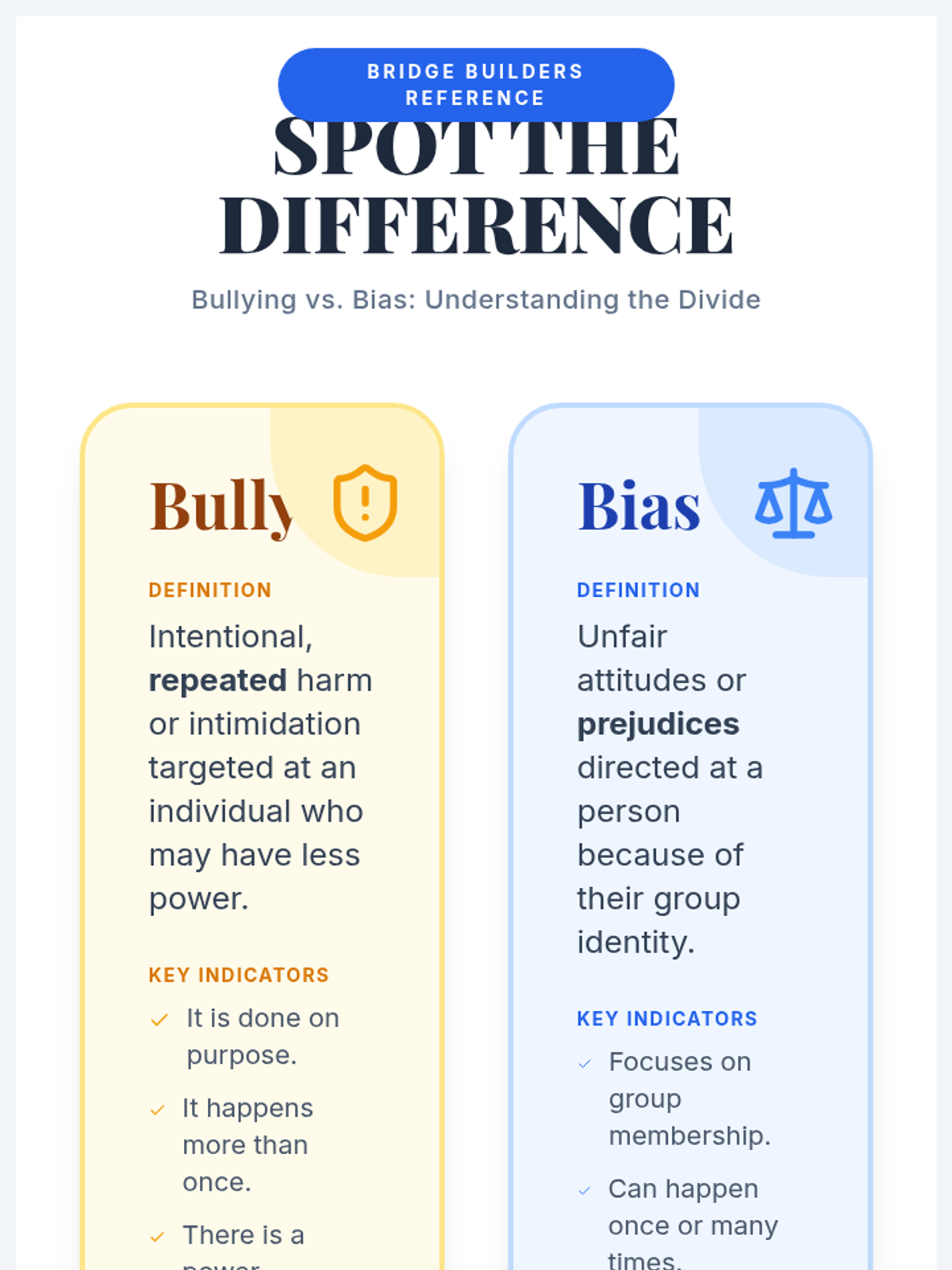
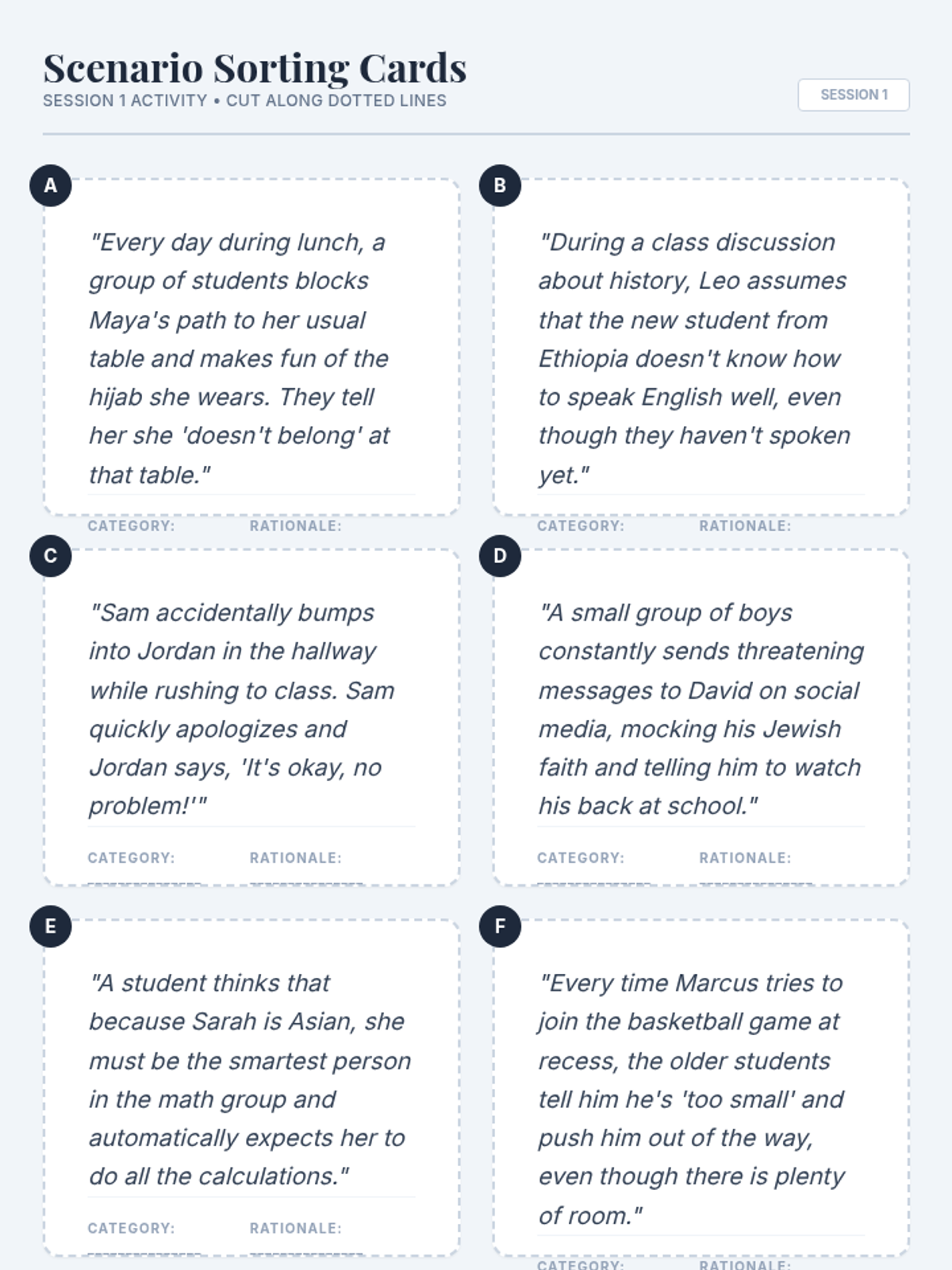
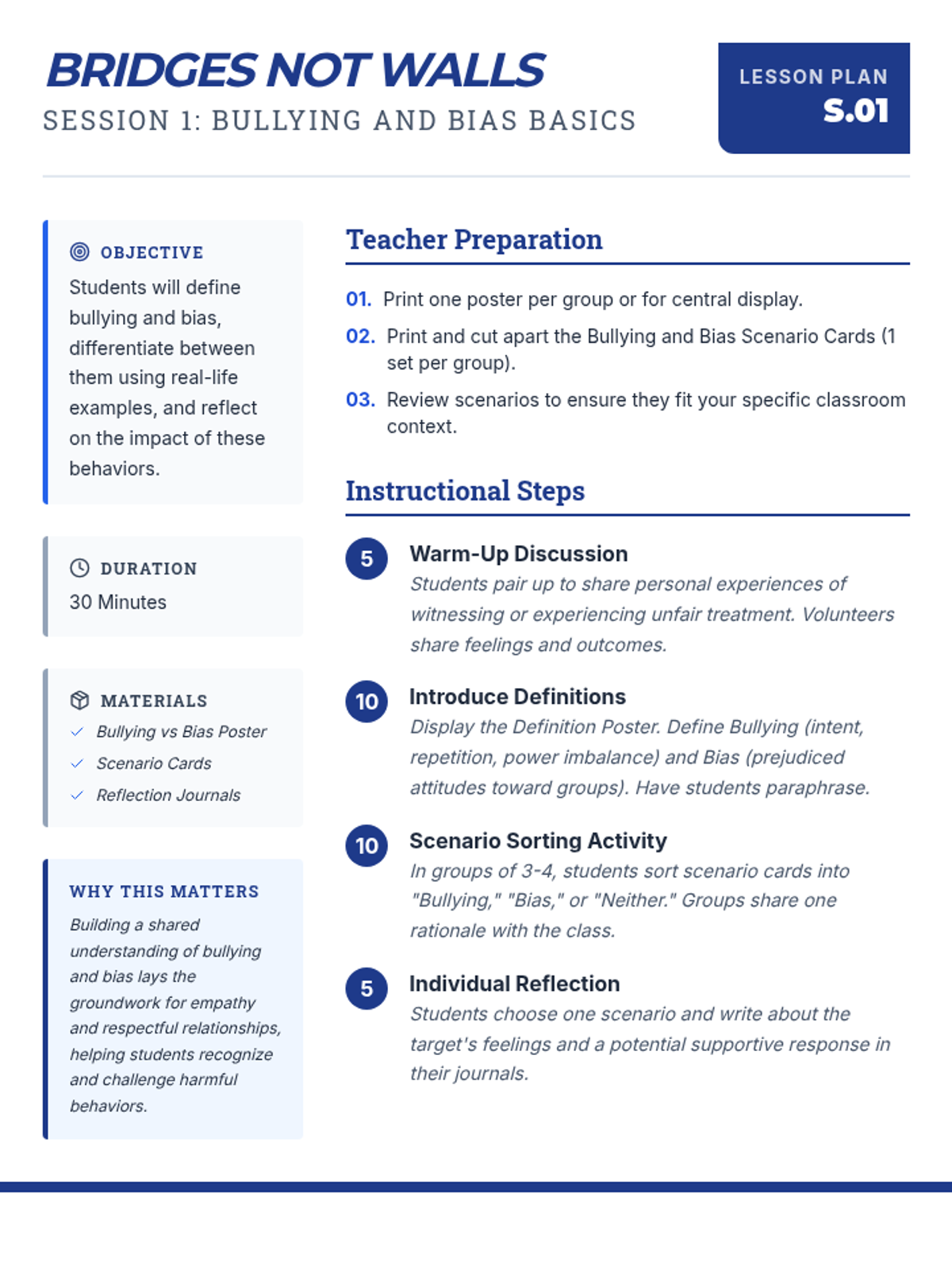
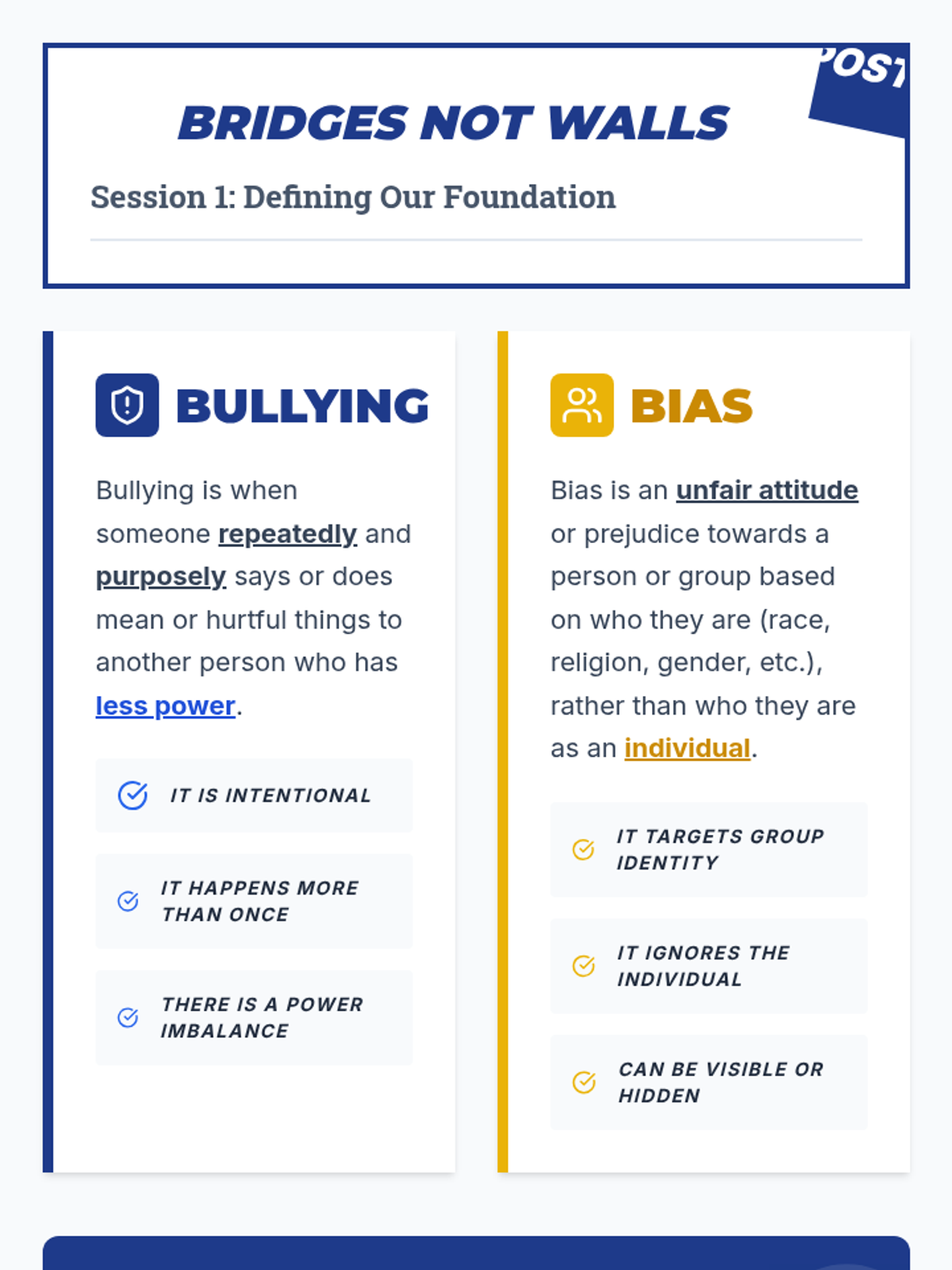
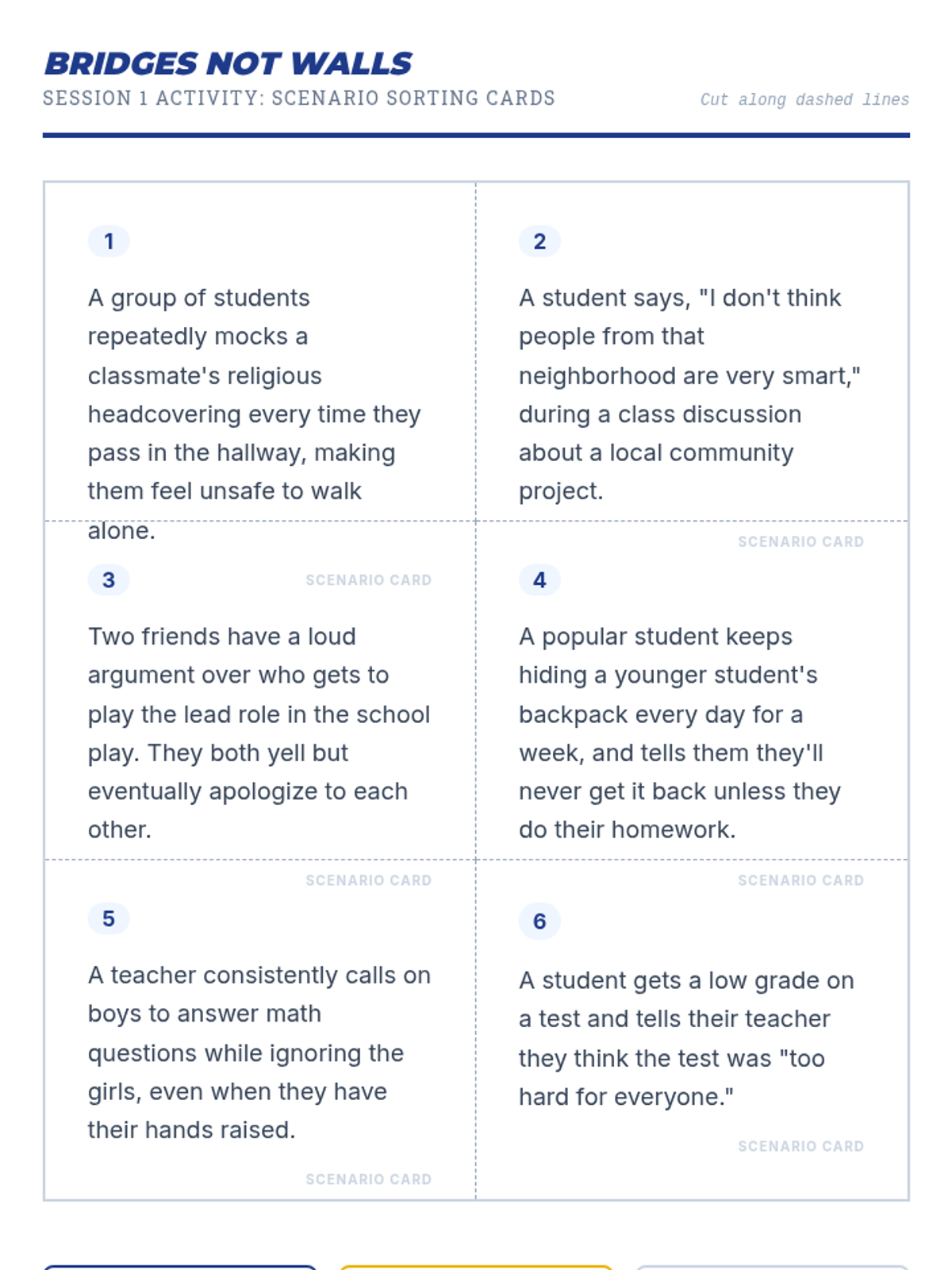
Students define bullying and bias, differentiate between them using real-life examples, and reflect on the impact of these behaviors.
Students design and present restorative projects that apply their learning to heal relationships and promote an inclusive classroom.
Students explore their cultural identities and learn concrete strategies for allyship to support peers facing exclusion or bias.
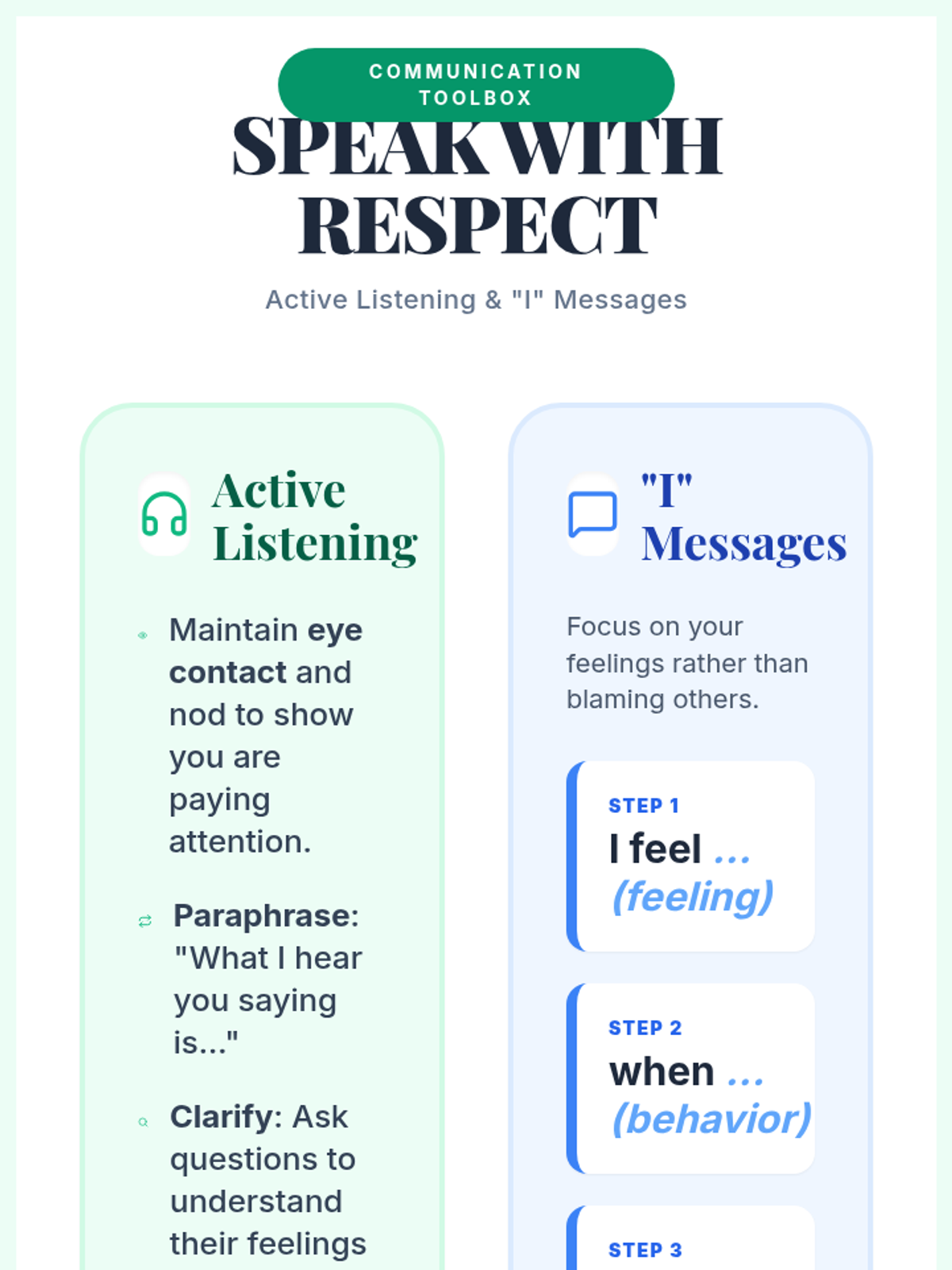
Students learn active listening and 'I' messages as tools for respectful communication and apply a structured flowchart to resolve conflicts.
Students analyze the impact of stereotypes and microaggressions, learning how subtle biases can cause harm and practicing constructive responses.
Students practice empathy by stepping into others' perspectives, identifying feelings and needs, and articulating supportive responses through role-play.
Students define bullying and bias, learn to differentiate between them, and reflect on their impact on individuals and the school community.
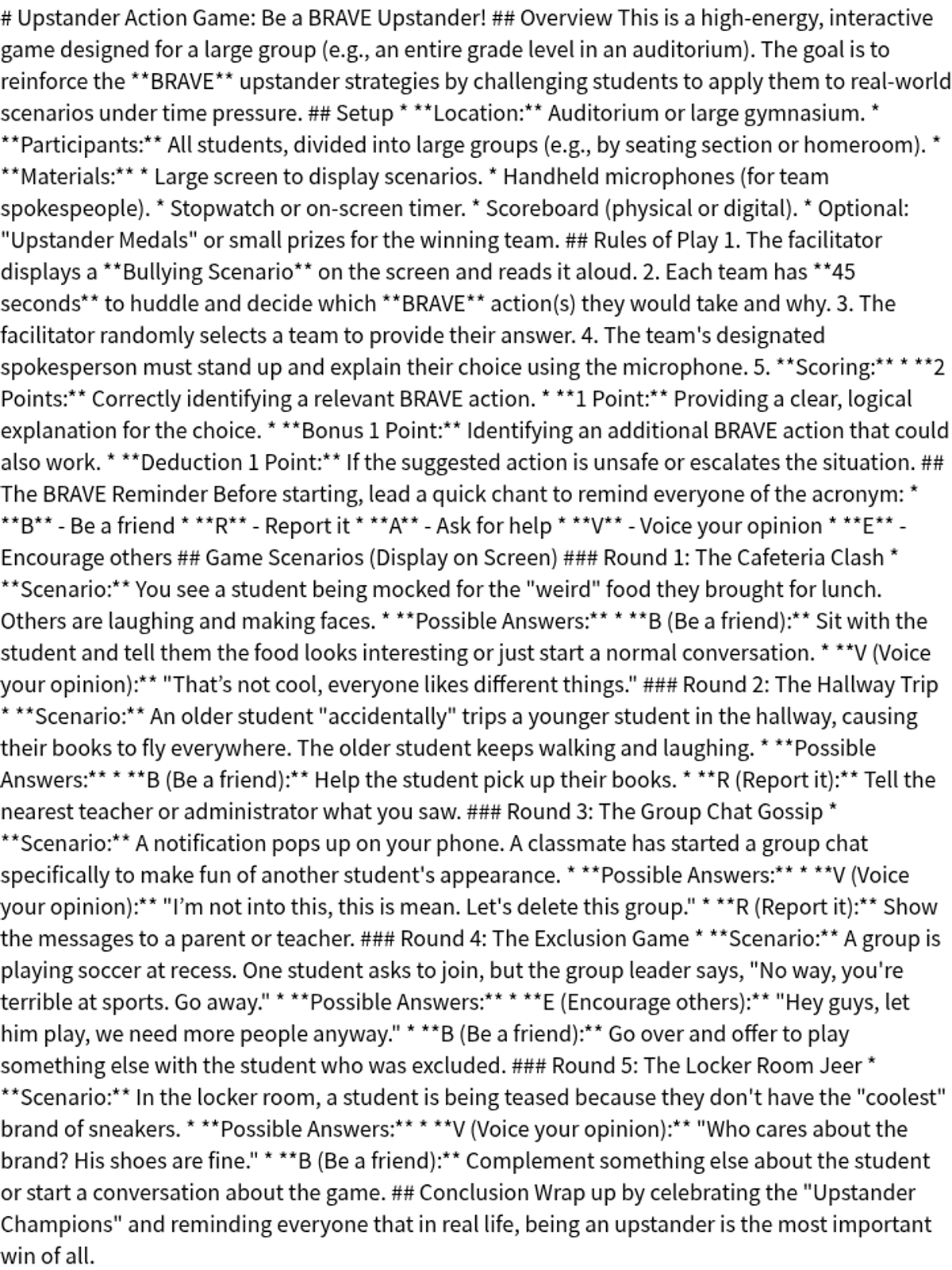
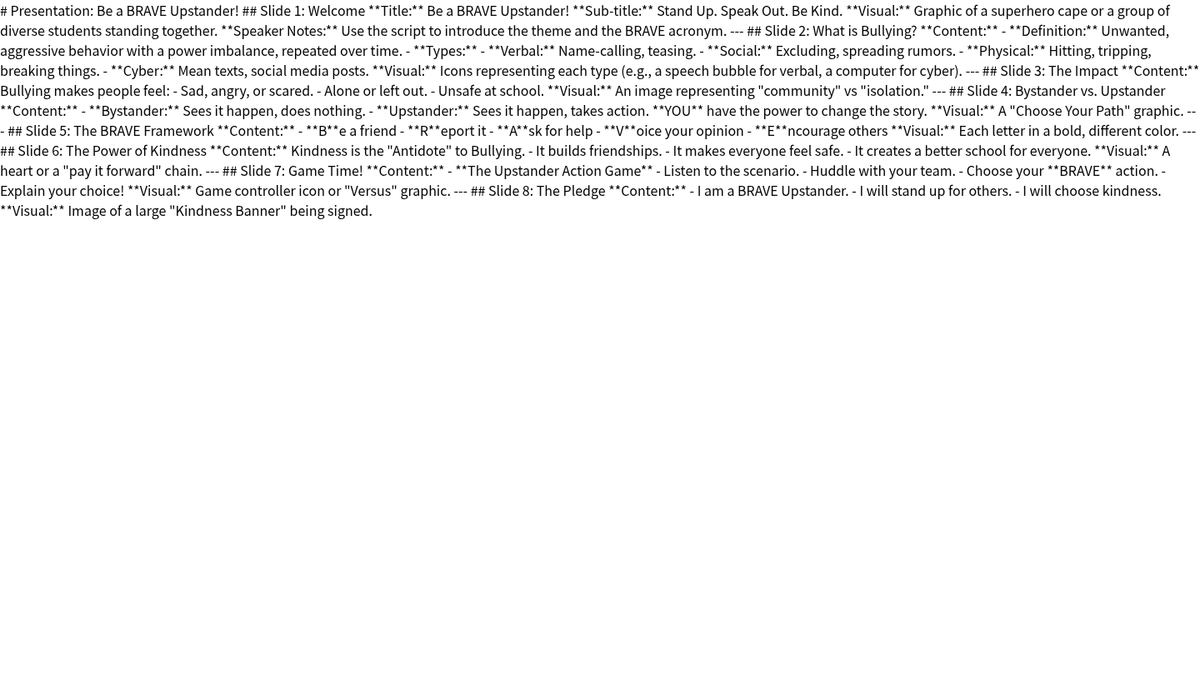
A 45-minute high-energy assembly featuring a team-based competition and a community pledge ceremony.
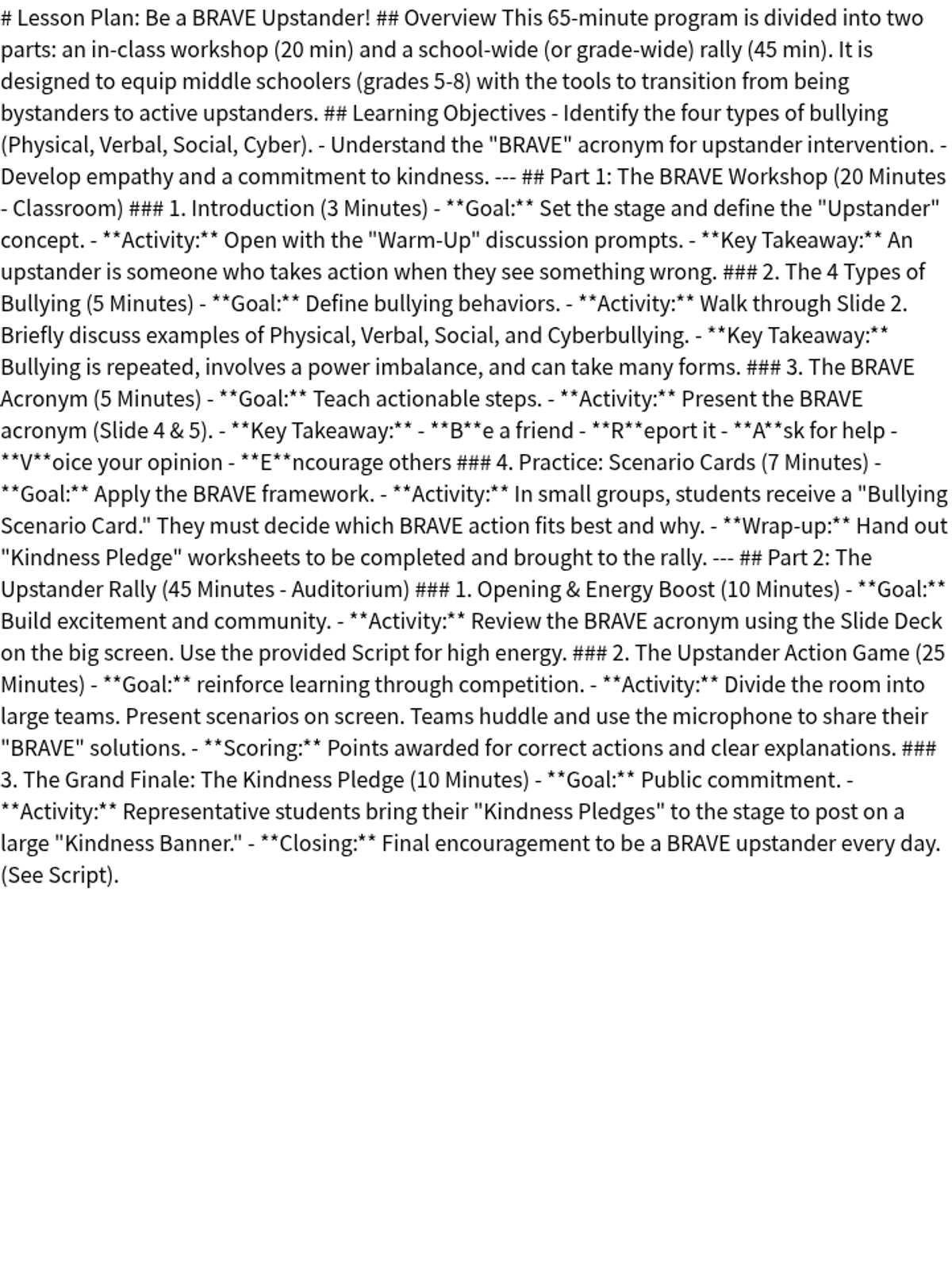
A 20-minute classroom session focusing on defining bullying, introducing the BRAVE acronym, and practicing scenarios.
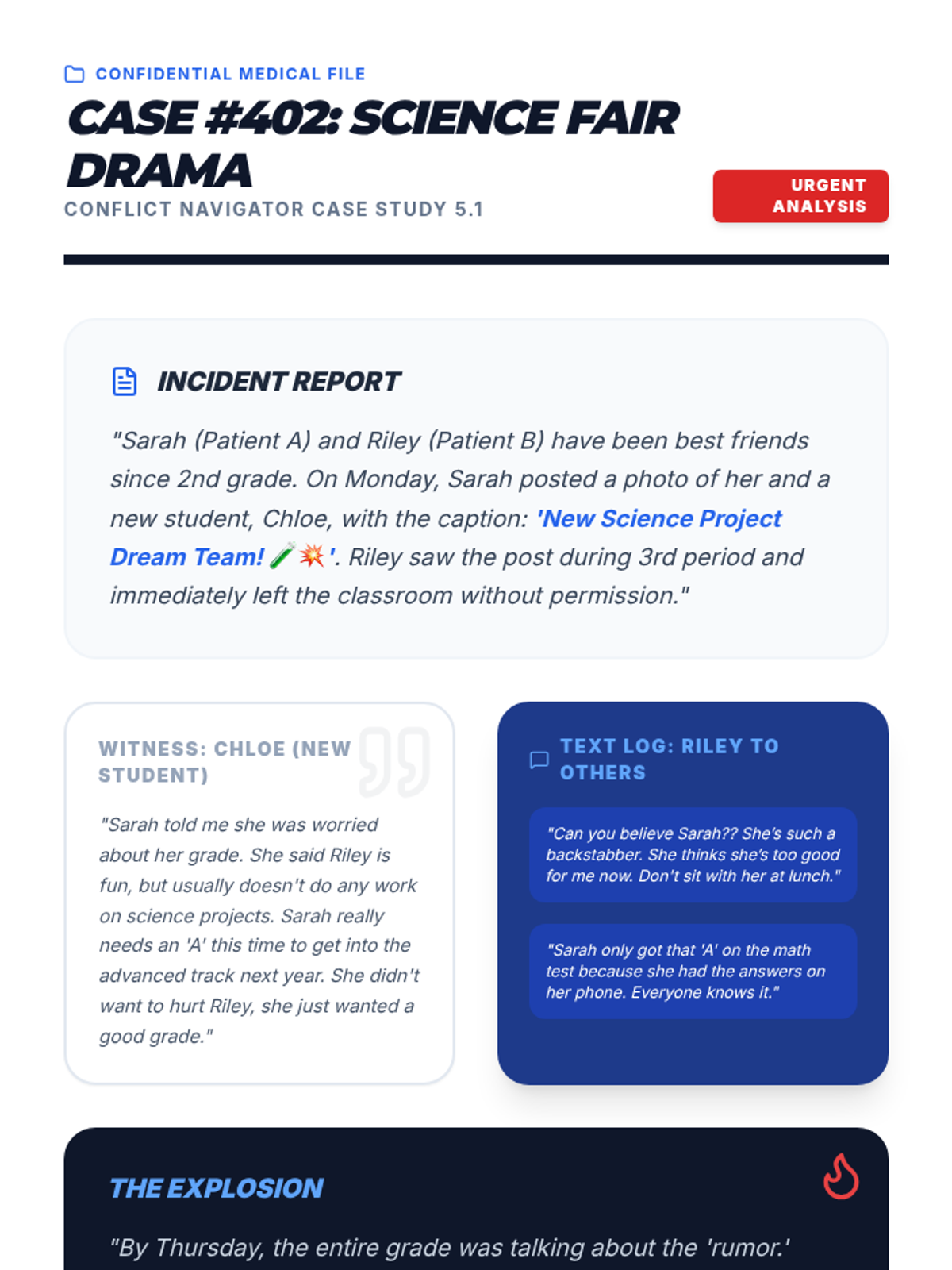
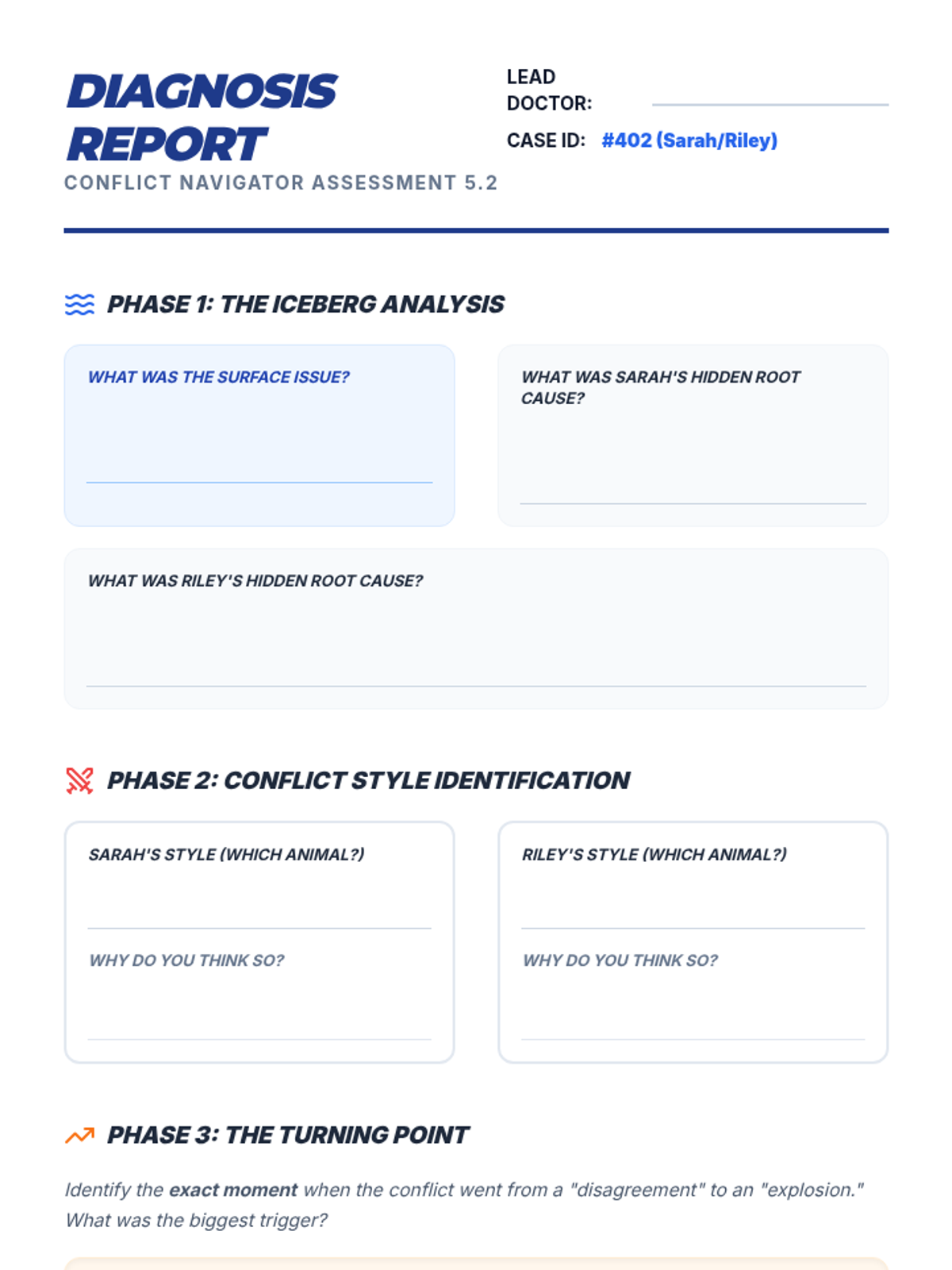
A final synthesis activity where students act as 'Conflict Doctors' to diagnose a complex scenario using all the tools learned in the sequence.
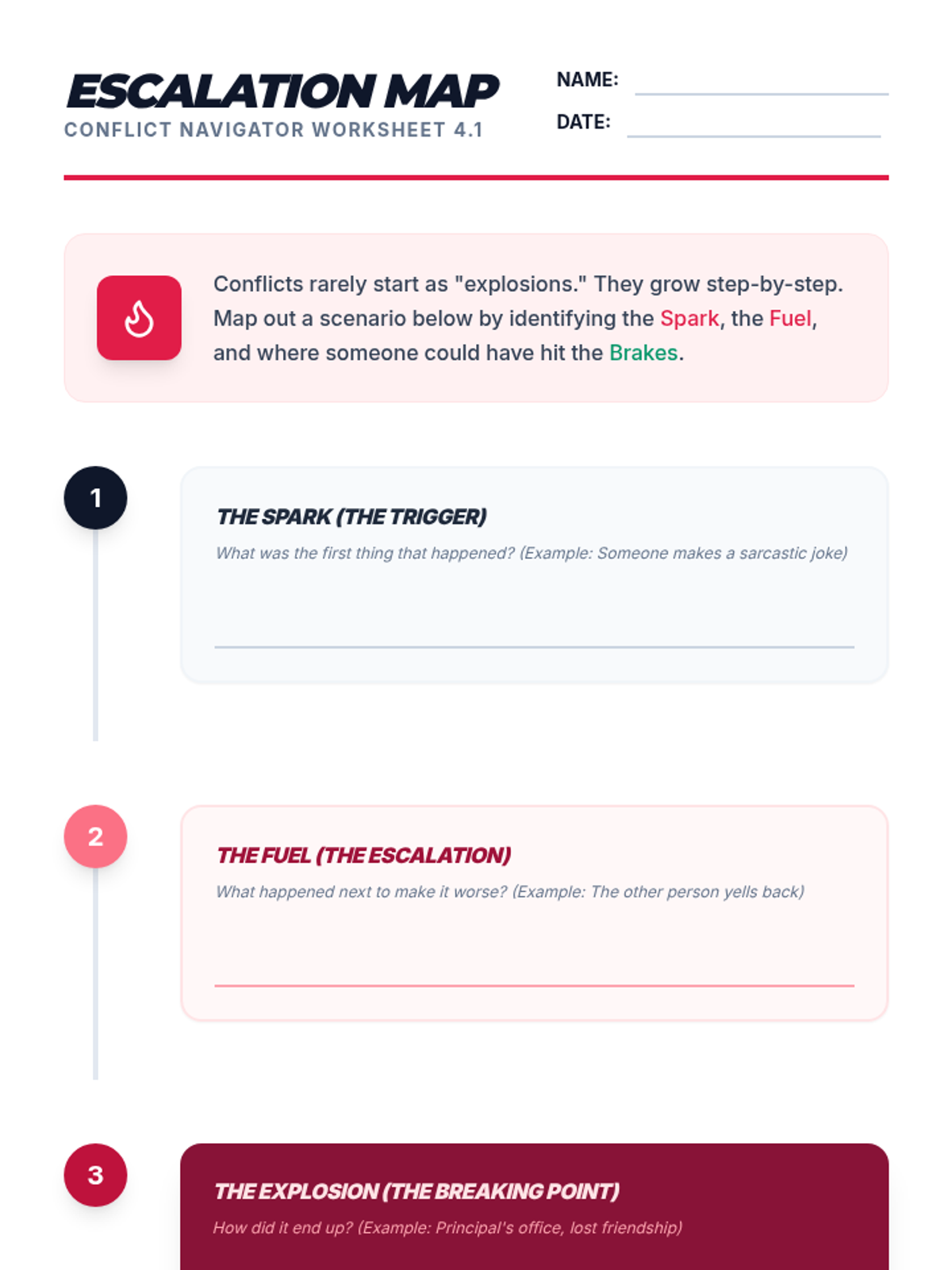
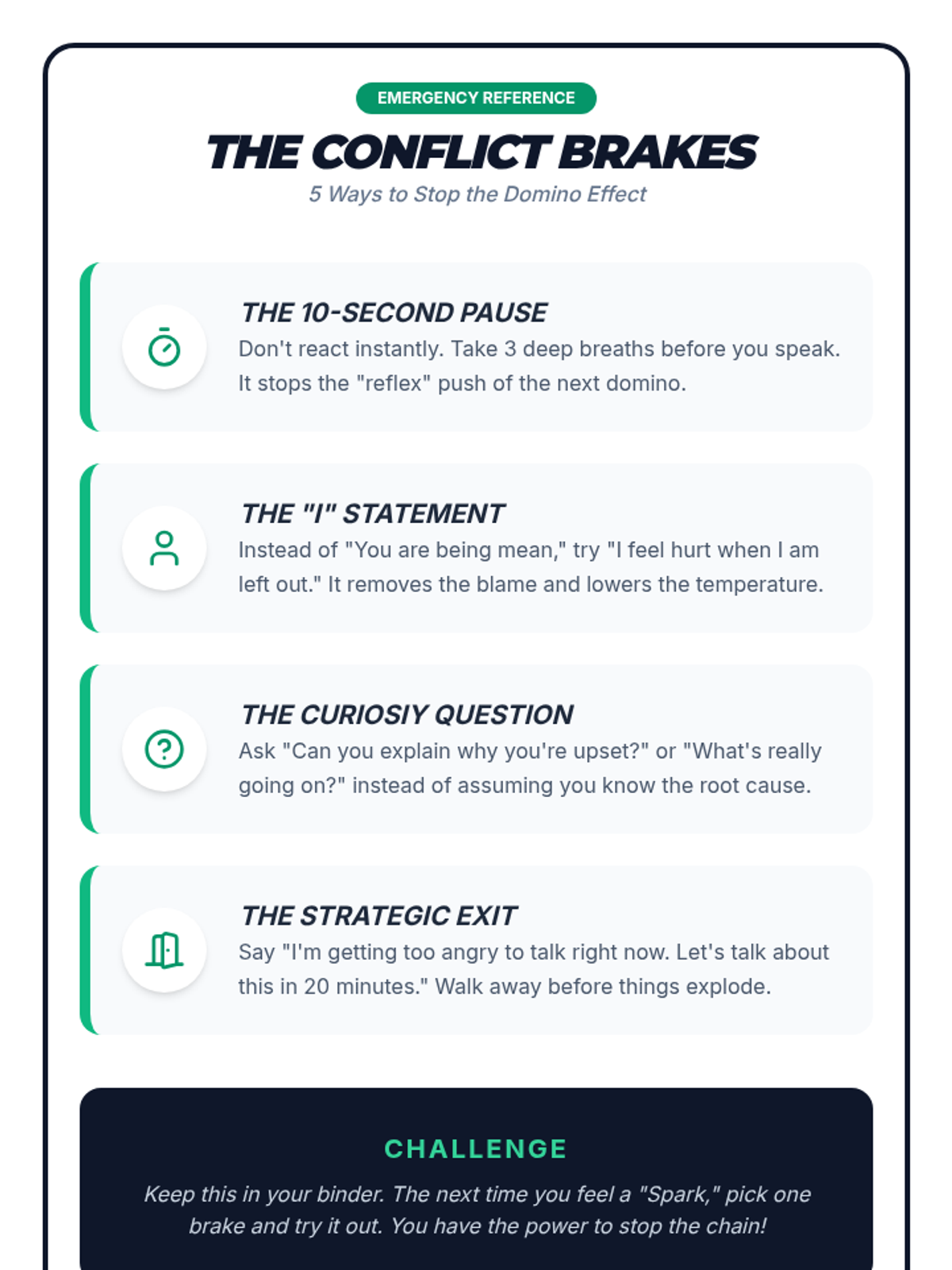
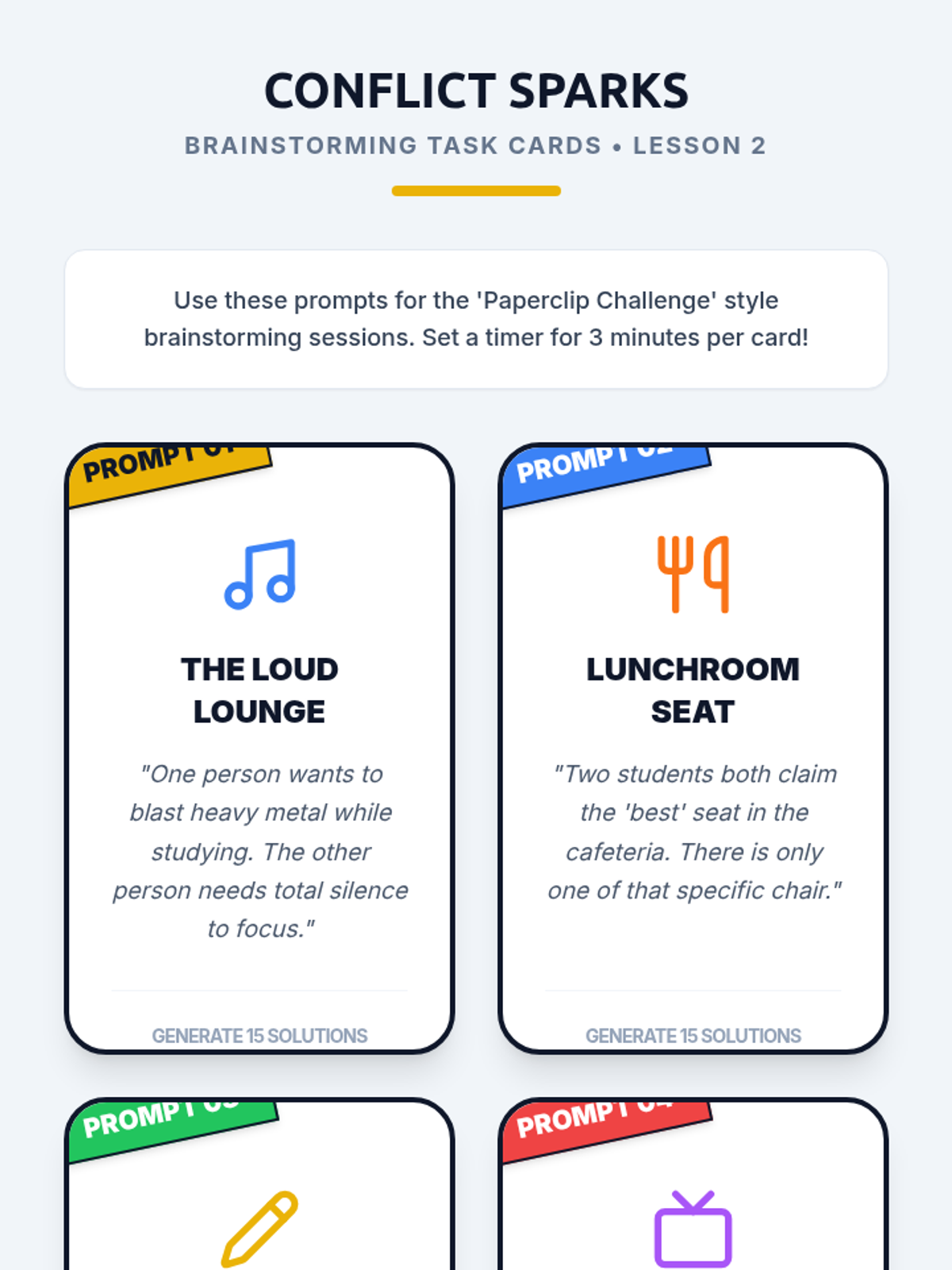
Analyzes the cycle of escalation, identifying triggers and turning points where conflicts can be de-escalated before reaching a breaking point.
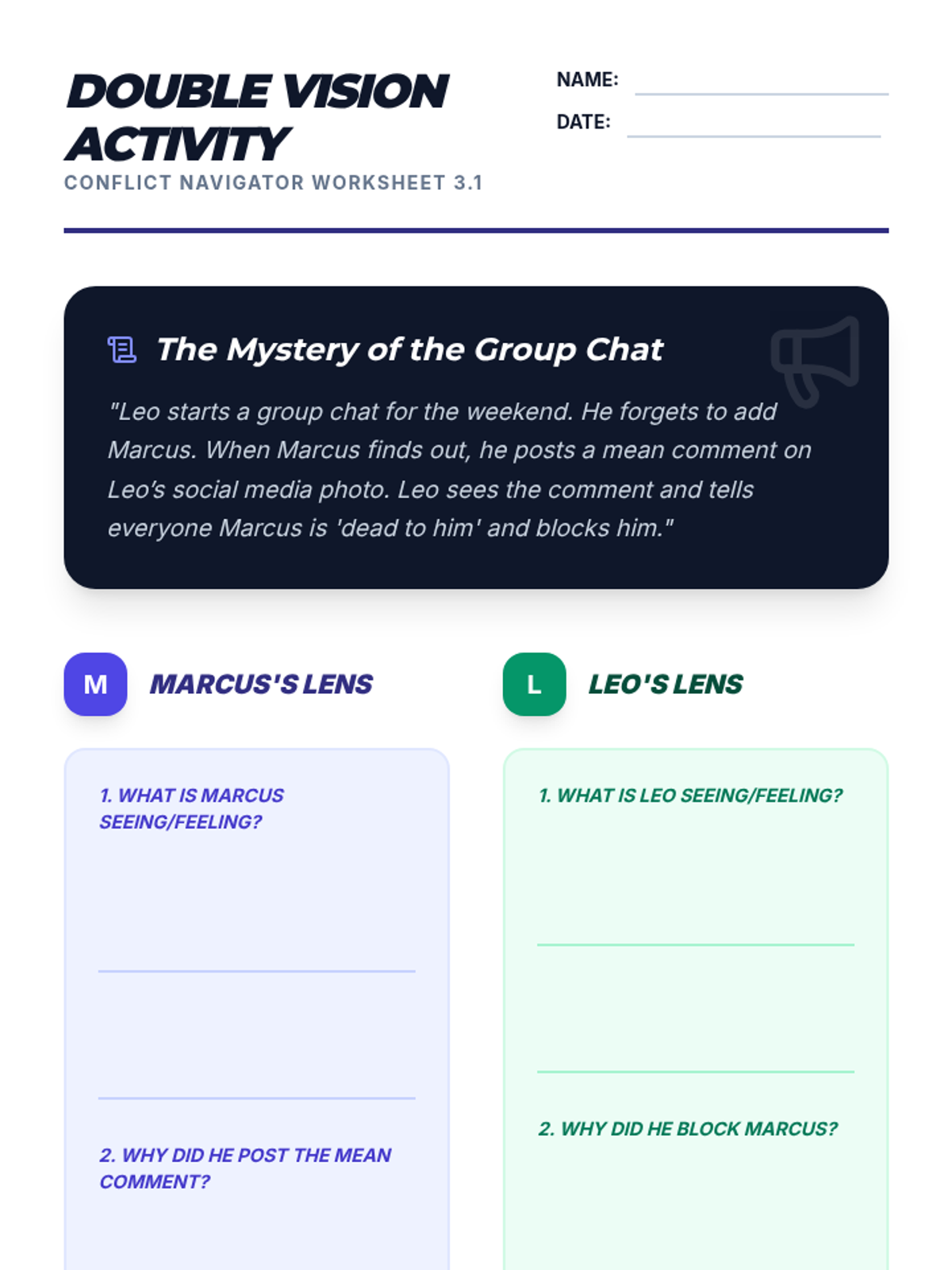
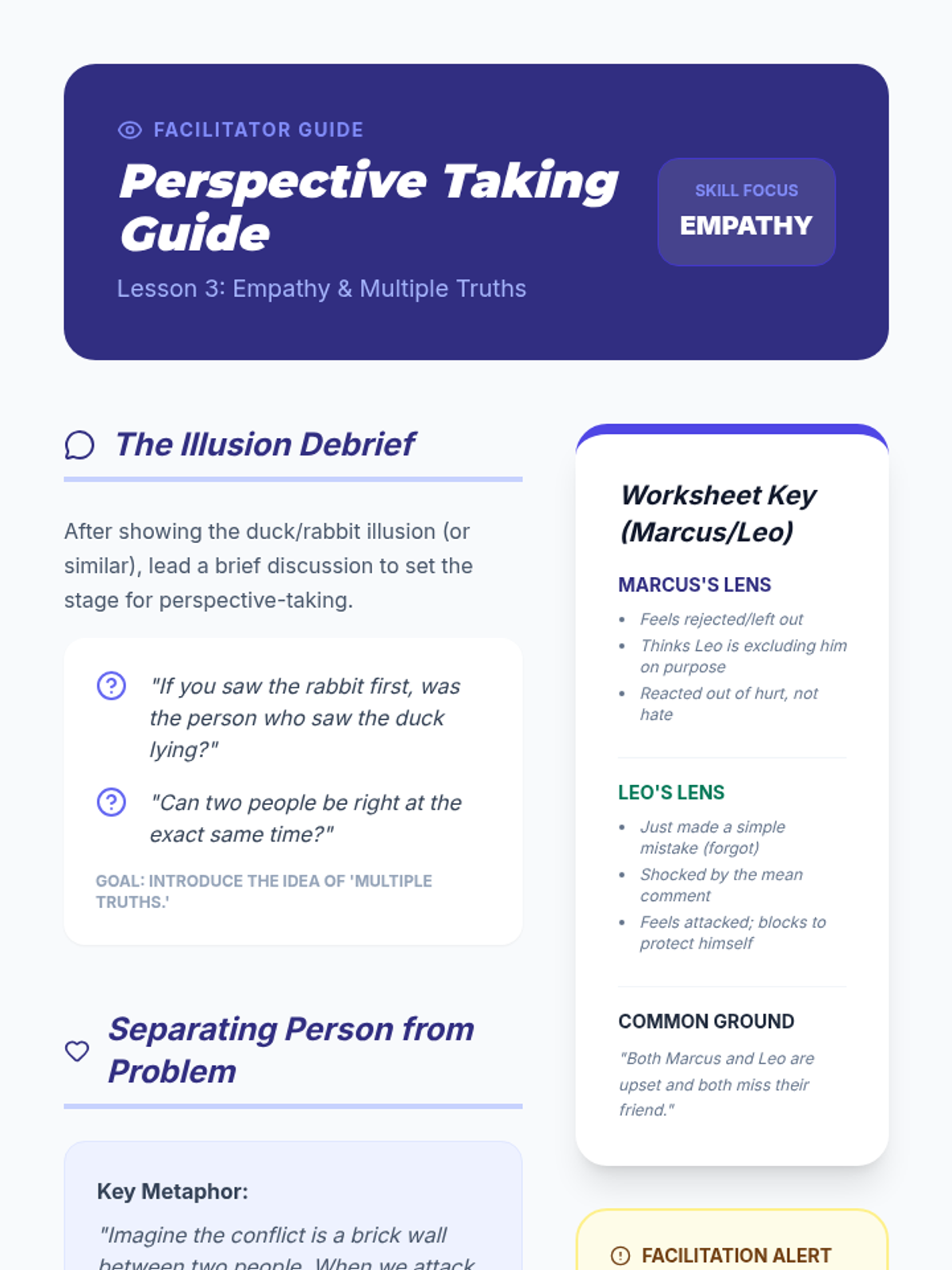
Focuses on perspective-taking and empathy through visual illusions and story-mapping, teaching students to see multiple truths in a single dispute.
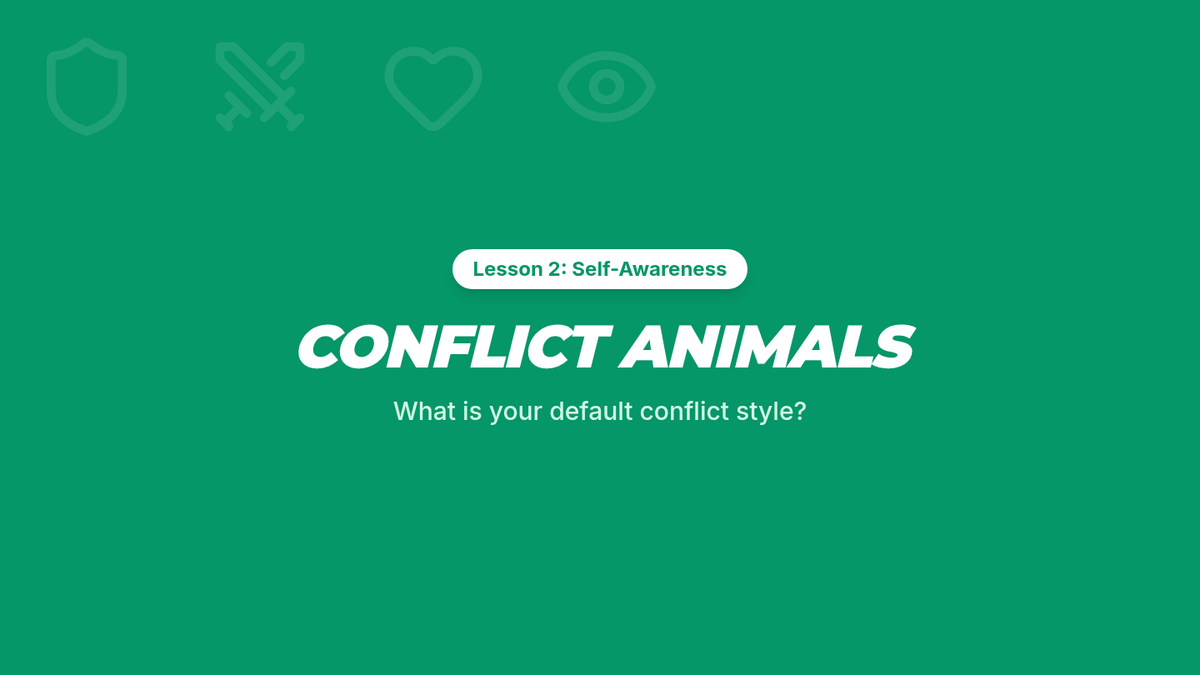
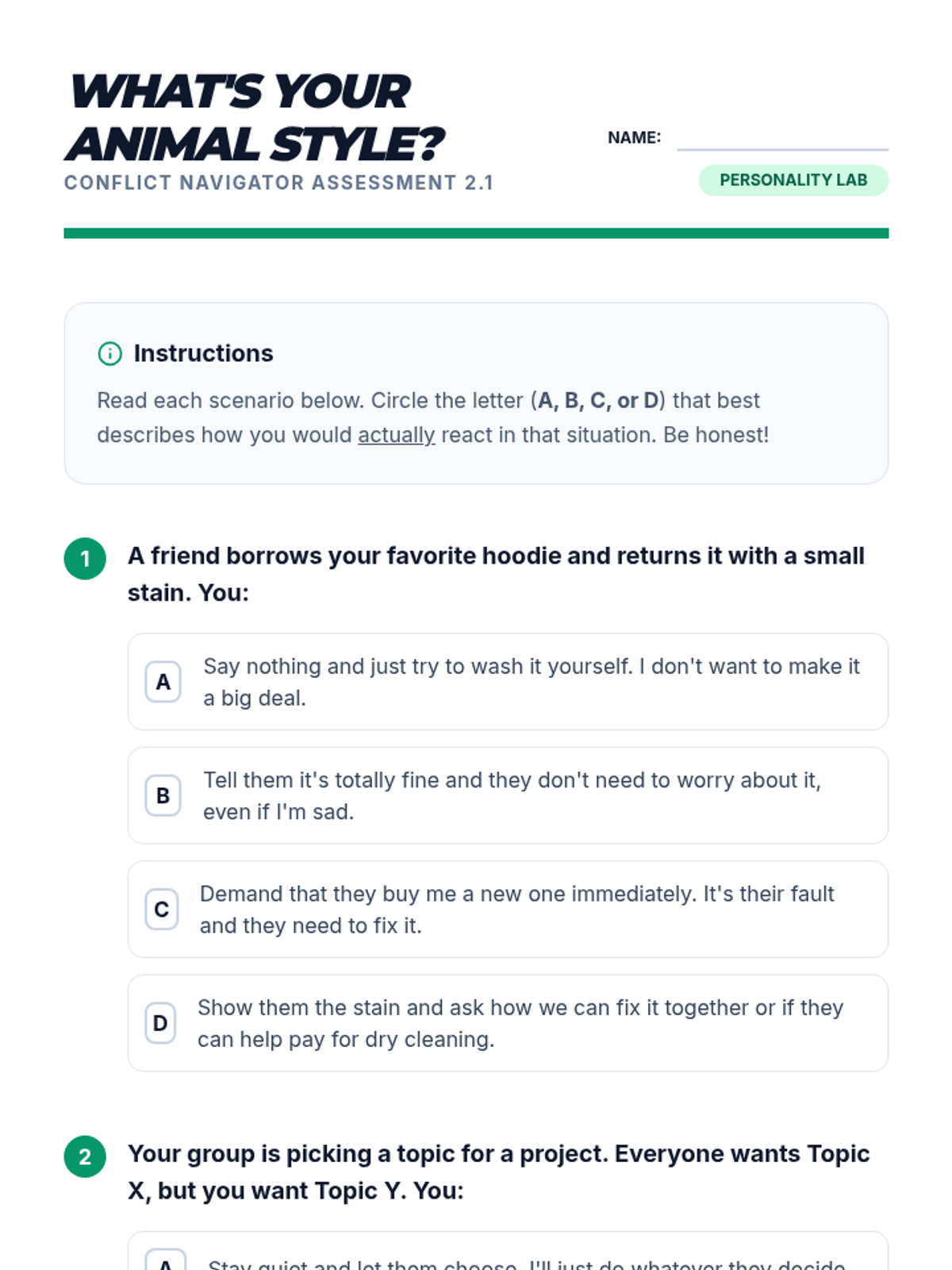
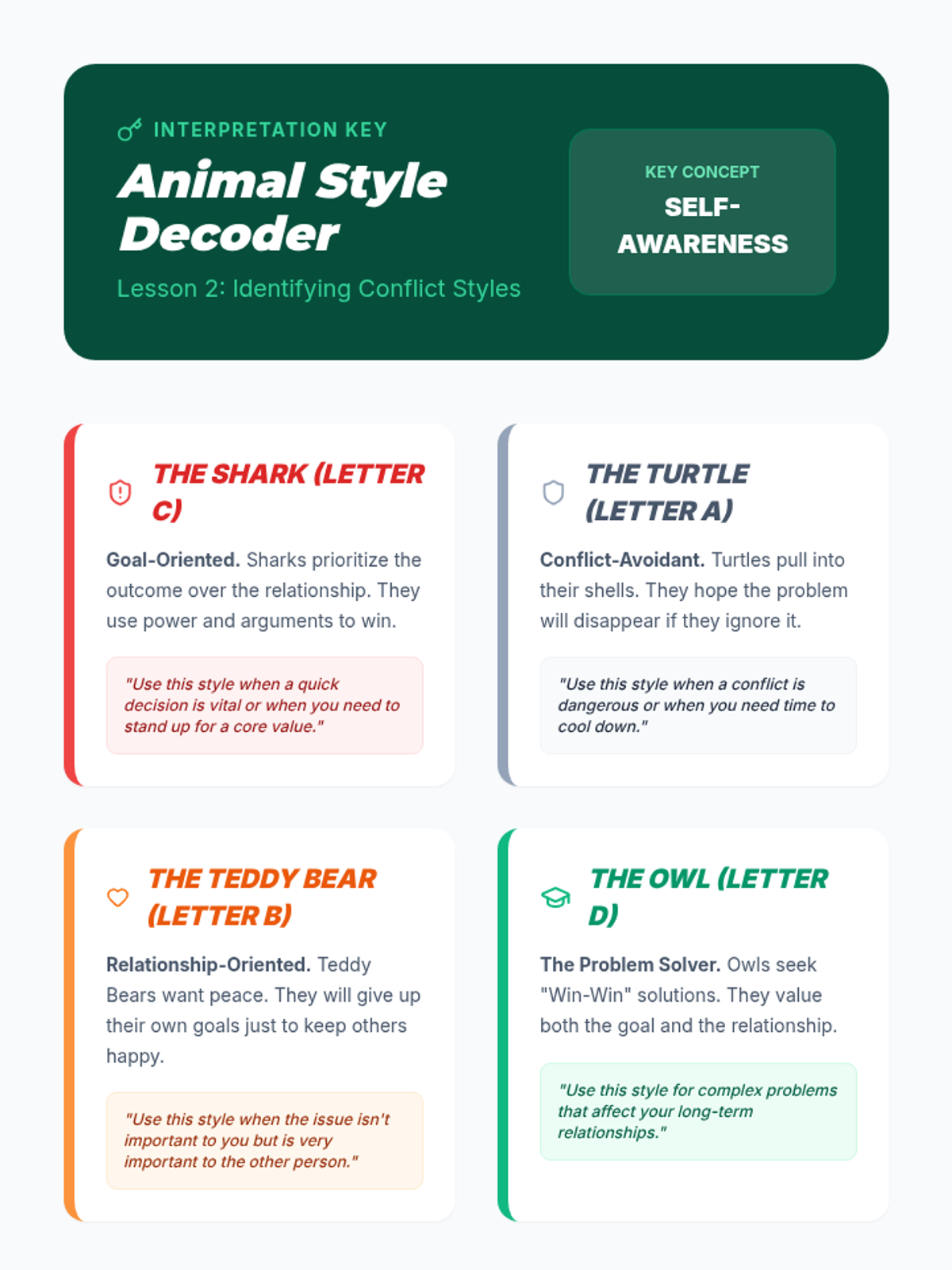
Students explore five core conflict styles (Shark, Turtle, Teddy Bear, Fox, Owl) to understand their default reactions and the impact on others.
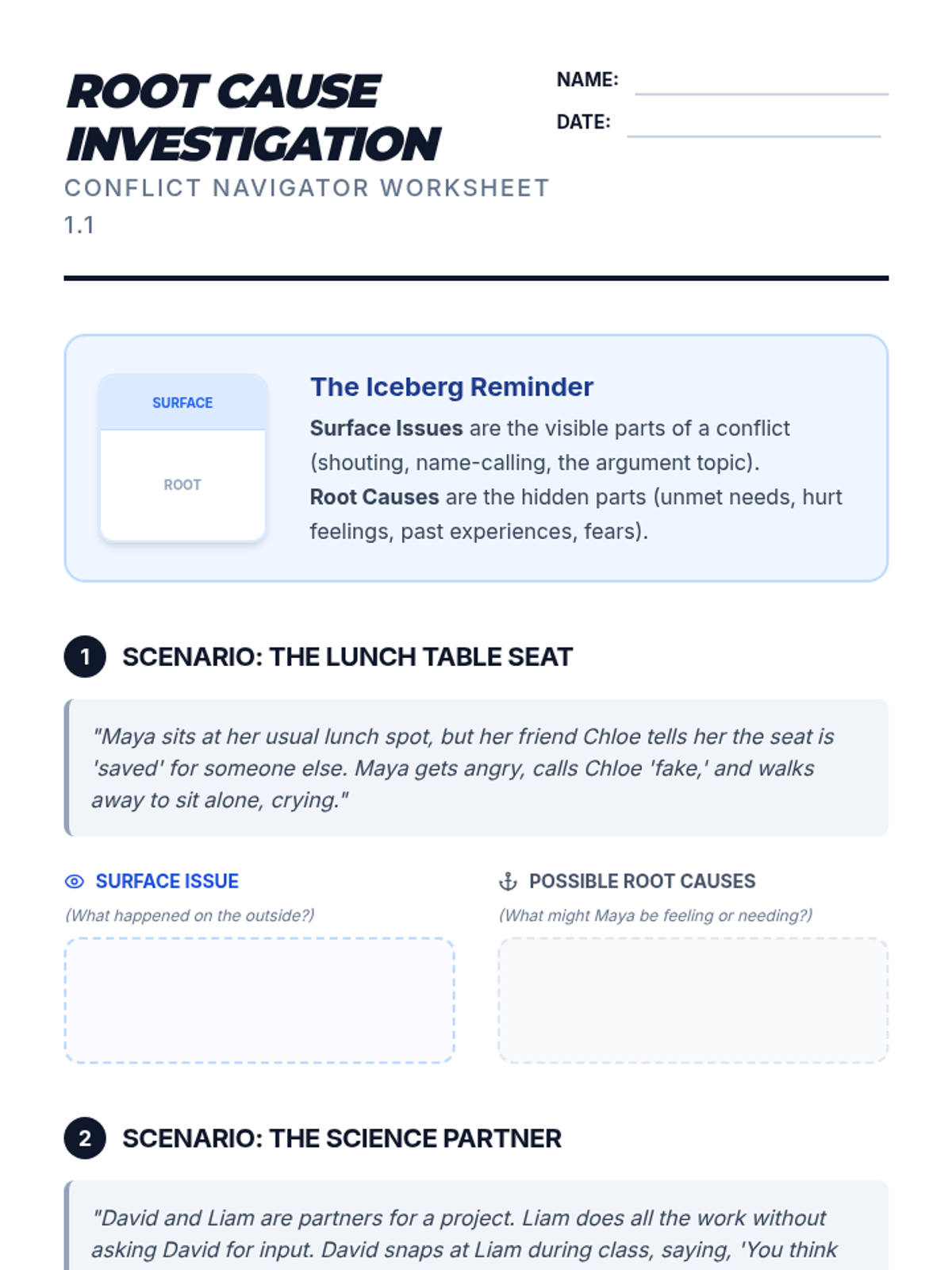
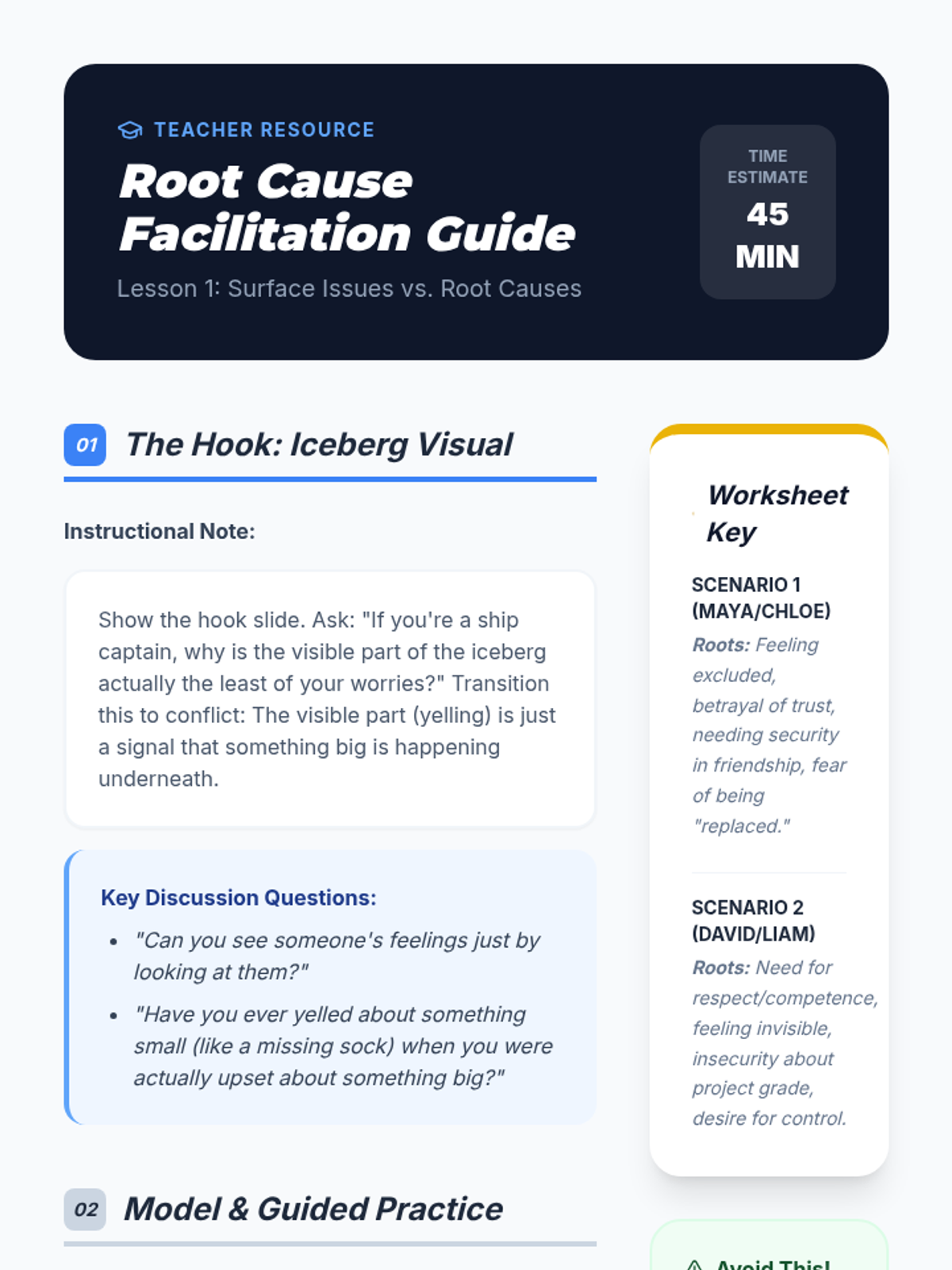
Introduces the Iceberg Model to help students differentiate between the surface argument and the underlying needs, fears, and values driving conflict.
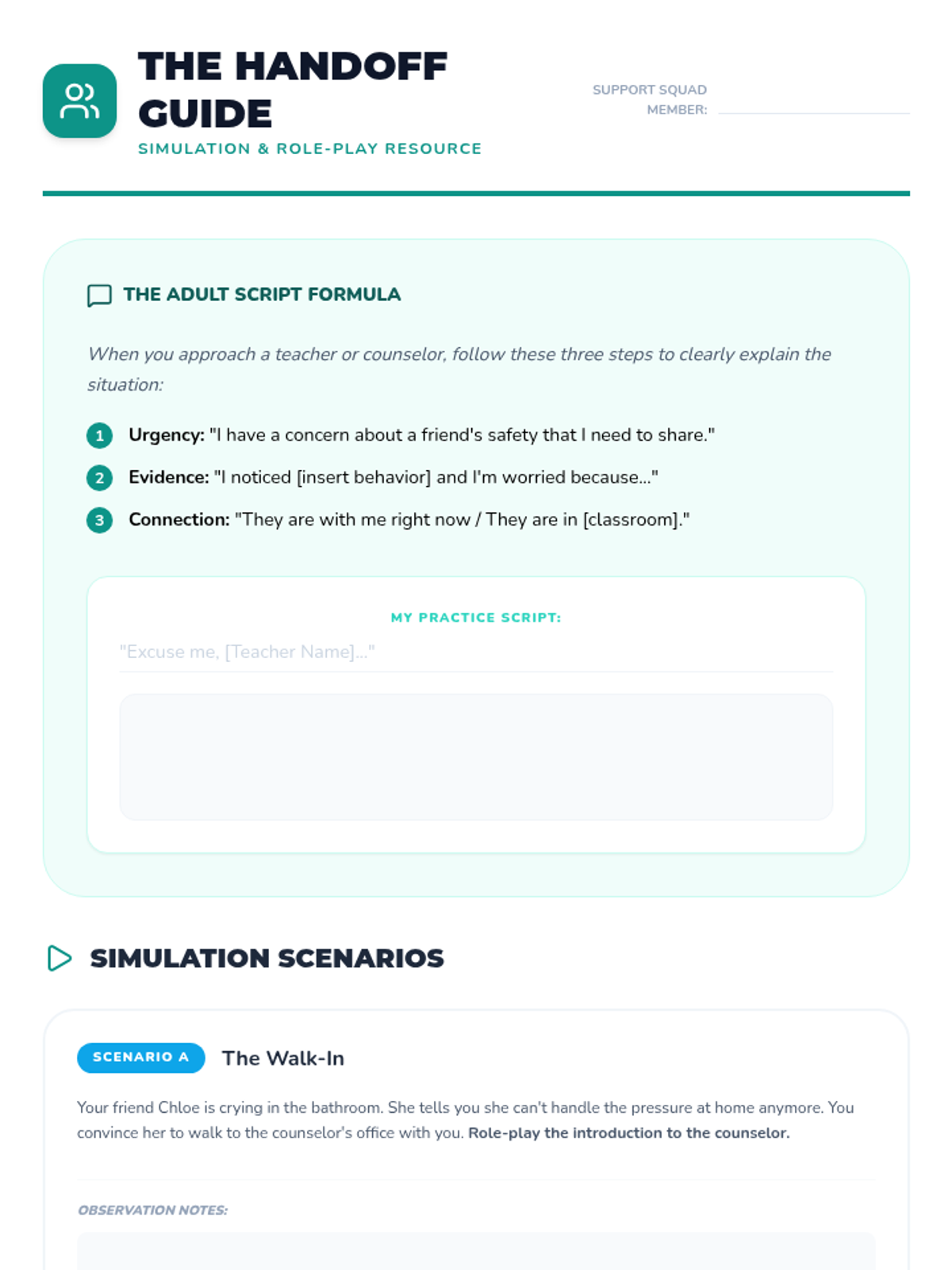
Students simulate the actual process of going to a guidance counselor or teacher with a friend (or on their behalf). They demystify what happens after the report is made.
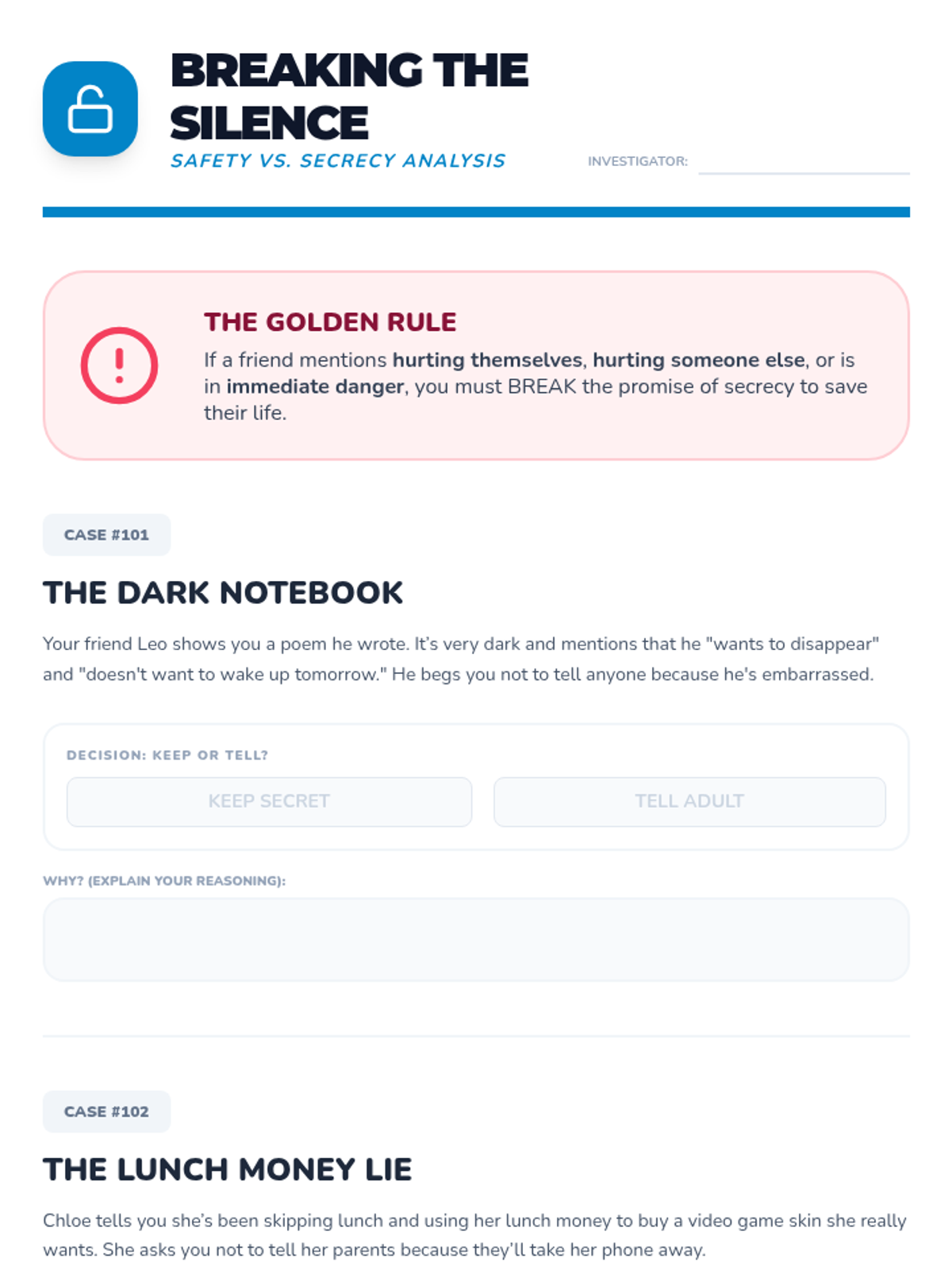
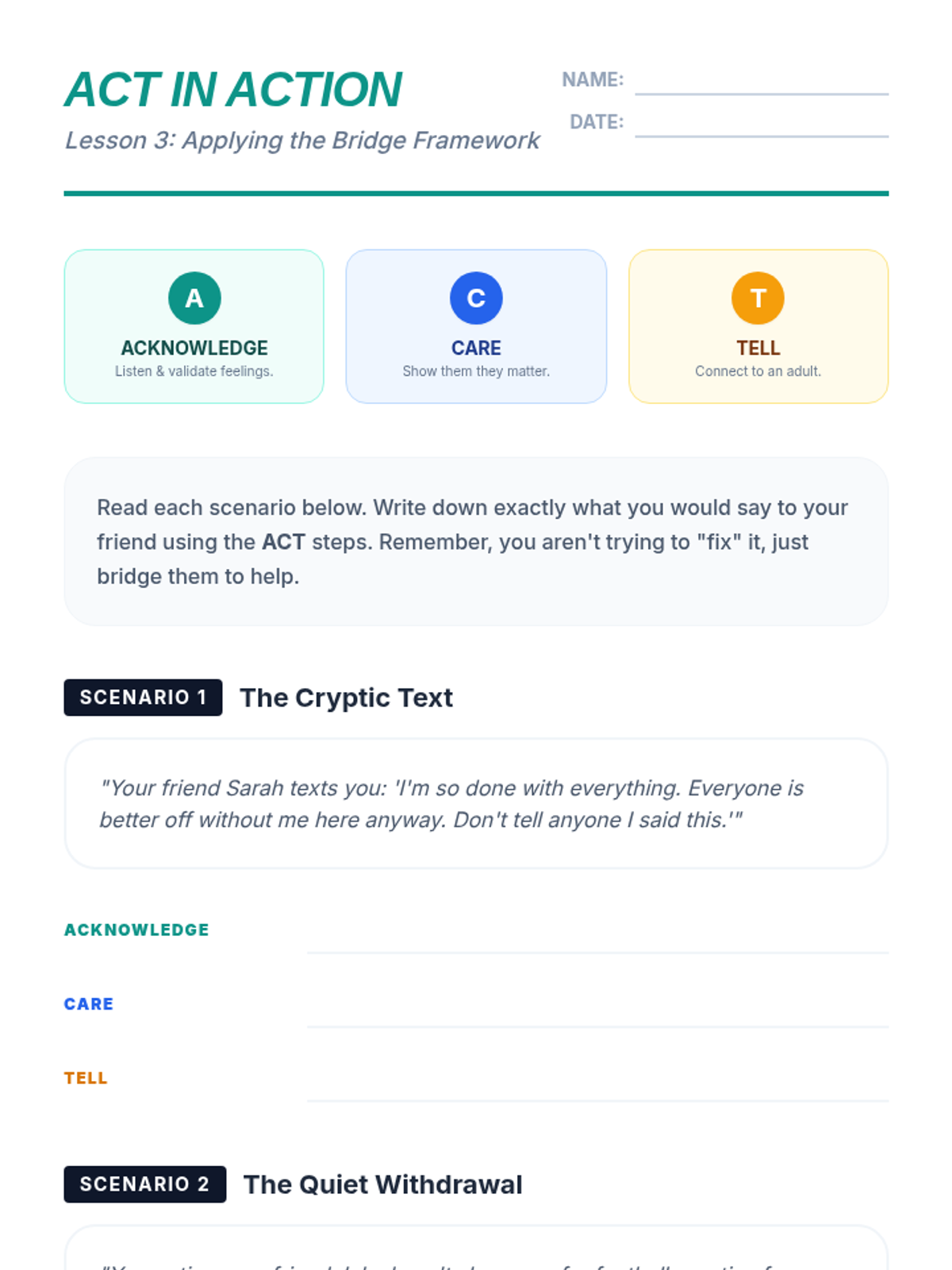
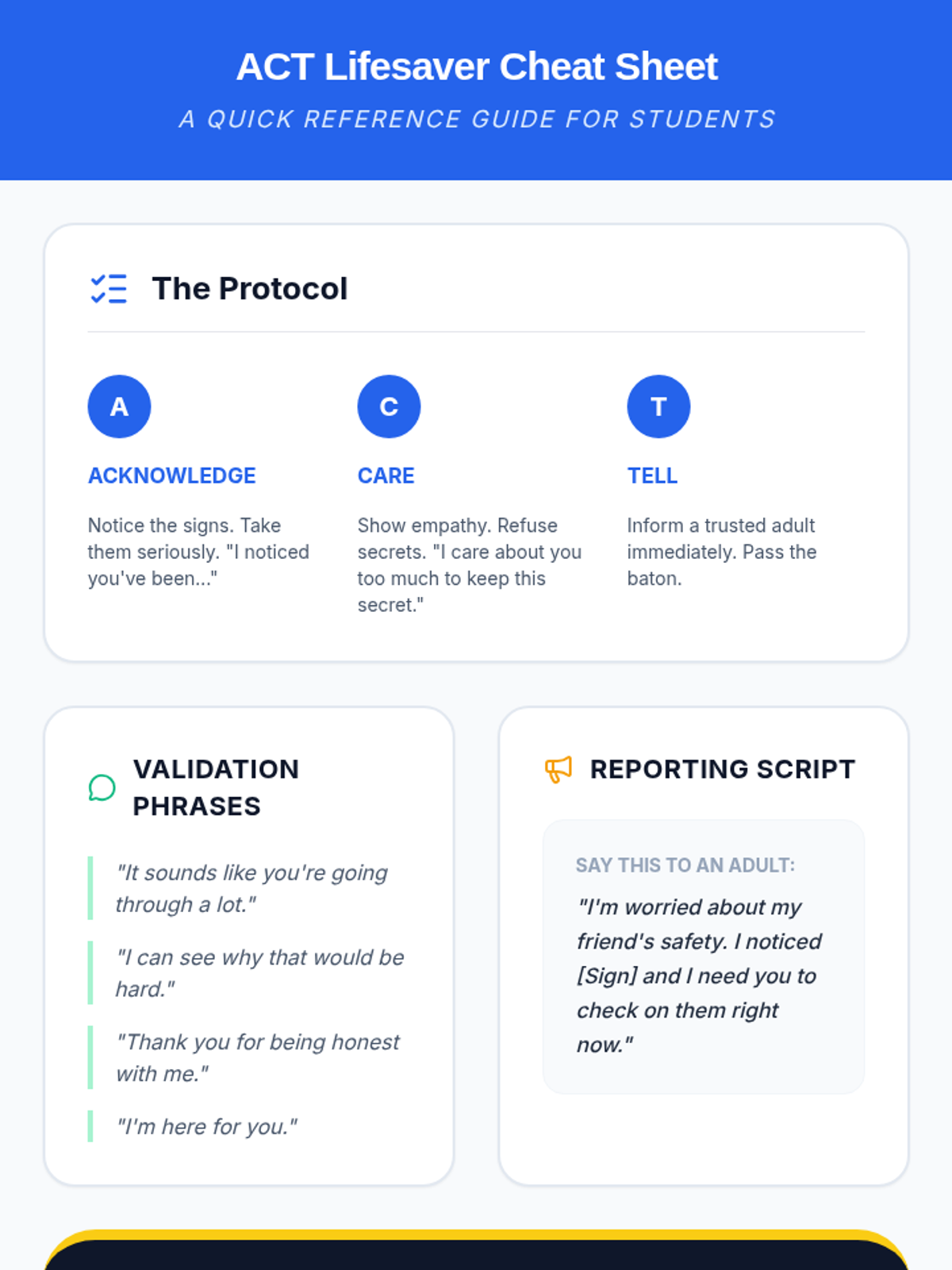
This critical lesson addresses the 'Tell' step. Students practice the transition phrase: 'I care about you too much to keep this a secret.' They discuss why safety overrides promises of secrecy.
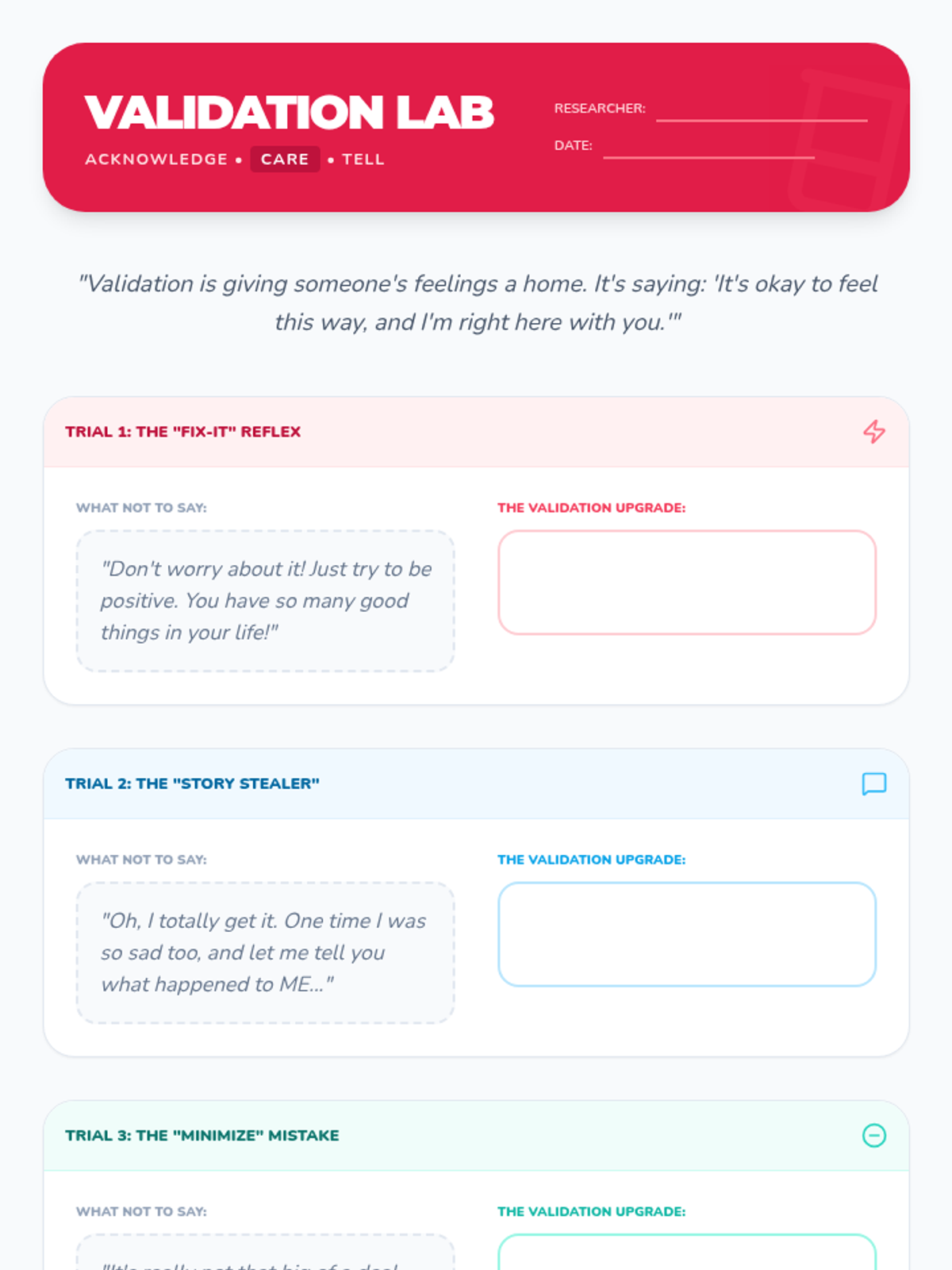
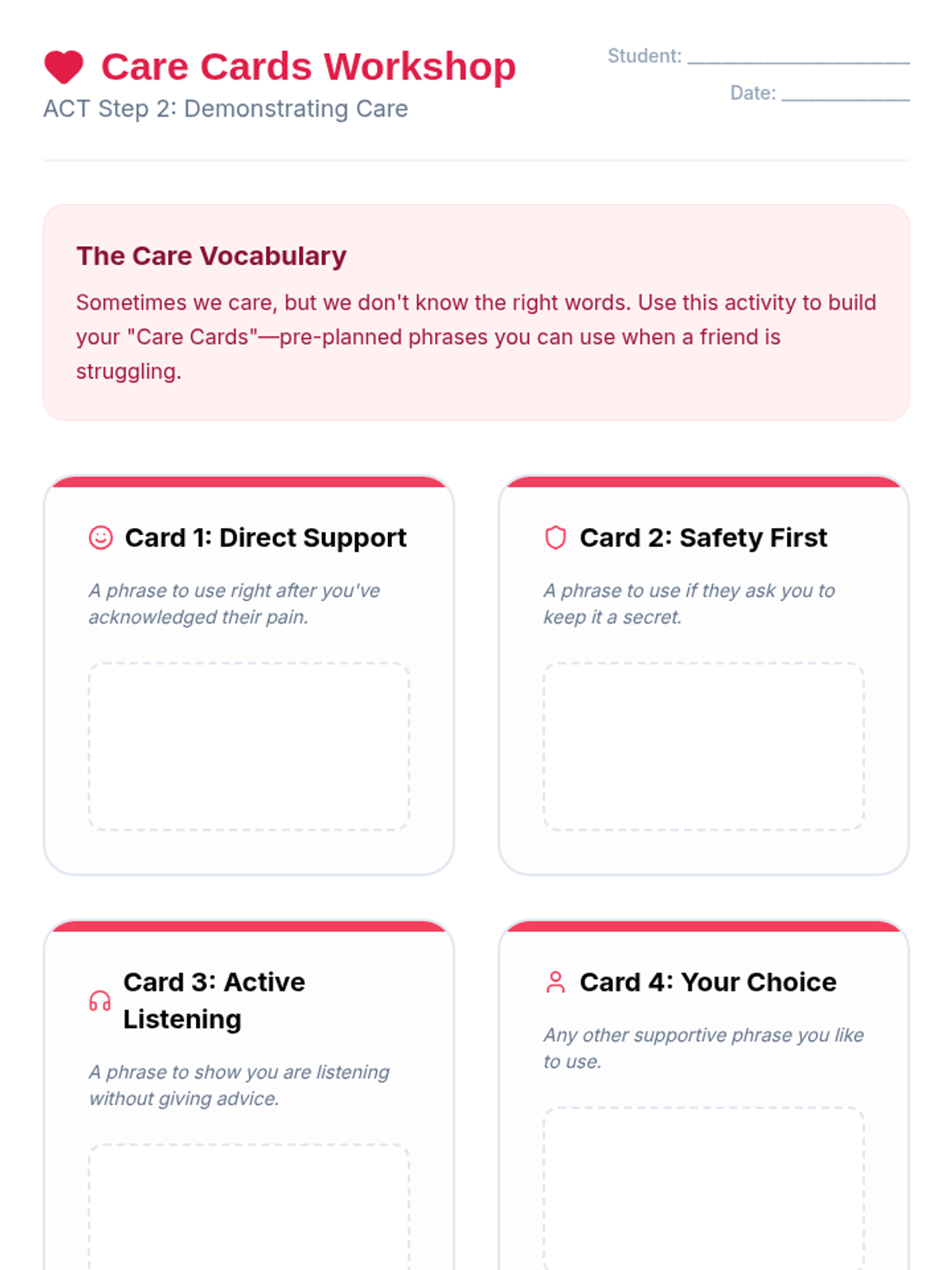
Focusing on the 'Care' part of ACT, students practice listening without interrupting or offering immediate advice. They learn validating phrases that help a distressed peer feel heard.
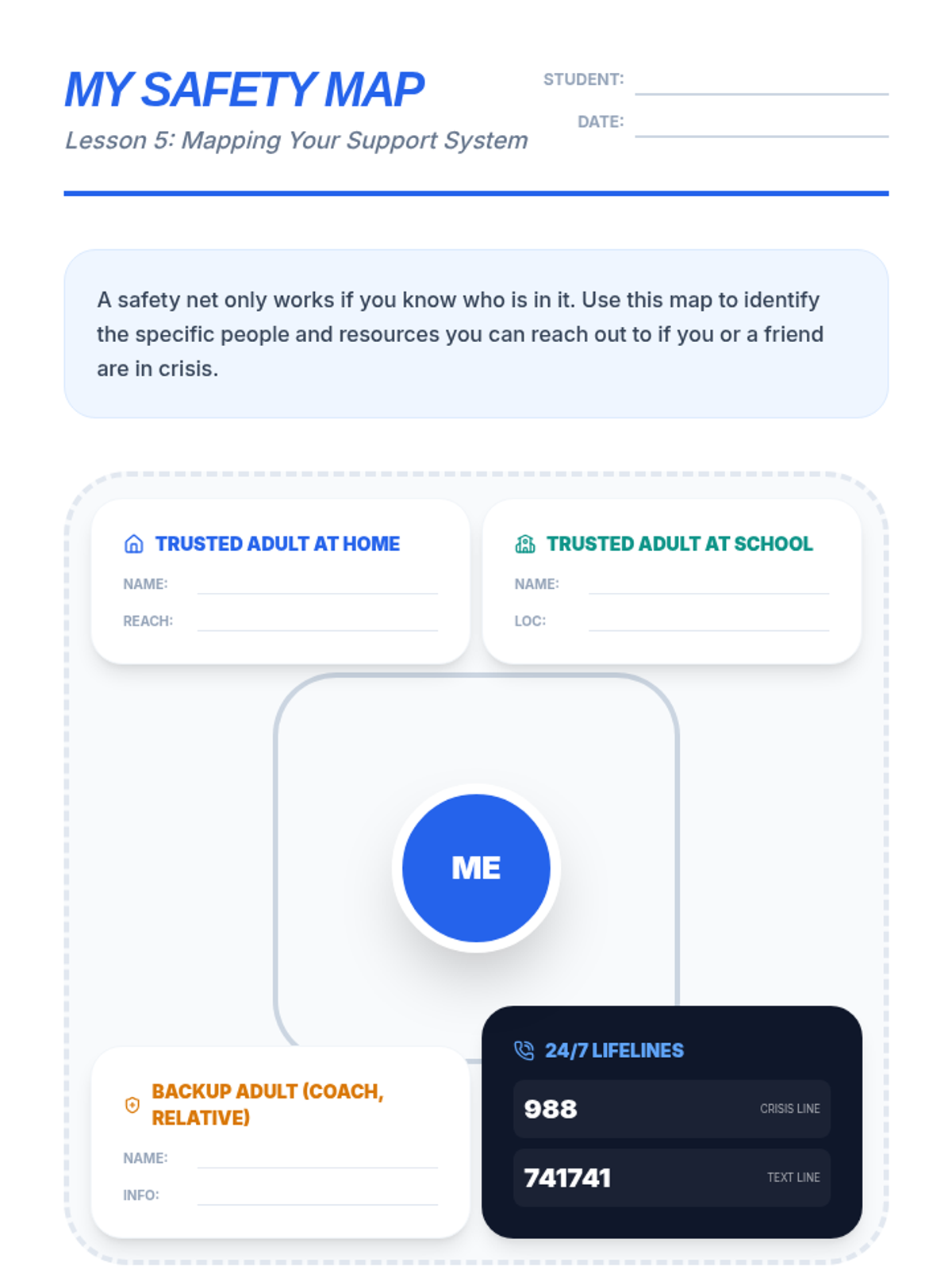
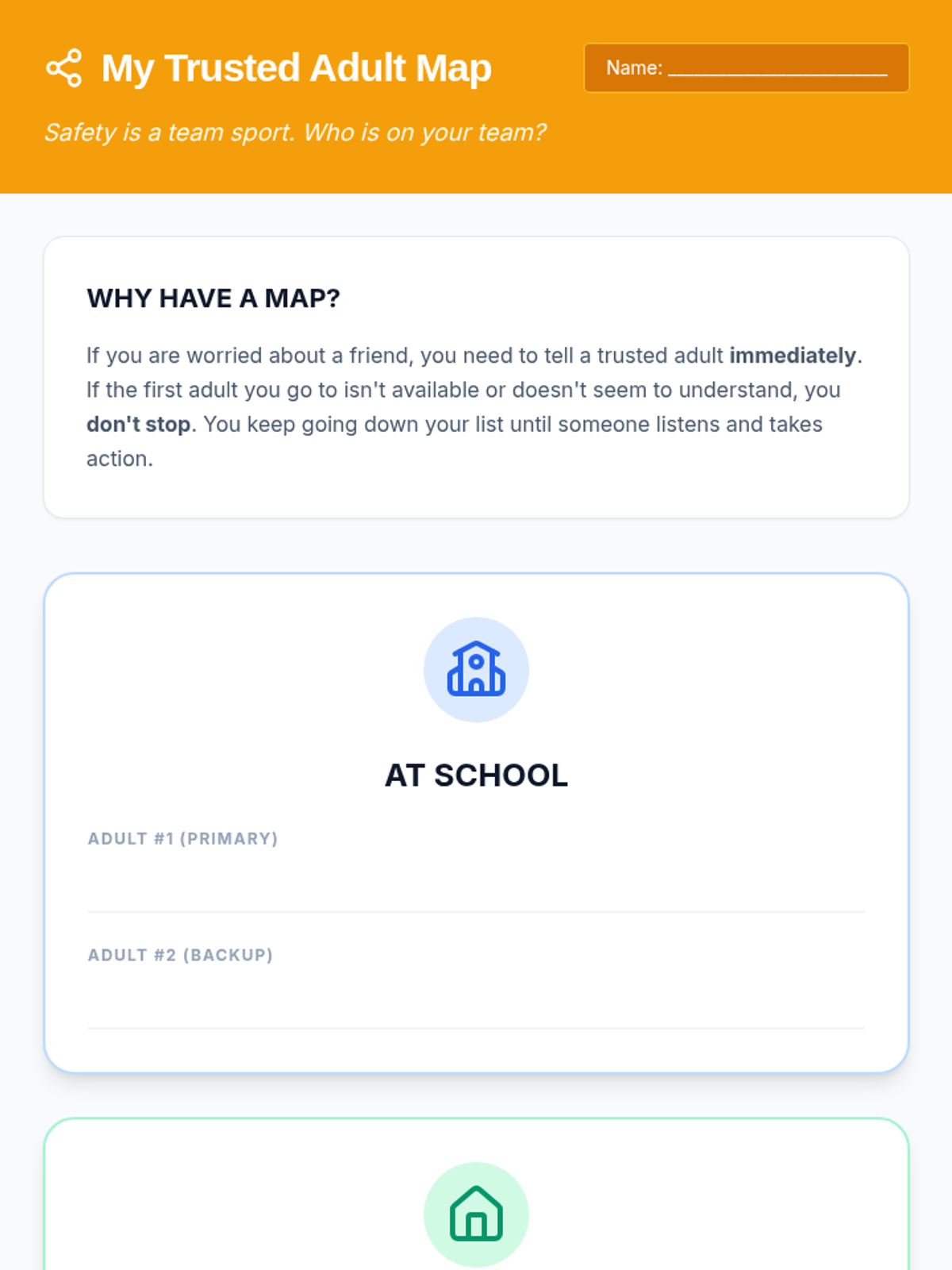
Students identify specific trusted adults and community resources, creating a personal safety map and 'Lifeline' contact list.
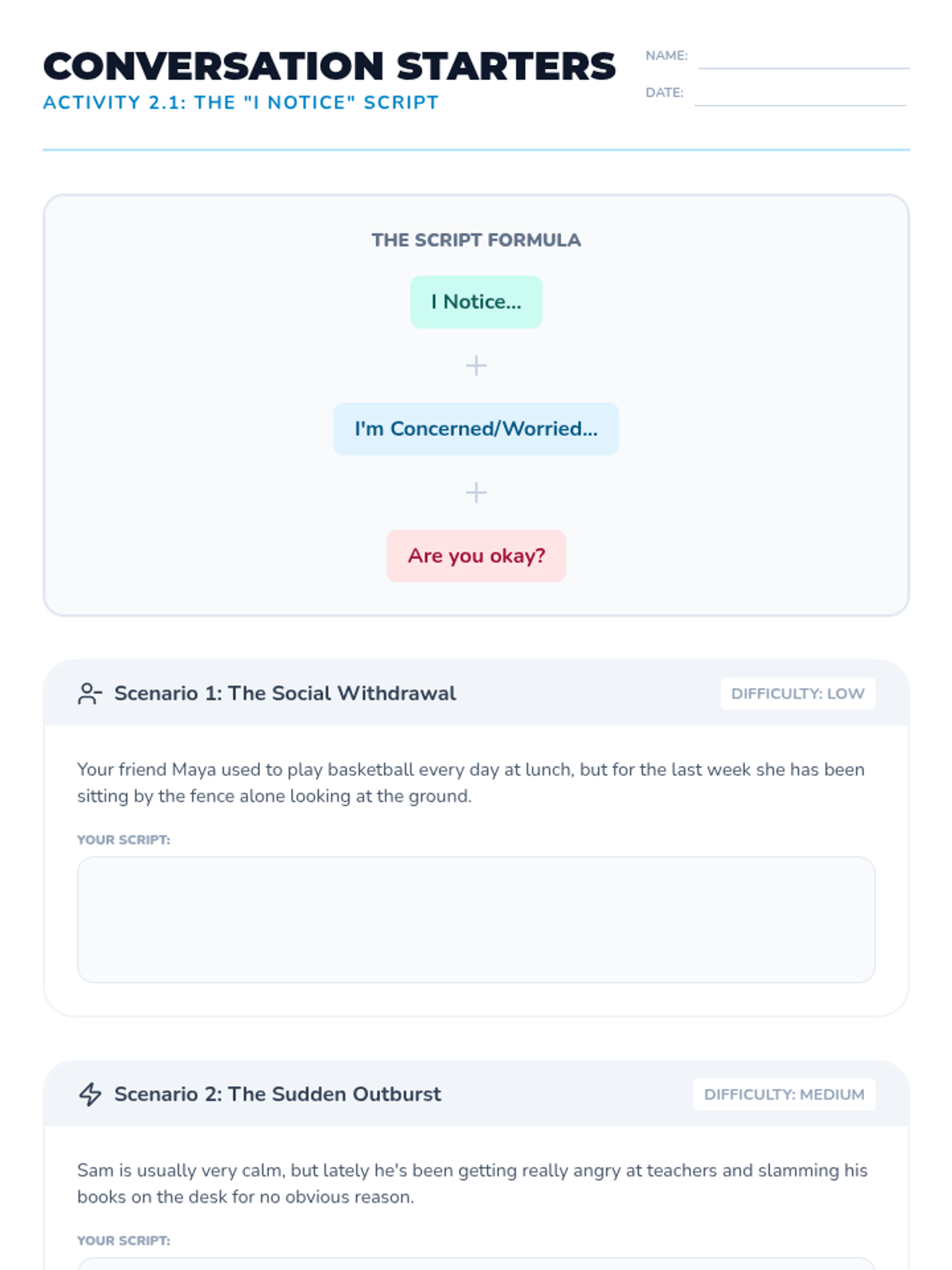
Students practice 'I notice' statements to open conversations without sounding accusatory. They role-play low-stakes scenarios to get comfortable asking 'Are you okay?' effectively.
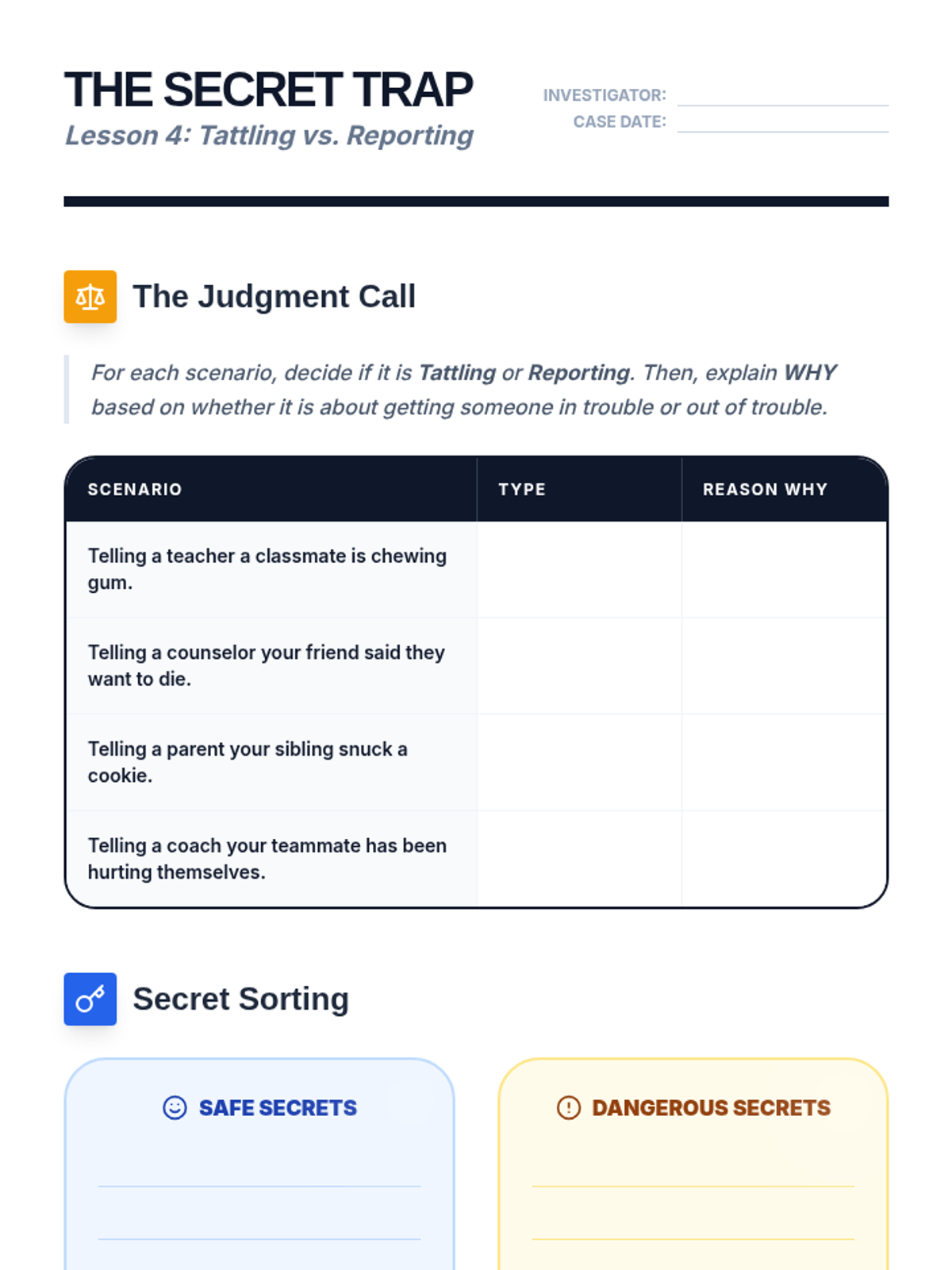
Dismantles the 'snitching' stigma by differentiating between tattling (getting someone in trouble) and reporting (getting someone out of trouble).
Introduces the Acknowledge, Care, Tell framework to help students validate peer feelings and bridge them to professional help.
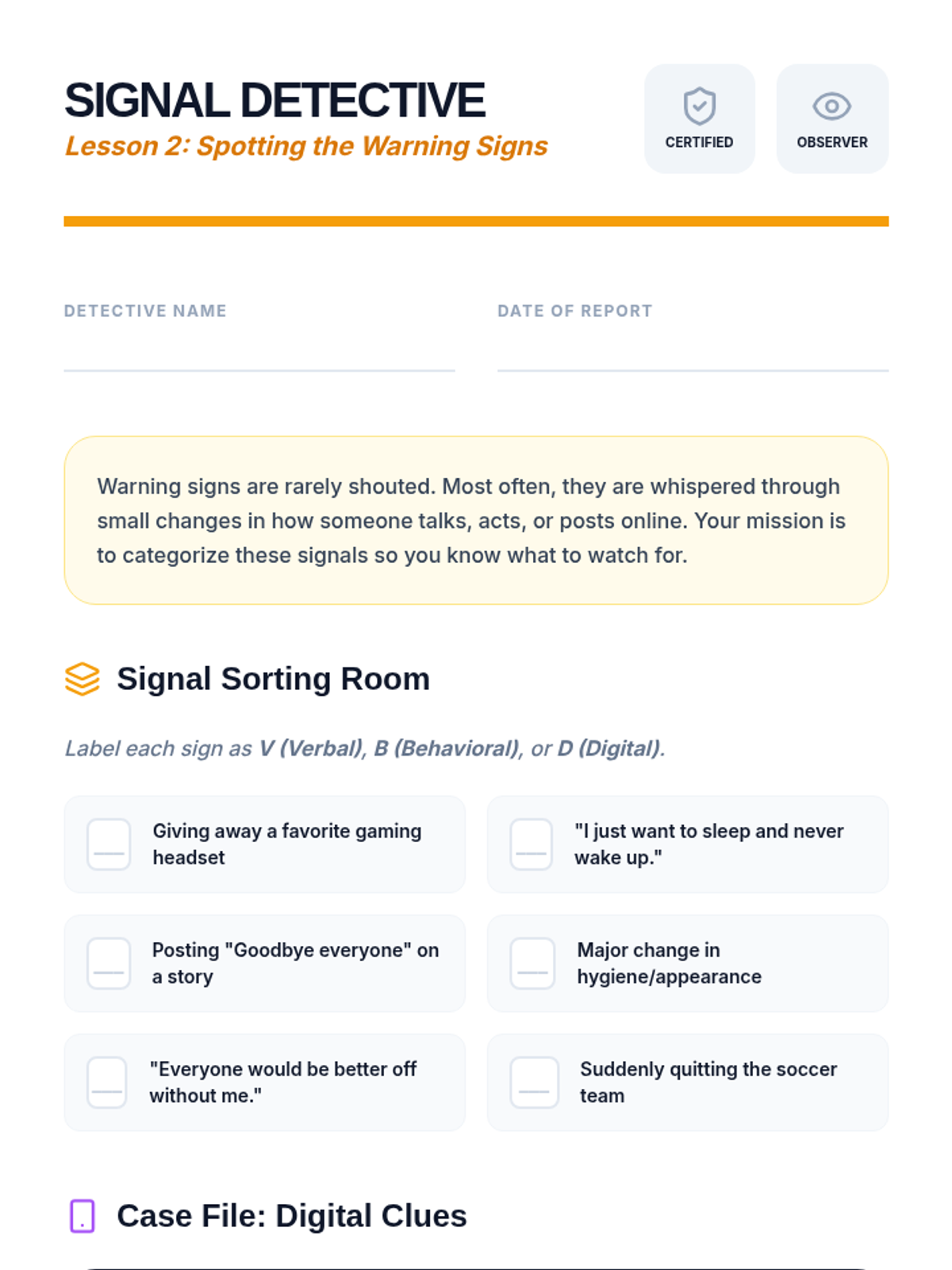
Focuses on recognizing verbal and behavioral red flags, including digital cues on social media, emphasizing that these signs require adult support.
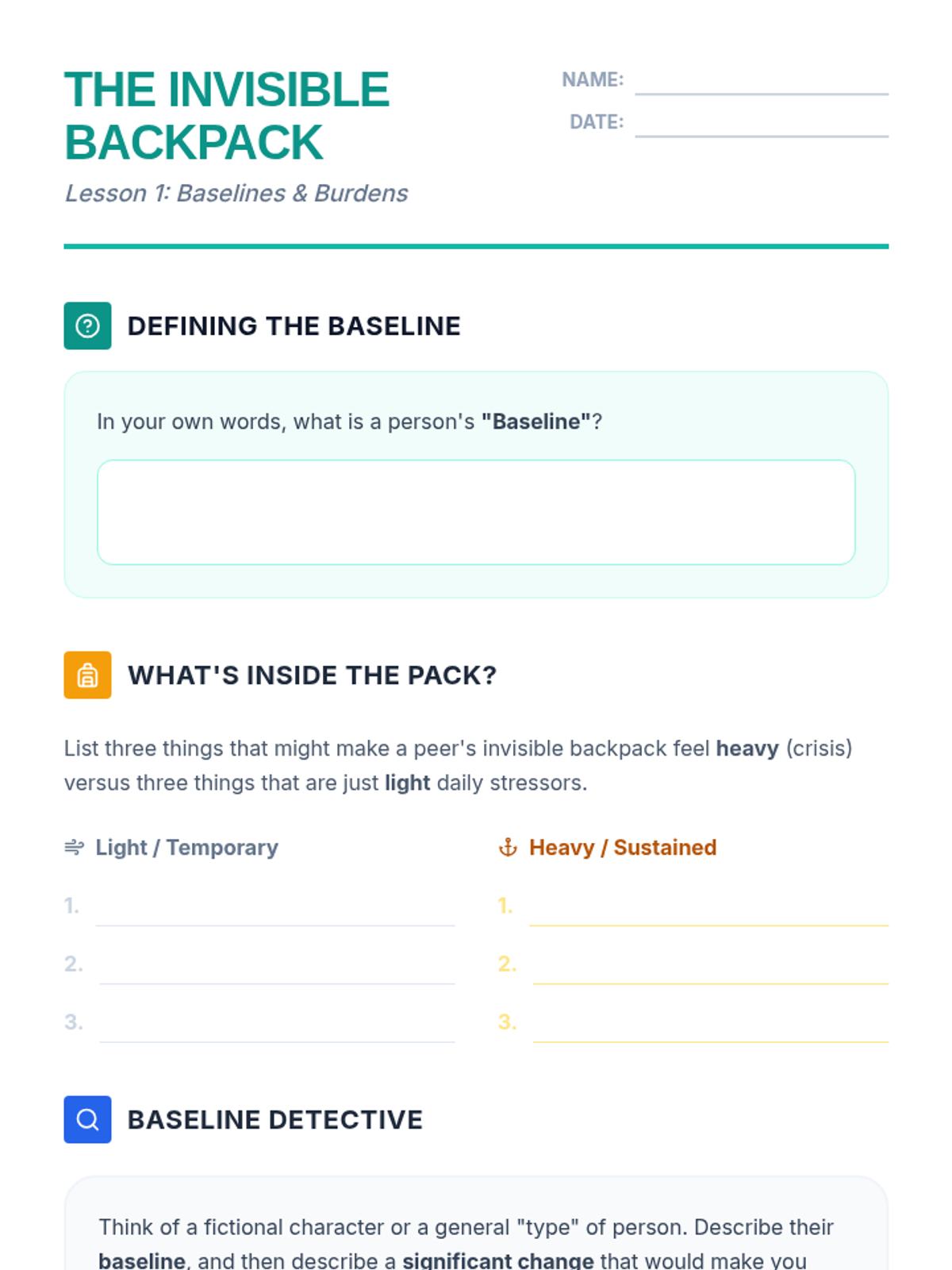
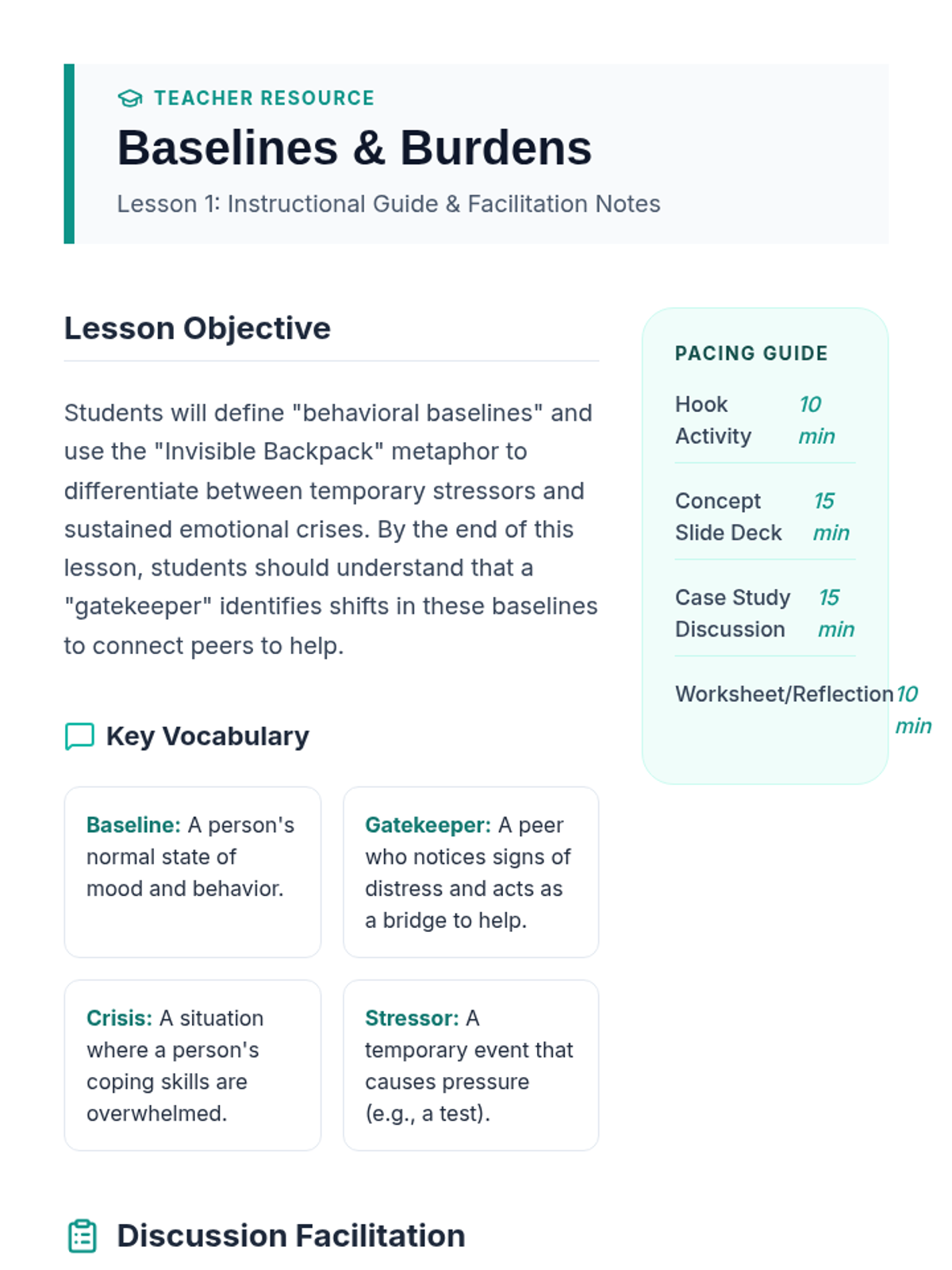
Students explore emotional baselines to identify significant behavioral changes, using the 'Invisible Backpack' metaphor to understand hidden burdens.
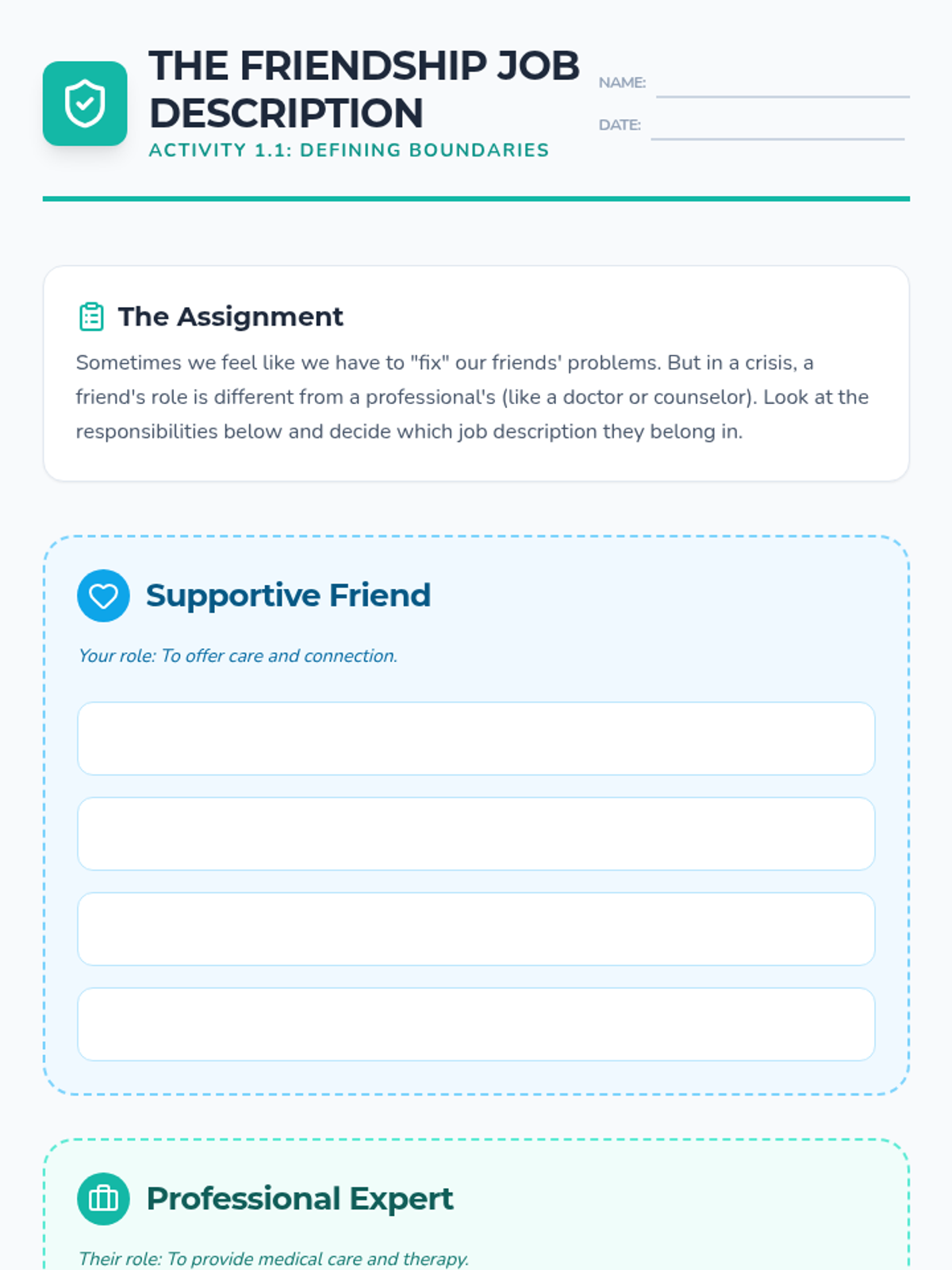
Students clearly define the boundaries of their role as a friend versus a professional. They learn that their job is to connect friends to help, not to solve the problem themselves.
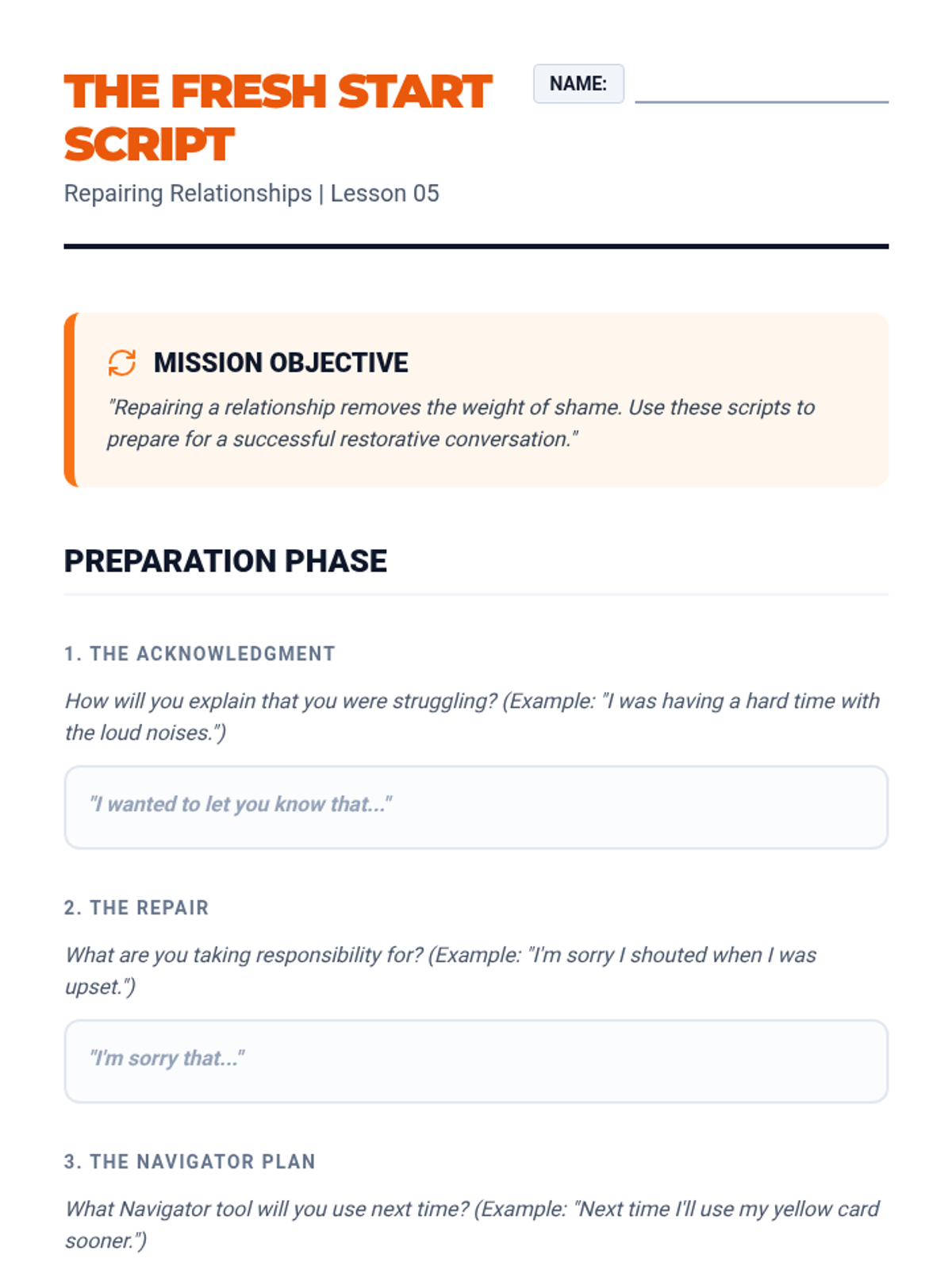
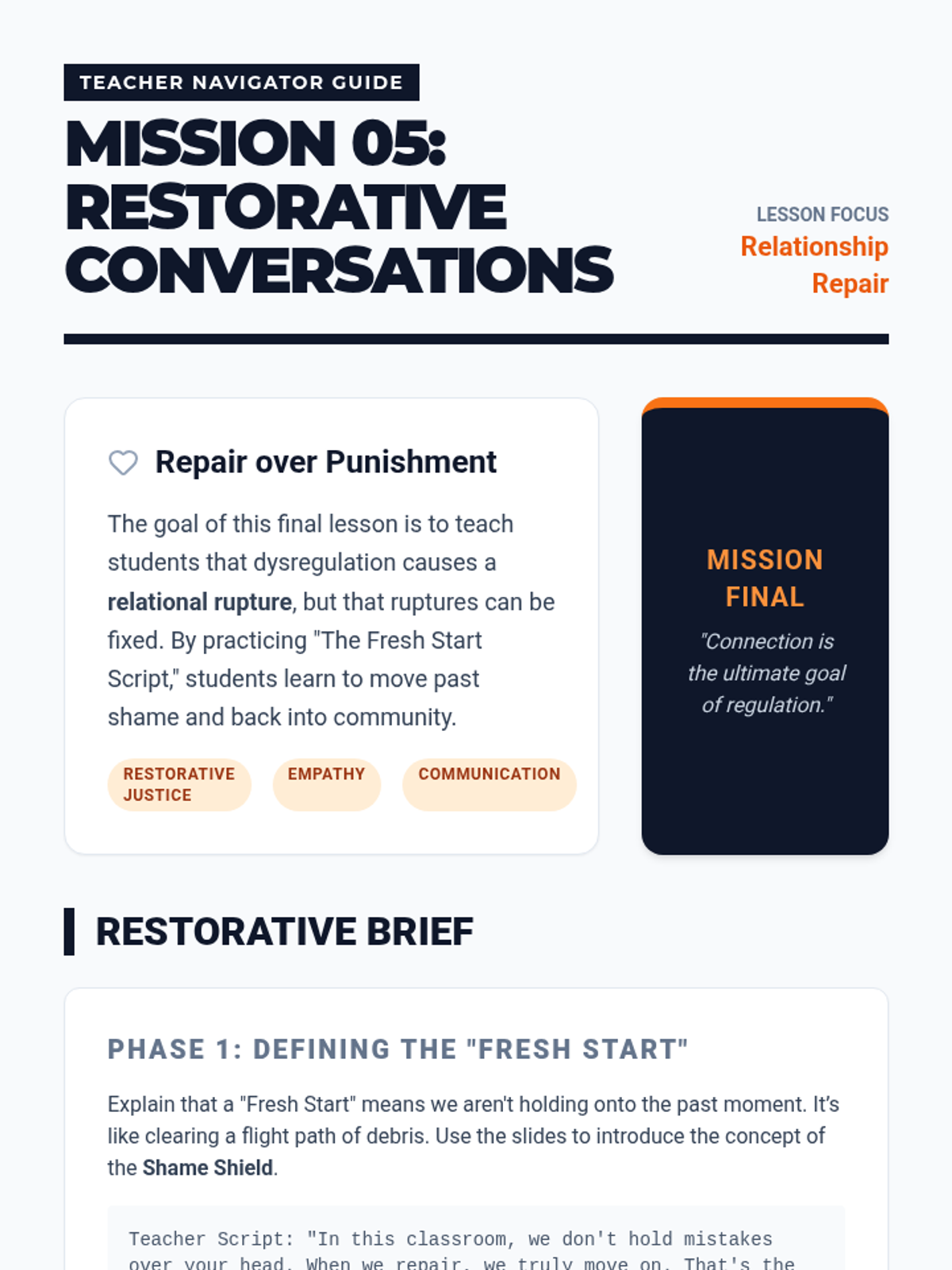
Students develop and practice scripts for restorative conversations with teachers and peers. They learn that repairing relationships is a skill that removes shame and restores community trust.
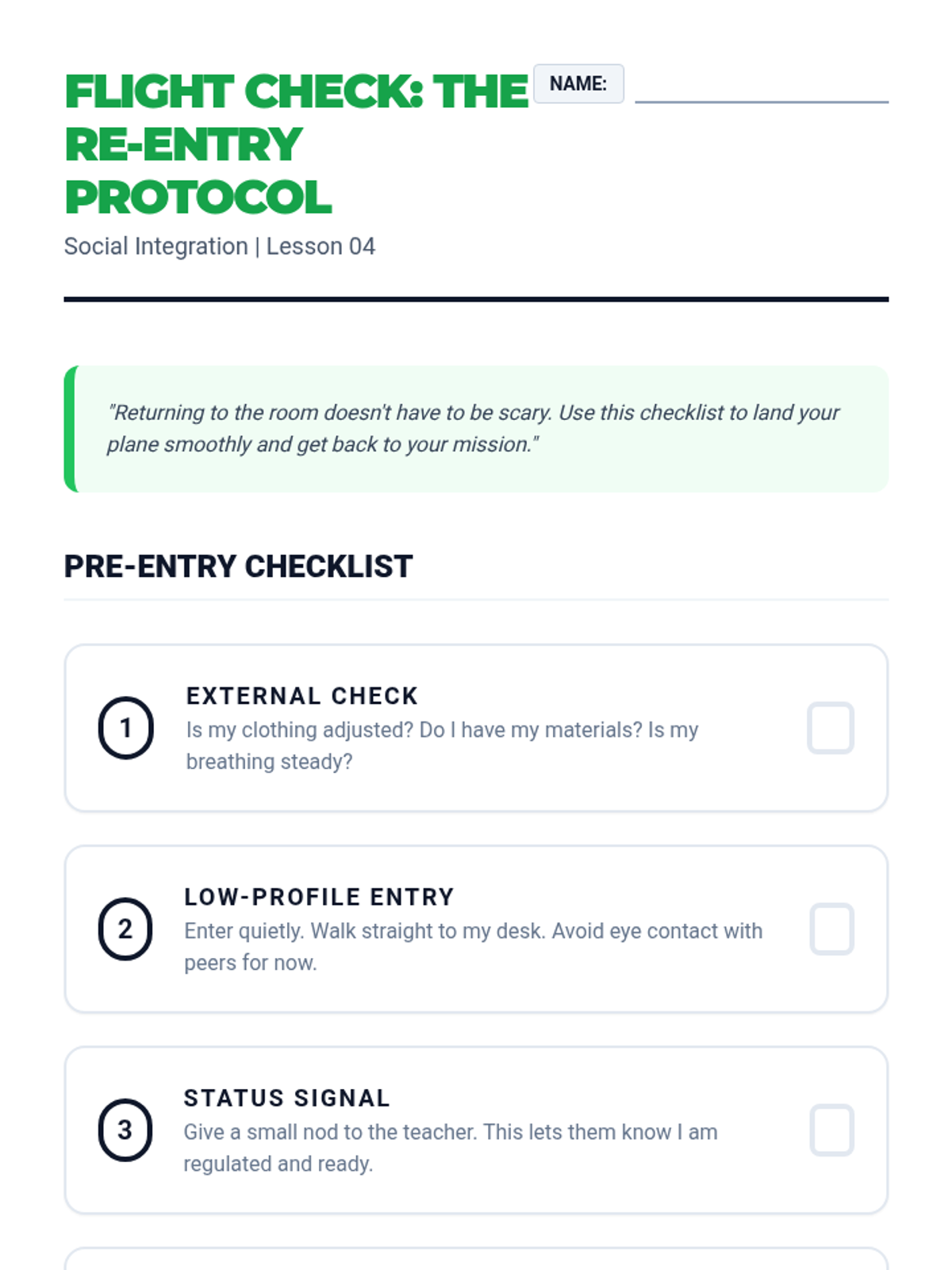
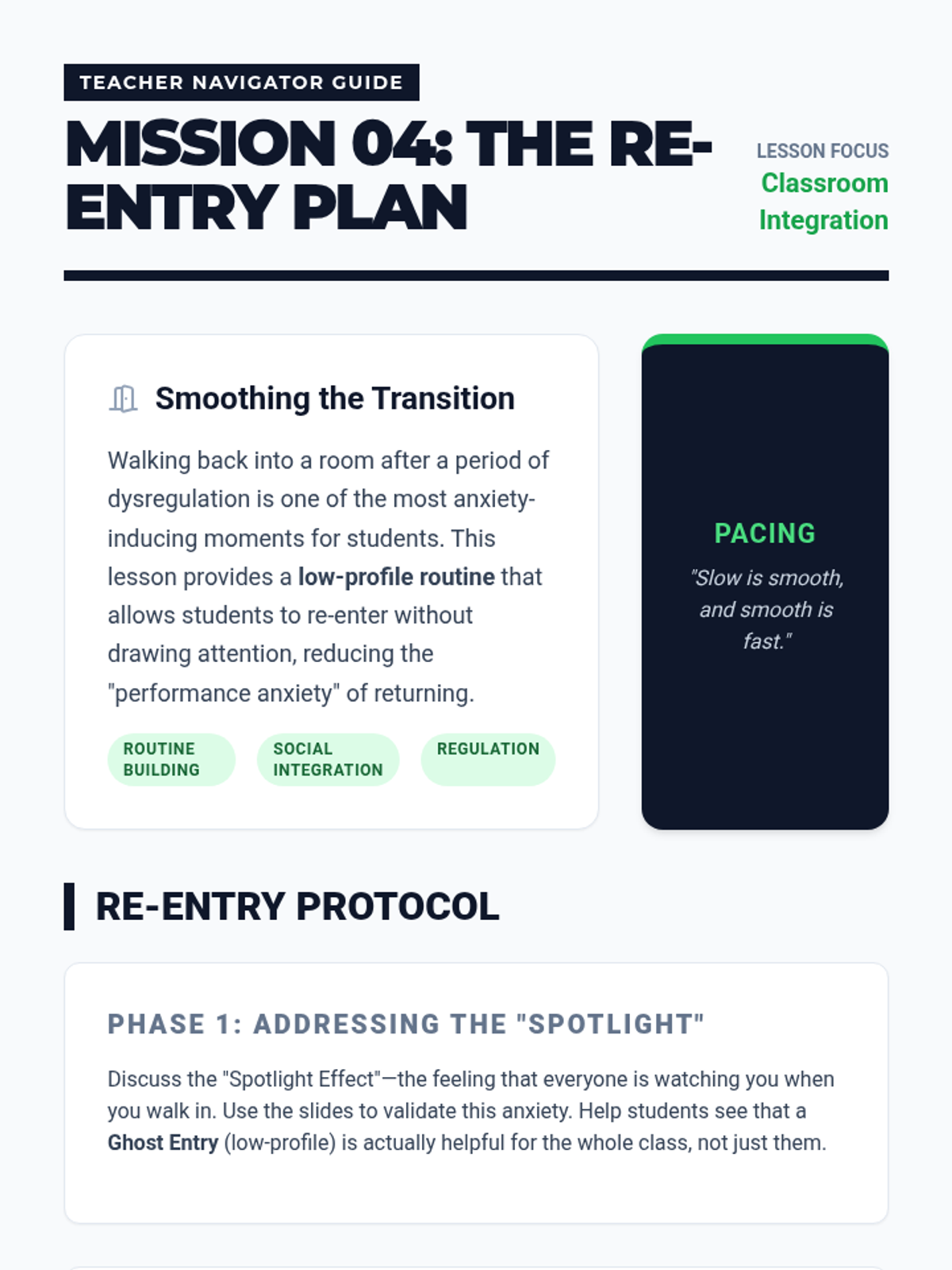
Students create a structured routine for re-entering the classroom after a period of dysregulation. The focus is on reducing 'return anxiety' and making a low-profile transition back to learning.
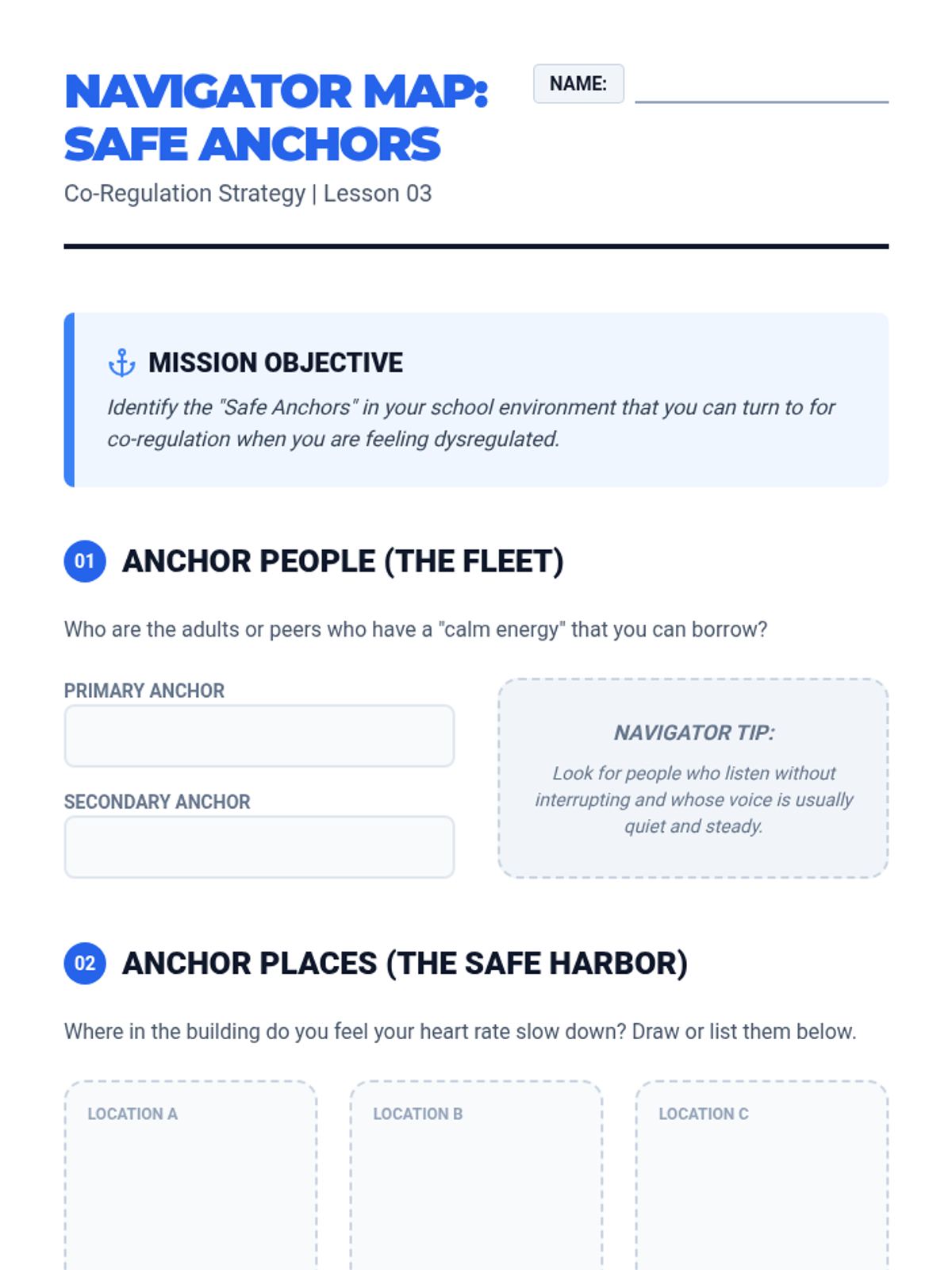
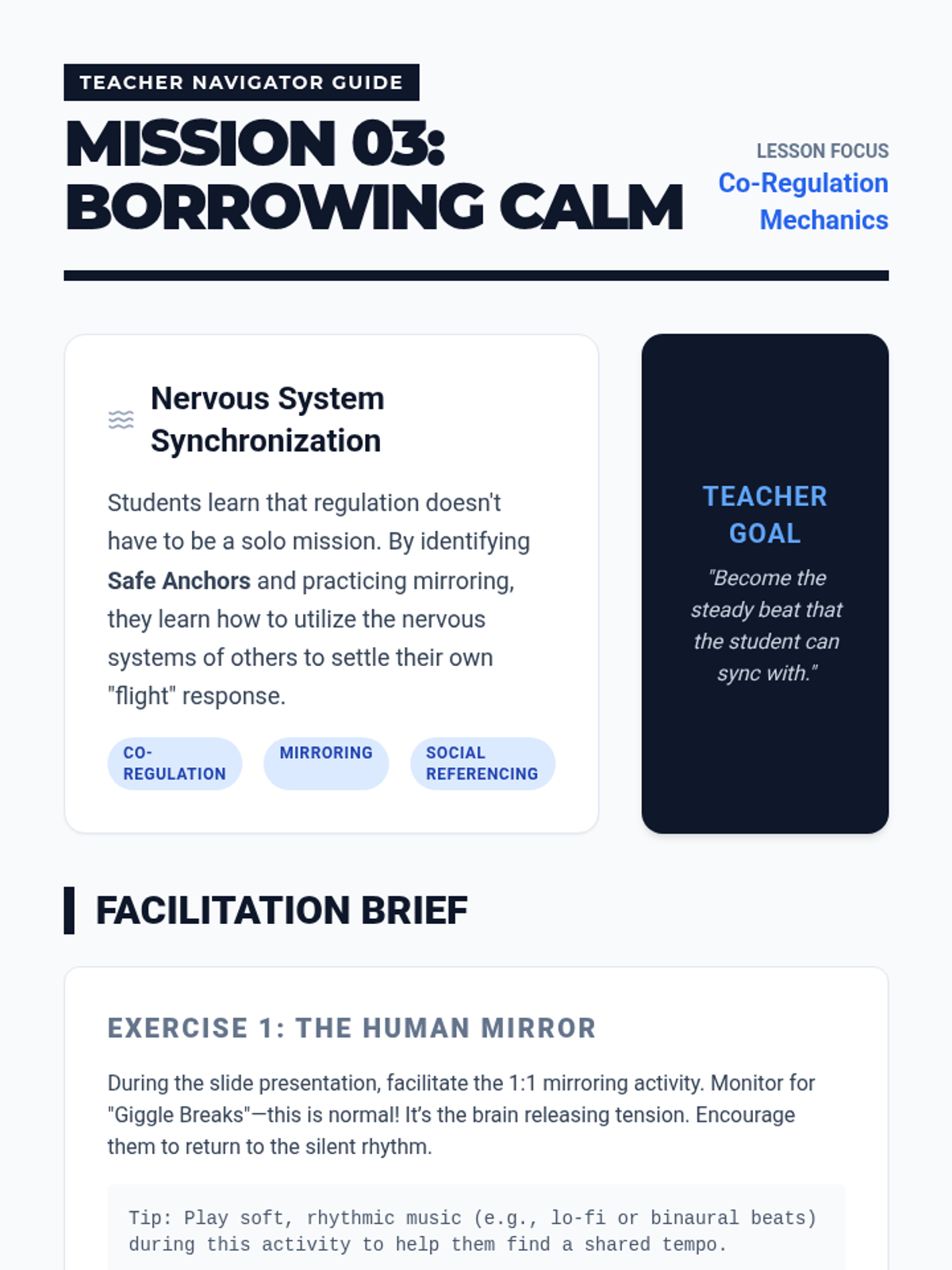
Students learn the mechanics of co-regulation, practicing how to sync their nervous system with a calm partner through movement and breathing exercises. They identify 'safe anchors' in their environment.
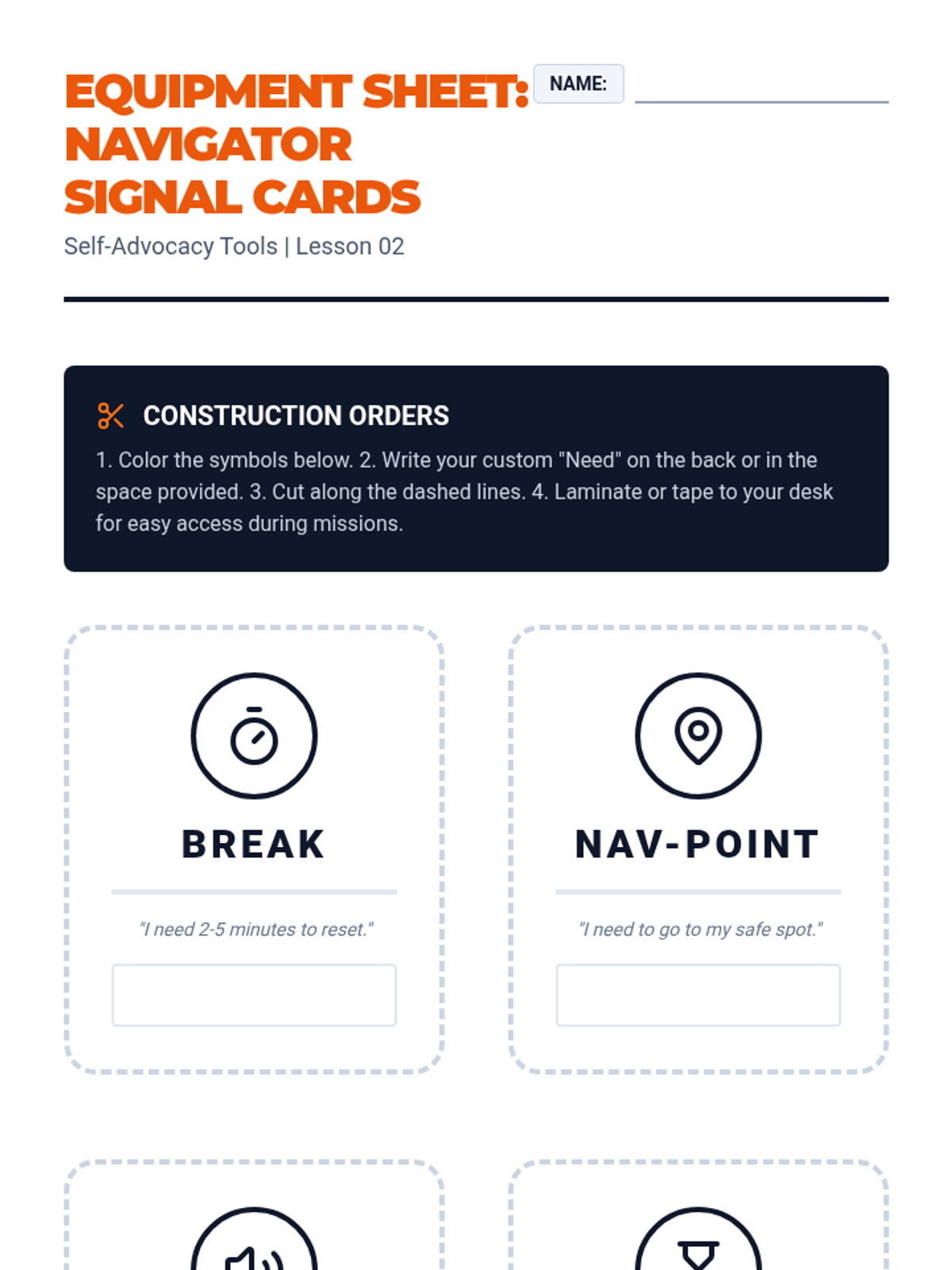
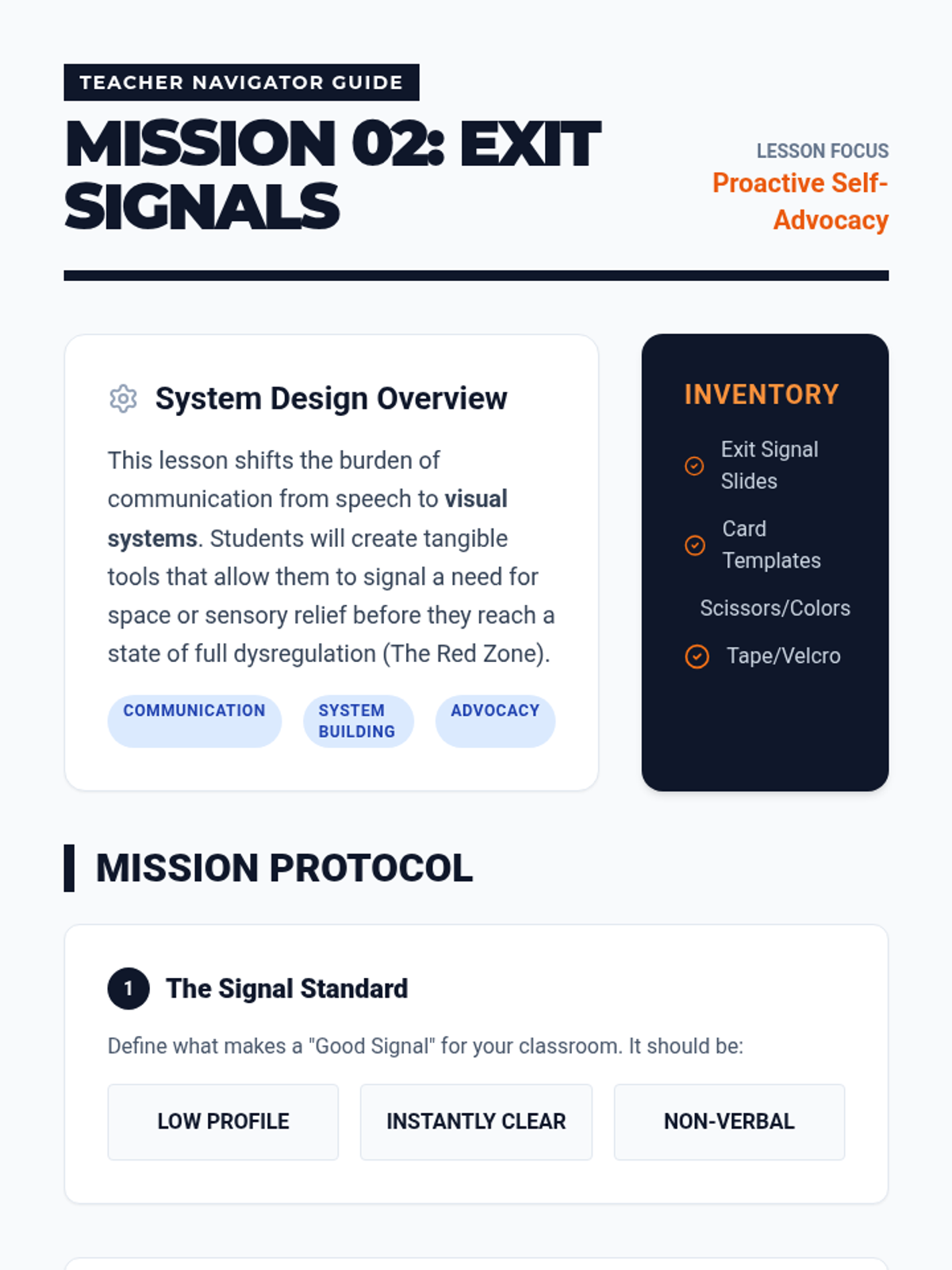
Students design and personalize non-verbal signaling systems (cards or signs) to advocate for their needs before reaching a full meltdown. This lesson empowers students to take proactive breaks.
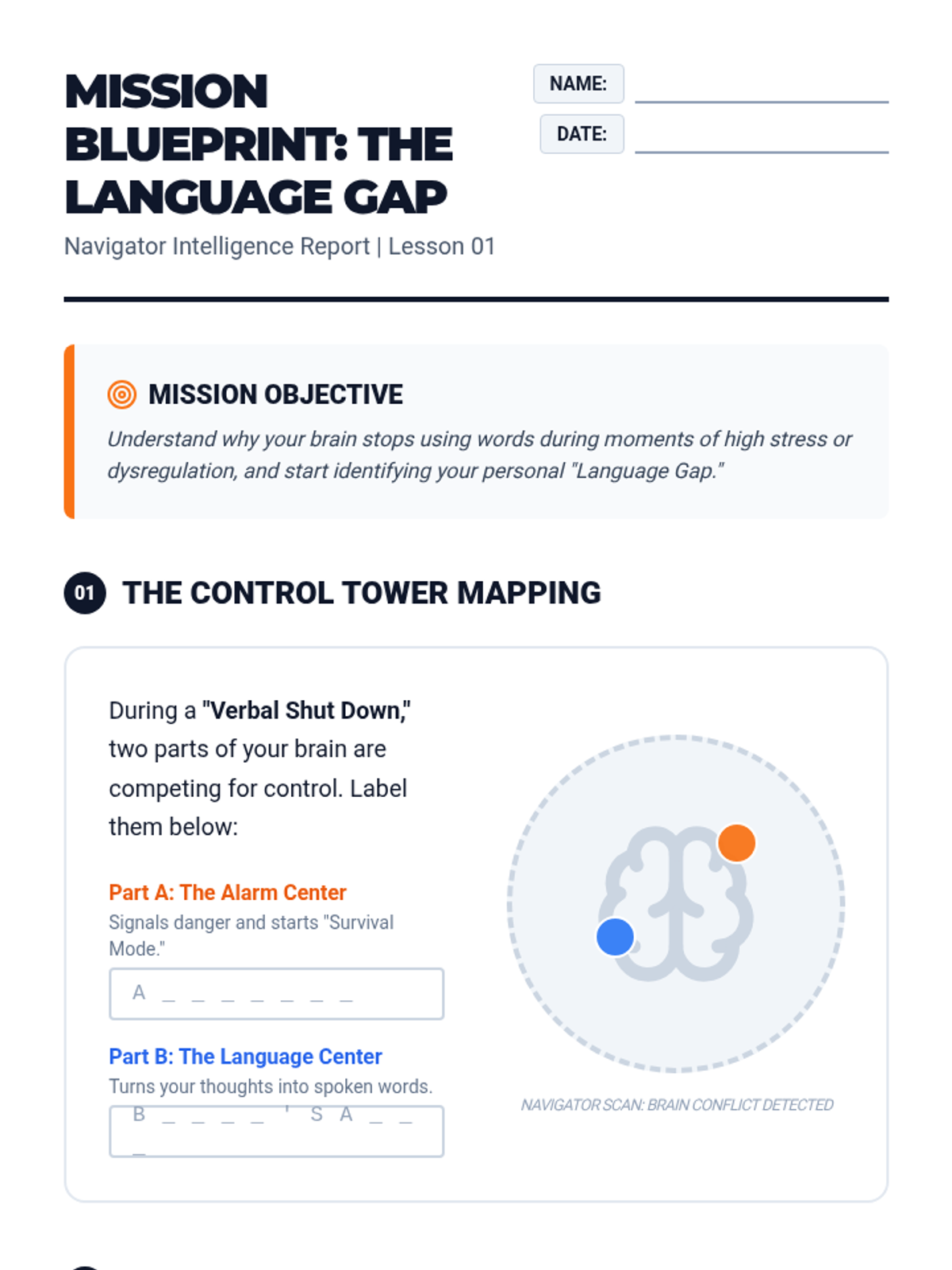
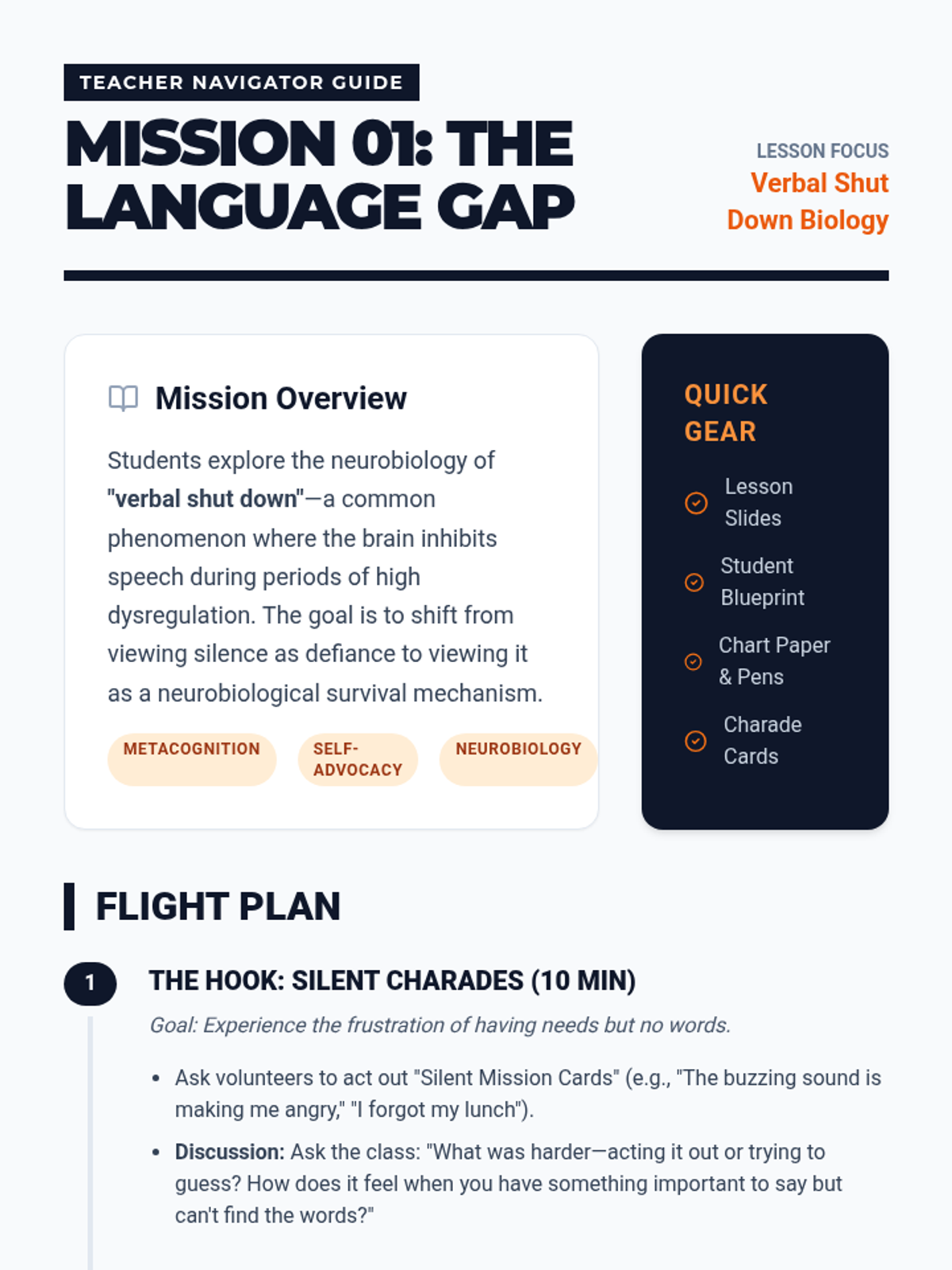
Students explore the neurobiology of 'verbal shut down' during dysregulation, understanding why speaking becomes difficult when the amygdala takes over. They brainstorm and practice non-verbal ways to communicate urgency.
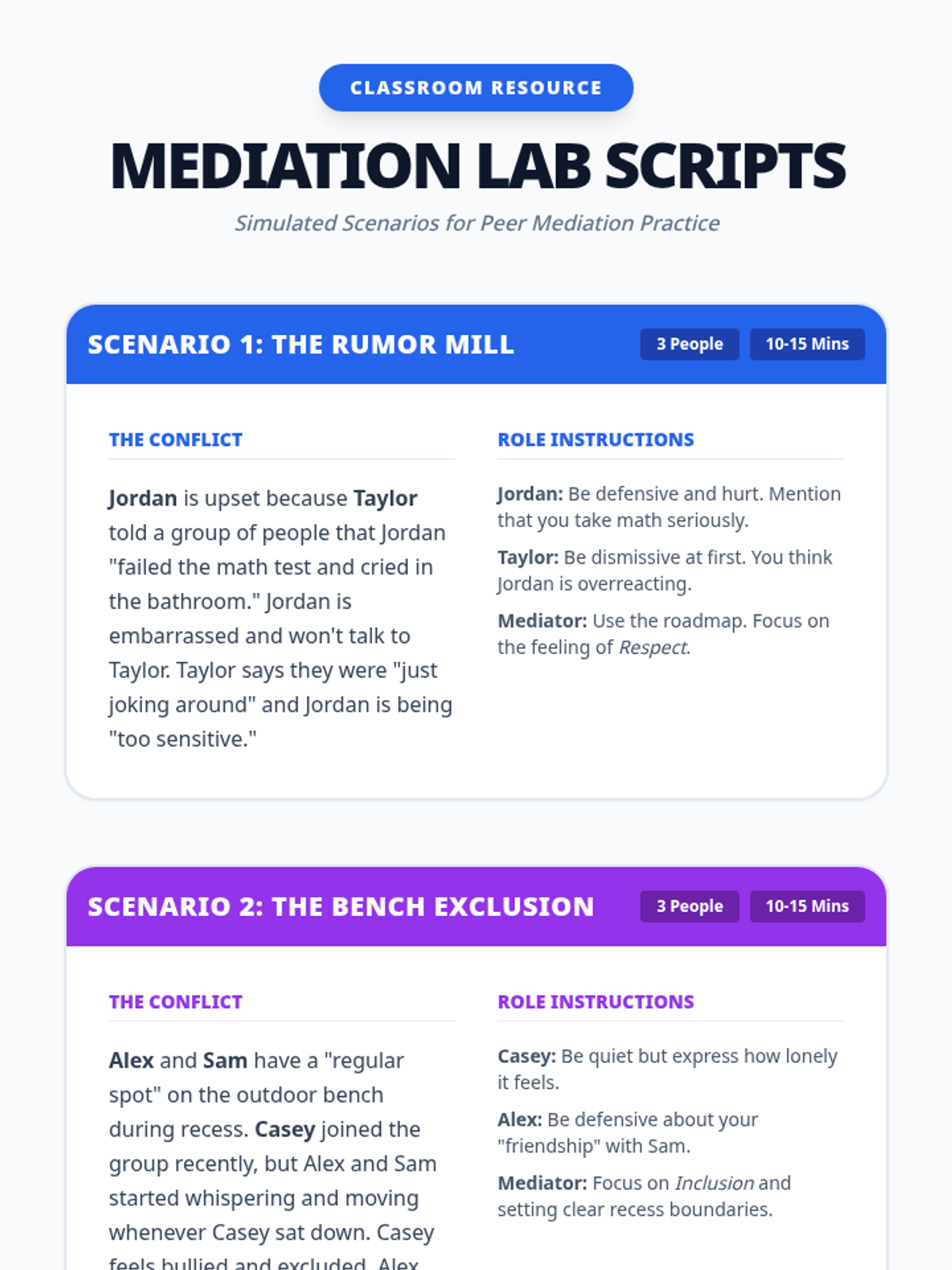
Students engage in full-cycle mock mediations. Groups rotate roles between disputants and mediators, using scripts based on real-life 6th-grade problems (e.g., rumor spreading, exclusion).
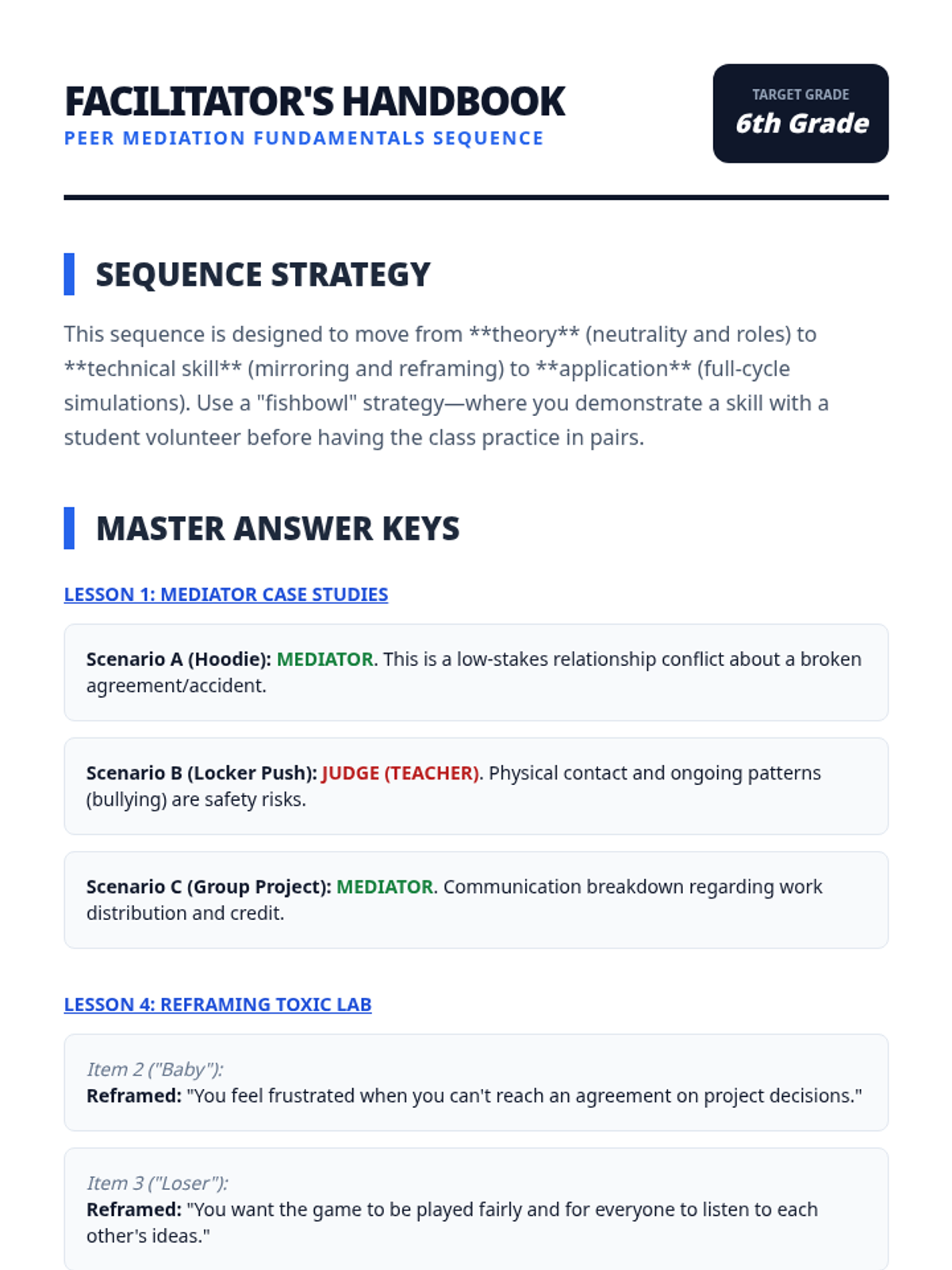
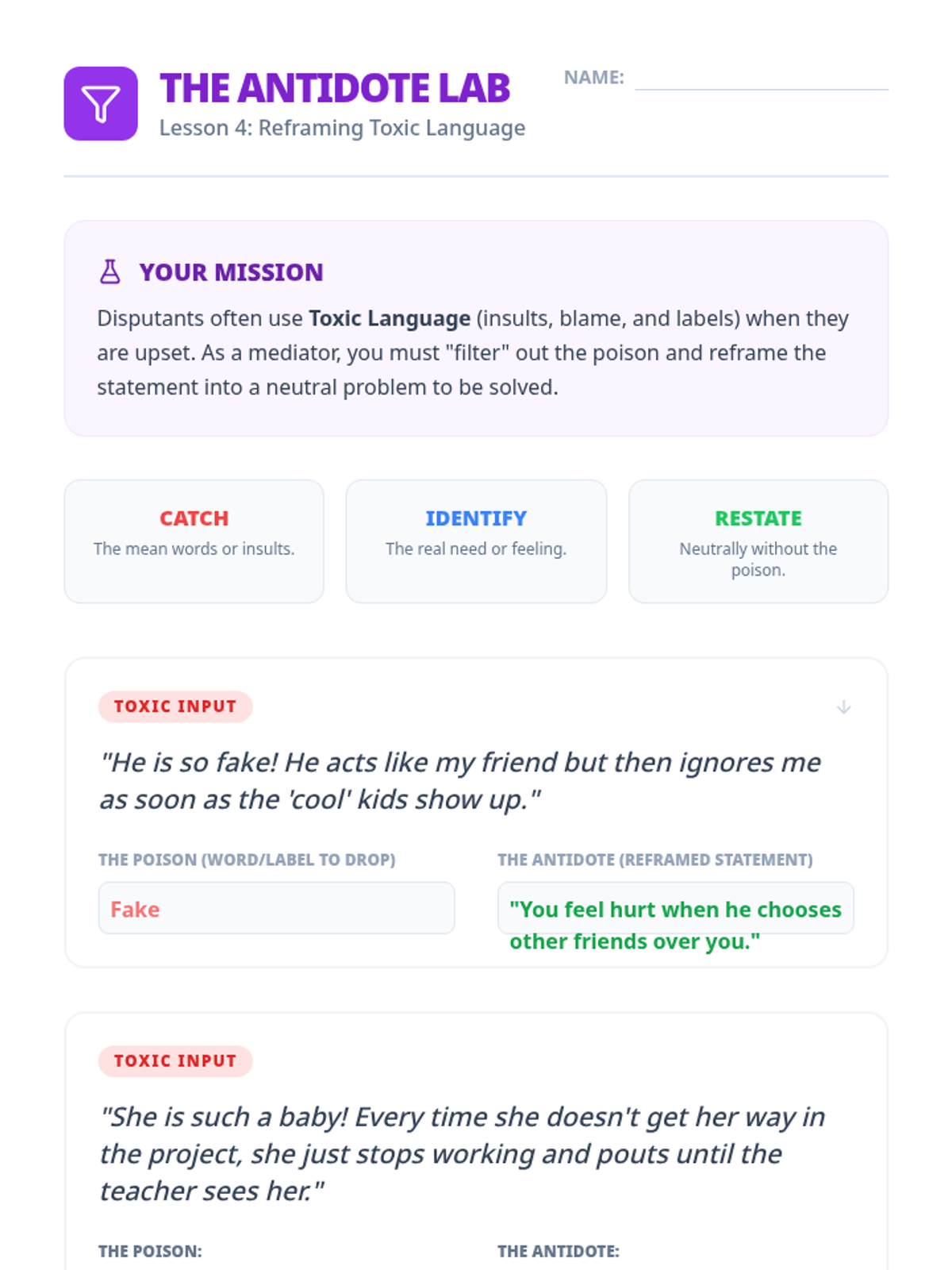
Students learn to 'catch' toxic or inflammatory language used by disputants and reframe it into neutral problem statements. This advanced skill prevents the mediation from turning into a shouting match.
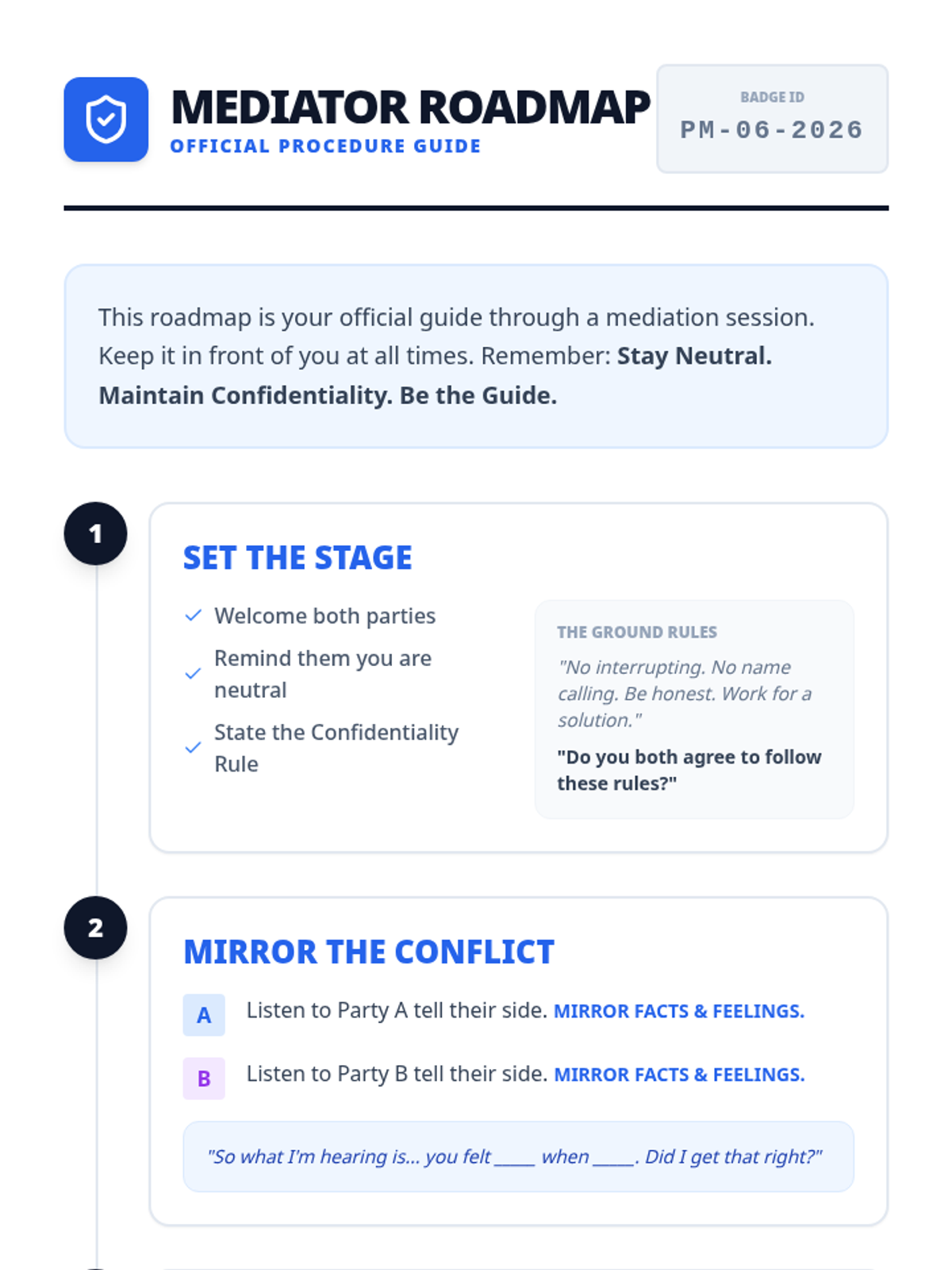
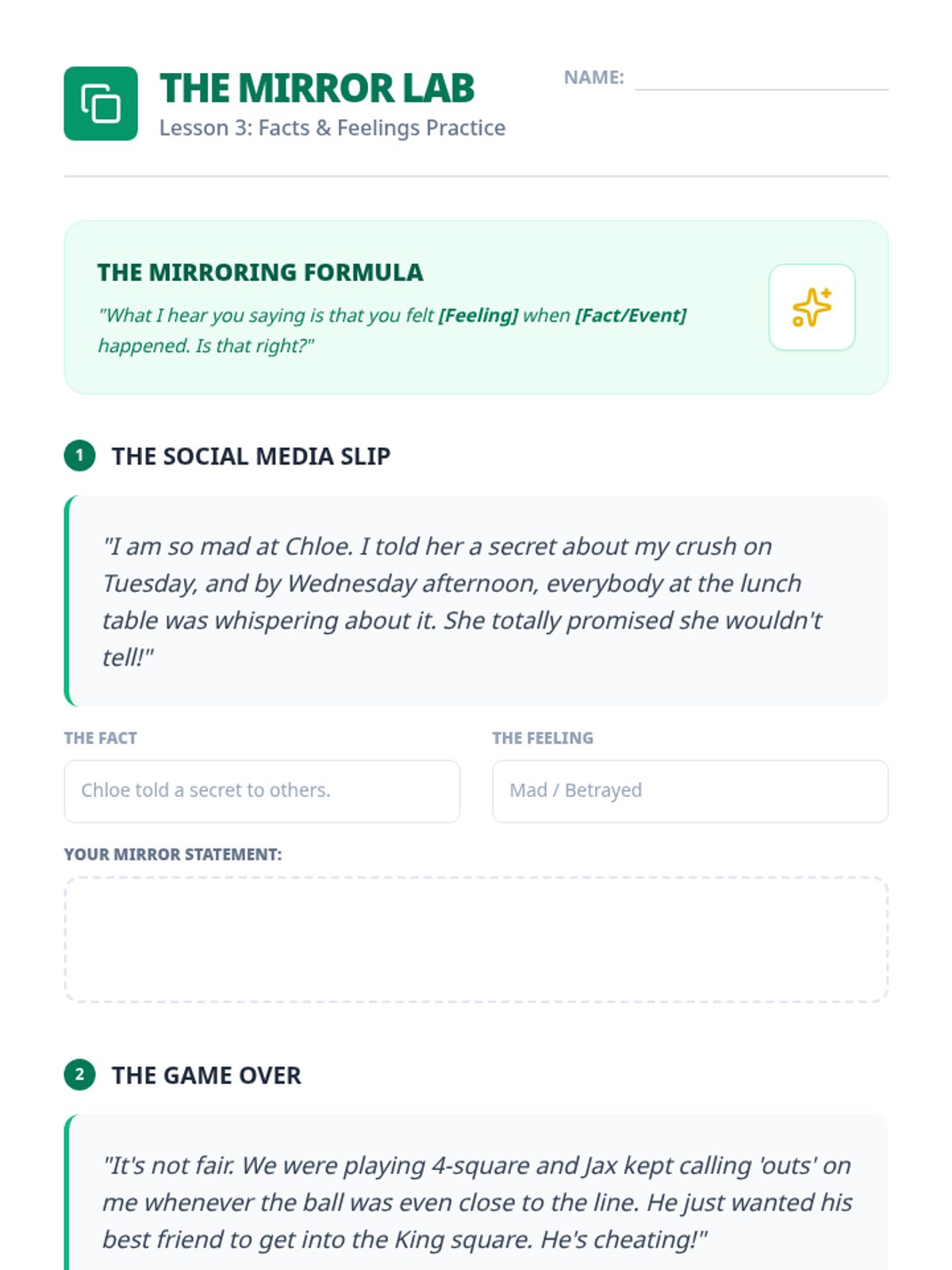
This lesson focuses on the mediator's primary tool: mirroring (reflecting back what was heard). Students practice listening to a complaint and summarizing it neutrally to ensure the speaker feels heard.
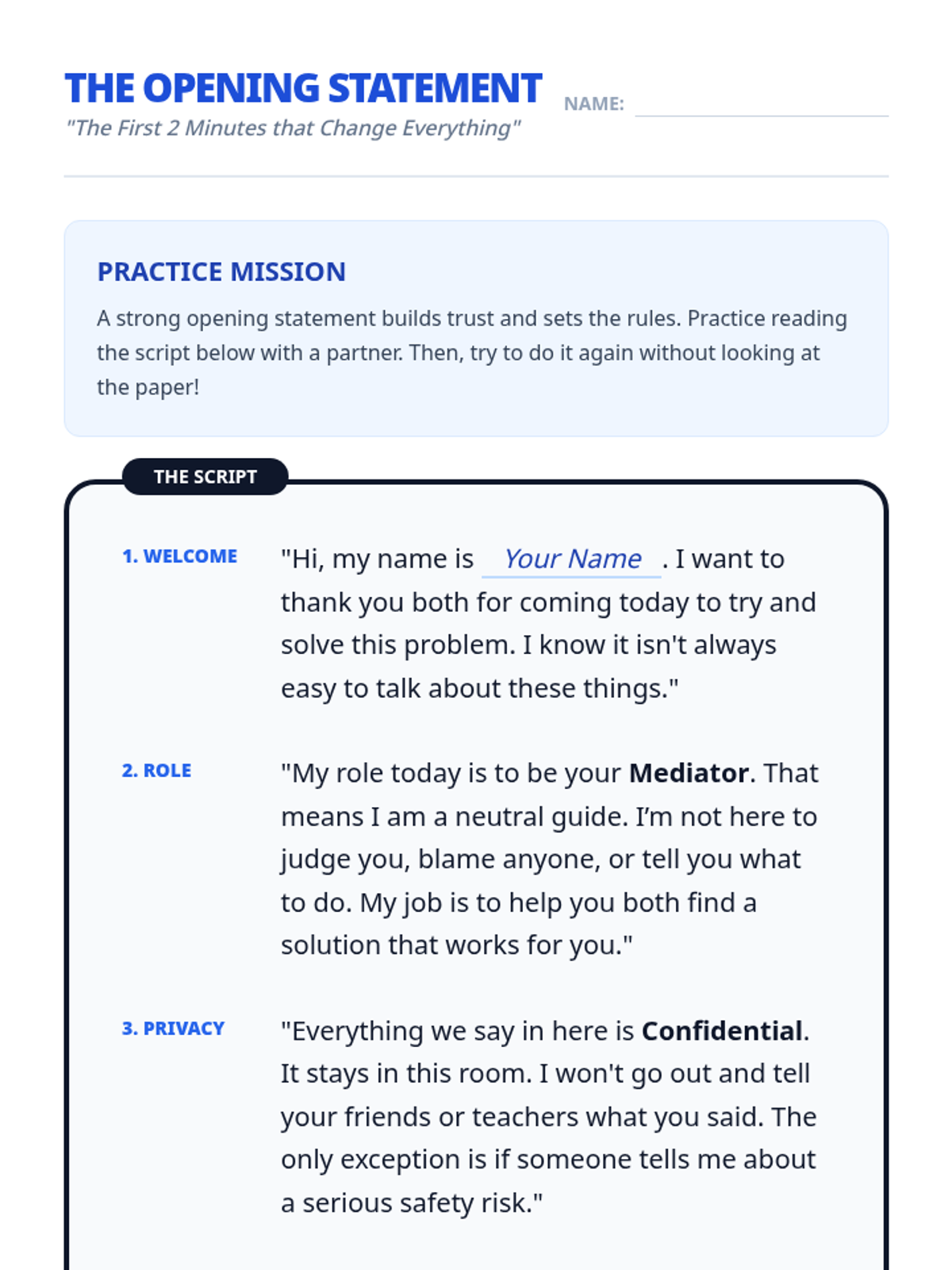
Learners practice the opening statement of a mediation: welcoming parties, explaining the process, and establishing rules like 'no interrupting' and 'no name-calling.'
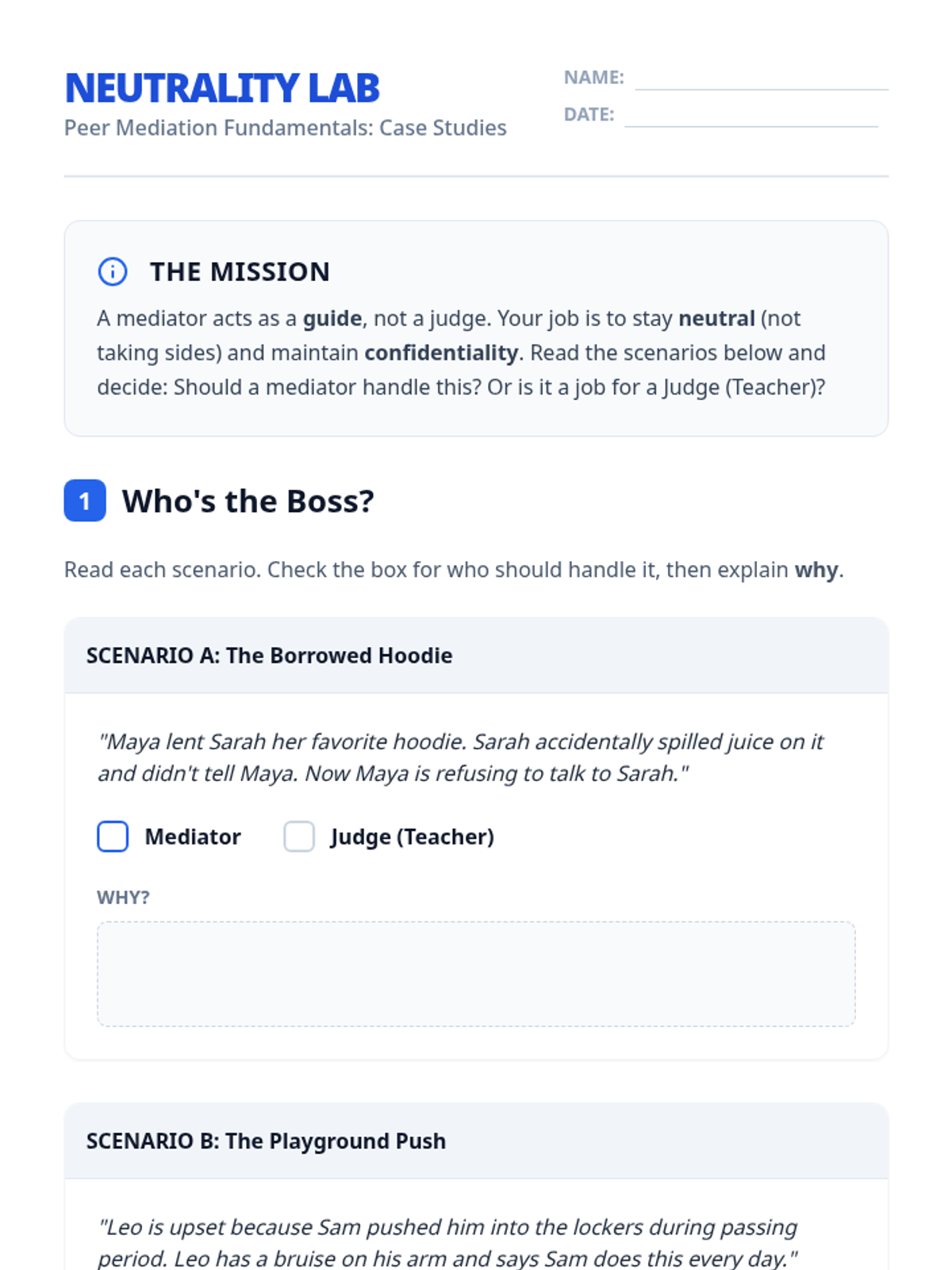
Students define what a mediator is (a guide, not a judge) and the core principle of neutrality. They discuss confidentiality and identify when a conflict is too dangerous for peer mediation (e.g., bullying or violence).
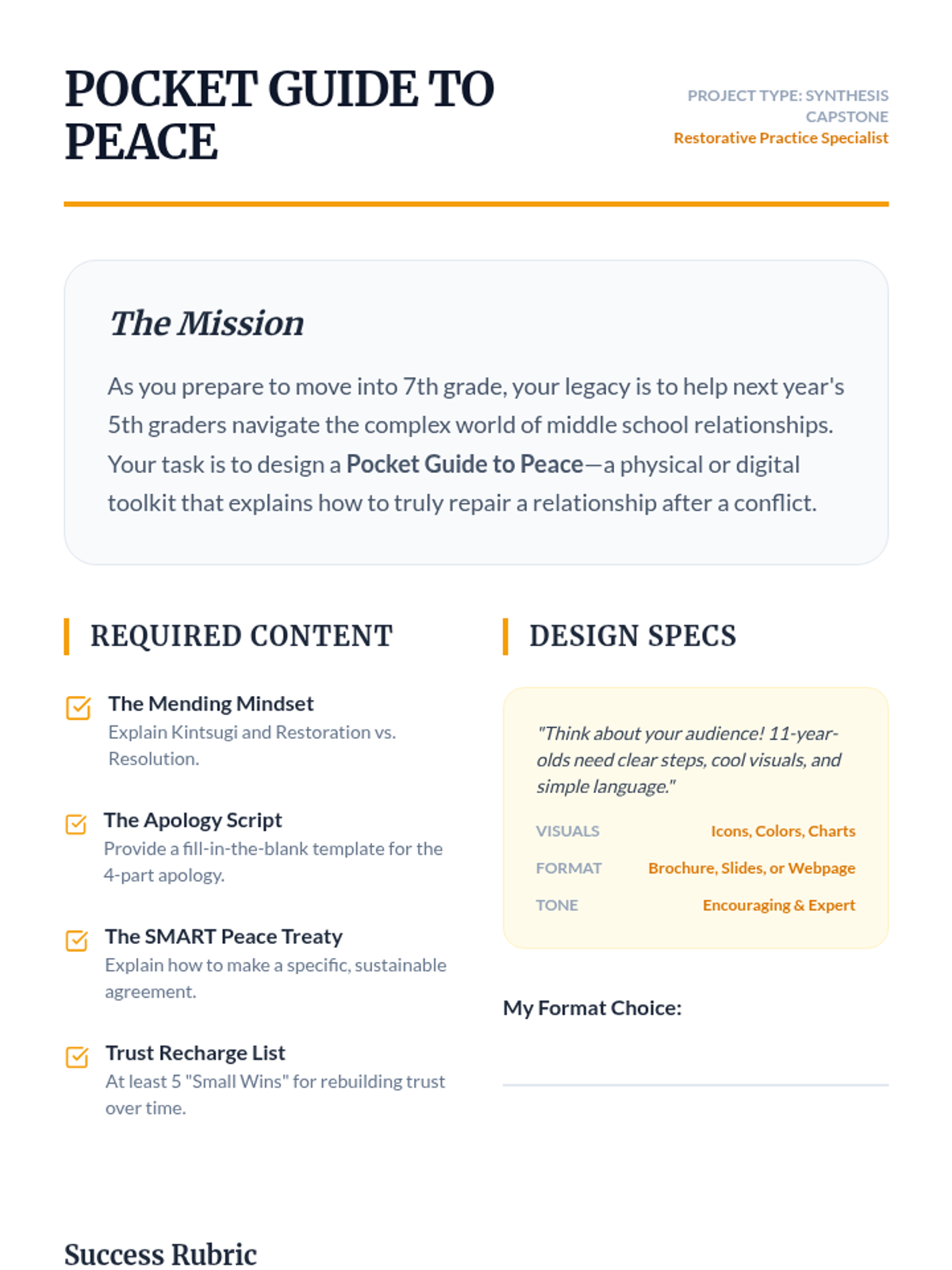
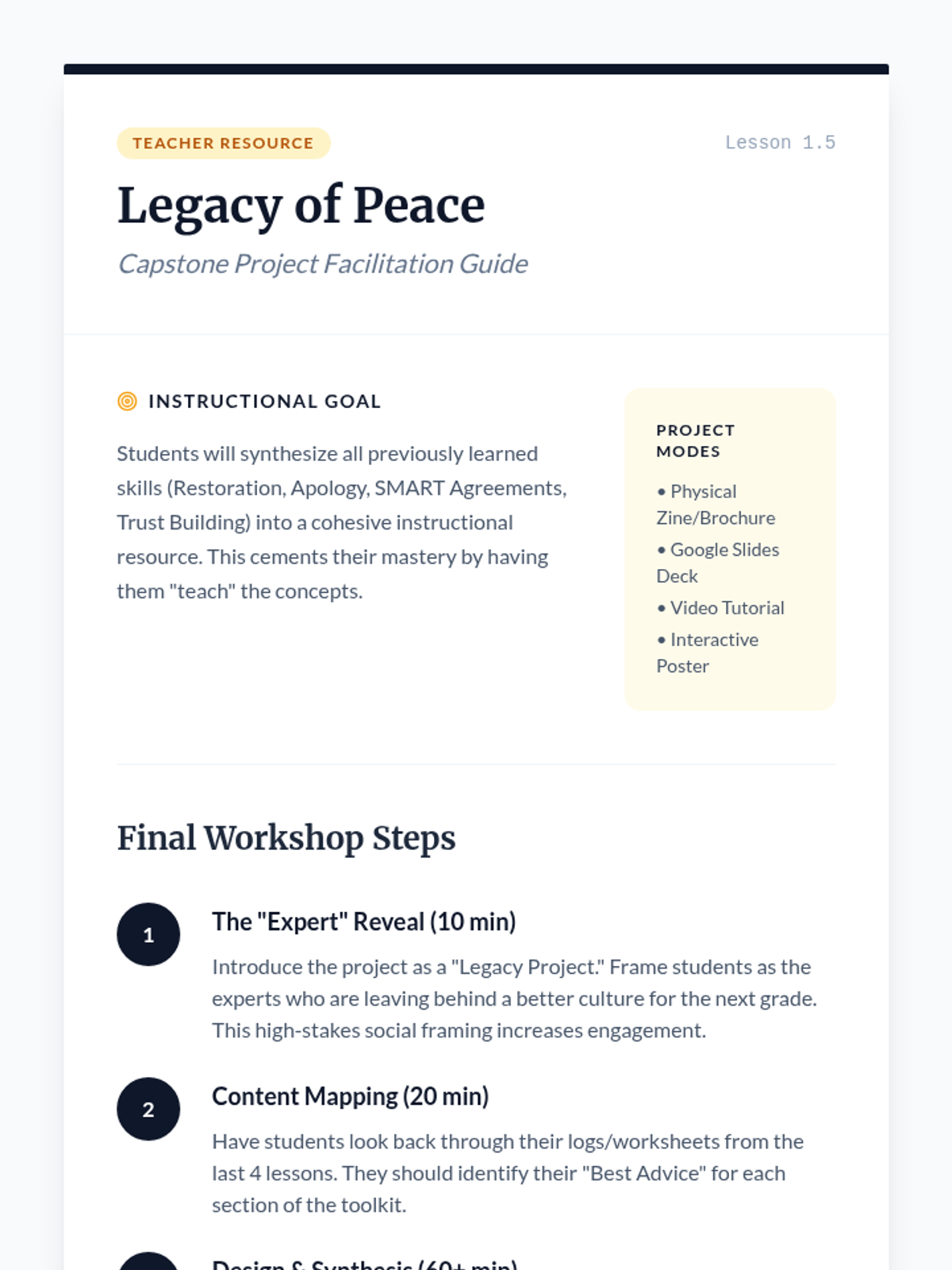
A capstone project where students synthesize their learning to create a 'Pocket Guide to Peace' for younger students.
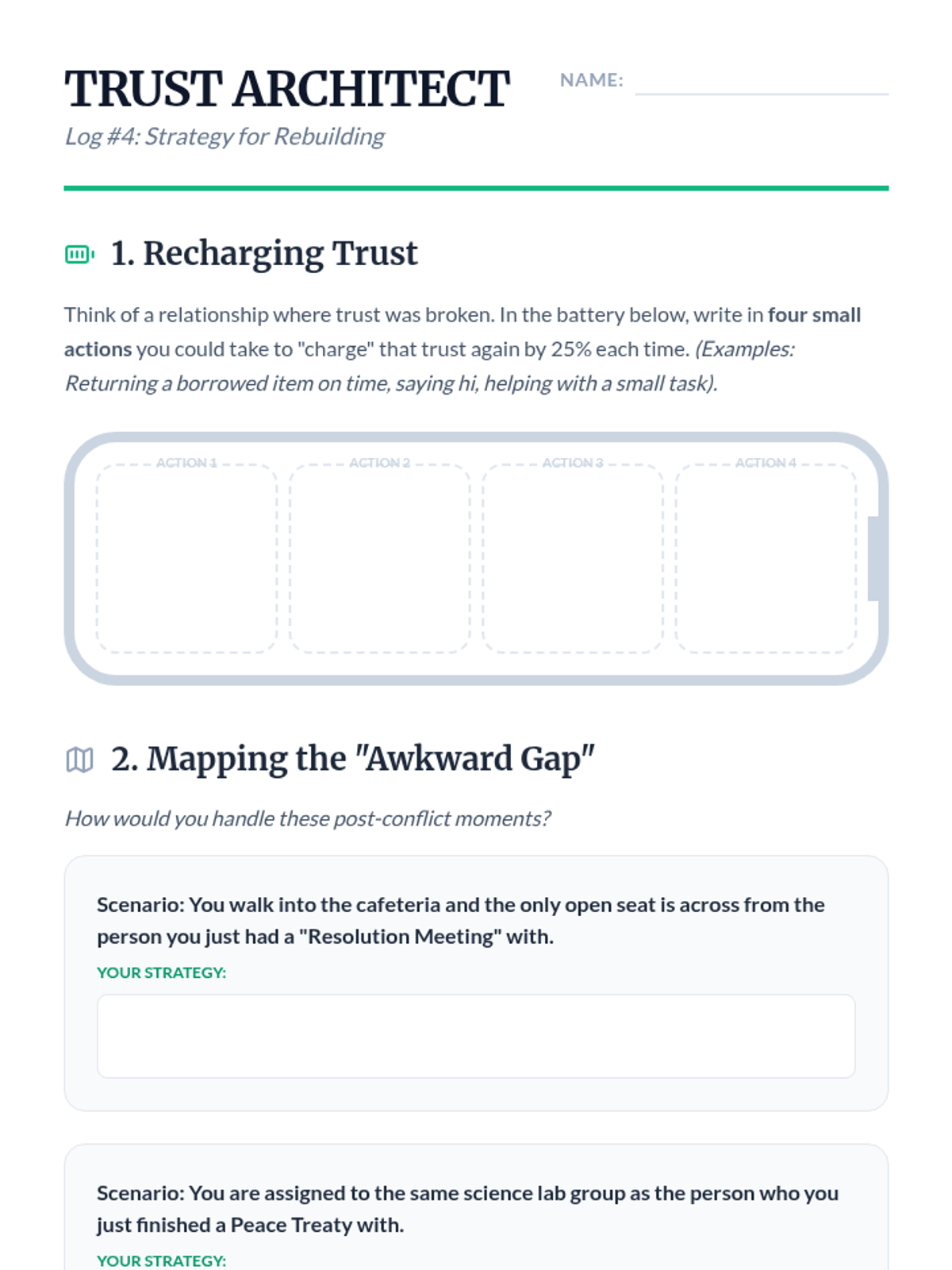
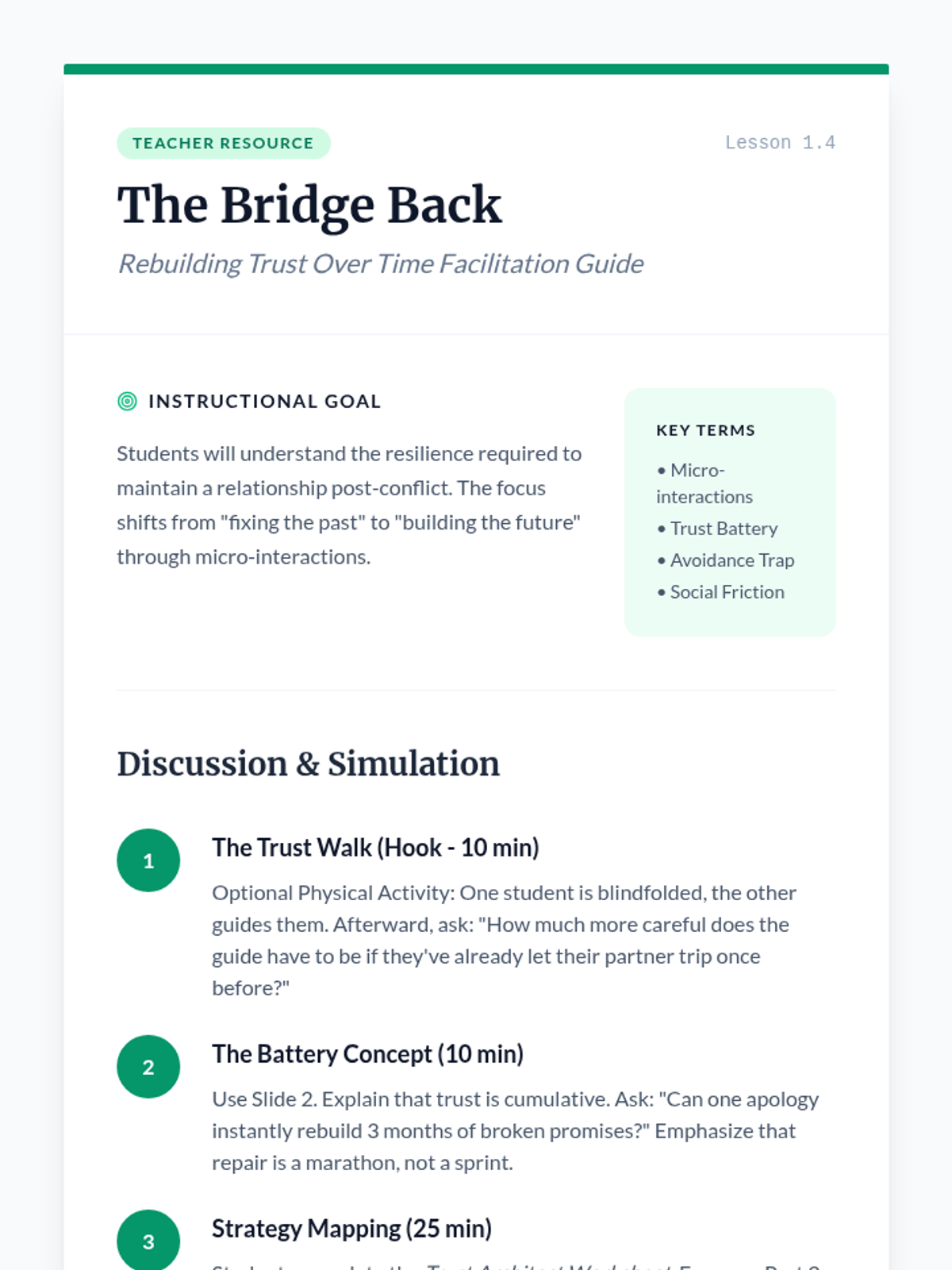
Explores the slow process of rebuilding trust after a conflict, focusing on small, consistent actions and the courage required to be vulnerable again.
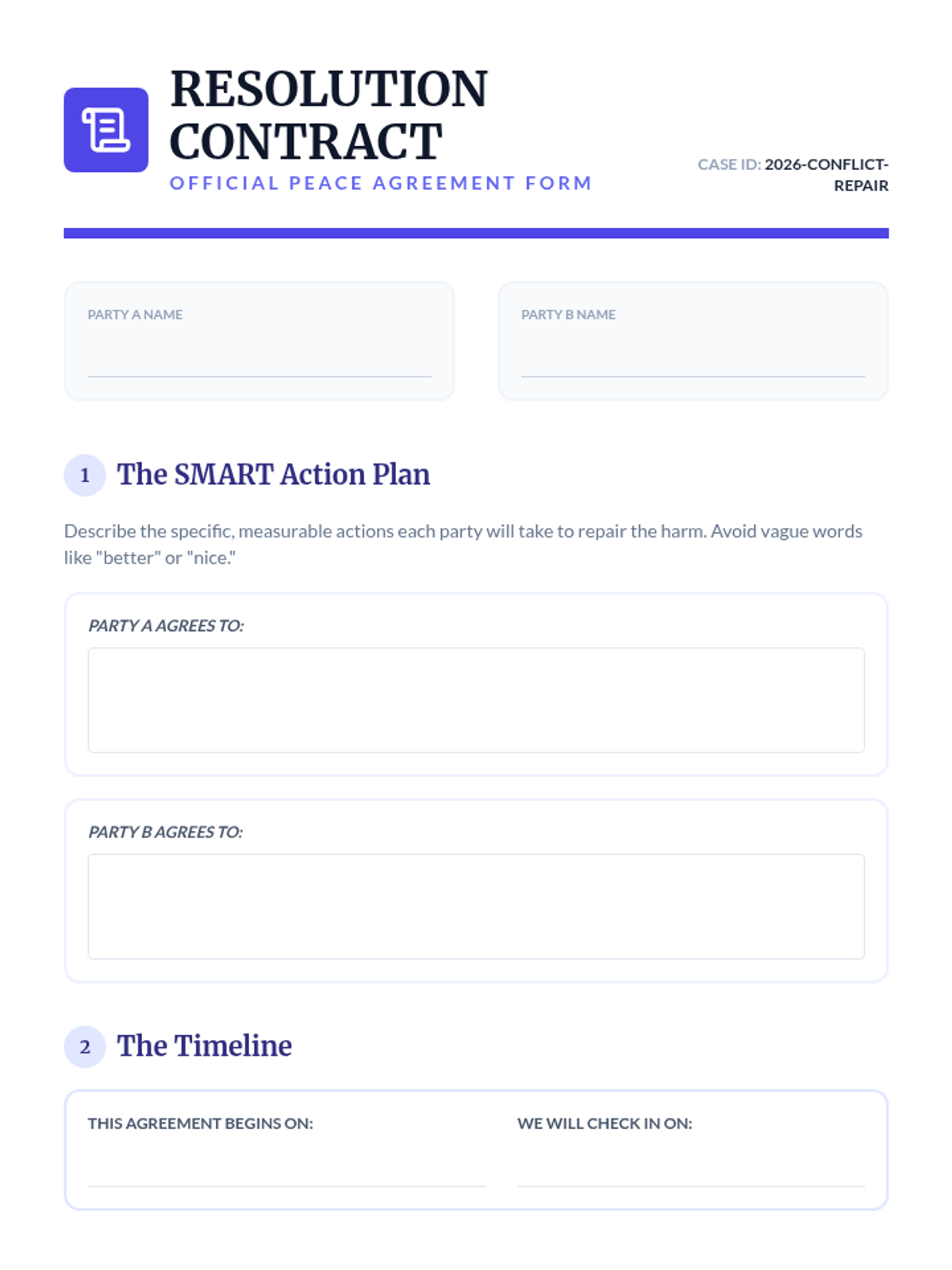
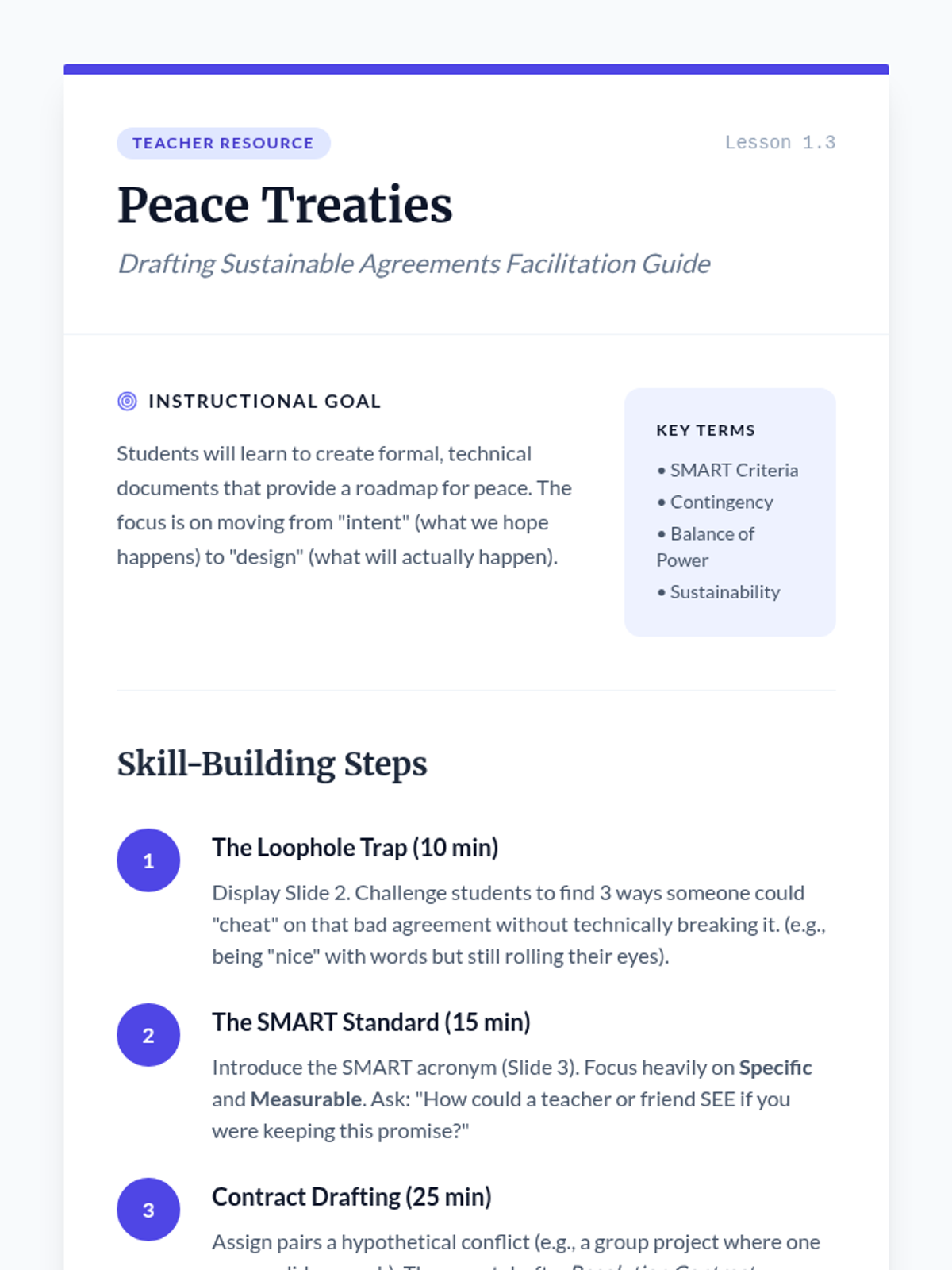
Focuses on technical skills for creating 'fight-proof' agreements that are specific, measurable, and include contingency plans for future friction.
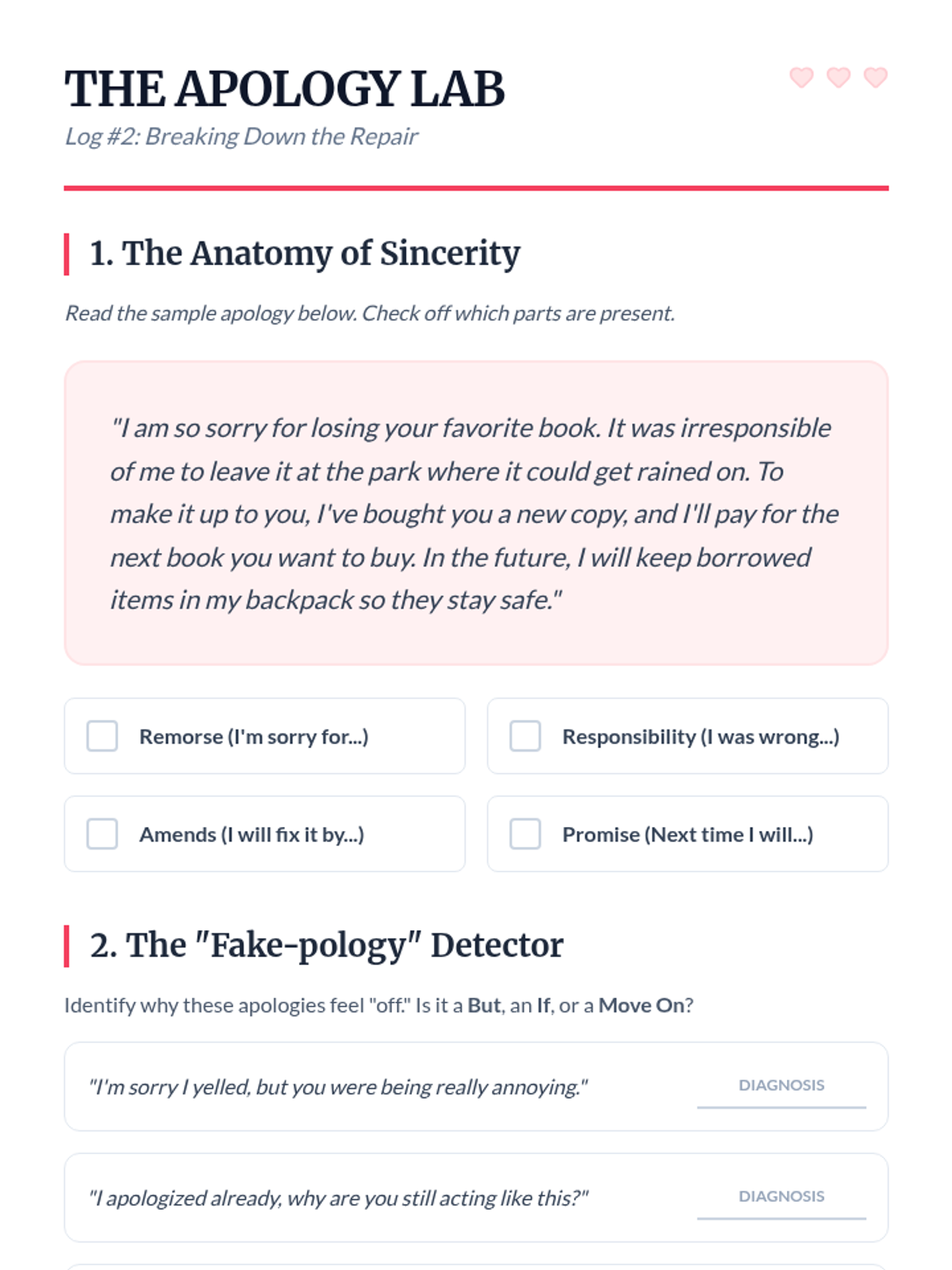
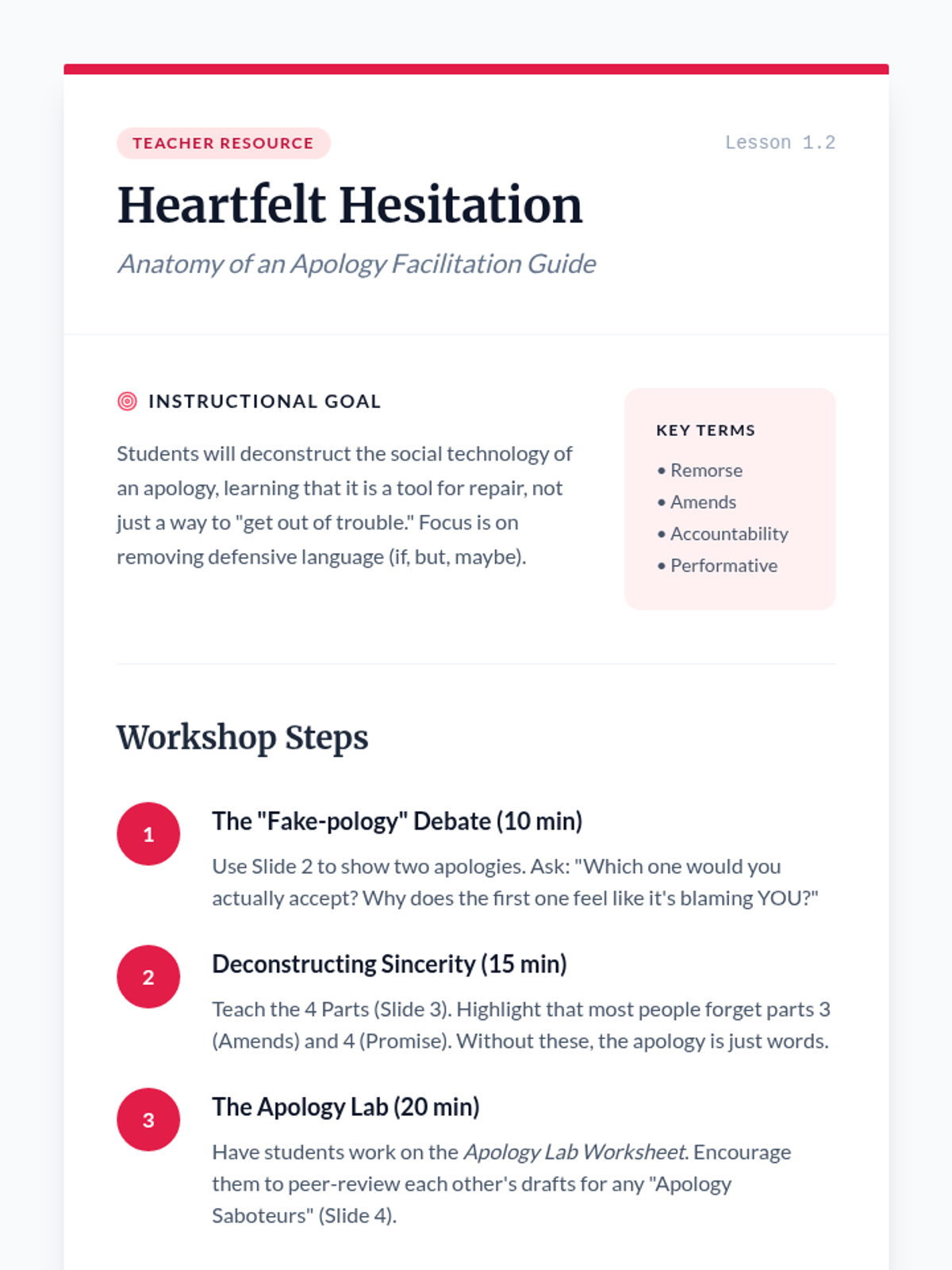
Learners break down the four essential components of a meaningful apology and practice distinguishing between performative and sincere expressions of remorse.
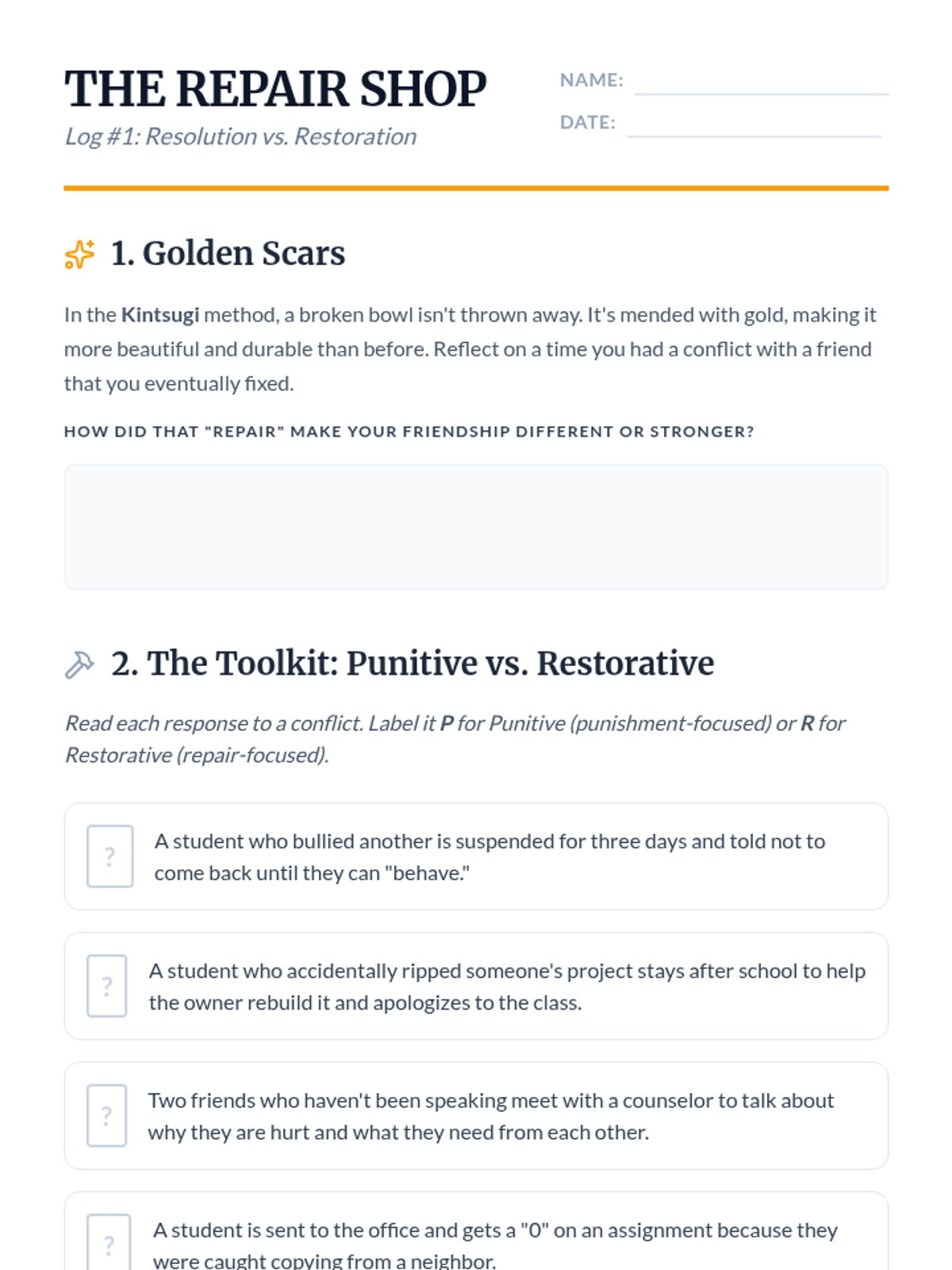
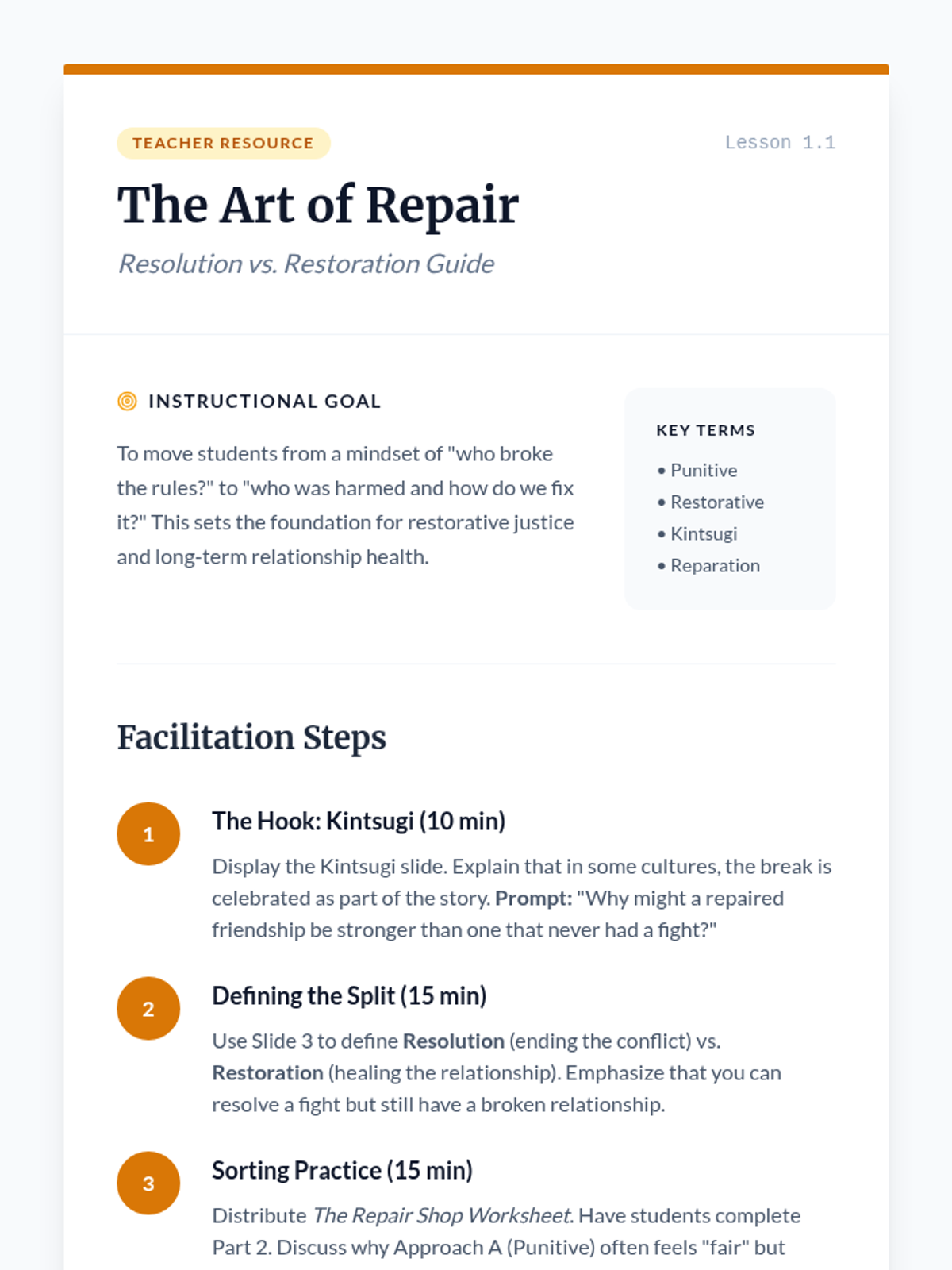
Students contrast punitive and restorative approaches to conflict, using the concept of Kintsugi to understand how repair can make a relationship stronger.
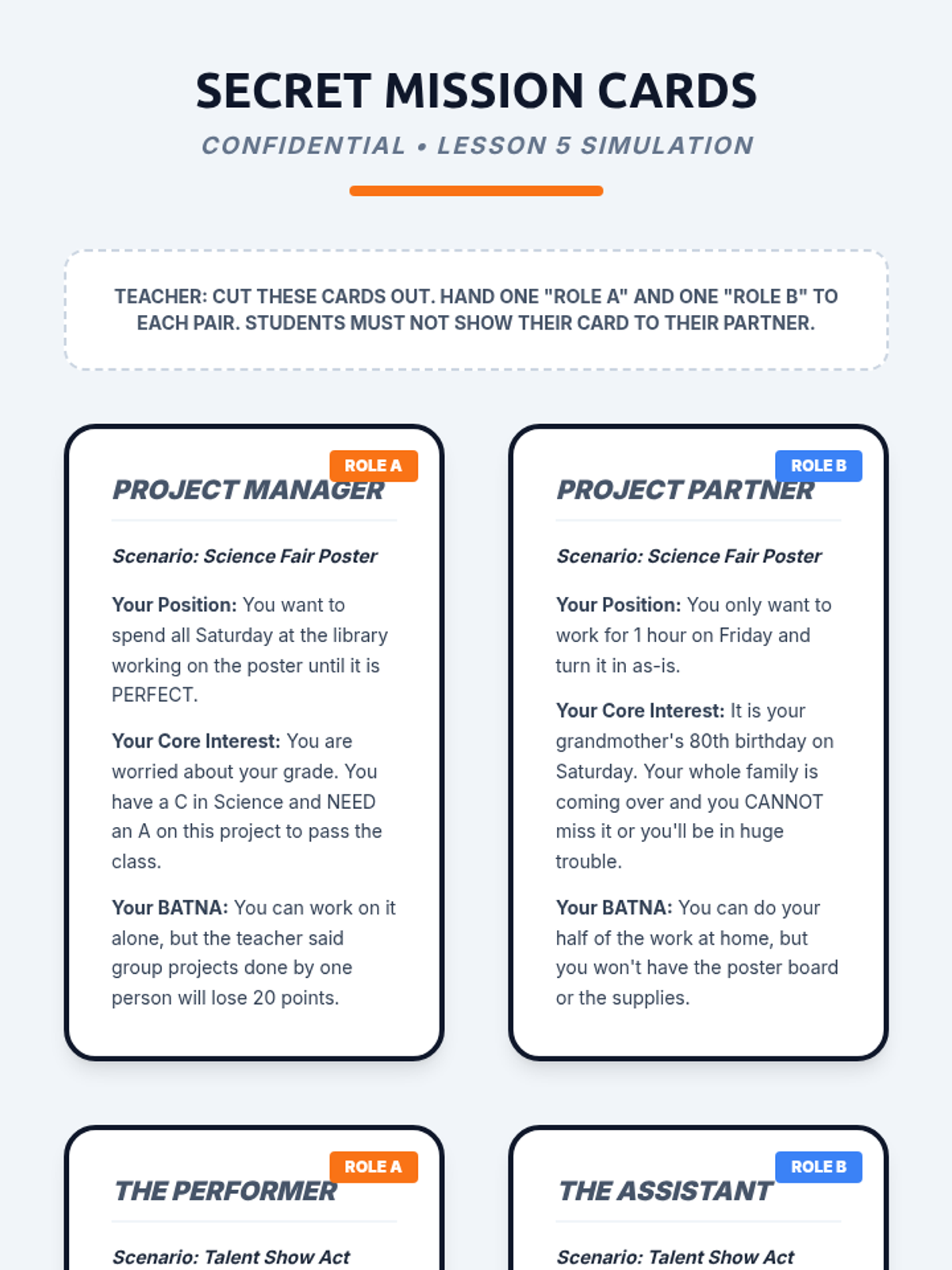
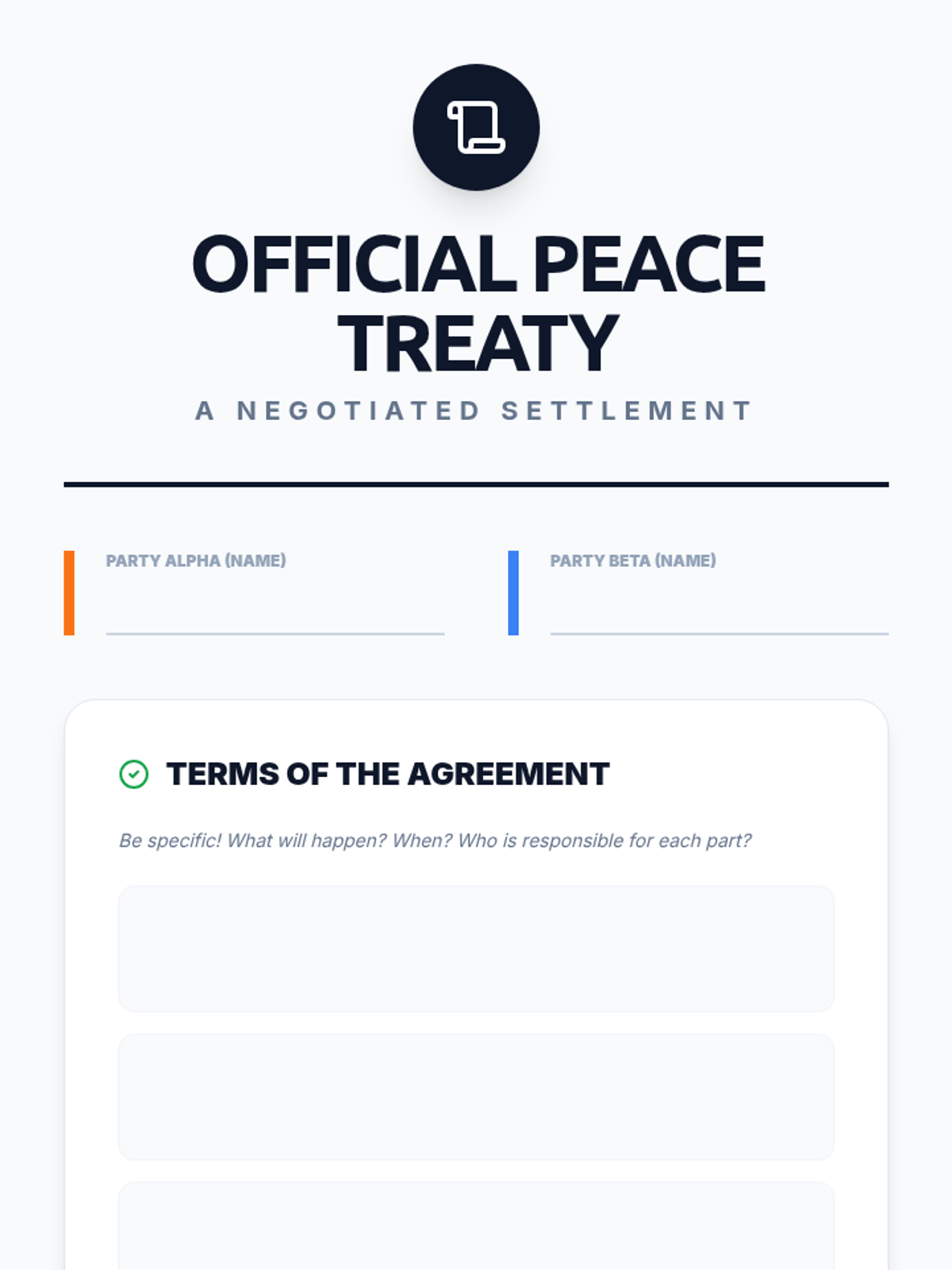
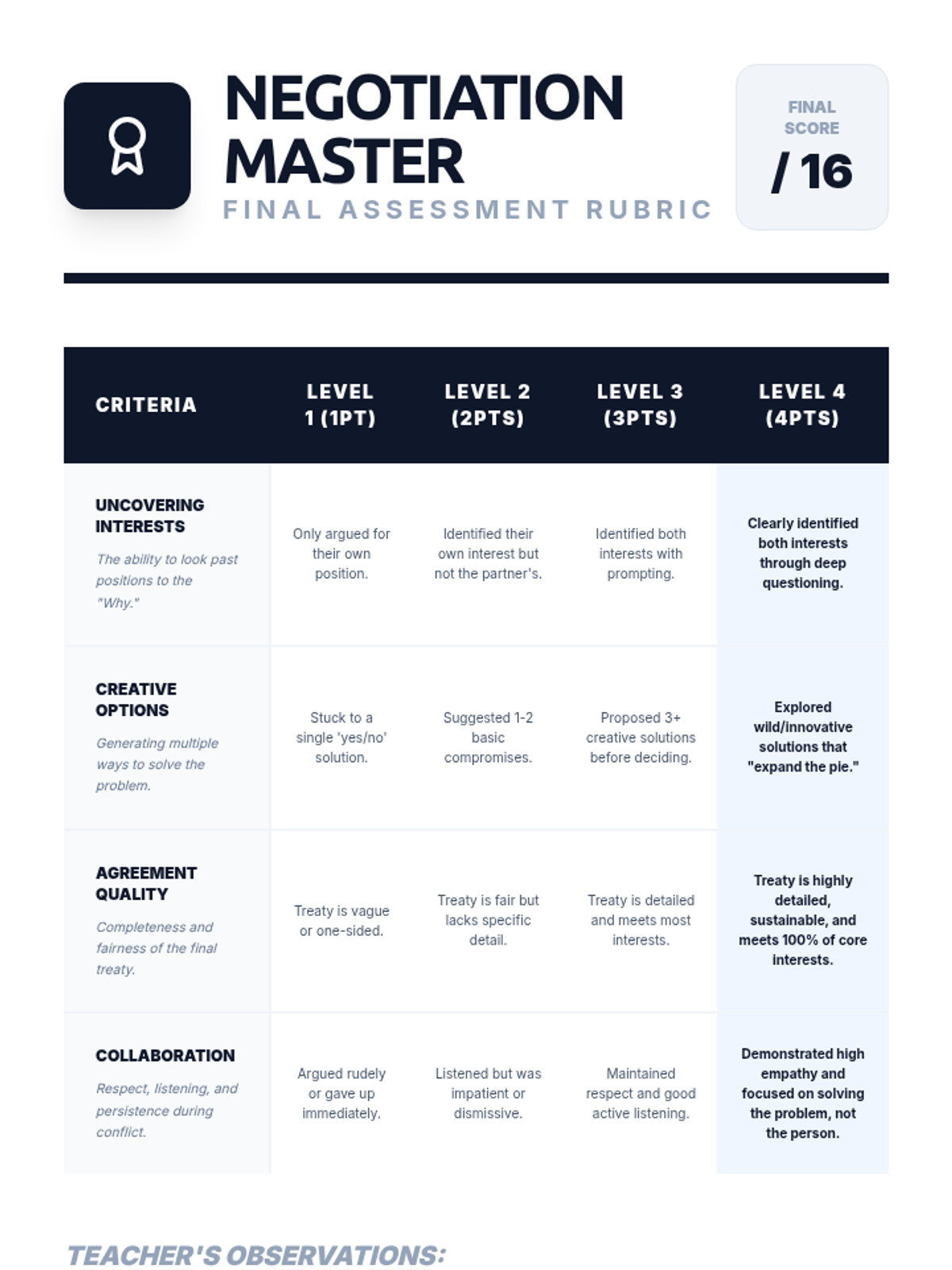
A final simulation where students apply all learned skills to negotiate a complex agreement using secret mission cards.
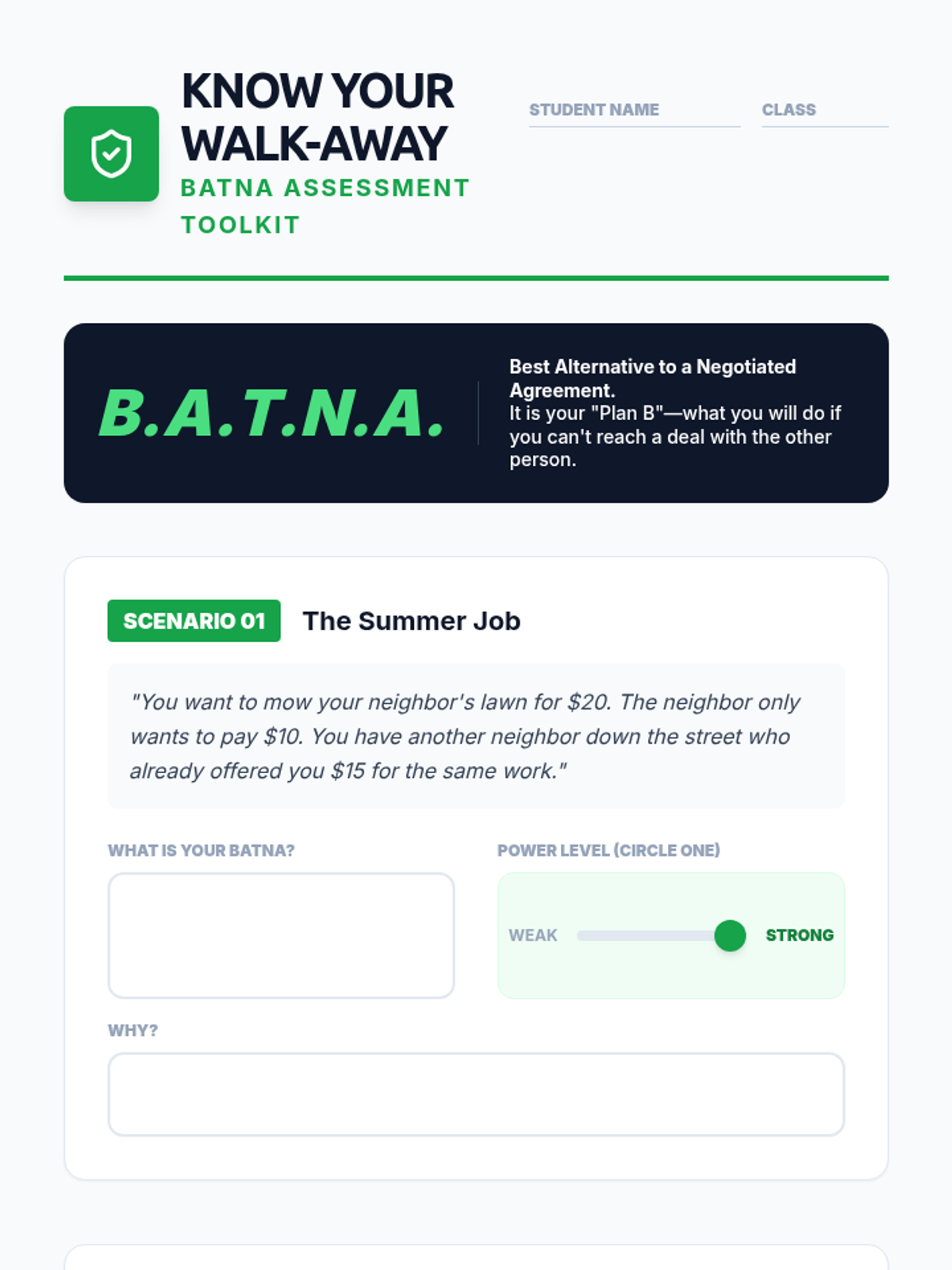
Introduces the concept of BATNA (Best Alternative to a Negotiated Agreement) to help students understand their power and walk-away points.
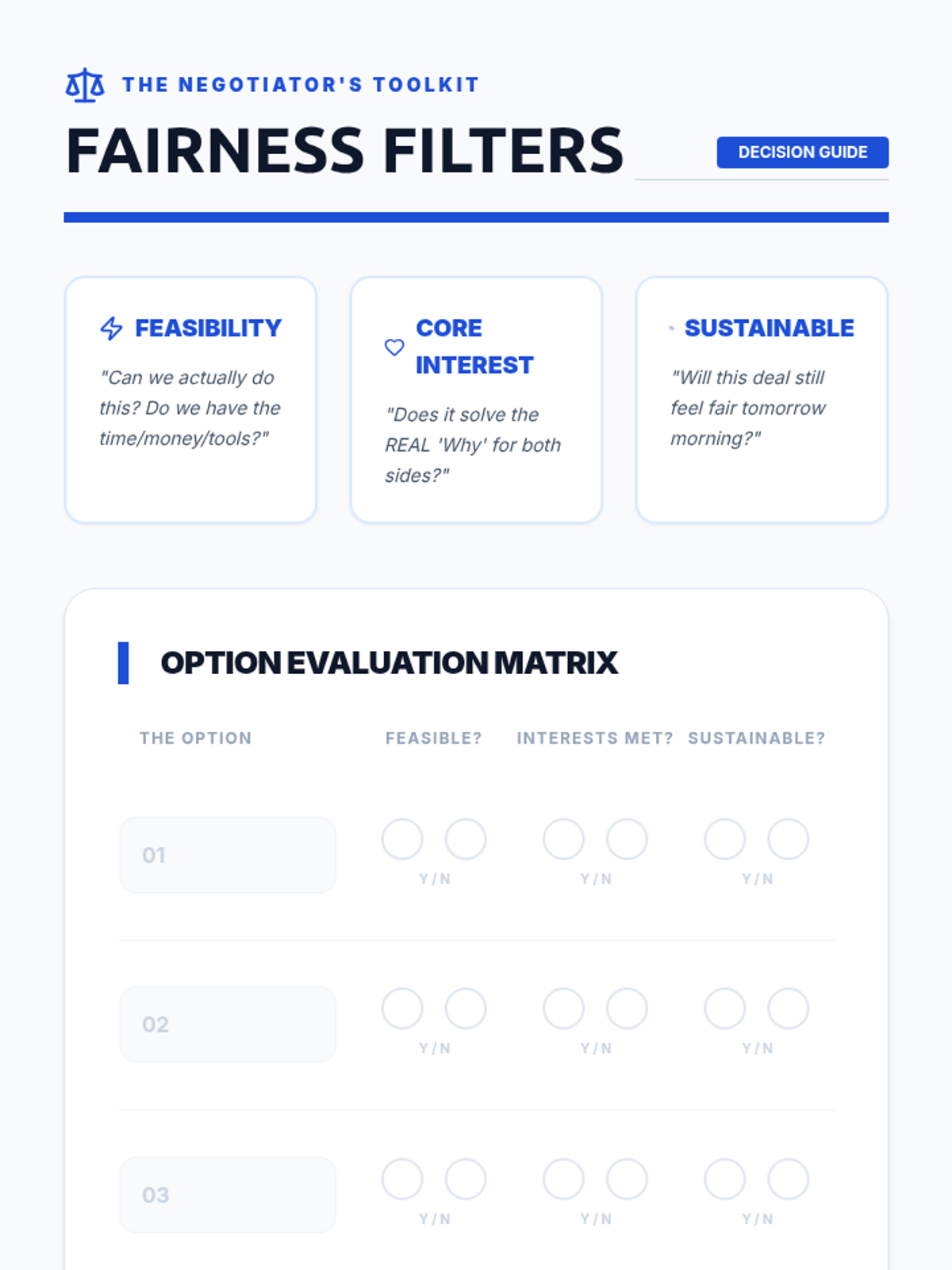
Explores different concepts of fairness (equality, equity, need) and how to evaluate potential solutions.
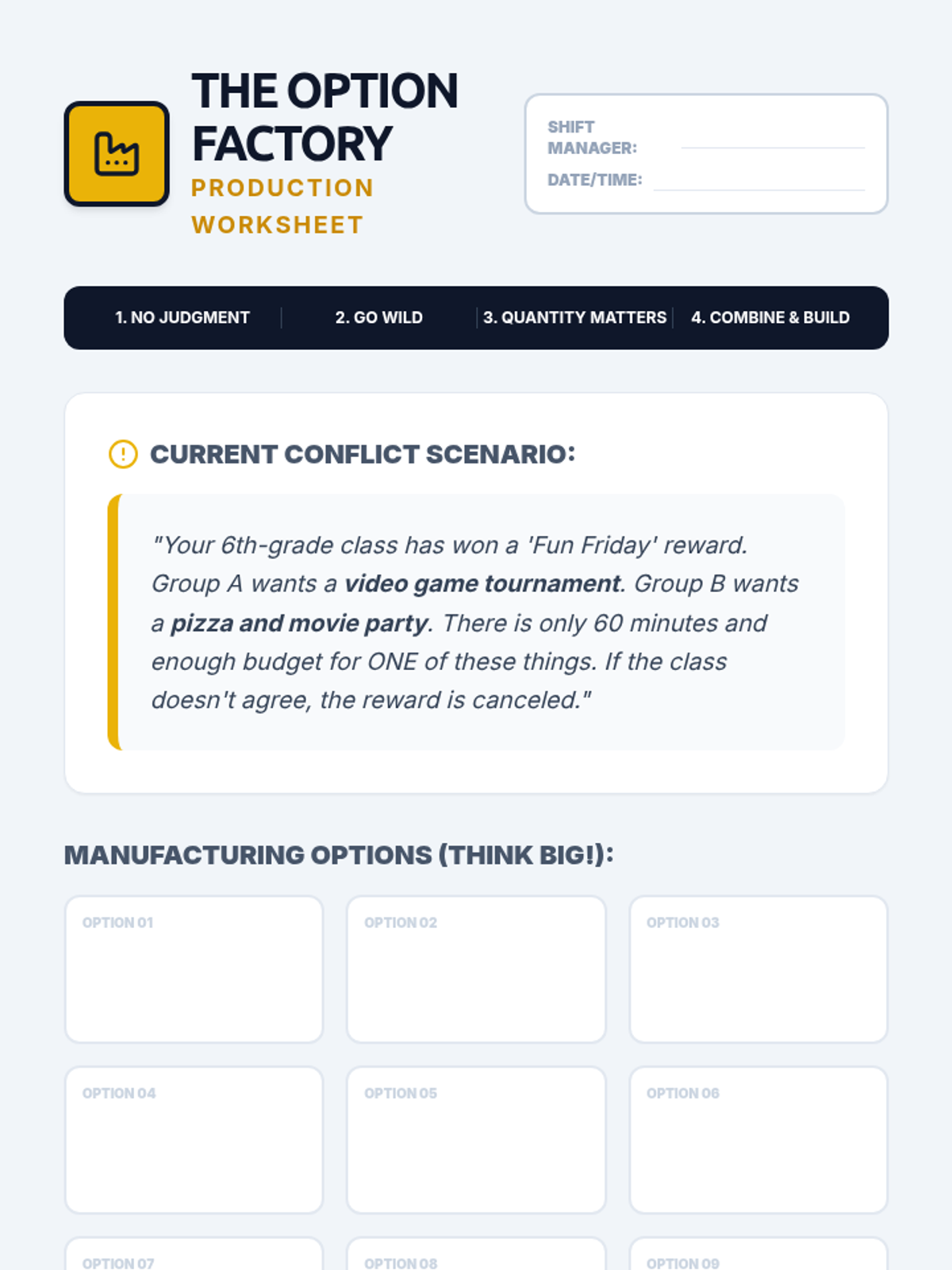
Focuses on the creative phase of negotiation, teaching students how to generate a wide range of options without judgment.
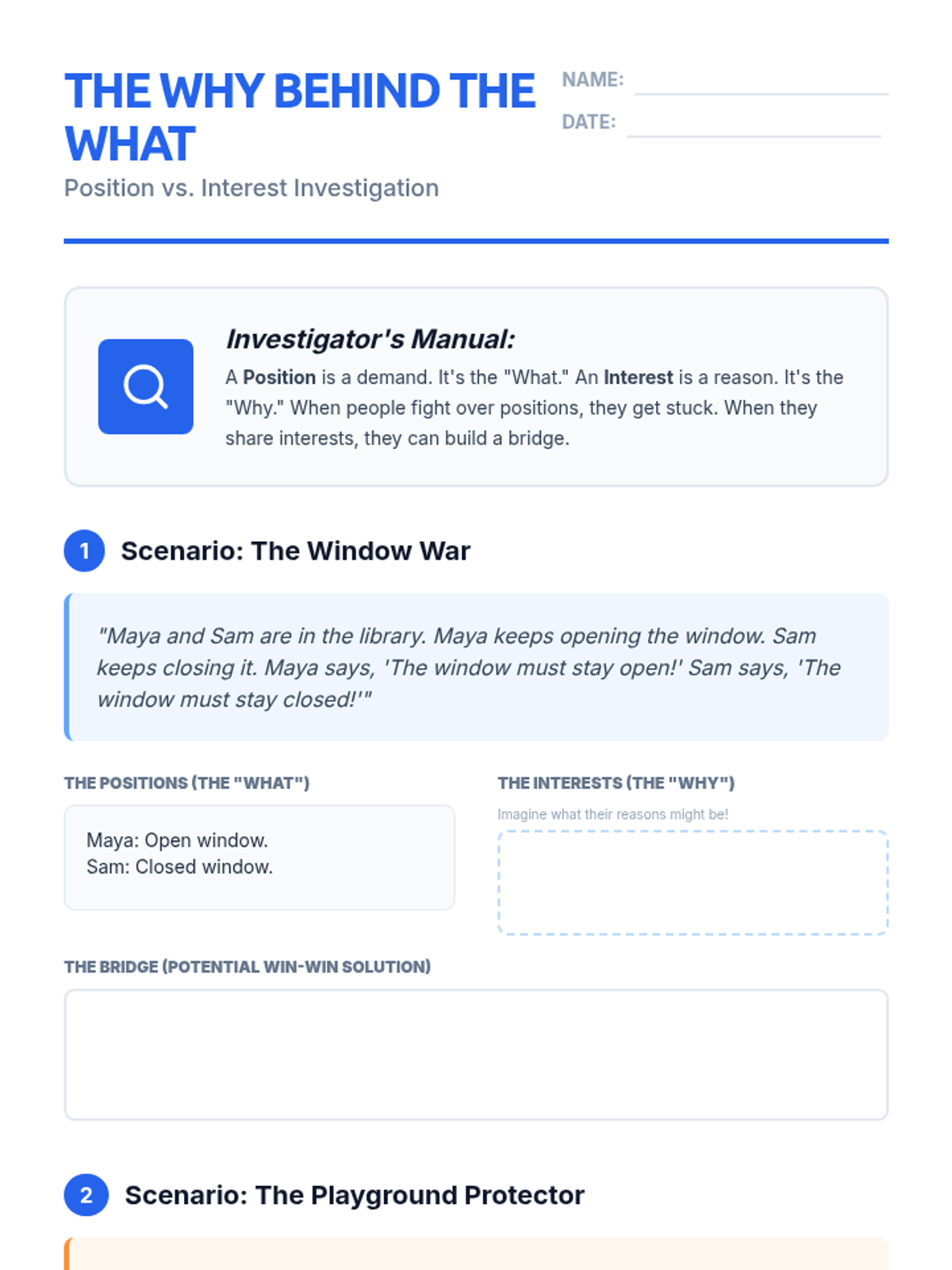
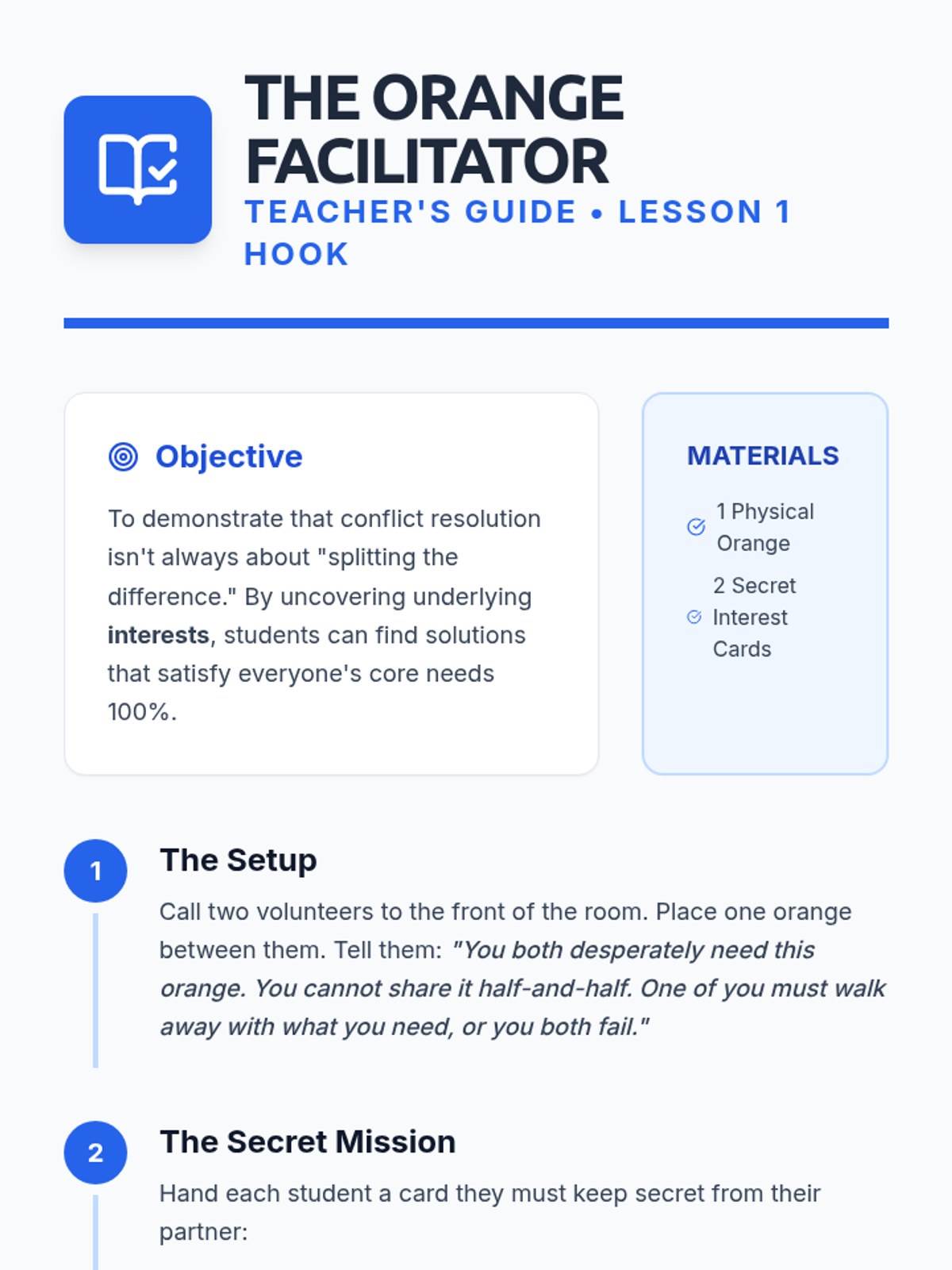
Students learn to distinguish between rigid positions and underlying interests using the 'Orange Story' framework.
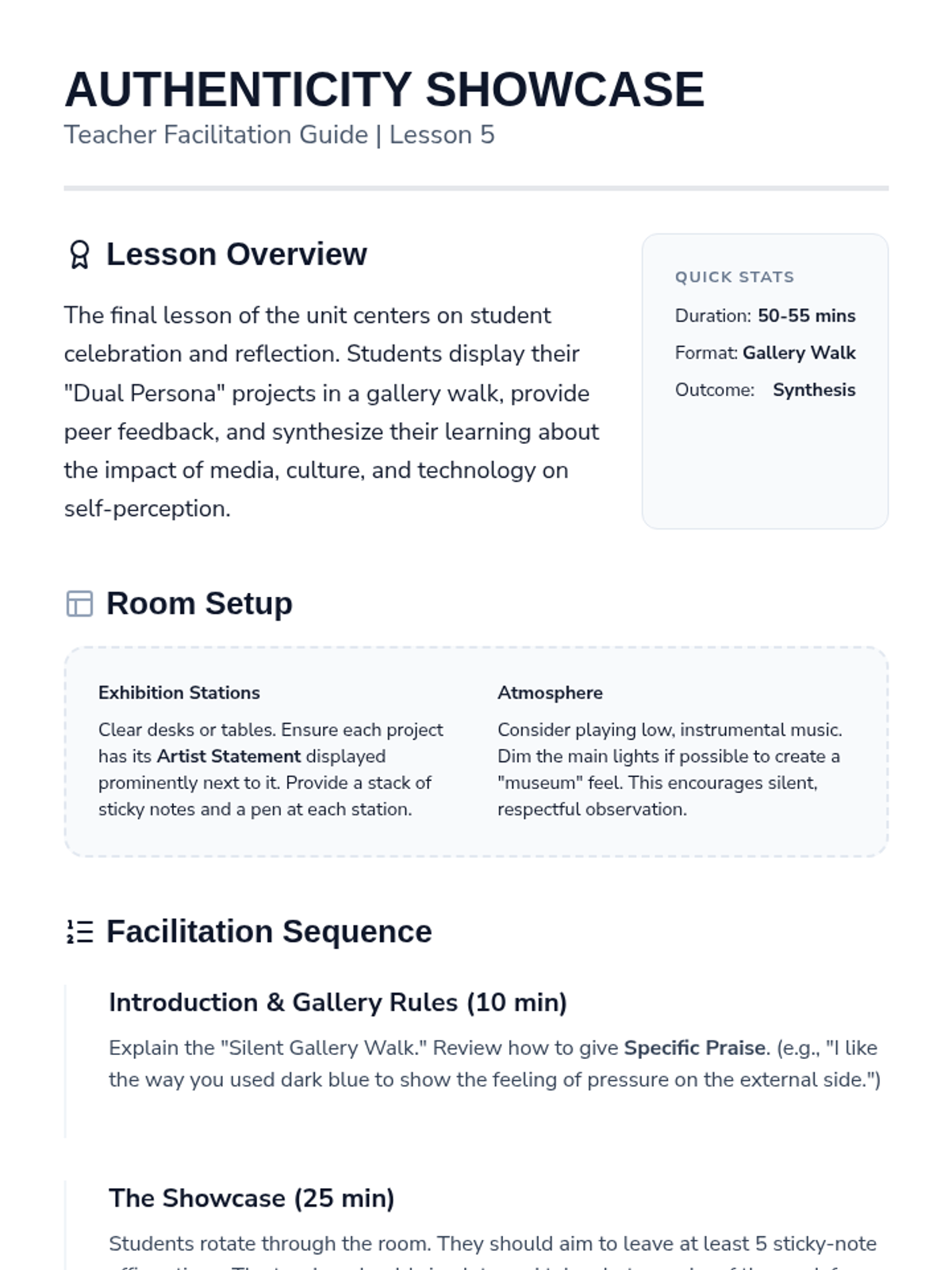
Students present their dual identity projects in a gallery walk and reflect on maintaining authenticity.
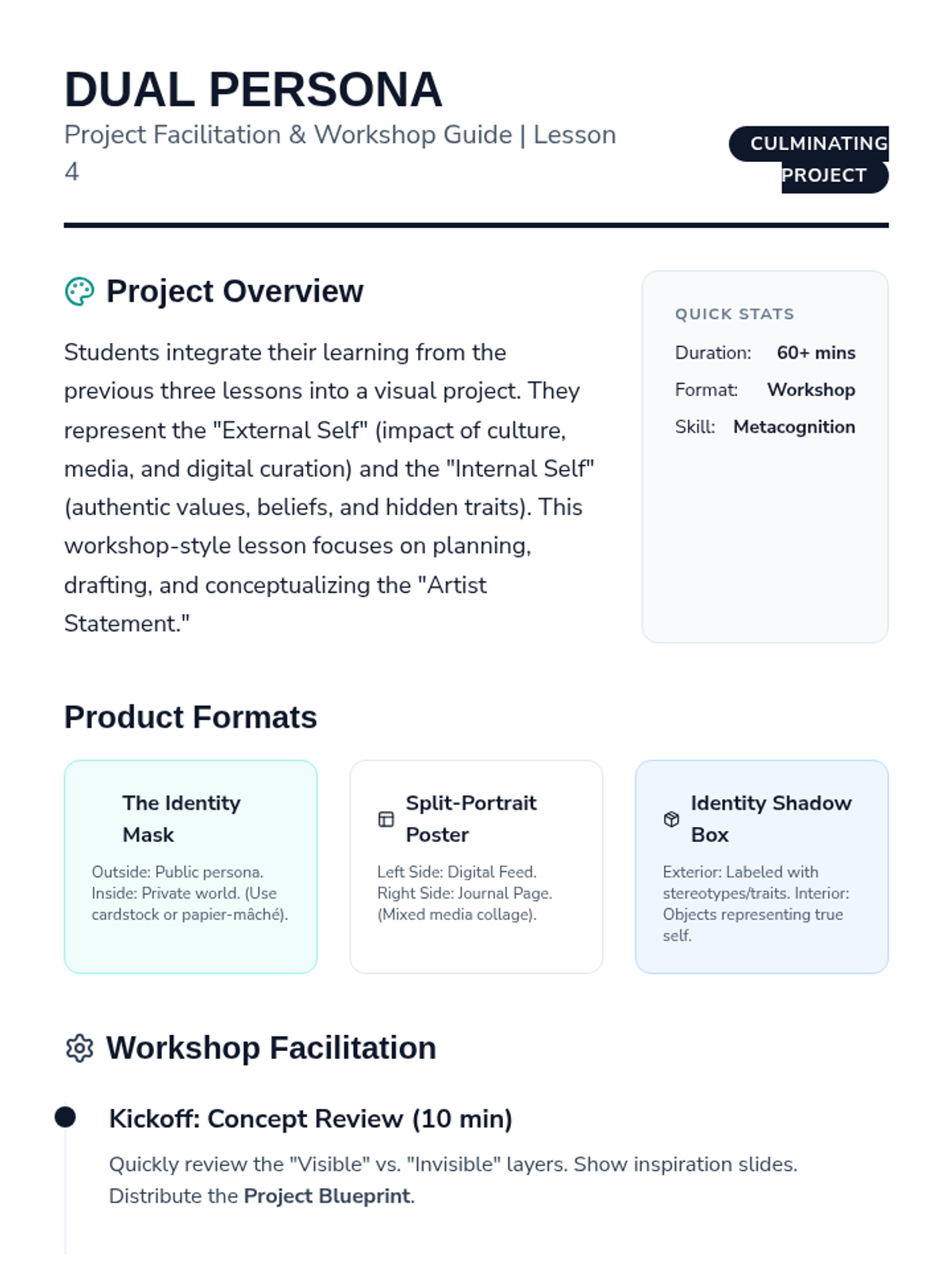
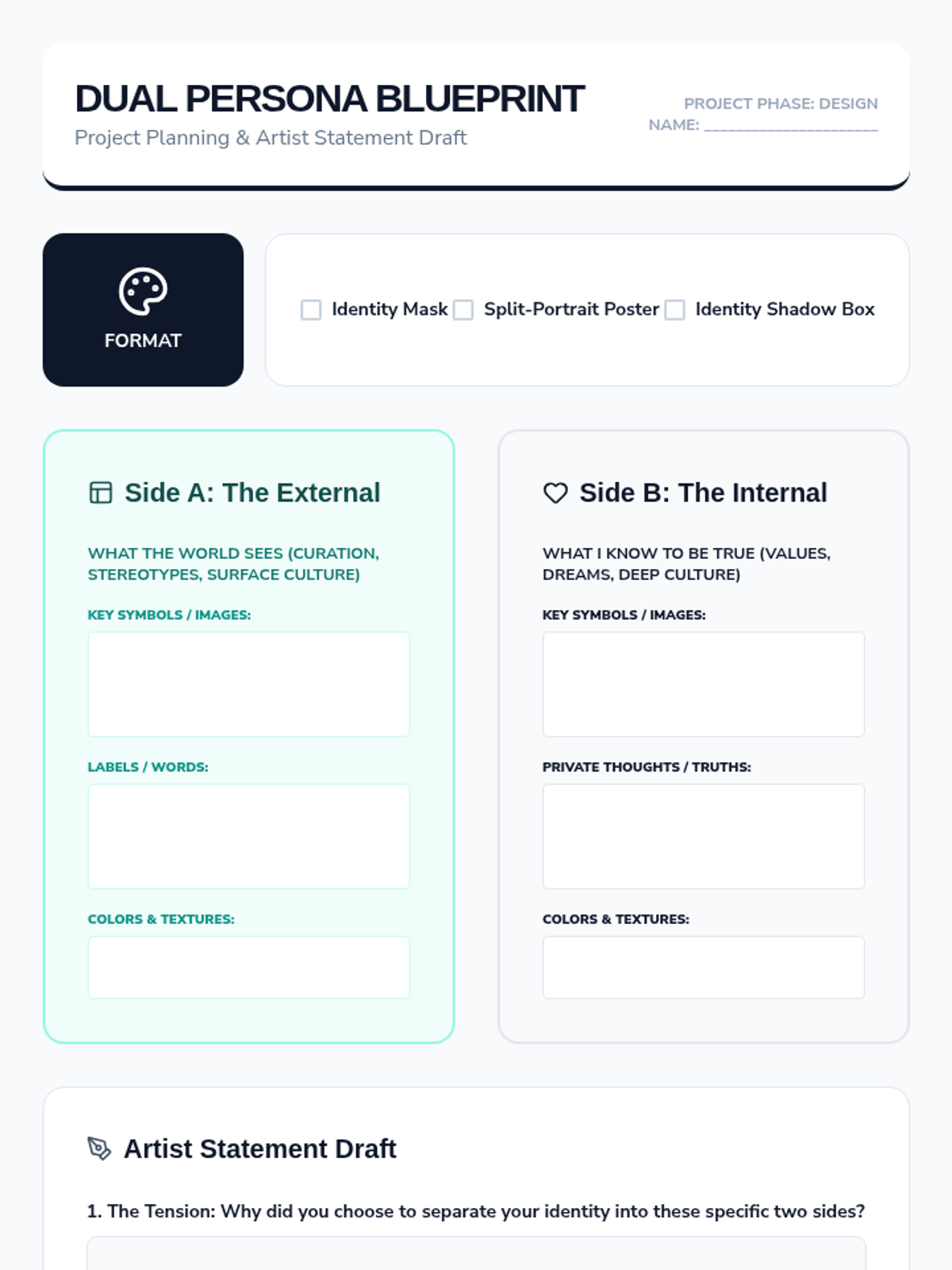
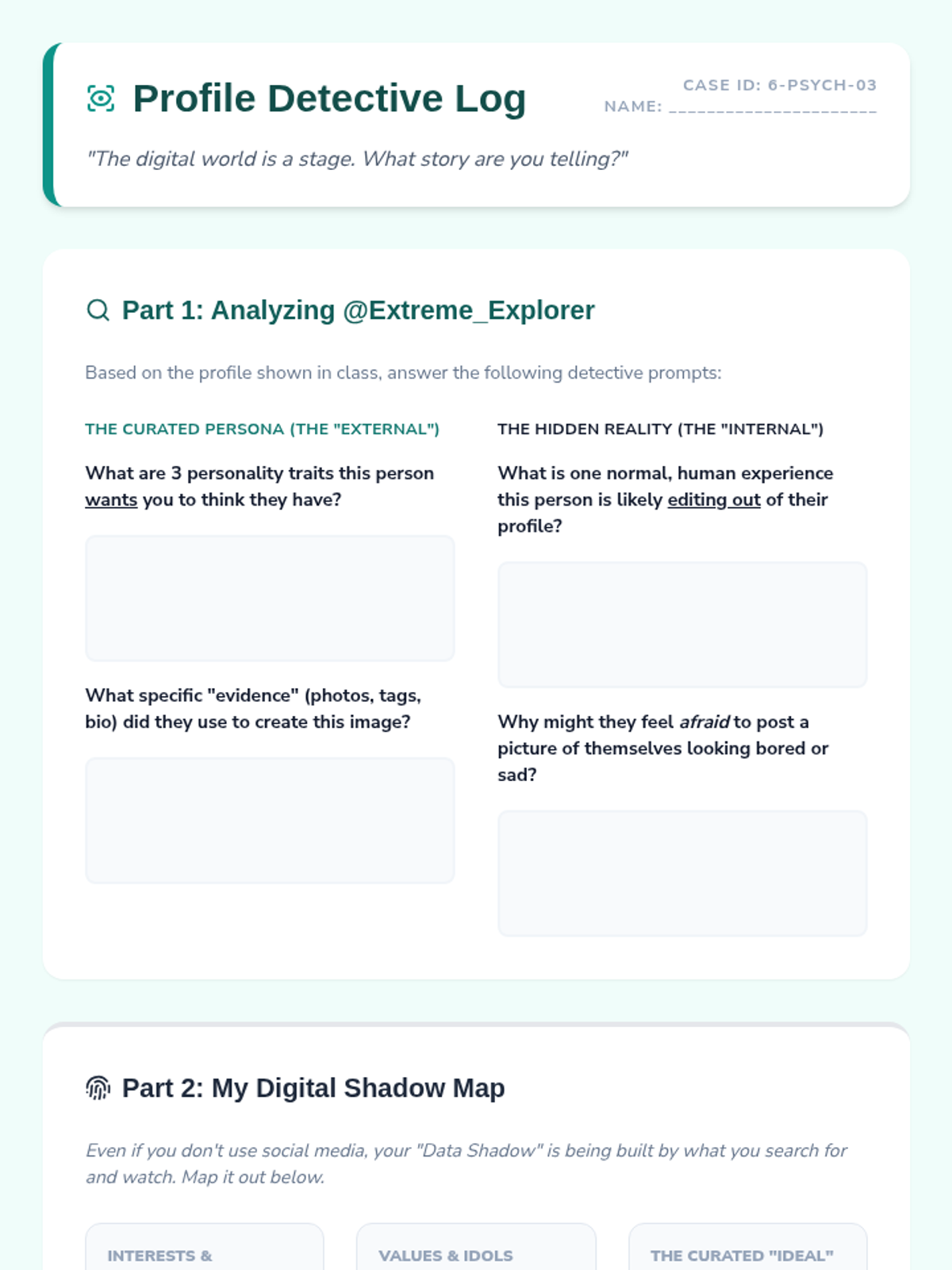
Students begin their culminating project, a visual representation comparing their external digital persona with their internal authentic self.
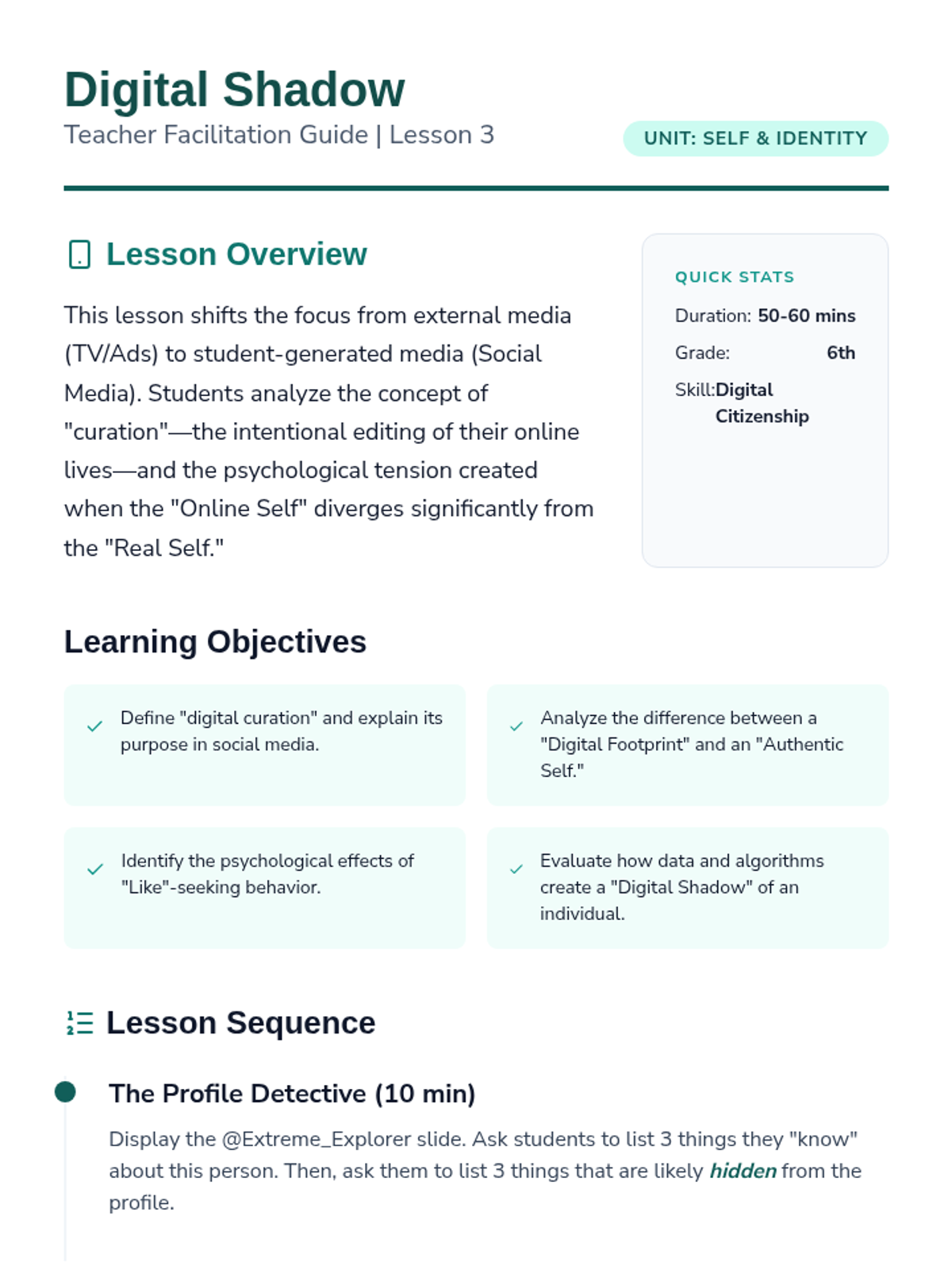
An exploration of the 'online self' versus the 'real self,' focusing on curation, filters, and digital footprints.
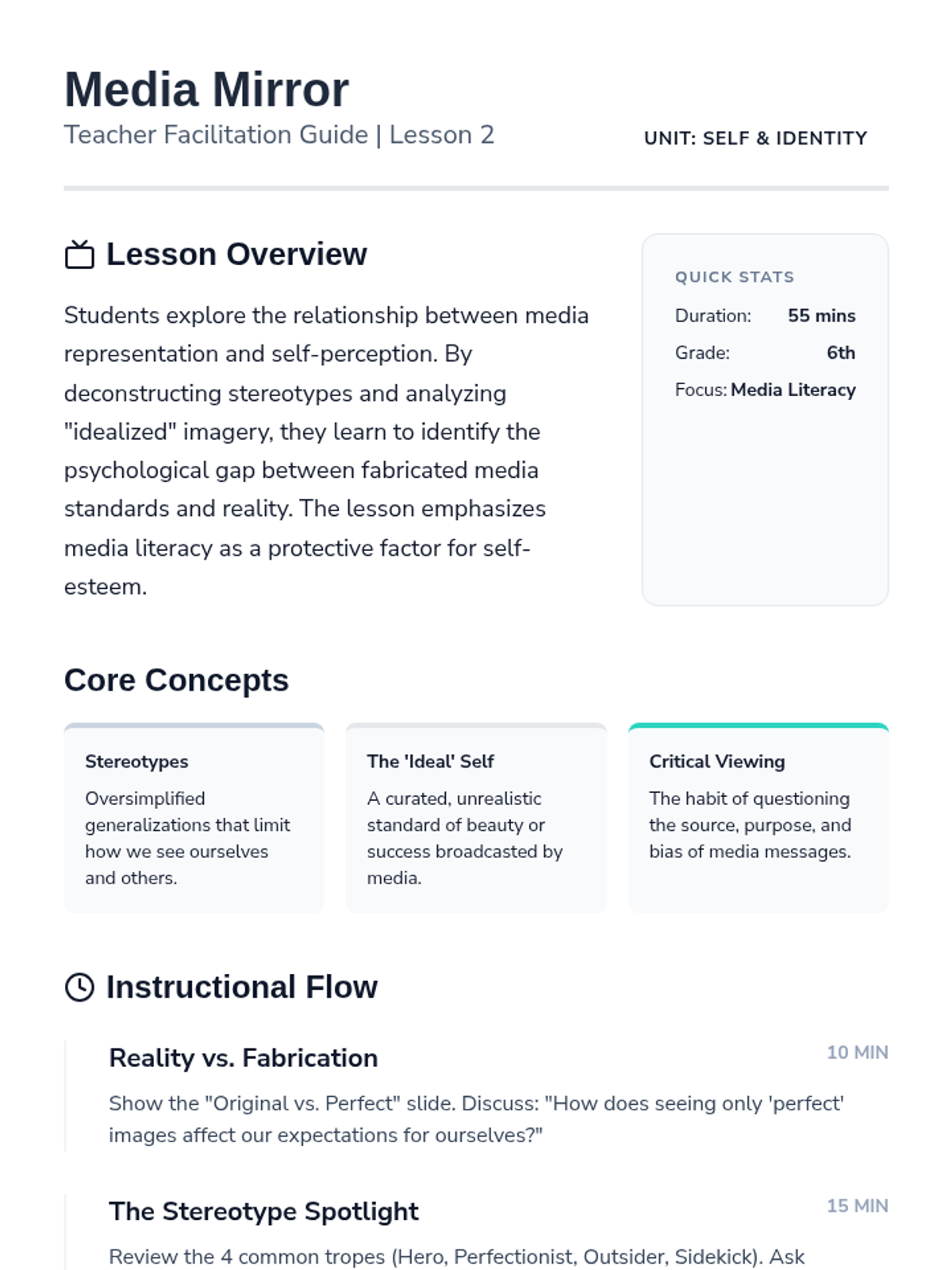
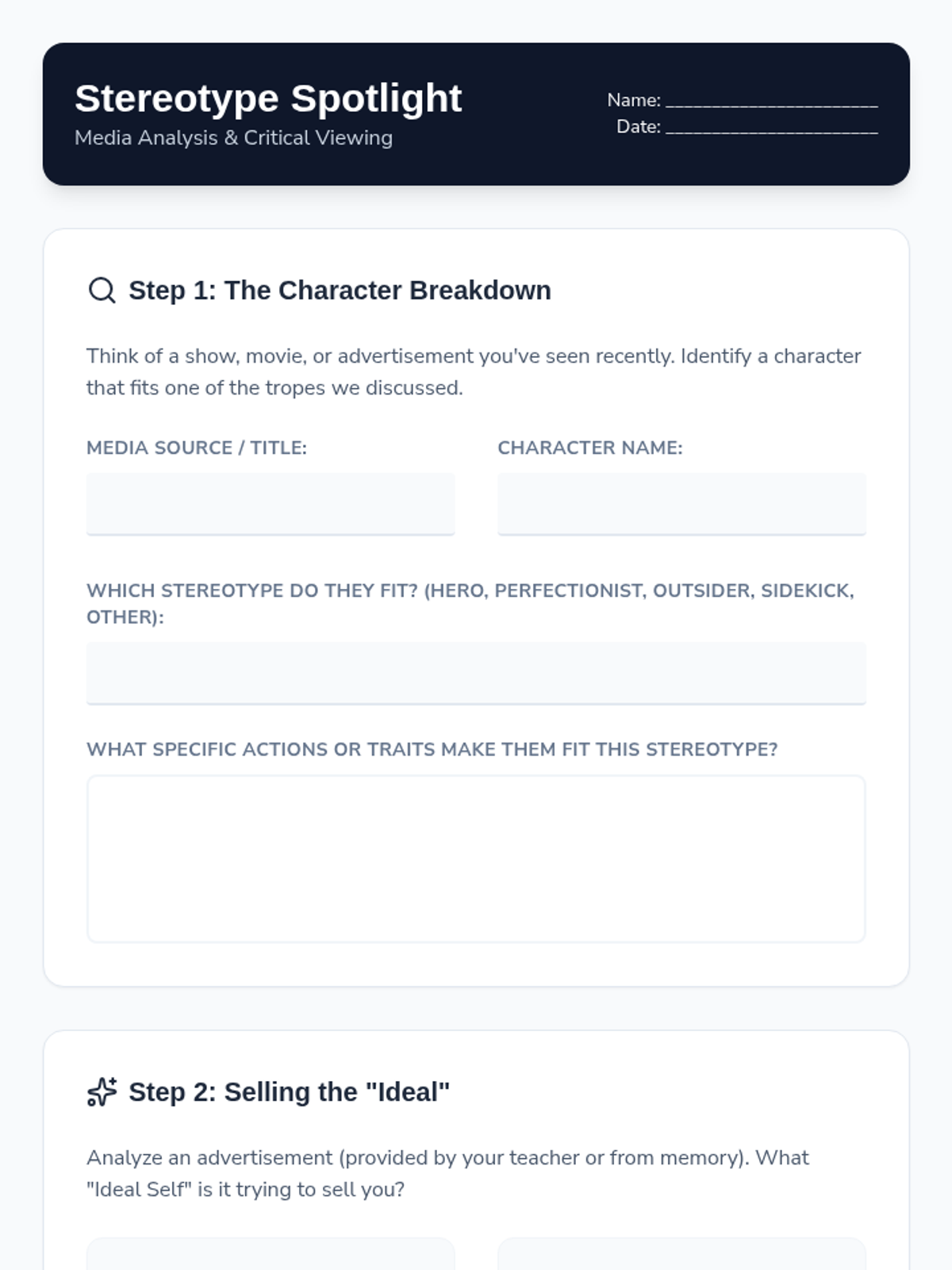
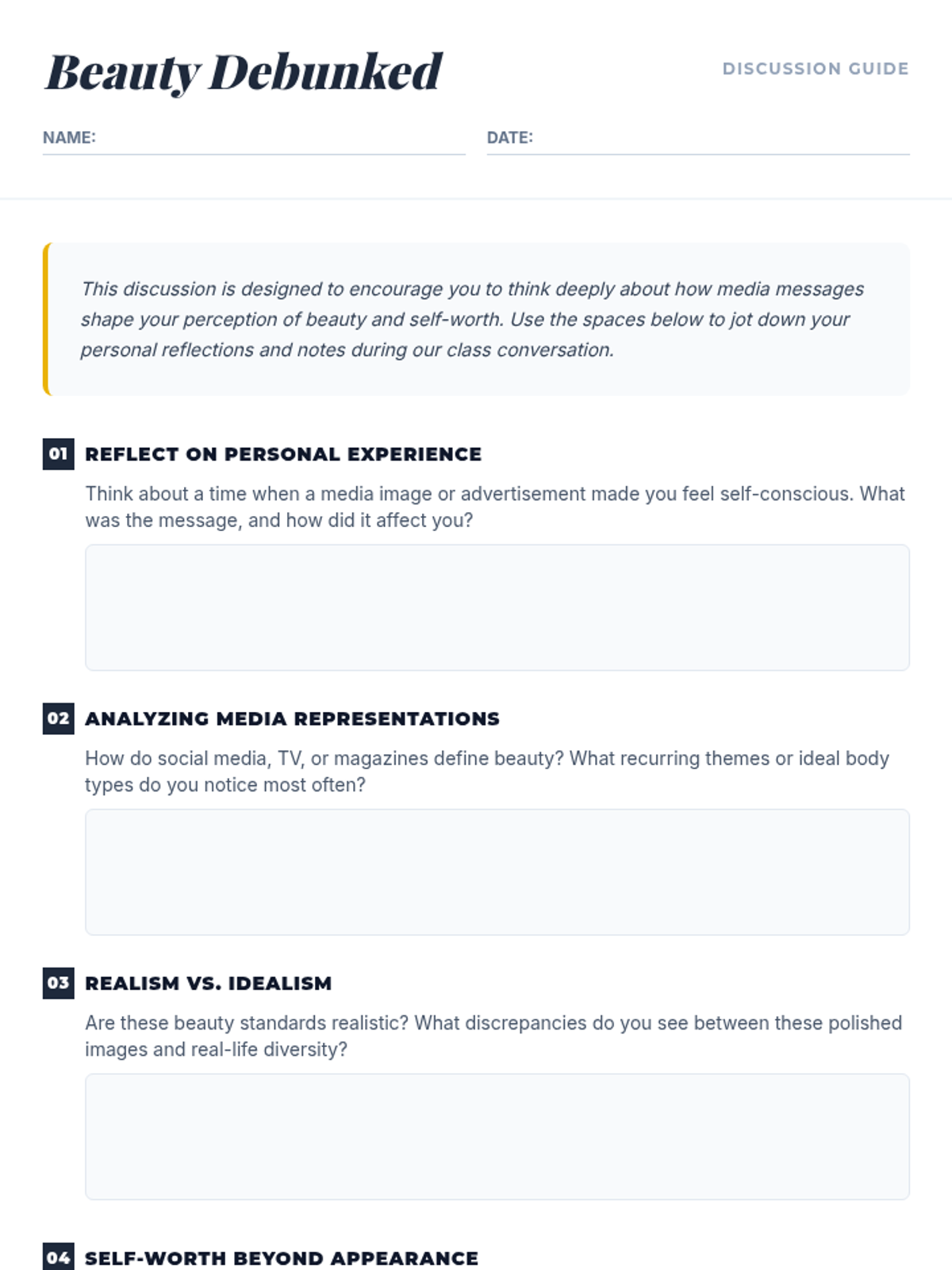
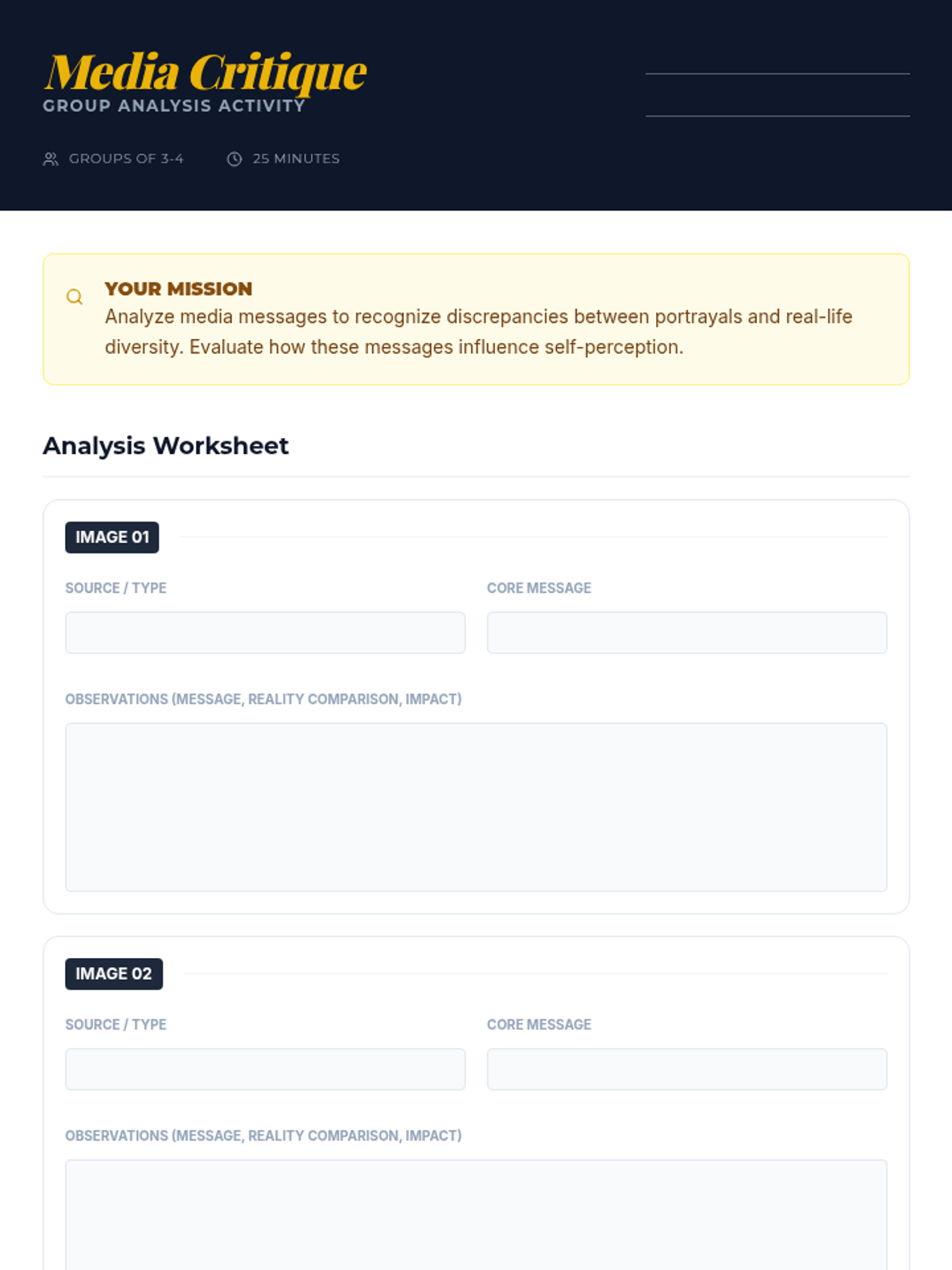
An analysis of media stereotypes and the 'ideal' images presented to young people, focusing on building media literacy to protect self-esteem.
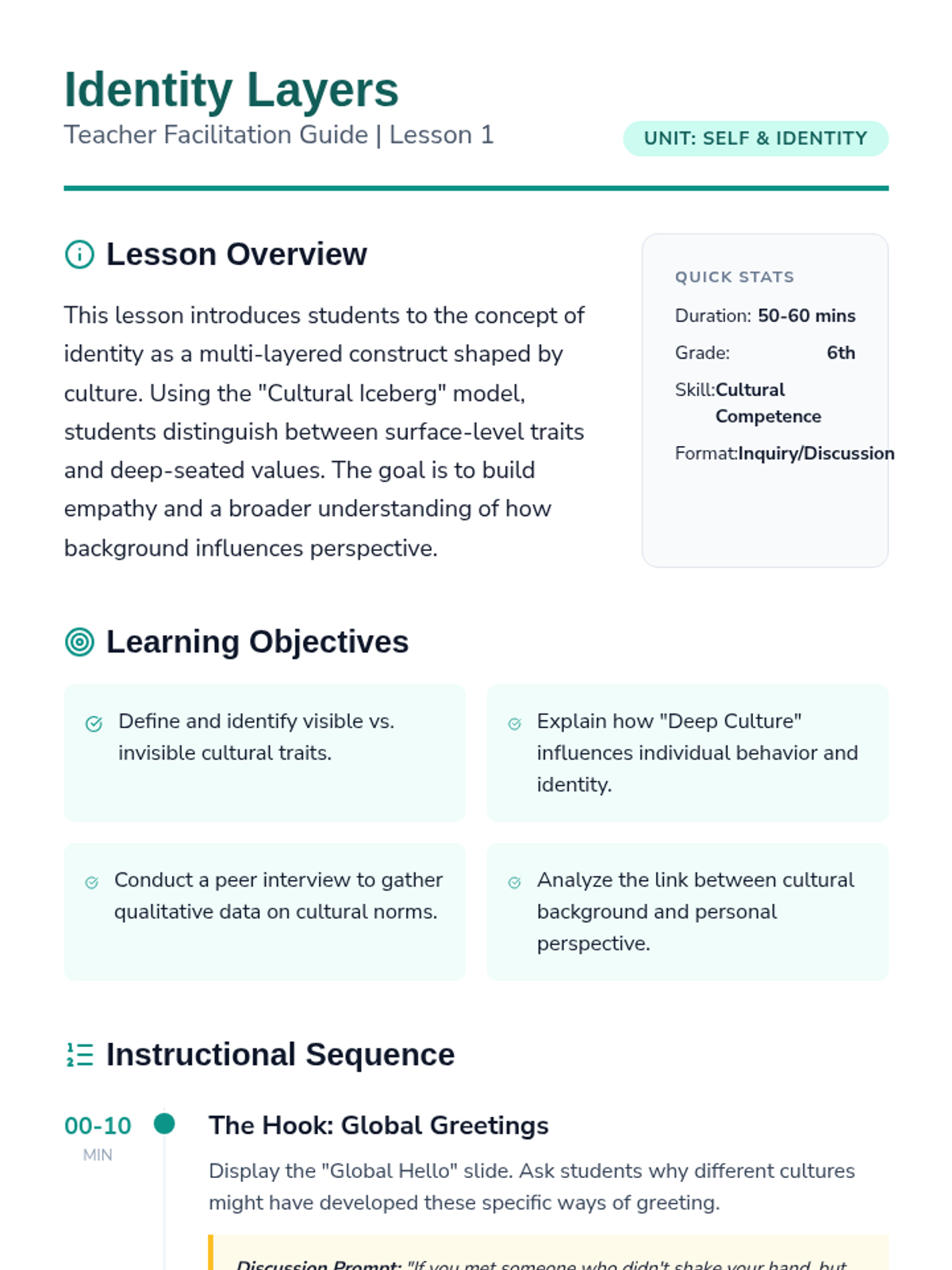
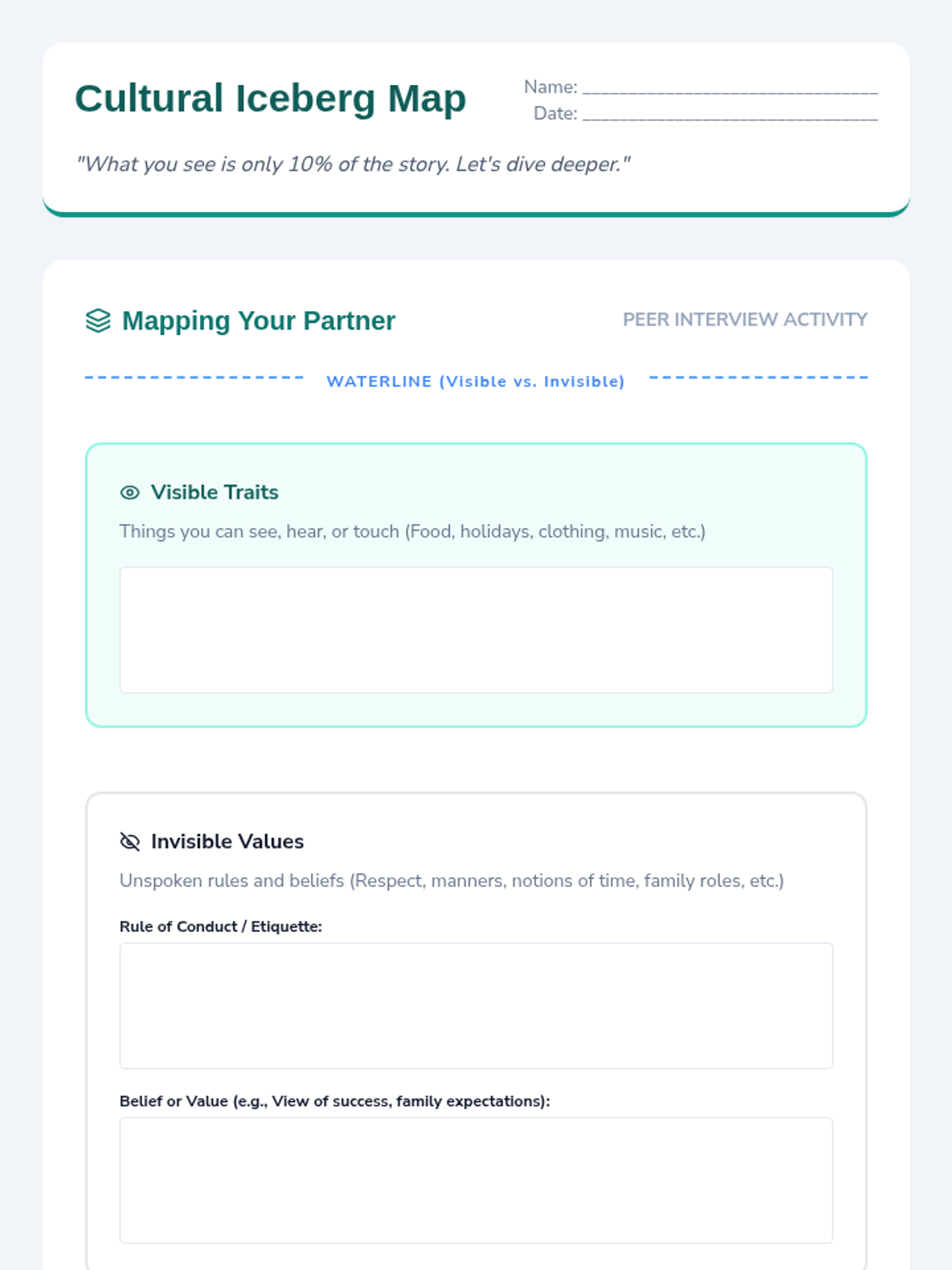
Students use the 'Cultural Iceberg' model to identify visible and invisible aspects of culture and interview a peer/family member to explore how background shapes perspective.
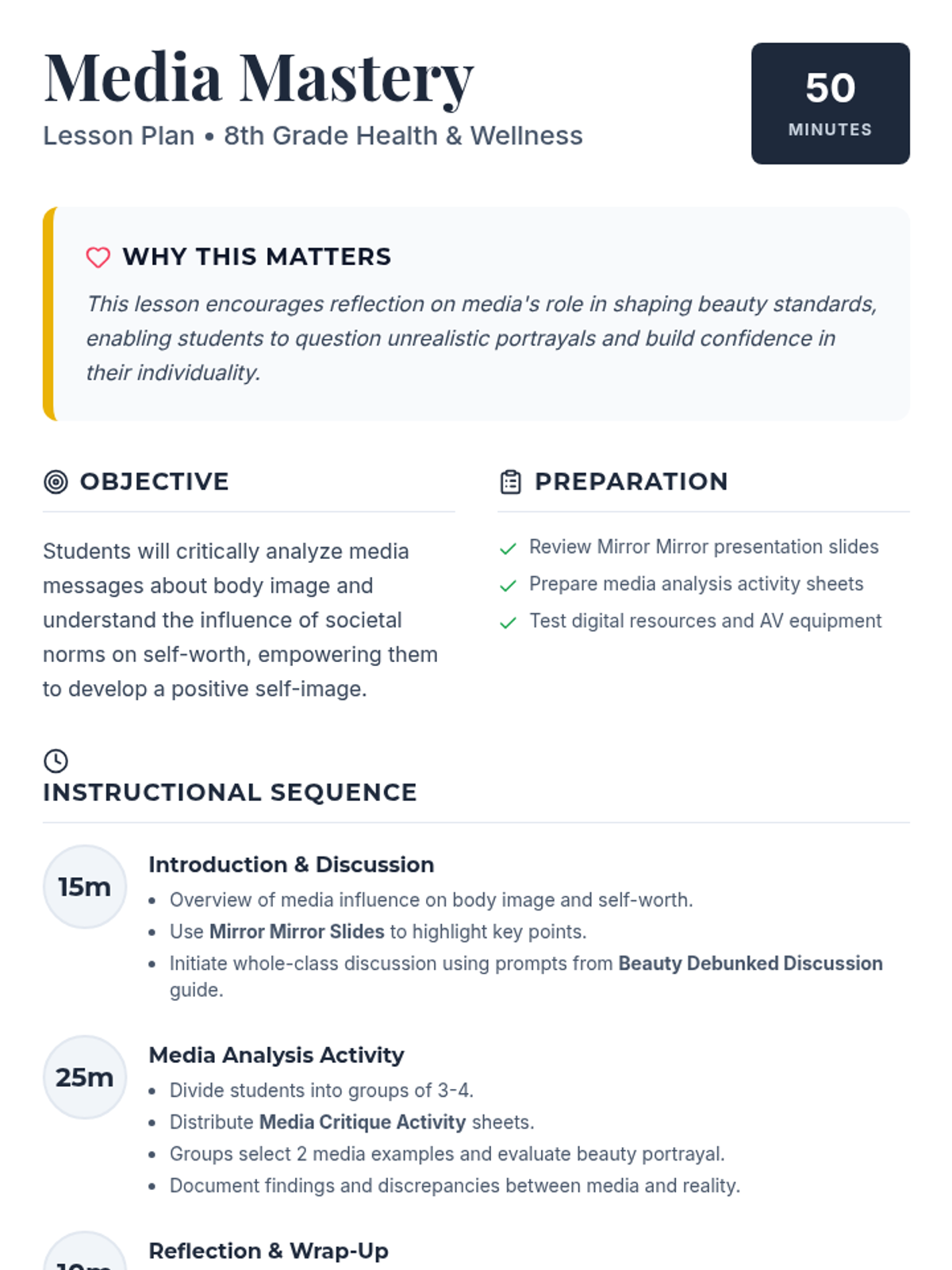
A lesson empowering students to critically analyze media's role in shaping beauty standards and develop a positive self-image through interactive analysis and discussion.
Students explore their own cultural identities and learn to act as allies by recognizing privilege and planning concrete actions for inclusion.
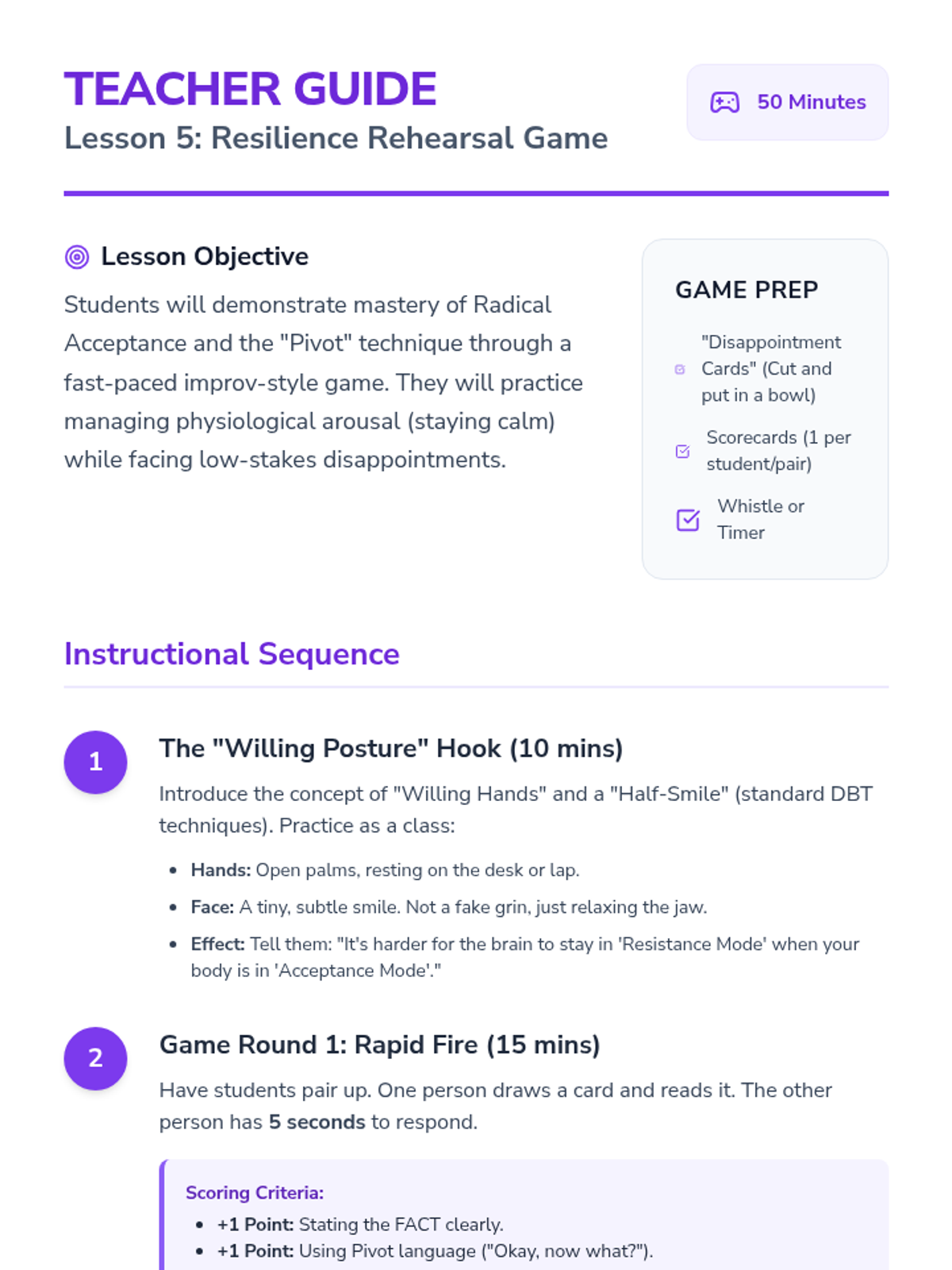
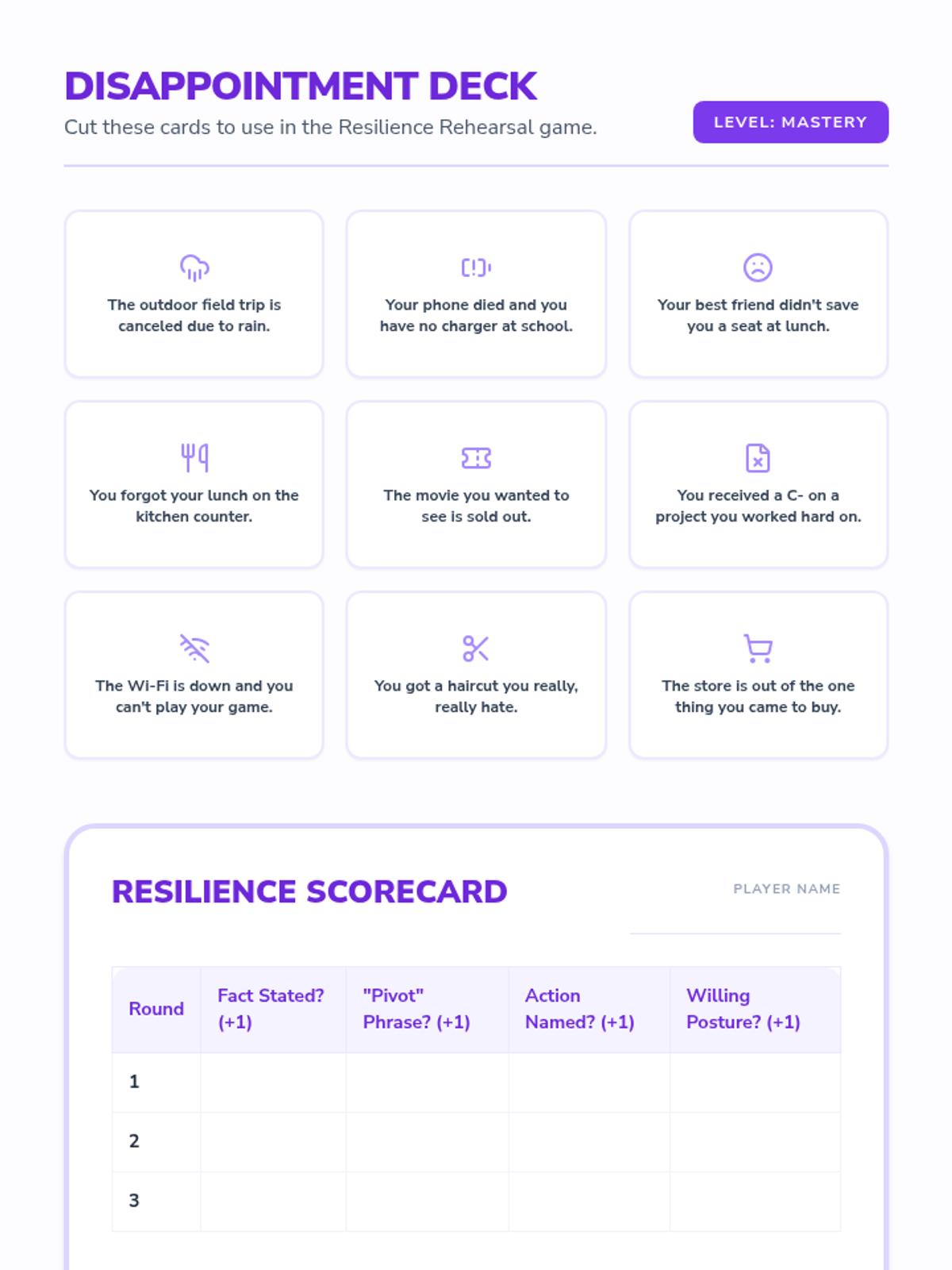
Students draw random 'Disappointment Cards' (e.g., game canceled, shoes ruined) and perform a quick-response drill demonstrating acceptance language. This gamified approach builds muscle memory for low-stakes stressors.
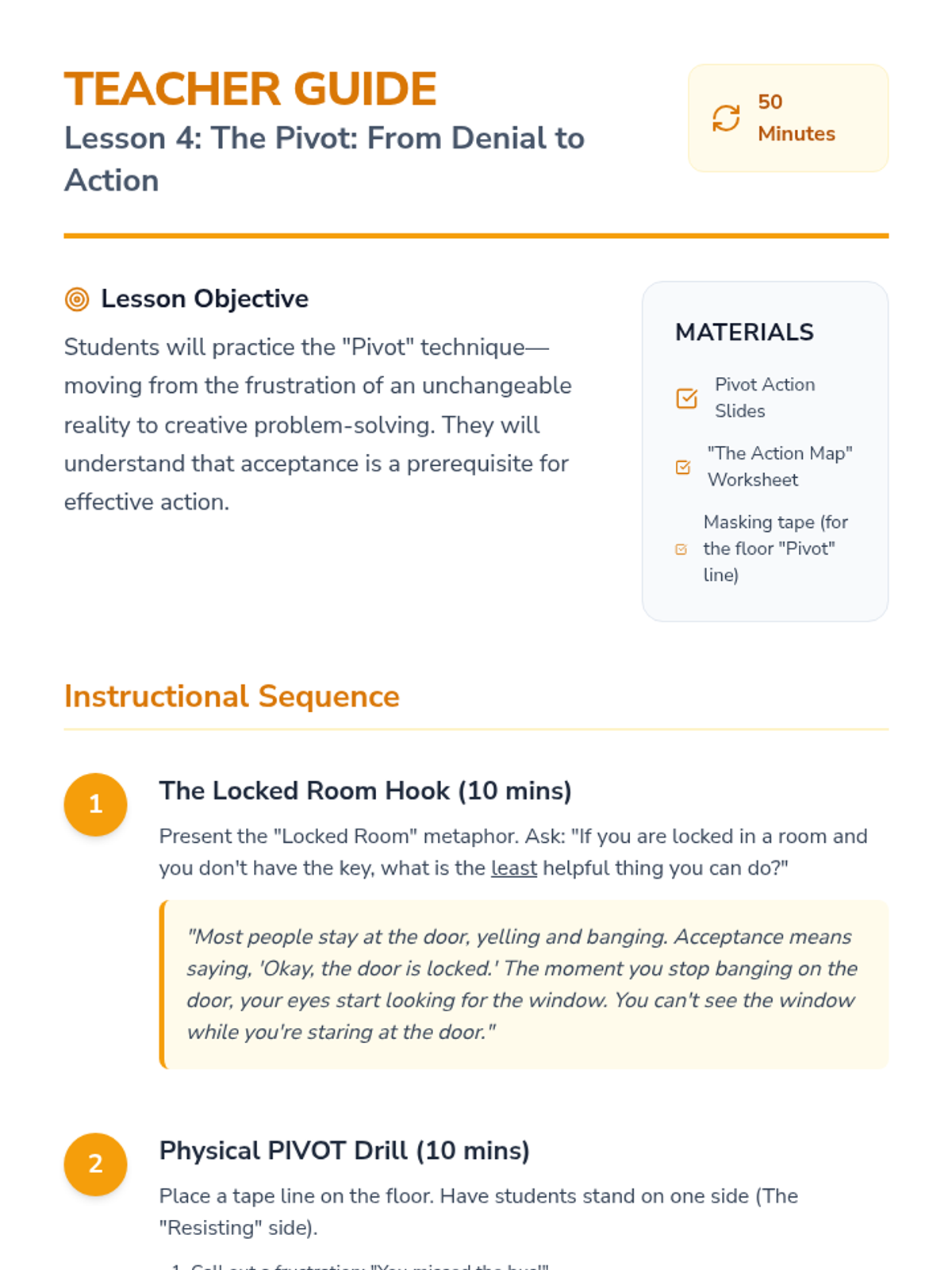
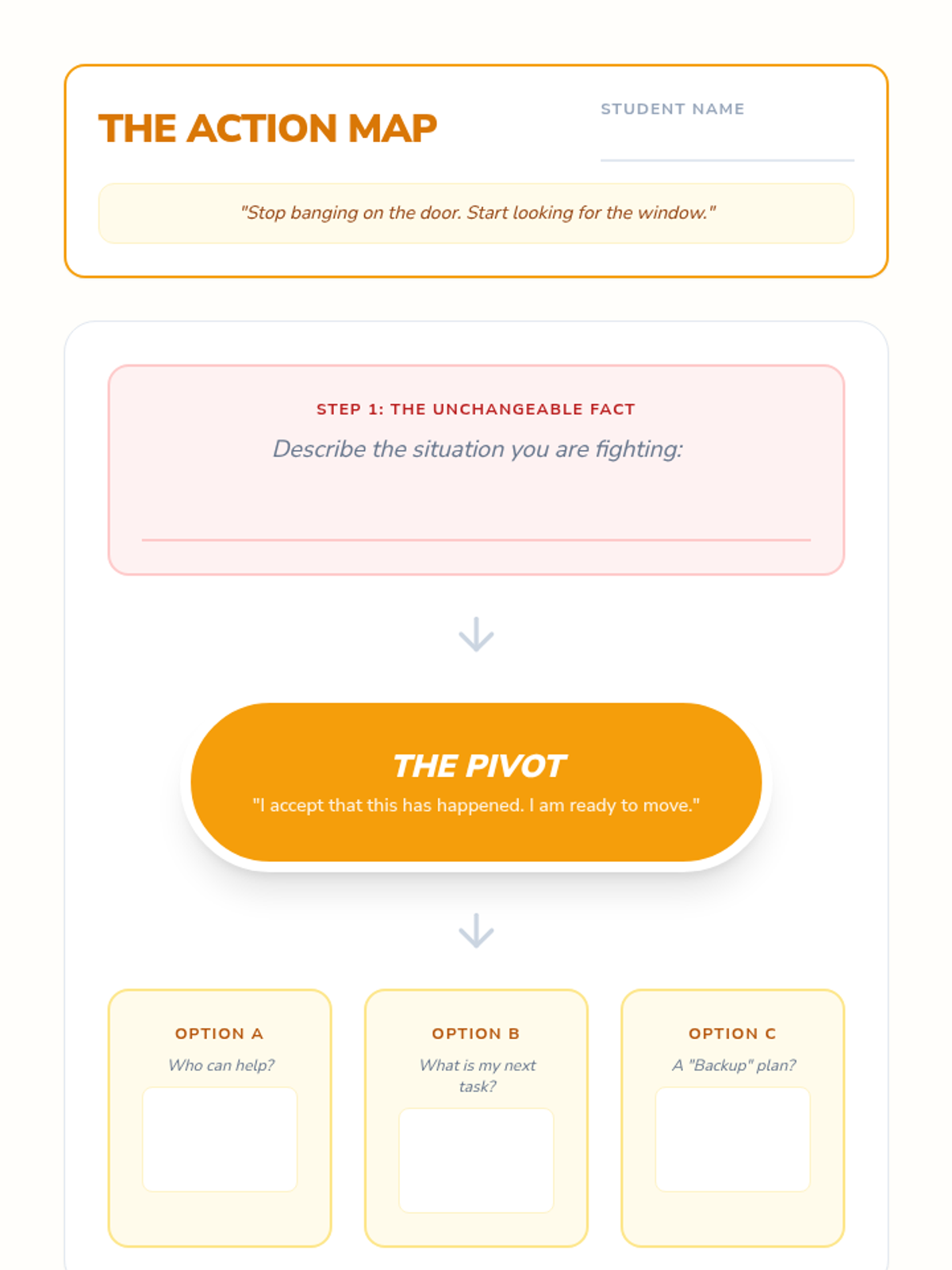
This lesson focuses on the transition moment: once reality is accepted, what comes next? Students work in groups to take 'unsolvable' problems, apply acceptance, and then brainstorm valid next steps. This bridges the gap between coping and action.
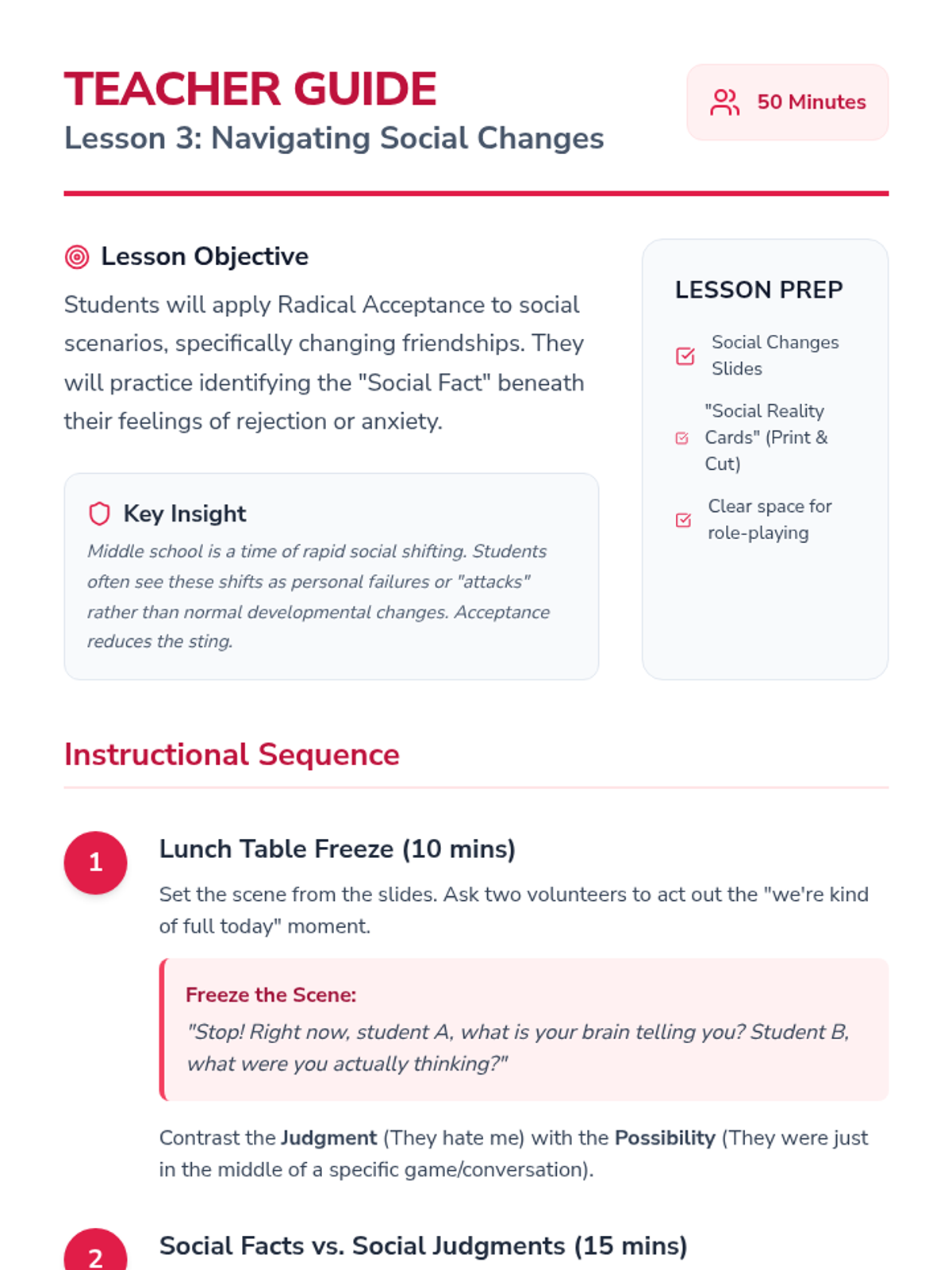
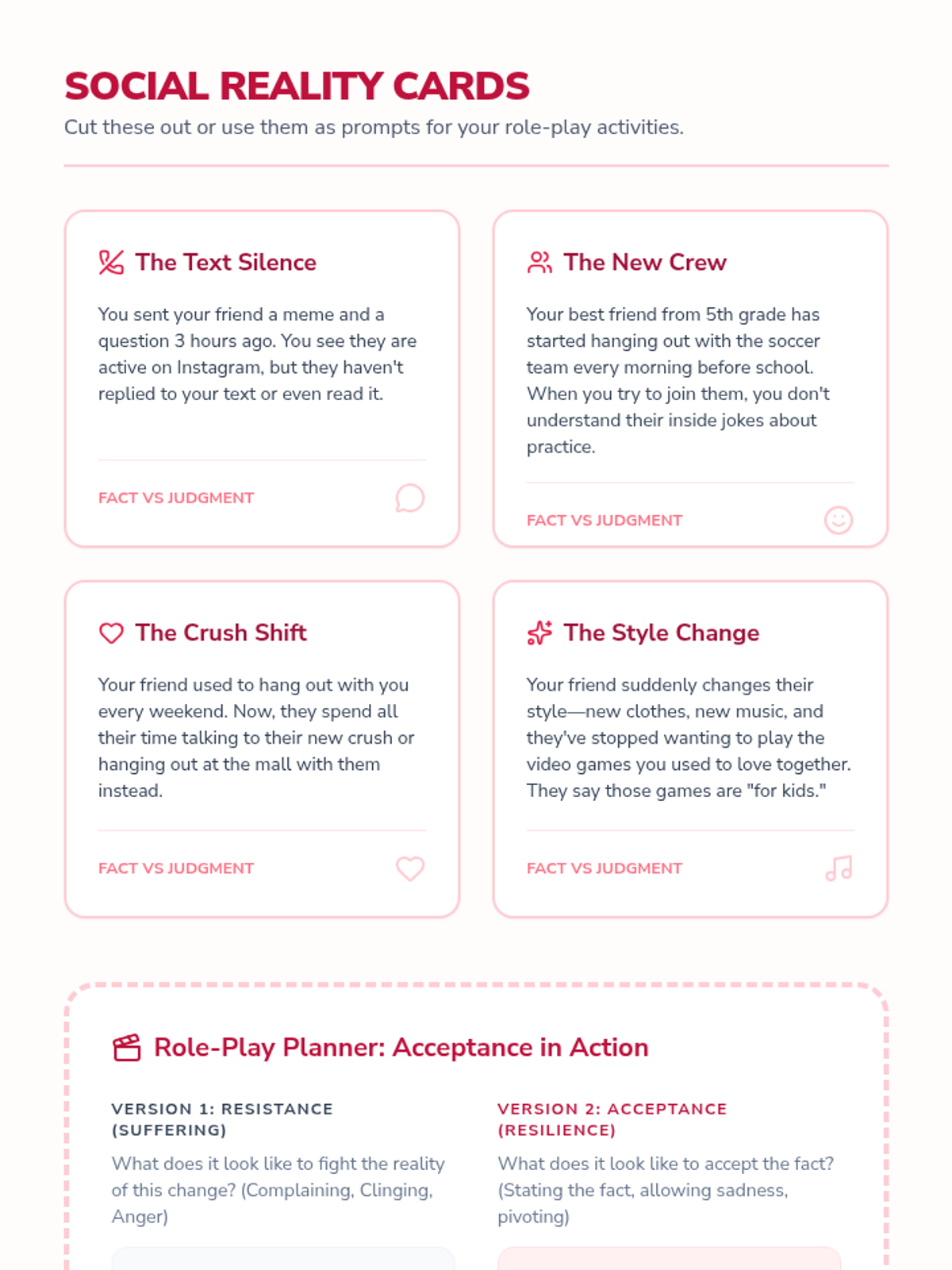
Students address the reality that friendships change in middle school through scripted role-plays. They practice accepting that a friend might be busy or changing interests without internalizing it as a failure. The focus is on reducing social anxiety through reality acceptance.
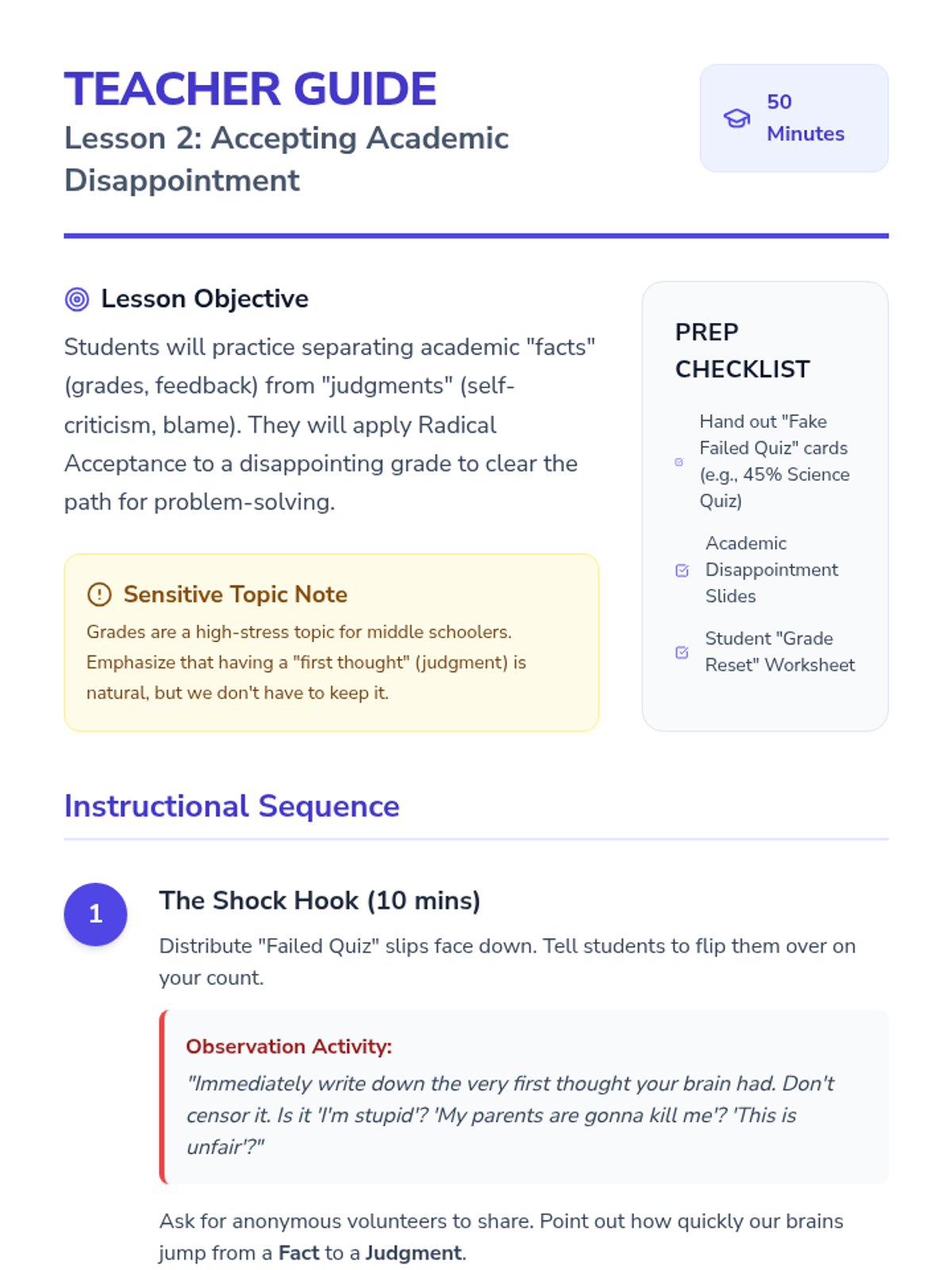
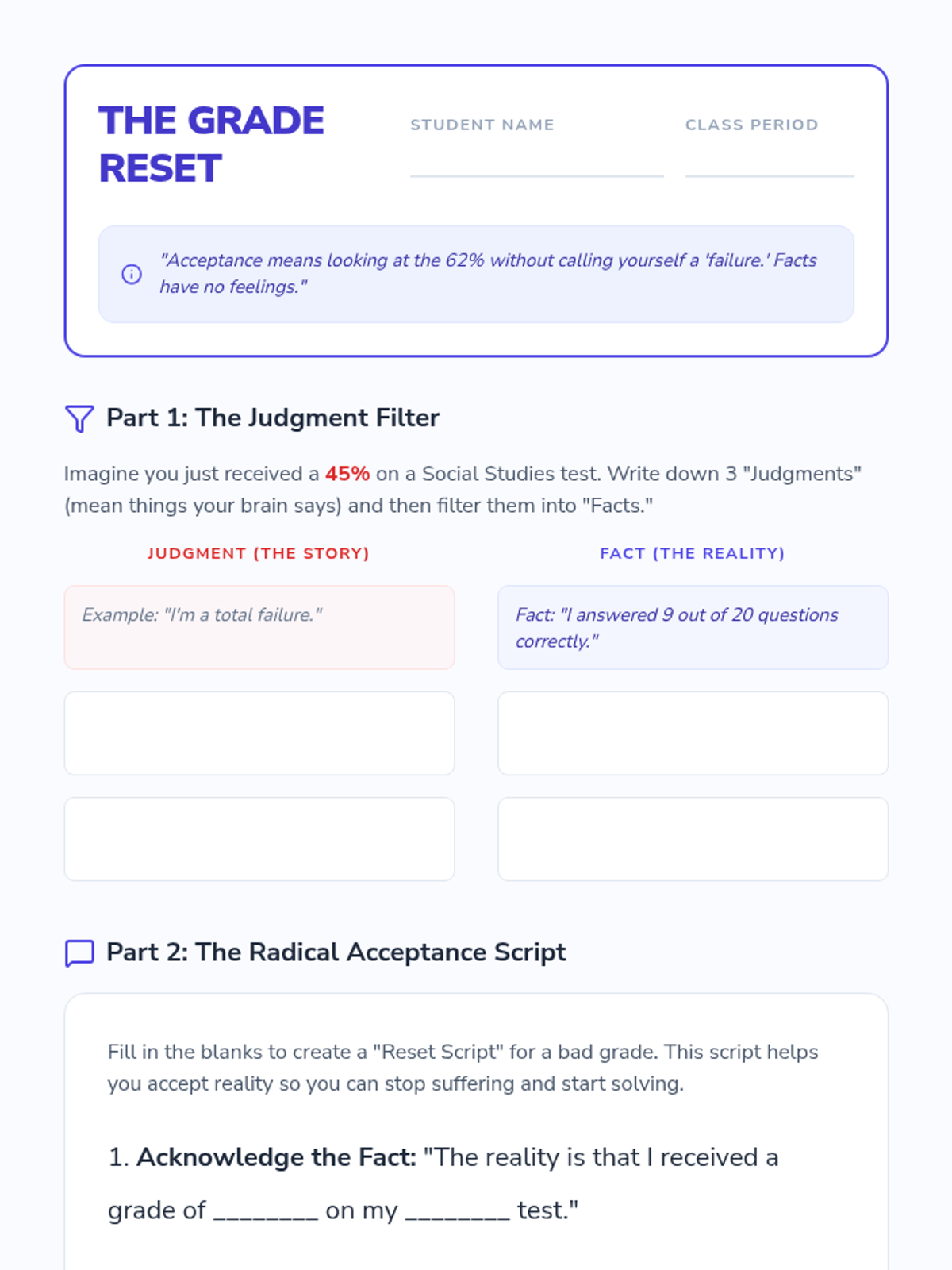
Using a scenario about receiving a lower-than-expected test grade, students practice separating the fact (the grade) from the judgment (I am stupid/The teacher is mean). They practice acknowledging the grade to clear the way for a study plan. This applies acceptance specifically to school performance.
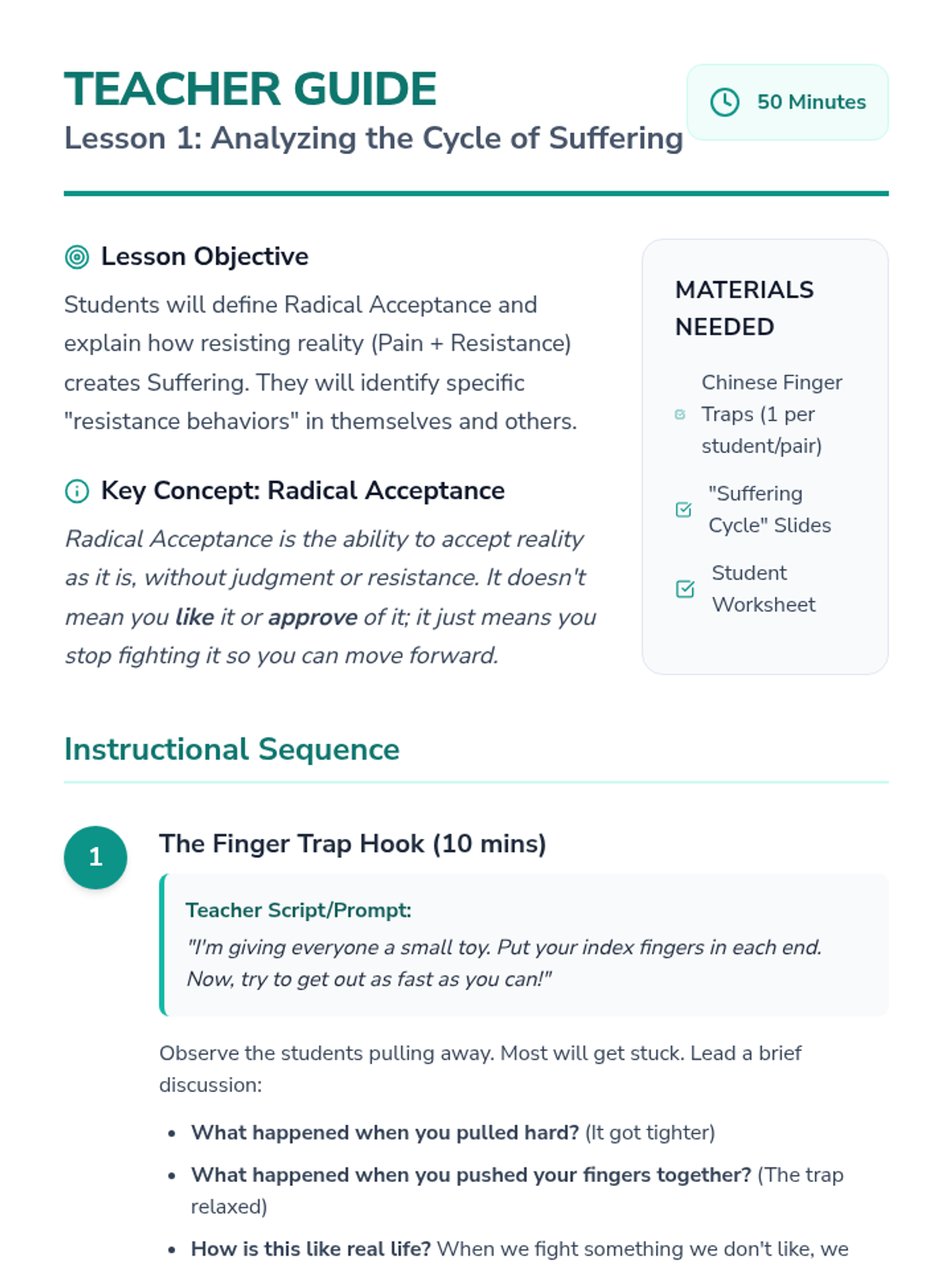
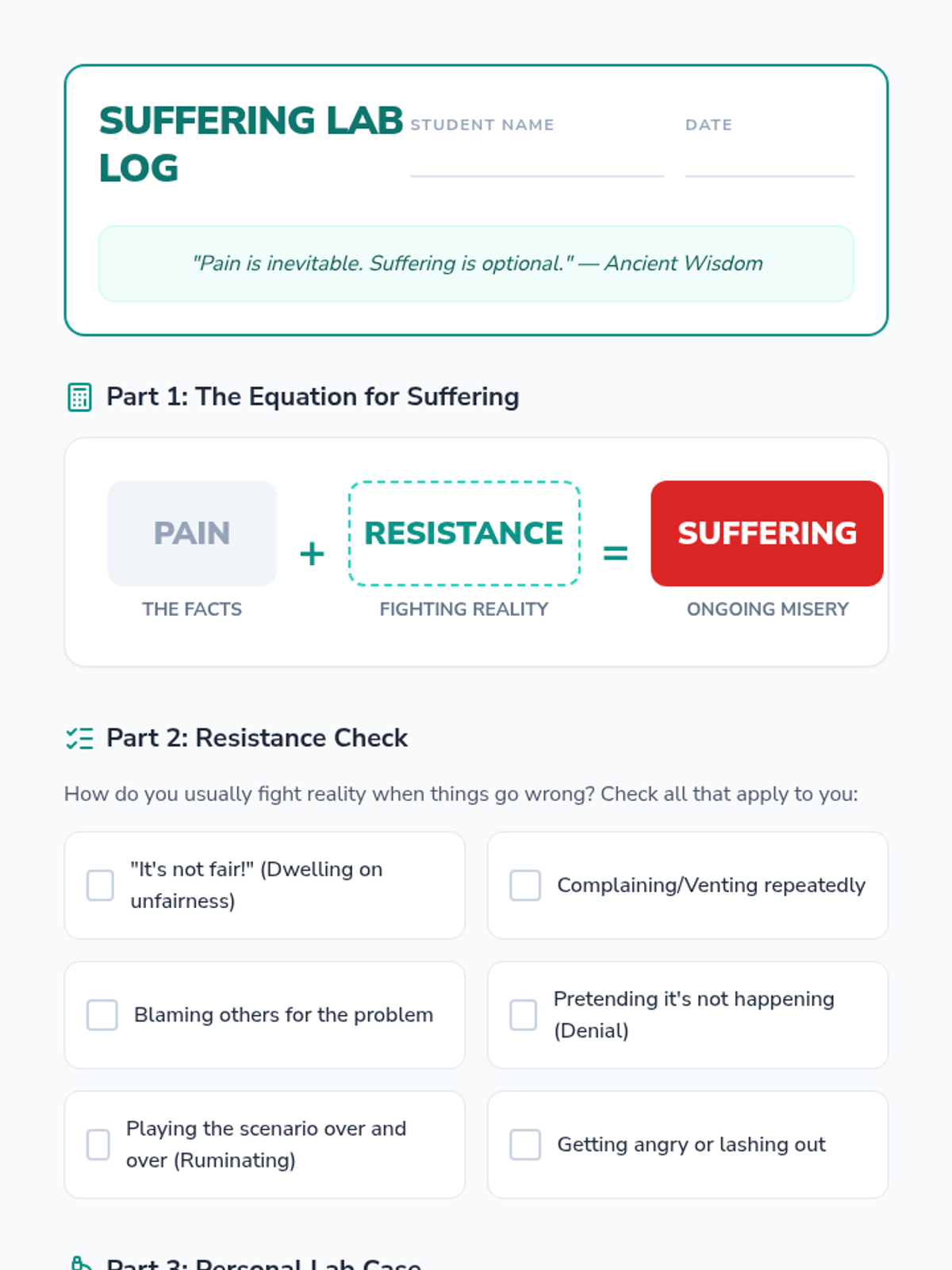
Students explore the equation 'Pain + Resistance = Suffering' through the metaphor of a Chinese finger trap. They learn to identify 'resistance behaviors' that increase distress and understand how radical acceptance can stop the cycle of suffering.
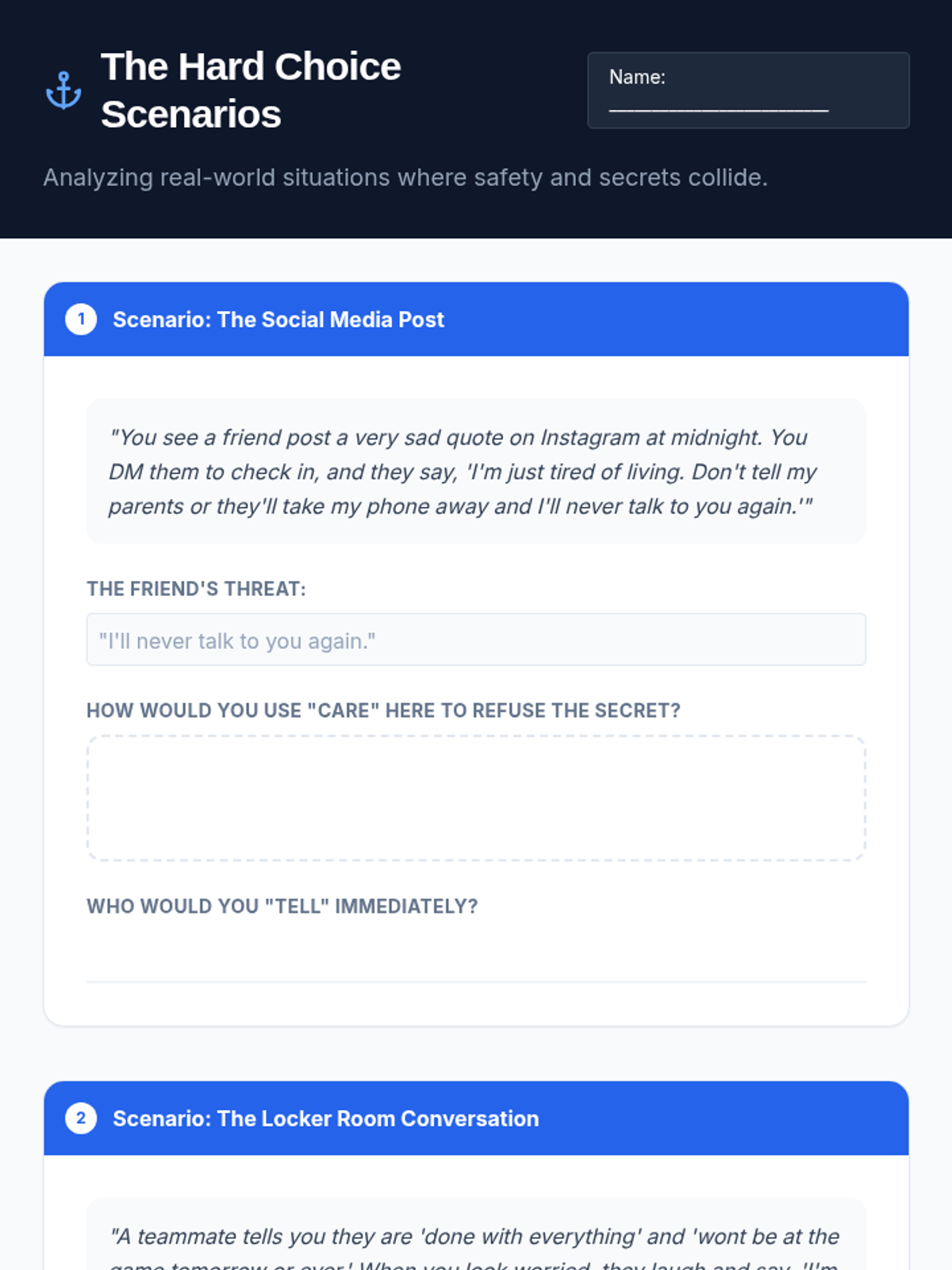
Provides strategies for handling pressure from peers to keep safety concerns secret.
Empowers students to identify trusted adults and practice the script for reporting safety concerns.
Teaches students how to express care and empathy without making dangerous promises of secrecy.
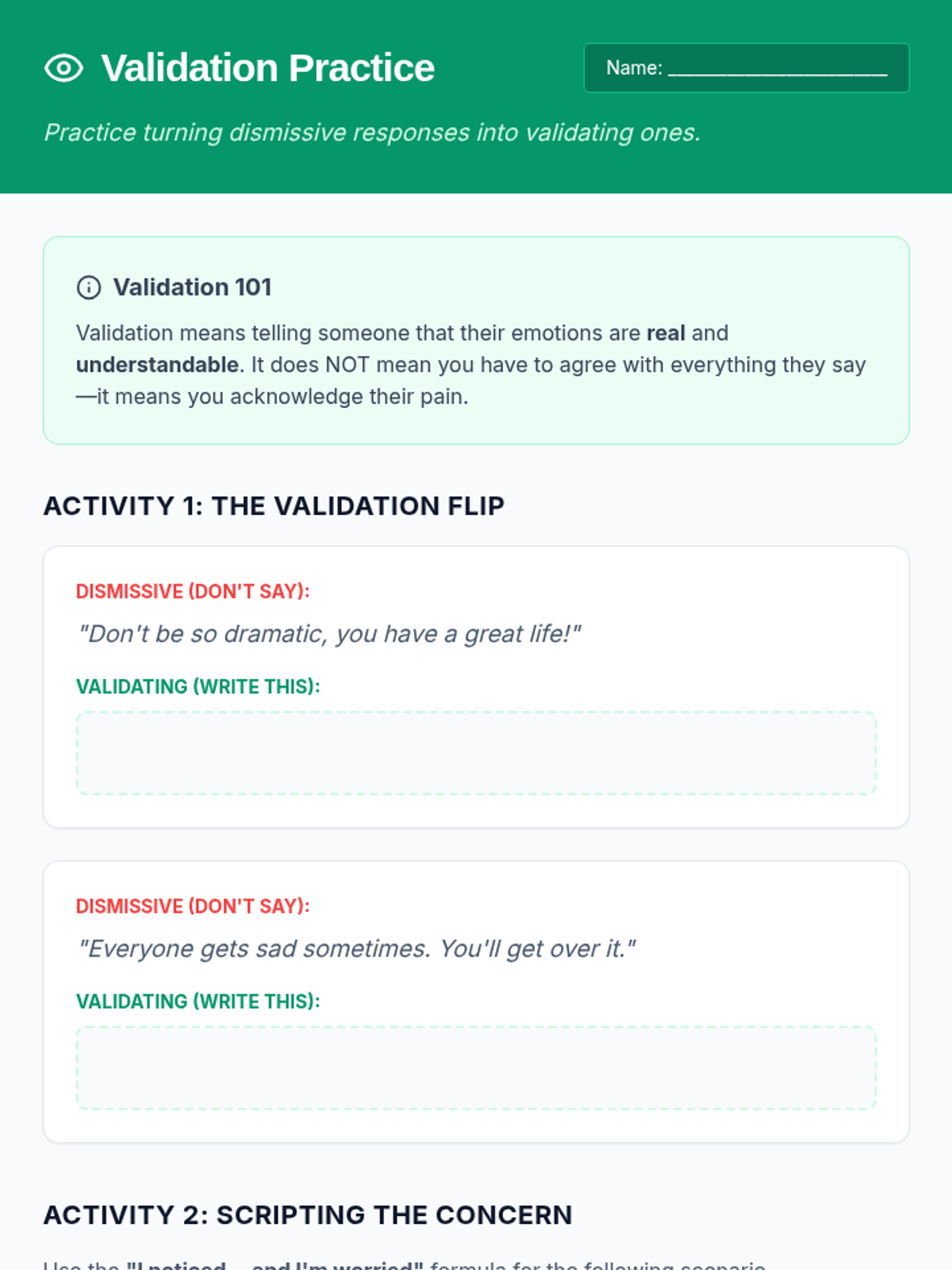
Focuses on the 'Acknowledge' step, teaching students how to use 'I' statements to validate a friend's feelings.
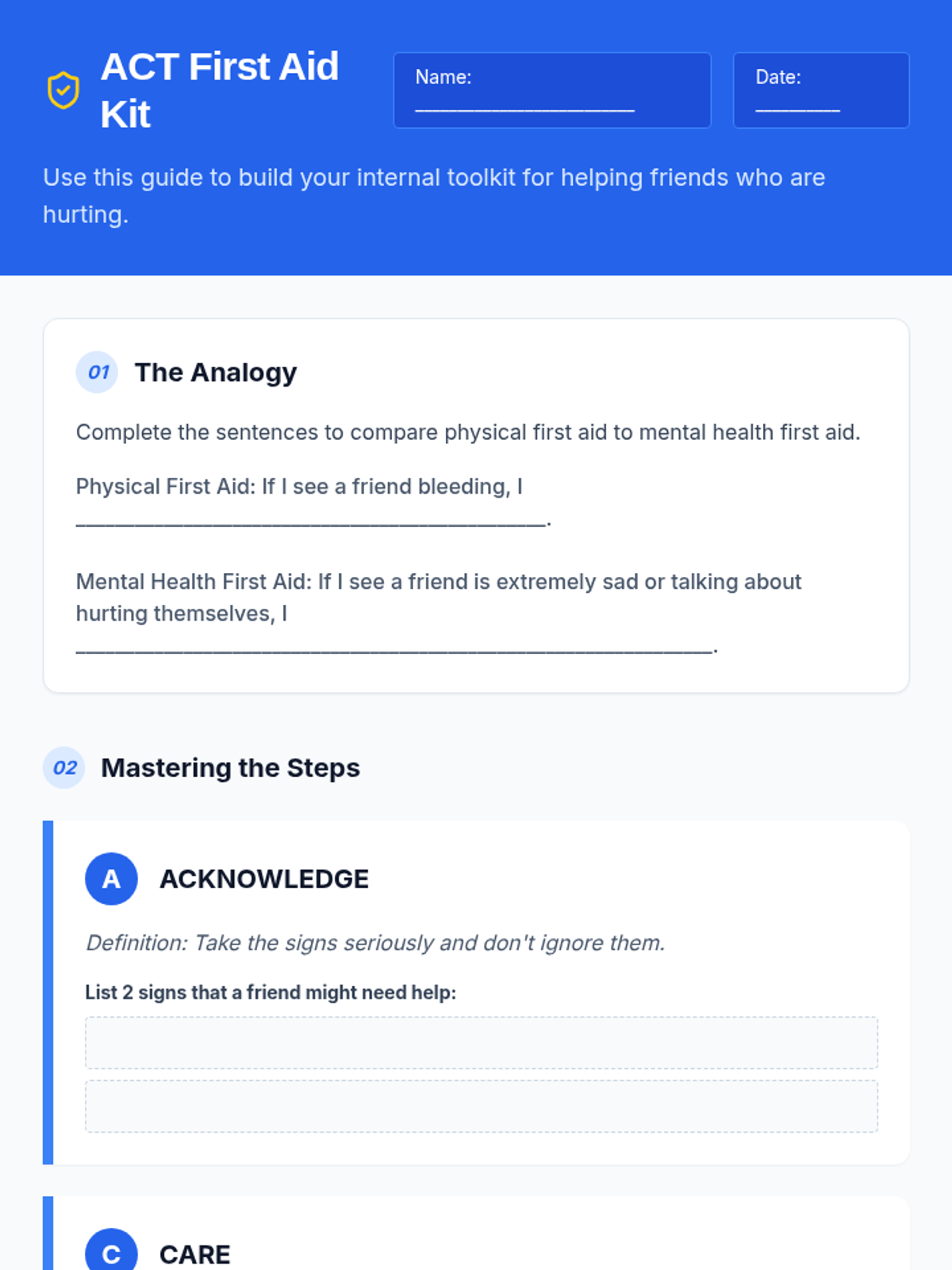
Introduces the A.C.T. framework using a first aid analogy to normalize mental health support and safety protocols.
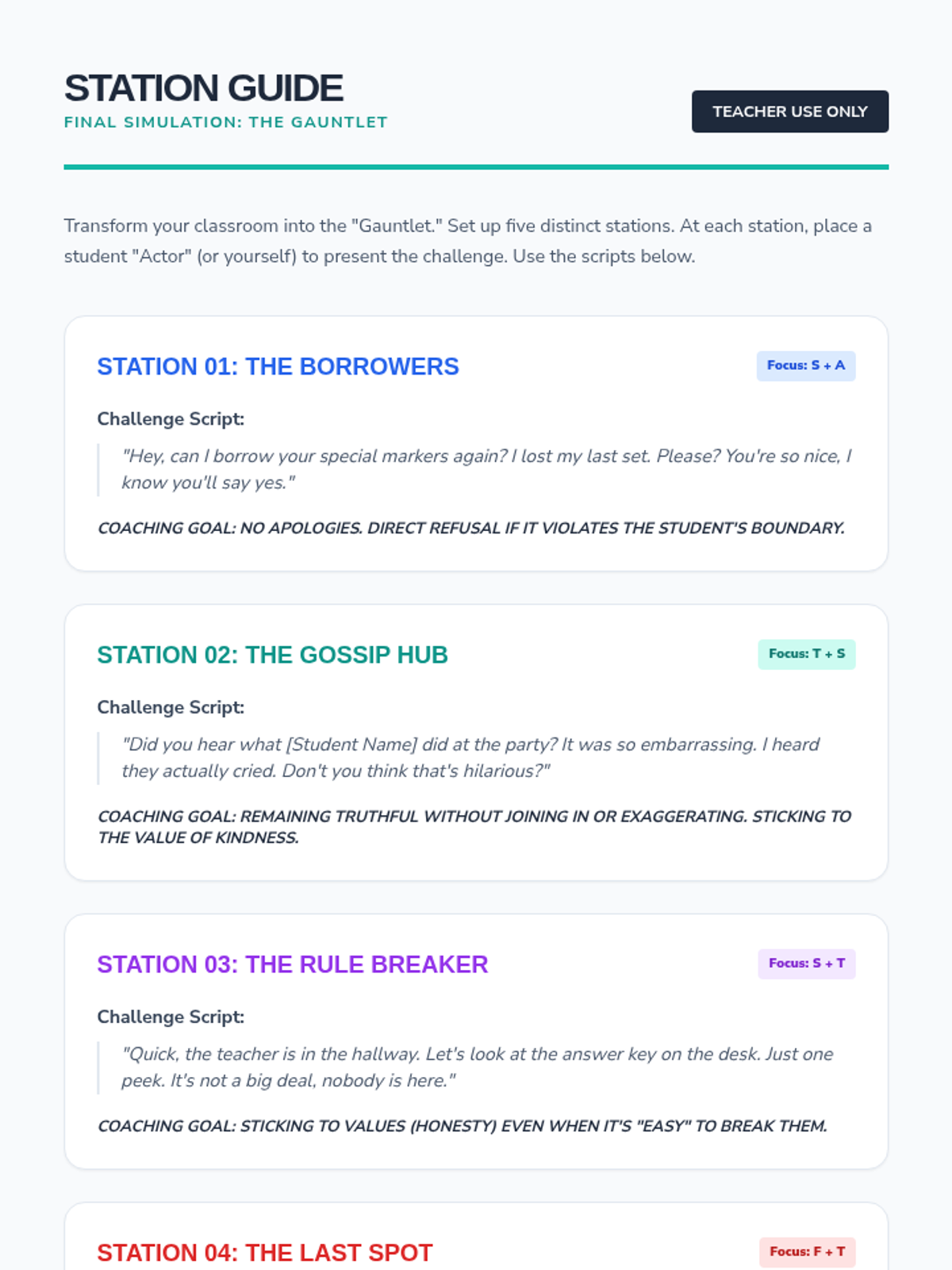
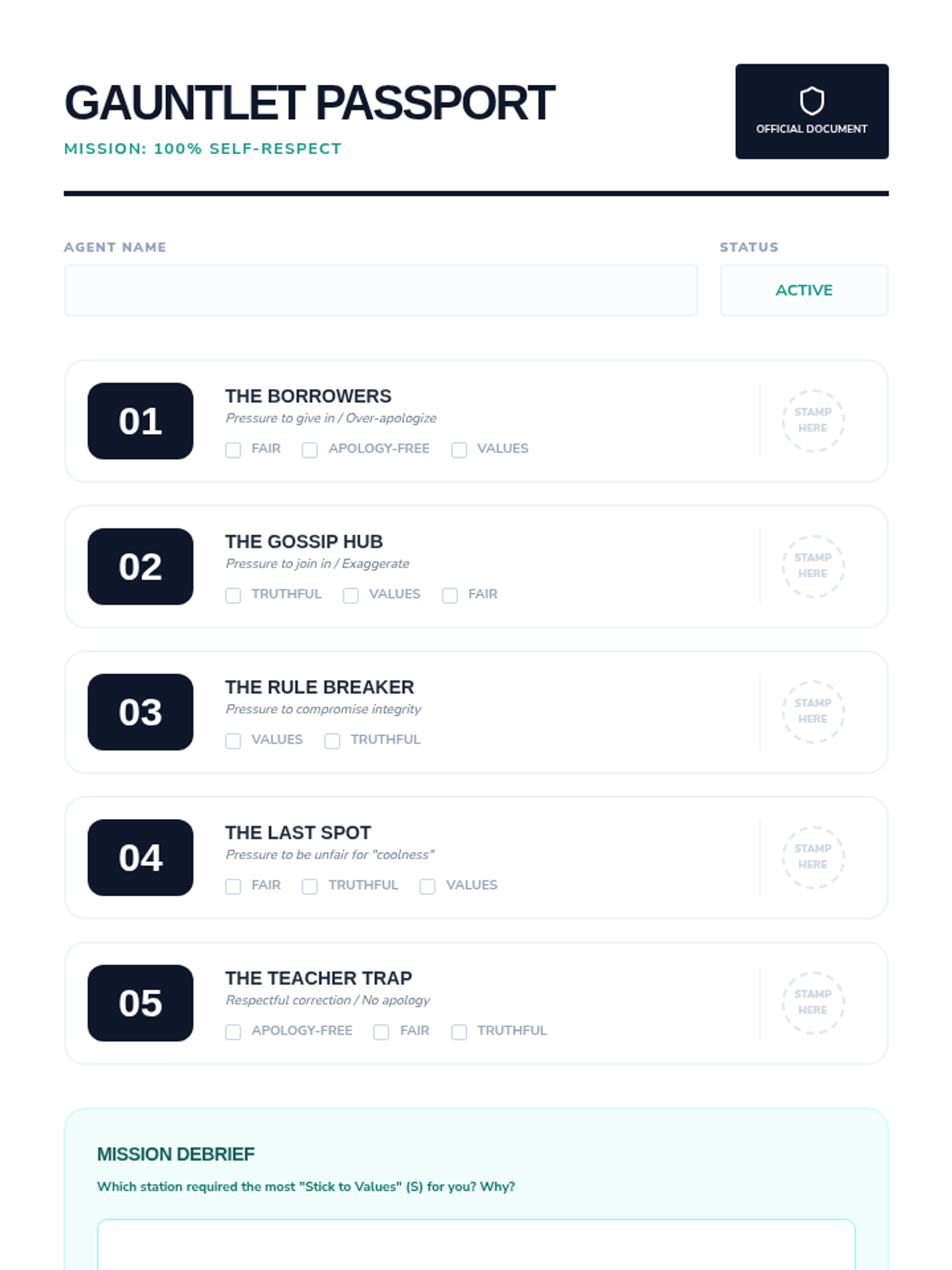
A culminating simulation where students move through stations, each presenting a quick social dilemma. They must apply the appropriate FAST skill effectively to move to the next station.
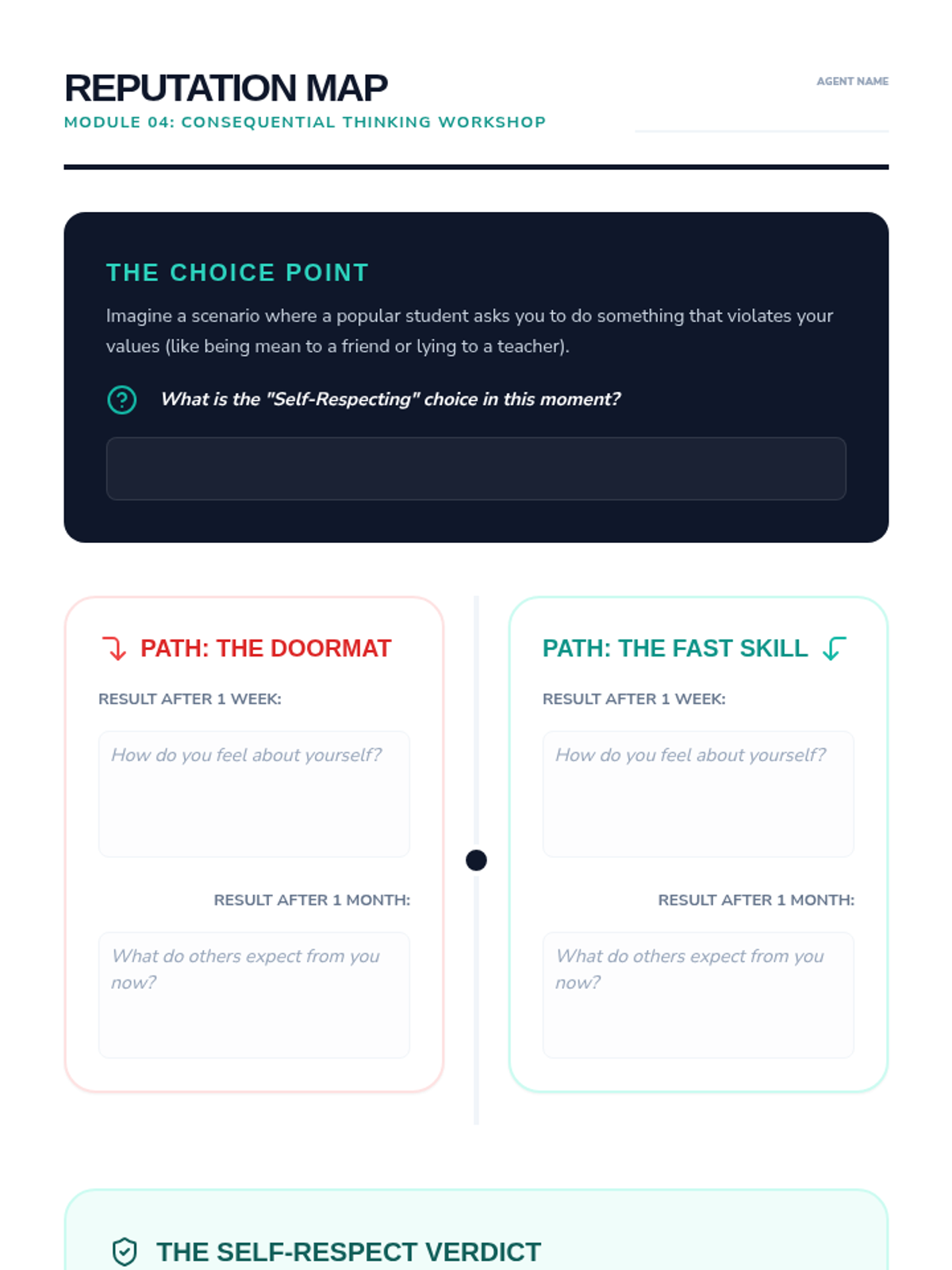
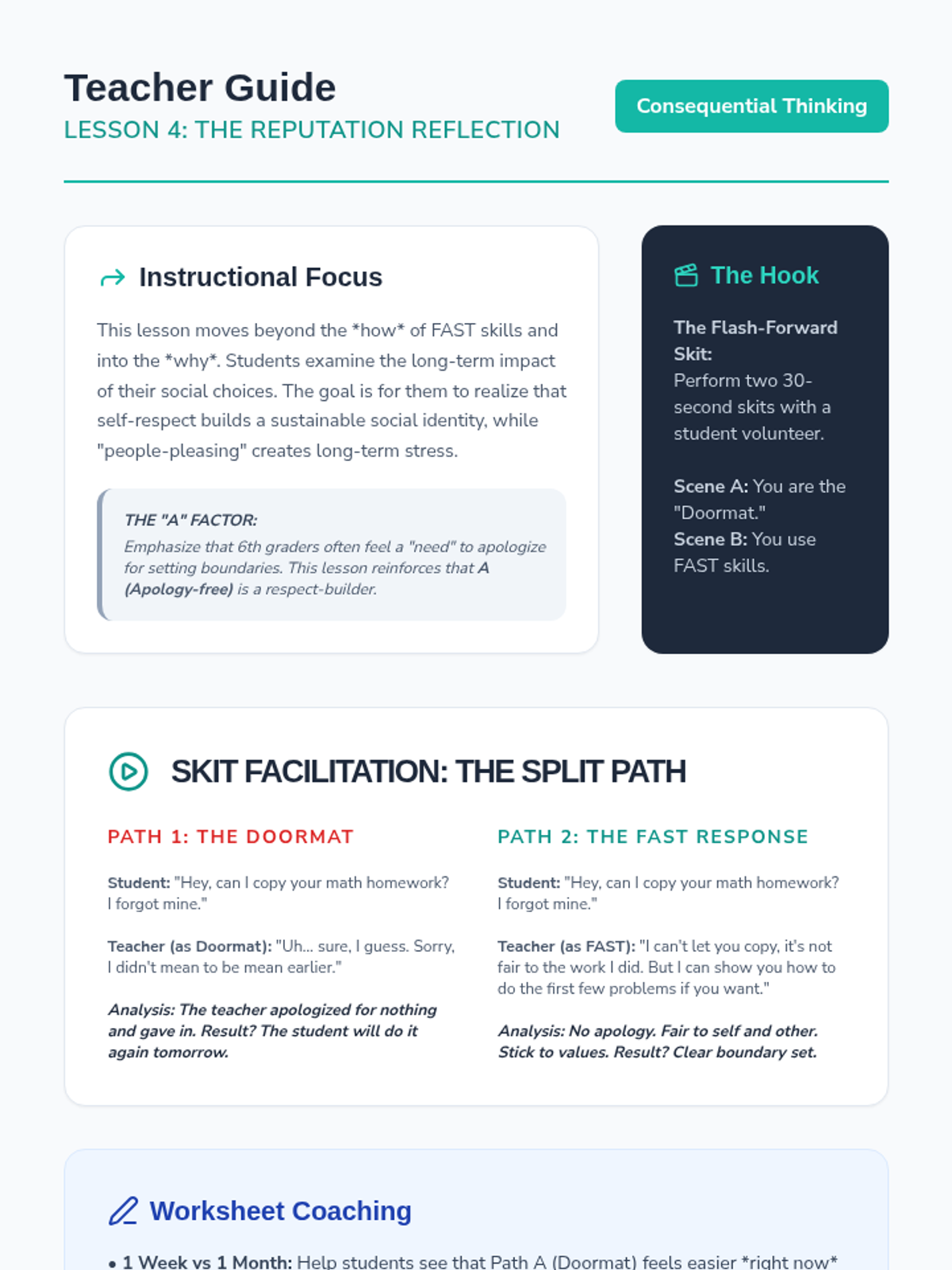
Students examine how using (or ignoring) FAST skills impacts their reputation and long-term relationships. They act out 'future scenarios' showing the long-term results of being a doormat versus being self-respecting.
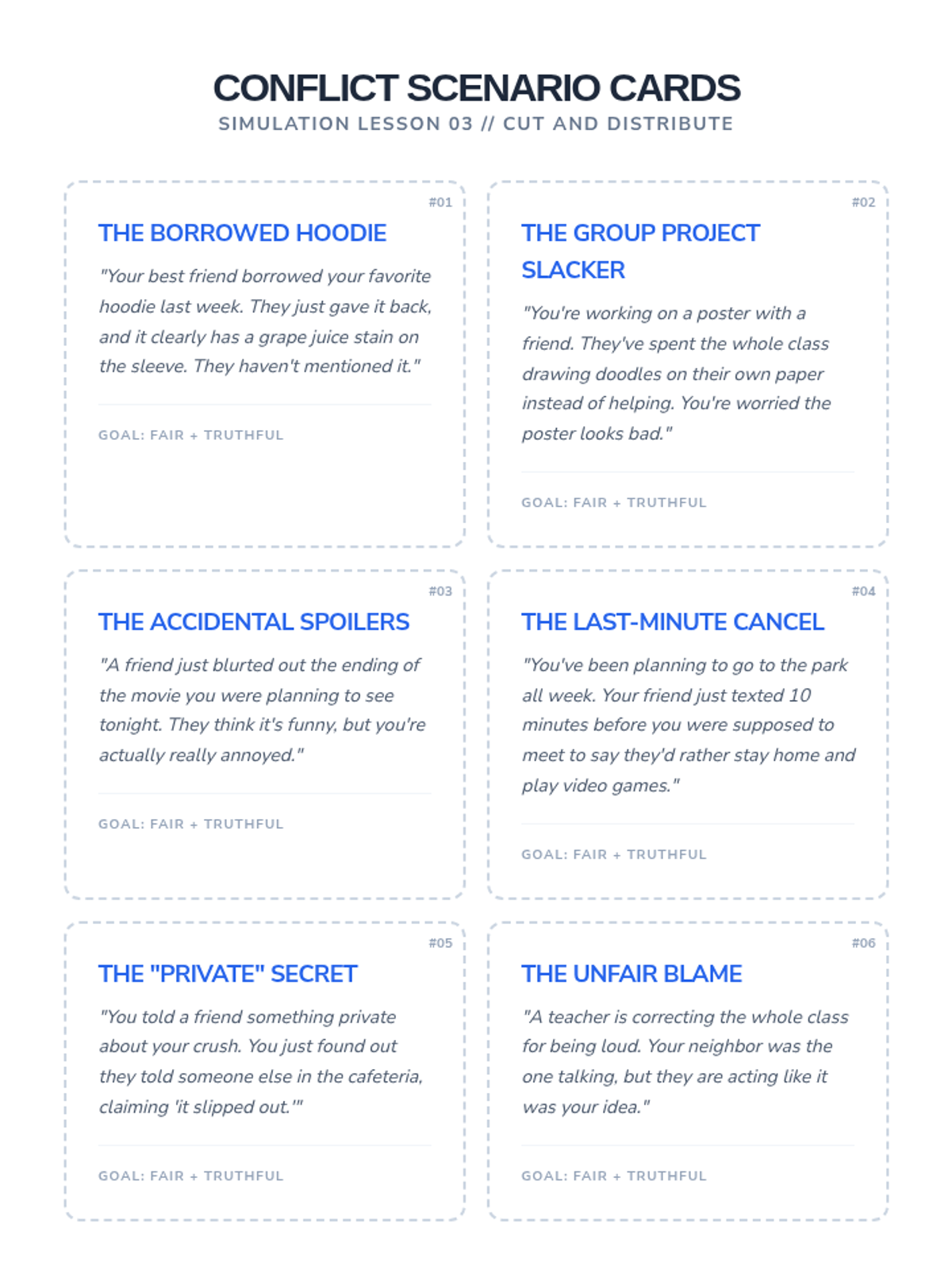
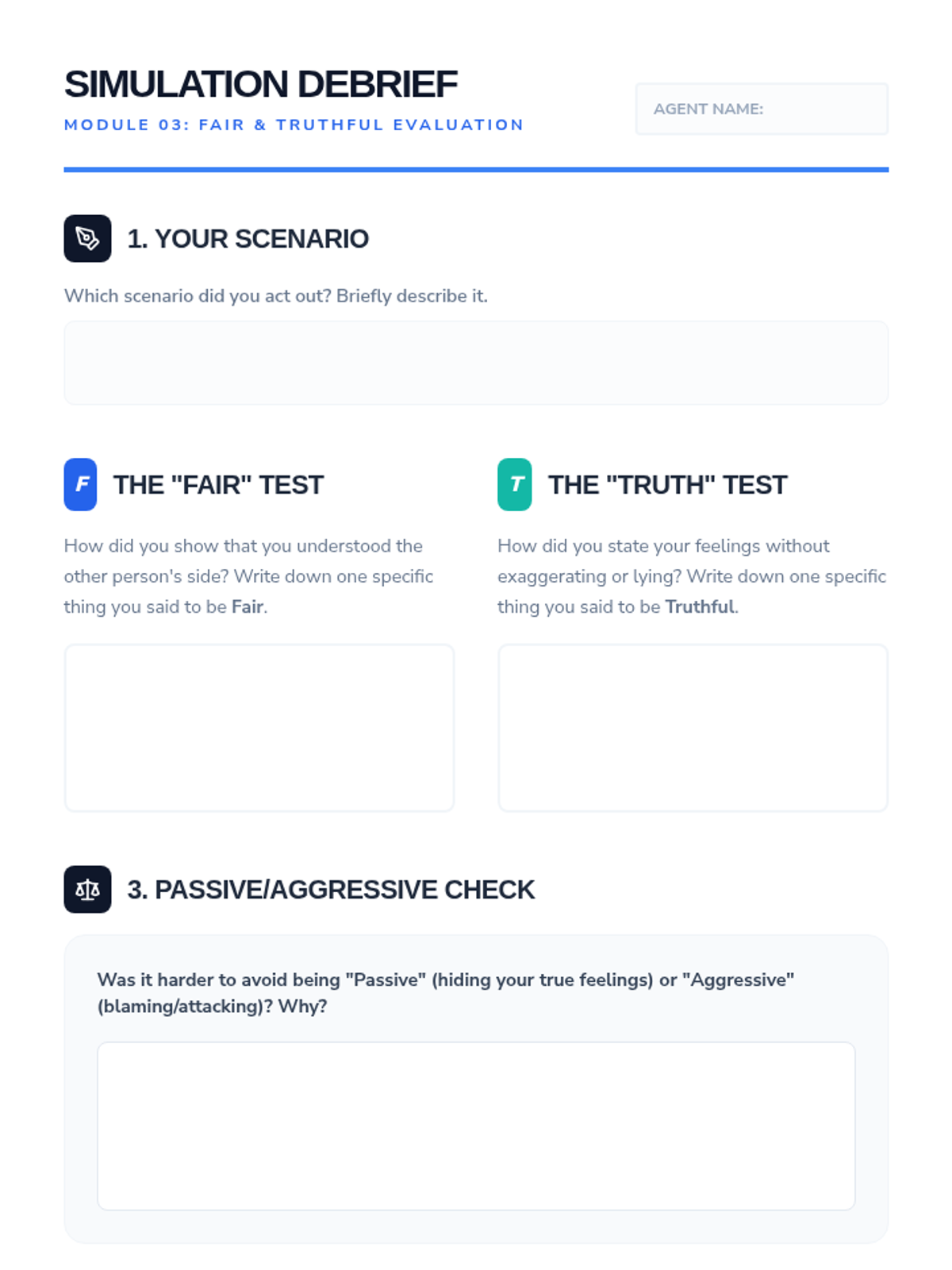
Pairs engage in role-play scenarios involving a disagreement between friends. They practice being 'Fair' to the other person while remaining 'Truthful' about their own feelings, avoiding passive or aggressive behaviors.
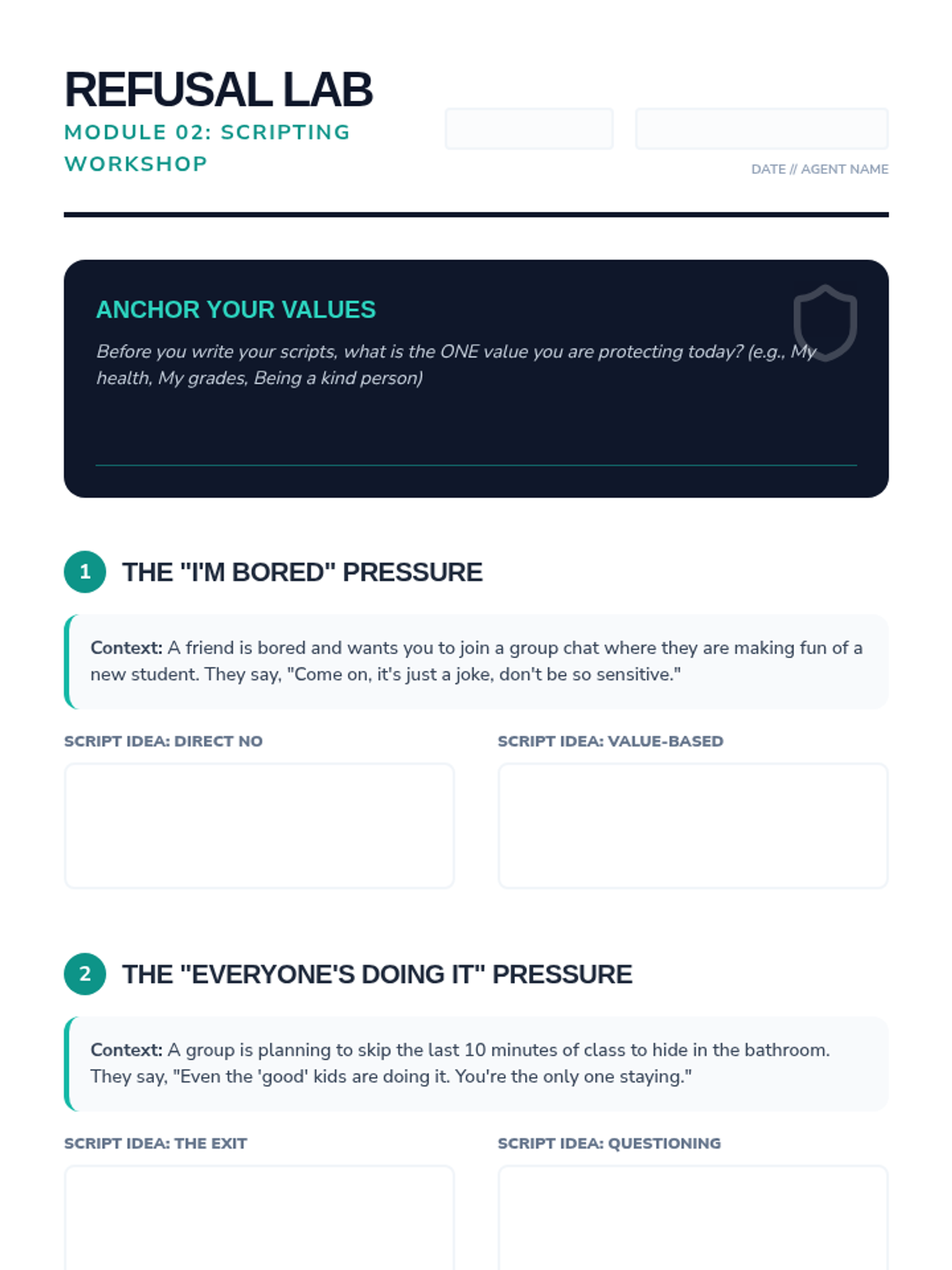
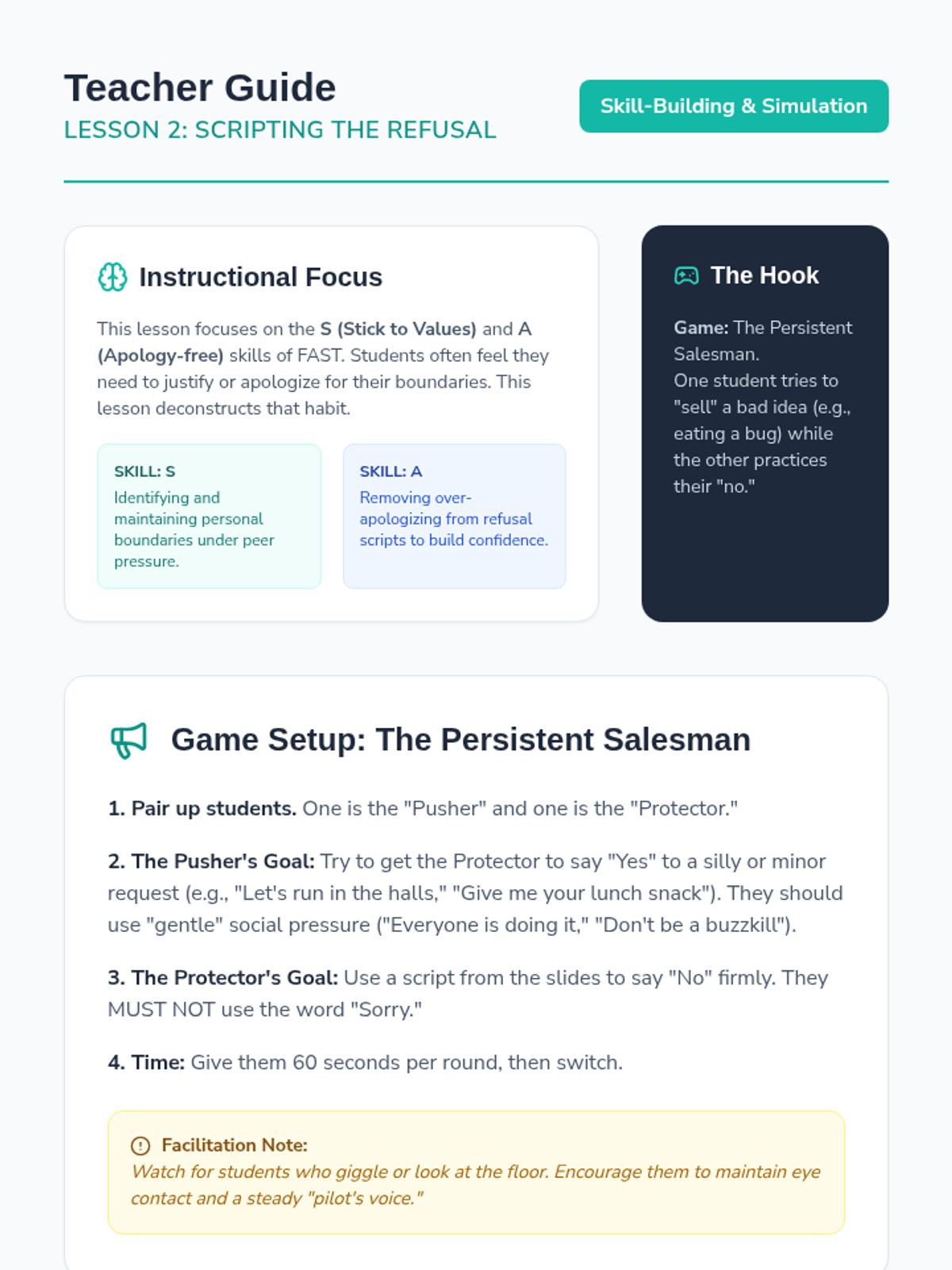
Students write scripts for refusing requests that violate their values (the 'S' in FAST). They learn specific sentence stems that help them say 'no' firmly without over-apologizing.
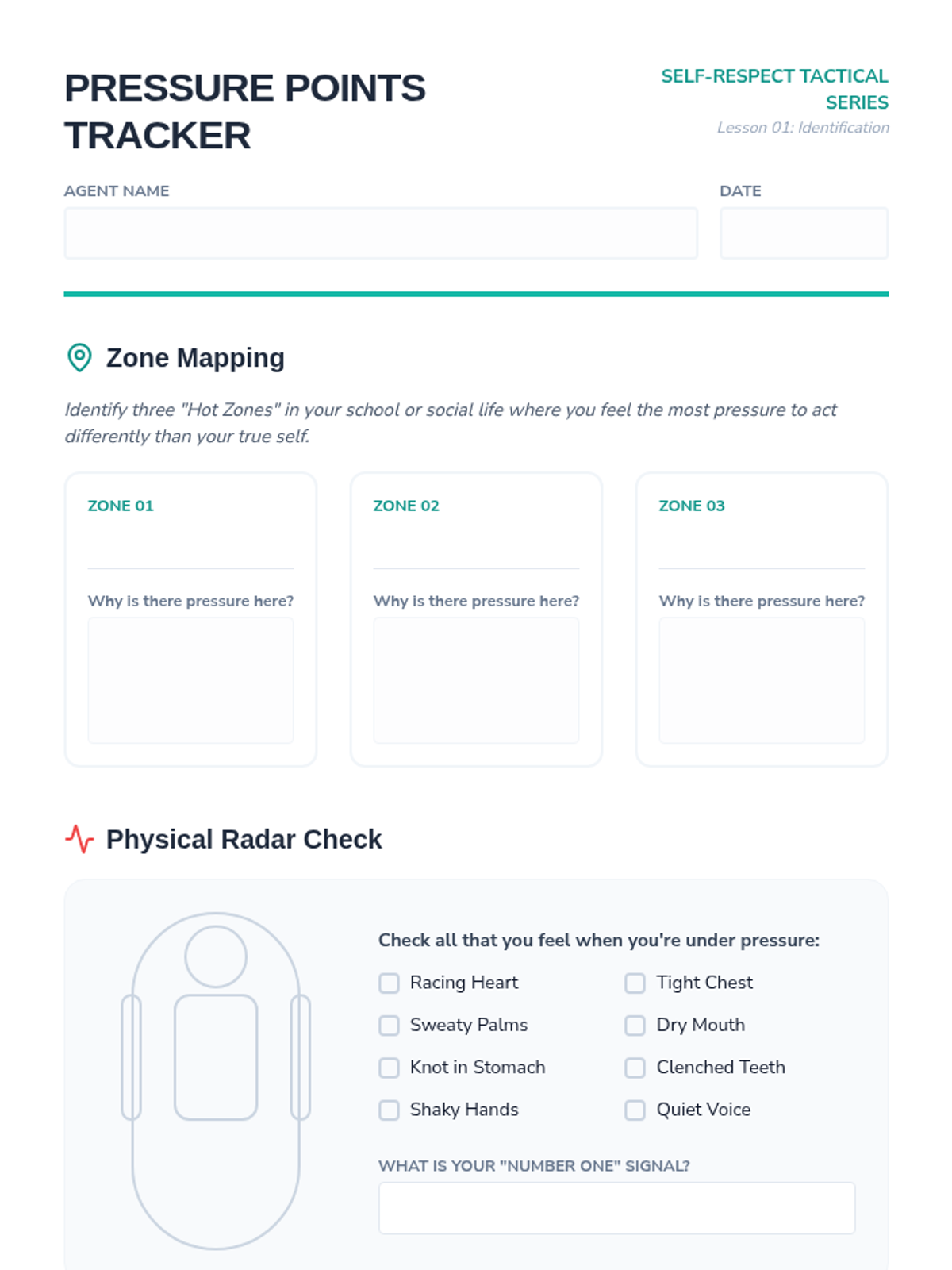
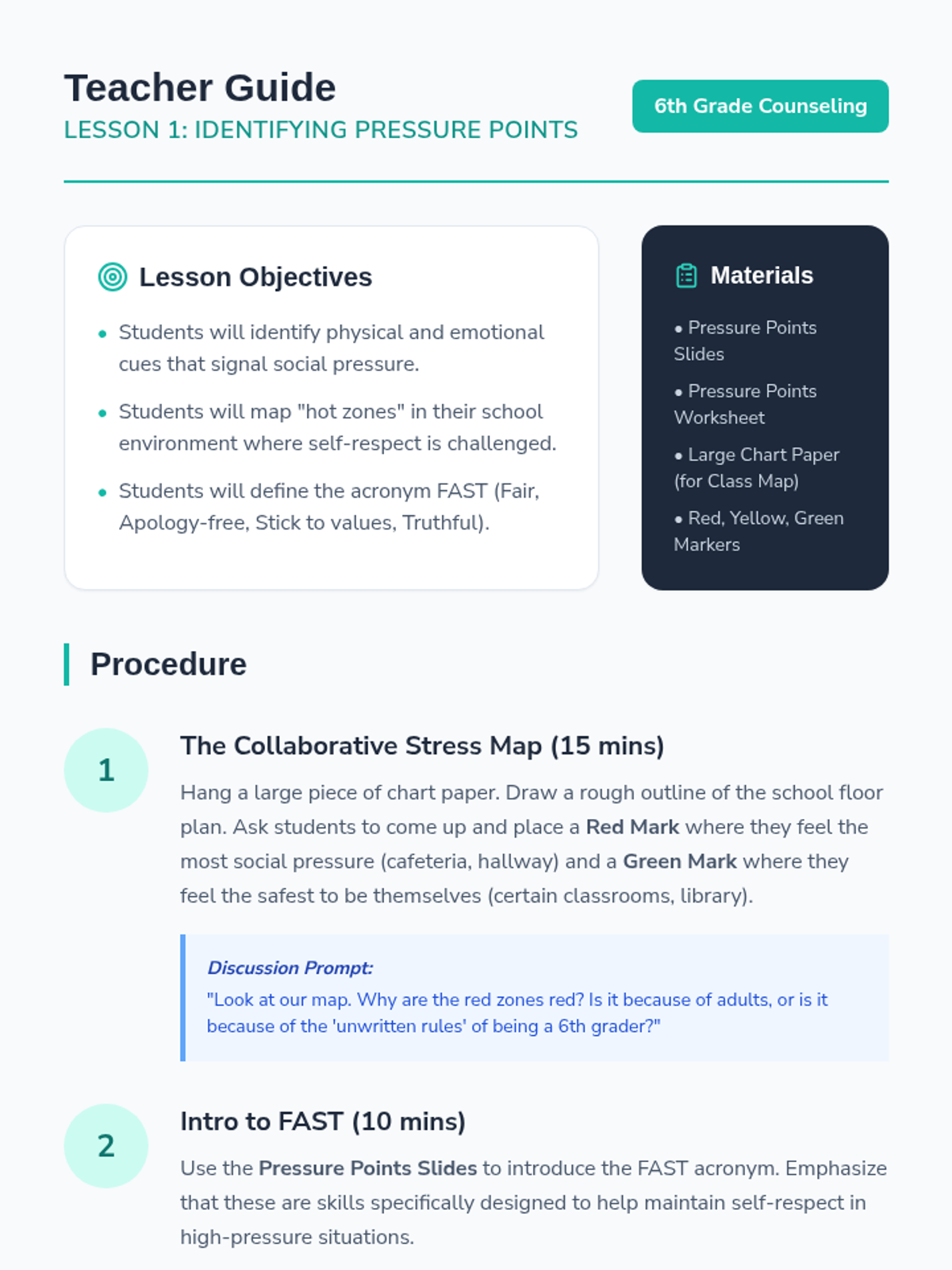
Students map out the 'pressure points' of 6th grade life where self-respect is most often challenged. They analyze the physical and emotional cues that signal their values are being compromised.
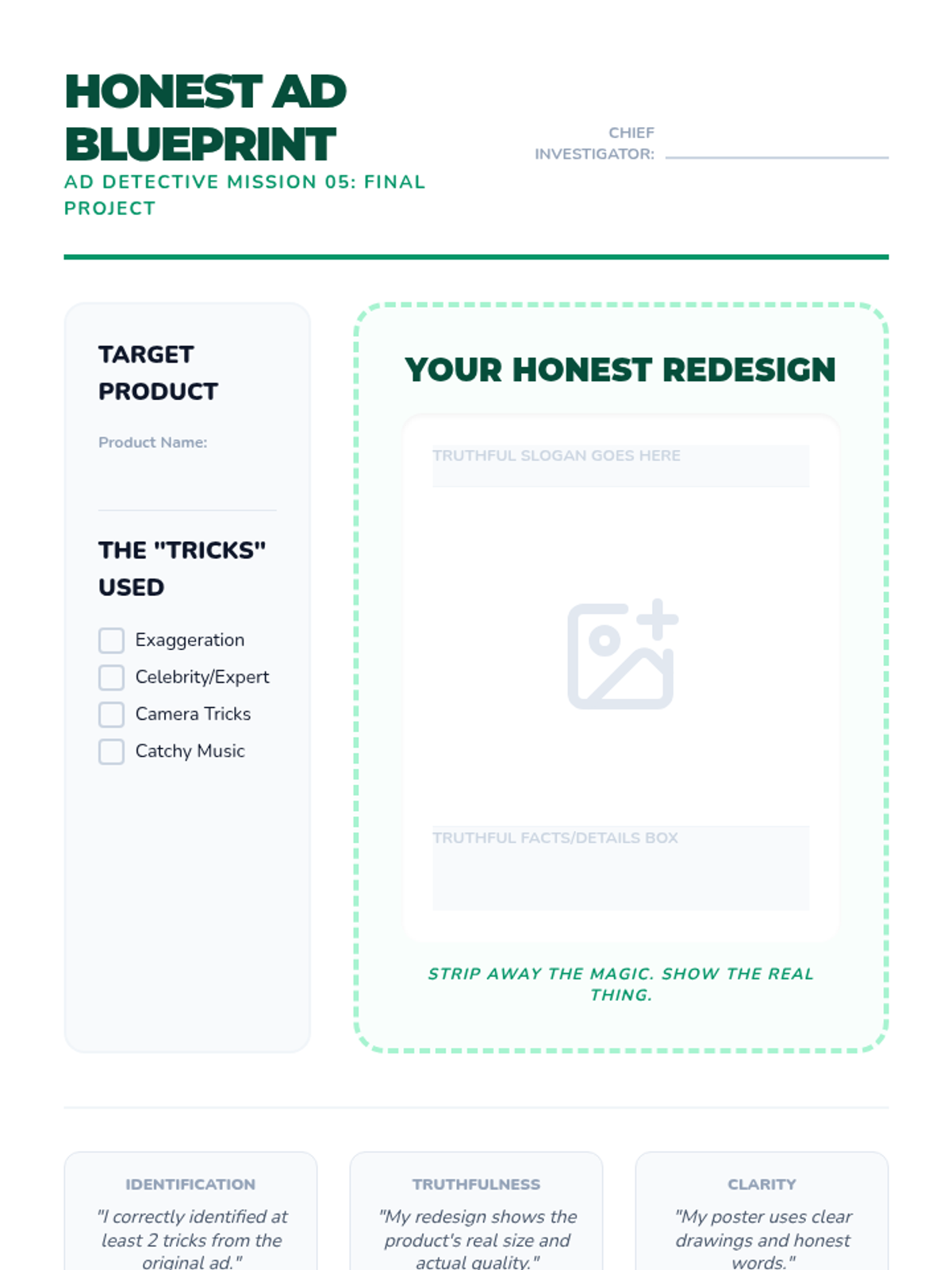
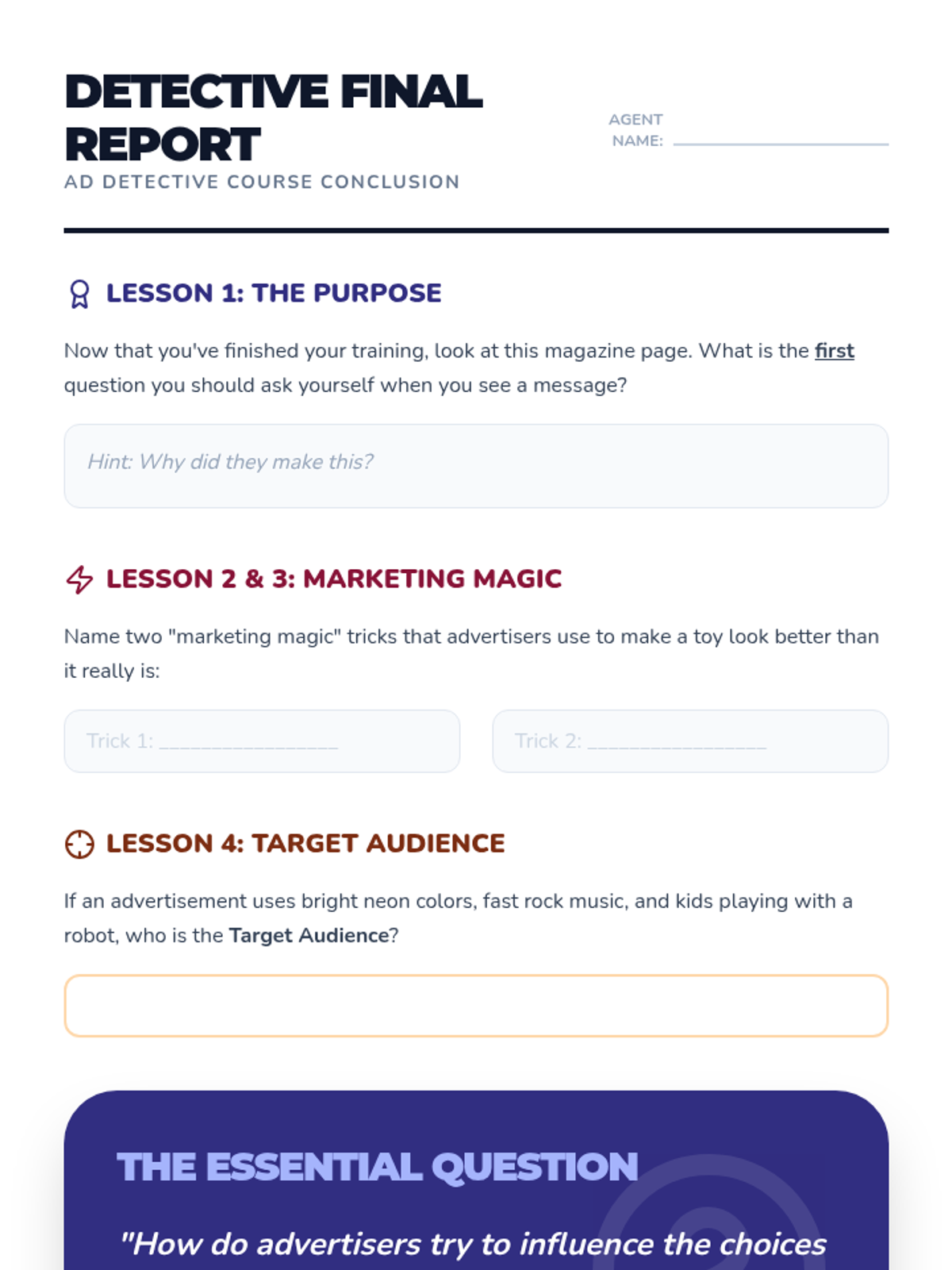
In this culminating project, students redesign misleading advertisements to be truthful, demonstrating their understanding of marketing influence.
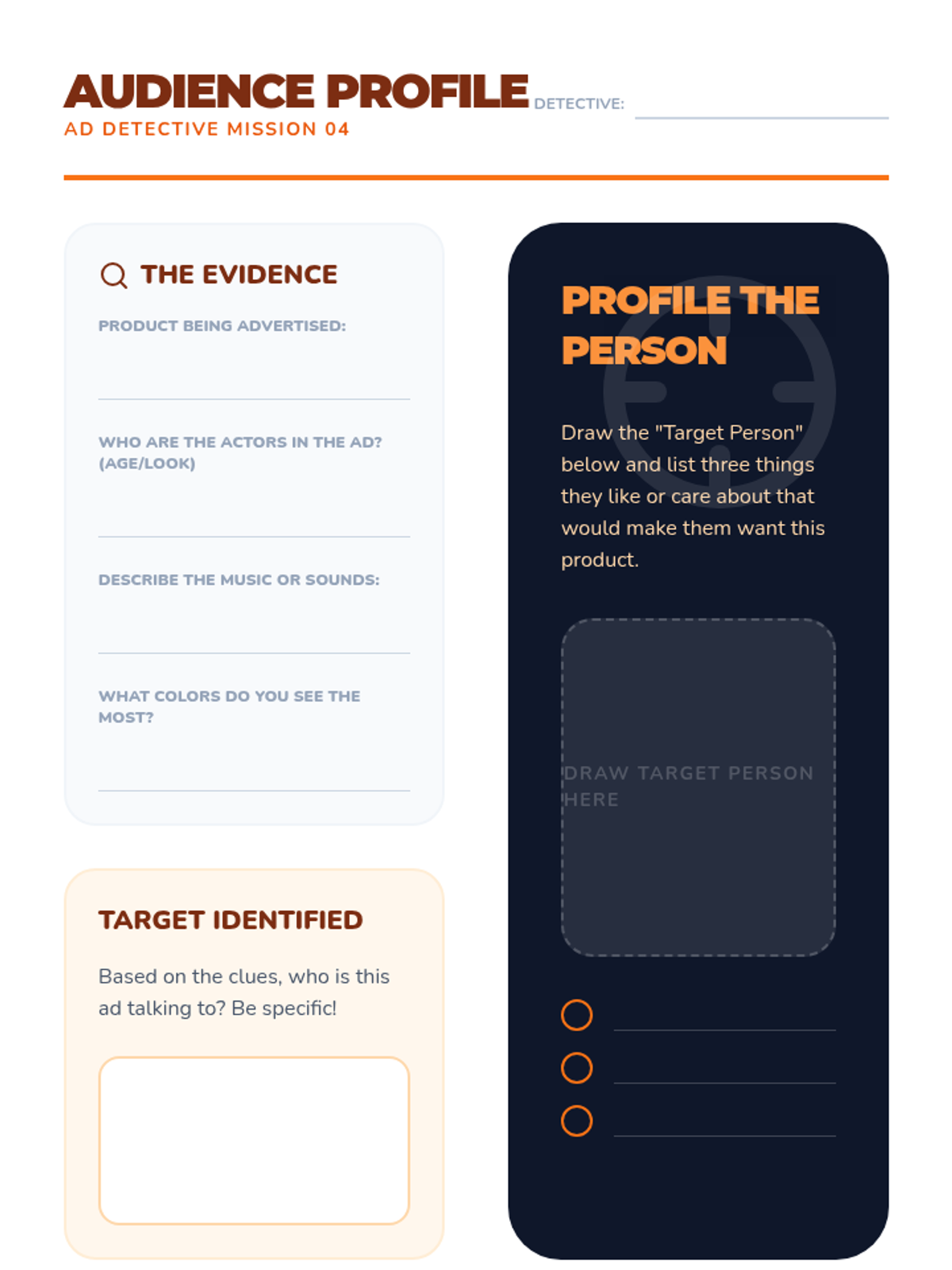
Students identify how advertisements are tailored to specific groups based on age, interests, and needs.
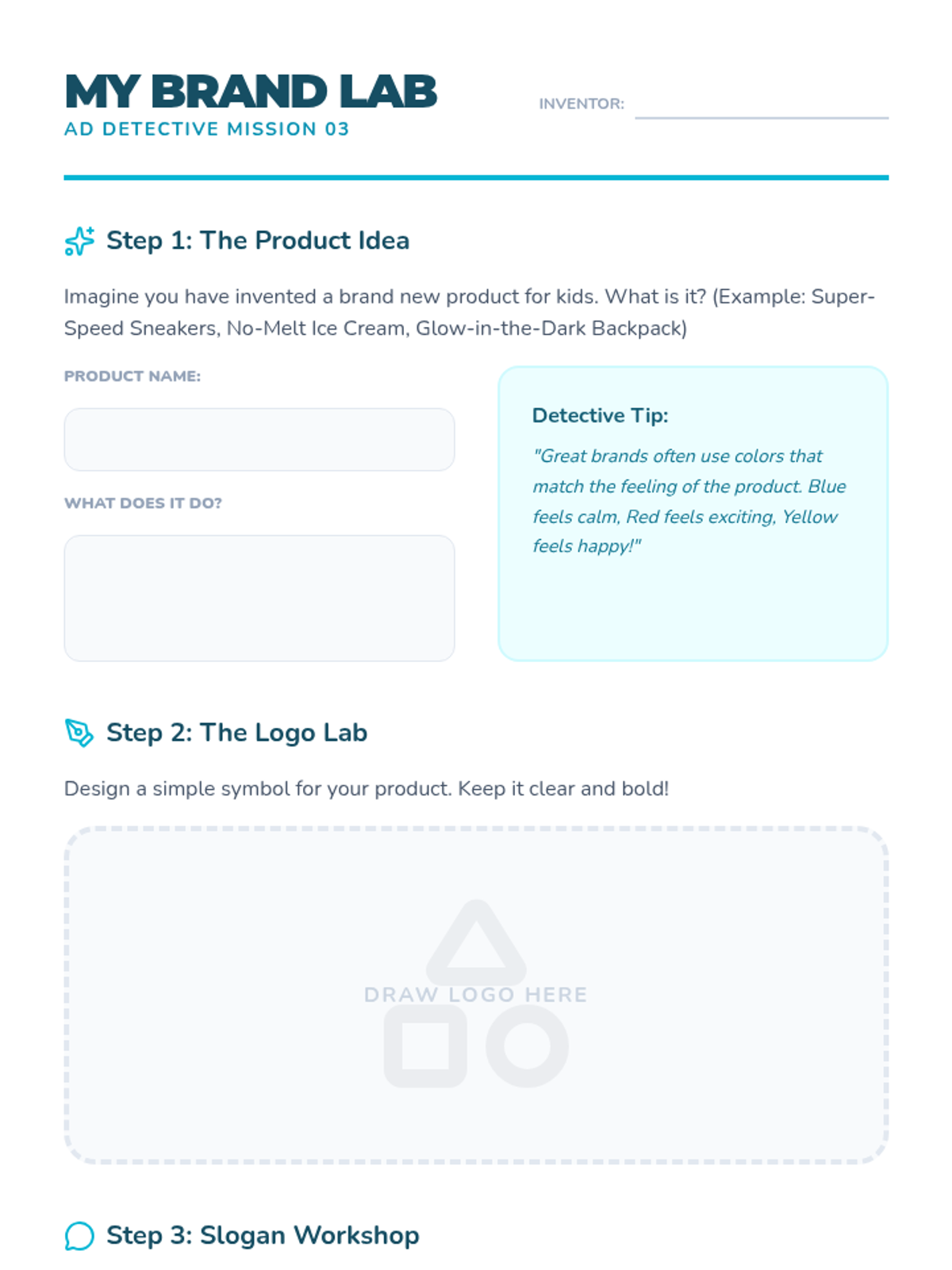
Students explore how brands use catchy slogans and memorable logos to create brand loyalty and recognition.
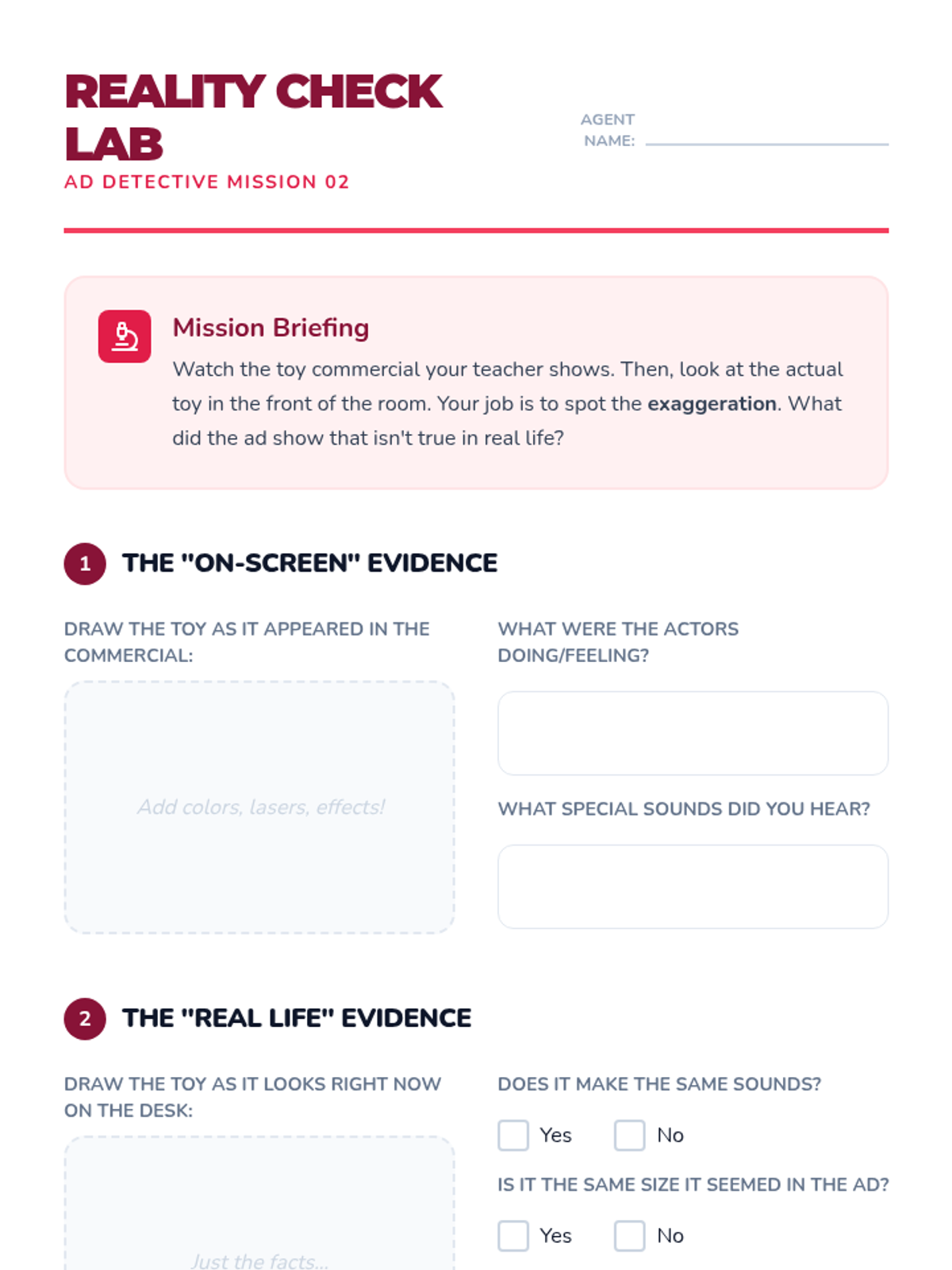
Focusing on exaggeration and production tricks, students analyze how audio and visual elements are used to make products appear more desirable.
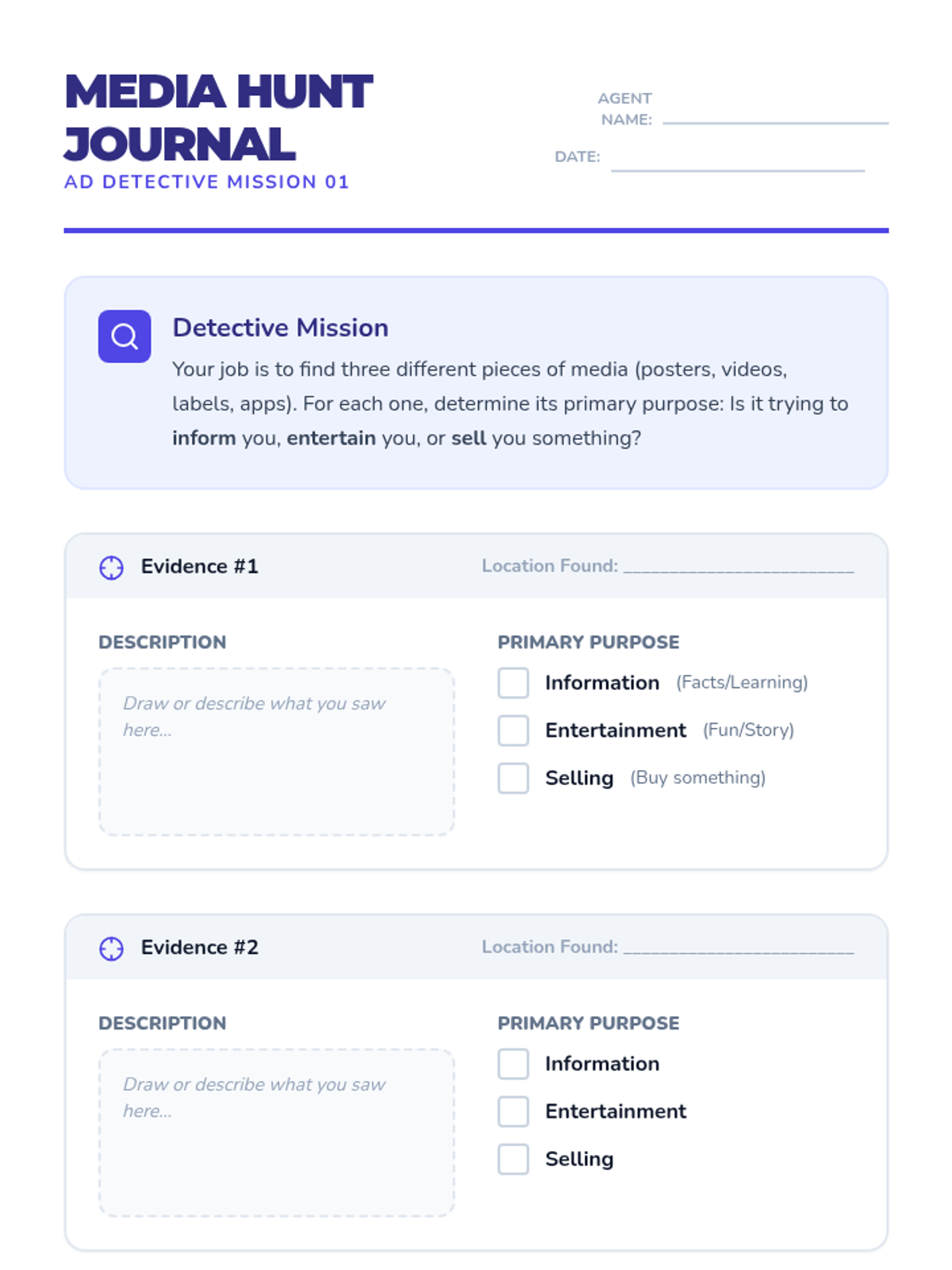
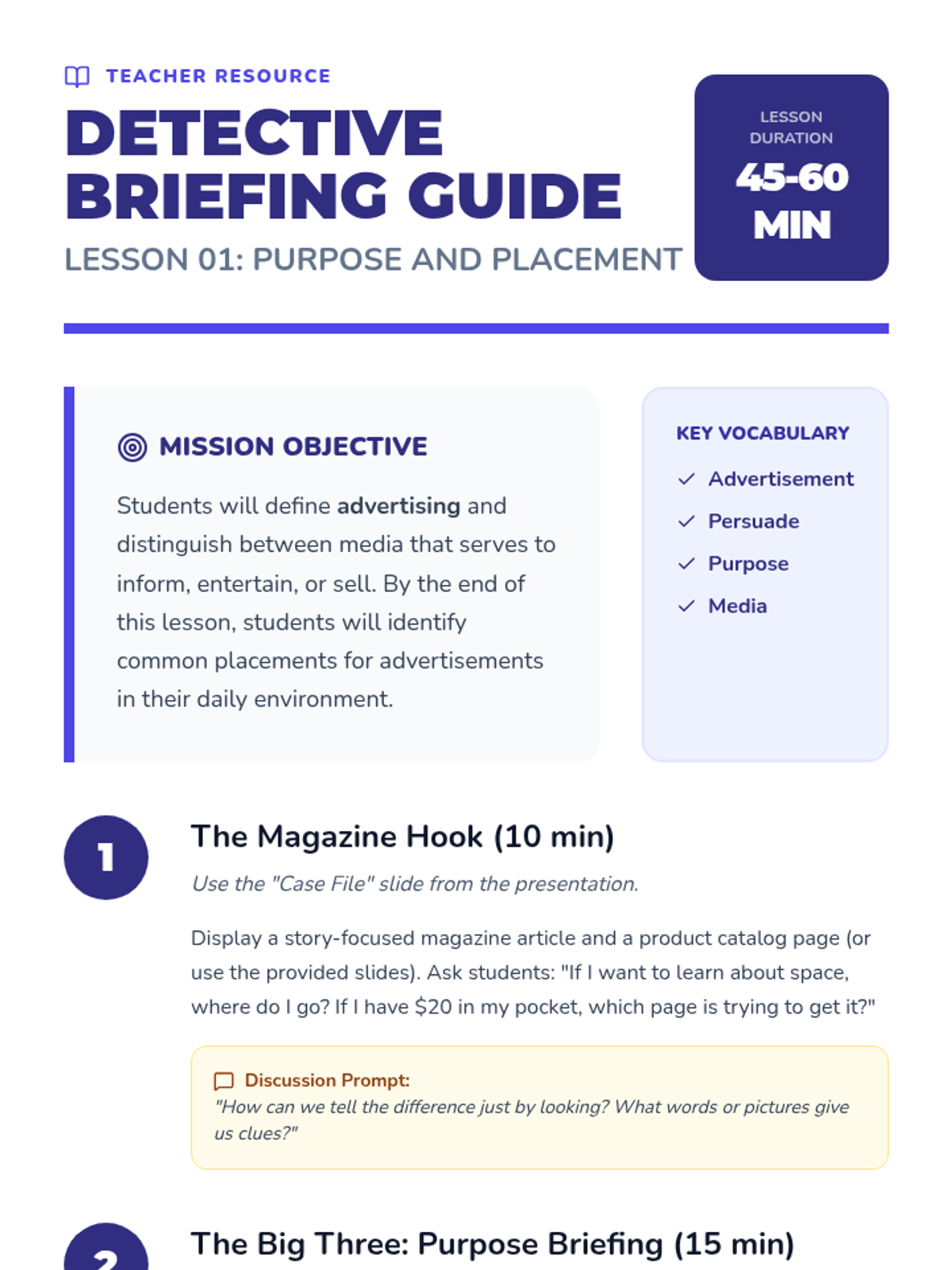
Students learn to distinguish between information, entertainment, and selling to identify the core purpose of advertising in various environments.