Root cause analysis and brainstorming techniques for everyday problem-solving. Equips learners with ethical frameworks and risk-benefit evaluation skills to predict consequences and make informed choices.
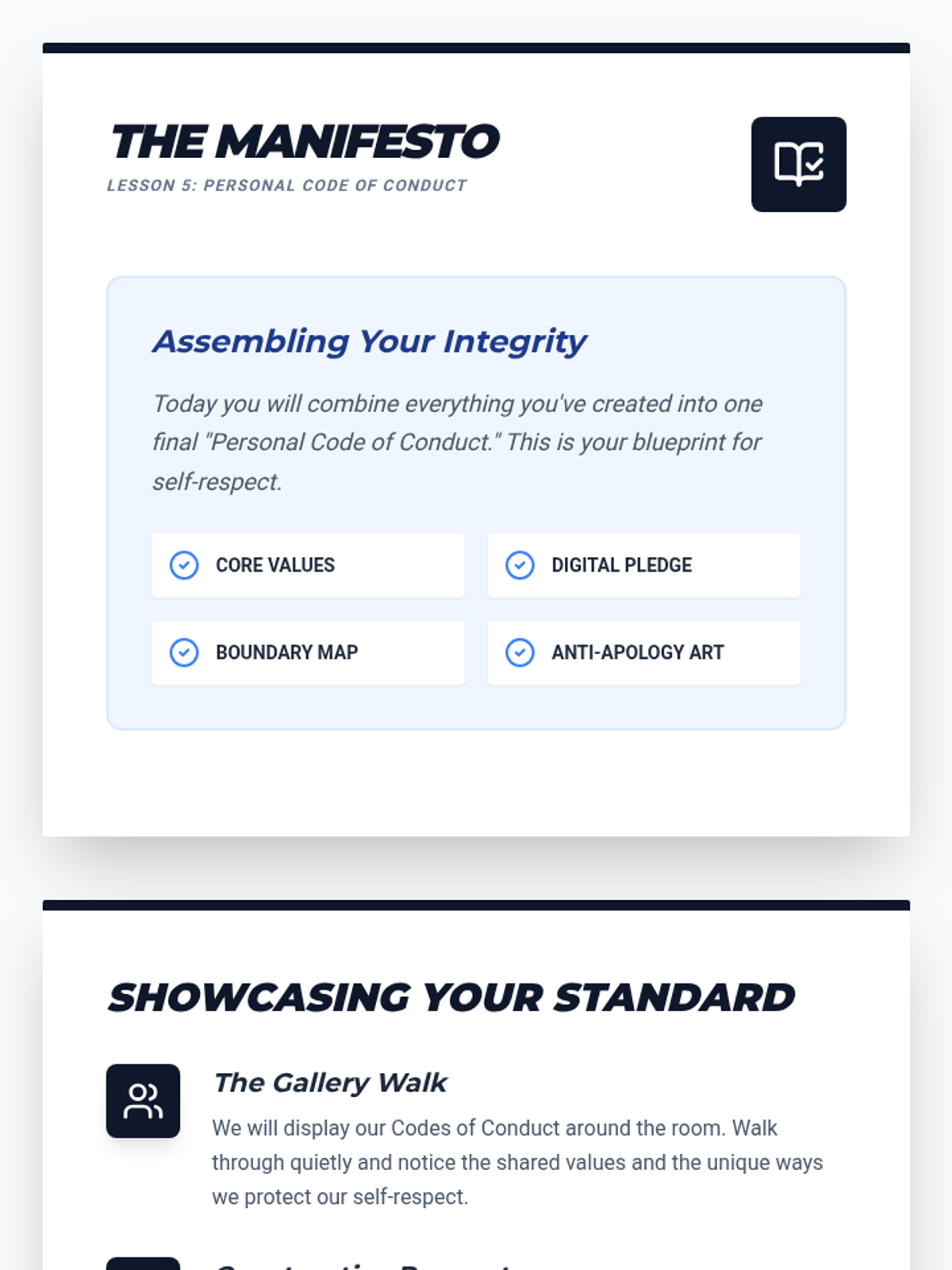
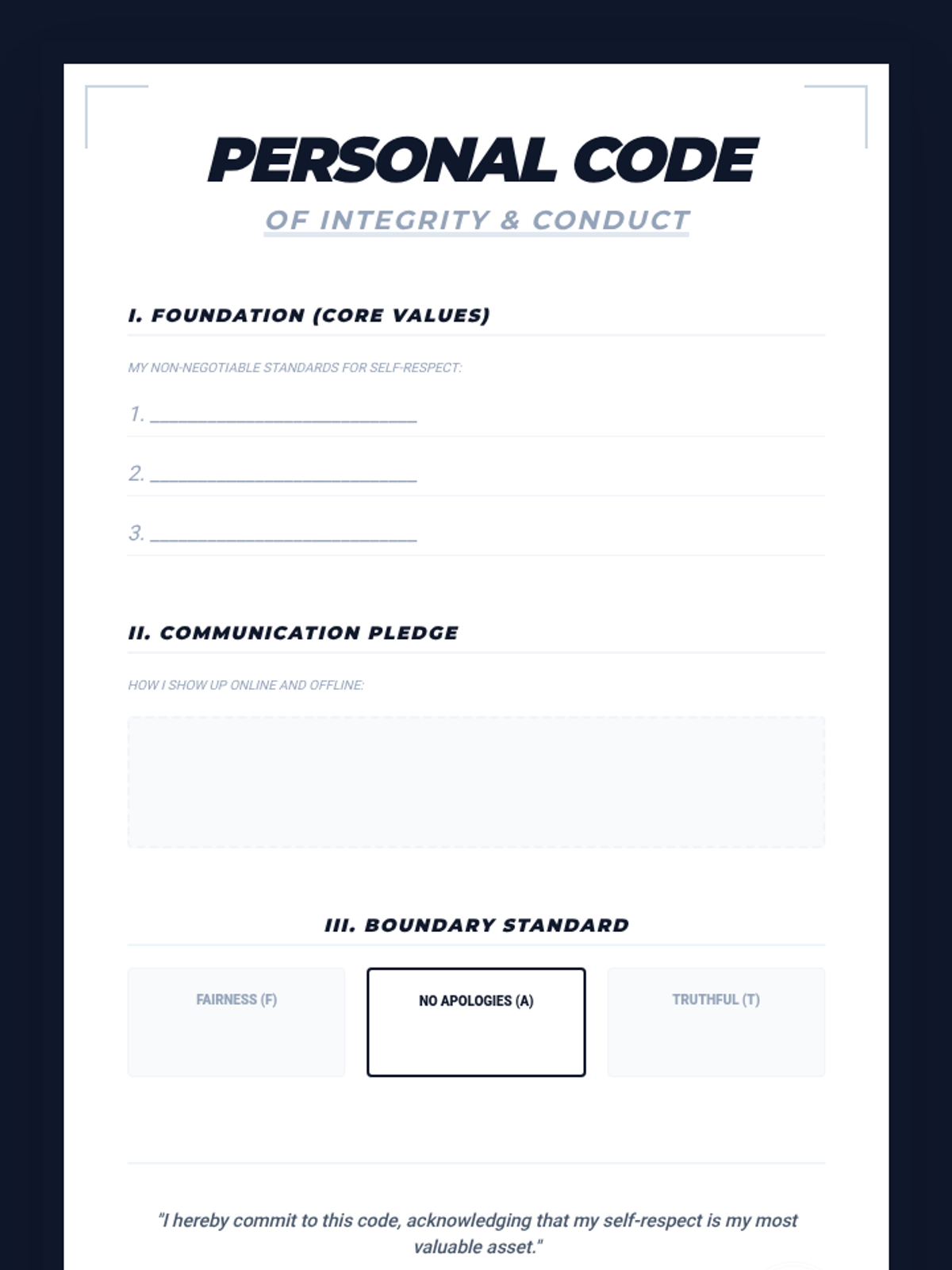
The culmination of the sequence where students assemble their work into a final 'Personal Code of Conduct' and share their insights with peers.
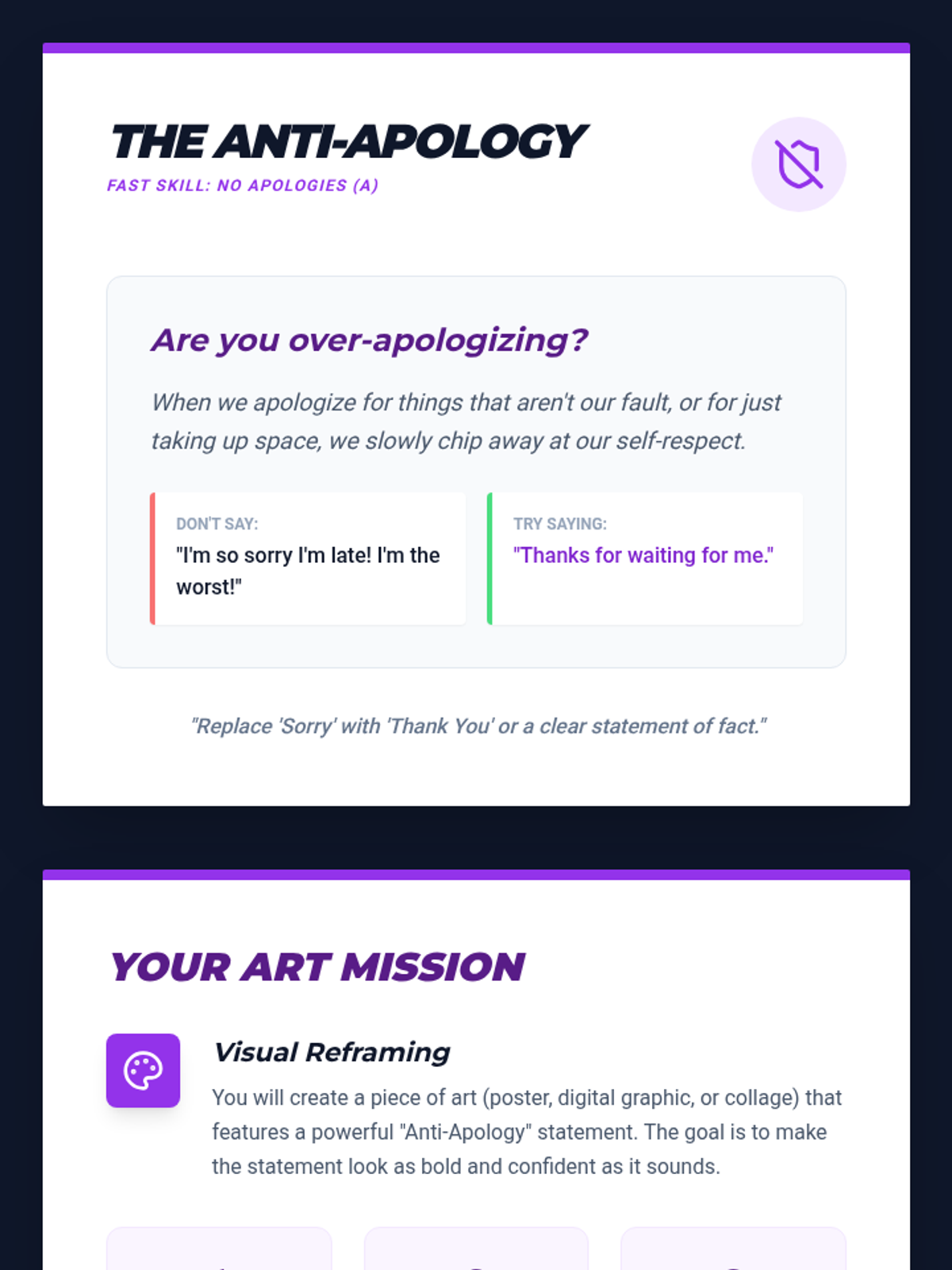
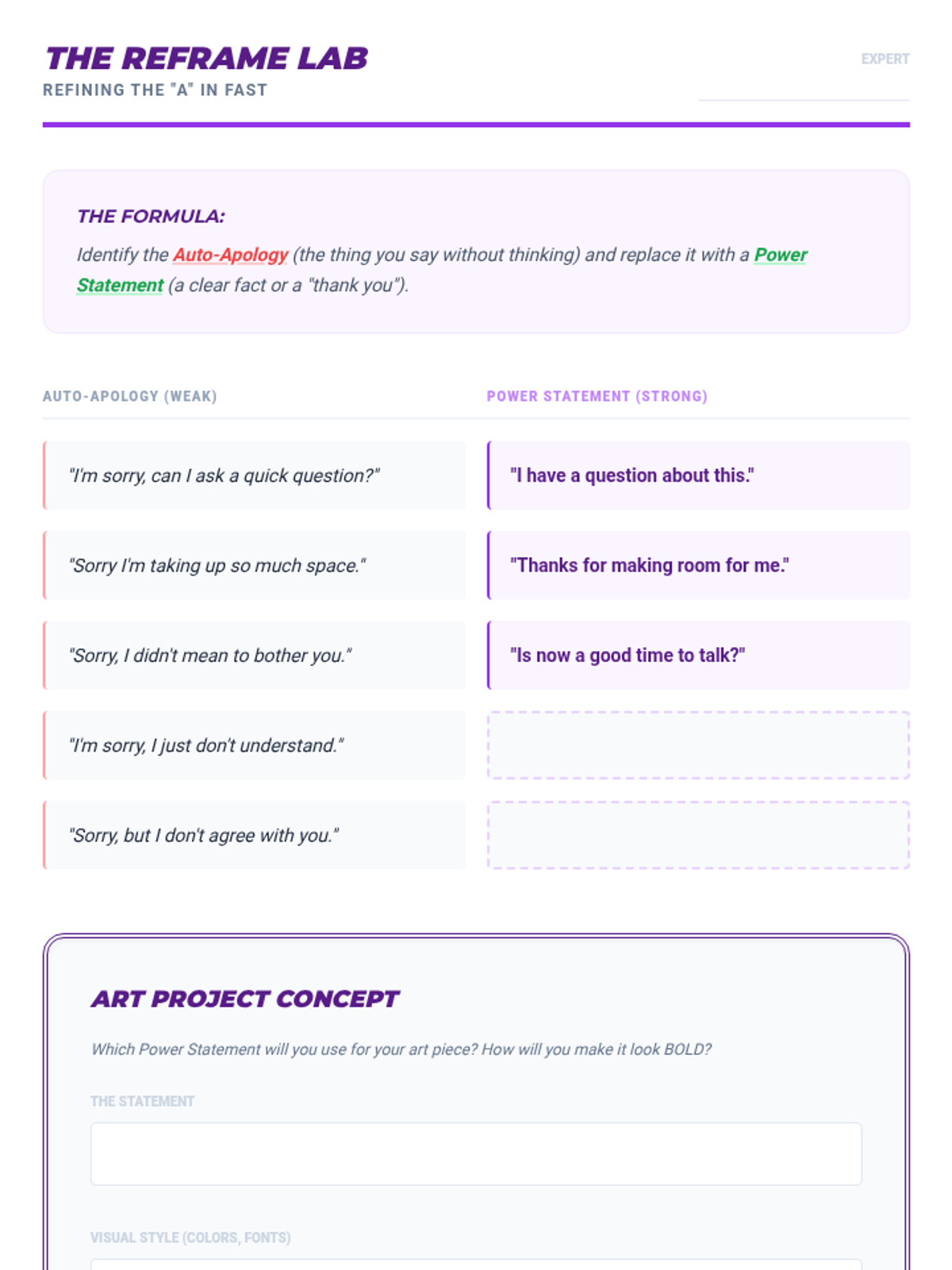
A creative project focused on the 'No Apologies' aspect of FAST, teaching students to reframe over-apologies into confident, assertive statements through art.
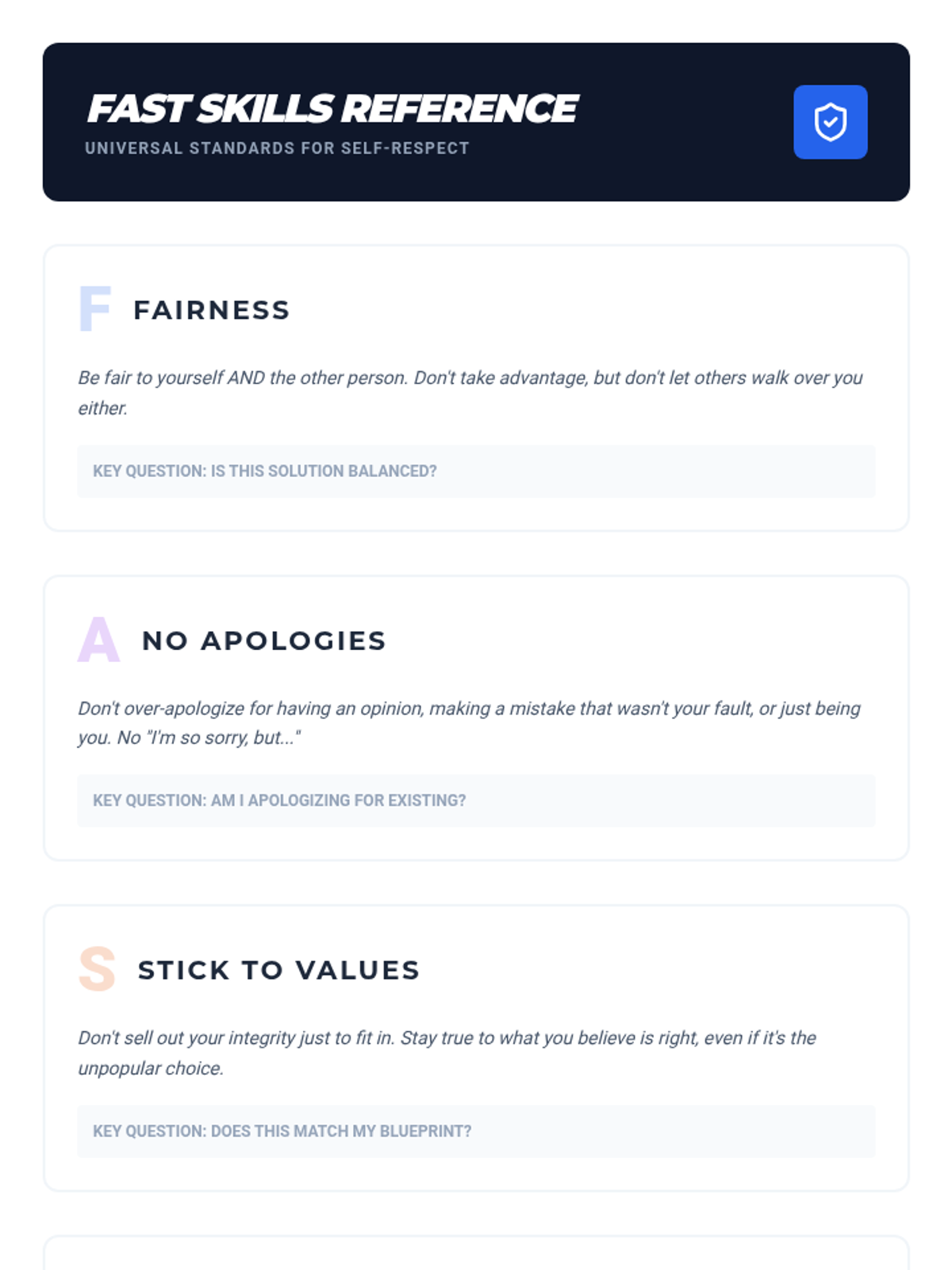
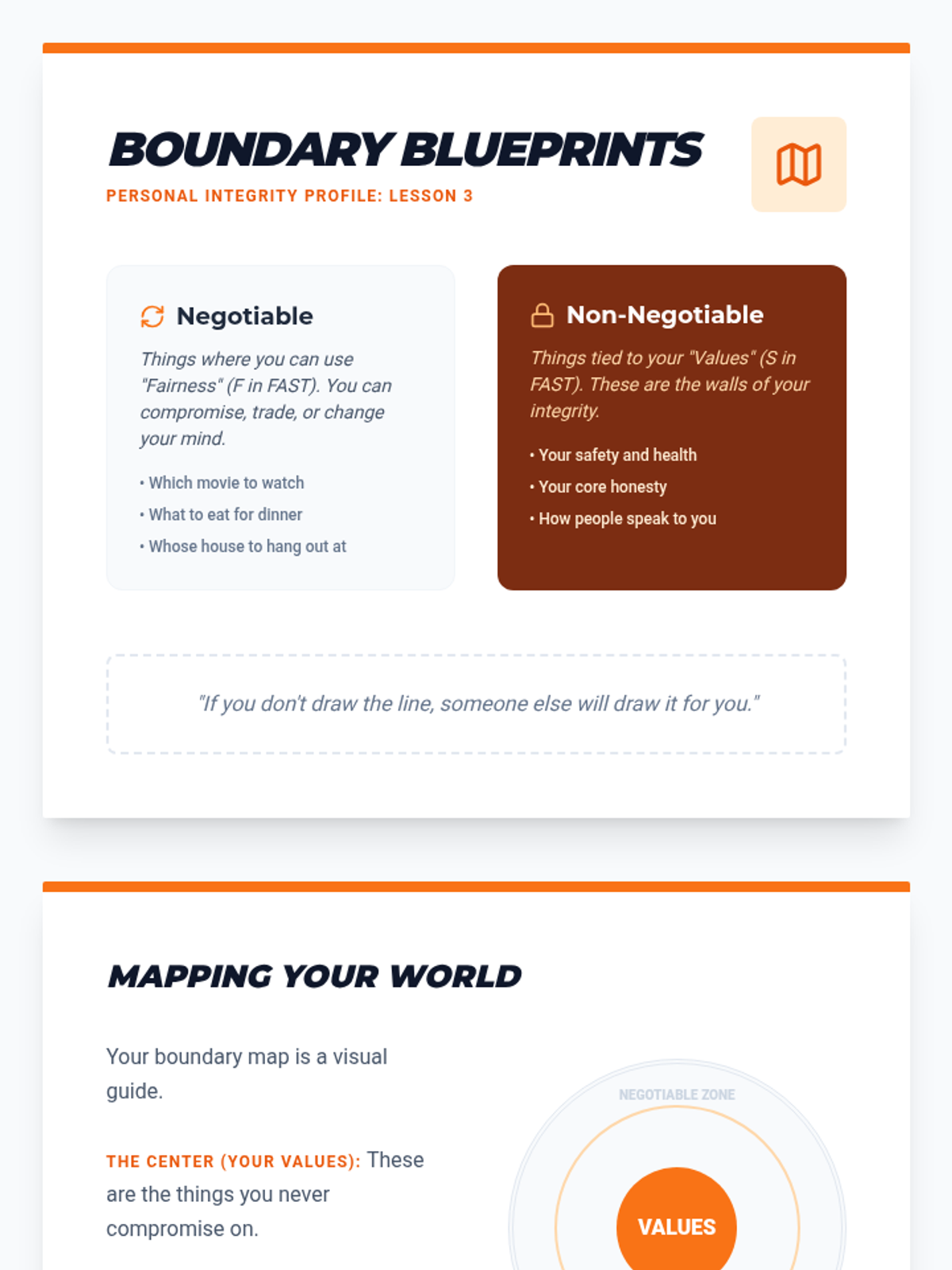
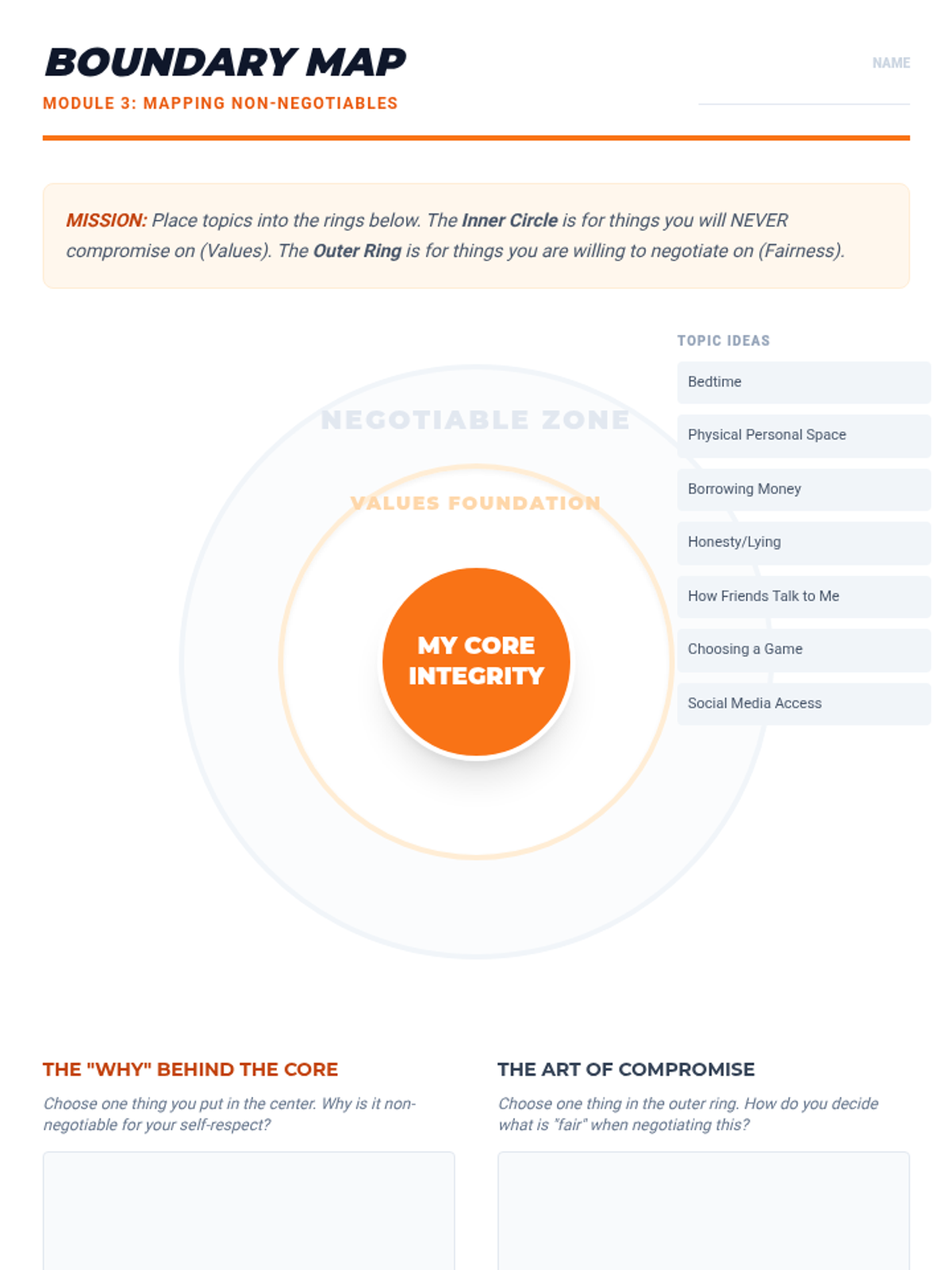
Students differentiate between fairness and non-negotiable values by creating a visual 'Boundary Map' to guide their interpersonal interactions.
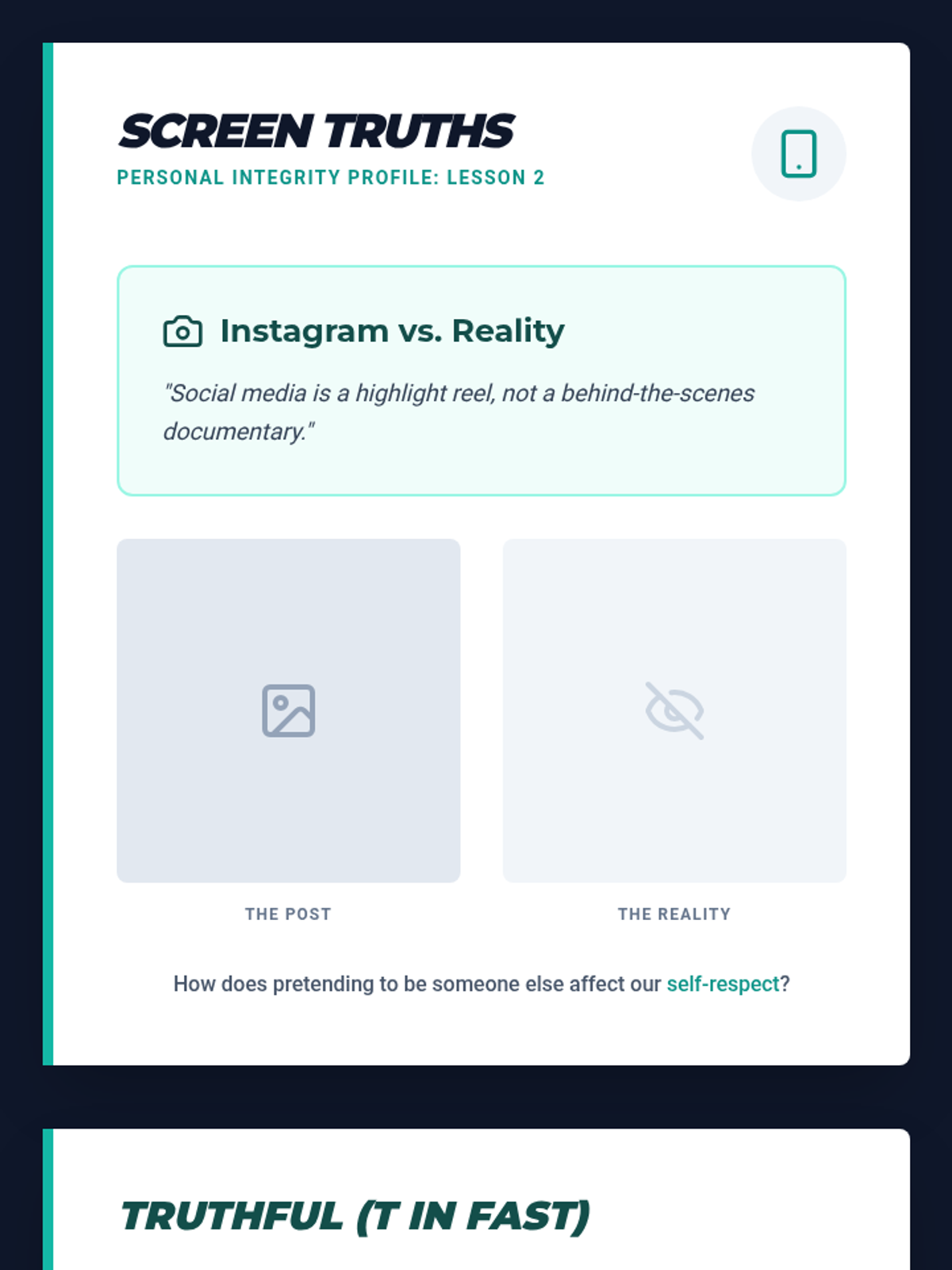
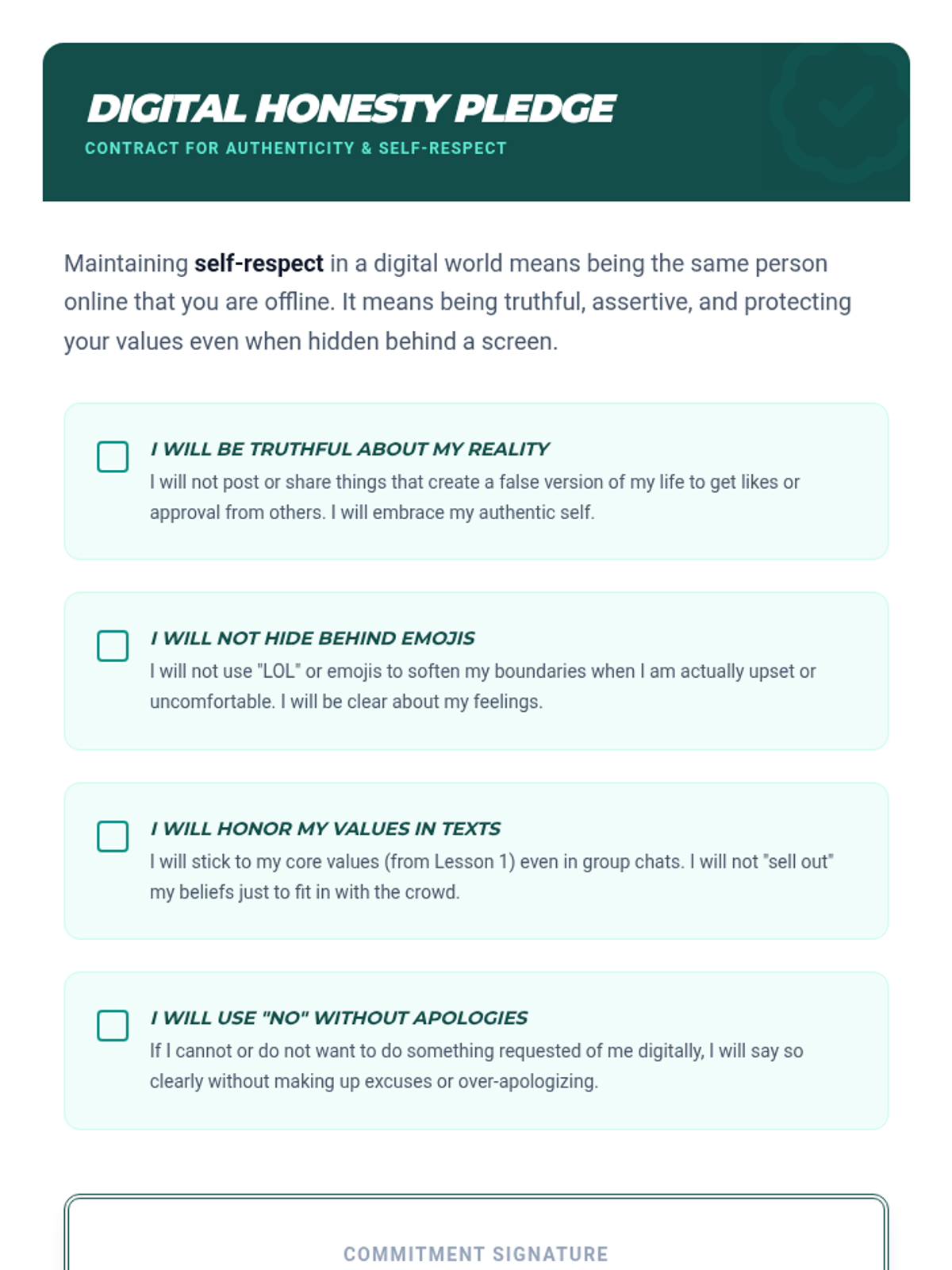
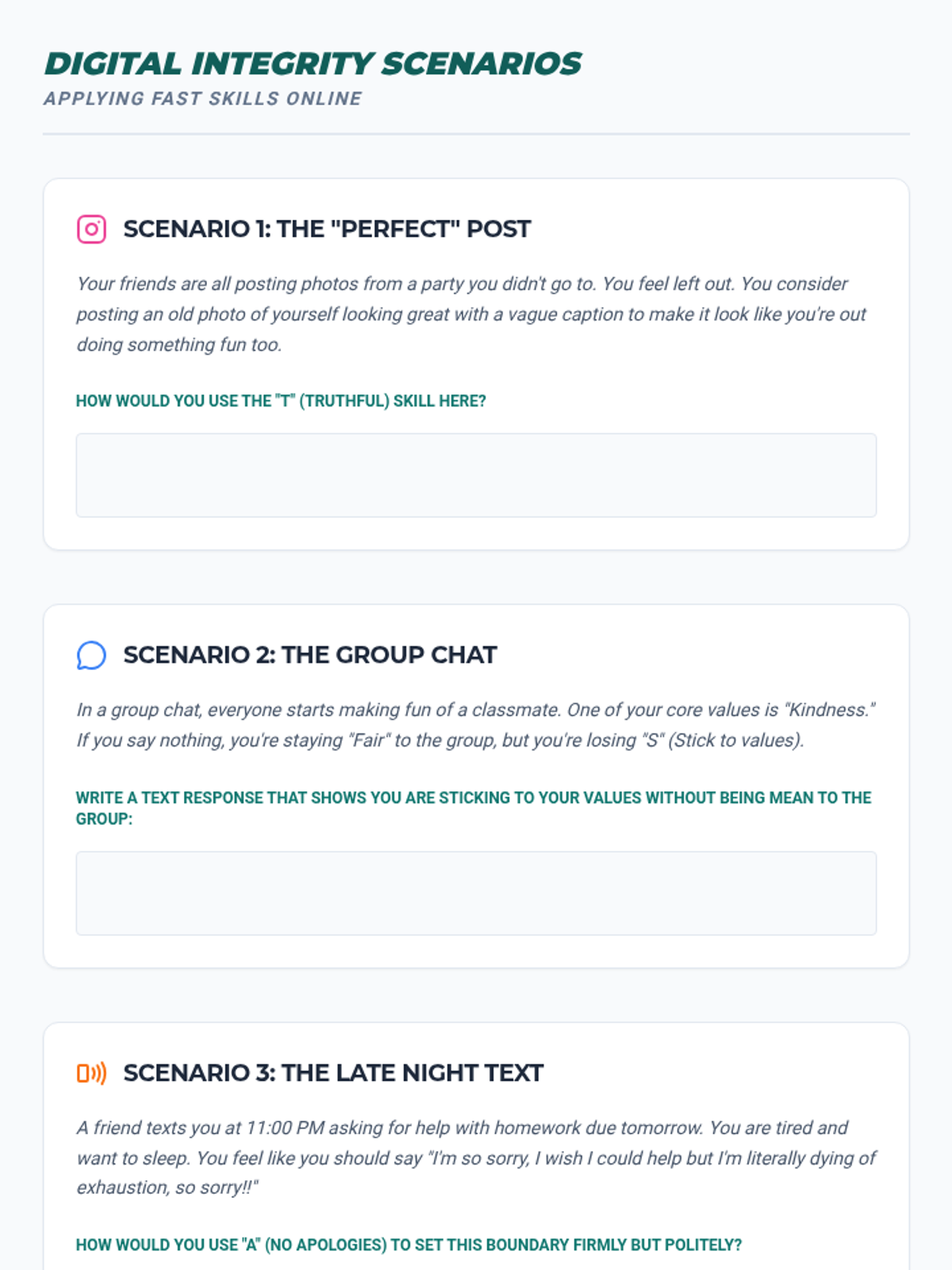
An exploration of the 'Truthful' aspect of FAST in digital spaces, analyzing how social media impacts authenticity and drafting a personal pledge for digital honesty.
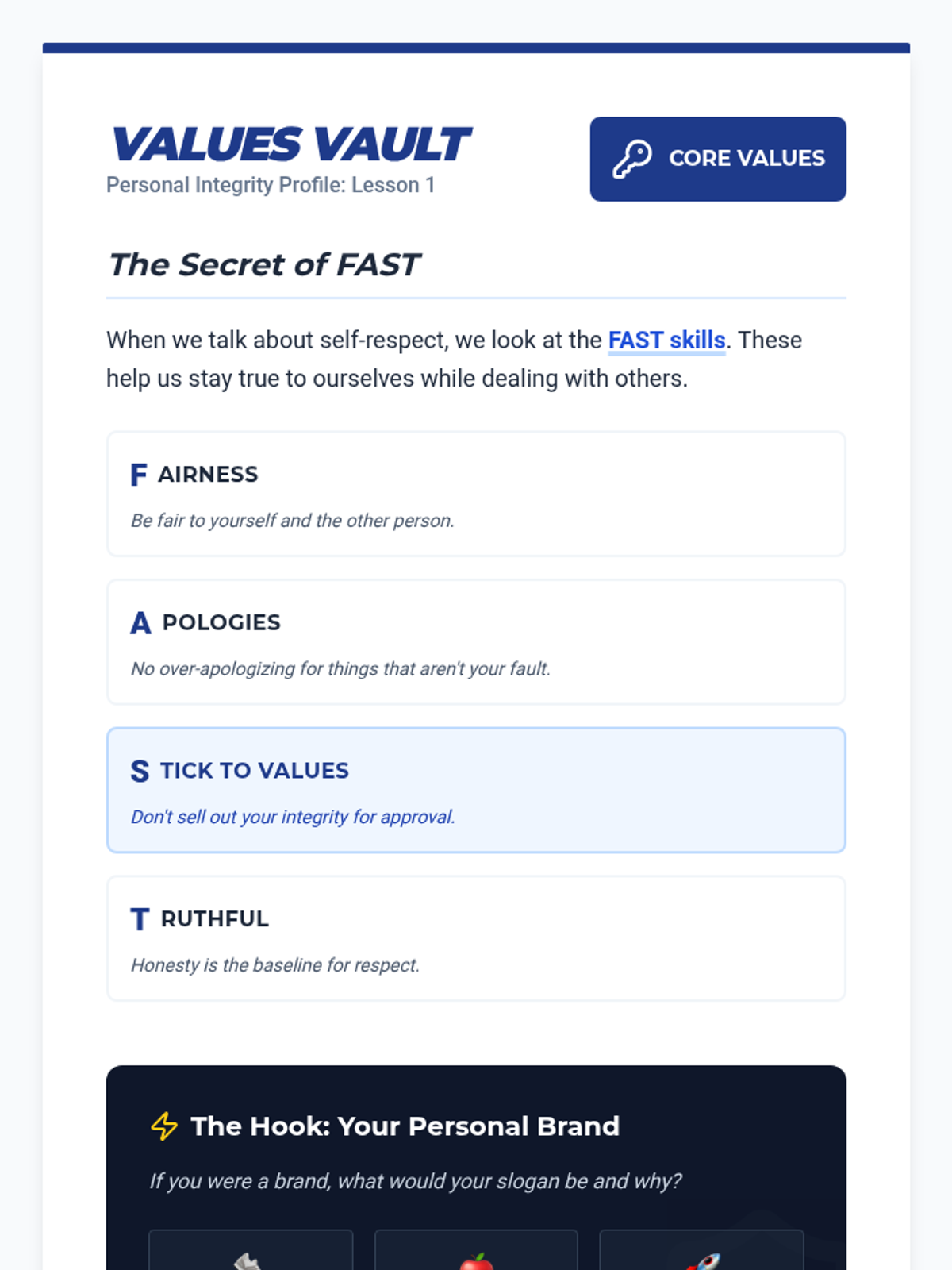
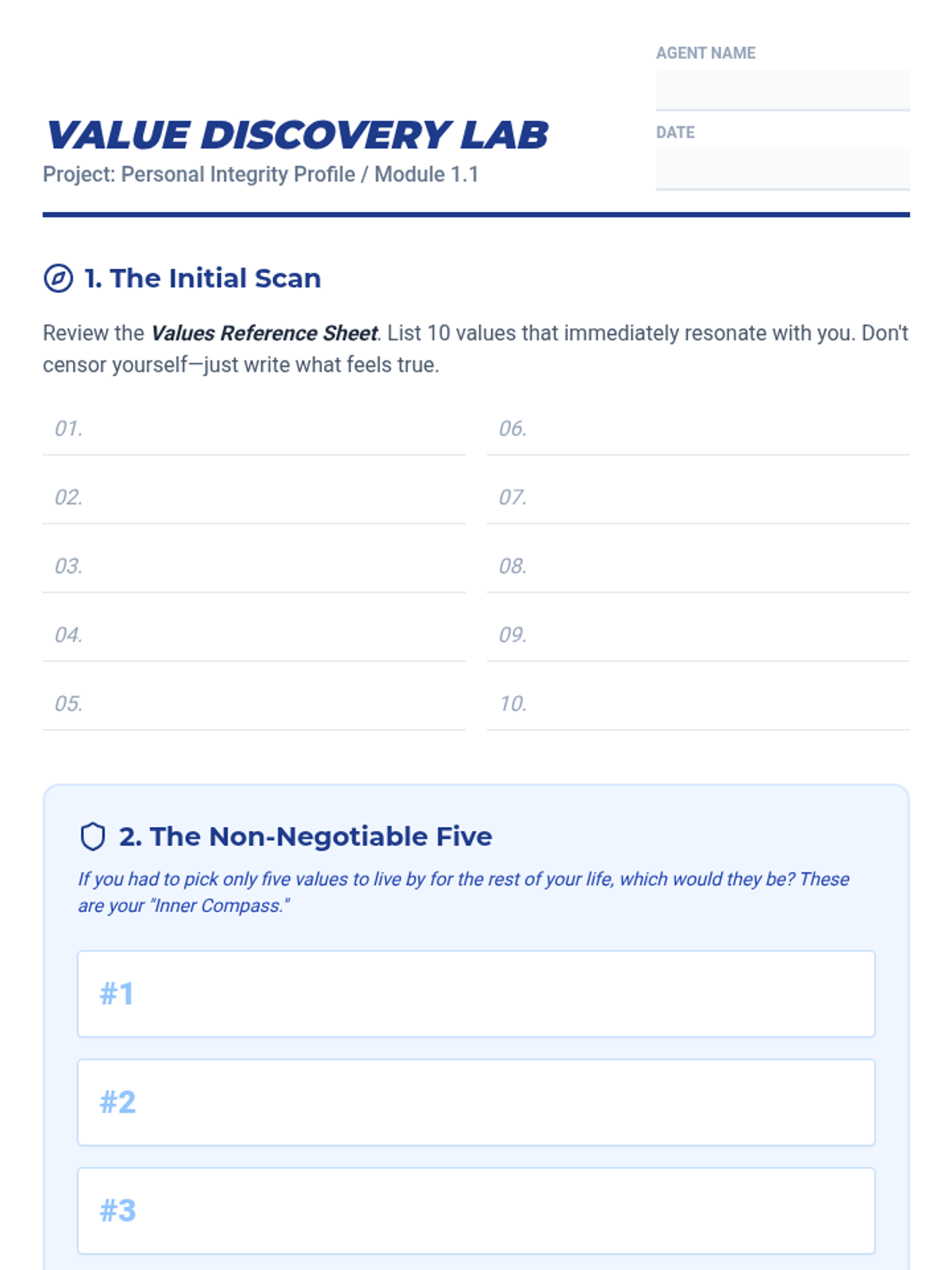
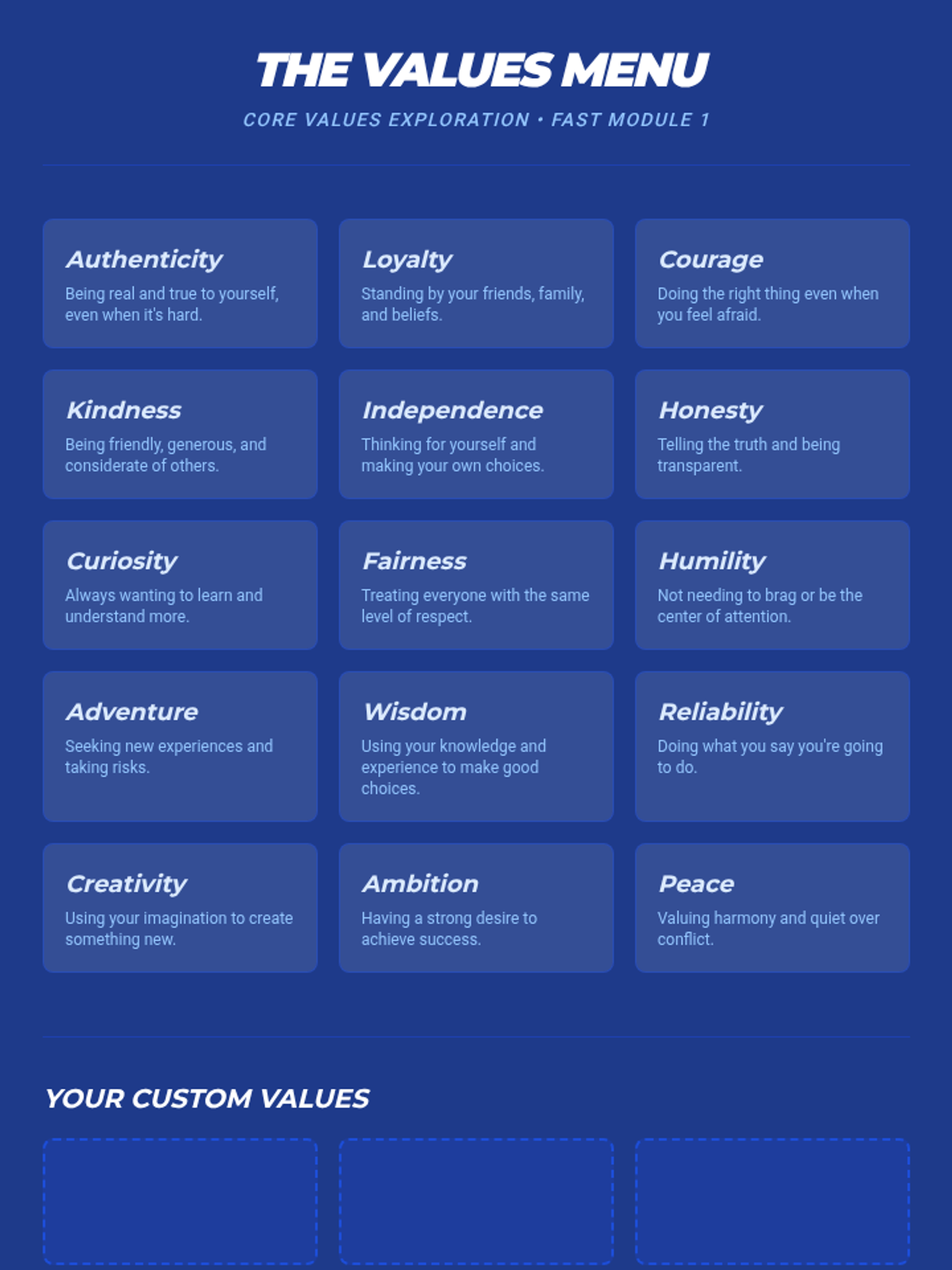
Students identify their core values through personal inquiry and visual representation, establishing the foundation for the 'Stick to values' component of FAST.
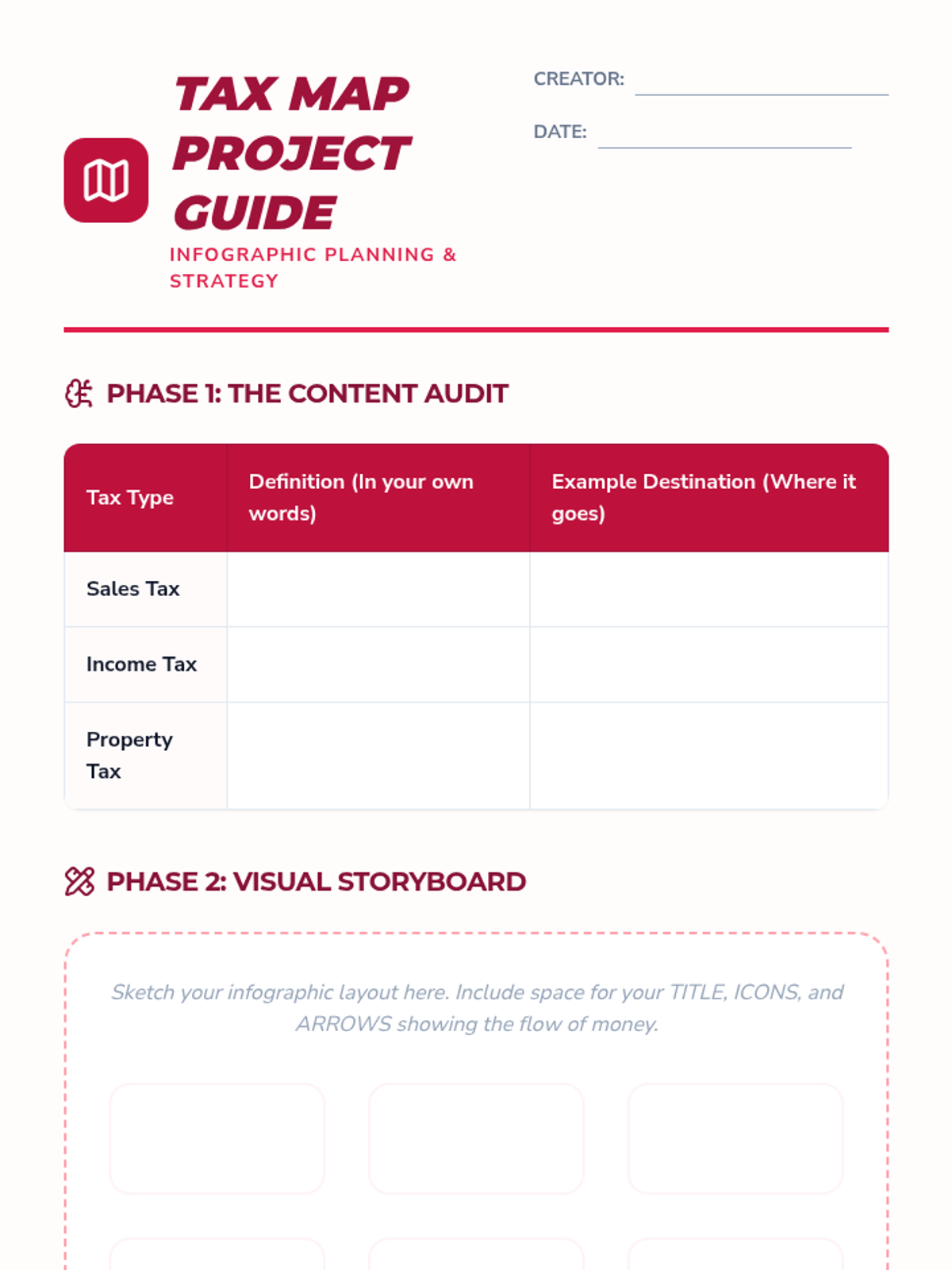
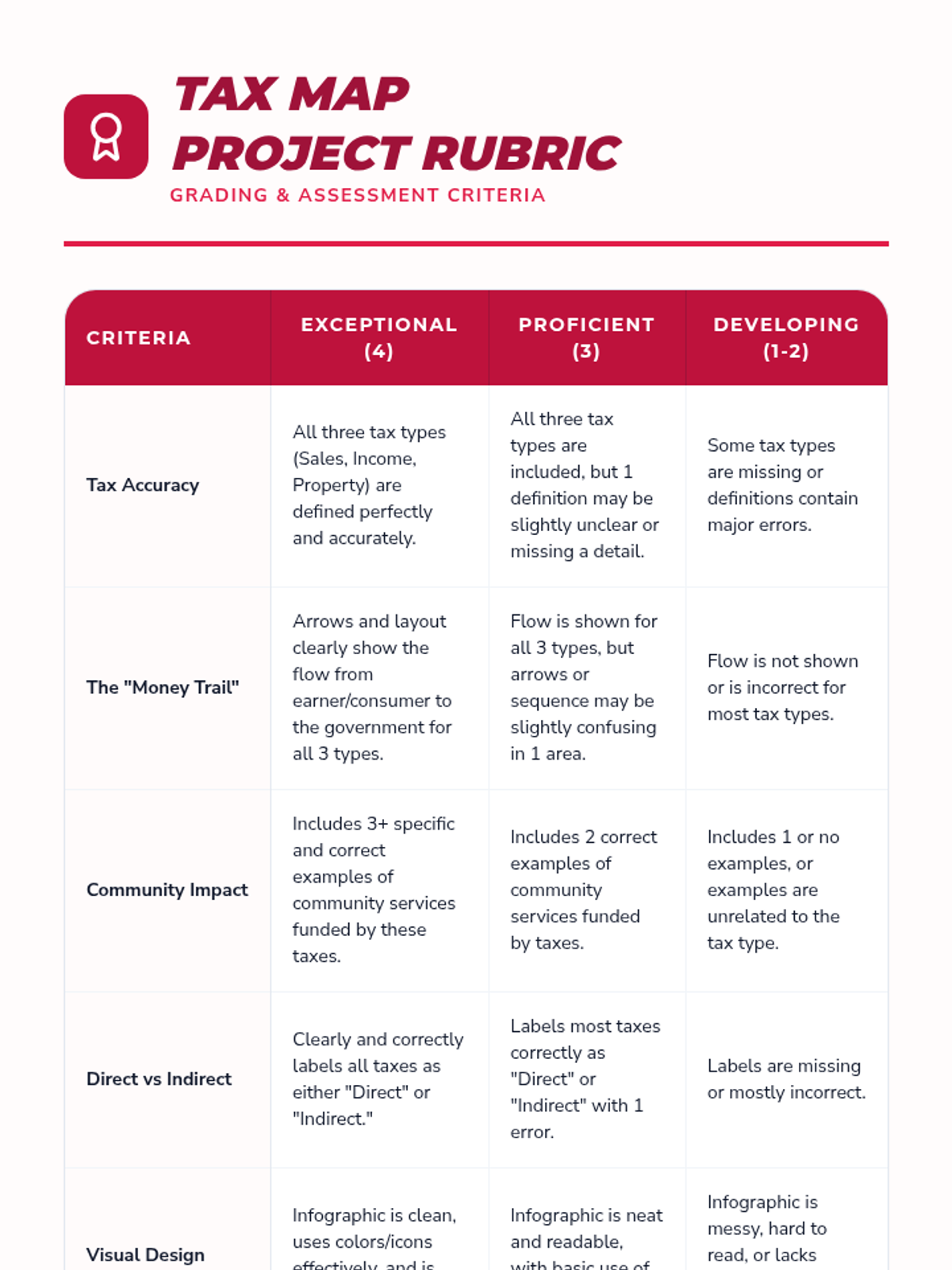
Students synthesize their learning by creating an infographic that maps the flow of various tax types.
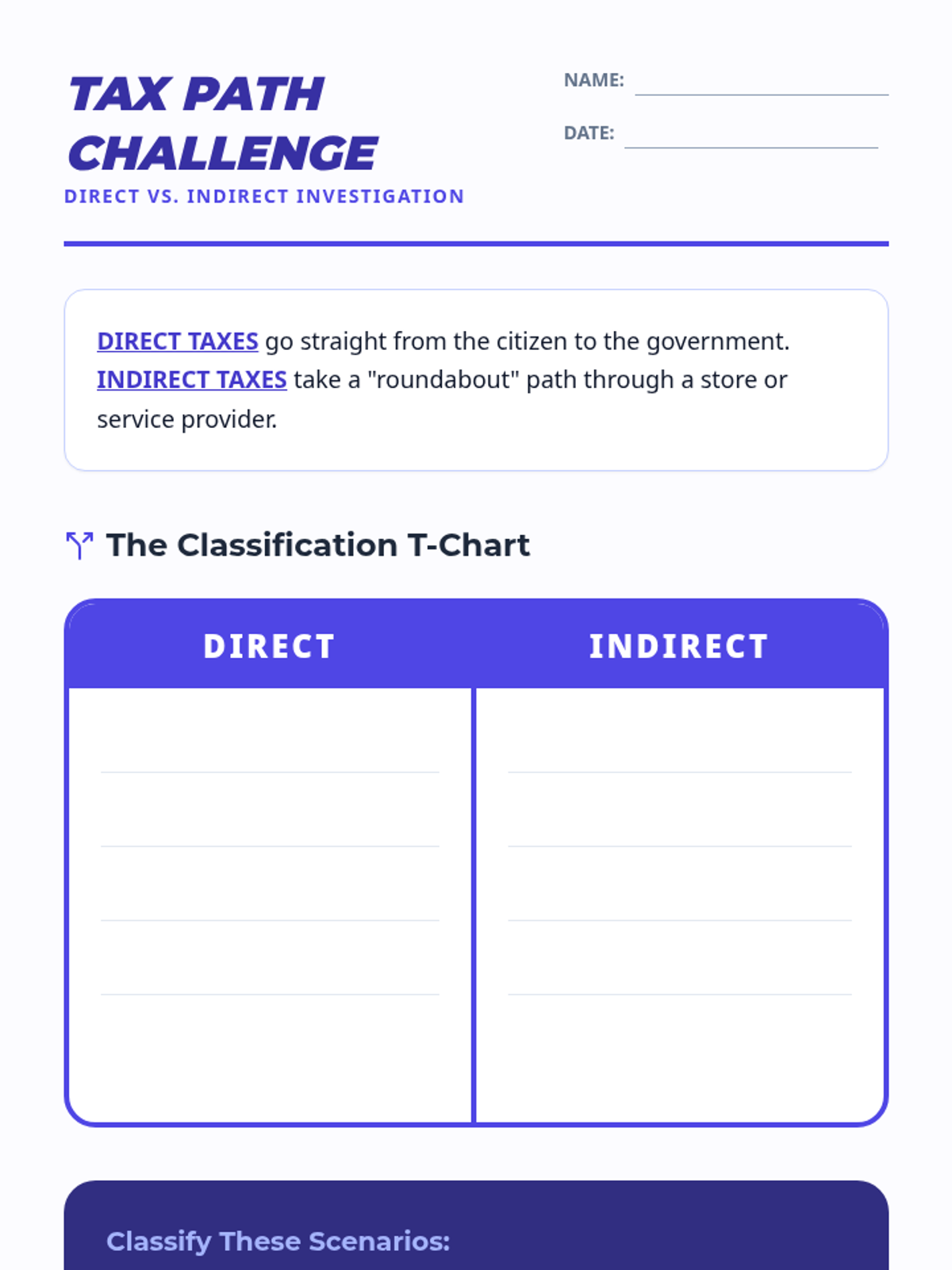
Students distinguish between direct taxes paid to the government and indirect taxes paid through merchants.
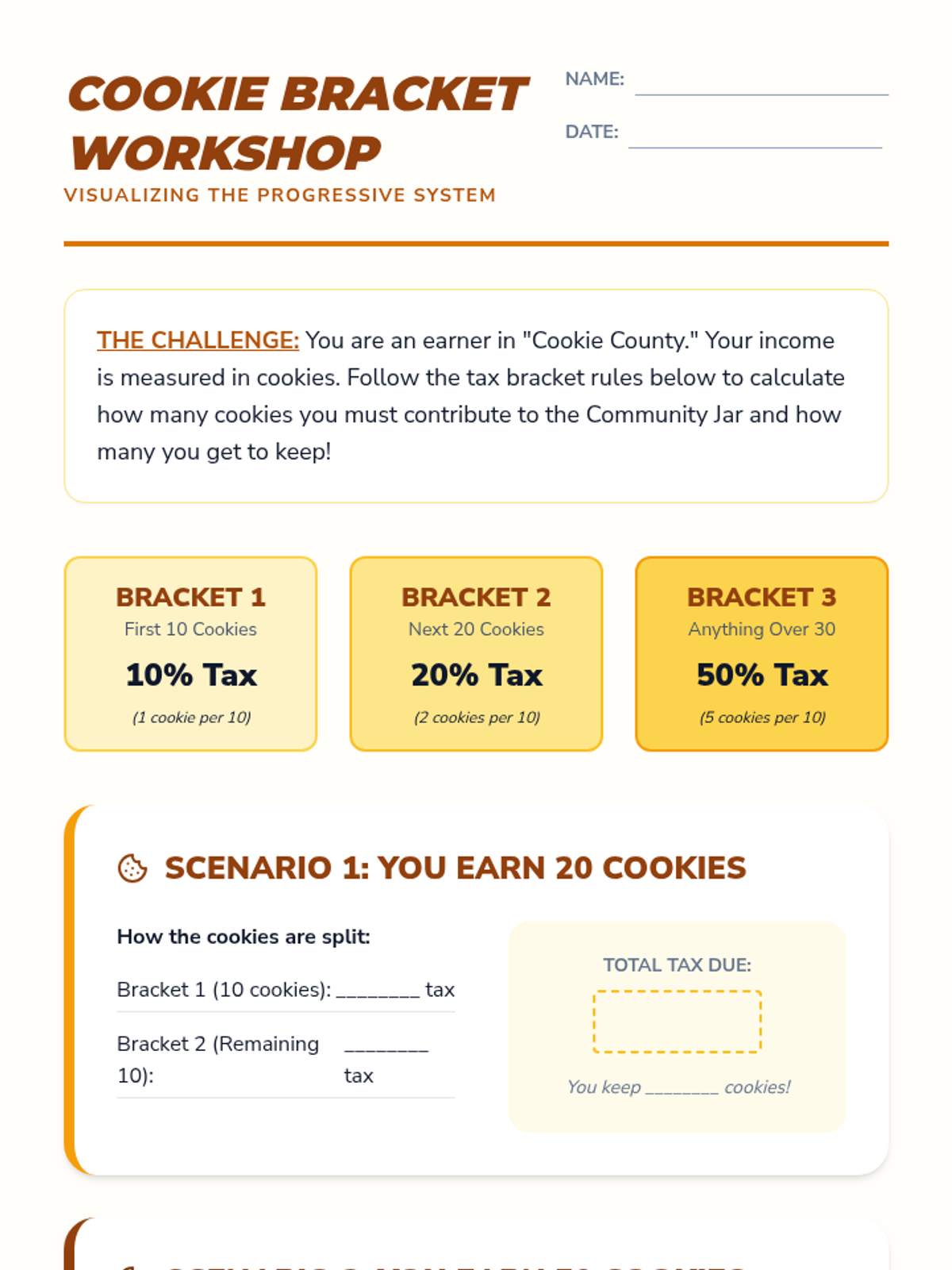
An exploration of the progressive income tax system using visual models to understand tax brackets.
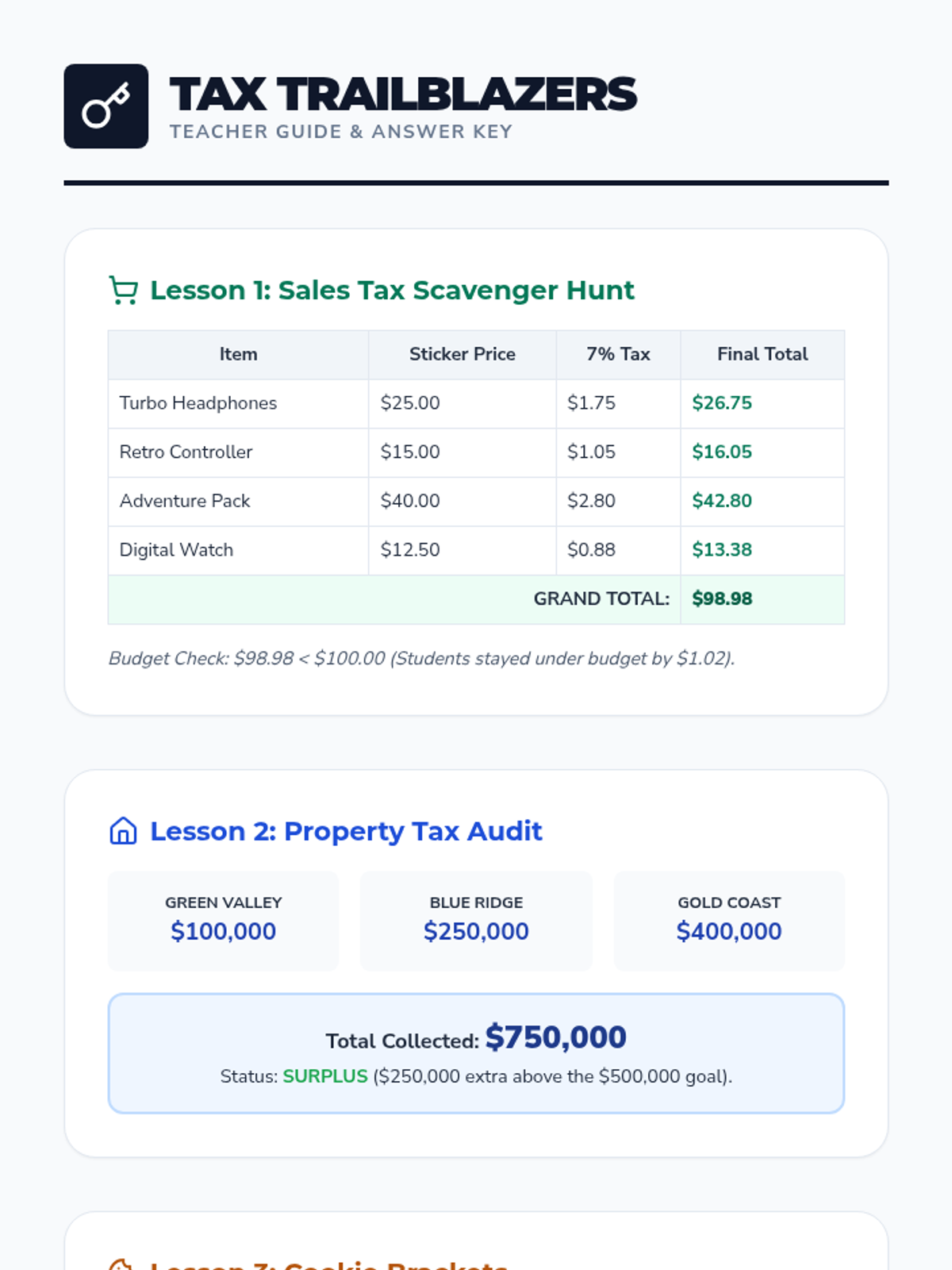
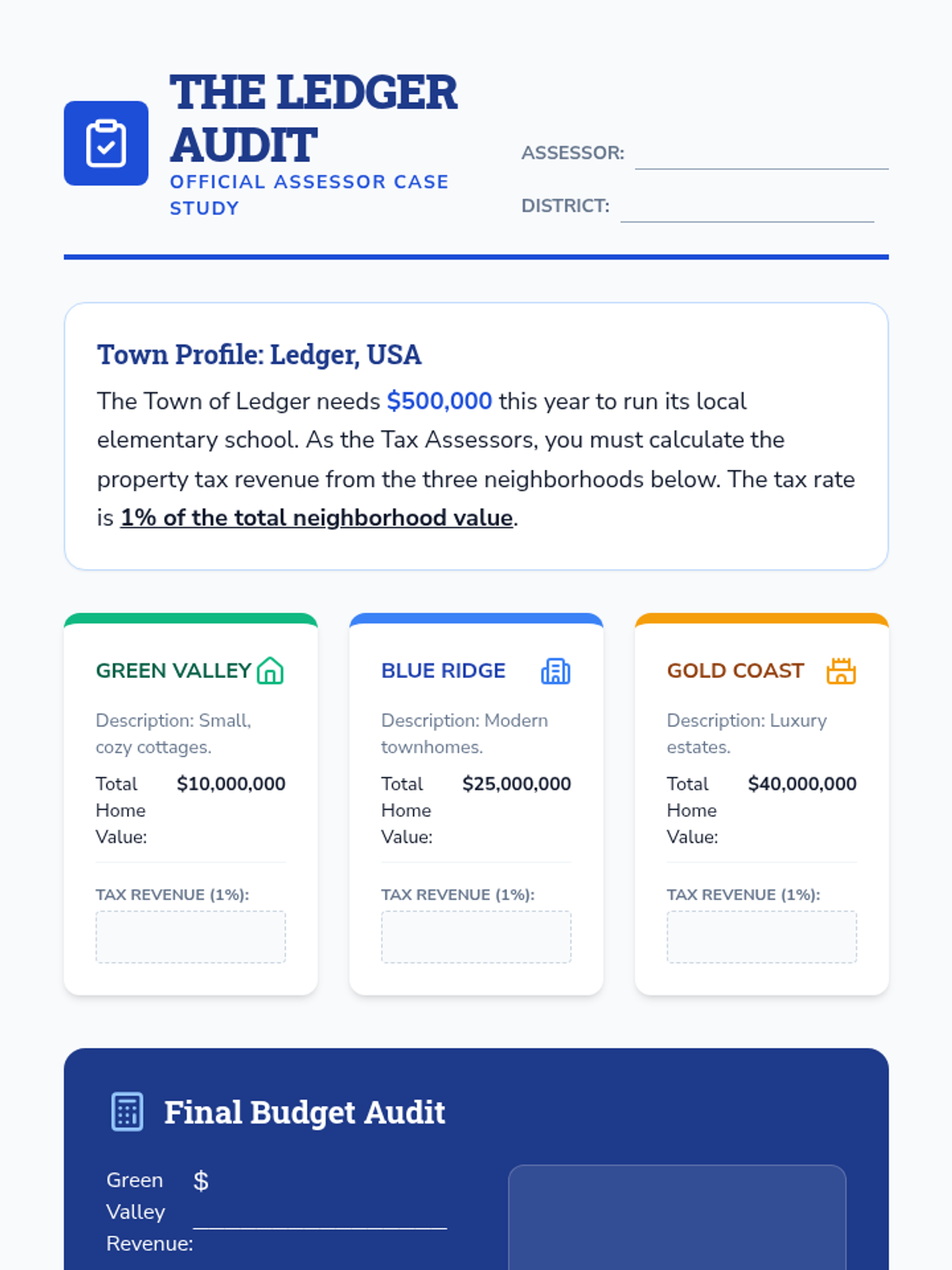
Students investigate how property taxes fund local schools and services through a community-based case study.
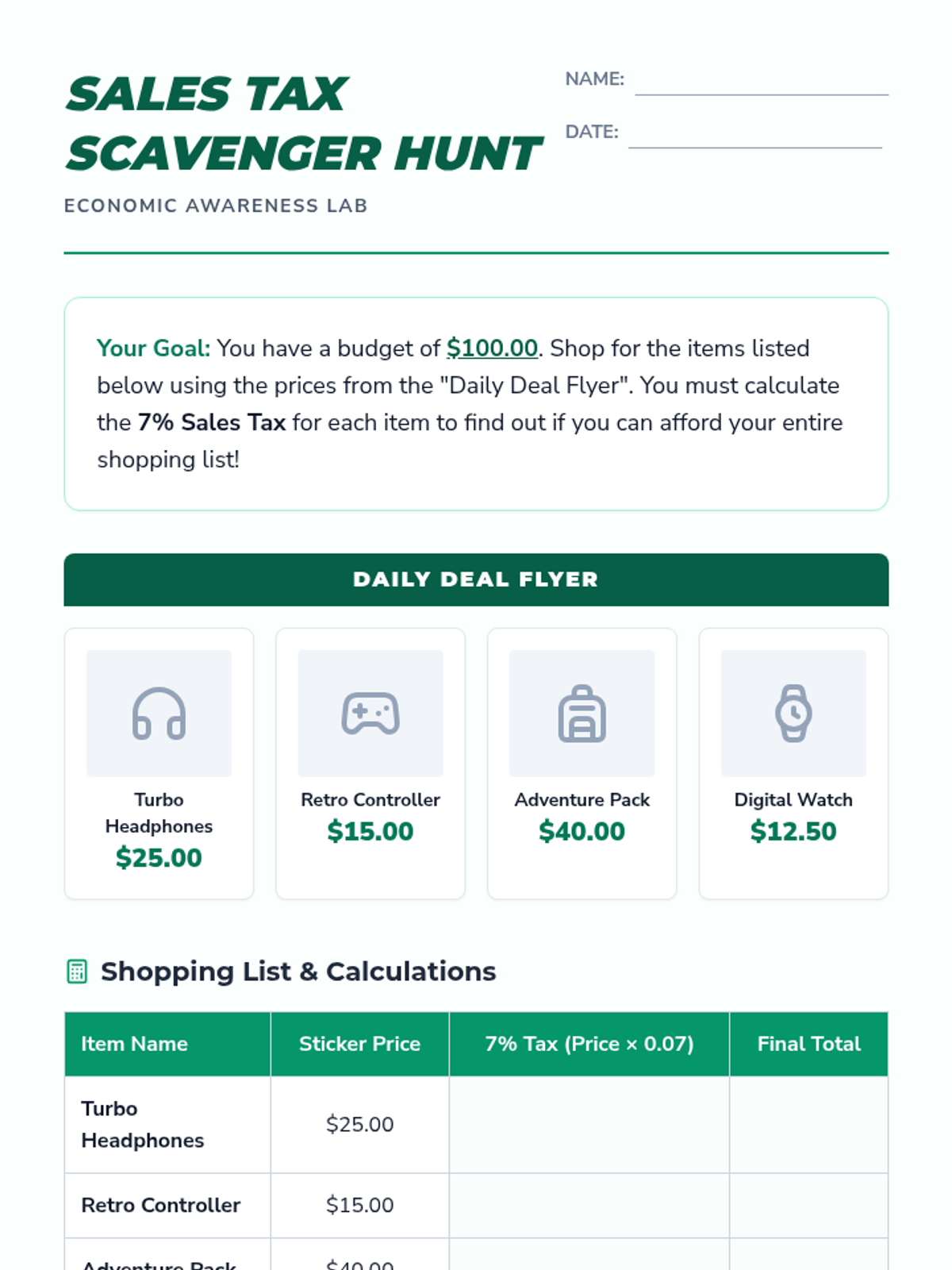
Students learn how sales tax is added to the price of goods and practice calculating the final cost of everyday items.
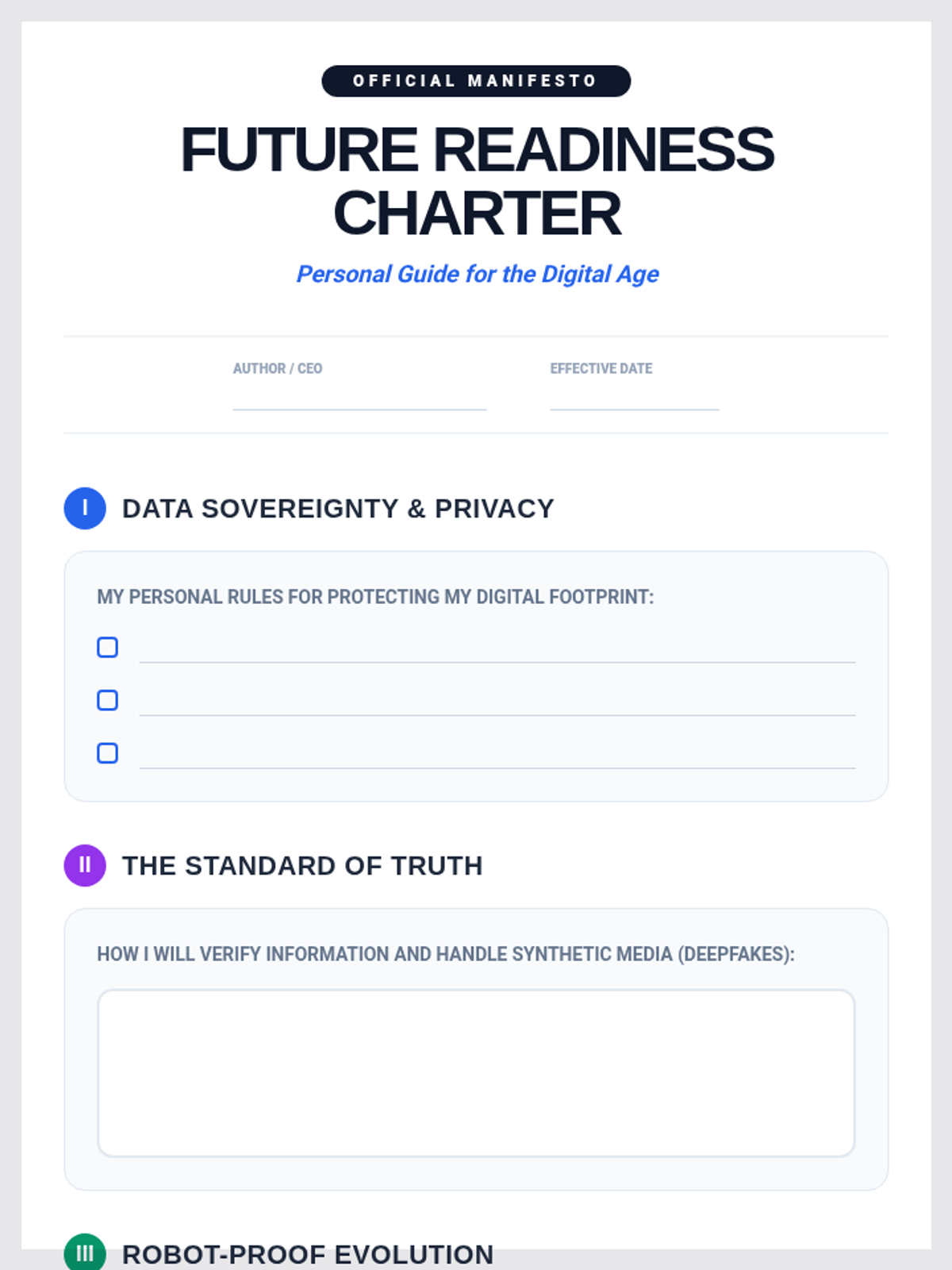
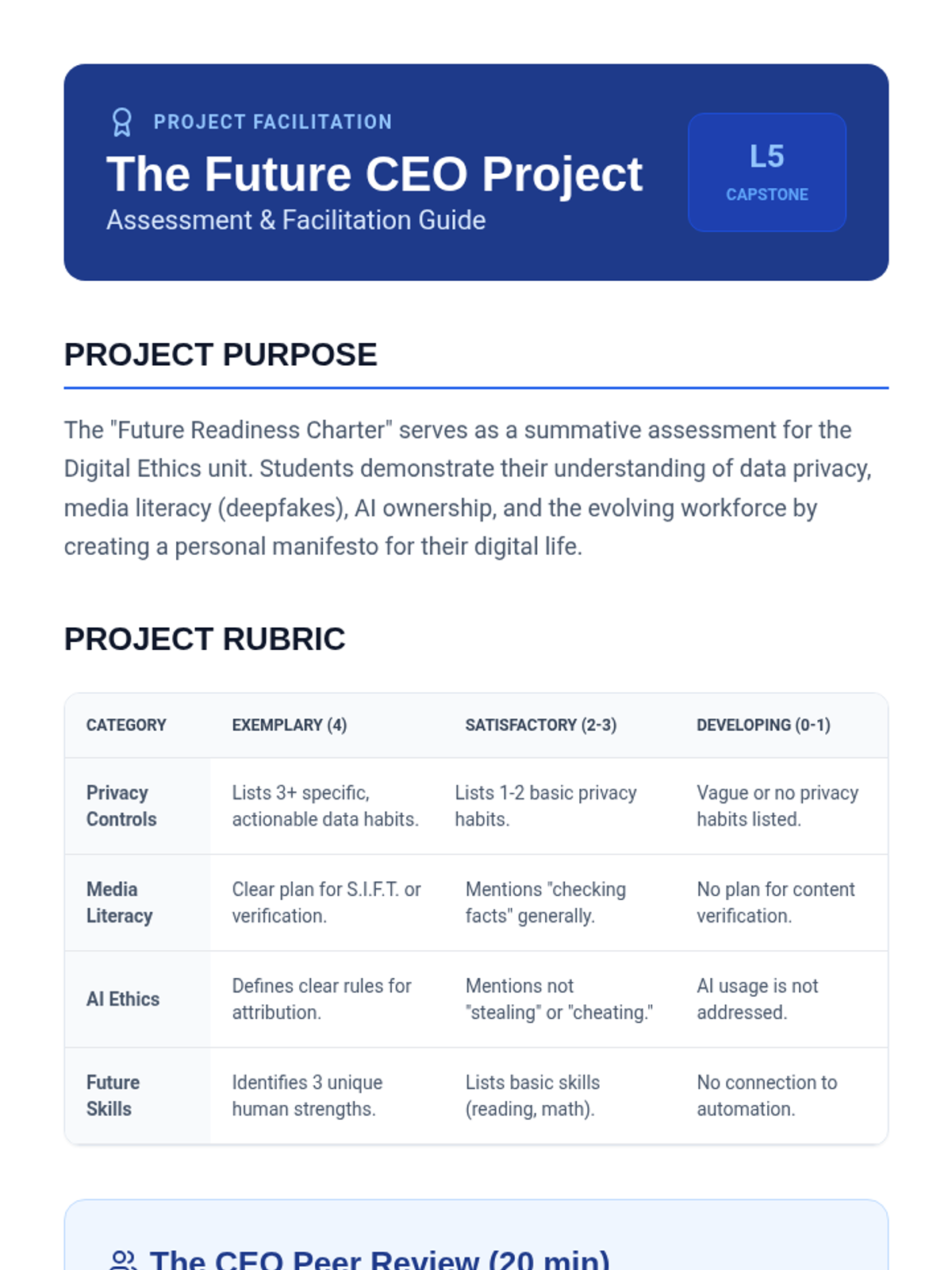
The culminating project where students synthesize their learning into a personal manifesto for ethical and safe technology use in their future lives.
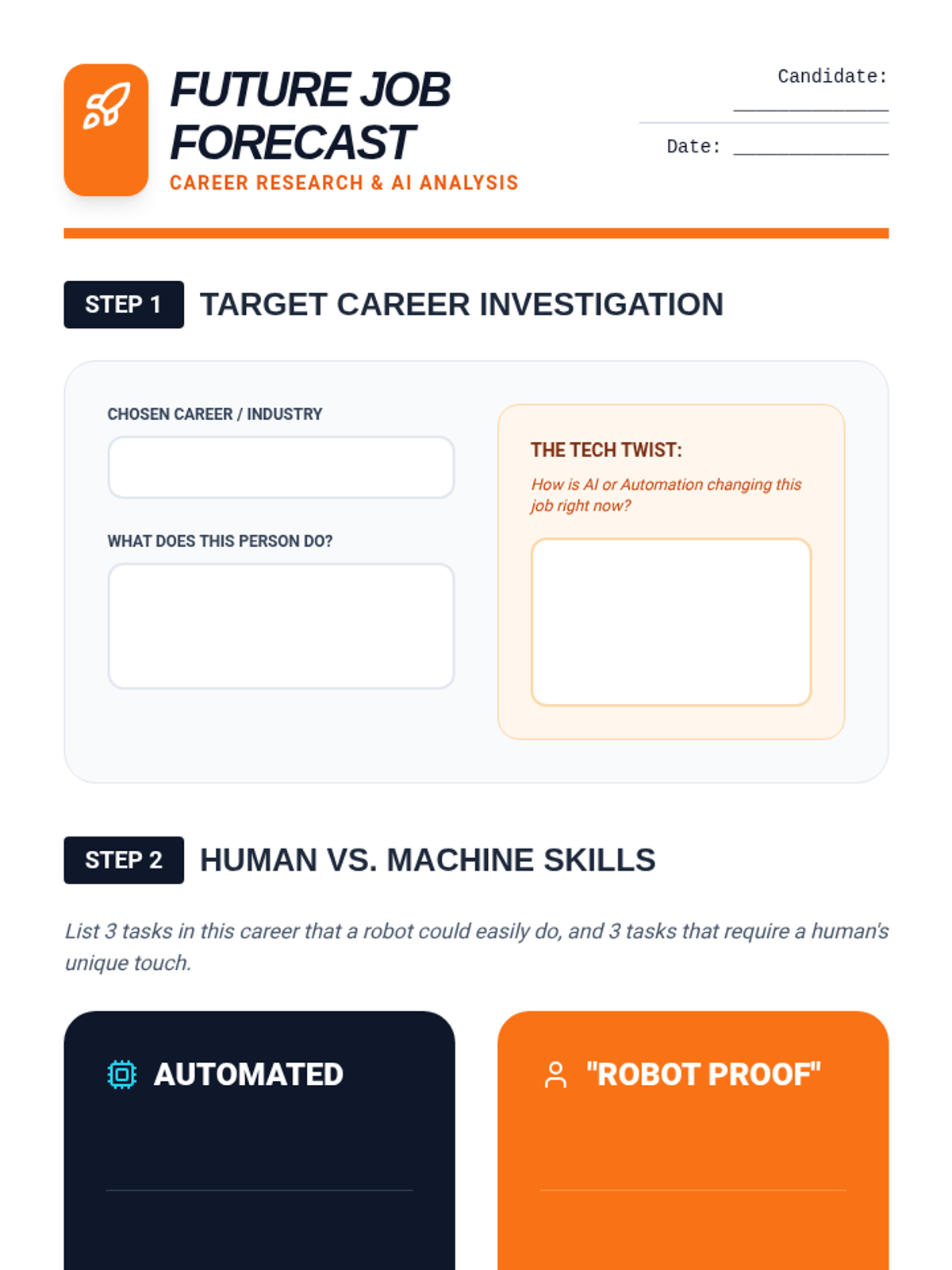
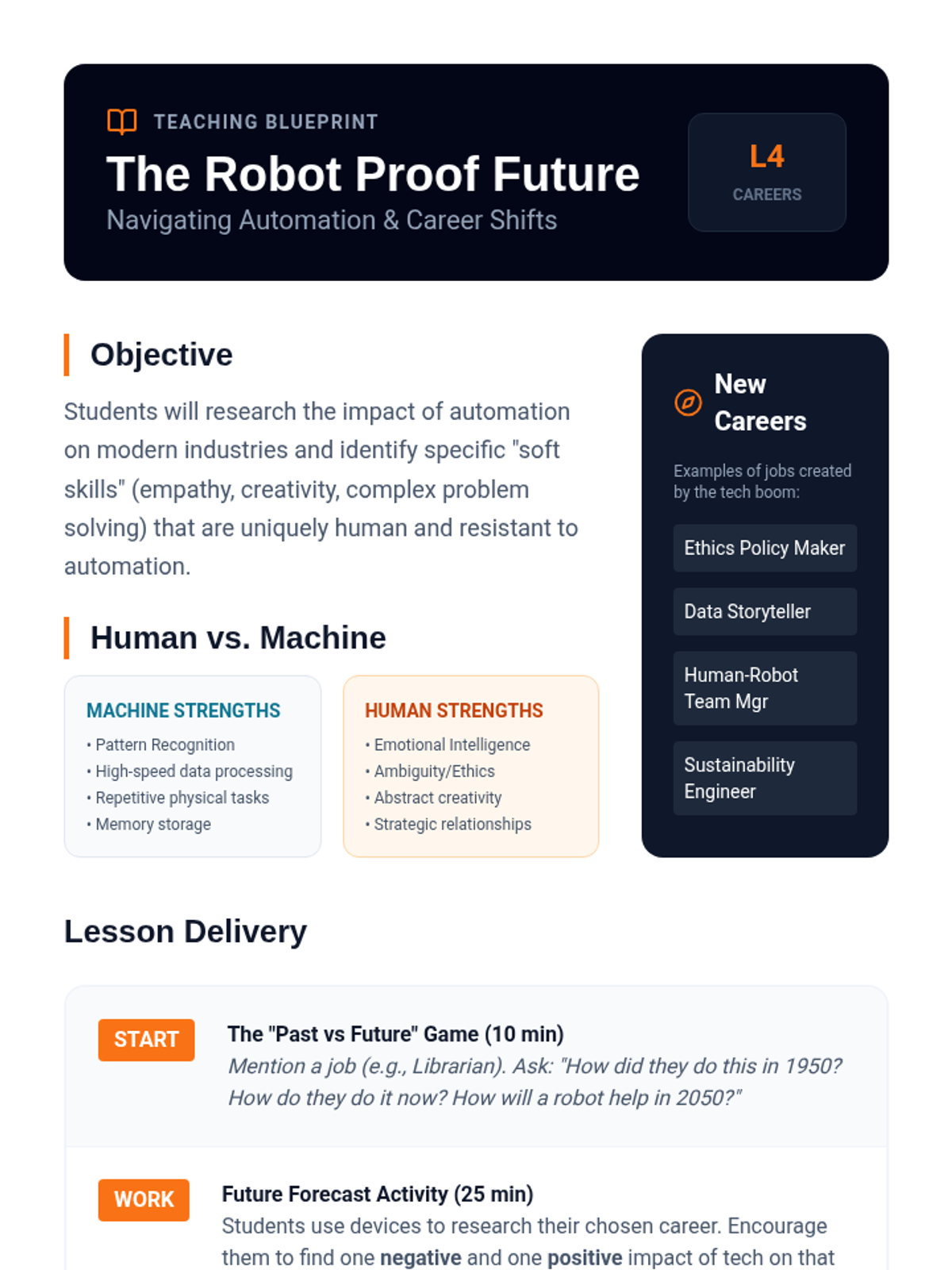
A forward-looking lesson on how automation is reshaping the workforce, focusing on the unique human skills that remain essential in the age of robots.
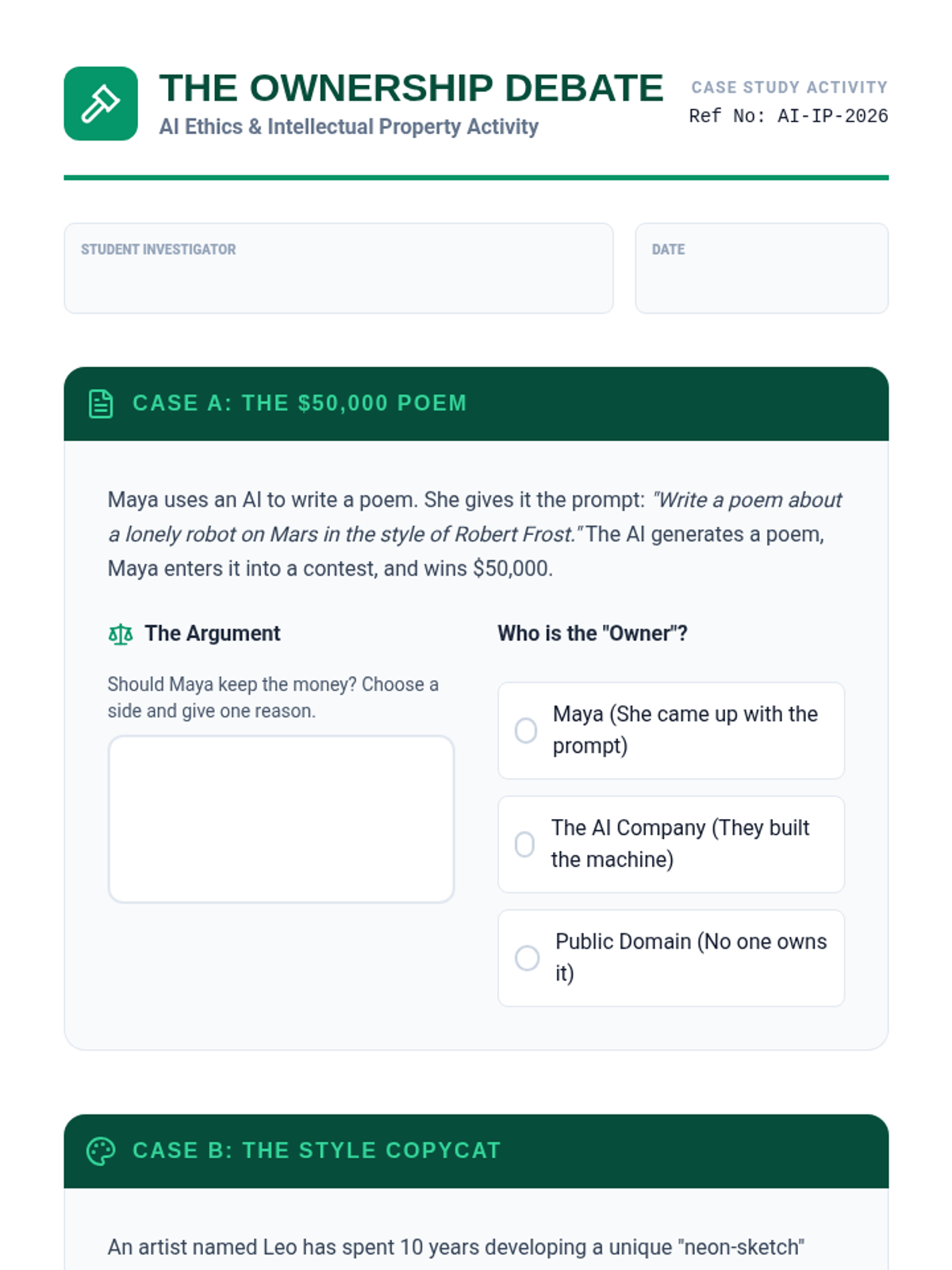
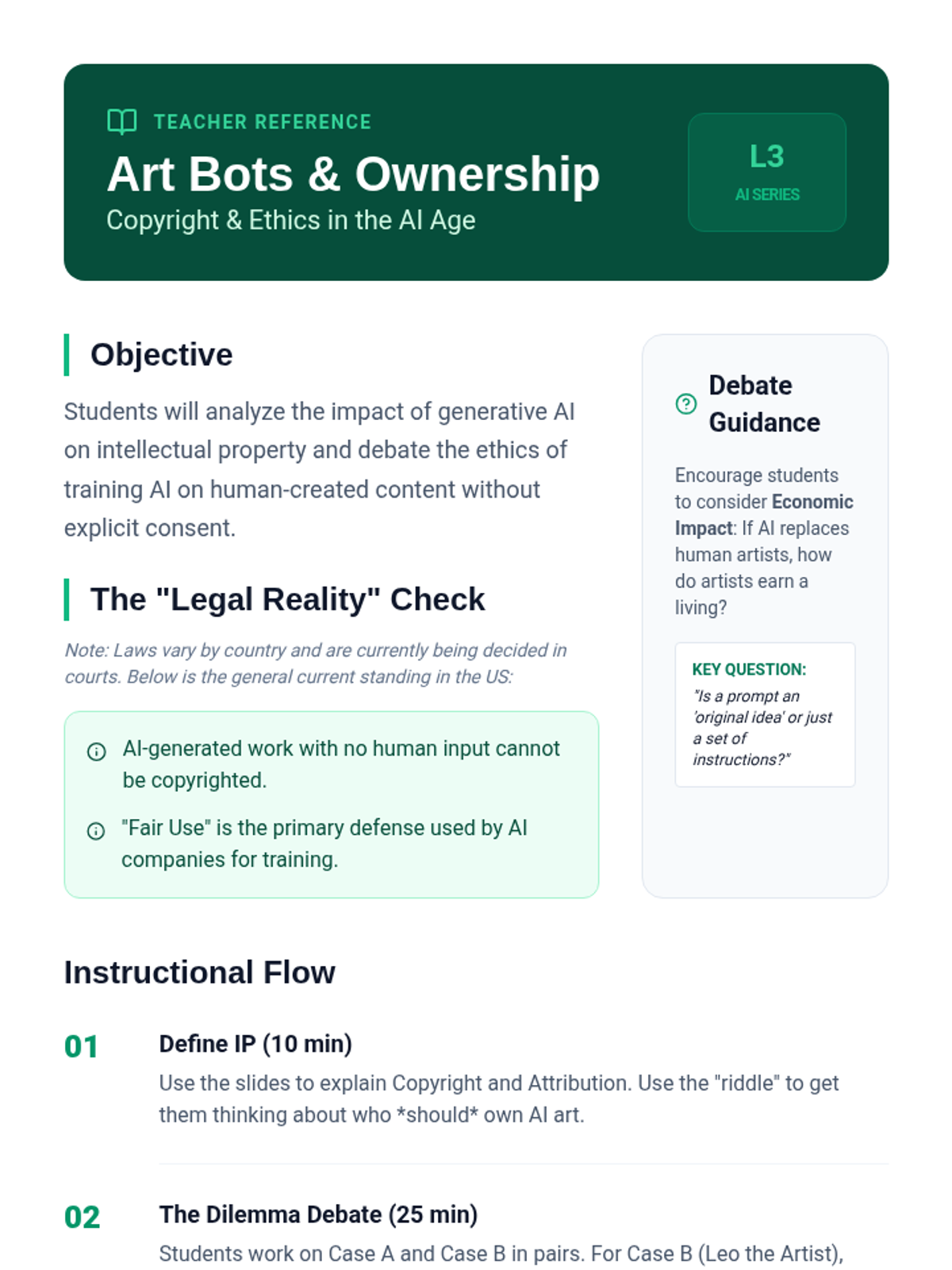
Students debate the complexities of copyright and ownership in the age of generative AI, learning how to ethically attribute work in an automated world.
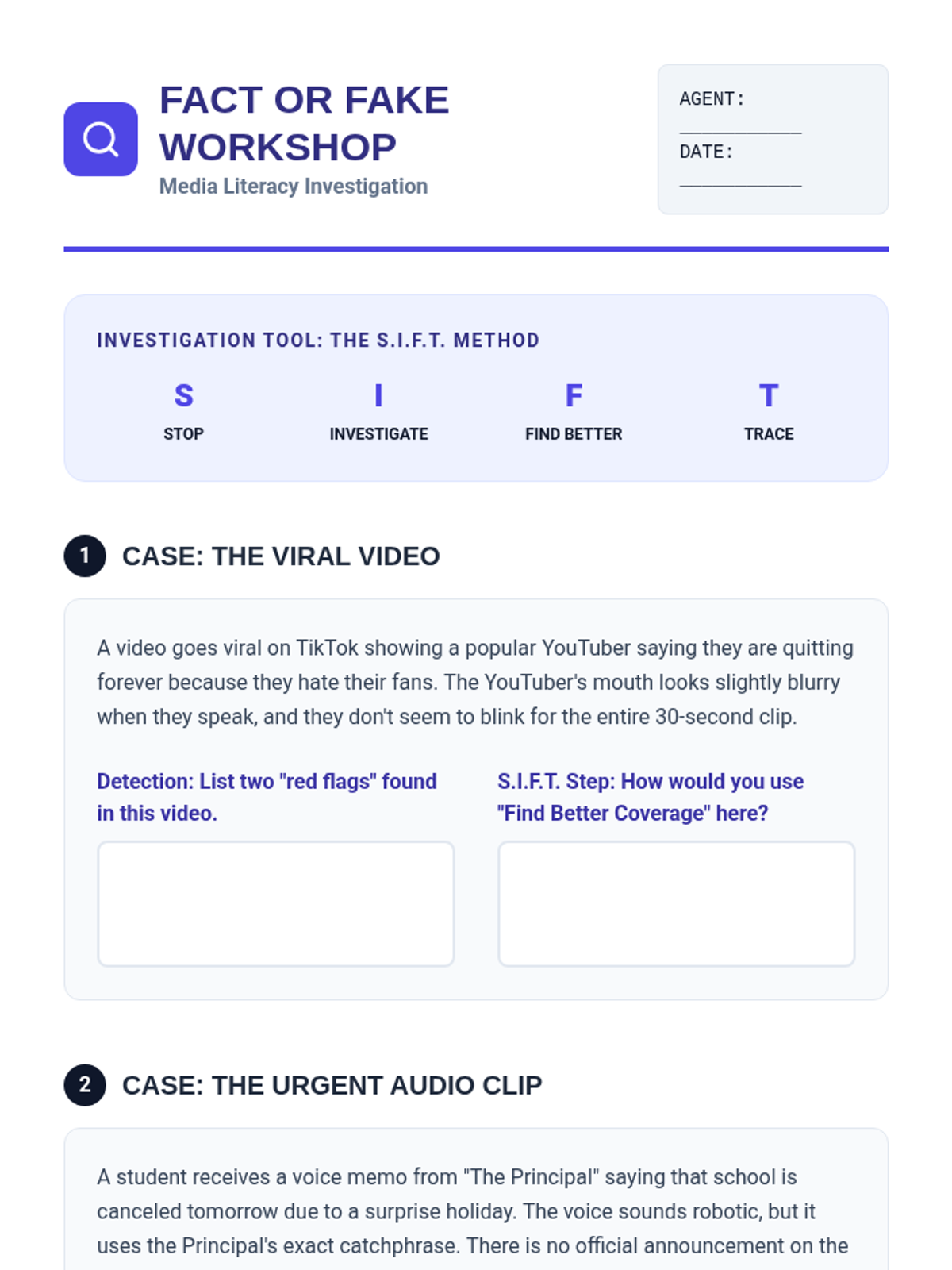
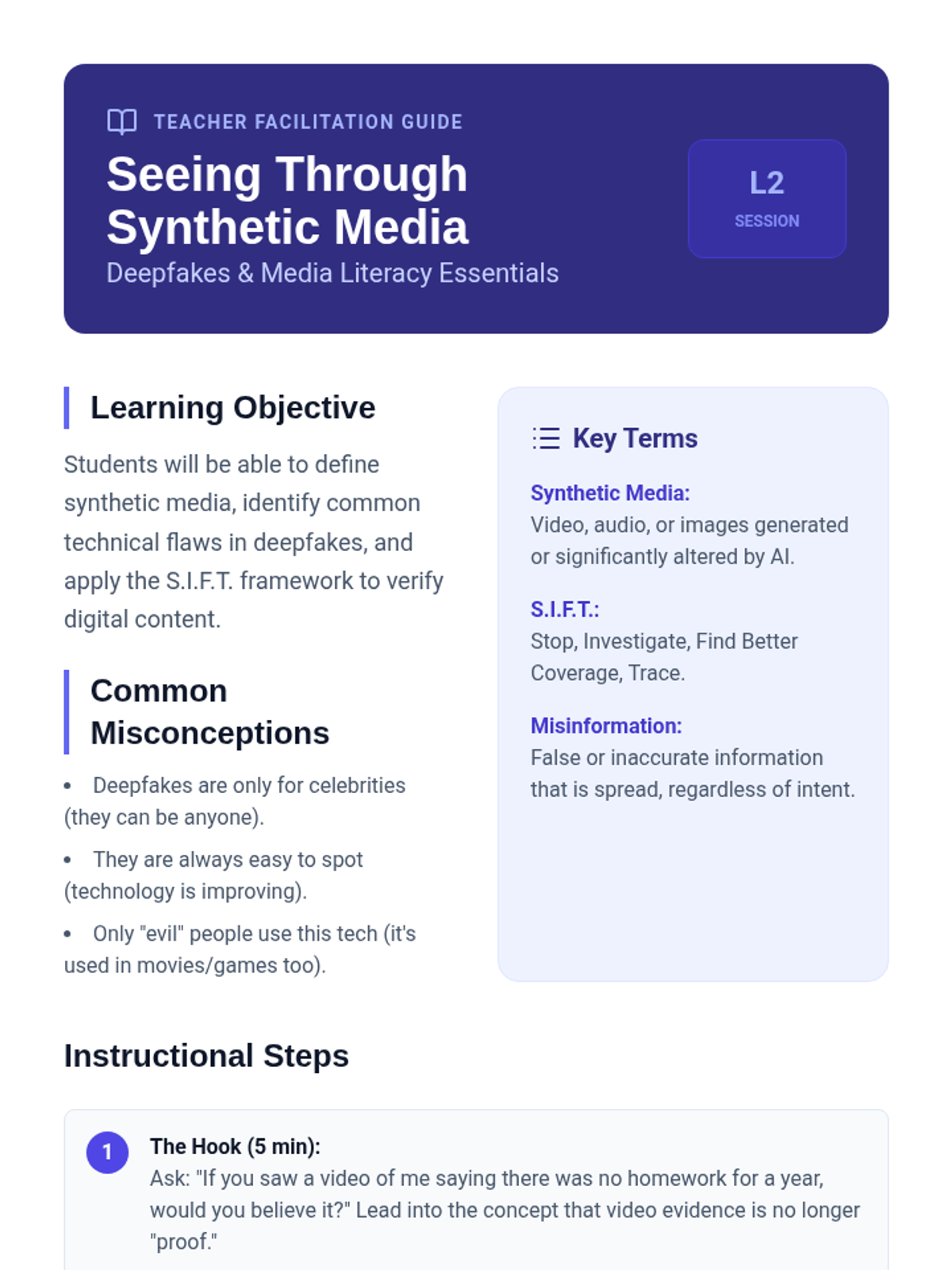
An exploration of synthetic media and deepfakes, teaching students to critically evaluate digital content and understand the ethical risks of misinformation.
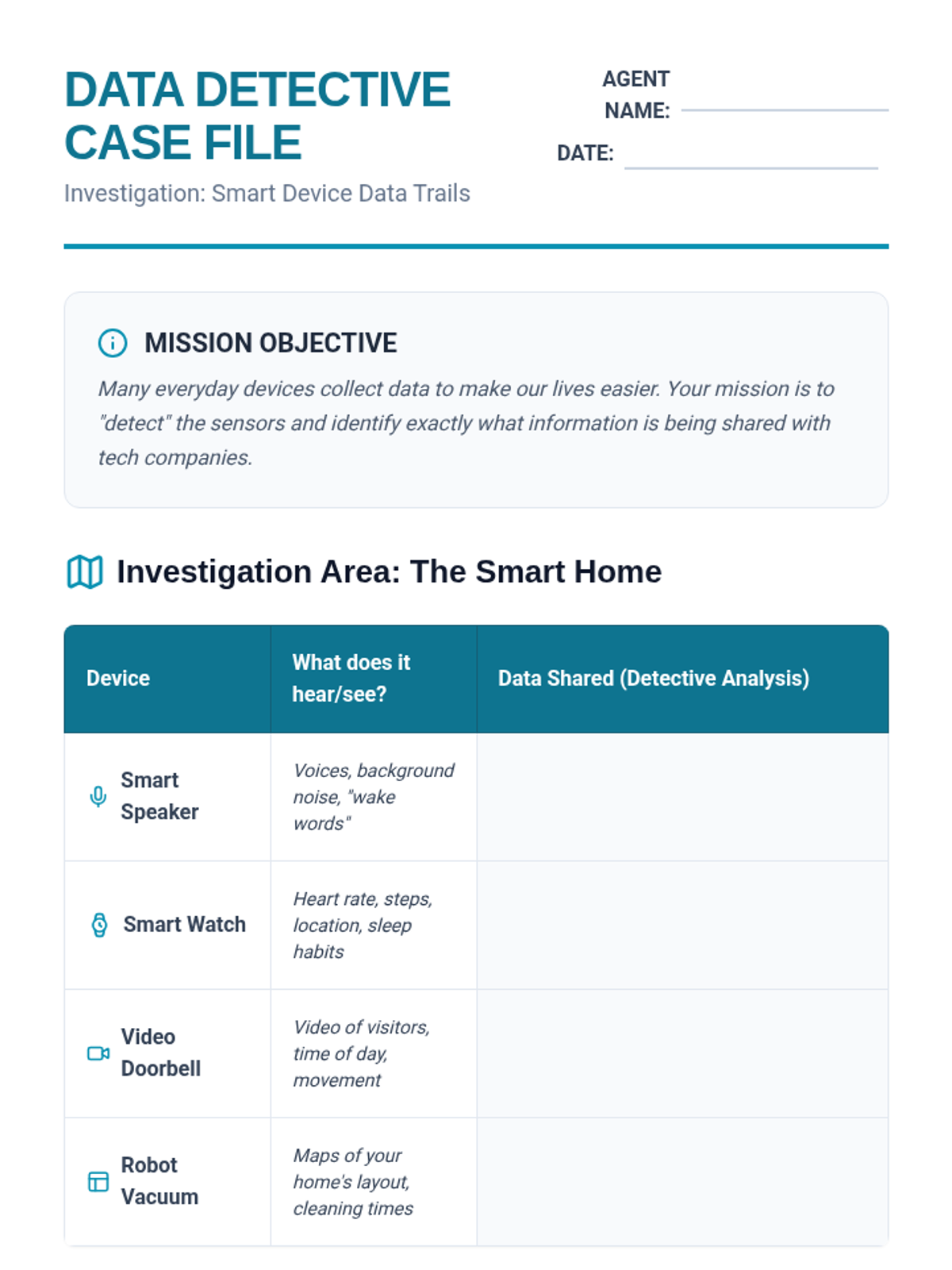
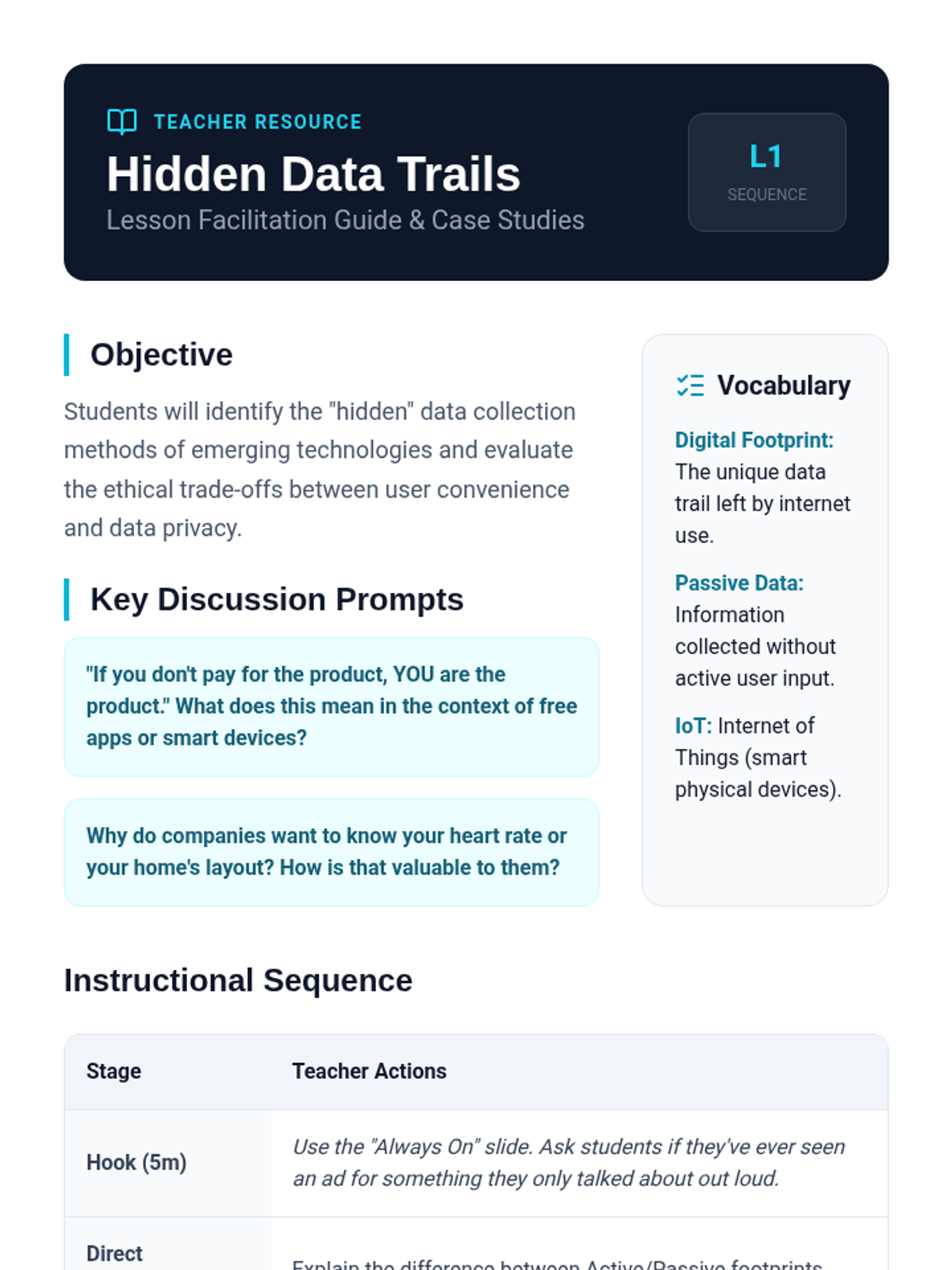
Students investigate how smart devices and AI assistants collect personal data, analyzing the trade-offs between technological convenience and individual privacy.
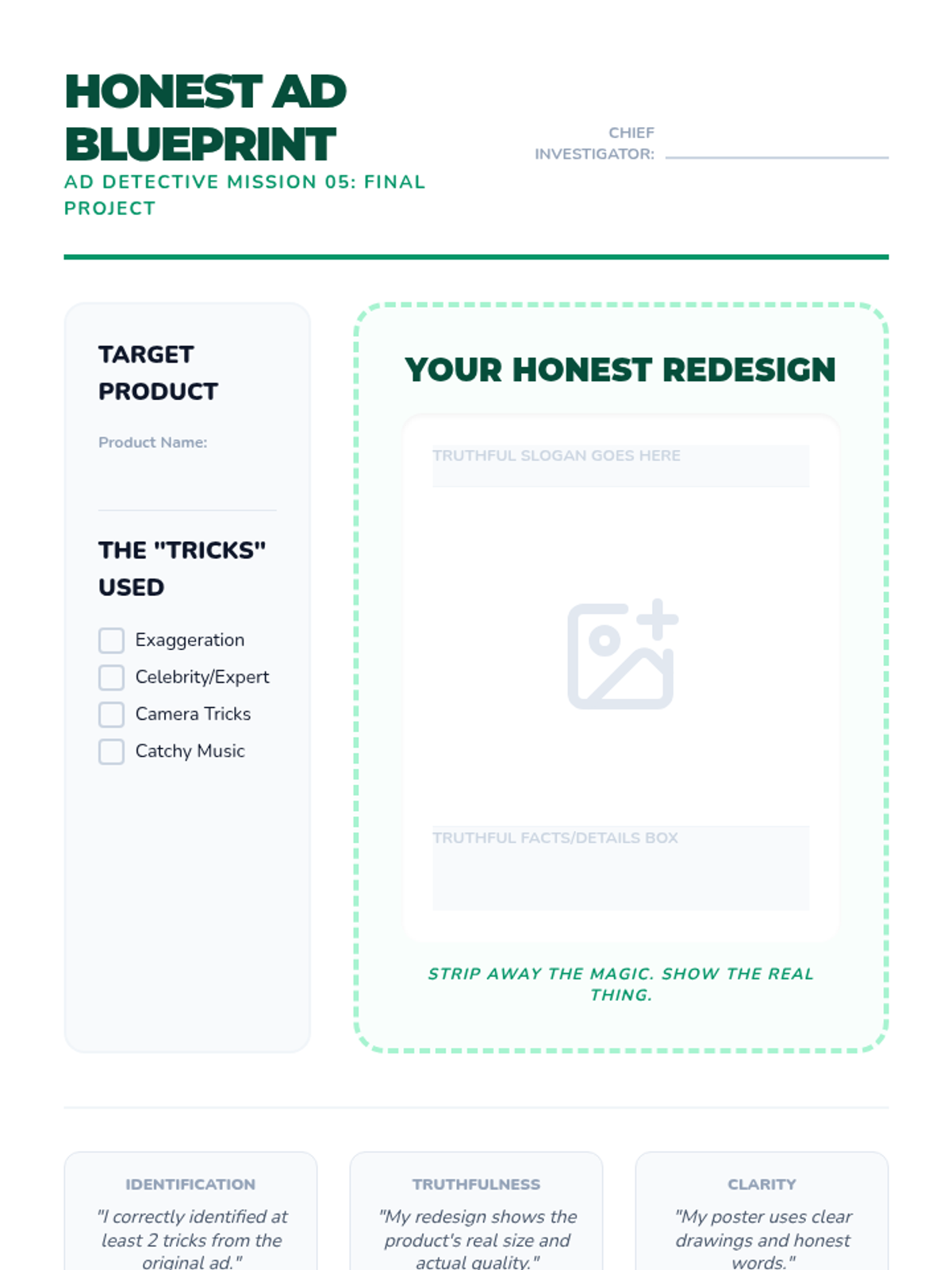
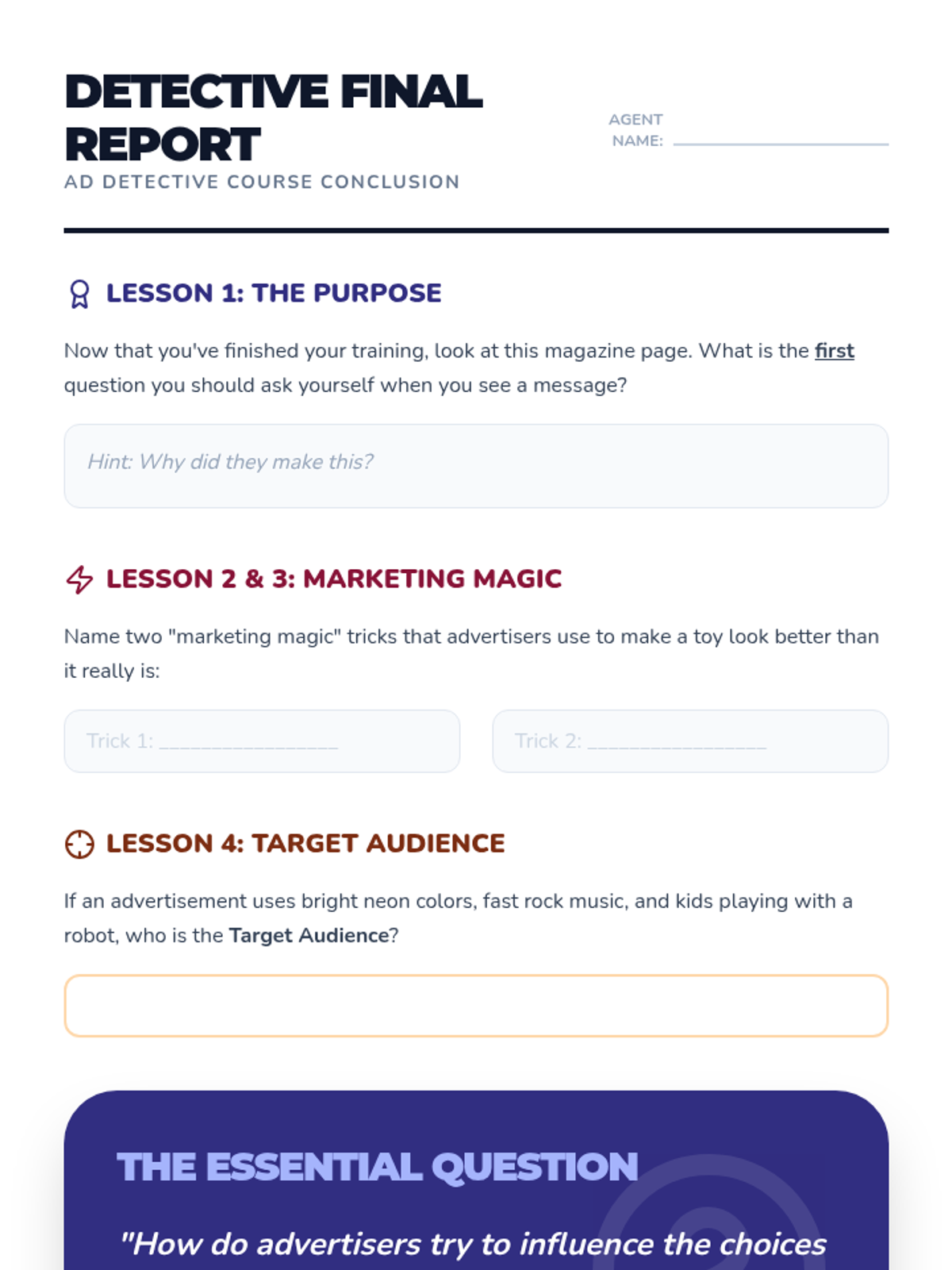
In this culminating project, students redesign misleading advertisements to be truthful, demonstrating their understanding of marketing influence.
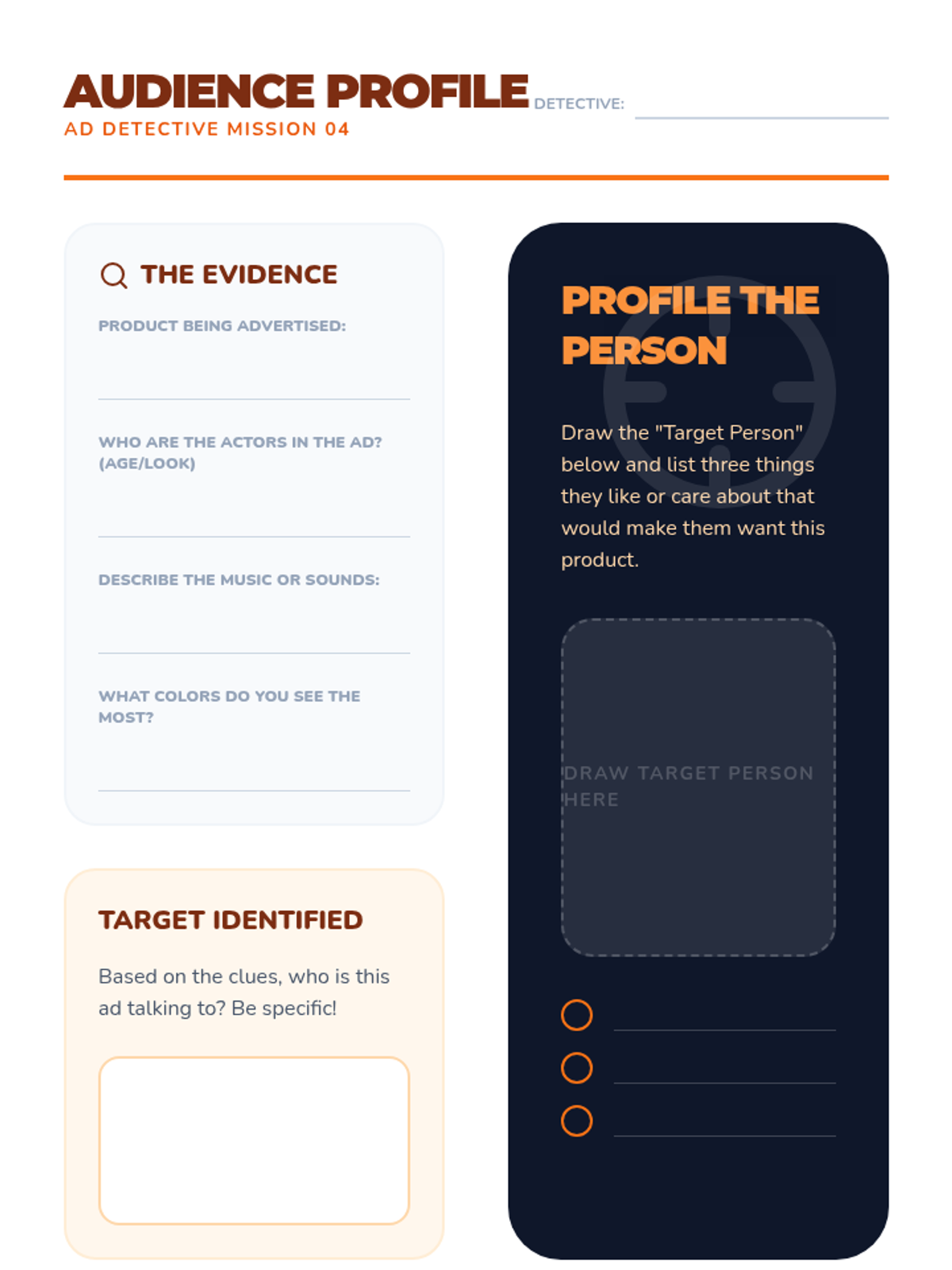
Students identify how advertisements are tailored to specific groups based on age, interests, and needs.
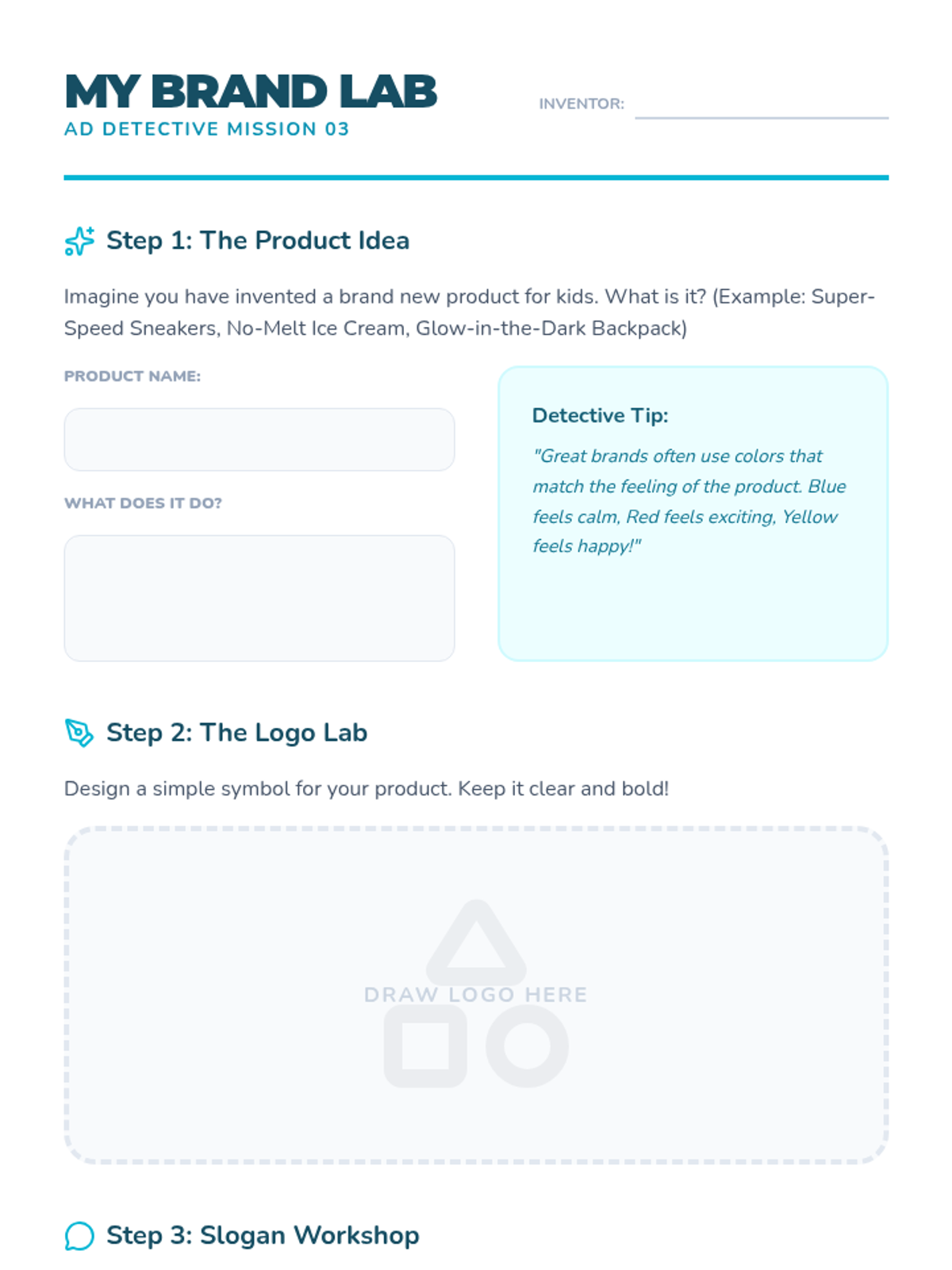
Students explore how brands use catchy slogans and memorable logos to create brand loyalty and recognition.
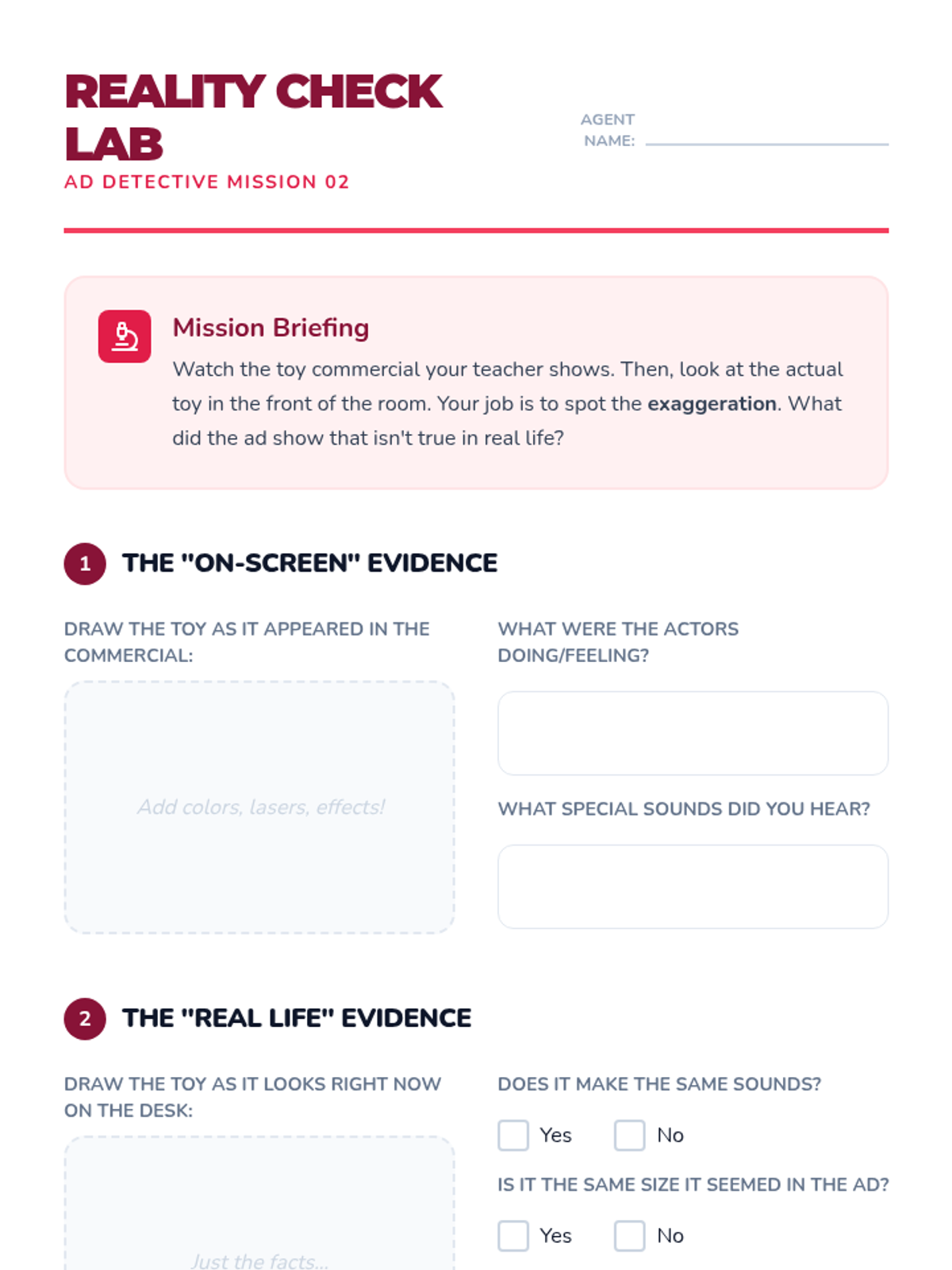
Focusing on exaggeration and production tricks, students analyze how audio and visual elements are used to make products appear more desirable.
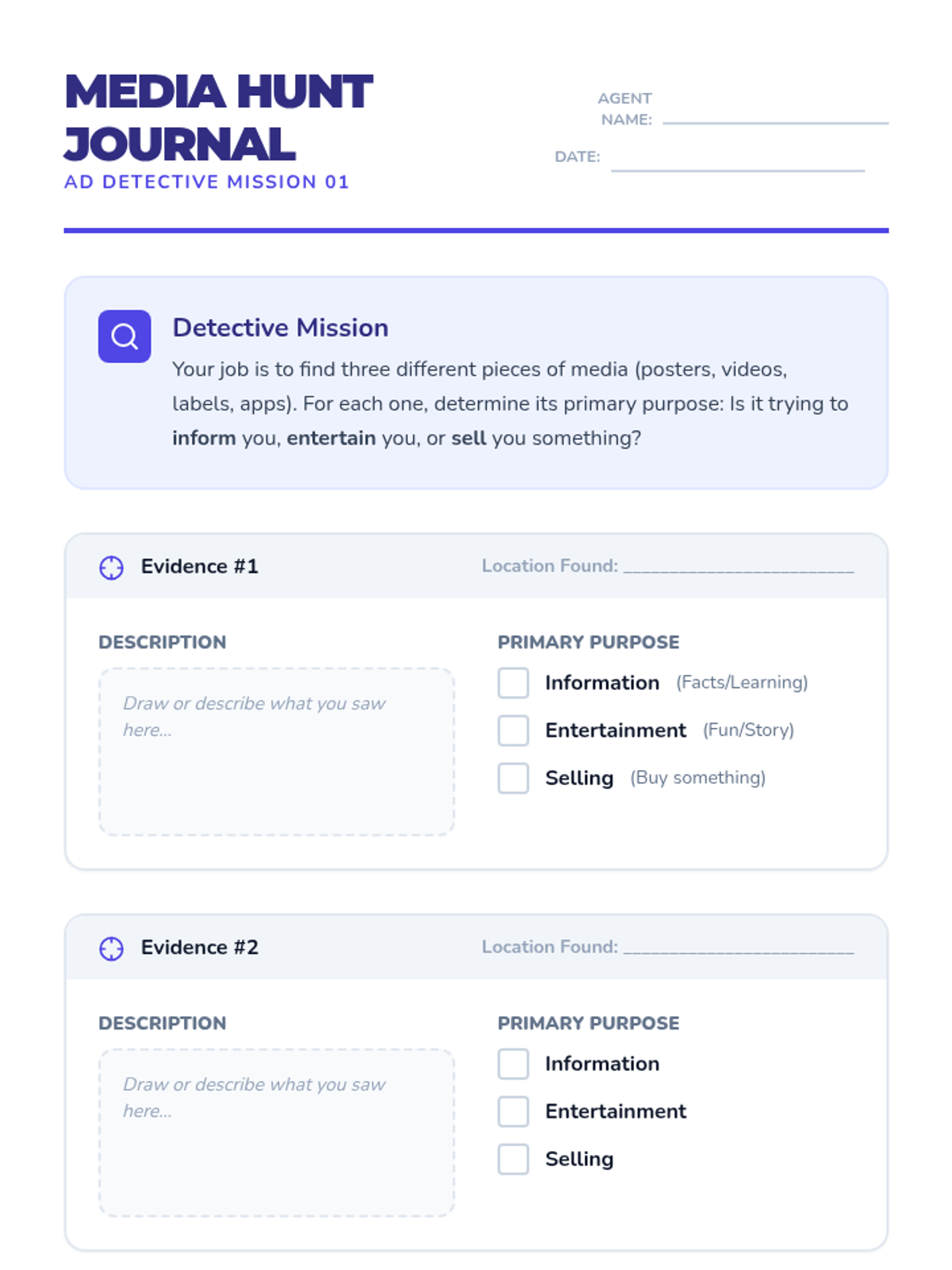
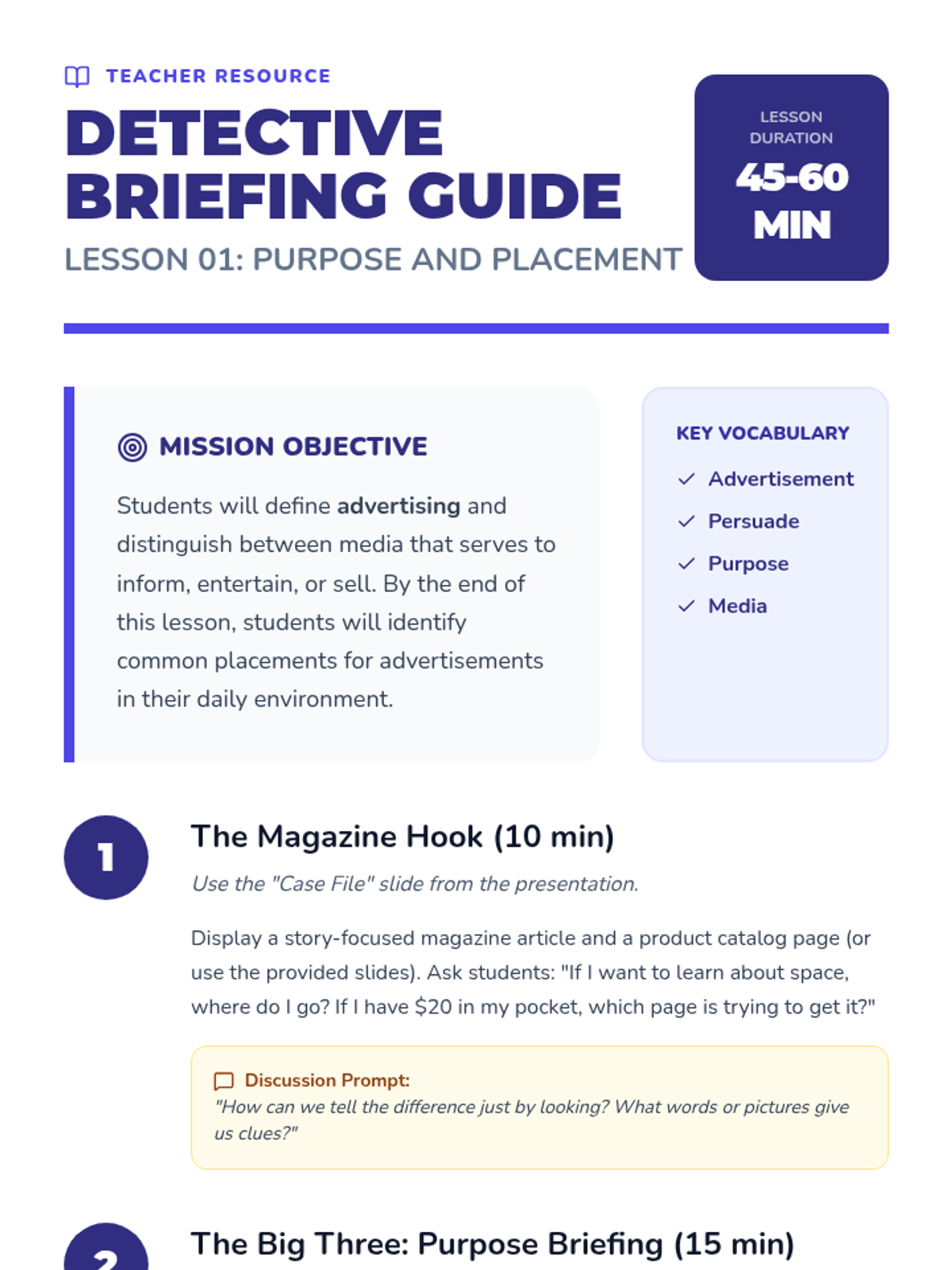
Students learn to distinguish between information, entertainment, and selling to identify the core purpose of advertising in various environments.
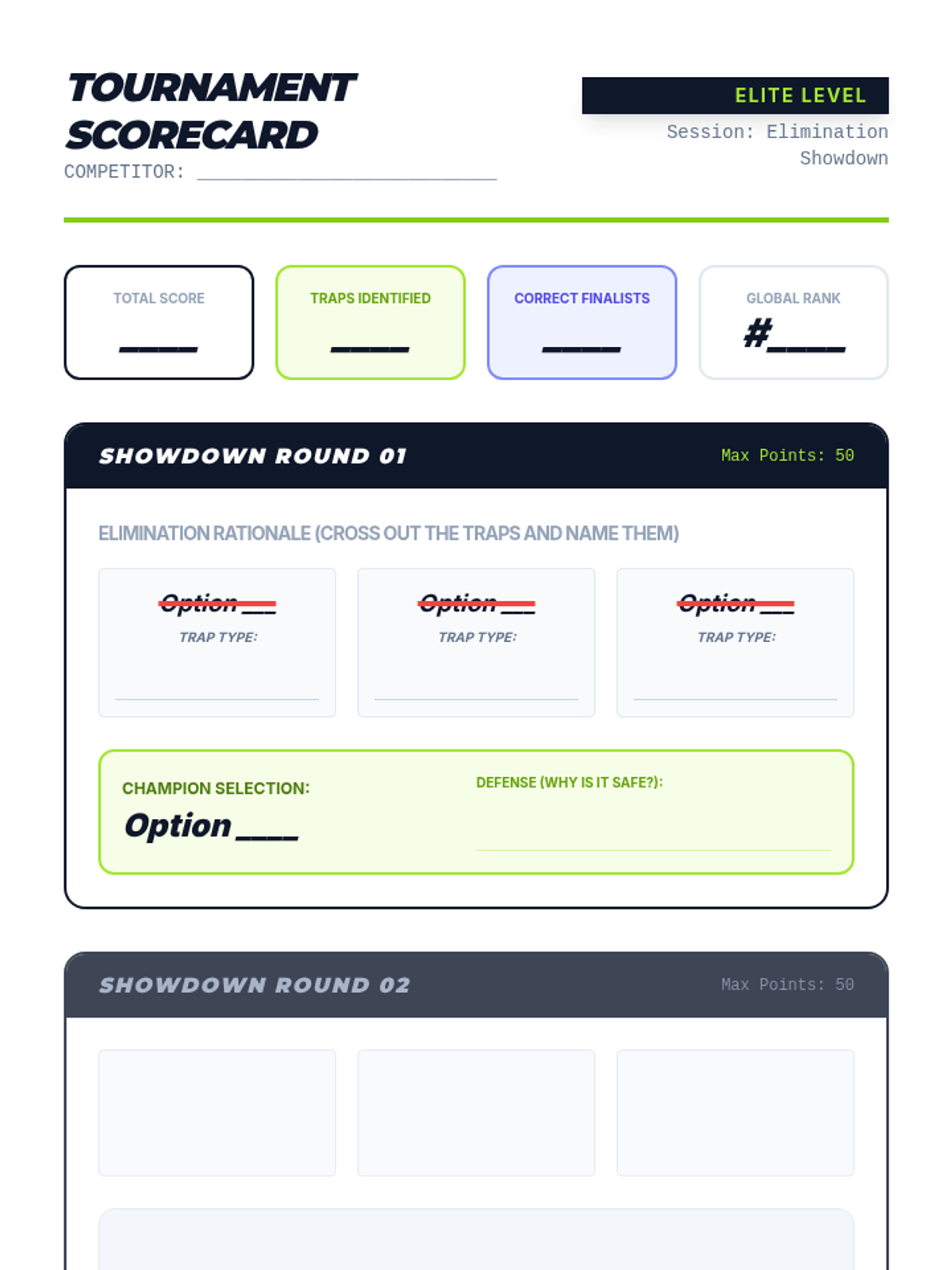
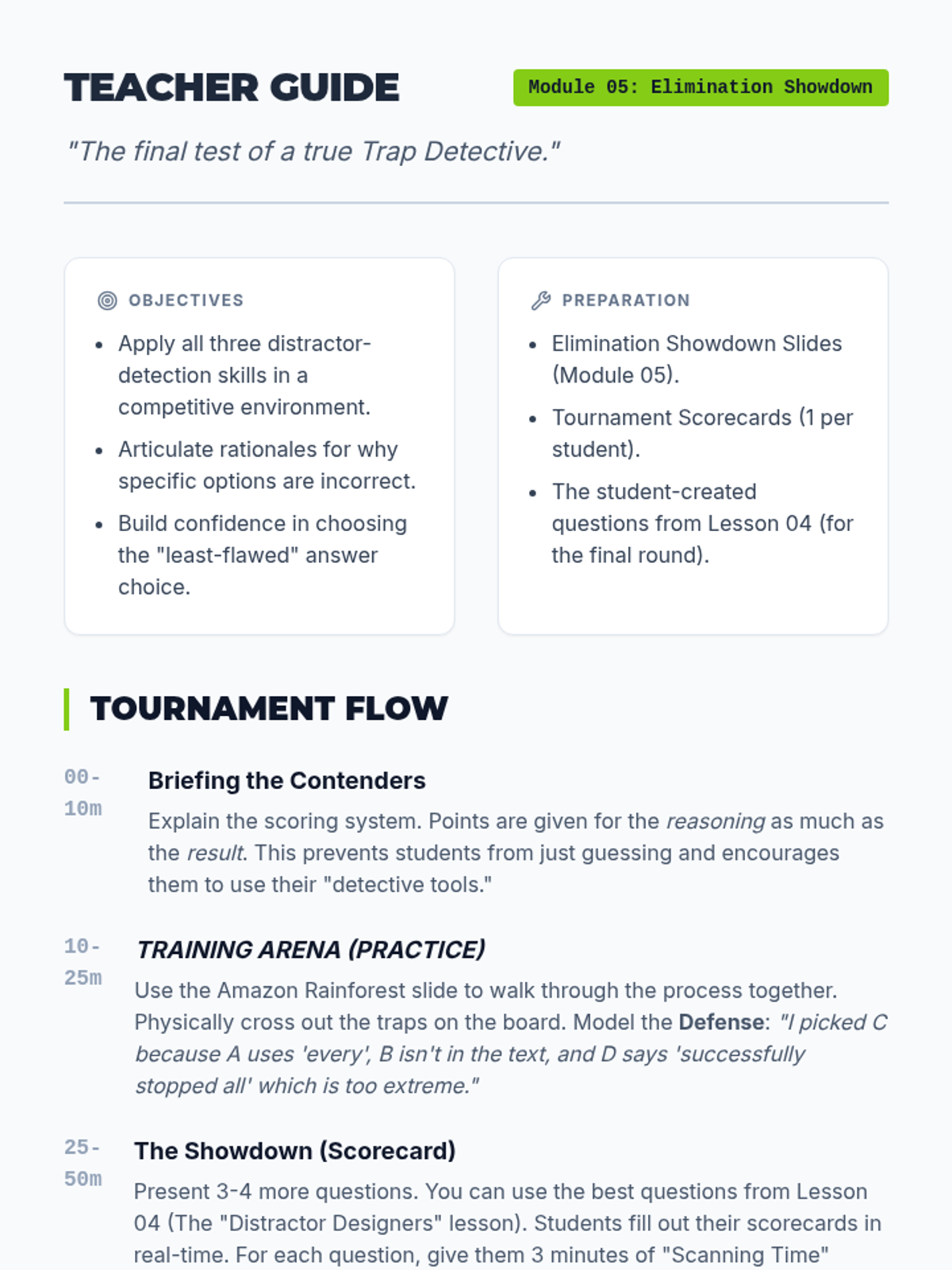
A competitive review tournament where students physically eliminate distractors with a rationale. Points are awarded for identifying specific trap types before selecting the correct answer.
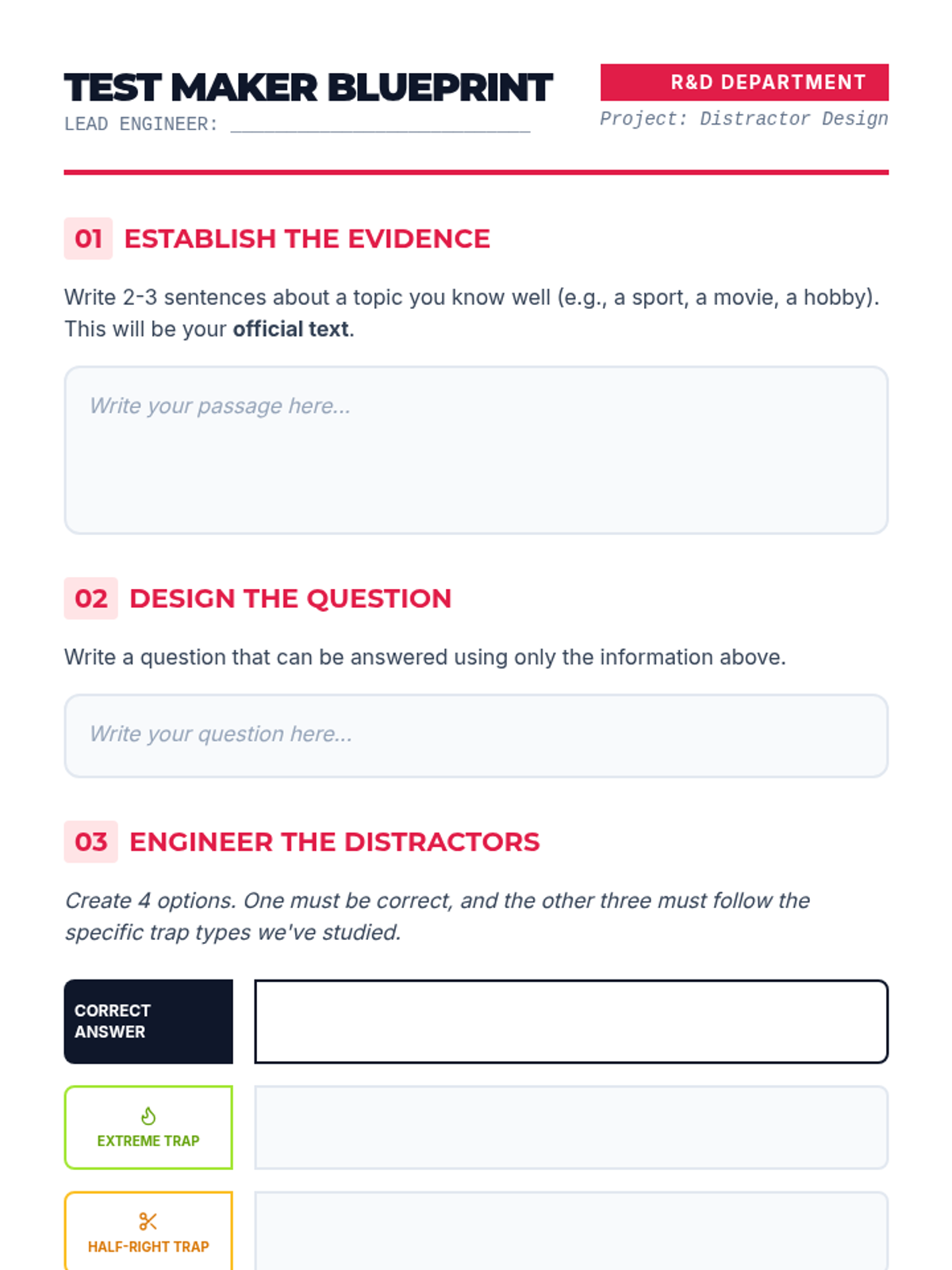
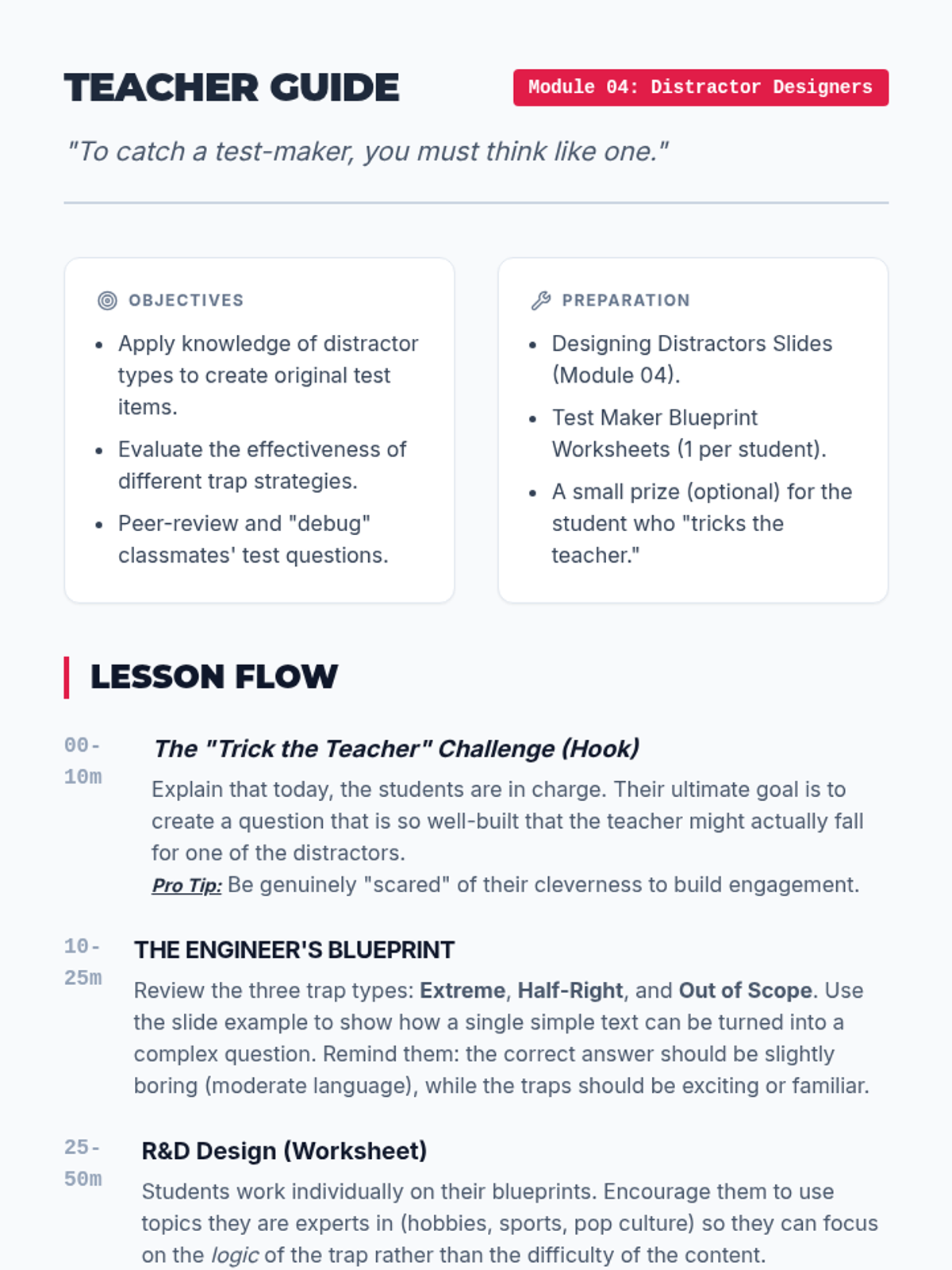
Students become test-makers by writing their own multiple-choice questions with deliberate traps. This role-reversal helps them internalize the logic behind distractor construction.
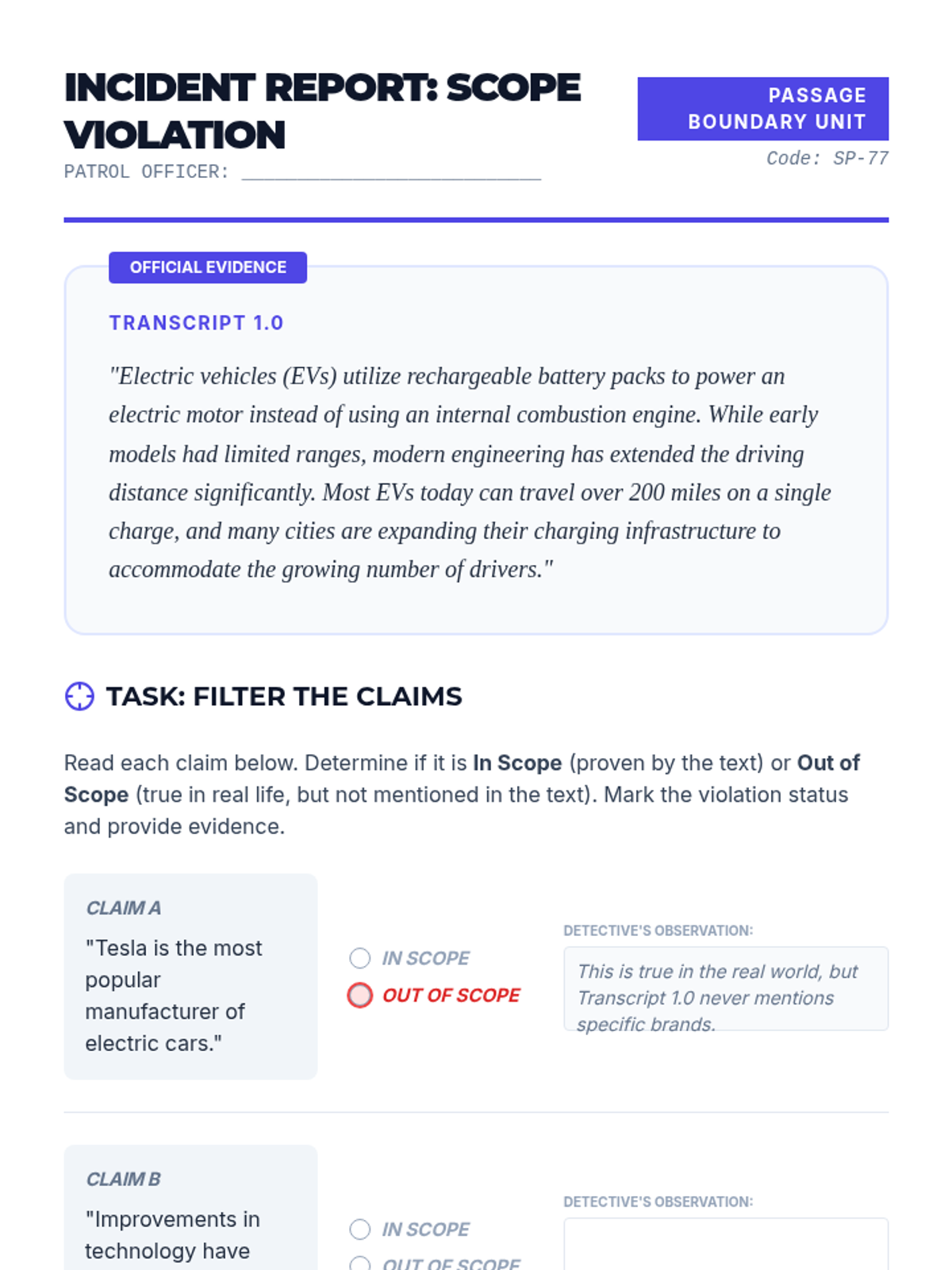
Students identify statements that are factually true in the real world but are not supported by the specific text provided. The focus is on maintaining evidence-based focus within the scope of the passage.
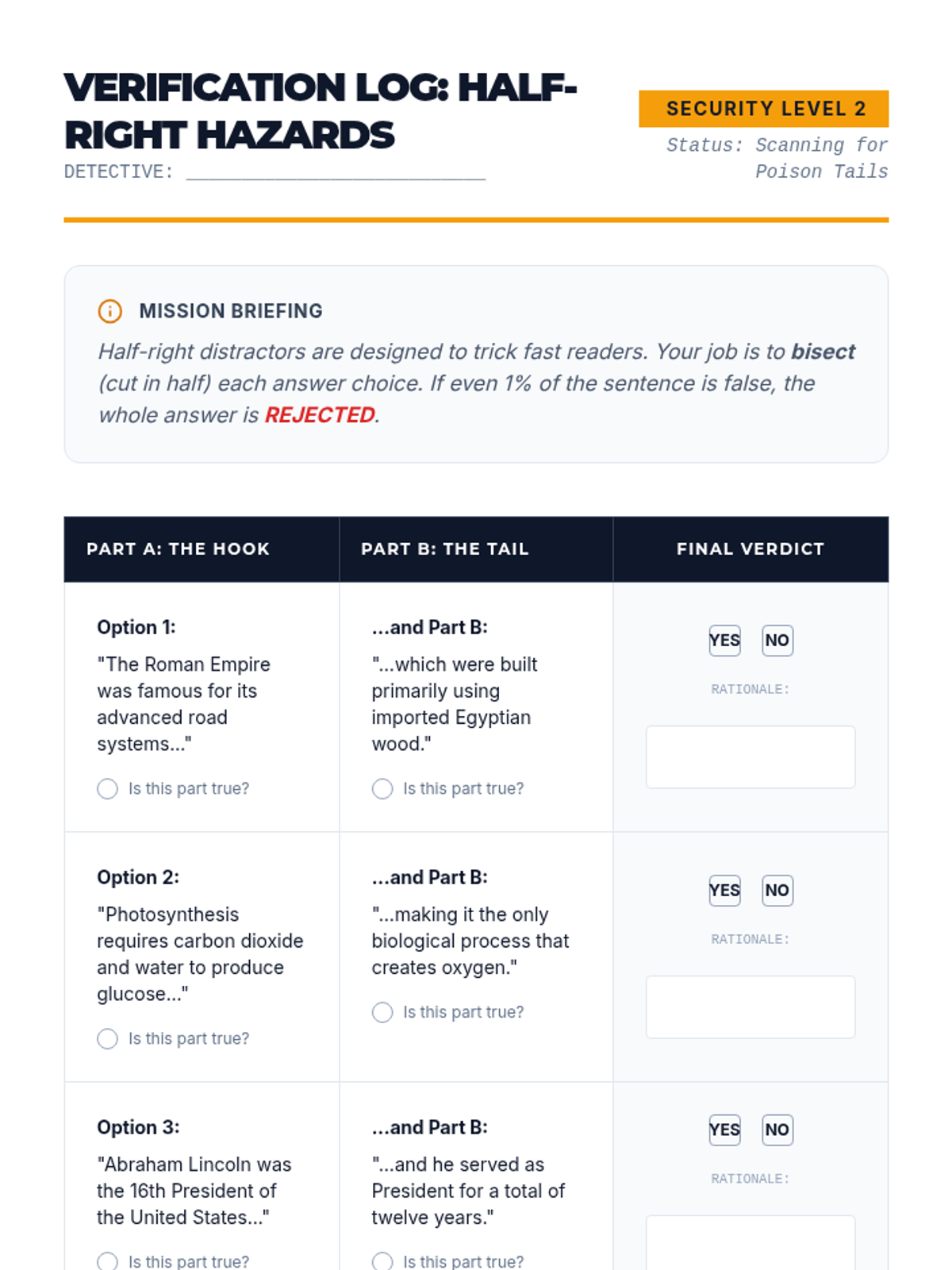
Learners analyze options that are partially correct but ultimately false. This lesson emphasizes the importance of reading every word of an answer choice to catch subtle inaccuracies.
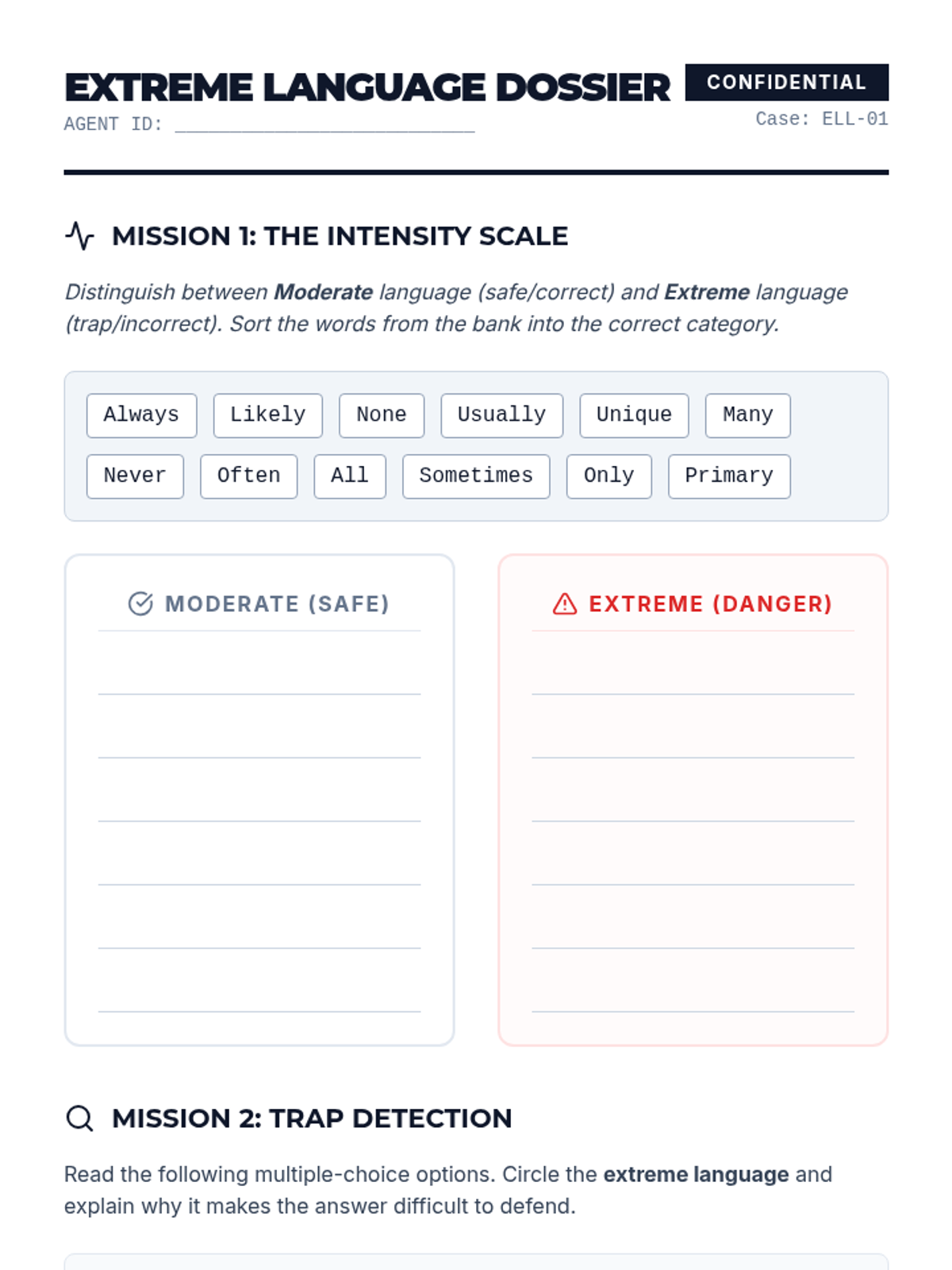
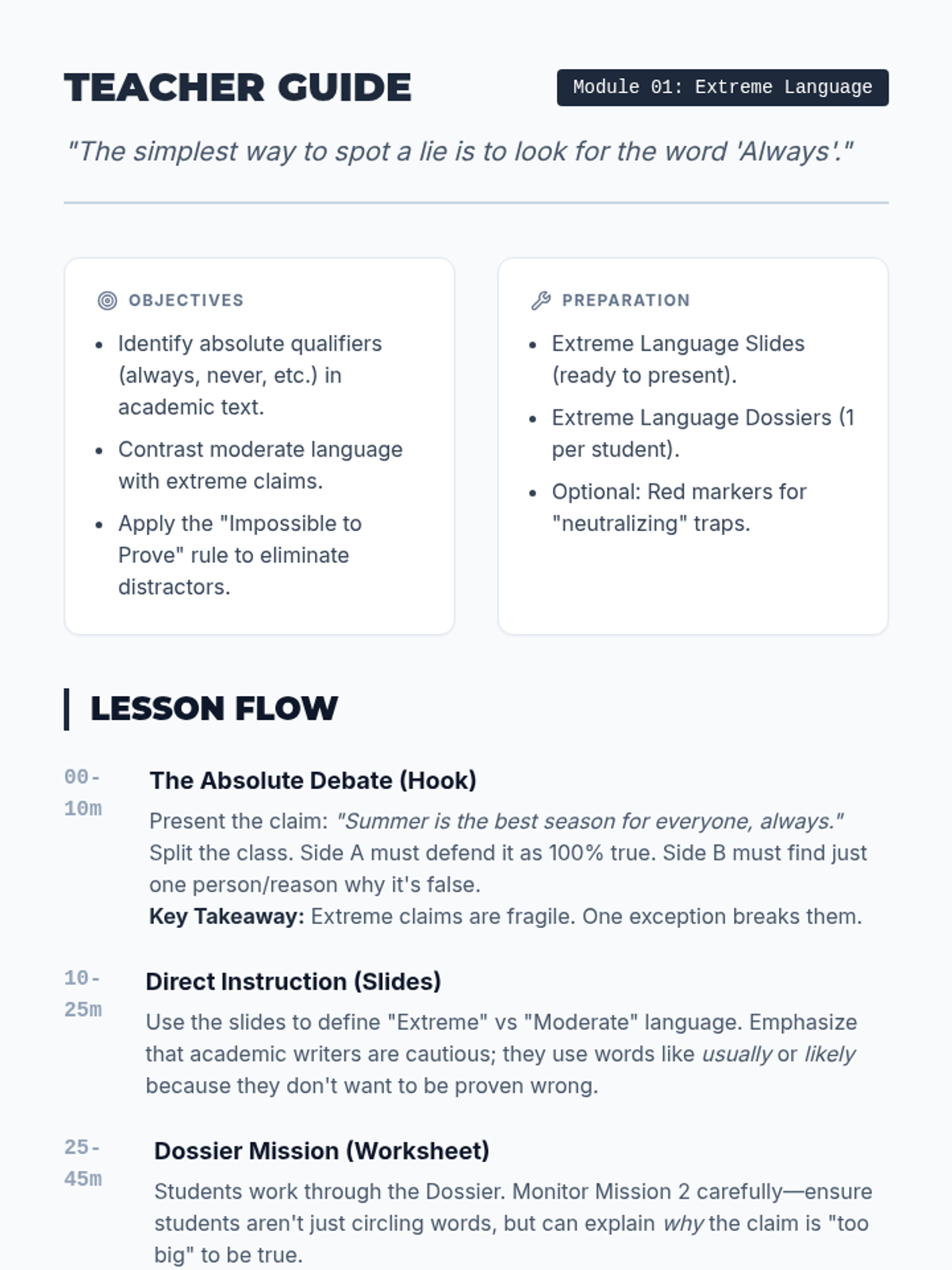
Students learn to identify absolute qualifiers like 'always' and 'never' that signal incorrect answers. They practice categorizing statements by their degree of intensity to evaluate their validity in a test context.
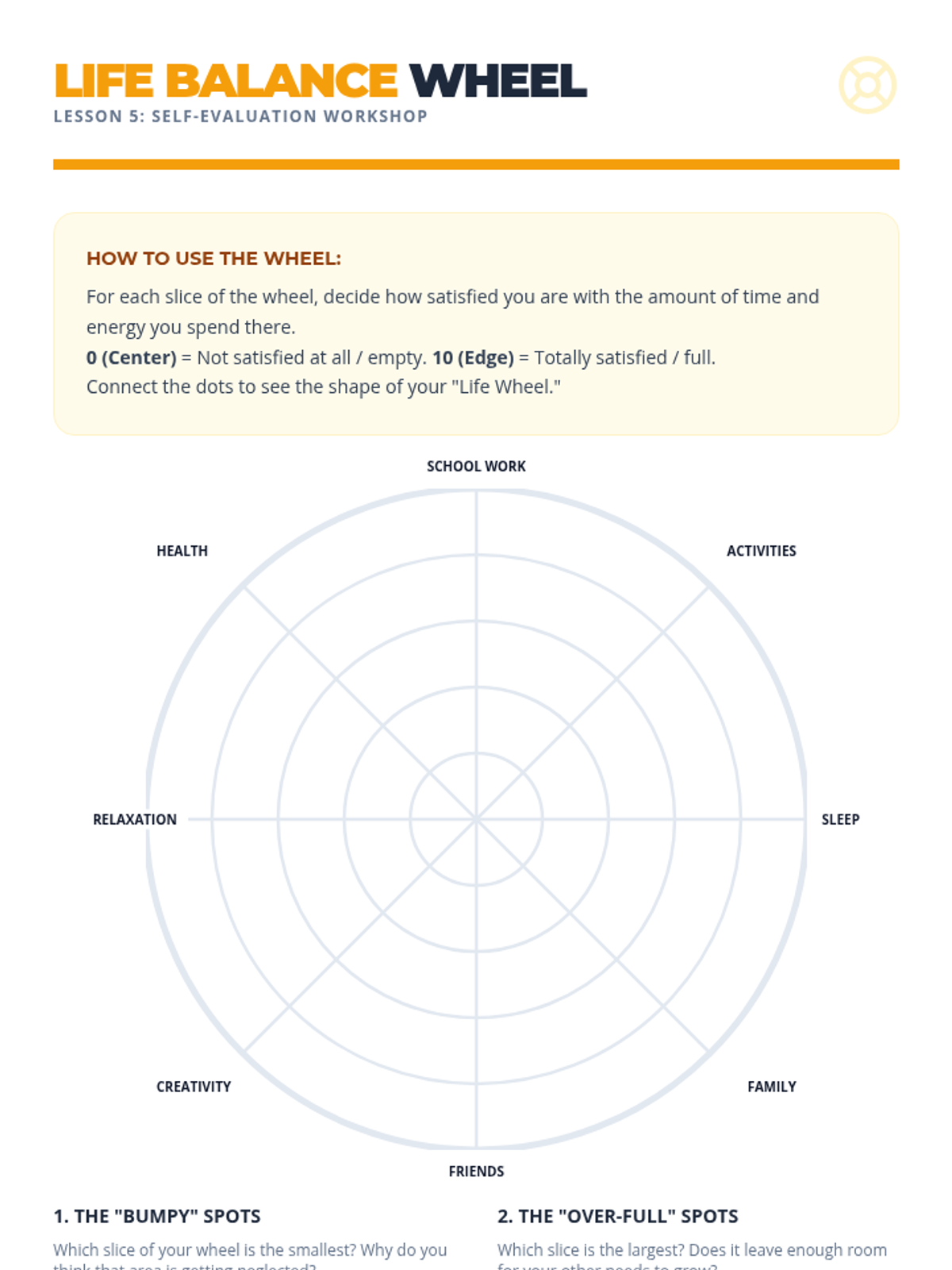
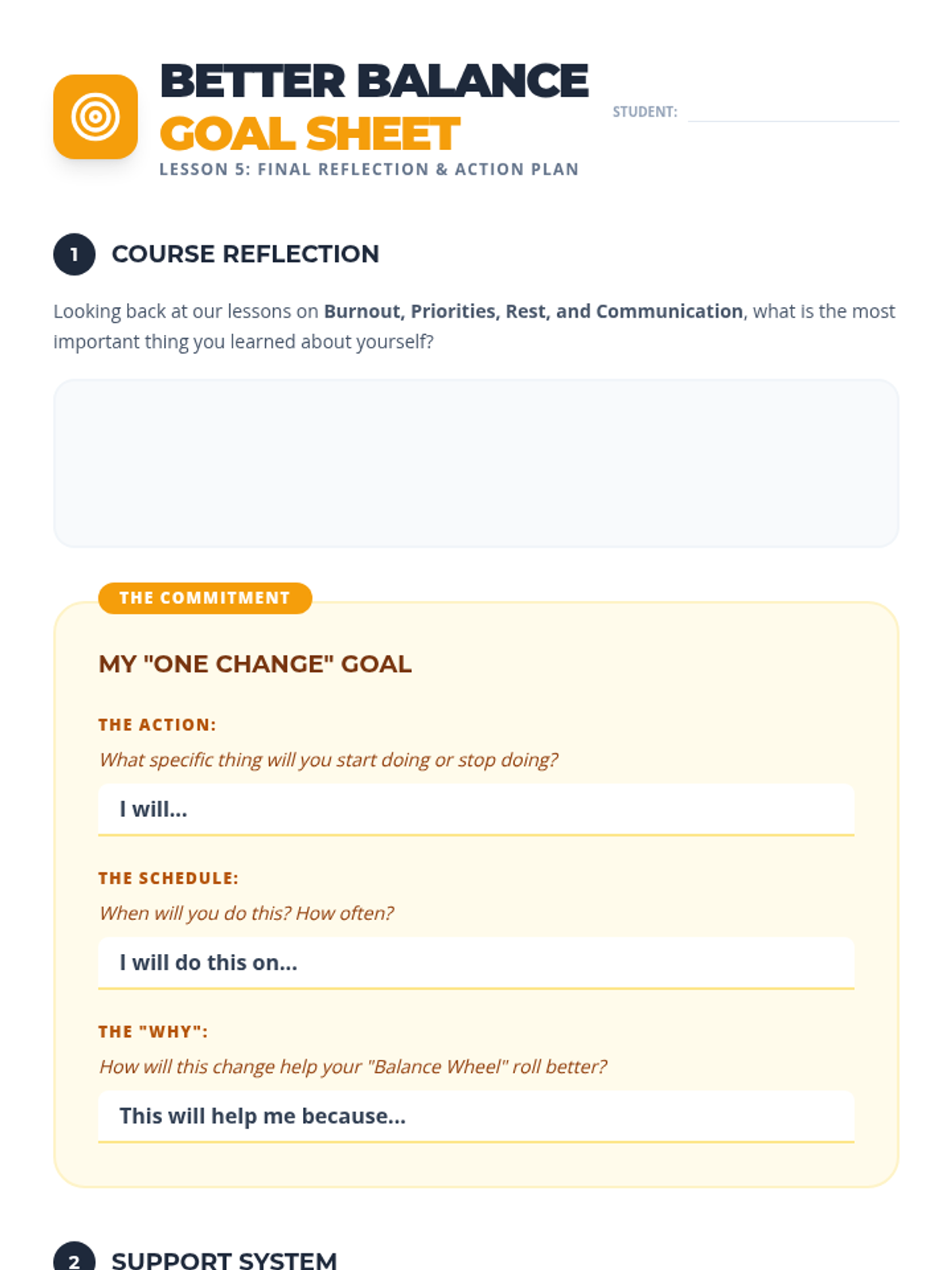
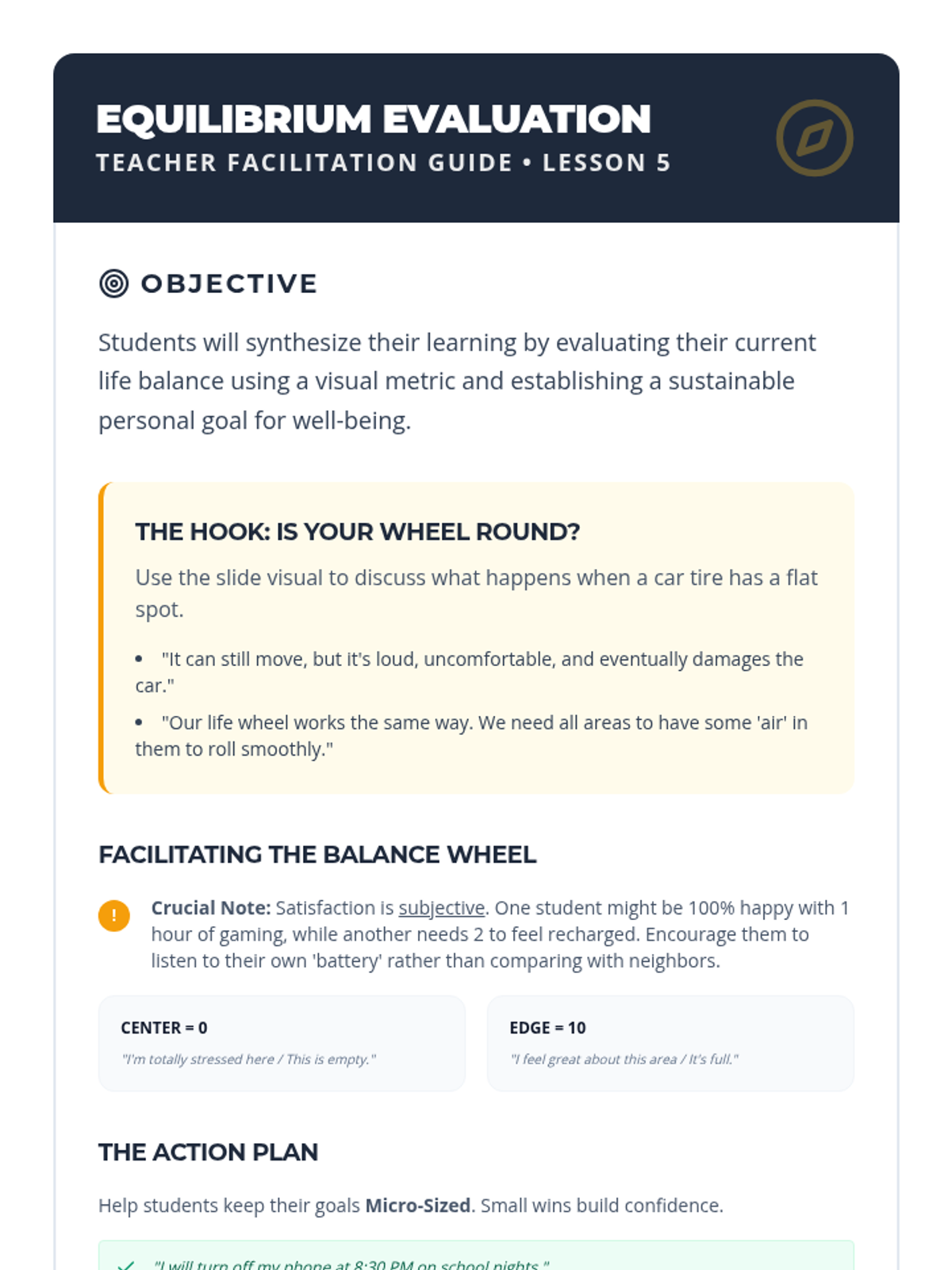
Students evaluate their current life balance using a visual 'Balance Wheel' and set a concrete goal for maintaining well-being.
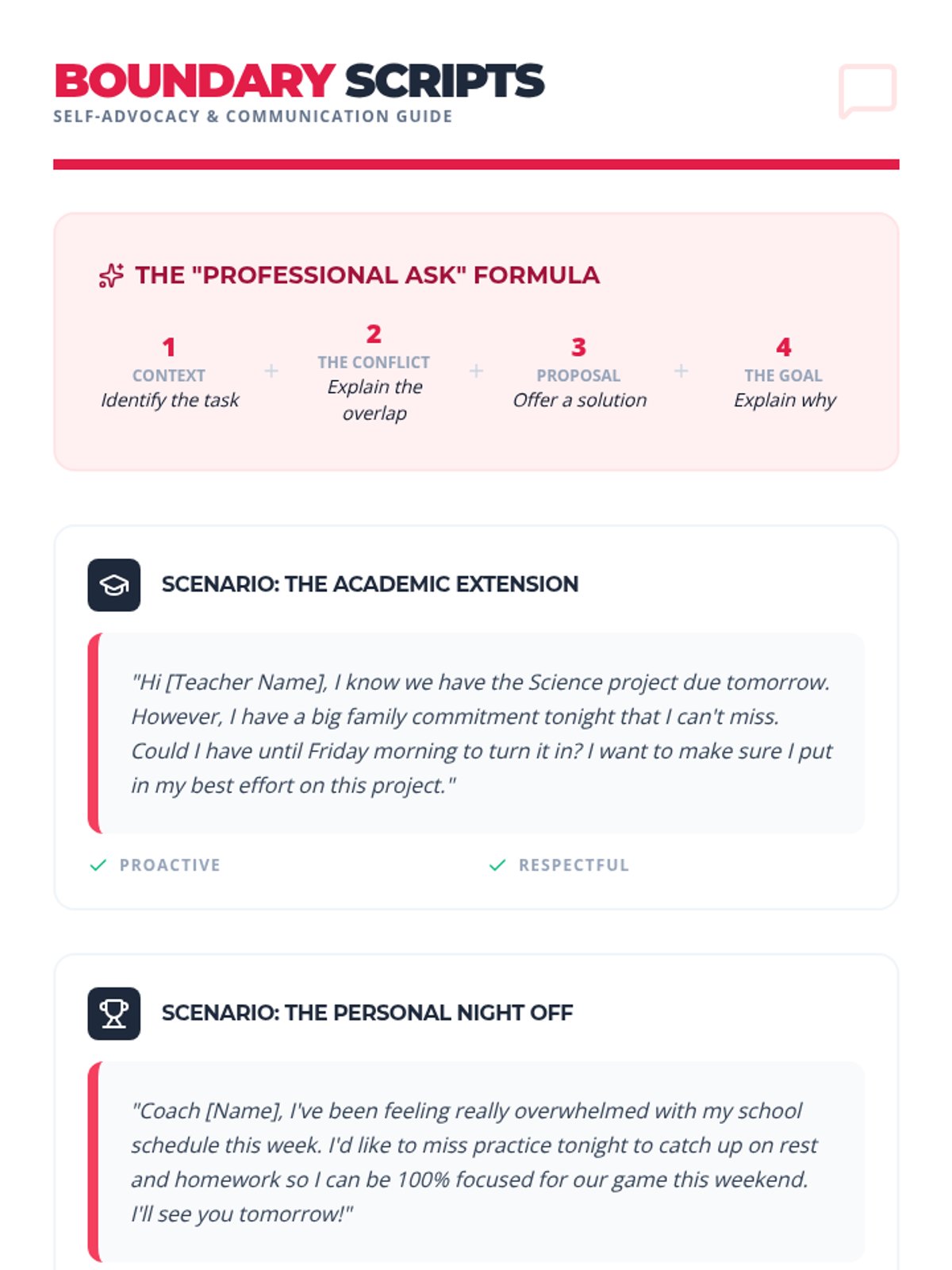
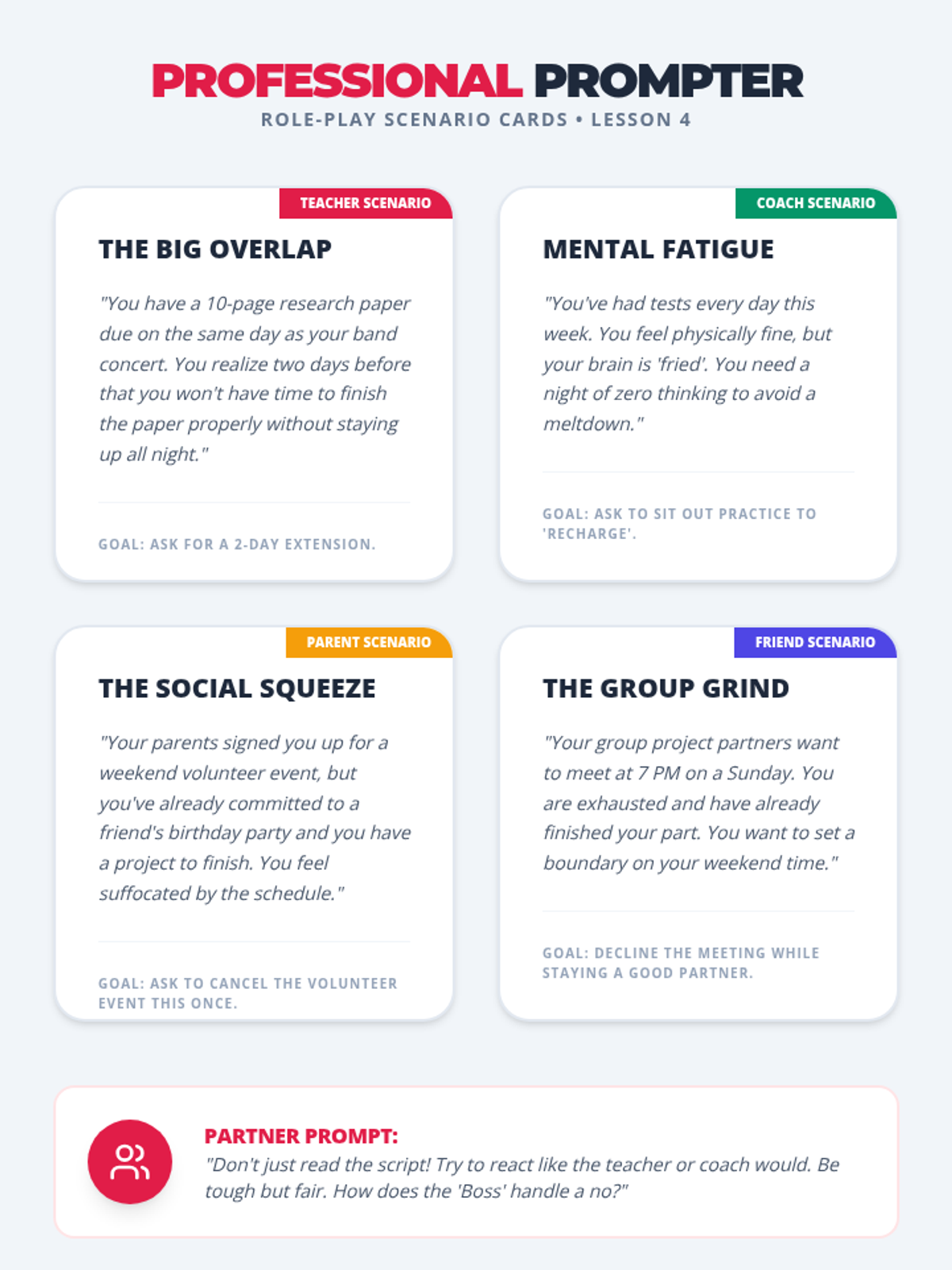
Students develop and practice proactive communication strategies for asking for help or setting boundaries with authority figures.
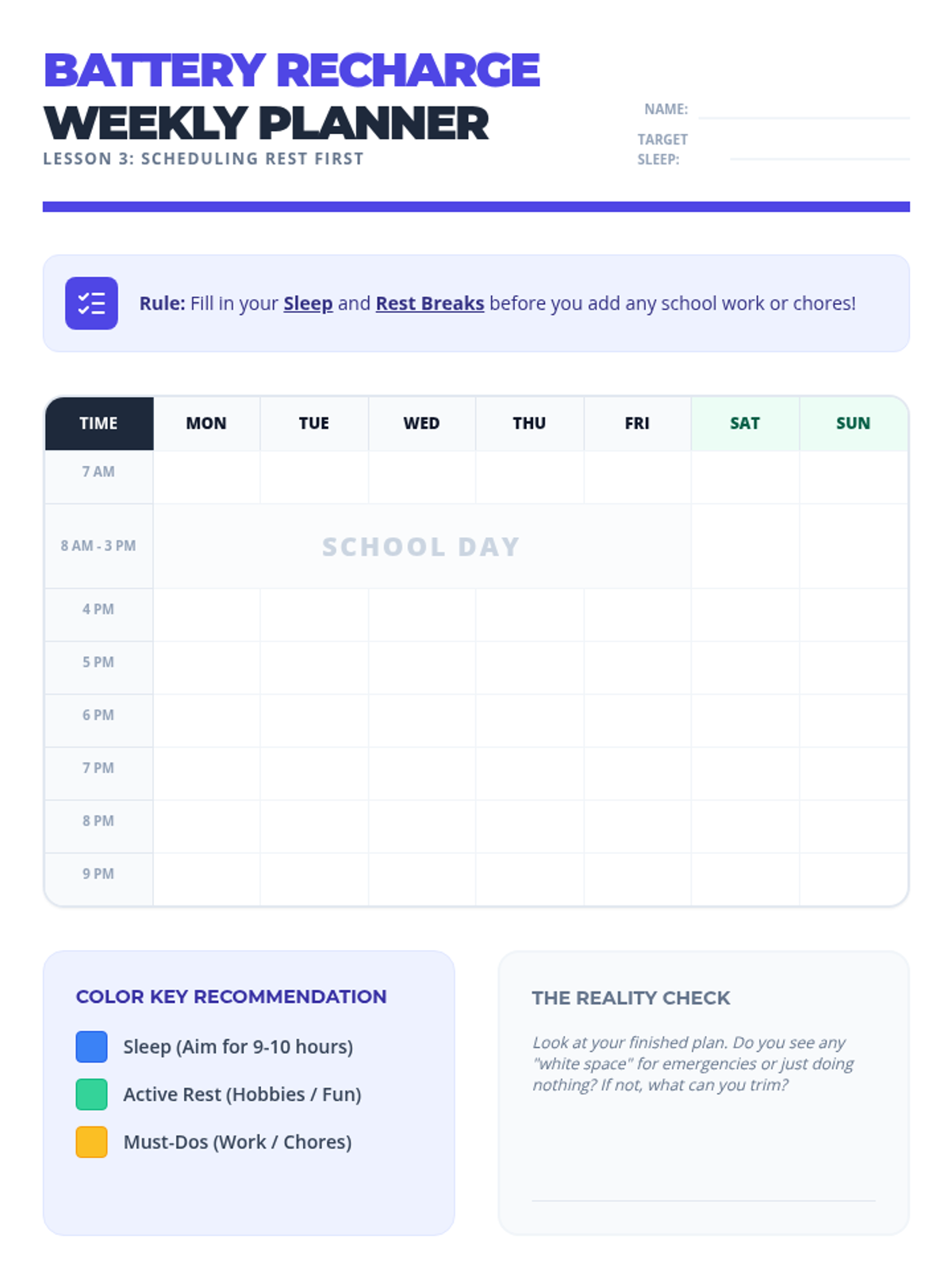
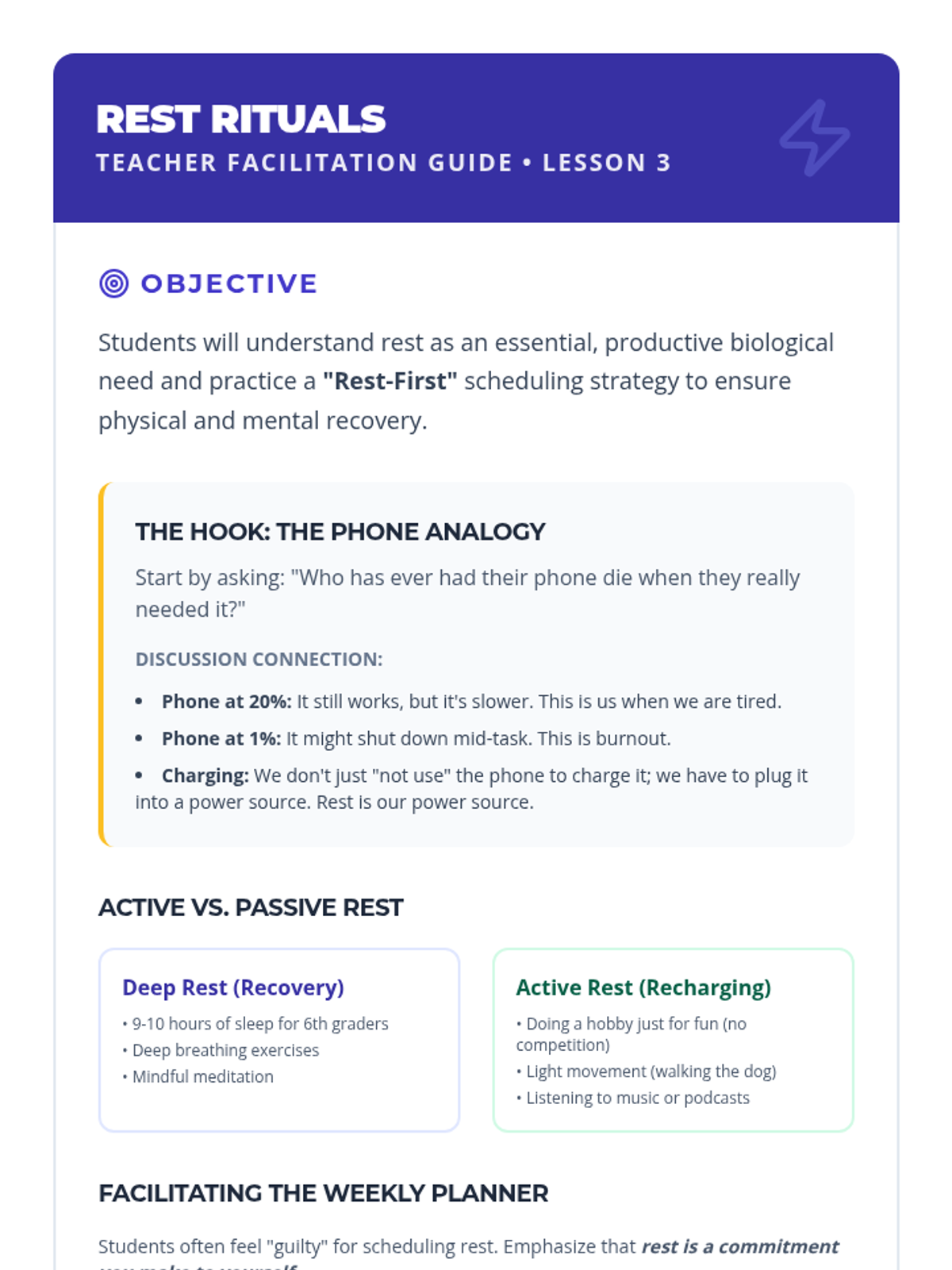
Students explore the necessity of rest and sleep as active components of a healthy schedule, creating a weekly plan that prioritizes 'recharge' time.
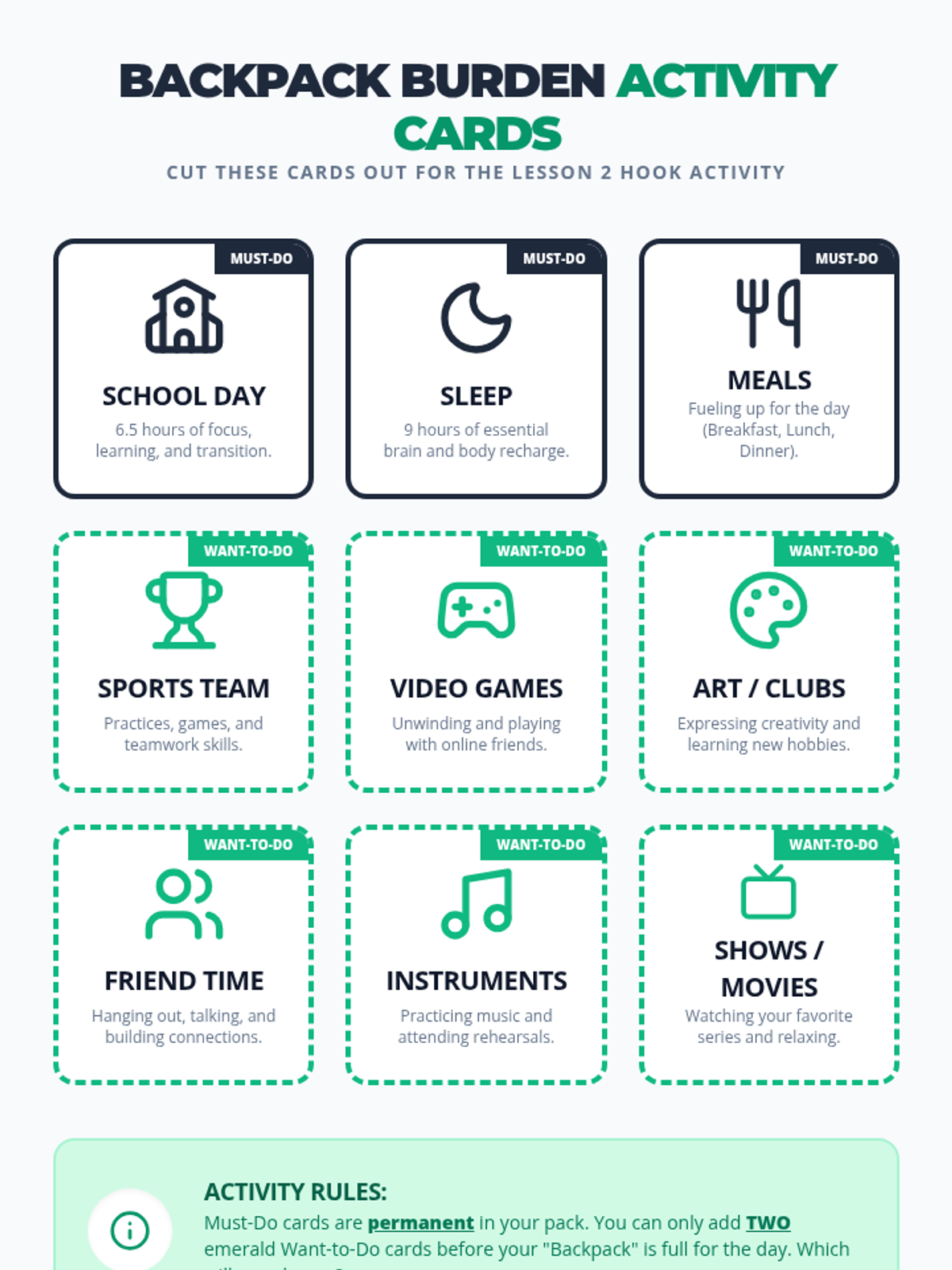
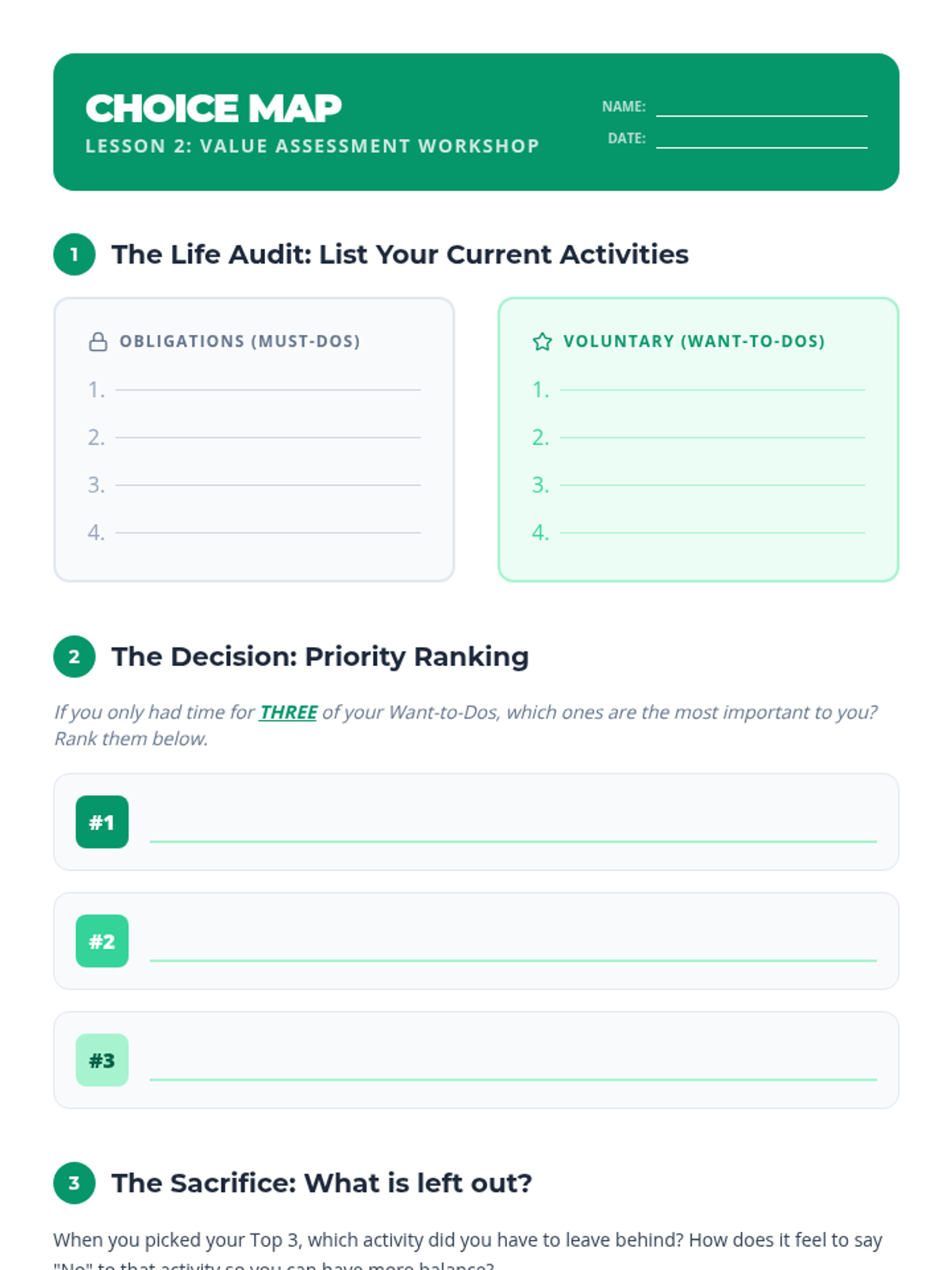
Students learn to distinguish between mandatory obligations and voluntary activities, practicing the art of making trade-offs.
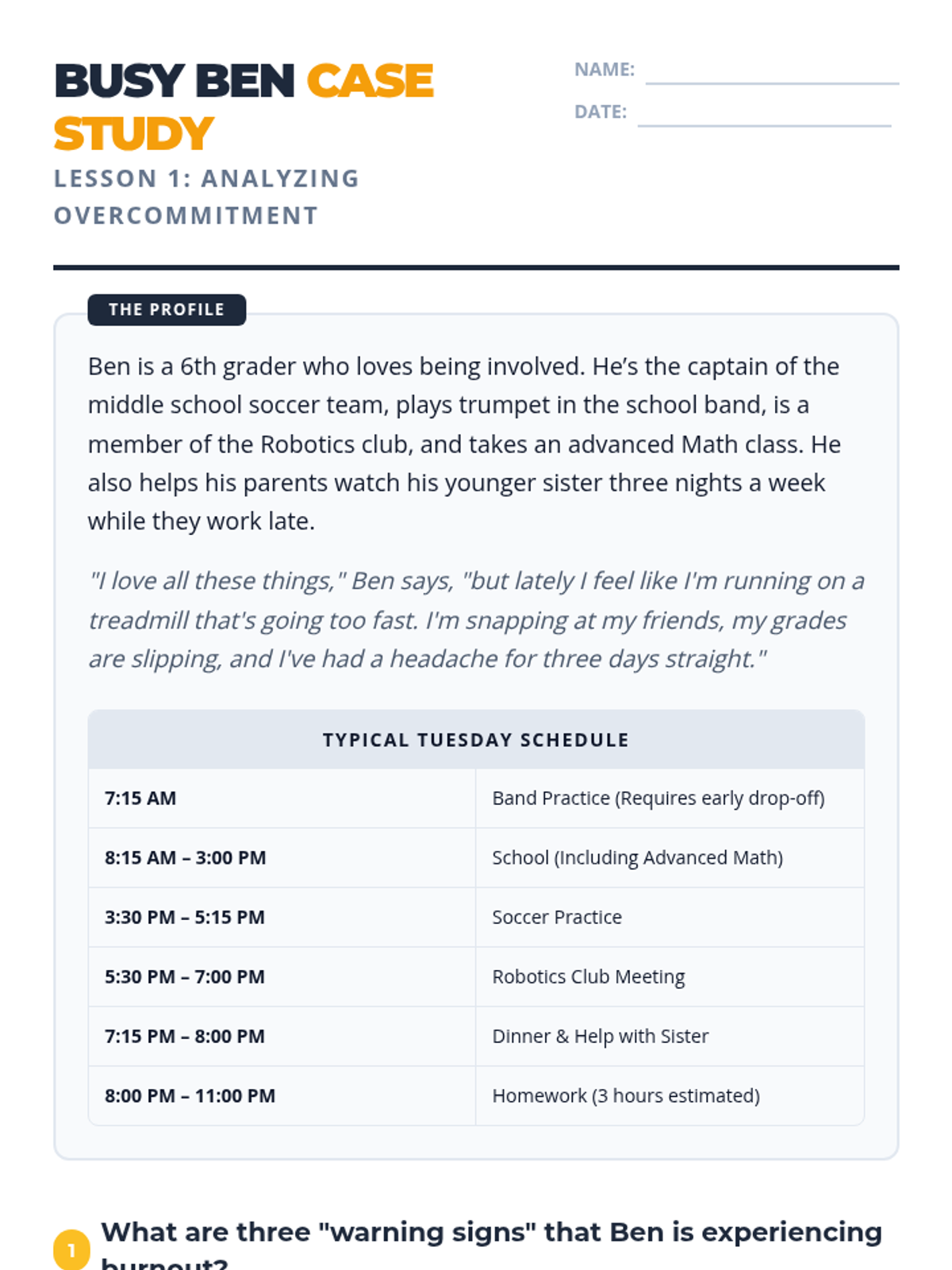
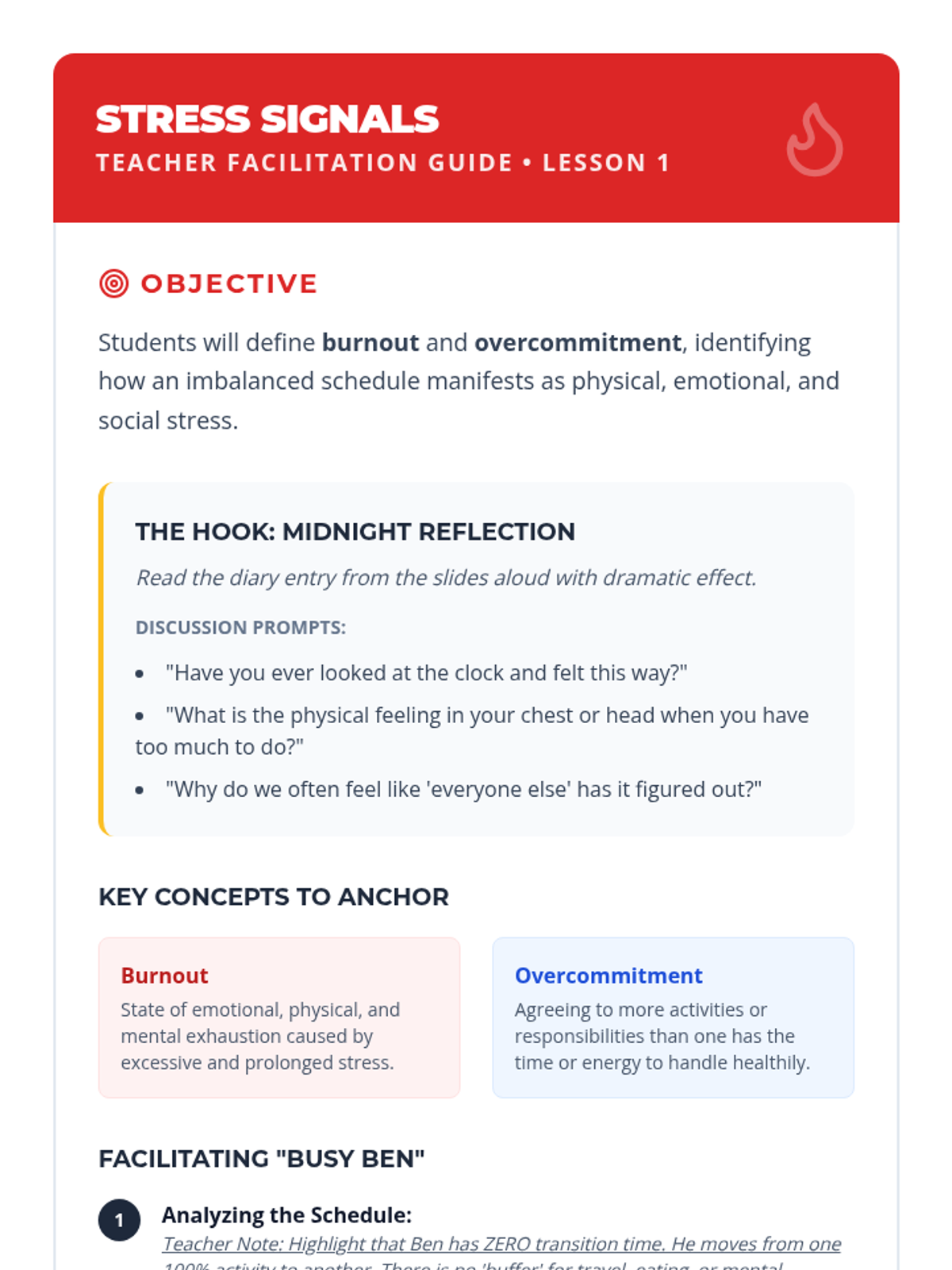
Students analyze the signs and consequences of overcommitment through a fictional case study of a student experiencing burnout.
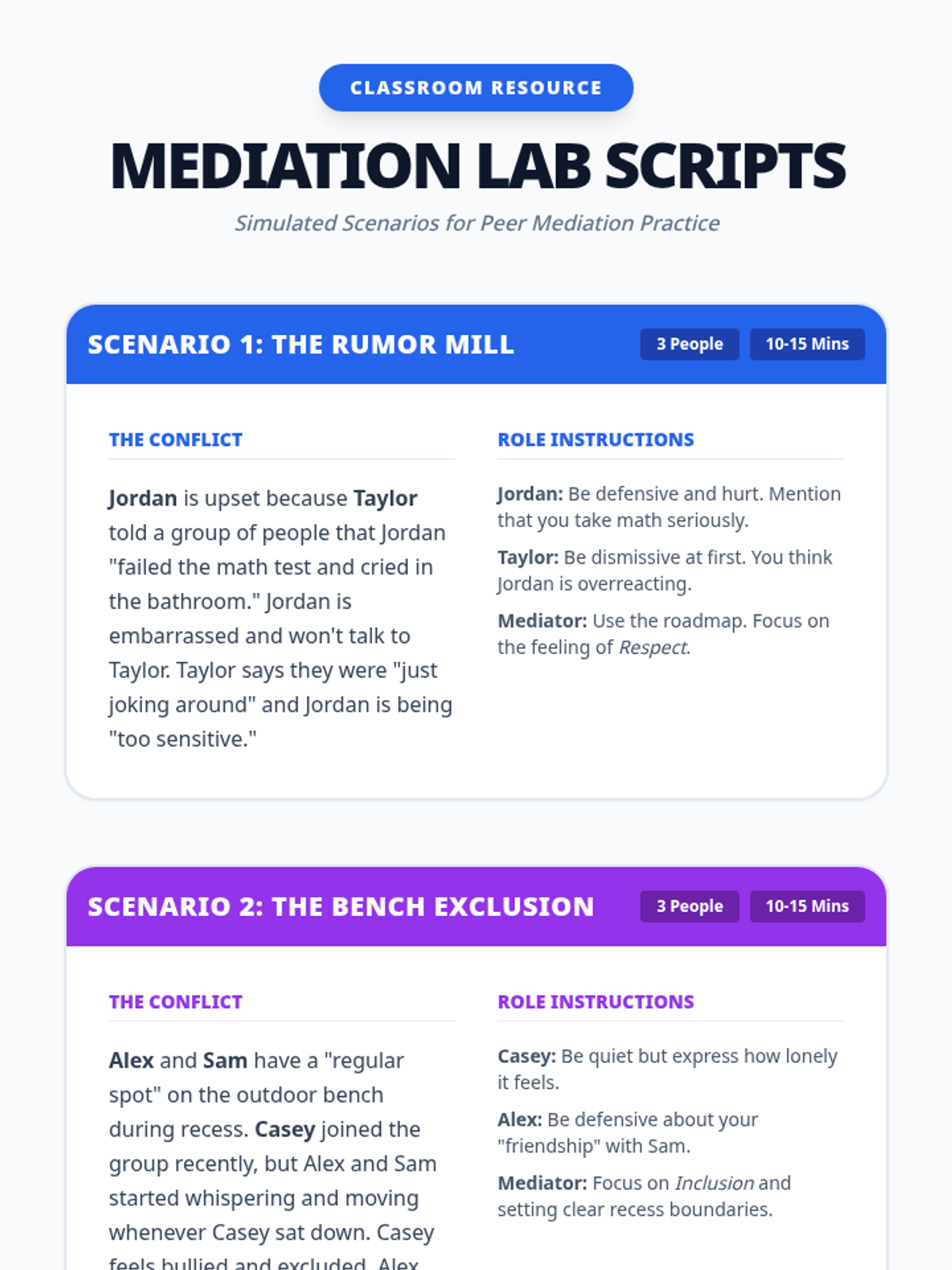
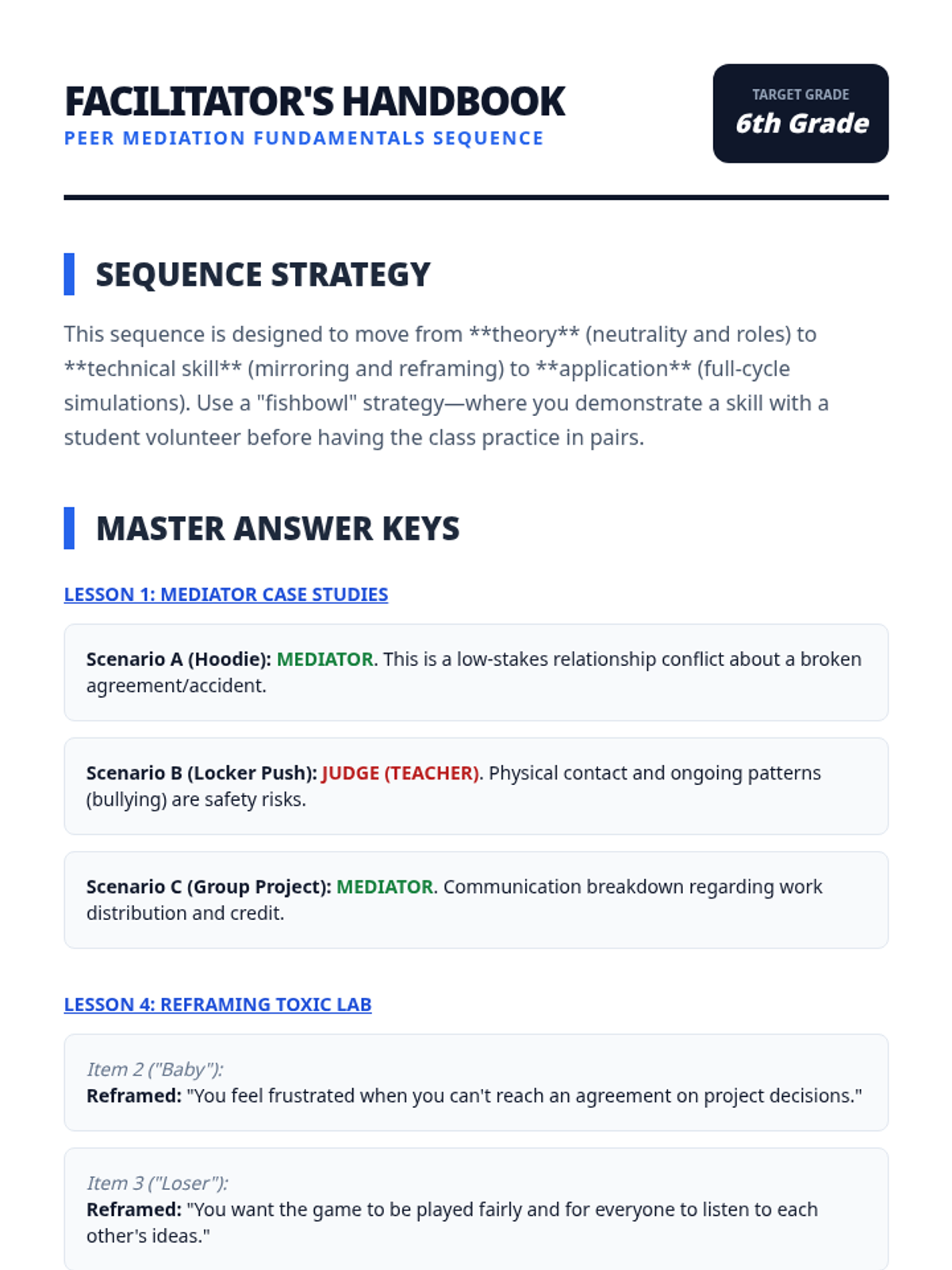
Students engage in full-cycle mock mediations. Groups rotate roles between disputants and mediators, using scripts based on real-life 6th-grade problems (e.g., rumor spreading, exclusion).
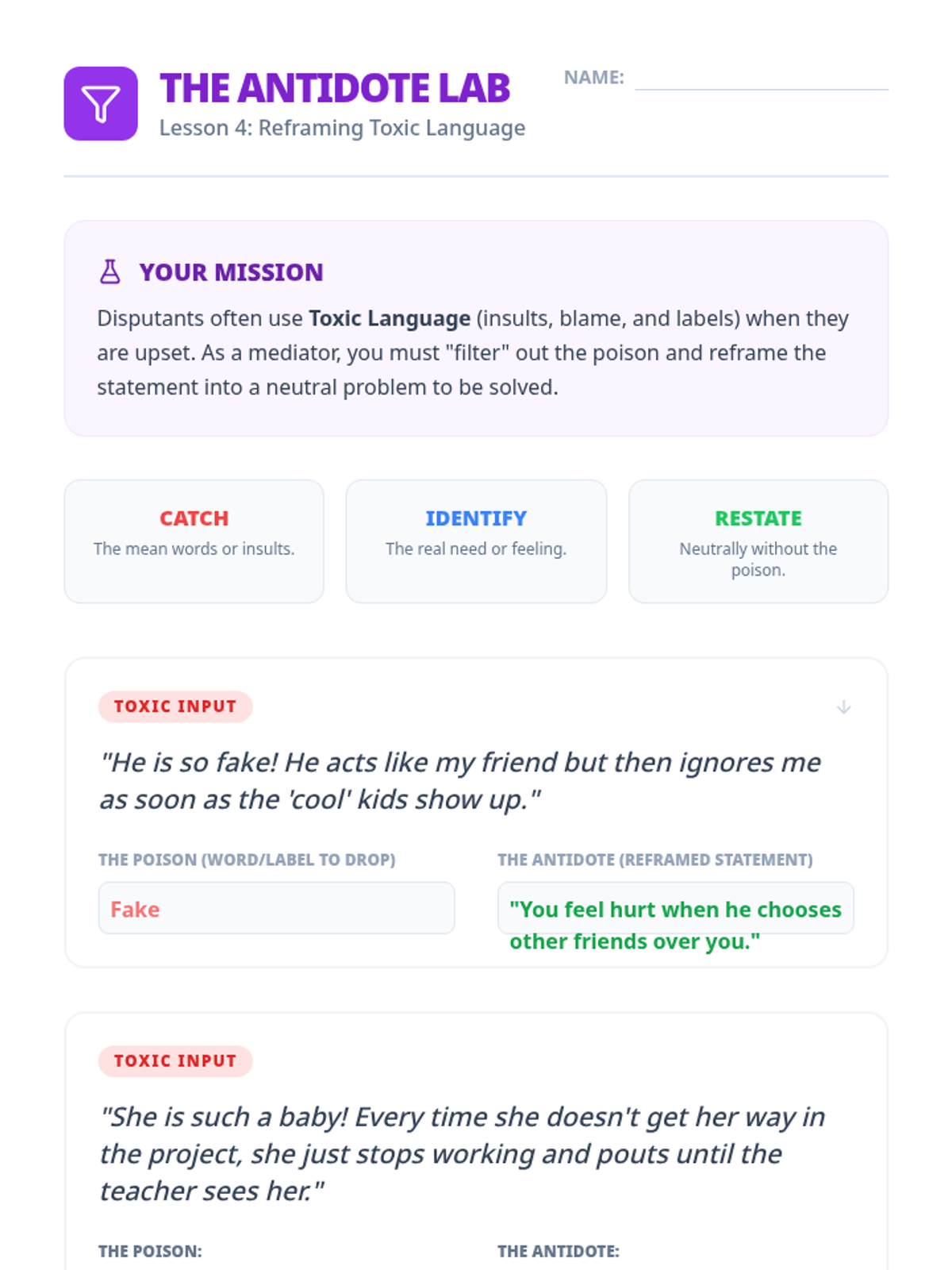
Students learn to 'catch' toxic or inflammatory language used by disputants and reframe it into neutral problem statements. This advanced skill prevents the mediation from turning into a shouting match.
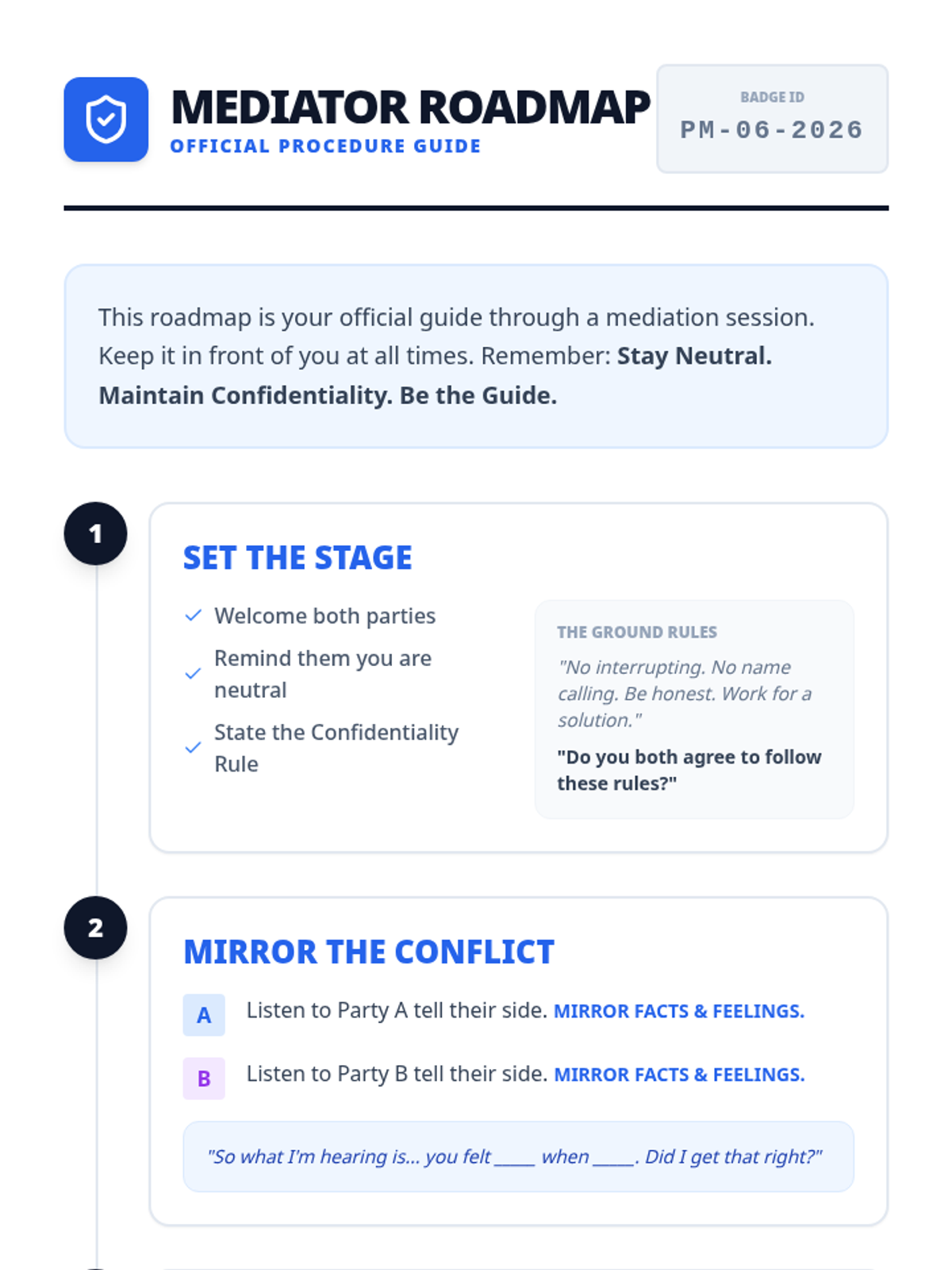
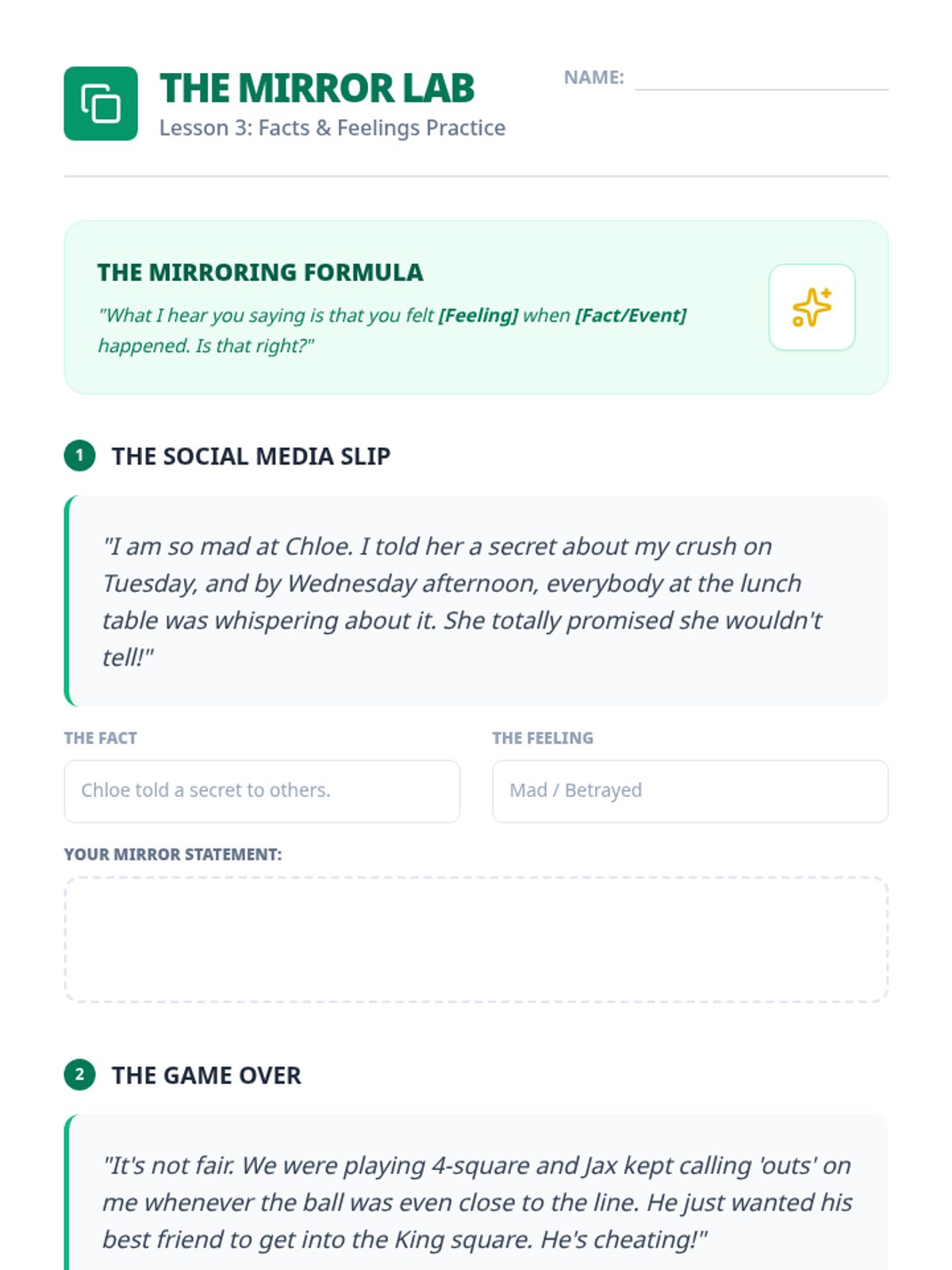
This lesson focuses on the mediator's primary tool: mirroring (reflecting back what was heard). Students practice listening to a complaint and summarizing it neutrally to ensure the speaker feels heard.
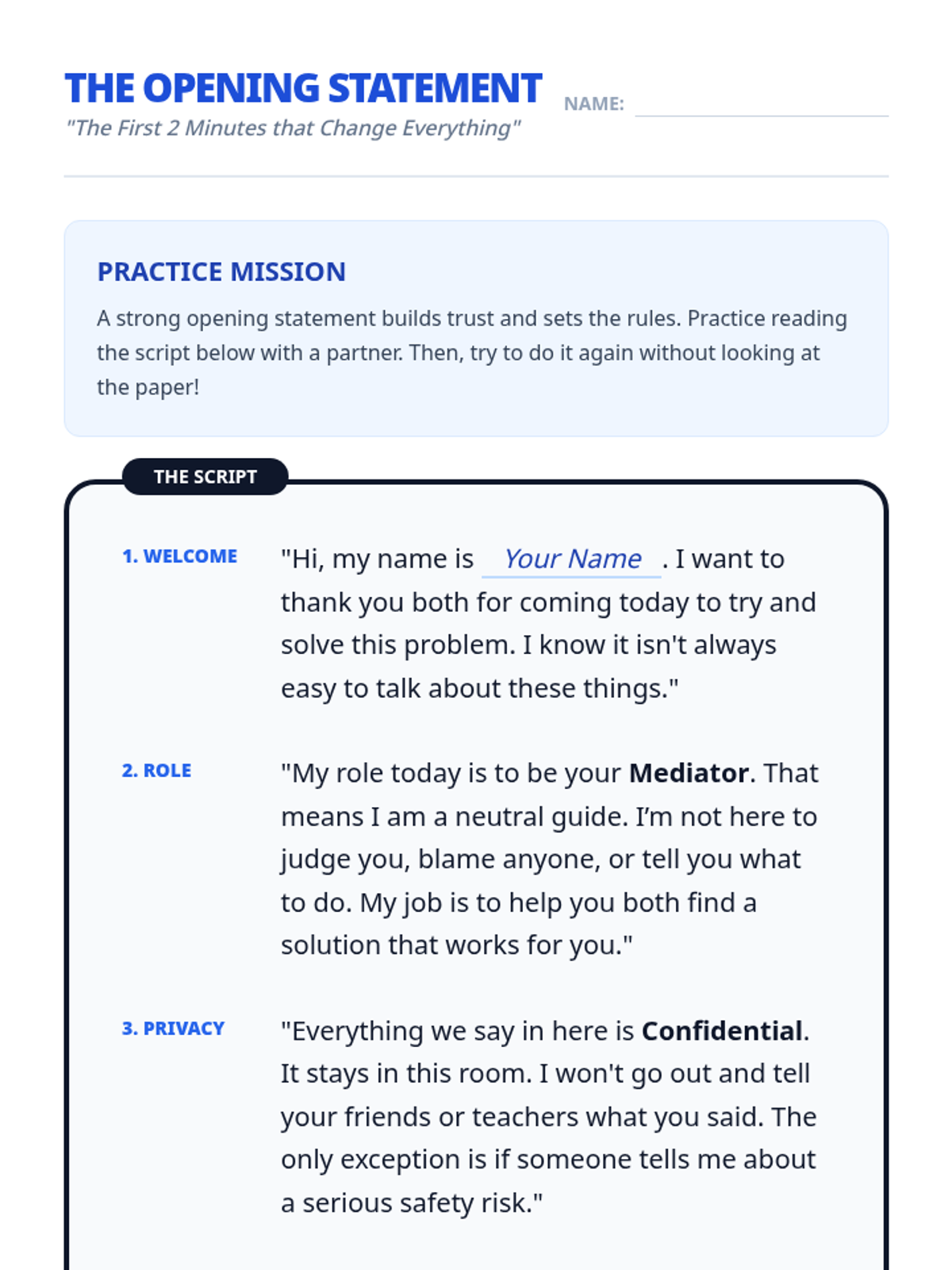
Learners practice the opening statement of a mediation: welcoming parties, explaining the process, and establishing rules like 'no interrupting' and 'no name-calling.'
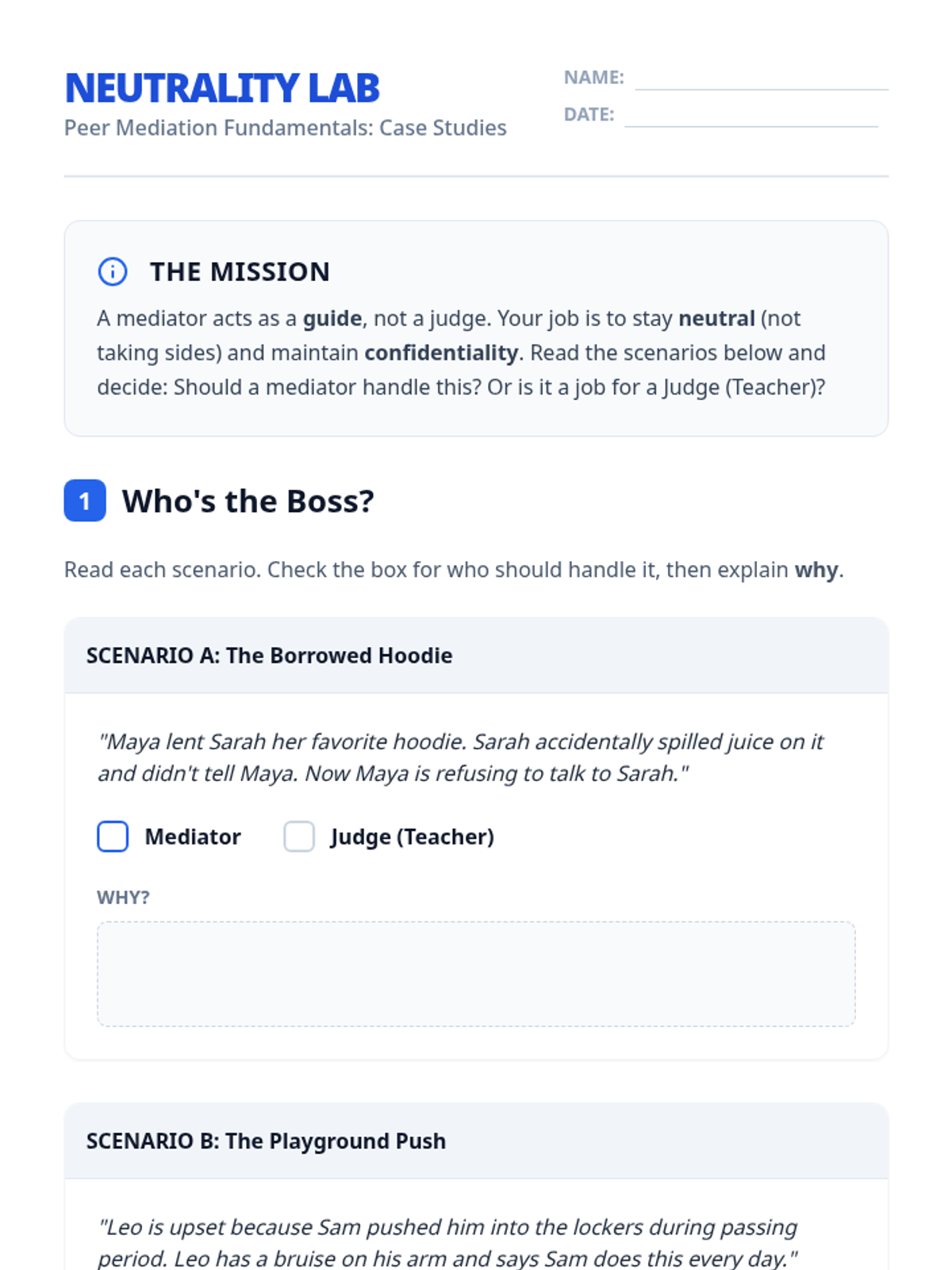
Students define what a mediator is (a guide, not a judge) and the core principle of neutrality. They discuss confidentiality and identify when a conflict is too dangerous for peer mediation (e.g., bullying or violence).
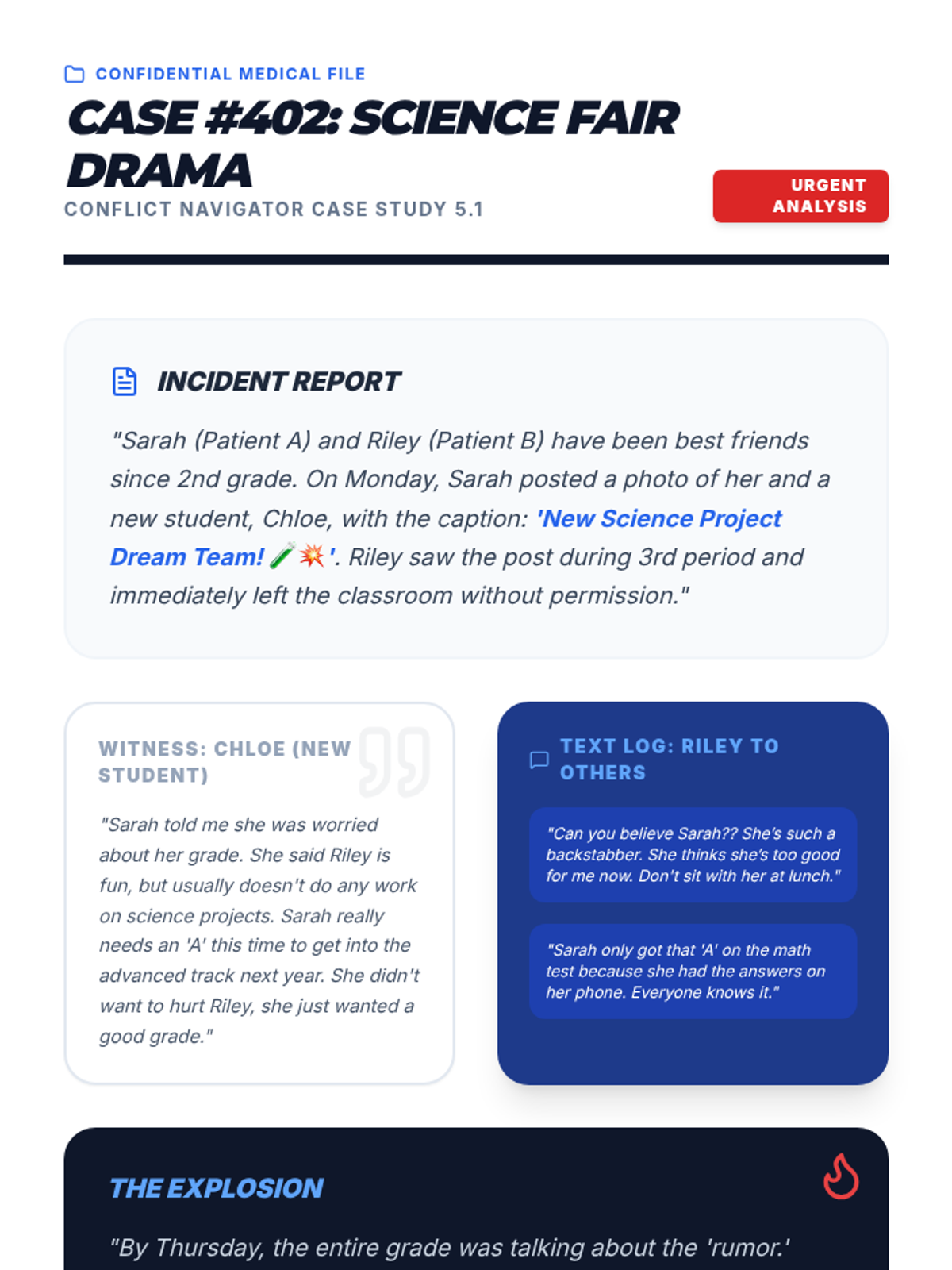
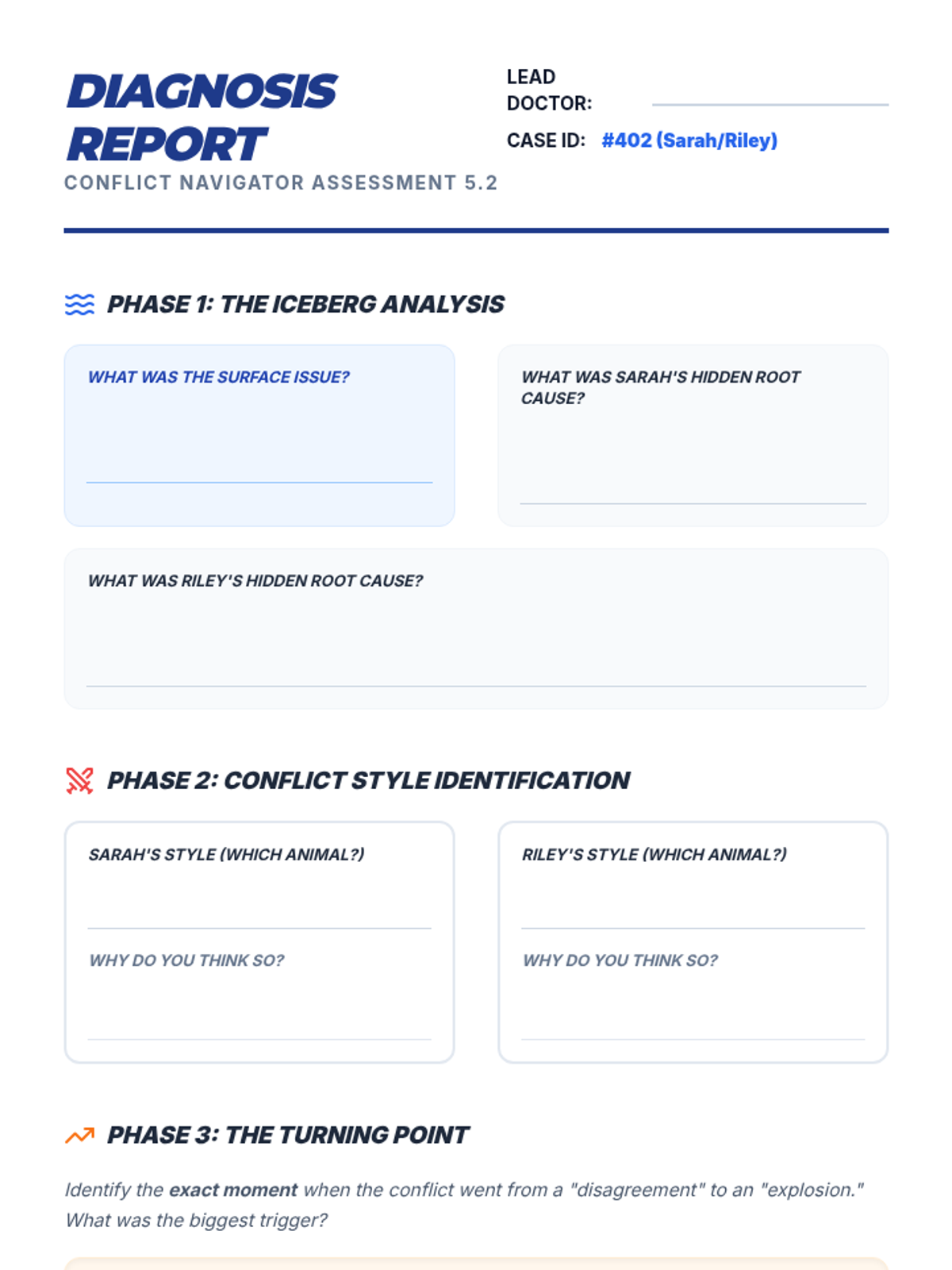
A final synthesis activity where students act as 'Conflict Doctors' to diagnose a complex scenario using all the tools learned in the sequence.
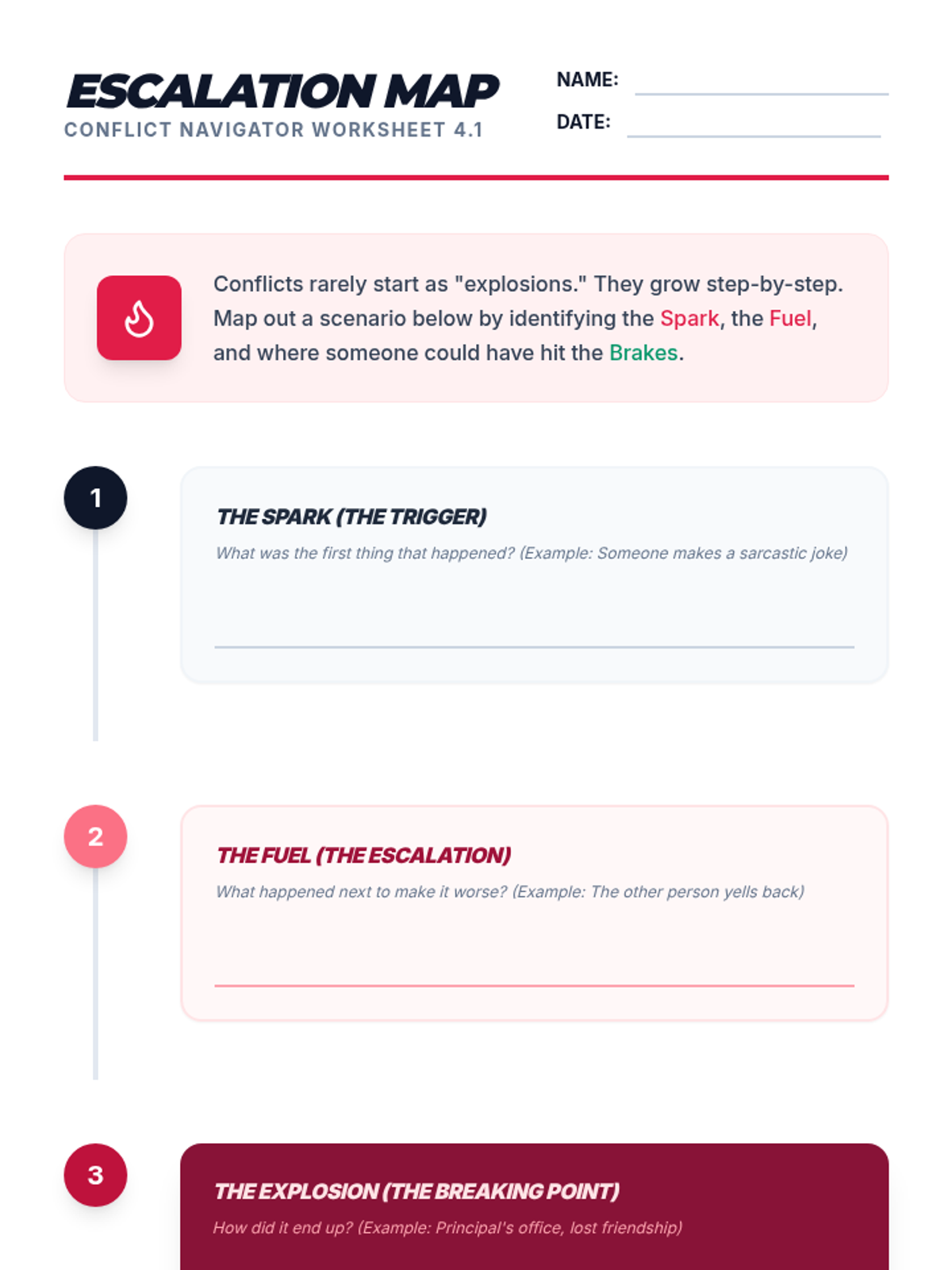
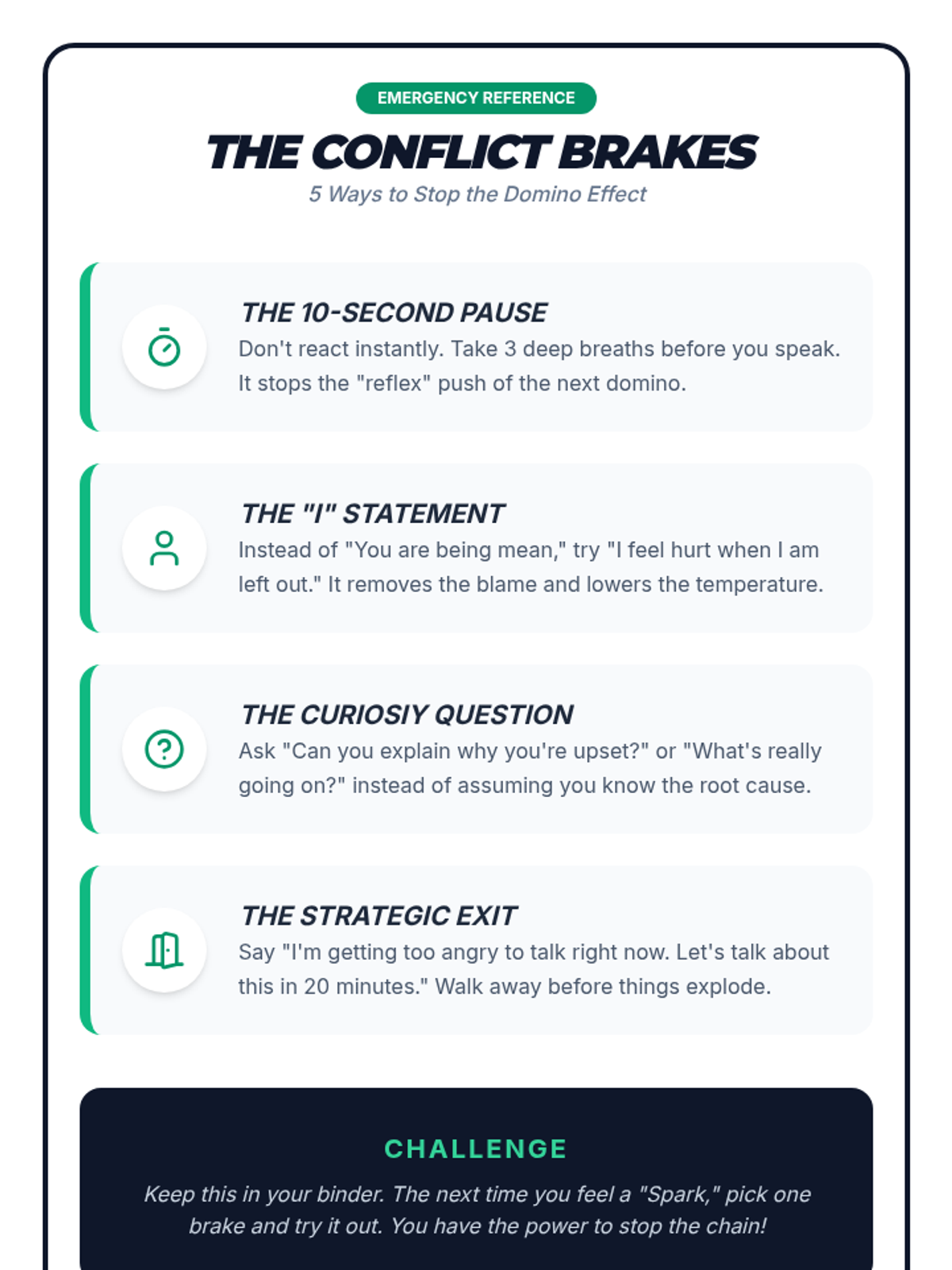
Analyzes the cycle of escalation, identifying triggers and turning points where conflicts can be de-escalated before reaching a breaking point.
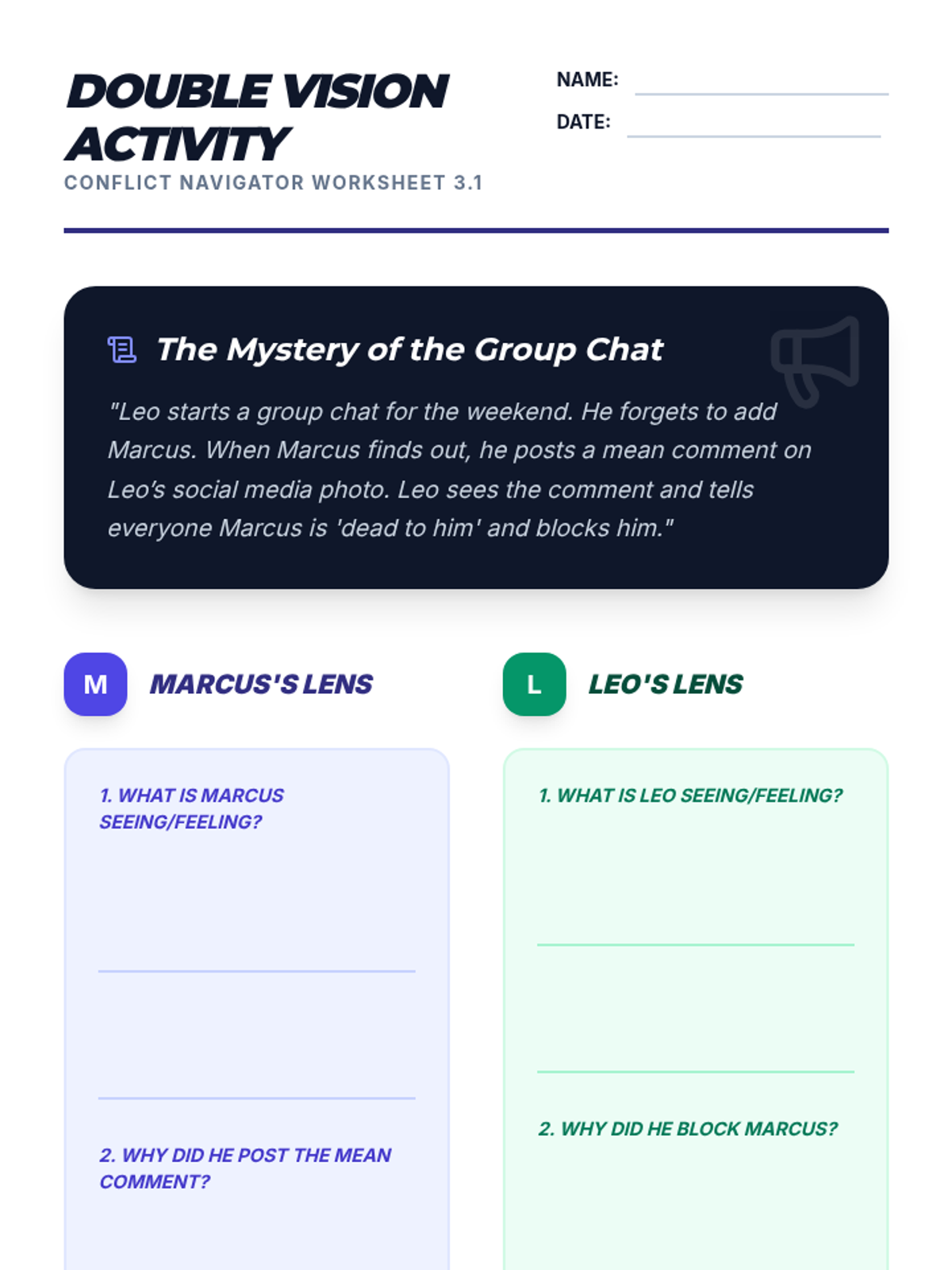
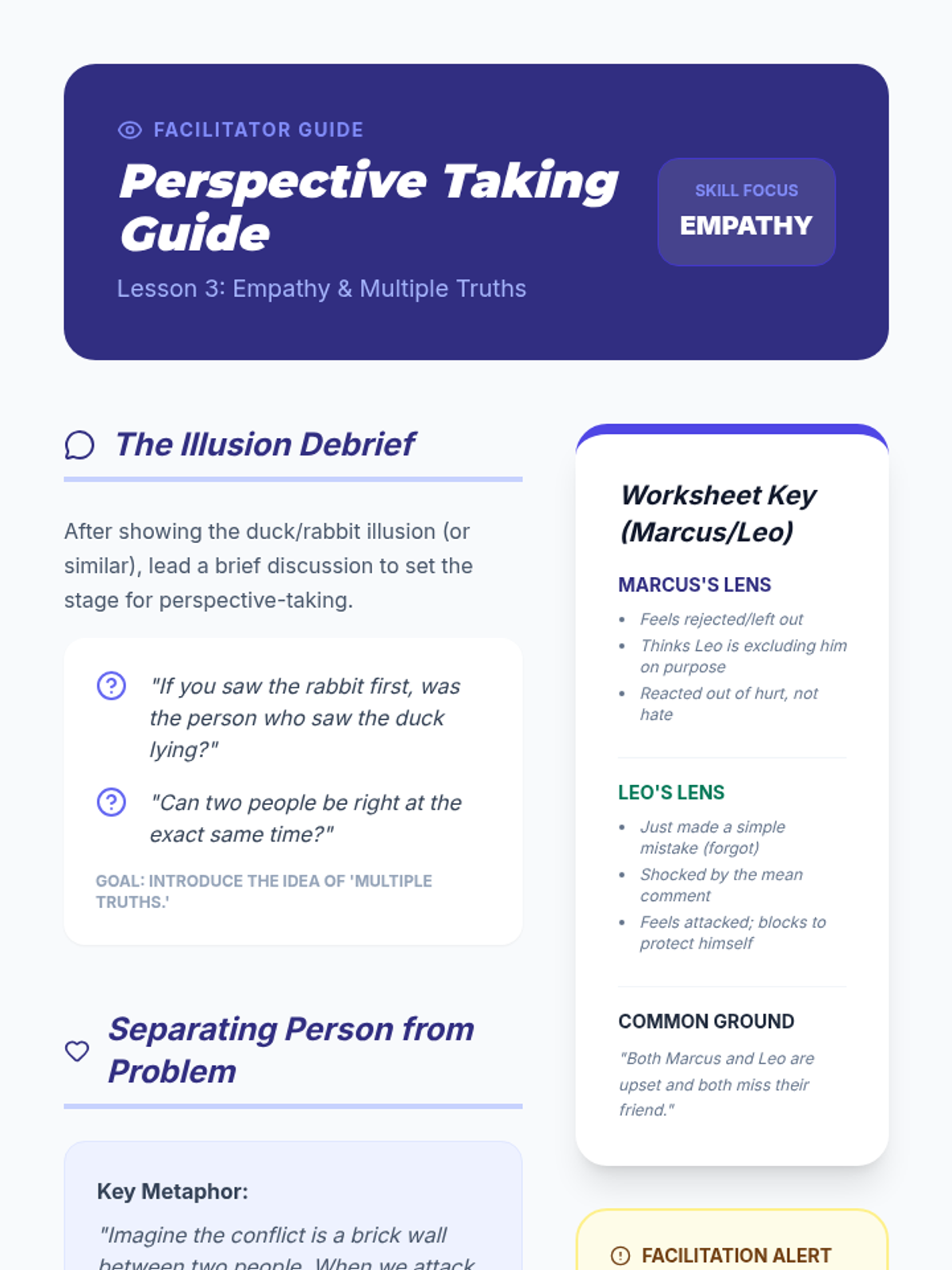
Focuses on perspective-taking and empathy through visual illusions and story-mapping, teaching students to see multiple truths in a single dispute.
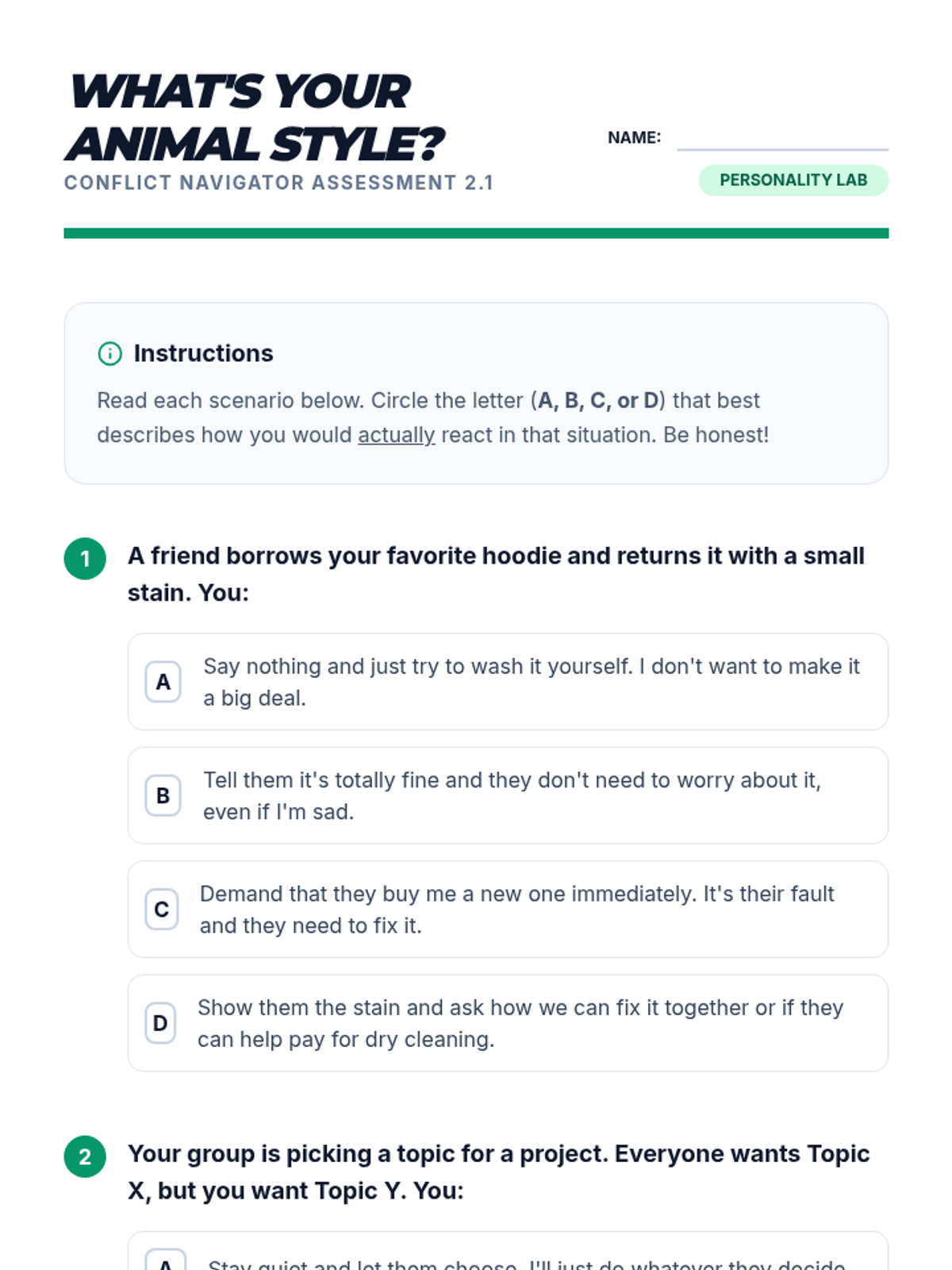
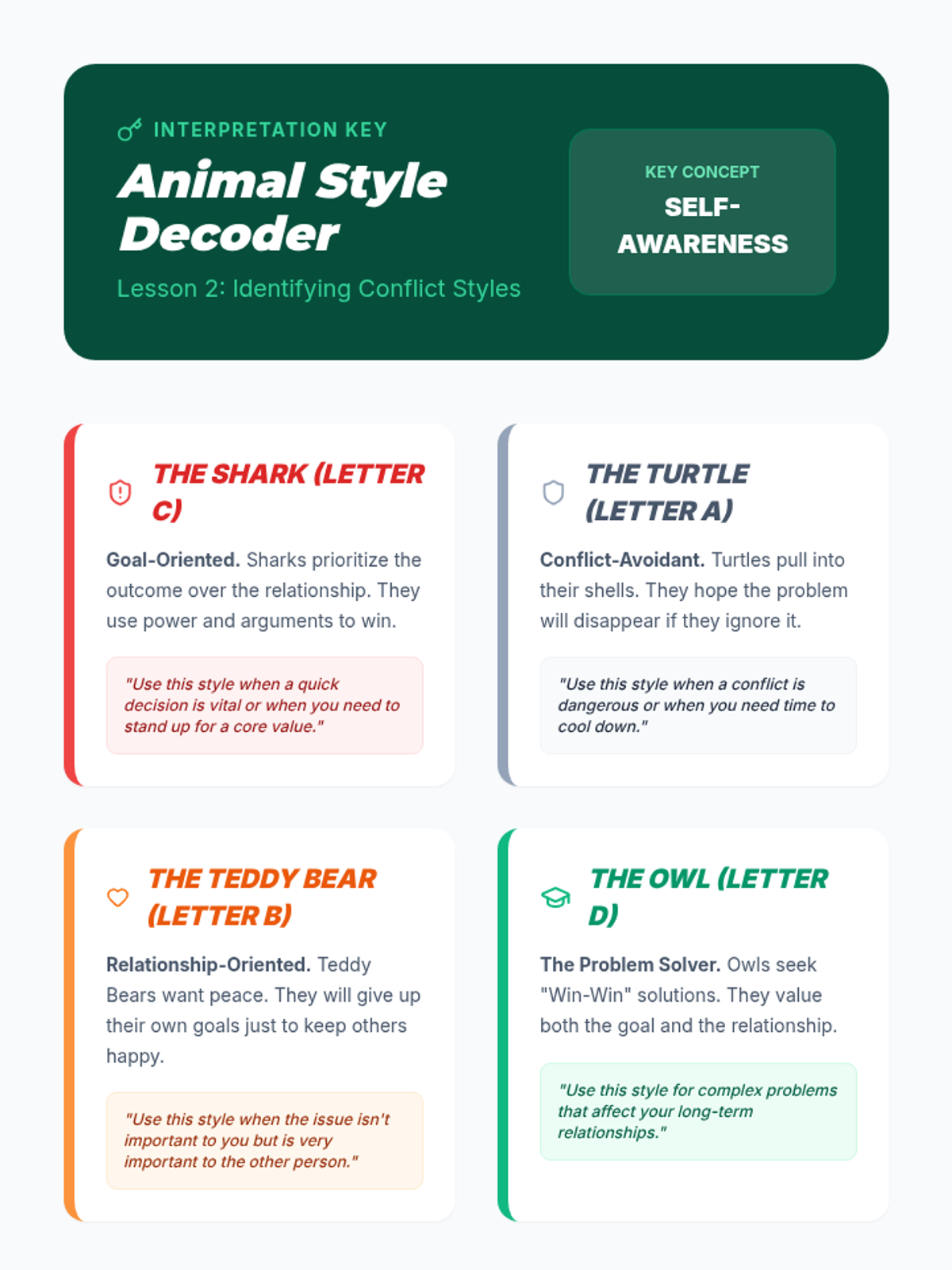
Students explore five core conflict styles (Shark, Turtle, Teddy Bear, Fox, Owl) to understand their default reactions and the impact on others.
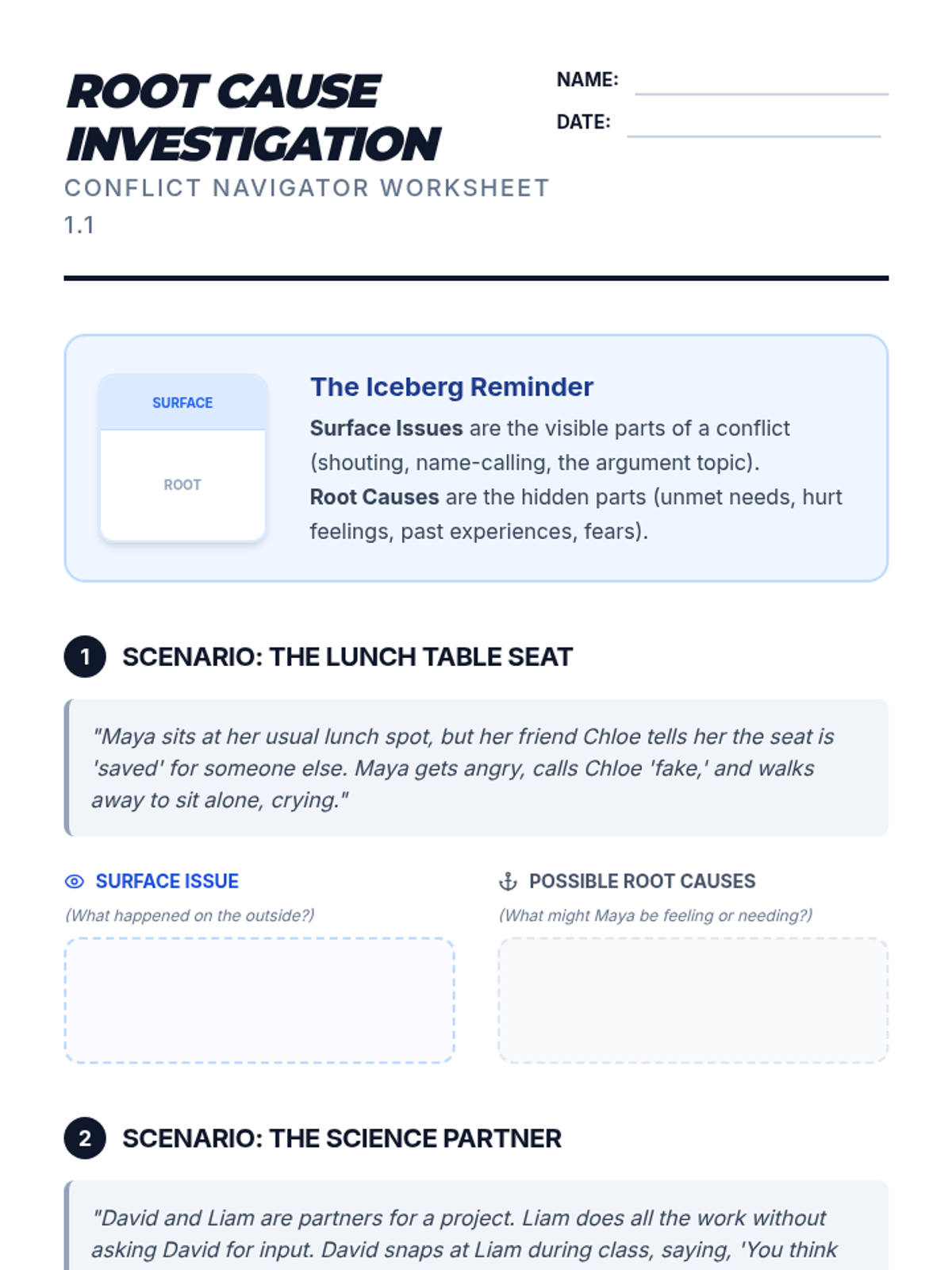
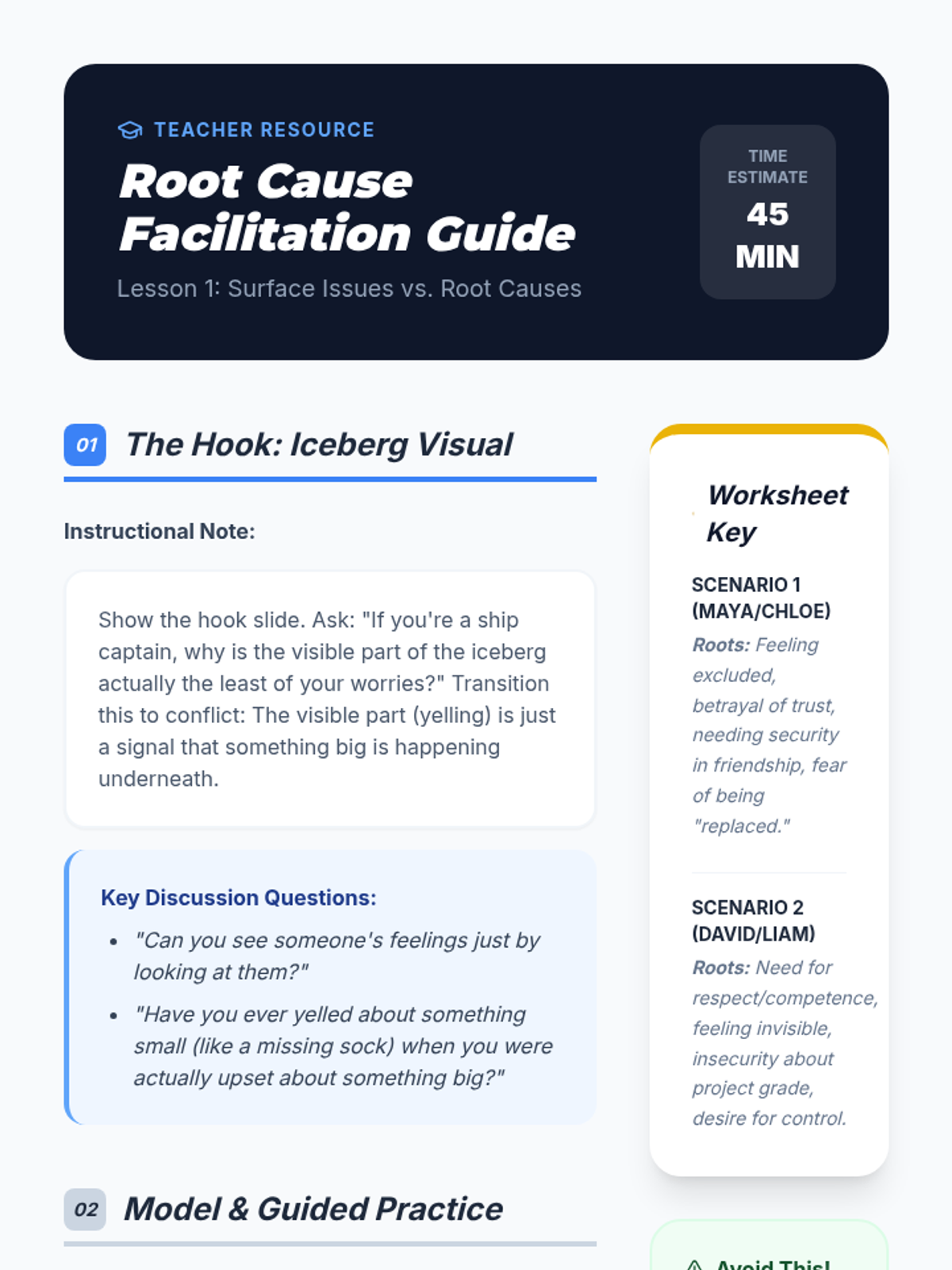
Introduces the Iceberg Model to help students differentiate between the surface argument and the underlying needs, fears, and values driving conflict.
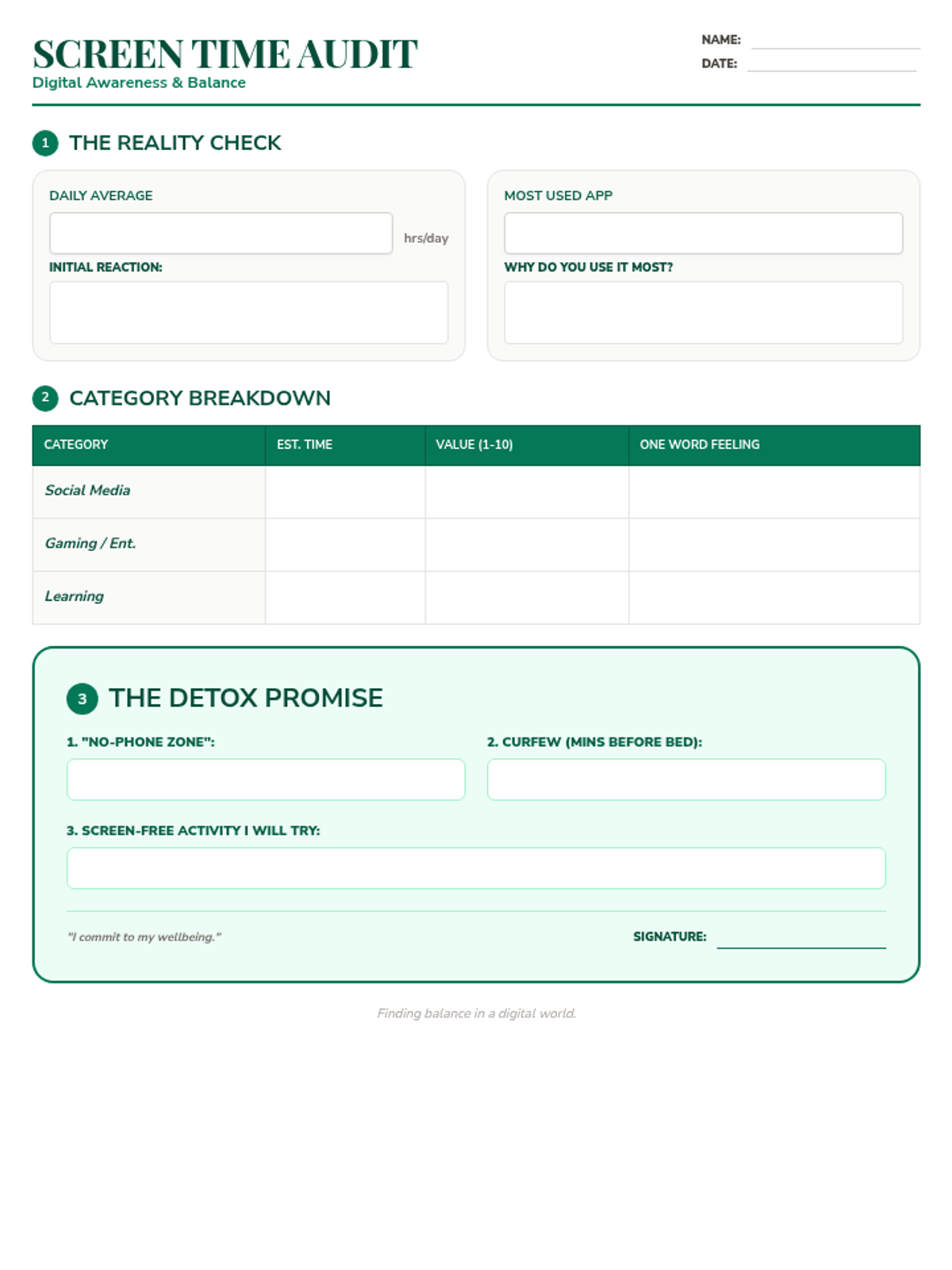
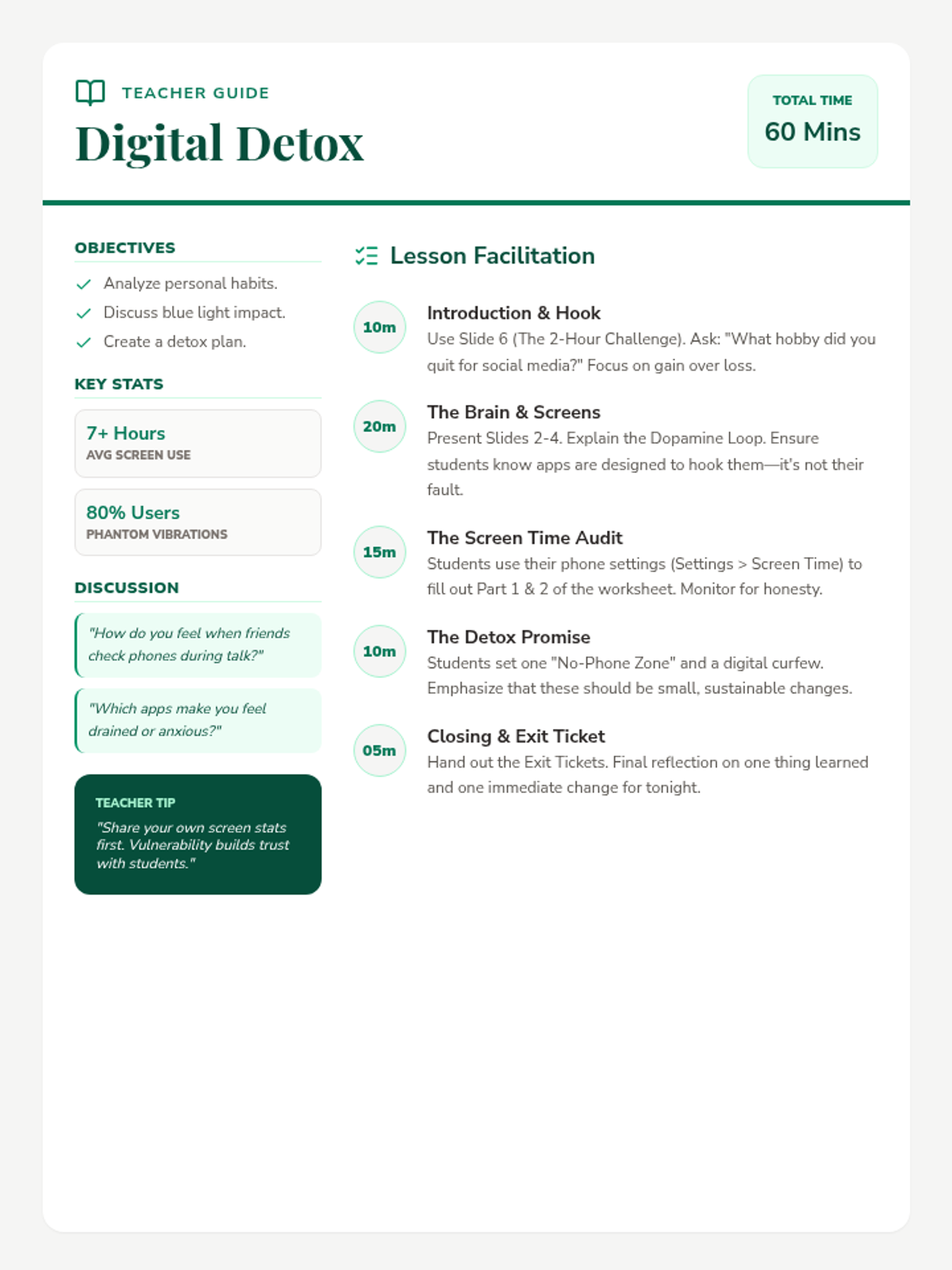
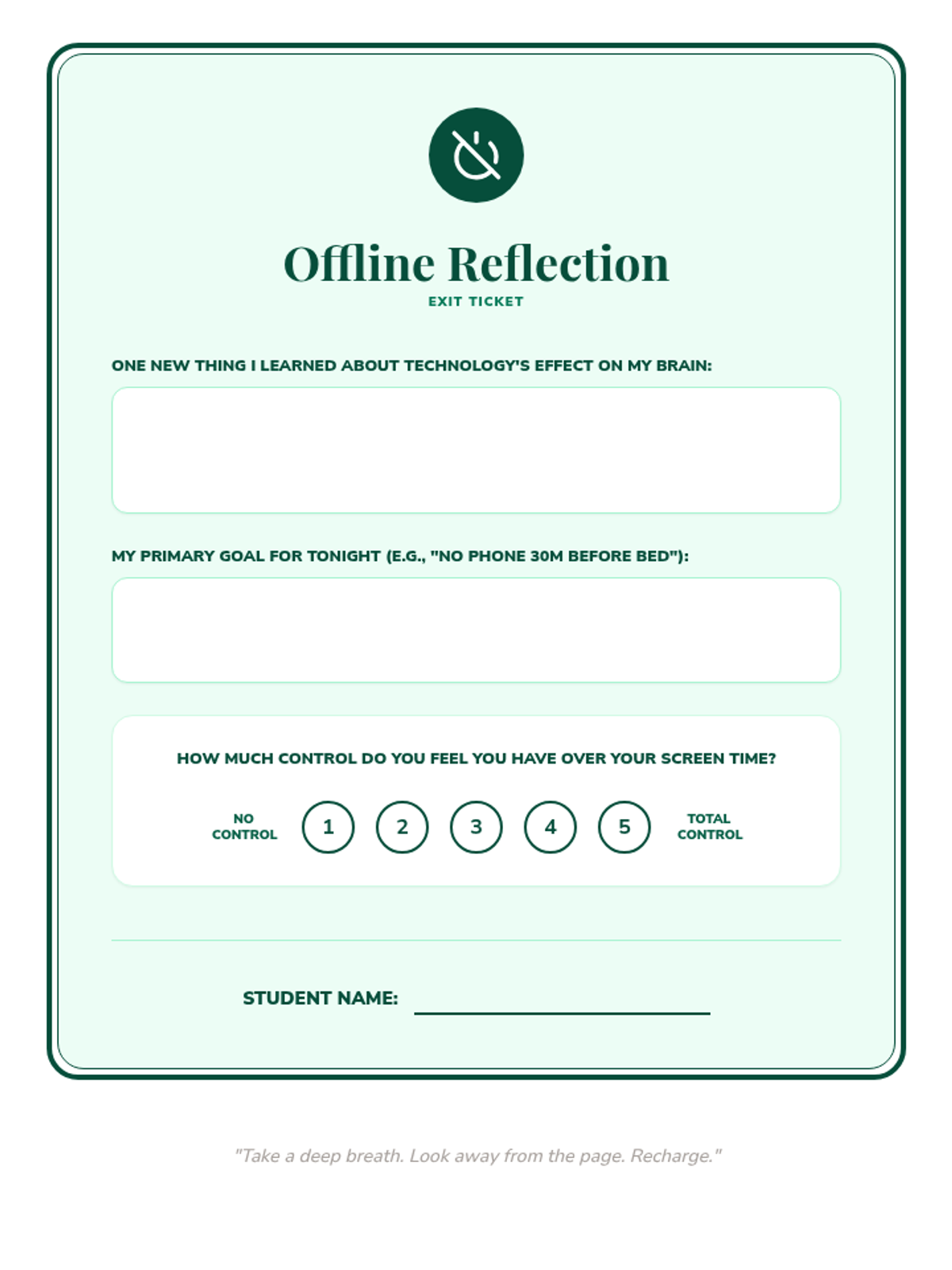
A lesson designed to help students understand the impact of excessive screen time and develop healthy, sustainable digital habits through reflection and goal-setting.
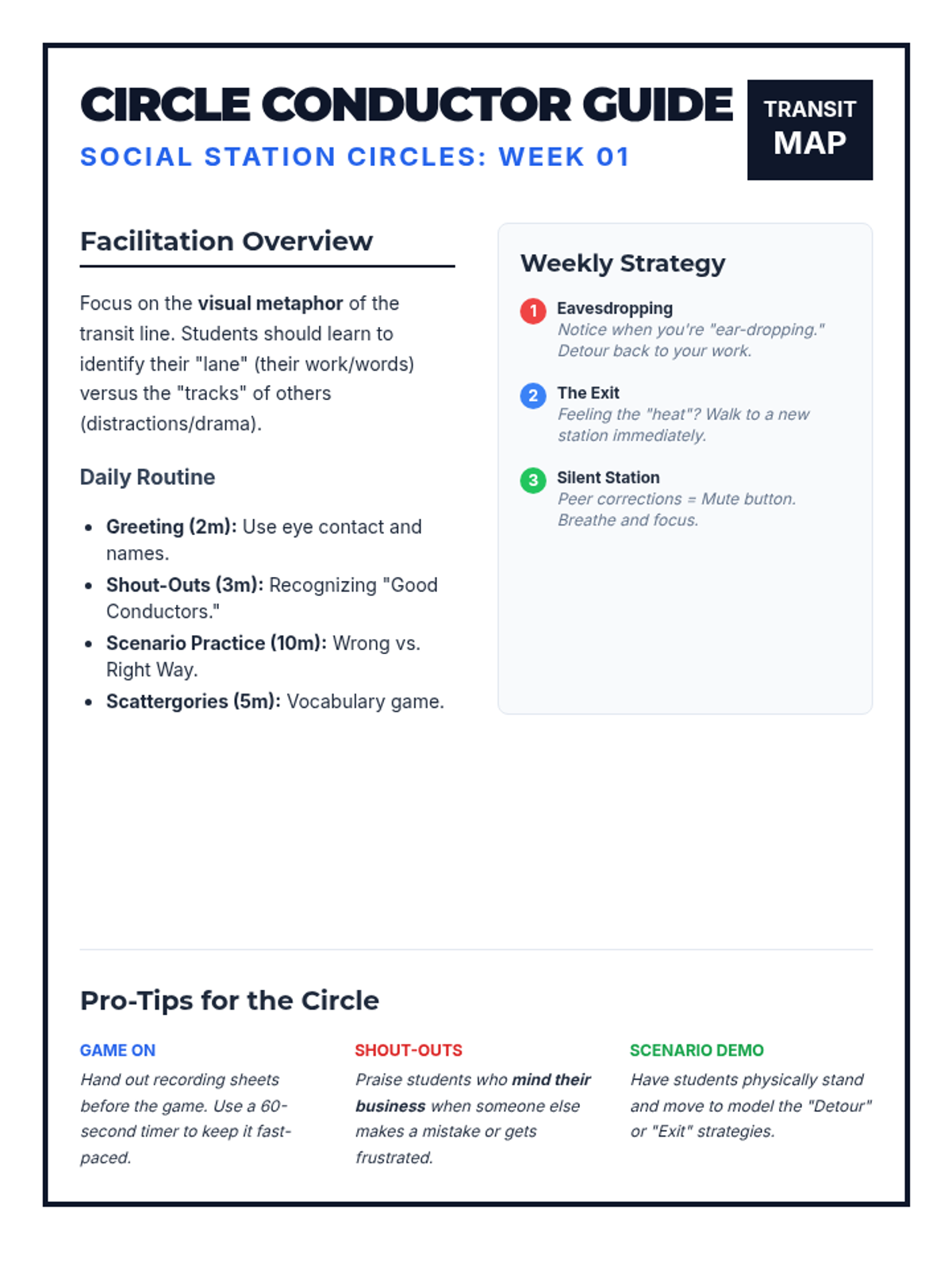
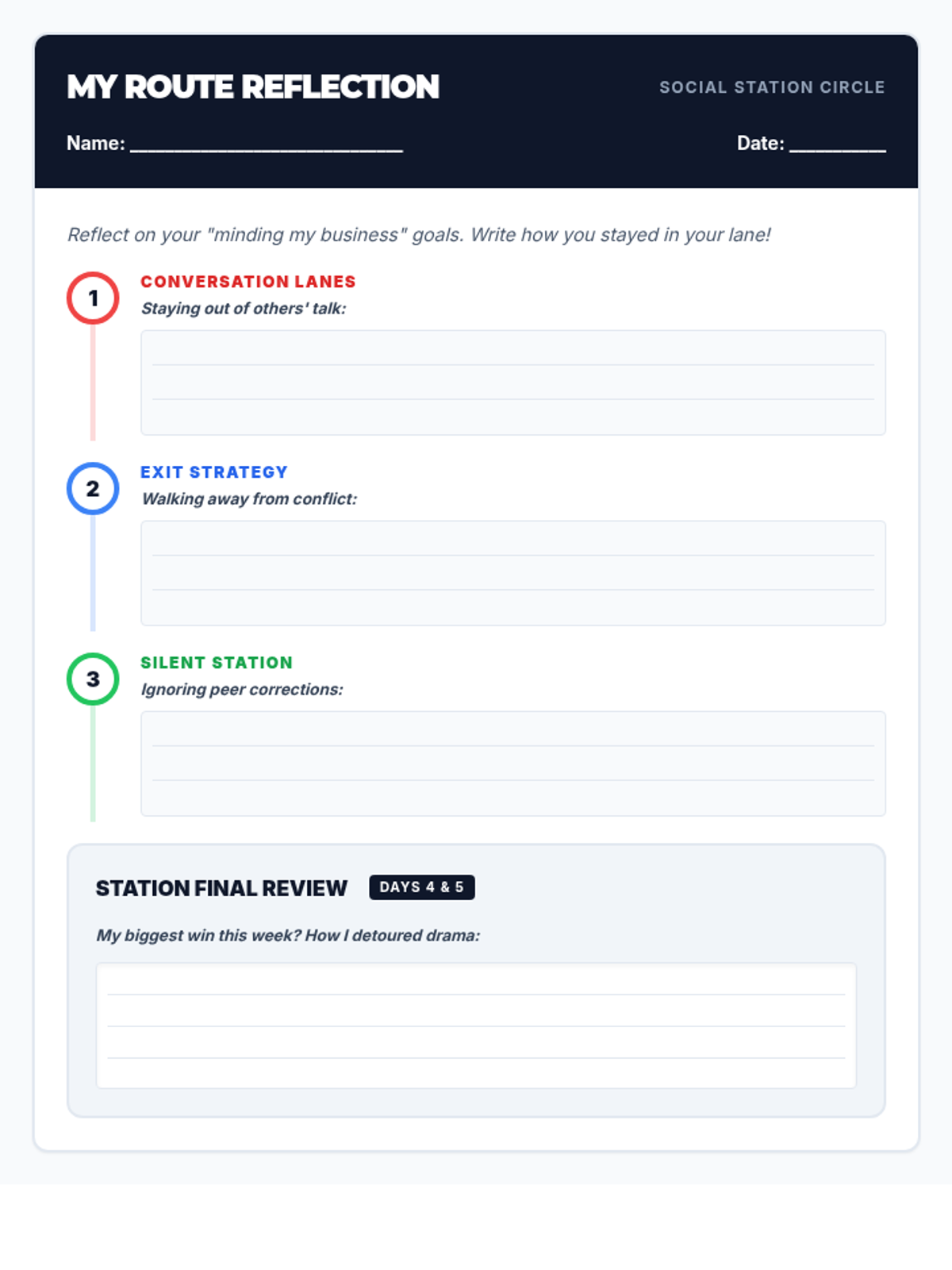
Day 5 covers staying focused and not contributing to classroom distractions.
Day 4 teaches students how to avoid drama and rumors by taking a 'detour'.
Day 3 addresses how to ignore peer corrections and focus on one's own work.
Day 2 focuses on the 'exit strategy' for walking away from rising conflict.
Day 1 focuses on staying out of others' conversations and 'ear-dropping' awareness.
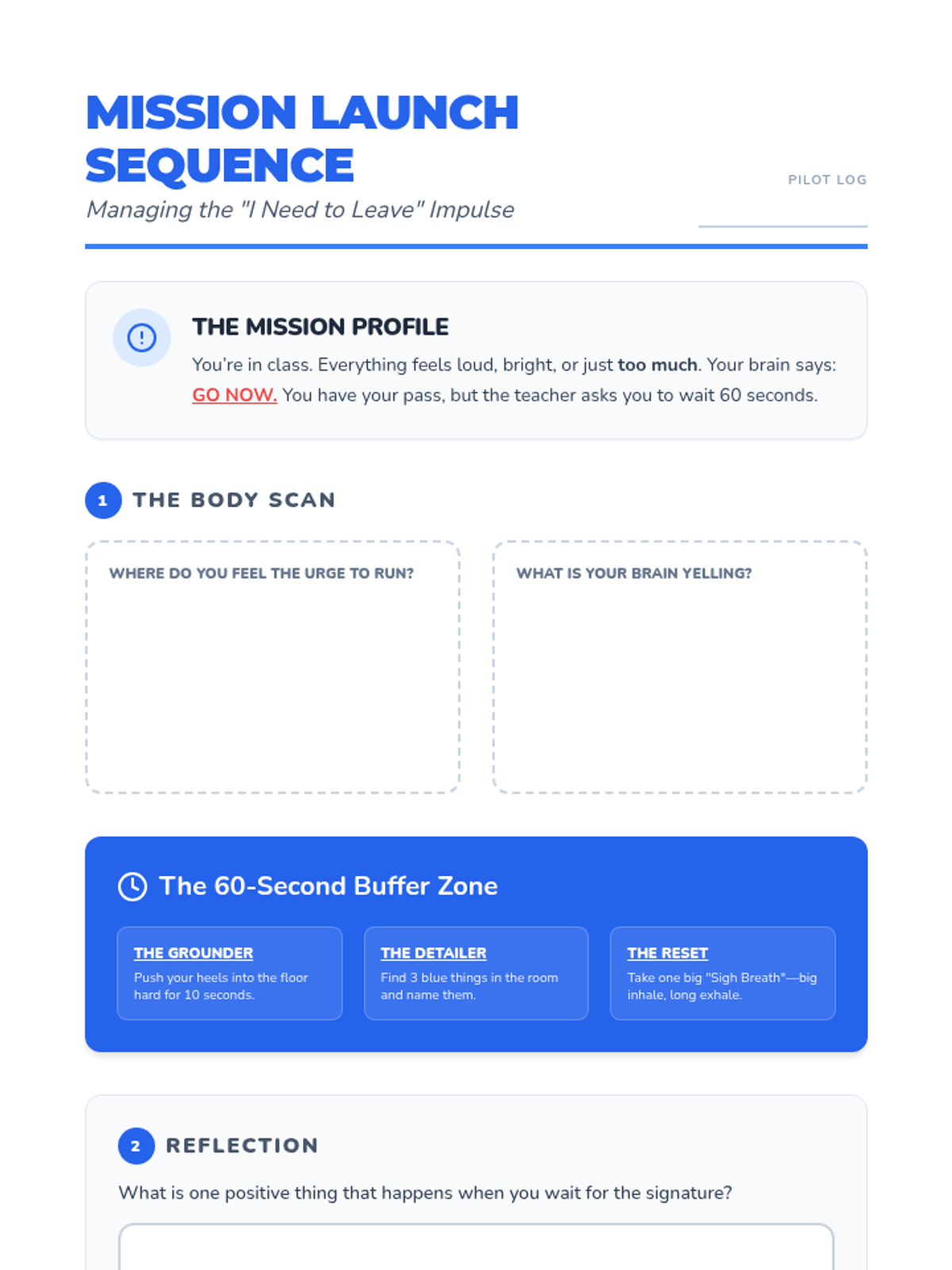
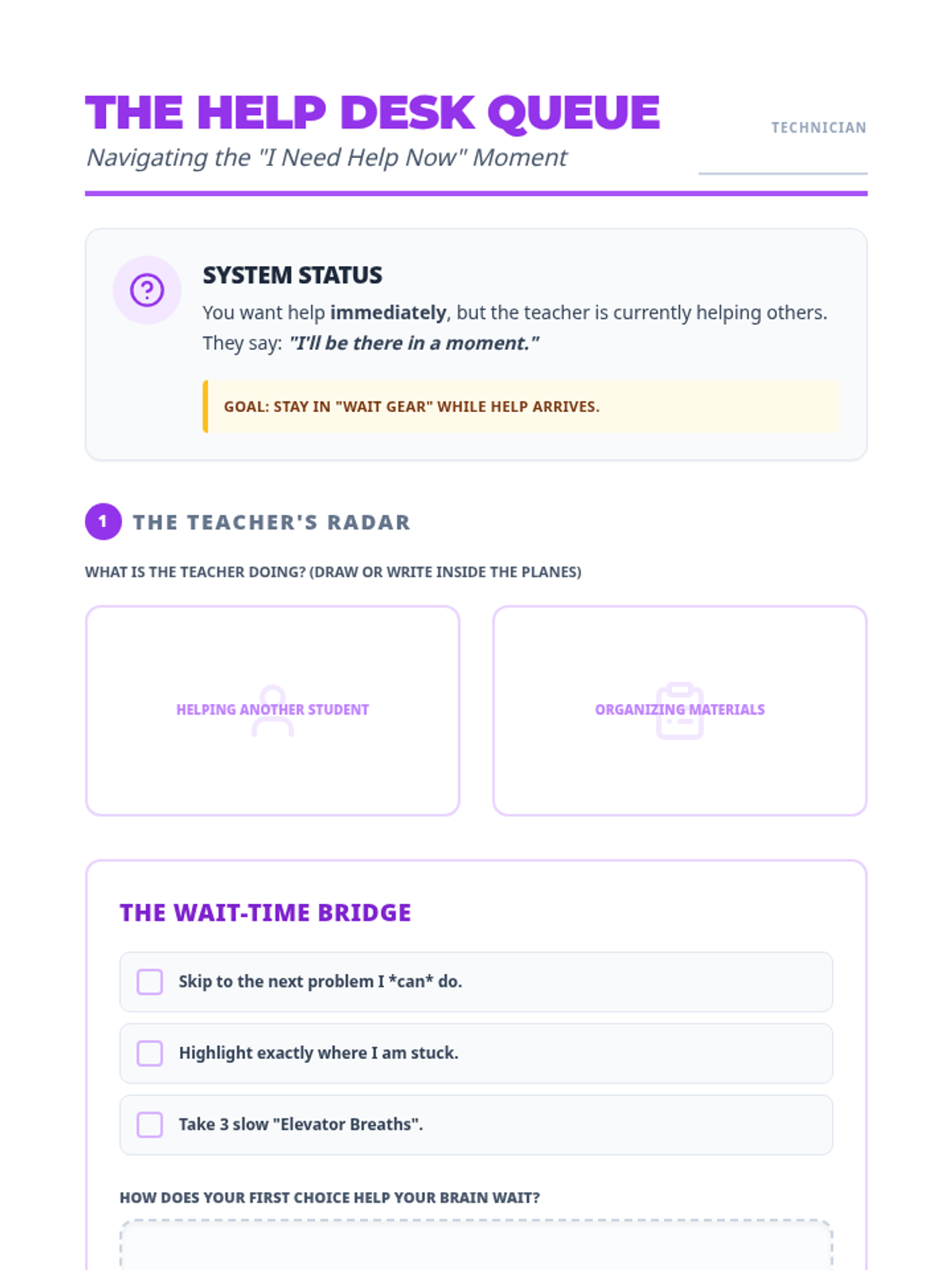
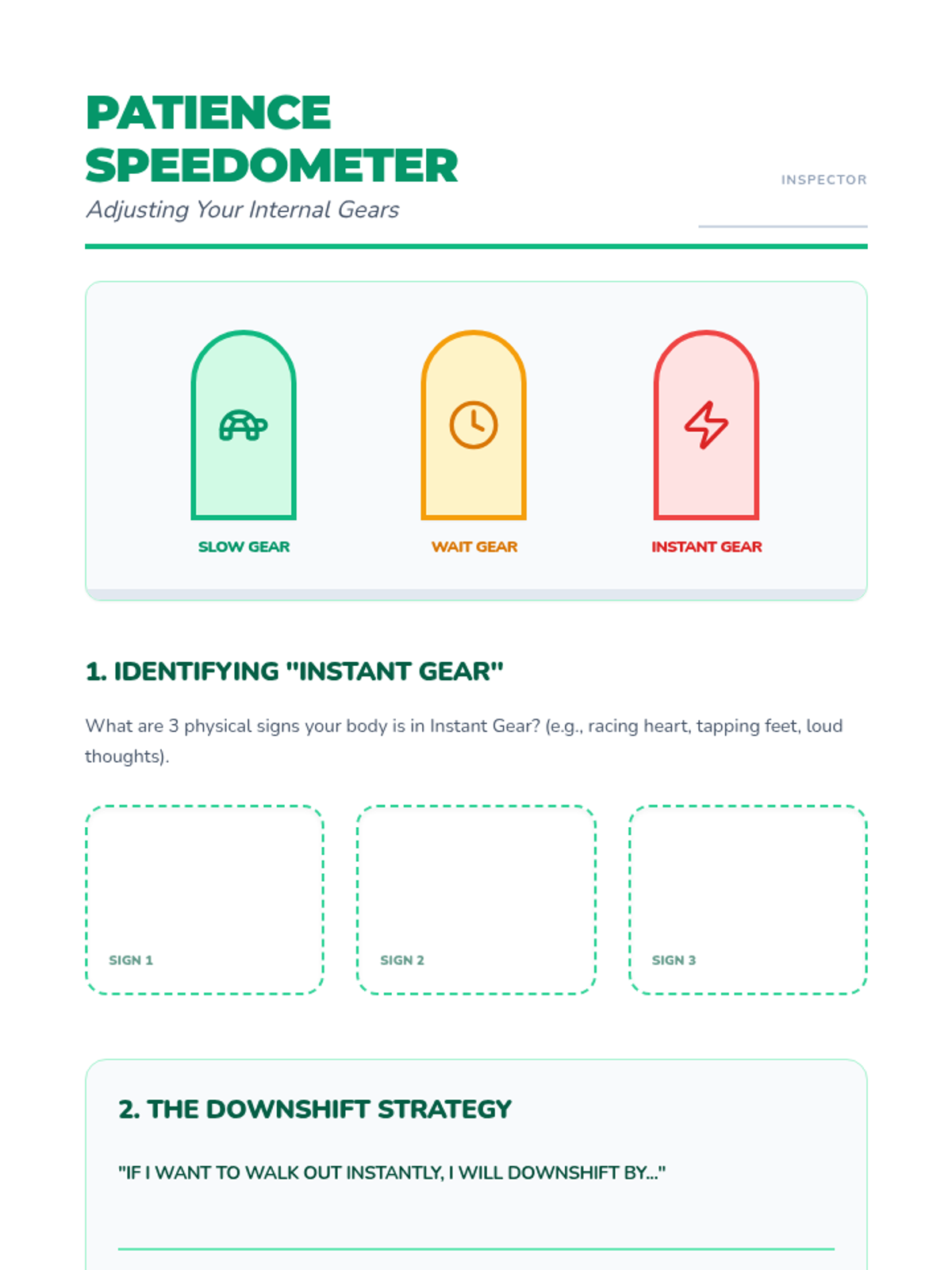
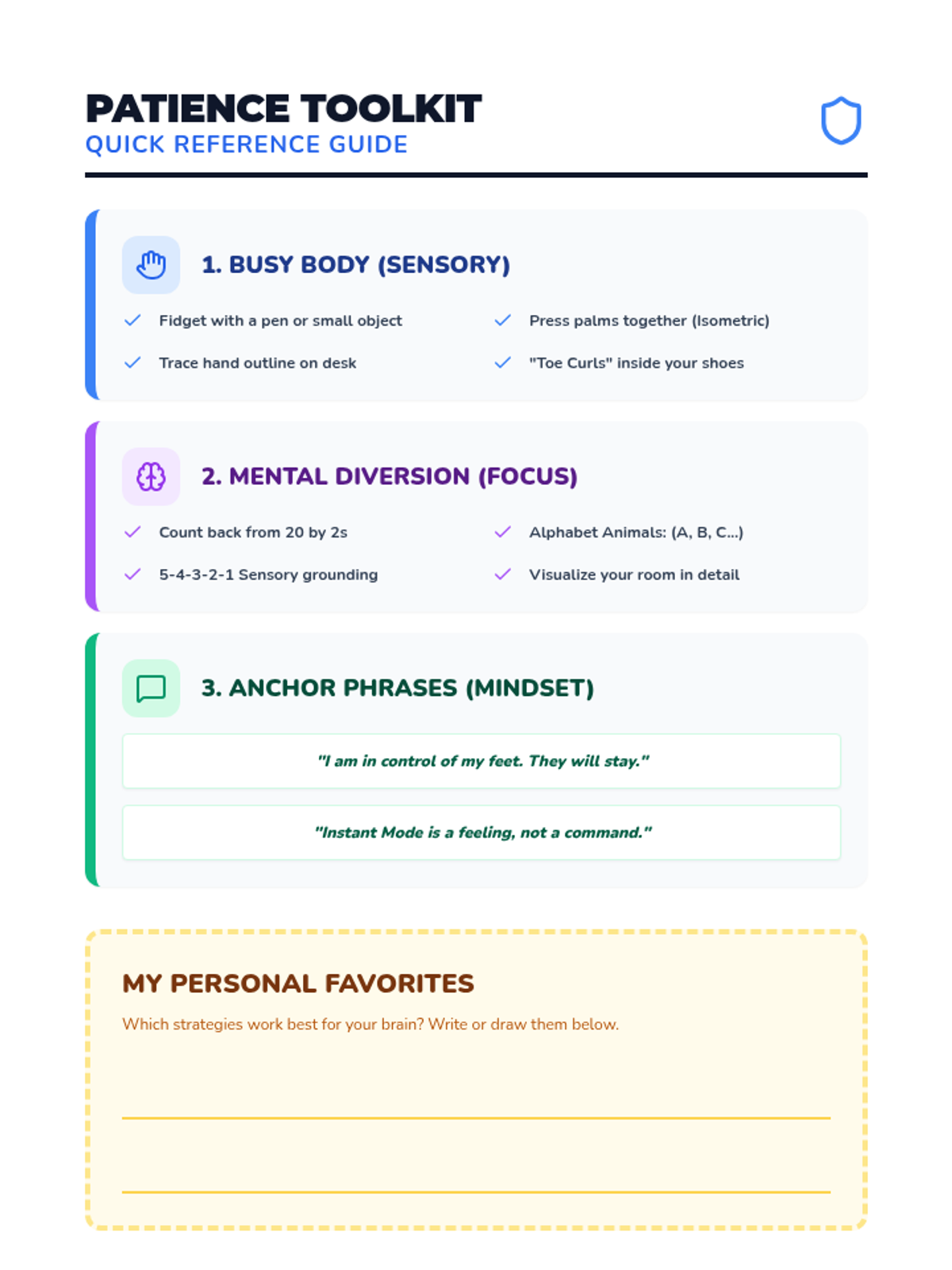
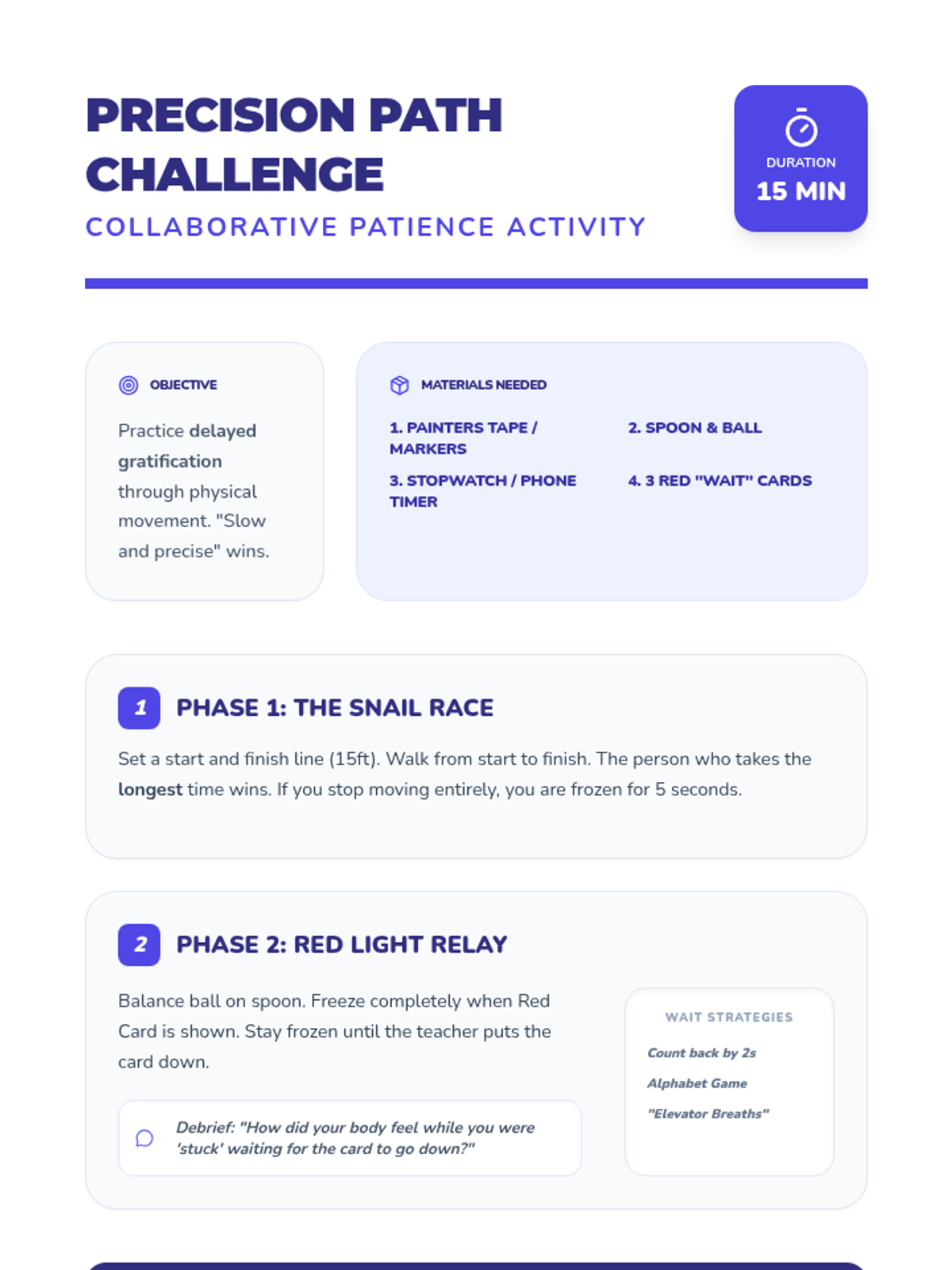
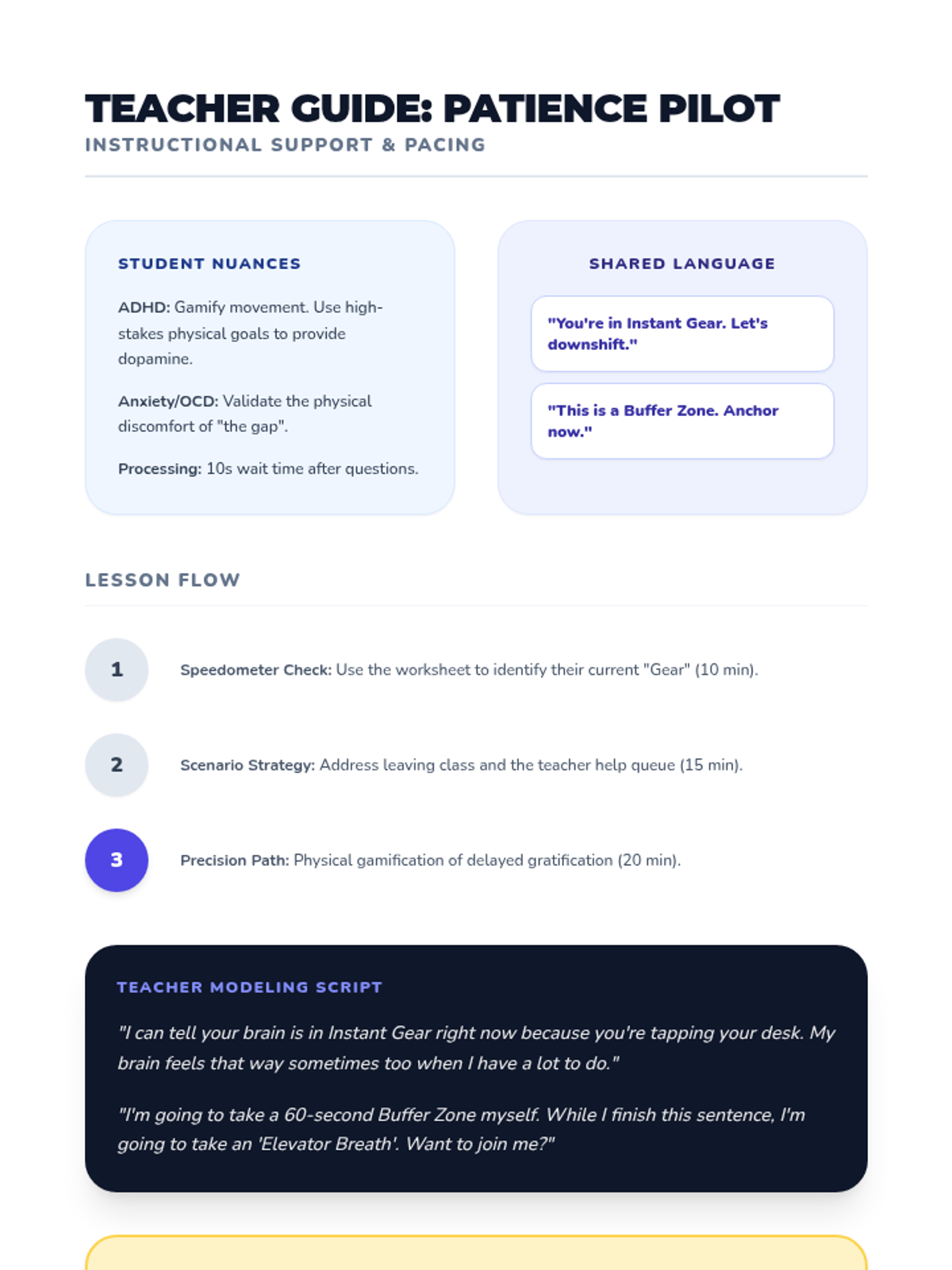
This lesson introduces the concept of the 'Waiting Gap' and provides practical tools for managing the physical and emotional urge to act instantly. Includes worksheets on specific classroom scenarios and a movement-based activity for building delayed gratification.
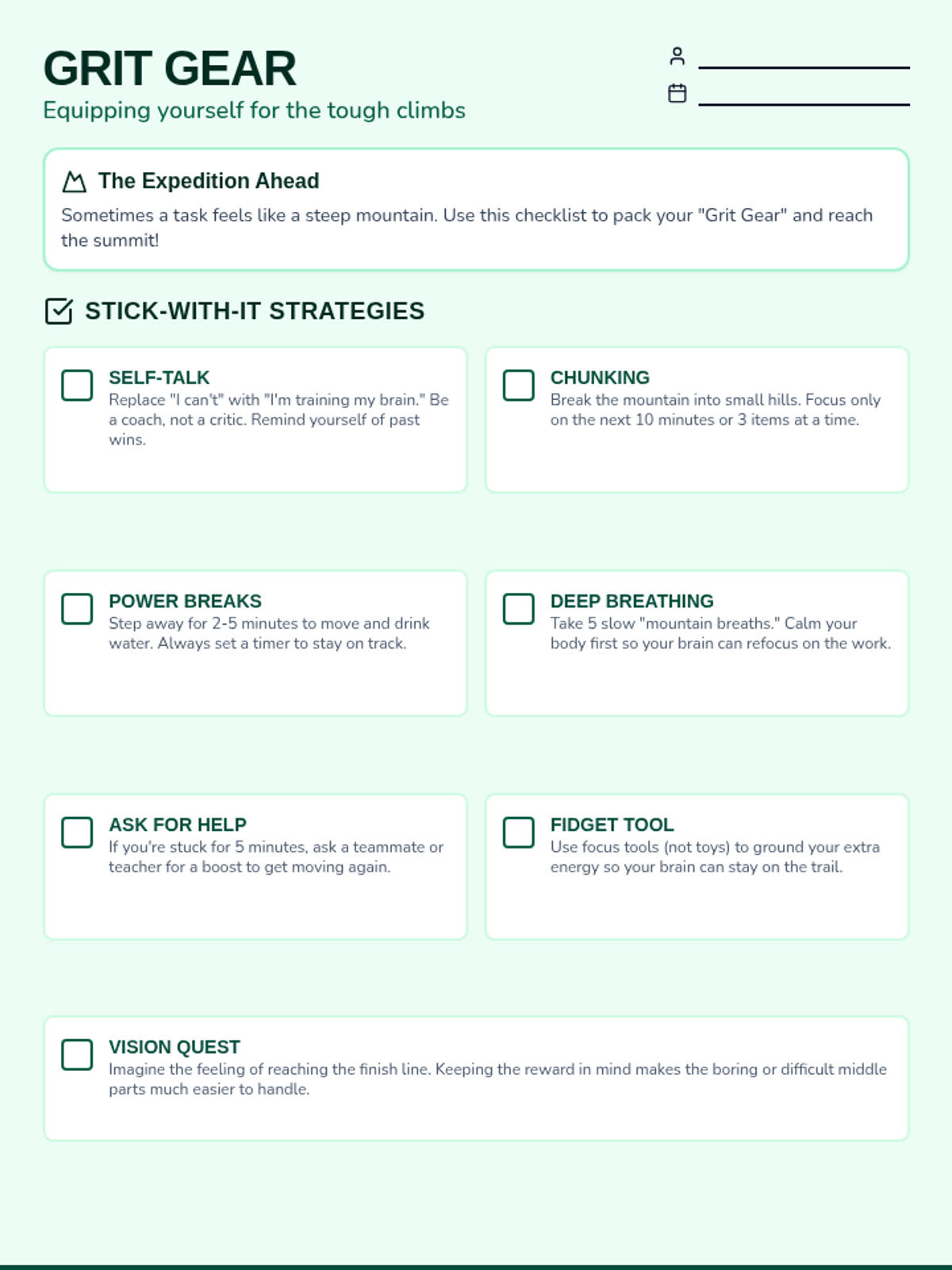
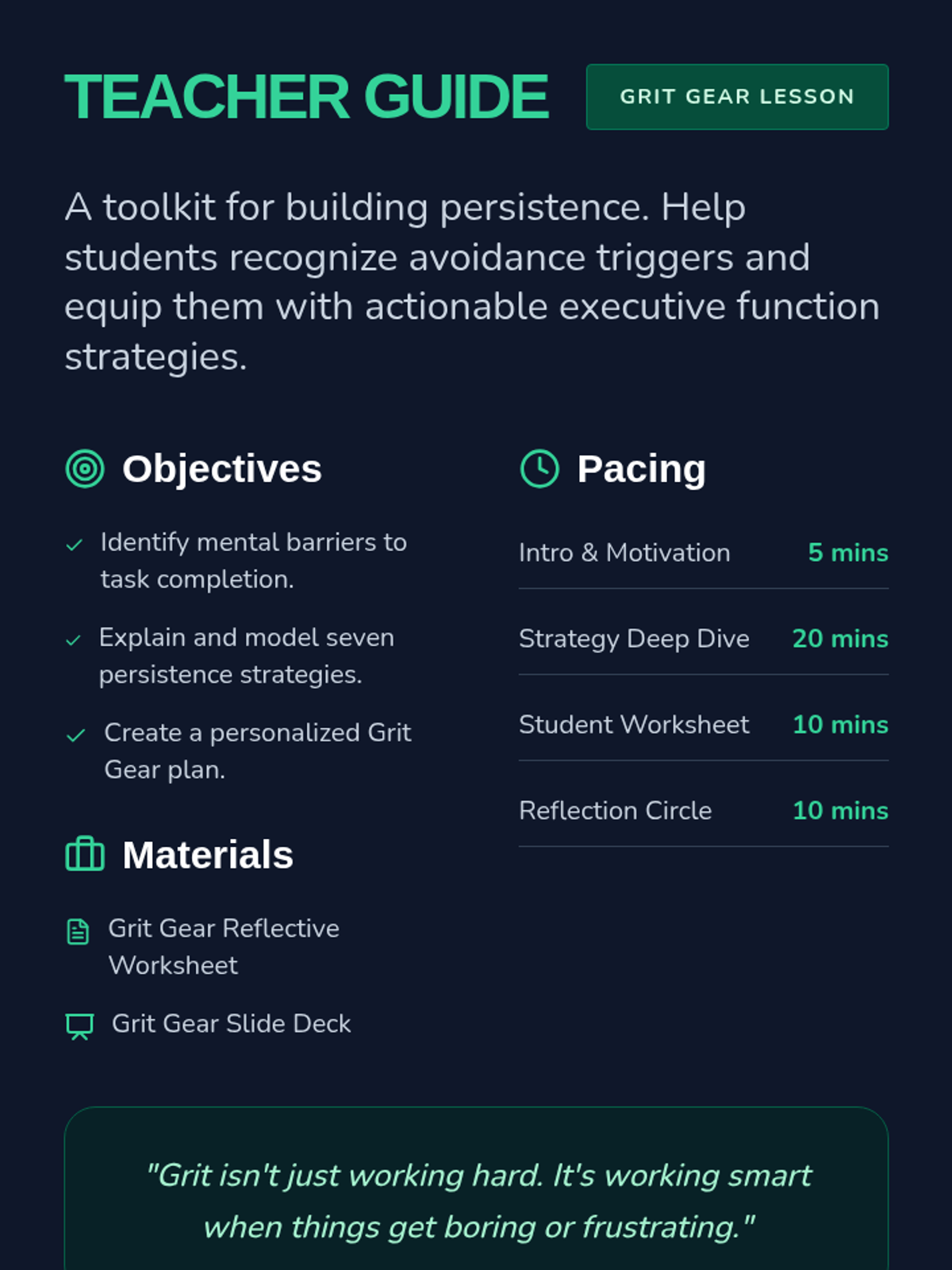
A lesson focused on equipping students with practical strategies to maintain focus and persistence during difficult or monotonous tasks.
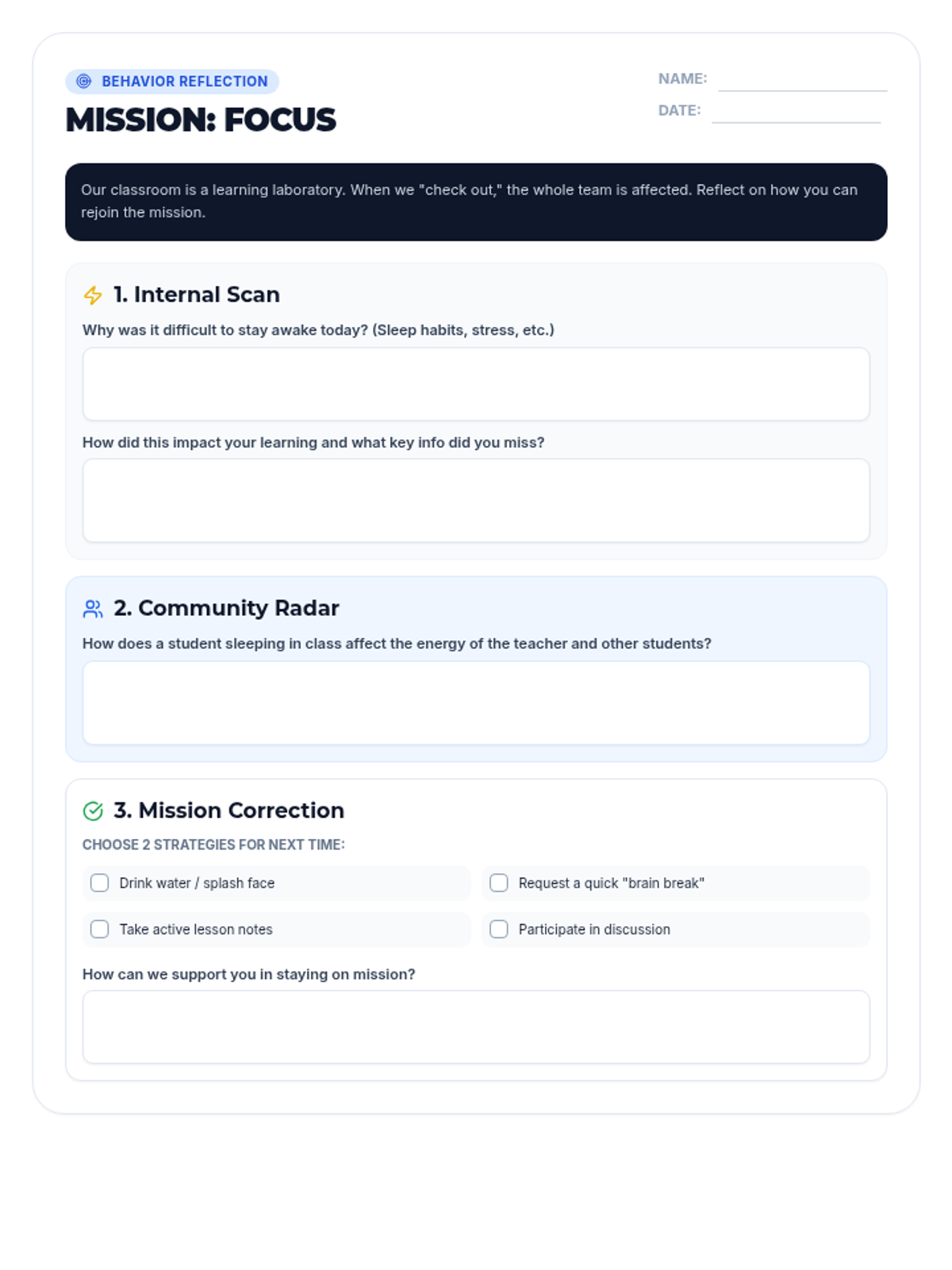
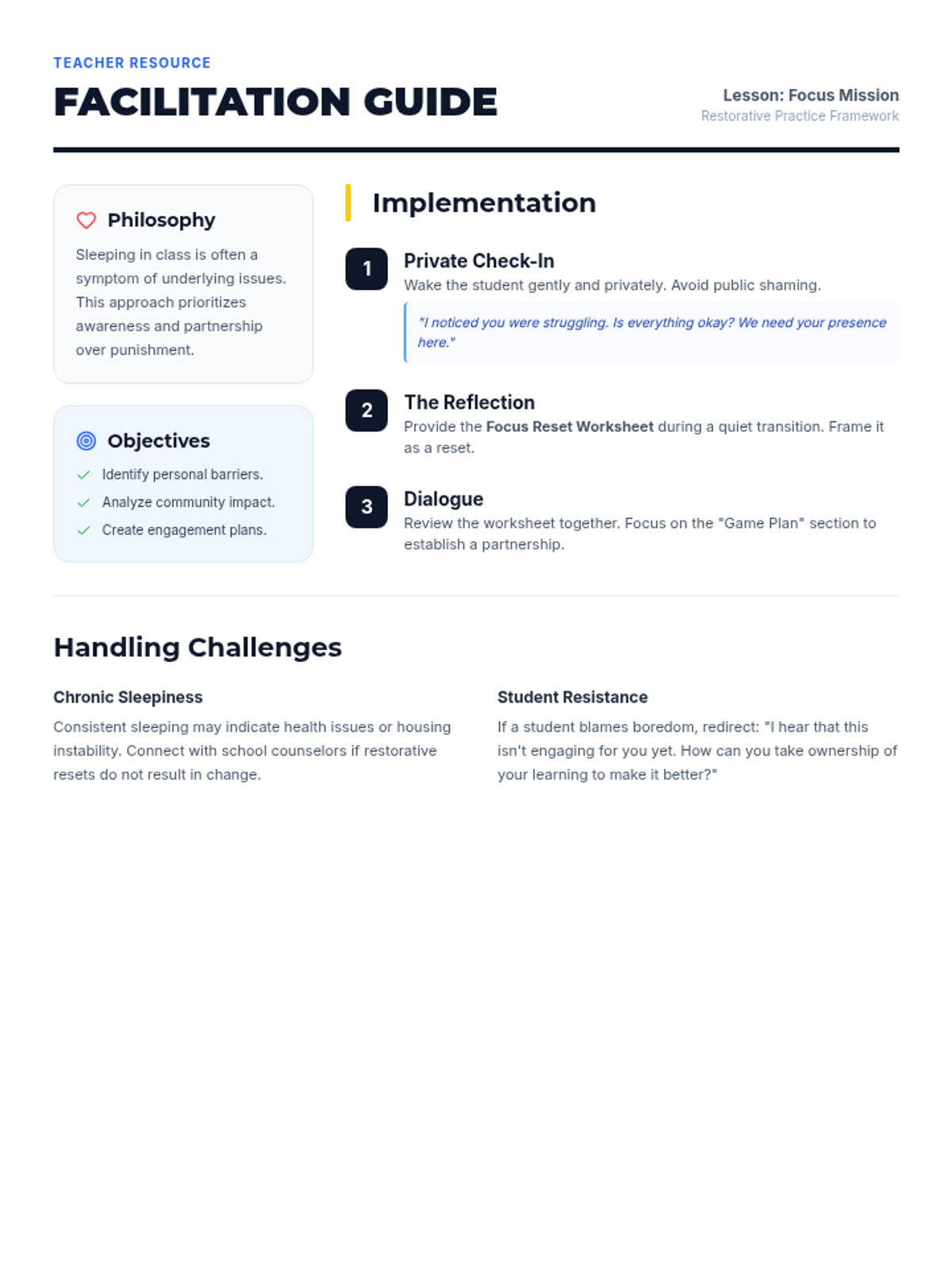
A restorative lesson designed to help students understand the importance of staying awake and engaged in class, focusing on personal success and classroom community respect.
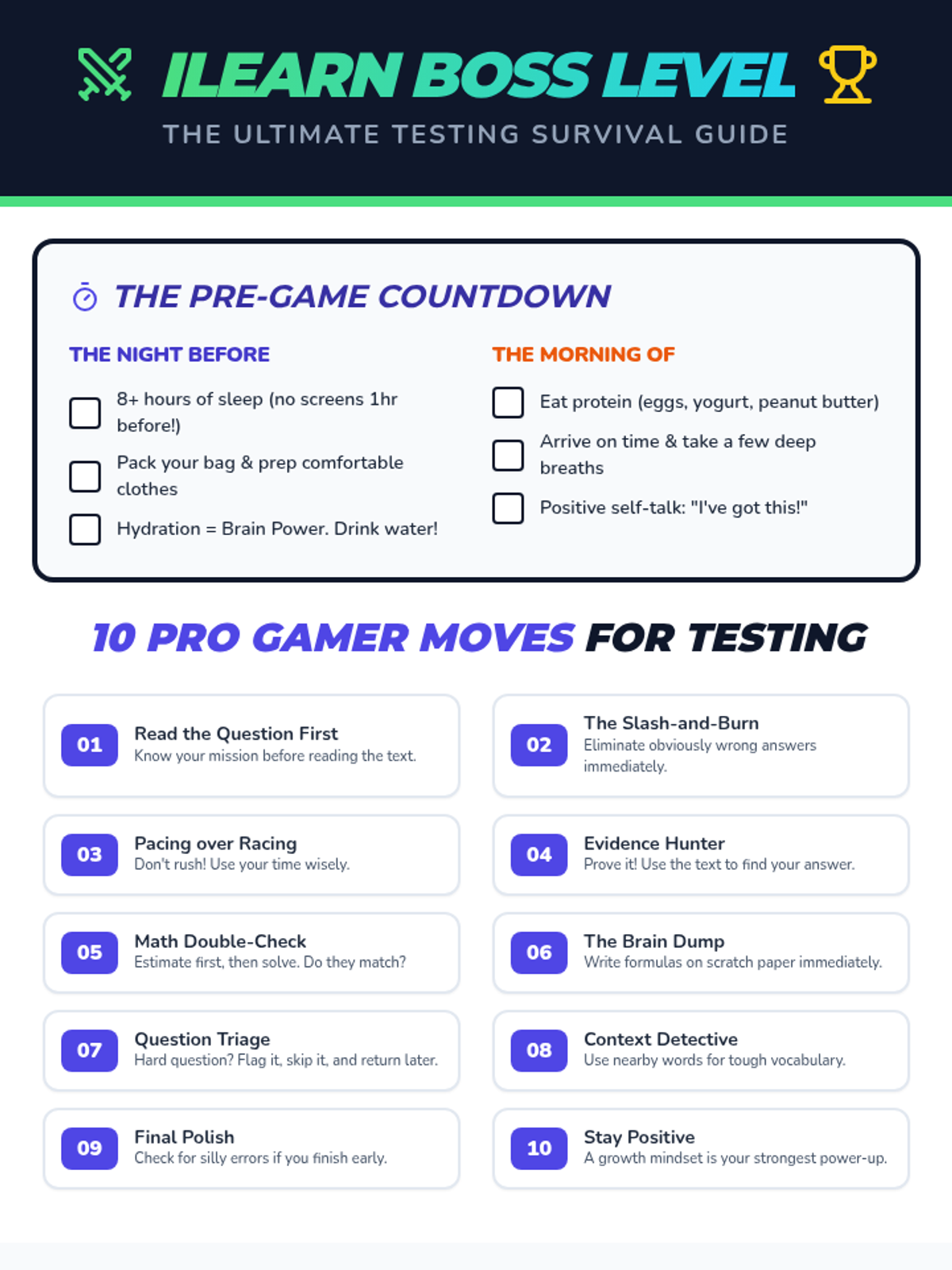
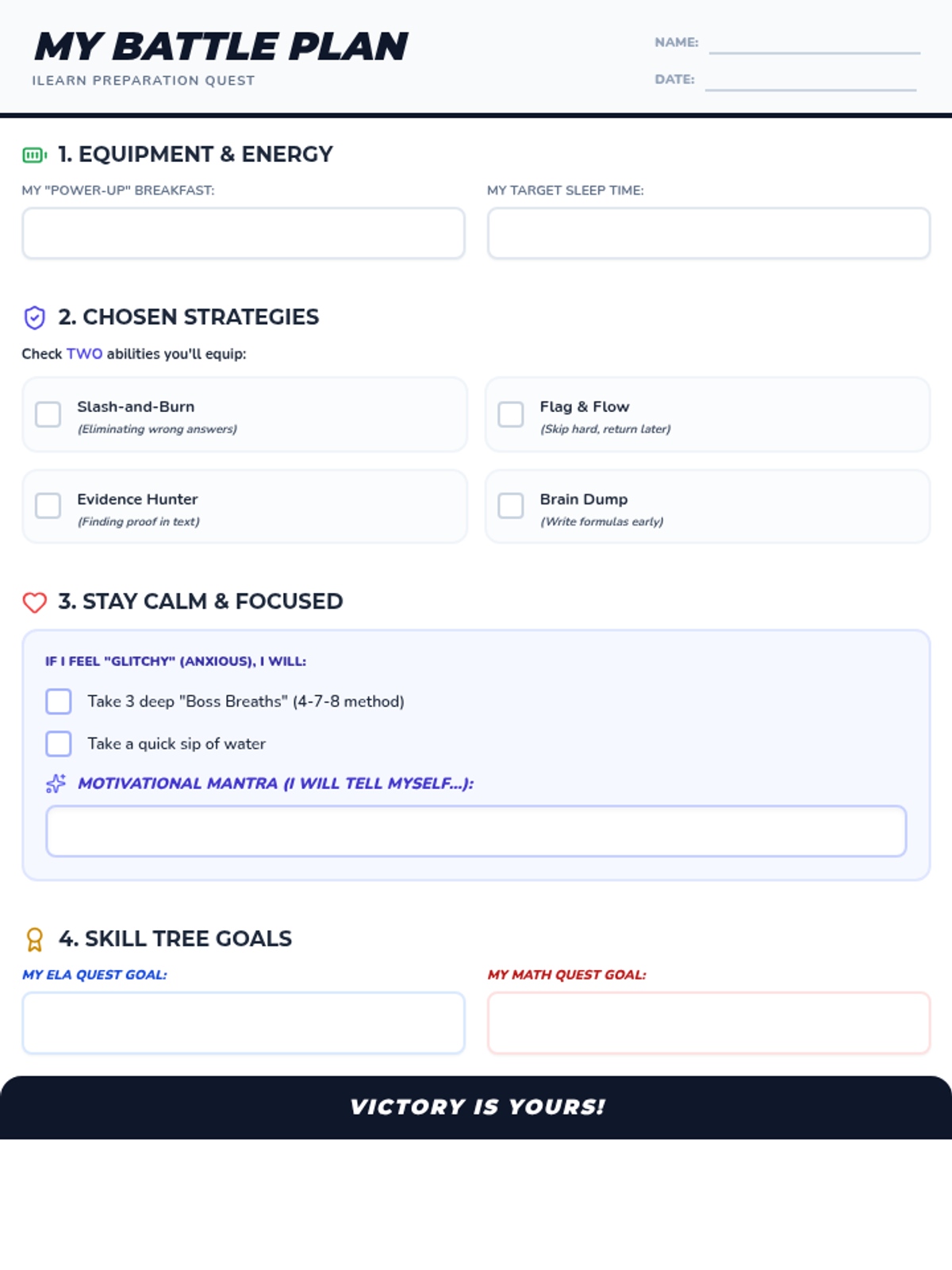
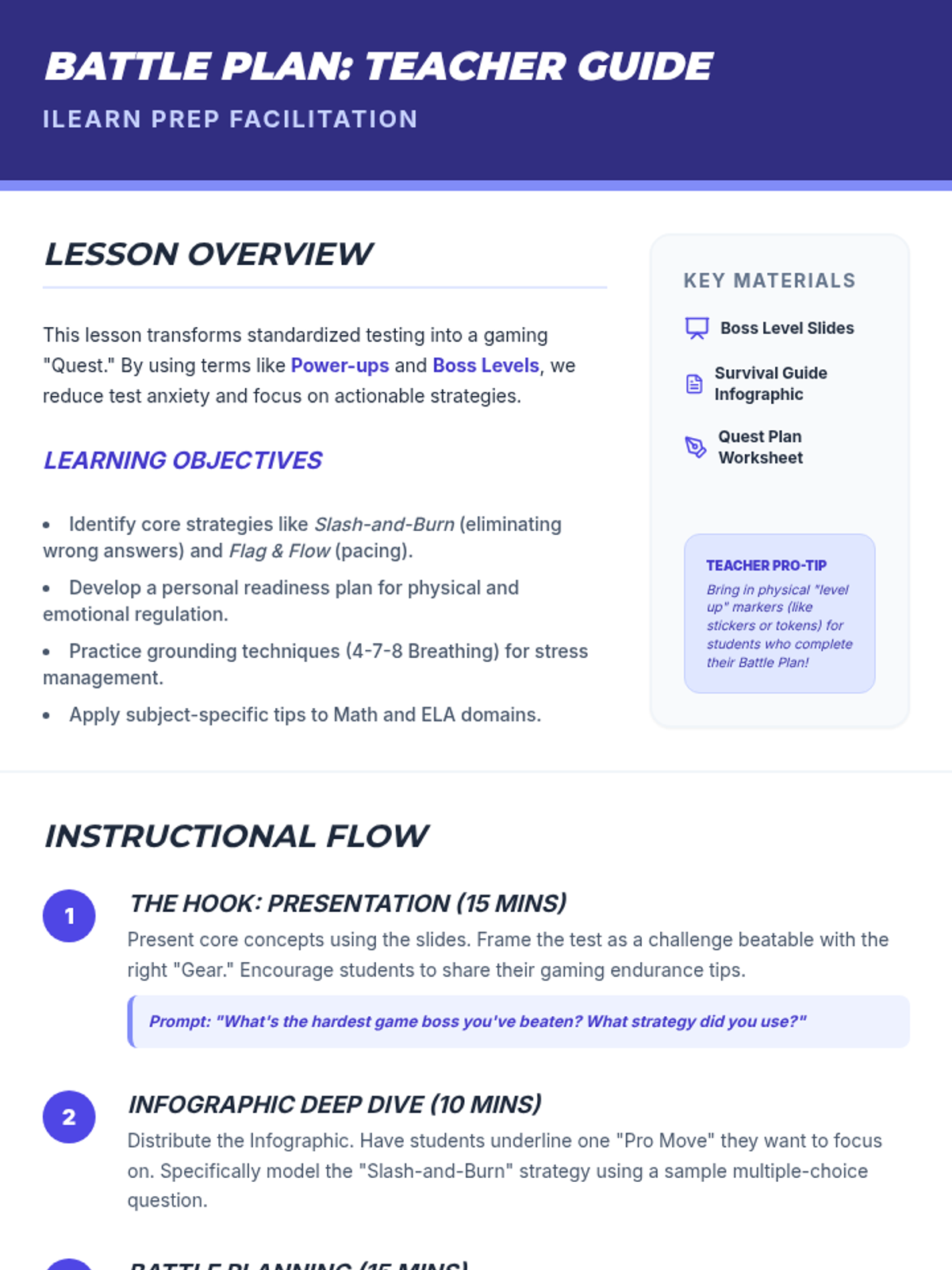
A comprehensive preparation lesson for the ILEARN assessment, focusing on test-taking strategies, physical readiness, and emotional regulation through a high-energy gaming theme.
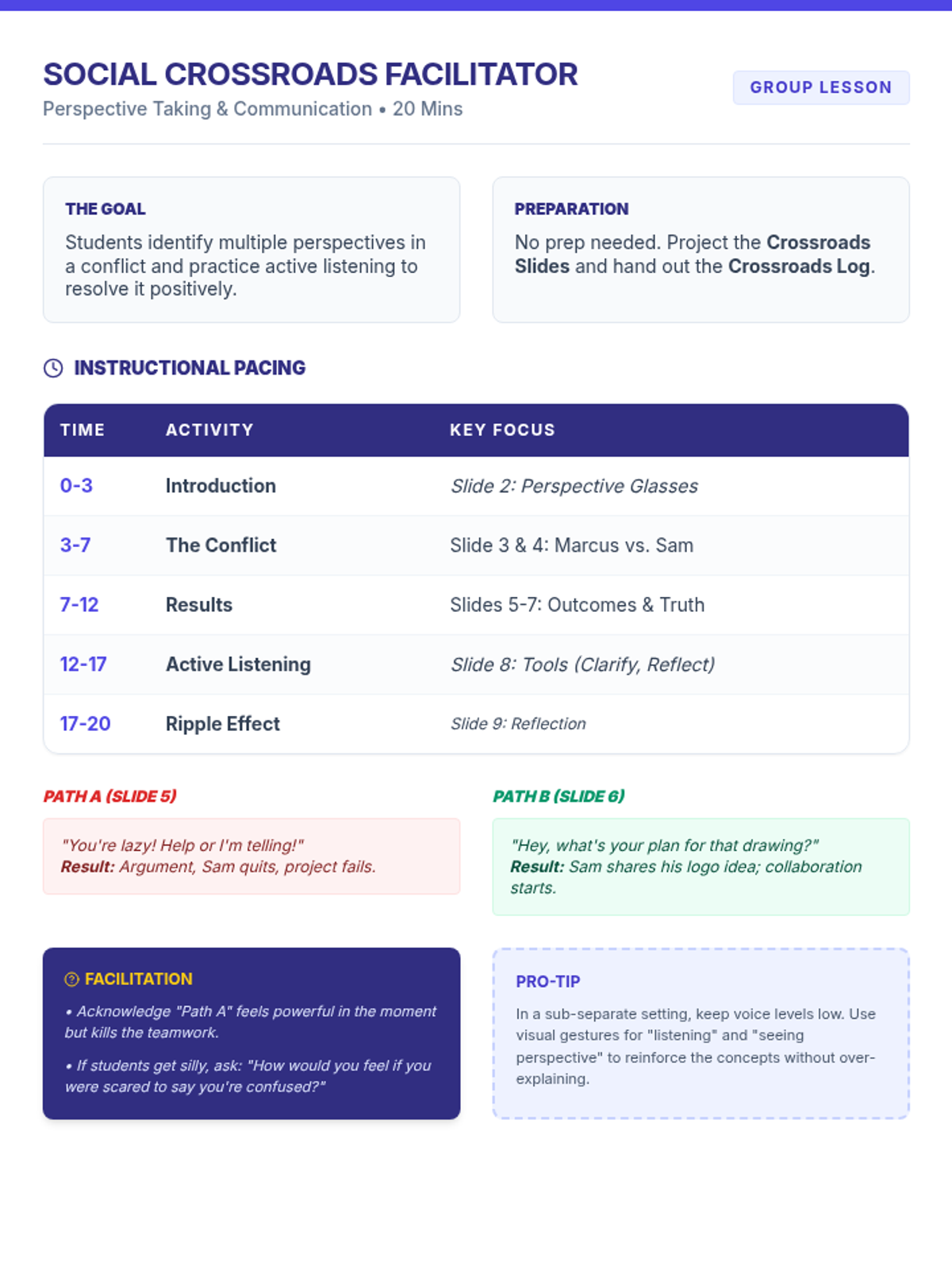
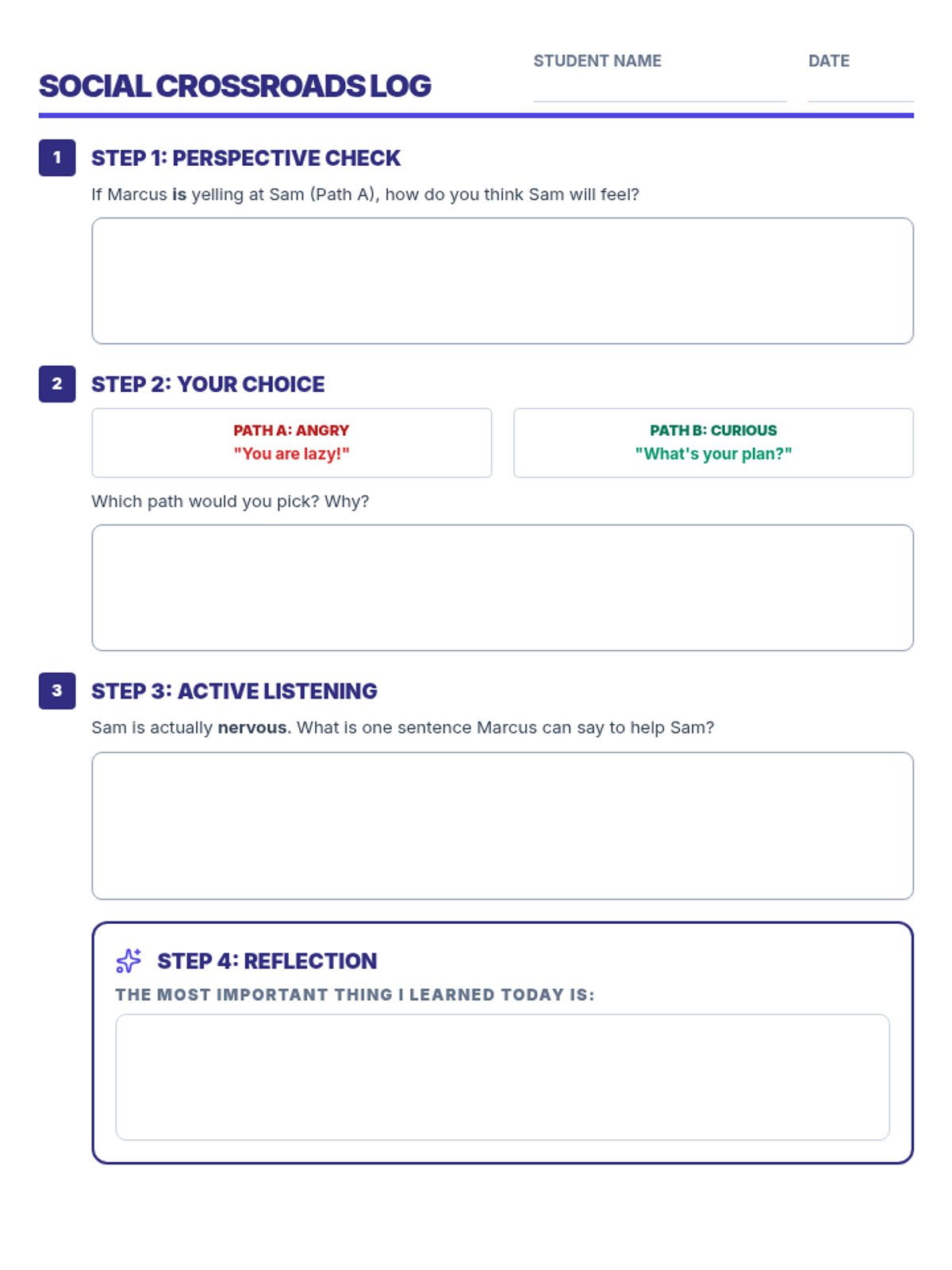
A 20-minute interactive social-emotional learning lesson focused on perspective taking and active listening through a 'choose your path' scenario. Designed for middle schoolers in a sub-separate setting with minimal movement.
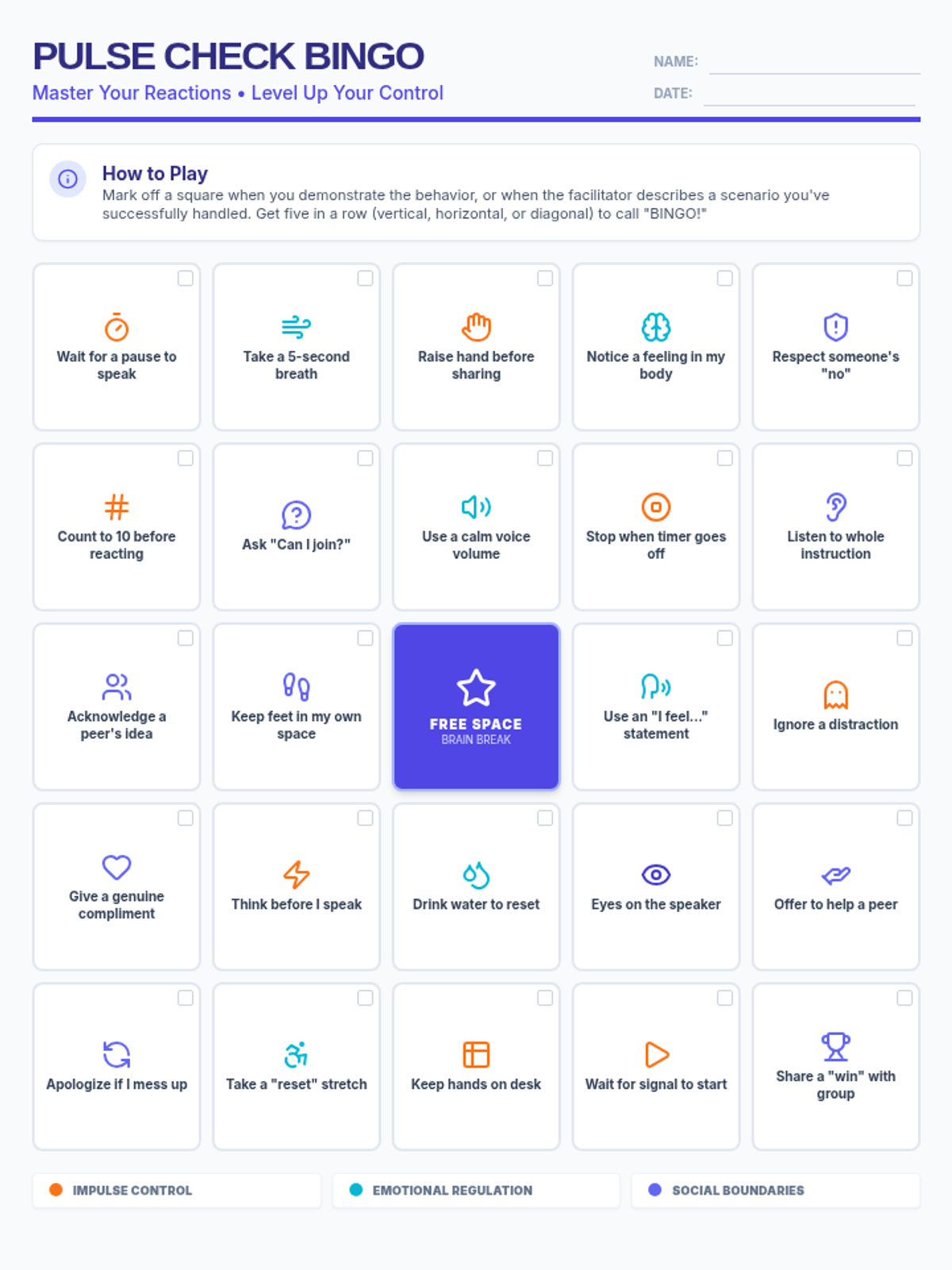
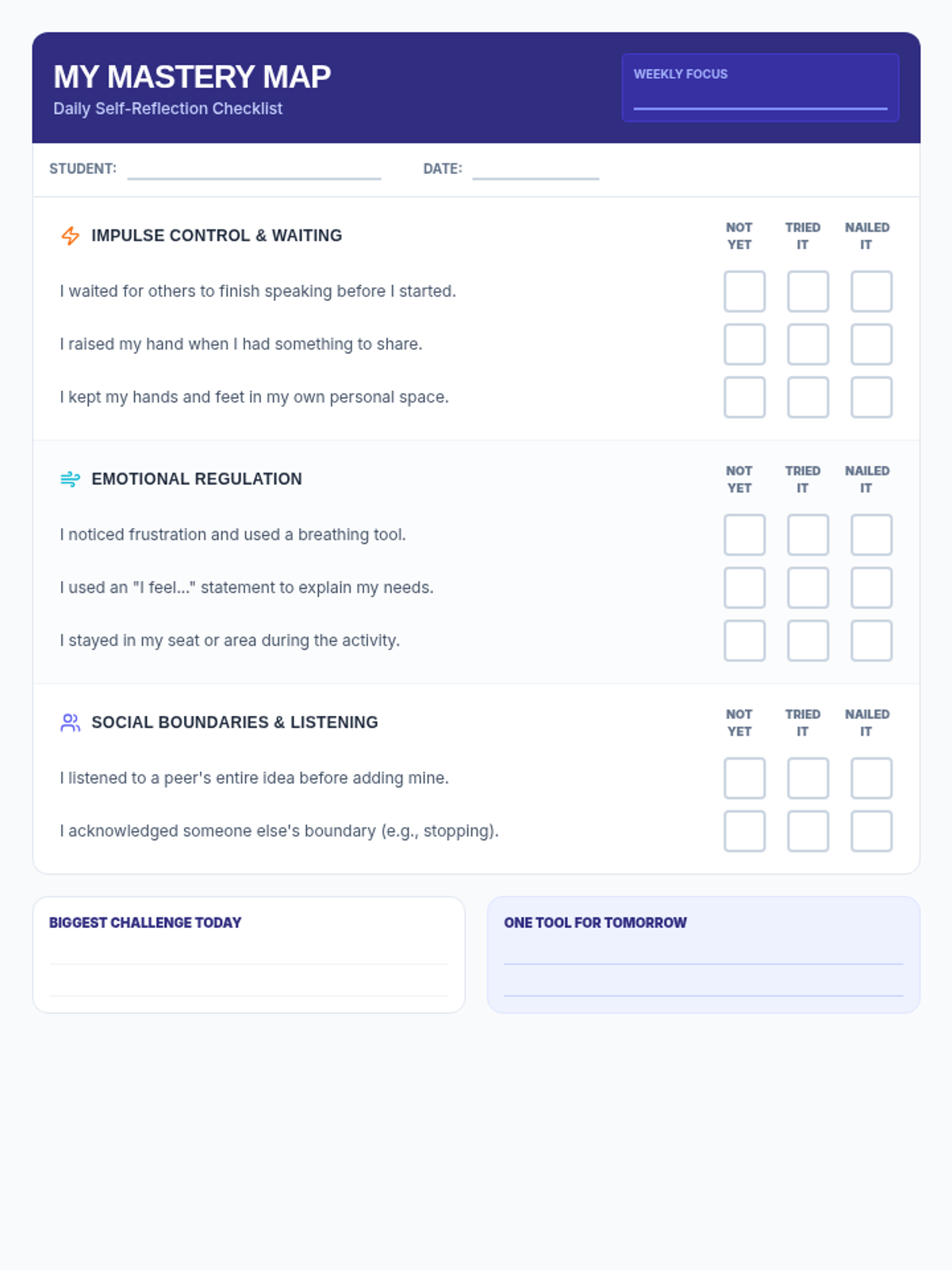
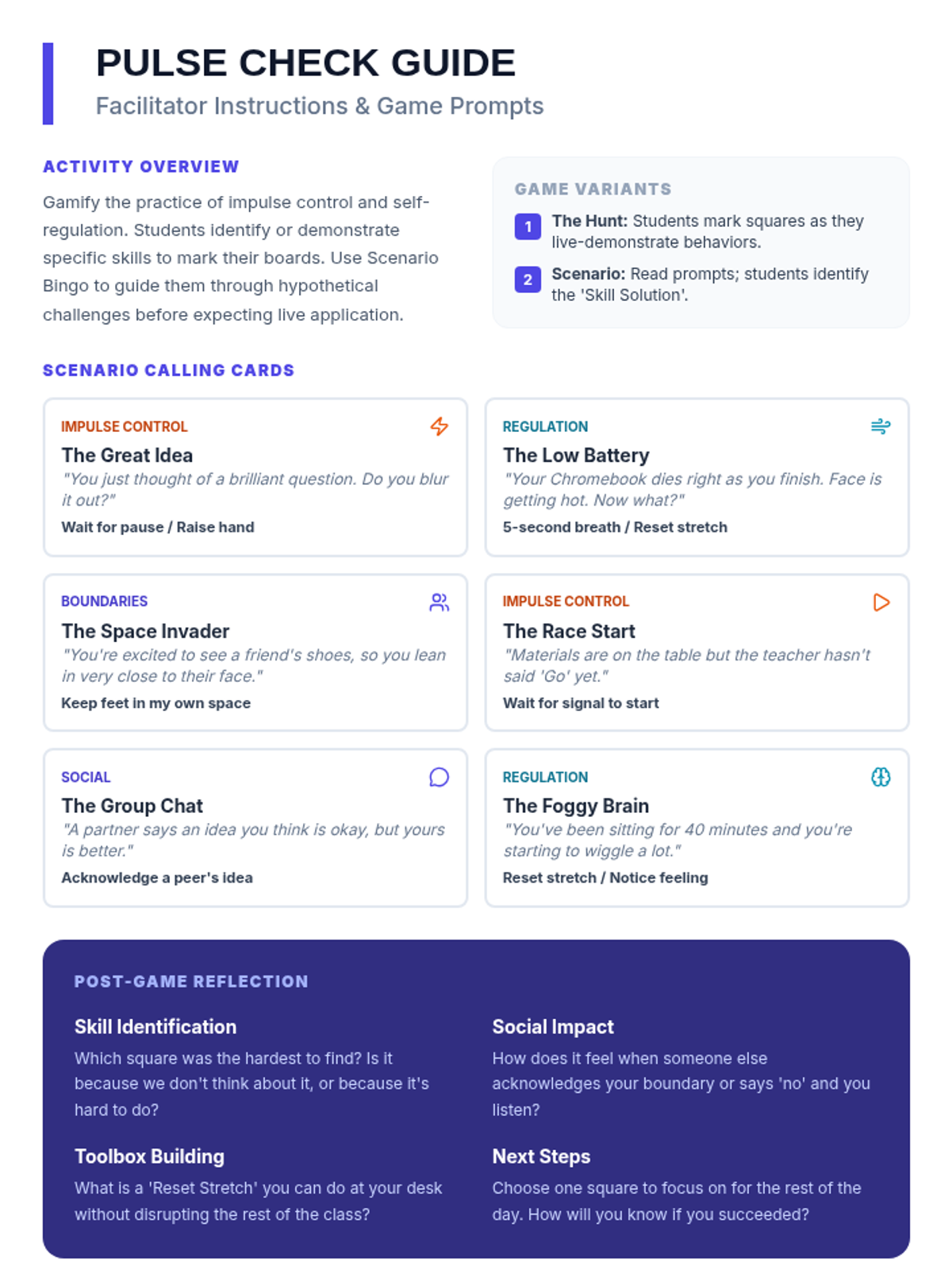
A lesson focused on developing self-regulation, impulse control, and social awareness for middle school students through interactive gameplay and reflection.
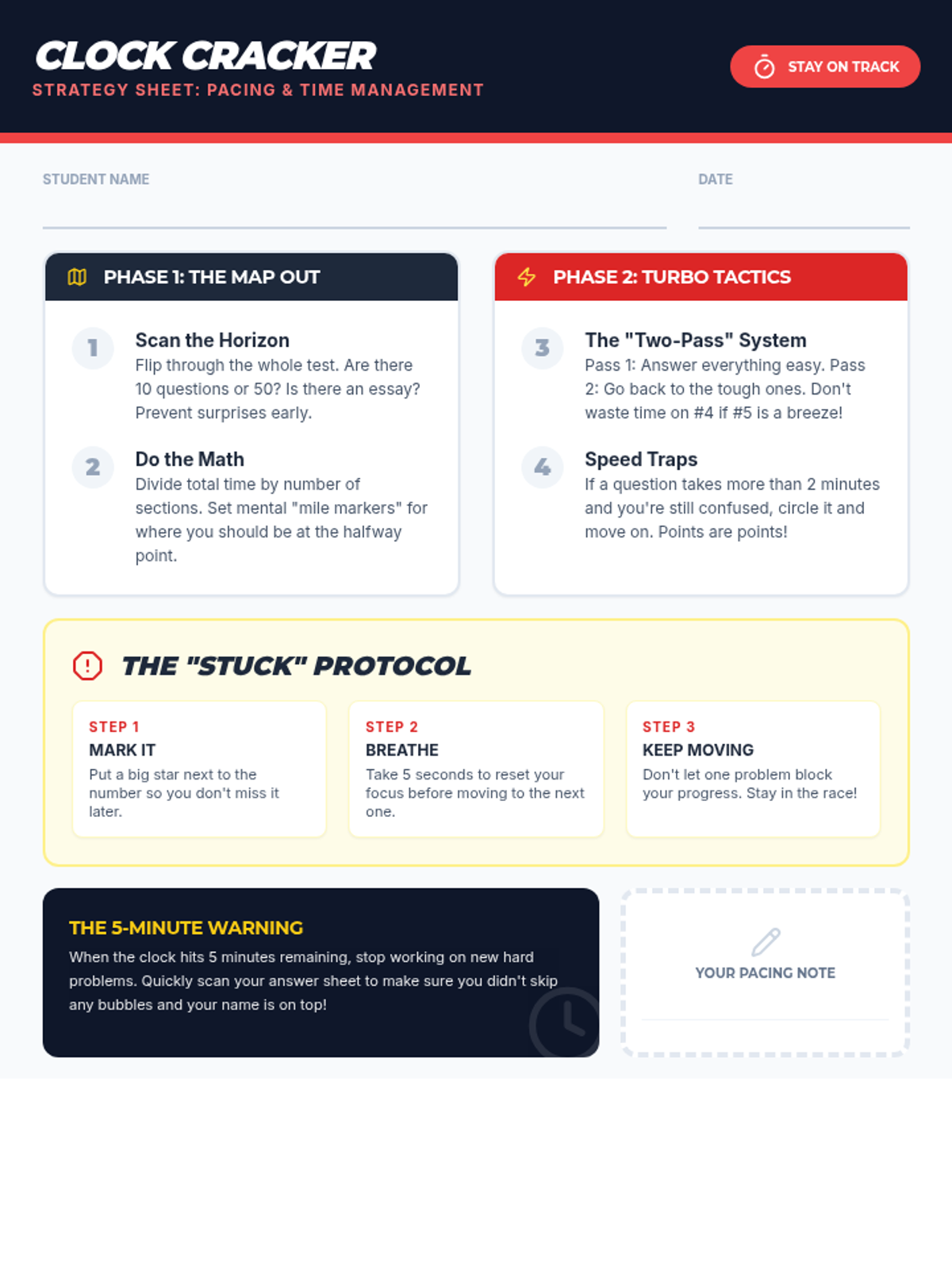
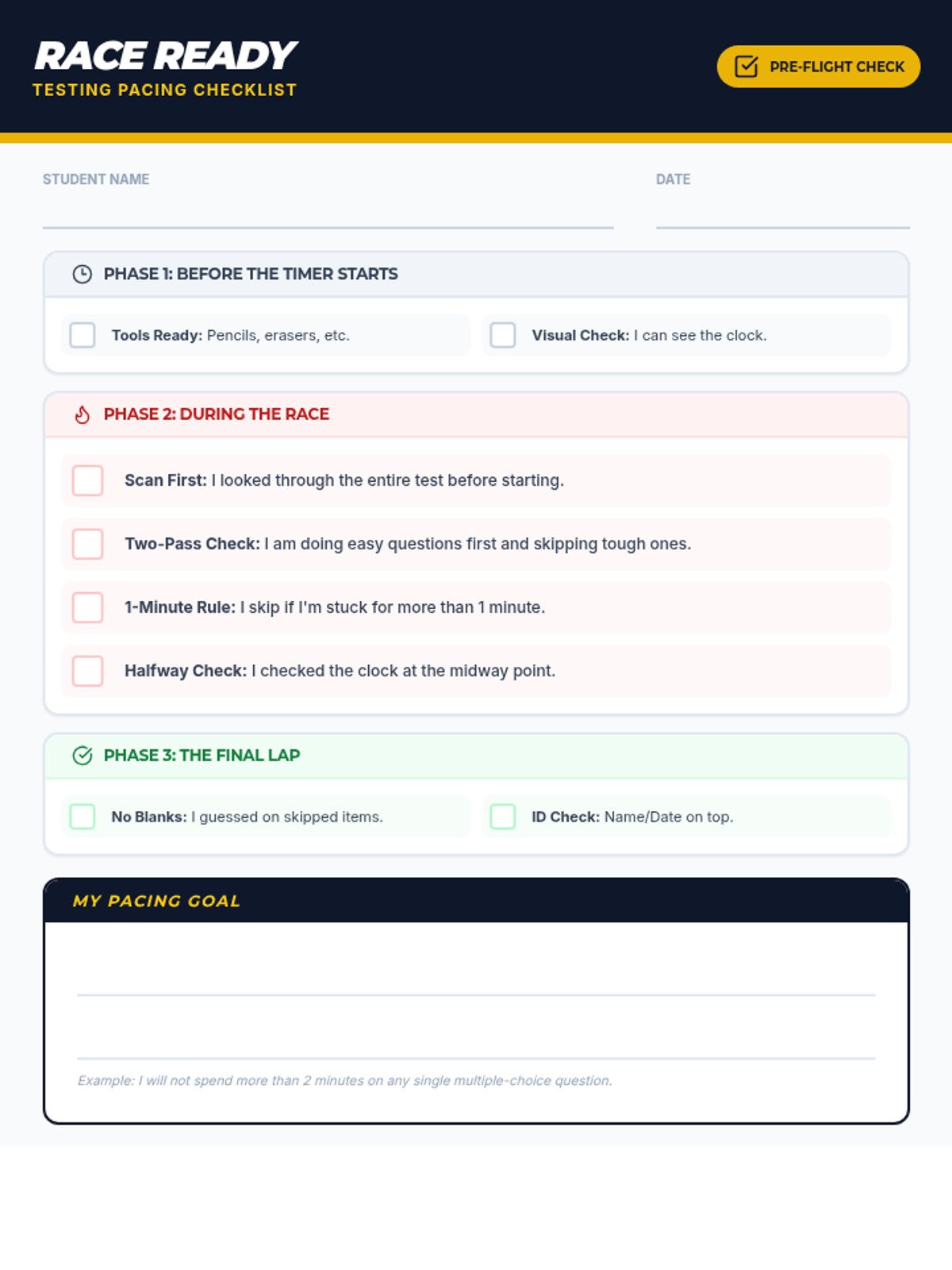
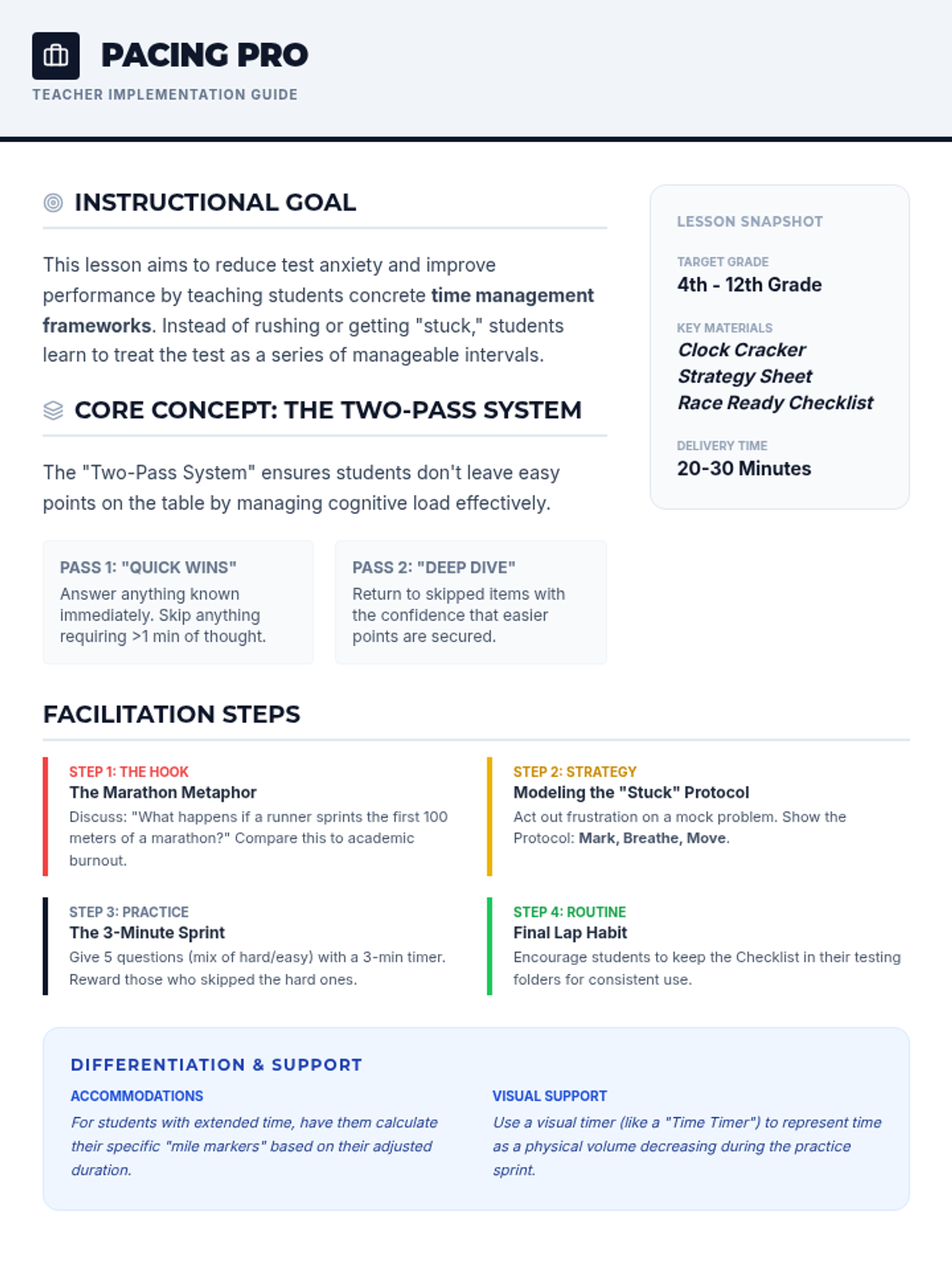
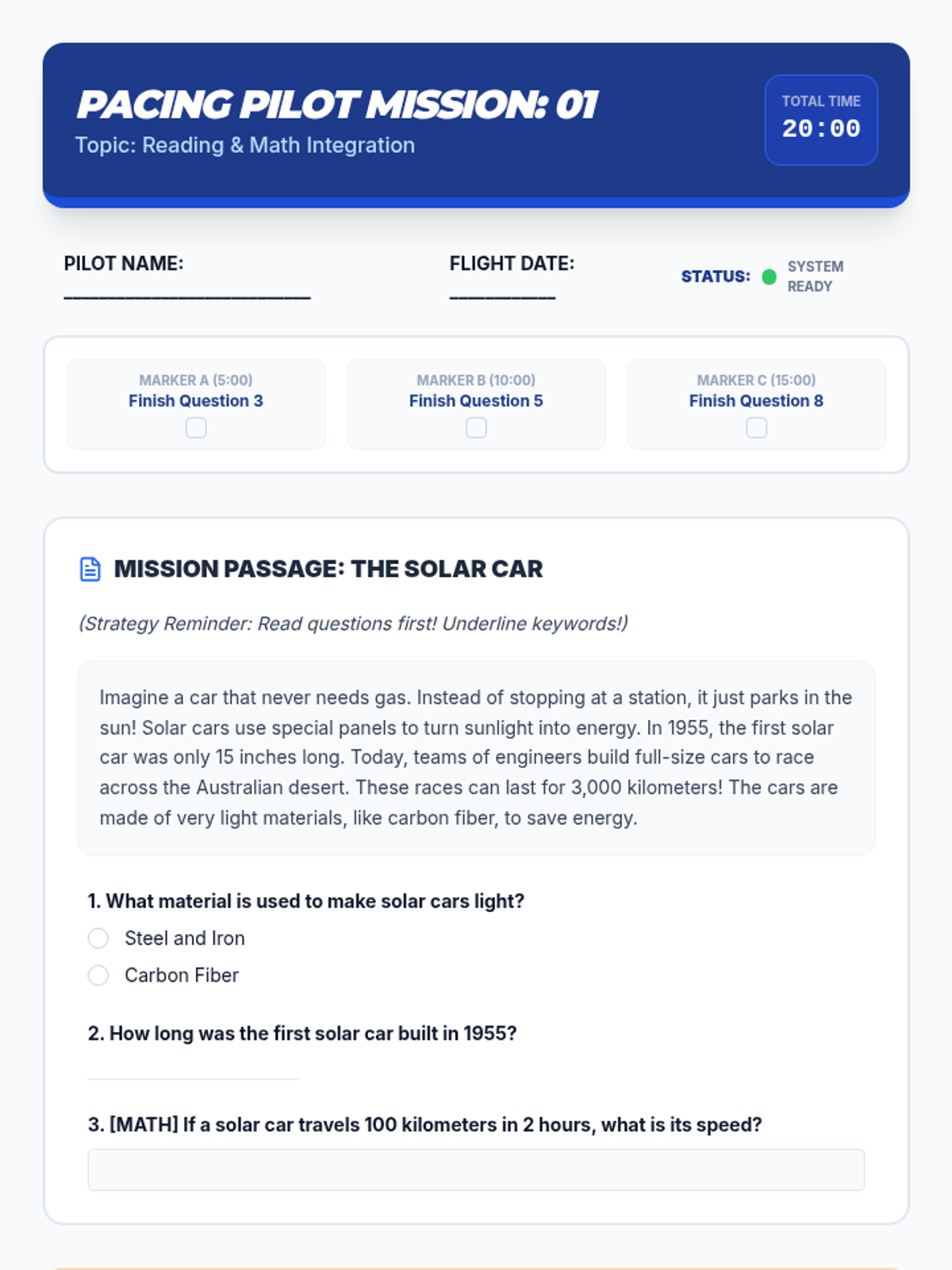
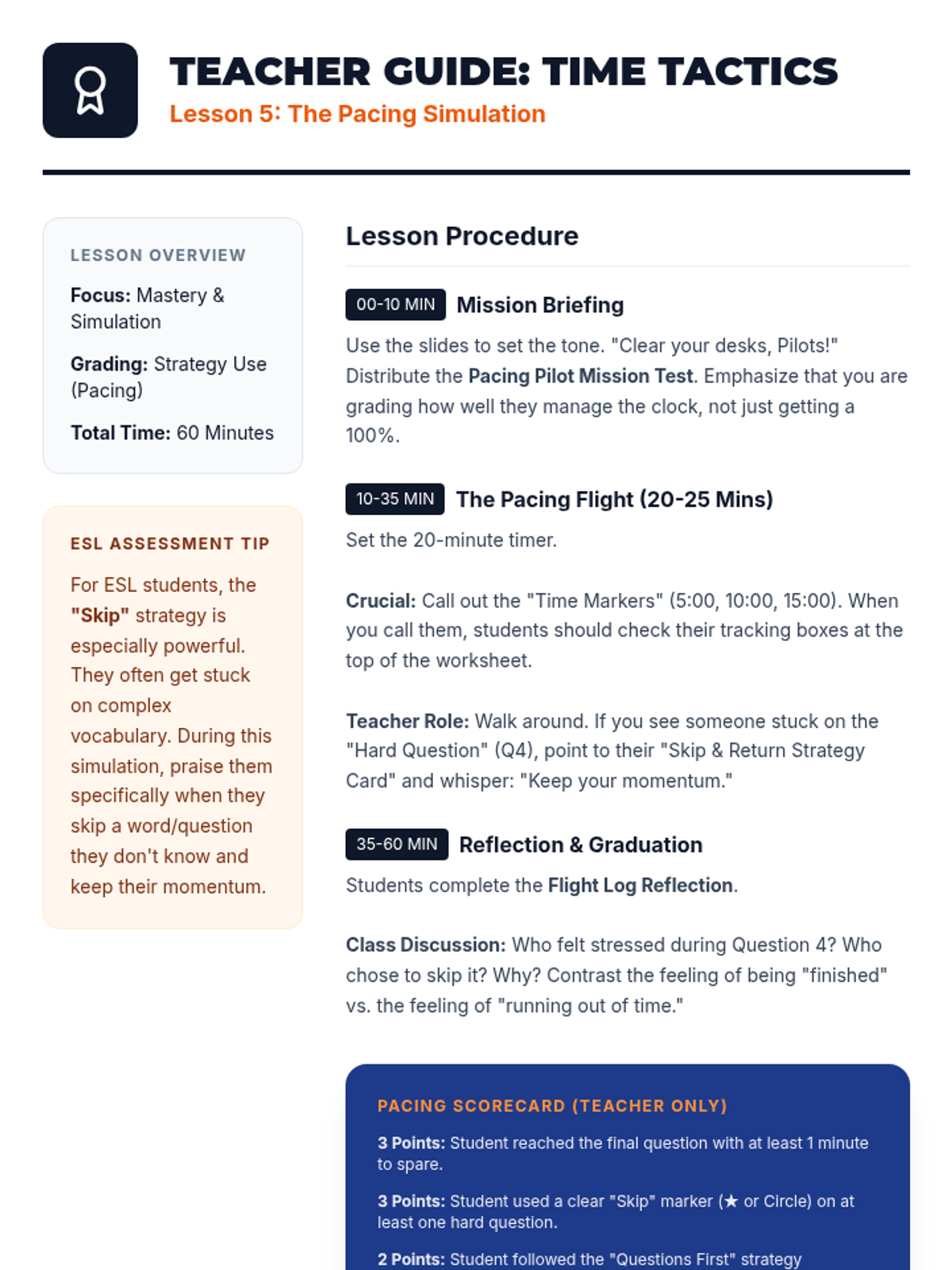
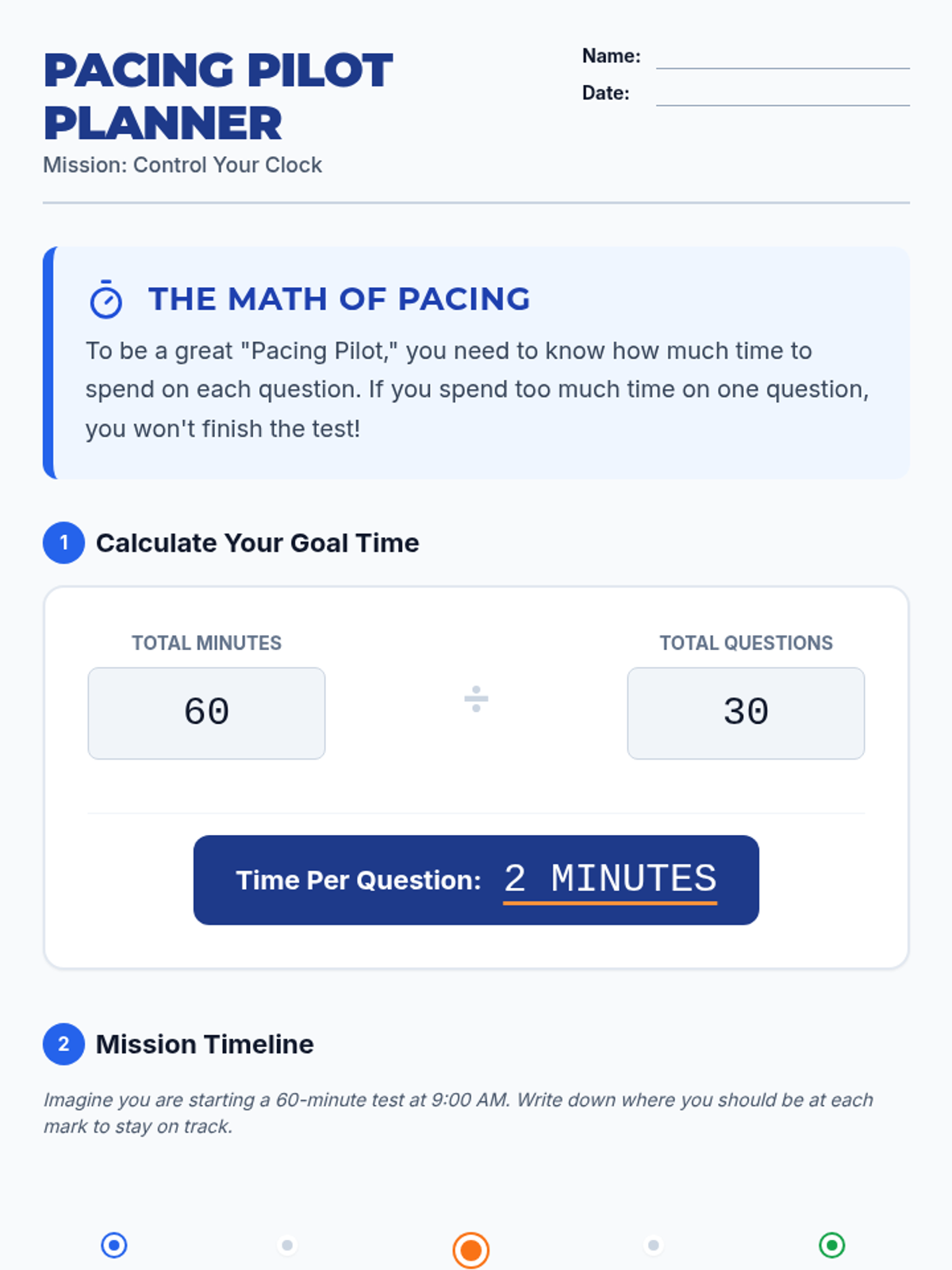
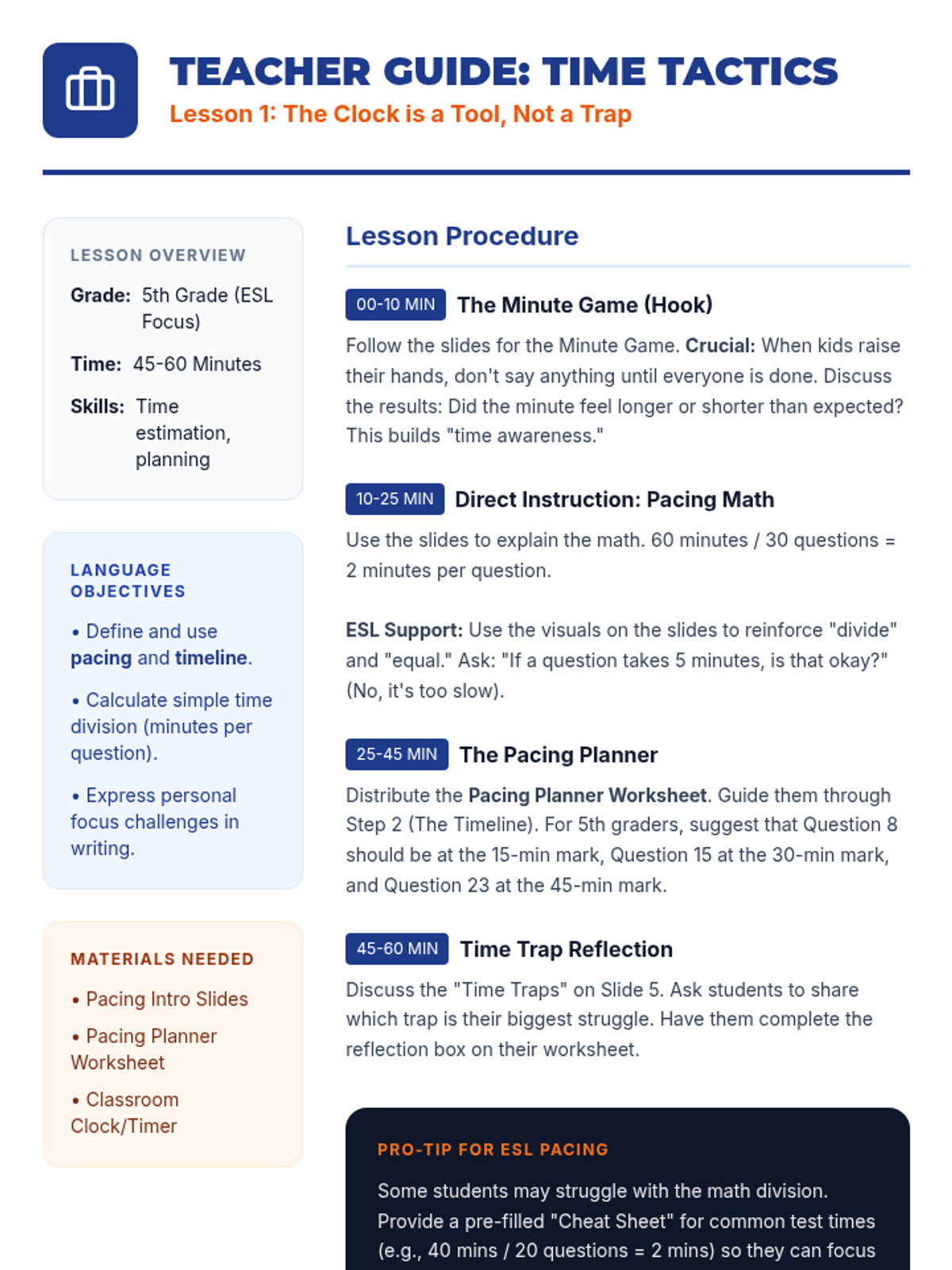
A high-energy set of resources focused on mastering test-taking pacing and time management strategies to help students finish exams with confidence.
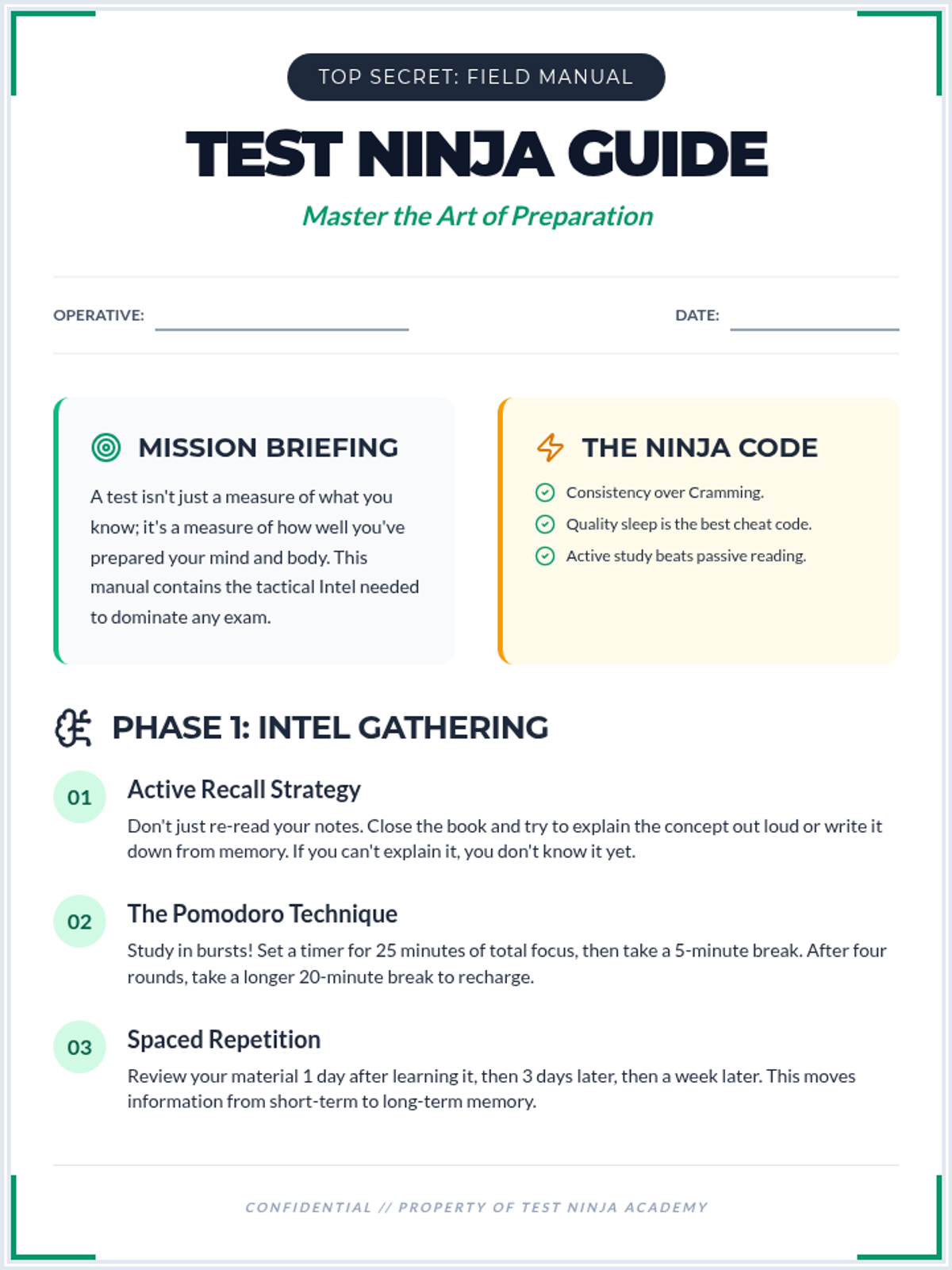
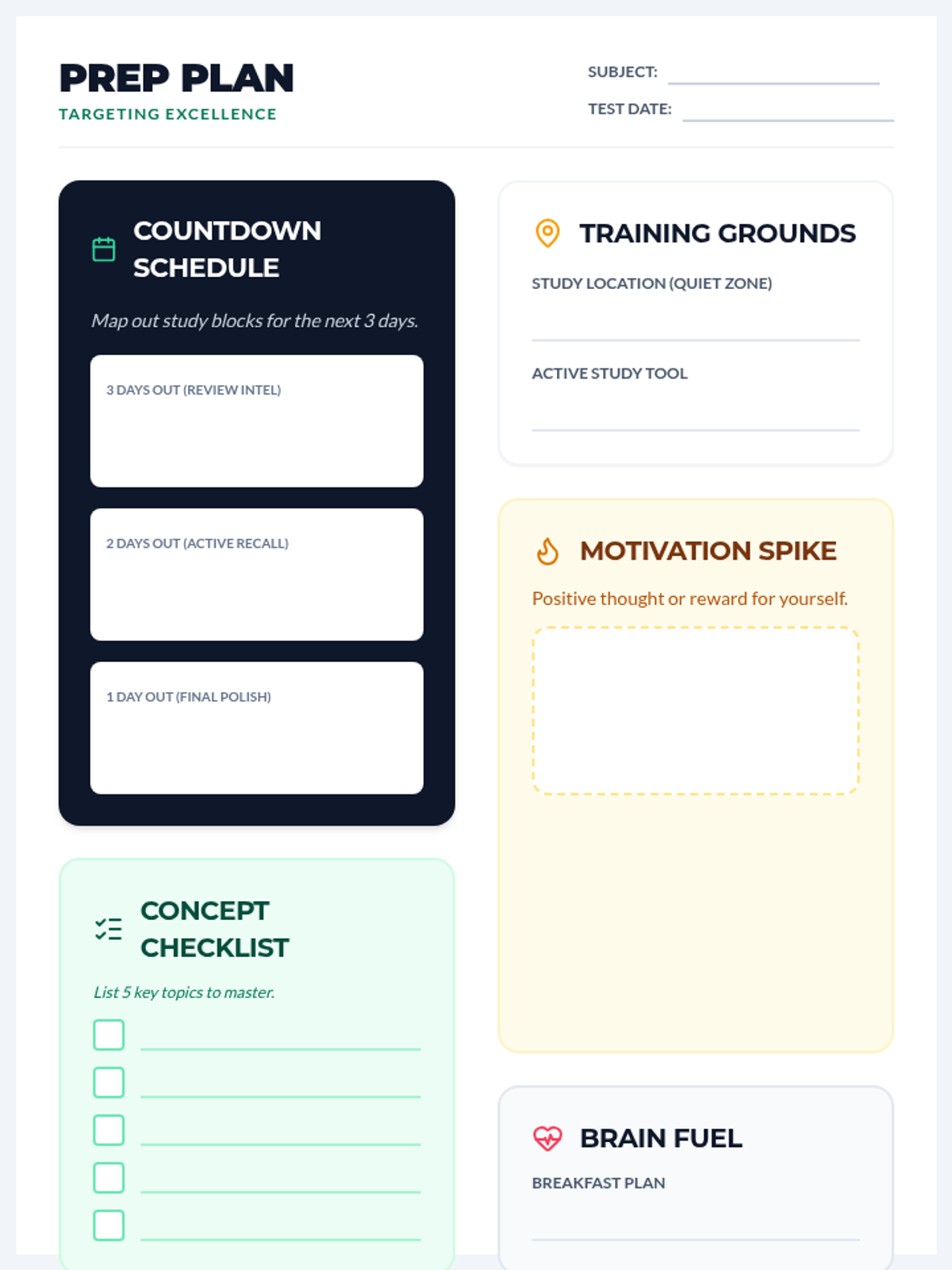
A comprehensive guide to preparing students for exams through effective study habits, mental preparation, and tactical test-day strategies.
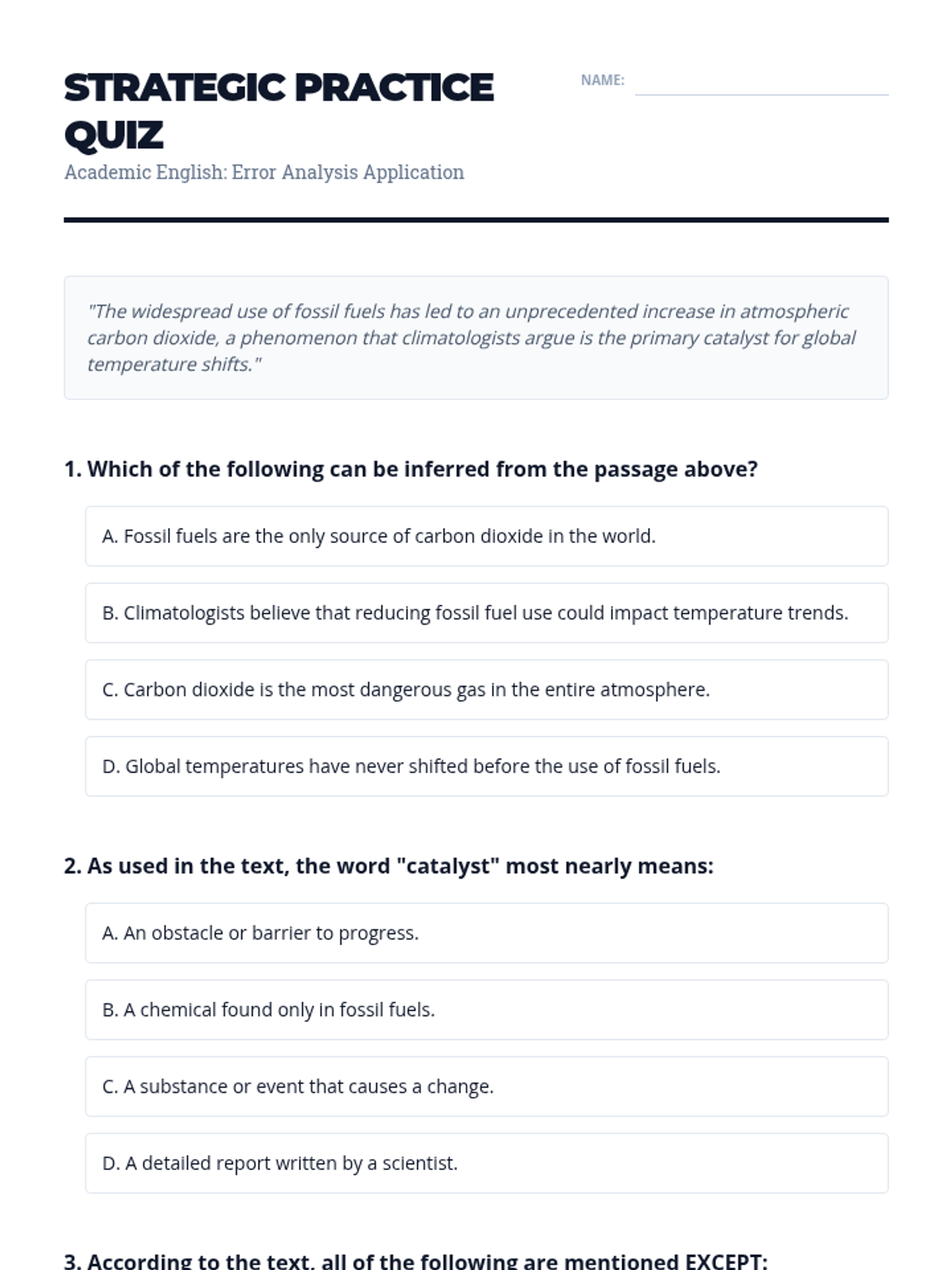
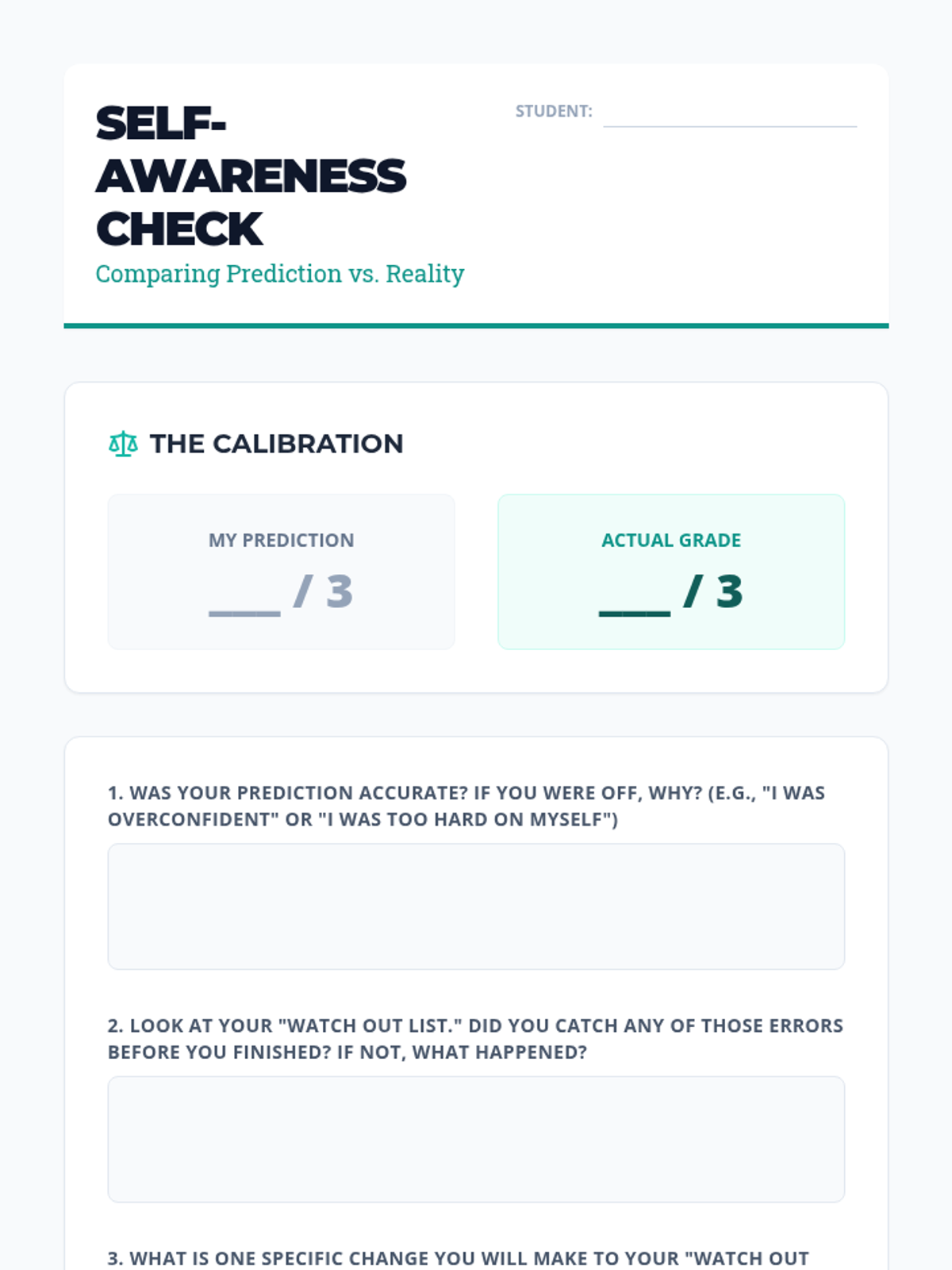
Students take a short assessment and immediately apply their error analysis protocol. They verify if their 'Watch Out' list helped them avoid previous habitual mistakes.
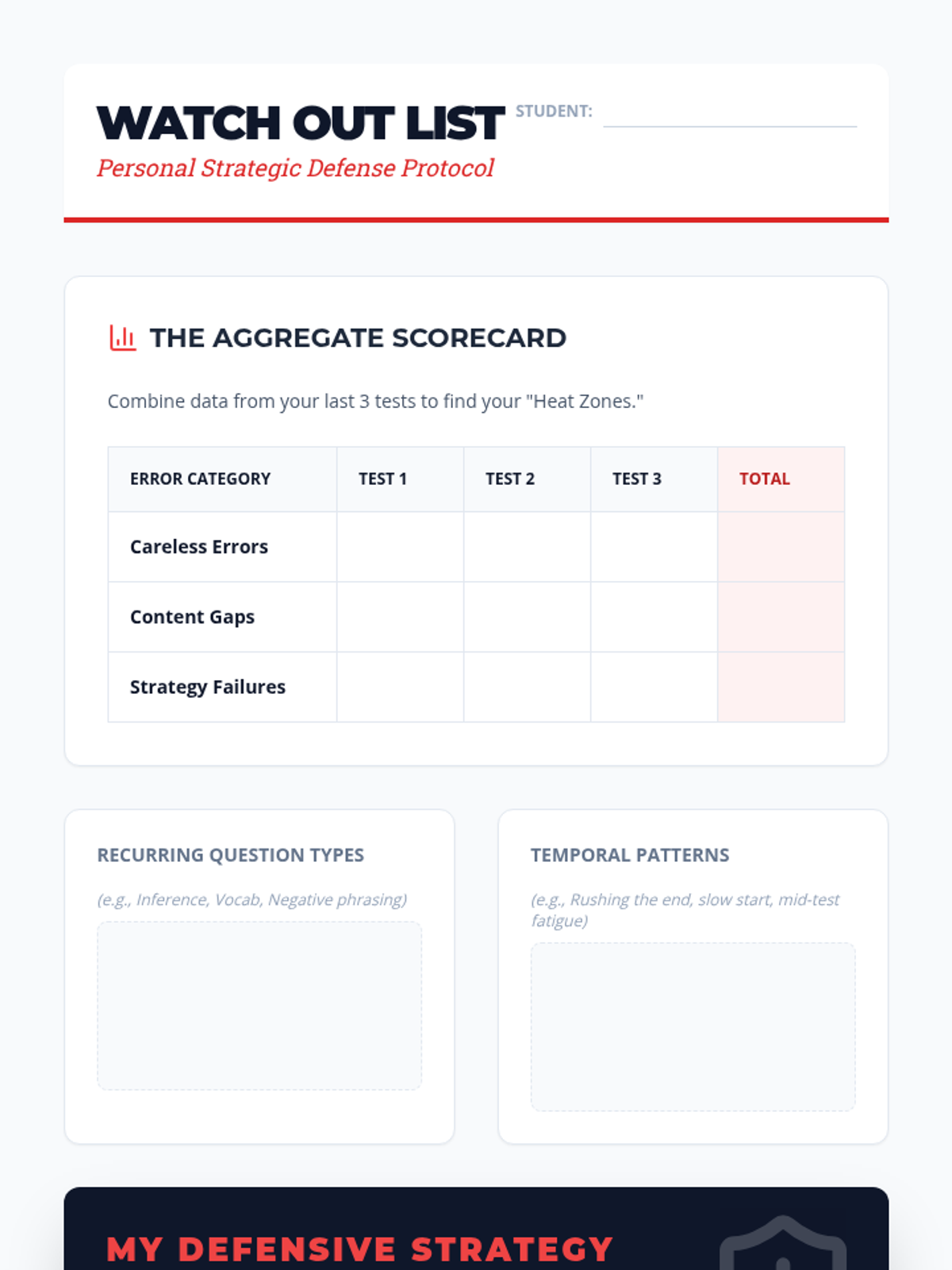
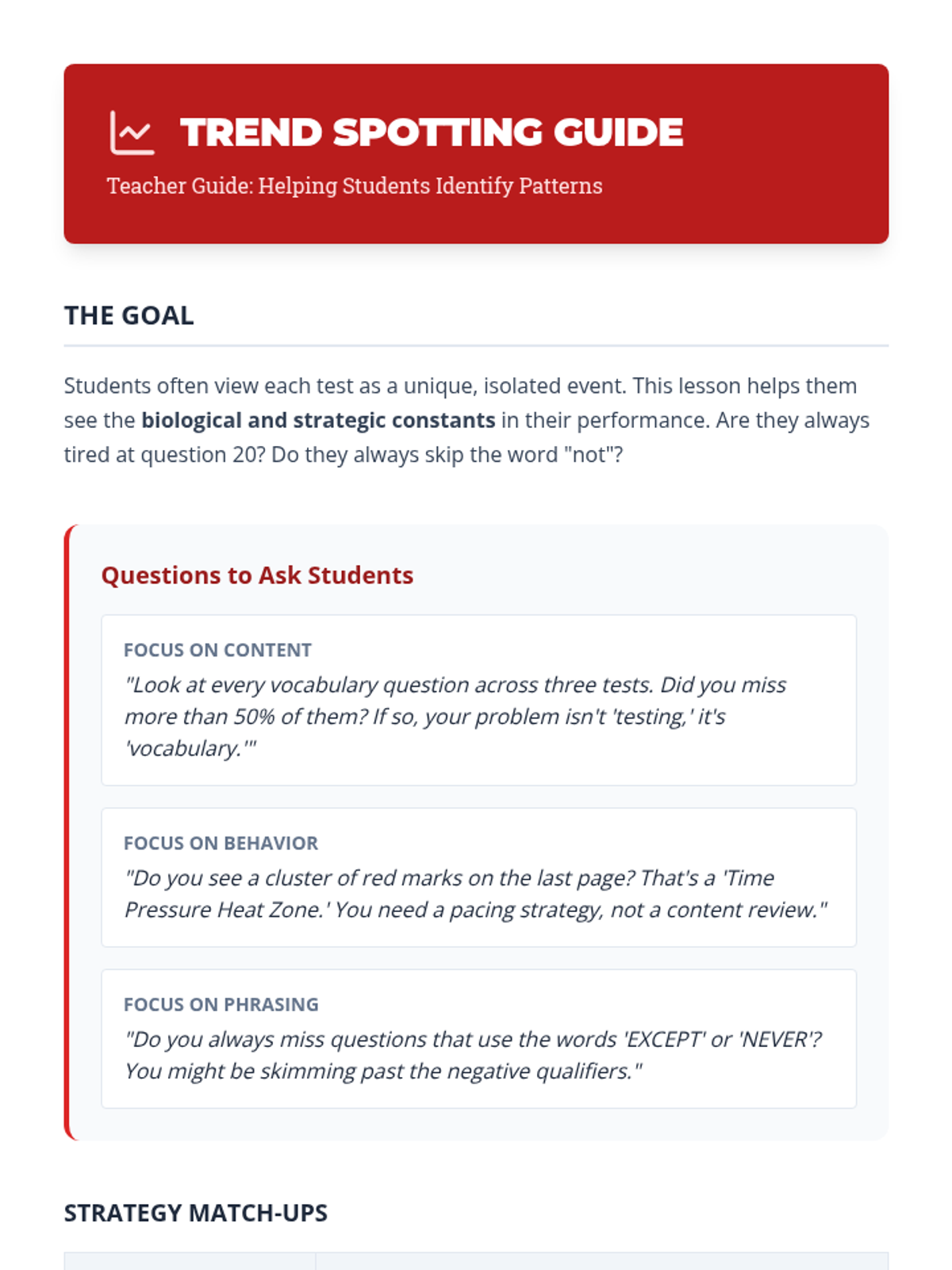
Students aggregate their error data to find personal patterns (e.g., 'I always miss inference questions' or 'I rush the last 5 minutes'). They create a personal 'Watch Out' list for future exams.
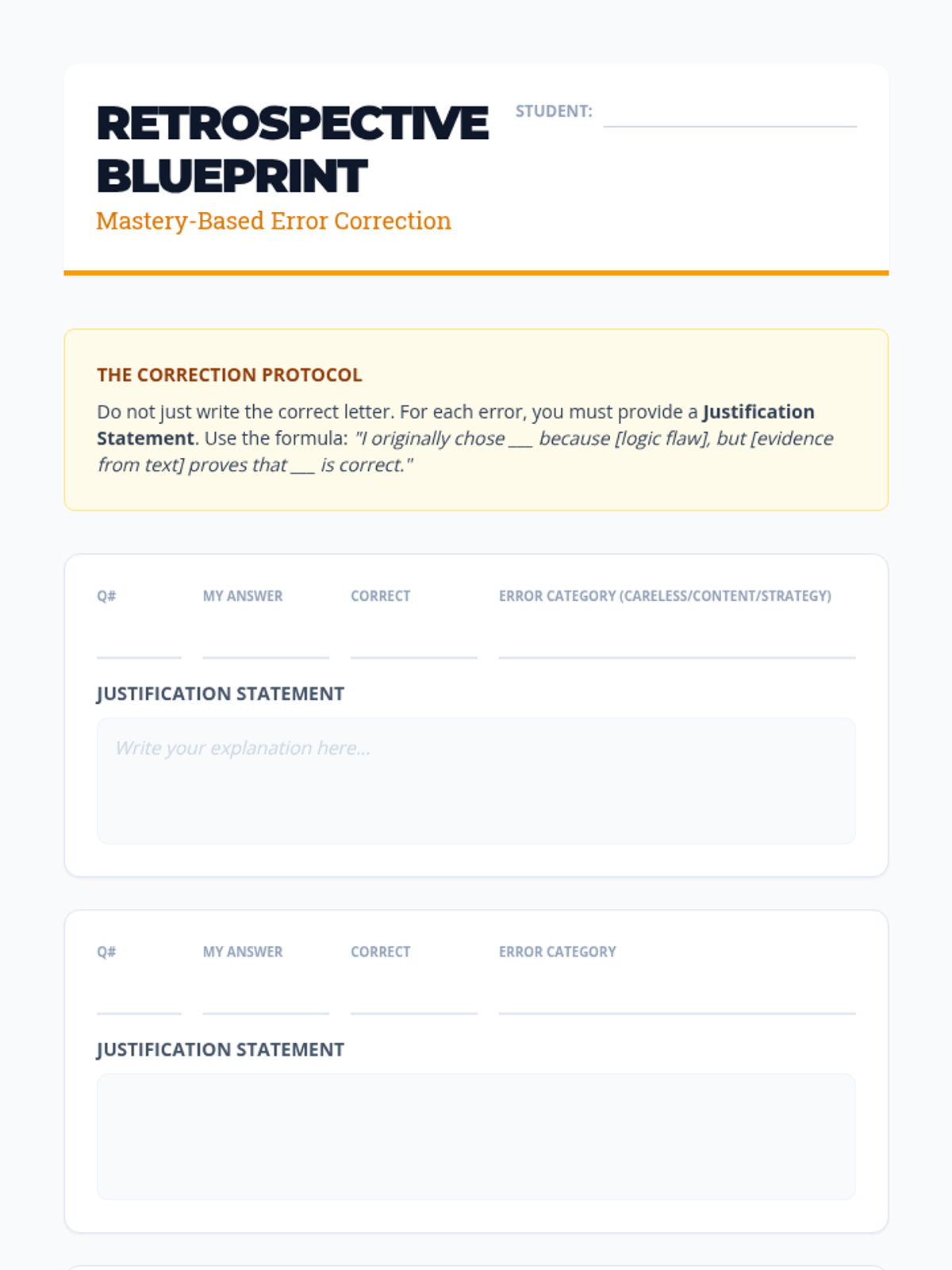
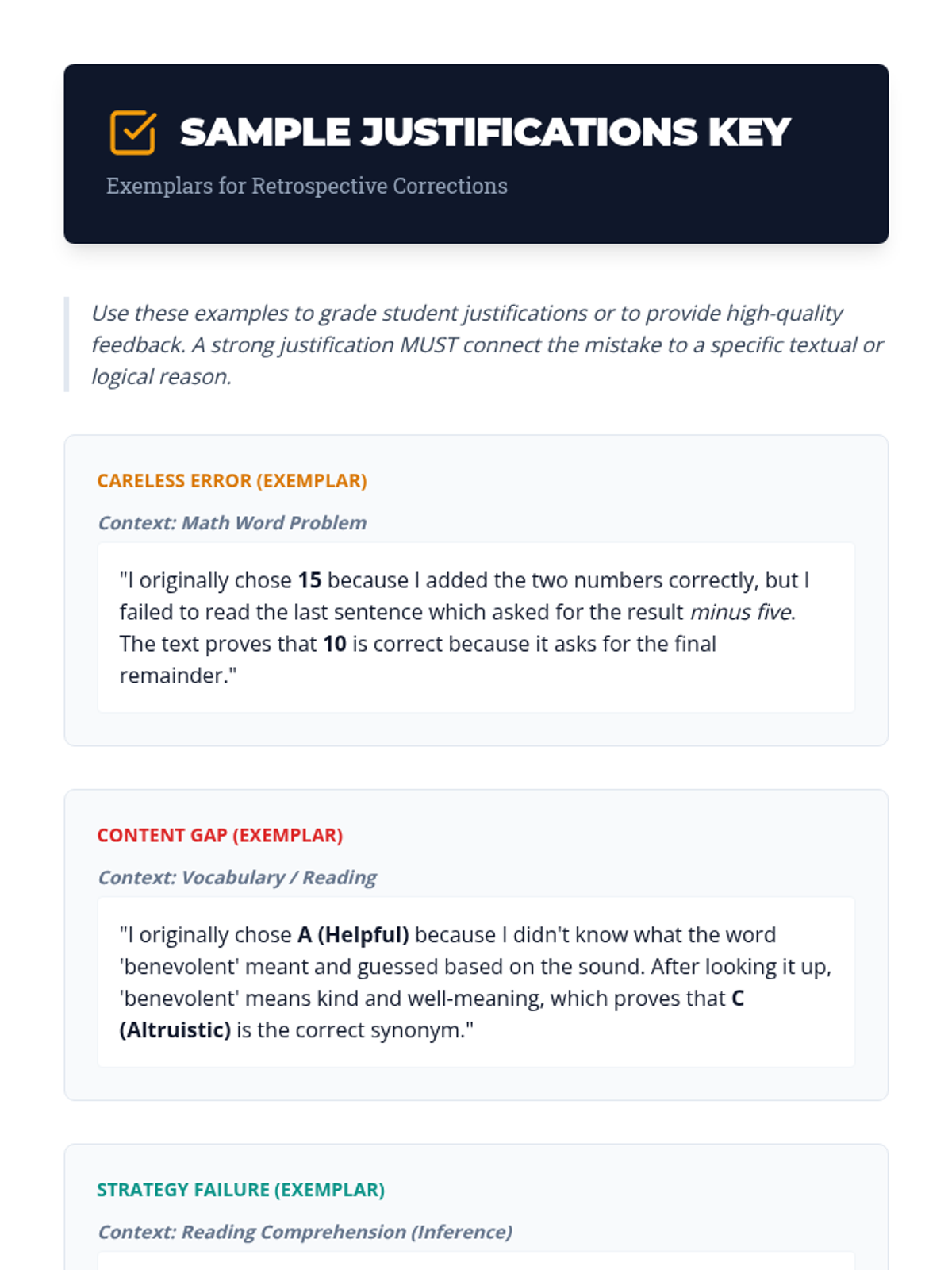
Instead of just marking correct answers, students must write a sentence explaining *why* their original answer was wrong and *why* the new answer is right. This ensures deep processing of the error.
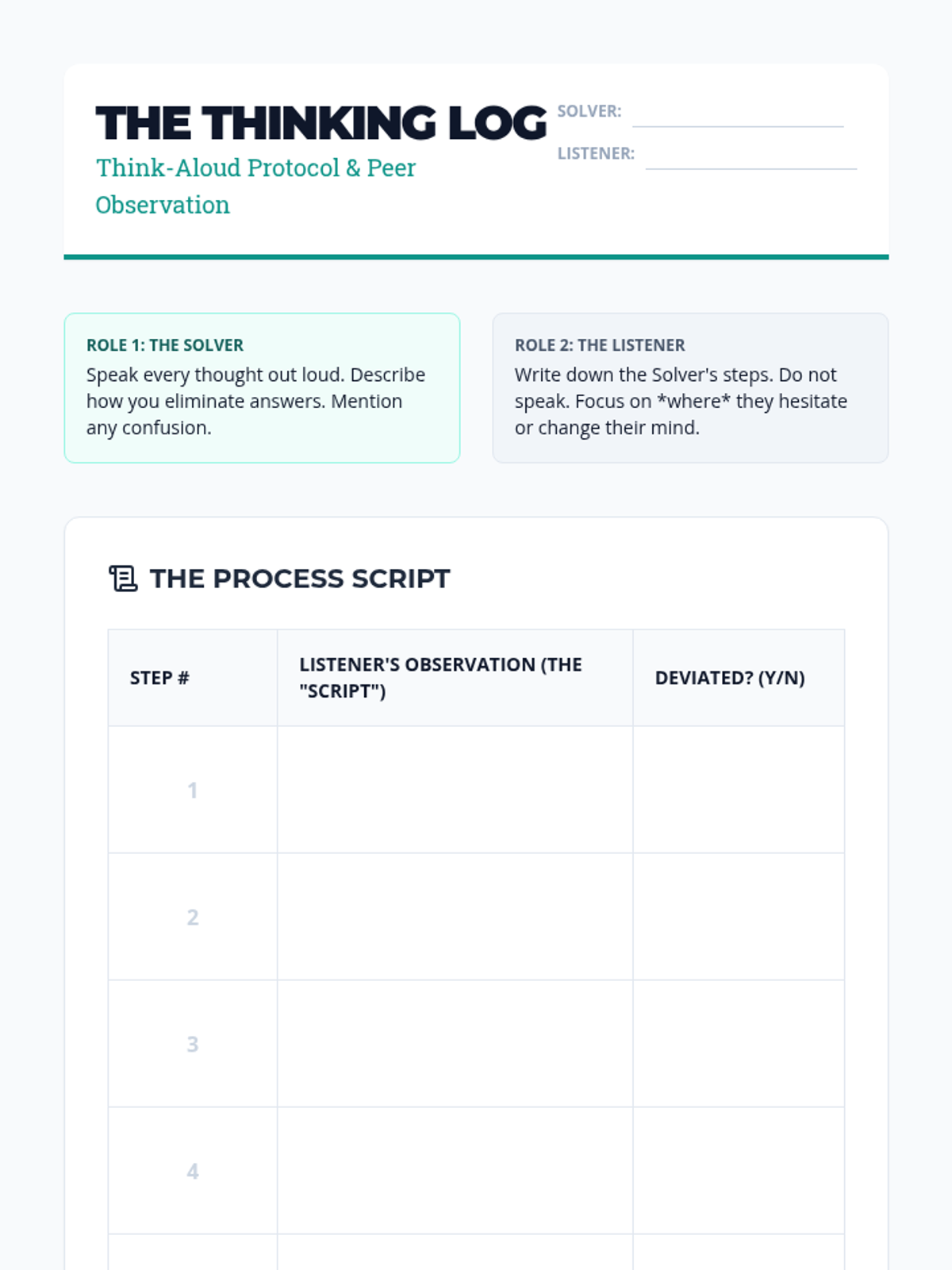
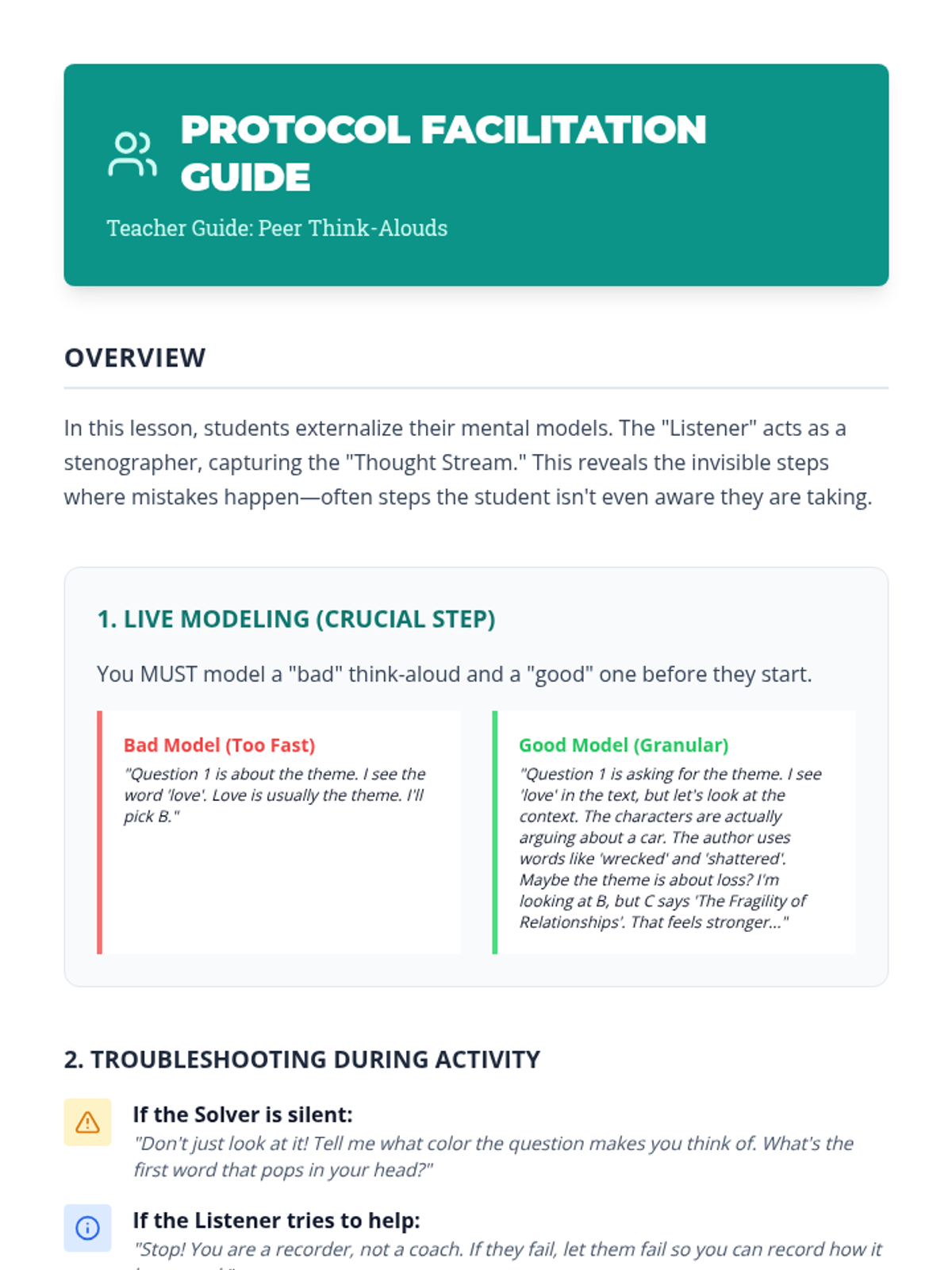
Working in pairs, students vocalize their thinking process while solving a problem while a partner records their steps. They analyze these recordings to identify where their logic deviated from the correct path.
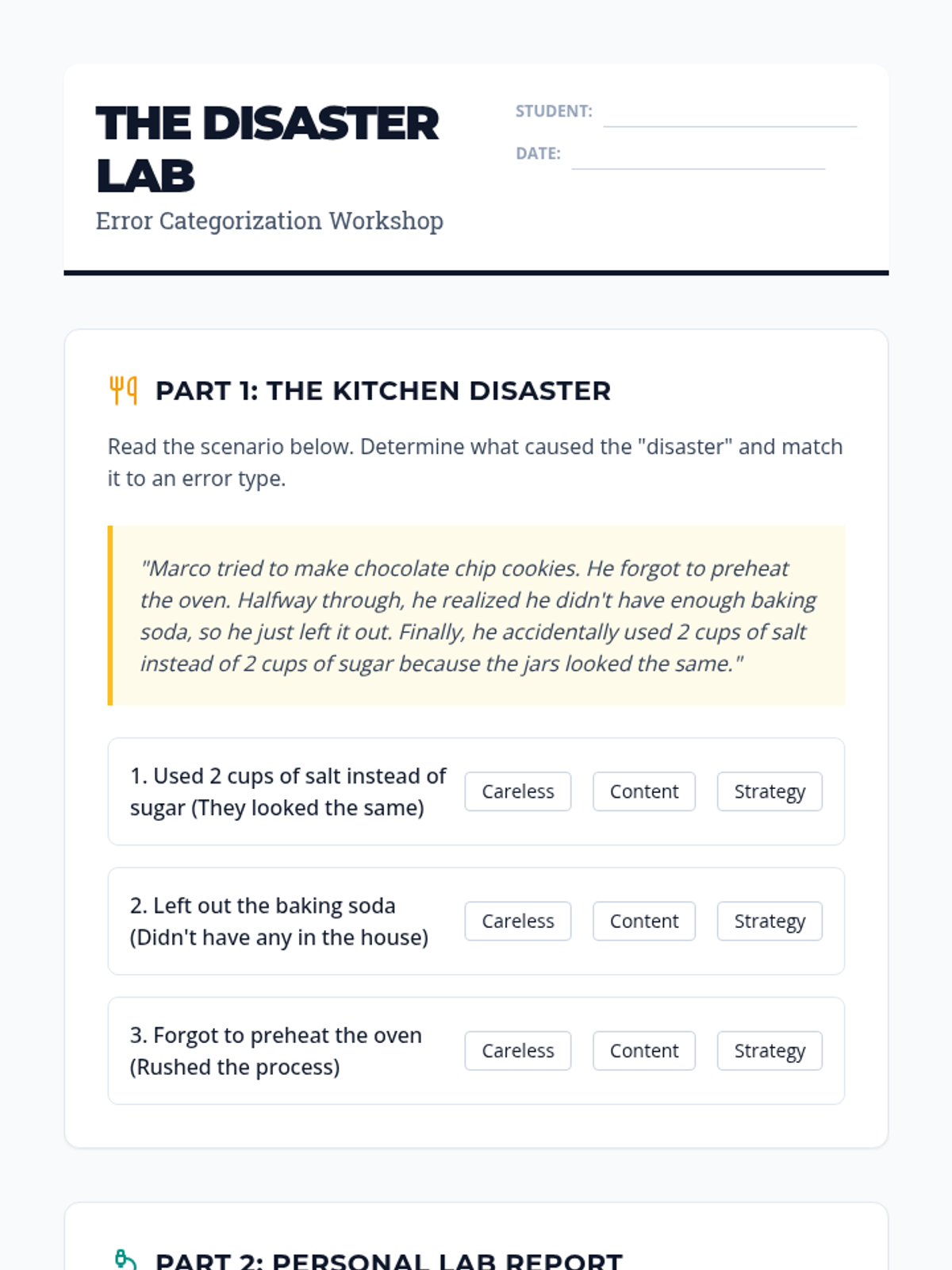
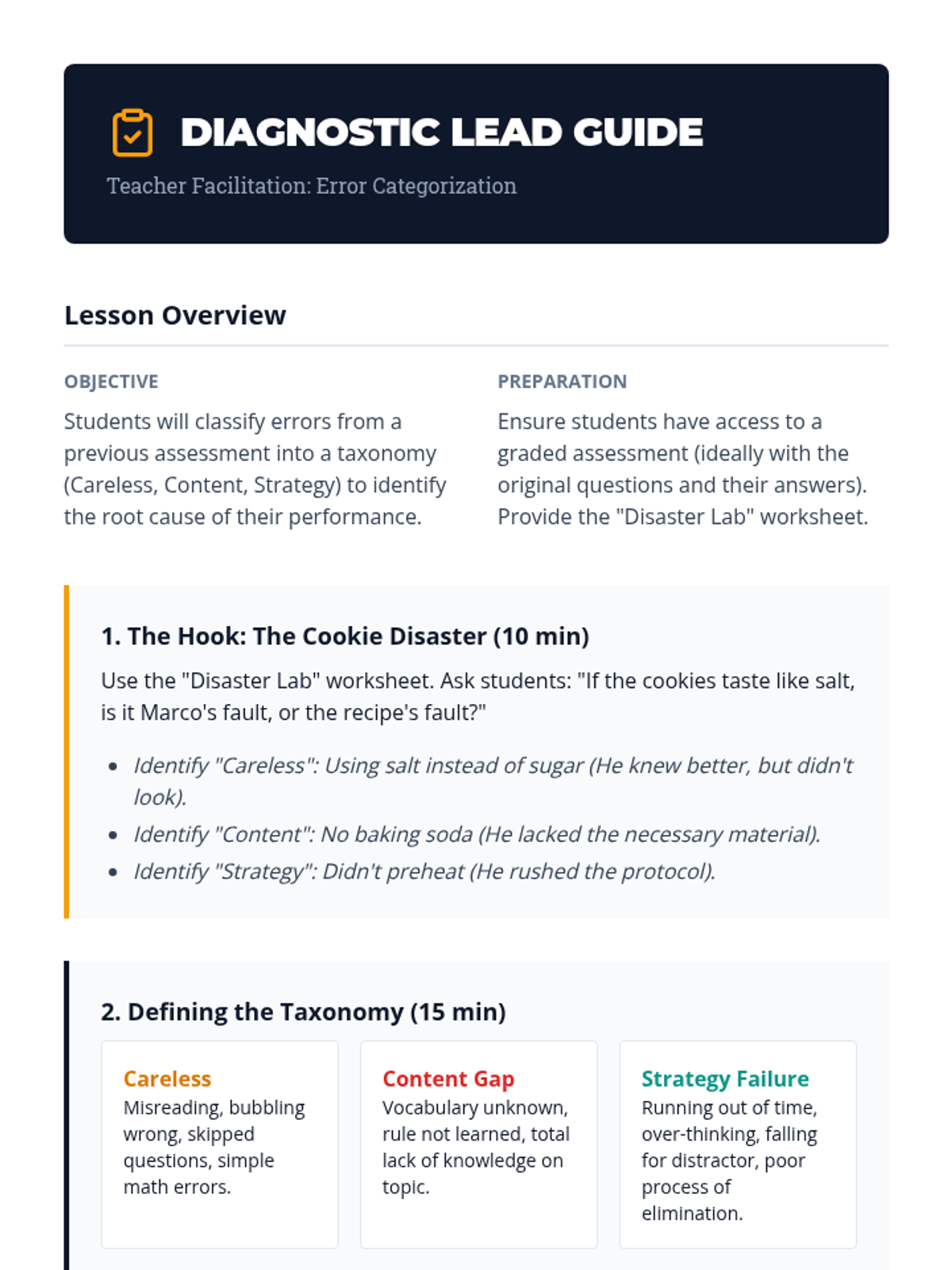
Students review a past assessment and categorize every incorrect answer as a 'Careless Error,' 'Content Gap,' or 'Strategy Failure.' This taxonomy helps them understand that not all mistakes are created equal.
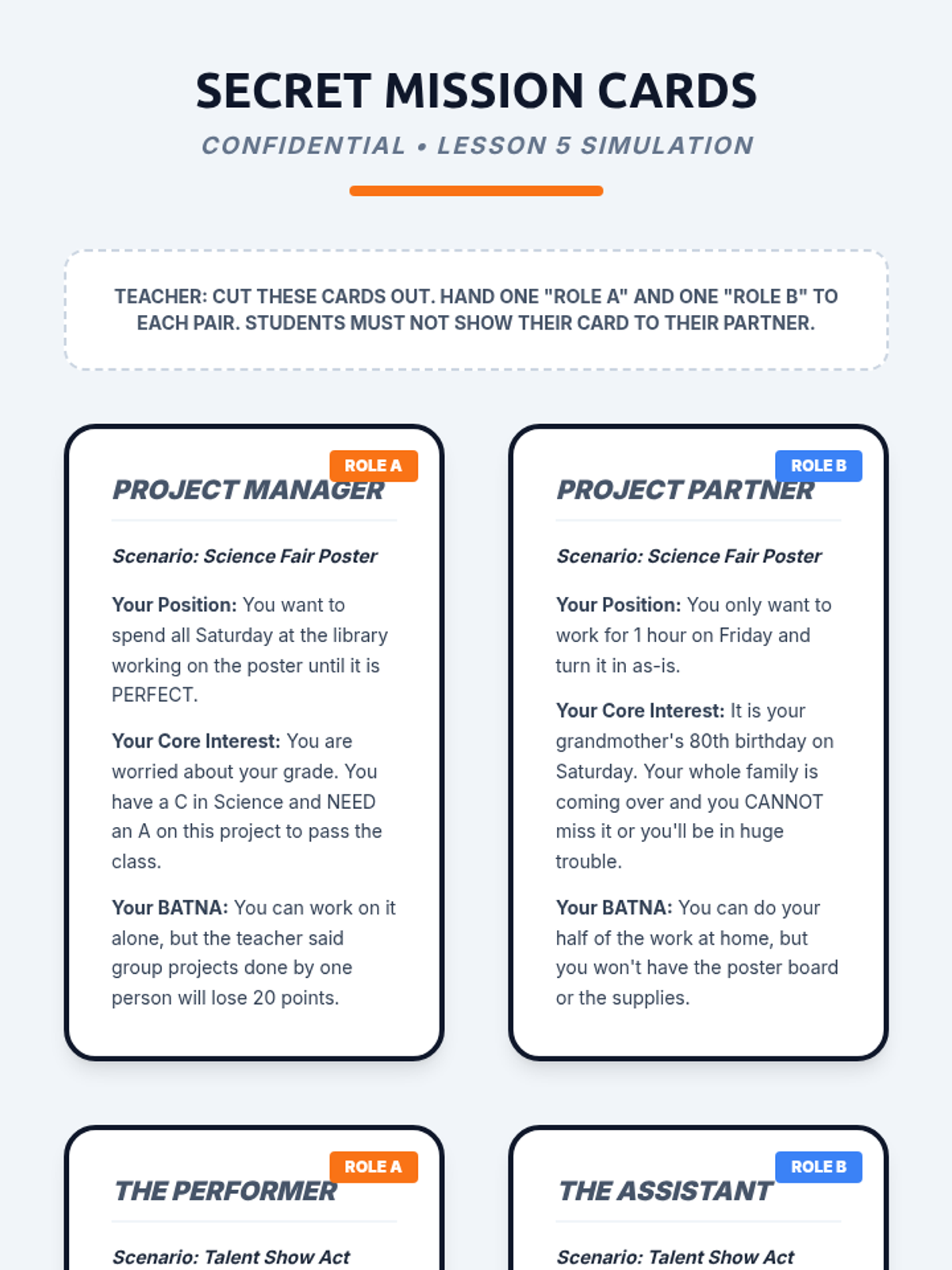
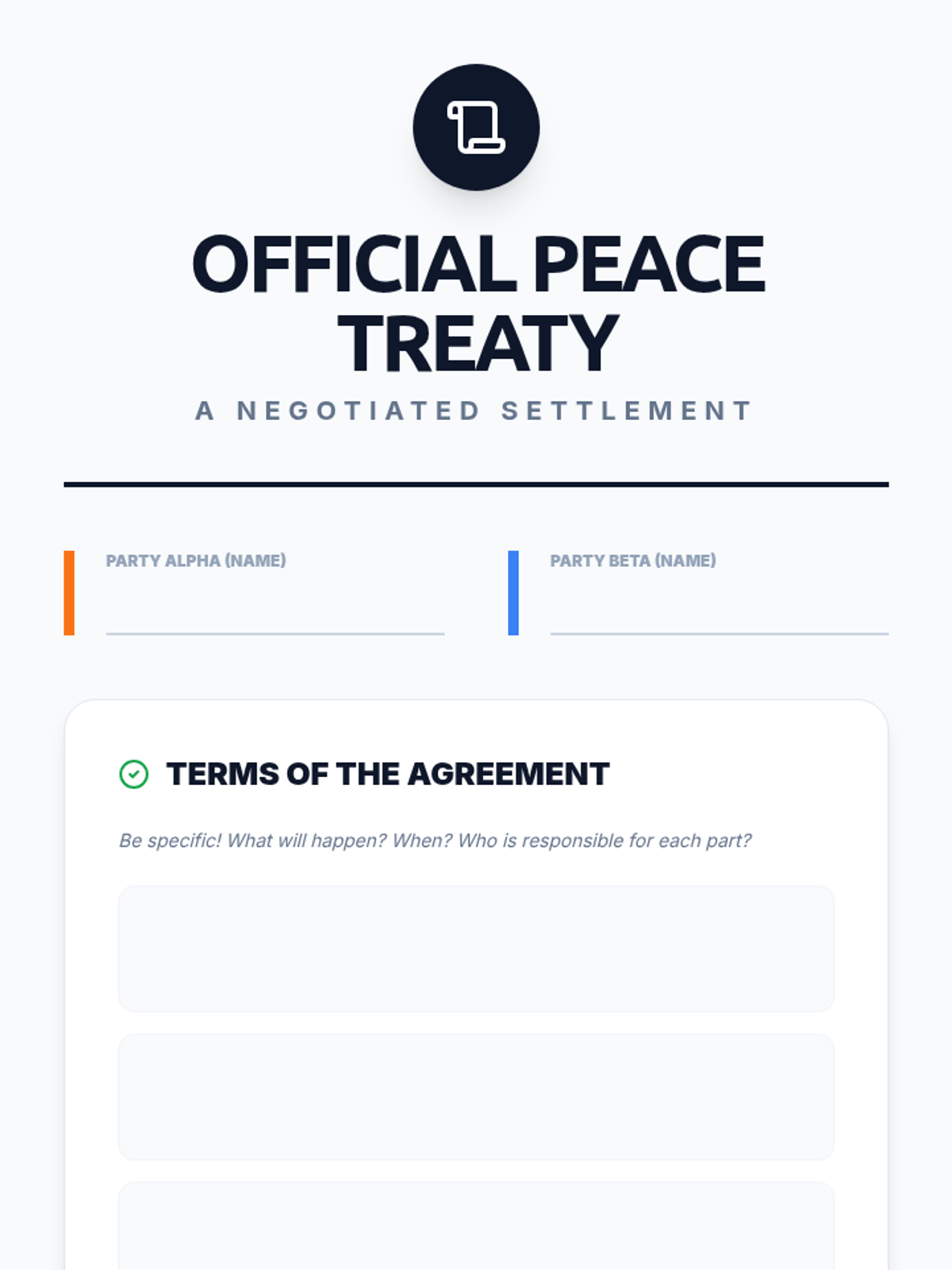
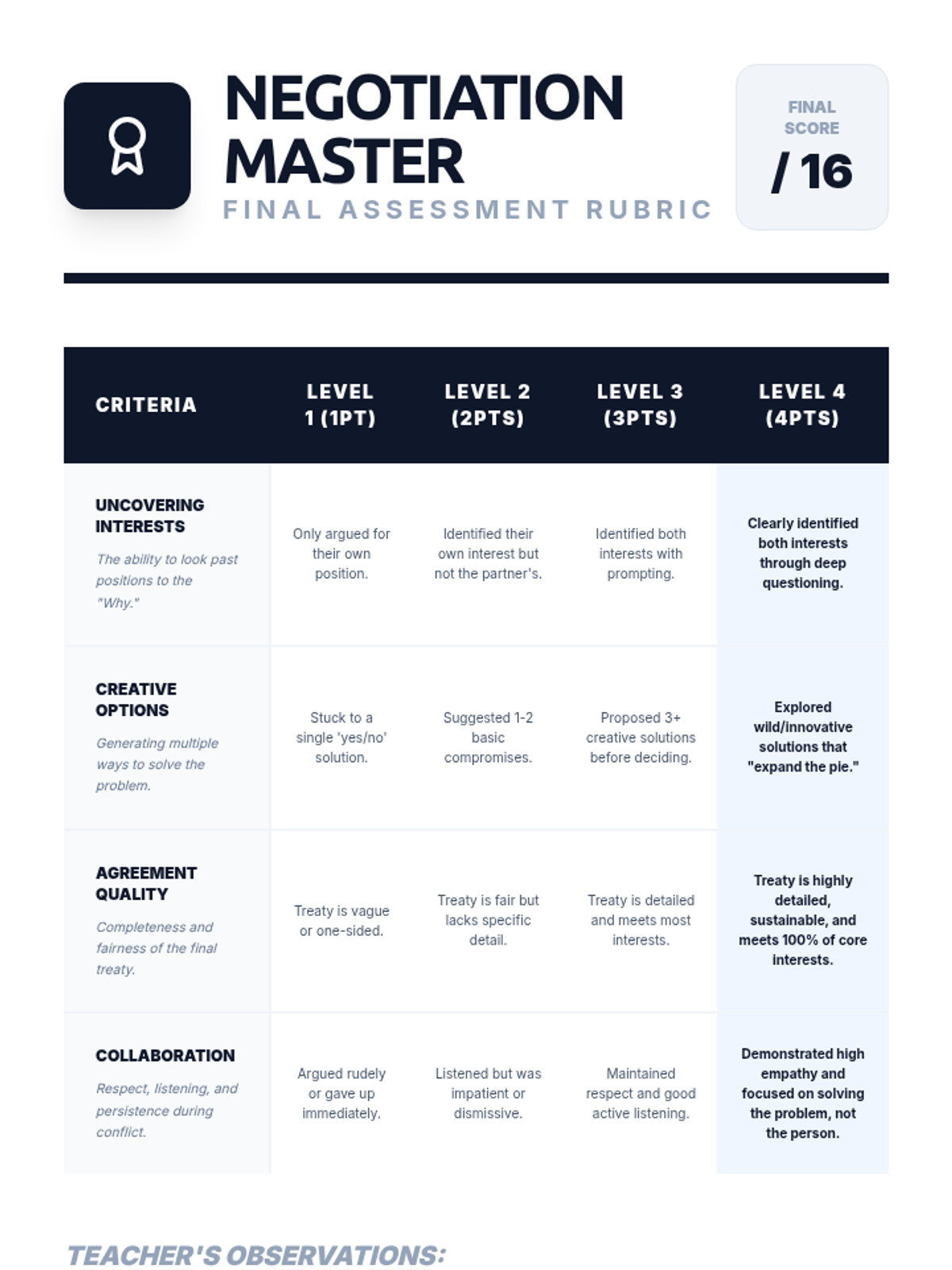
A final simulation where students apply all learned skills to negotiate a complex agreement using secret mission cards.
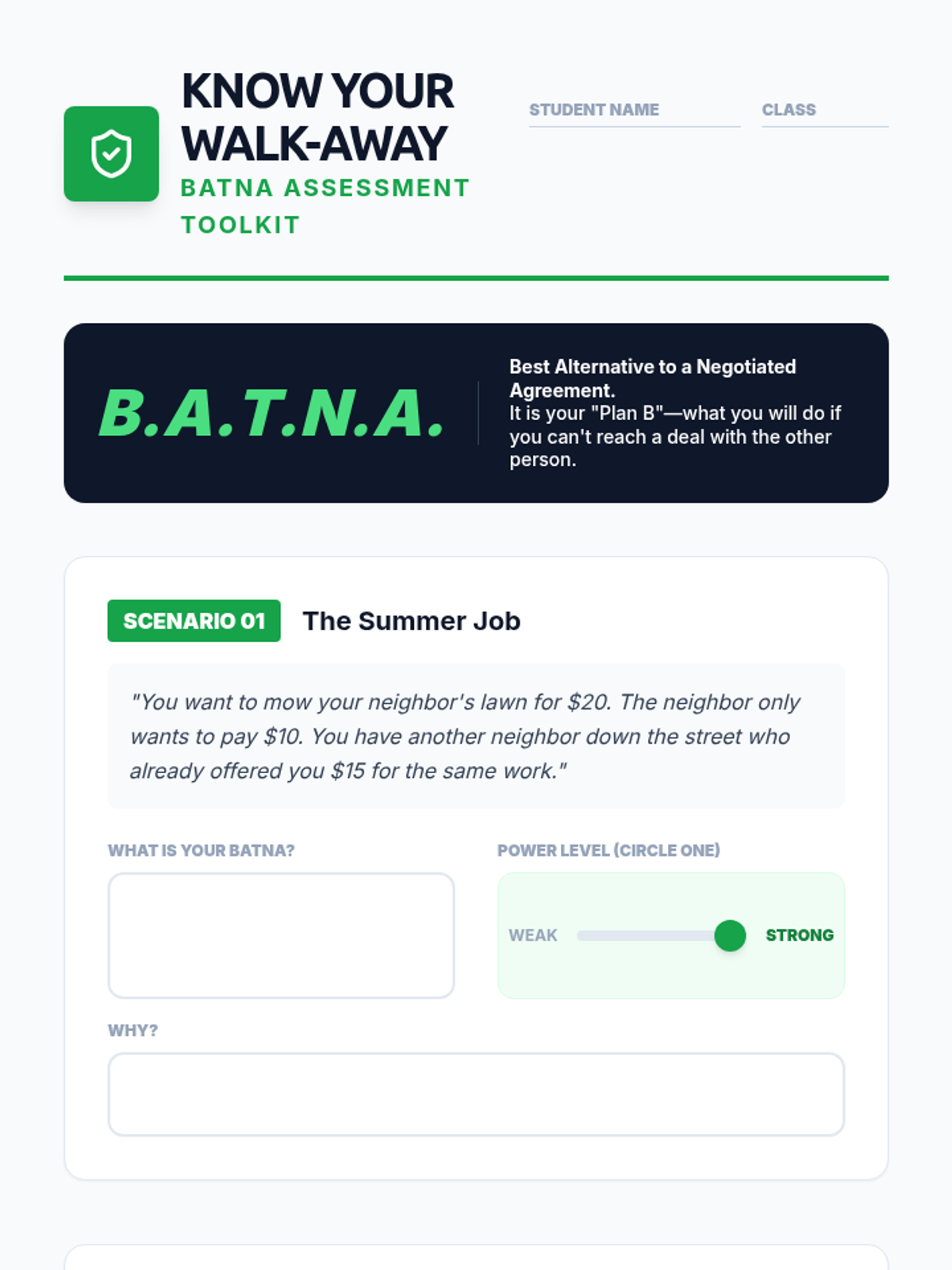
Introduces the concept of BATNA (Best Alternative to a Negotiated Agreement) to help students understand their power and walk-away points.
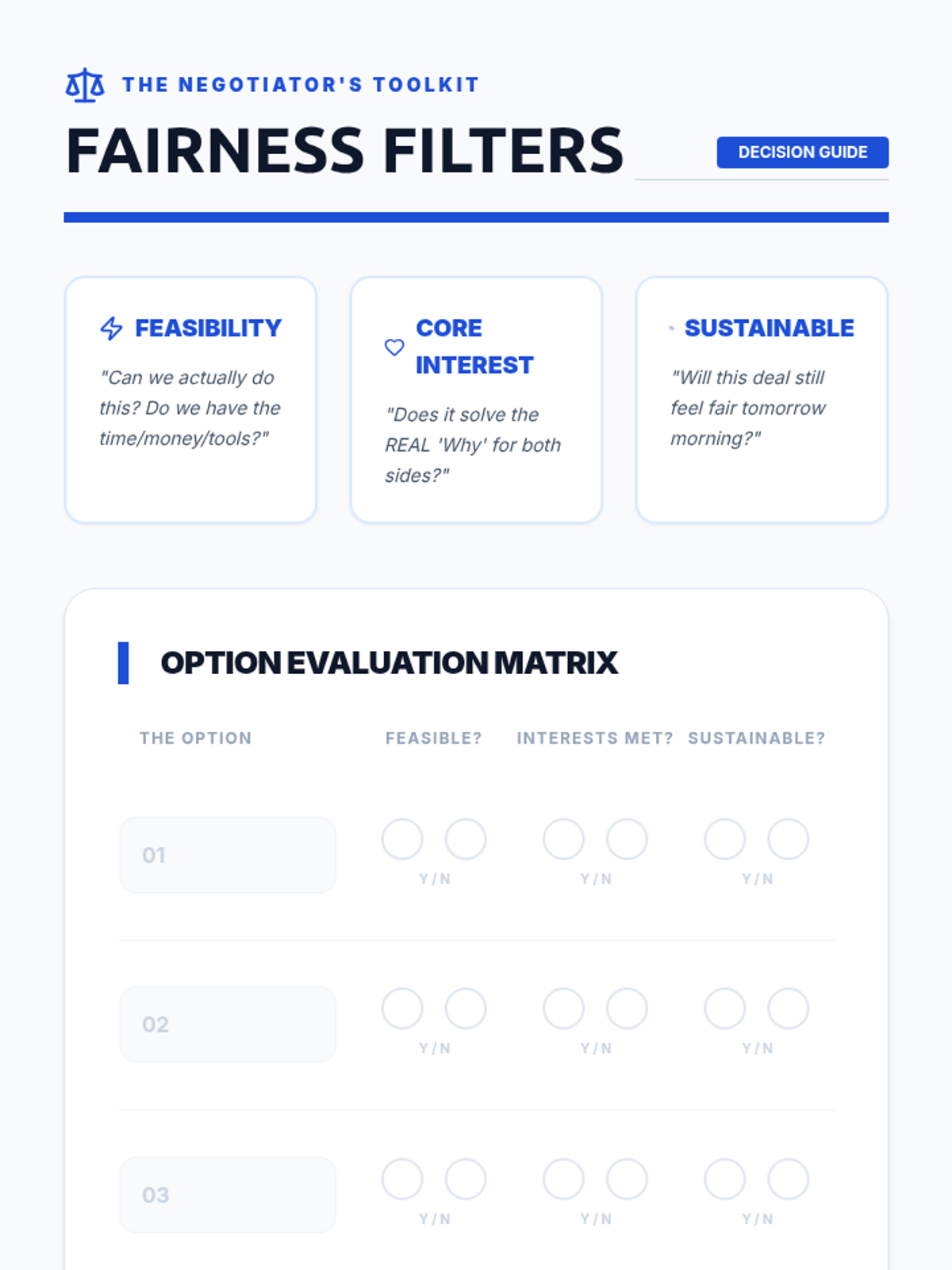
Explores different concepts of fairness (equality, equity, need) and how to evaluate potential solutions.
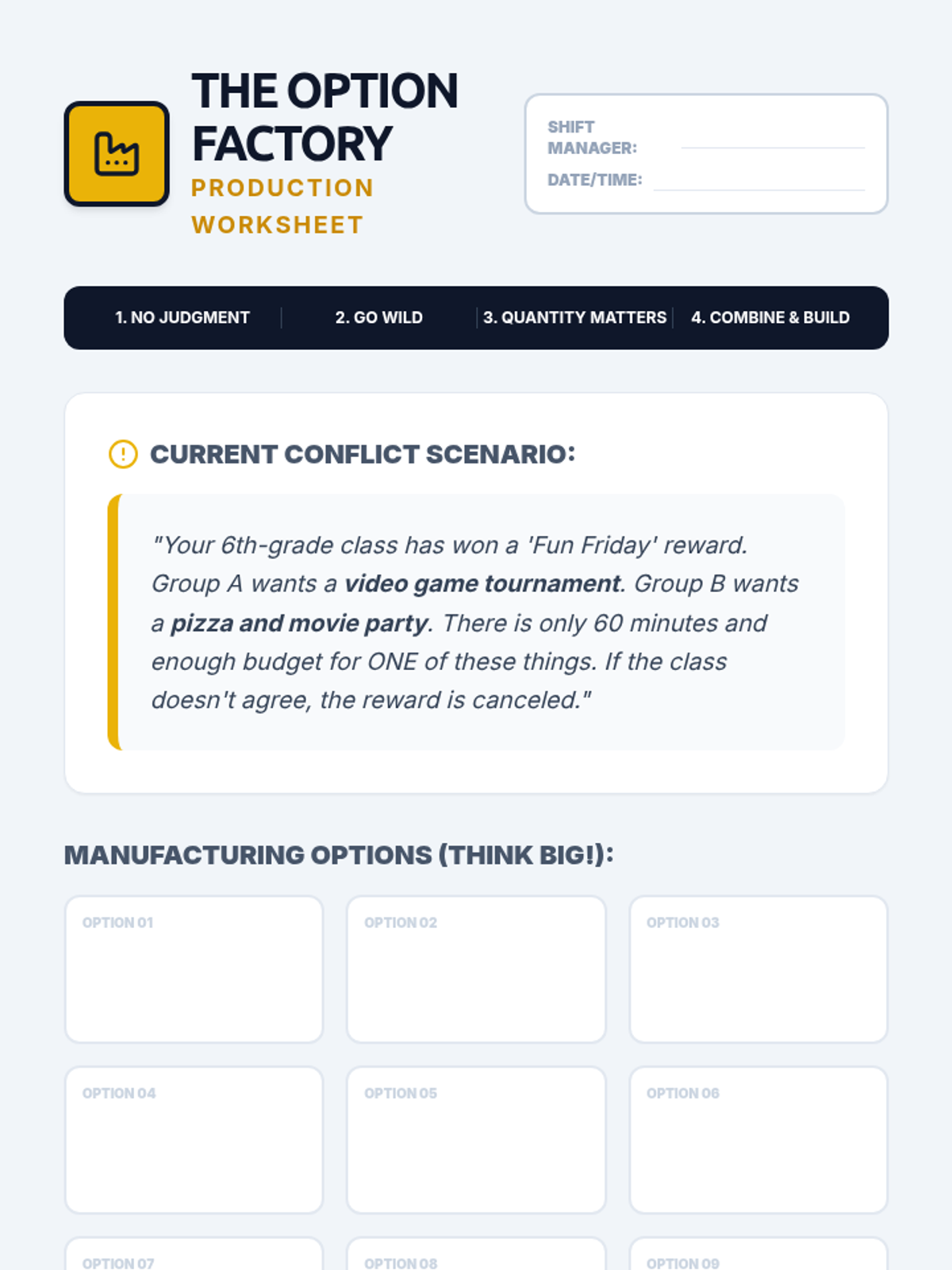
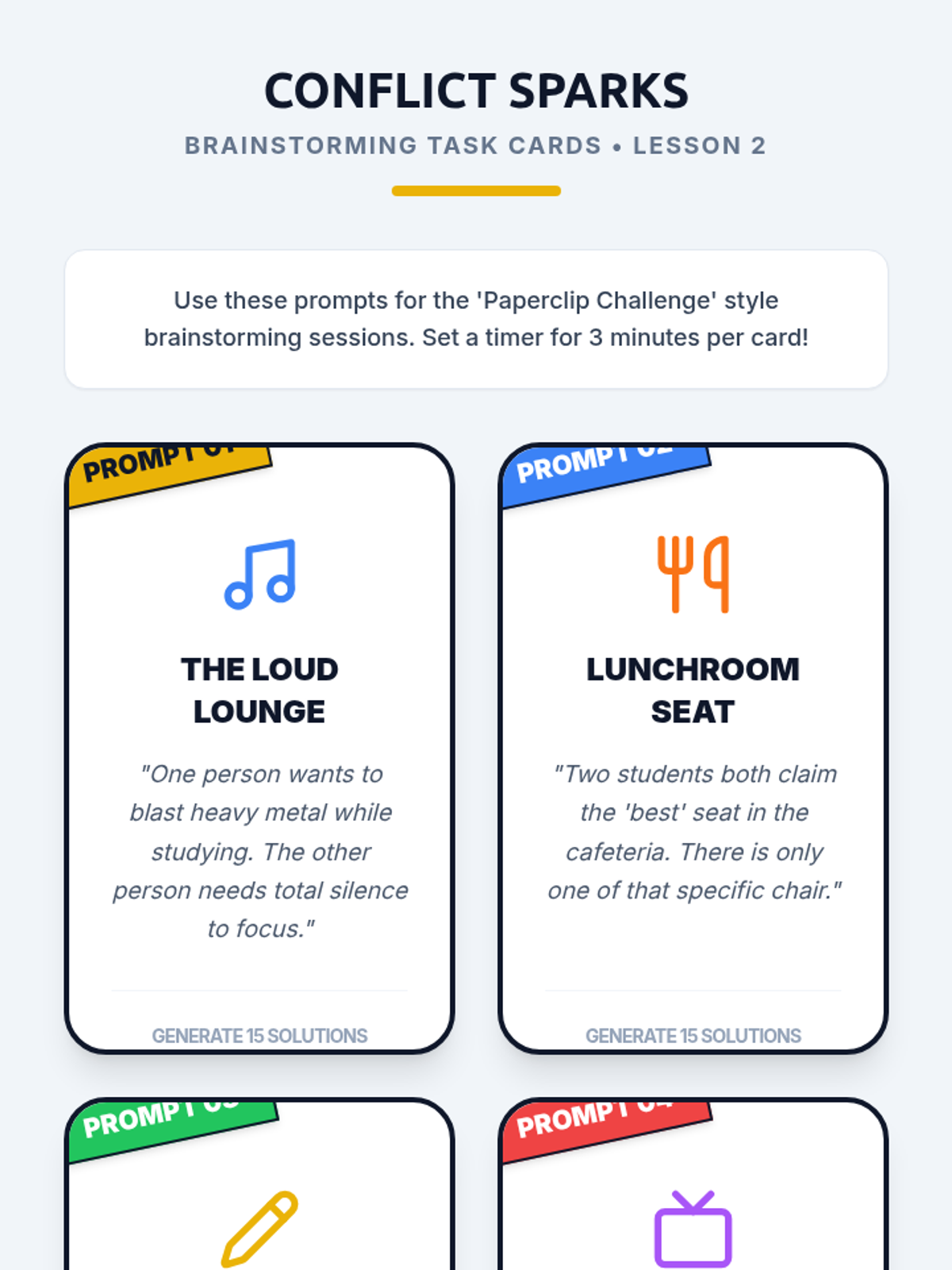
Focuses on the creative phase of negotiation, teaching students how to generate a wide range of options without judgment.
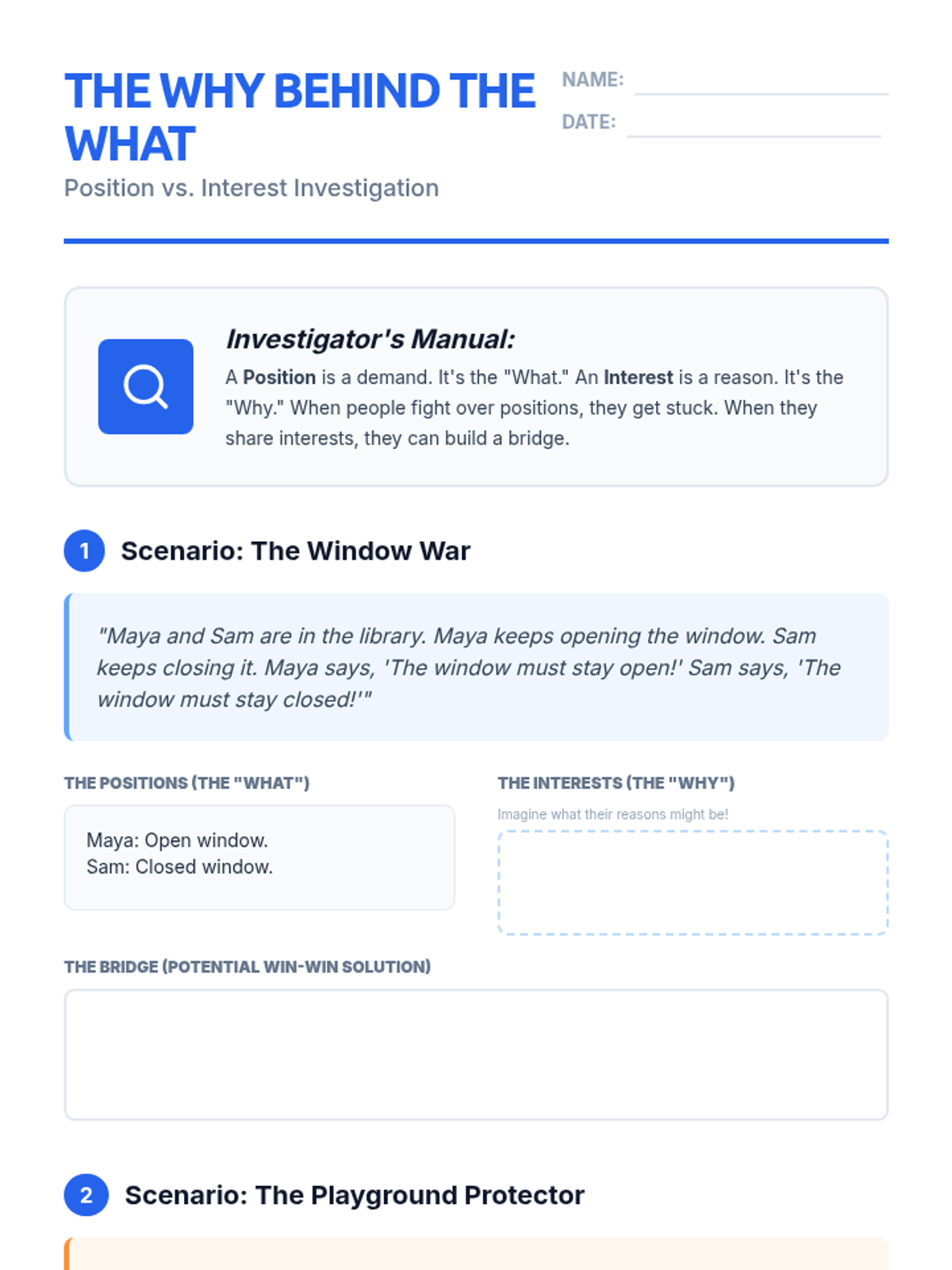
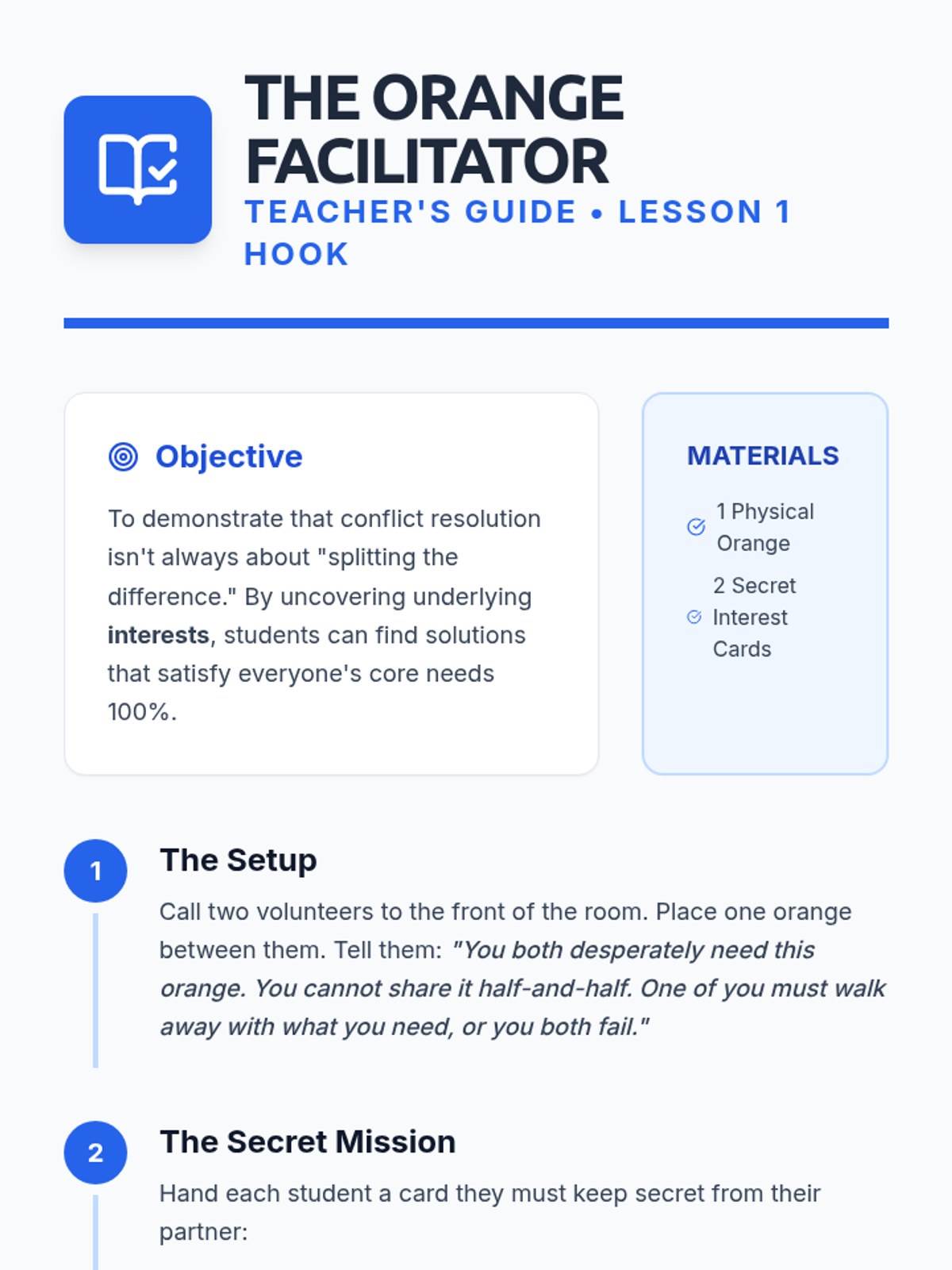
Students learn to distinguish between rigid positions and underlying interests using the 'Orange Story' framework.
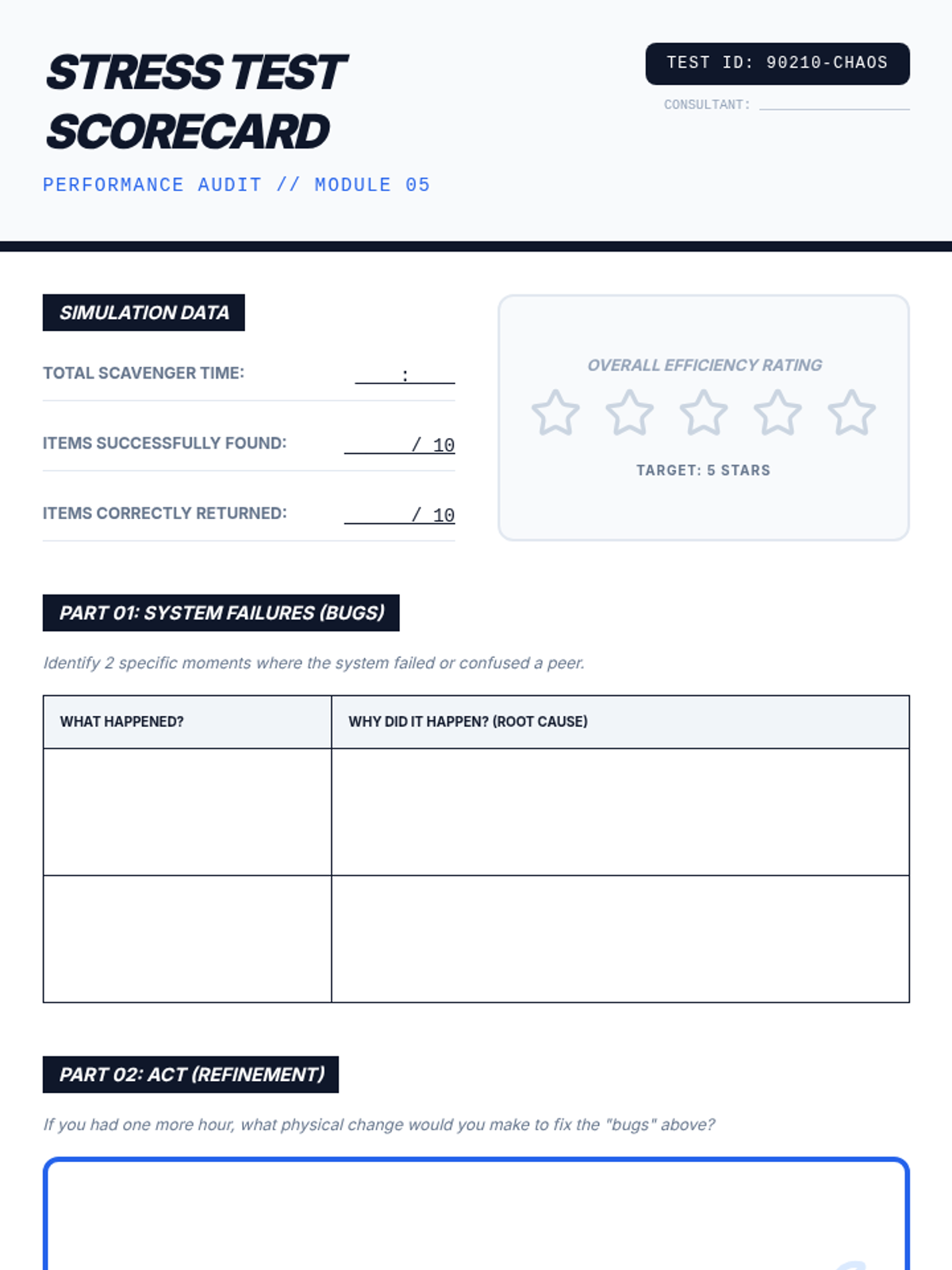
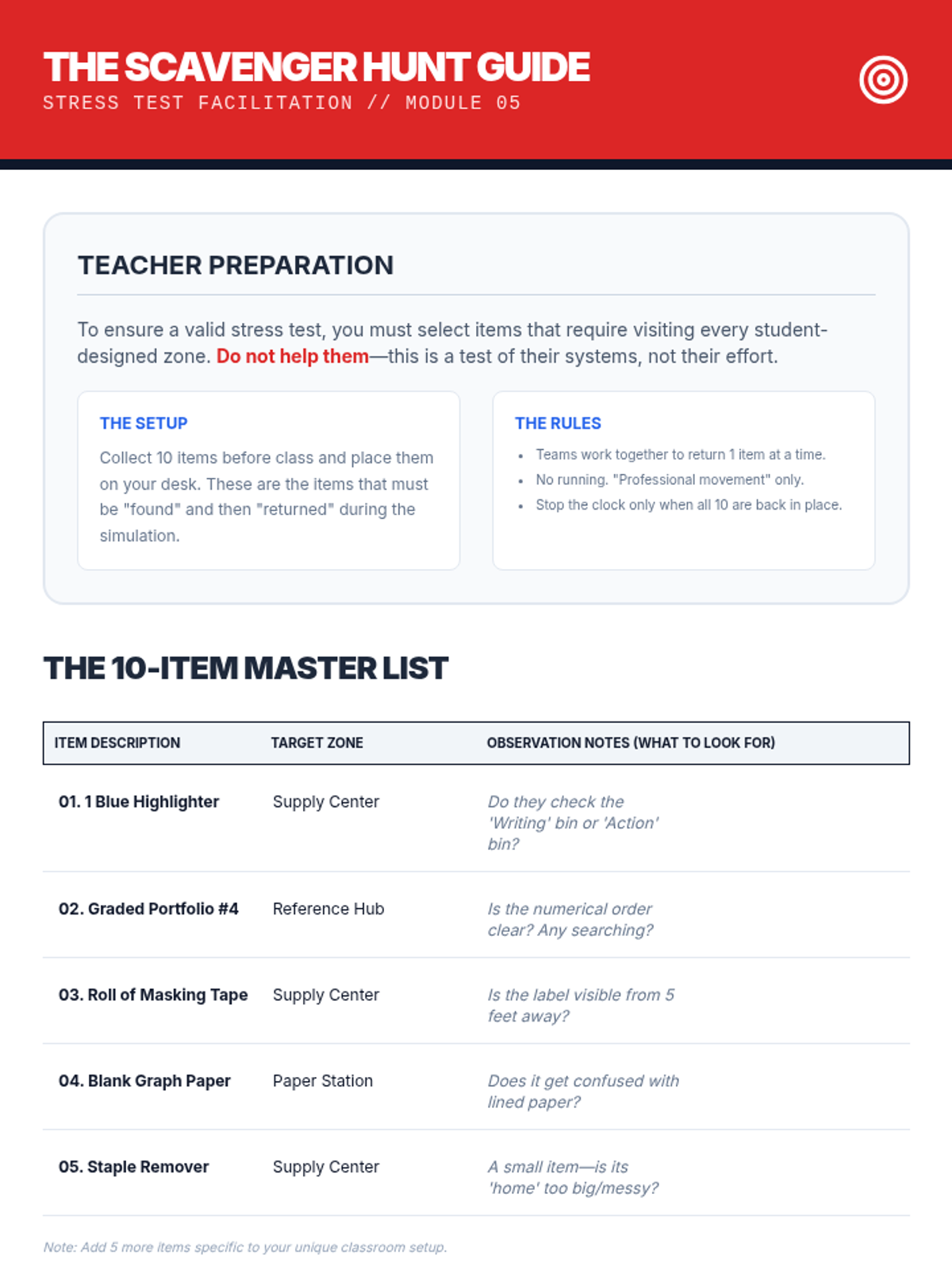
The class 'stress-tests' the new systems through a high-speed activity and evaluates the results for continuous improvement.
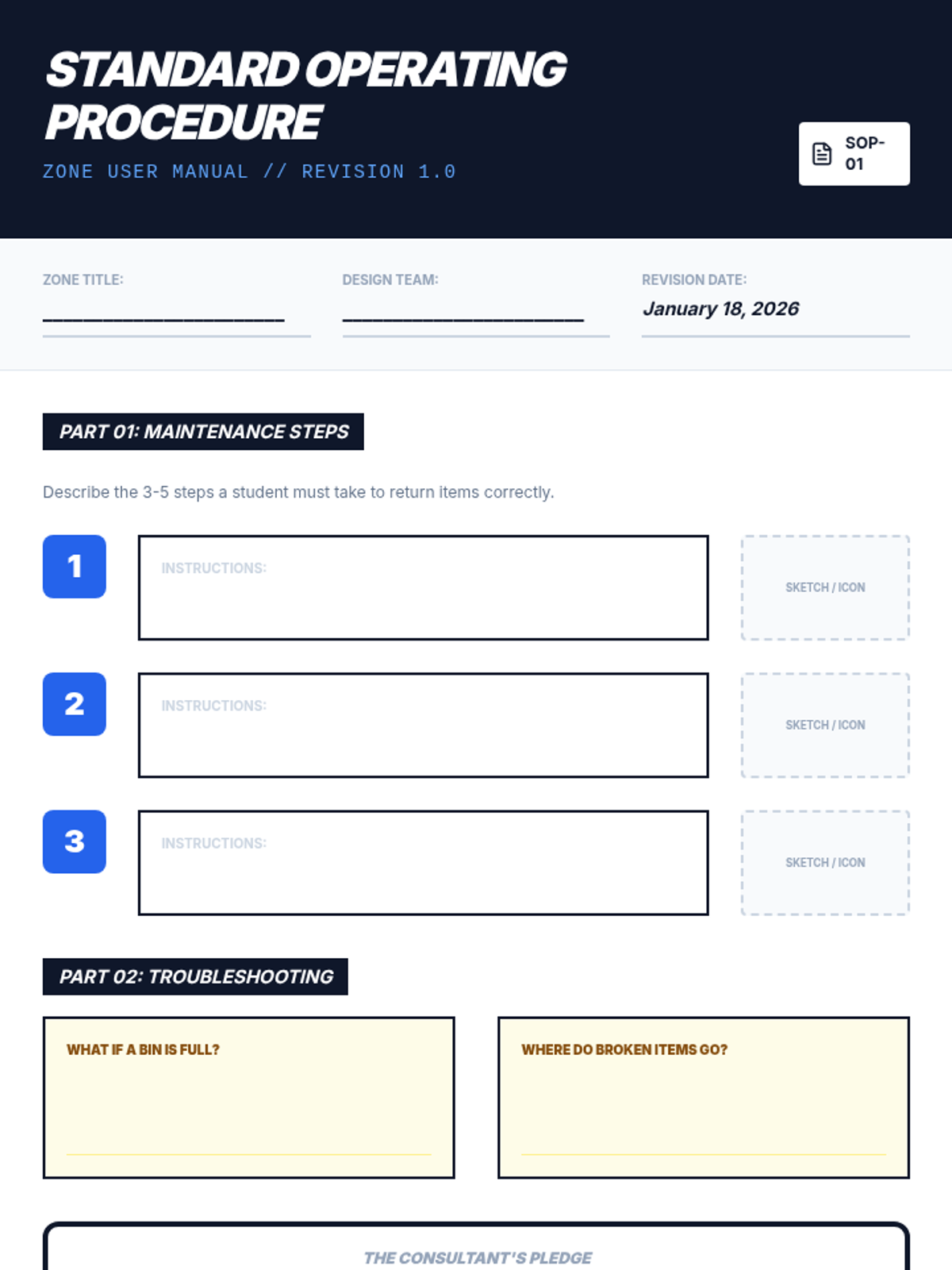
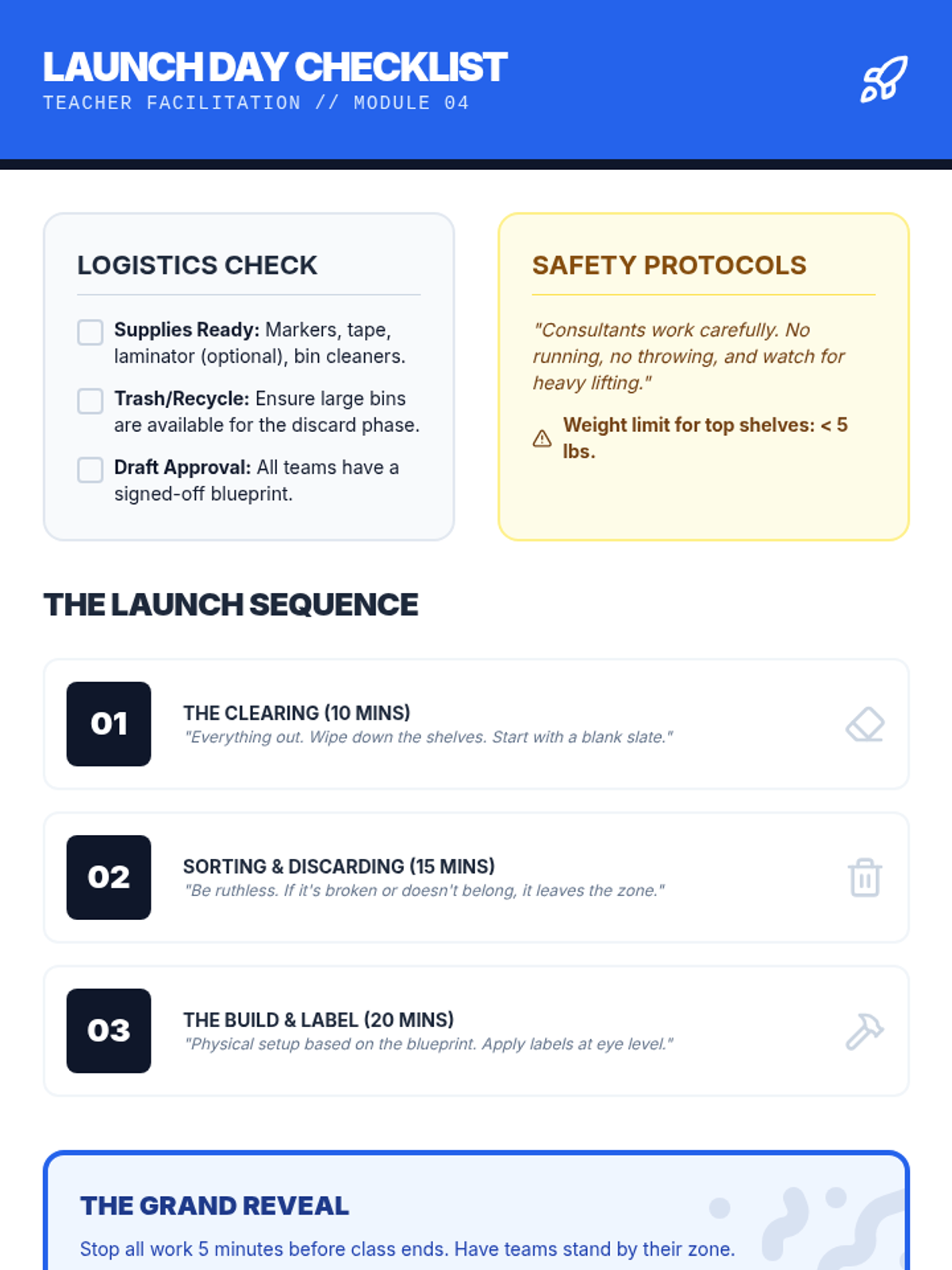
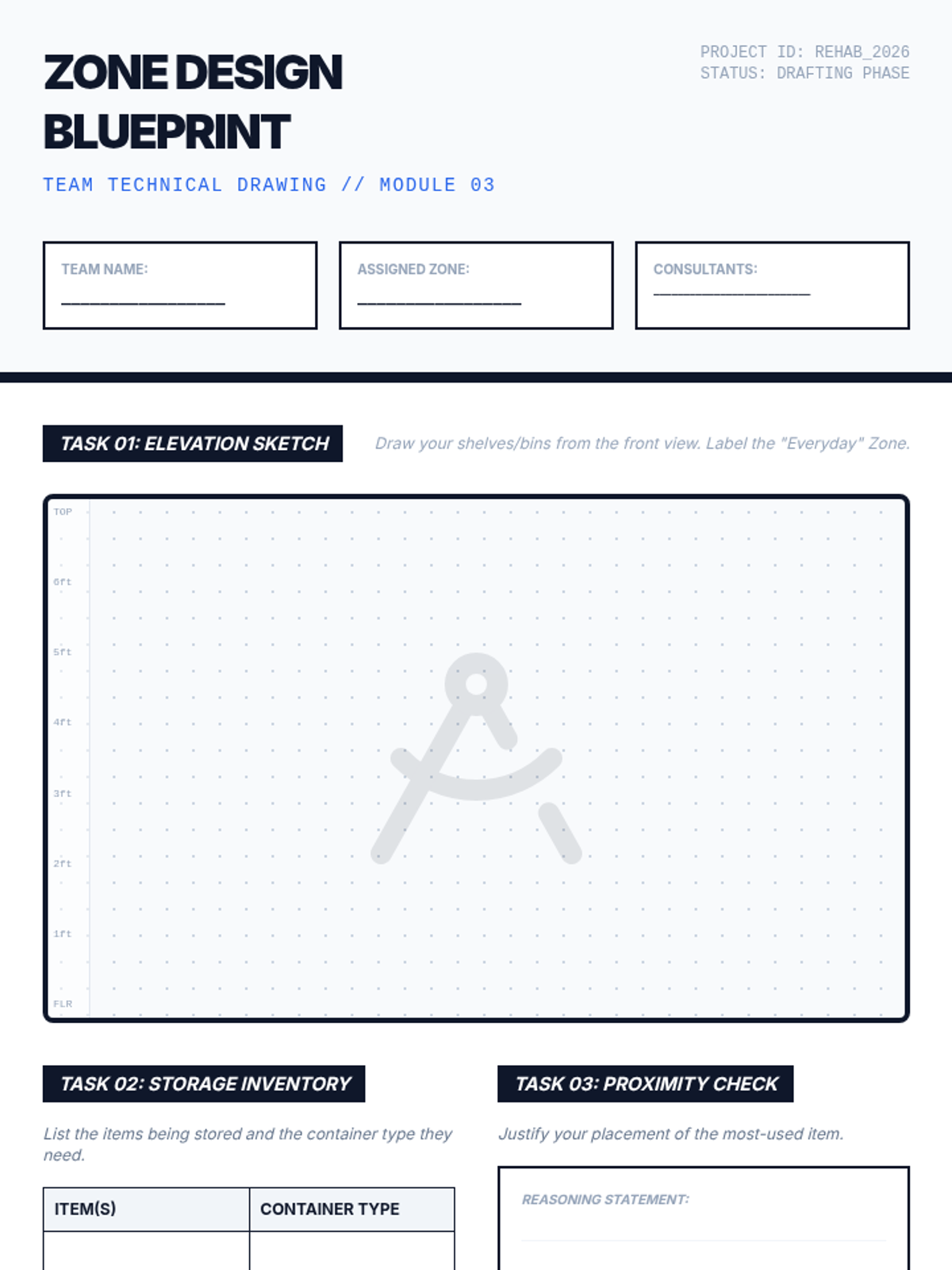
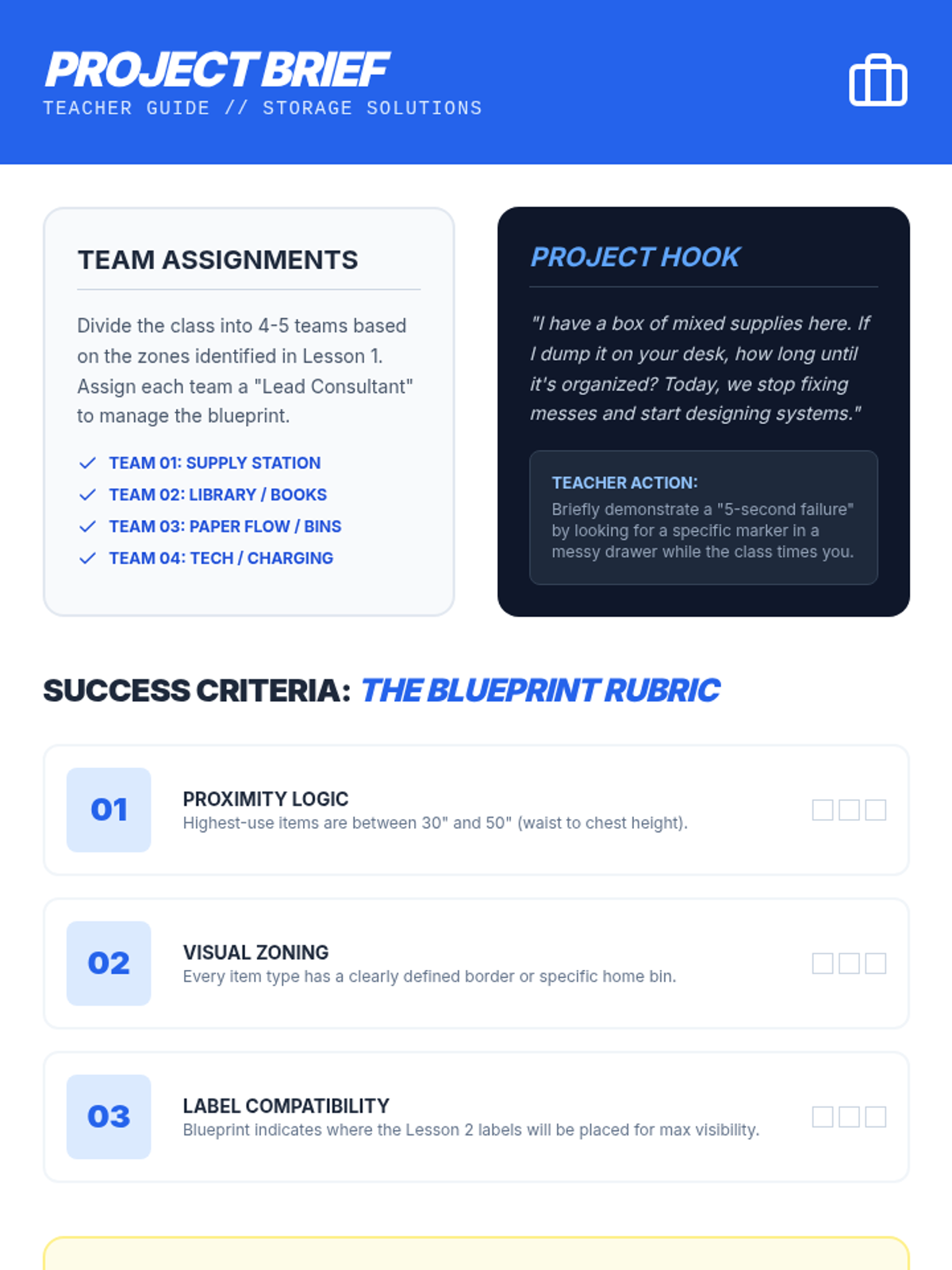
Students physically reorganize their assigned zones and create Standard Operating Procedures (SOPs) to teach others how to maintain the system.
Teams redesign specific classroom zones, applying principles of proximity and zoning to create efficient storage solutions.
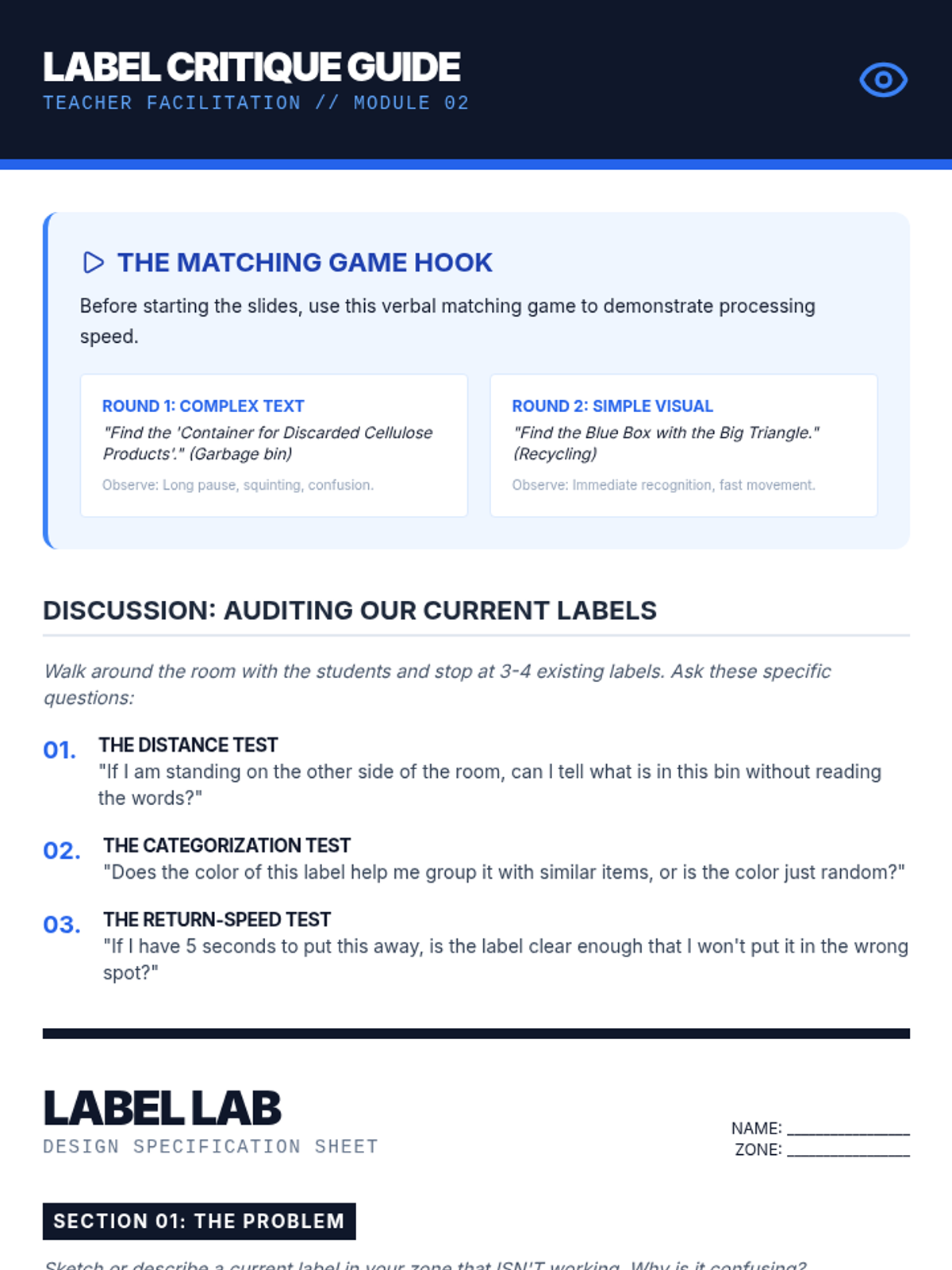
Students explore how visual cues like icons and color coding reduce cognitive load and design effective labels for classroom systems.
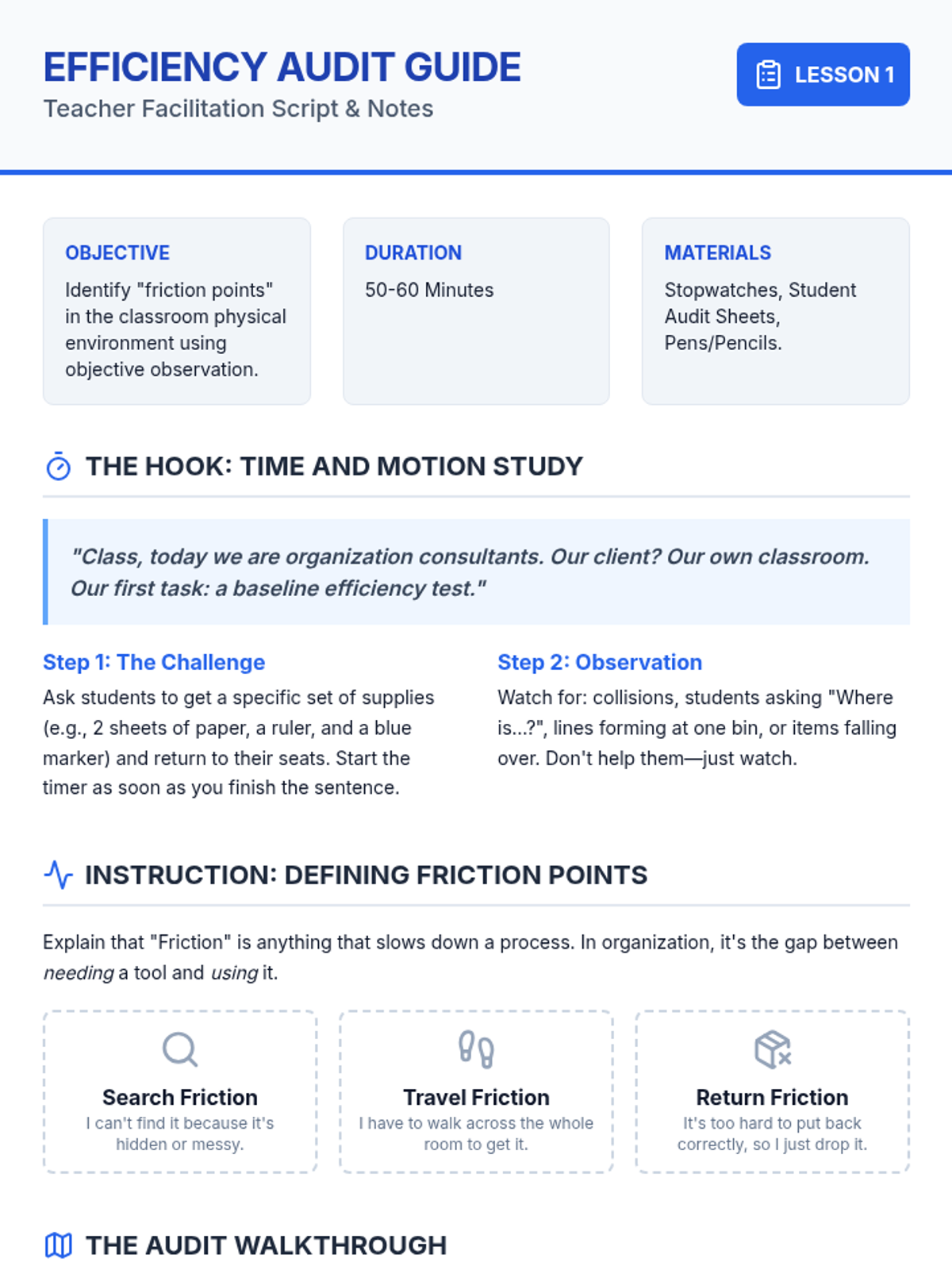
Students observe the classroom environment to identify 'friction points'—areas where materials are hard to find or cause traffic jams—using a 'Time and Motion' study.
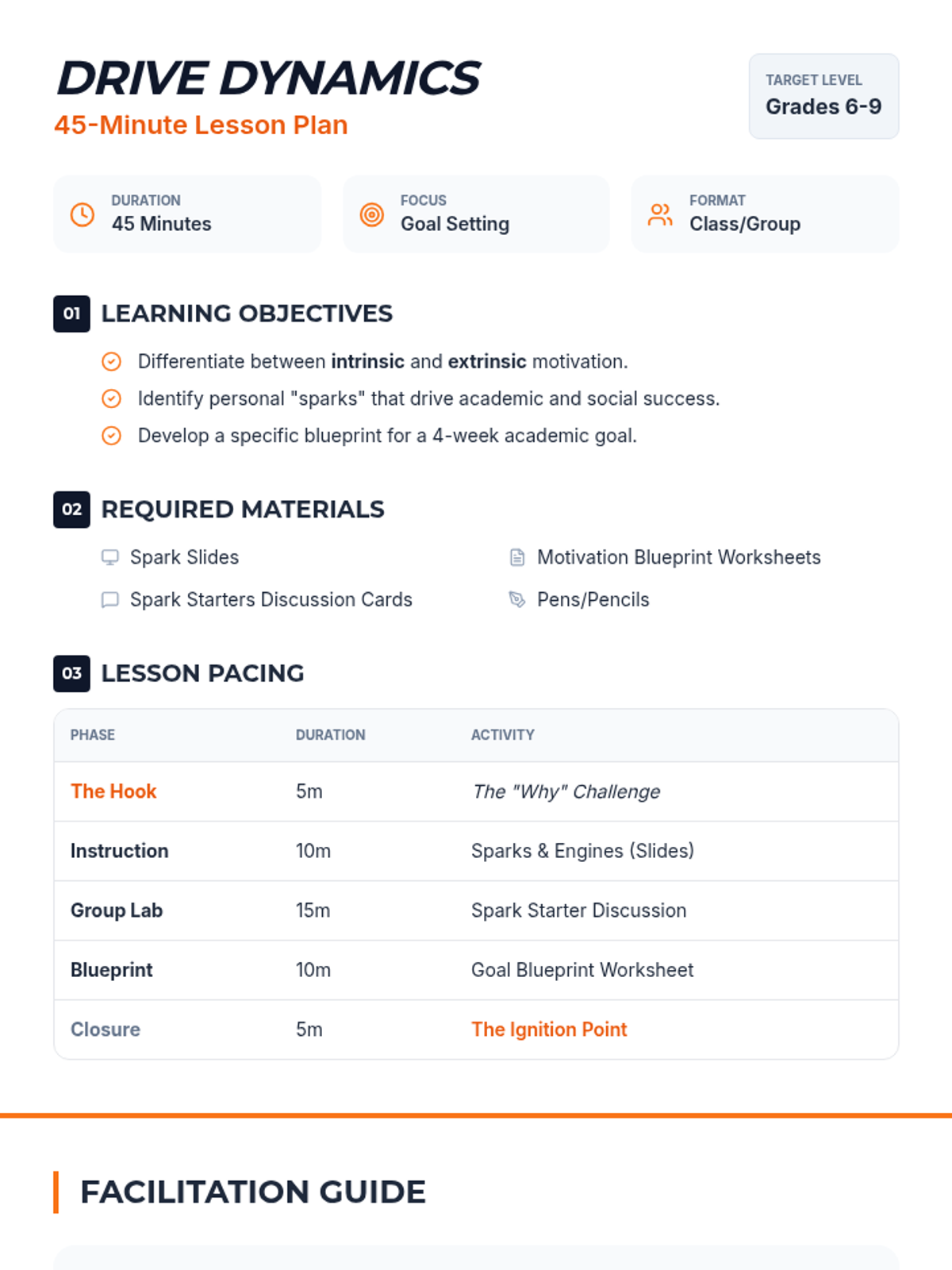
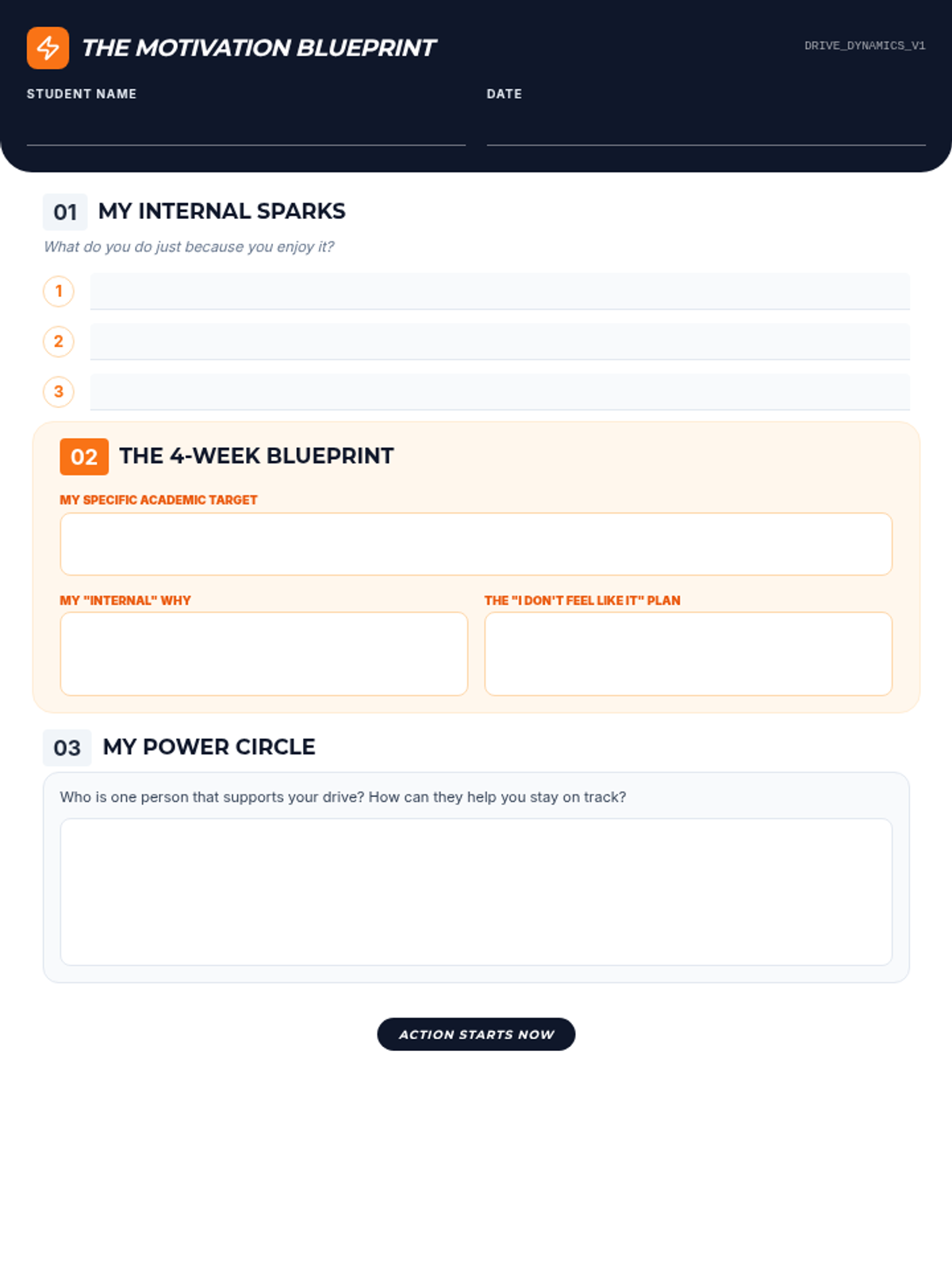
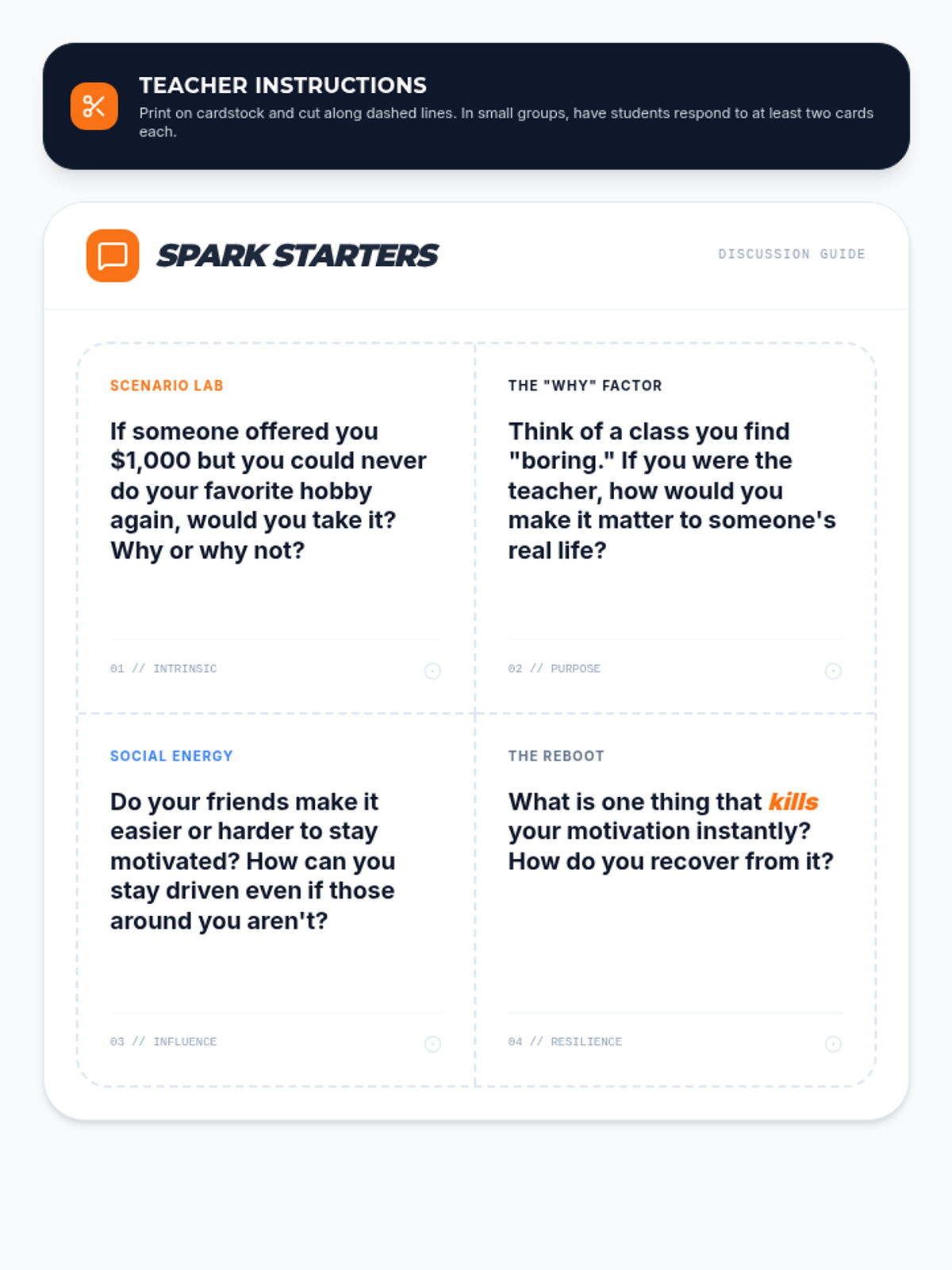
A comprehensive session focused on uncovering internal drivers, setting meaningful academic goals, and building social-emotional resilience through motivation strategies.
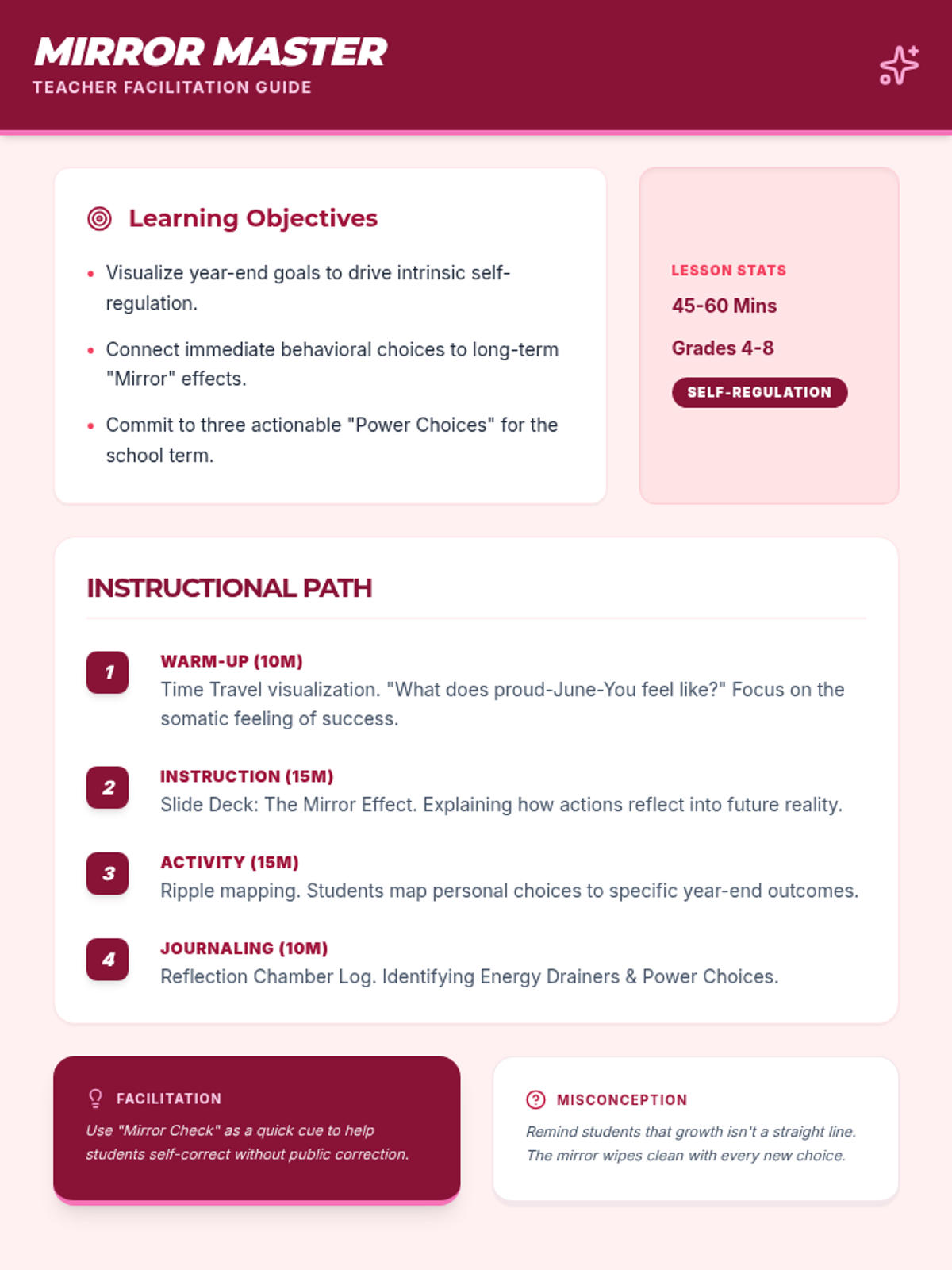
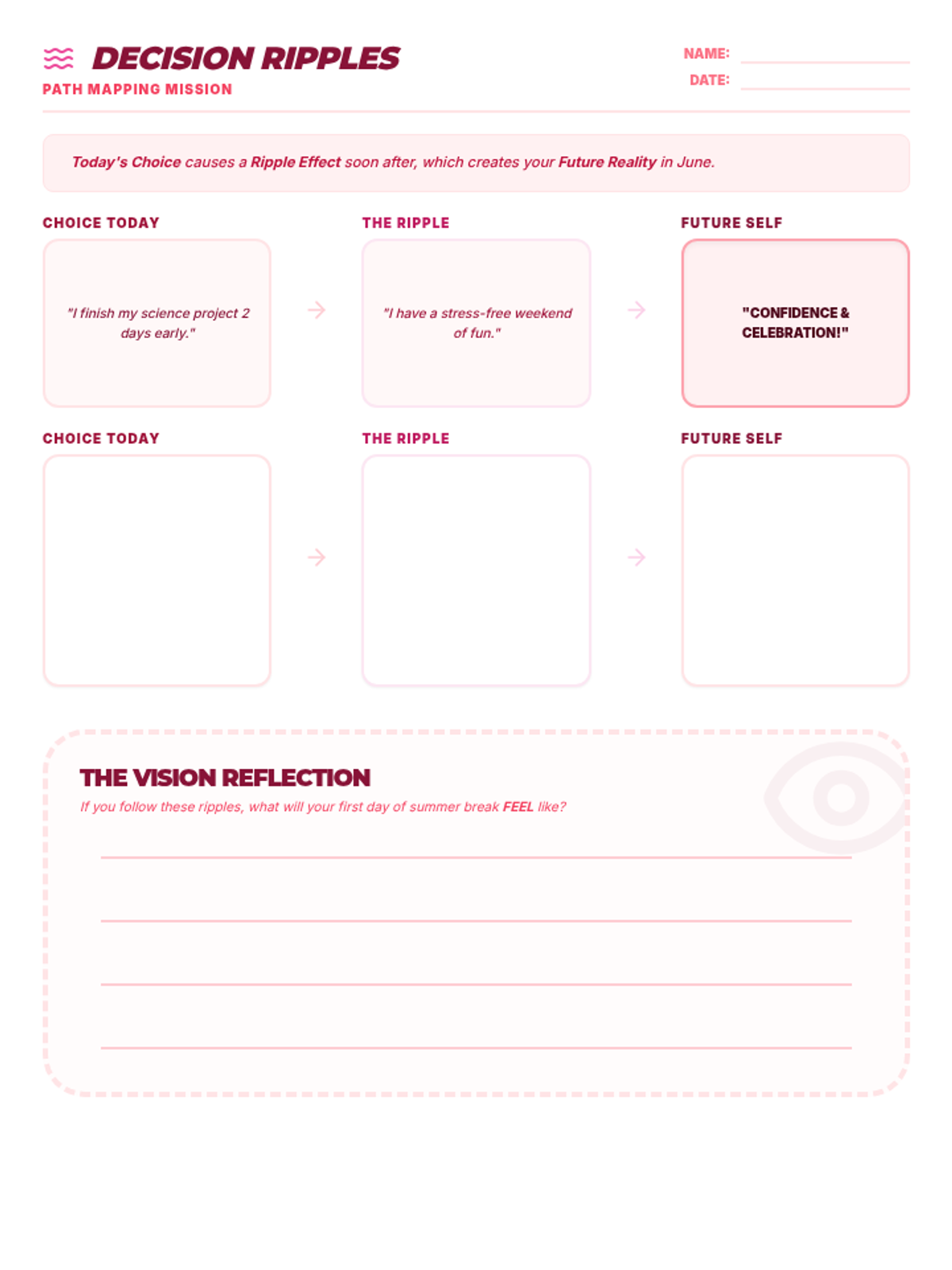
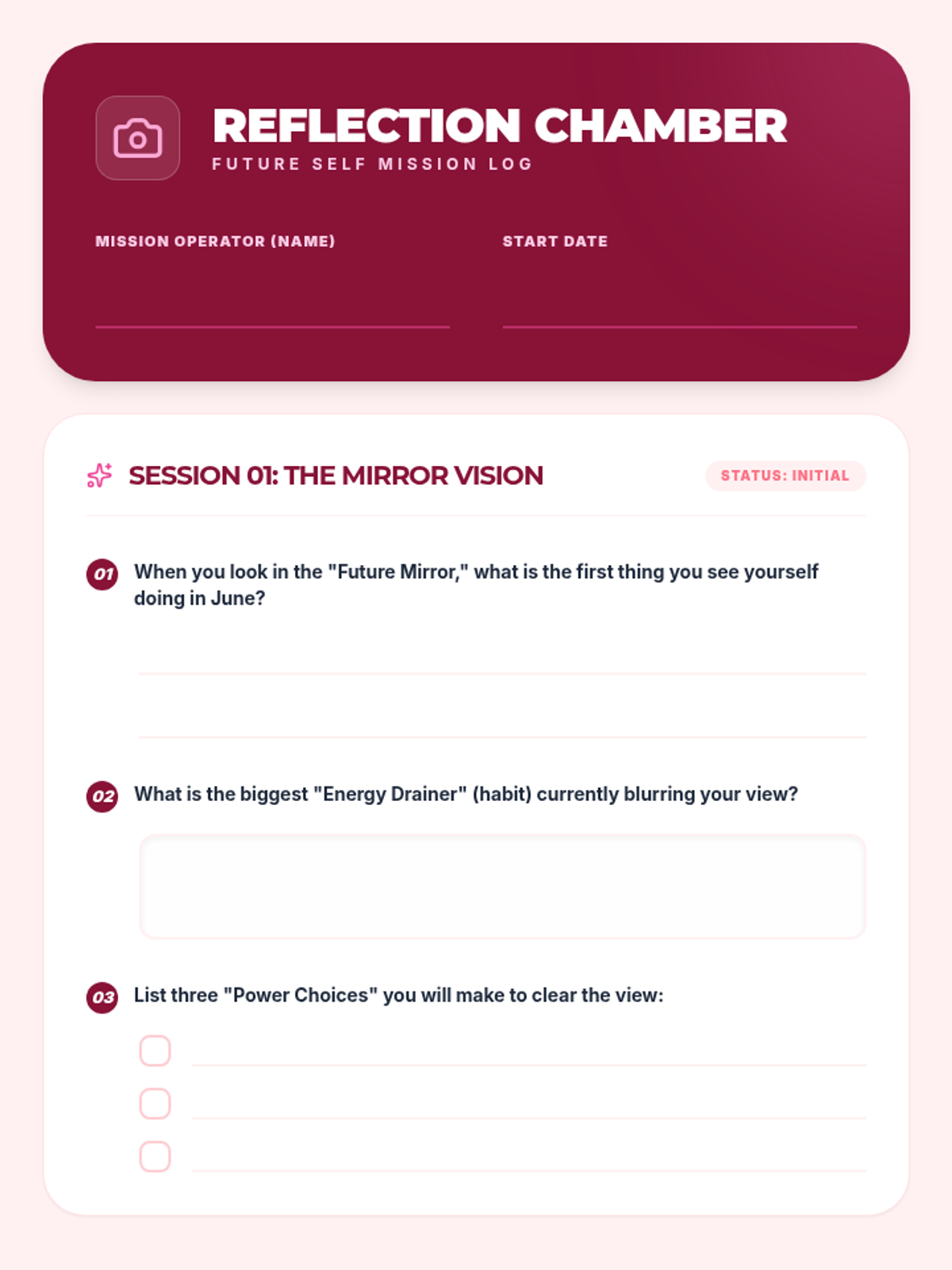
This lesson helps students visualize their future success to motivate self-regulation and goal-oriented decision-making in the present. Students explore the 'Mirror Effect,' connecting daily choices to long-term rewards like grade promotion and year-end celebrations.
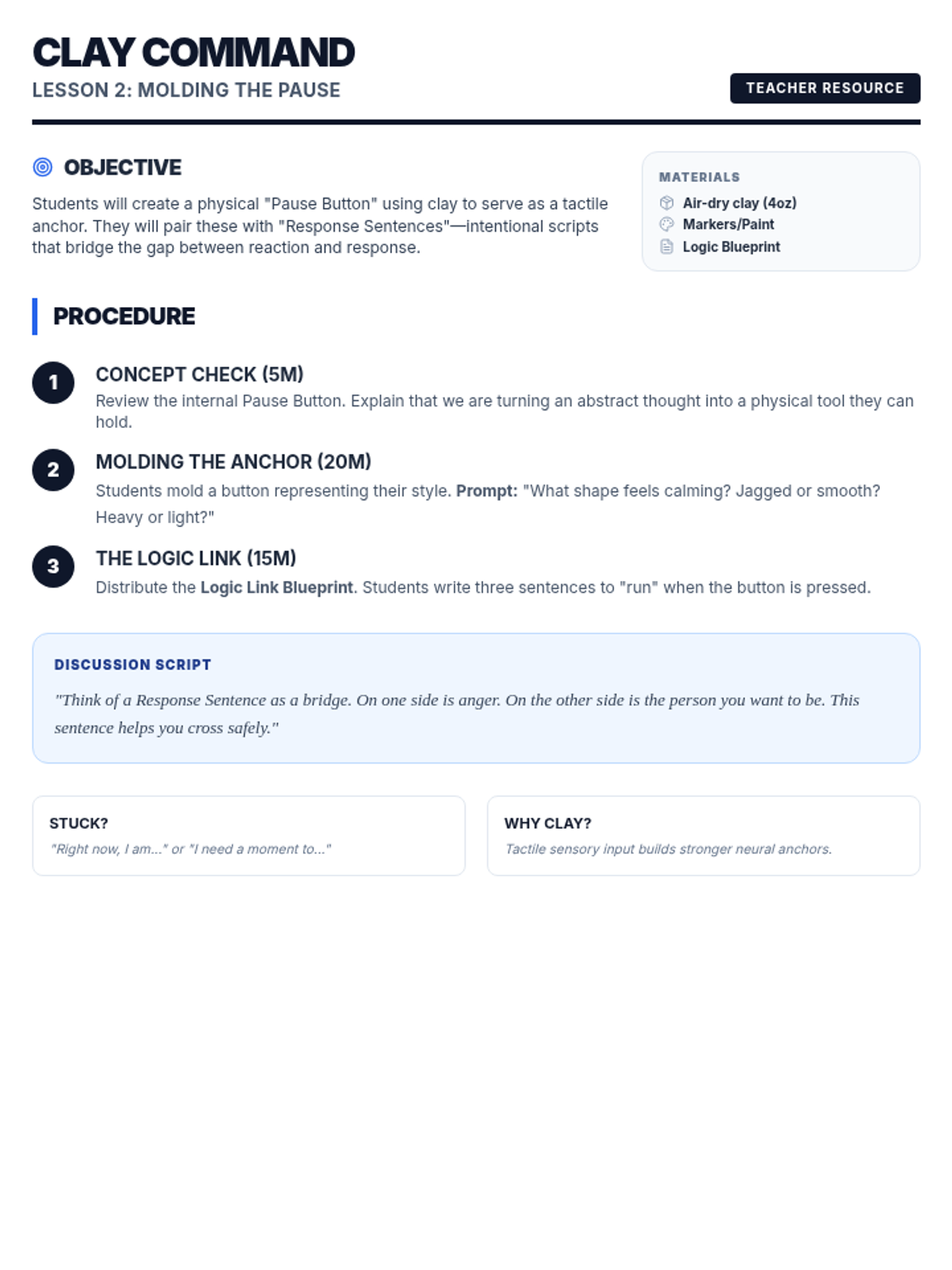
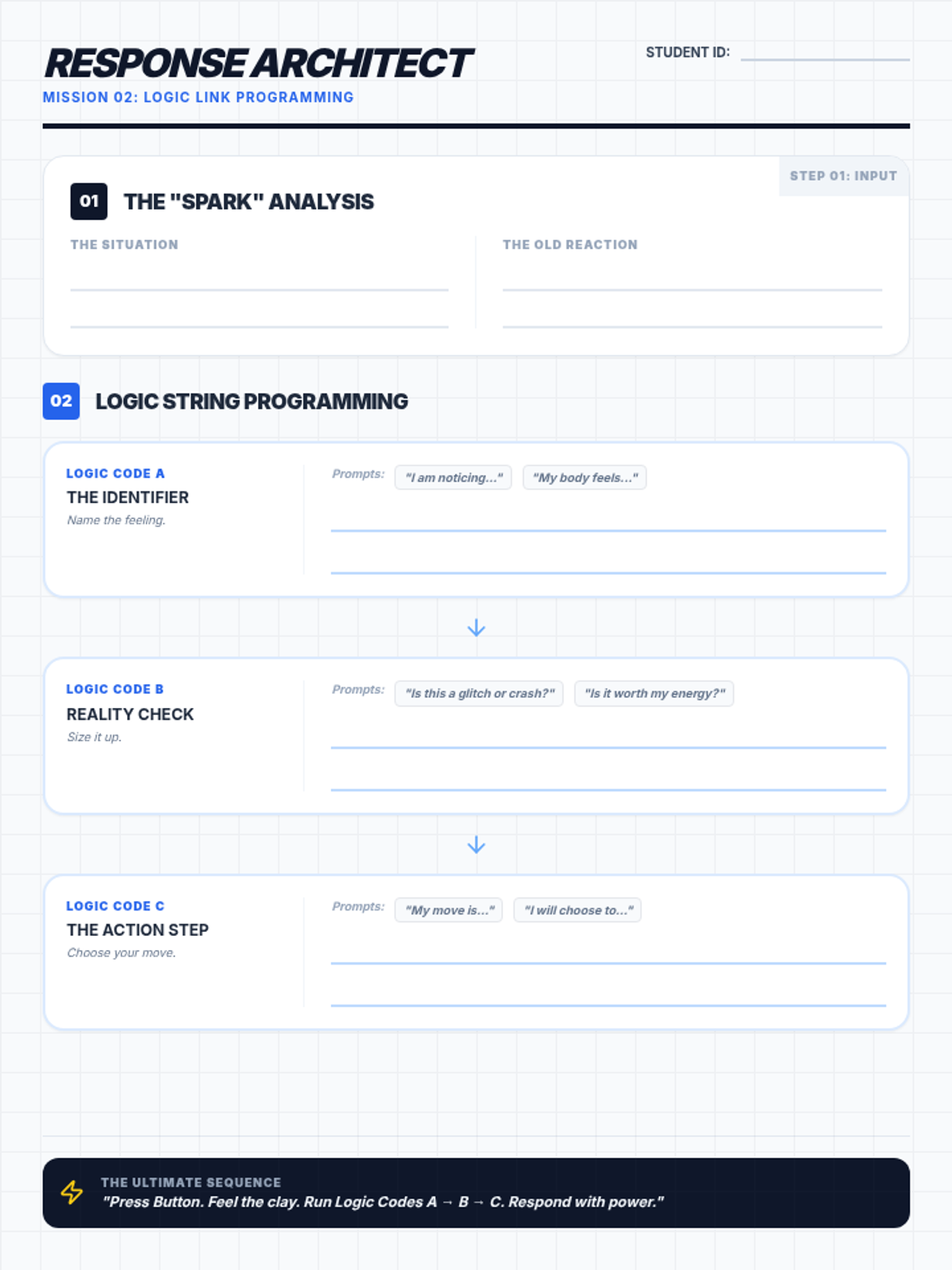
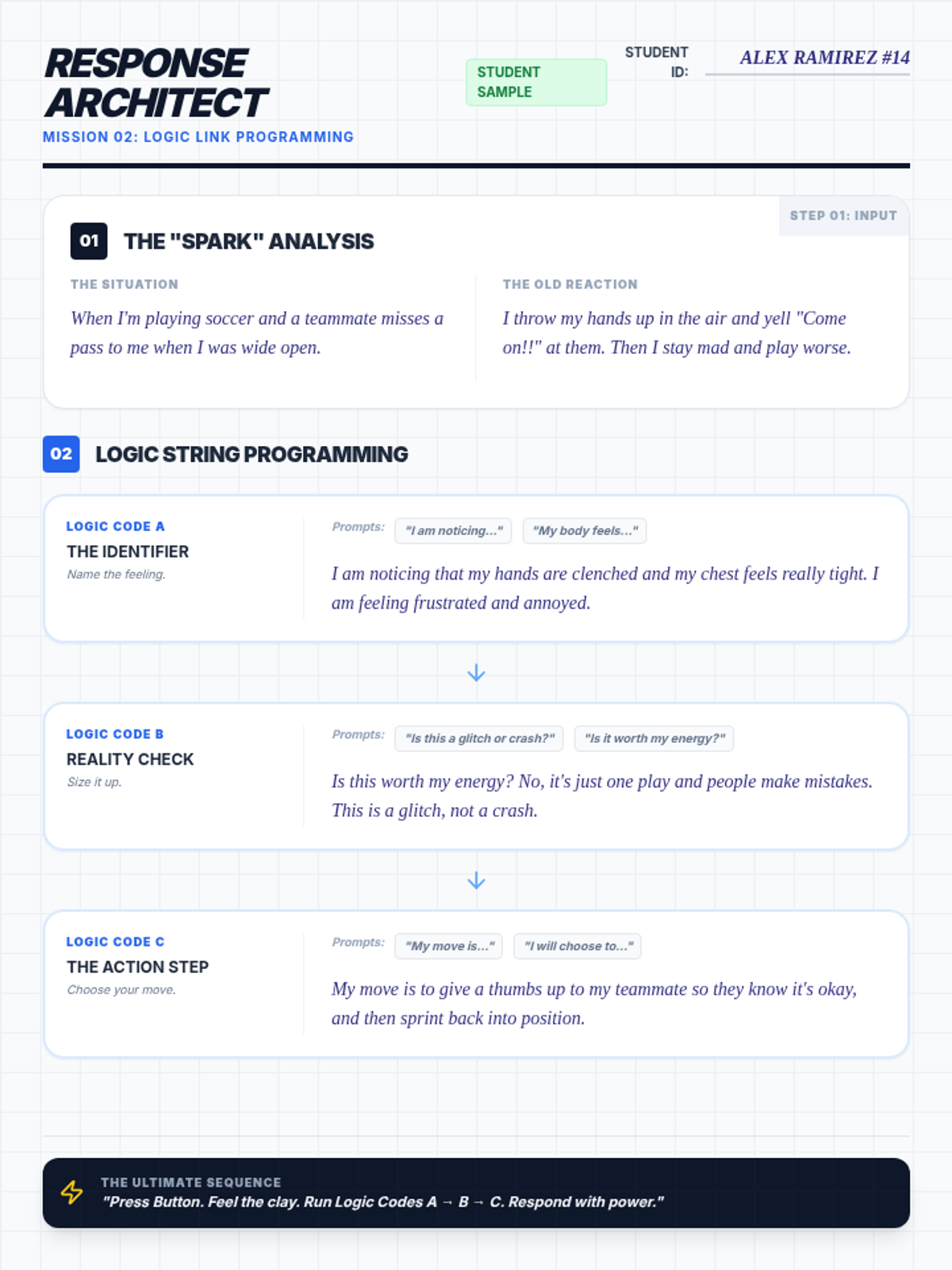
A hands-on creative session where students mold physical 'Pause Buttons' out of clay to serve as tactile anchors for emotional regulation. Students pair their physical buttons with 'Response Sentences' that help them transition from reaction to intentional response.
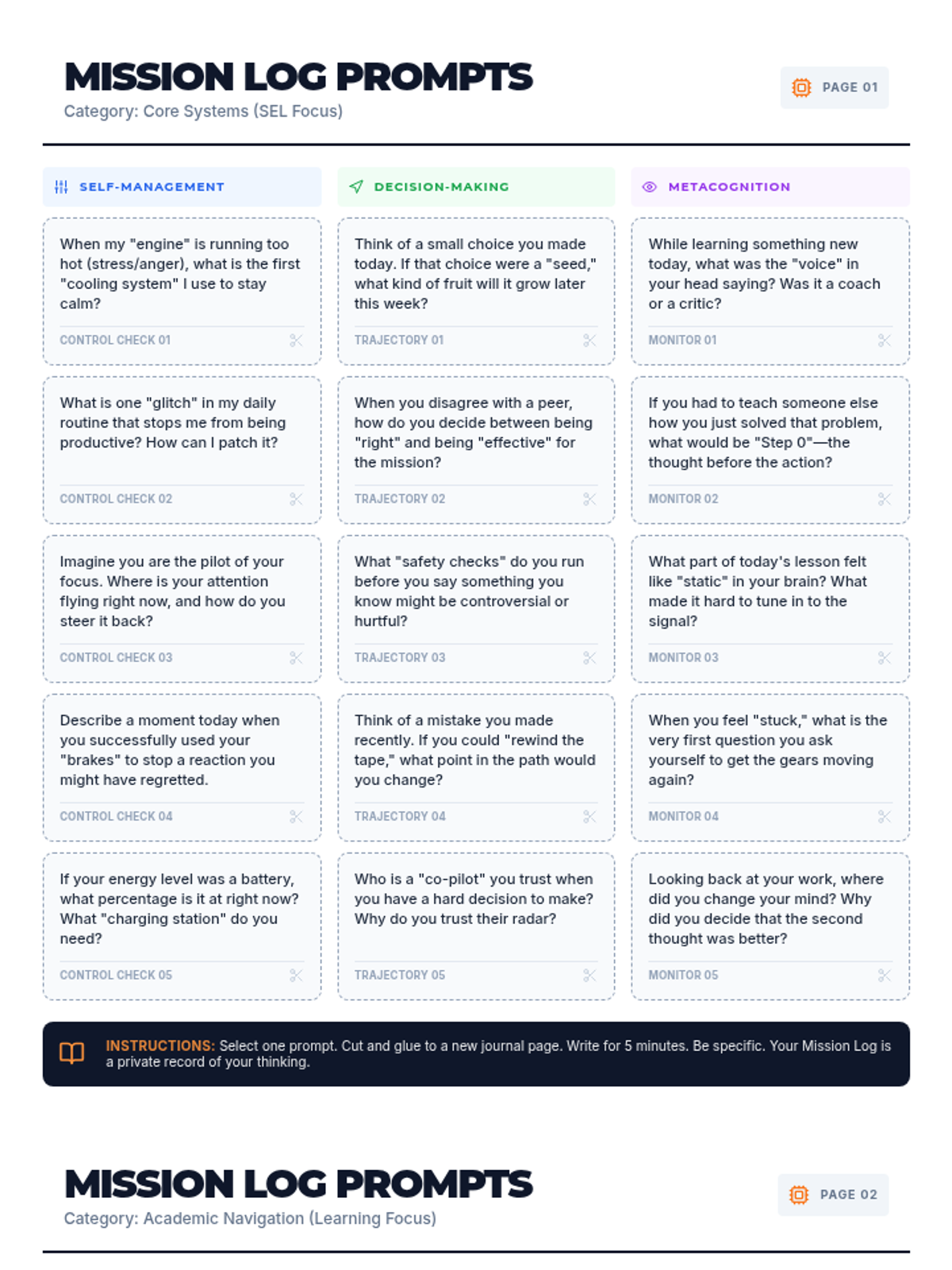
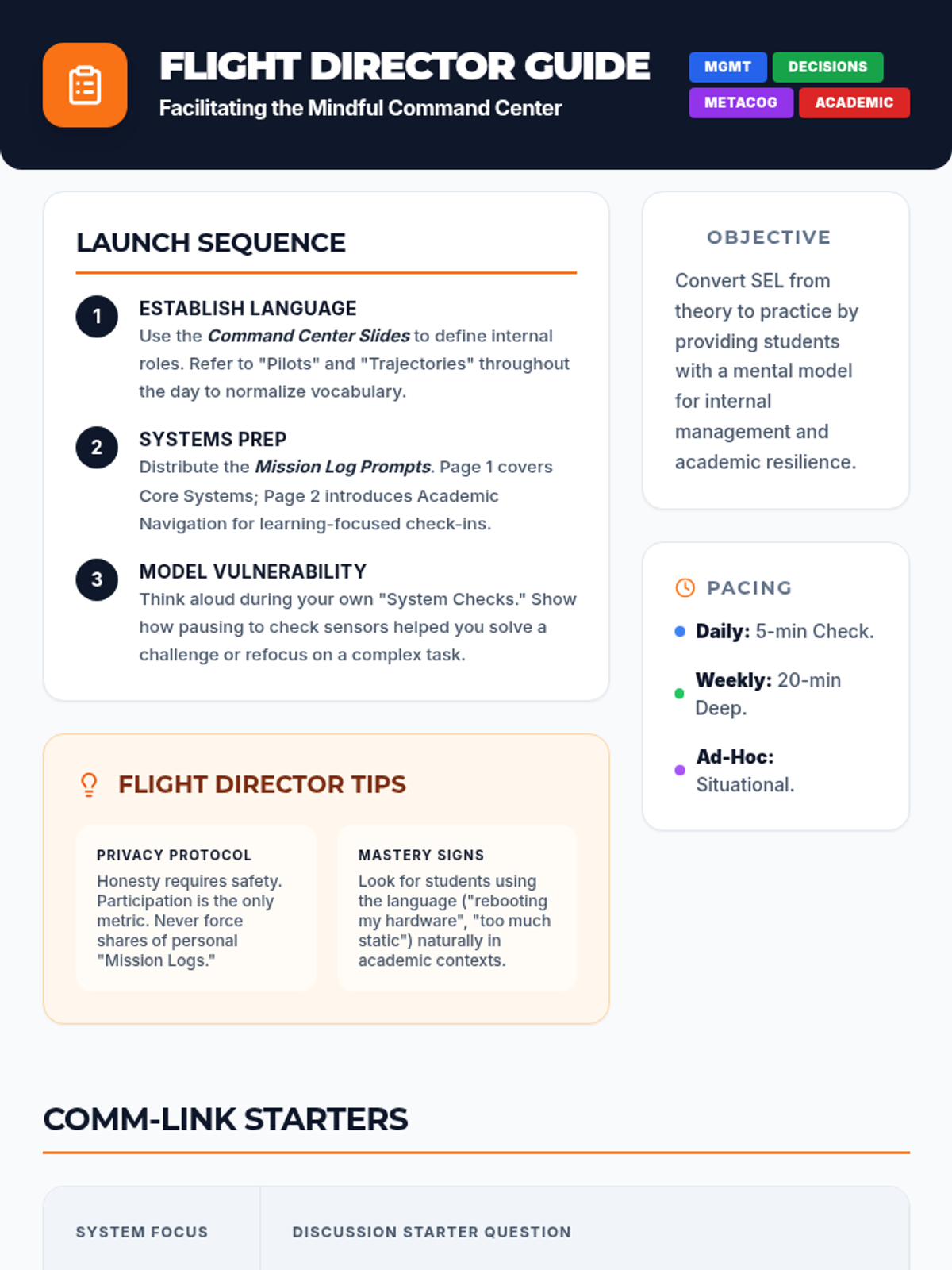
Students explore self-management, decision-making, and metacognition through a 'Command Center' metaphor. This lesson provides visual instruction and a set of reflection prompts for students to integrate into their personal journals.
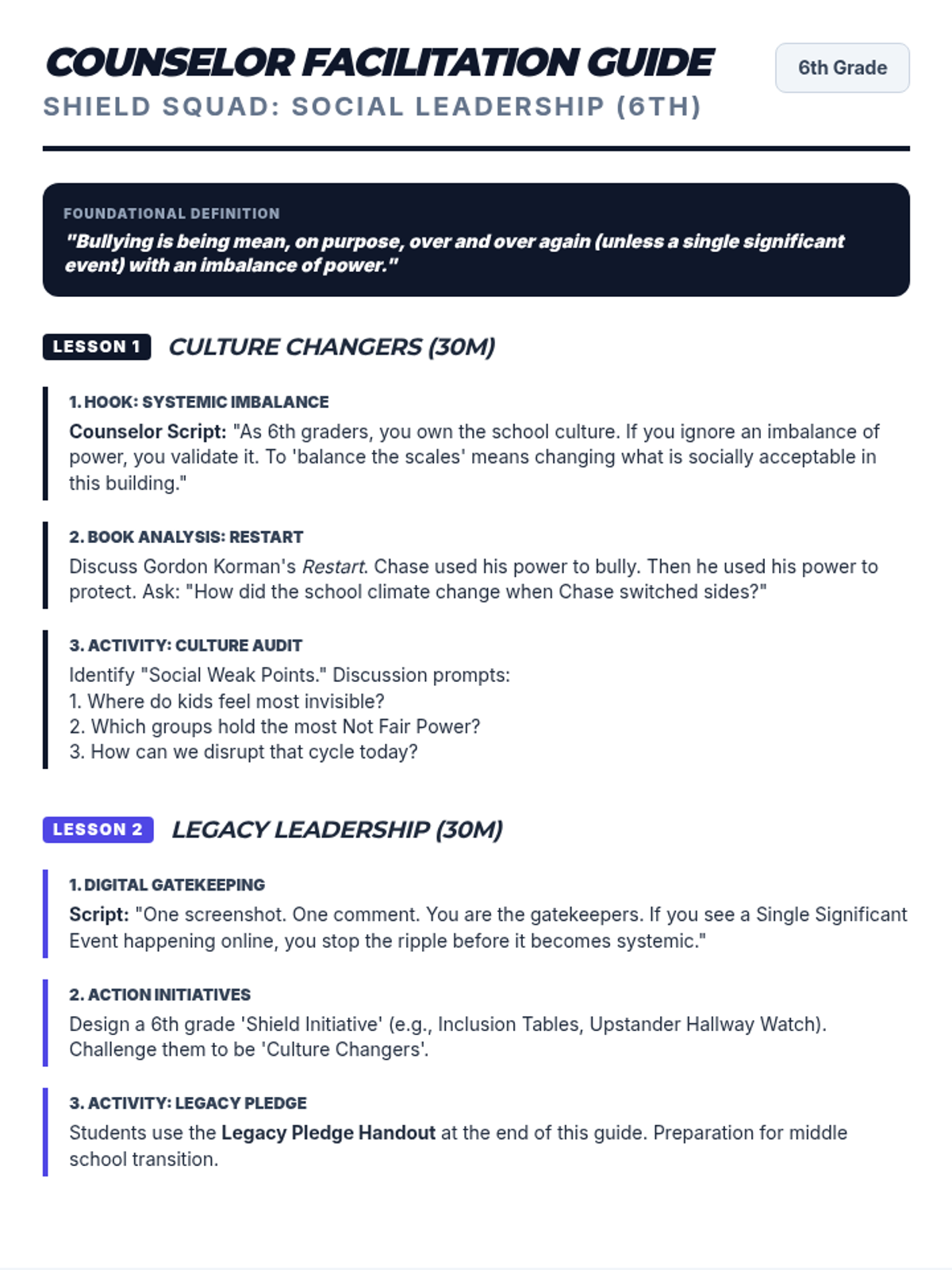
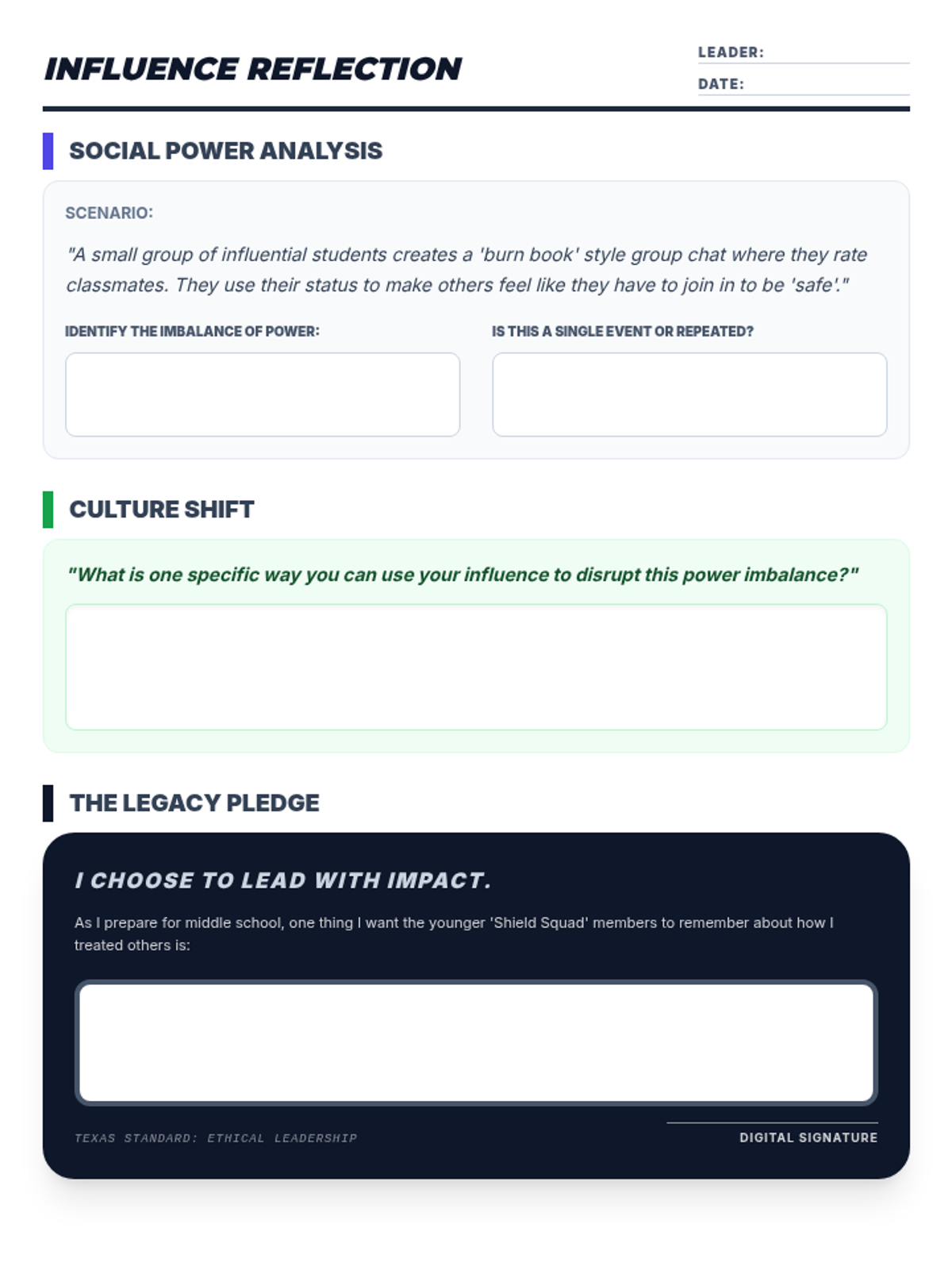
The first of two 30-minute sessions for 6th grade. Using 'Restart' by Gordon Korman, students analyze school culture, social leadership, and the concept of a 'Social Reset'.
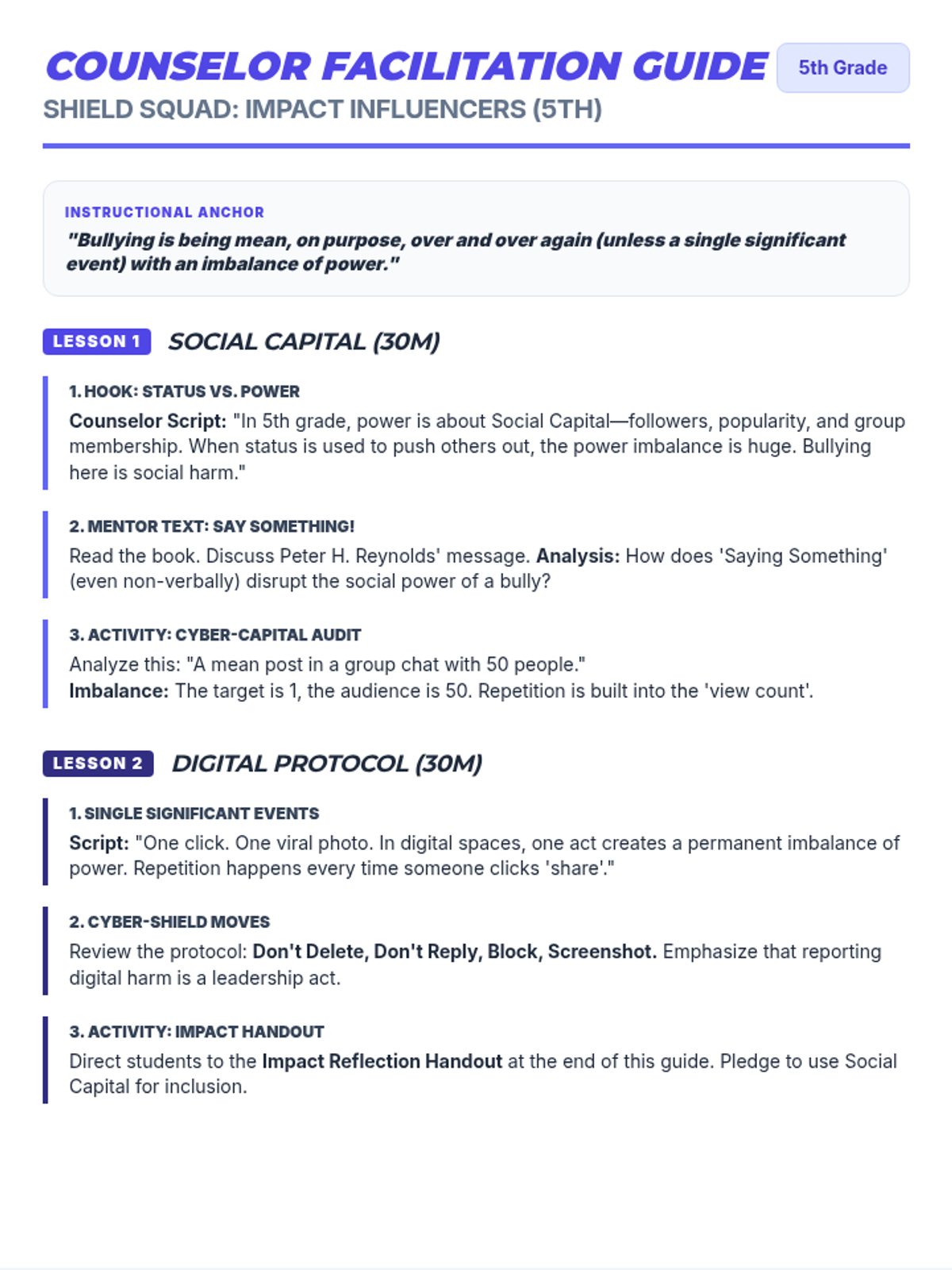
The first of two 30-minute sessions for 5th grade. Using 'Zero' by Kathryn Otoshi, students explore social capital as power and the specific dynamics of cyberbullying.
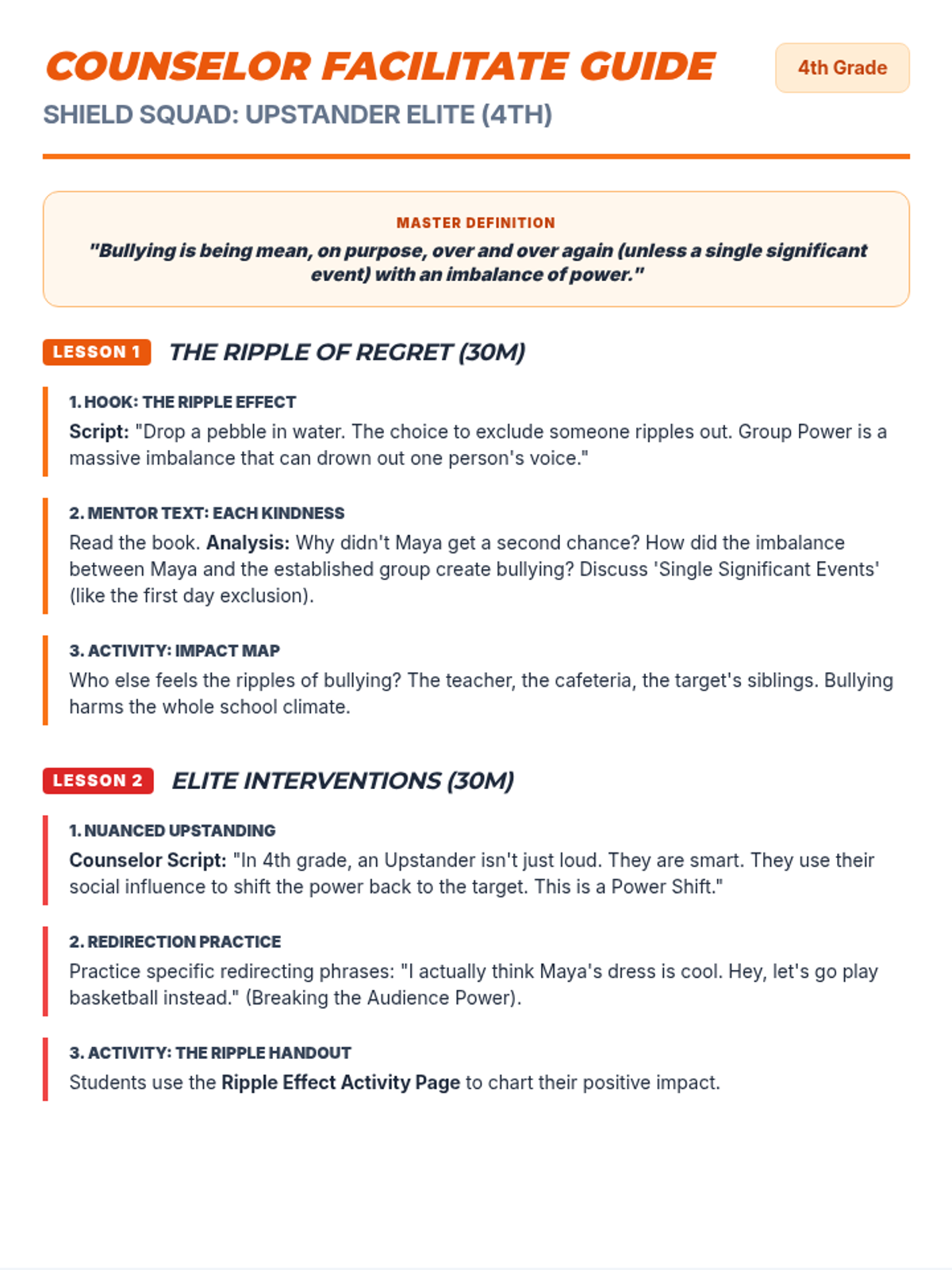
The first of two 30-minute sessions for 4th grade. Using 'Confessions of a Former Bully' by Trudy Ludwig, students understand the bullying circle and the roles people play in social dynamics.
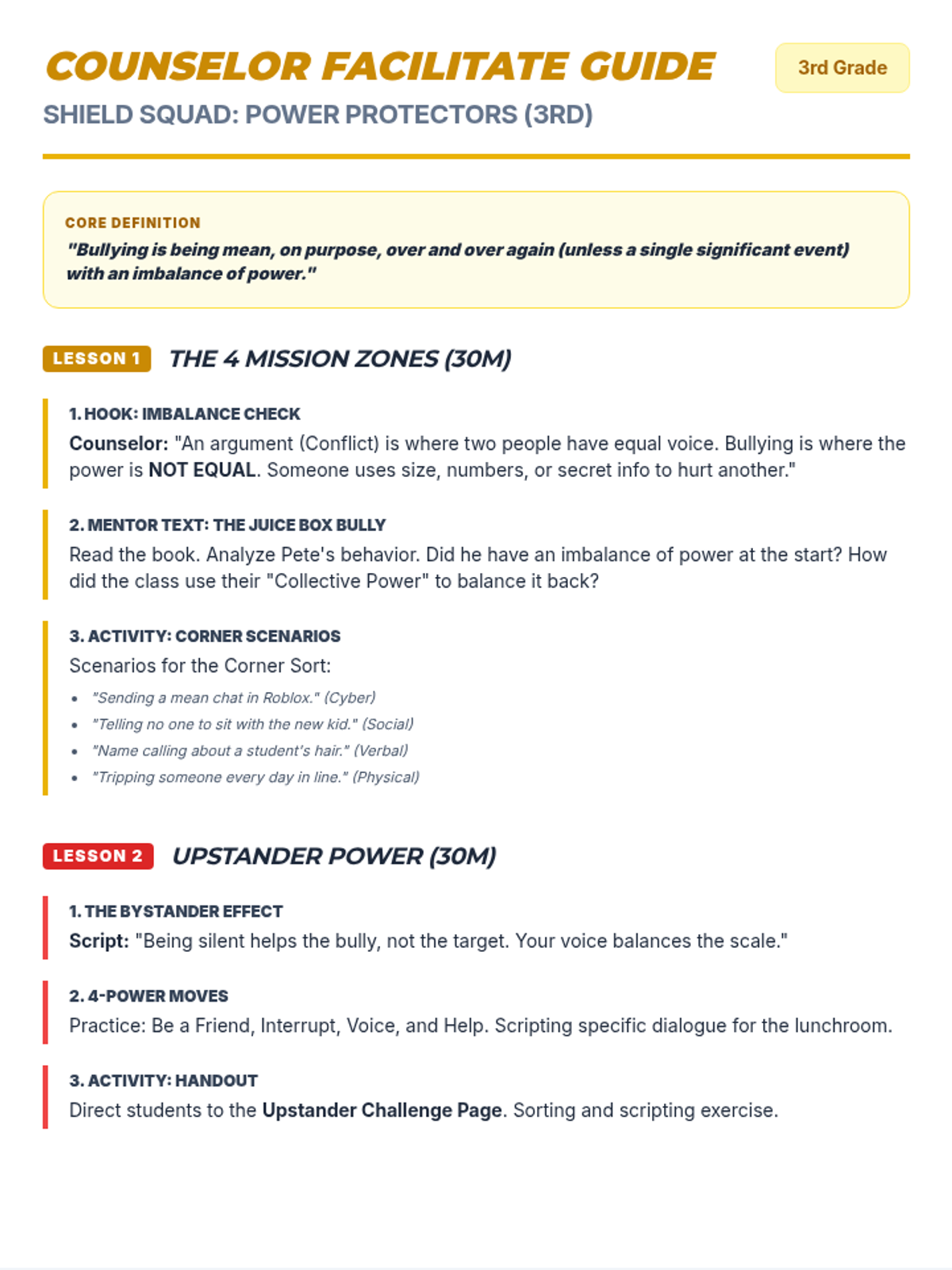
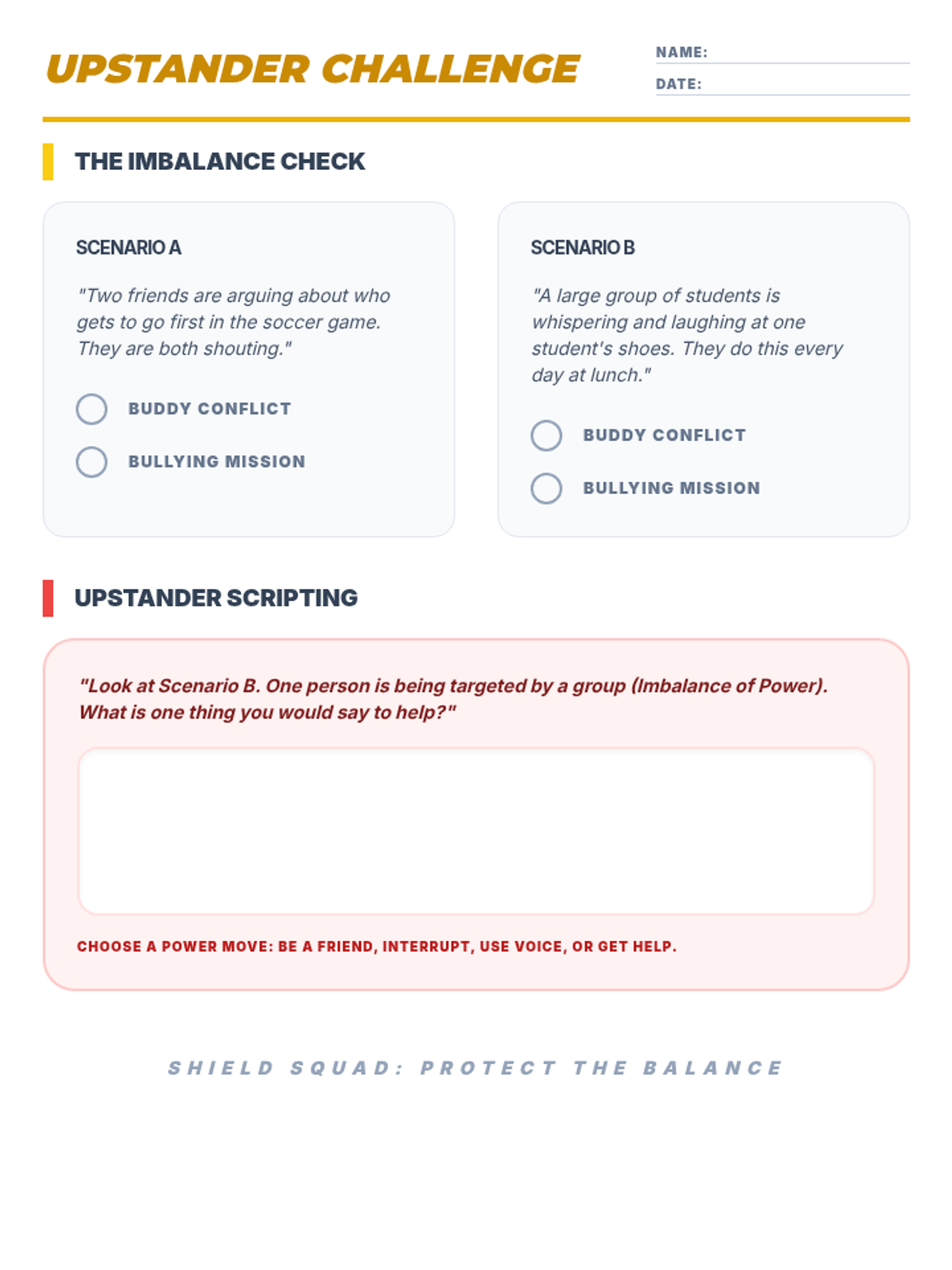
The first of two 30-minute sessions for 3rd grade. Using 'Tease Monster' by Julia Cook, students categorize behavior and analyze the 'Target' vs 'Bully' power gap.
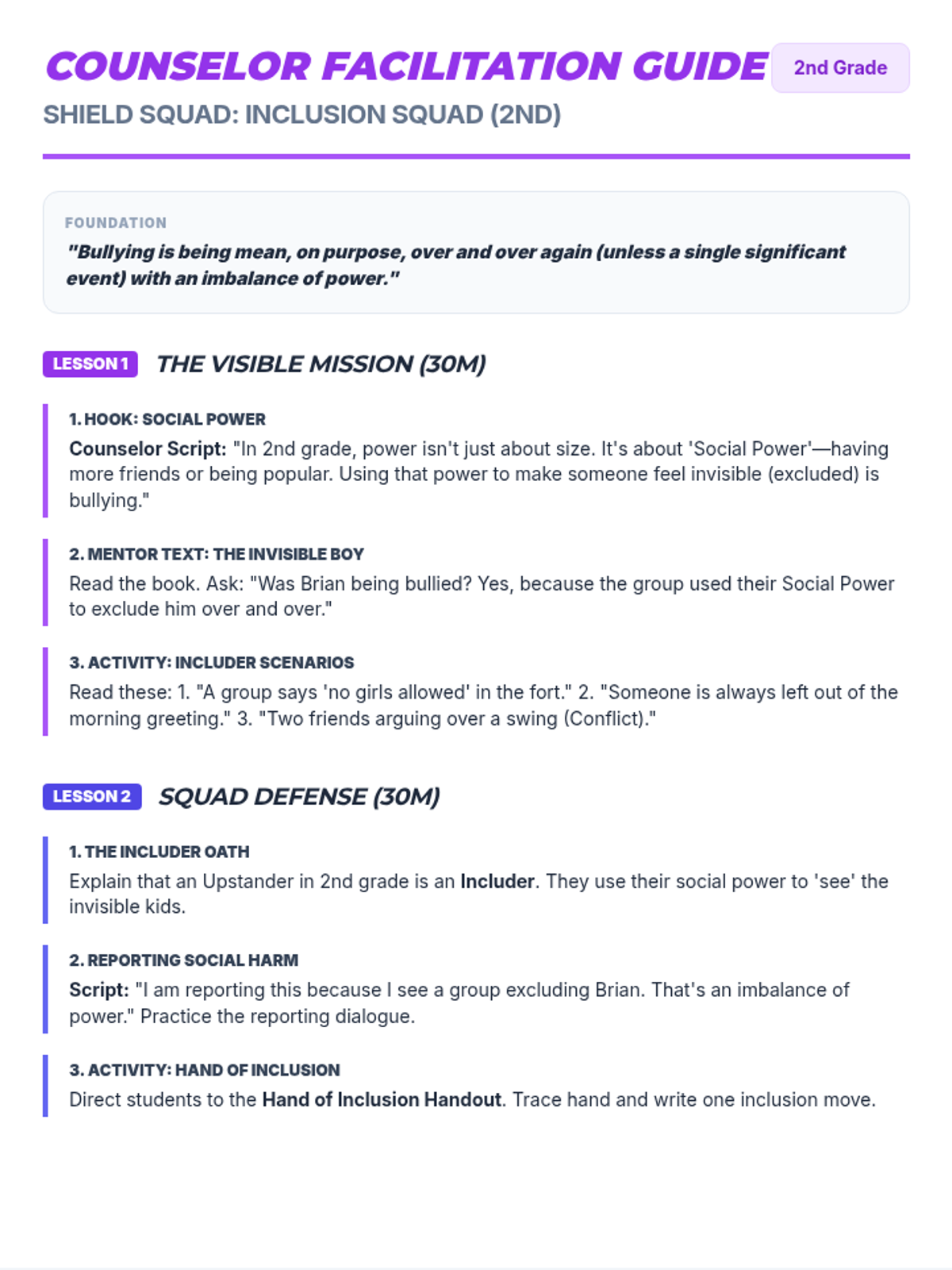
The first of two 30-minute sessions for 2nd grade. Using 'The Invisible Boy' by Trudy Ludwig, students explore social exclusion and the transition from a 'Buddy Conflict' to bullying.
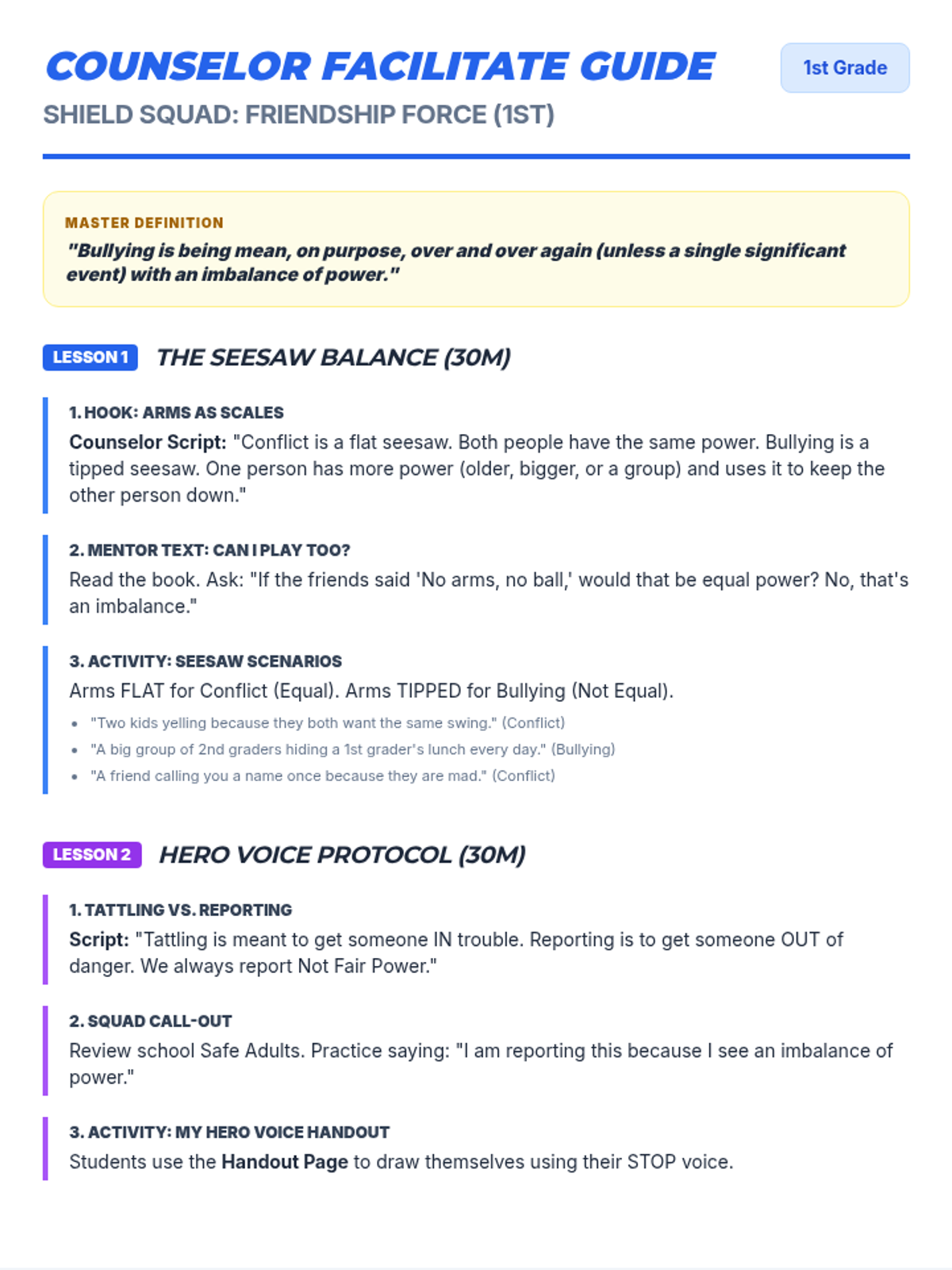
The first of two 30-minute sessions for 1st grade. Using 'Trouble Talk' by Trudy Ludwig, students explore verbal bullying and the 'Seesaw' model of unequal power.
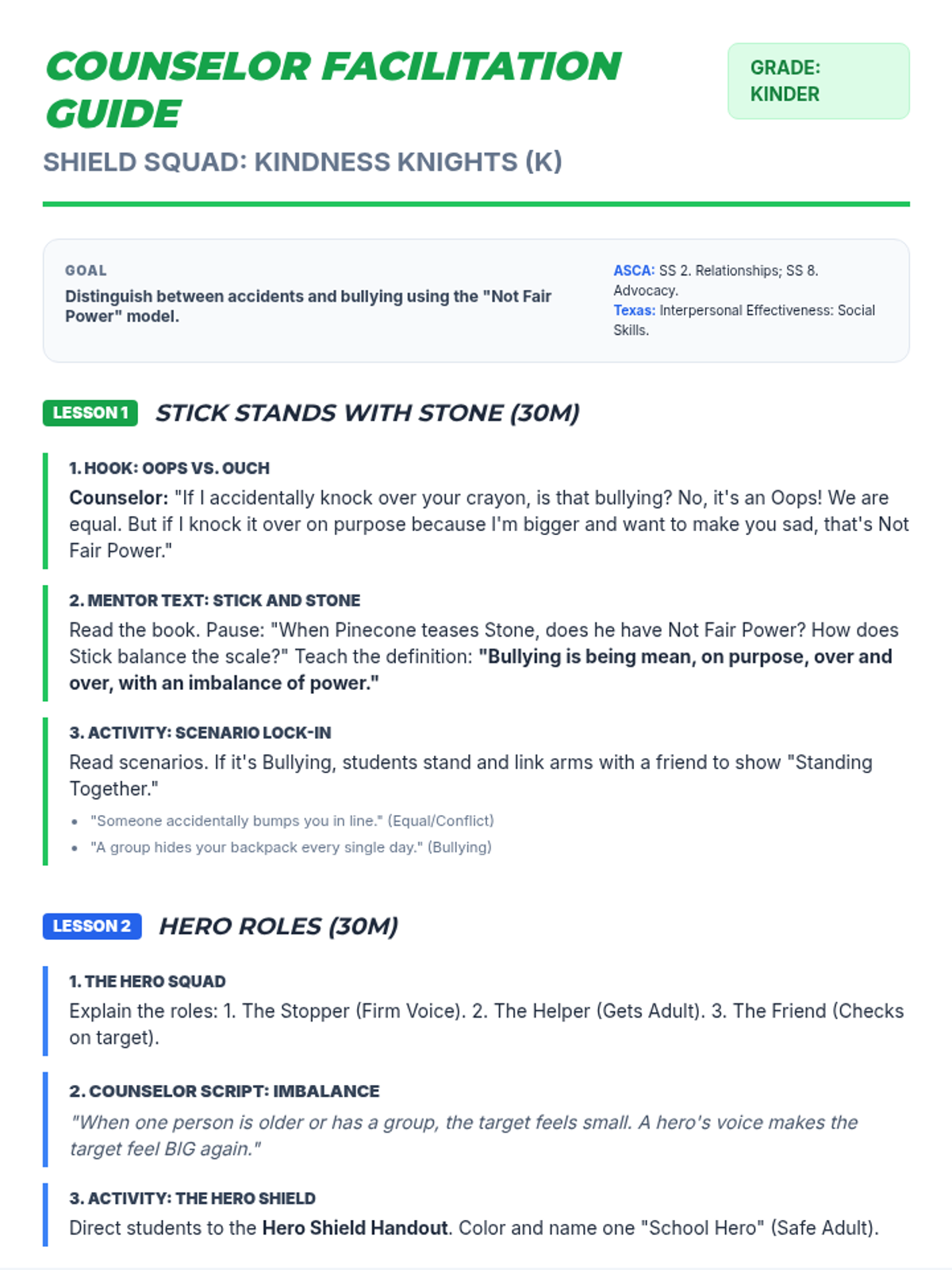
The first of two 30-minute sessions for Kindergarten. Using 'Bully B.E.A.N.S.' by Julia Cook, students learn to distinguish between accidents and bullying using the 'Purposeful' and 'Repeated' criteria.
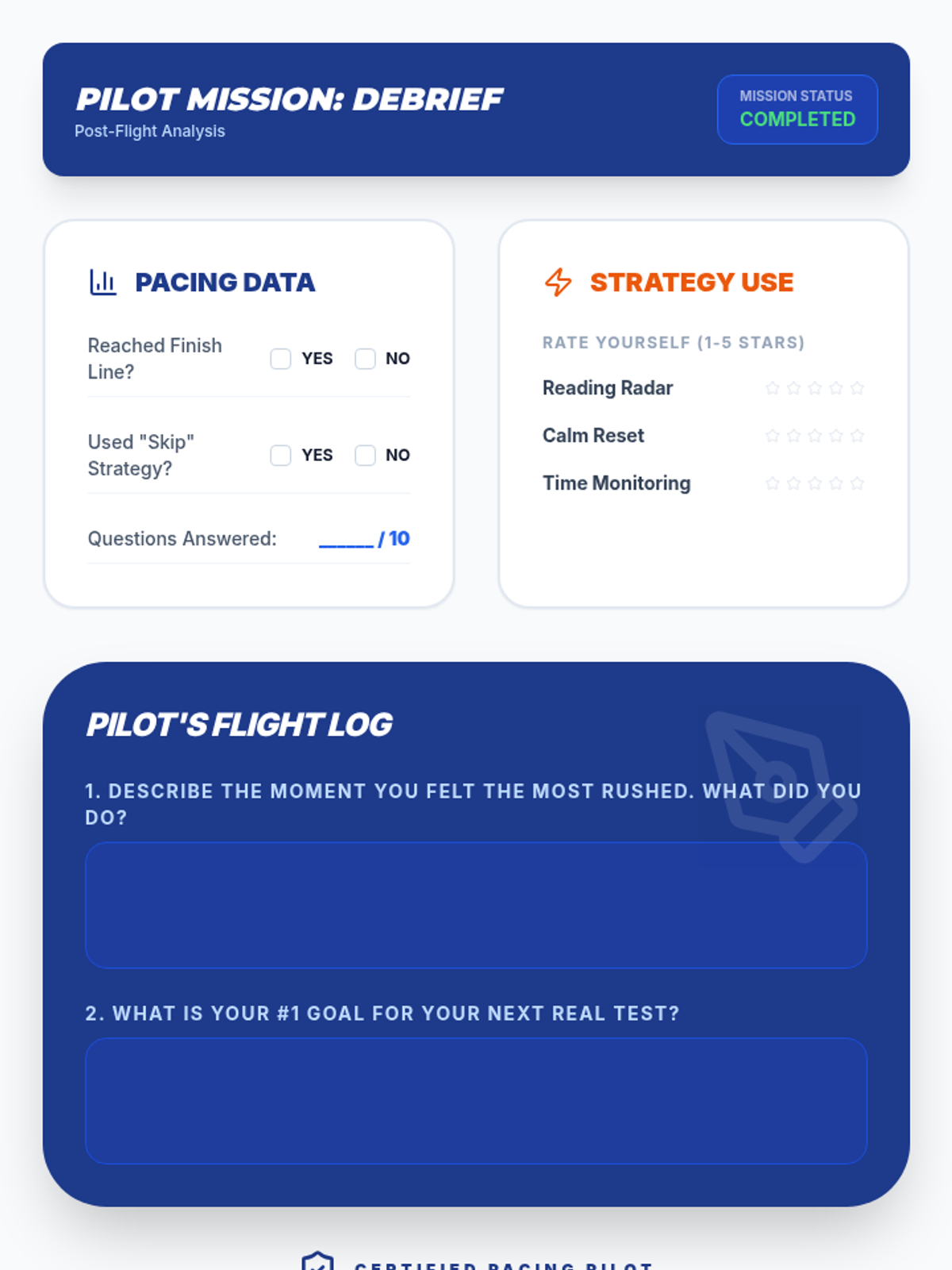
A simulated test session where students are graded on their ability to hit specific pacing markers and reflect on their performance.
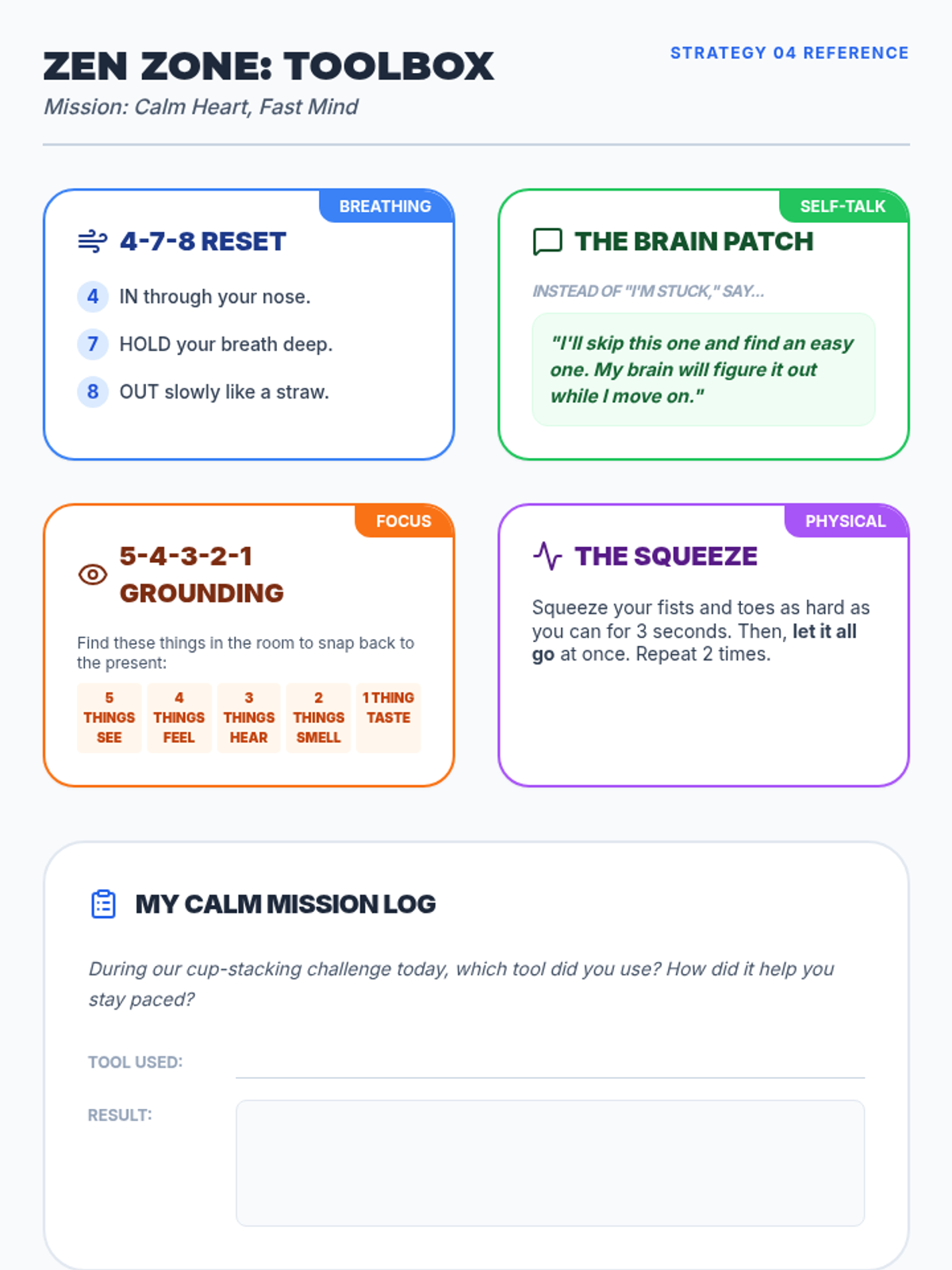
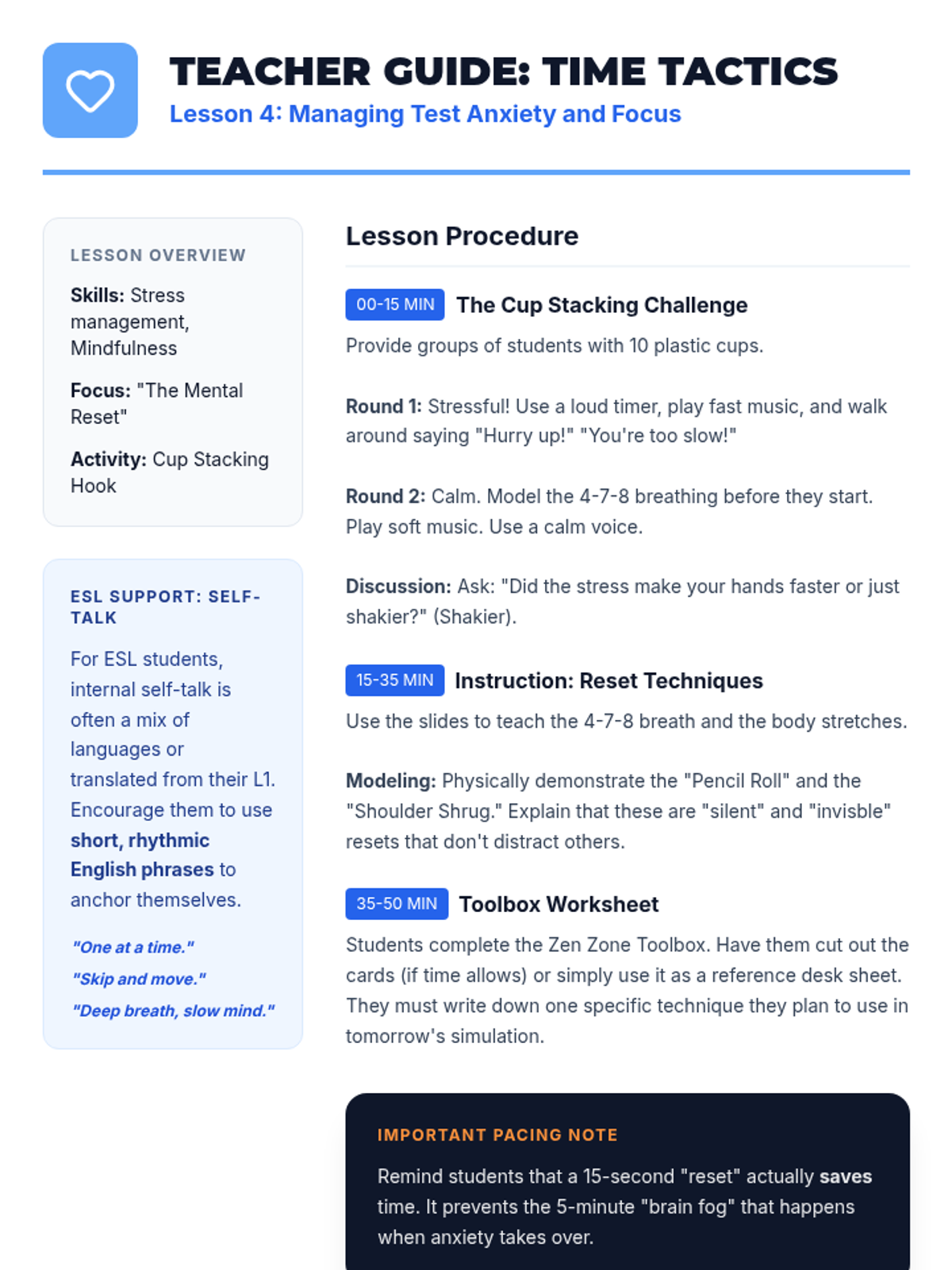
Teaches students physiological and mental reset techniques to stay calm and focused when the clock is ticking.
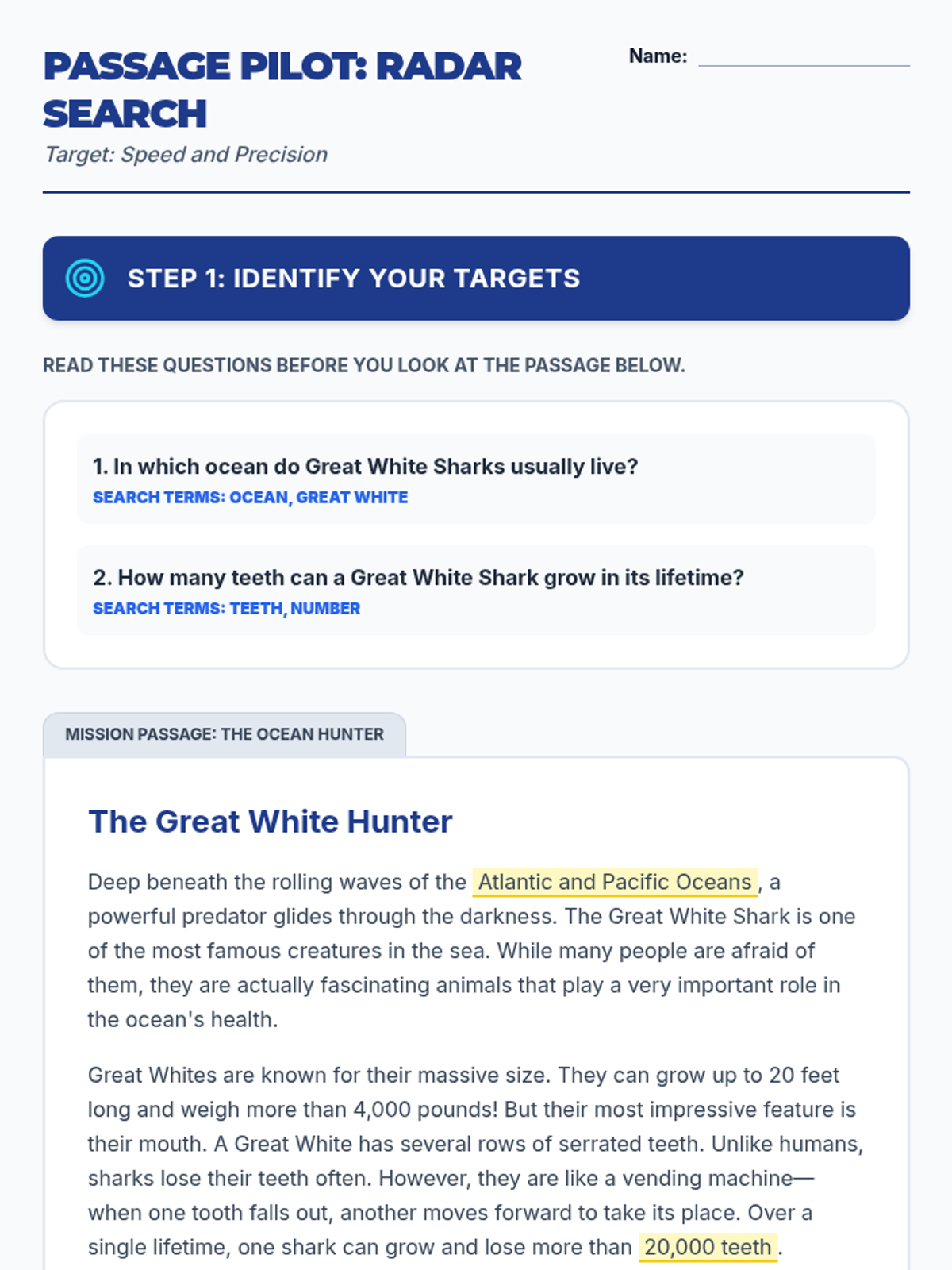
Focuses on reading strategies like 'questions first' to save time and improve focus during long reading comprehension sections.
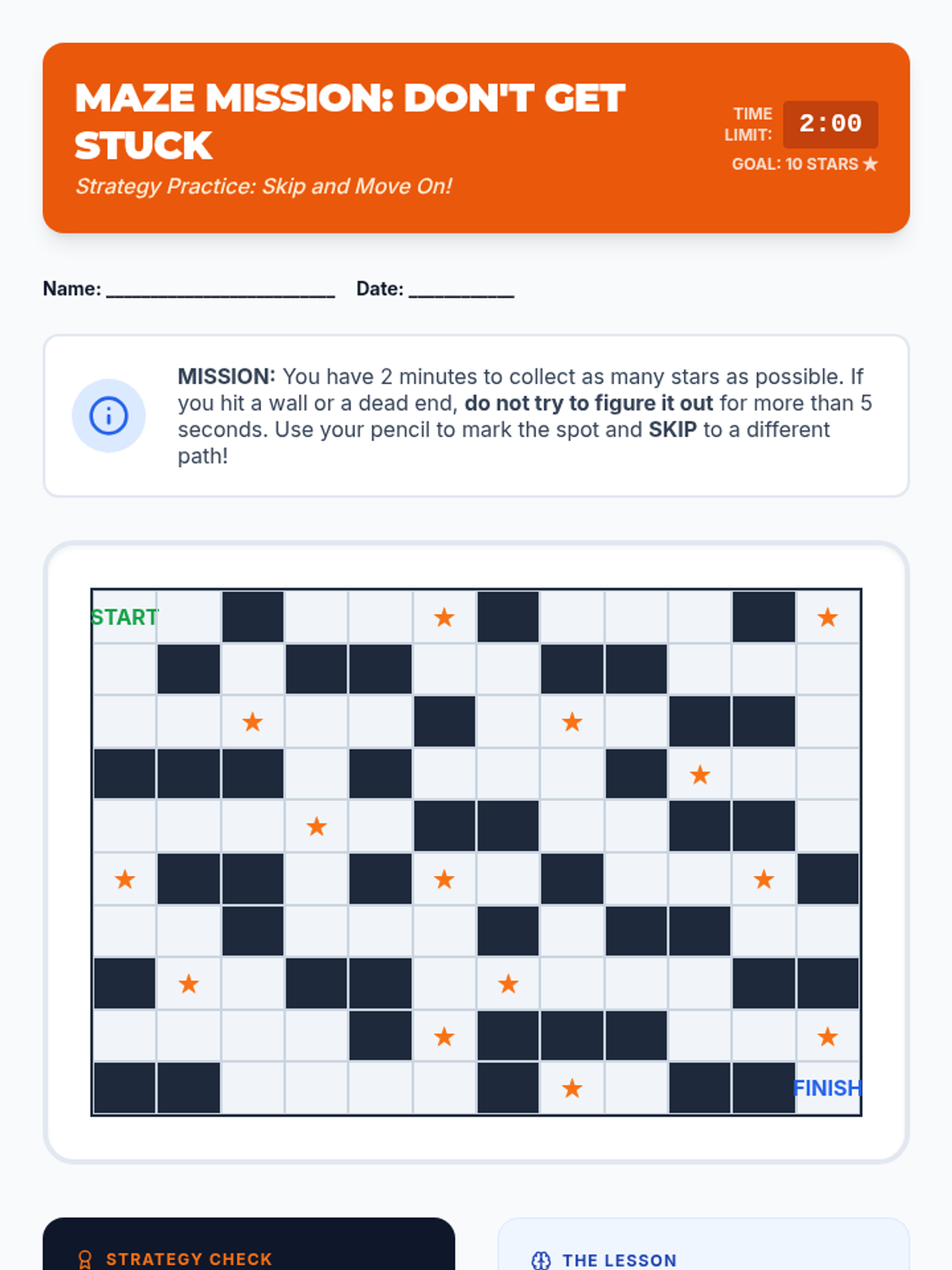
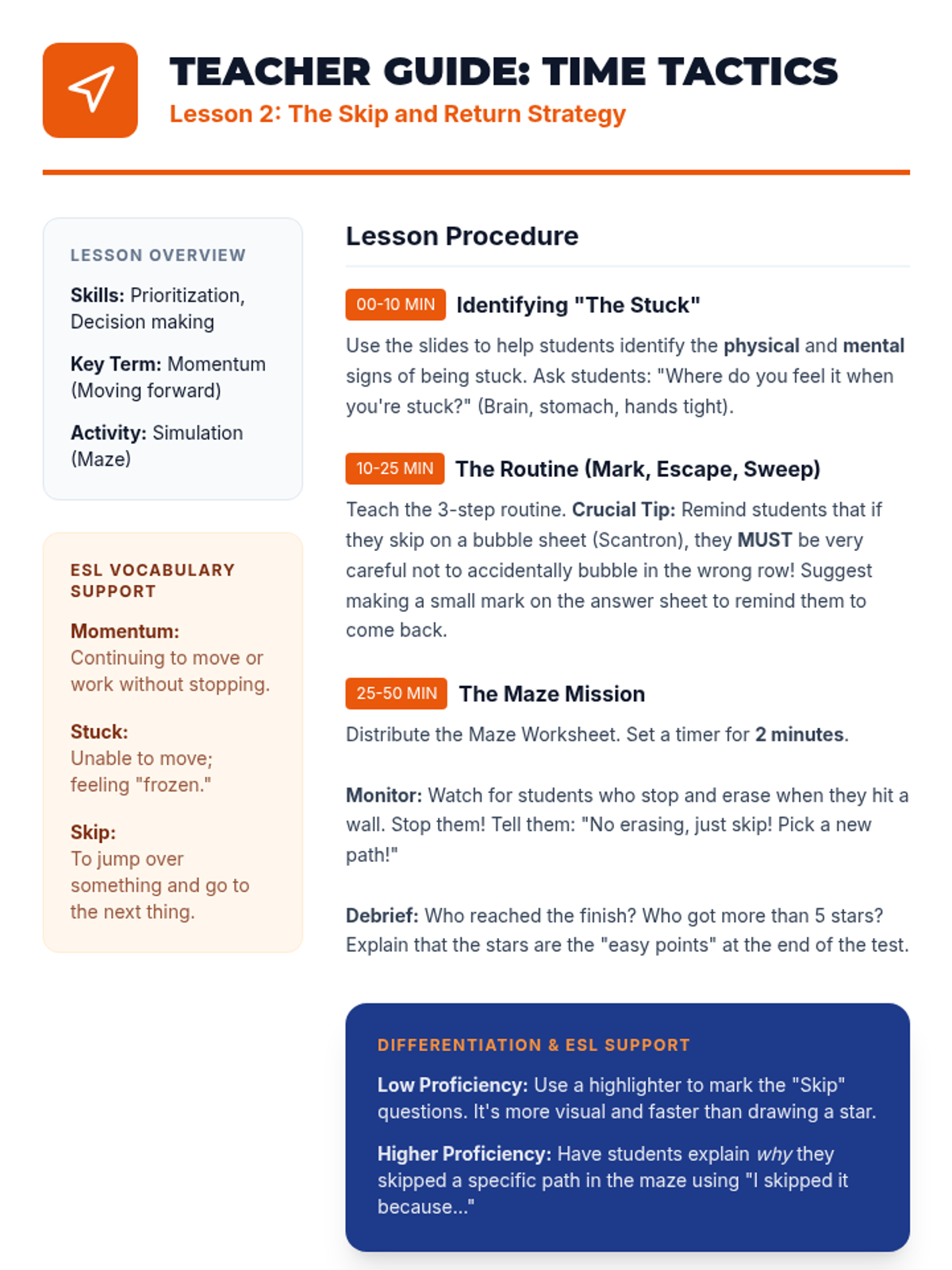
Students practice identifying when they are stuck and learn the 'skip and return' method to maximize their points by answering easy questions first.
Students learn the basics of pacing by breaking down total test time and creating visual pacing guides to avoid the 'time trap.'