Active listening, assertive expression, and boundary-setting strategies for interpersonal success. Develops proficiency in conflict mediation, cooperative teamwork, and the cultivation of healthy romantic and platonic connections.
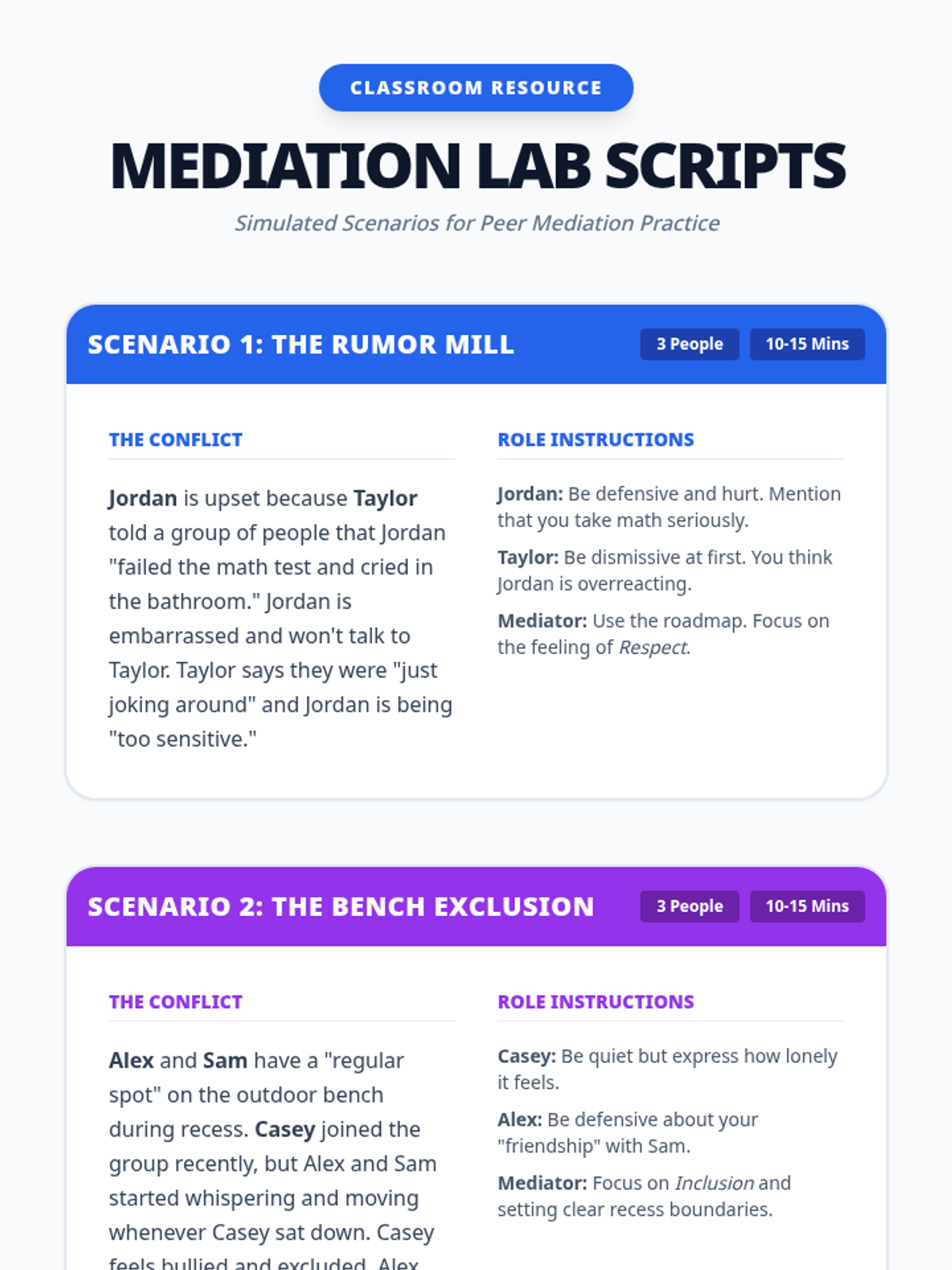
Students engage in full-cycle mock mediations. Groups rotate roles between disputants and mediators, using scripts based on real-life 6th-grade problems (e.g., rumor spreading, exclusion).
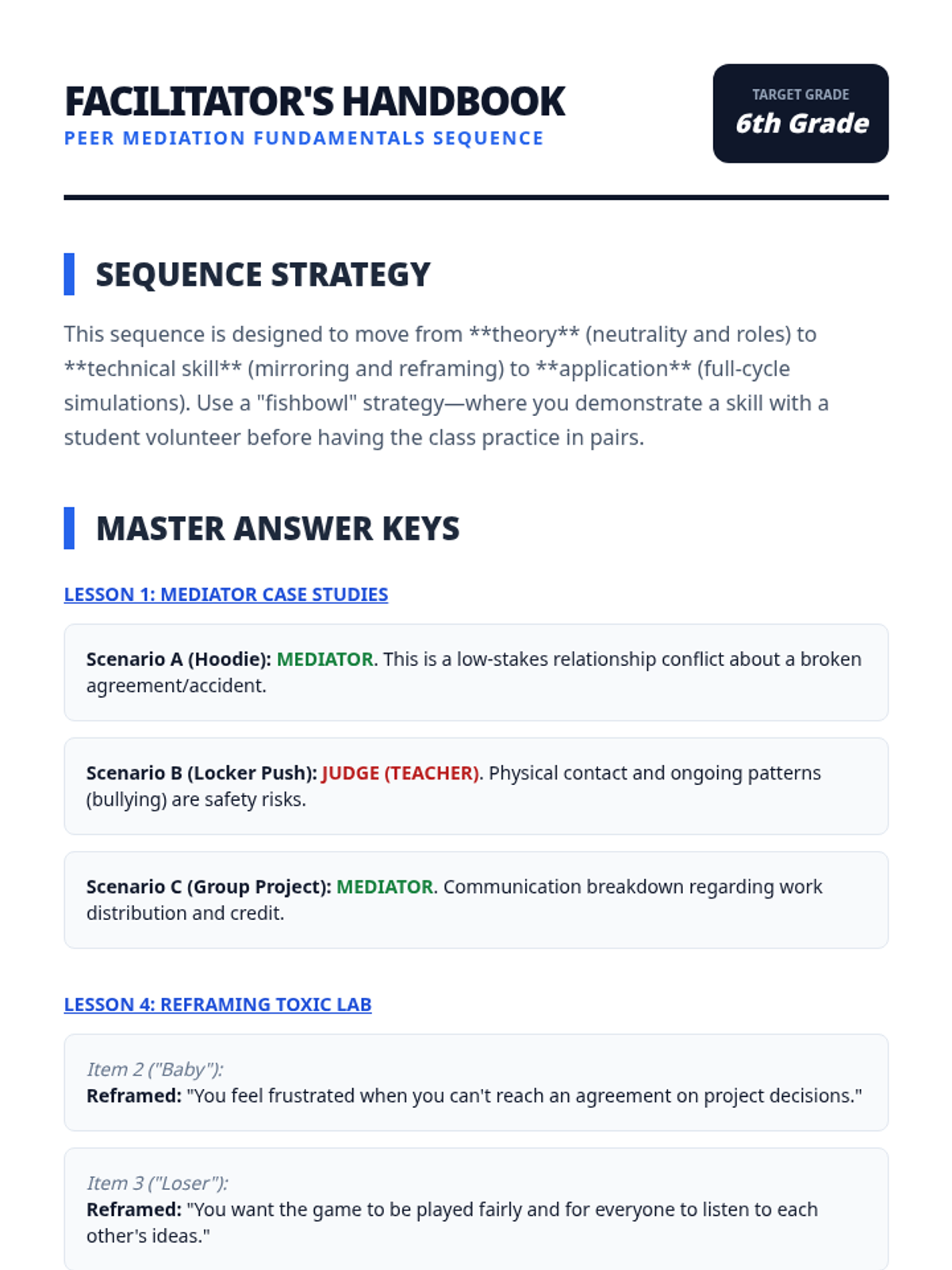
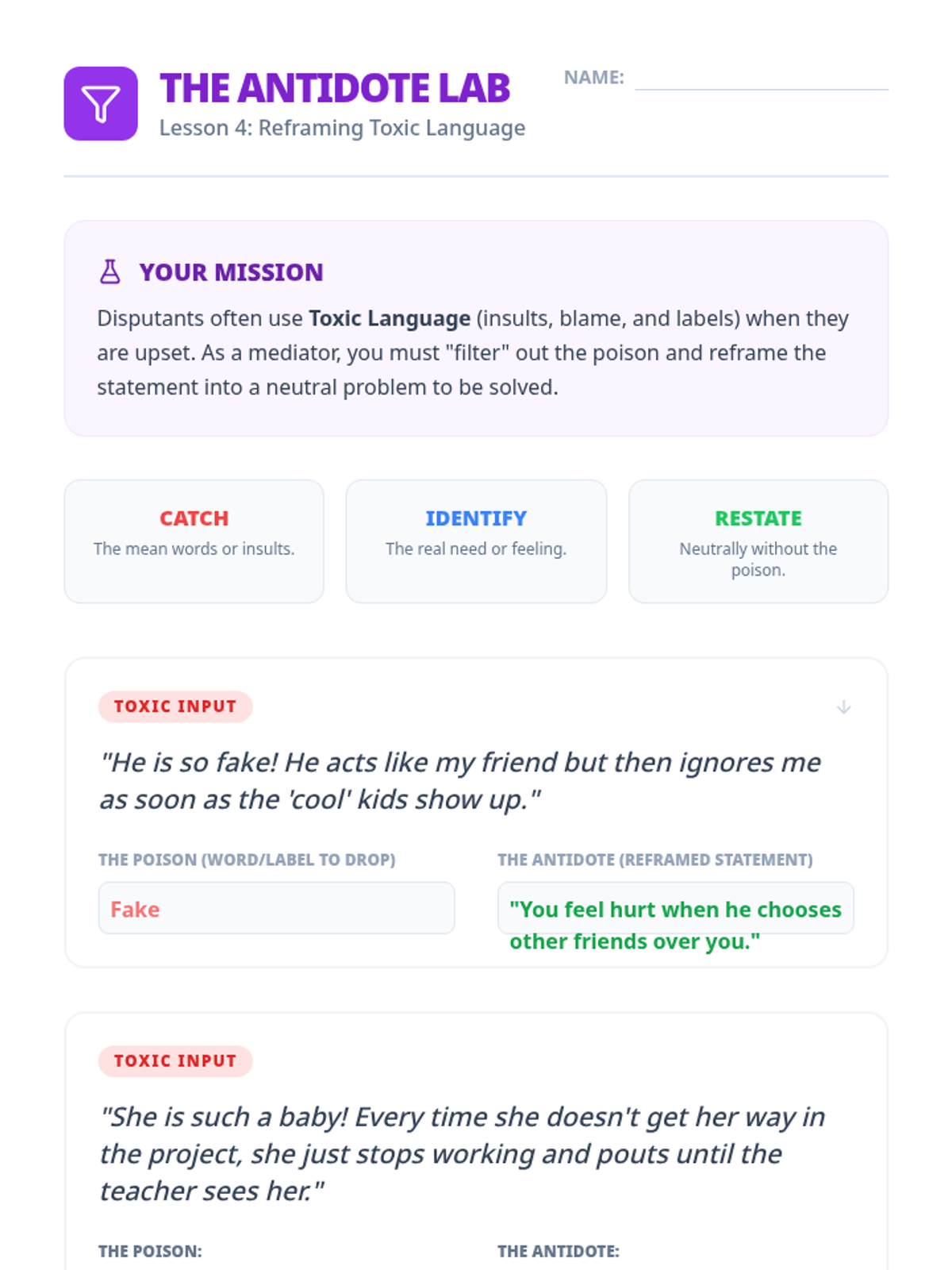
Students learn to 'catch' toxic or inflammatory language used by disputants and reframe it into neutral problem statements. This advanced skill prevents the mediation from turning into a shouting match.
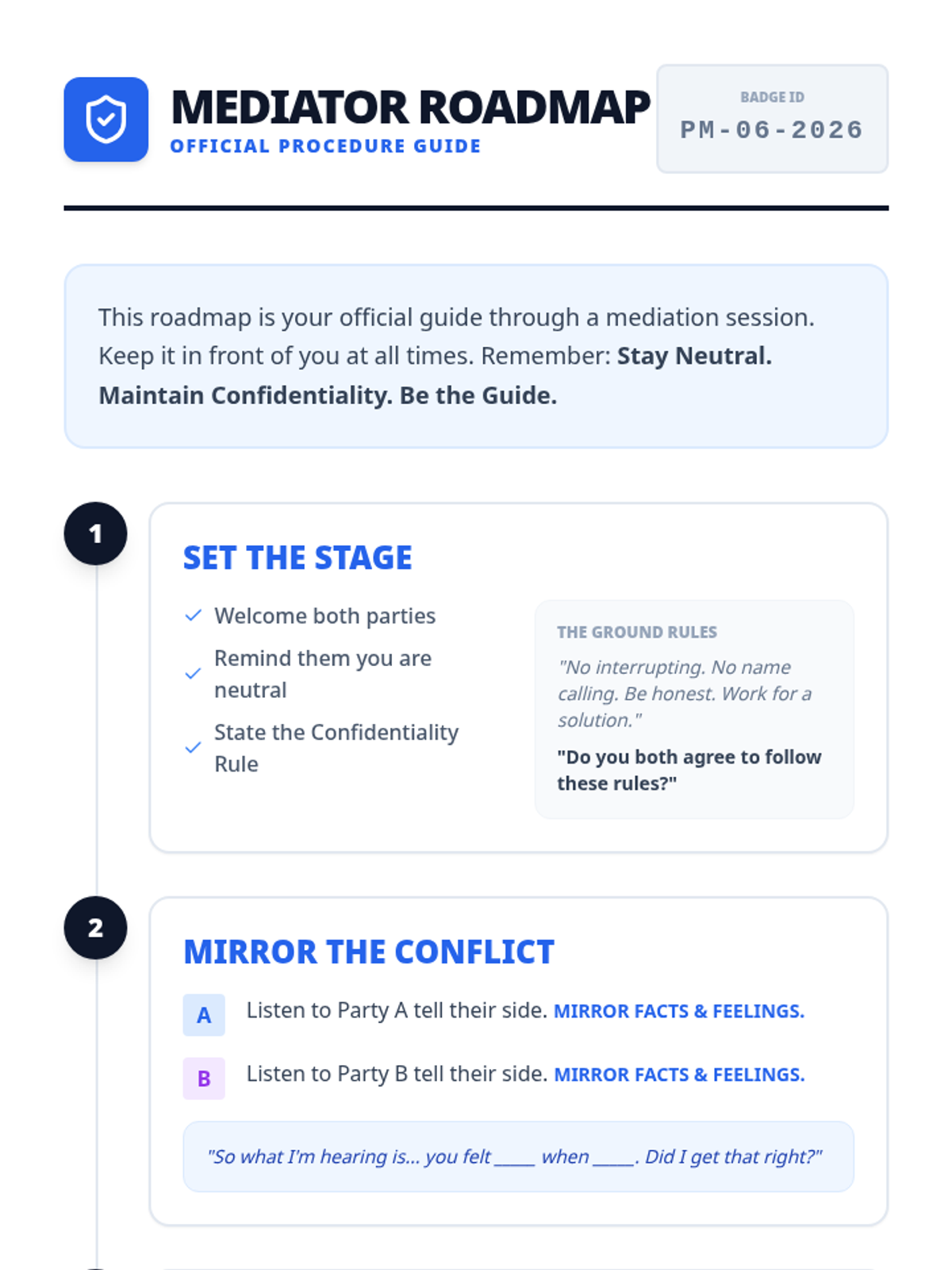
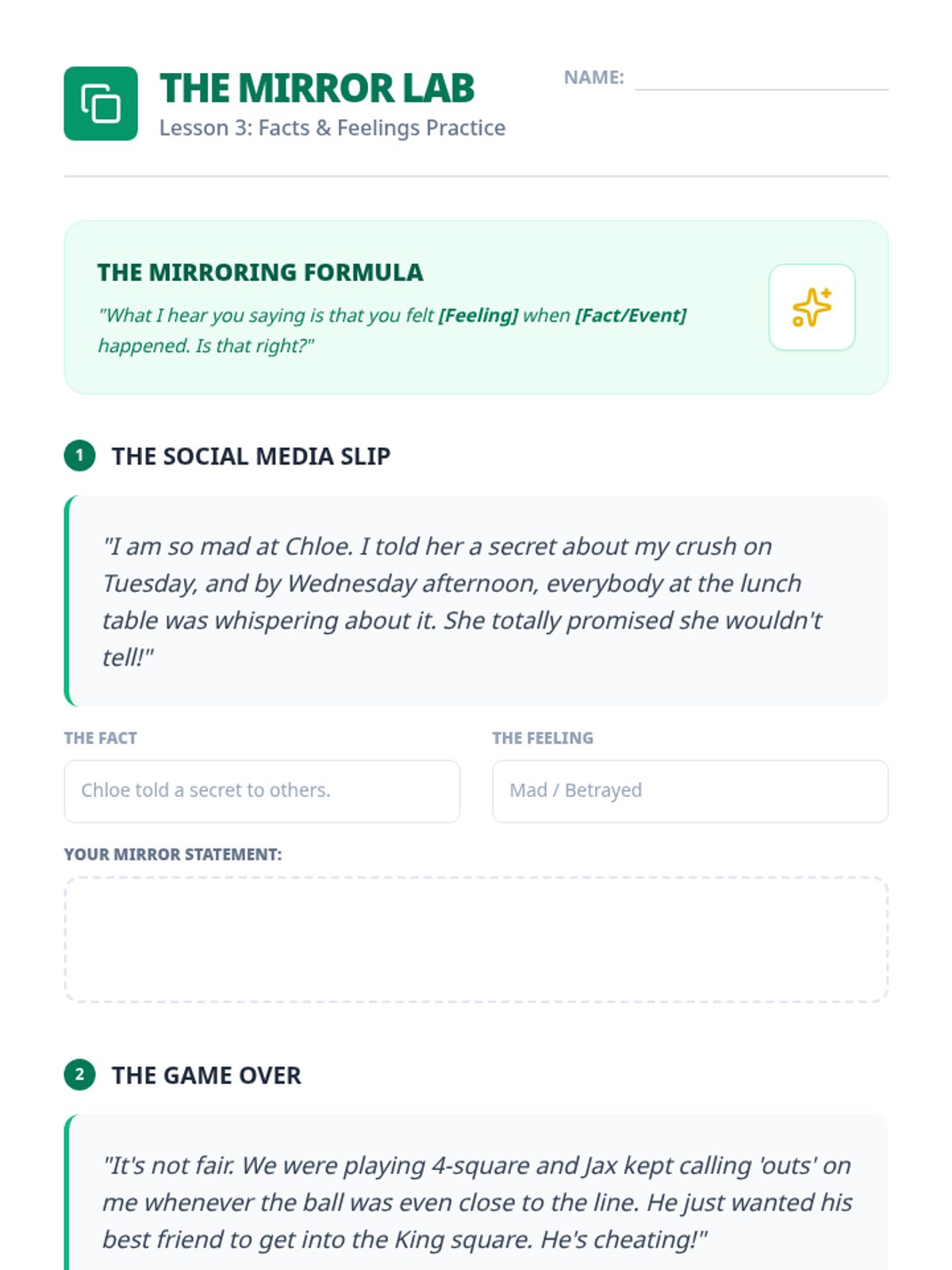
This lesson focuses on the mediator's primary tool: mirroring (reflecting back what was heard). Students practice listening to a complaint and summarizing it neutrally to ensure the speaker feels heard.
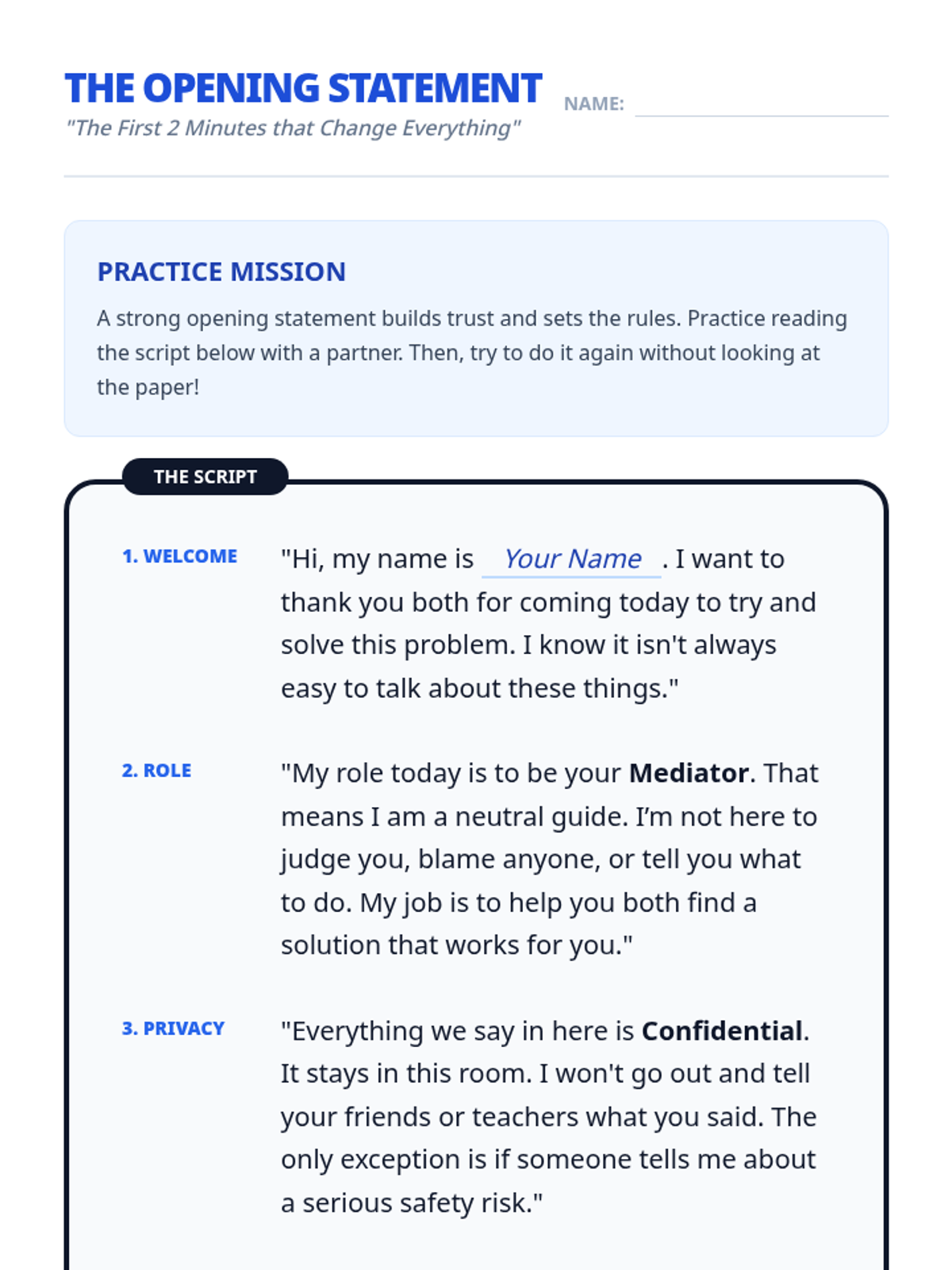
Learners practice the opening statement of a mediation: welcoming parties, explaining the process, and establishing rules like 'no interrupting' and 'no name-calling.'
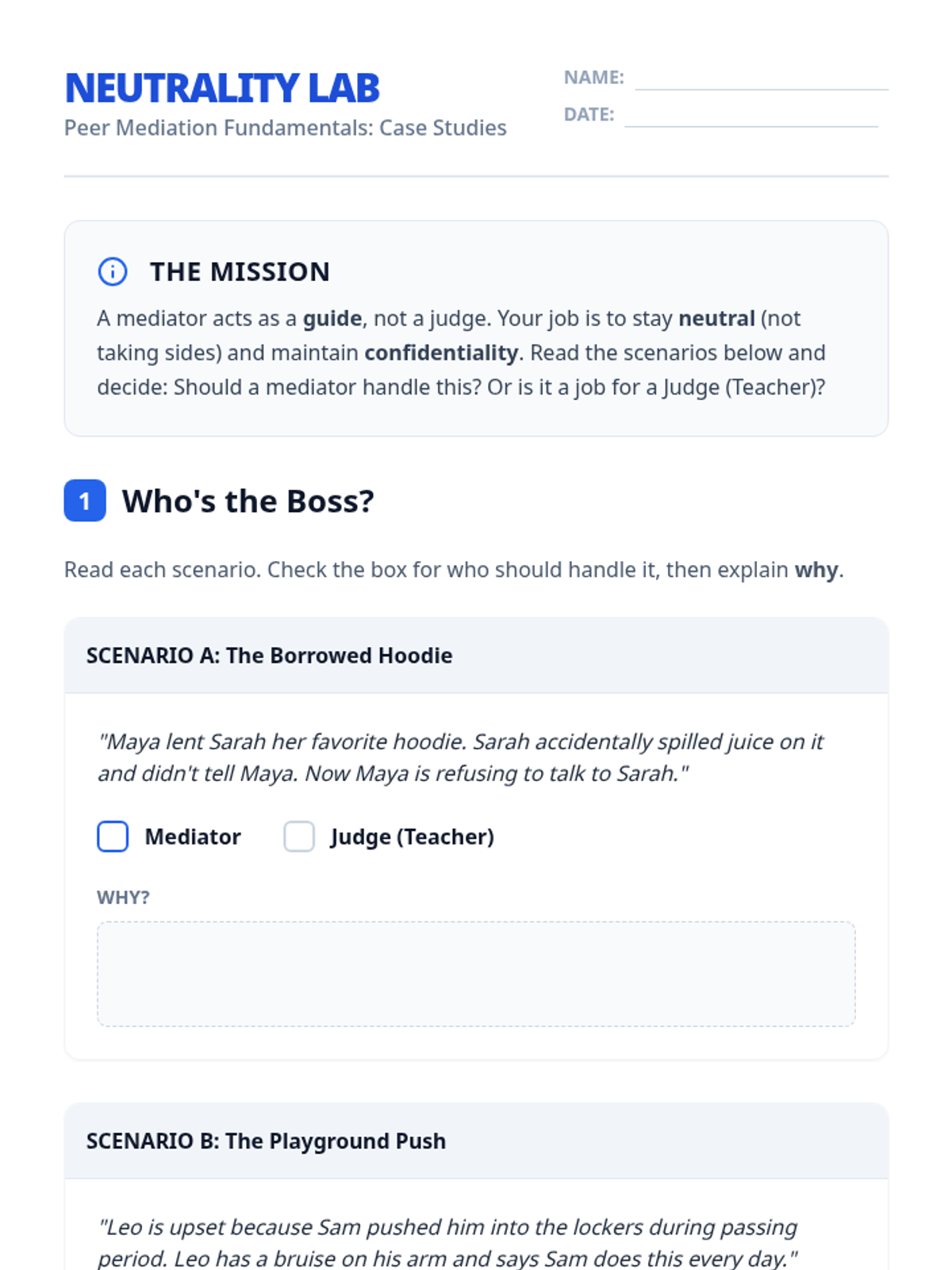
Students define what a mediator is (a guide, not a judge) and the core principle of neutrality. They discuss confidentiality and identify when a conflict is too dangerous for peer mediation (e.g., bullying or violence).
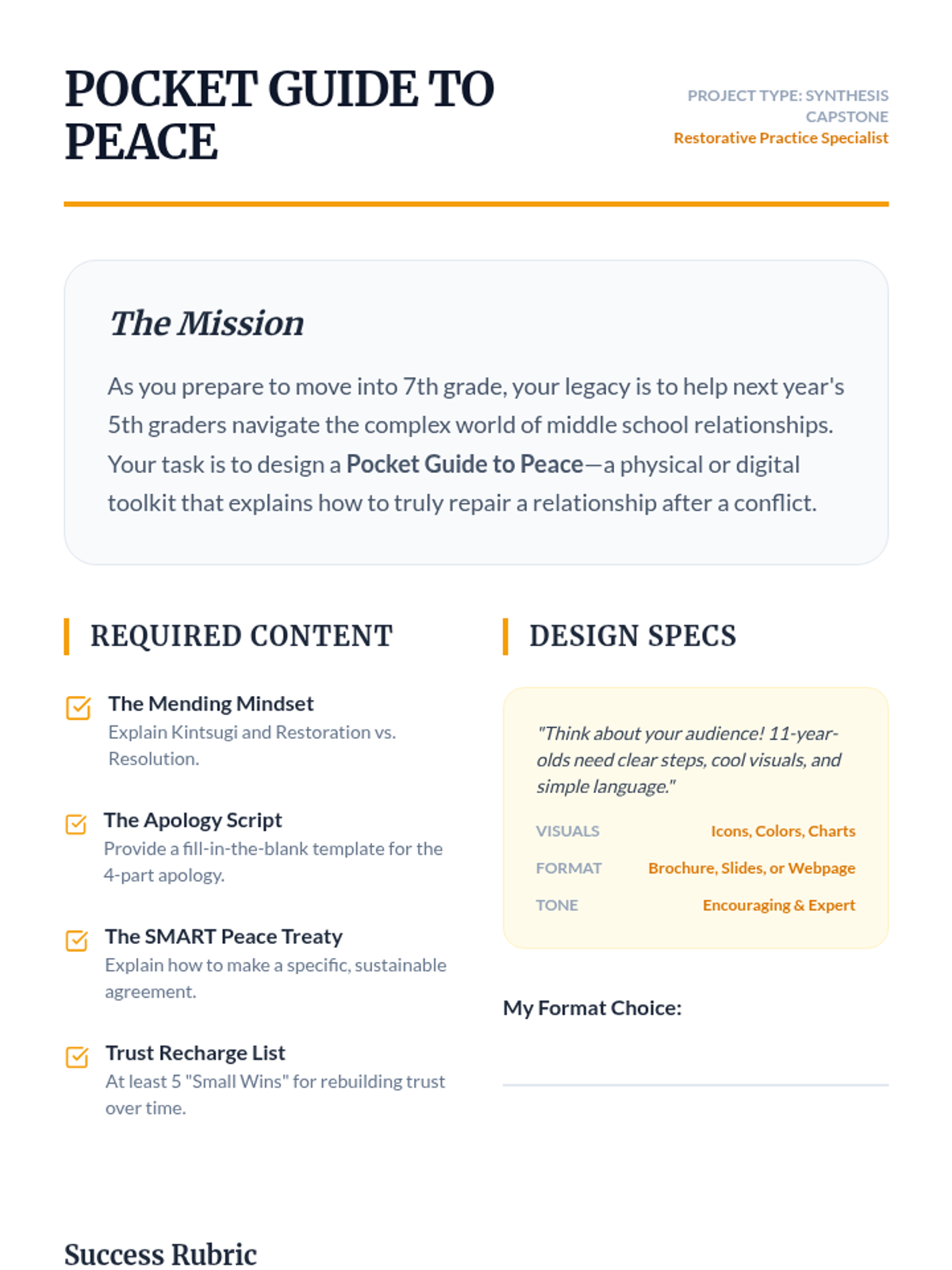
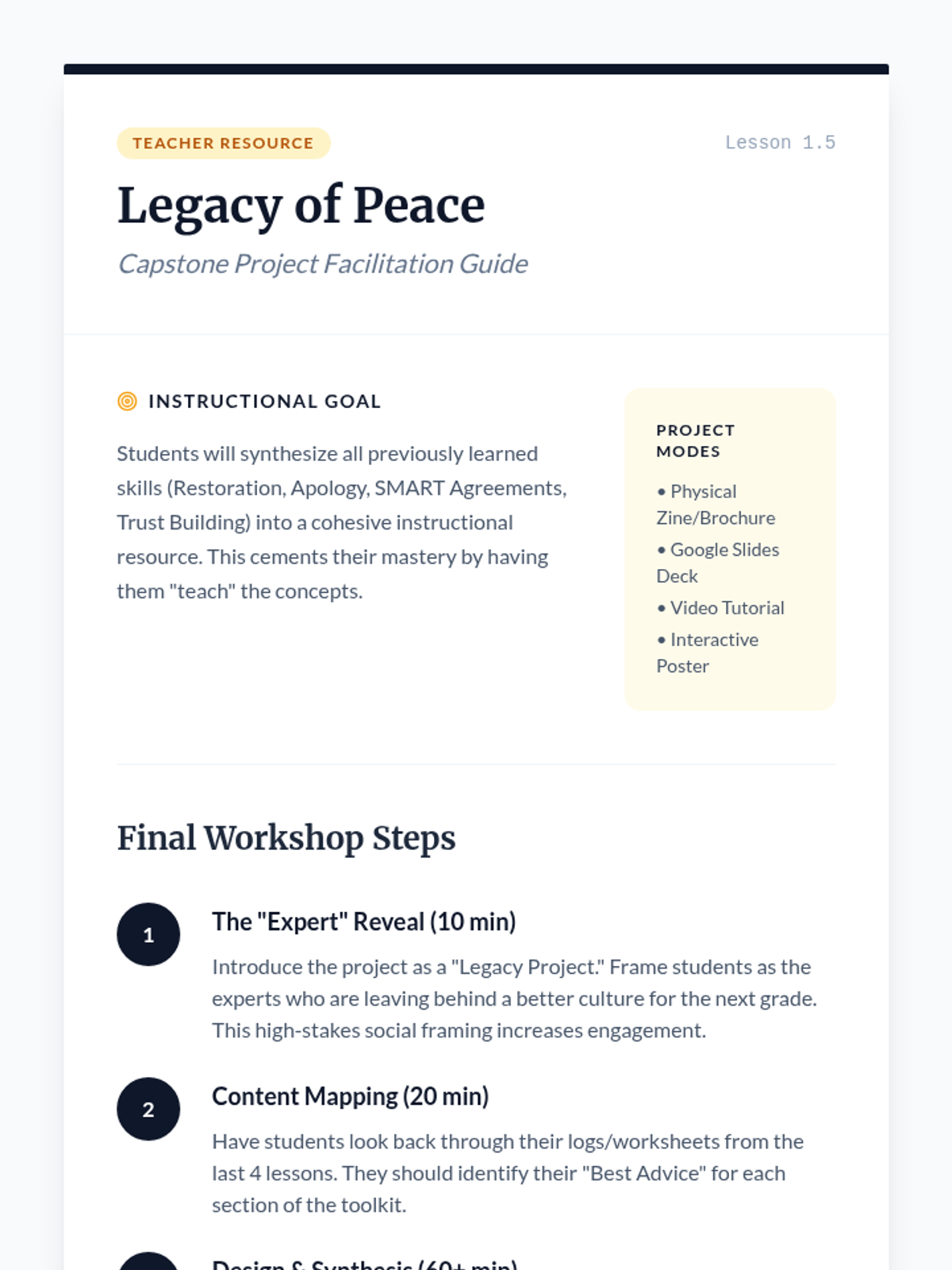
A capstone project where students synthesize their learning to create a 'Pocket Guide to Peace' for younger students.
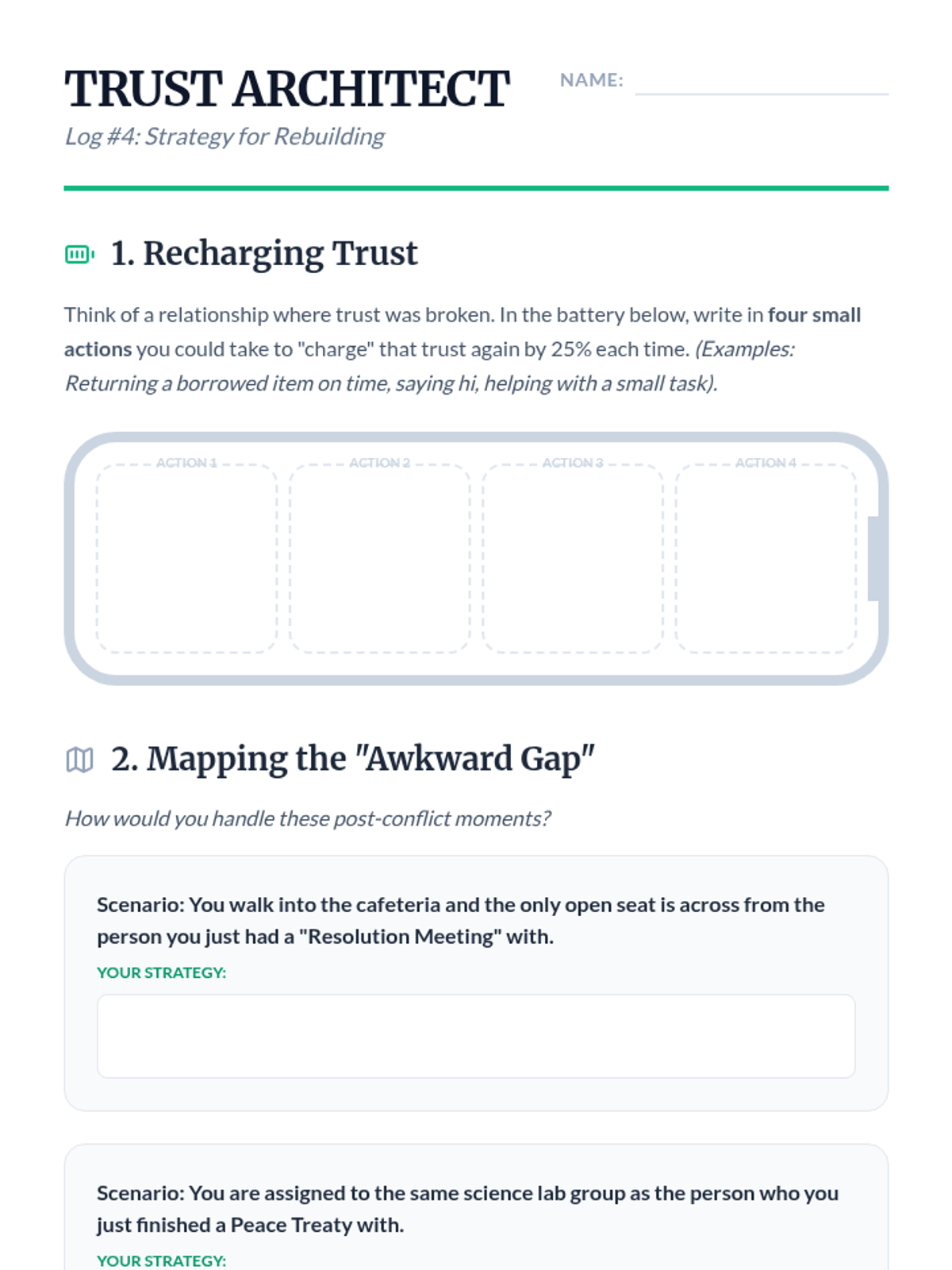
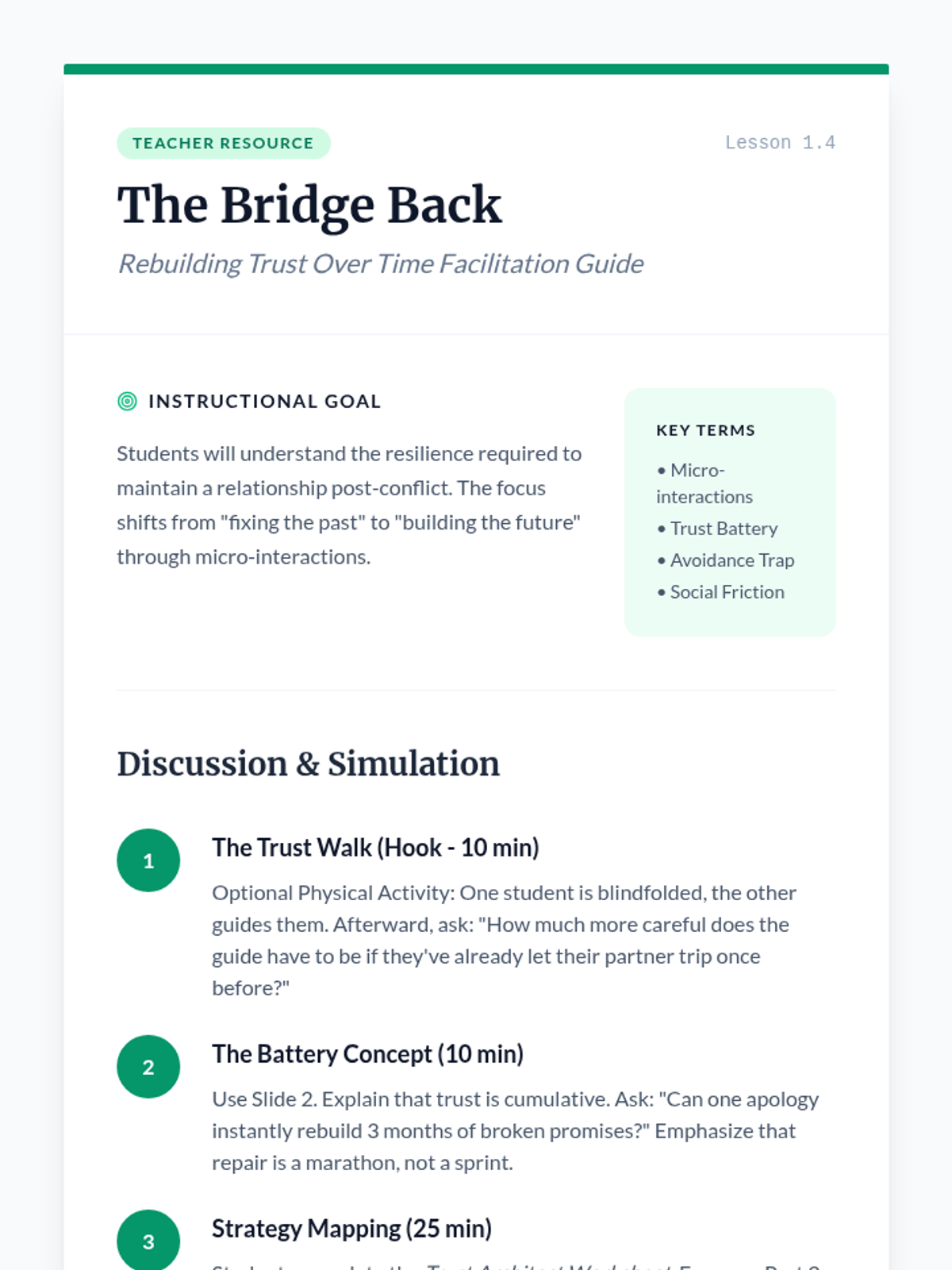
Explores the slow process of rebuilding trust after a conflict, focusing on small, consistent actions and the courage required to be vulnerable again.
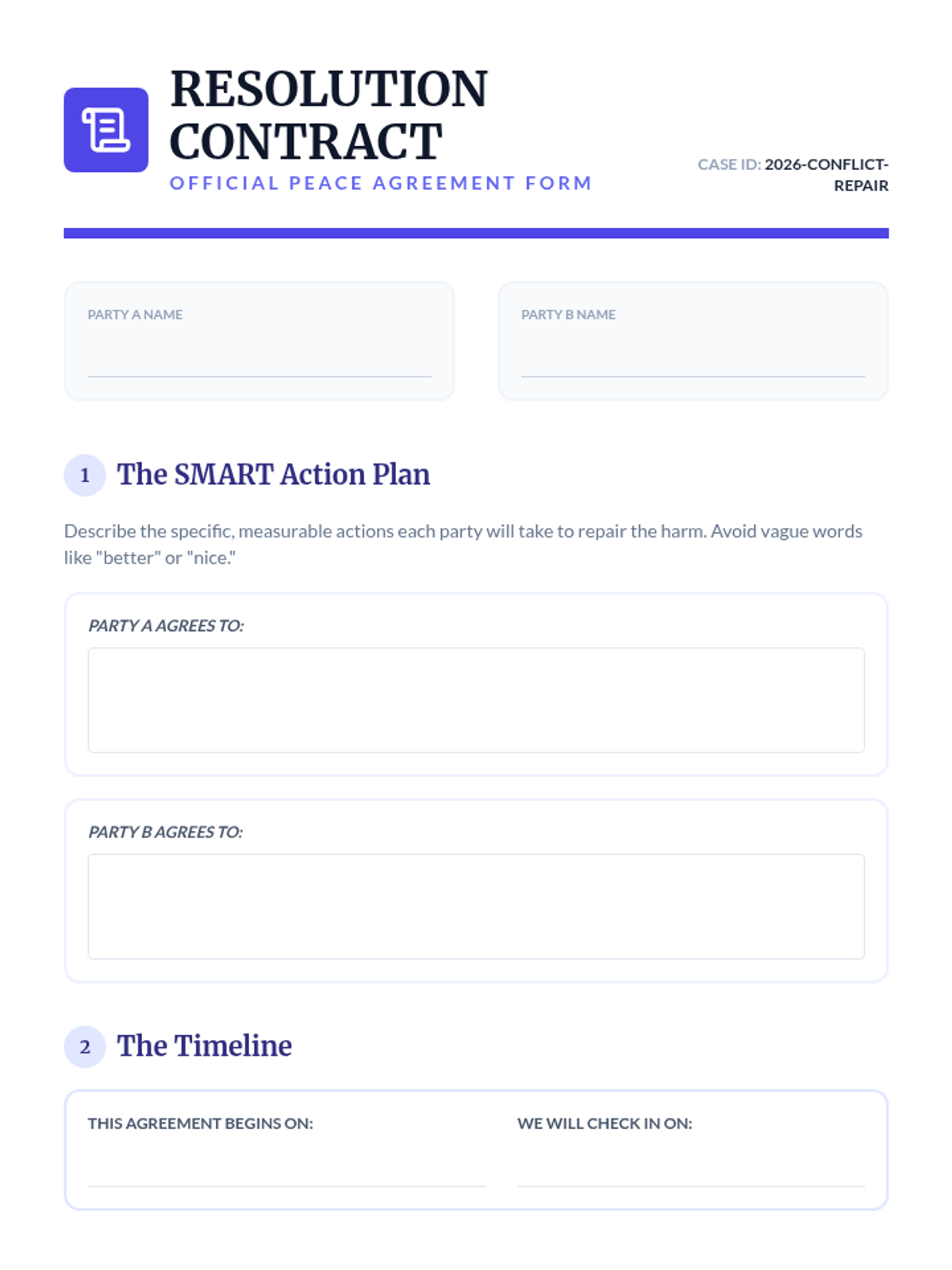
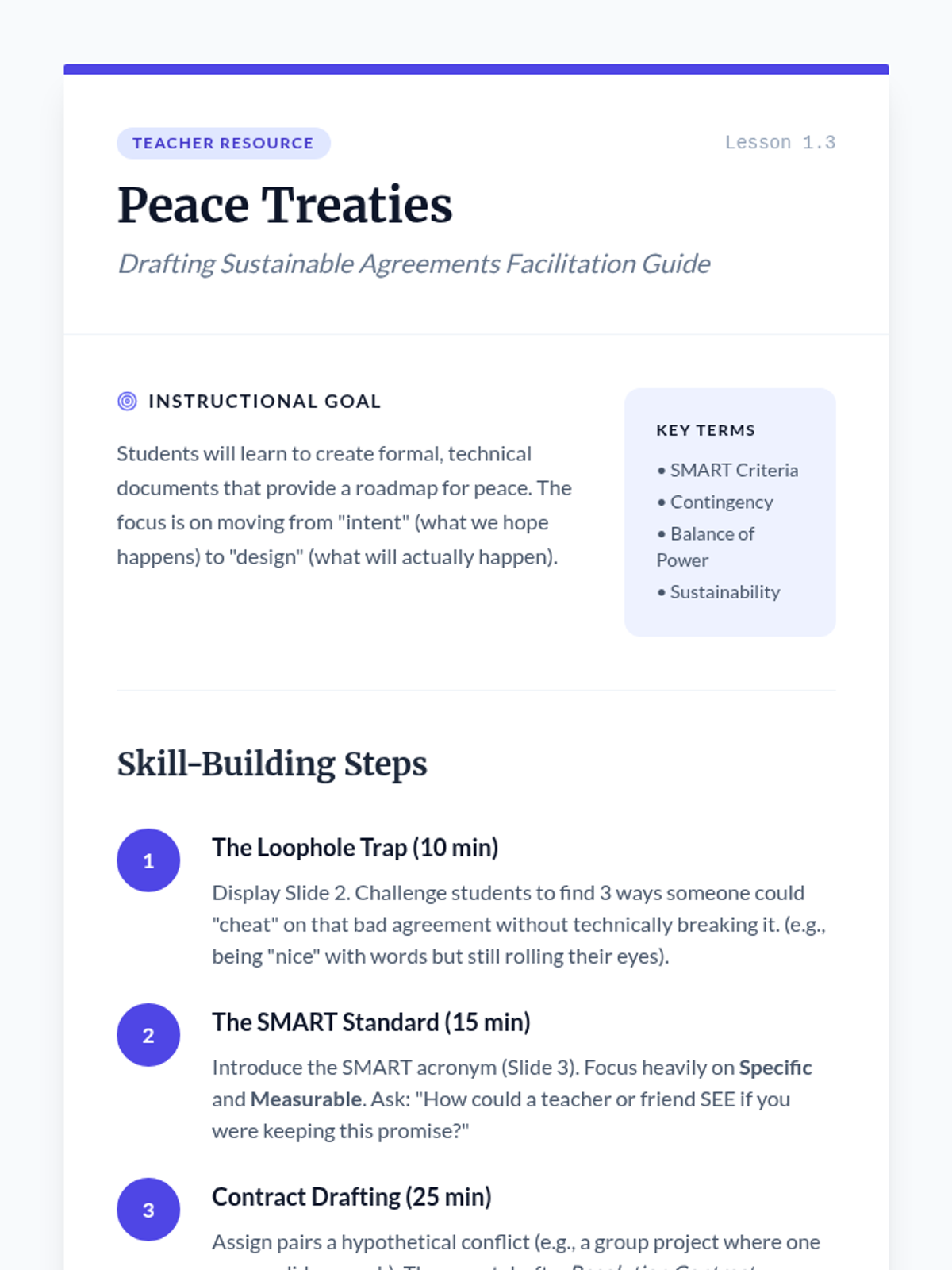
Focuses on technical skills for creating 'fight-proof' agreements that are specific, measurable, and include contingency plans for future friction.
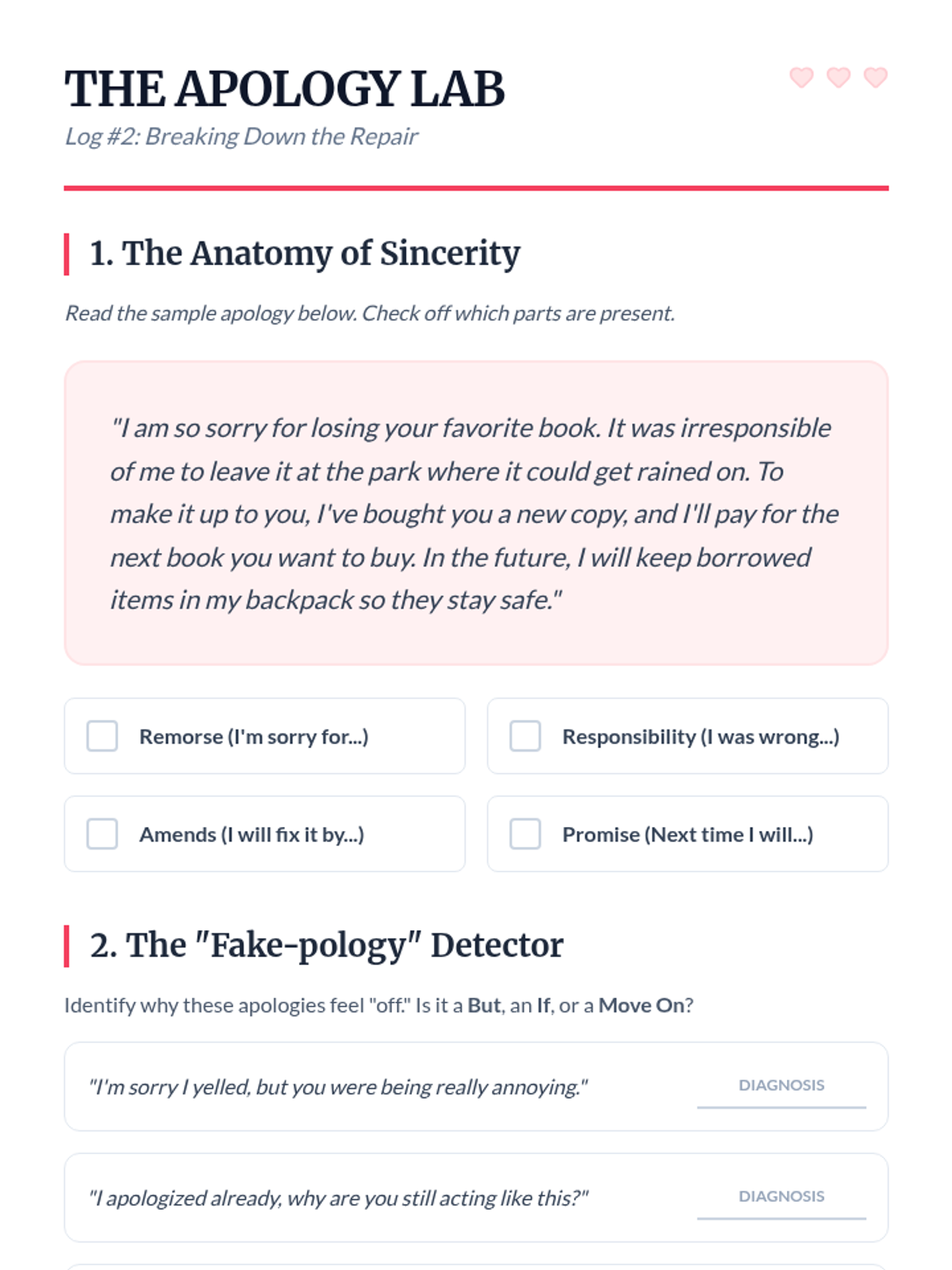
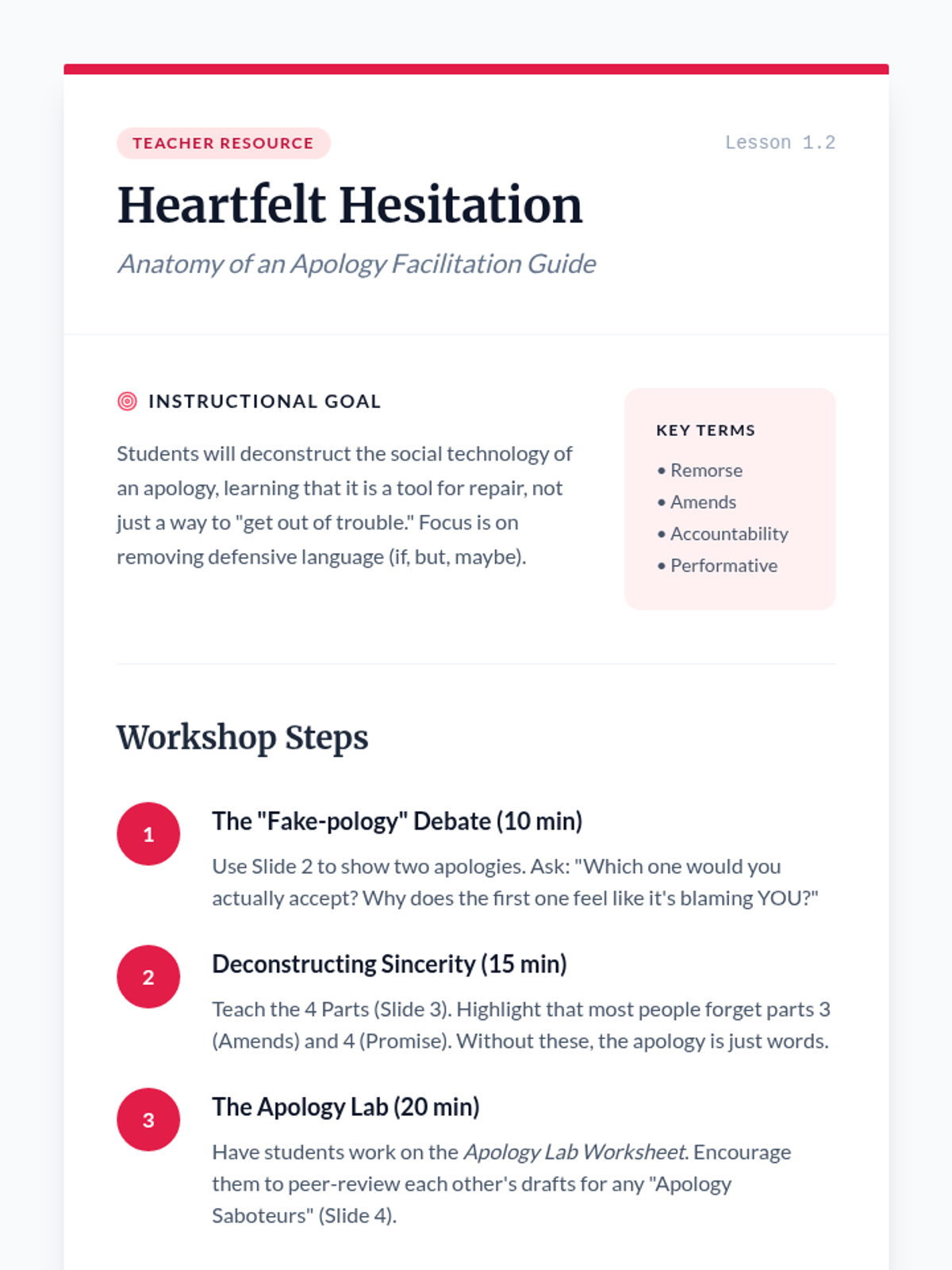
Learners break down the four essential components of a meaningful apology and practice distinguishing between performative and sincere expressions of remorse.
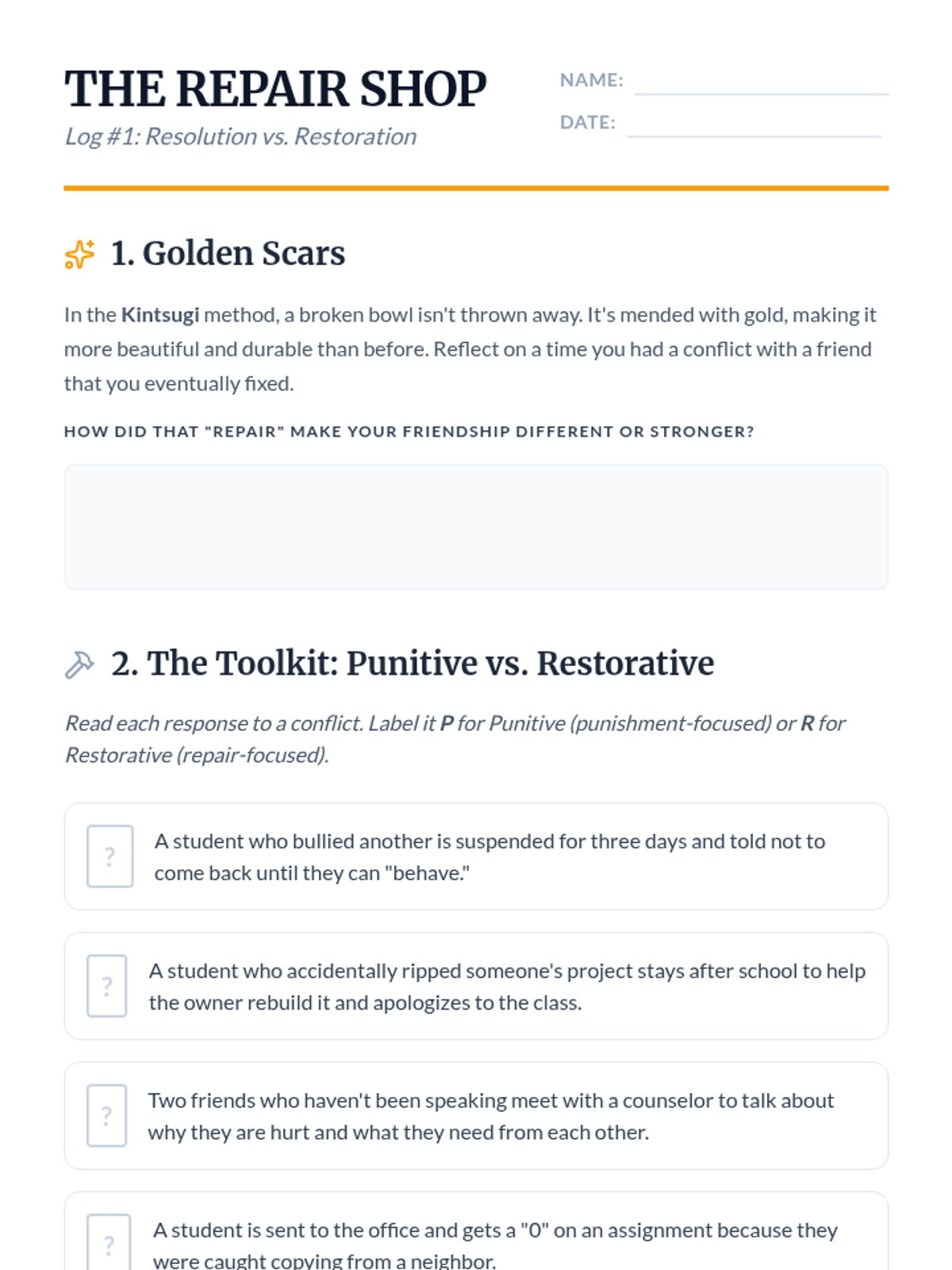
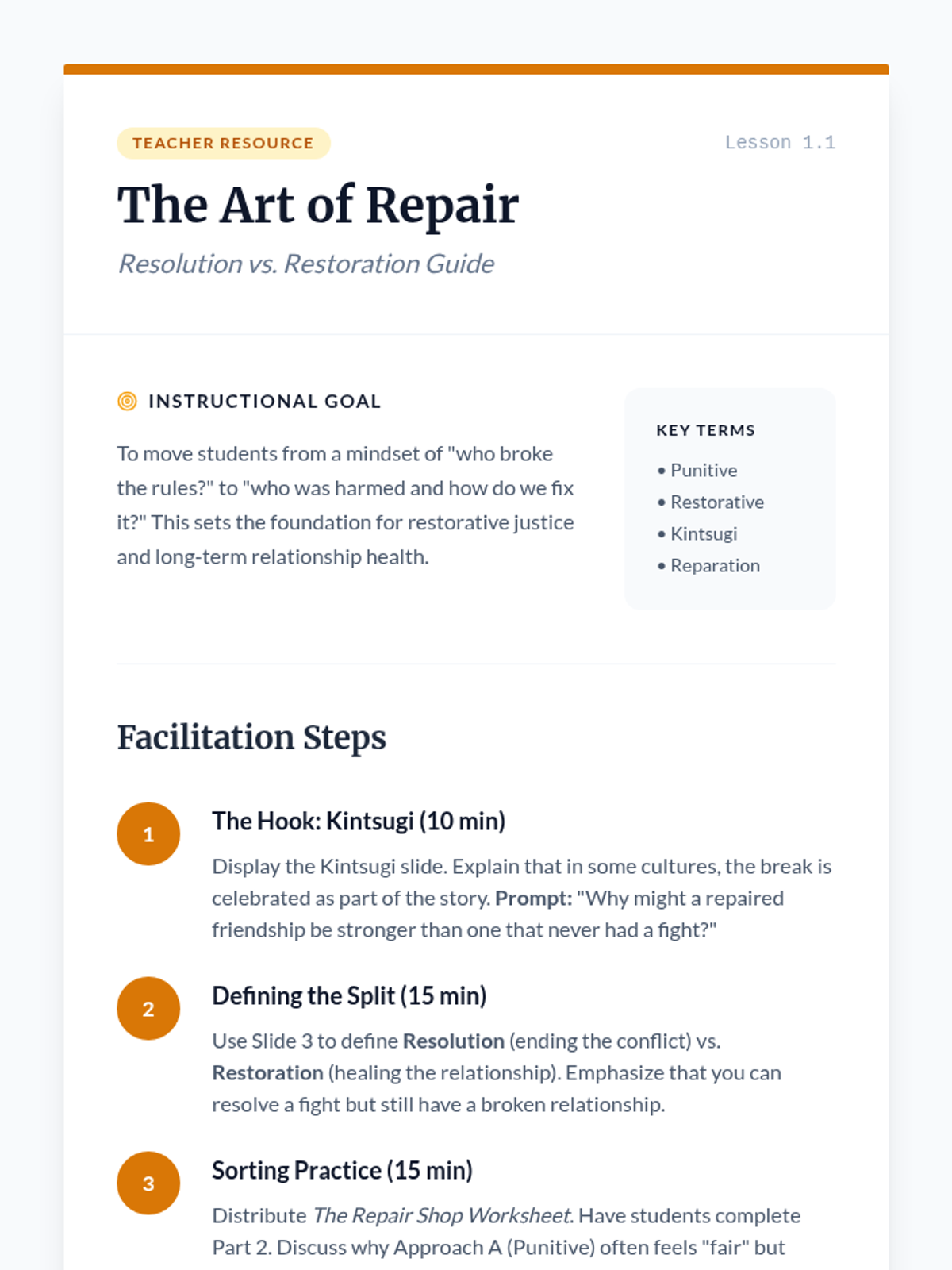
Students contrast punitive and restorative approaches to conflict, using the concept of Kintsugi to understand how repair can make a relationship stronger.
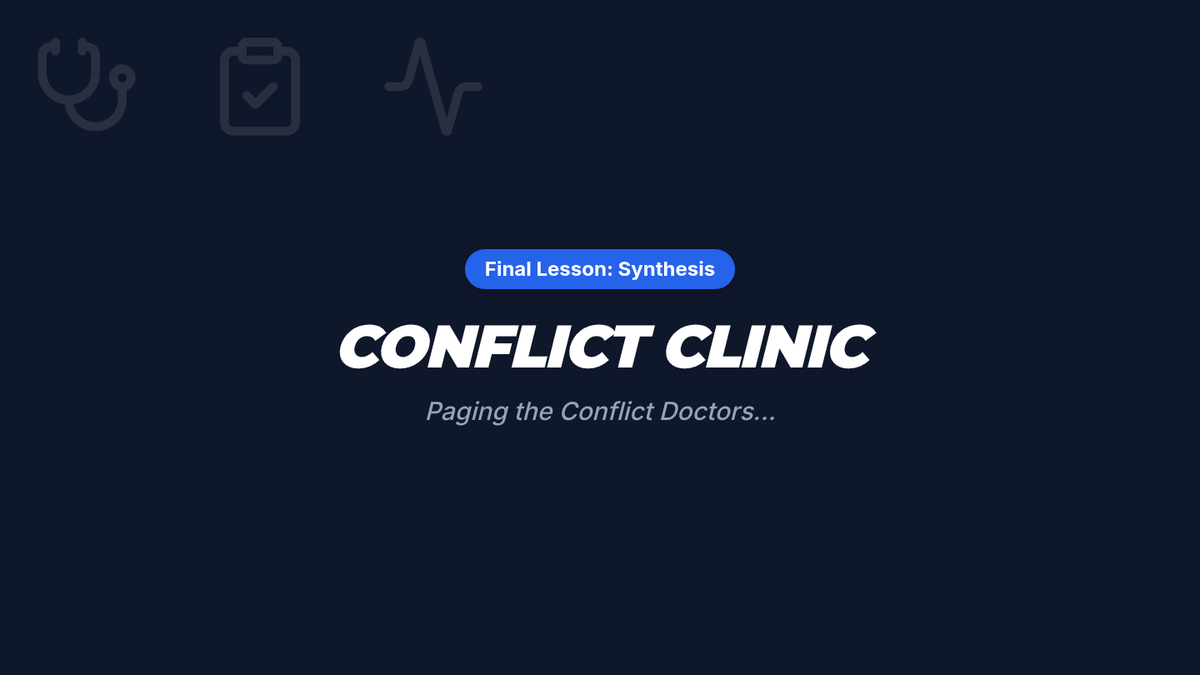
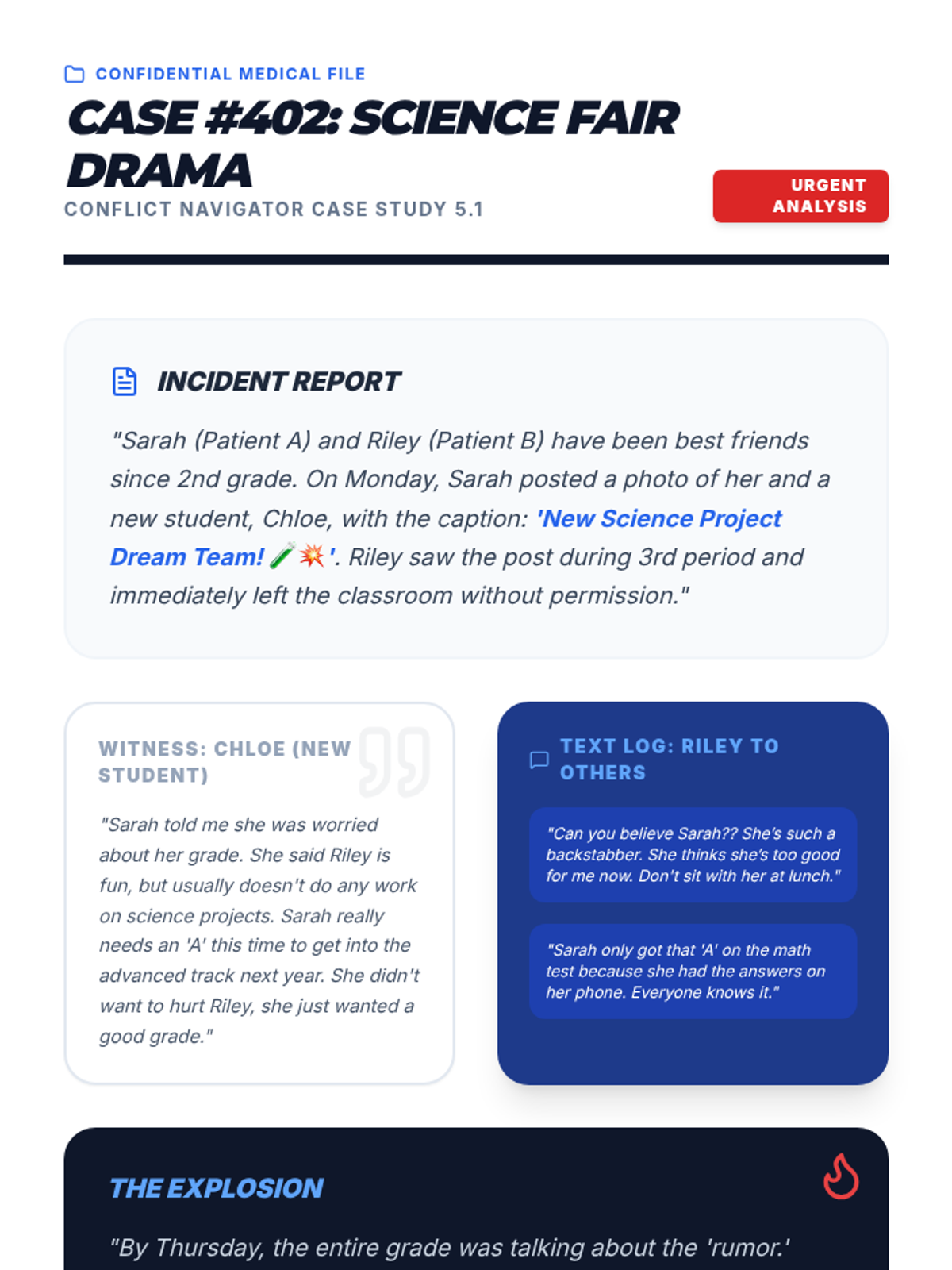
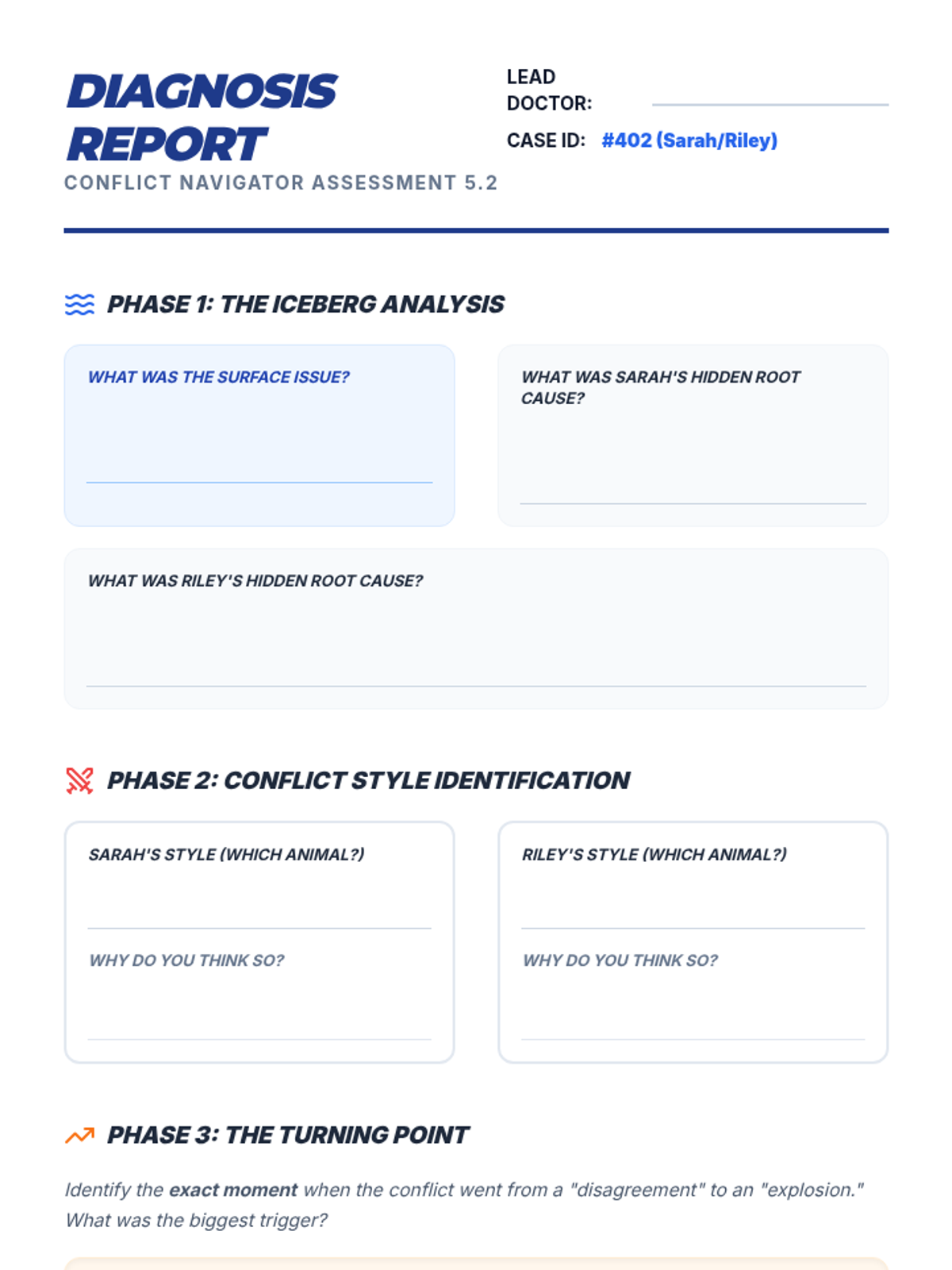
A final synthesis activity where students act as 'Conflict Doctors' to diagnose a complex scenario using all the tools learned in the sequence.
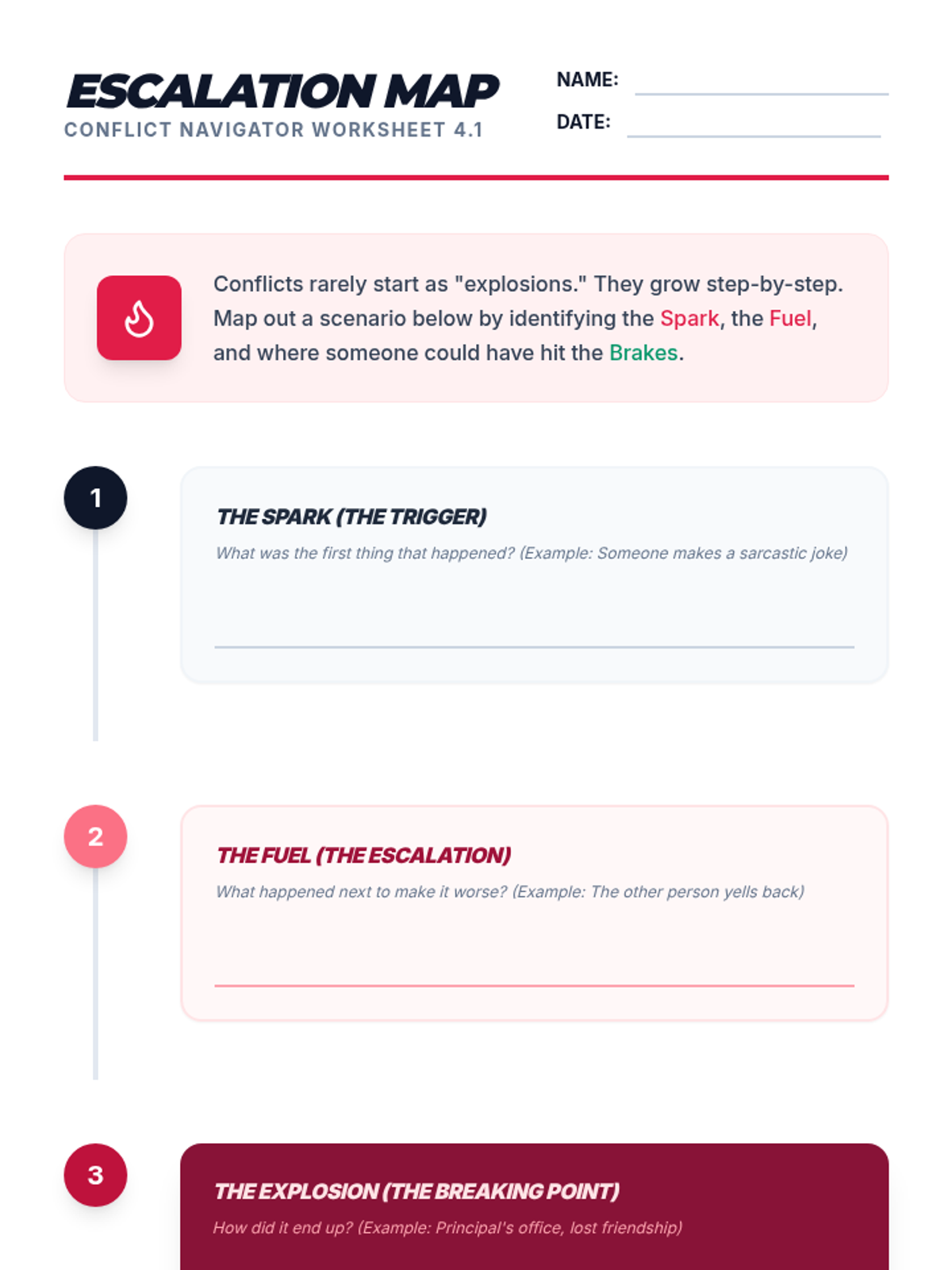
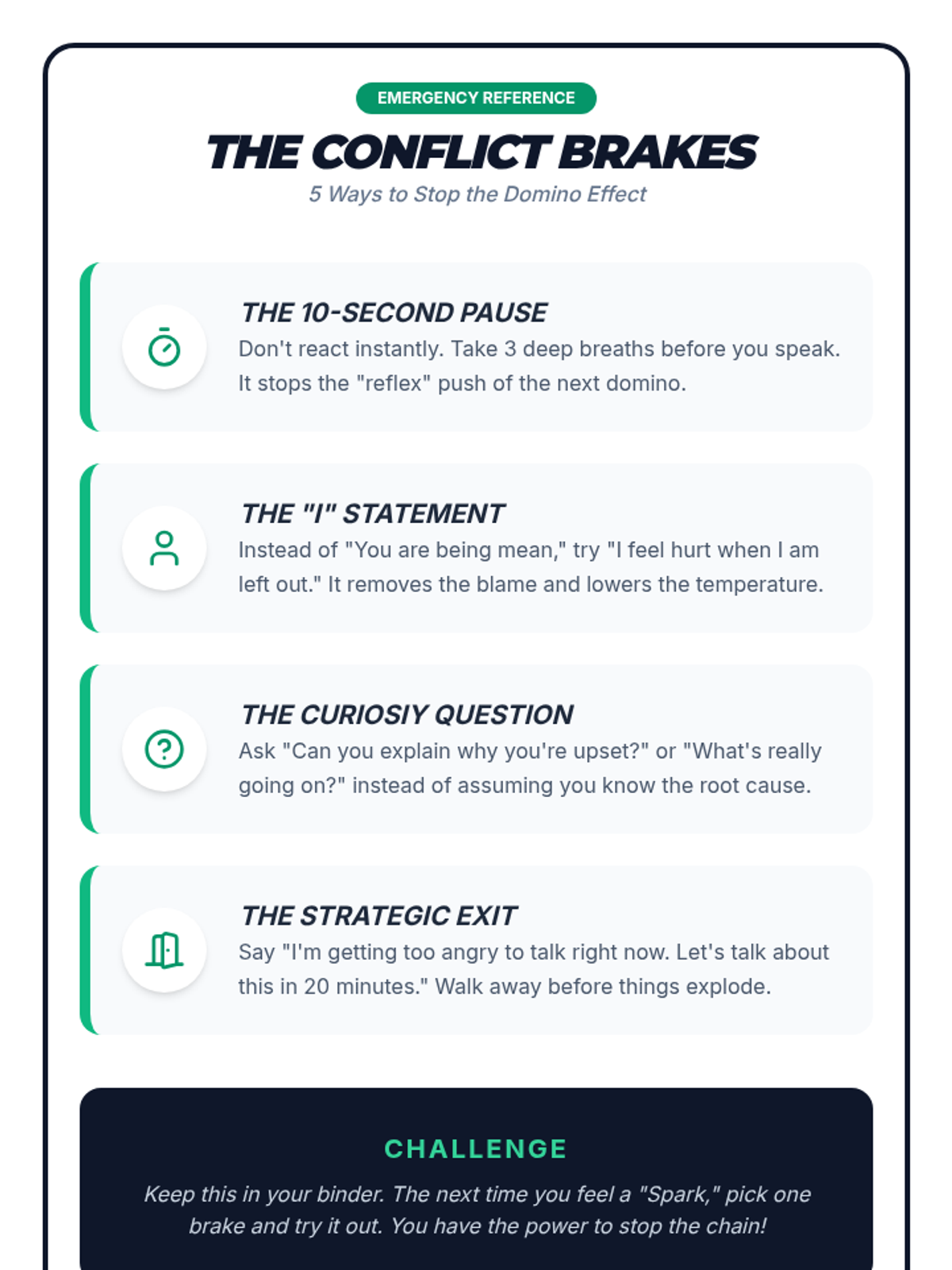
Analyzes the cycle of escalation, identifying triggers and turning points where conflicts can be de-escalated before reaching a breaking point.
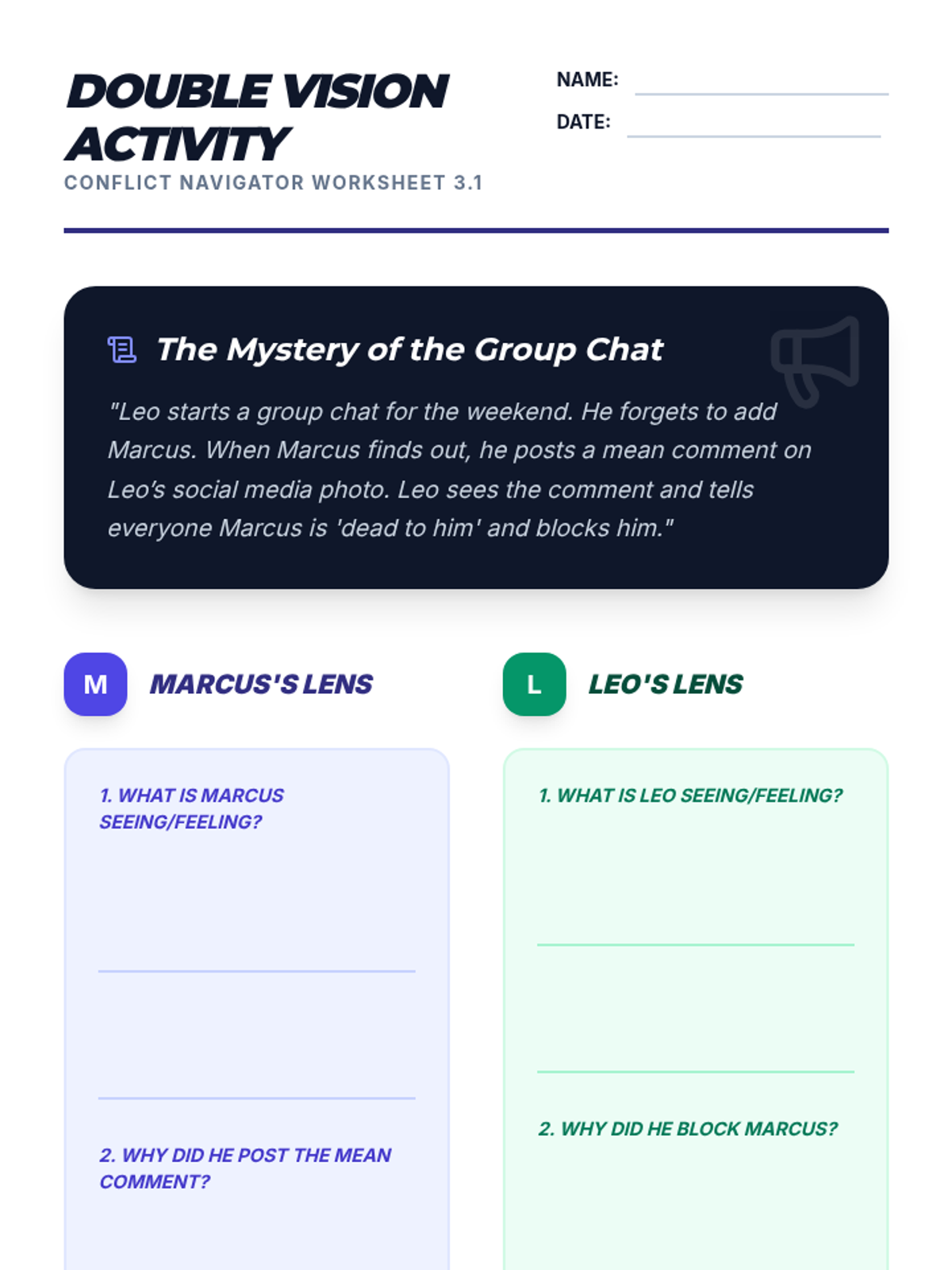
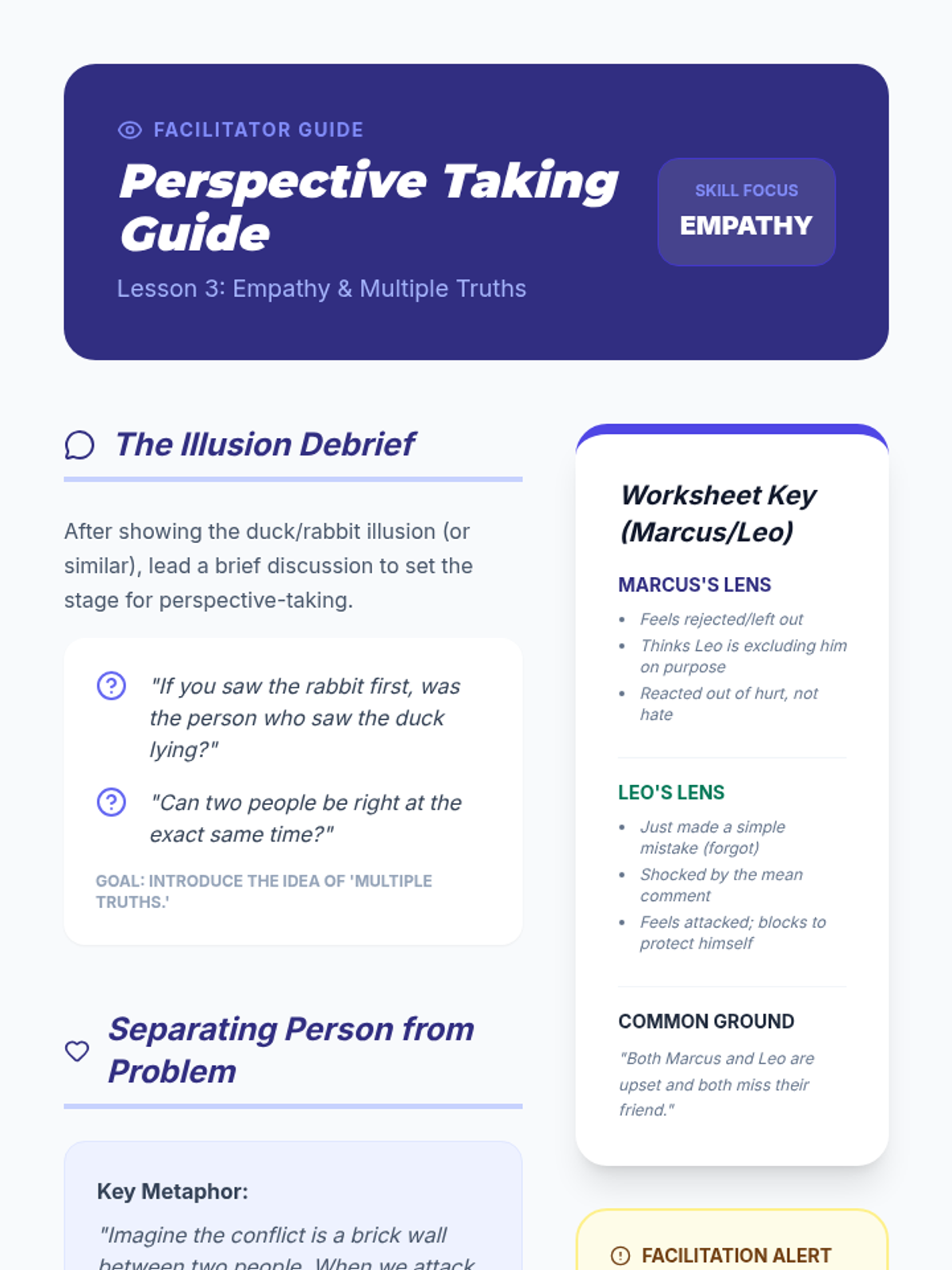
Focuses on perspective-taking and empathy through visual illusions and story-mapping, teaching students to see multiple truths in a single dispute.
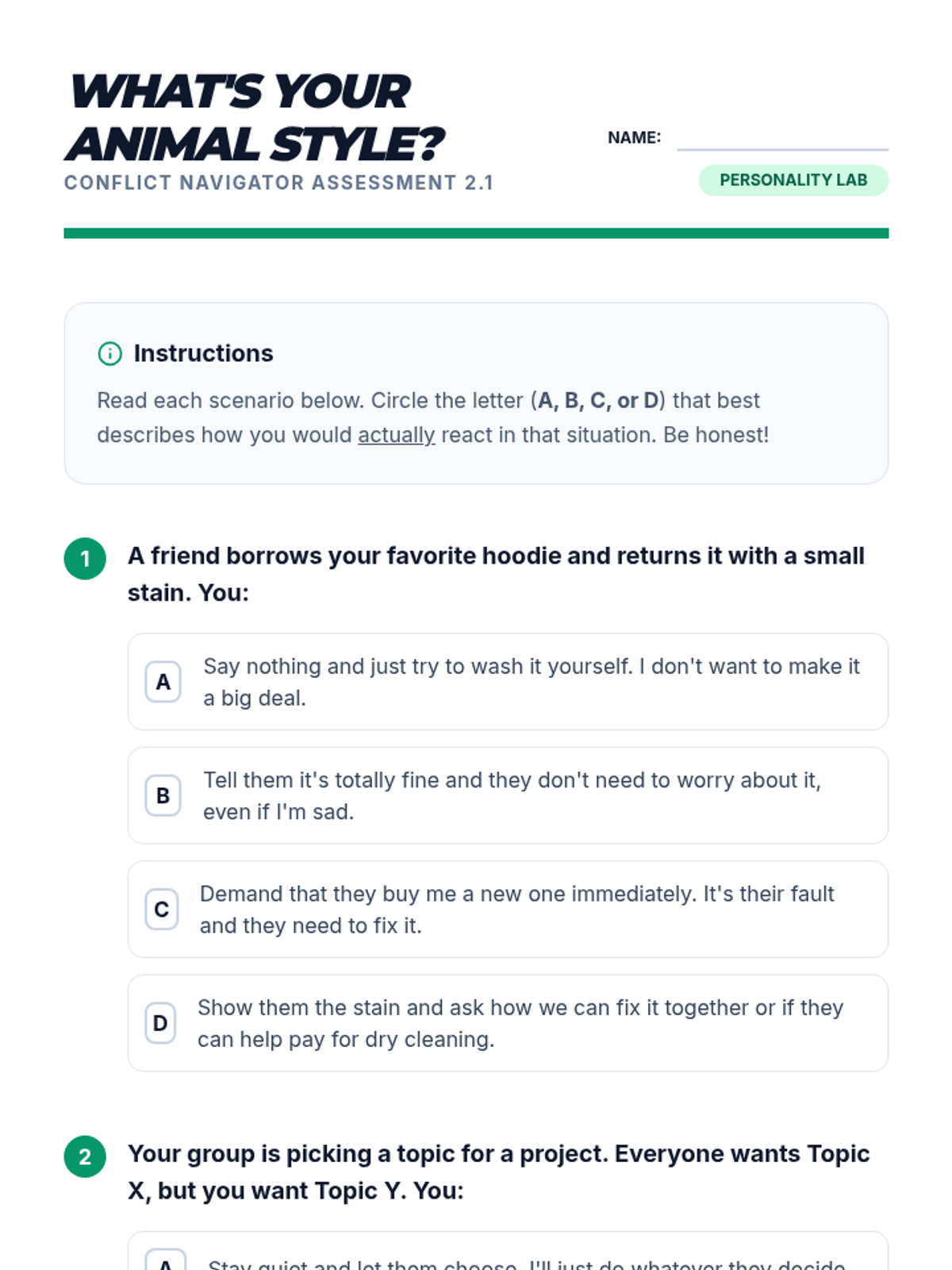
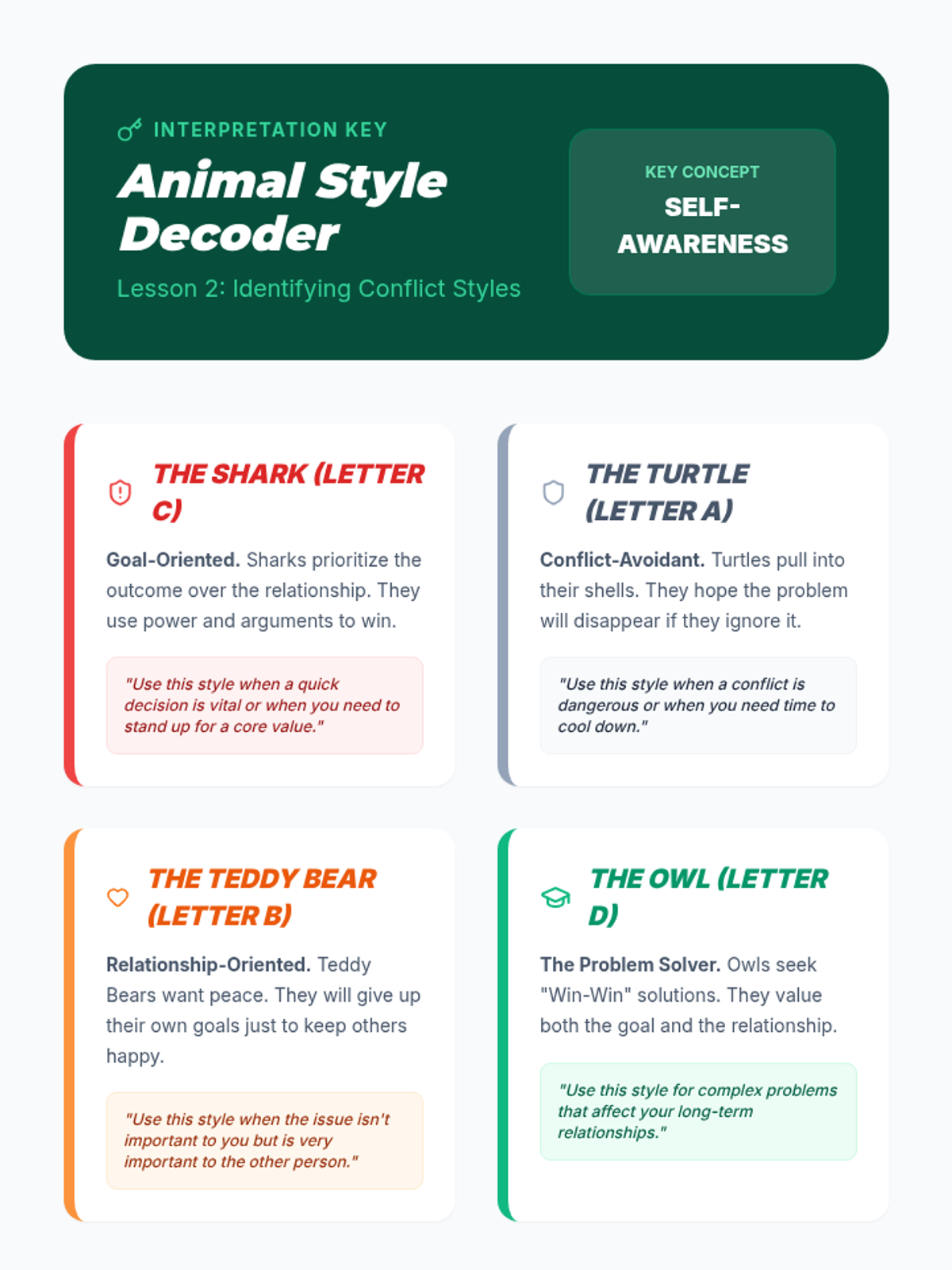
Students explore five core conflict styles (Shark, Turtle, Teddy Bear, Fox, Owl) to understand their default reactions and the impact on others.
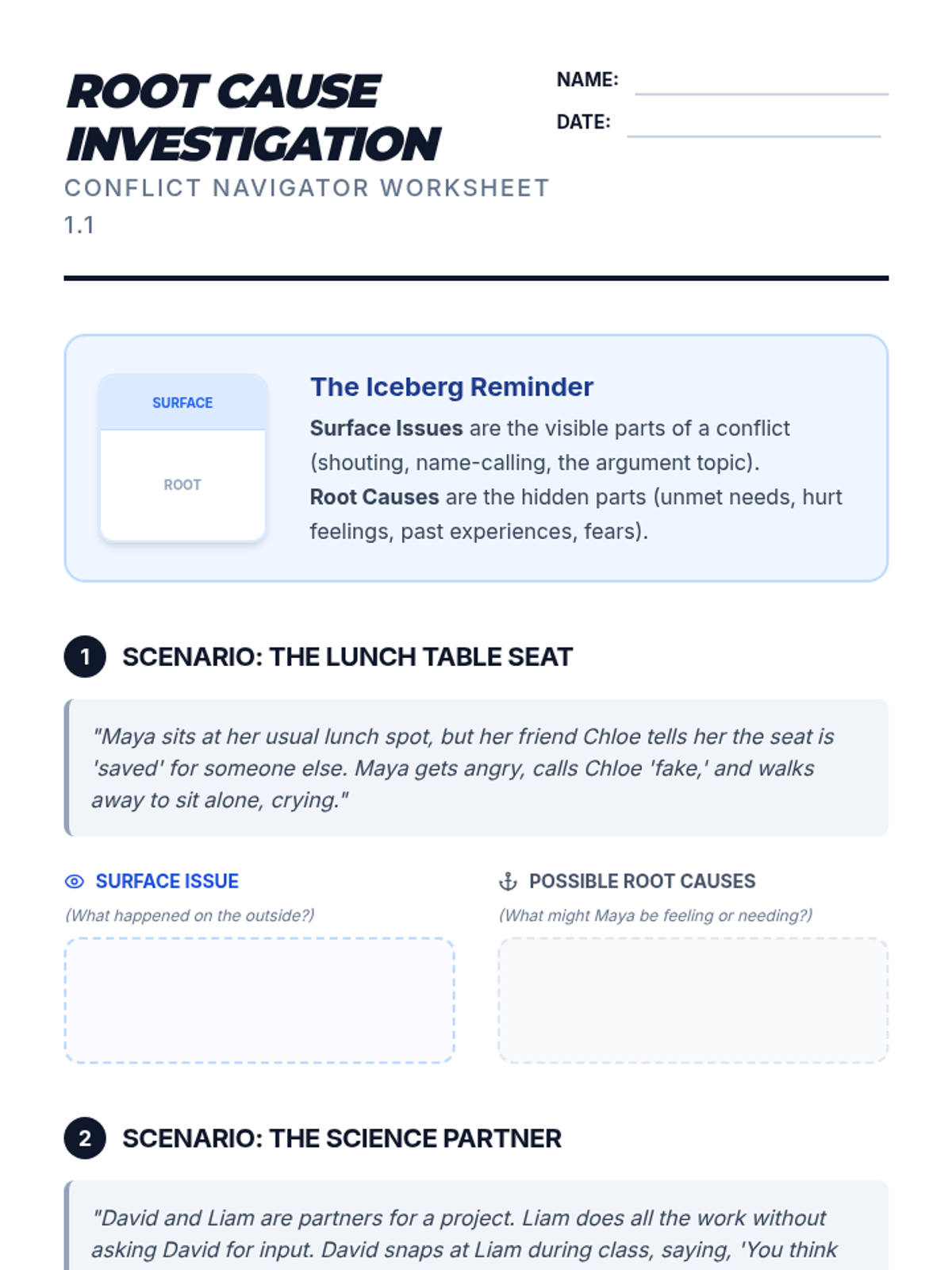
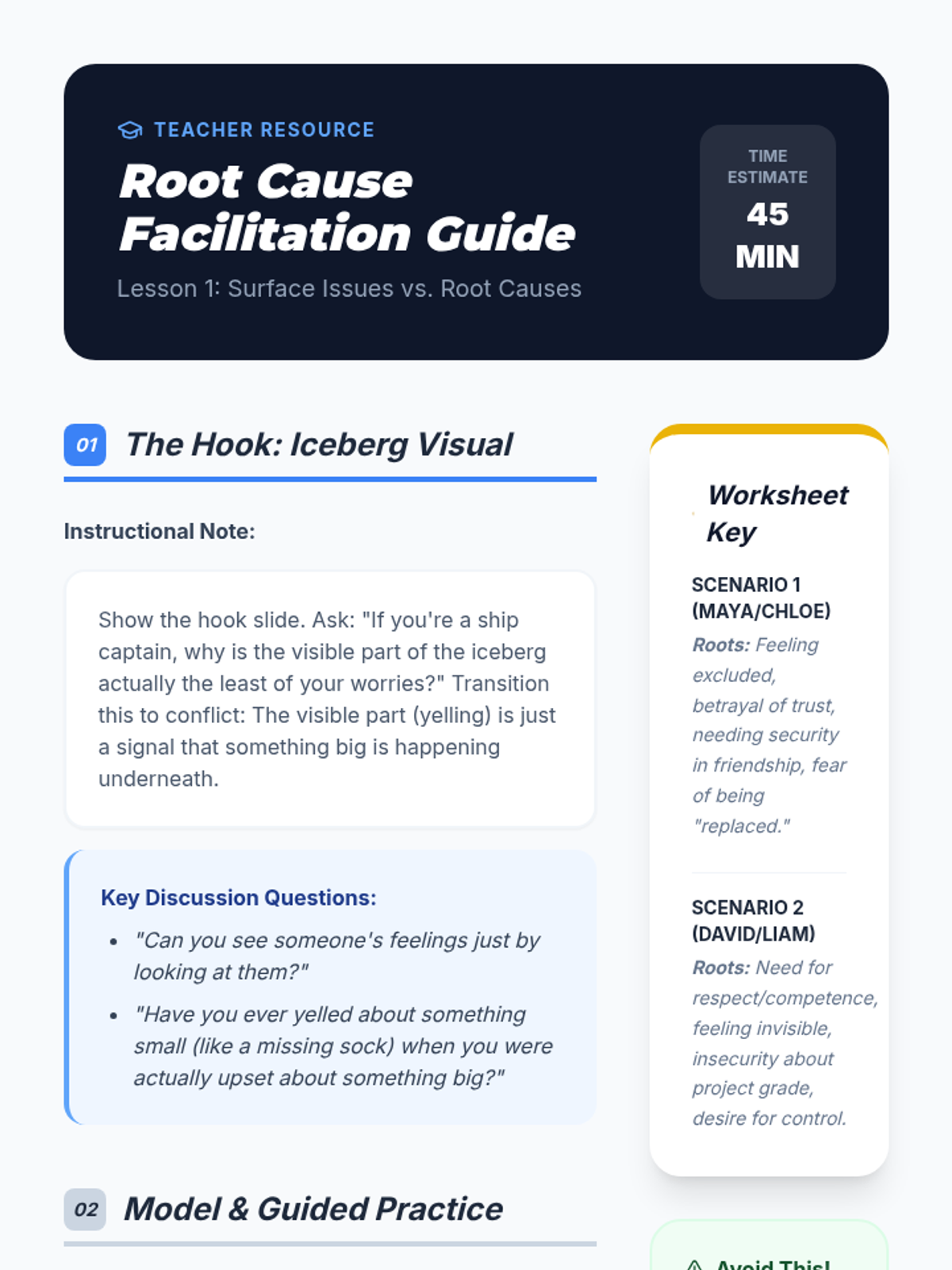
Introduces the Iceberg Model to help students differentiate between the surface argument and the underlying needs, fears, and values driving conflict.
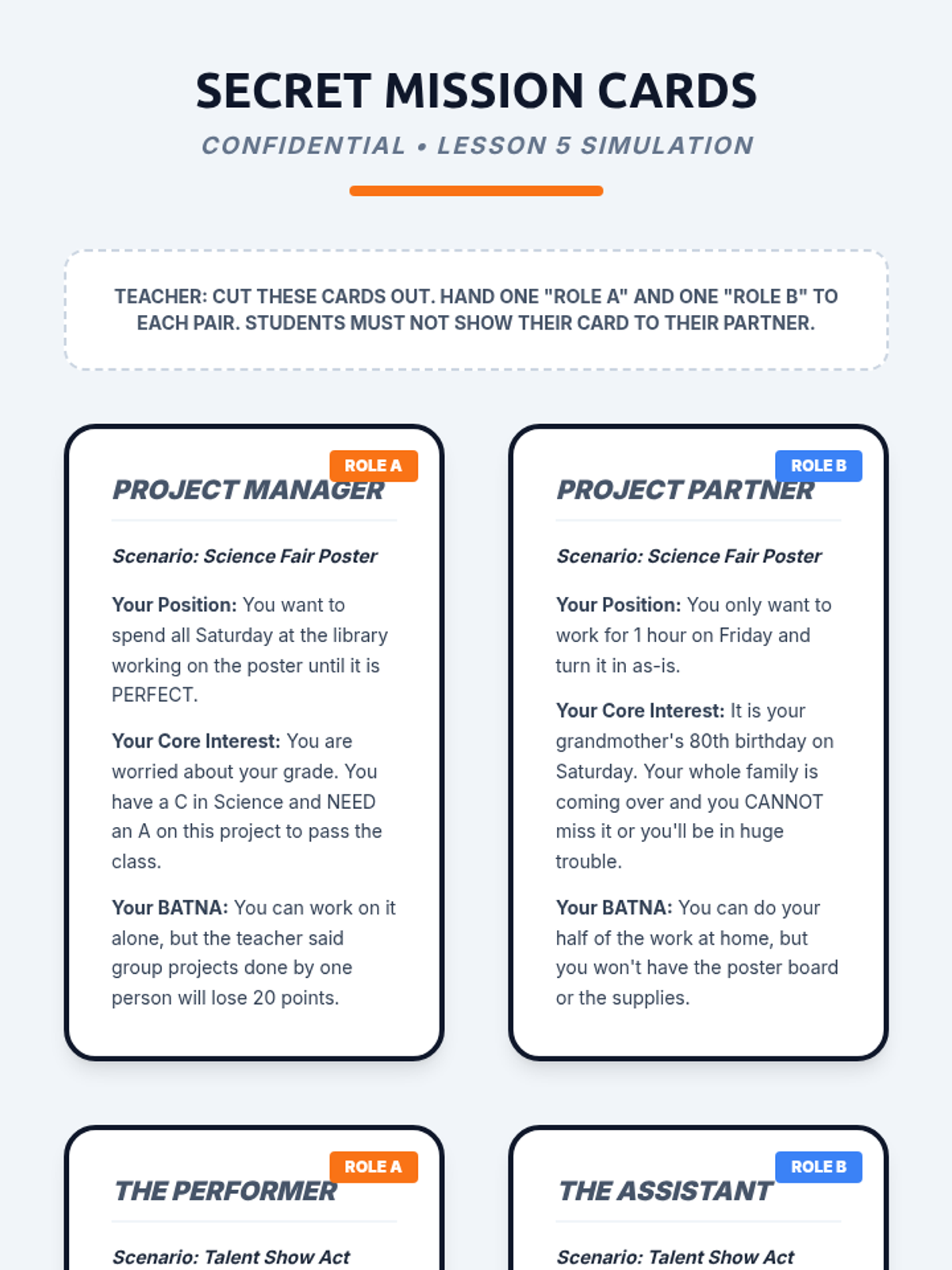
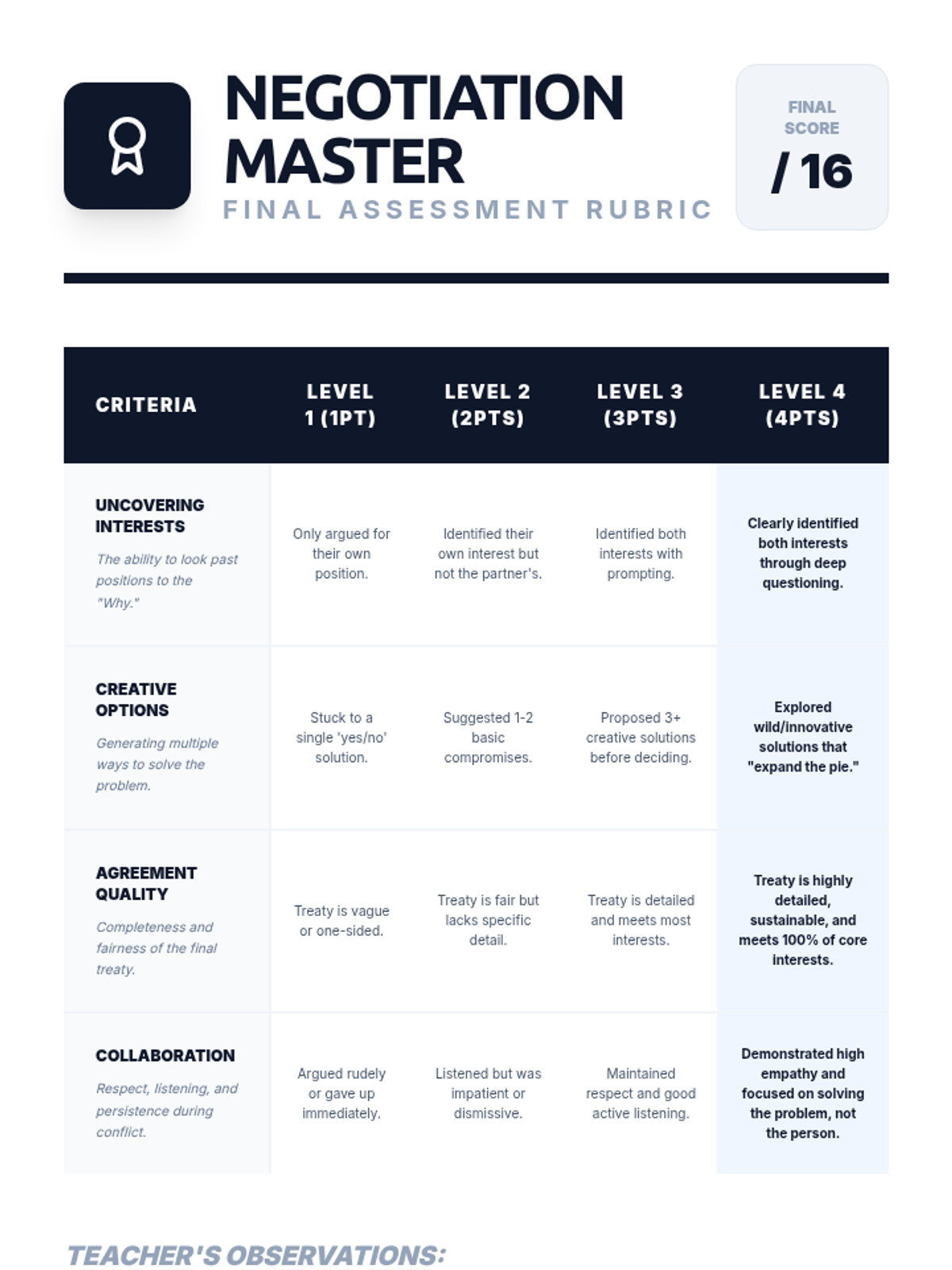
A final simulation where students apply all learned skills to negotiate a complex agreement using secret mission cards.
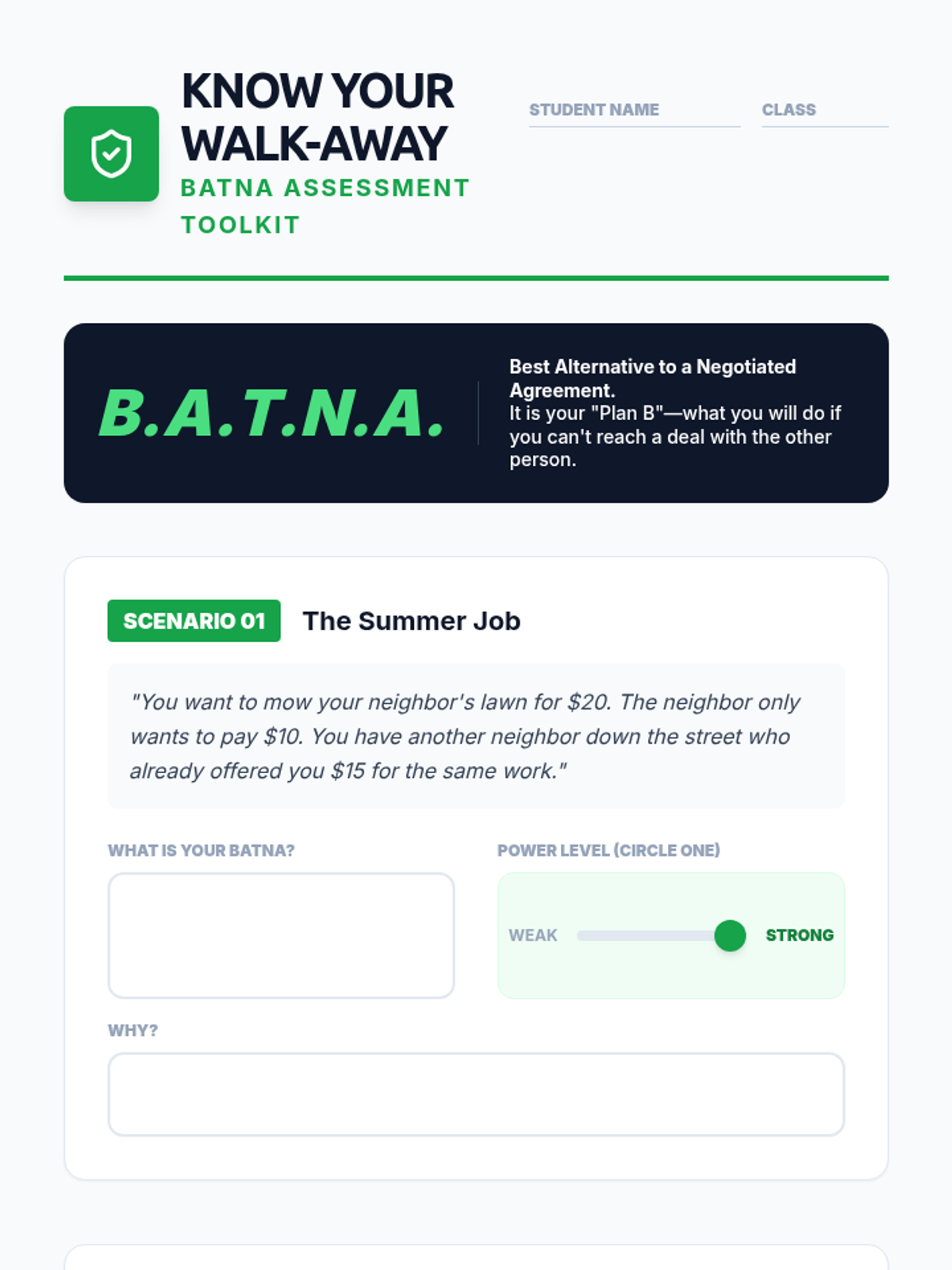
Introduces the concept of BATNA (Best Alternative to a Negotiated Agreement) to help students understand their power and walk-away points.
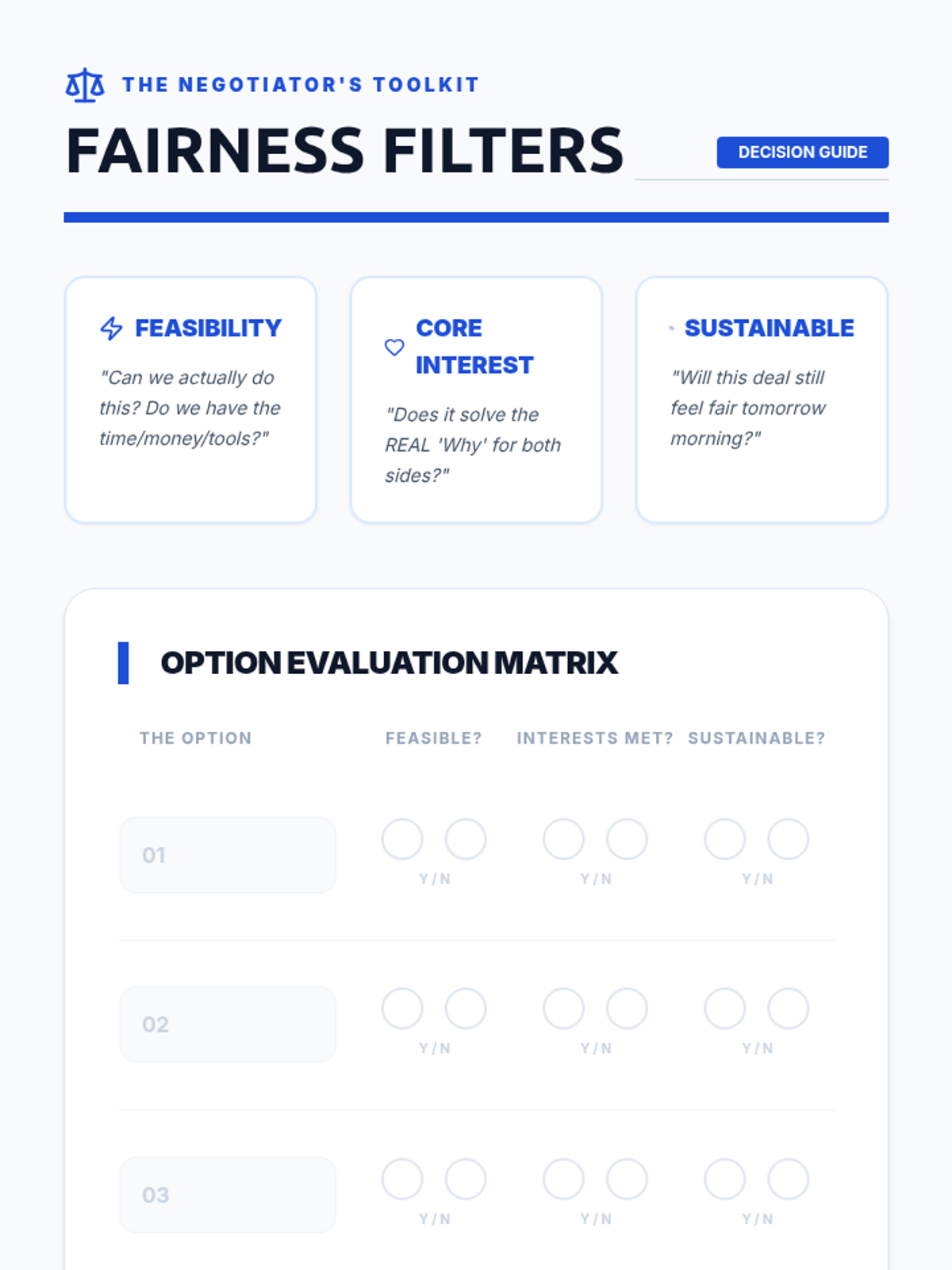
Explores different concepts of fairness (equality, equity, need) and how to evaluate potential solutions.
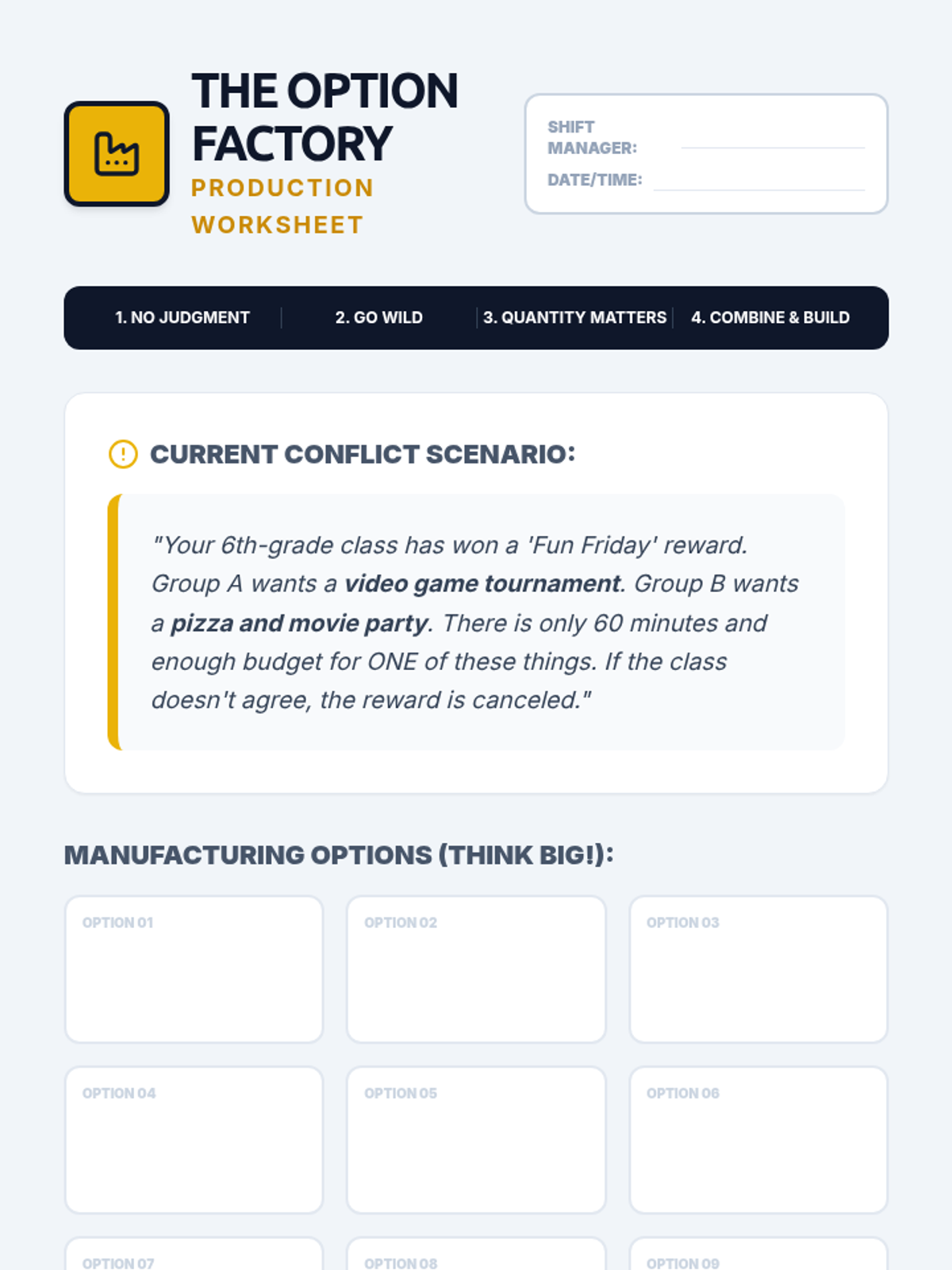
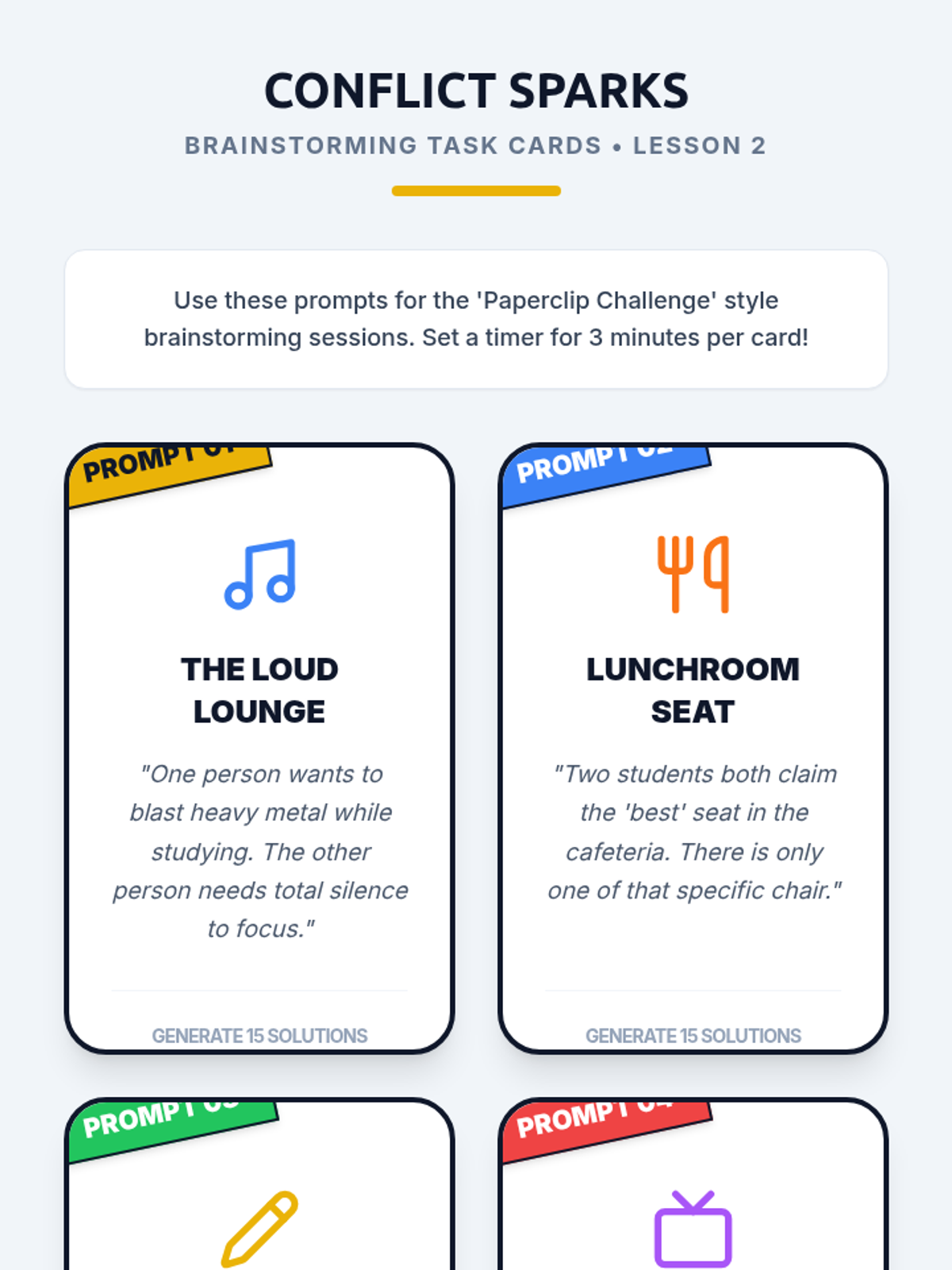
Focuses on the creative phase of negotiation, teaching students how to generate a wide range of options without judgment.
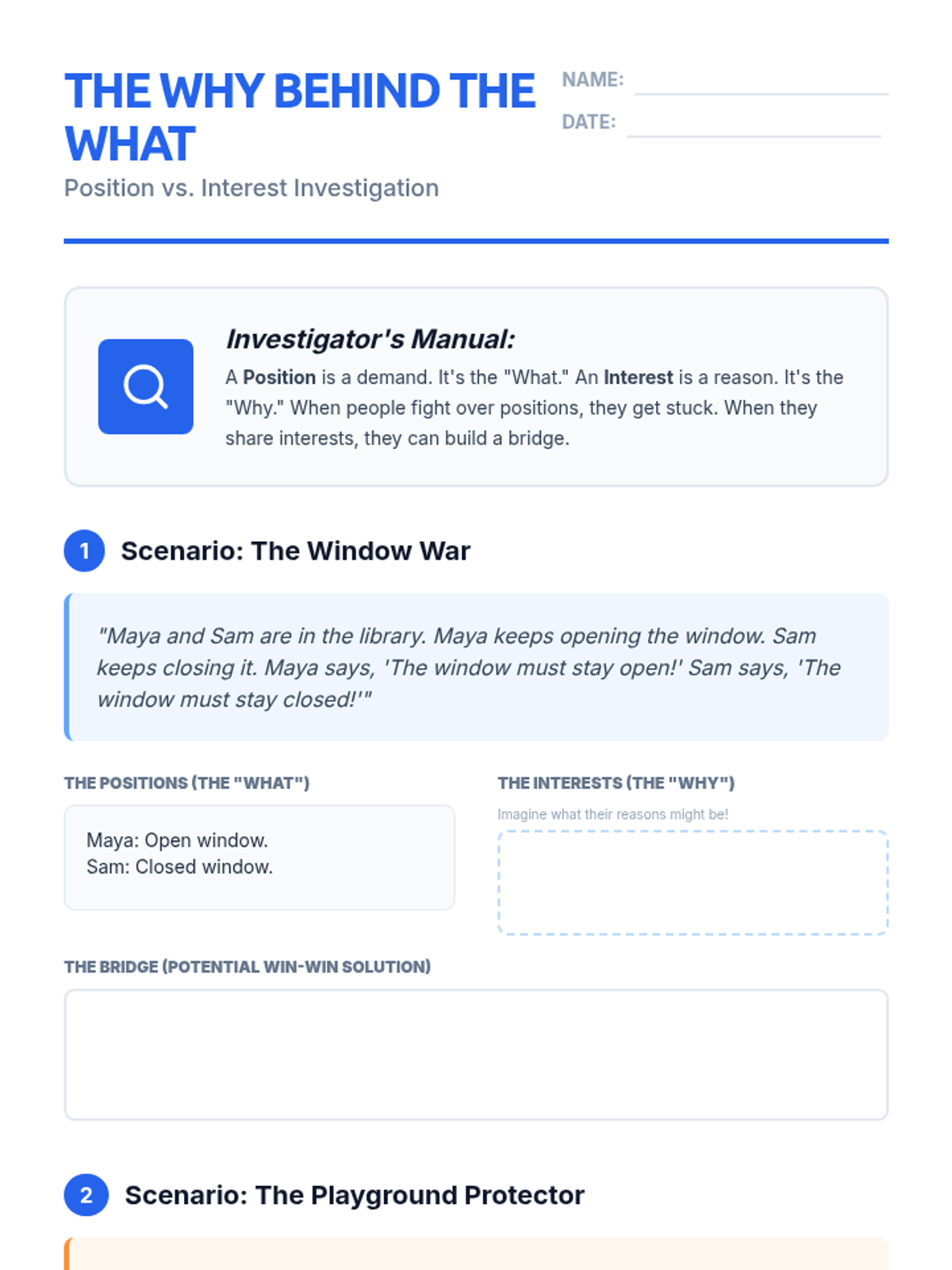
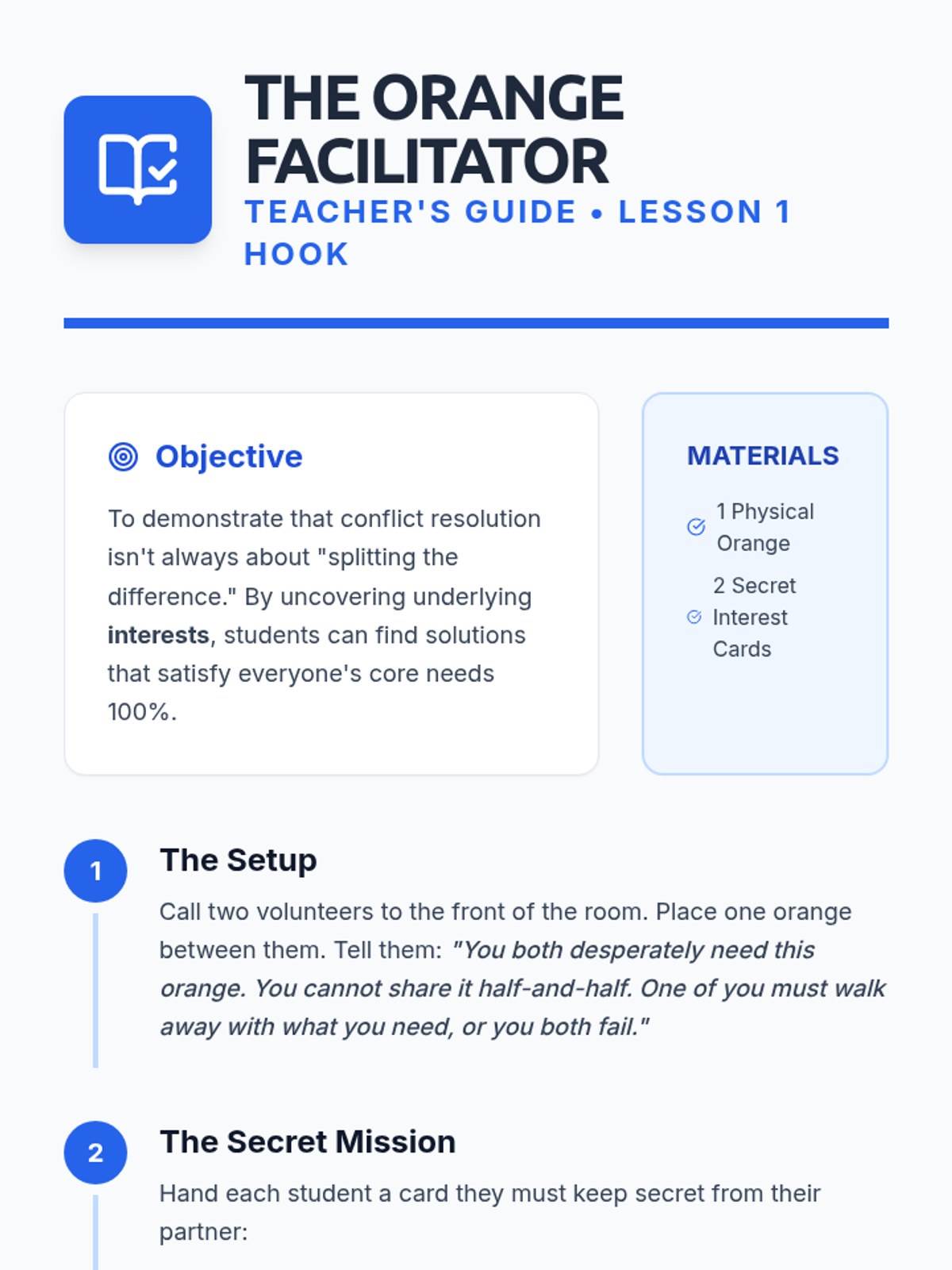
Students learn to distinguish between rigid positions and underlying interests using the 'Orange Story' framework.
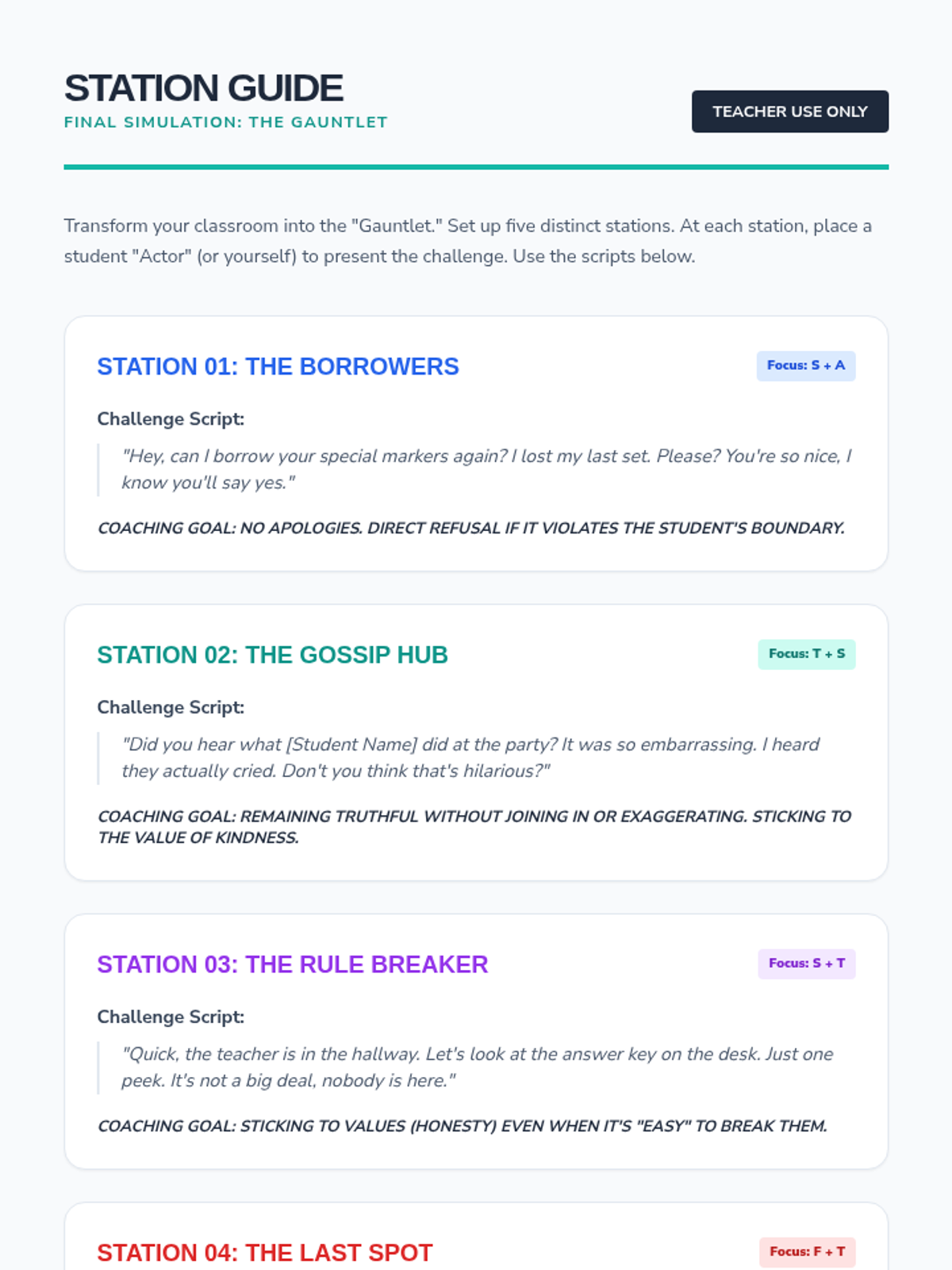
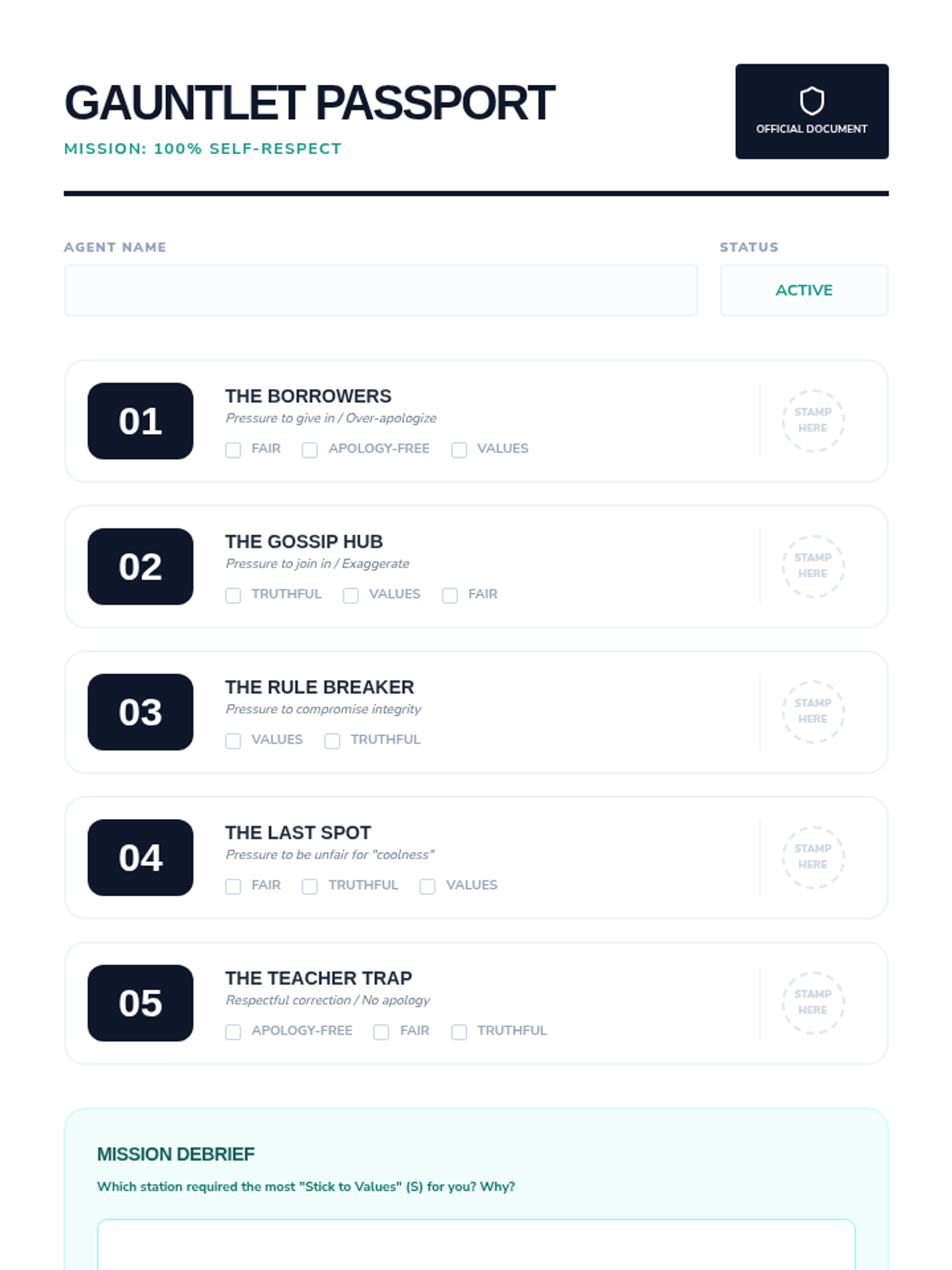
A culminating simulation where students move through stations, each presenting a quick social dilemma. They must apply the appropriate FAST skill effectively to move to the next station.
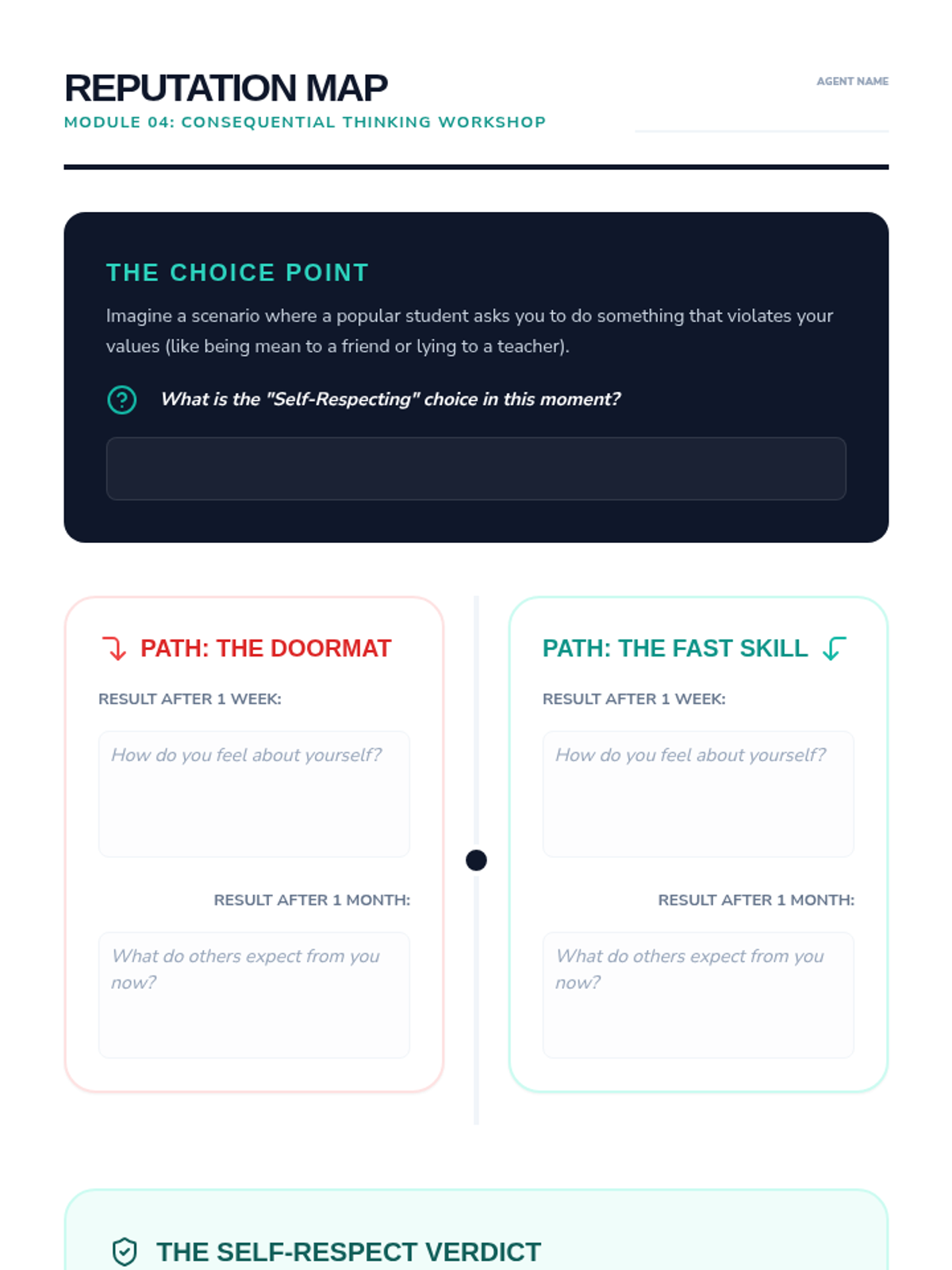
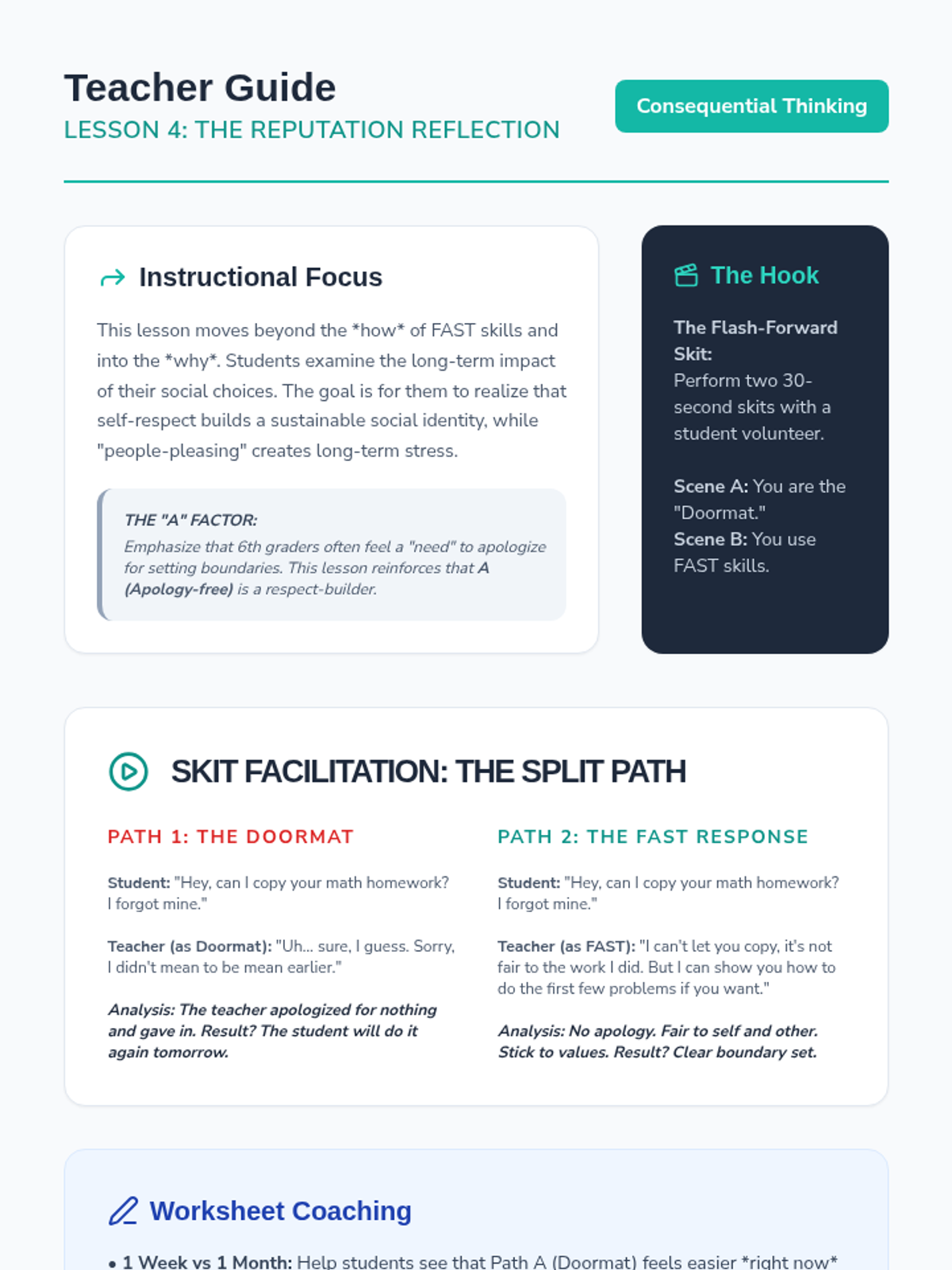
Students examine how using (or ignoring) FAST skills impacts their reputation and long-term relationships. They act out 'future scenarios' showing the long-term results of being a doormat versus being self-respecting.
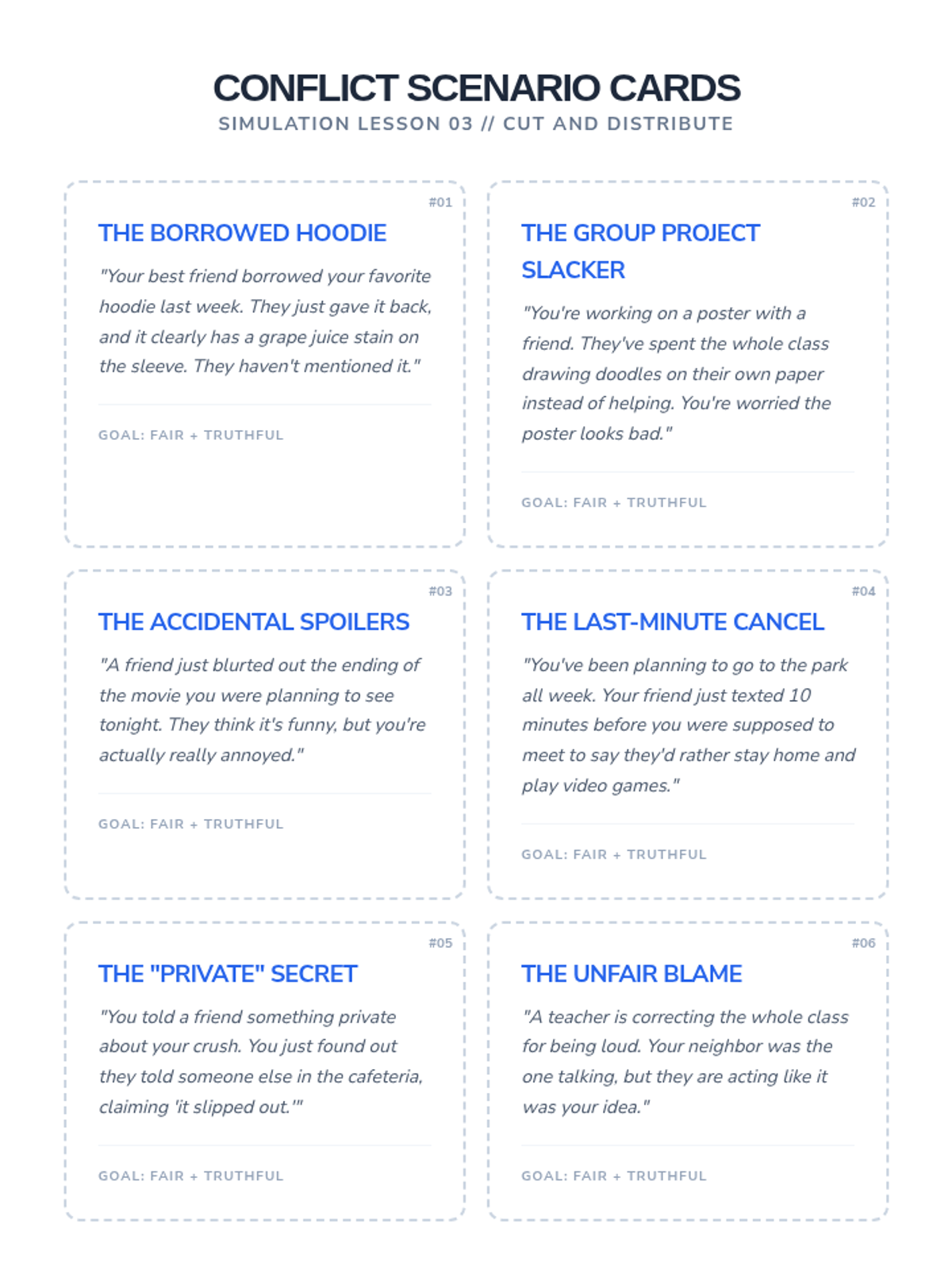
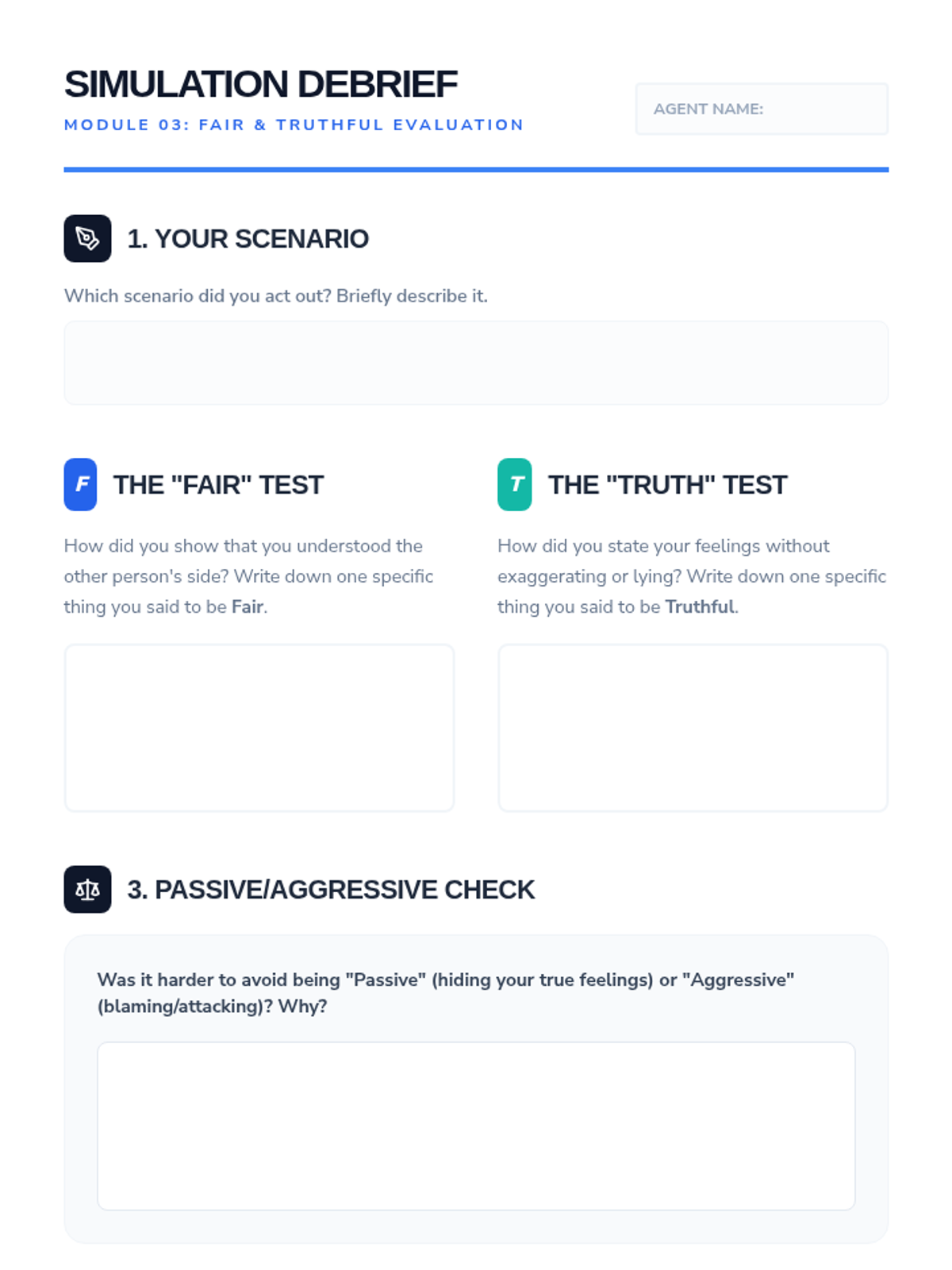
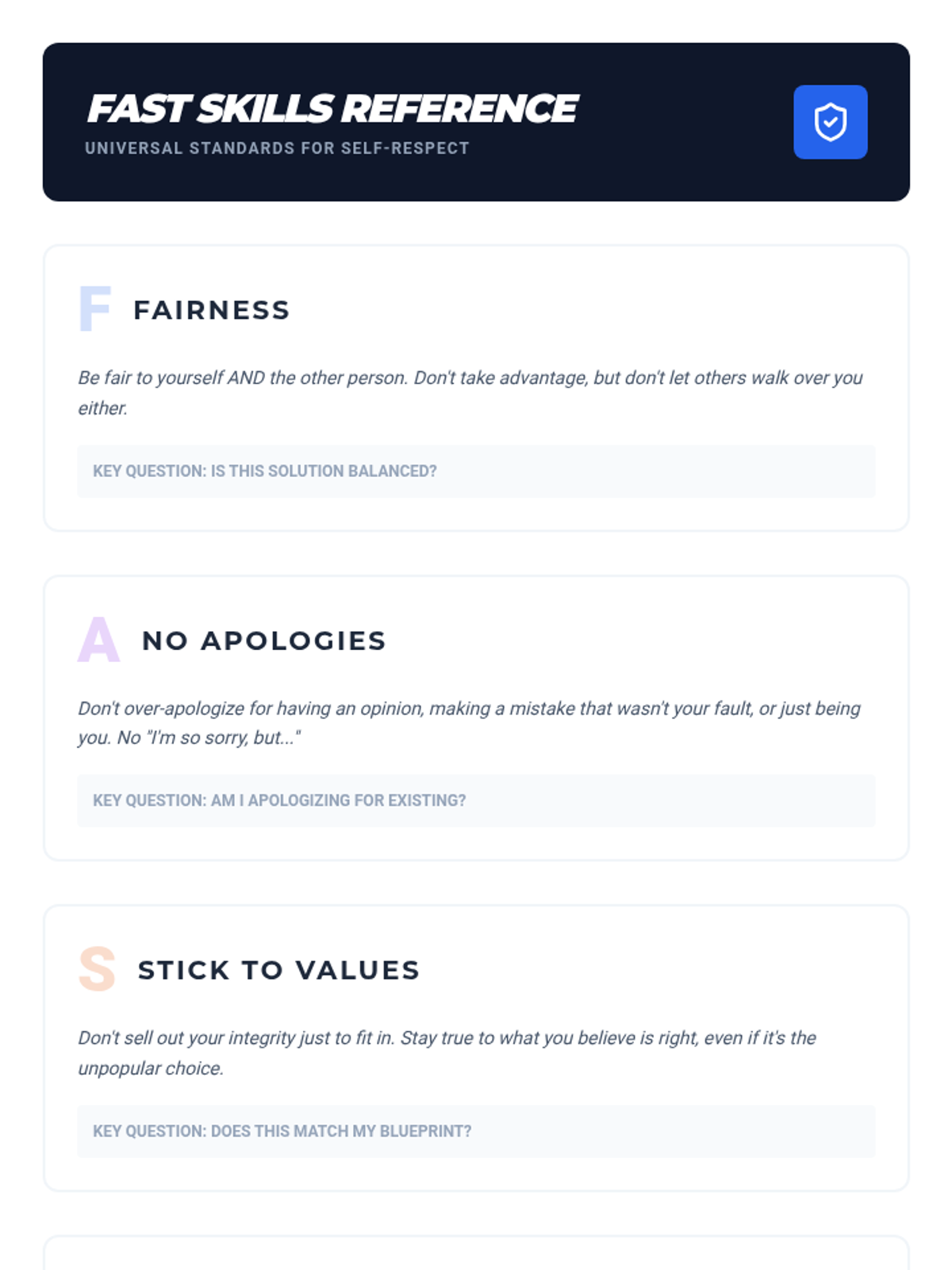
Pairs engage in role-play scenarios involving a disagreement between friends. They practice being 'Fair' to the other person while remaining 'Truthful' about their own feelings, avoiding passive or aggressive behaviors.
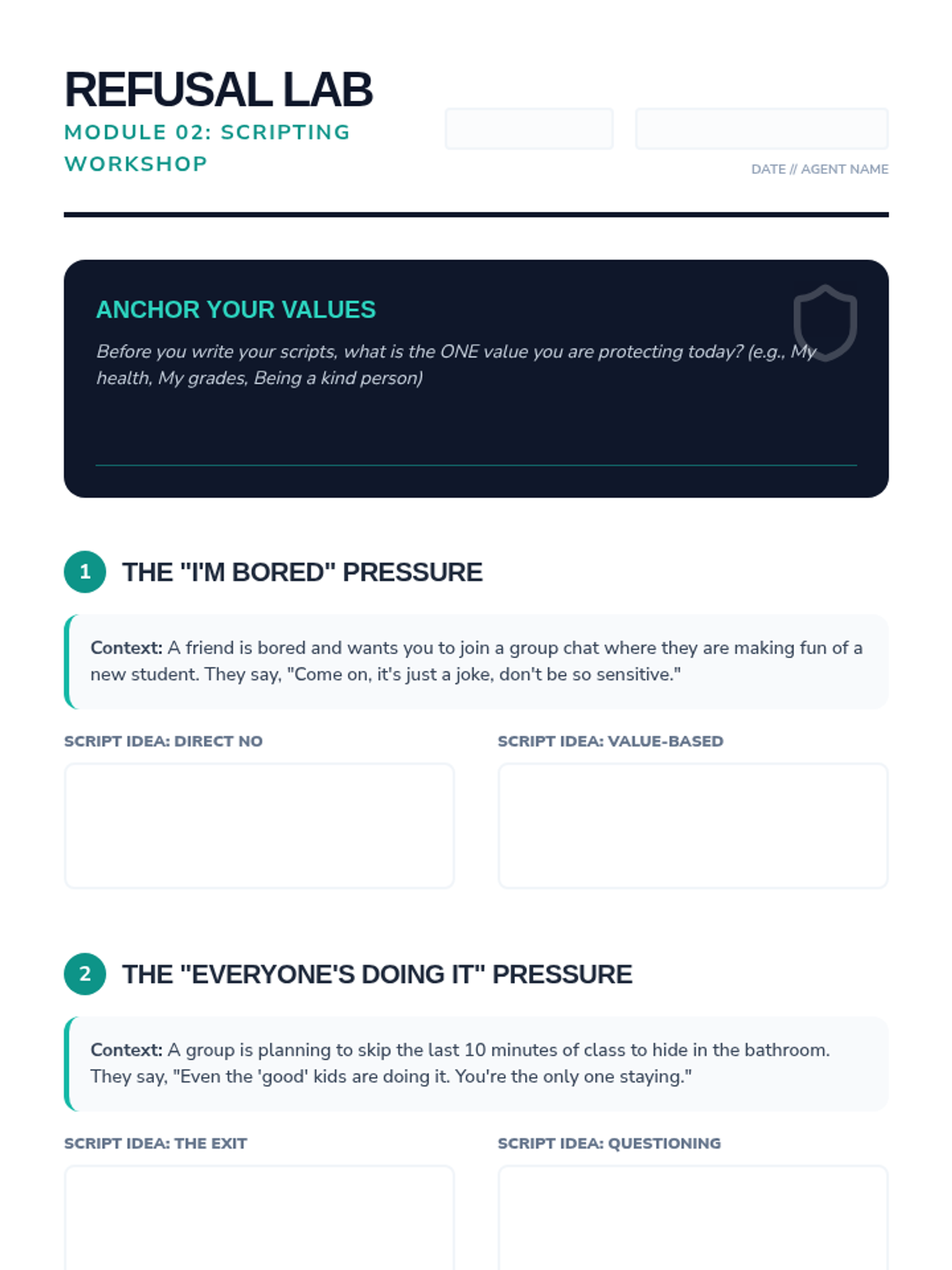
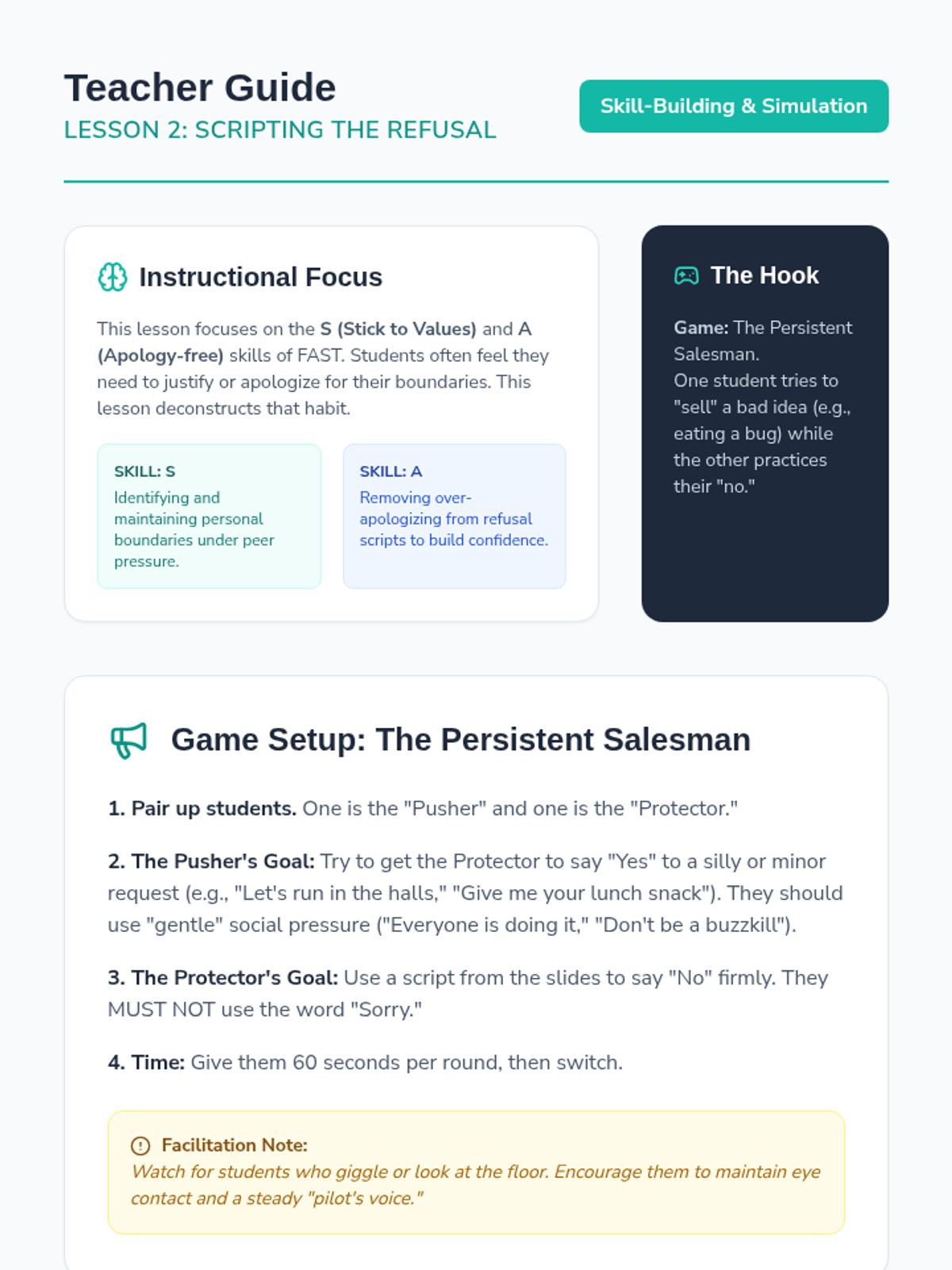
Students write scripts for refusing requests that violate their values (the 'S' in FAST). They learn specific sentence stems that help them say 'no' firmly without over-apologizing.
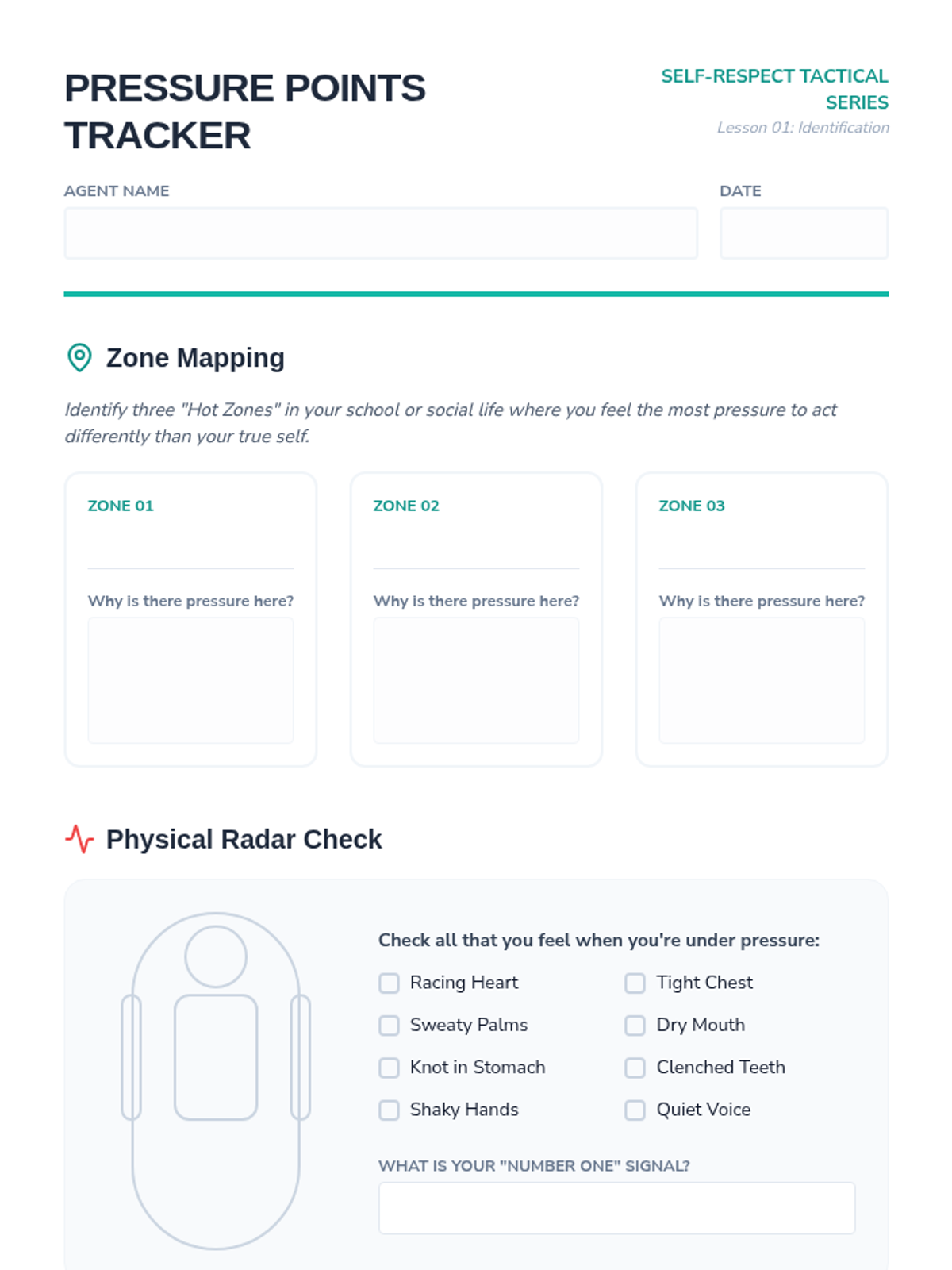
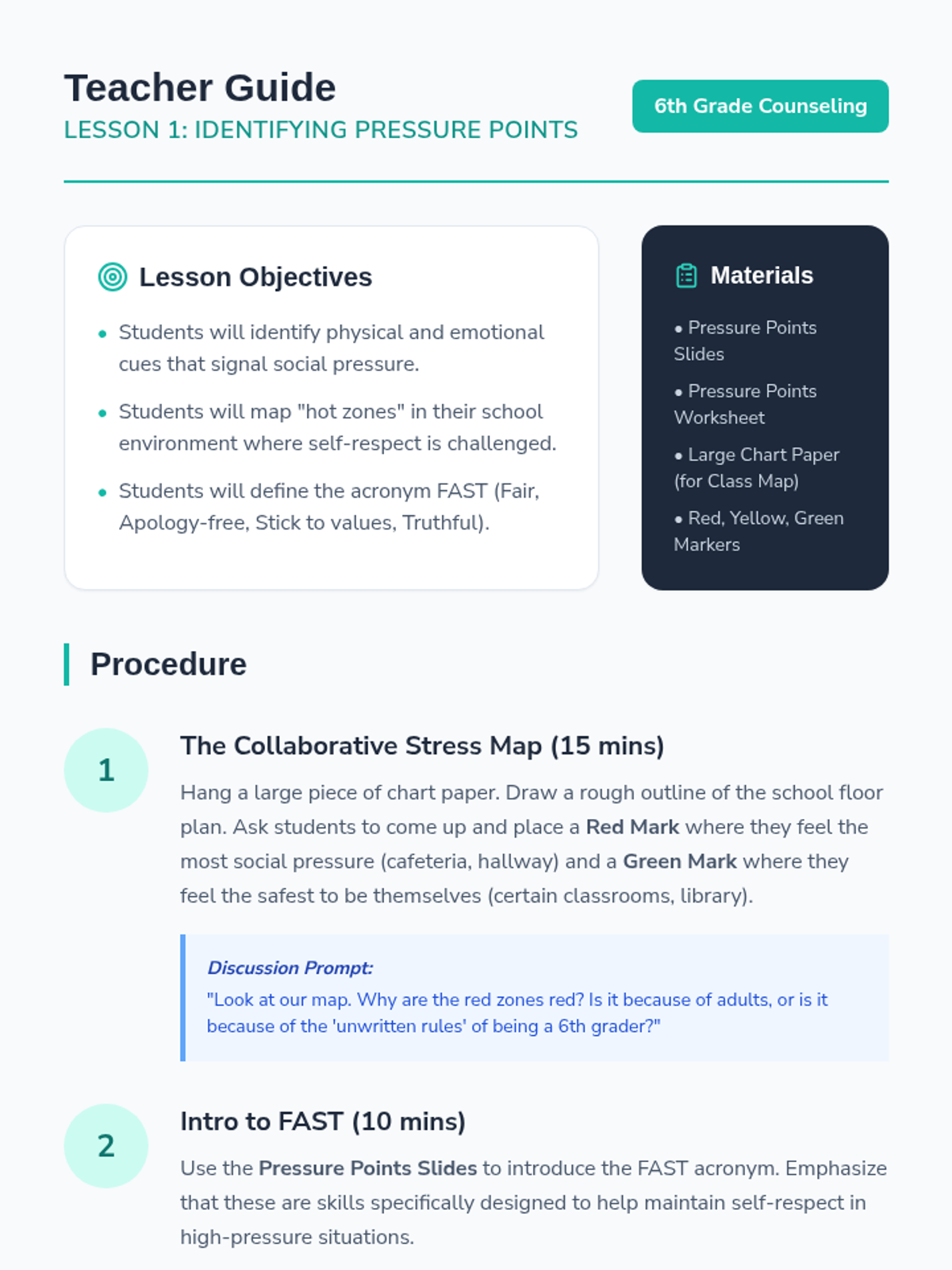
Students map out the 'pressure points' of 6th grade life where self-respect is most often challenged. They analyze the physical and emotional cues that signal their values are being compromised.
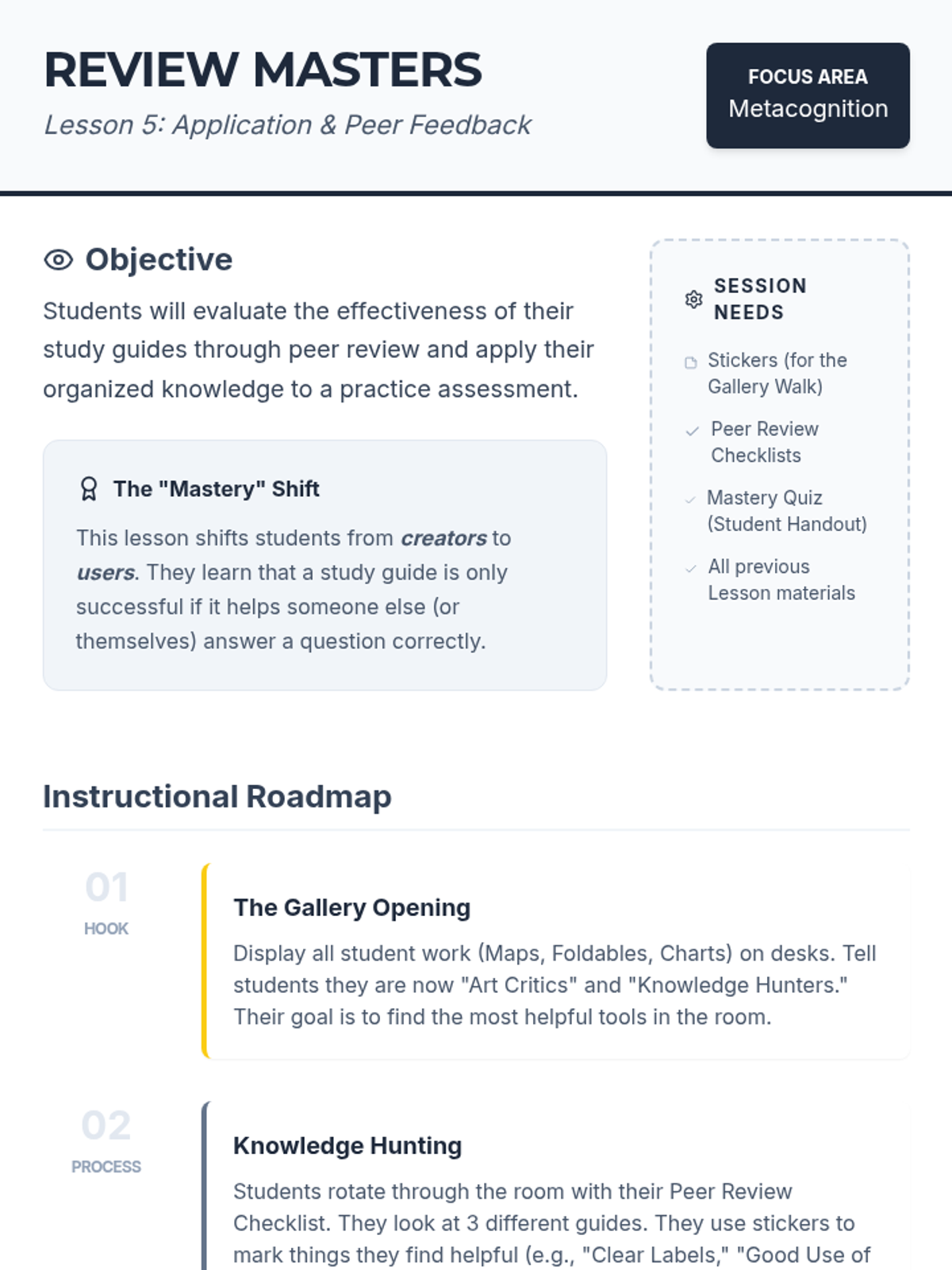
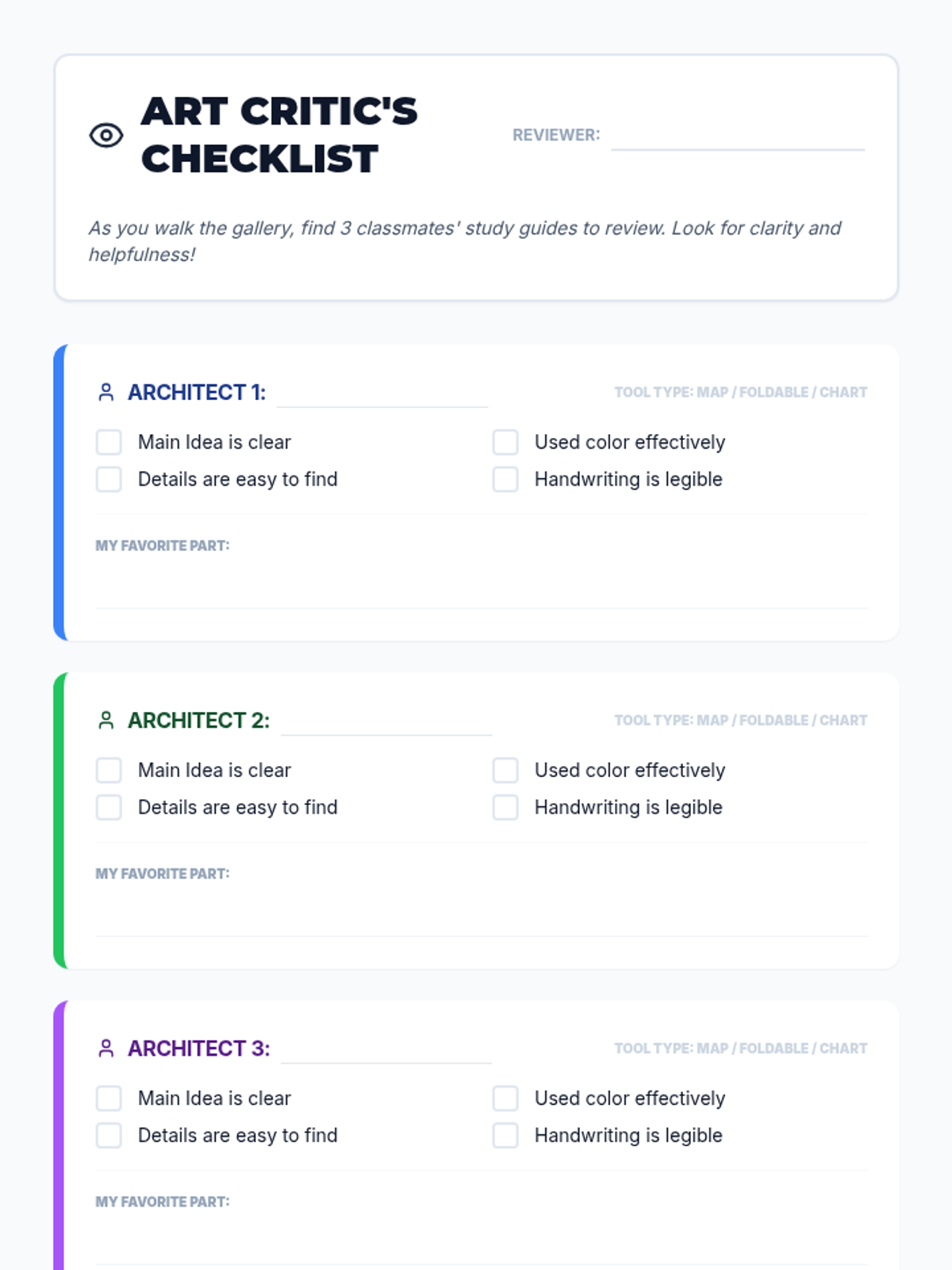
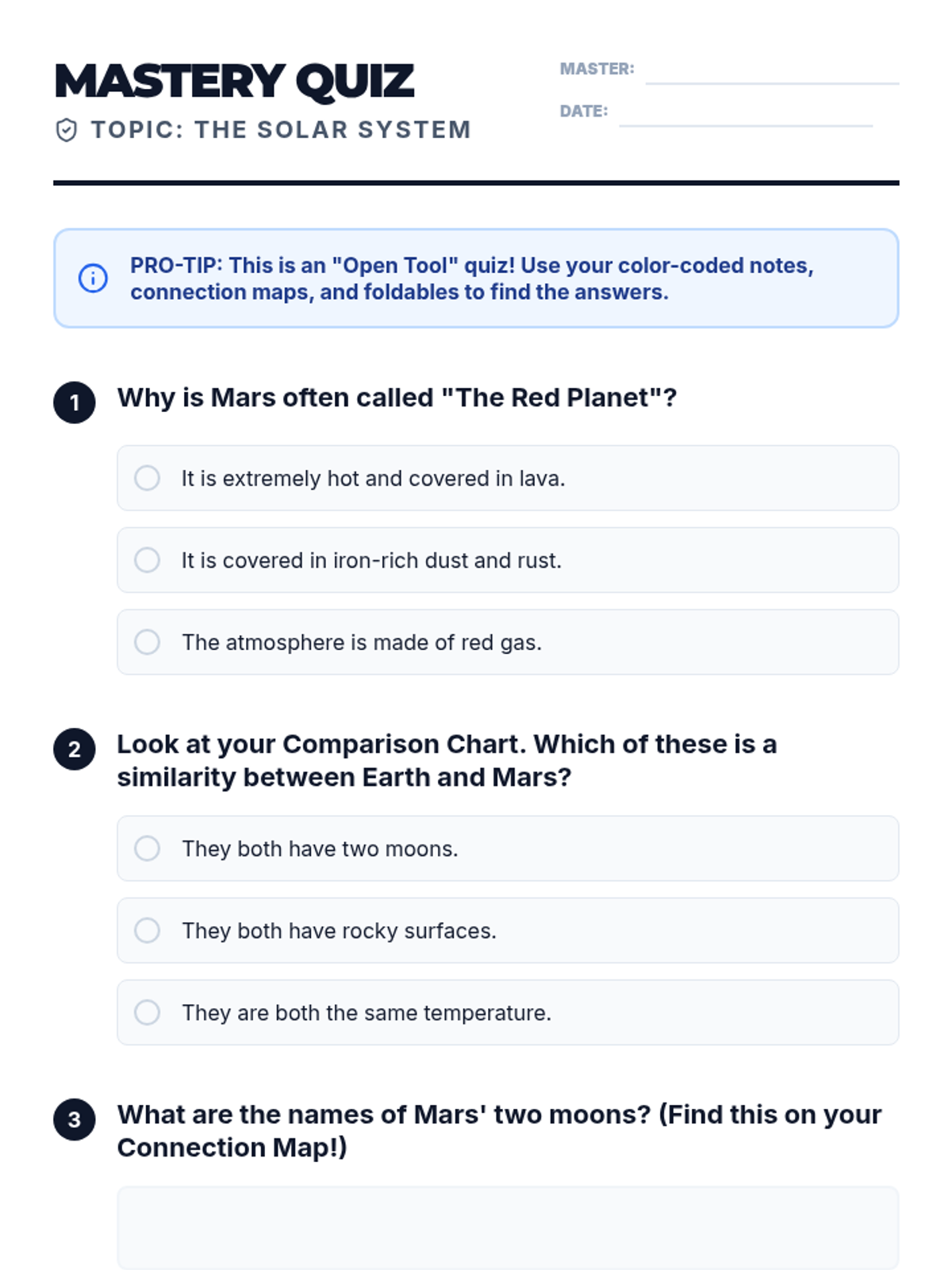
Students peer-review their study guides and apply them to a practice quiz, practicing metacognitive reflection on their learning tools.
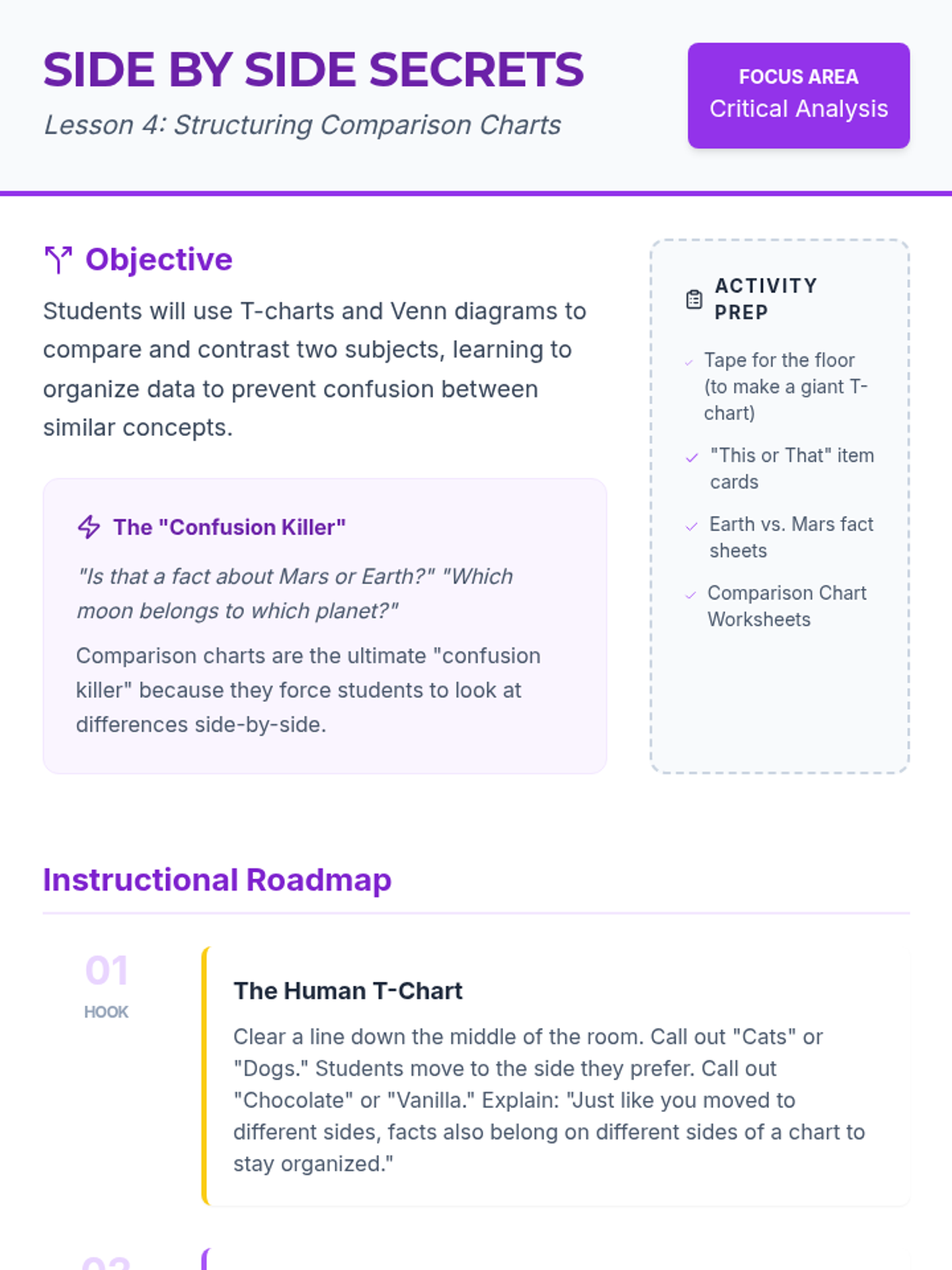
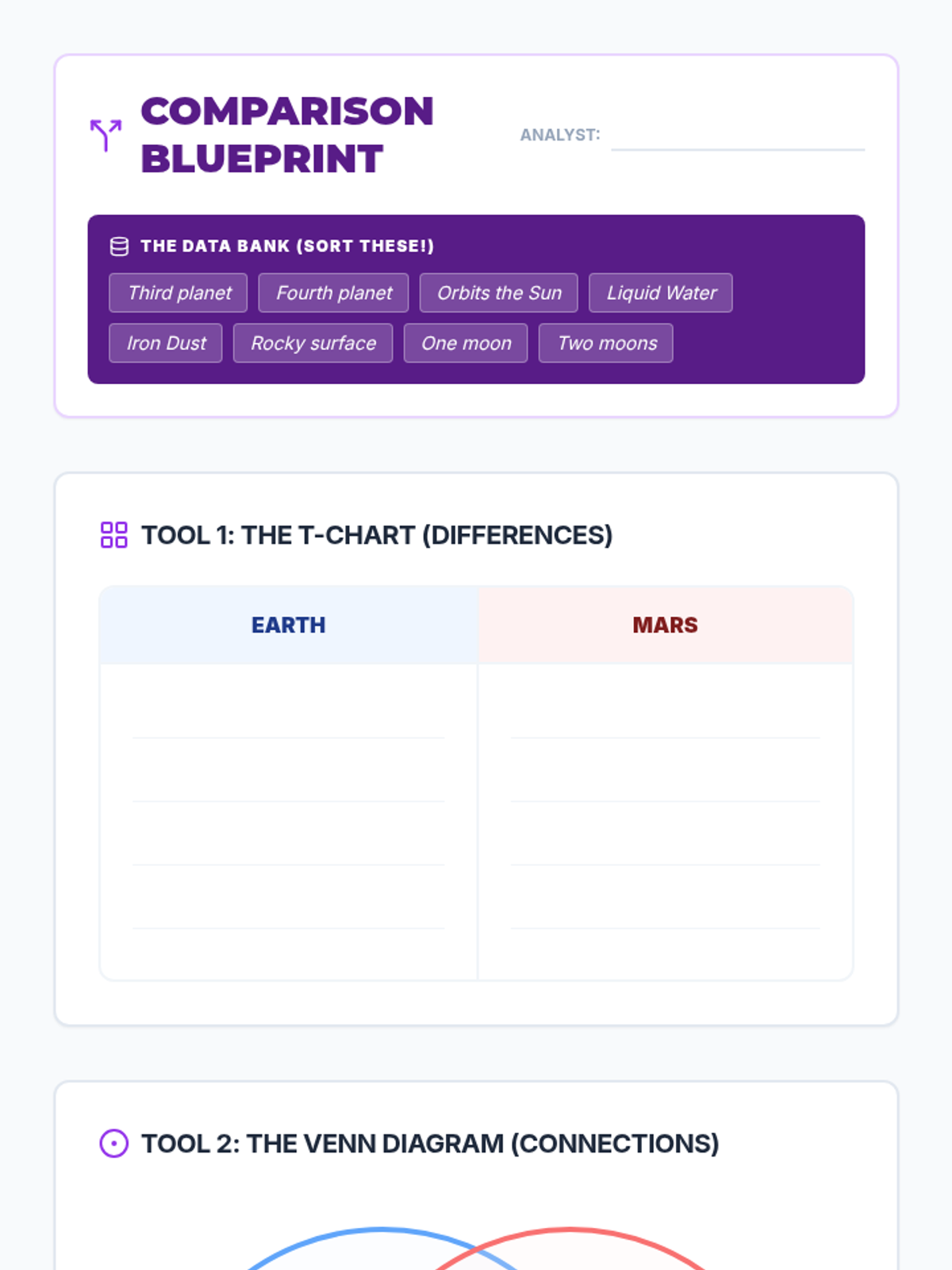
Students use T-charts and Venn diagrams to compare and contrast concepts, organizing data for clearer analysis.
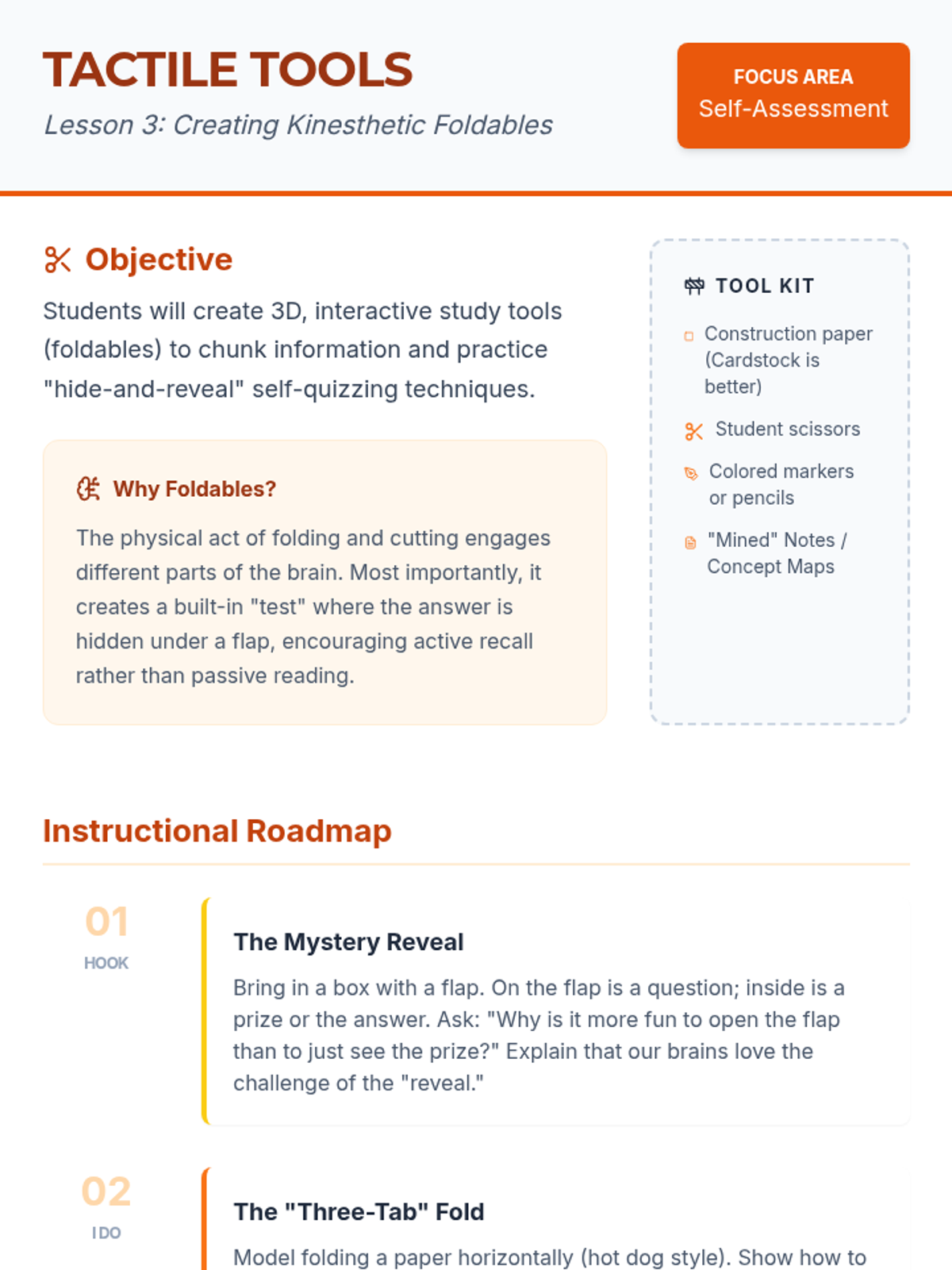
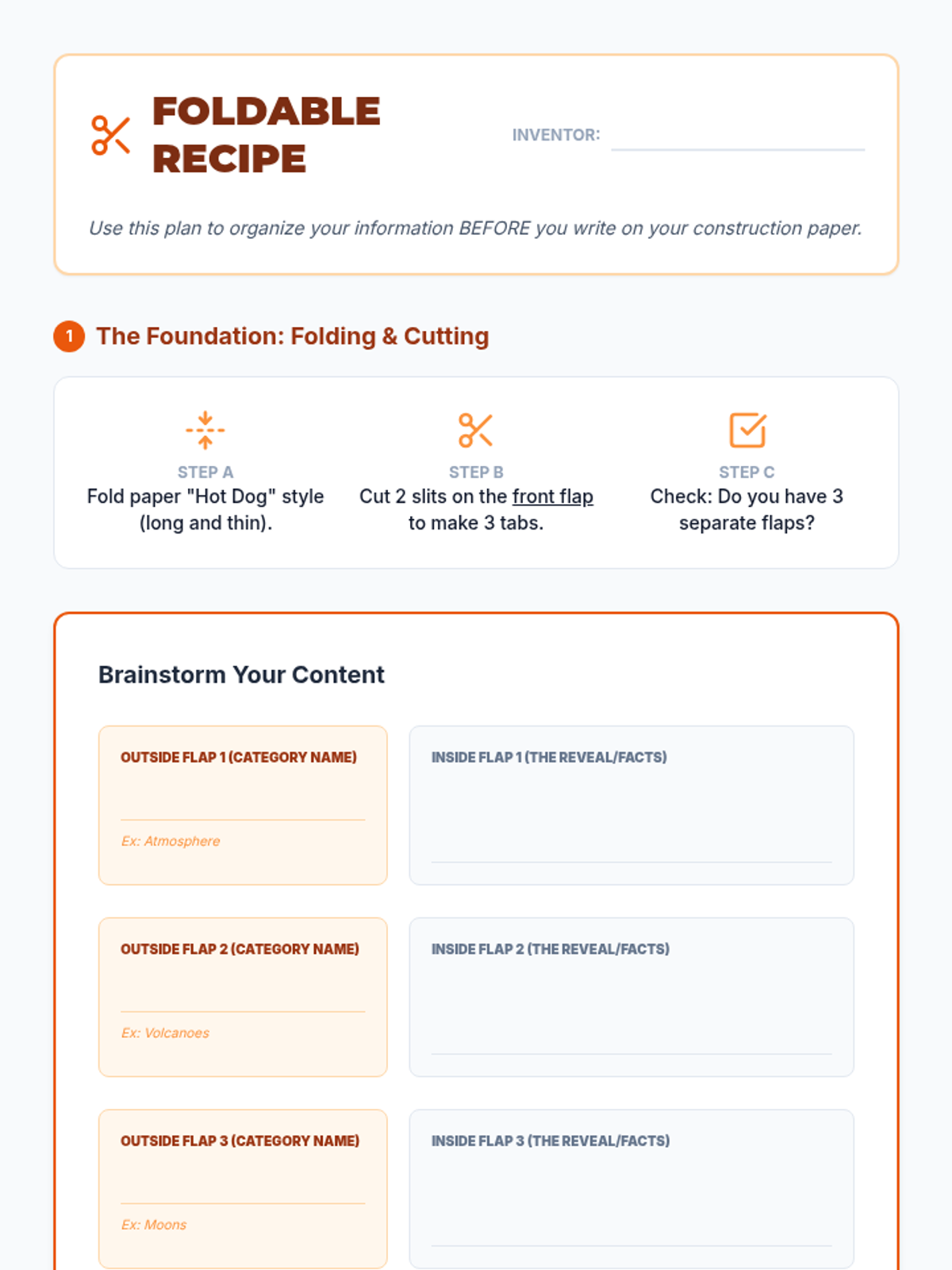
Students create tactile, interactive study tools like foldables to chunk information and encourage self-quizzing.
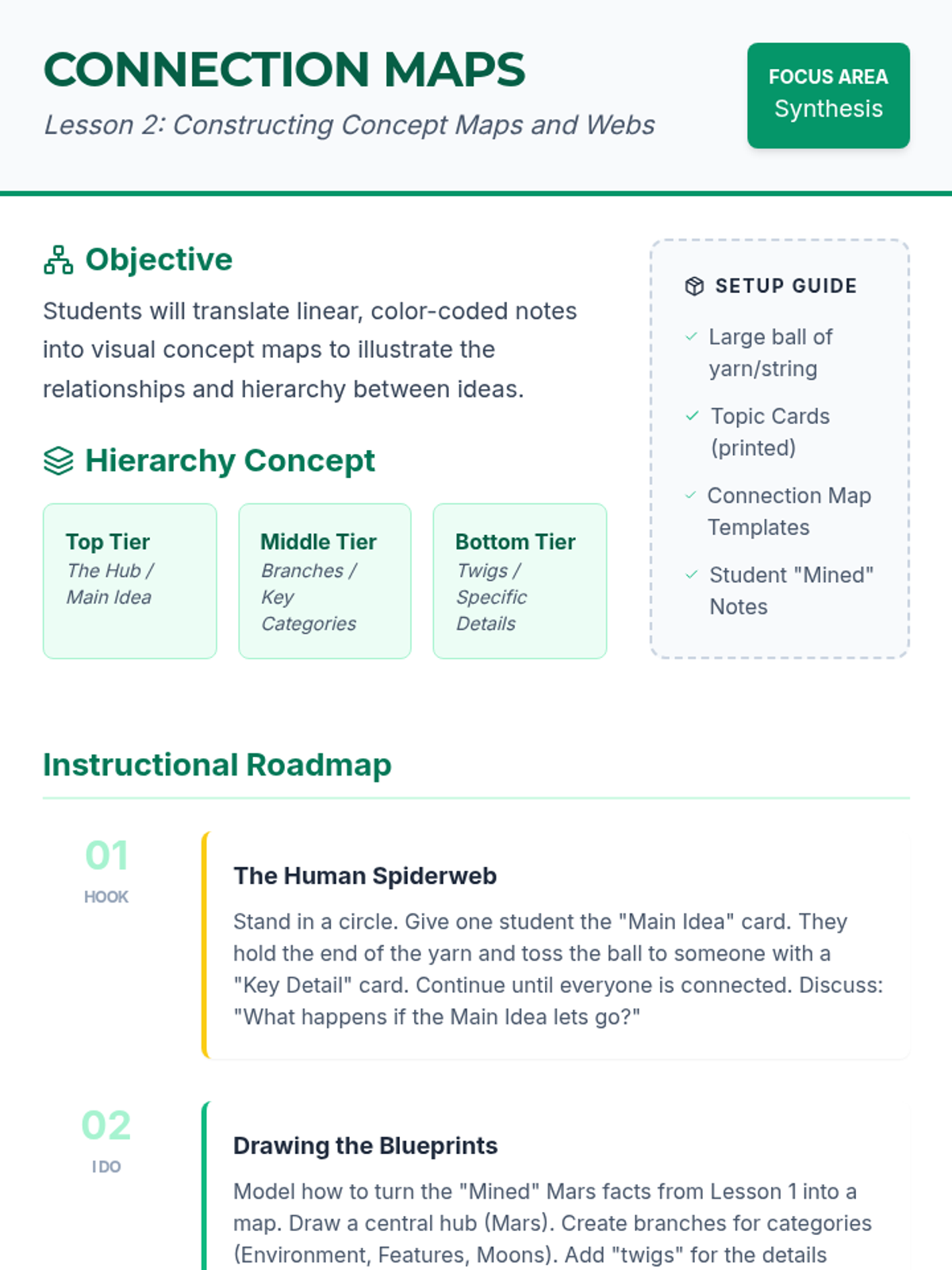
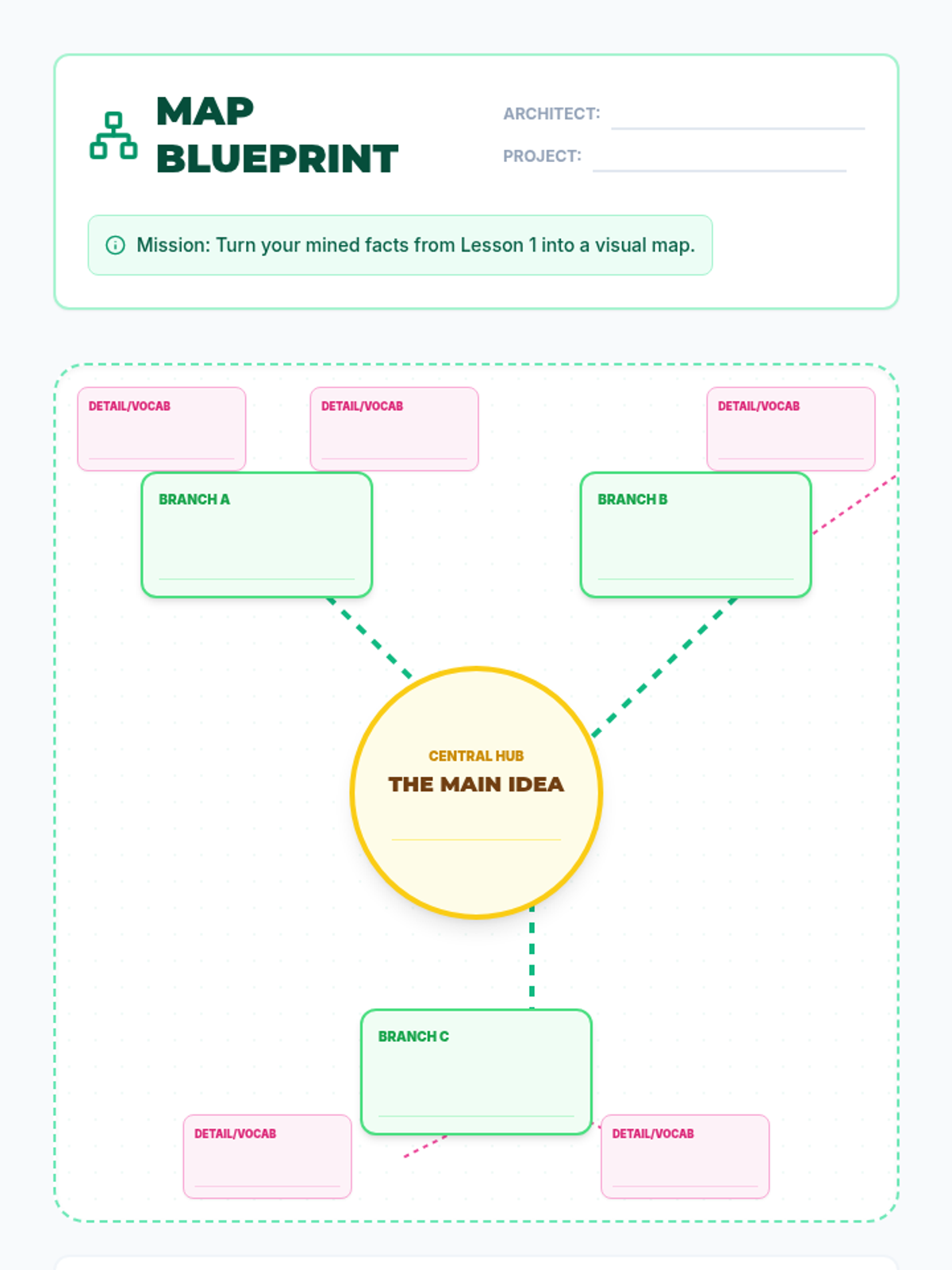
Students translate linear notes into visual concept maps to show hierarchical relationships between ideas.
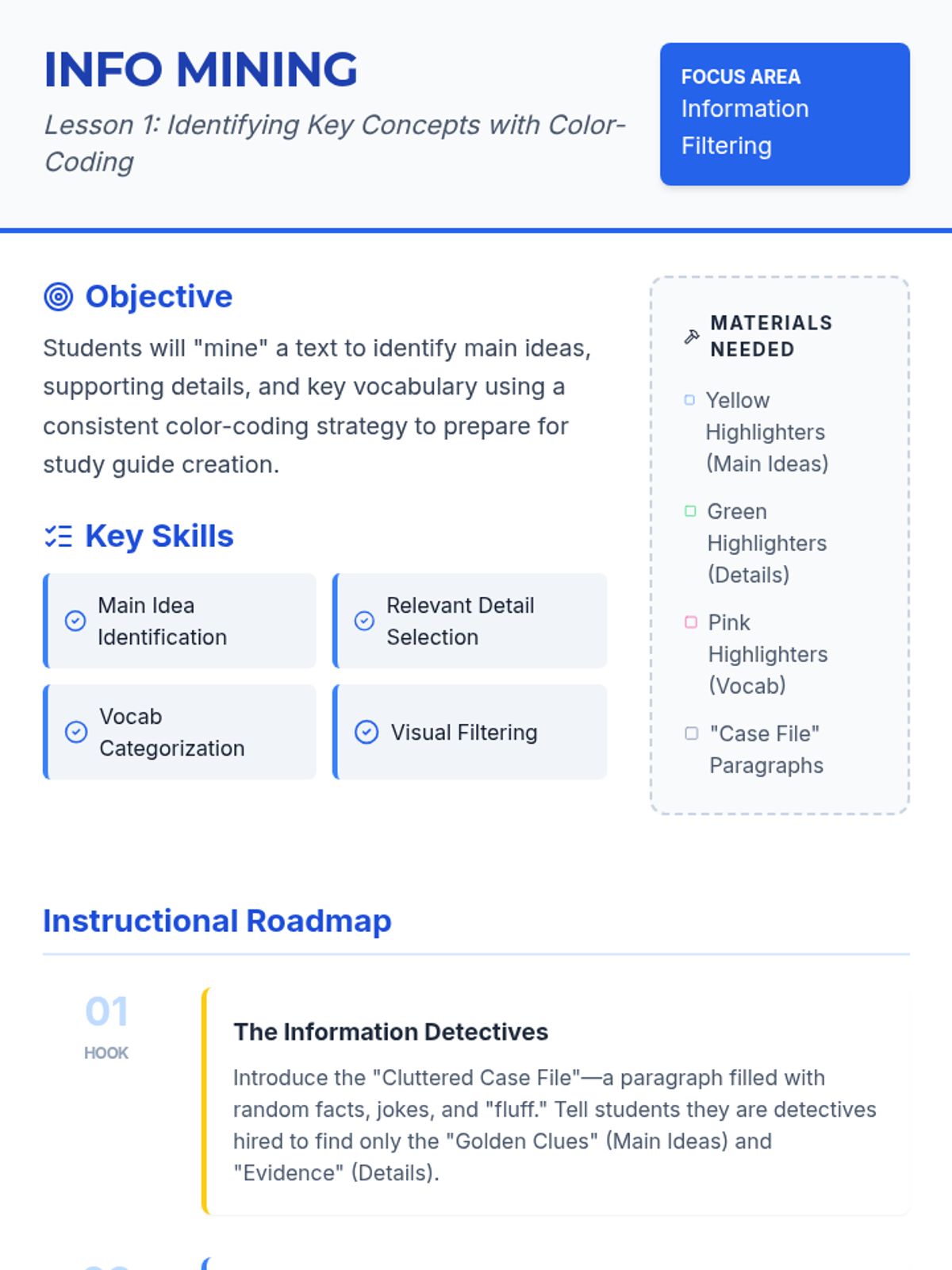
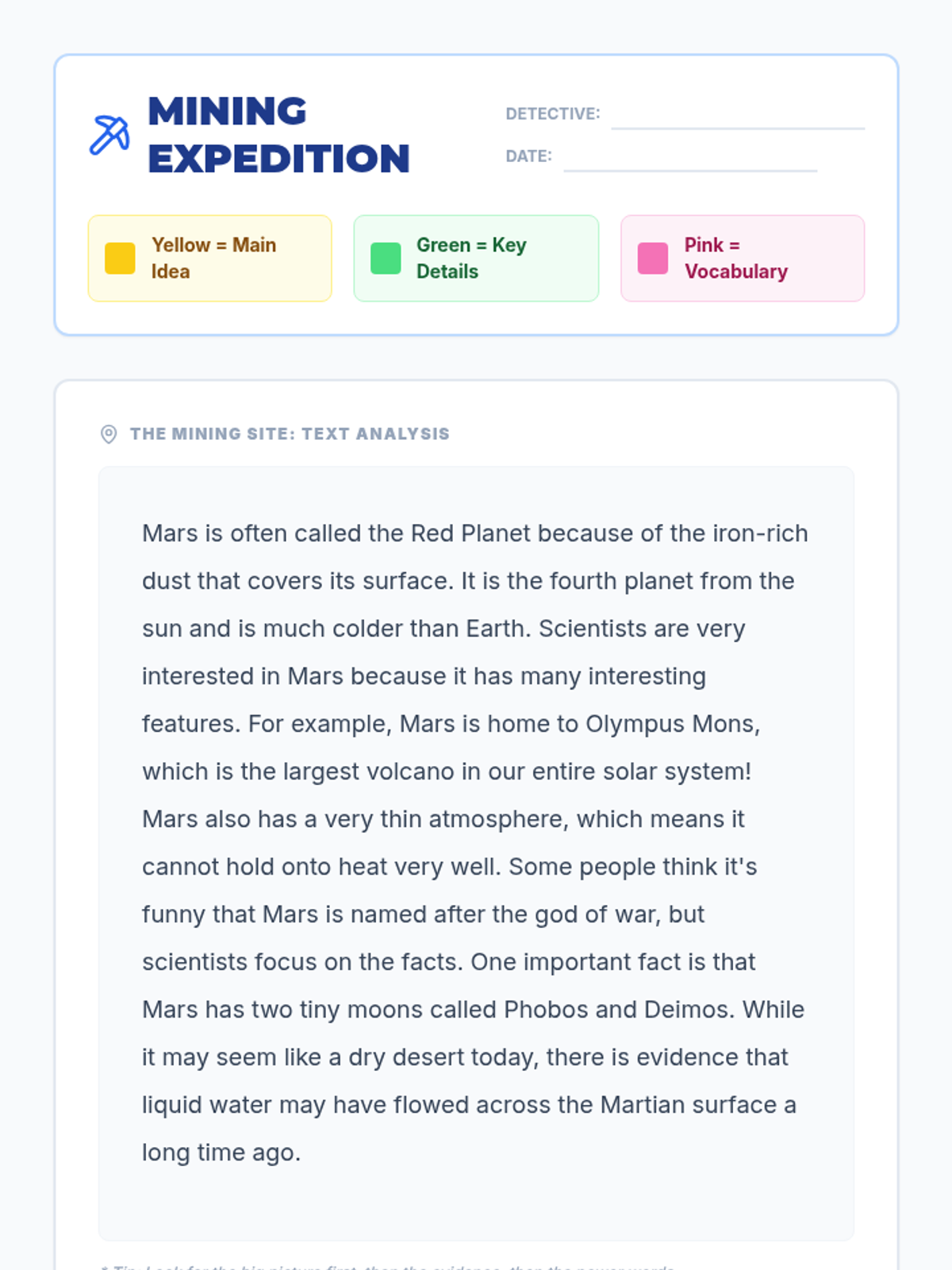
Students learn to 'mine' texts for essential information using a specific color-coding system to distinguish main ideas from supporting details.
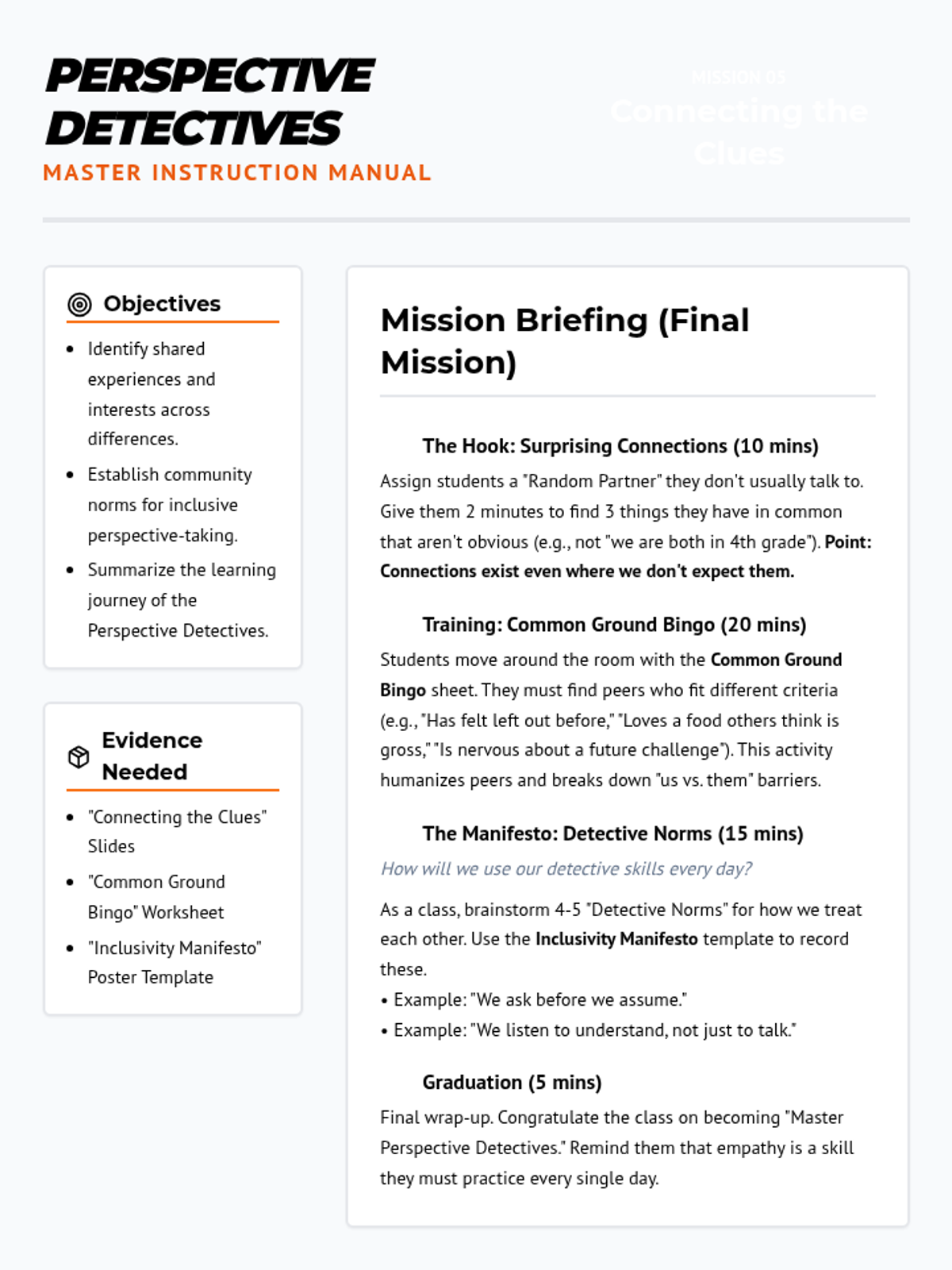
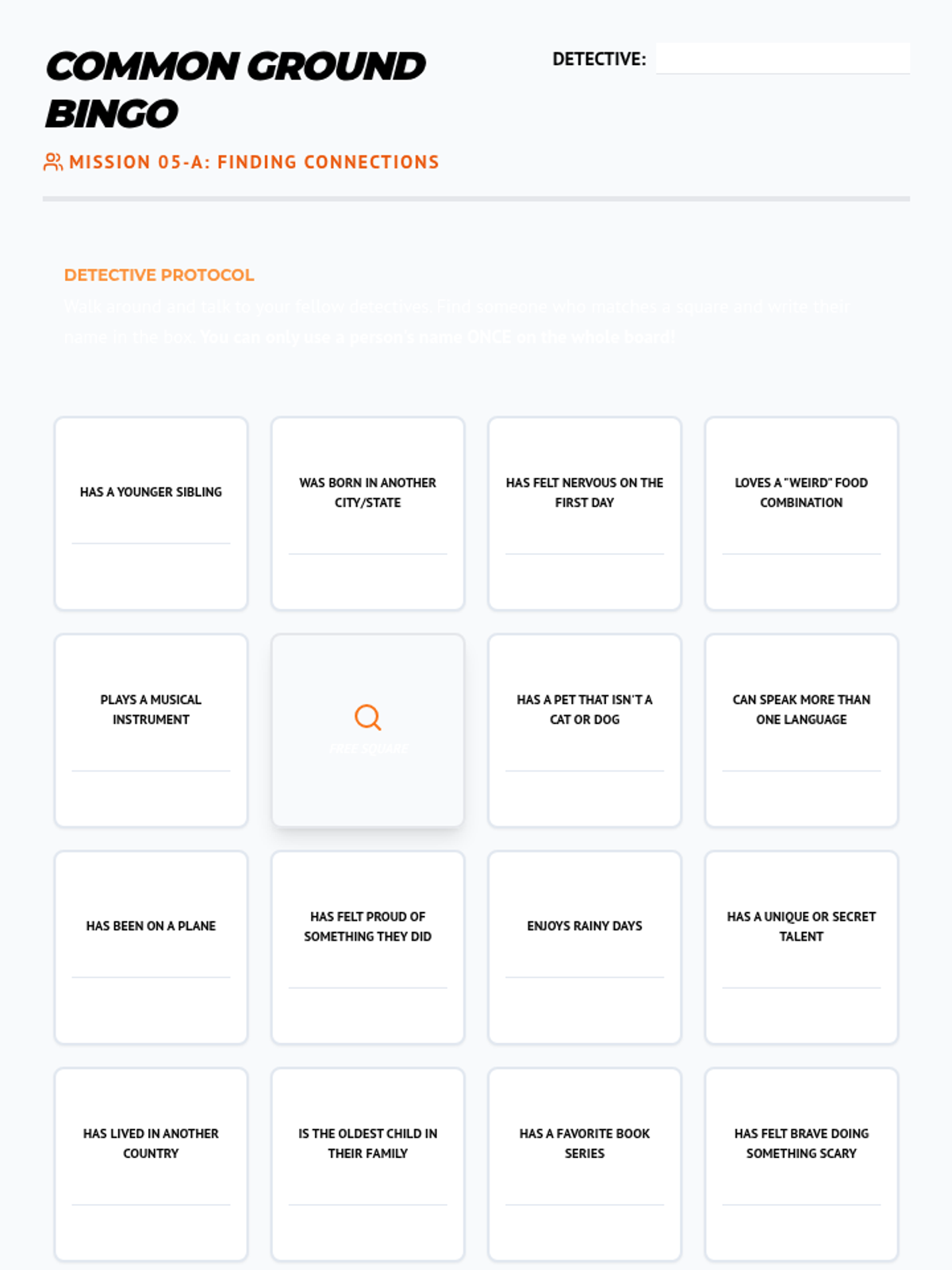
Students discover shared experiences across differences and collaborate to establish inclusive community norms.
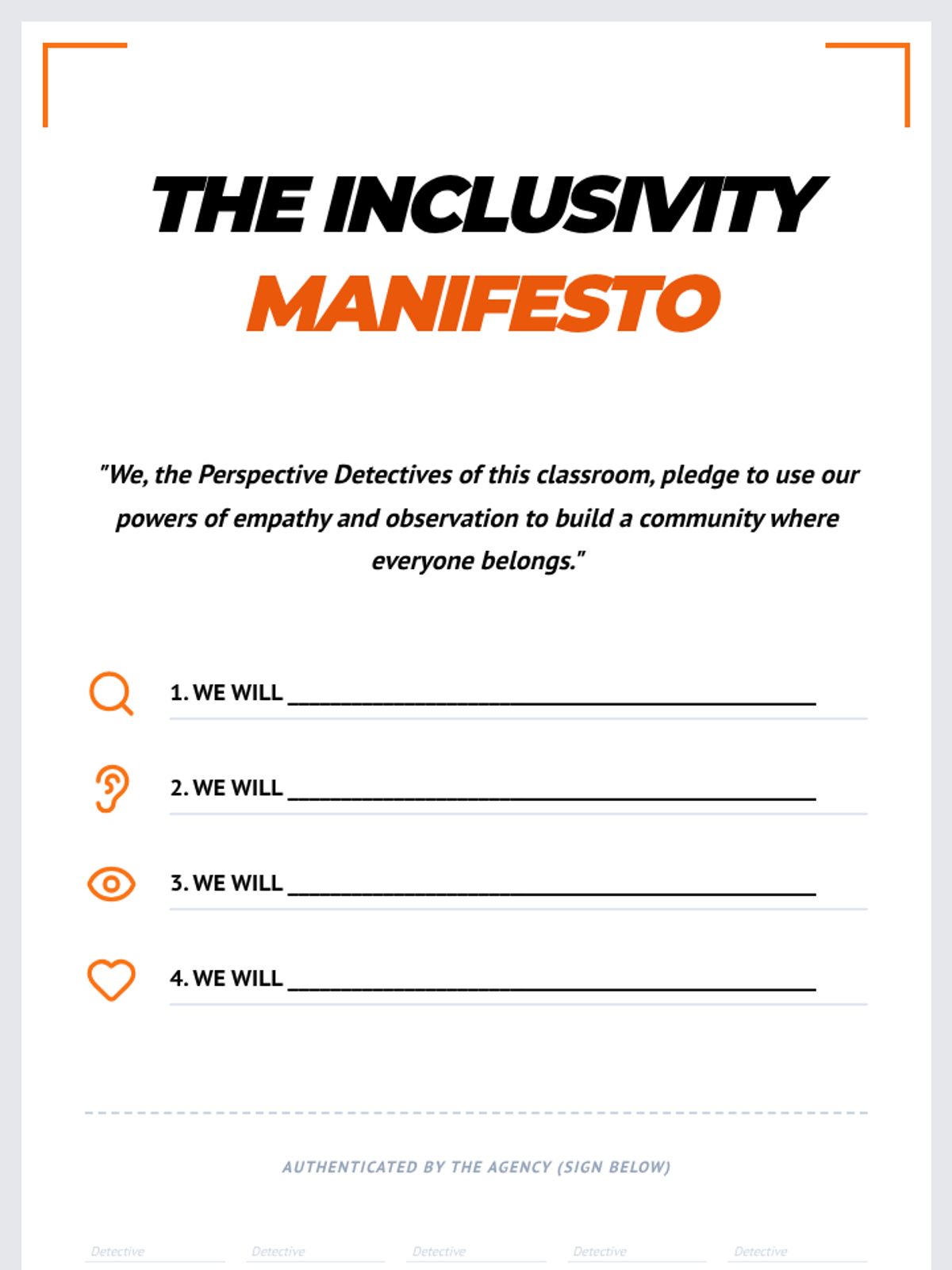
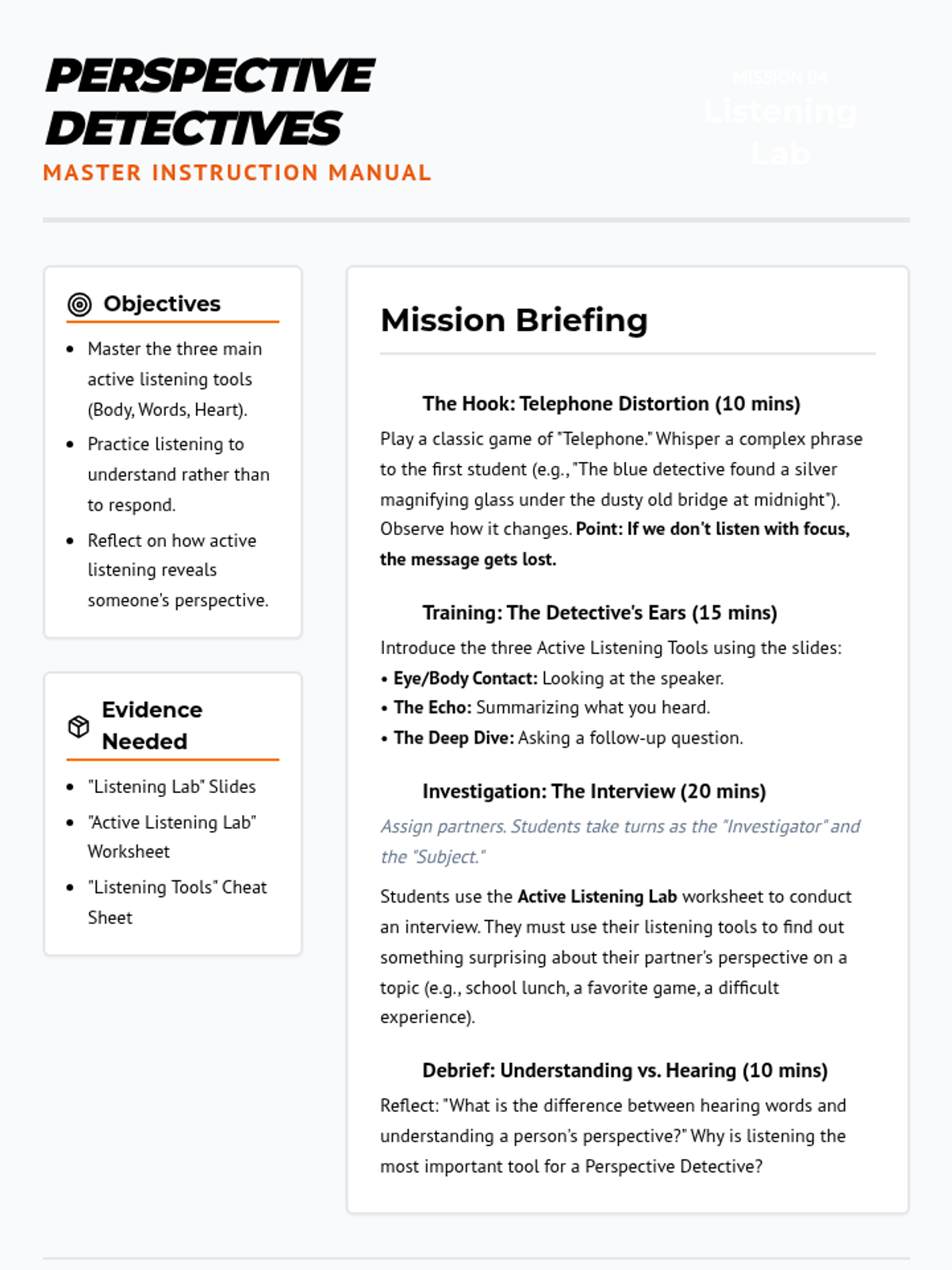
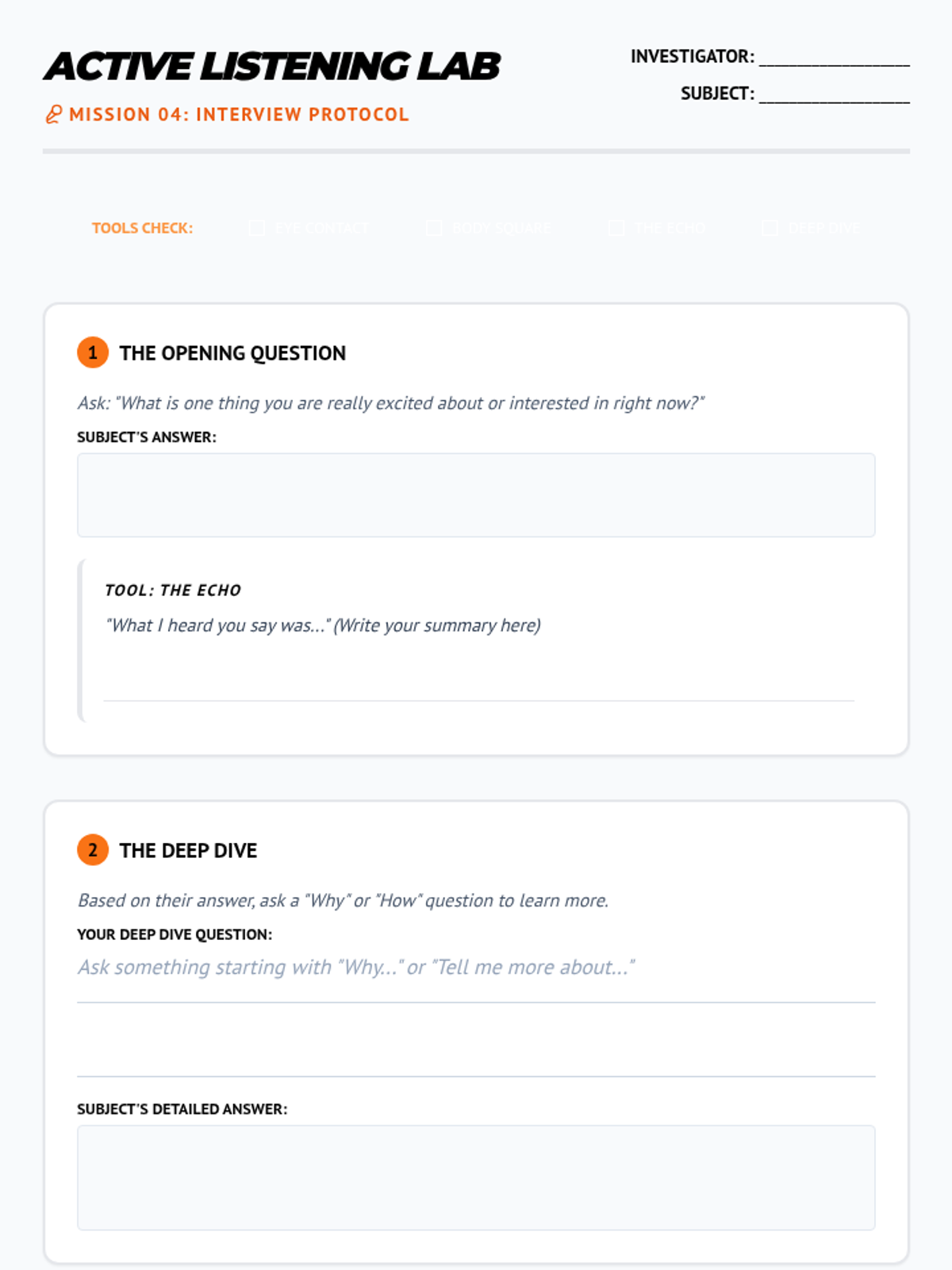
Students master the tools of active listening to truly understand others' viewpoints, practicing through structured interviews.
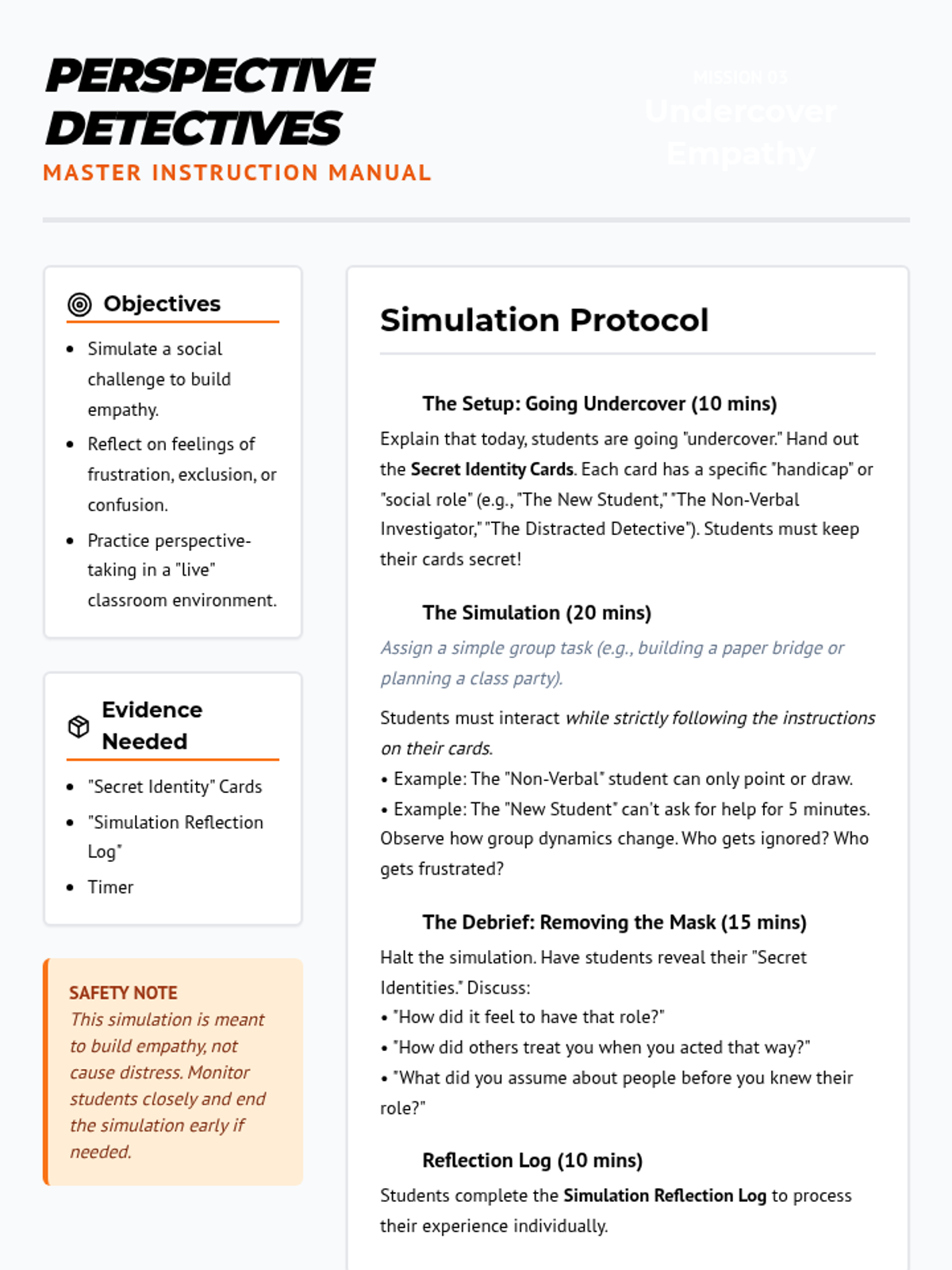
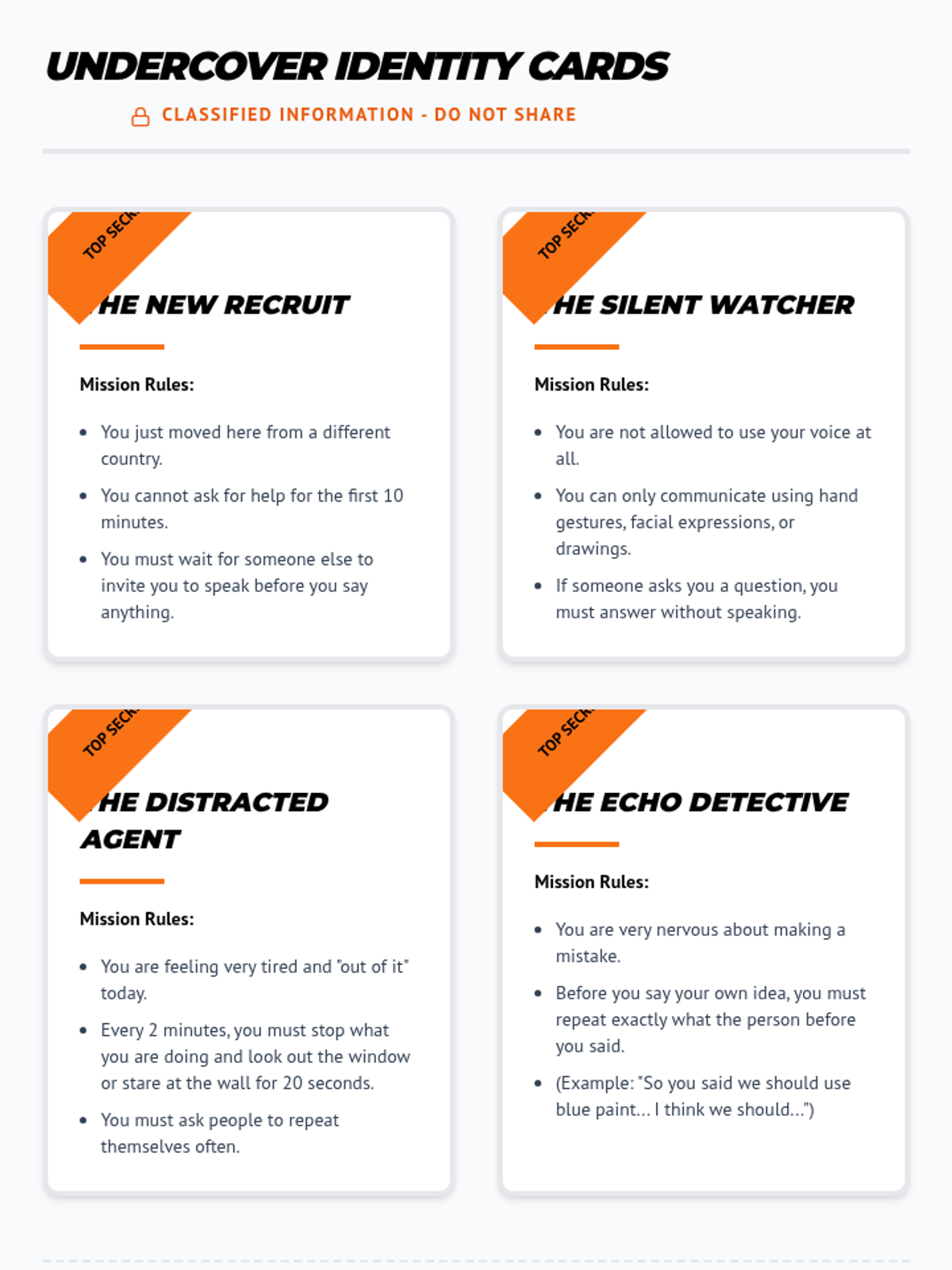
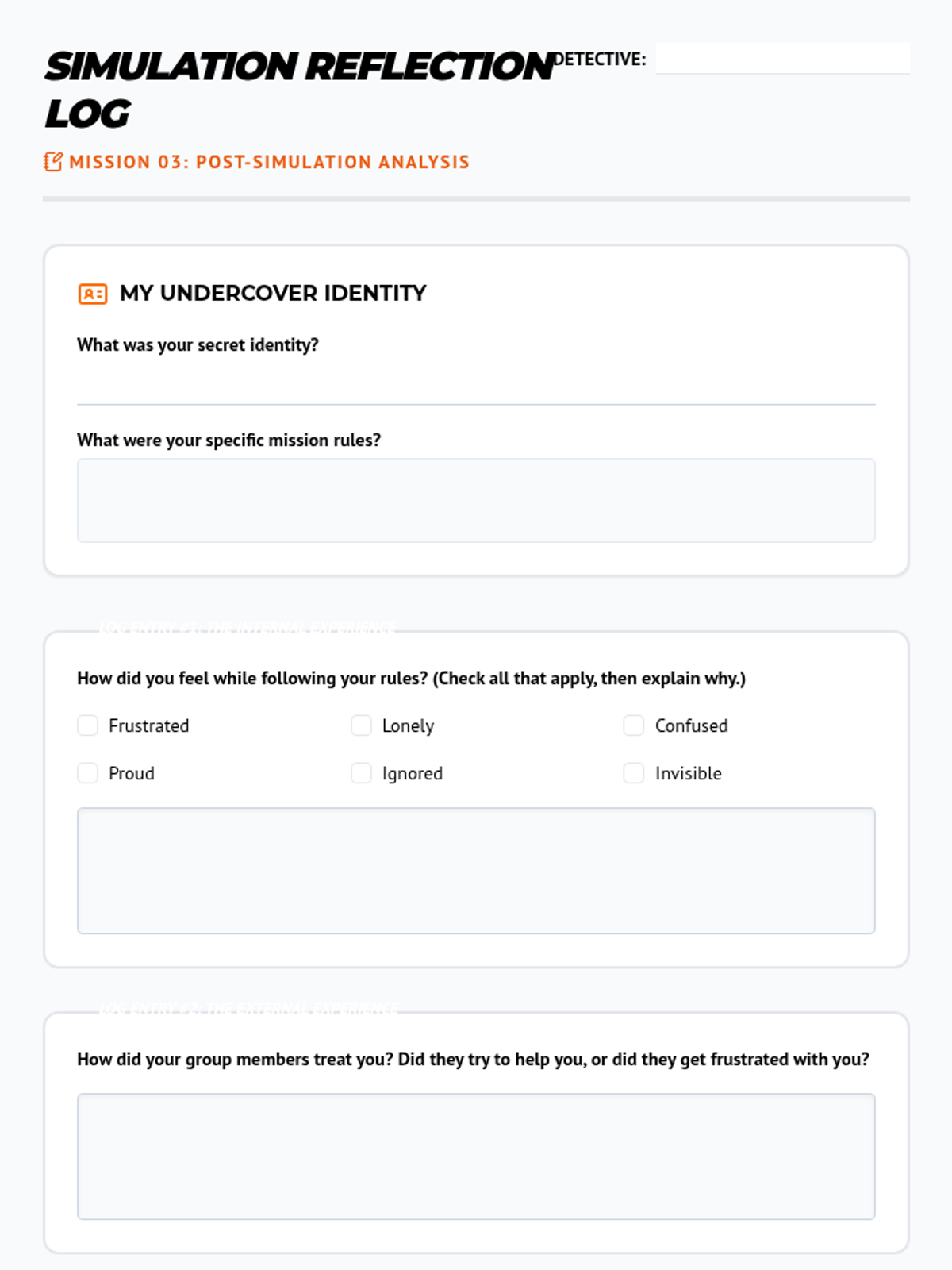
Students navigate a school day with 'secret identities' that present specific challenges, reflecting on the experience to build deep empathy.
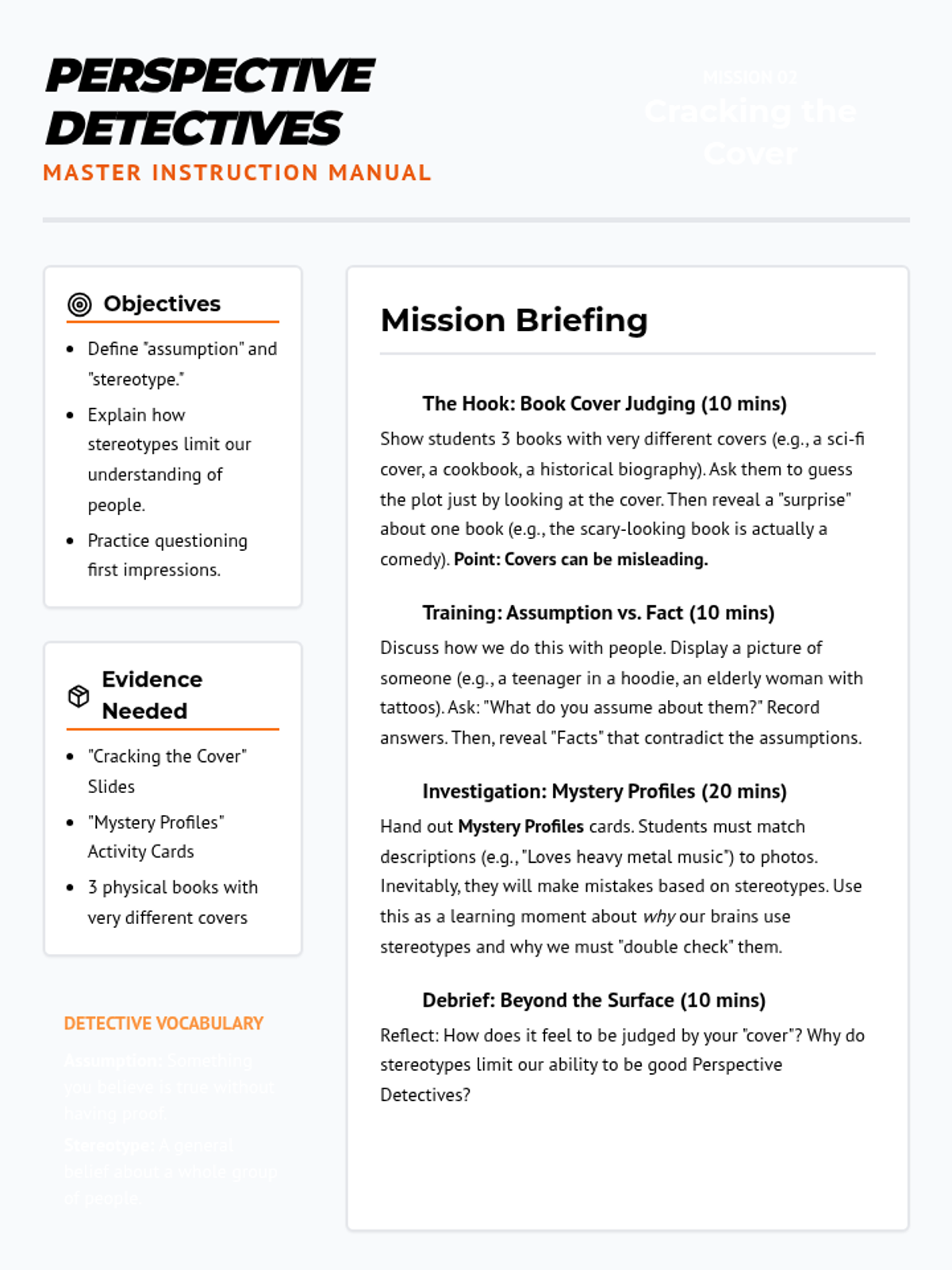
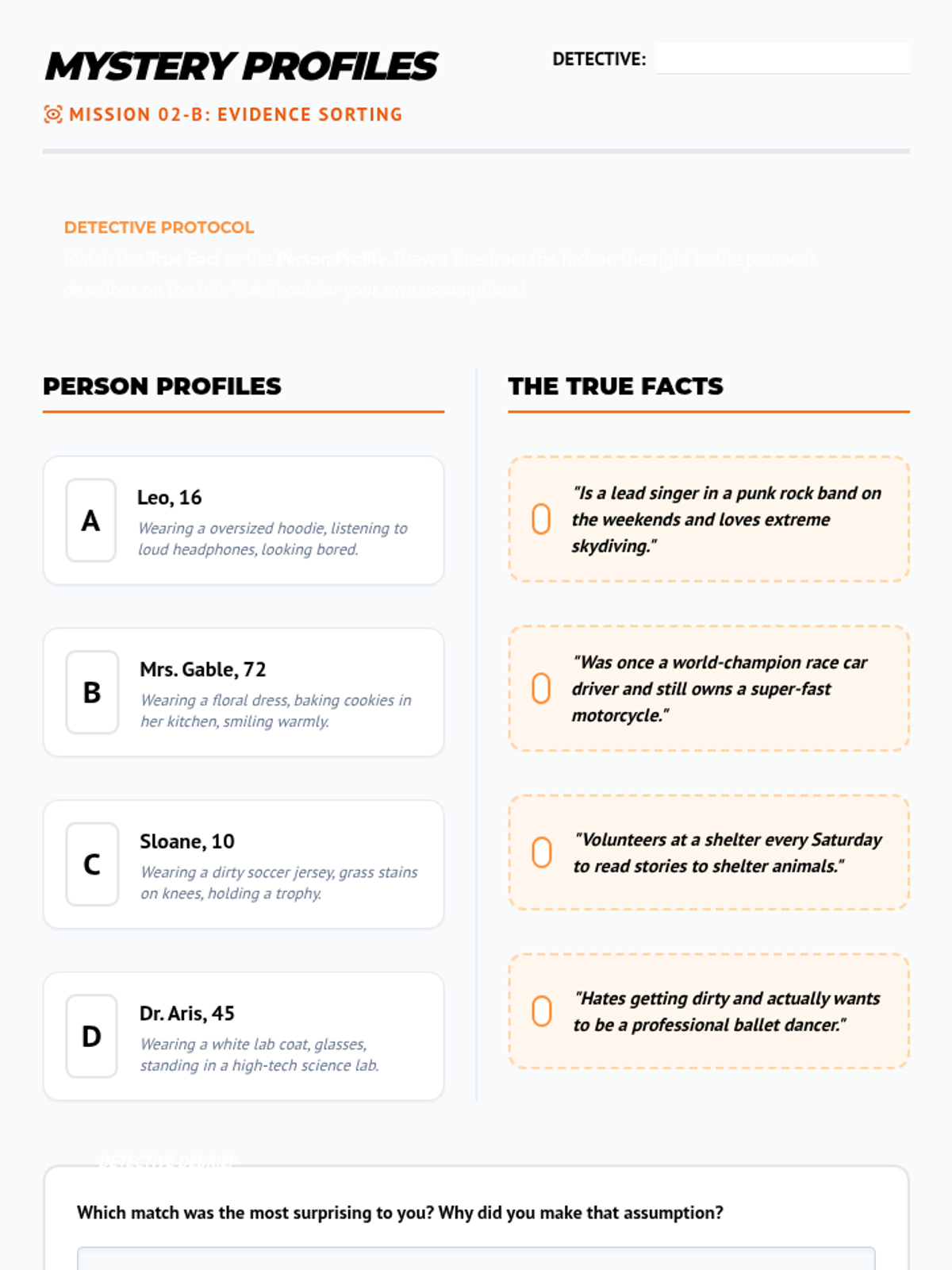
Students investigate how assumptions and stereotypes limit our understanding of others through a sorting game and critical discussion.
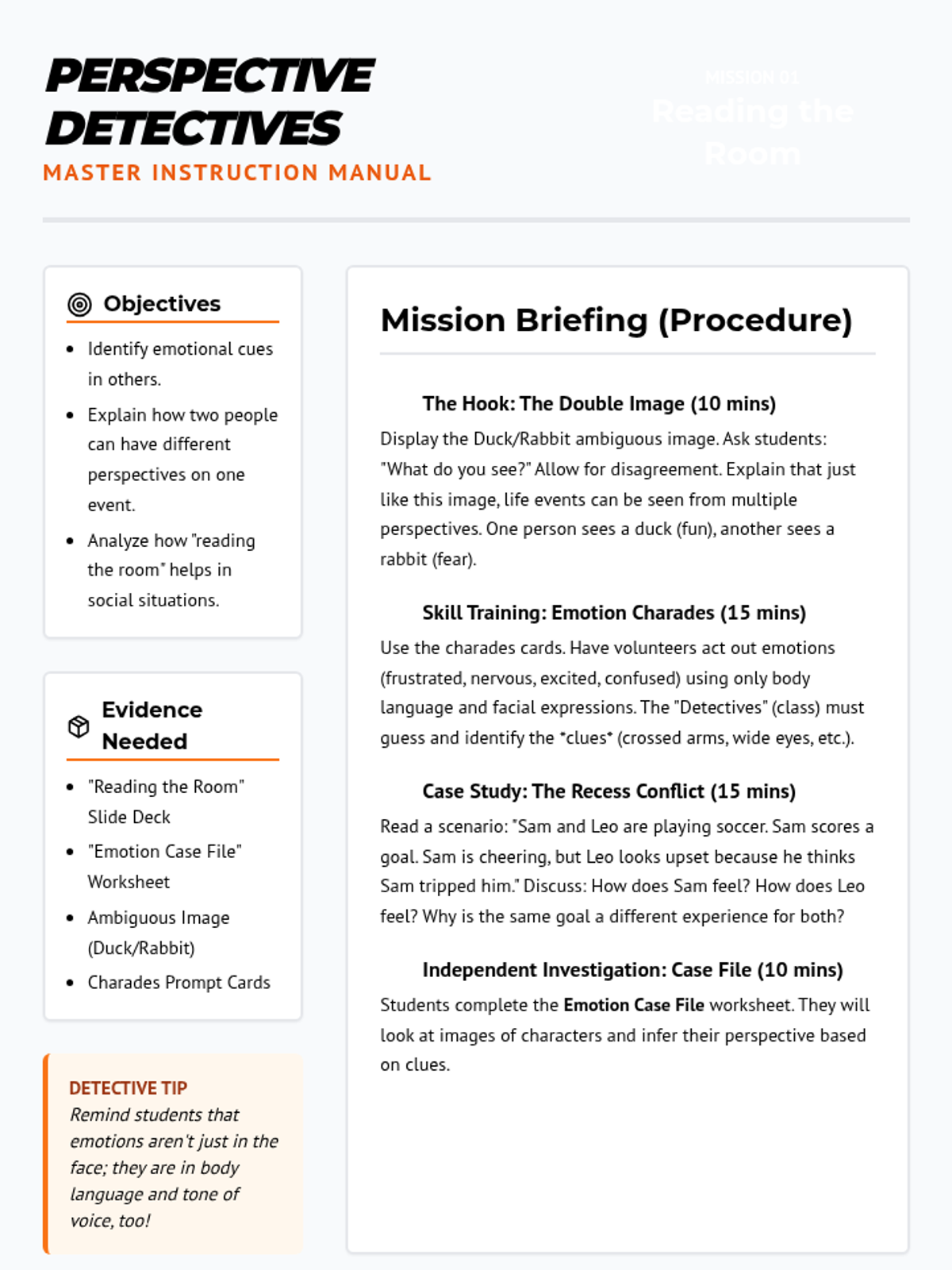
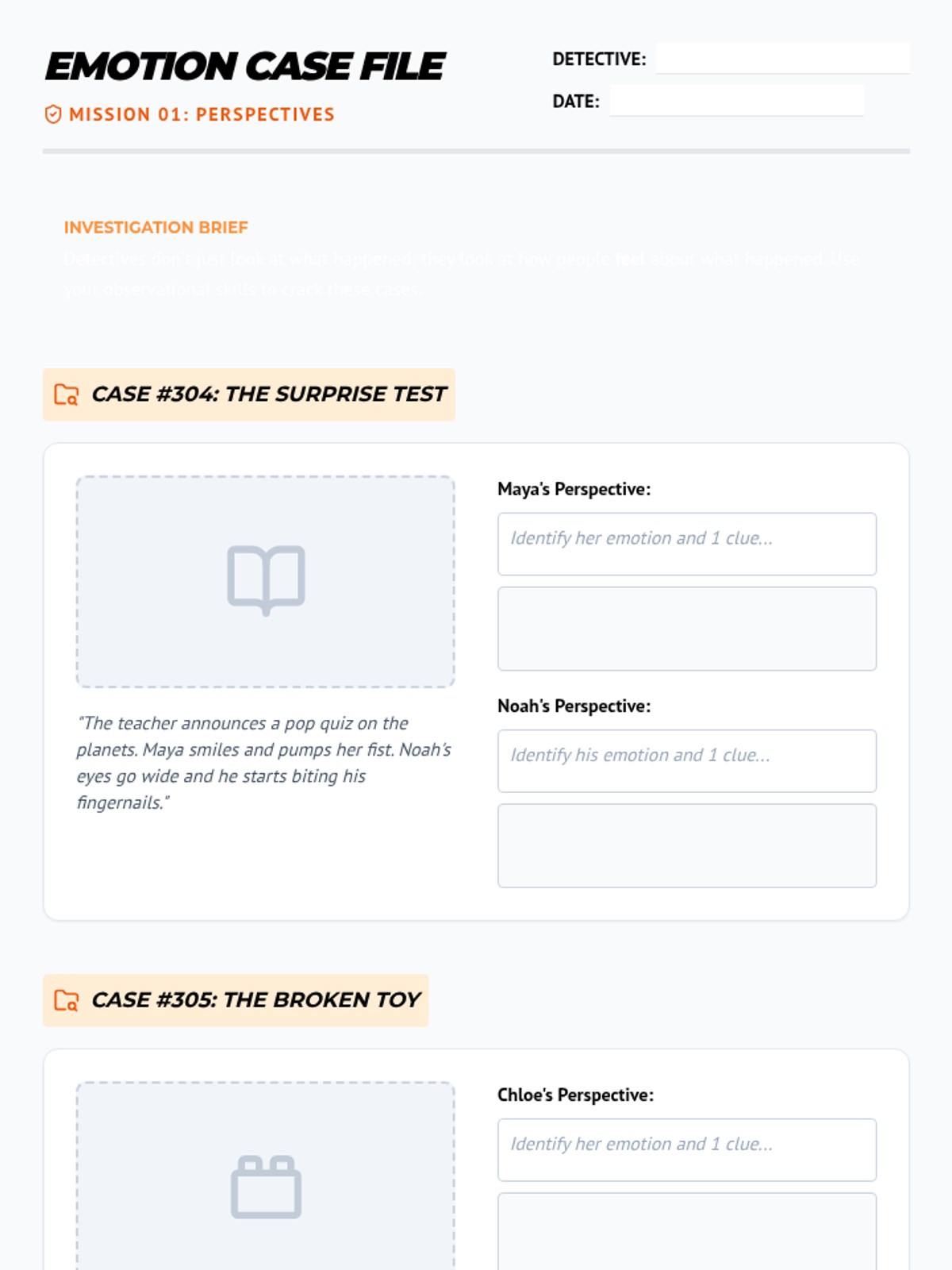
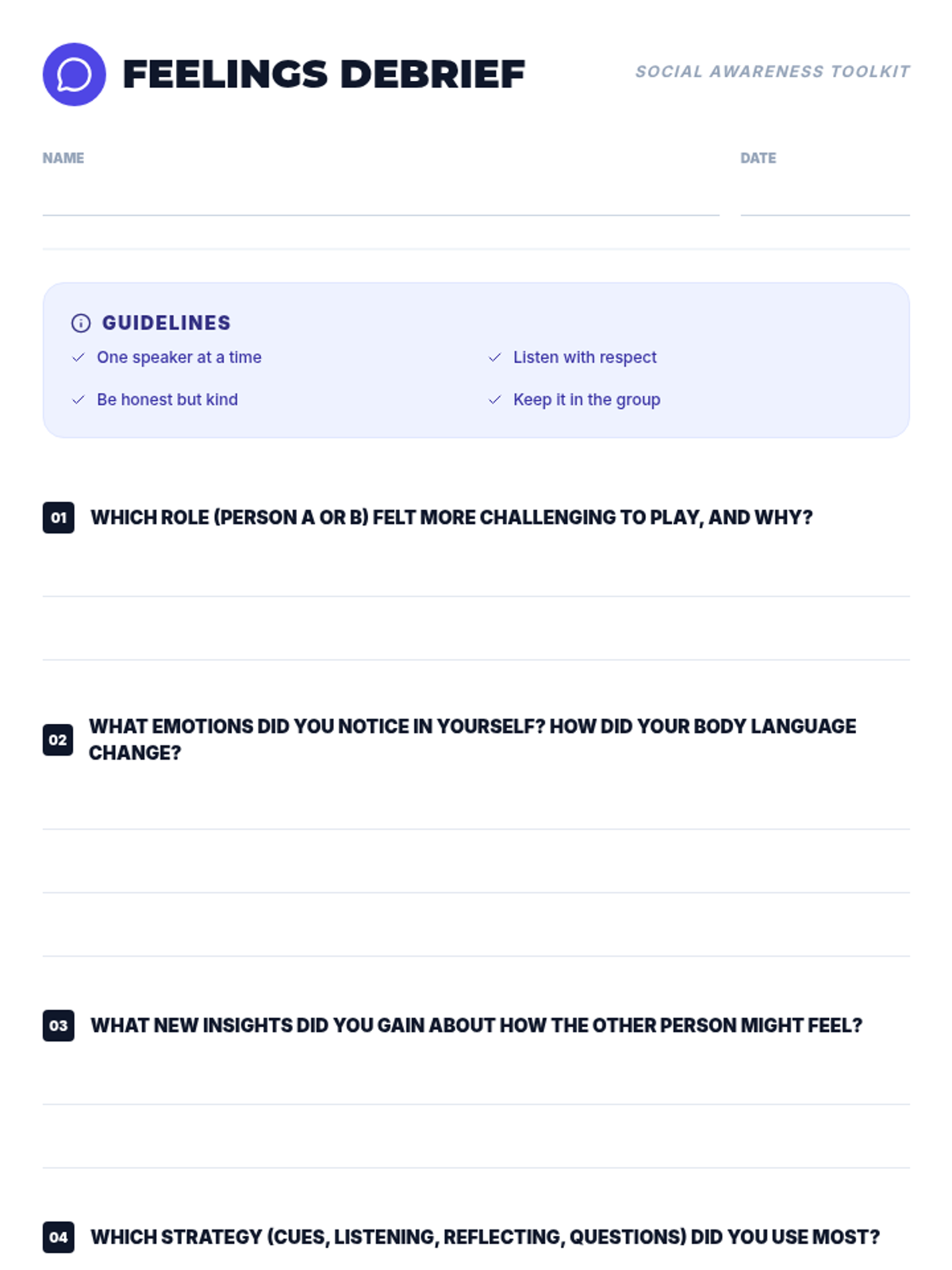
Students practice reading emotional cues and recognize that people can have different perspectives on the same event using ambiguous images and charades.
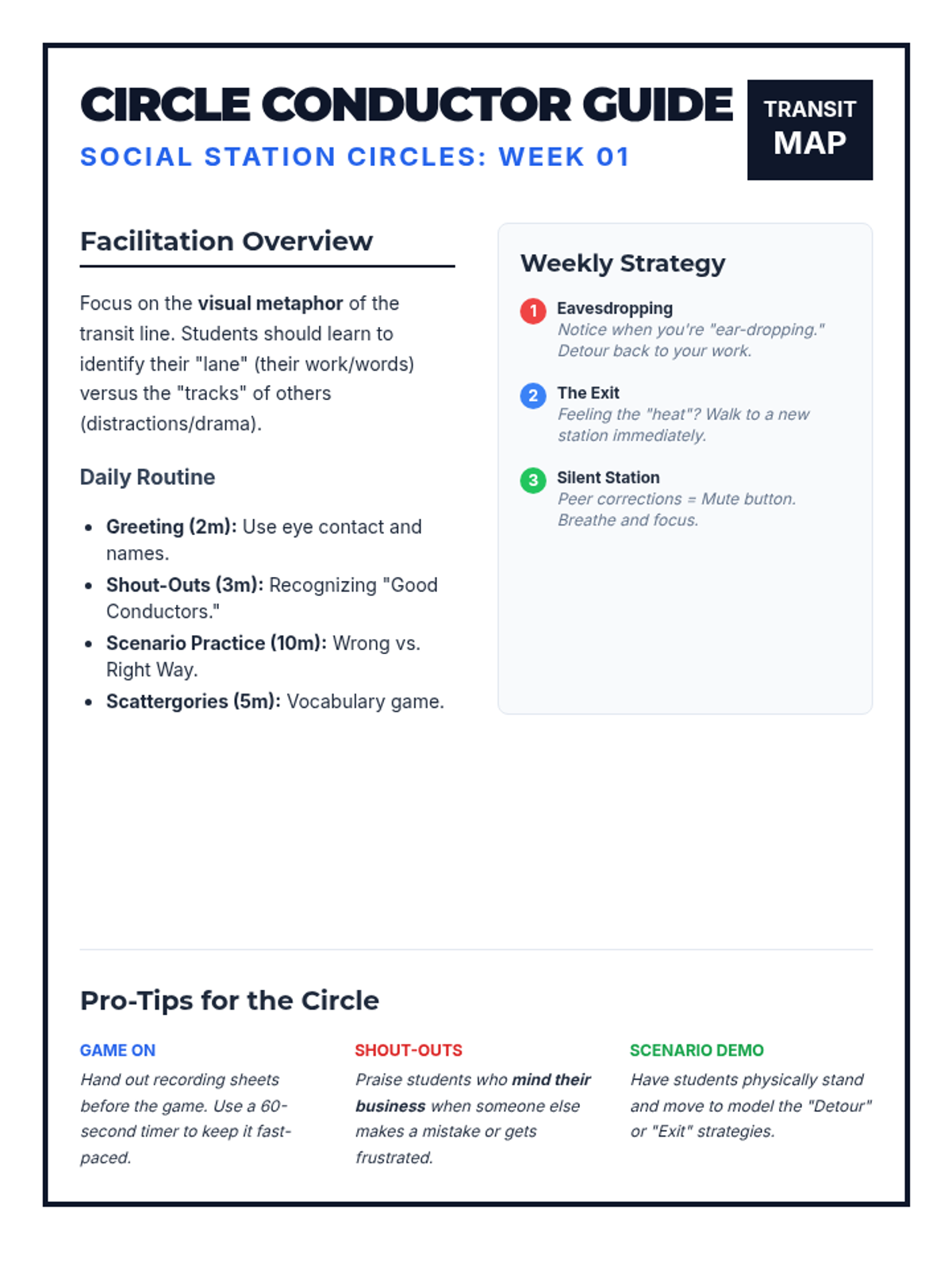
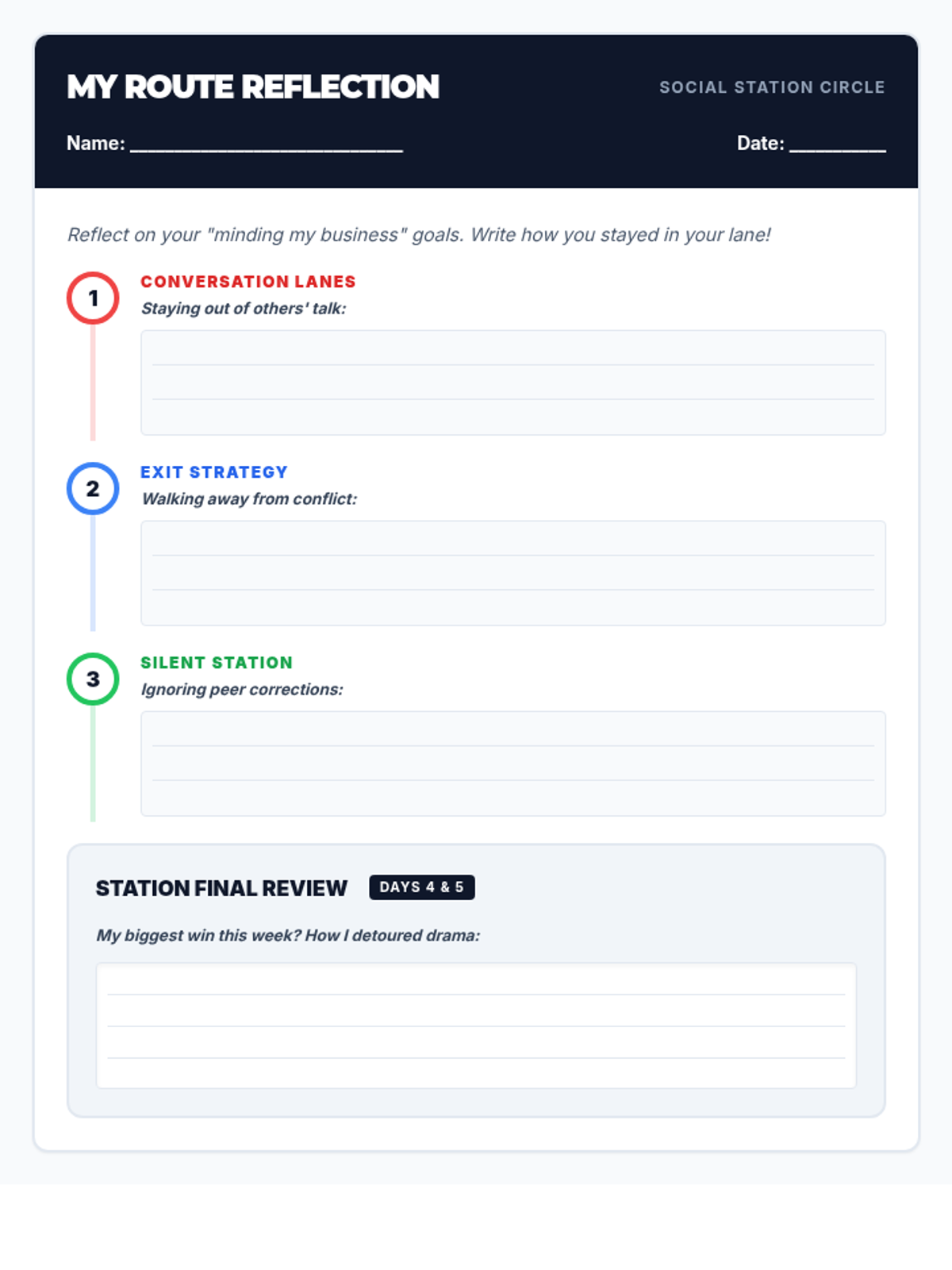
Day 5 covers staying focused and not contributing to classroom distractions.
Day 4 teaches students how to avoid drama and rumors by taking a 'detour'.
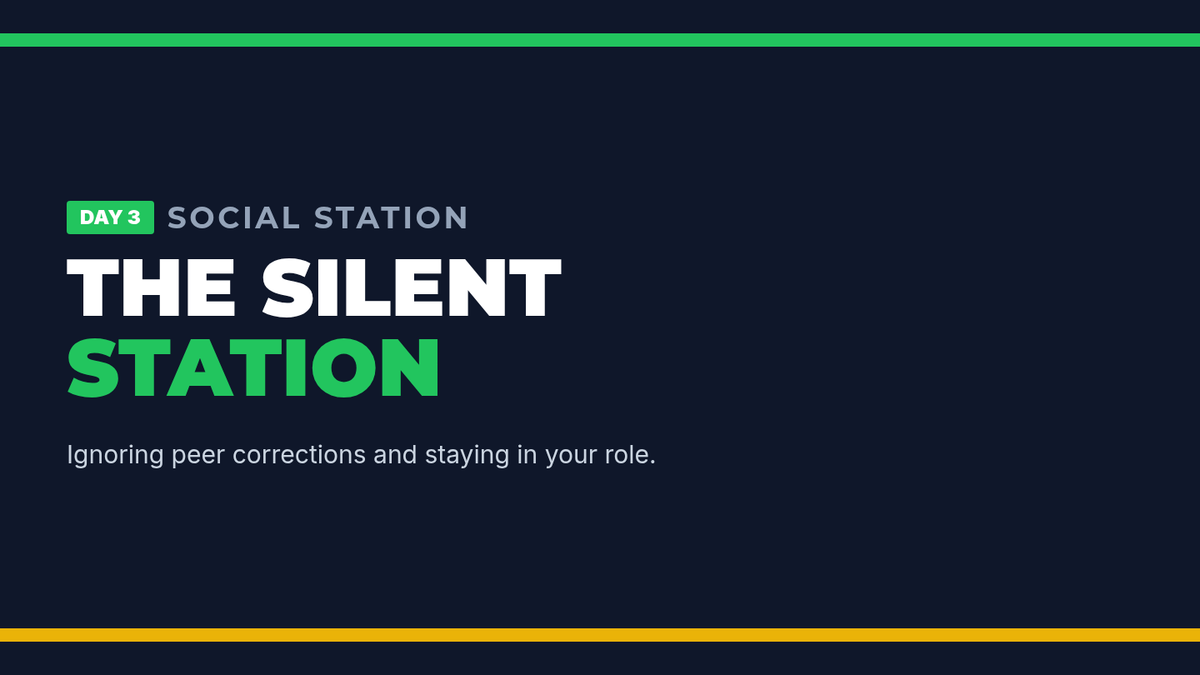
Day 3 addresses how to ignore peer corrections and focus on one's own work.
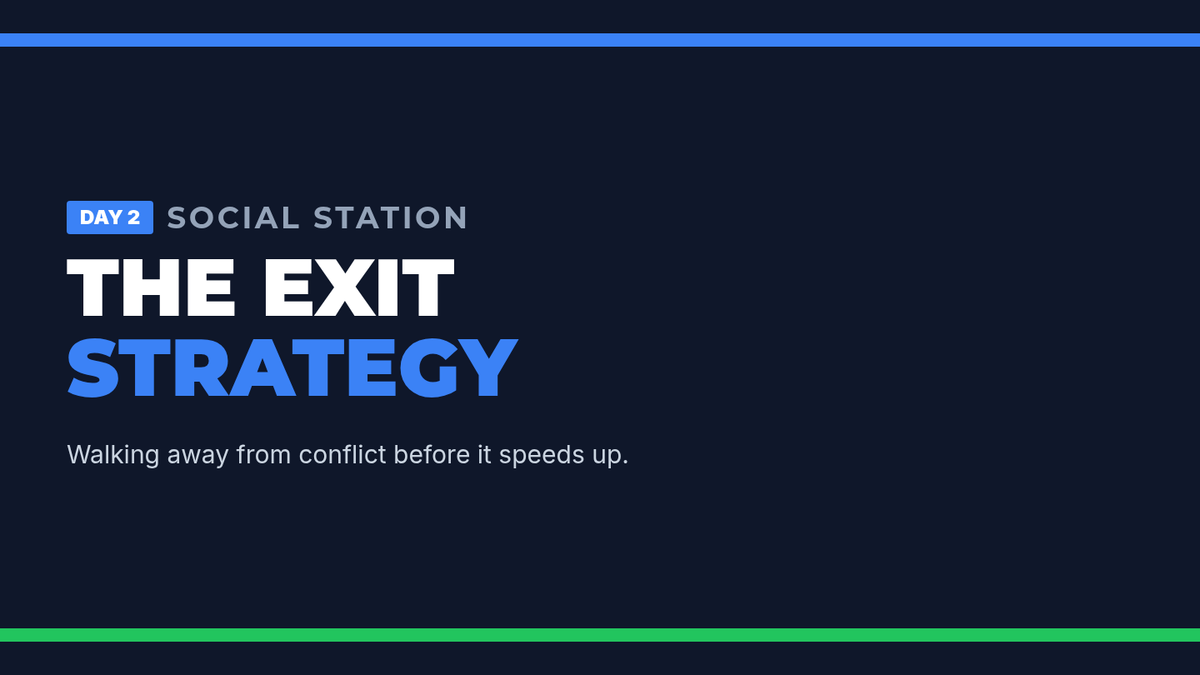
Day 2 focuses on the 'exit strategy' for walking away from rising conflict.
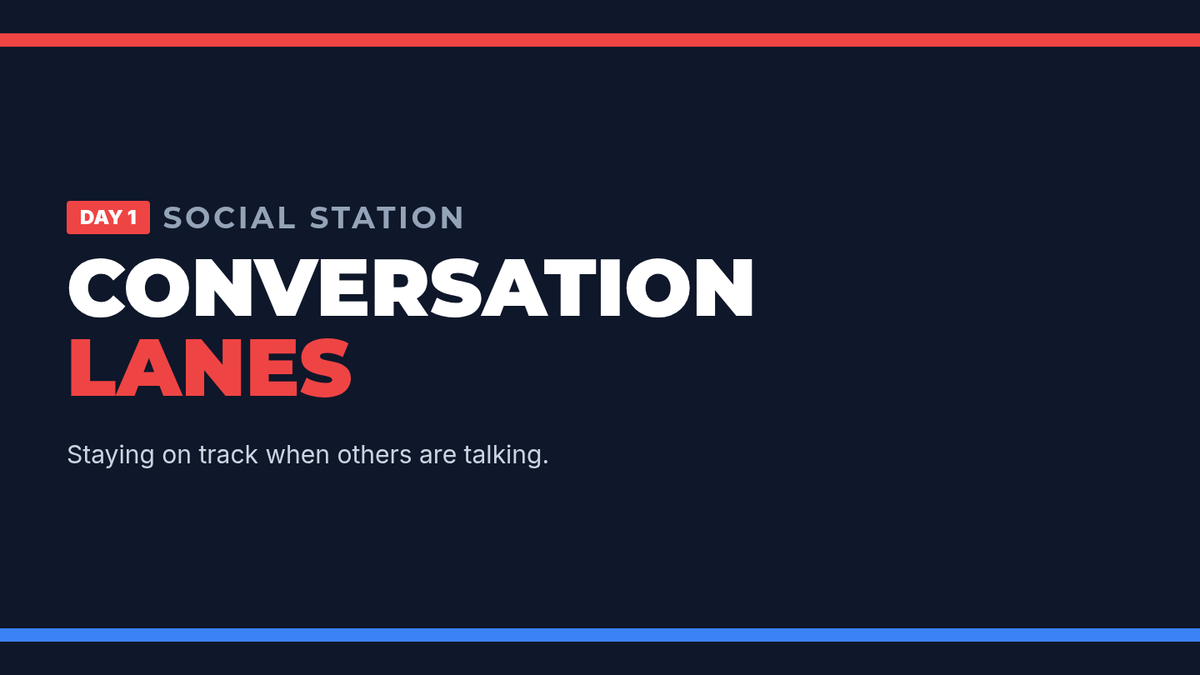
Day 1 focuses on staying out of others' conversations and 'ear-dropping' awareness.
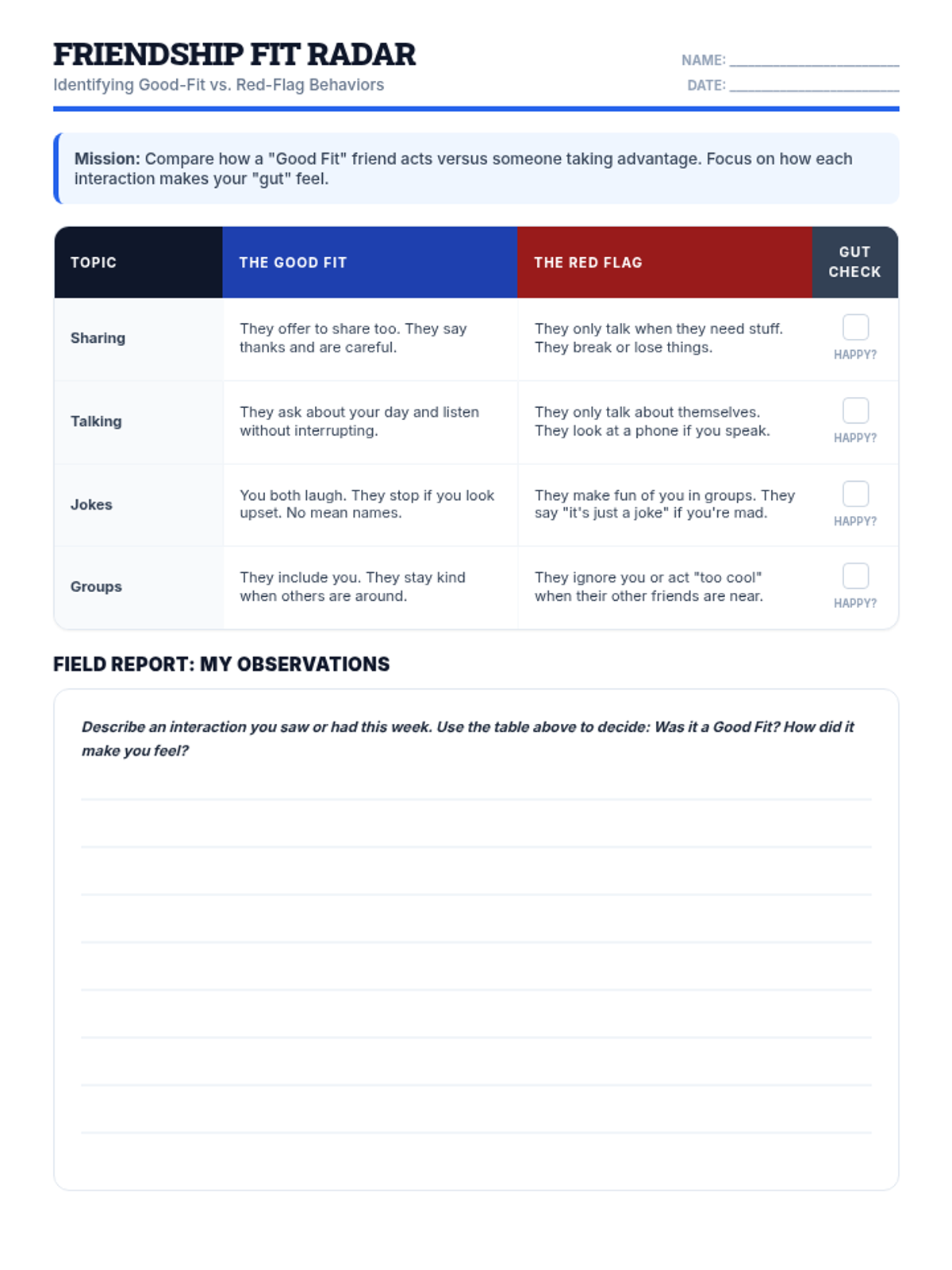
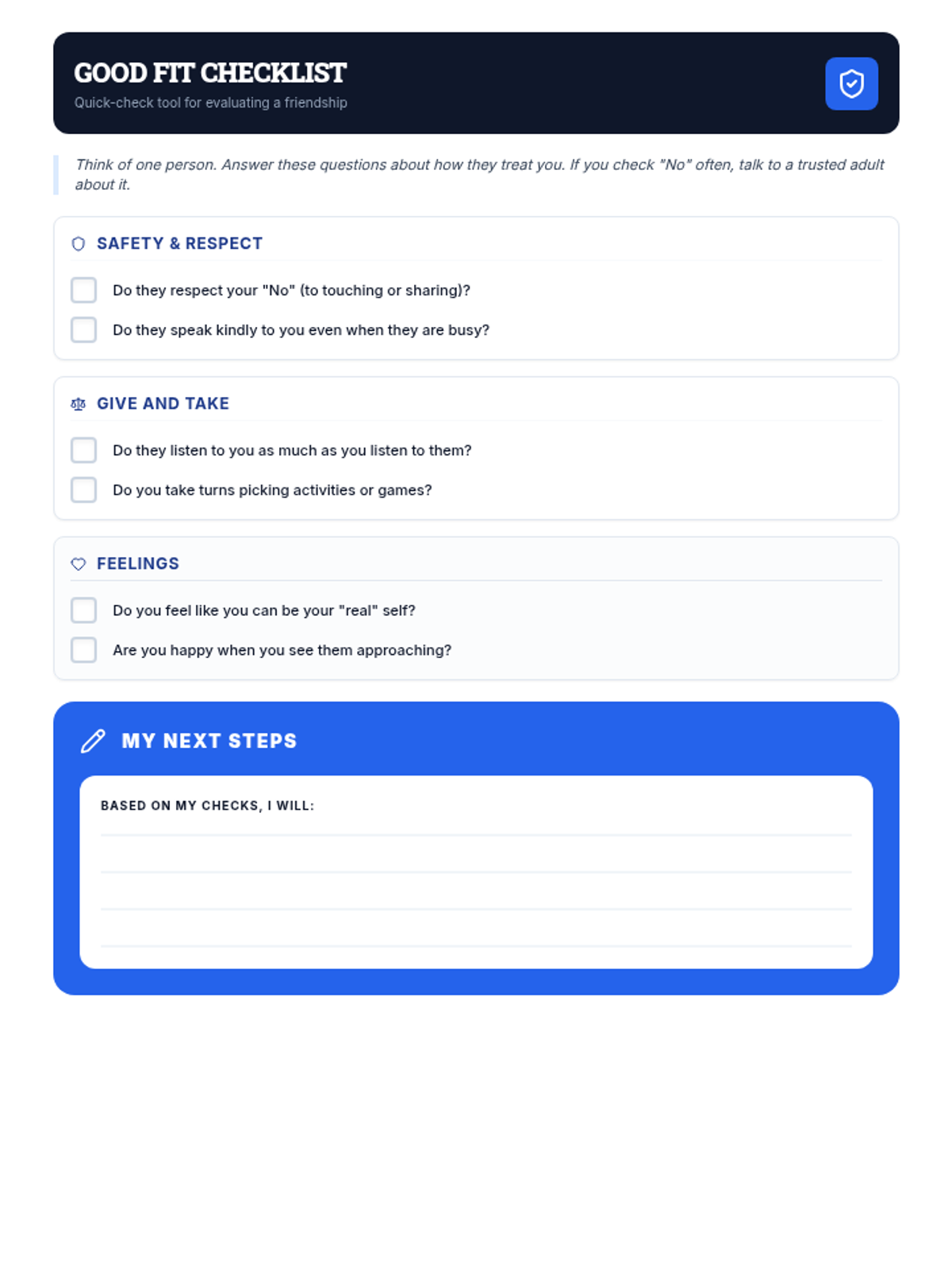
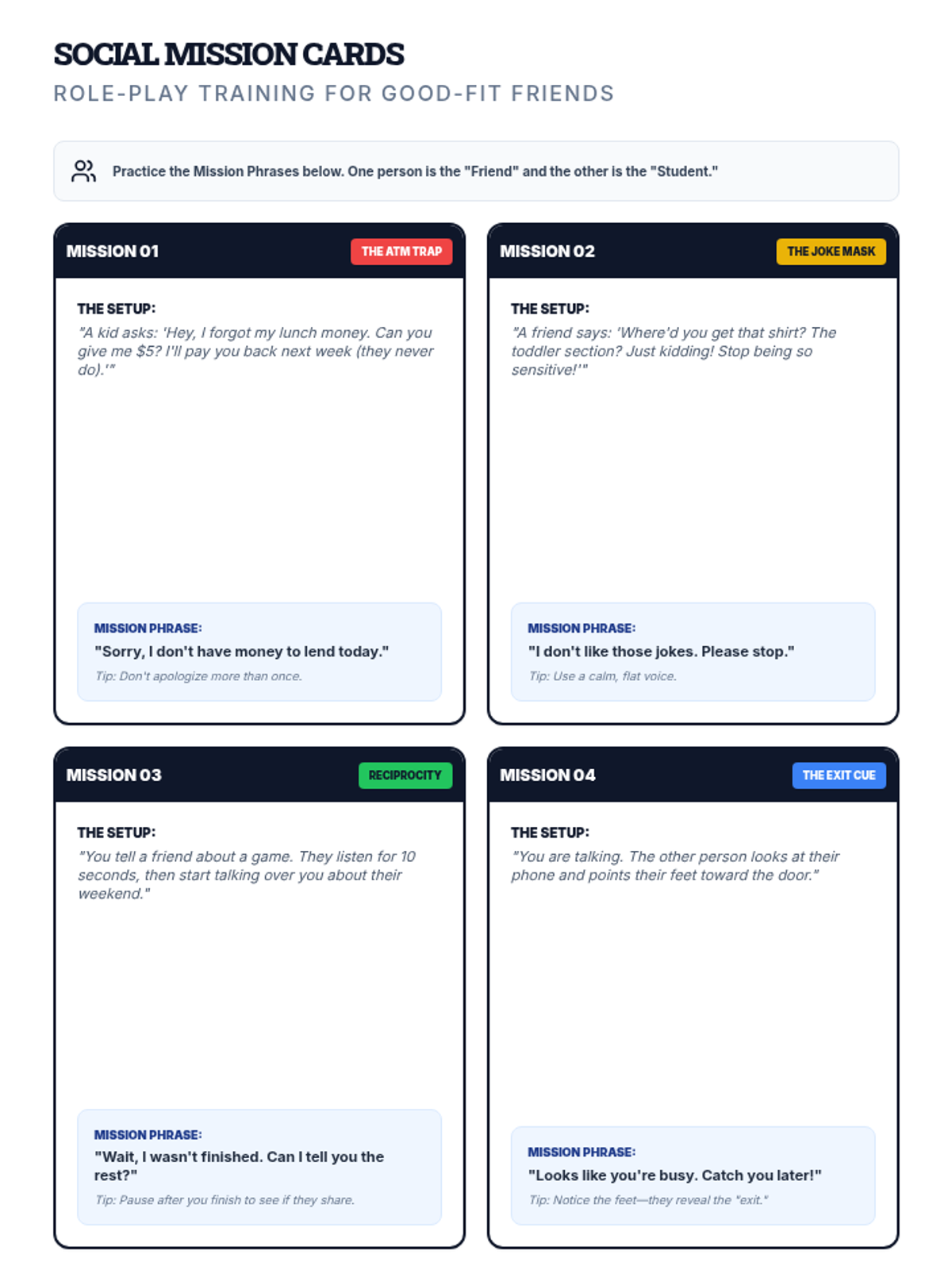
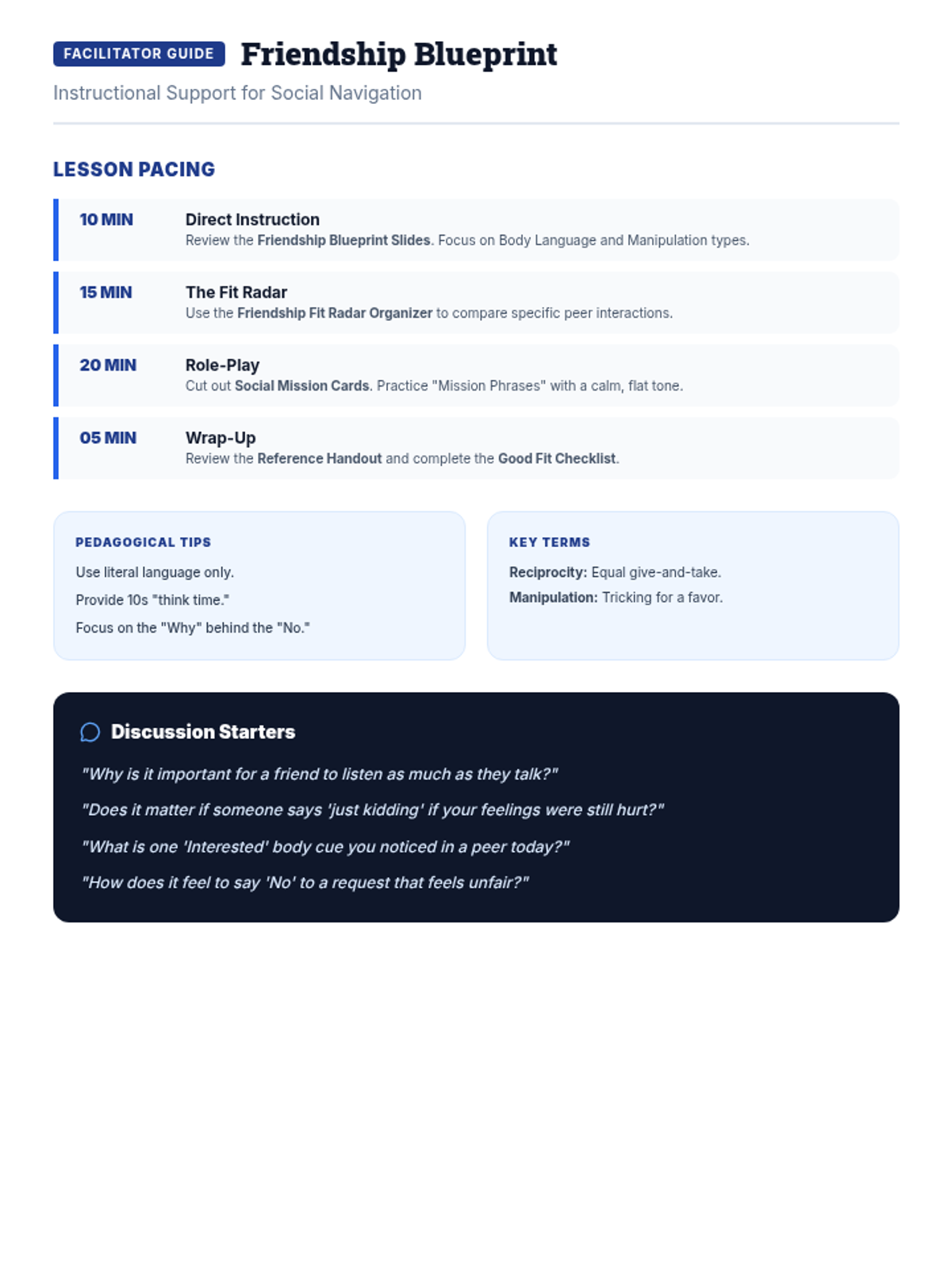
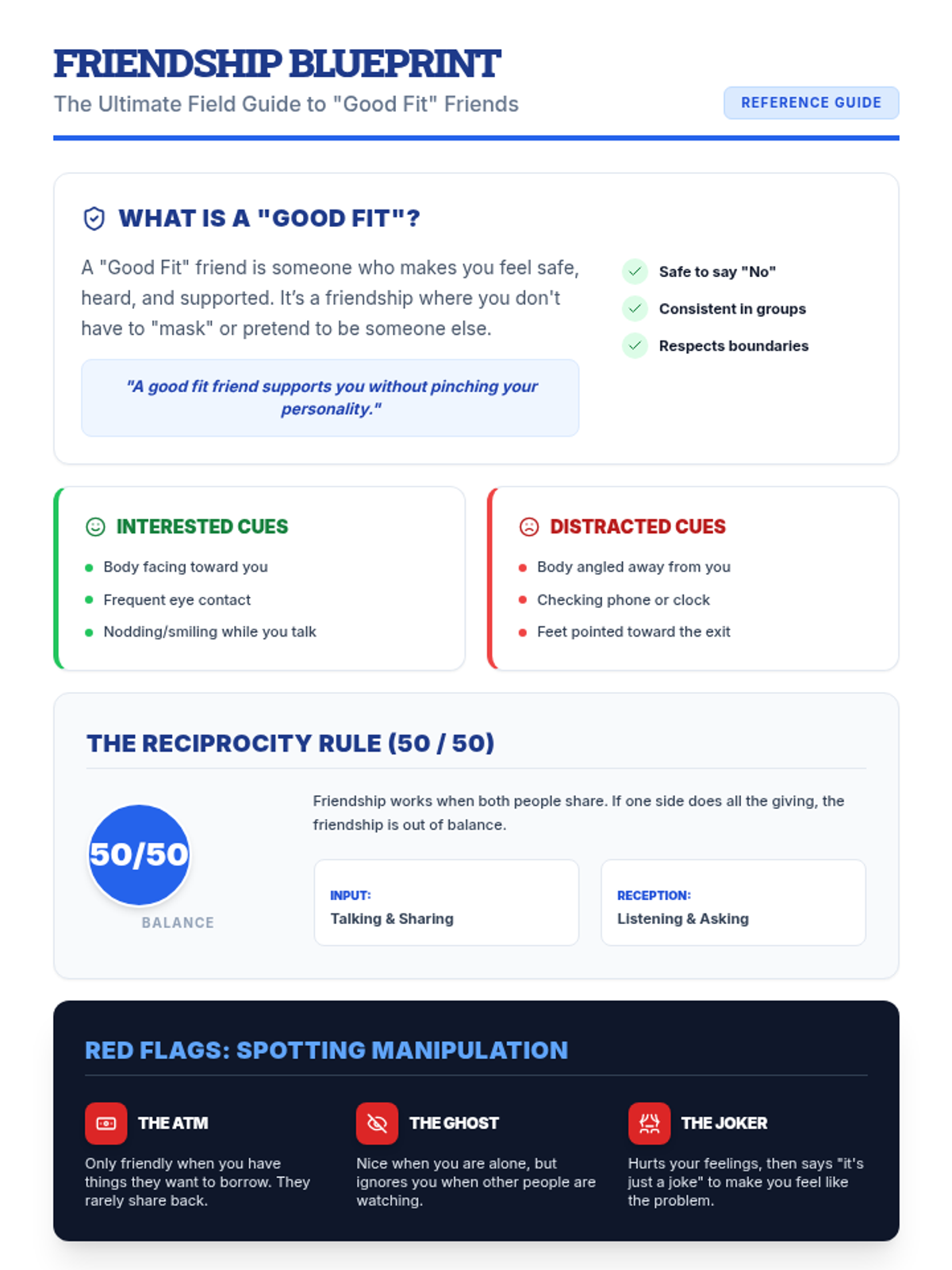
A comprehensive lesson designed for middle school students to navigate the complexities of friendship, focusing on identifying reciprocal sharing, reading body language, and spotting manipulation.
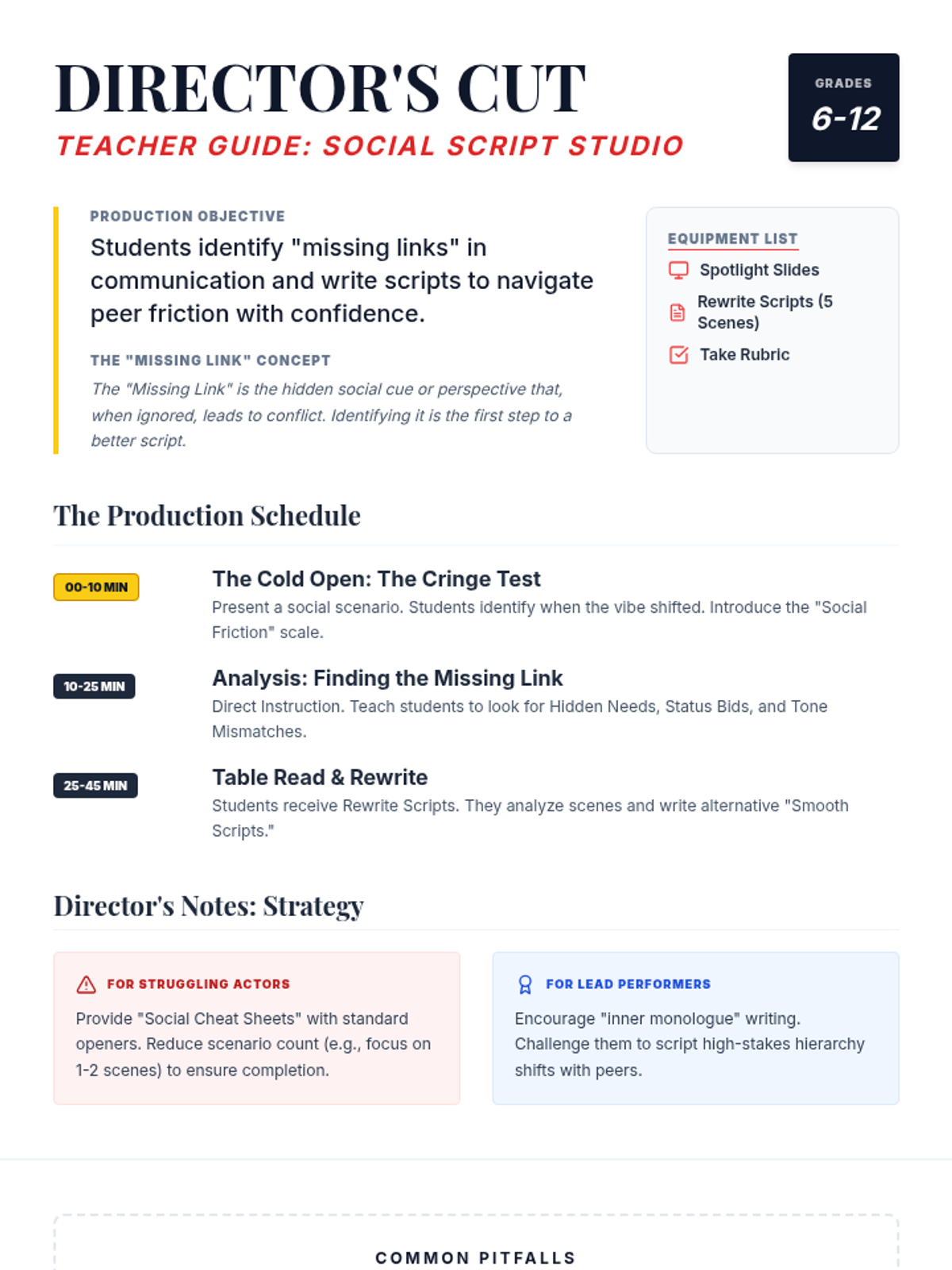
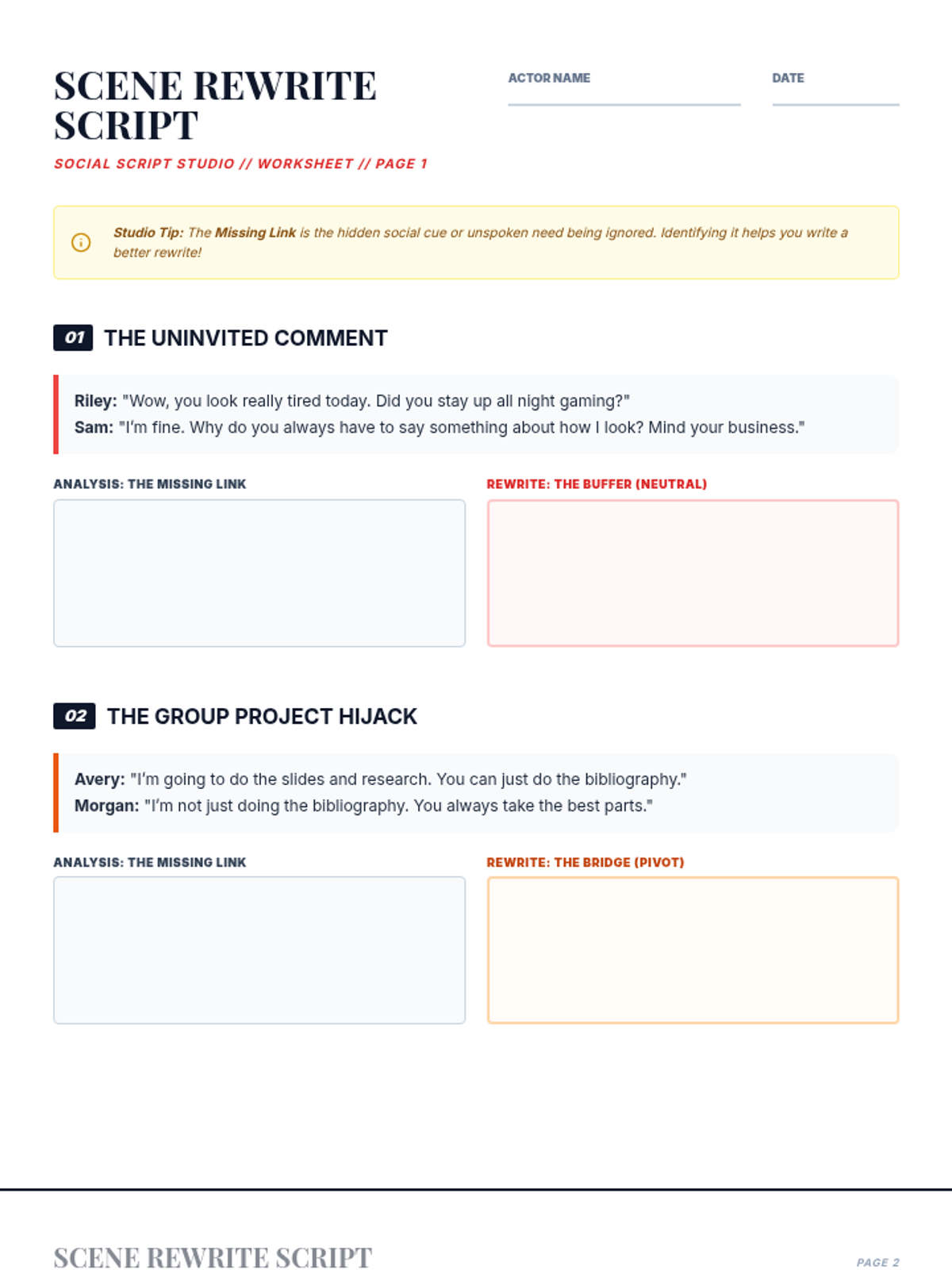
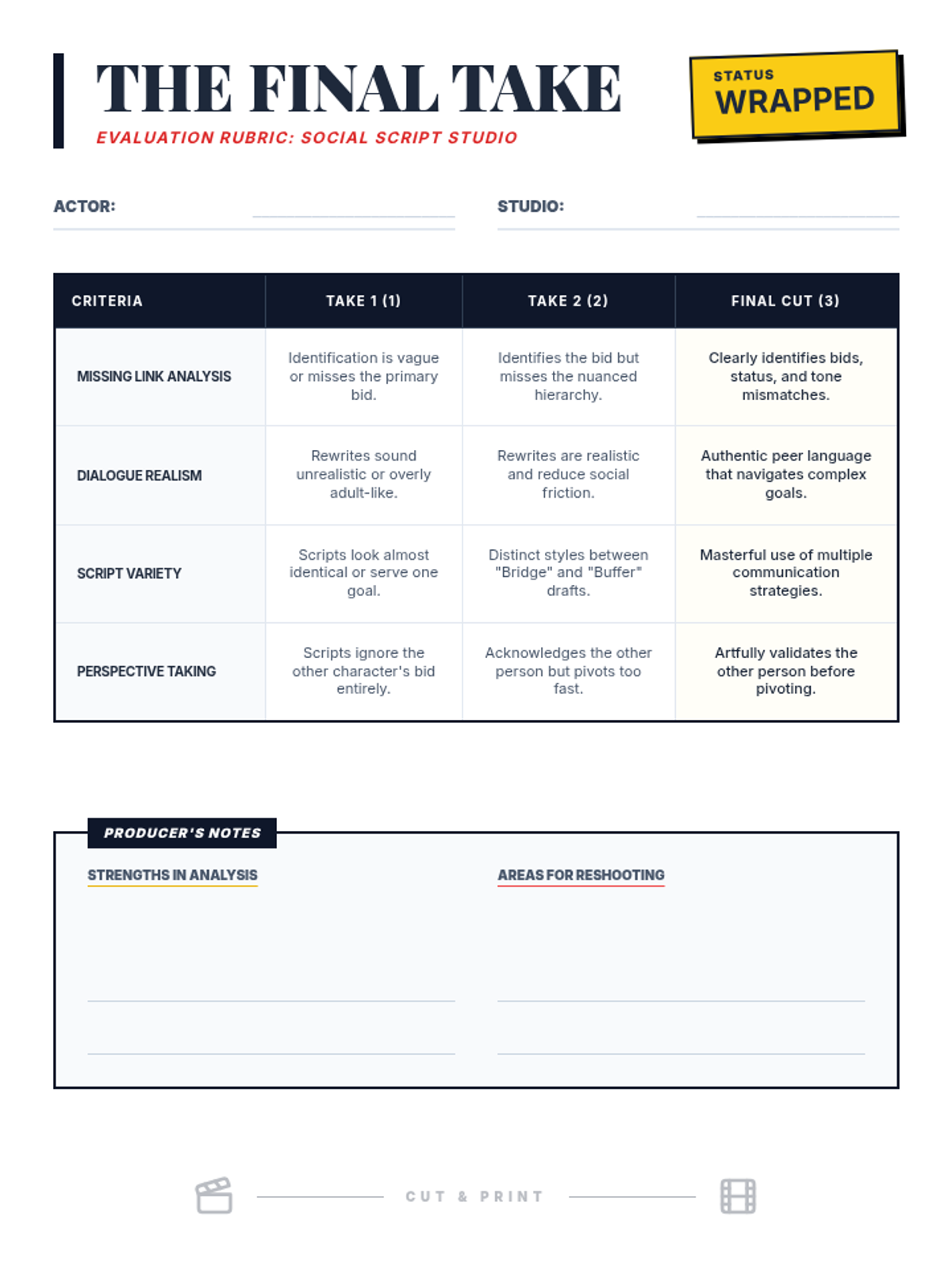
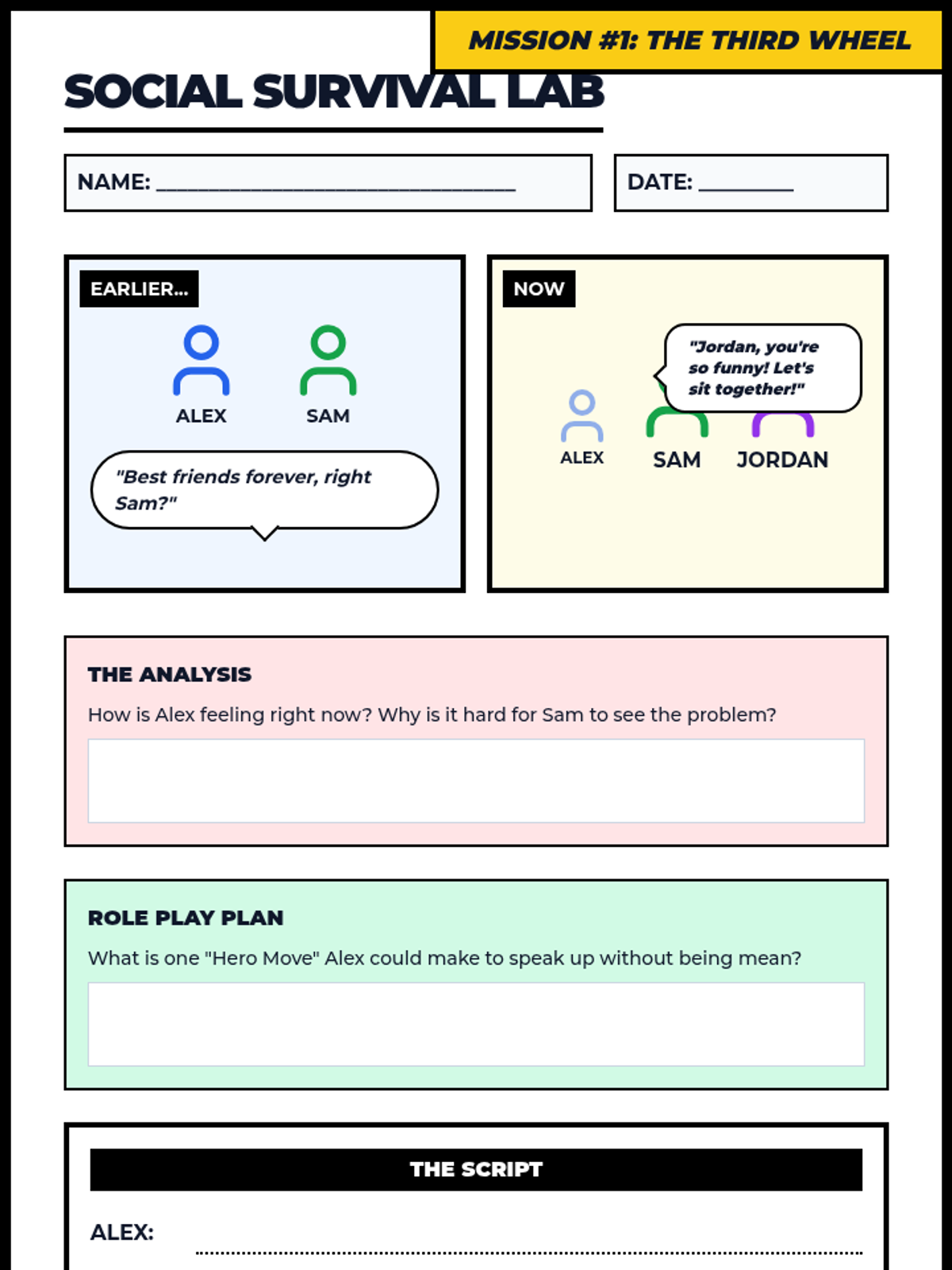
A social skills lesson for middle and high school students focused on analyzing social interactions, identifying communication gaps, and rehearsing alternative responses to peer conflict.
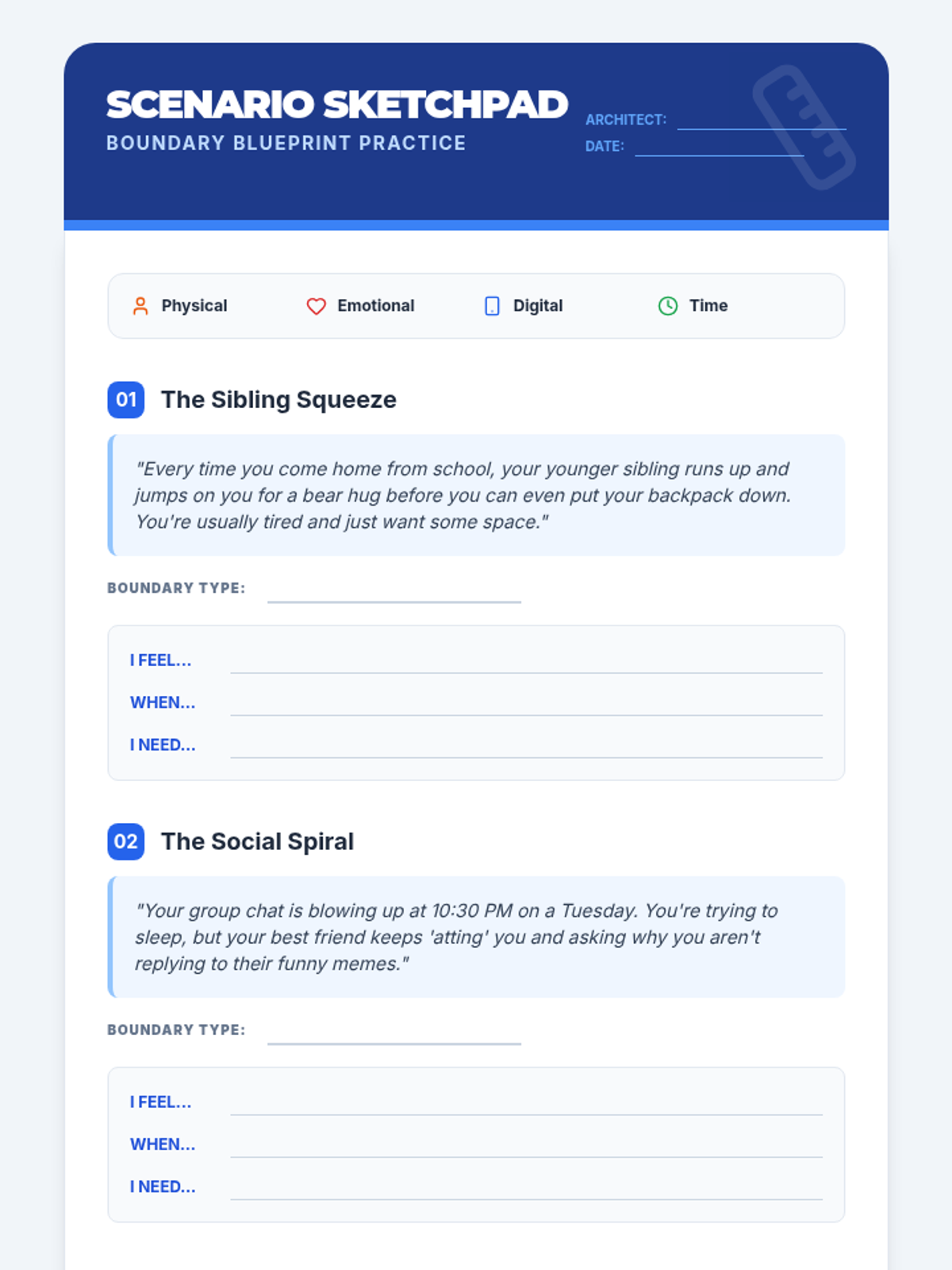
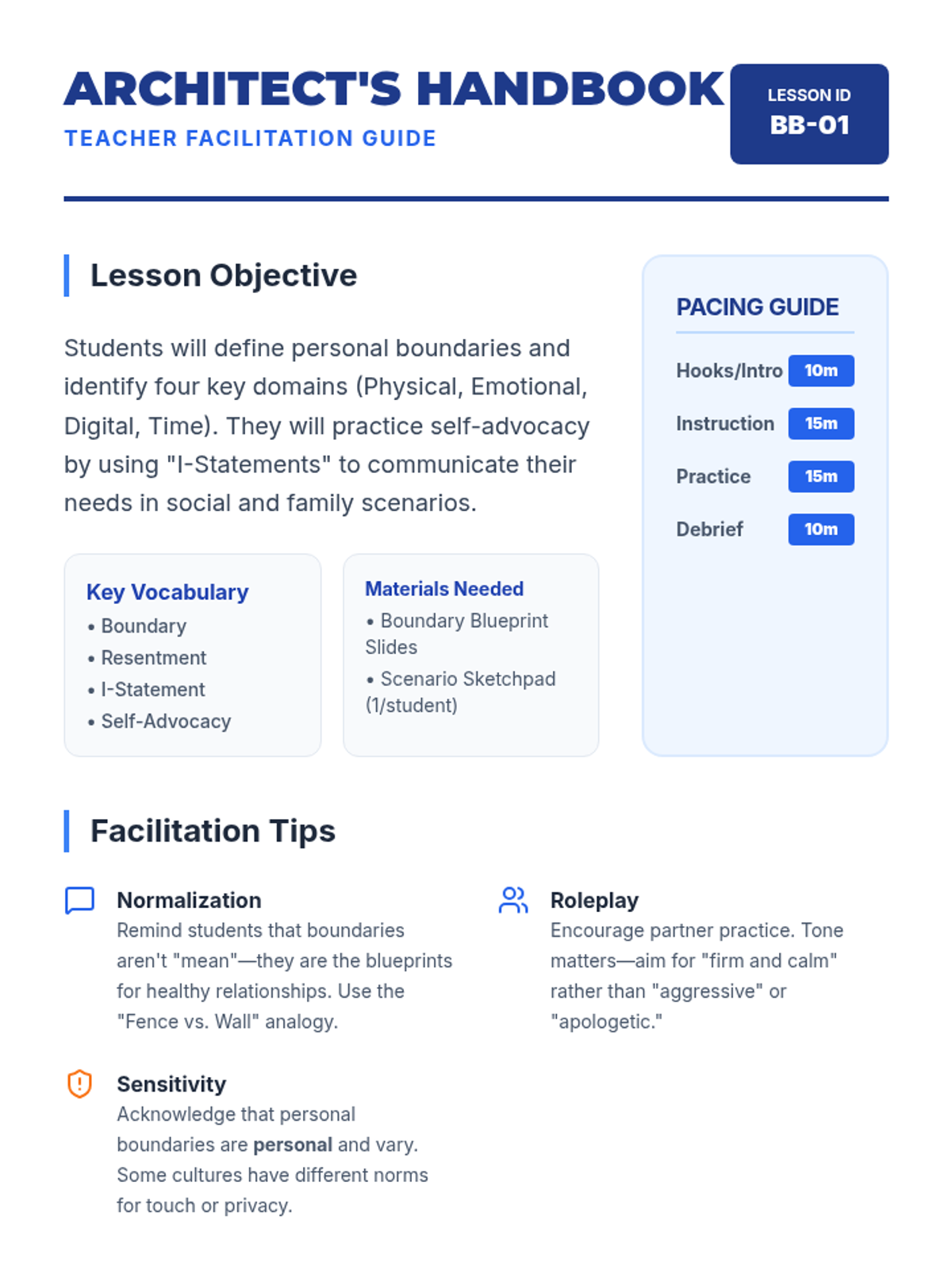
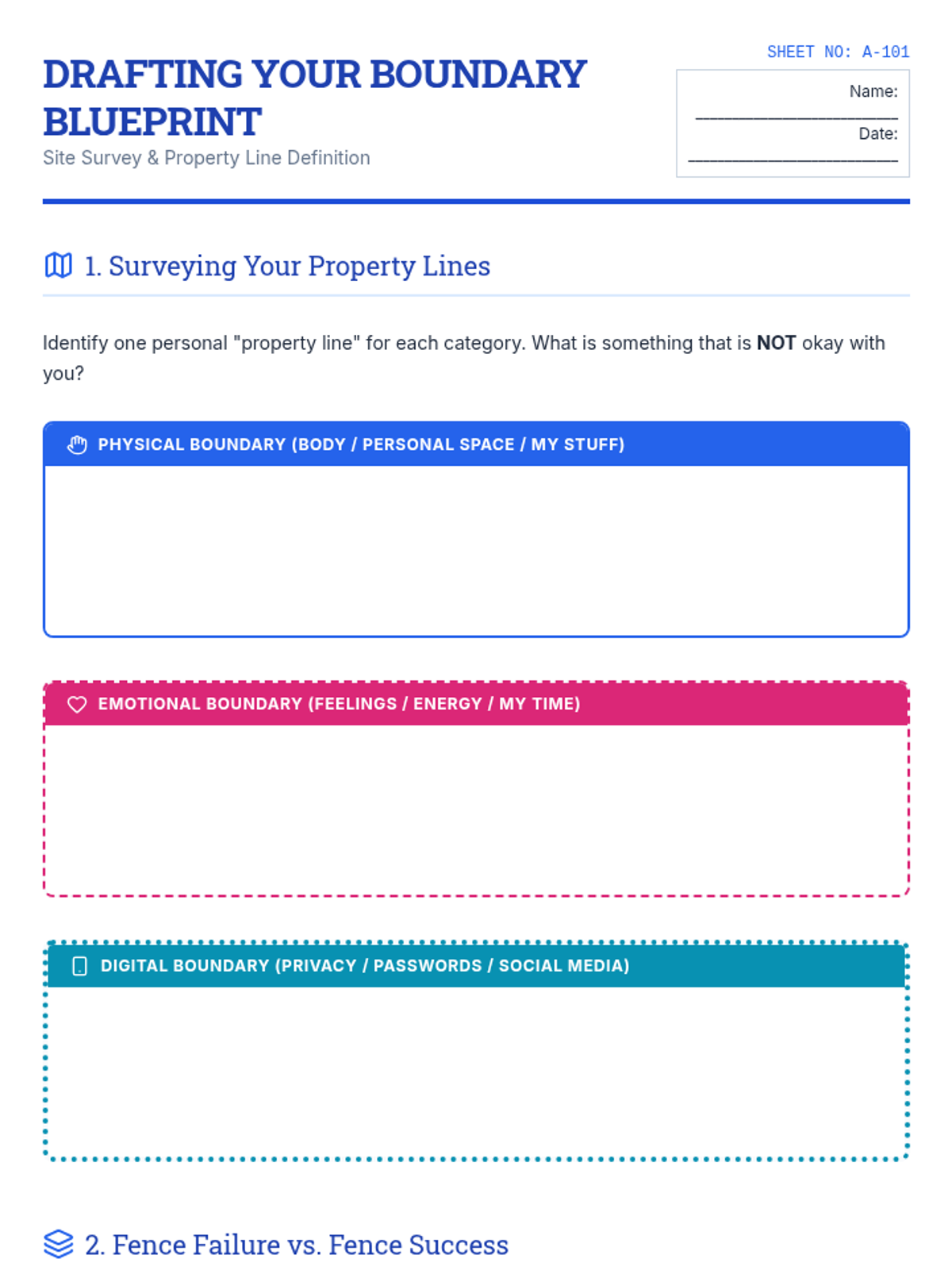
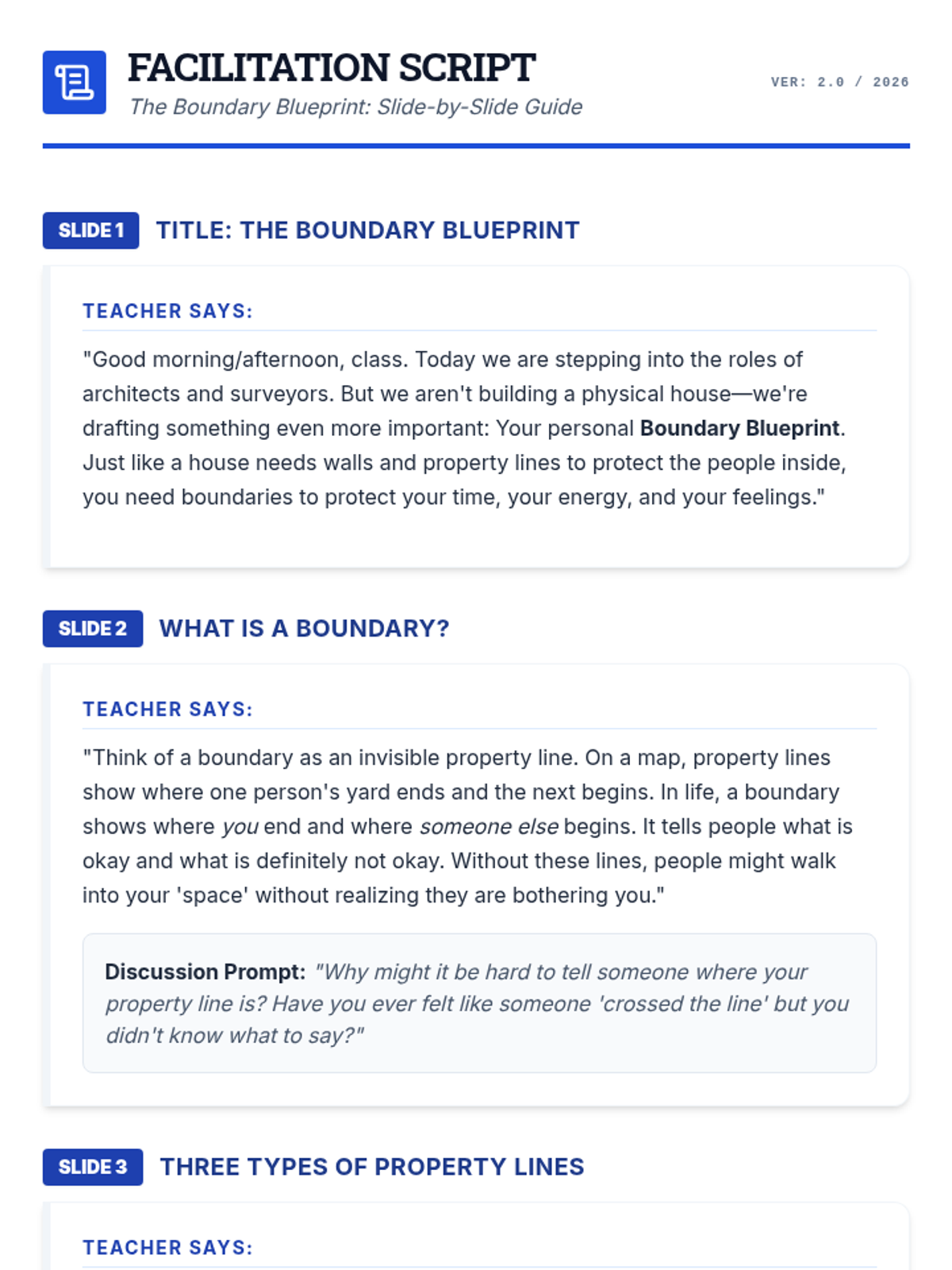
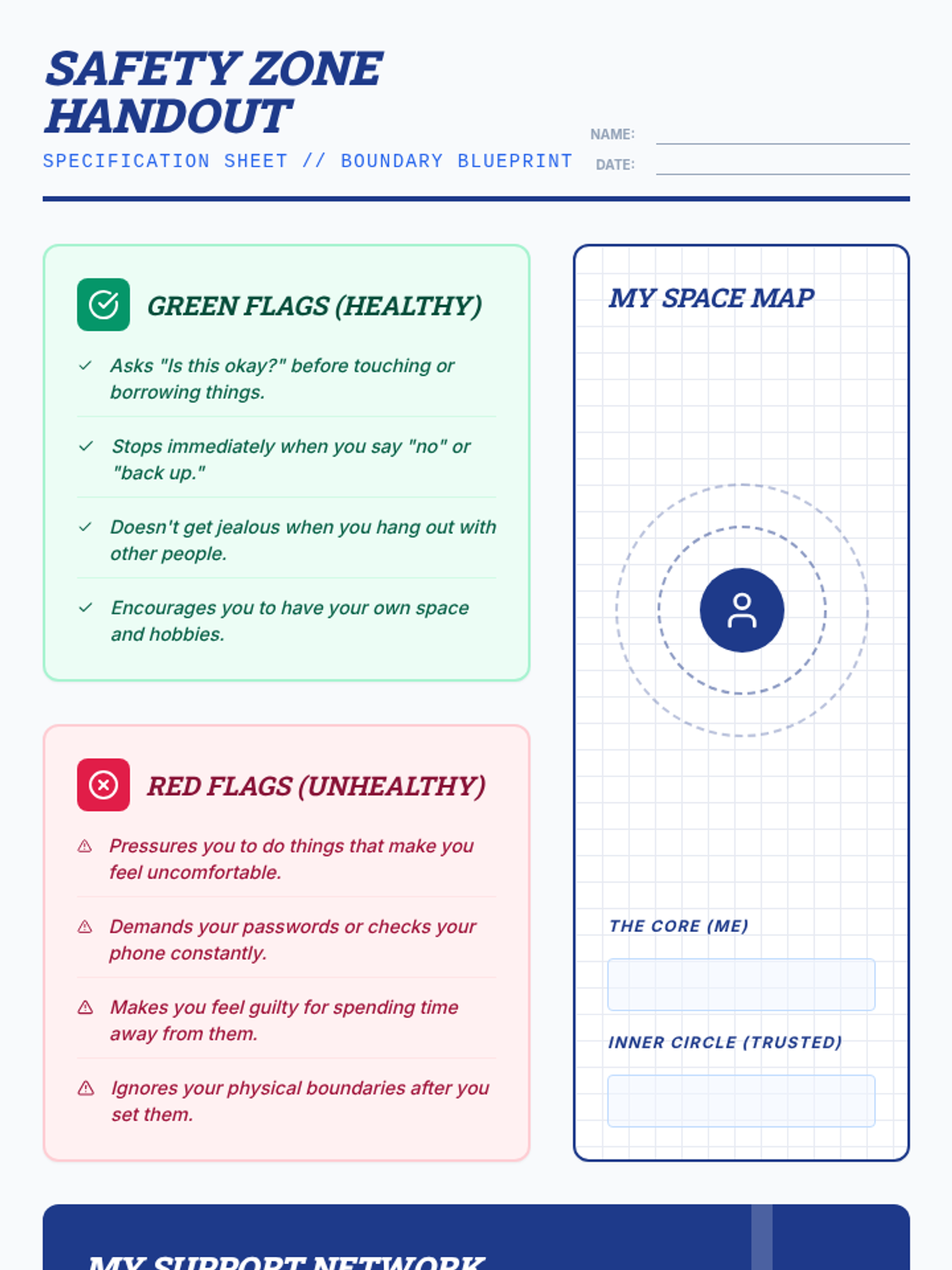
A comprehensive lesson for middle school students on identifying, communicating, and maintaining personal boundaries across physical, emotional, and digital spaces using an architectural blueprint theme.
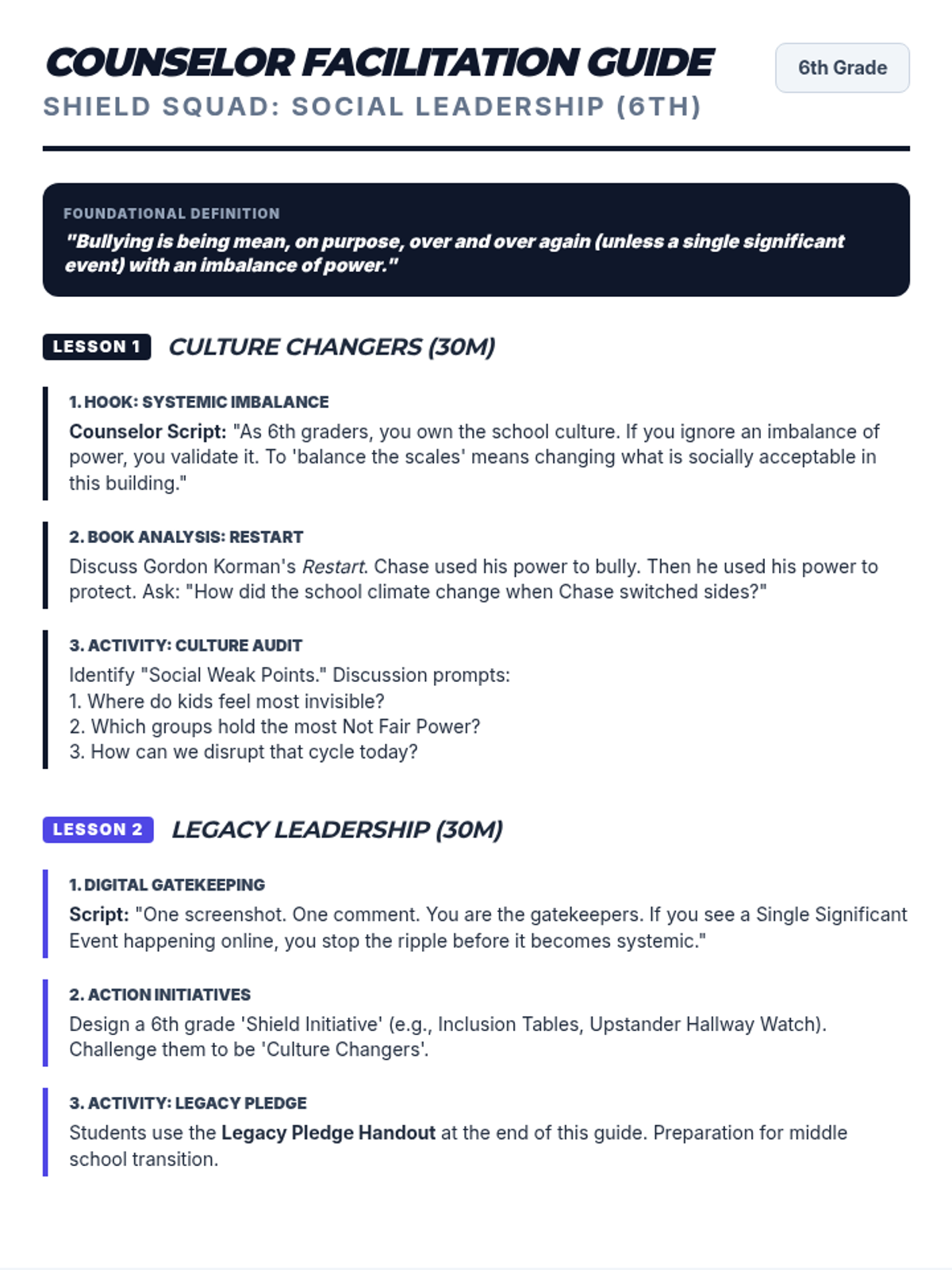
The first of two 30-minute sessions for 6th grade. Using 'Restart' by Gordon Korman, students analyze school culture, social leadership, and the concept of a 'Social Reset'.
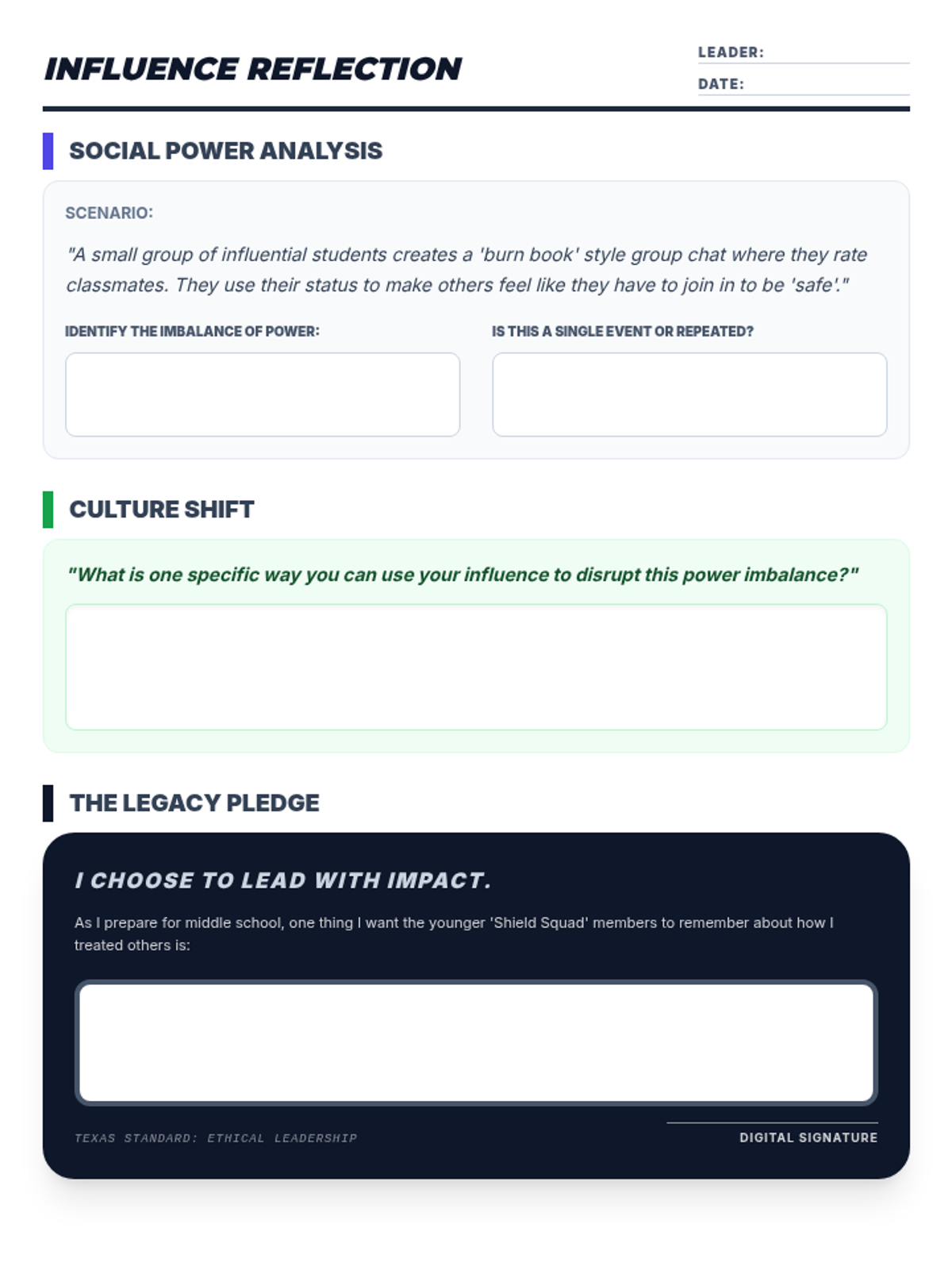
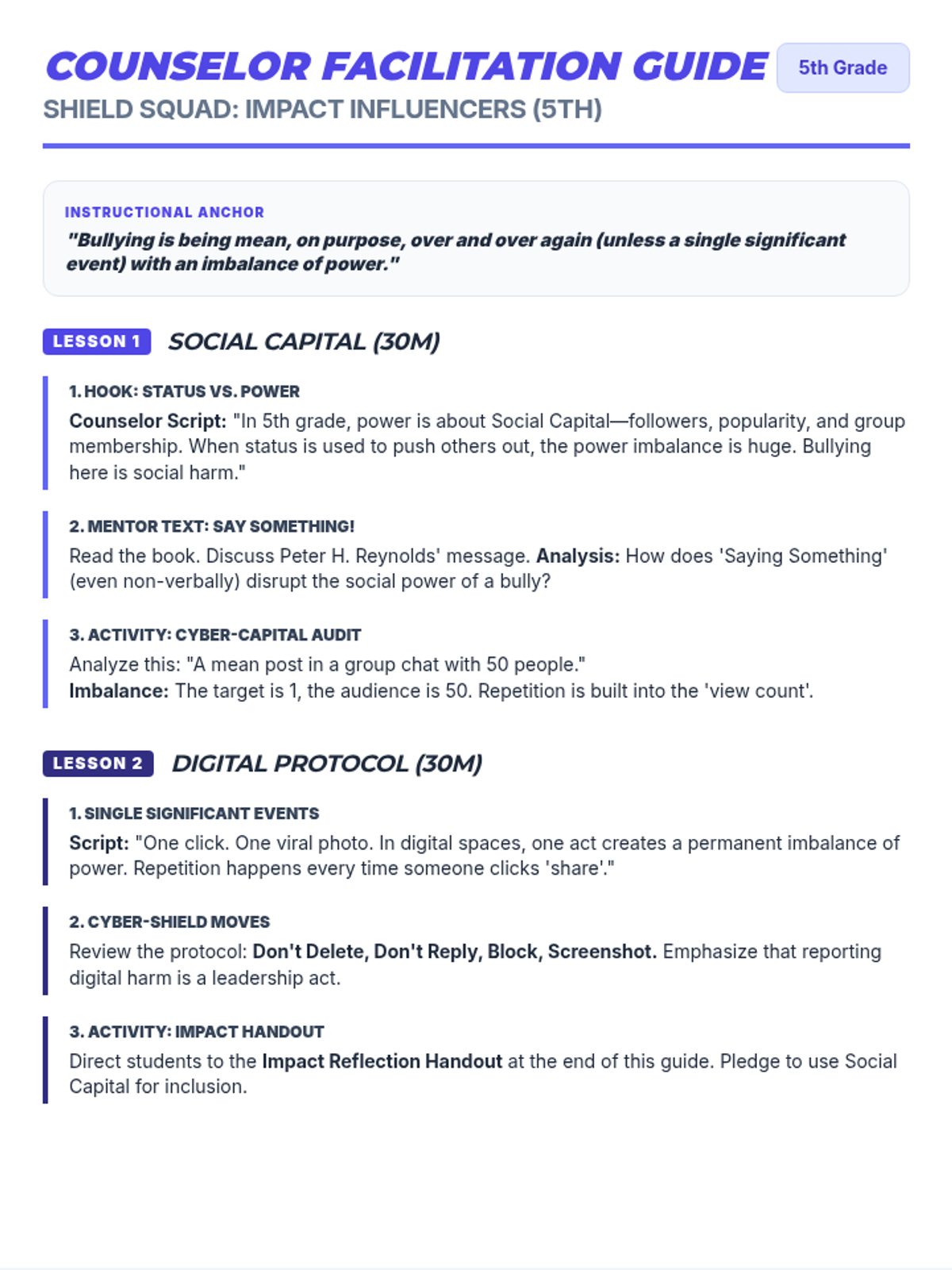
The first of two 30-minute sessions for 5th grade. Using 'Zero' by Kathryn Otoshi, students explore social capital as power and the specific dynamics of cyberbullying.
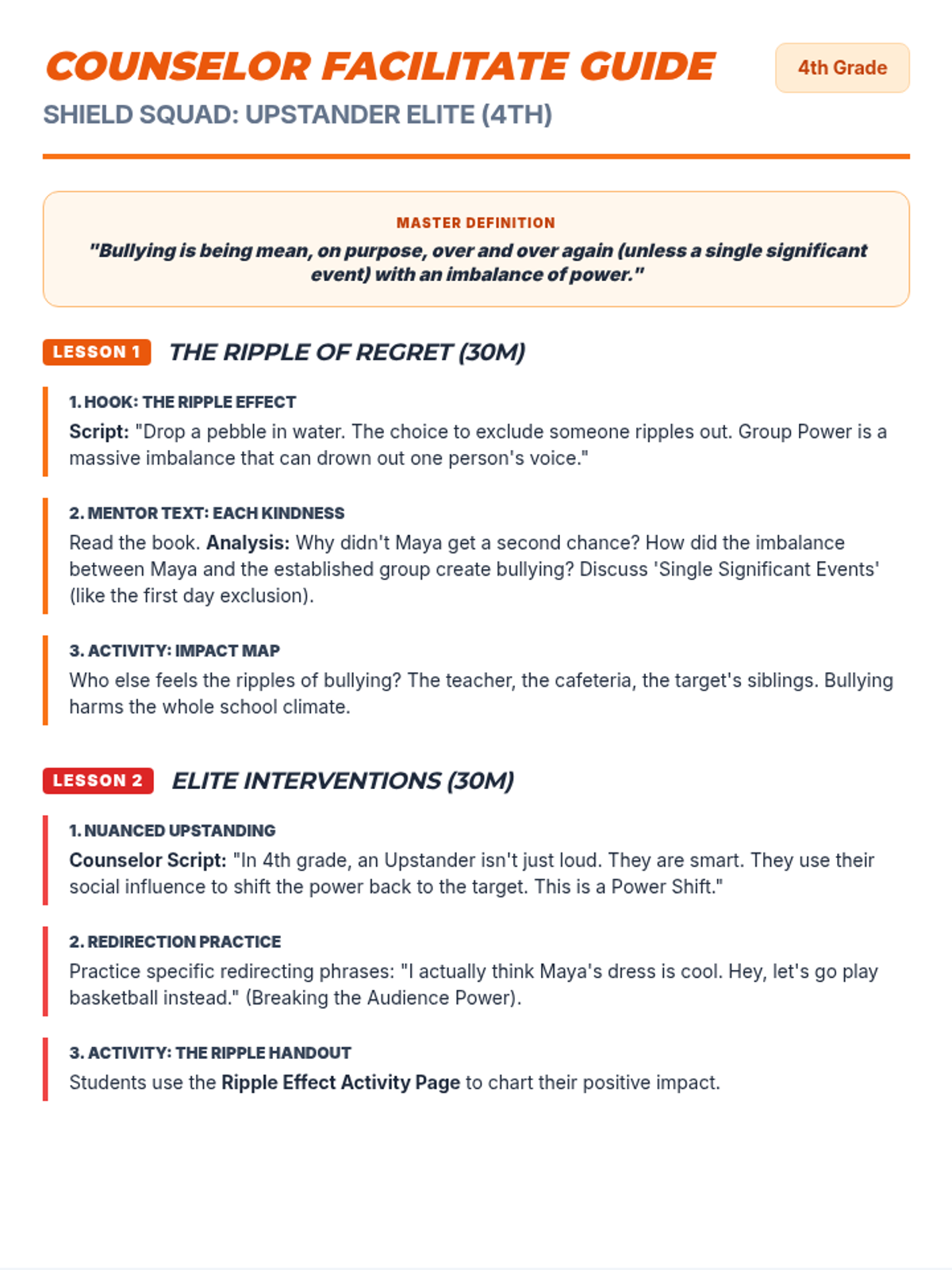
The first of two 30-minute sessions for 4th grade. Using 'Confessions of a Former Bully' by Trudy Ludwig, students understand the bullying circle and the roles people play in social dynamics.
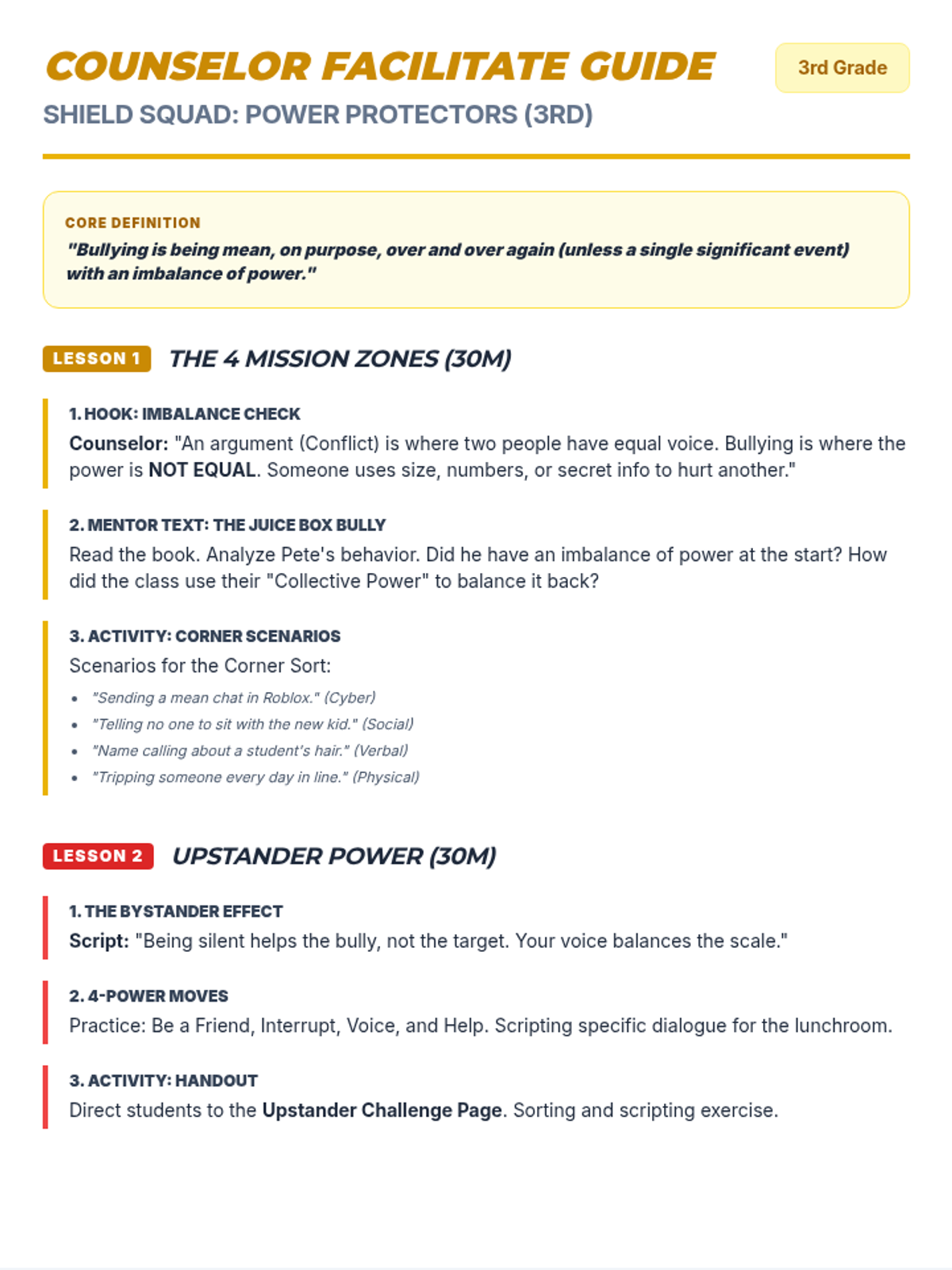
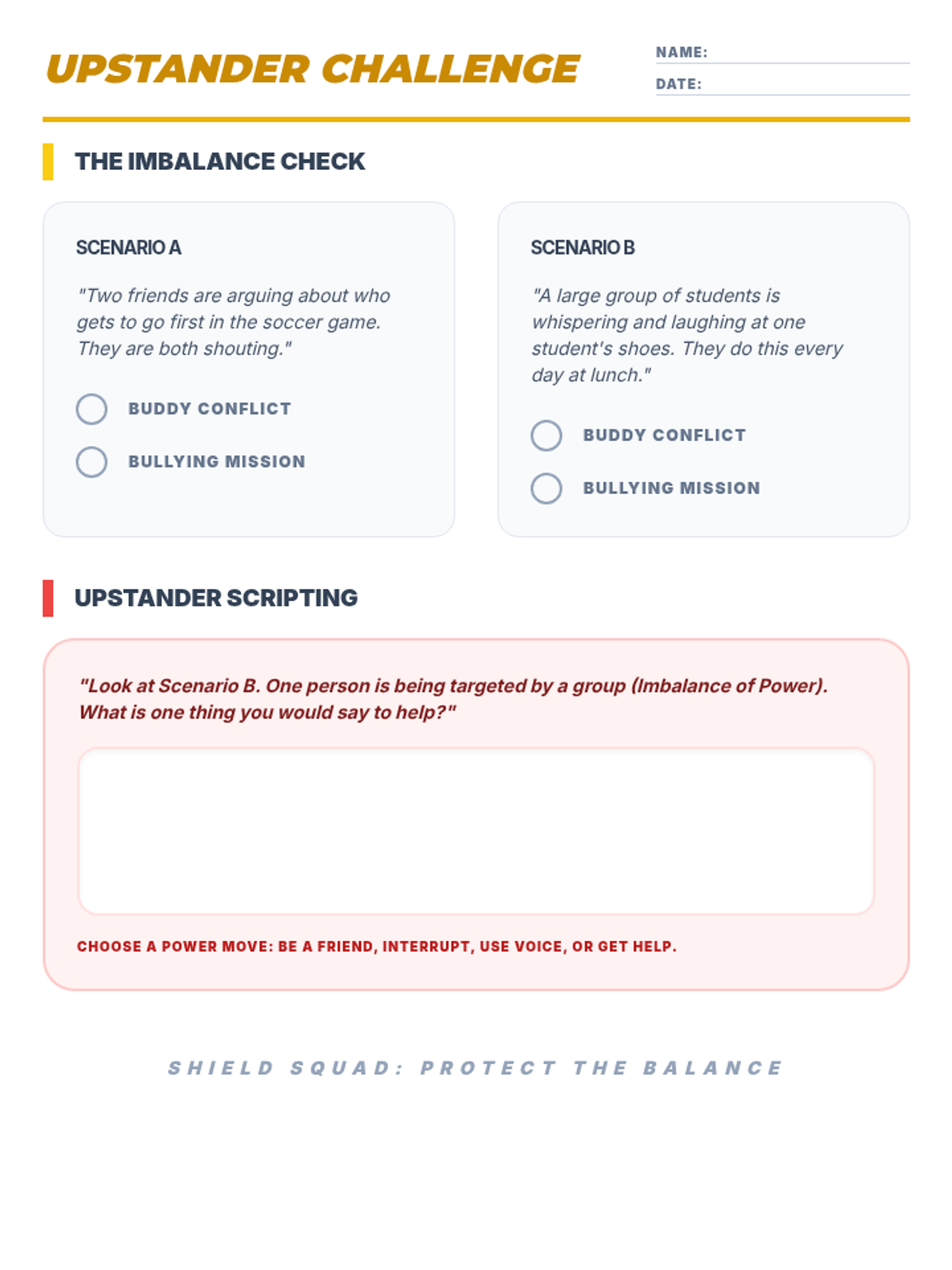
The first of two 30-minute sessions for 3rd grade. Using 'Tease Monster' by Julia Cook, students categorize behavior and analyze the 'Target' vs 'Bully' power gap.
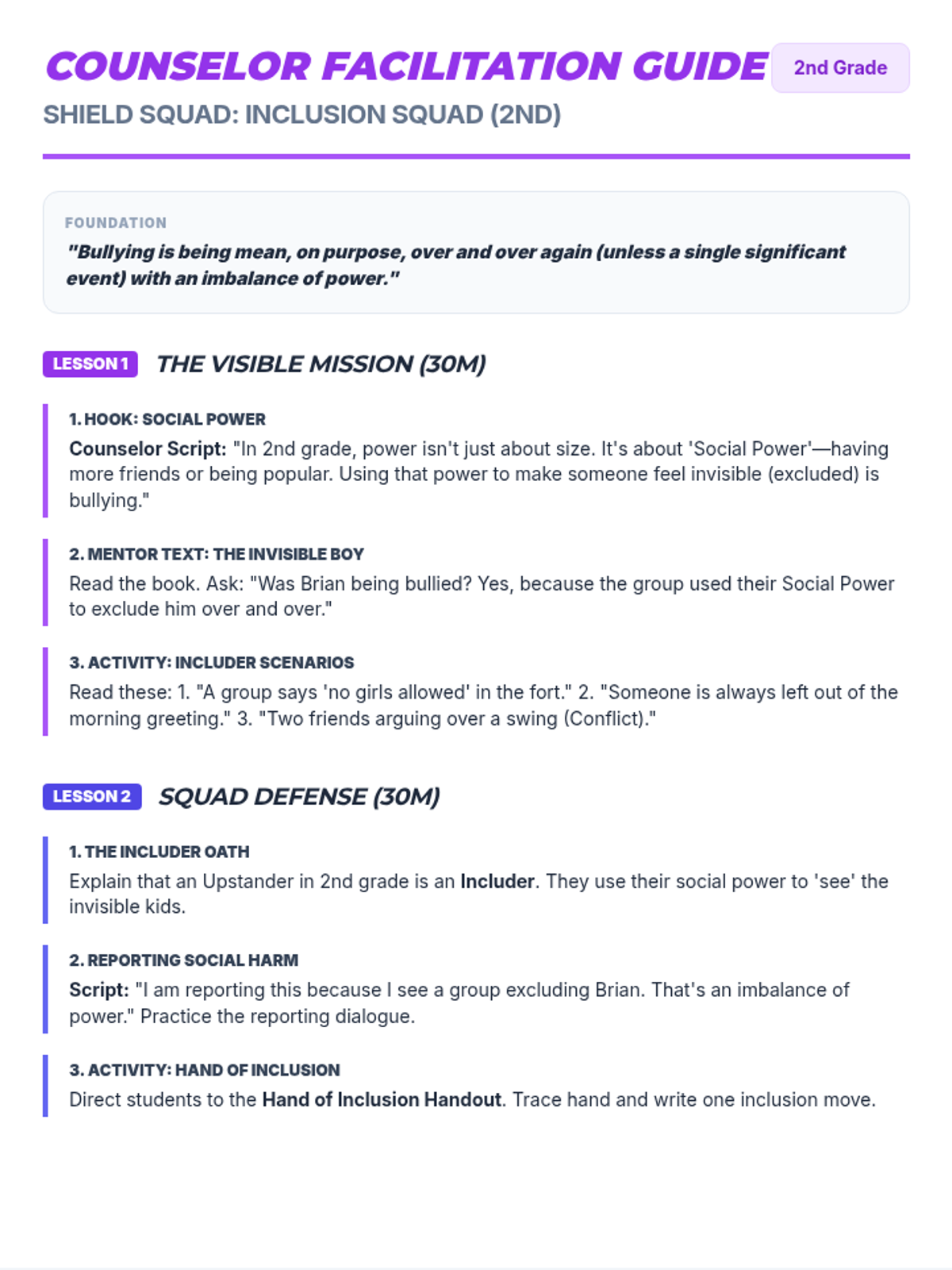
The first of two 30-minute sessions for 2nd grade. Using 'The Invisible Boy' by Trudy Ludwig, students explore social exclusion and the transition from a 'Buddy Conflict' to bullying.
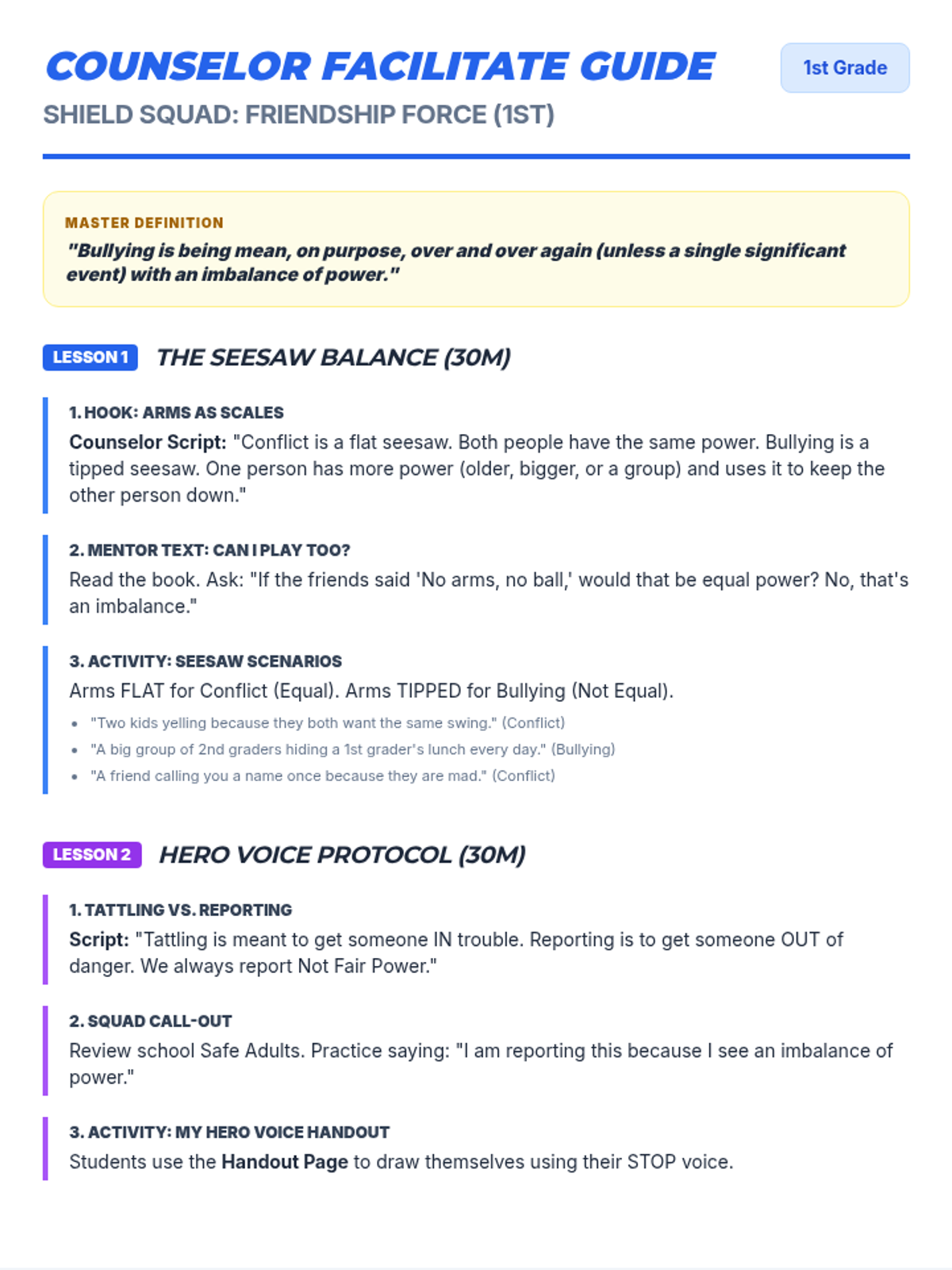
The first of two 30-minute sessions for 1st grade. Using 'Trouble Talk' by Trudy Ludwig, students explore verbal bullying and the 'Seesaw' model of unequal power.
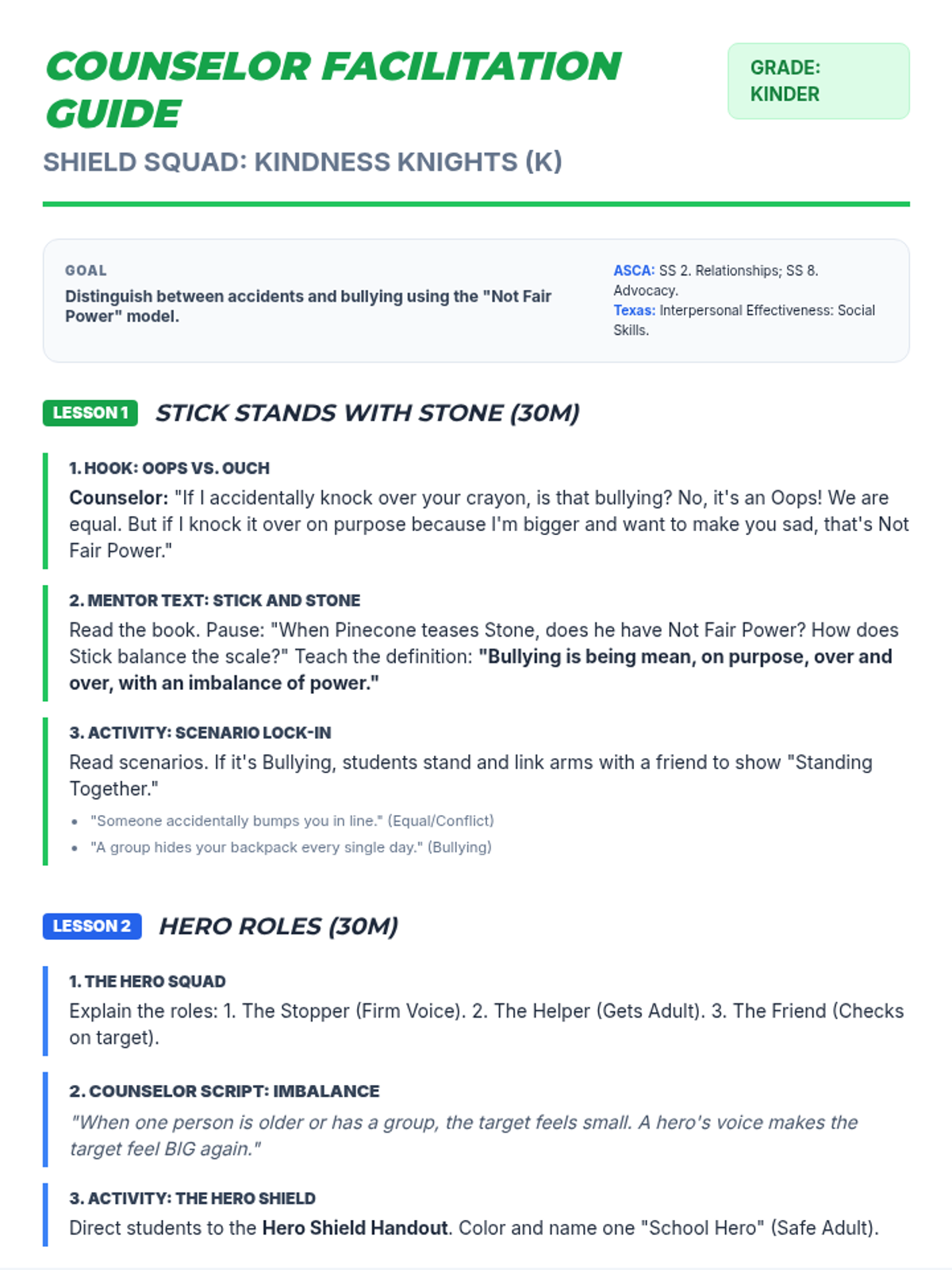
The first of two 30-minute sessions for Kindergarten. Using 'Bully B.E.A.N.S.' by Julia Cook, students learn to distinguish between accidents and bullying using the 'Purposeful' and 'Repeated' criteria.
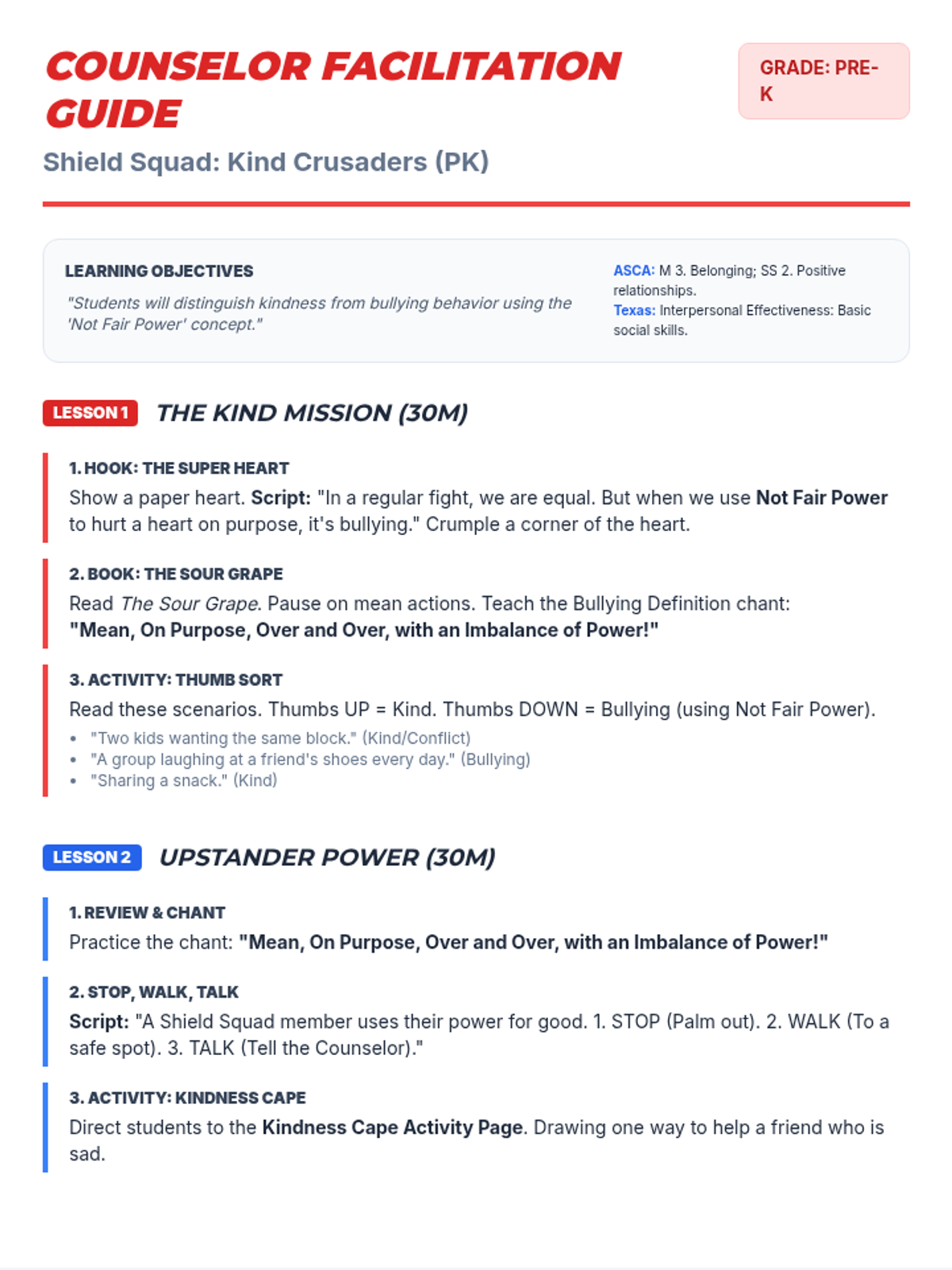
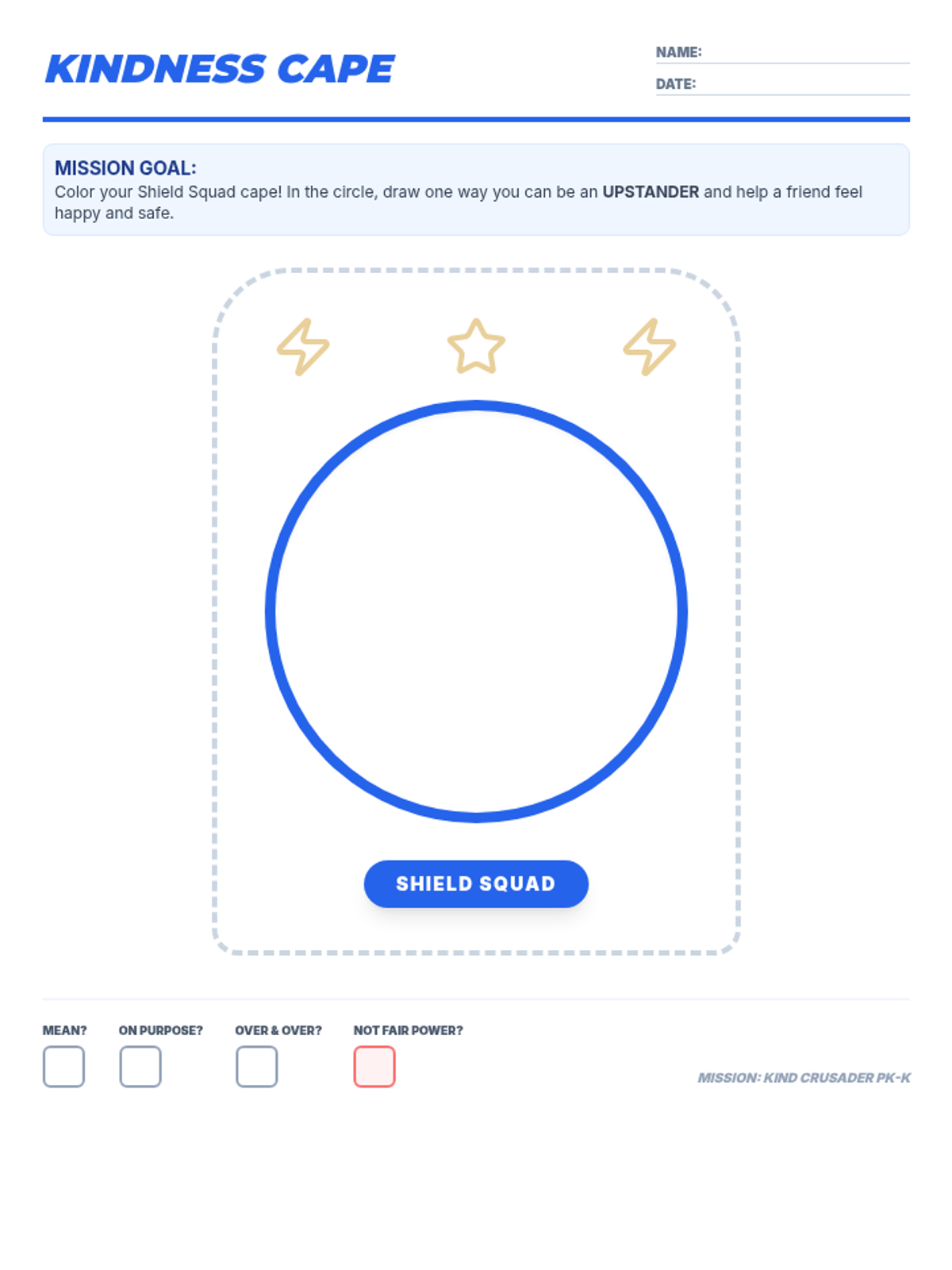
The first of two 30-minute sessions for PK. Using 'One' by Kathryn Otoshi, students are introduced to the 'Shield Squad' definition of bullying and the concept of 'Not Fair Power'.
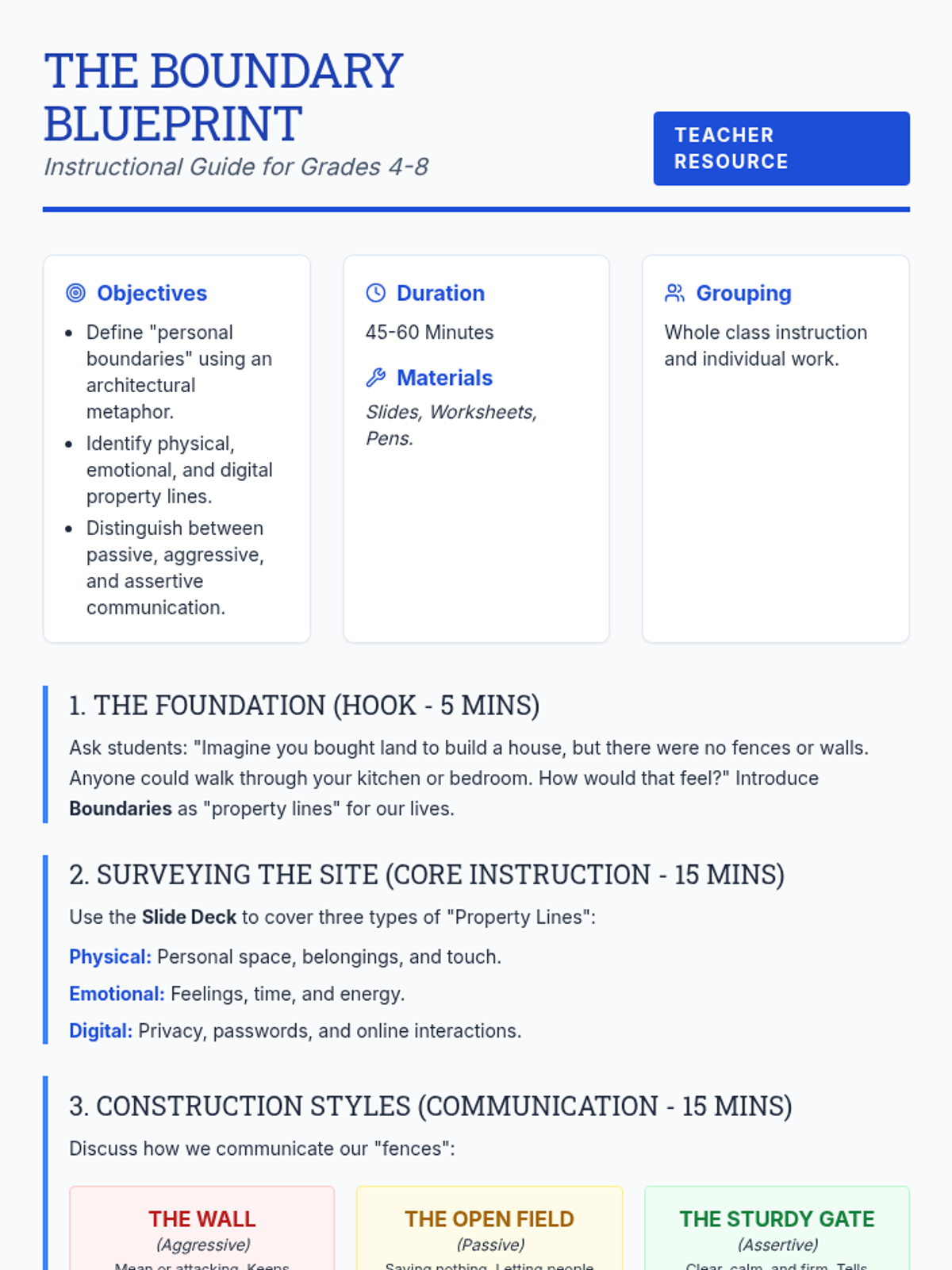
An architectural-themed lesson for grades 4-8 that uses the metaphor of a 'blueprint' to teach personal boundaries, property lines, and assertive communication.
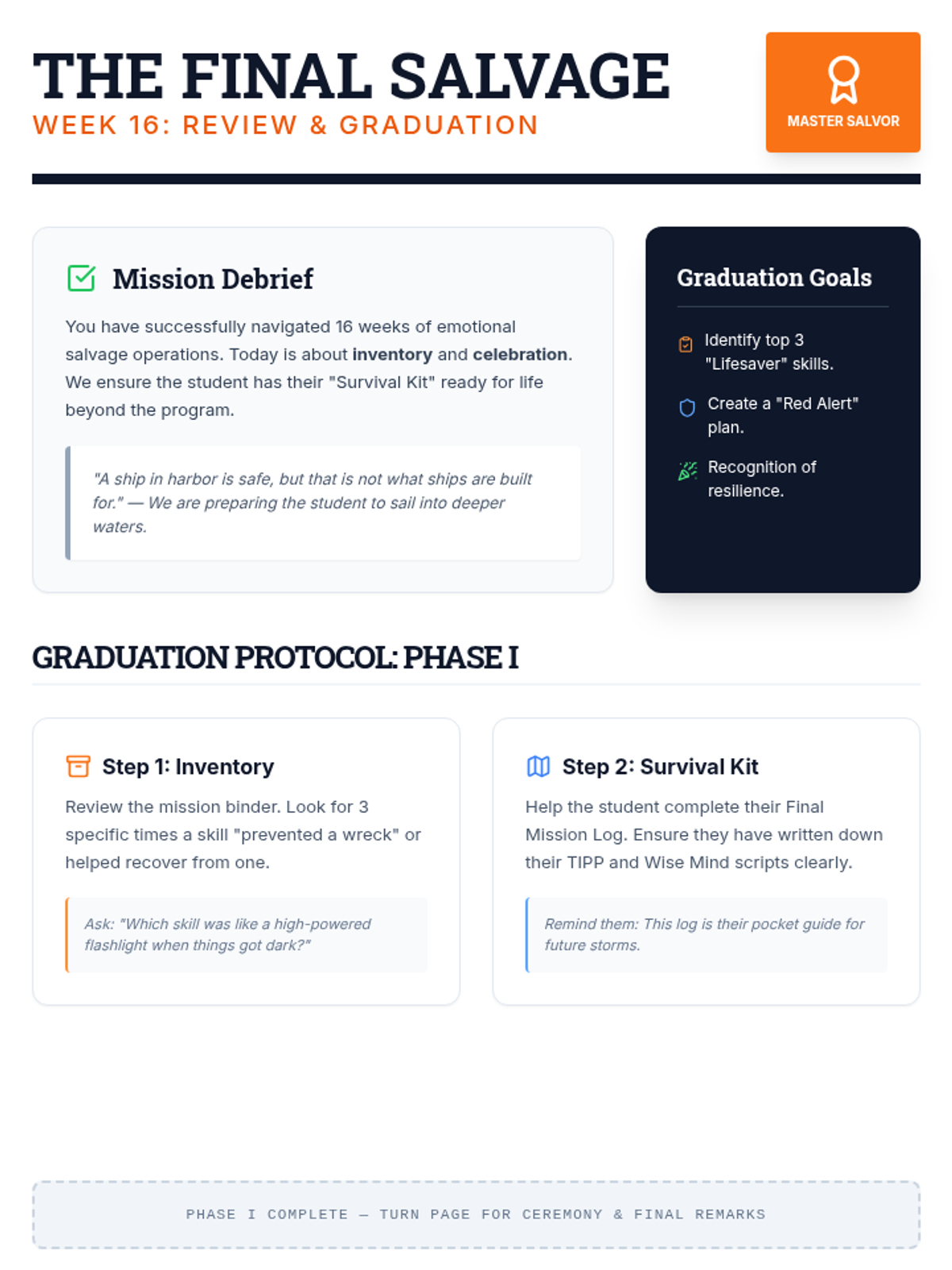
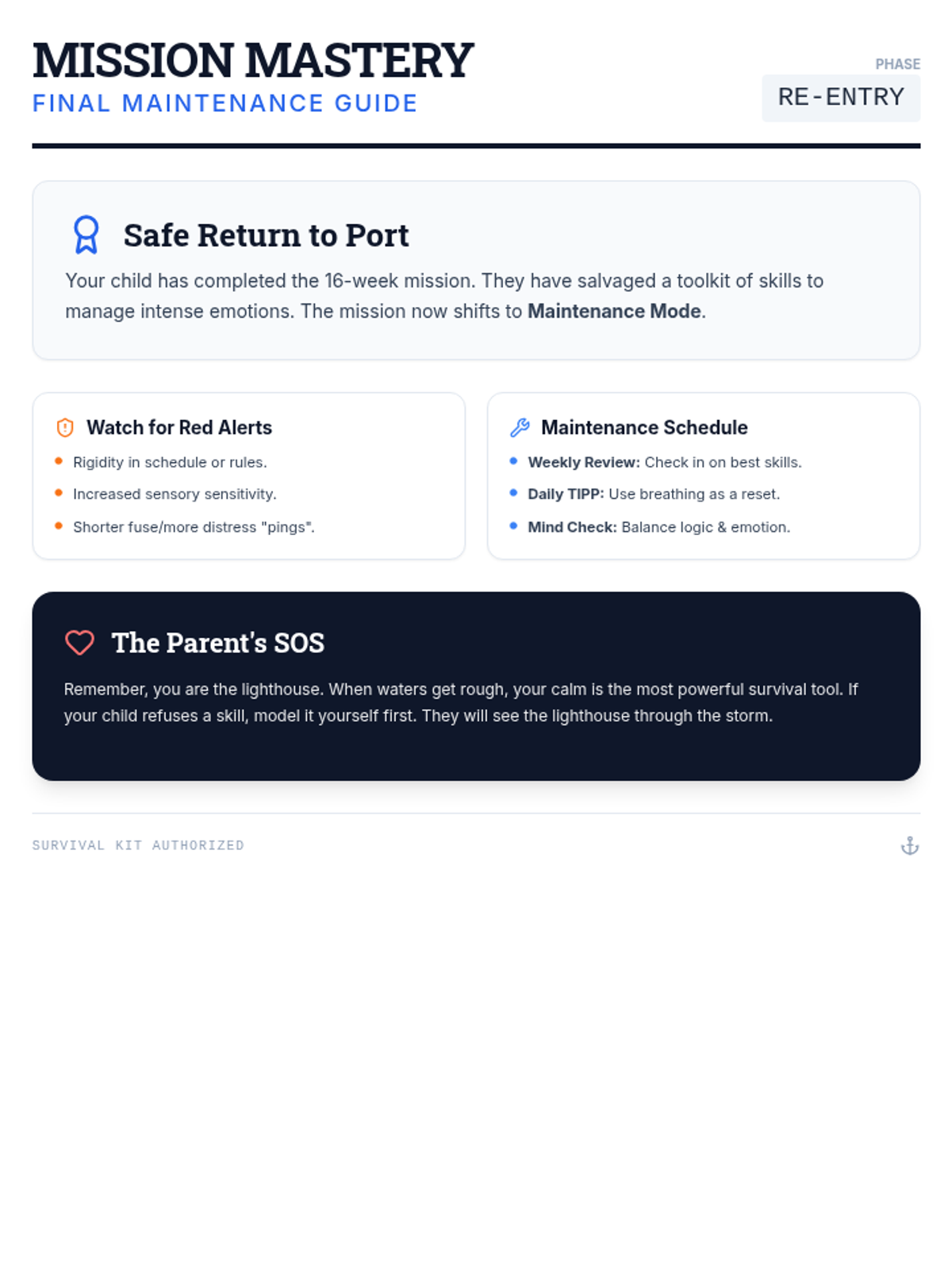
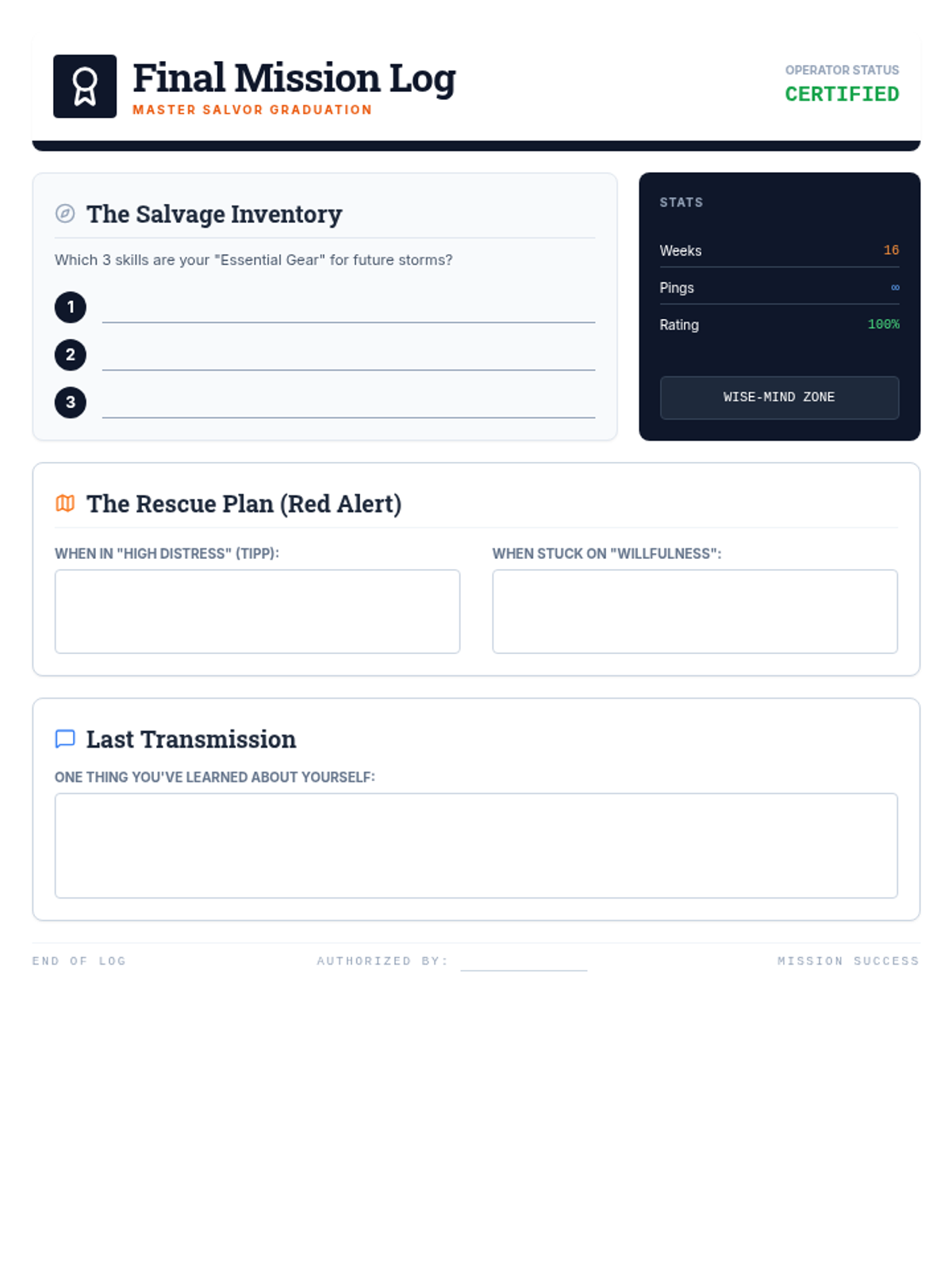
Comprehensive review and graduation from the Survival and Salvage DBT program.
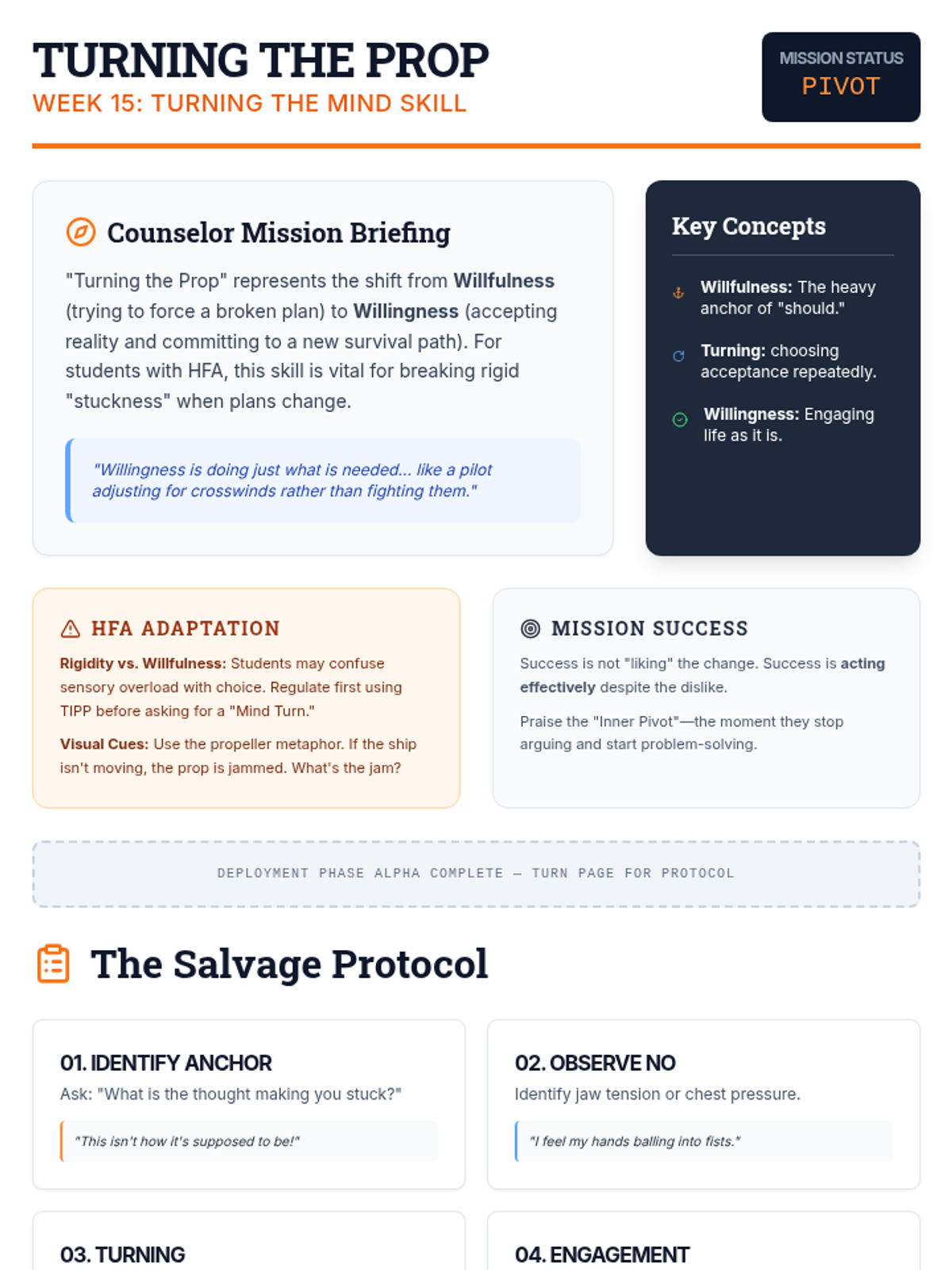
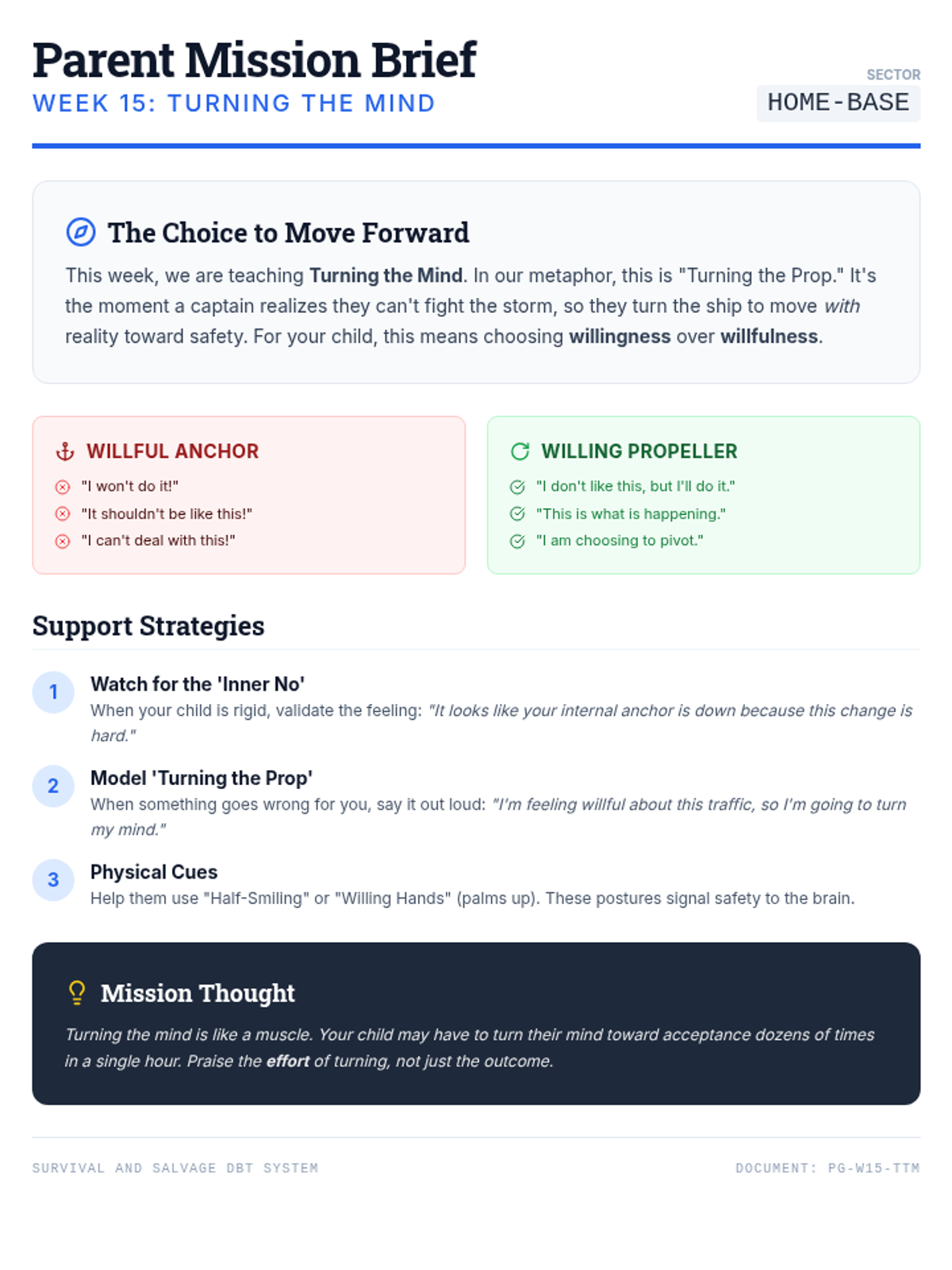
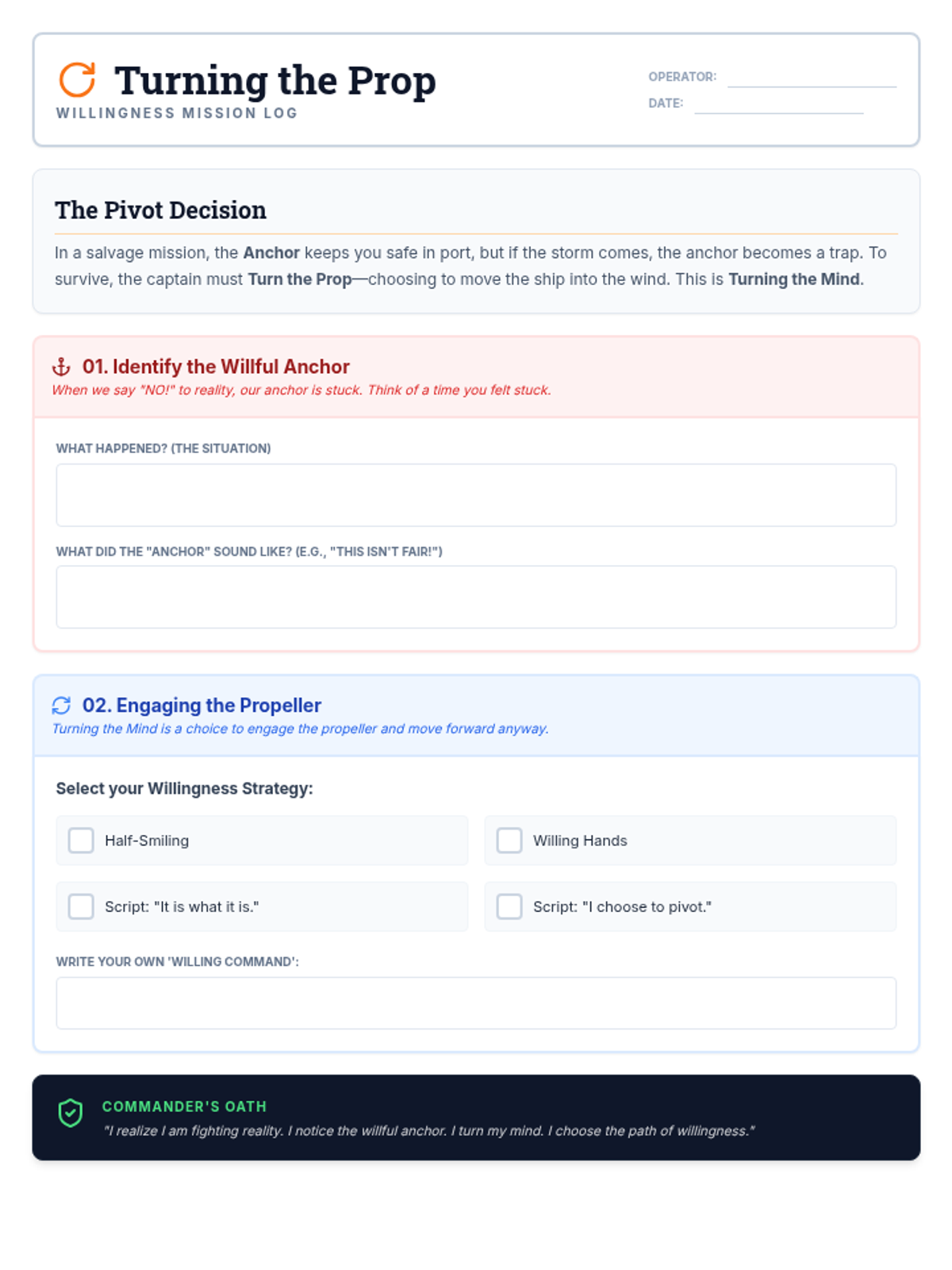
Committing to a new path (Turning the Mind) using the decision to pivot from salvage to survival.
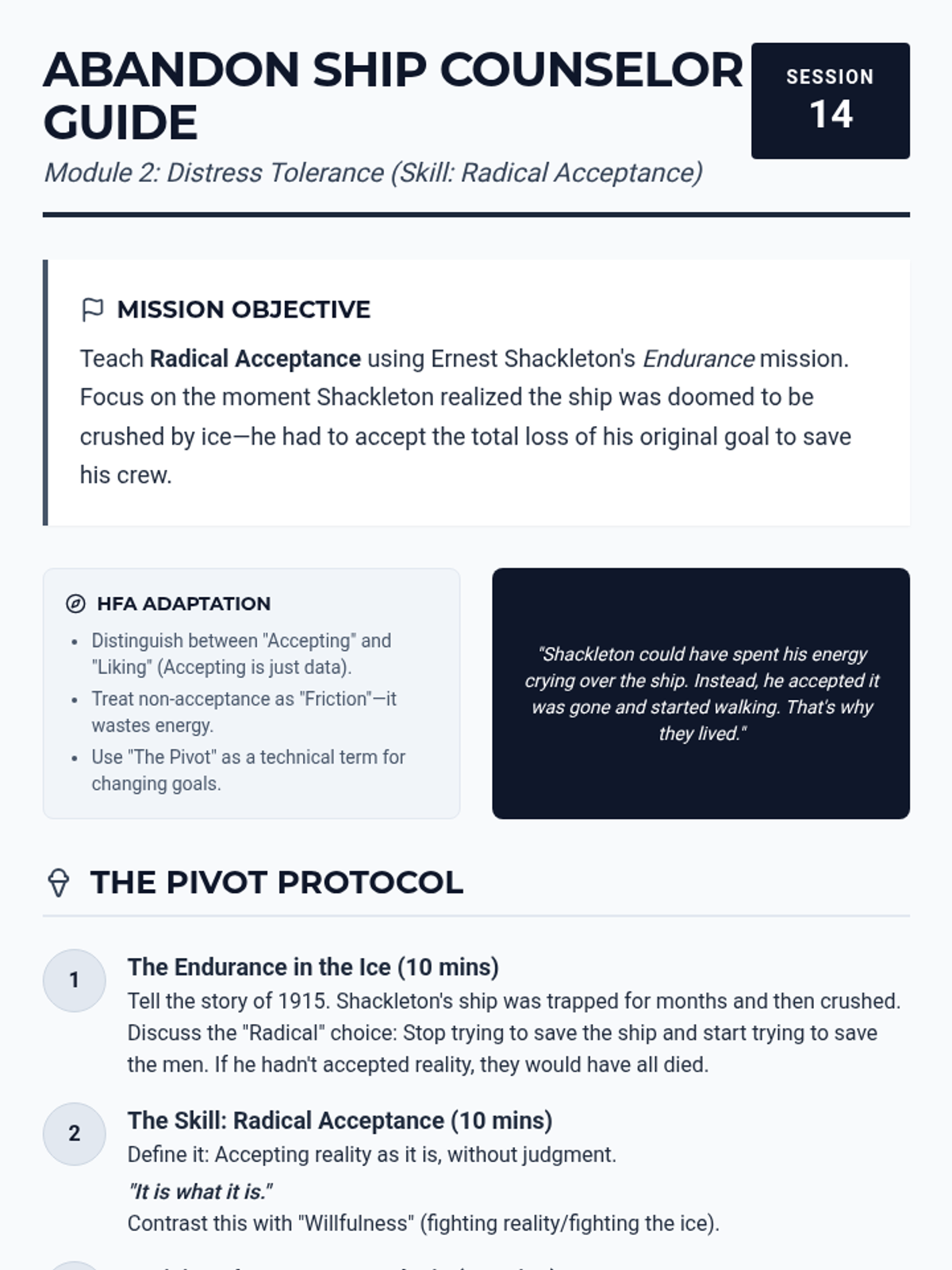
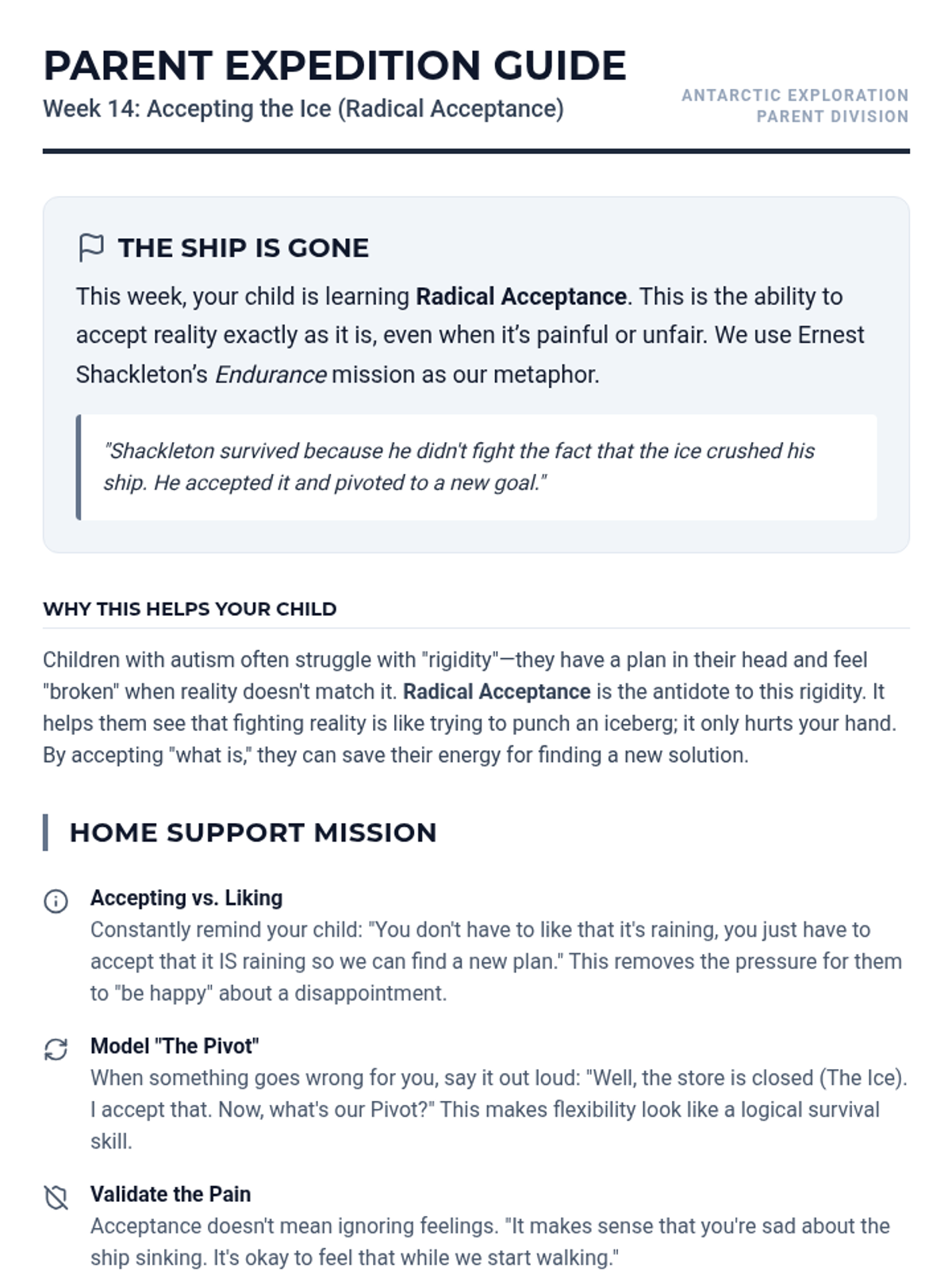
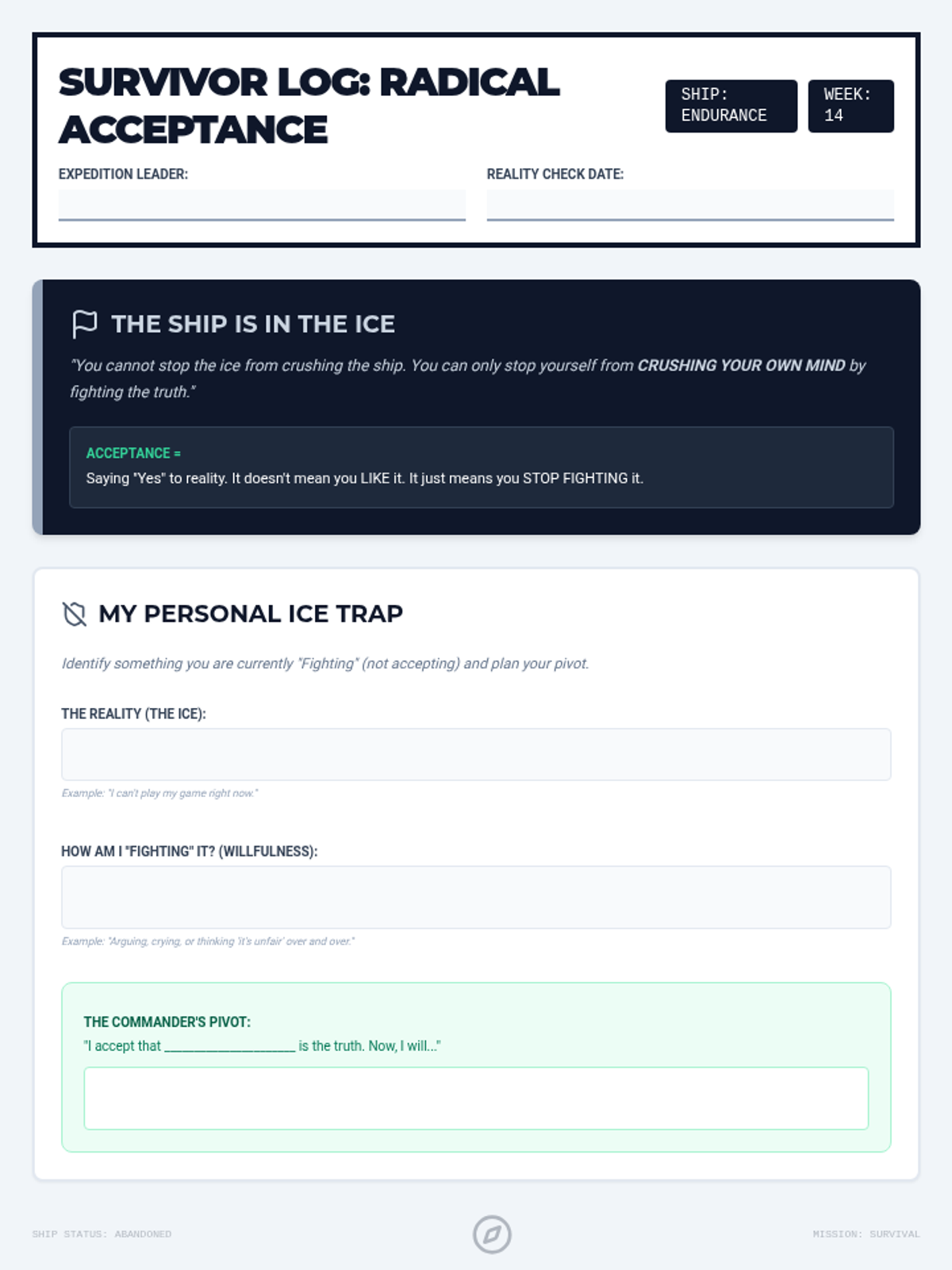
Accepting reality without judgment (Radical Acceptance) using Shackleton's Endurance survival story.
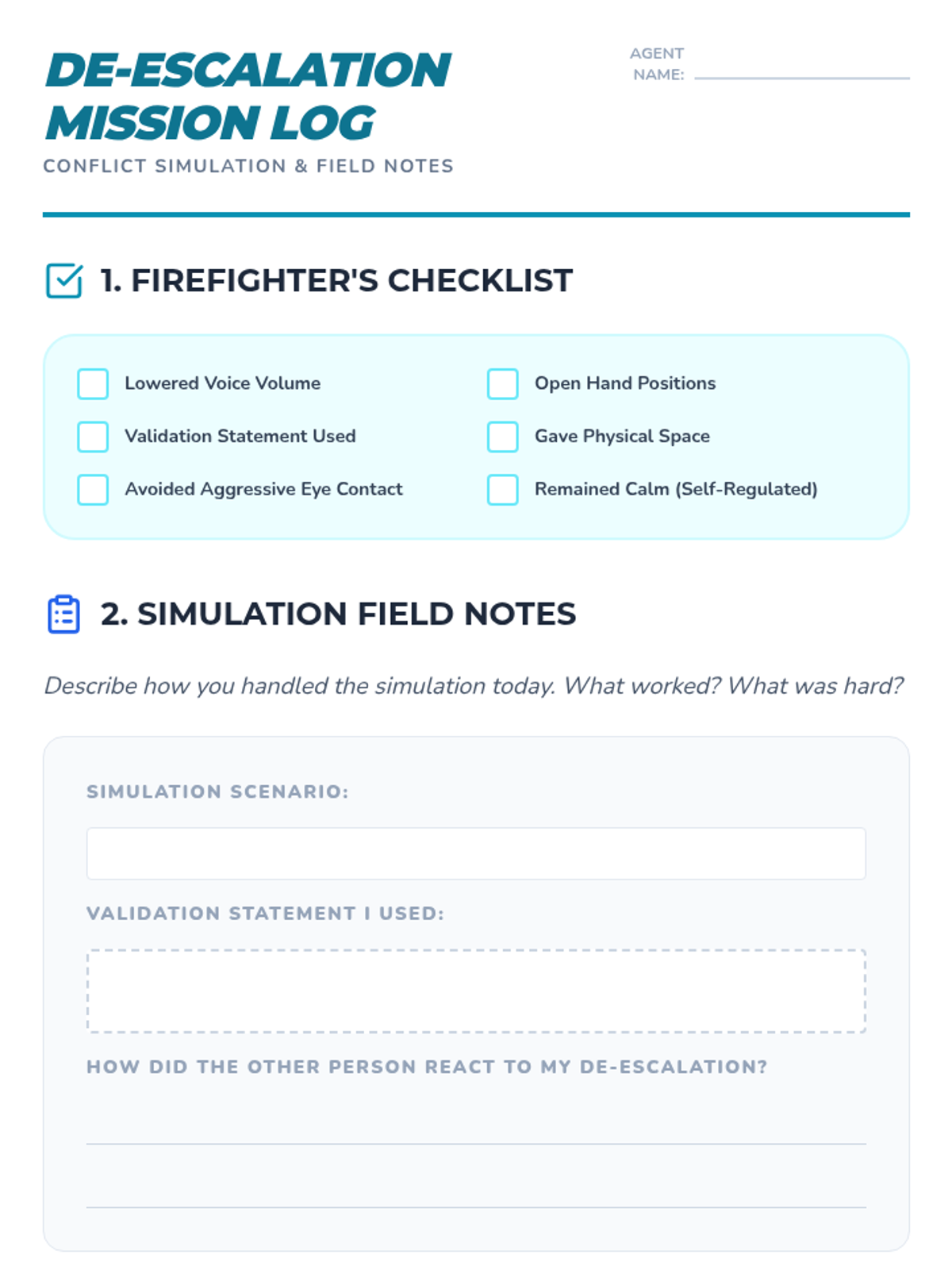
Students learn techniques to help calm a frustrated peer using lowering voice volume, open body language, and validating feelings.
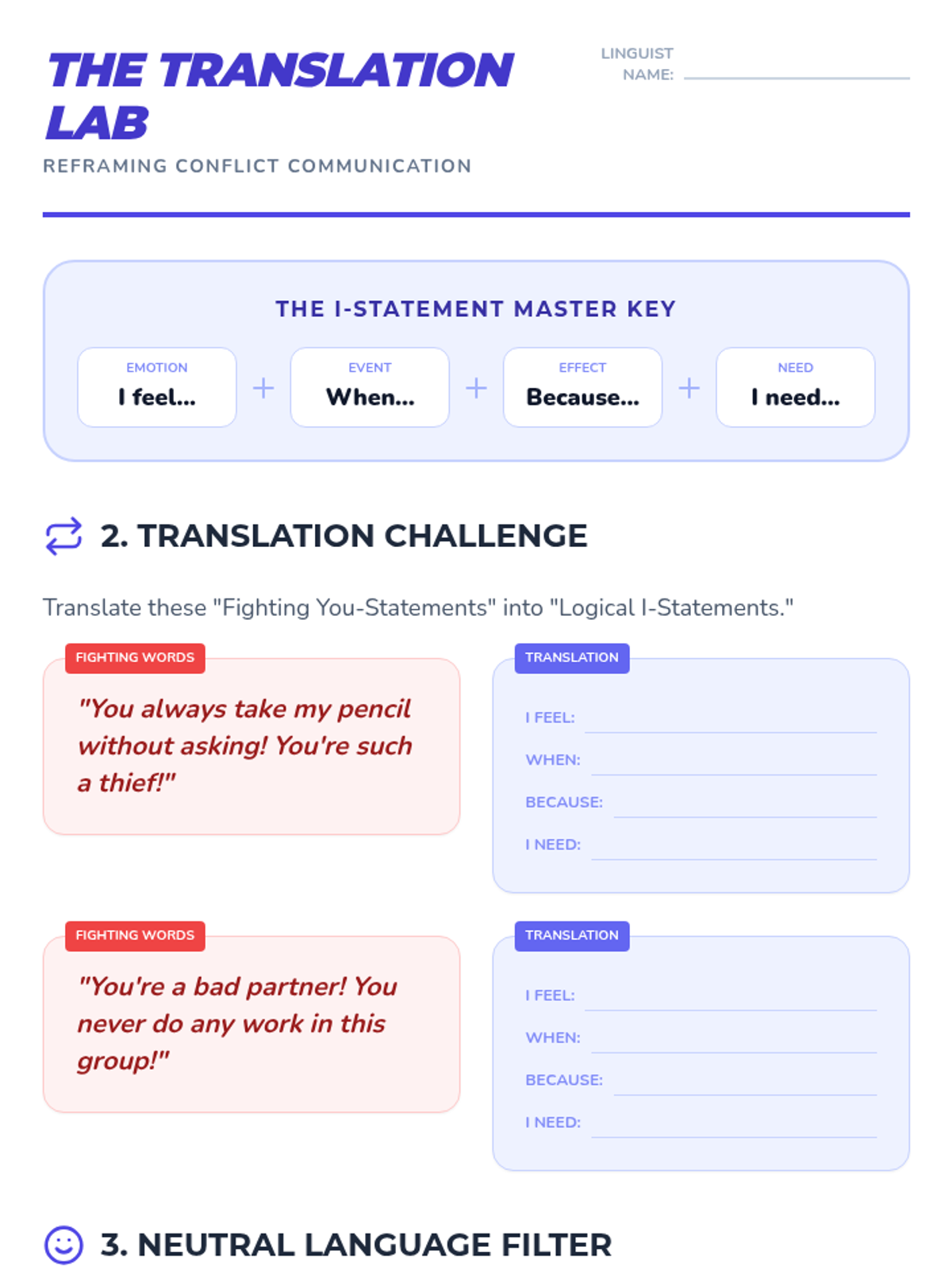
Students practice reframing accusatory 'You' statements into assertive 'I' statements to reduce defensive reactions in others.
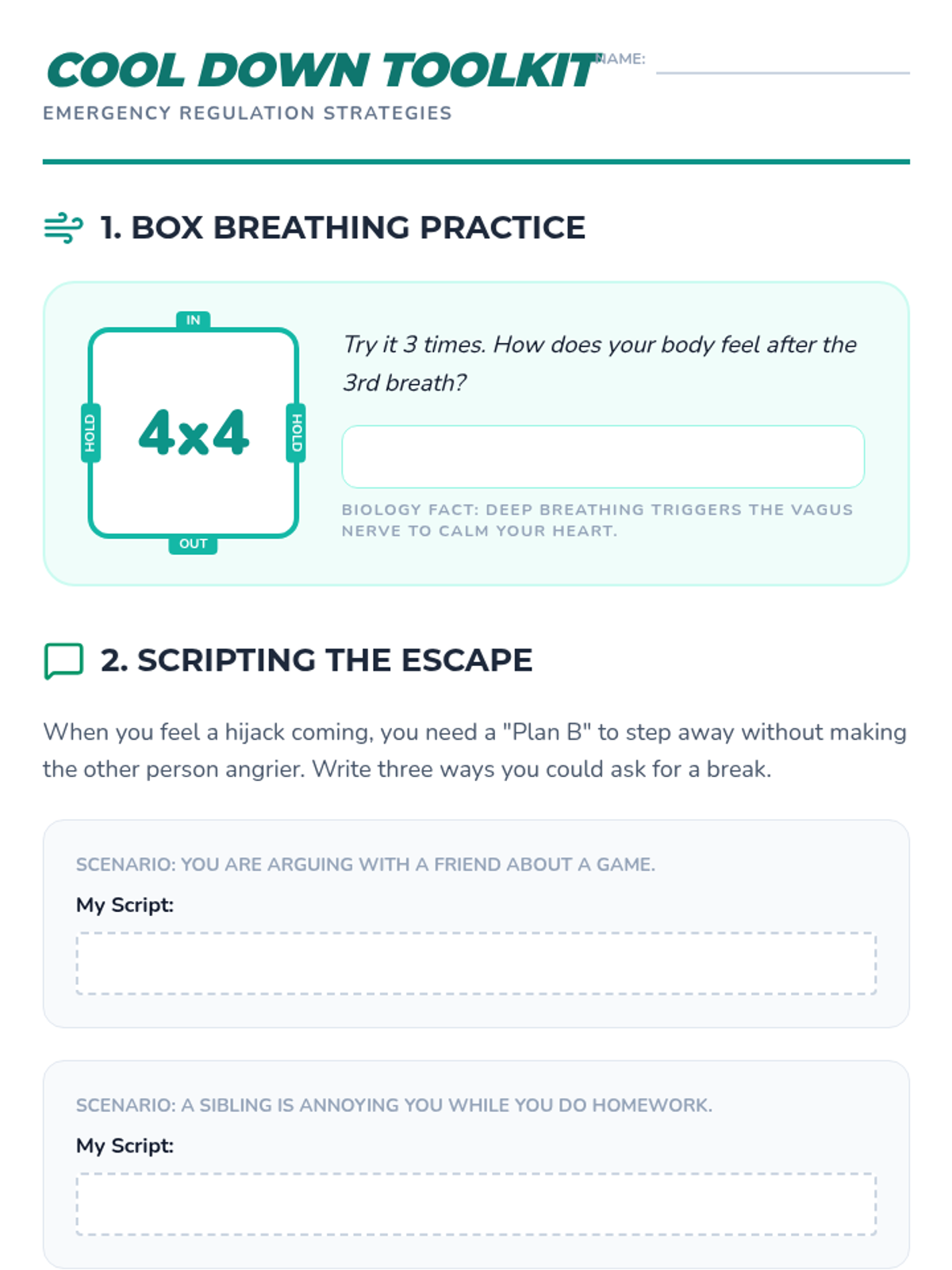
This lesson introduces concrete strategies for buying time during a confrontation, such as counting, deep breathing, or asking for a 'time out.'
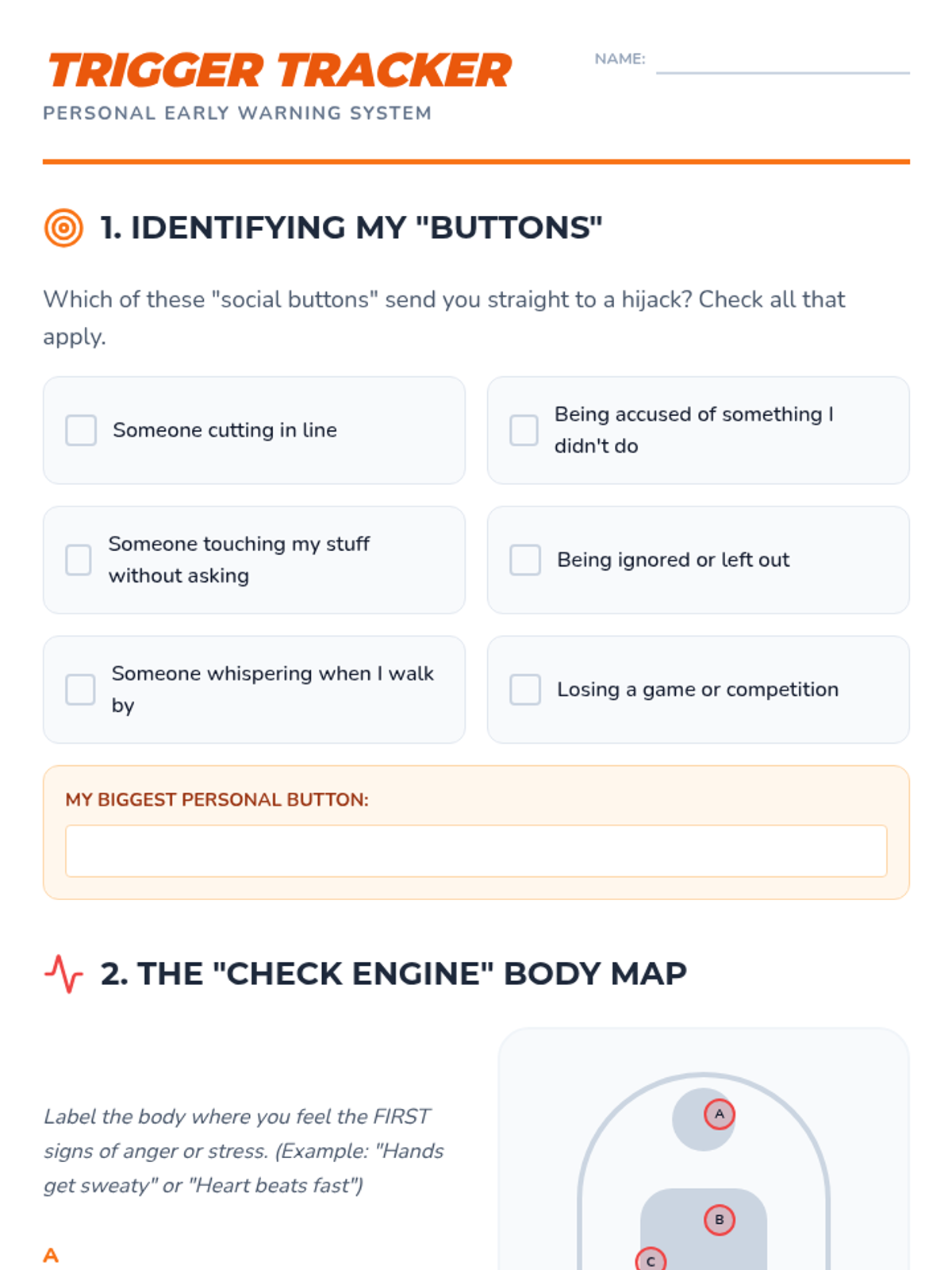
Learners identify their personal 'buttons' or triggers that lead to high emotions. They create a personal 'dashboard' of physical warning signs that indicate they need to pause.
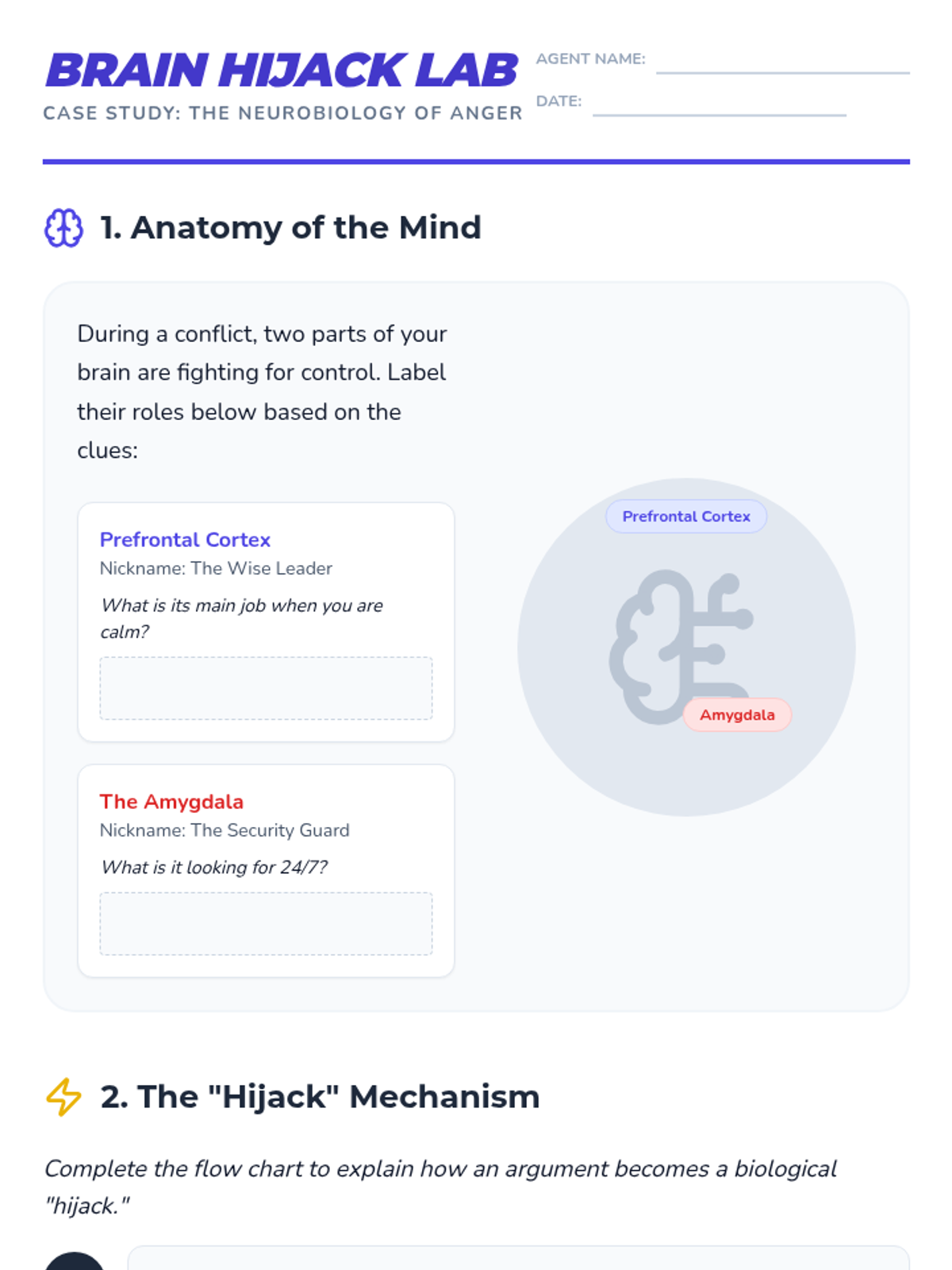
Students explore the neuroscience of conflict, specifically the 'Fight, Flight, Freeze' response and the Amygdala Hijack. They learn why it is physically difficult to think clearly when angry.
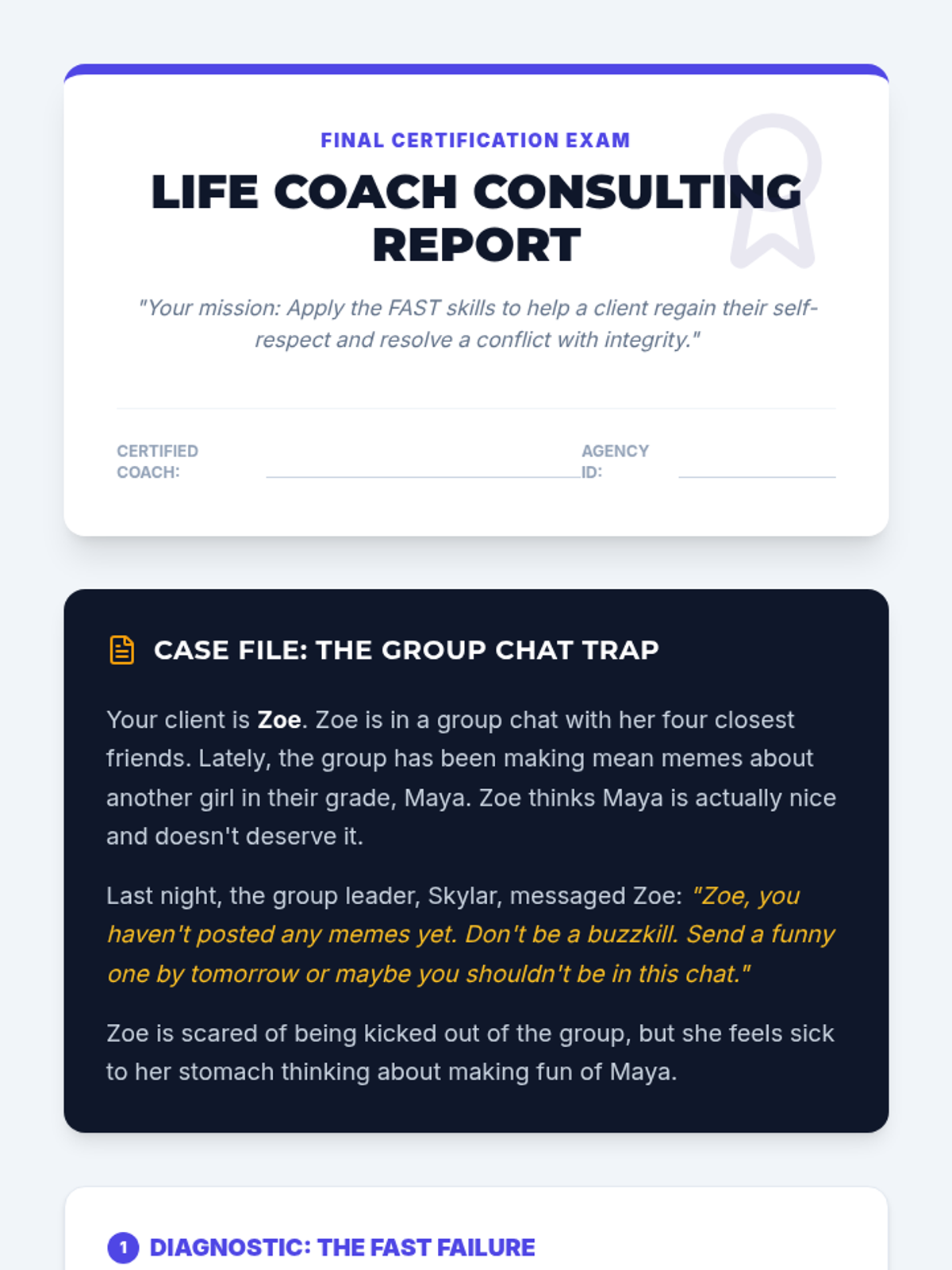
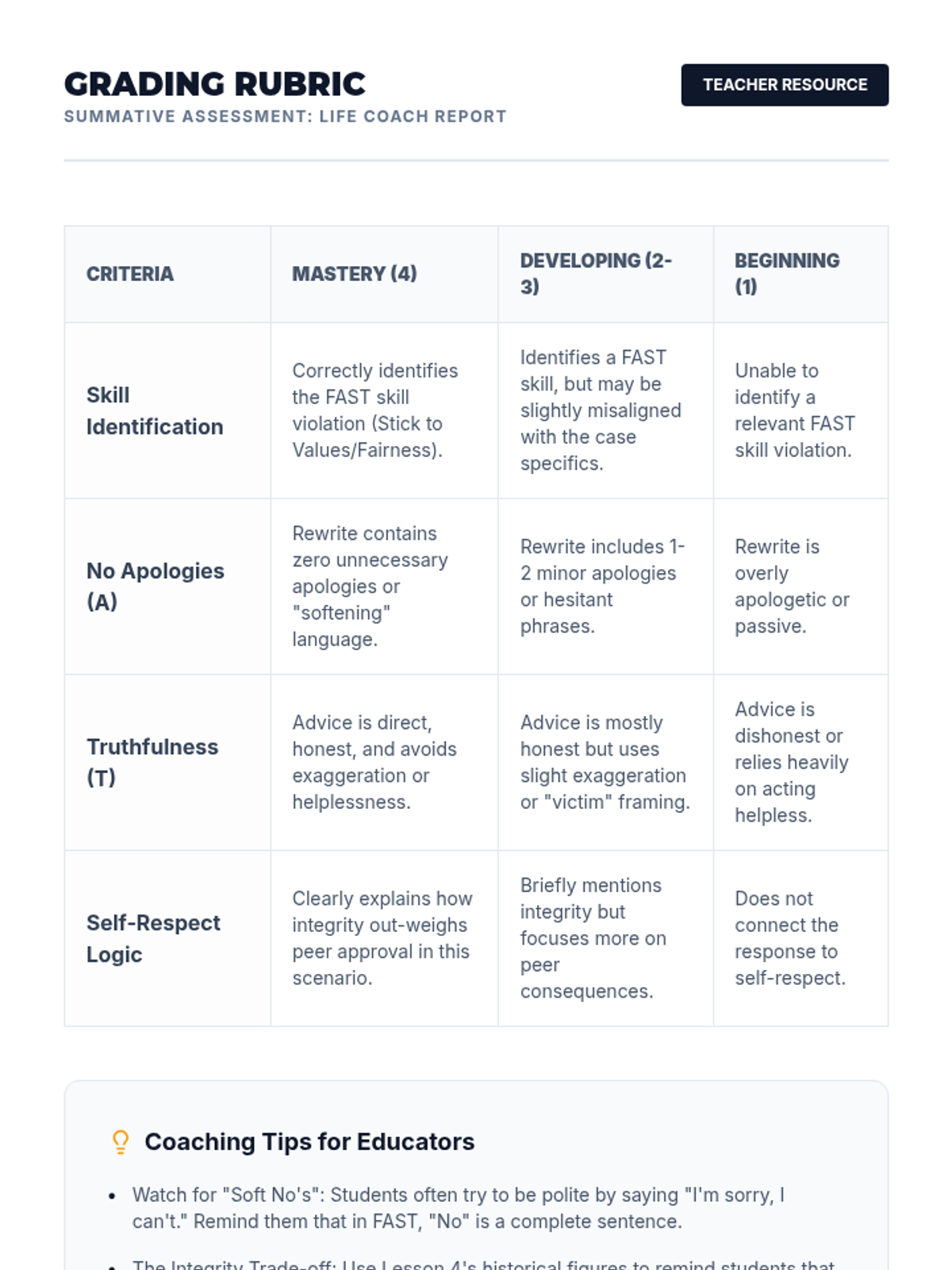
As a summative assessment, students write a consulting report as a 'Life Coach' to solve a complex peer conflict.
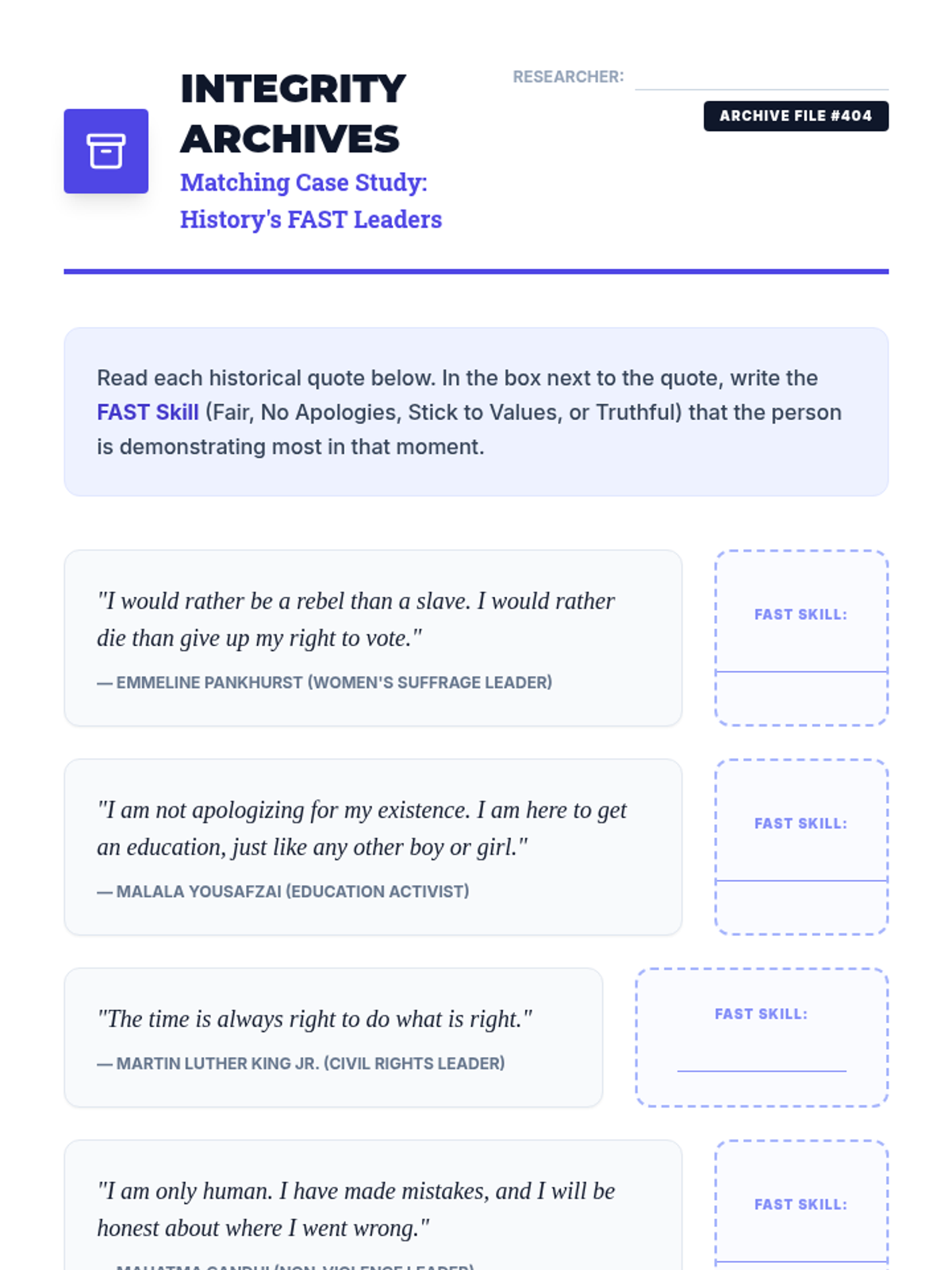
Students examine historical figures who demonstrated self-respect and integrity under pressure, connecting history to life skills.
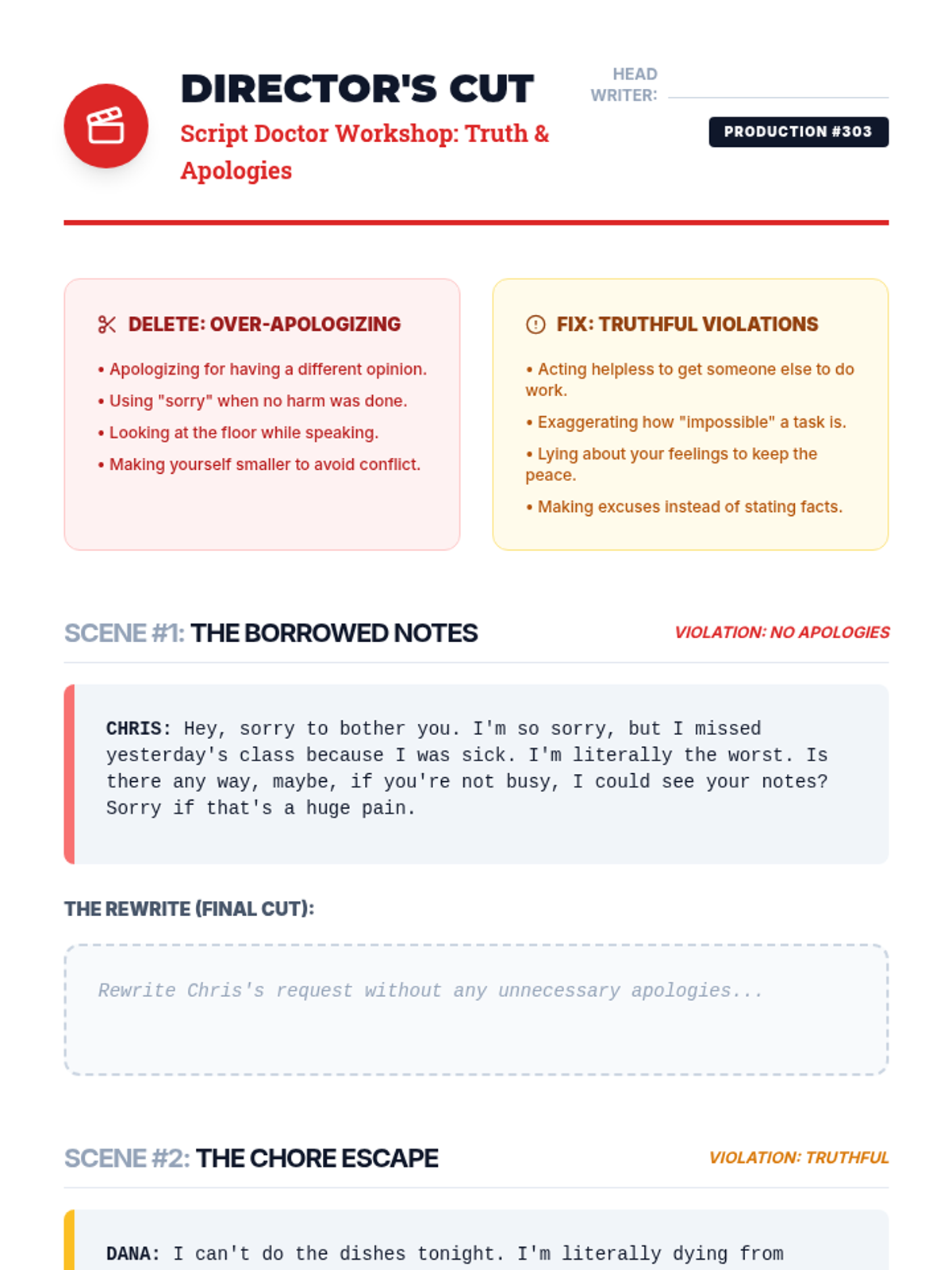
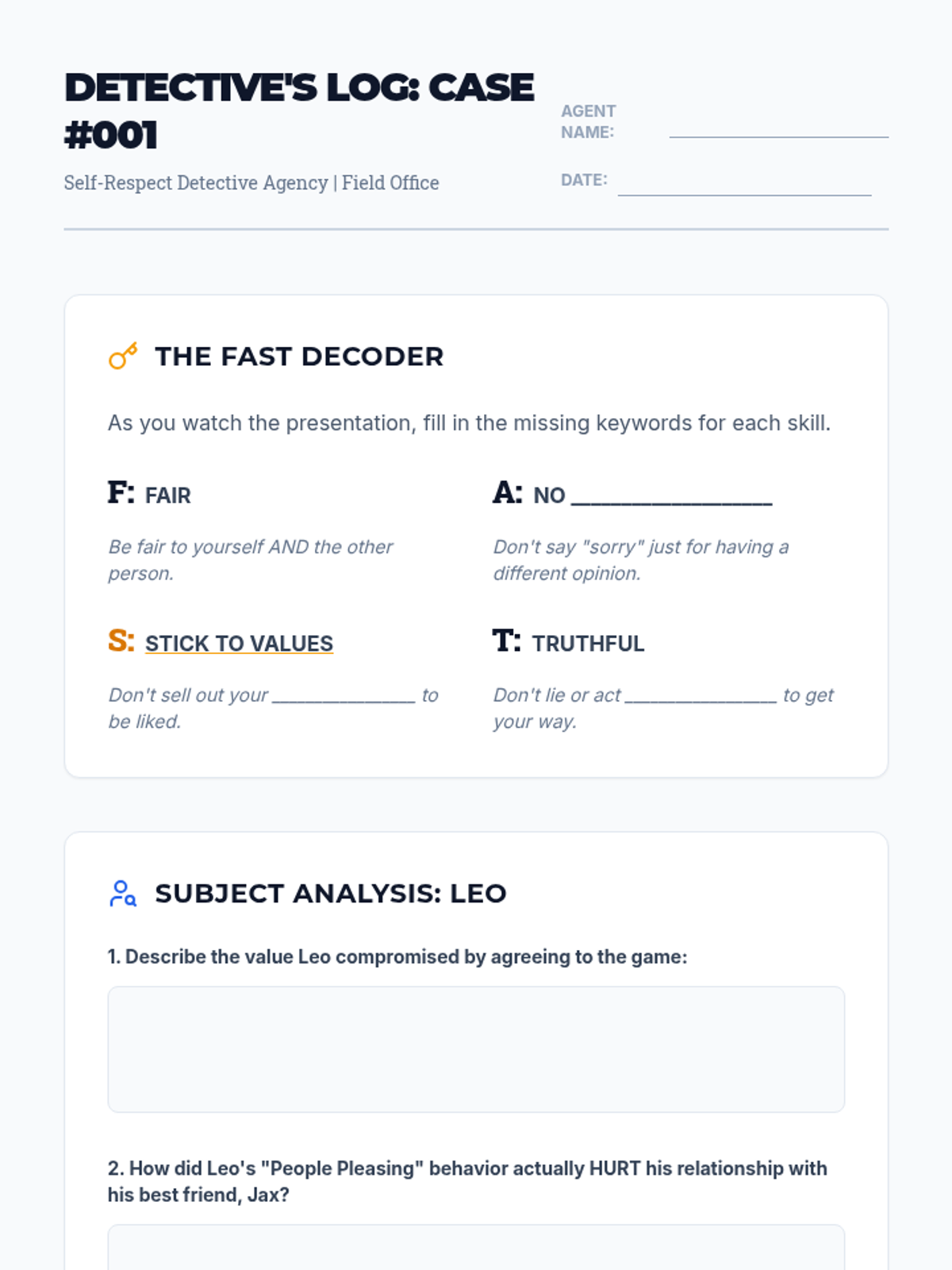
Students identify 'Truthful' and 'No Apologies' violations and rewrite dialogue to demonstrate assertive communication.
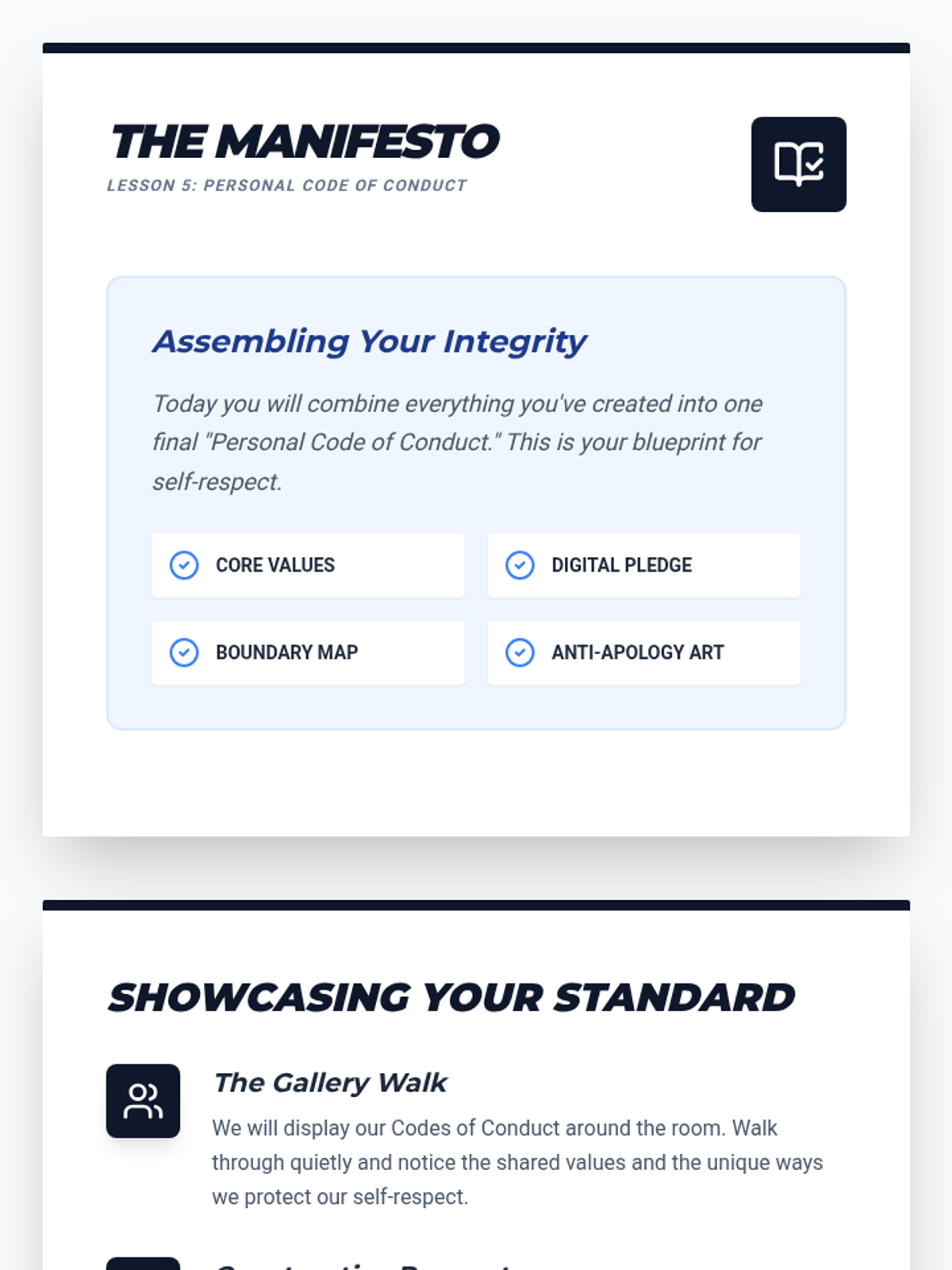
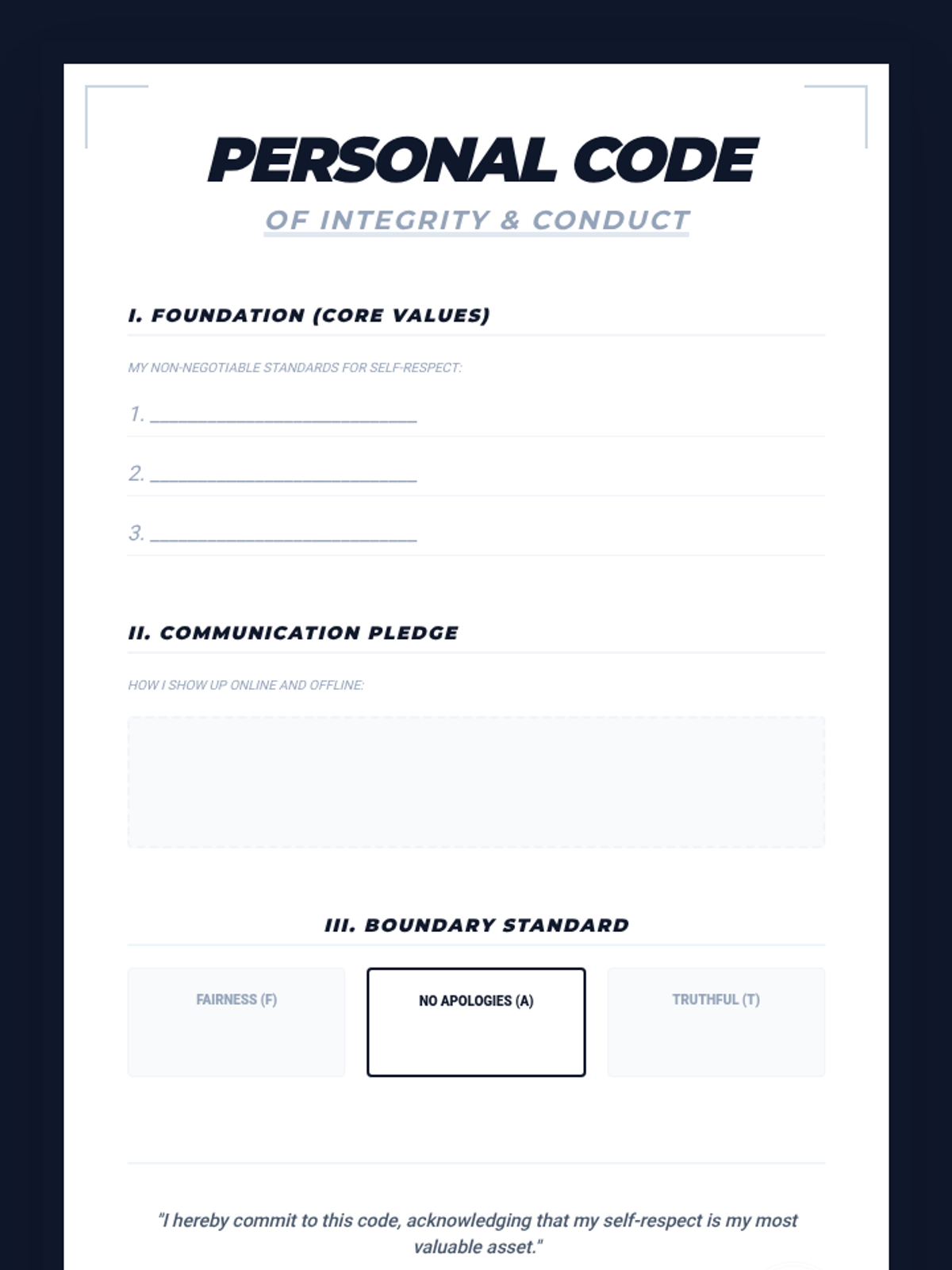
The culmination of the sequence where students assemble their work into a final 'Personal Code of Conduct' and share their insights with peers.
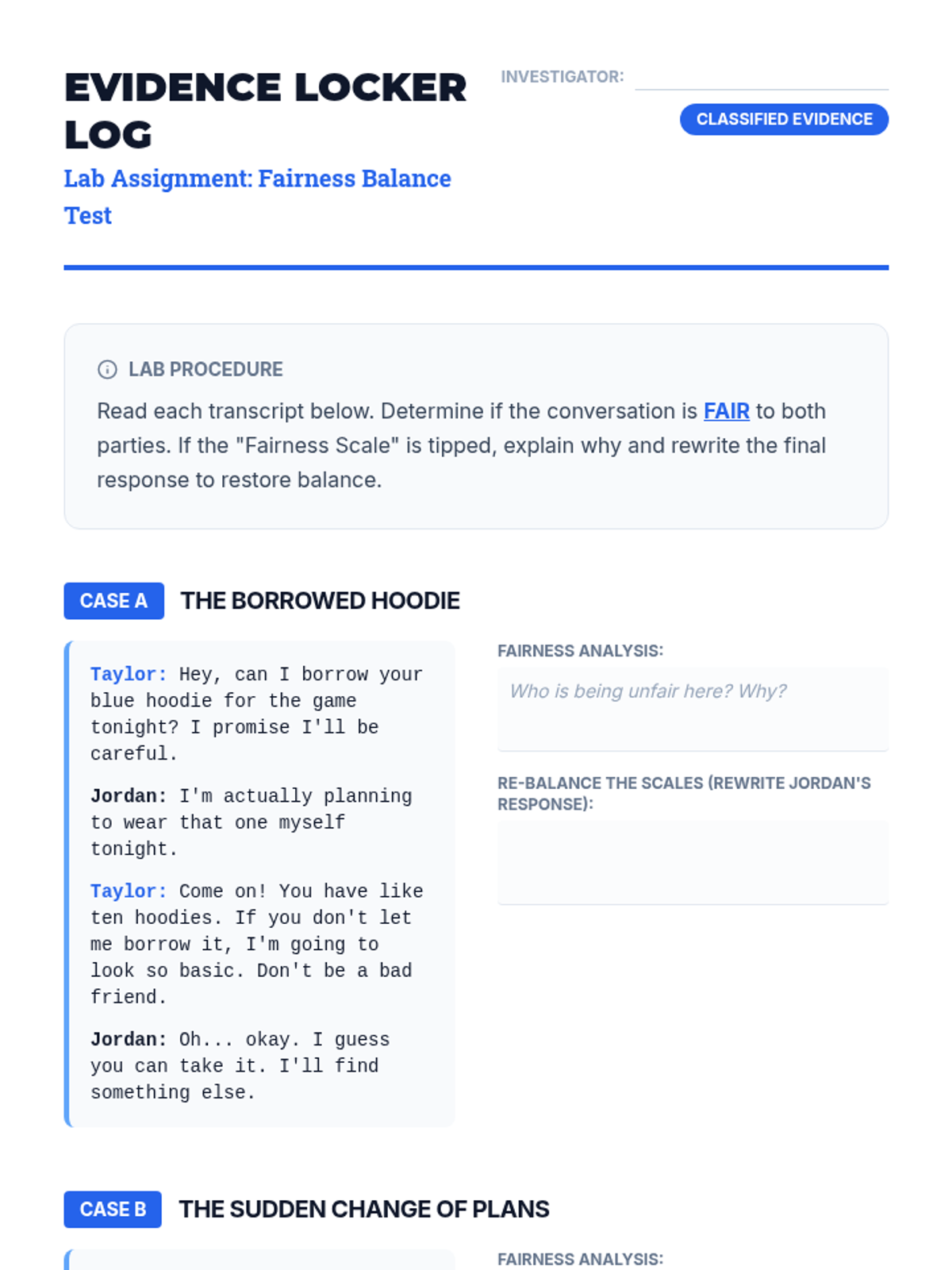
Students act as forensics experts to determine fairness in interpersonal conflicts by analyzing text message 'evidence'.
Students analyze the behavior of a 'people pleaser' character, focusing on the loss of self-respect when values are compromised.
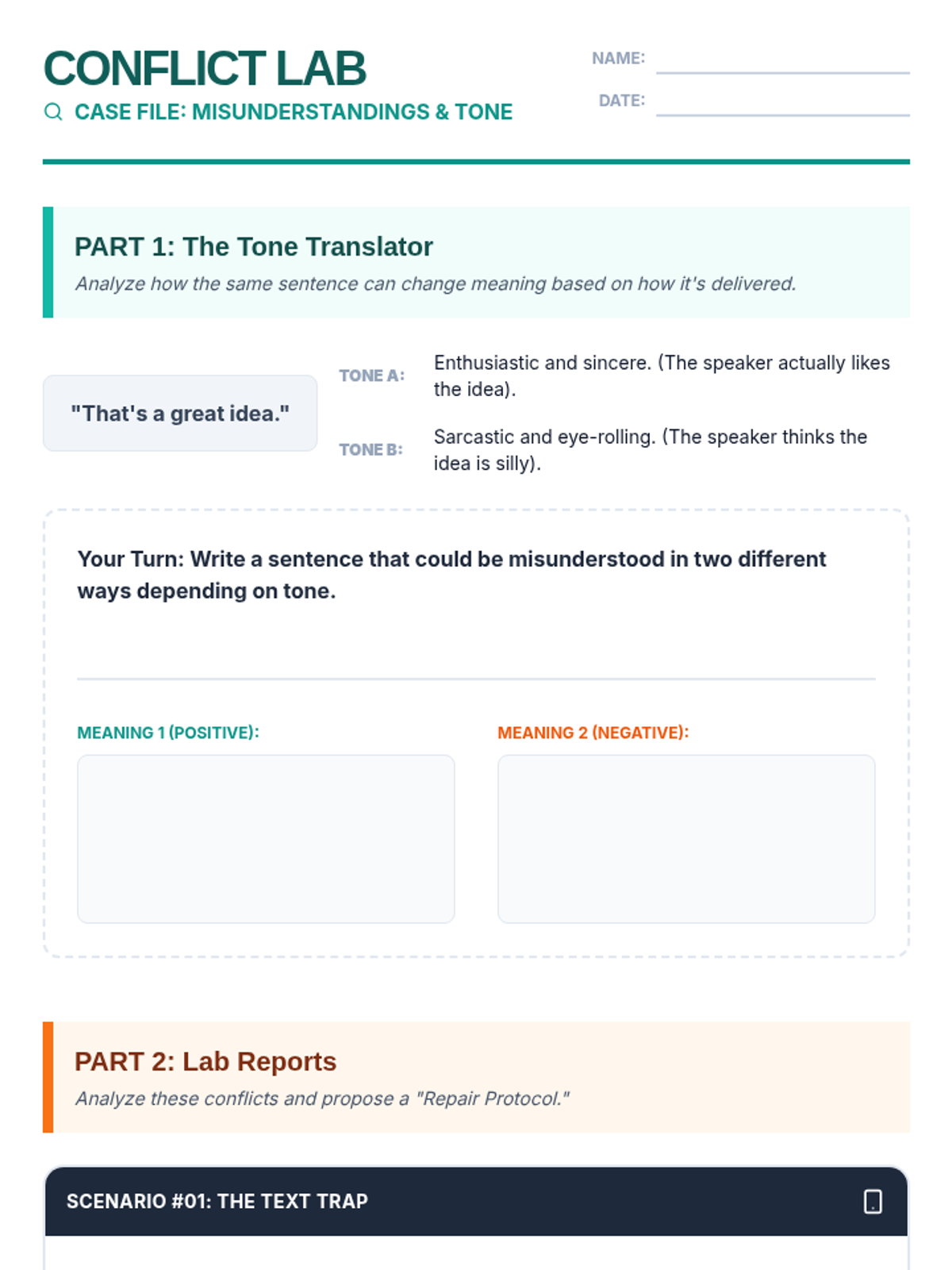
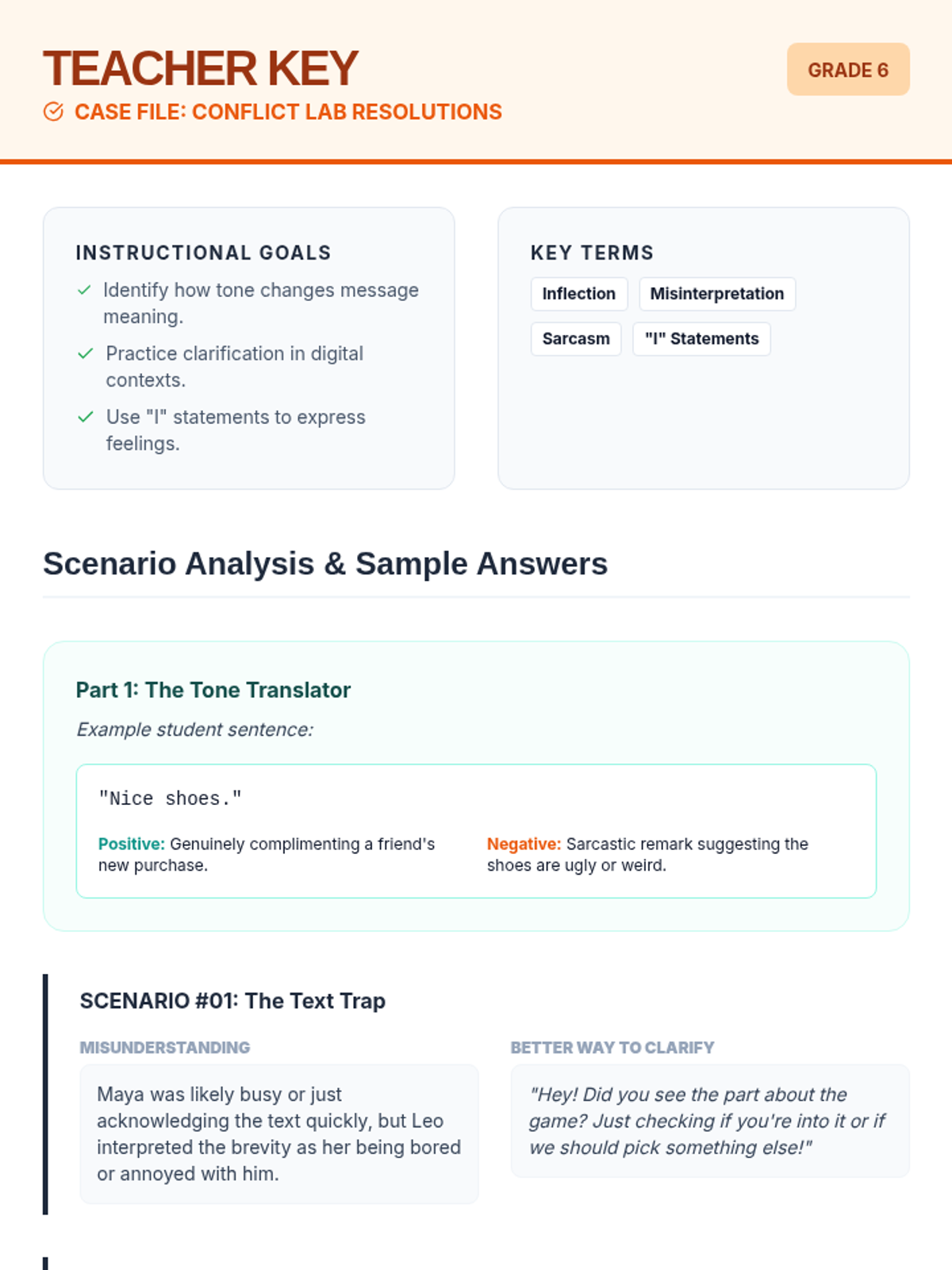
A lesson for 6th grade students focused on identifying how tone and misunderstandings lead to conflict between friends, featuring practical strategies for resolution.
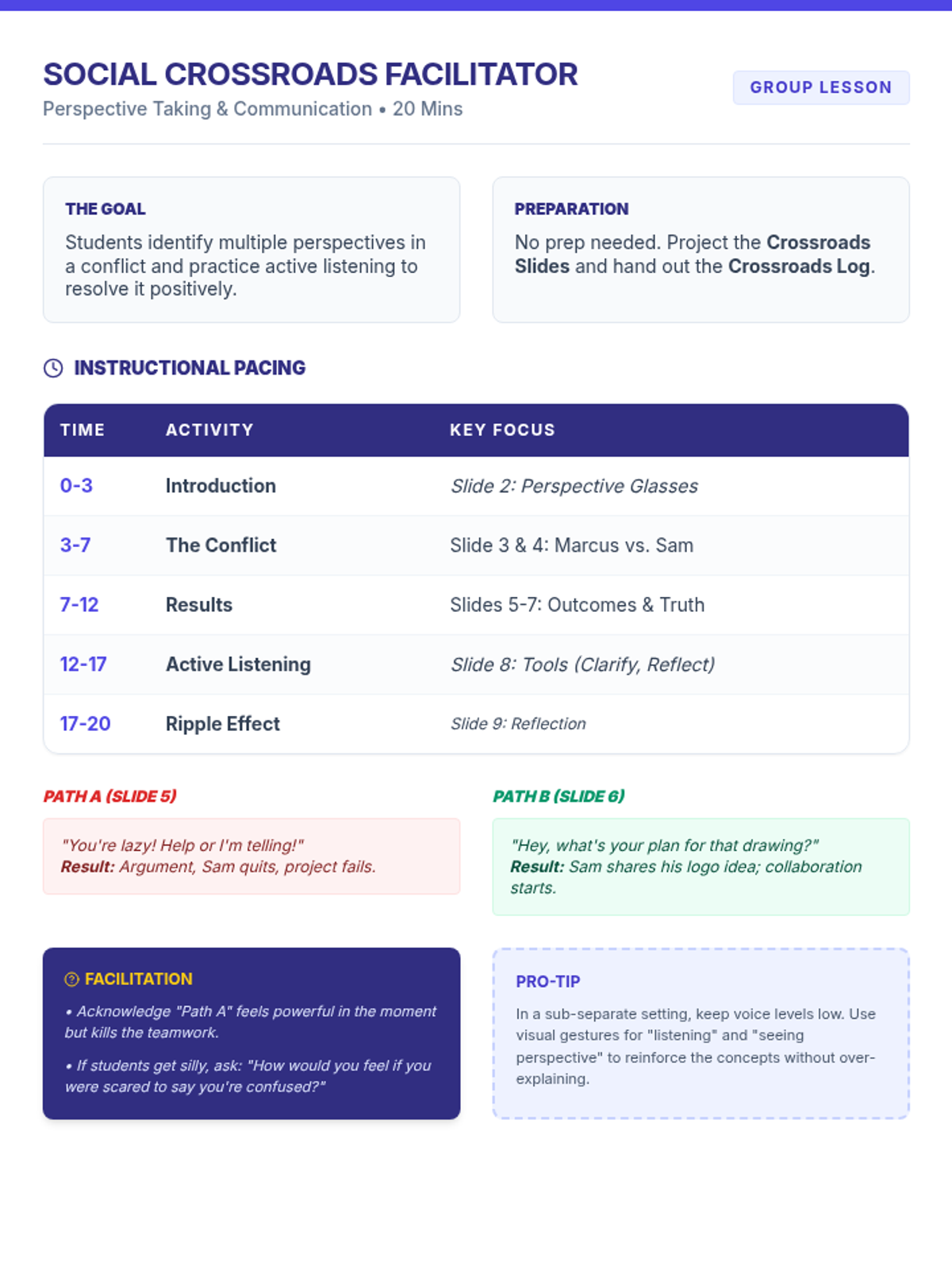
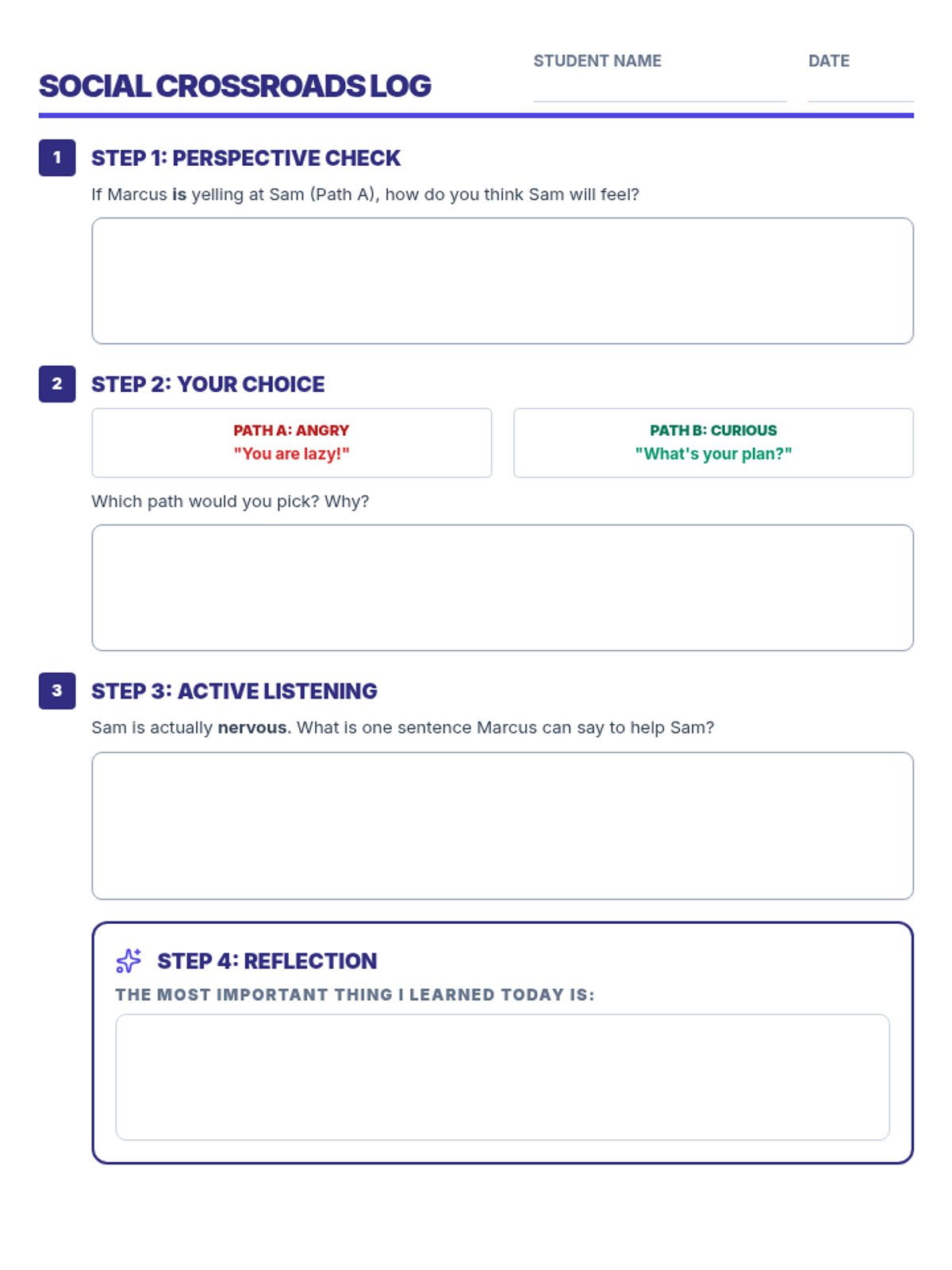
A 20-minute interactive social-emotional learning lesson focused on perspective taking and active listening through a 'choose your path' scenario. Designed for middle schoolers in a sub-separate setting with minimal movement.
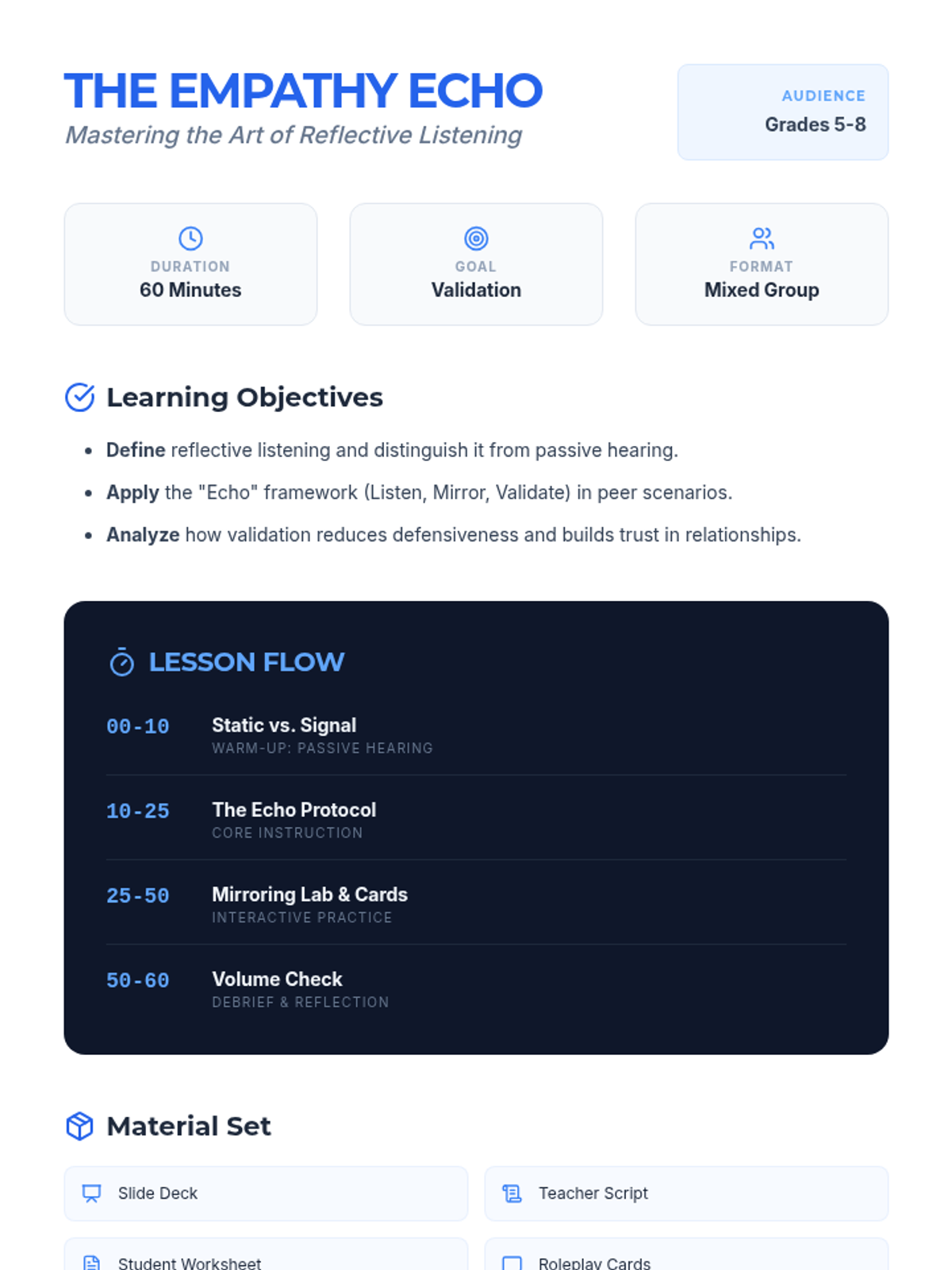
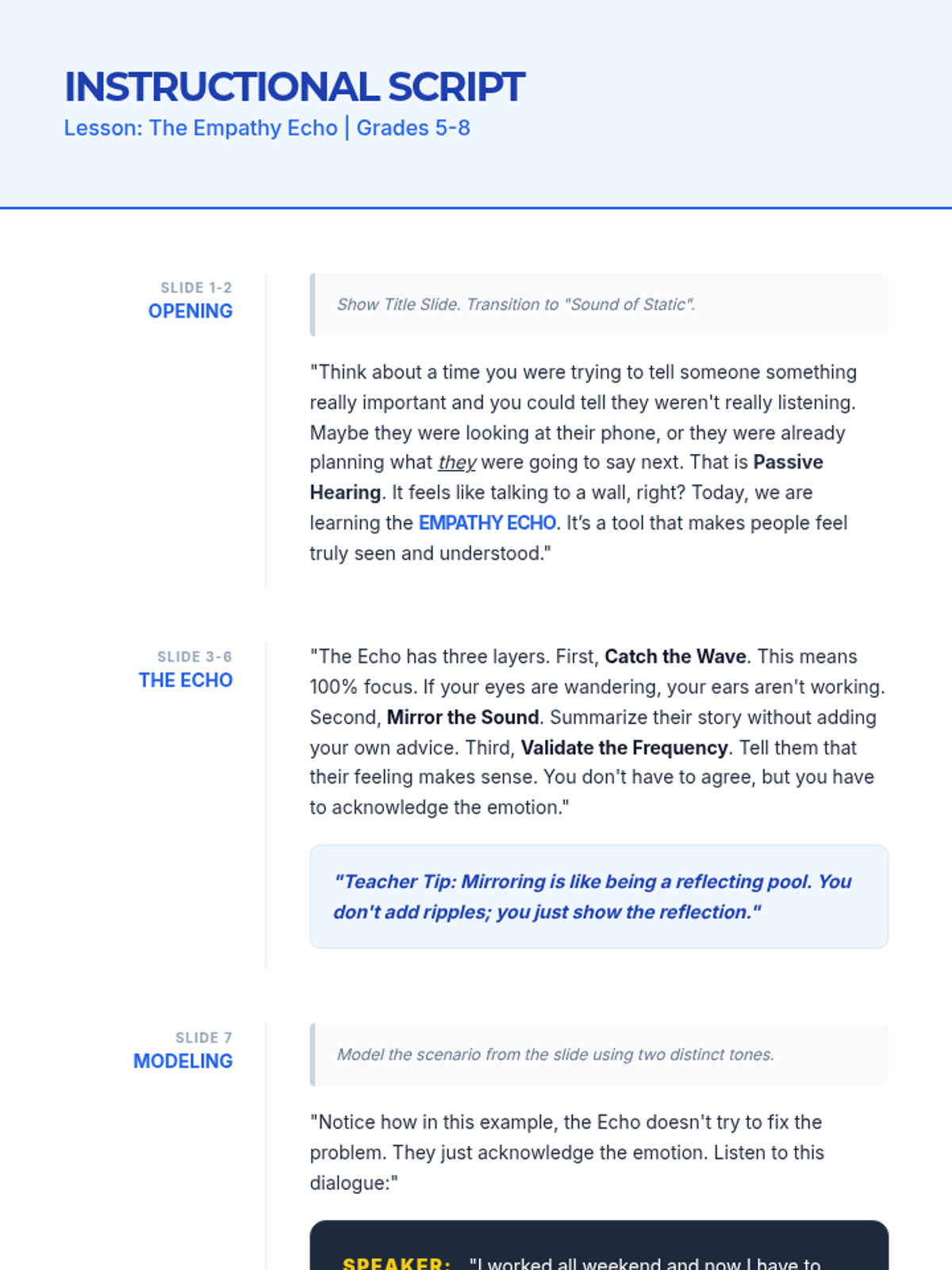
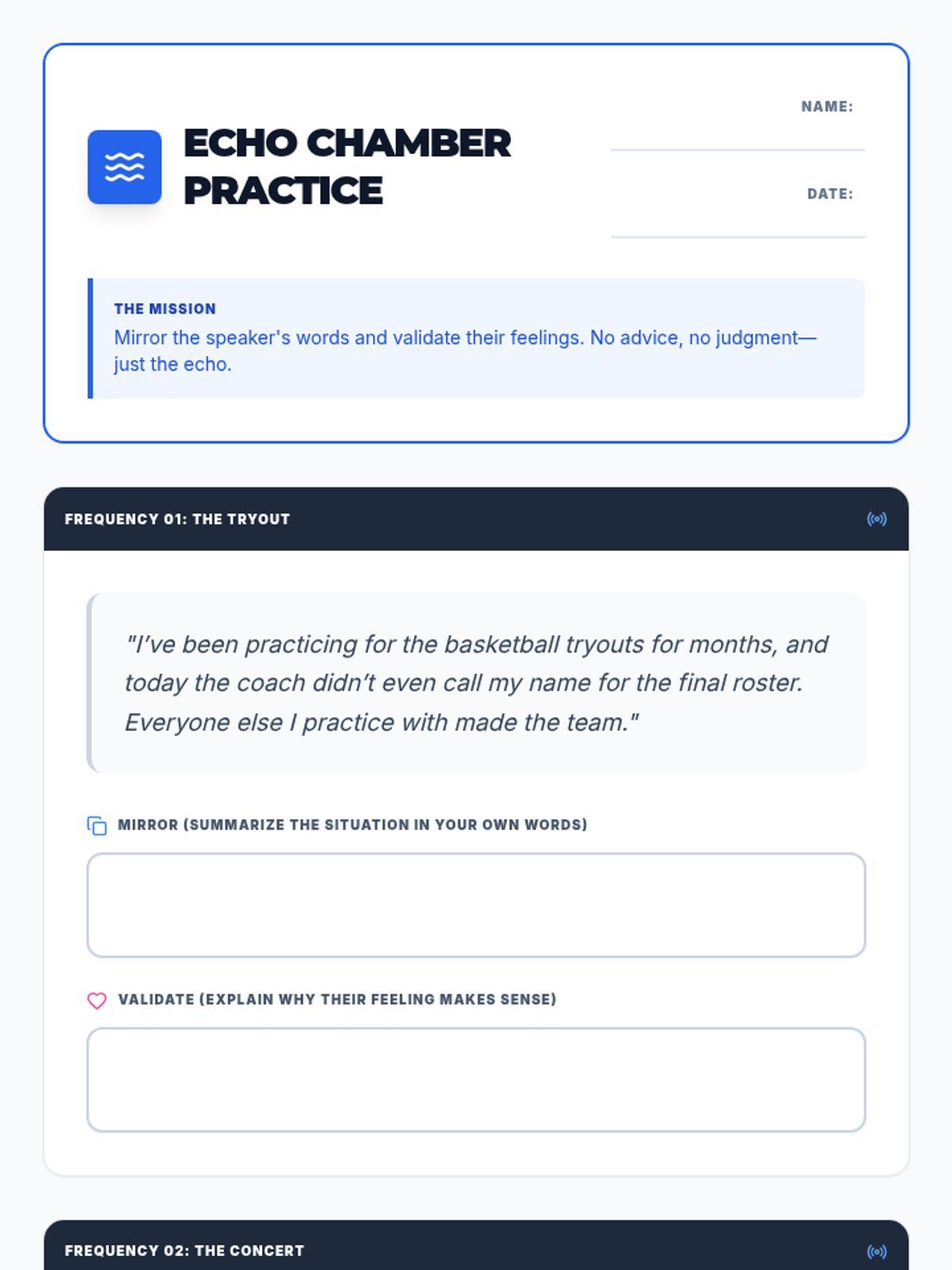
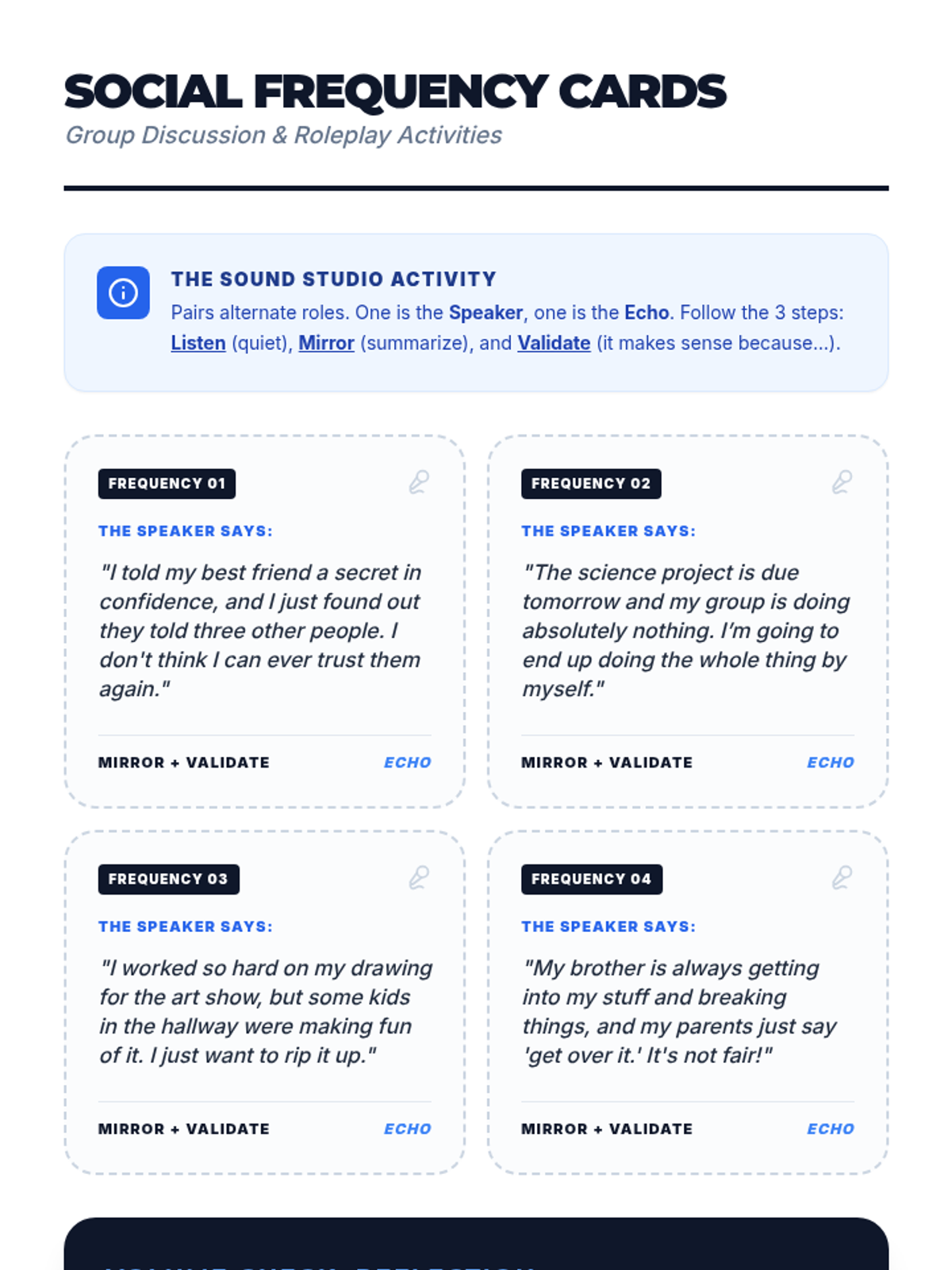
A communication-focused lesson for 5th-8th graders that teaches reflective listening and emotional validation through the 'Echo' technique. Students learn to listen, mirror, and validate peers to strengthen relationships and resolve conflicts.
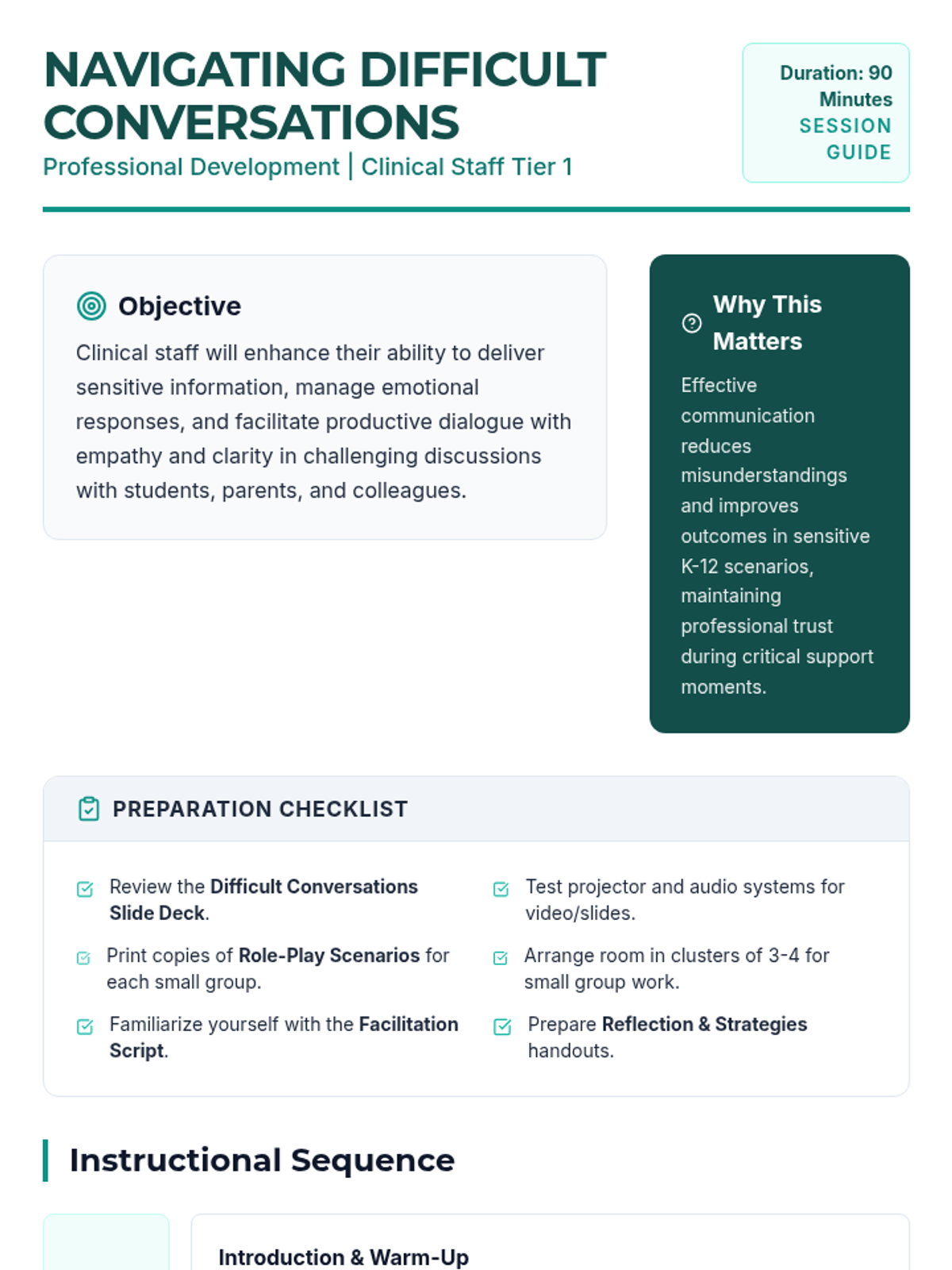
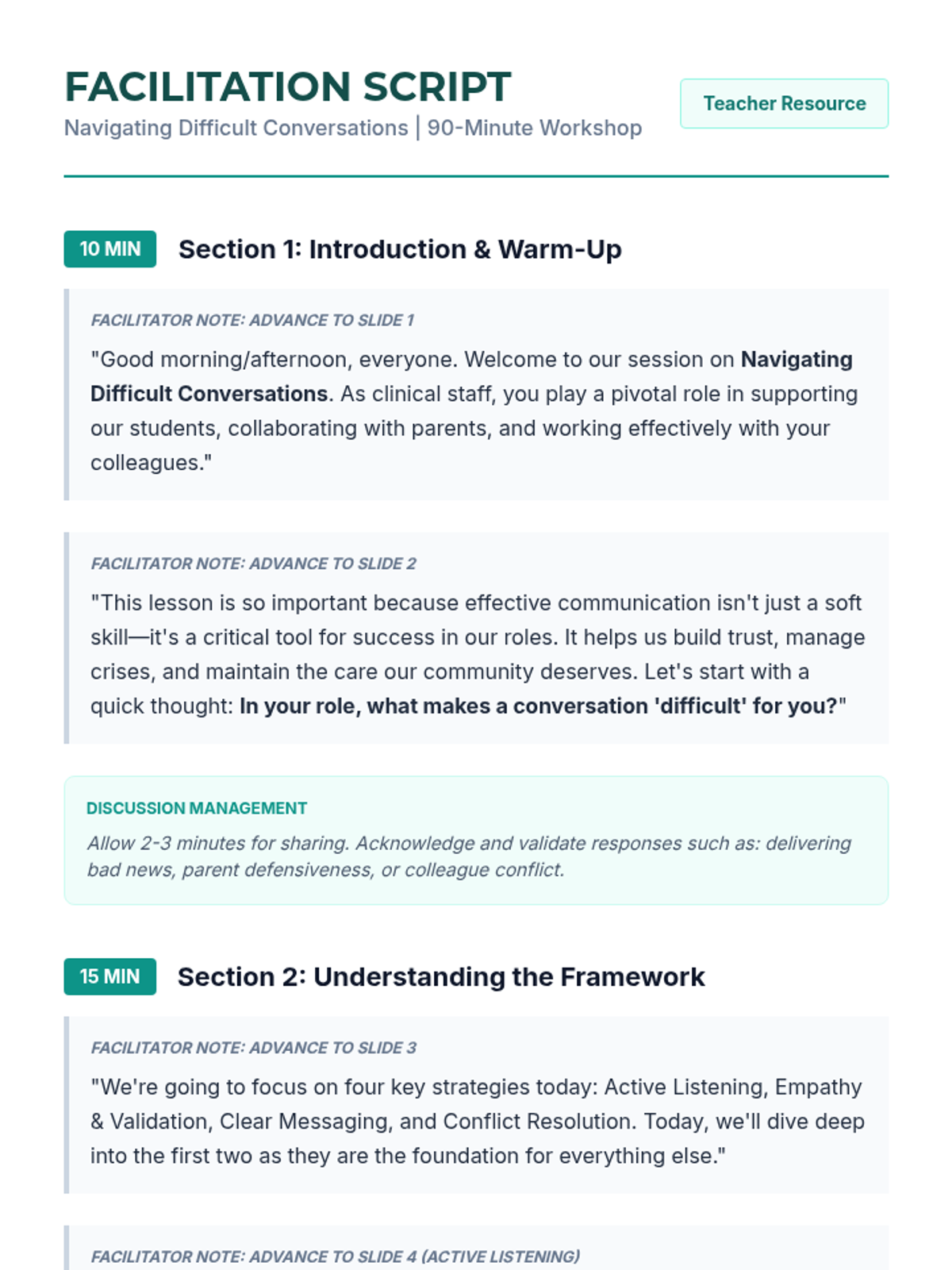
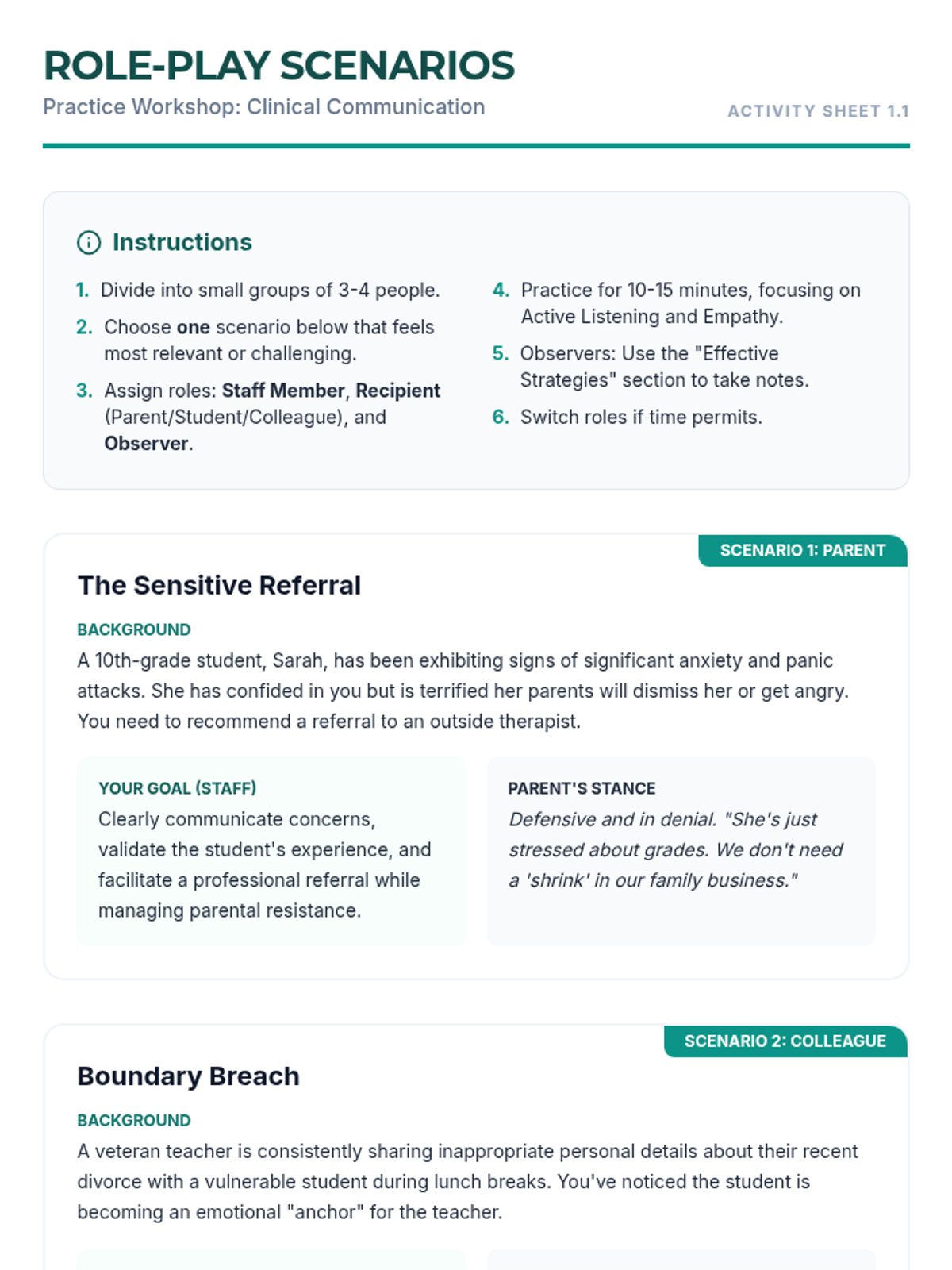
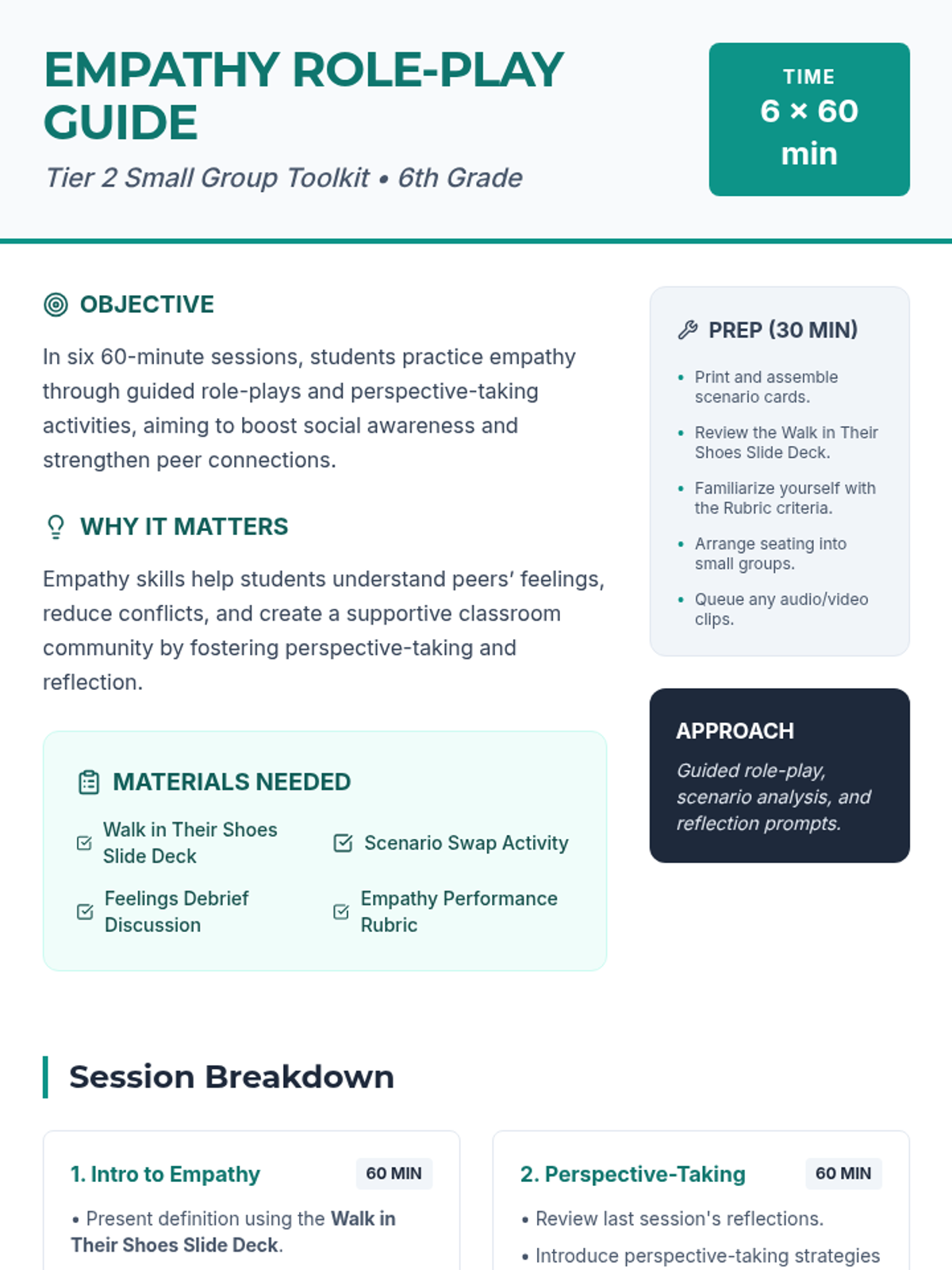
A comprehensive 90-minute professional development session for clinical staff focusing on high-stakes communication, empathy frameworks, and role-play practice for K-12 environments.
Establish the foundations of empathy, defining the concept and exploring why it matters for community building.
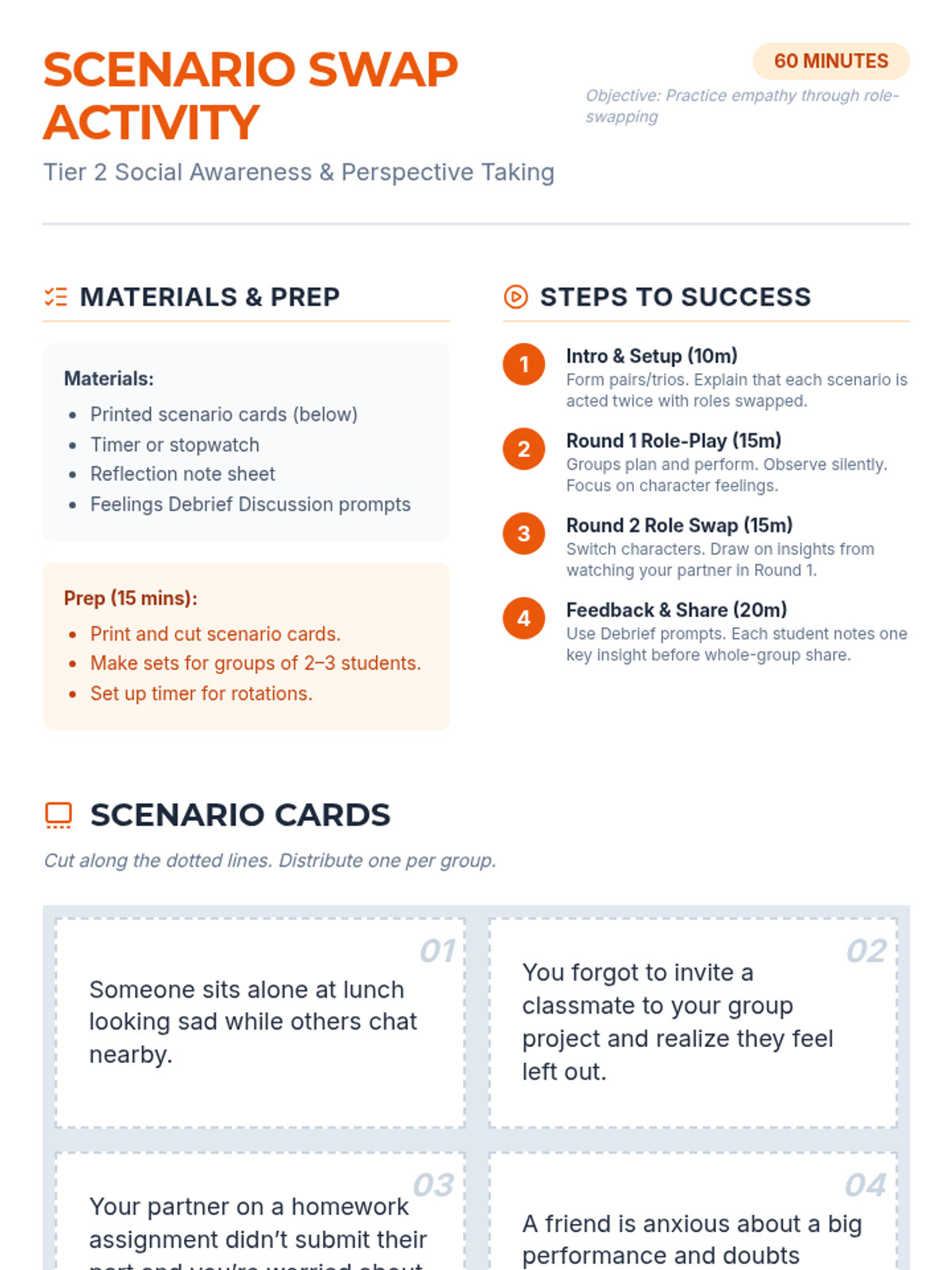
Active practice using realistic scenarios to swap roles and understand different emotional responses.
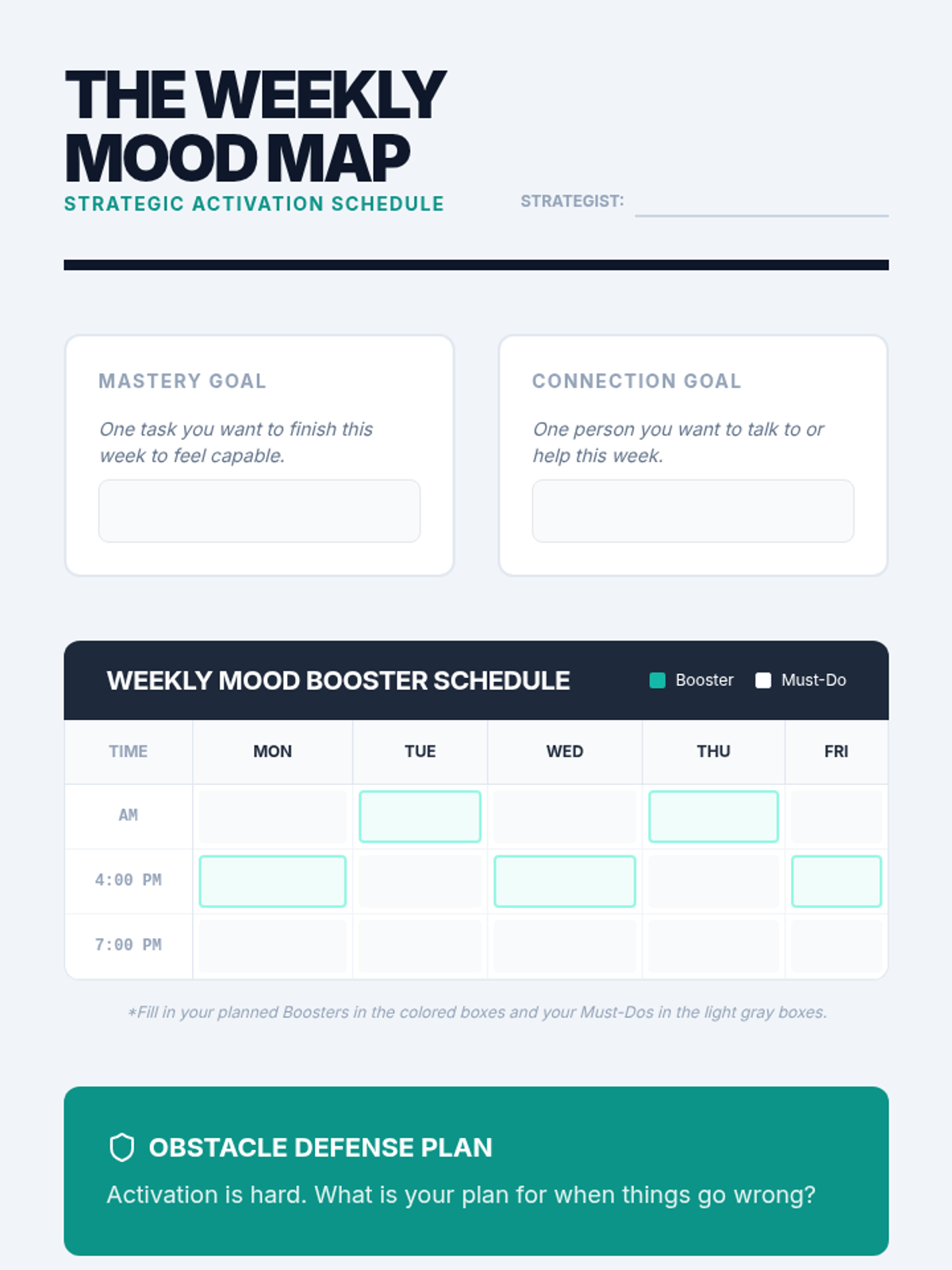
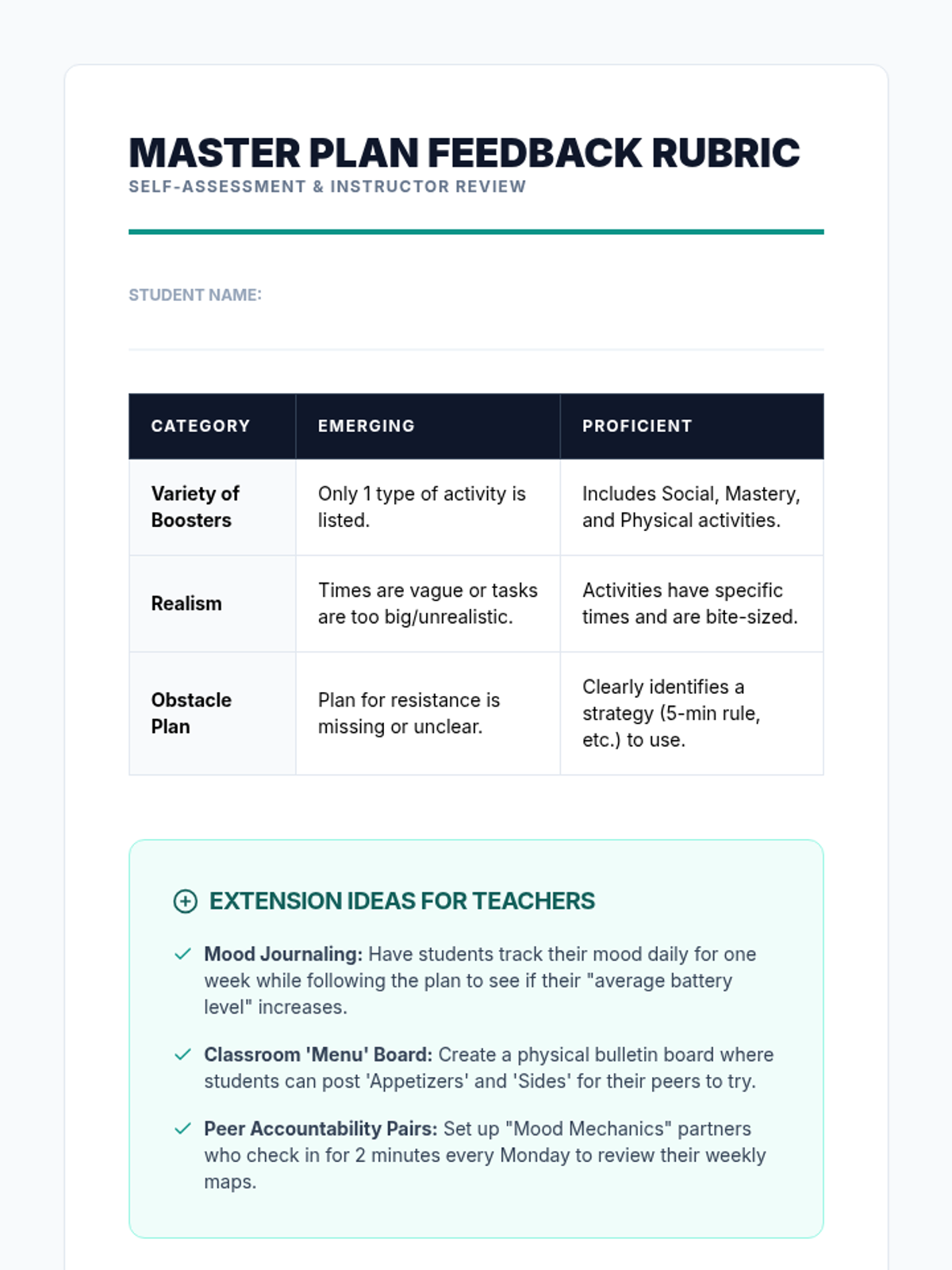
A workshop-style lesson where students design a balanced weekly schedule that integrates mood boosters and essential responsibilities.
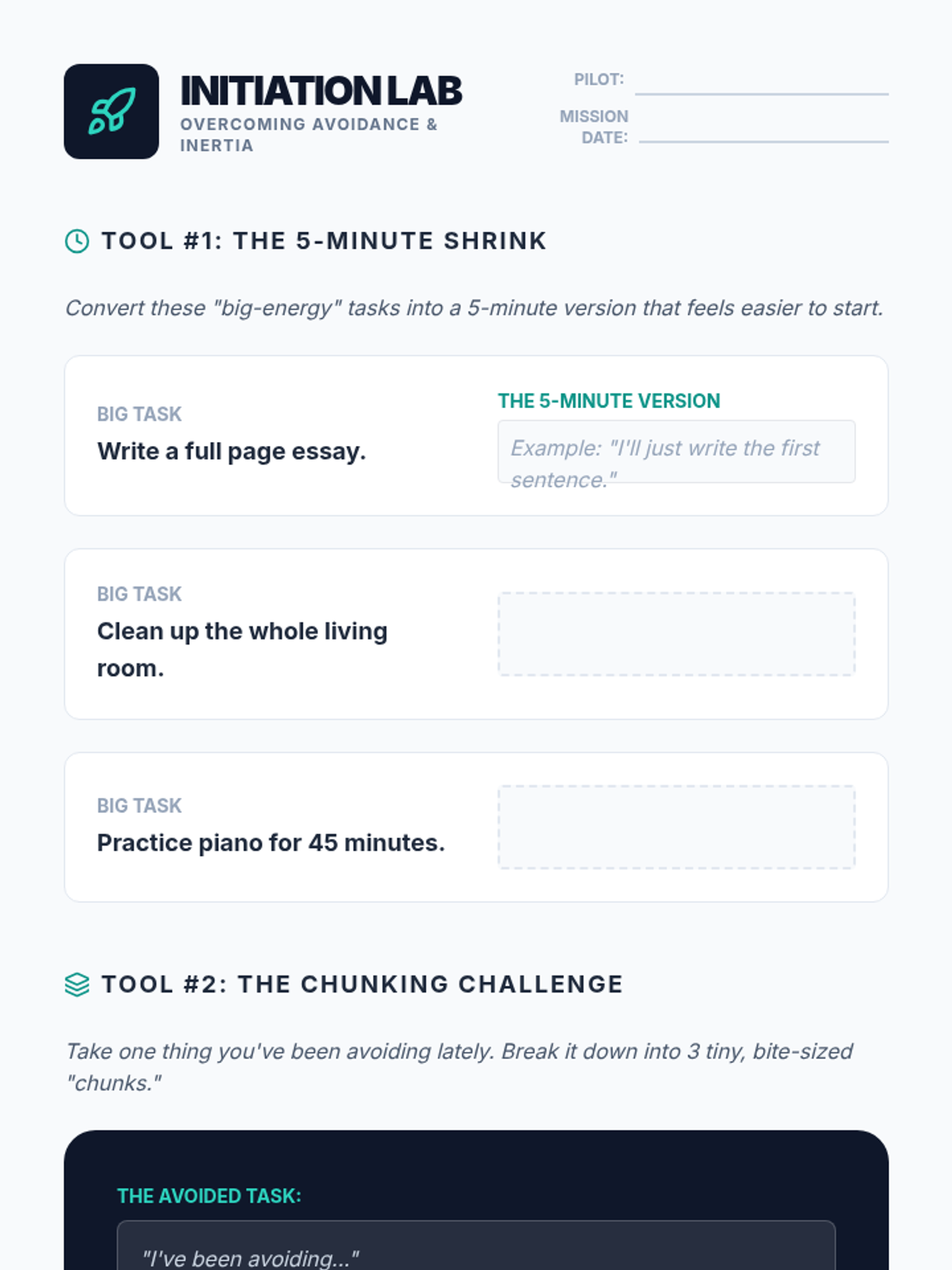
Students learn 'Action Before Motivation' and practice techniques like the 5-Minute Rule and Chunking to overcome inertia.
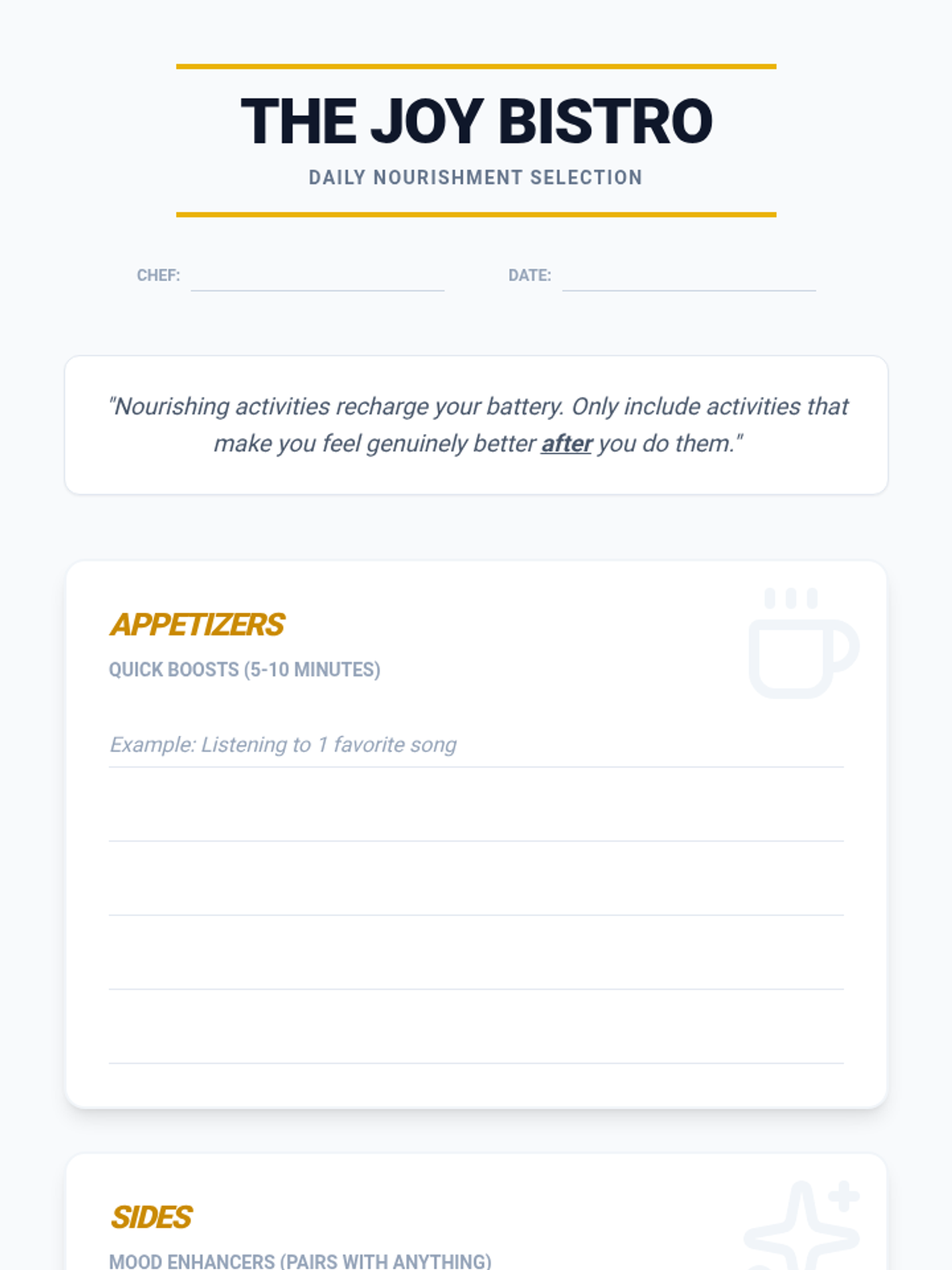
Students differentiate between numbing and nourishing activities, creating a personal 'Menu of Joy' aligned with their values.
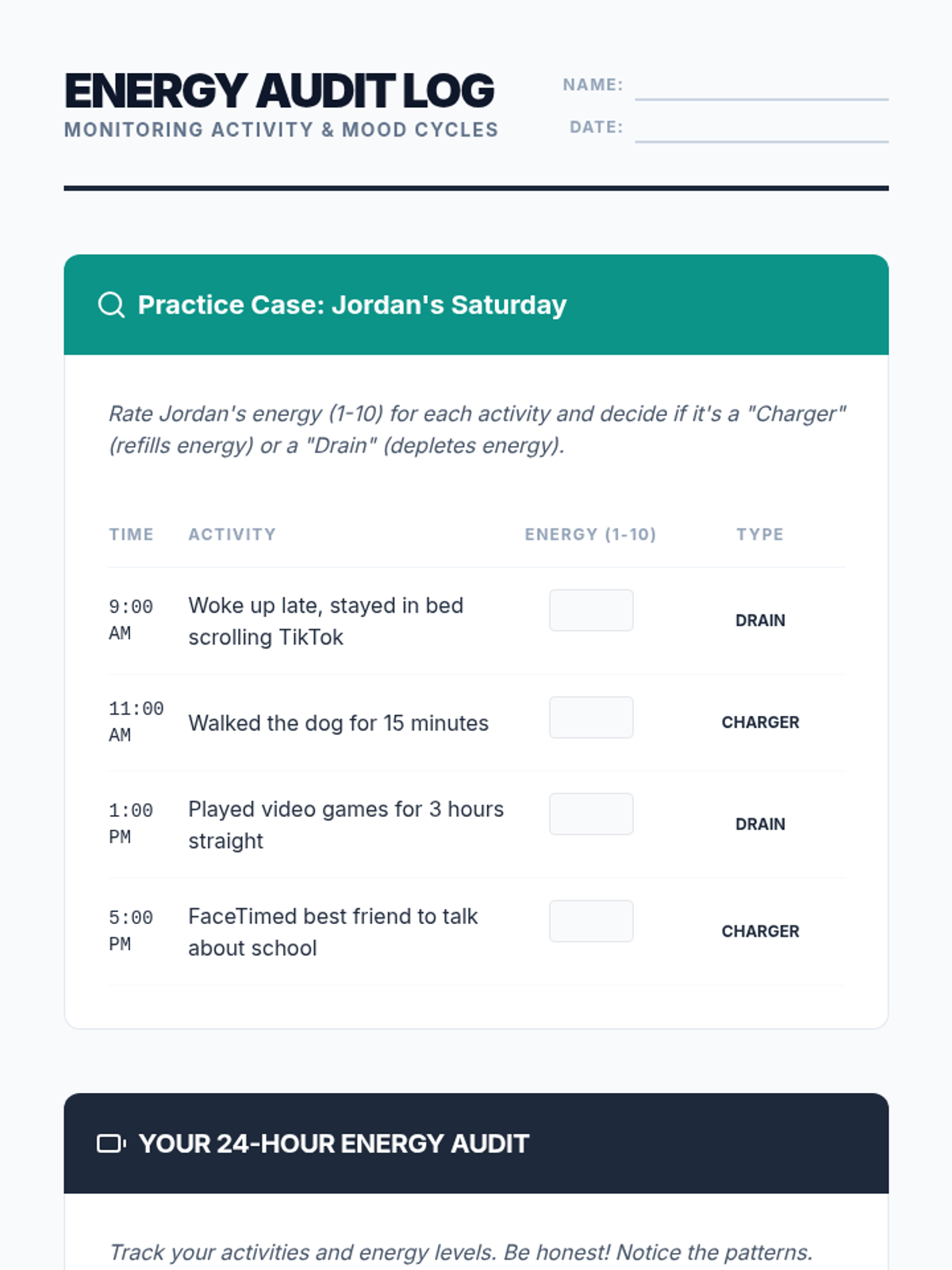
Students practice self-monitoring by auditing energy levels and correlating daily activities with their internal battery charge.
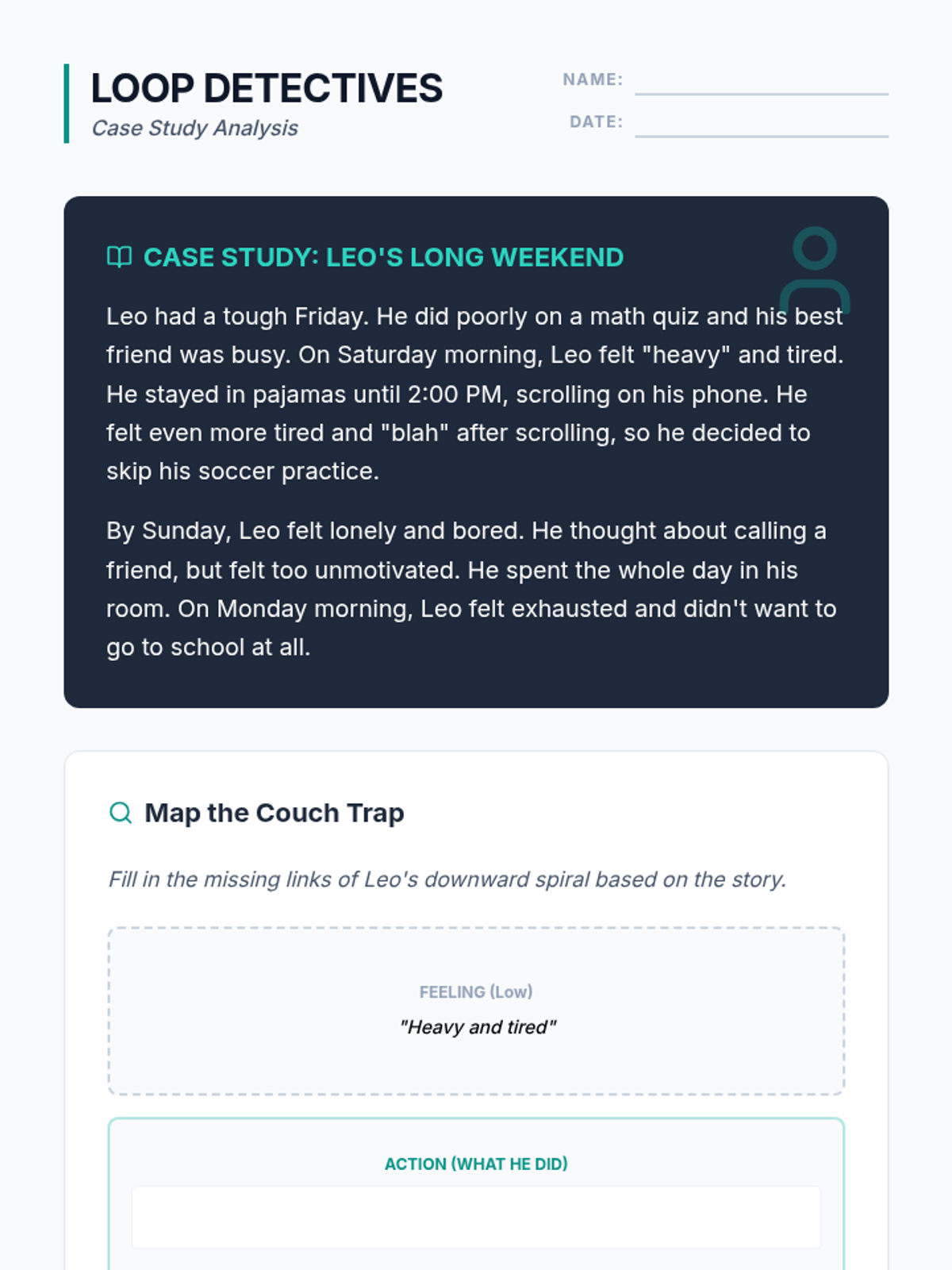
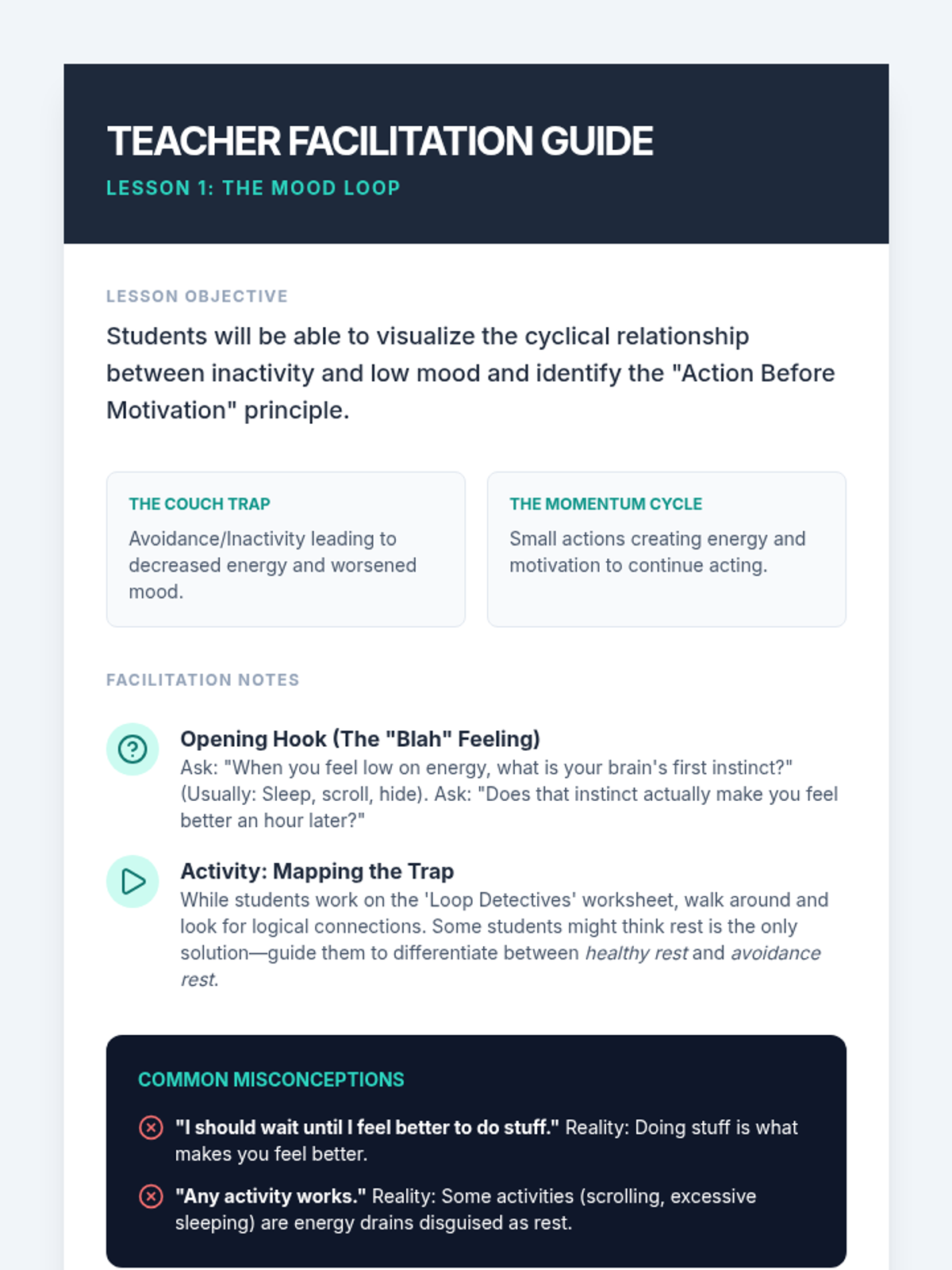
Students explore the cyclical relationship between behavior and emotion, mapping out the downward spiral of inactivity and the upward spiral of engagement through case studies.
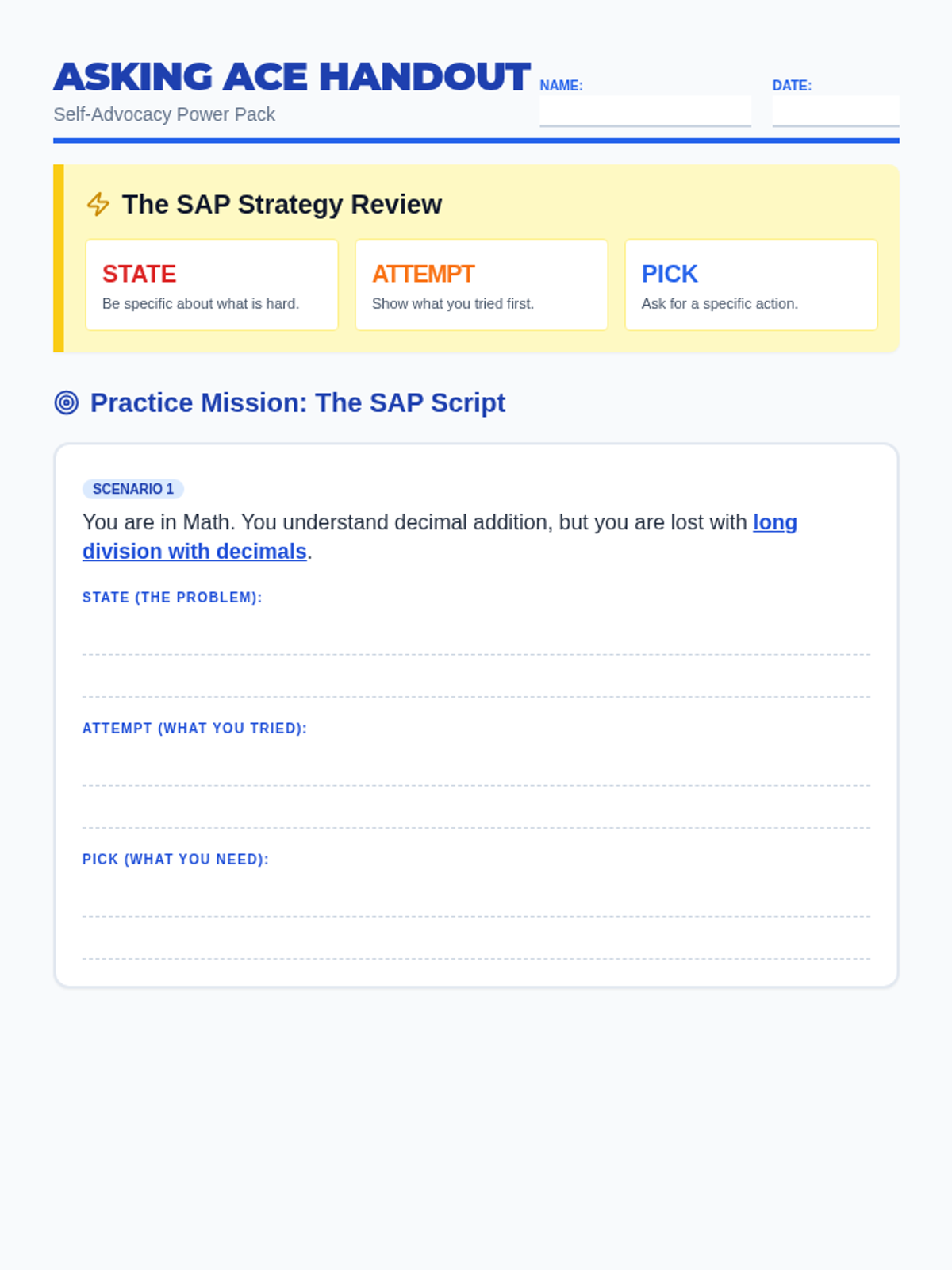
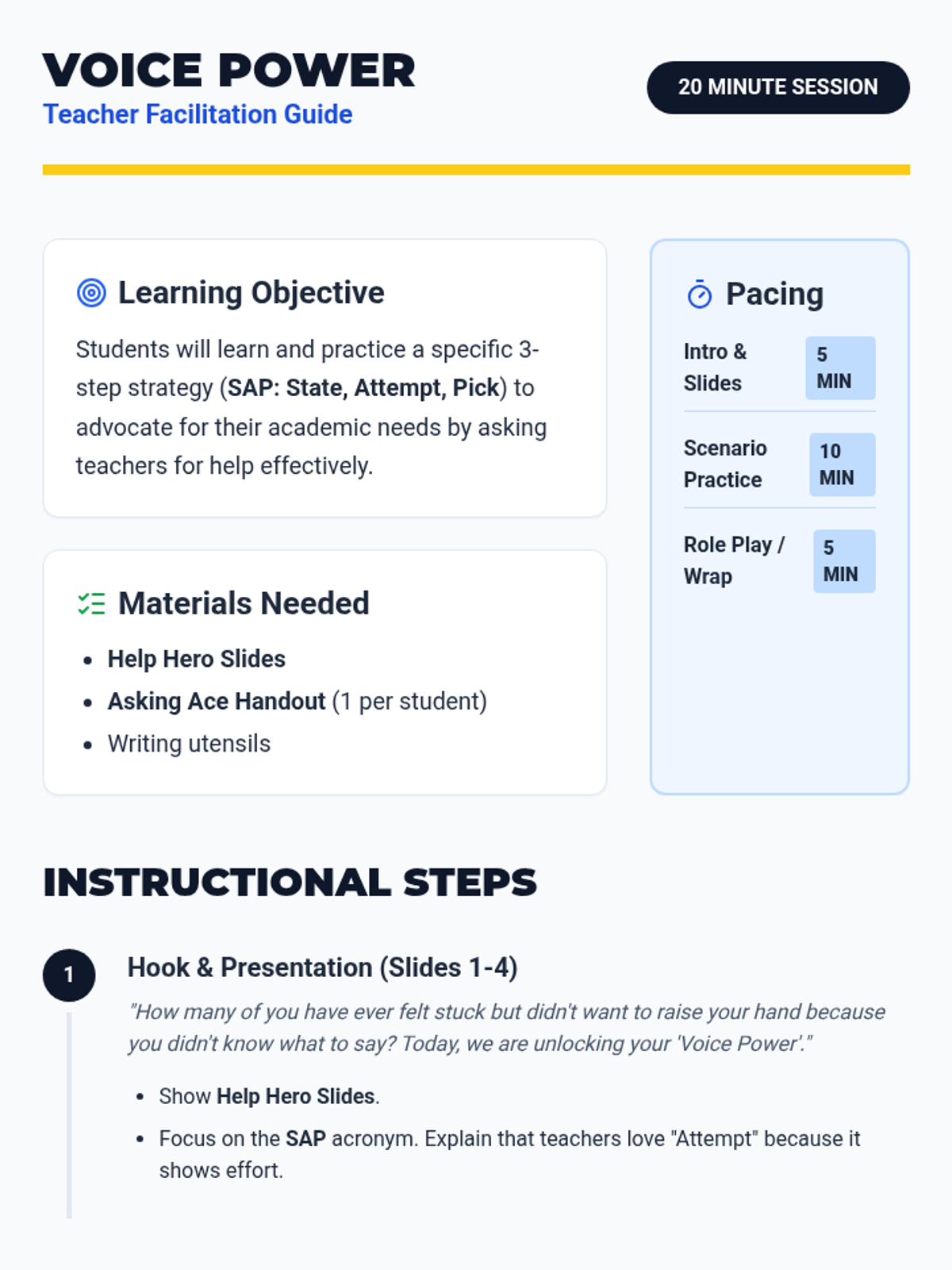
A quick, high-impact lesson designed to empower 6th graders with a simple 3-step strategy for asking teachers for help effectively and confidently.
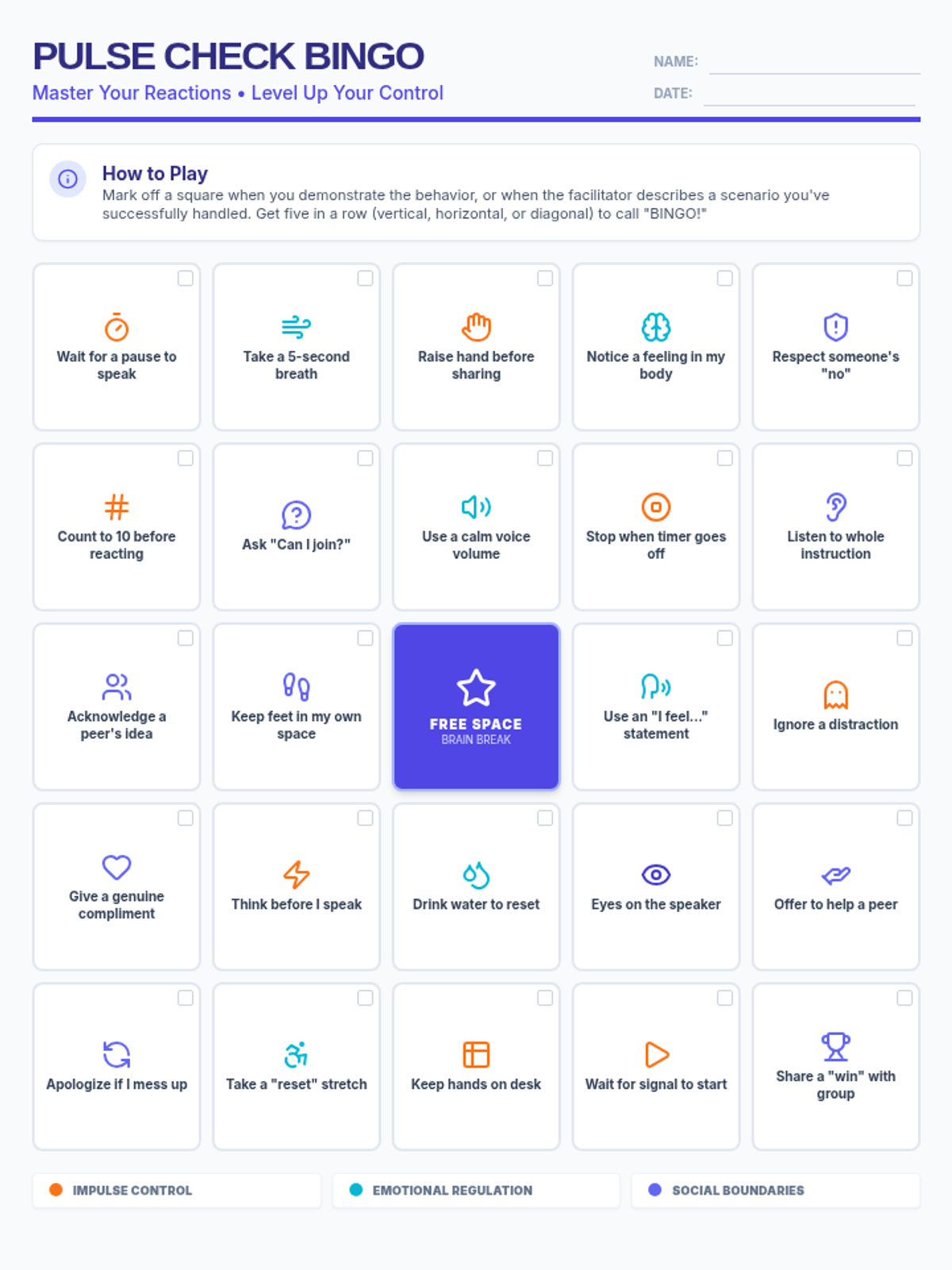
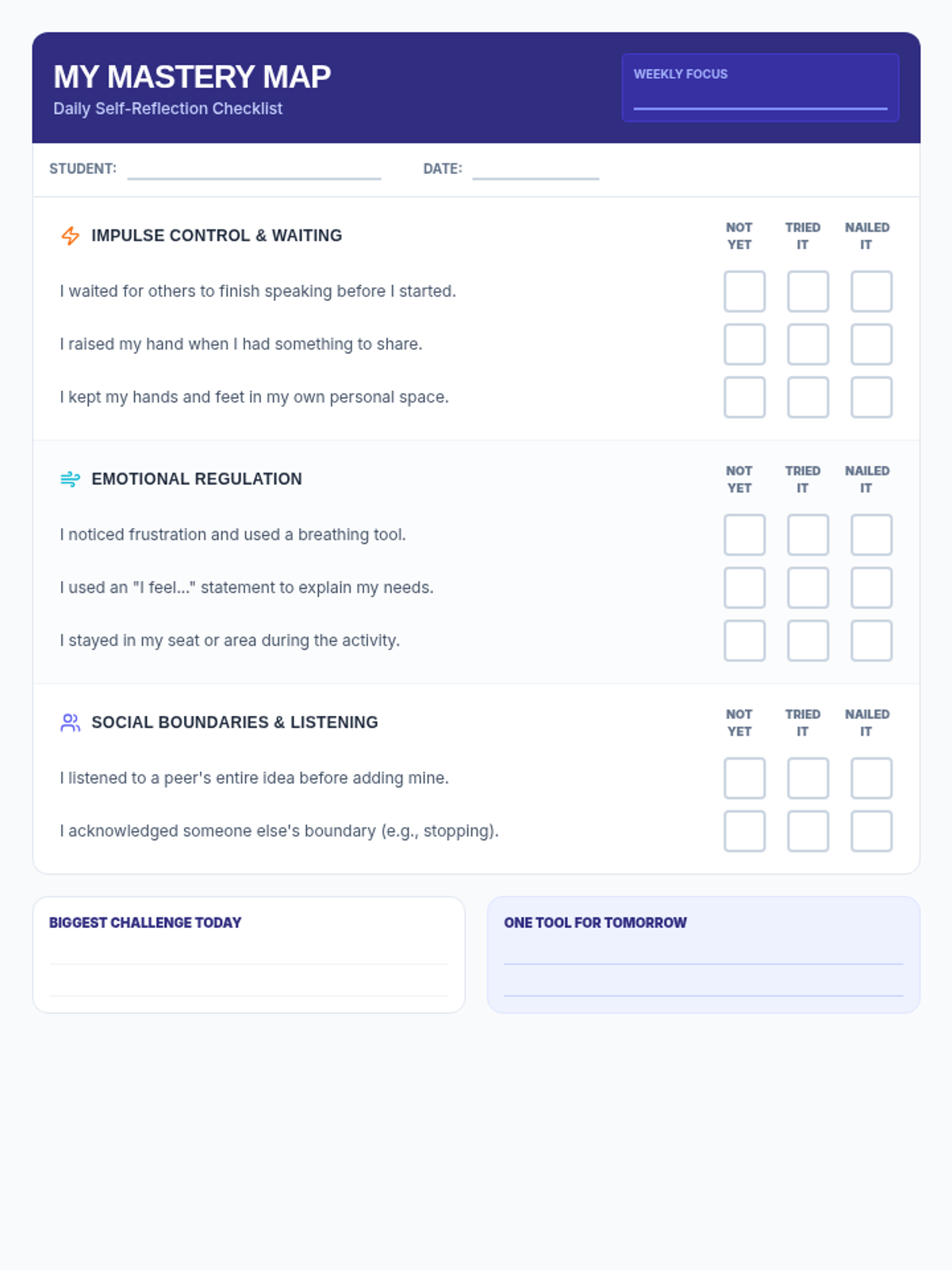
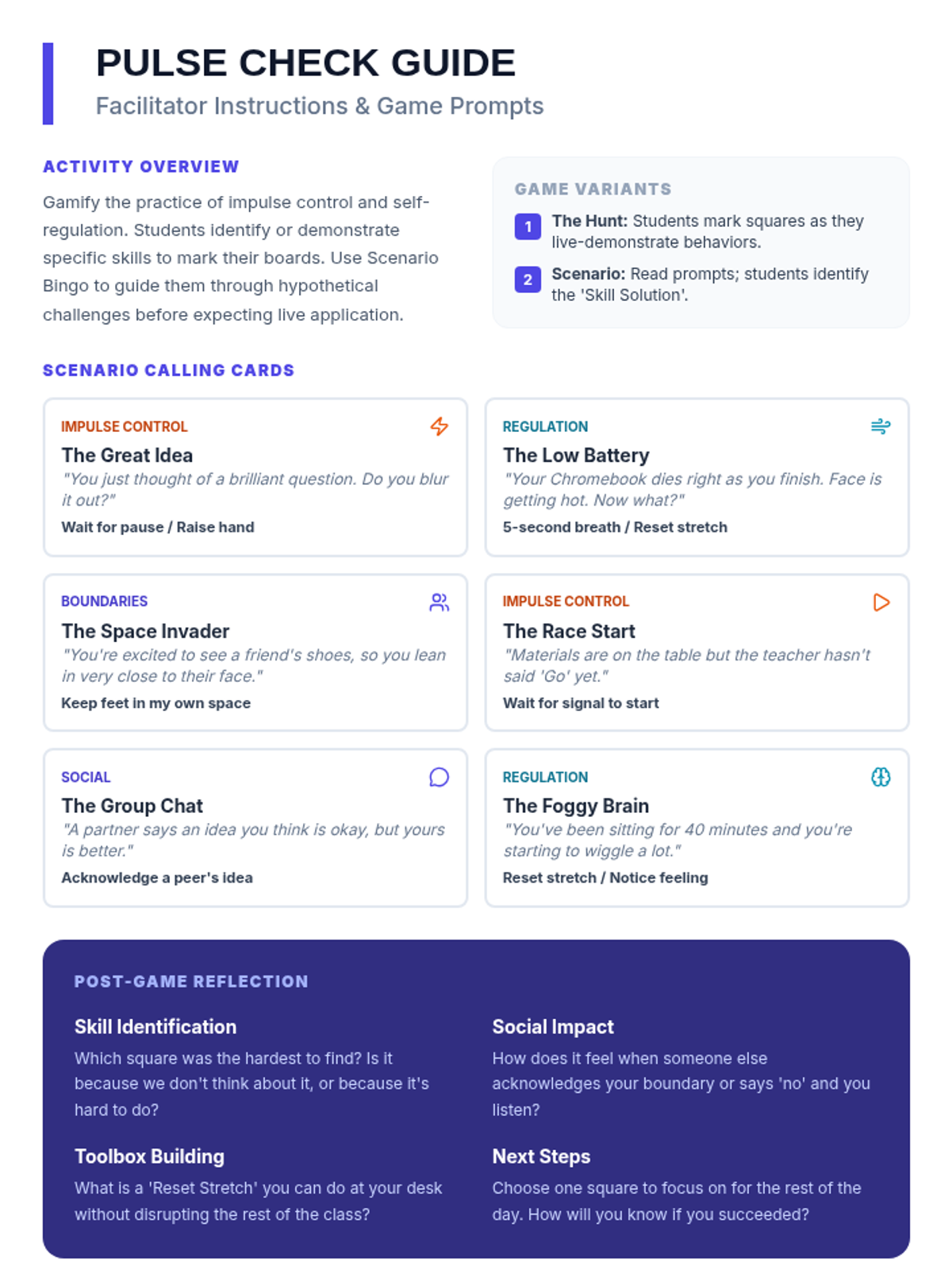
A lesson focused on developing self-regulation, impulse control, and social awareness for middle school students through interactive gameplay and reflection.
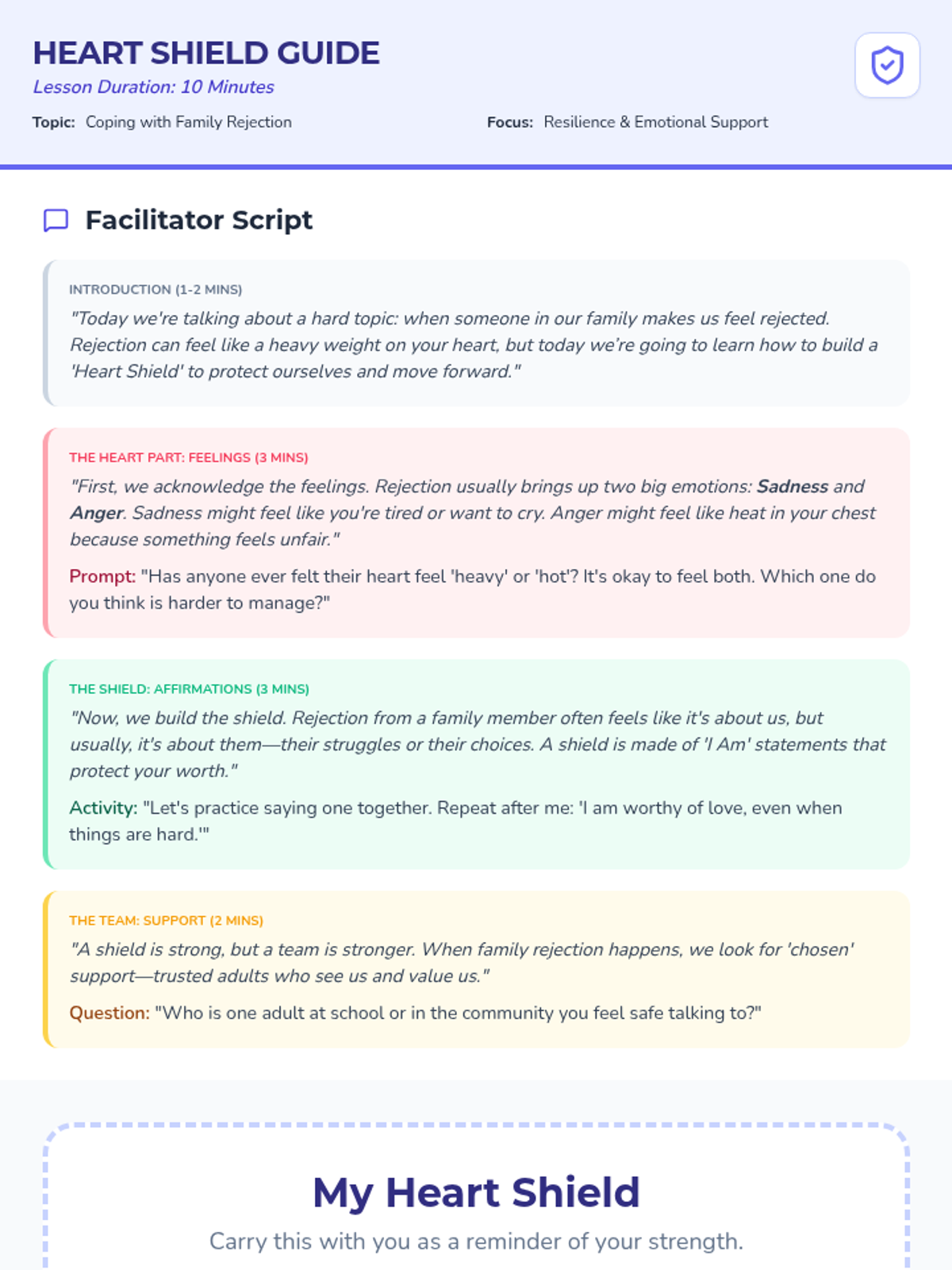
A brief, 10-minute social-emotional learning lesson focused on building resilience and processing emotions after experiencing rejection from a family member. Students learn to identify their feelings, use self-affirmations as a 'shield,' and identify a support network of trusted adults.
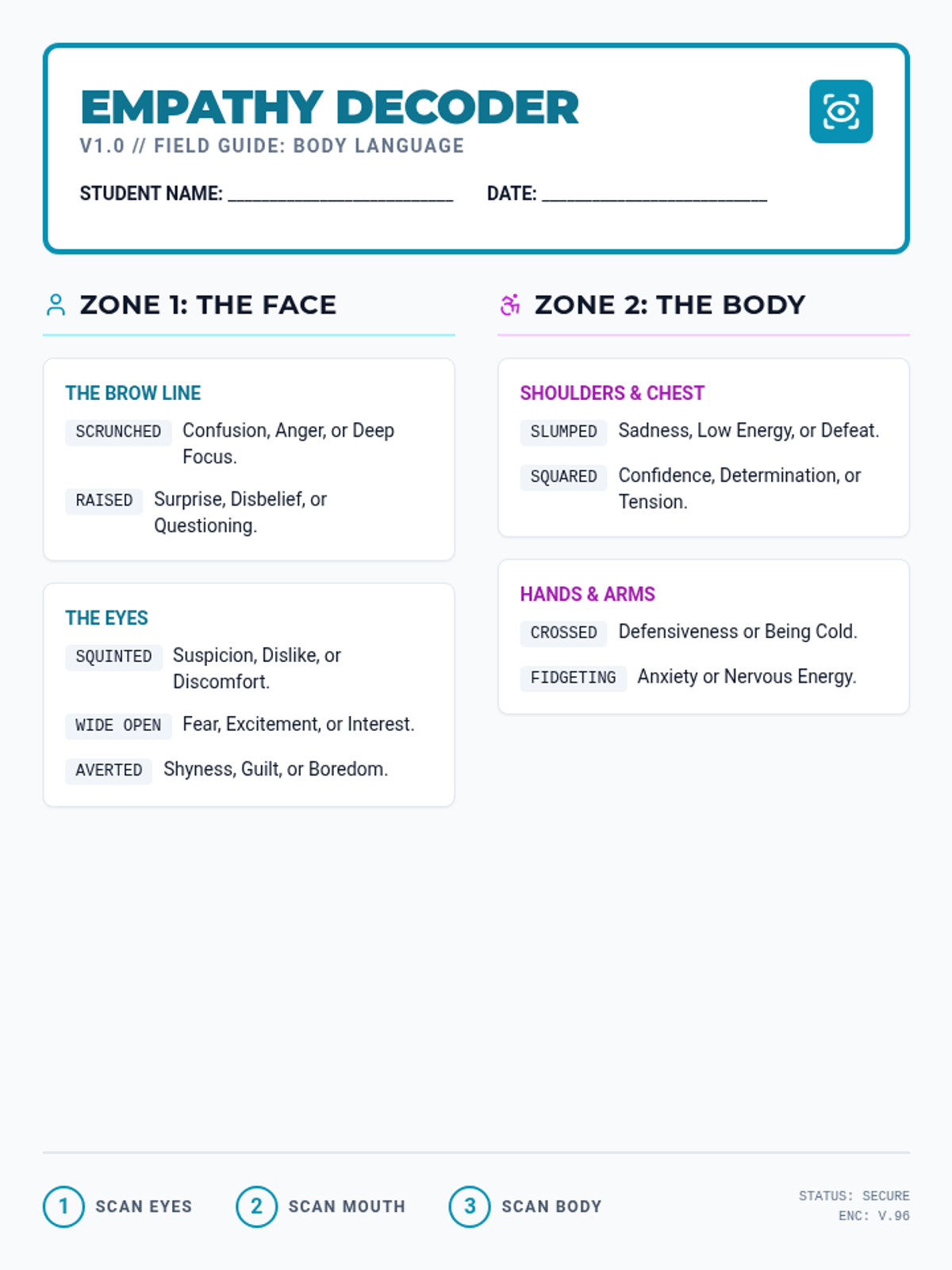
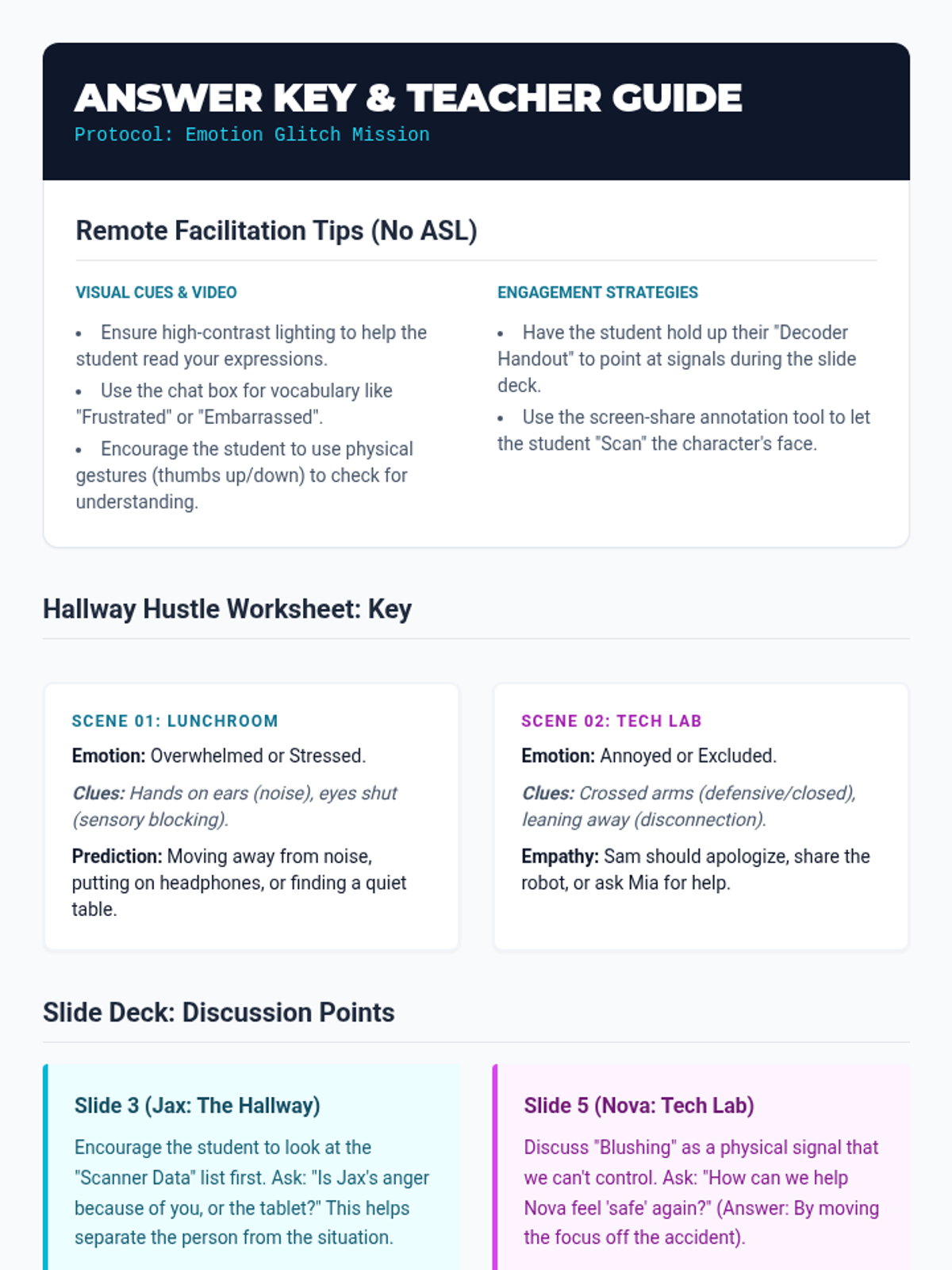
Students explore a futuristic high school hallway and tech lab to identify 'glitches' in social communication. They learn to decode body language and facial expressions in complex social situations.
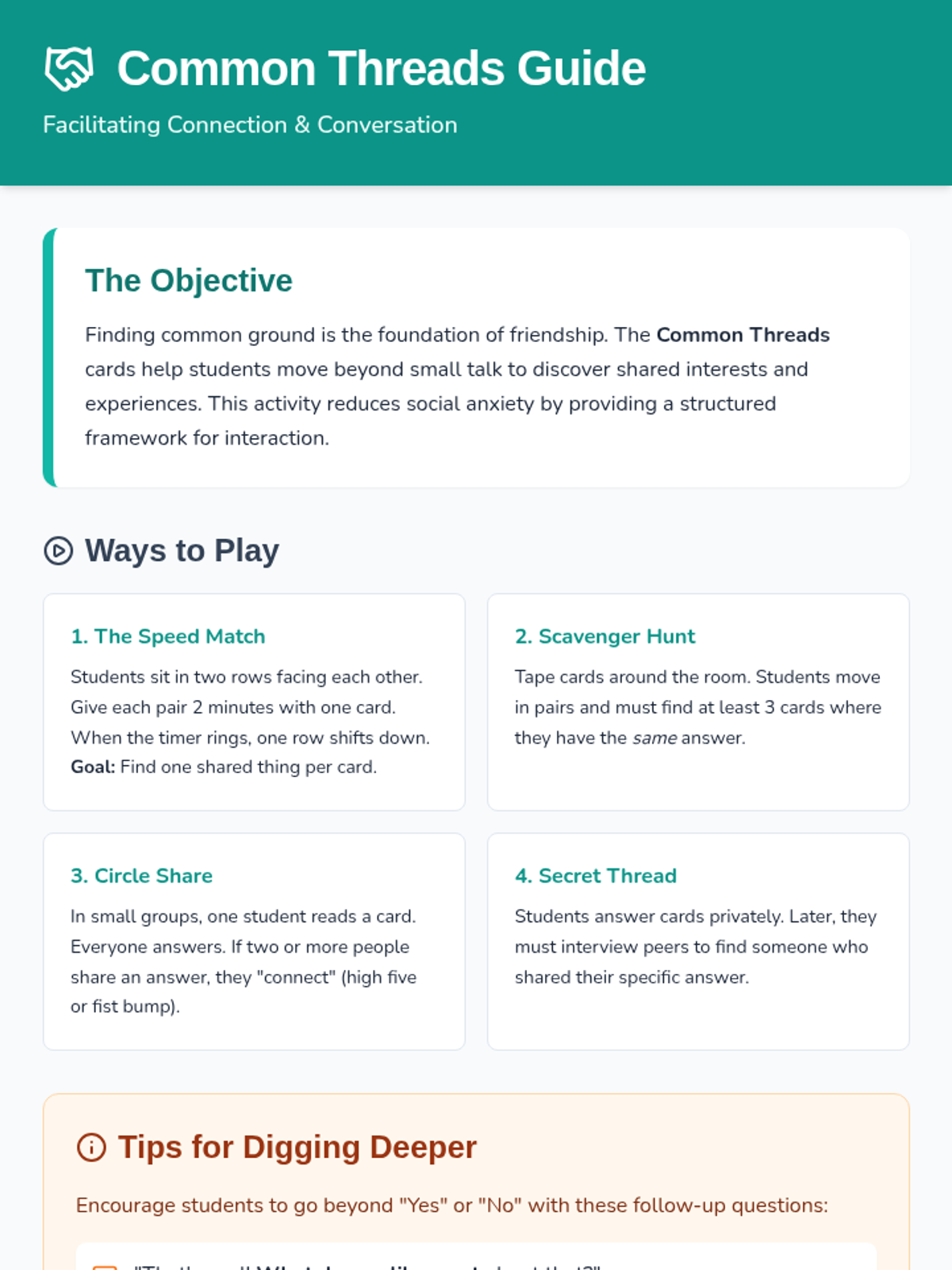
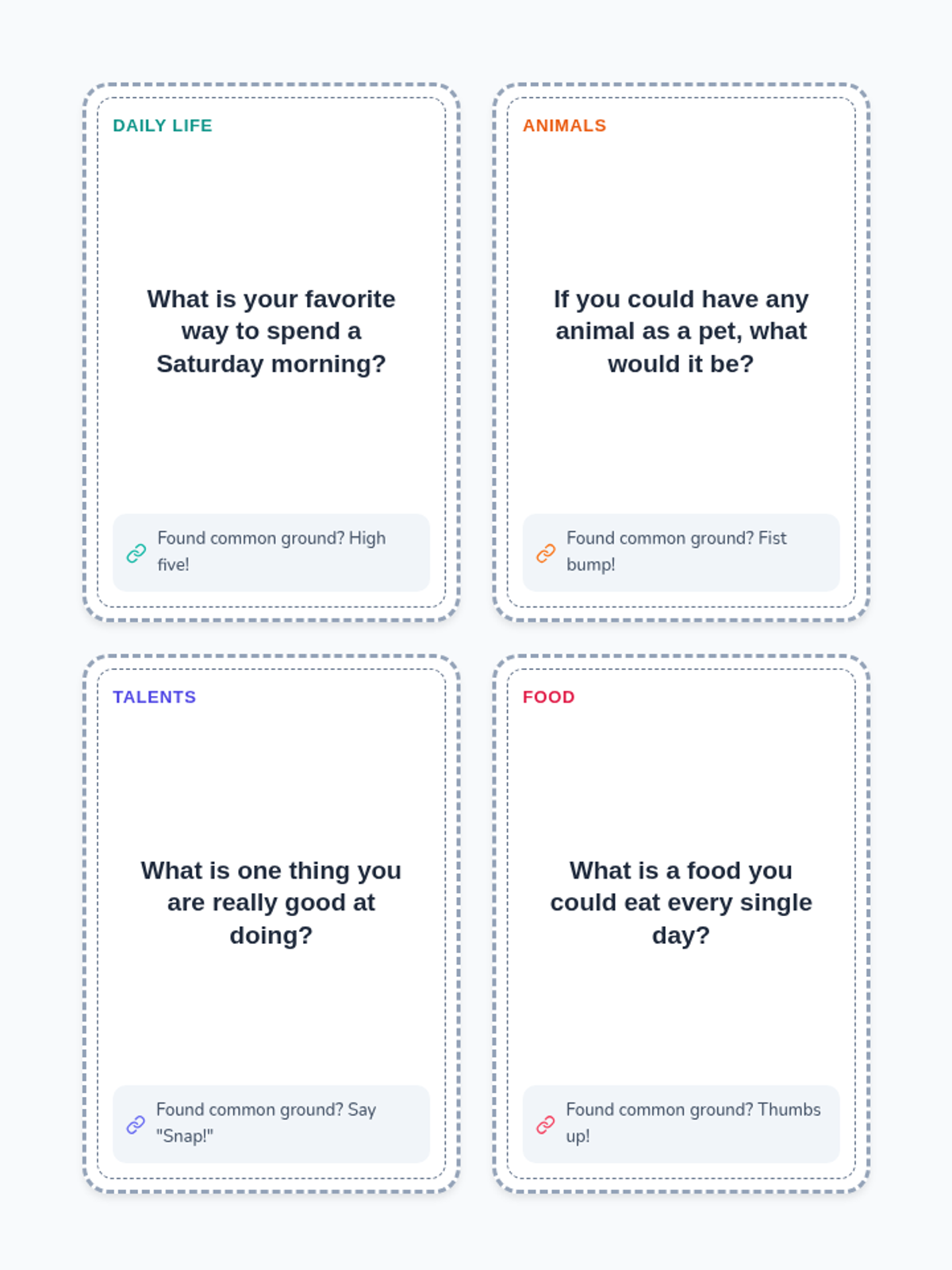
A social-emotional learning lesson focused on finding commonalities with peers through structured conversation. Students use conversation cards to discover shared interests and build connections.
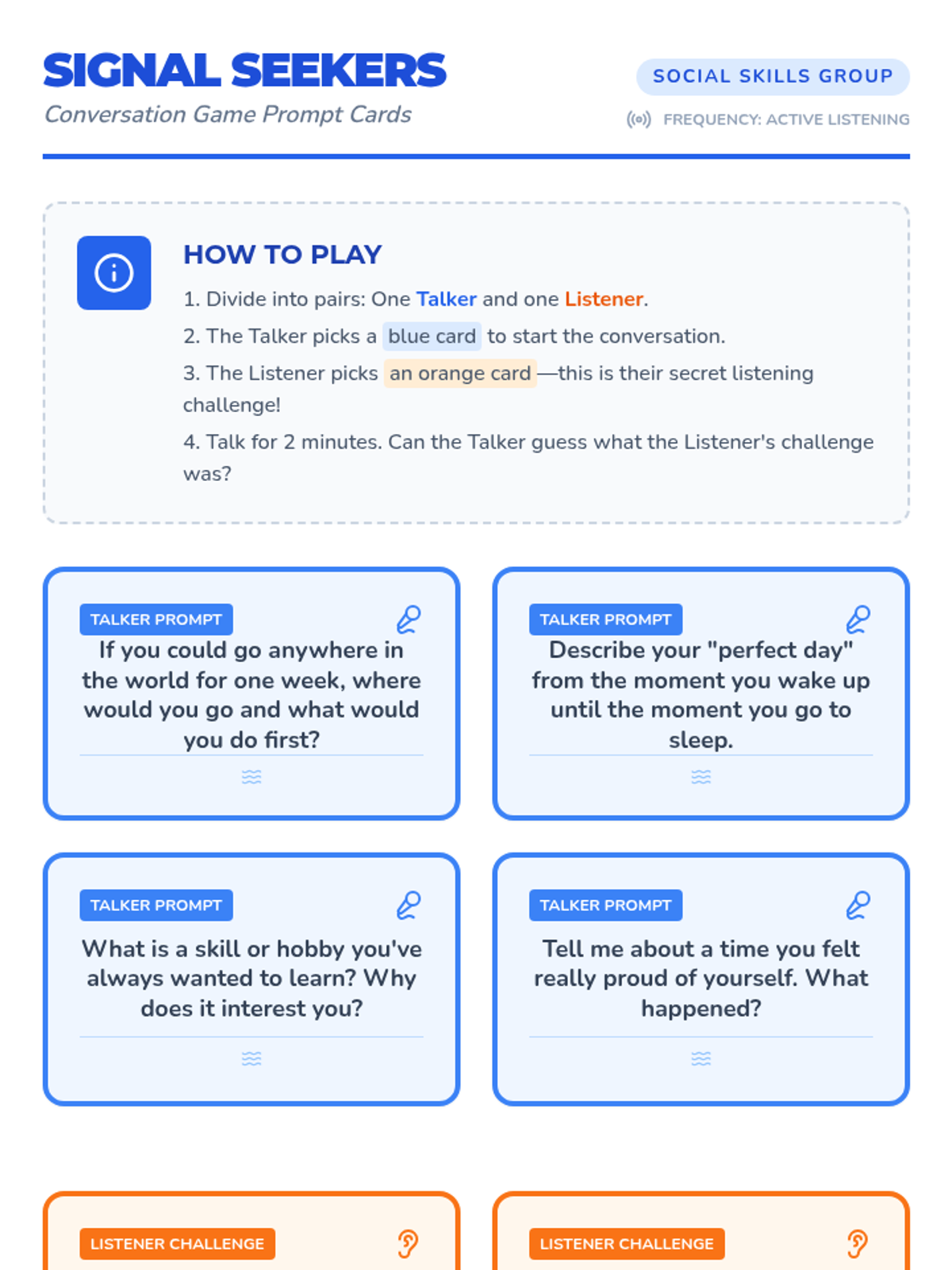
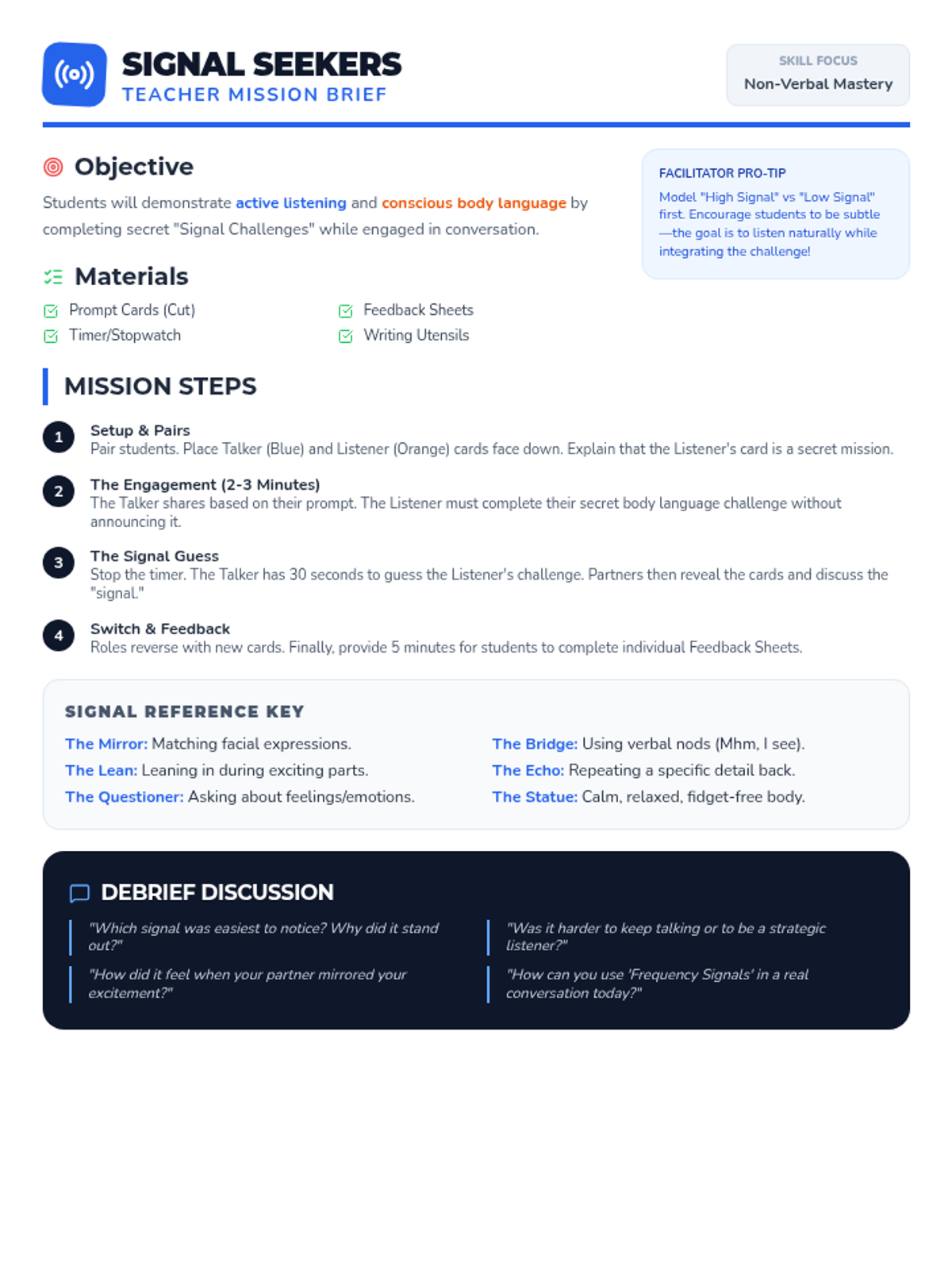
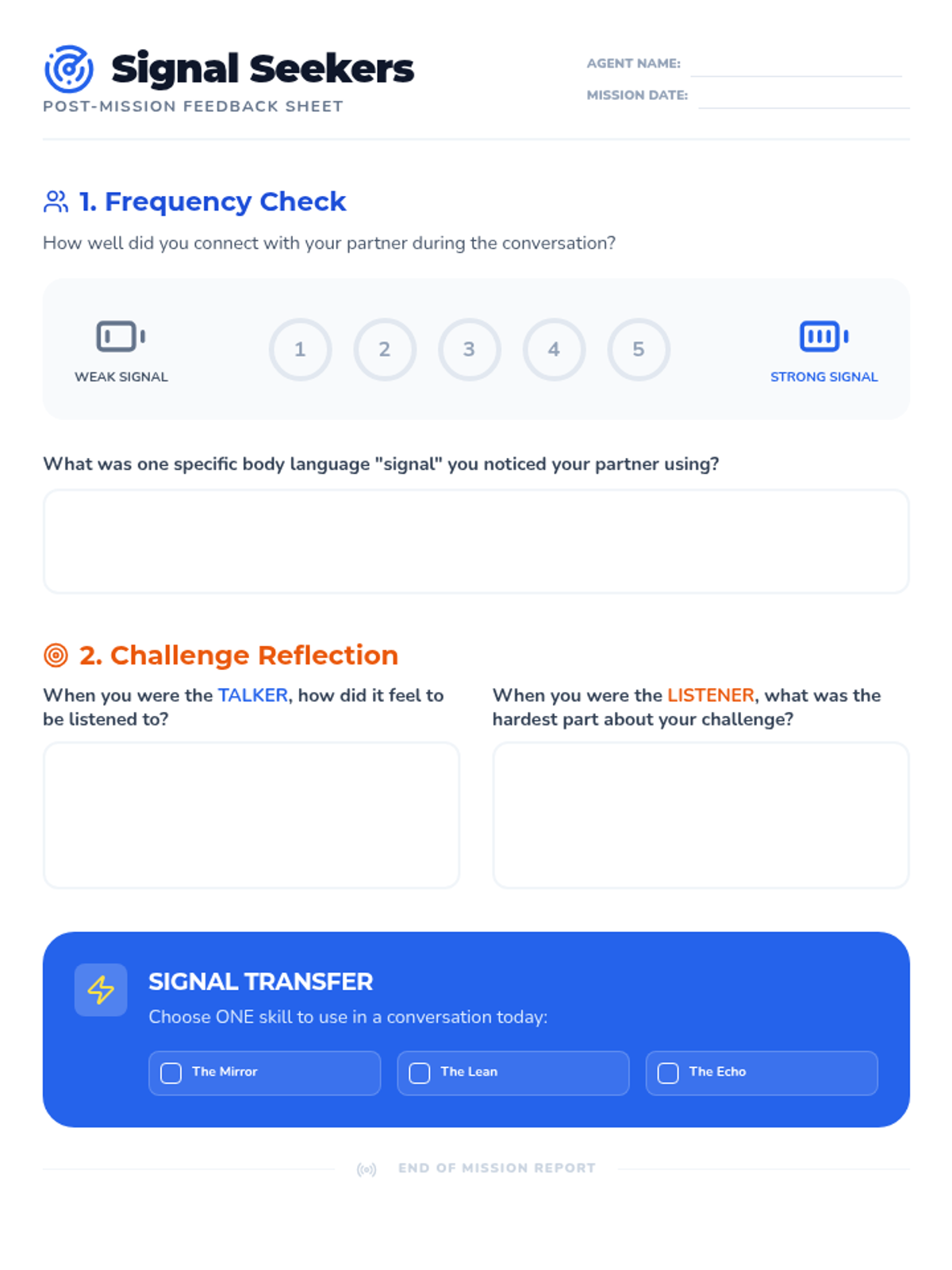
A dynamic conversation game where students practice active listening and non-verbal communication through 'Talker' prompts and 'Listener' challenges. Students learn to recognize and use body language to show they are truly engaged in a conversation.
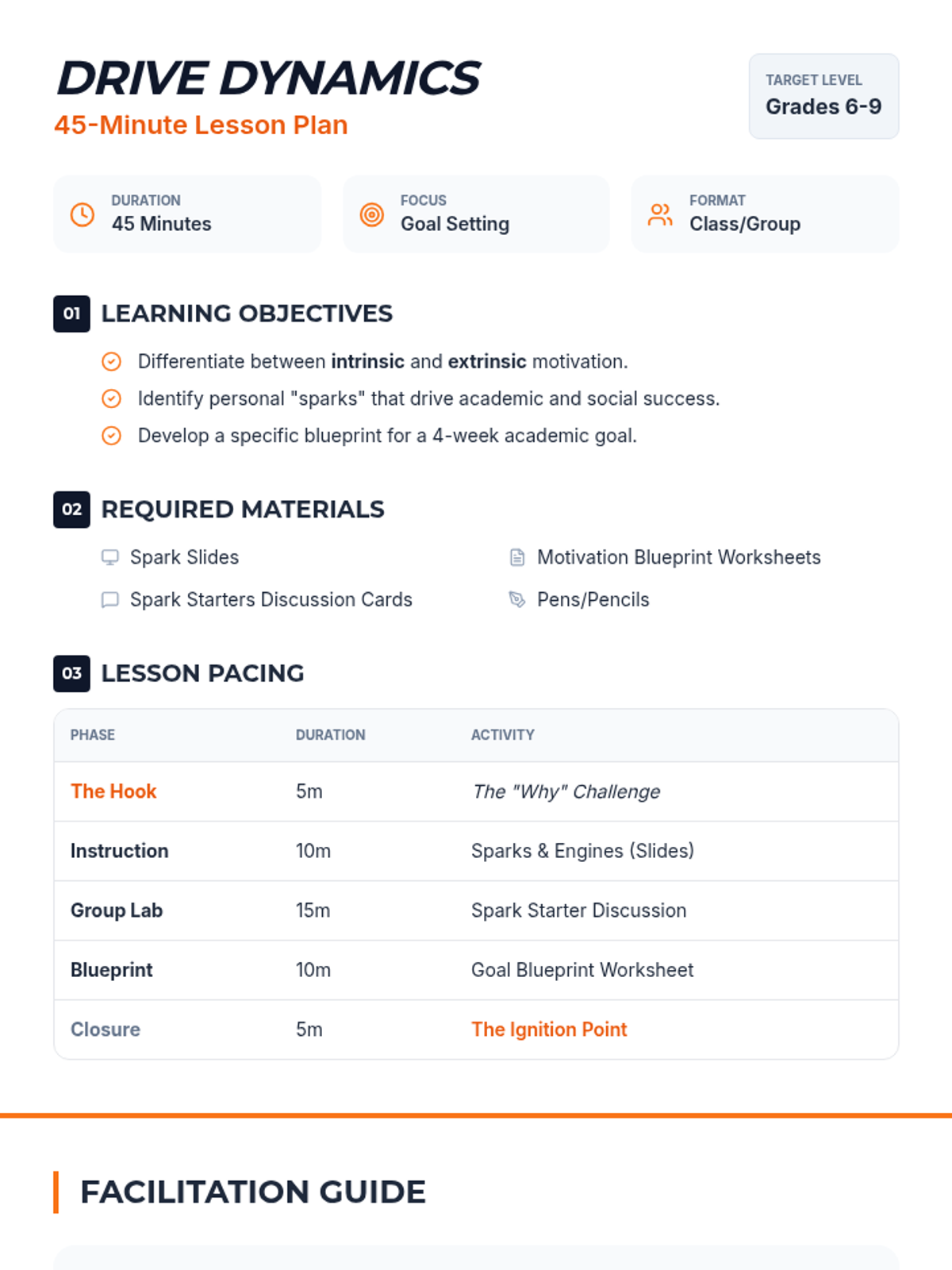
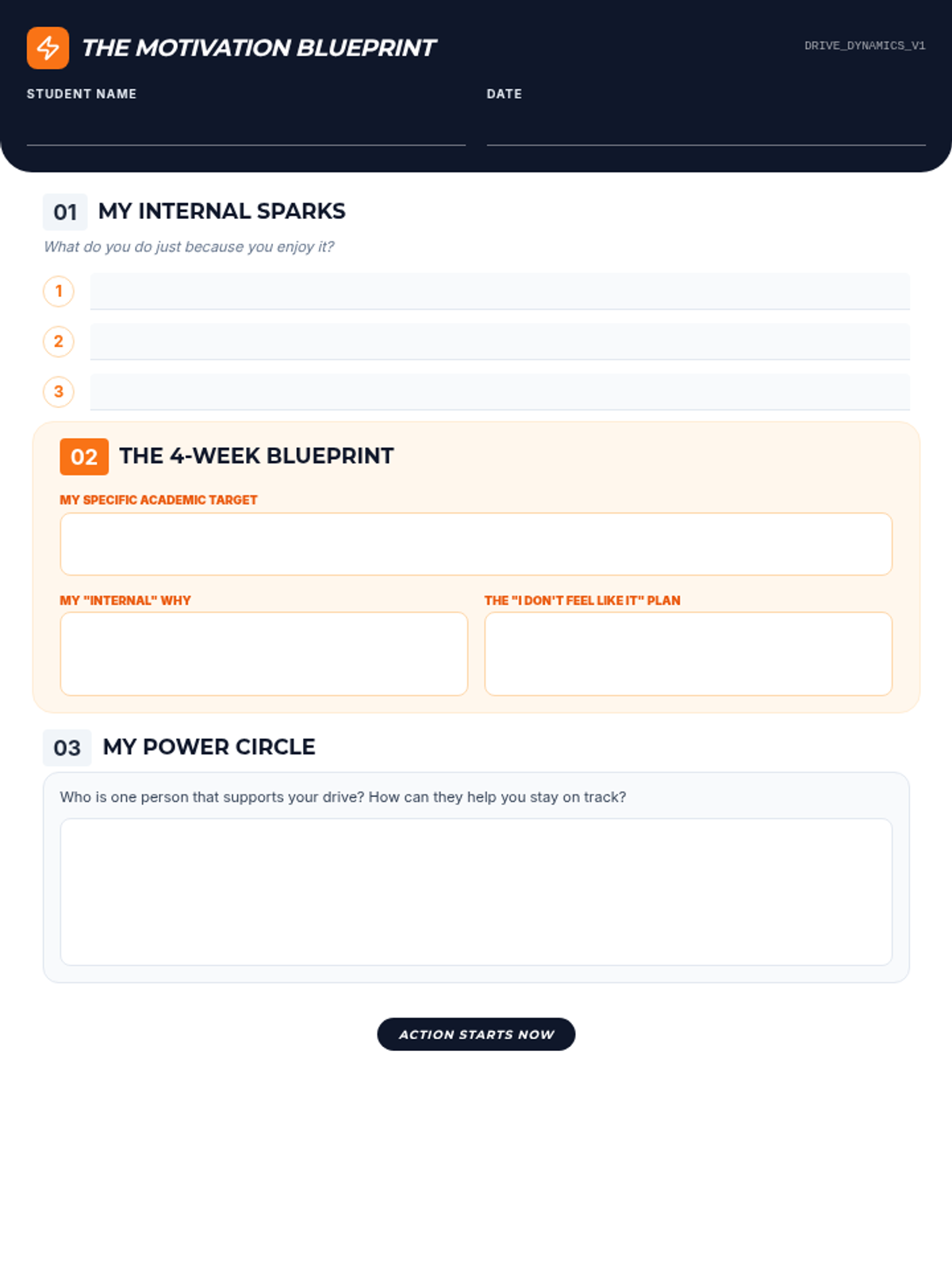
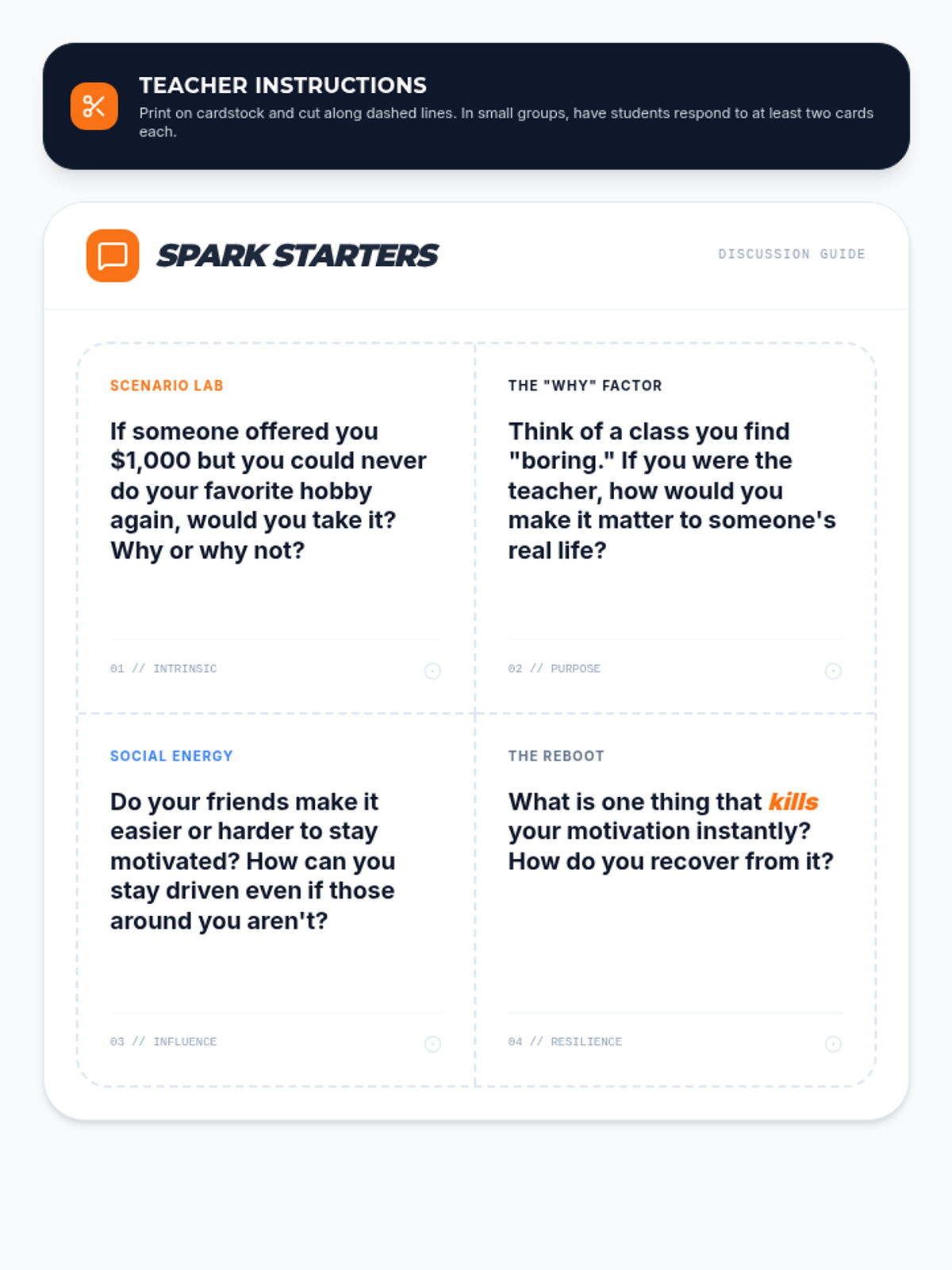
A comprehensive session focused on uncovering internal drivers, setting meaningful academic goals, and building social-emotional resilience through motivation strategies.
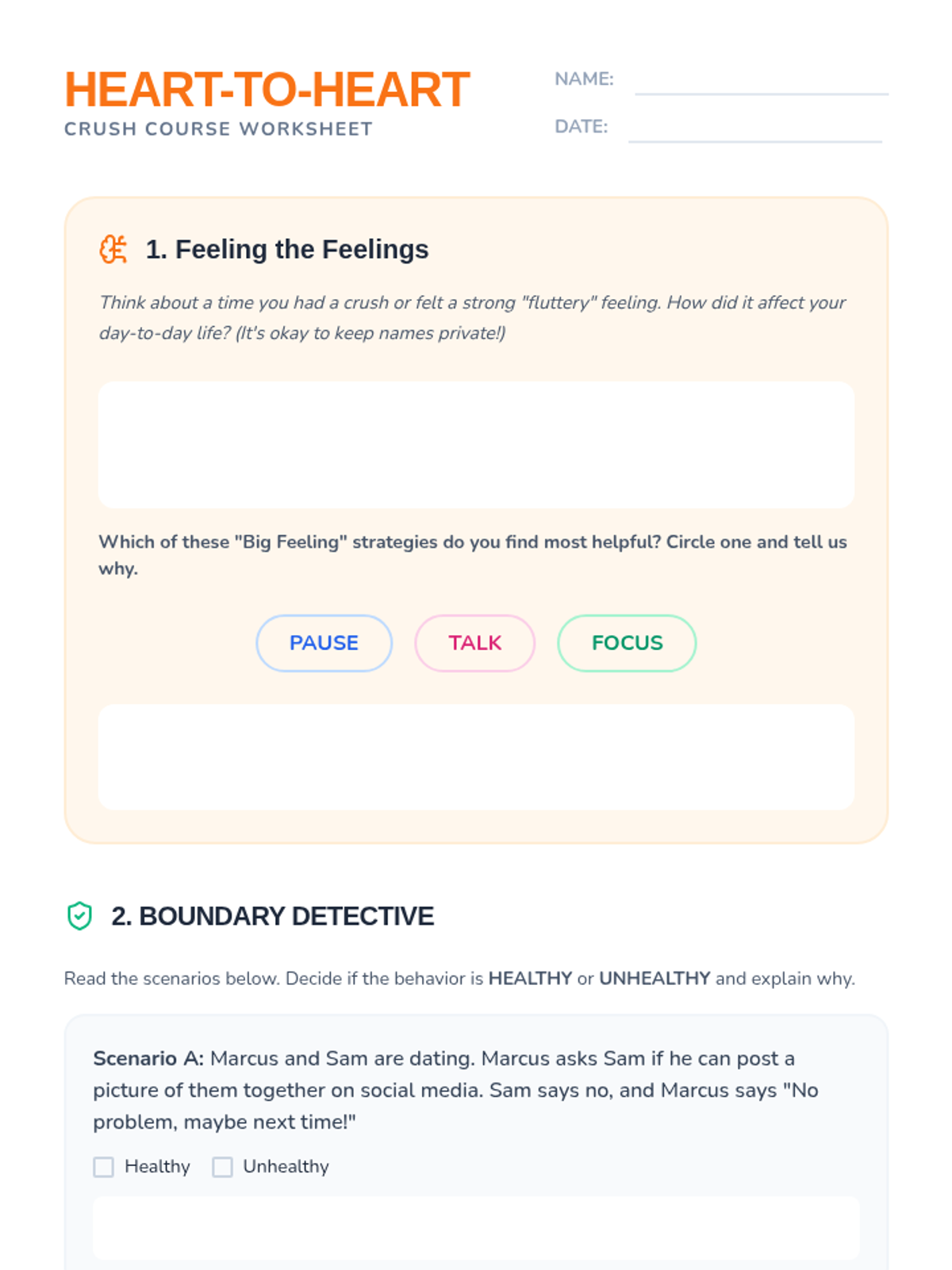
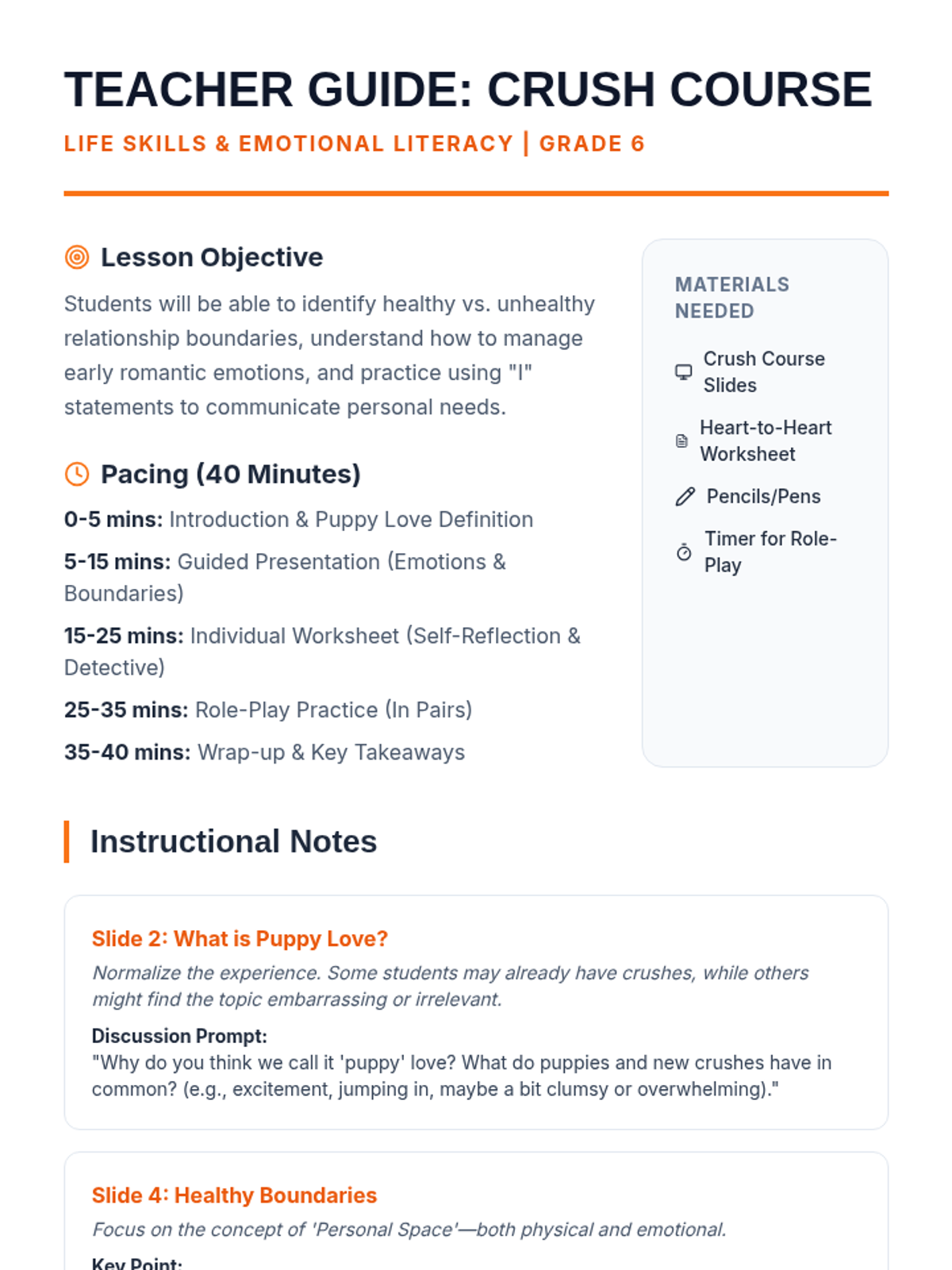
This lesson helps 6th graders navigate the complex world of early romantic feelings by focusing on identifying emotions, setting healthy boundaries, and practicing clear communication. Students will learn to distinguish between healthy and unhealthy relationship behaviors through interactive slides and role-play scenarios.
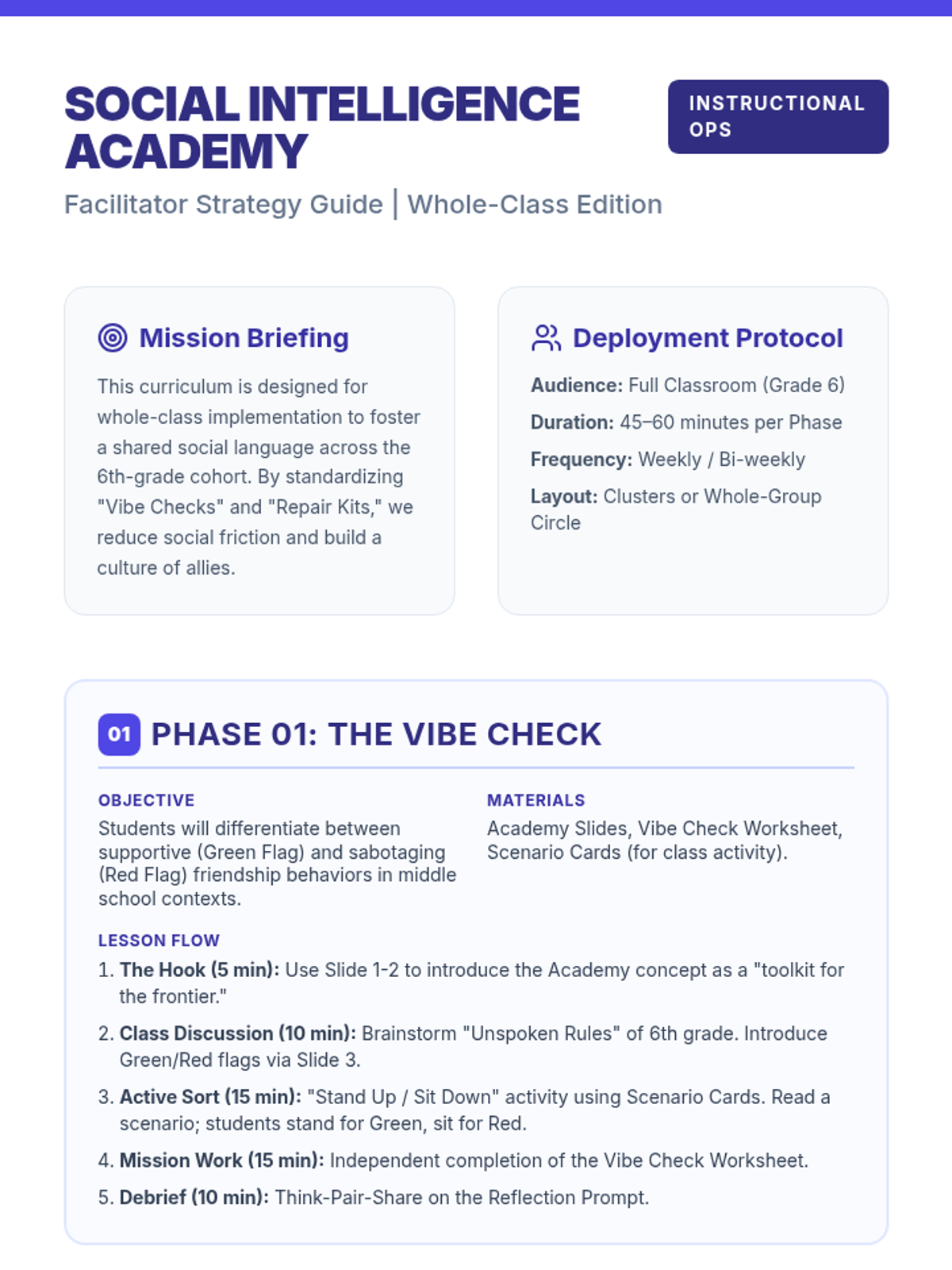
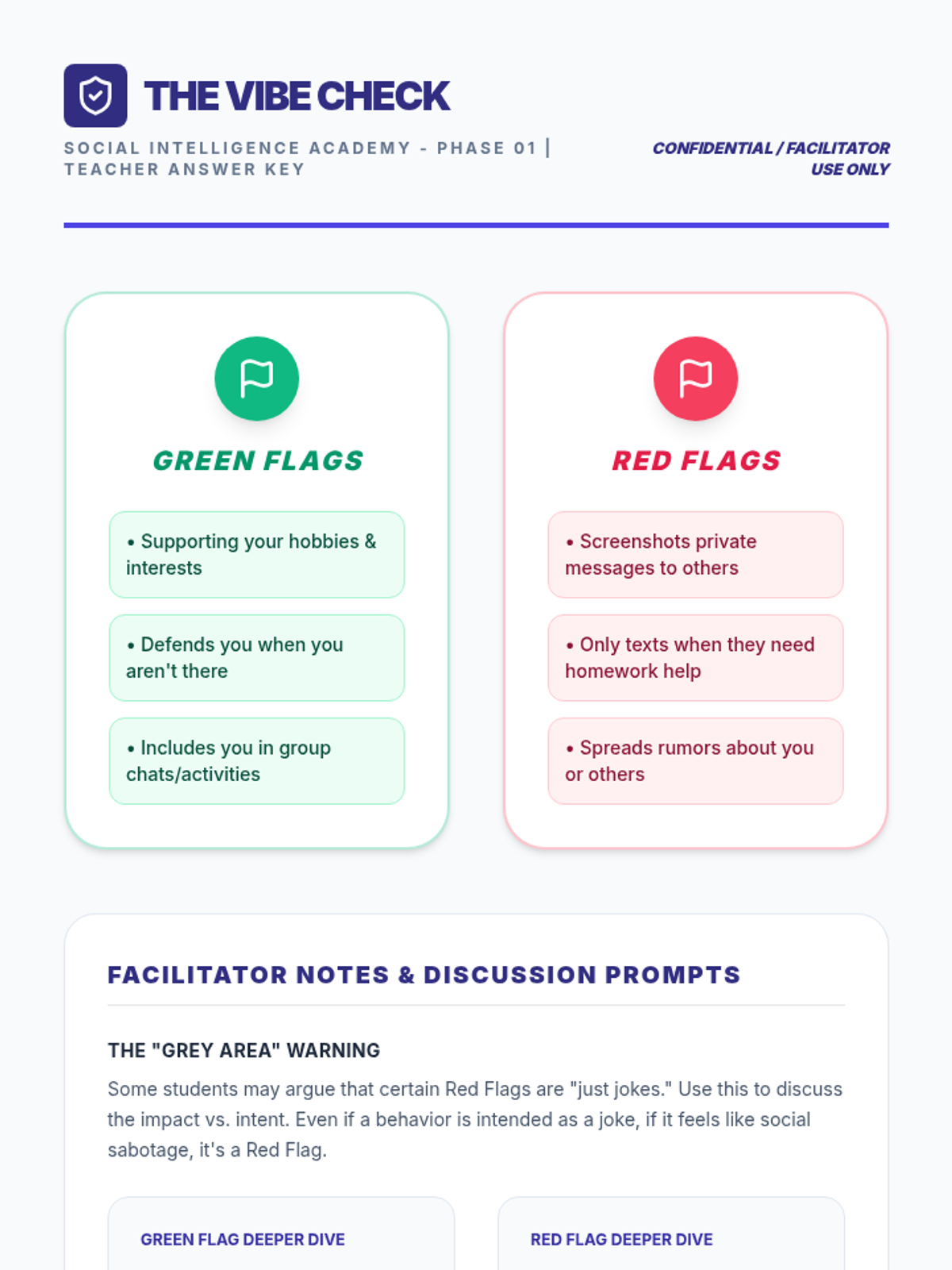
Introduces the Social Intelligence Academy and explores "Vibe Checks"—the criteria for healthy, high-functioning middle school friendships.
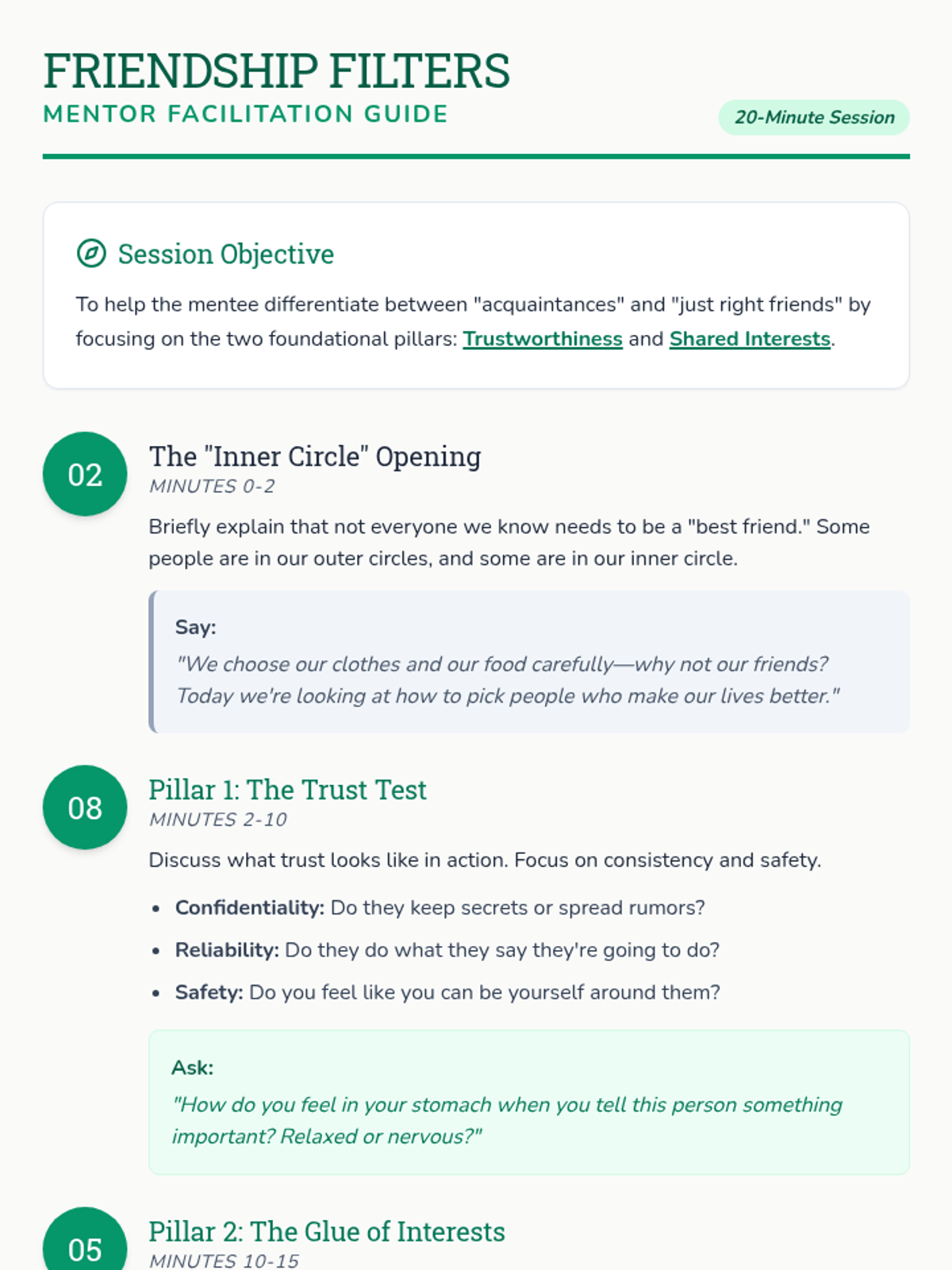
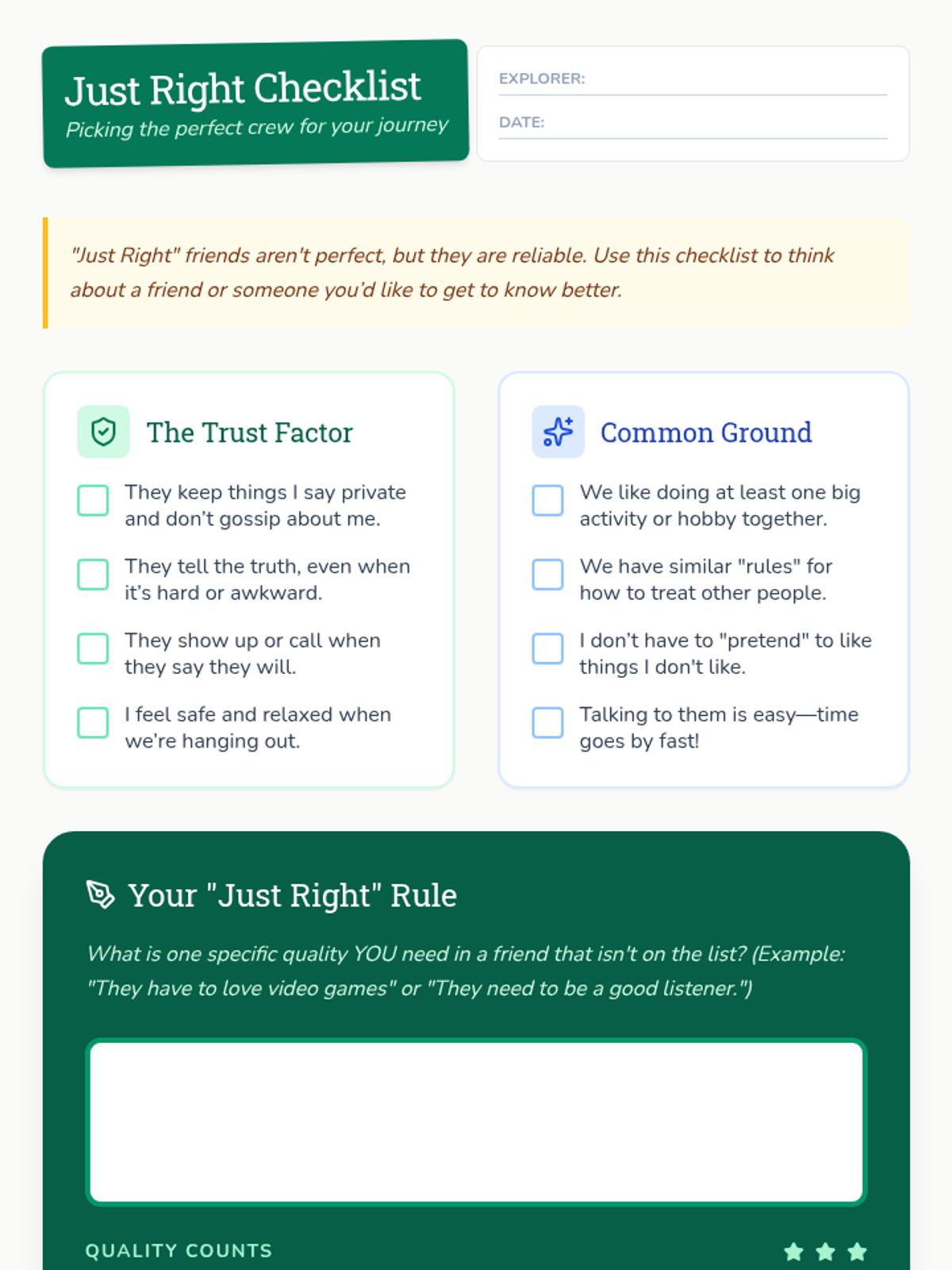
A focused 20-minute mentorship session designed to help mentees identify and cultivate high-quality friendships based on trustworthiness and shared interests.
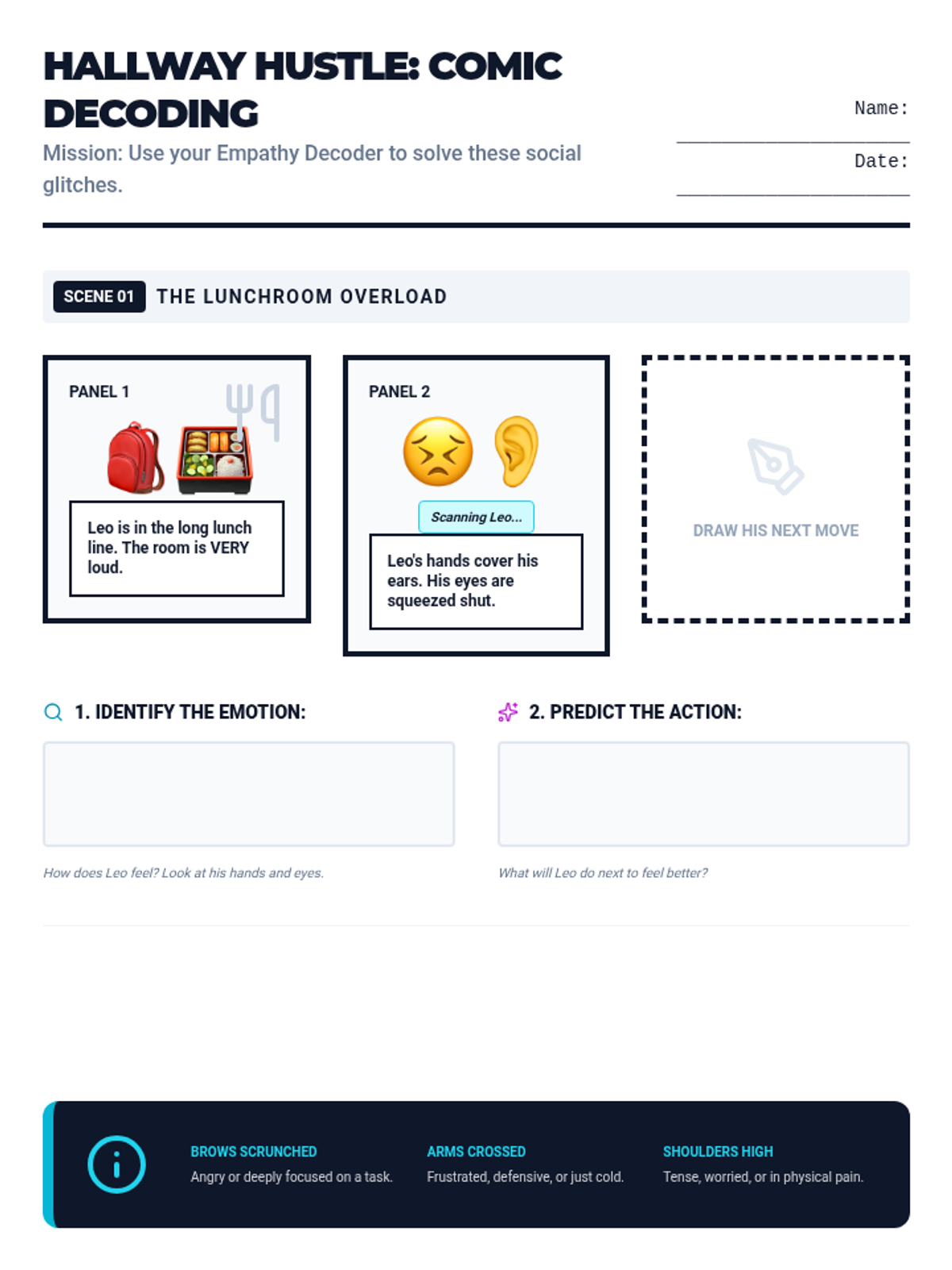
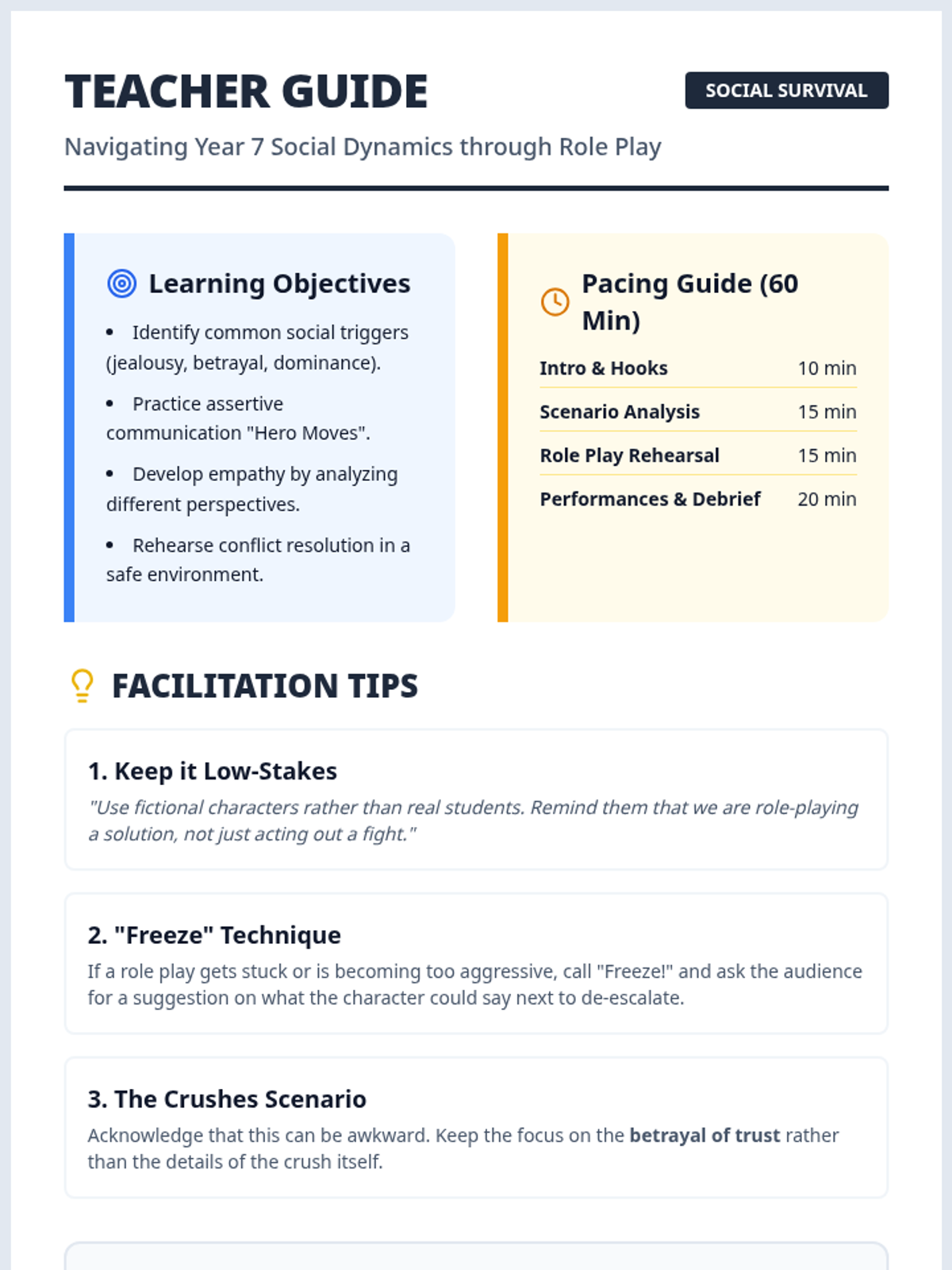
A lesson focused on navigating complex social dynamics in middle school, using role-play and comic-style scenarios to build empathy and conflict resolution skills.
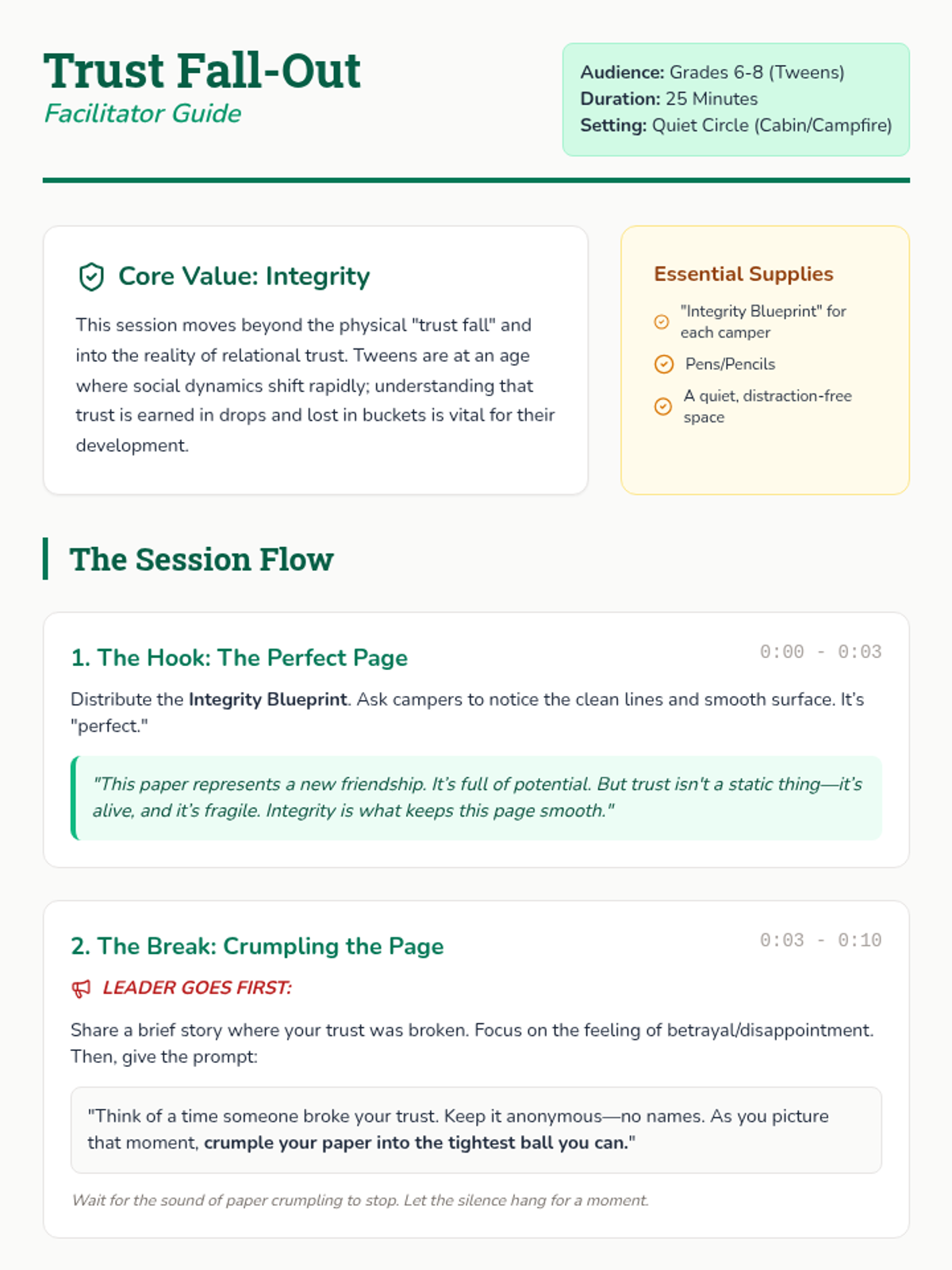
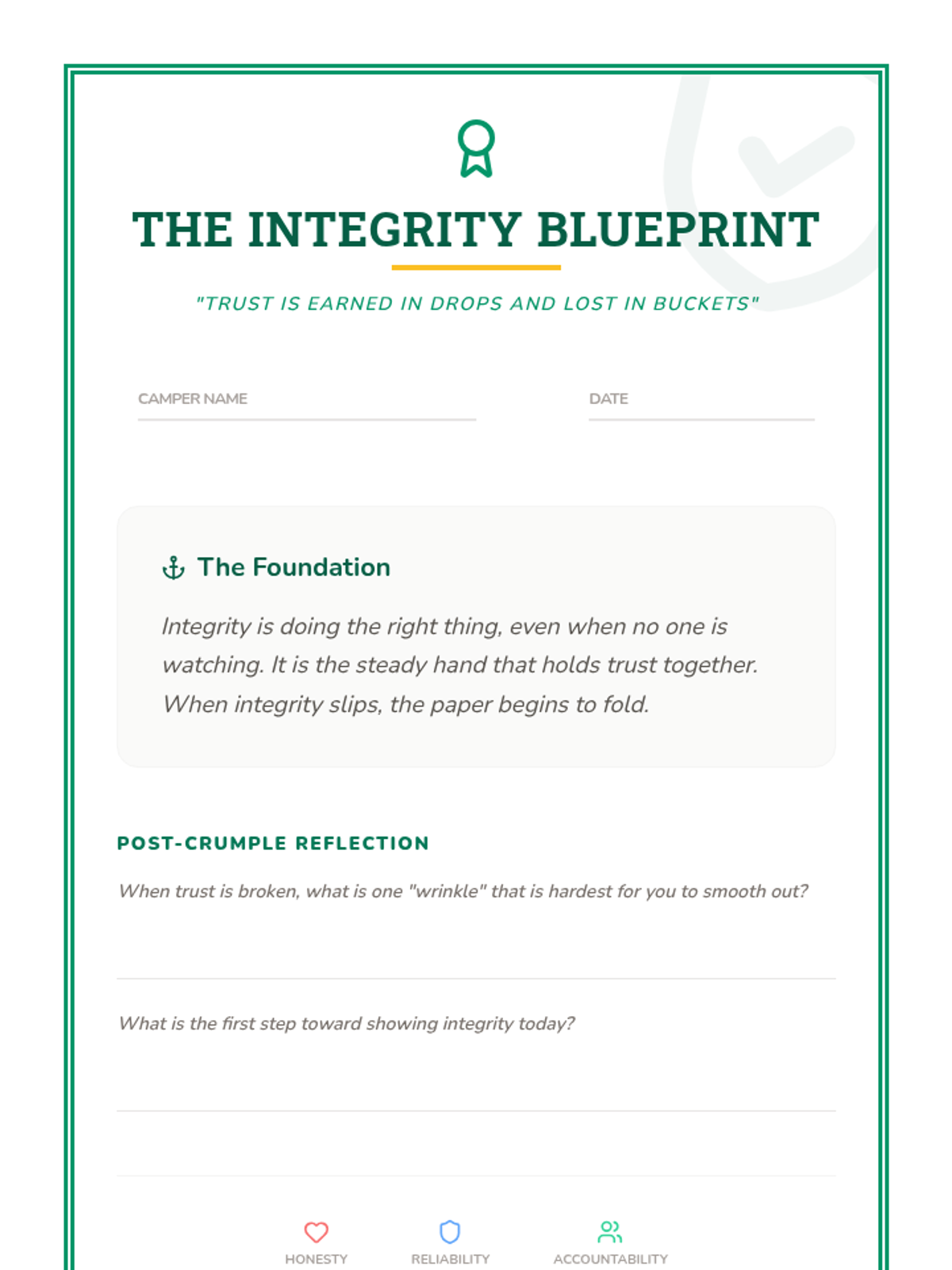
An interactive 25-minute discussion-based lesson for camp counselors to lead tweens in exploring the fragile nature of trust, using the crumpled paper metaphor to understand integrity and rebuilding relationships.
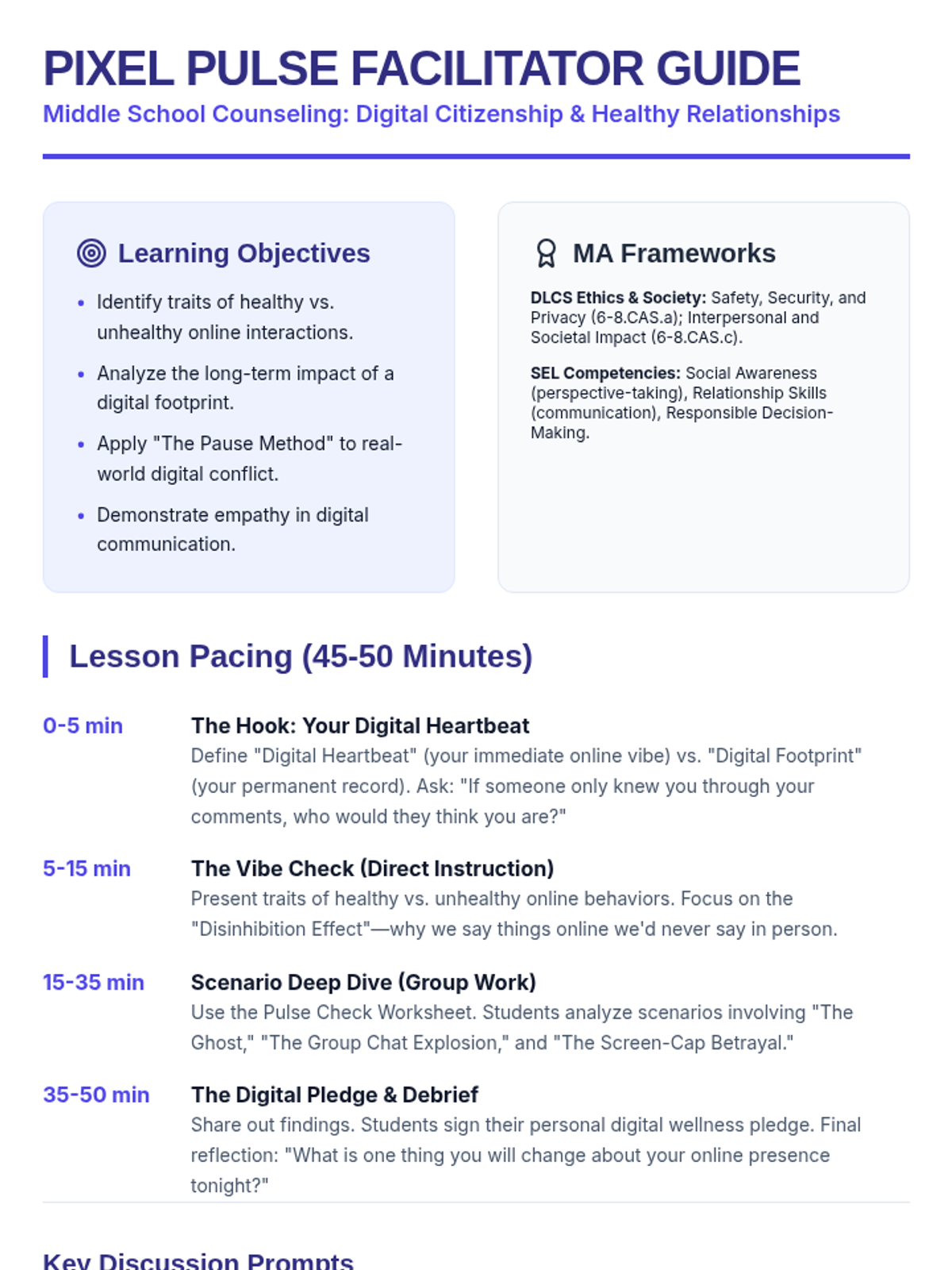
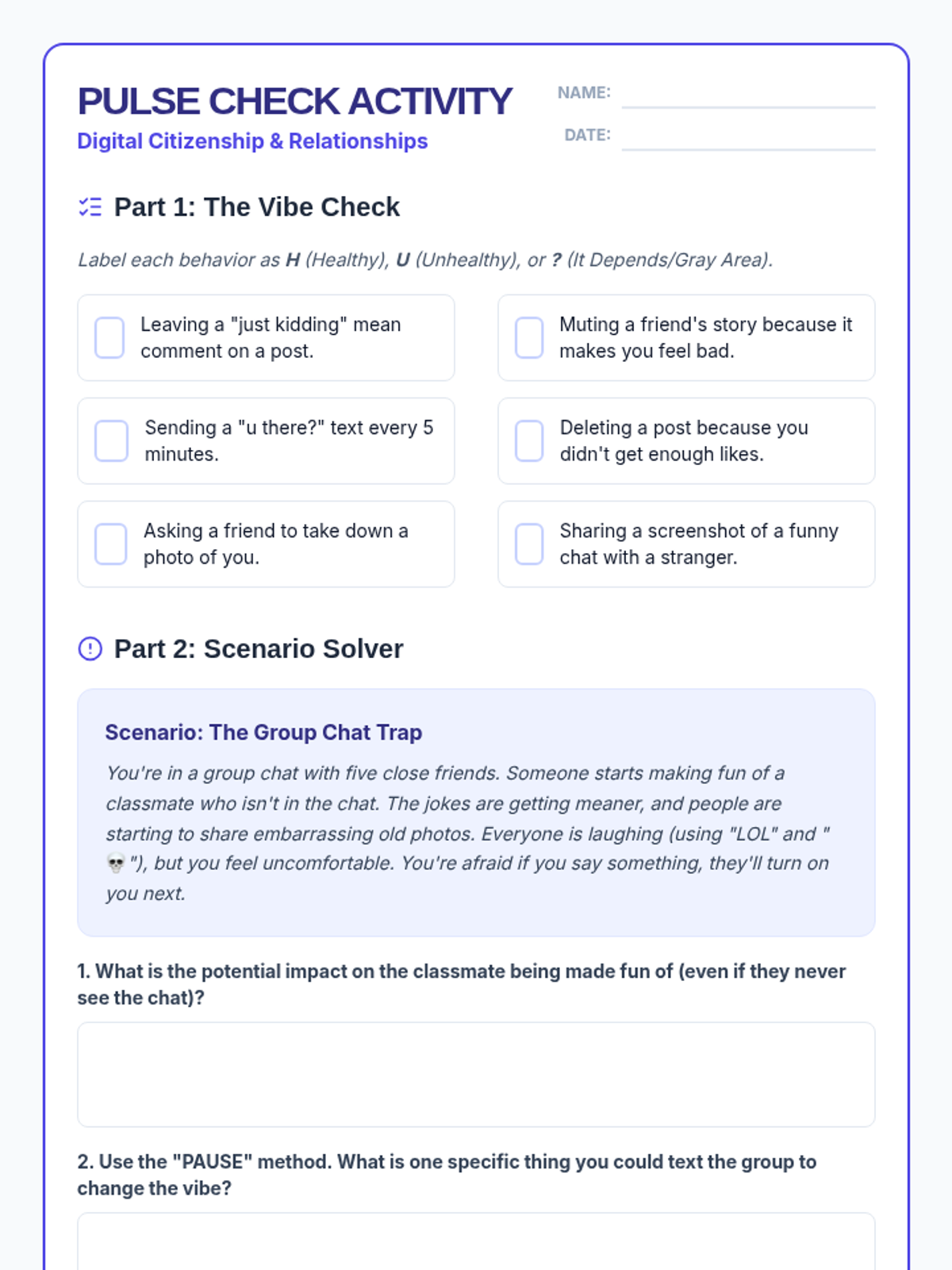
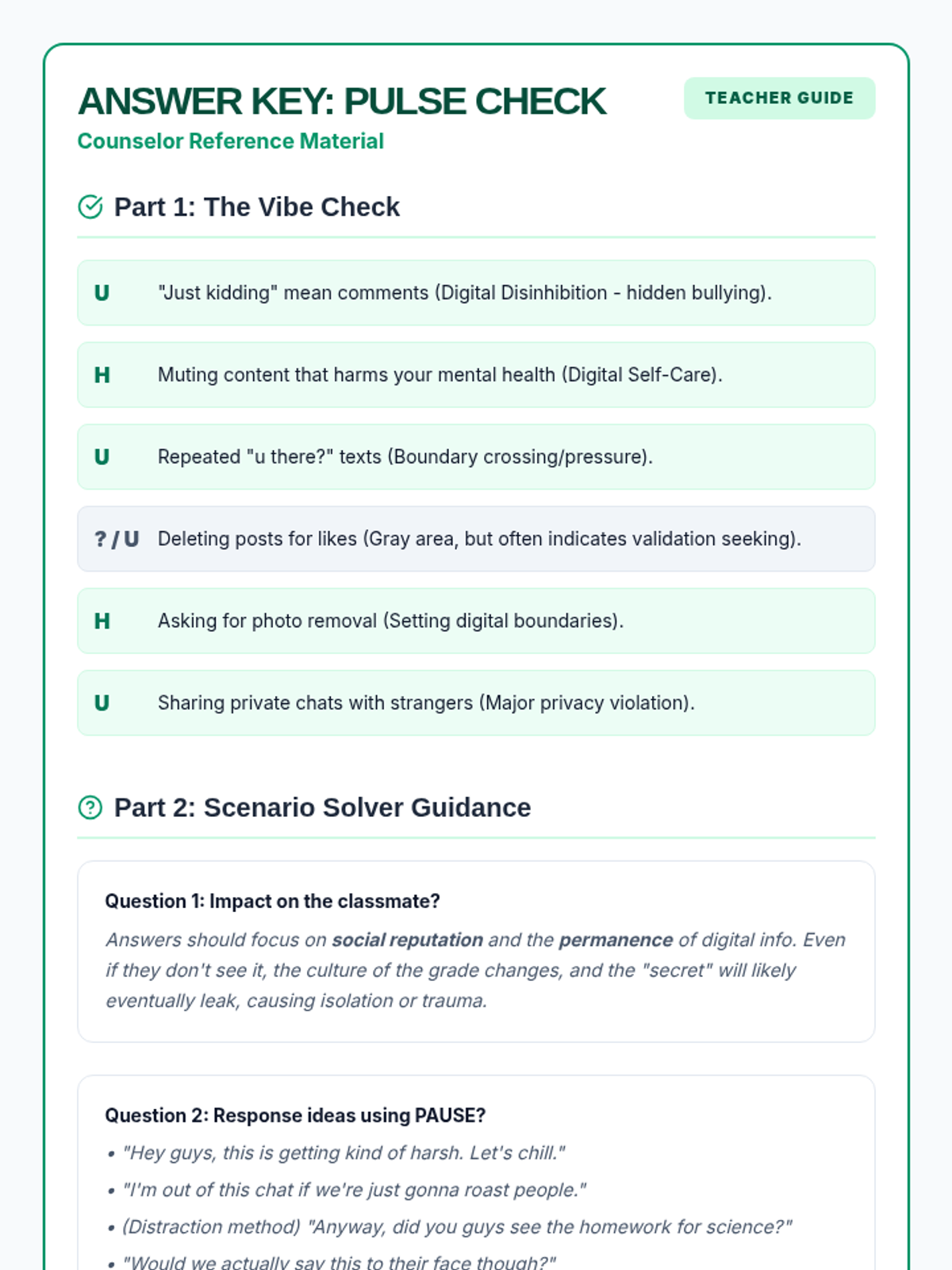
A comprehensive middle school counseling lesson focused on navigating the complexities of online relationships, social media etiquette, and maintaining a healthy digital footprint. Aligned with Massachusetts DLCS and SEL frameworks, students explore real-world scenarios to build empathy and responsible decision-making skills.
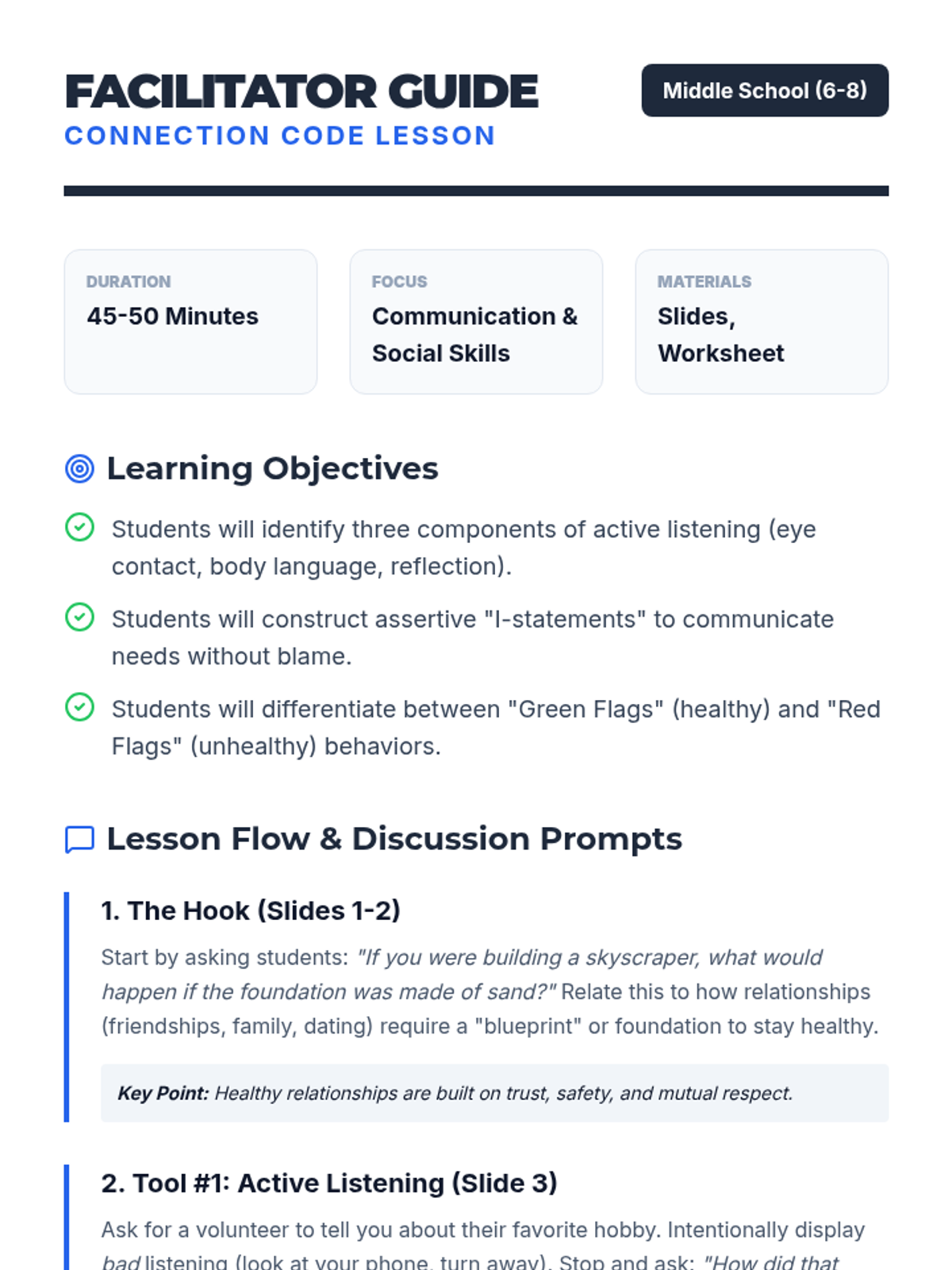
A middle school counseling lesson focused on developing strong interpersonal skills through active listening, assertive communication, and identifying healthy relationship dynamics.
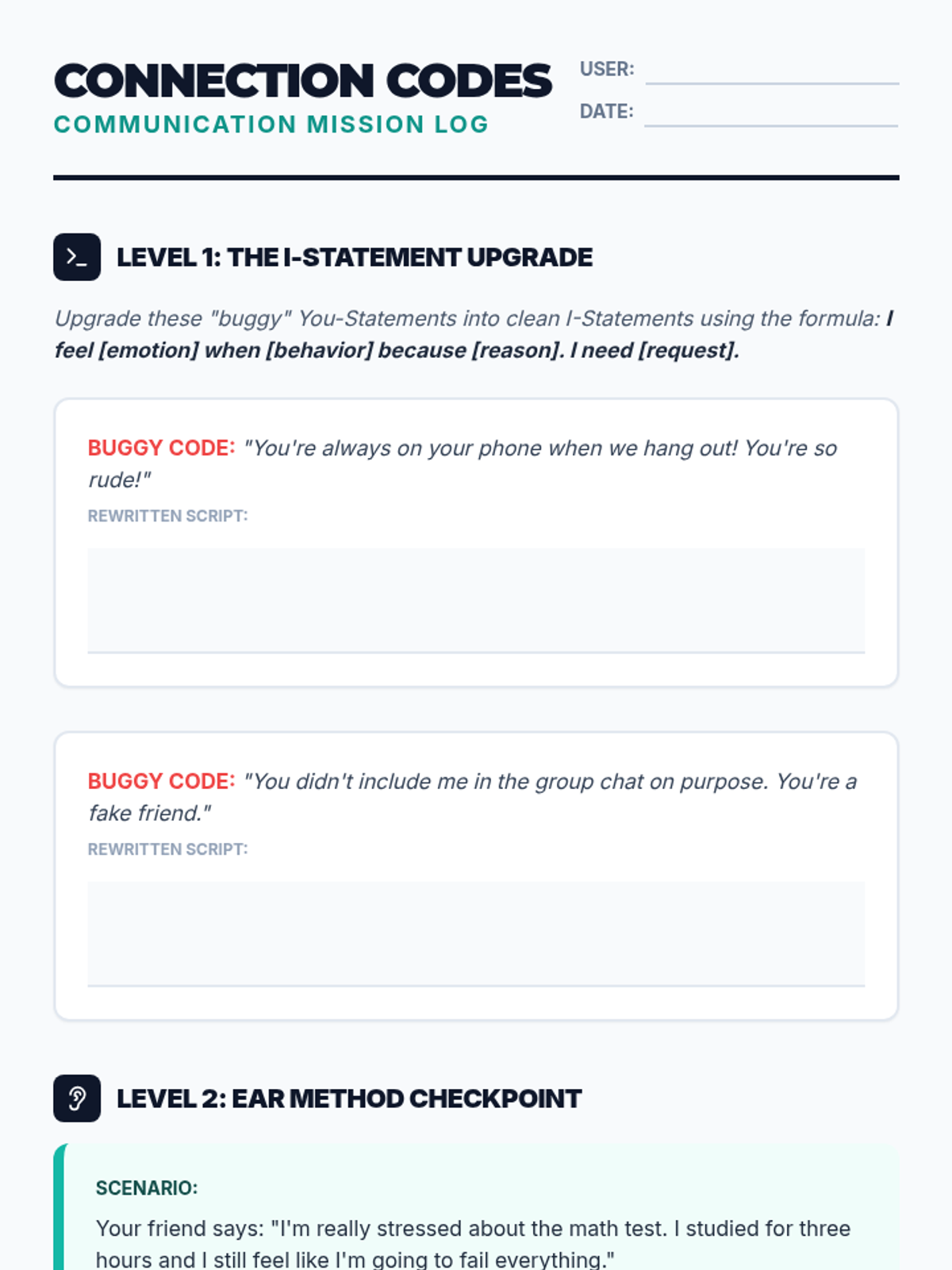
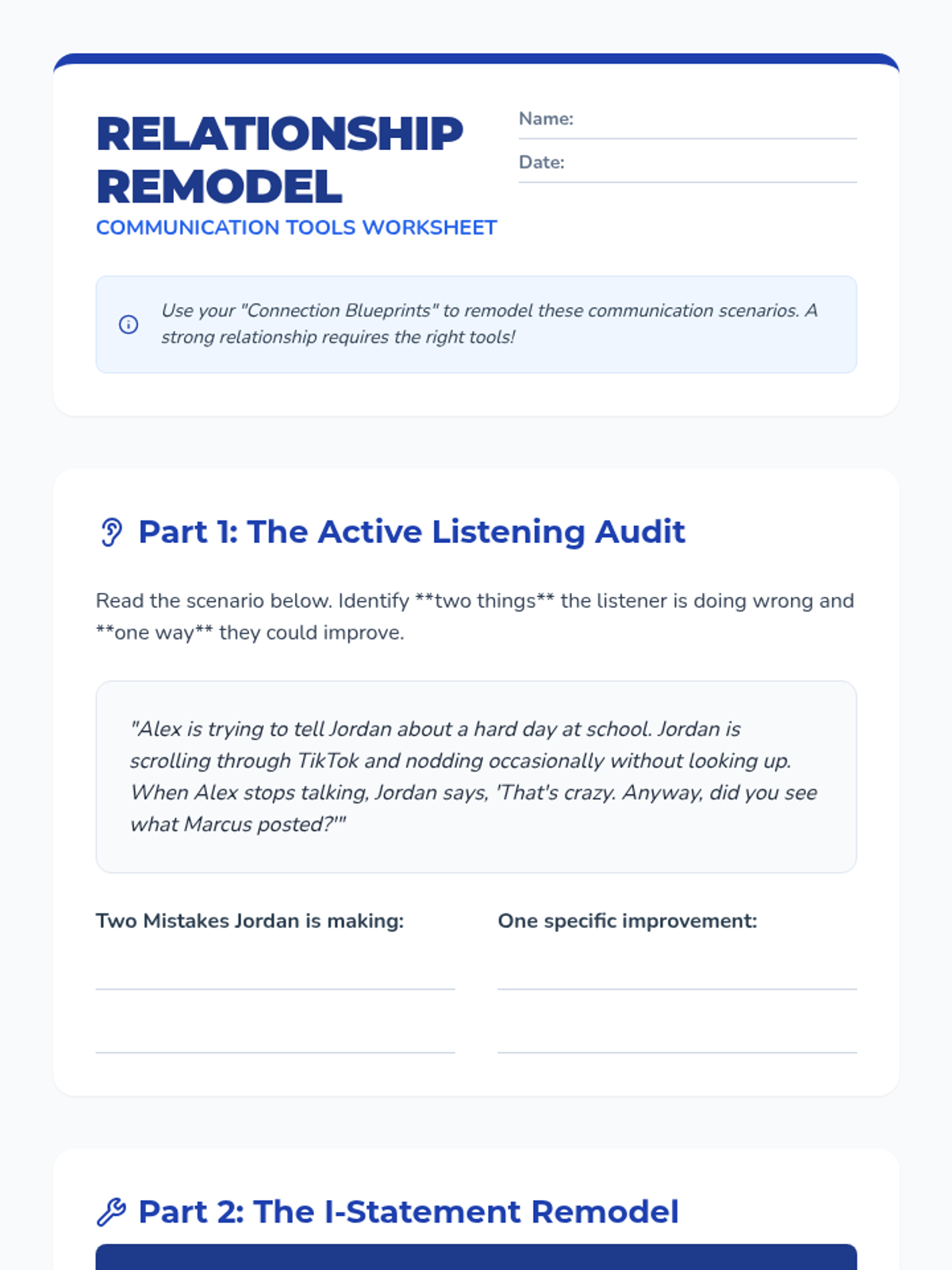
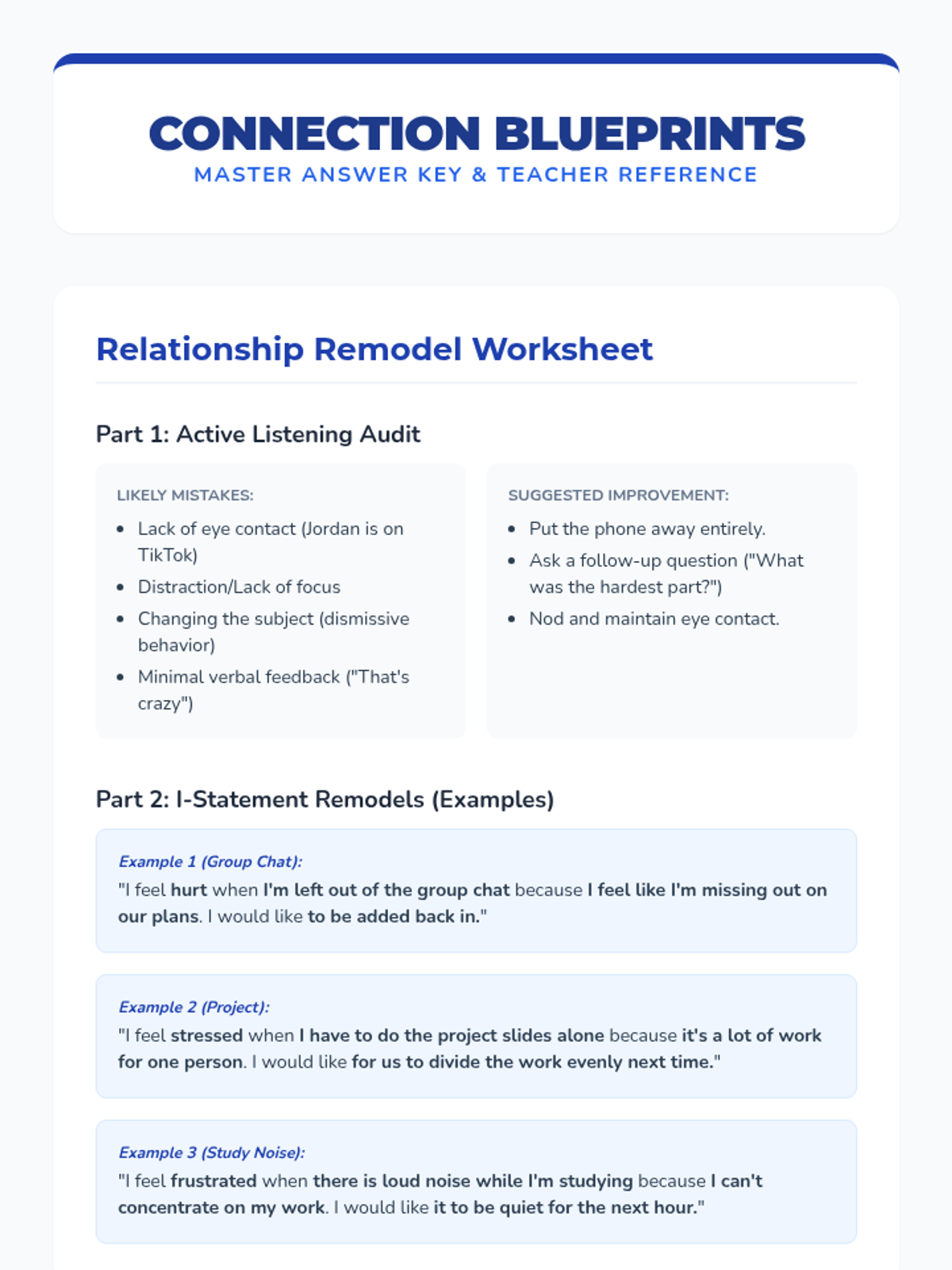
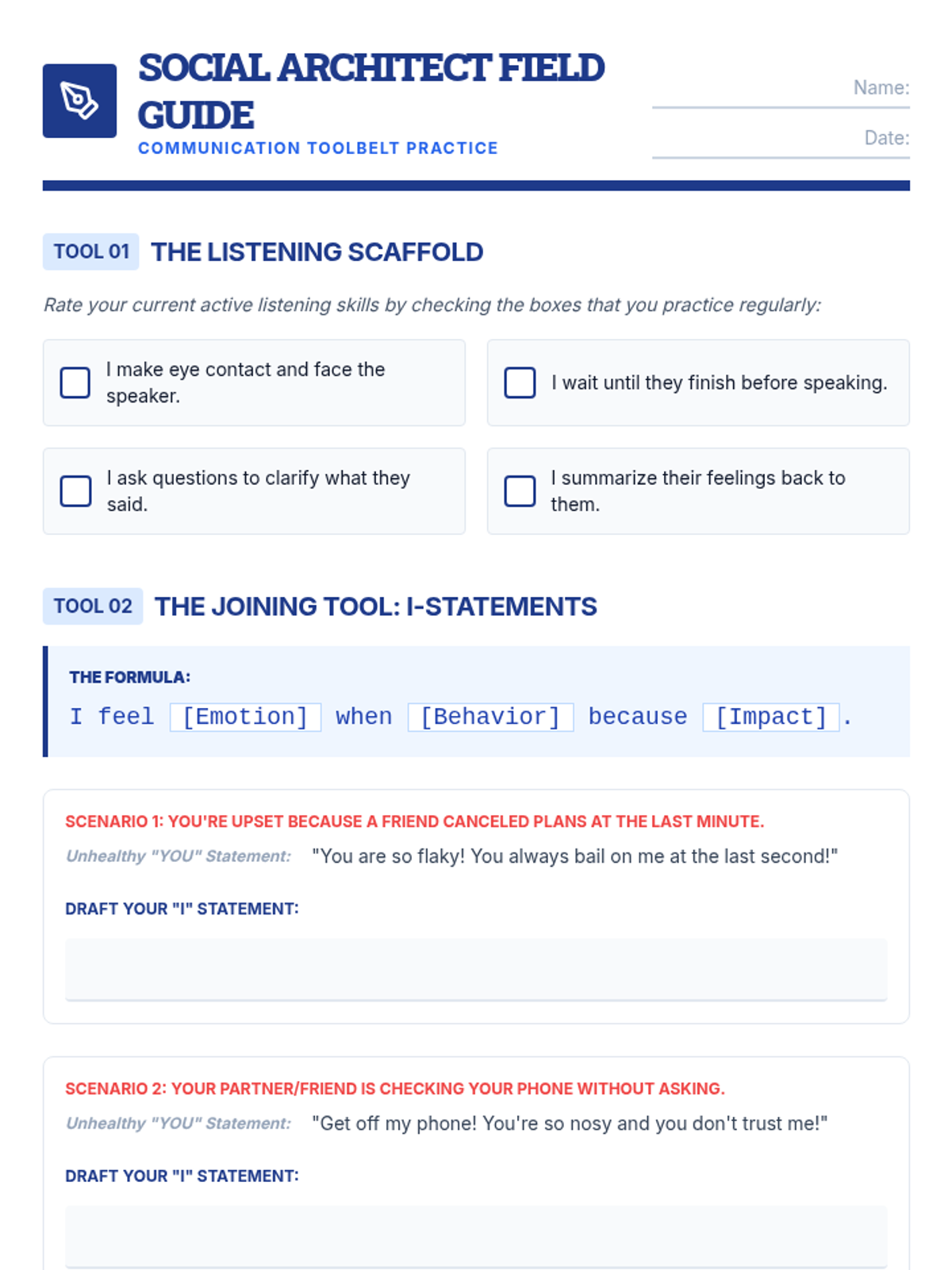
A middle school counseling lesson focused on mastering communication through active listening and I-statements, while identifying healthy and unhealthy relationship patterns.
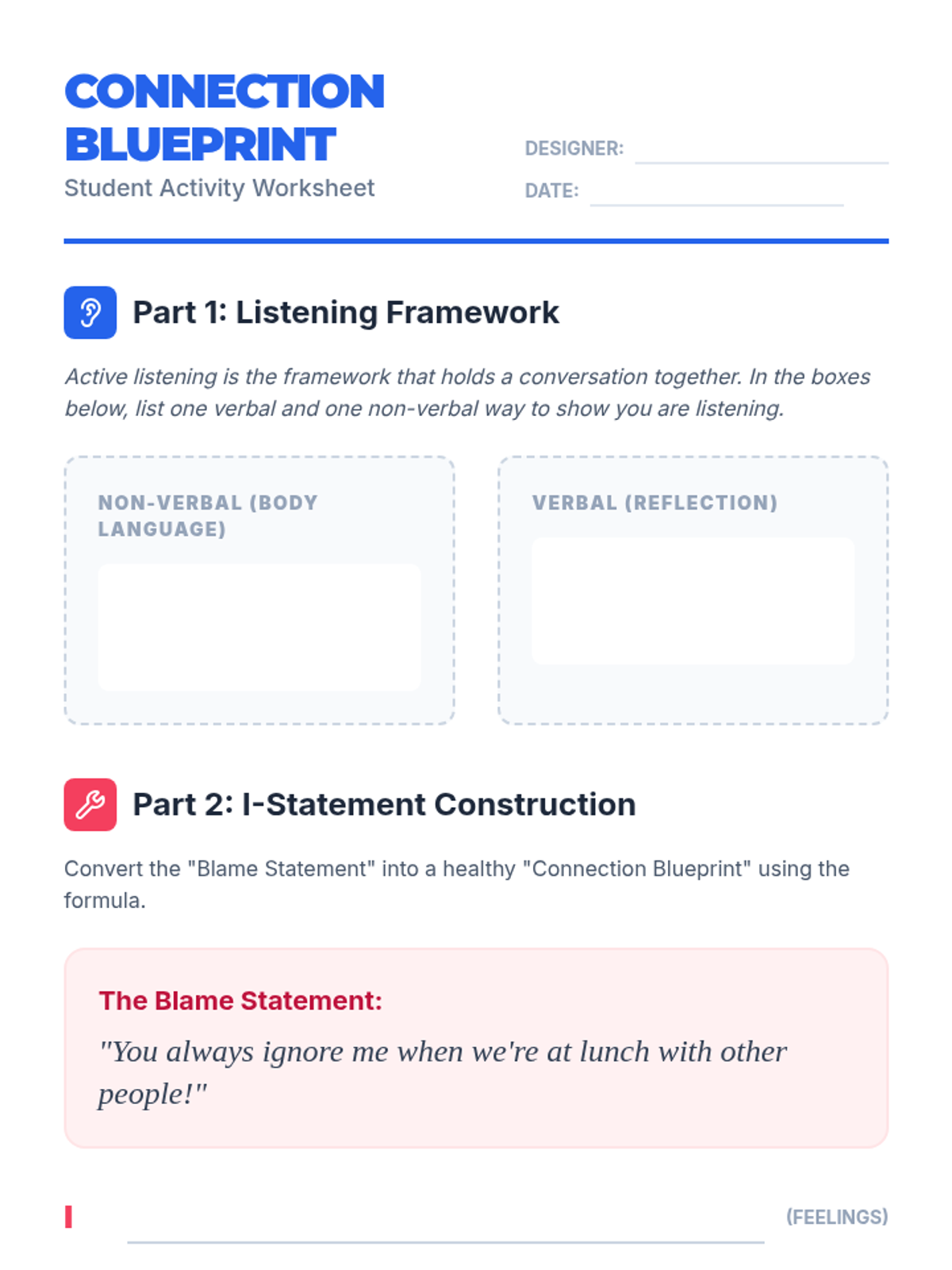
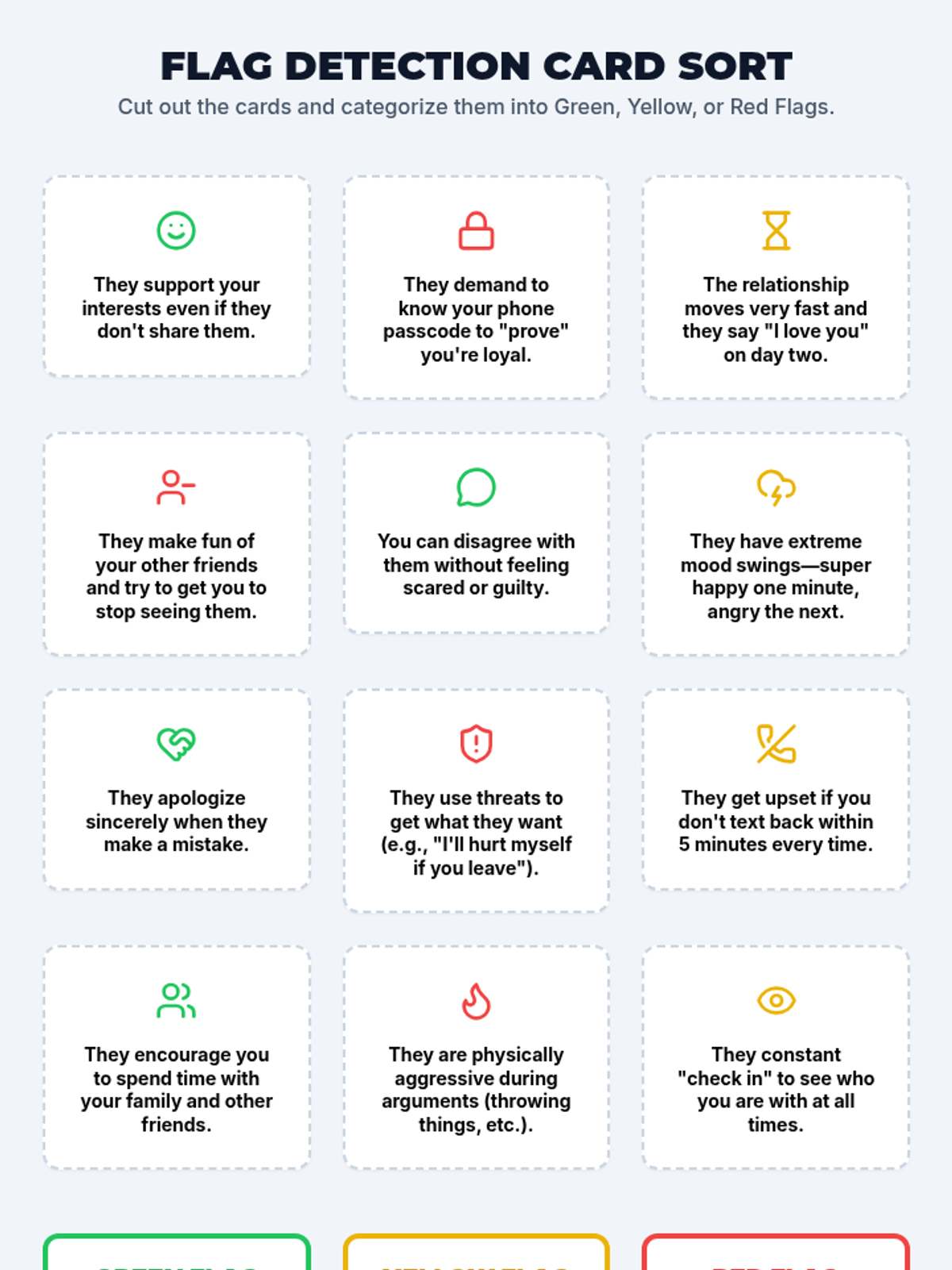
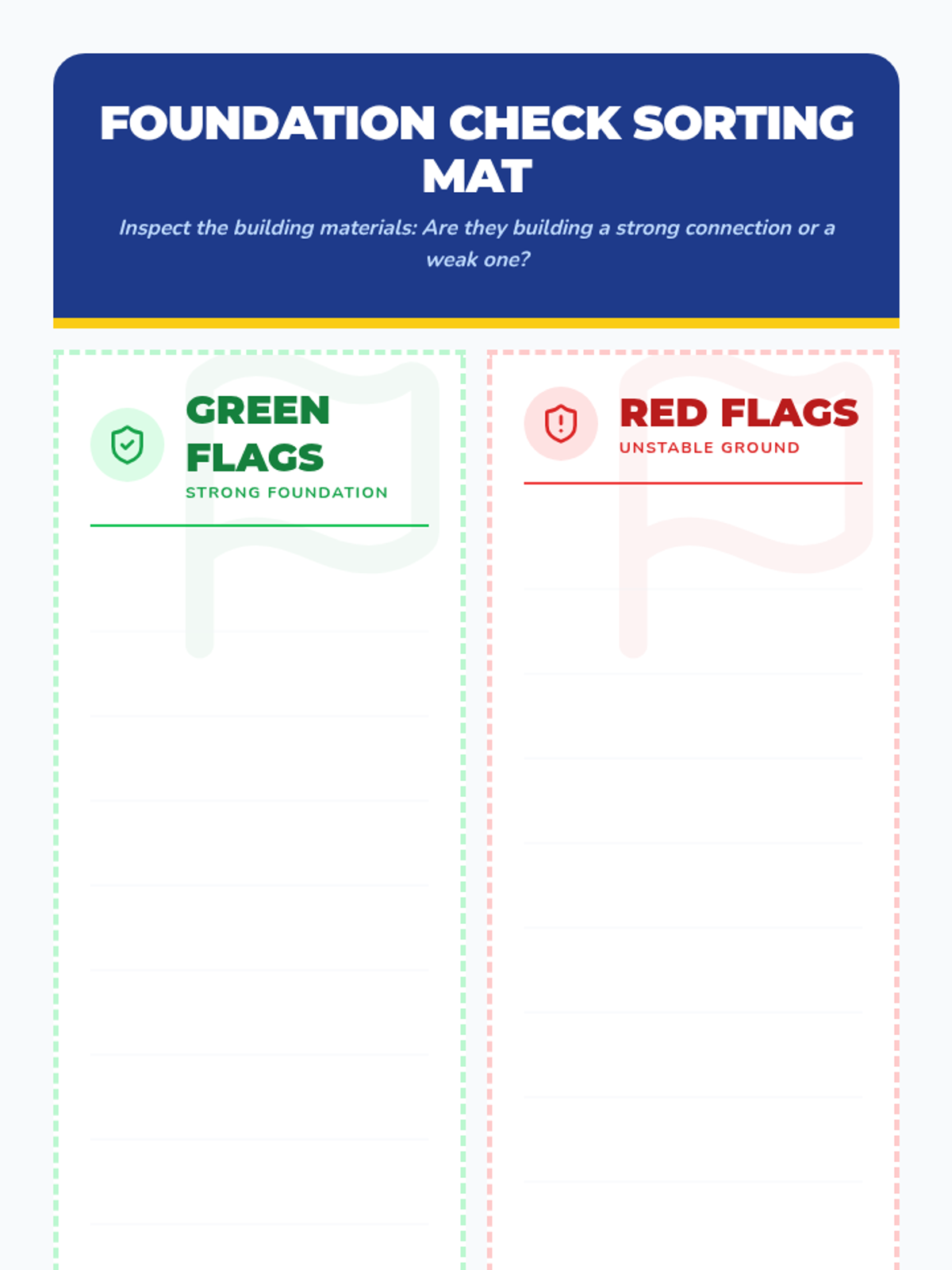
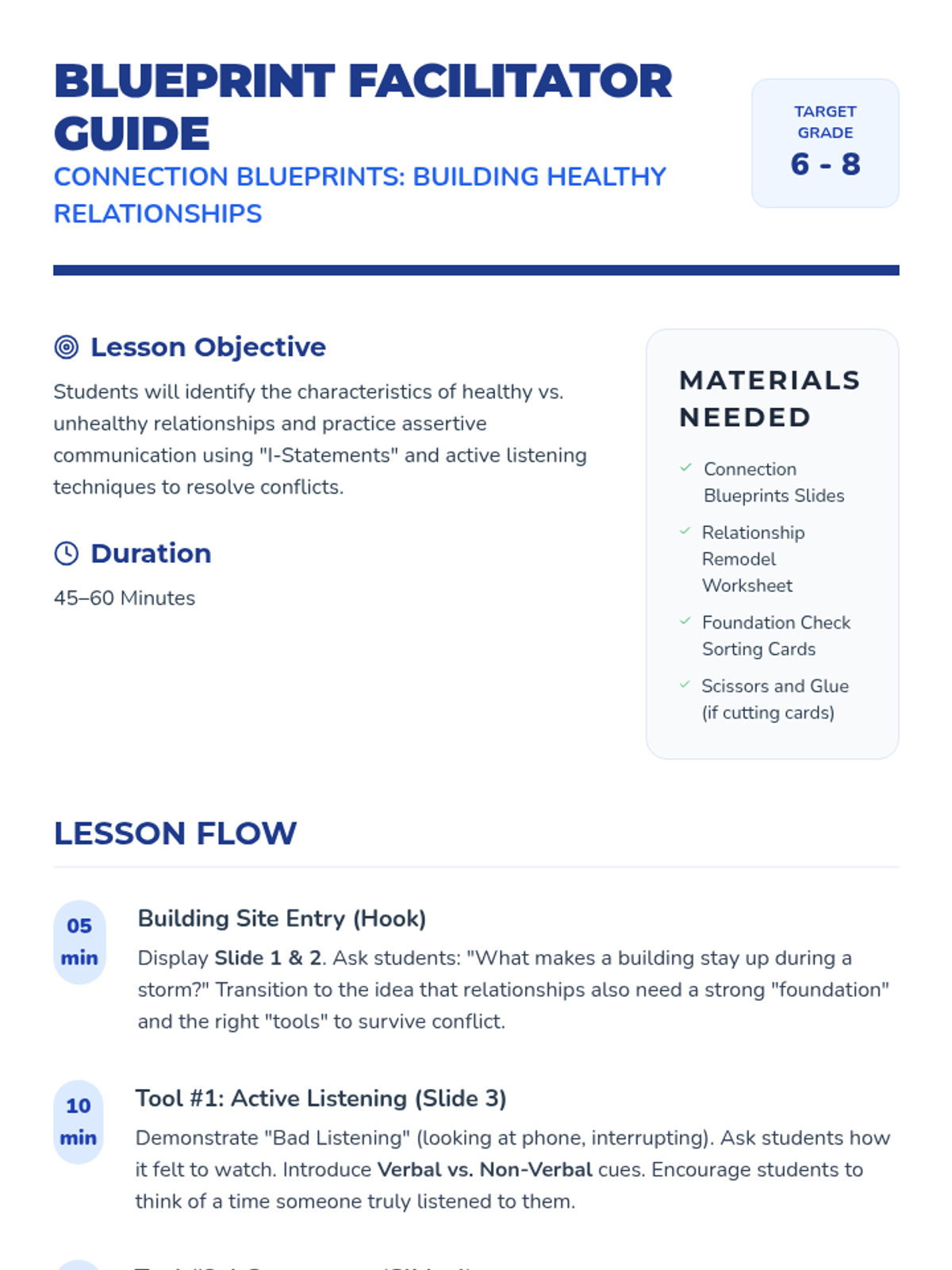
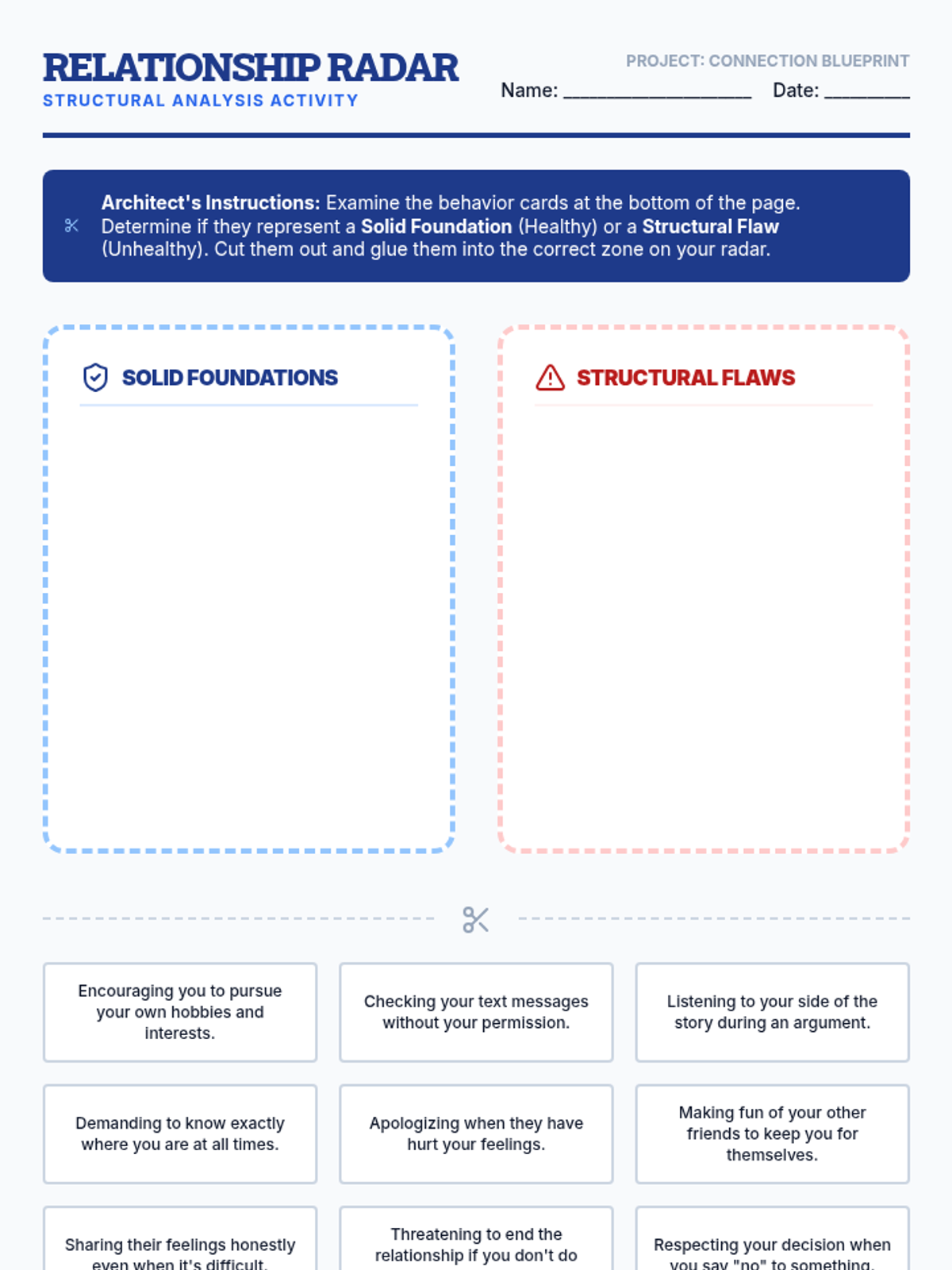
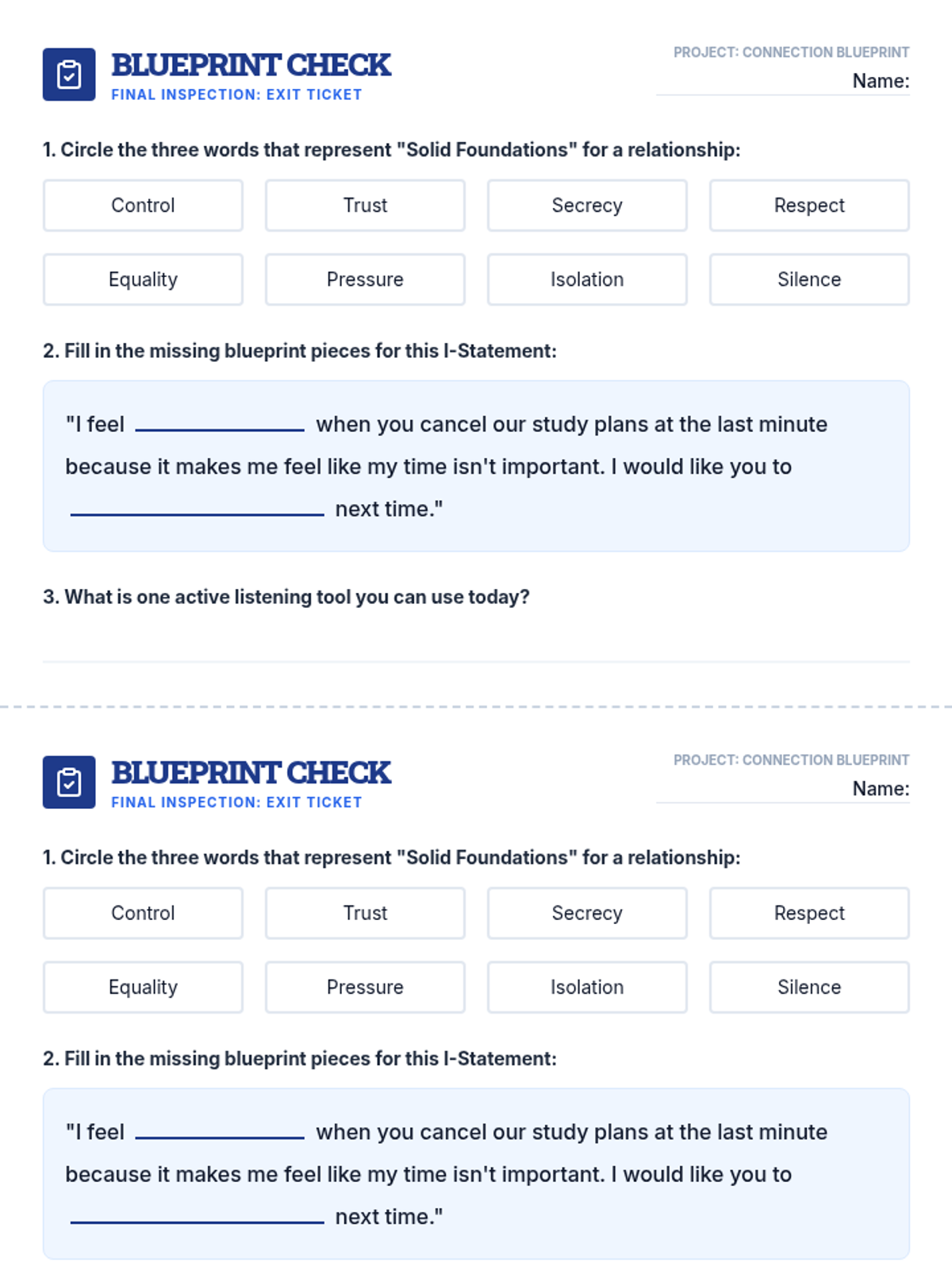
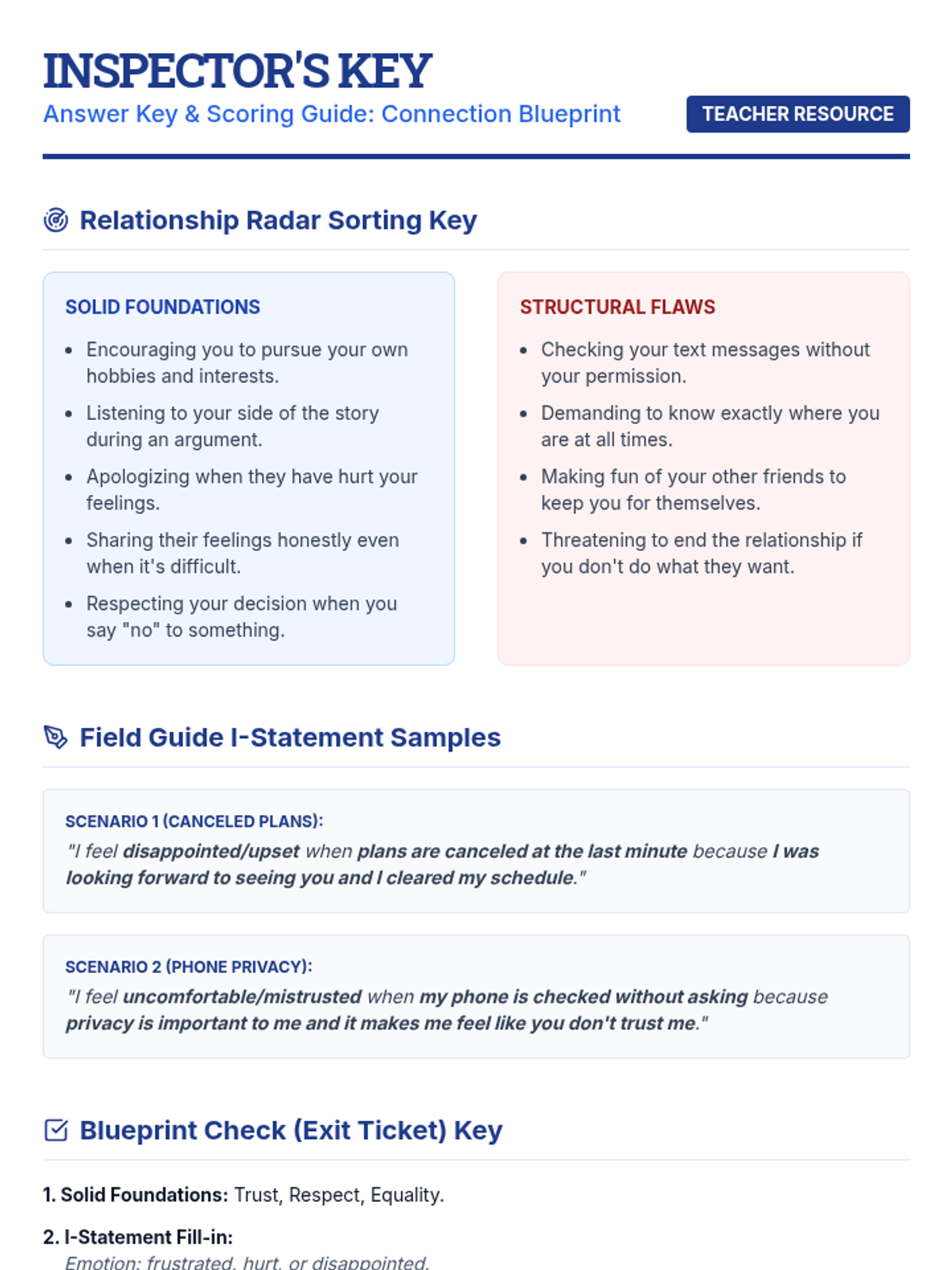
A comprehensive lesson for middle schoolers focused on developing the 'blueprints' for healthy relationships through active listening, assertive communication with I-statements, and identifying relationship red and green flags.
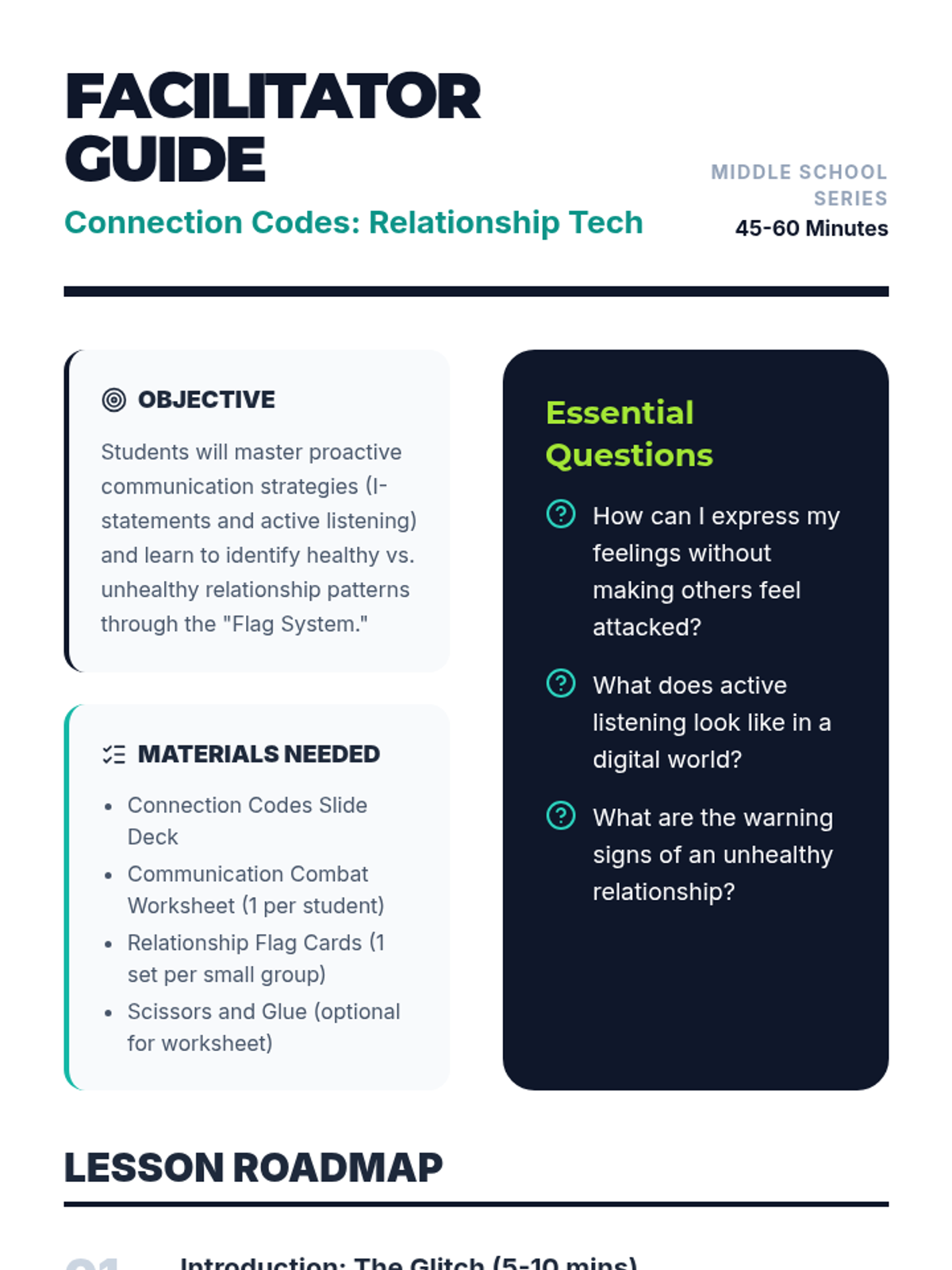
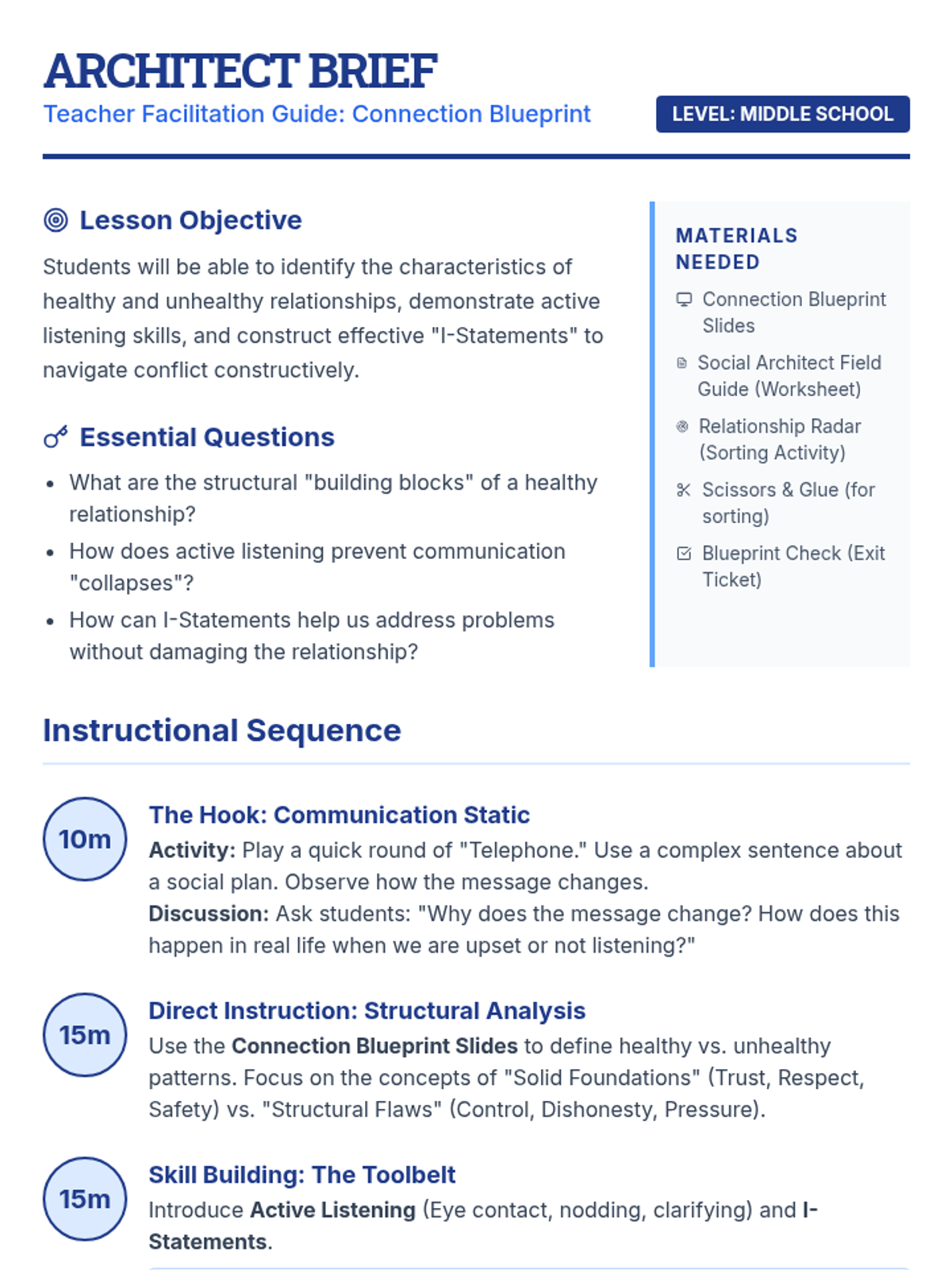
A middle school counseling lesson focused on building healthy relationships through active listening, I-statements, and identifying healthy vs. unhealthy relationship patterns. Students take on the role of 'Social Architects' to build strong connection foundations.
A comprehensive lesson designed to help participants identify safe versus unsafe behaviors, recognize red flags in relationships and online interactions, and develop a plan for seeking help when unsure.
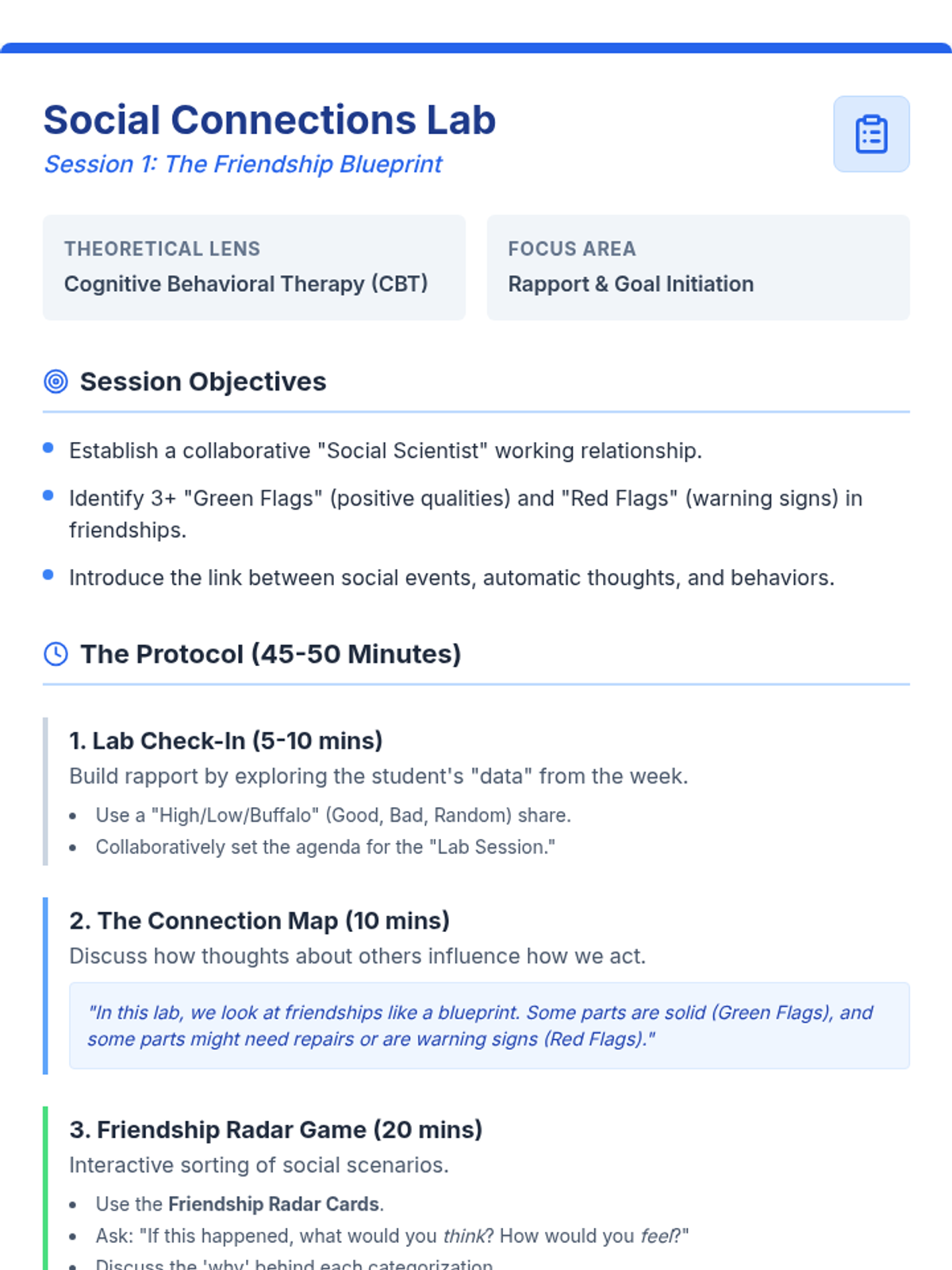
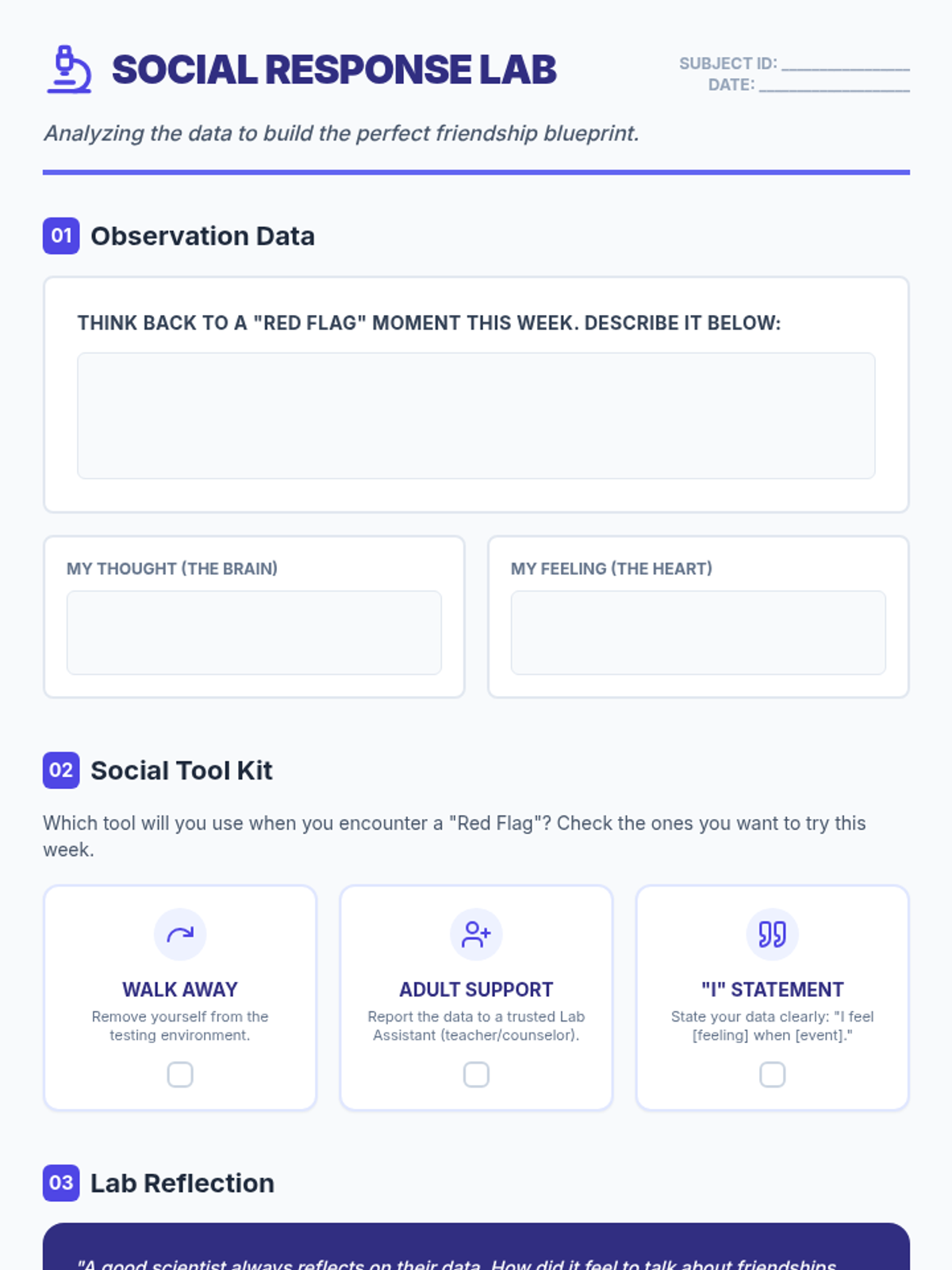
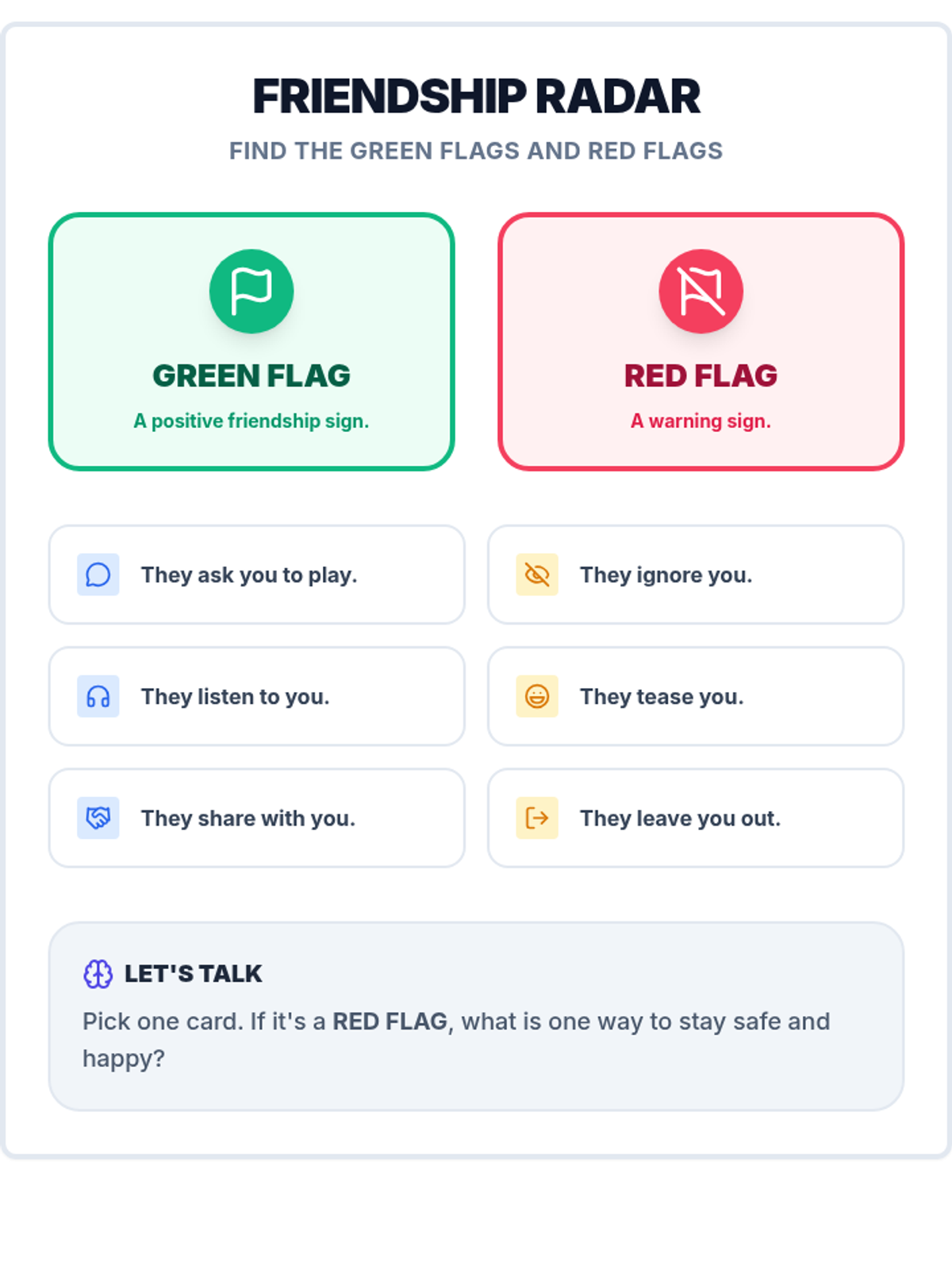
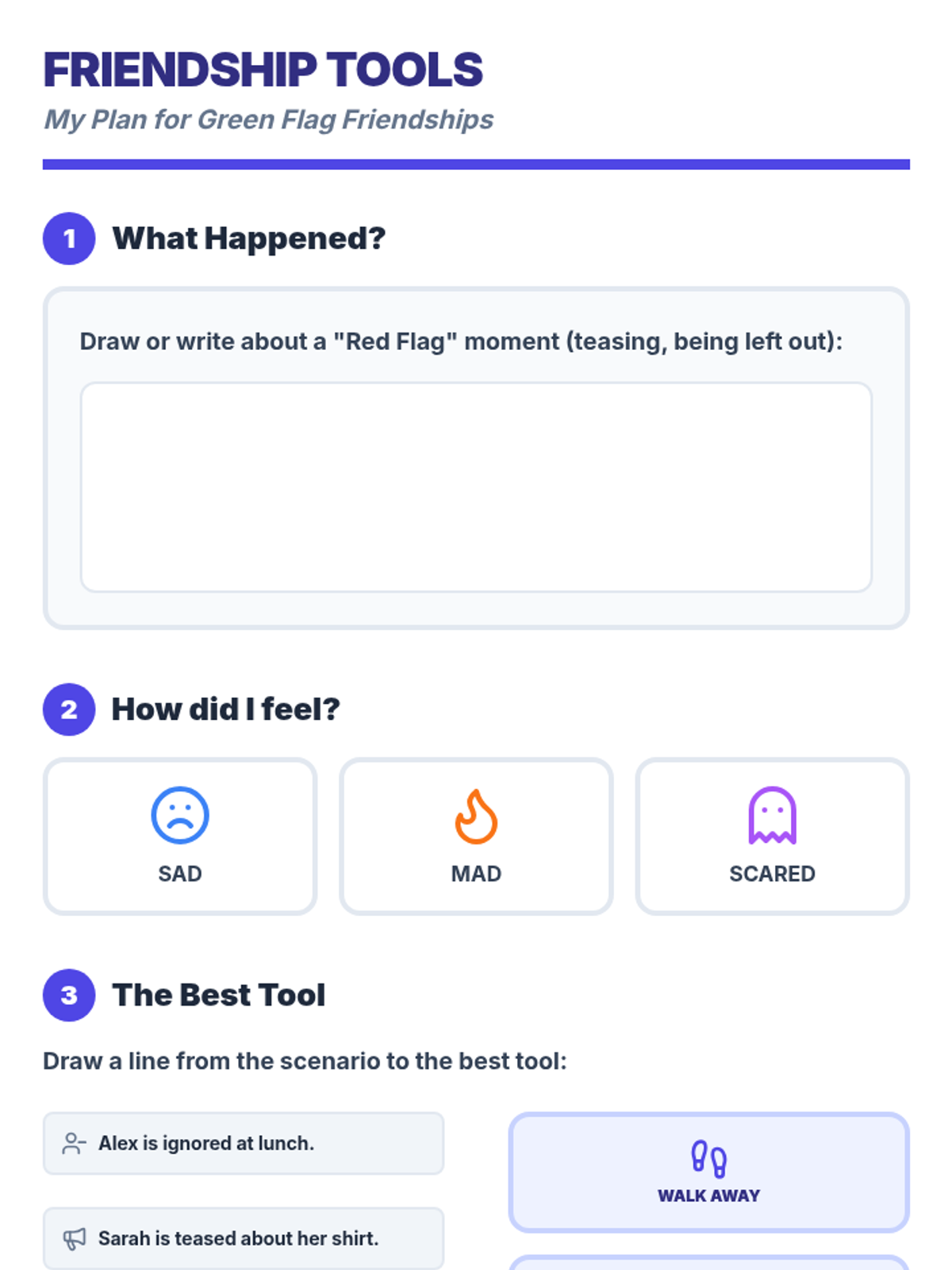
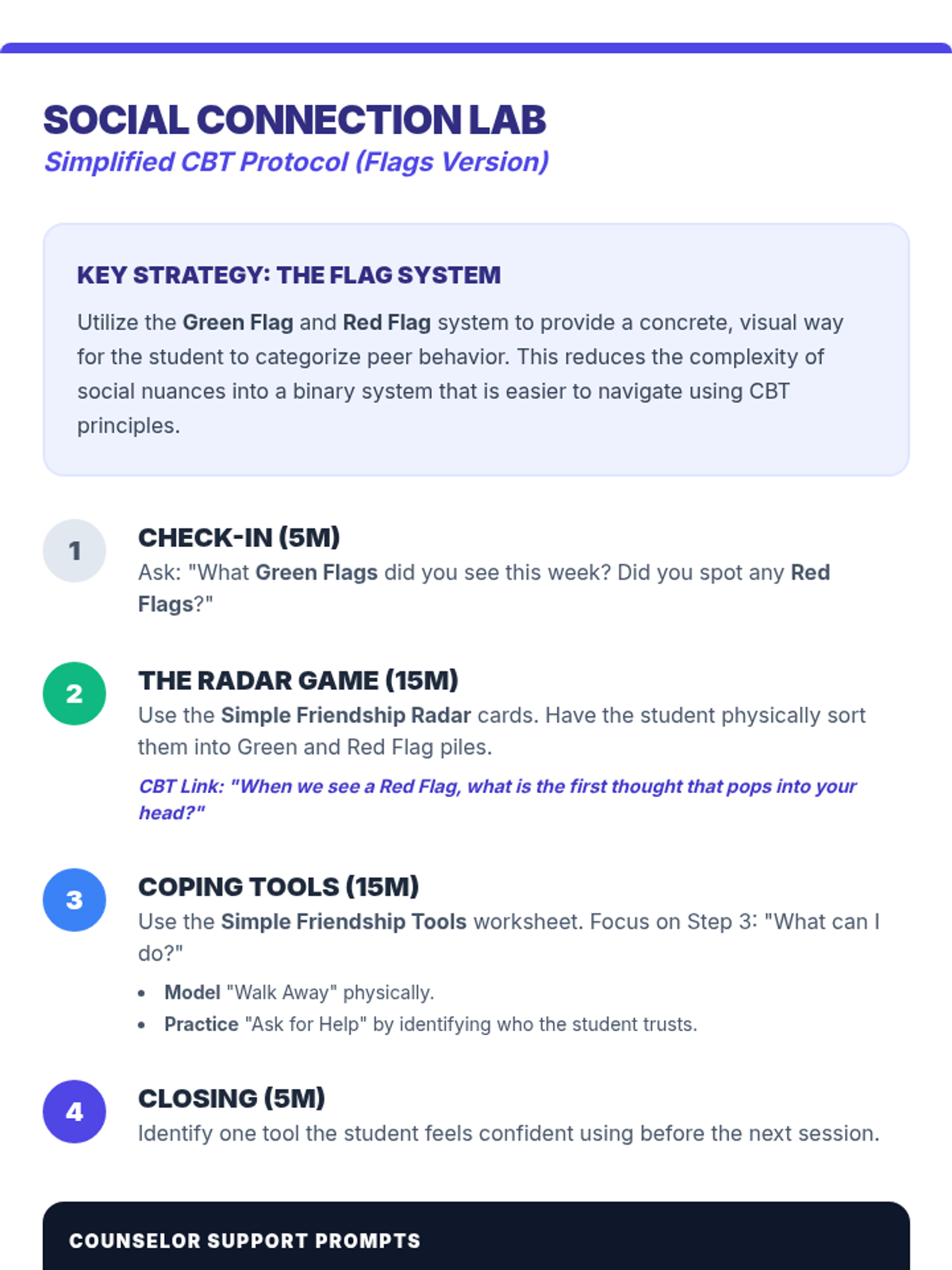
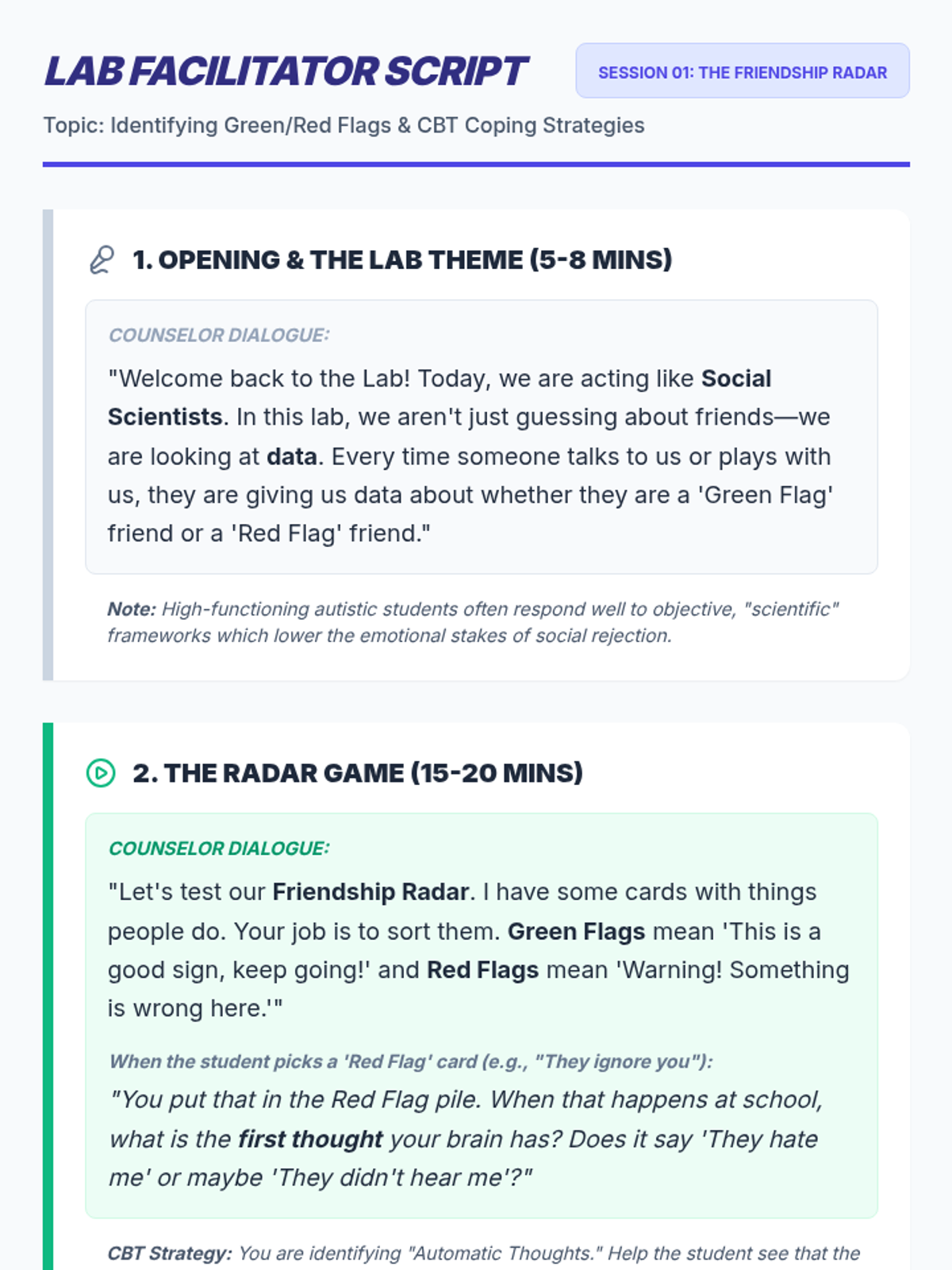
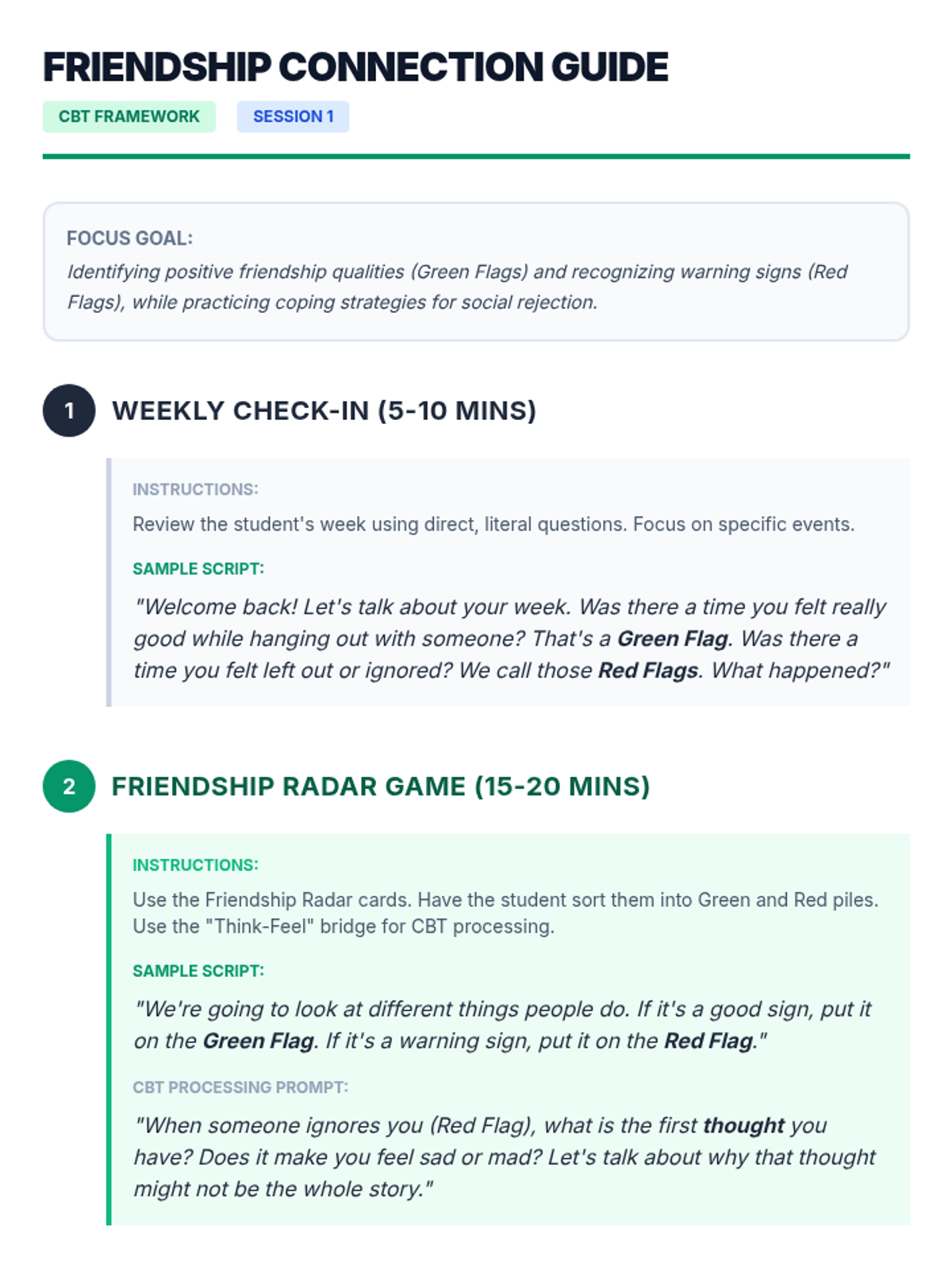
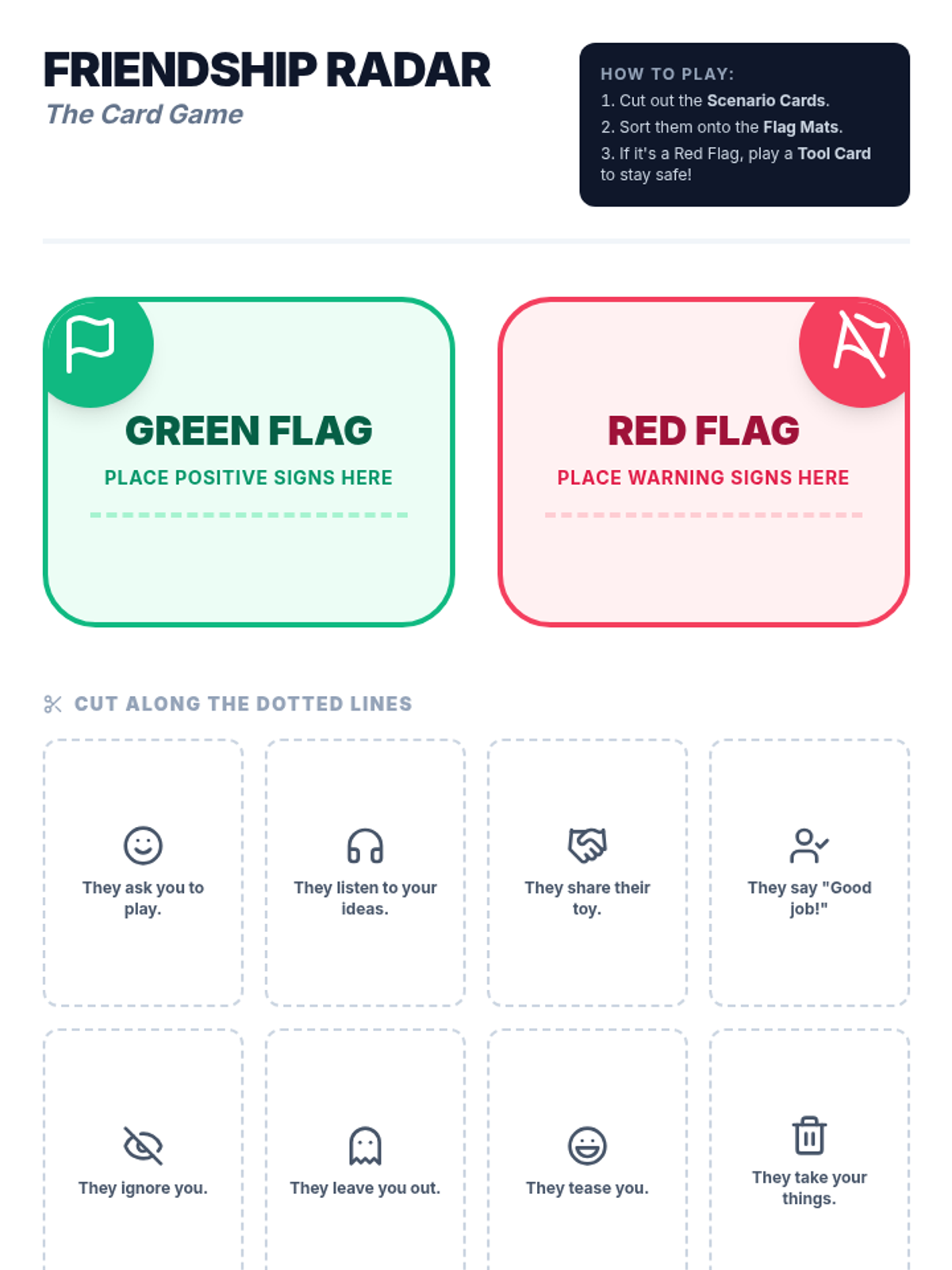
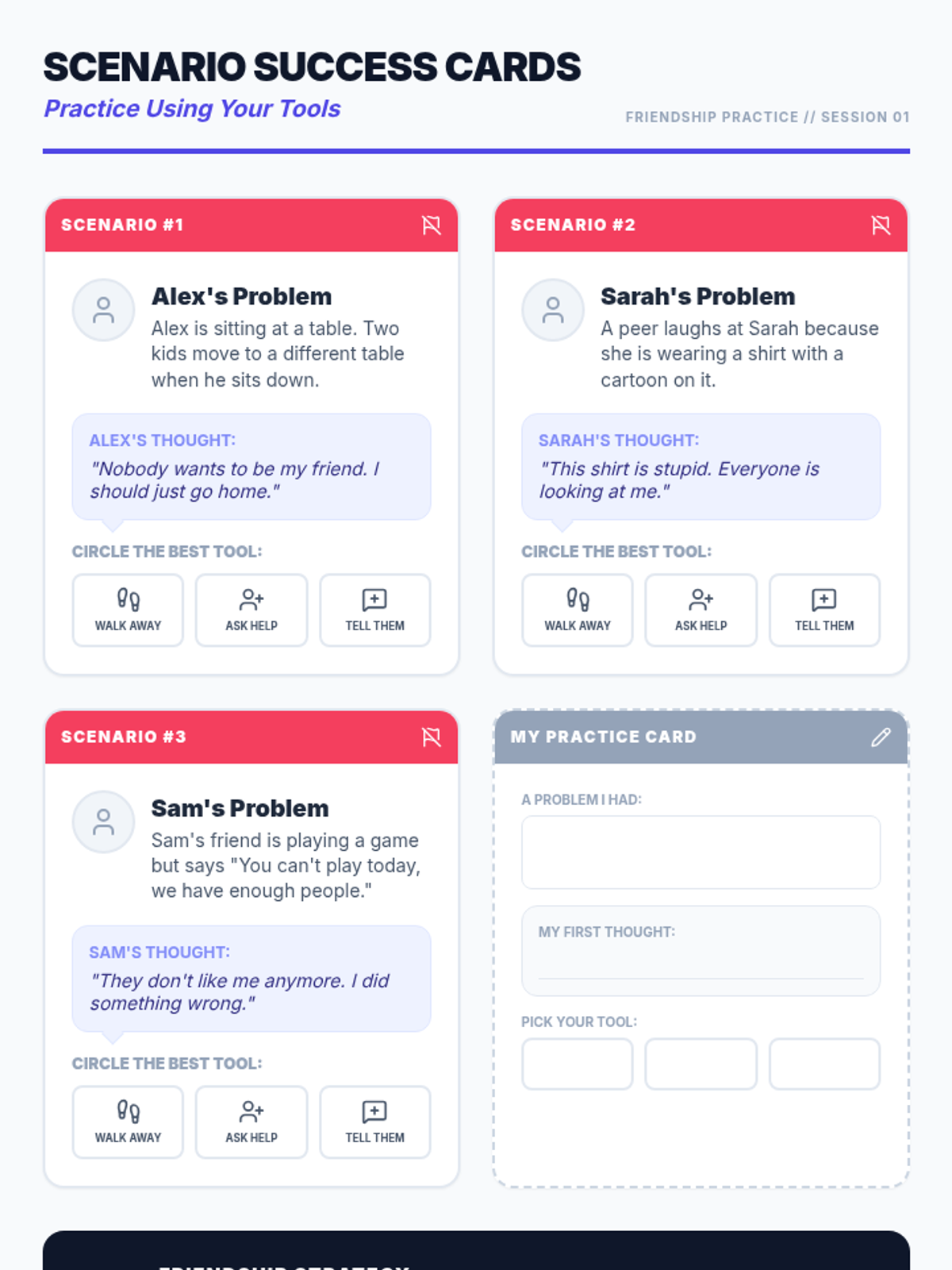
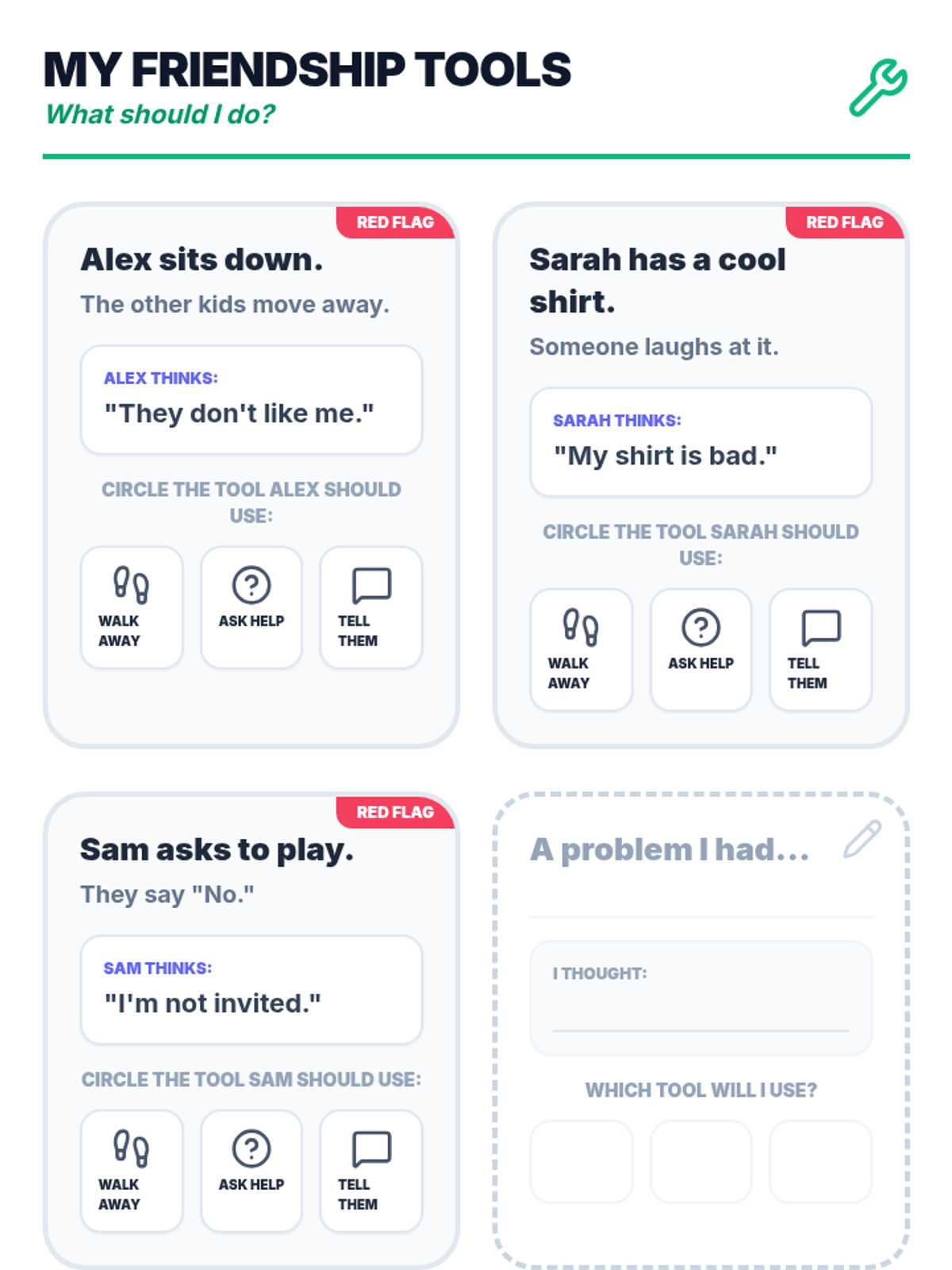
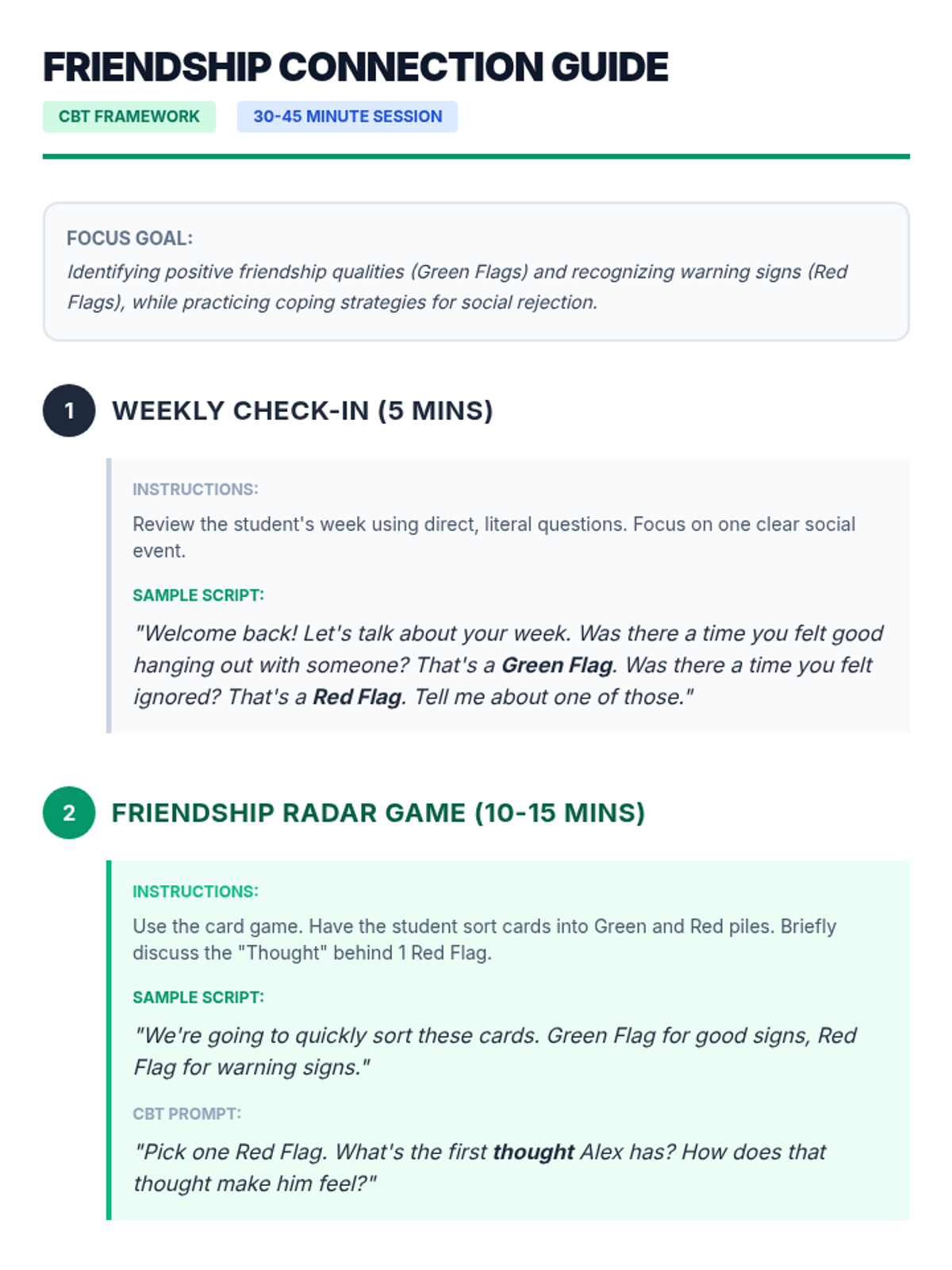
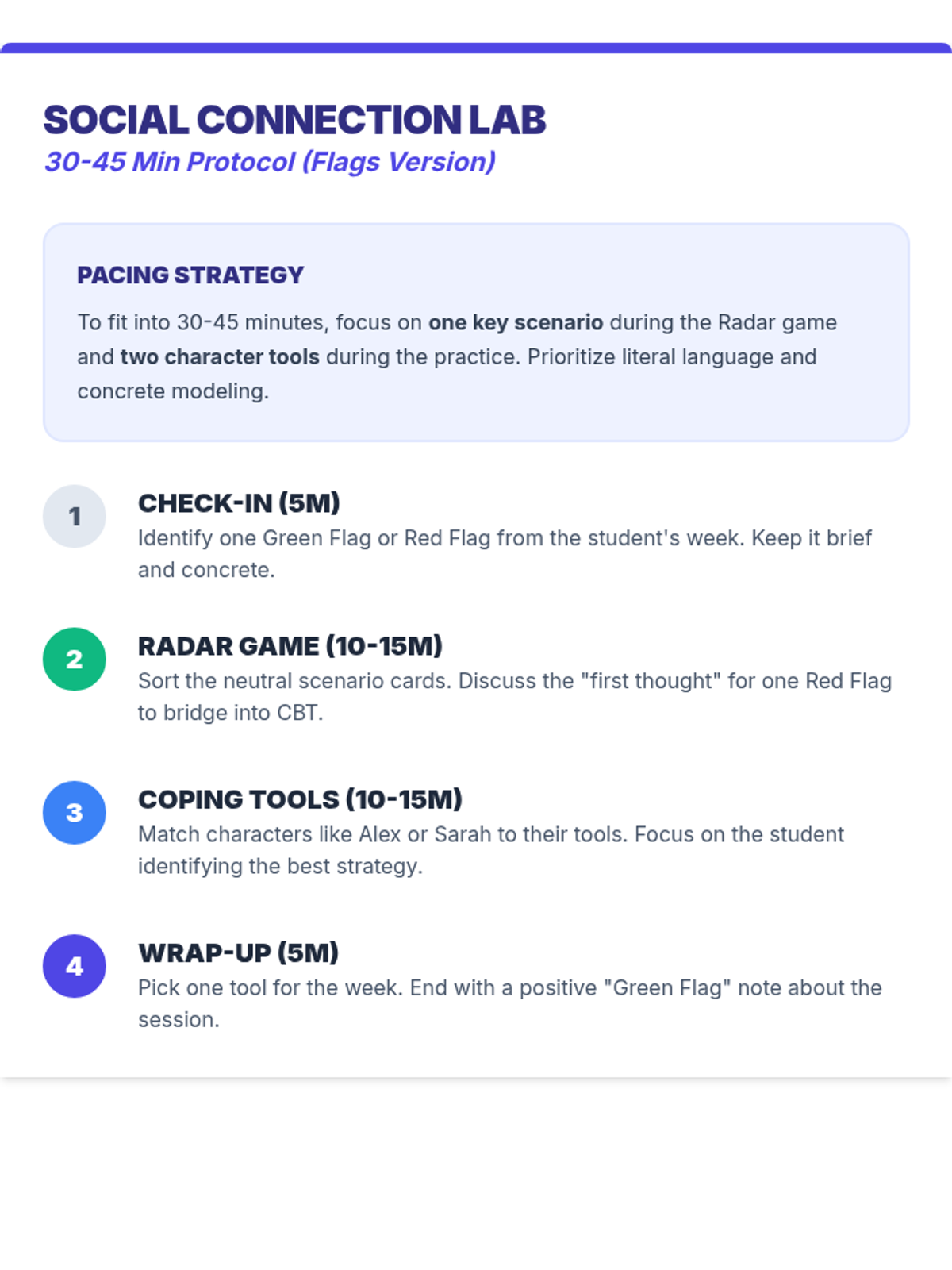
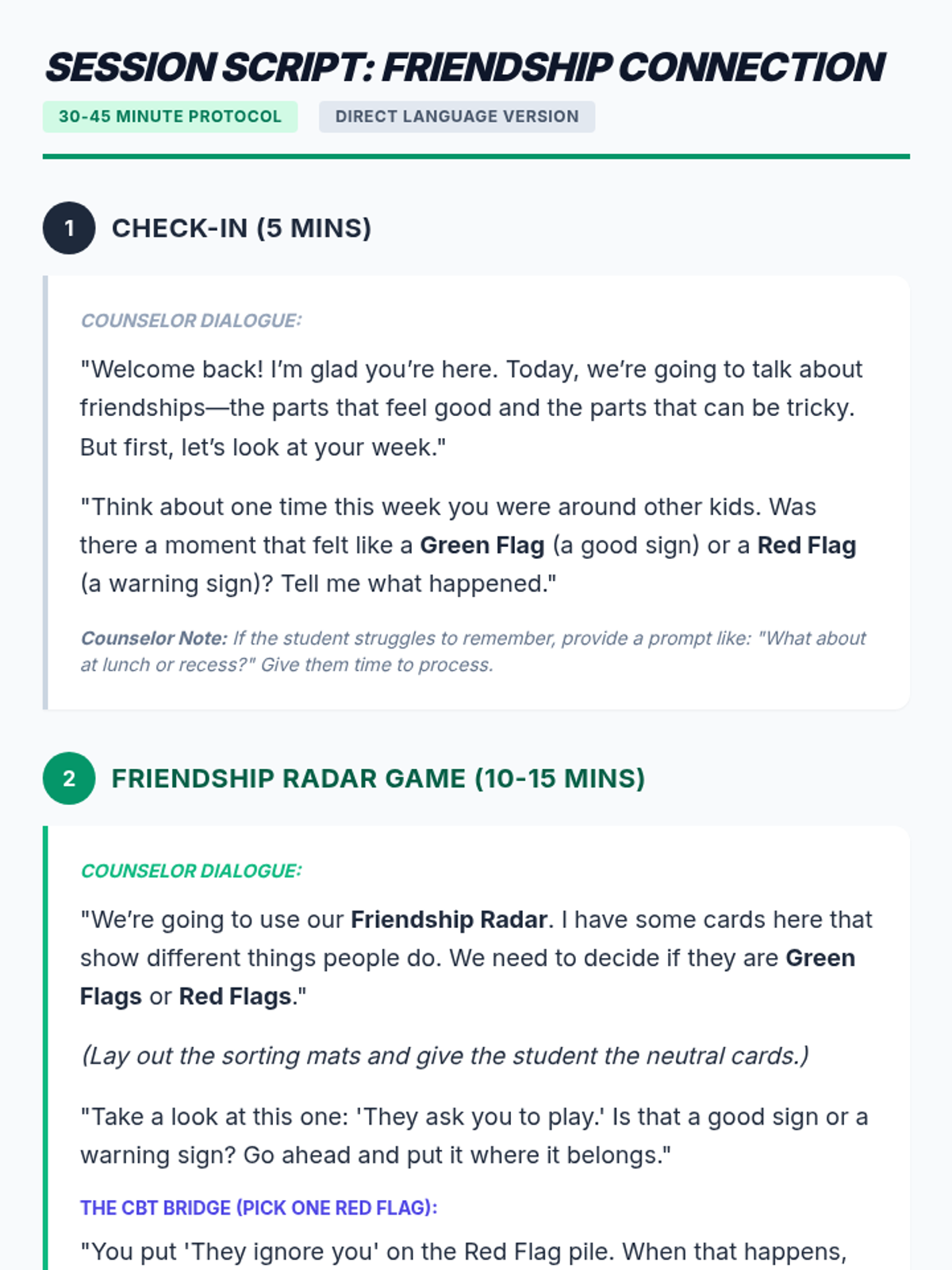
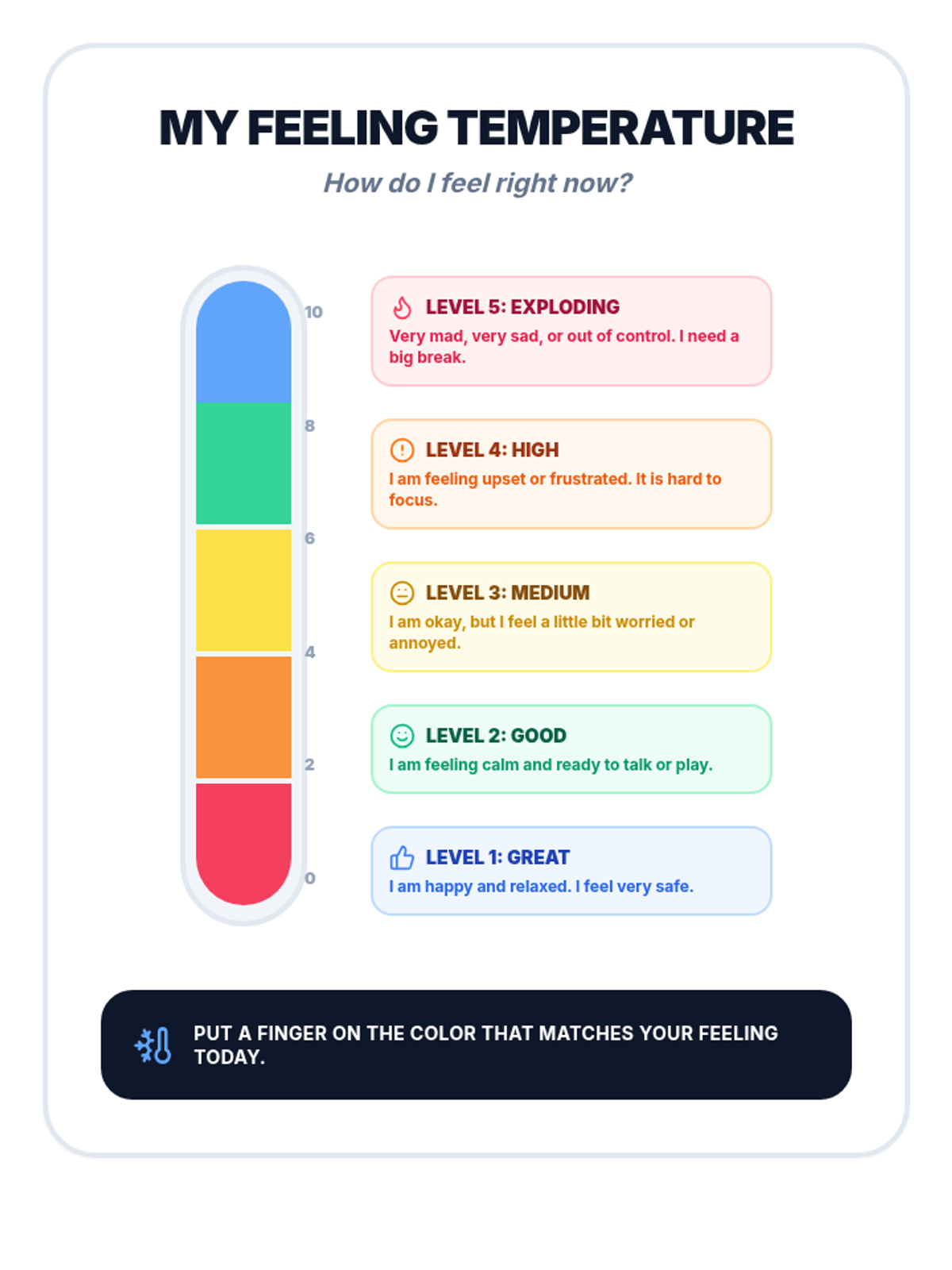
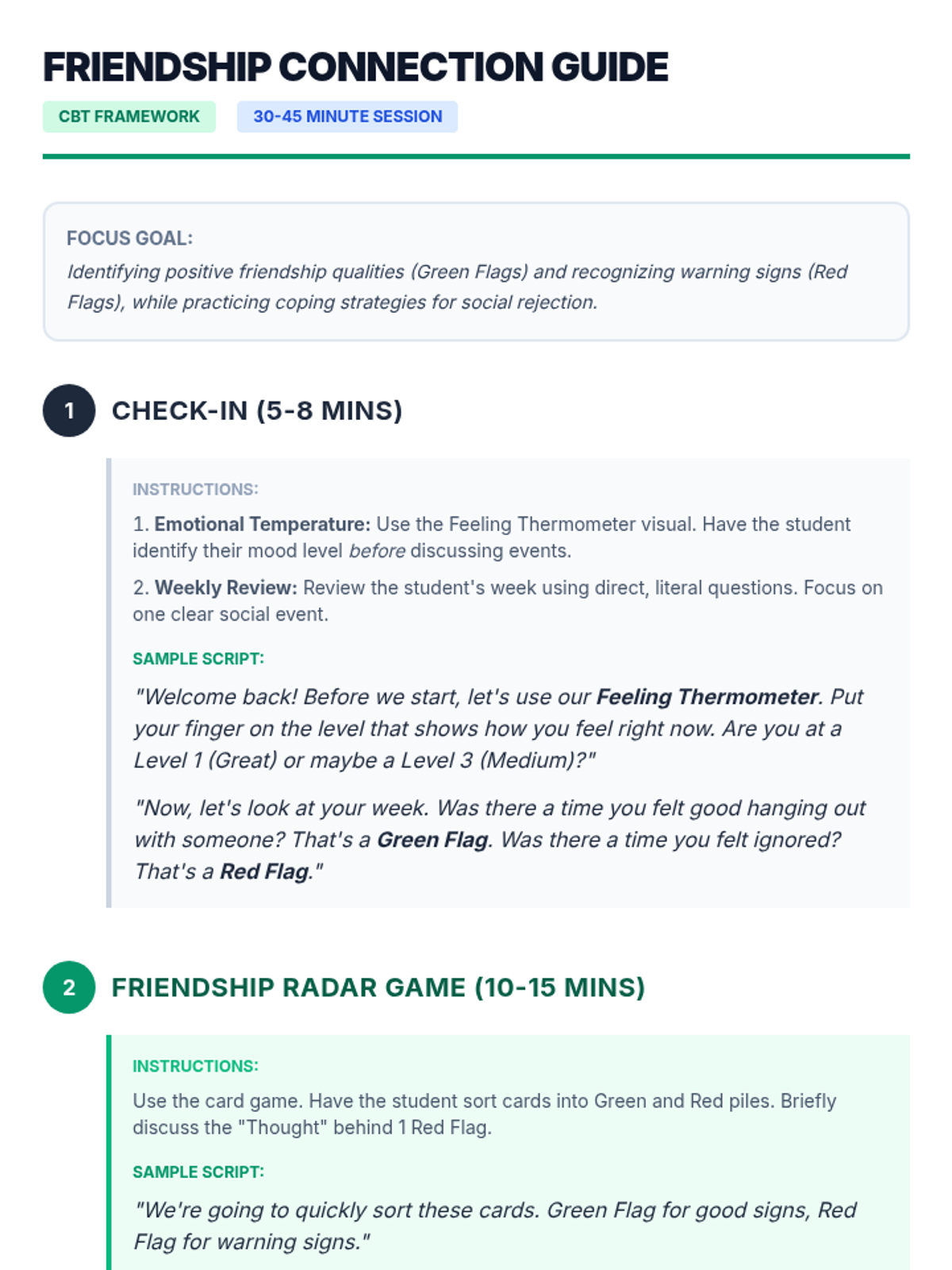
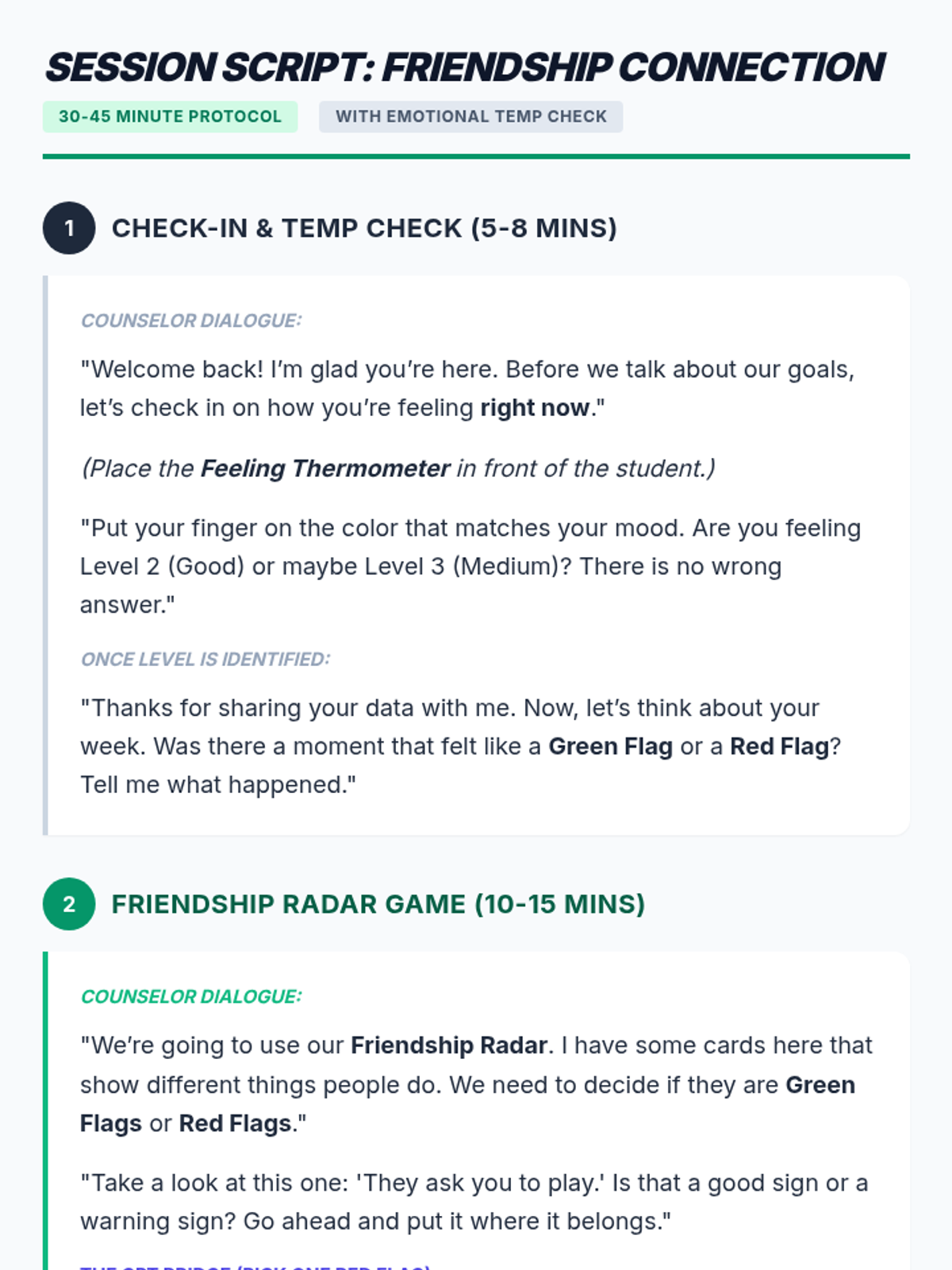
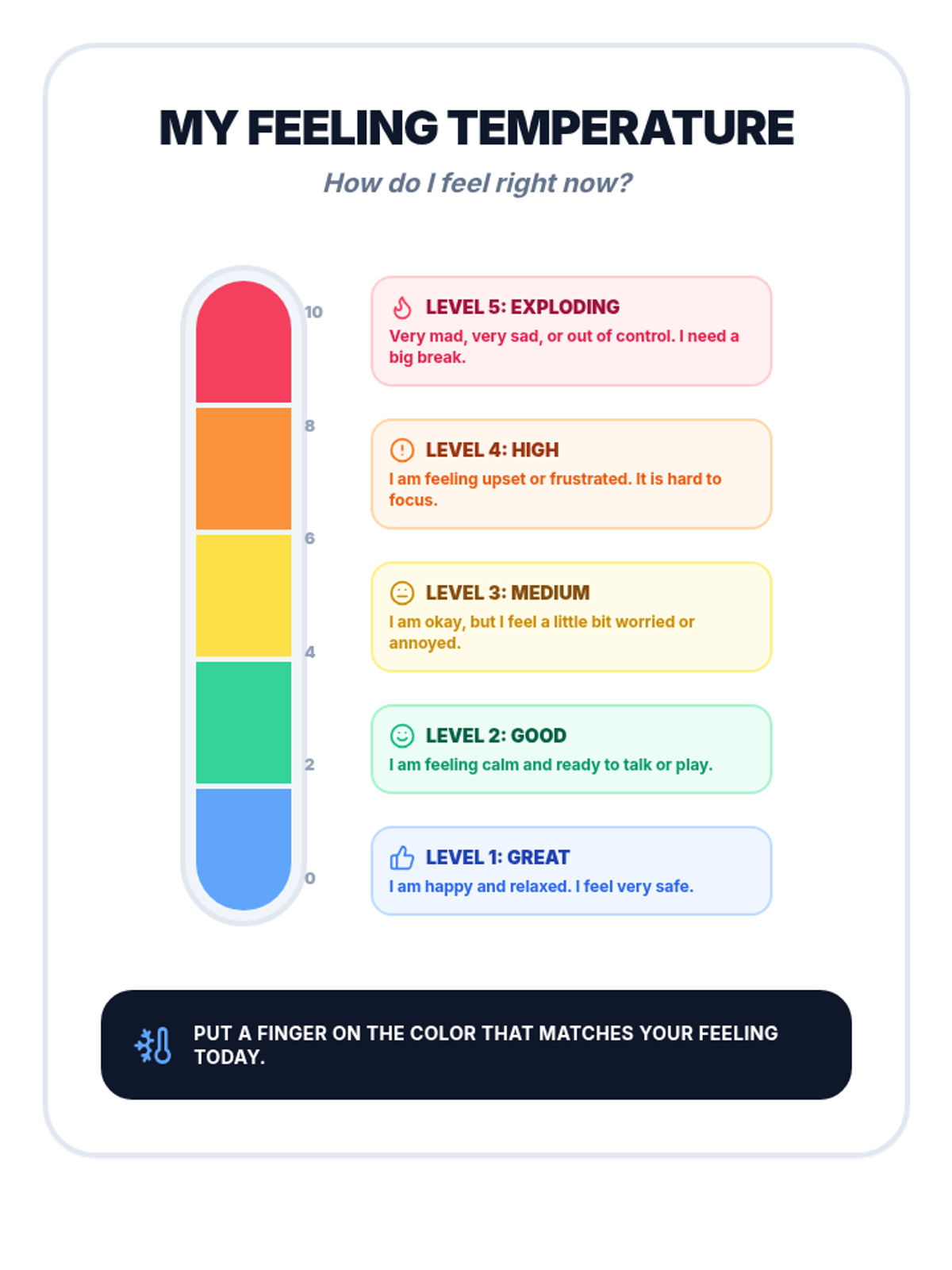
A CBT-based counseling session for high-functioning autistic students focused on identifying healthy friendship qualities, recognizing red flags, and developing coping strategies for social rejection.
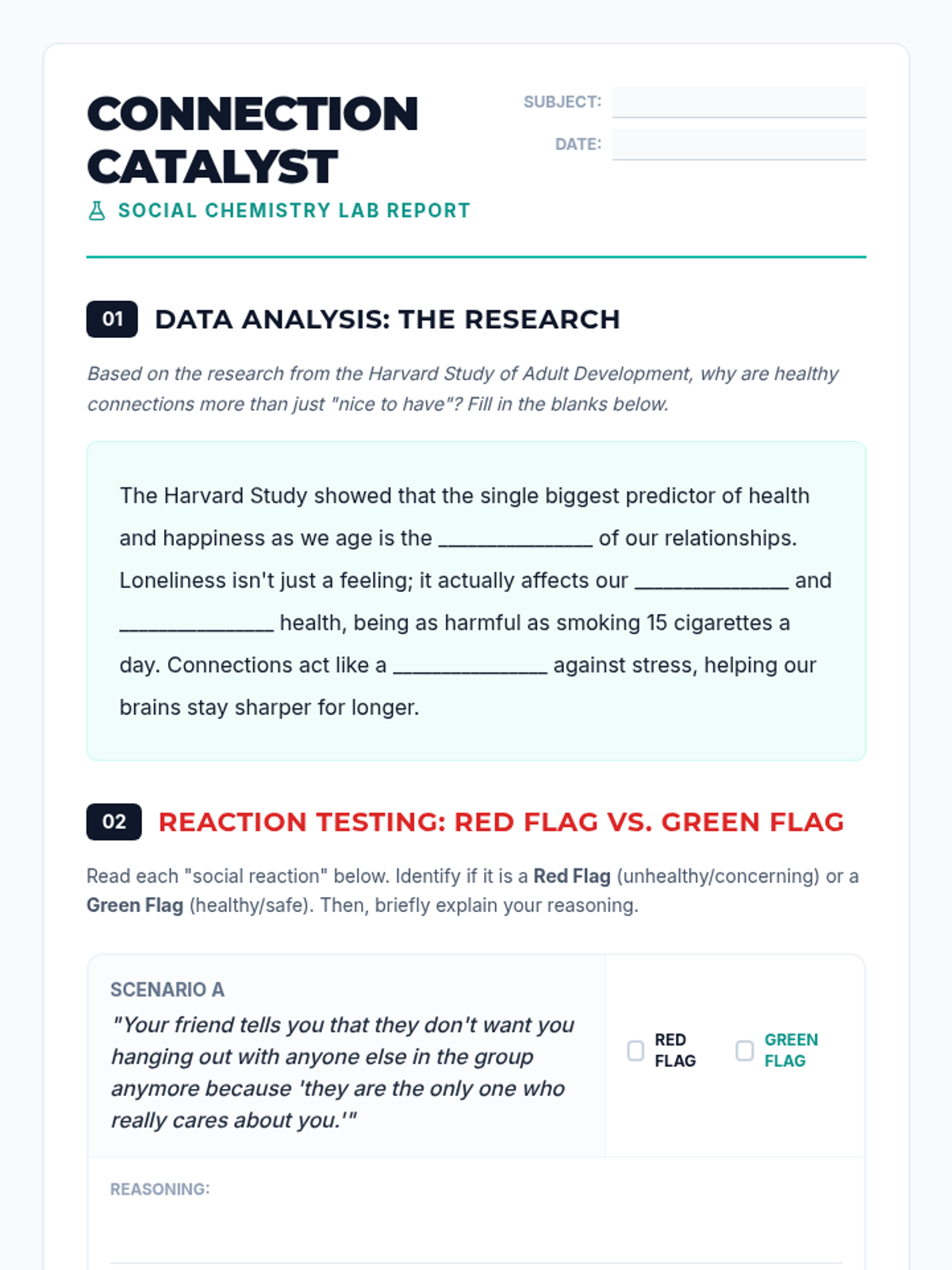
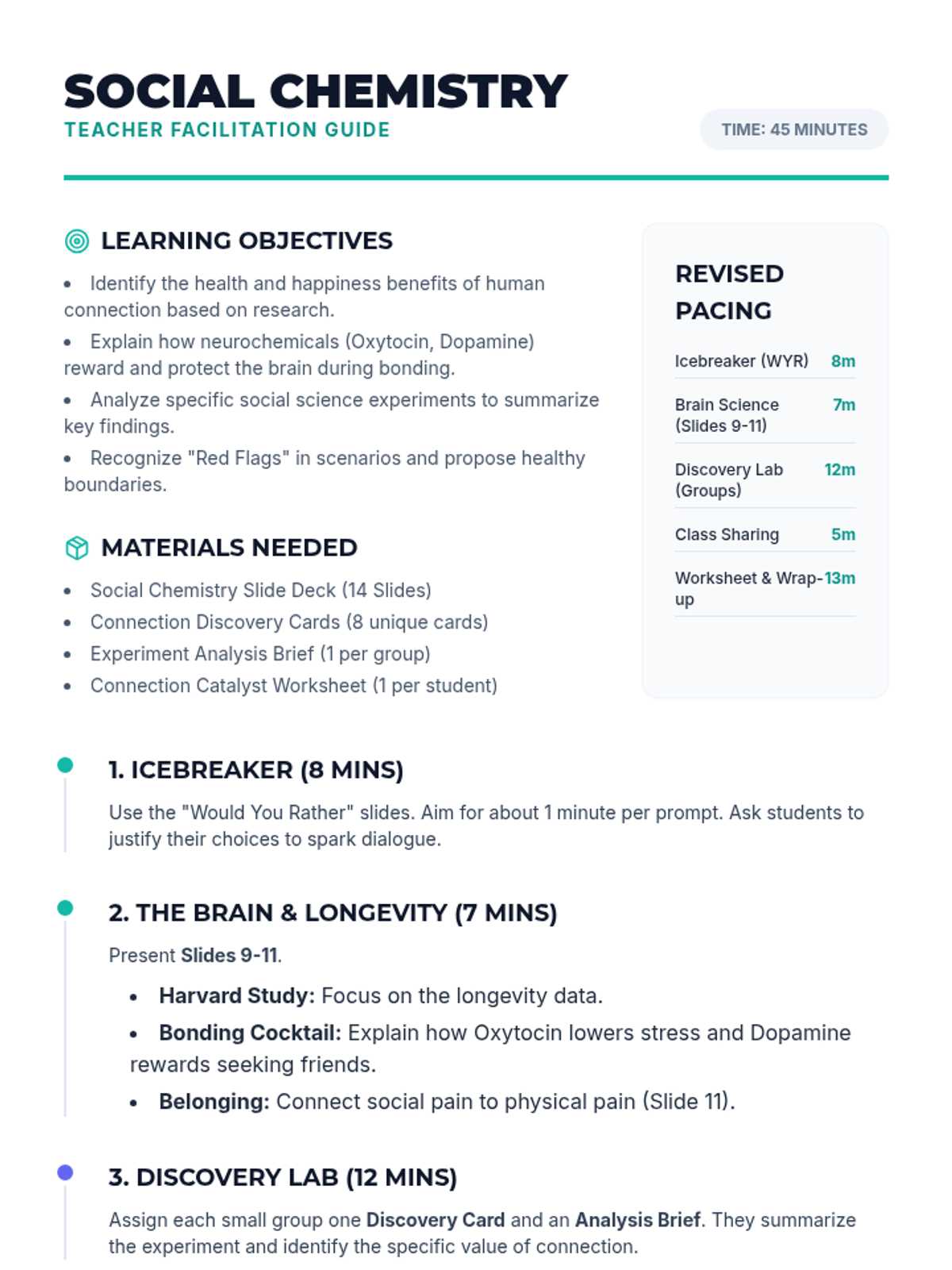
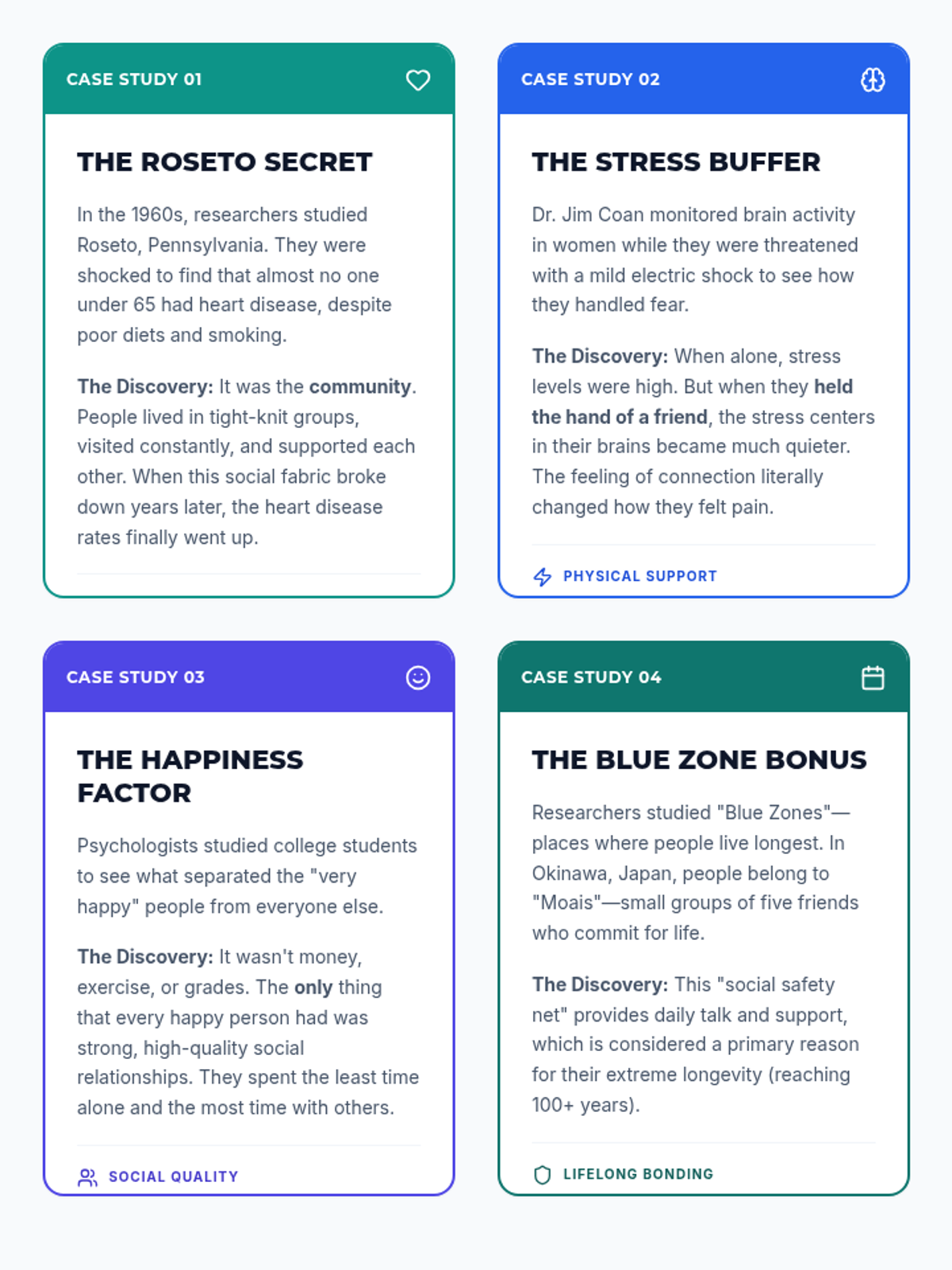
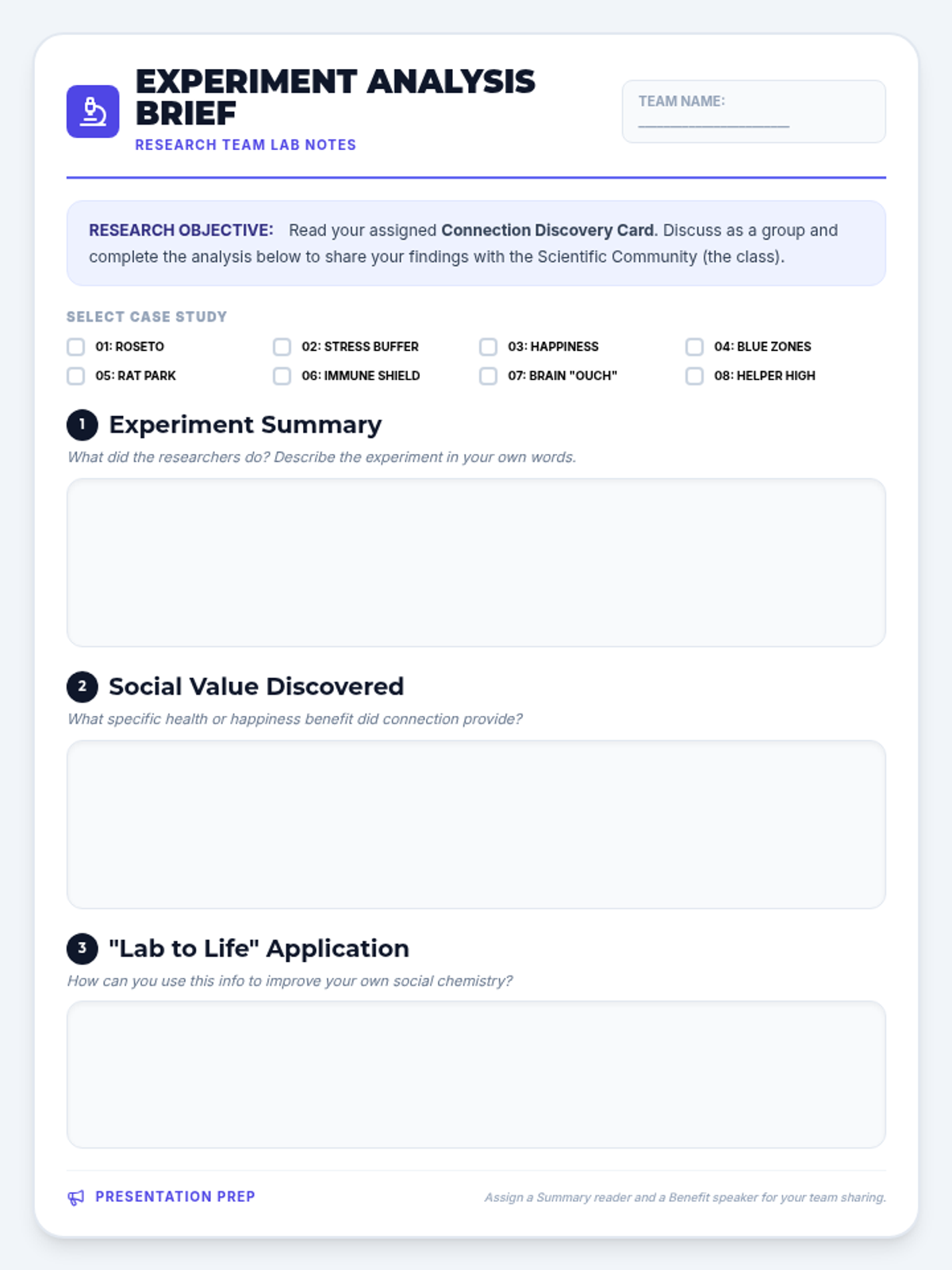
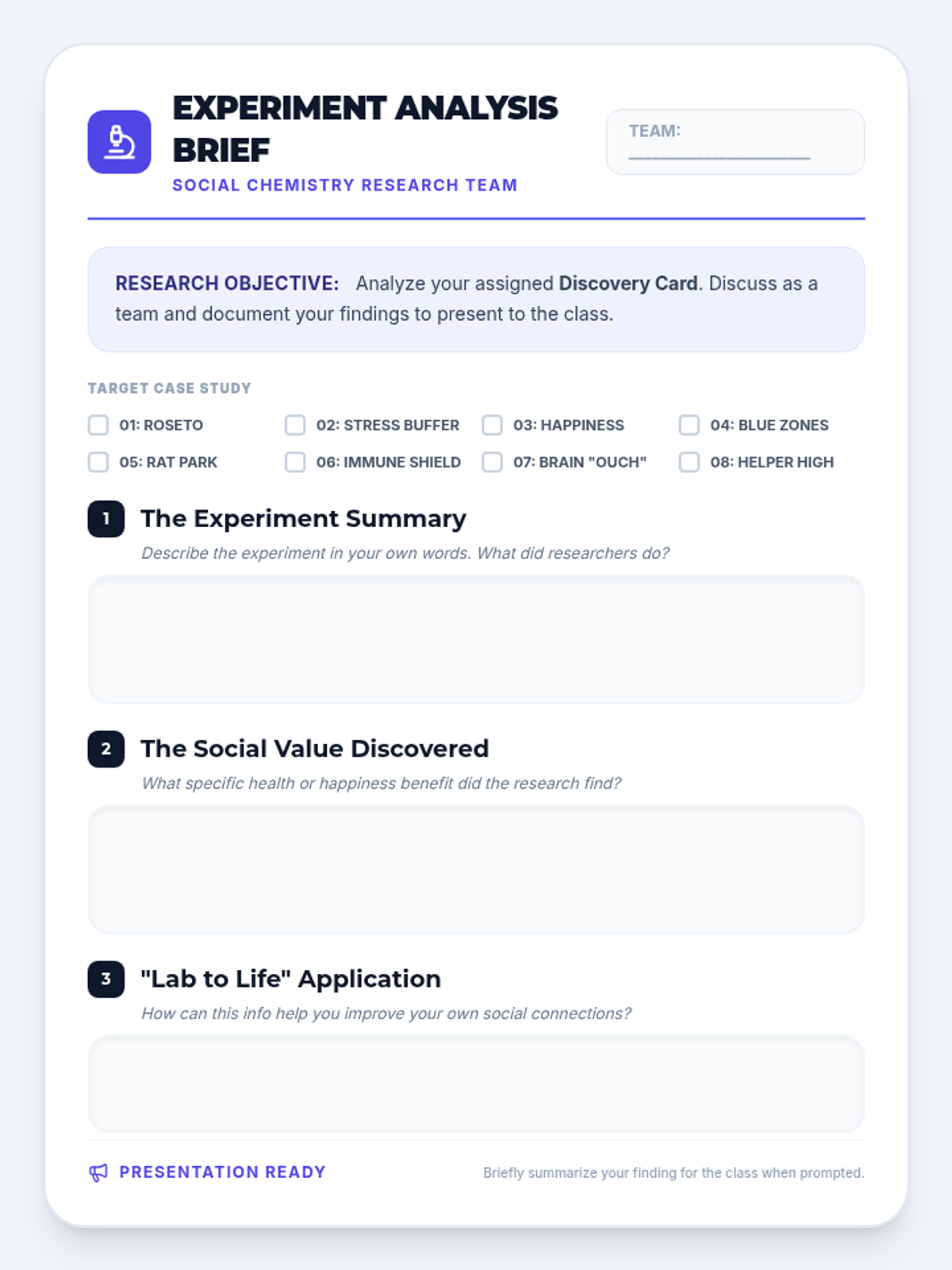
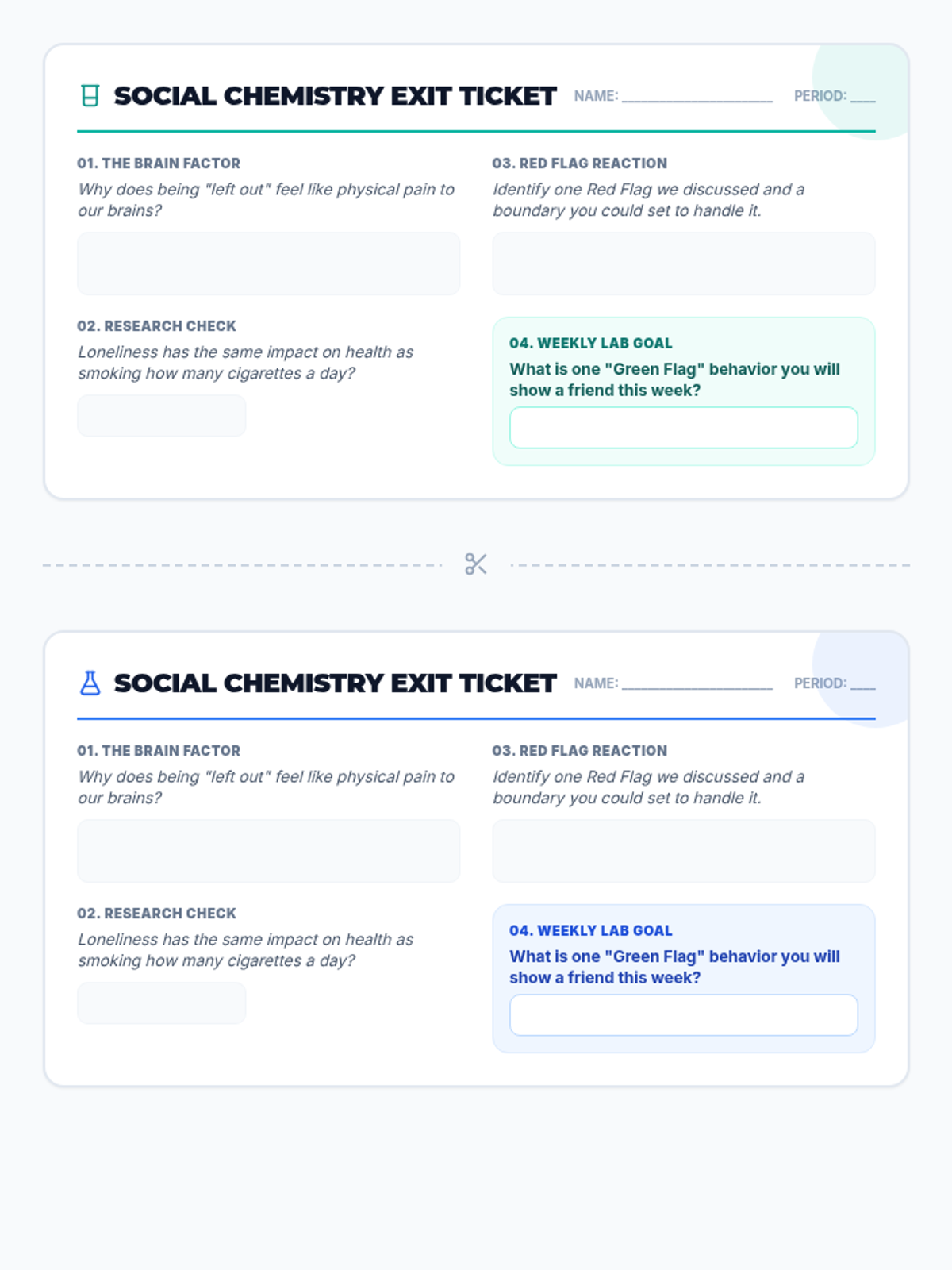
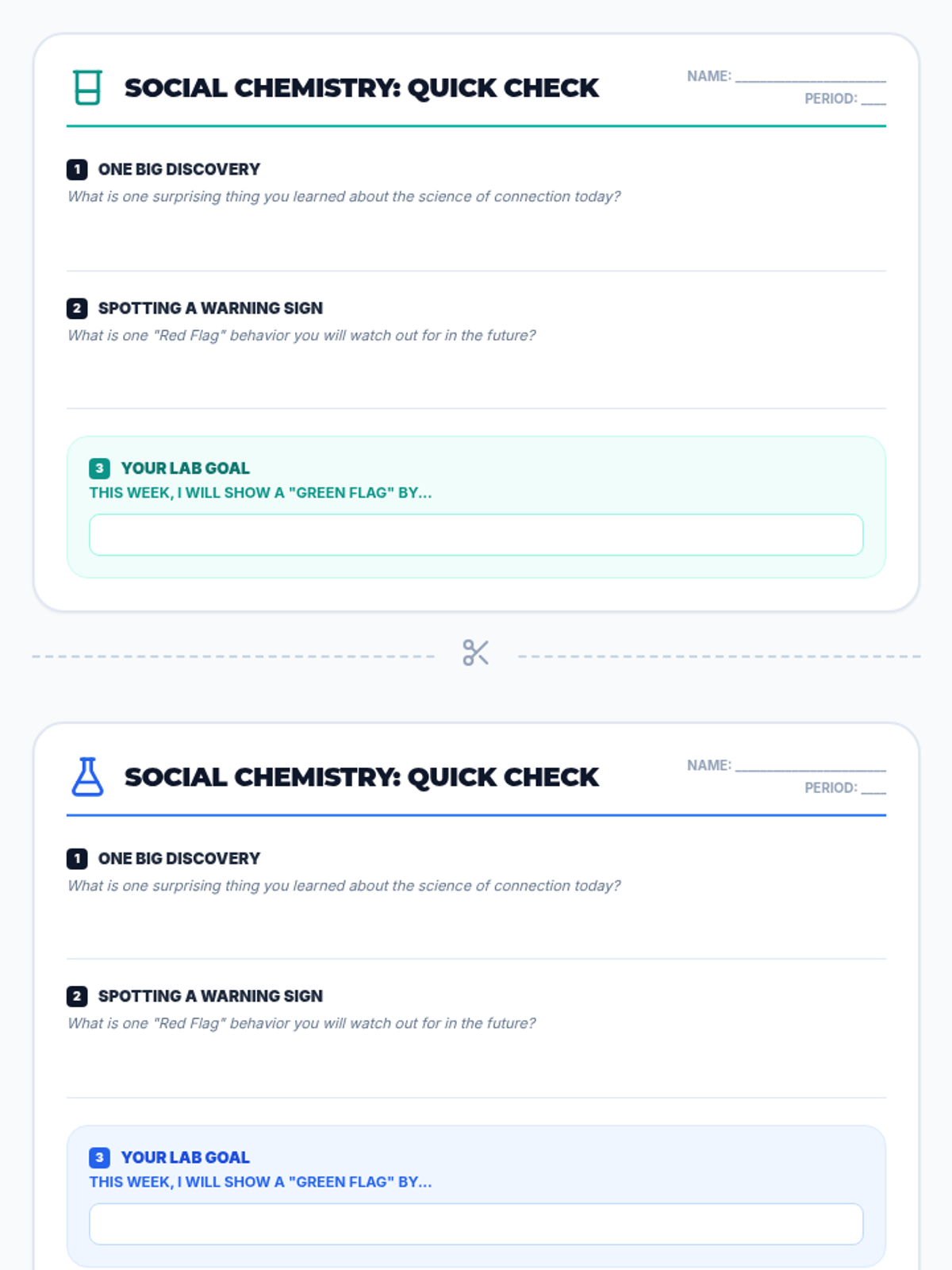
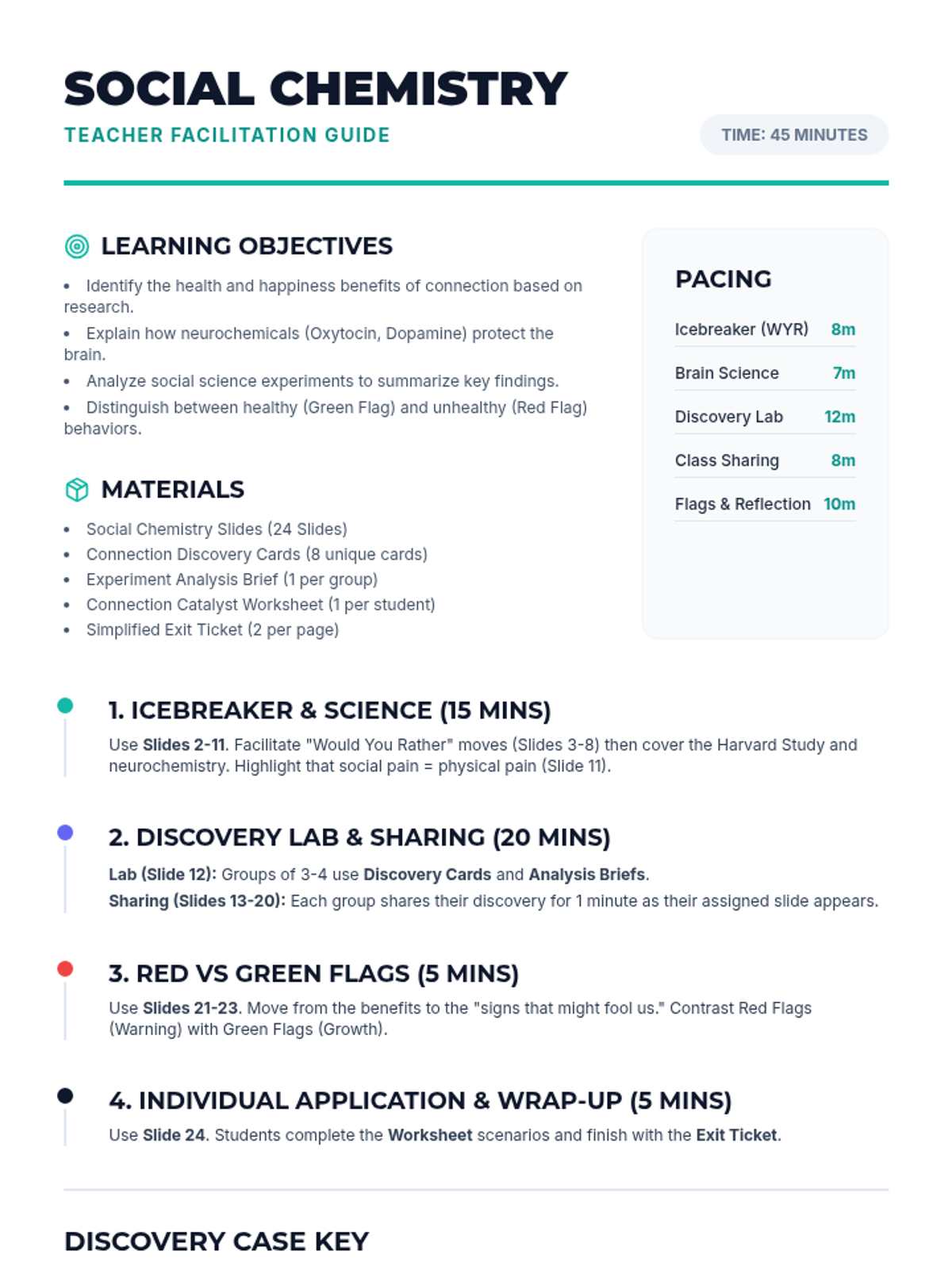
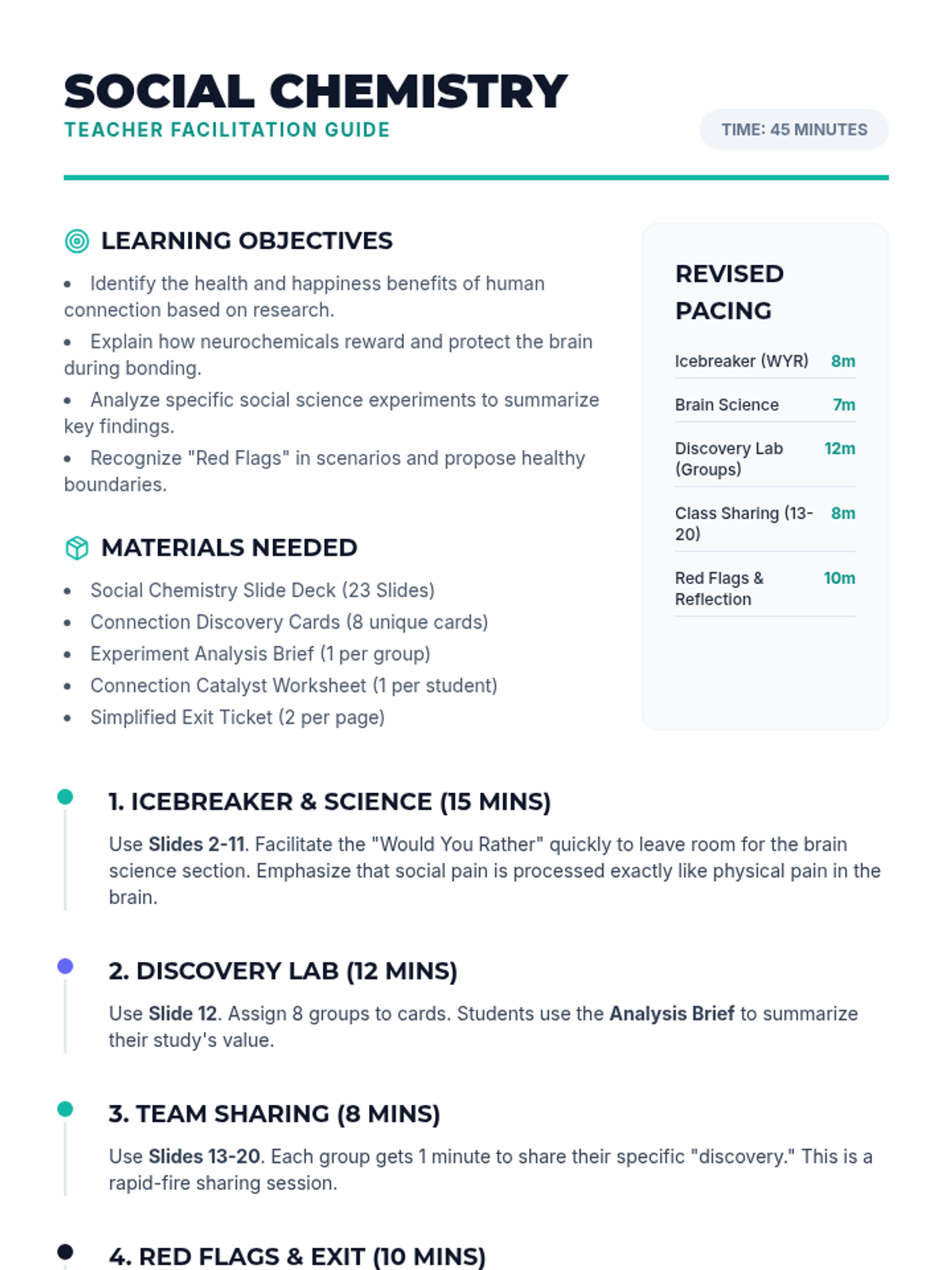
A 45-minute exploration into the science of human connection, teaching middle schoolers the health benefits of social bonds and how to distinguish between healthy and unhealthy relationship behaviors.
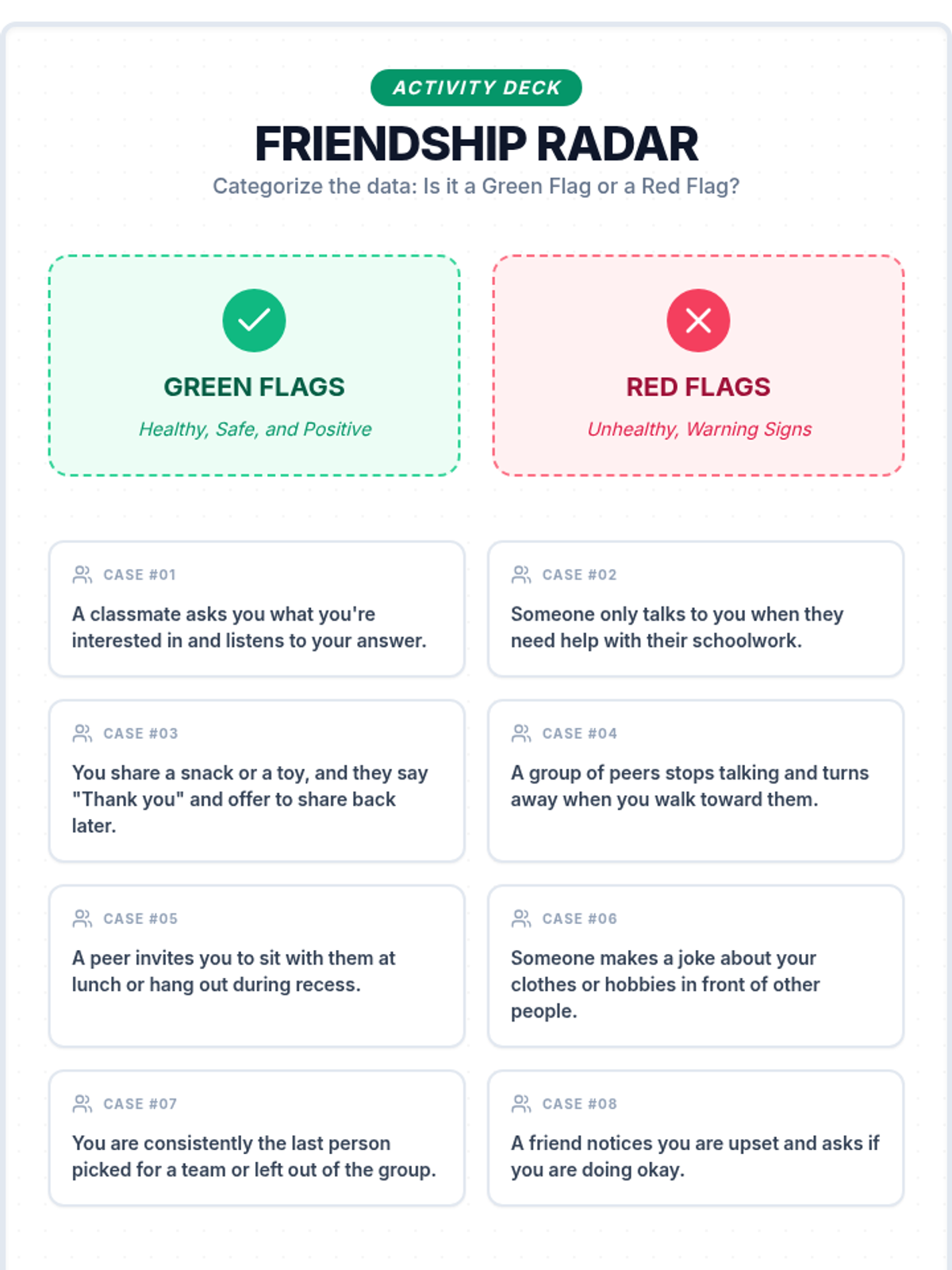
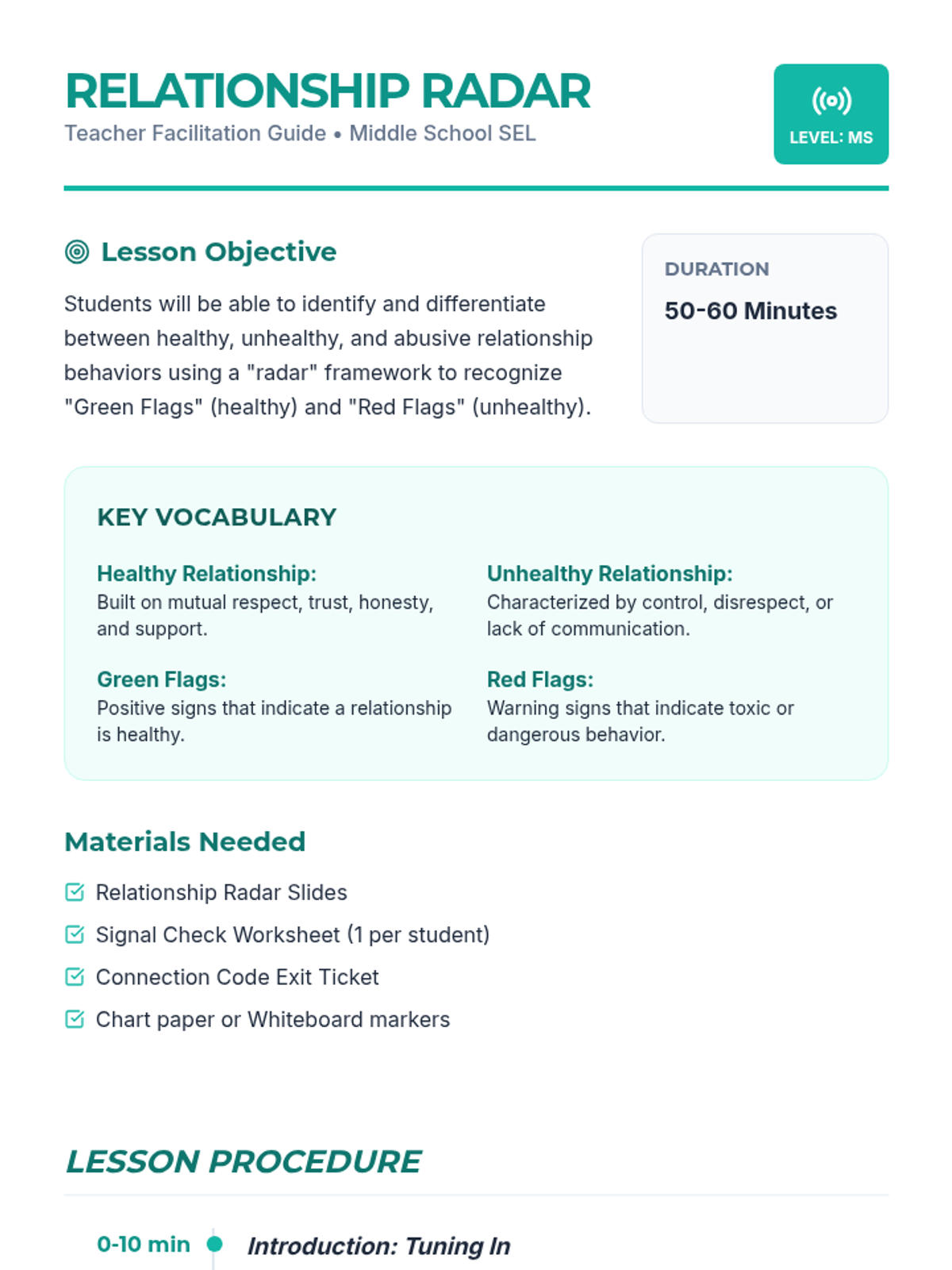
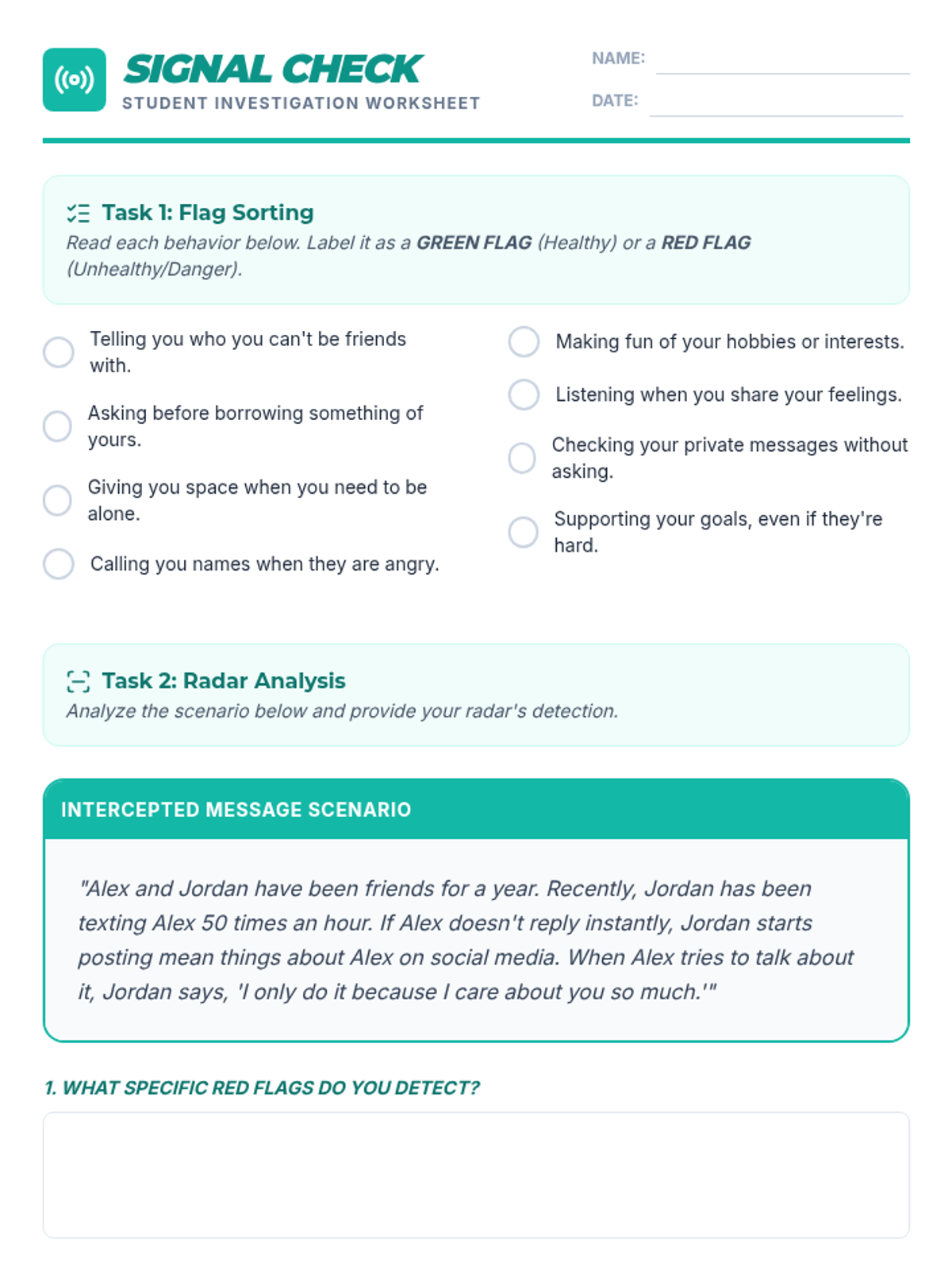
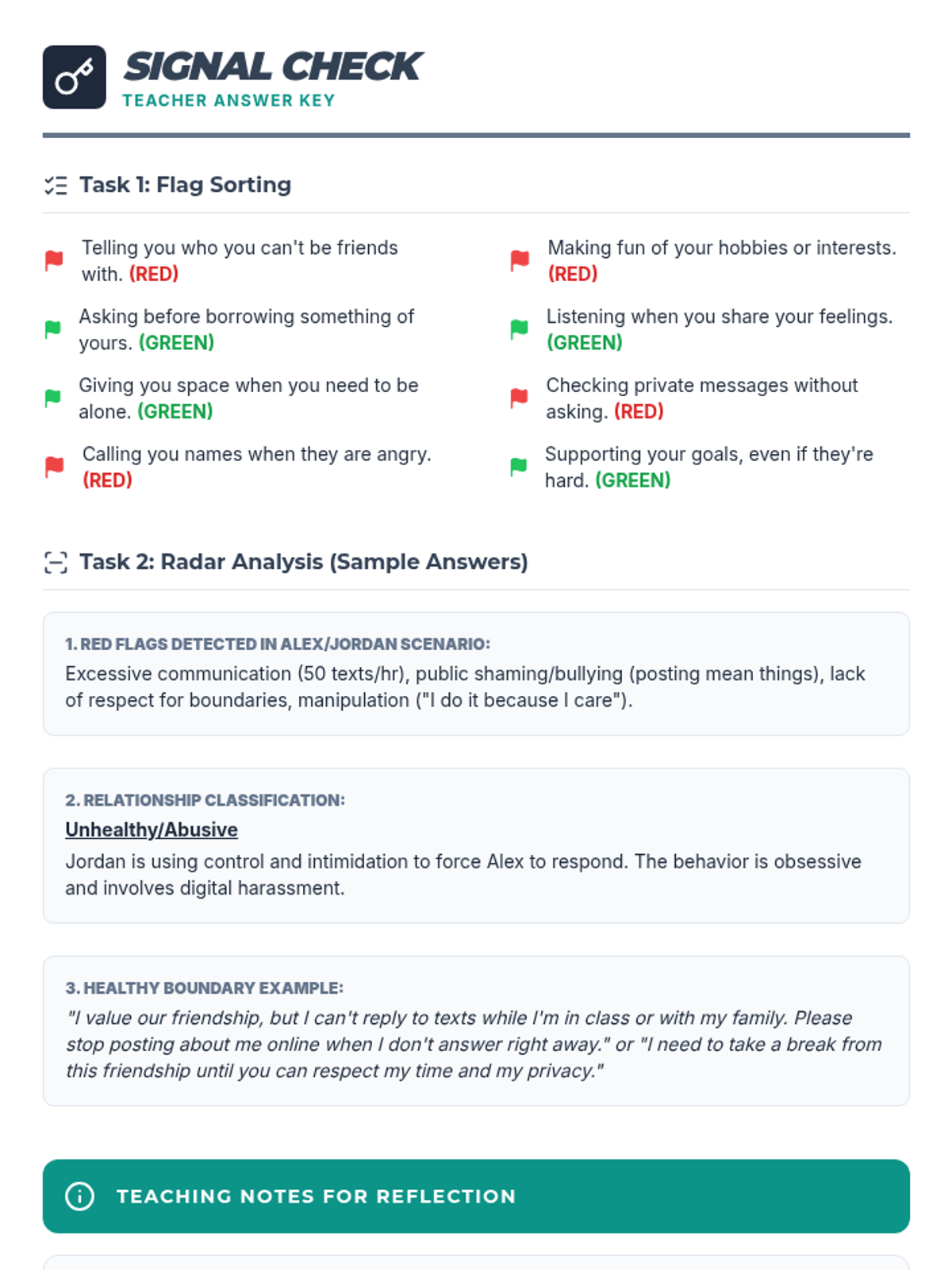
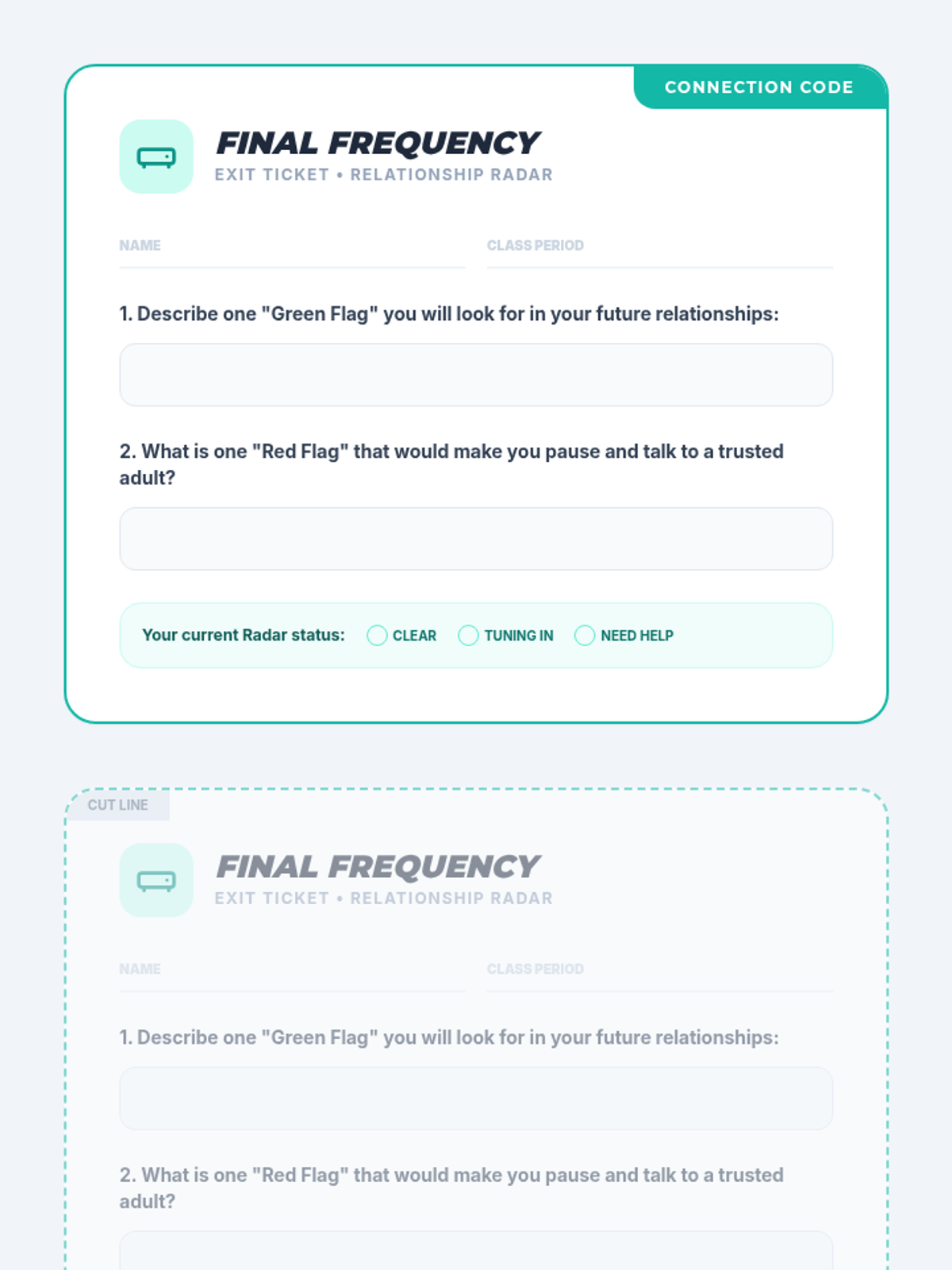
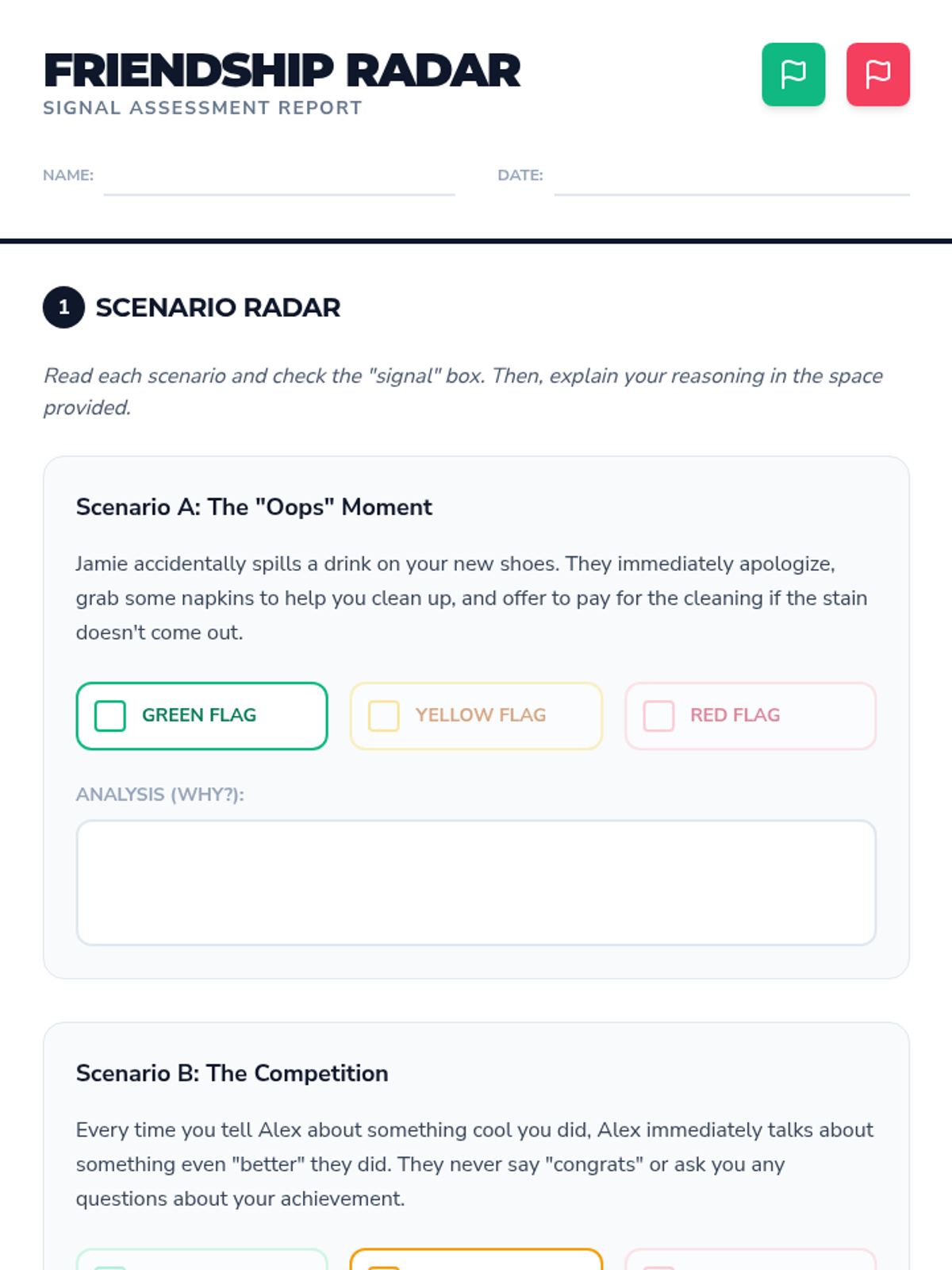
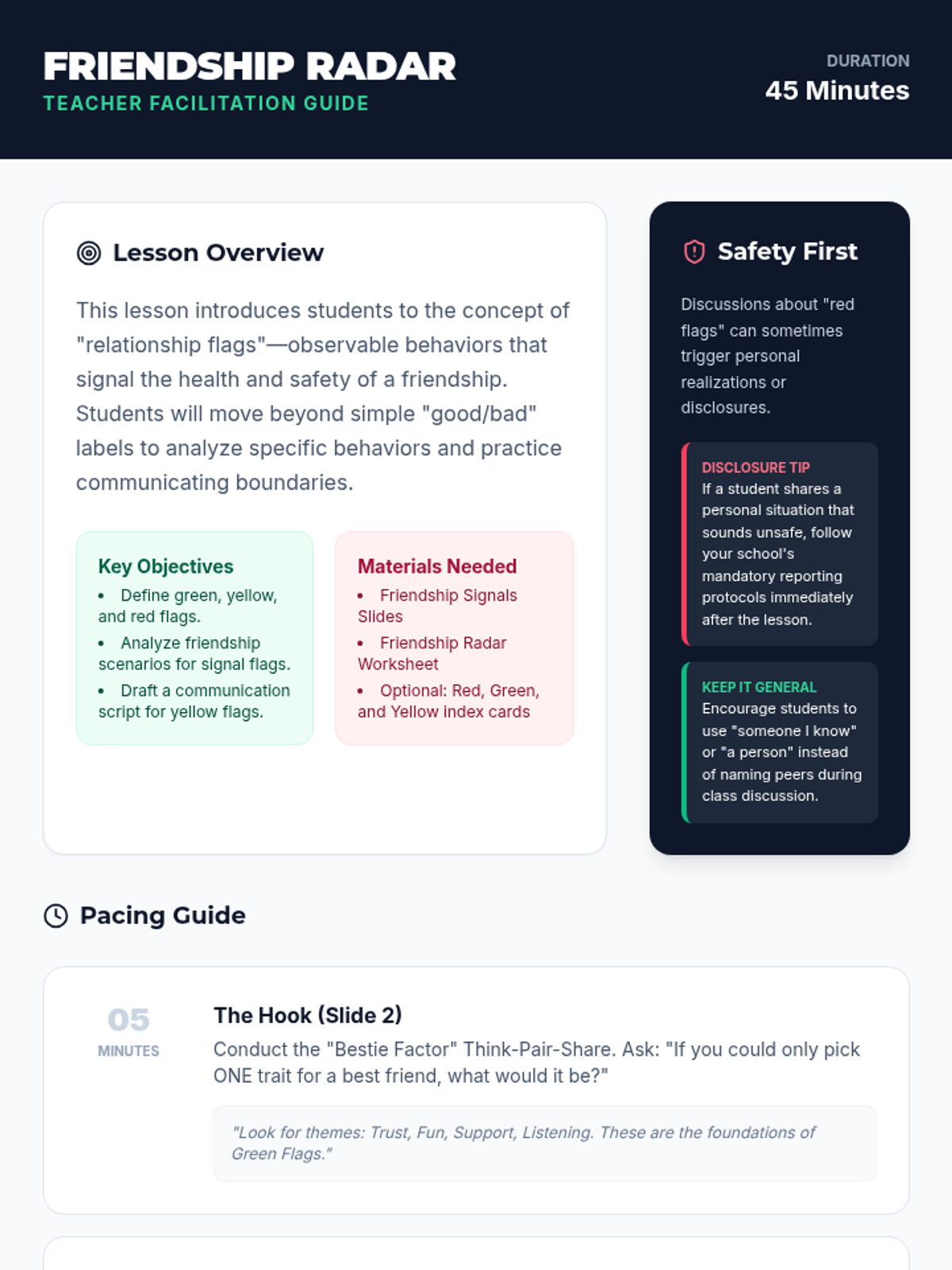
A comprehensive middle school lesson focused on identifying the characteristics of healthy and unhealthy relationships using a 'radar' metaphor for social awareness.
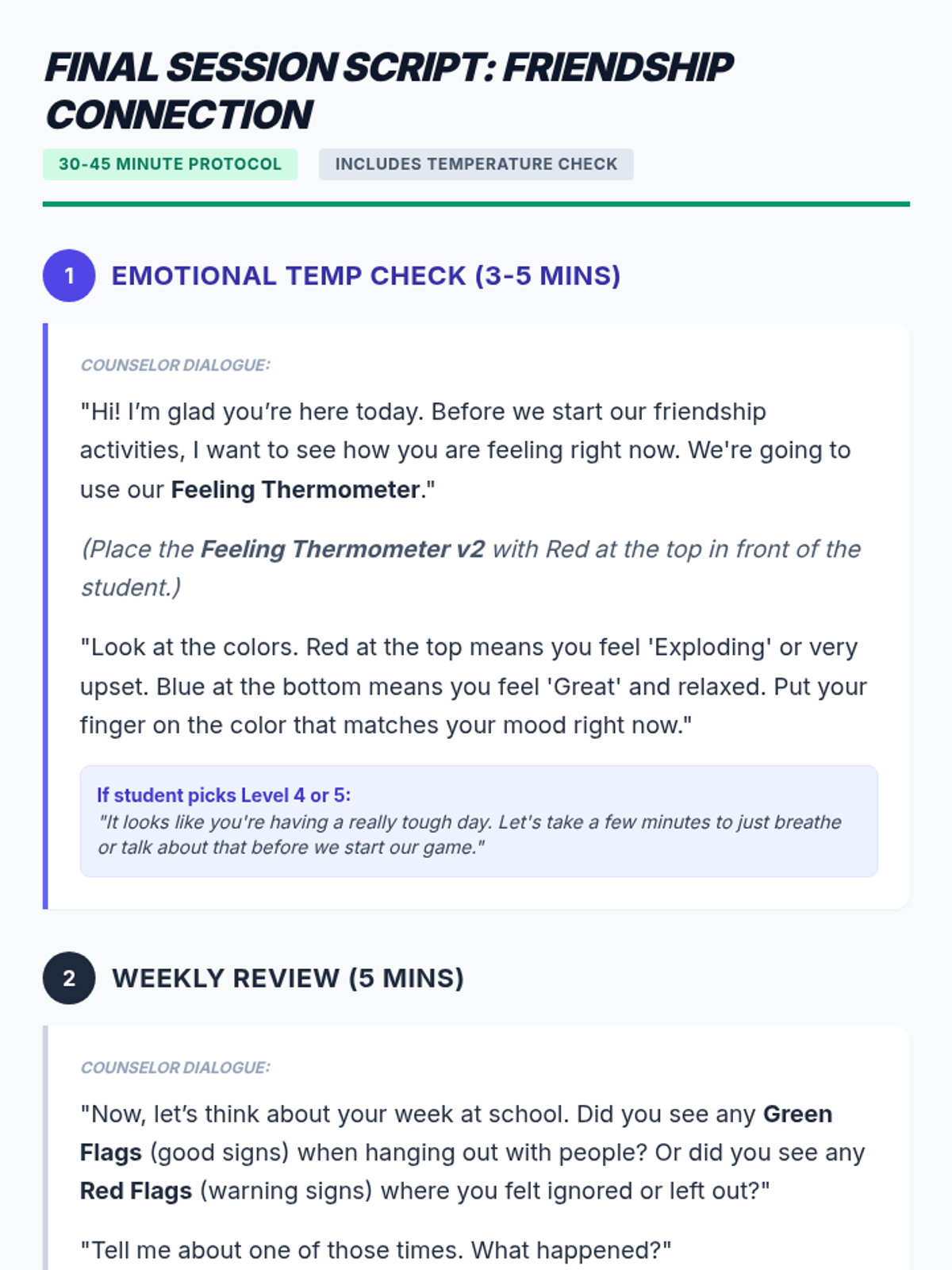
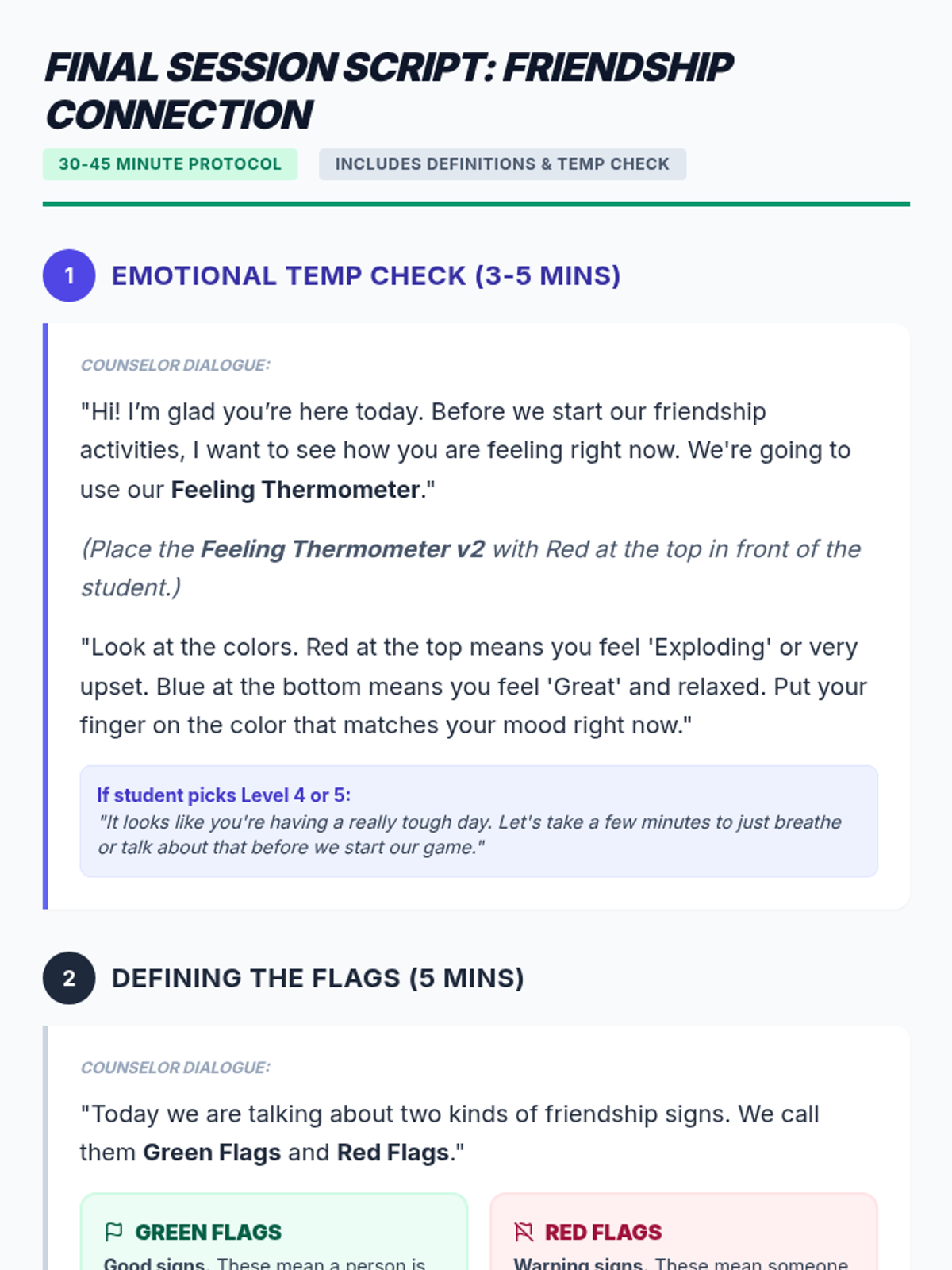
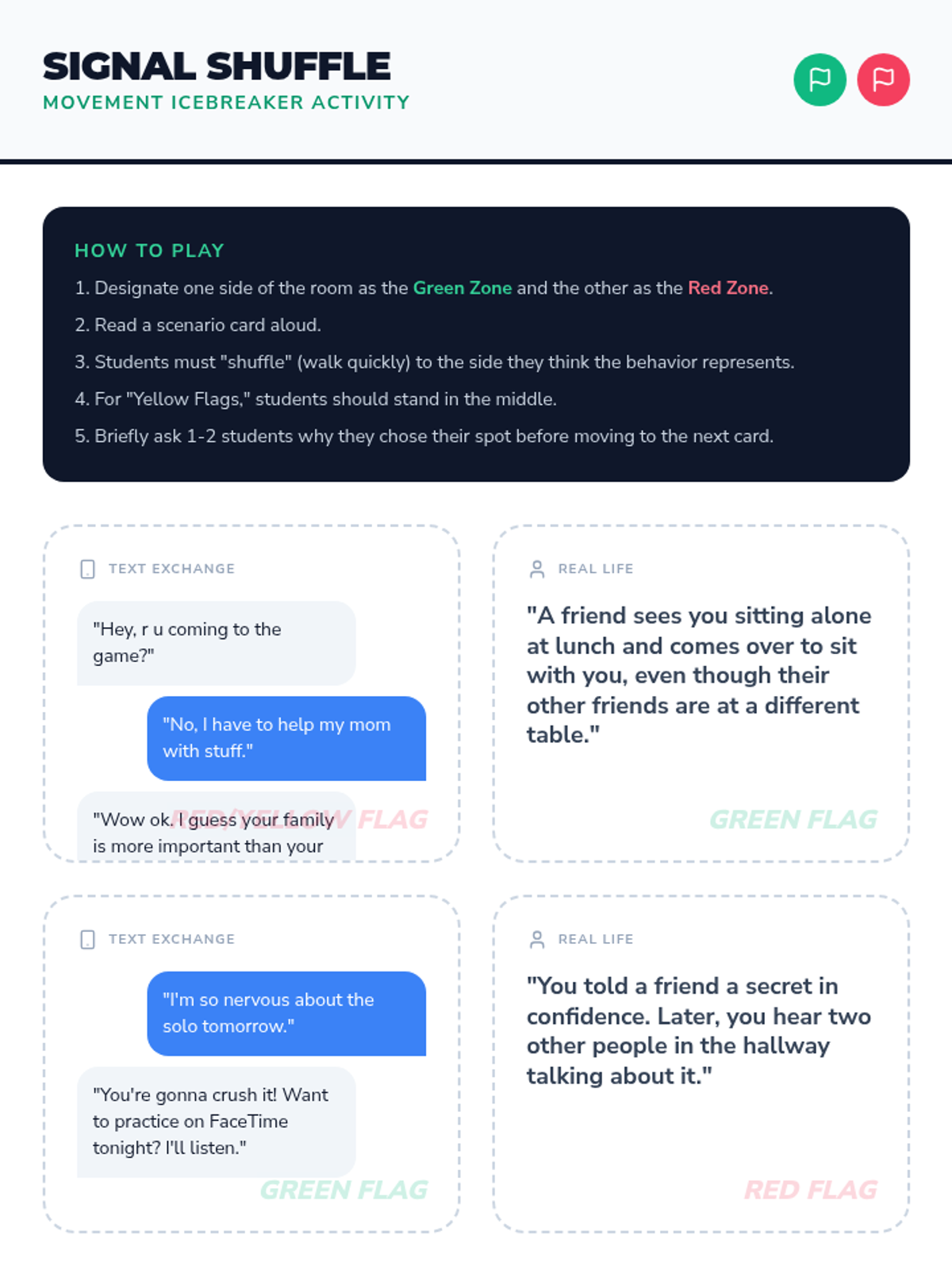
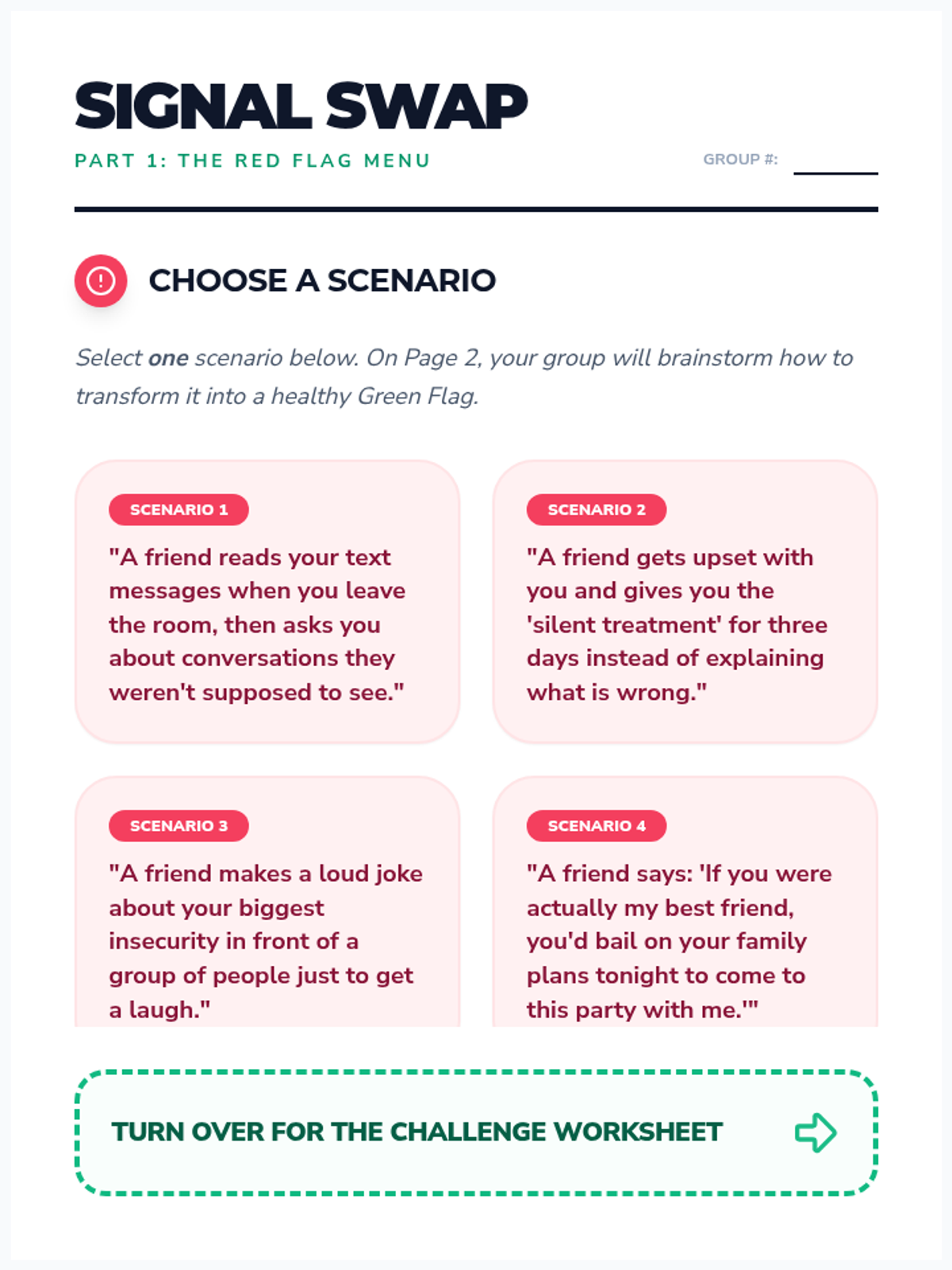
A 45-minute lesson helping students identify healthy and unhealthy relationship dynamics through the lens of 'red' and 'green' flags. Students will practice recognizing warning signs and positive traits in friendships.
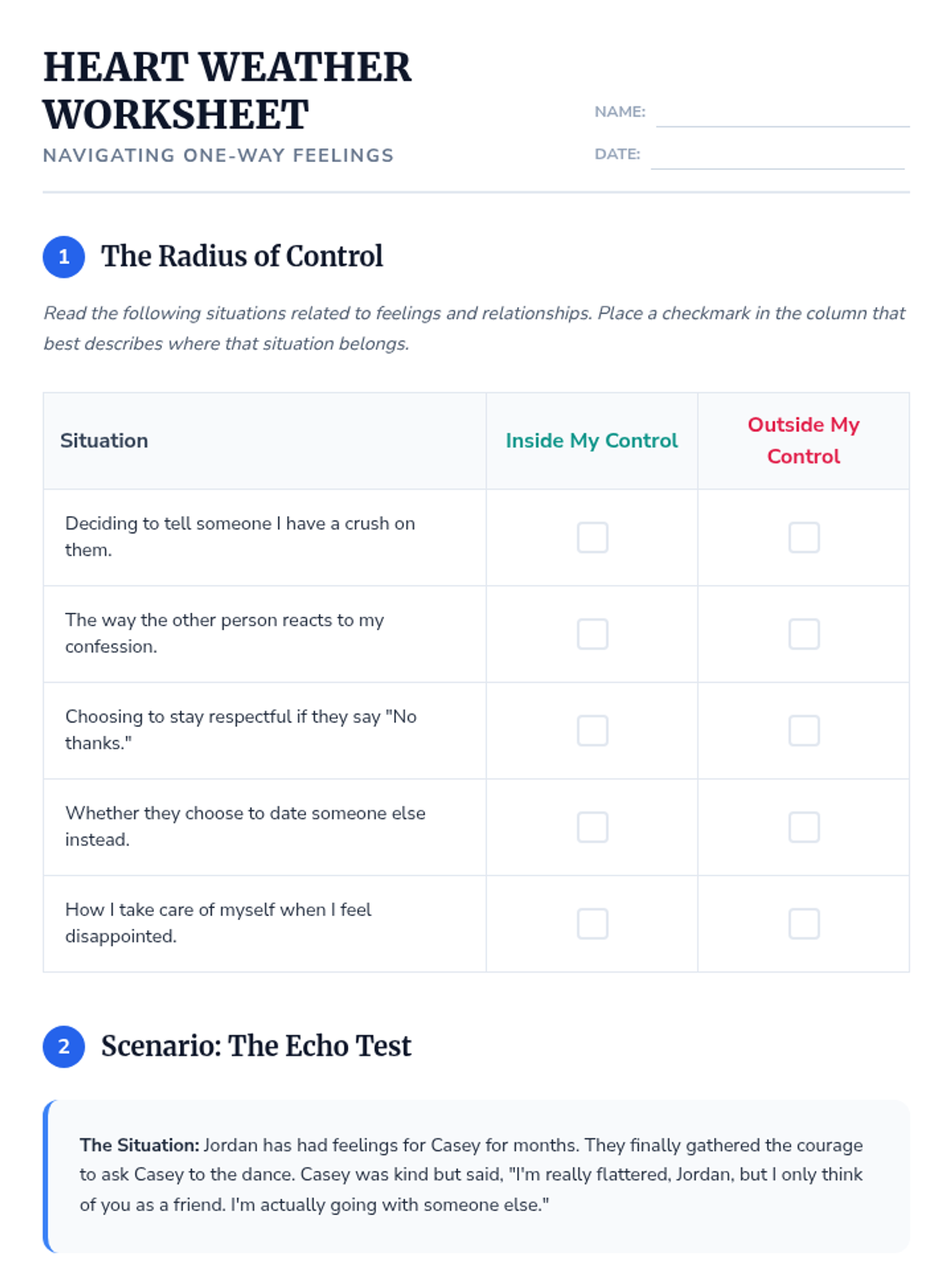
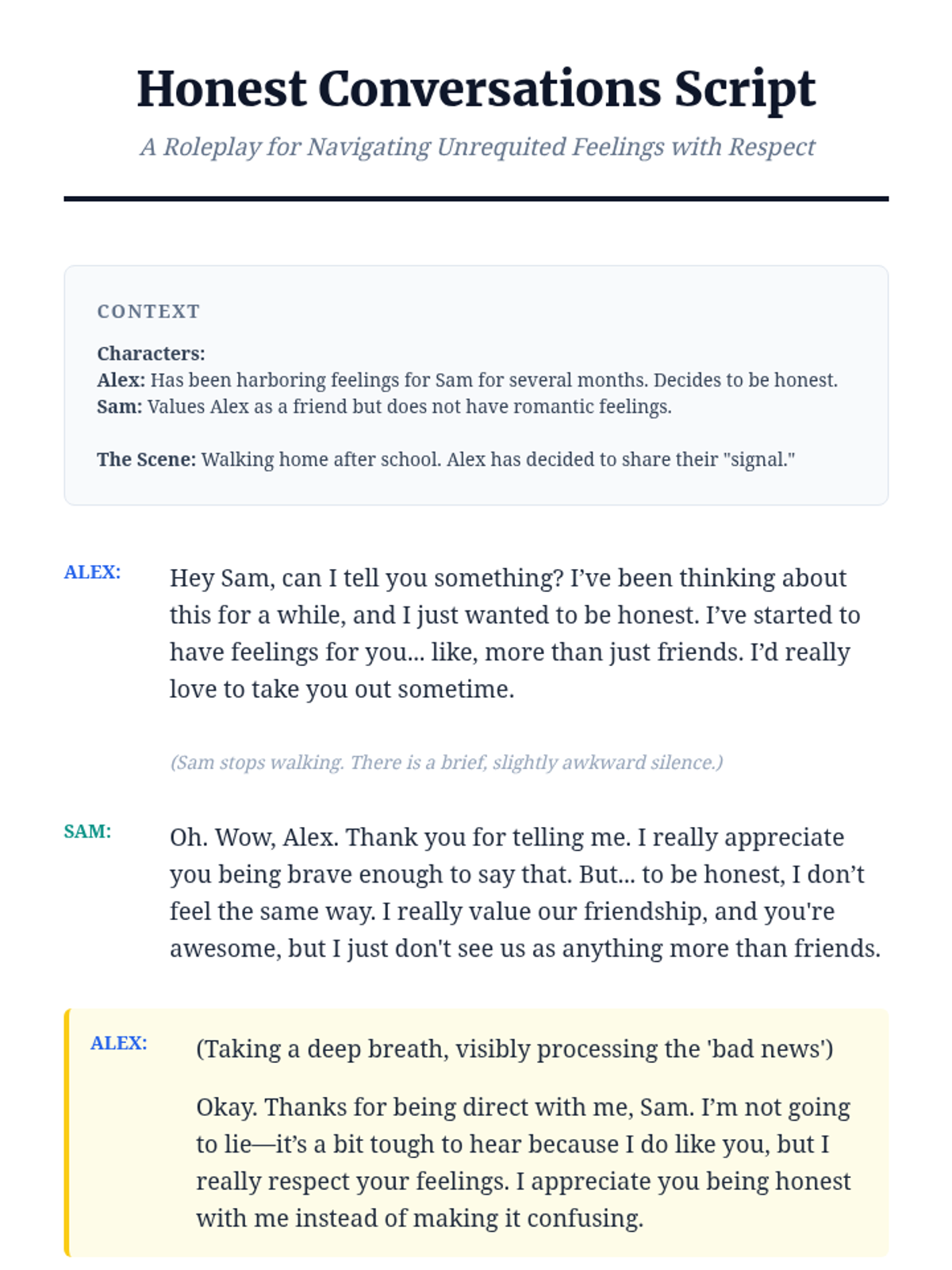
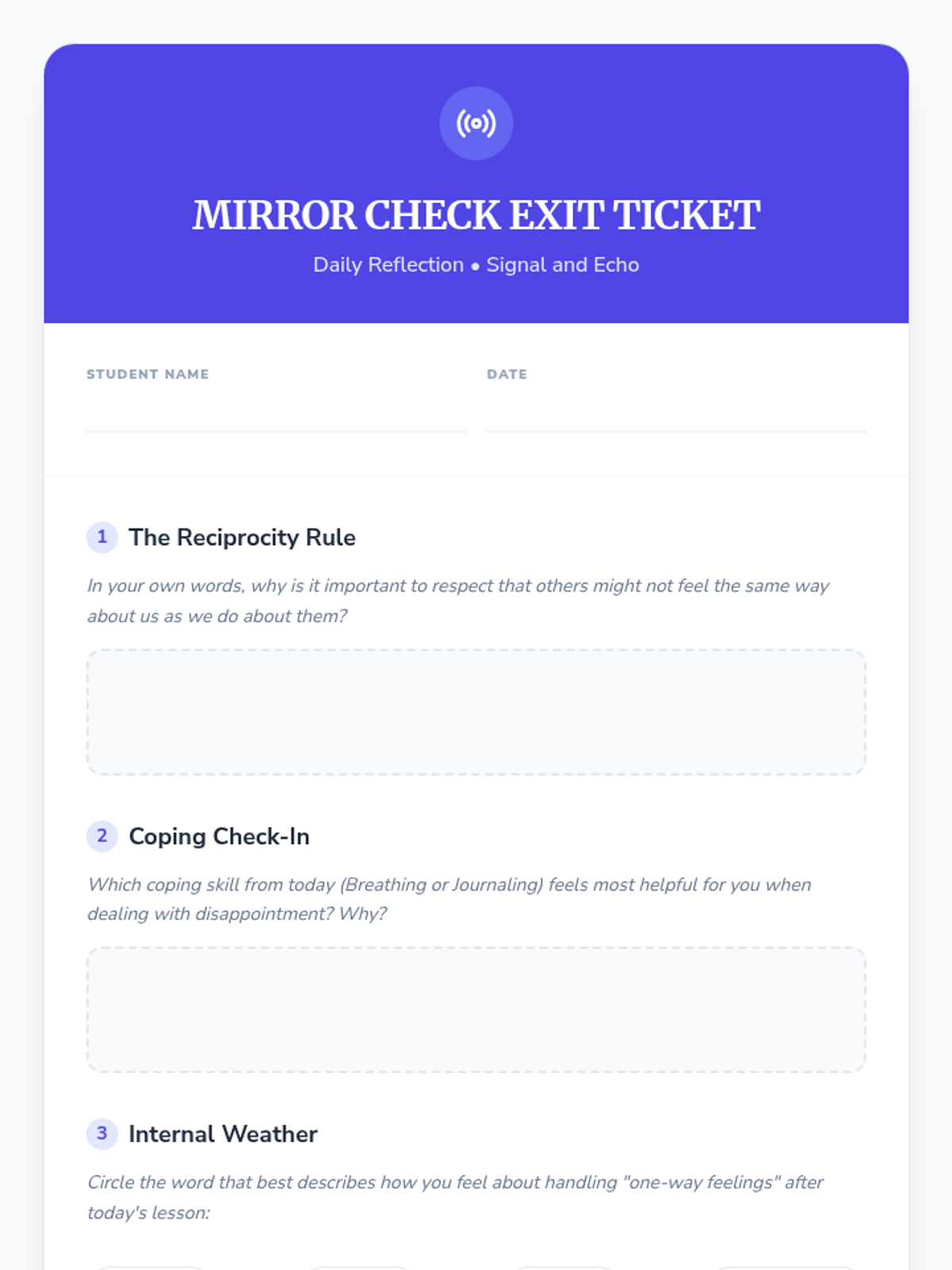
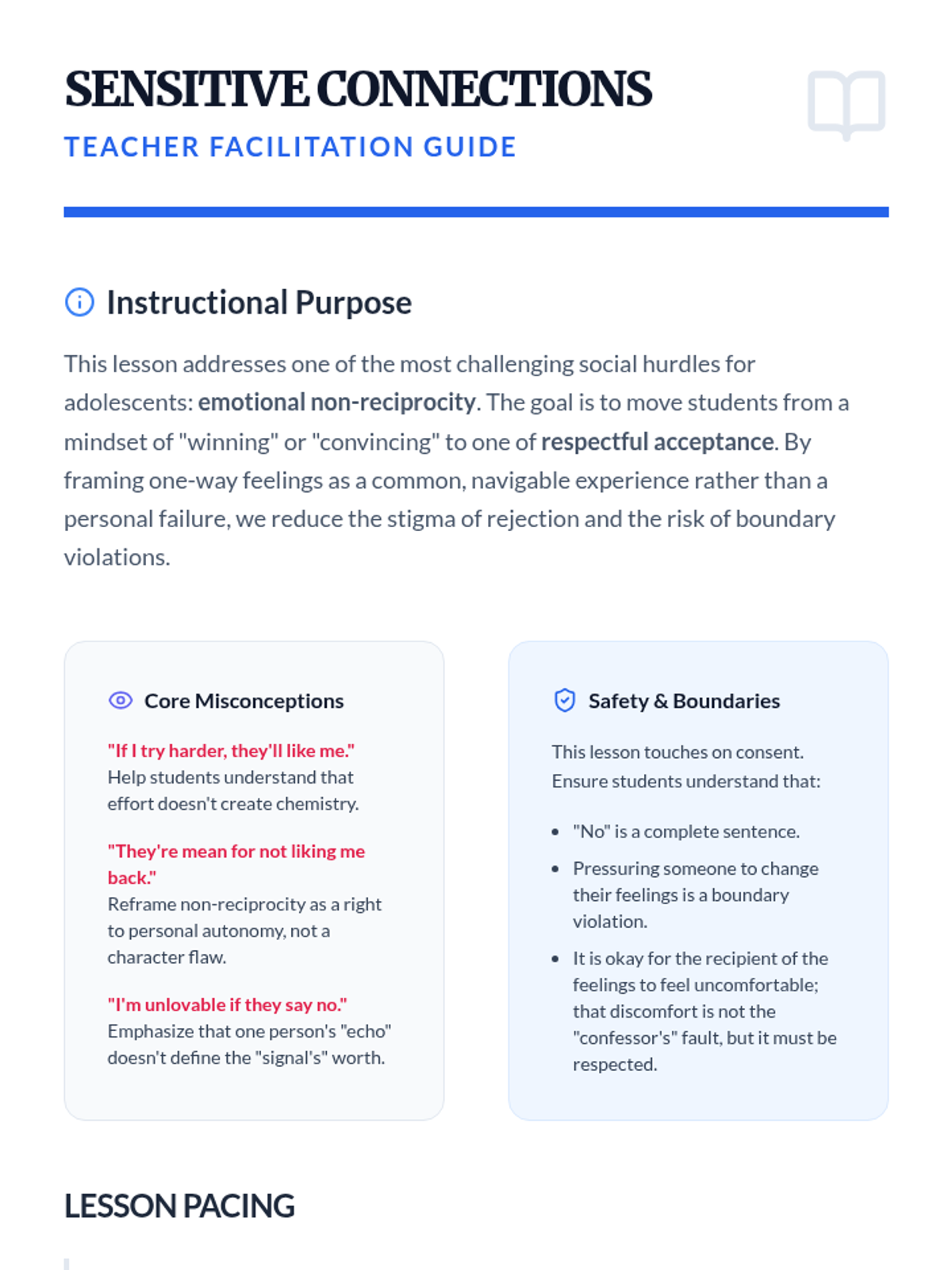
A lesson focused on navigating unrequited feelings, respecting emotional boundaries, and developing resilience when others do not mirror our emotions. Students explore the concept of reciprocity and practice coping strategies for handling social and romantic disappointment.
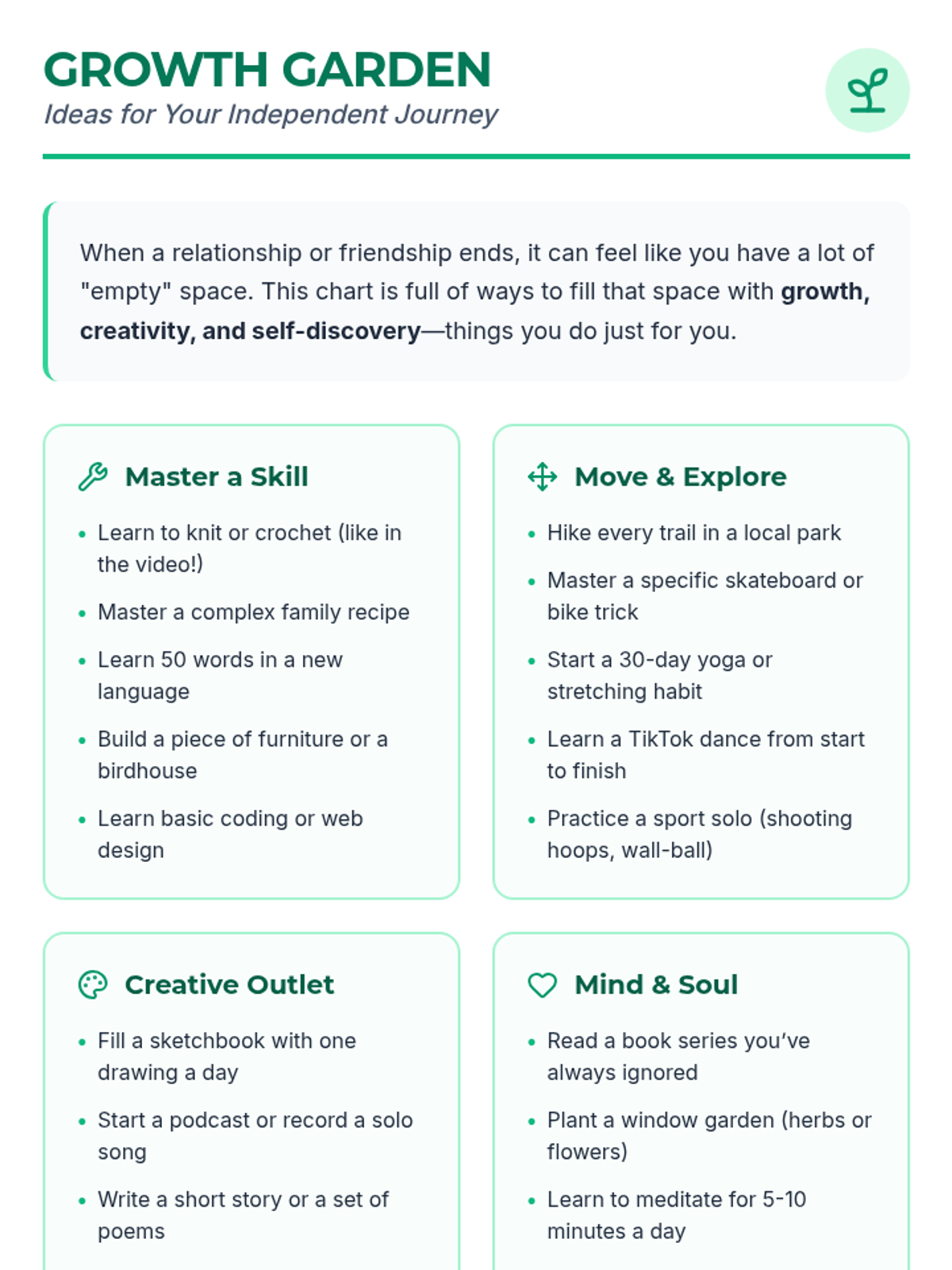
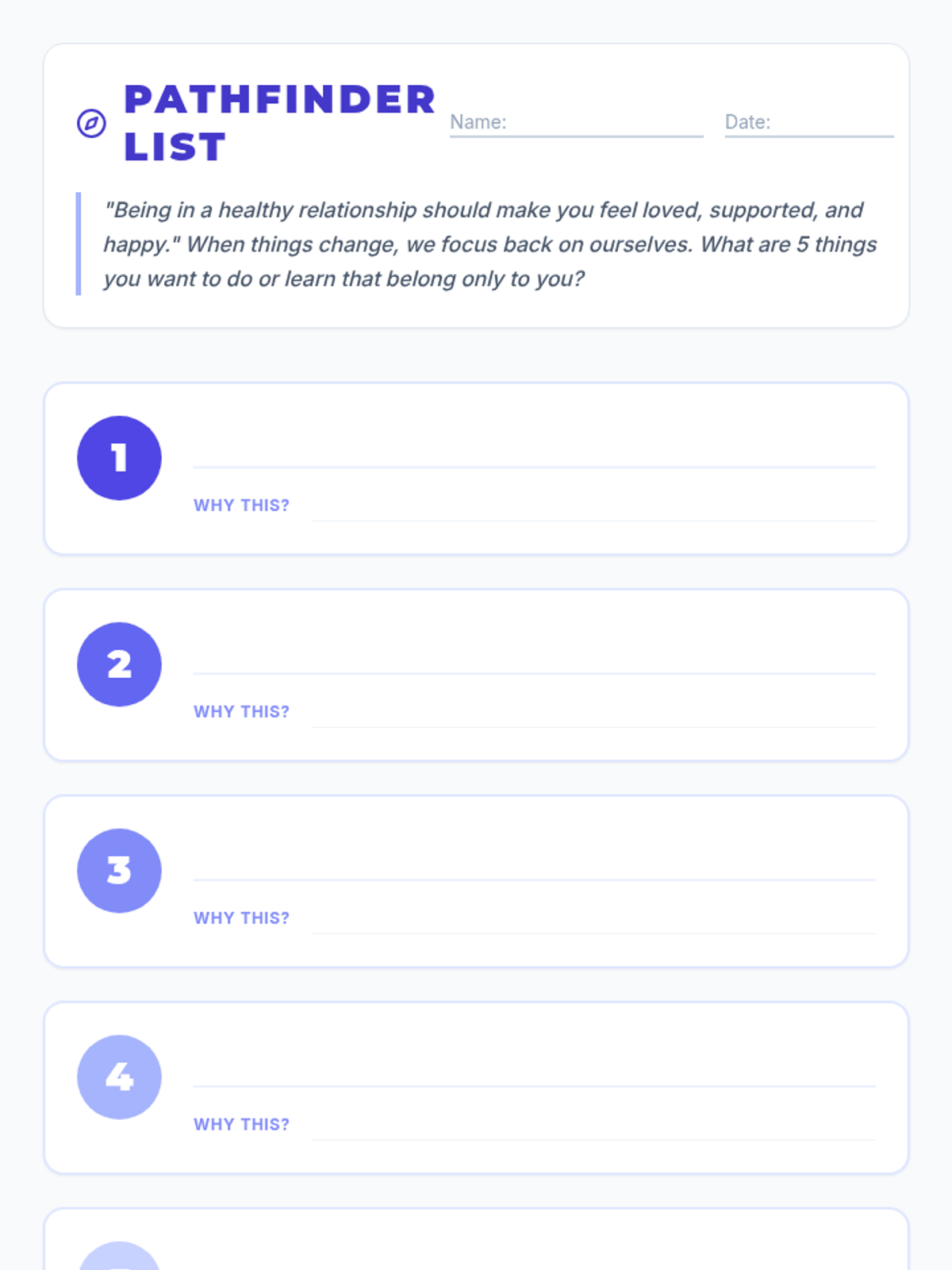
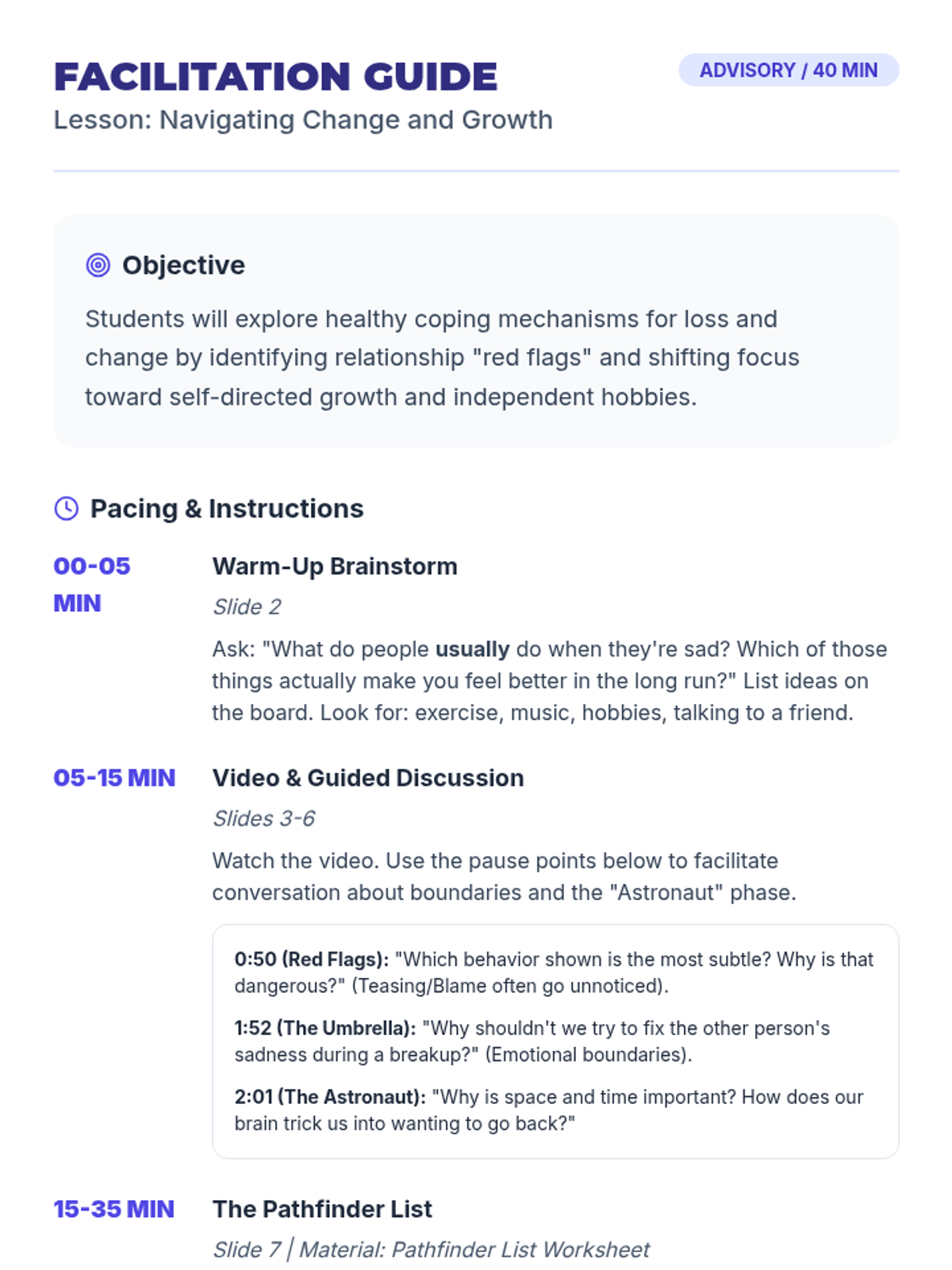
A middle school advisory lesson focused on identifying unhealthy relationship signs and developing healthy, independent coping mechanisms for moving forward after a breakup or loss. Students will watch a video on setting boundaries and then create a 'Post-Breakup Bucket List' to shift focus toward self-growth.
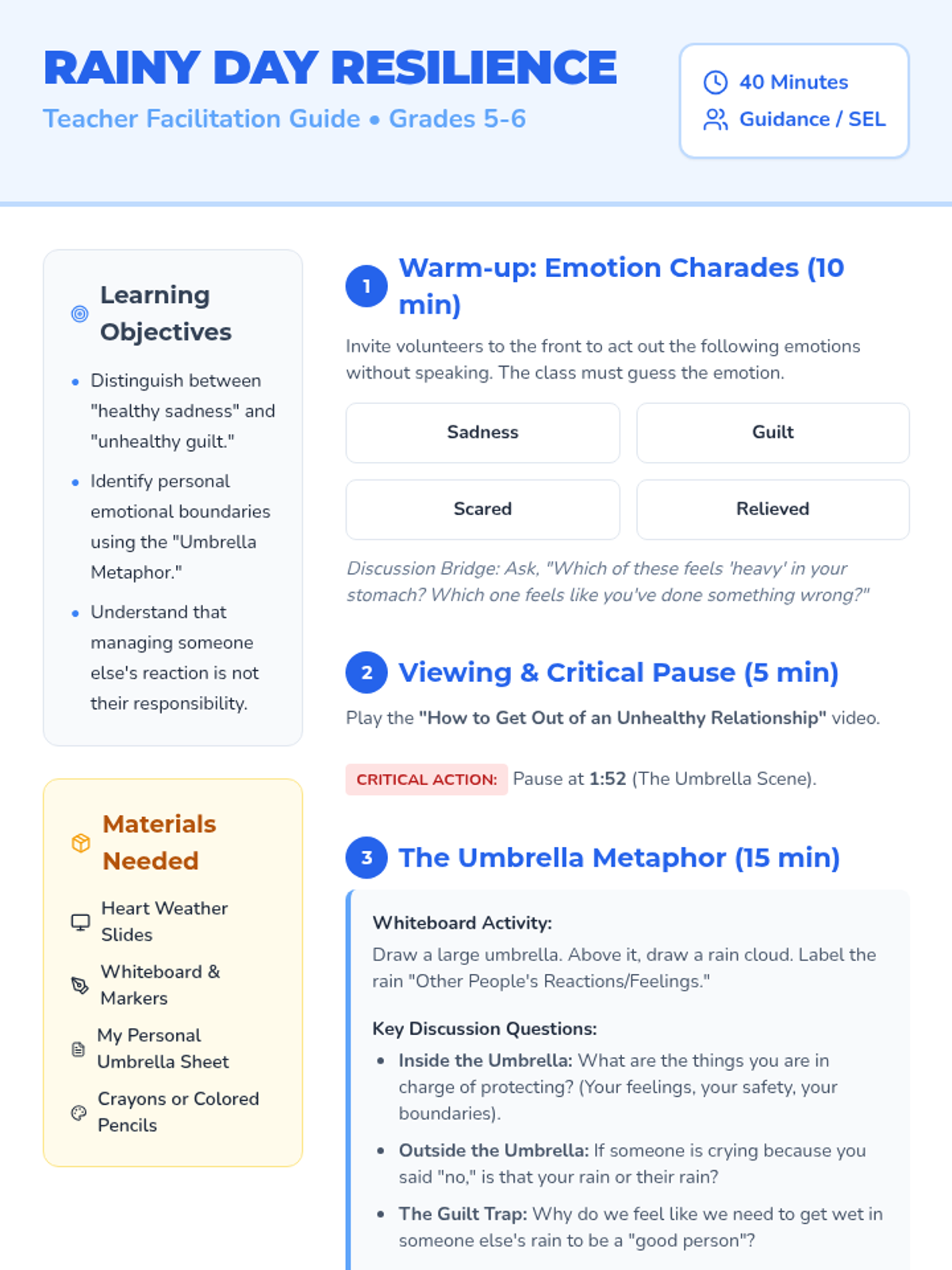
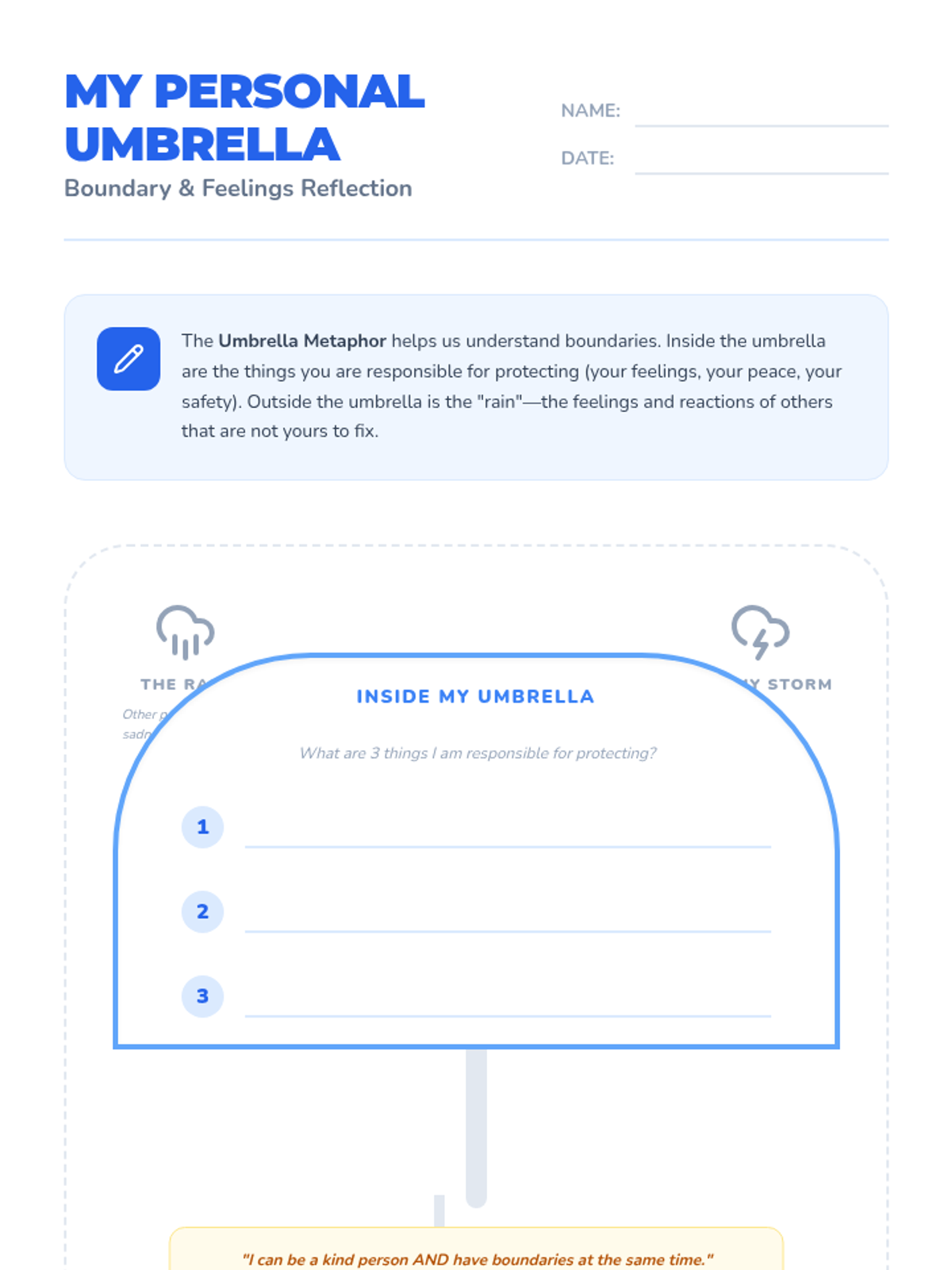
A guidance lesson for 5th-6th graders focused on distinguishing between healthy sadness and unhealthy guilt during relationship conflicts using the 'Umbrella Metaphor' for emotional boundaries.
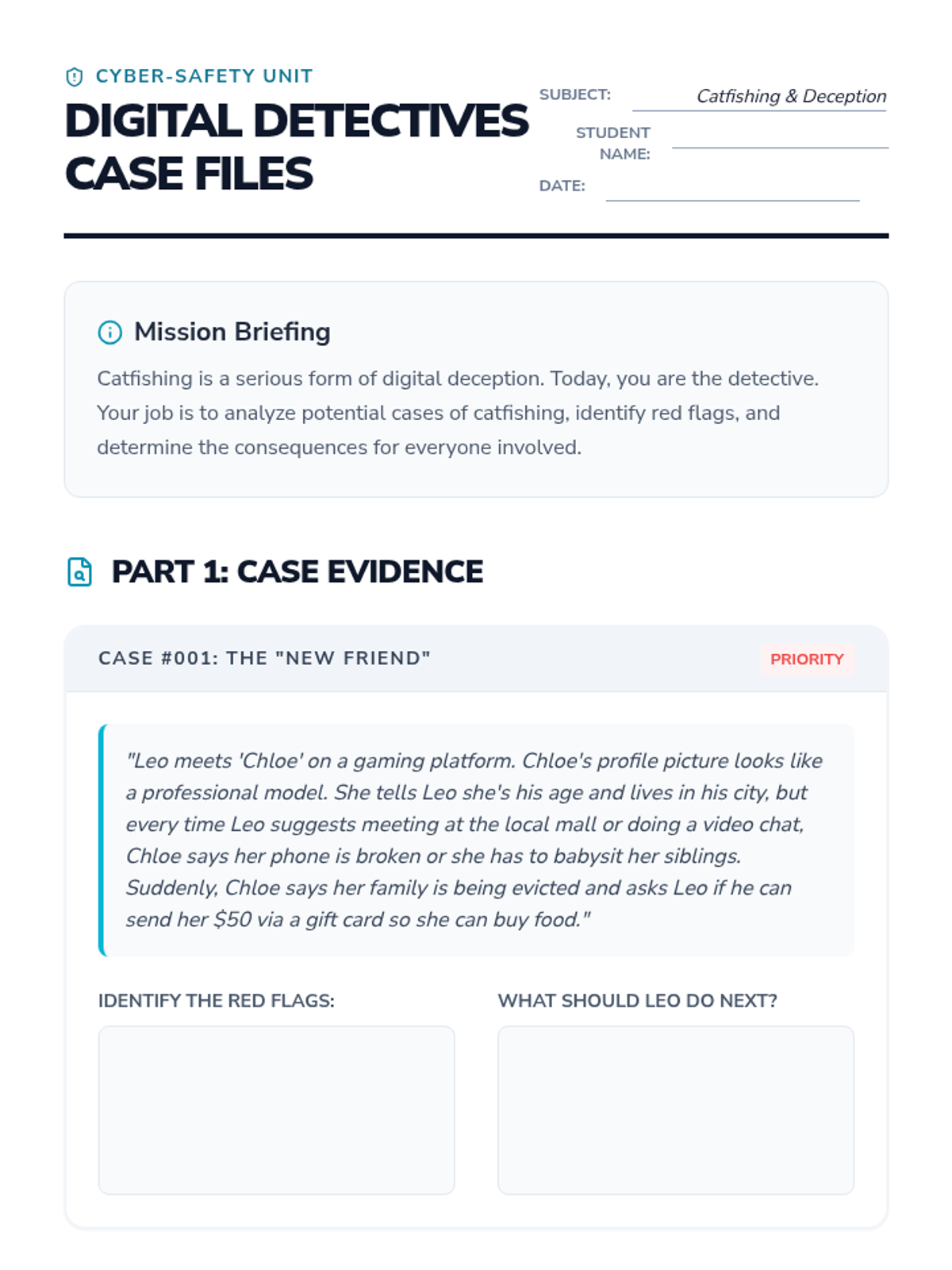
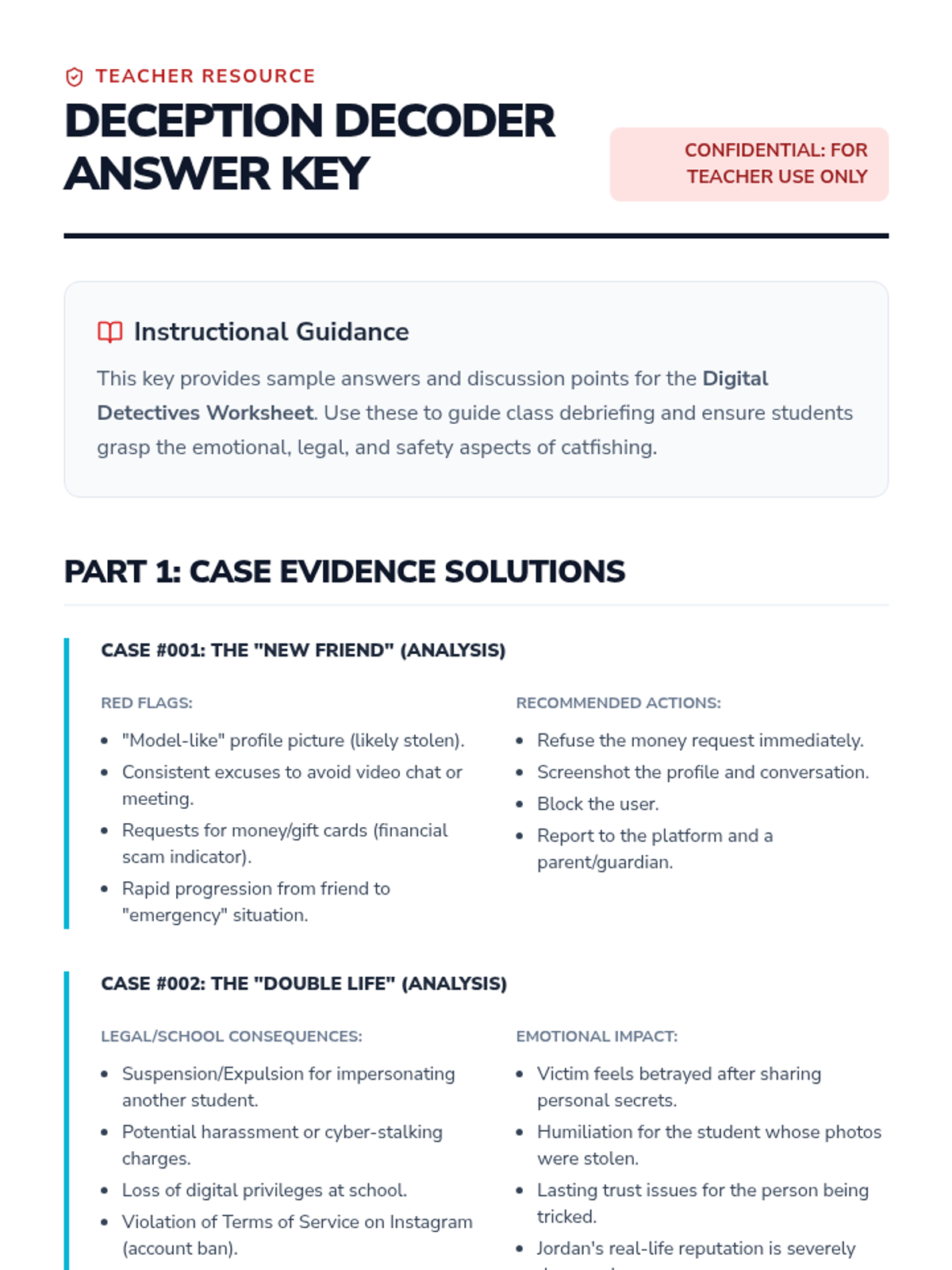
An introductory lesson on catfishing that explores the motivations behind digital deception, the red flags to watch for, and the severe emotional and legal consequences for all parties involved. Students will practice identifying suspicious behavior and learn concrete steps for reporting.
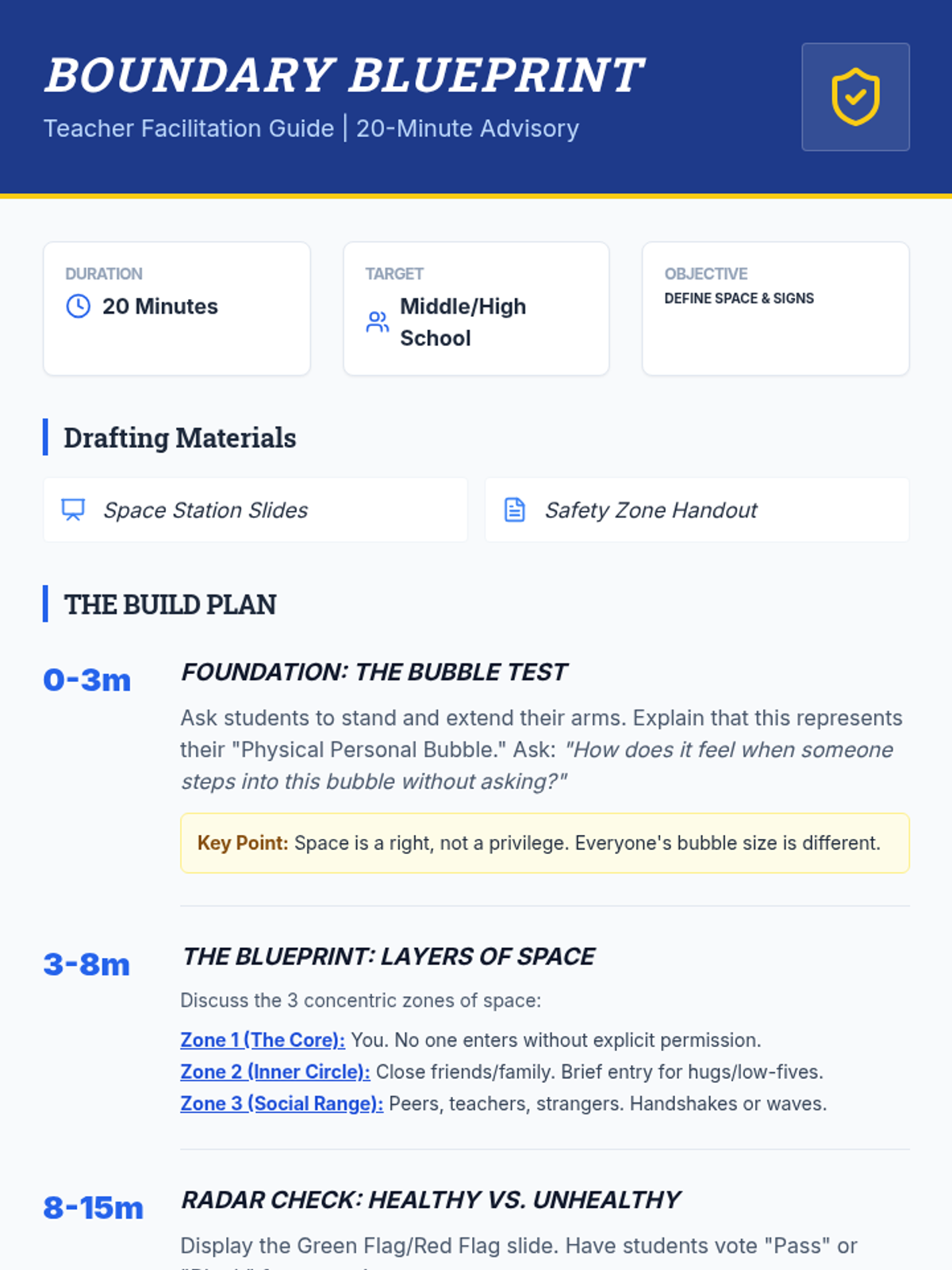
A 20-minute advisory lesson focused on physical boundaries and identifying healthy vs. unhealthy relationship traits using a 'Blueprint' theme.
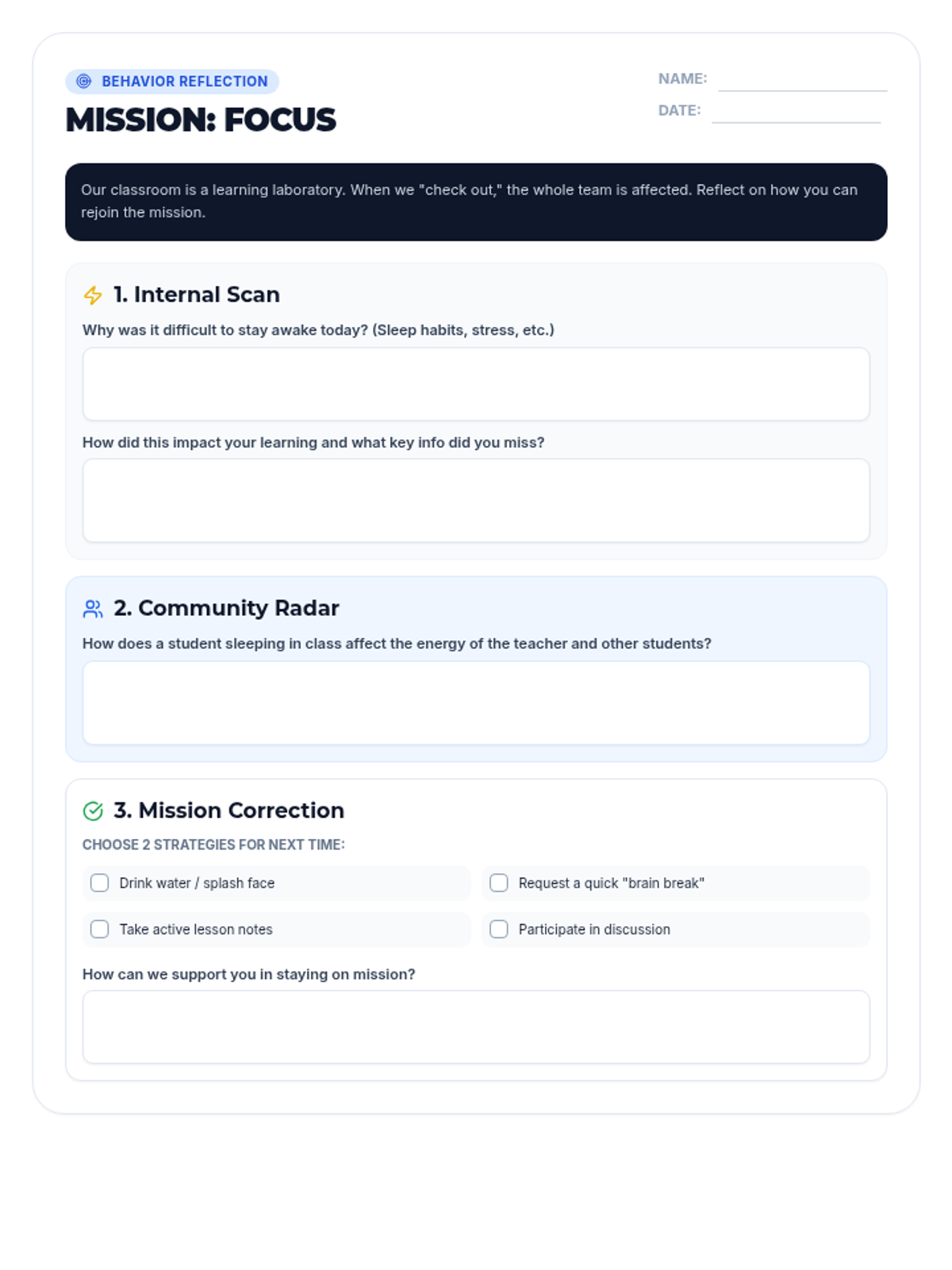
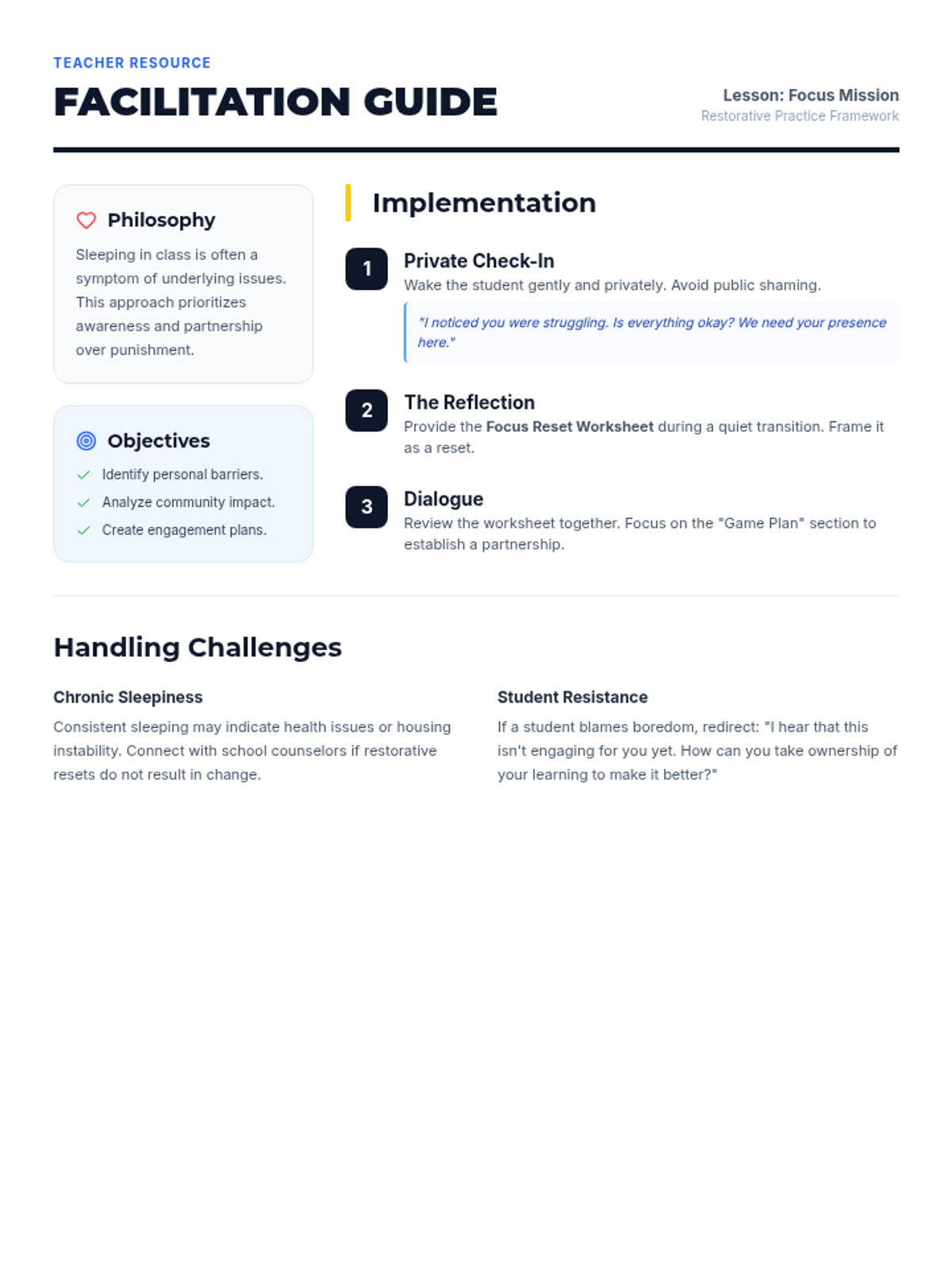
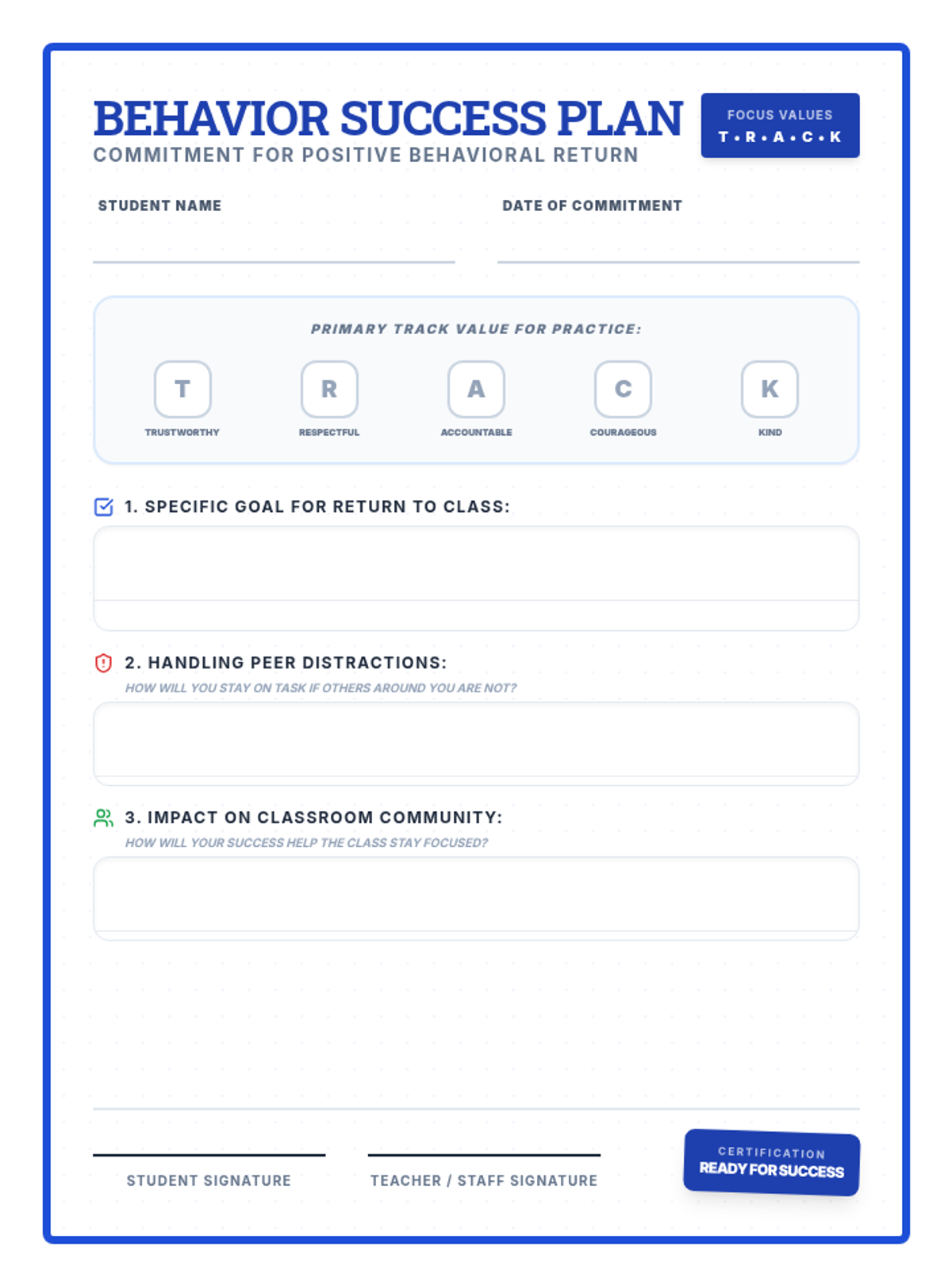
A restorative lesson designed to help students understand the importance of staying awake and engaged in class, focusing on personal success and classroom community respect.
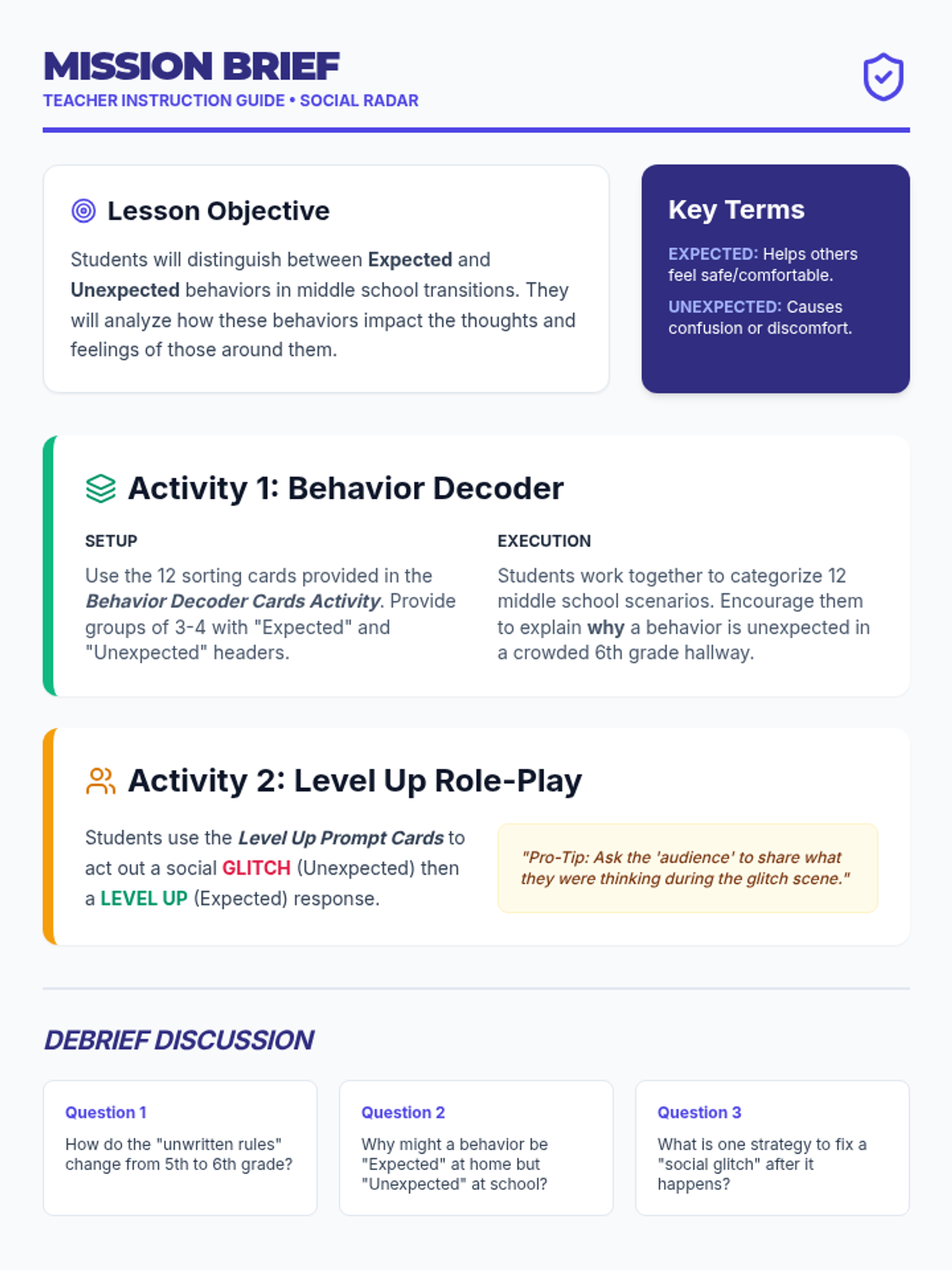
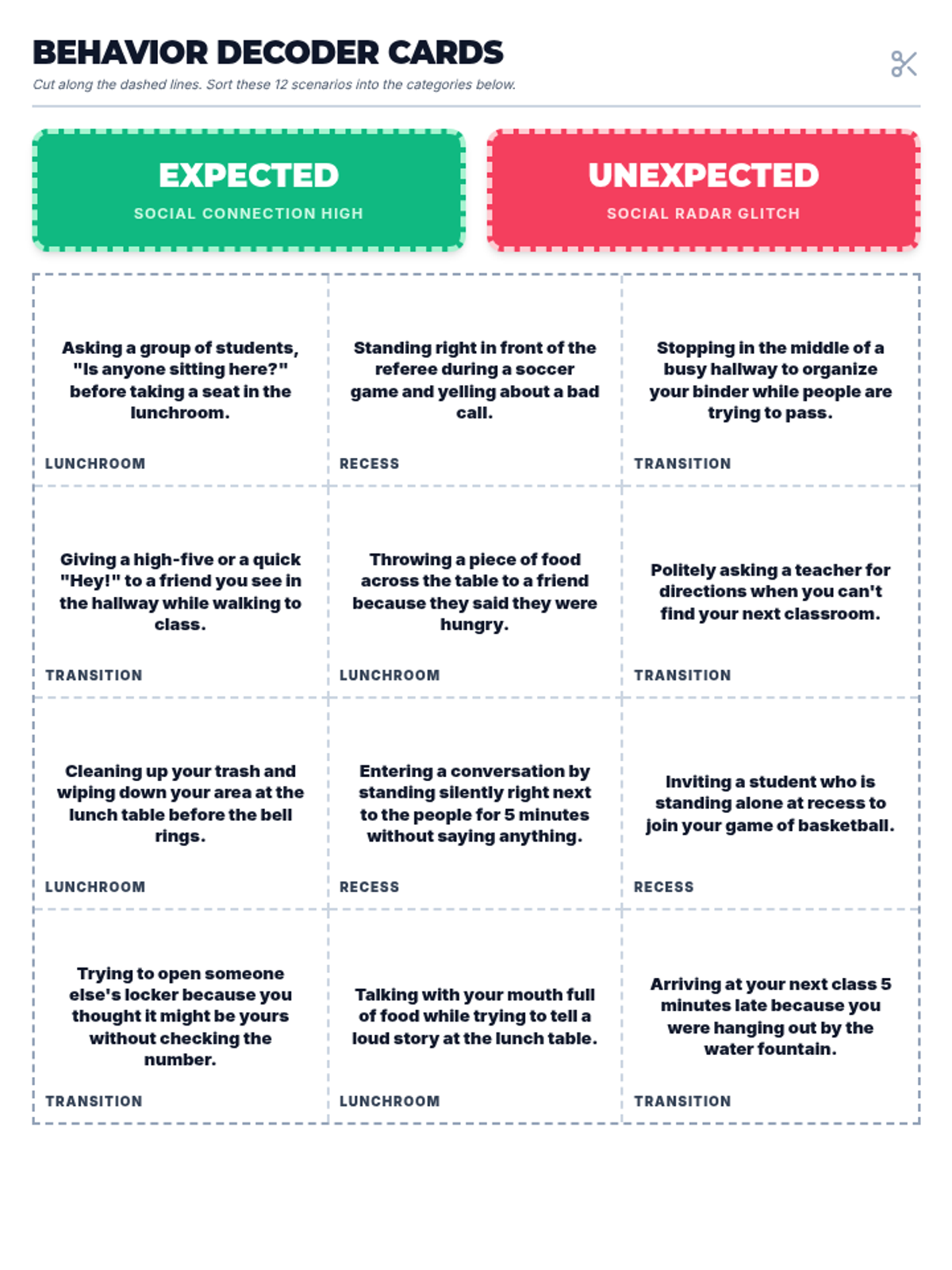
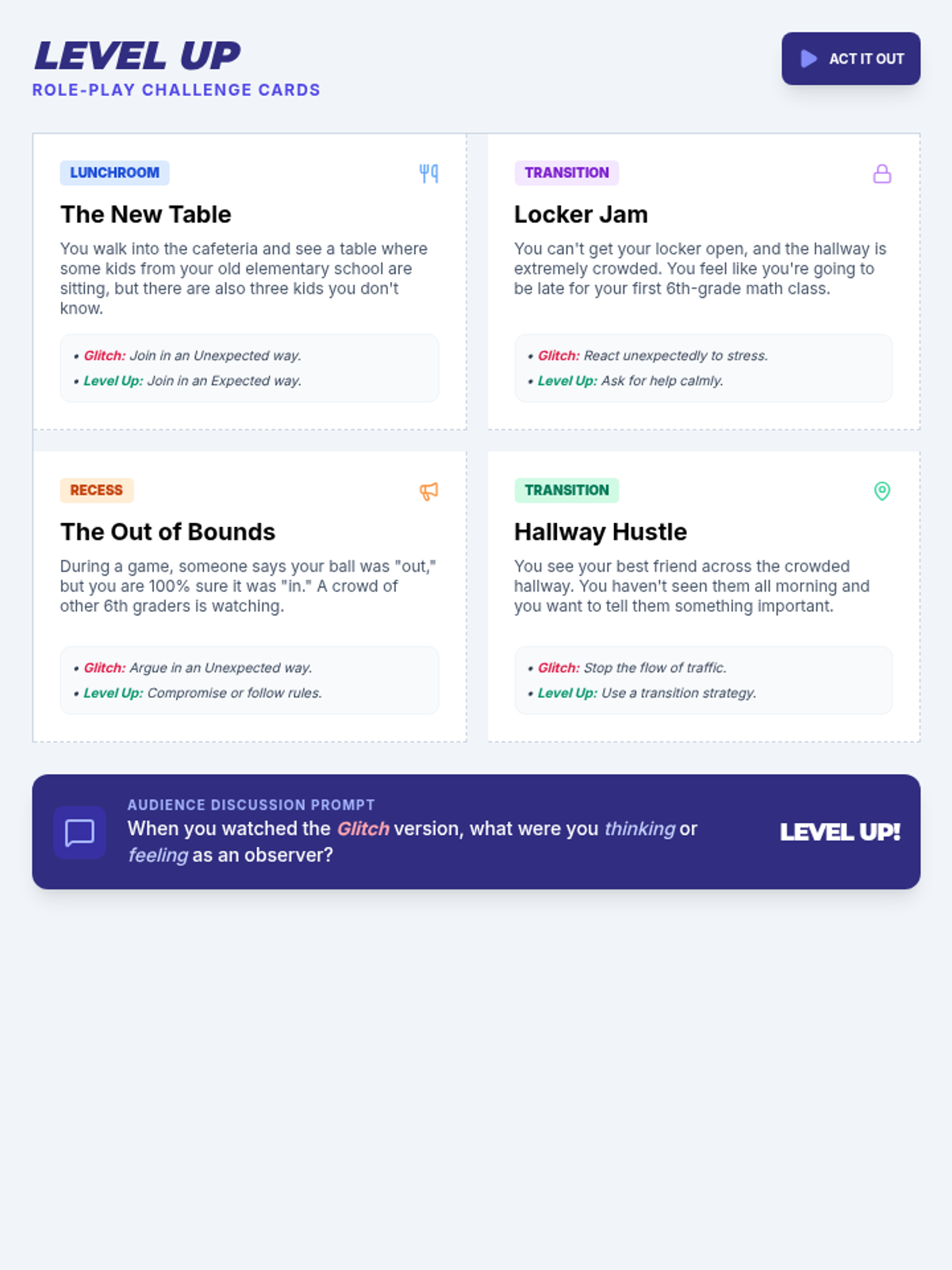
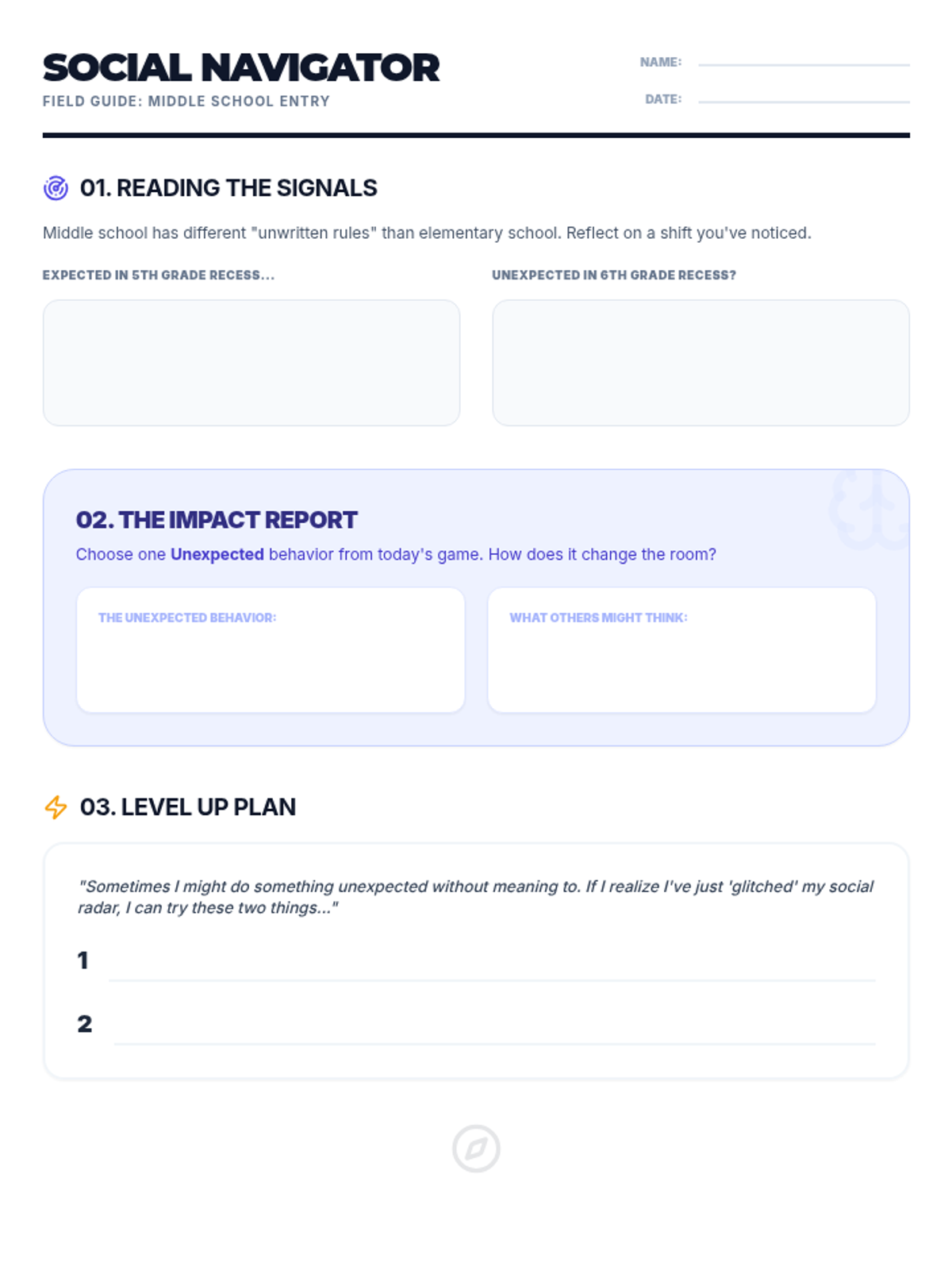
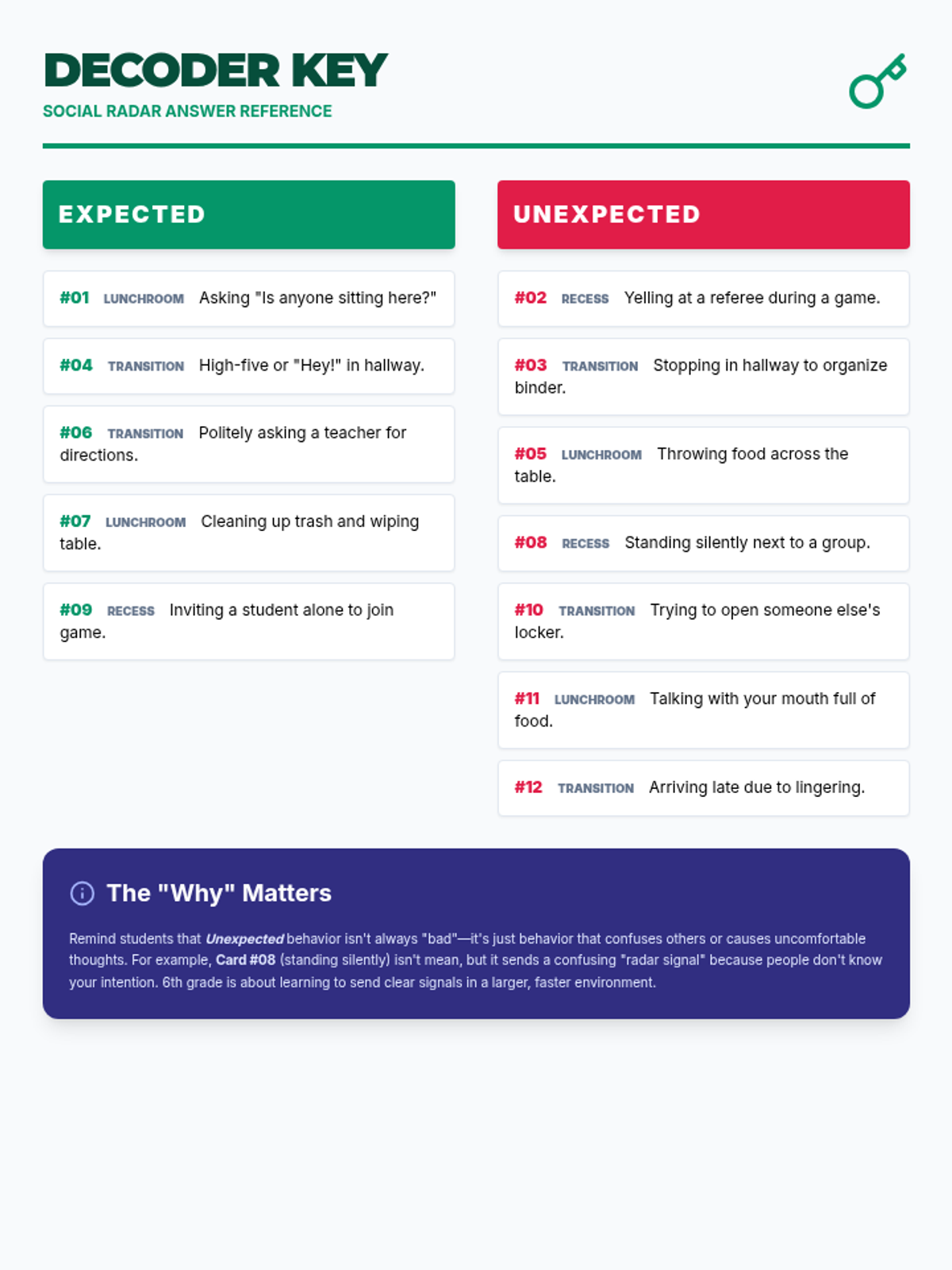
Students will learn to 'read the room' by identifying how their actions affect others' thoughts and feelings in new middle school environments.
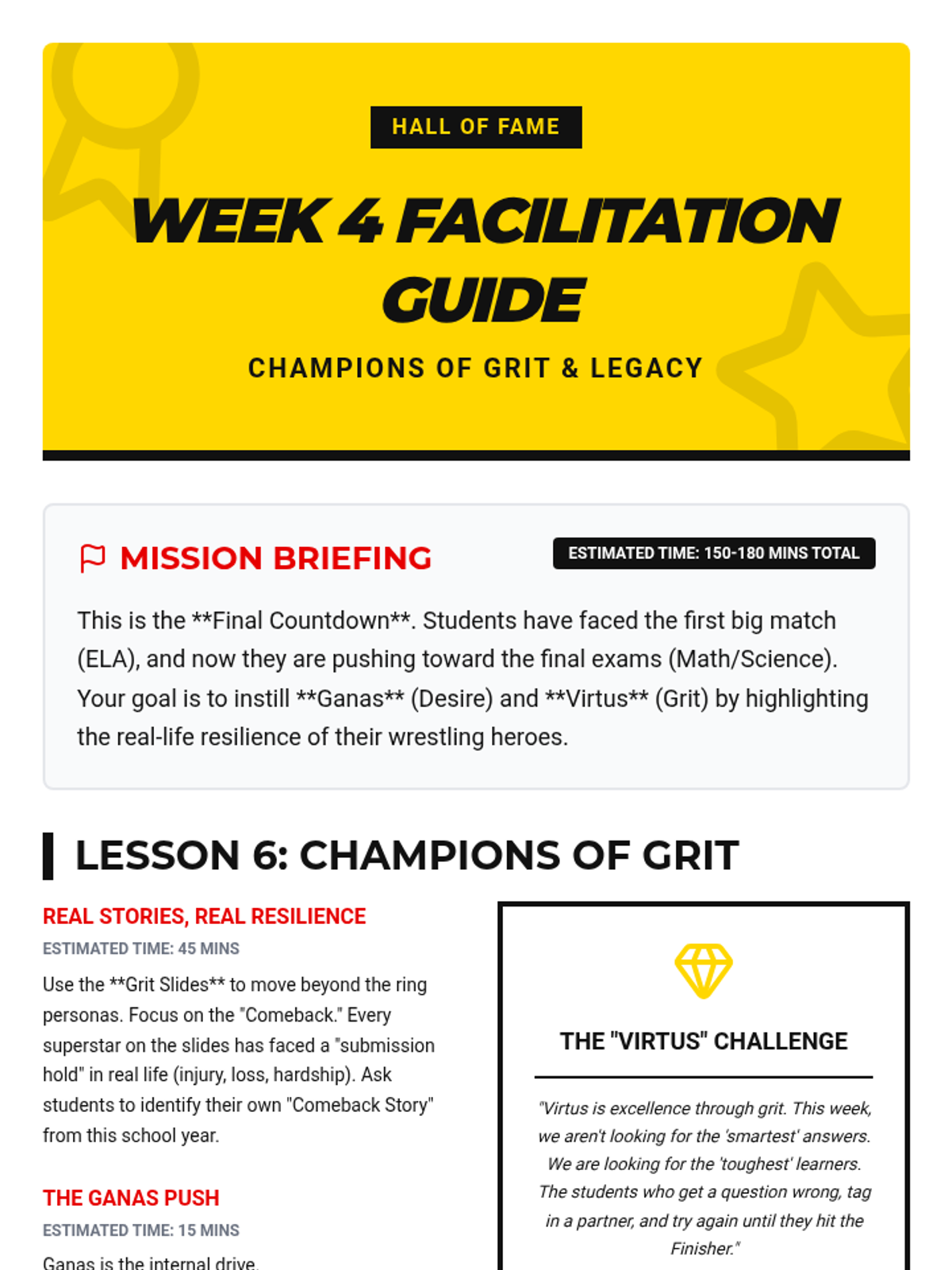
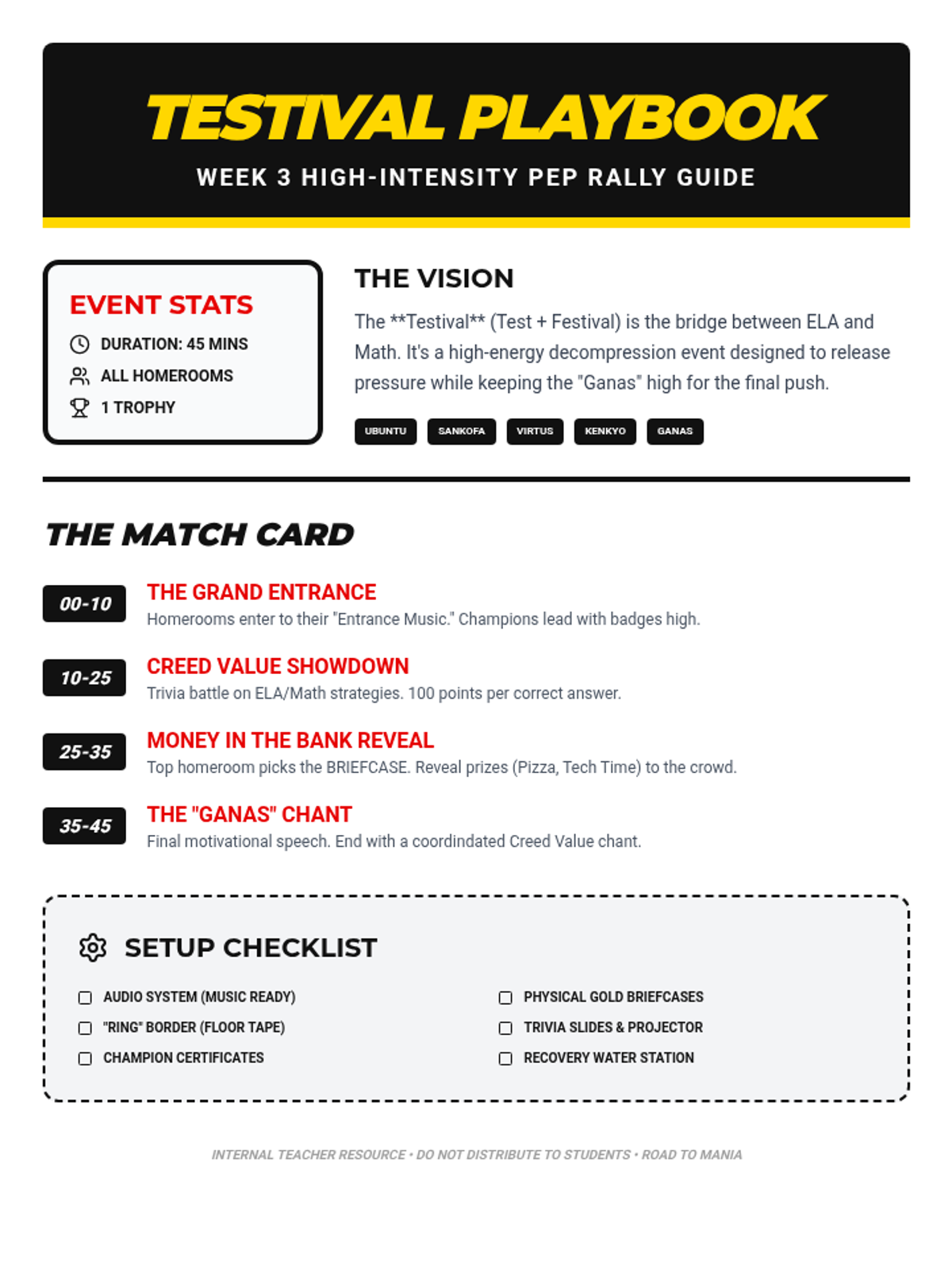
Examining real-life challenges faced by WWE stars to inspire resilience, grit, and the 'Ganas' required for the final push.
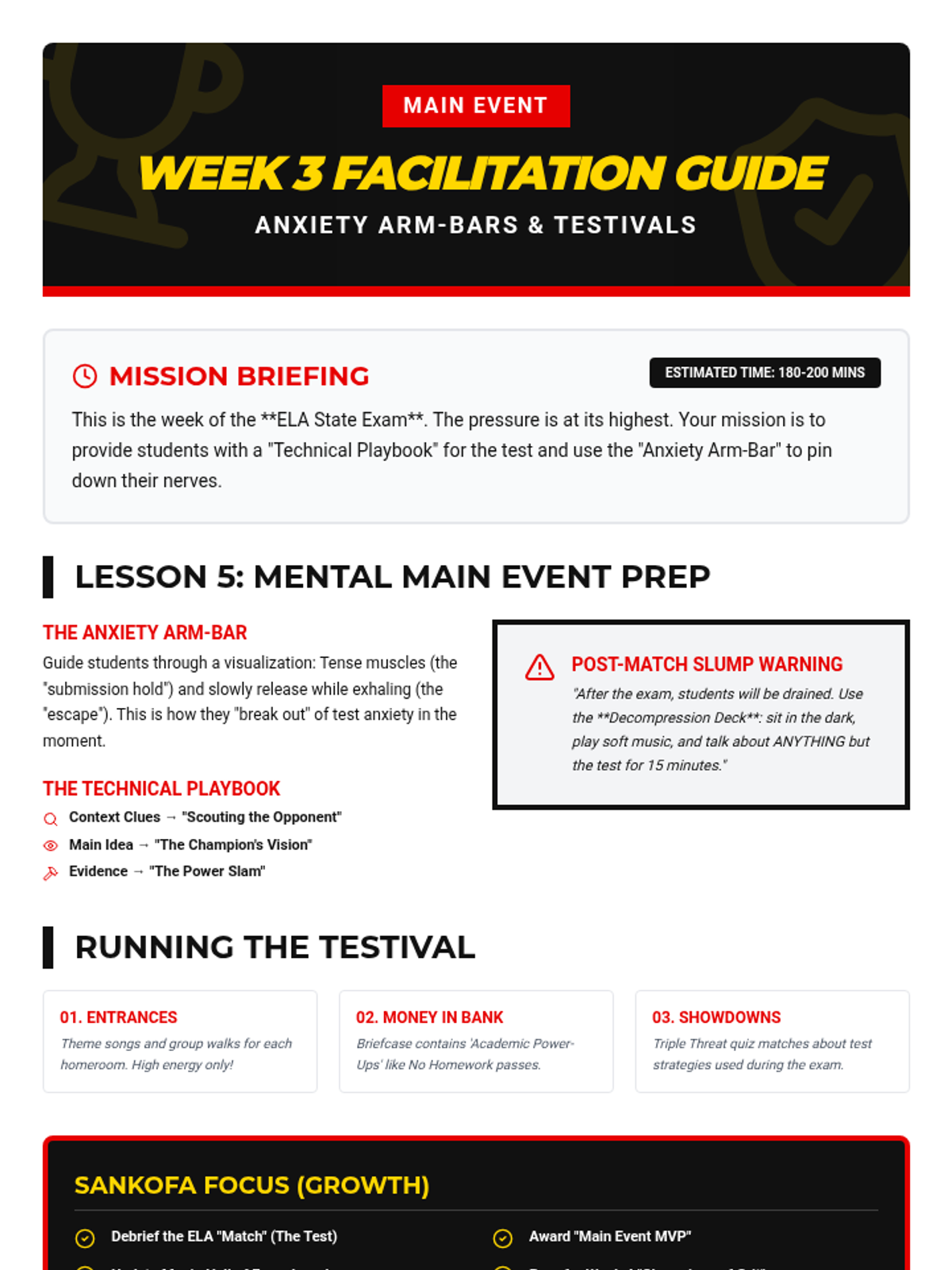
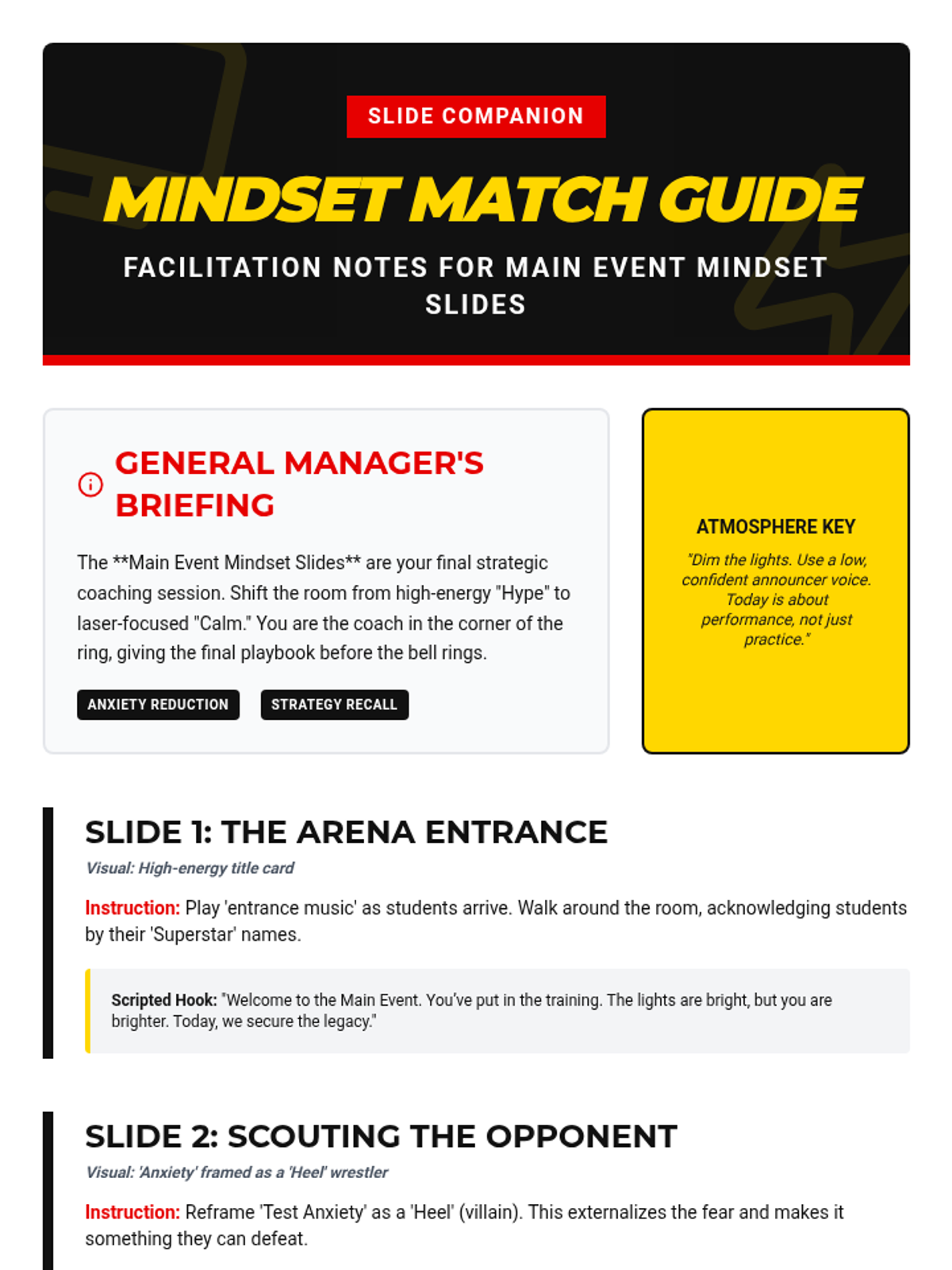
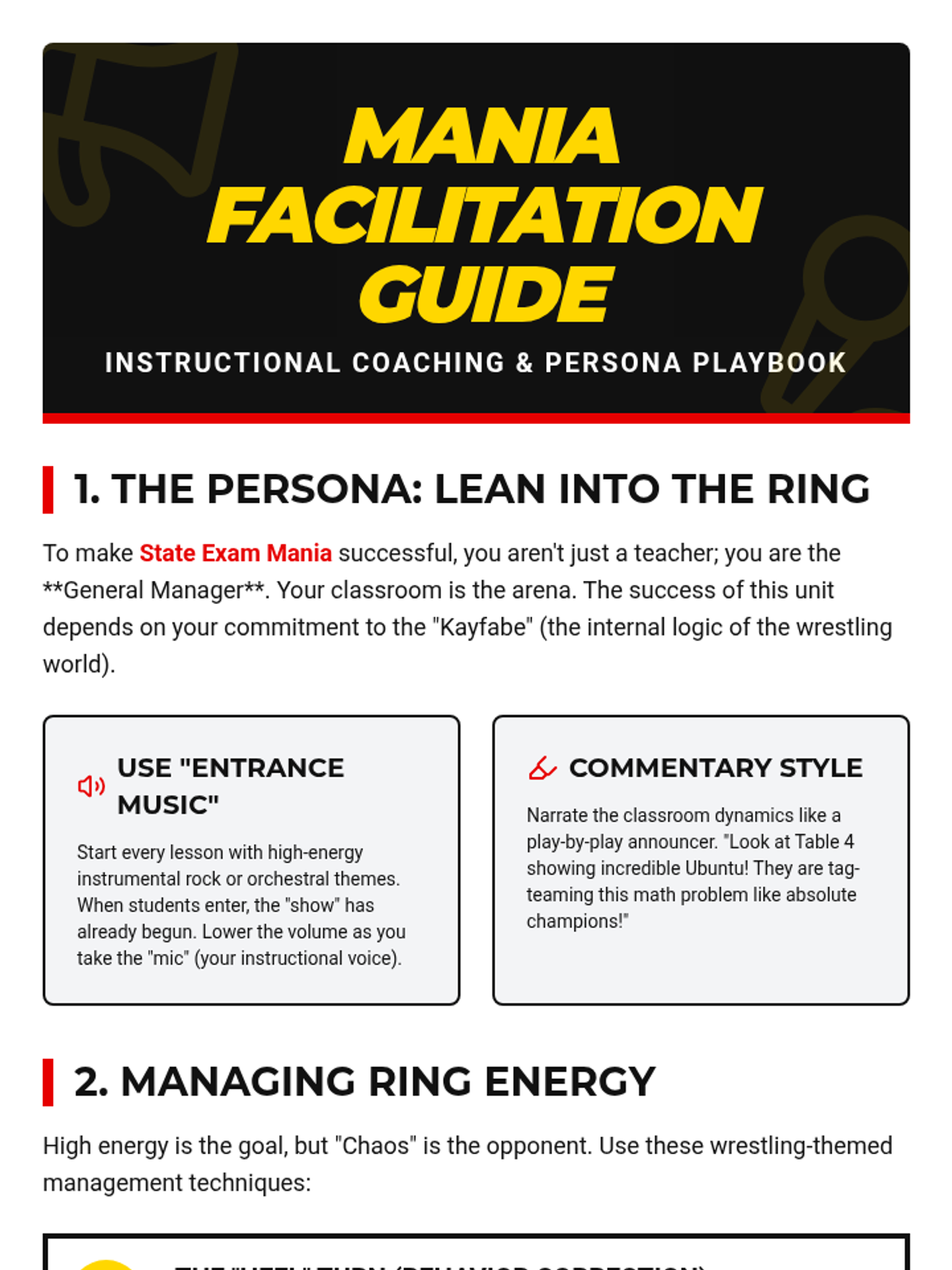
Addressing test anxiety and ELA state exam preparation, including decompression strategies to stay 'main event' ready.
A high-energy activity focusing on inclusivity and celebrating different ways of thinking and 'wrestling' with challenges.
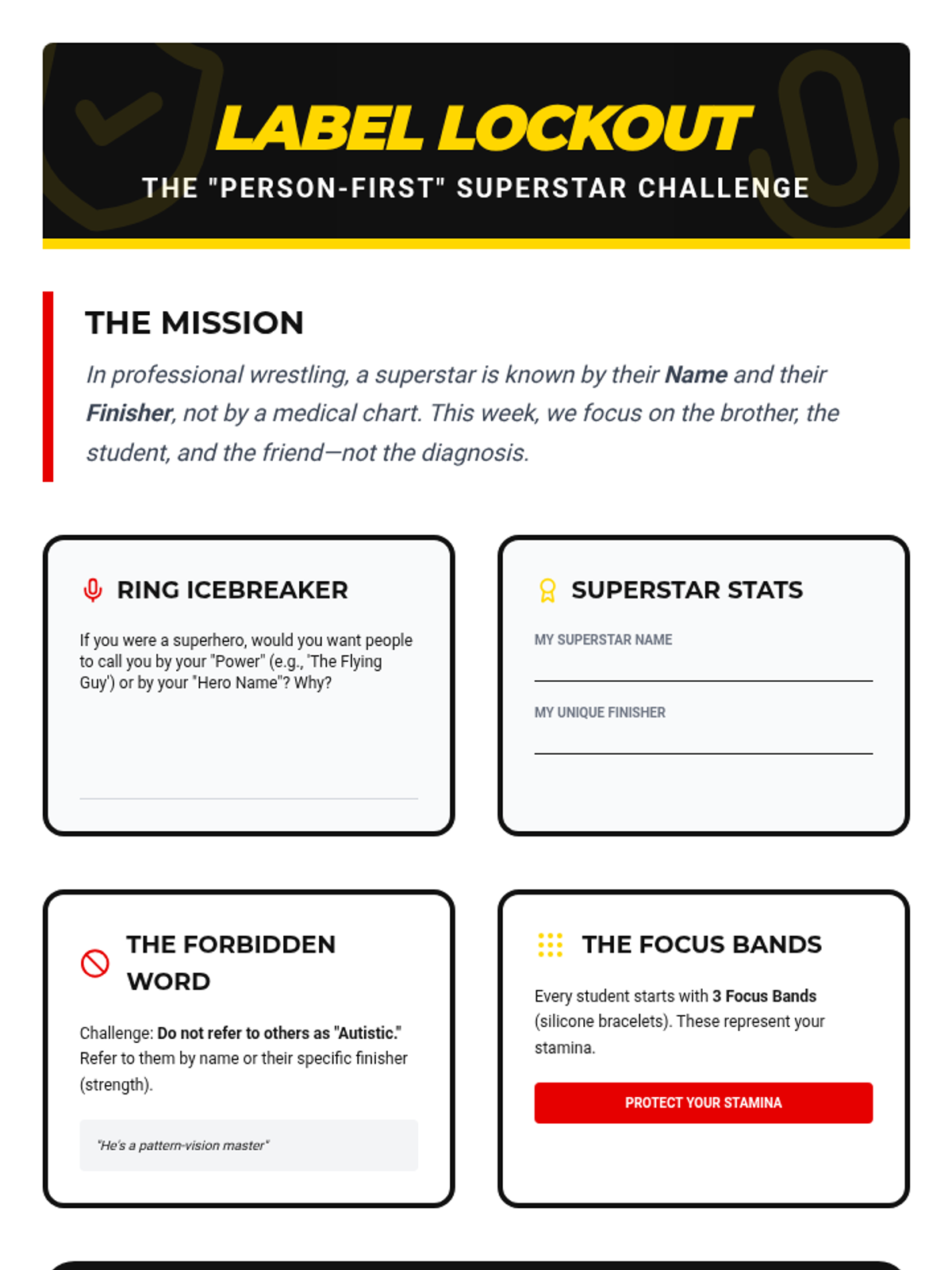
The first of two activities celebrating Autism Acceptance Week, highlighting the unique 'finishers' and strengths of neurodivergent individuals.
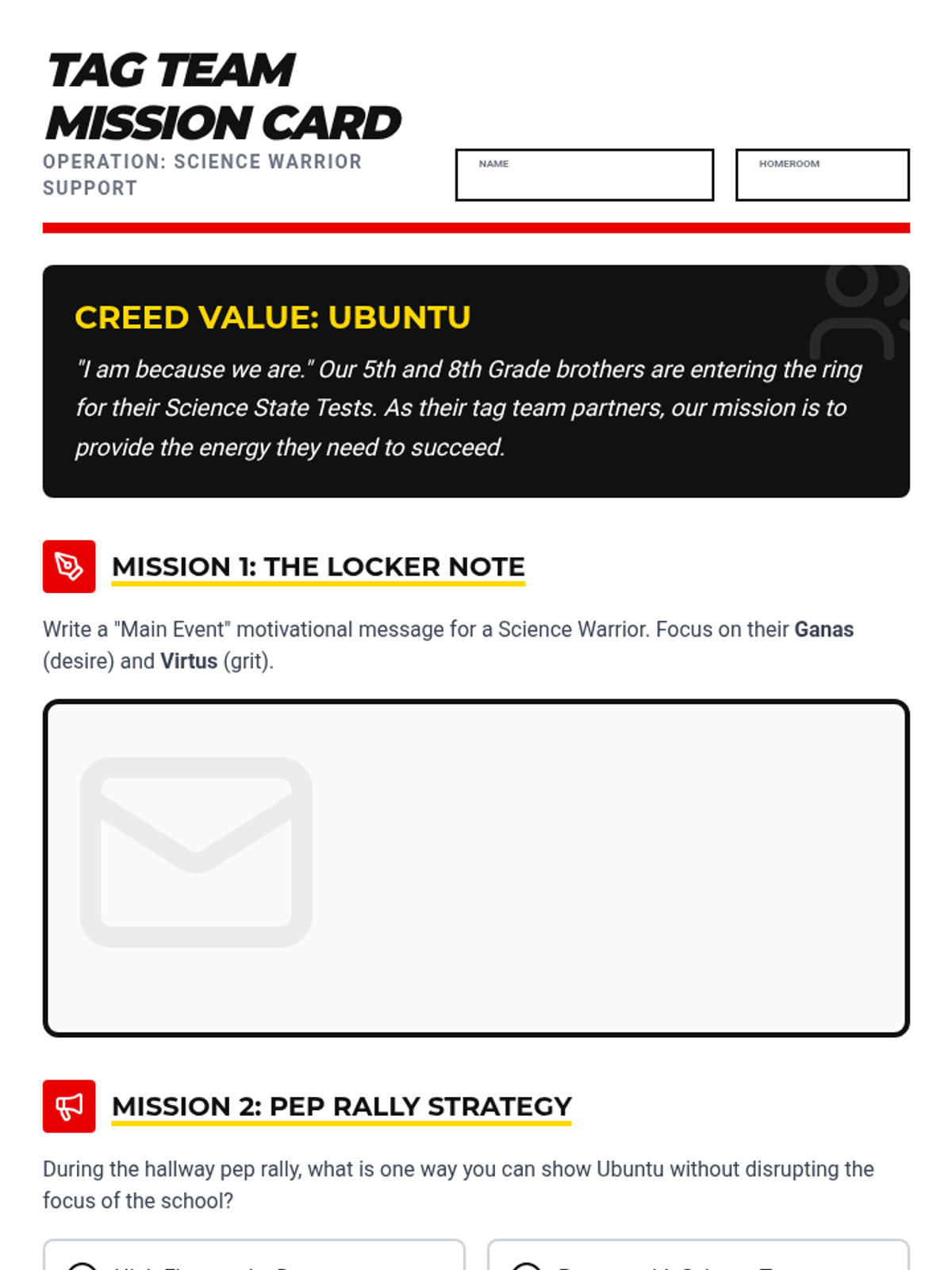
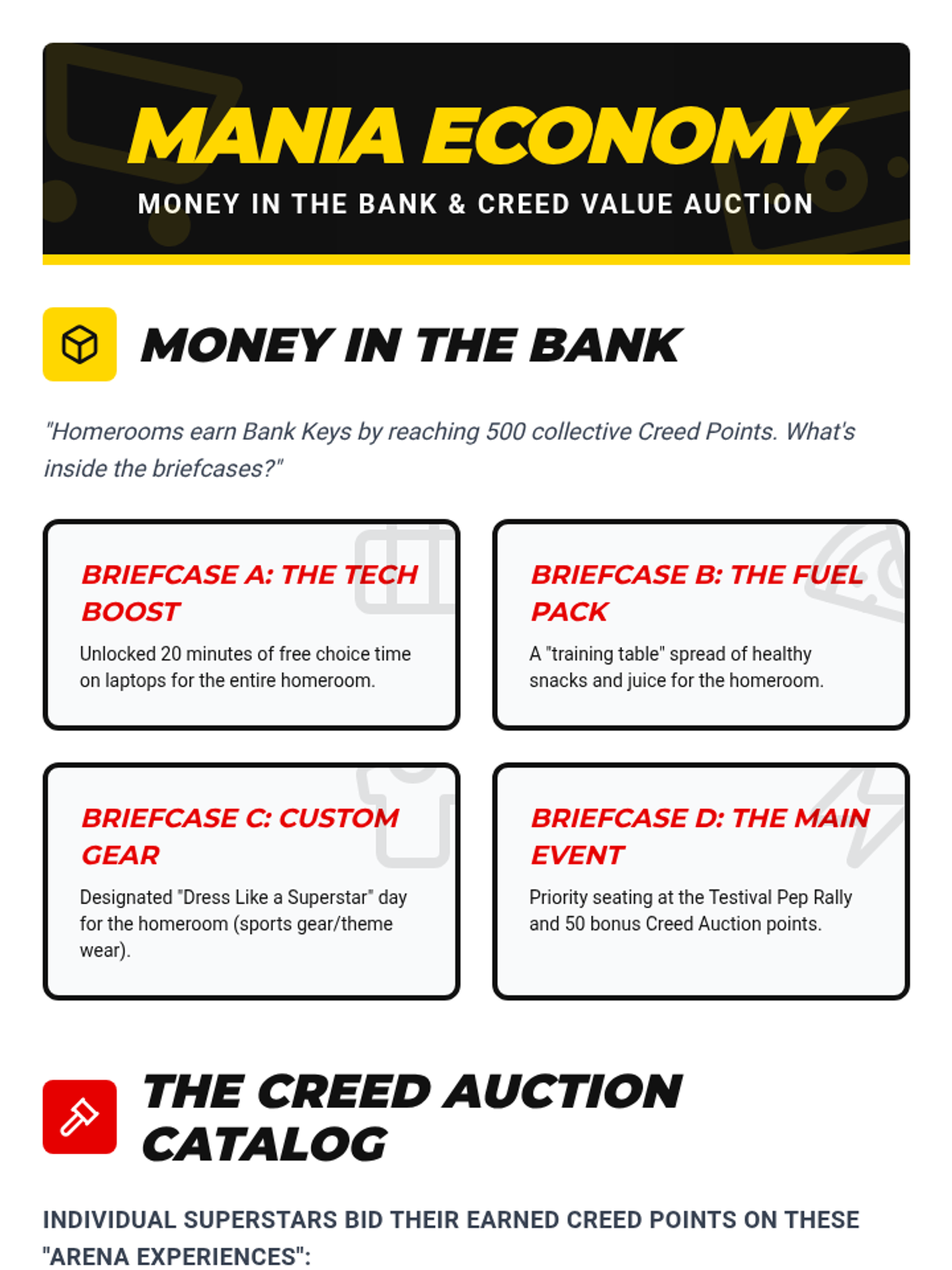
Focus on the Creed Value of Ubuntu and brotherhood, preparing students to support their peers during science test pep rallies.
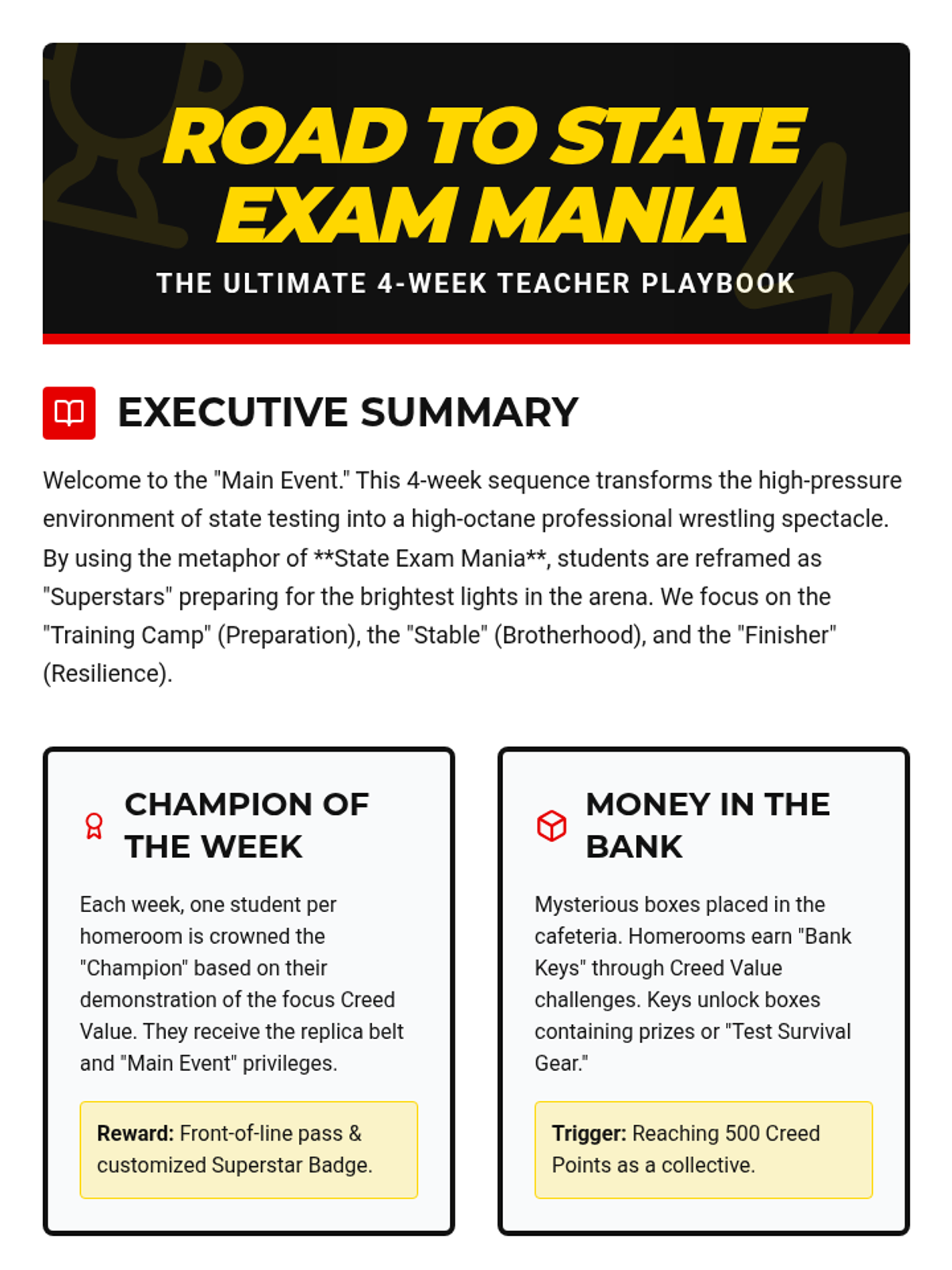
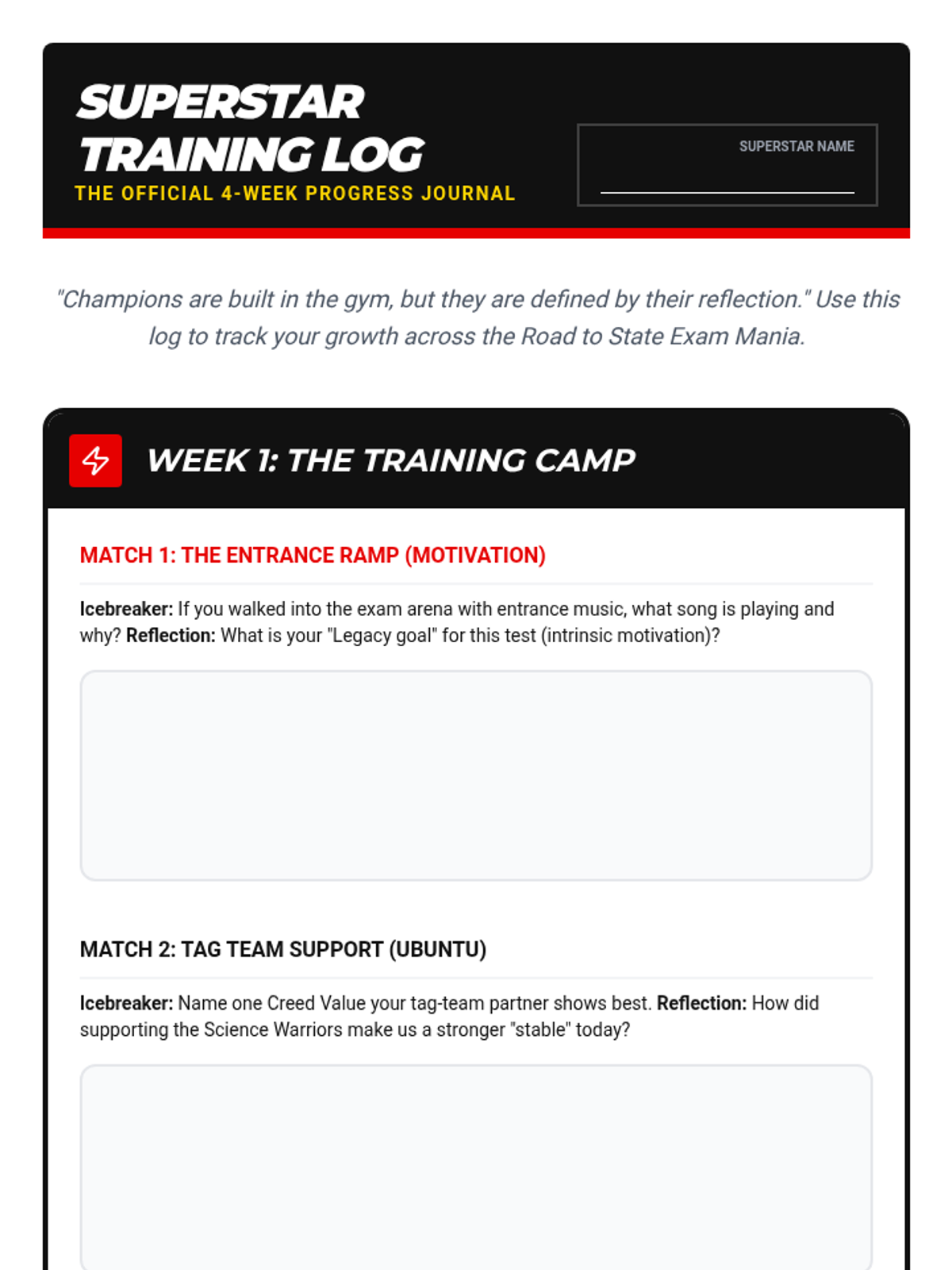
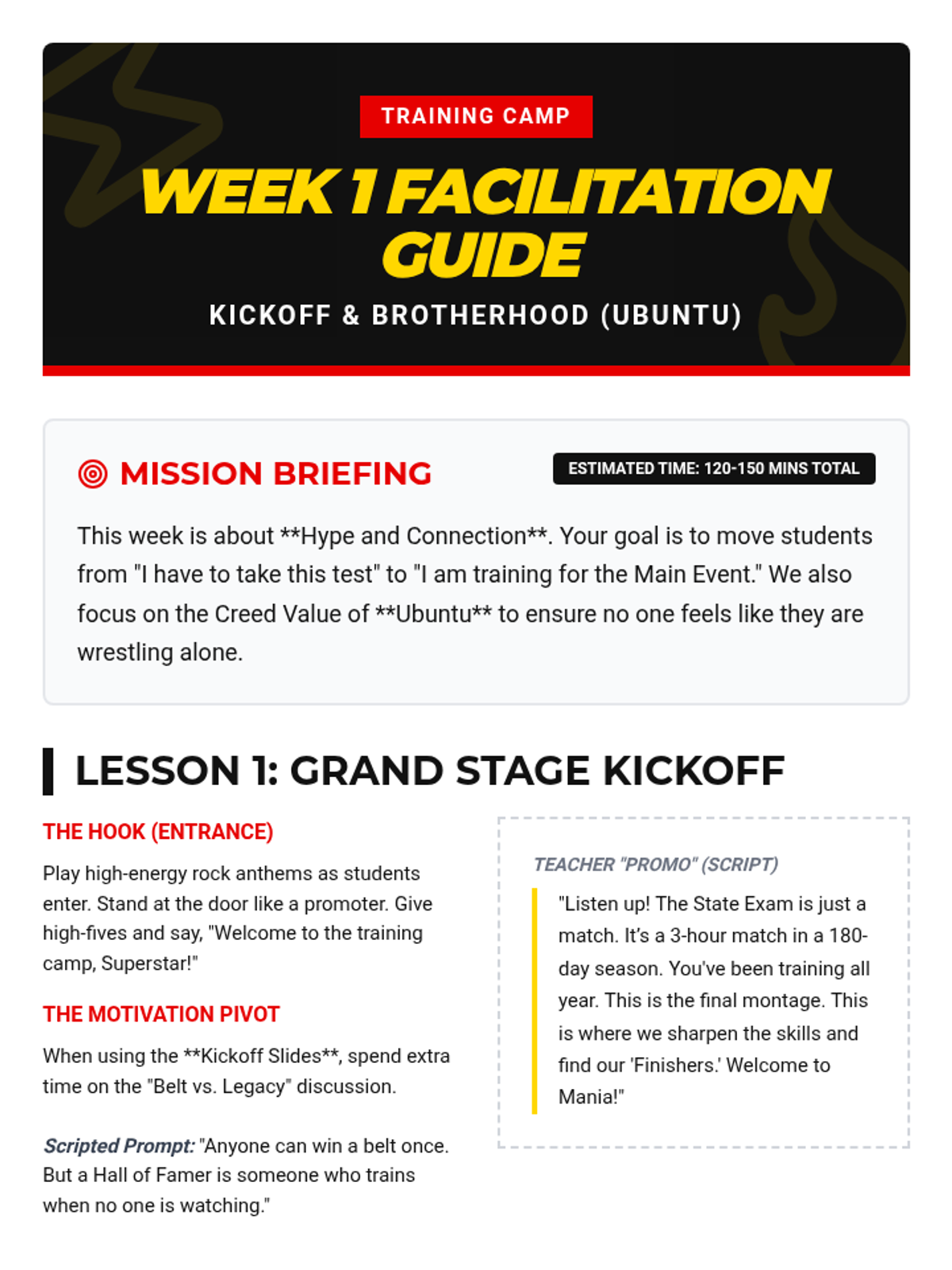
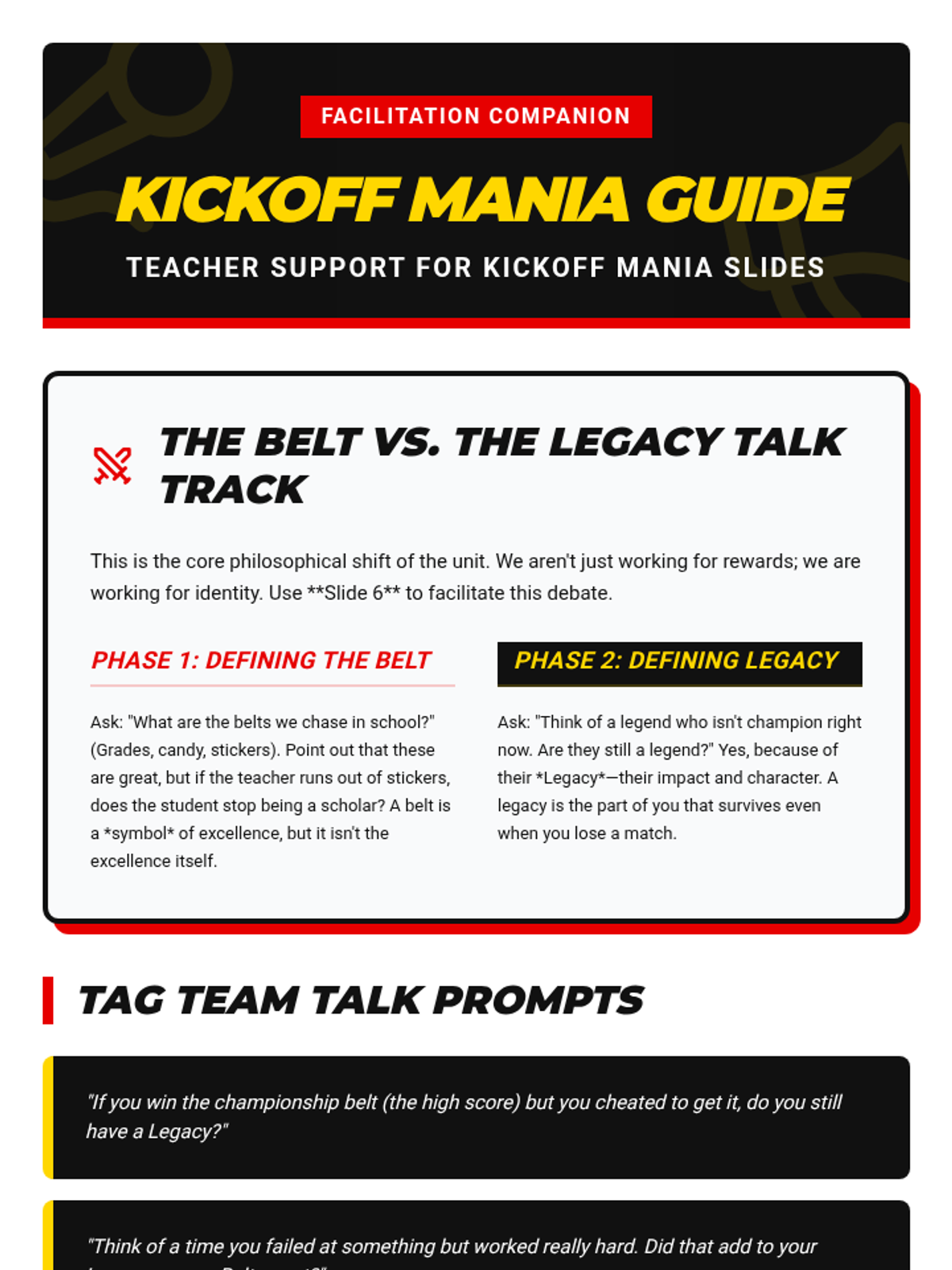
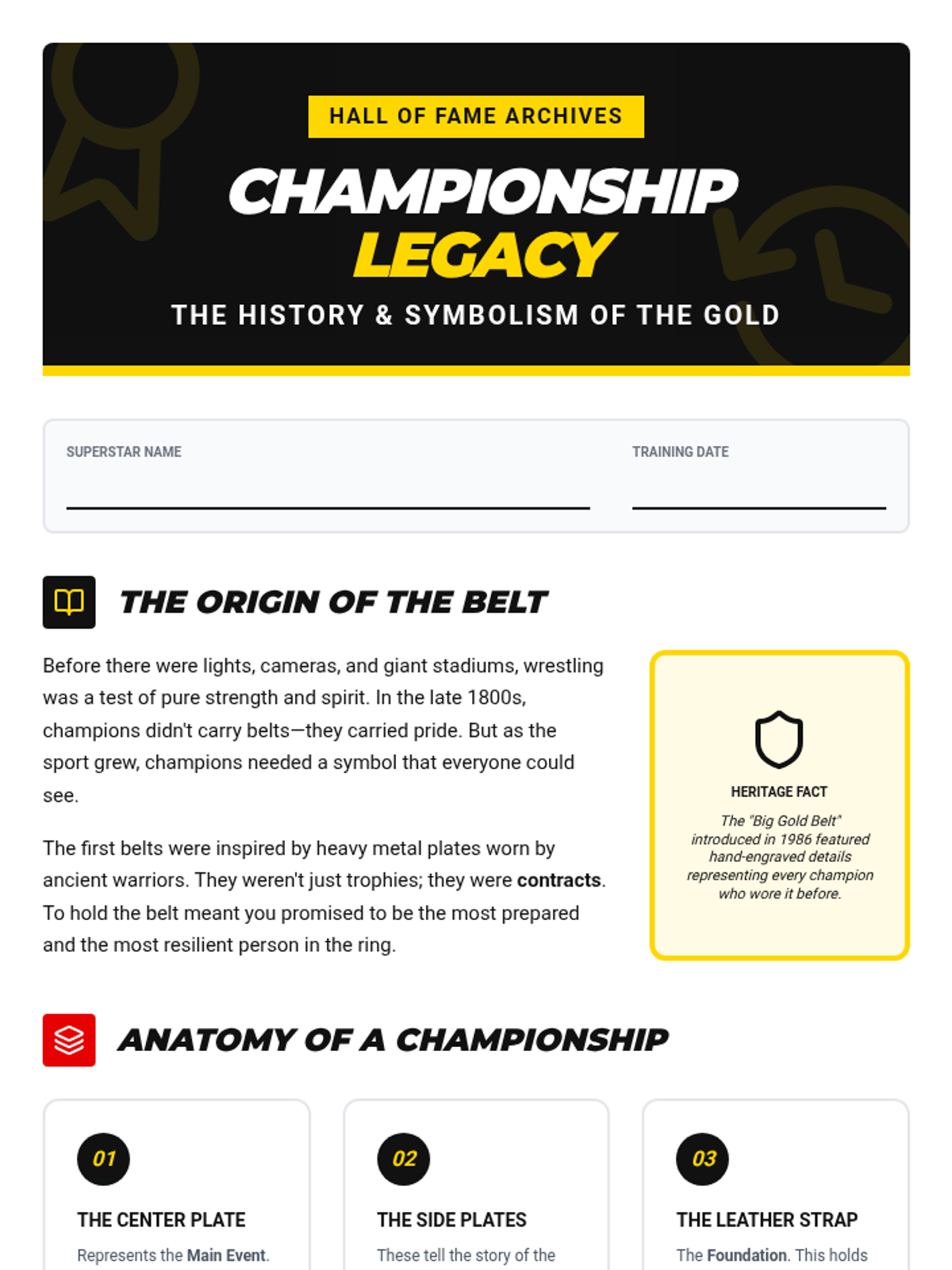
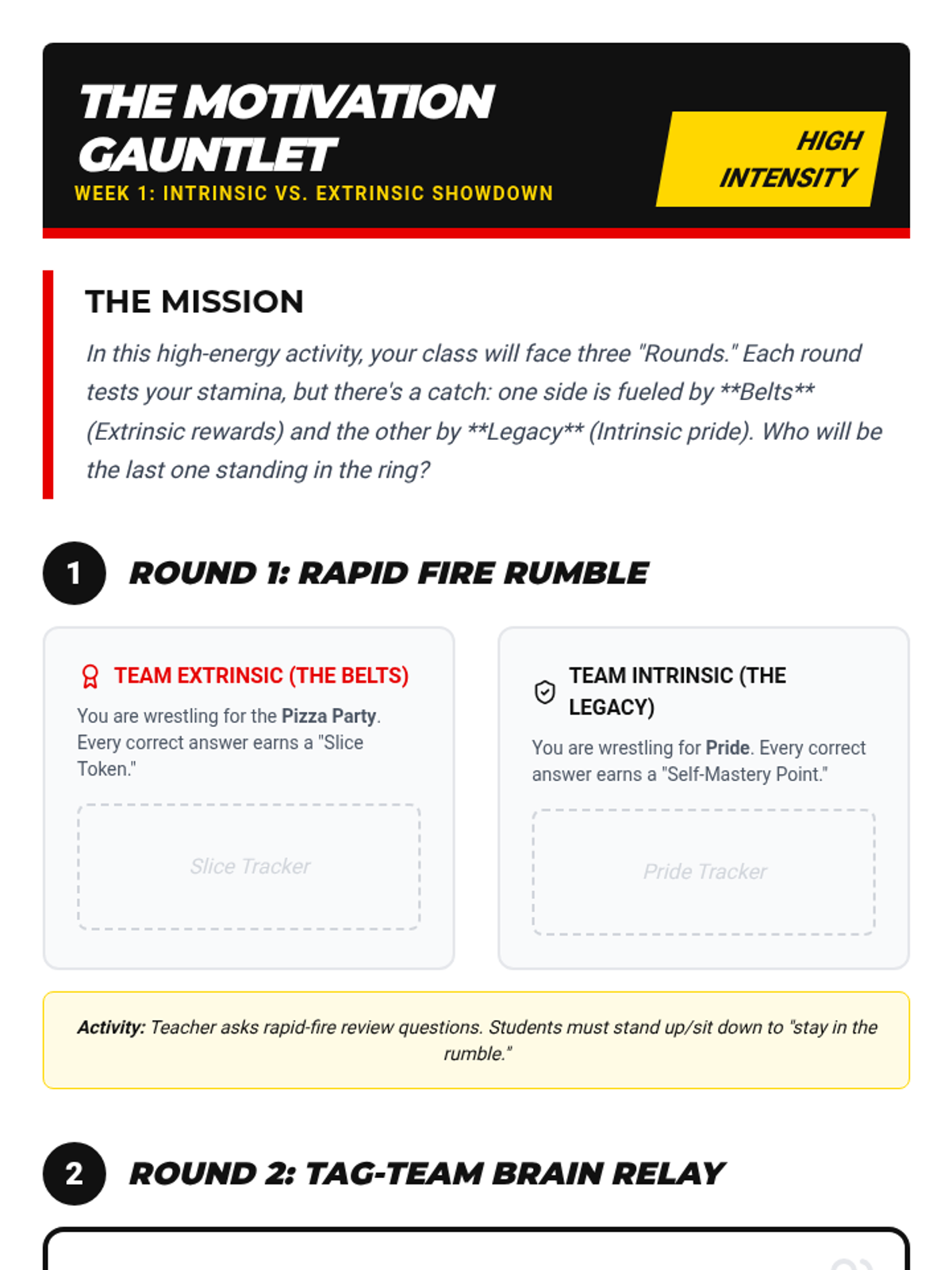
Introduce the 'State Exam Mania' theme, focusing on the difference between intrinsic and extrinsic motivation using the metaphor of championship belts vs. personal legacy.
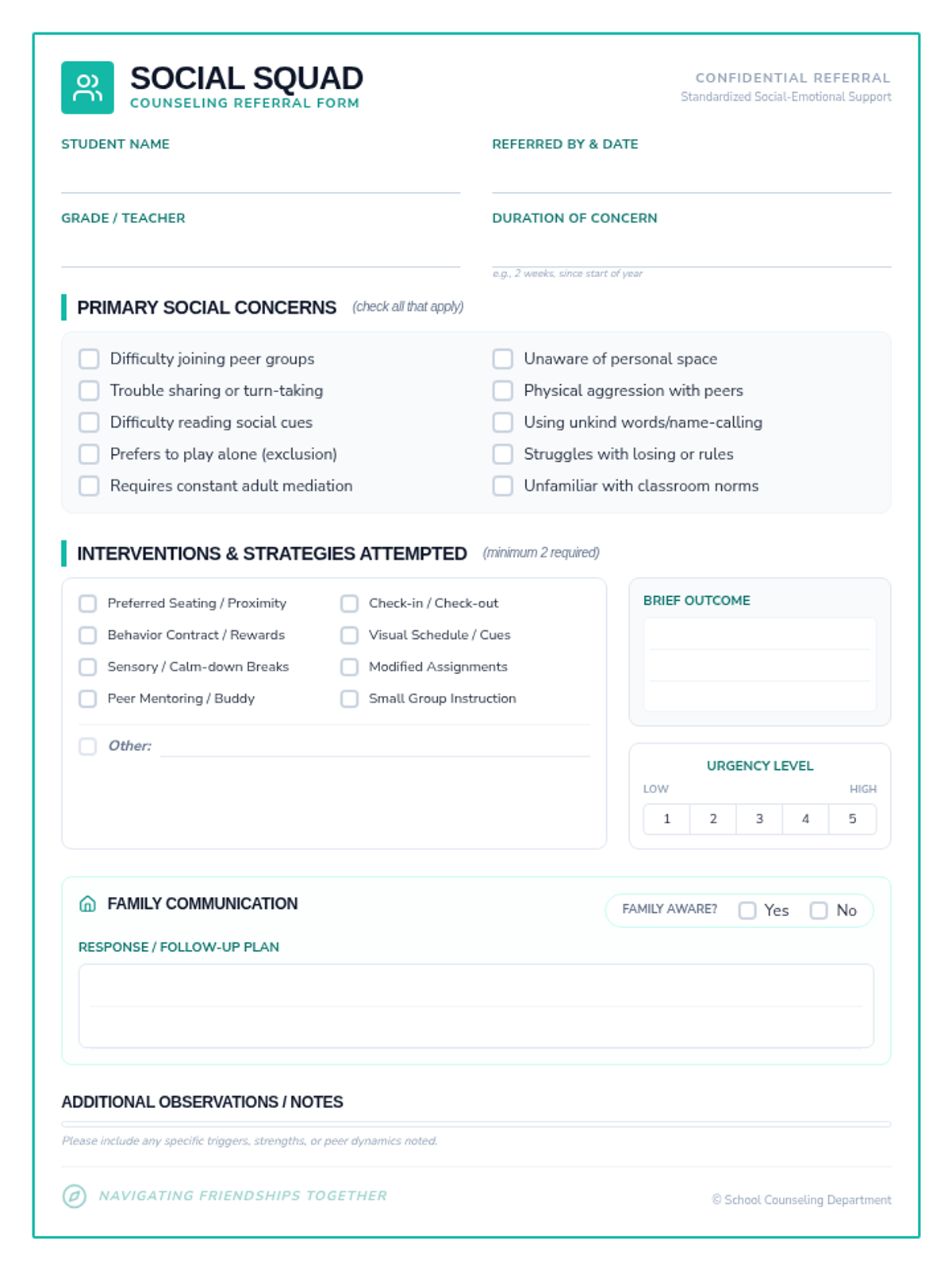
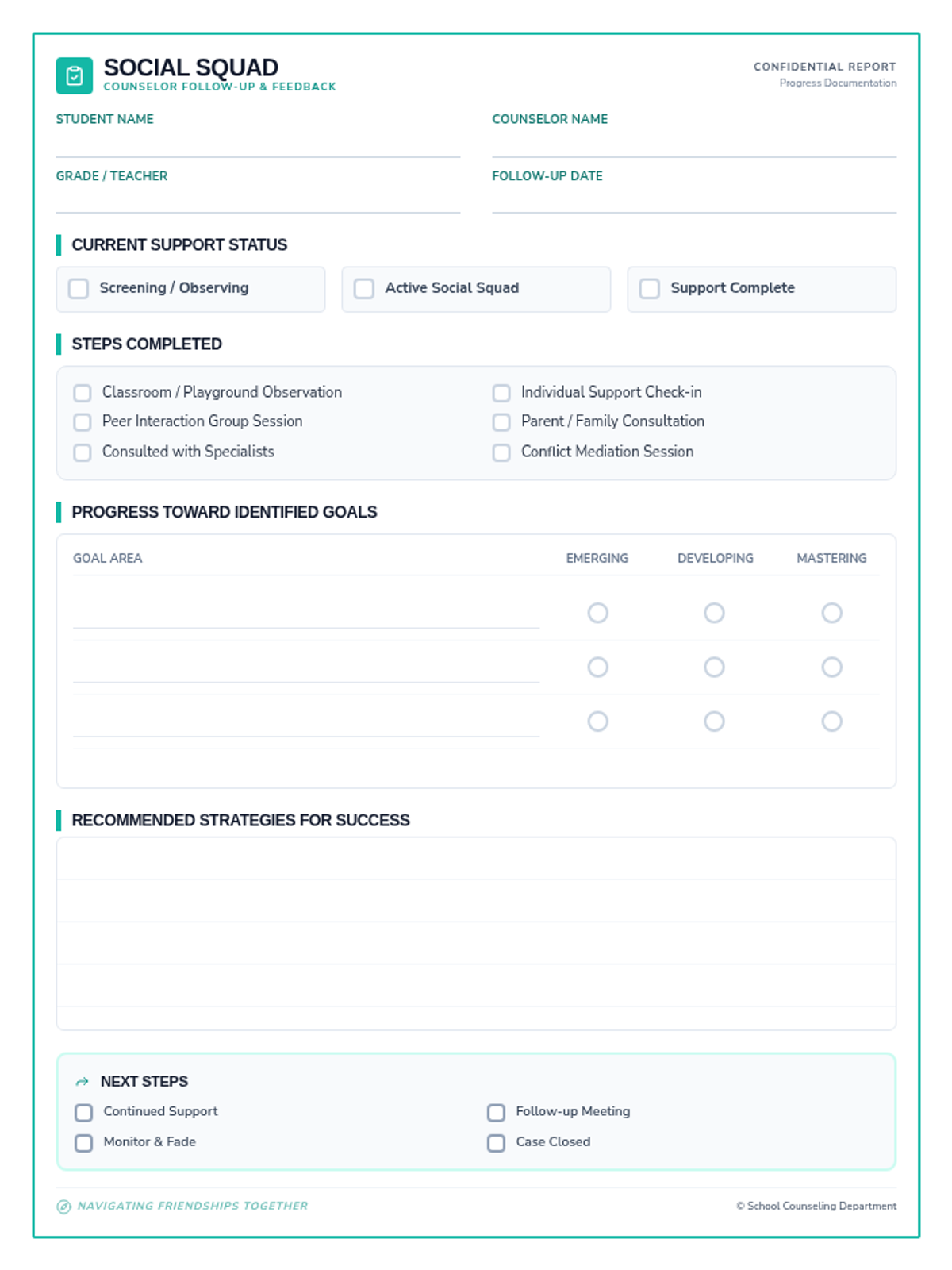
A suite of professional school counseling forms for managing student referrals, tracking progress, and providing feedback to teachers and families.
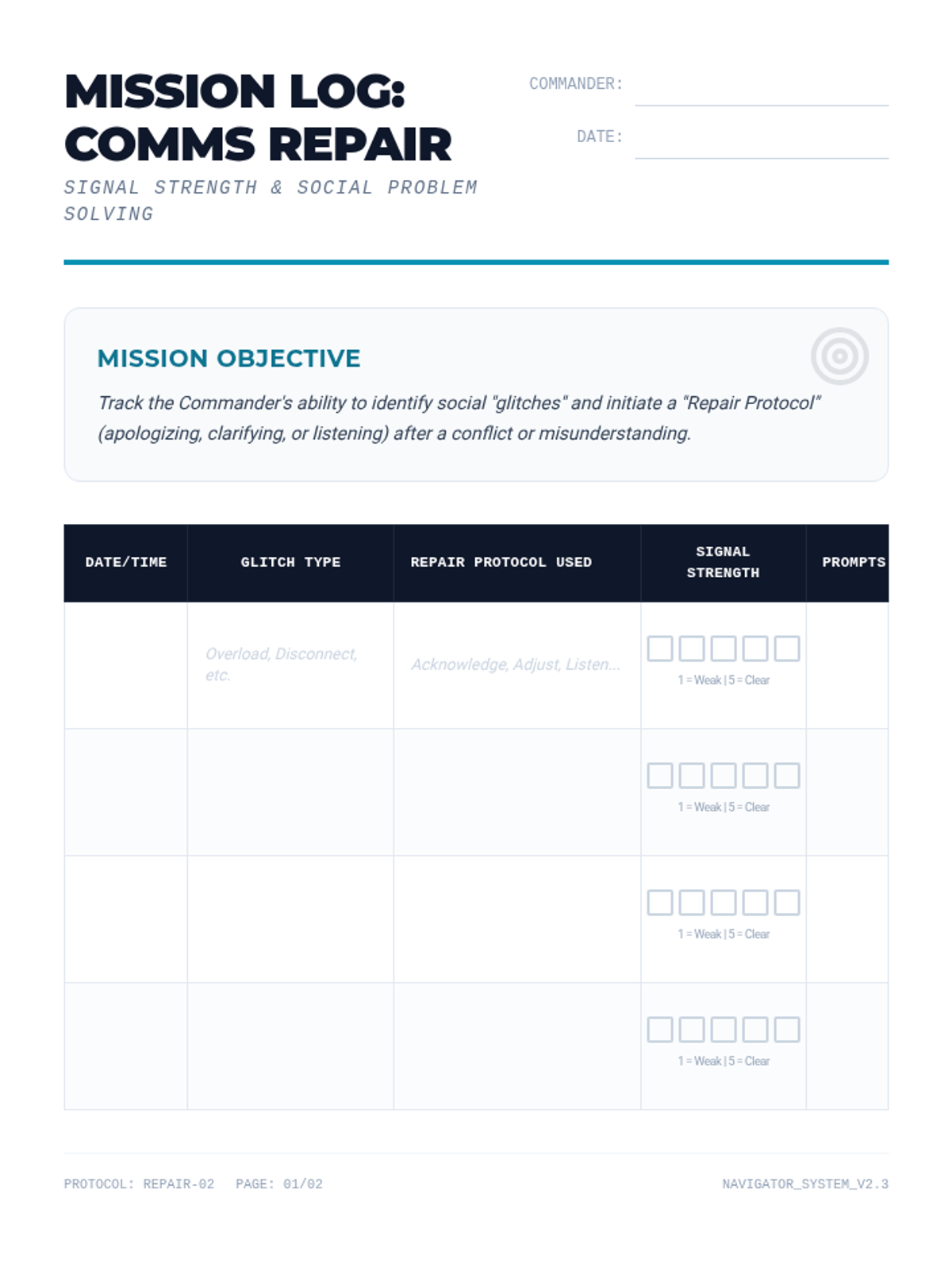
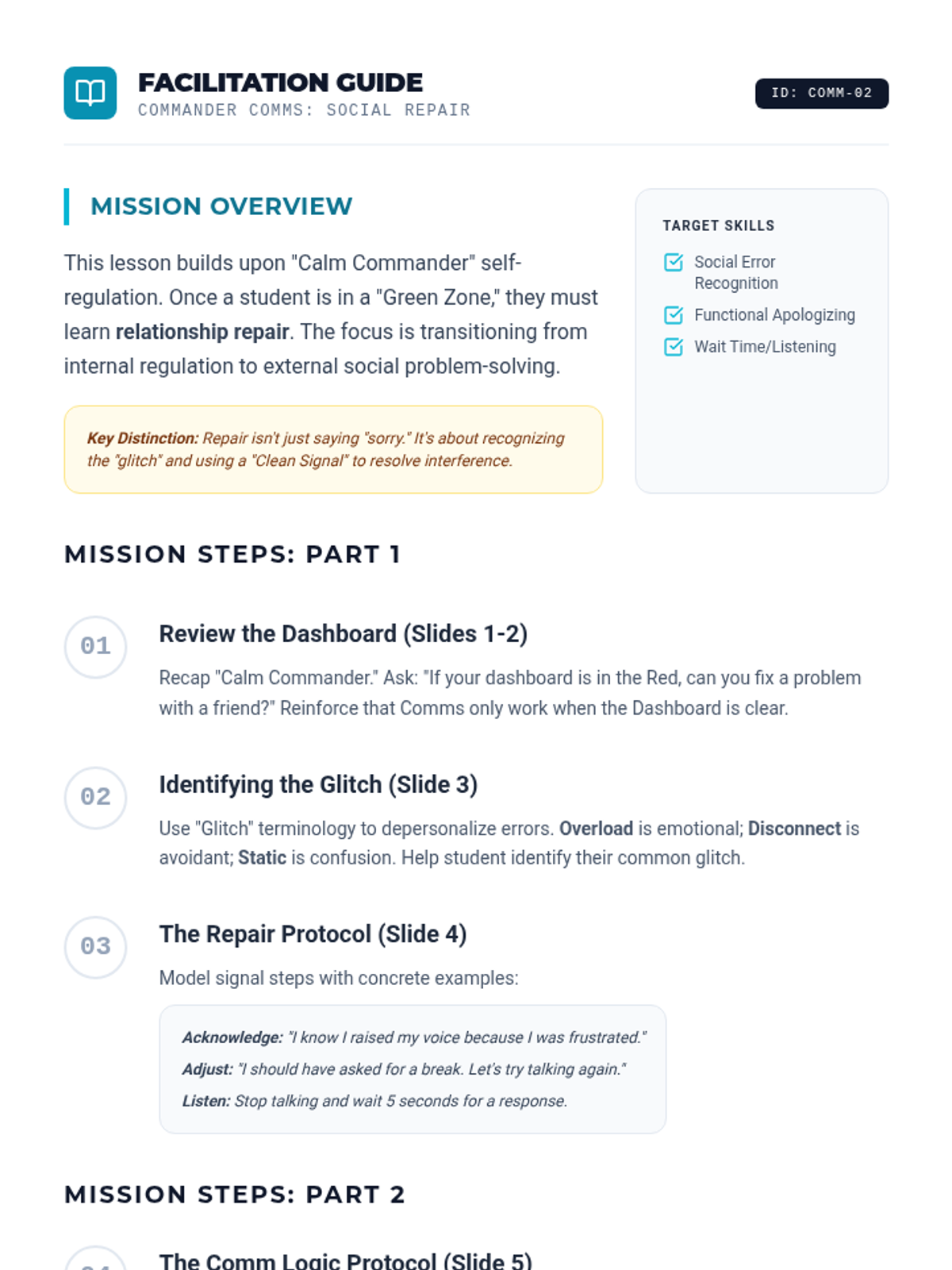
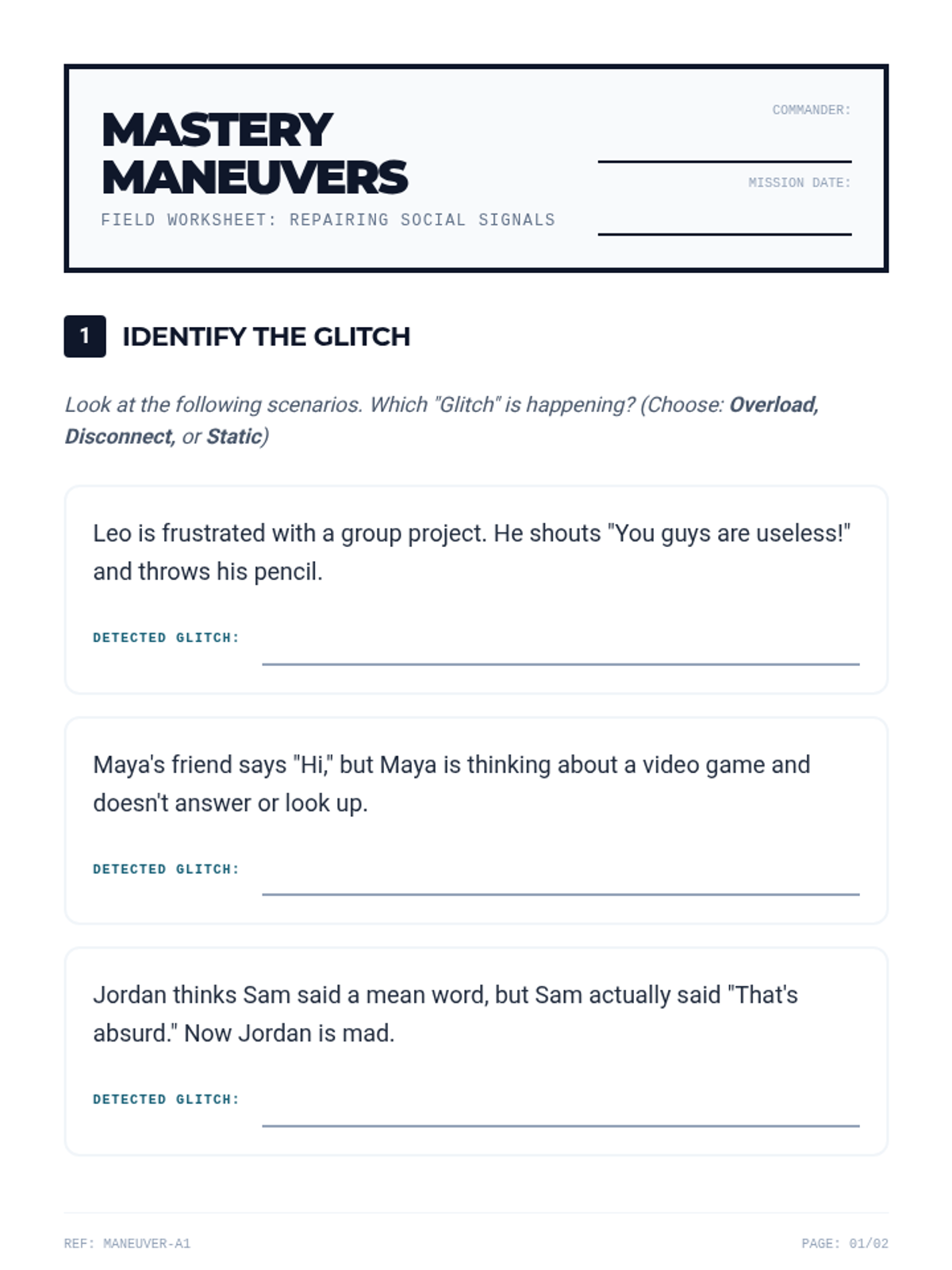
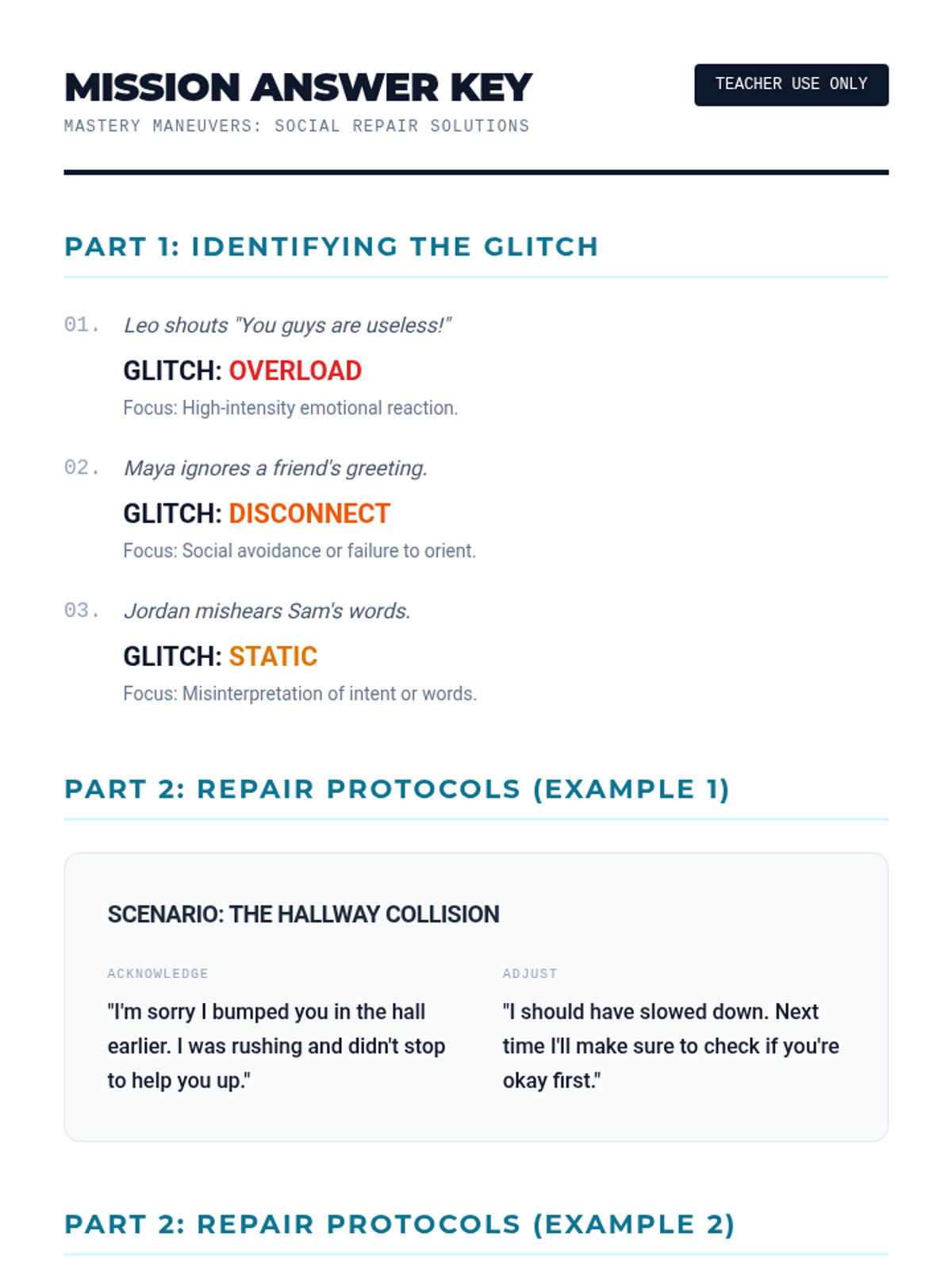
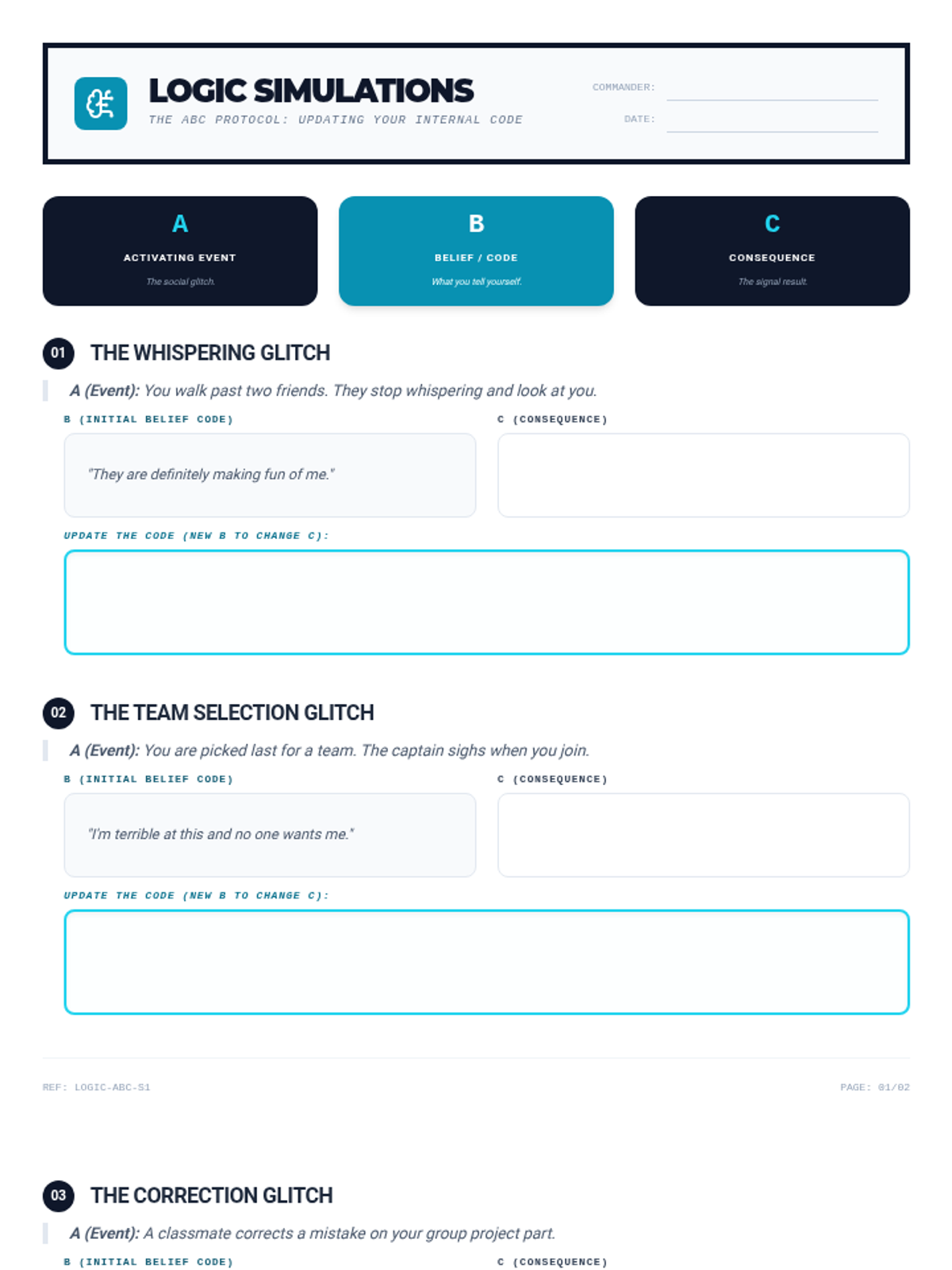
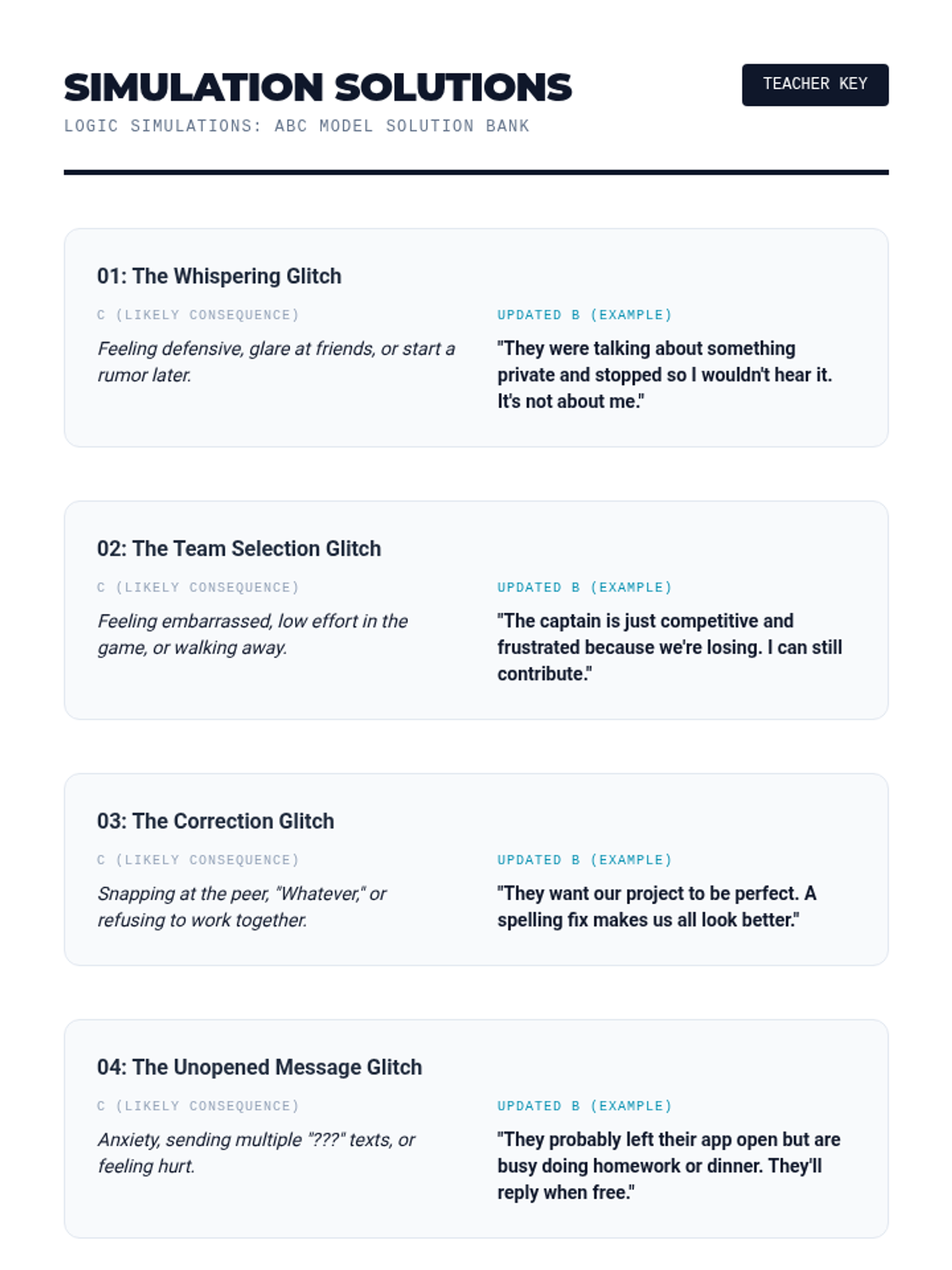
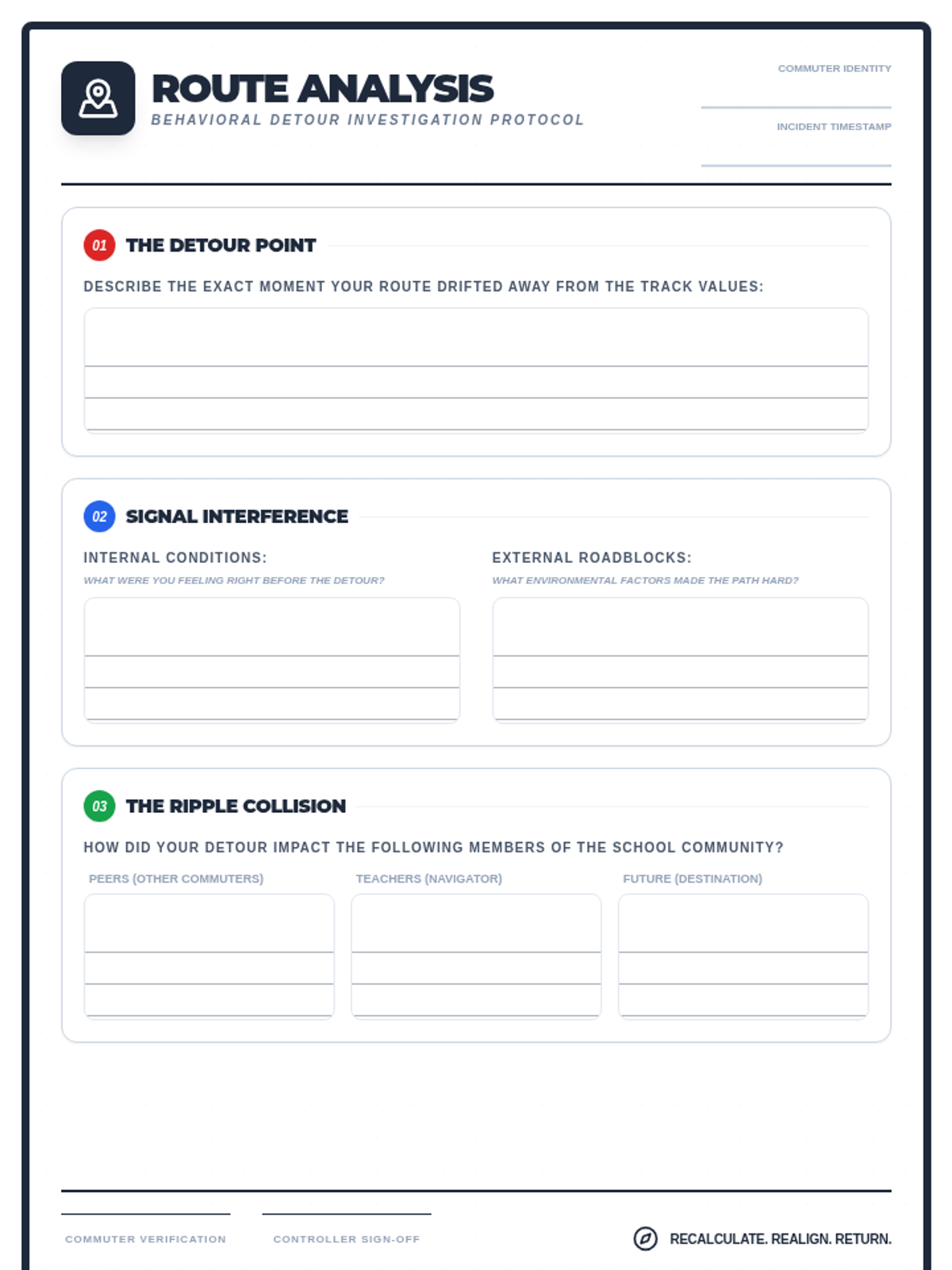
A follow-up lesson in the Calm Commander series focusing on social problem-solving and communication 'protocols' to repair relationships and resolve conflicts effectively.
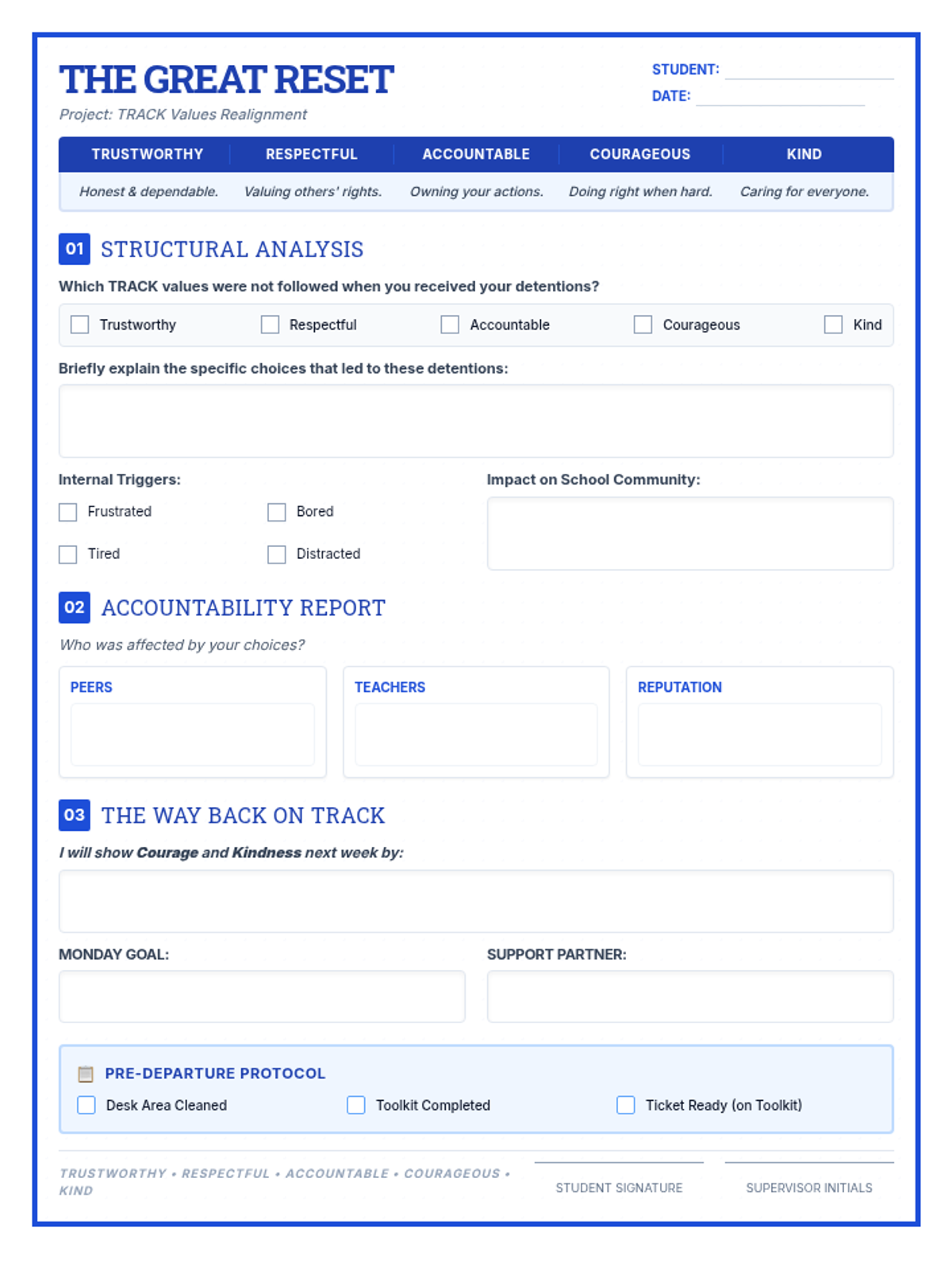
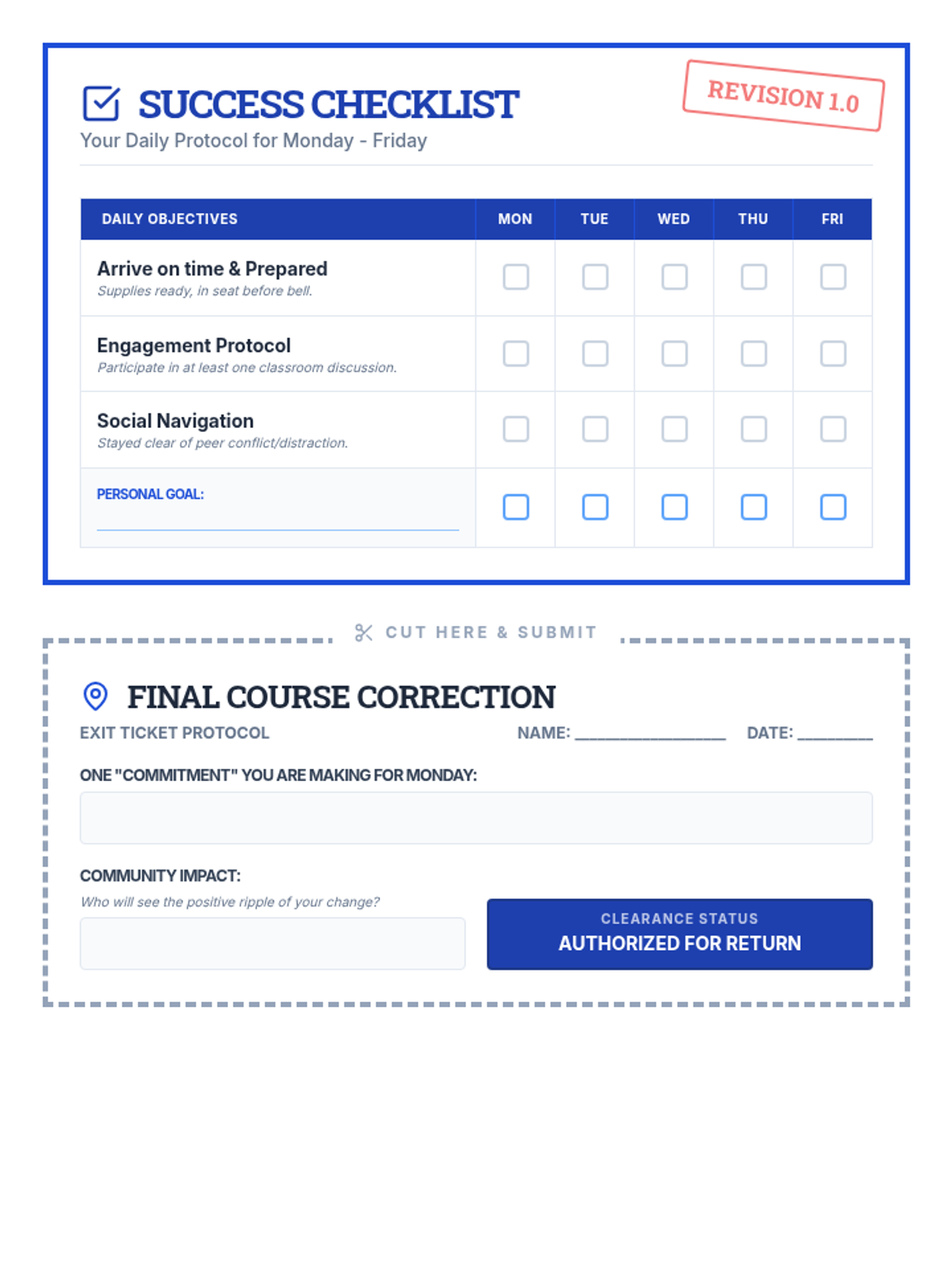
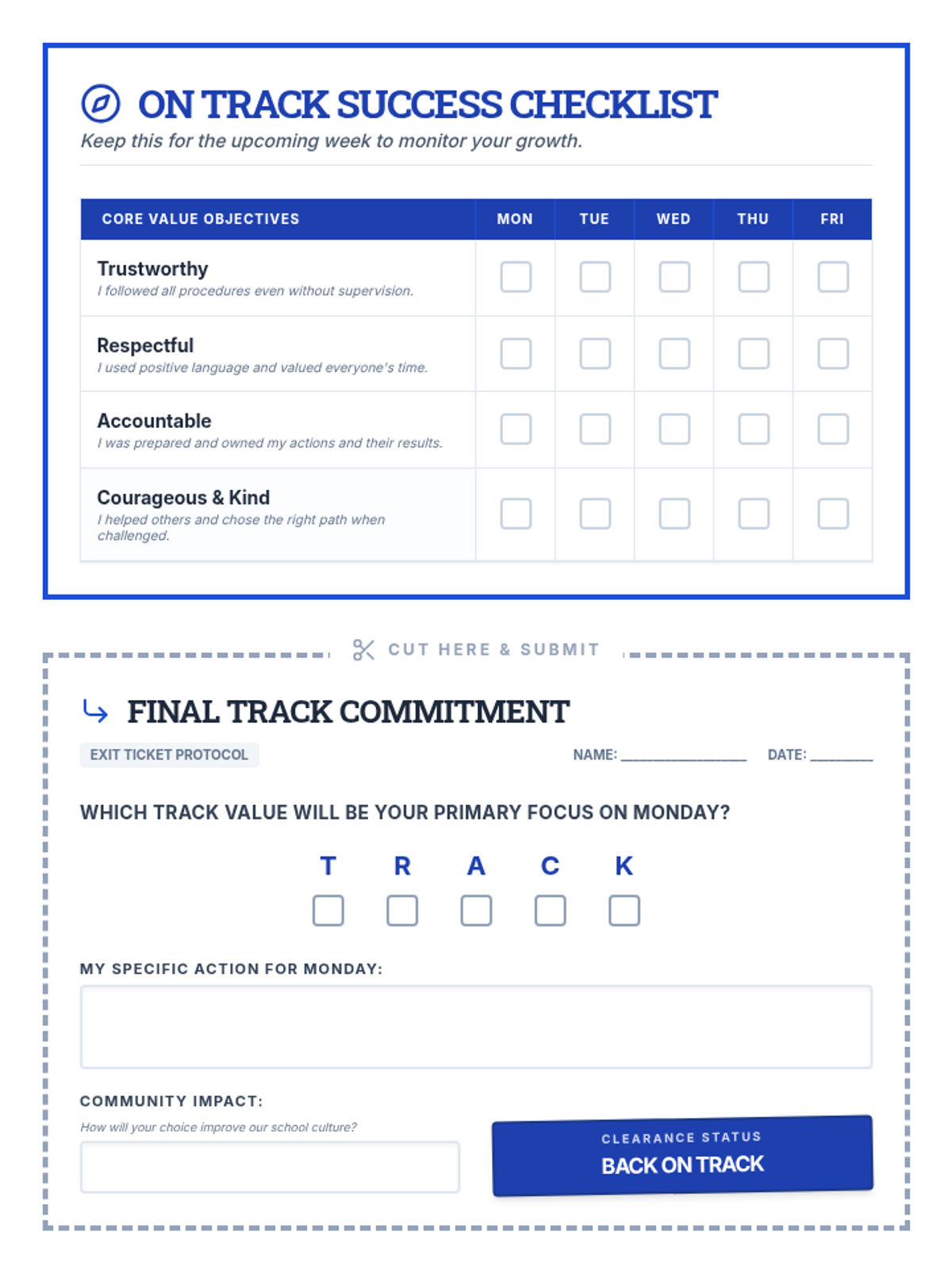
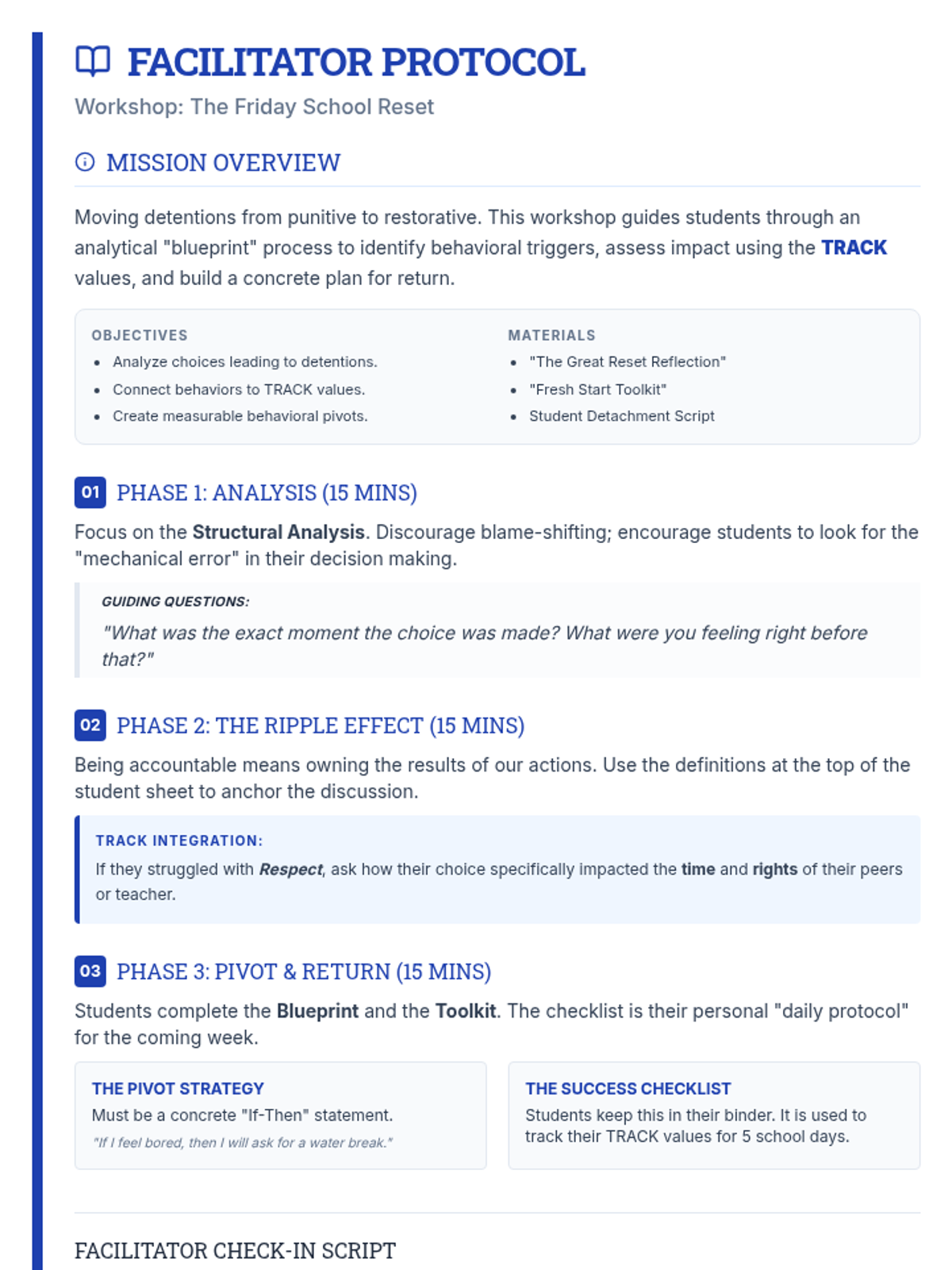
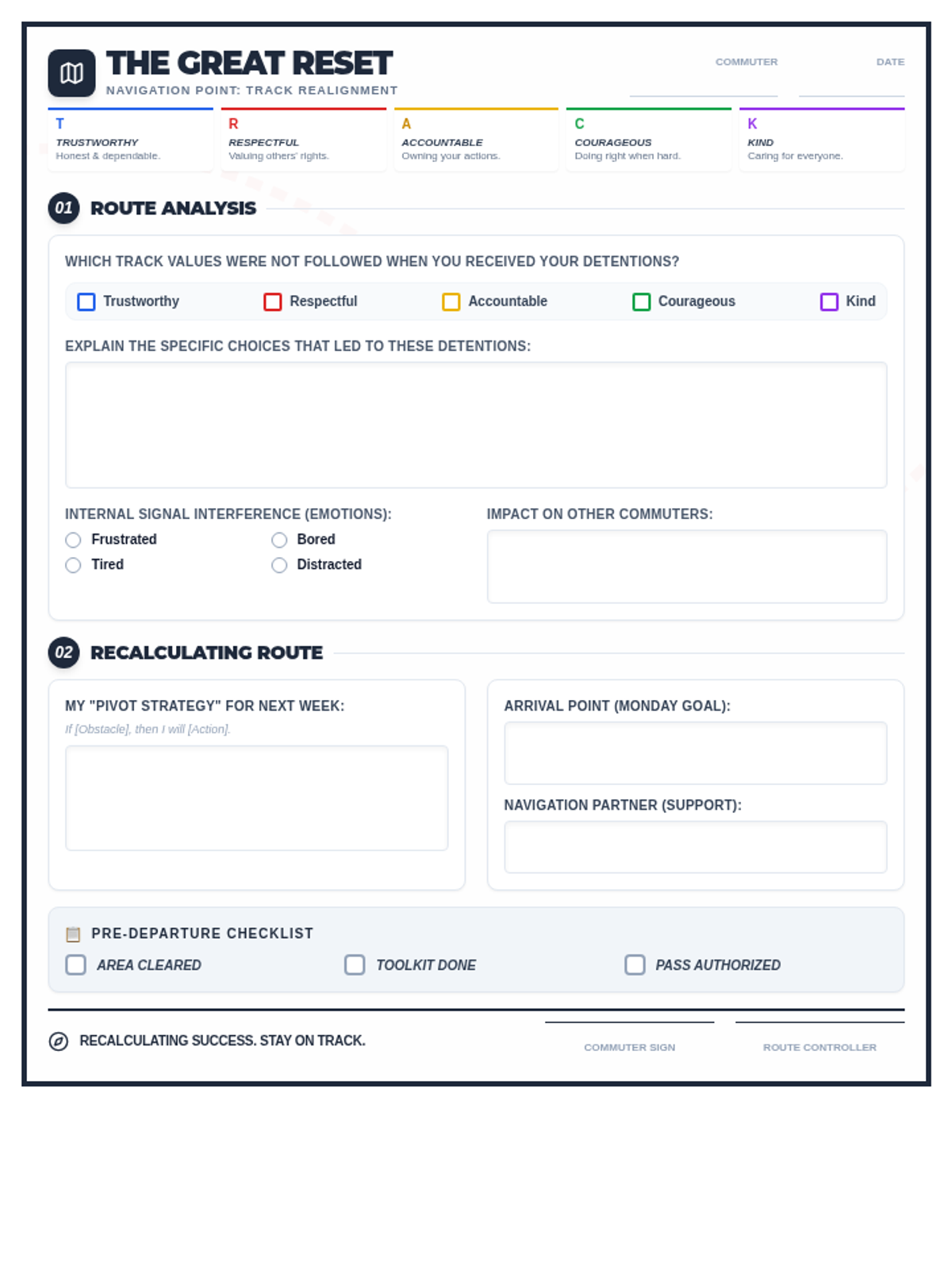
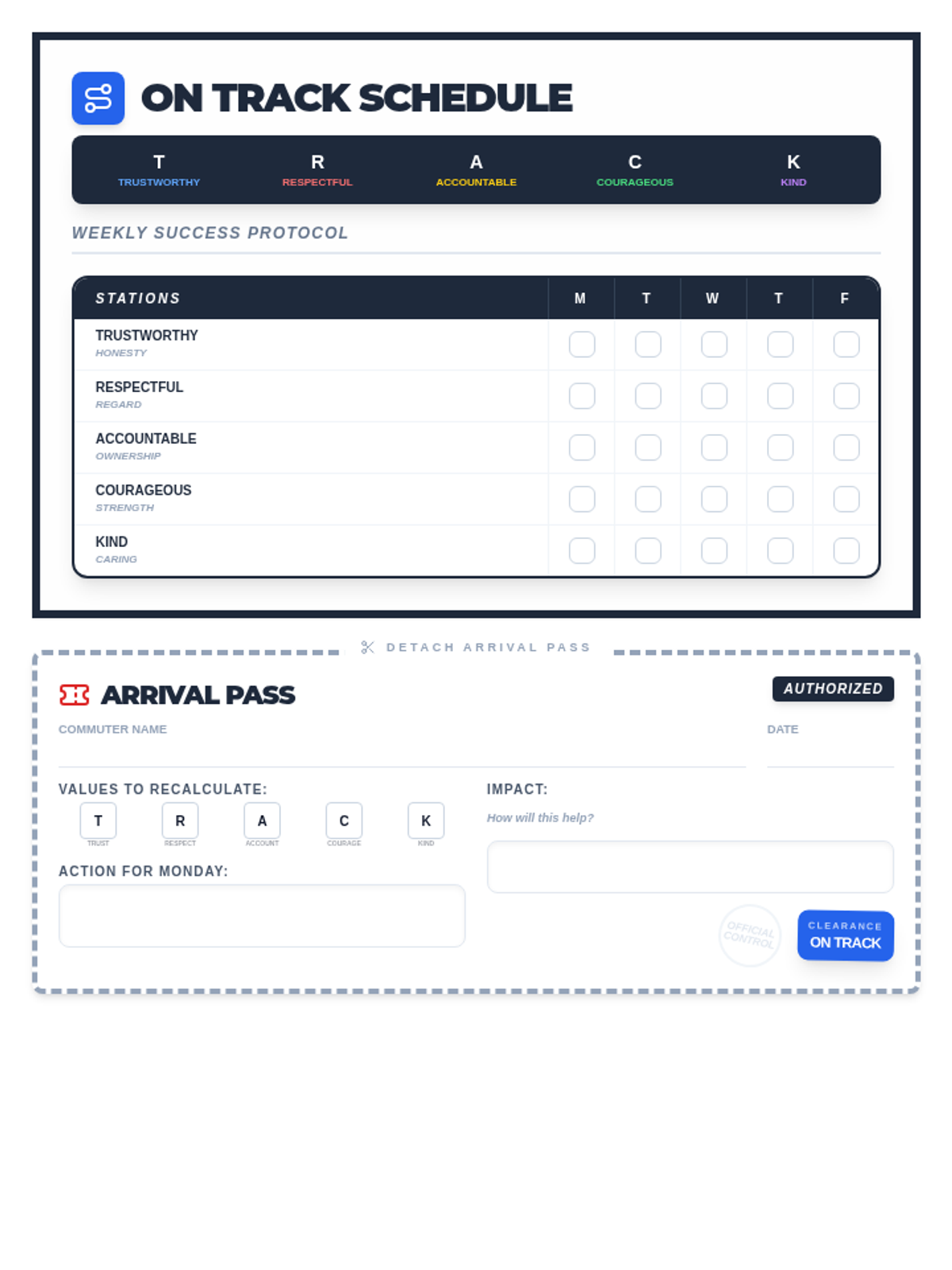
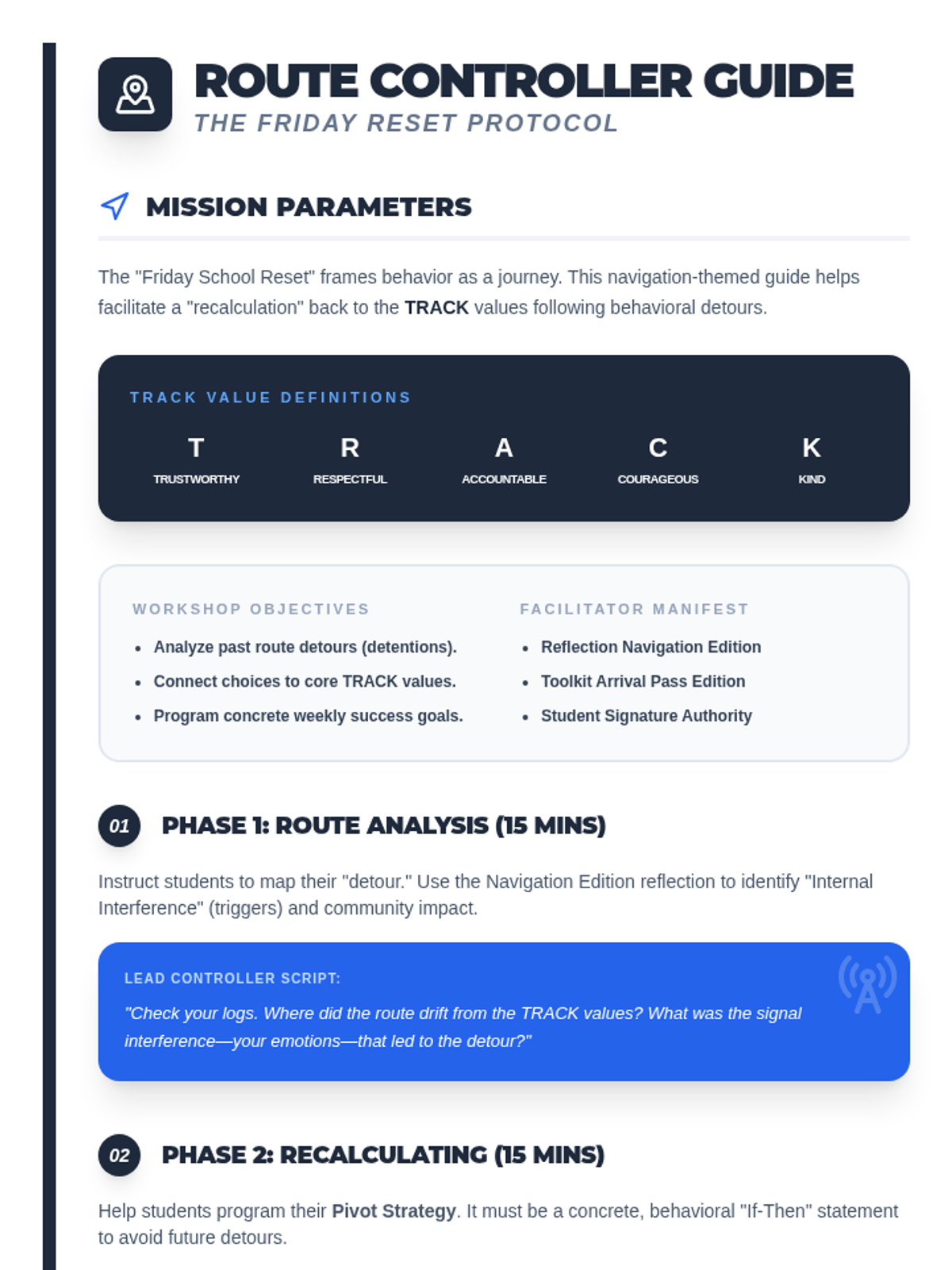
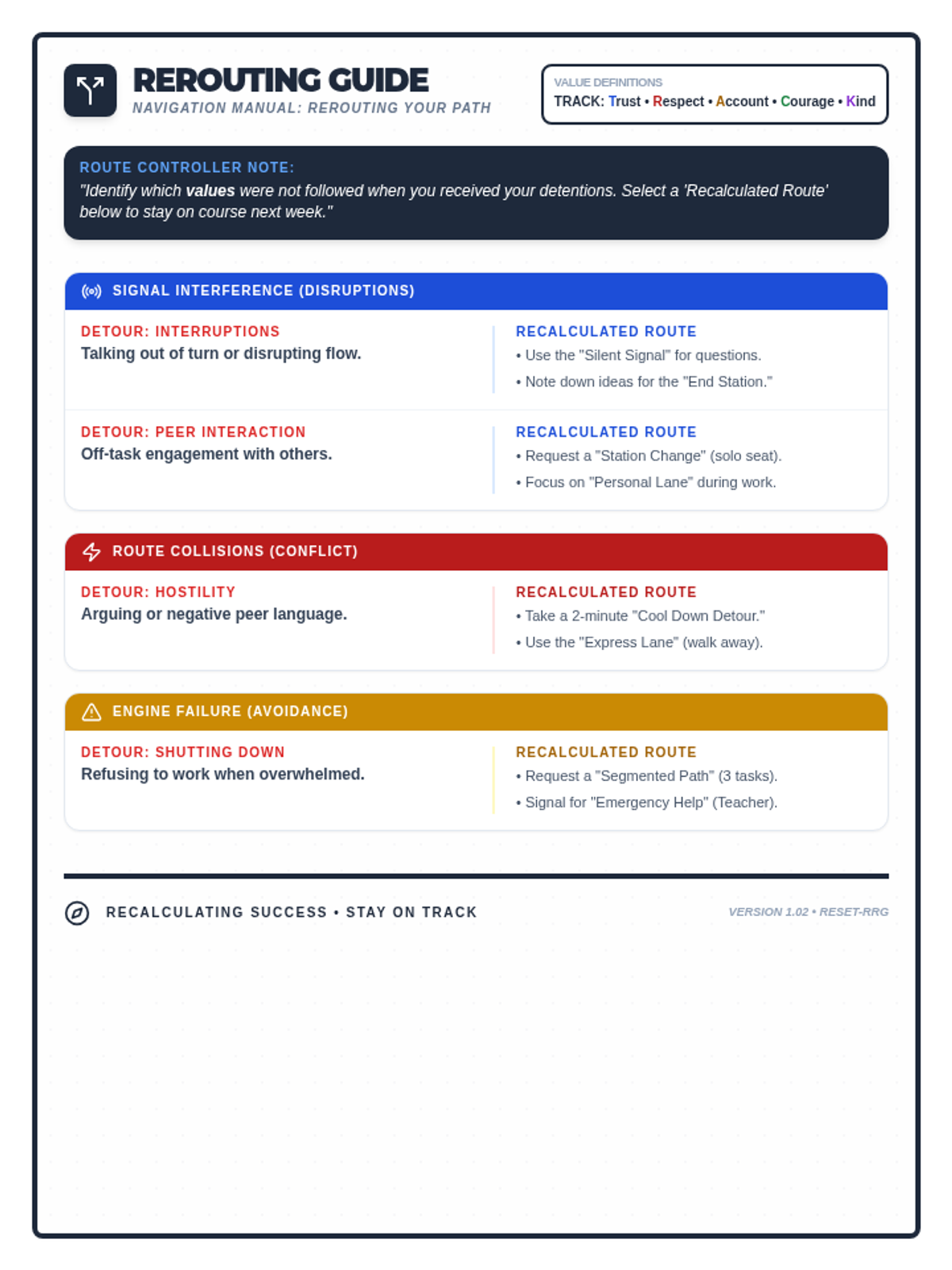
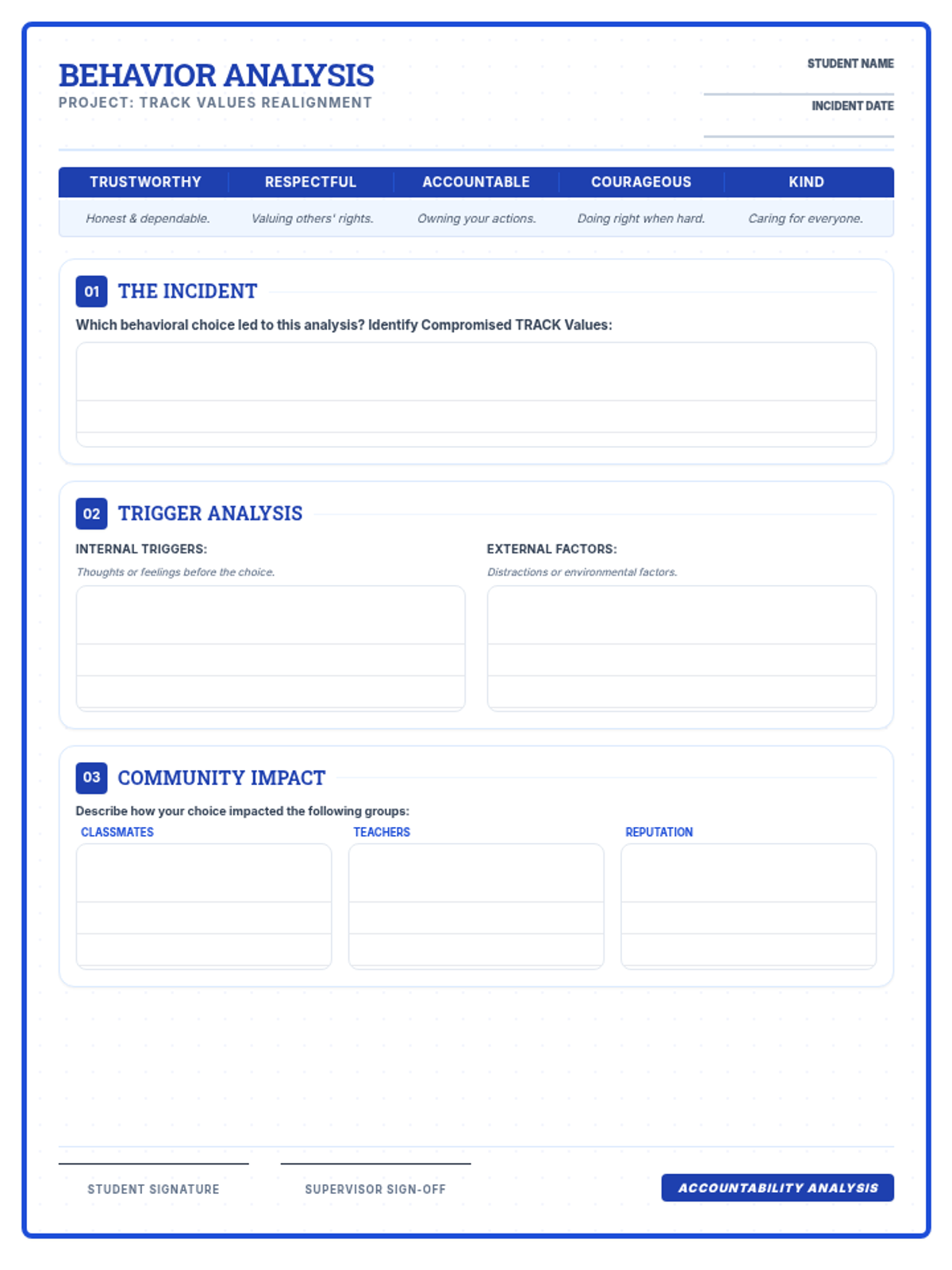
A comprehensive reflection and goal-setting workshop for middle school students attending Friday School to process their actions and plan for a successful week ahead.
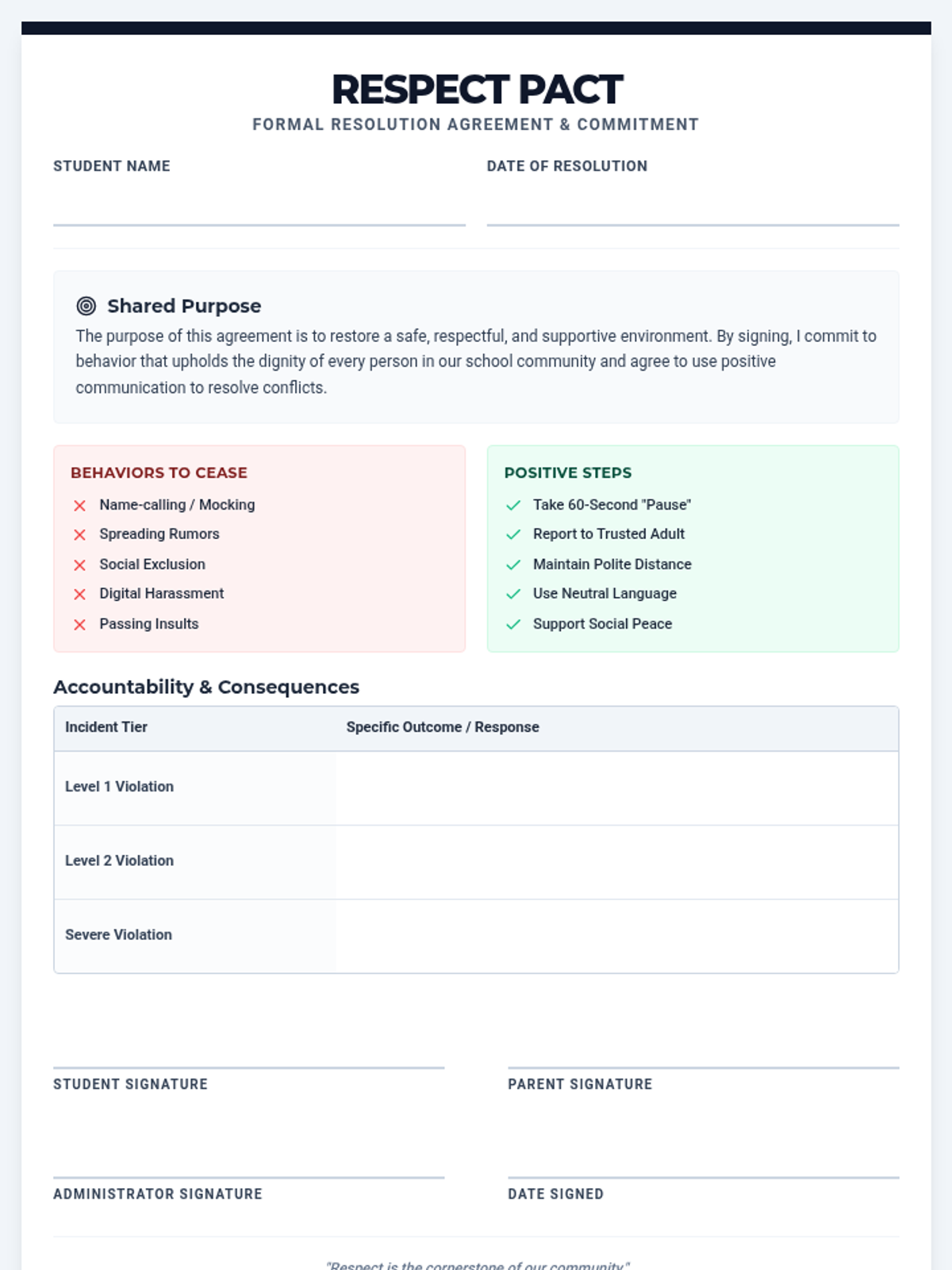
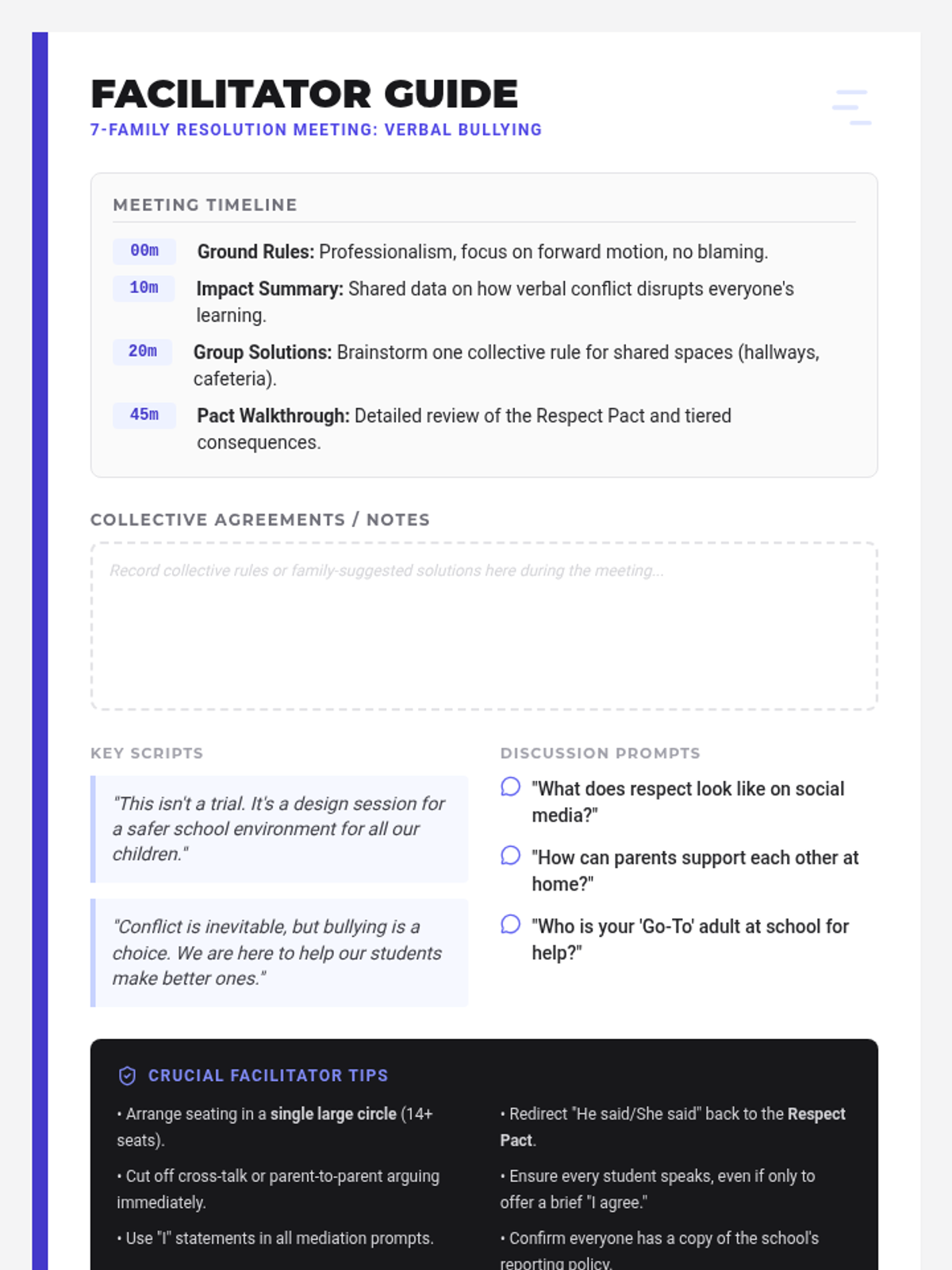
A comprehensive set of materials to facilitate a formal family meeting and establish clear behavioral expectations following a conflict involving verbal bullying.
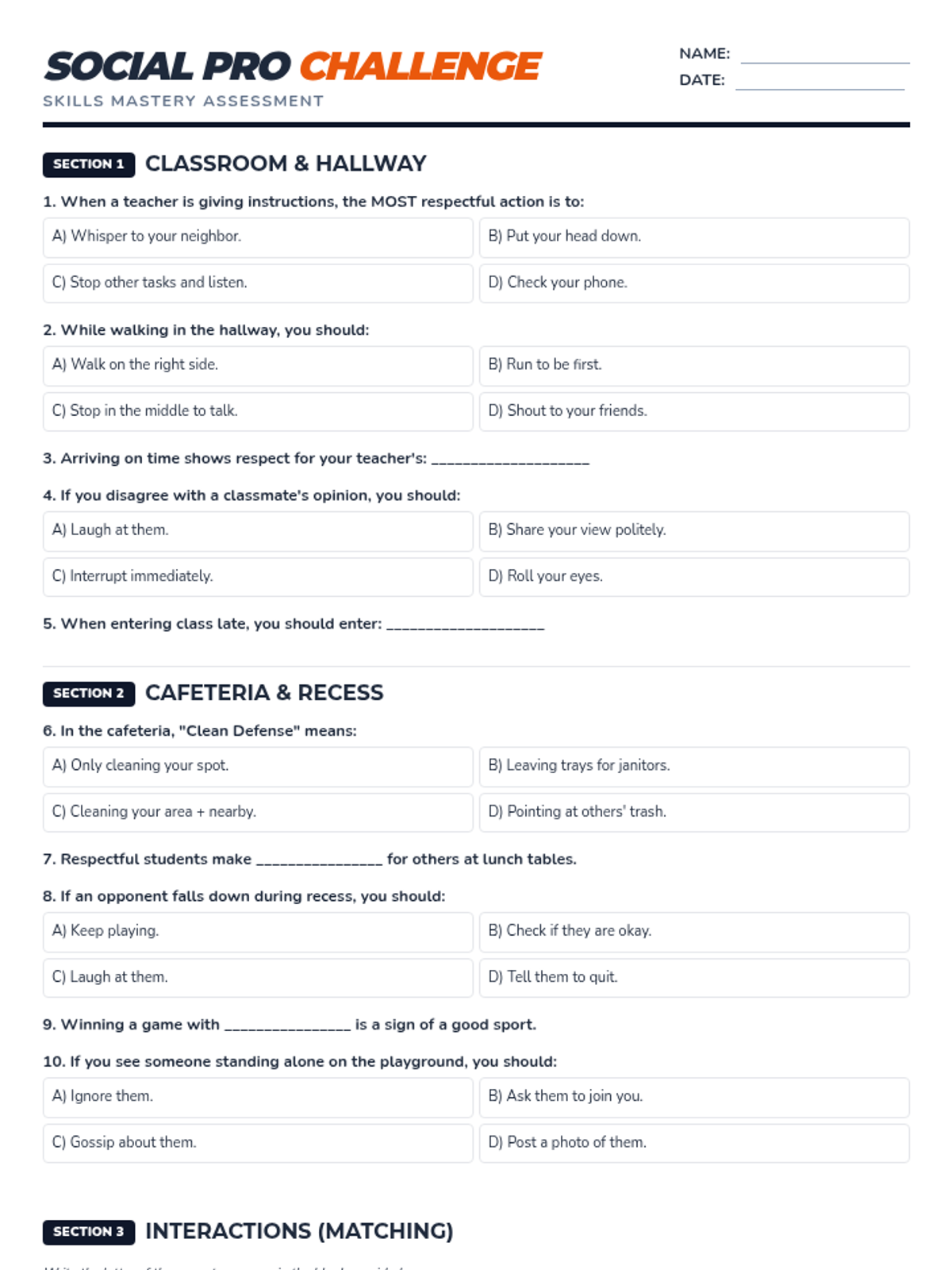
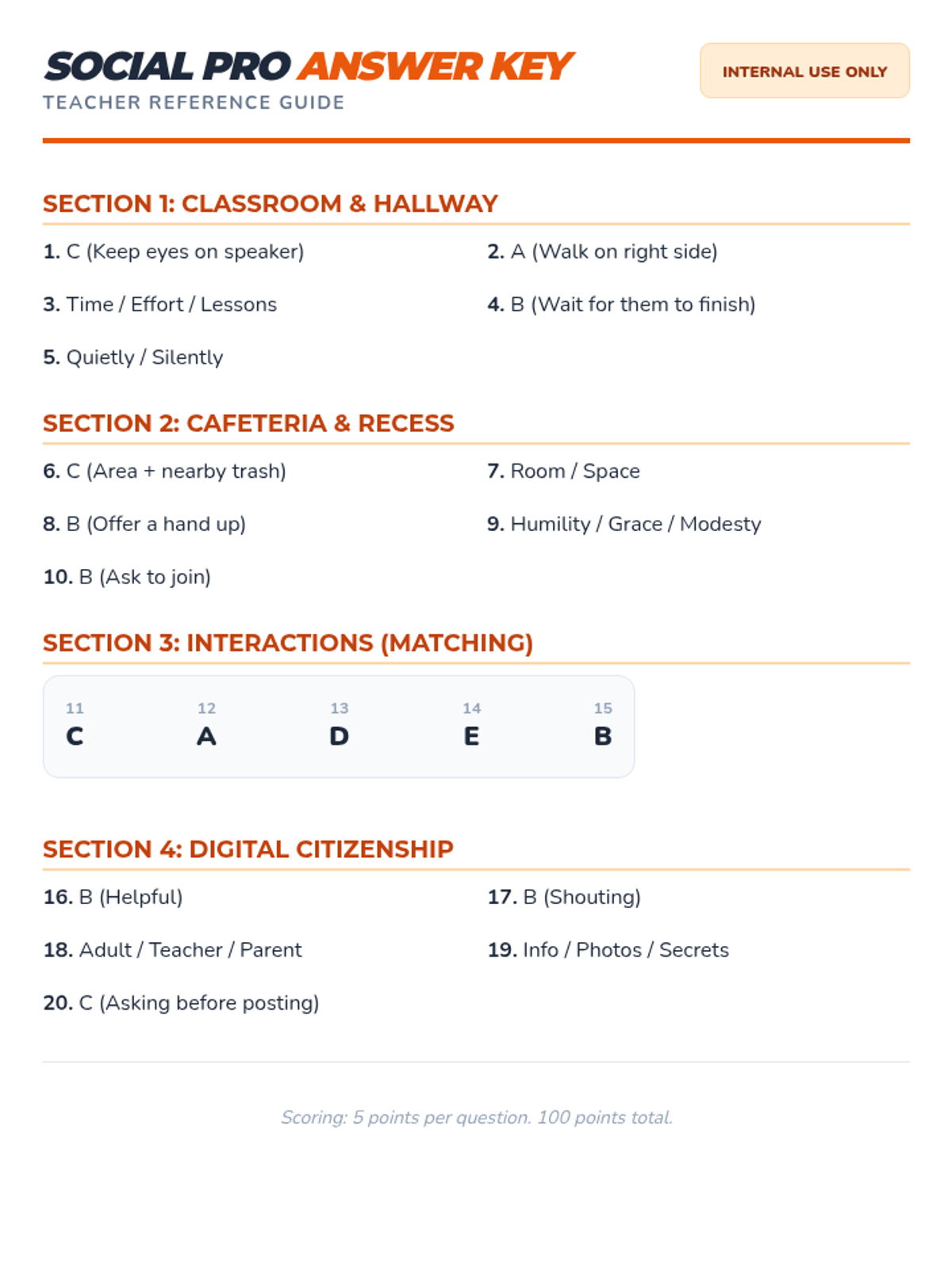
A comprehensive lesson on social etiquette, respect, and digital citizenship tailored for 6th-grade students transitioning into middle school social dynamics.
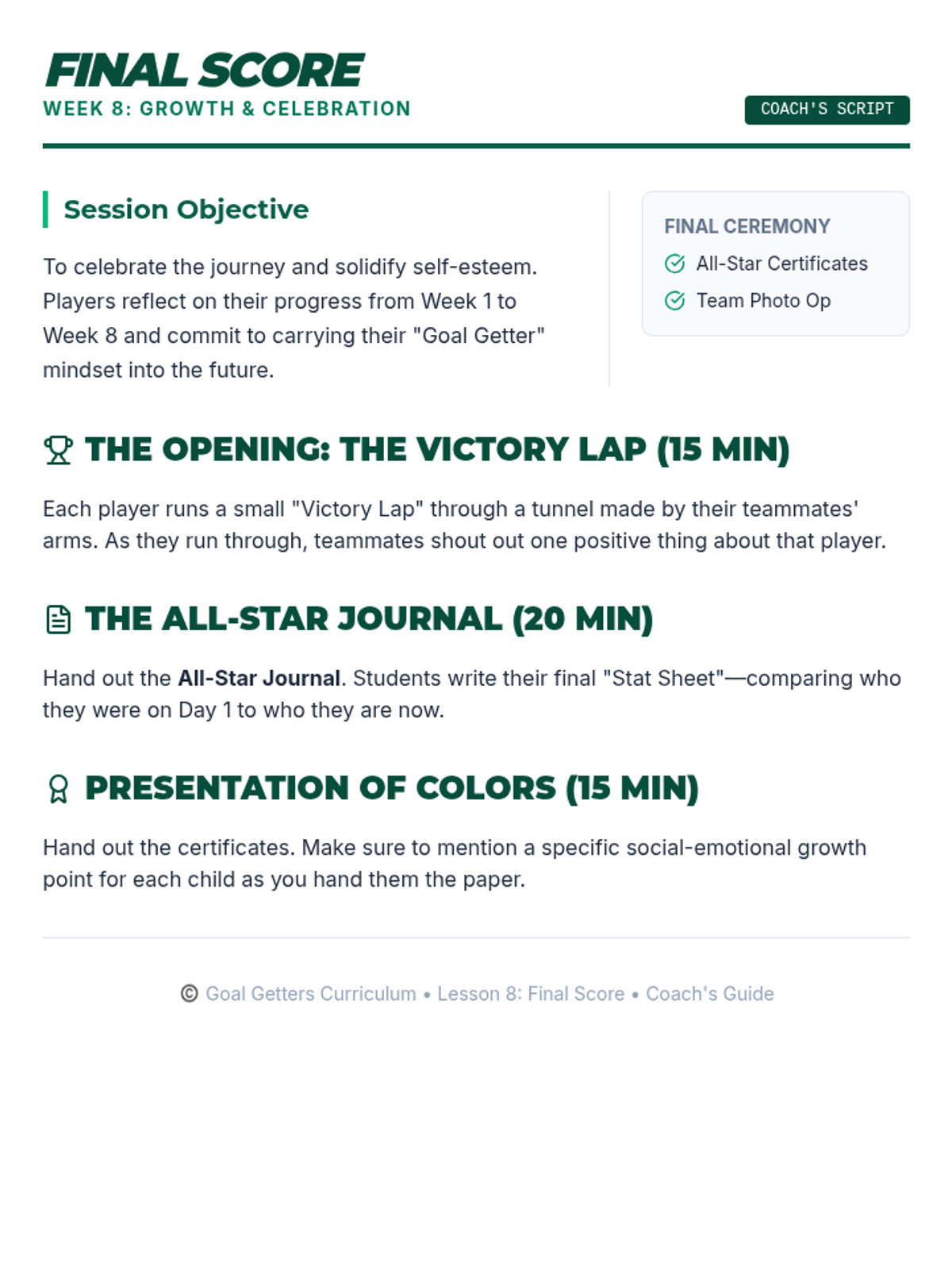
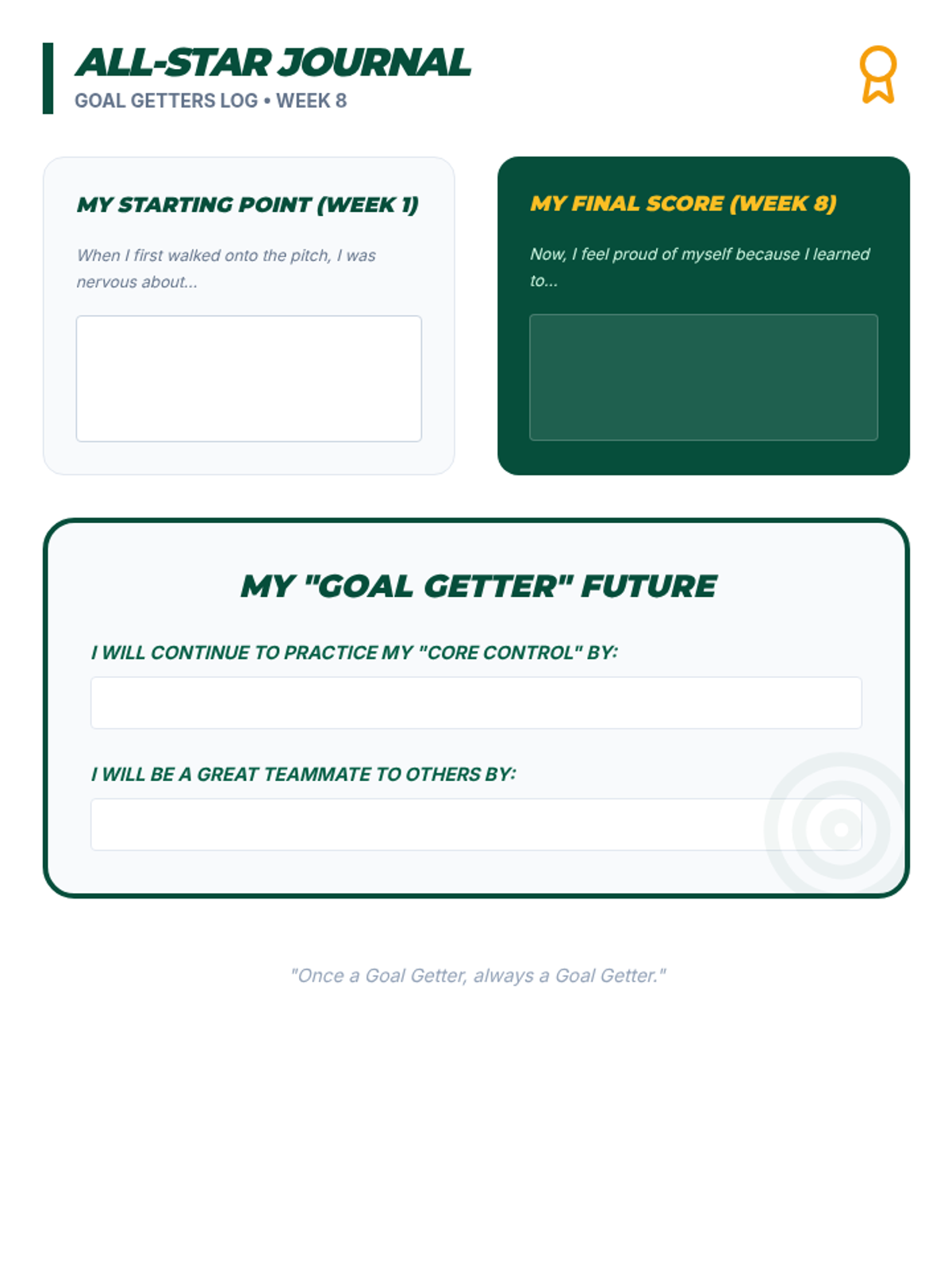
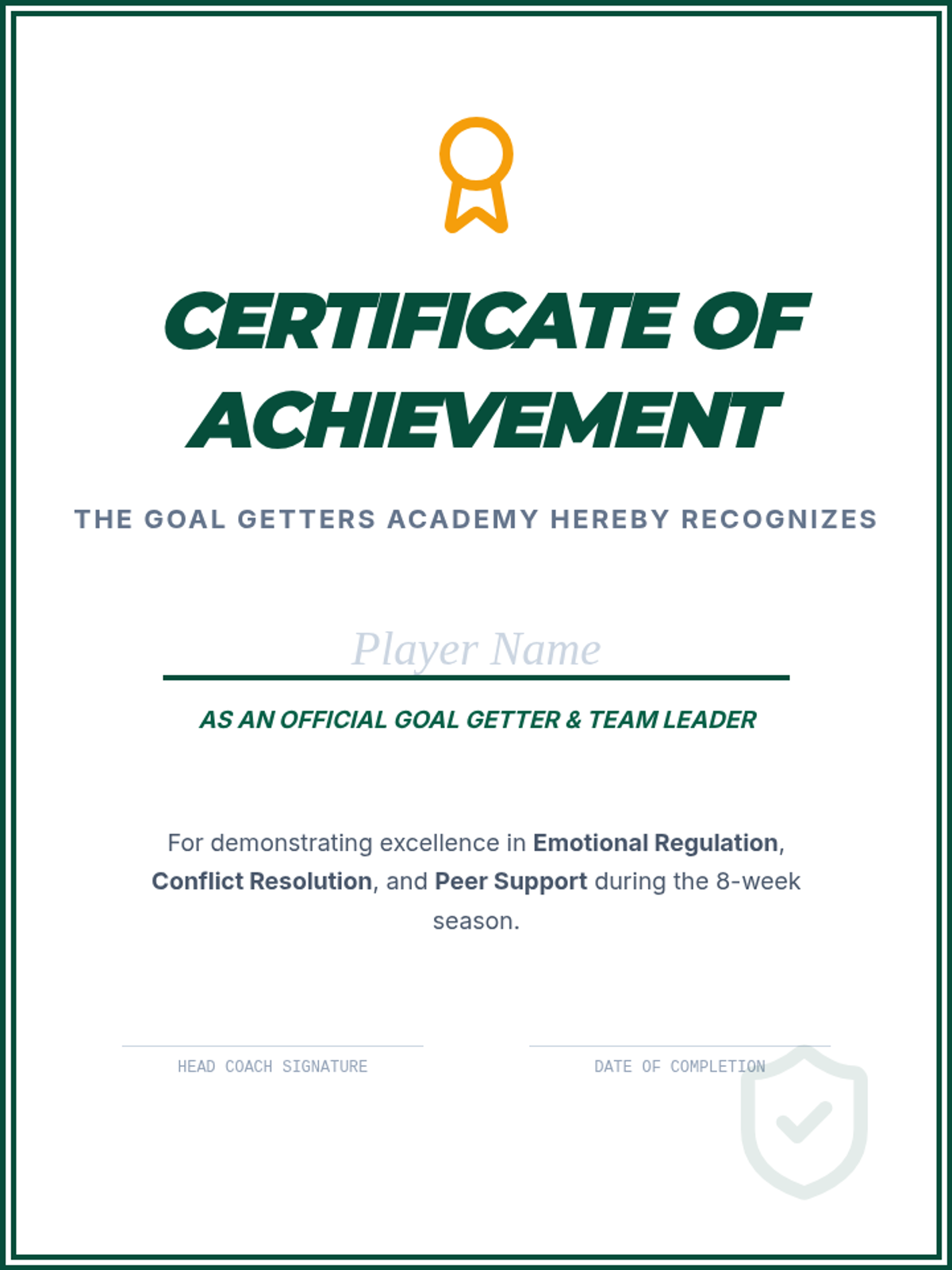
Reflect on growth, celebrate achievements, and solidify the high self-esteem built throughout the program.
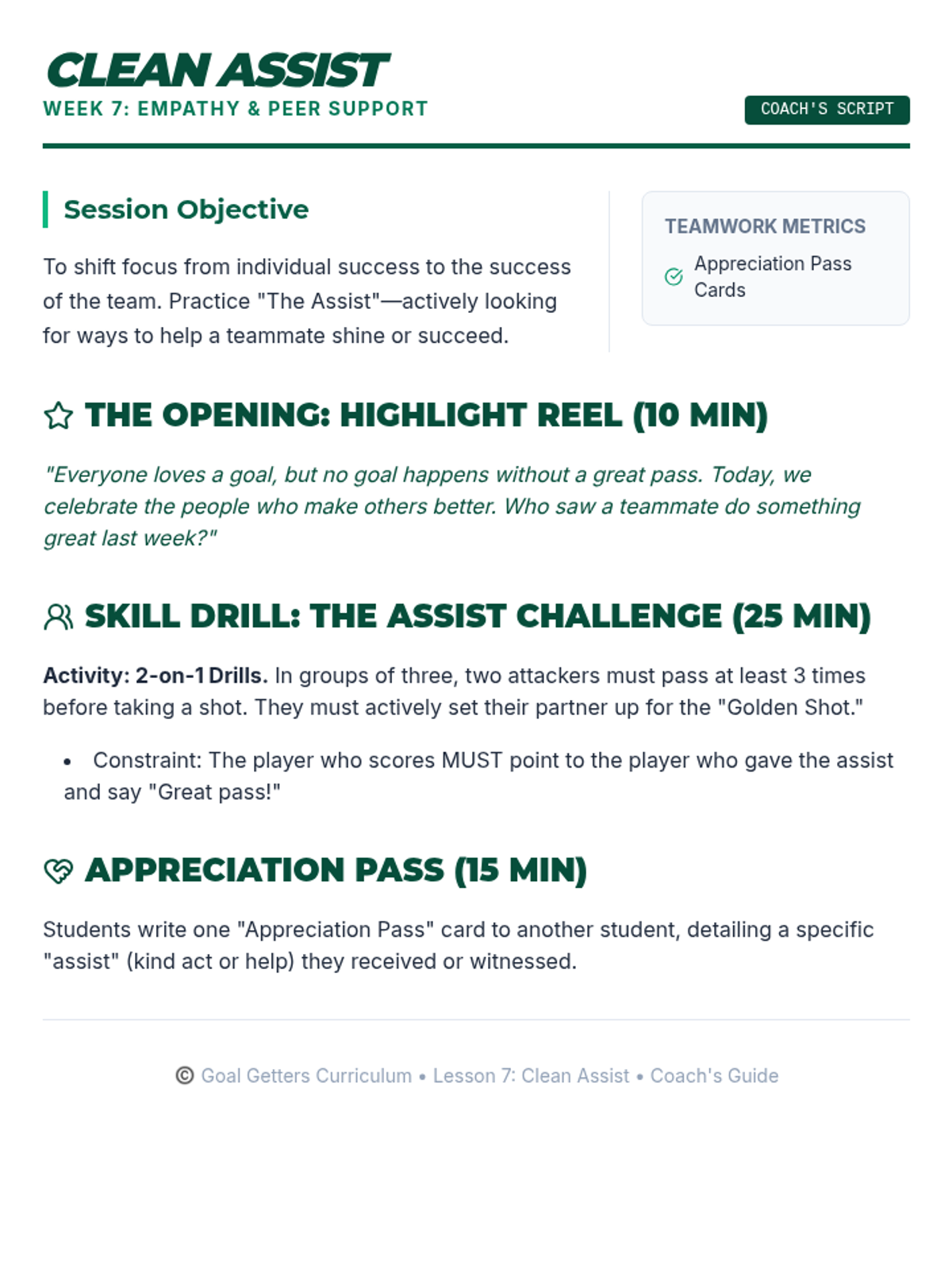
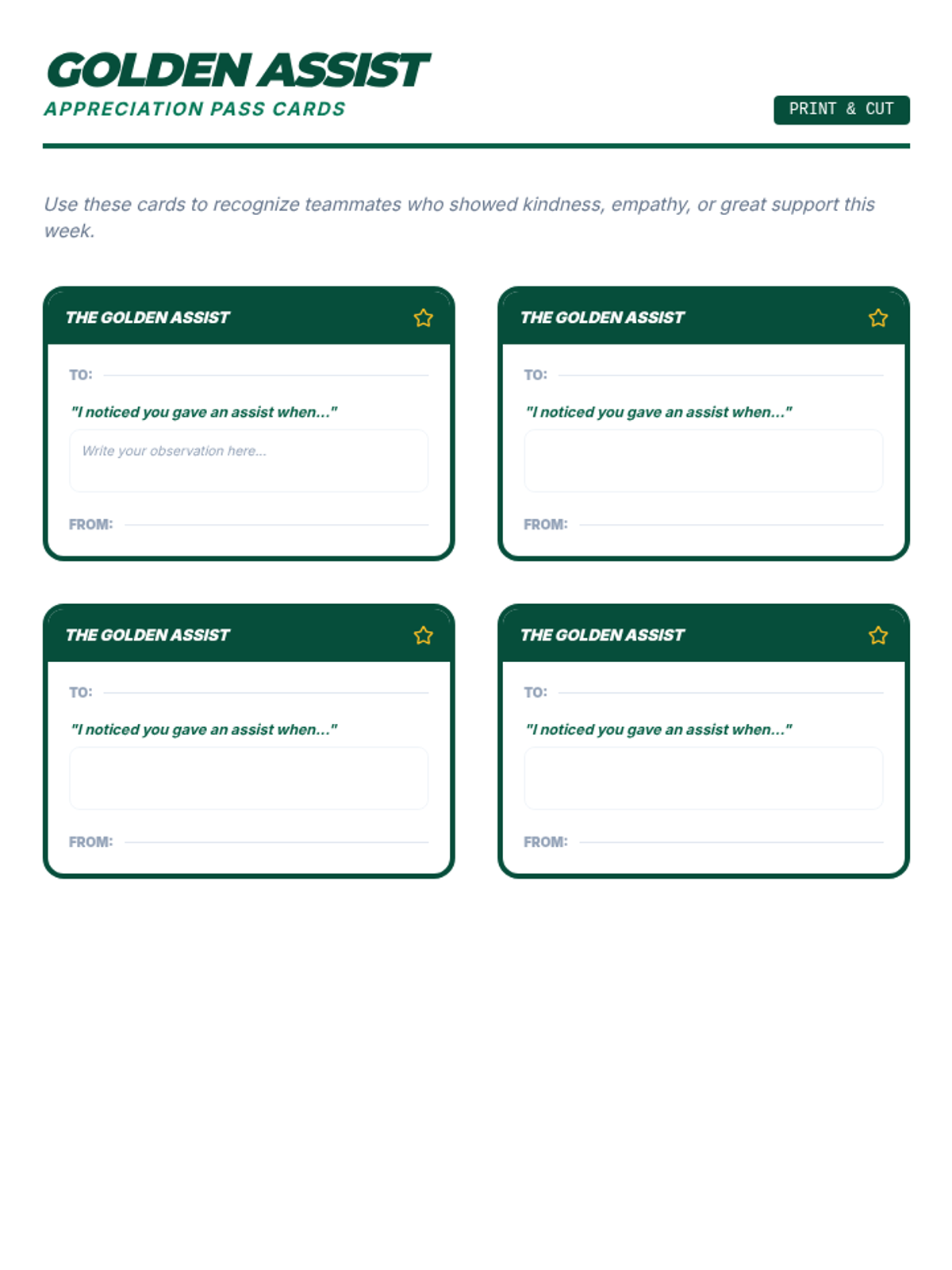
Encourage empathy and peer support by focusing on the 'assist' rather than just the goal.
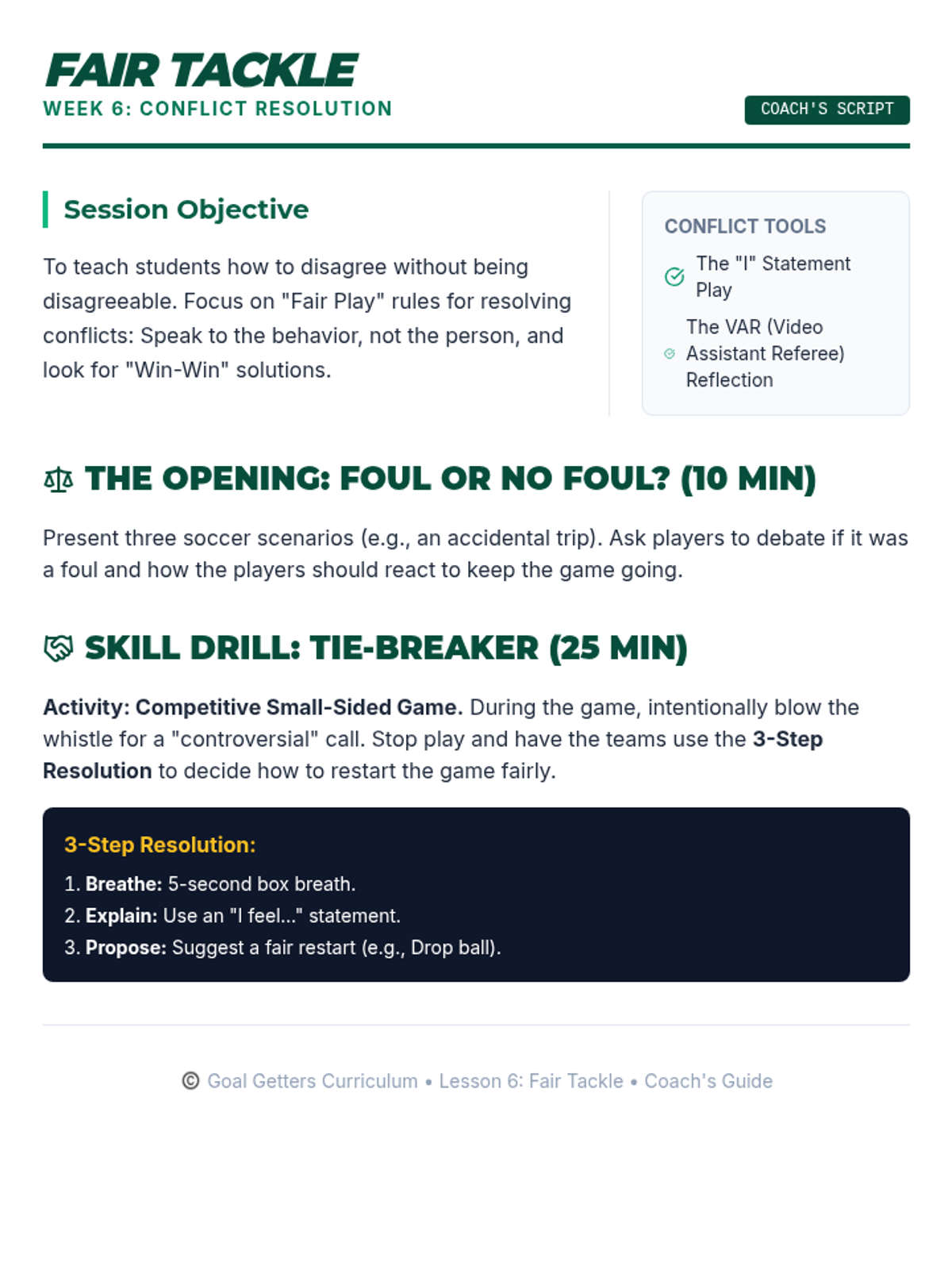
Develop negotiation and conflict resolution skills during high-pressure competitive play.
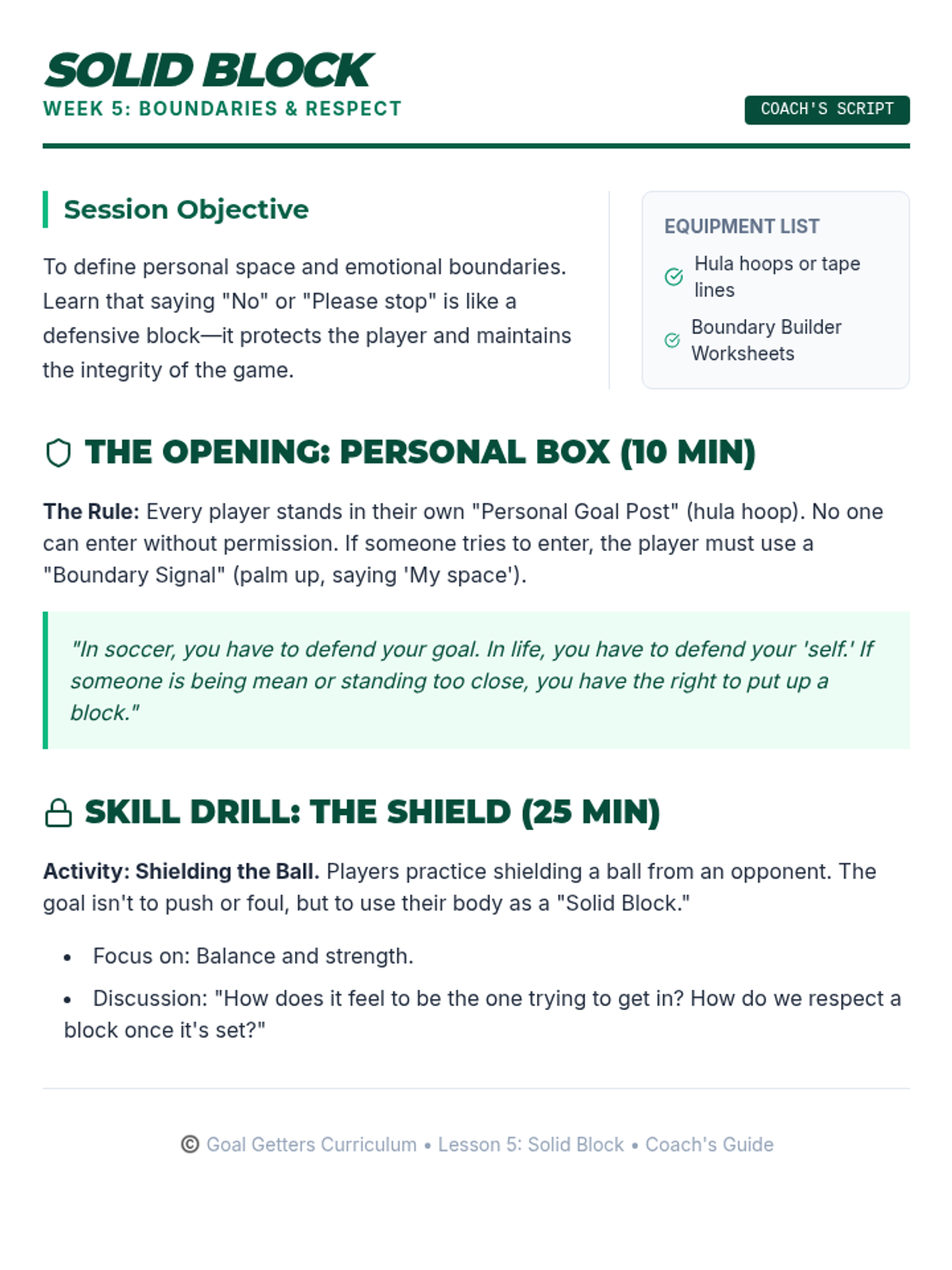
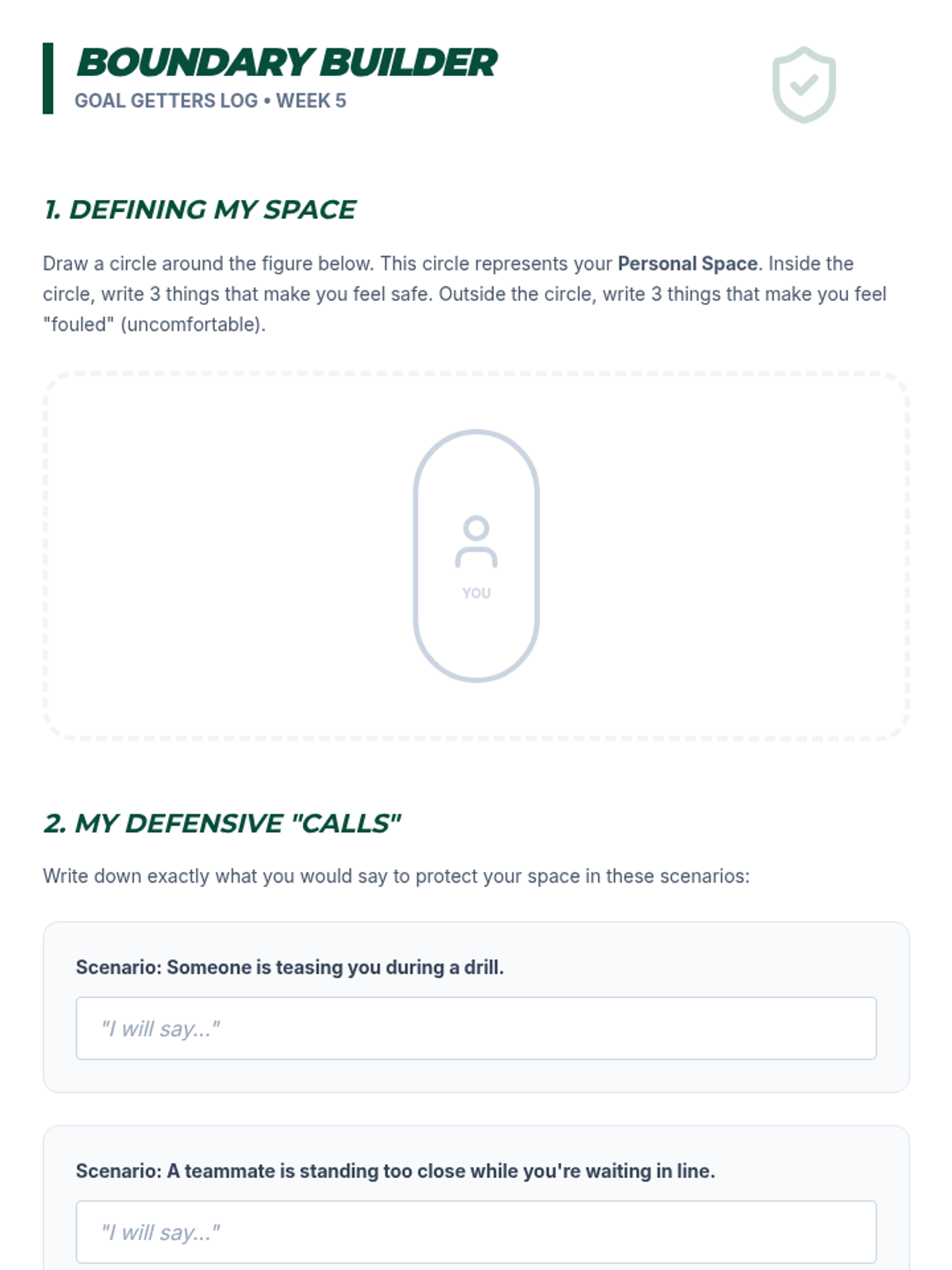
Practice setting and respecting personal boundaries through defensive soccer drills and social scenarios.
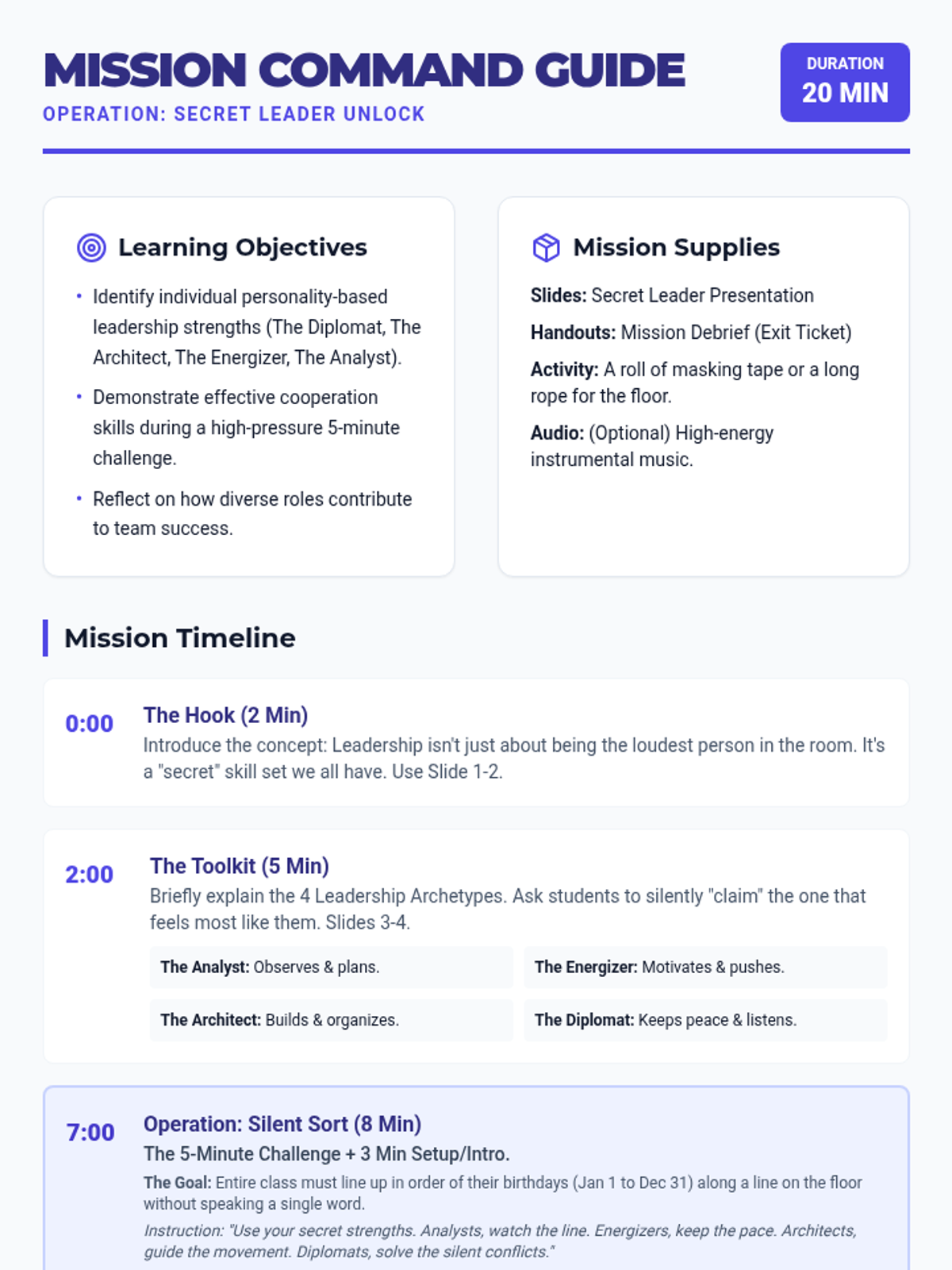
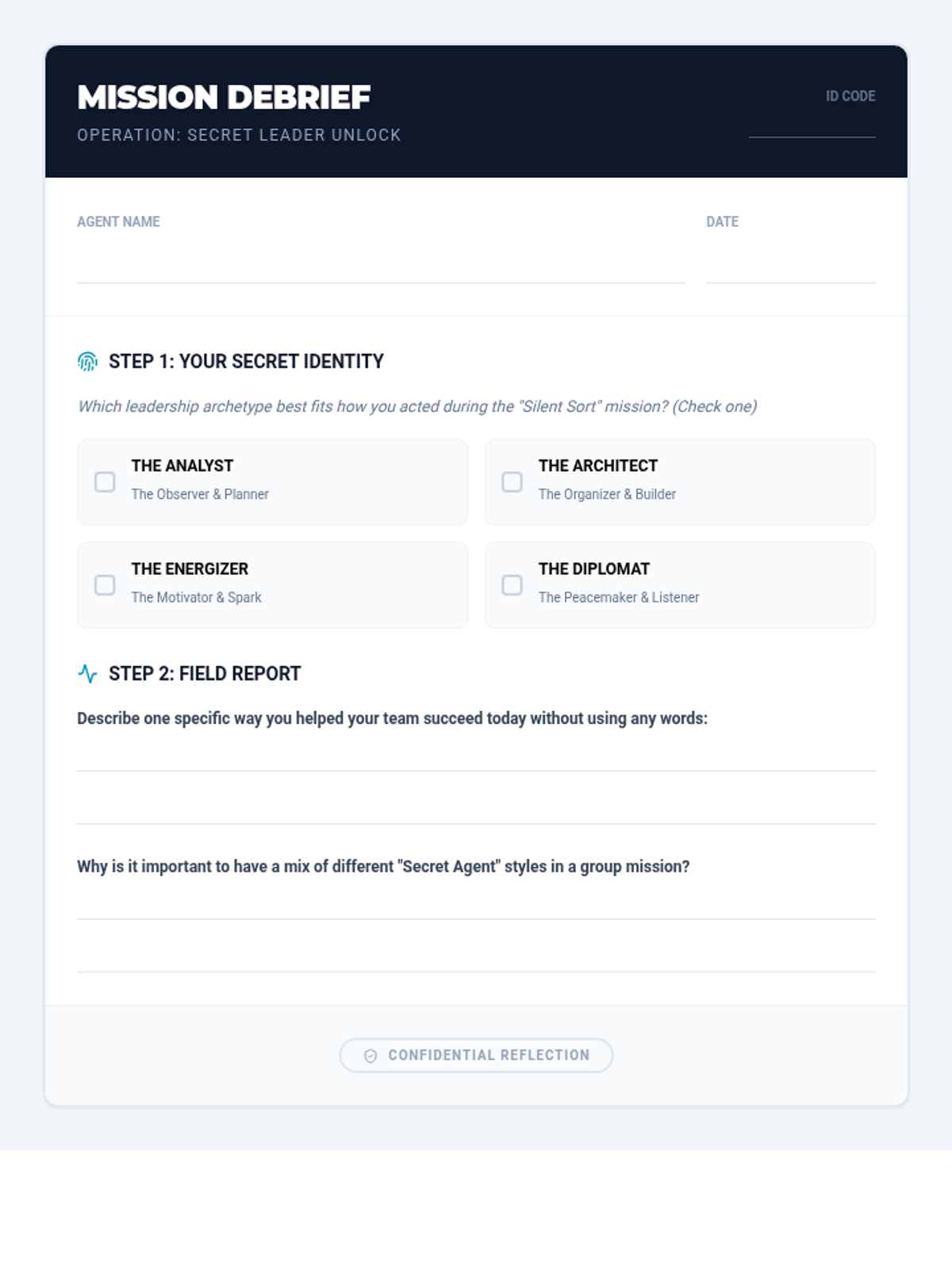
A high-energy, 20-minute session focusing on discovering personality-based leadership strengths and applying them through a rapid-fire teamwork challenge. Students identify their 'Secret Agent' leadership style and practice collaboration in diverse groups.
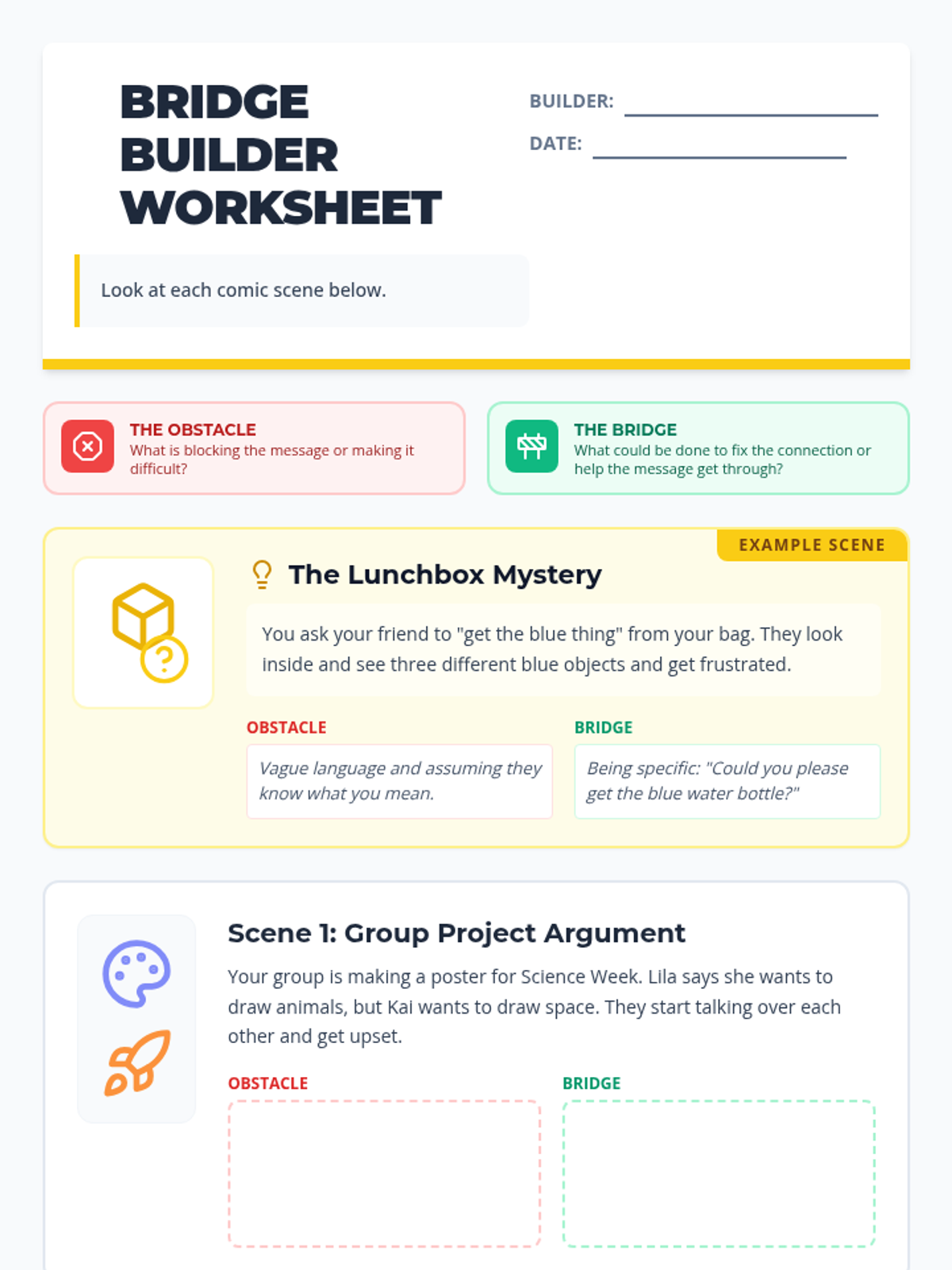
This lesson focuses on identifying communication breakdowns and practical solutions through relatable real-life scenarios, helping students develop empathy and effective interpersonal skills.
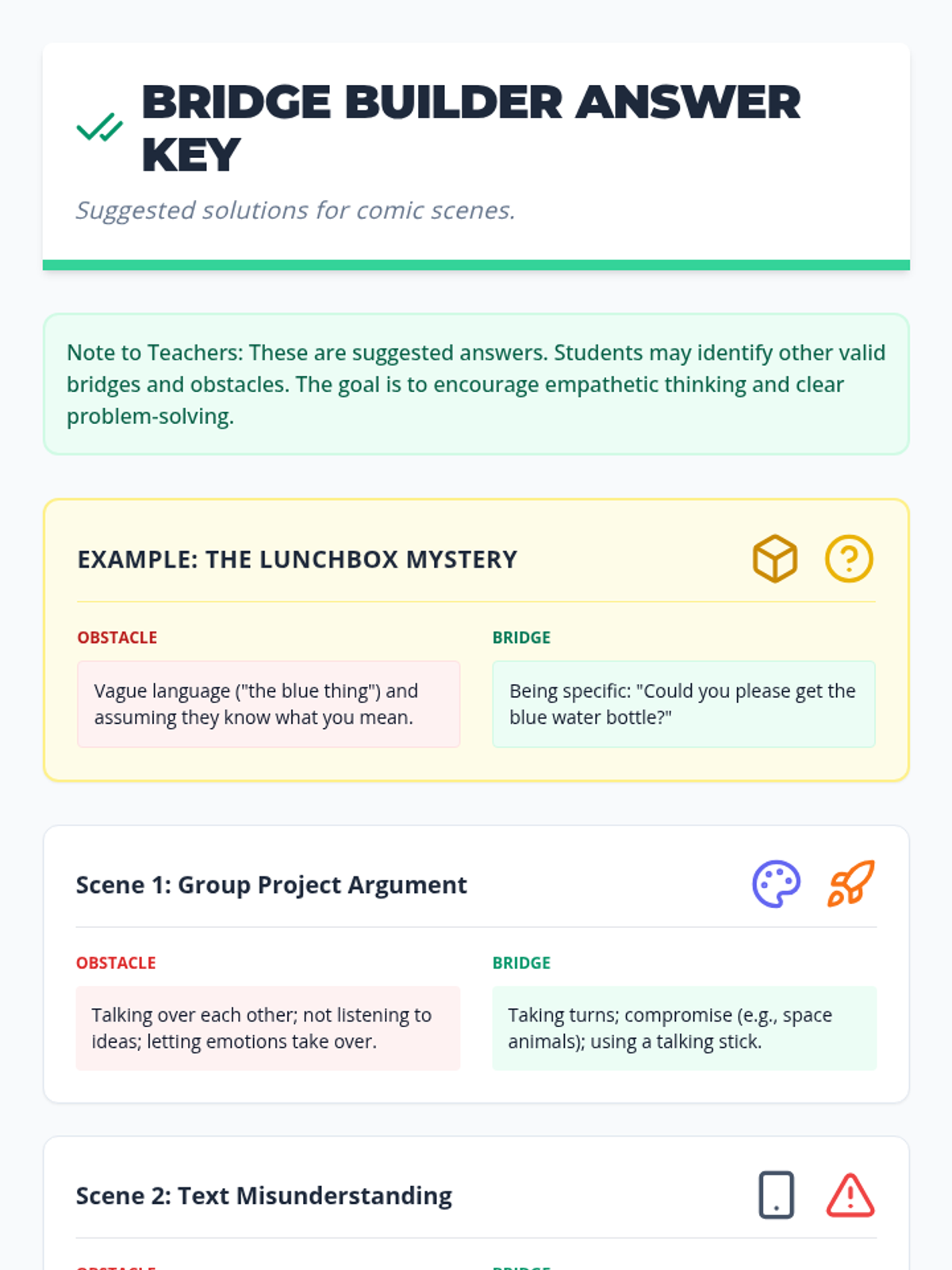
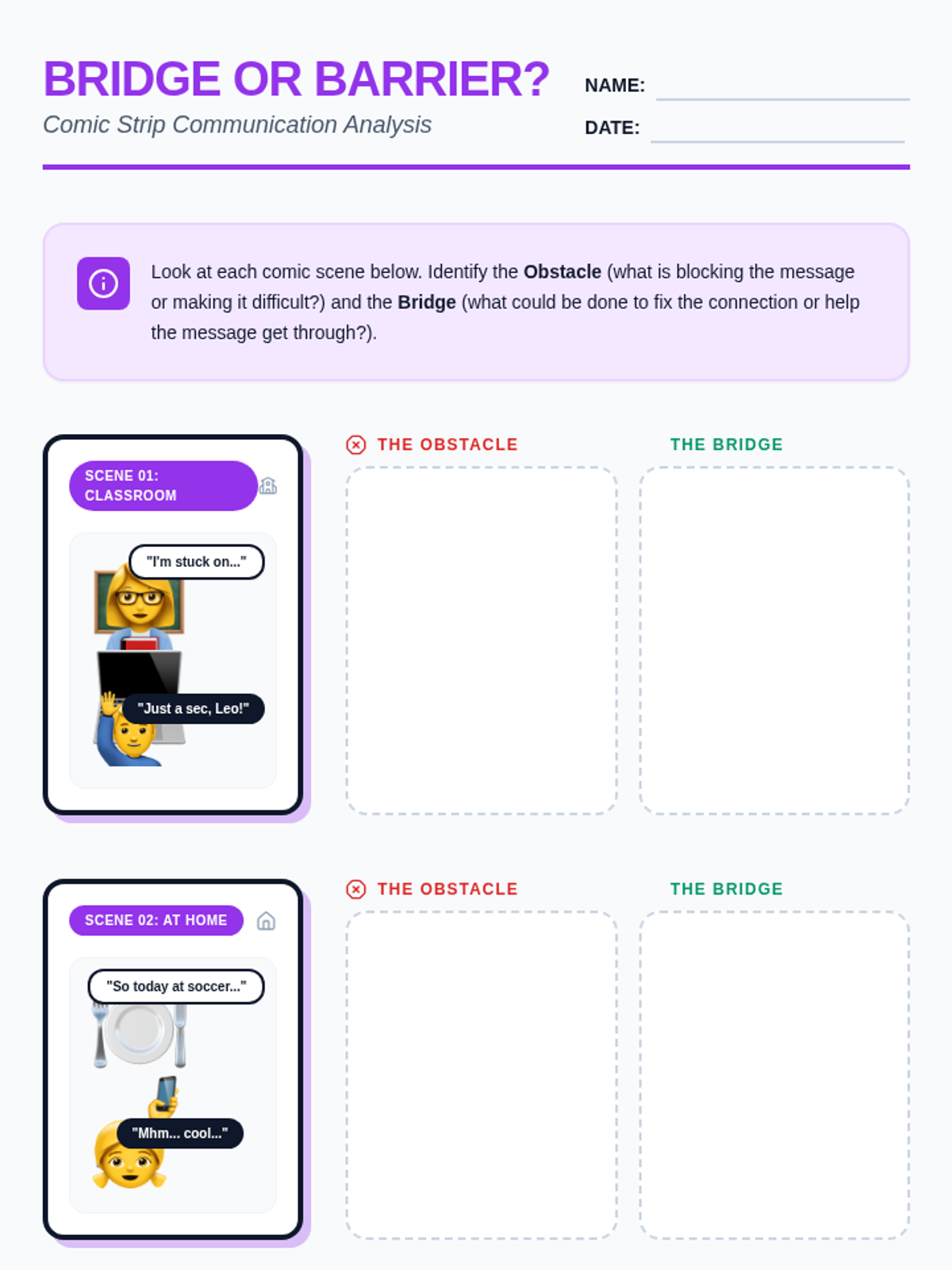
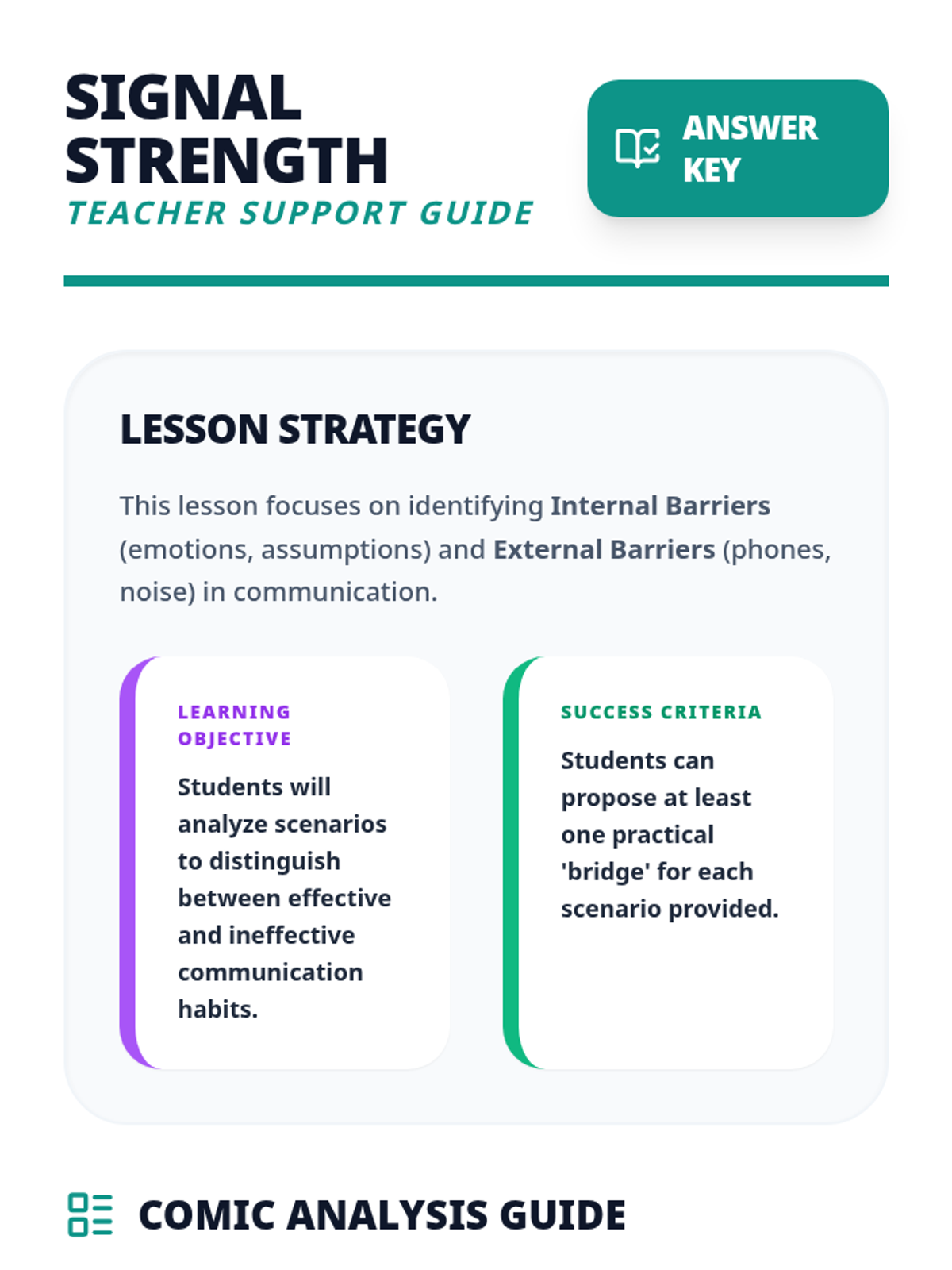
A lesson exploring communication dynamics through 'bridges' that connect people and 'obstacles' that block understanding. Students analyze real-world scenarios to improve their interpersonal skills.