Written and verbal communication standards for the workplace, including email etiquette, presentation delivery, and professional phone conduct. Develops collaborative skills for teamwork, constructive feedback, and efficient time management.
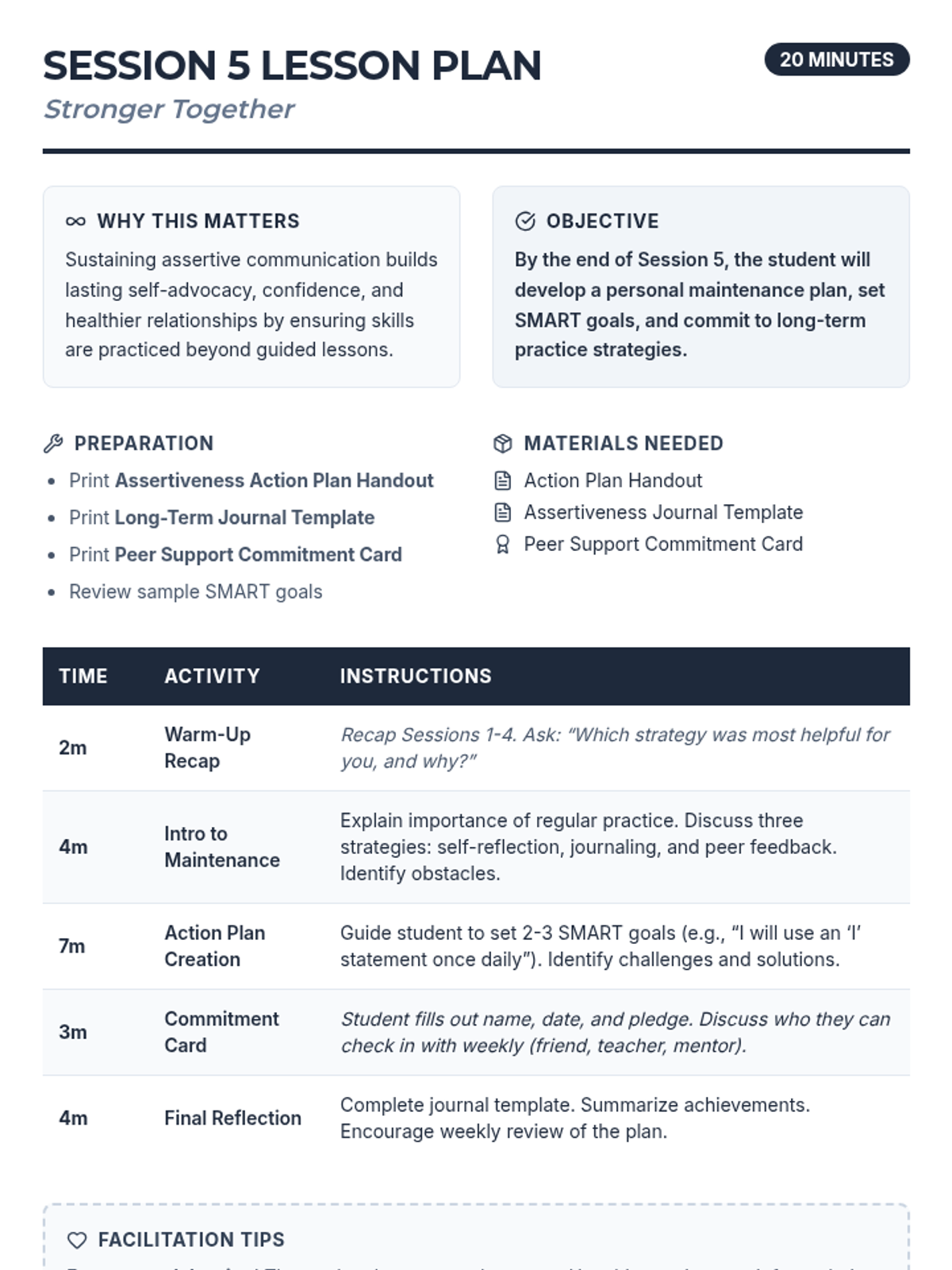
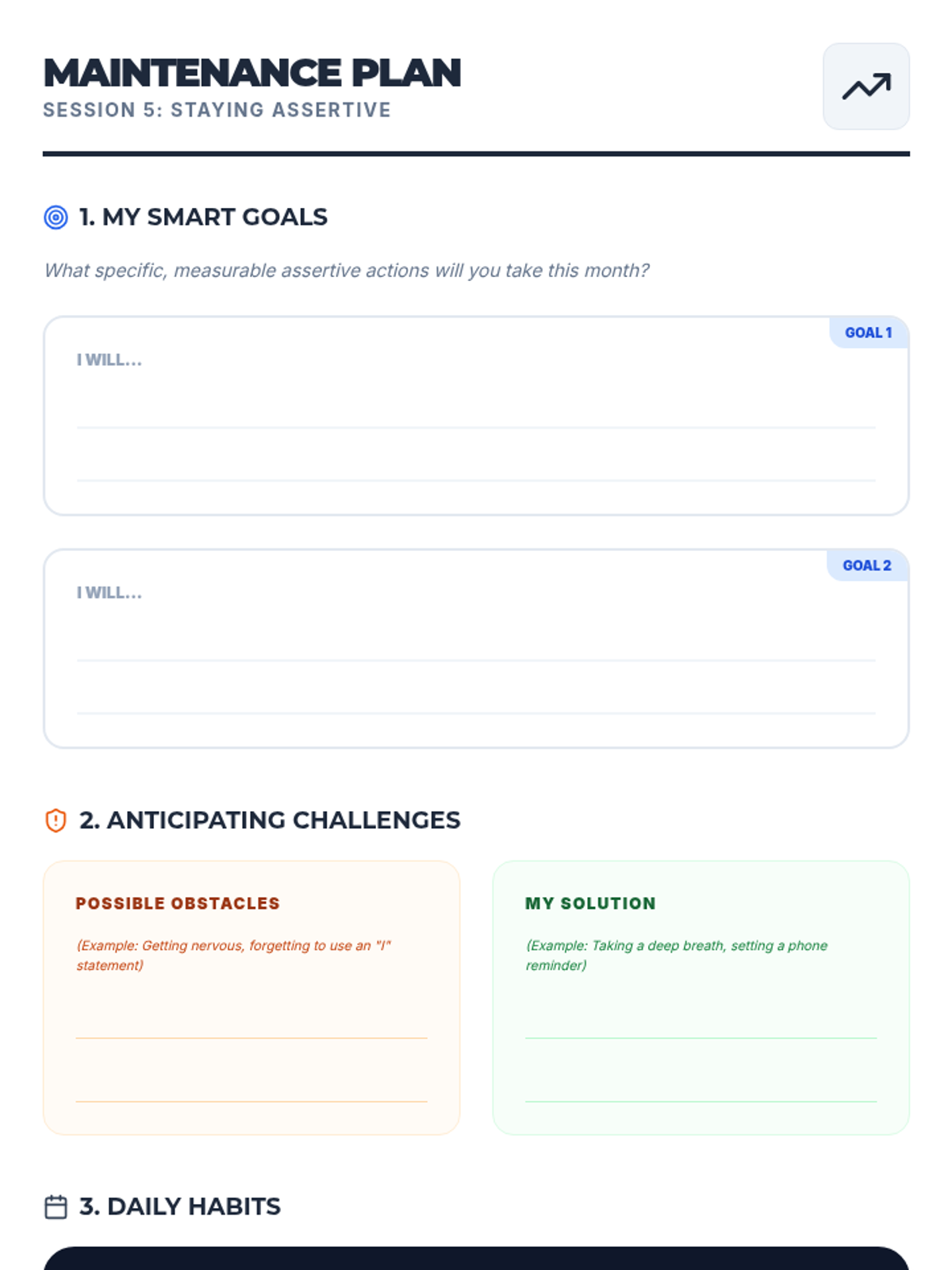
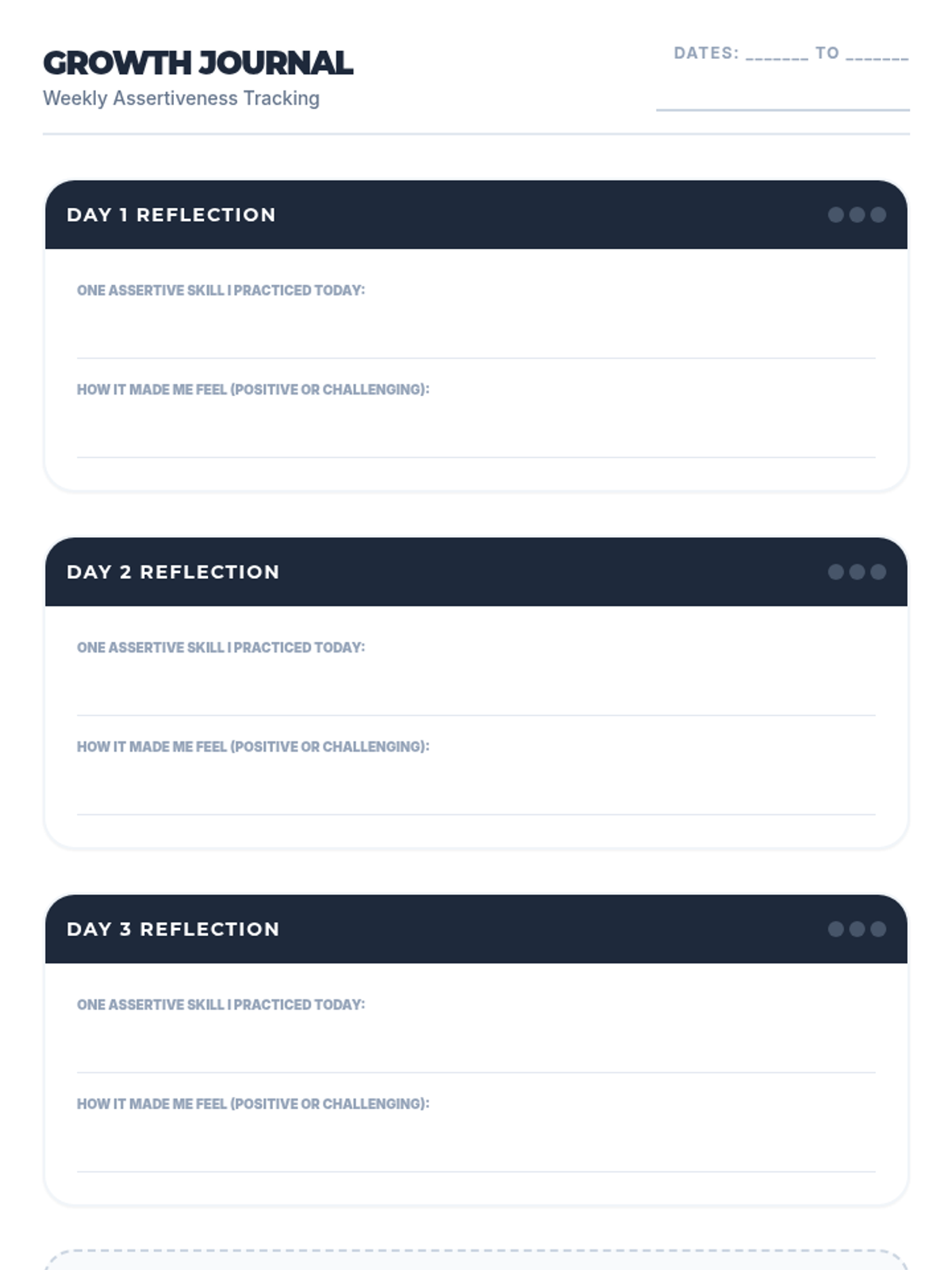
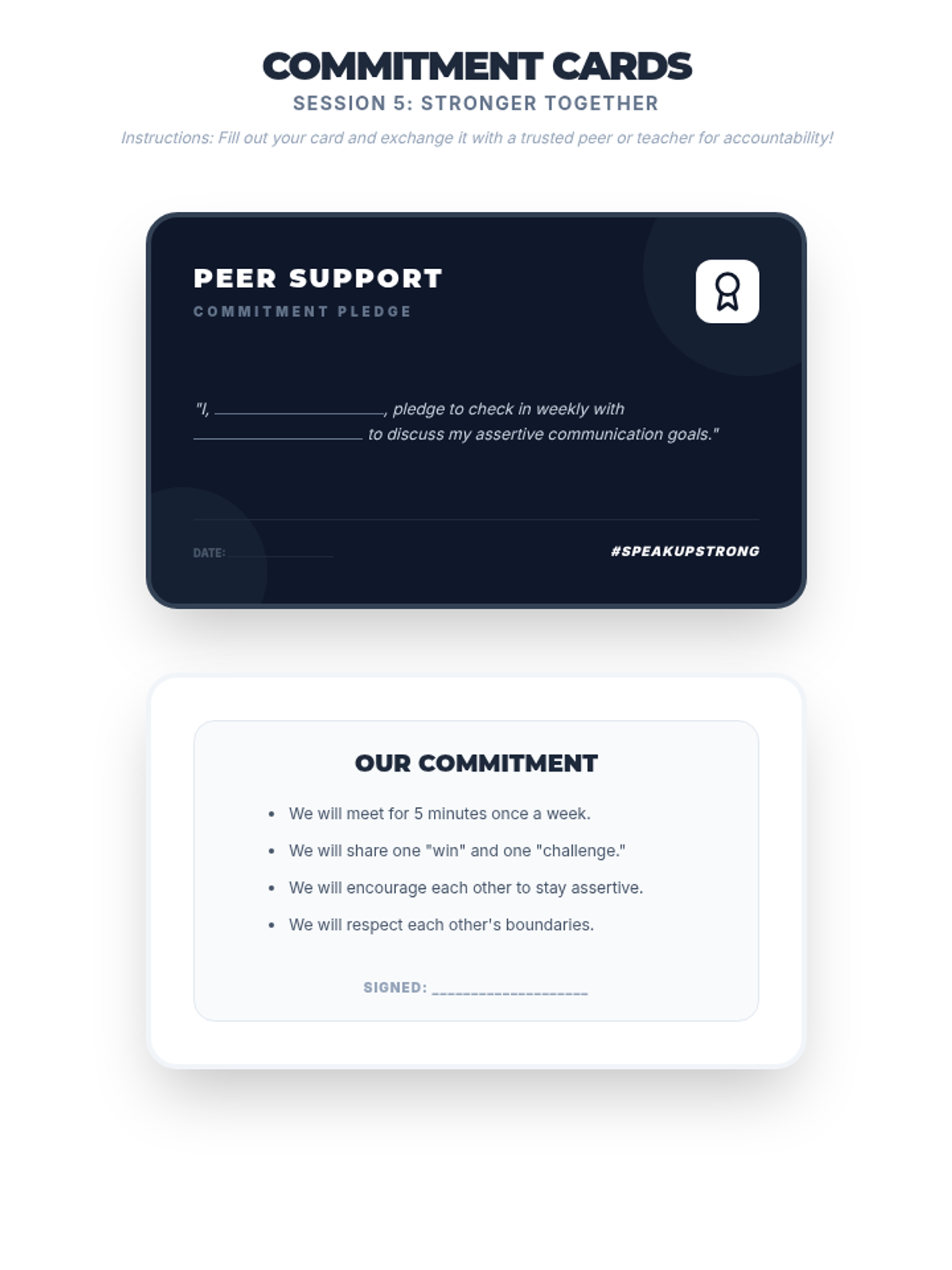
Focuses on maintaining assertive communication skills over the long term through self-reflection, action planning, and building a support network.
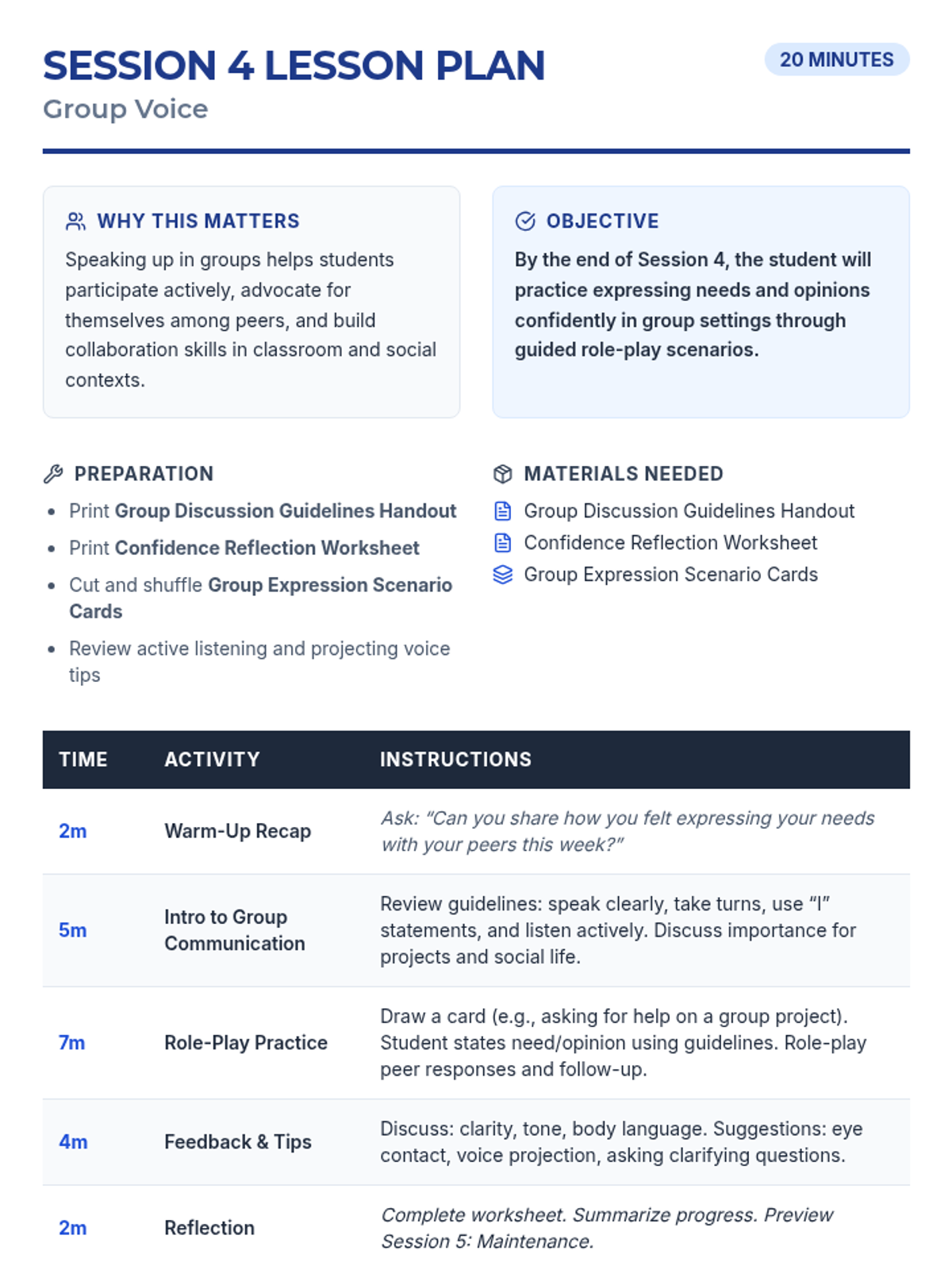
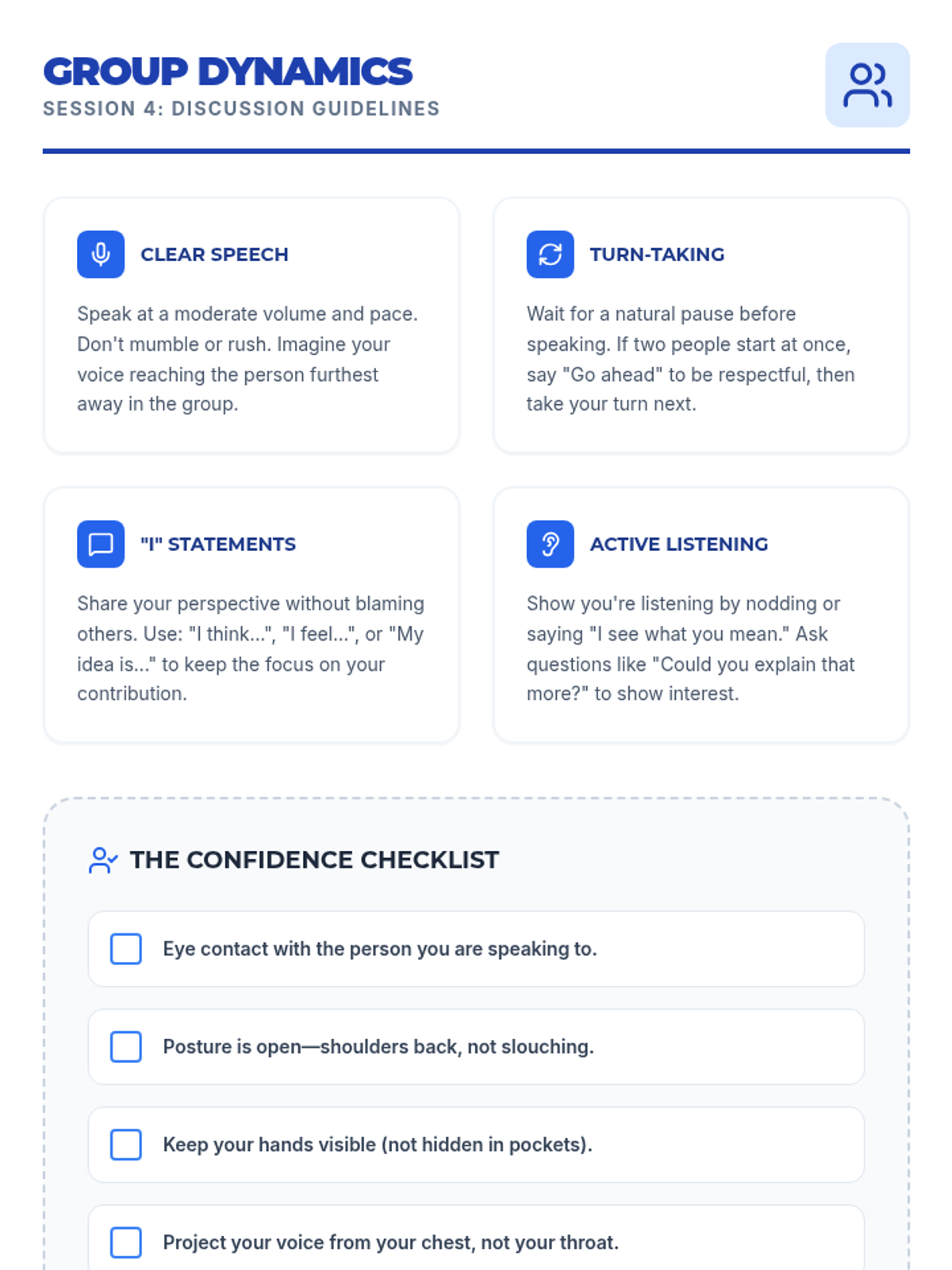
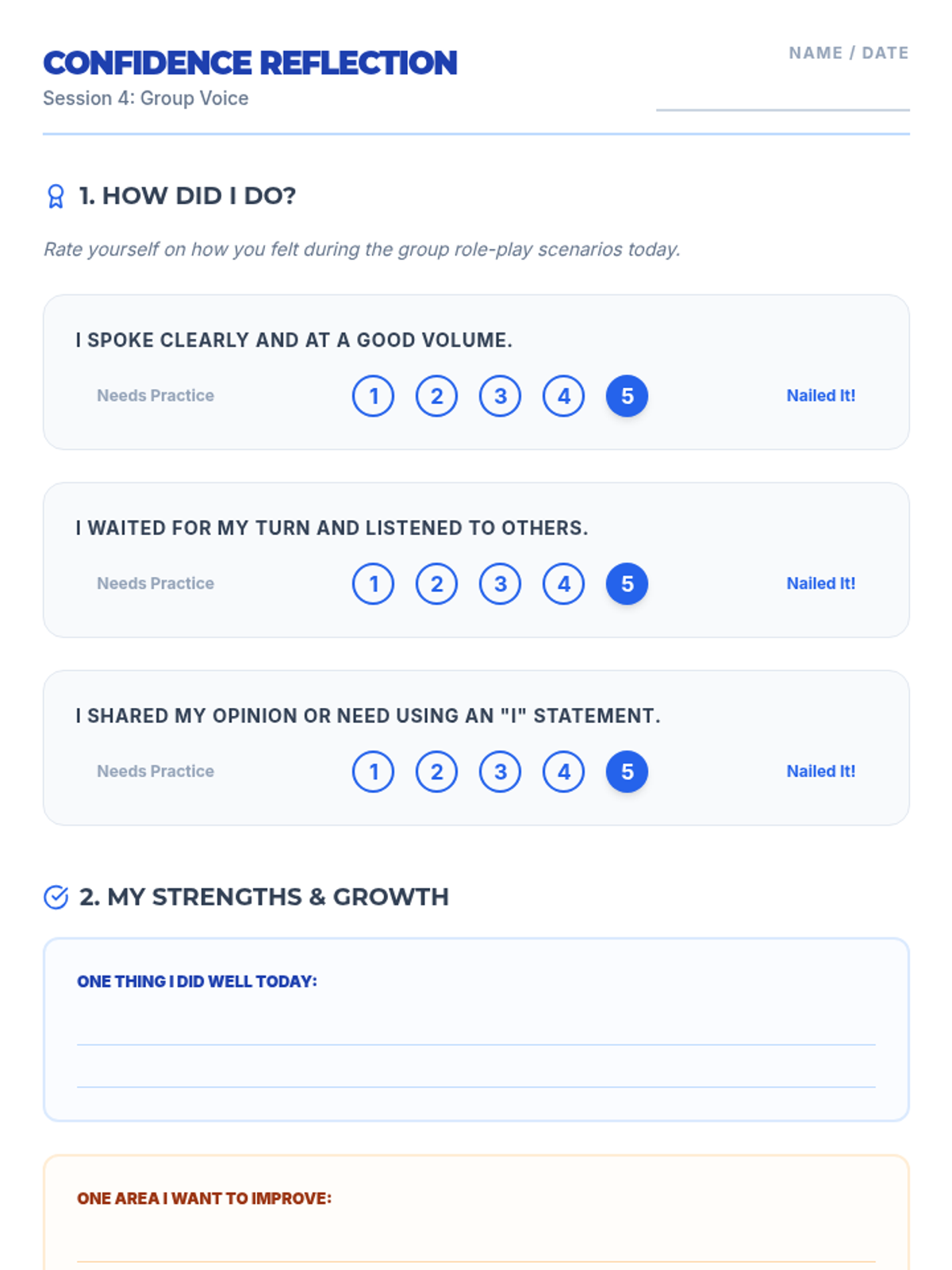
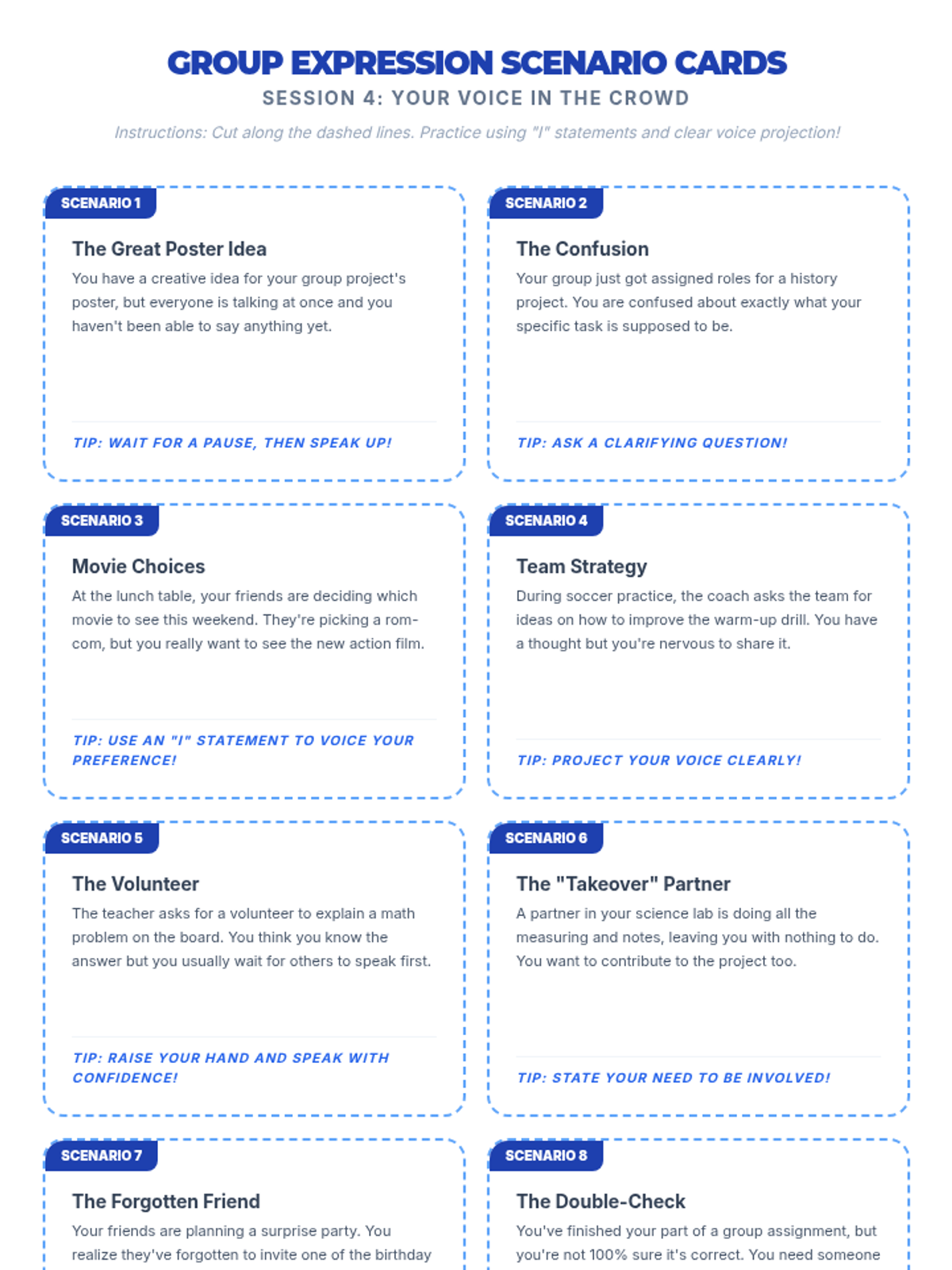
Focuses on practicing assertive communication within group dynamics, such as school projects or social circles, highlighting turn-taking and active listening.
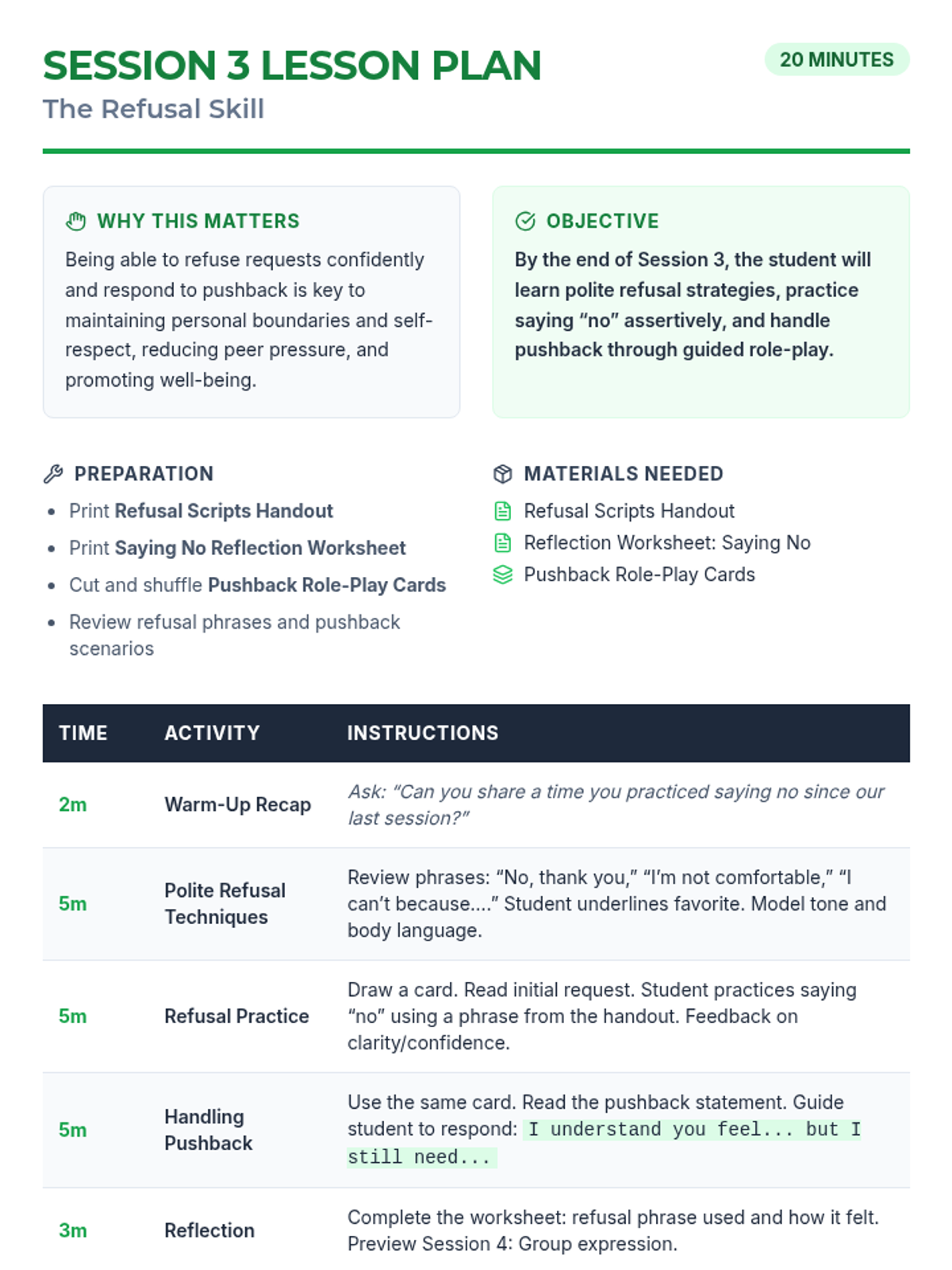
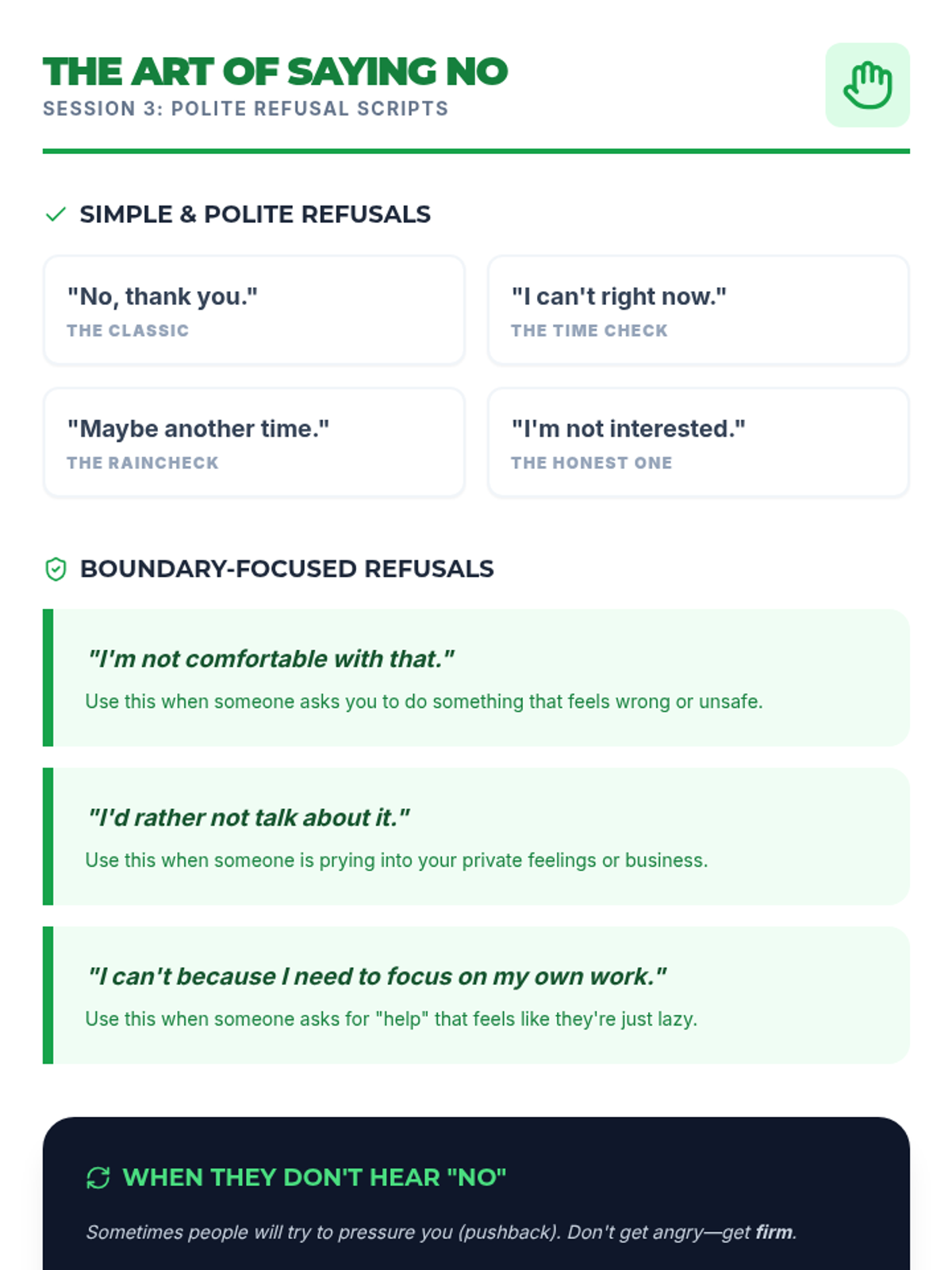
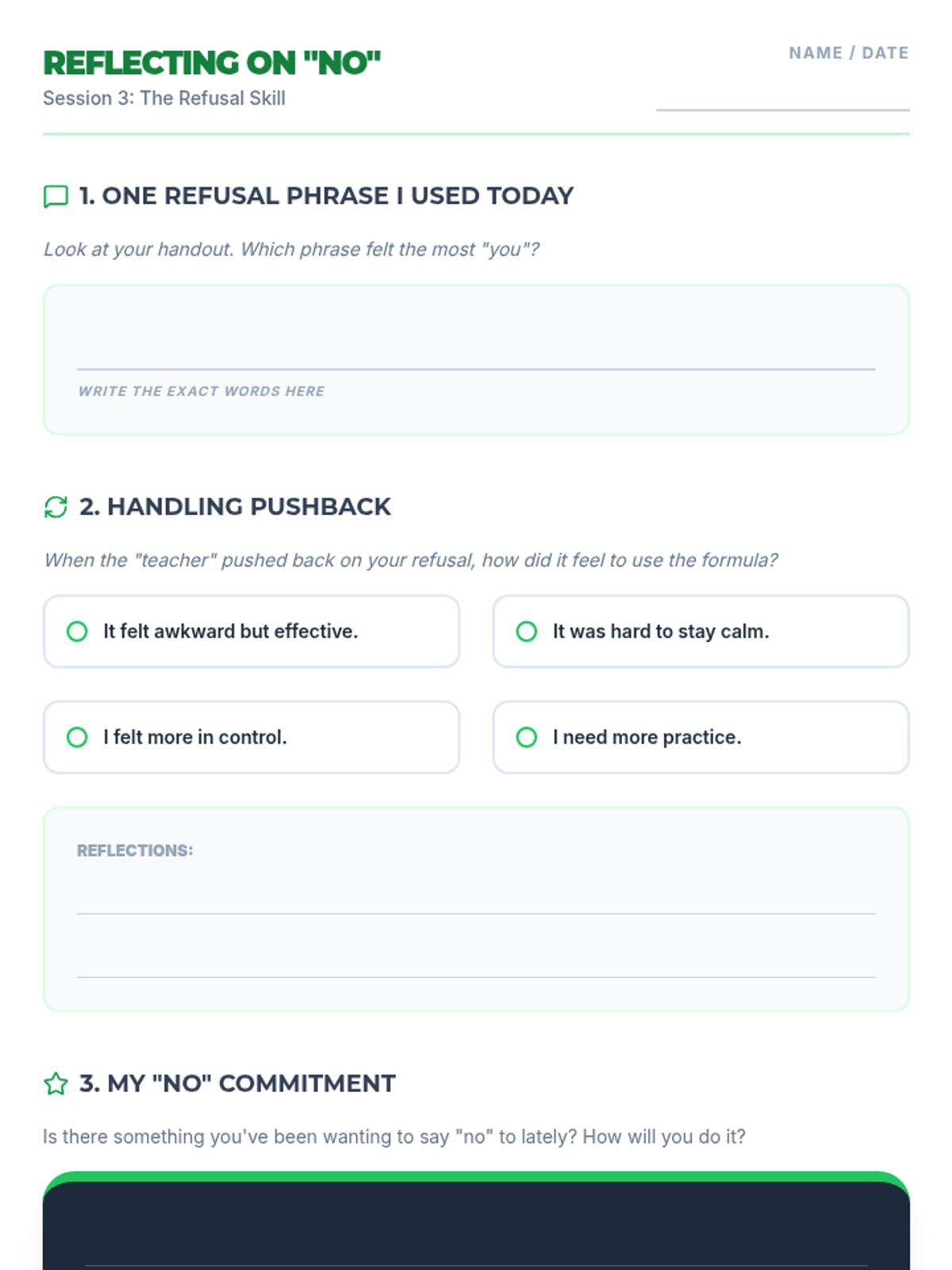
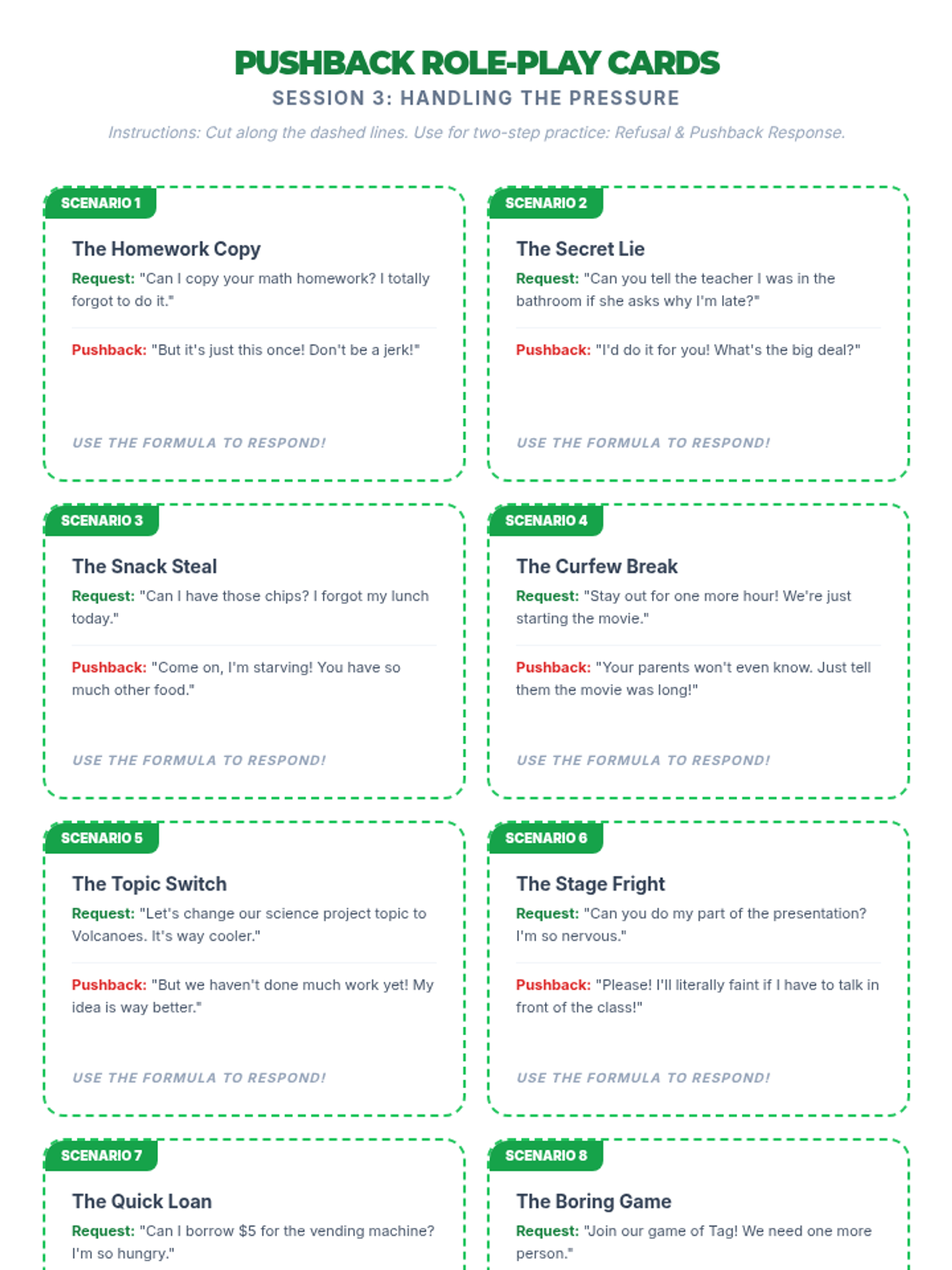
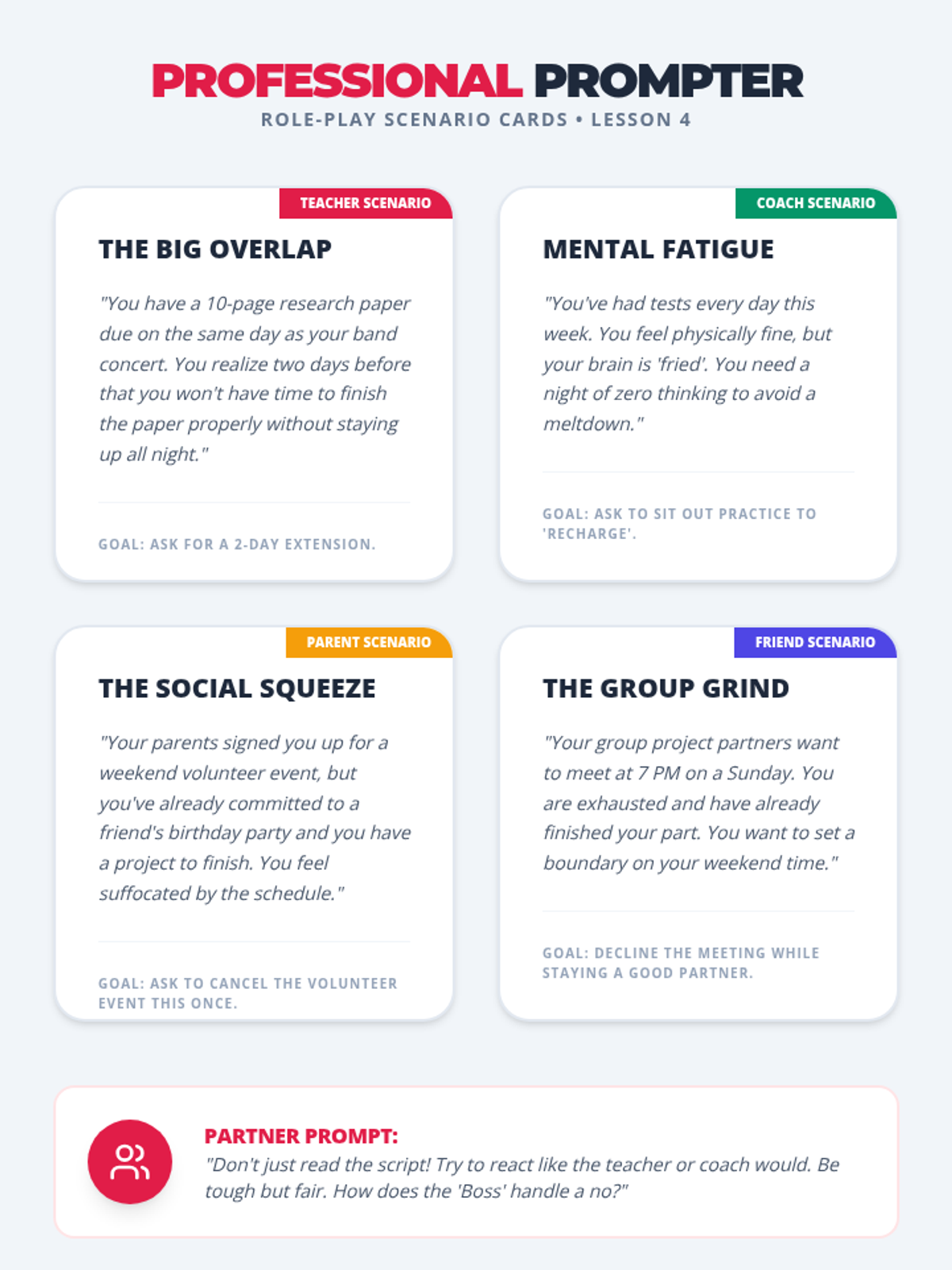
Focuses on polite refusal strategies, practicing saying “no” assertively, and handling pushback through guided role-play.
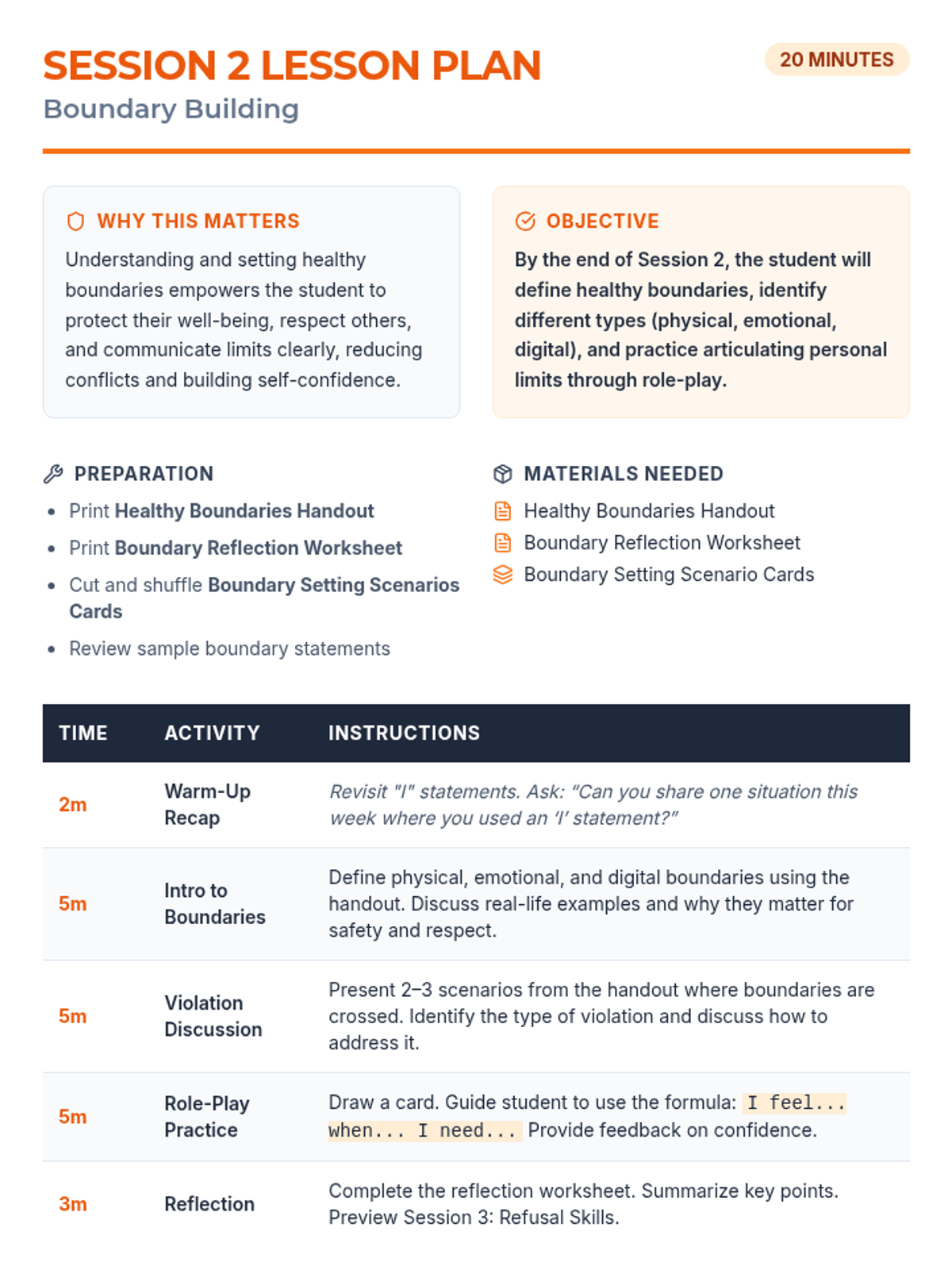
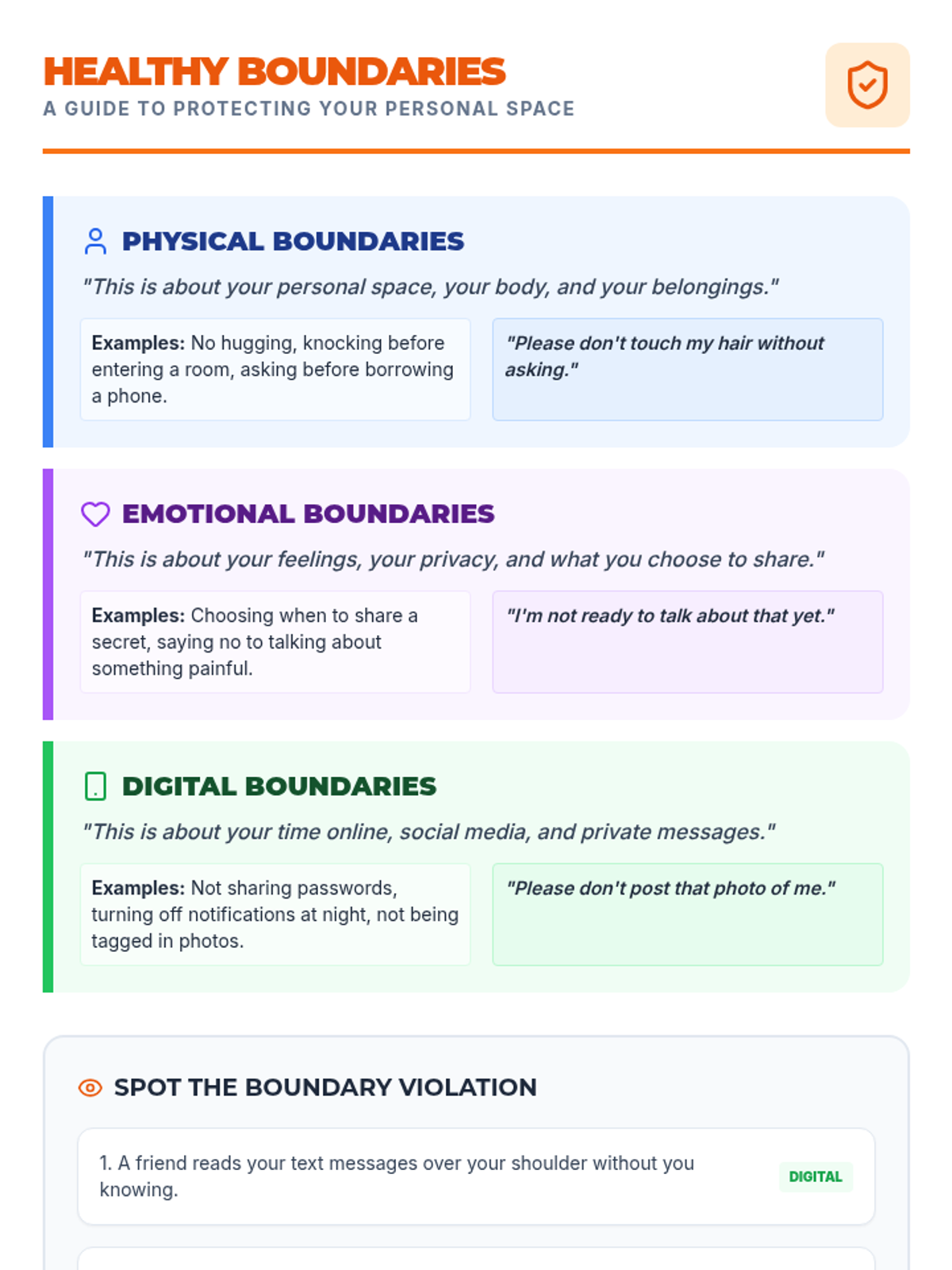
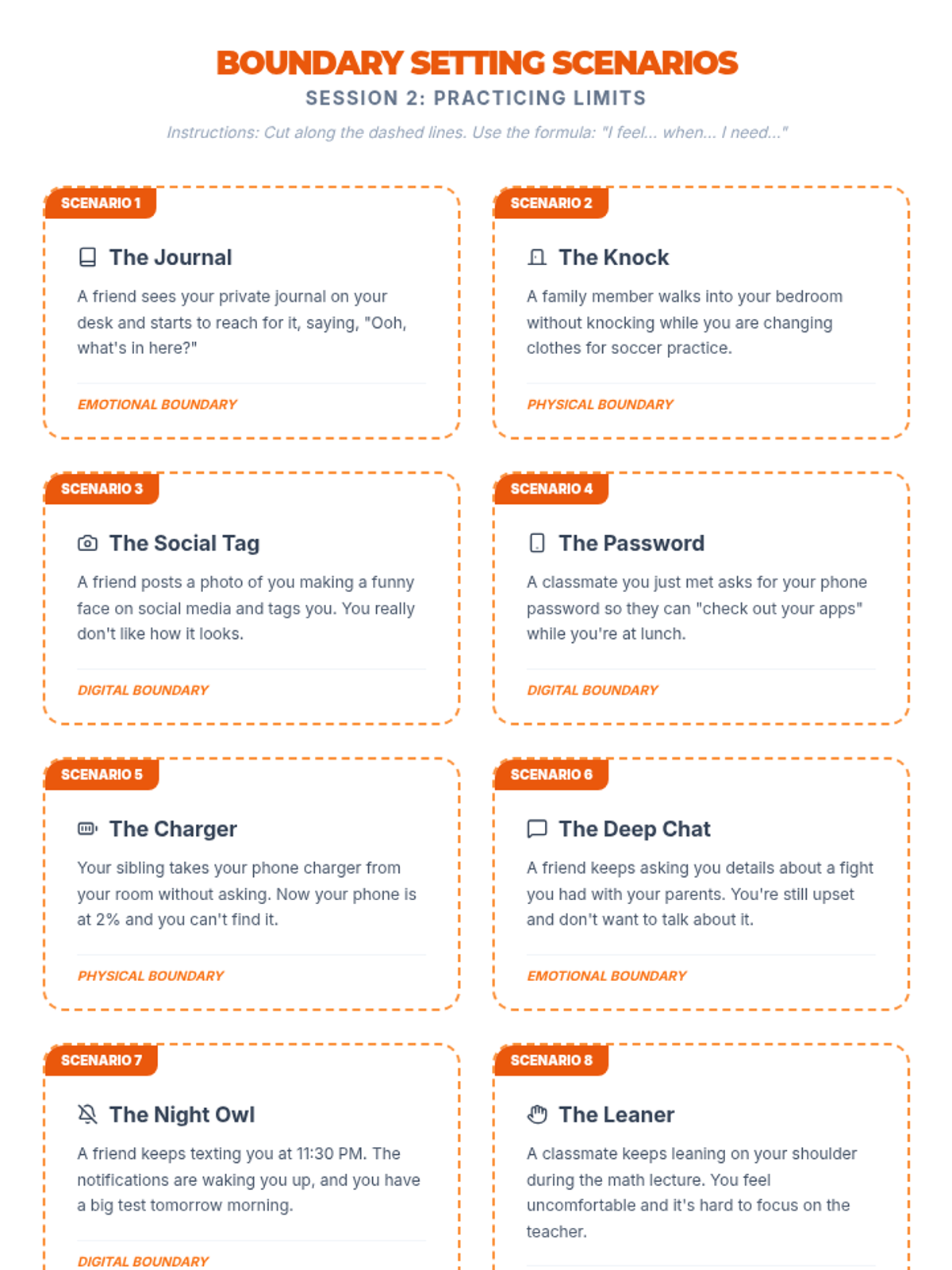
Focuses on defining and identifying different types of personal boundaries—physical, emotional, and digital—and practicing how to set them clearly.
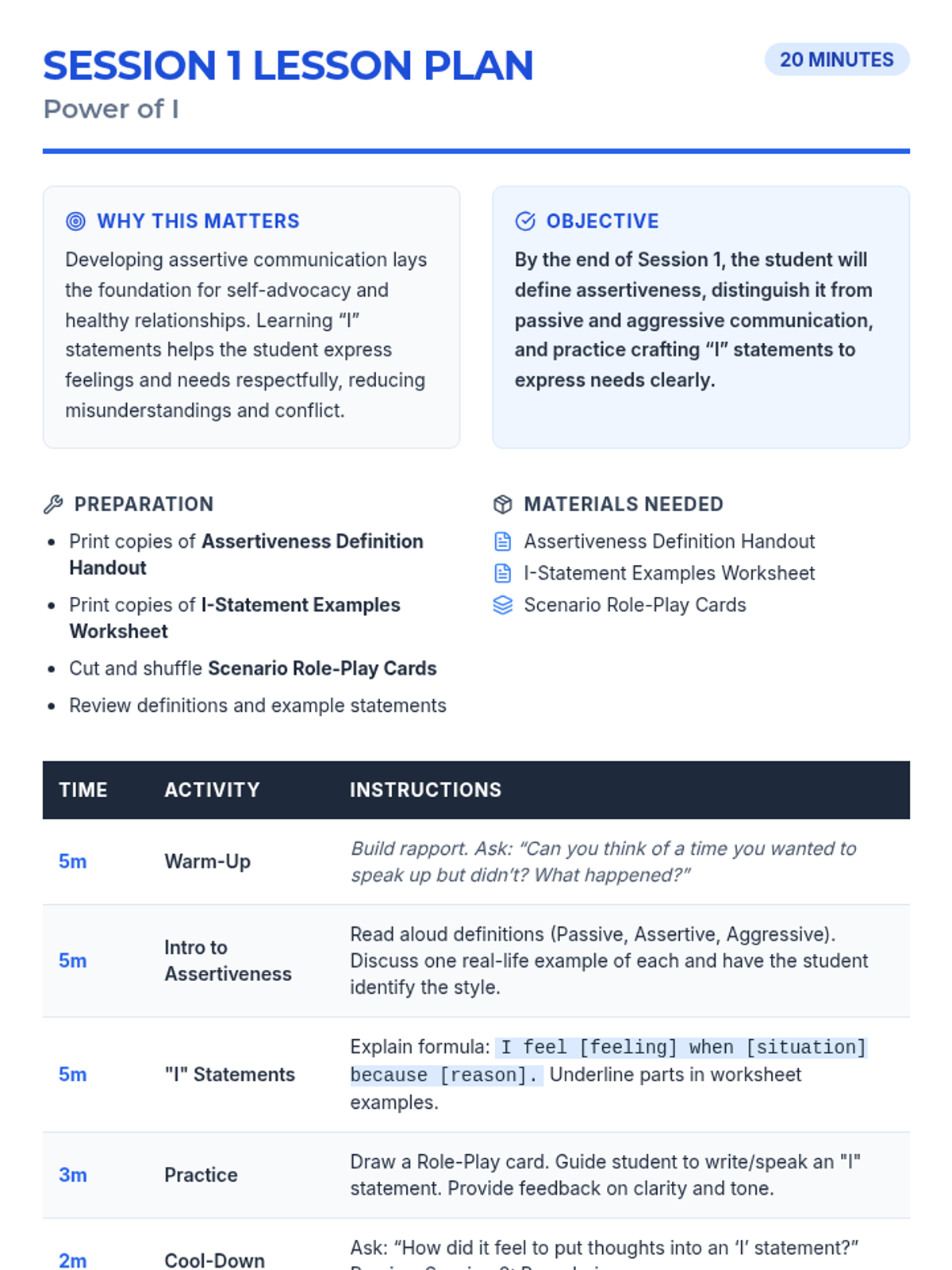
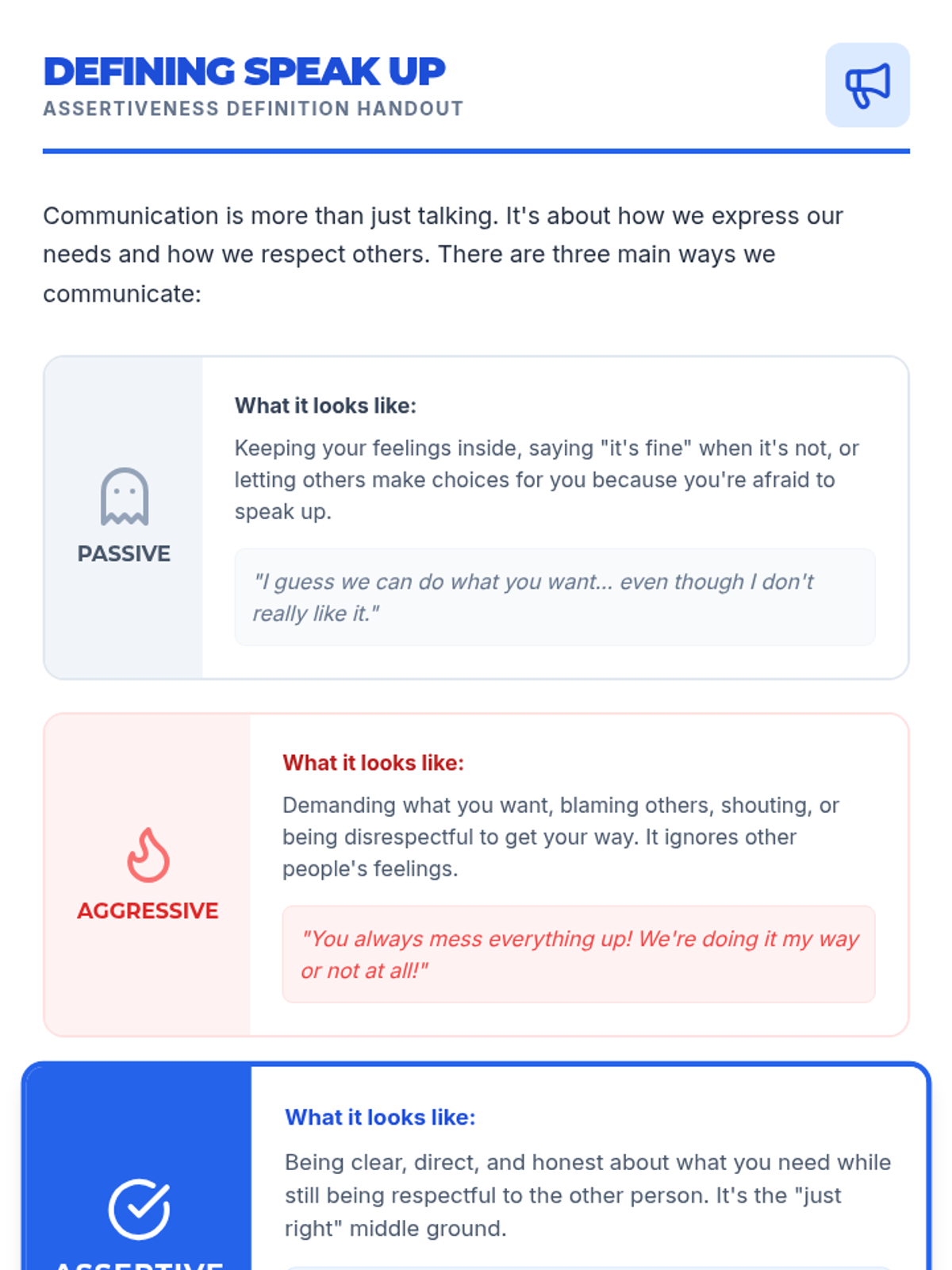
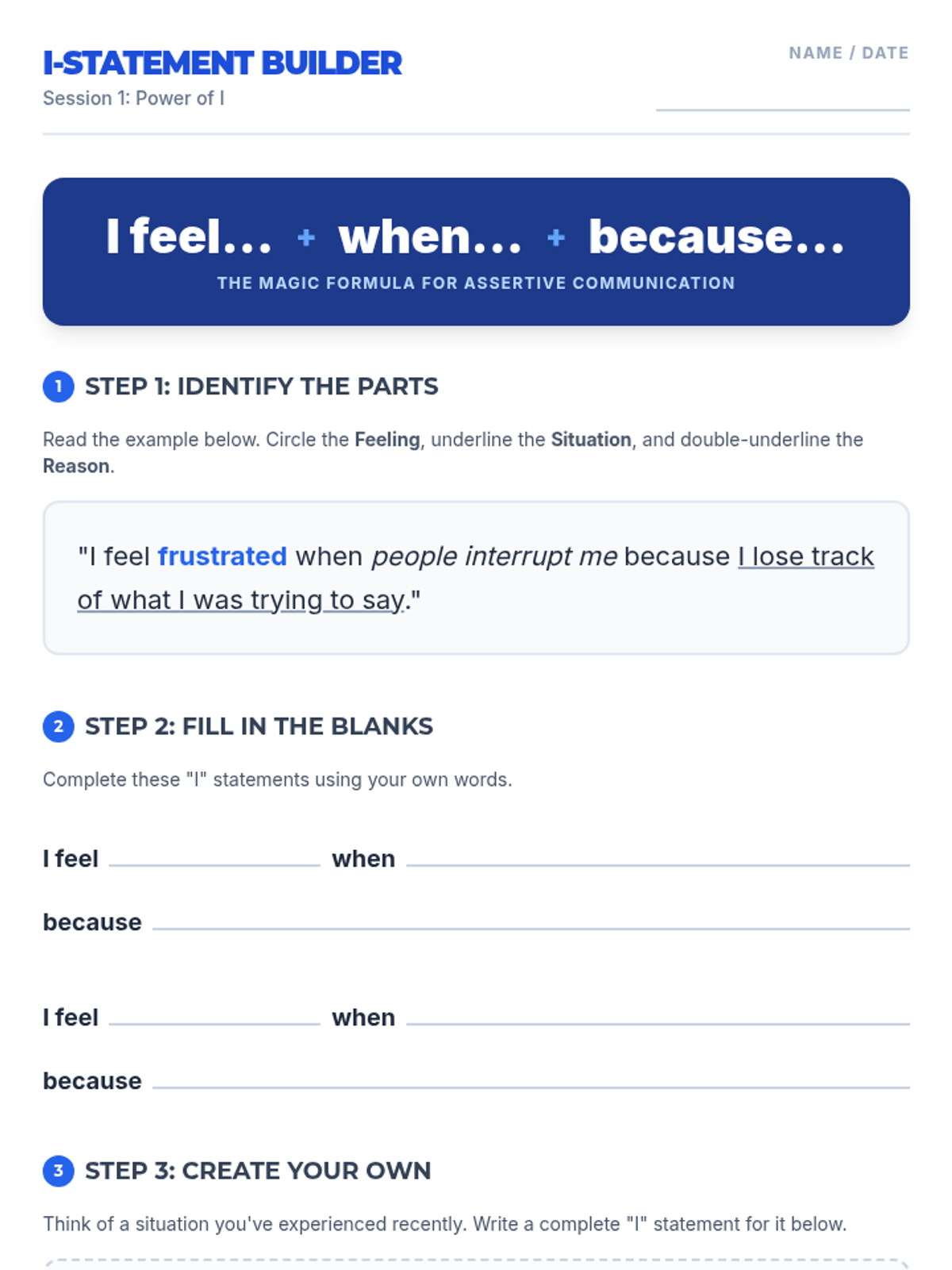
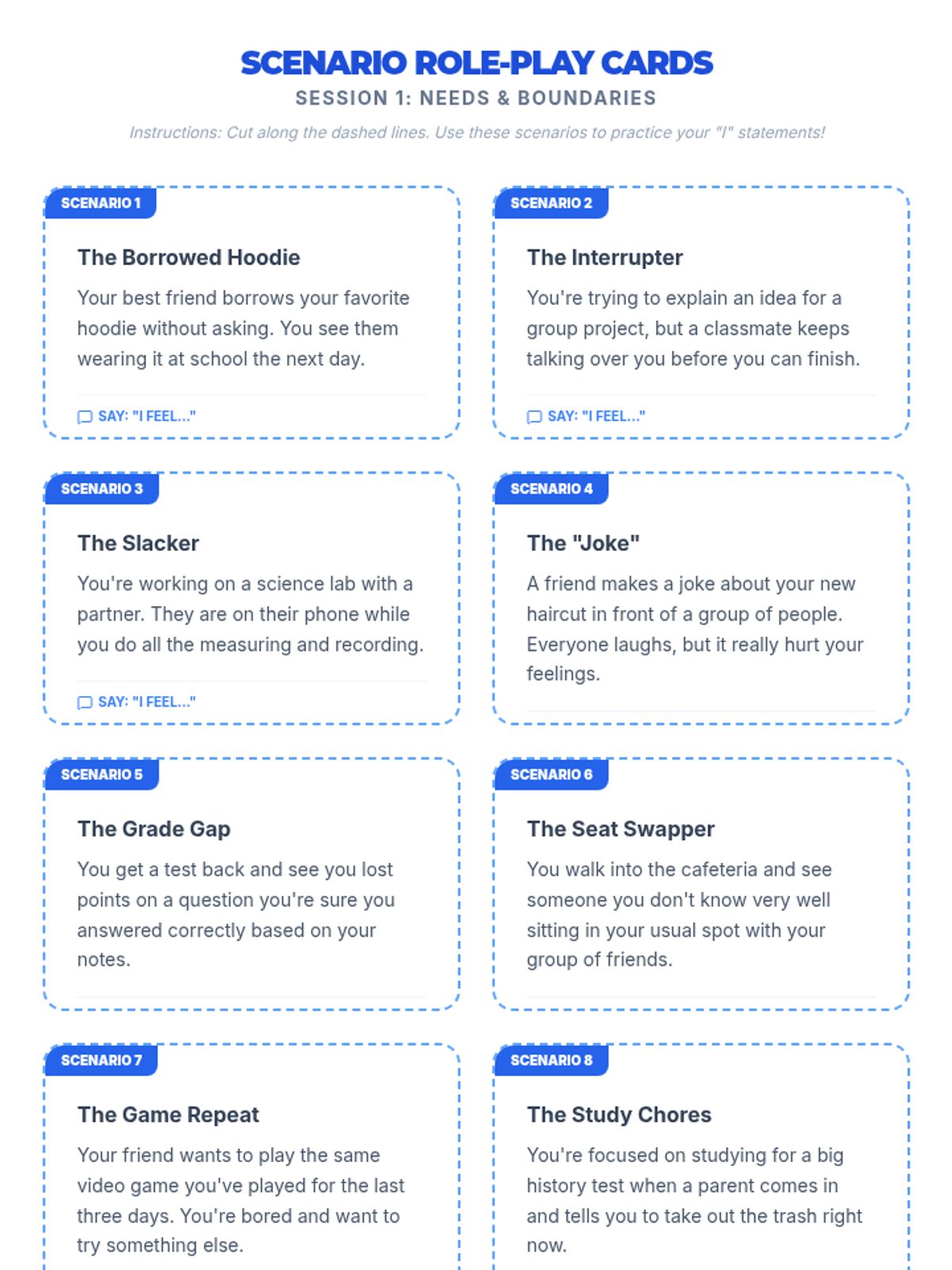
Introduces the concept of assertiveness versus passive and aggressive communication, with a focus on crafting clear I-statements.
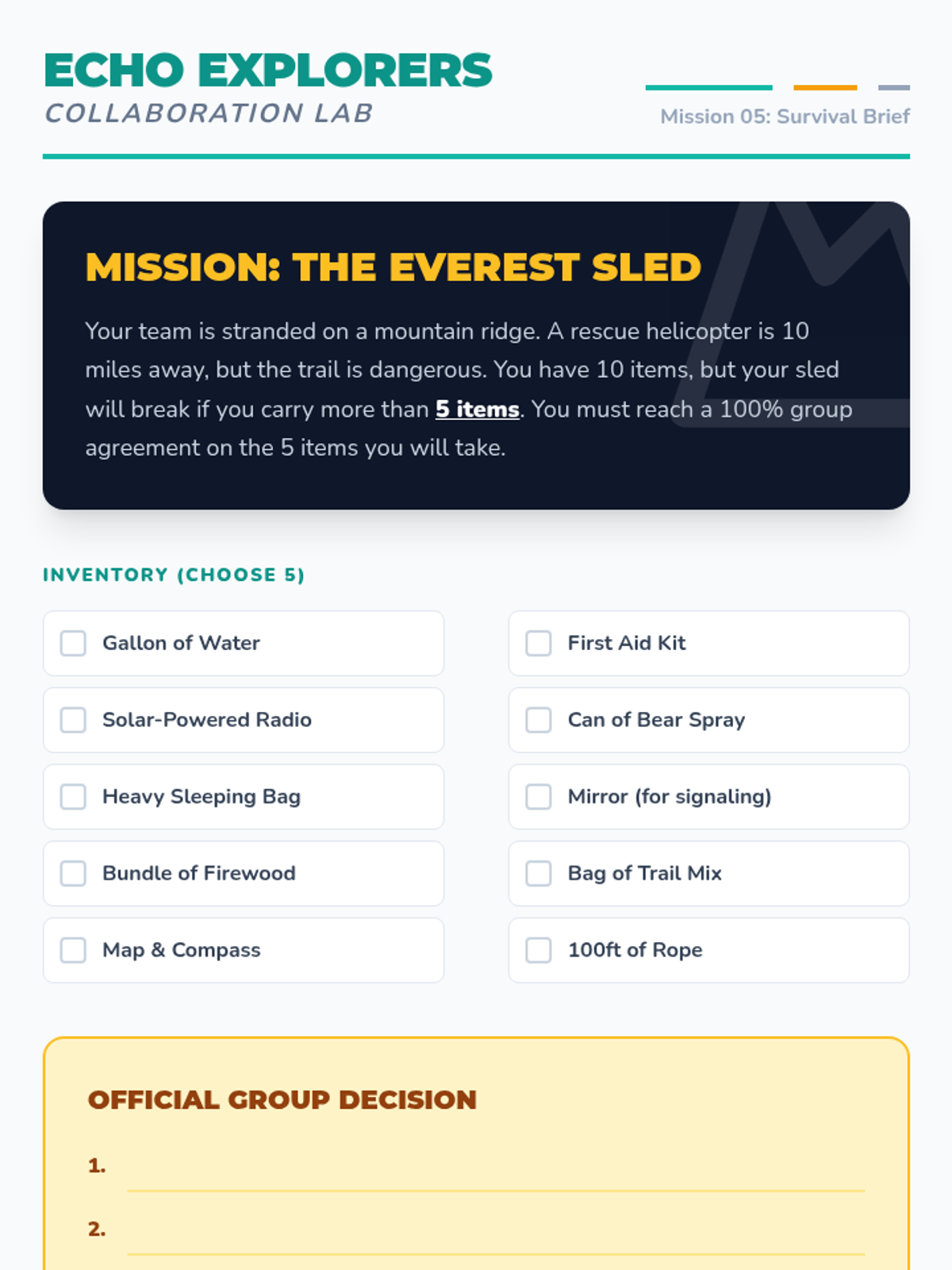
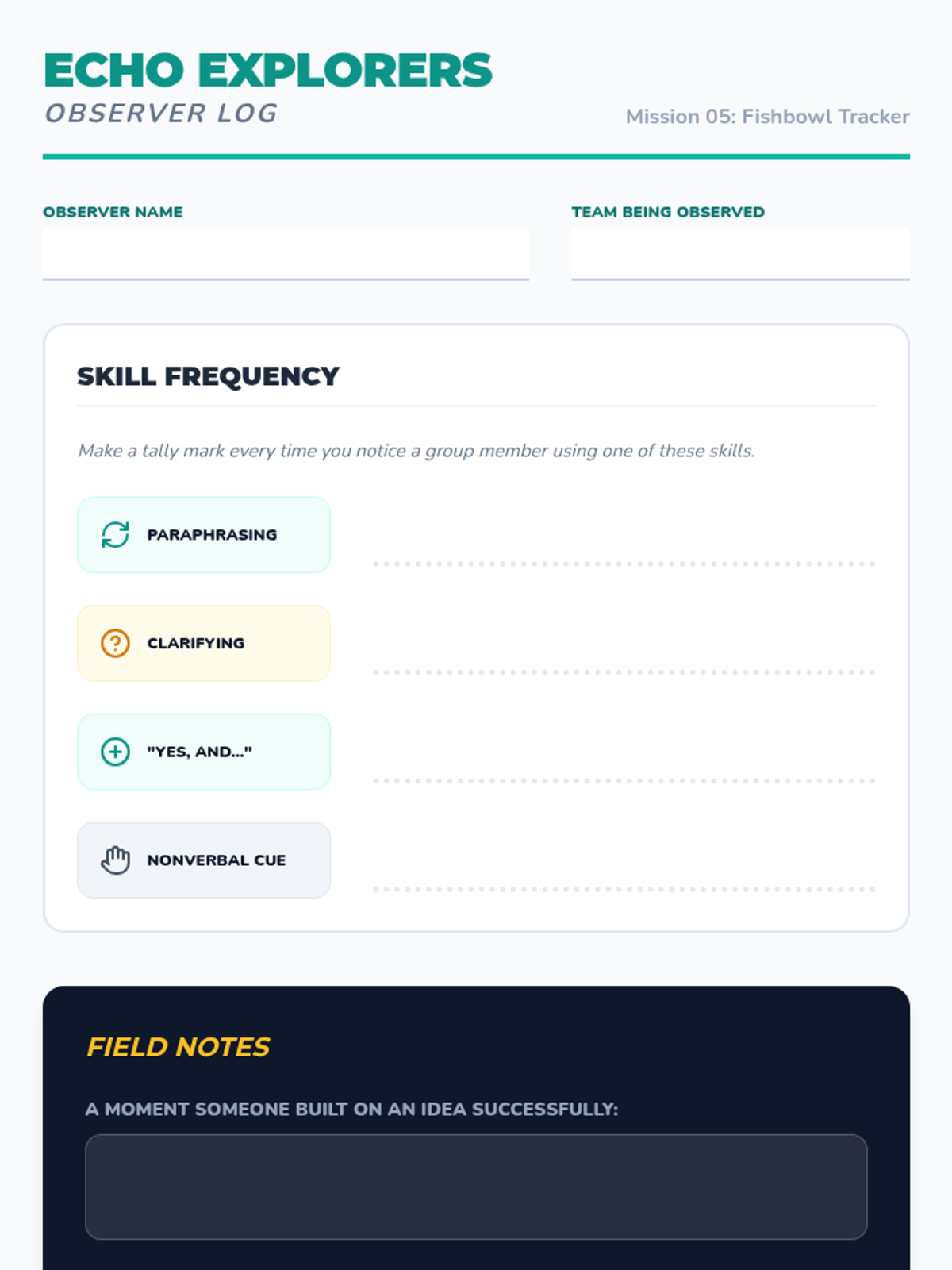
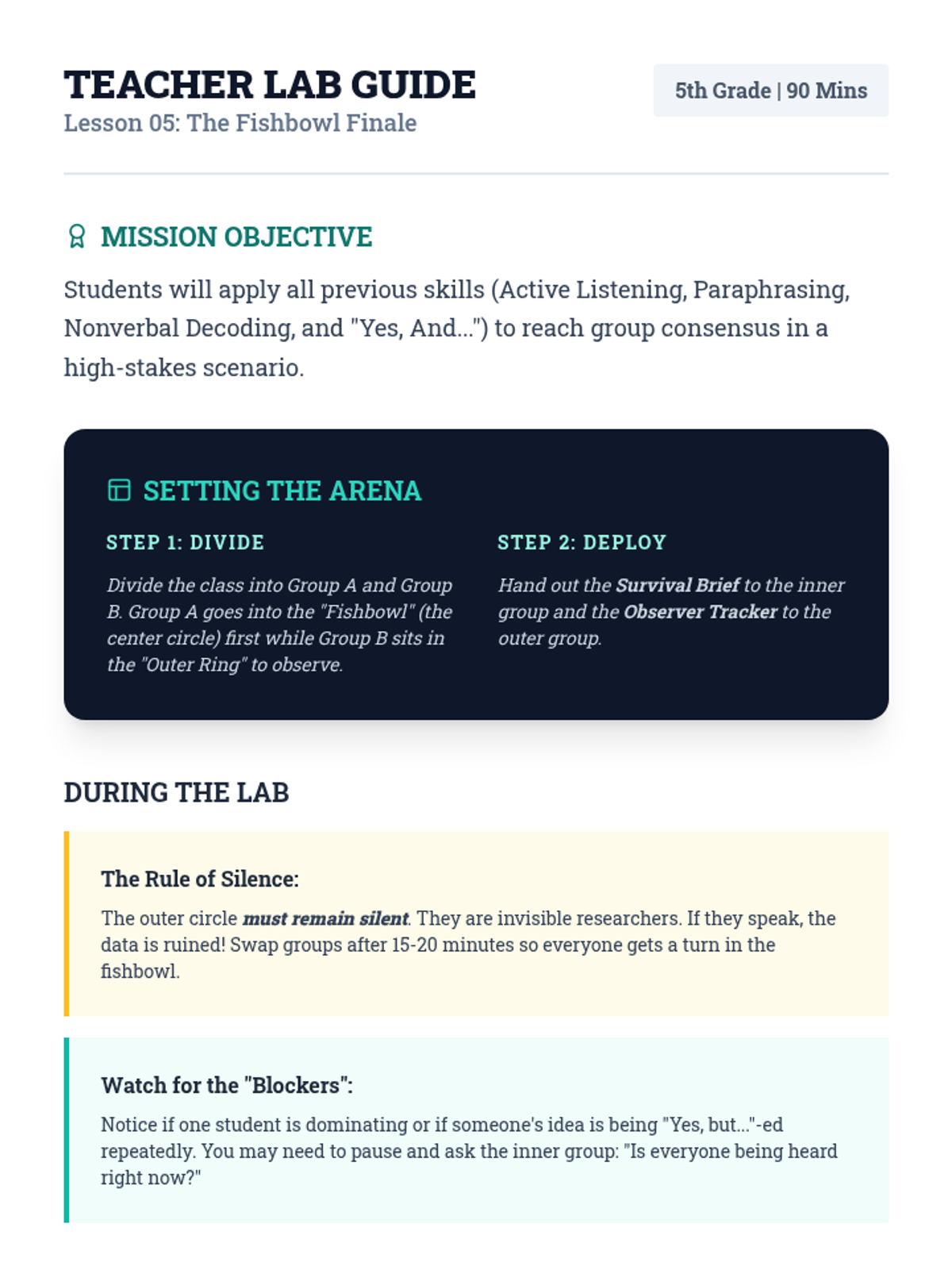
The sequence culminates in a fishbowl activity where students solve a survival scenario while being observed by peers. They debrief the experience by identifying the specific communication strategies that led to success.
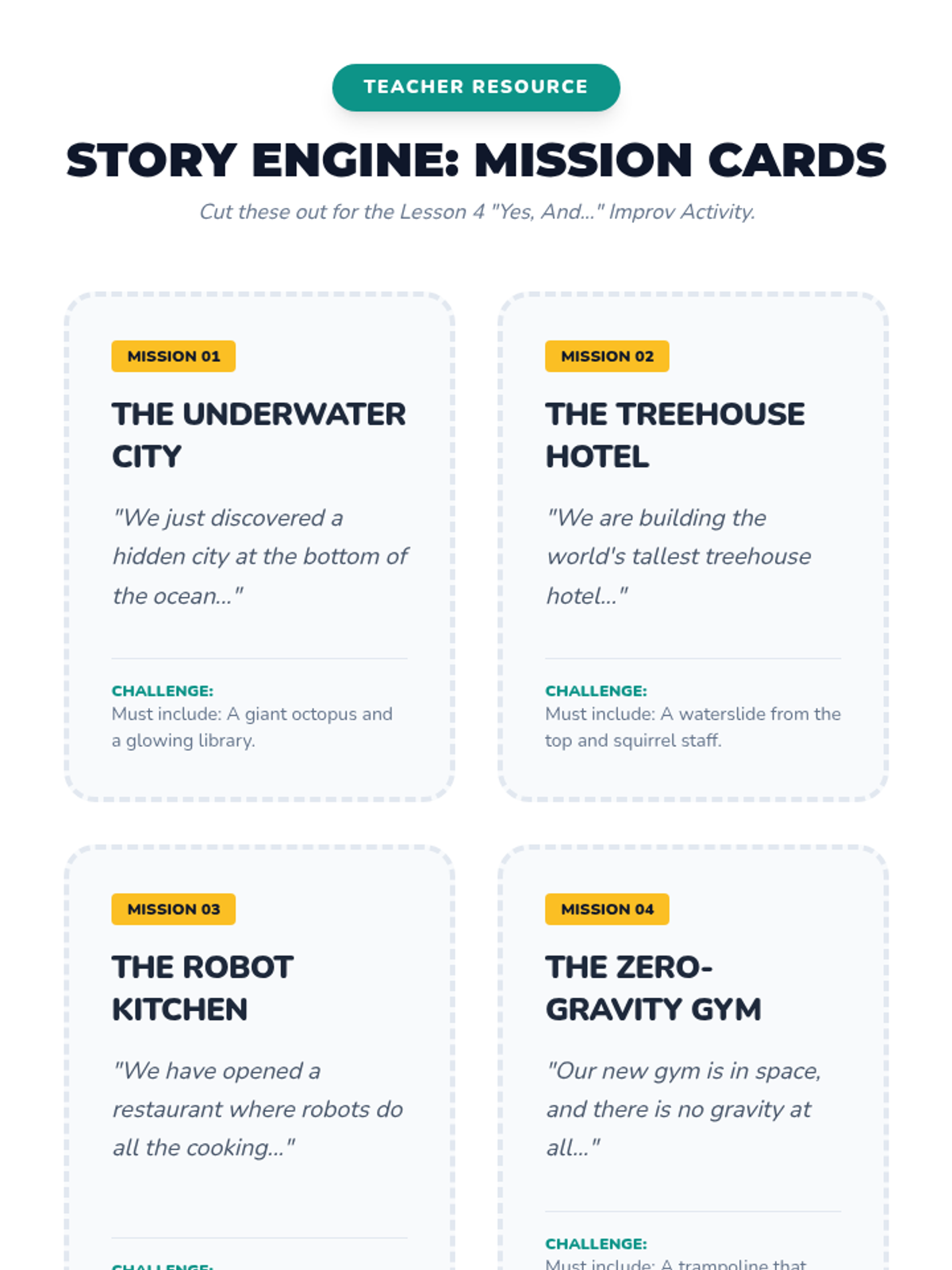
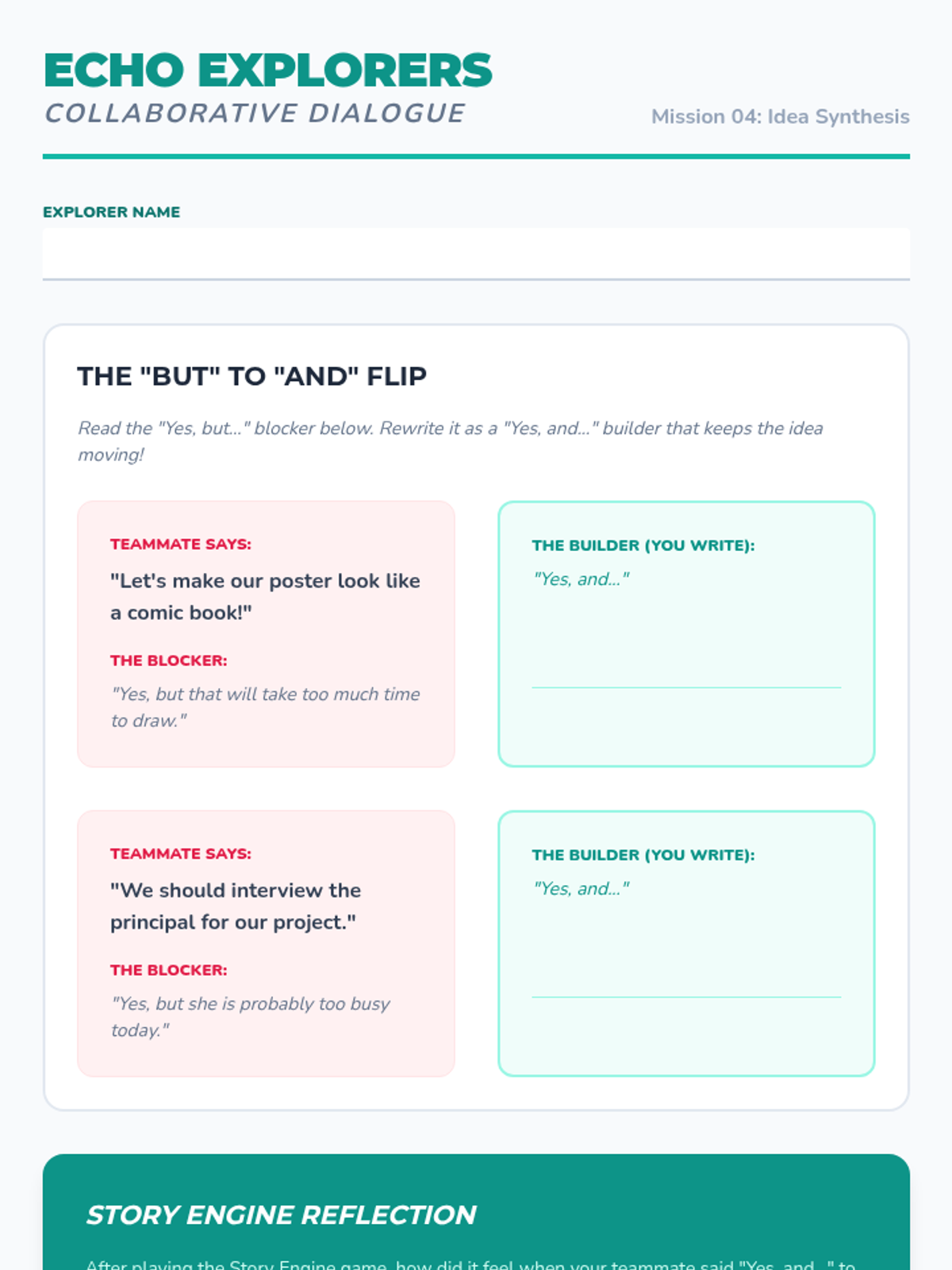
Focusing on the 'Yes, and...' mindset, students learn to validate and expand upon their teammates' ideas. They practice connecting their thoughts to previous contributions to create a cohesive group dialogue.
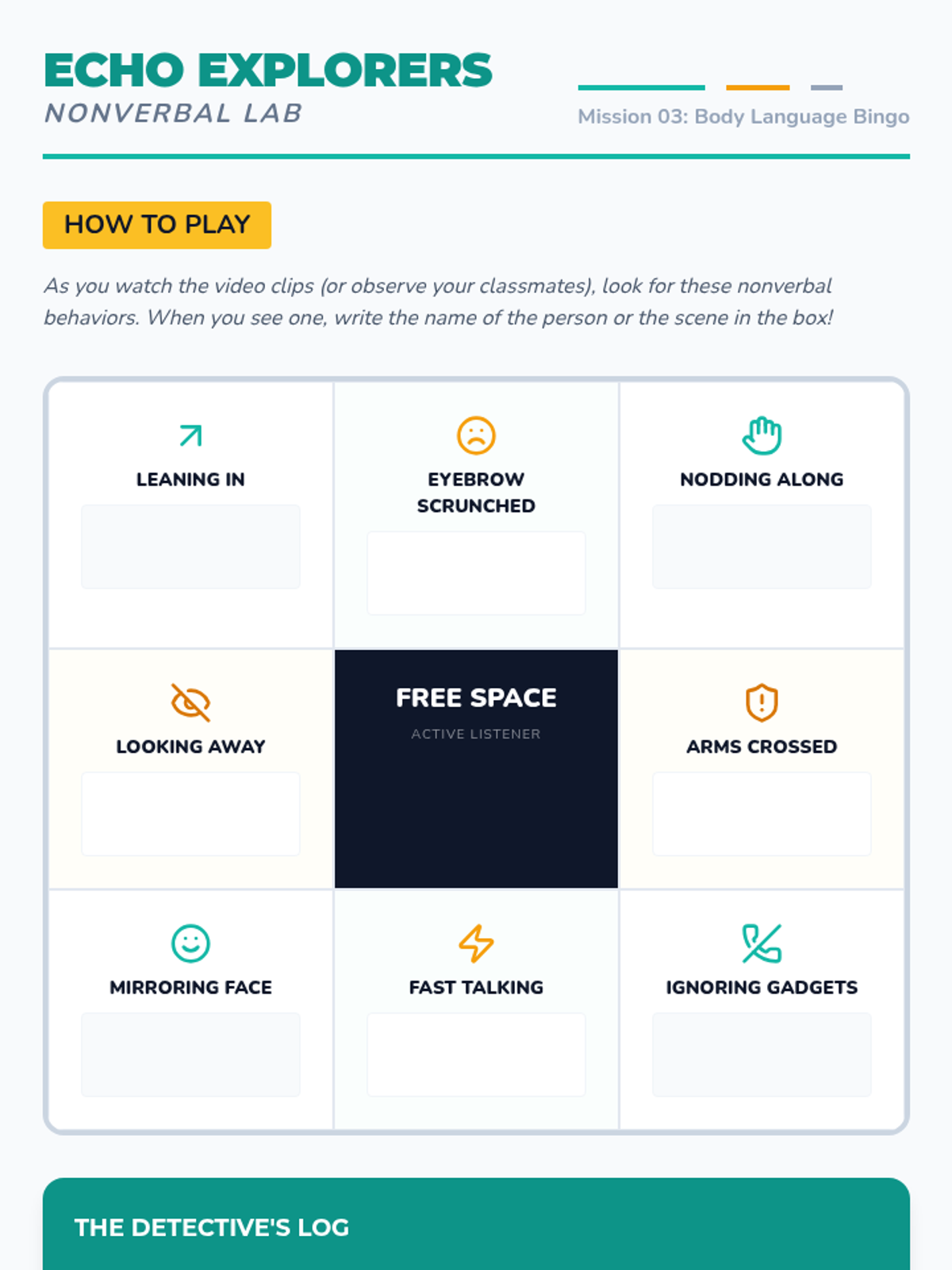
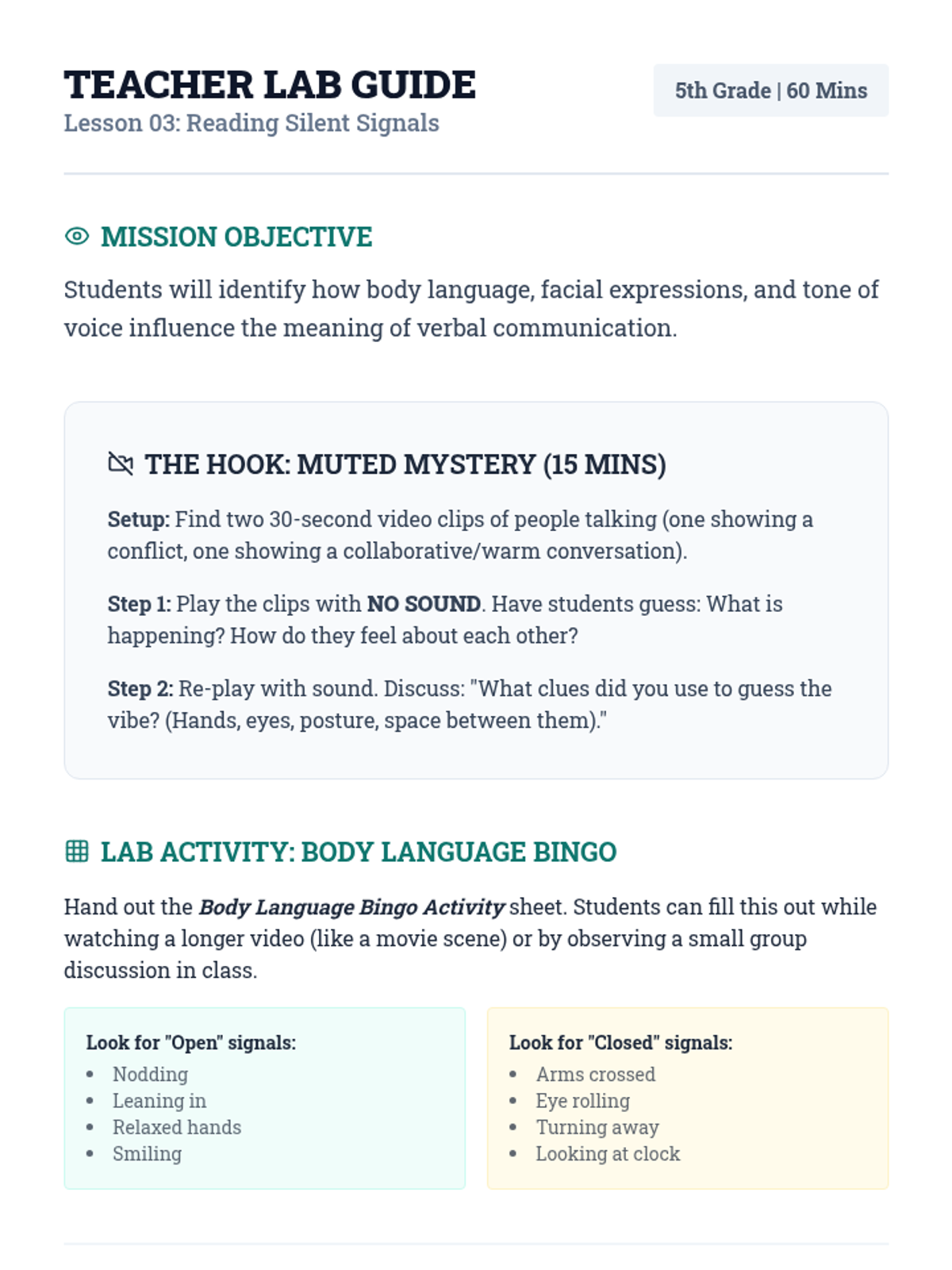
Students explore the impact of body language, facial expressions, and tone of voice on team dynamics. They analyze interactions to identify positive and negative nonverbal signals that influence collaboration.
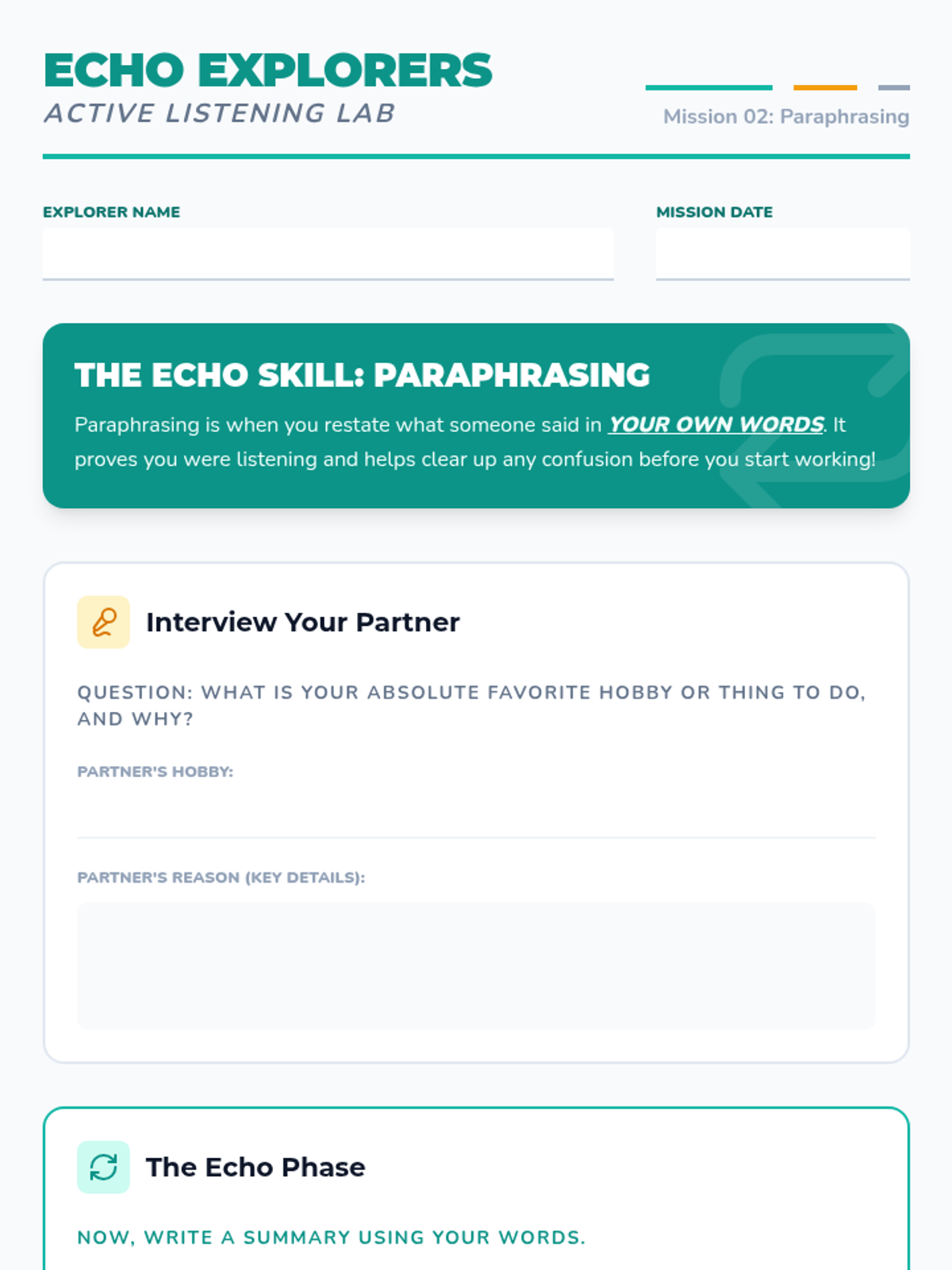
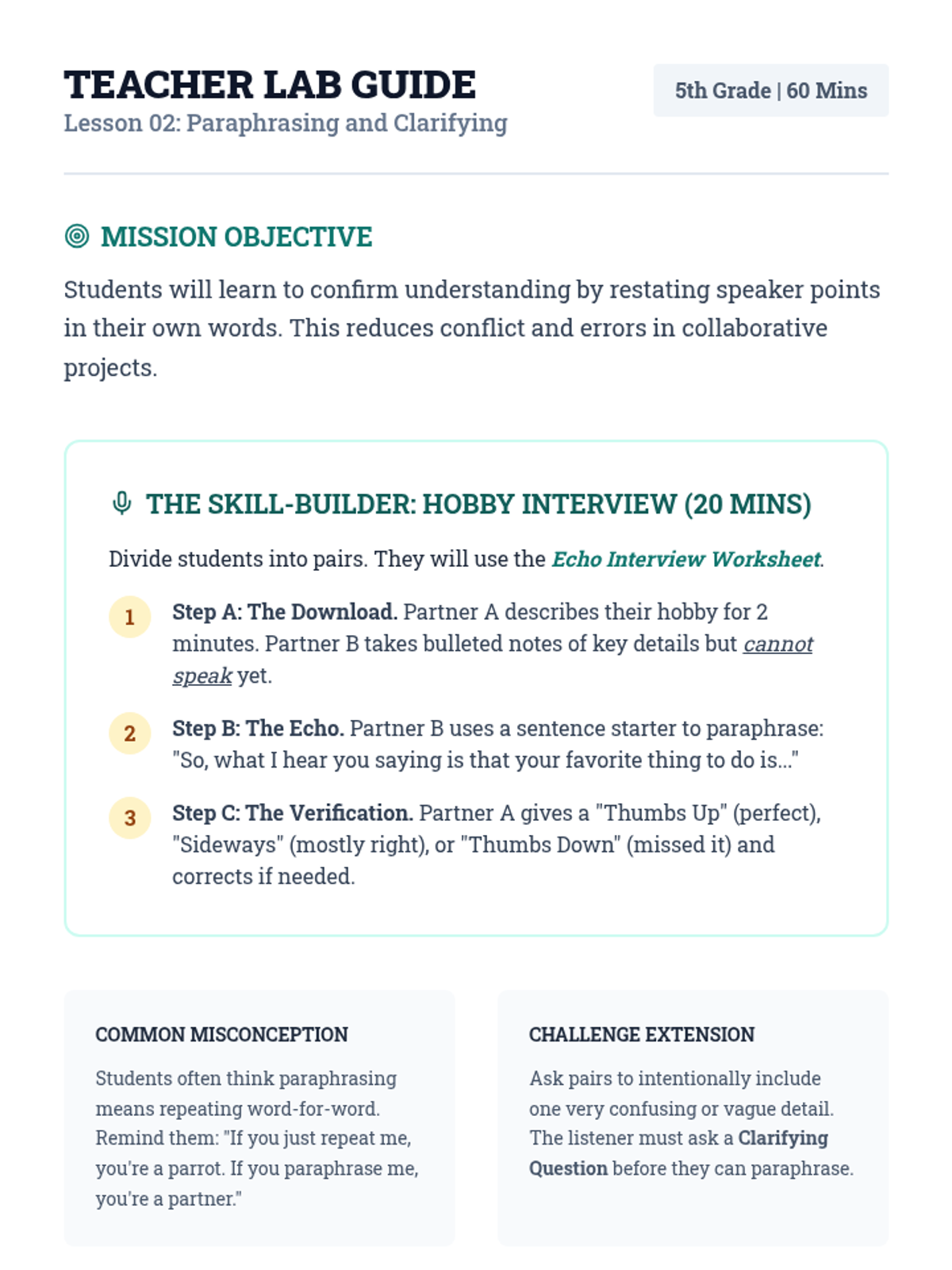
This lesson teaches students to confirm understanding through paraphrasing and asking clarifying questions. Students practice restating others' ideas using specific sentence starters to ensure clarity in teamwork.
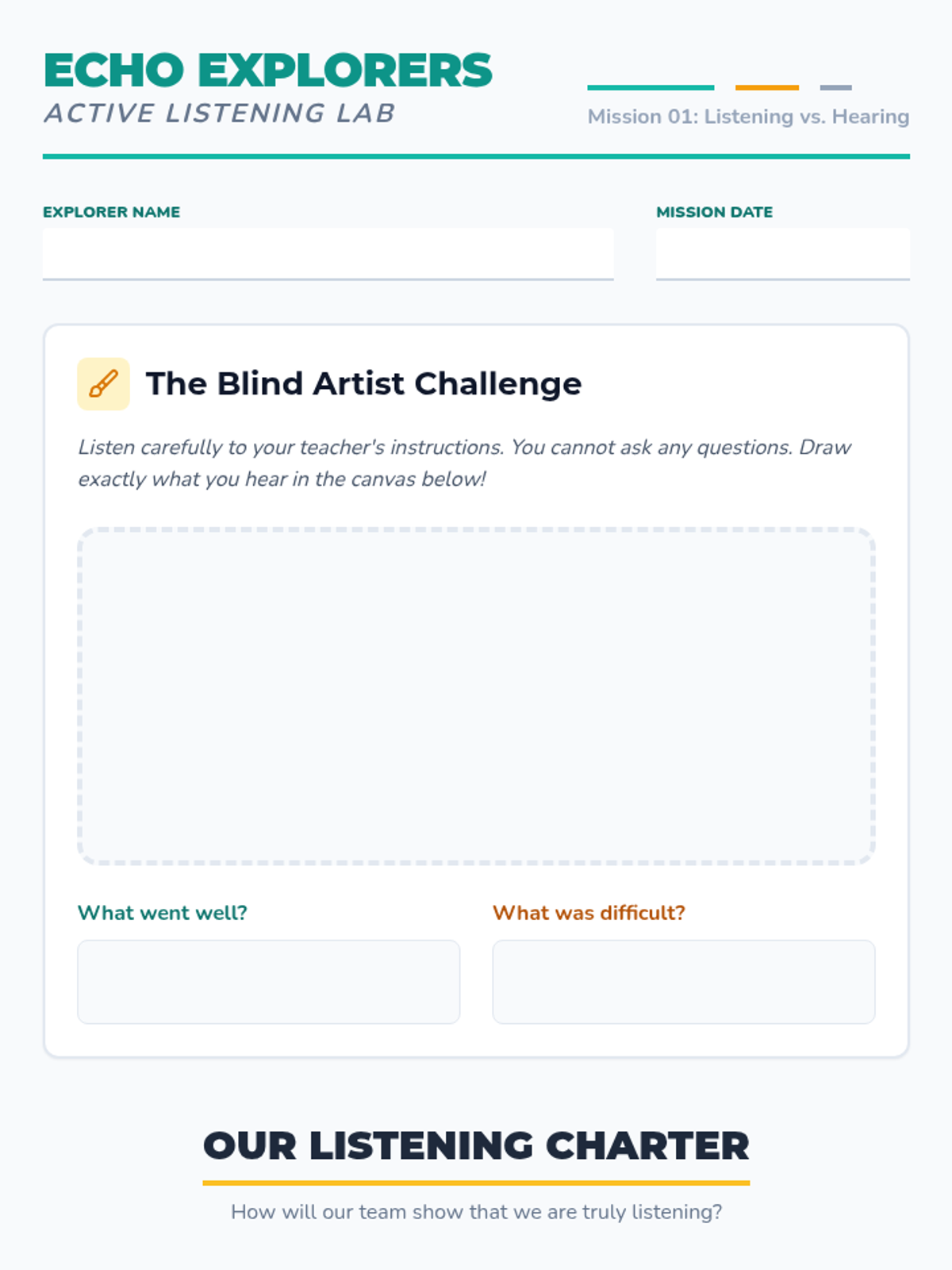
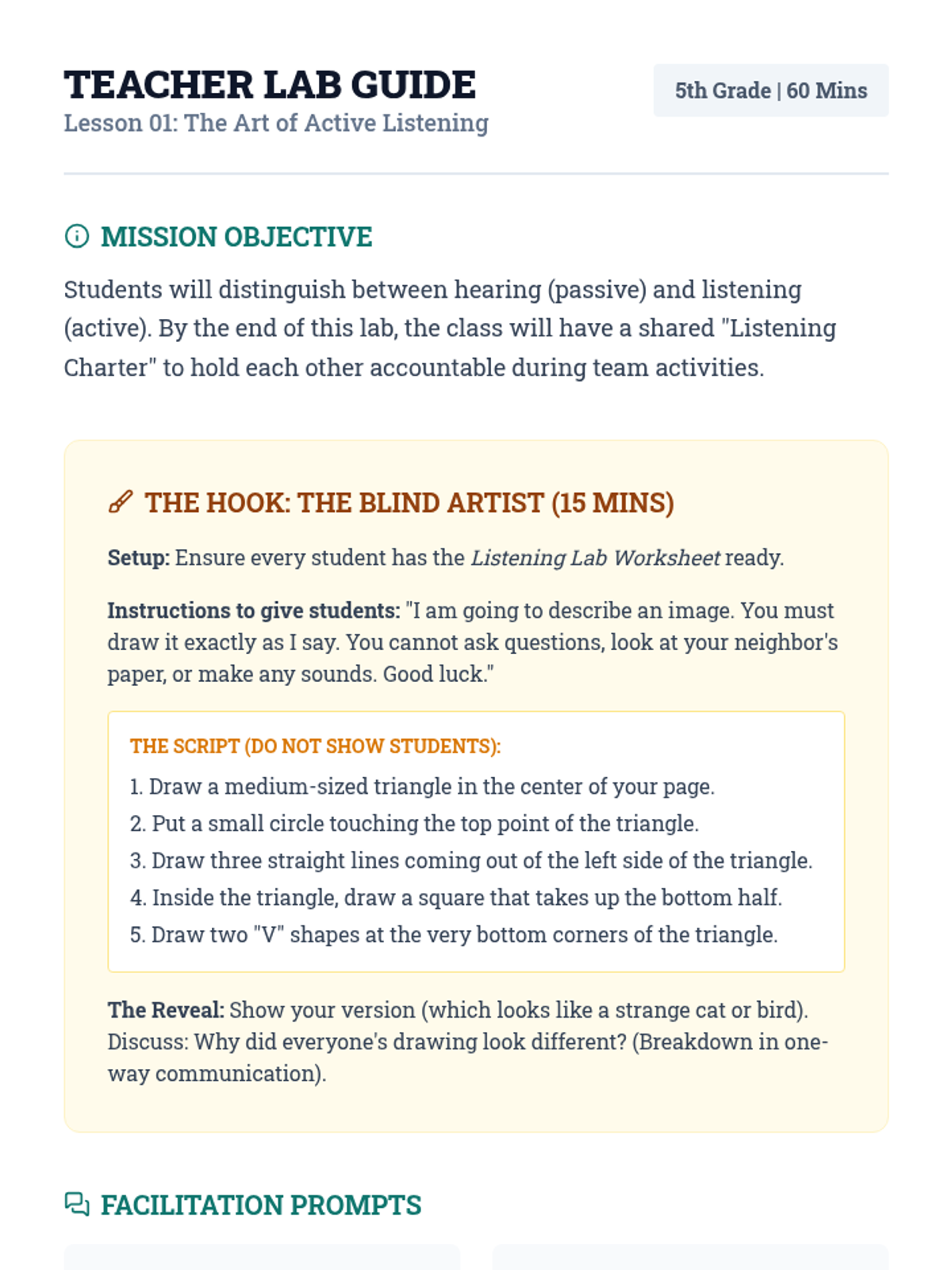
Students differentiate between hearing and listening, identifying barriers to communication through interactive games. They collaborate to create a 'Listening Charter' that defines respectful engagement behaviors.
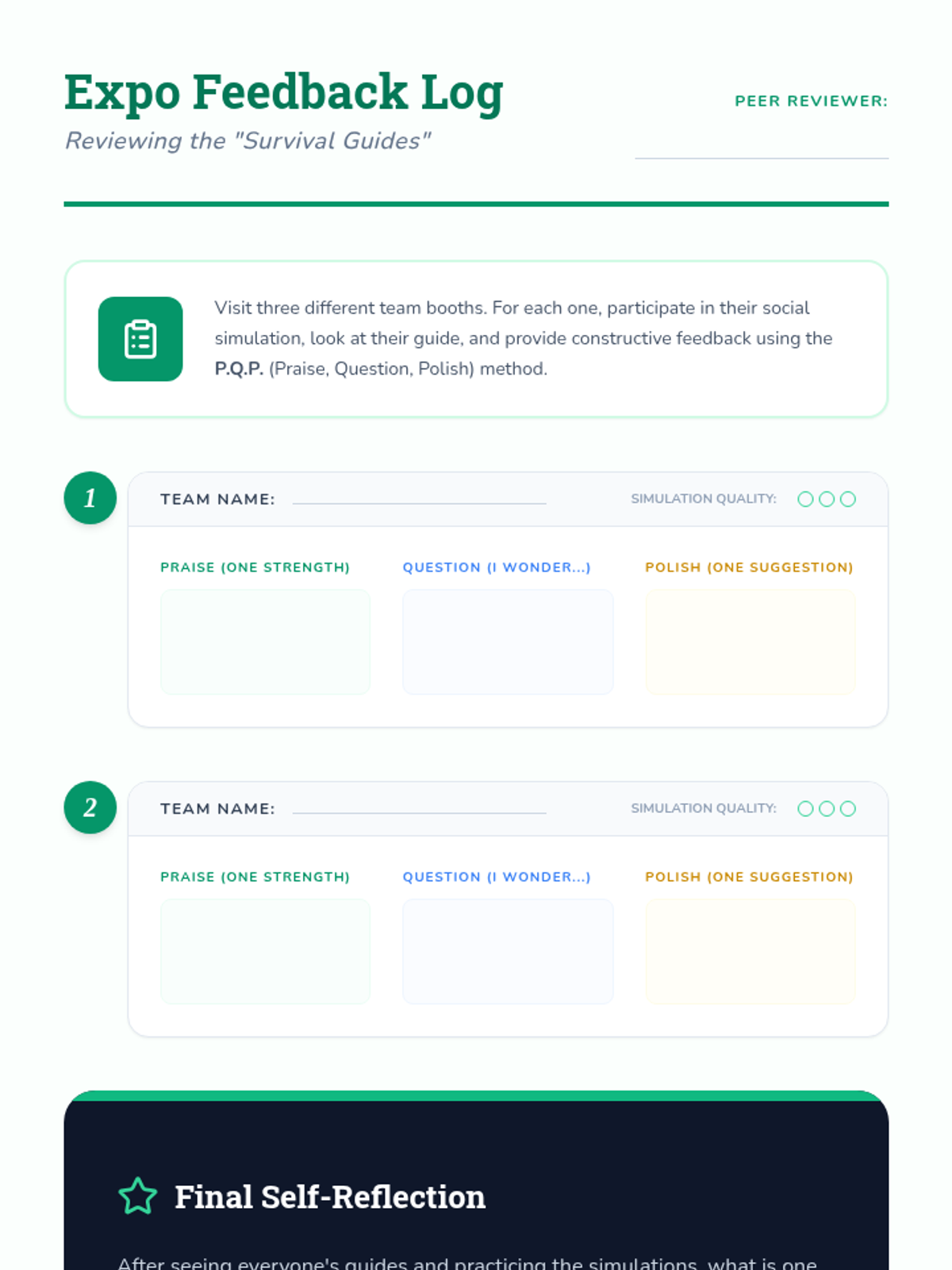
Students present their survival guides and lead simulations, providing and receiving feedback on their social strategies.
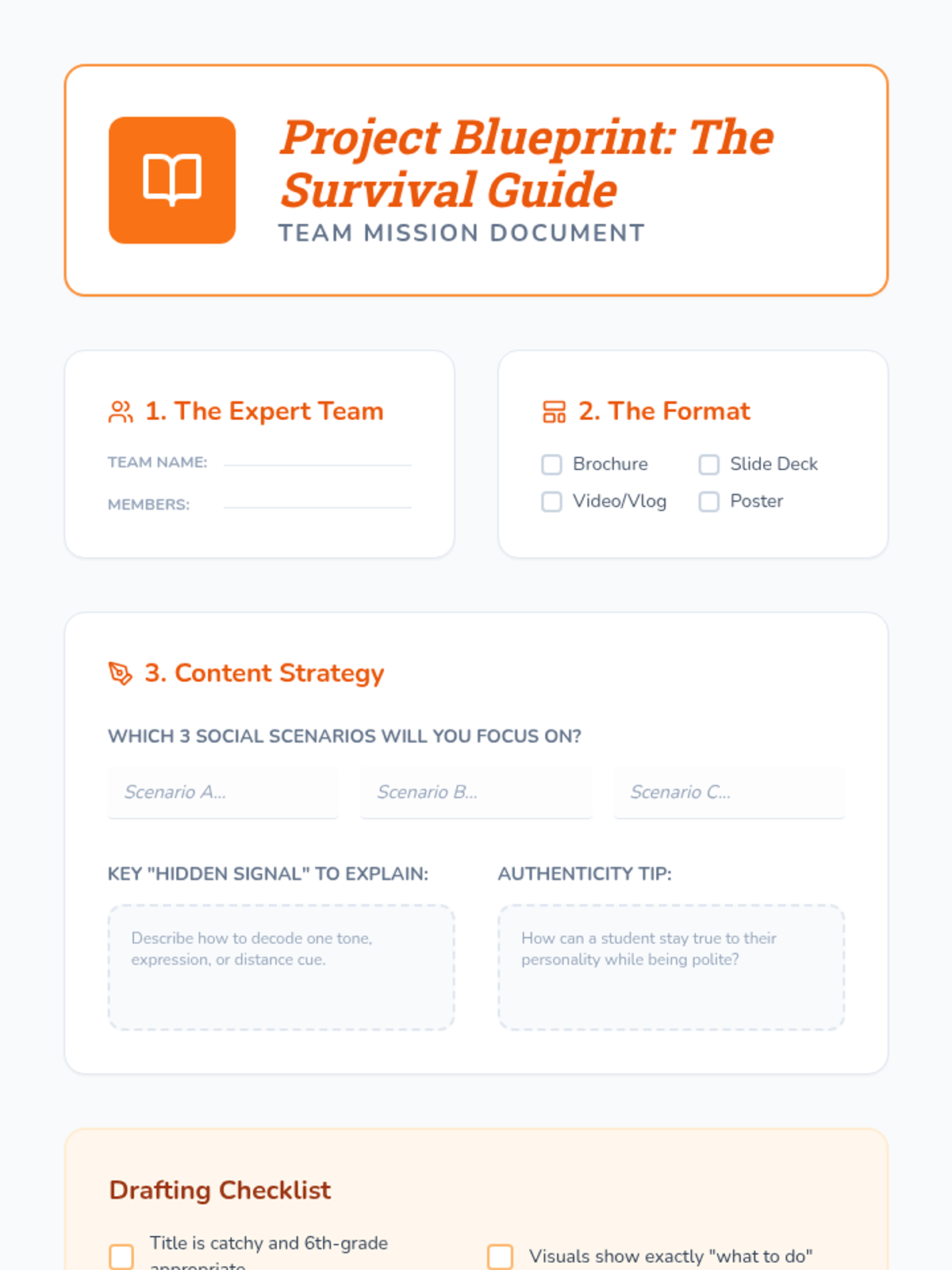
Teams synthesize their observations and personal styles into a creative 'How to Survive Socially in 6th Grade' guide for younger students.
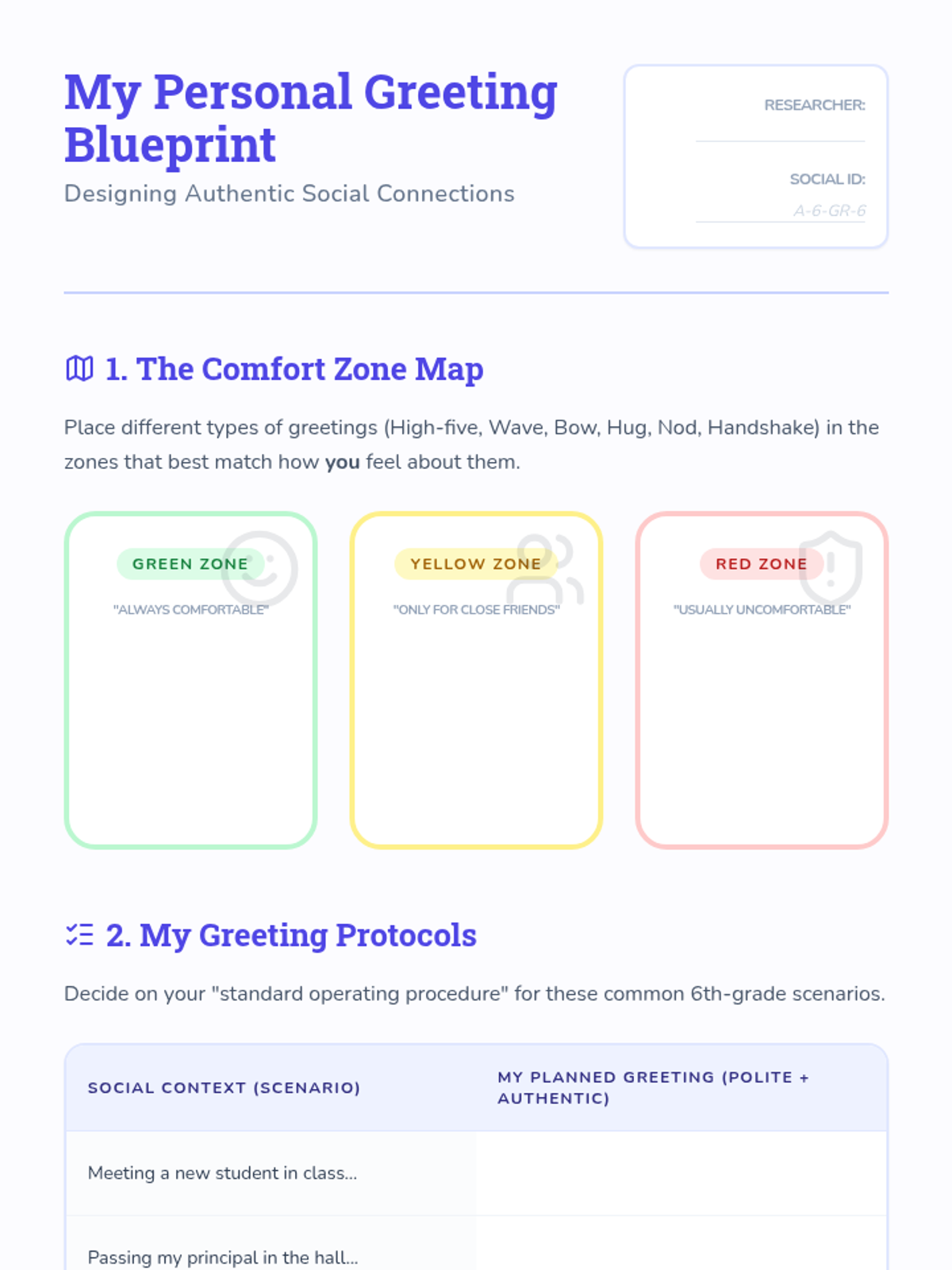
Students reflect on their personal comfort levels and boundaries to create a personalized set of polite and authentic greeting protocols.
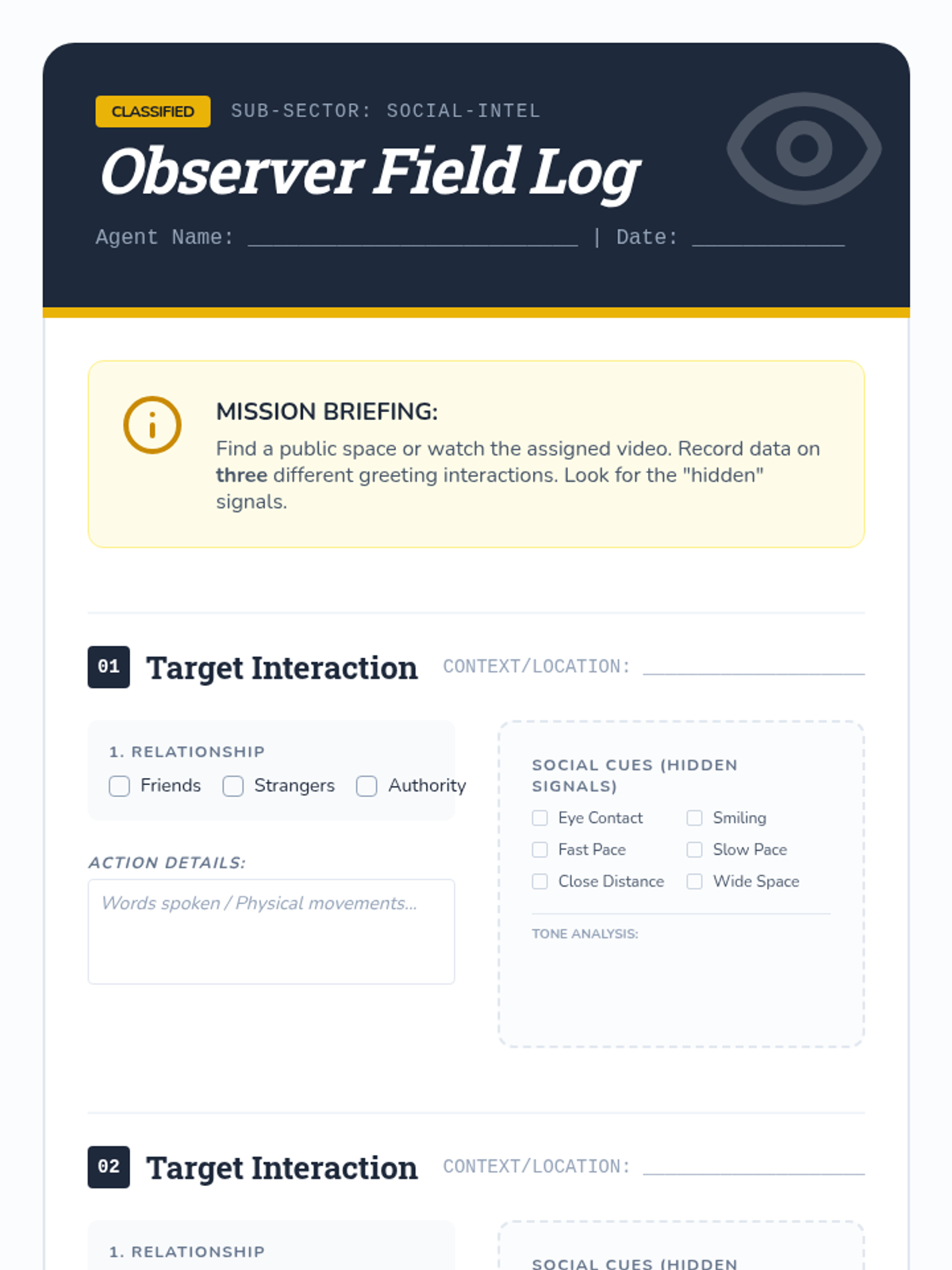
Students conduct 'field work' to observe real-world greetings in various settings, collecting data on social cues and formality.
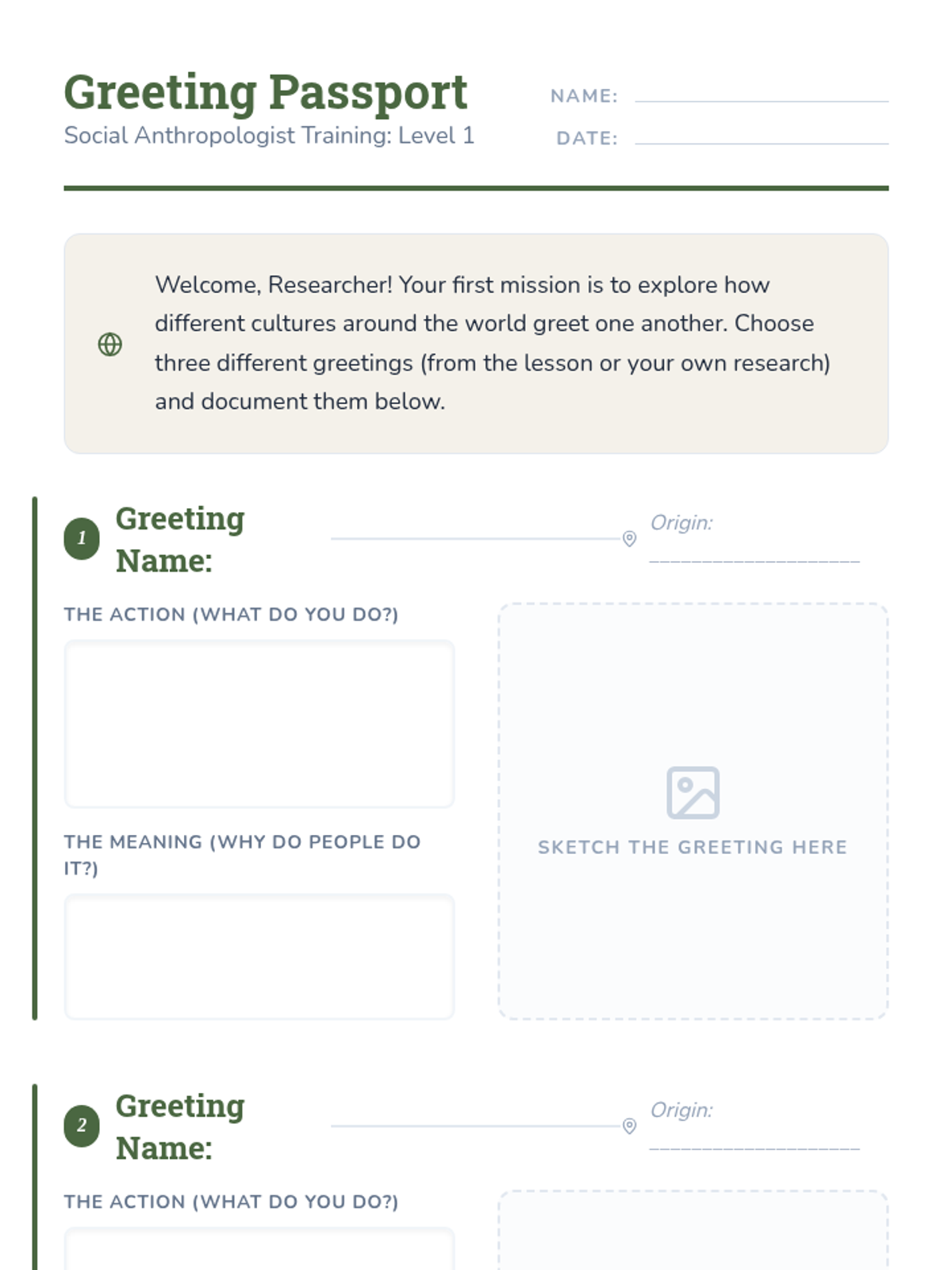
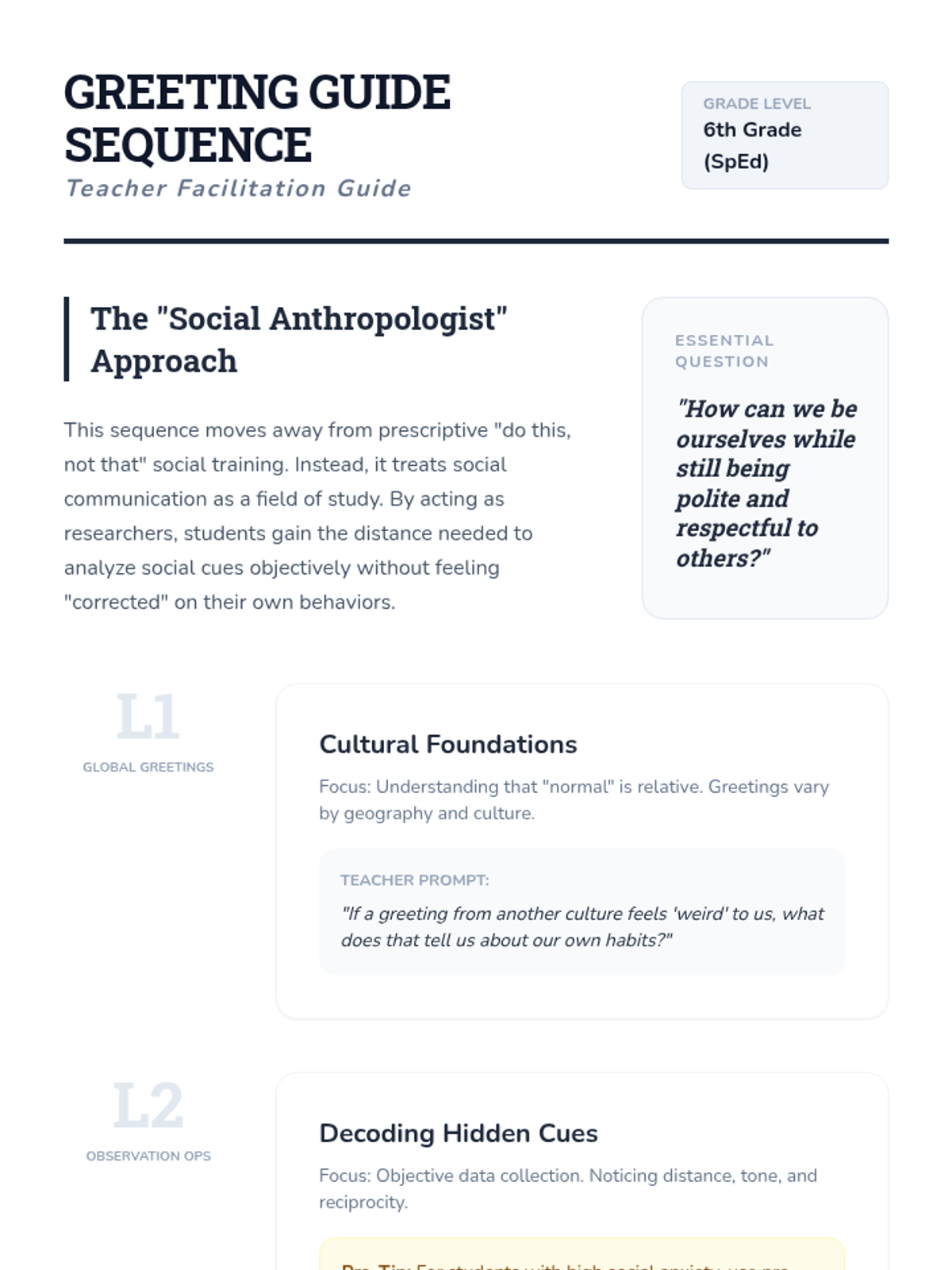
Students explore how greetings vary across cultures and regions, discussing the importance of respecting diverse social norms.
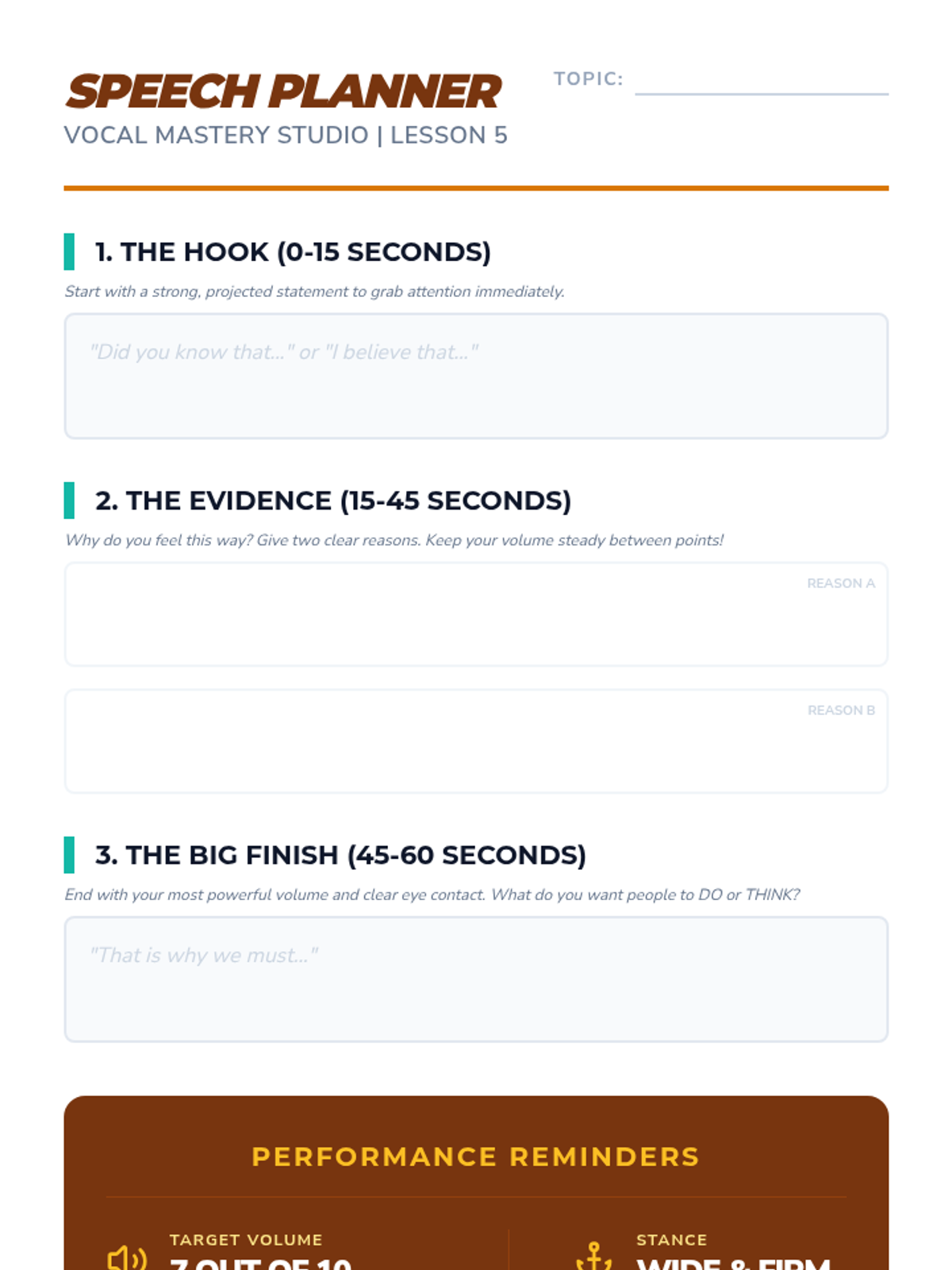
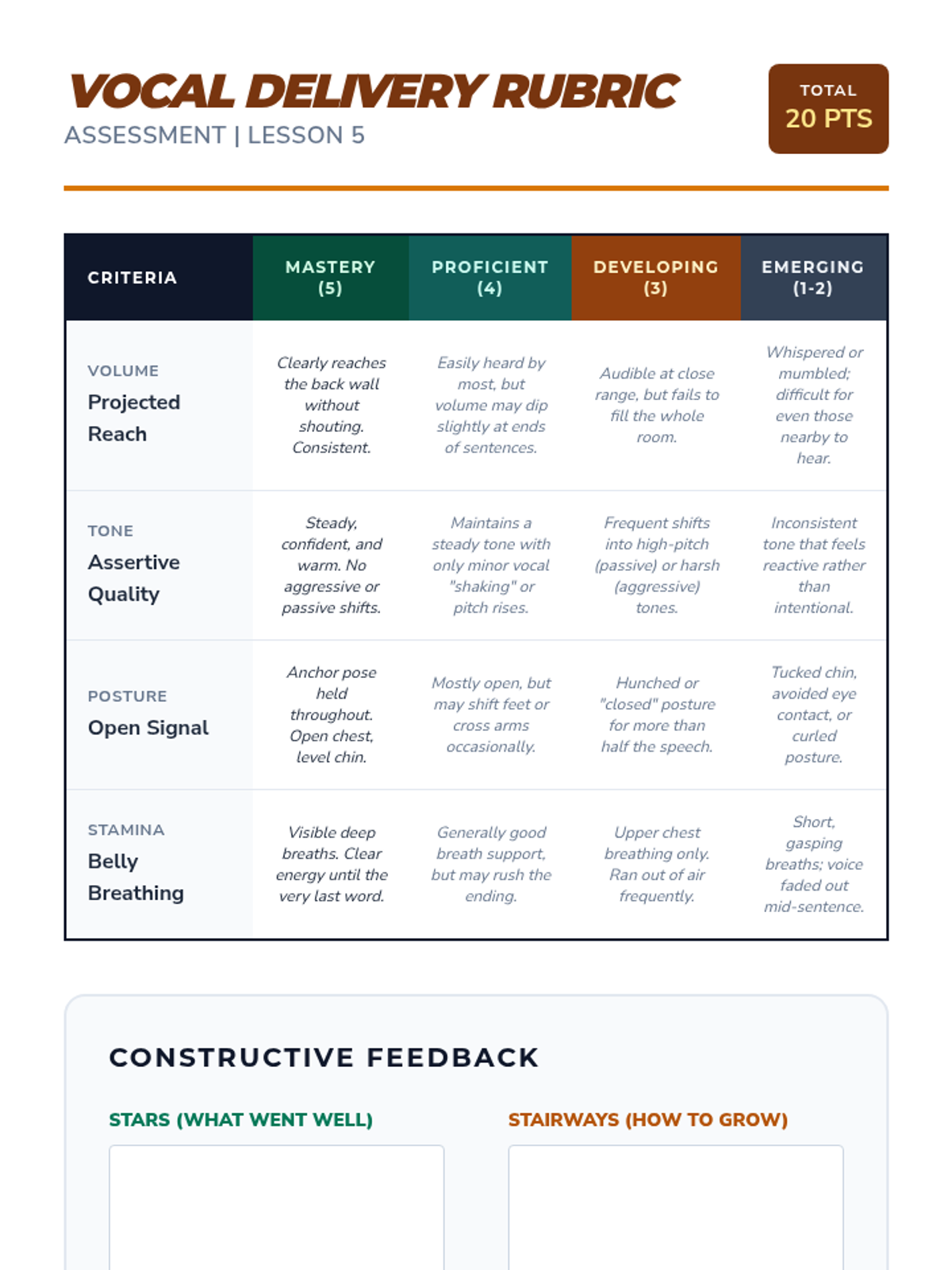
Students demonstrate their mastery of vocal delivery by preparing and performing a one-minute assertive speech on a topic of interest.
Students explore how non-verbal body language reinforces vocal volume and tone to create a cohesive message.
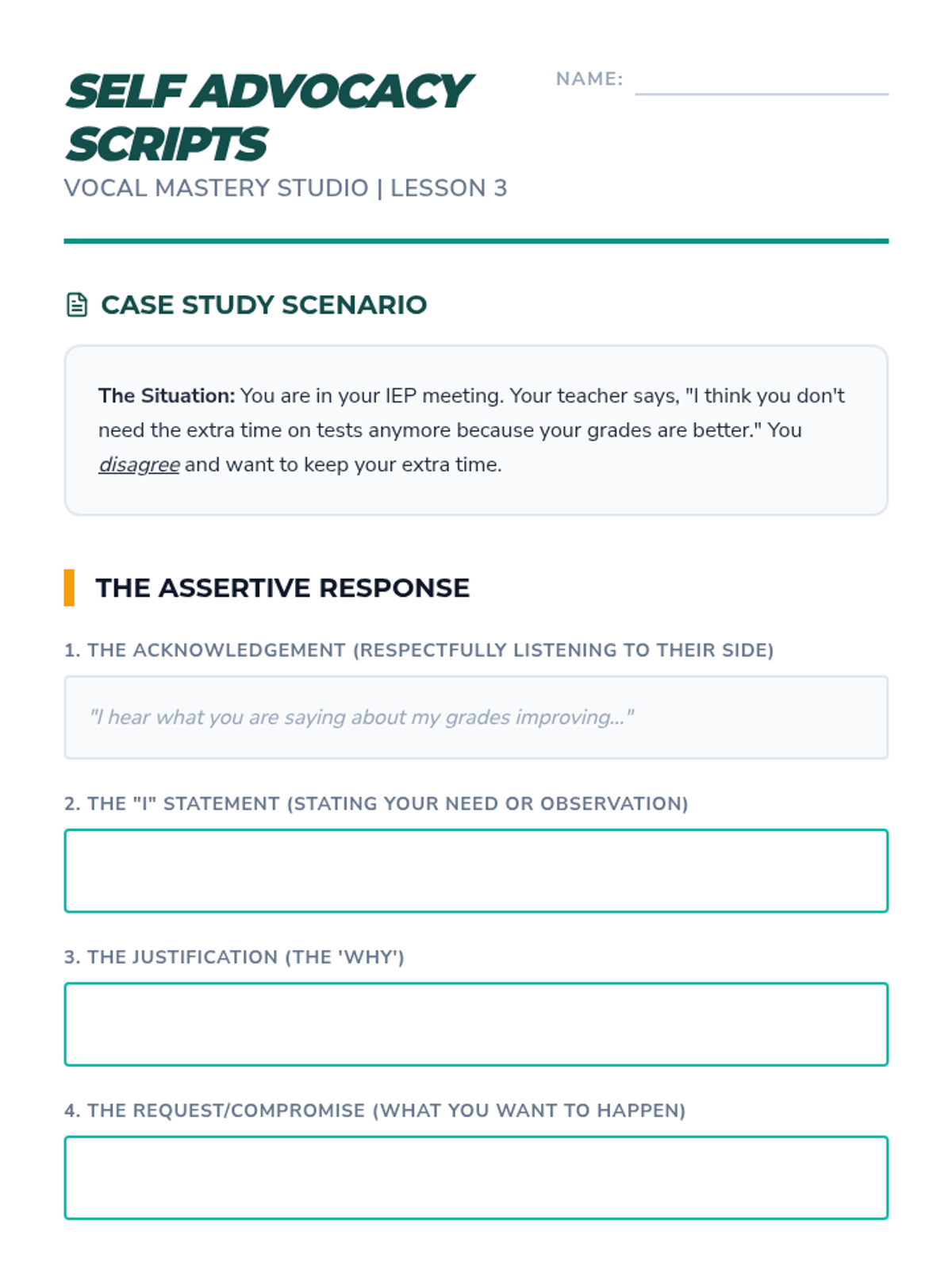
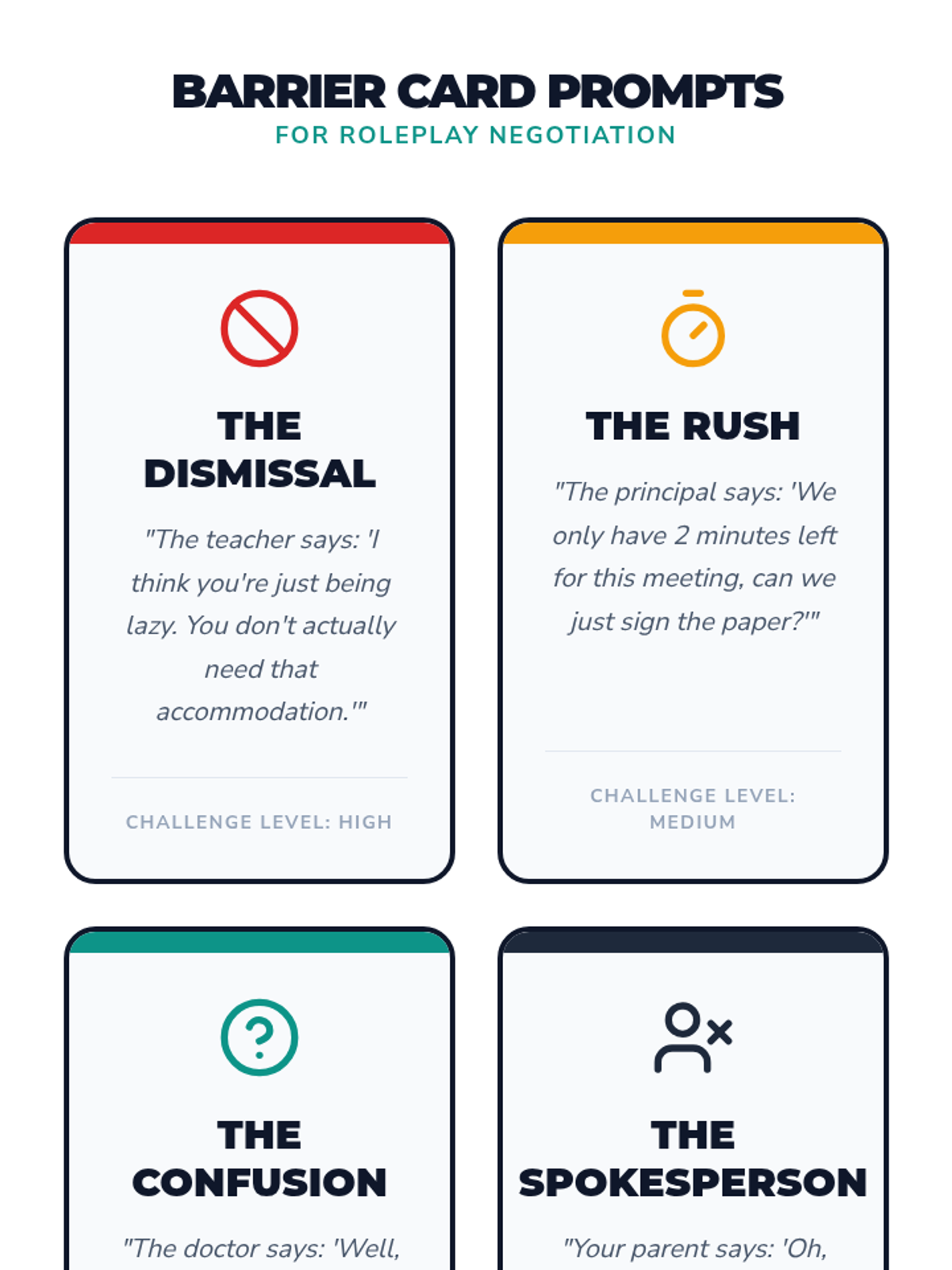
Students practice using an assertive voice to advocate for their needs in formal settings like IEP or academic meetings.
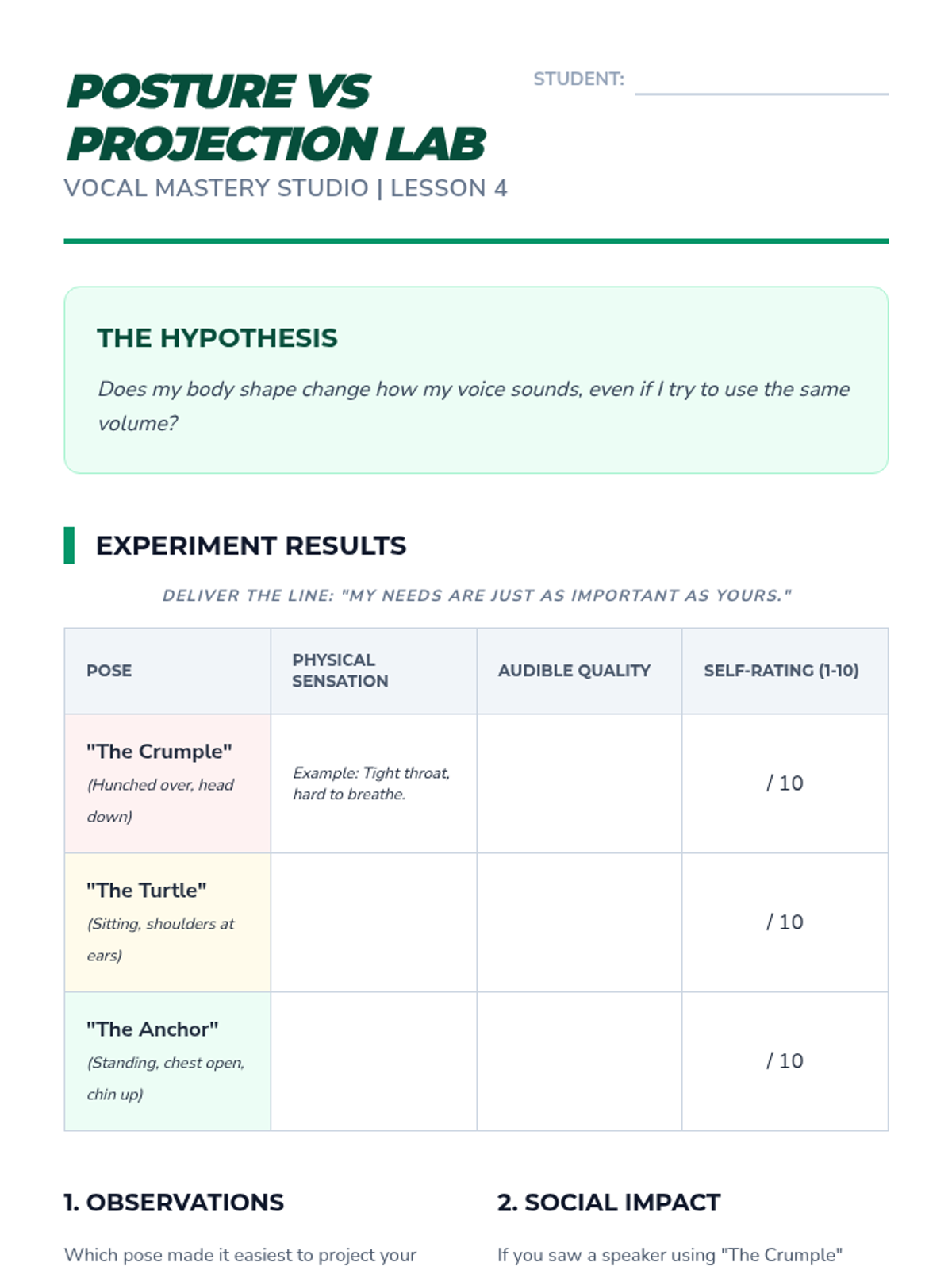
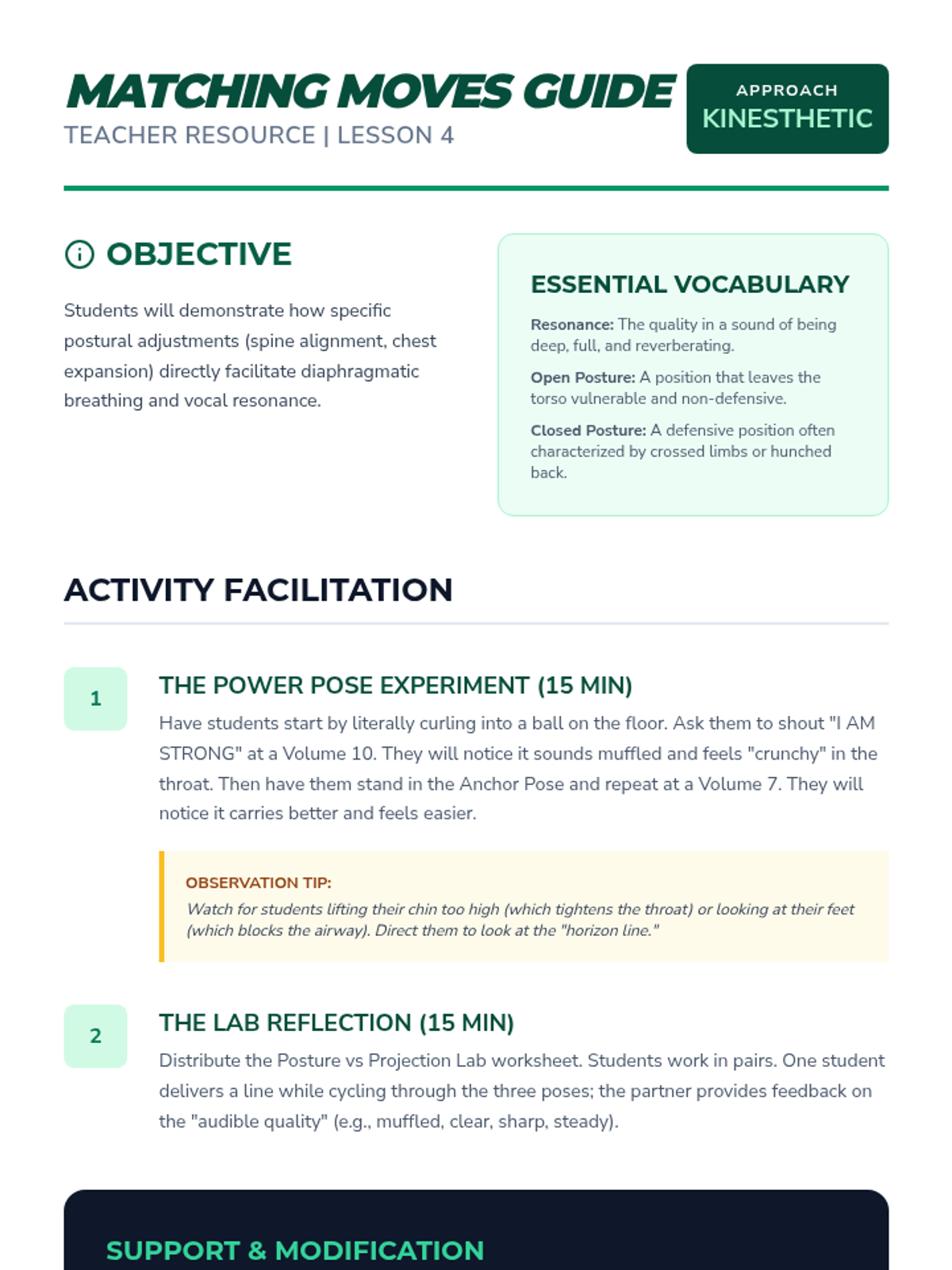
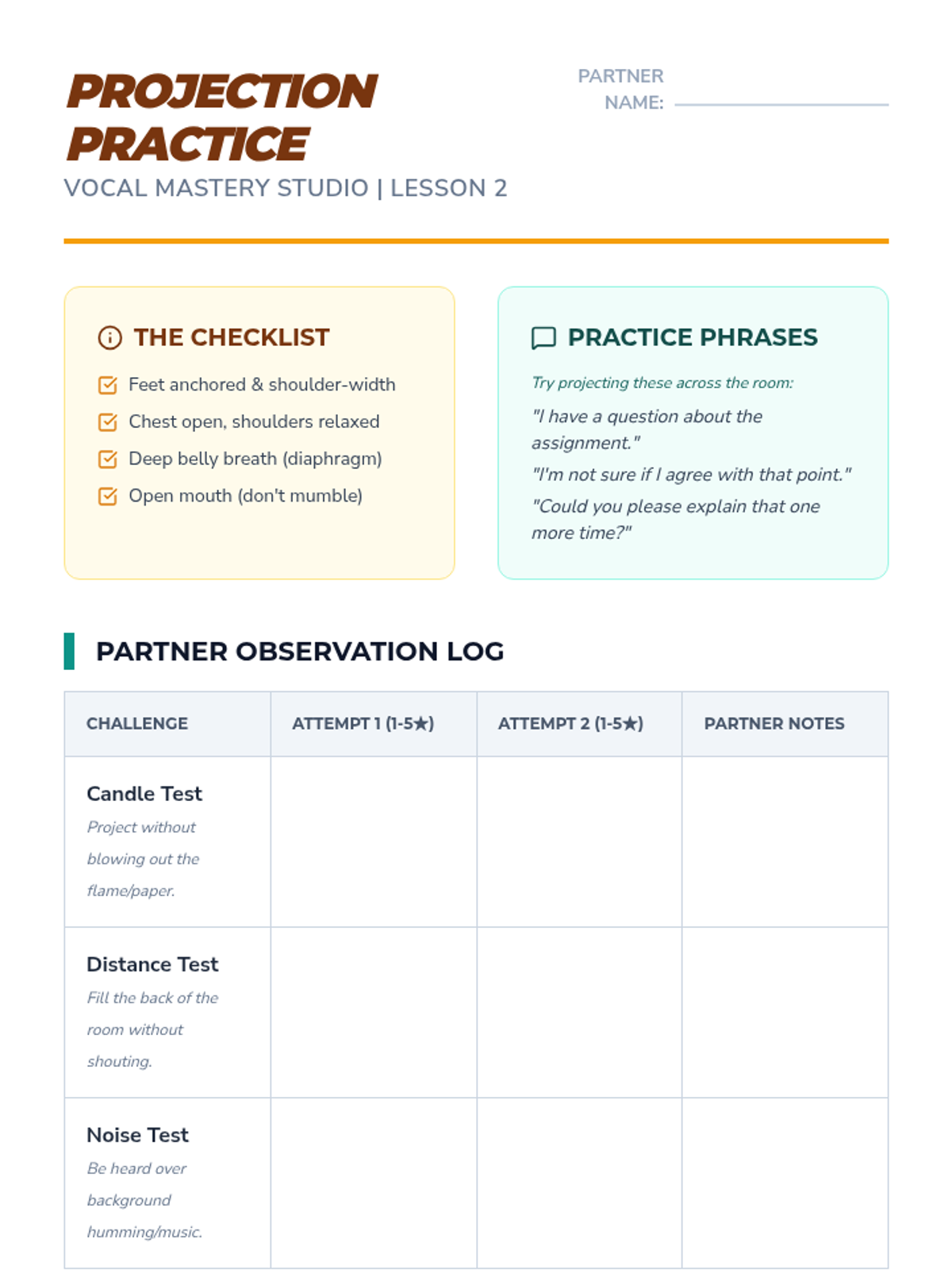
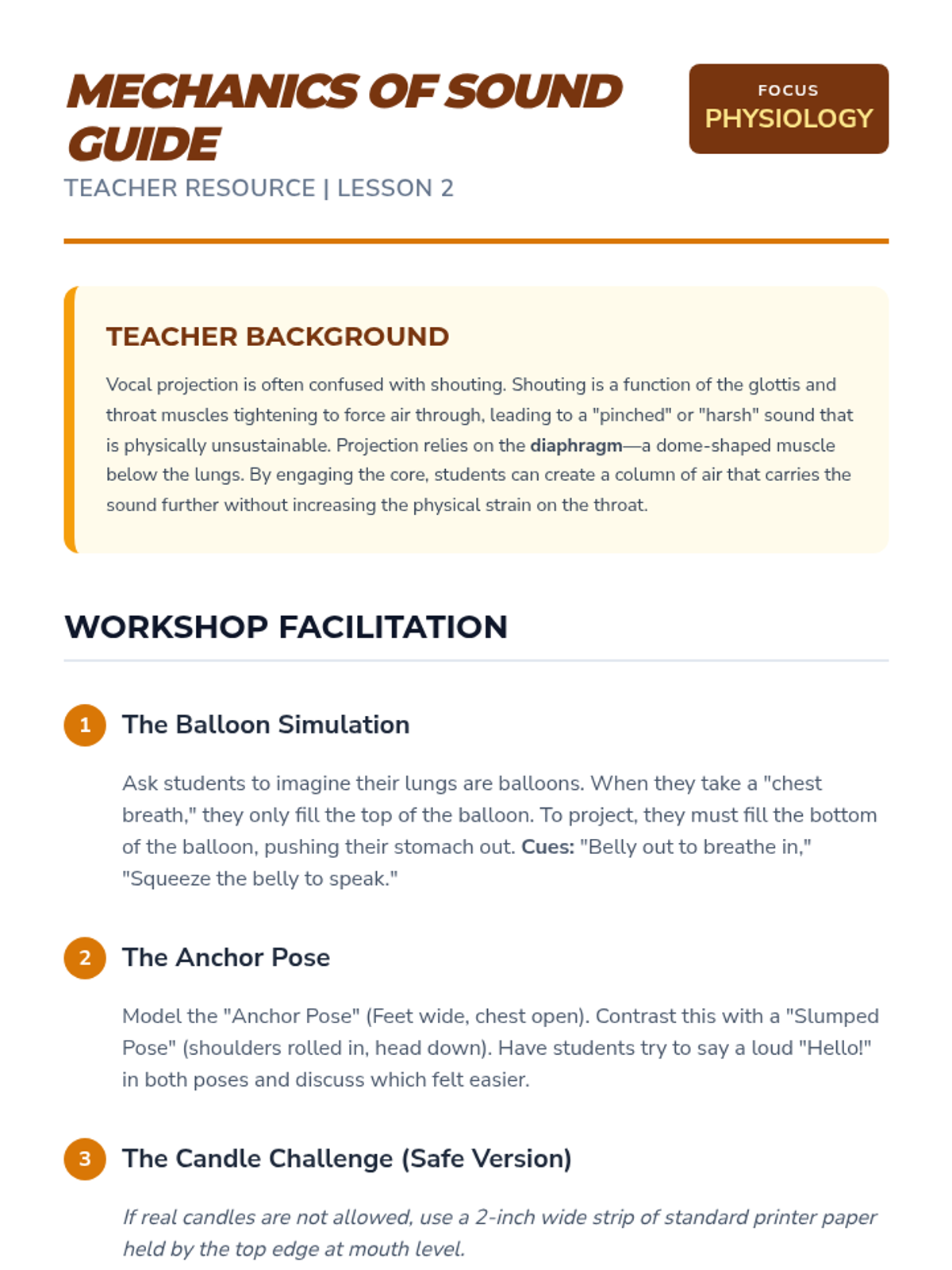
Students learn the physiology of vocal projection, focusing on diaphragmatic breathing and posture to carry their voice without shouting.
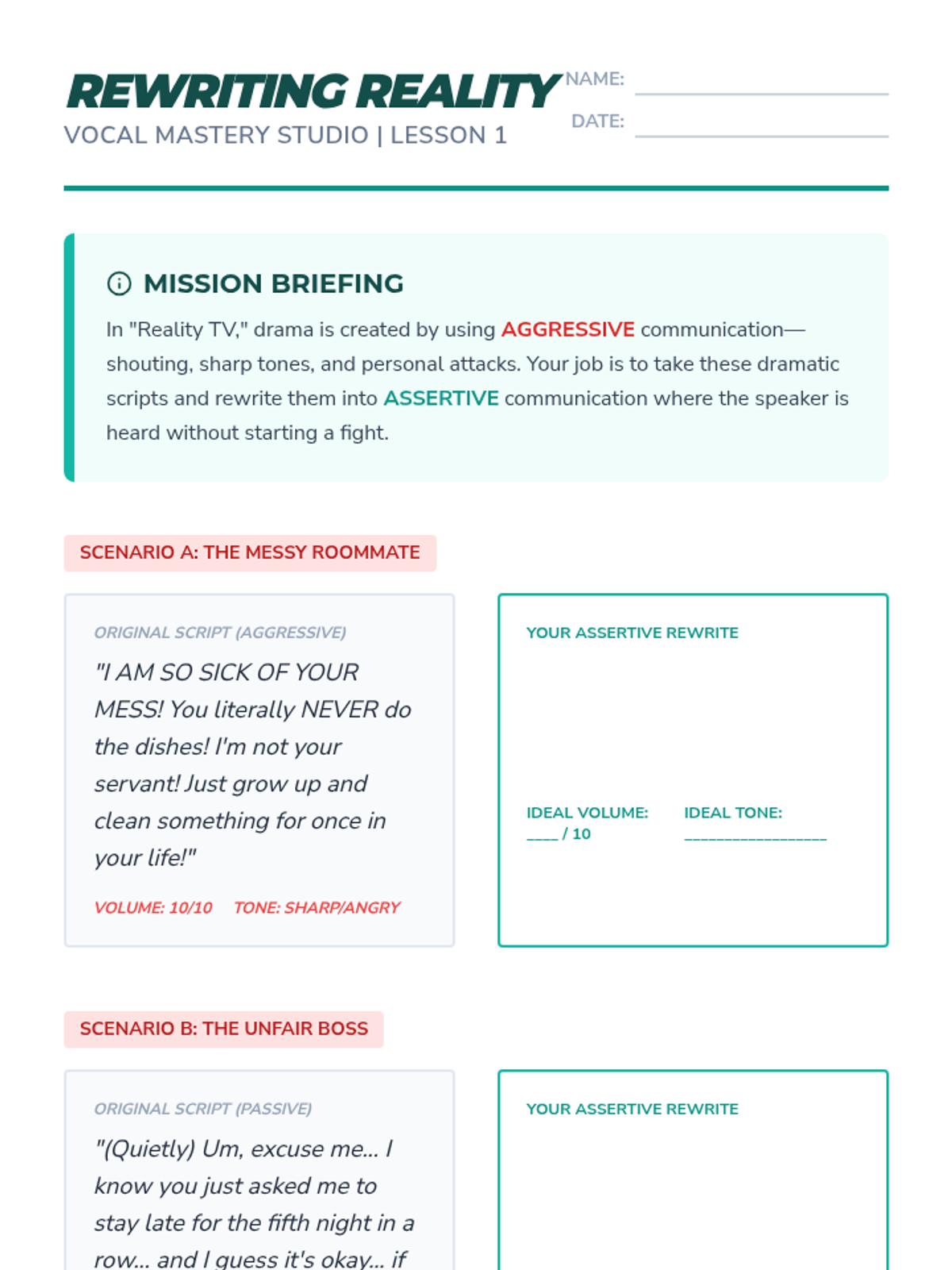
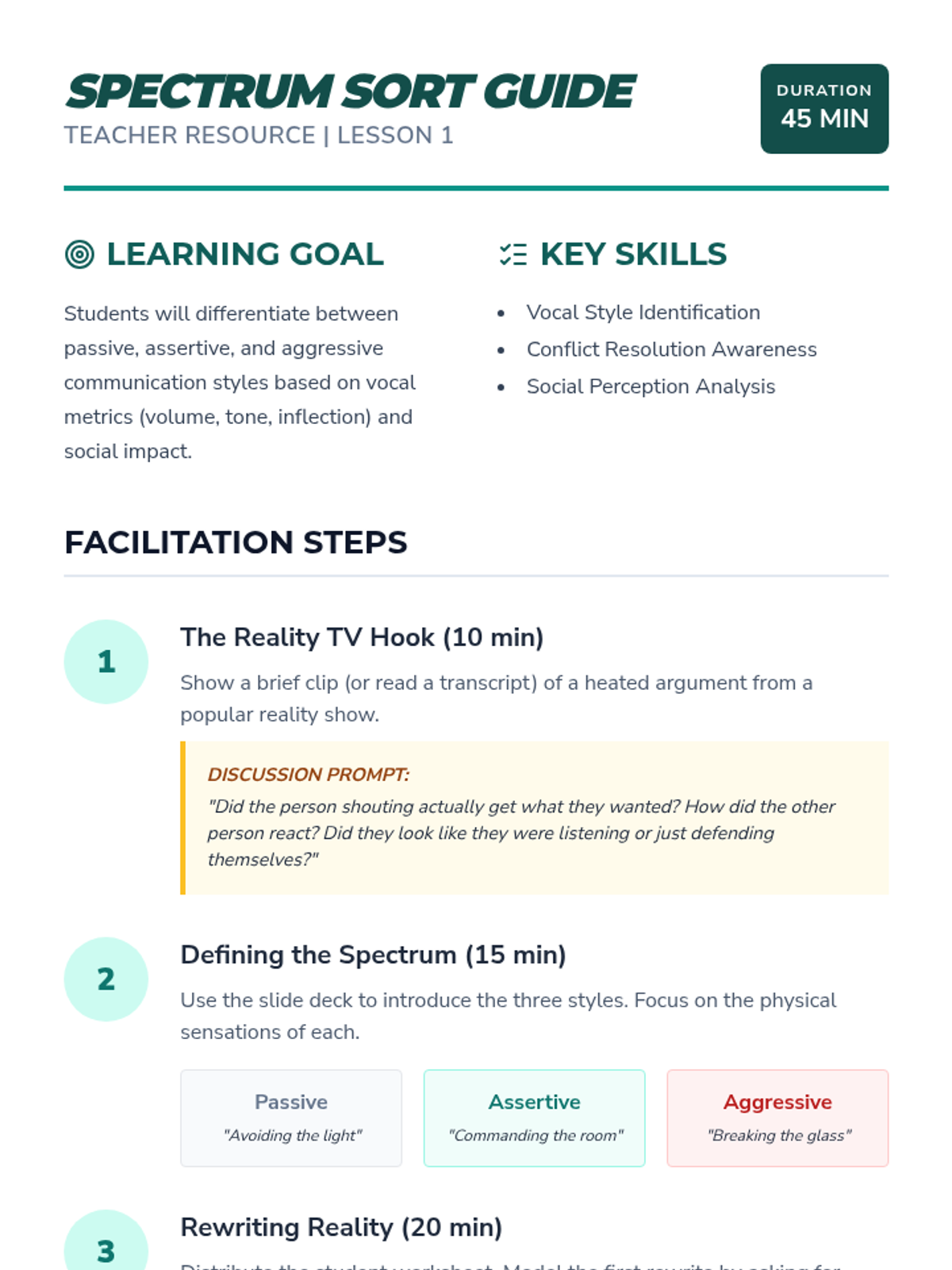
Students analyze the spectrum of communication styles (aggressive, assertive, passive) and how volume and tone contribute to these perceptions.
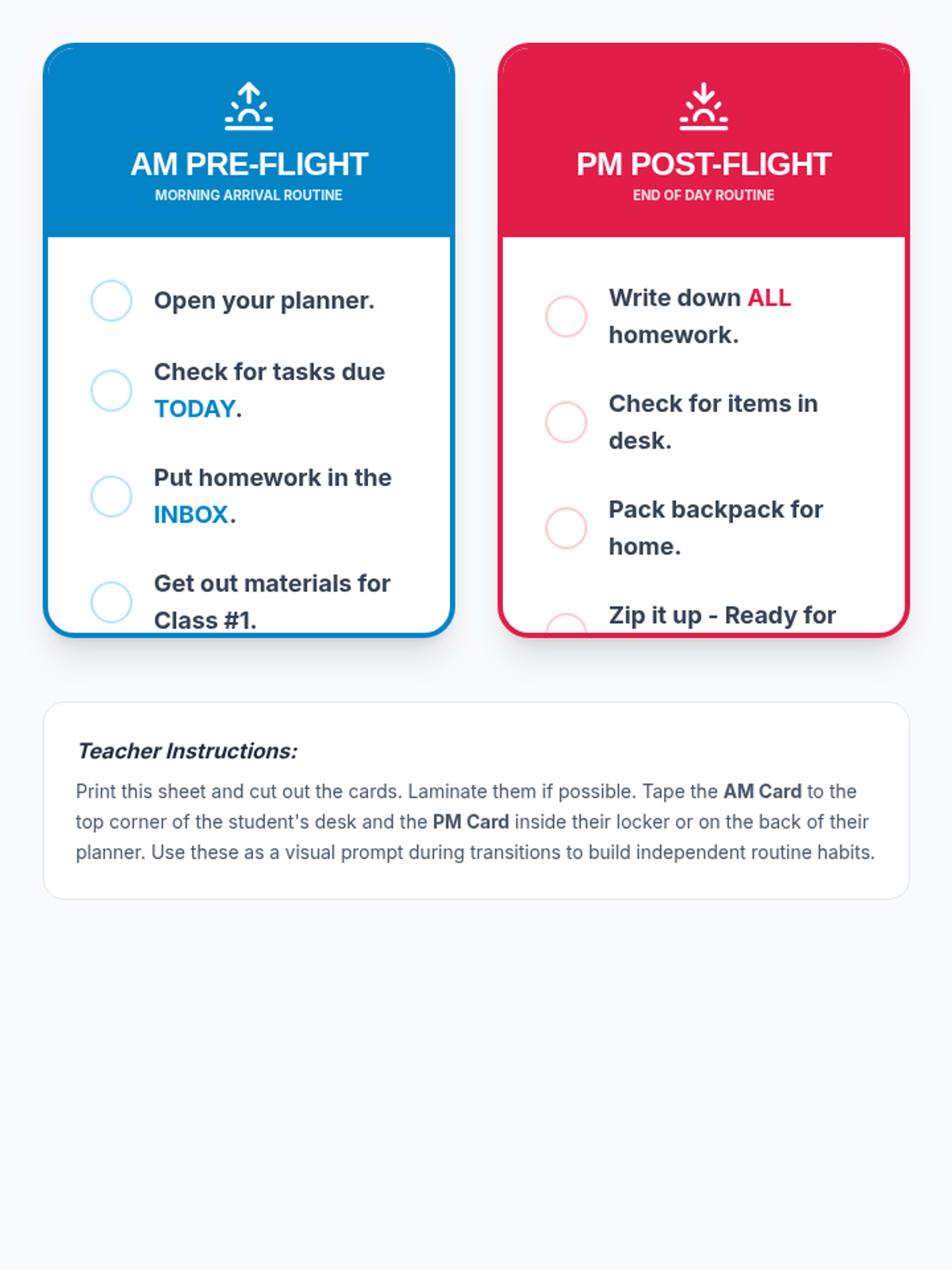
Students develop a checklist for a 'start-of-day' and 'end-of-day' review. They practice the habit of checking their planner to prepare materials for the next day.
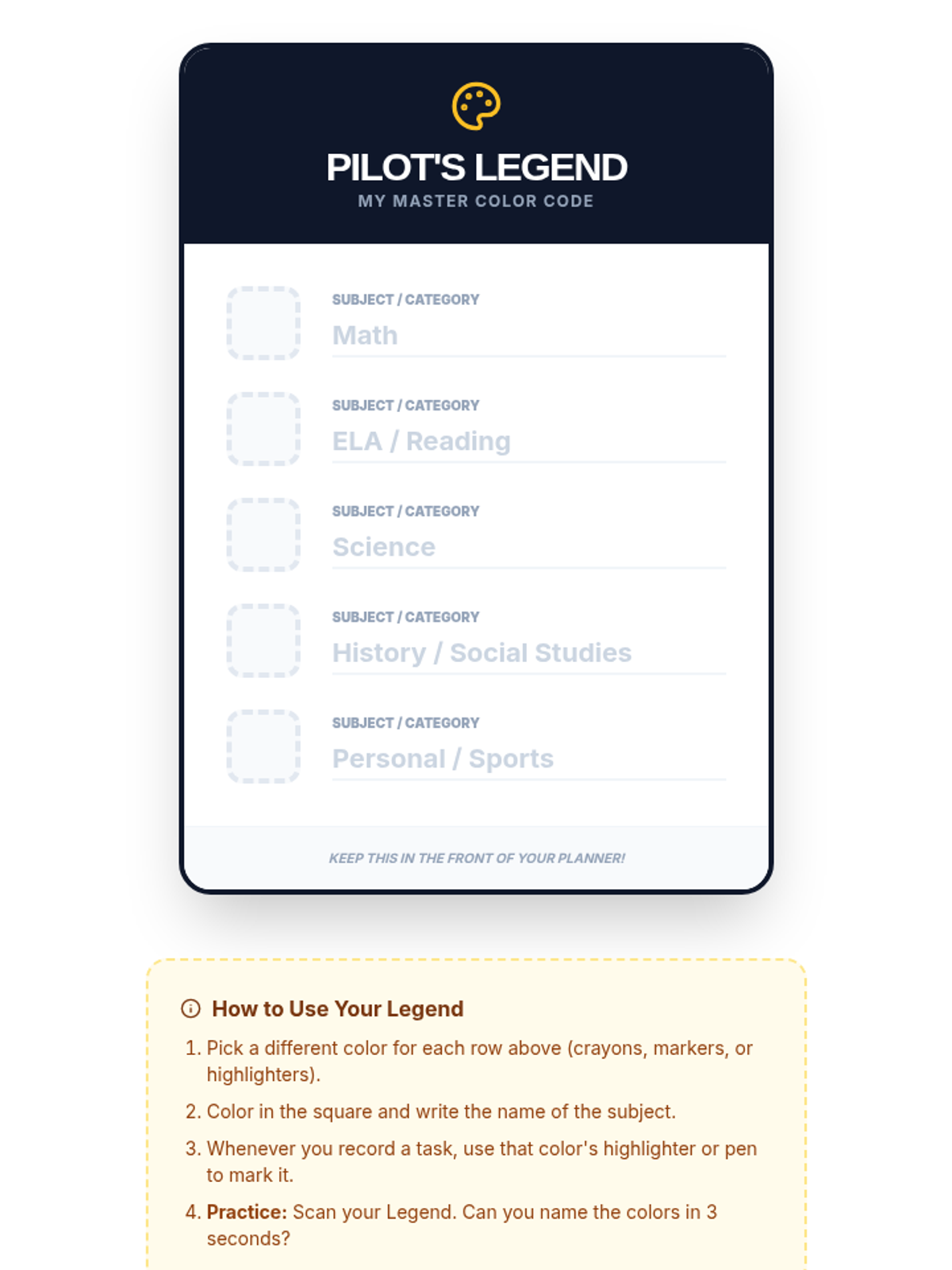
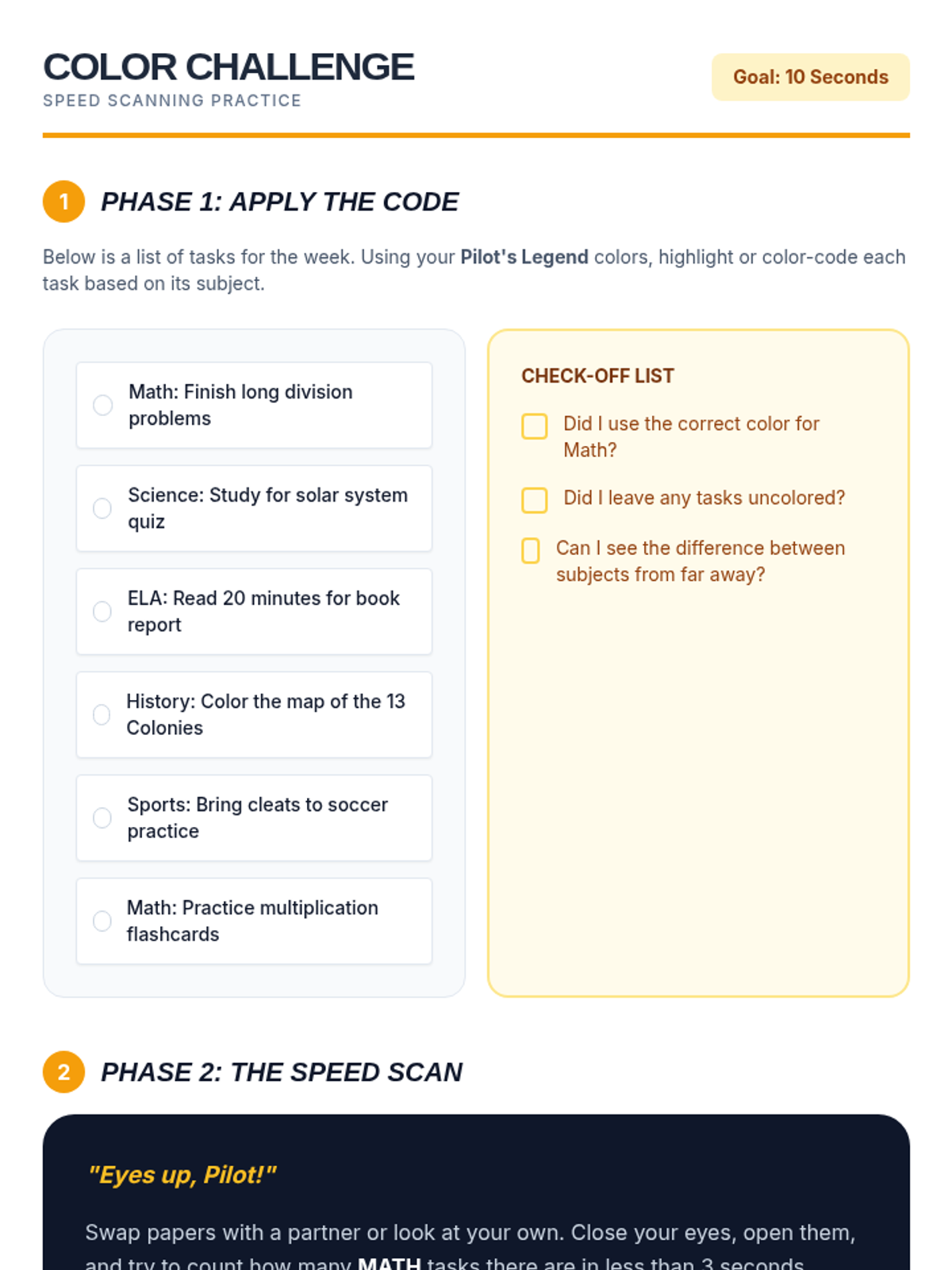
Students implement a color-coding system to categorize tasks by subject or type (e.g., Math, Home, Sports). This visual aid helps them quickly assess where their energy needs to be directed.
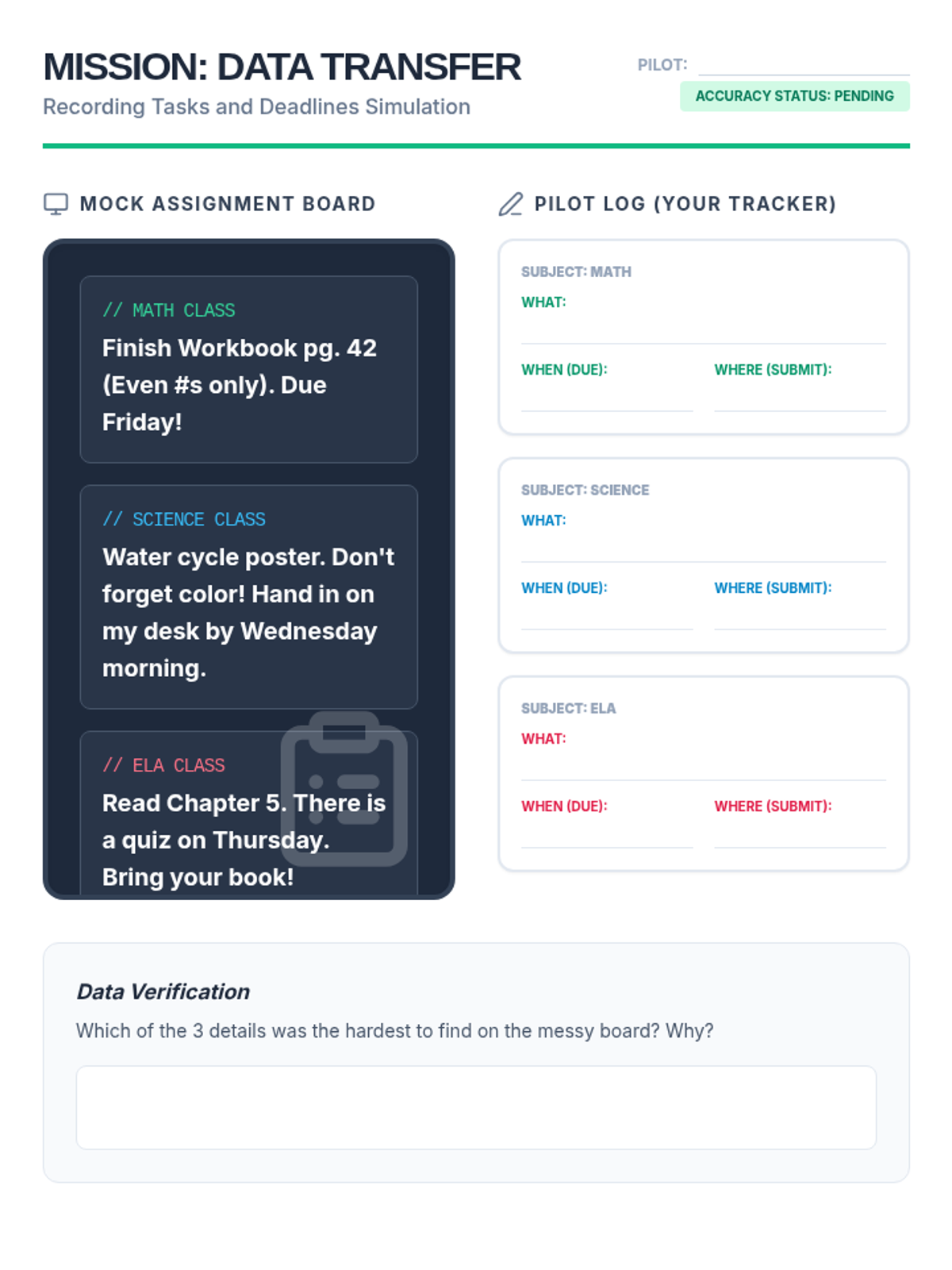
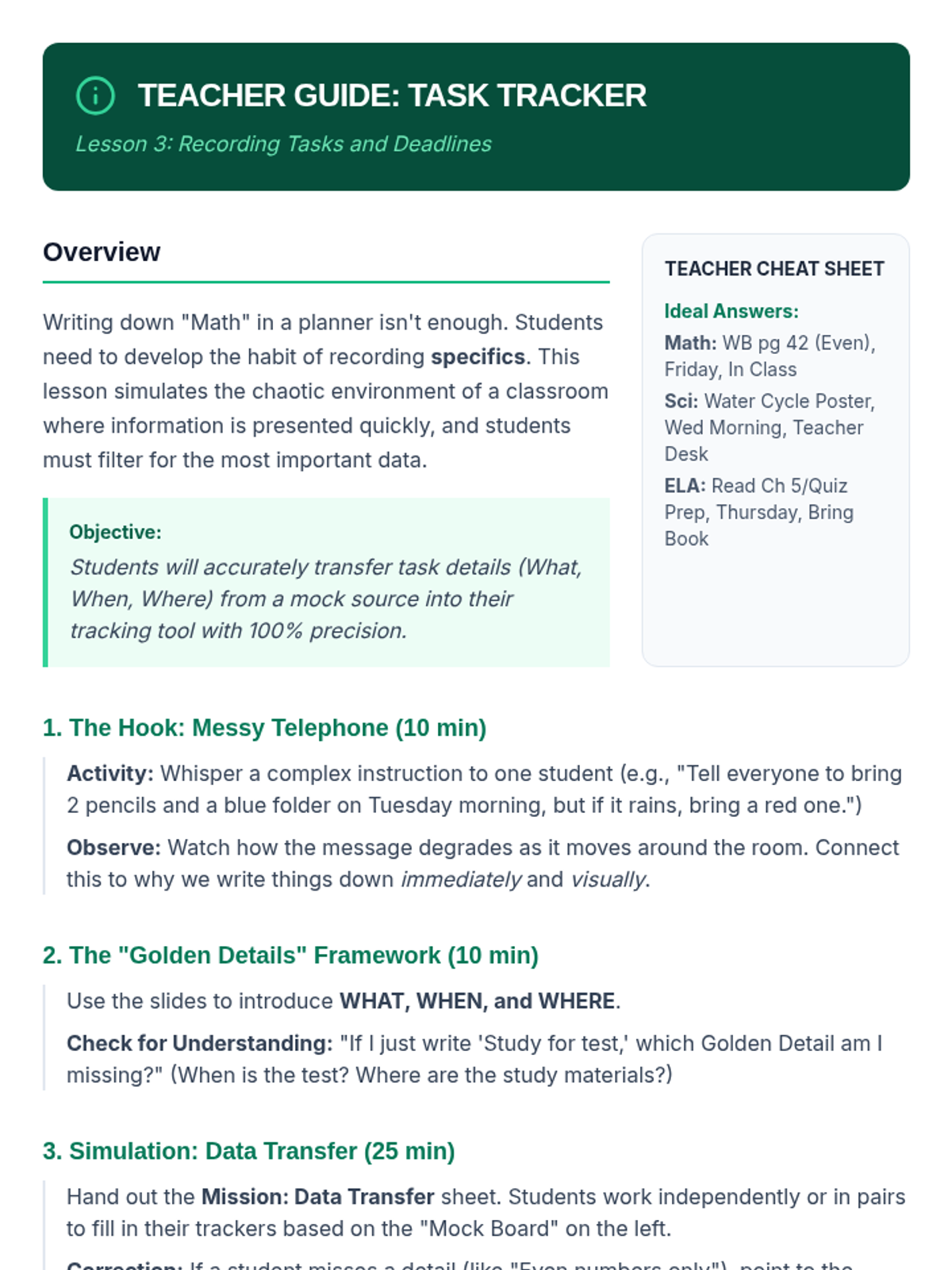
This lesson focuses on the mechanics of writing down assignments clearly and accurately. Students practice transferring information from a mock assignment board to their personal planners.
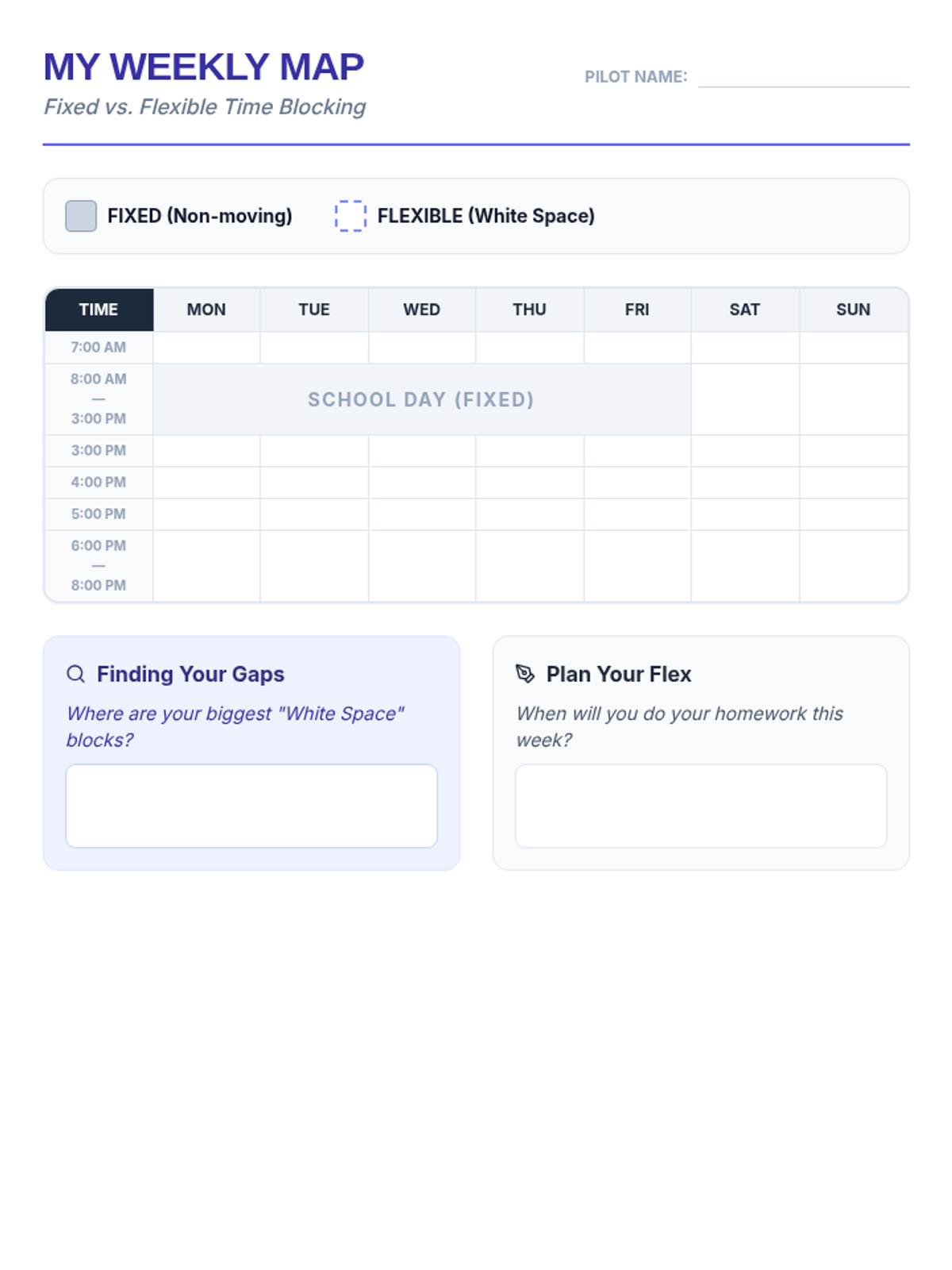
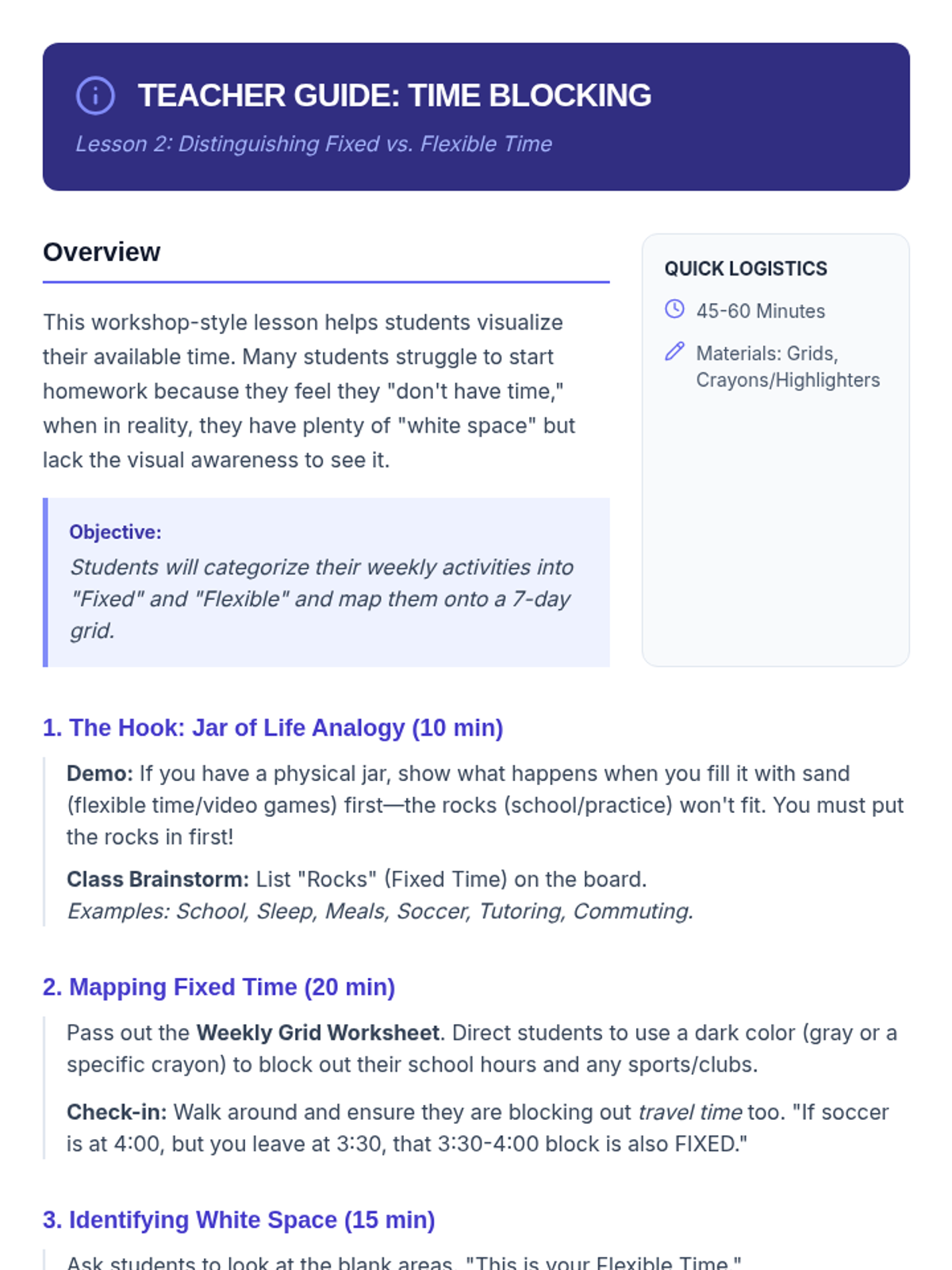
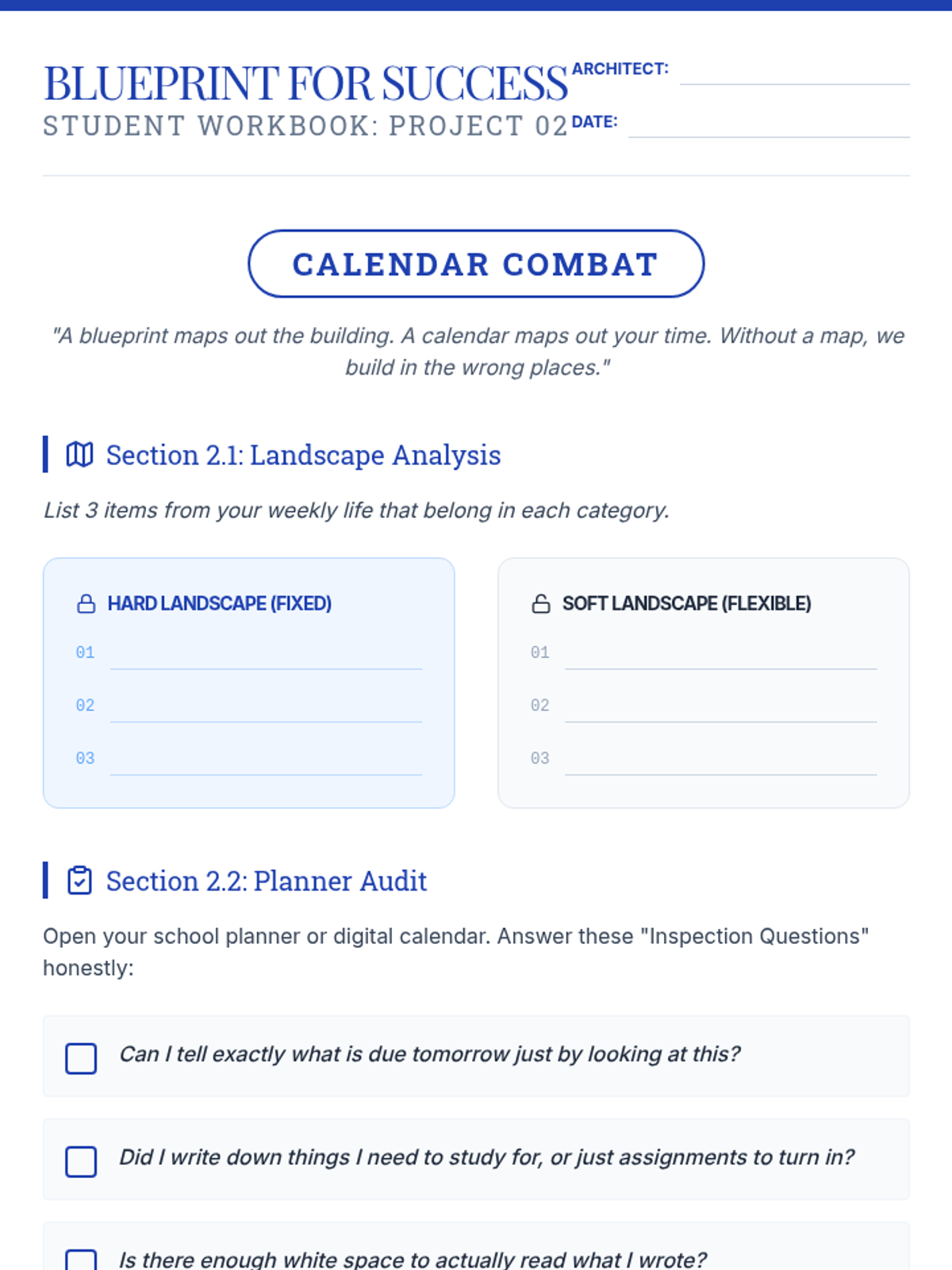
Students map out a typical week, blocking out 'hard' constraints like school hours and sports practice. They learn to identify the 'white space' available for homework and chores.
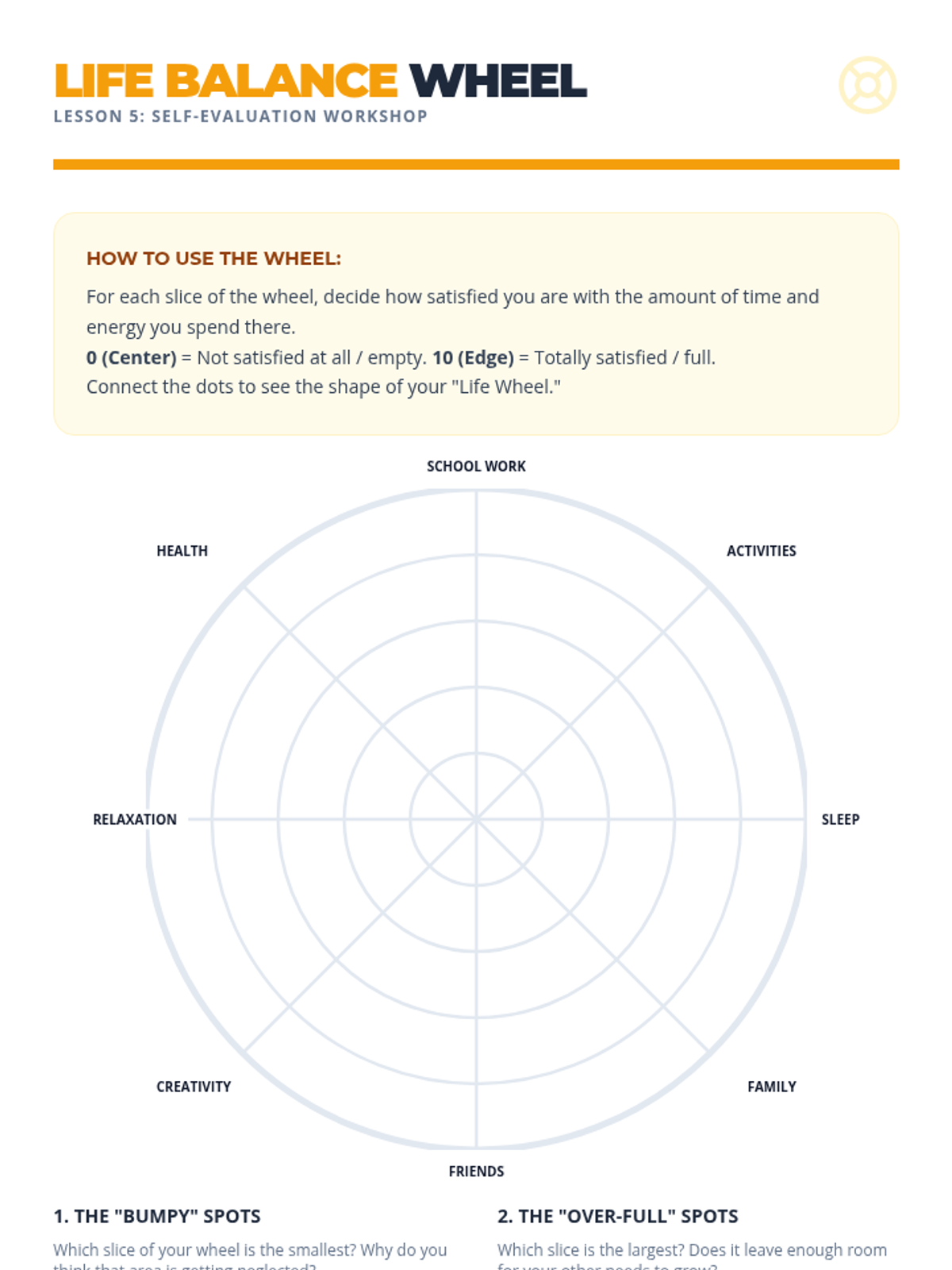
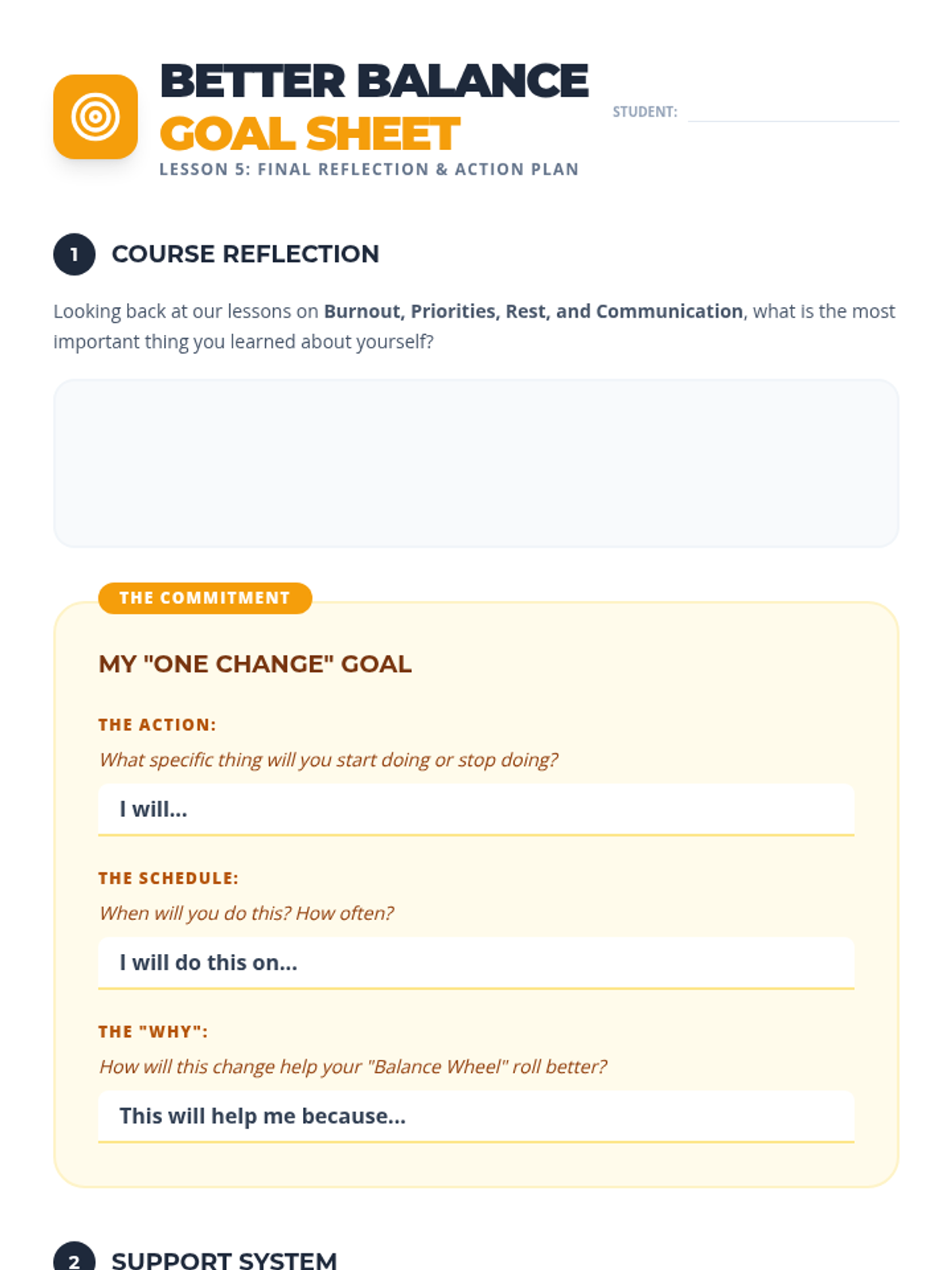
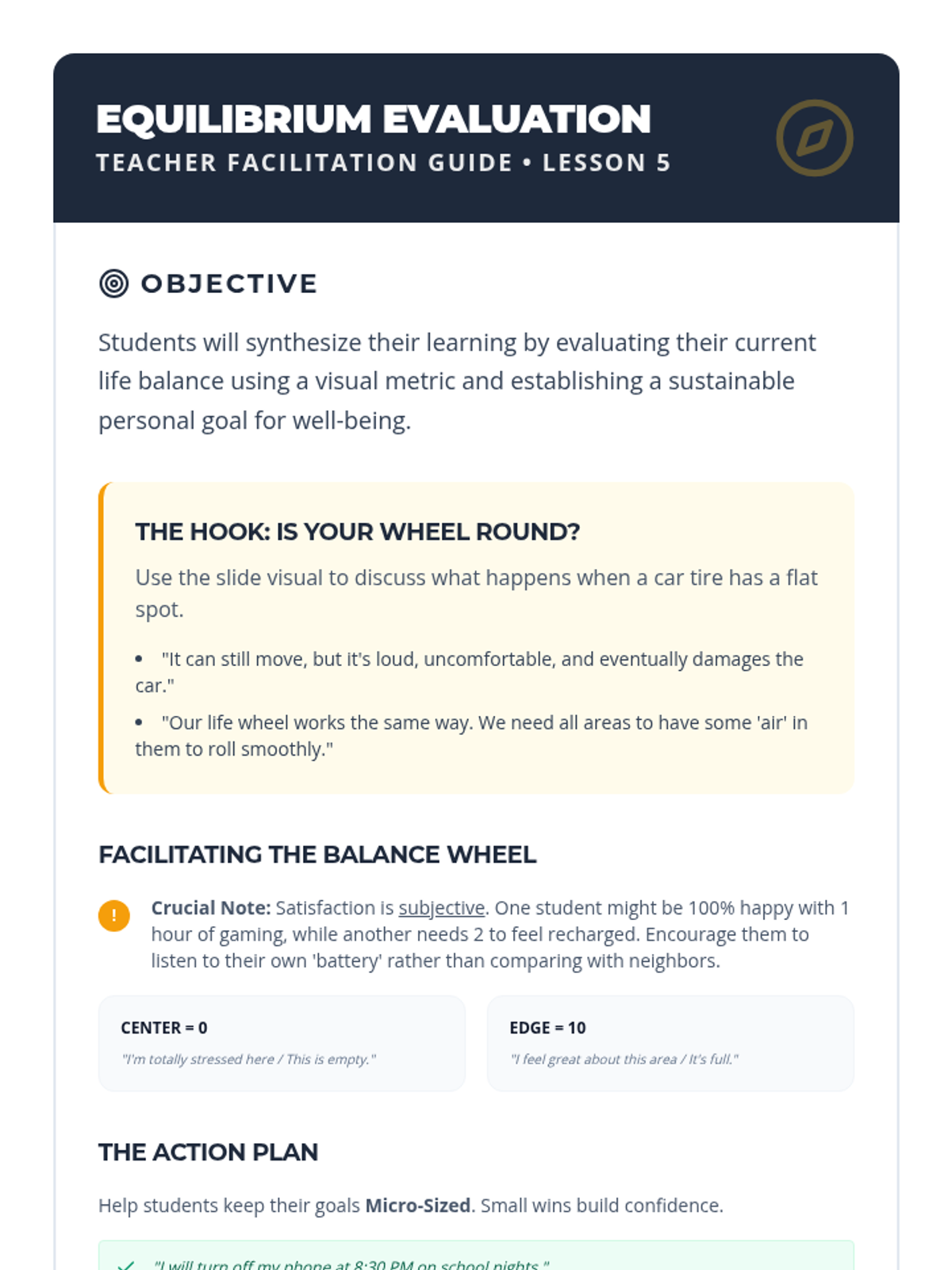
Students evaluate their current life balance using a visual 'Balance Wheel' and set a concrete goal for maintaining well-being.
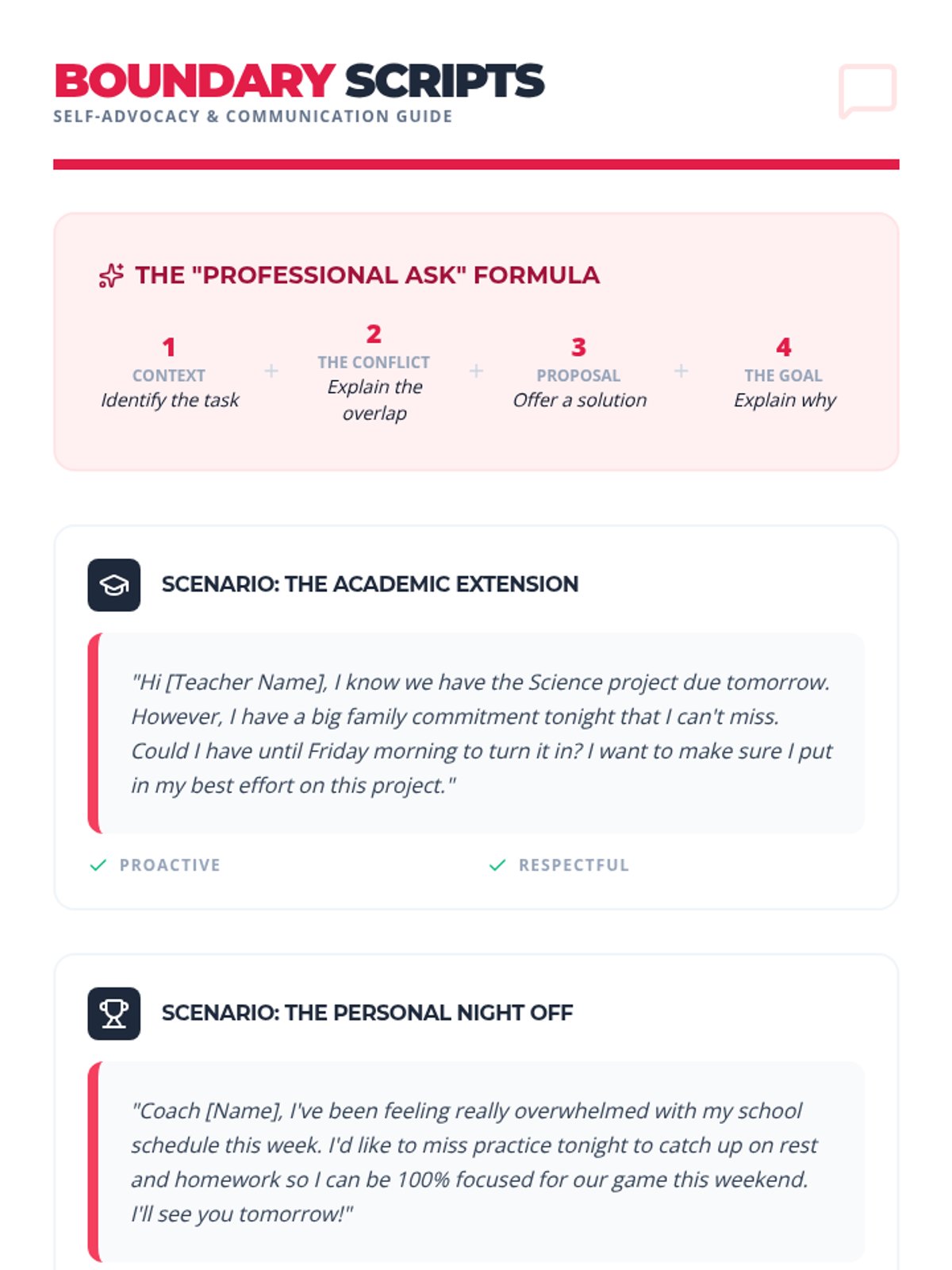
Students develop and practice proactive communication strategies for asking for help or setting boundaries with authority figures.
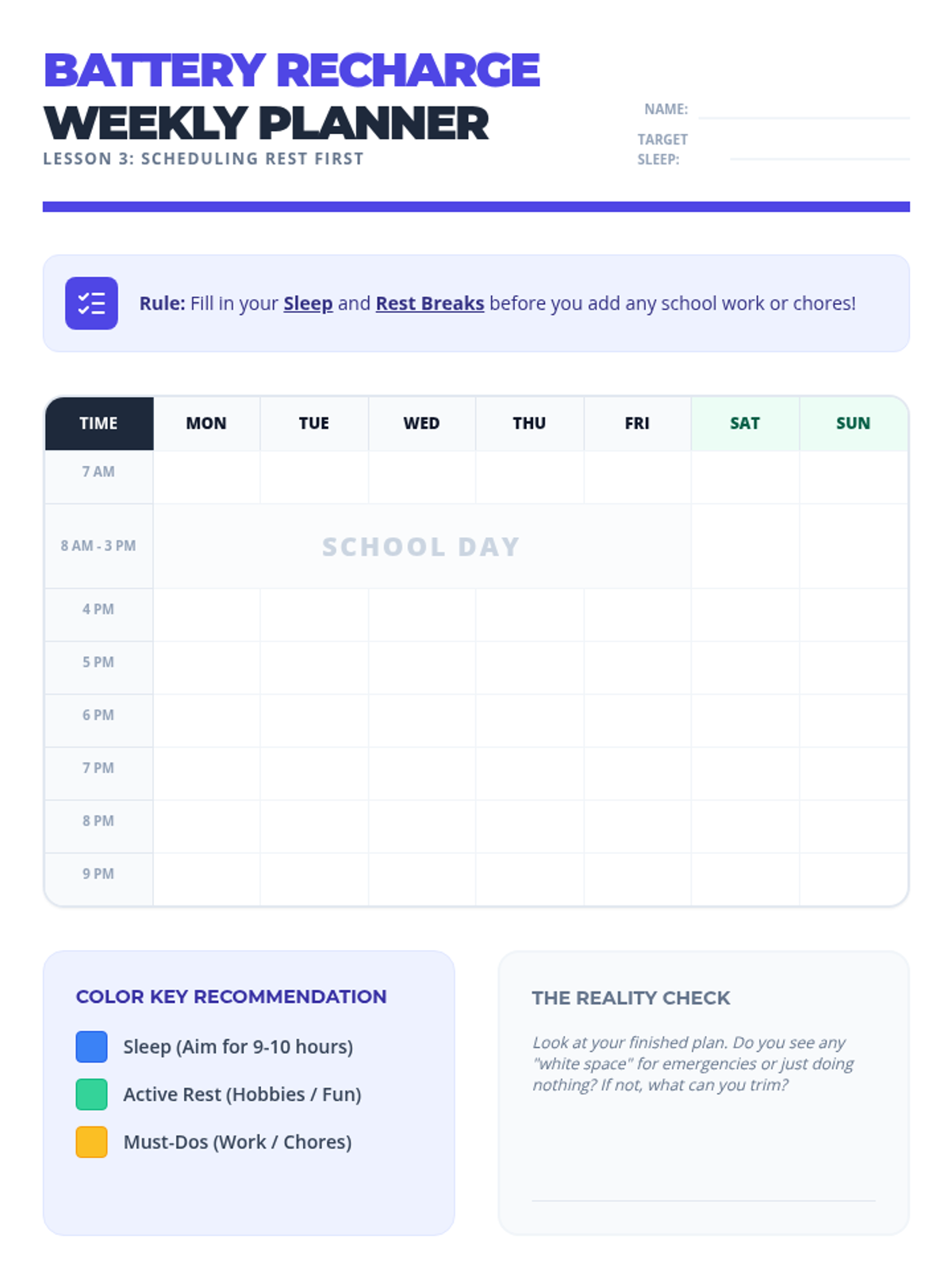
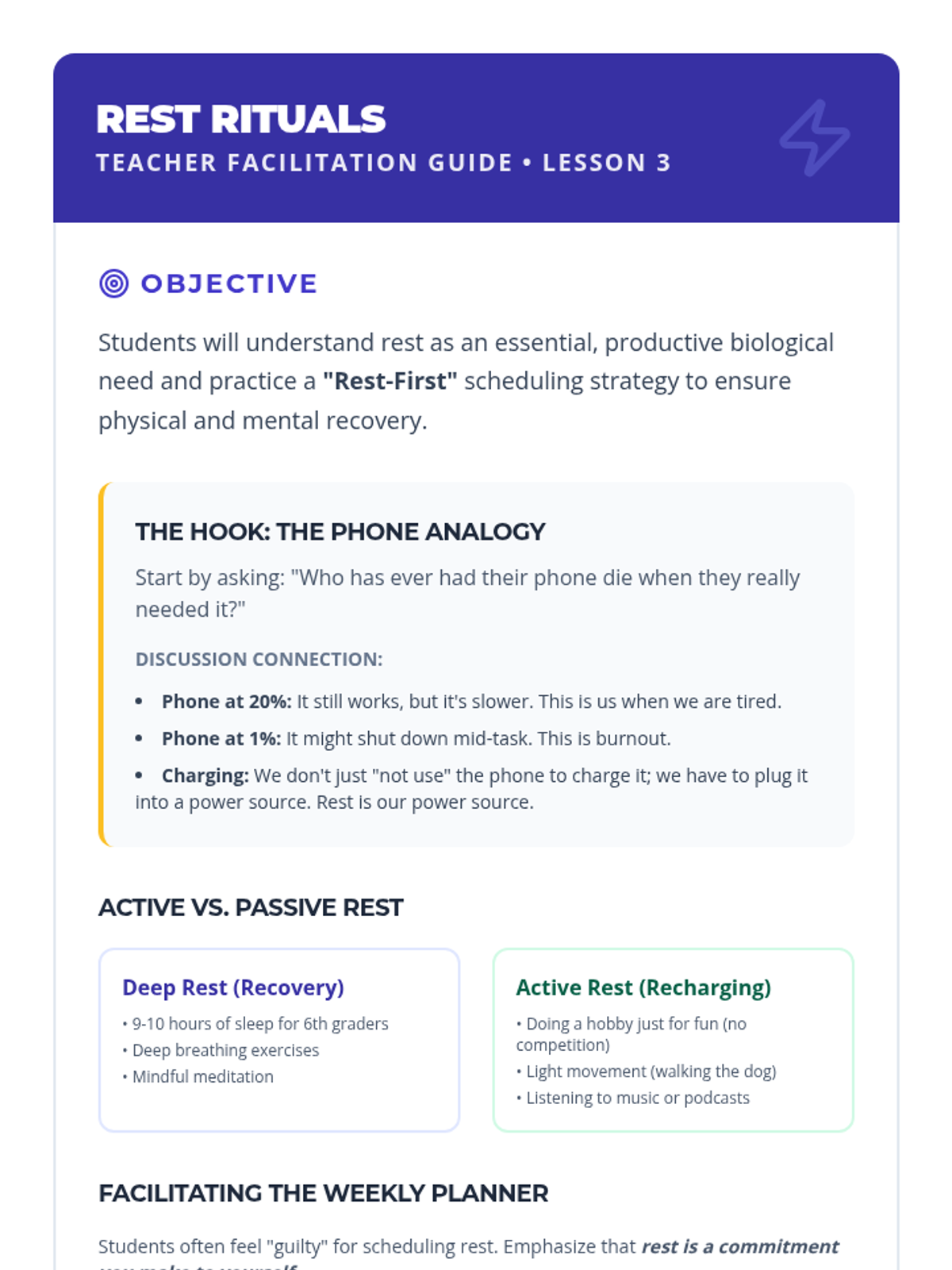
Students explore the necessity of rest and sleep as active components of a healthy schedule, creating a weekly plan that prioritizes 'recharge' time.
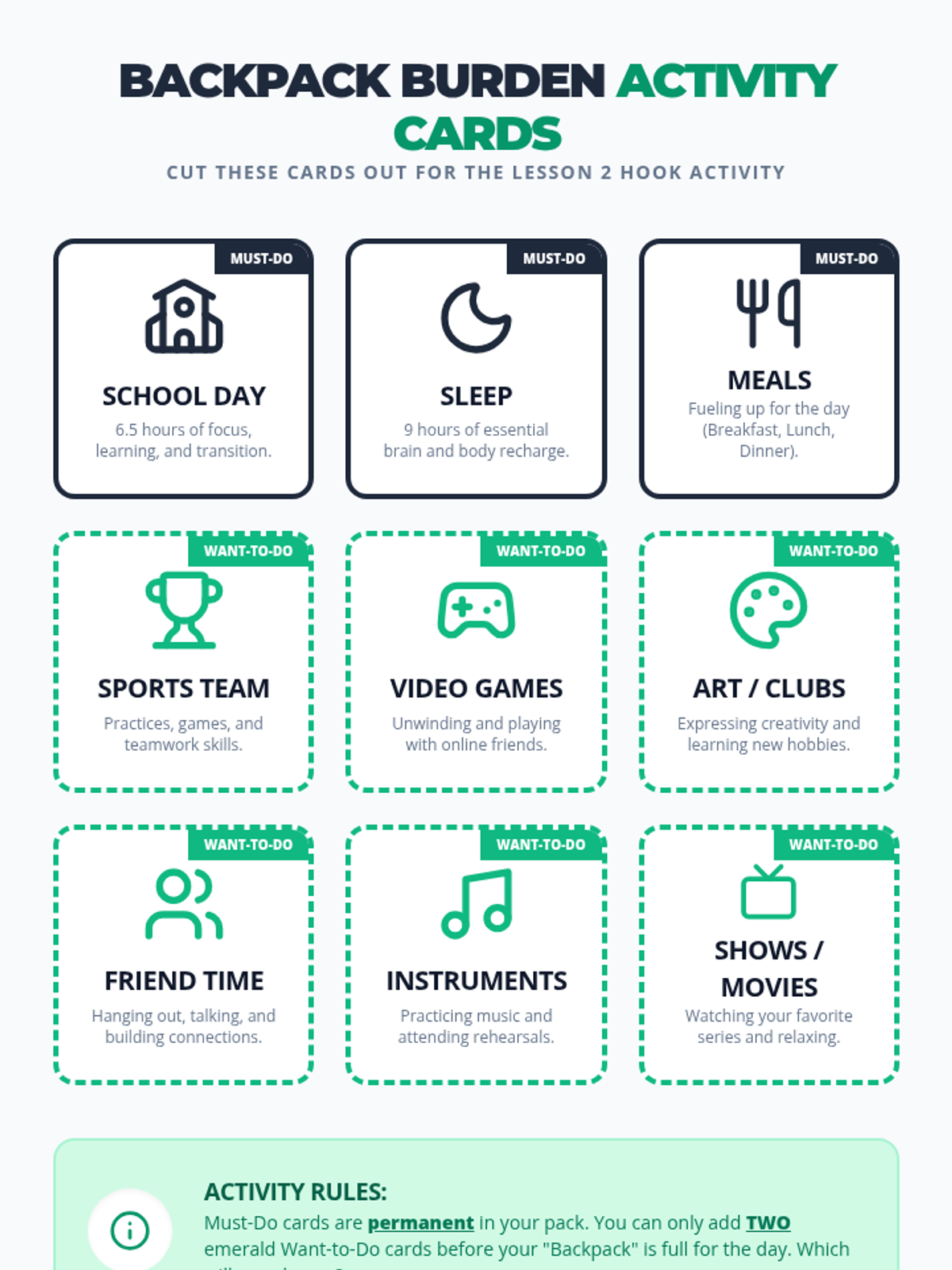
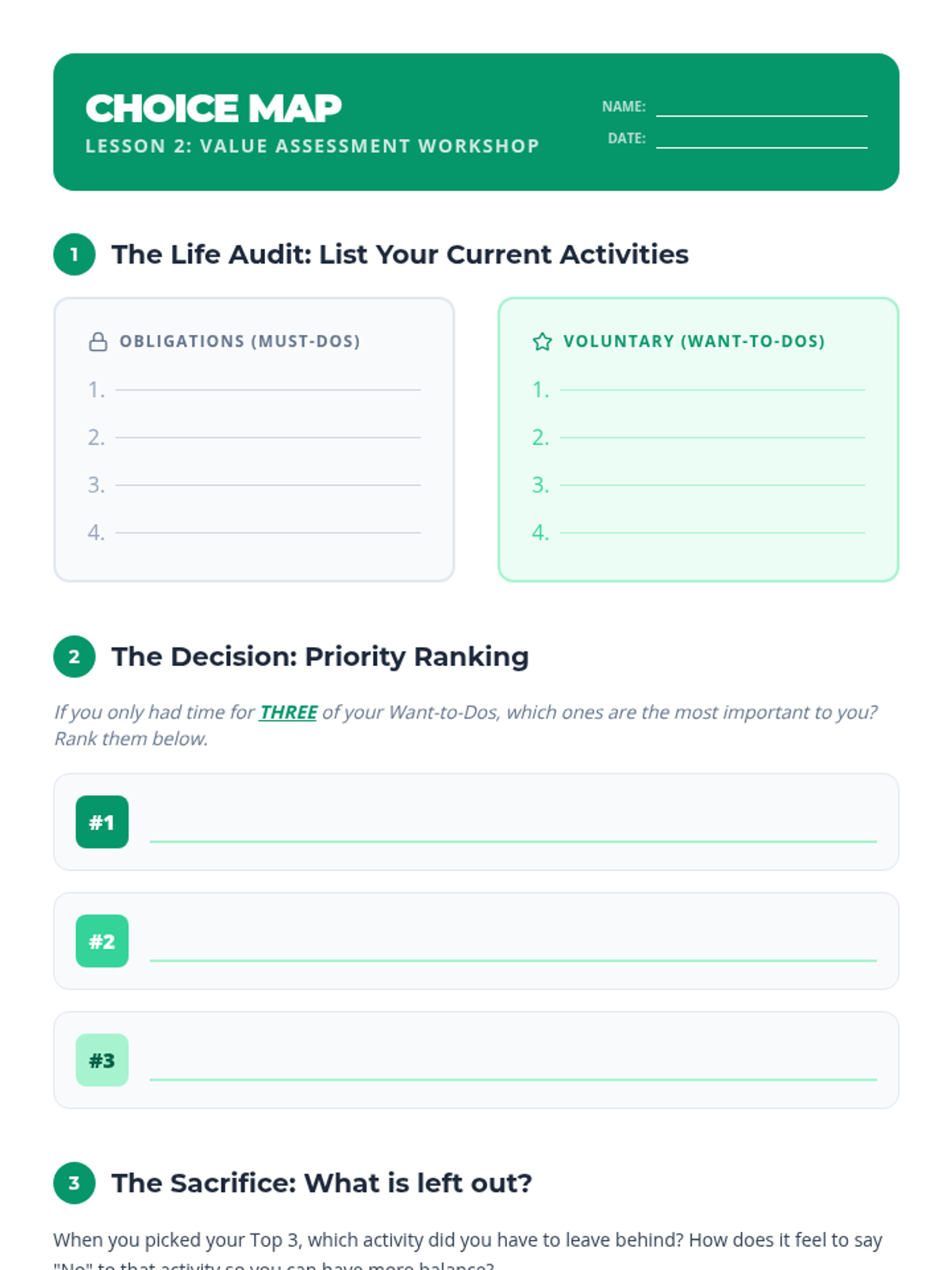
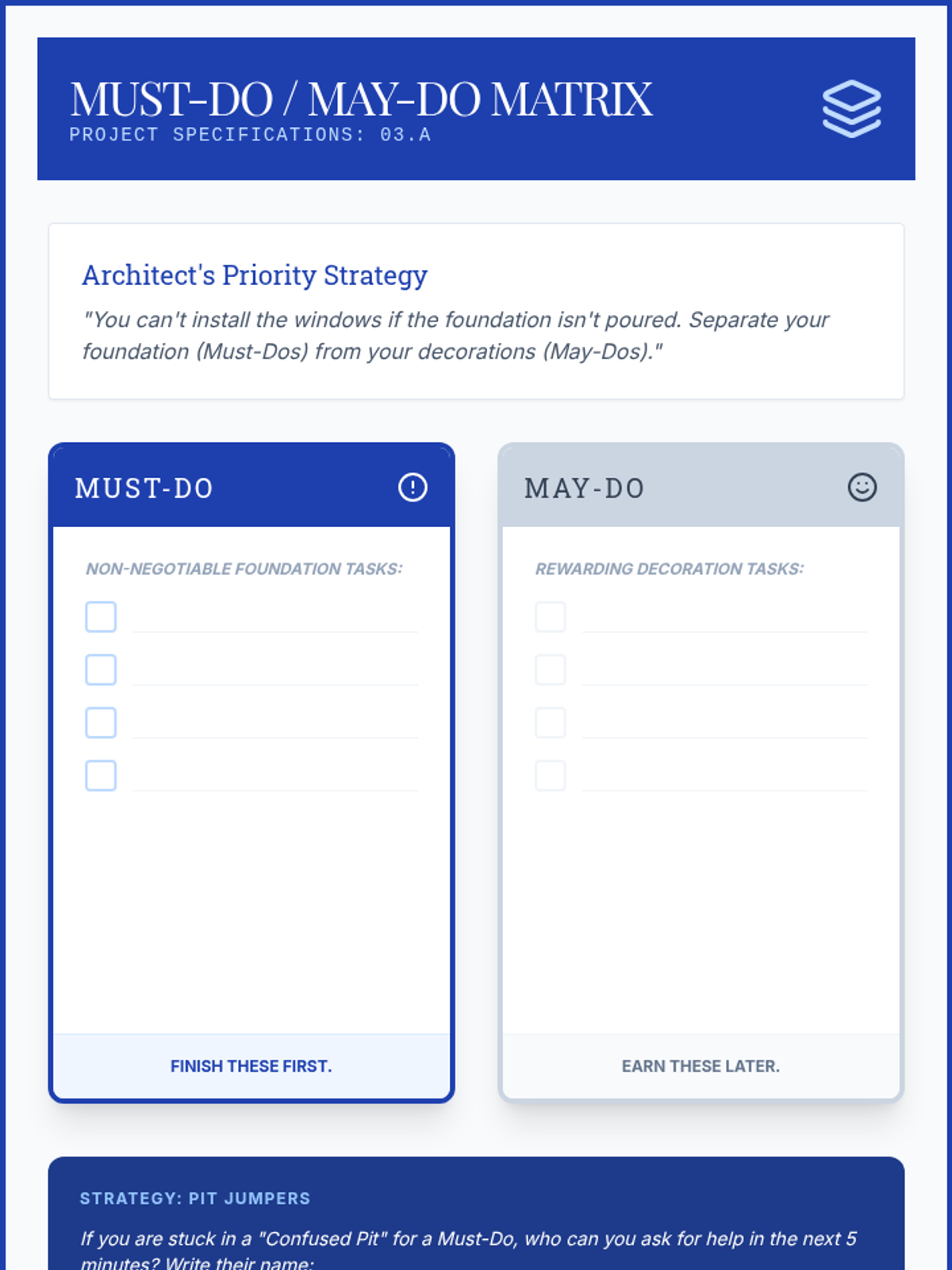
Students learn to distinguish between mandatory obligations and voluntary activities, practicing the art of making trade-offs.
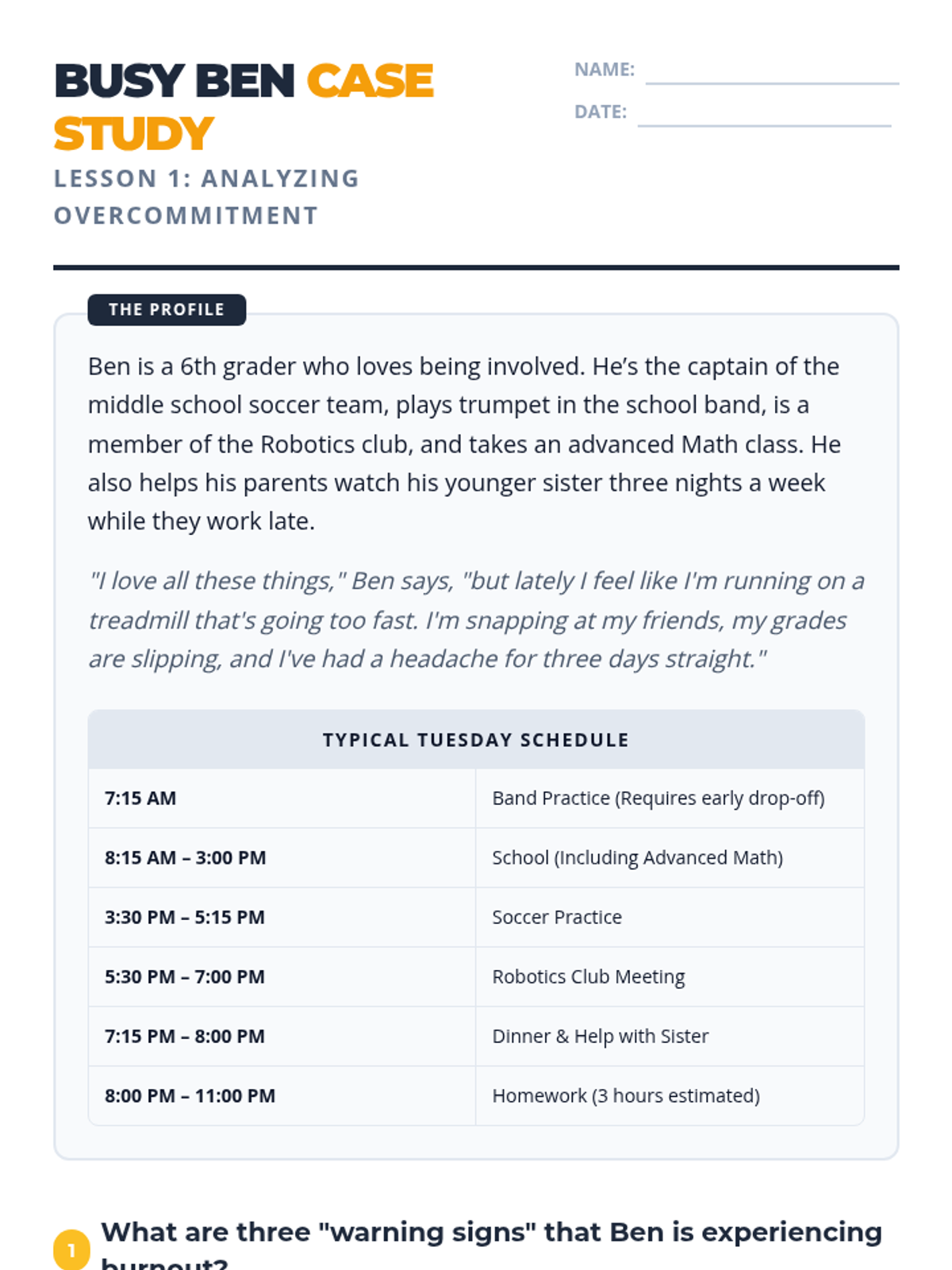
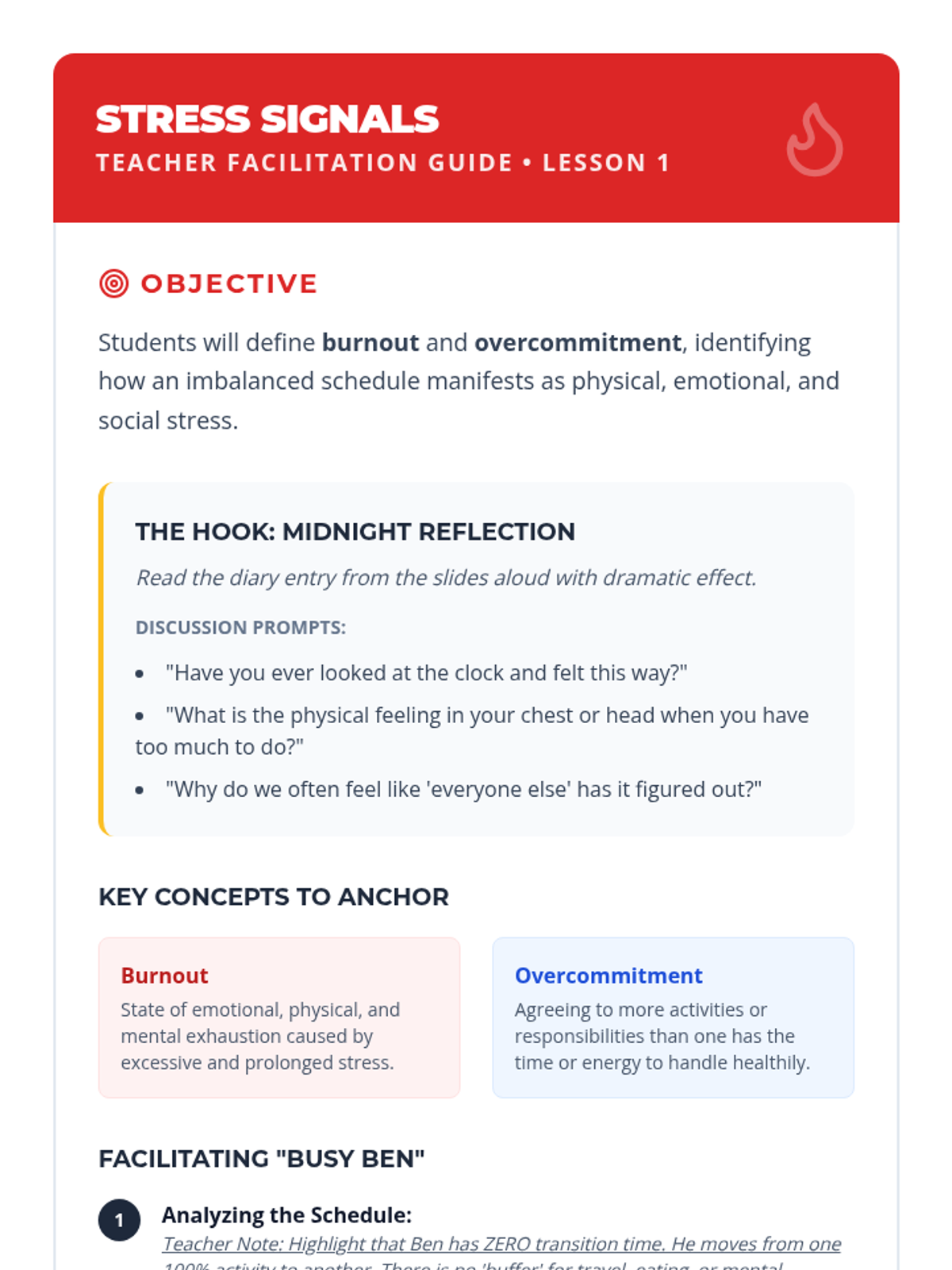
Students analyze the signs and consequences of overcommitment through a fictional case study of a student experiencing burnout.
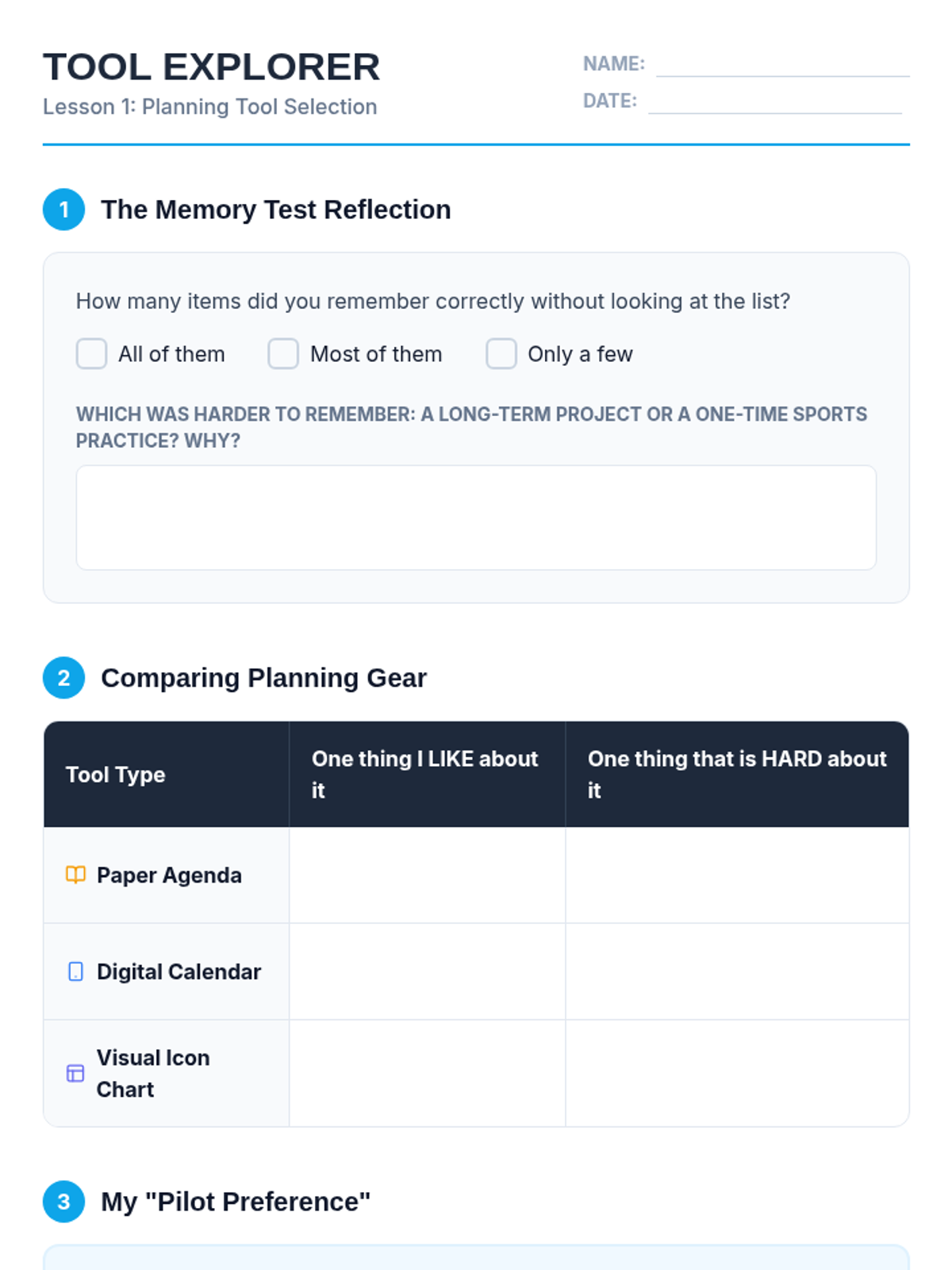
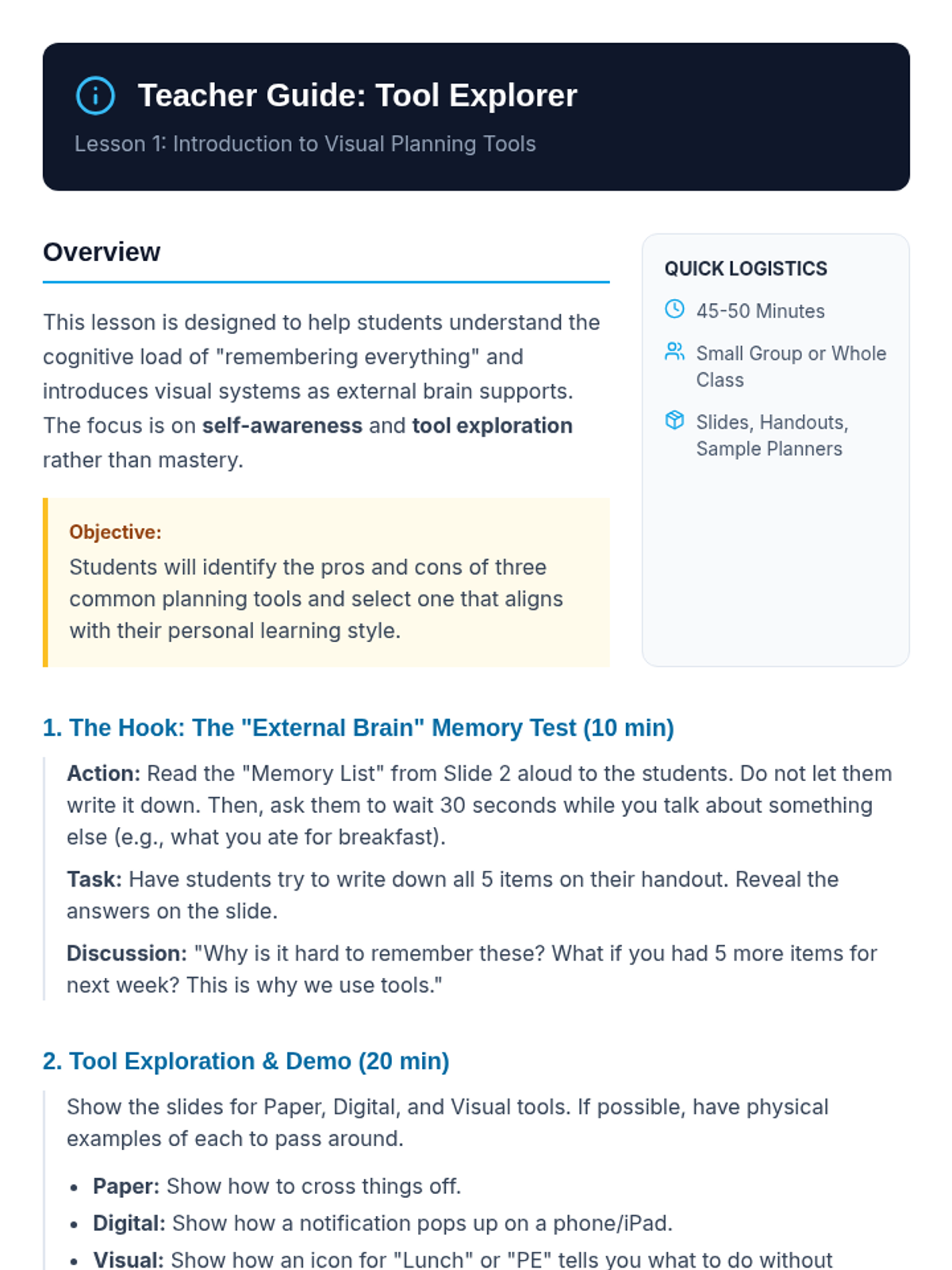
Students explore various formats of agendas, digital calendars, and visual schedules to understand how they function. They identify which tools might work best for their specific learning styles and needs.
Students synthesize their learning by designing their own 5-minute personal review games to use at home.
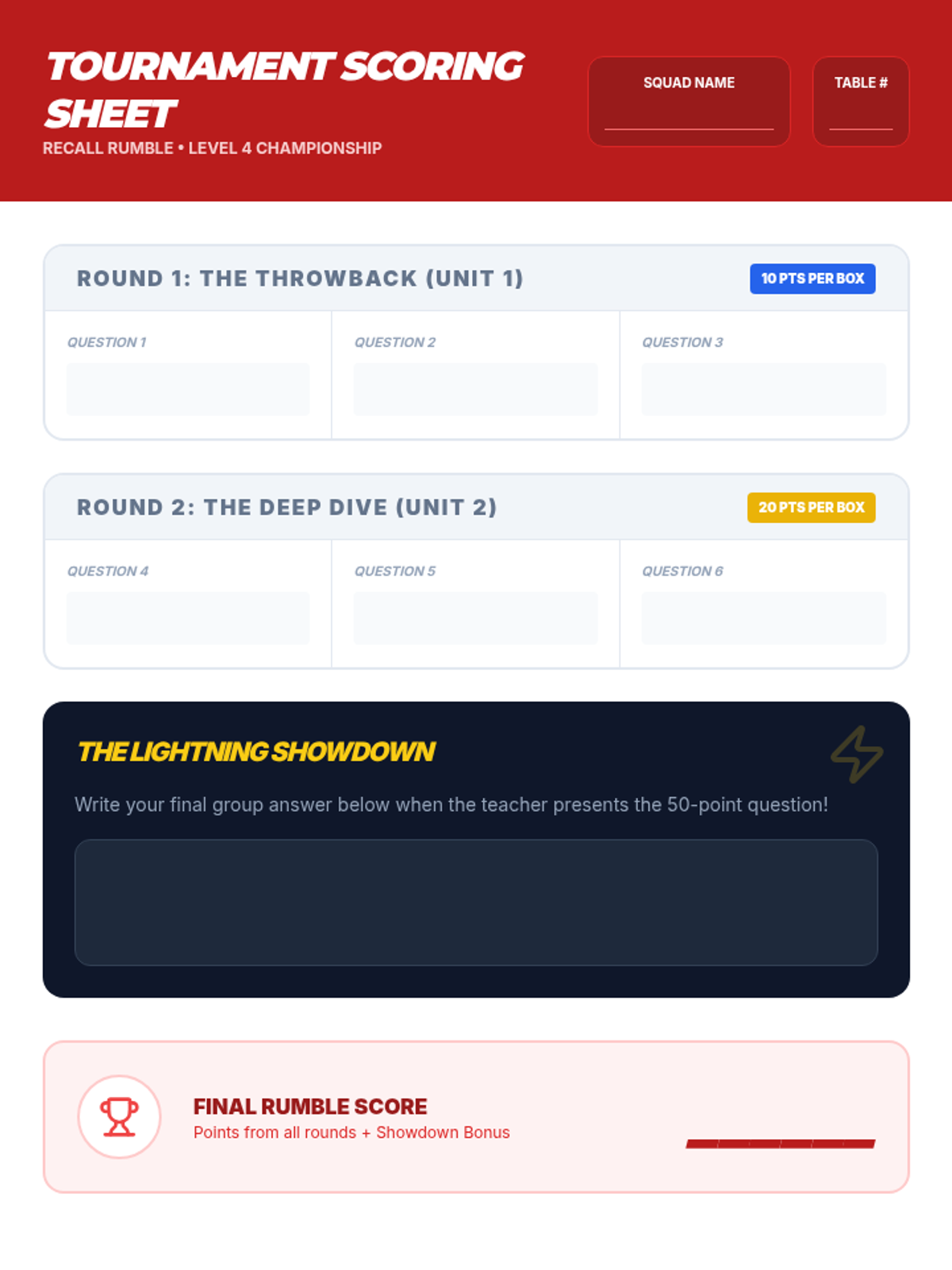
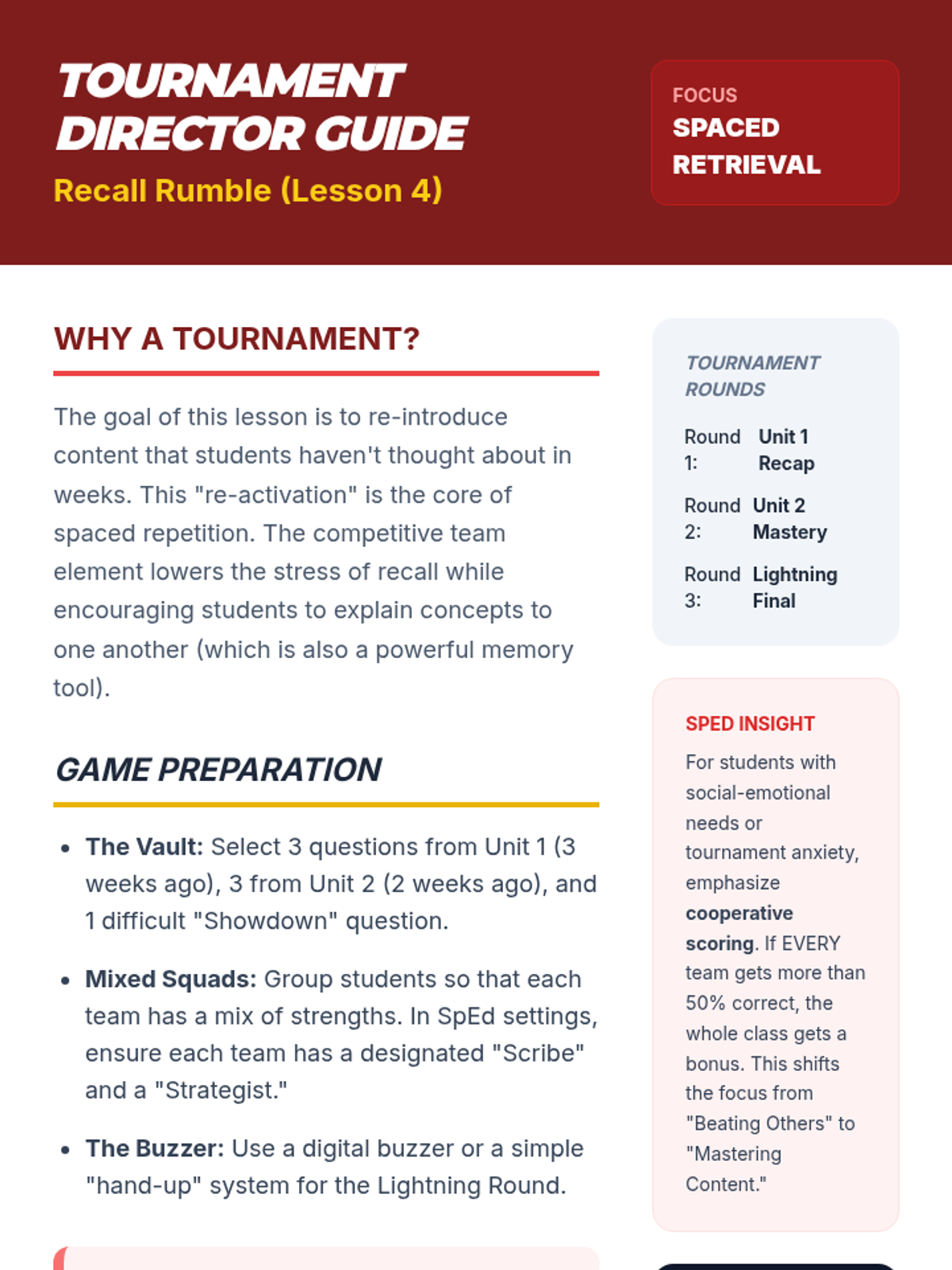
A team-based tournament that reinforces spaced repetition by challenging students to recall information from previous weeks.
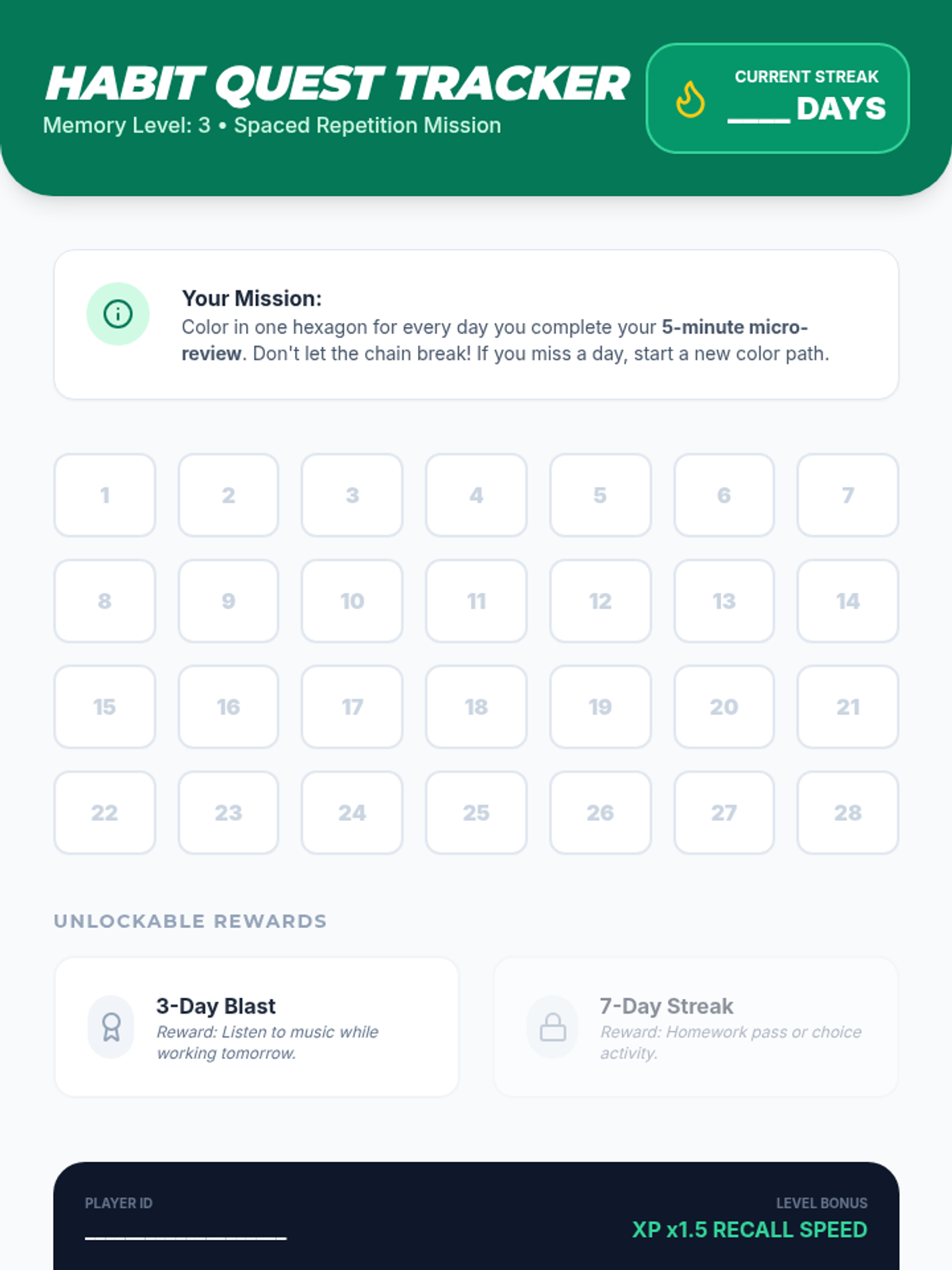
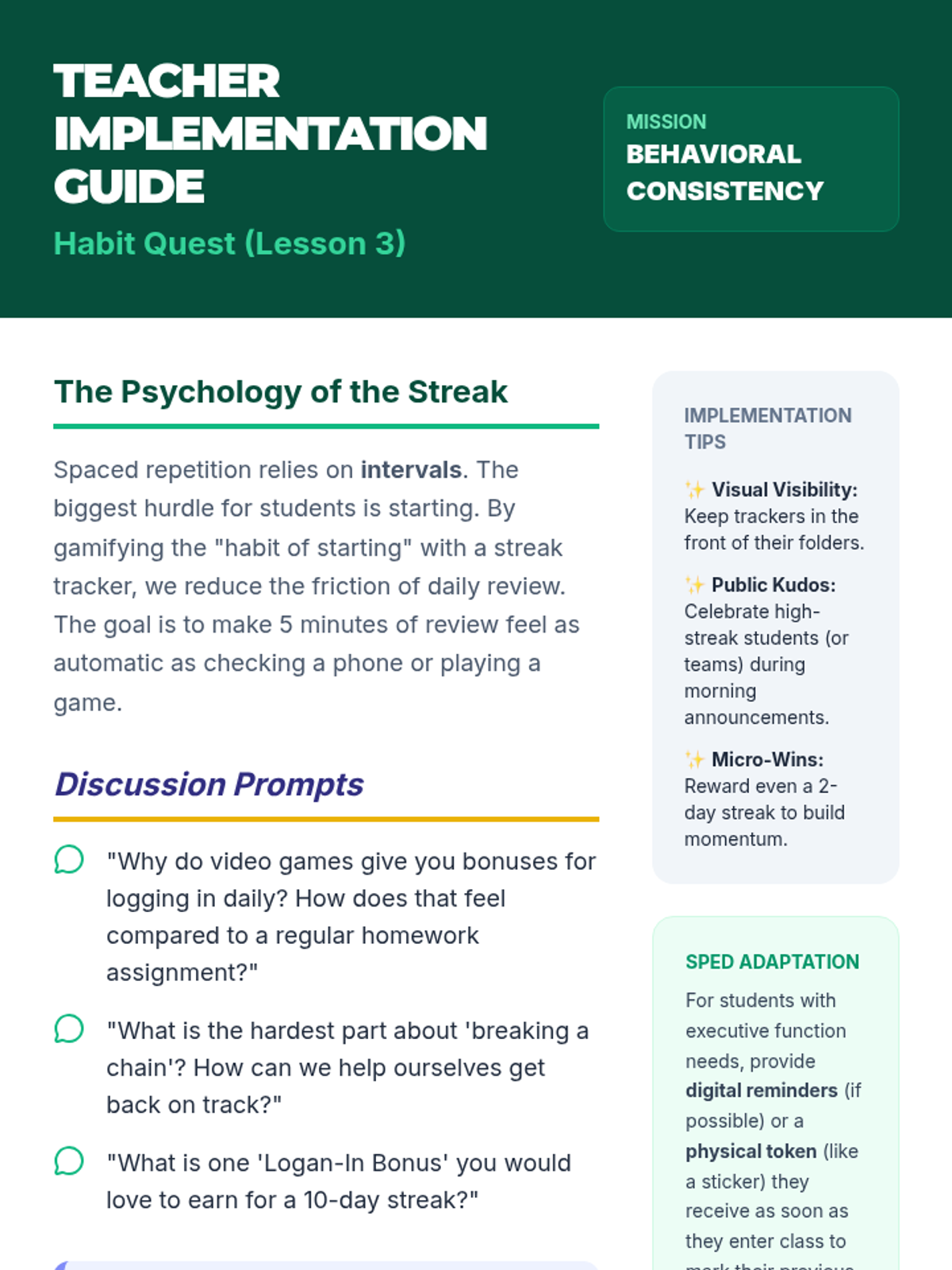
Students explore the psychology of habit streaks and create personal trackers to maintain their daily memory practice.
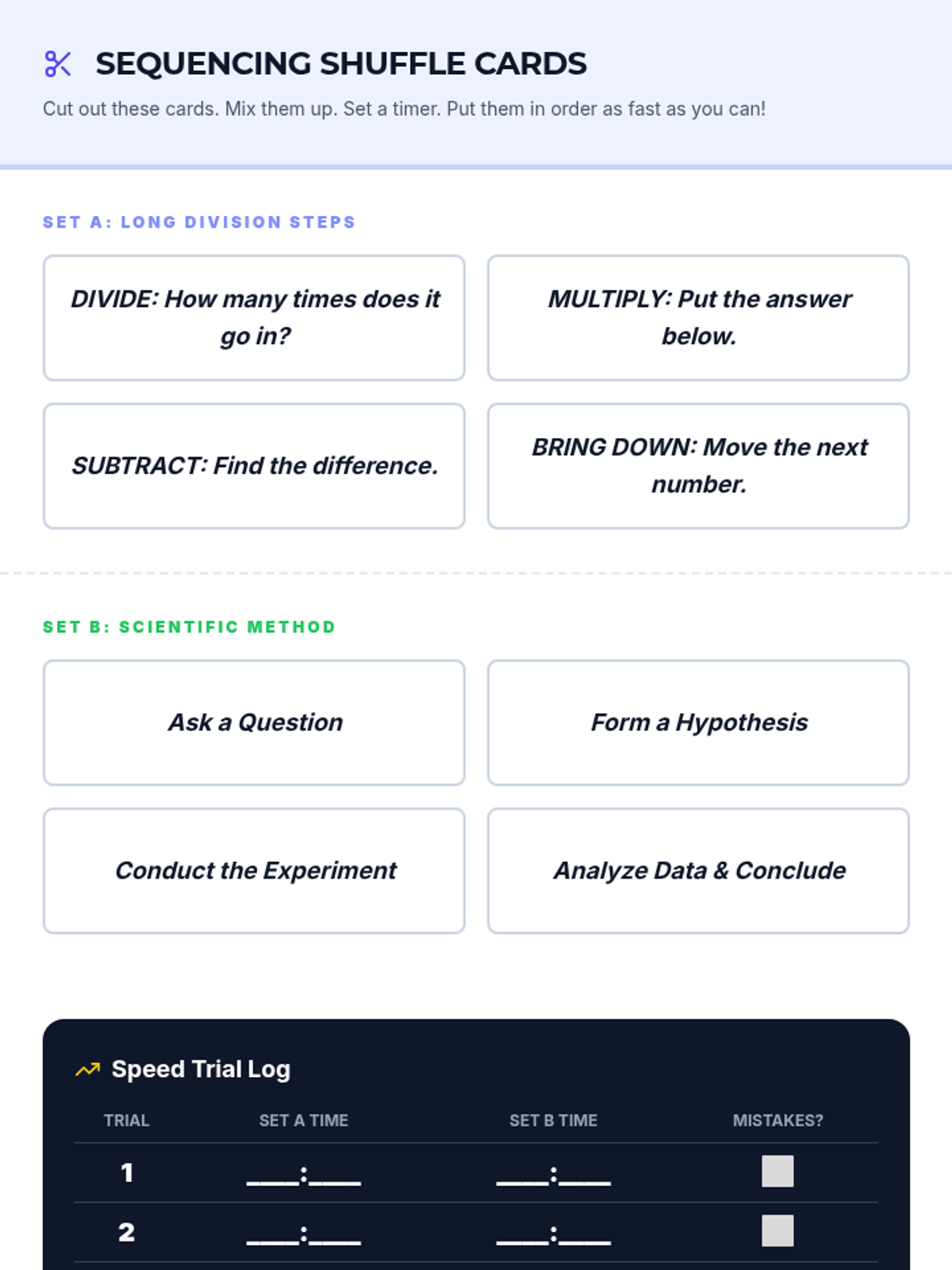
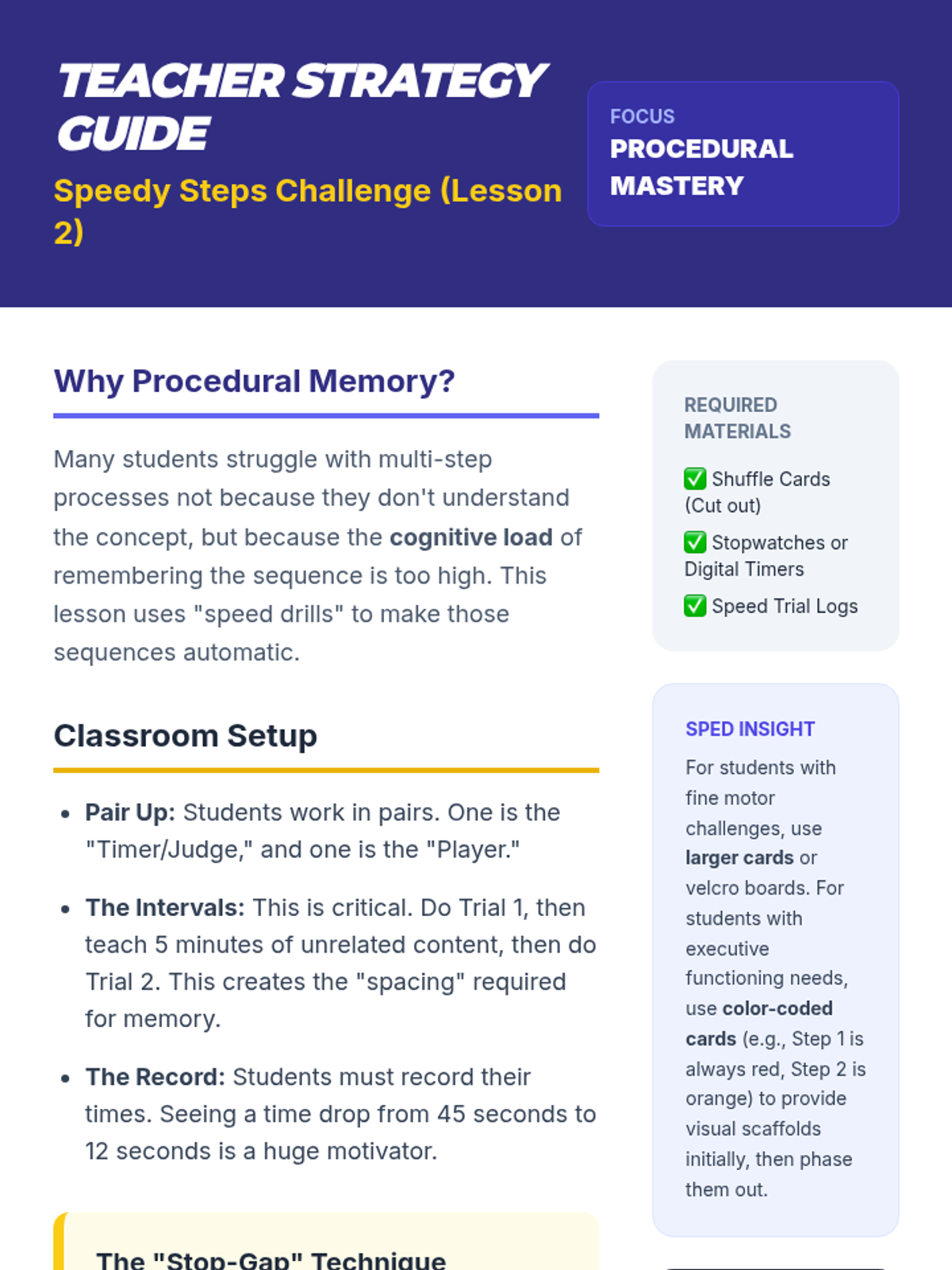
A lesson focused on speed and accuracy in sequencing procedural steps, using repeated trials to build muscle memory.
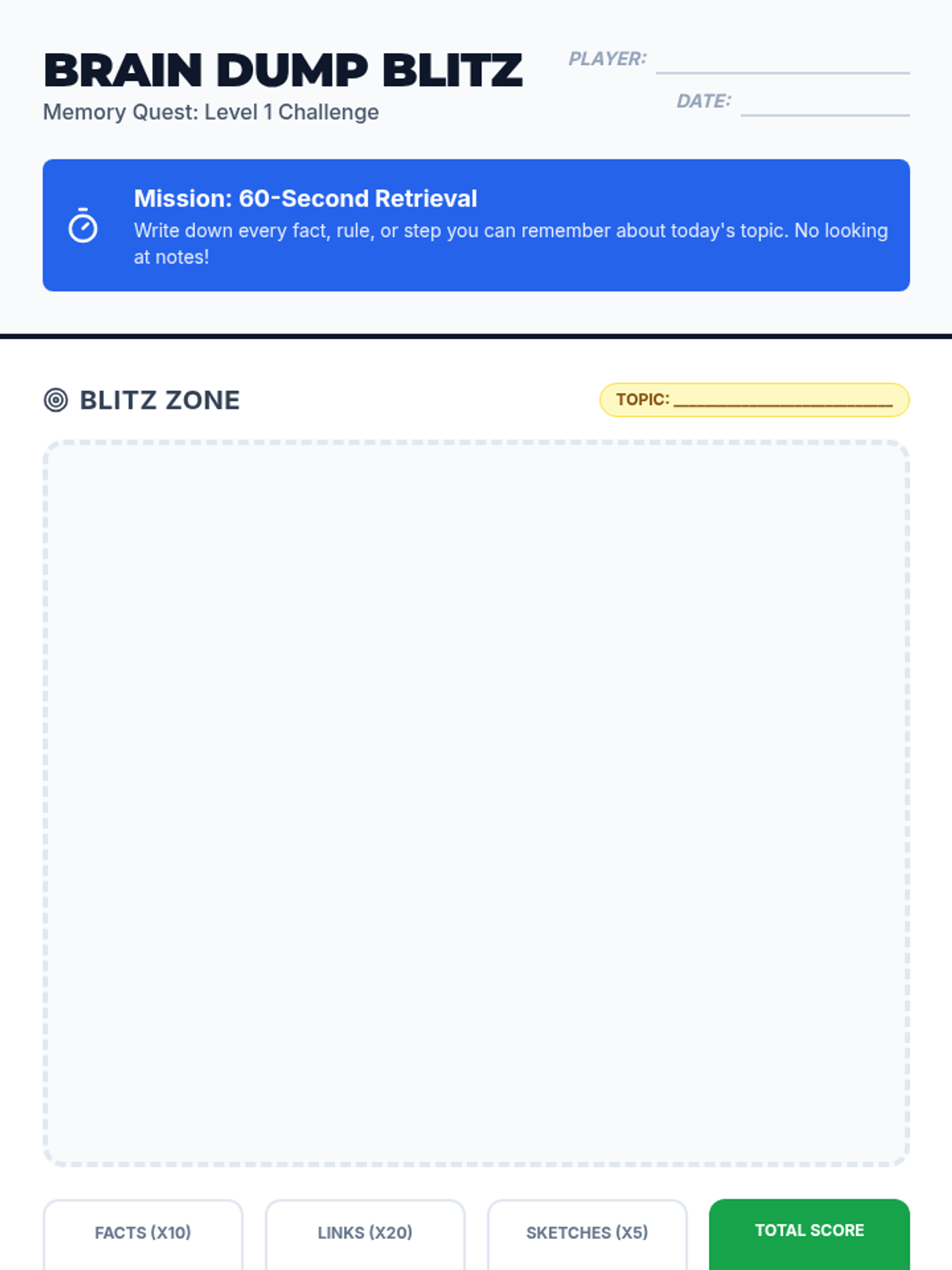
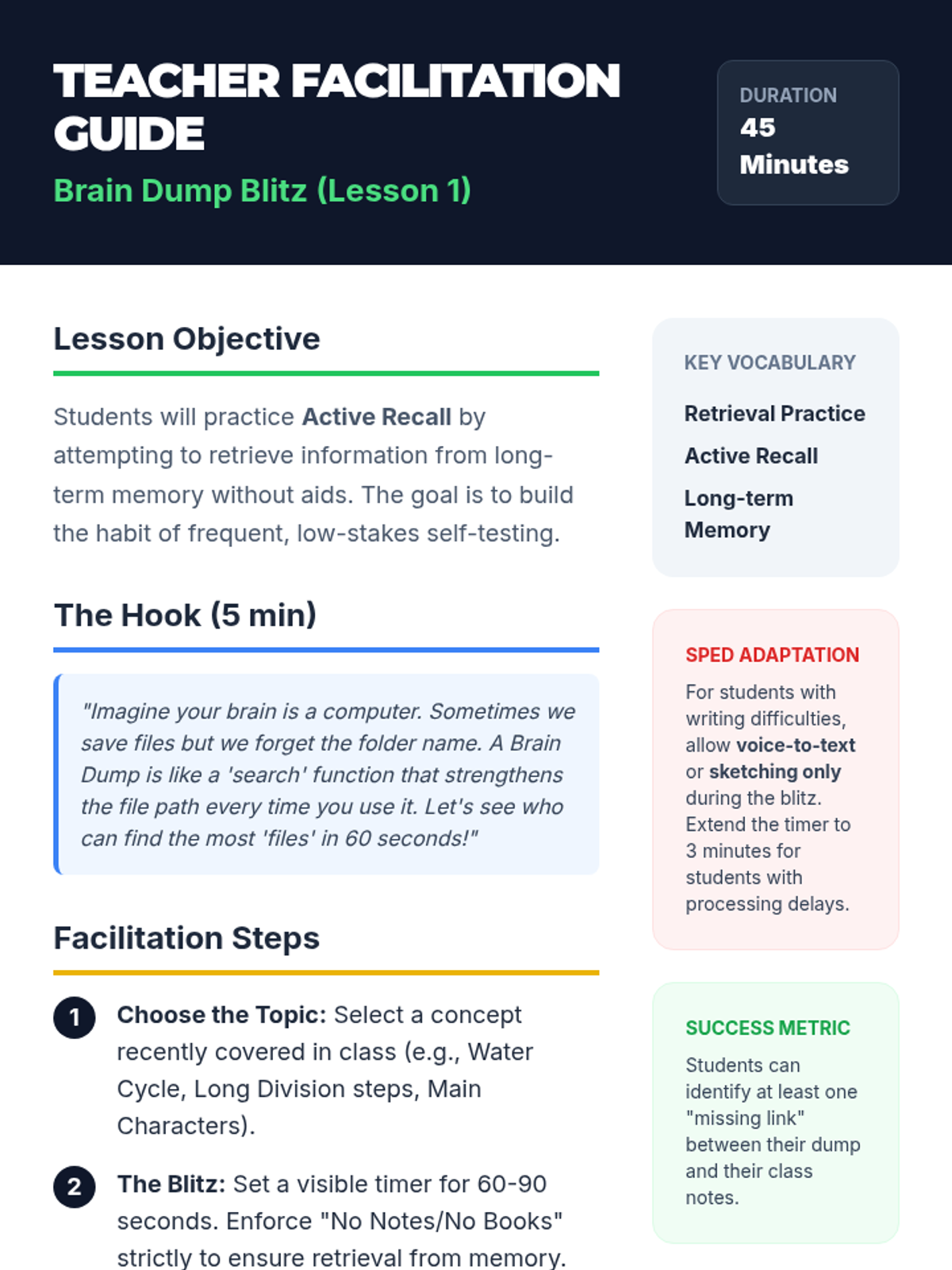
Students learn the power of retrieval practice through a fast-paced 'Brain Dump' challenge, scoring points for recalling facts from memory.
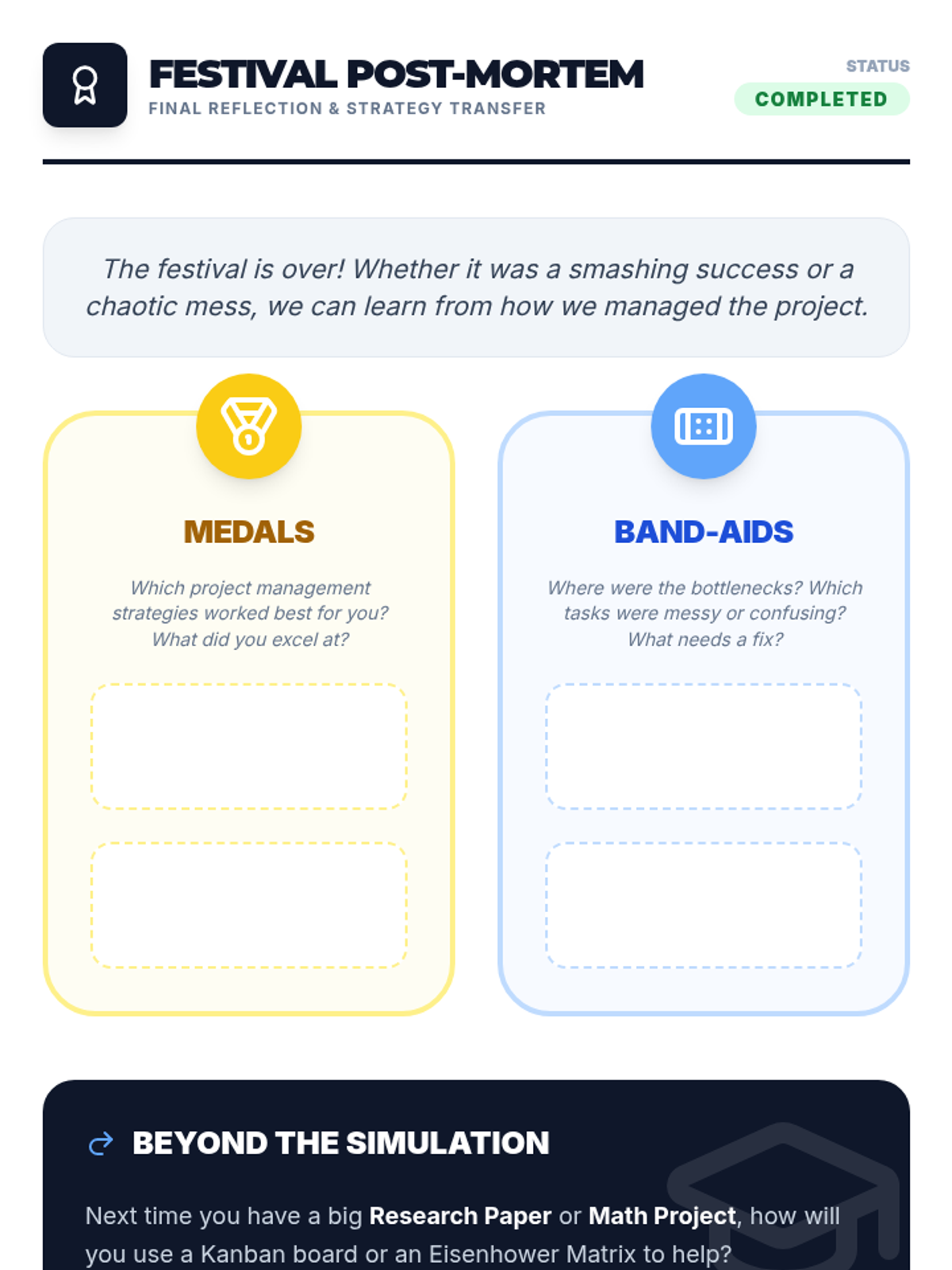
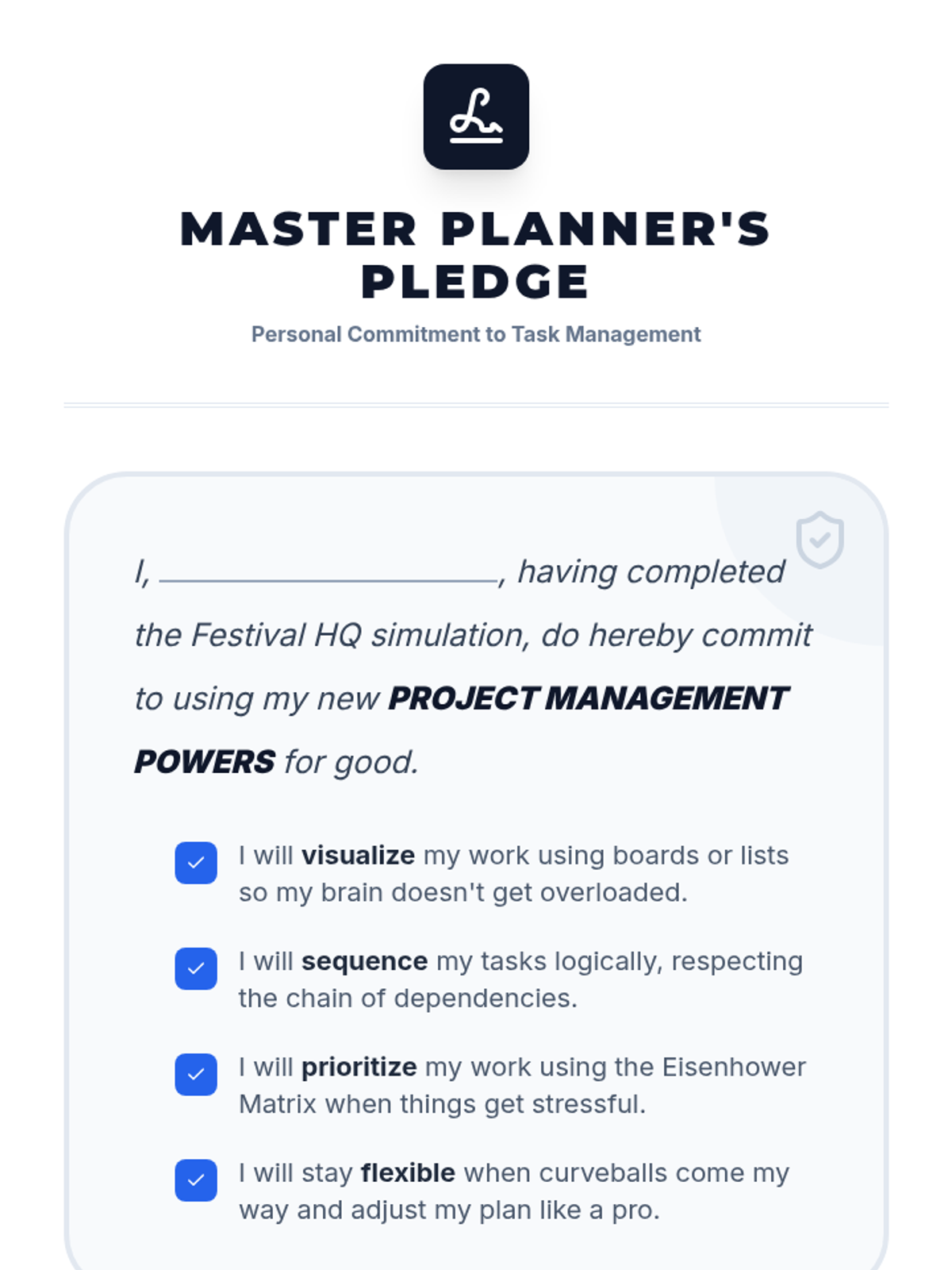
Students conduct a 'Post-Mortem' analysis to review their execution and set goals for future academic projects.
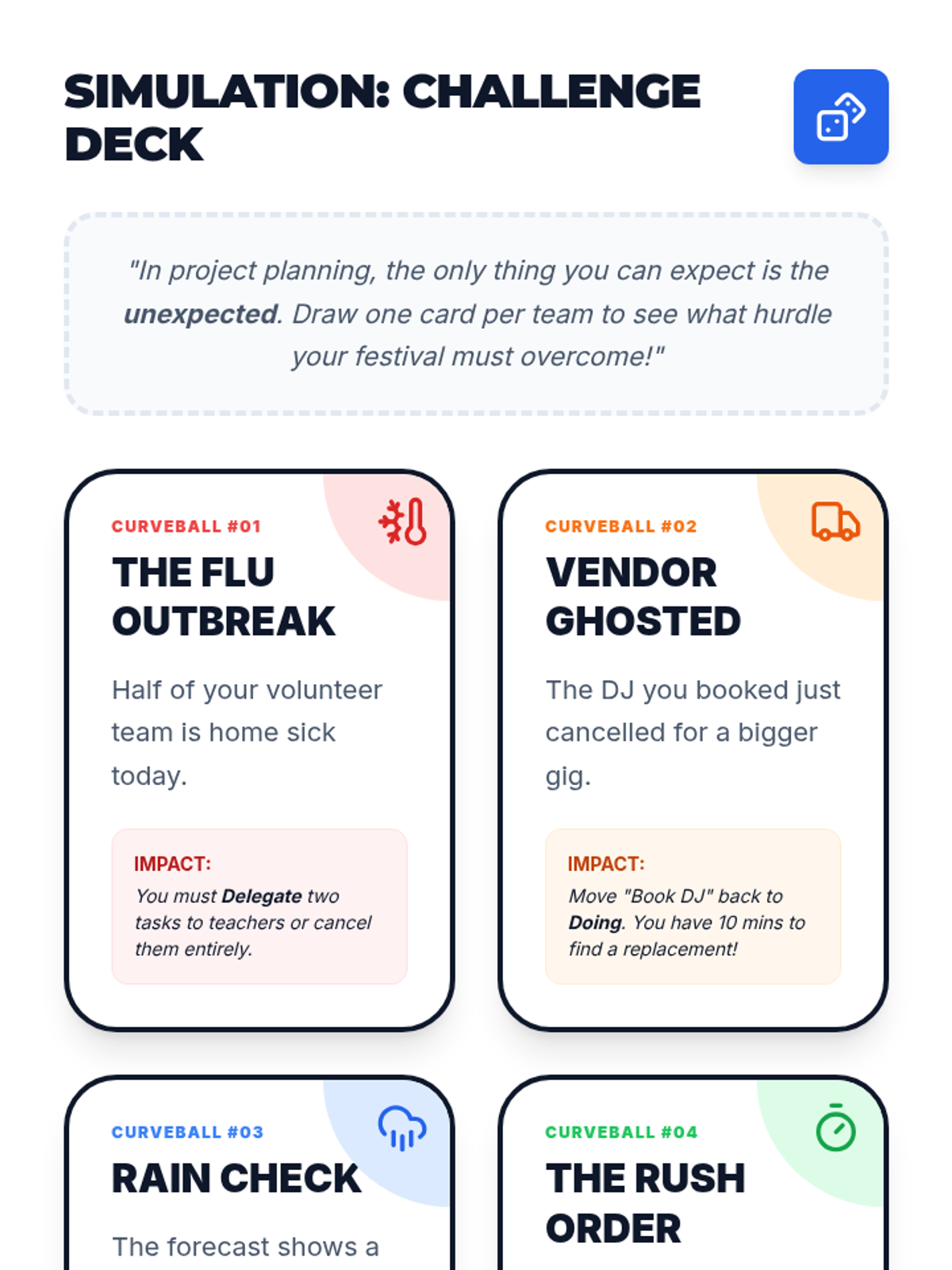
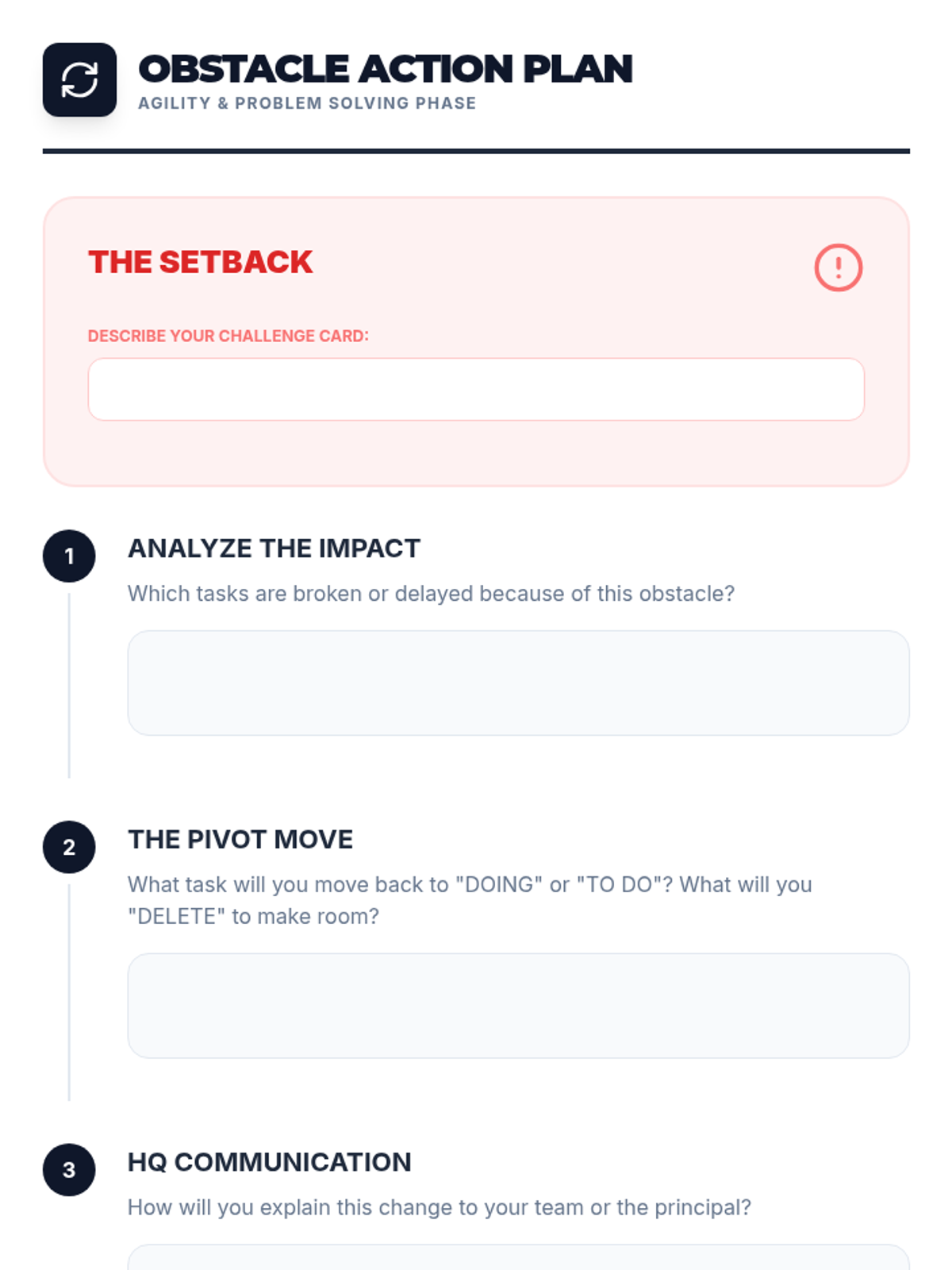
Students draw 'Challenge Cards' and adjust their project boards to build resilience and flexibility.
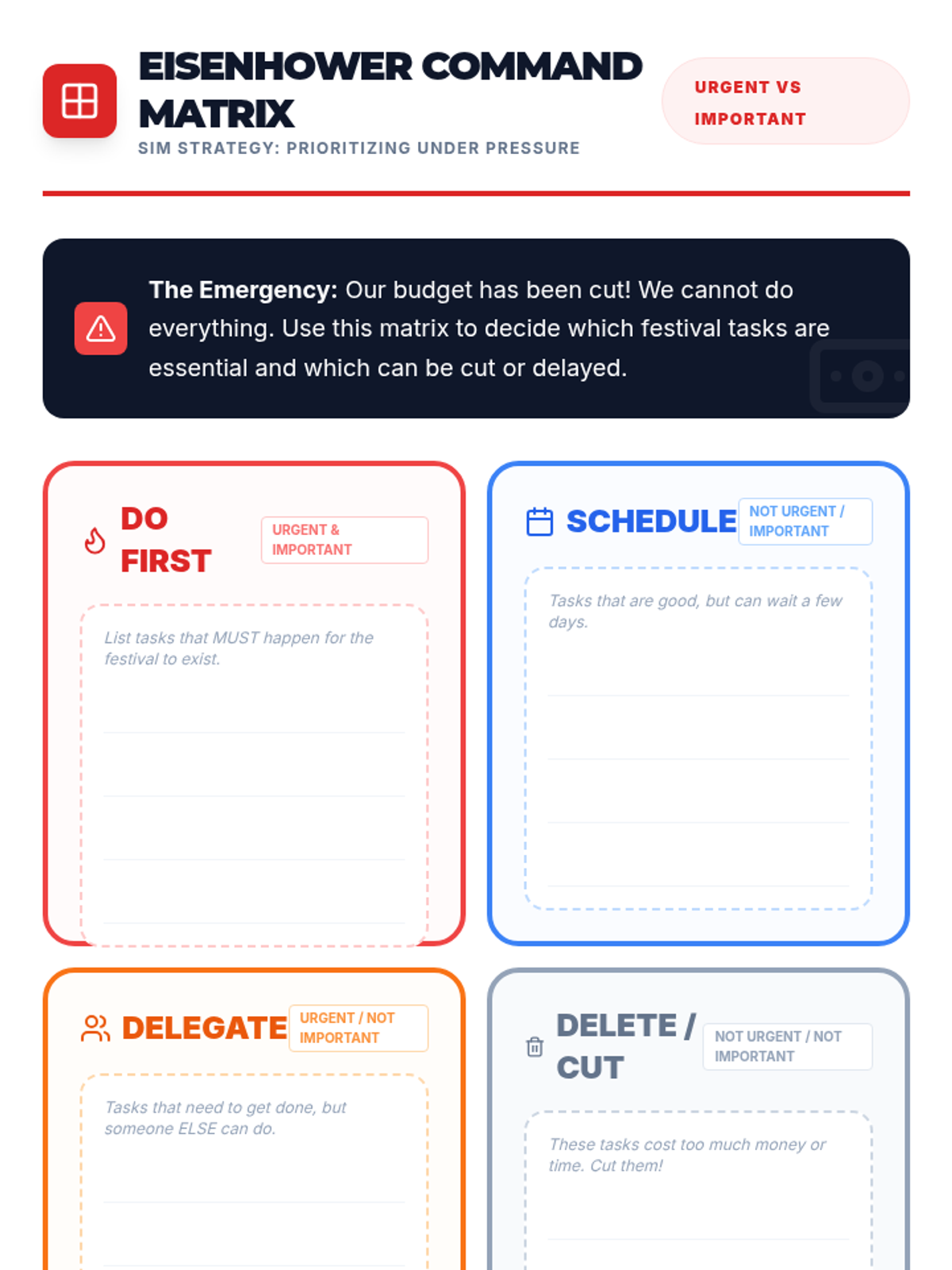
Students use the Eisenhower Matrix to prioritize tasks when faced with a reduced budget or shortened timeline.
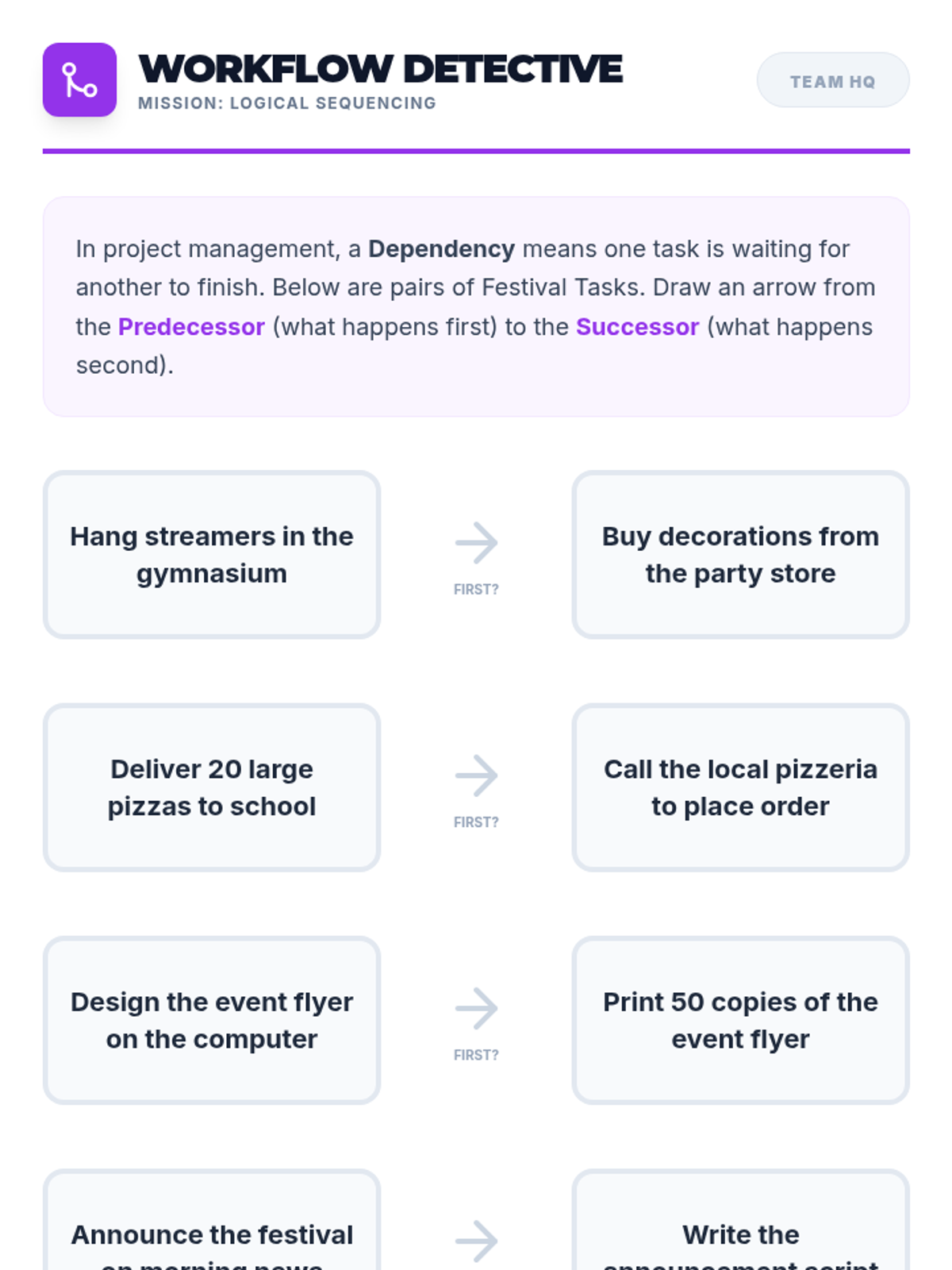
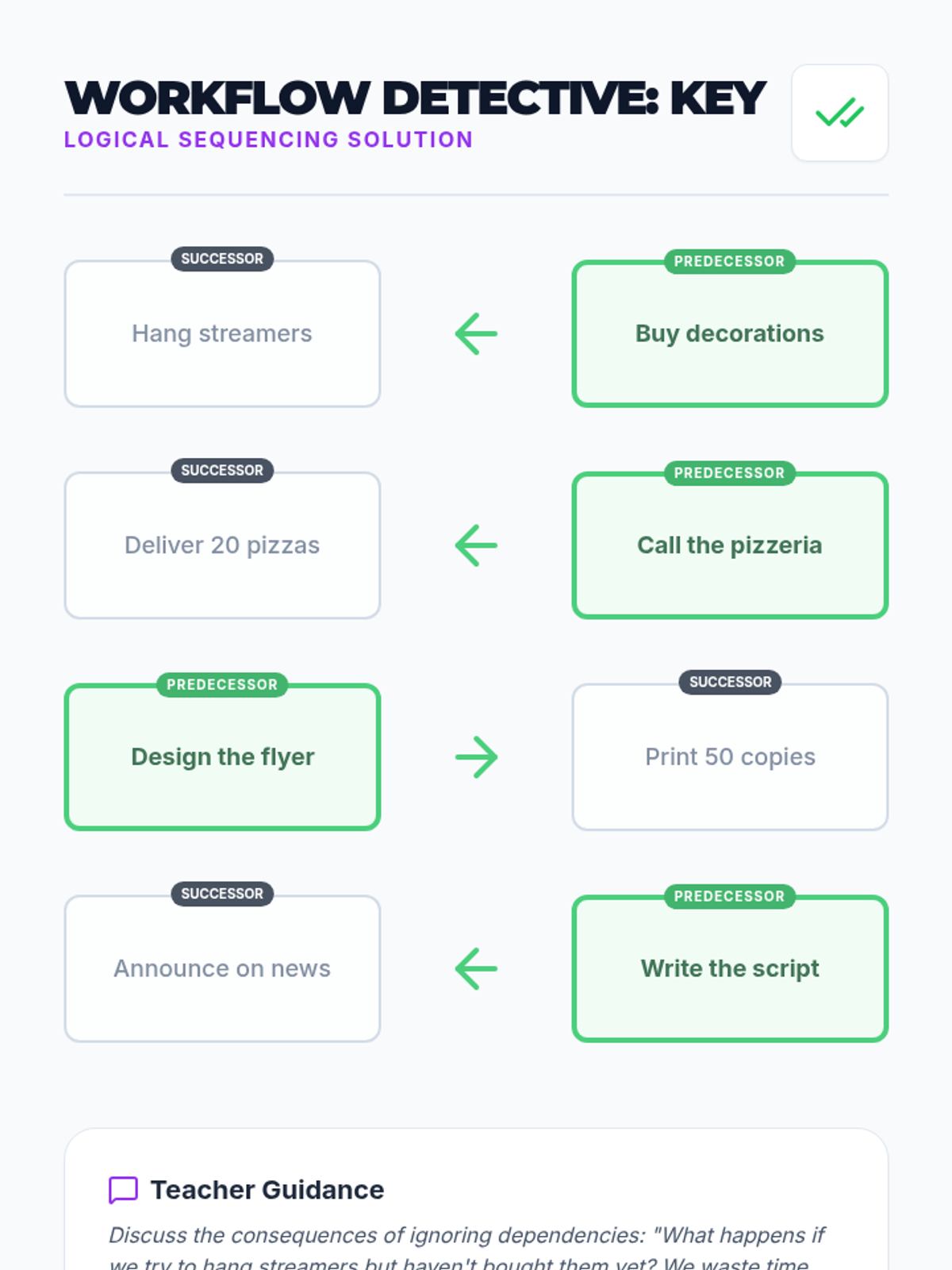
Students analyze festival tasks to determine dependencies and arrange them in a logical flow.
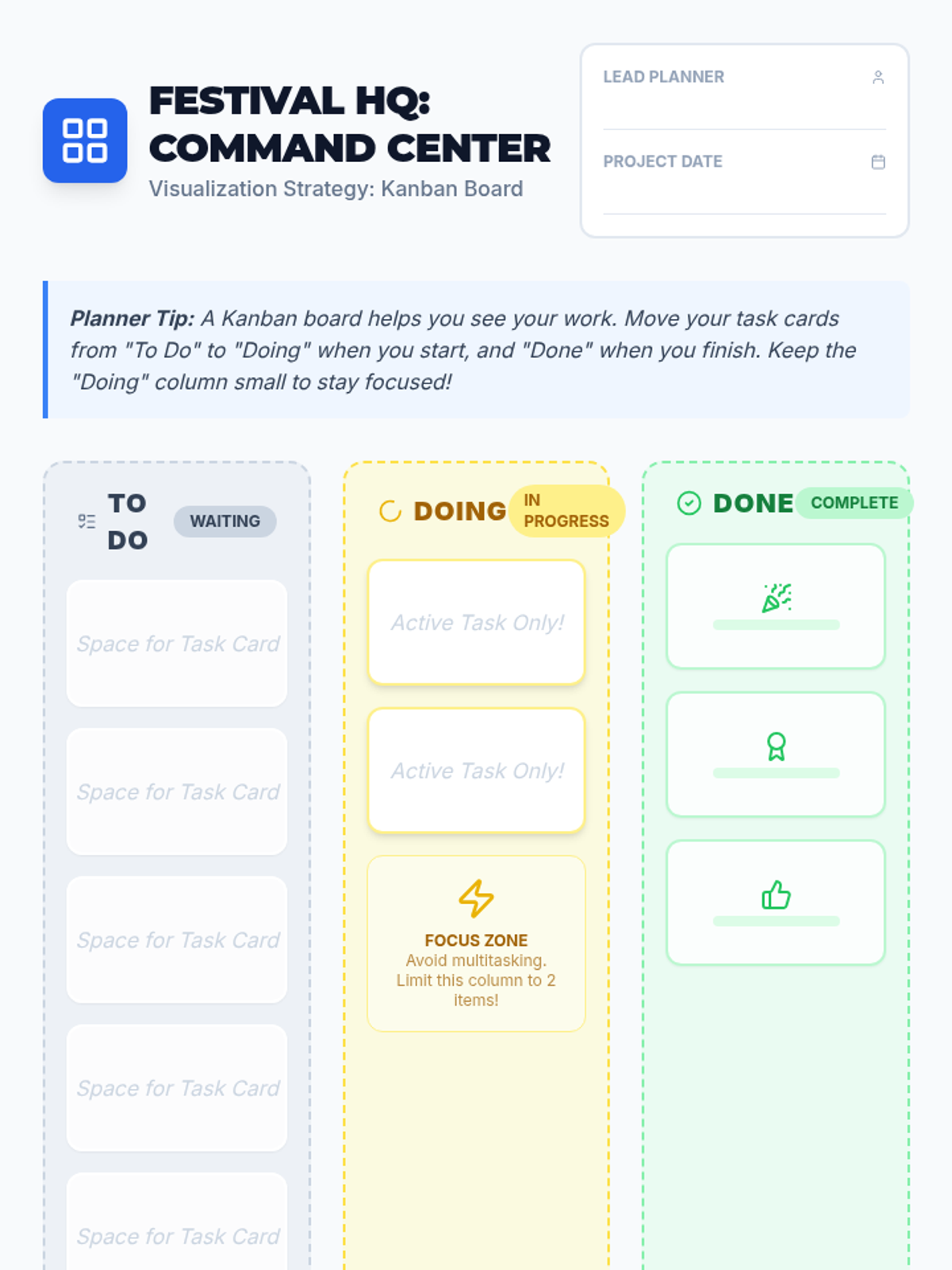
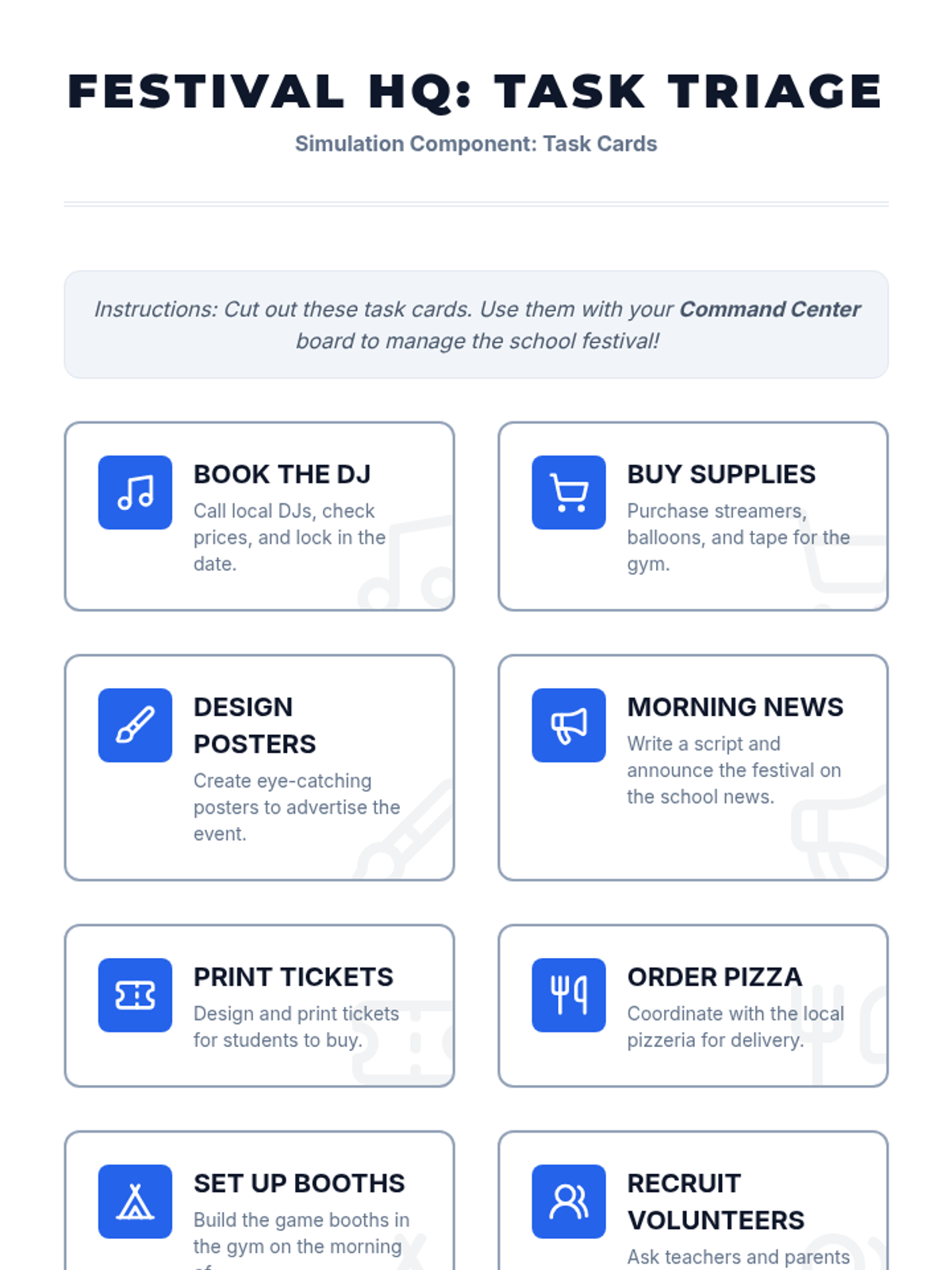
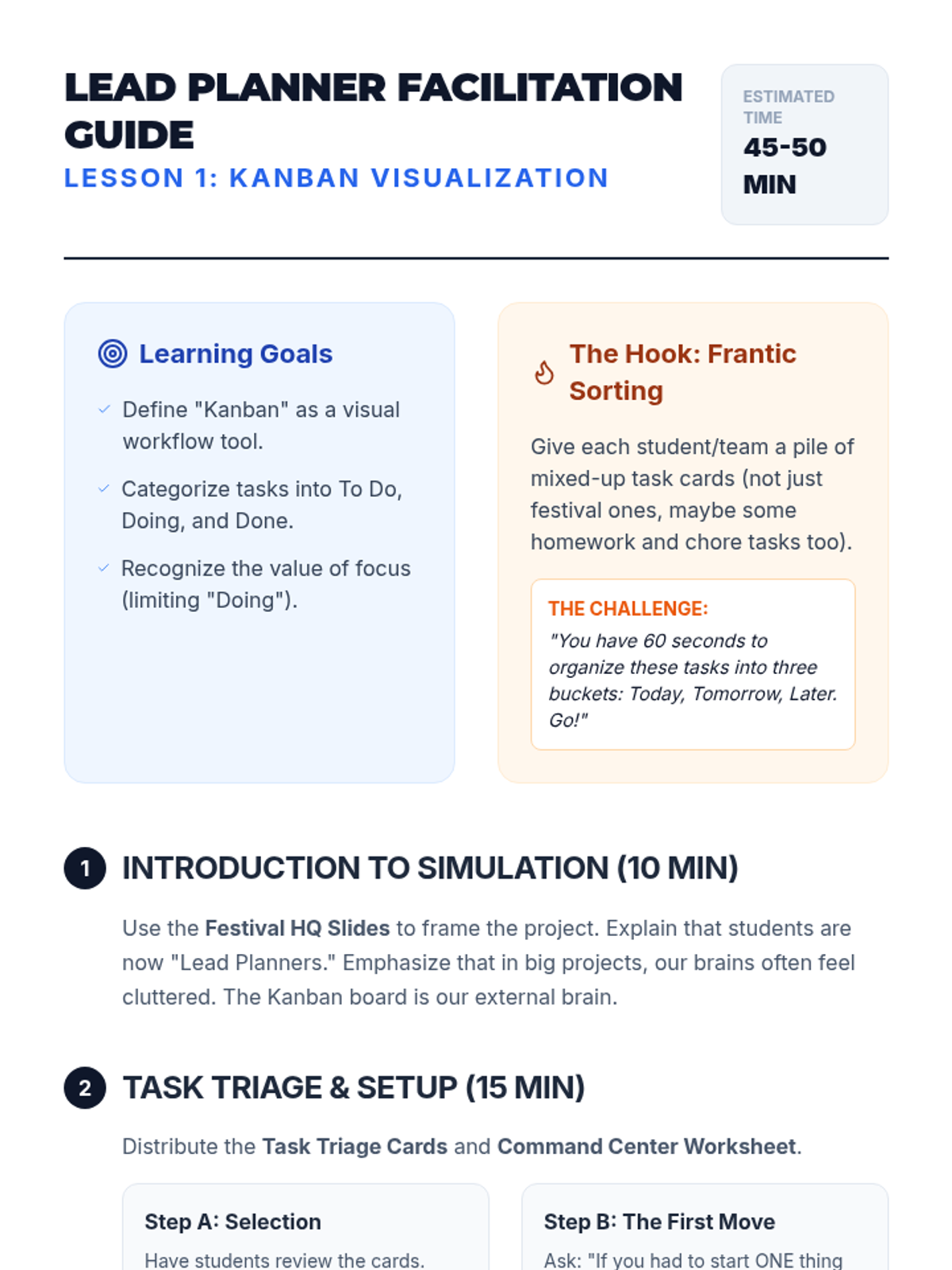
Students are introduced to the 'To Do,' 'Doing,' and 'Done' workflow visualization method using Kanban boards for their fictional festival.
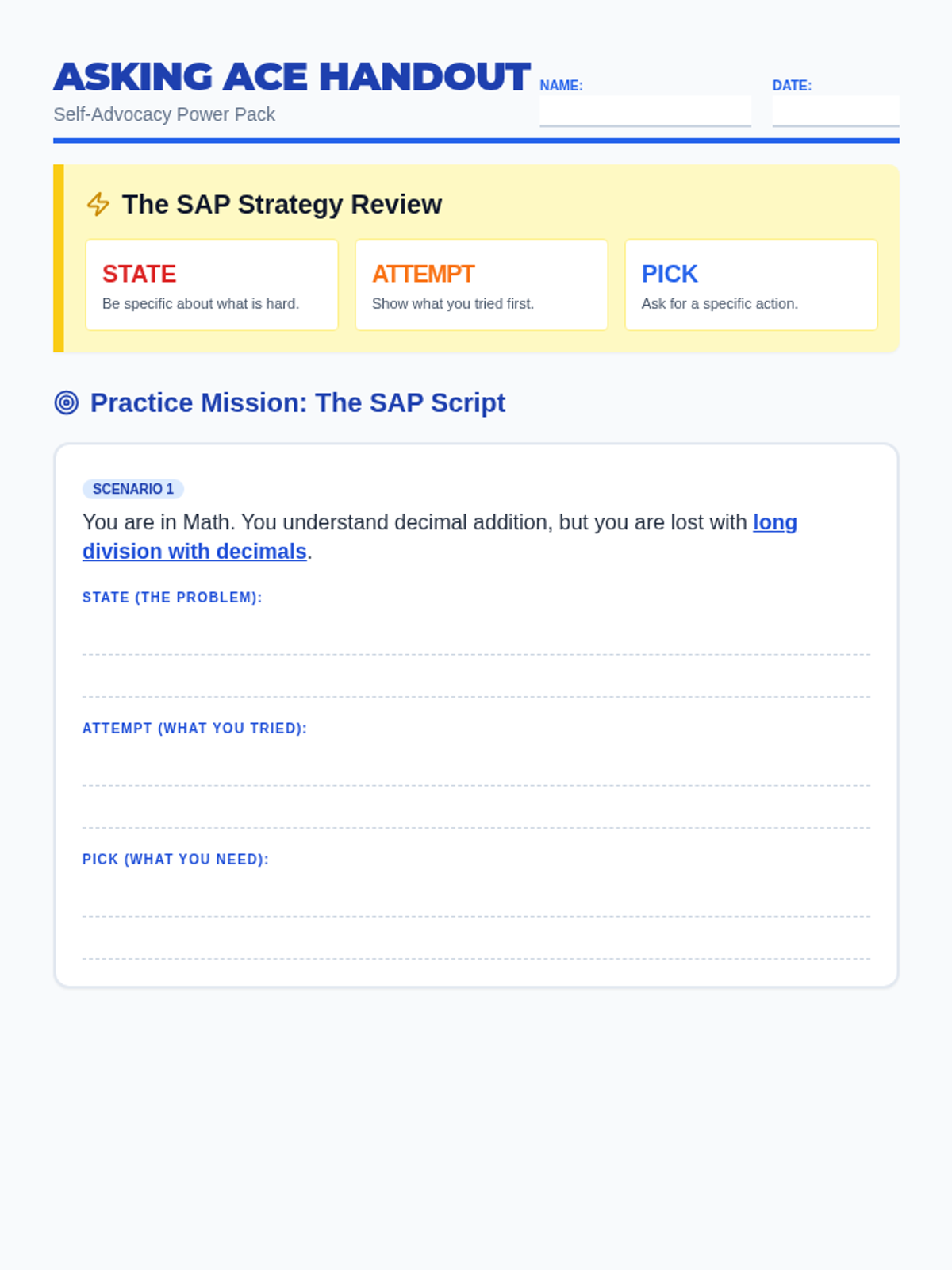
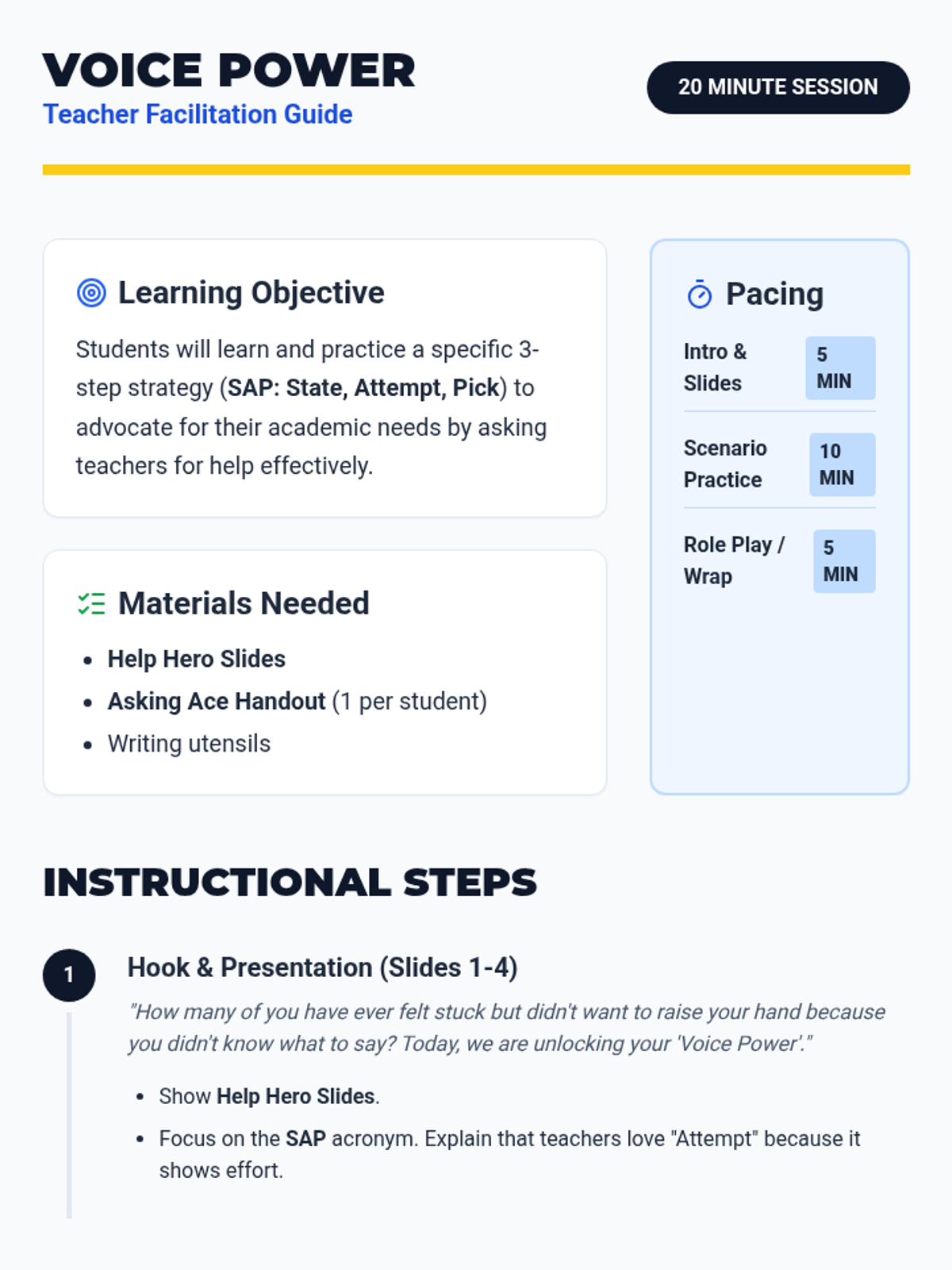
A quick, high-impact lesson designed to empower 6th graders with a simple 3-step strategy for asking teachers for help effectively and confidently.
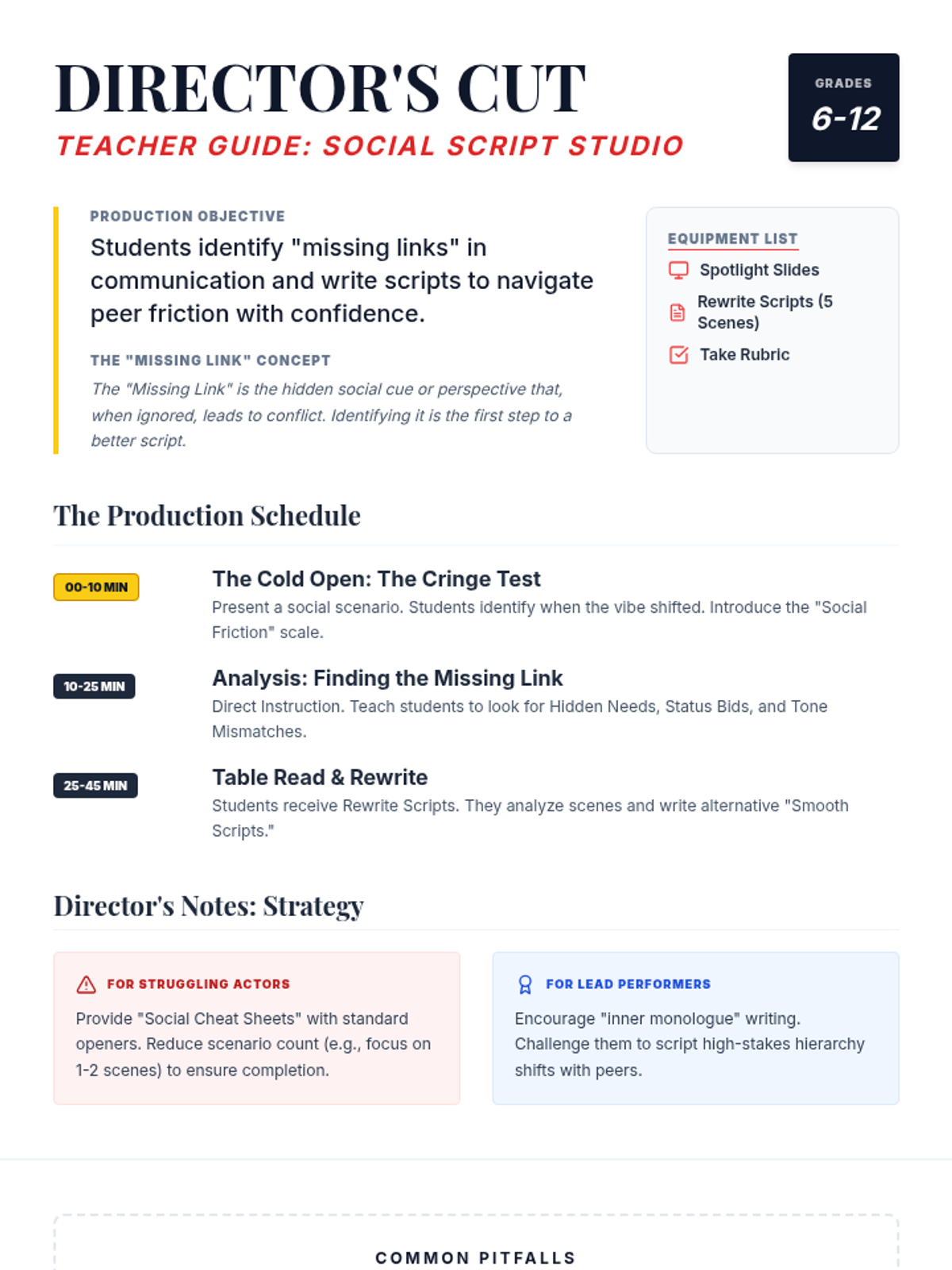
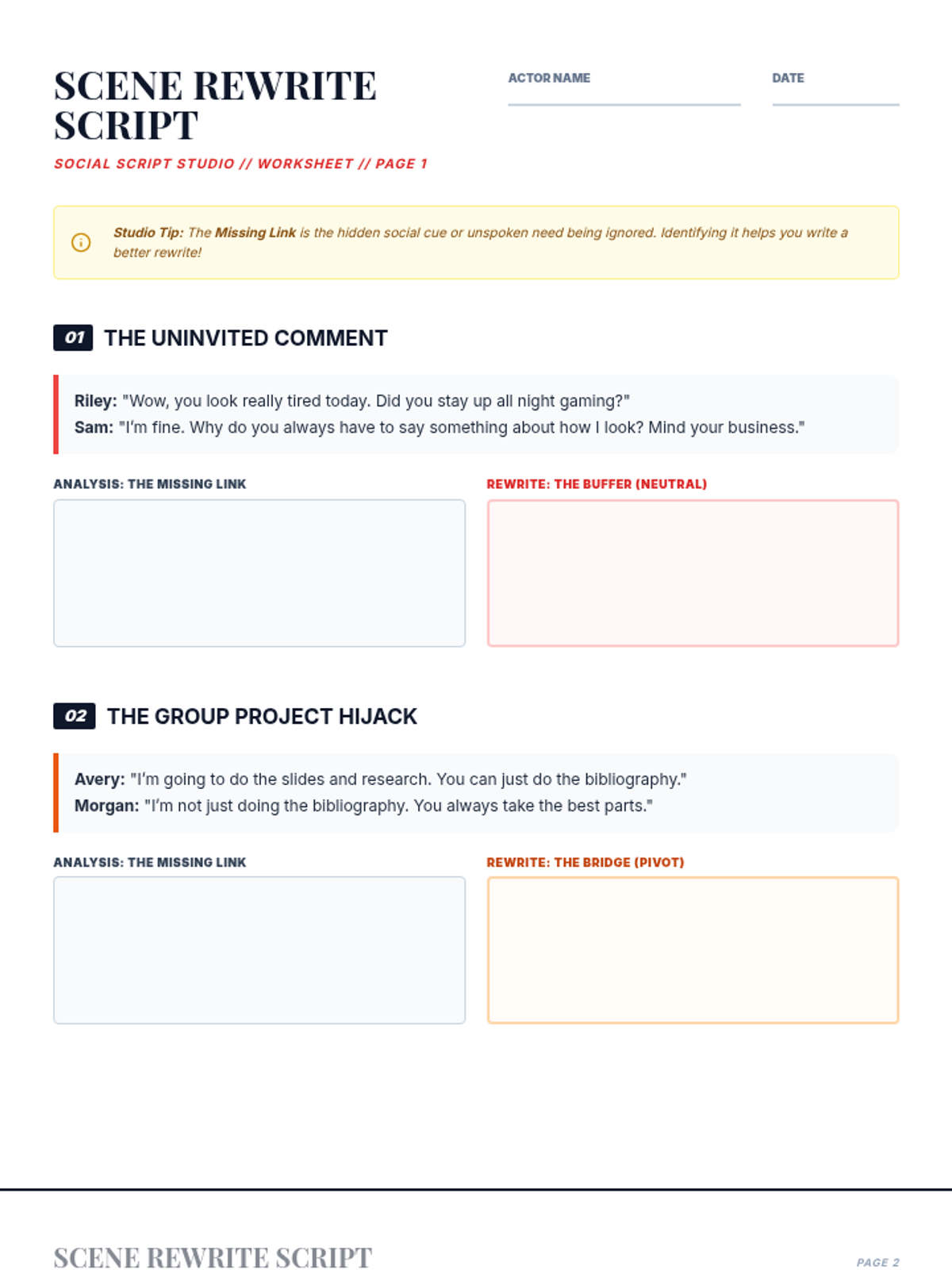
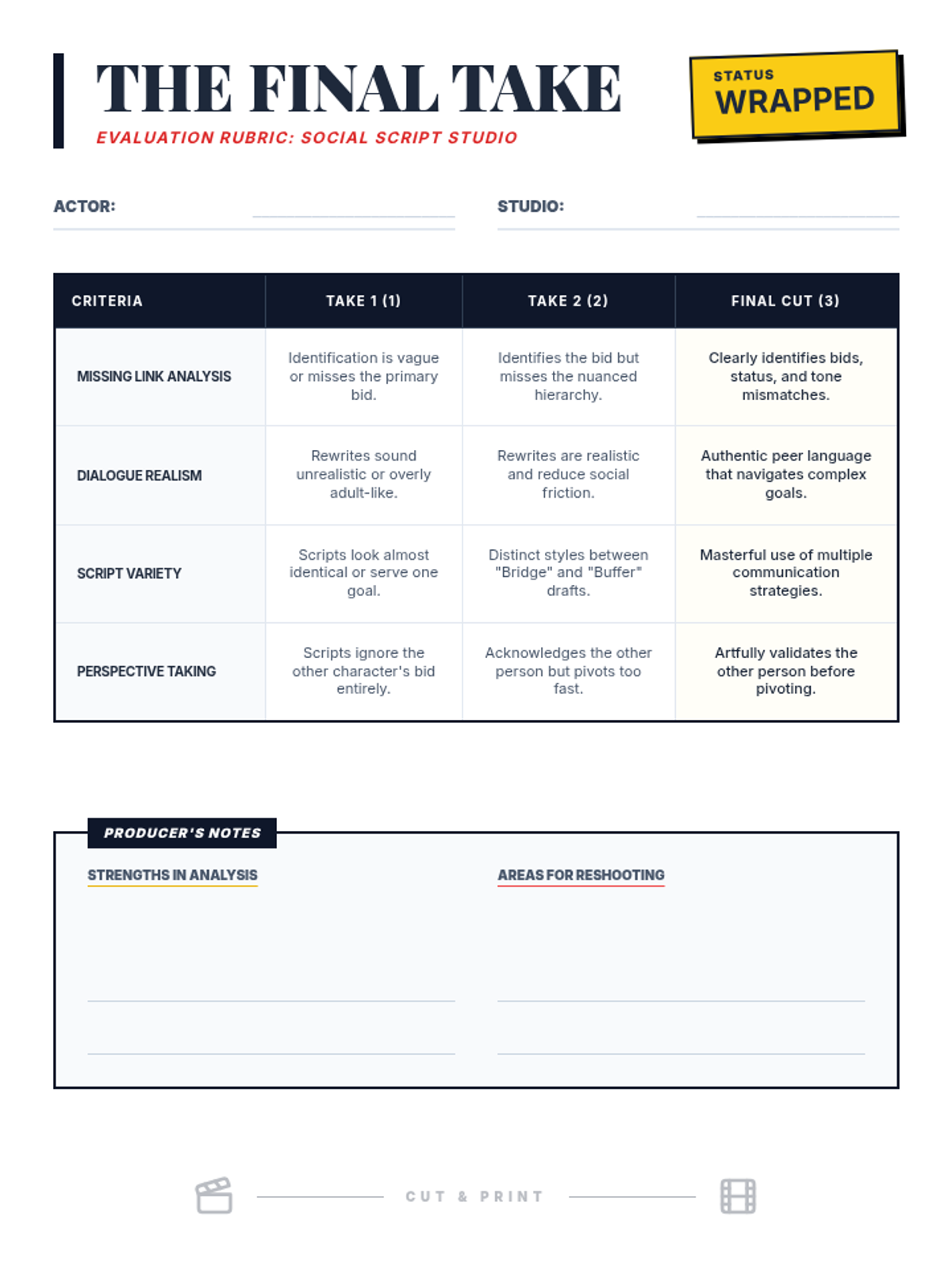
A social skills lesson for middle and high school students focused on analyzing social interactions, identifying communication gaps, and rehearsing alternative responses to peer conflict.
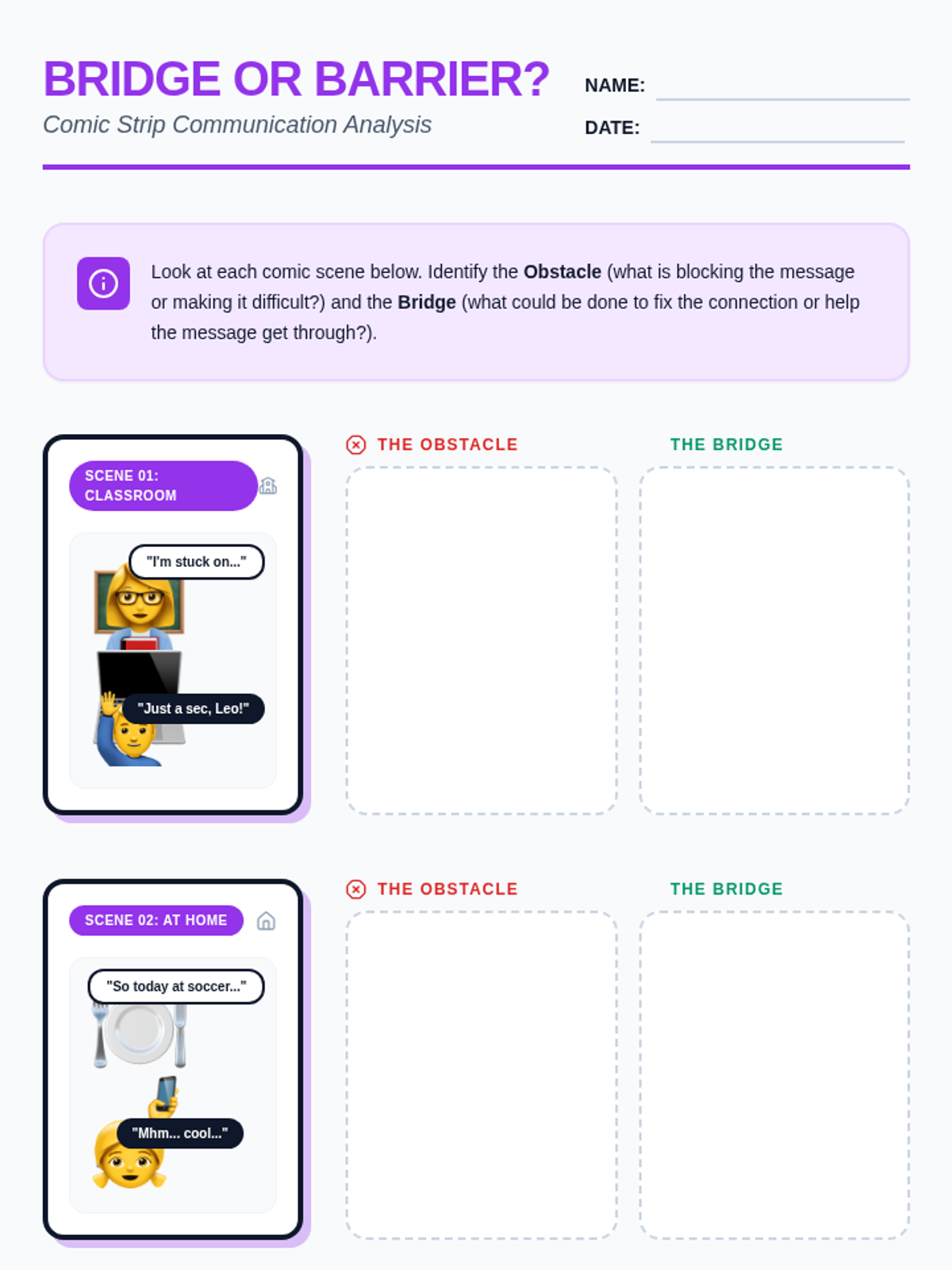
This lesson focuses on identifying communication breakdowns and practical solutions through relatable real-life scenarios, helping students develop empathy and effective interpersonal skills.
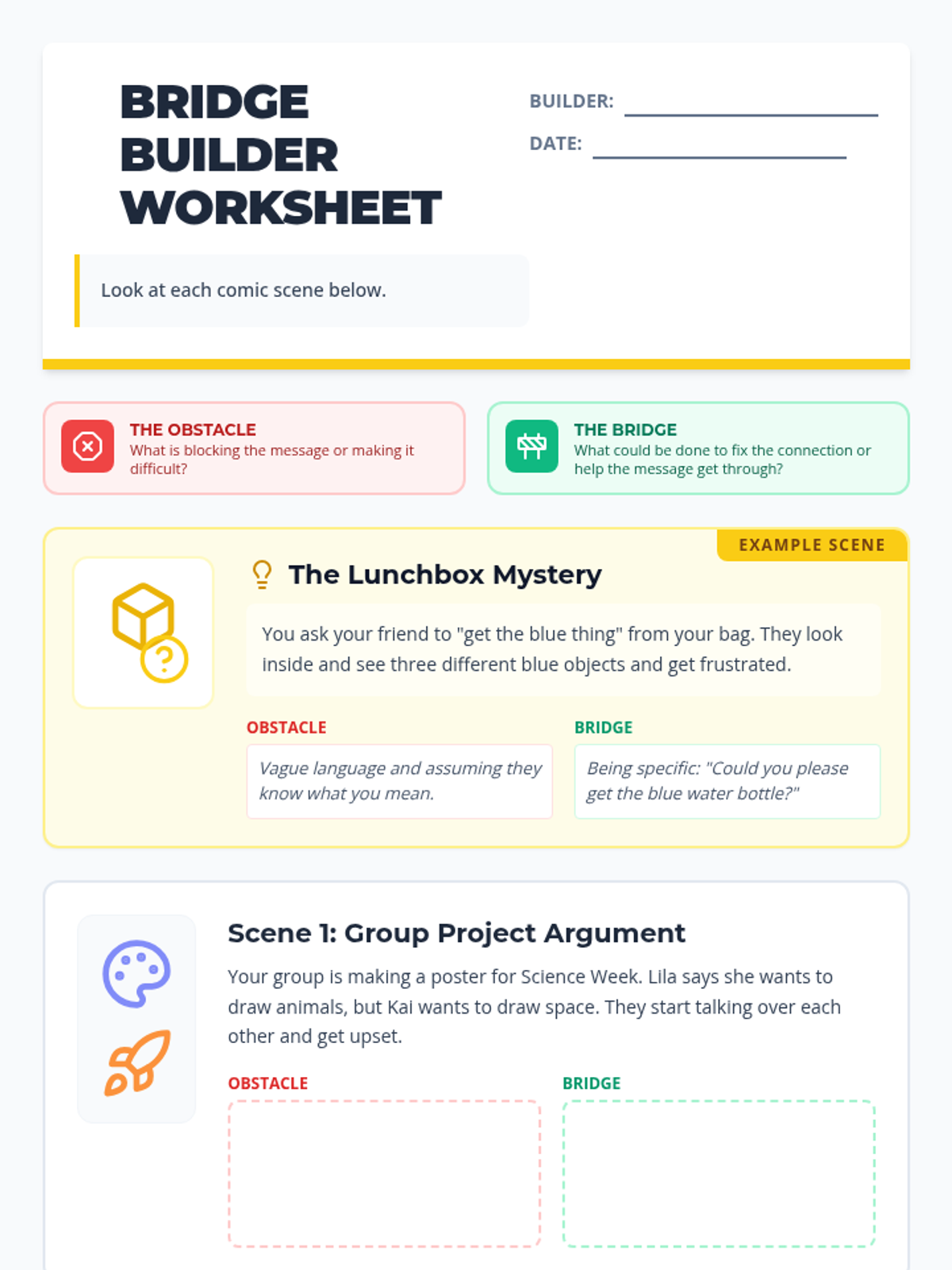
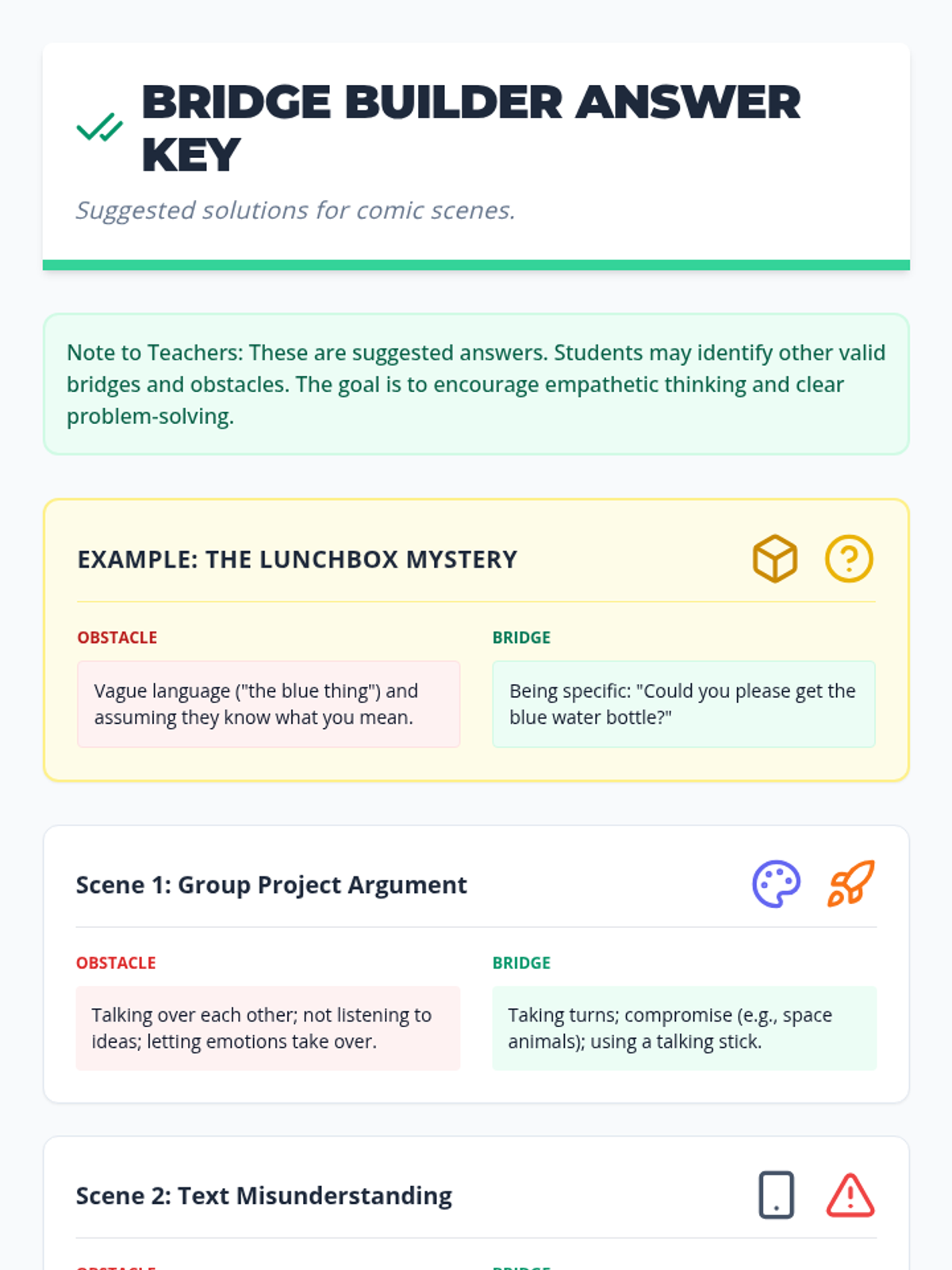
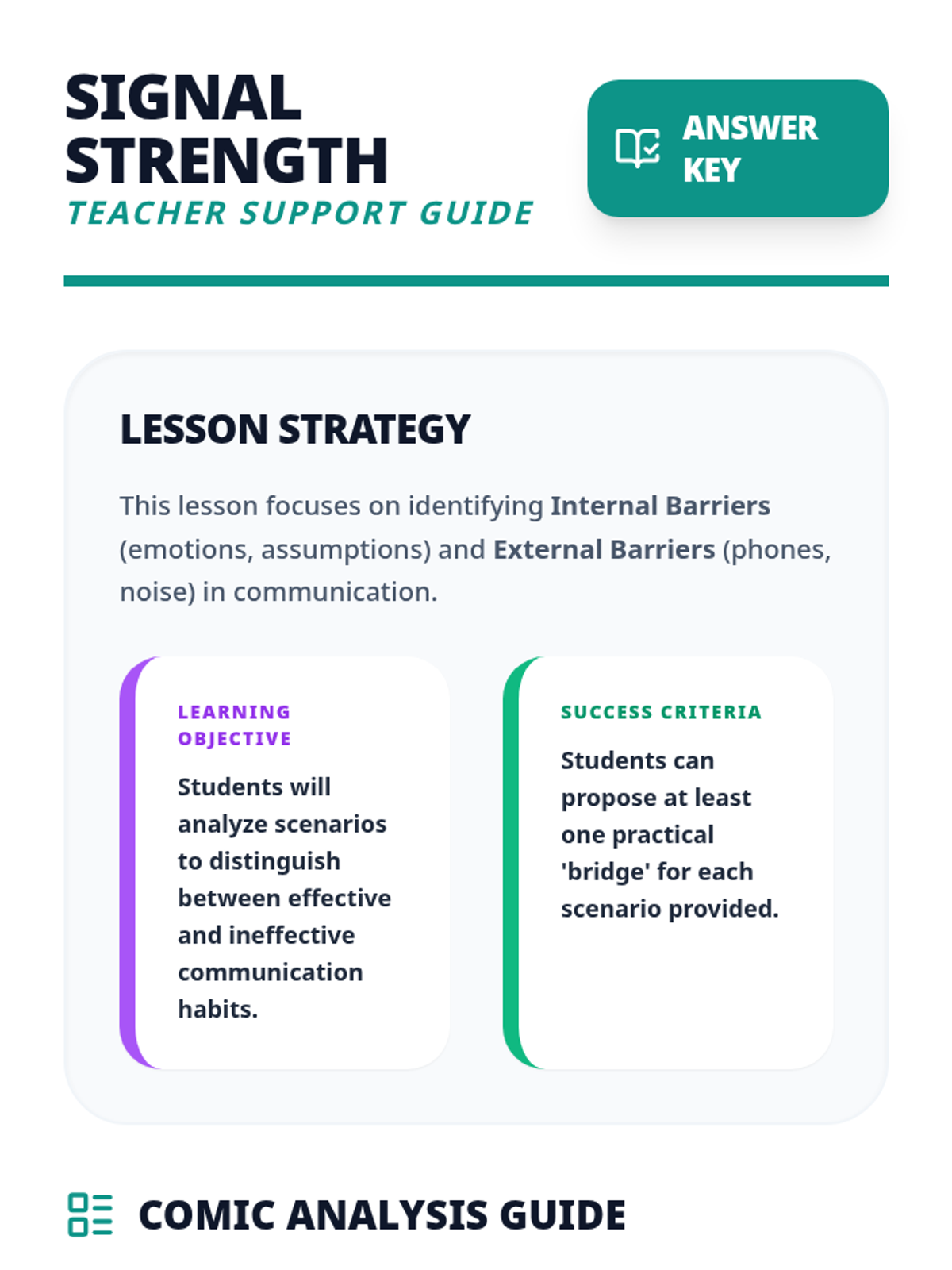
A lesson exploring communication dynamics through 'bridges' that connect people and 'obstacles' that block understanding. Students analyze real-world scenarios to improve their interpersonal skills.
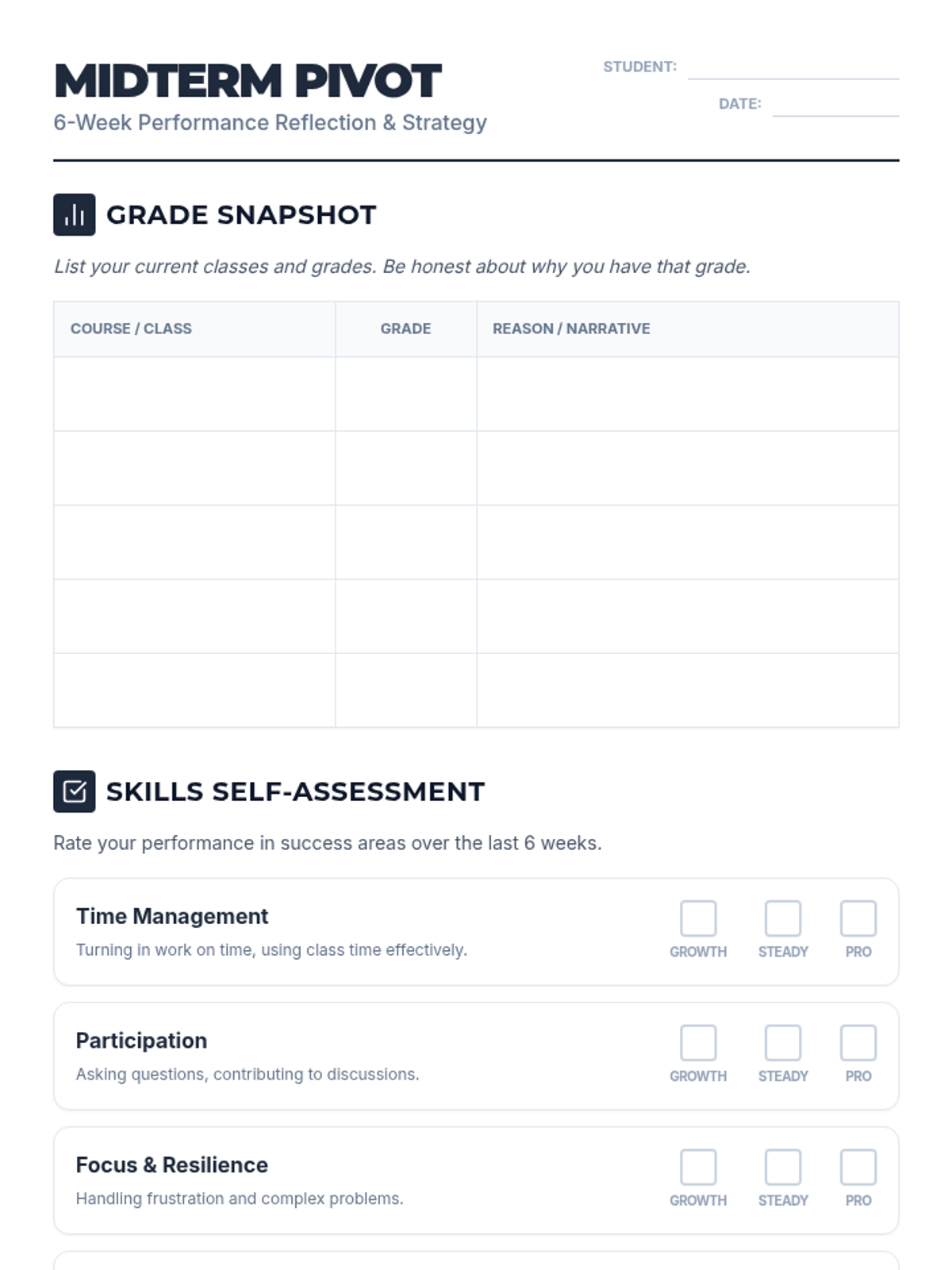
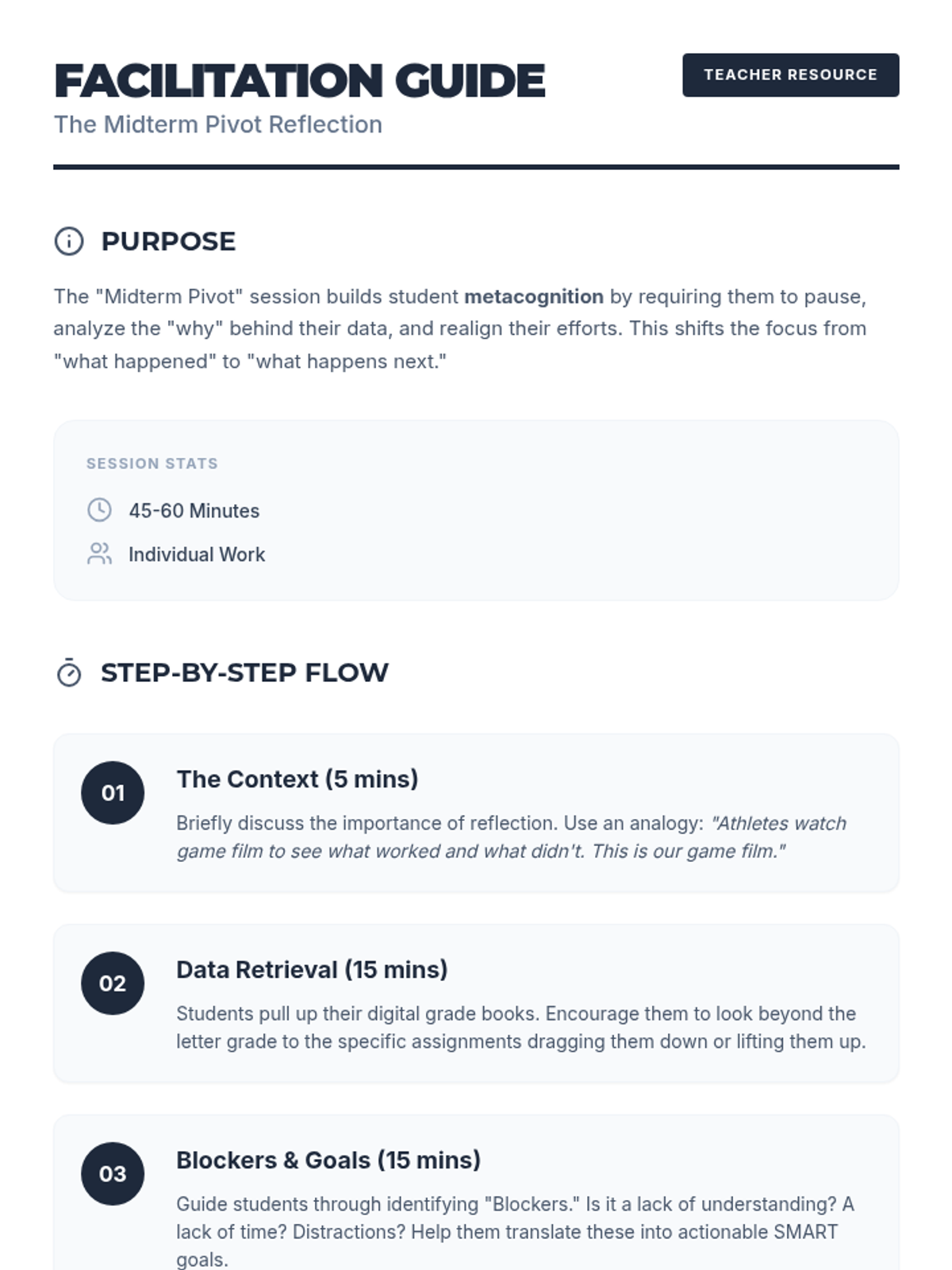
A structured reflection lesson designed to help students analyze their performance over the past six weeks, identify growth areas, and set actionable goals for the next cycle.
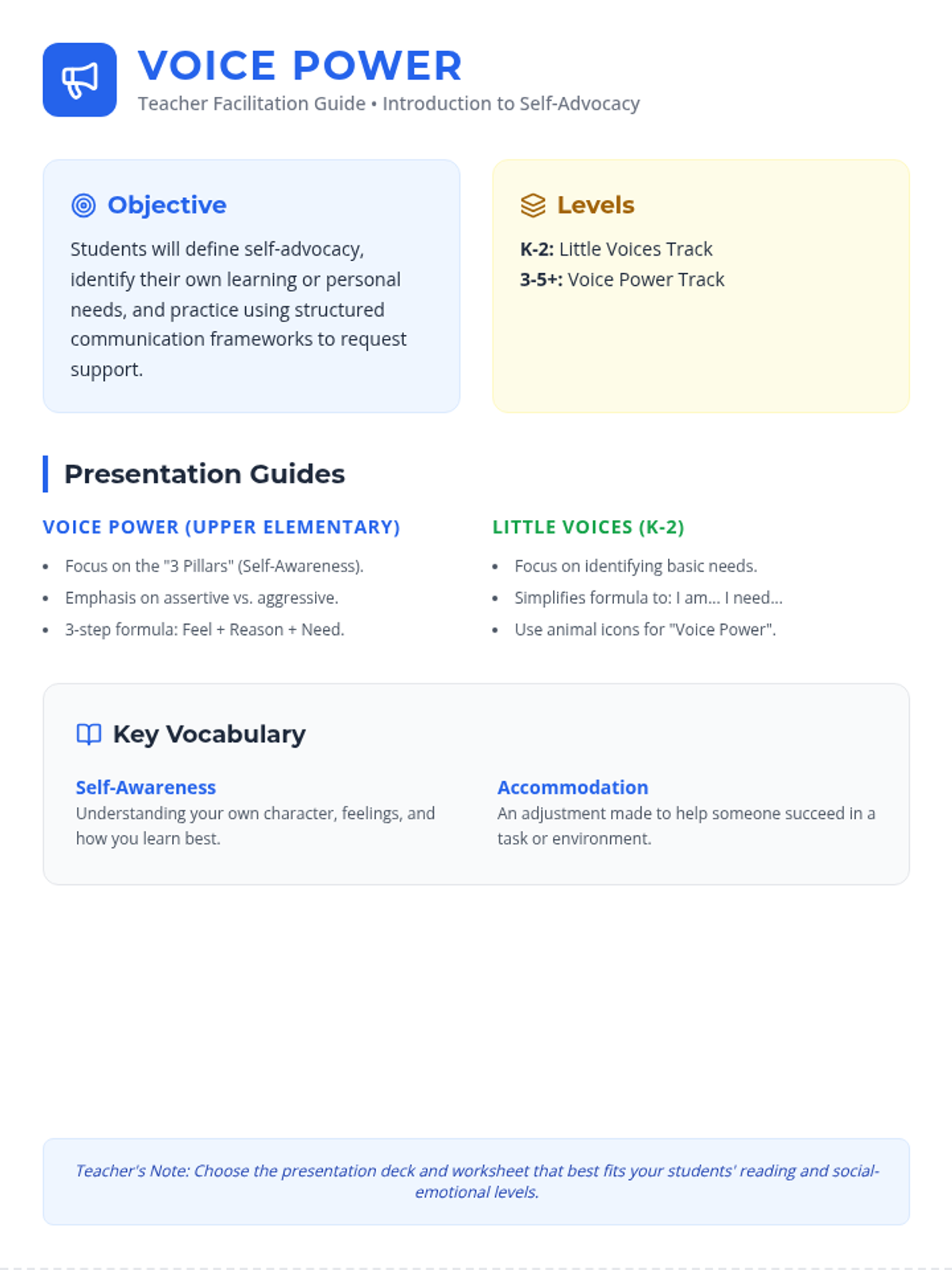
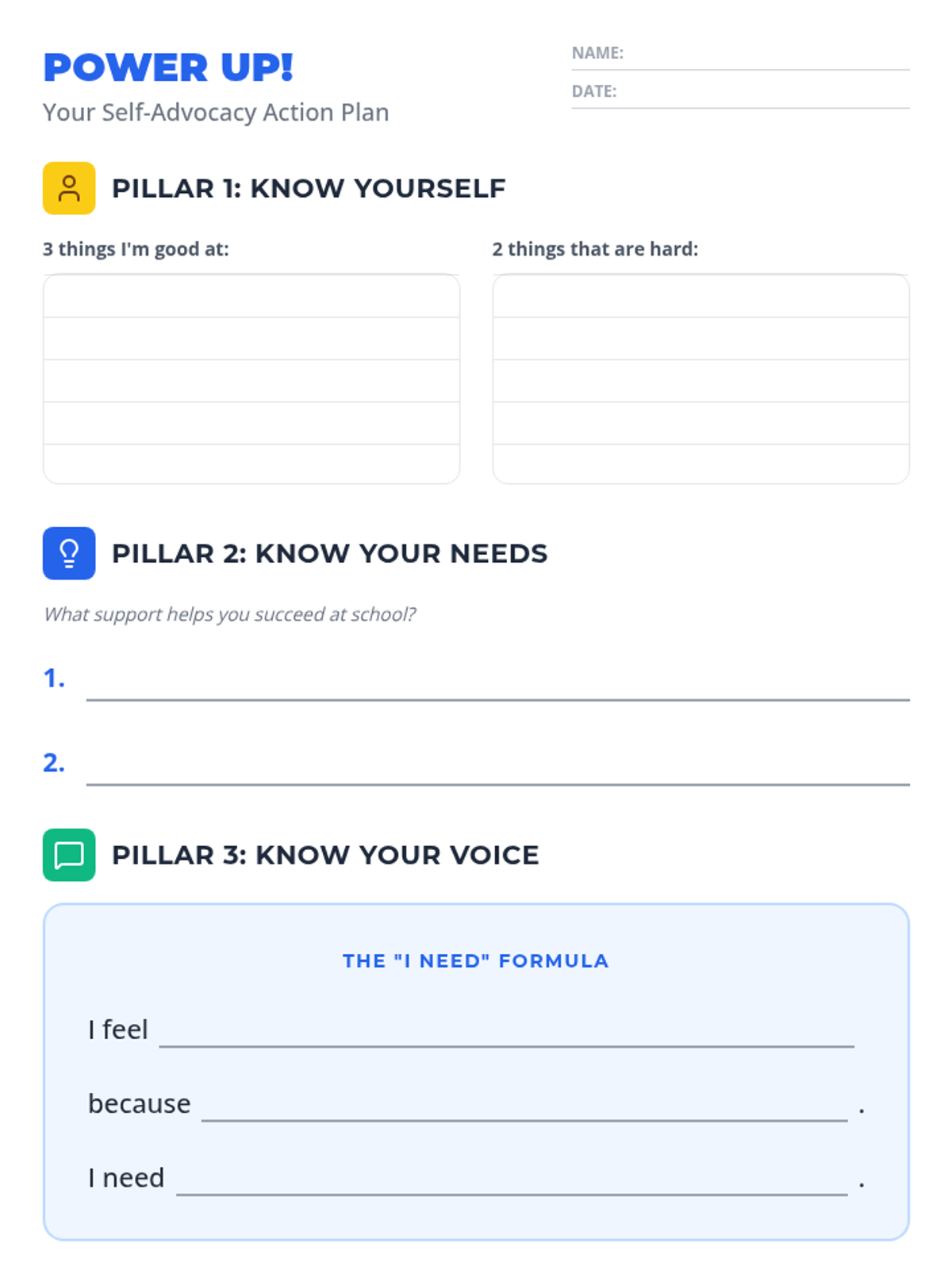
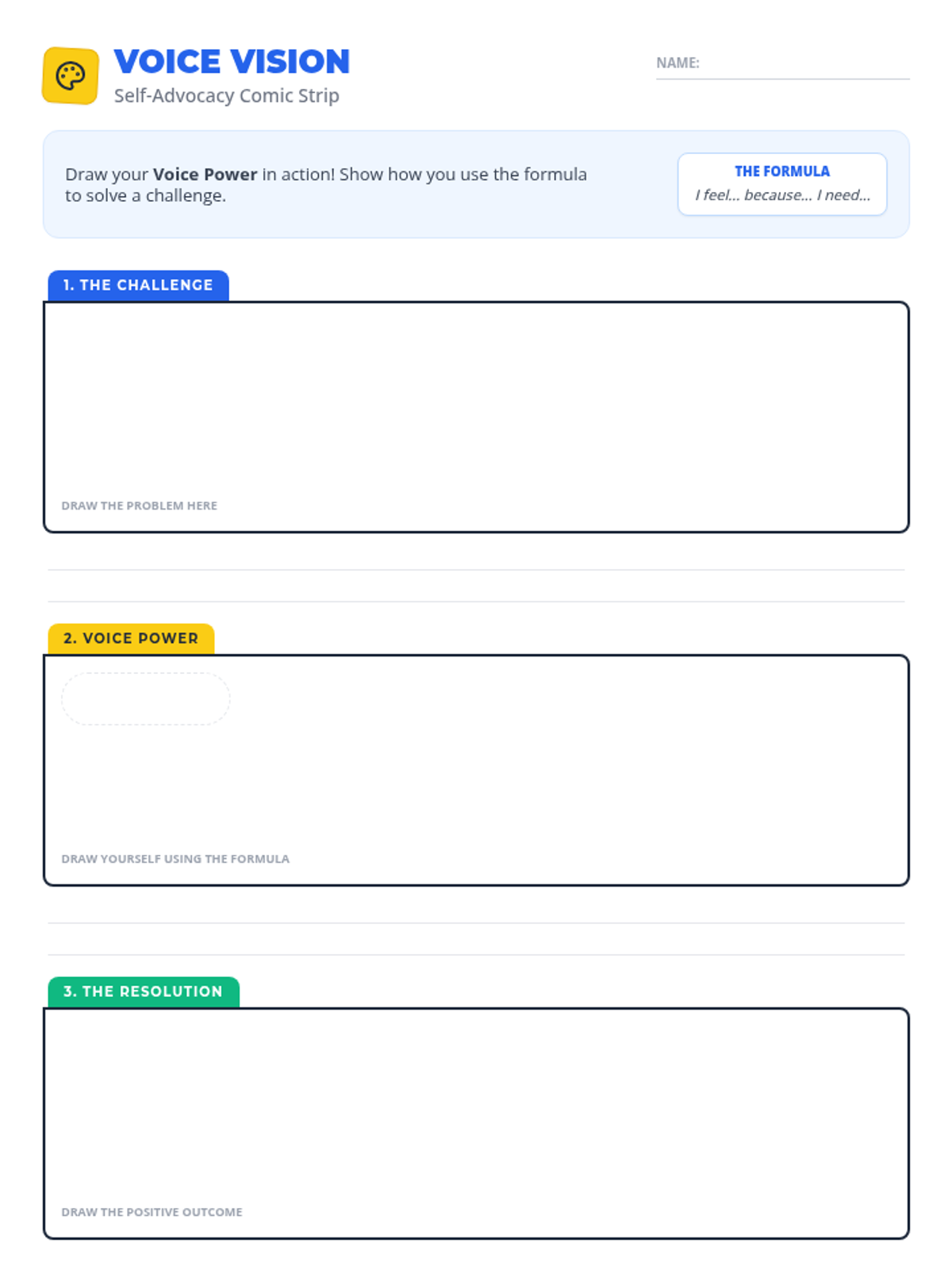
An introductory lesson that defines self-advocacy, explores its importance, and provides students with practical frameworks to communicate their needs effectively.
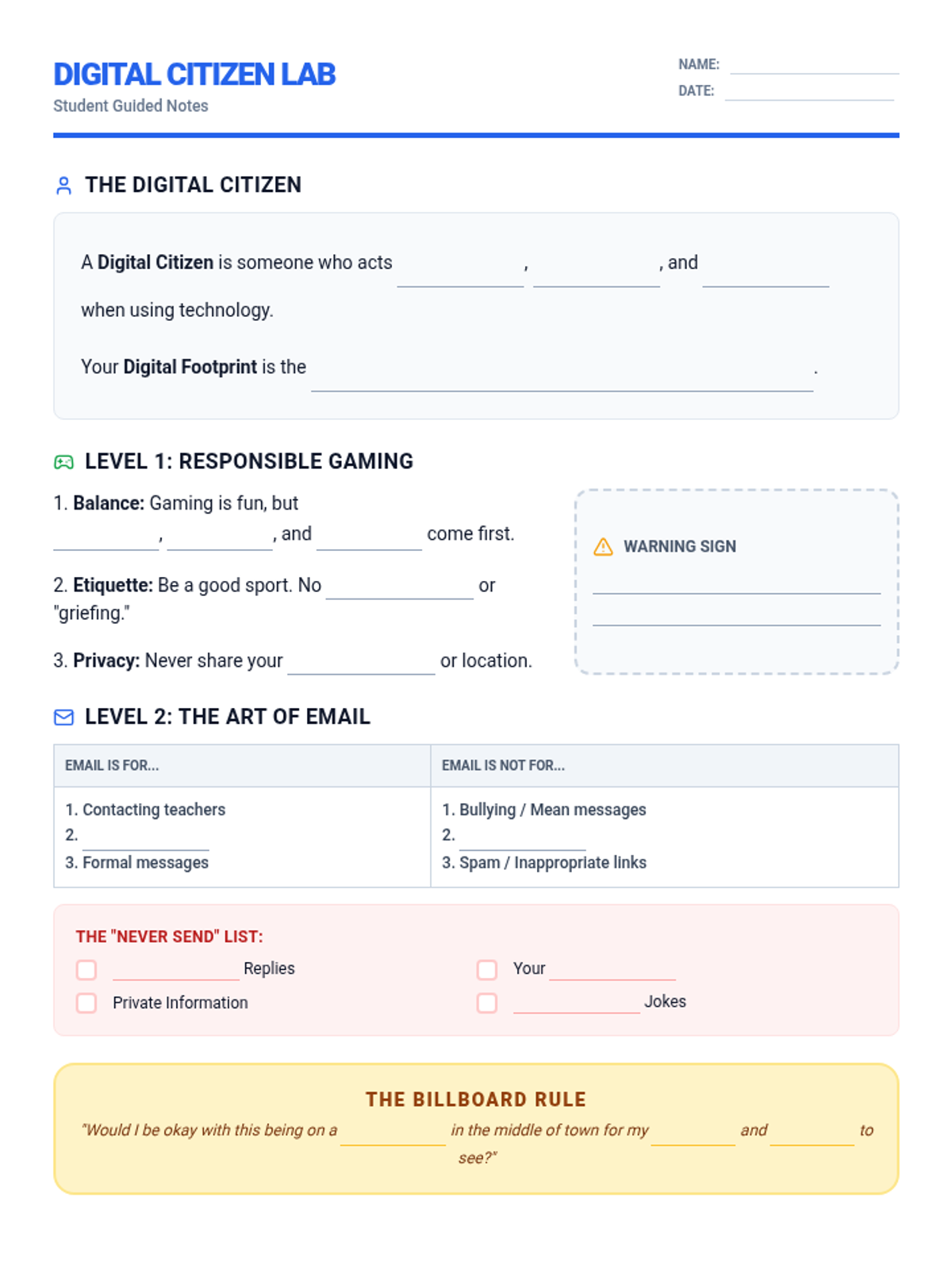
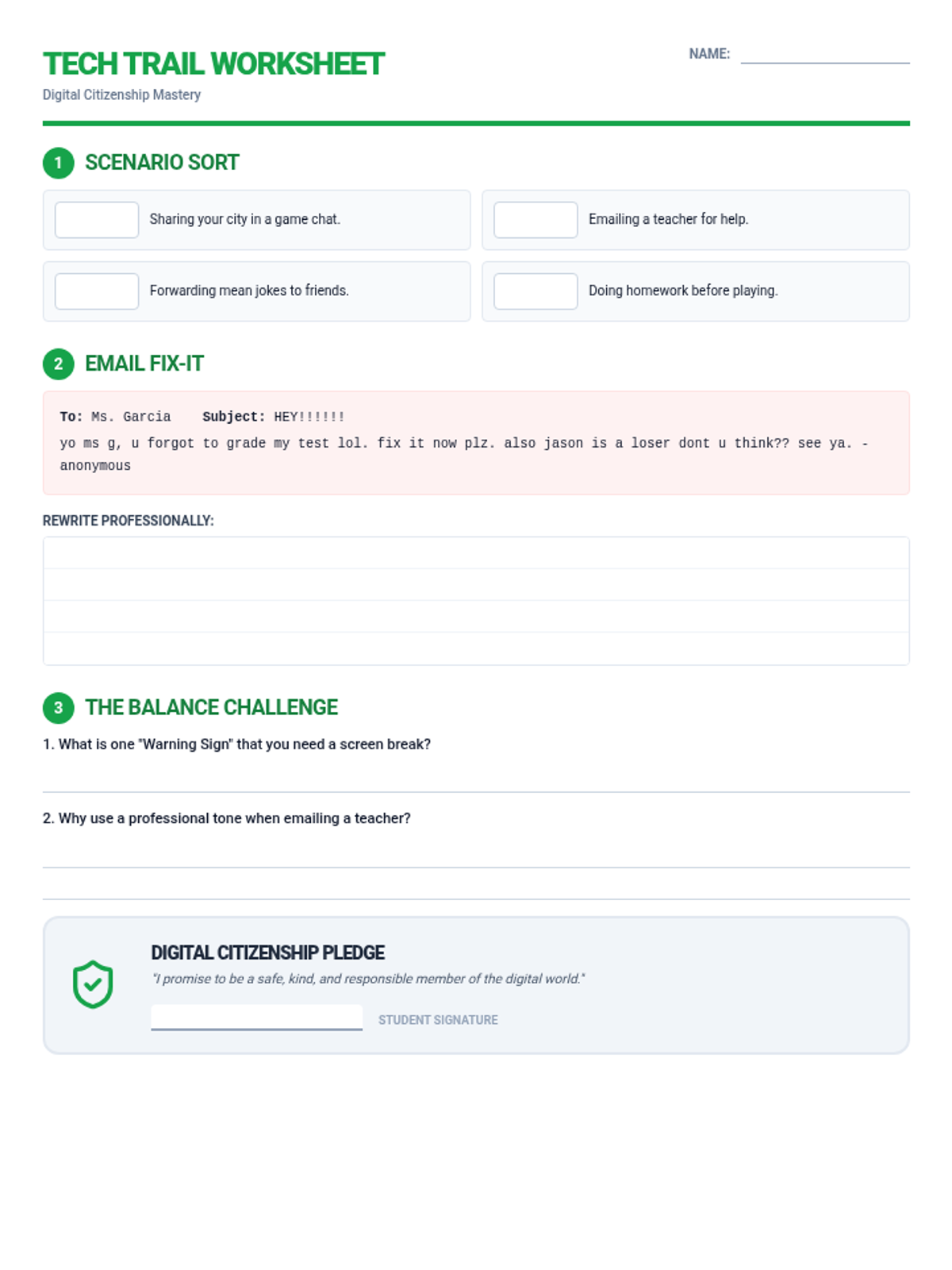
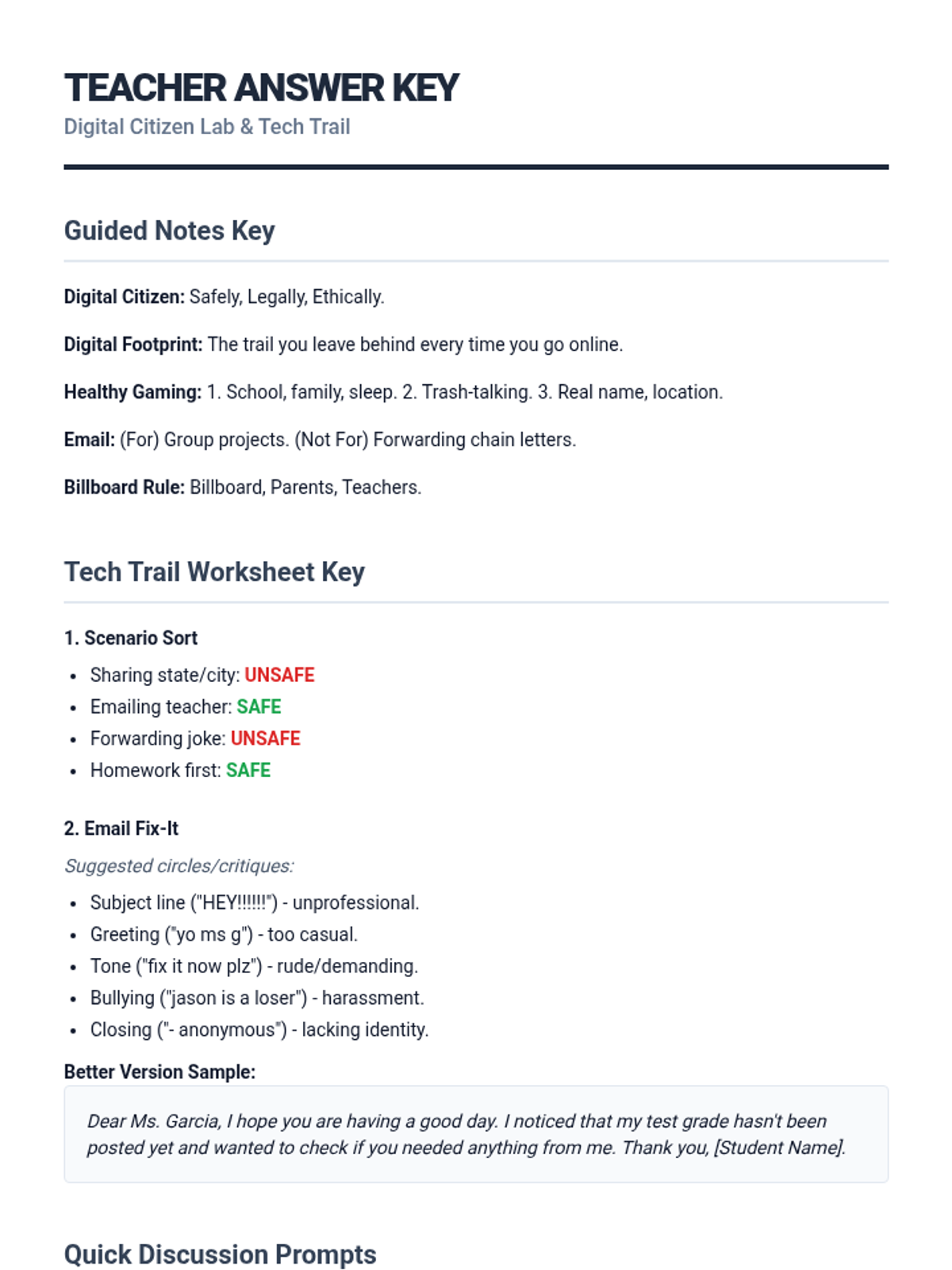
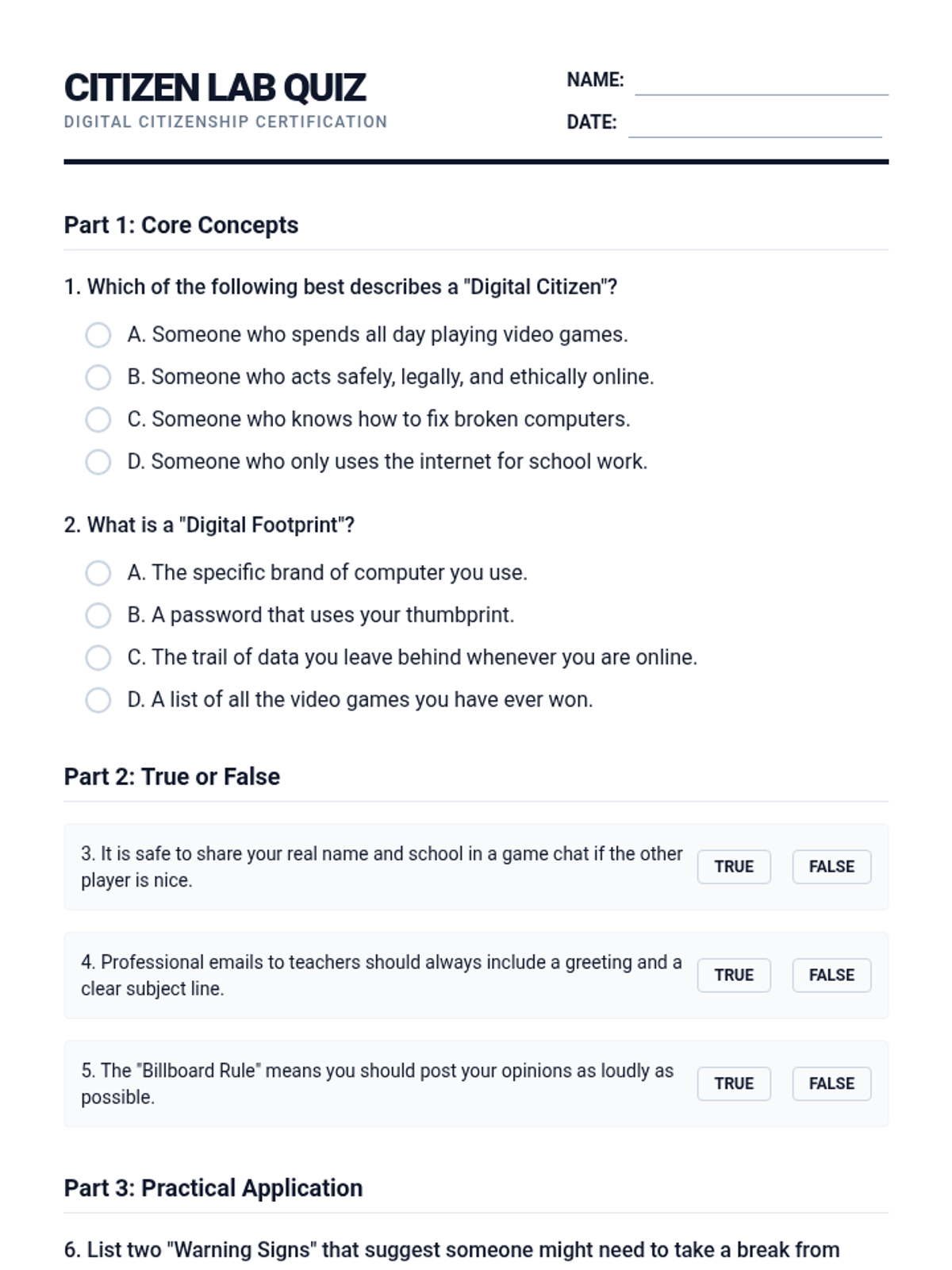
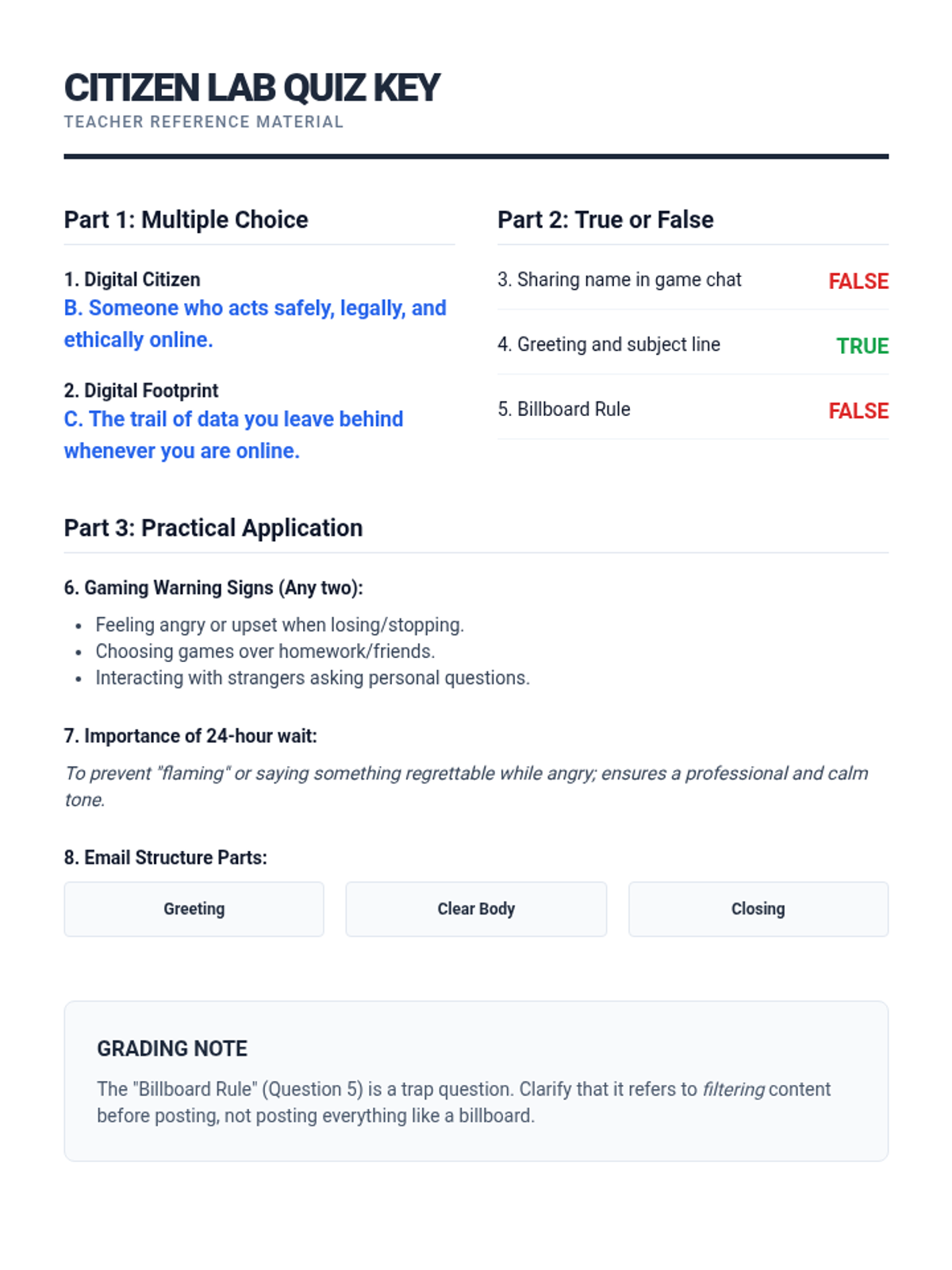
A comprehensive lesson on digital citizenship, focusing on responsible gaming habits and professional email communication for students.
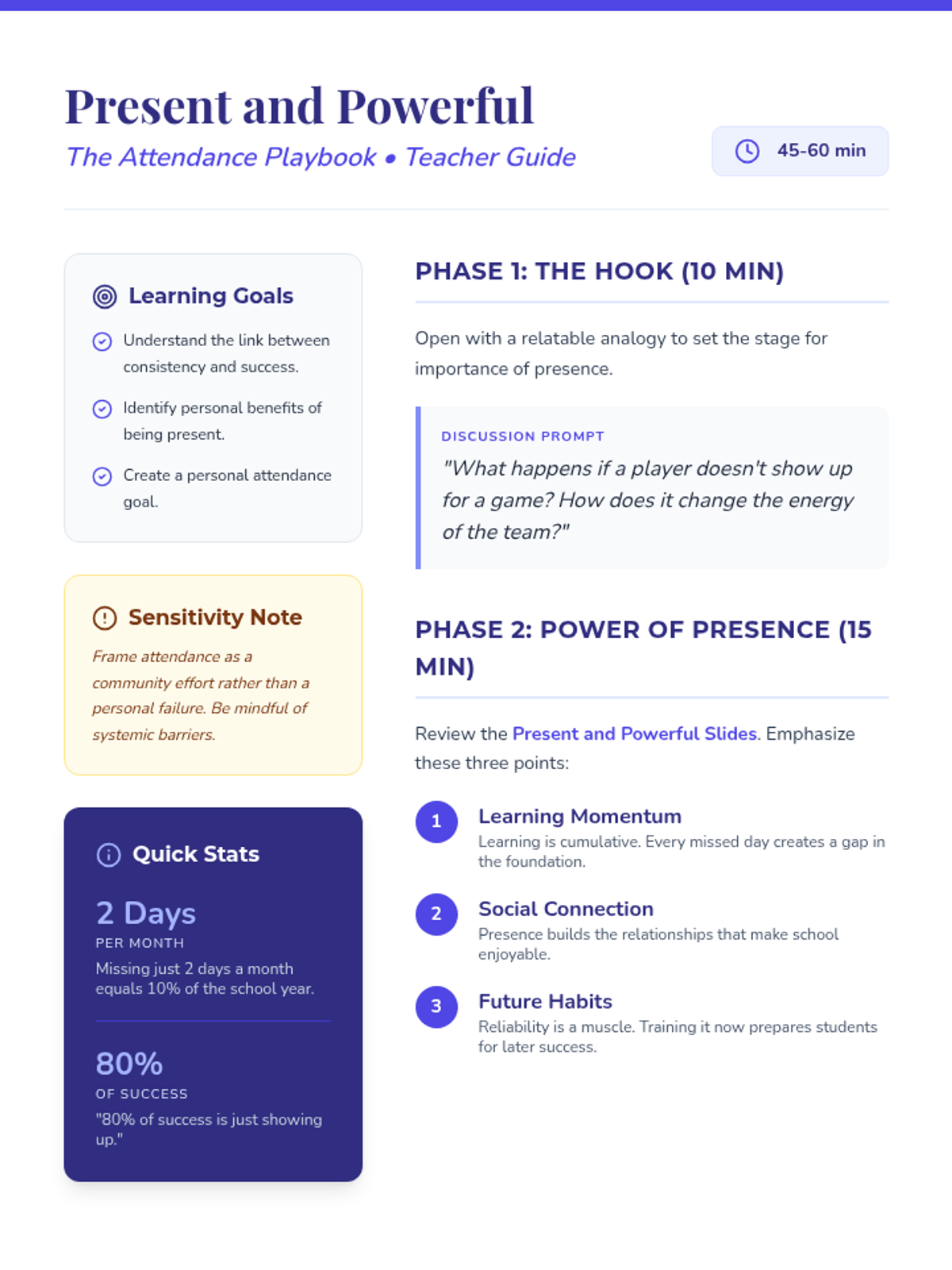
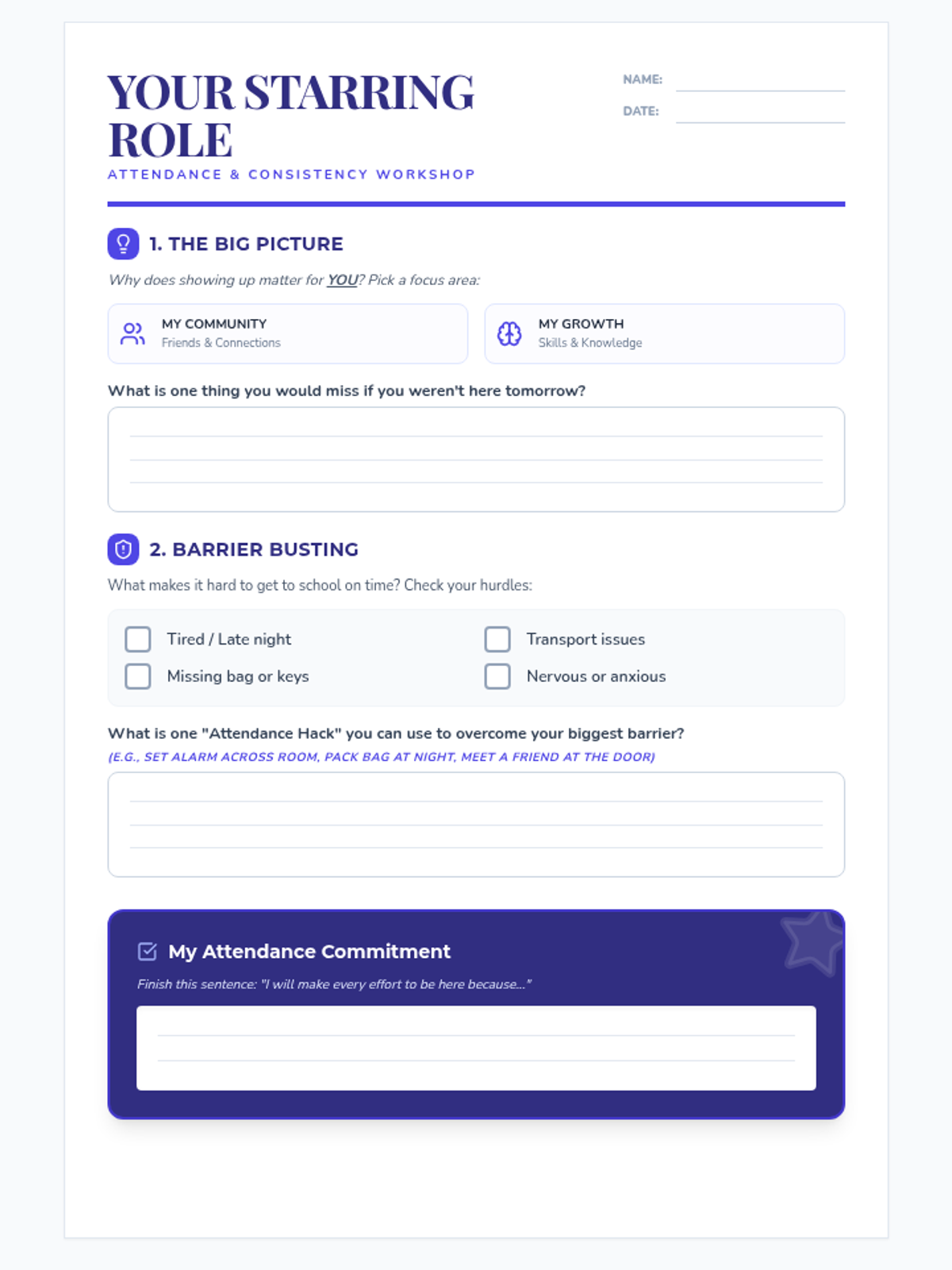
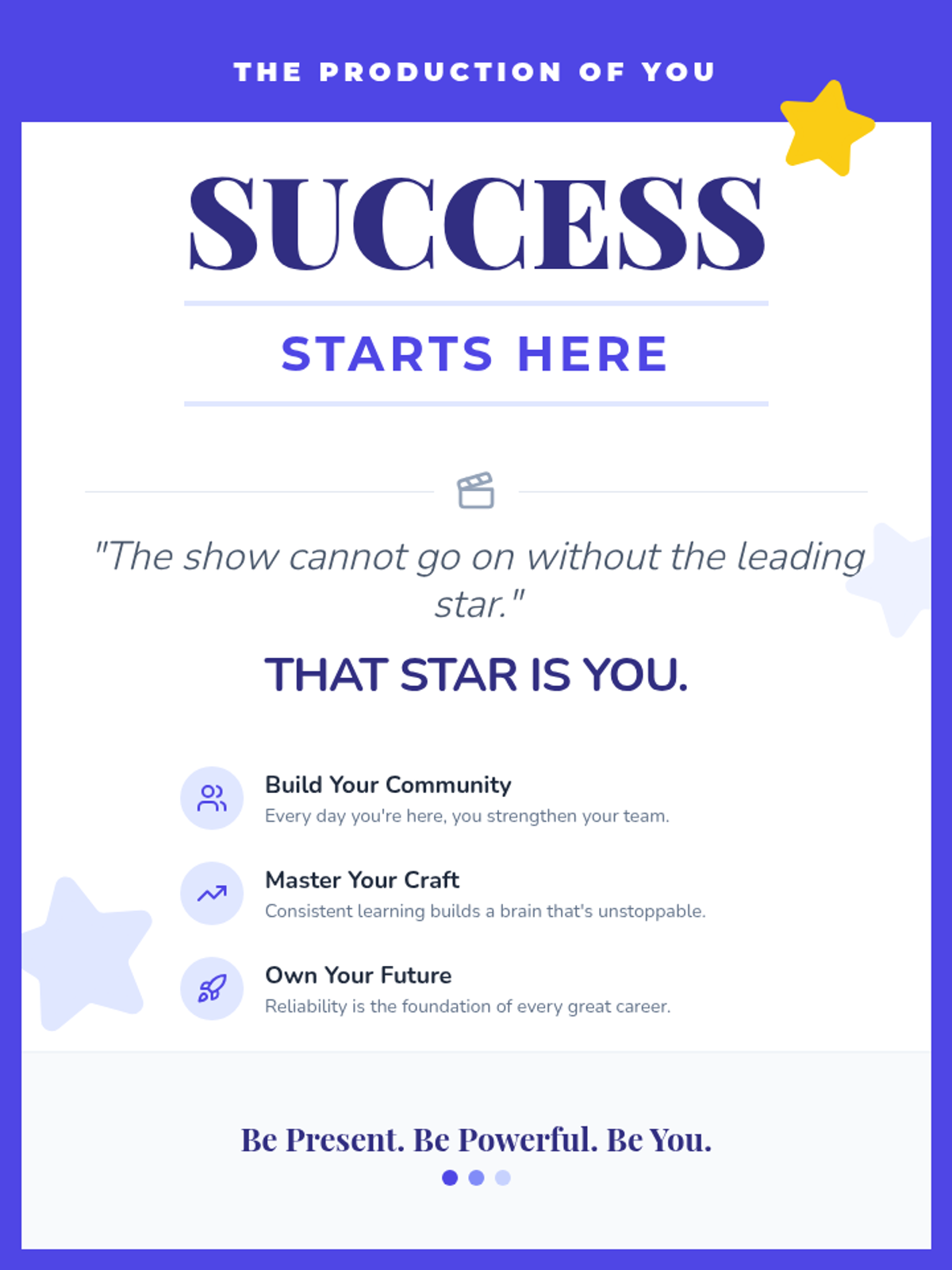
A lesson designed to help students understand the critical link between school attendance and their personal, social, and academic success. It frames attendance as the 'first step' to achieving their goals and building a strong community.
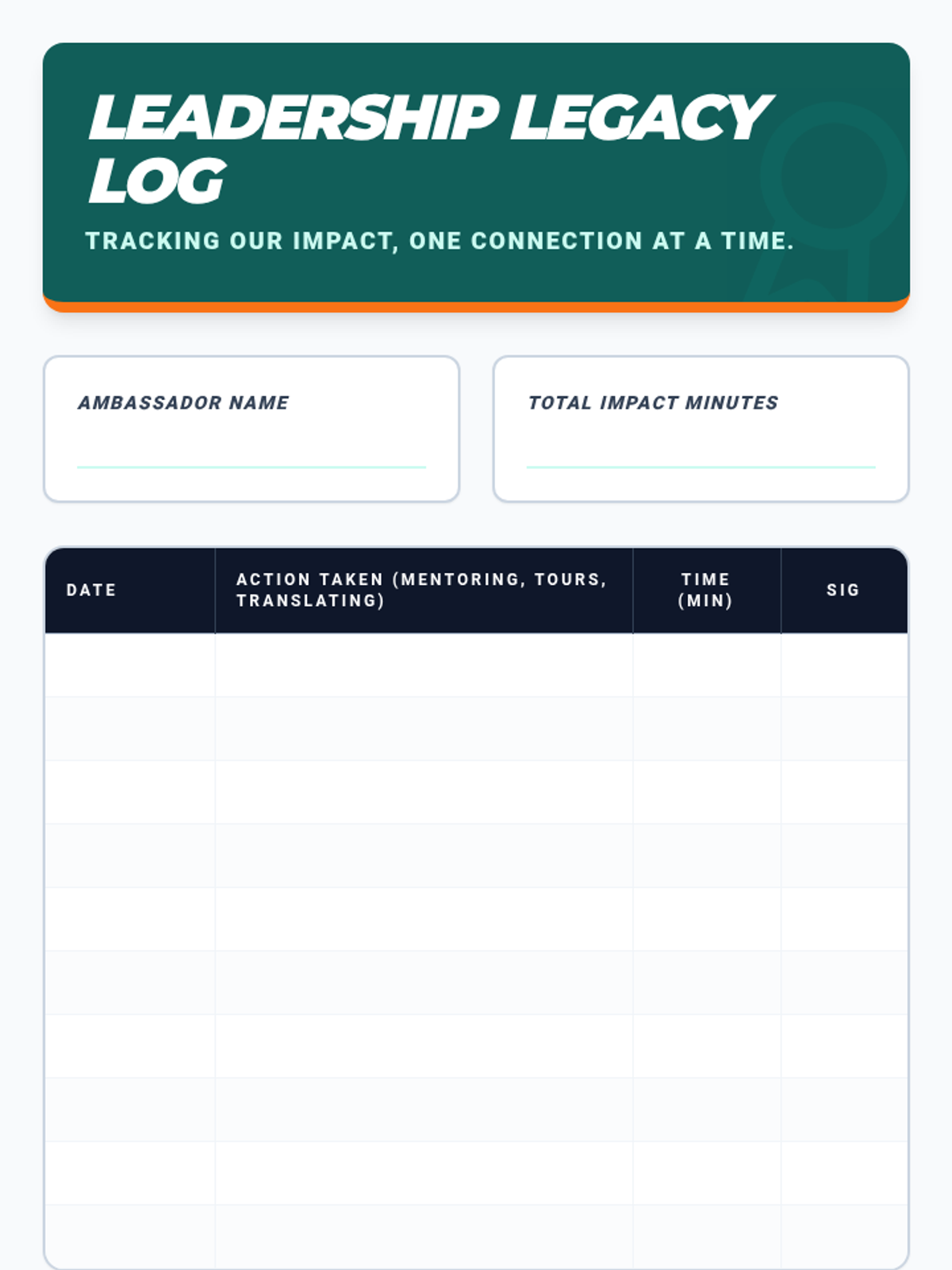
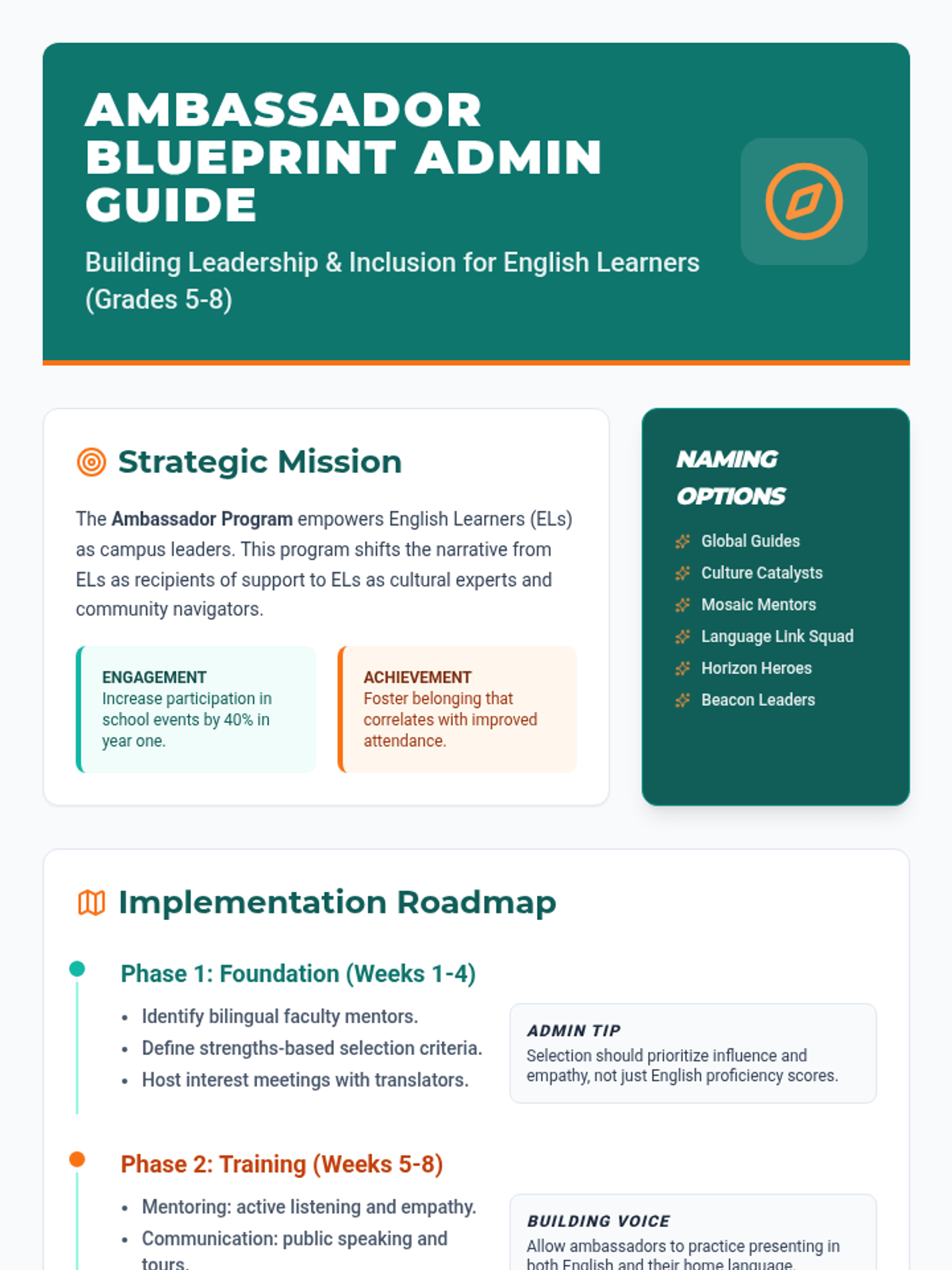
Launching student-led initiatives and tracking the impact of the ambassador program on the school community.
Equipping student ambassadors with the communication, mentoring, and leadership skills needed to support their peers.
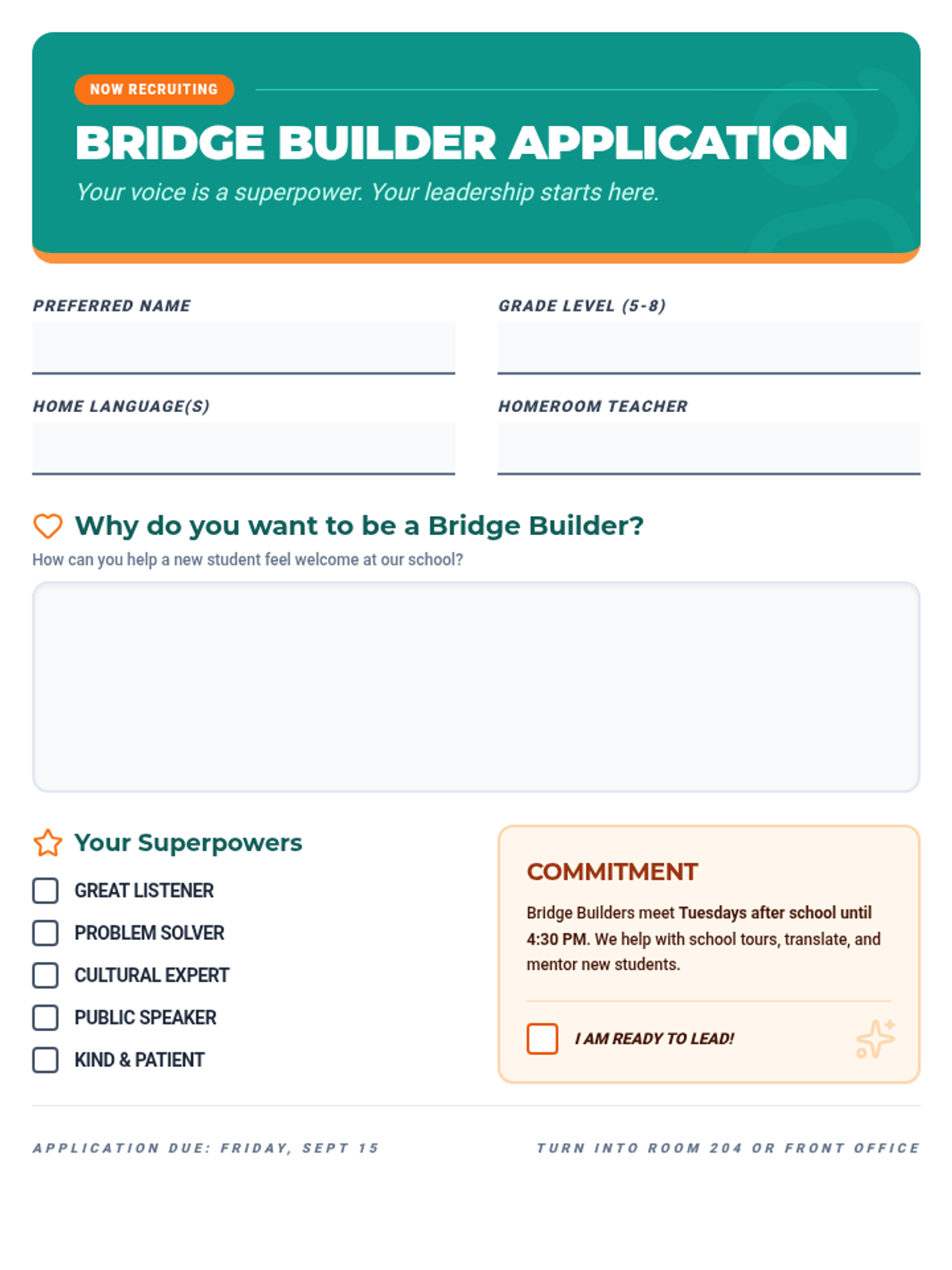
Establishing the strategic framework, recruitment criteria, and initial outreach for the EL ambassador program.
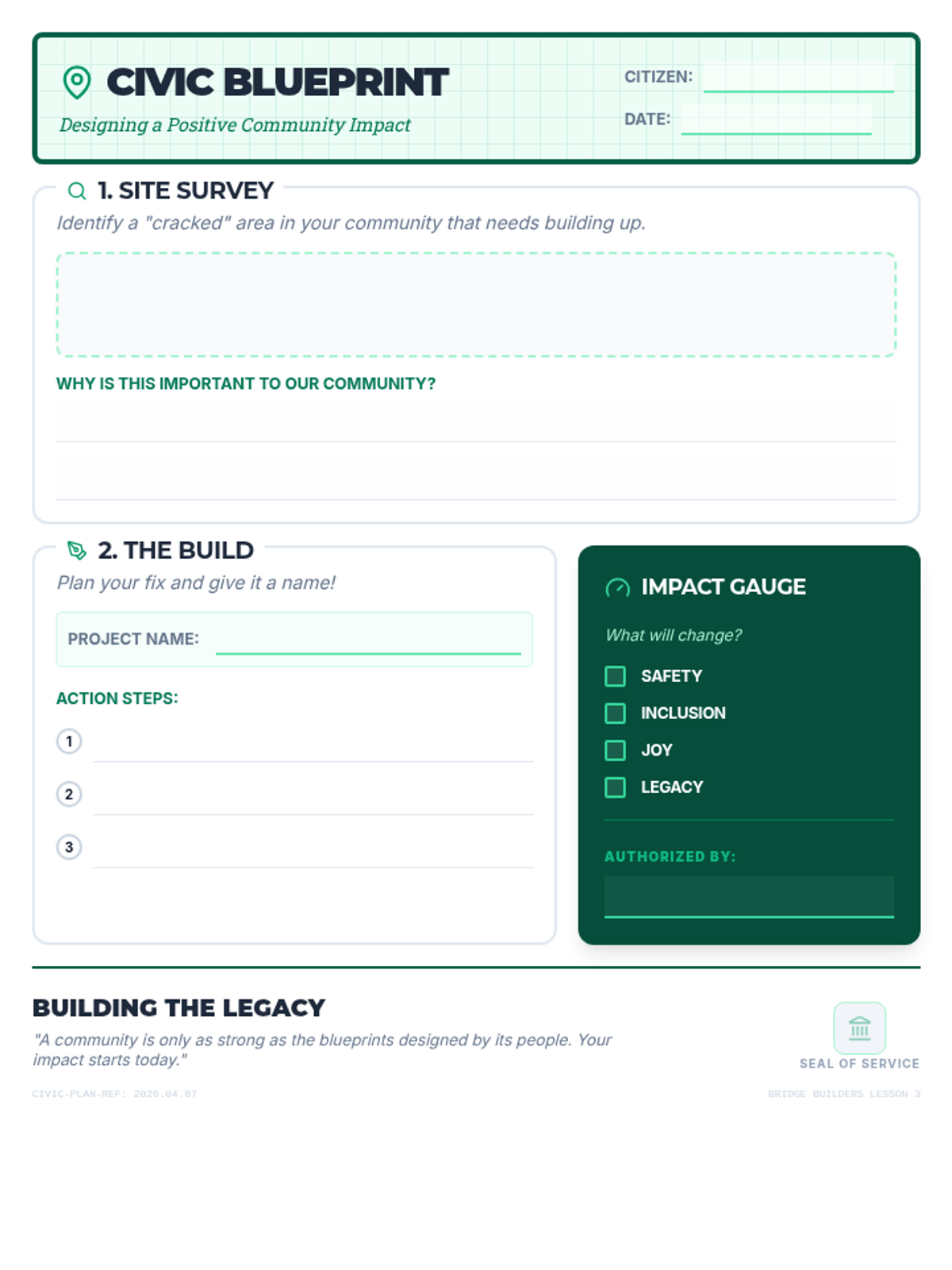
In this final lesson of the sequence, students transition from group teamwork to community-wide thinking, exploring how their collective actions impact the 'city' (their school or local community) and planning a sustainable service project.
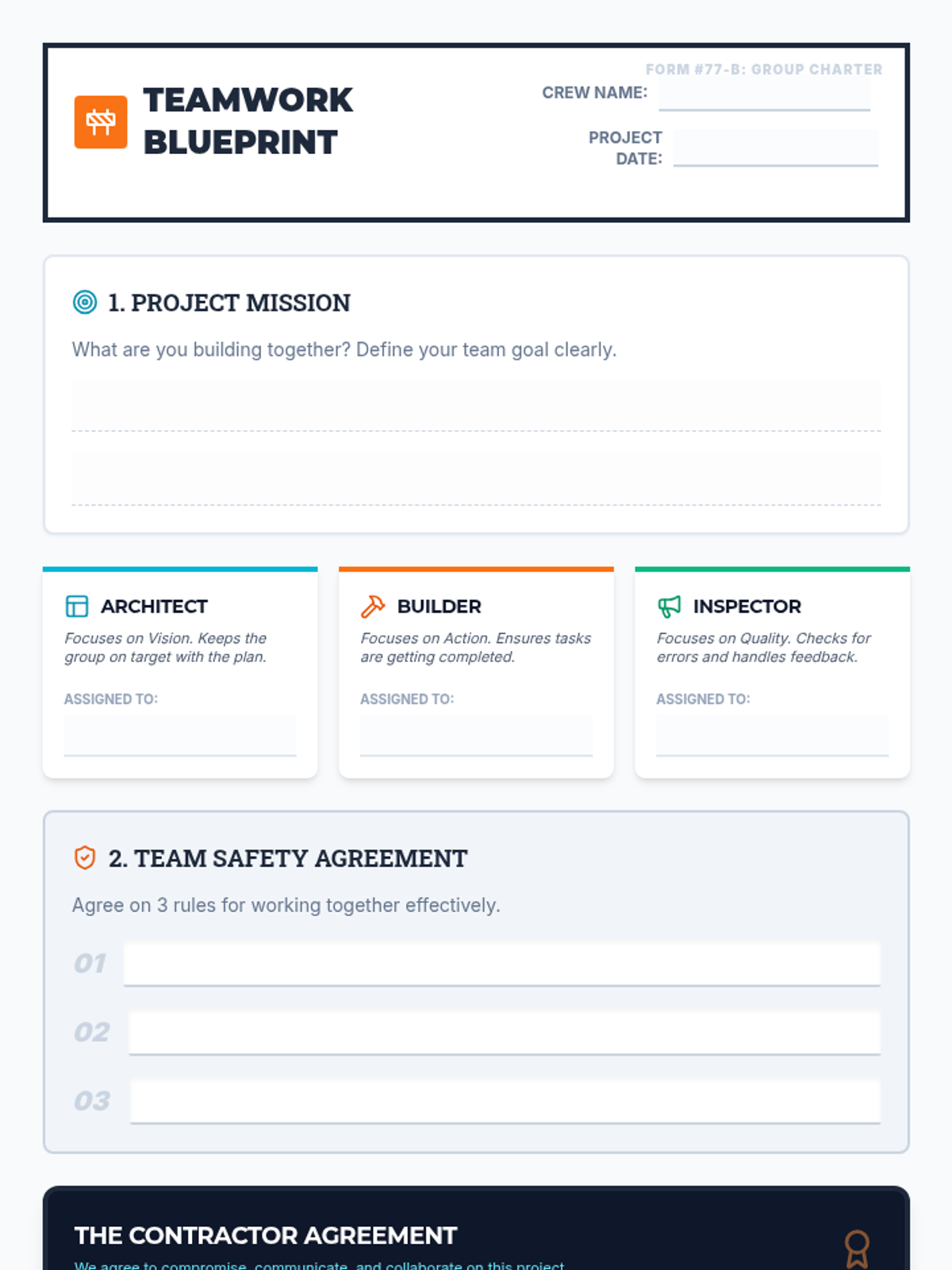
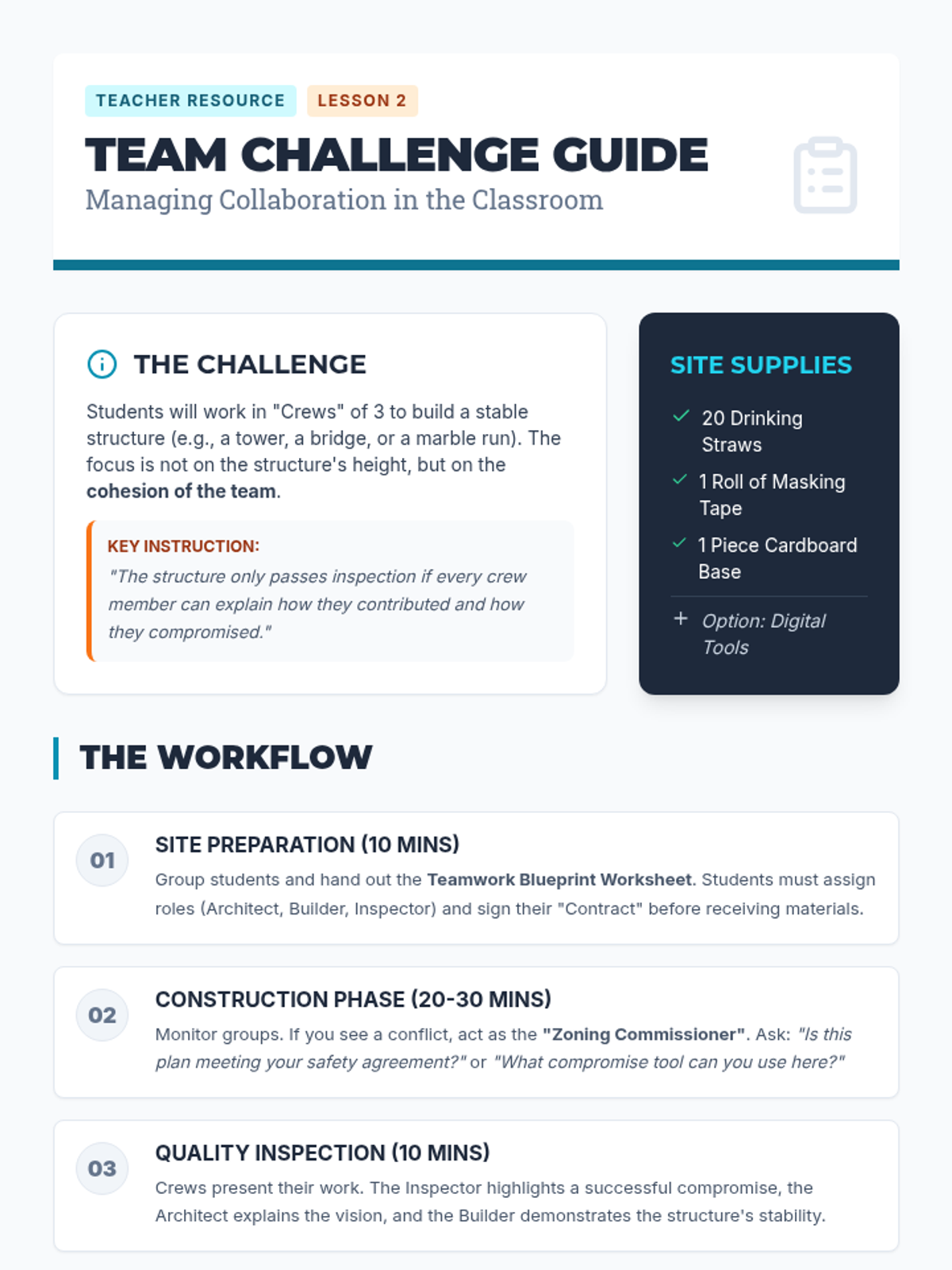
This lesson focuses on the mechanics of teamwork, specifically addressing how to share roles, compromise on shared goals, and celebrate collective success through the lens of a construction project.
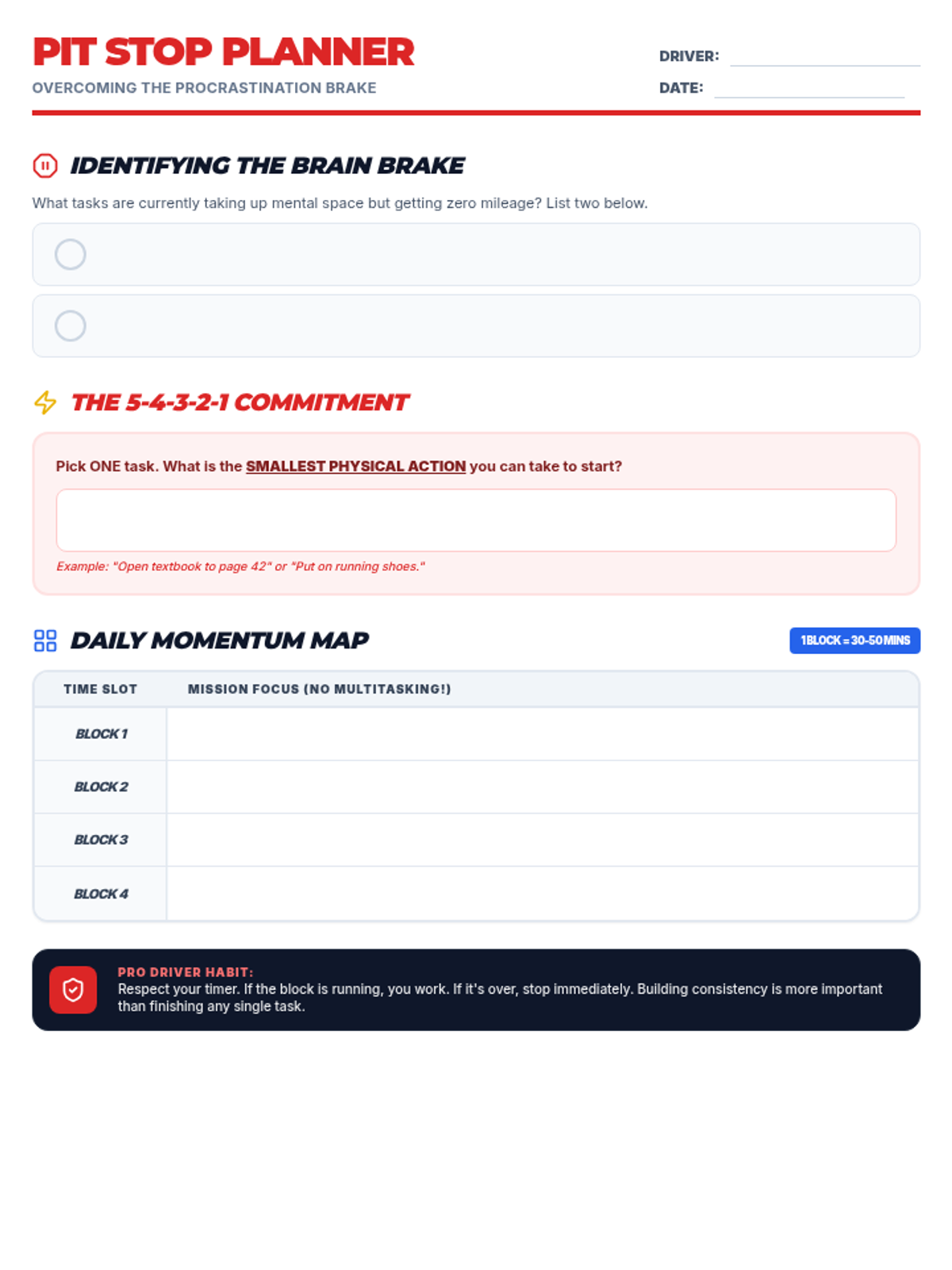
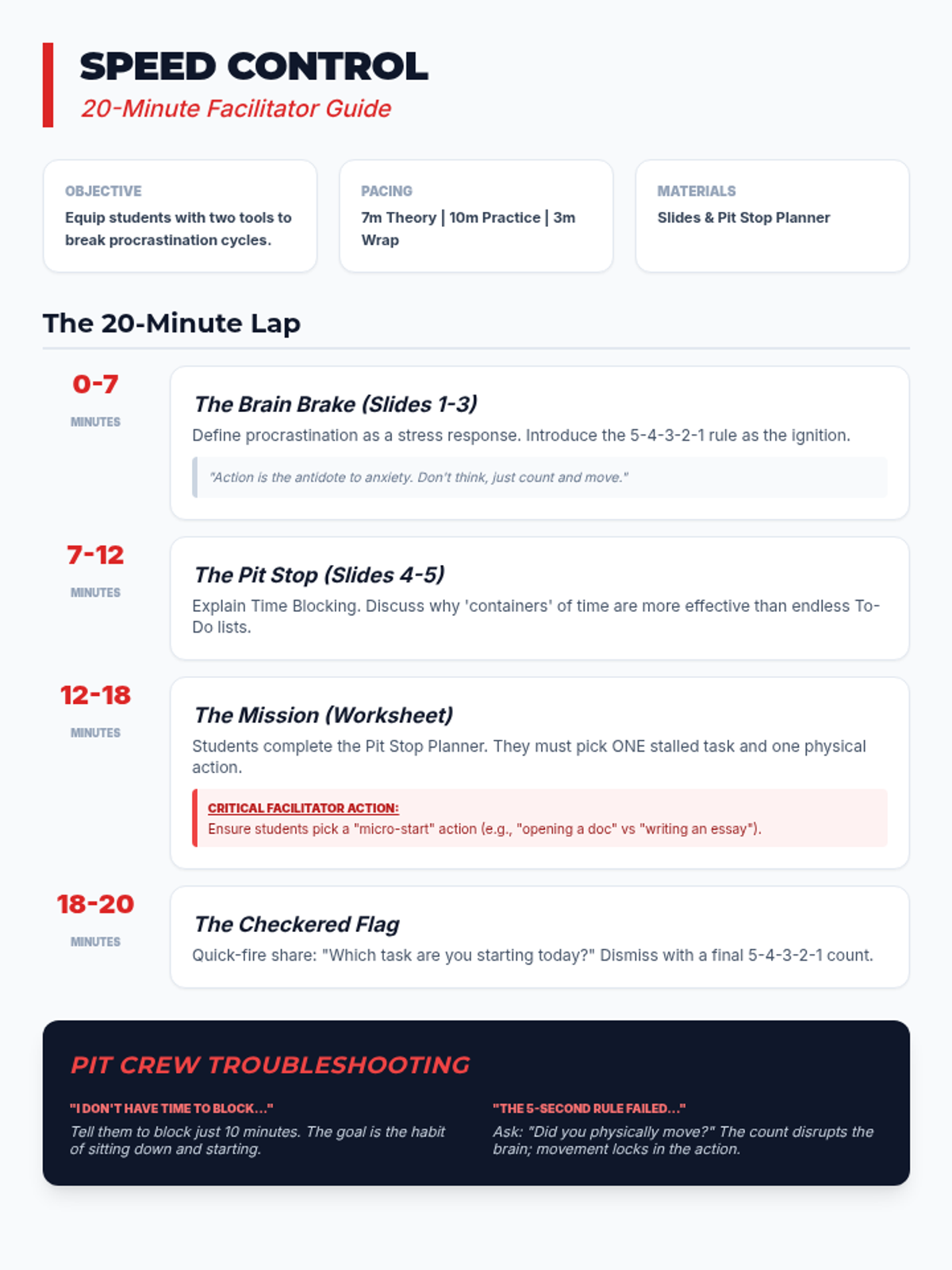
A high-energy 20-minute session focused on overcoming procrastination using the 5-Second Rule and Time Blocking techniques. Students will learn to bridge the gap between thinking and doing through practical racing-themed activities.
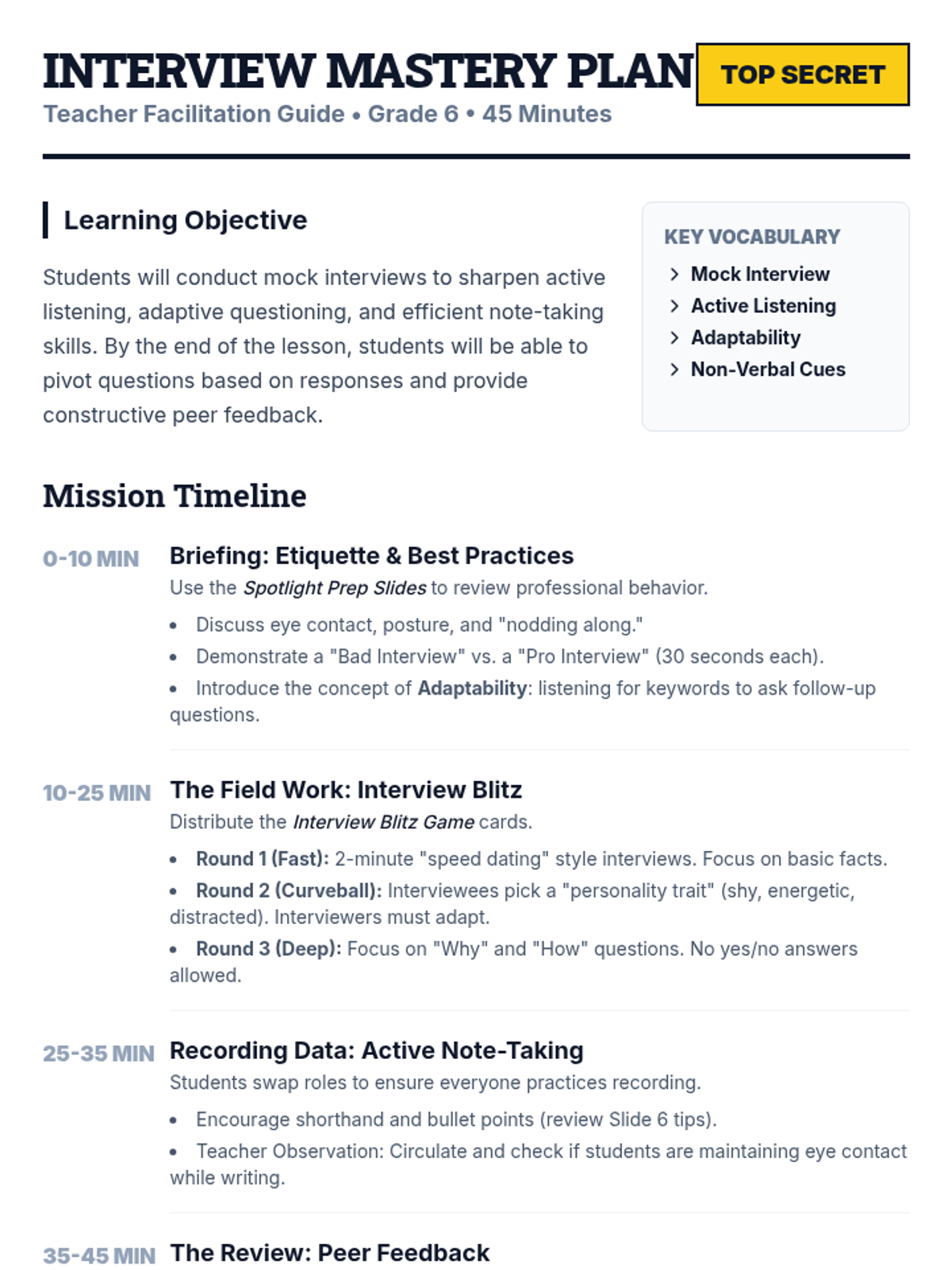
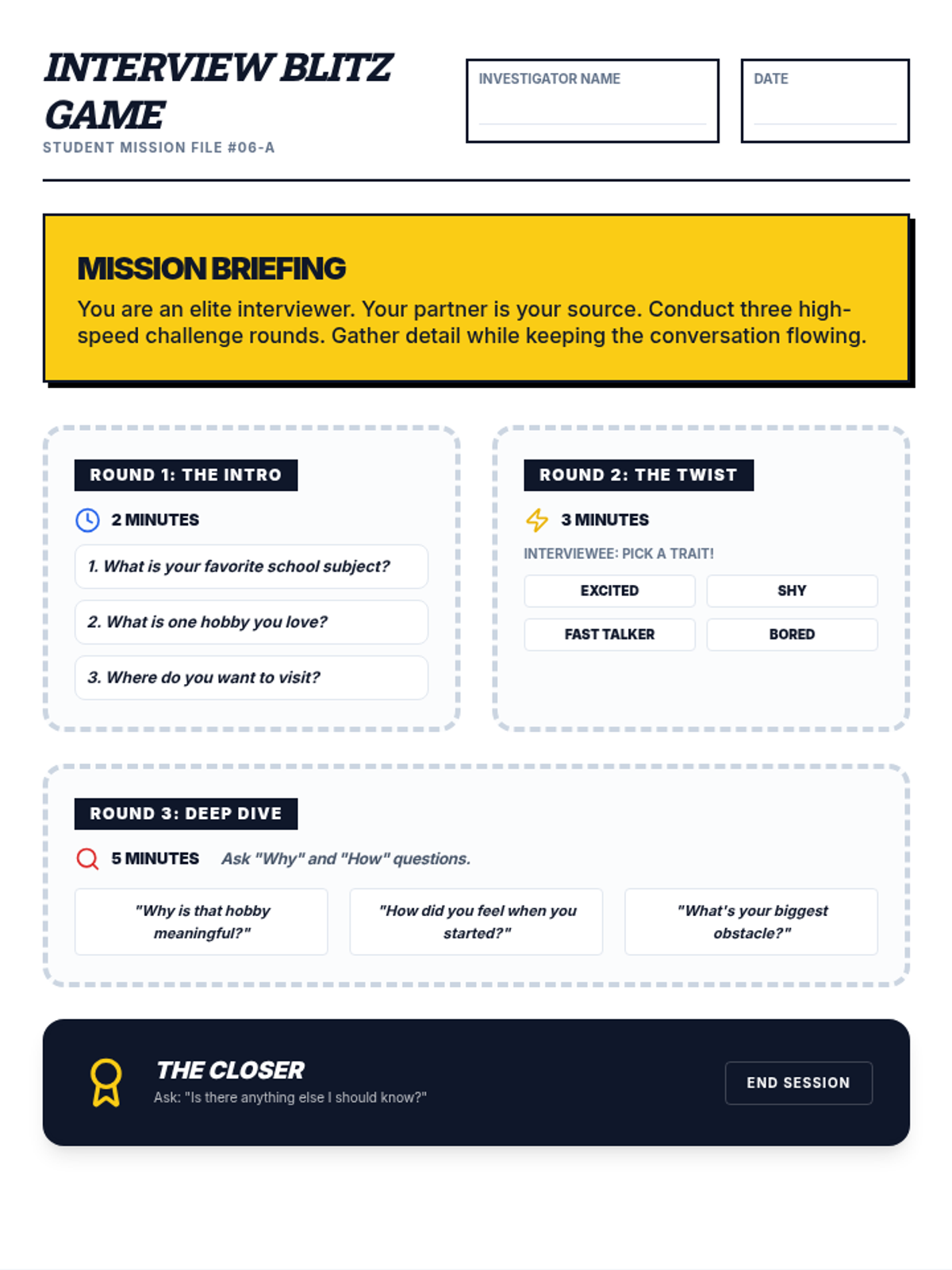
A 45-minute lesson where 6th-grade students practice active listening and note-taking through structured mock interviews and a fast-paced interview game.
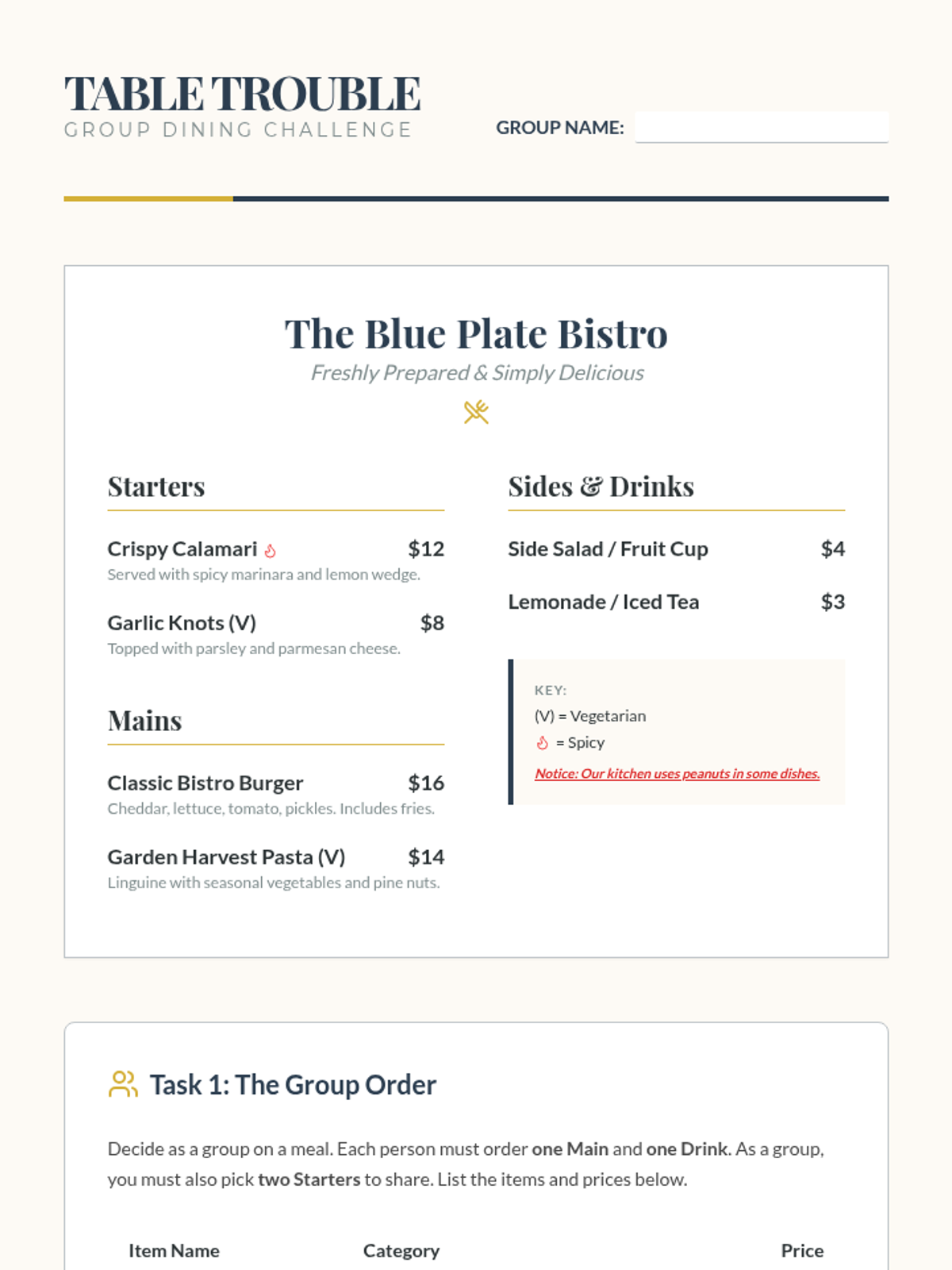
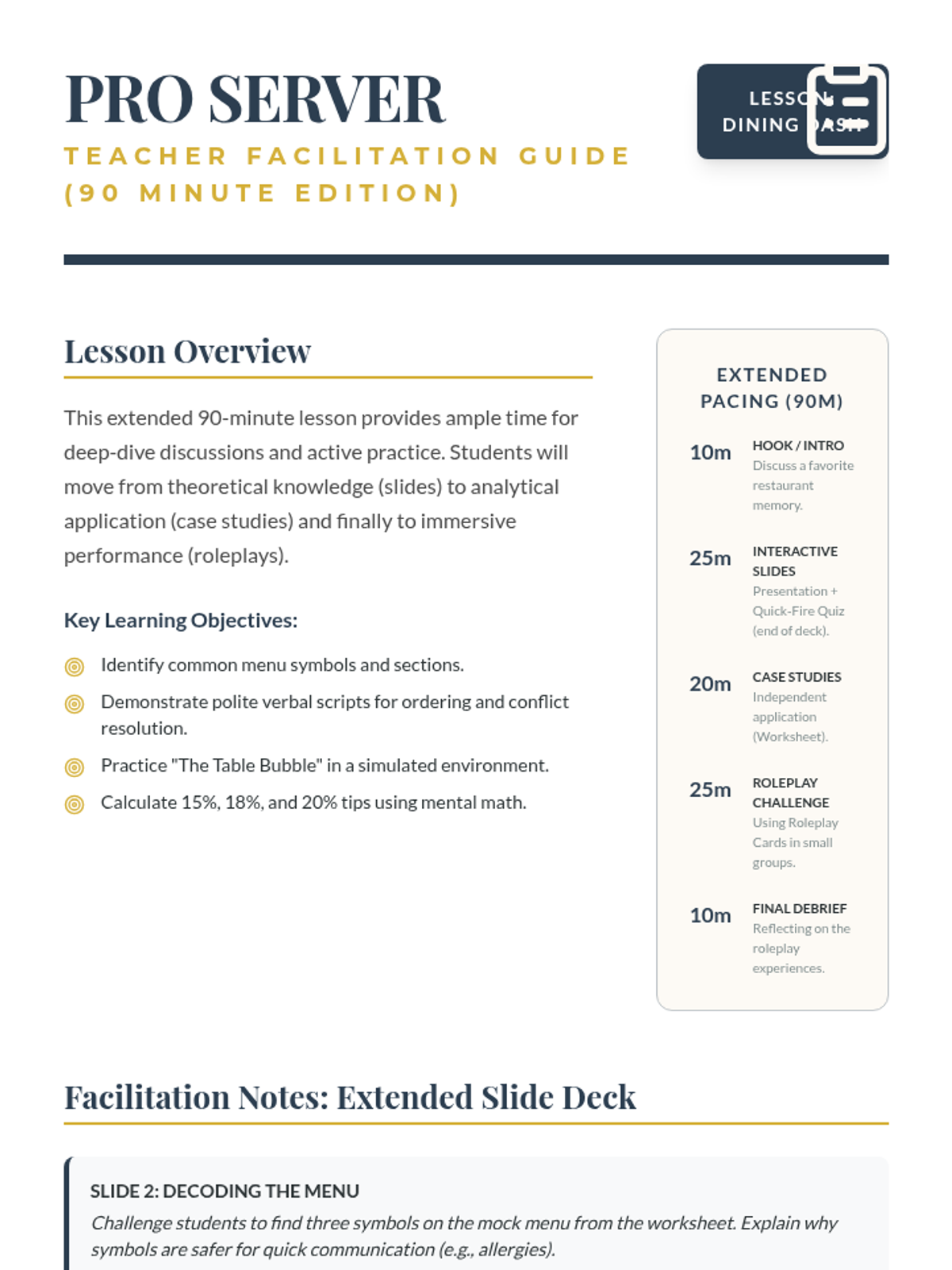
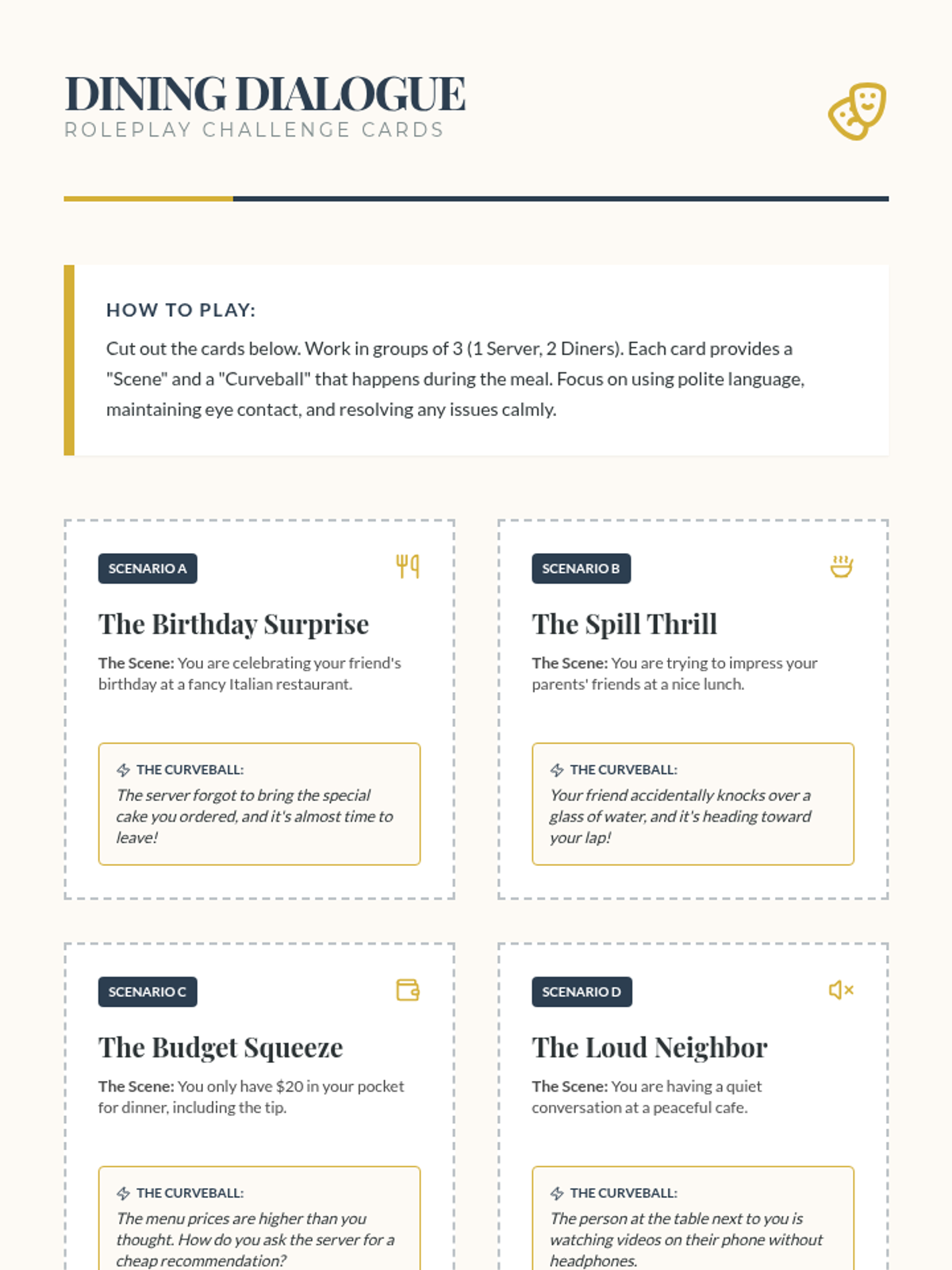
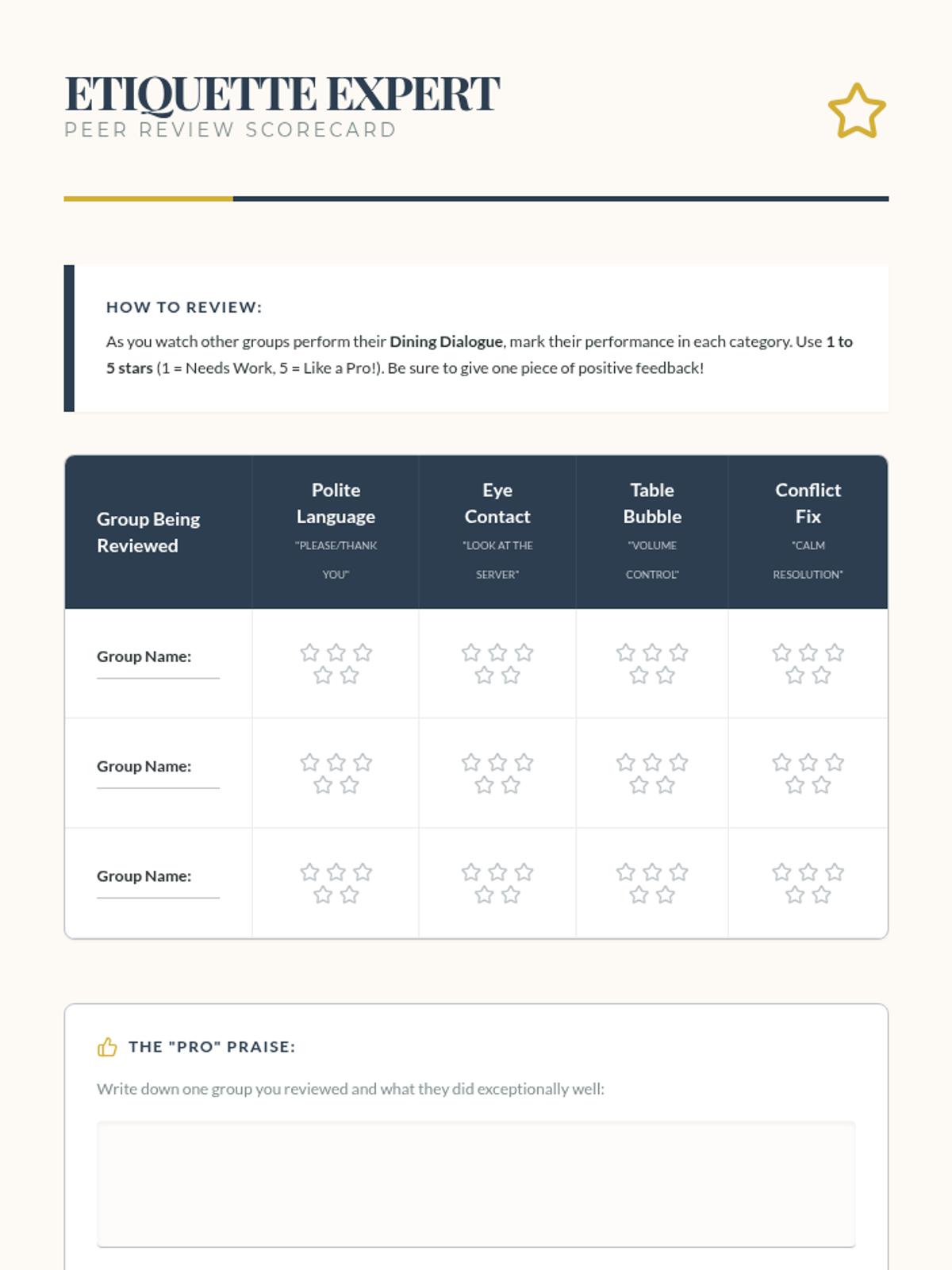
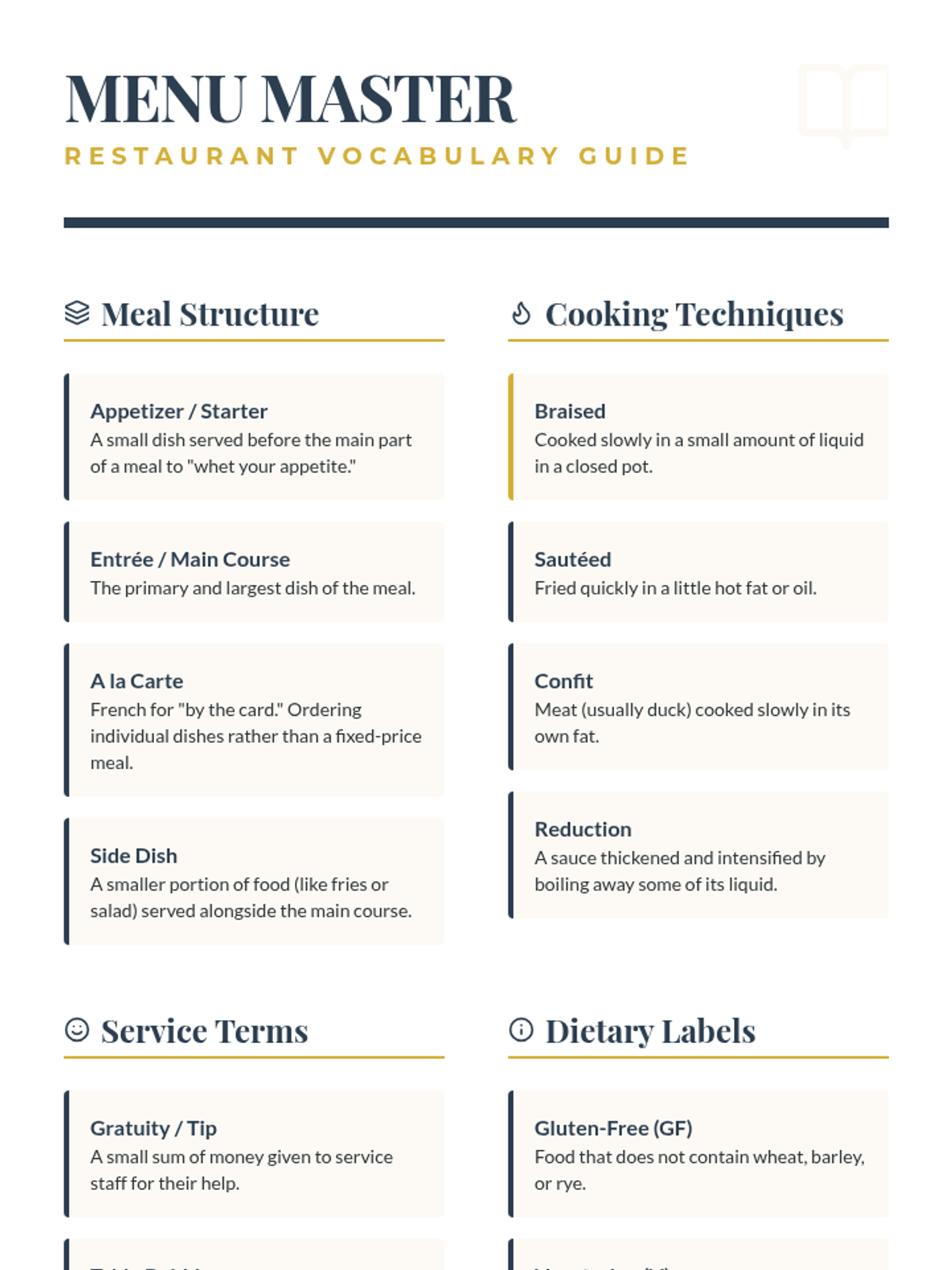
A comprehensive lesson on restaurant etiquette covering menu reading, ordering, manners, volume control, tipping, and conflict resolution.
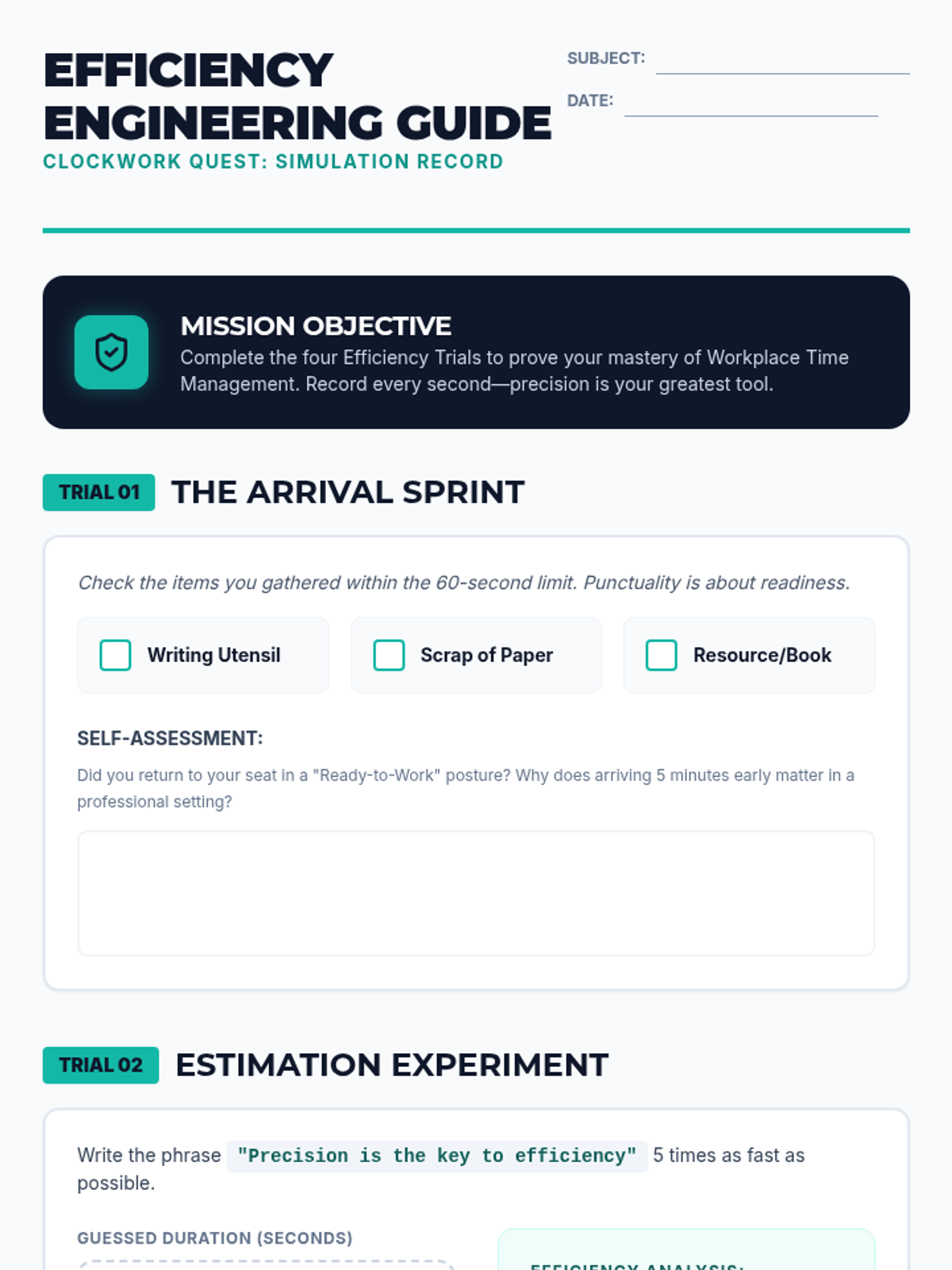
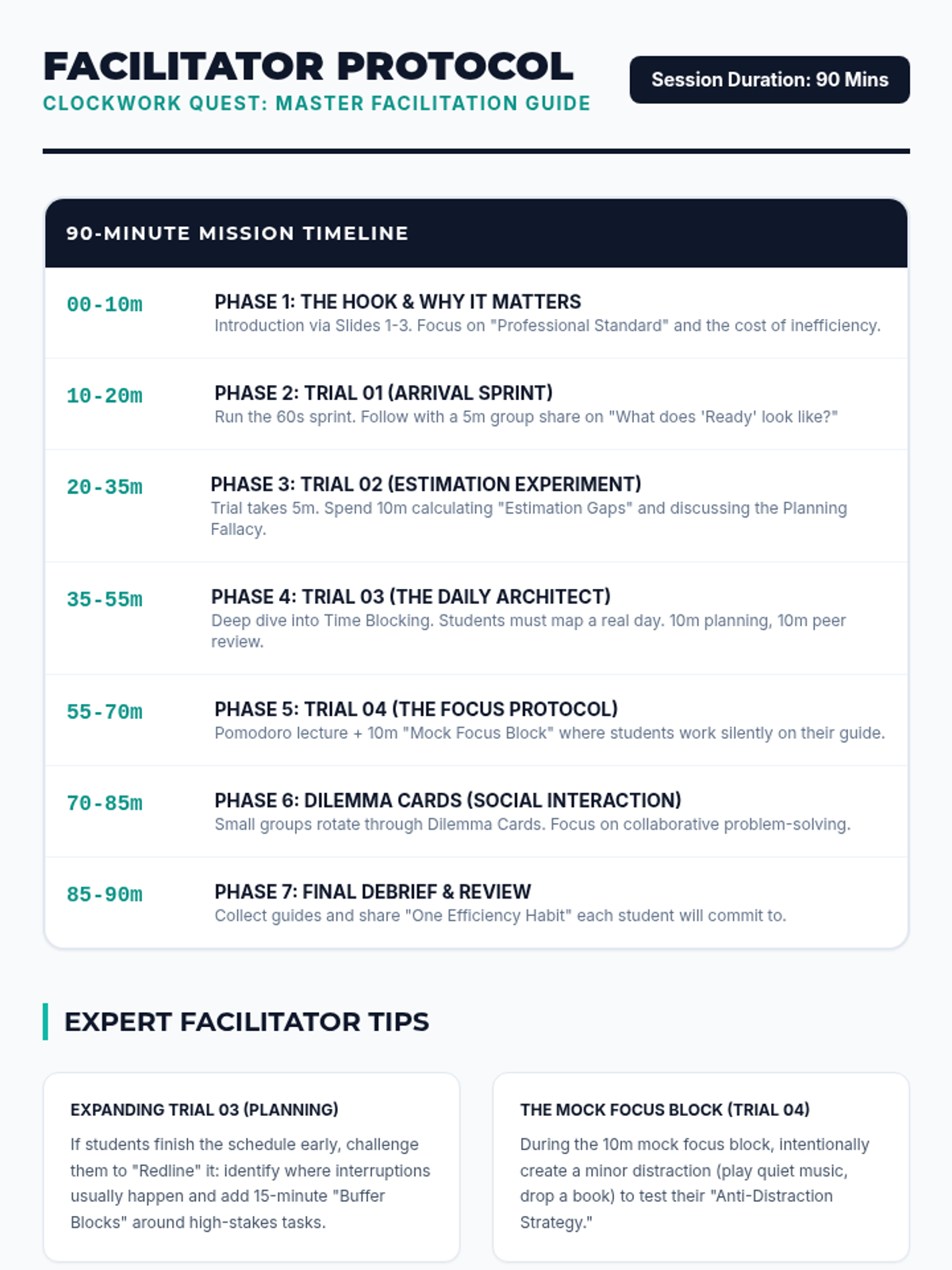
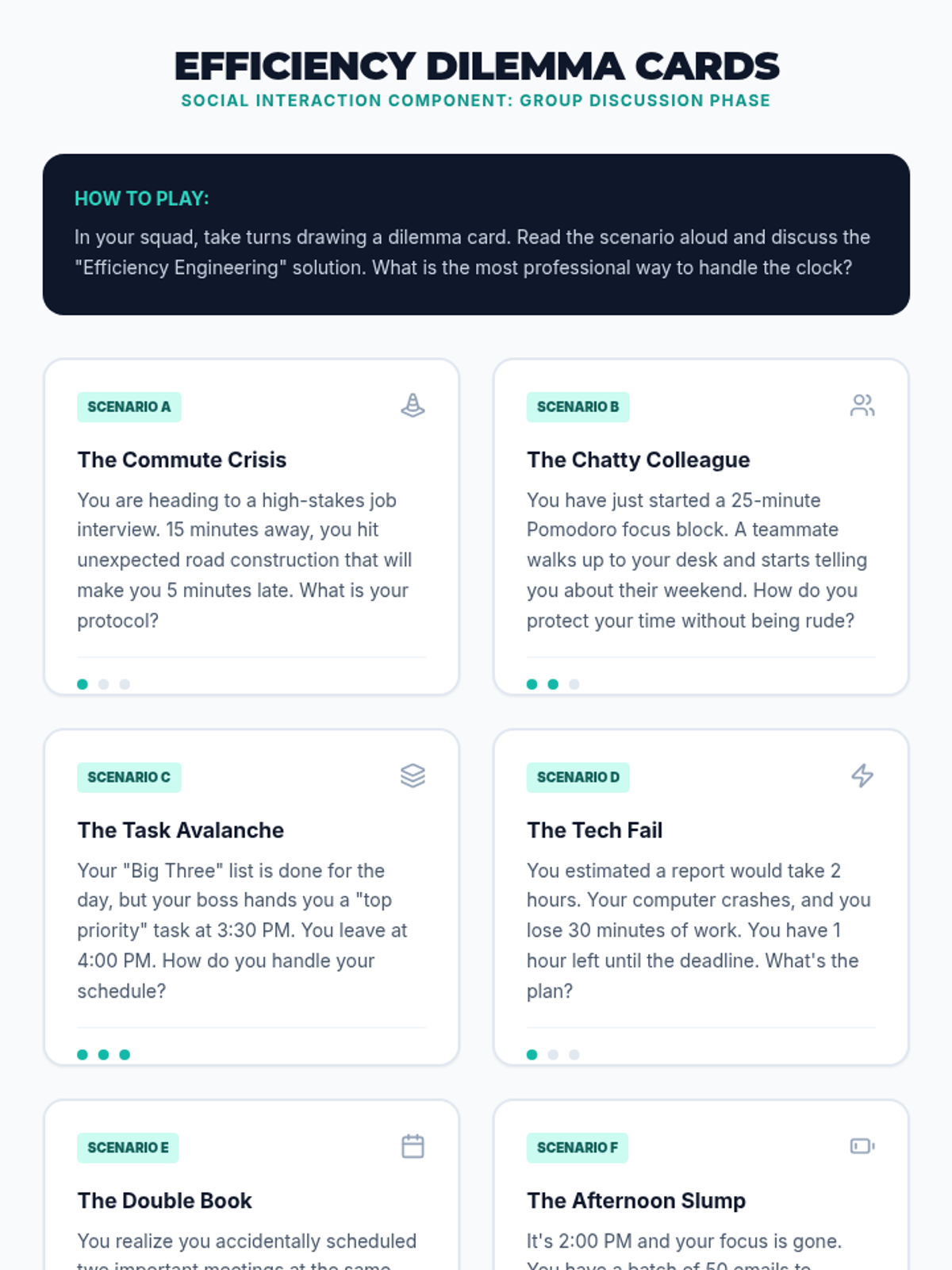
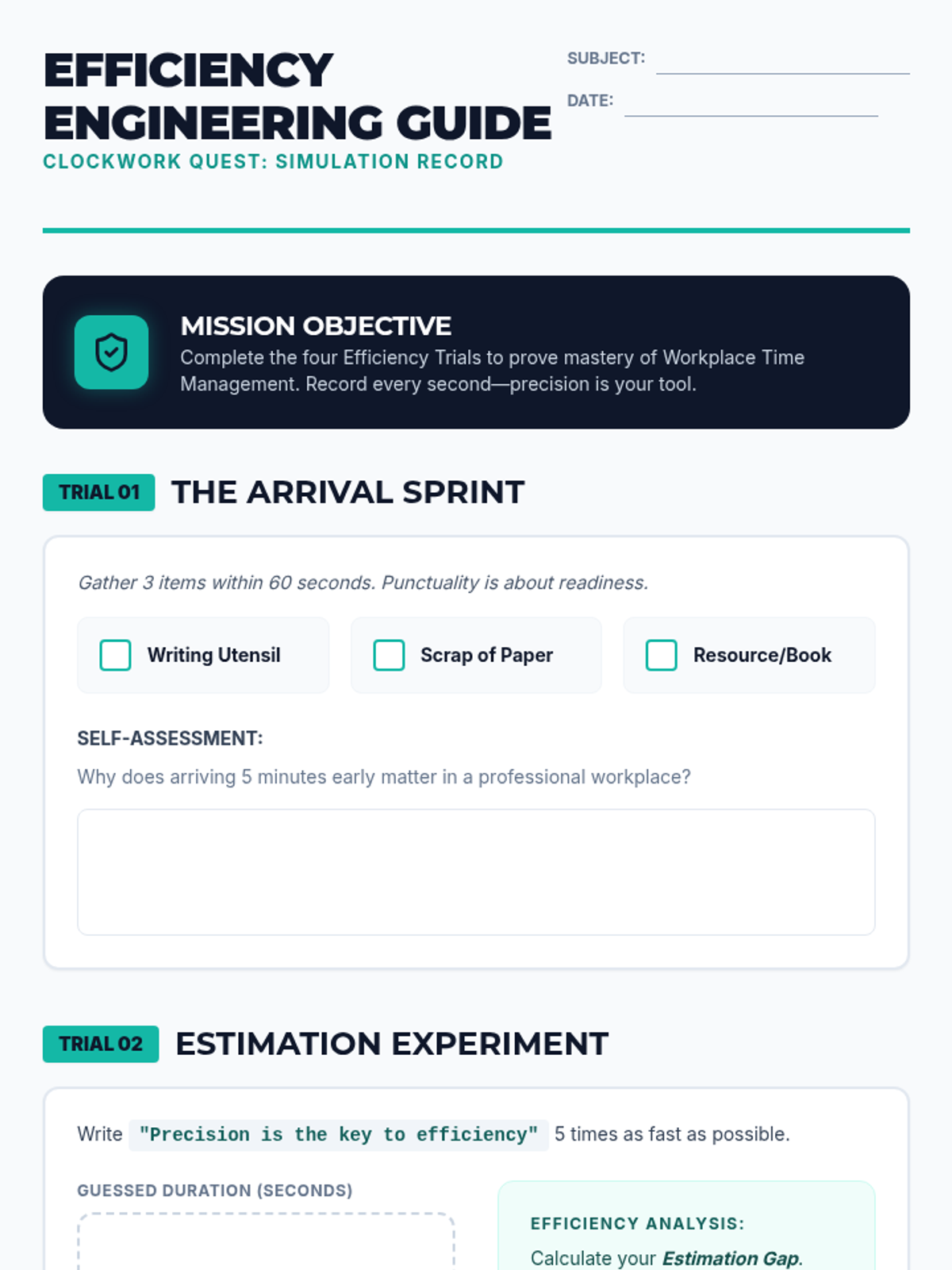
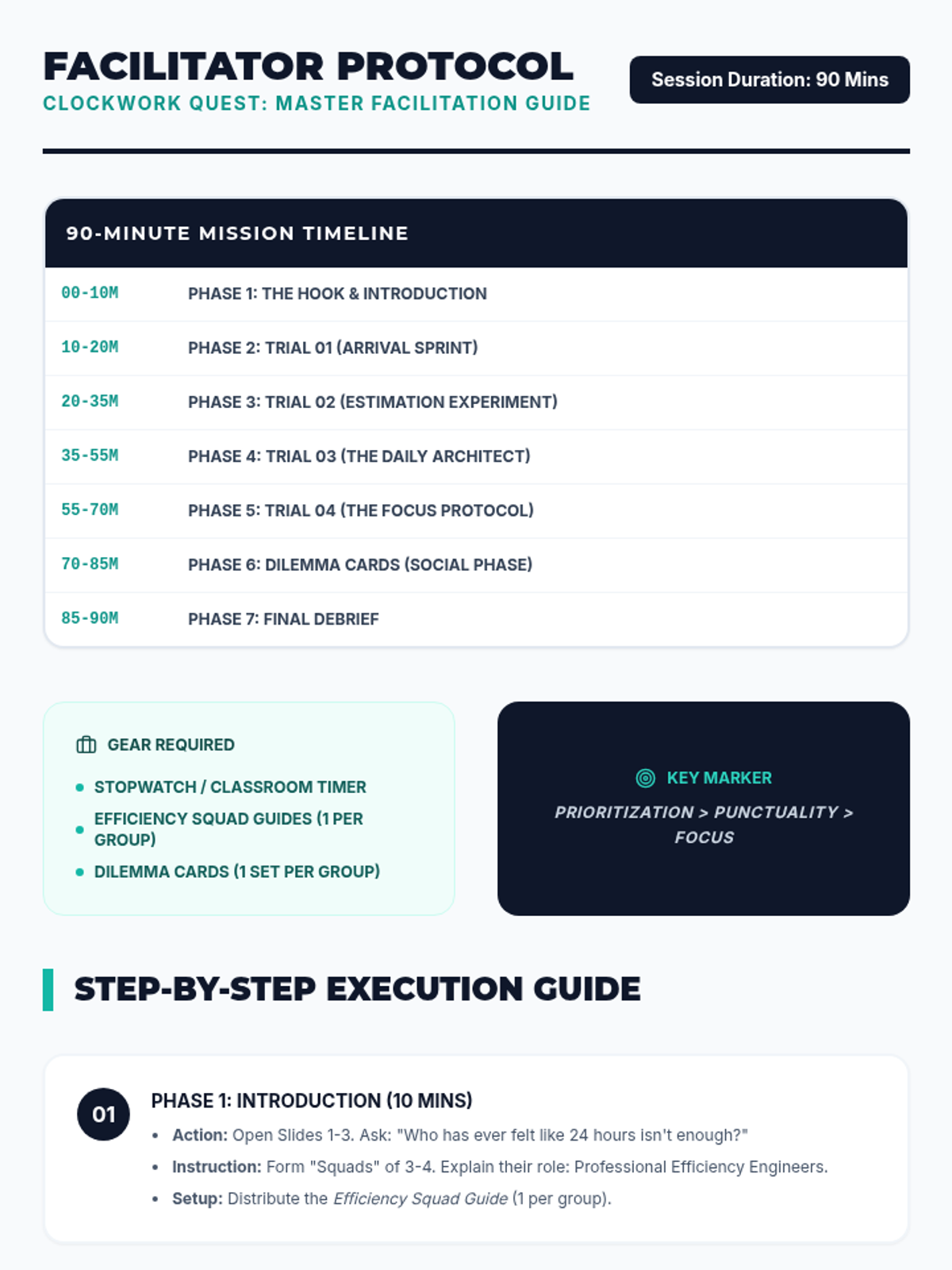
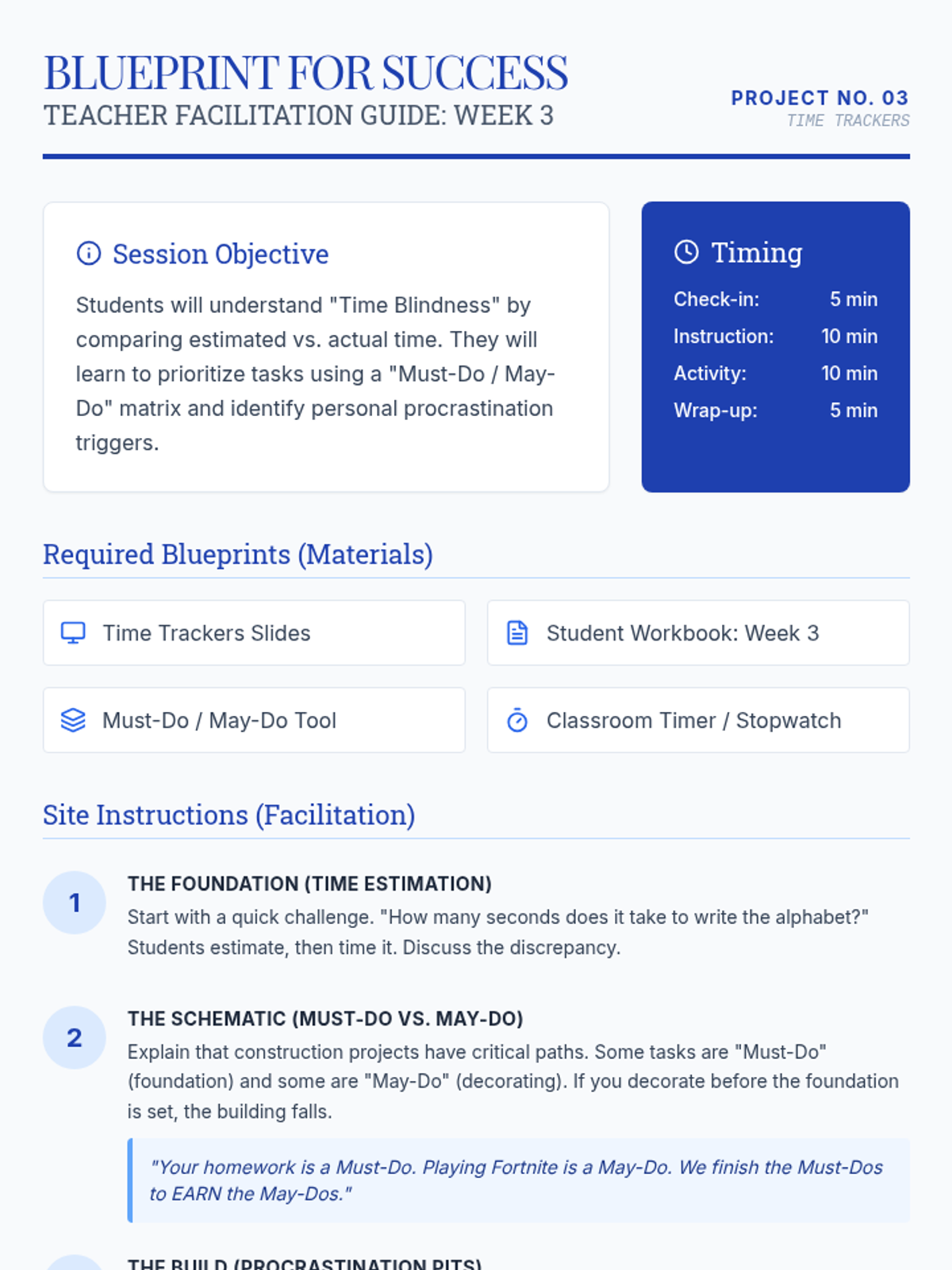
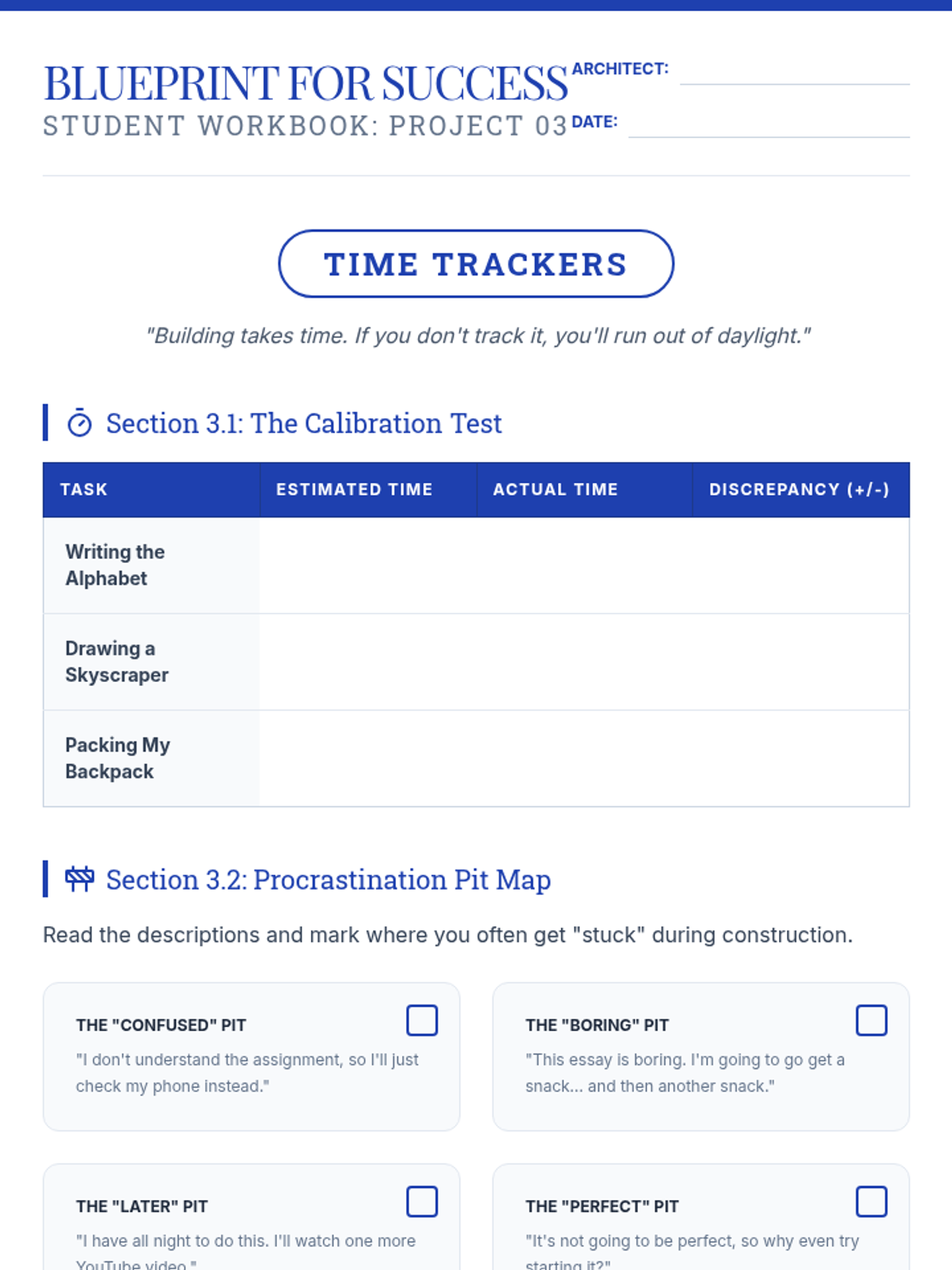
A lesson focused on mastering time management through hands-on 'trials' that teach punctuality, task estimation, scheduling, and focus techniques.
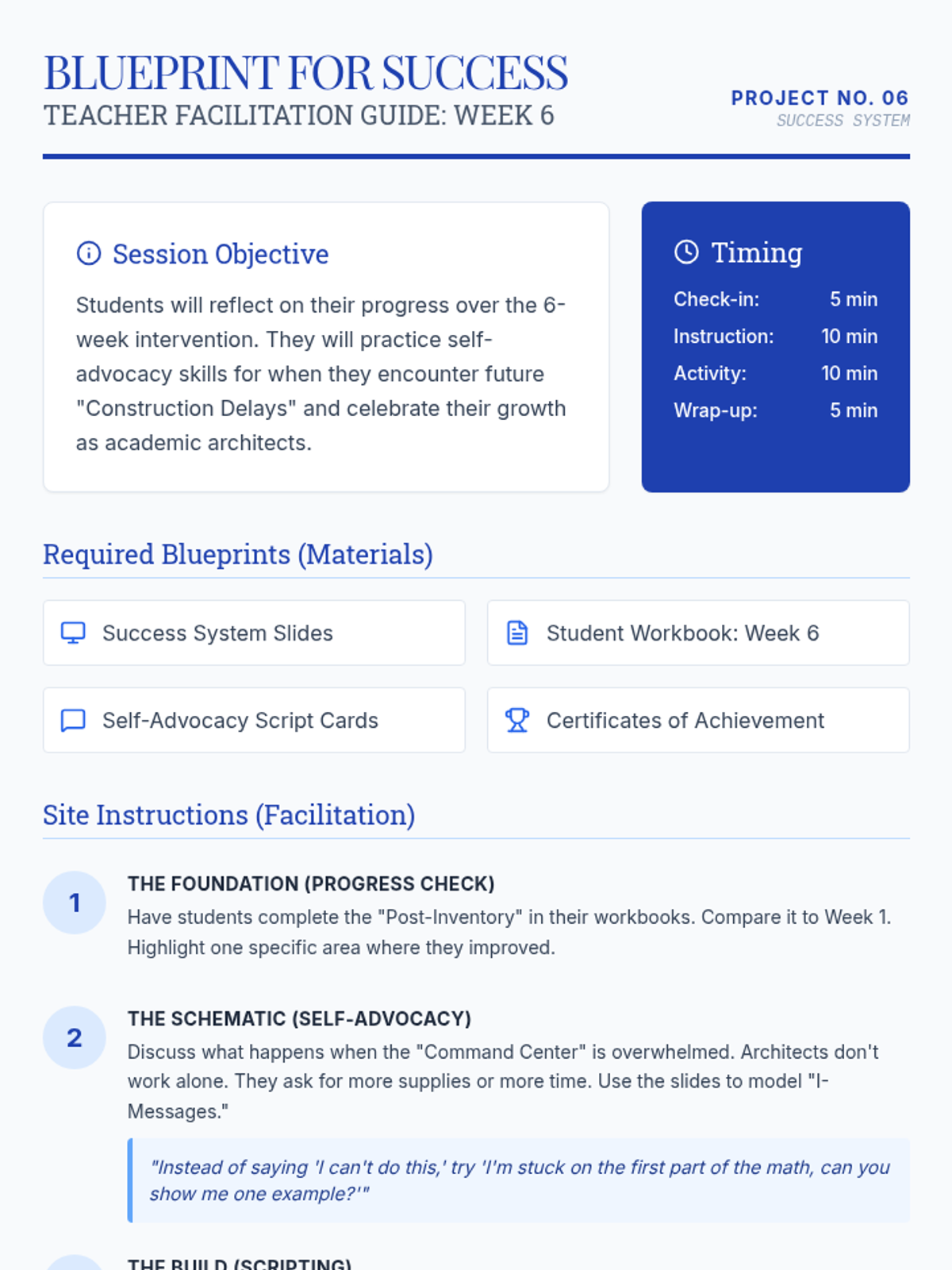
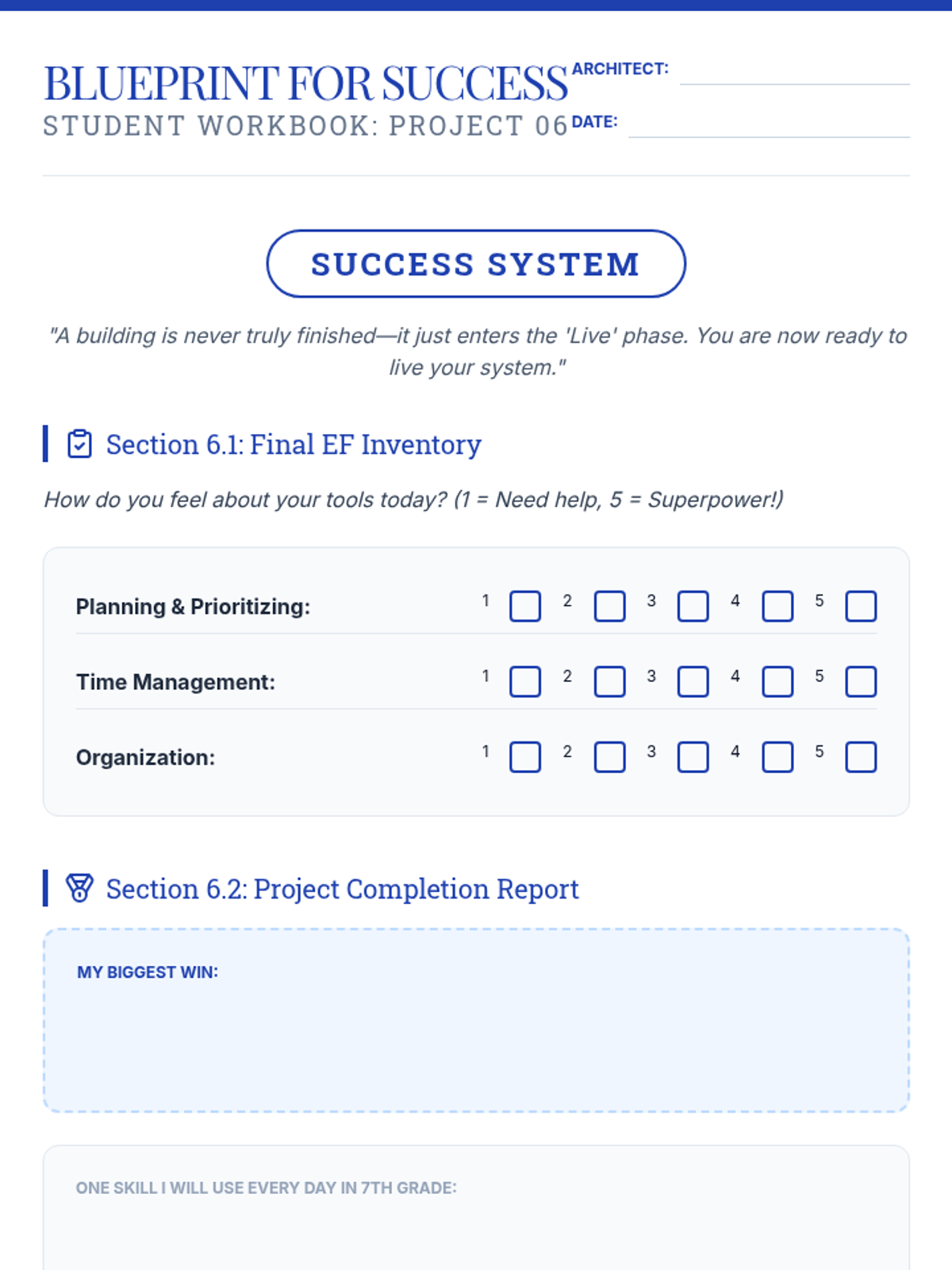
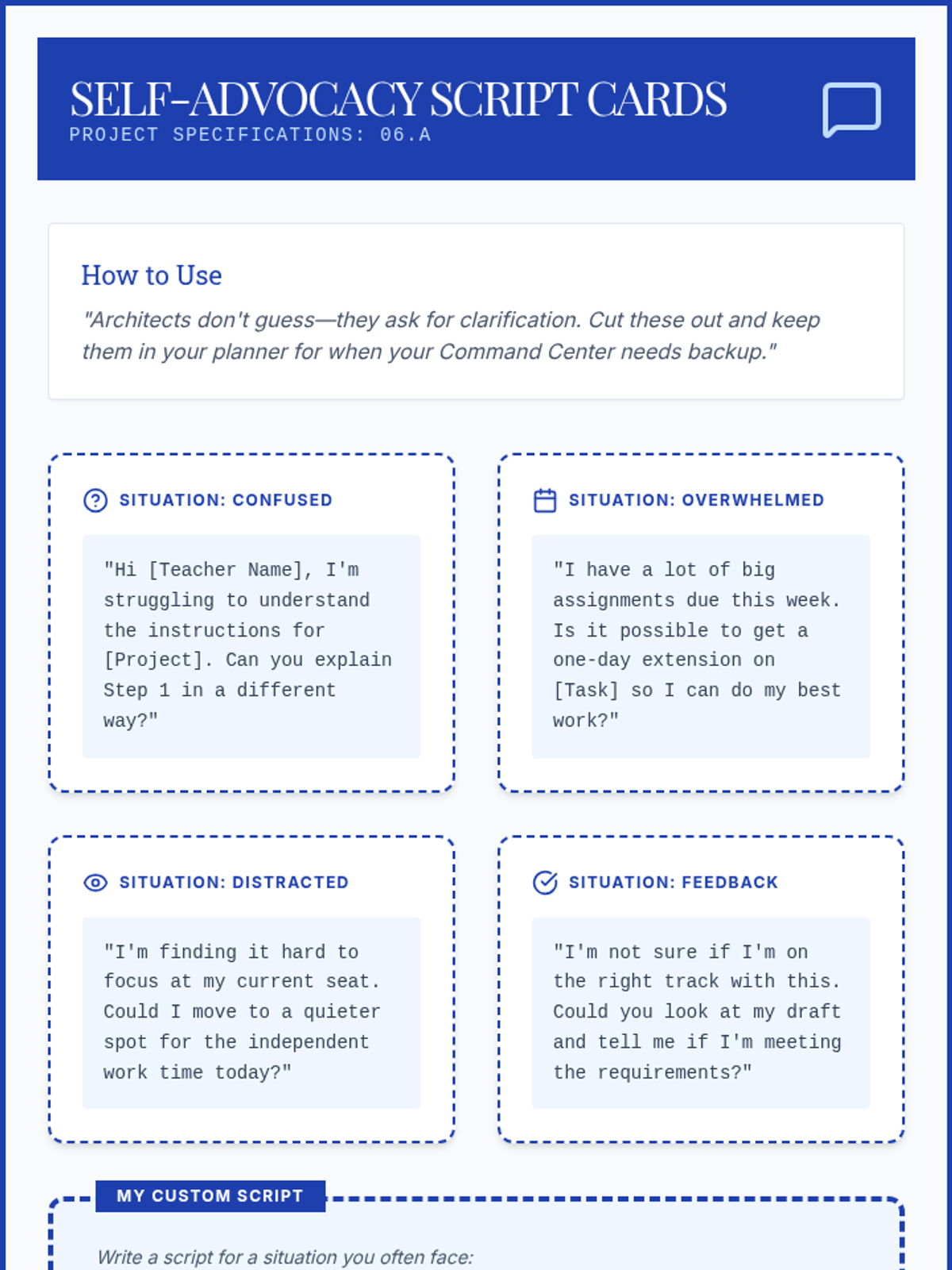
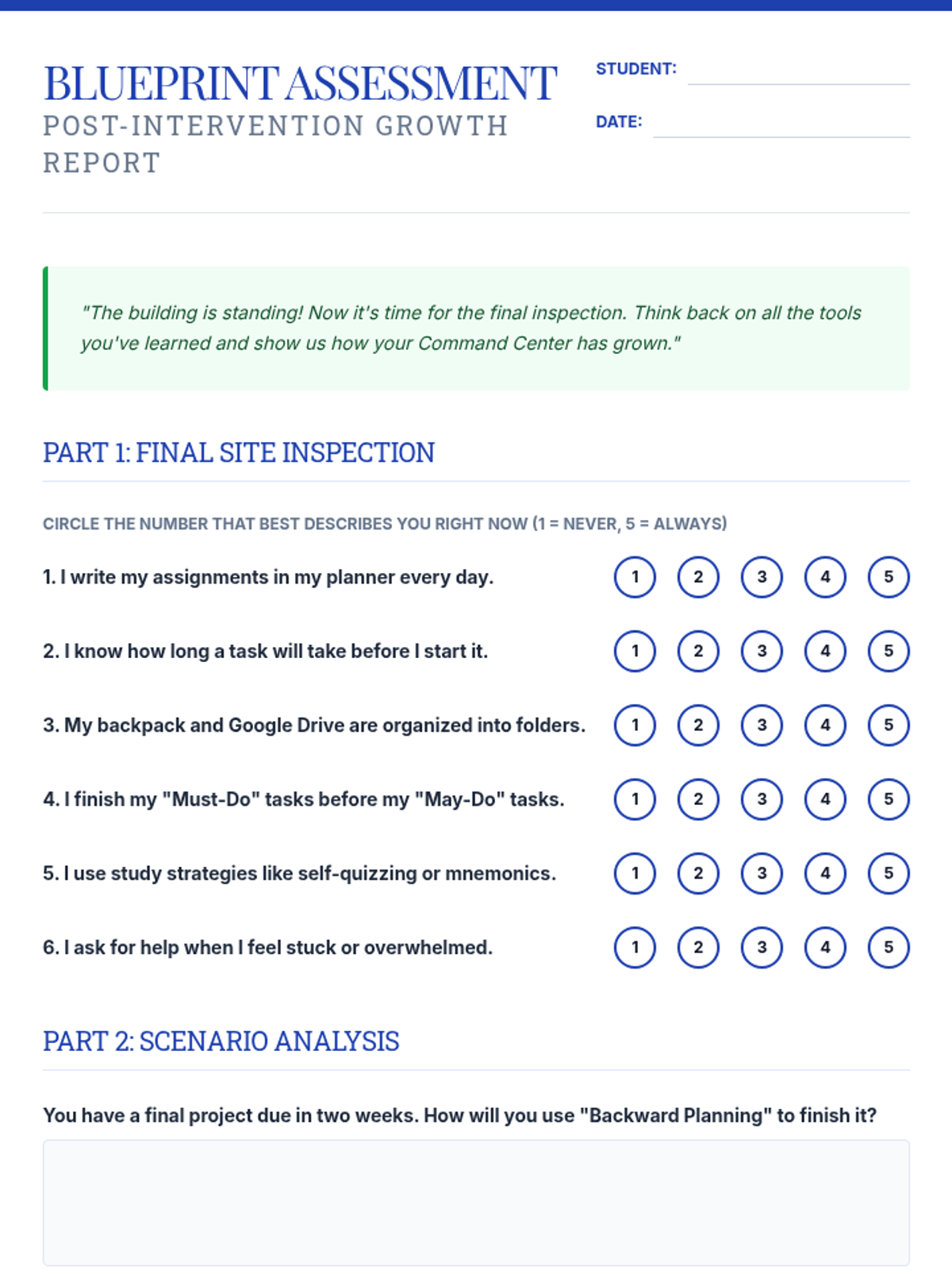
Reviewing skills learned, troubleshooting obstacles, and practicing self-advocacy for future success.
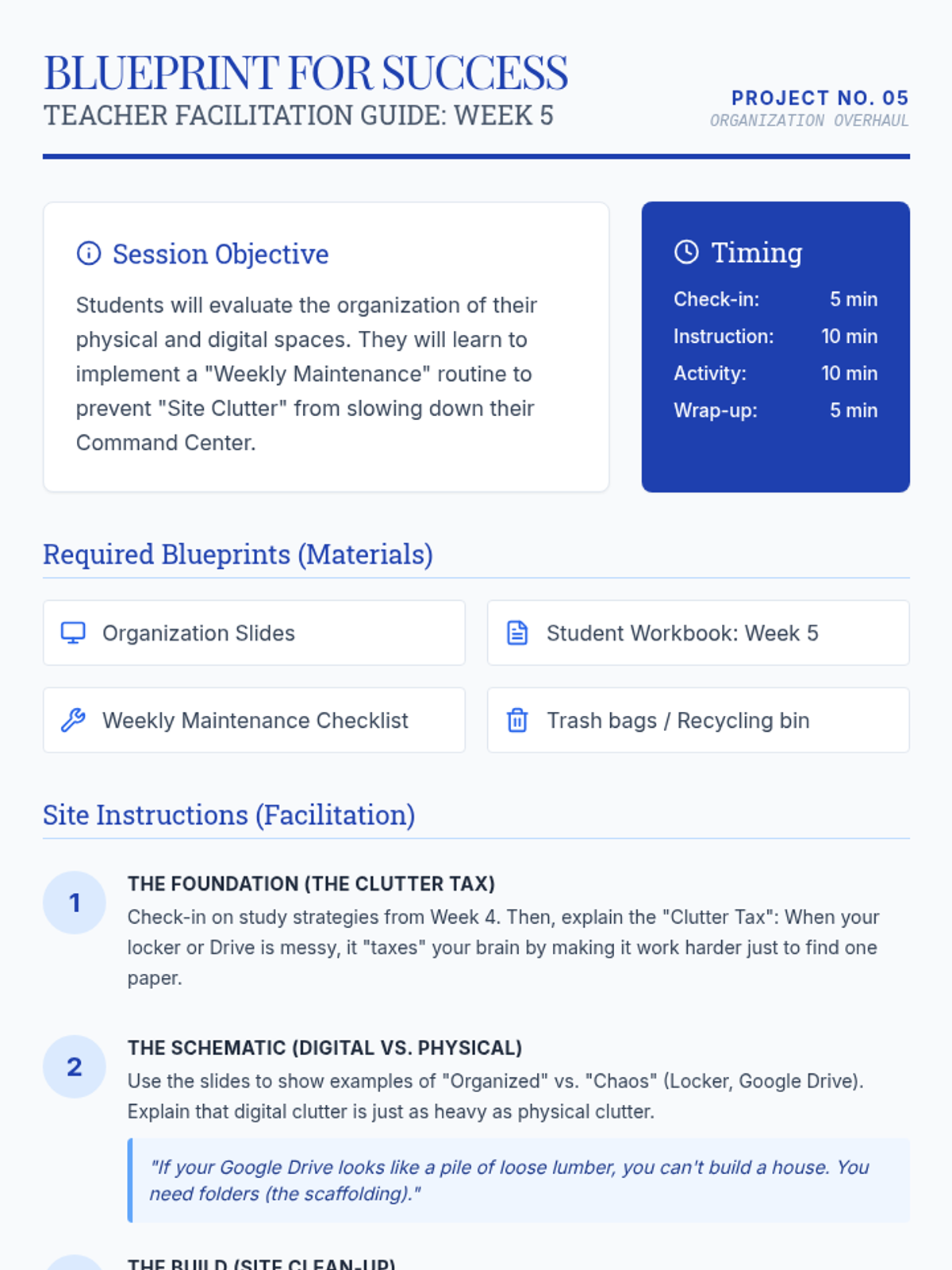
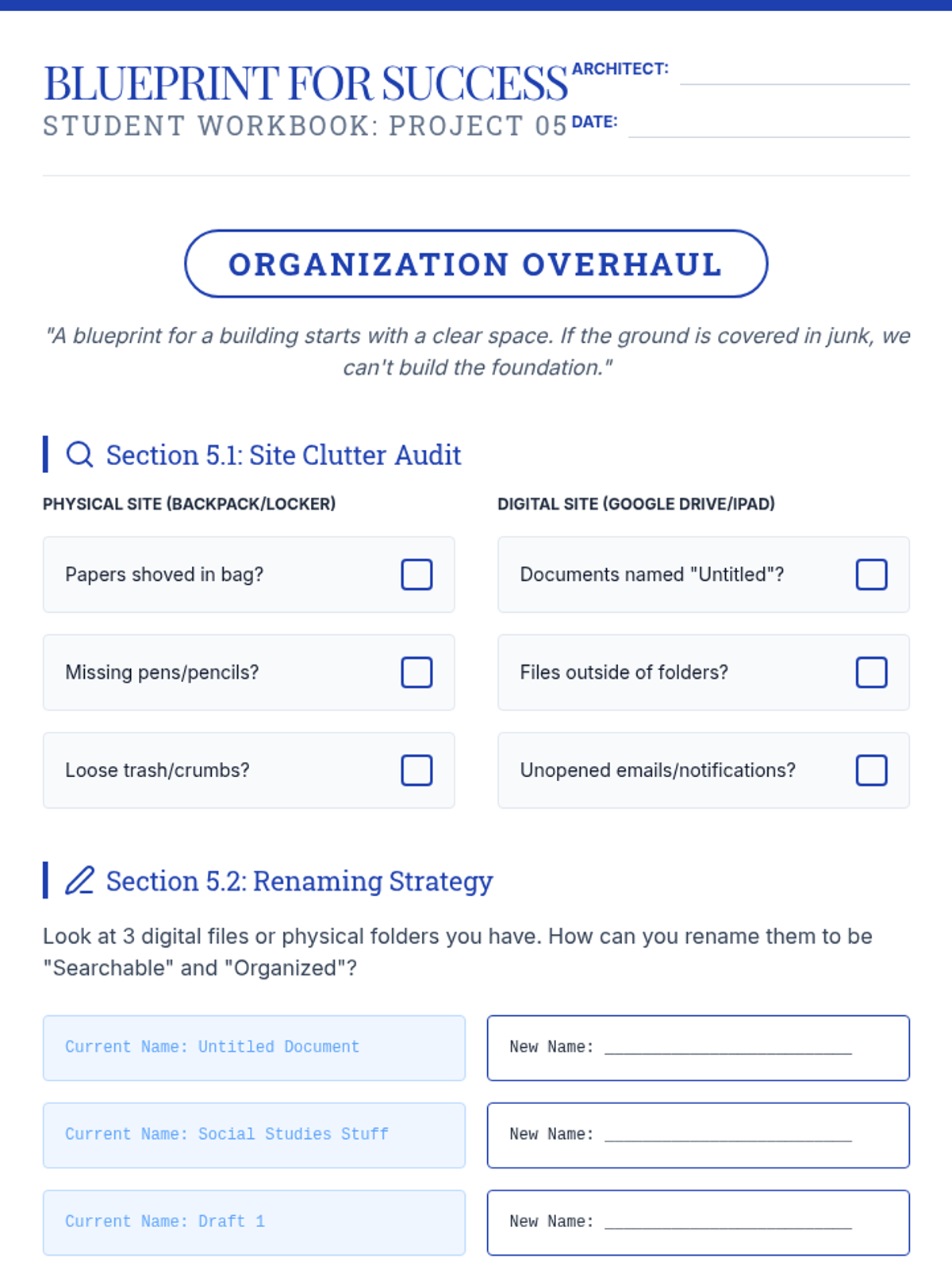
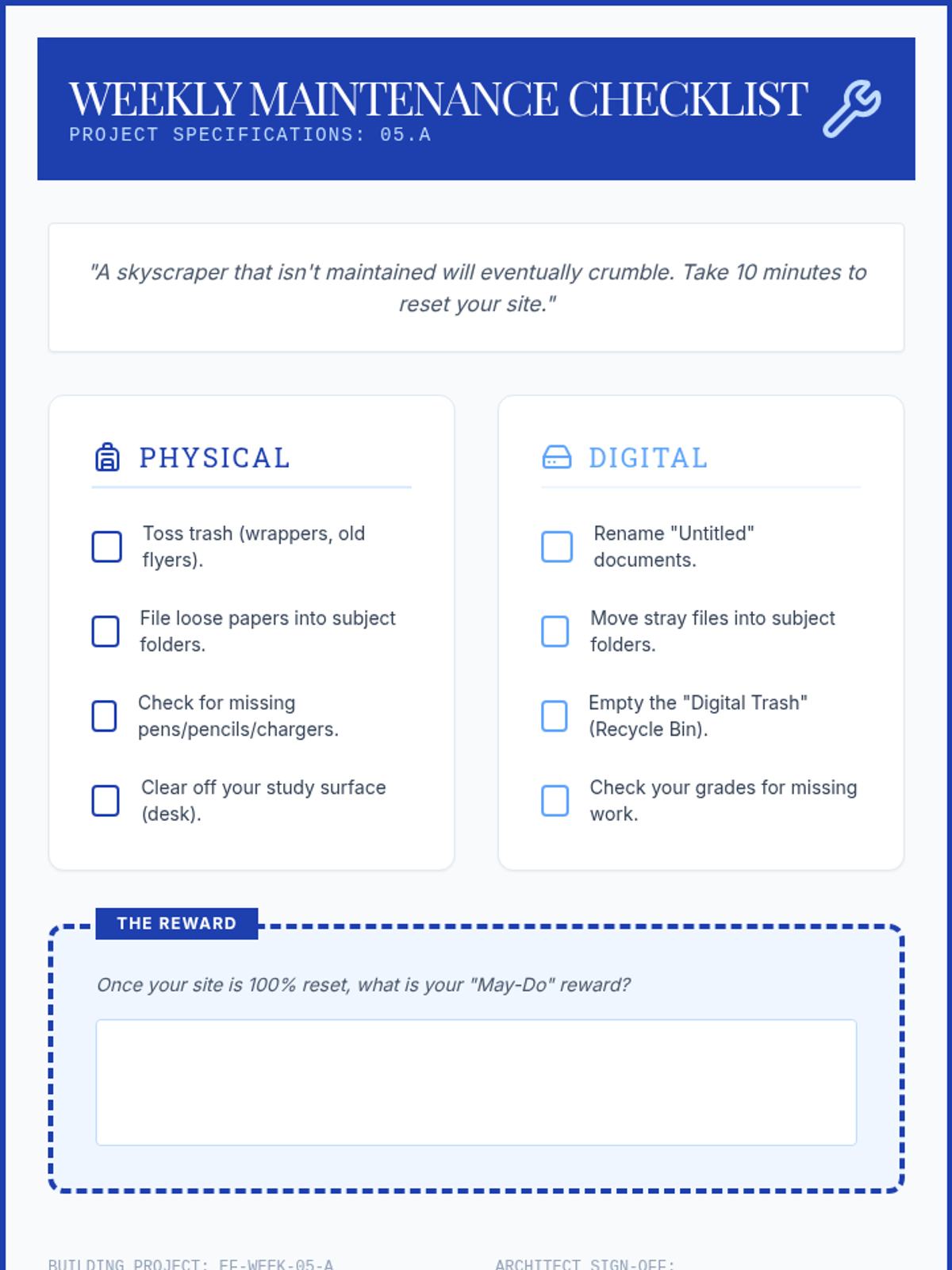
Organizing physical and digital spaces, establishing routines for material management.
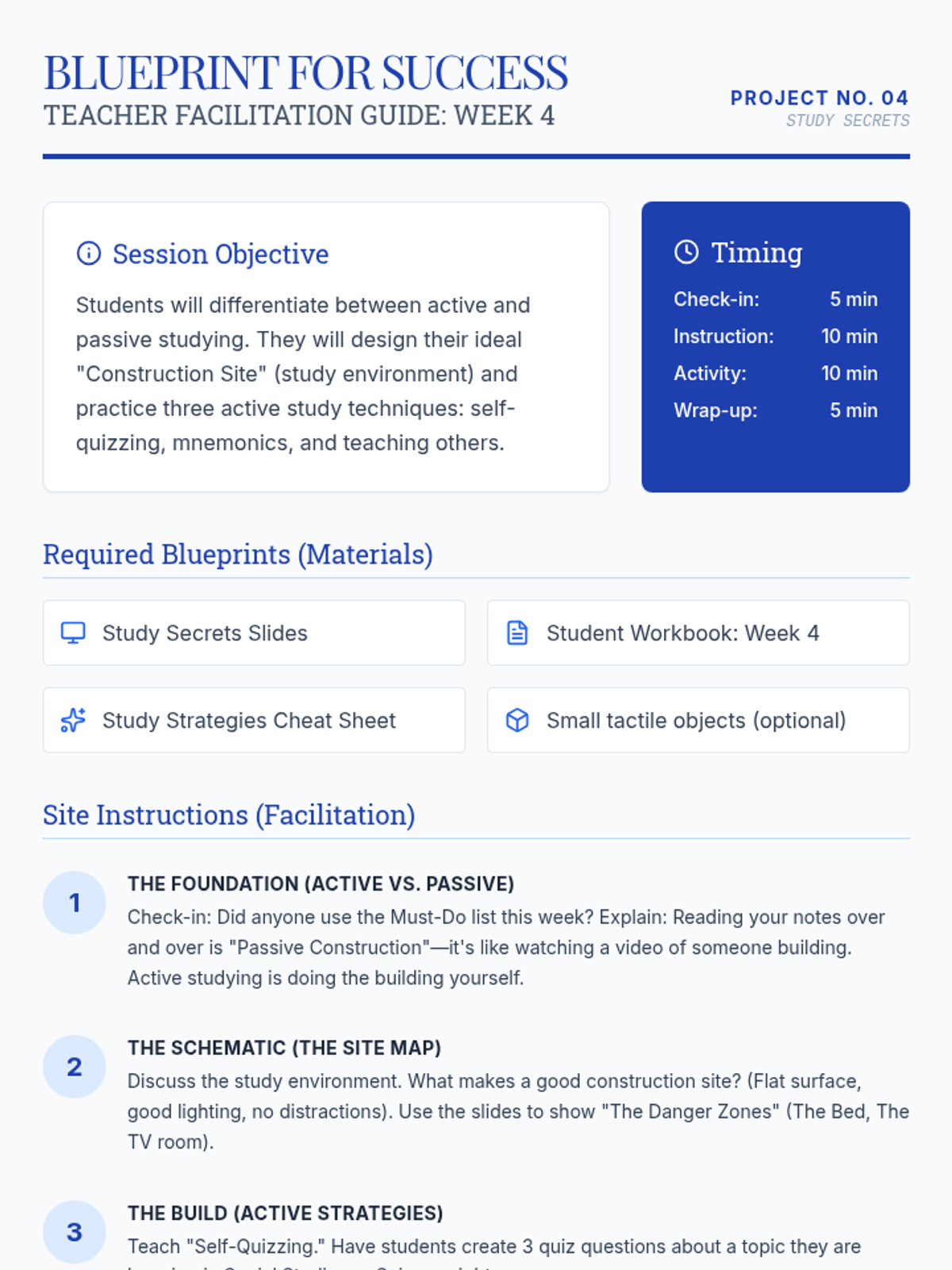
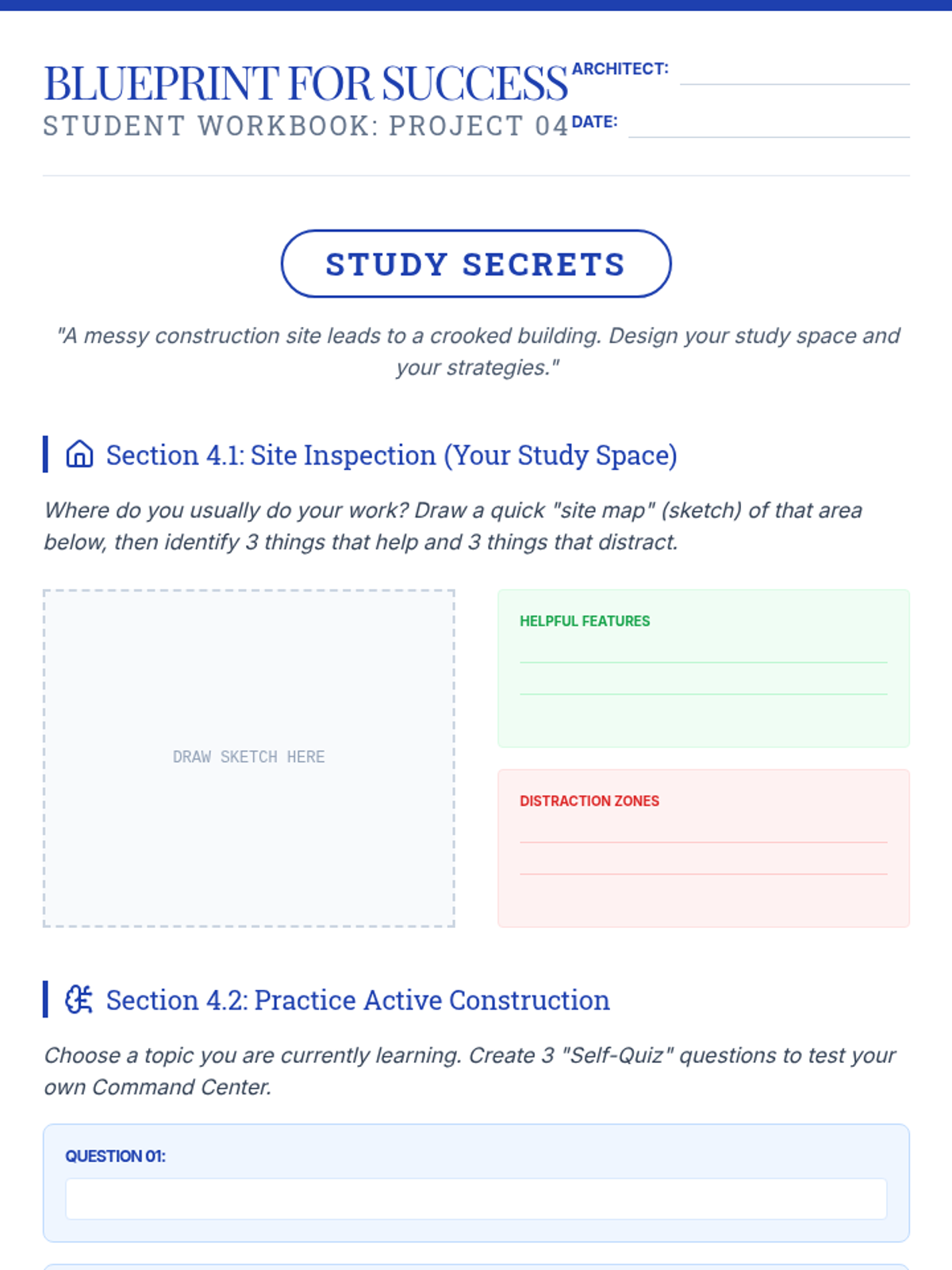
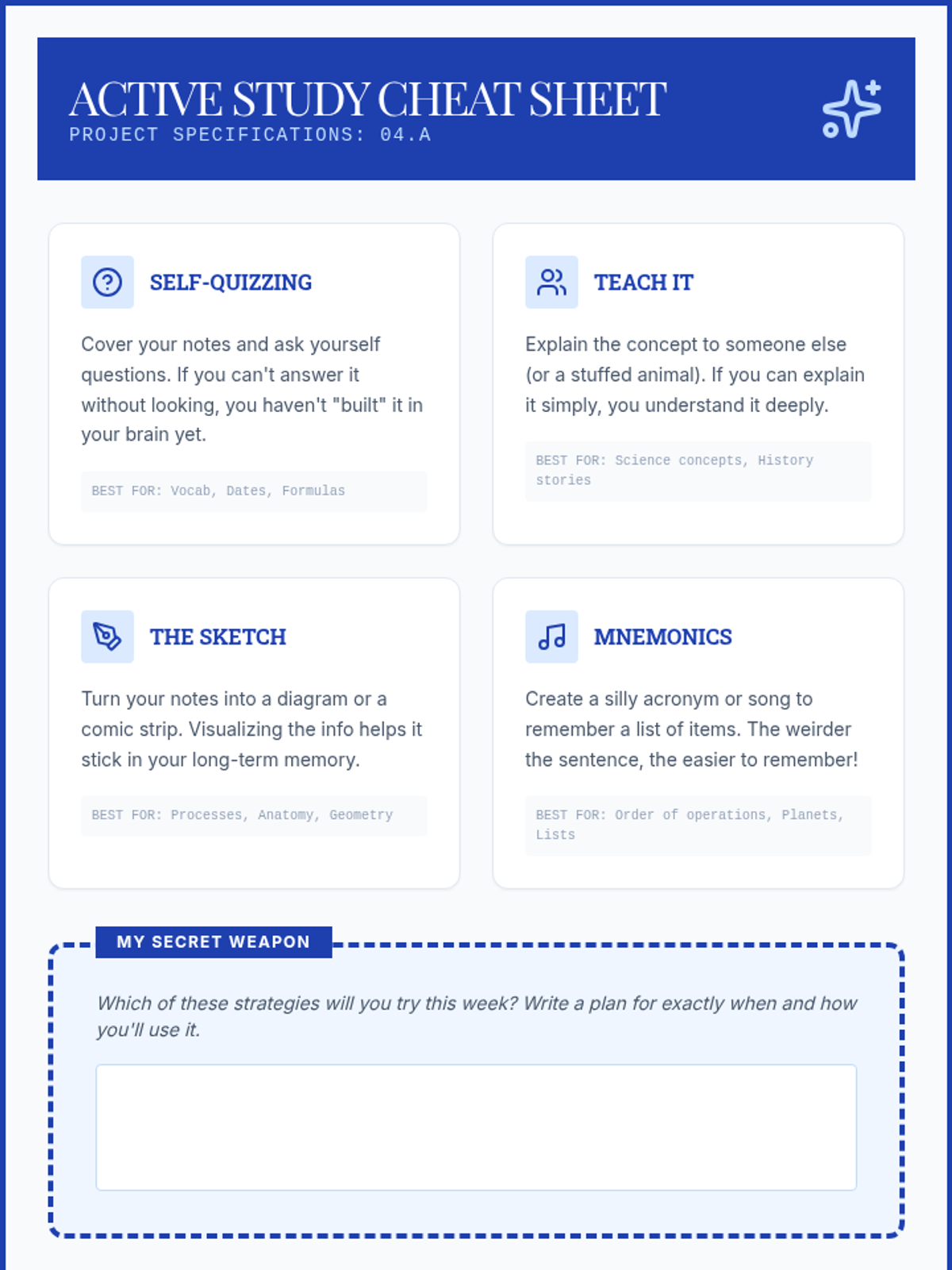
Developing active study habits, creating optimal study environments, and memory enhancement techniques.
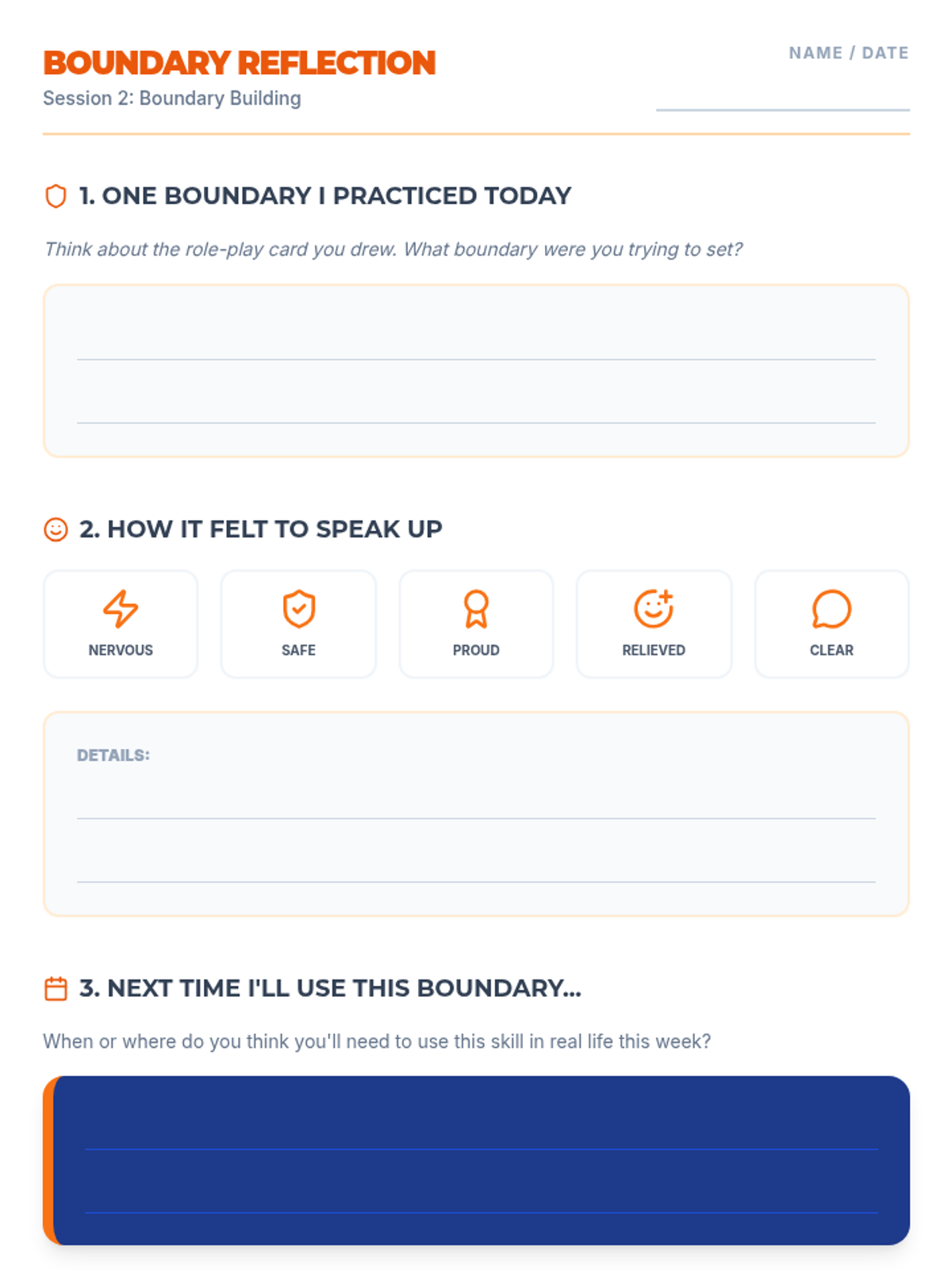
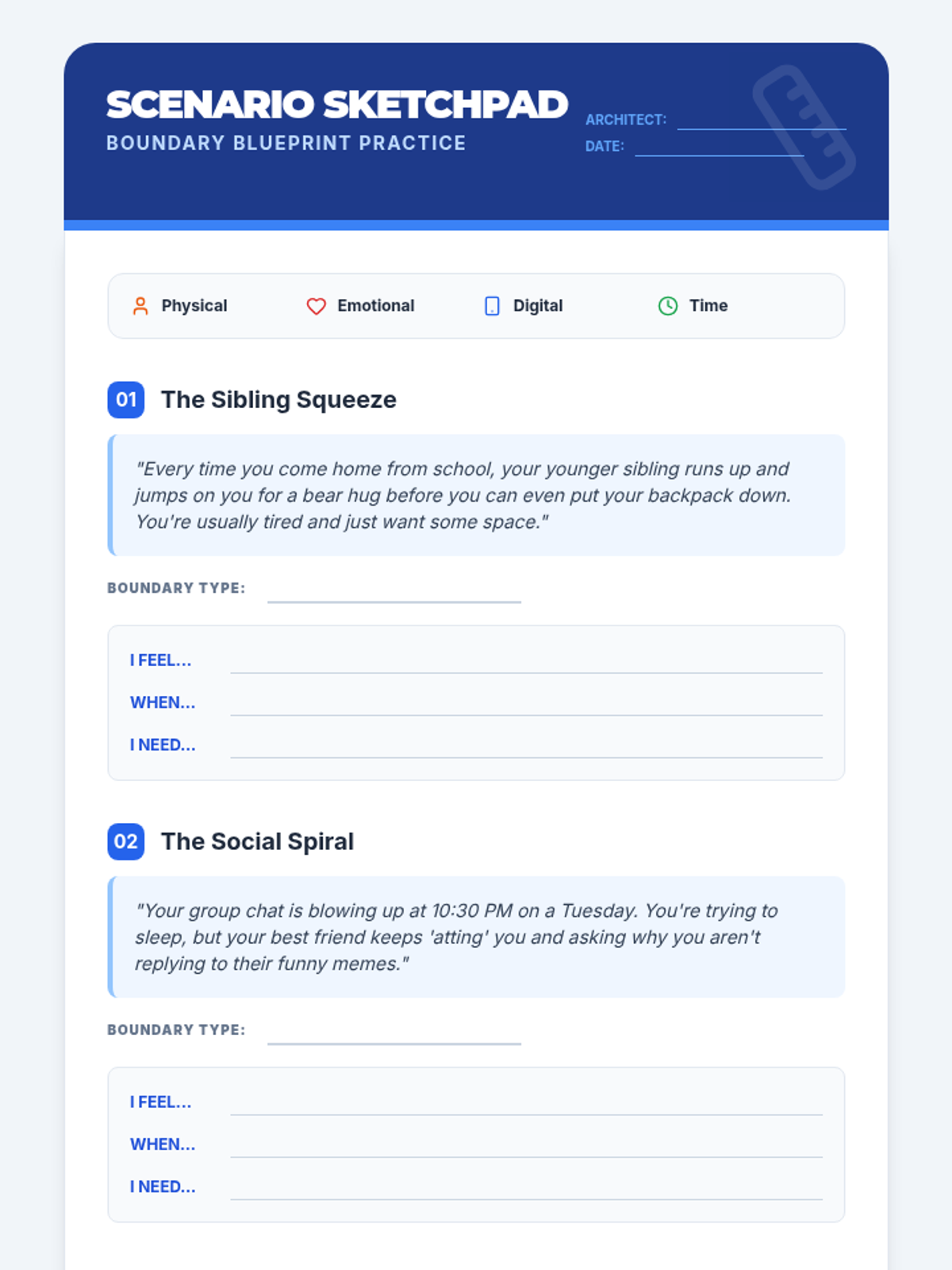
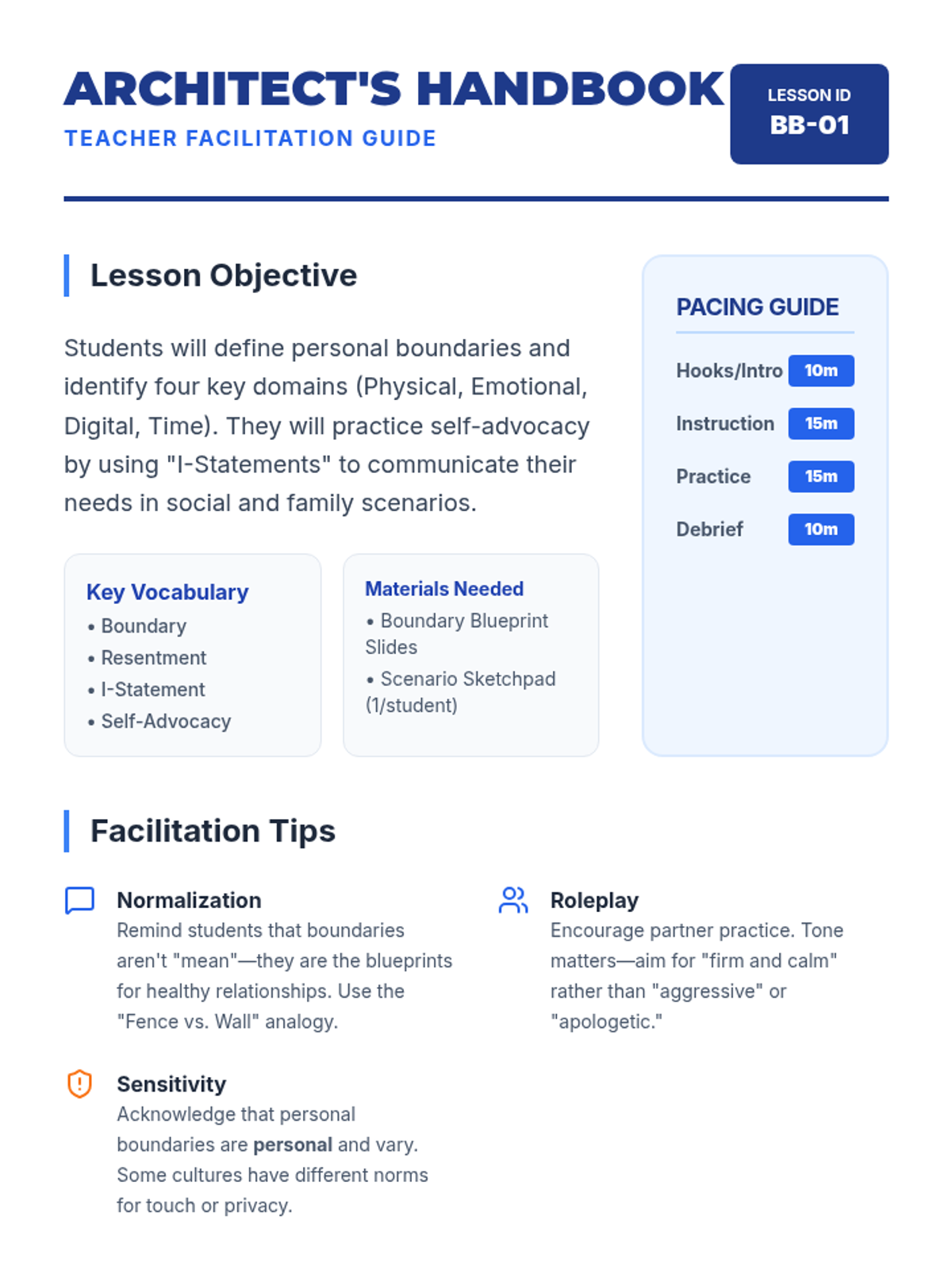
A comprehensive lesson for middle school students on identifying, communicating, and maintaining personal boundaries across physical, emotional, and digital spaces using an architectural blueprint theme.
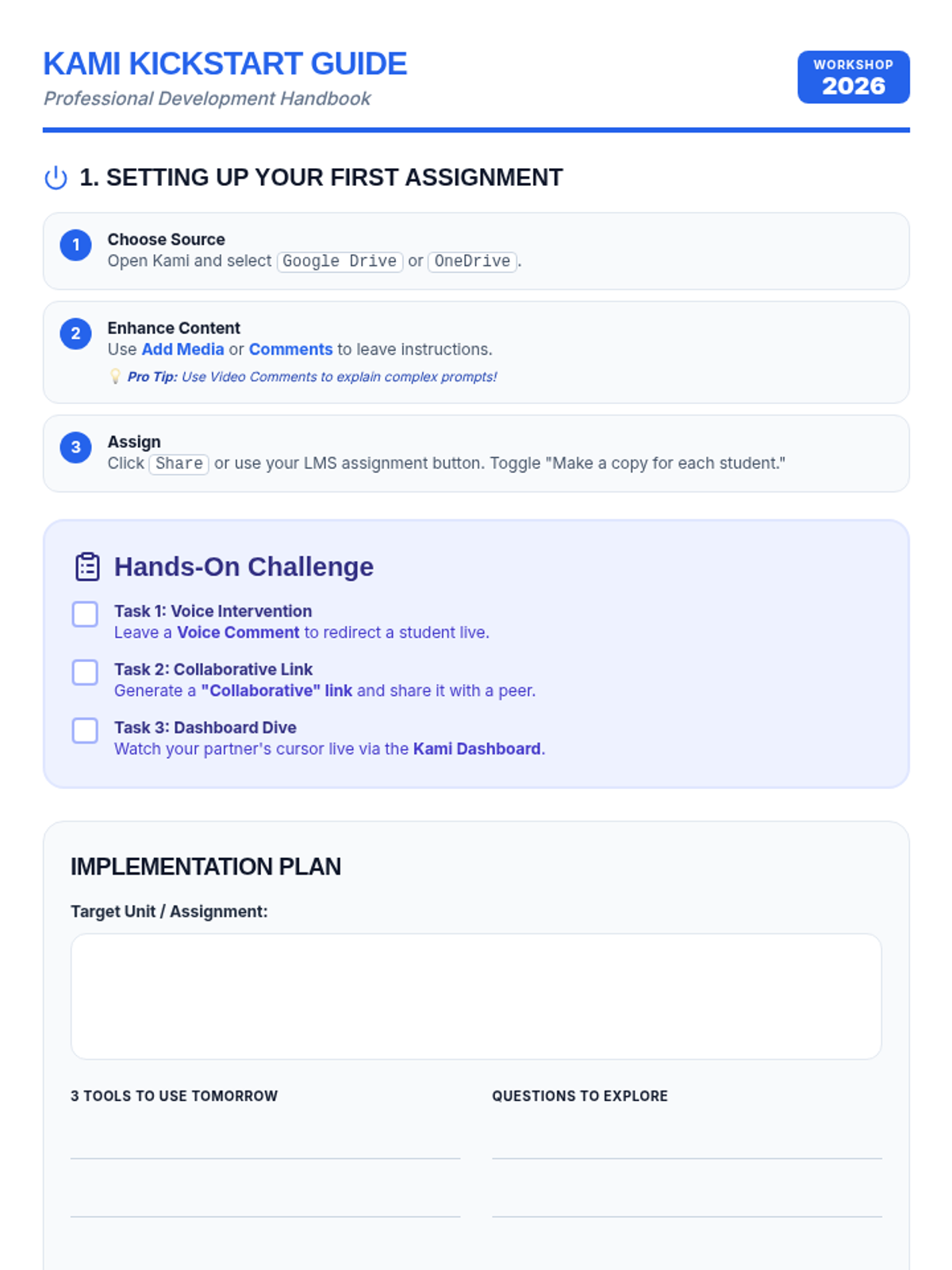
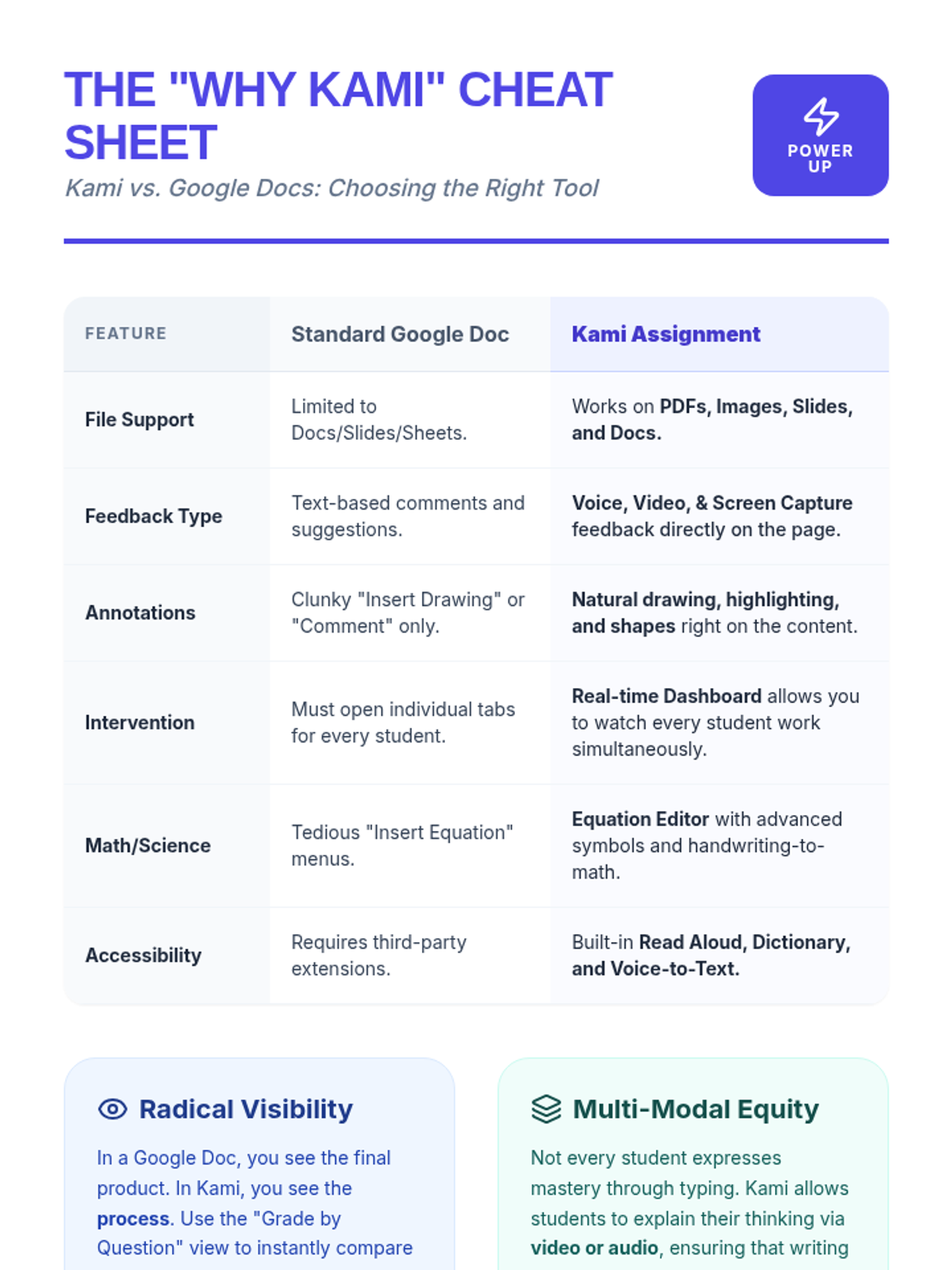
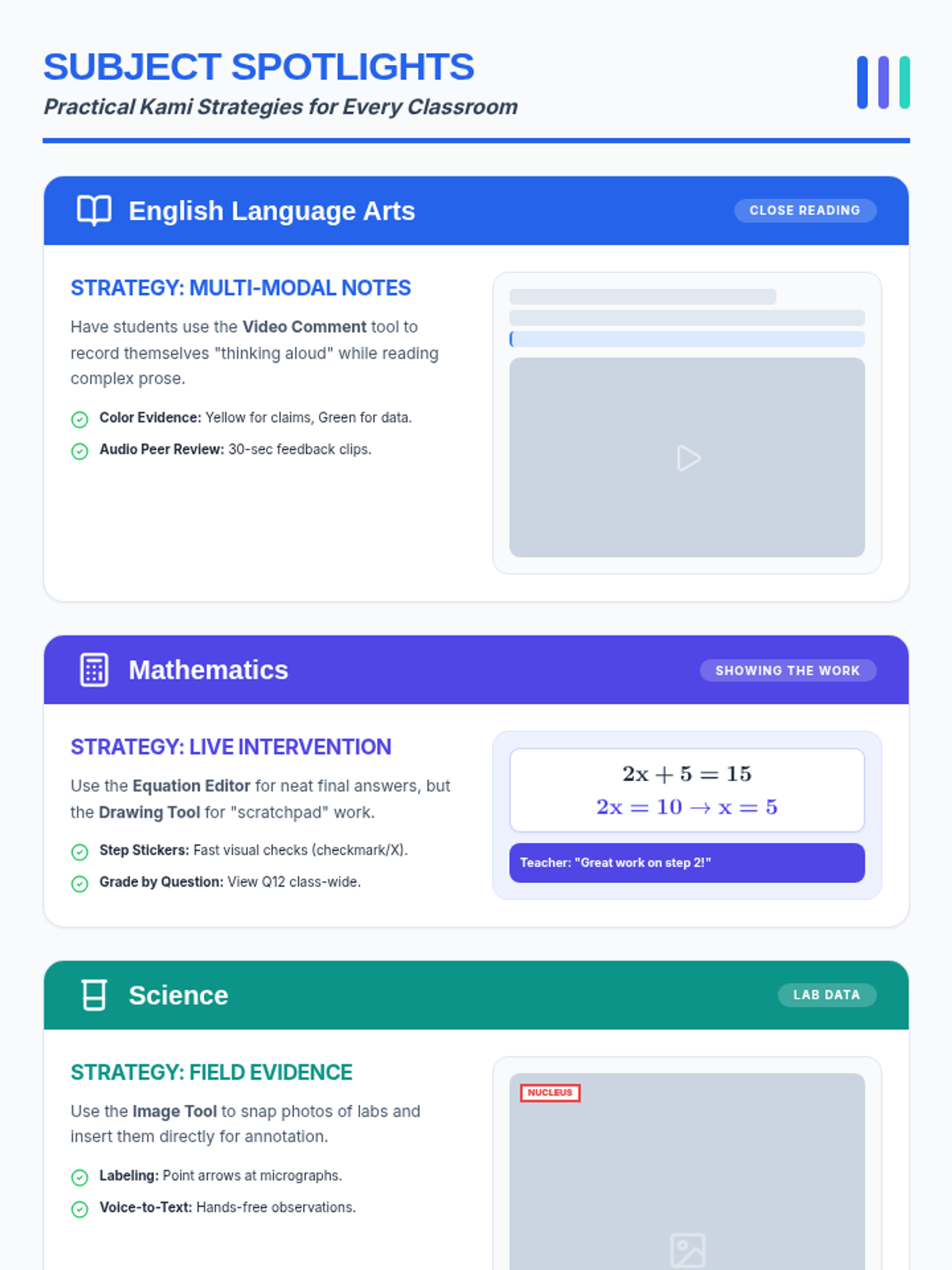
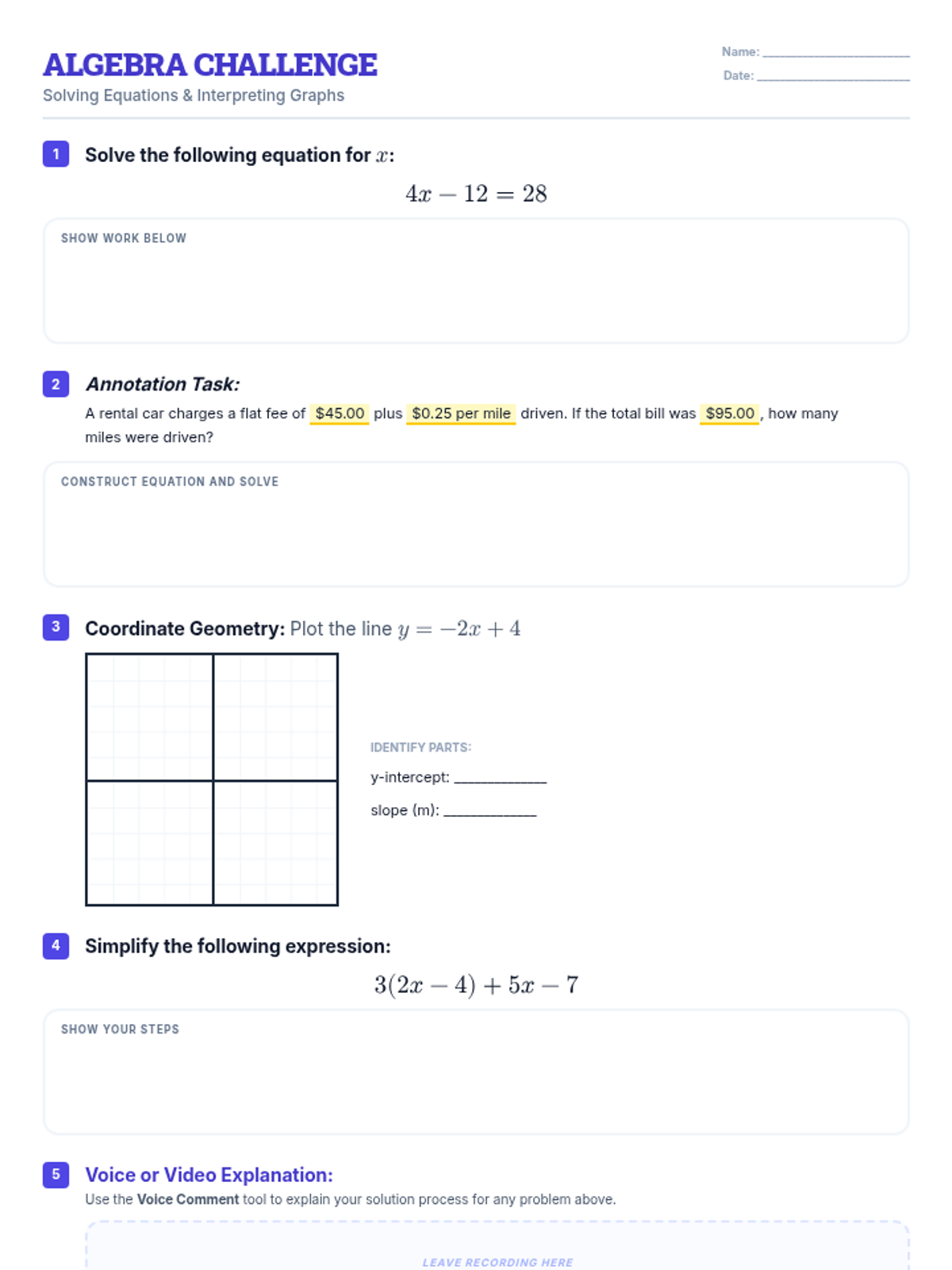
A professional development session for teachers on leveraging Kami to transform static documents into interactive learning experiences, focusing on real-time feedback and collaboration.
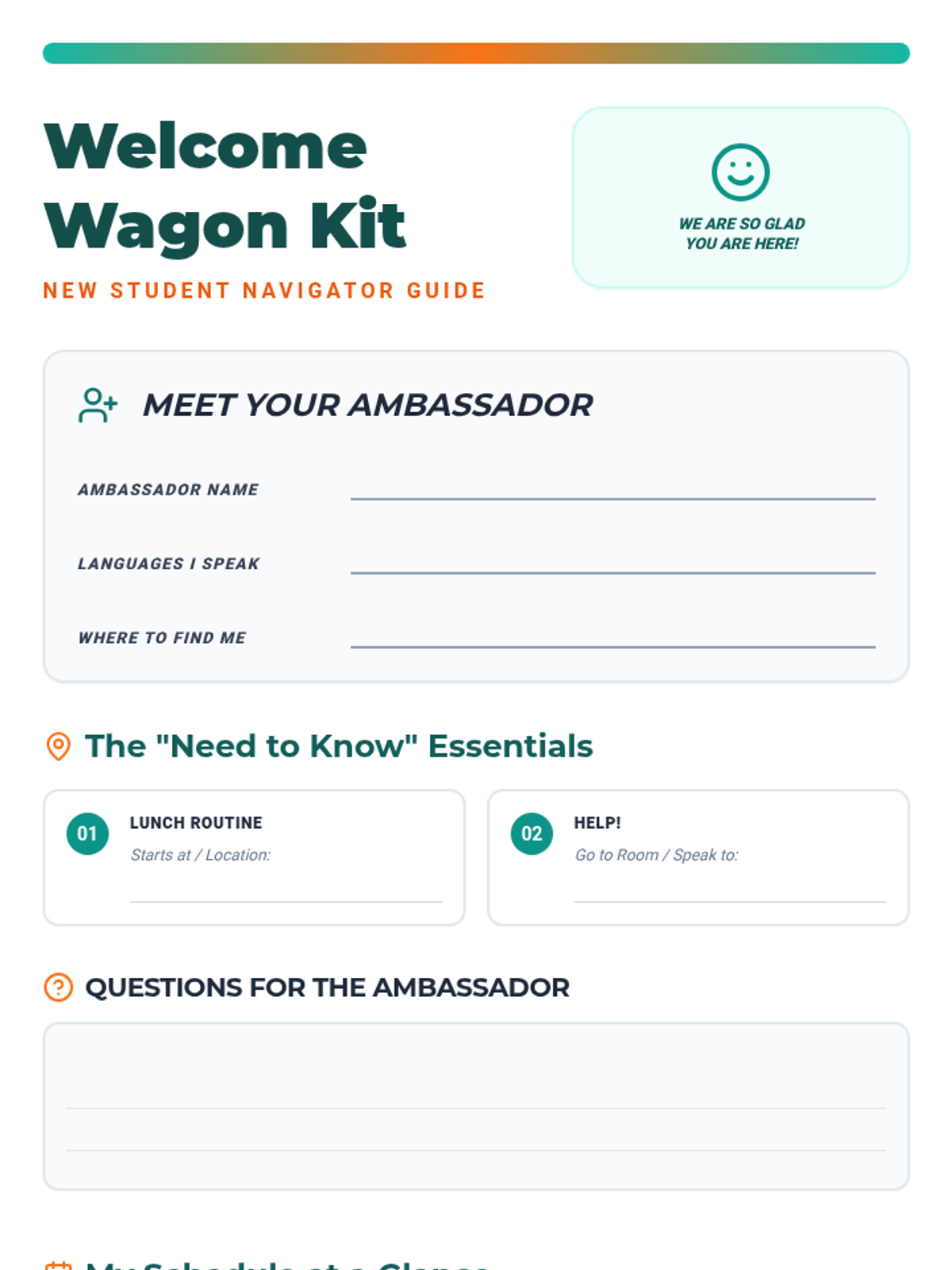
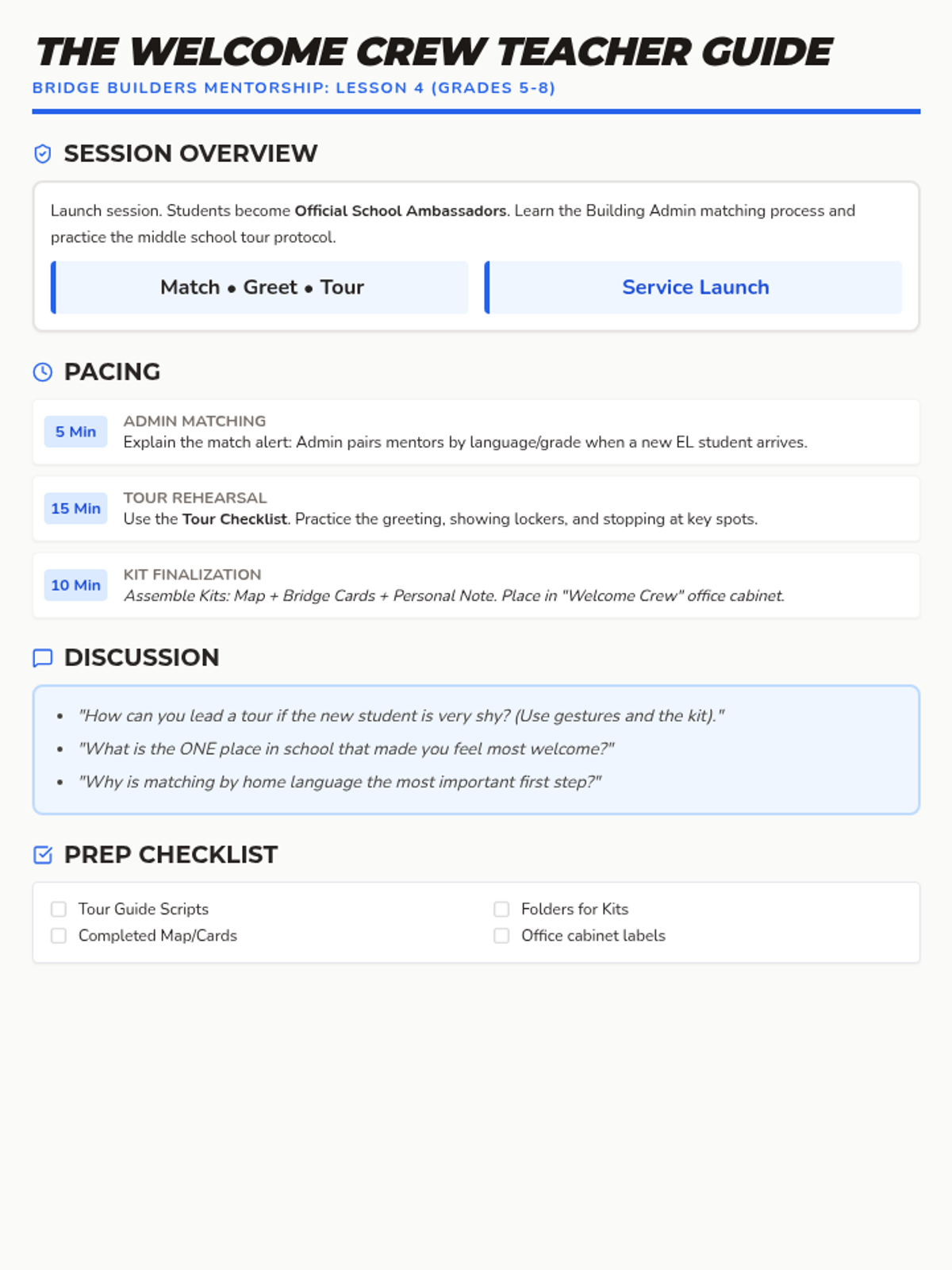
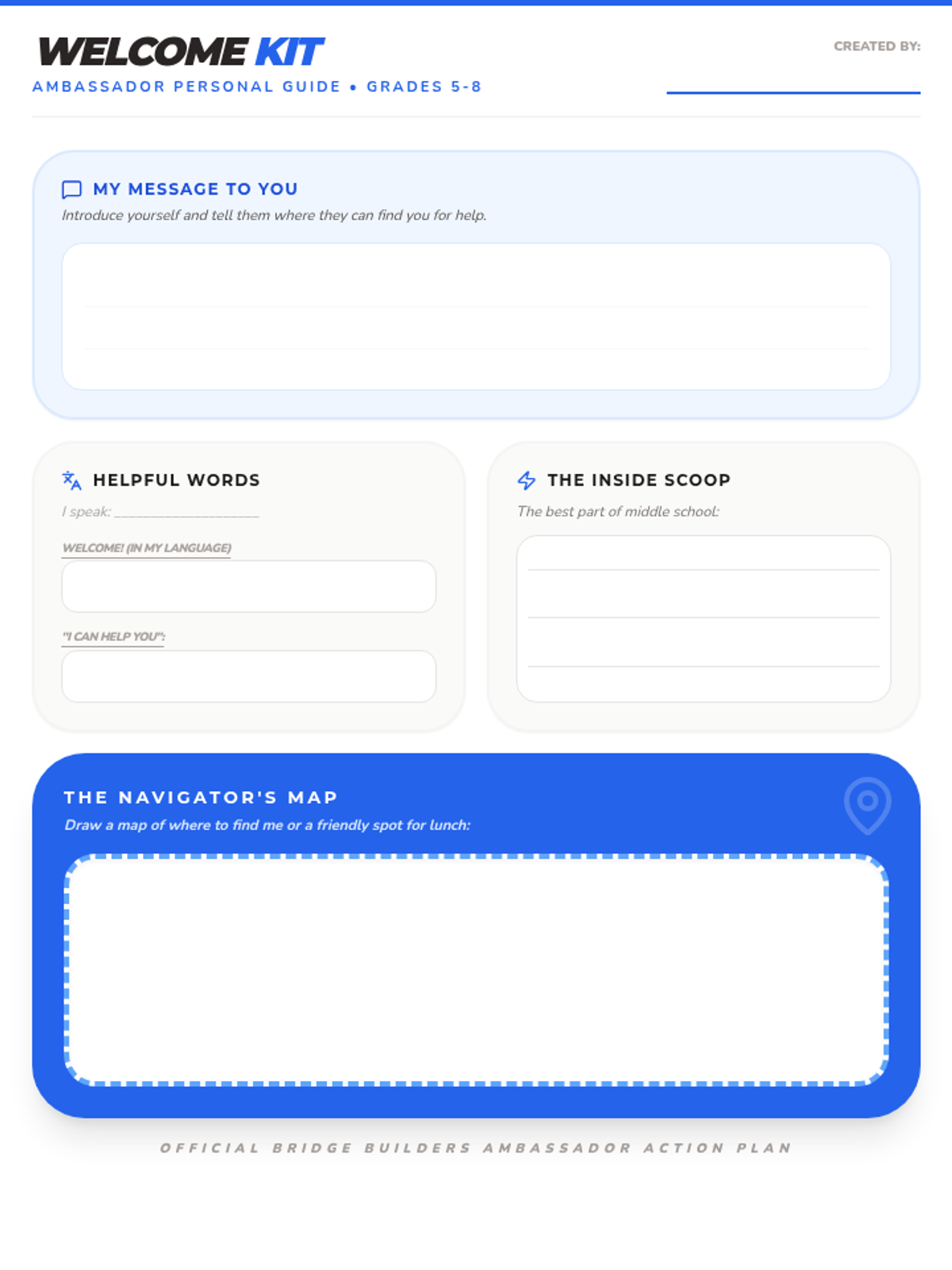
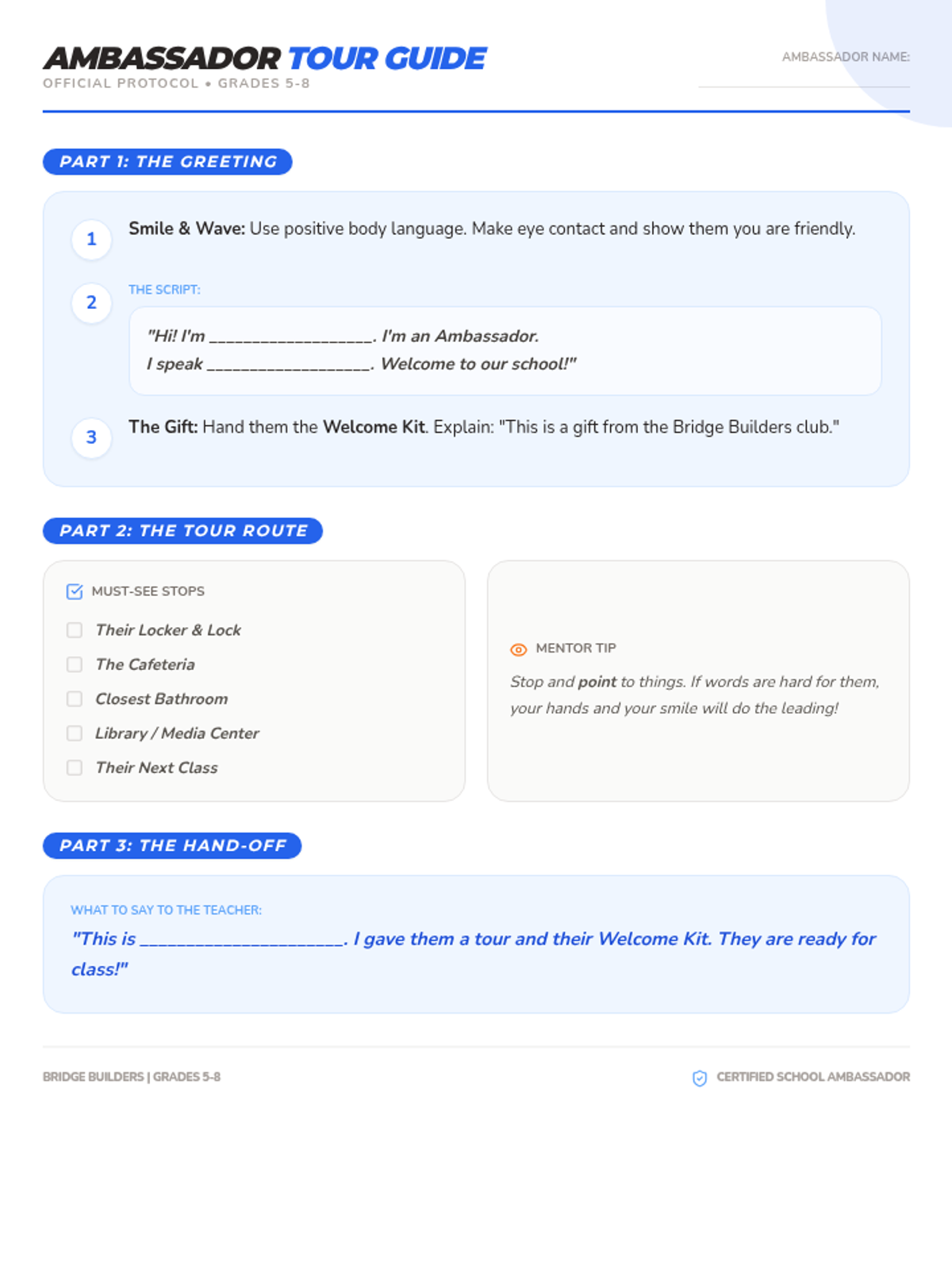
Students finalize their 'Welcome Kits' and develop a concrete action plan for how they will introduce themselves to new students throughout the year.
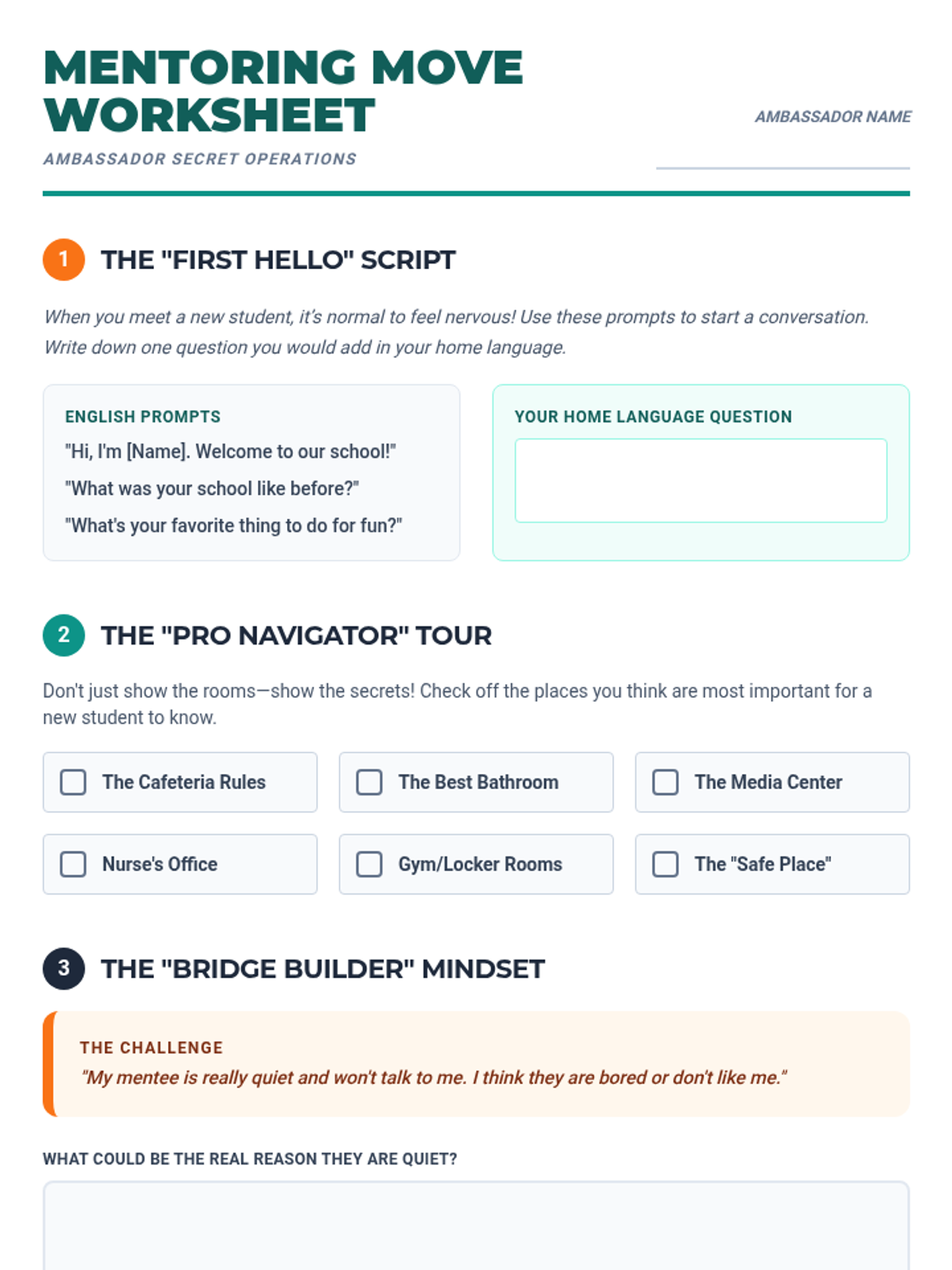
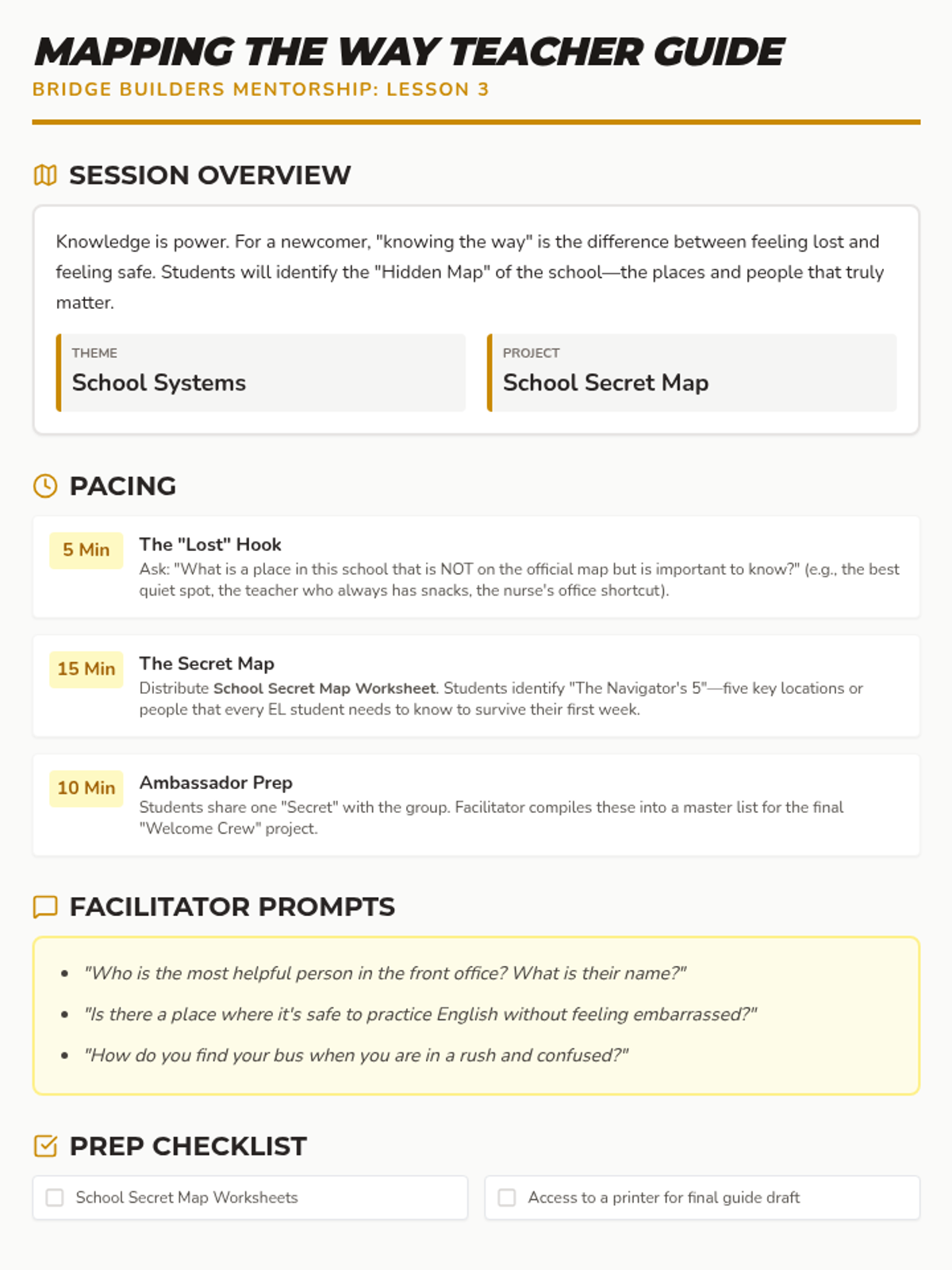
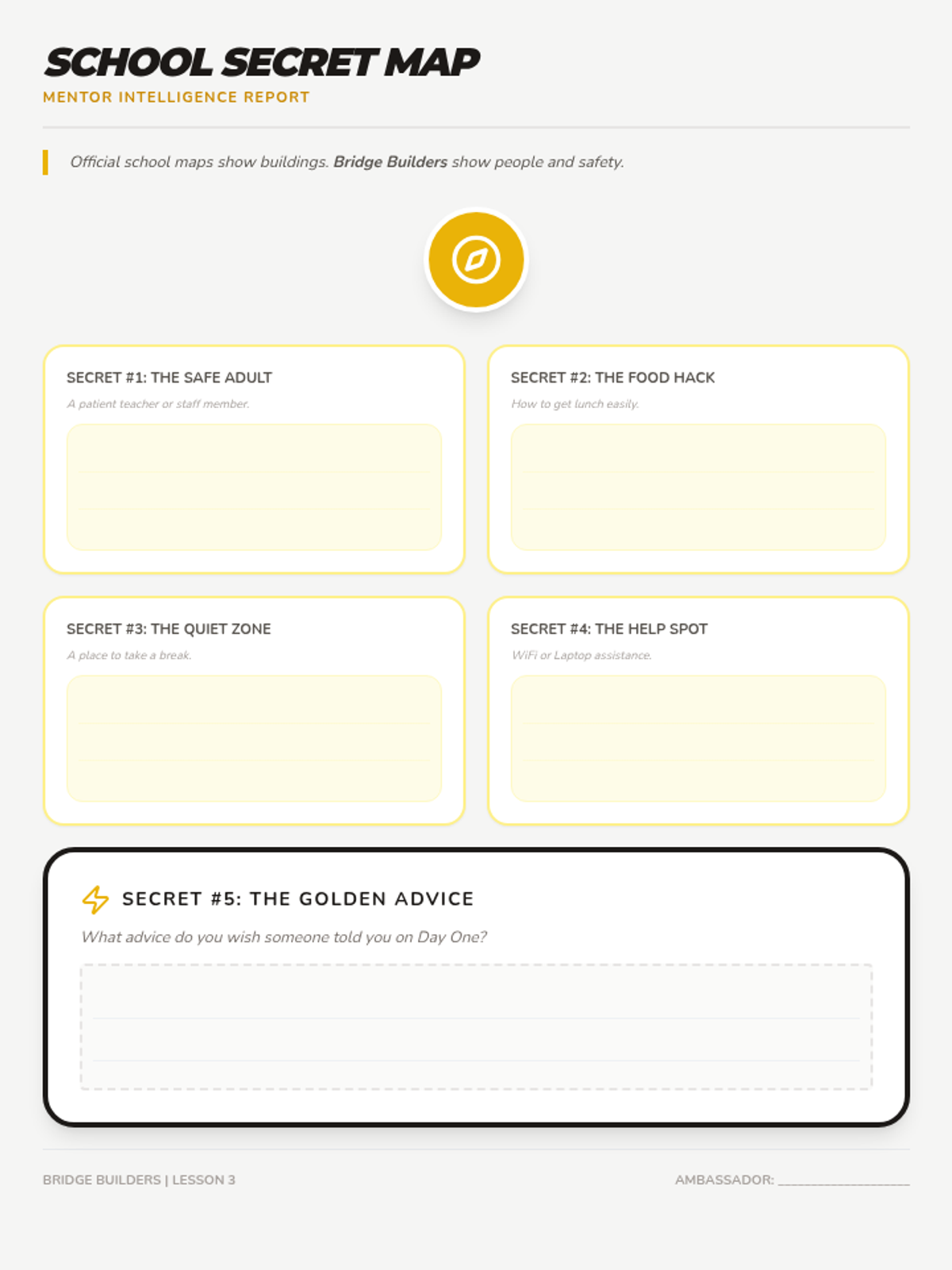
Students identify key people and places in the school that are essential for new students to know, creating a 'hidden map' of support.
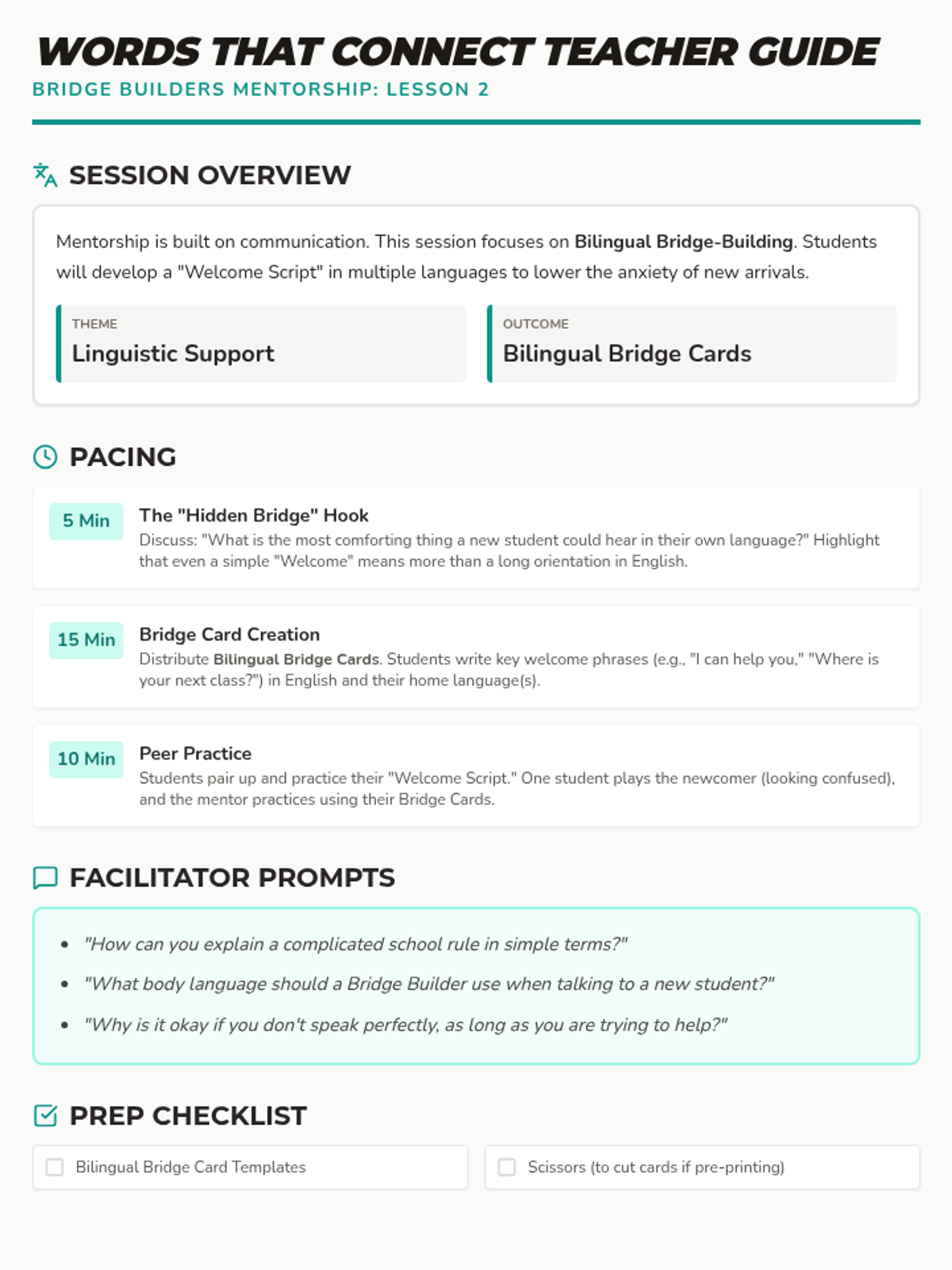
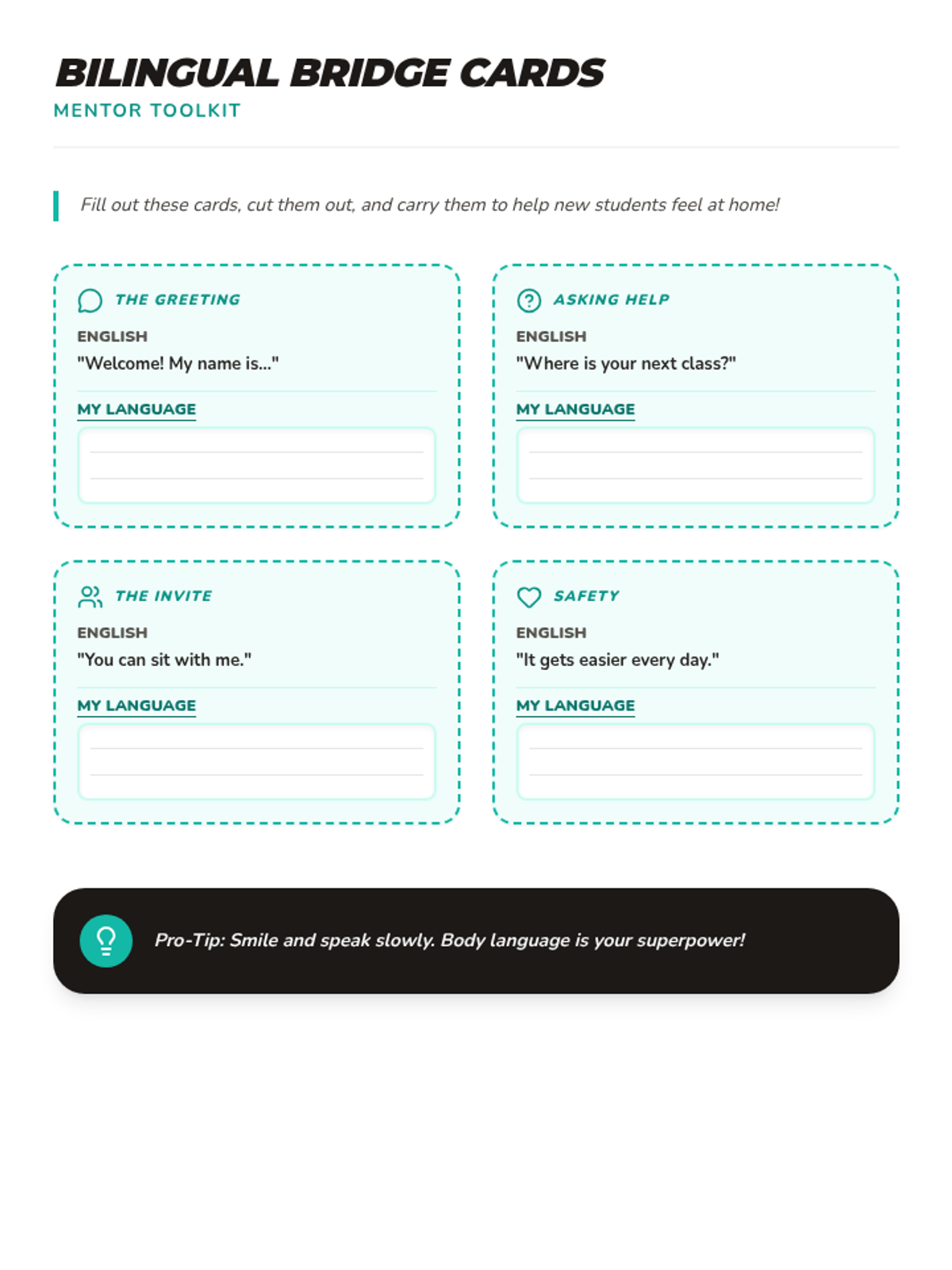
Students practice bilingual communication and develop a set of 'connector' phrases in multiple languages to help new students feel heard and seen.
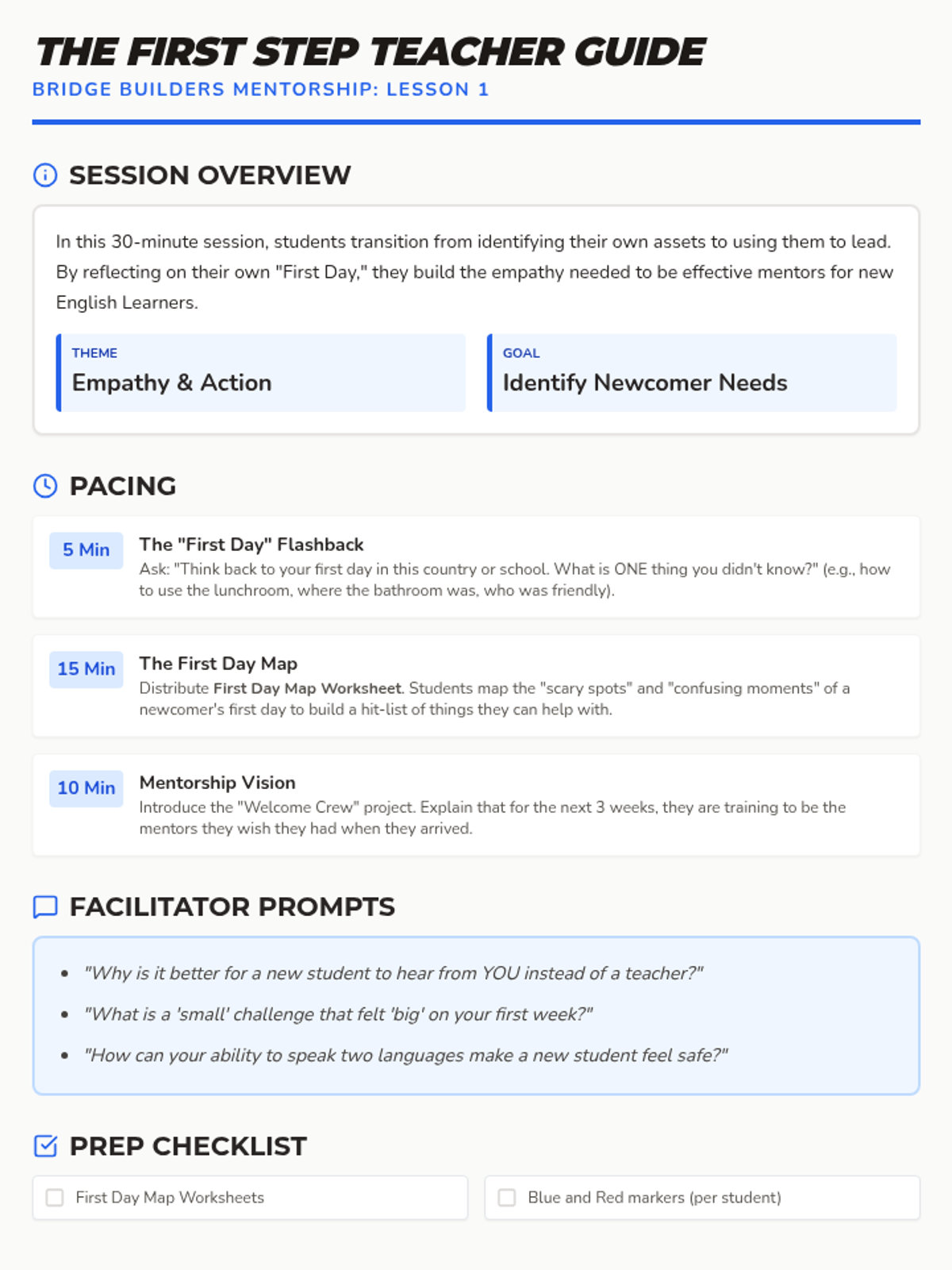
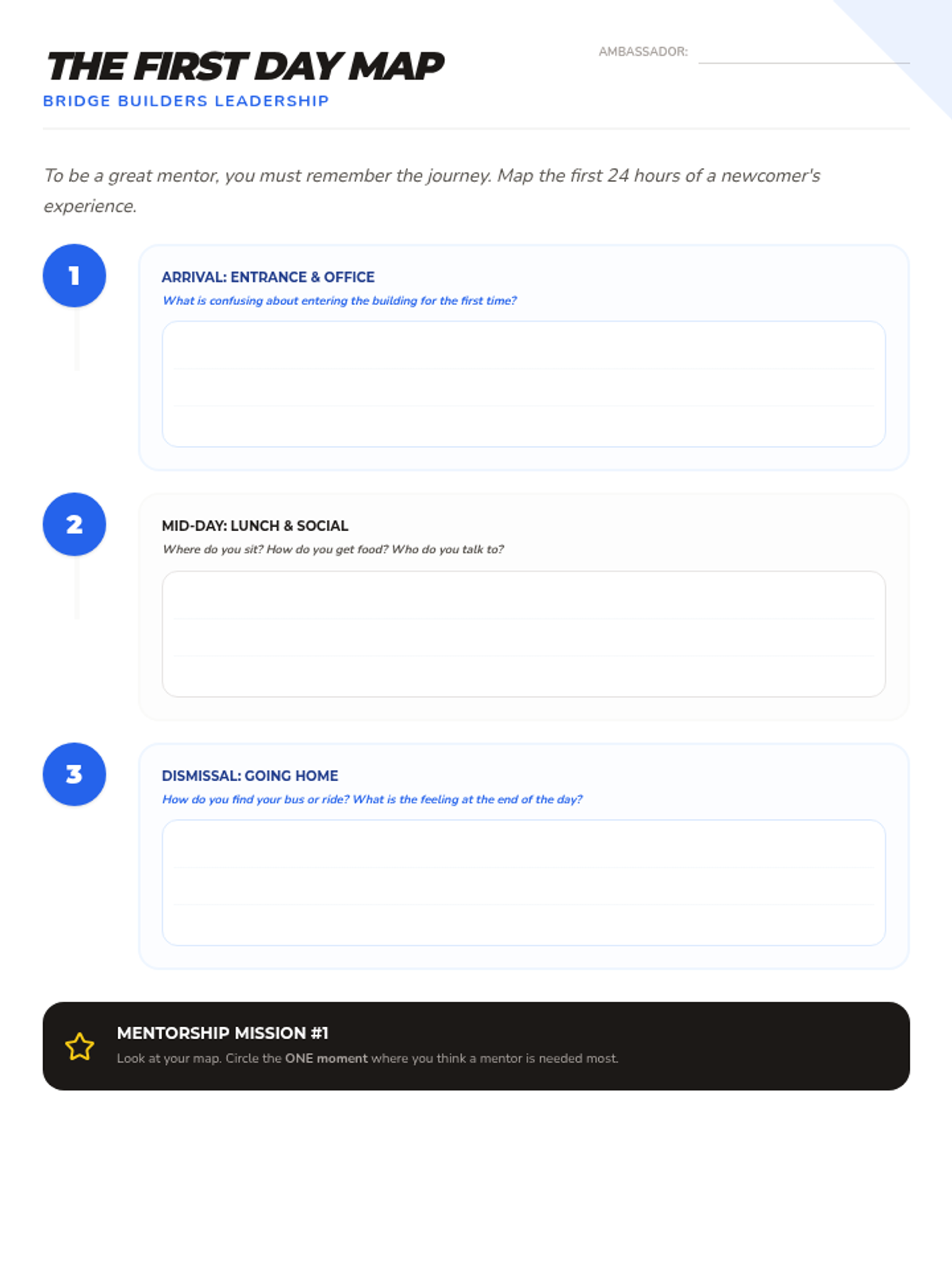
Students reflect on their own experiences as new arrivals to build empathy and identify the specific challenges new English Learners face on their first day.
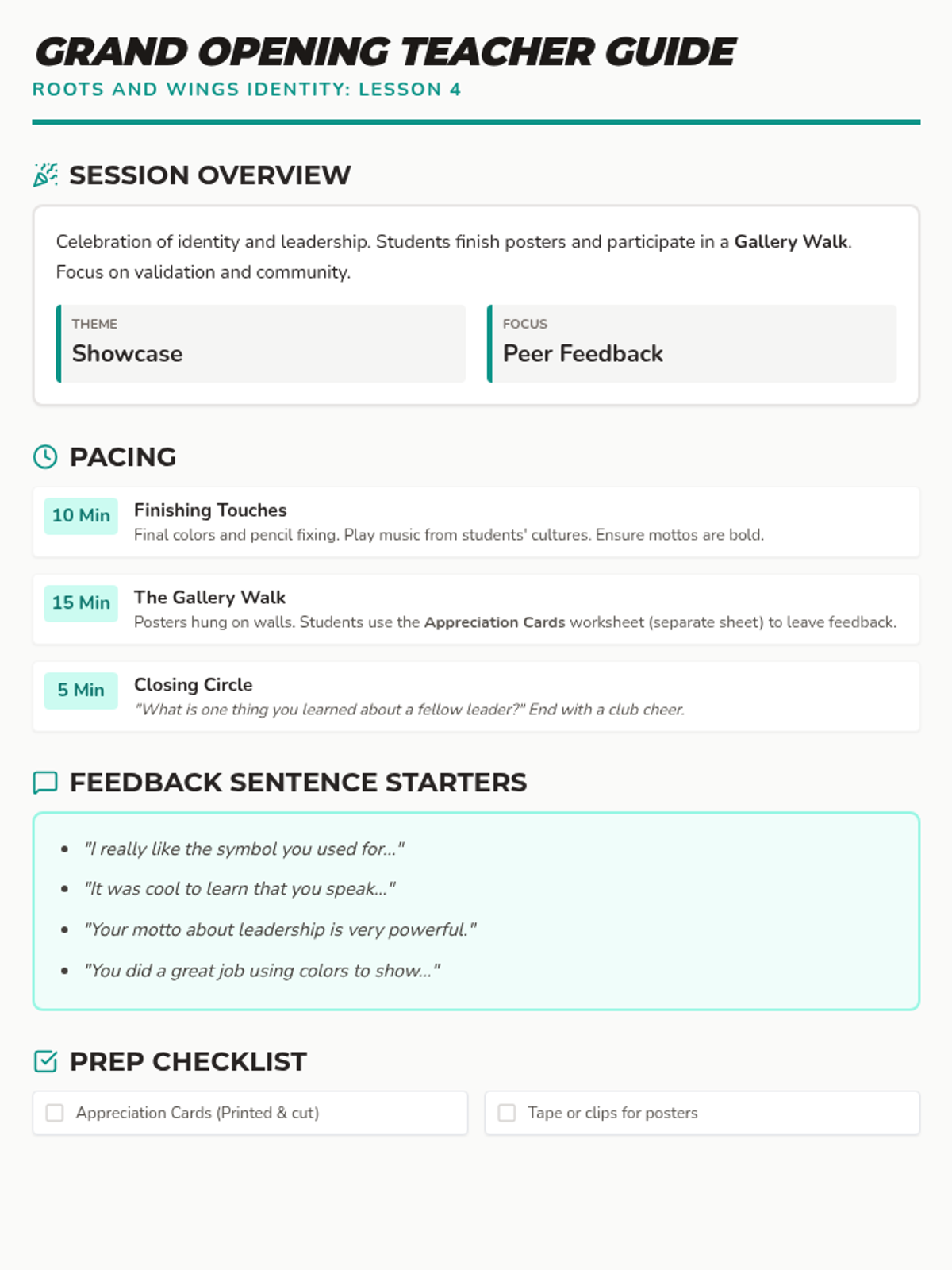
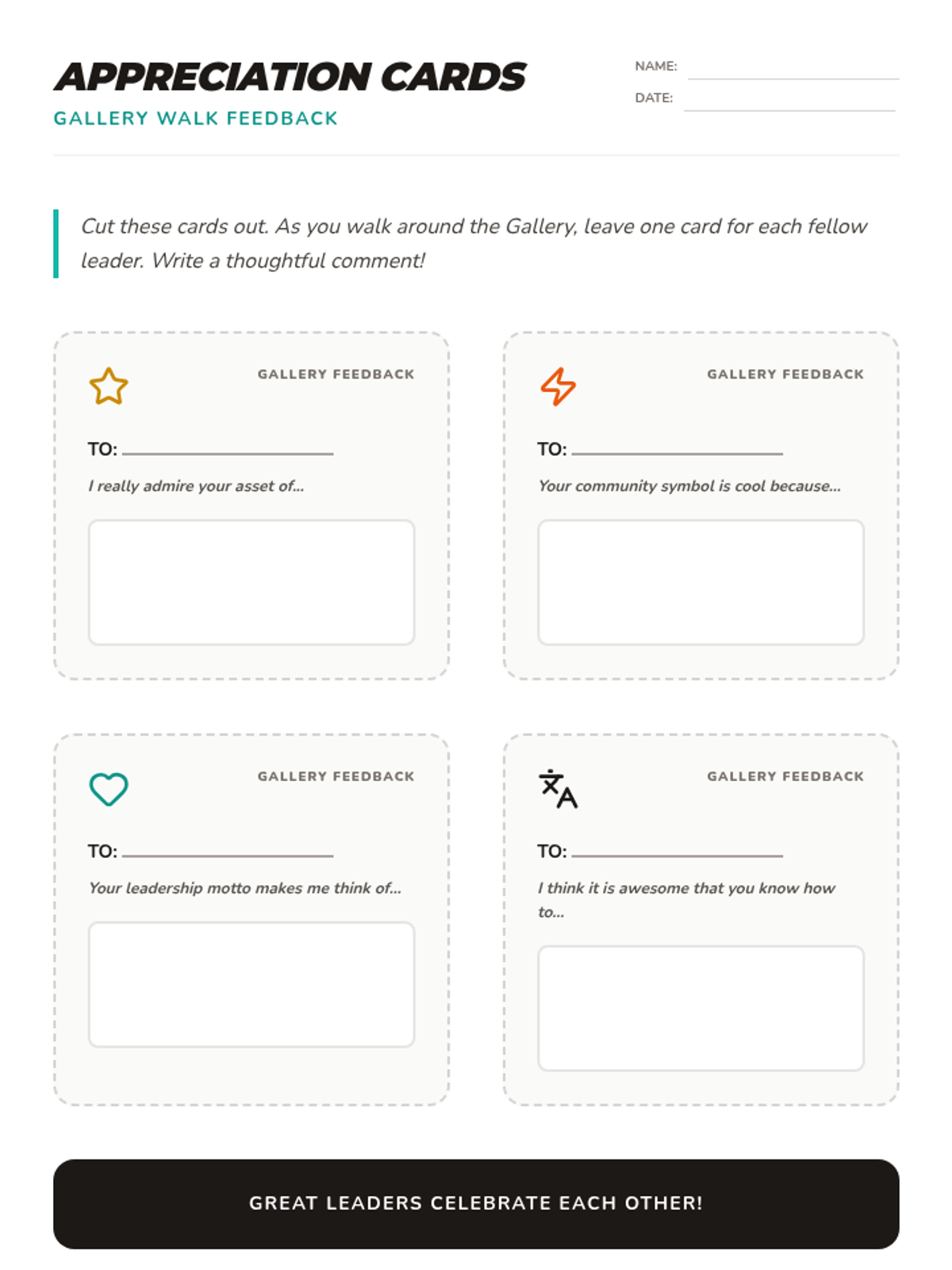
A celebratory session where students finalize their posters and participate in a gallery walk to share their work with the club.
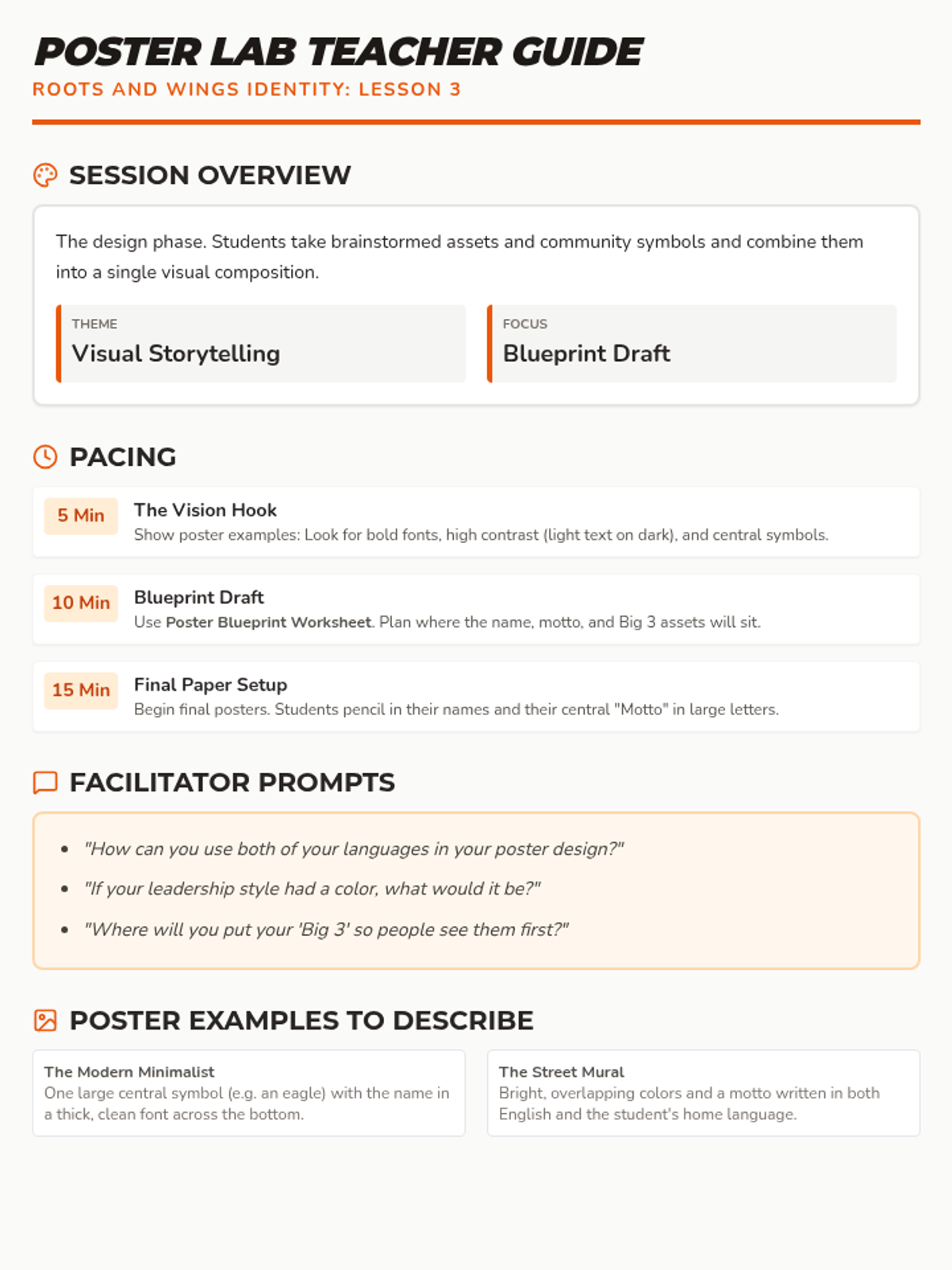
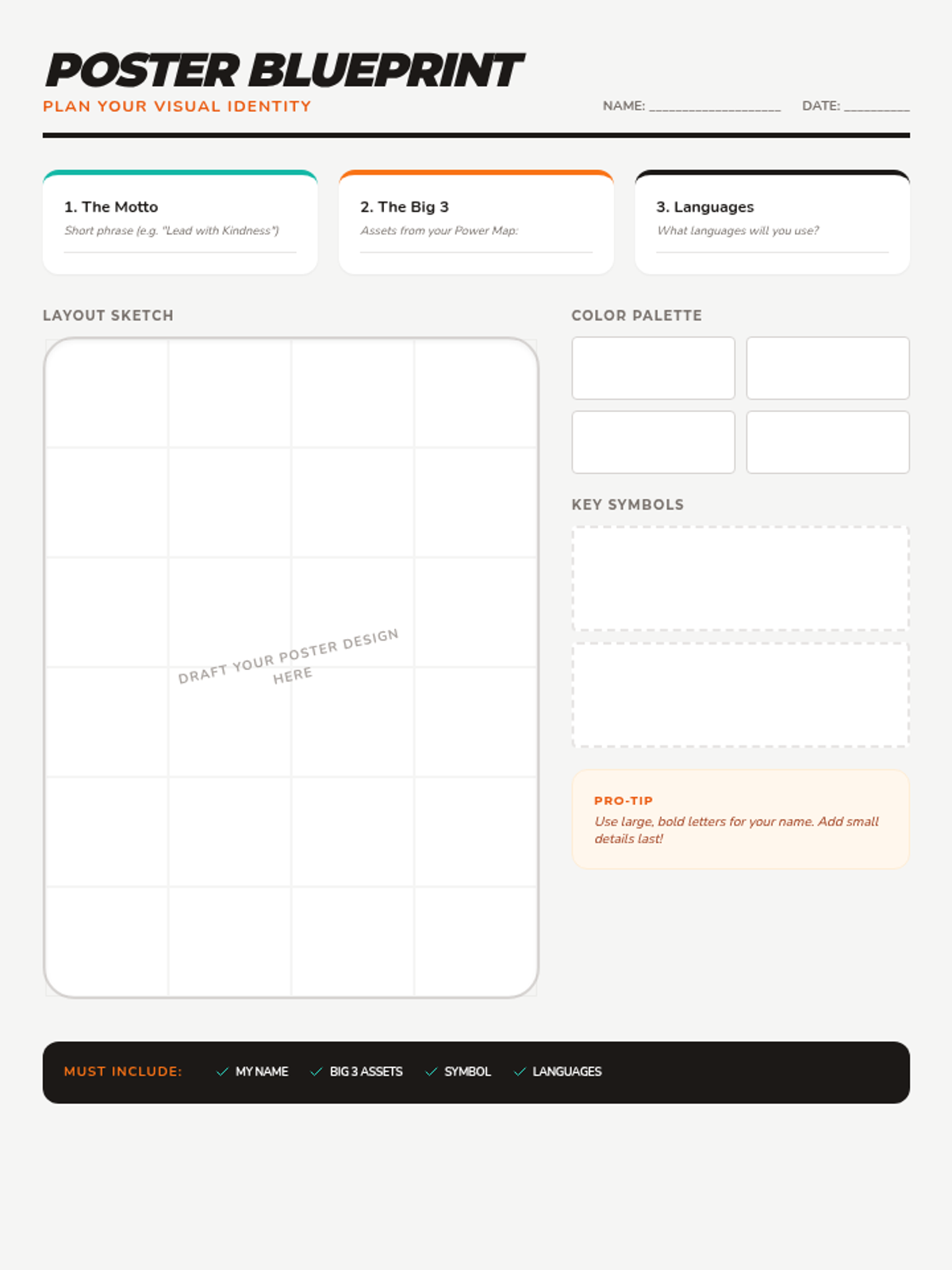
Students begin the design process for their visual identity posters, selecting symbols, colors, and words that represent their unique leadership style and background.
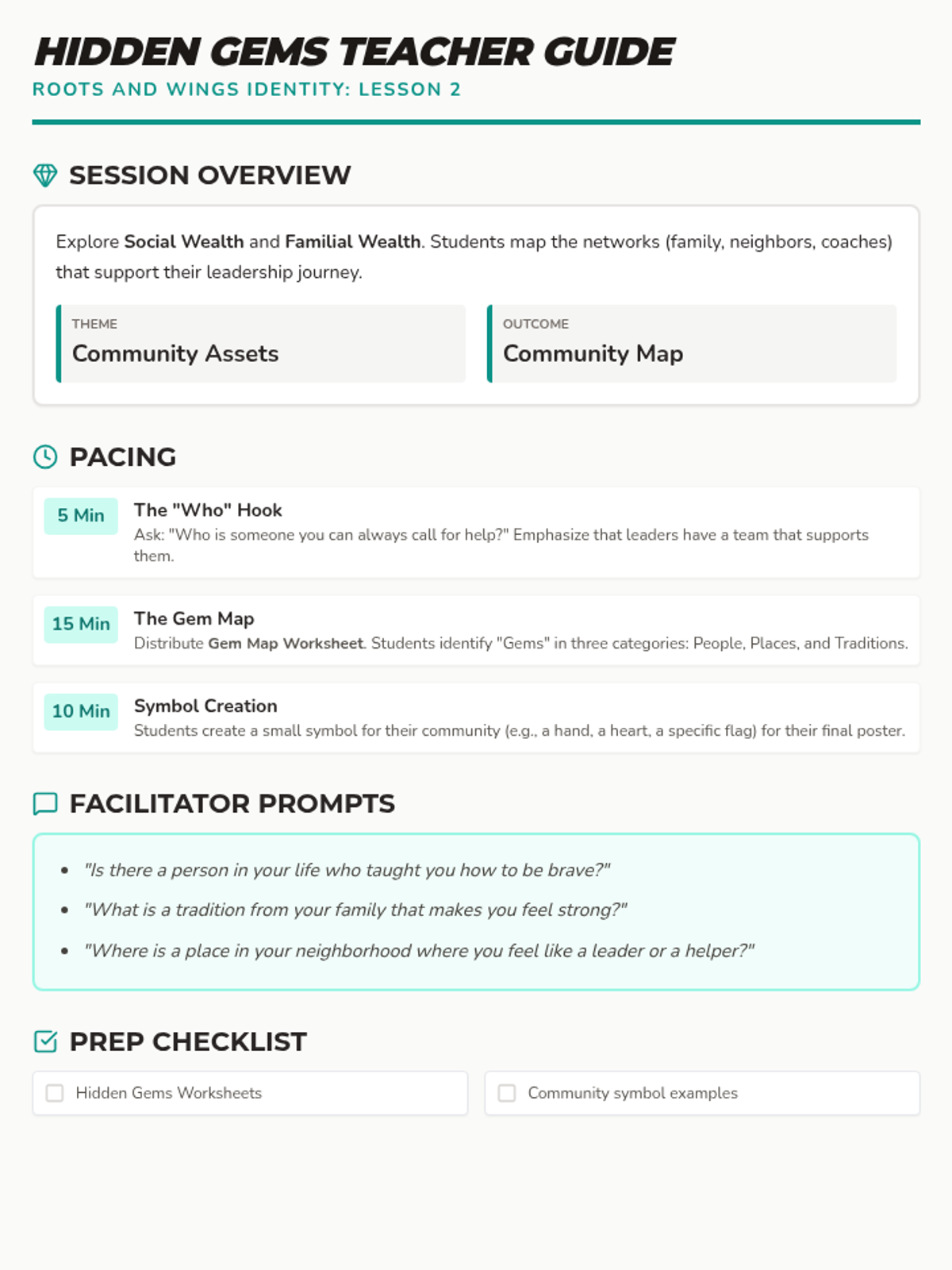
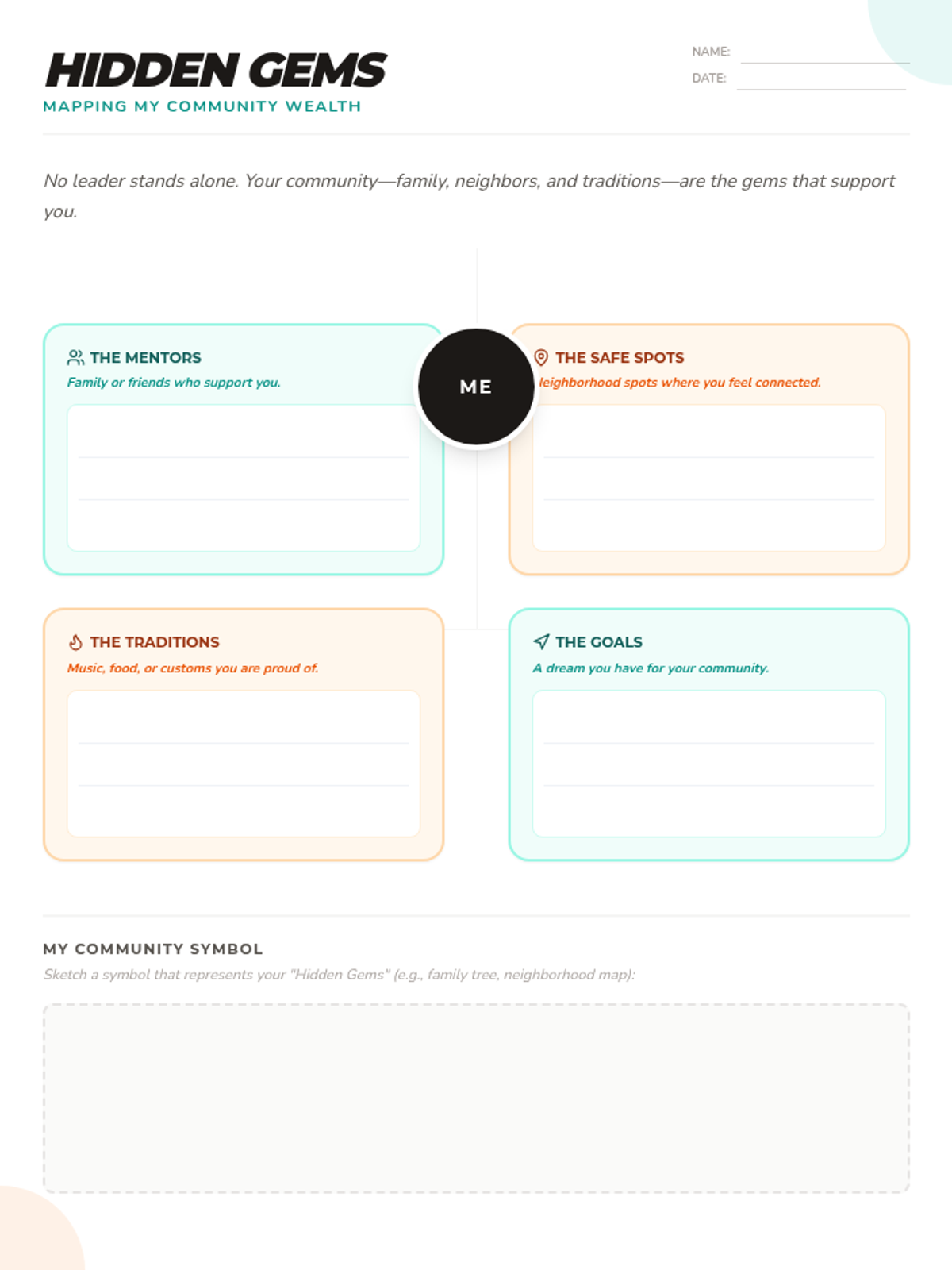
Students explore the concept of 'Community Cultural Wealth,' identifying the people, places, and traditions that support their leadership journey.
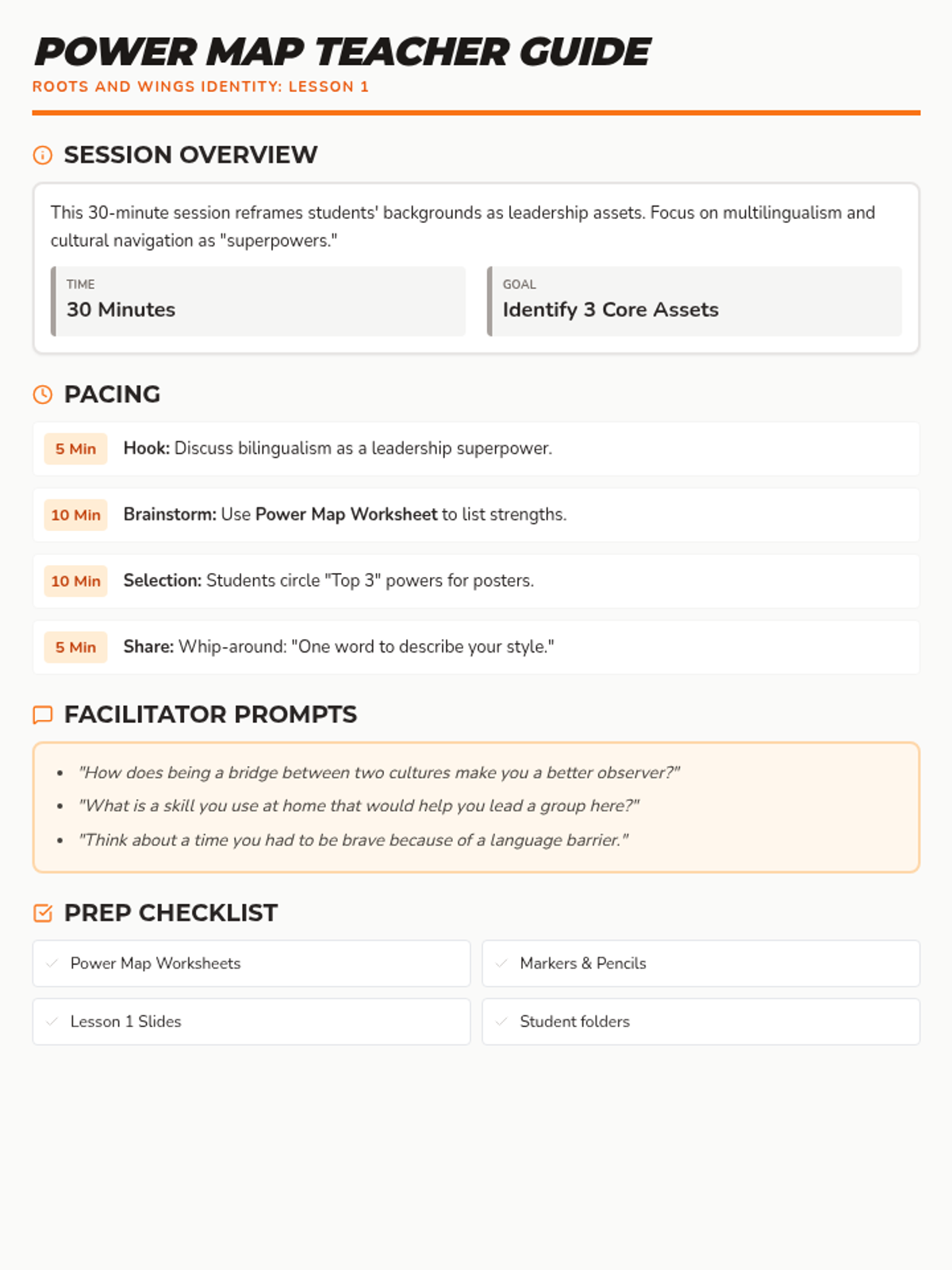
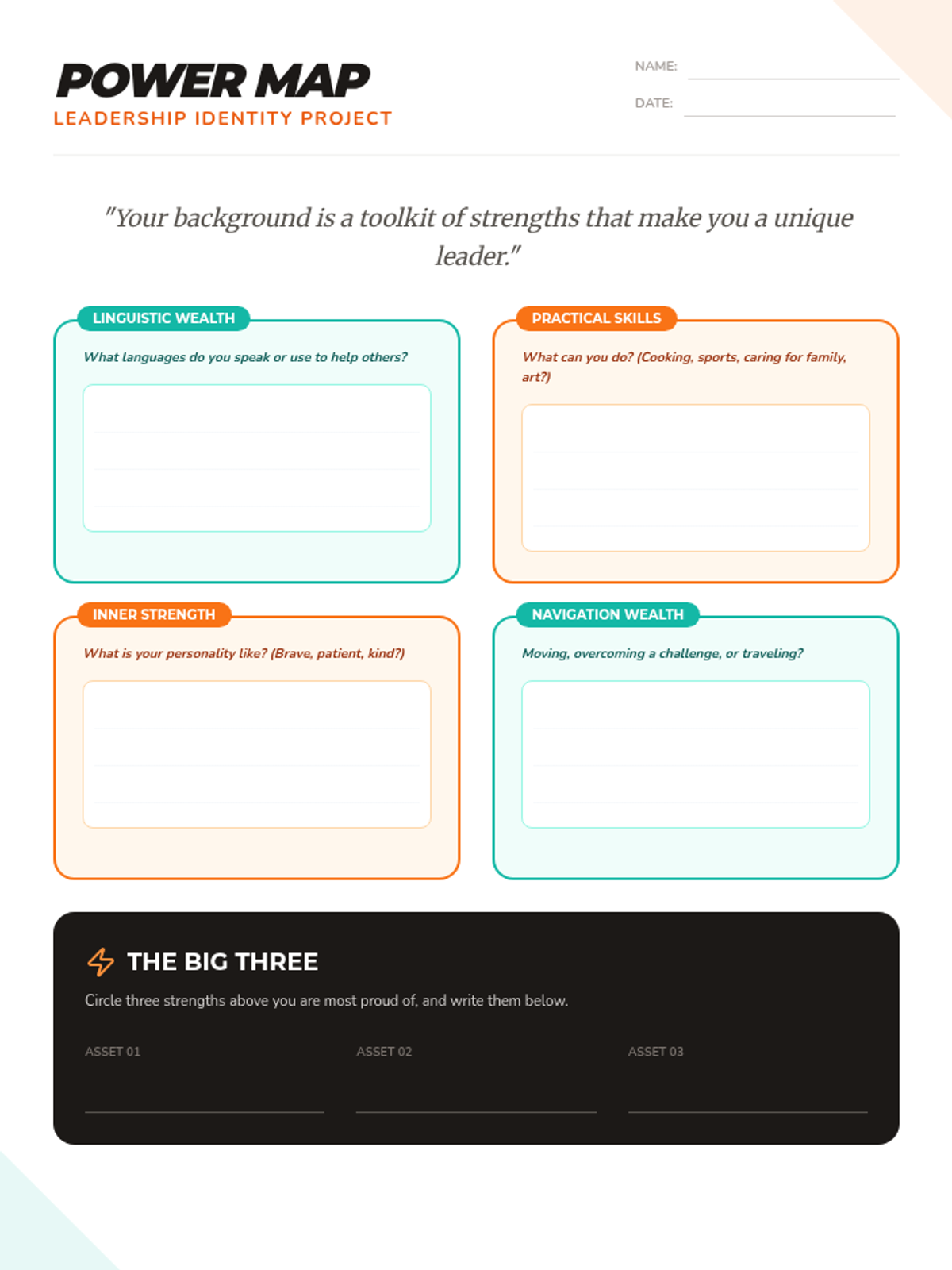
Students identify their personal strengths and the 'superpower' of being multilingual, mapping out the assets they bring to the leadership club.
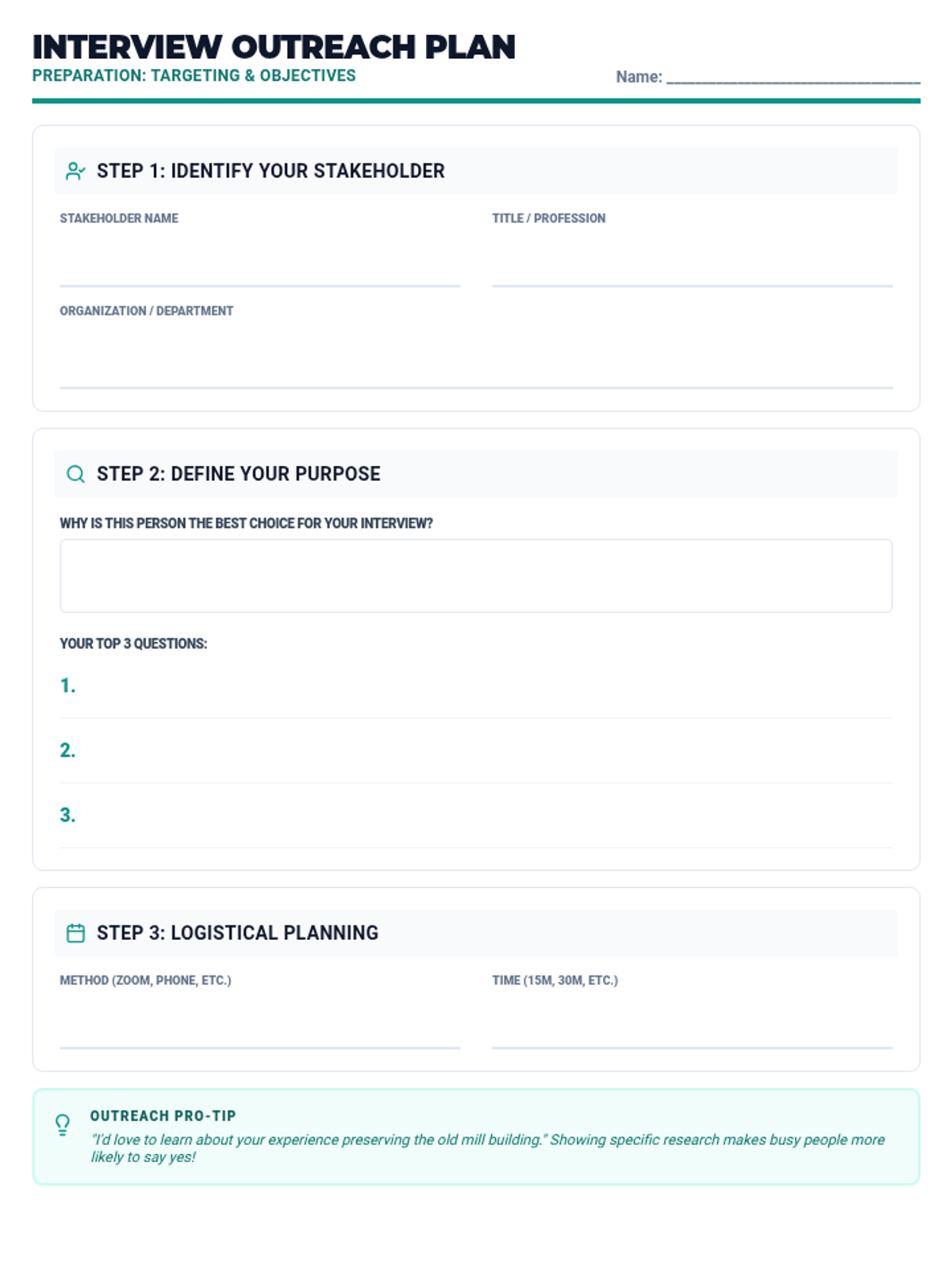
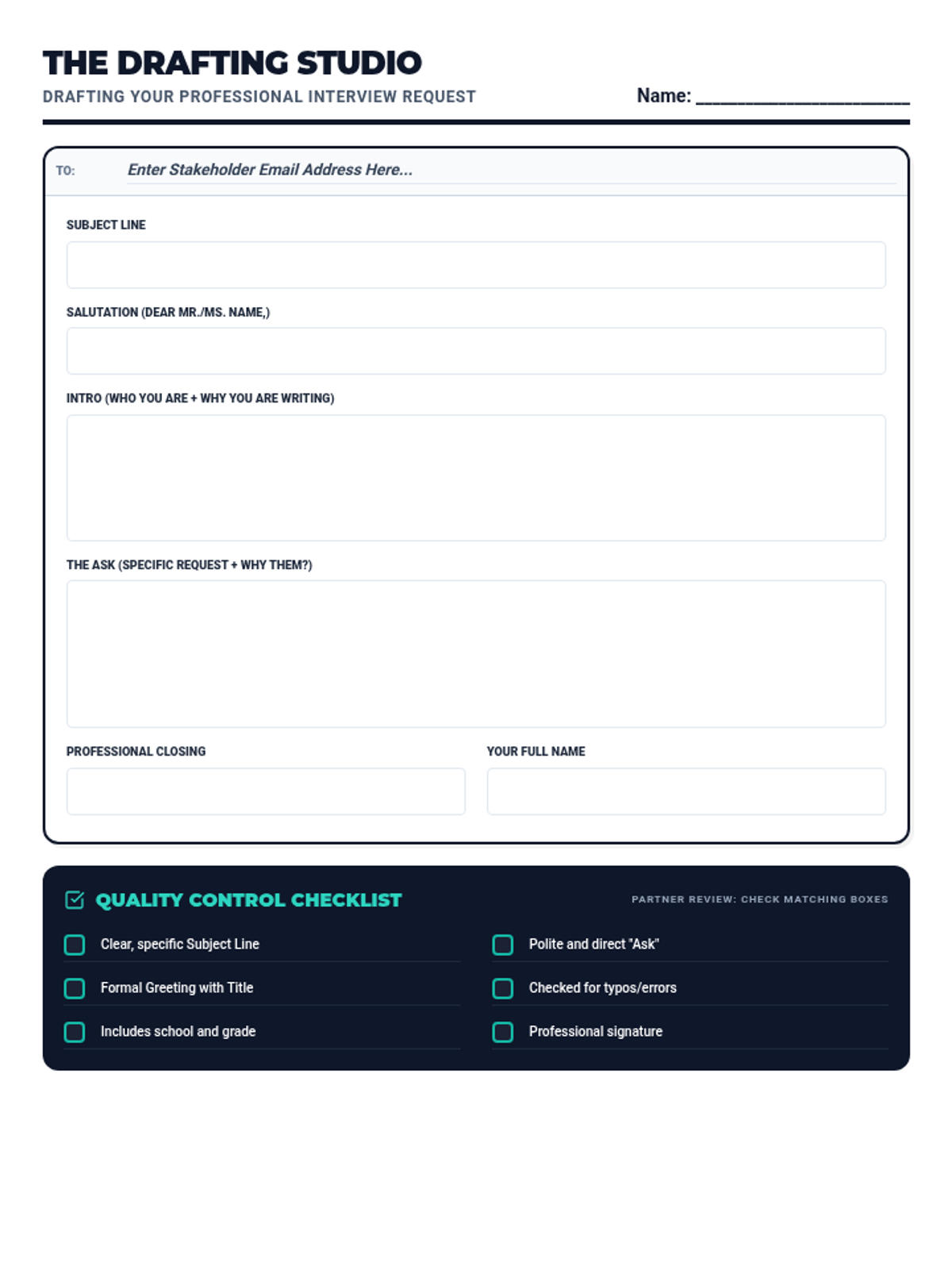
Students learn the art of professional communication by planning and drafting interview request emails to community stakeholders. The lesson covers email anatomy, etiquette, and clear outreach strategies.
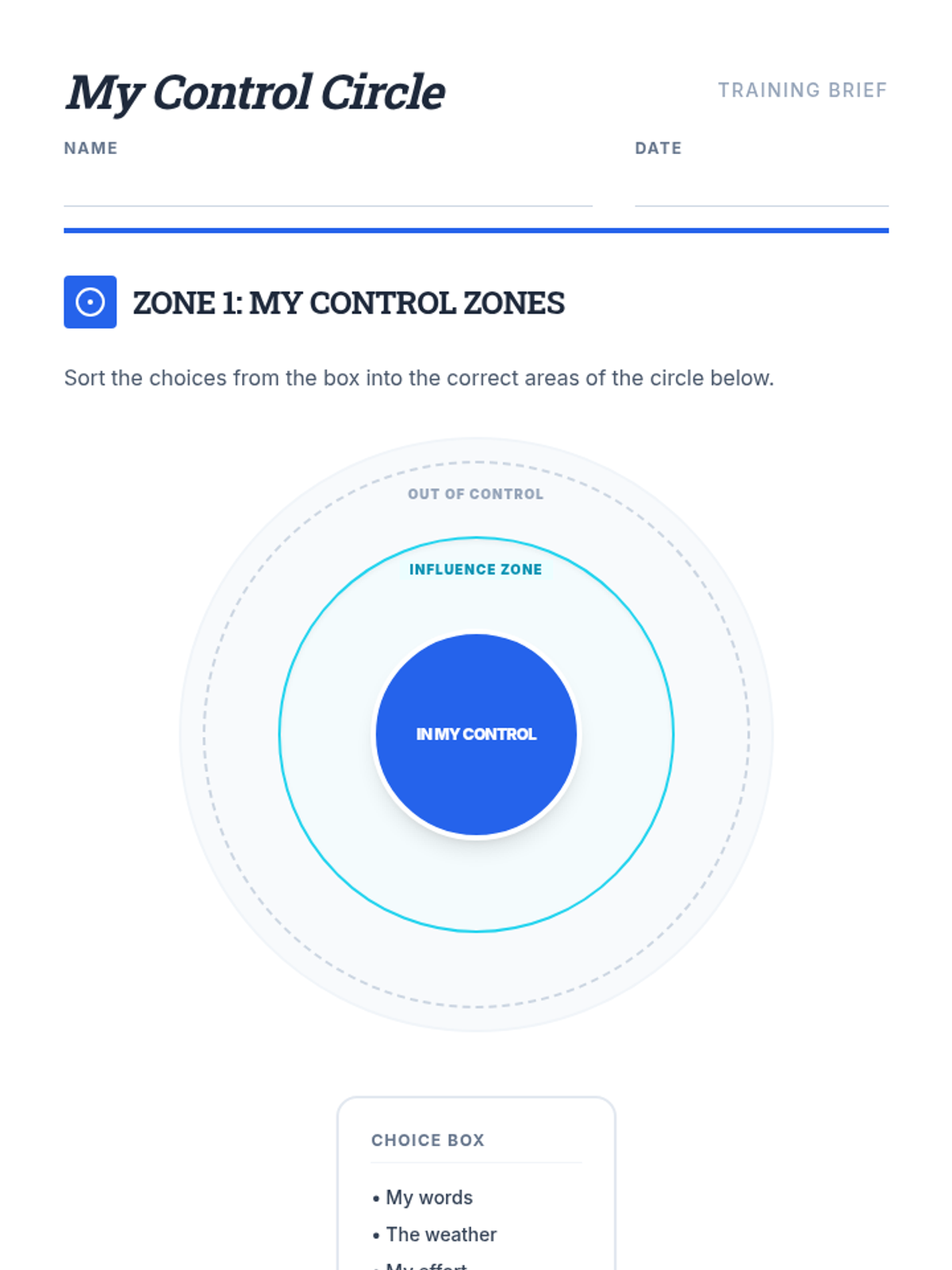
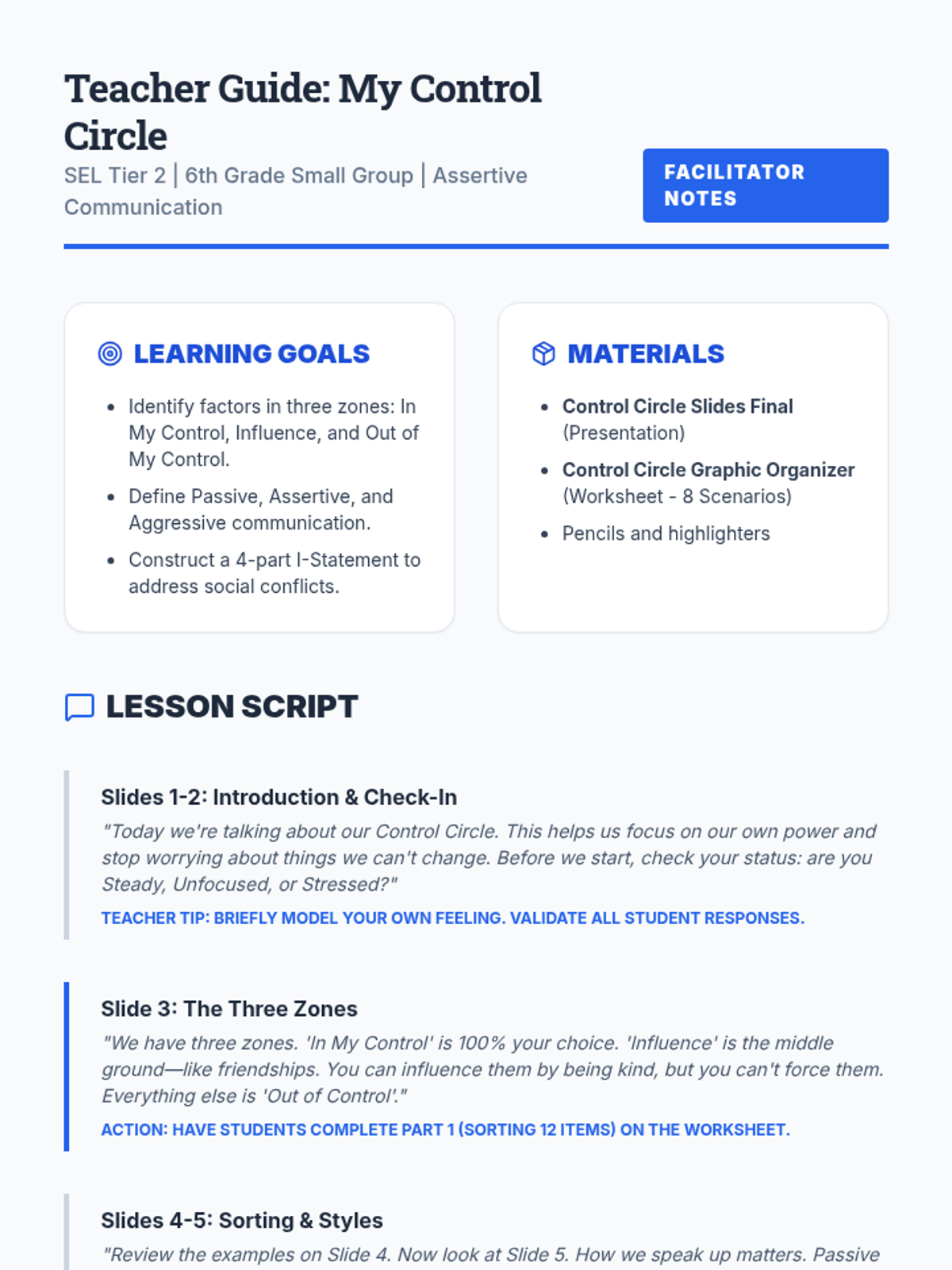
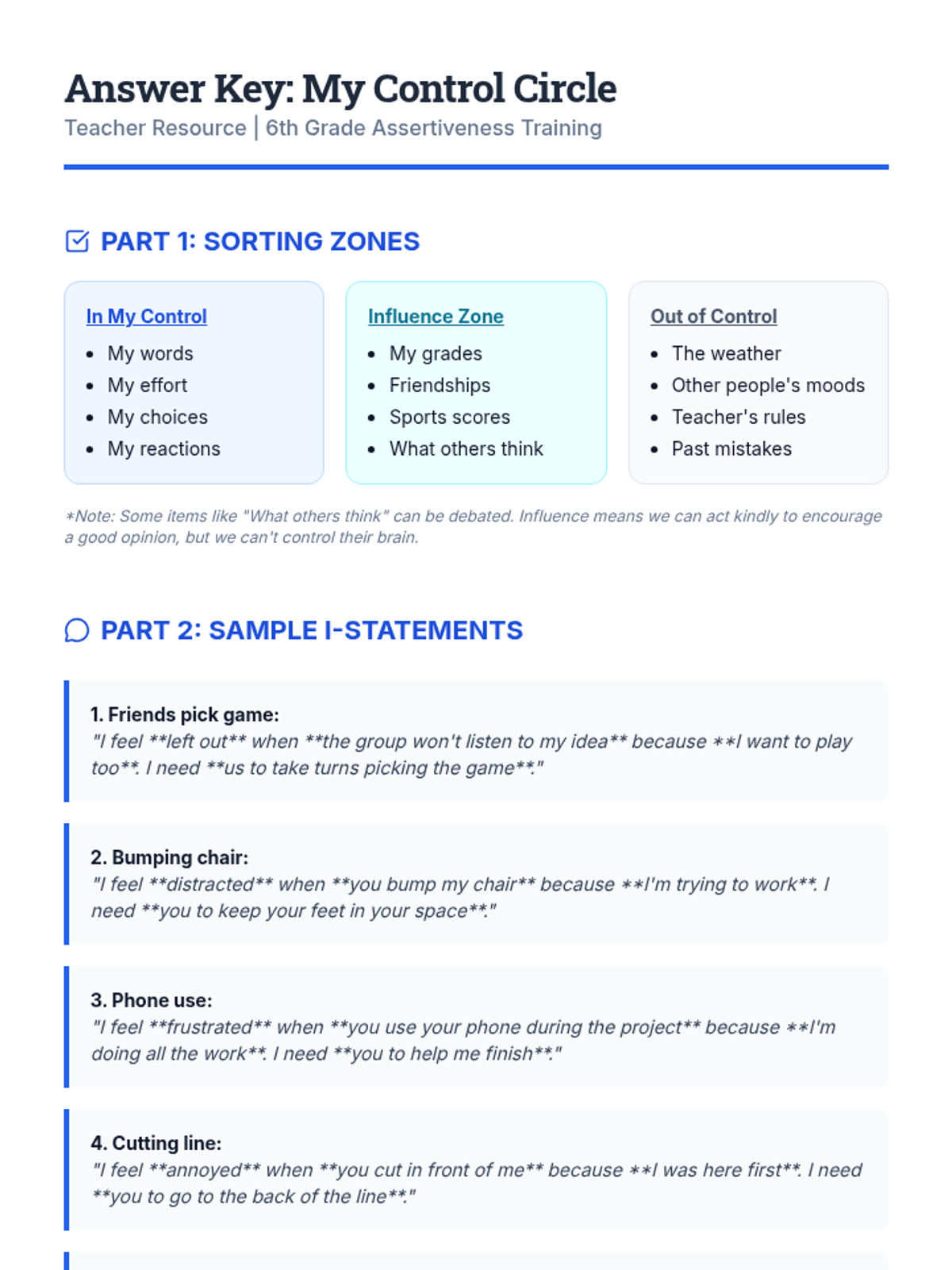
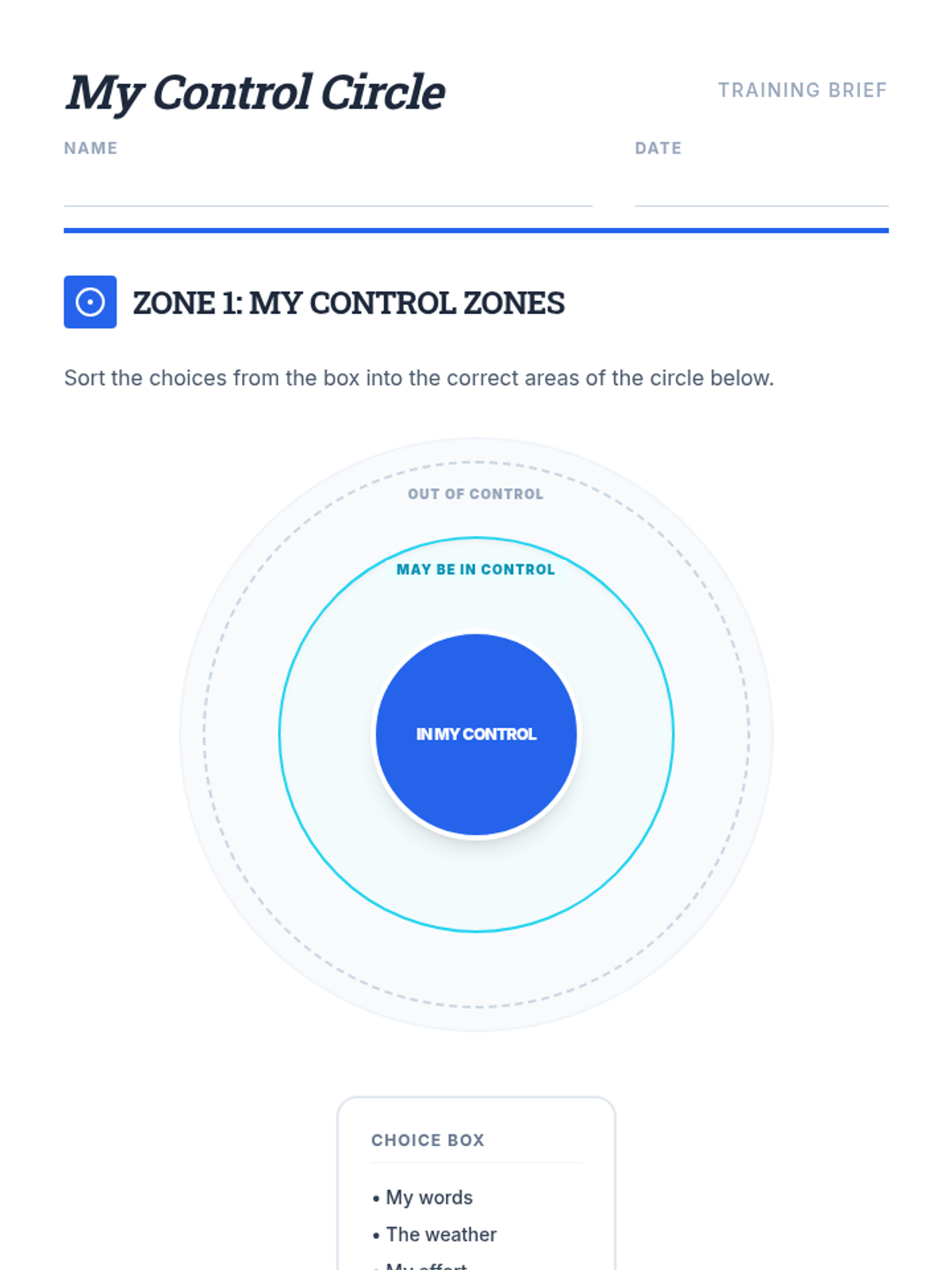
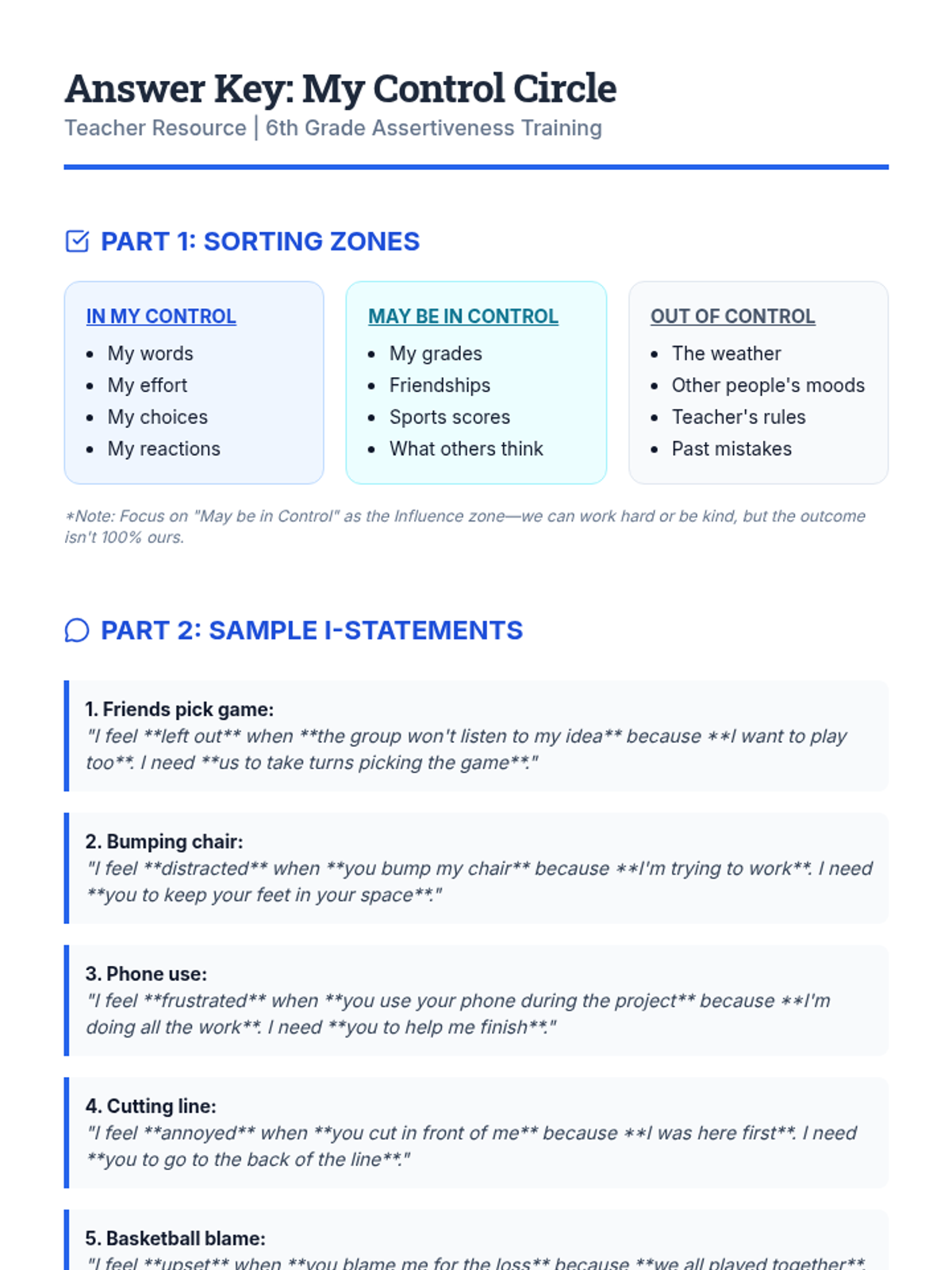
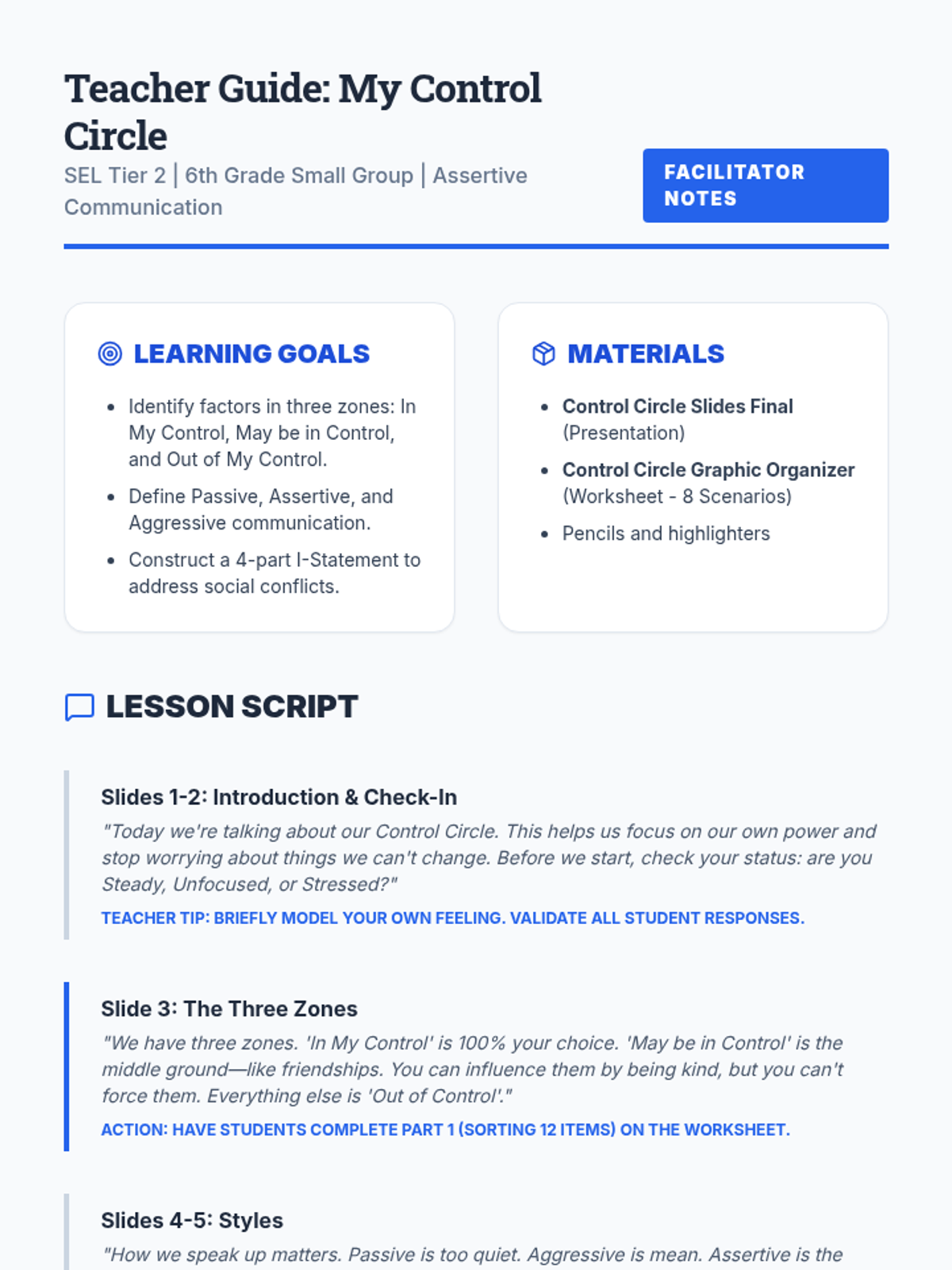
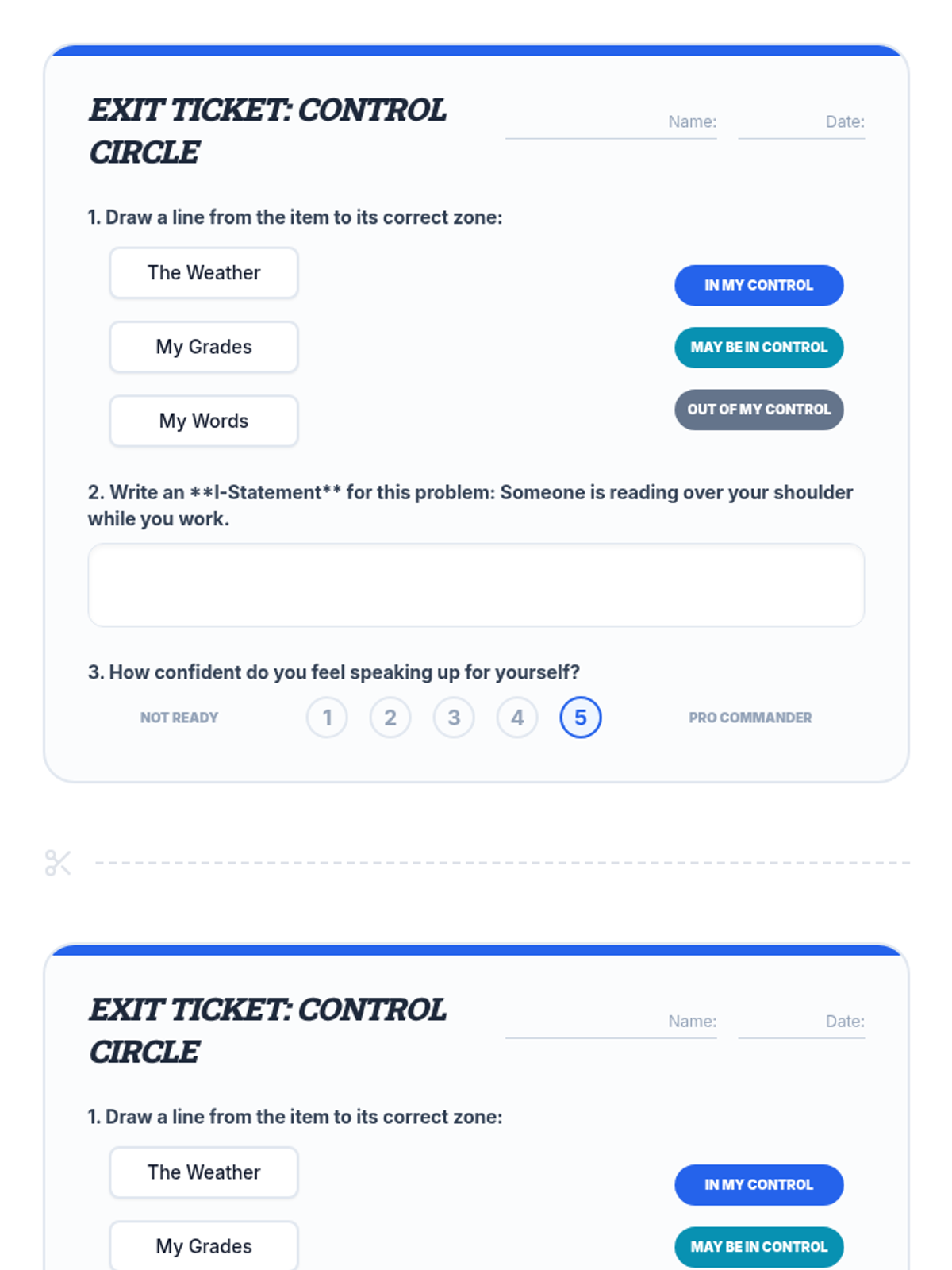
A social-emotional learning lesson for Tier 2 small groups focusing on identifying spheres of control and practicing assertive I-Statements in social scenarios.
Strategies for time estimation, prioritization of tasks, and overcoming procrastination.
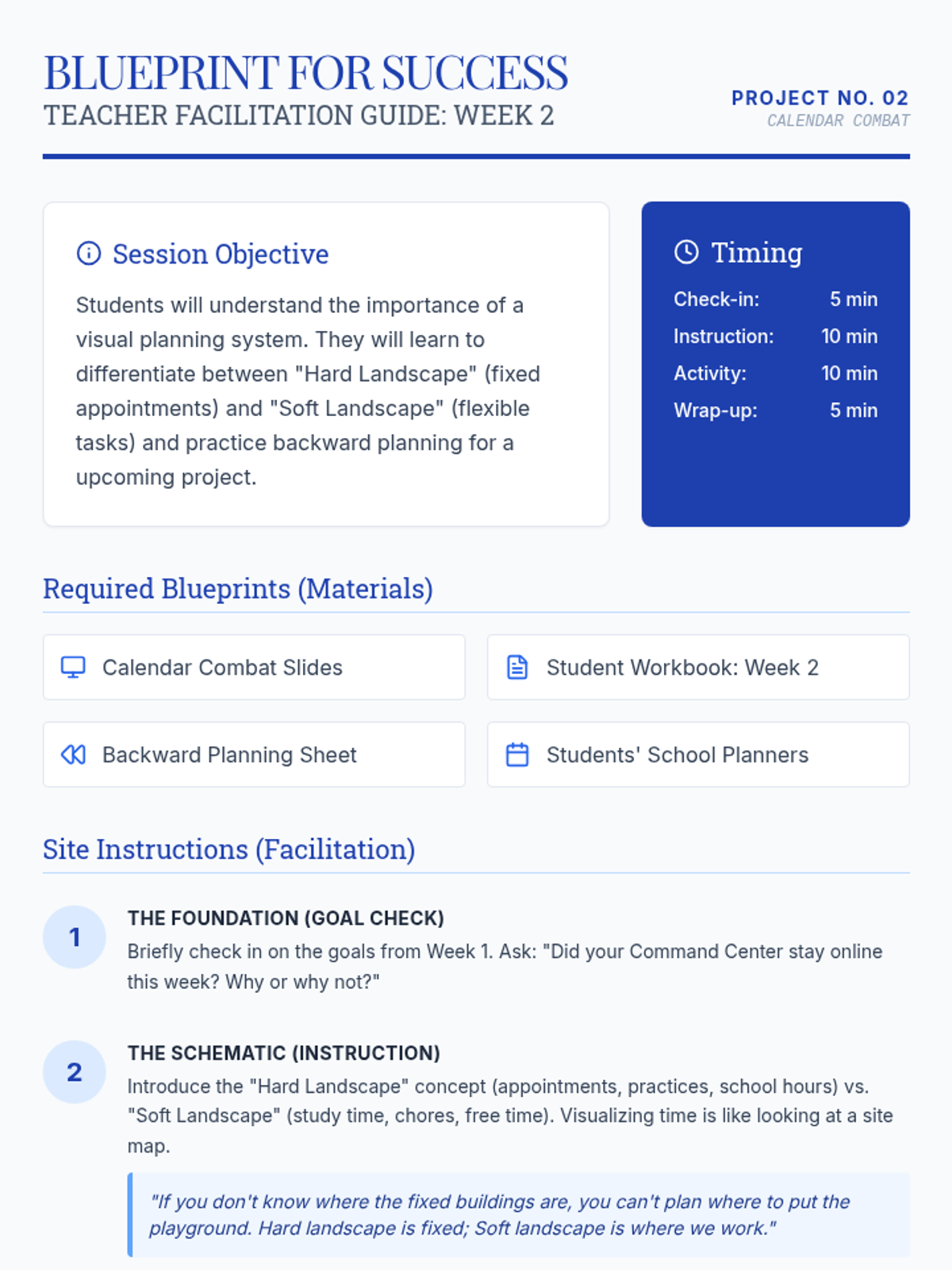
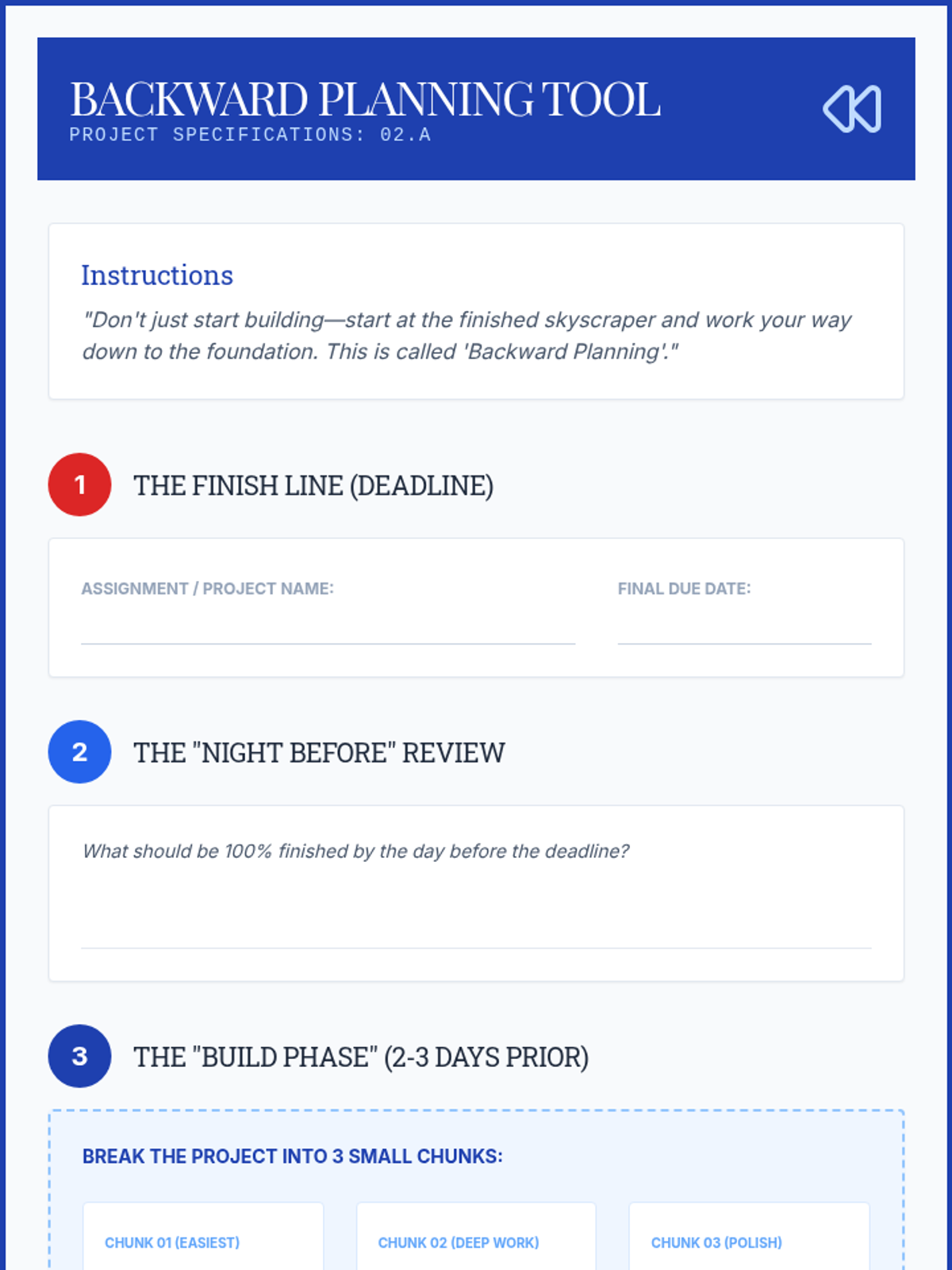
Focusing on academic planning, using planners effectively, and the art of backward planning for long-term projects.
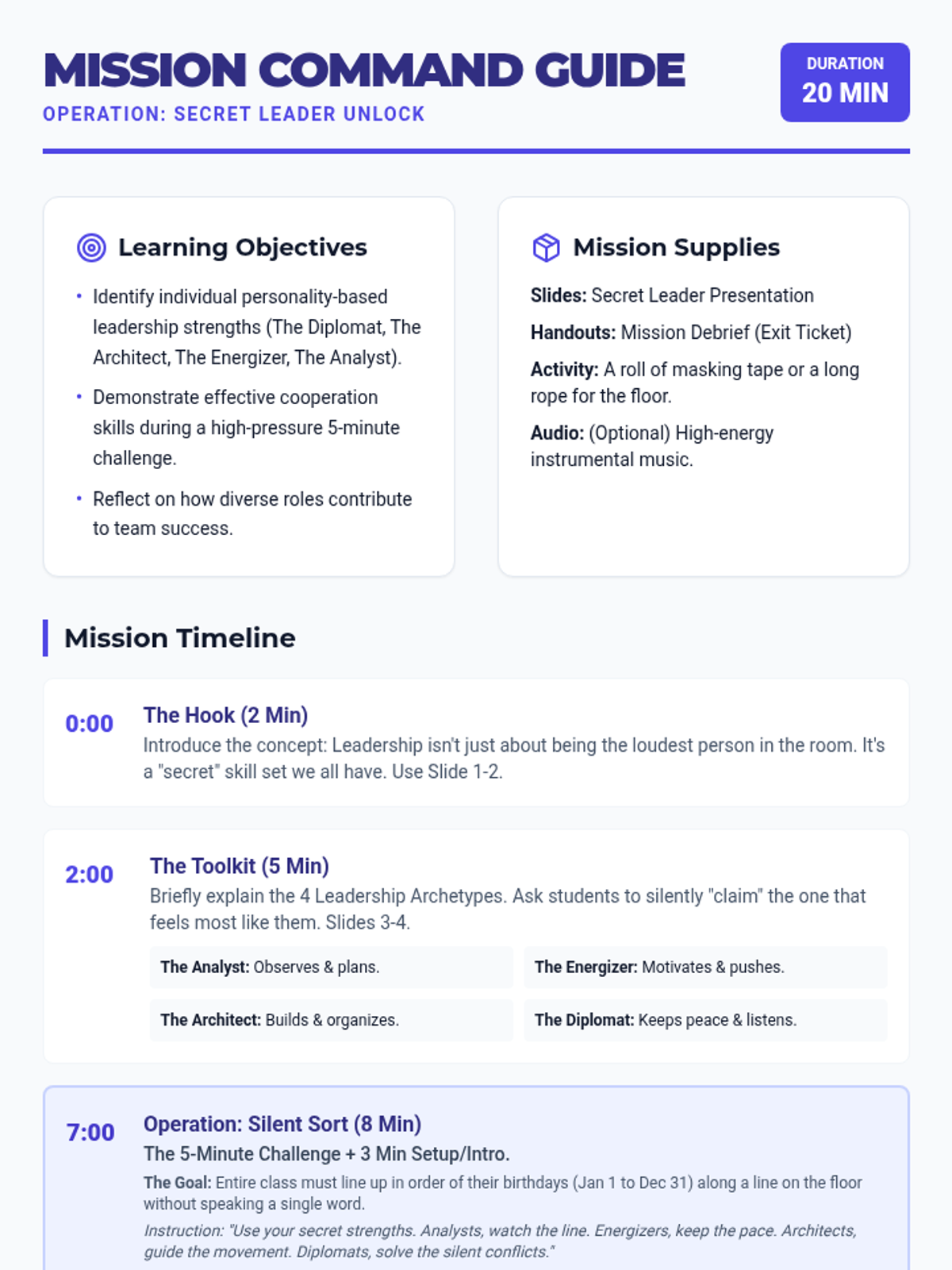
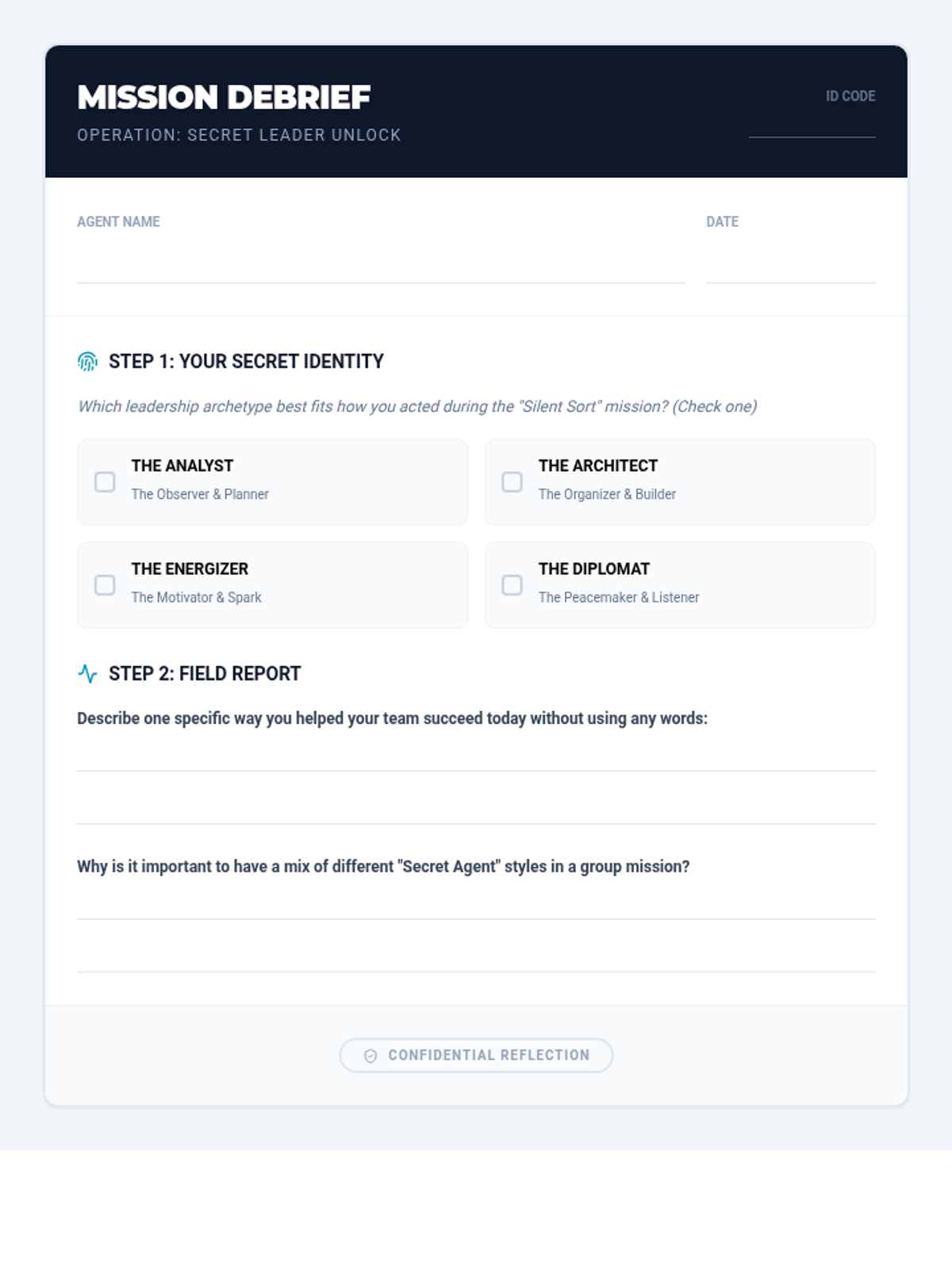
A high-energy, 20-minute session focusing on discovering personality-based leadership strengths and applying them through a rapid-fire teamwork challenge. Students identify their 'Secret Agent' leadership style and practice collaboration in diverse groups.
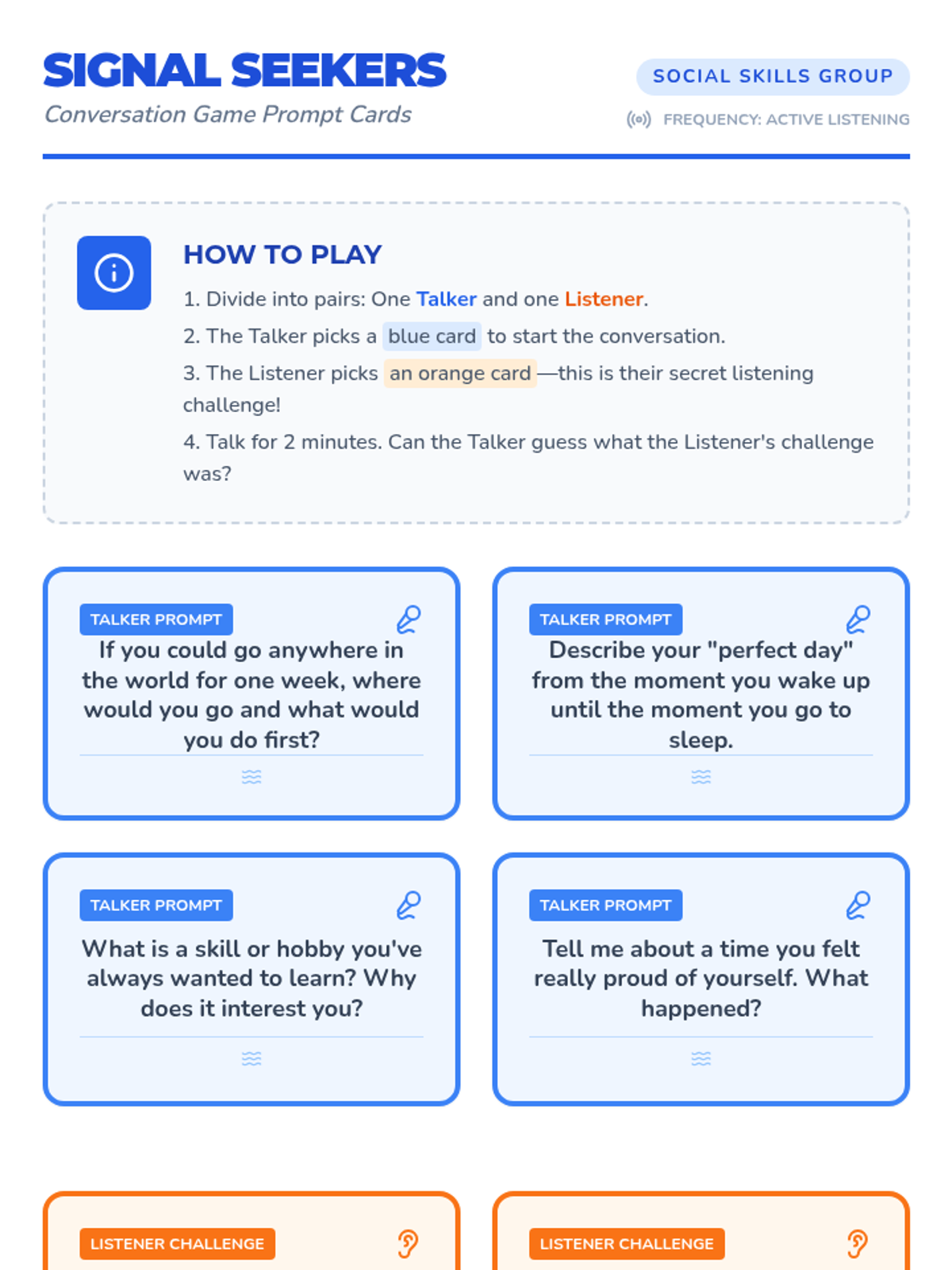
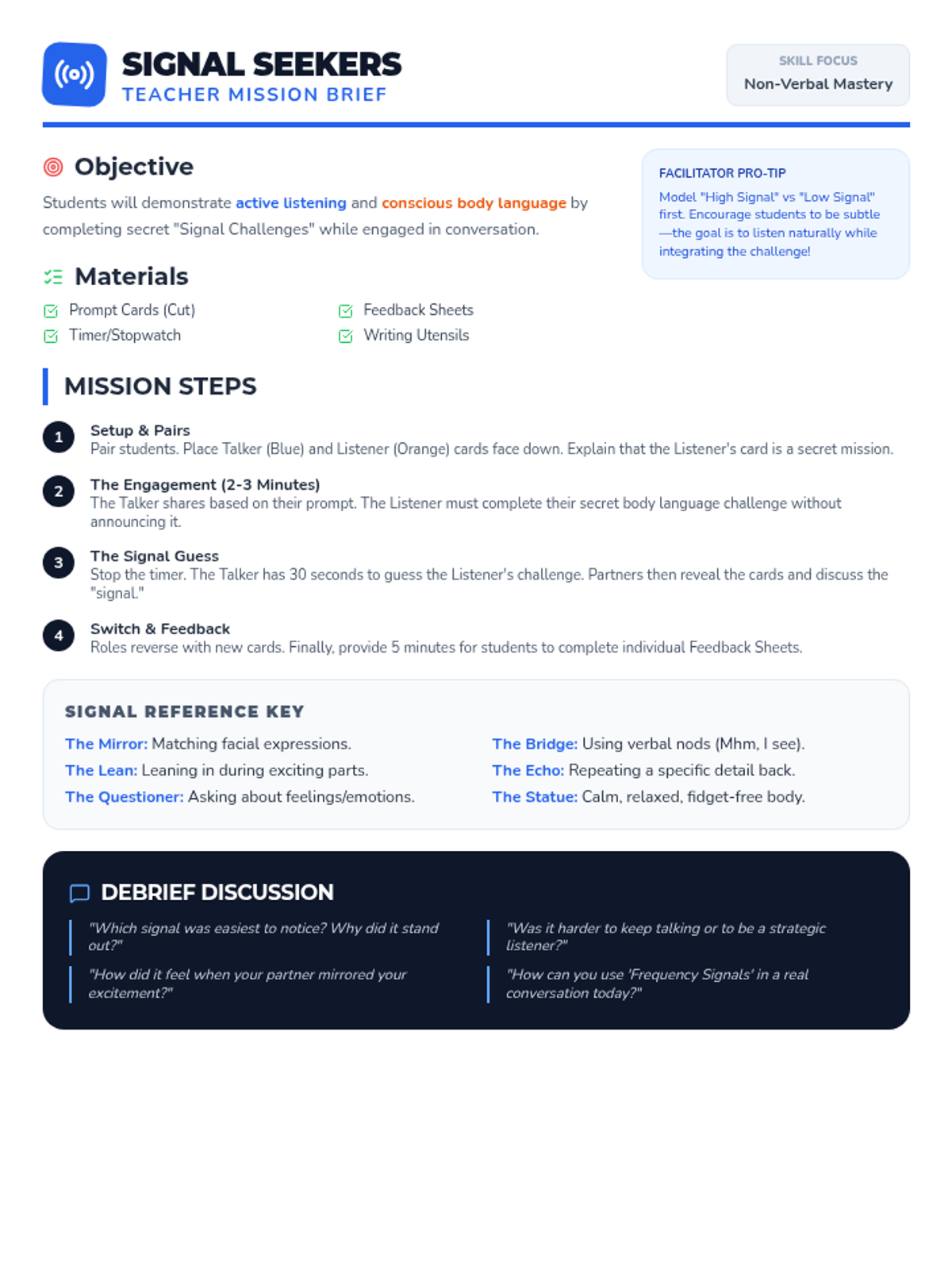
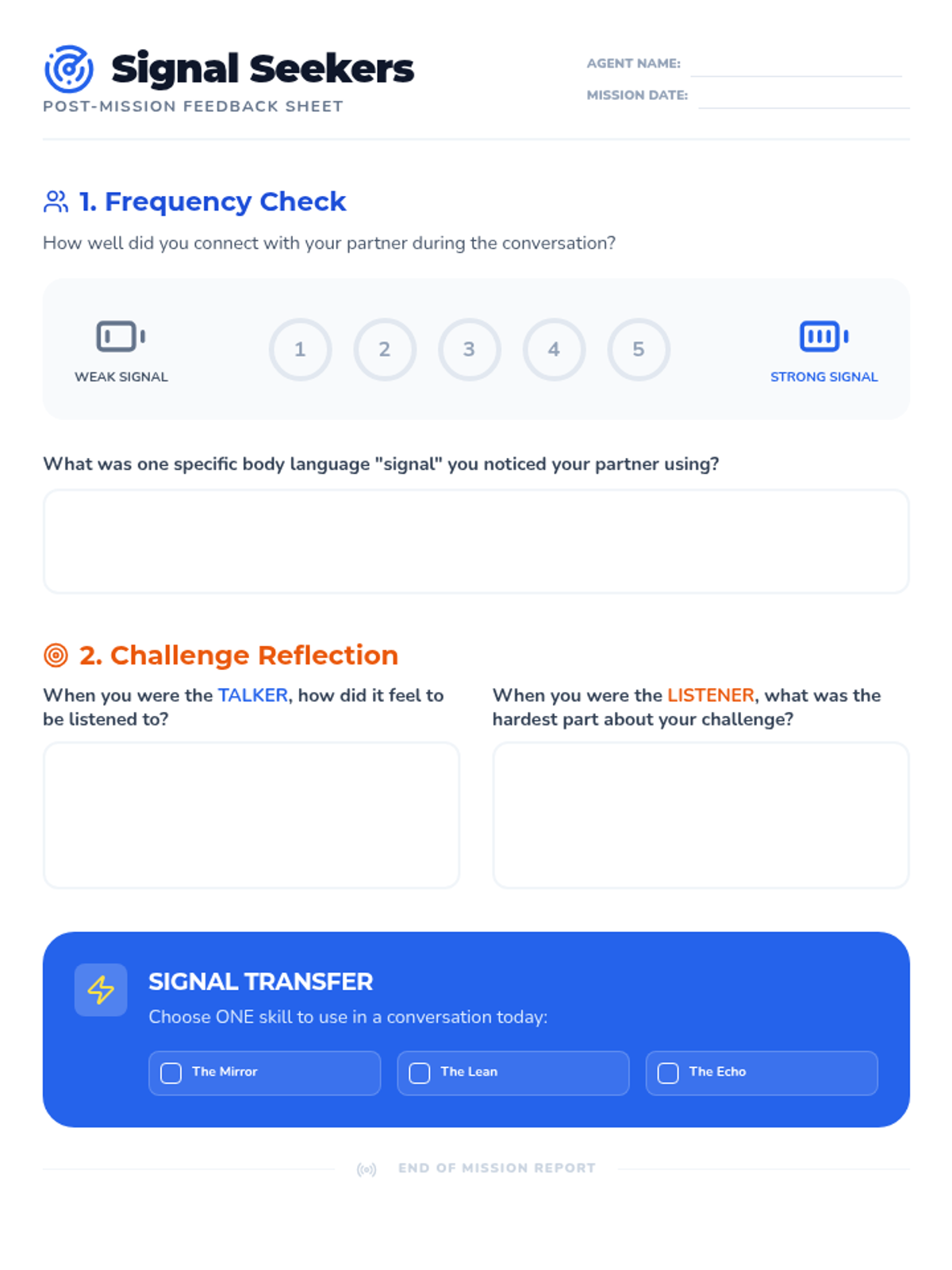
A dynamic conversation game where students practice active listening and non-verbal communication through 'Talker' prompts and 'Listener' challenges. Students learn to recognize and use body language to show they are truly engaged in a conversation.
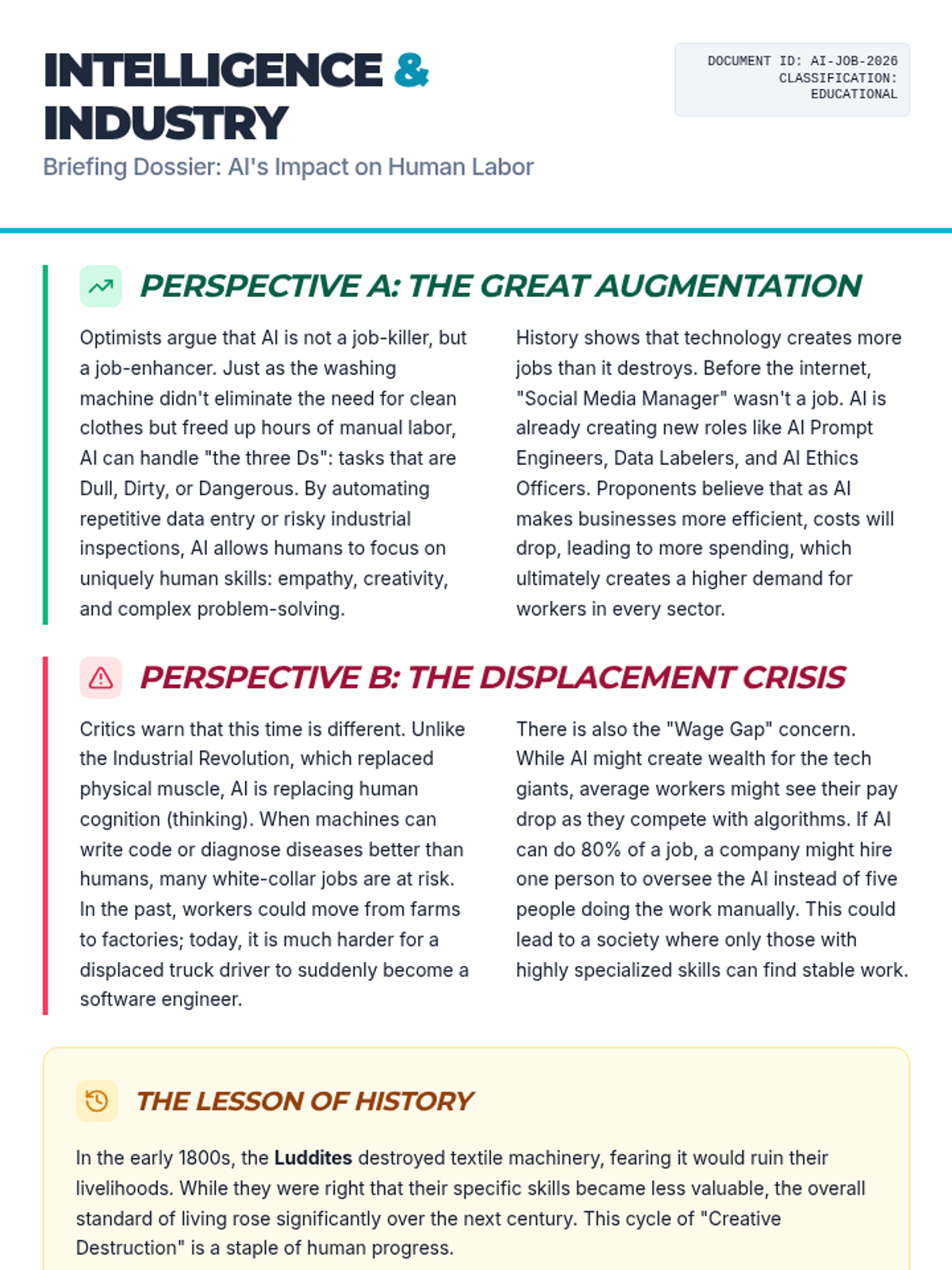
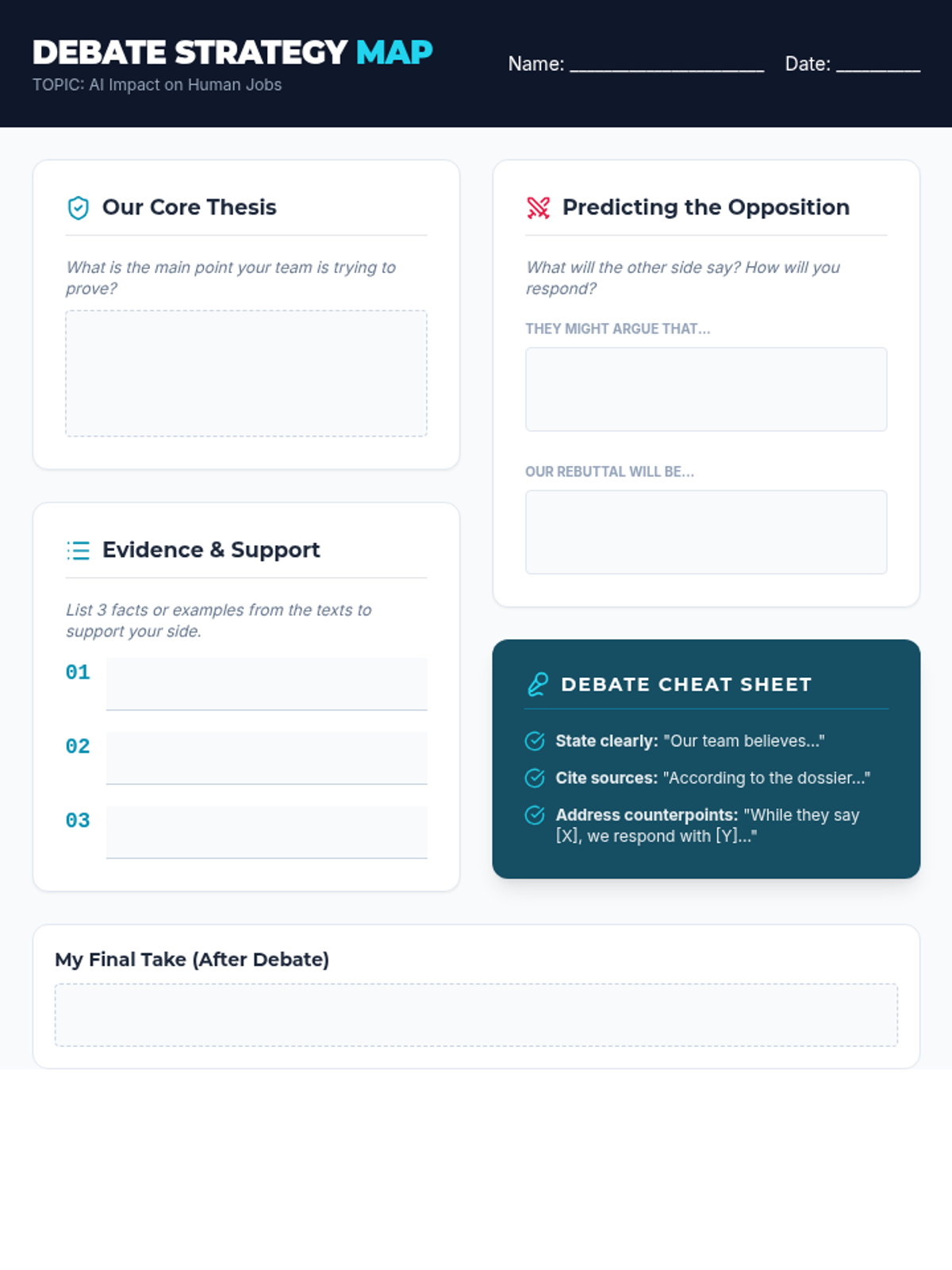
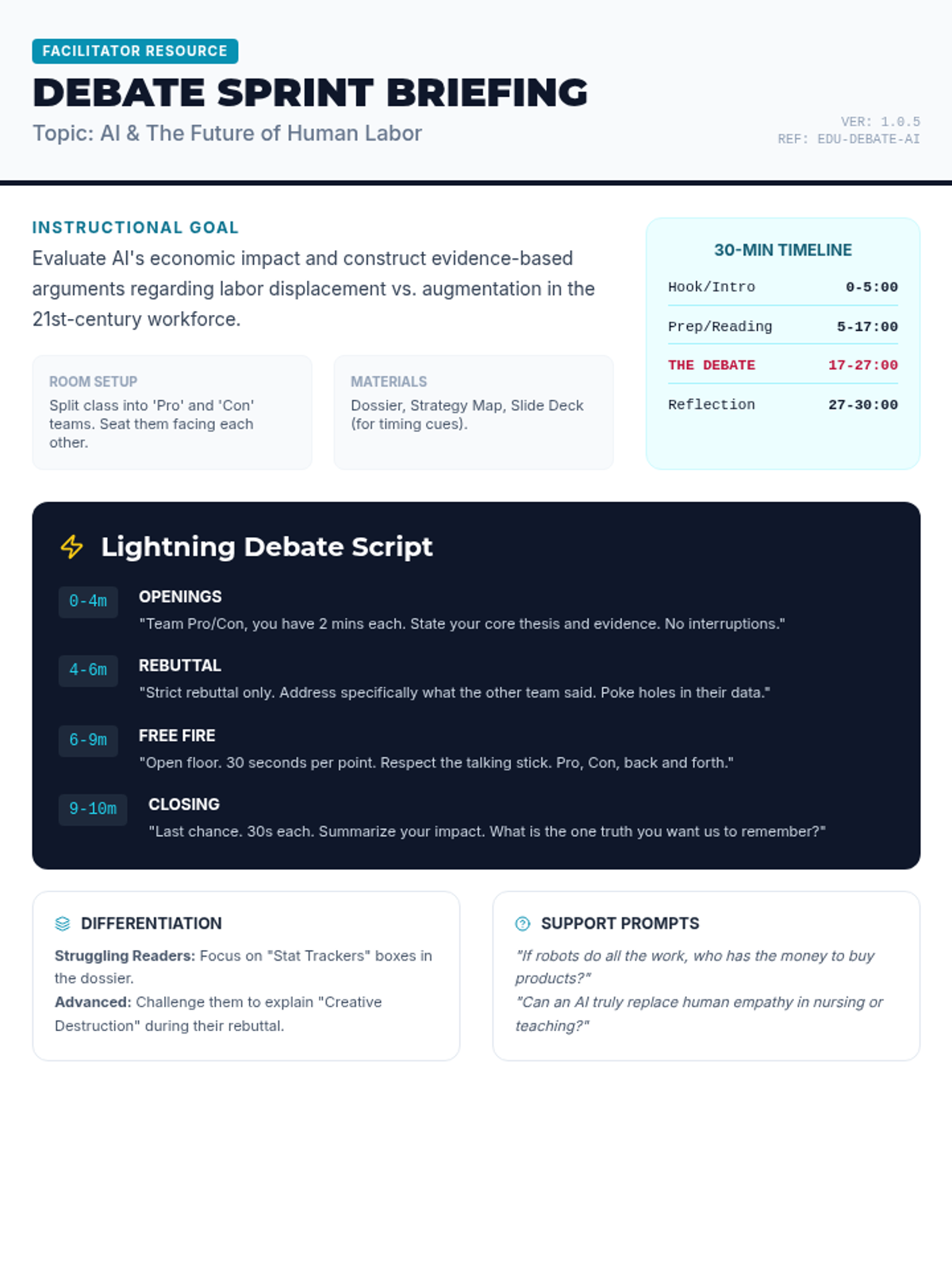
A fast-paced, 30-minute debate activity where students explore the complex impact of Artificial Intelligence on the future of human employment. Students analyze evidence, prepare arguments, and engage in a structured 'lightning' debate.
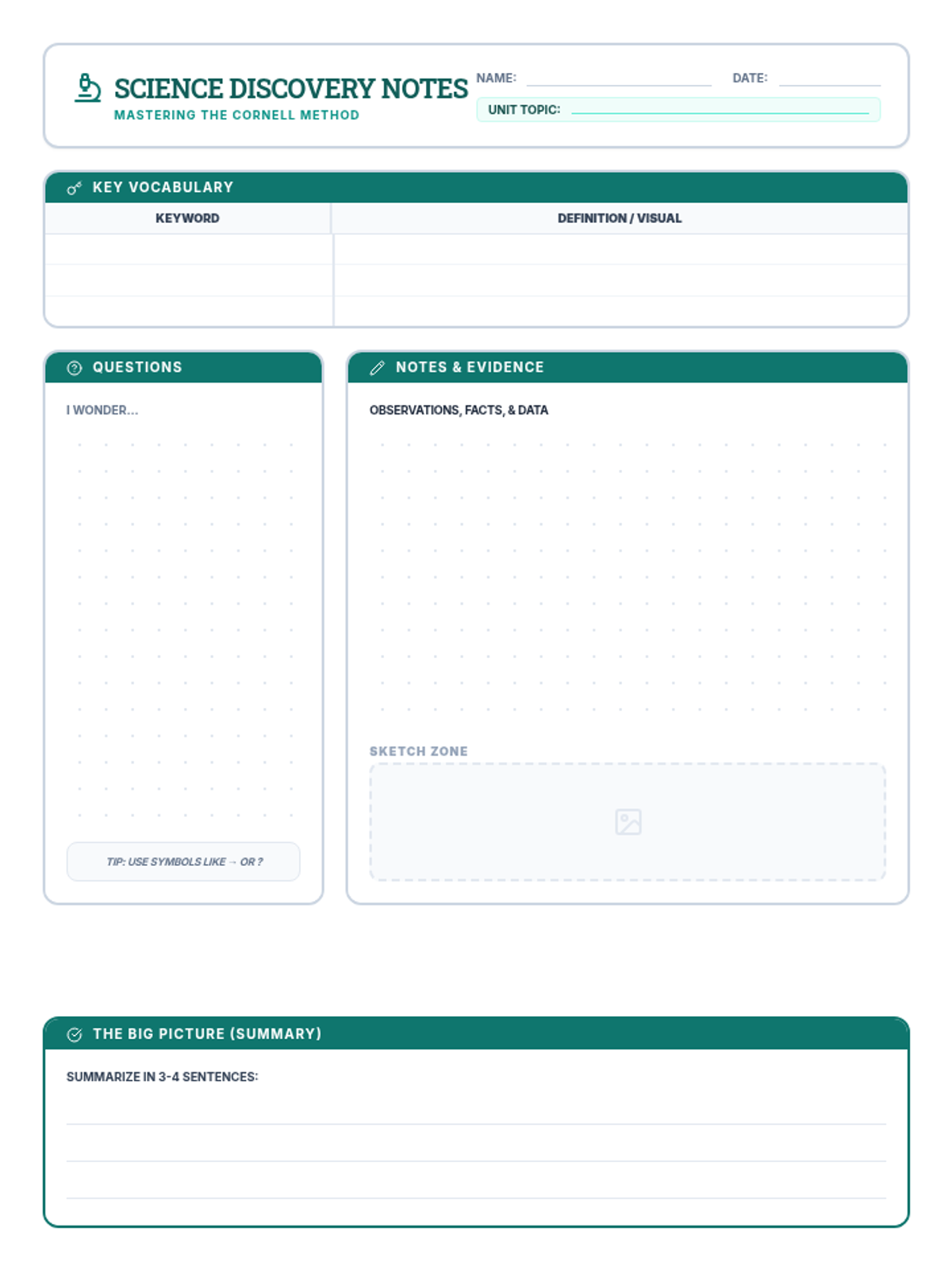
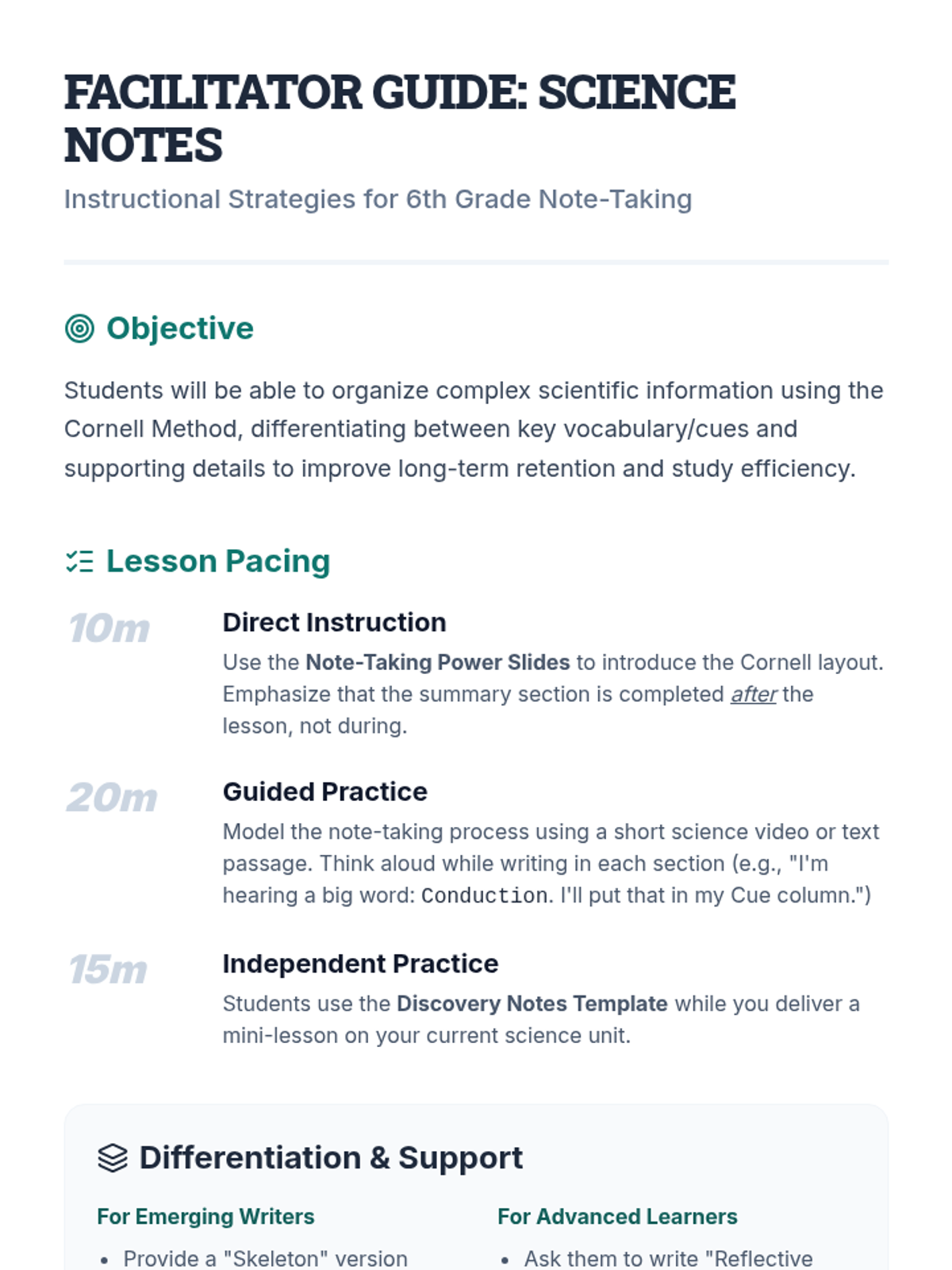
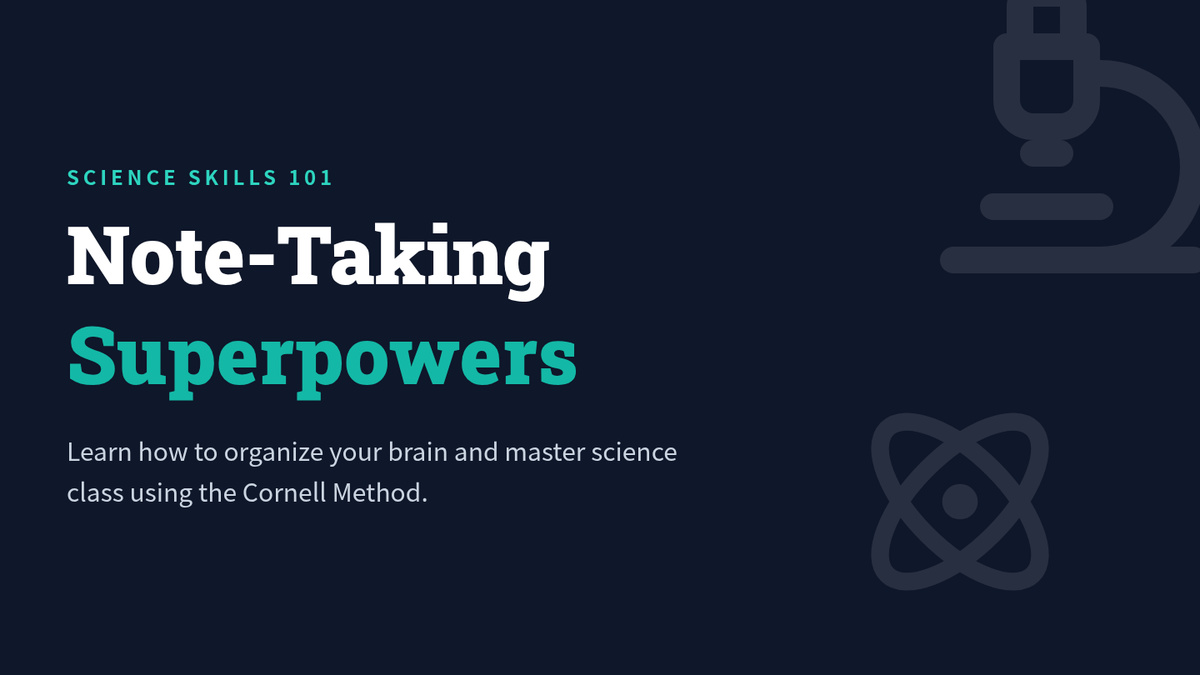
A comprehensive set of tools to help 6th-grade students master the Cornell note-taking method specifically for science concepts, featuring a guided template and instructional supports.
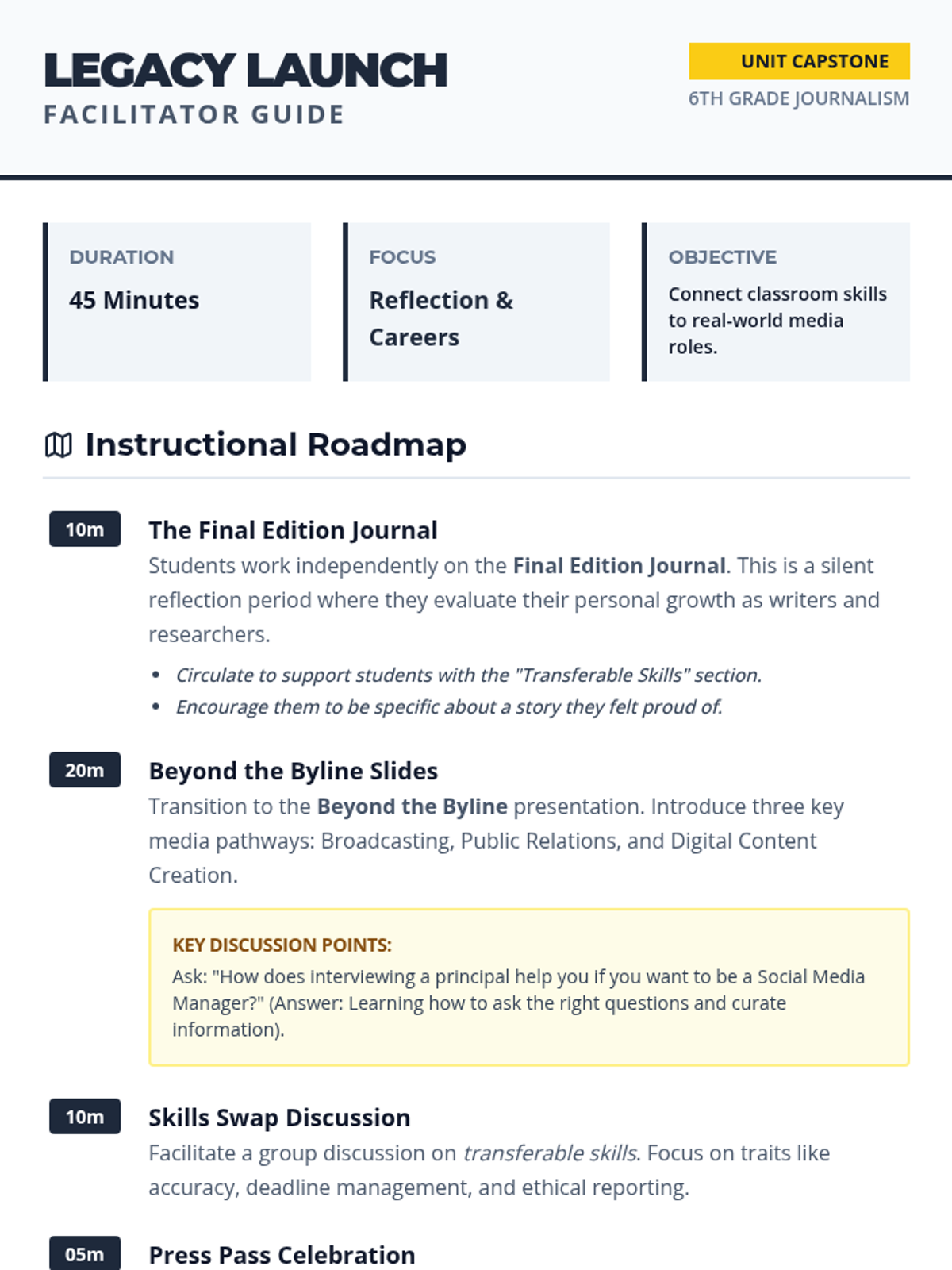
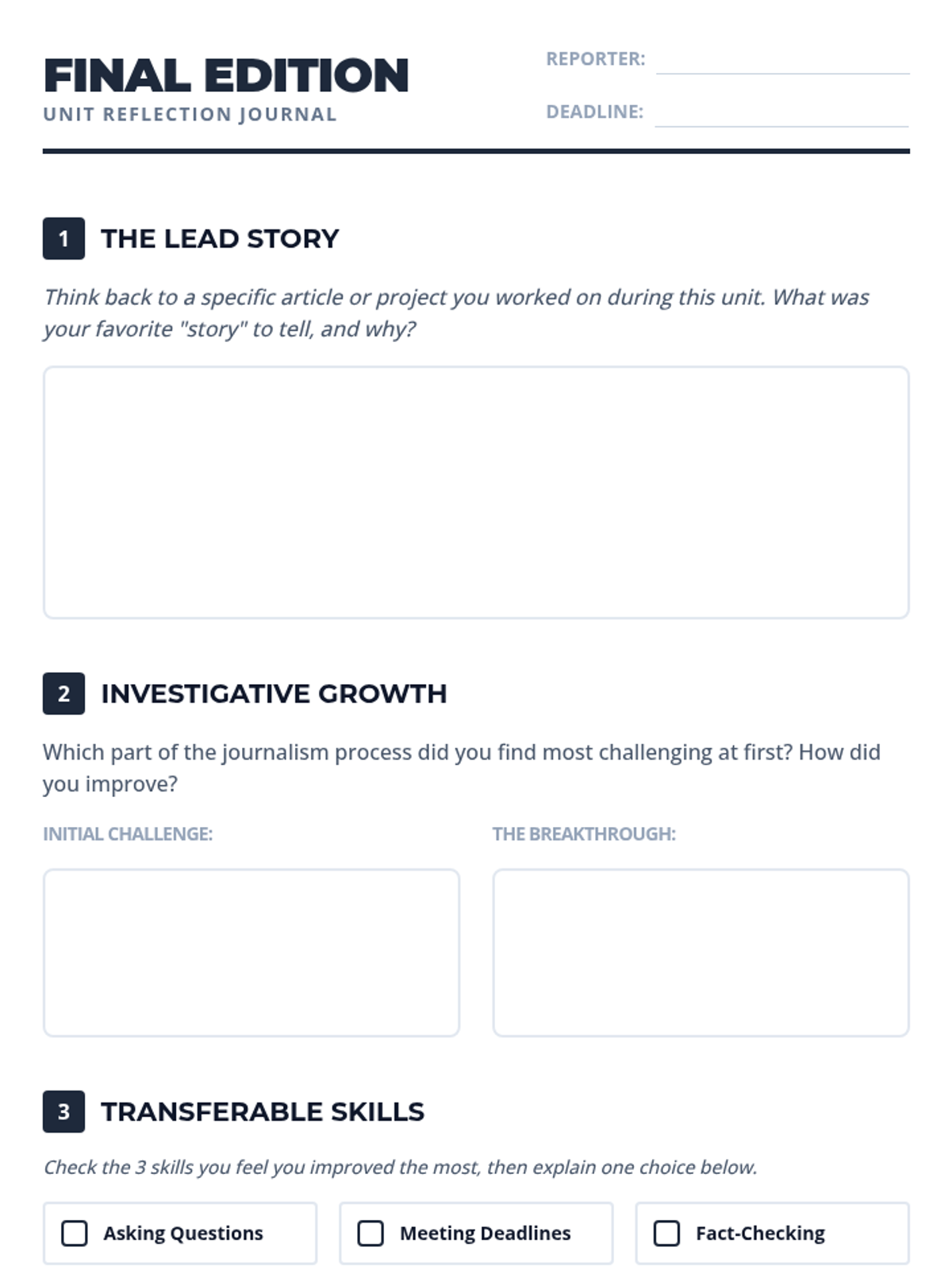
A 45-minute capstone lesson where students reflect on their journalism journey and explore how their news-gathering skills apply to future careers in broadcasting, PR, and beyond.
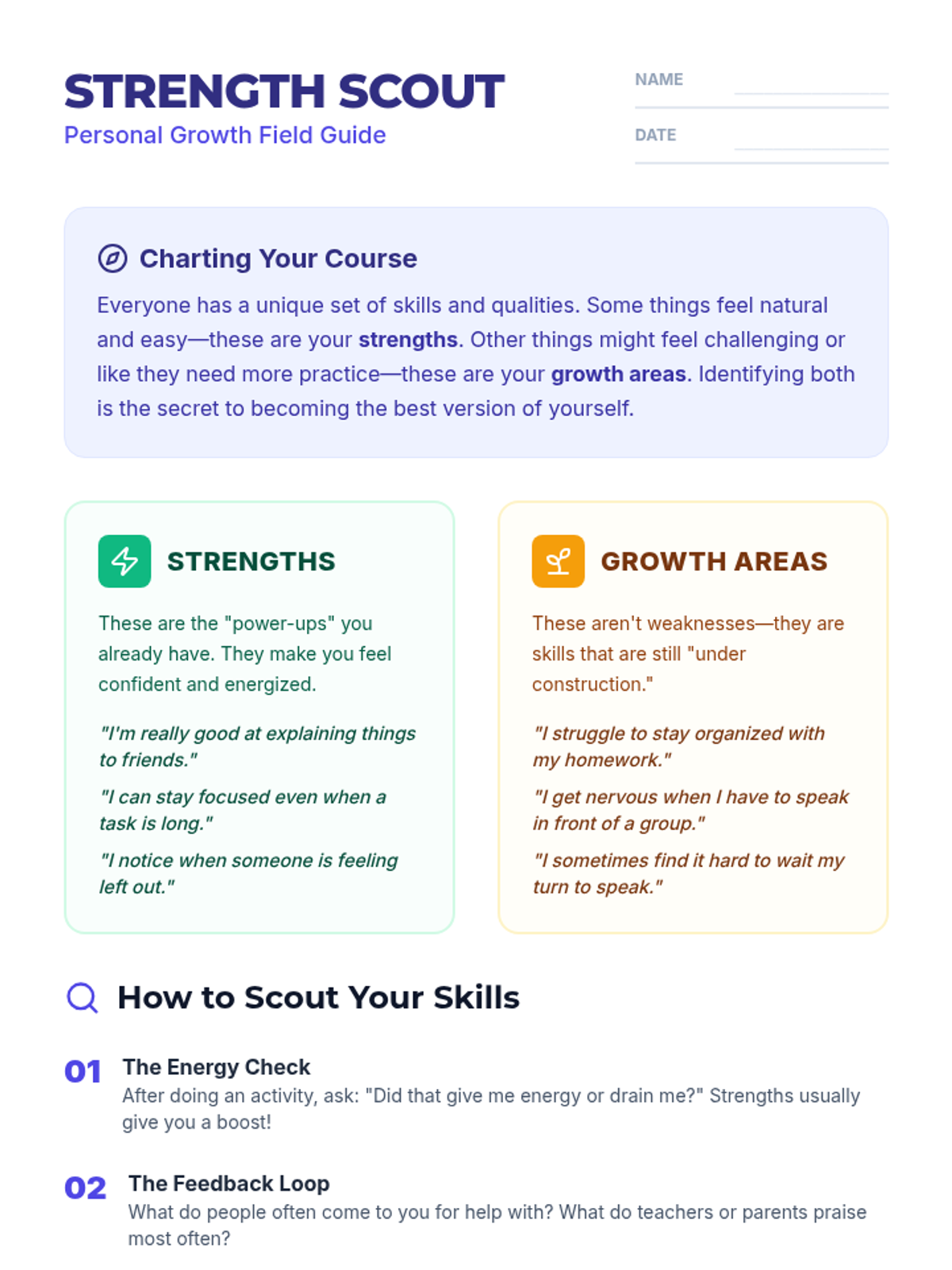
A lesson focused on helping students identify their personal strengths and areas for future development through self-reflection and scenario-based analysis.
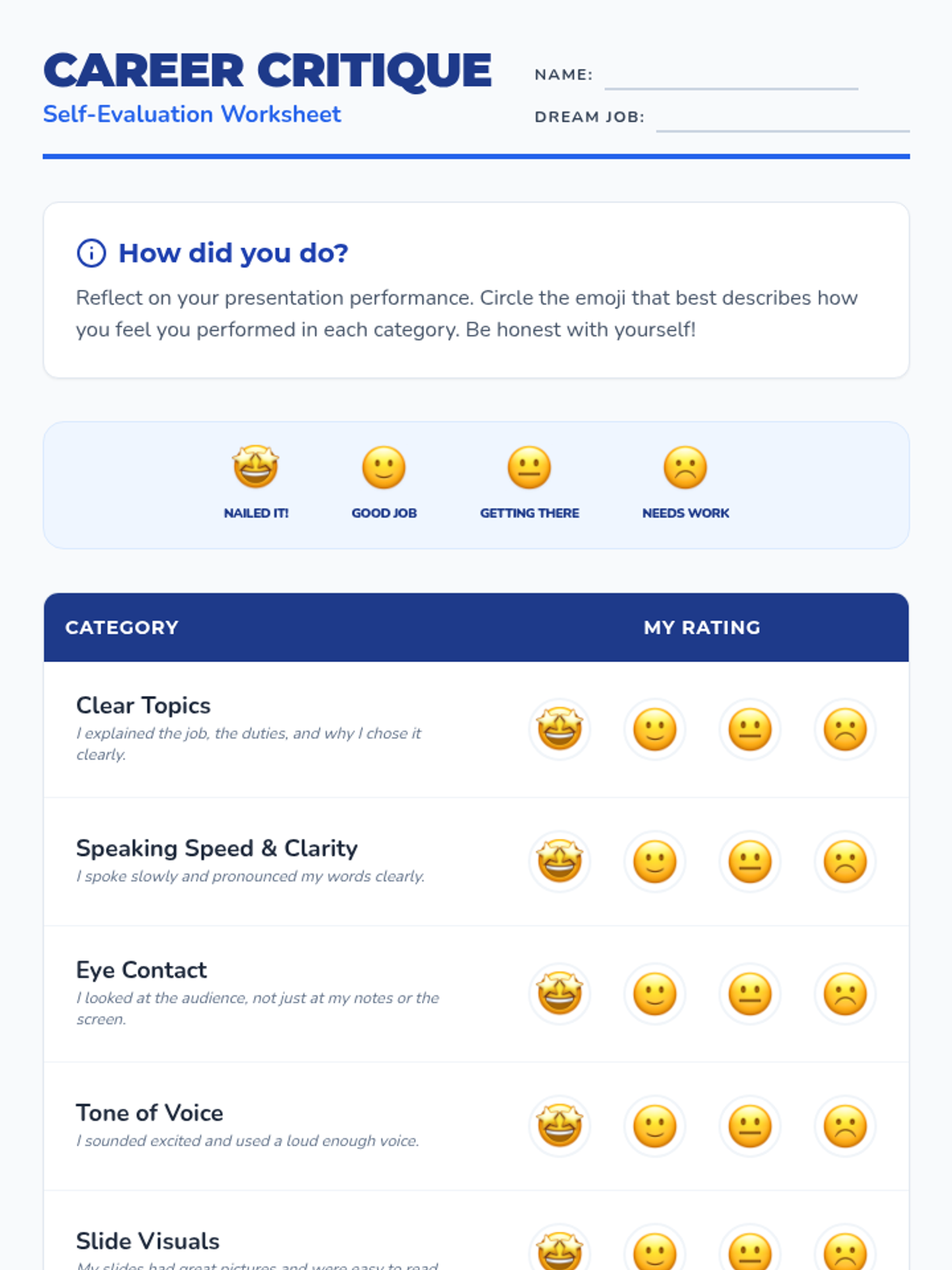
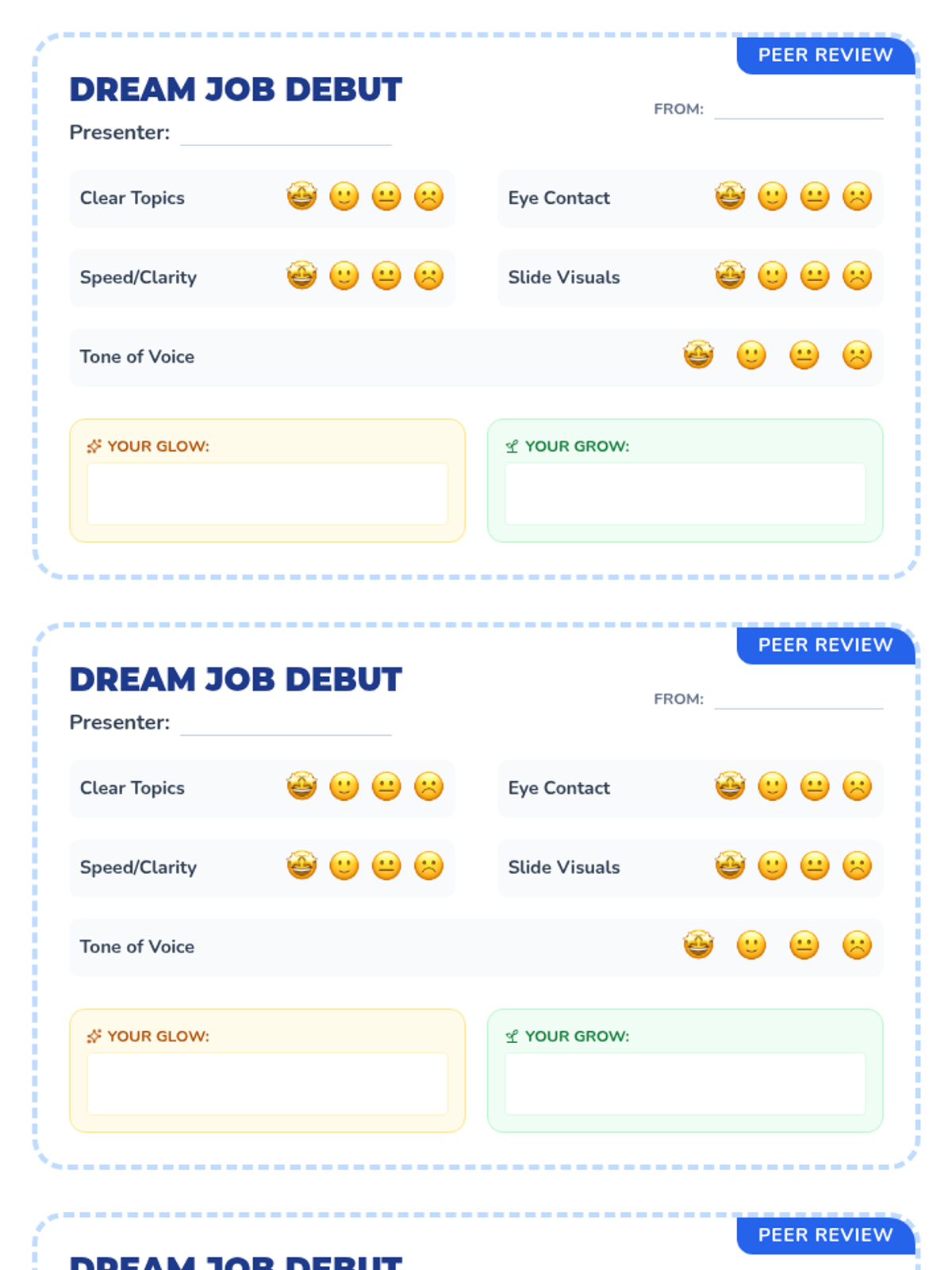
A lesson focused on presenting dream career research and providing constructive feedback through self-reflection and peer evaluation.
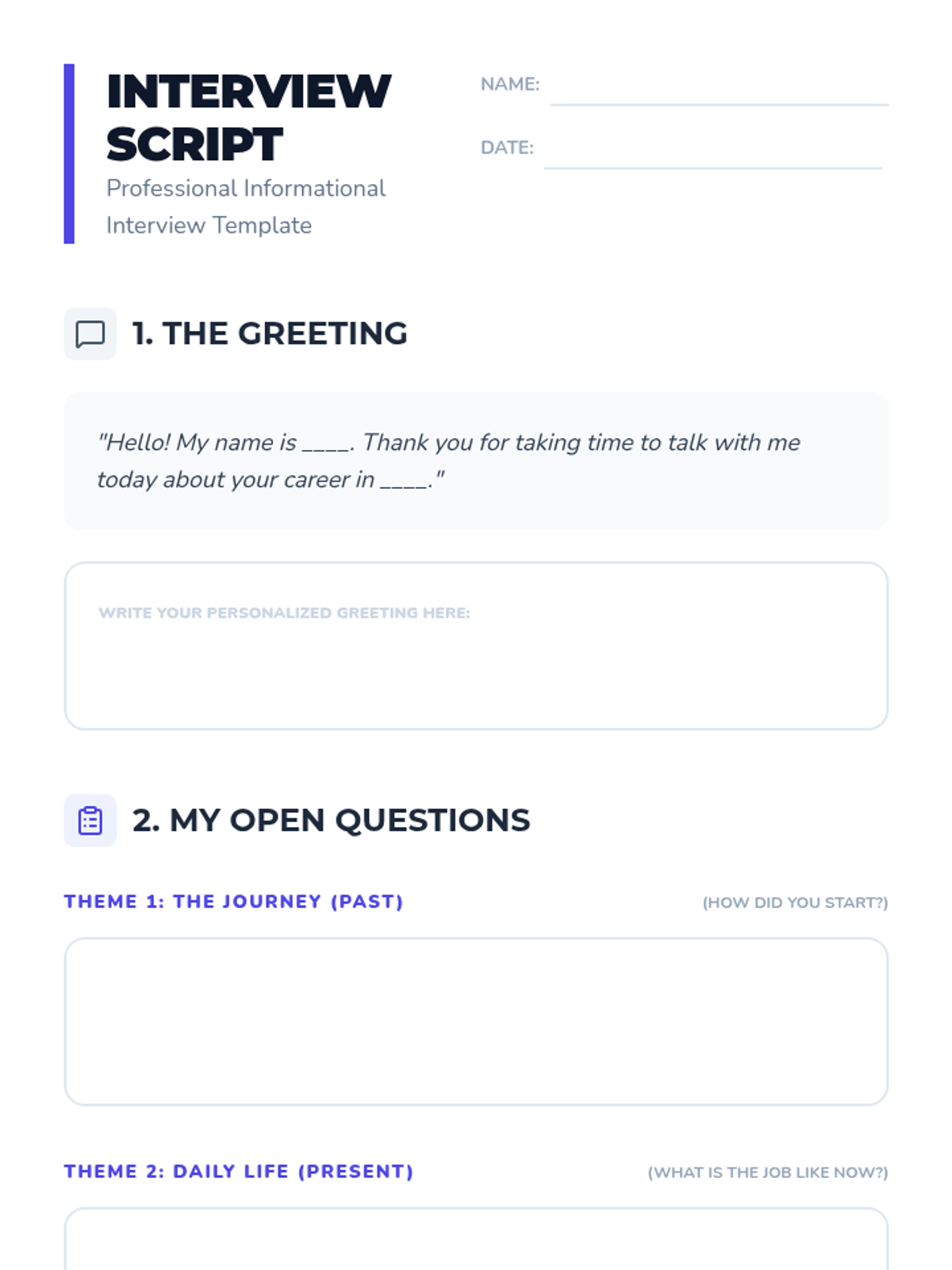
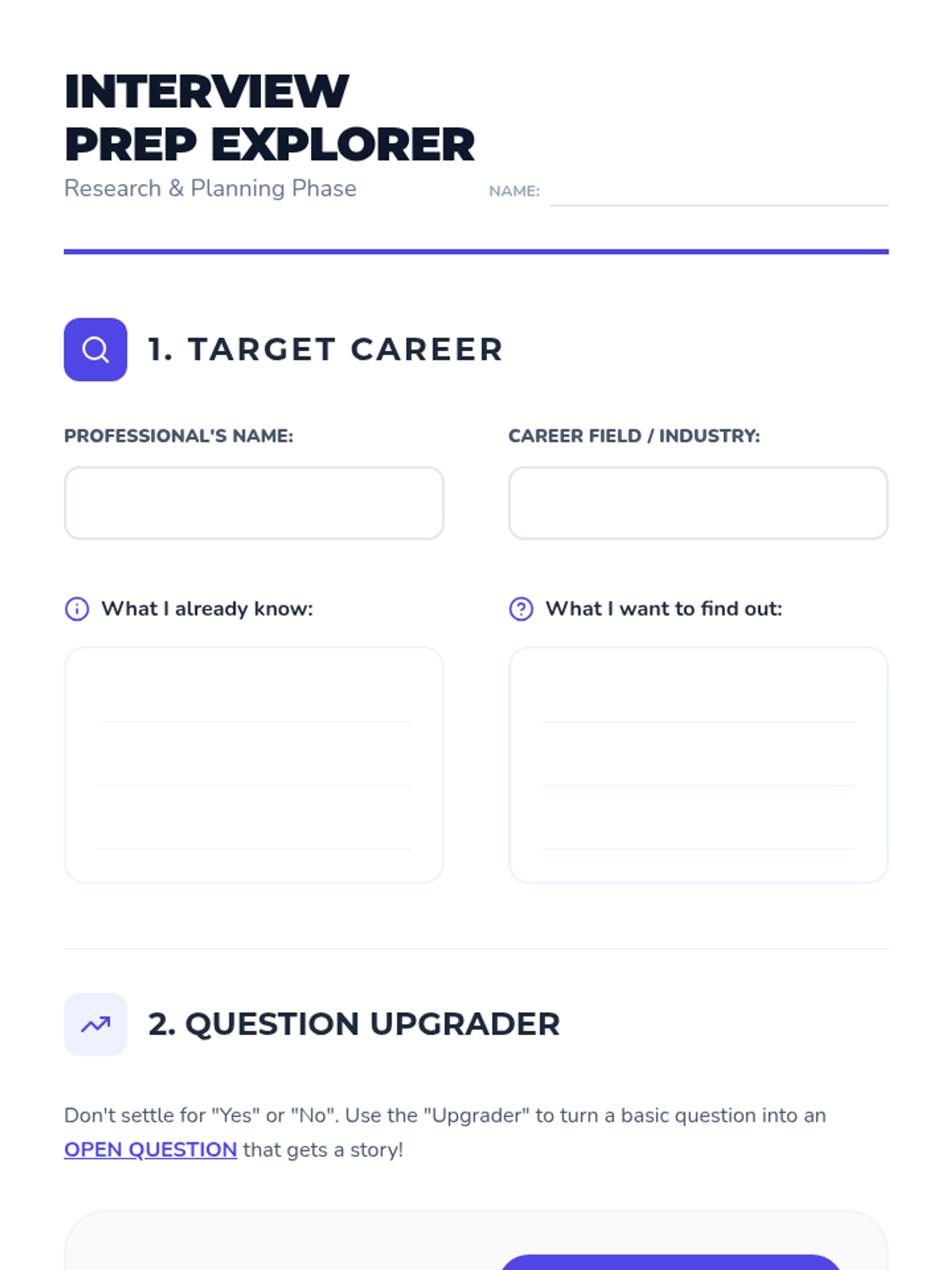
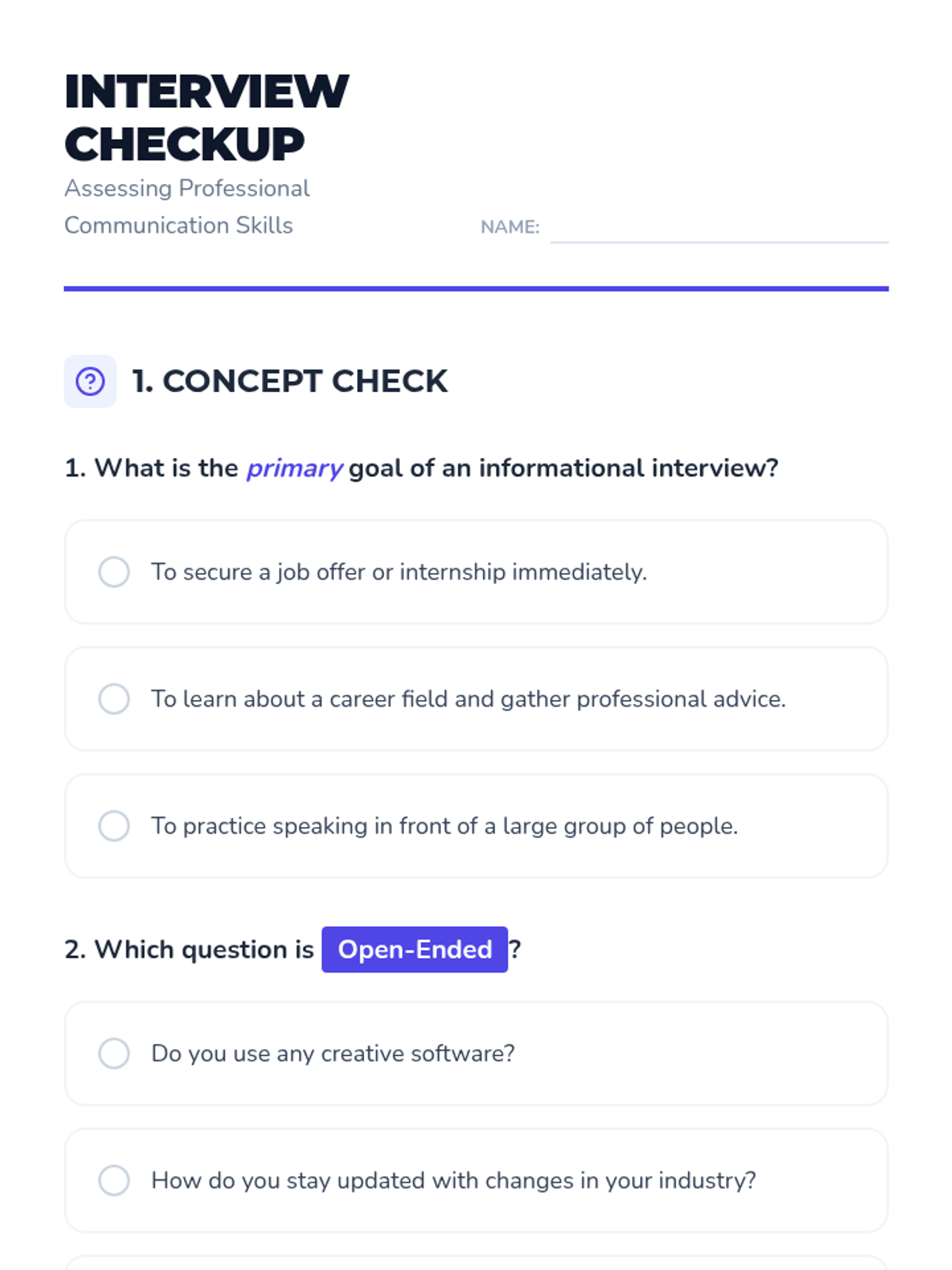
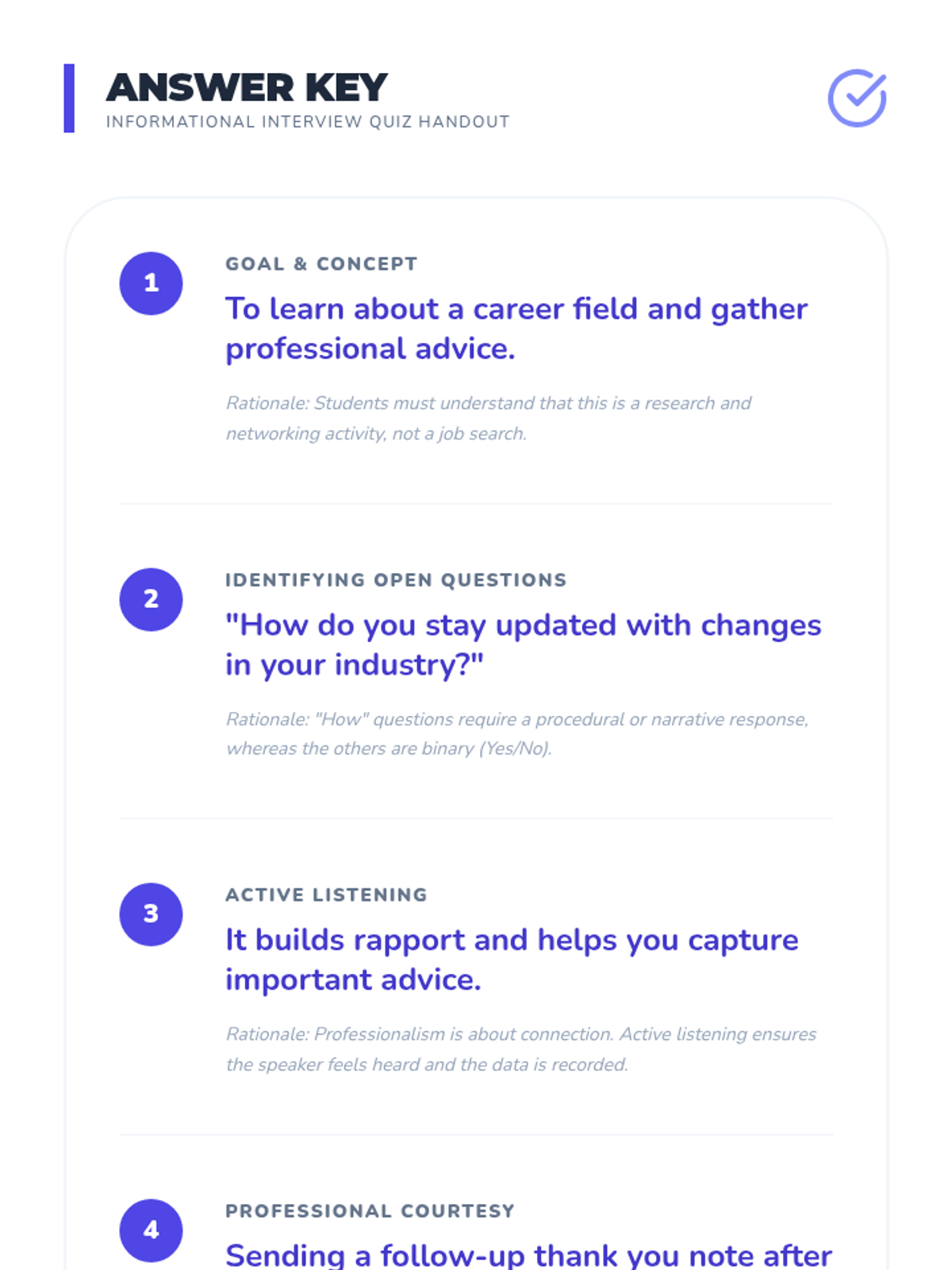
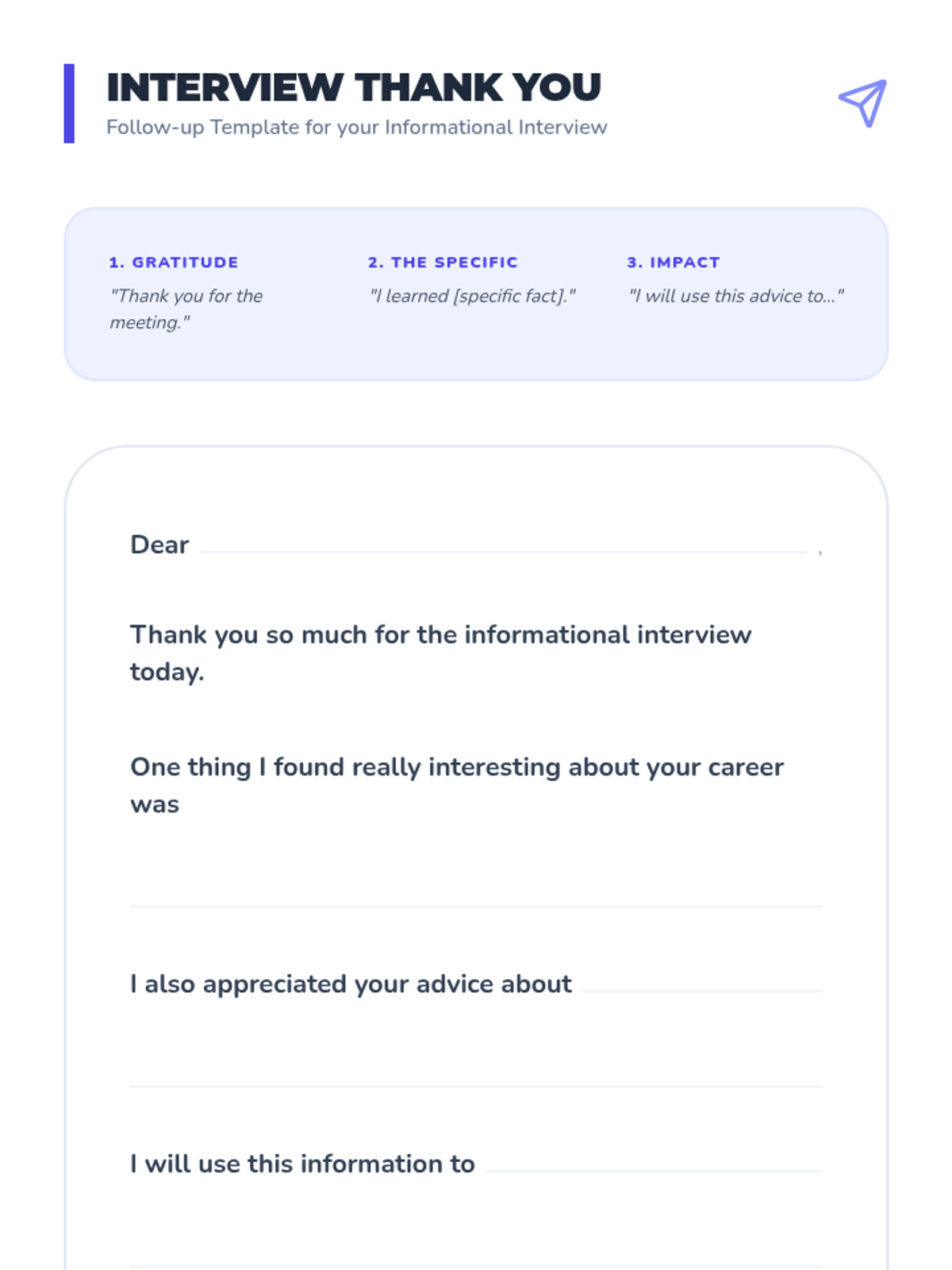
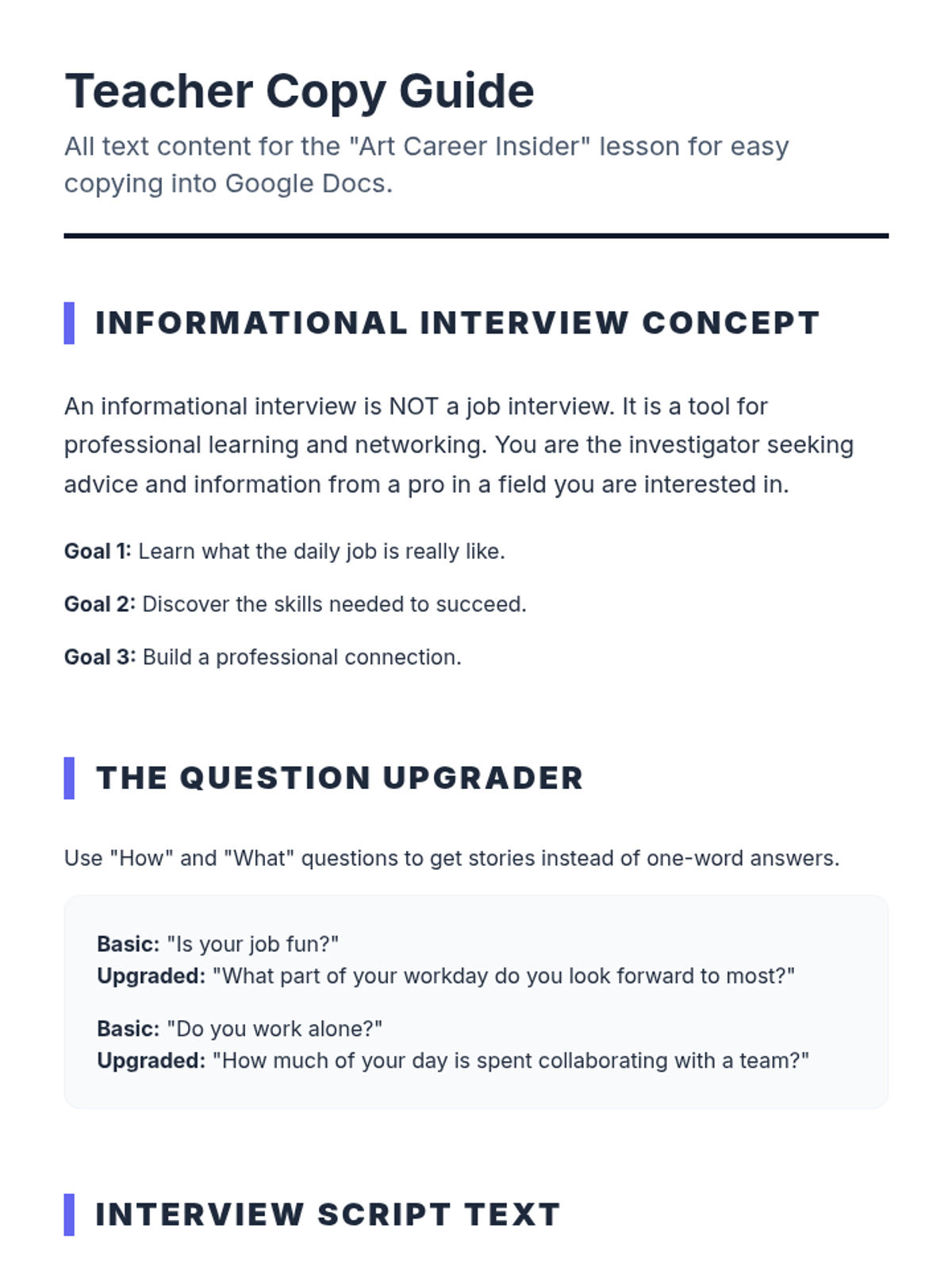
A lesson focused on functional communication skills for conducting informational interviews with creative professionals, specifically animators and tattoo artists. Students learn to draft open-ended questions and structure a professional conversation.
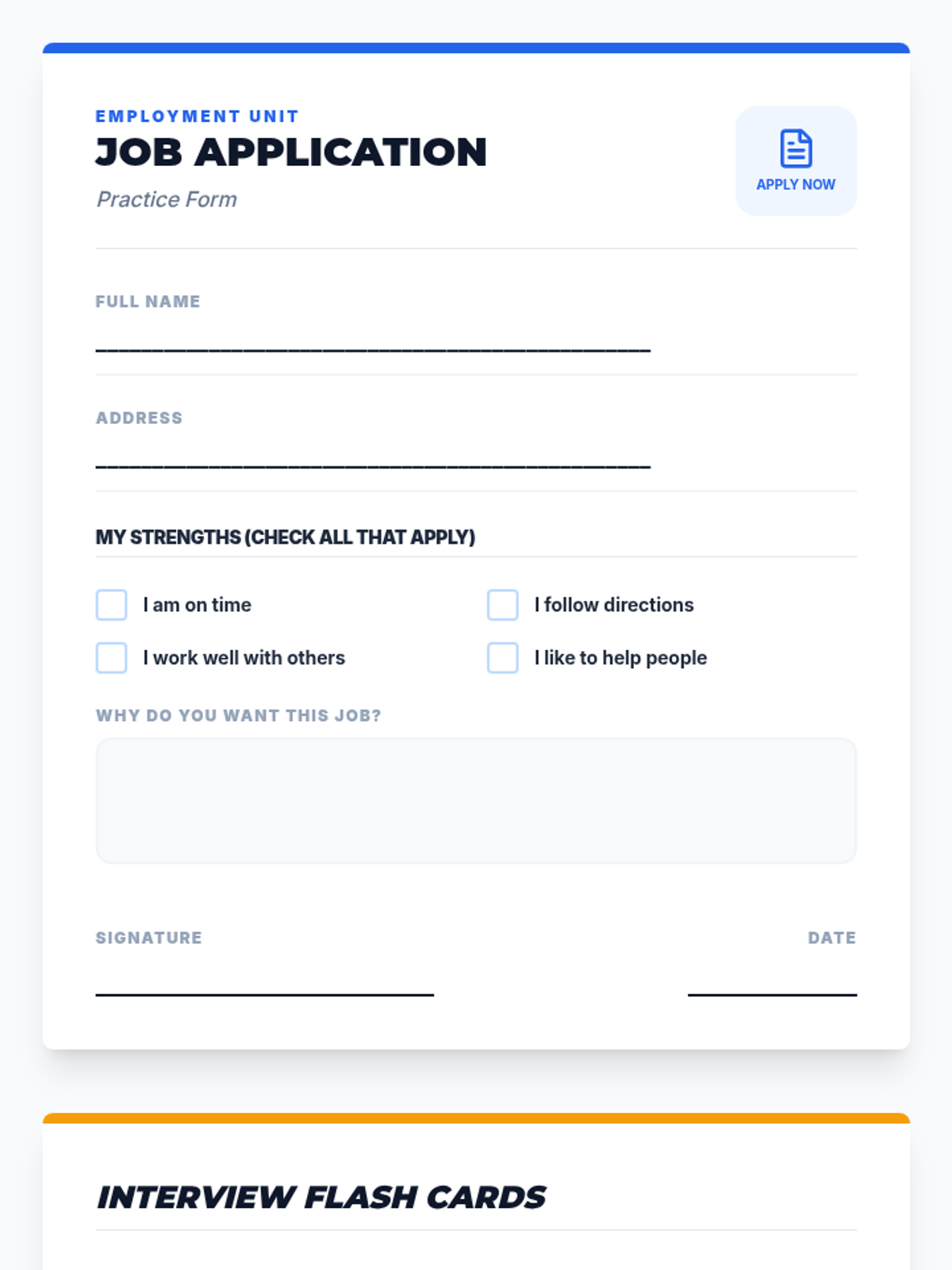
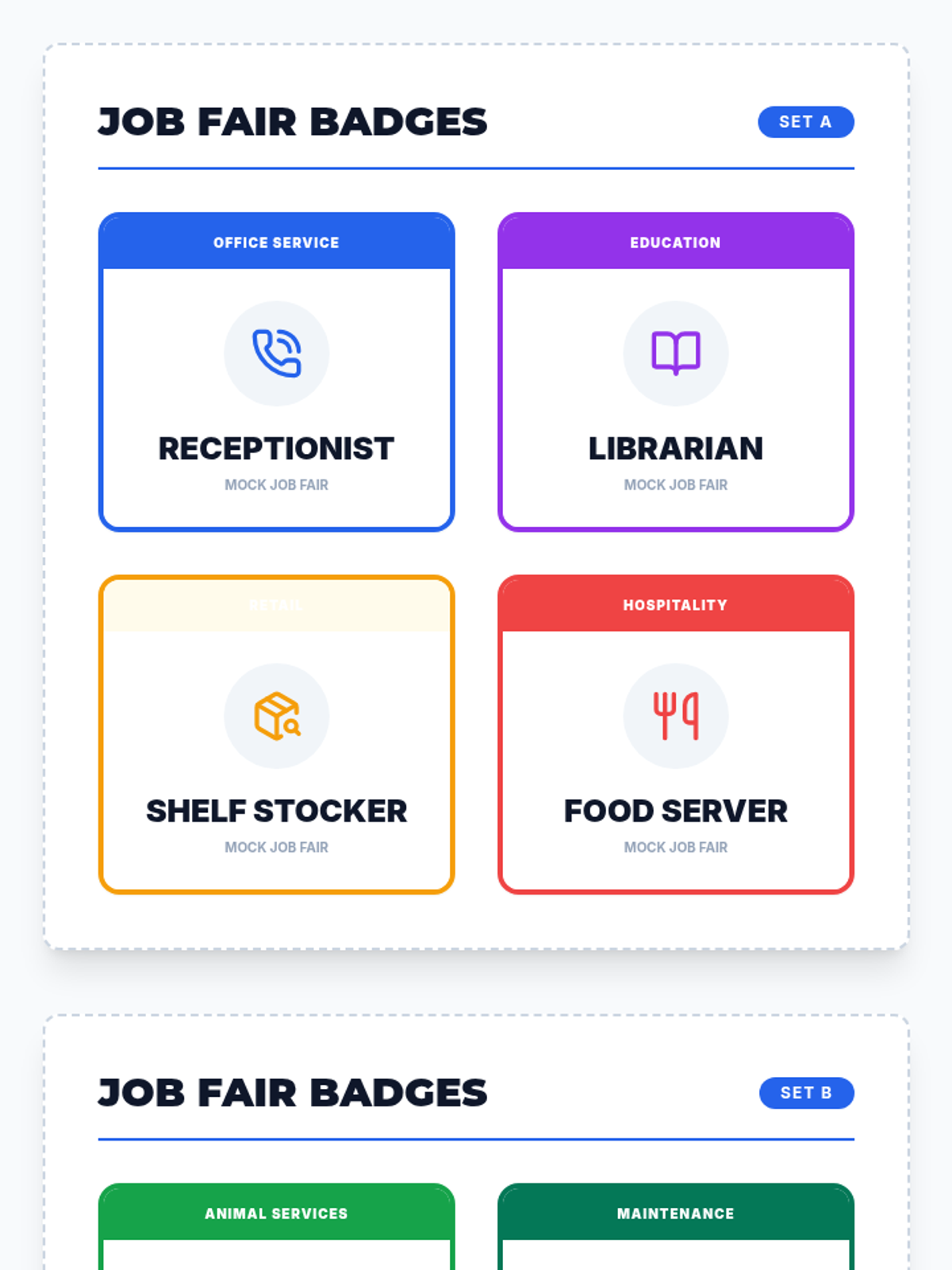
Building essential job-seeking skills, including application completion, interview preparation, and understanding job roles.
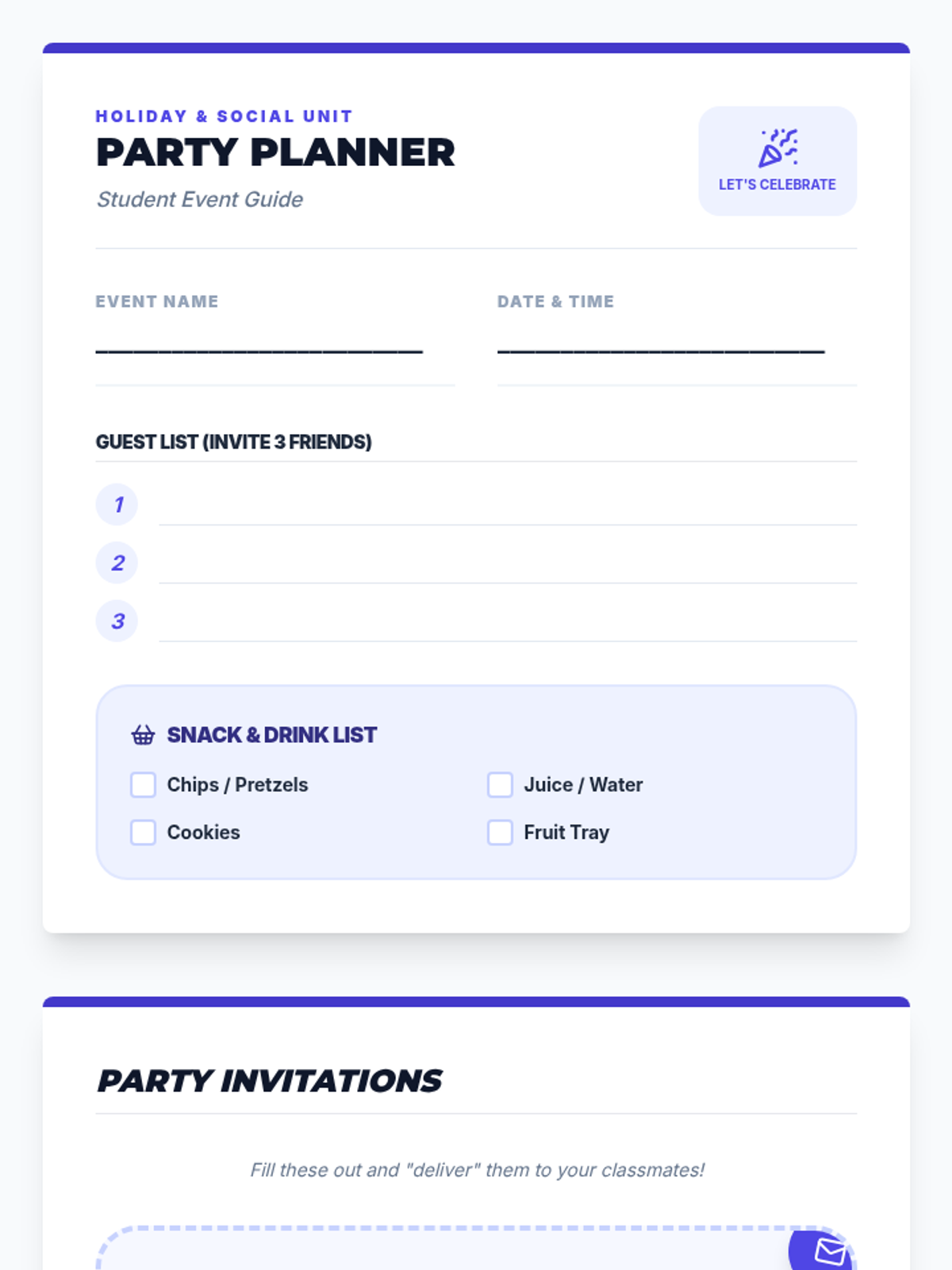
Planning social gatherings, managing invitations, and practicing etiquette for holiday and community events.
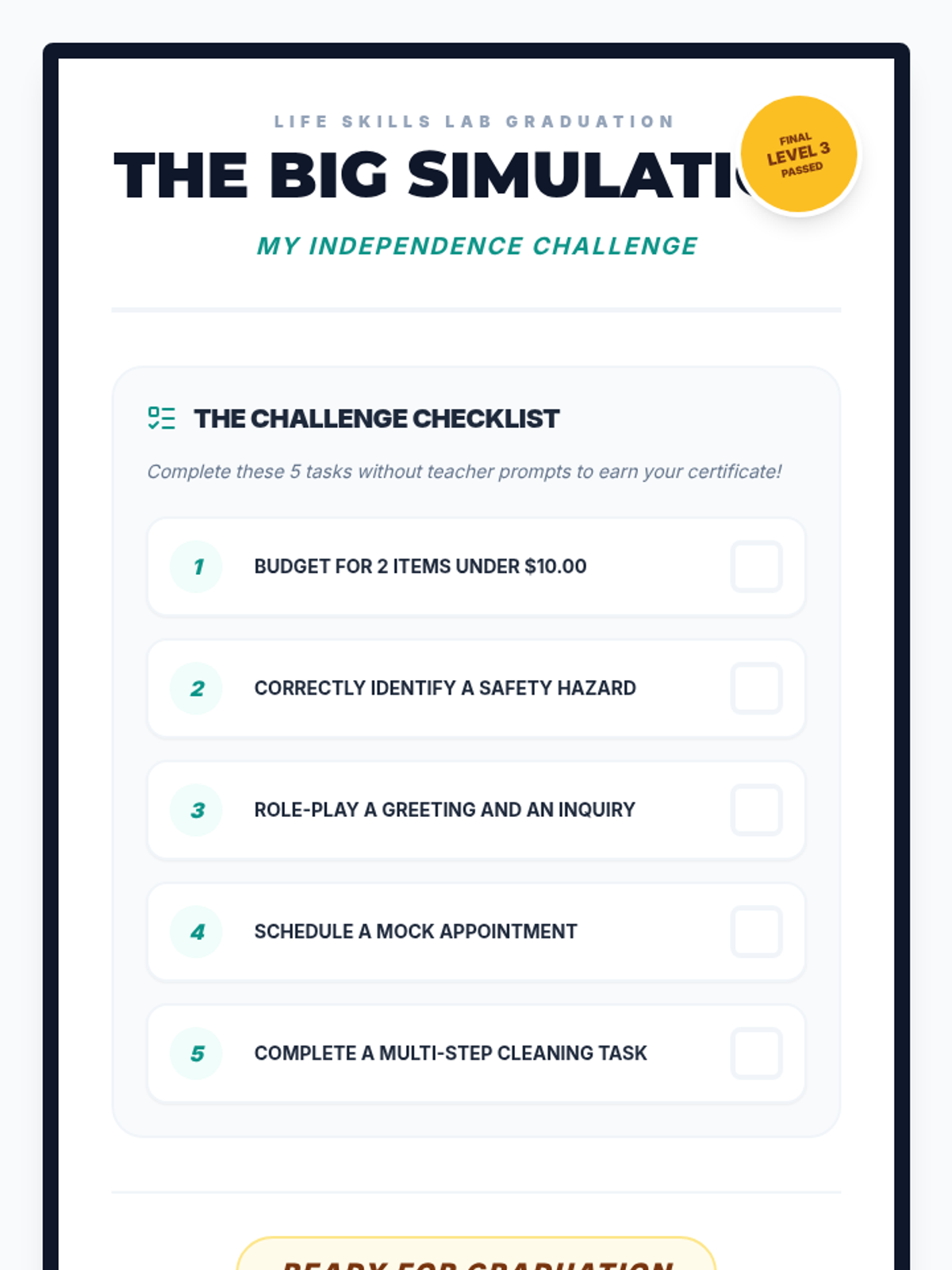
The capstone unit of the program, where students apply all learned skills in complex, multi-step simulations of independent adult life.