Written and verbal communication standards for the workplace, including email etiquette, presentation delivery, and professional phone conduct. Develops collaborative skills for teamwork, constructive feedback, and efficient time management.
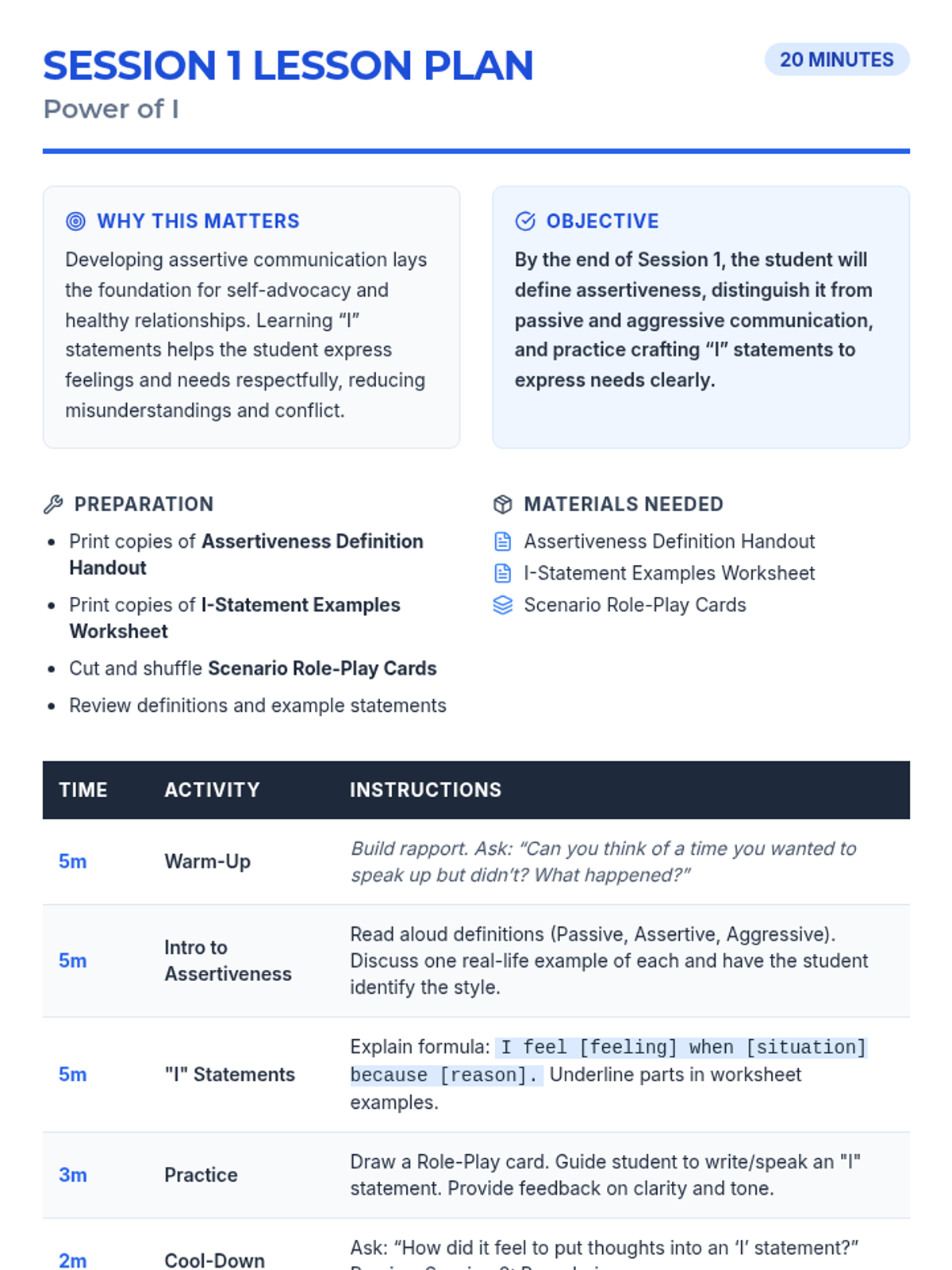
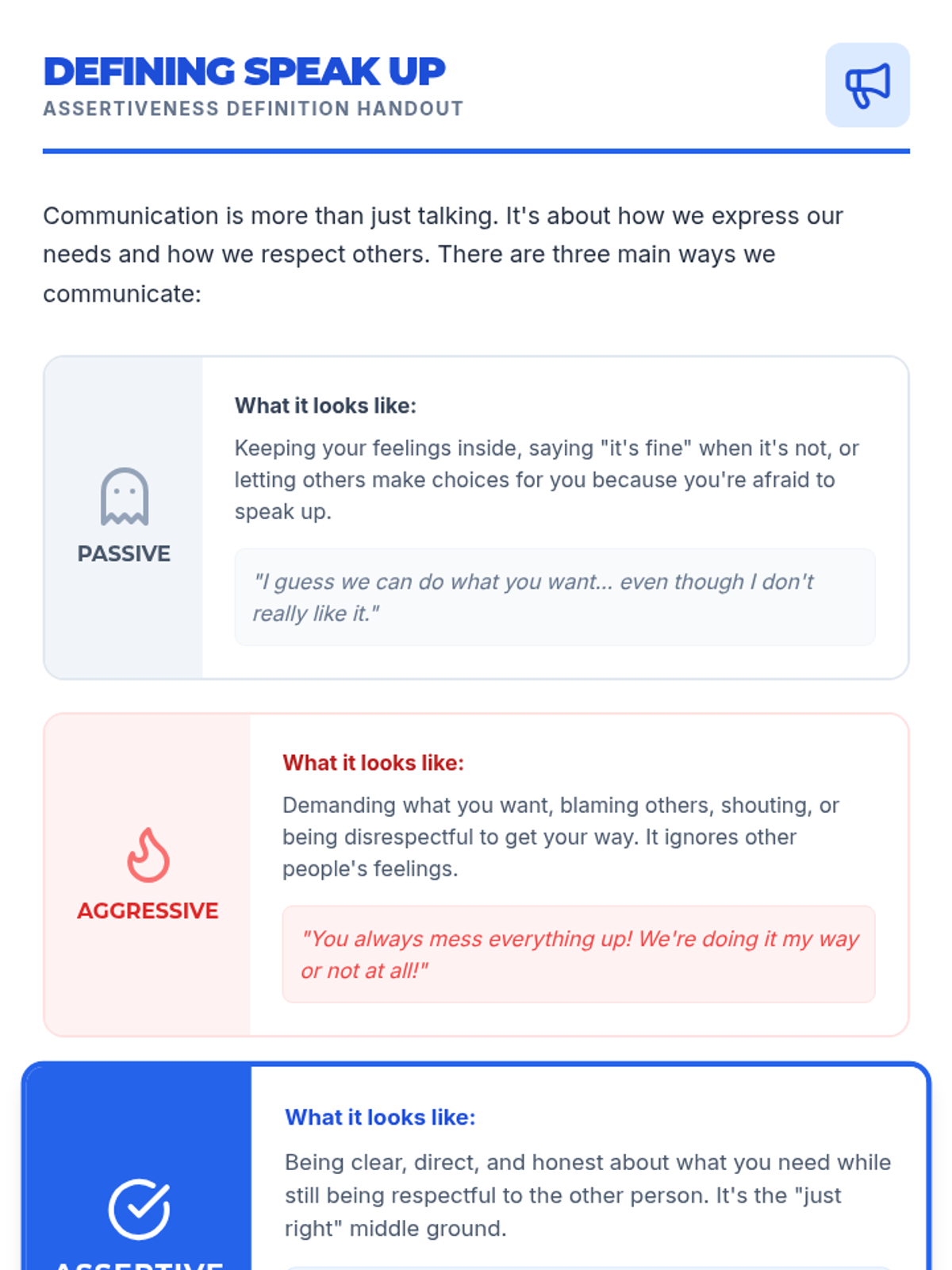
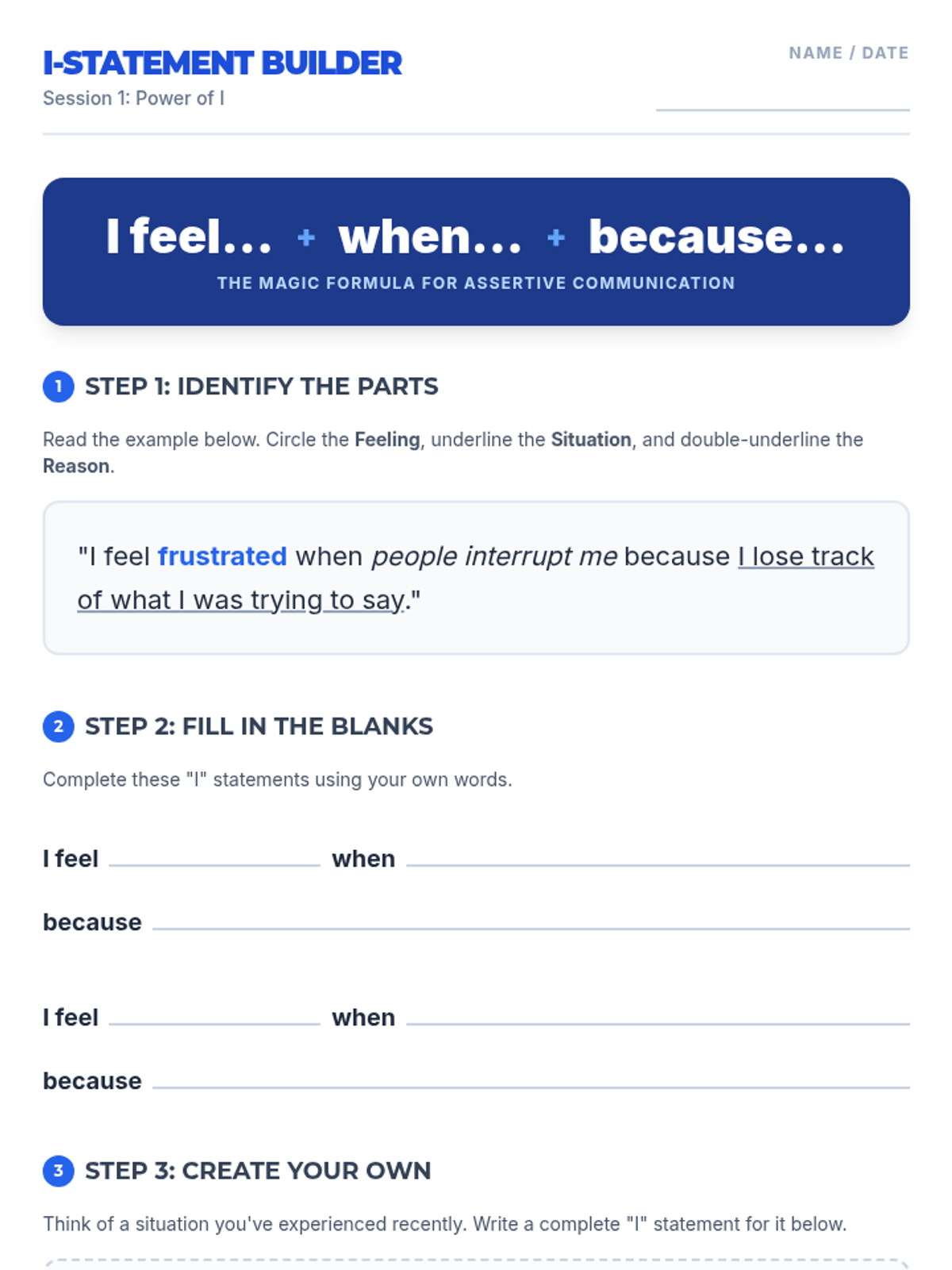
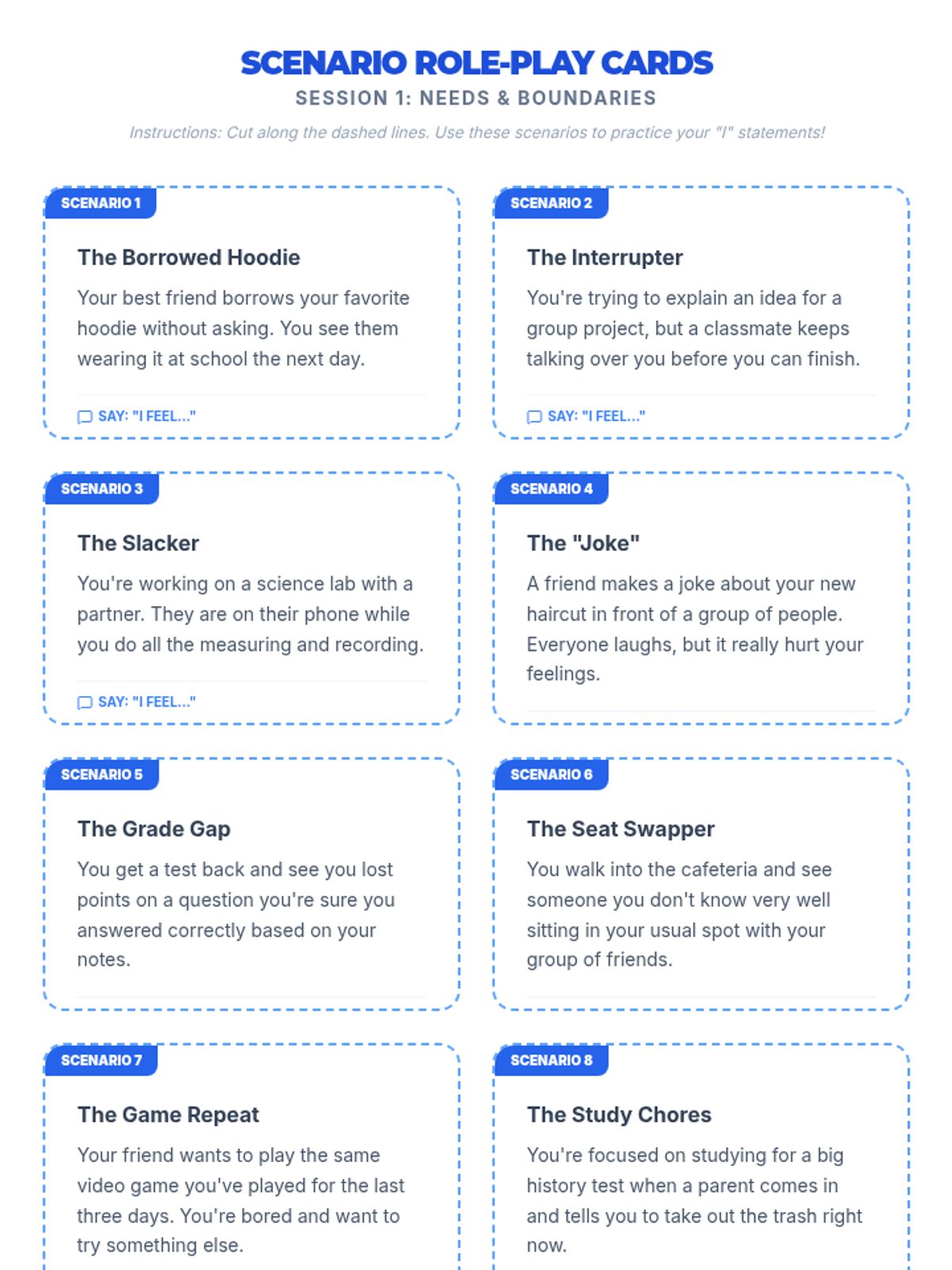
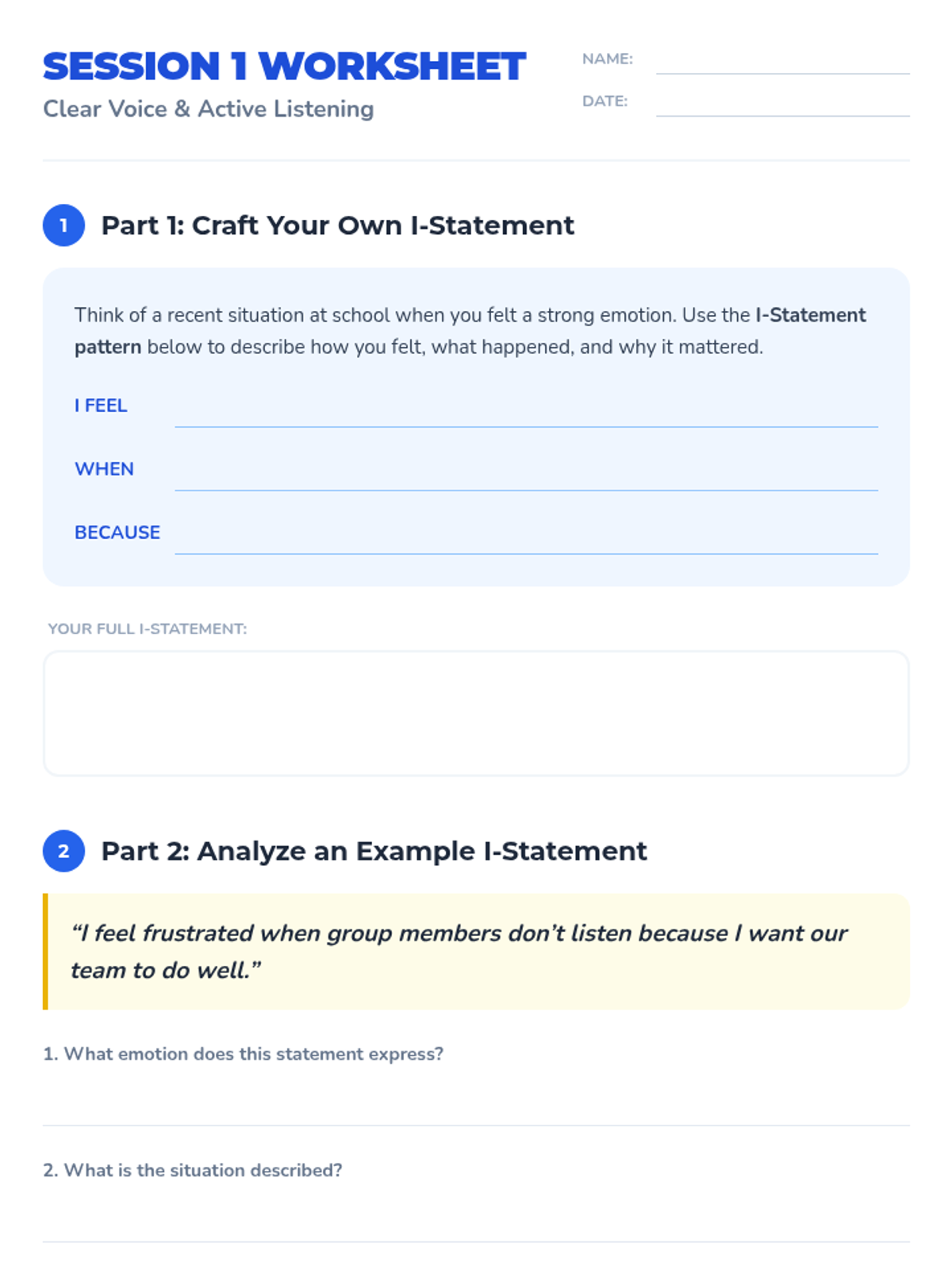
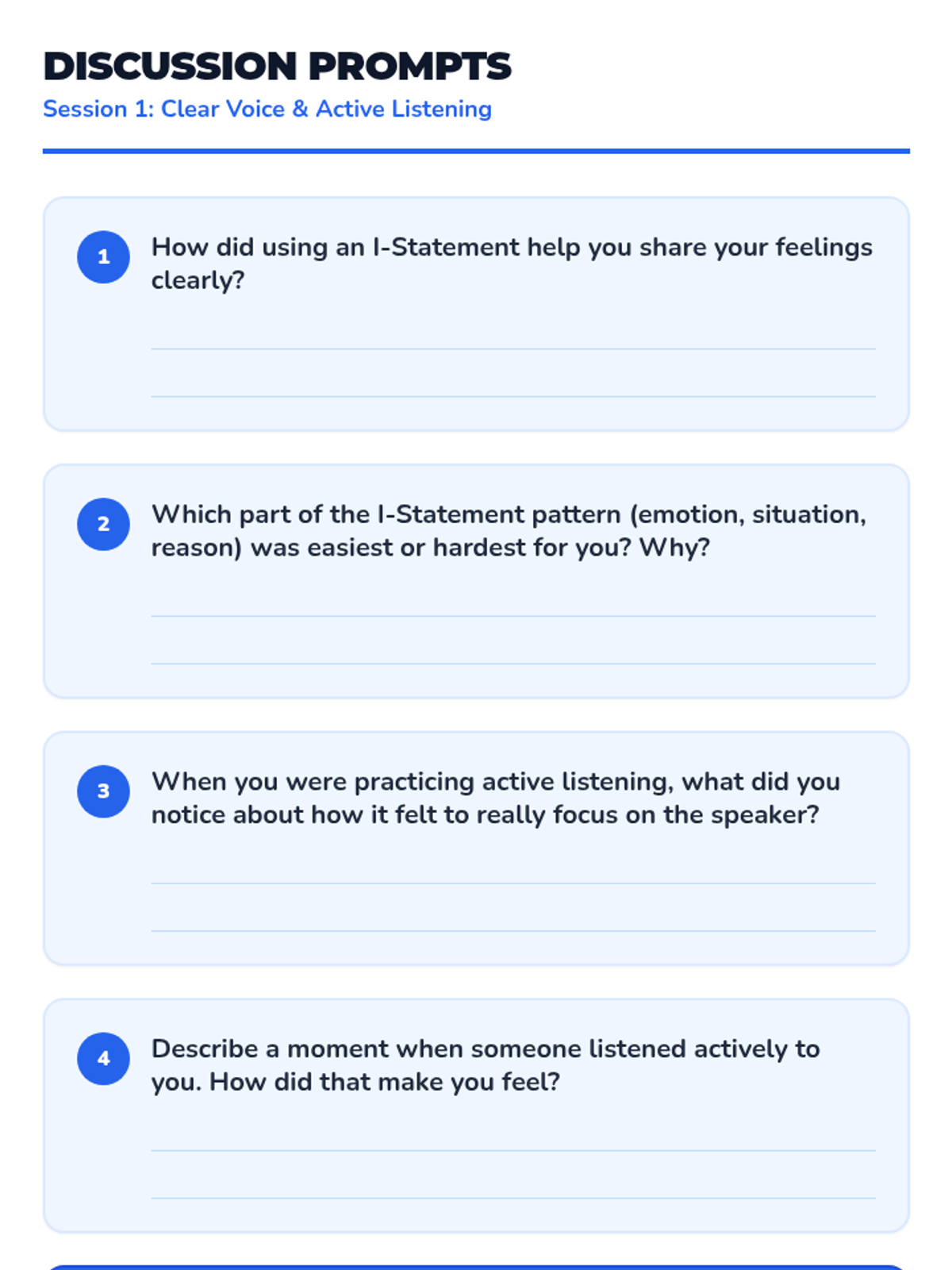
A 5-session intensive for middle school students to develop assertive communication skills, focusing on I-statements, boundaries, refusals, and long-term maintenance.
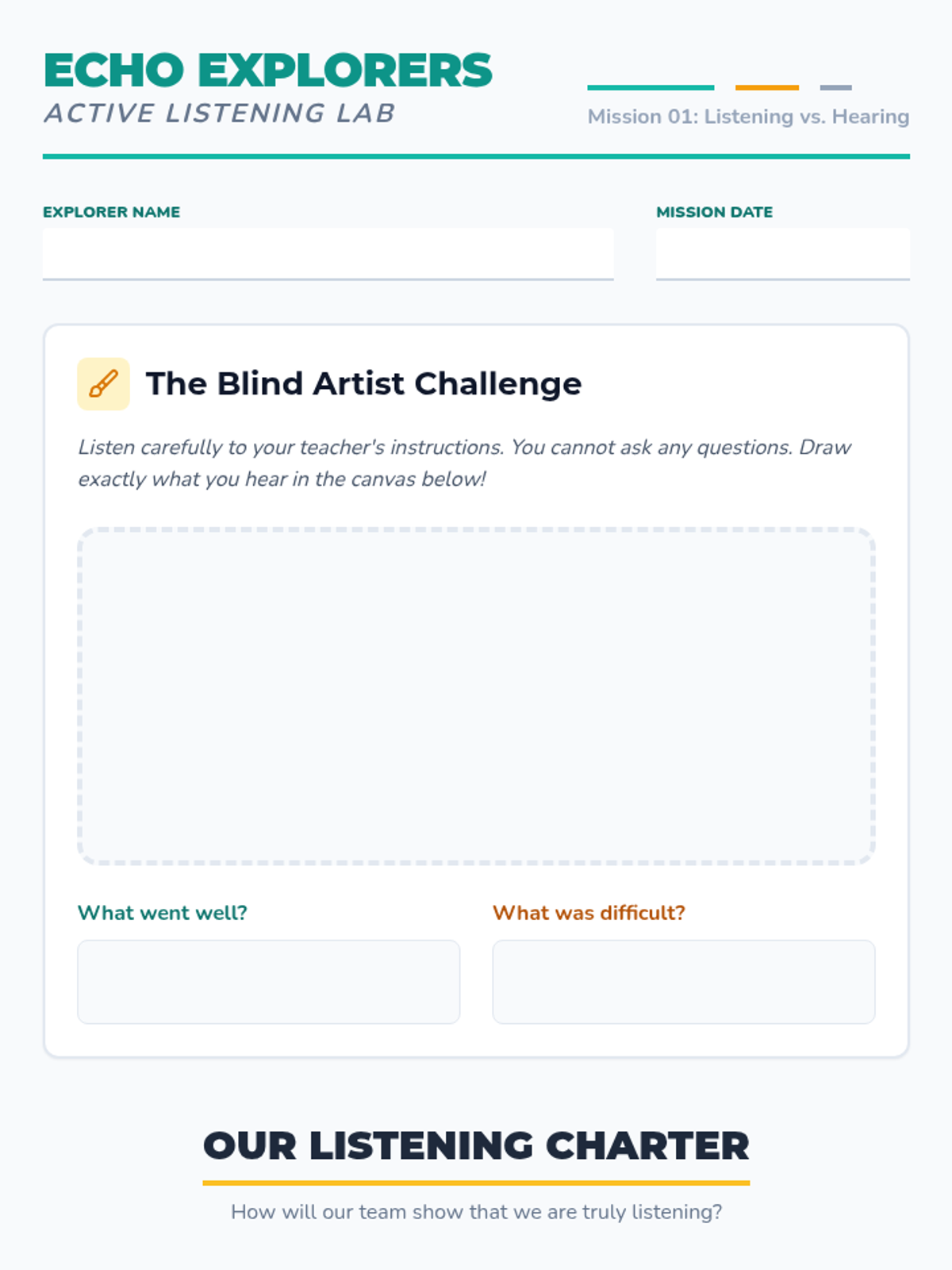
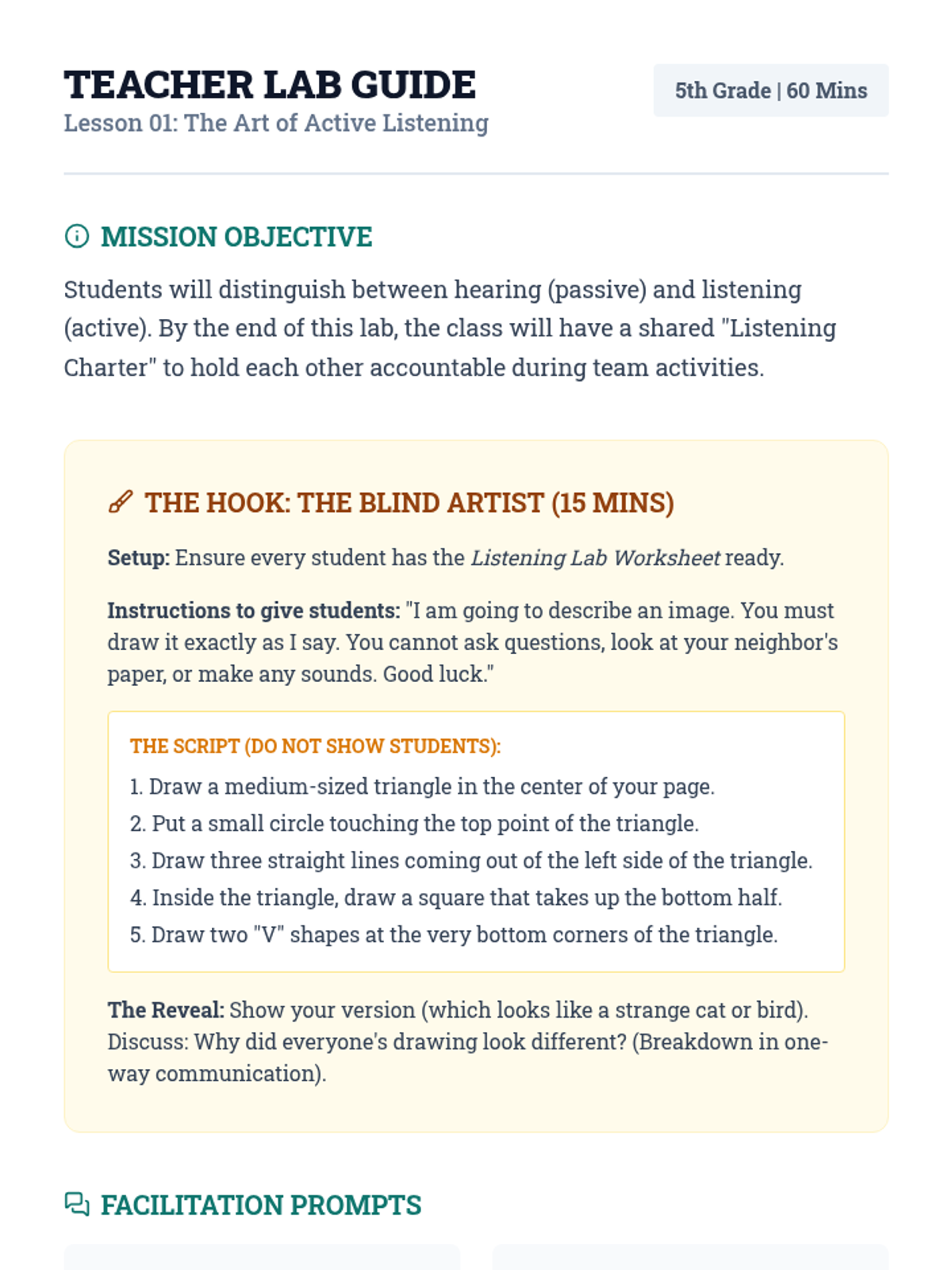
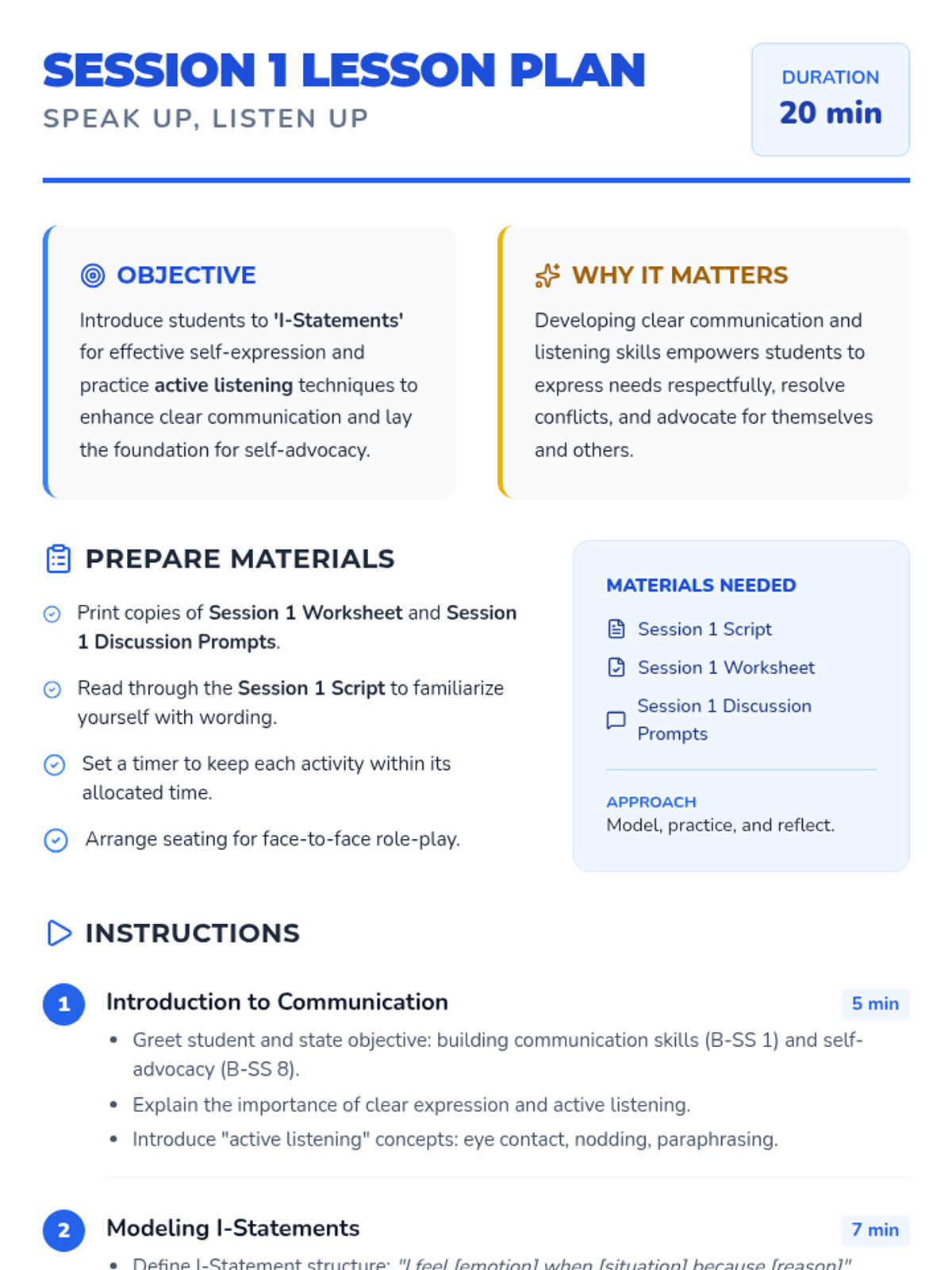
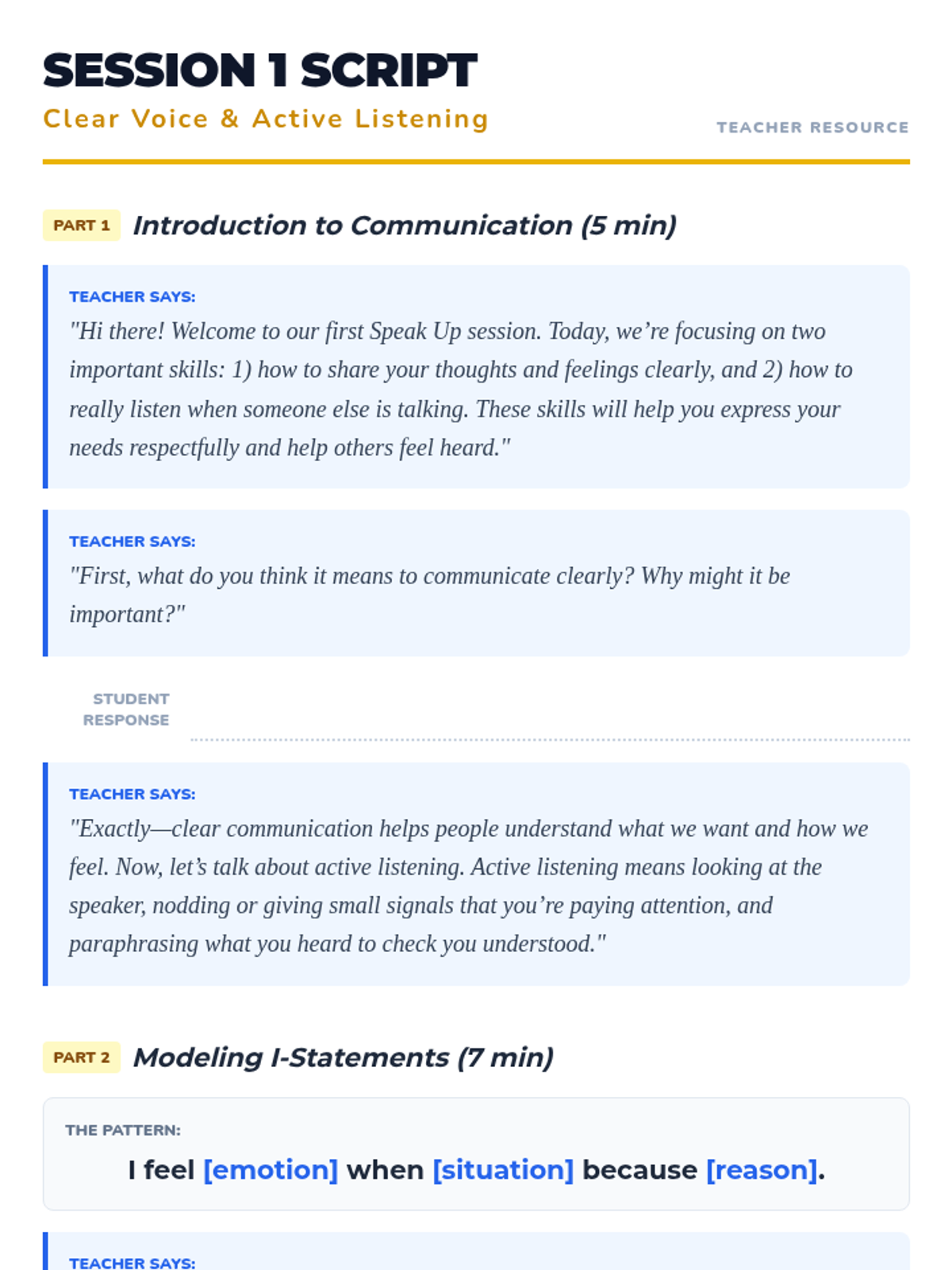
This sequence builds foundational communication skills for effective teamwork, focusing on active listening, paraphrasing, nonverbal cues, and collaborative dialogue. Students progress from individual listening skills to facilitating group problem-solving through a workshop-based approach.
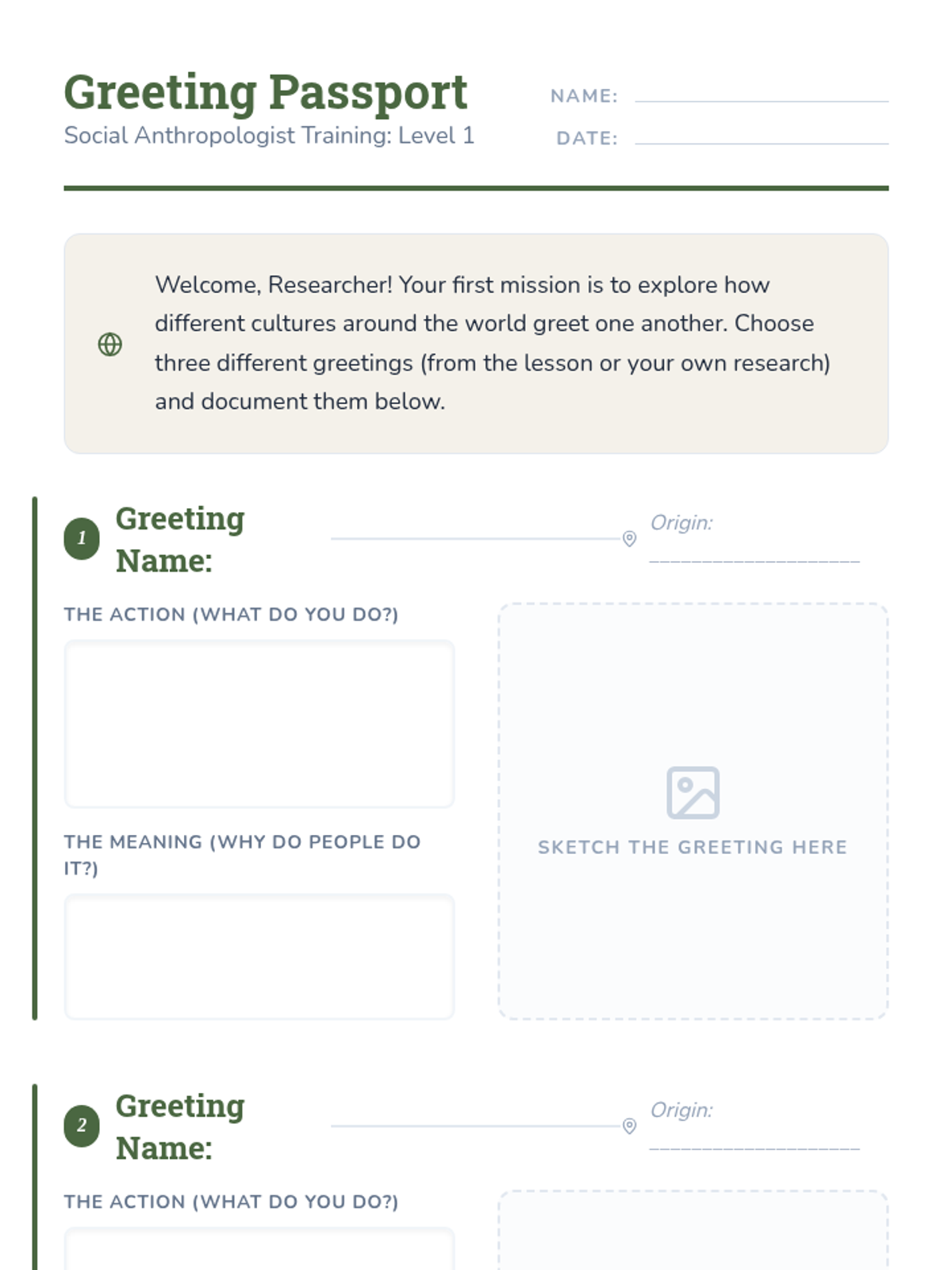
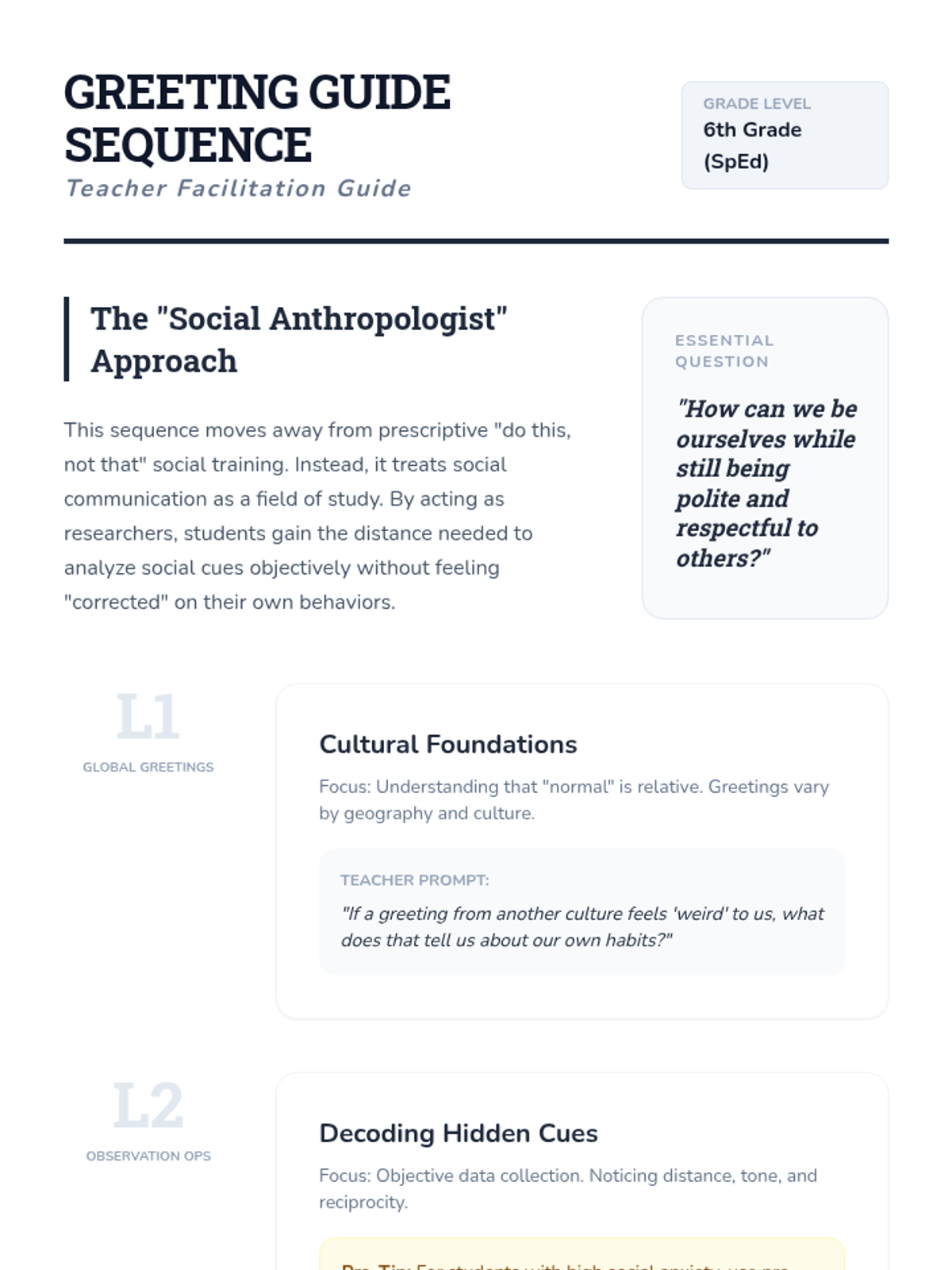
A project-based sequence for 6th graders to explore cultural greeting norms, observe social interactions, and develop their own authentic social communication style. Students act as 'social anthropologists' to create a survival guide for navigating middle school greetings.
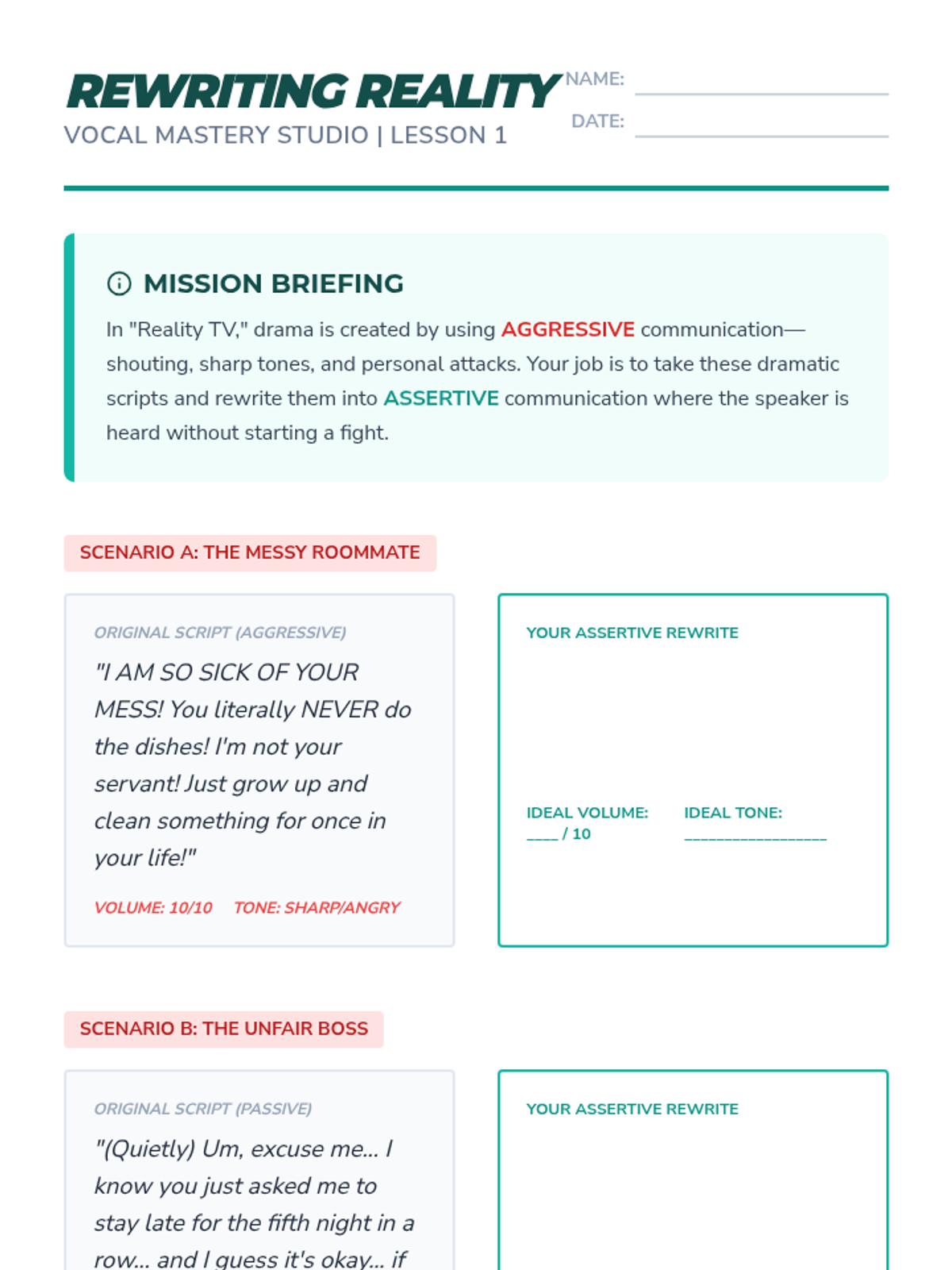
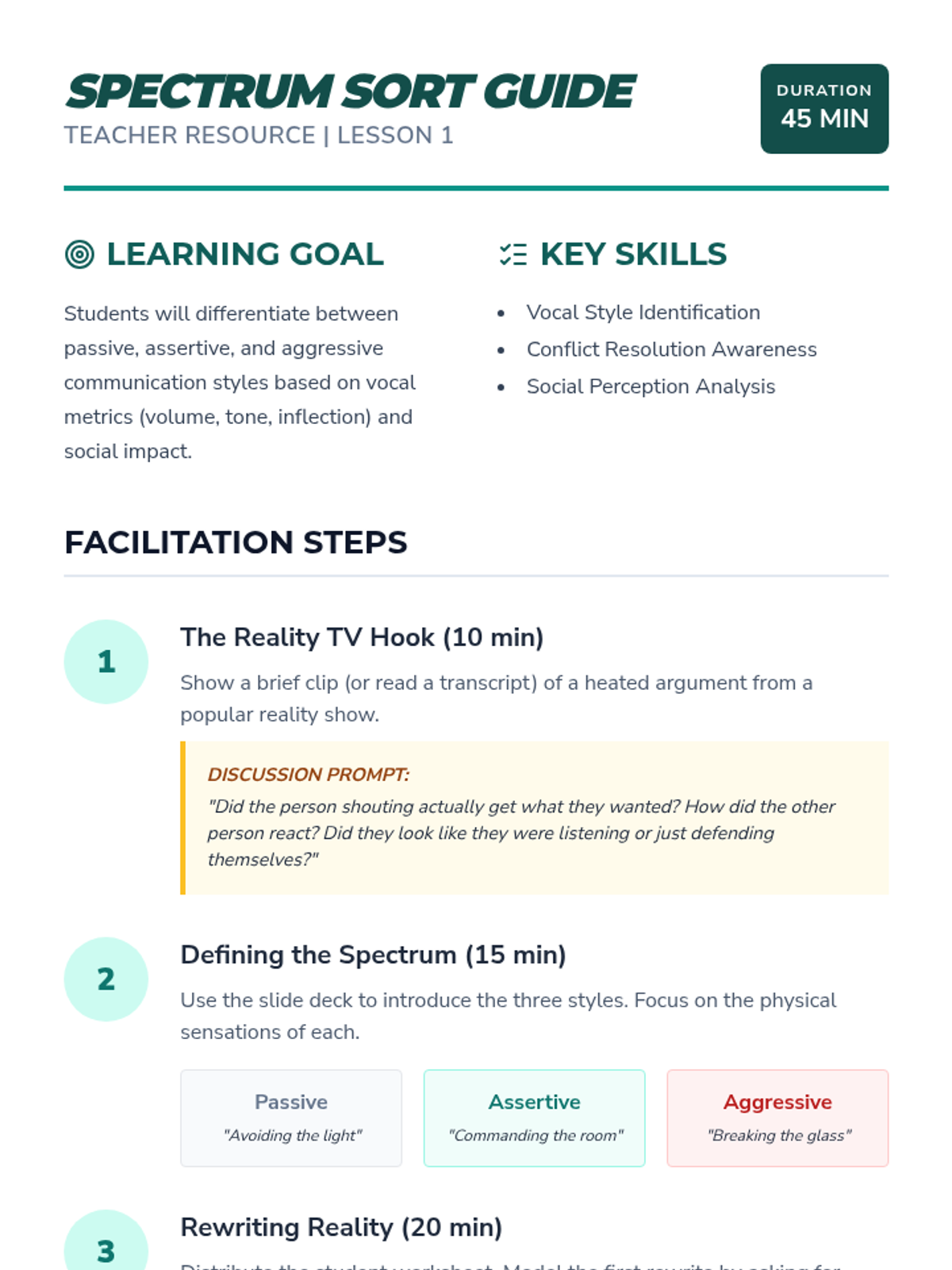
This sequence focuses on the distinction between aggressive shouting and assertive projection. Students learn to use their voice effectively for self-advocacy in various settings, from IEP meetings to public speaking, ensuring they are heard and respected.
A 3-session mini-unit for 6th graders to develop effective oral, written, and active listening skills alongside practical self-advocacy strategies.
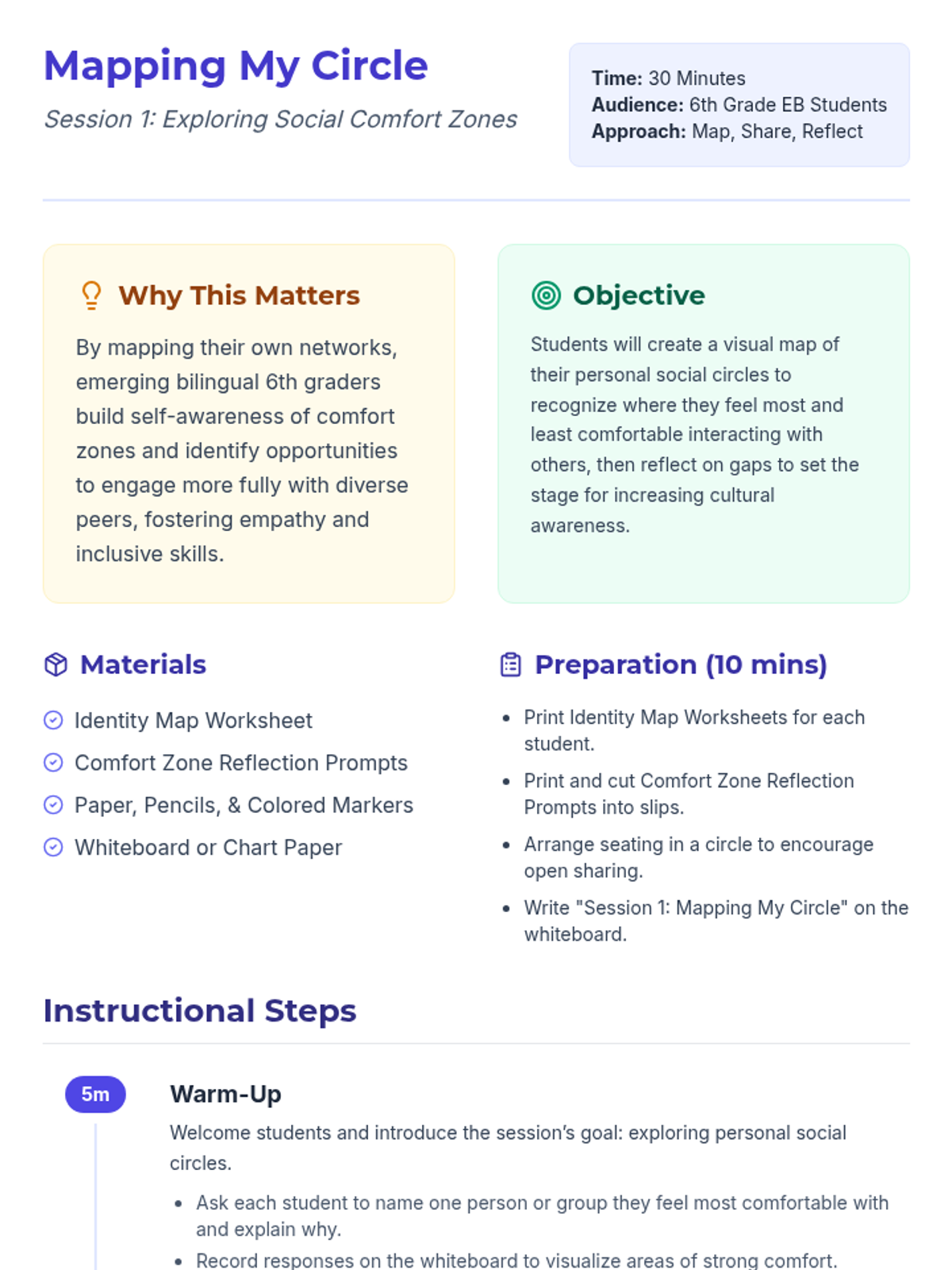
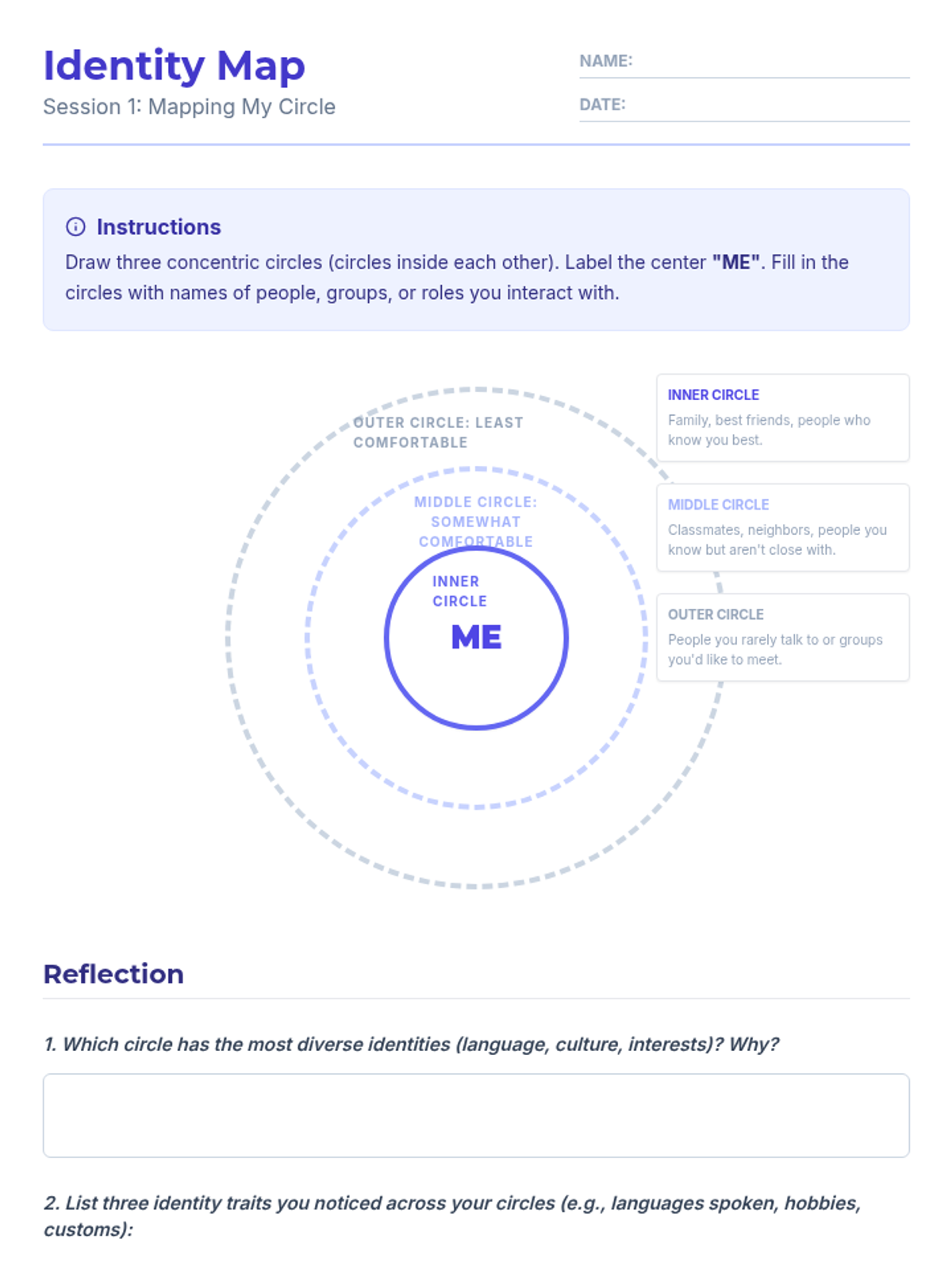
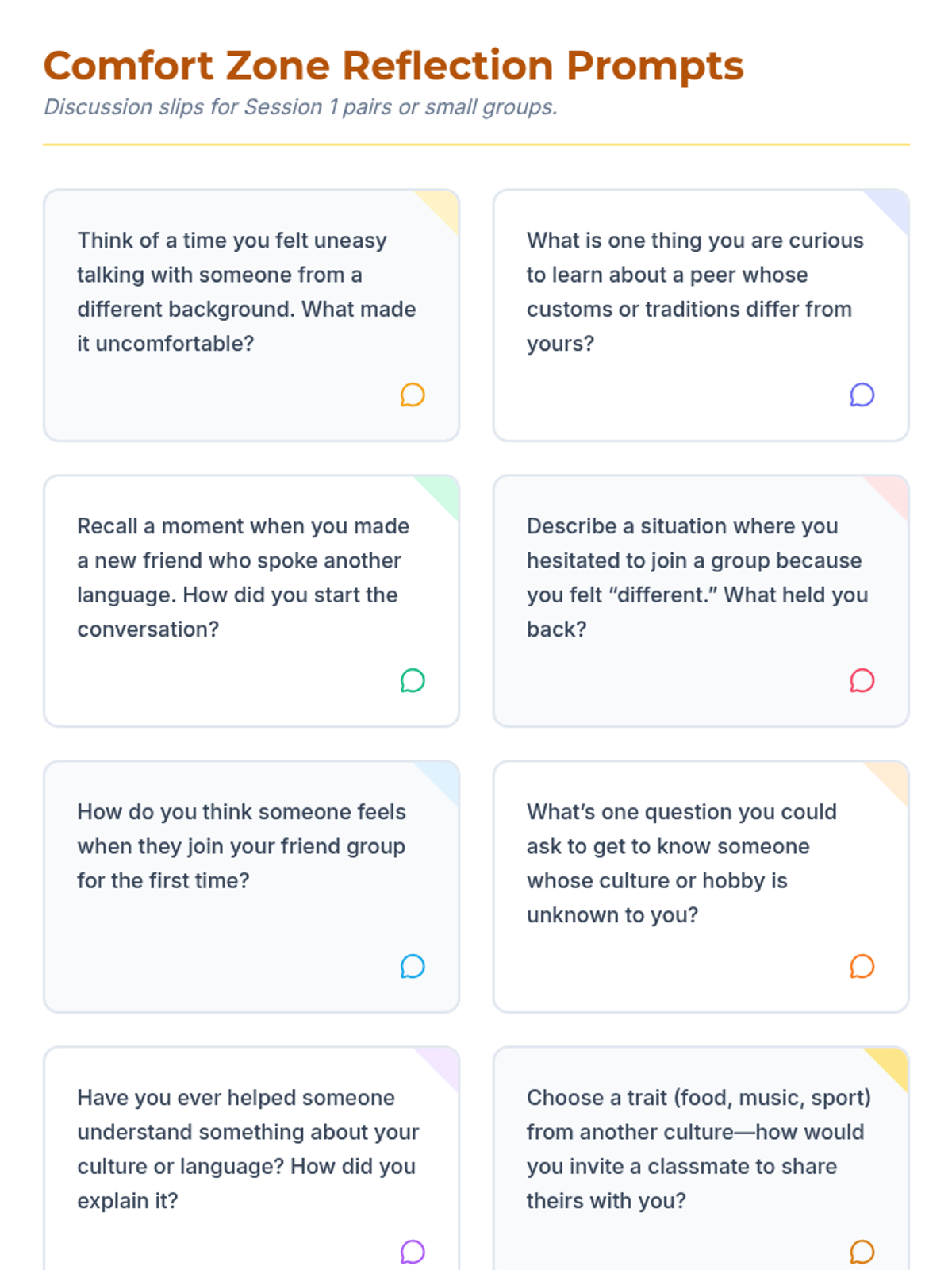
A six-session small-group unit for 6th grade emerging bilingual students to explore comfort levels, build empathy, and improve communication skills through collaborative activities. This sequence focuses on identity mapping, cultural traditions, and communication styles.
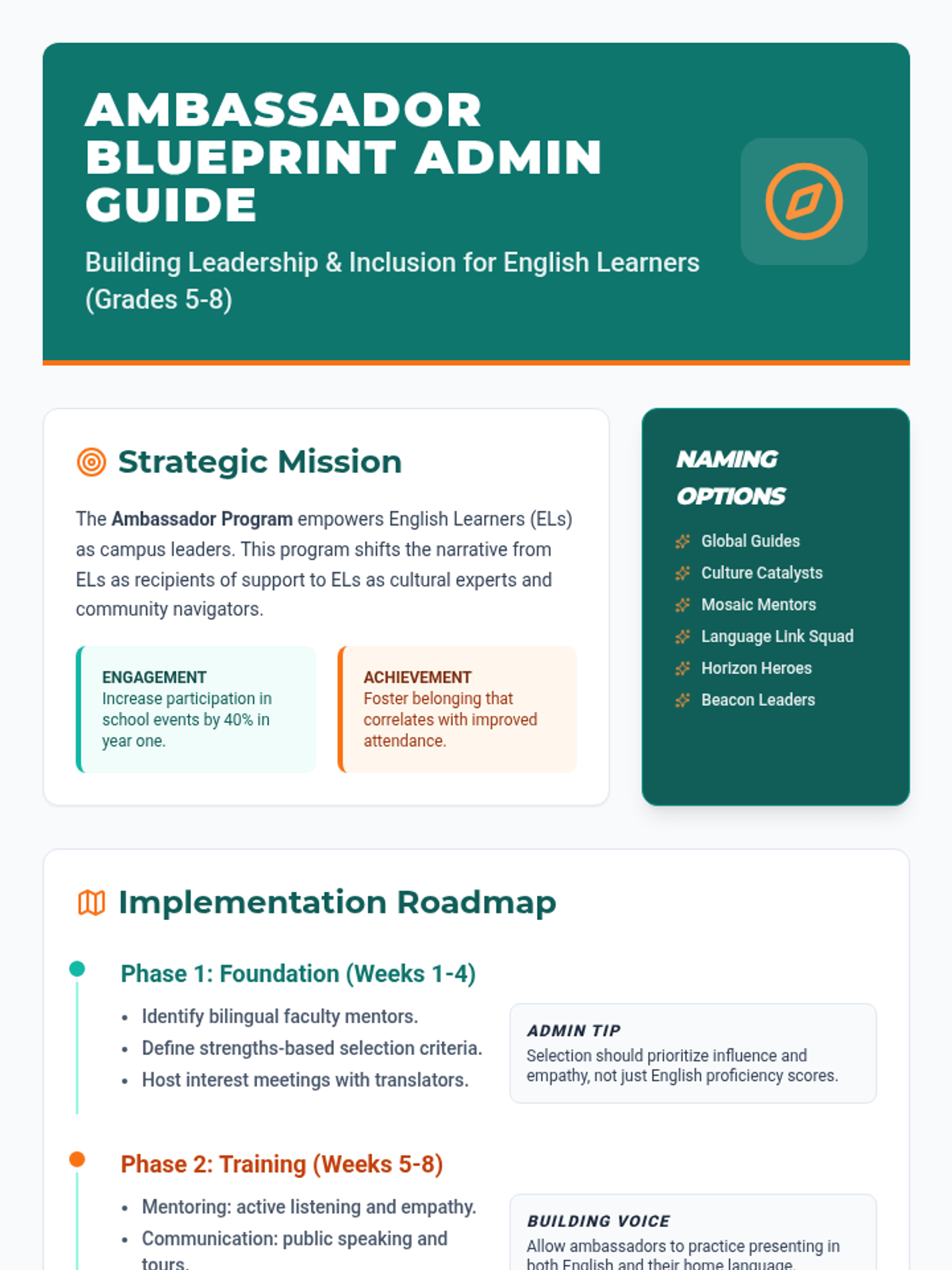
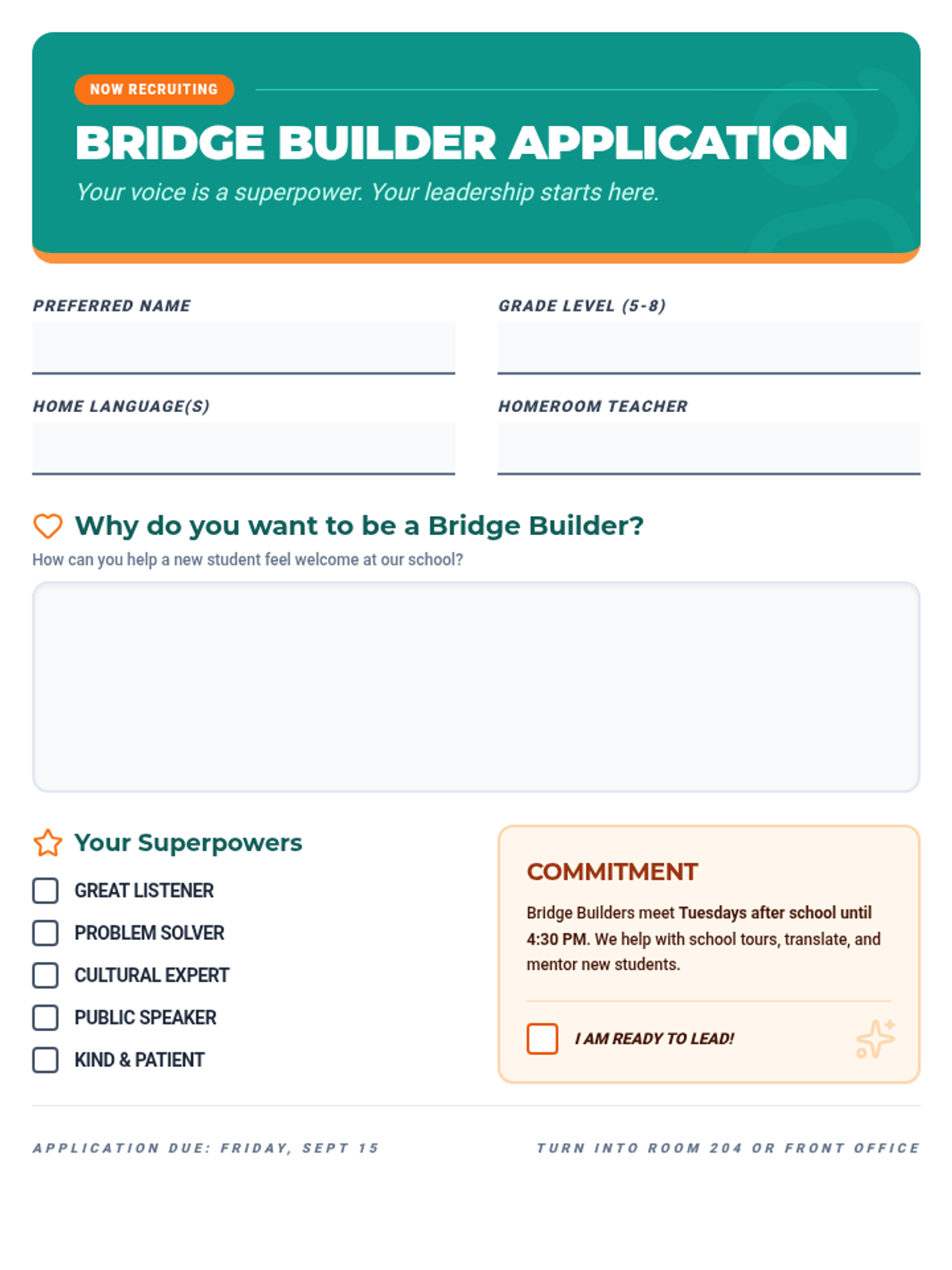
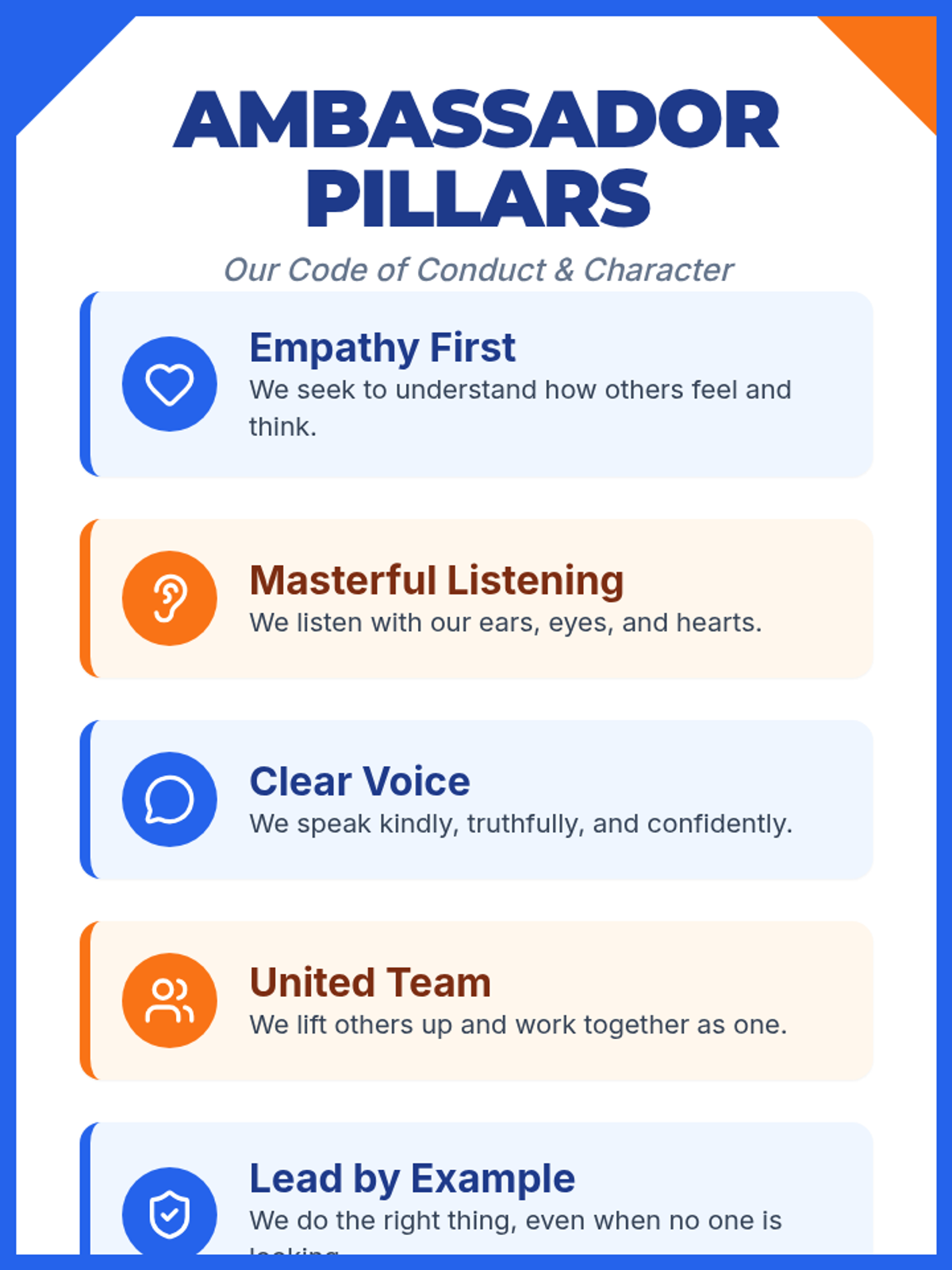
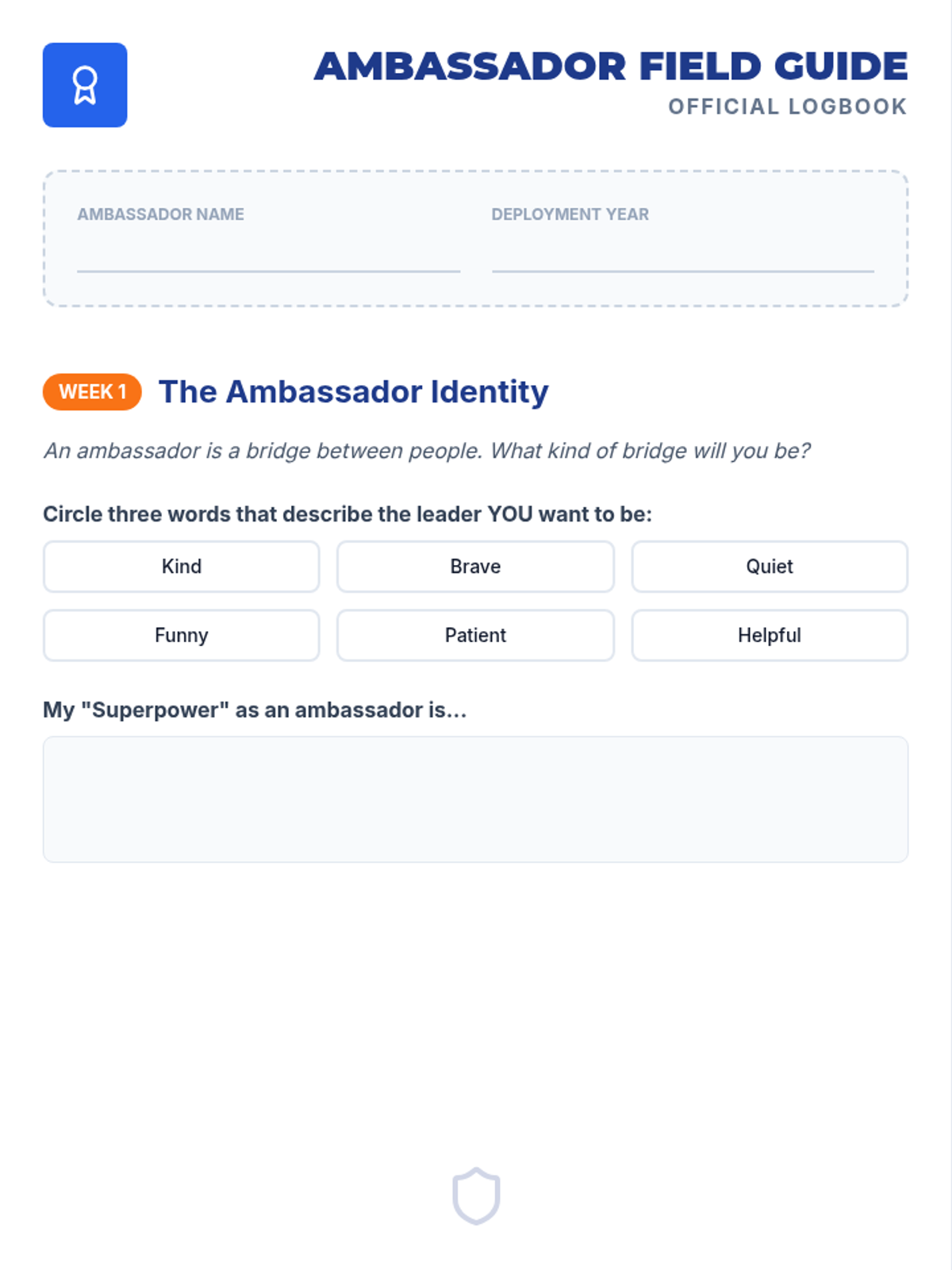
A comprehensive program framework designed to empower English learners in grades 5-8 as school ambassadors, fostering leadership, peer mentoring, and a supportive campus culture.
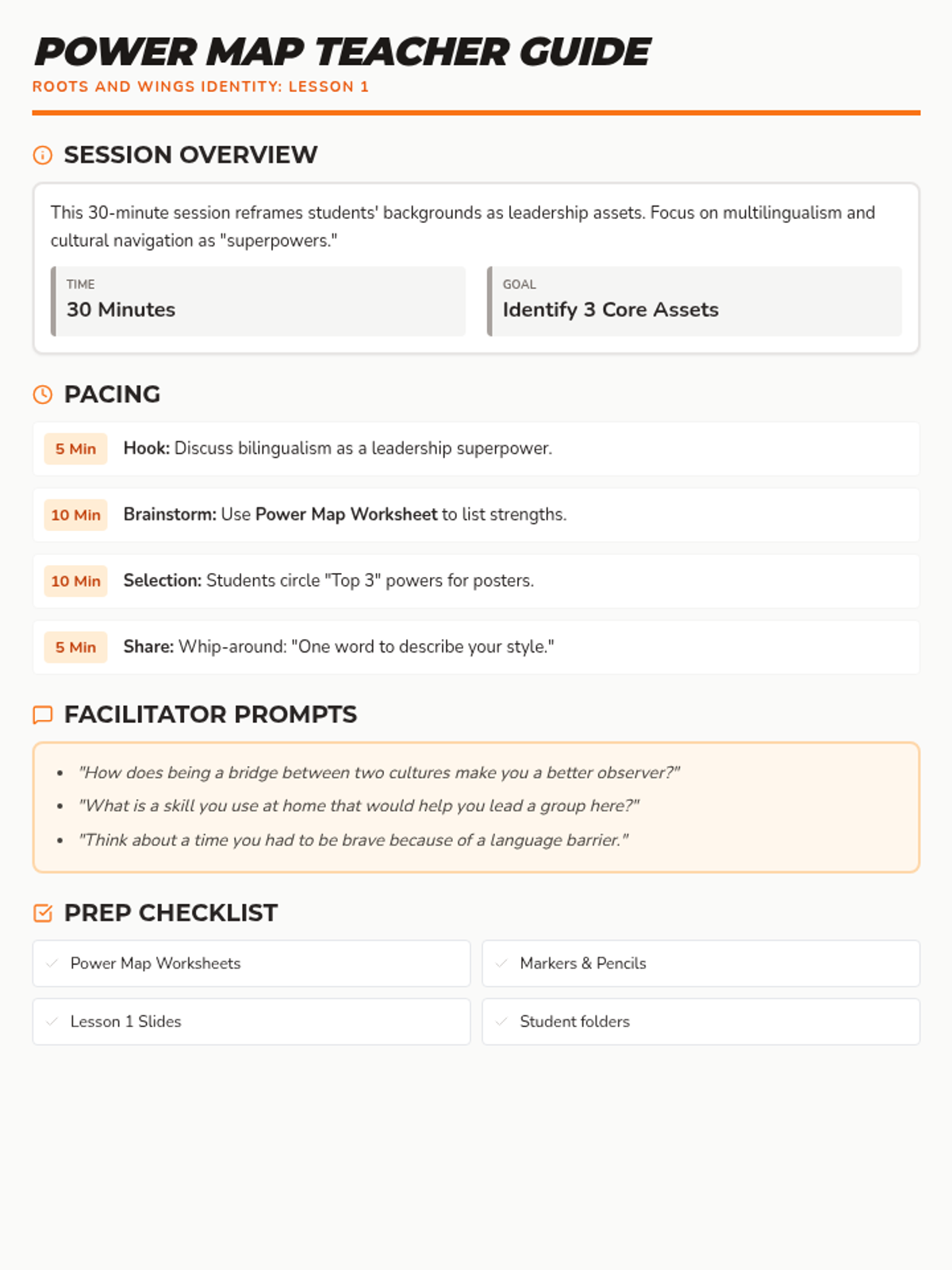
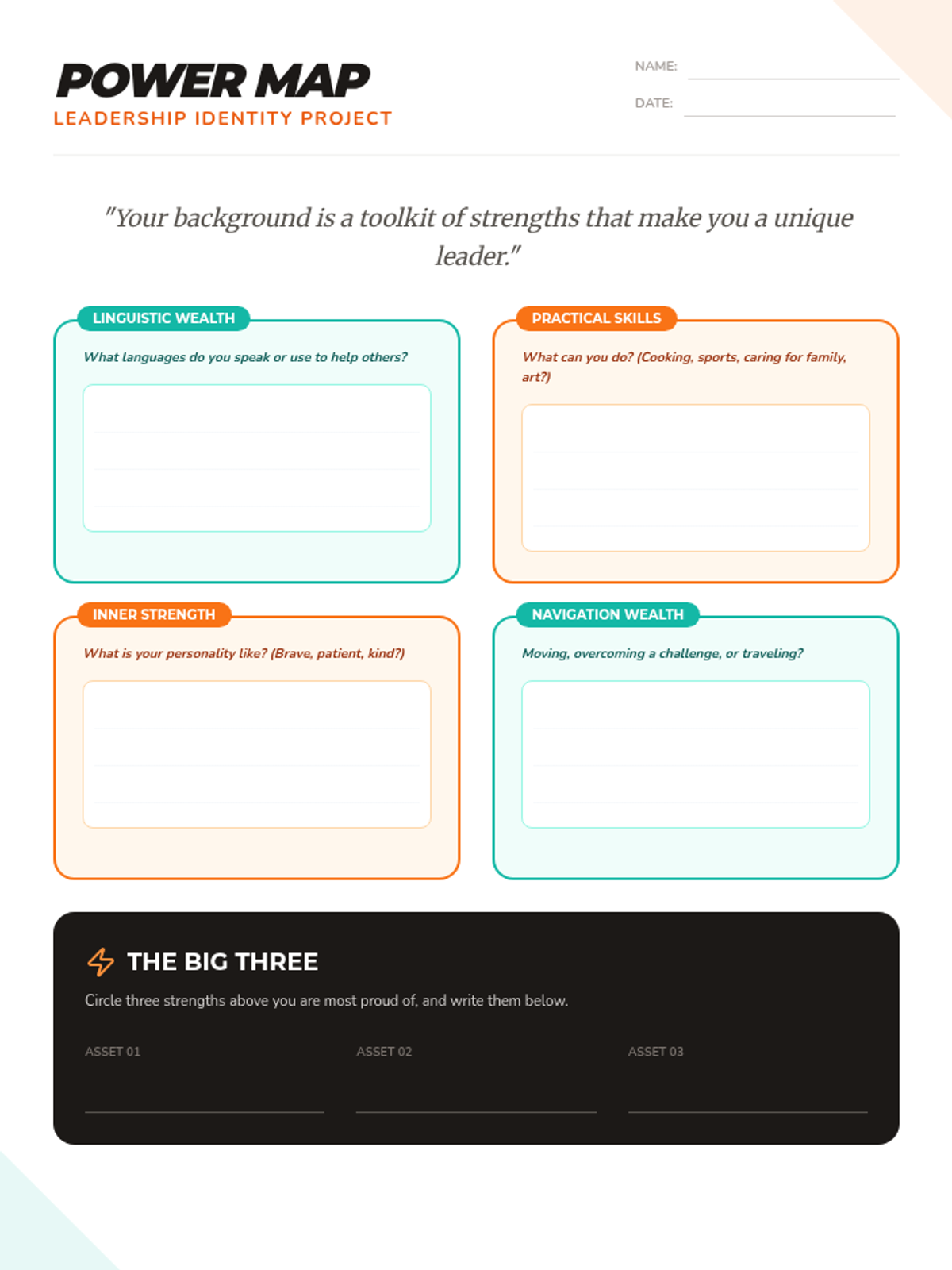
A four-week leadership sequence for English Learners to explore their cultural assets and linguistic strengths, culminating in the creation of personalized visual identity posters. This asset-based program focuses on 'Cultural Wealth' and leadership through a lens of diversity and pride.
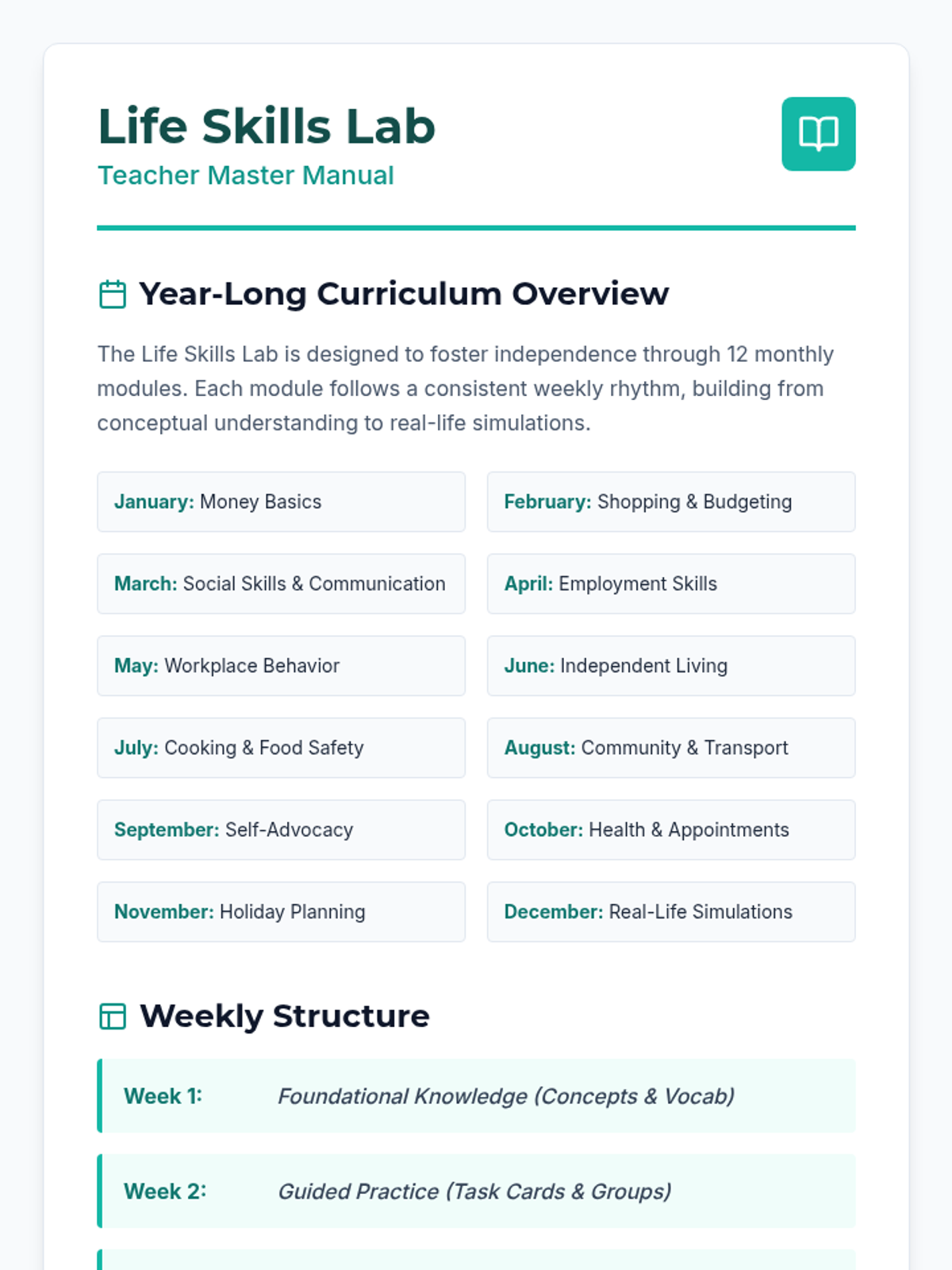
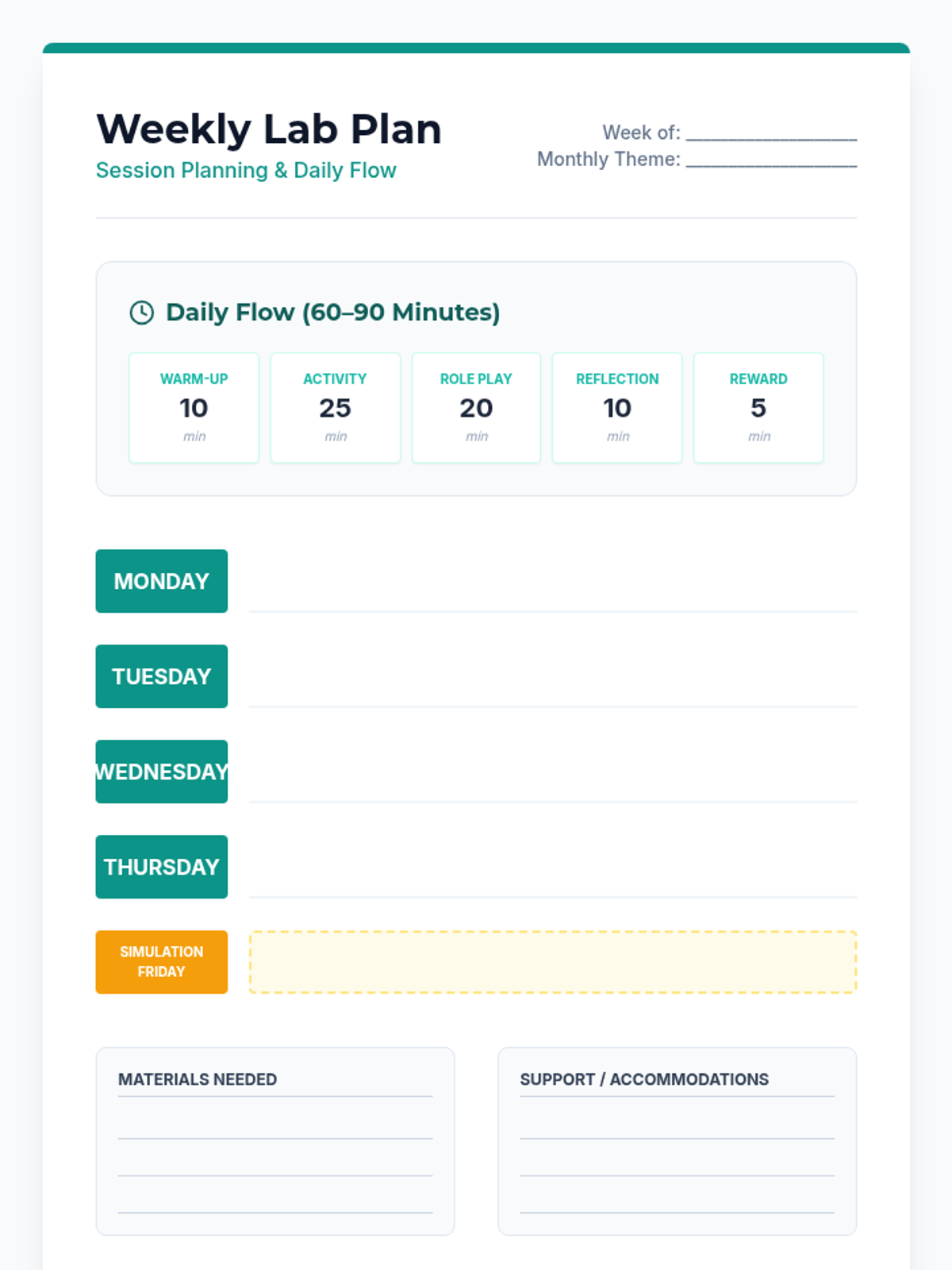
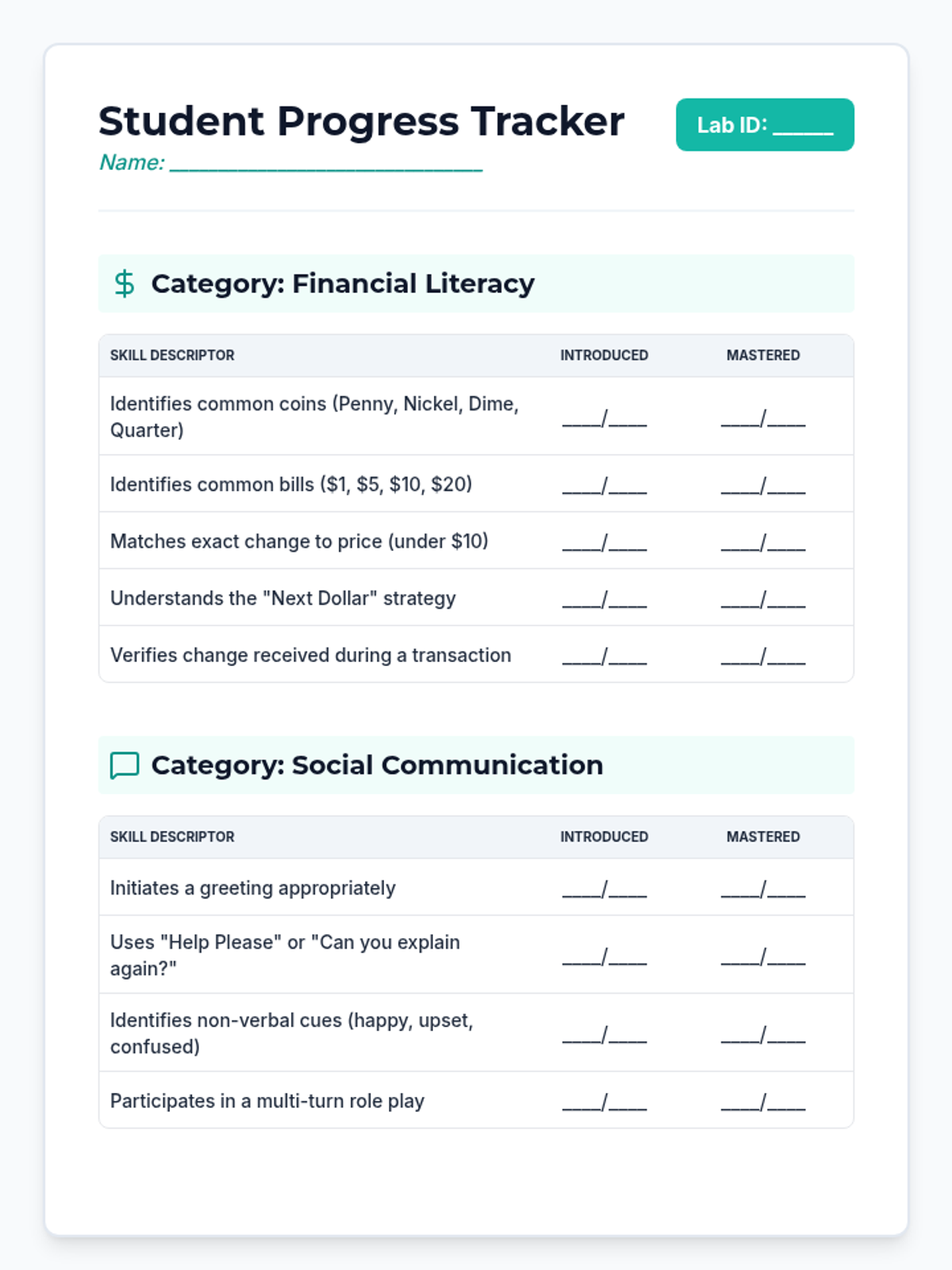
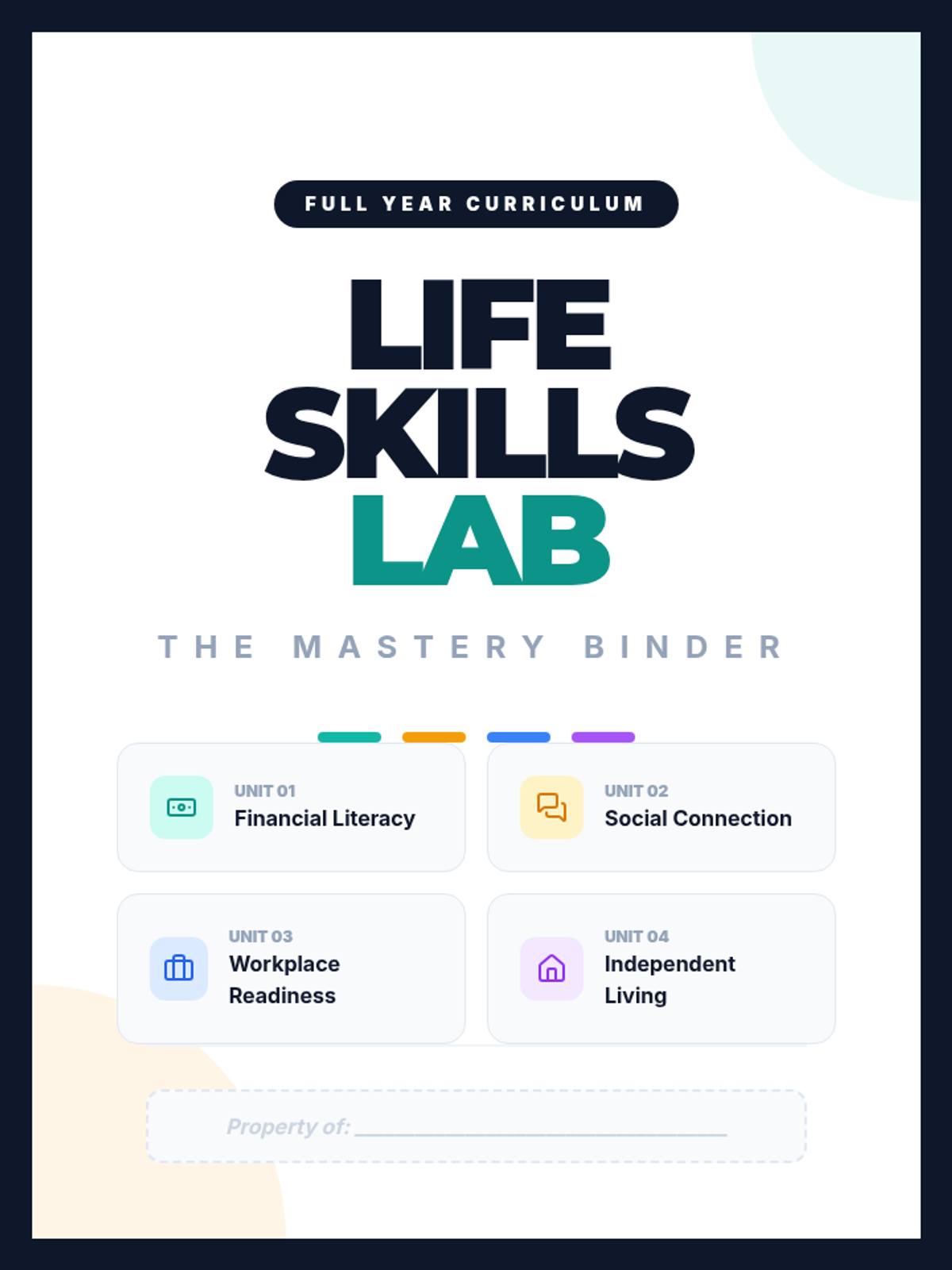
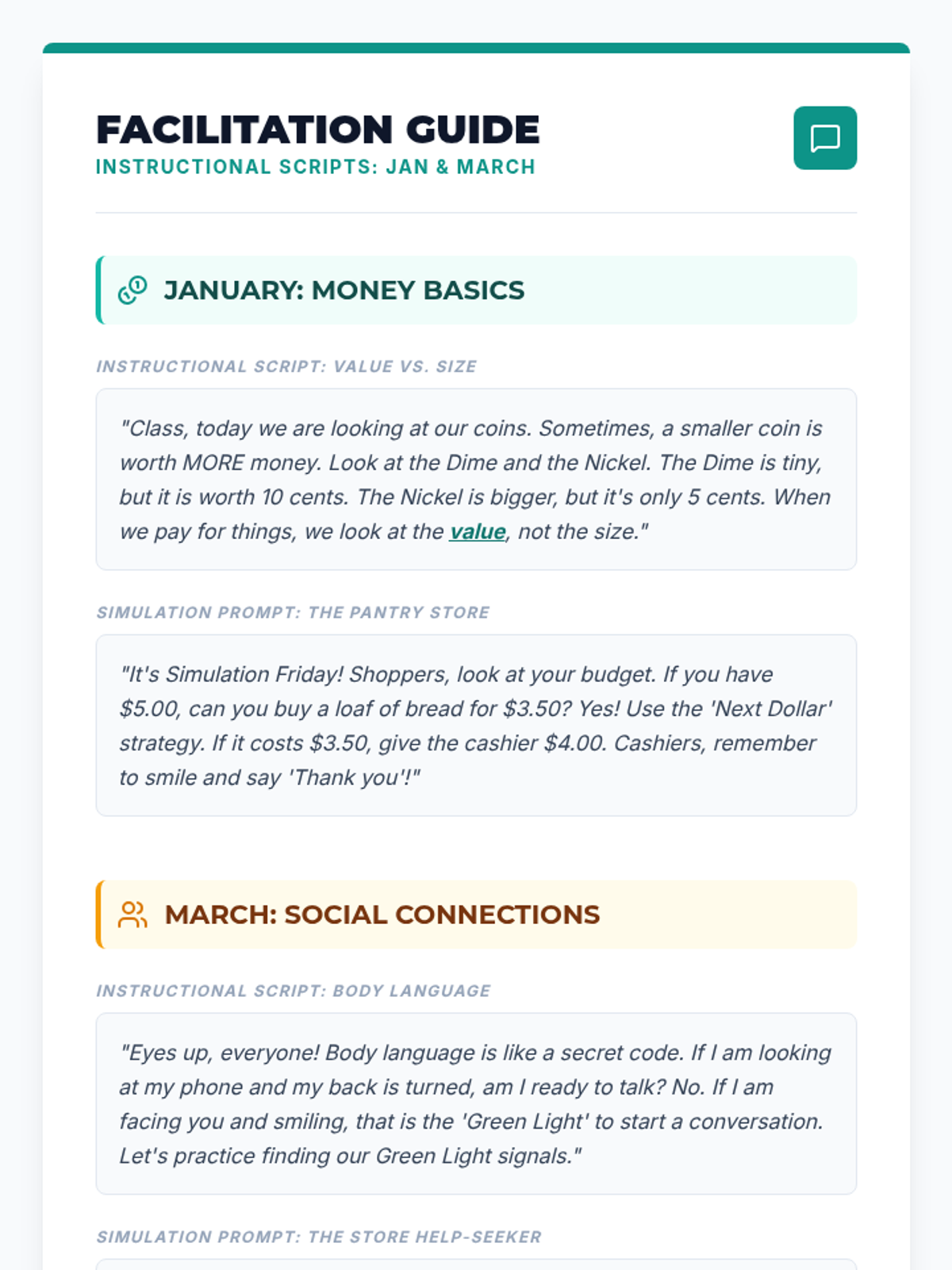
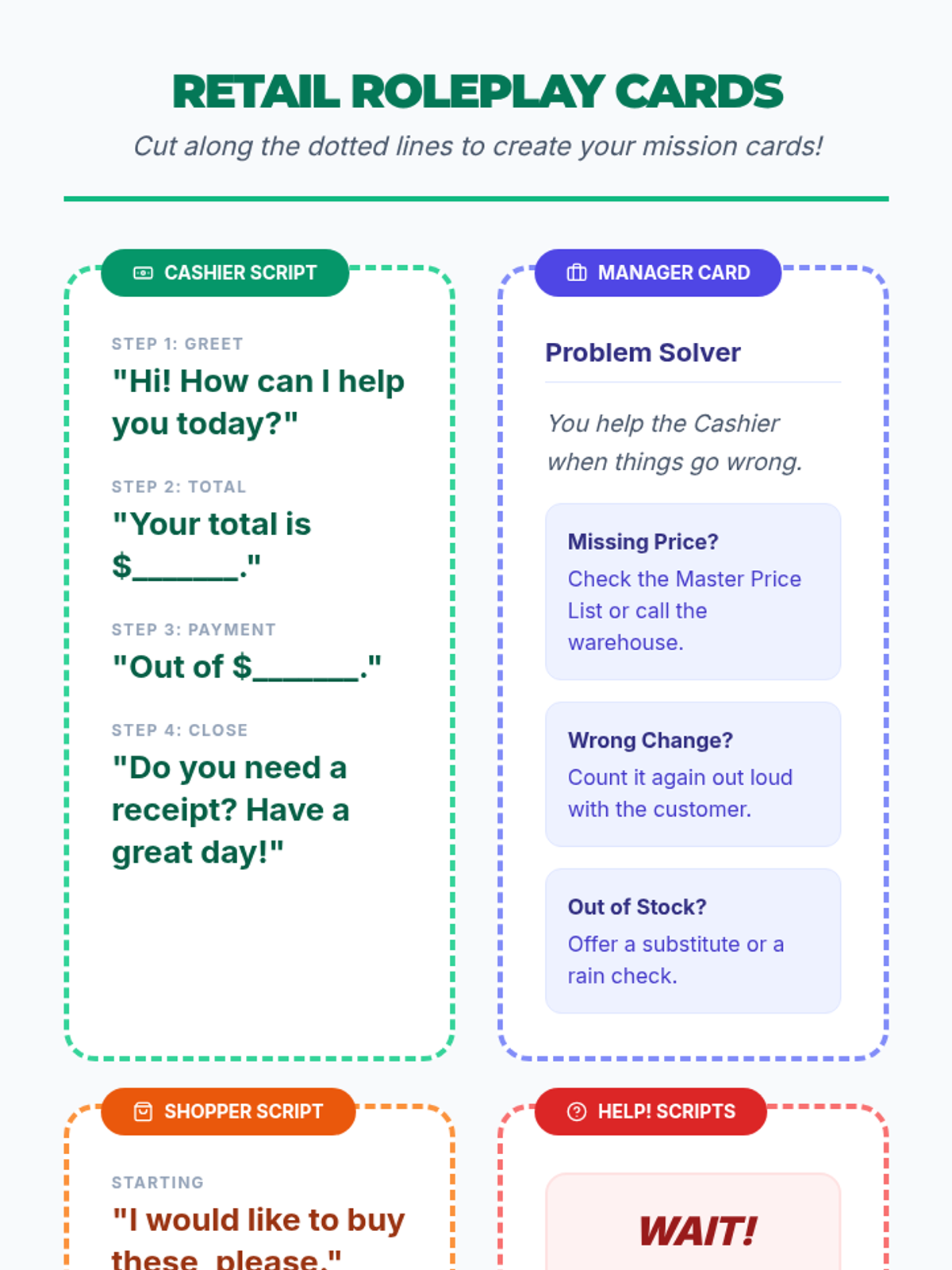
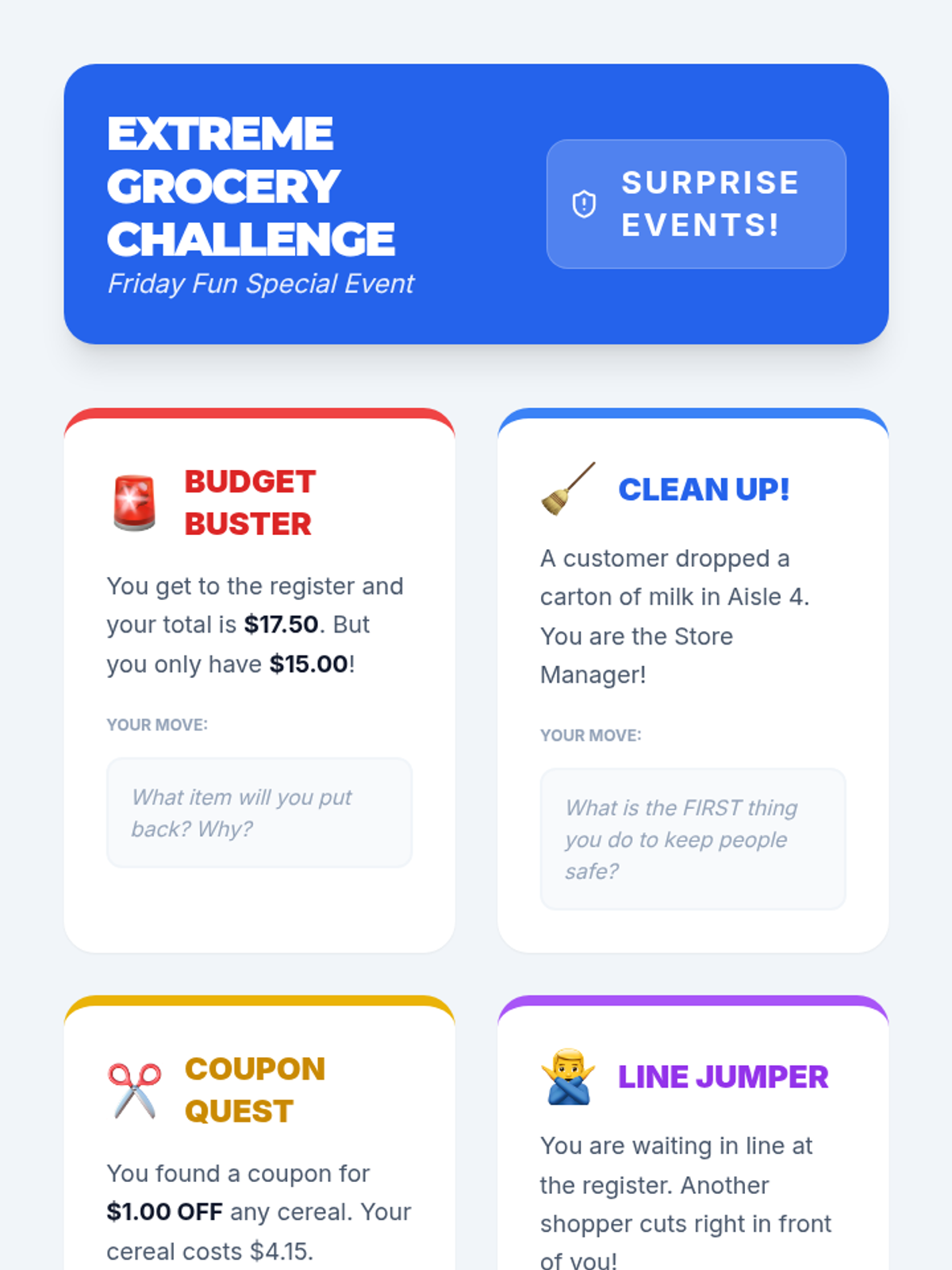
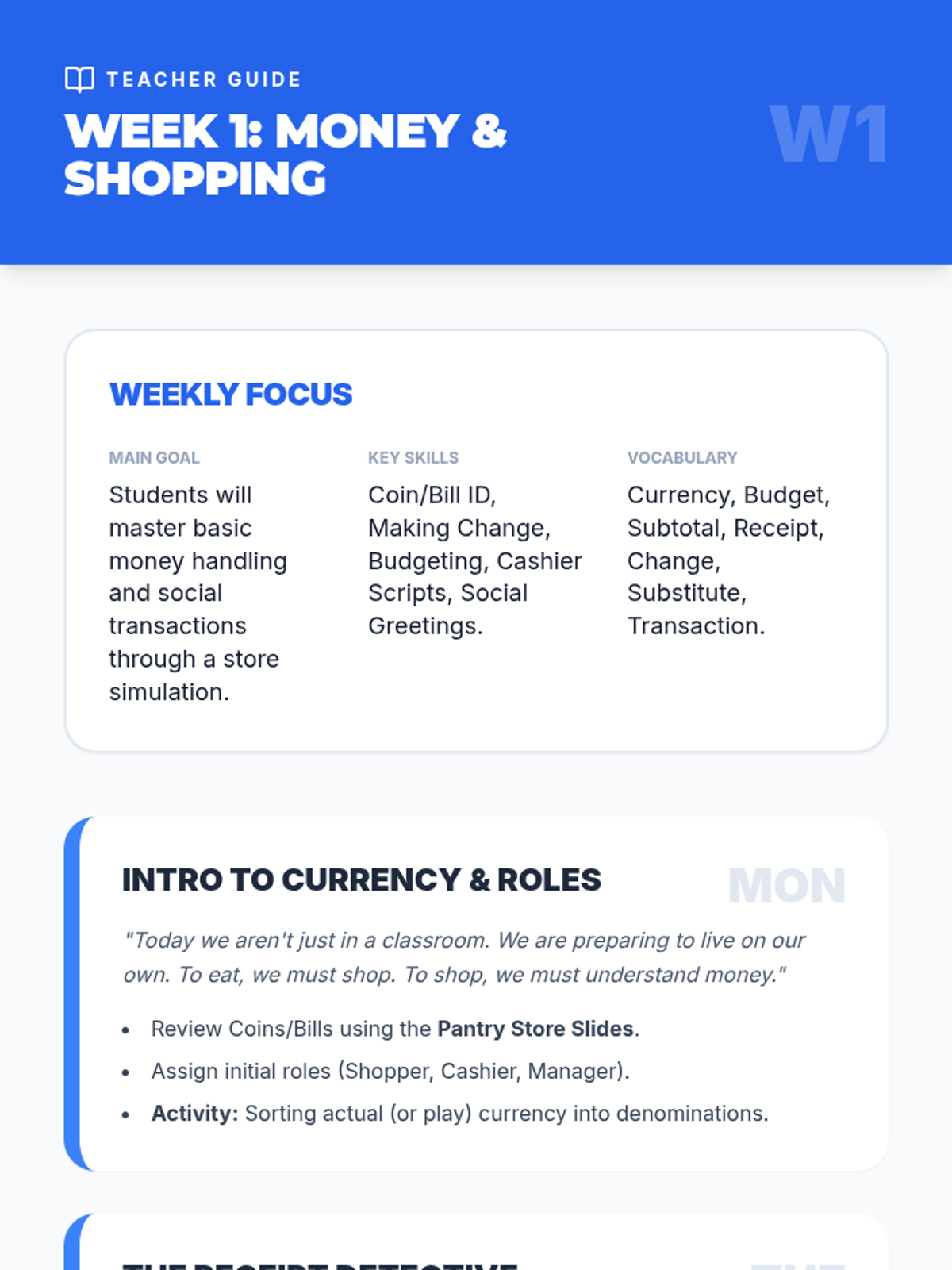
A comprehensive year-long curriculum designed to empower students with essential life skills for independence, focusing on financial literacy, social communication, and real-world simulations.
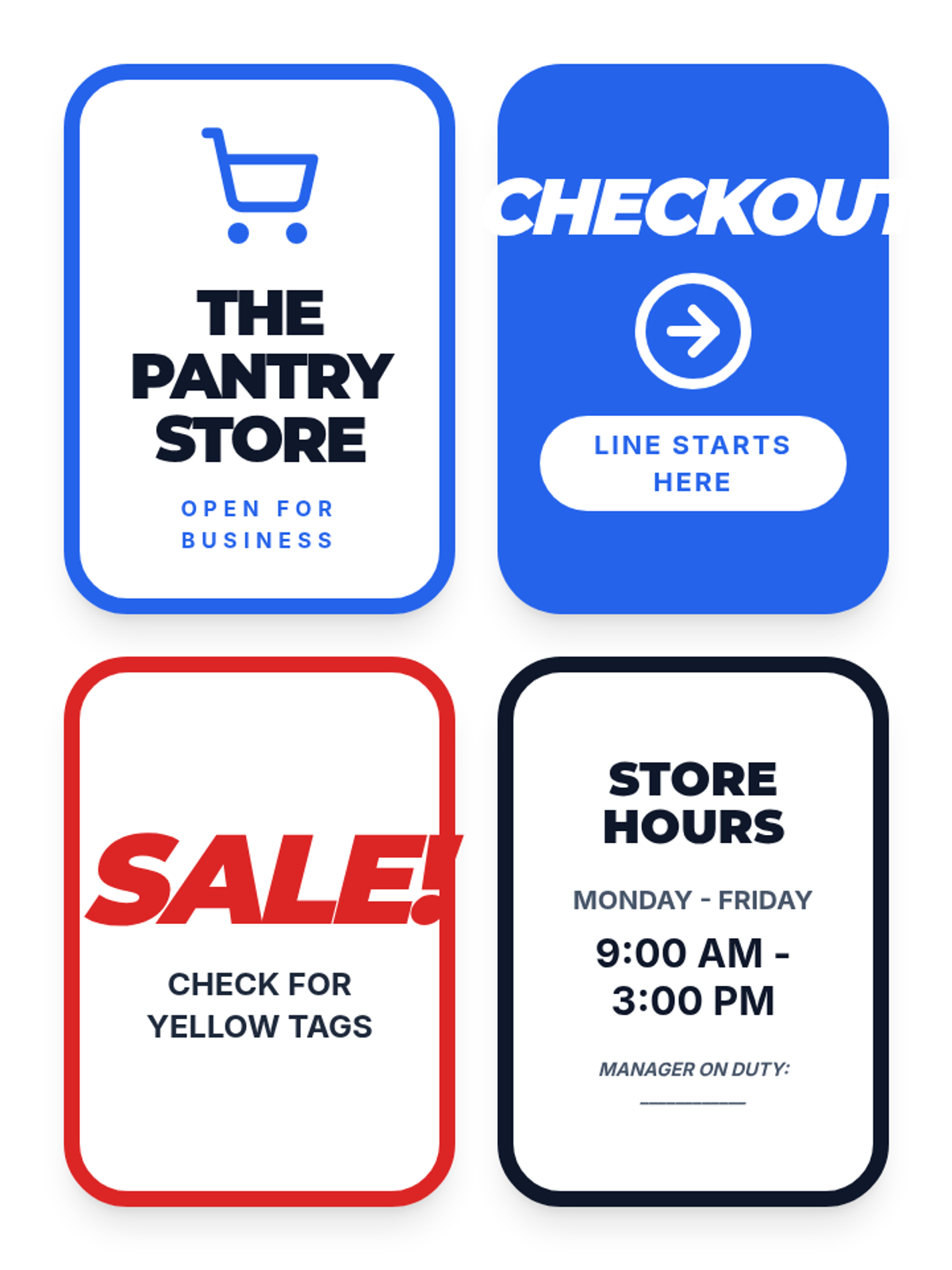
A full-month curriculum focused on developing independence through real-world simulations, role-playing, and practical application of functional life skills.
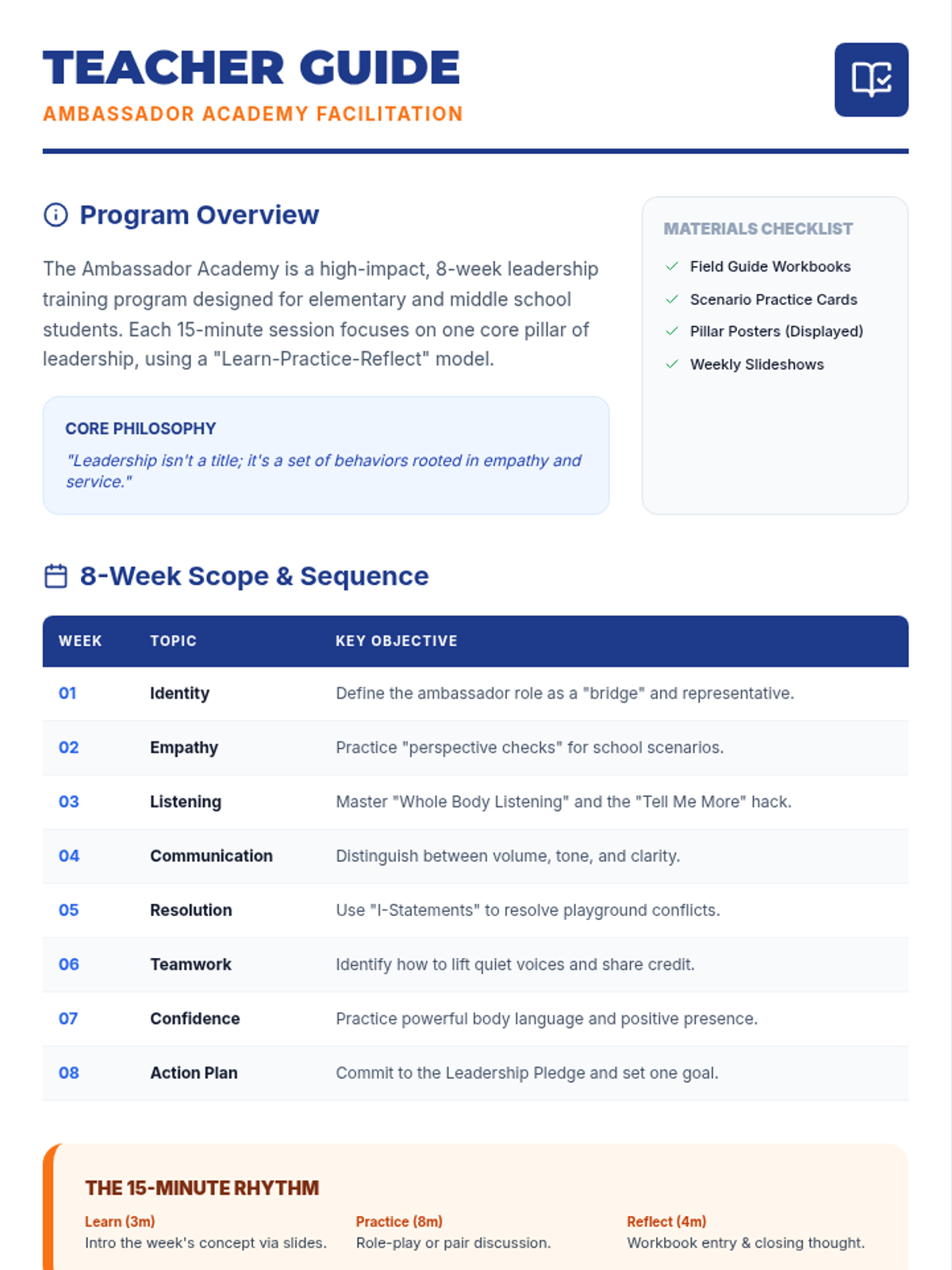
An 8-week leadership training program for school ambassadors, focusing on empathy, communication, and active listening through short, high-impact sessions.
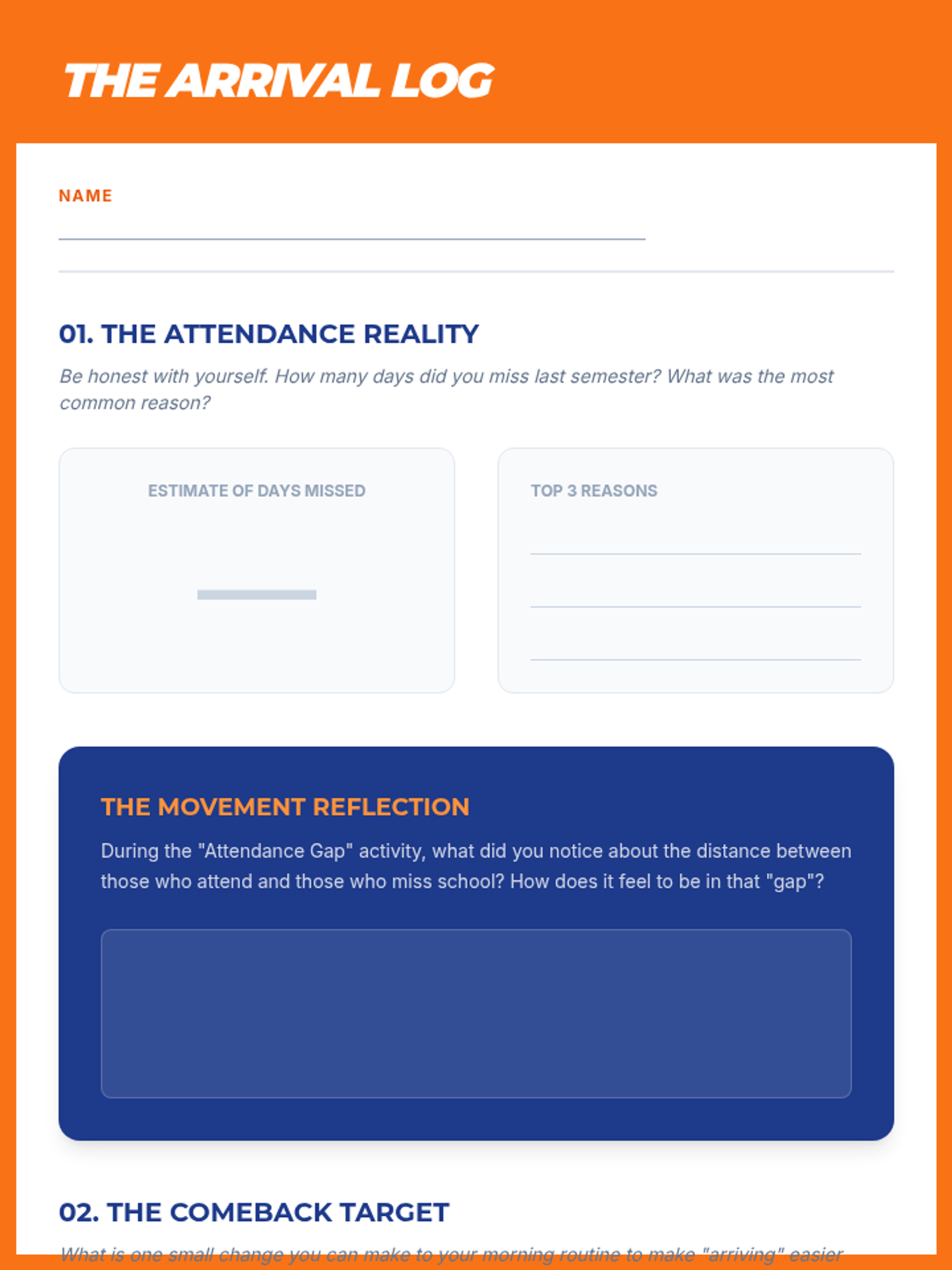
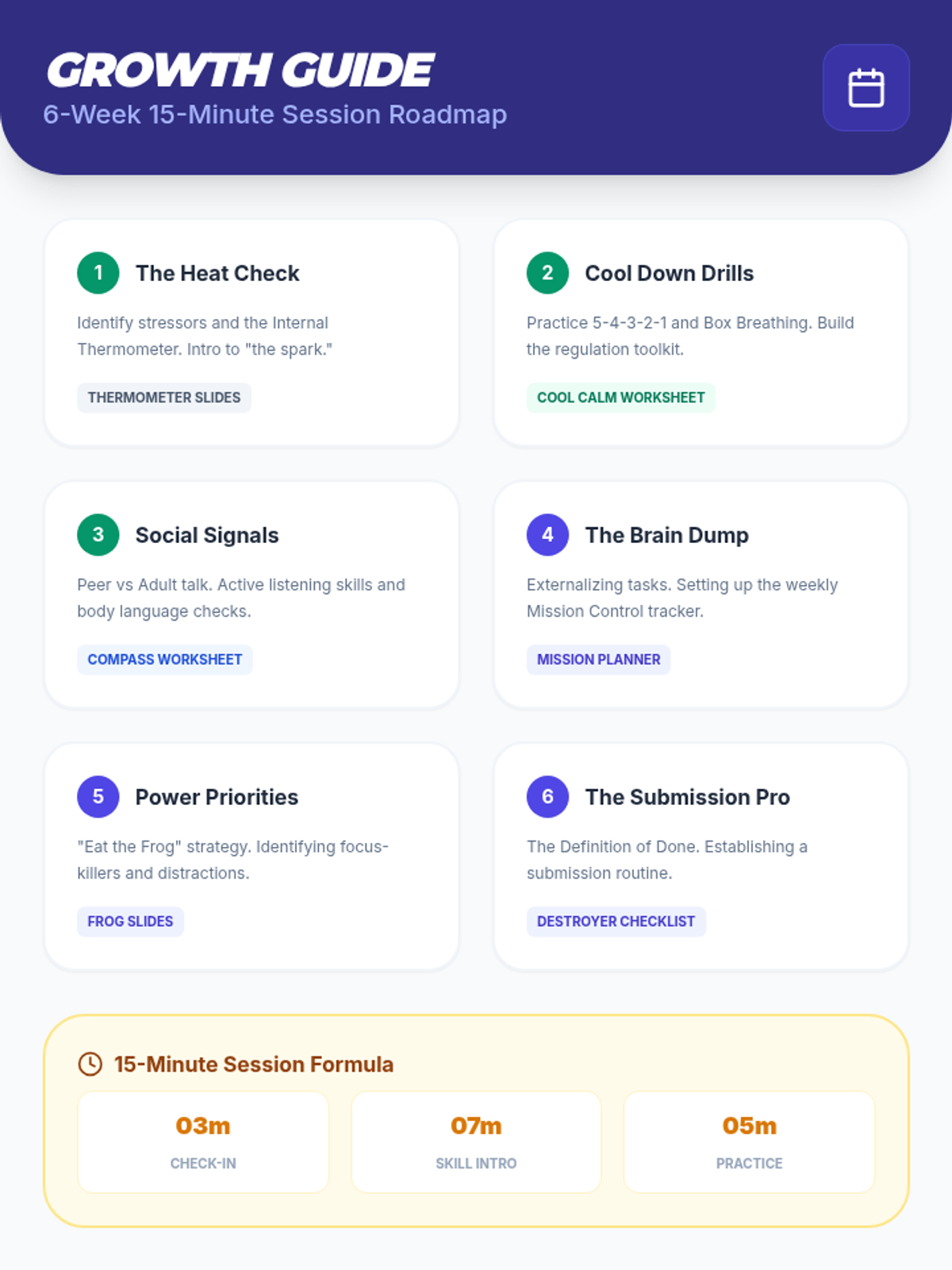
A 6-week academic intervention program for middle schoolers, focusing on attendance, organization, study skills, and self-advocacy through movement-based learning and reflective practice.
A comprehensive middle school readiness sequence focused on both interpersonal emotional intelligence and professional preparation for future success.
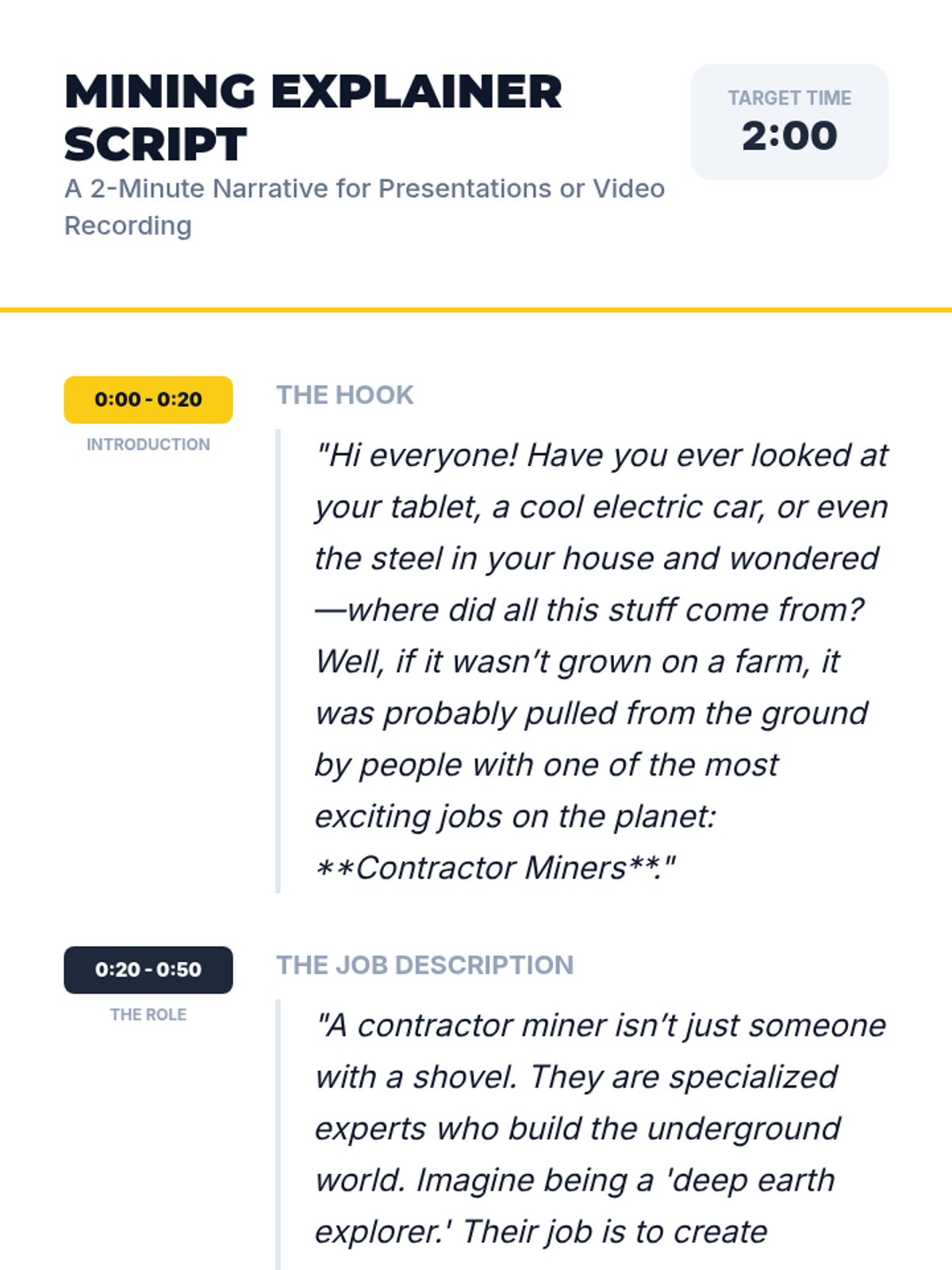
A series of resources designed to help elementary students explore diverse career paths through engaging visuals and real-world facts.
A comprehensive 10-week instructional module designed to build and refine 9 core executive functioning skills including goal setting, organization, and self-regulation.
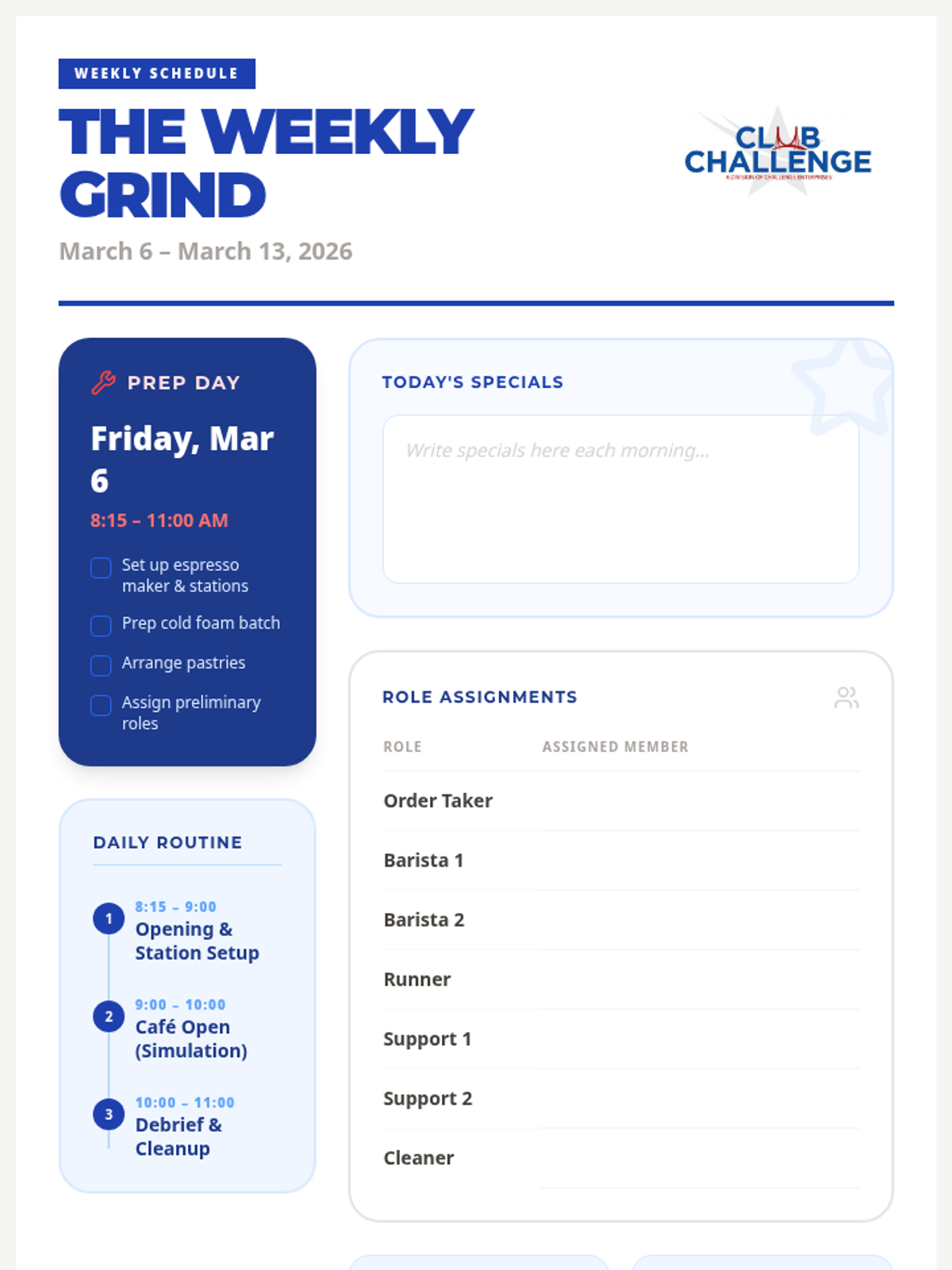
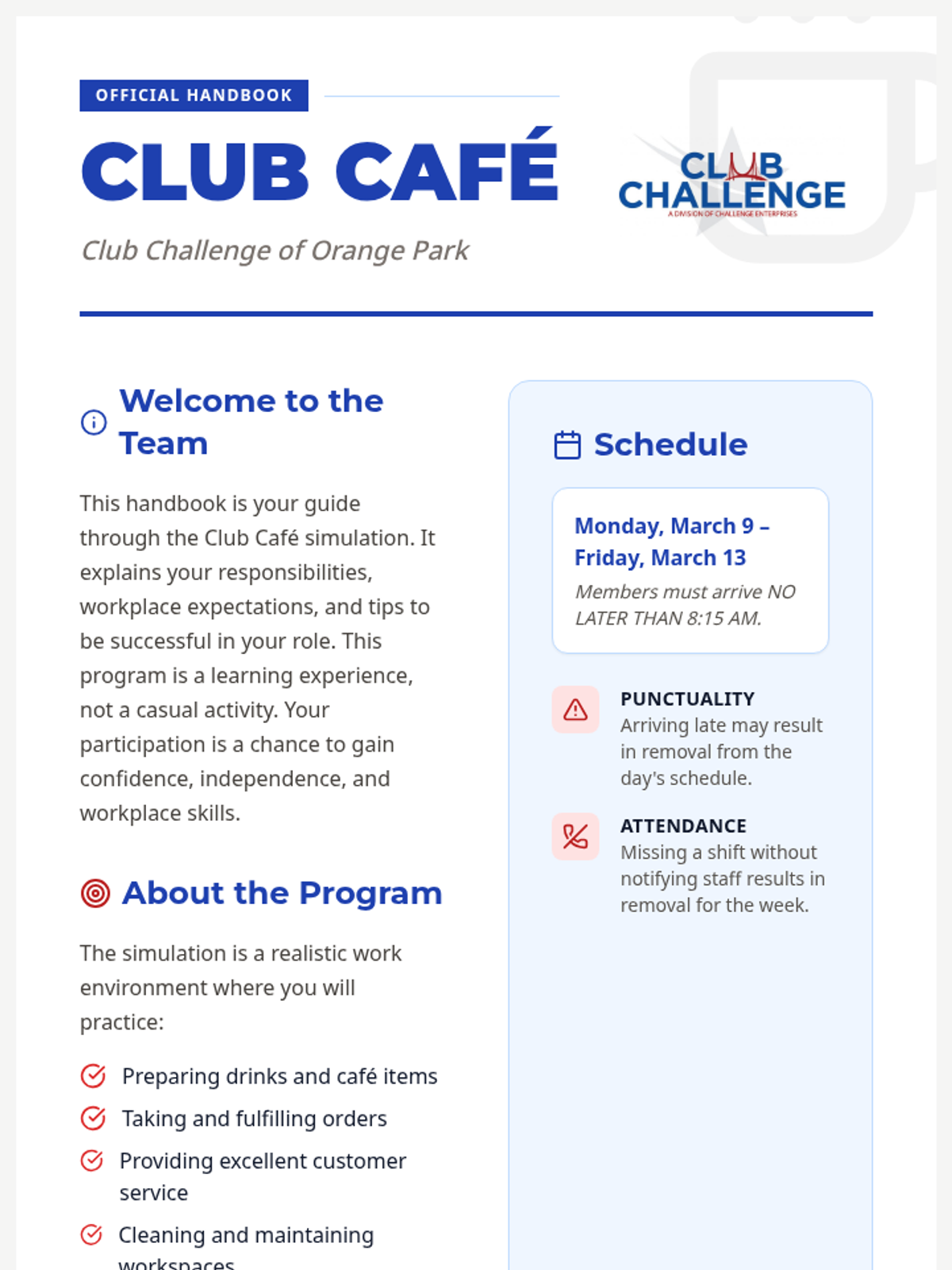
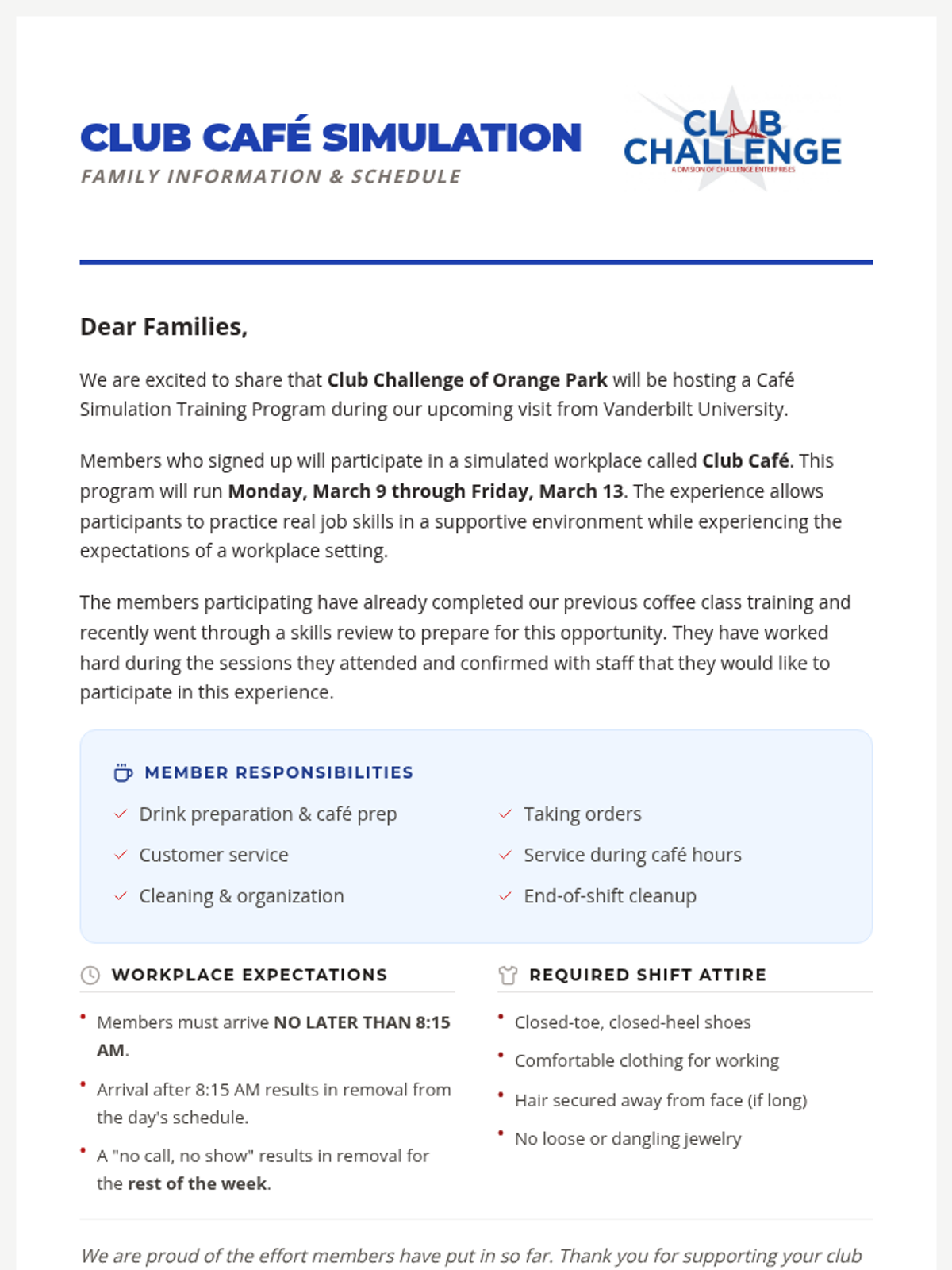
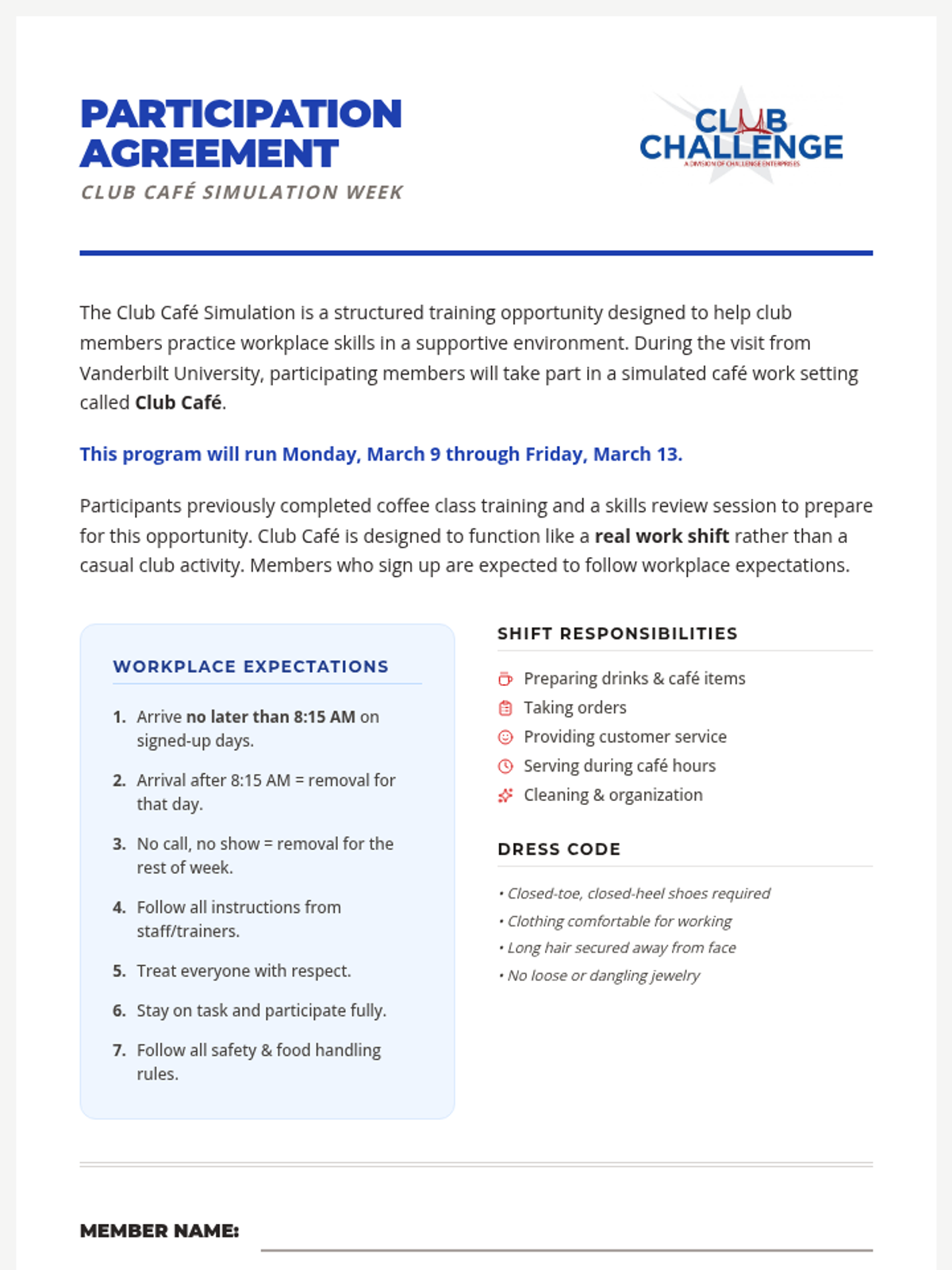
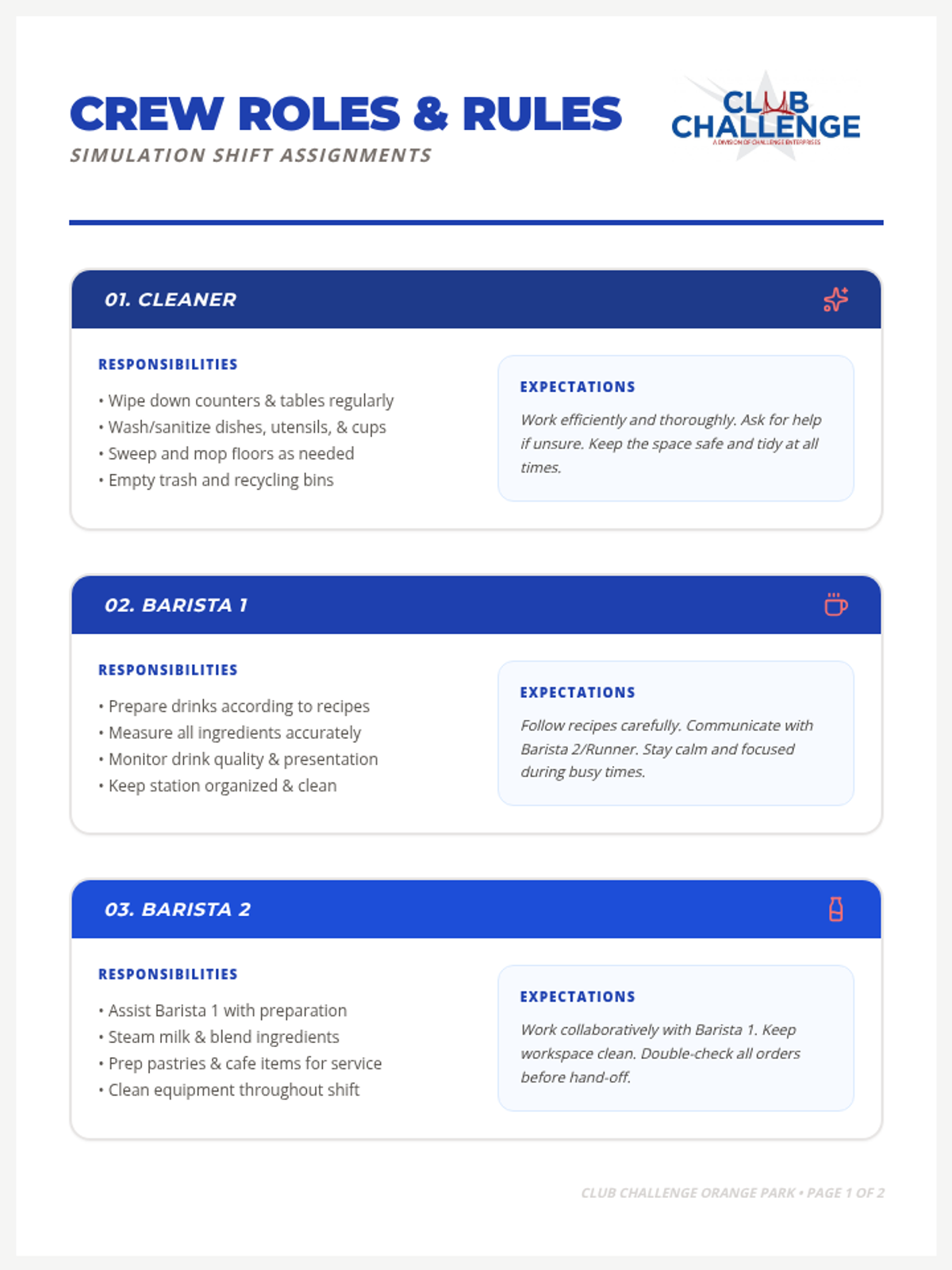
A comprehensive workplace simulation program for Club Challenge of Orange Park, designed to teach vocational skills through a realistic café environment. The sequence includes orientation materials, operational tools for students, and tracking resources for staff.
A comprehensive individual counseling program designed to equip students with essential social-emotional and academic organizational skills. The program focuses on self-regulation, effective communication, and structured task management.
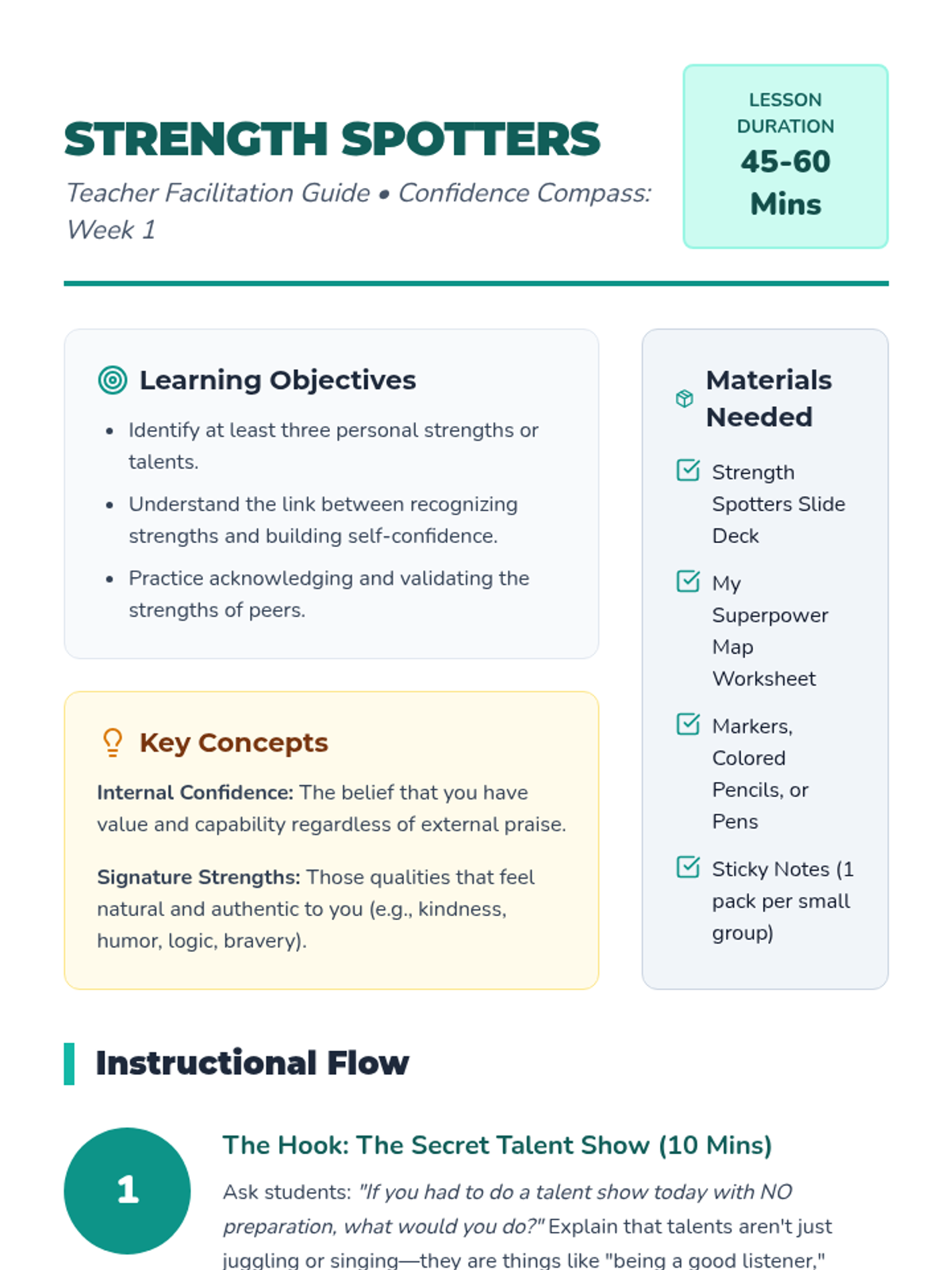
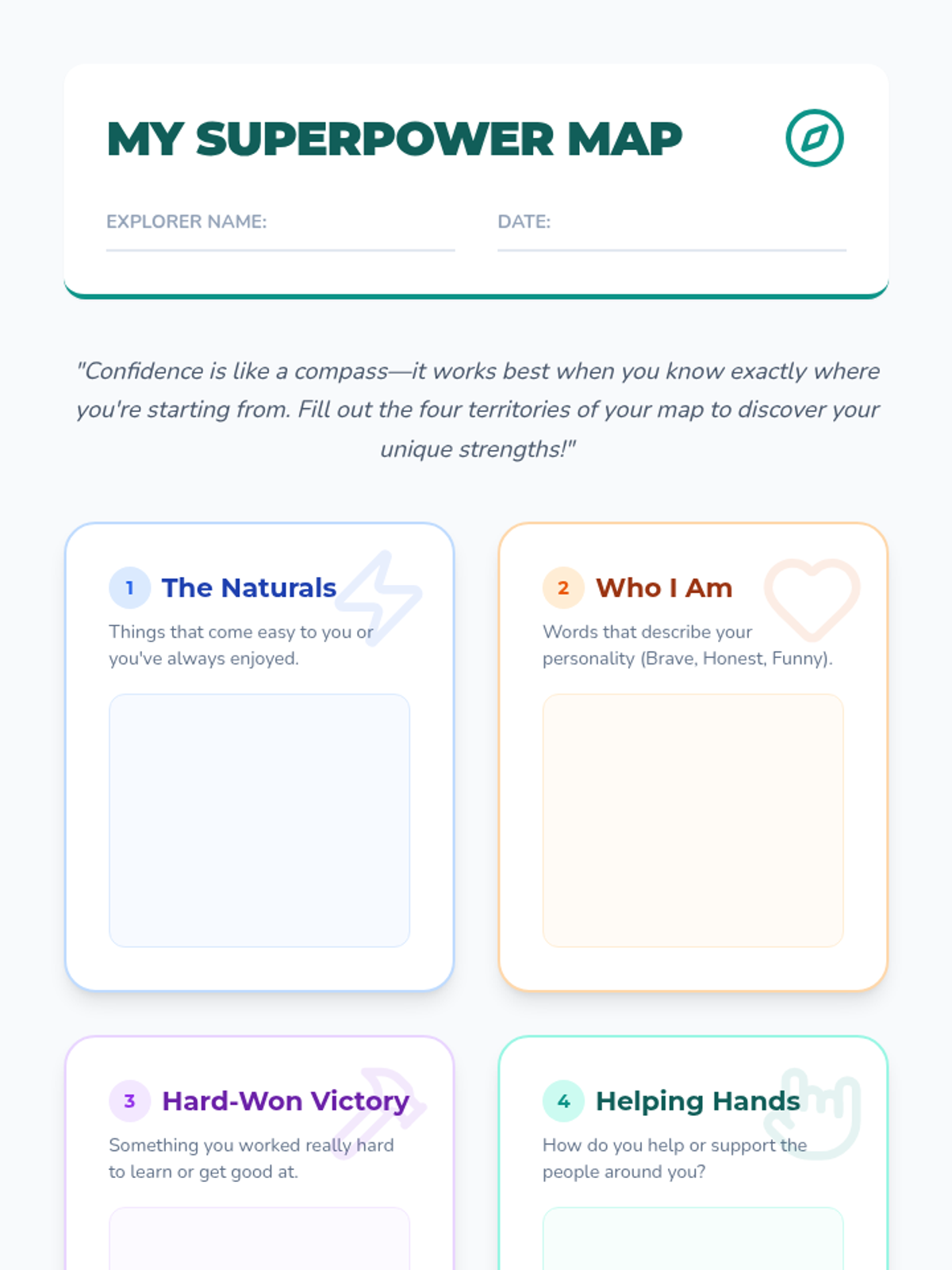
A 6-week Social Emotional Learning (SEL) unit focused on building self-confidence through identifying strengths, developing a growth mindset, reframing failure, practicing positive self-talk, and mastering confident communication. Students will navigate their own 'Confidence Compass' to discover their inner potential and set ambitious future goals.
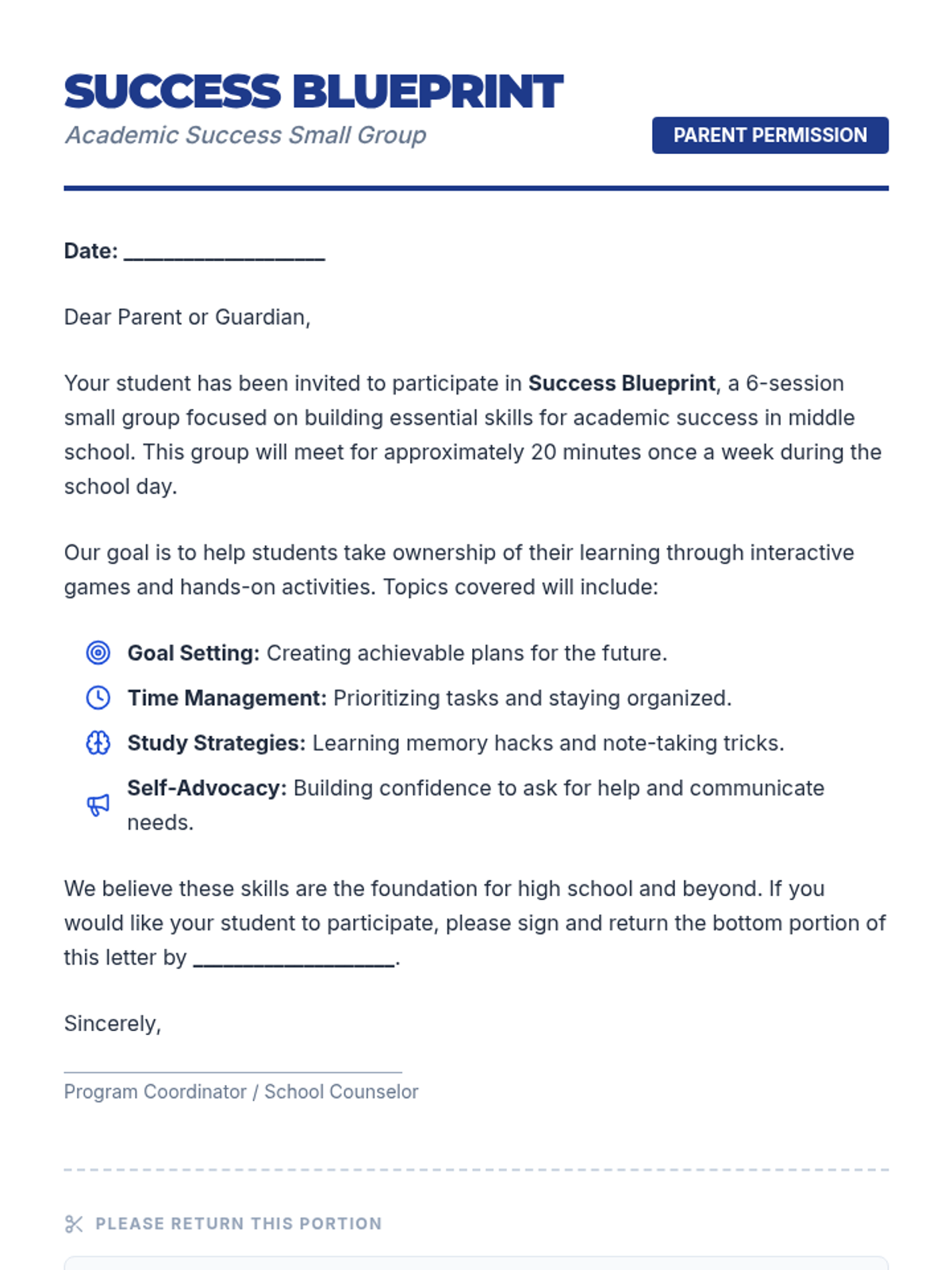
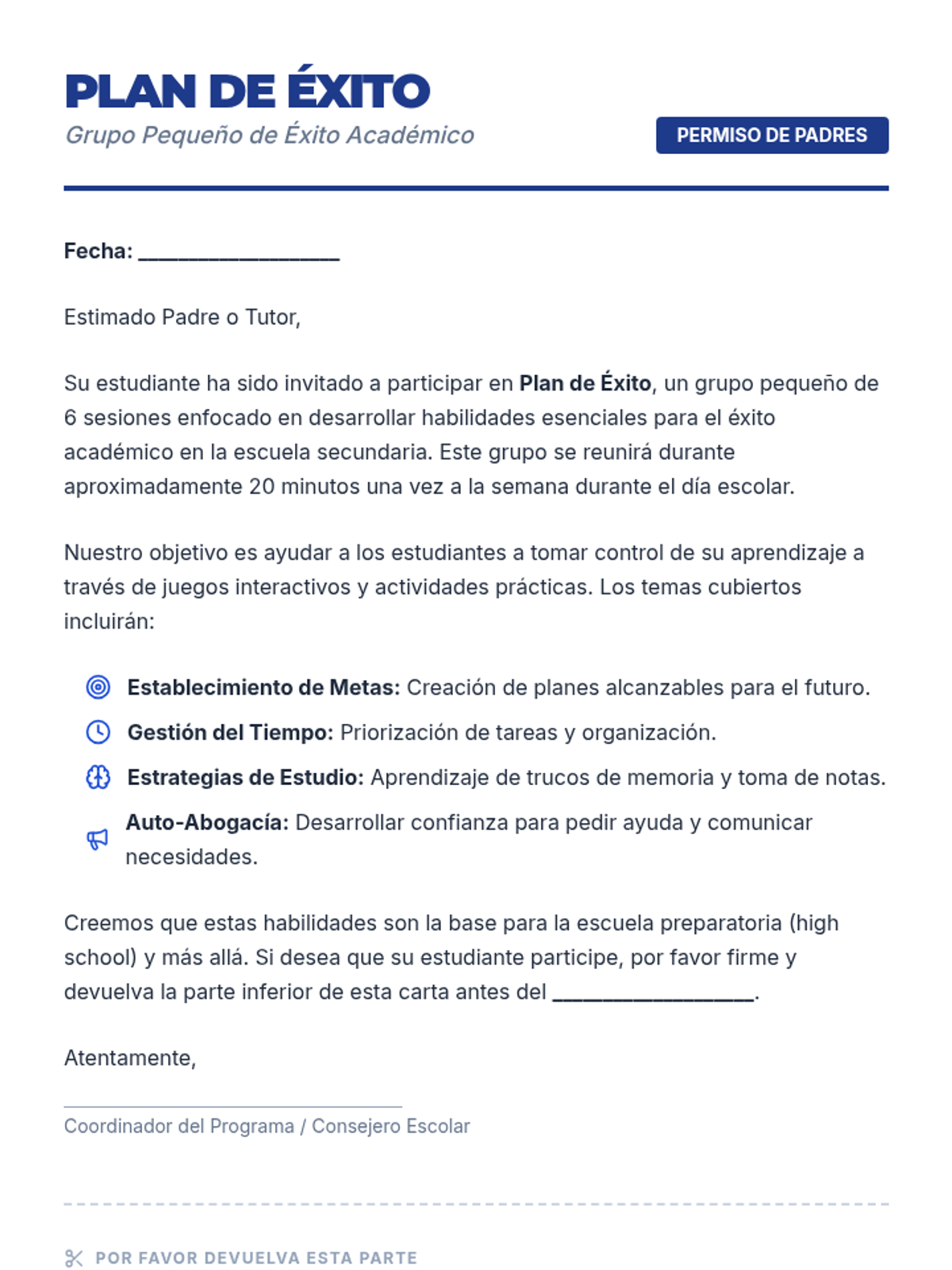
A 6-session small group program designed for middle schoolers to build essential academic success habits through interactive games and hands-on activities. Topics include goal setting, time management, note-taking, study strategies, growth mindset, and self-advocacy.
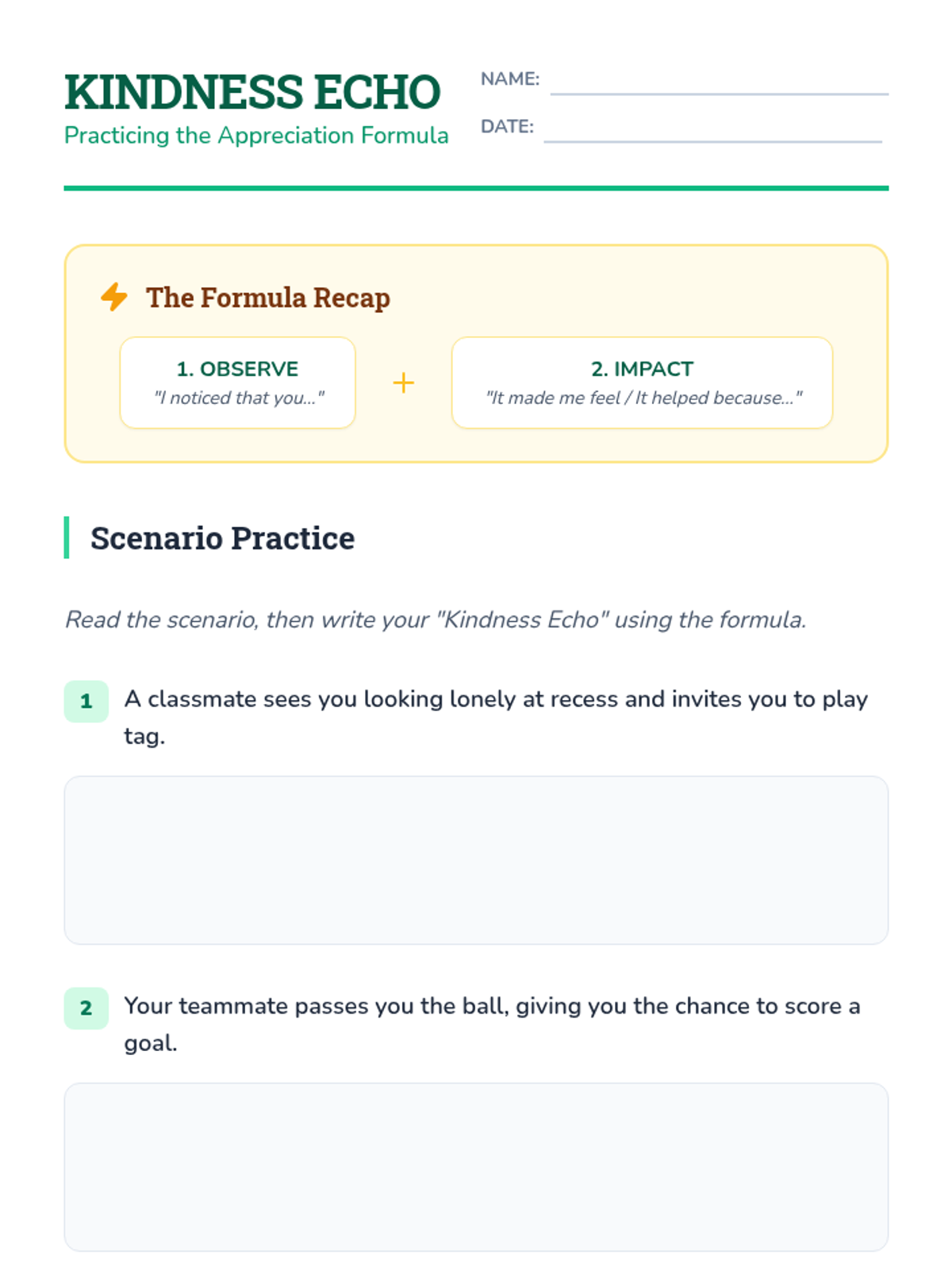
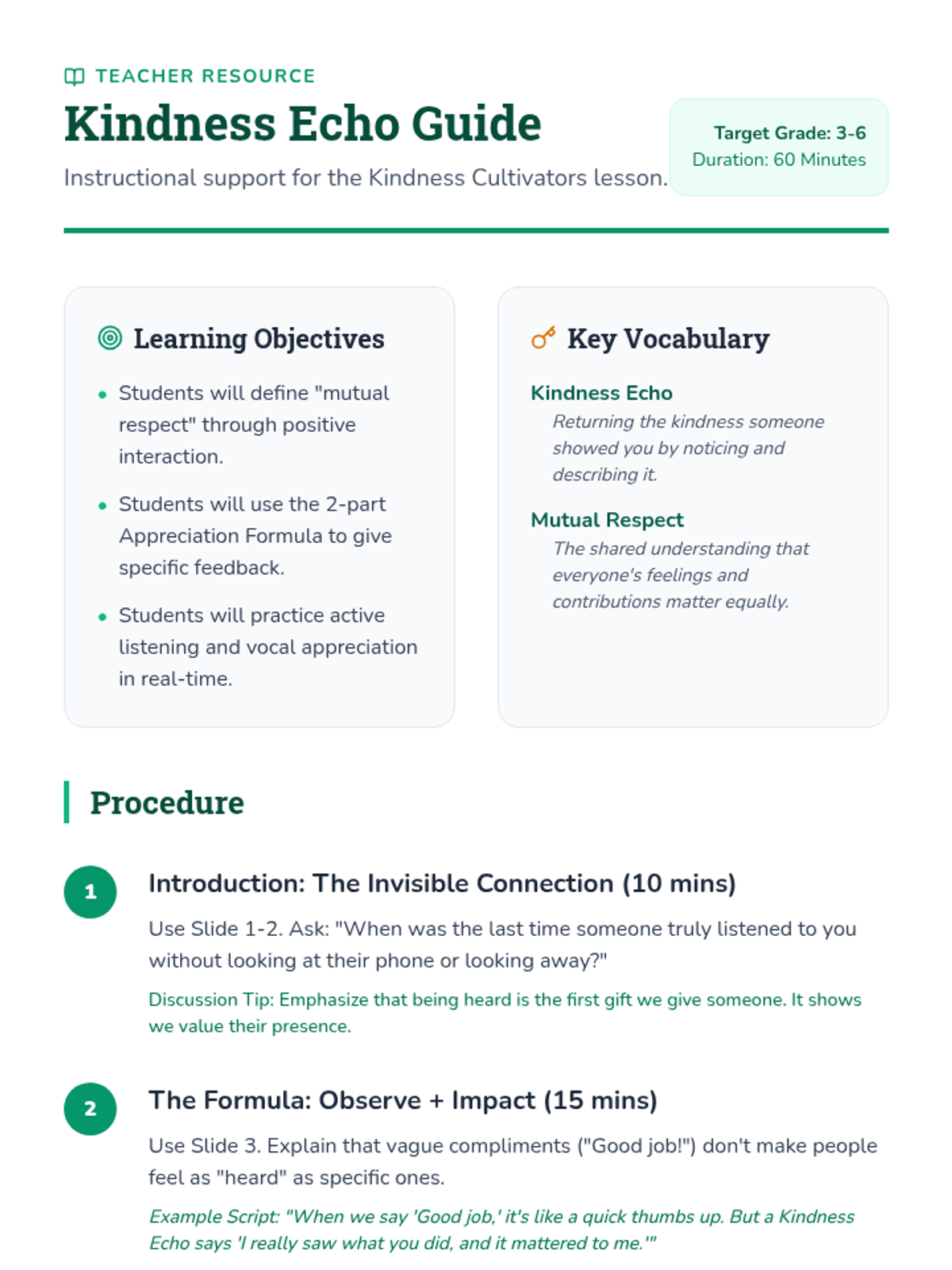
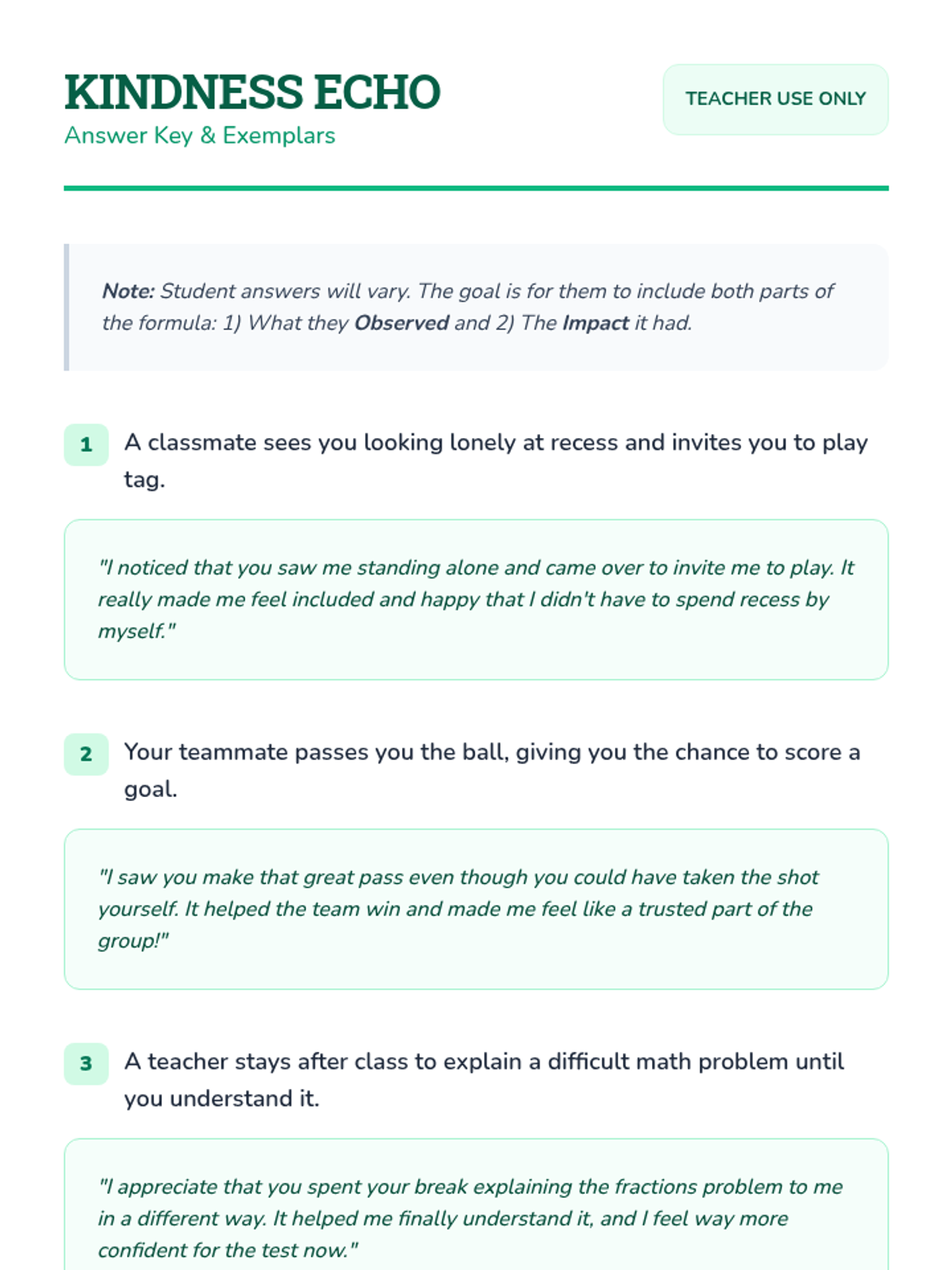
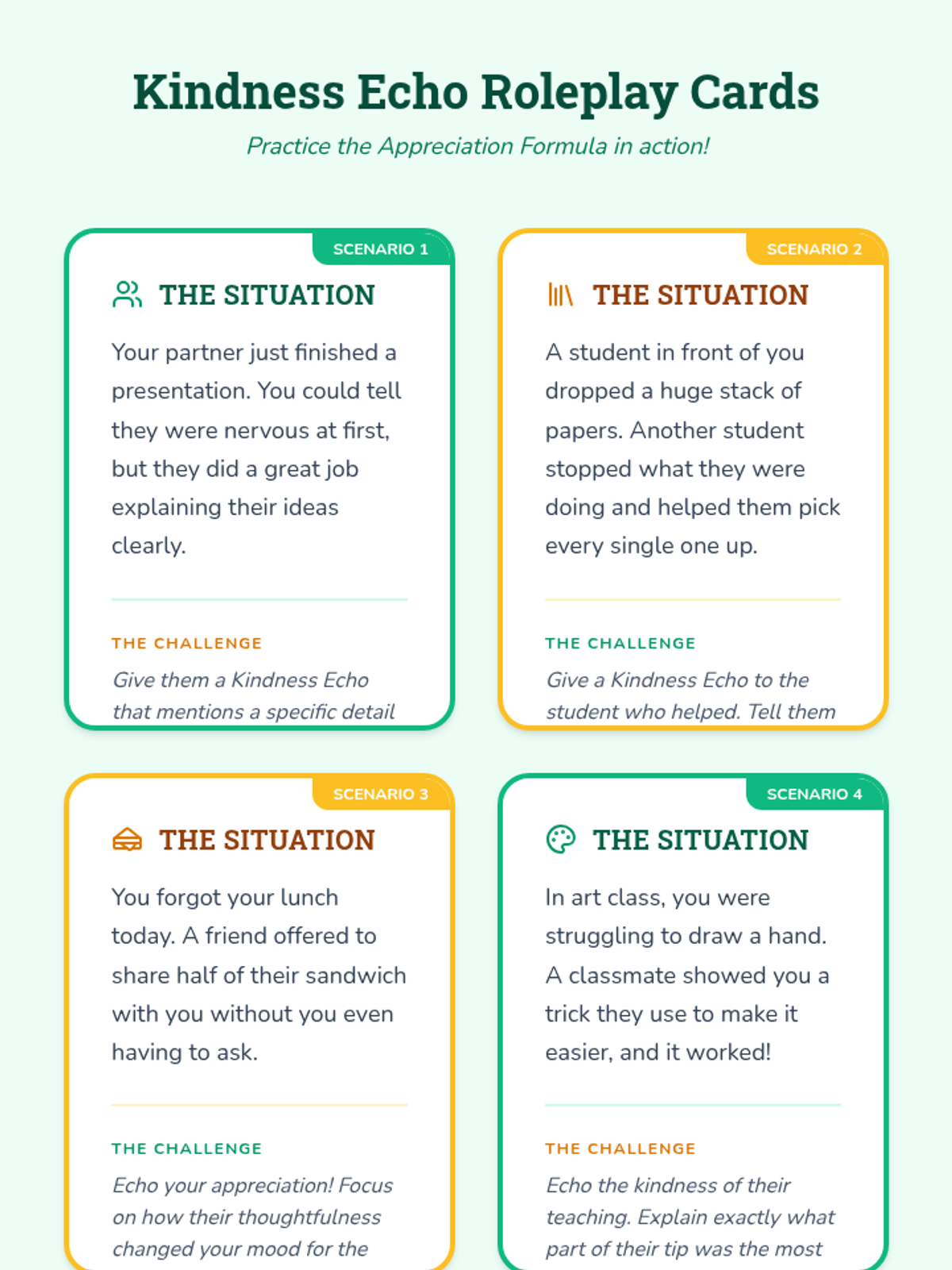
A comprehensive 5-session journey exploring positive communication, empathy, and mutual respect to build a culture of belonging and appreciation.
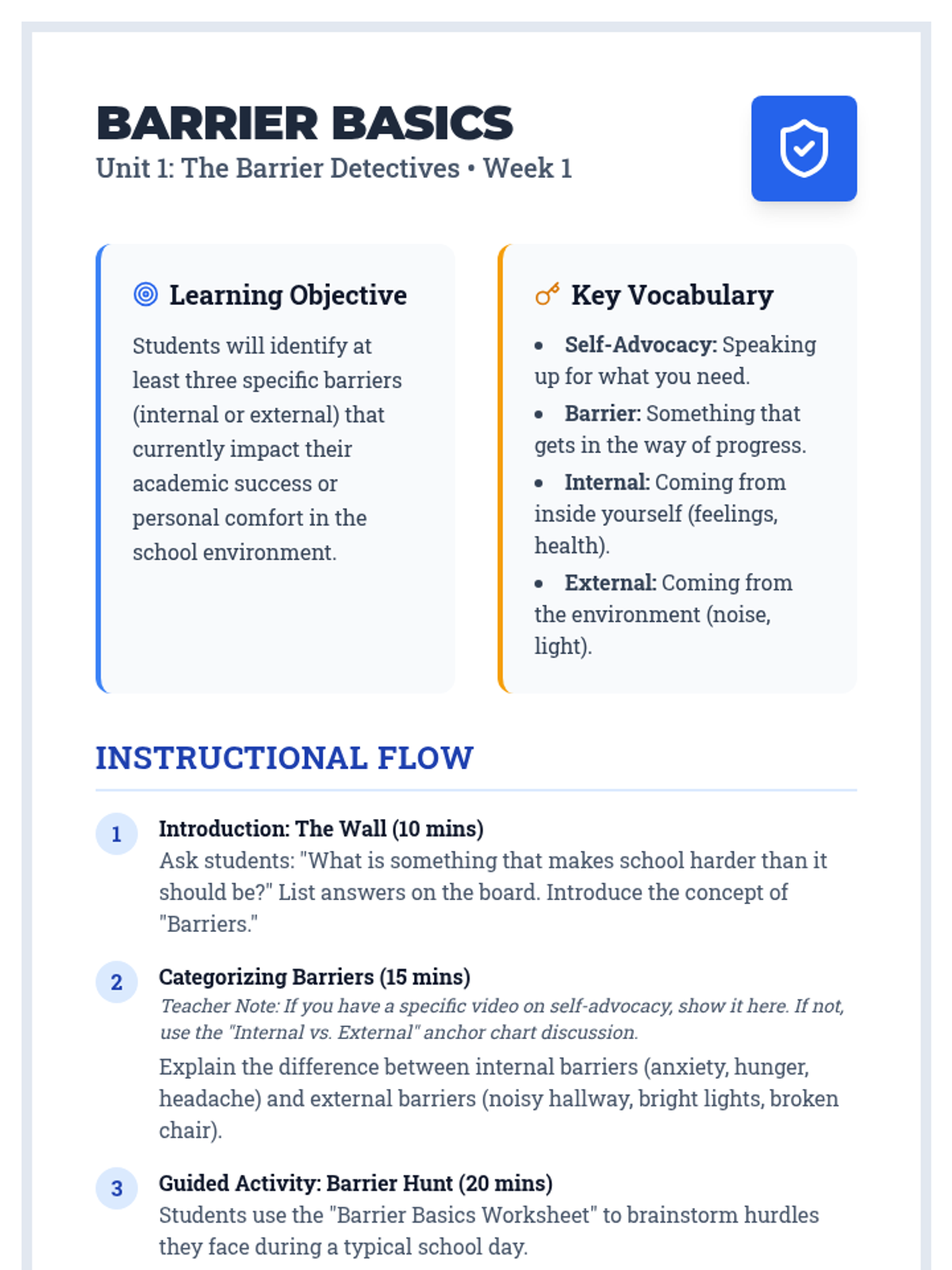
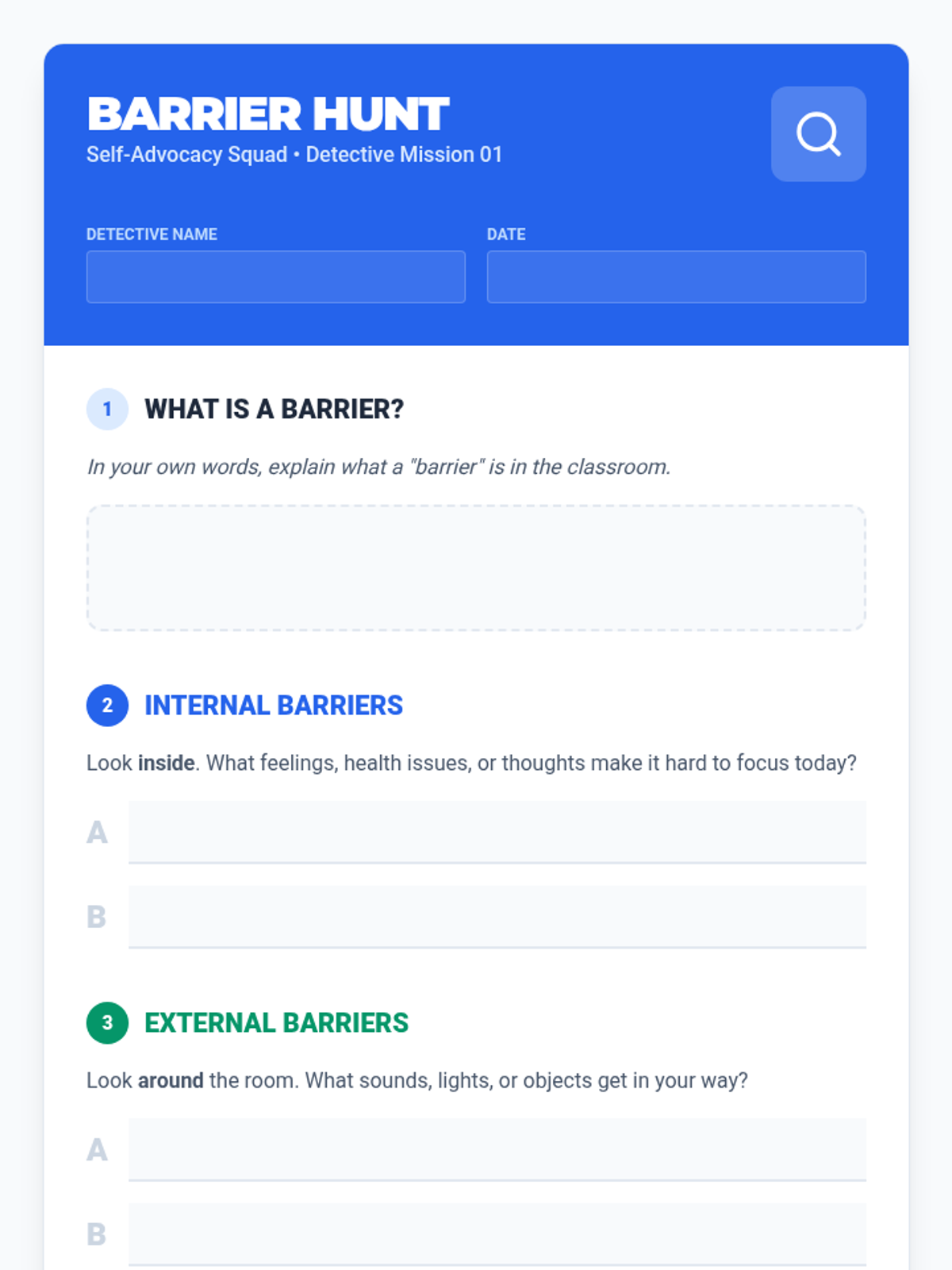
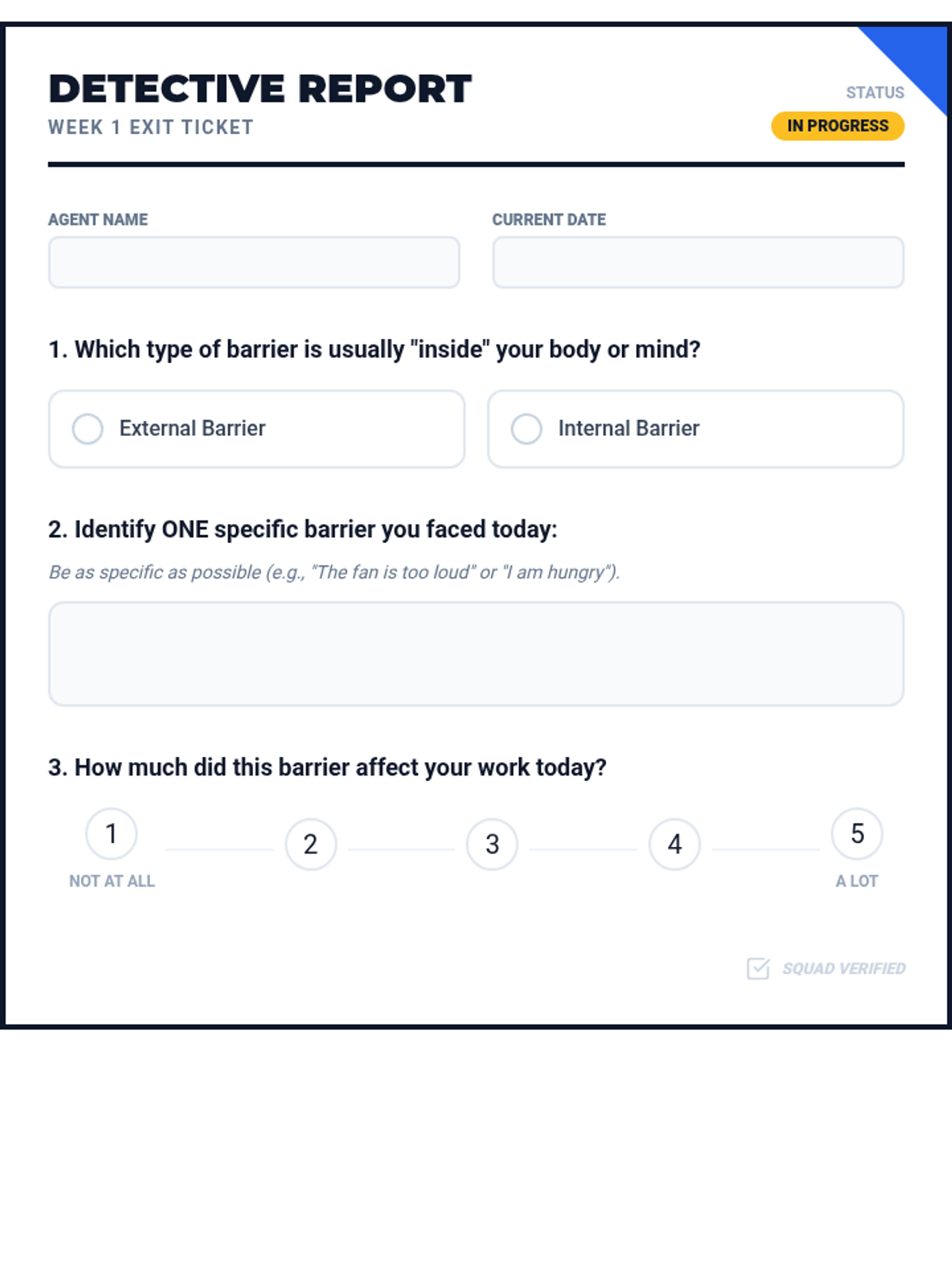
A comprehensive 20-week curriculum designed to empower students with self-advocacy skills, moving from identifying barriers to implementing personalized solutions.
A middle school curriculum unit focused on critical thinking, information literacy, and strategic task management across digital and physical media.
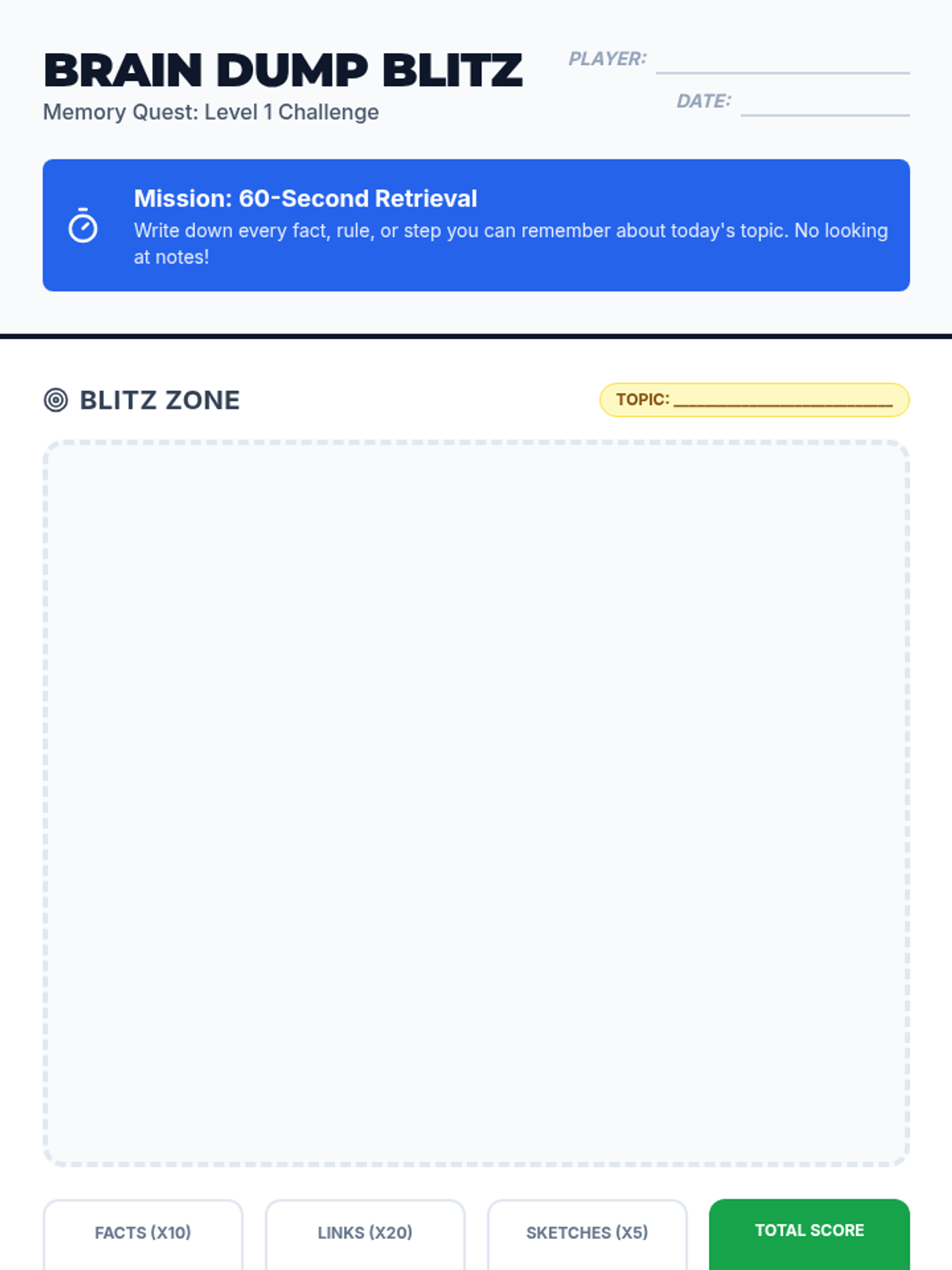
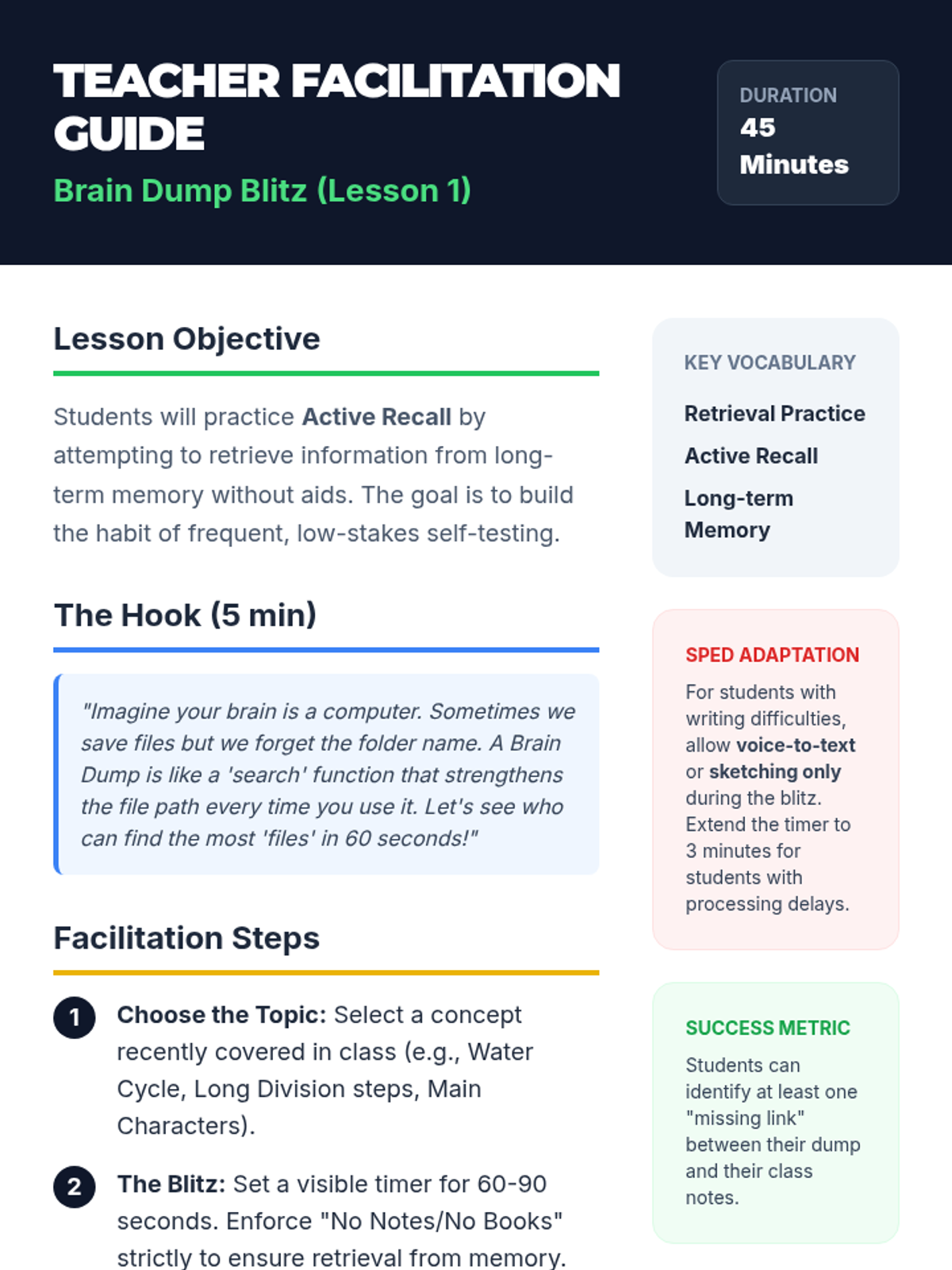
A gamified sequence designed for 6th-grade students to master memory strategies through active recall and spaced repetition. Students participate in 'micro-reviews' and competitive challenges to build procedural memory habits.
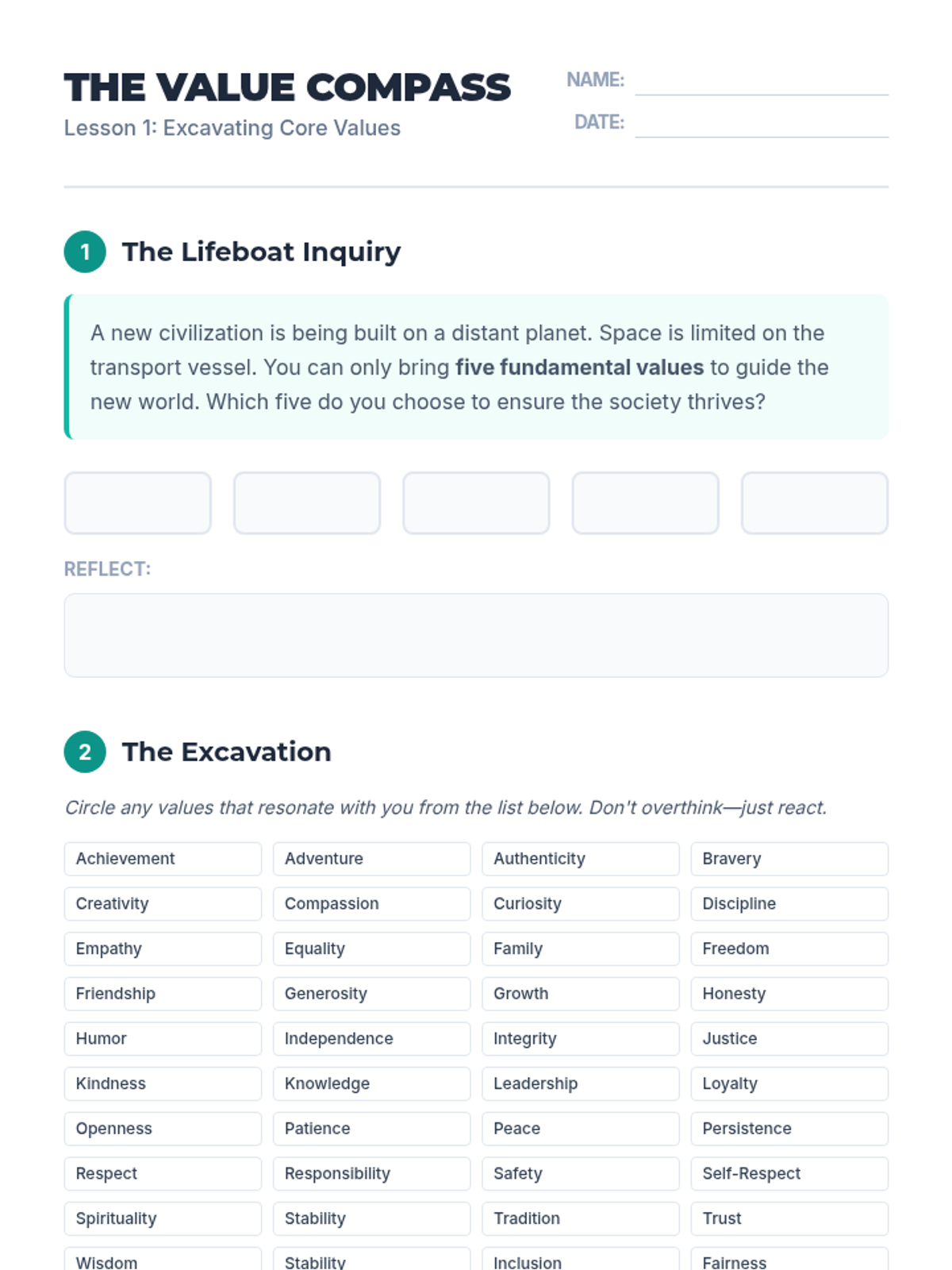
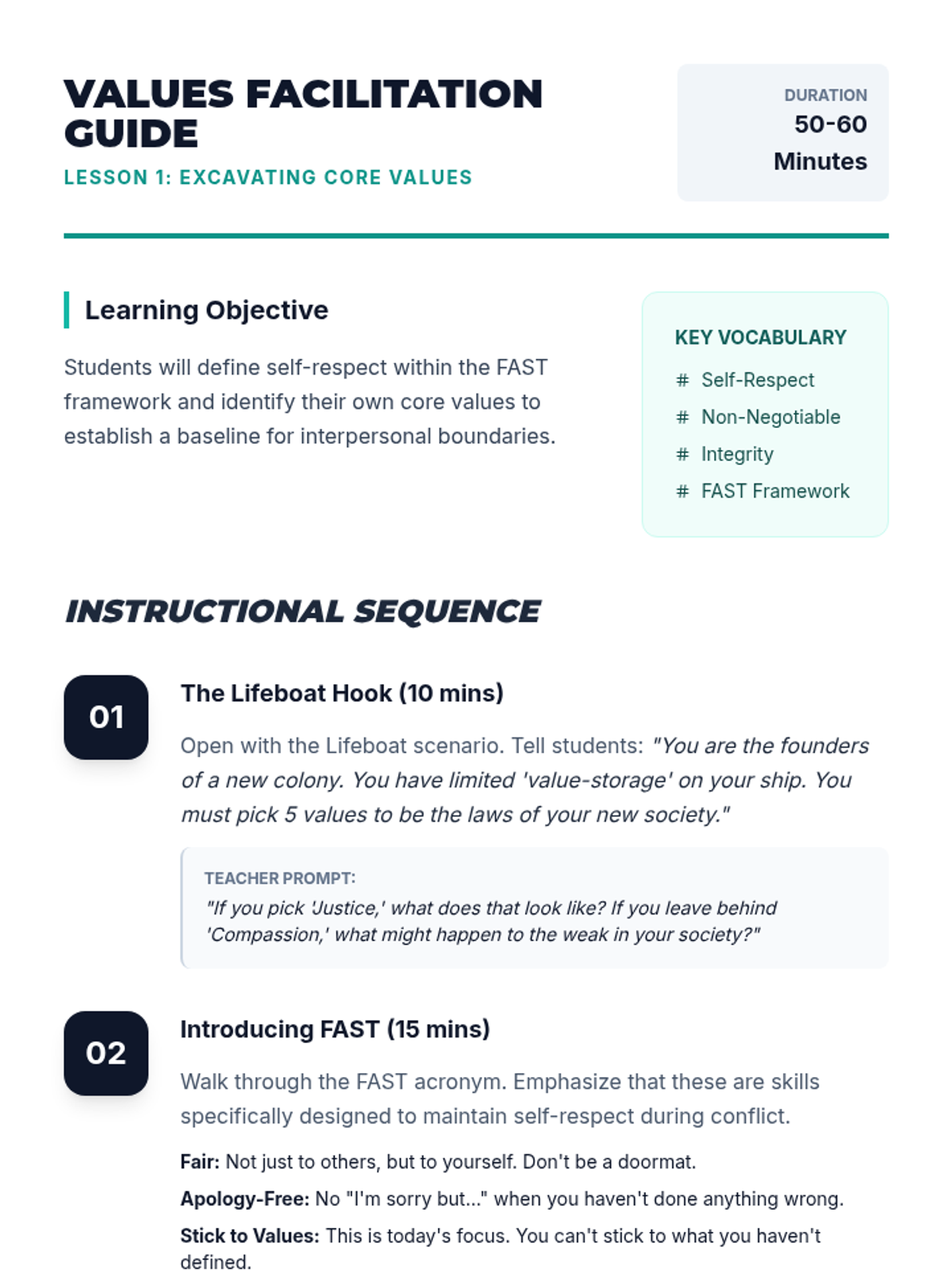
This inquiry and project-based sequence focuses deeply on the 'Stick to Values' aspect of FAST, positing that one cannot defend values they haven't defined. Students bridge abstract values with concrete communication skills, teaching them how to articulate their stances without judgment or apology.
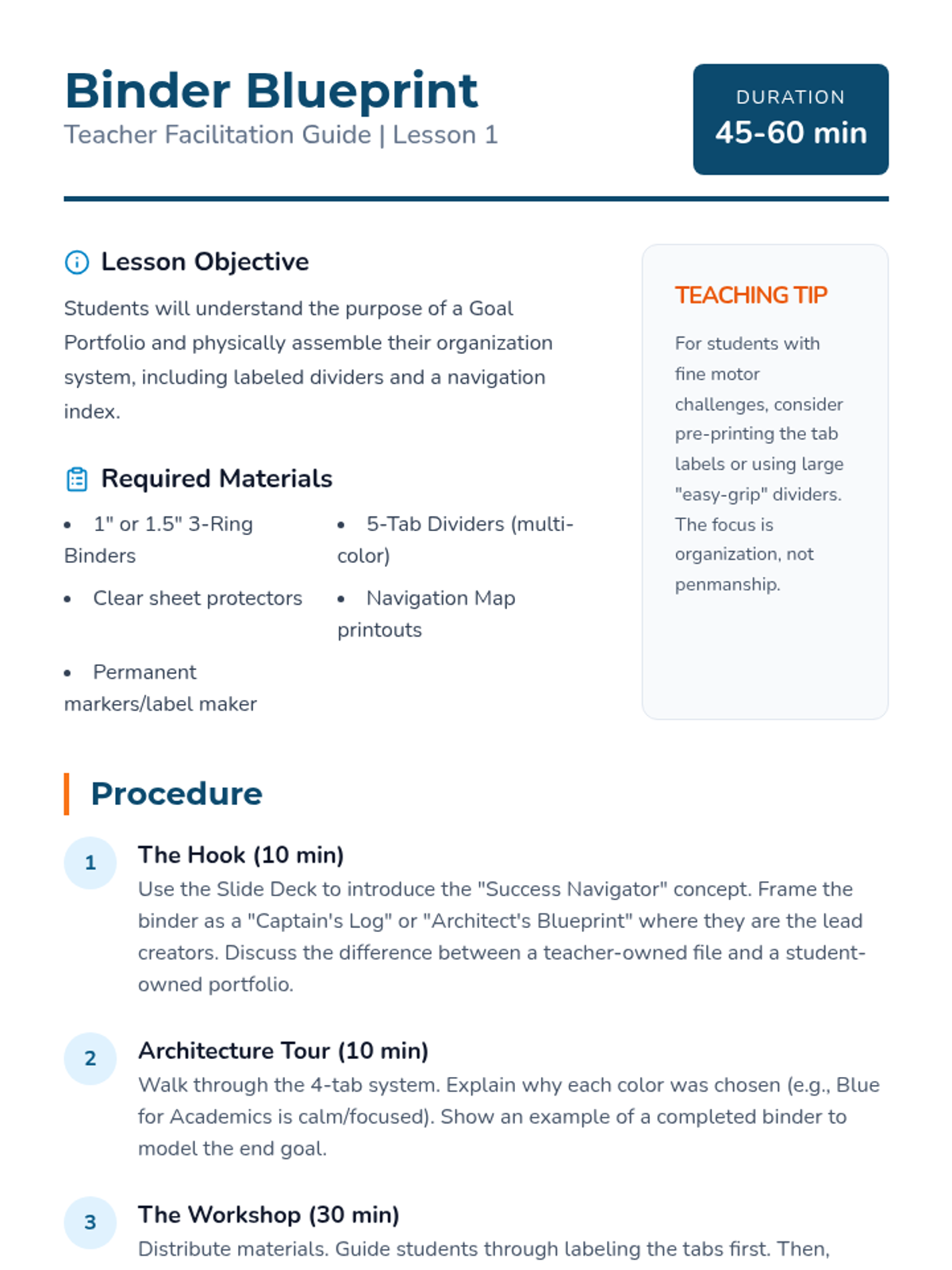
A sequence designed to empower 6th-grade students to take ownership of their progress through the creation and maintenance of a Goal Portfolio. Students learn physical and digital organization, data tracking, and how to present their growth to others.
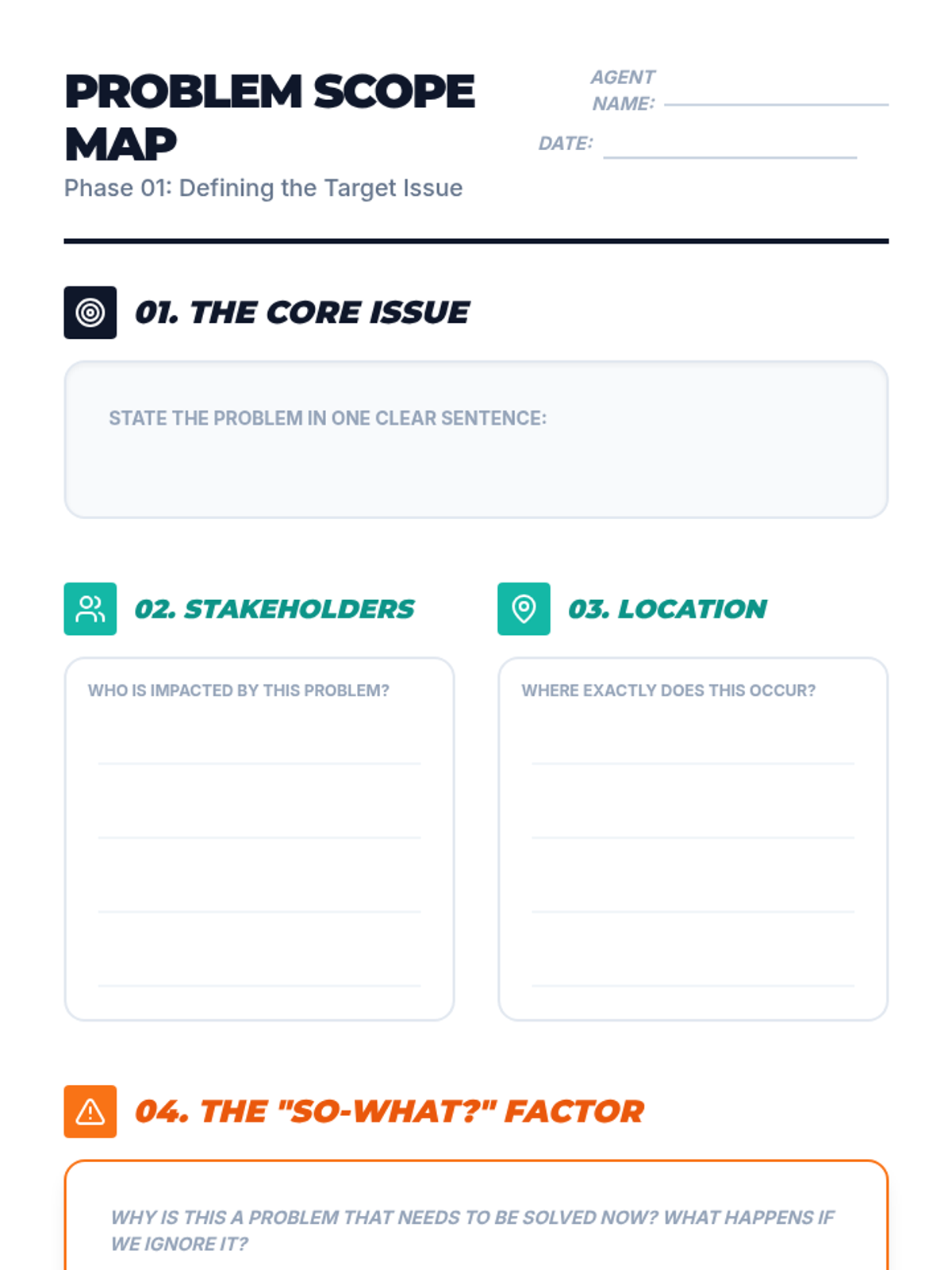
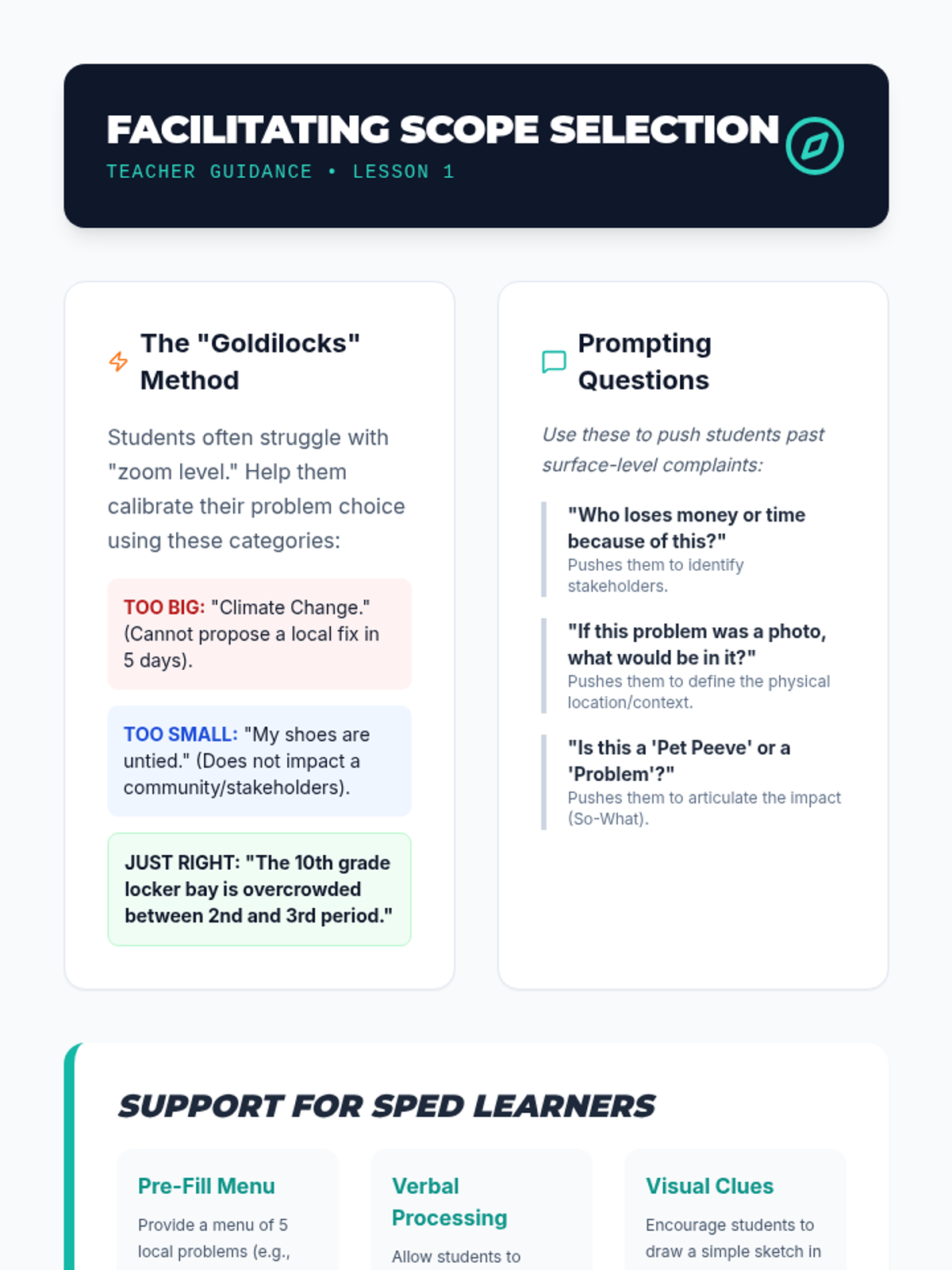
A project-based unit where students act as systems analysts, using cause-and-effect and problem-solution graphic organizers to investigate real-world community issues and propose evidence-based solutions.
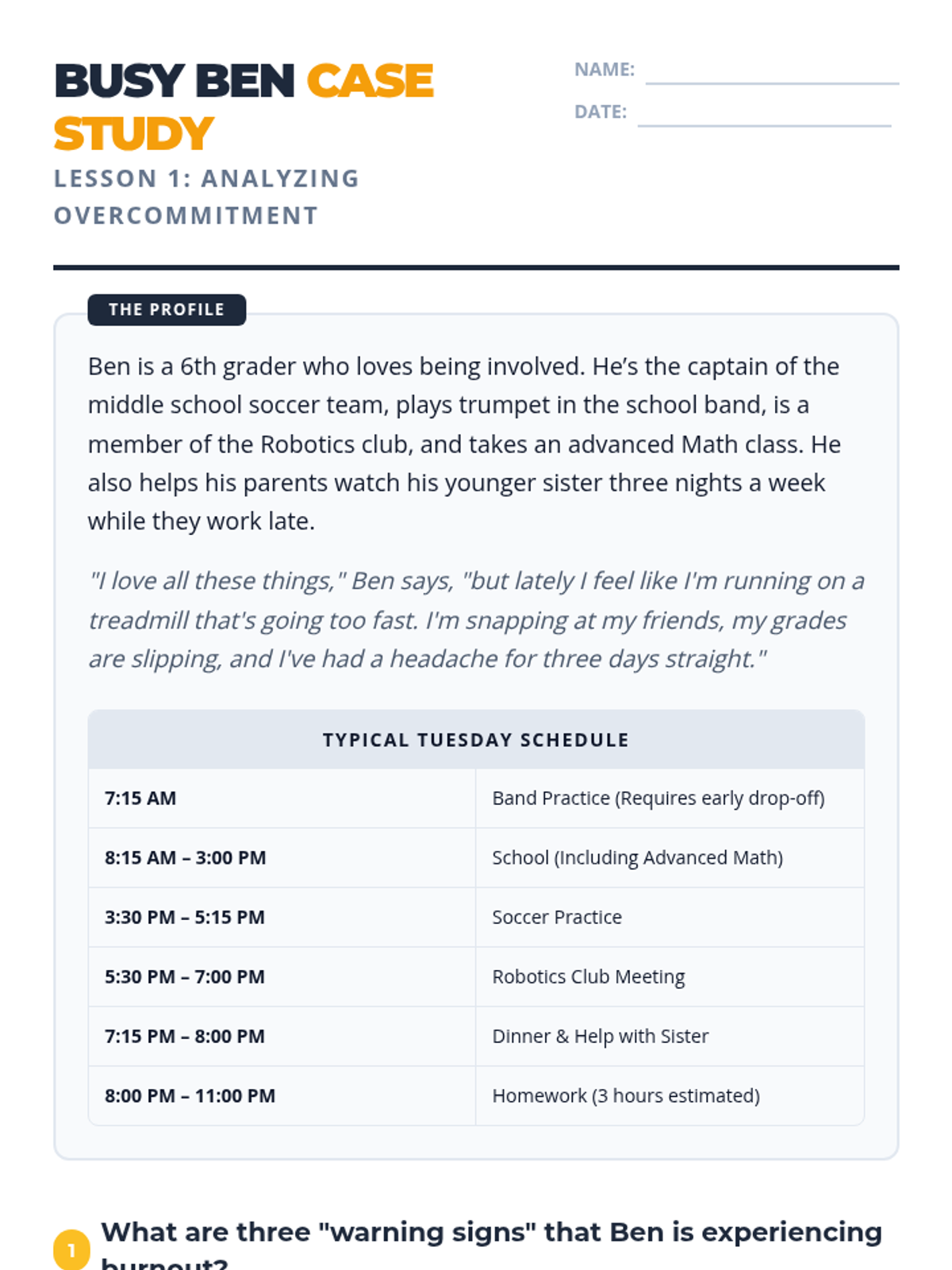
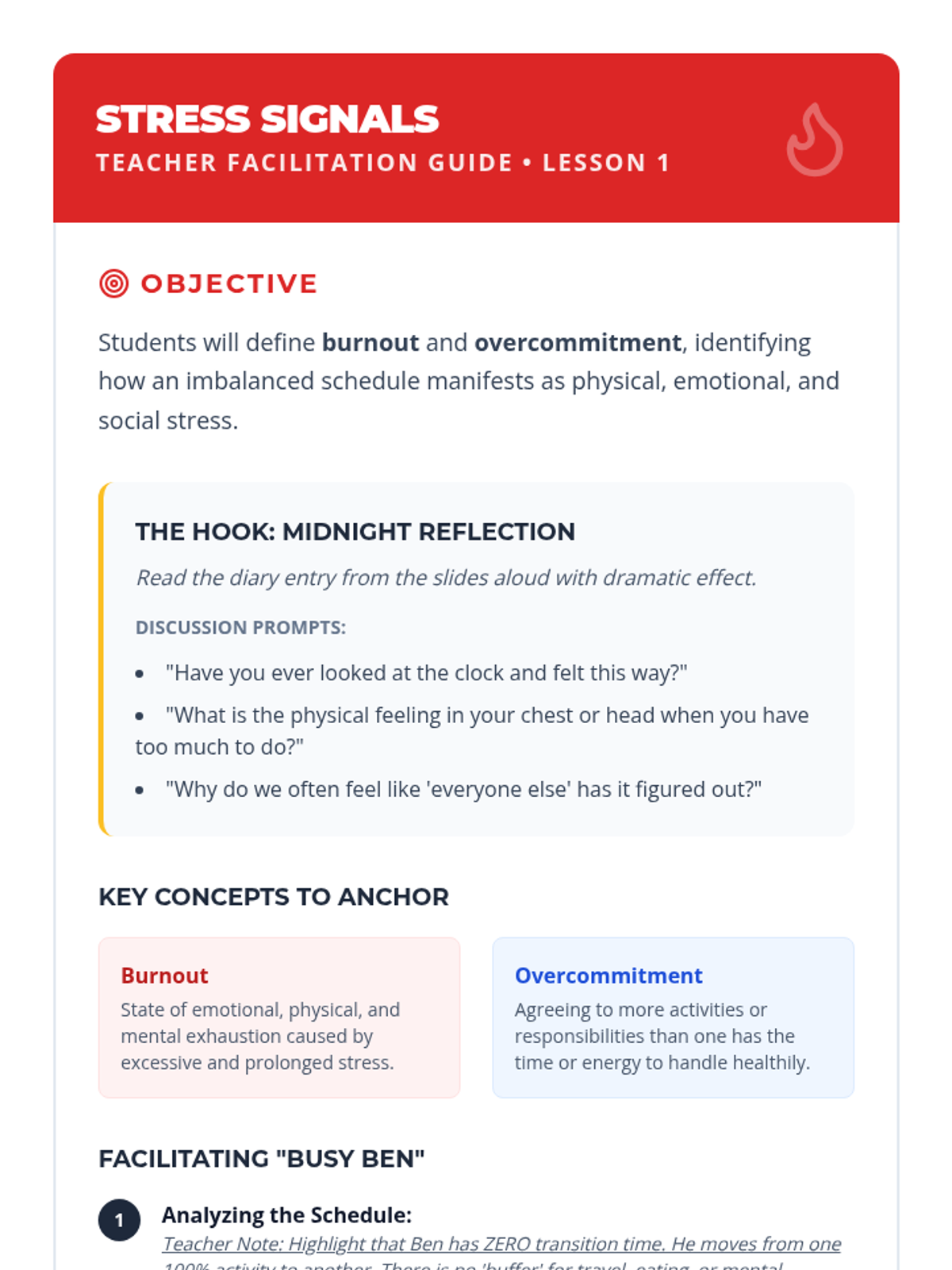
A comprehensive unit for 6th-grade students focusing on balancing academic requirements, extracurricular activities, and essential self-care. Through case studies, categorization activities, and communication practice, students learn to prevent burnout and advocate for their well-being.
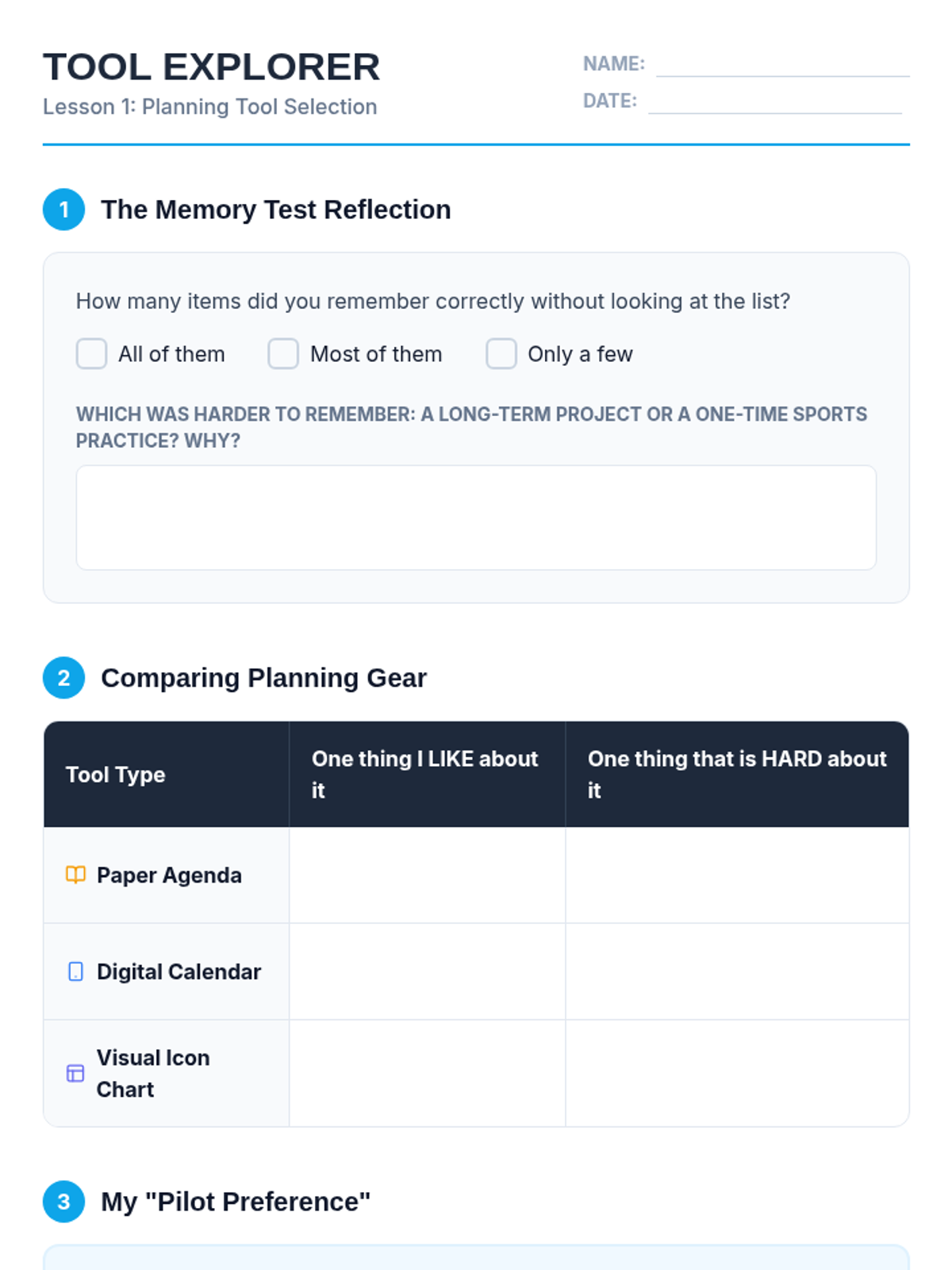
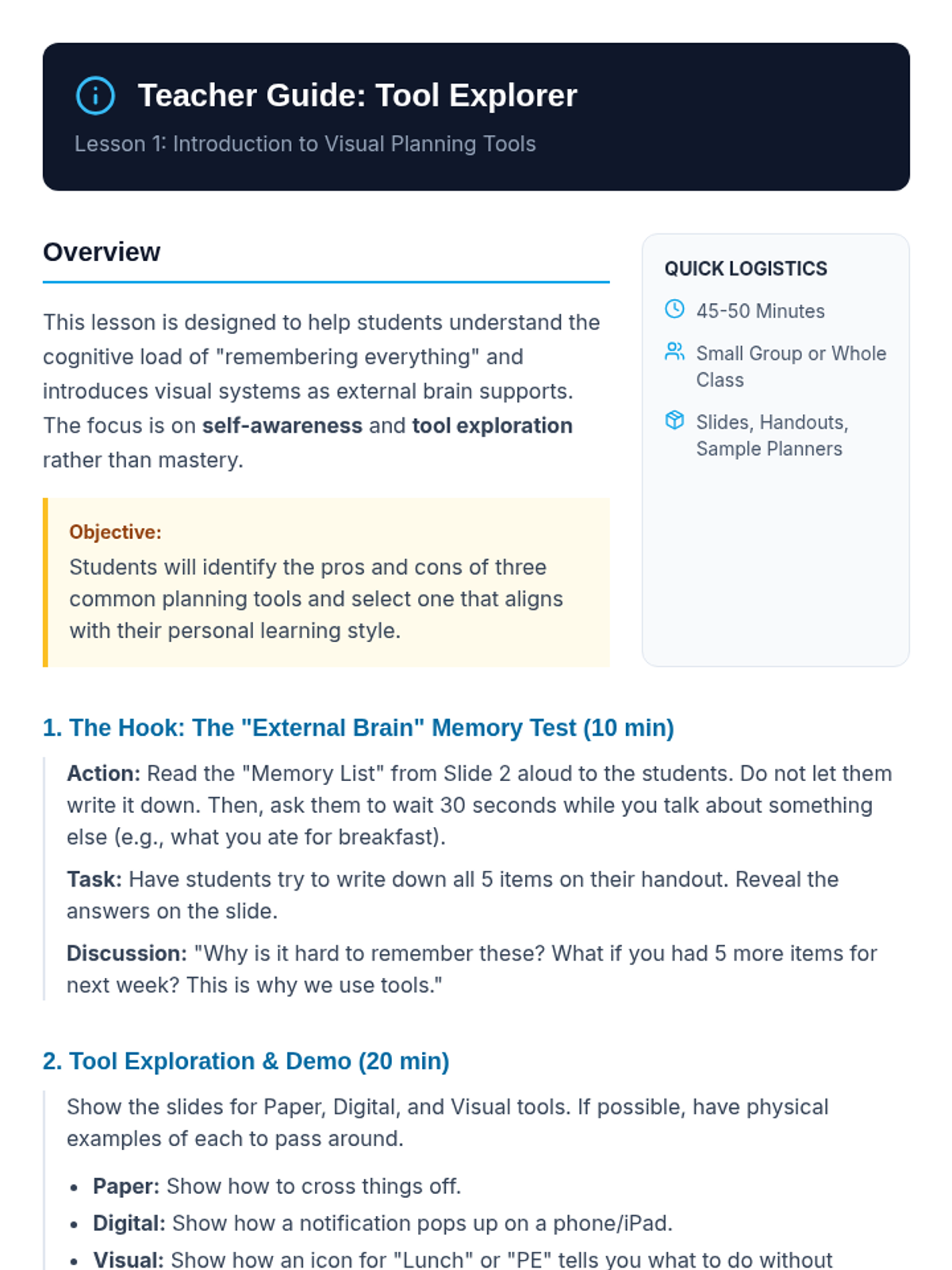
This sequence introduces 6th-grade students to visual planning and time management. Students learn to use different tools, distinguish between fixed and flexible time, and develop routines to maintain a personalized organizational system.
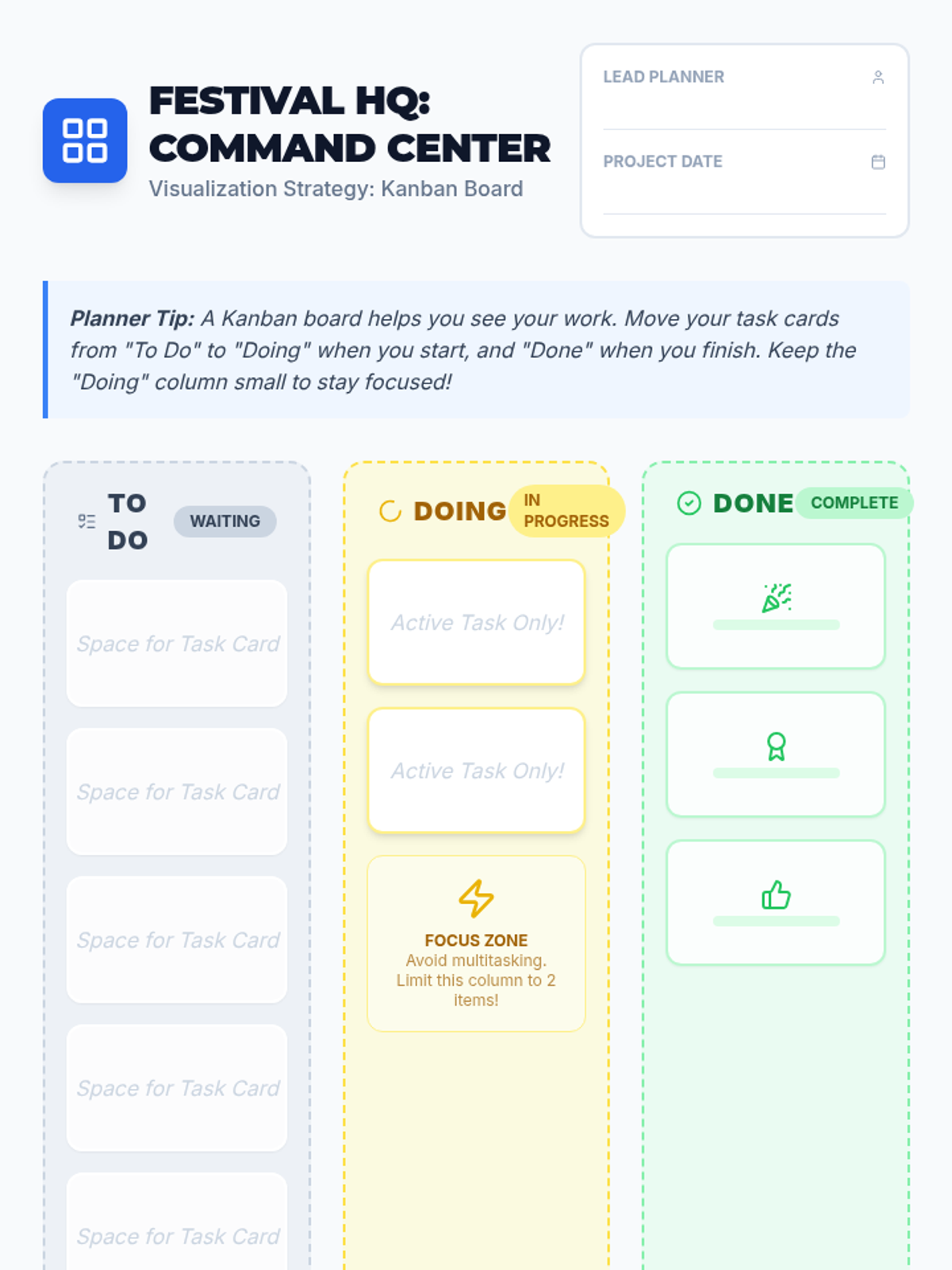
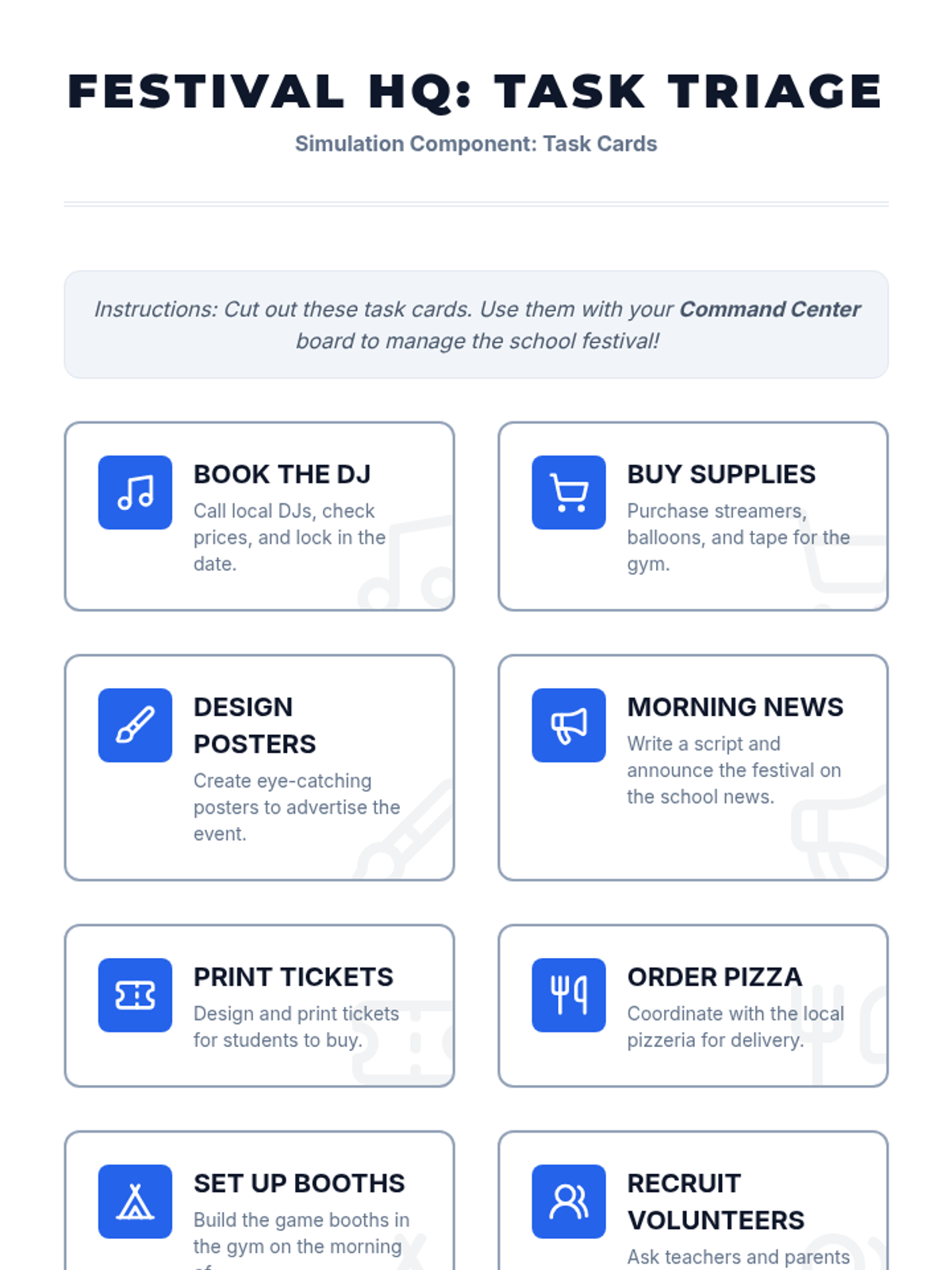
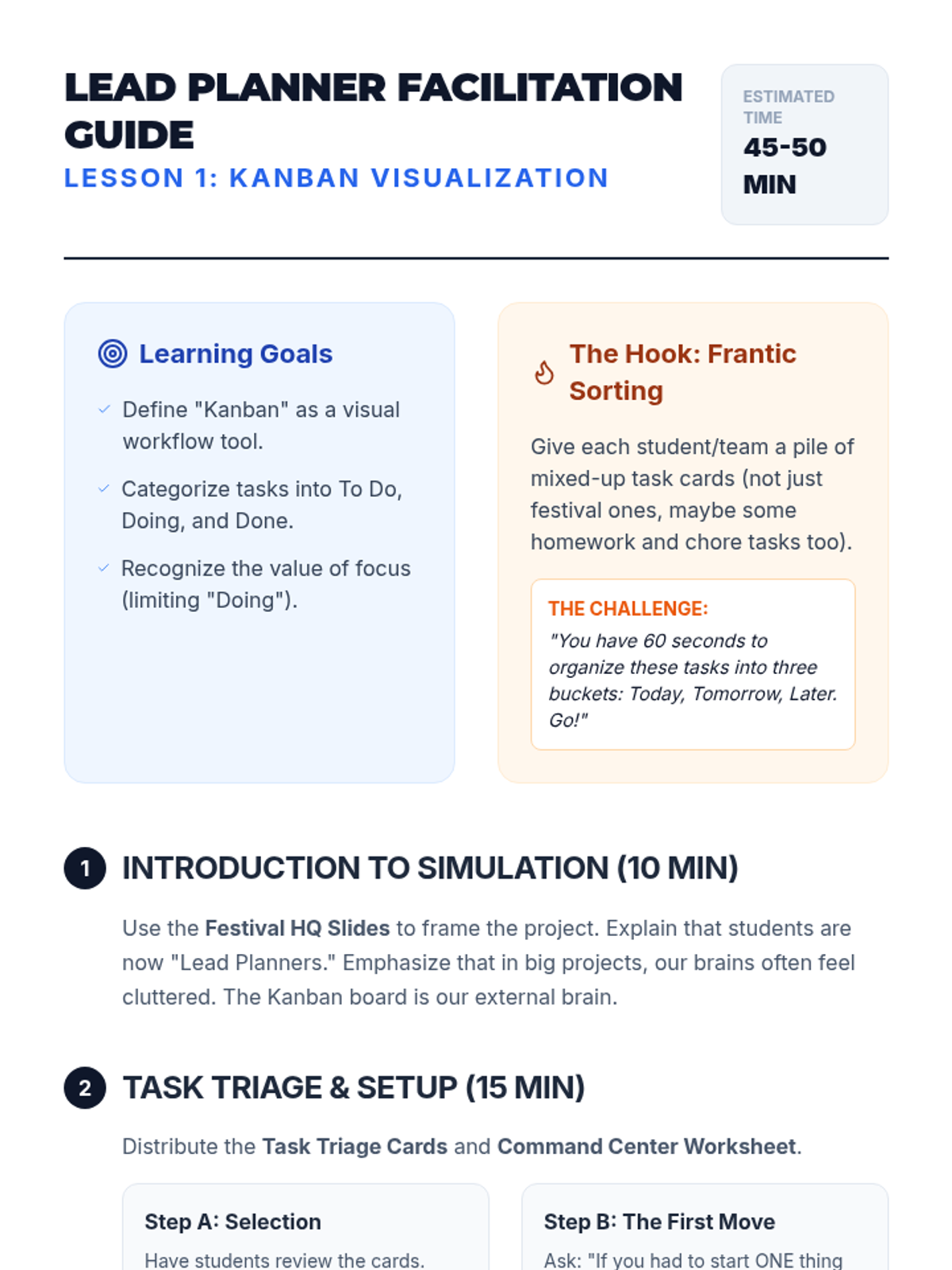
A simulation-based sequence where 6th-grade students act as Event Planners for a school festival to master multi-day project management, workflow visualization, and adaptability.
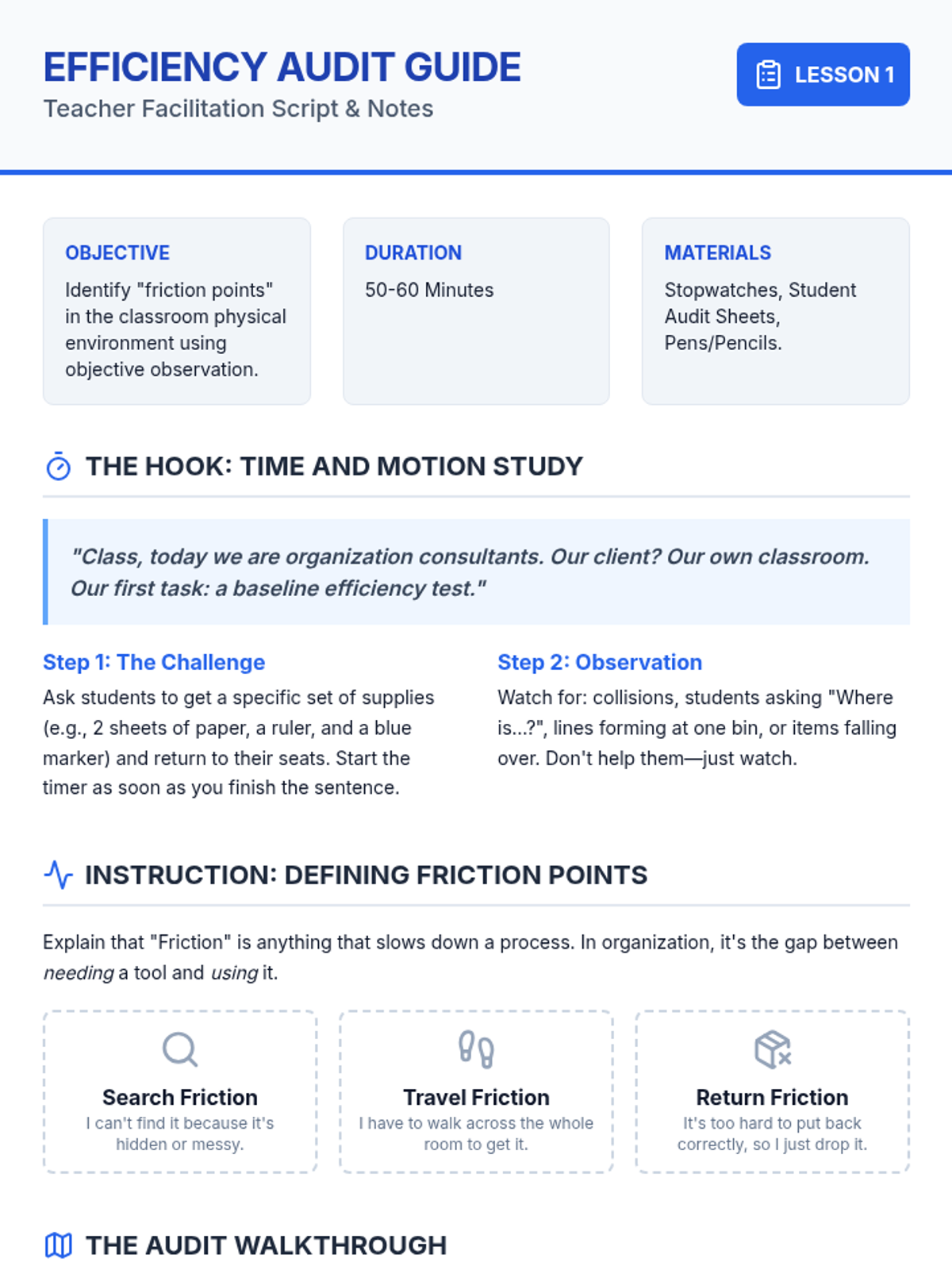
A project-based unit where students act as organization consultants to evaluate, redesign, and implement efficient physical systems in their classroom. Students learn systems thinking, visual communication, and the psychology of environmental design to create a more functional learning space.
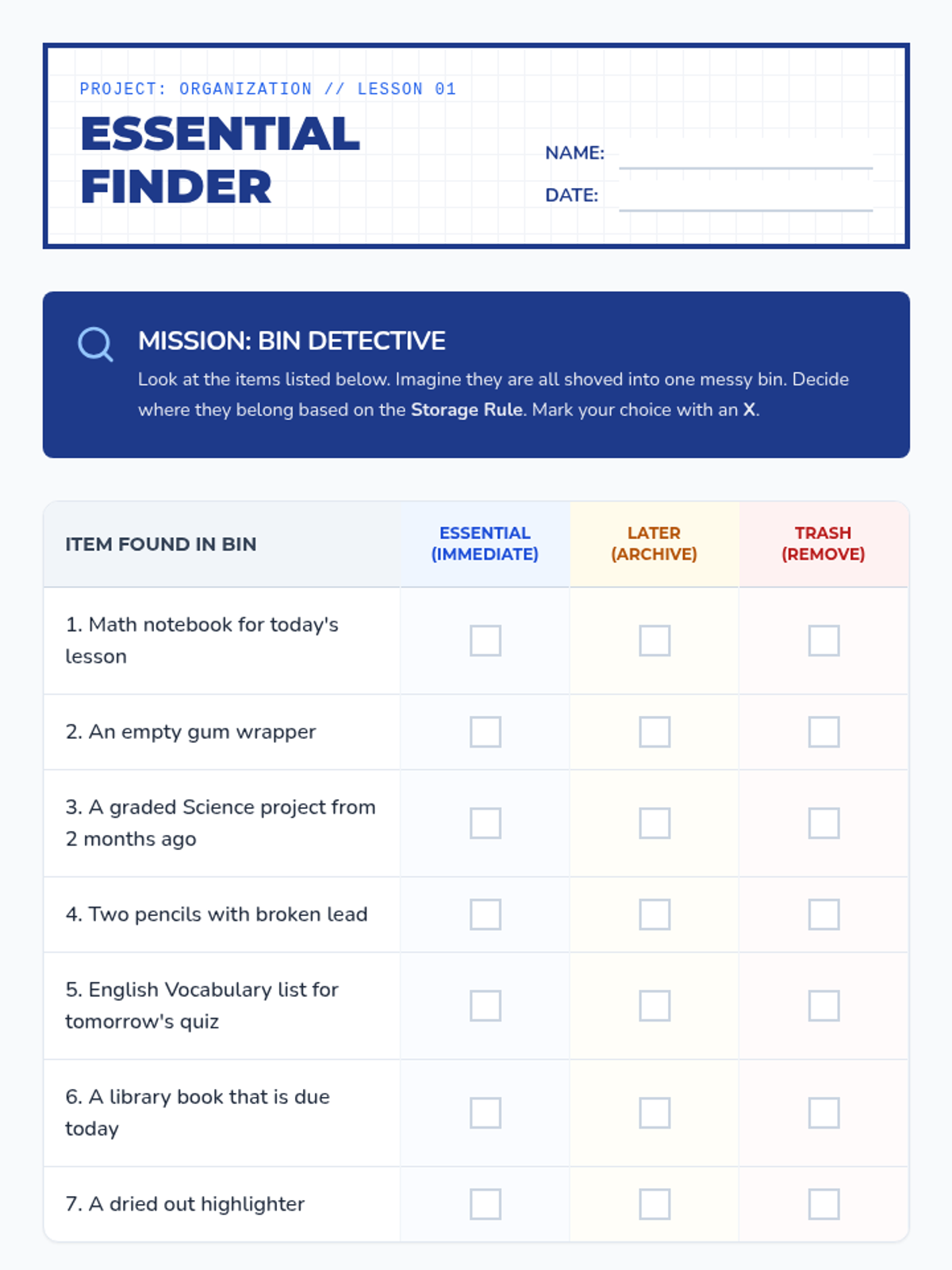
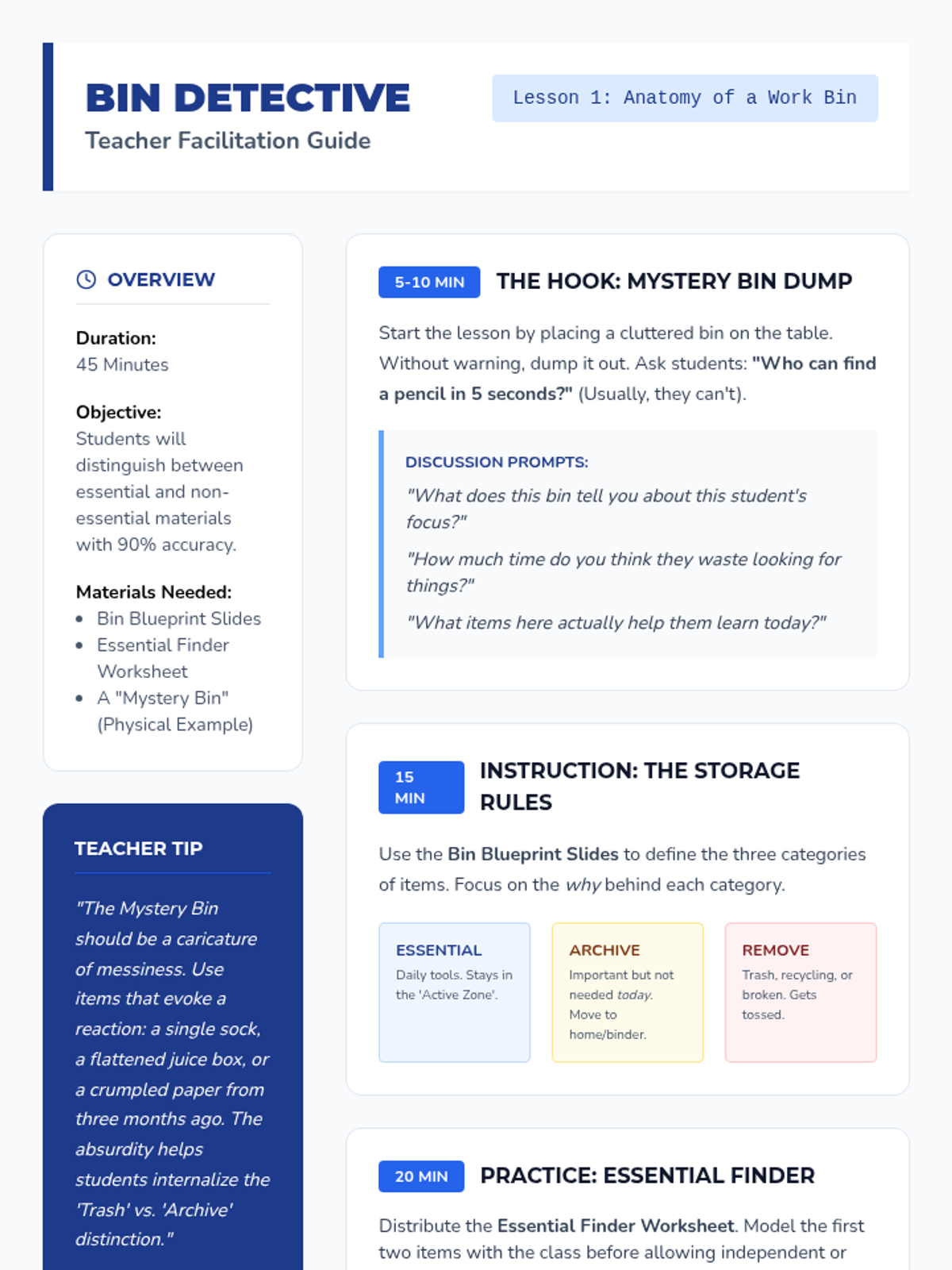
A 5-lesson sequence focused on executive functioning and physical organization for 6th-grade students. Students learn to manage work bins, sort materials, zone their workspaces, and establish maintenance routines.
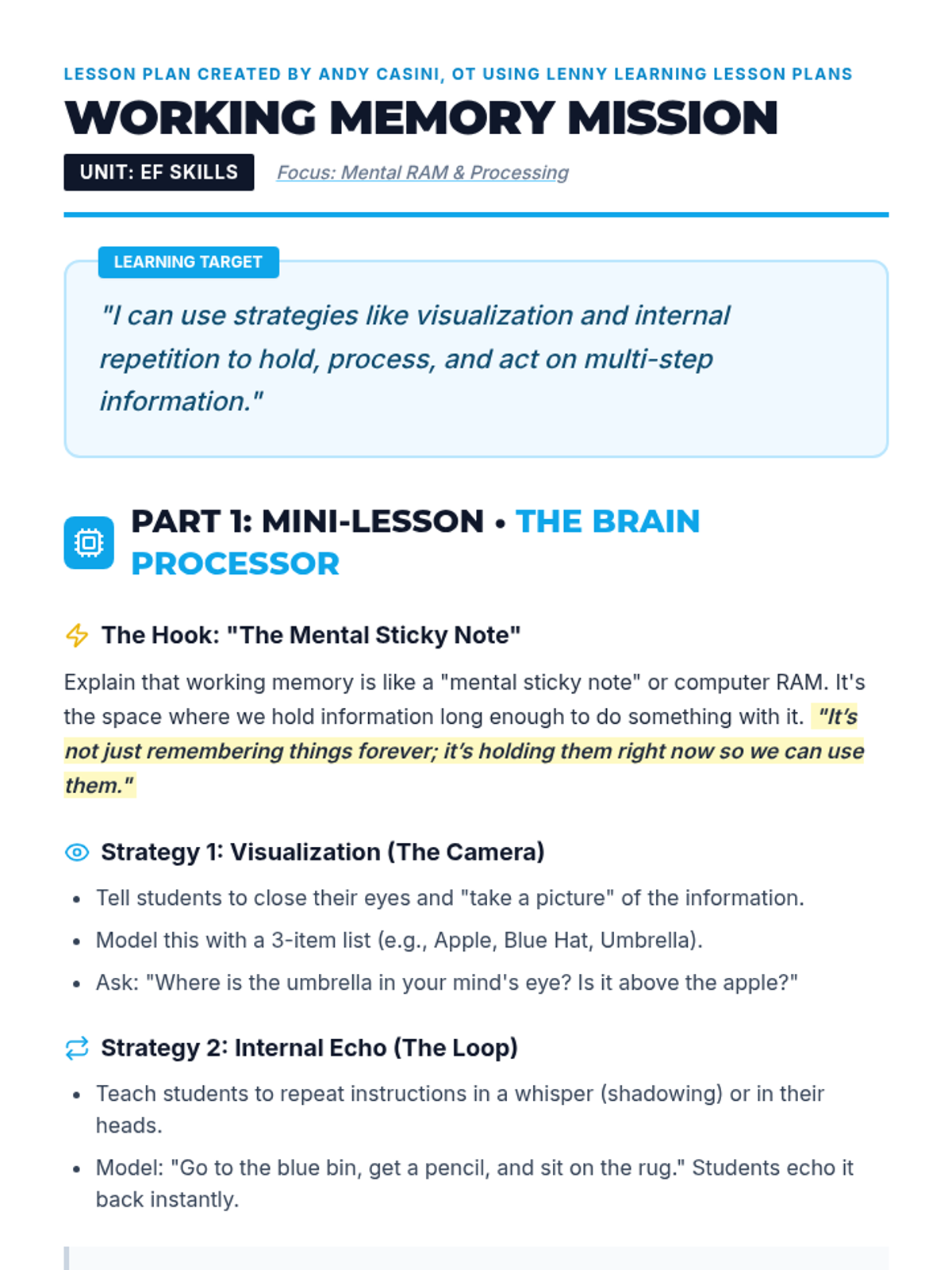
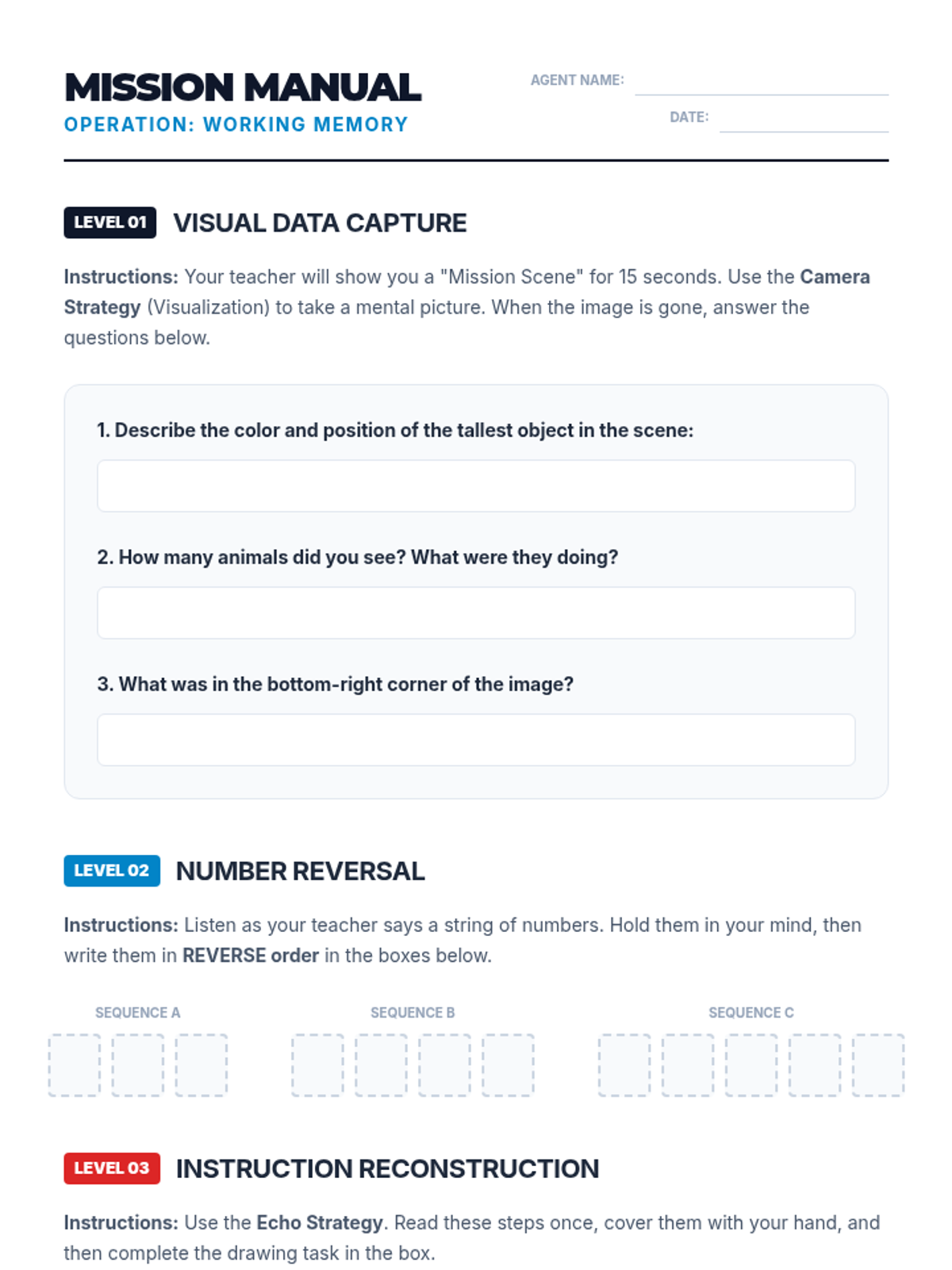
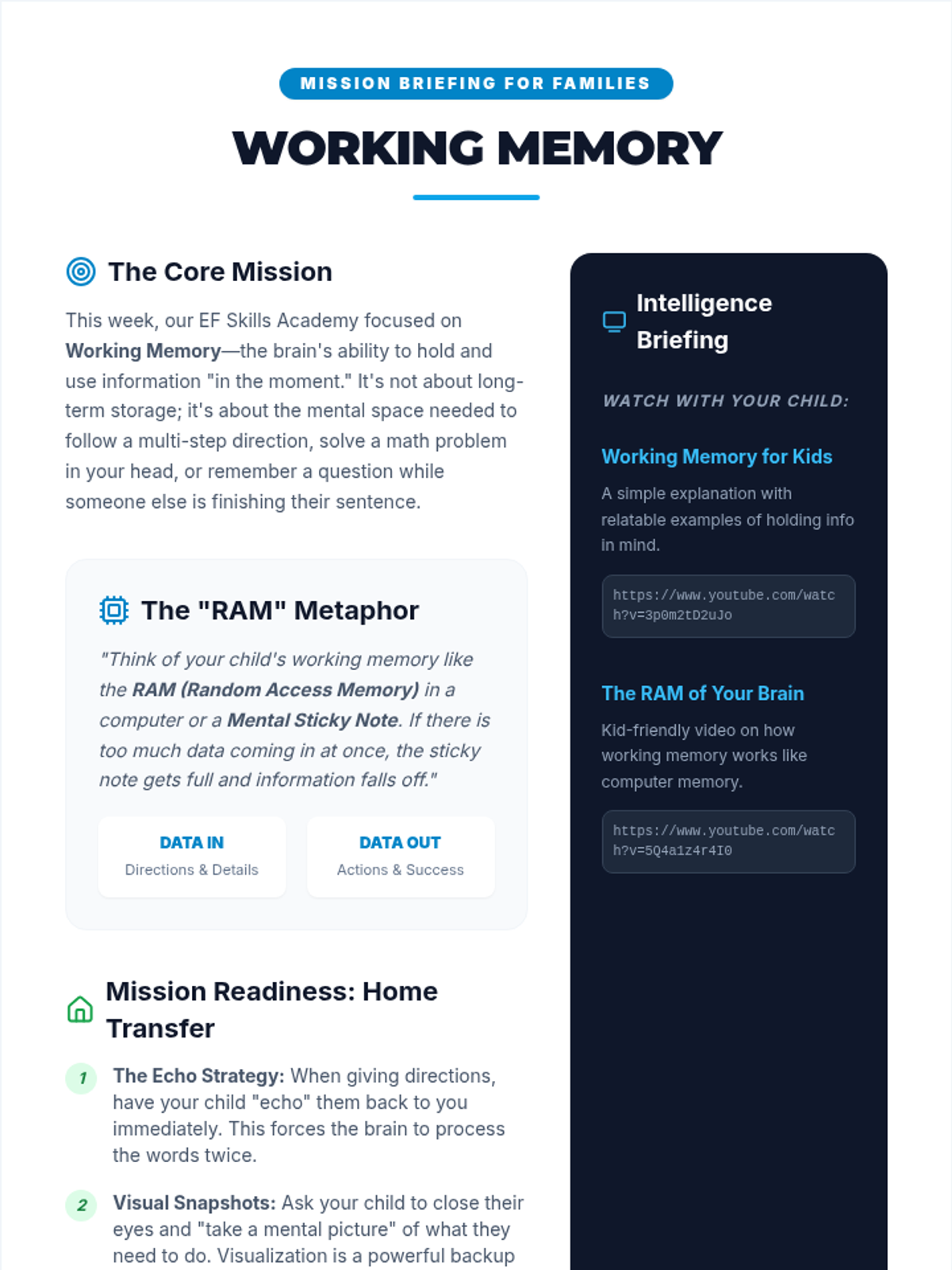
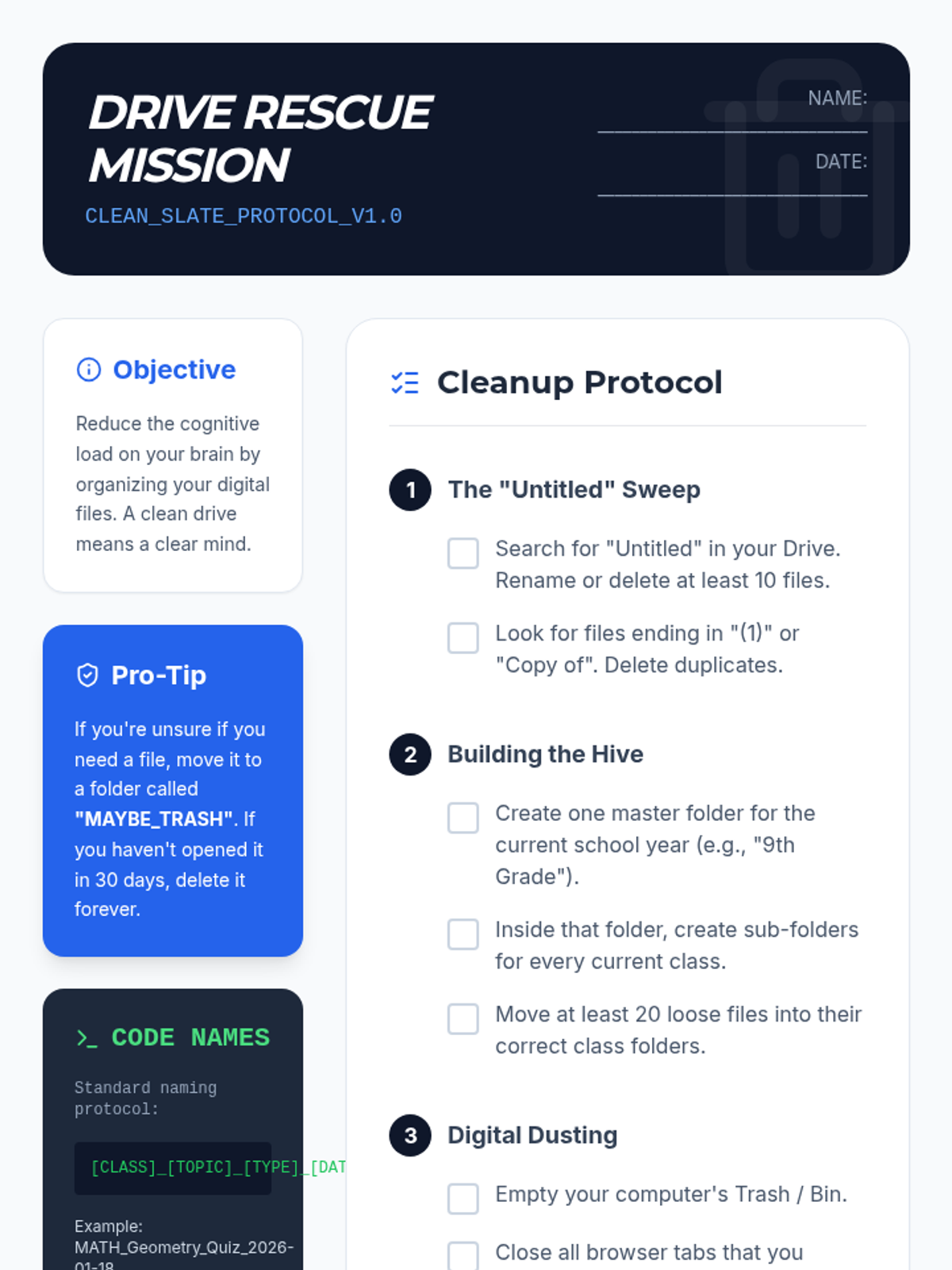
A sequence focused on using digital tools to support working memory through effective file organization, tagging, multimodal note-taking, and accessibility features. Students build a personal 'digital brain' to manage schoolwork efficiently.
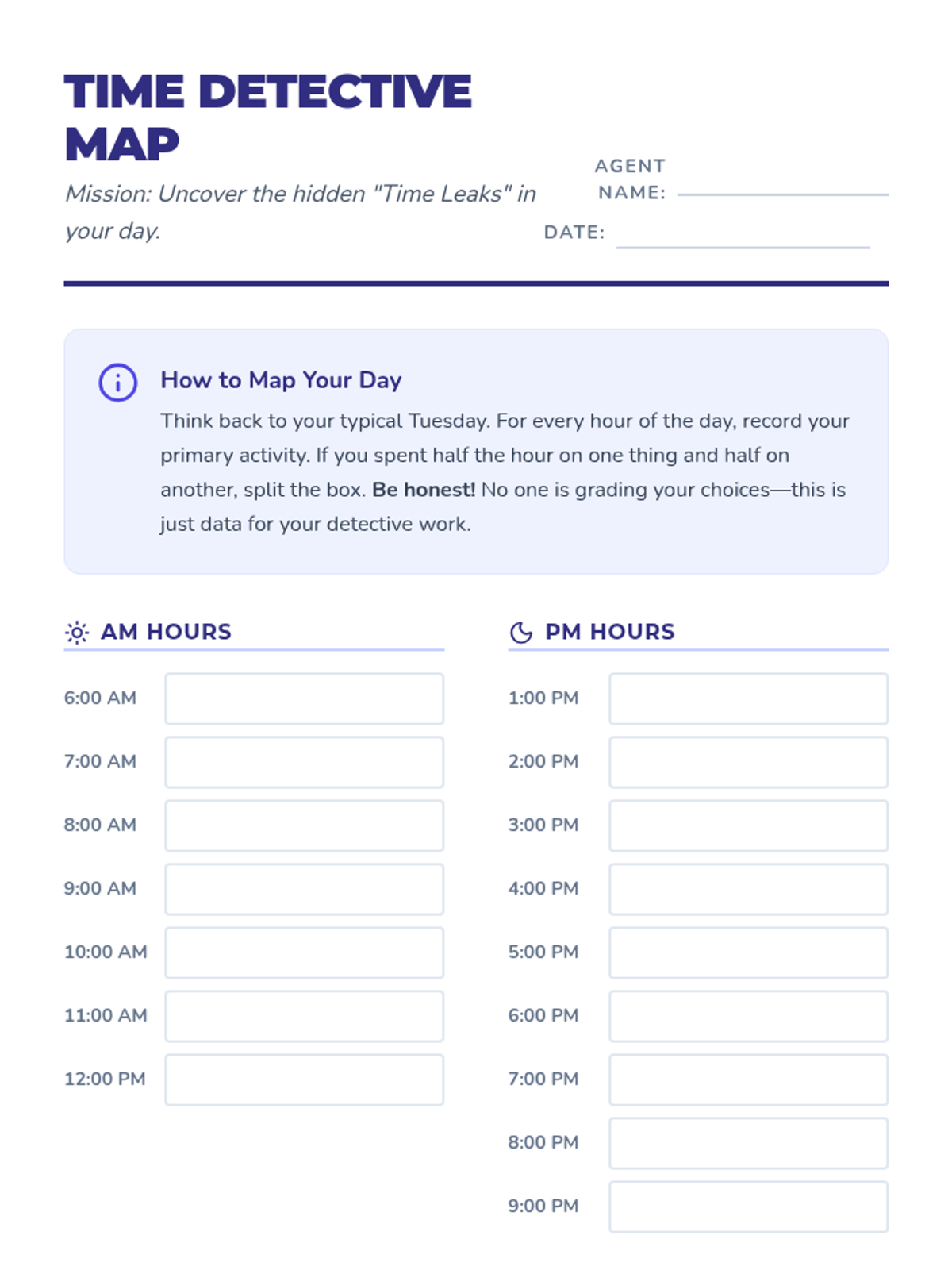
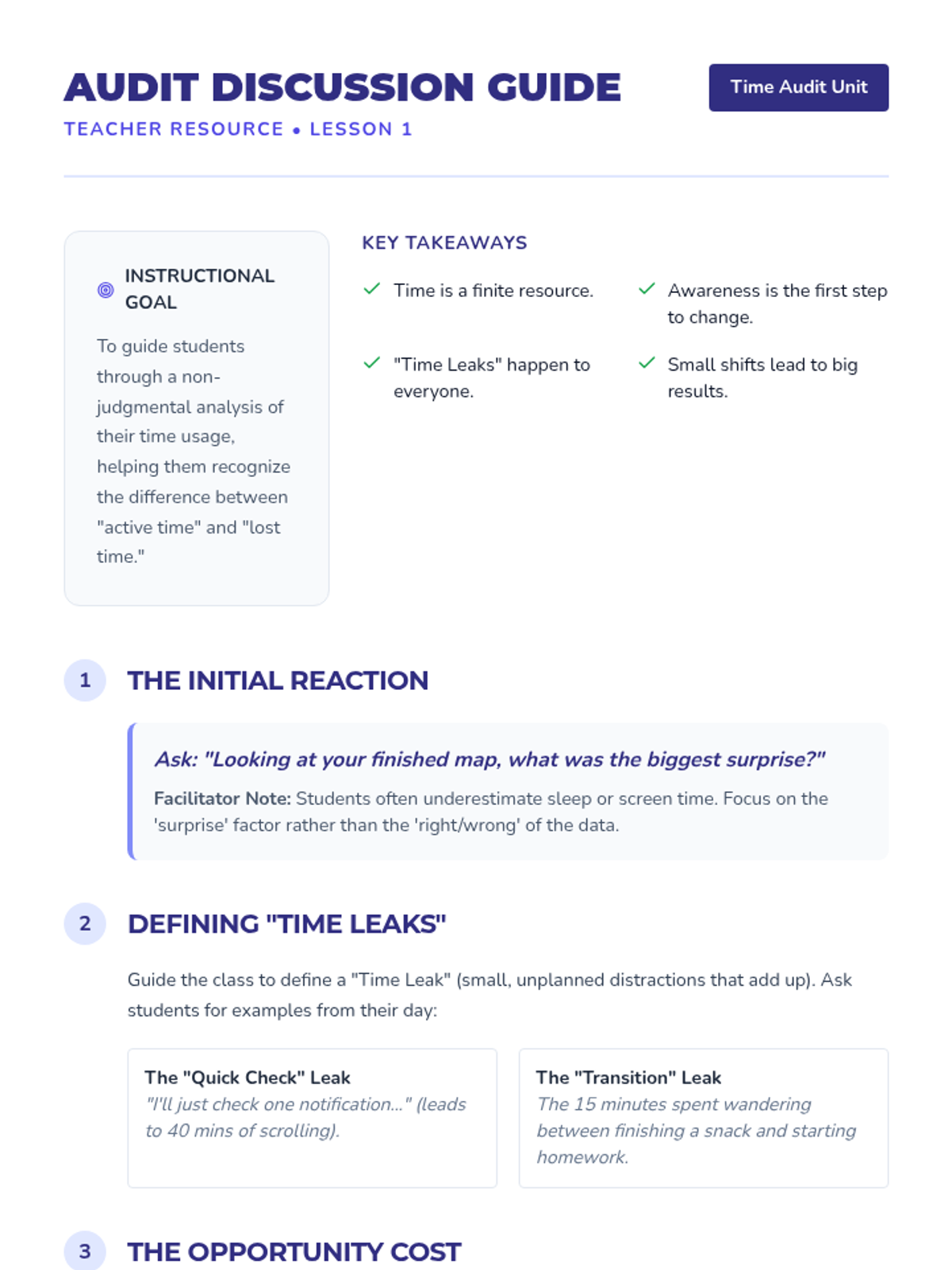
A comprehensive sequence designed for 6th-grade students to master executive function skills. Students will learn to audit their time, effectively use planners, prioritize tasks using the 'Big Rocks' method, break down large projects through backward planning, and optimize their study environments for focus.
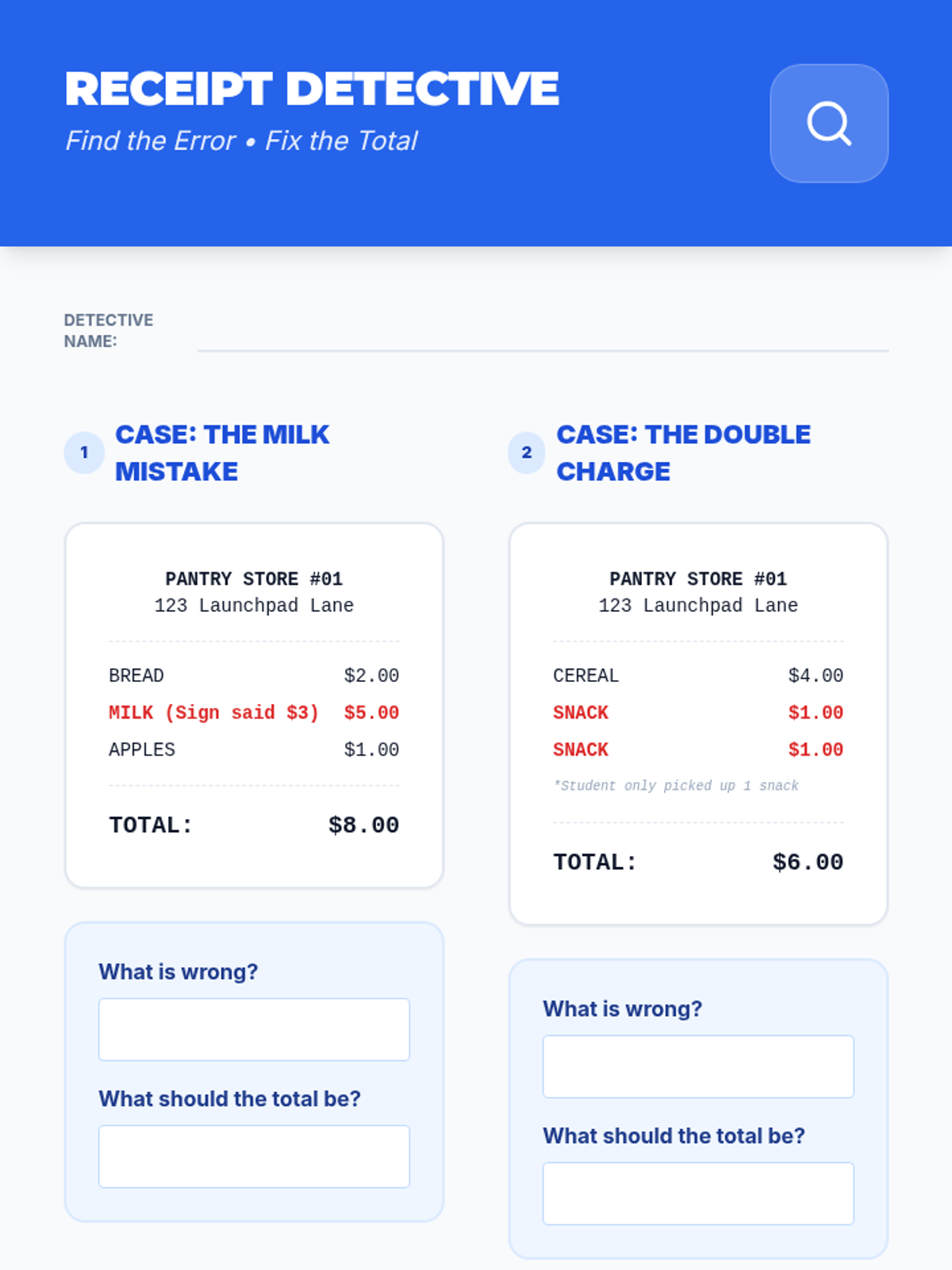
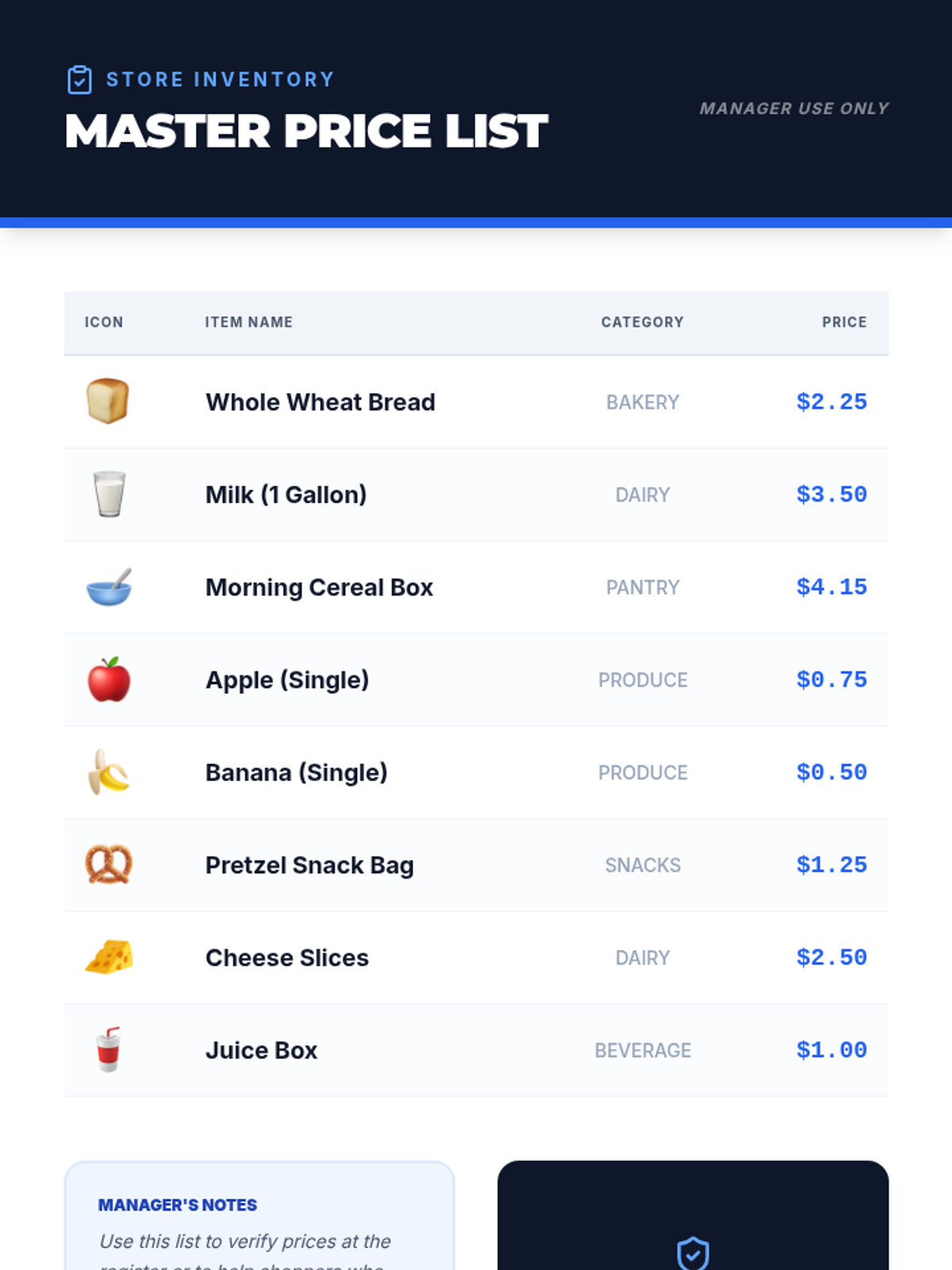
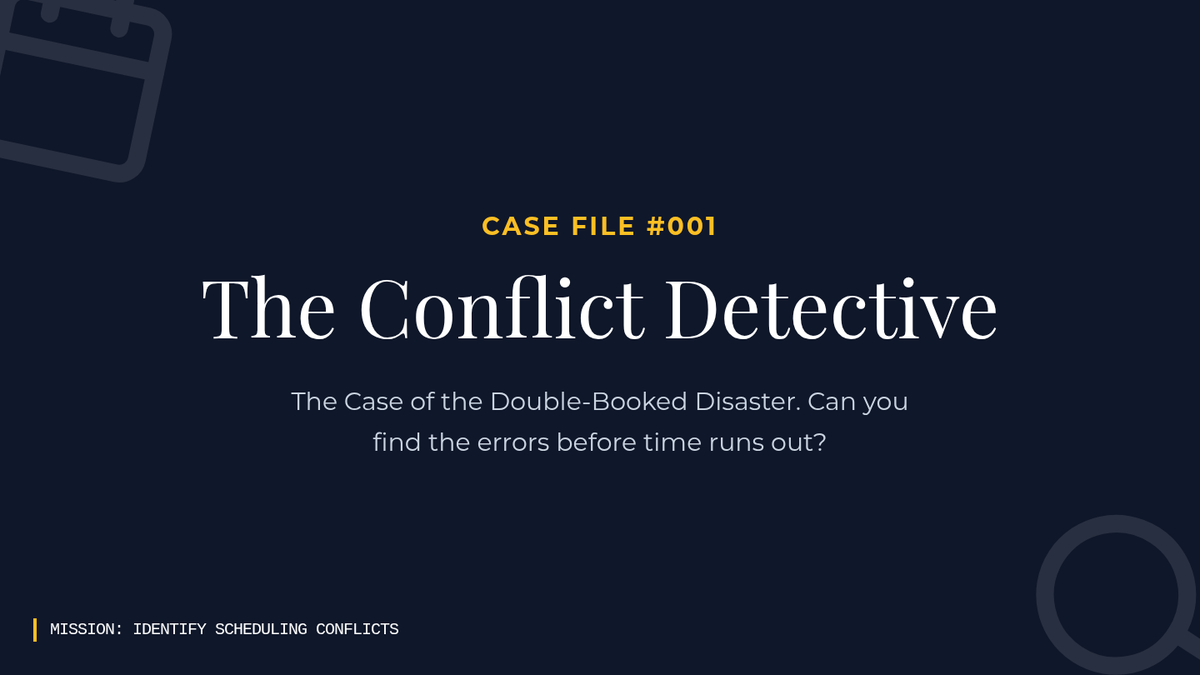
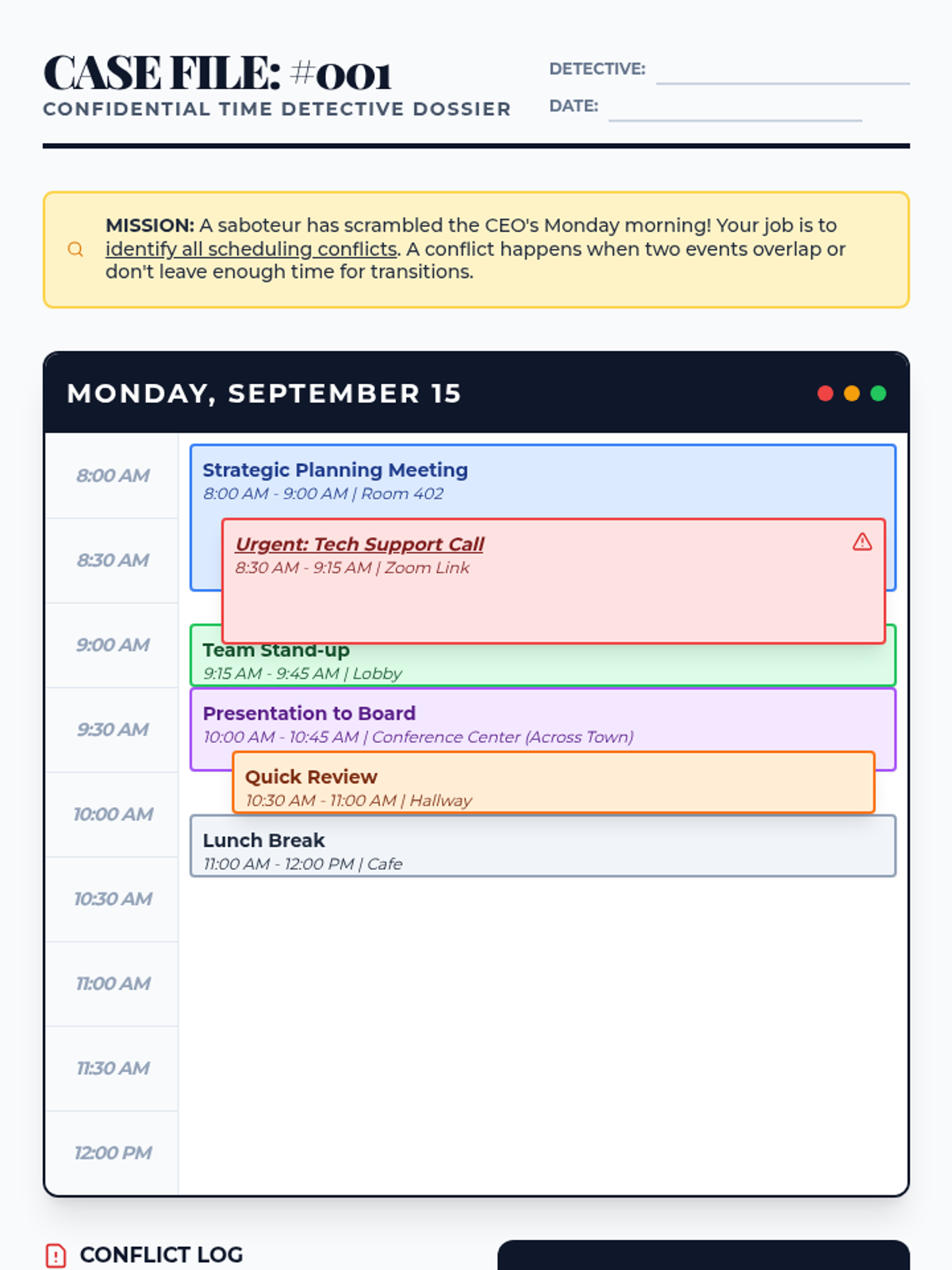
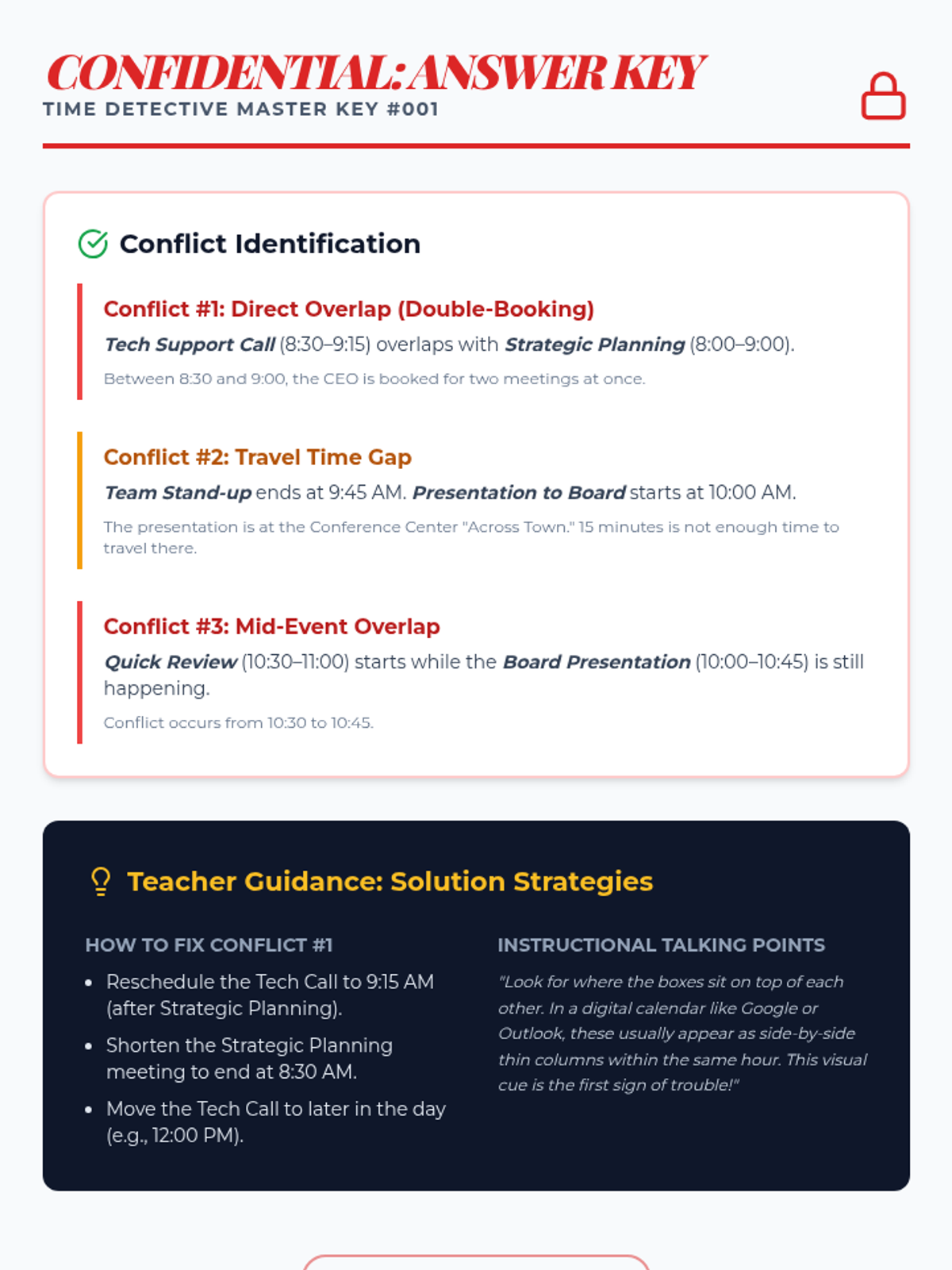
A game-based sequence where students act as 'Time Detectives' to master digital calendar skills. Through five interactive challenges, students learn to identify conflicts, adjust durations, manage locations, fix recurring patterns, and synthesize their skills into a master schedule.
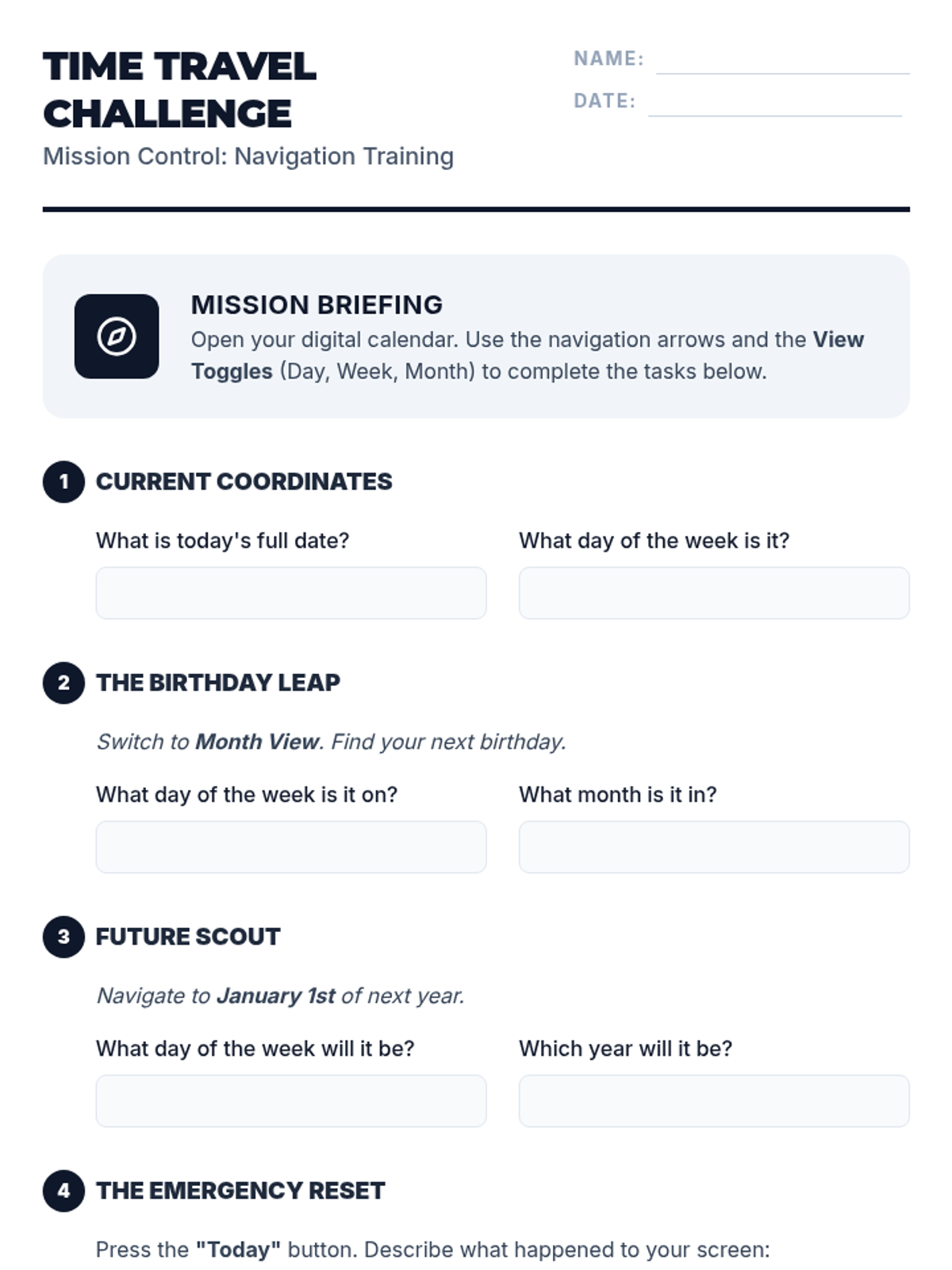
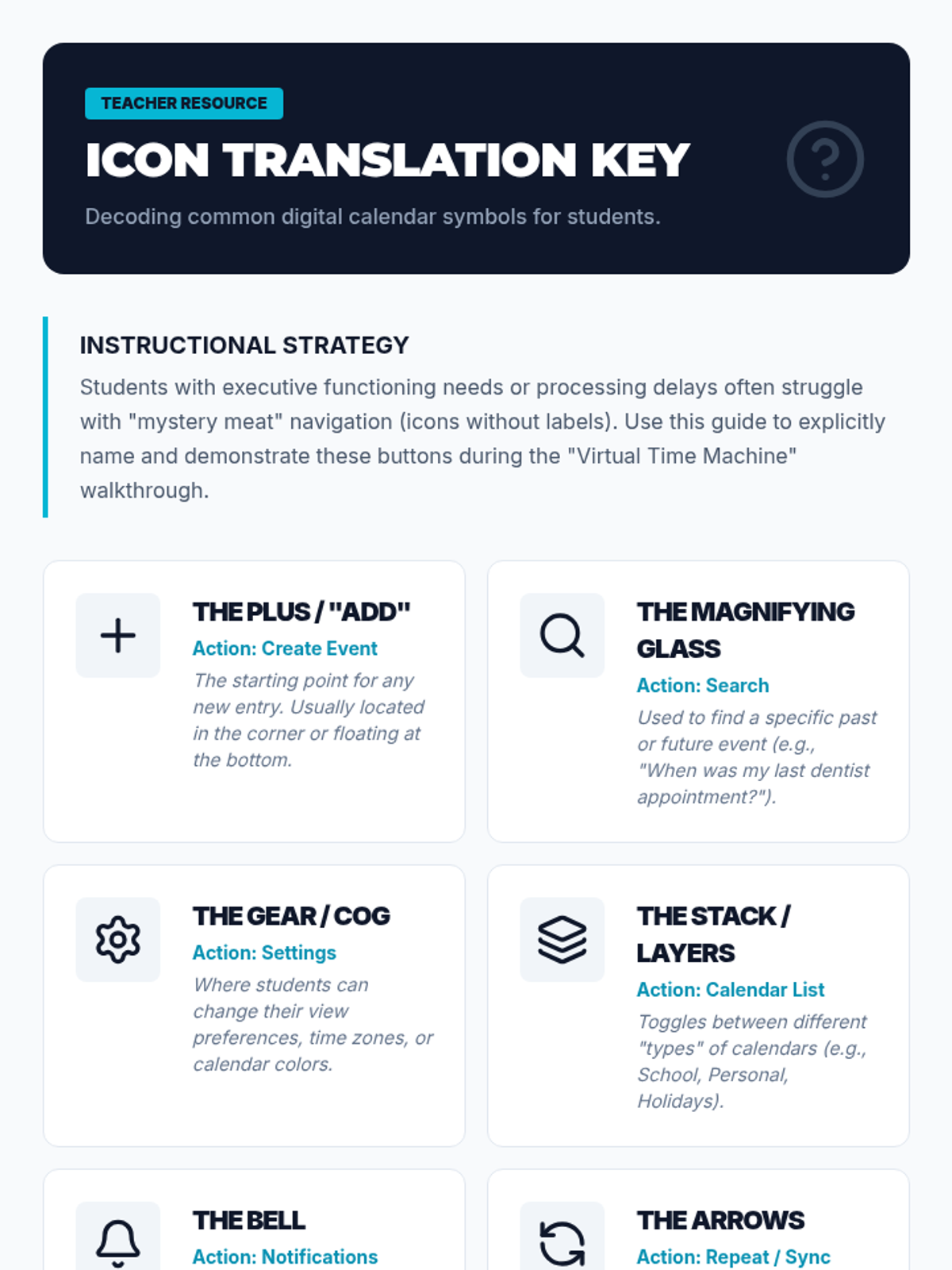
This sequence guides 6th-grade students through the essential skills of digital calendar management, from basic interface navigation to complex features like recurring events and notification management. It focuses on building executive function and digital literacy to help students create a reliable 'external memory' for school and daily life.
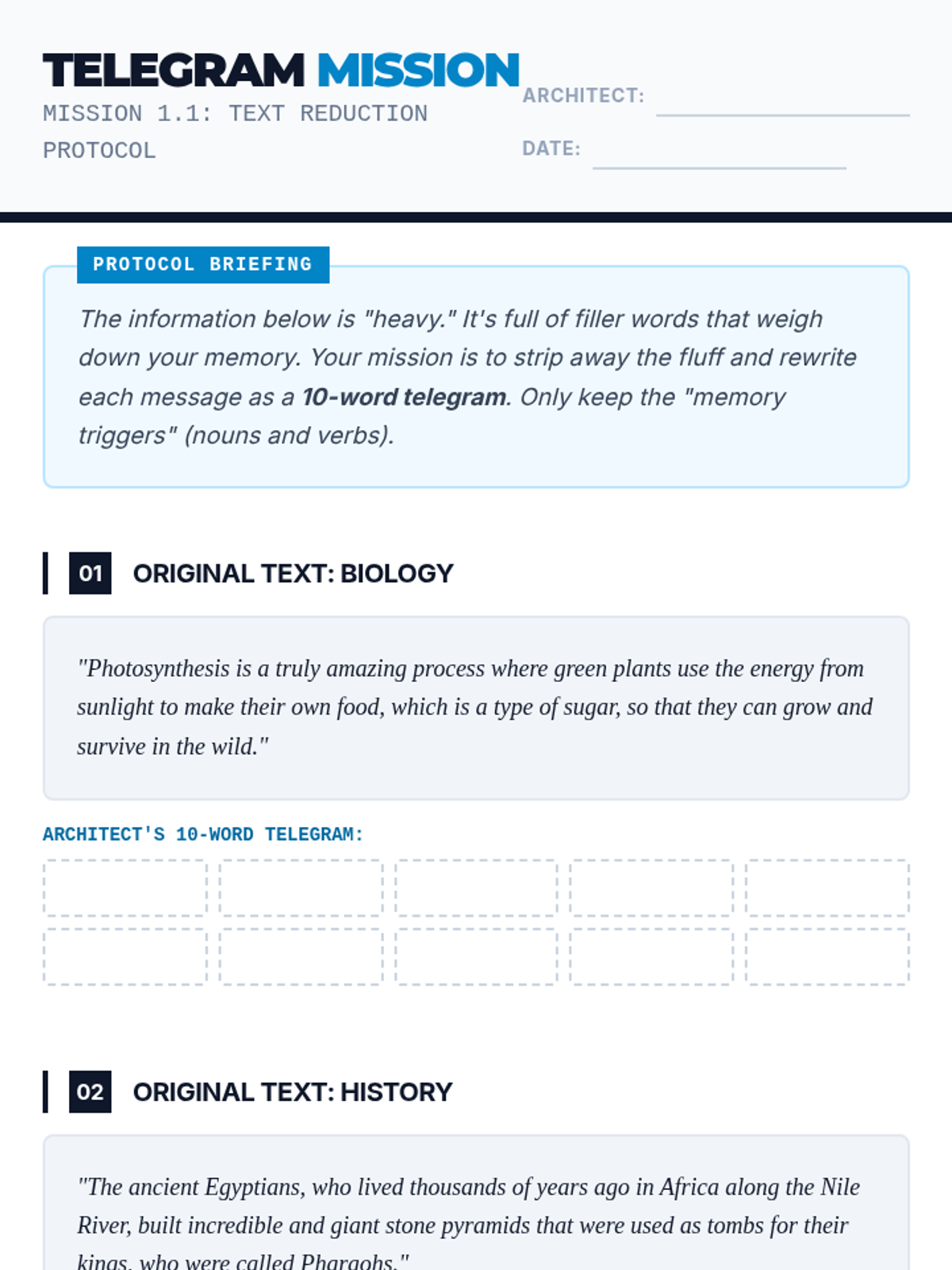
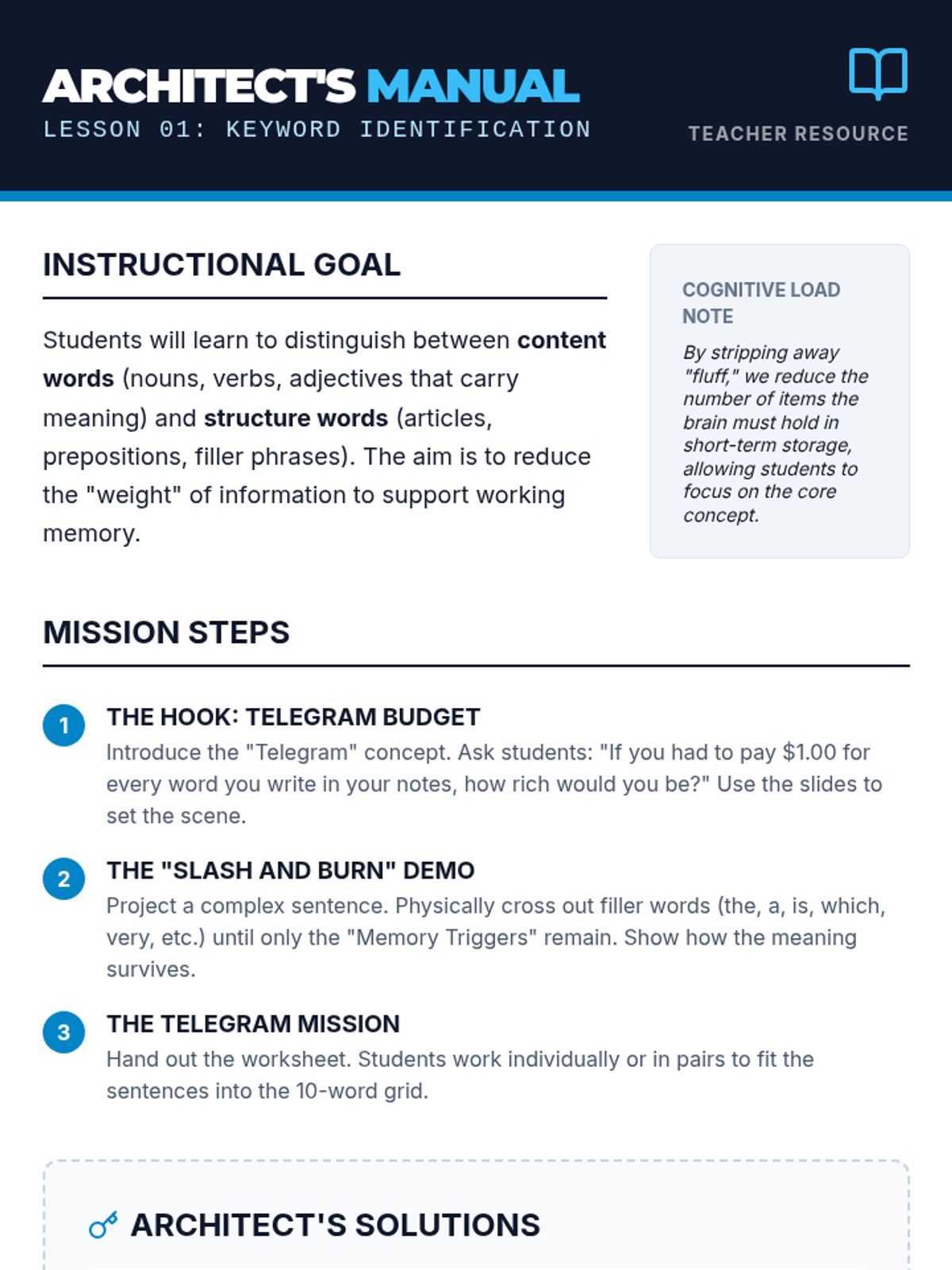
A specialized sequence for 6th-grade students focusing on reducing cognitive load through effective note review, summarization, and paraphrasing. Students learn to become 'Info Architects,' stripping away unnecessary 'fluff' to identify core concepts and strengthen working memory.
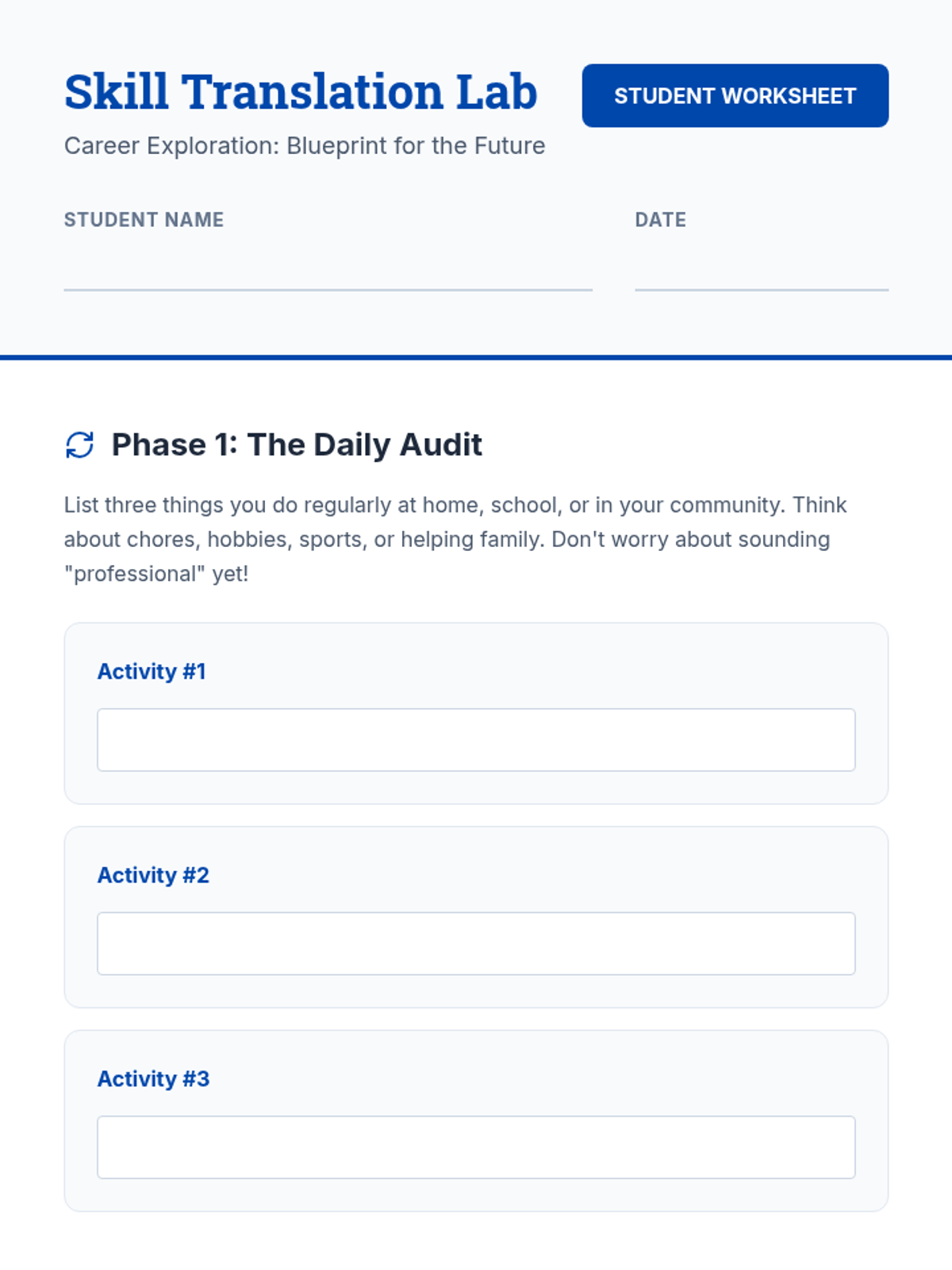
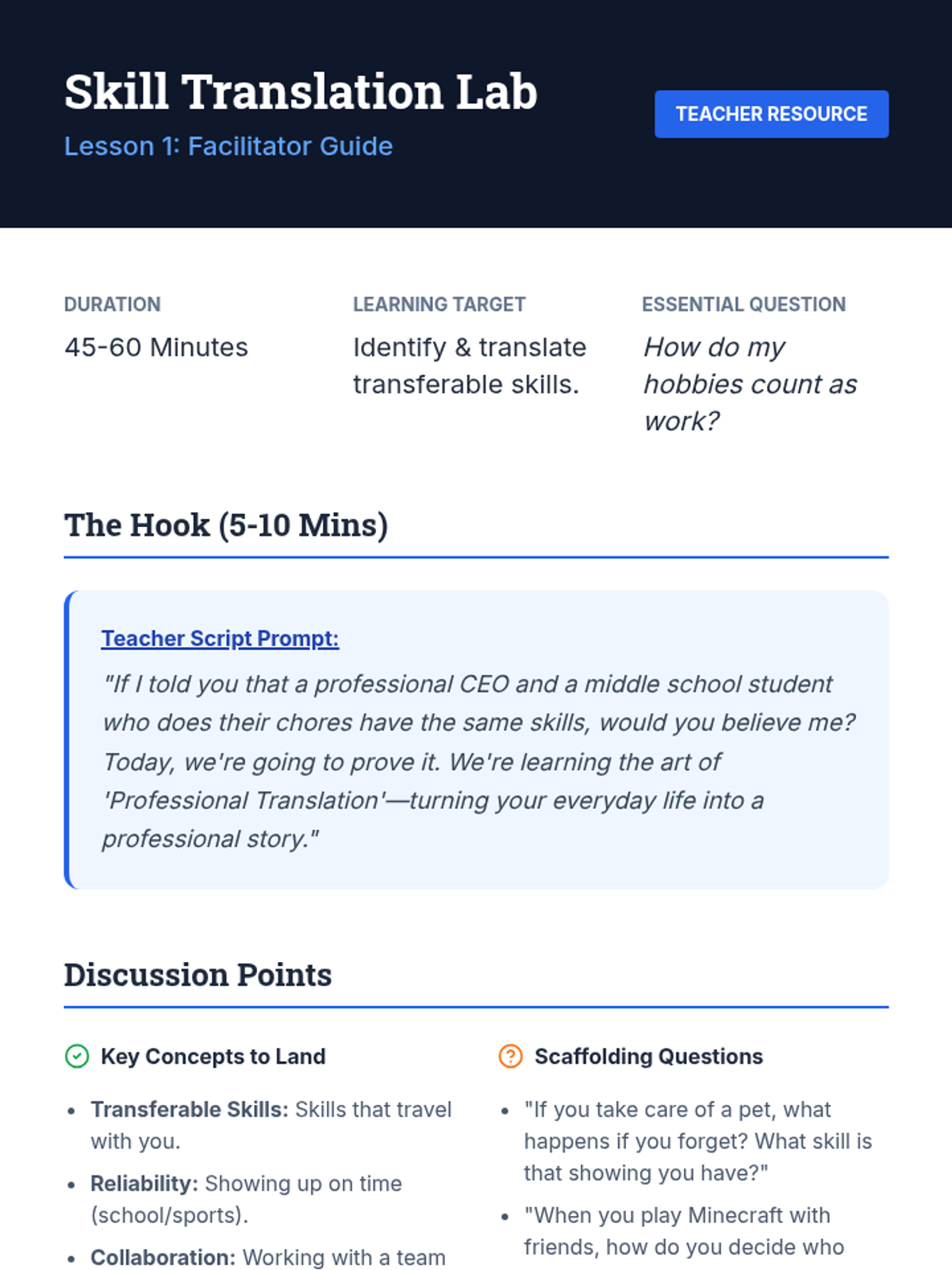
A comprehensive sequence for 6th-grade students to translate their daily activities into professional documentation. Students learn to identify transferable skills, structure a resume, use power verbs, manage their digital footprint, and produce a polished draft resume.
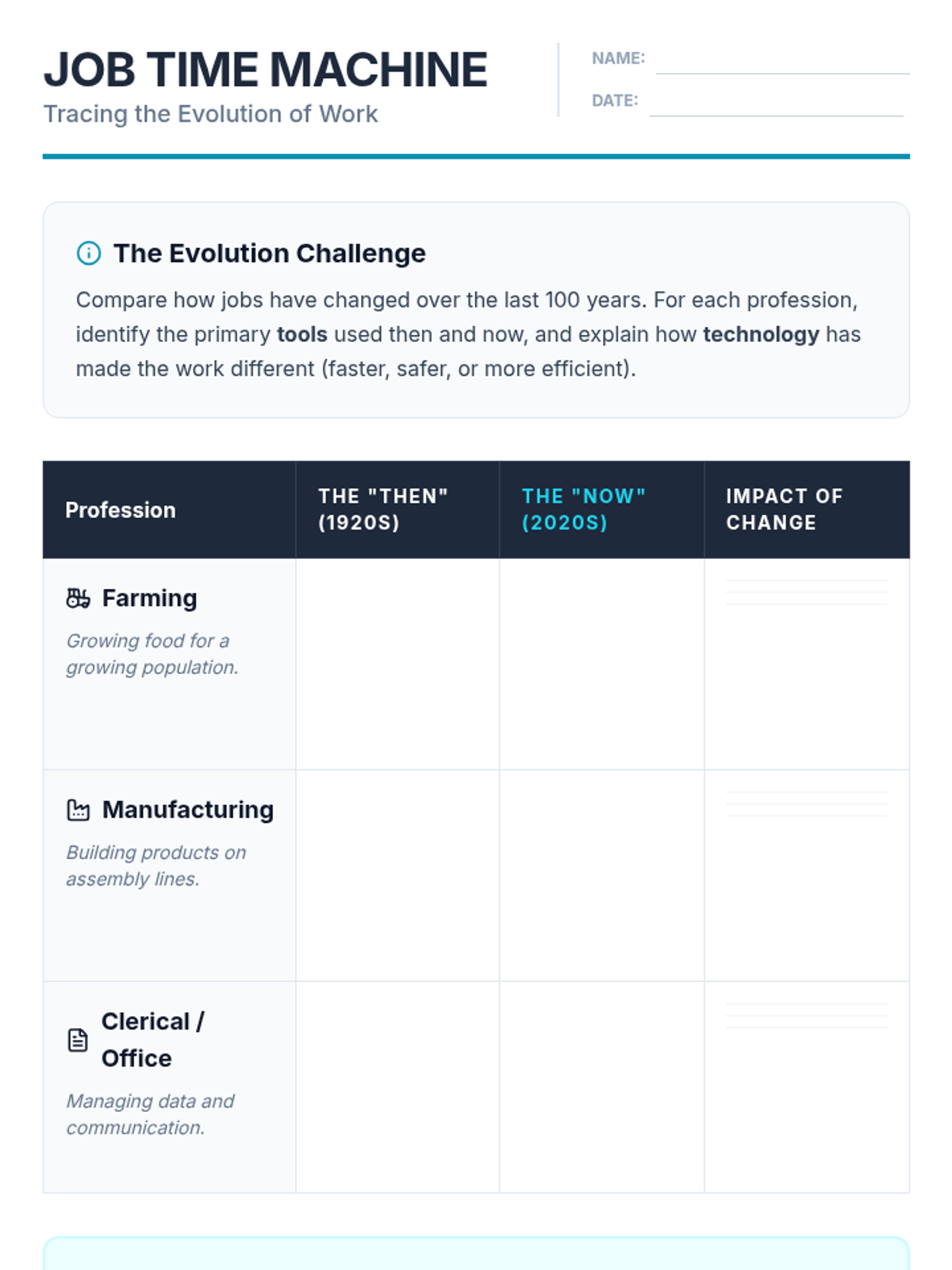
This sequence explores the evolution of work from the Industrial Age to the digital future, focusing on technology's impact on job roles, the rise of the gig economy, and the essential human skills needed in an automated world.
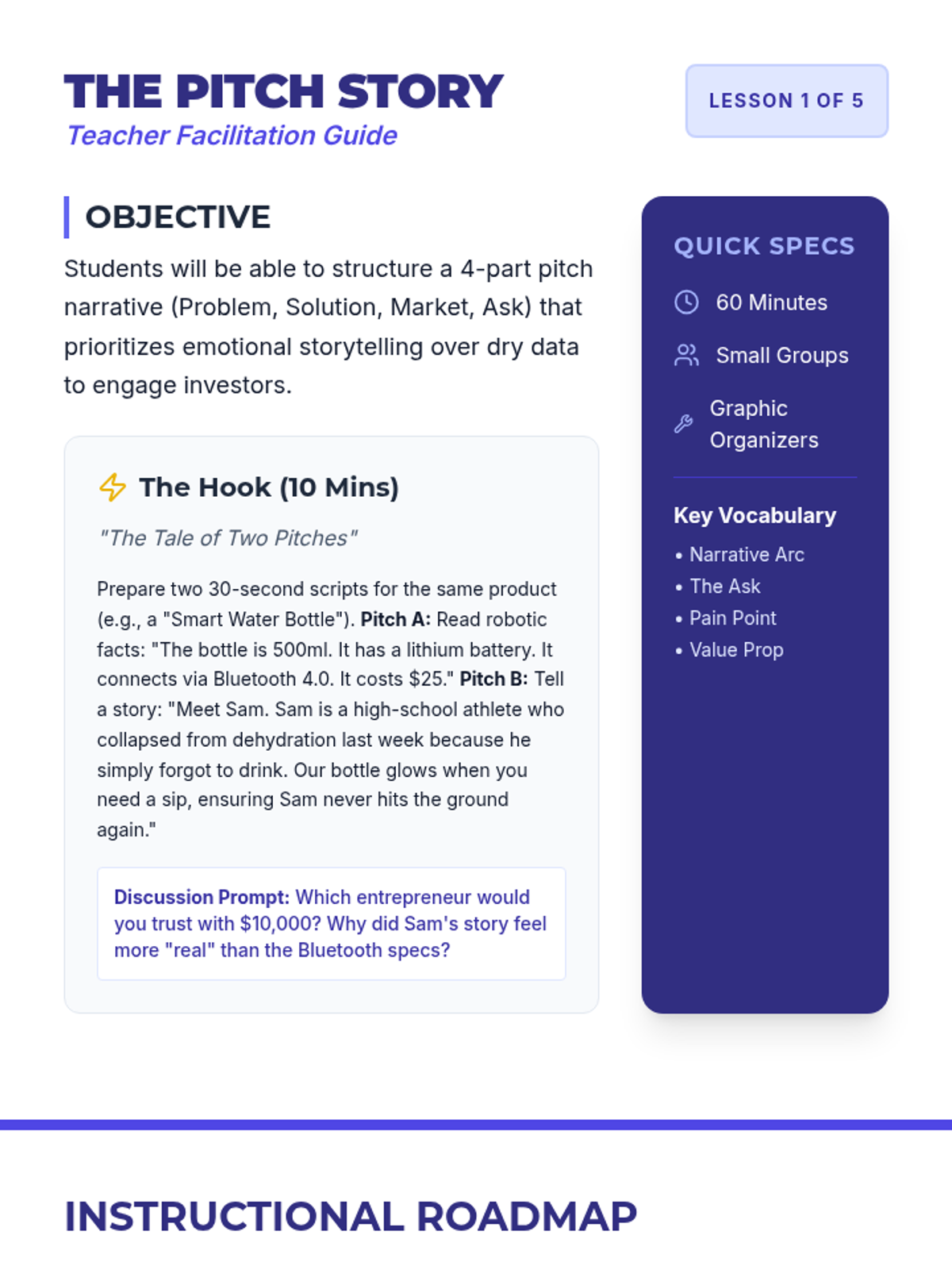
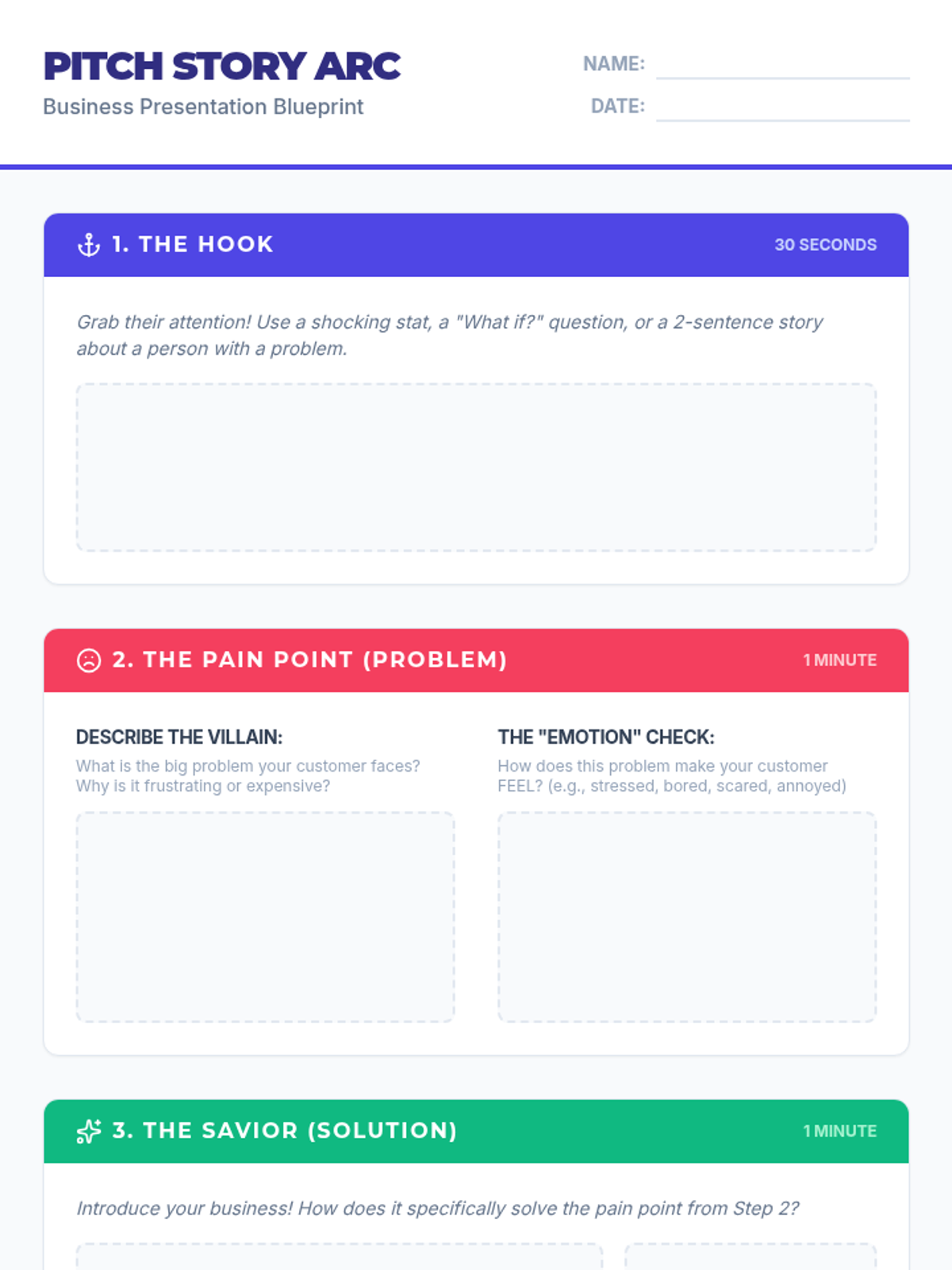
A project-based unit where 6th-grade students synthesize their business planning into a persuasive pitch. Students learn the art of storytelling, visual design, and public speaking, culminating in a final Shark Tank-style presentation event.
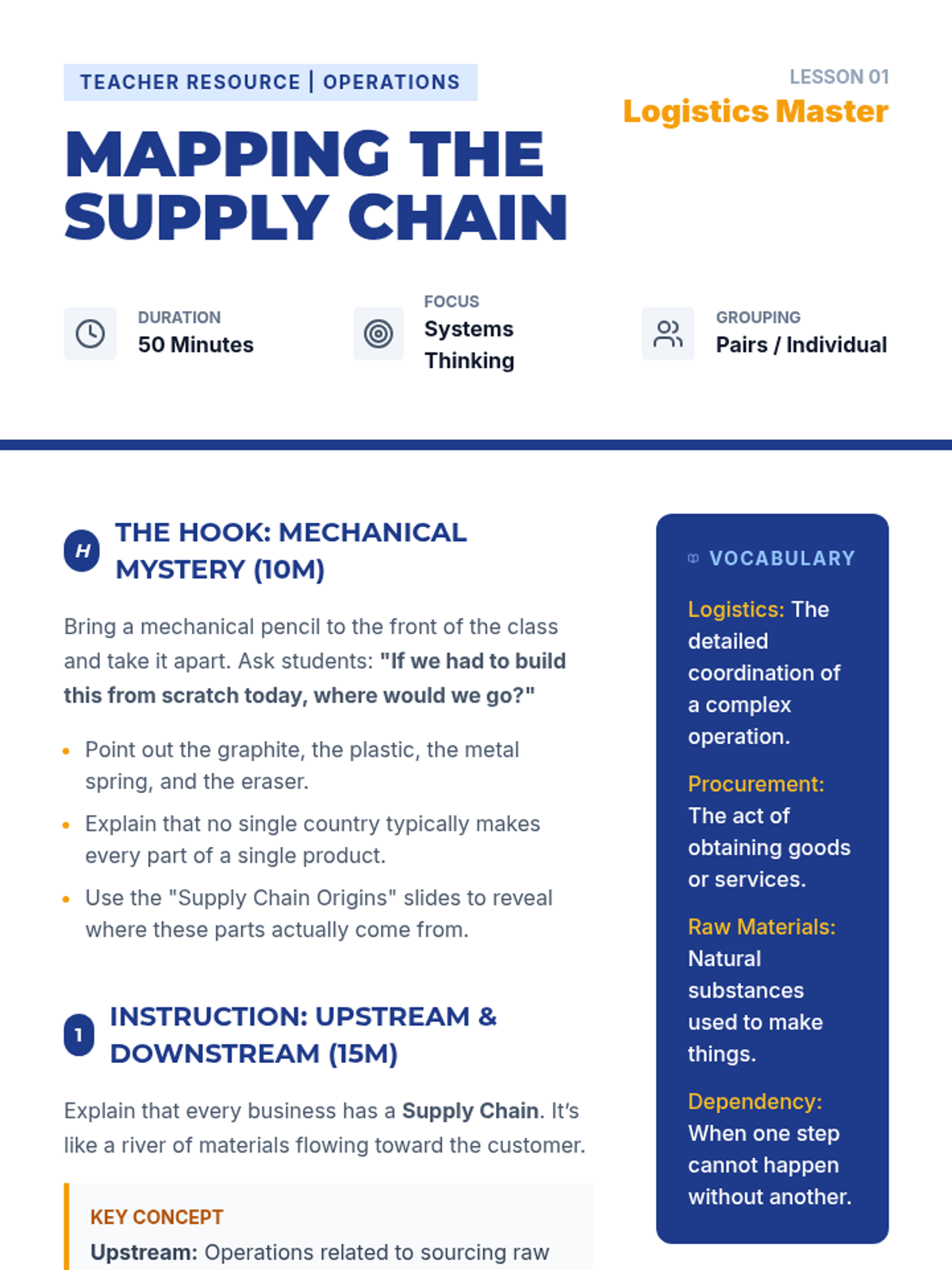
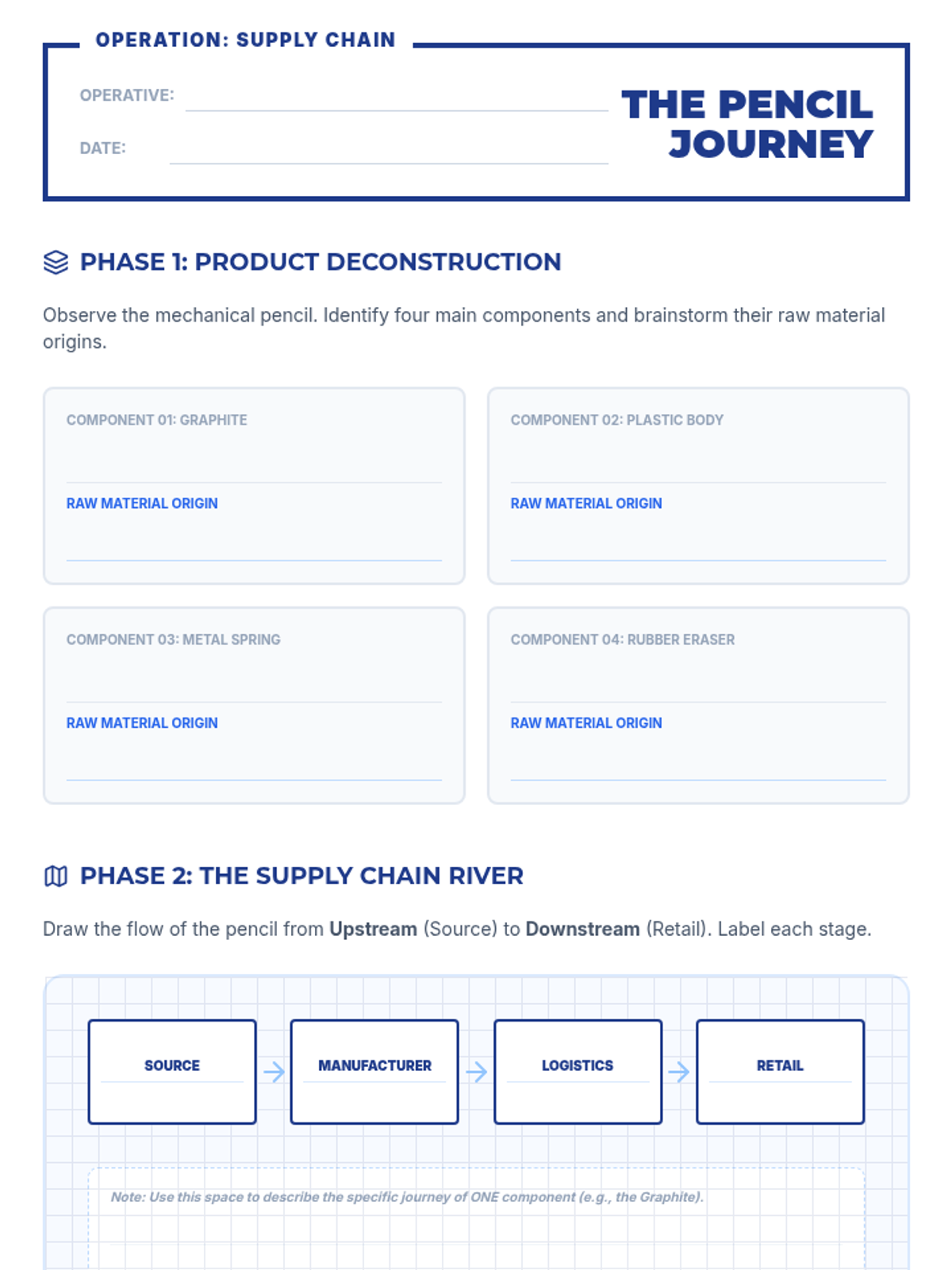
A 5-lesson sequence for 6th-grade students on the operational side of entrepreneurship. Students explore supply chains, assembly lines, organizational structures, and quality control through hands-on simulations and blueprint mapping.
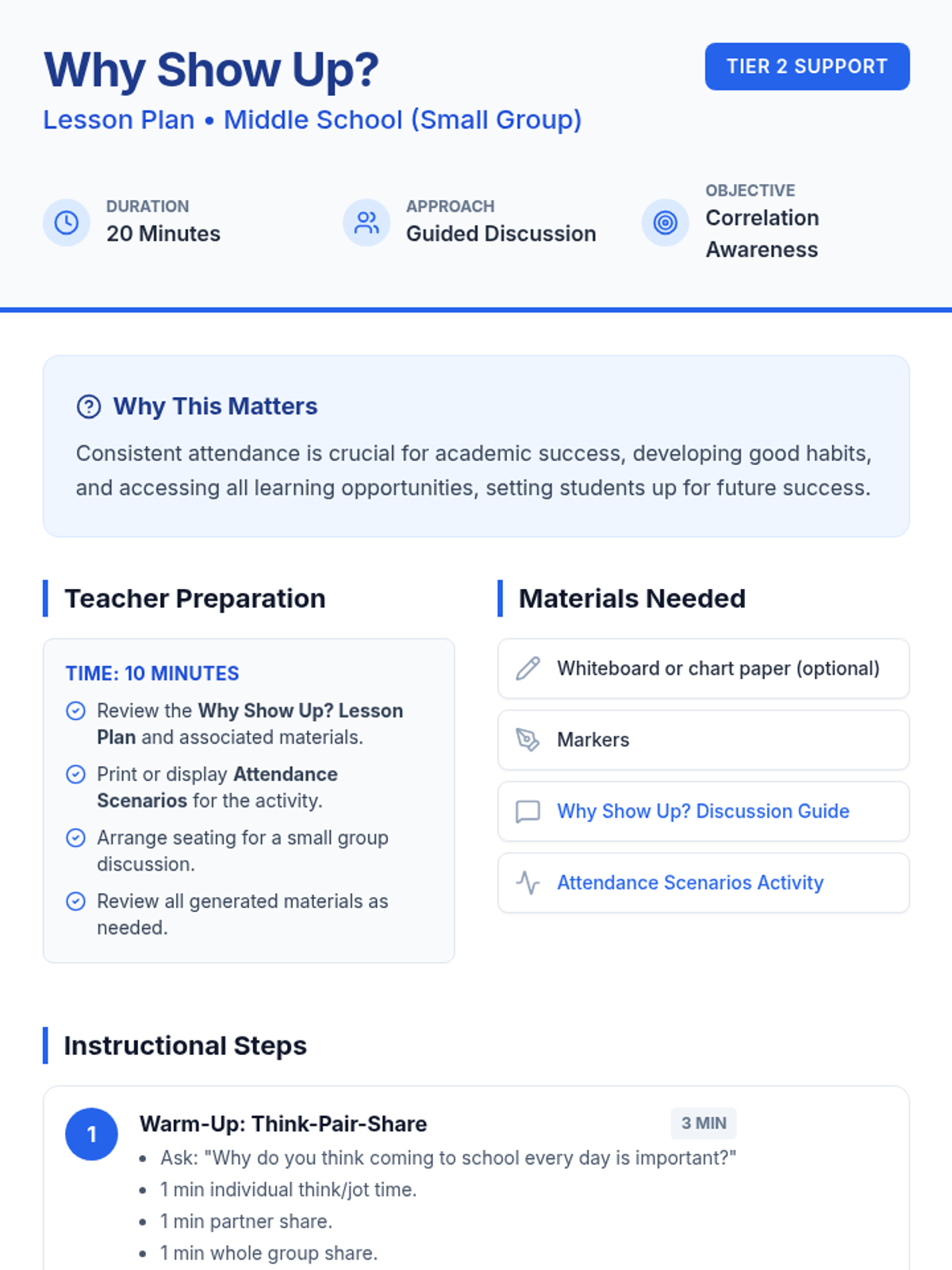
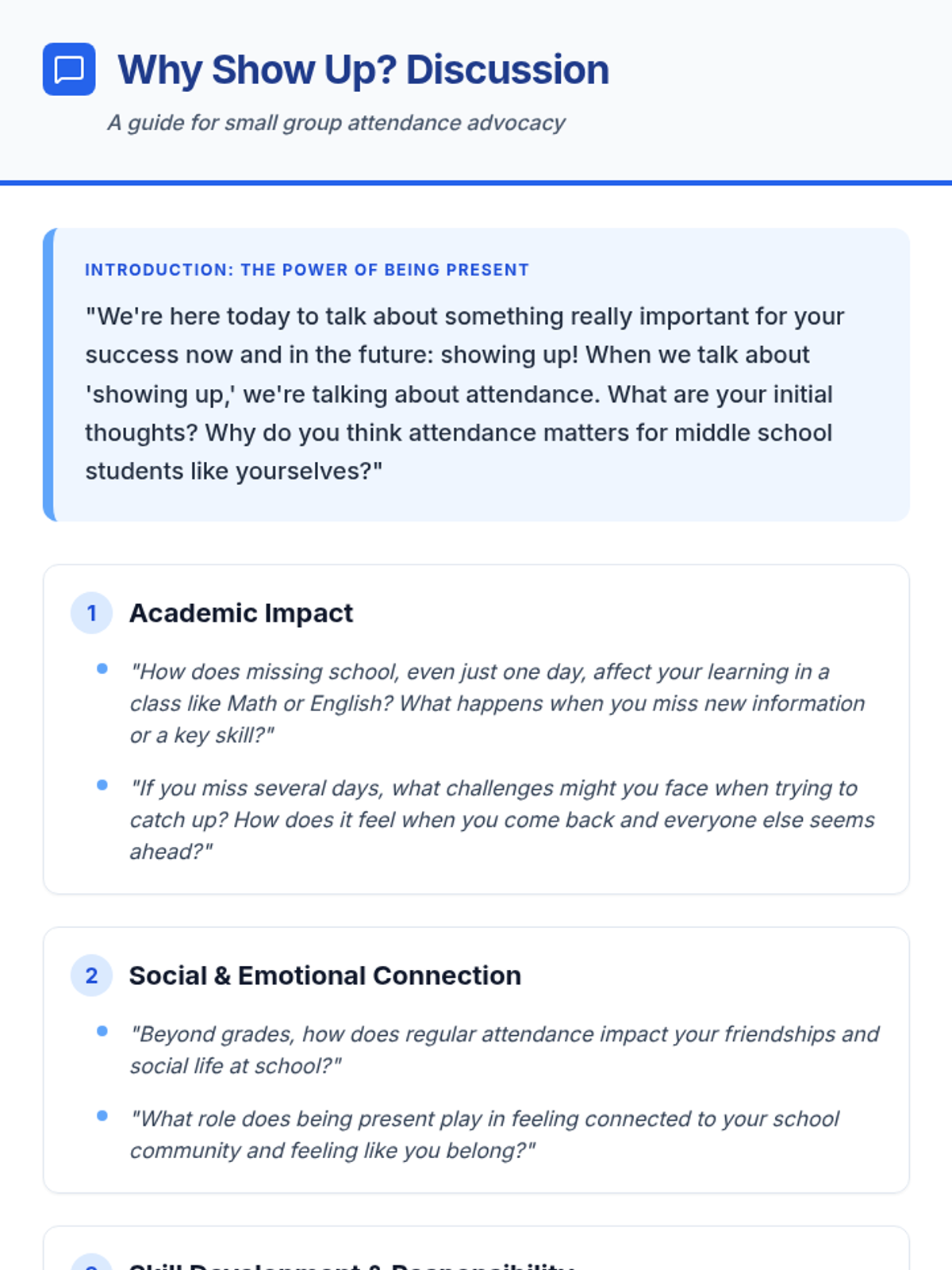
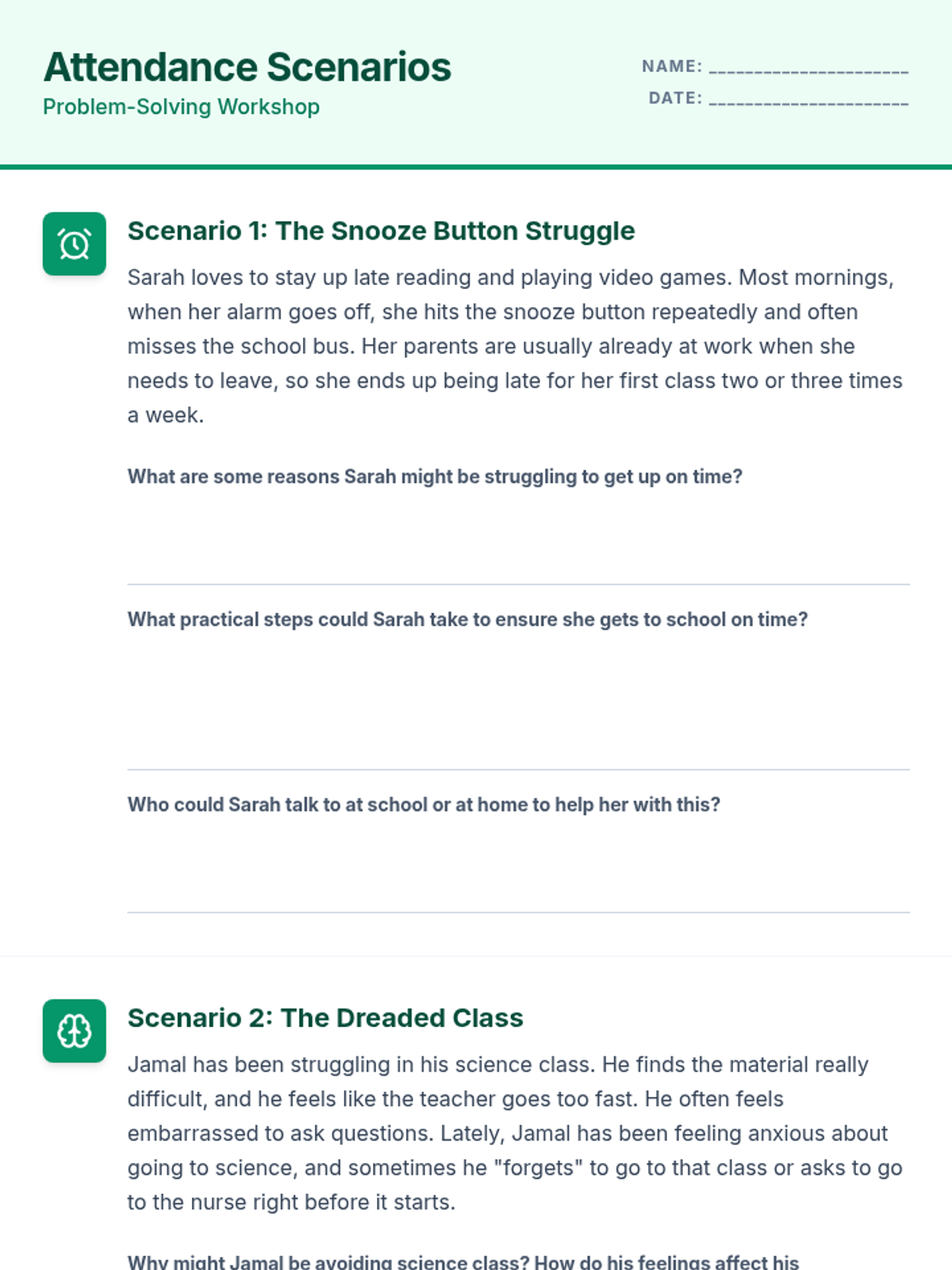
A comprehensive sequence of lessons designed to foster a culture of attendance across different age groups, from kindergarten routines to middle school accountability.
A comprehensive collection of lessons covering essential math, literacy, and emotional regulation skills for upper elementary and middle school students.
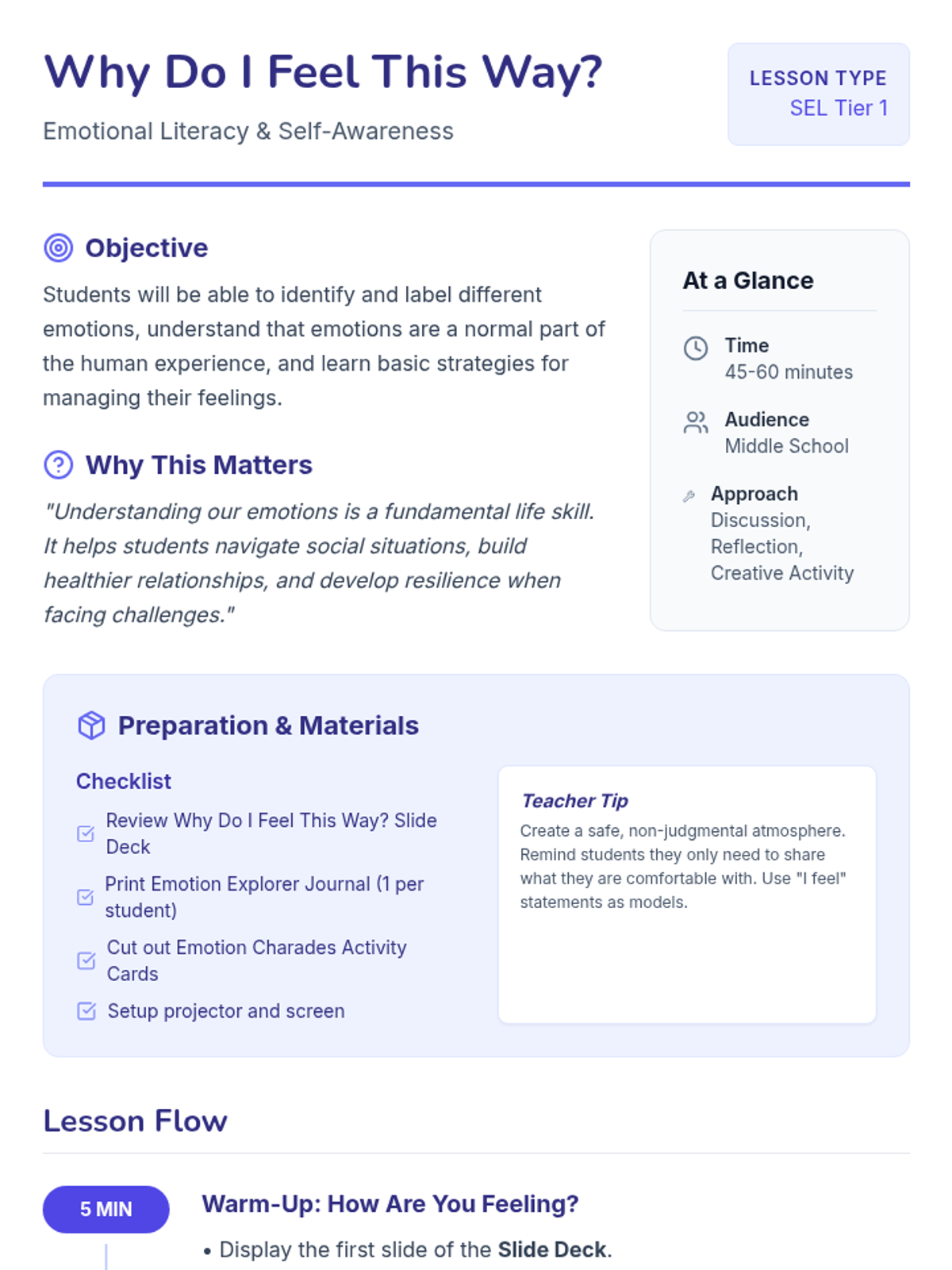
A sequence focused on essential social-emotional and self-management skills for upper elementary and middle school students. It covers emotional literacy and effective time management.
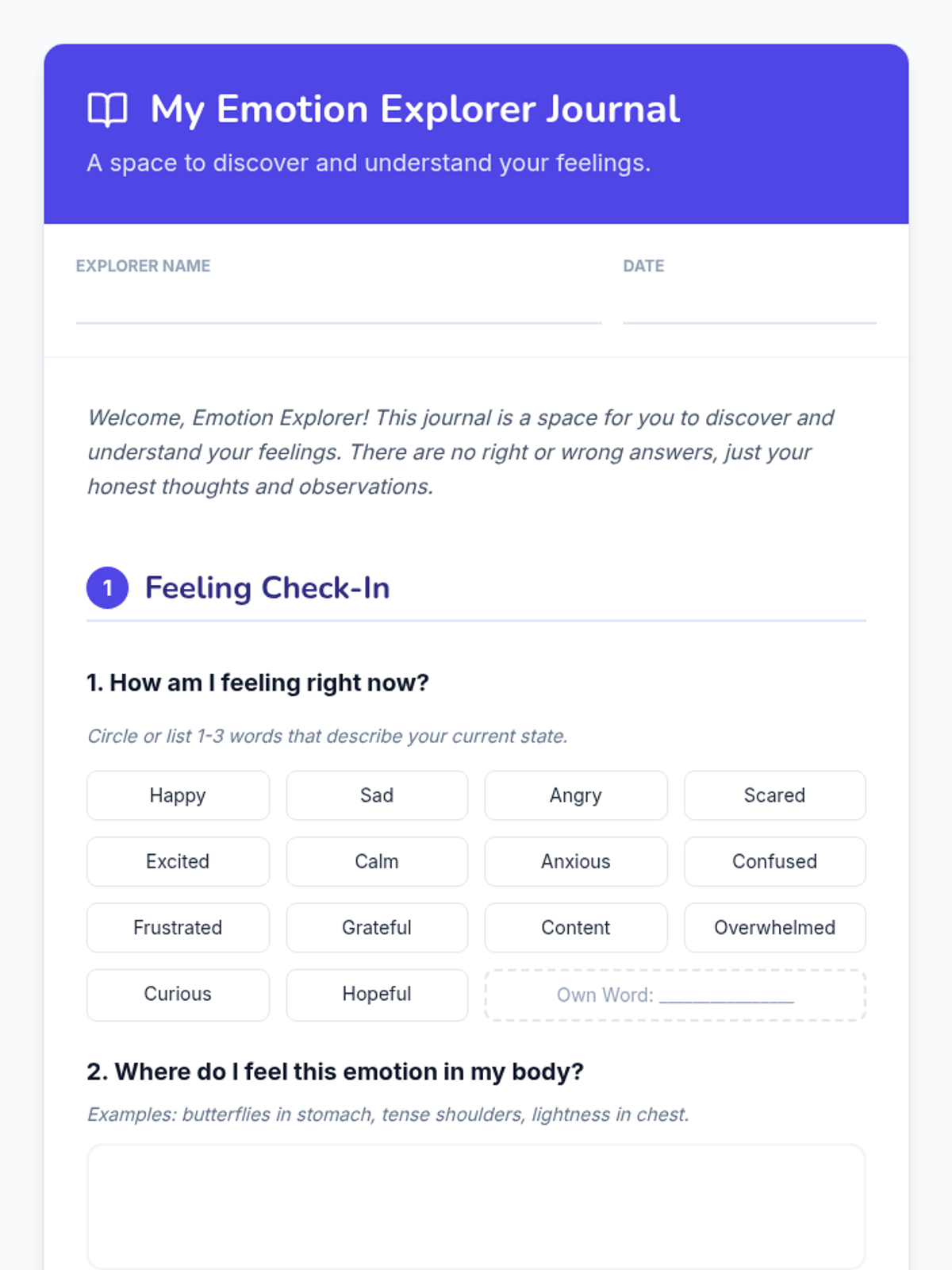
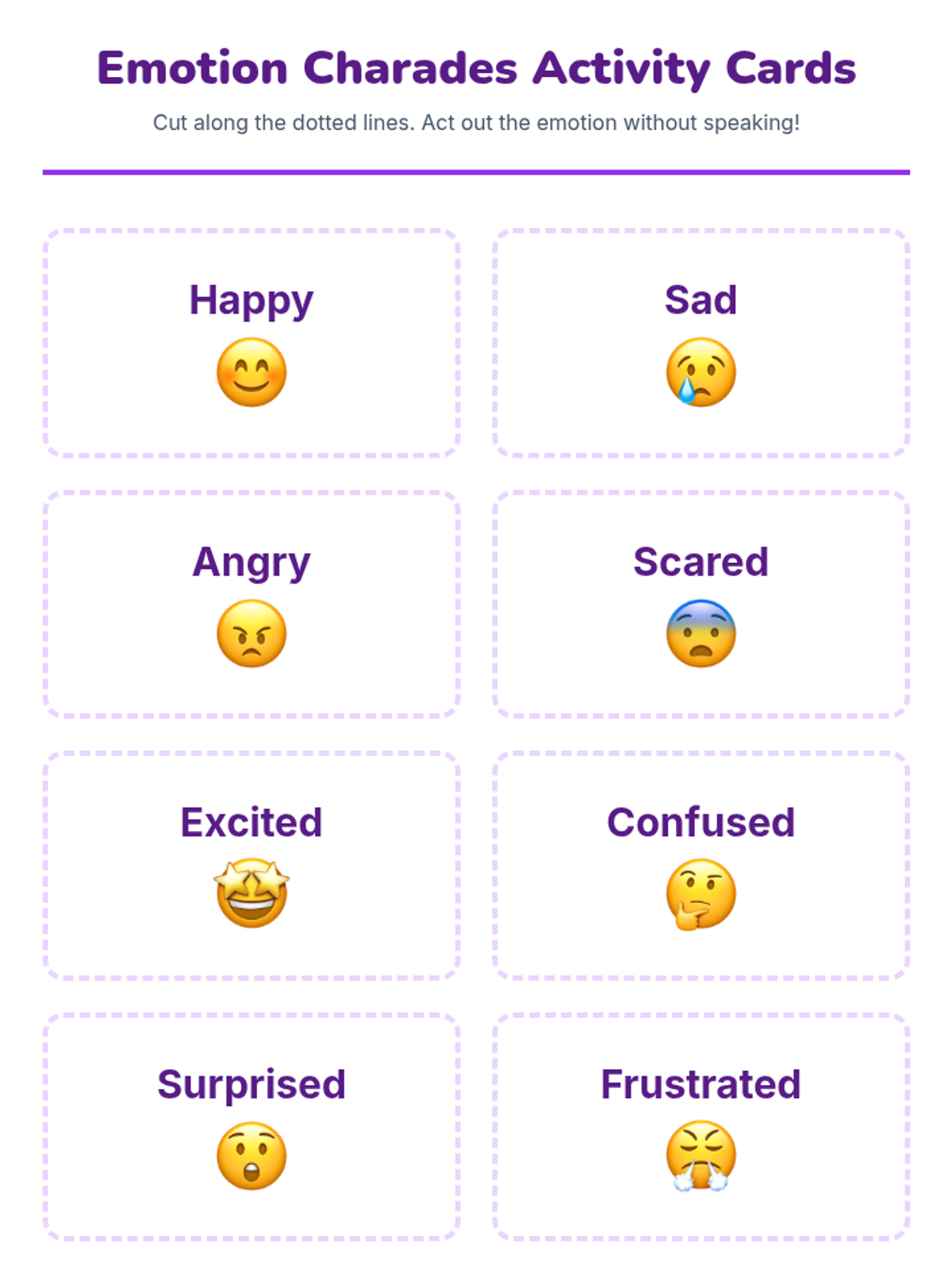
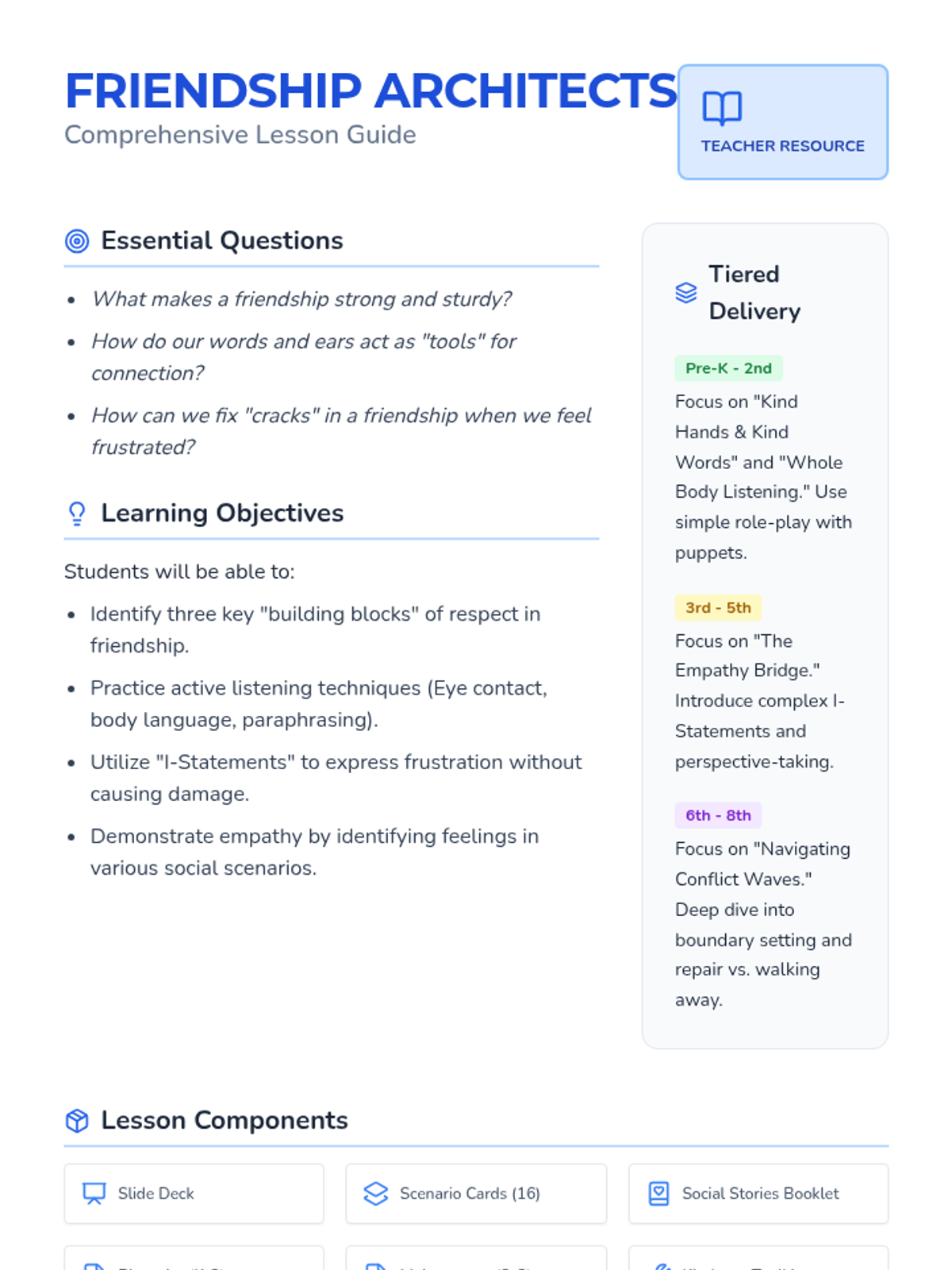
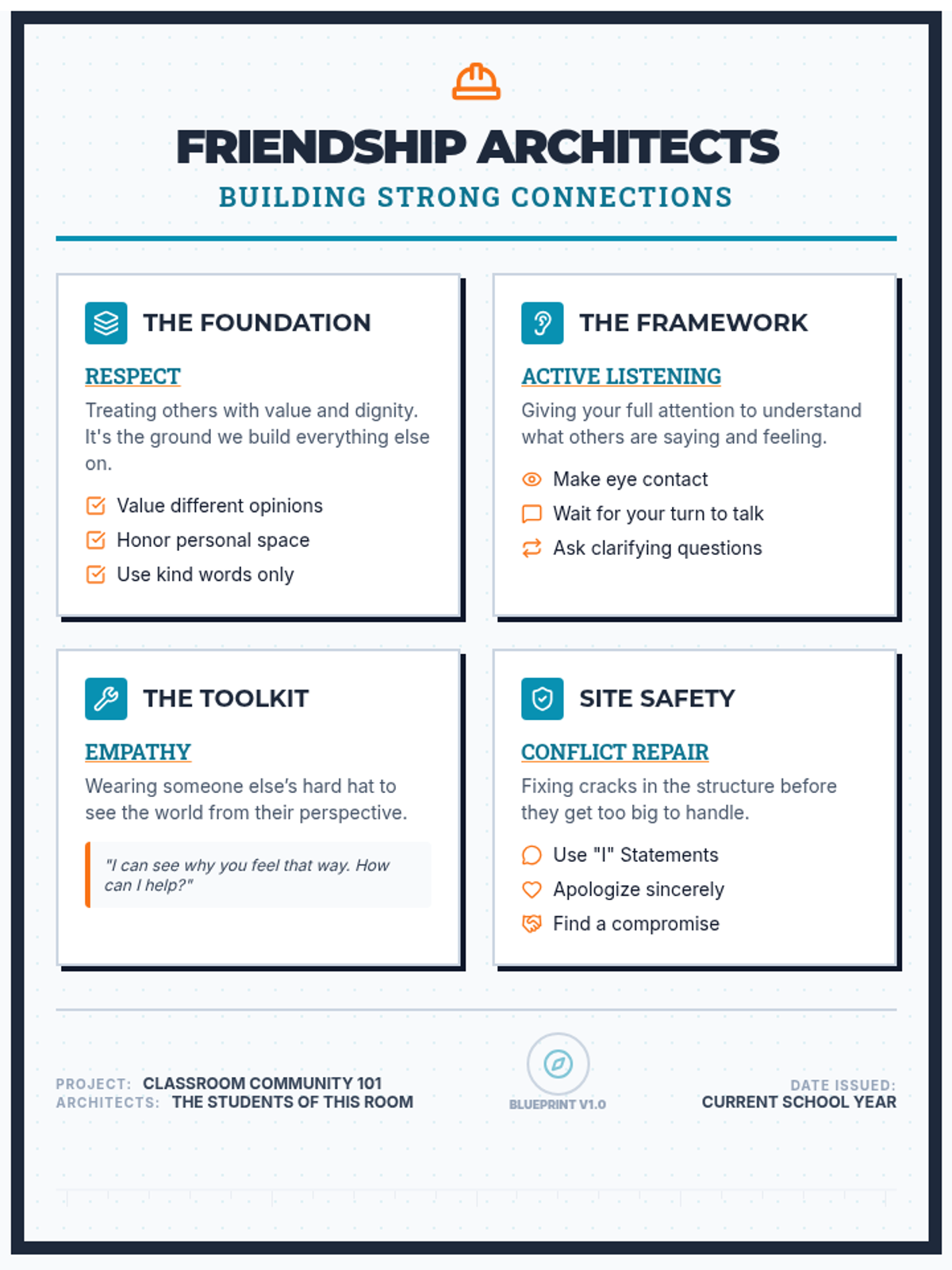
A social-emotional learning series focused on developing core interpersonal skills, moving from individual friendship building to collaborative teamwork and community responsibility.
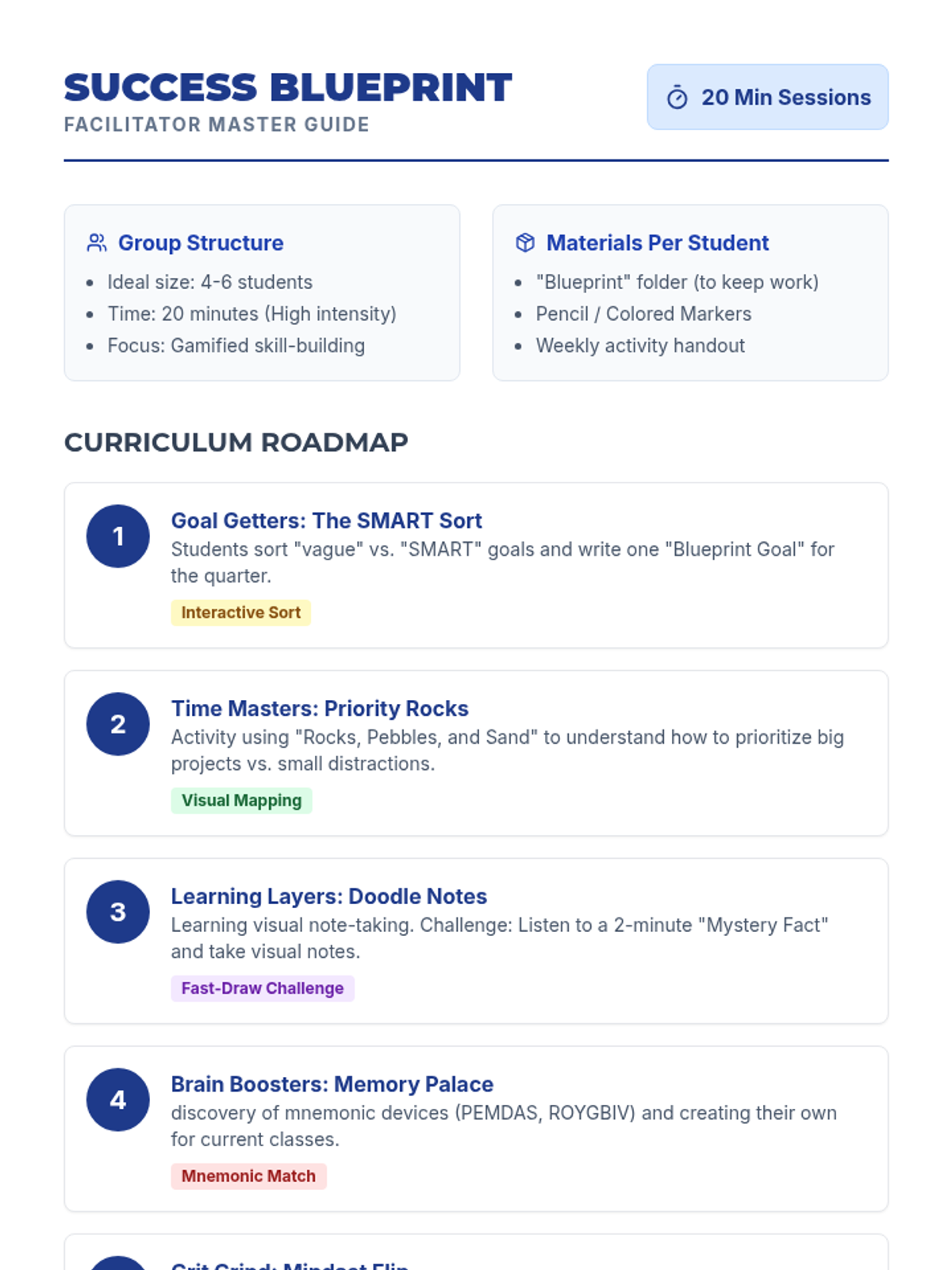
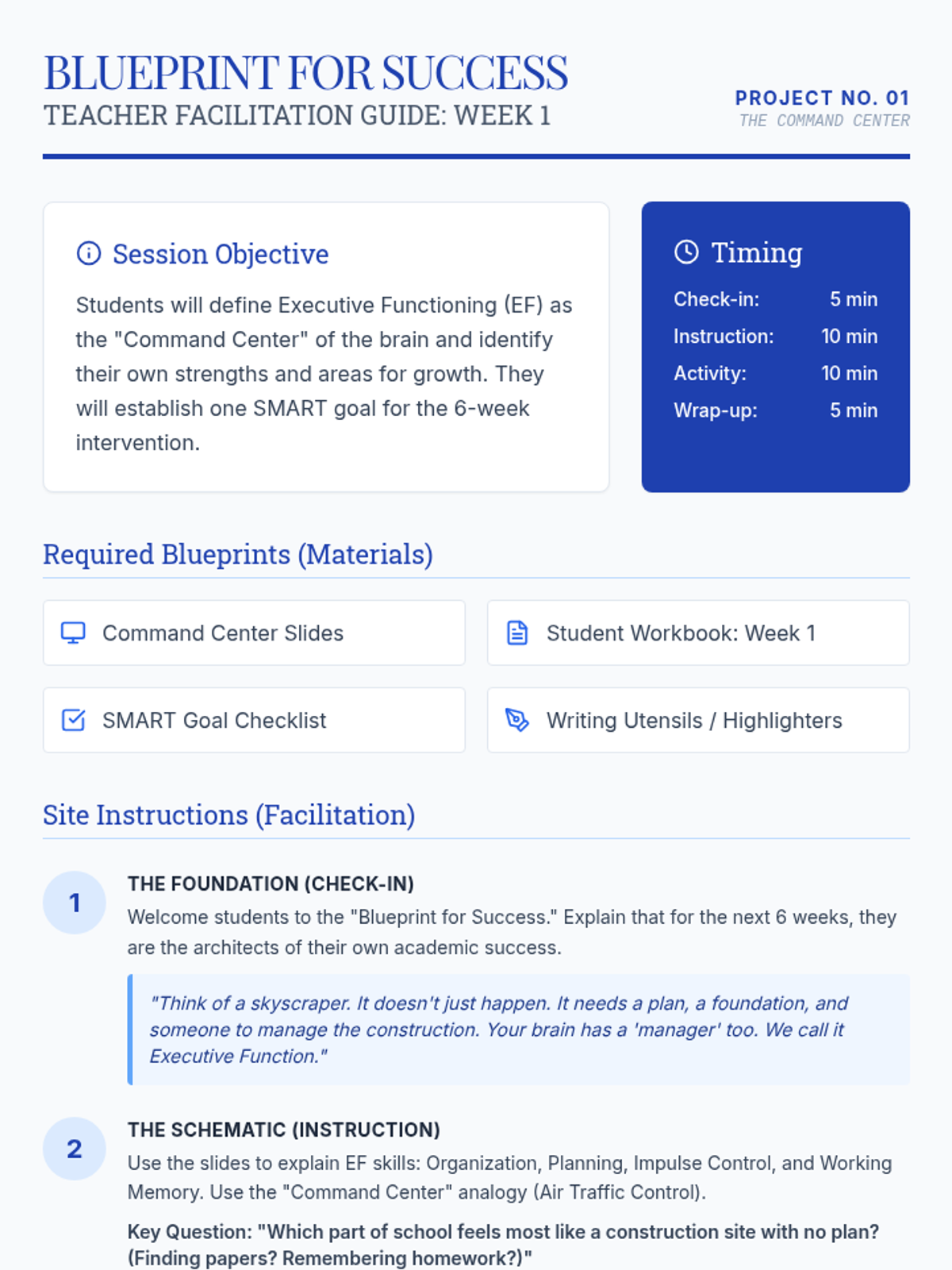
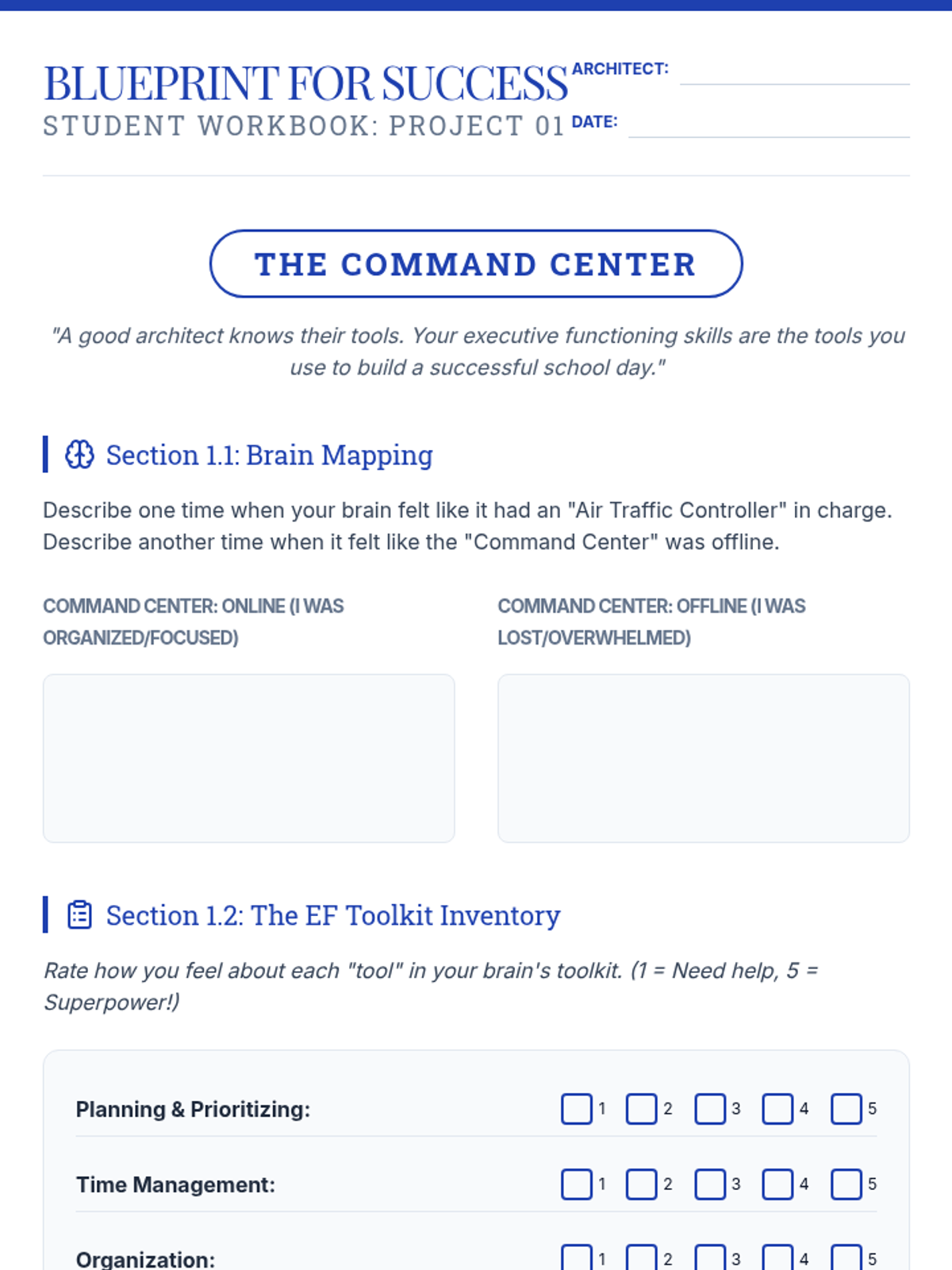
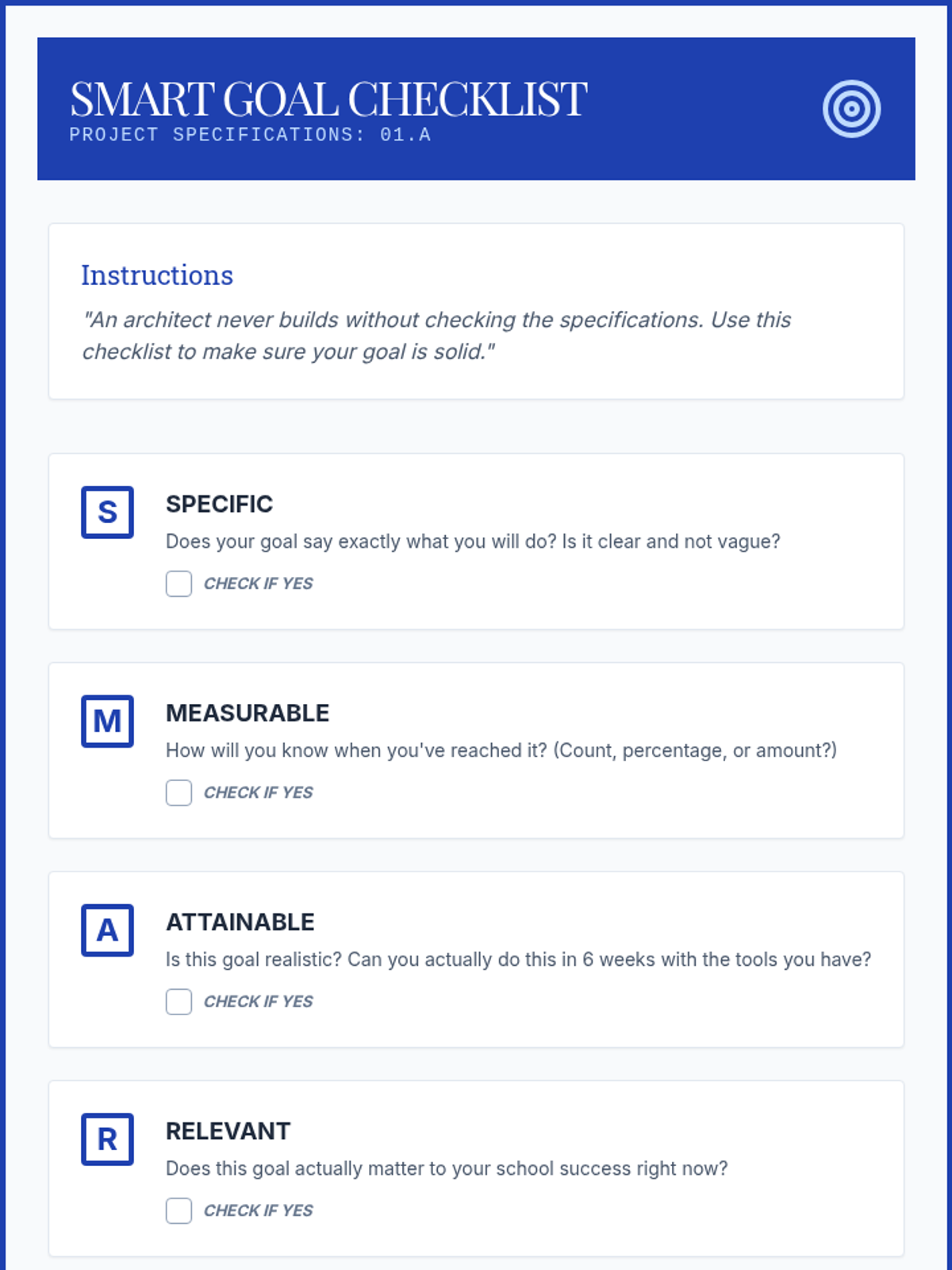
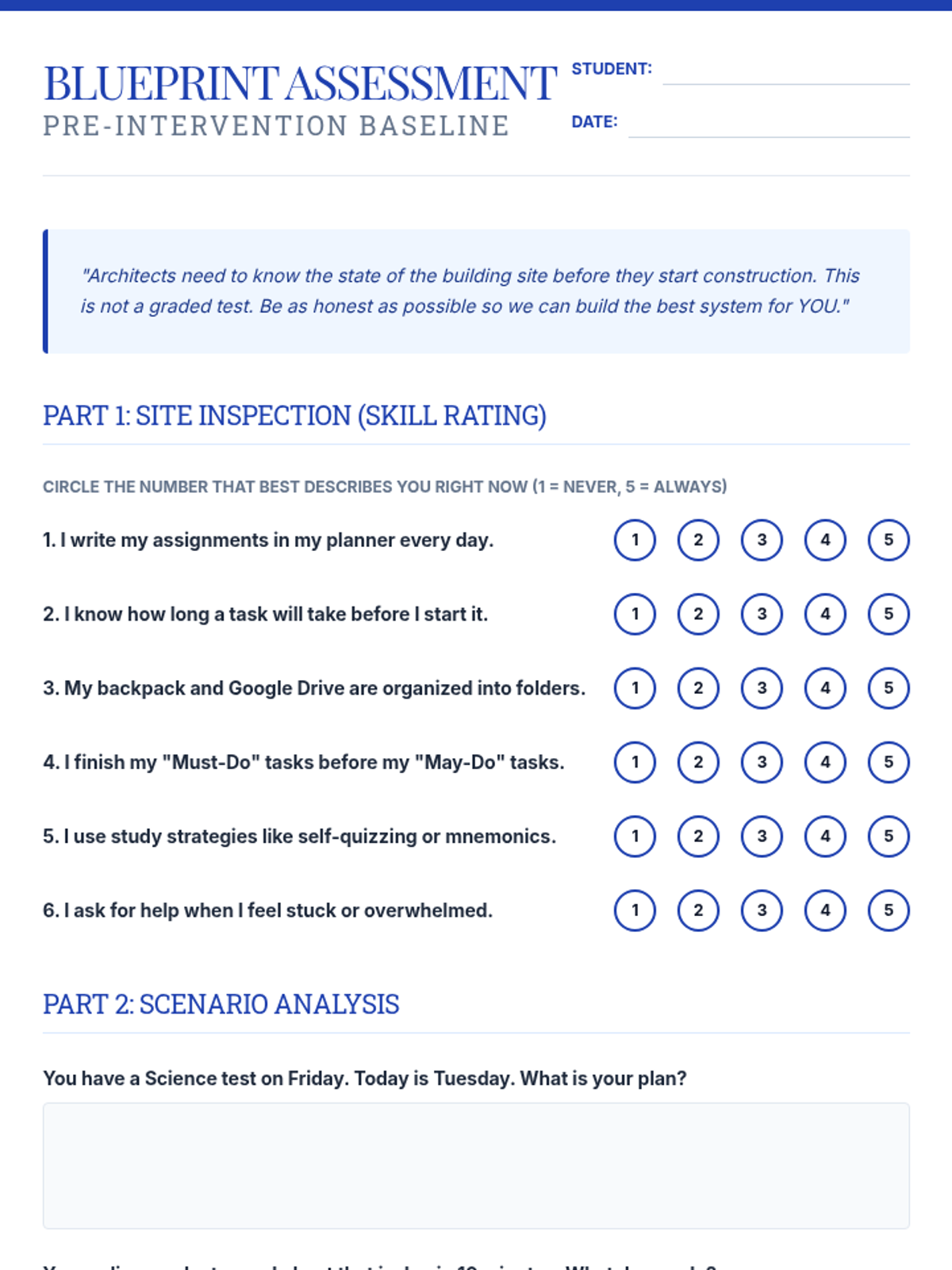
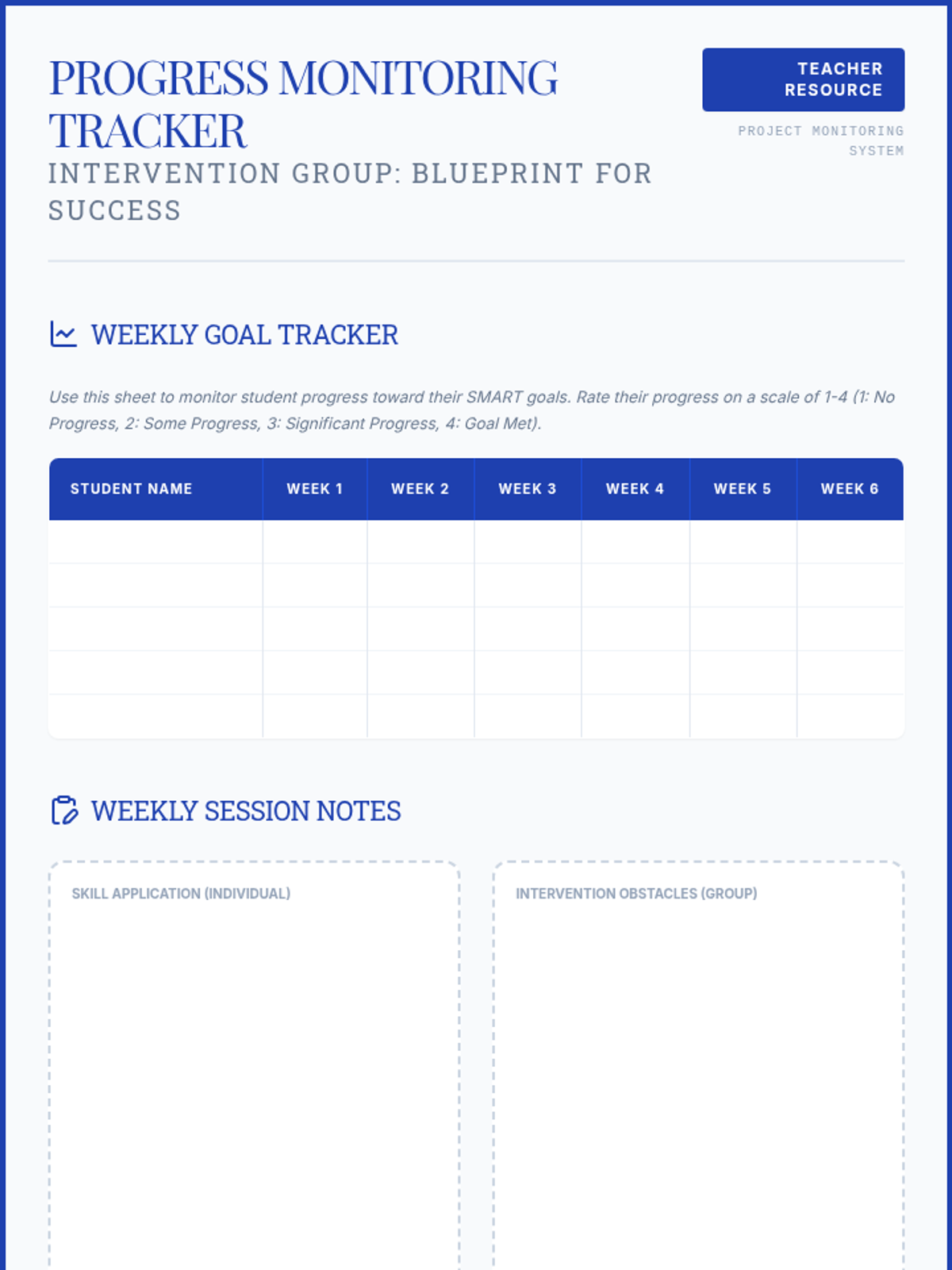
A 6-week small group intervention for 6th-grade students focusing on executive functioning skills including goal setting, planning, time management, and study habits using an architectural blueprint theme.
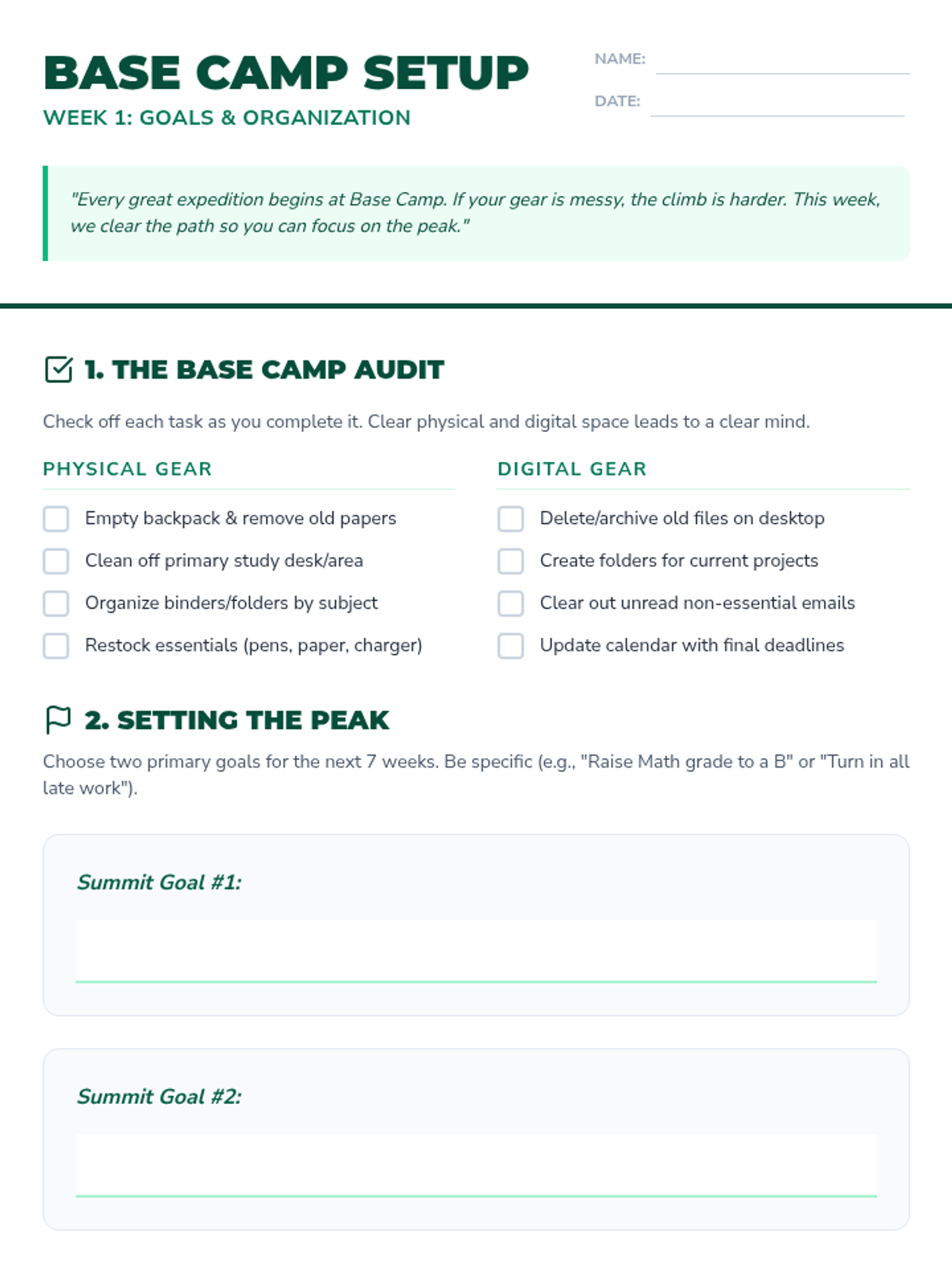
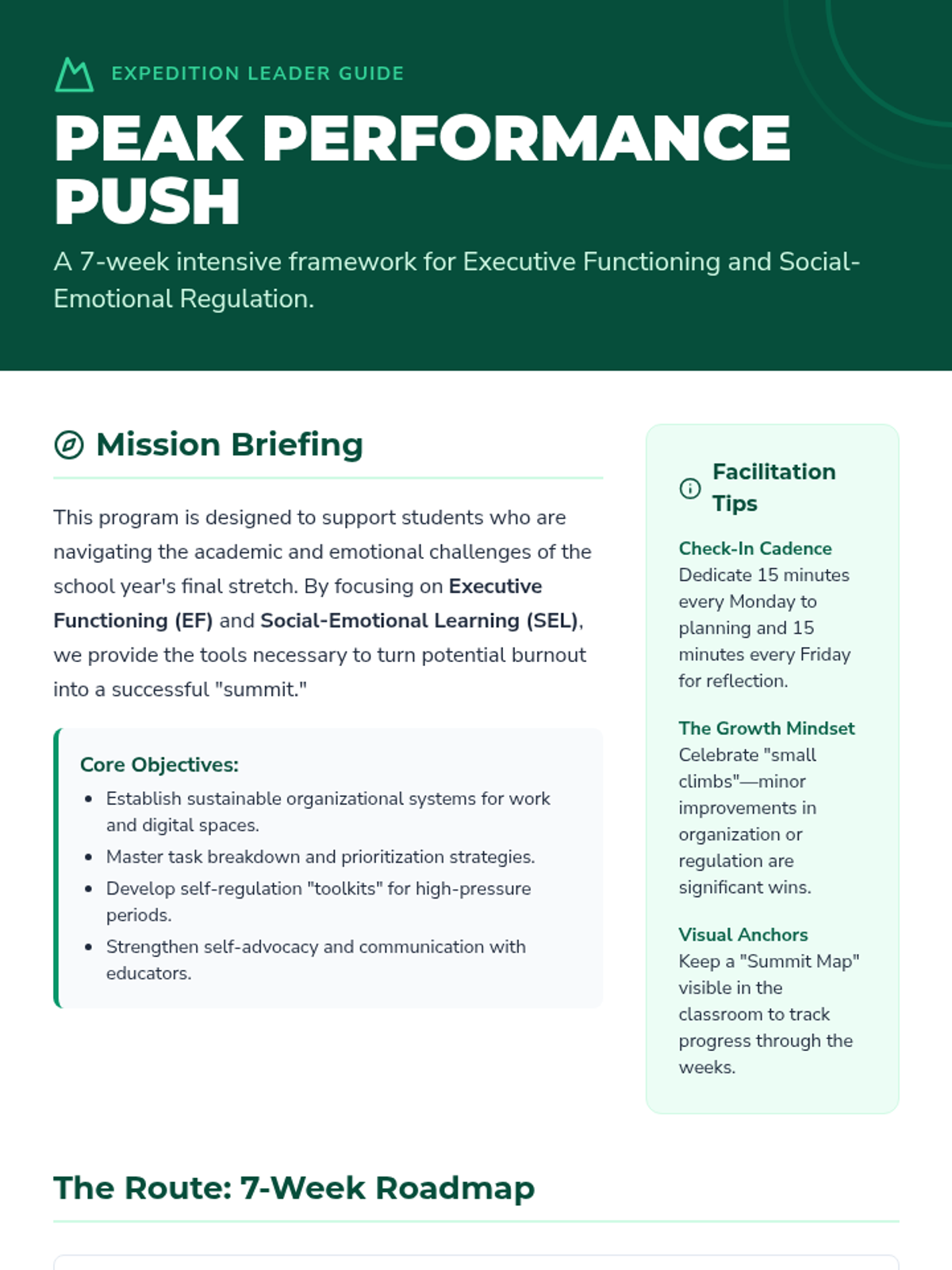
A comprehensive 7-week program designed for students struggling academically and socially-emotionally to improve executive functioning, planning, and emotional regulation.
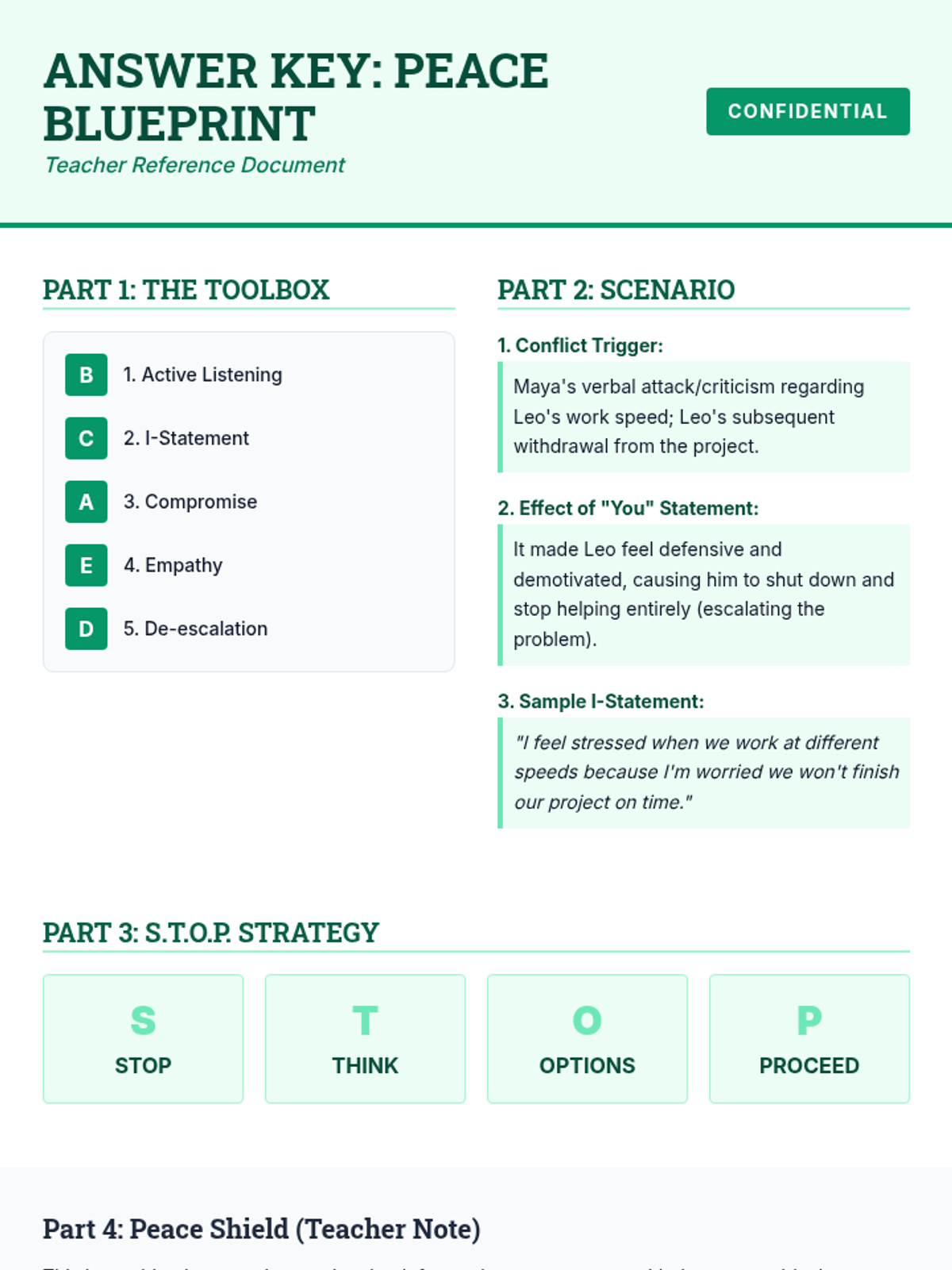
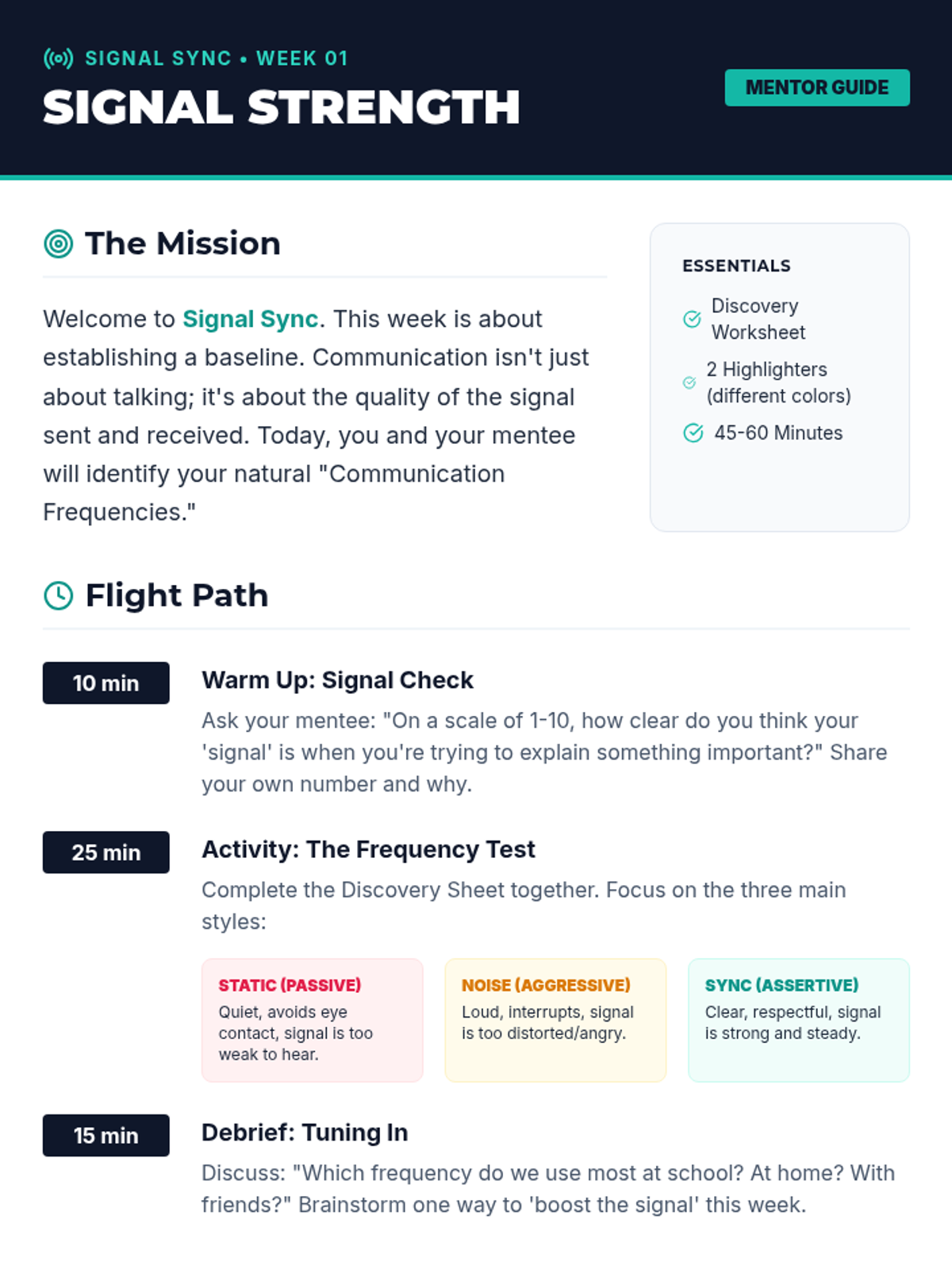
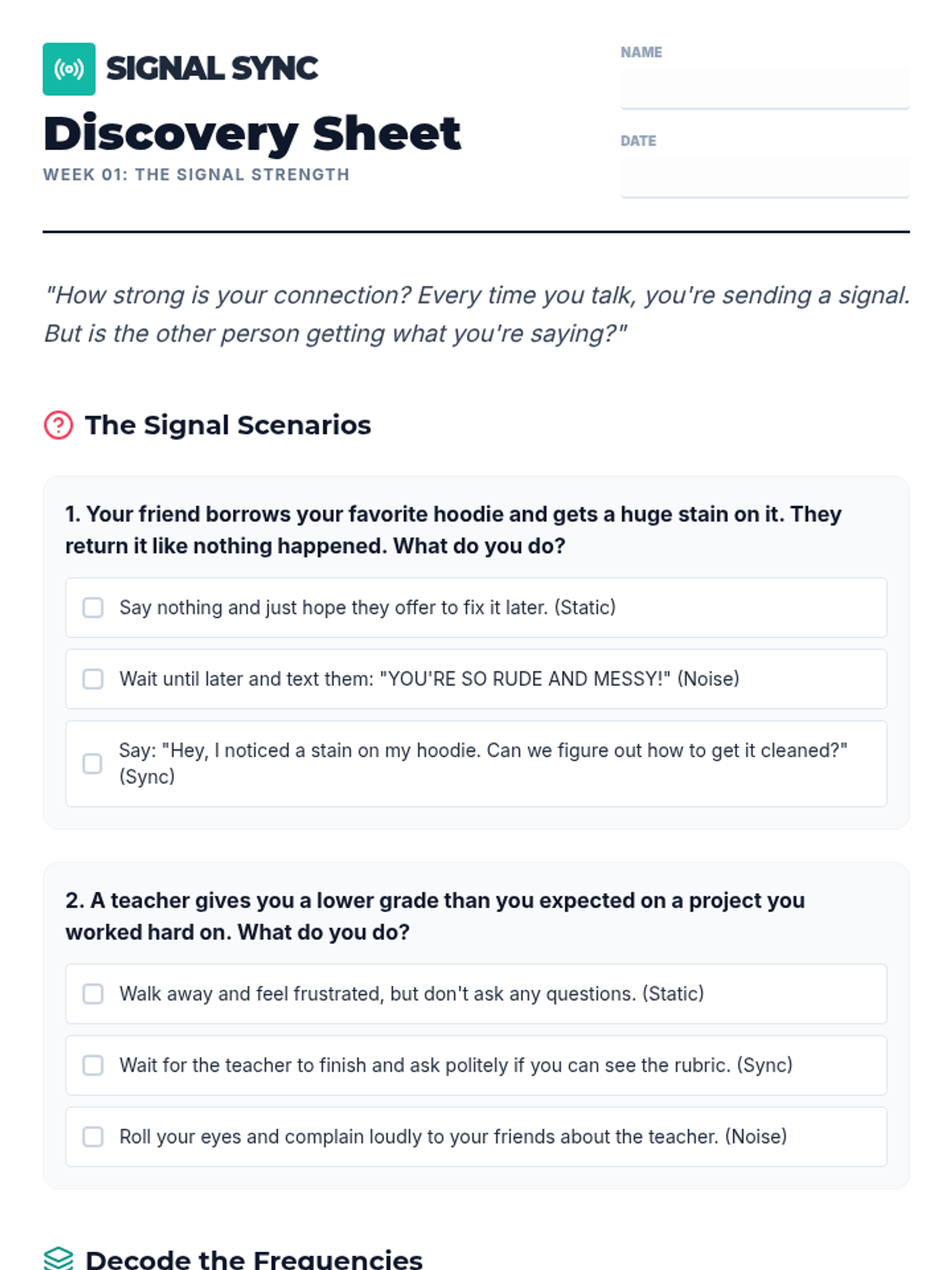
A 10-week comprehensive curriculum for mentors and mentees focusing on building effective communication habits and mastering conflict resolution through the 'Signal Sync' framework.
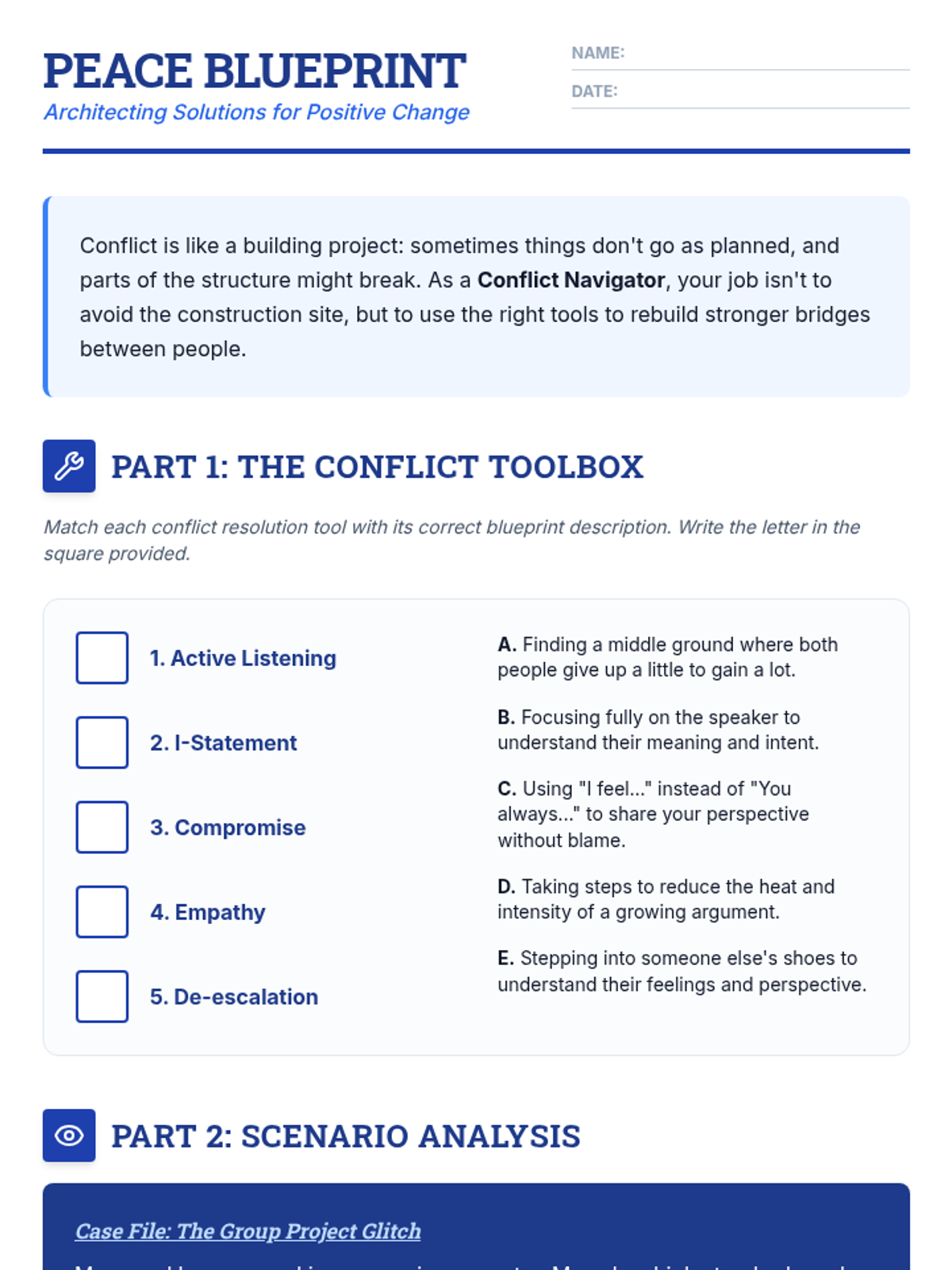
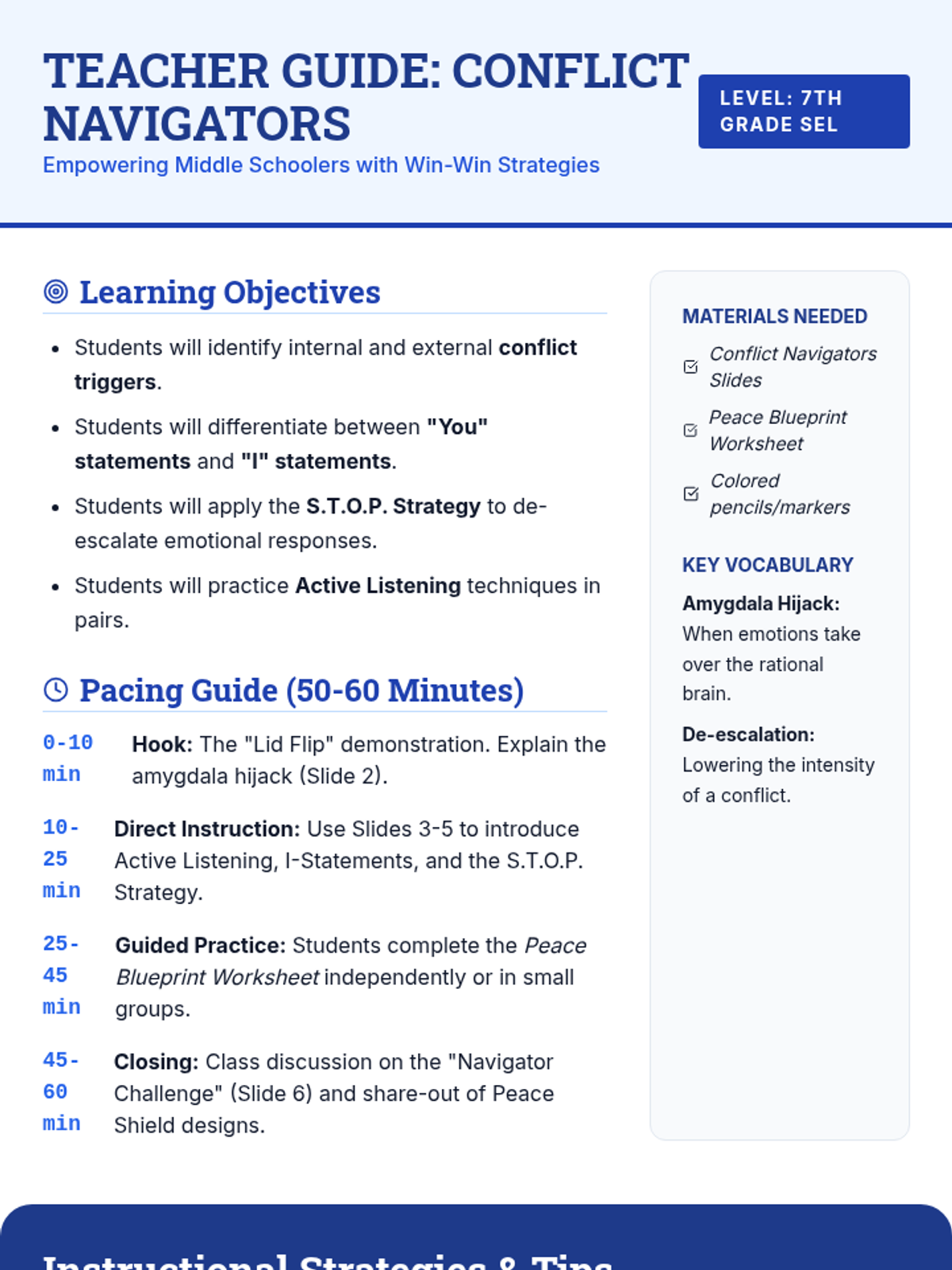
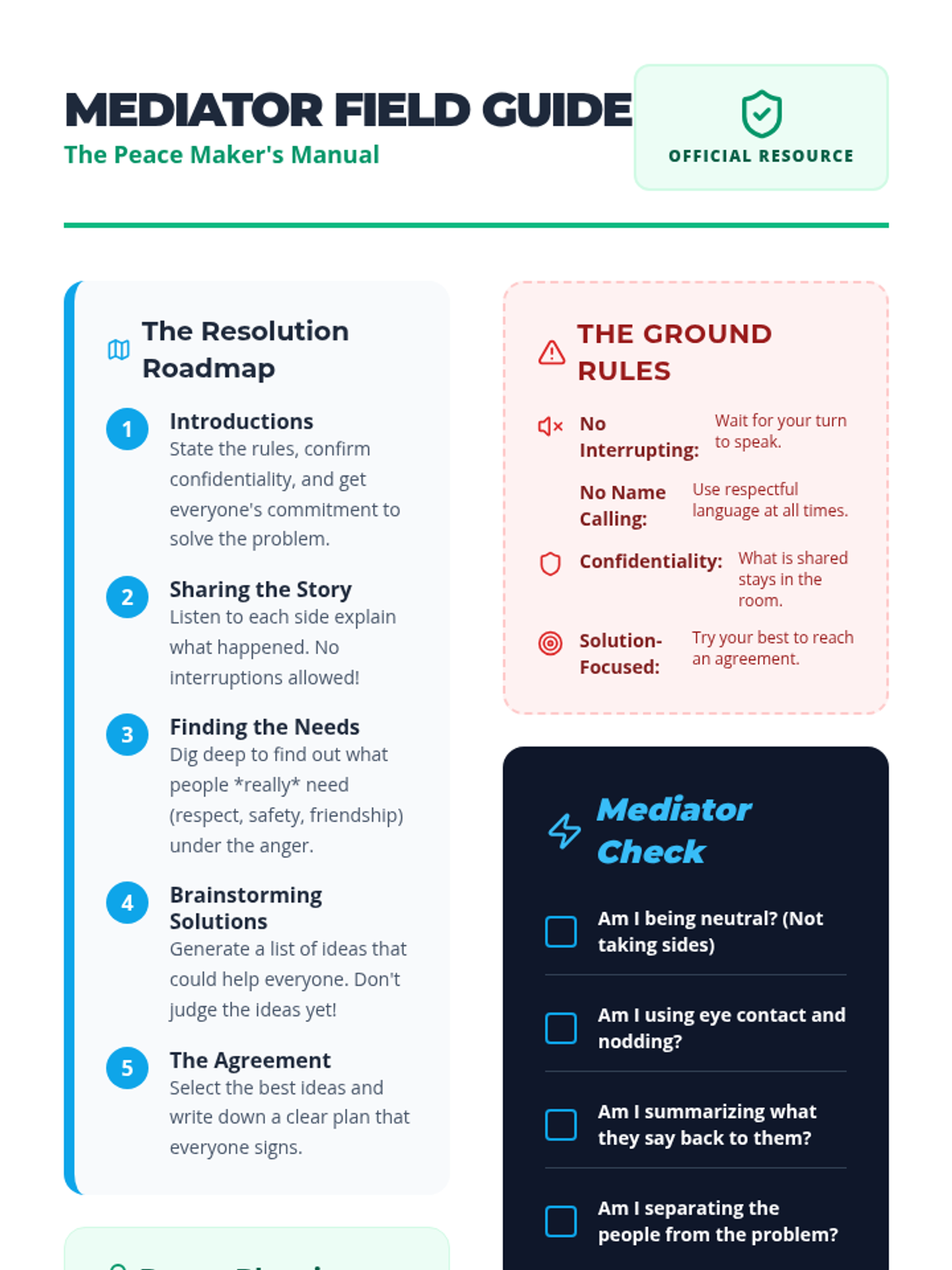
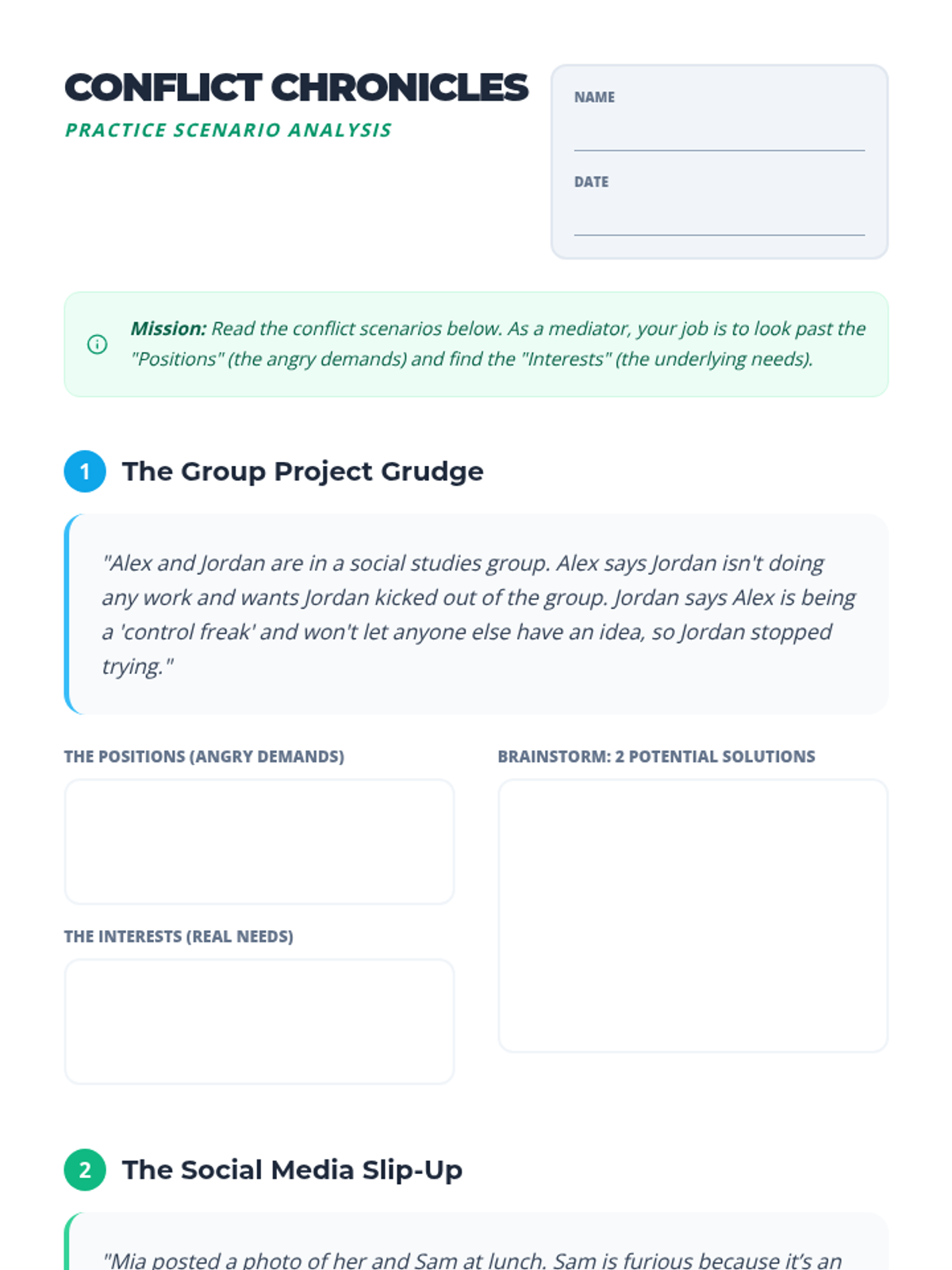
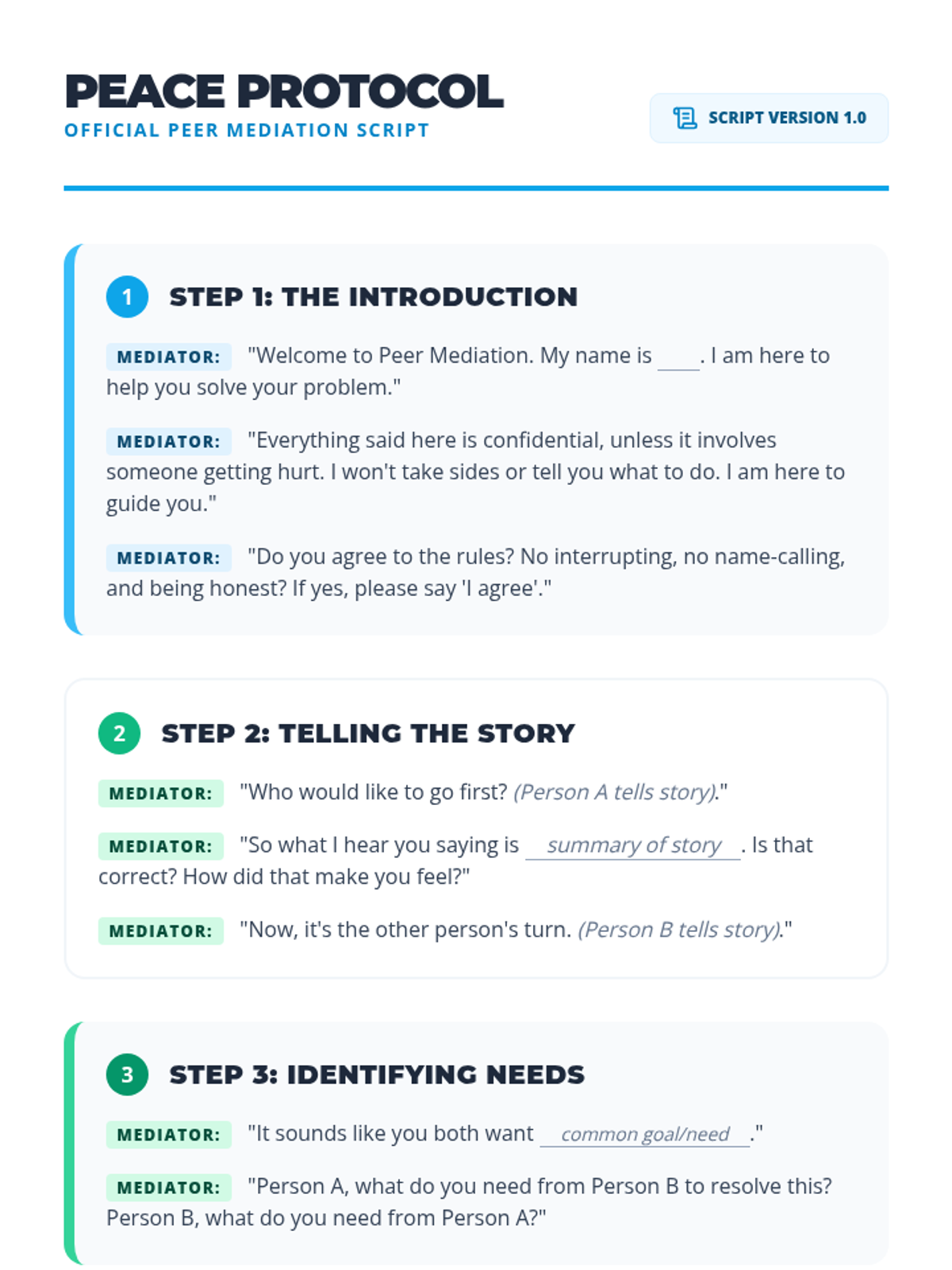
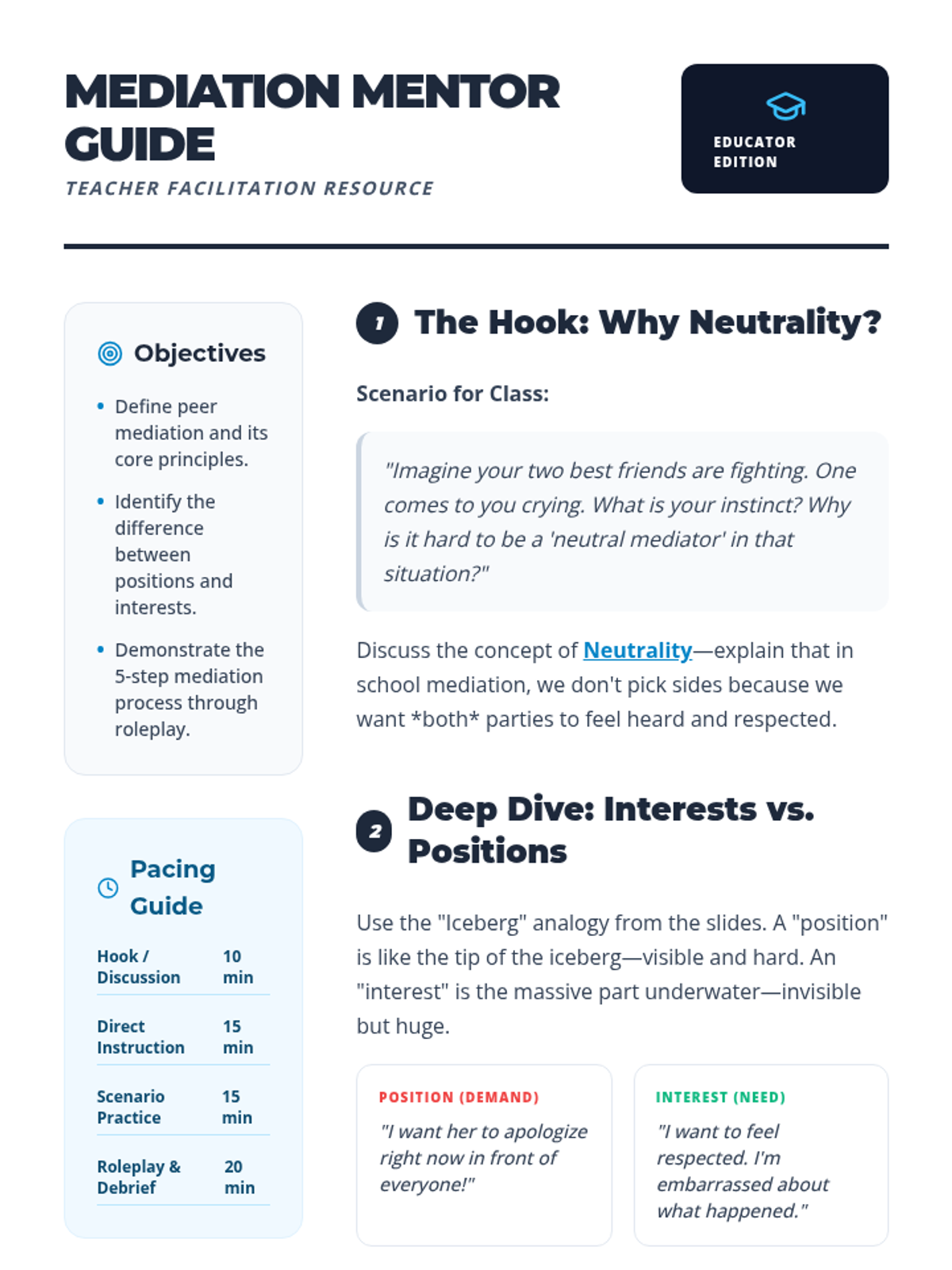
A comprehensive introduction to peer mediation for middle school students, focusing on conflict resolution skills, neutrality, and the structured mediation process. Students learn to facilitate peaceful resolutions through active listening and collaborative problem-solving.
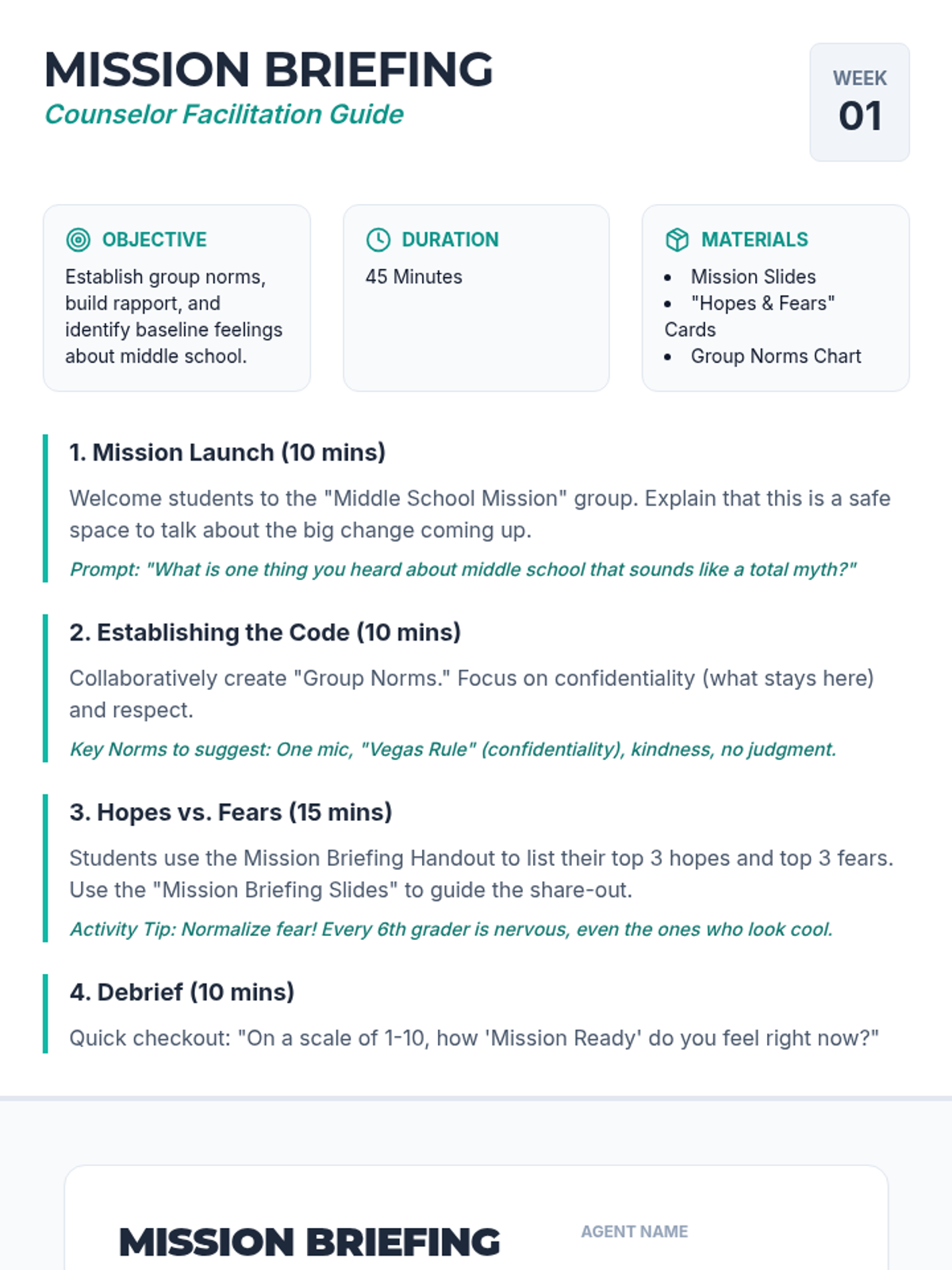
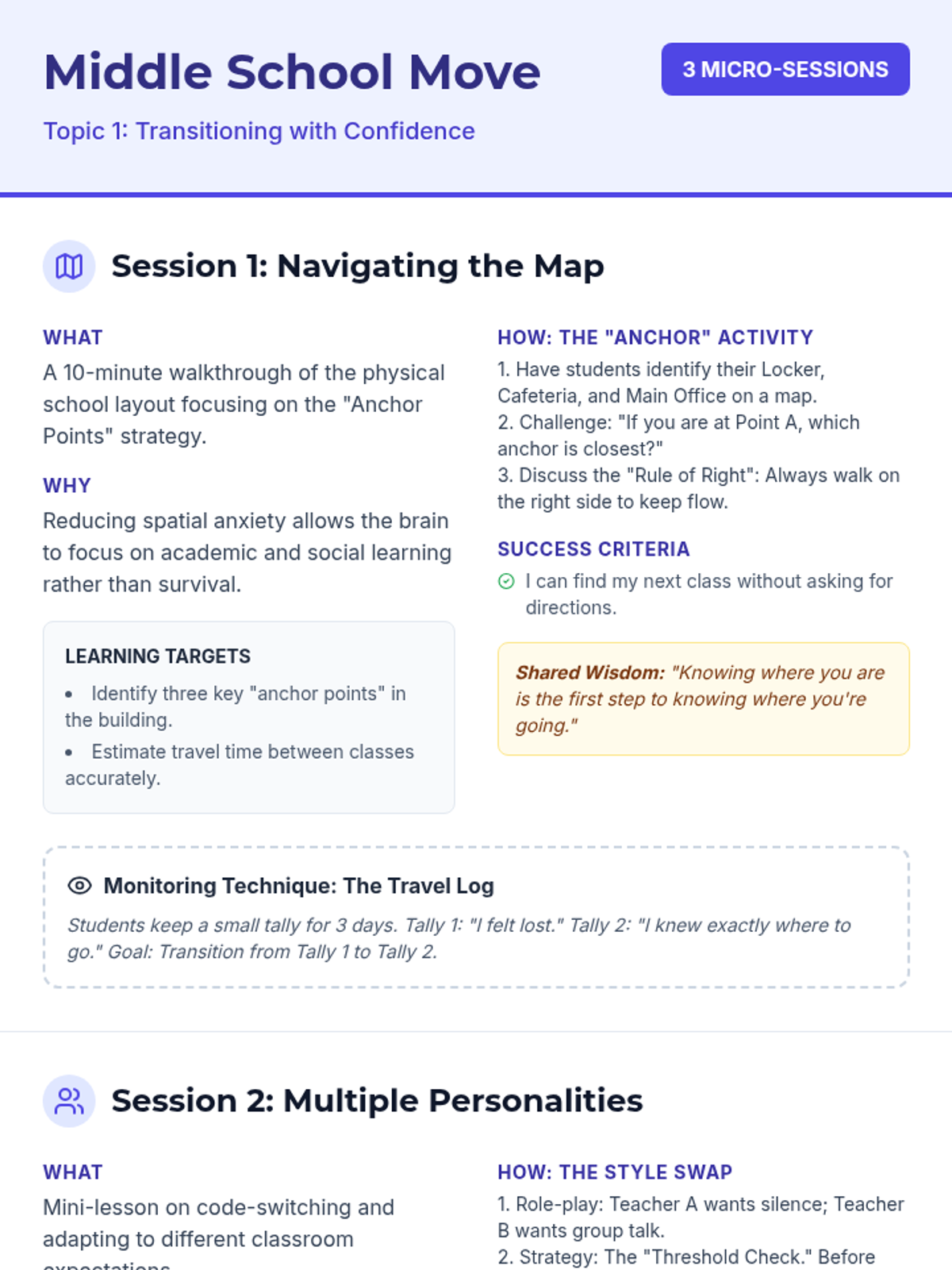
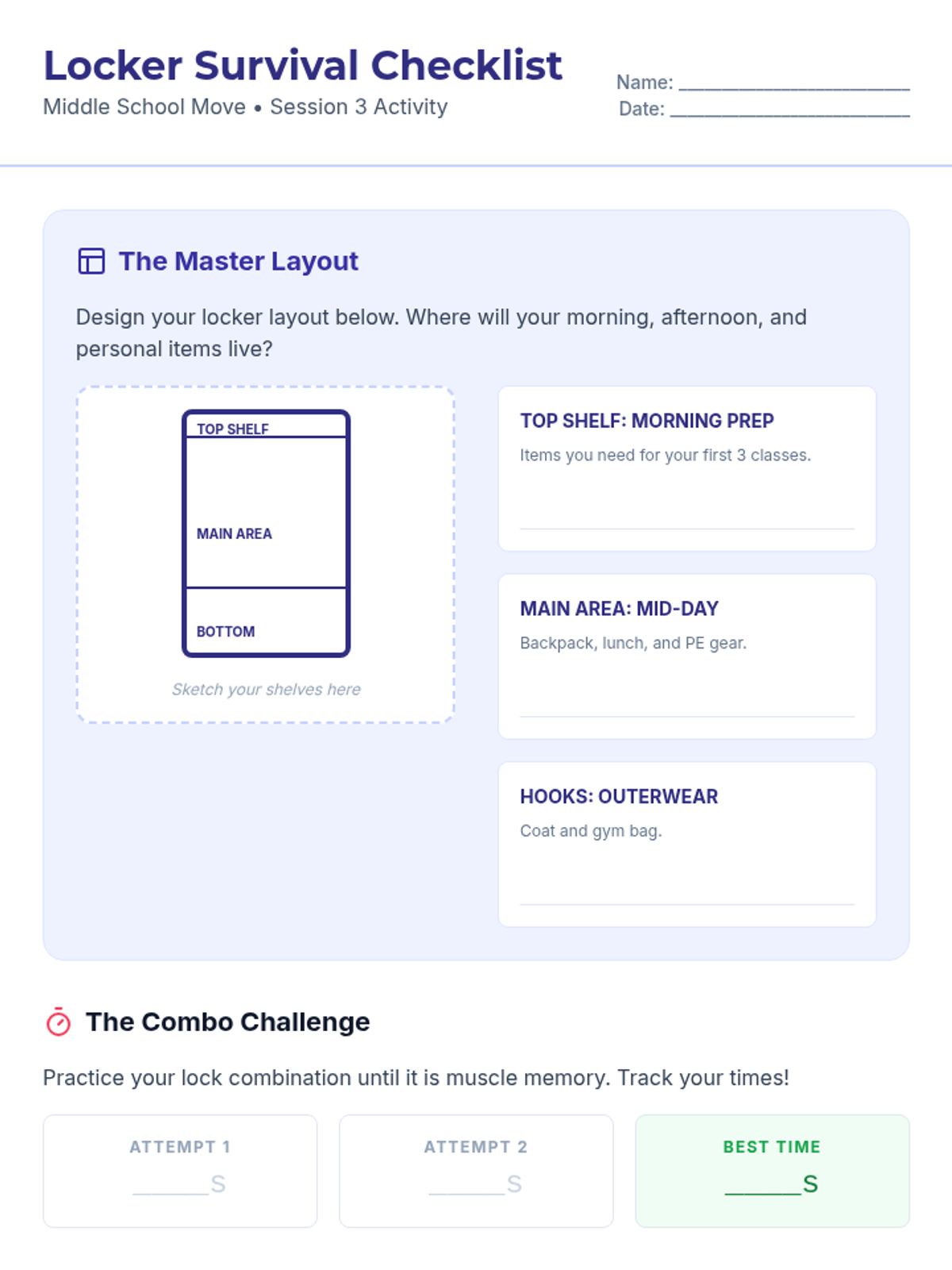
A 6-week small group counseling curriculum designed to help 6th graders transition smoothly to middle school, covering logistics, organization, social dynamics, and stress management.
A series of lessons focused on mastering high-frequency academic action verbs like explain, compare, and justify to help students succeed in academic tasks and assessments.
A short unit designed to help rising 7th graders transition to middle school by understanding the shift in teacher dynamics, scheduling complexities, and the social-emotional skills needed to navigate diverse classroom environments.
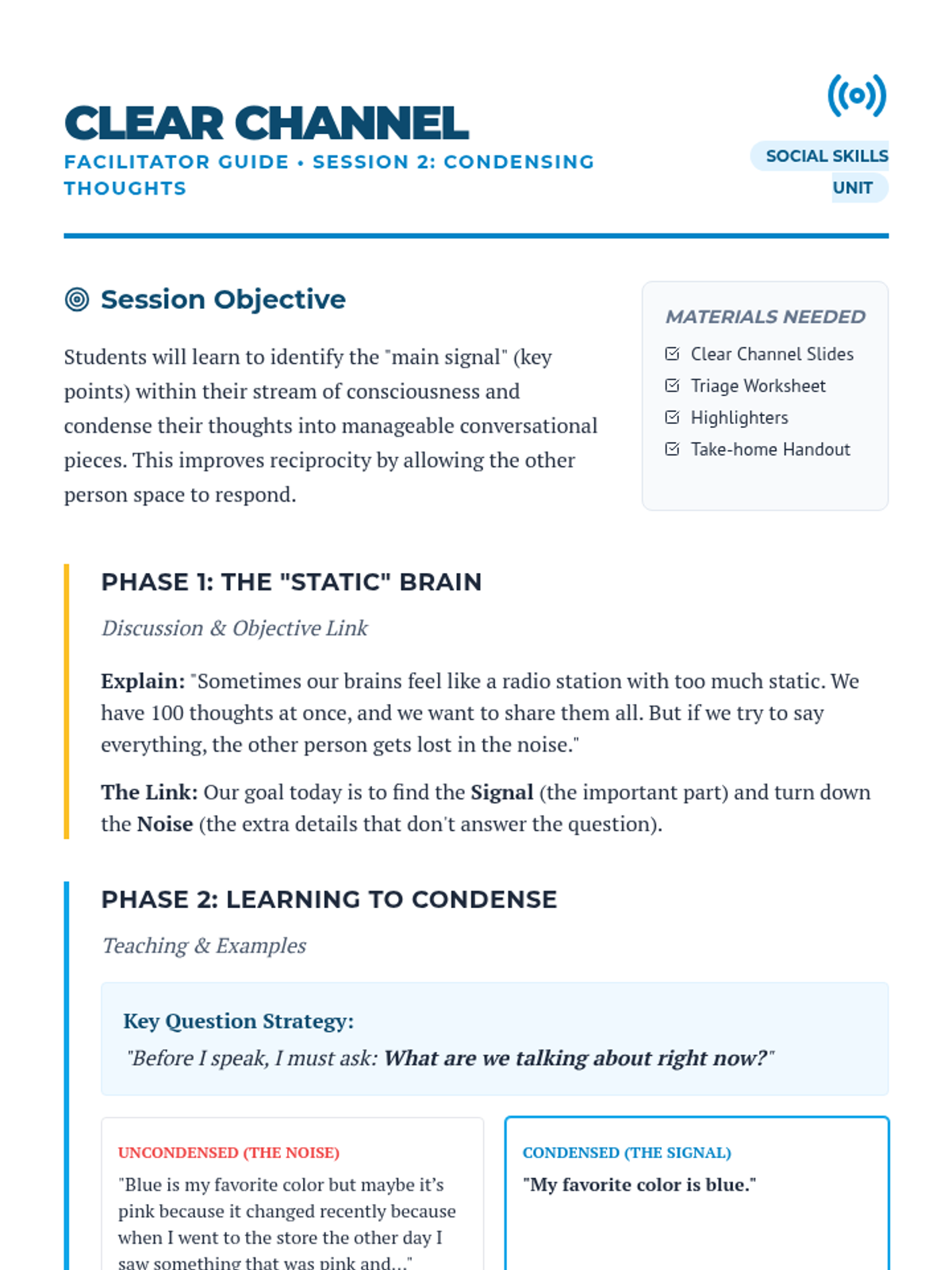
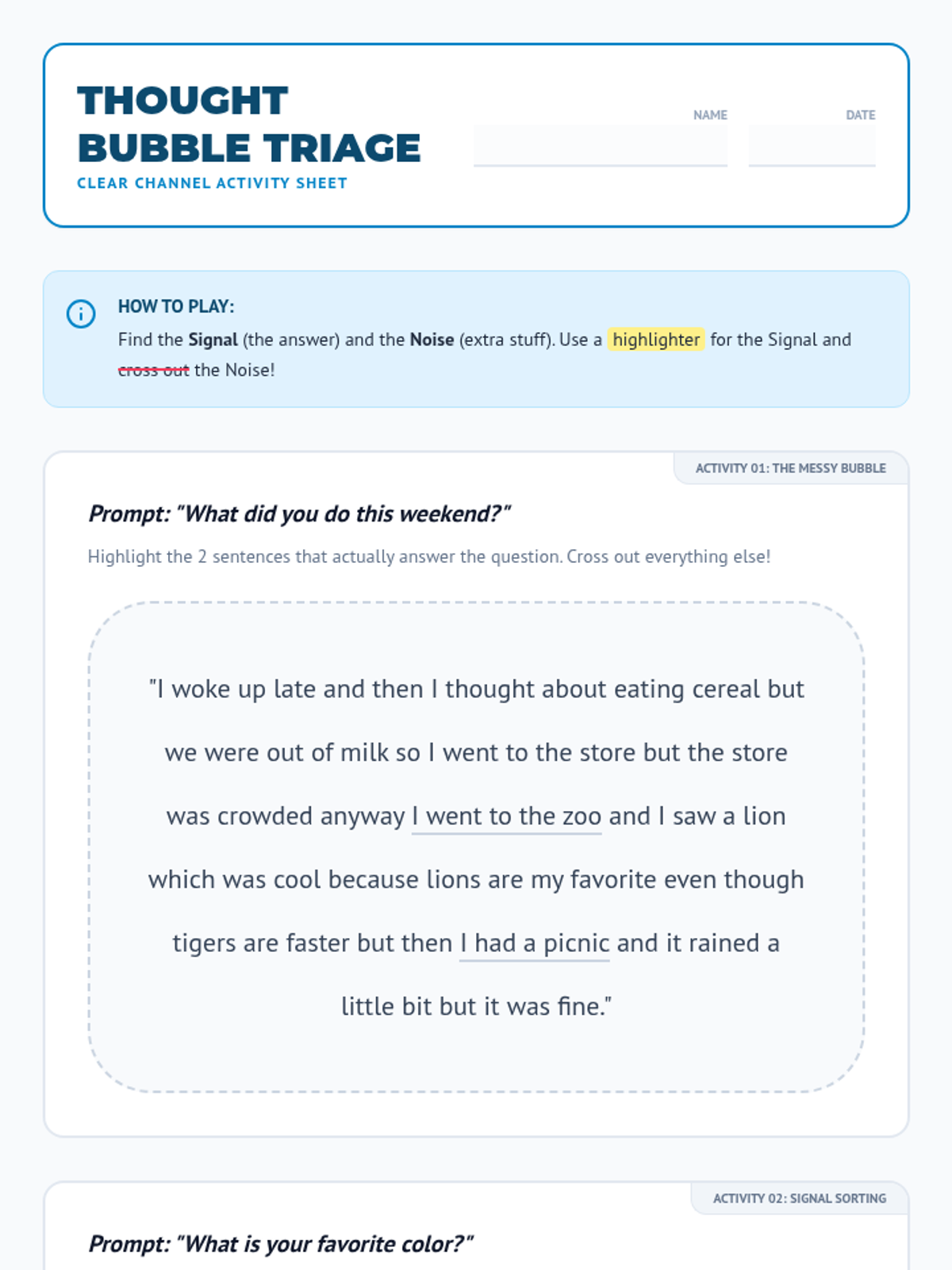
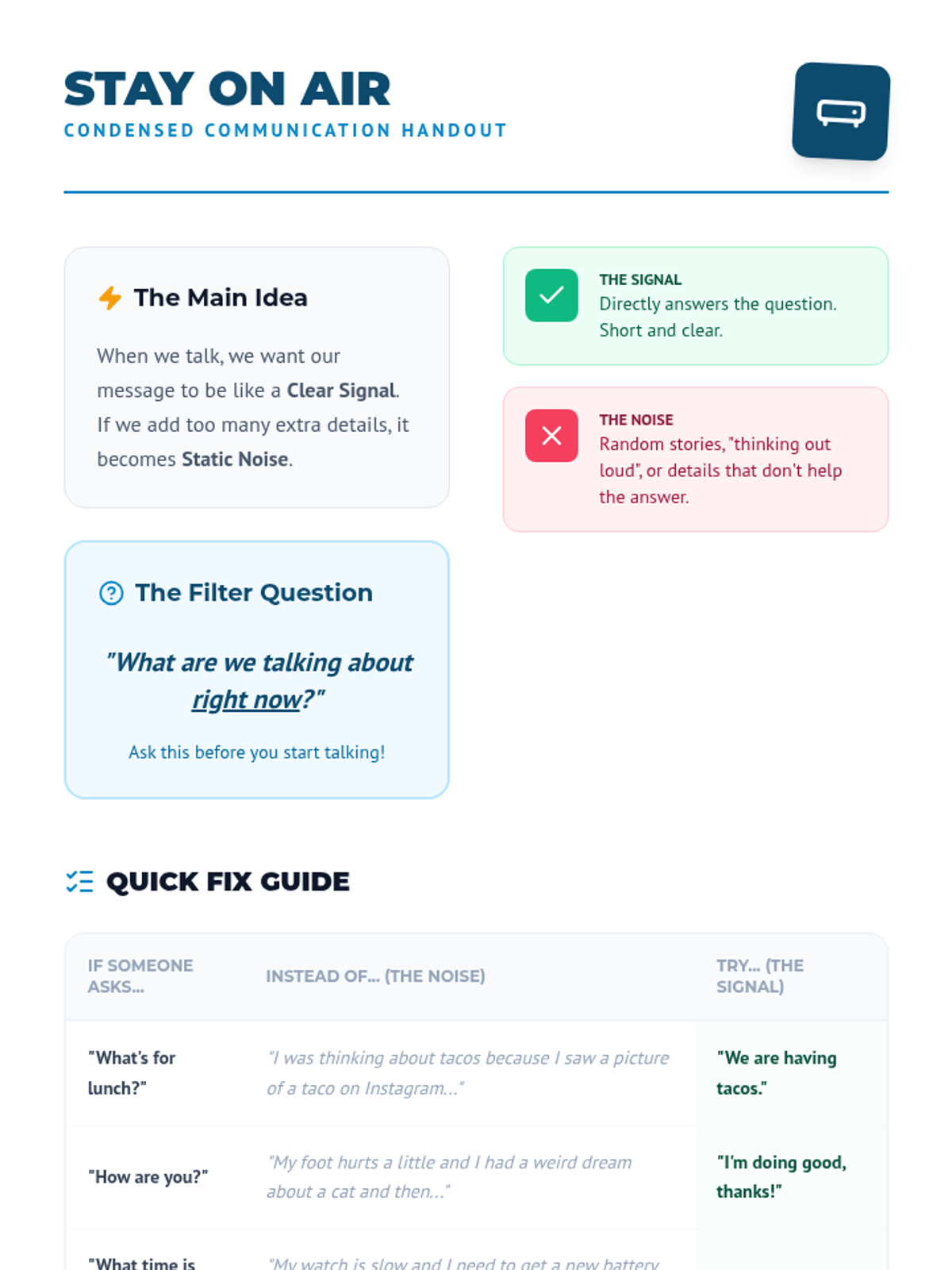
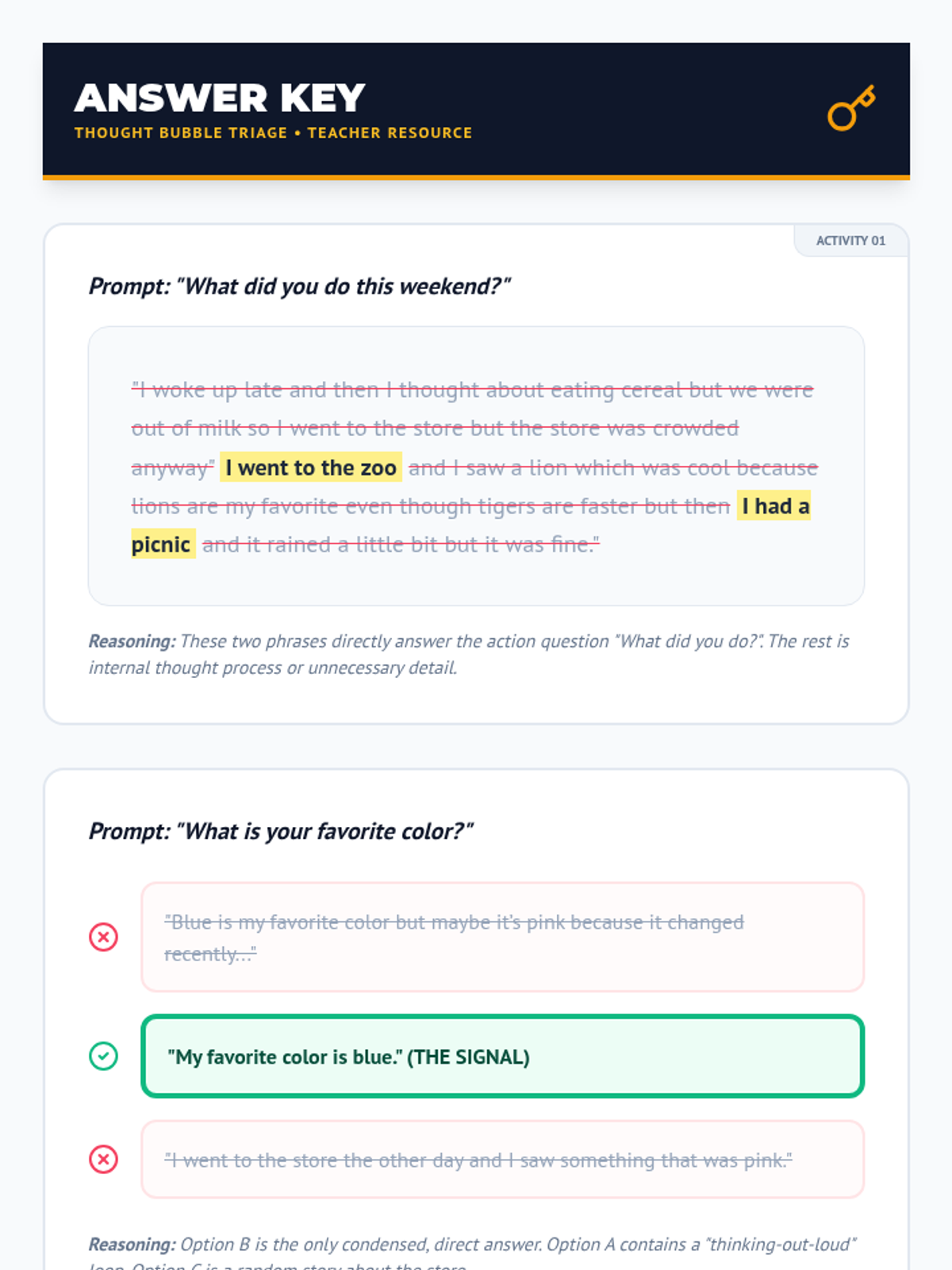
A social communication unit focused on mastering the art of conversation, from initiation to maintaining flow and condensing thoughts for better reciprocity.
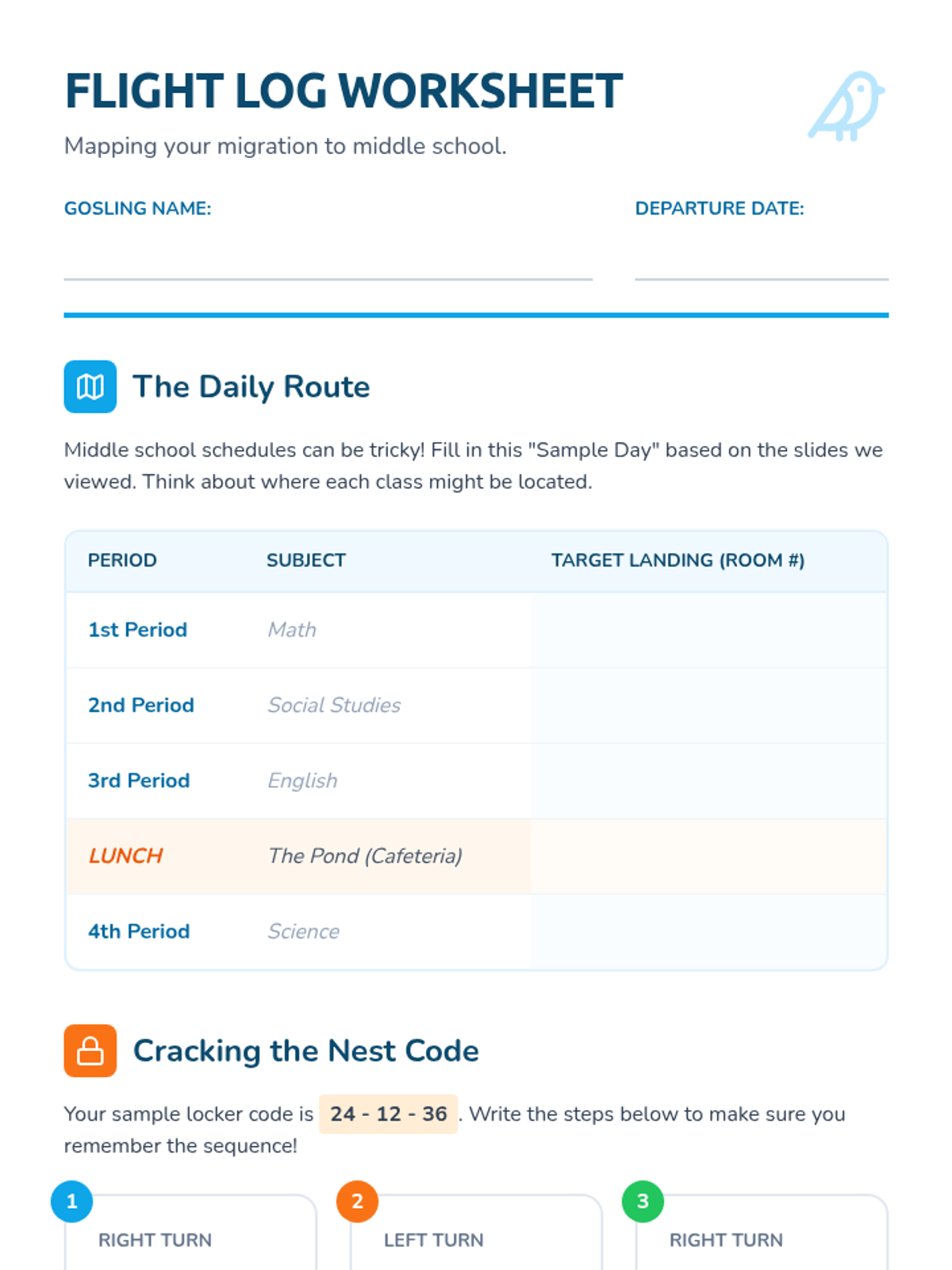
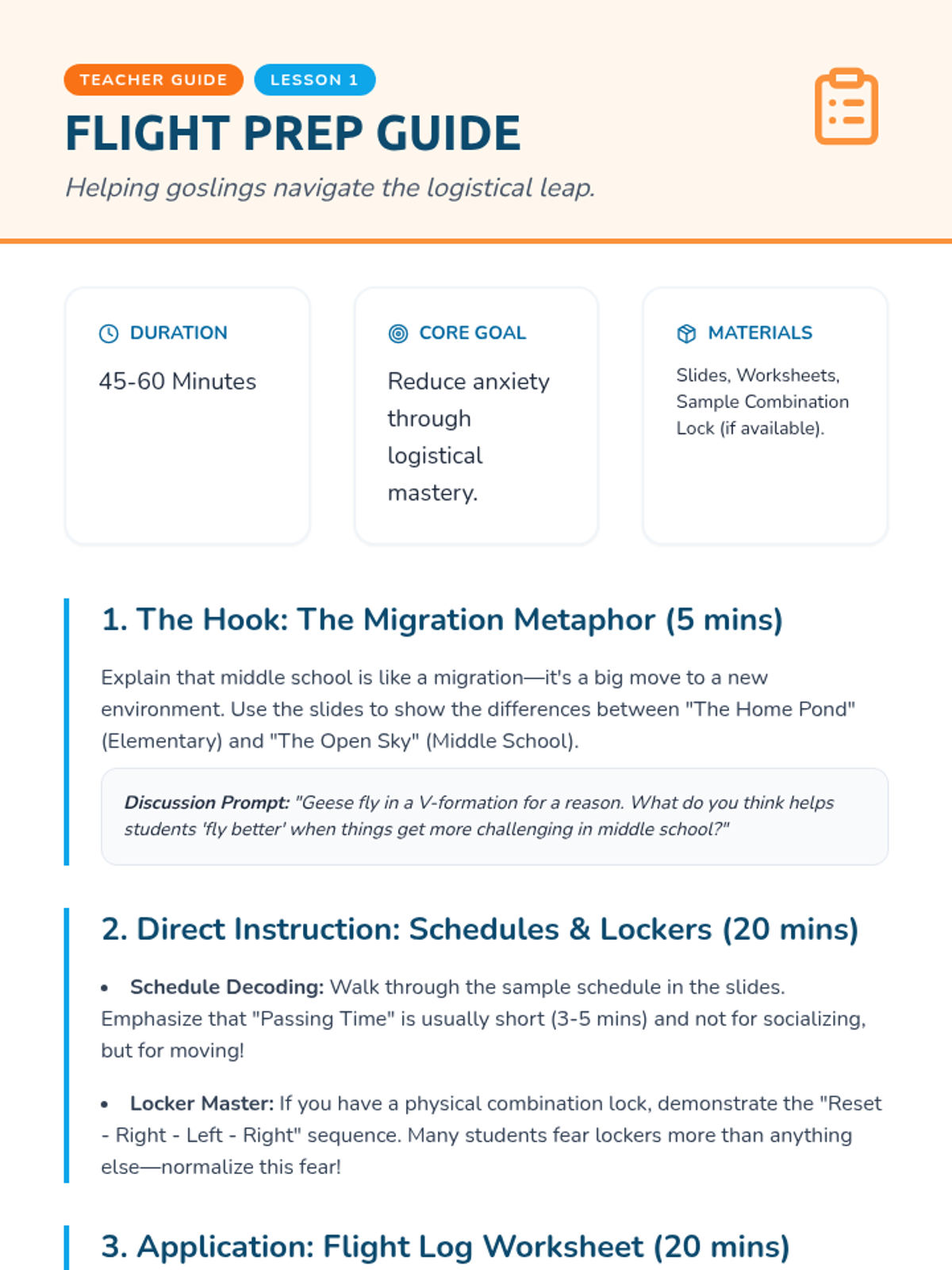
A 3-lesson series designed to help 5th graders prepare for the transition to middle school, using a fun and relatable duck-themed metaphor for 'migrating' to a new environment.
A 6-lesson sequence for middle schoolers to master executive functioning skills, focusing on task management, physical and digital organization, and building sustainable routines.
A two-part series for middle schoolers to master executive functioning skills, focusing on emotional regulation and strategic planning.
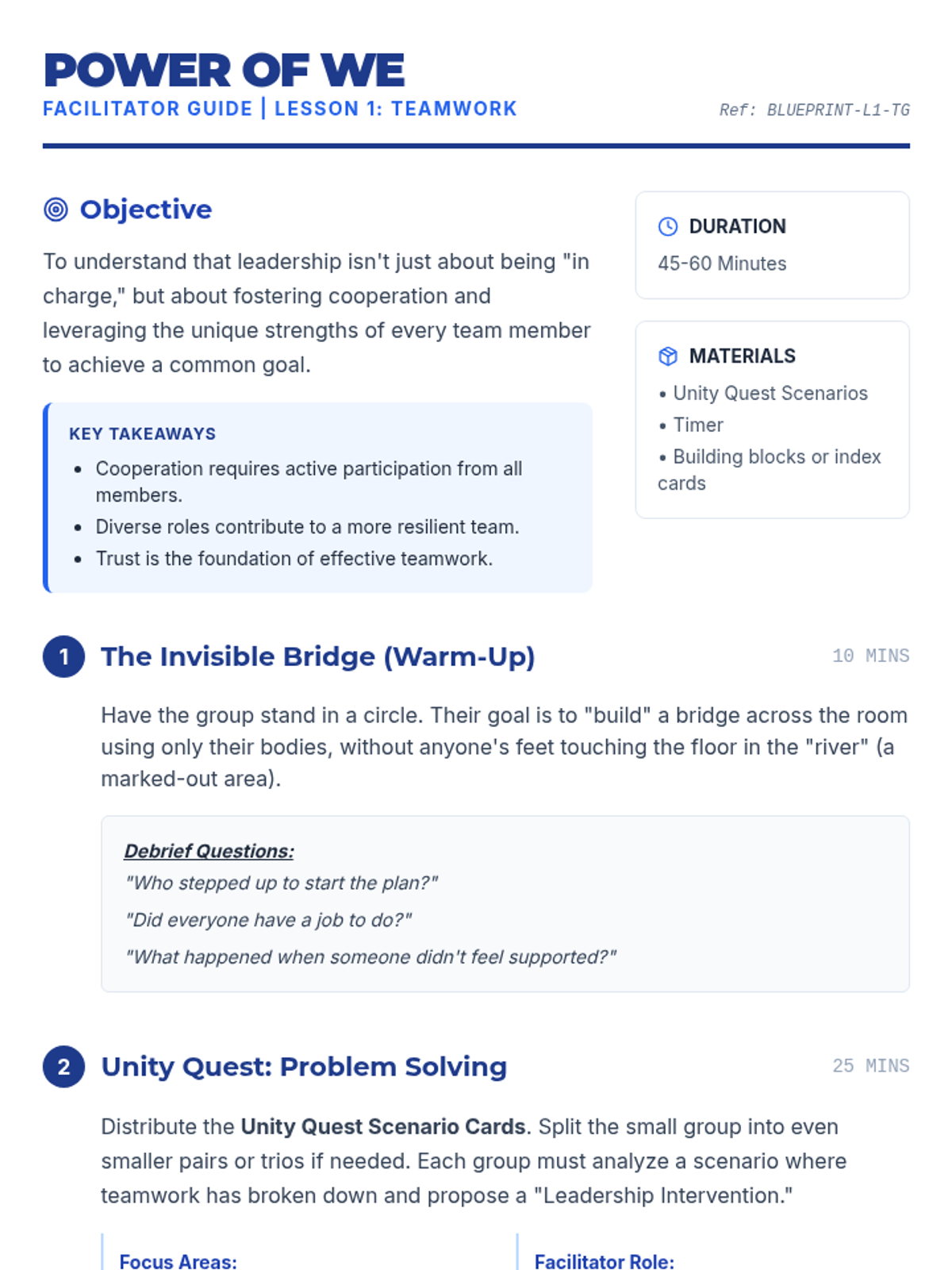
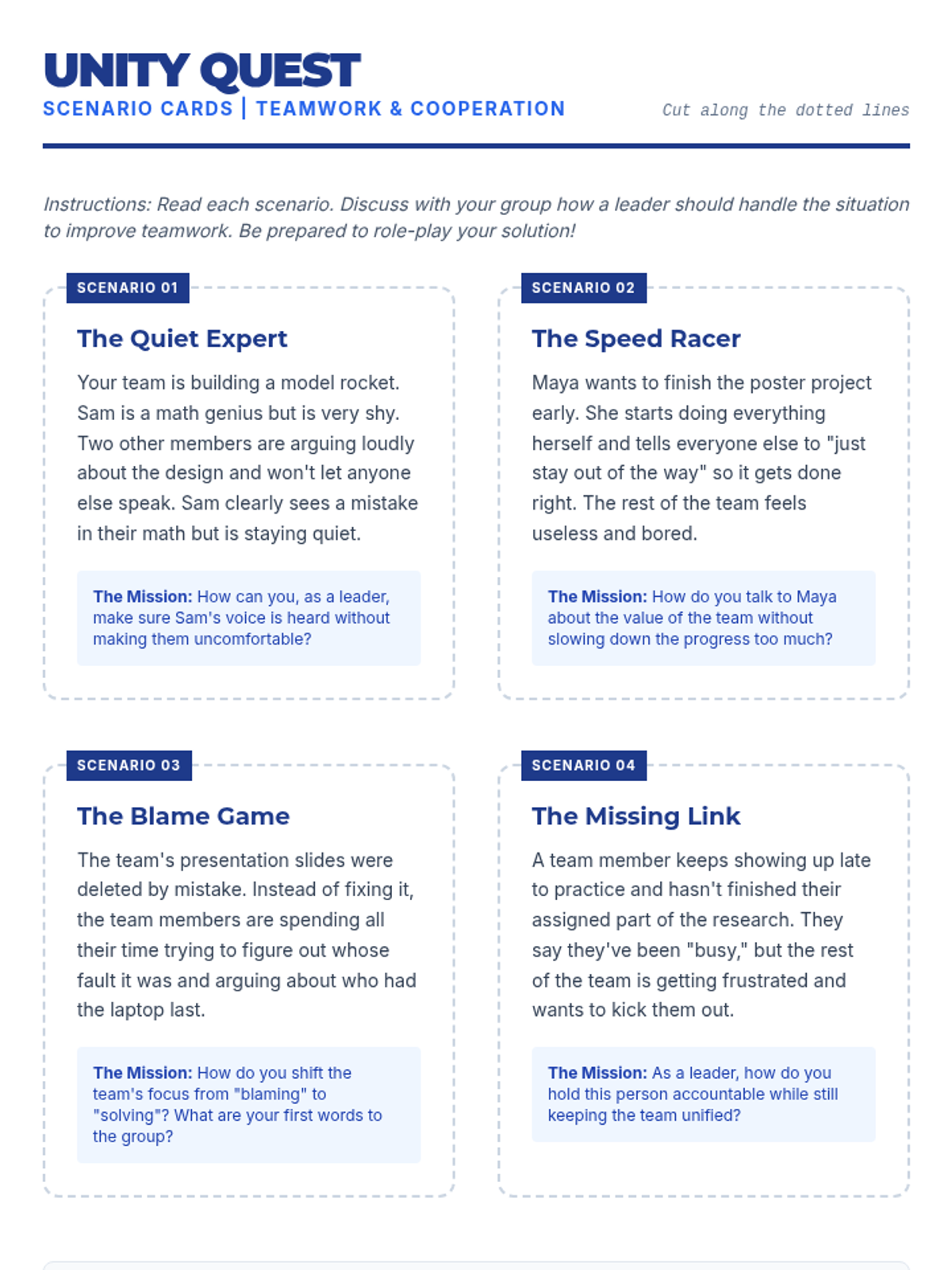
A 4-part small group leadership curriculum focusing on teamwork, communication, problem-solving, and initiative through hands-on activities and role-playing.
A comprehensive series of 30 micro-counseling sessions (3 per topic) designed for 6th-8th graders. These 10-minute interventions focus on essential middle school transitions, behavioral self-regulation, and academic goal-setting skills.
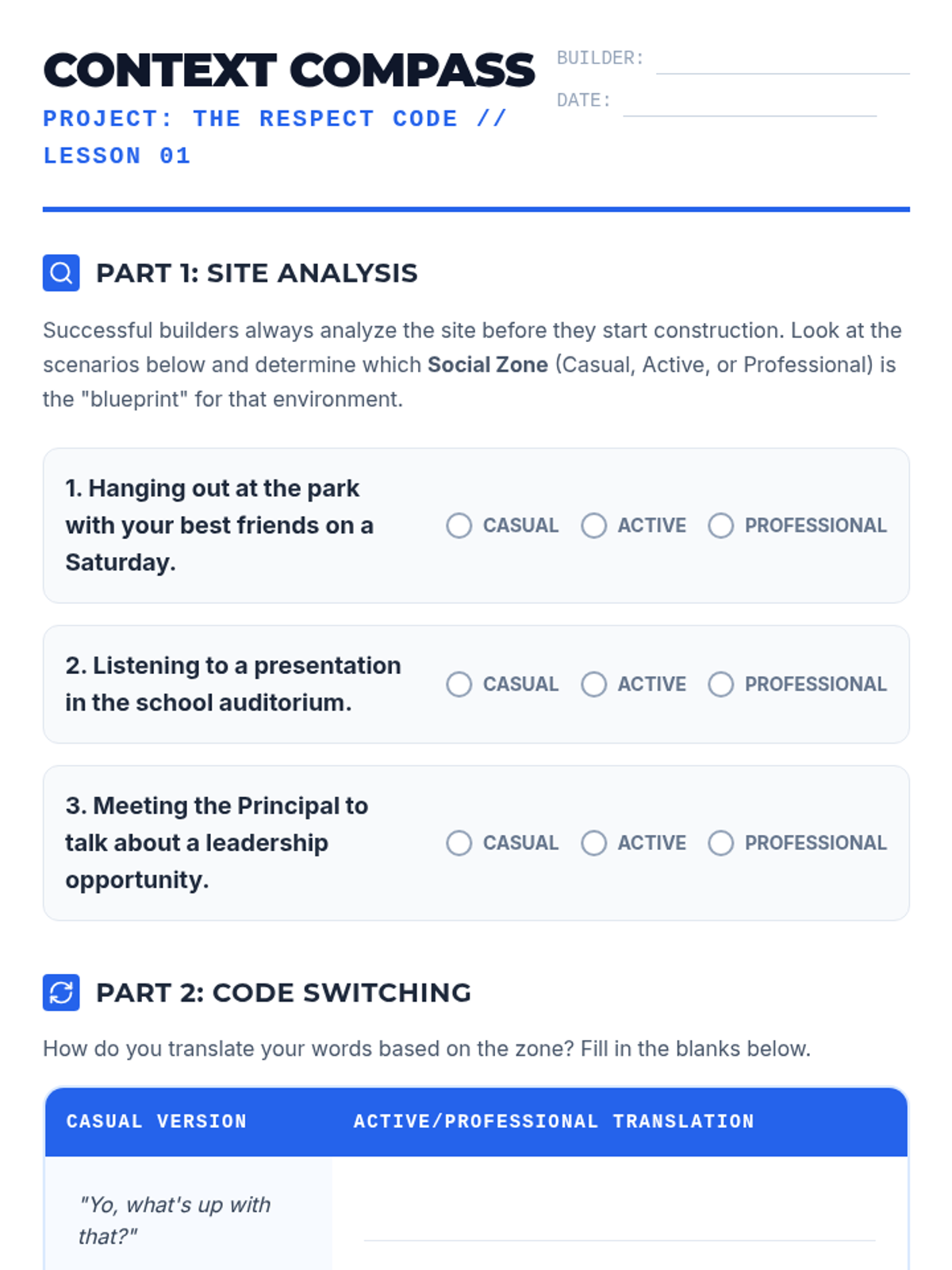
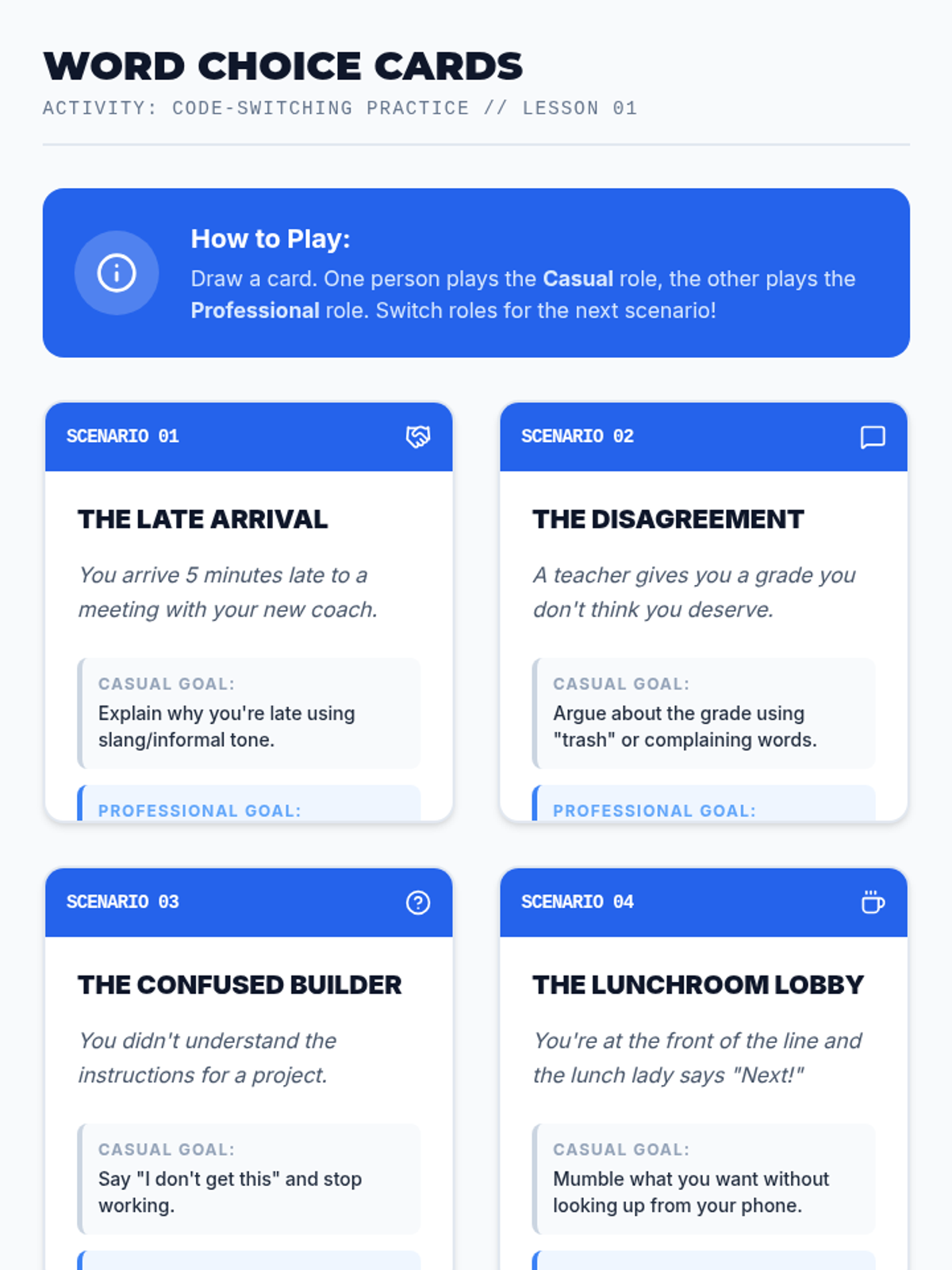
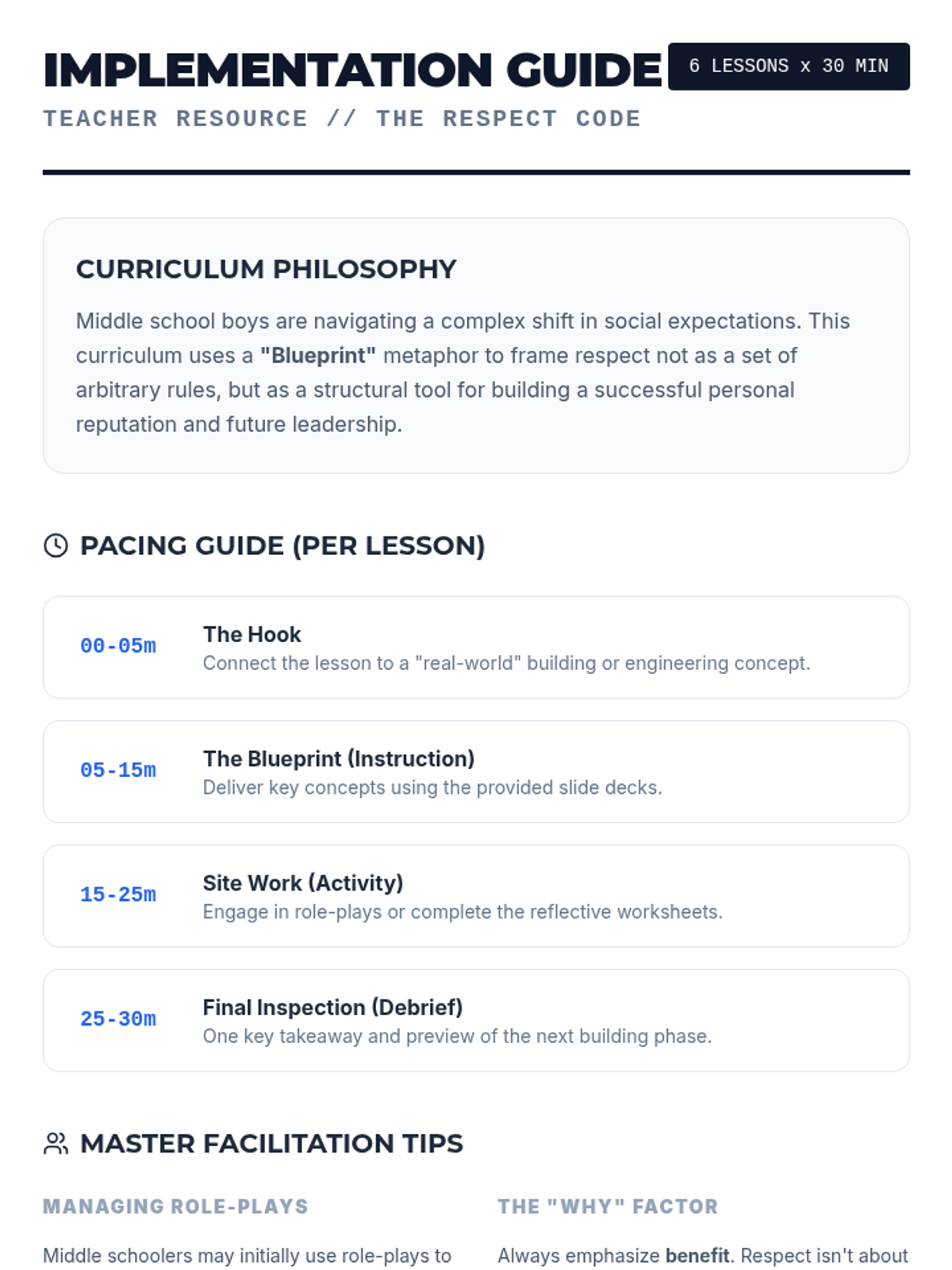
A six-lesson series designed for middle school boys to develop social intelligence, emotional regulation, and a foundation of respect. The curriculum uses a 'Blueprint' theme to help students build a positive personal reputation and navigate the transitions of middle school.
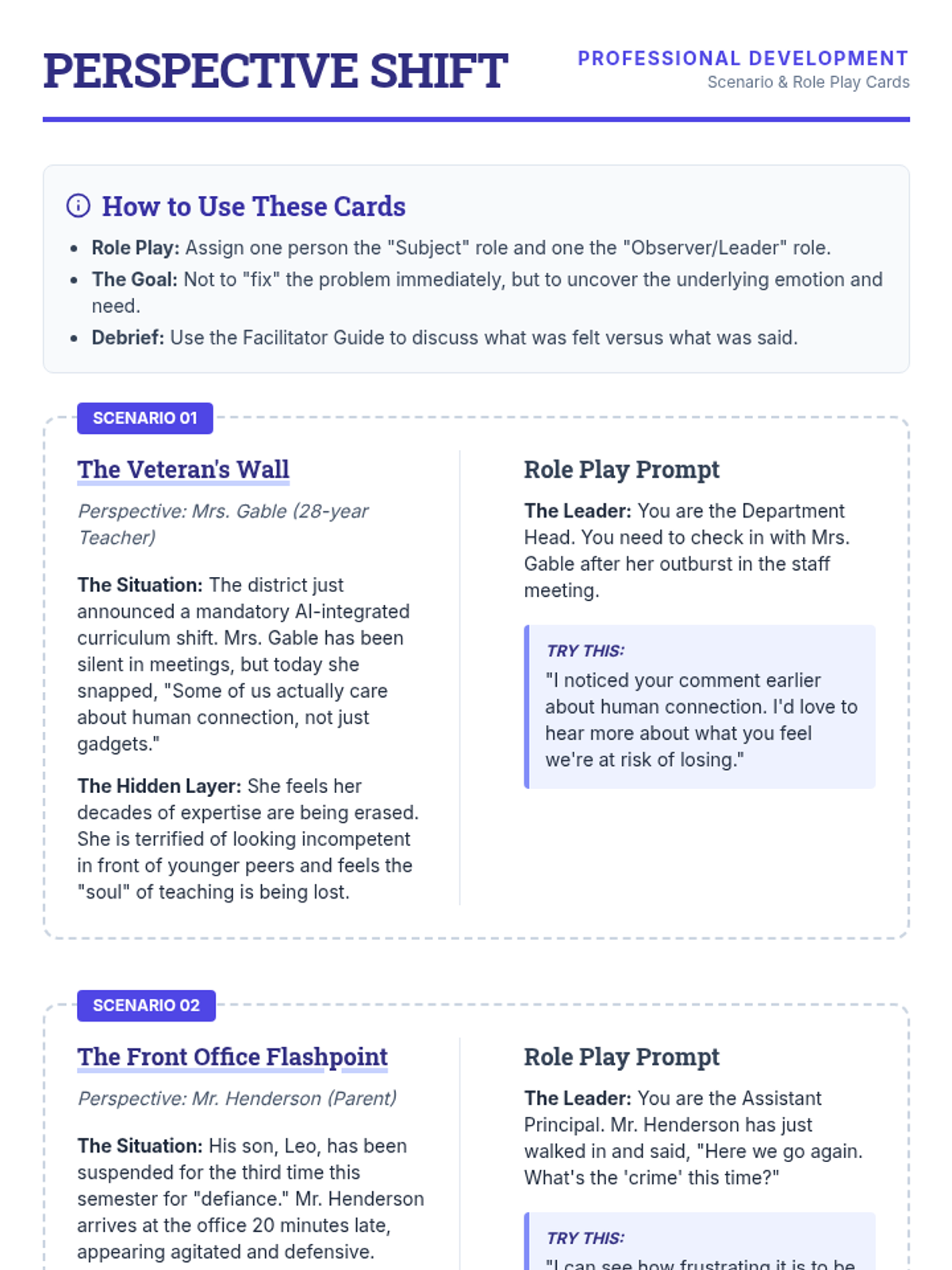
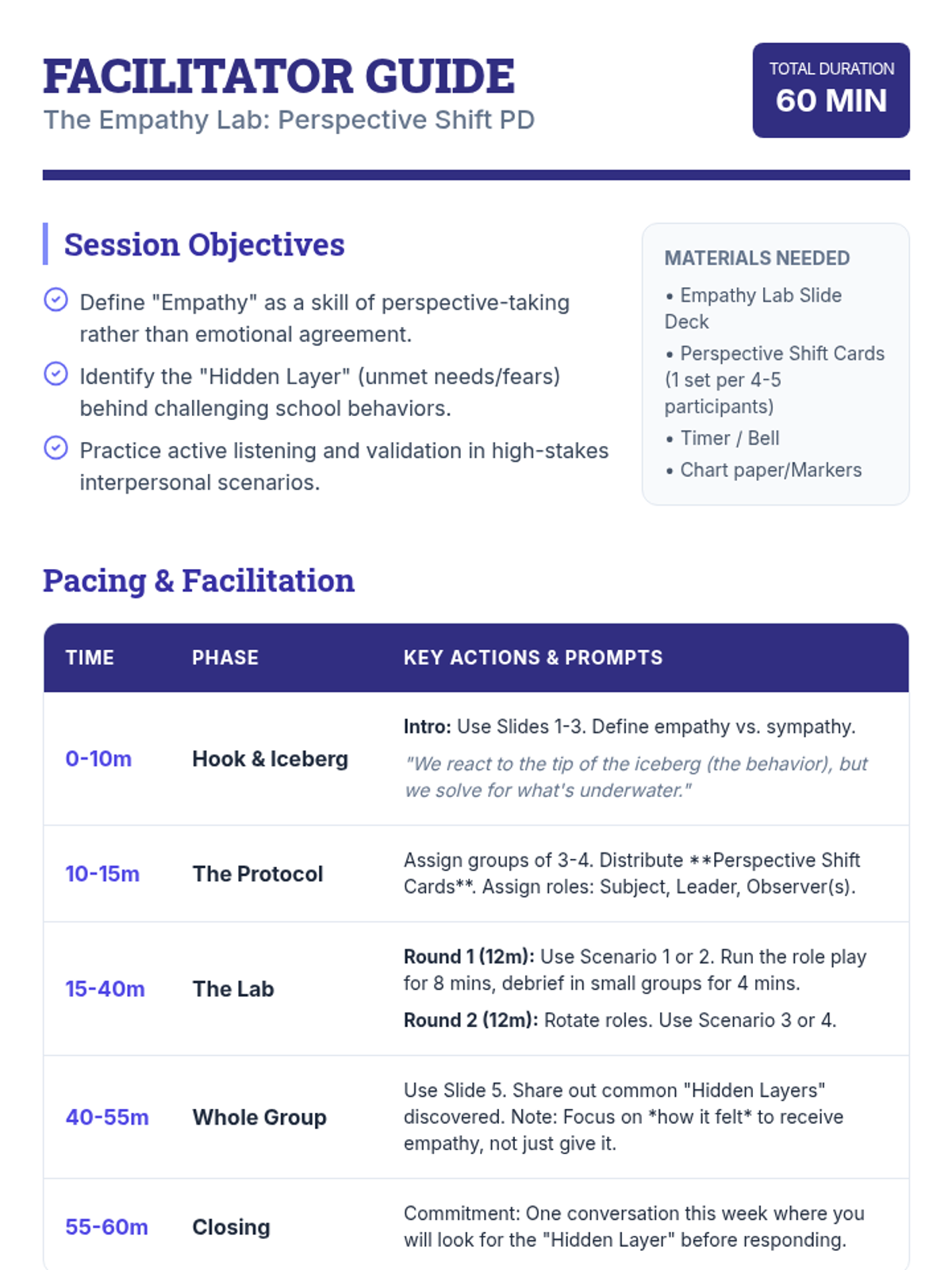
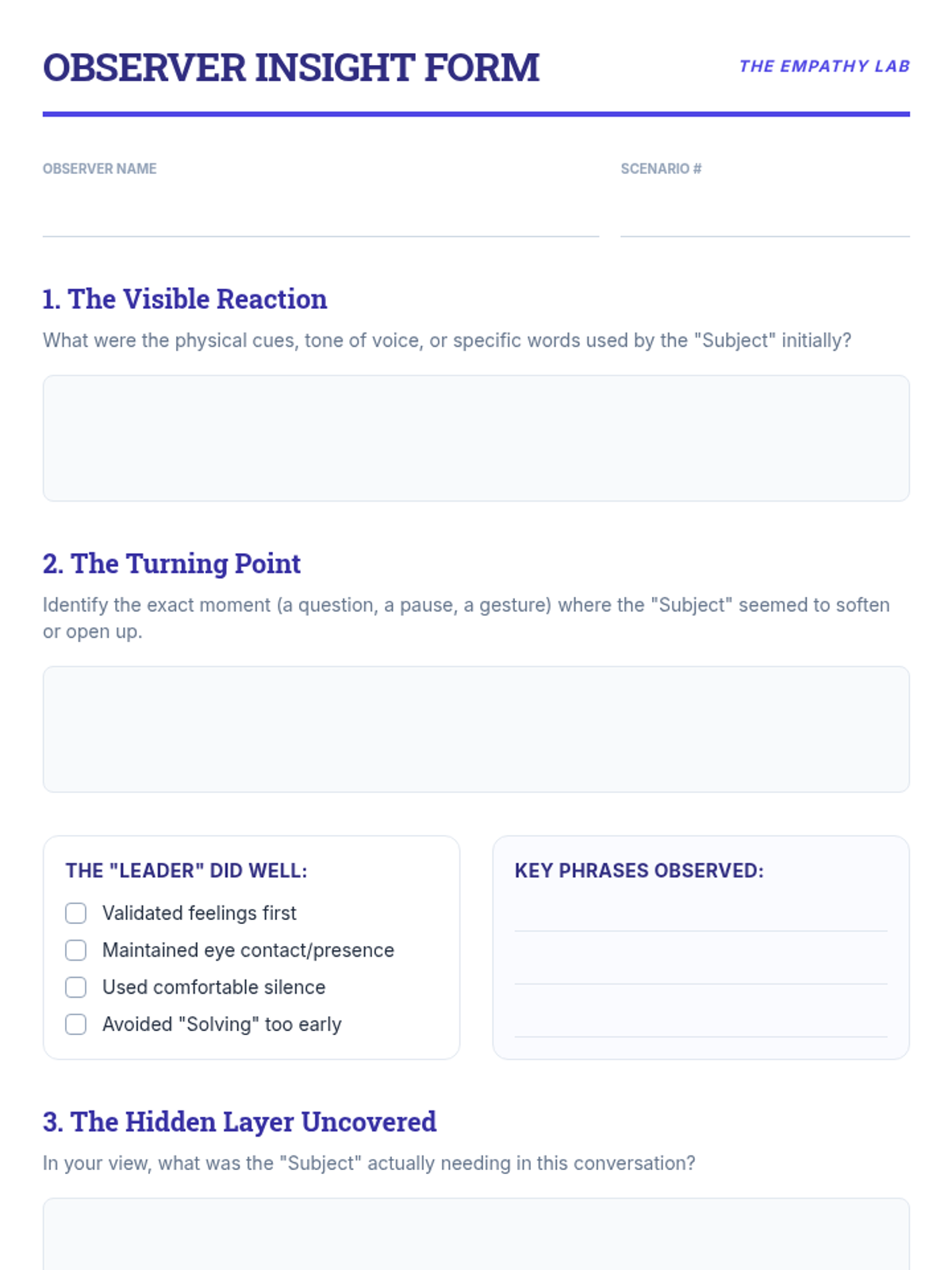
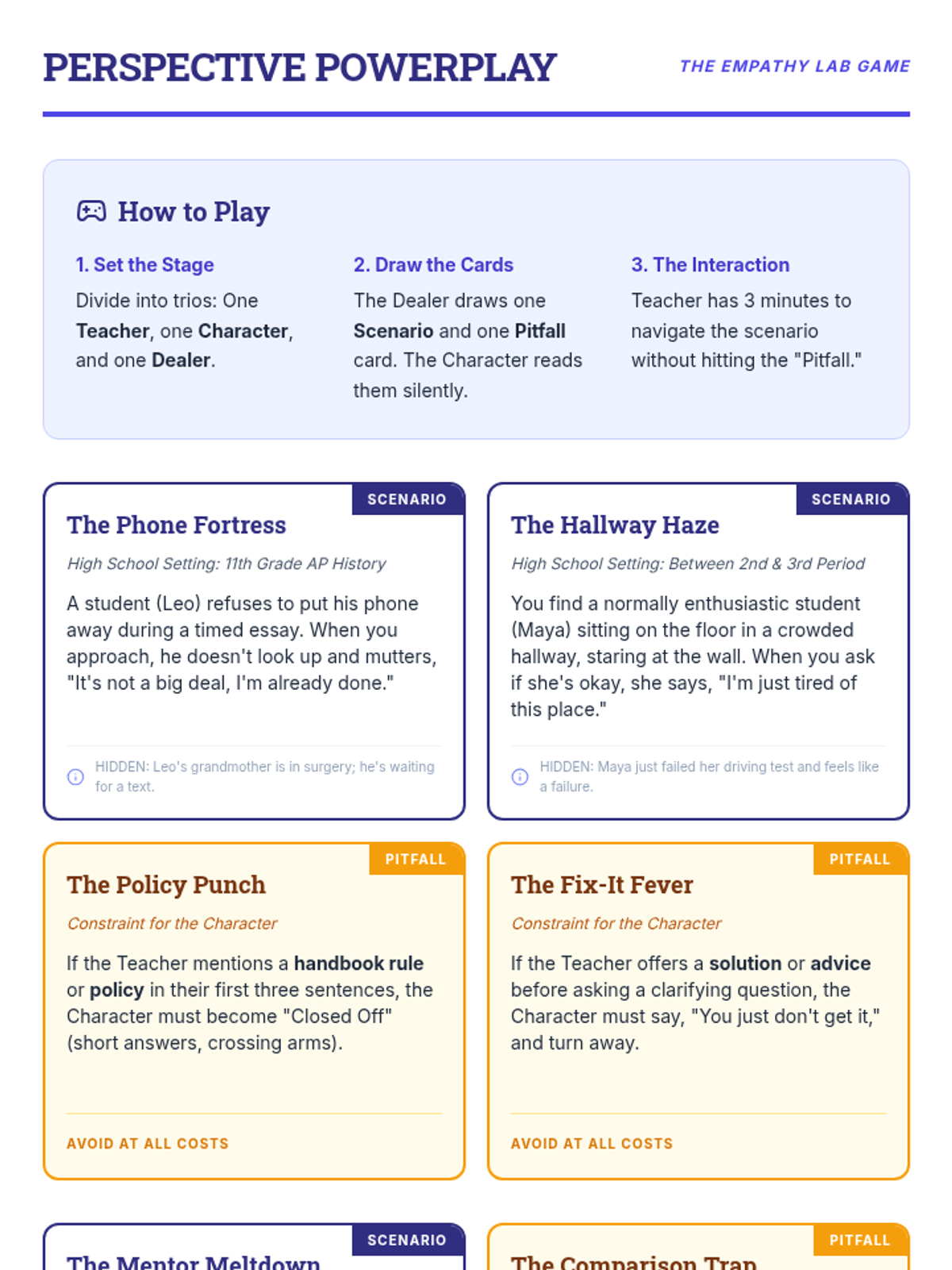
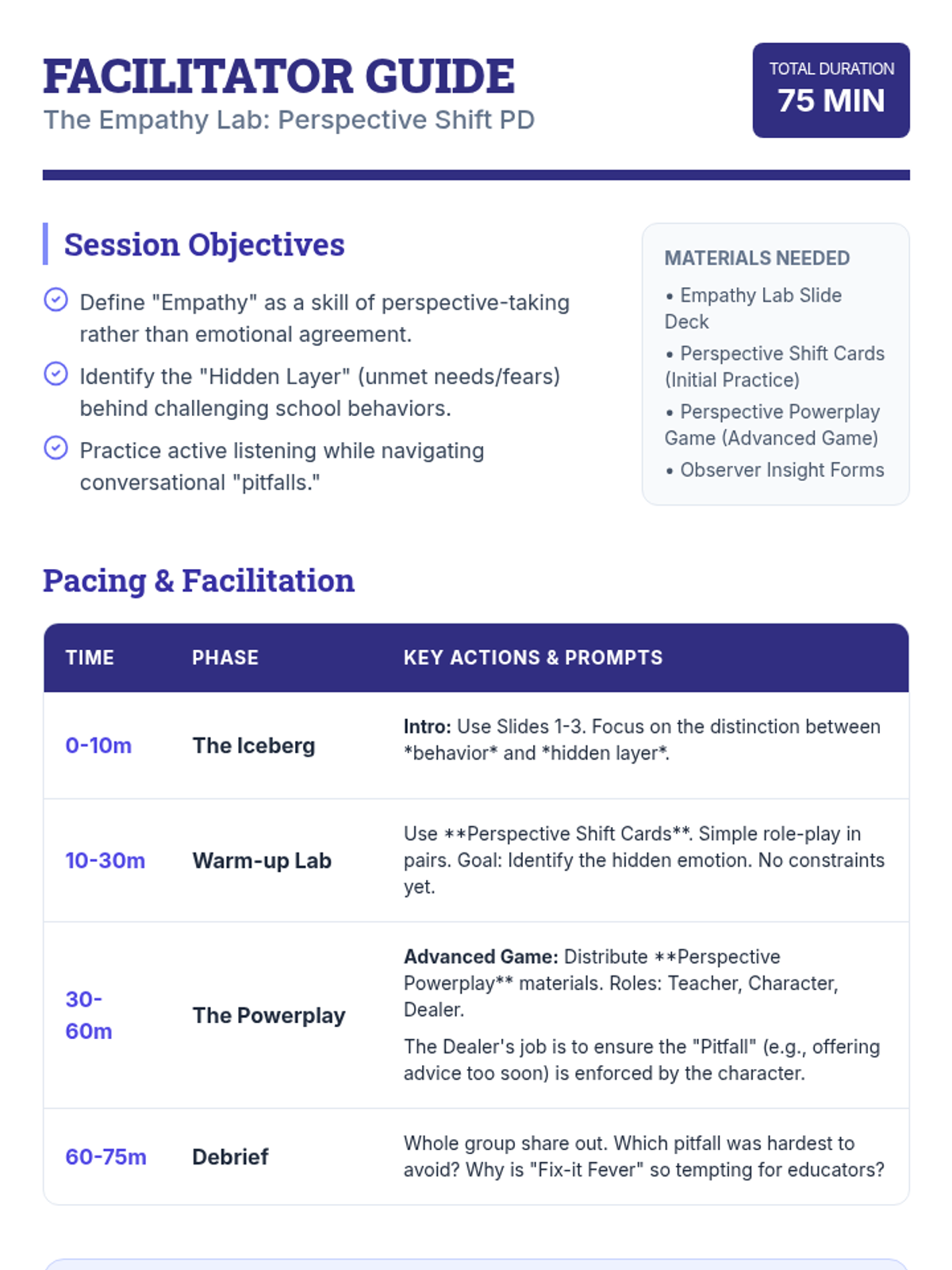
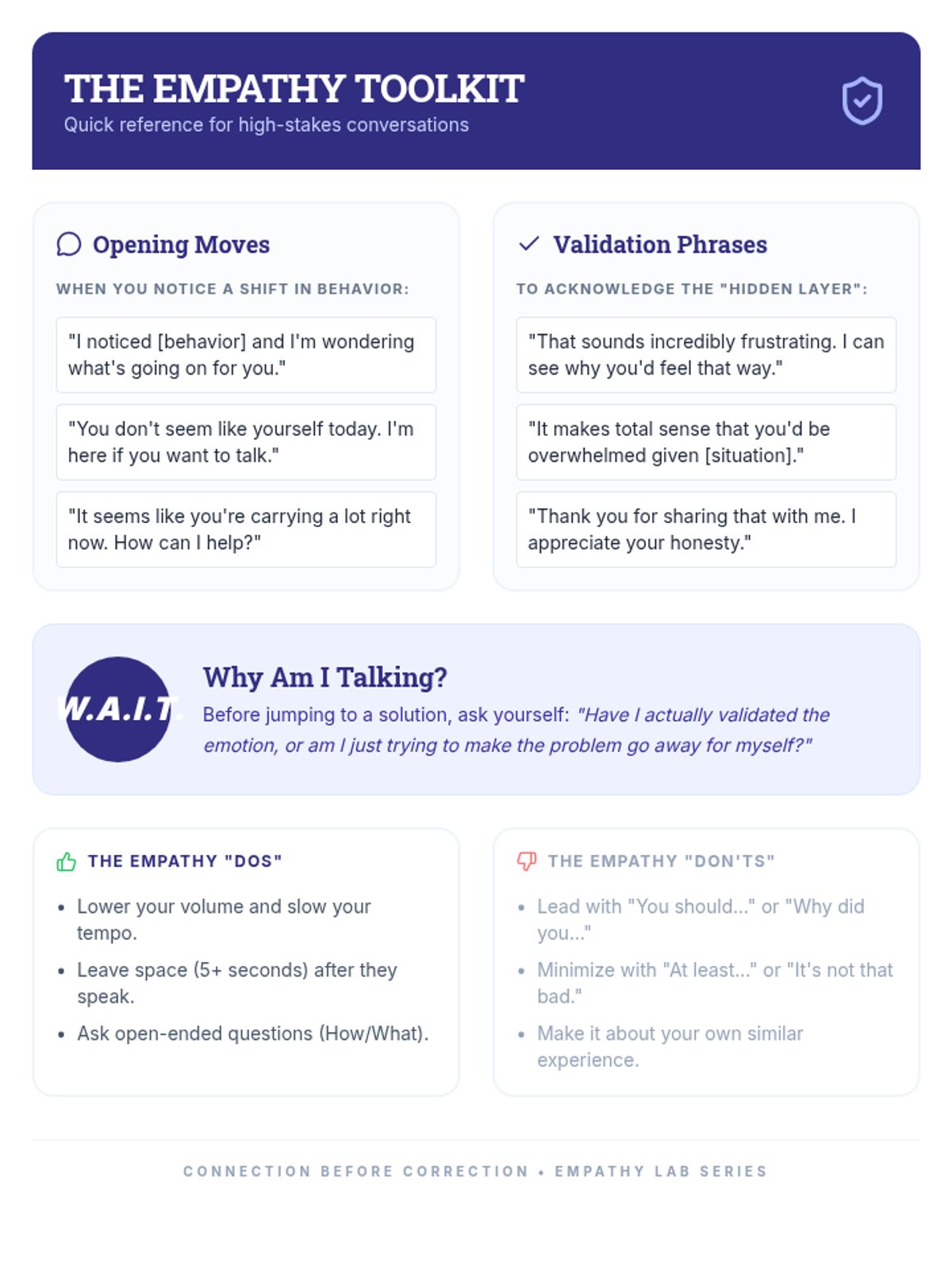
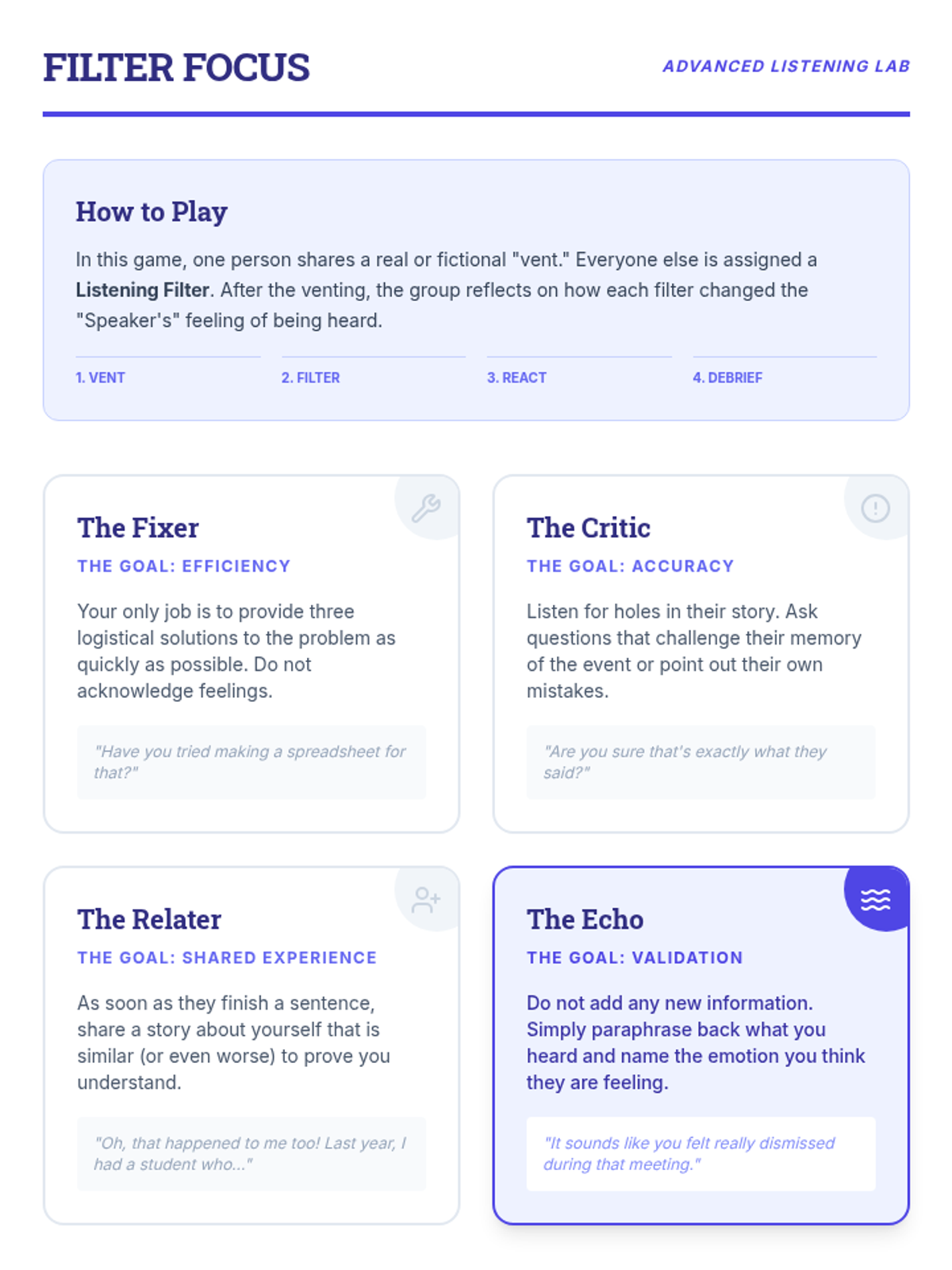
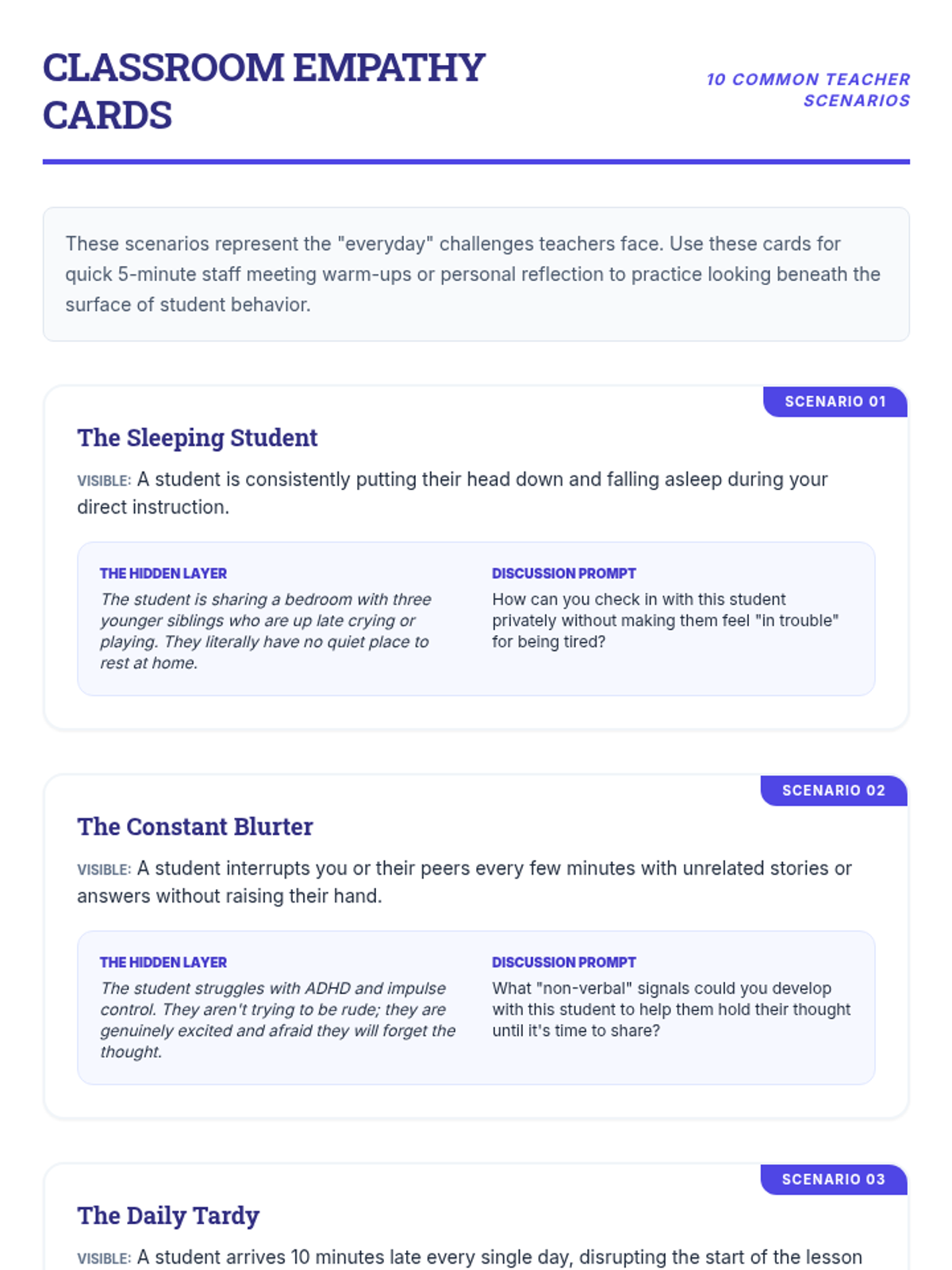
A comprehensive suite of empathy resources for an entire school community, including professional development for staff and instructional materials for students.
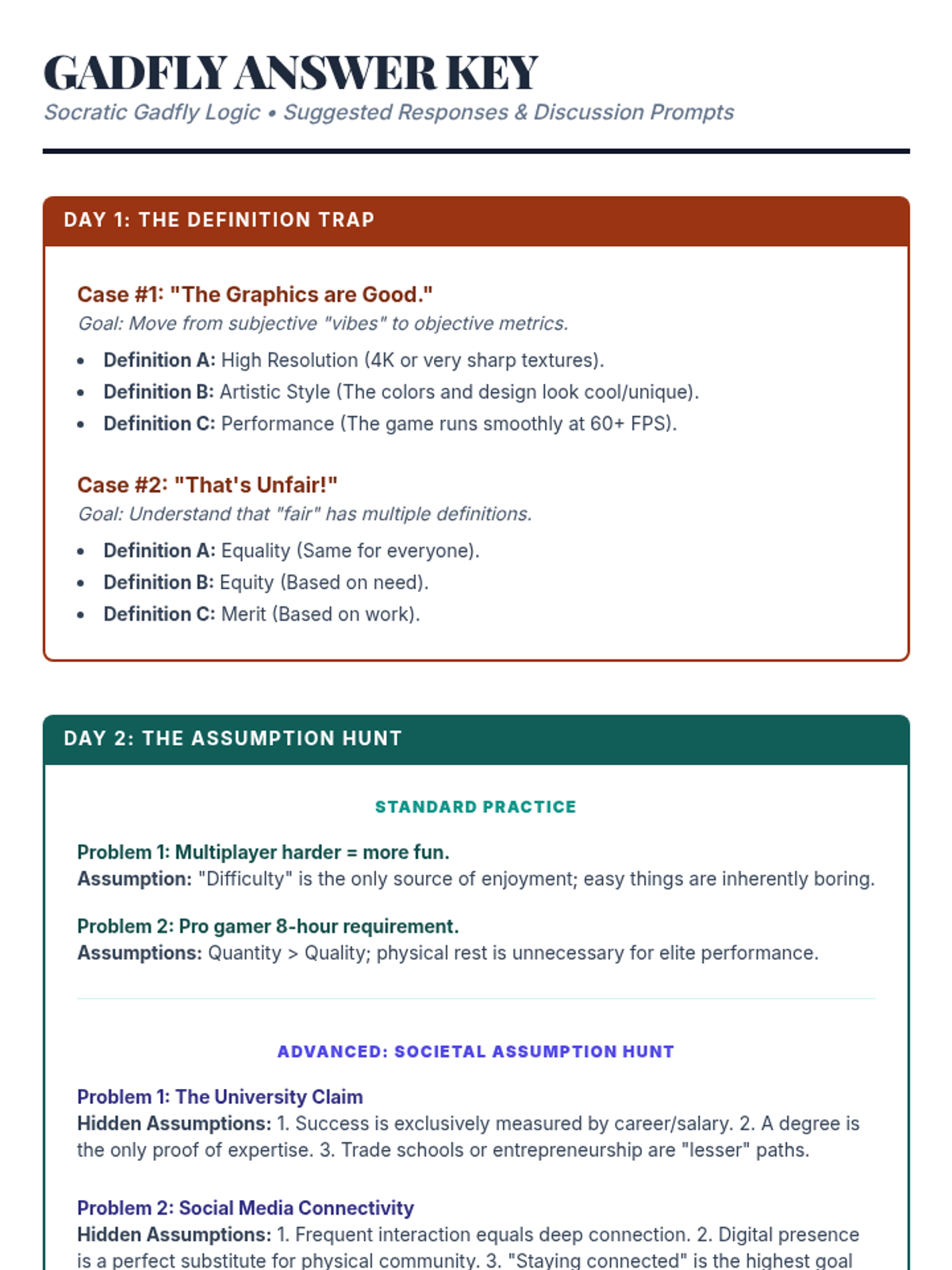
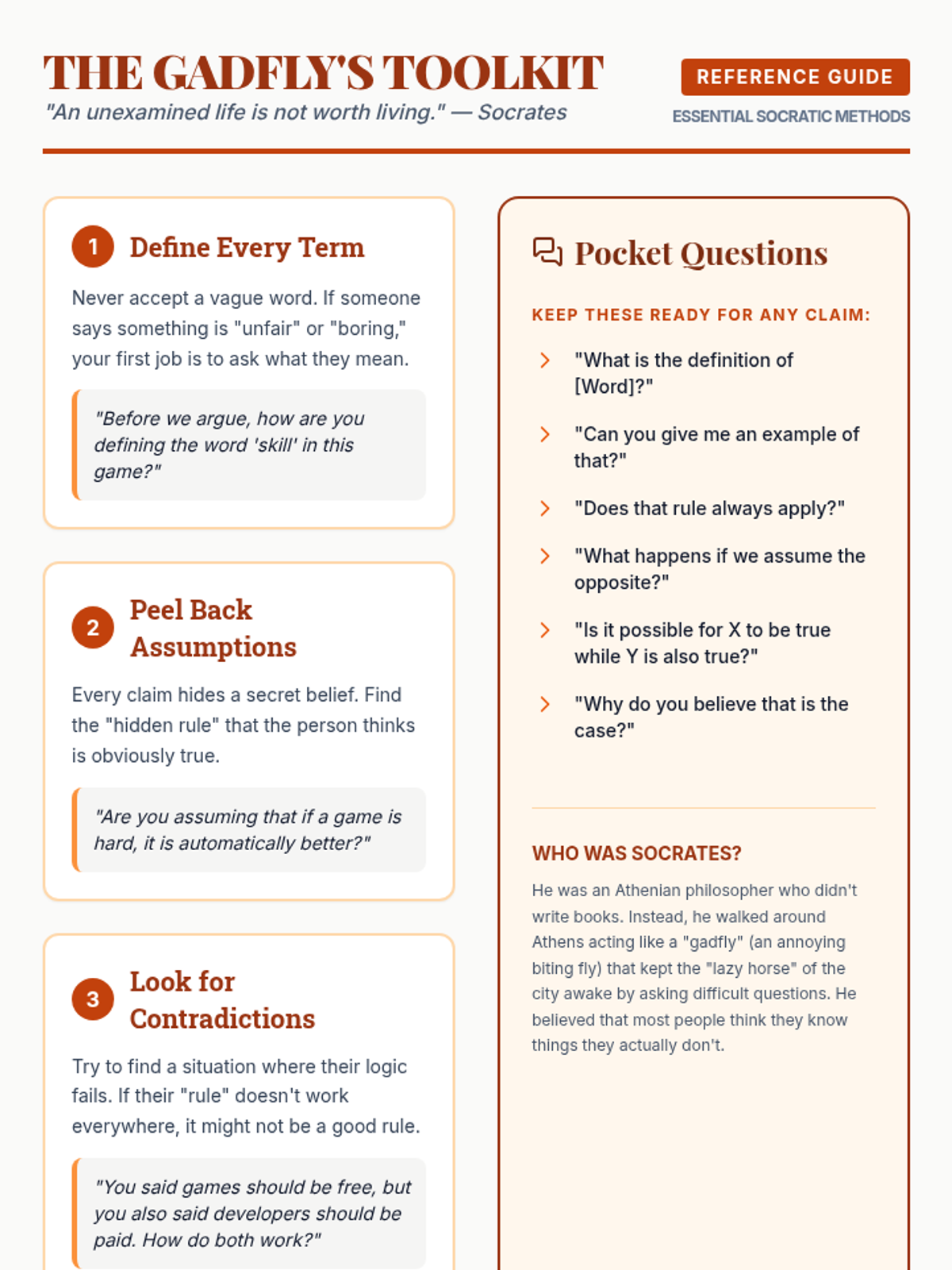
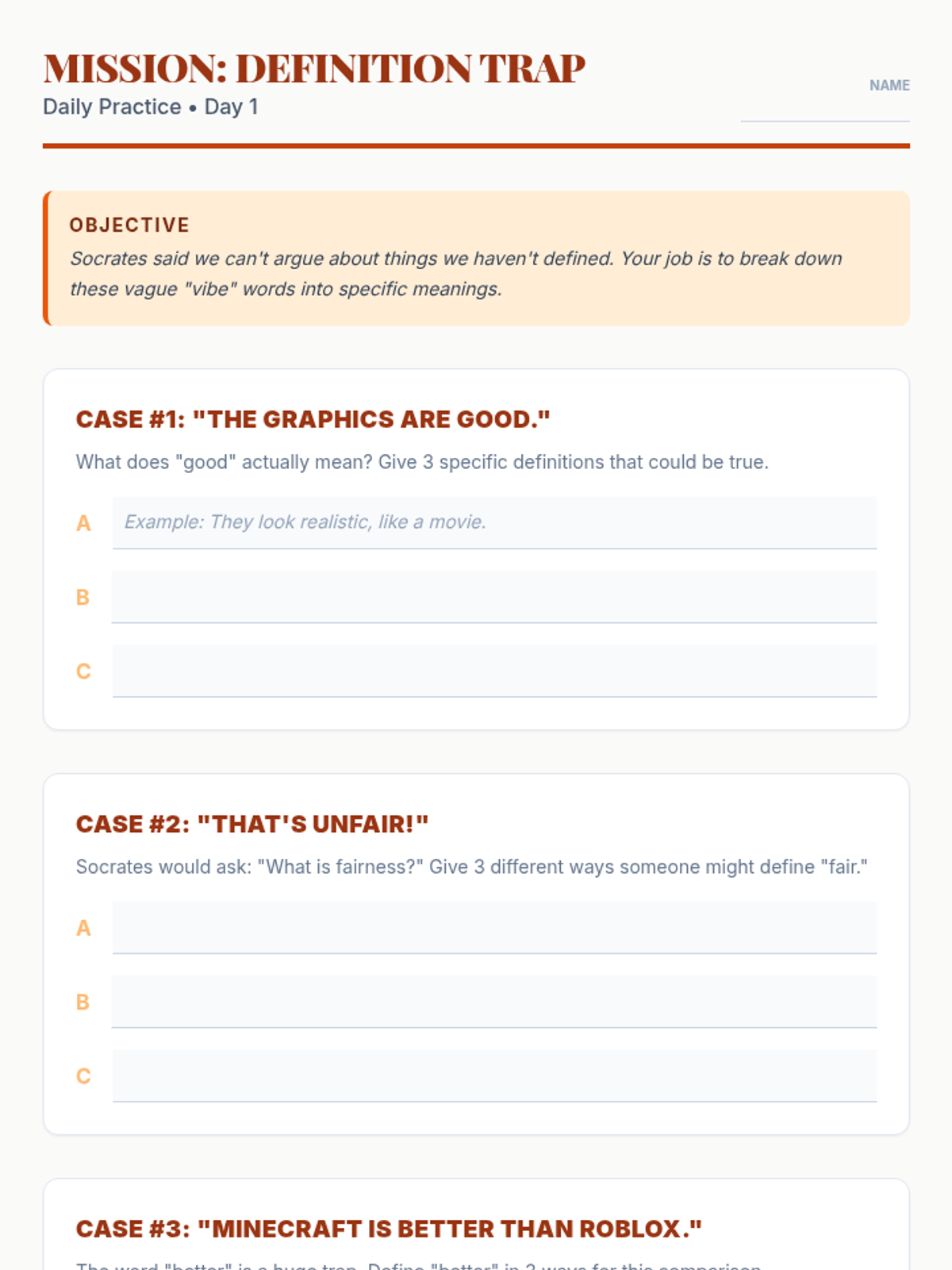
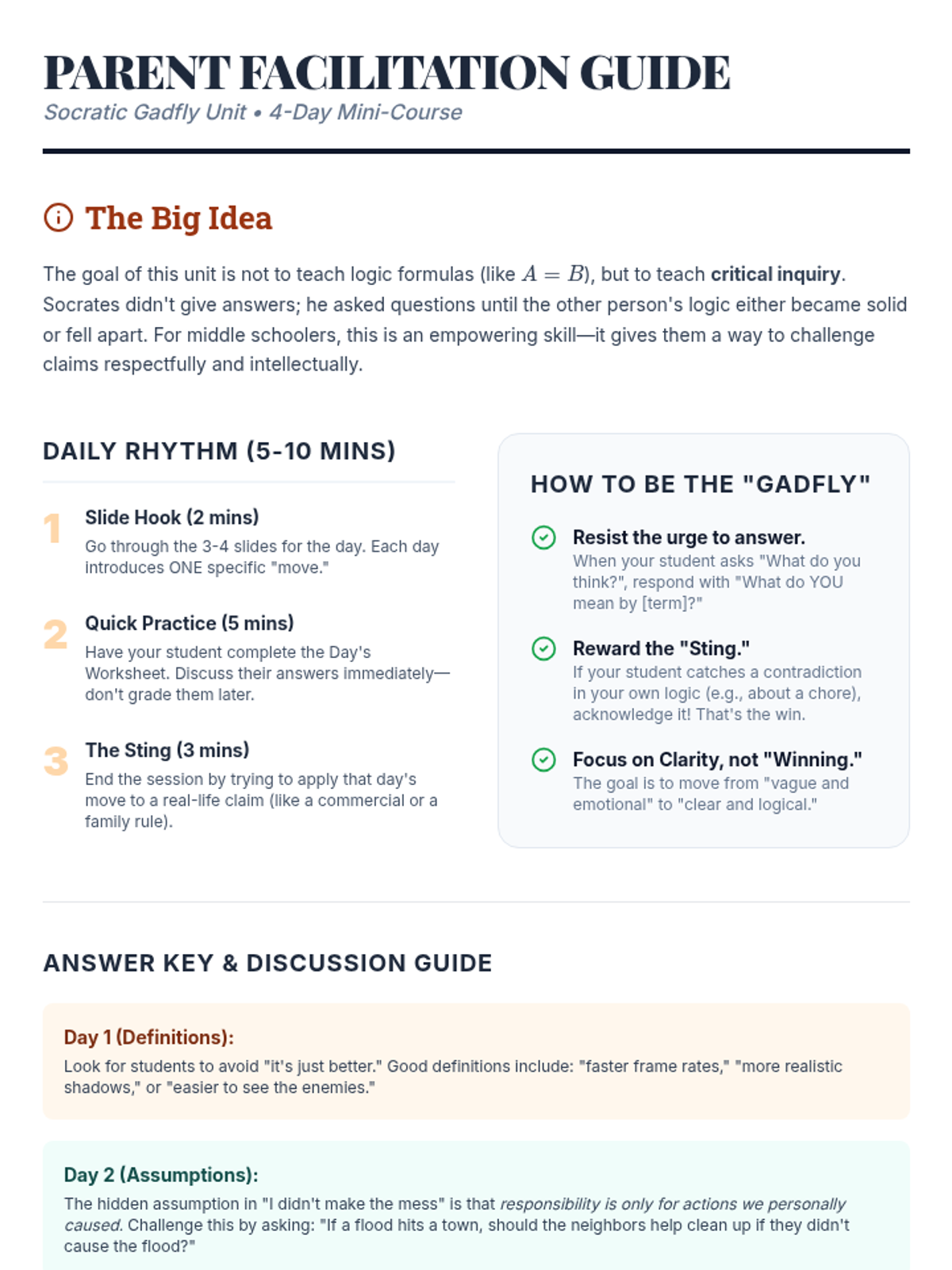
A 4-day logic mini-unit for middle schoolers centered on Socratic questioning. Students learn to dismantle vague claims, identify hidden assumptions, and find contradictions through the lens of the 'Philosophical Gadfly'.
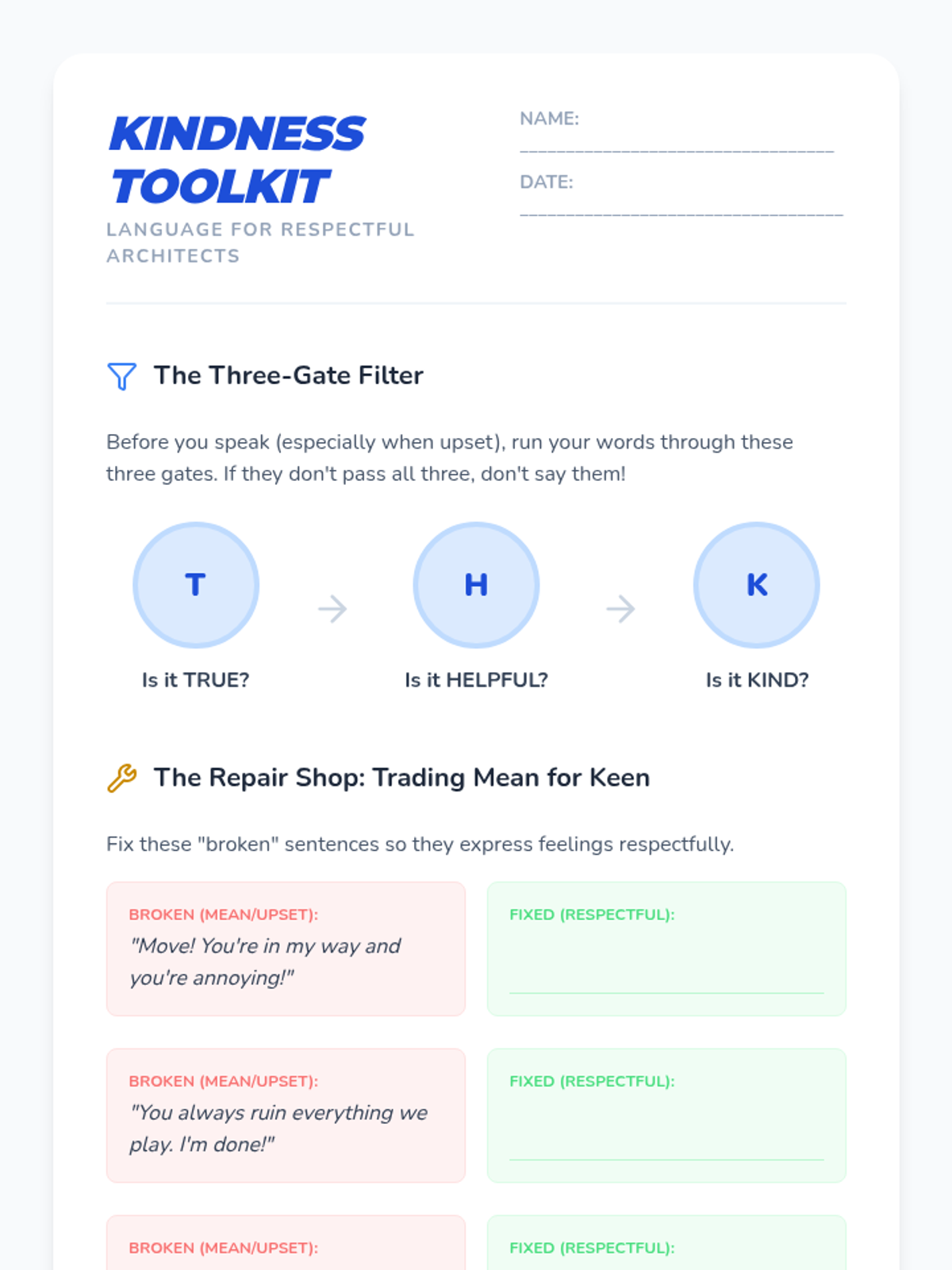
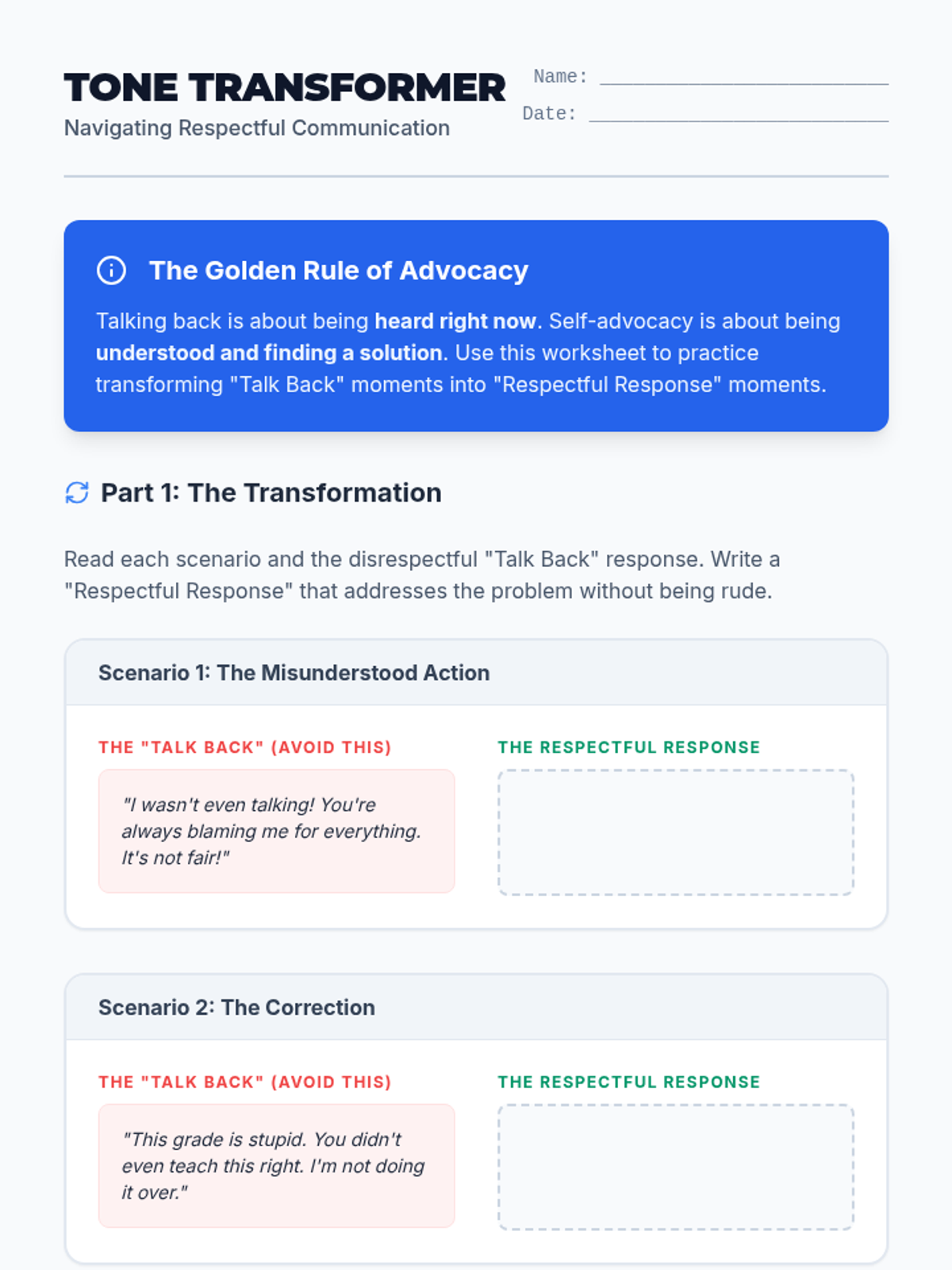
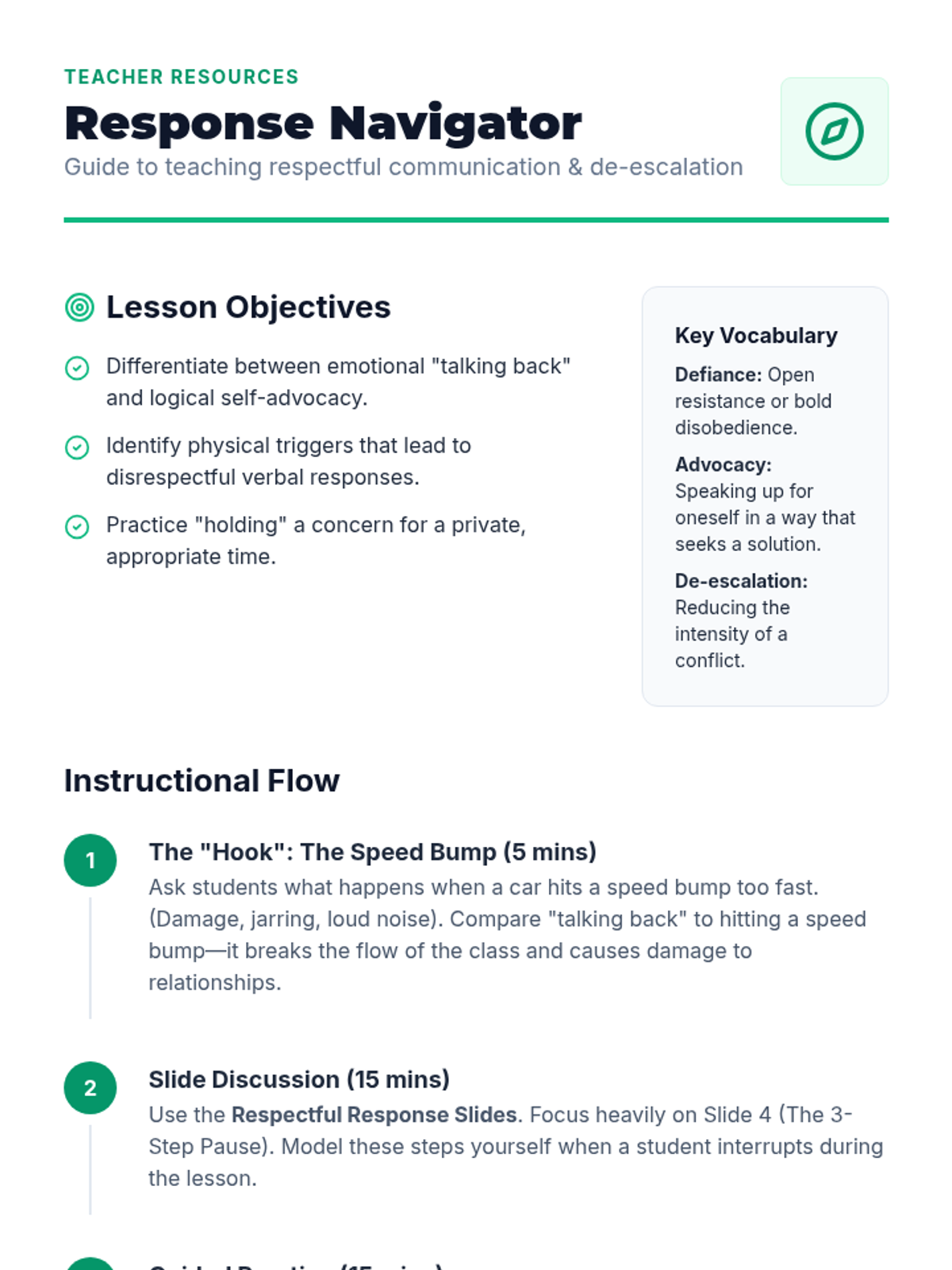
A series of lessons focused on developing essential social-emotional skills for classroom success, including conflict resolution and respectful communication.
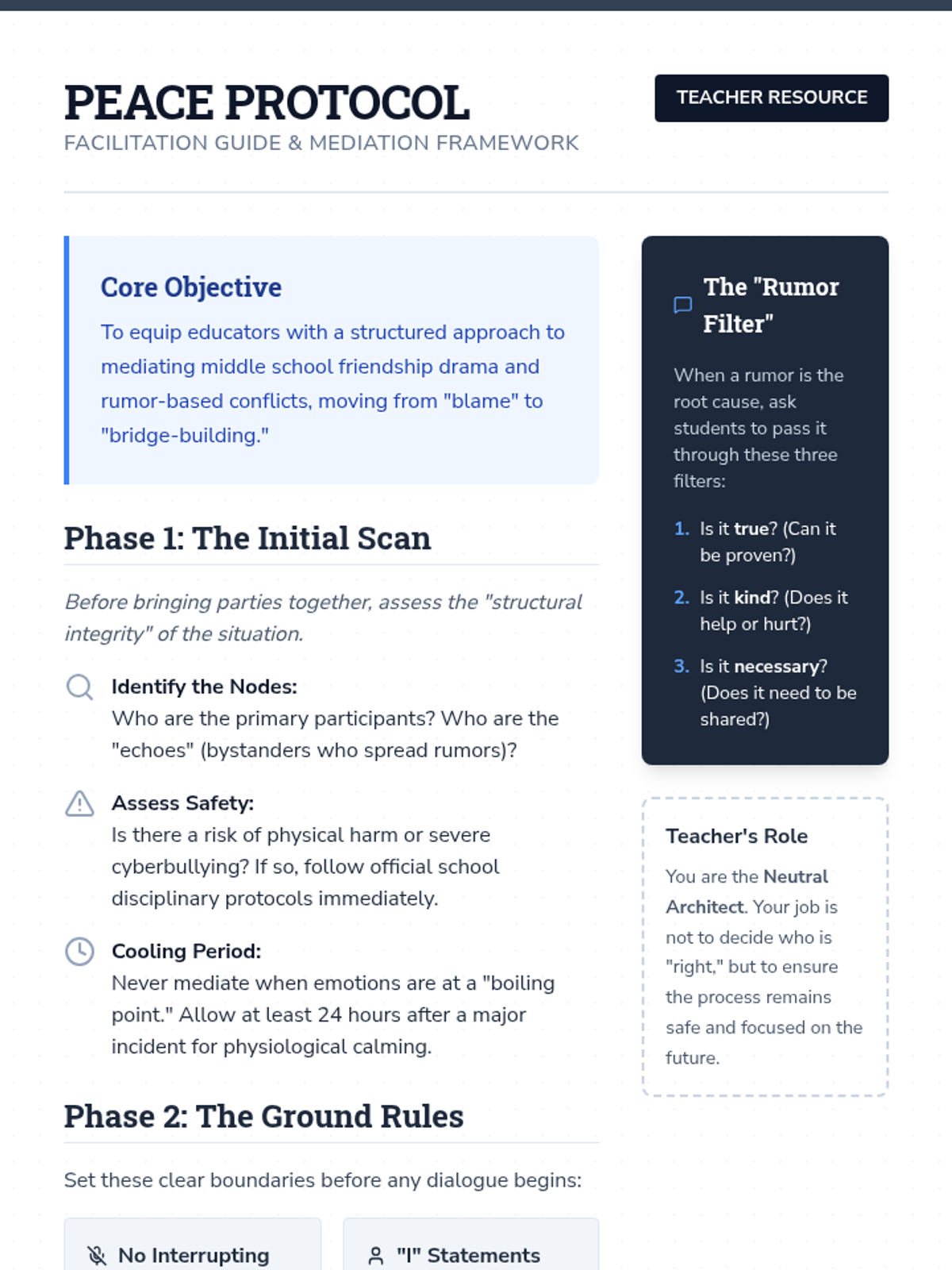
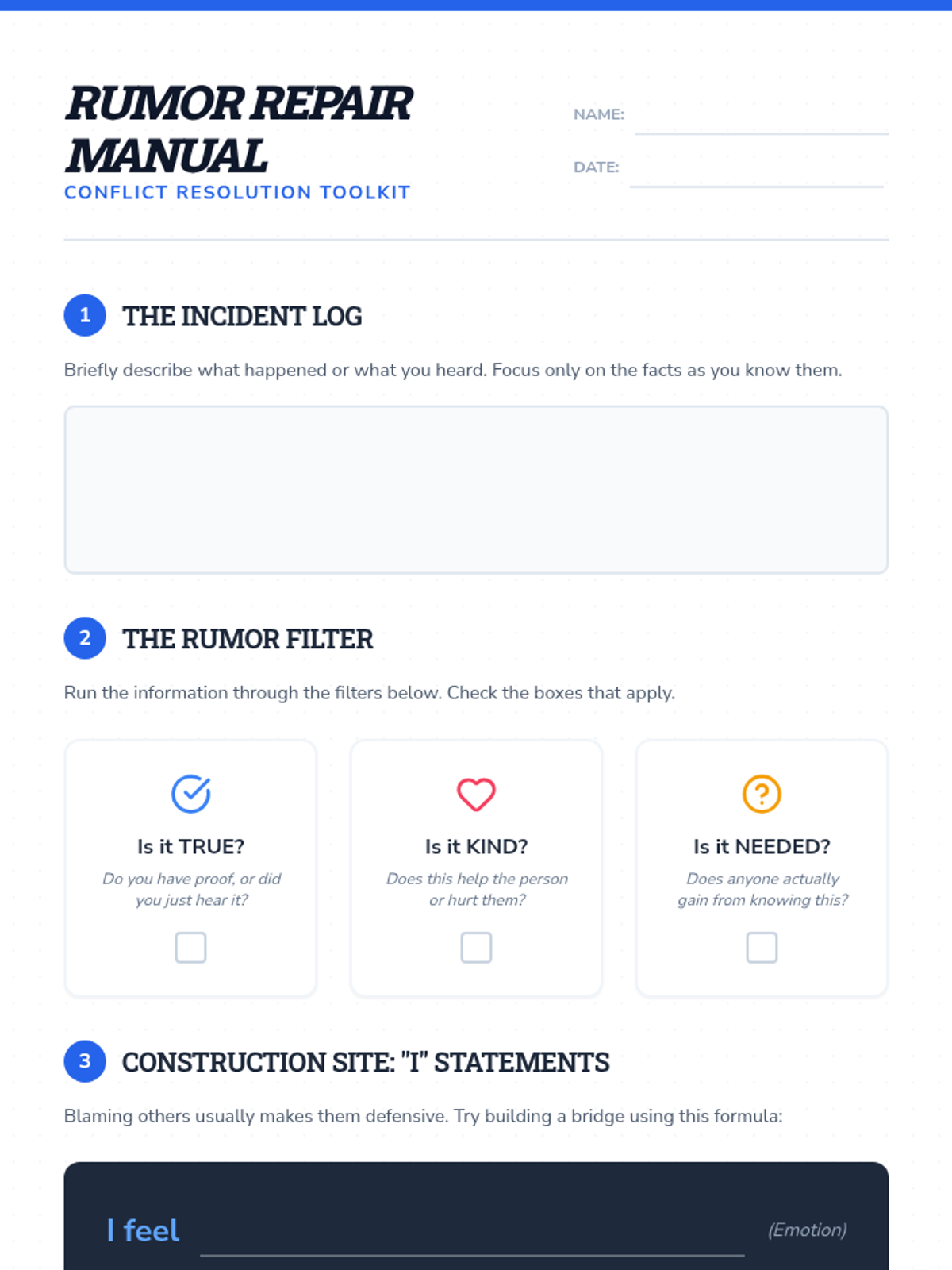
A series of lessons focused on developing interpersonal skills, conflict resolution strategies, and healthy communication habits among middle school students to address friendship drama and rumors.
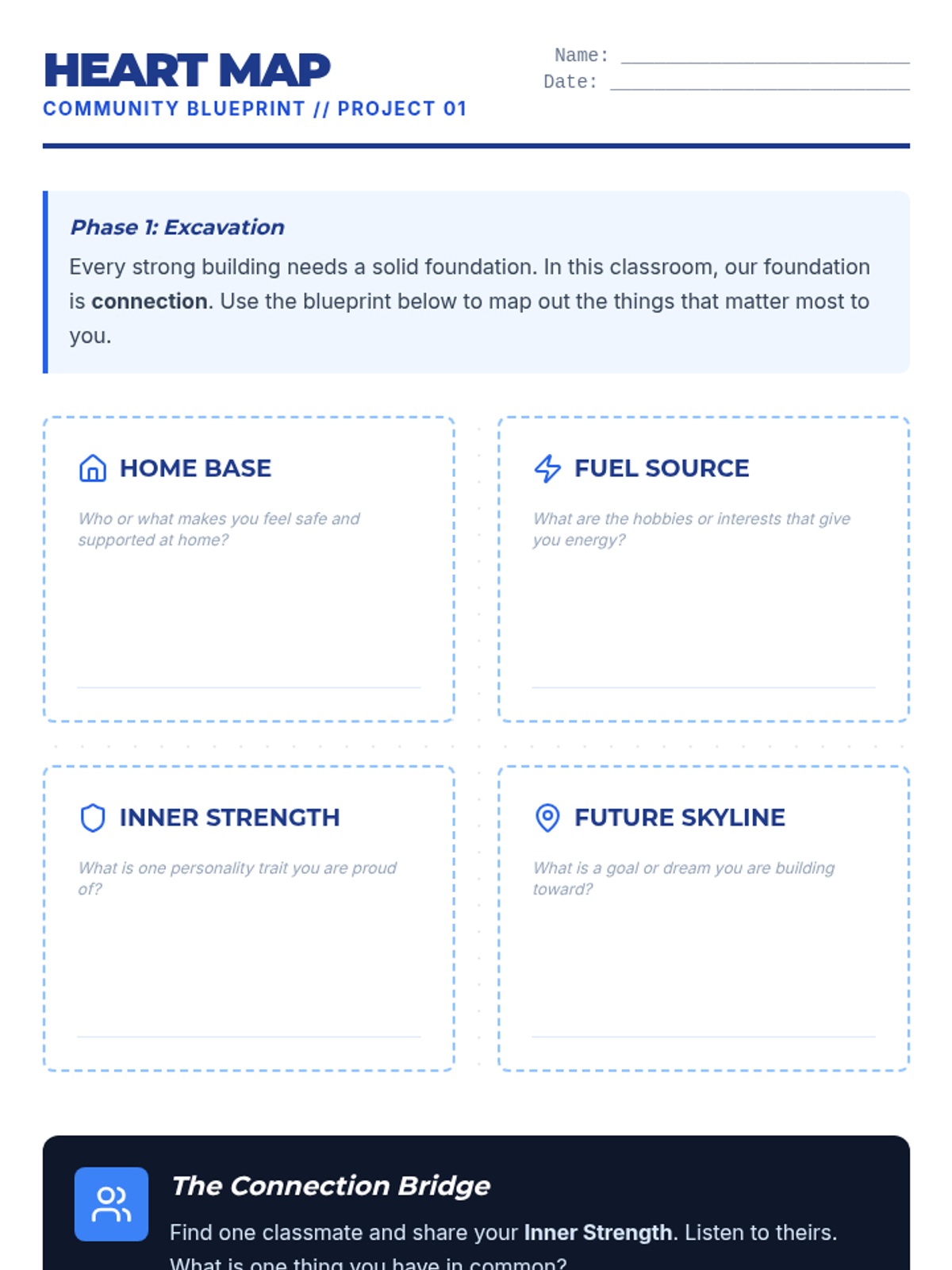
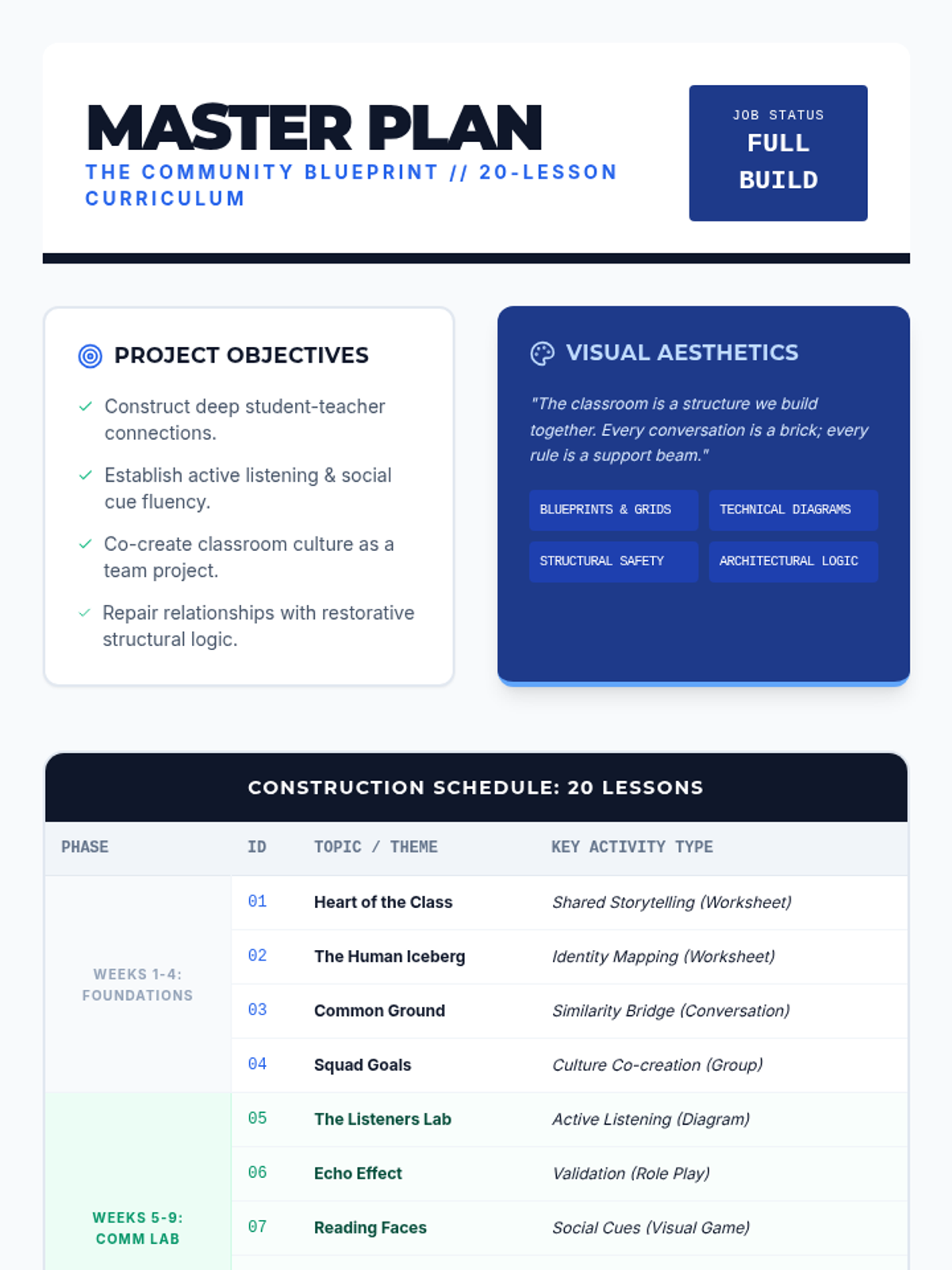
A comprehensive 20-lesson social-emotional learning curriculum designed to build a strong classroom community, master communication, and foster deep student-teacher relationships through 'blueprint' themed activities.
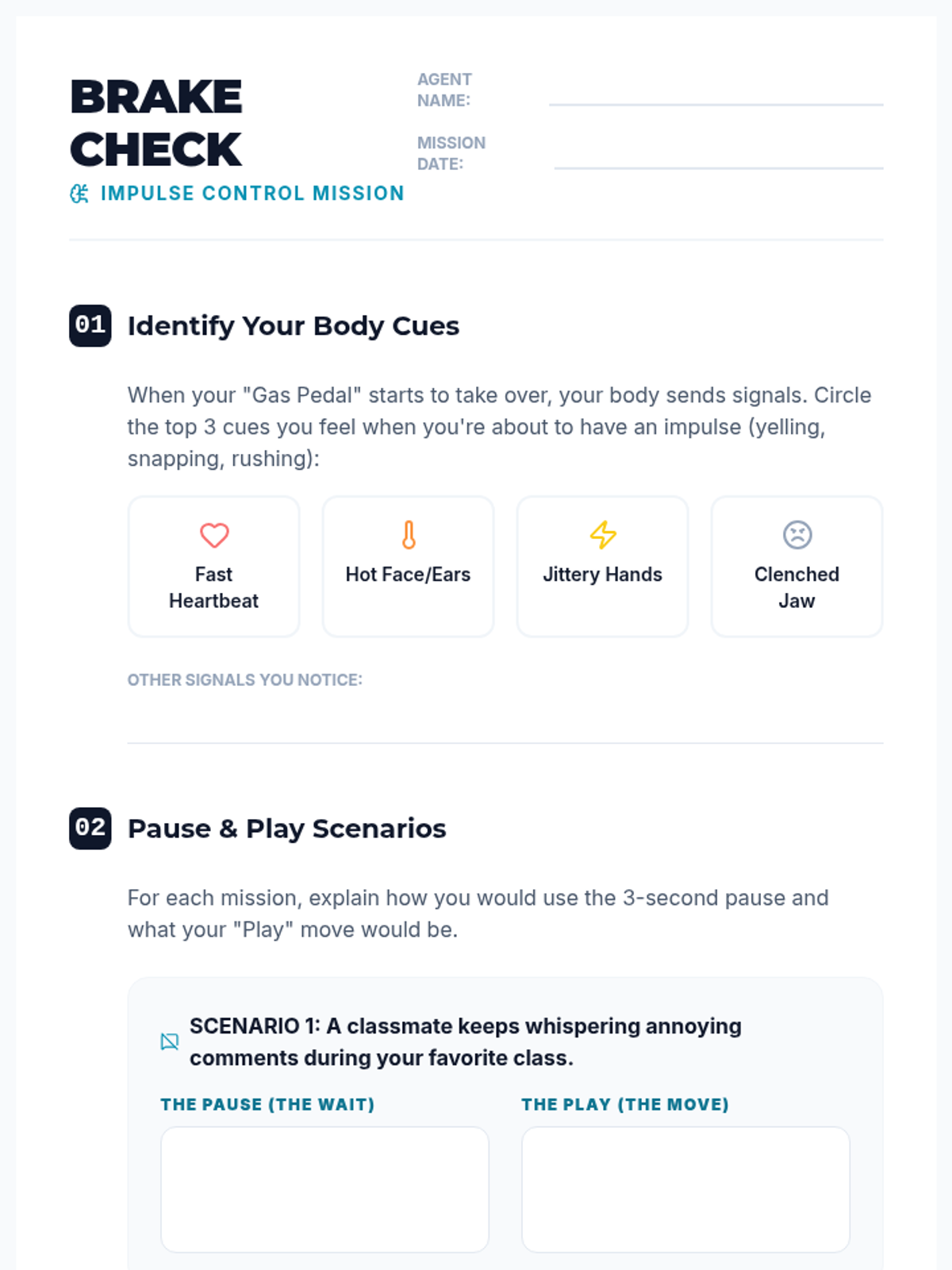
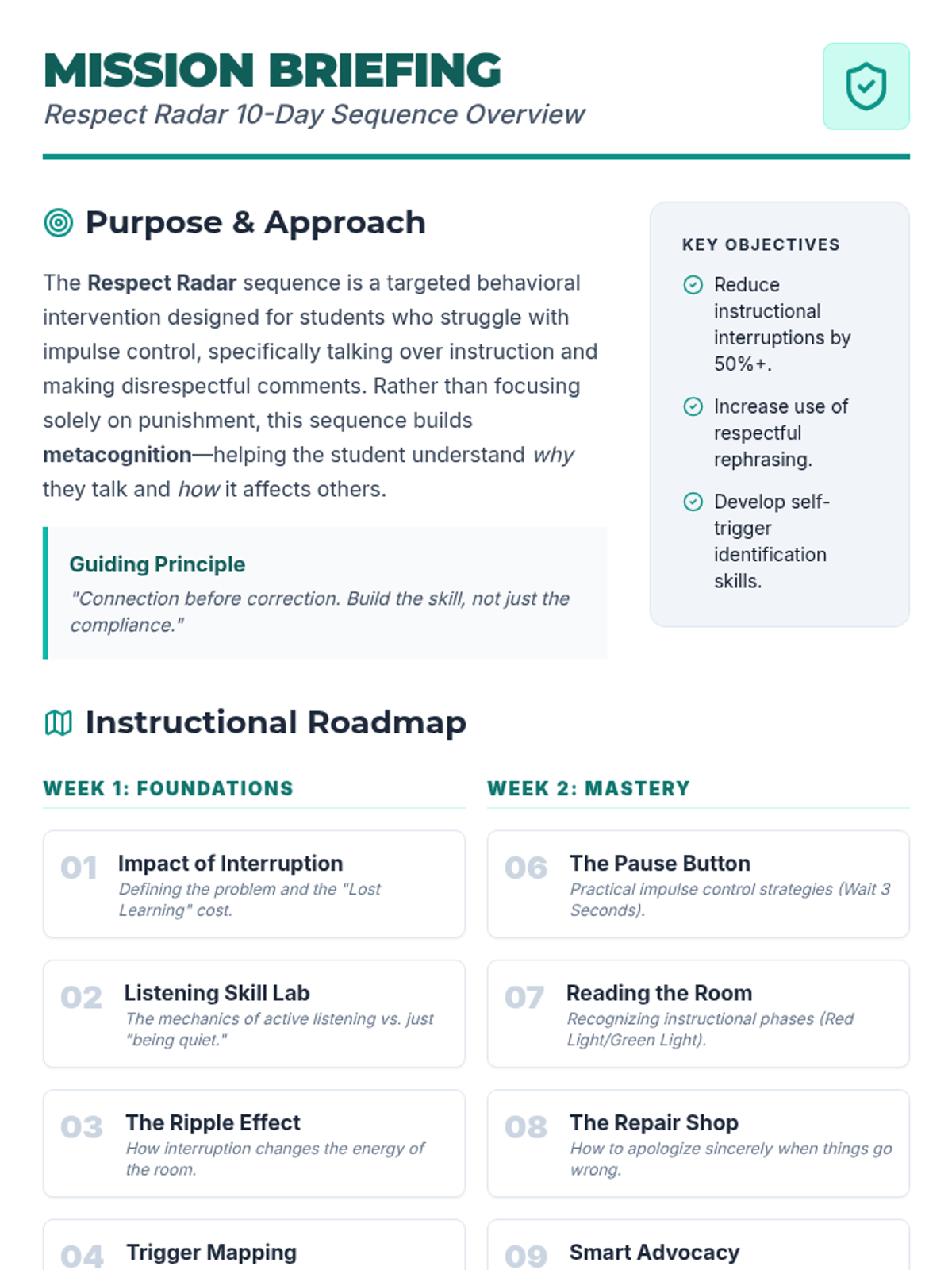
A 10-day behavioral intervention sequence designed to help students develop self-awareness, impulse control, and respectful communication skills to reduce classroom interruptions and rude comments.