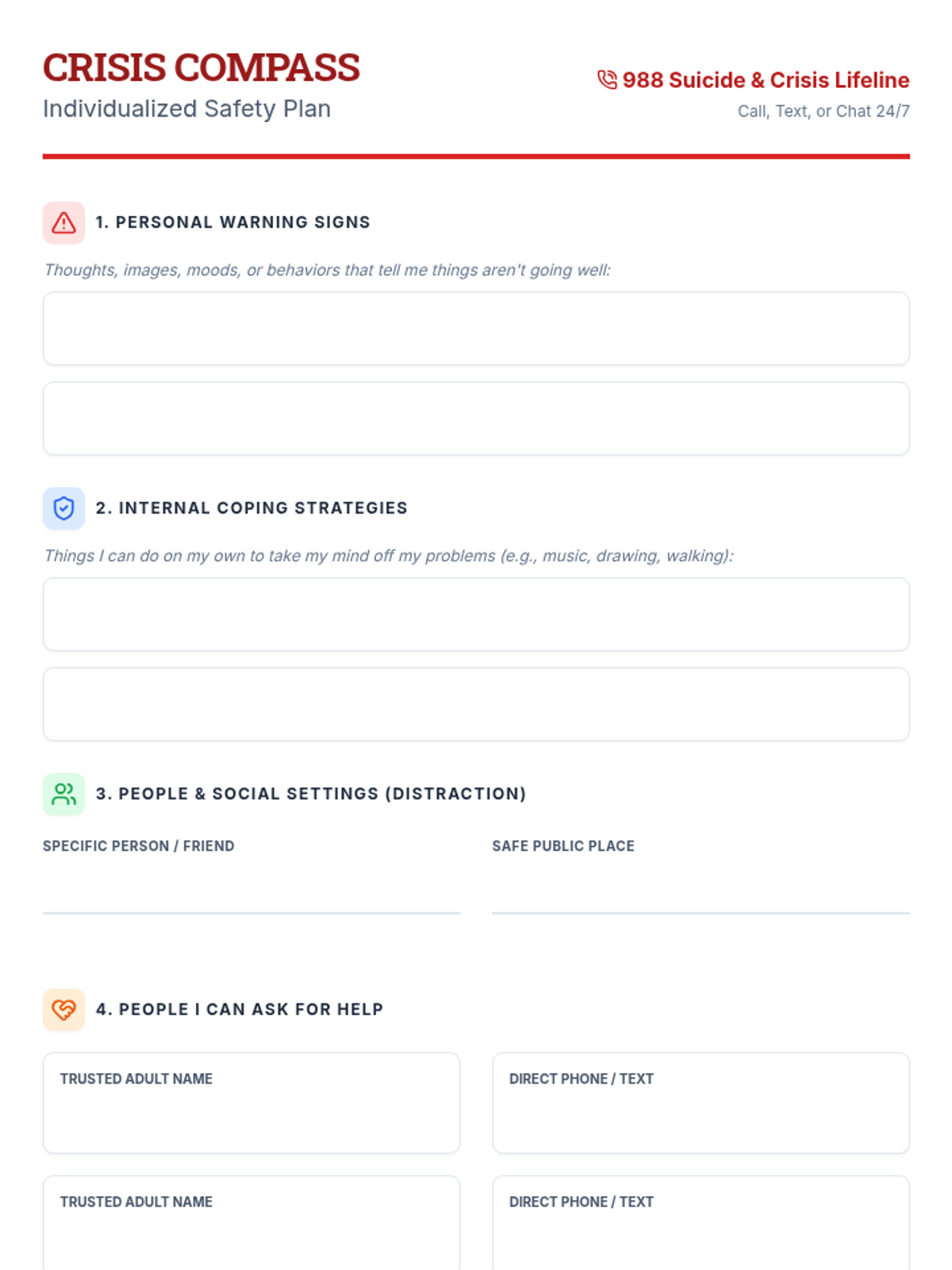
Identifies mental health crises and suicide warning signs while developing personal safety plans and grounding techniques. Equips users with peer gatekeeper skills and direct pathways to professional crisis resources and hotlines.
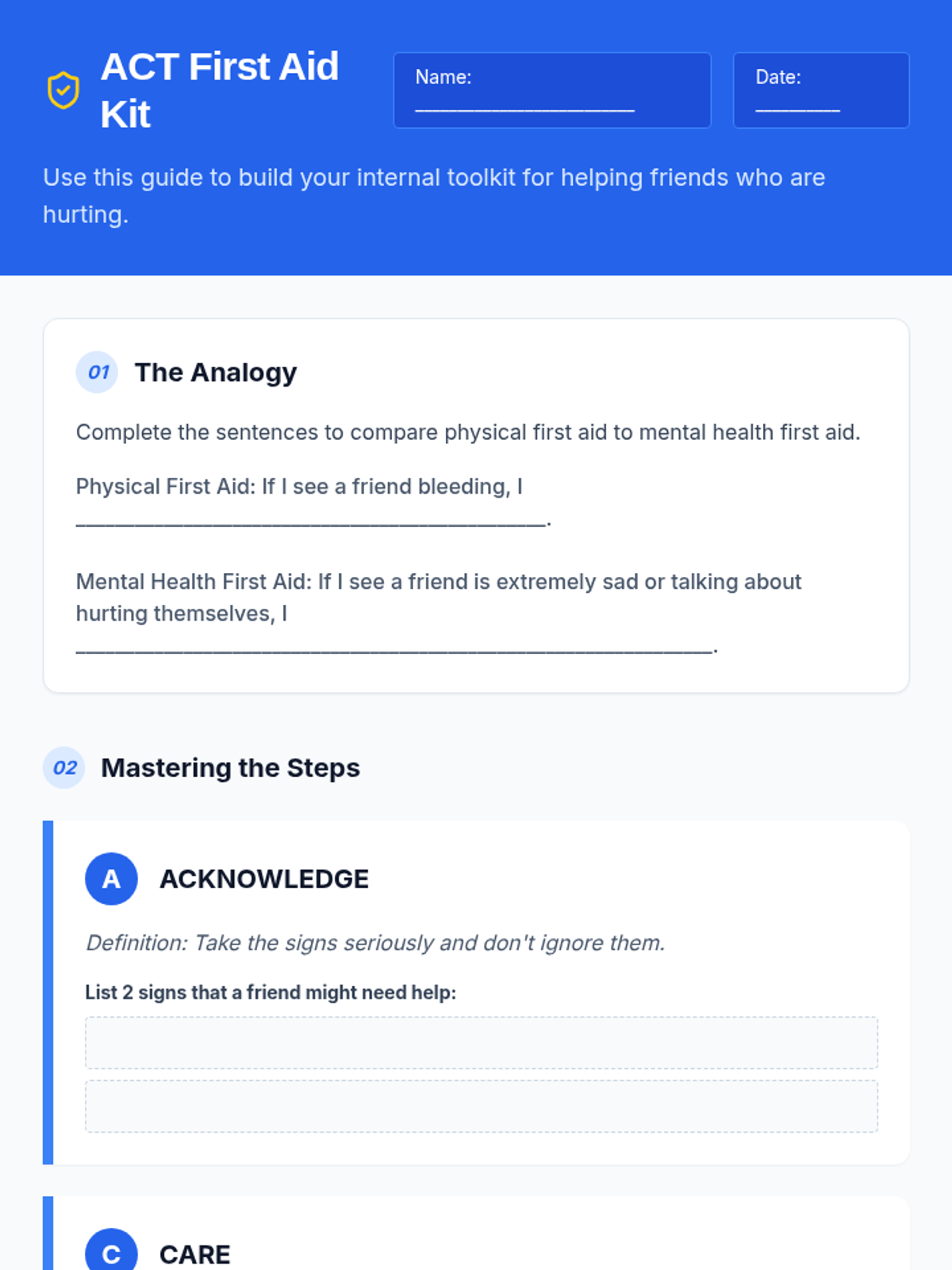
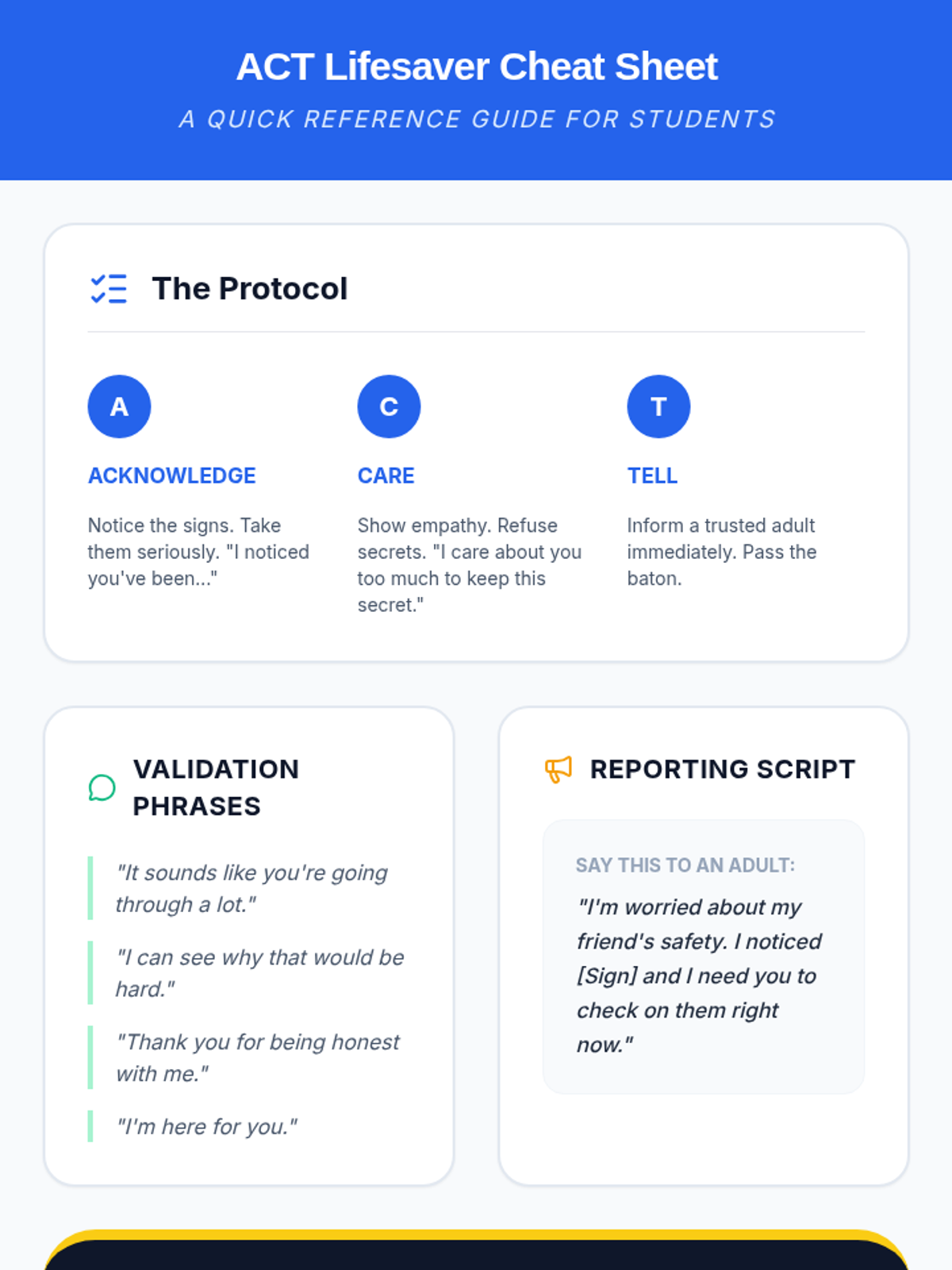
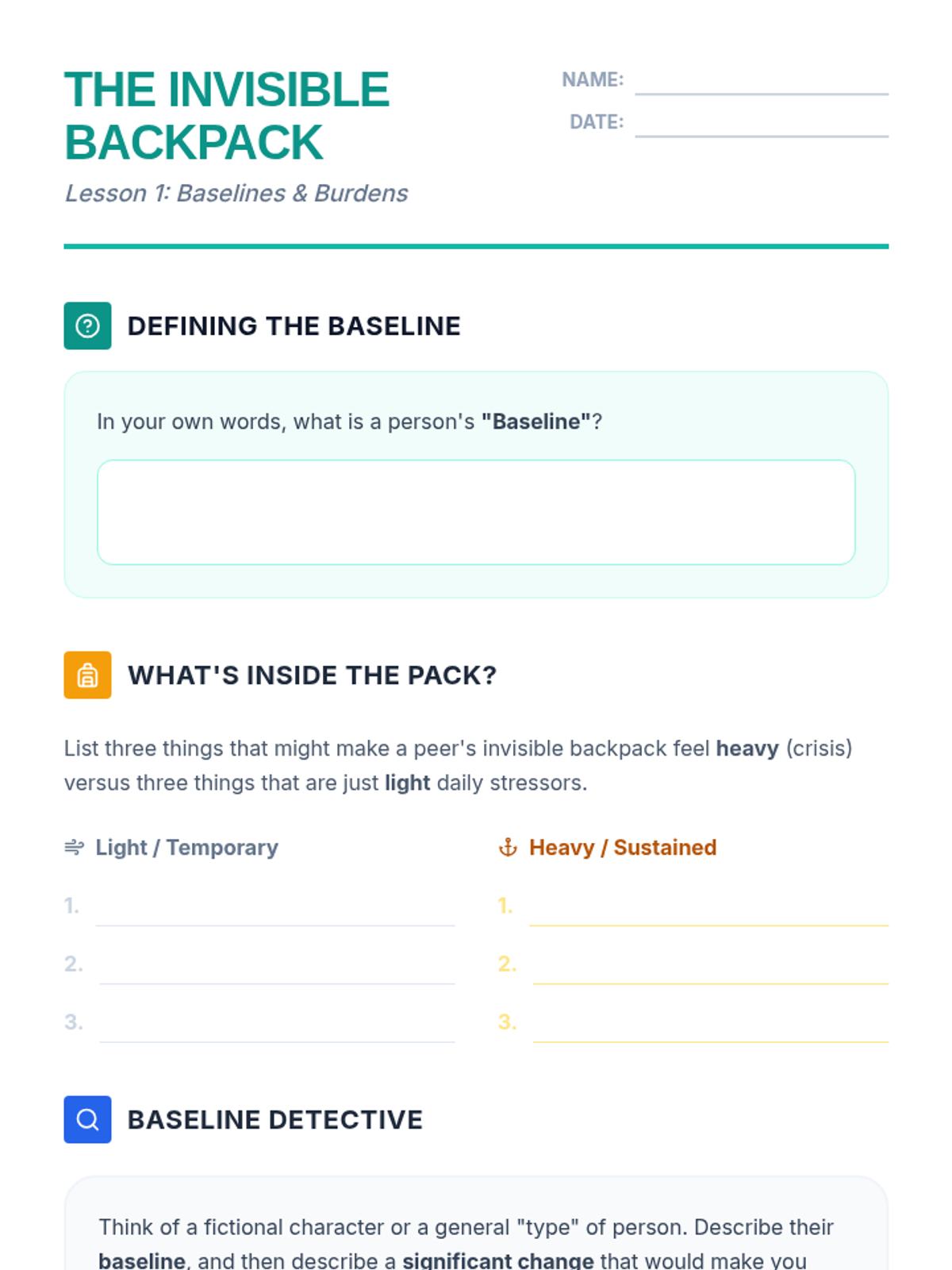
A comprehensive sequence for 6th-grade students on the A.C.T. (Acknowledge, Care, Tell) intervention model for suicide prevention. Students learn to identify warning signs, communicate empathy, and connect peers to trusted adults.
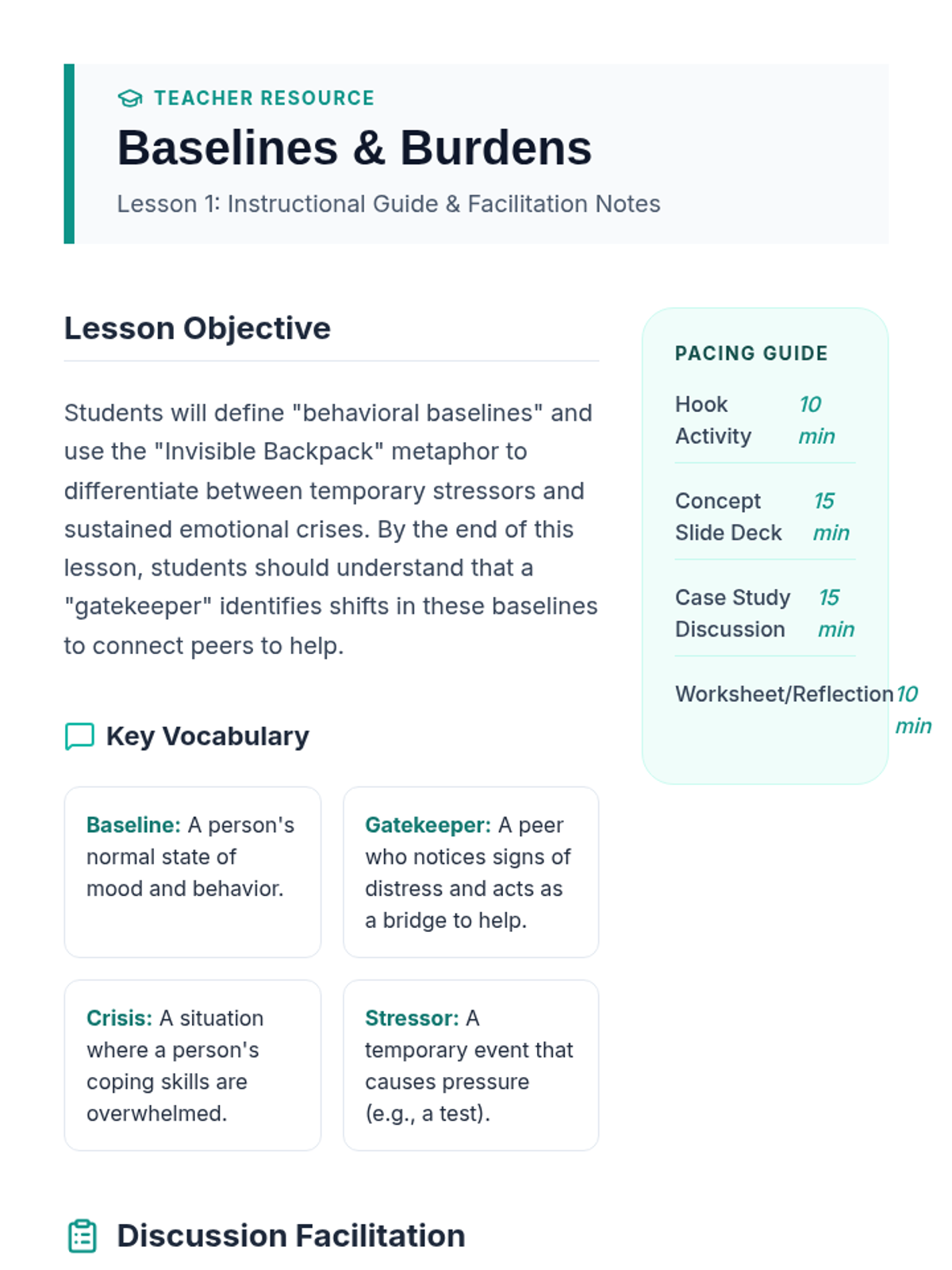
This 6th-grade sequence empowers students to become effective peer gatekeepers by teaching them how to recognize signs of distress, use the Acknowledge, Care, Tell (A.C.T.) framework, and overcome social barriers to reporting. Students will move from identifying emotional baselines to mapping out their personal safety networks of trusted adults.
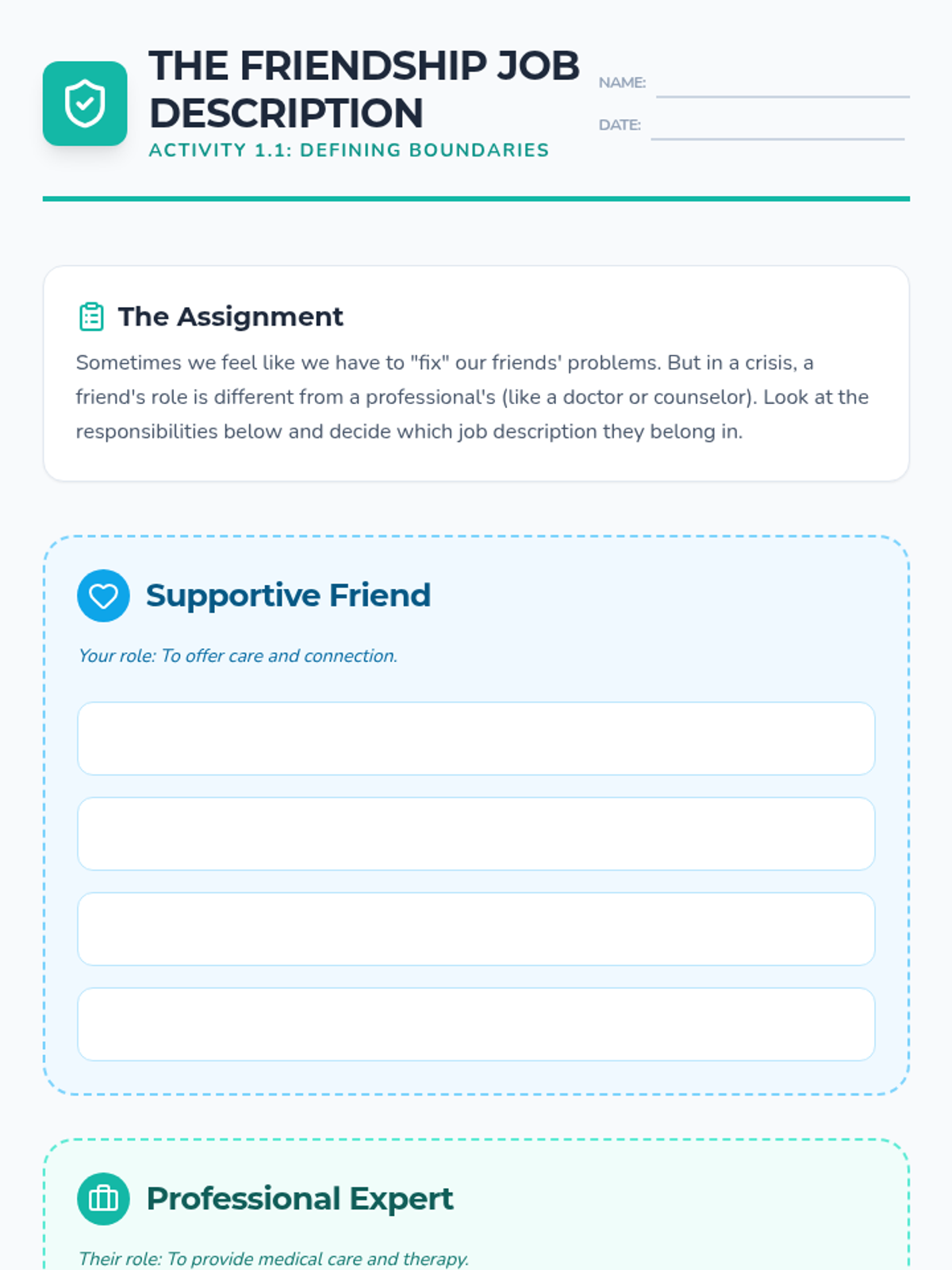
A comprehensive sequence for 6th graders to develop communication skills for peer mental health support. Students learn to distinguish their role from professionals, use the ACT (Acknowledge, Care, Tell) model, and navigate reporting concerns to trusted adults through simulations and role-play.
A project-based unit where 6th-grade students explore school, community, and national mental health resources. Students learn to navigate help-seeking pathways and conclude by creating resource materials for their school community.
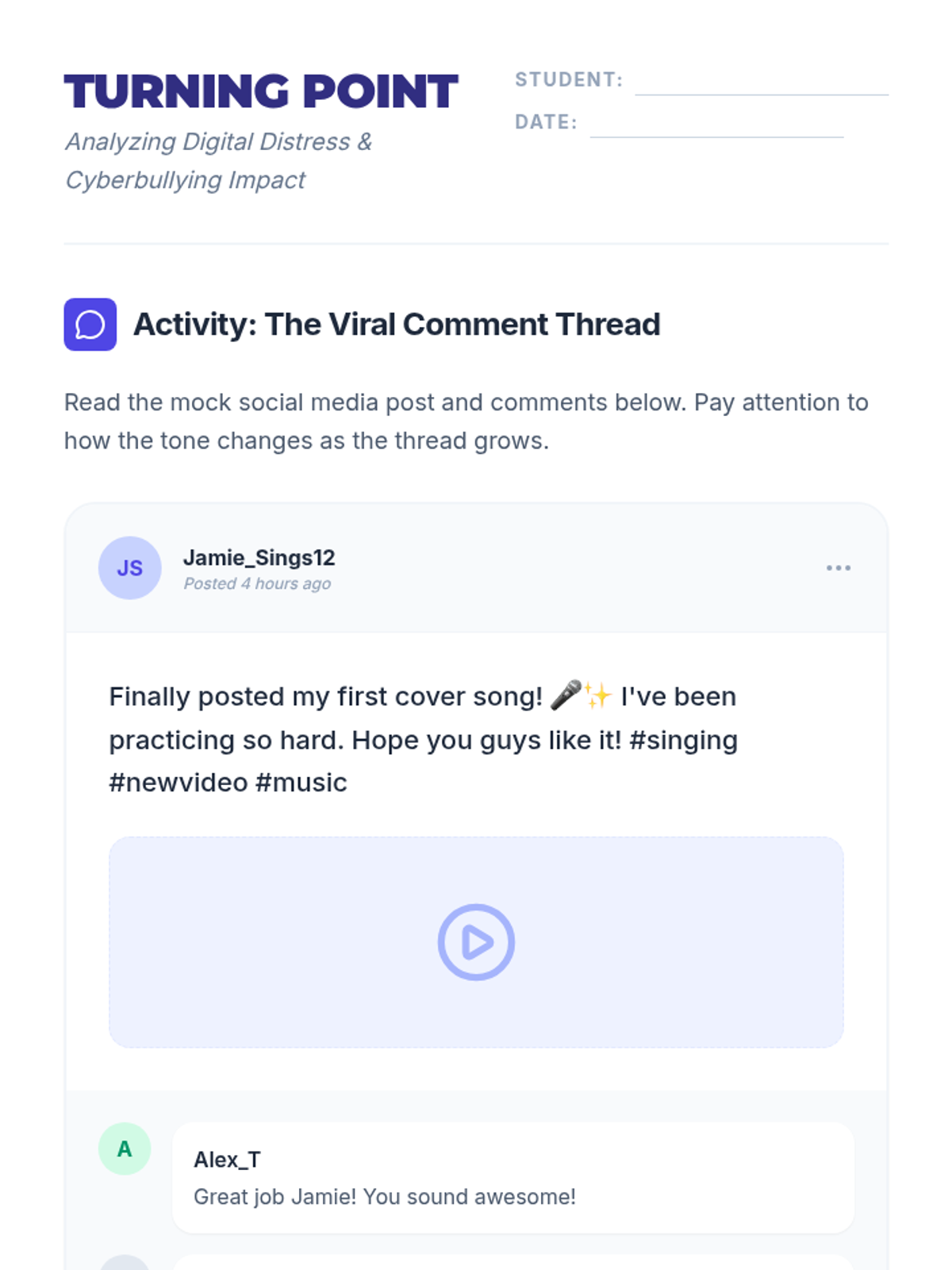
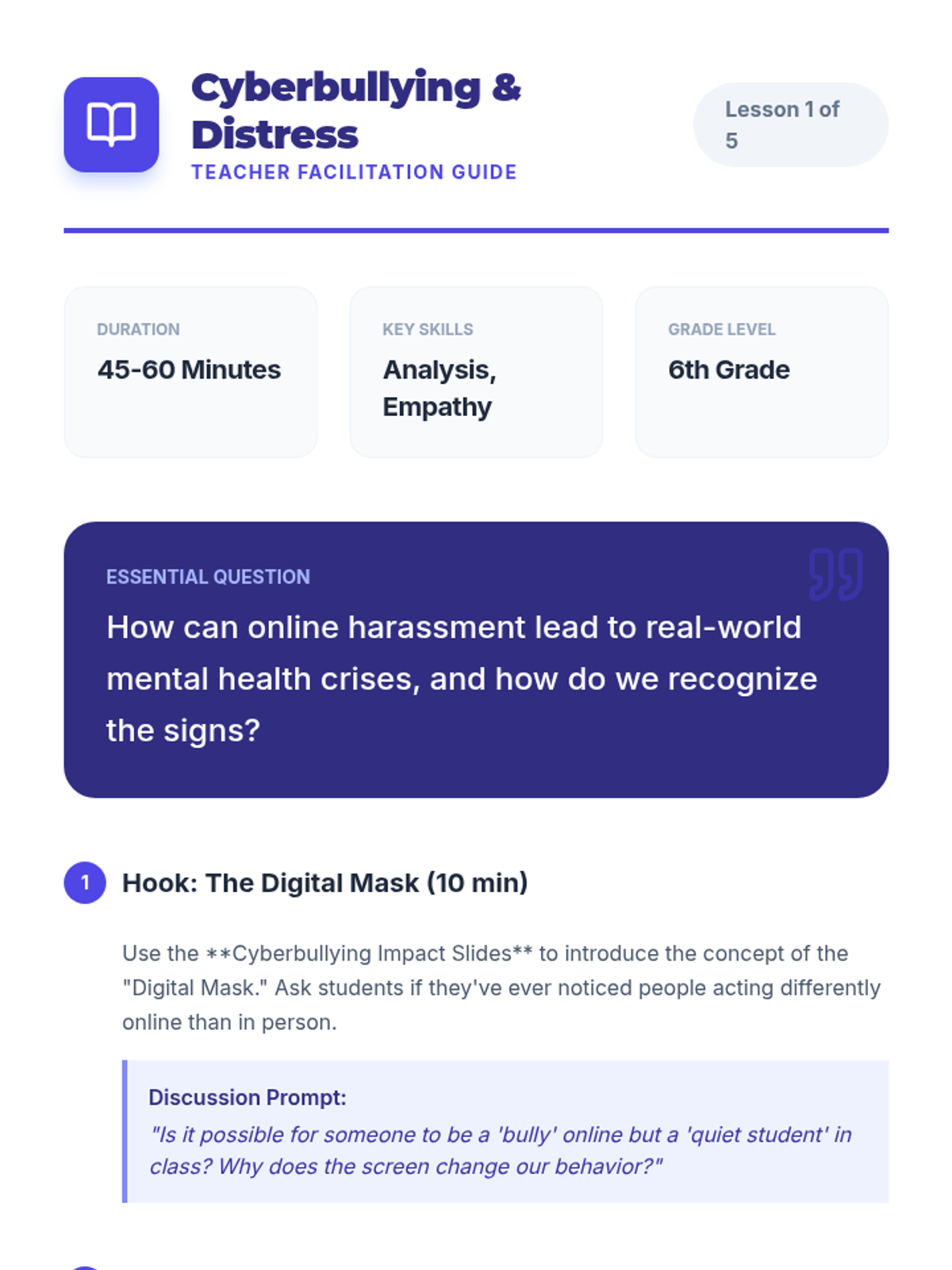
A comprehensive unit for 6th graders on identifying signs of mental health distress in online spaces, understanding the impact of cyberbullying, and learning how to report safety concerns on digital platforms.
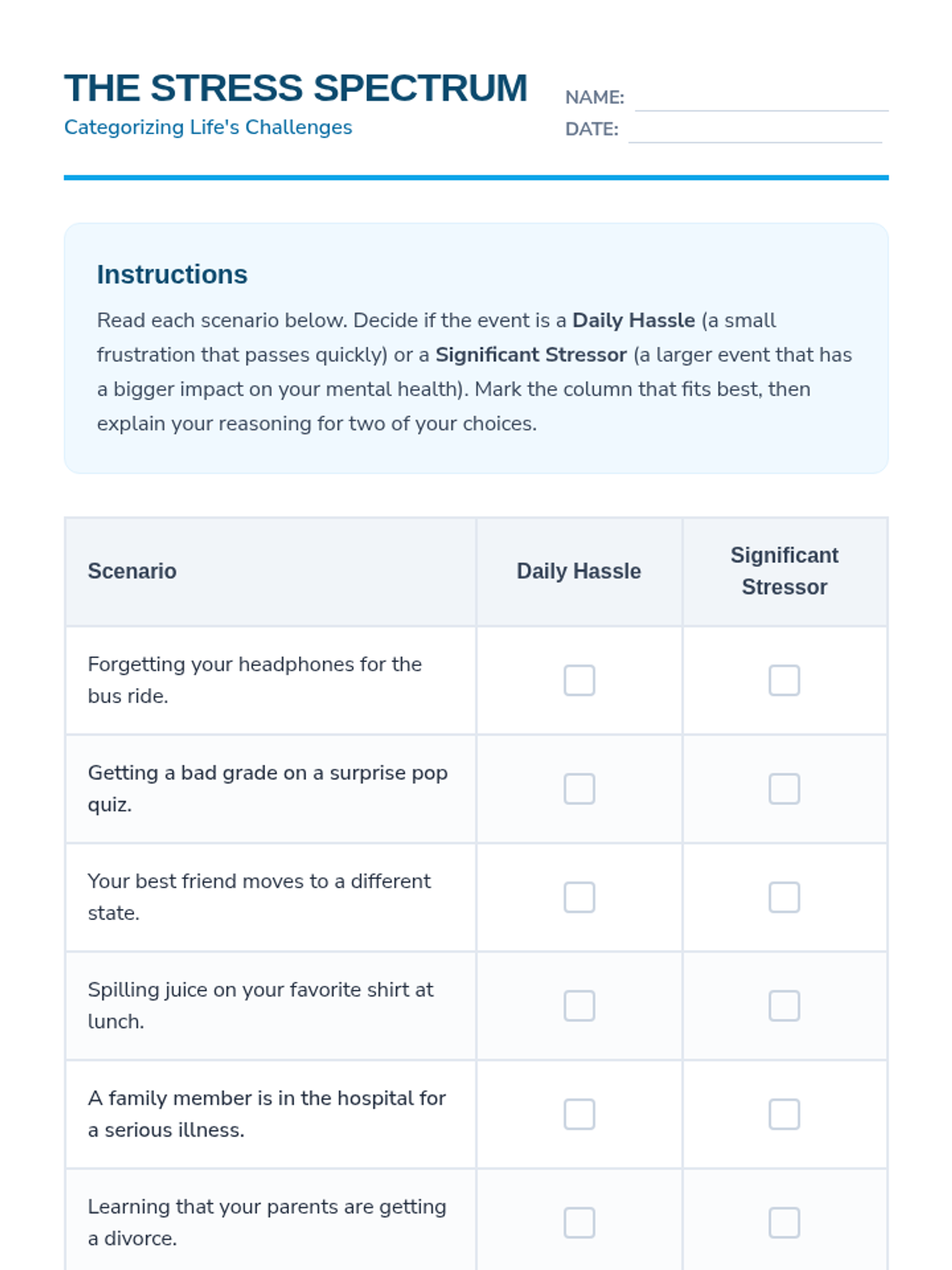
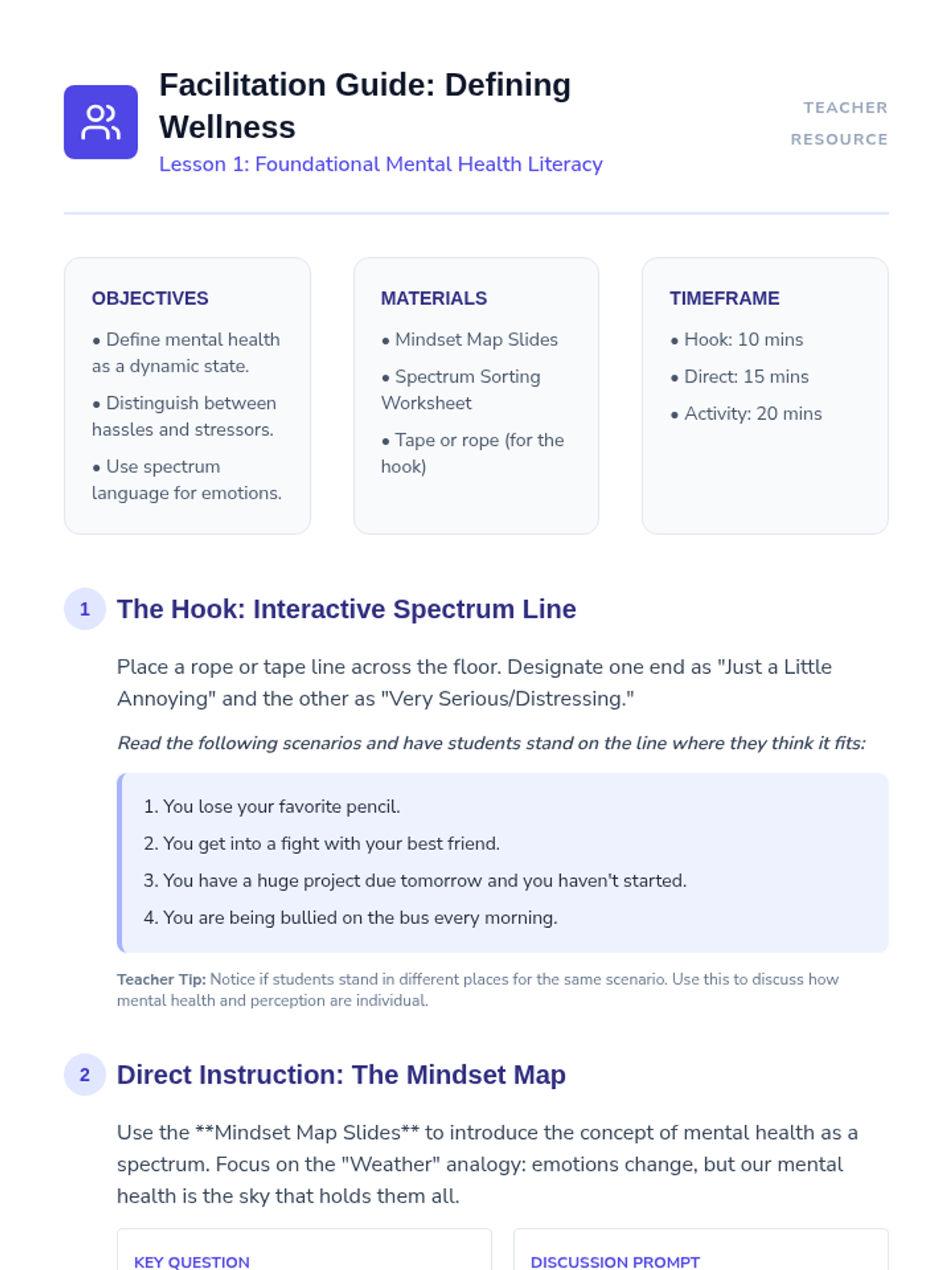
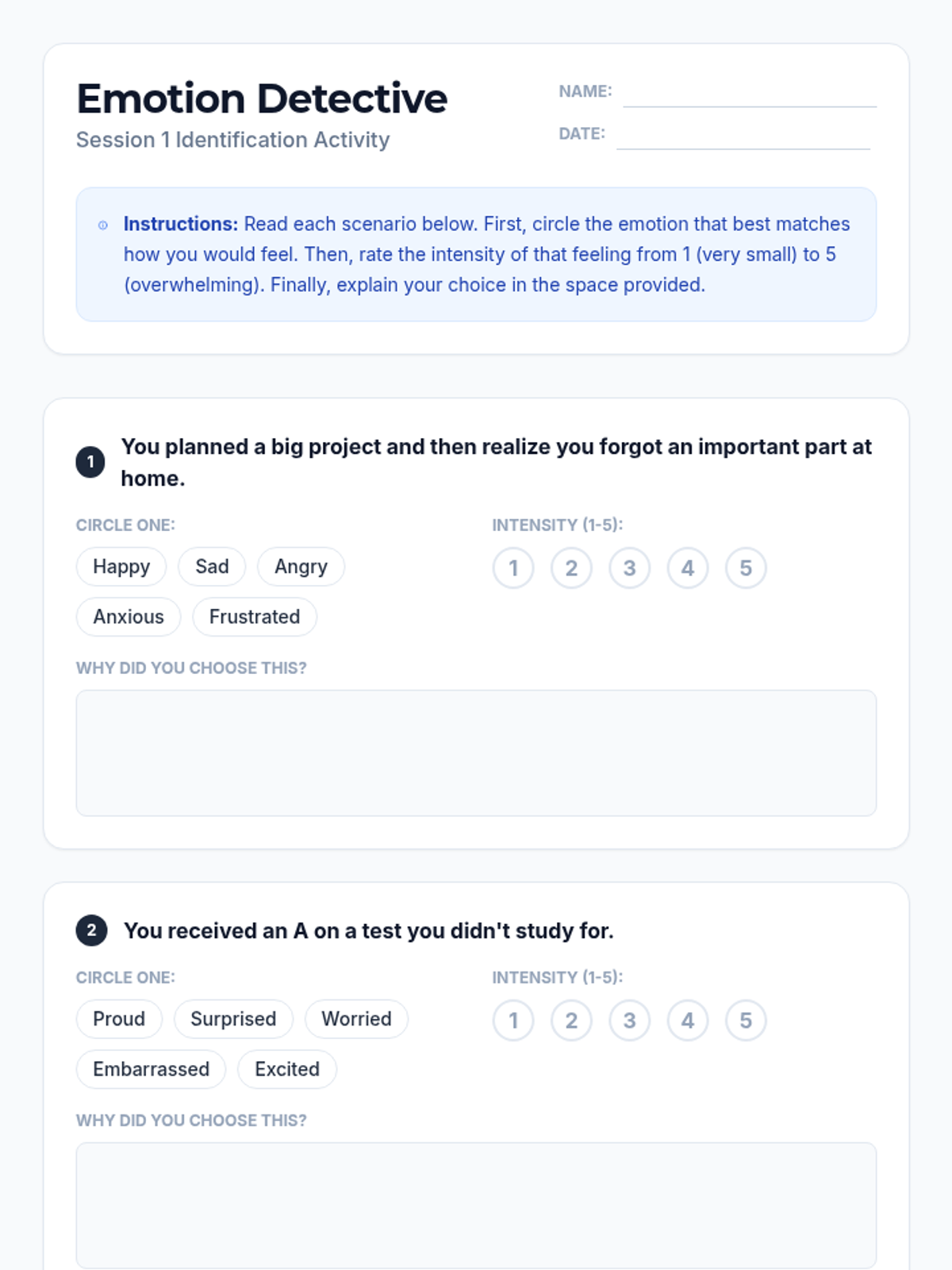
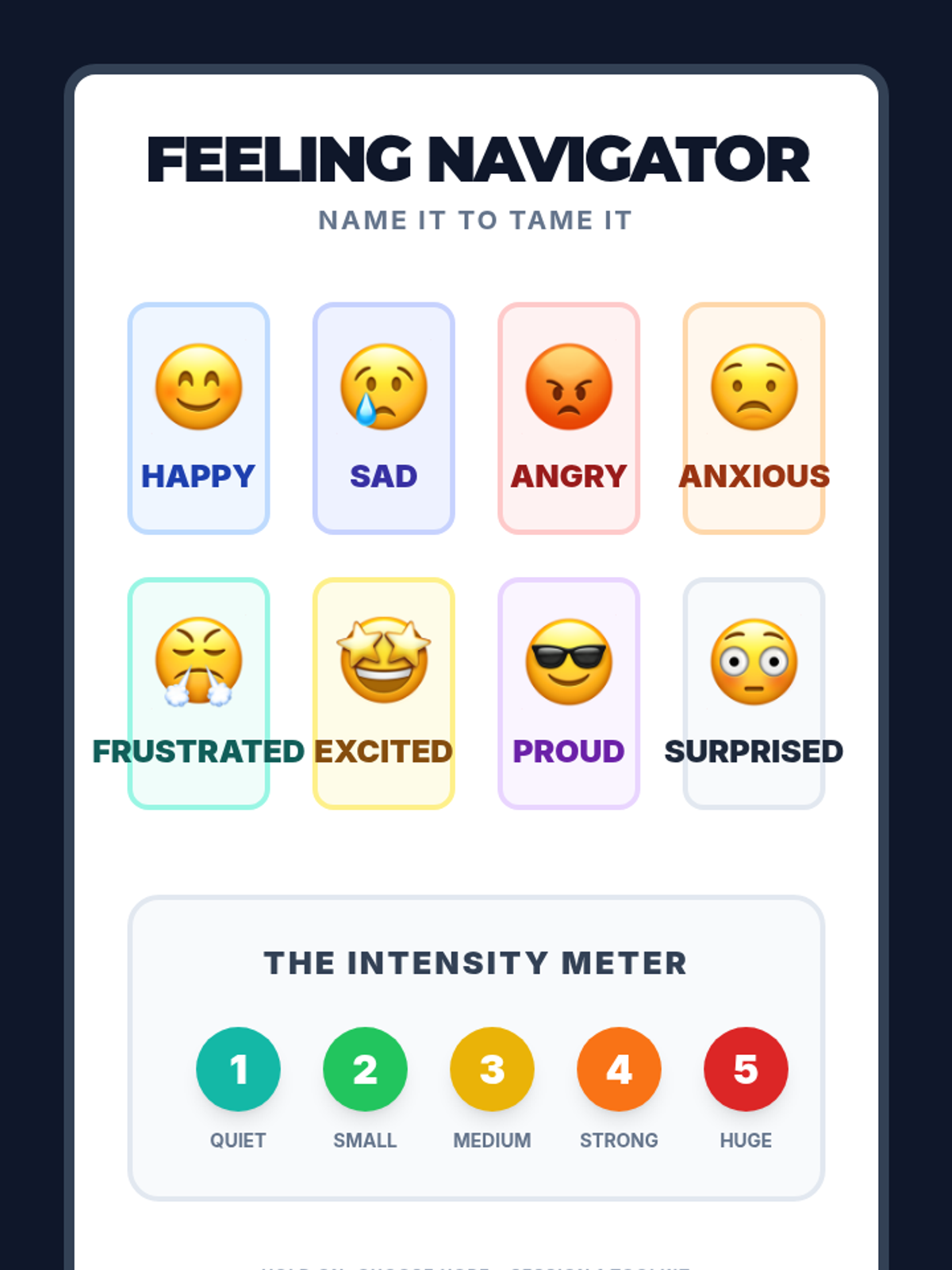
This sequence introduces 6th-grade students to mental health literacy, focusing on distinguishing between normal emotional fluctuations and signs of distress. Students build emotional vocabulary, understand the physical signs of stress, and learn to evaluate the intensity and duration of their feelings.
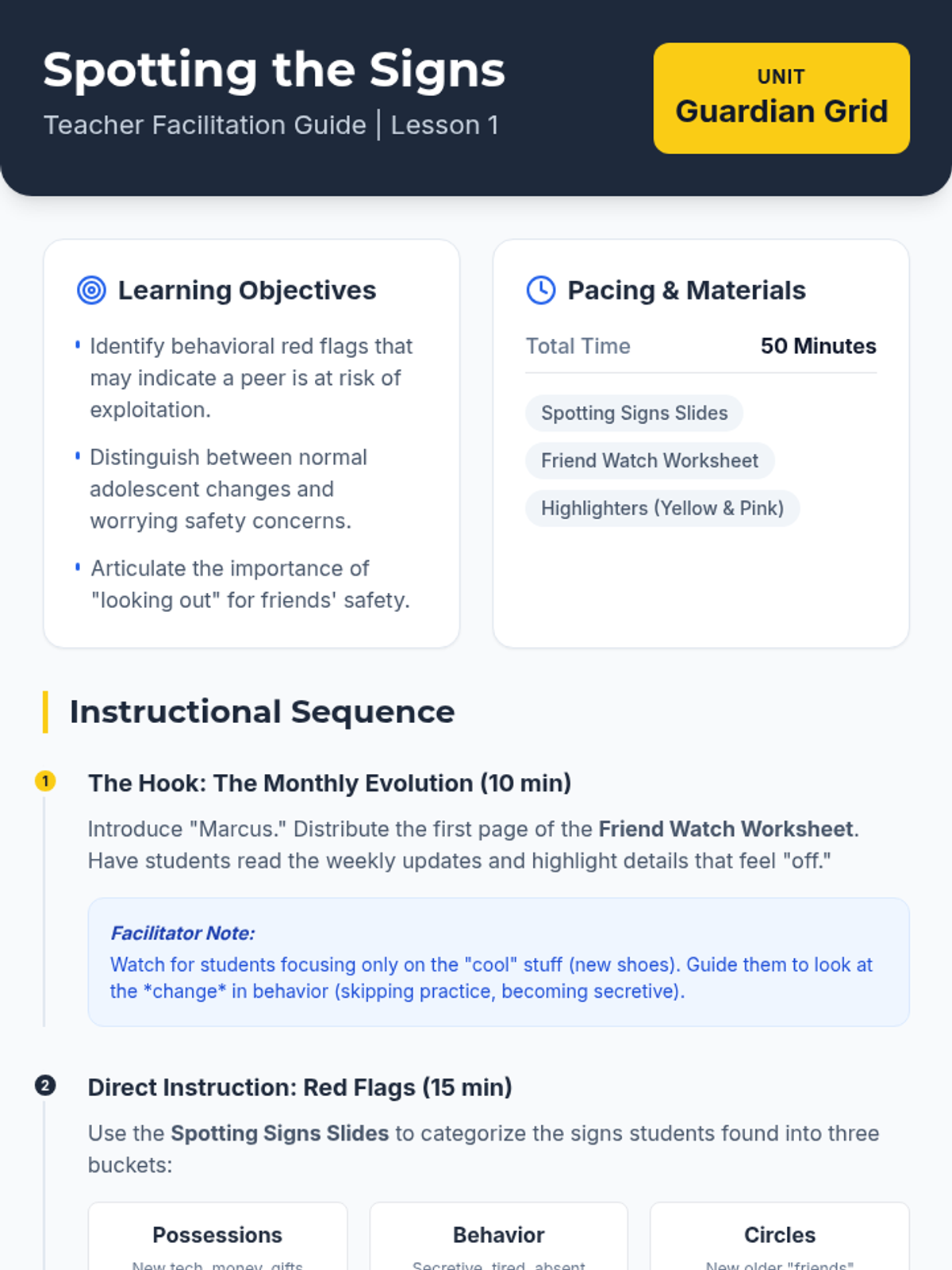
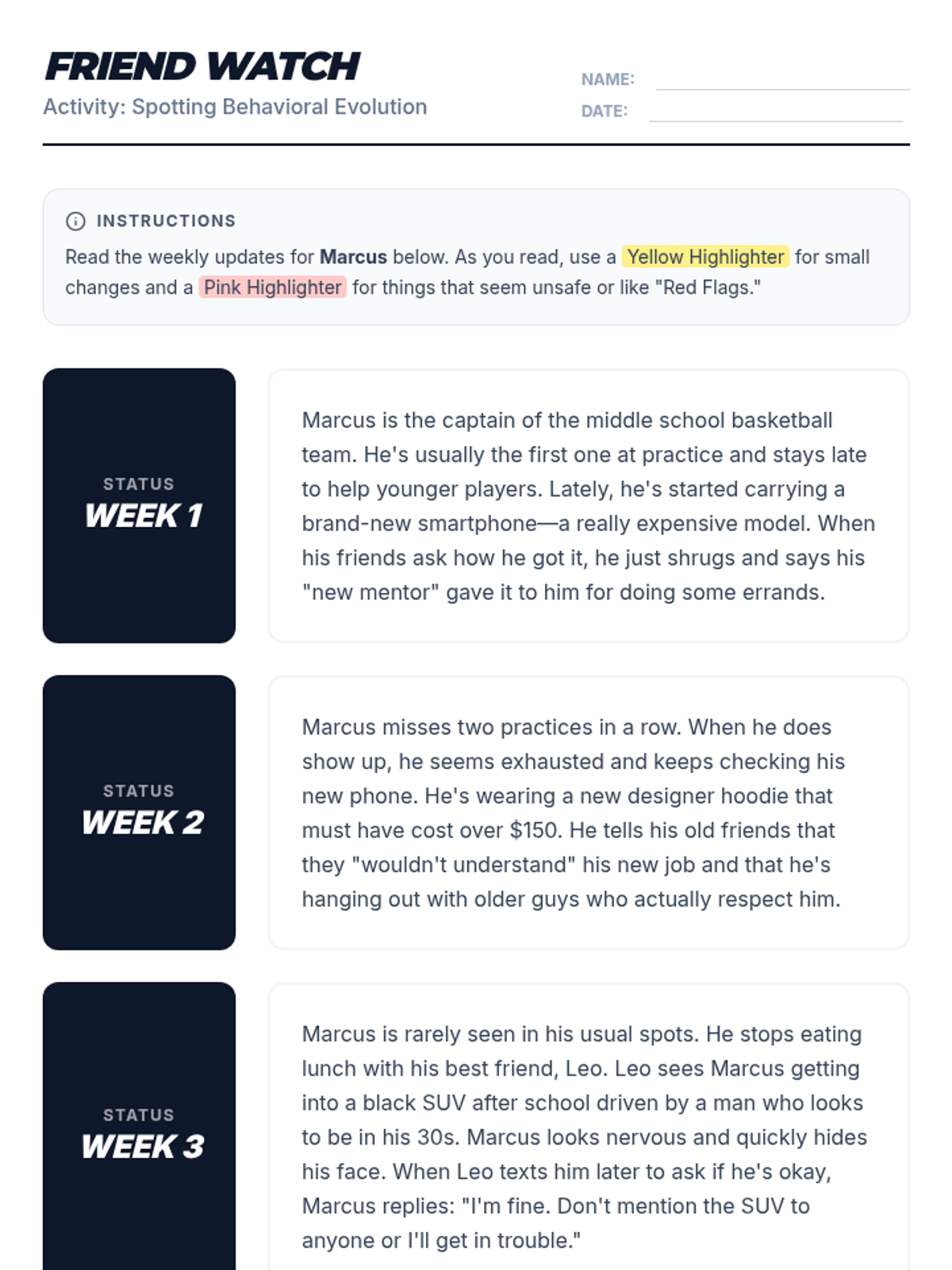
A comprehensive unit for 6th graders focusing on identifying signs of exploitation, overcoming reporting barriers, and navigating safety resources to protect themselves and their peers.
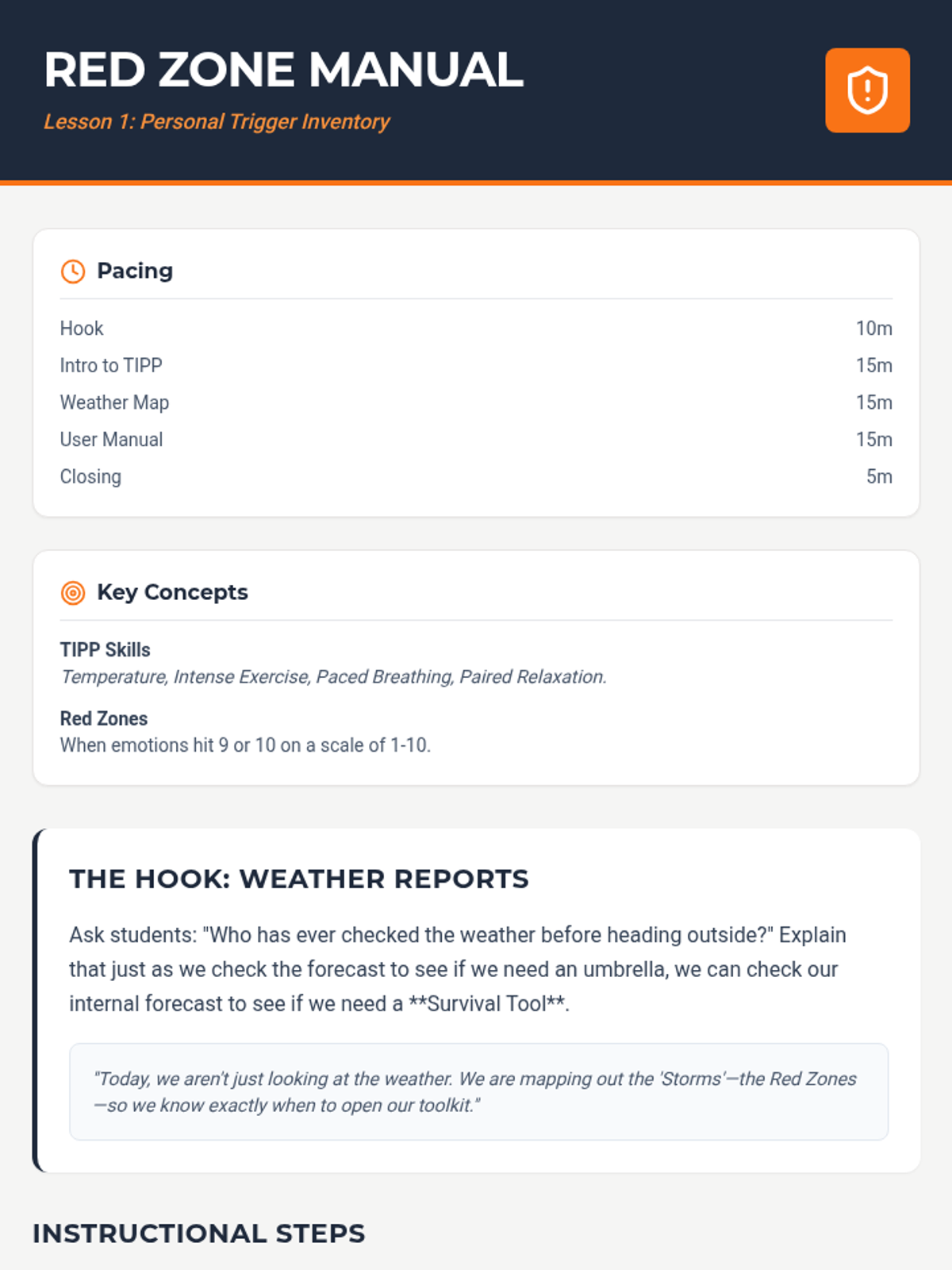
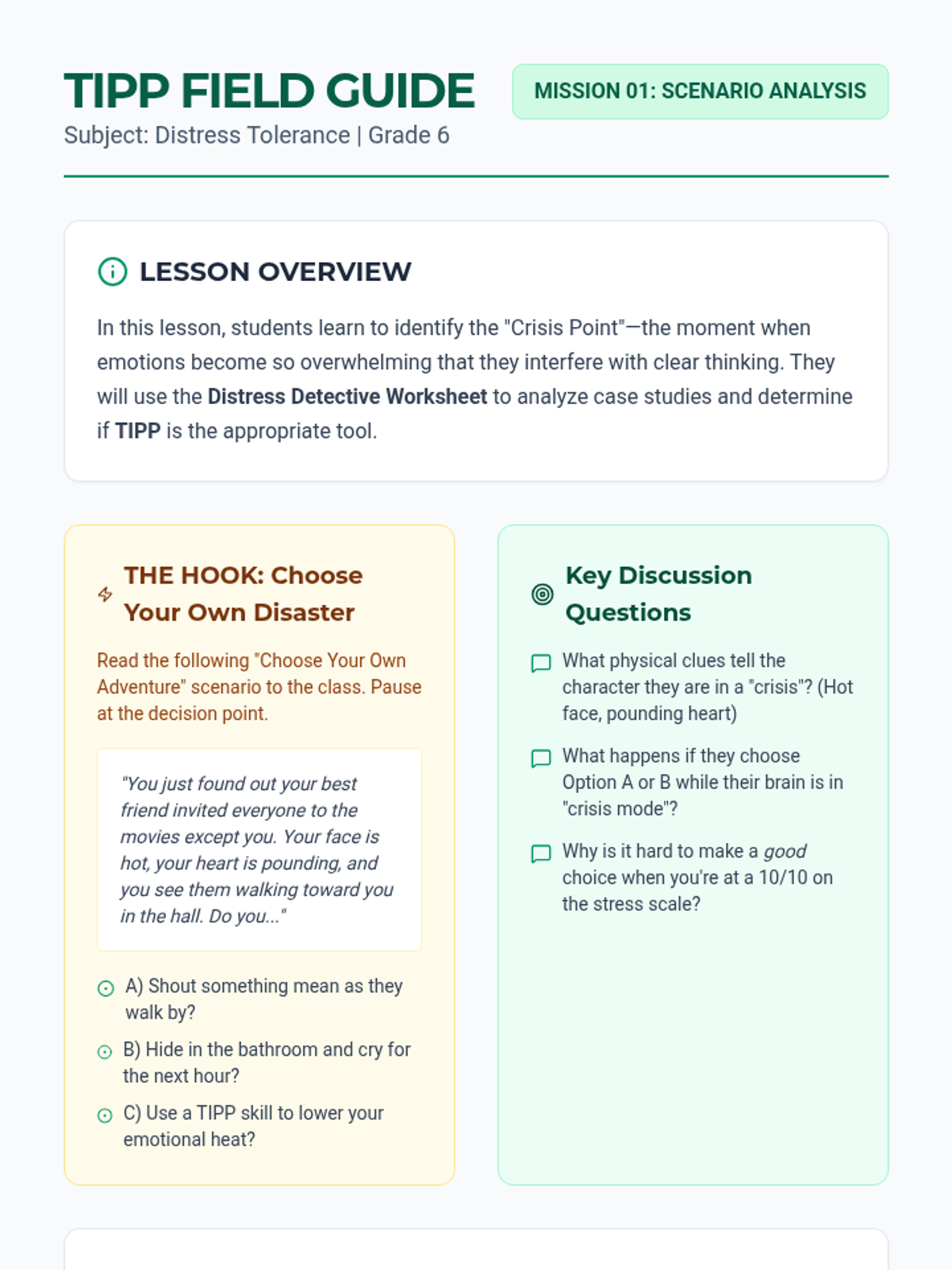
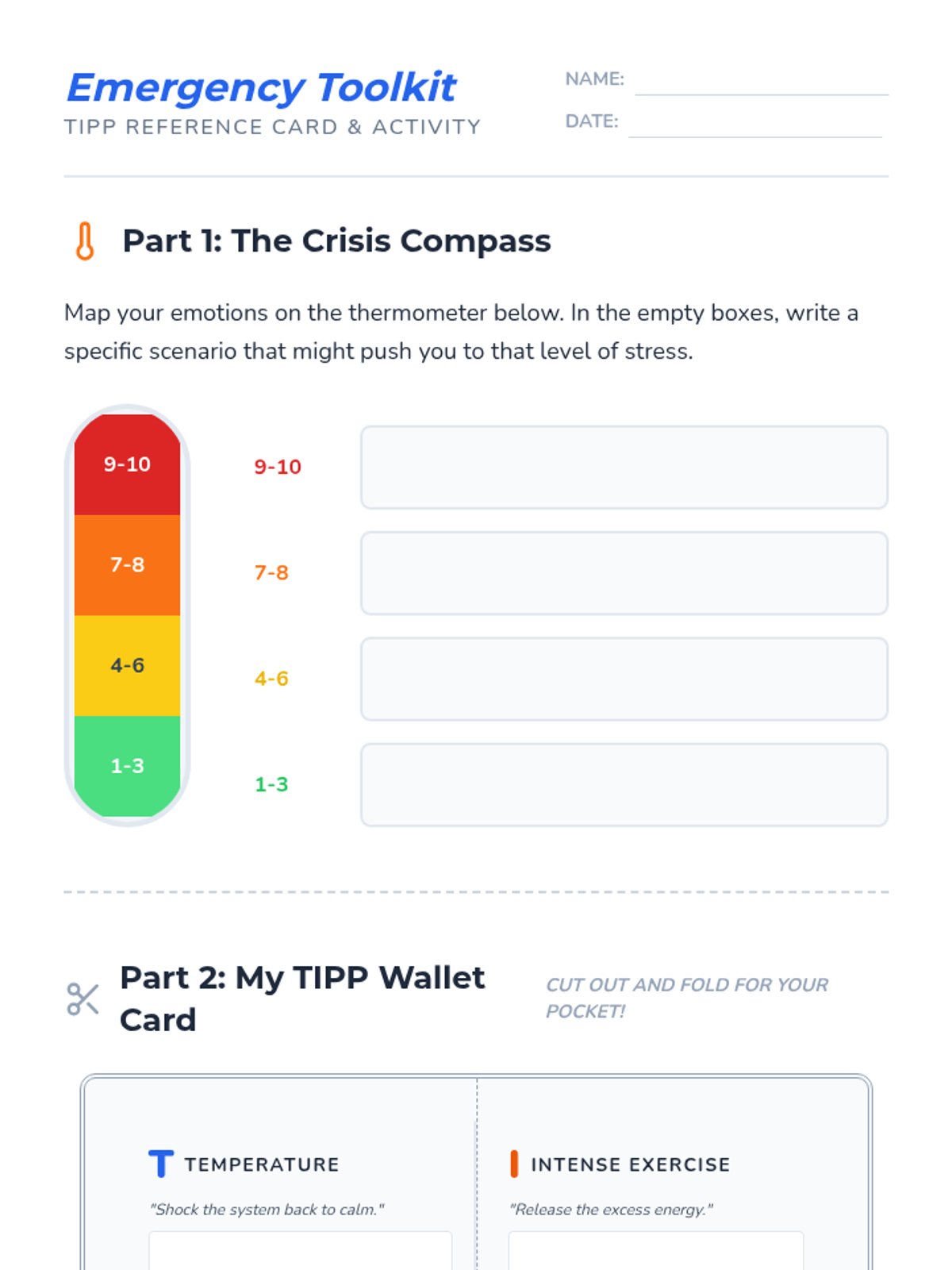
A project-based counseling sequence where 6th-grade students design and assemble personalized TIPP (Temperature, Intense Exercise, Paced Breathing, Paired Muscle Relaxation) crisis survival toolkits. Students move from identifying personal triggers to creating tangible resources for emotional regulation.
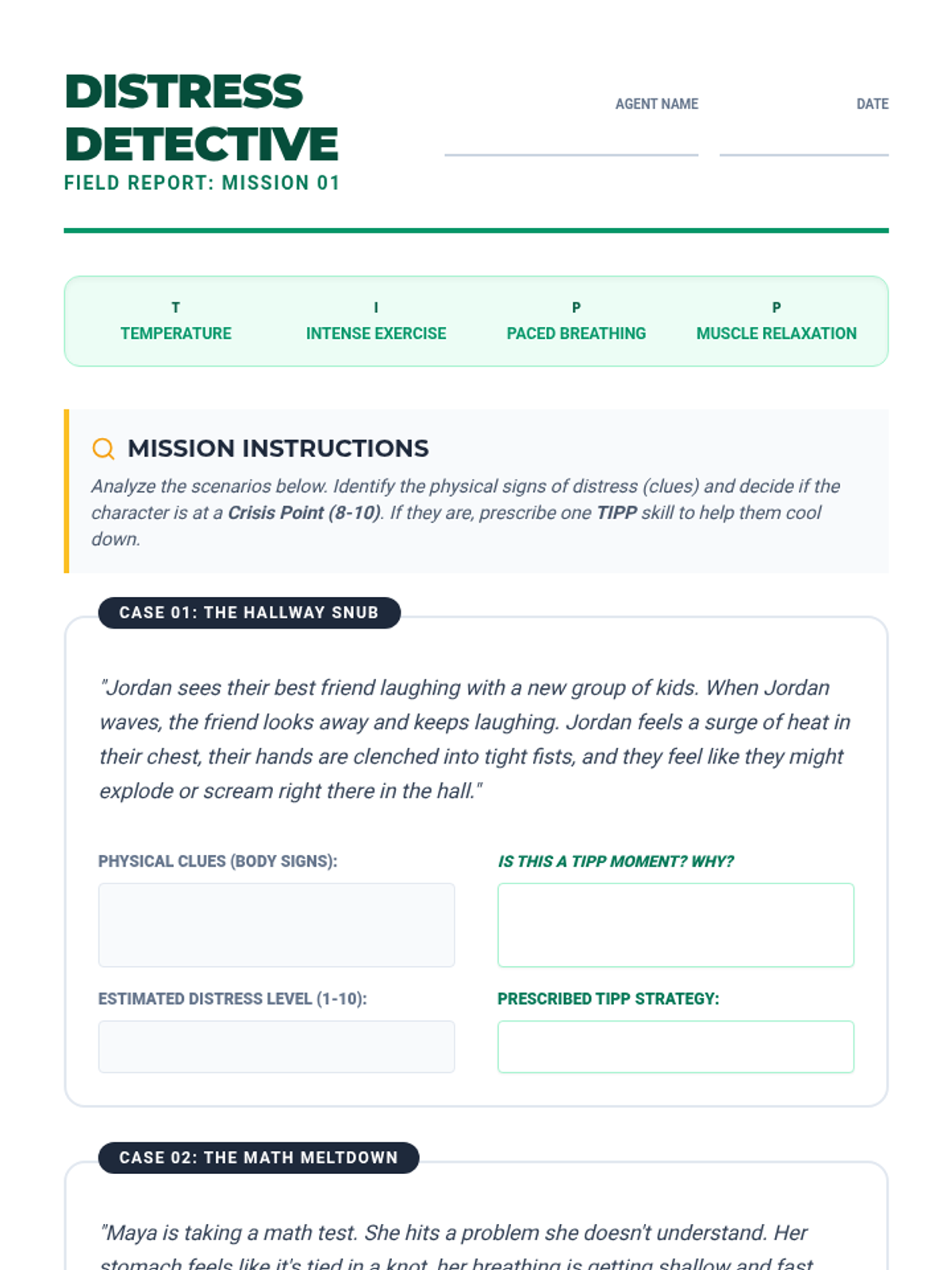
A 5-lesson unit for 6th graders to apply TIPP crisis survival skills (Temperature, Intense Exercise, Paced Breathing, Paired Muscle Relaxation) to real-world social and academic stressors. Students move from analyzing scenarios to simulated practice and peer consulting.
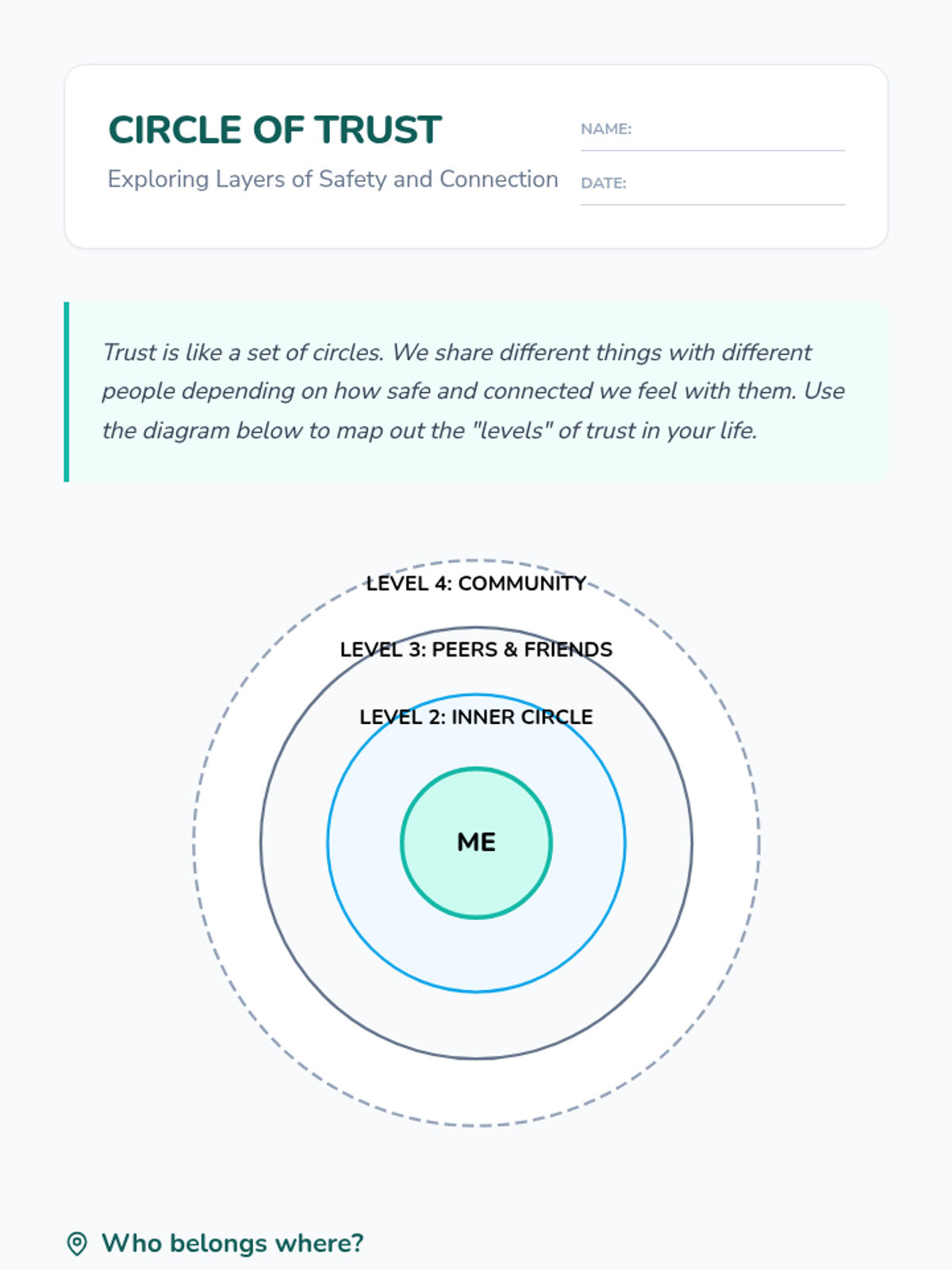
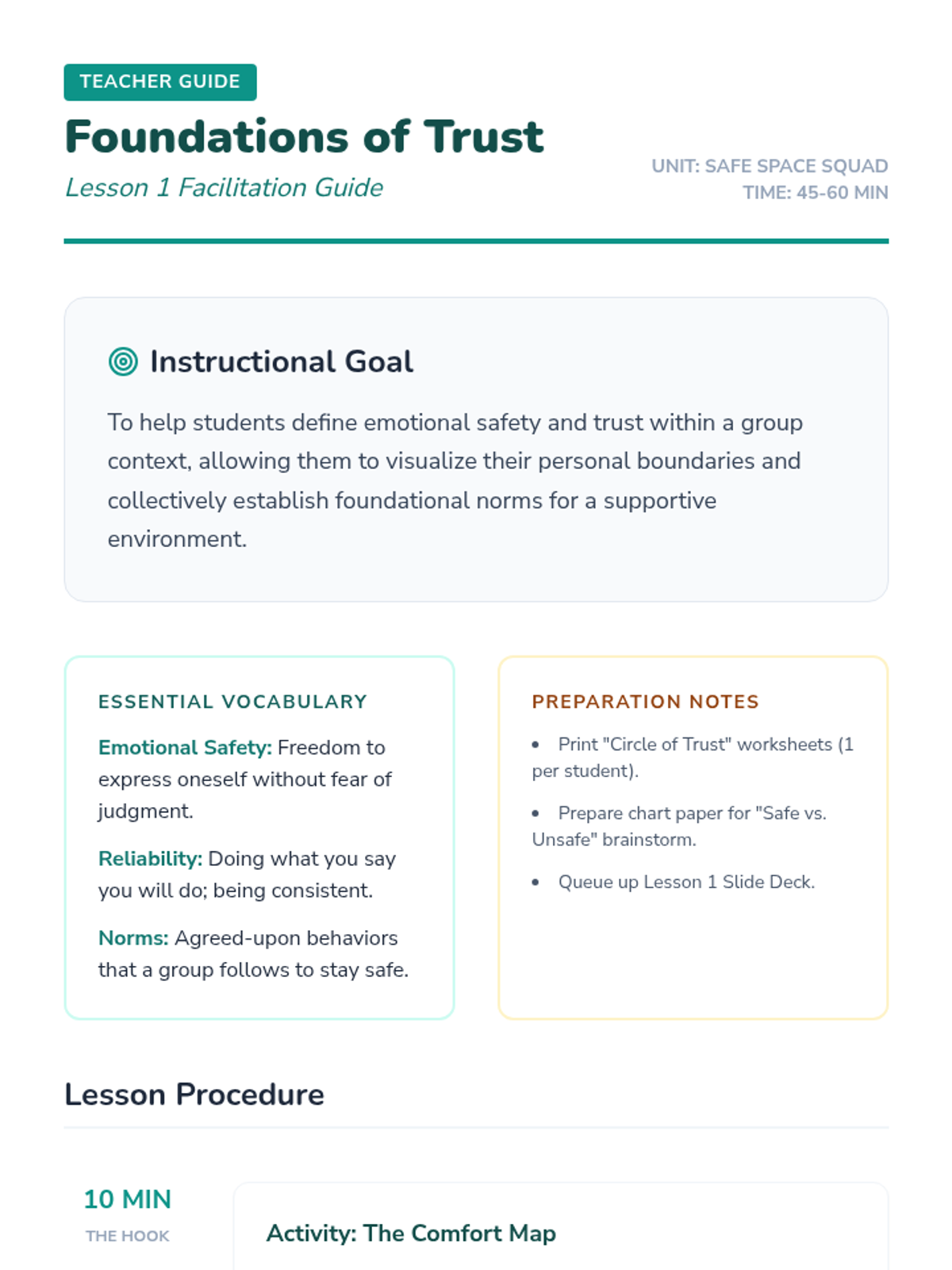
A 5-lesson sequence for 6th-grade students focused on building a supportive group environment. Students will explore trust, distinguish between vulnerability and oversharing, understand the ethical limits of confidentiality, practice inclusive behaviors, and collaboratively draft a group support contract.
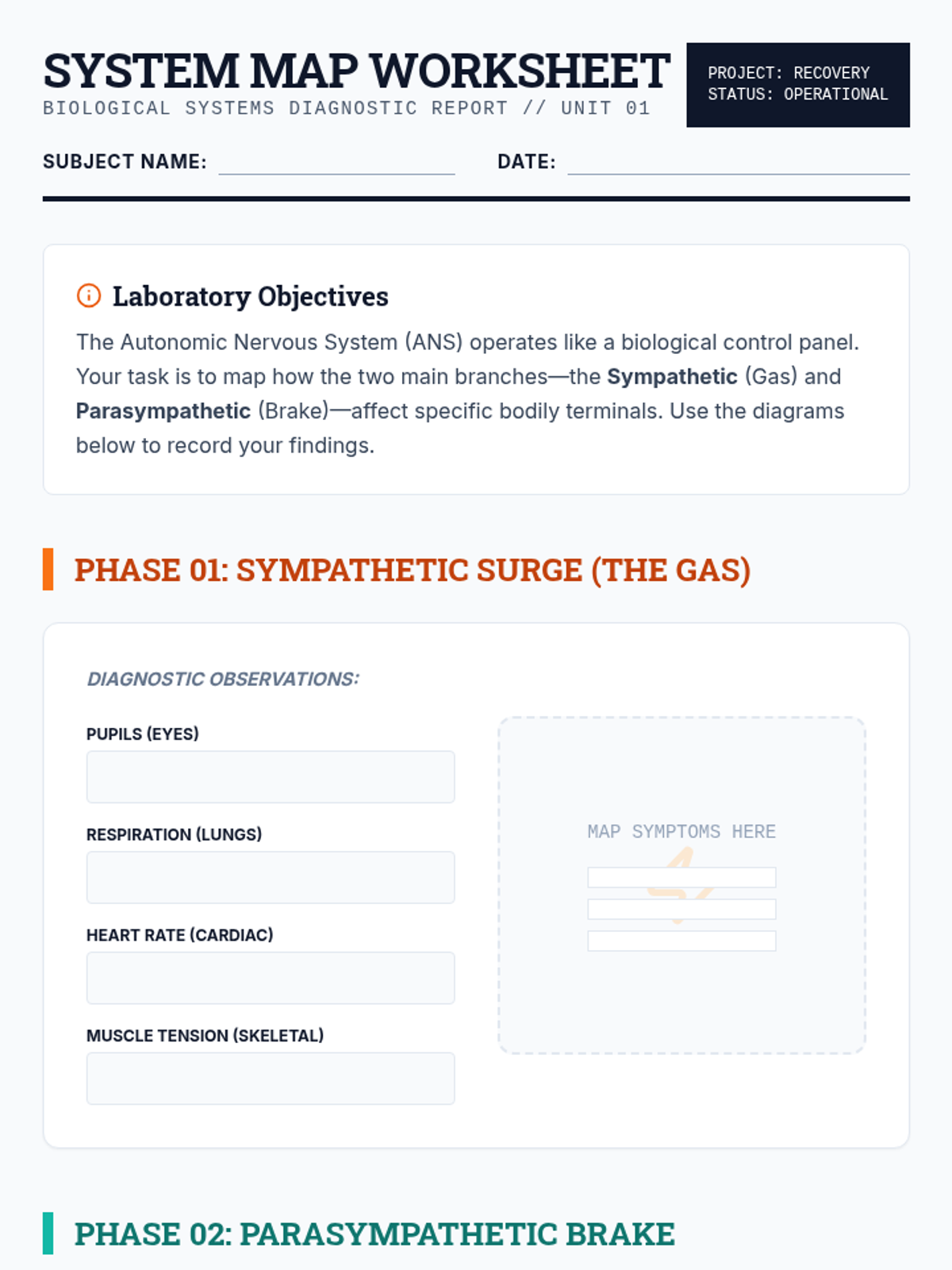
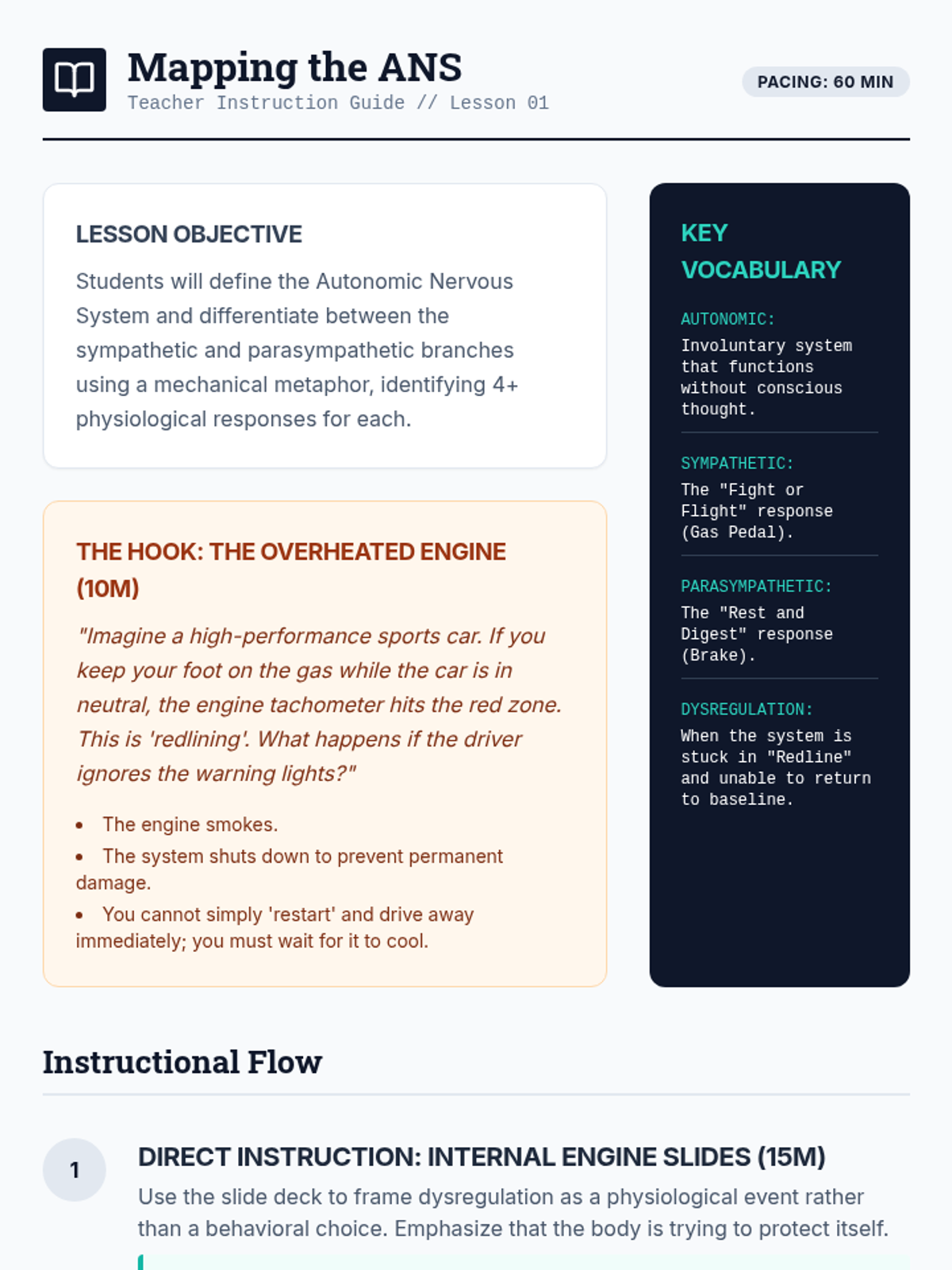
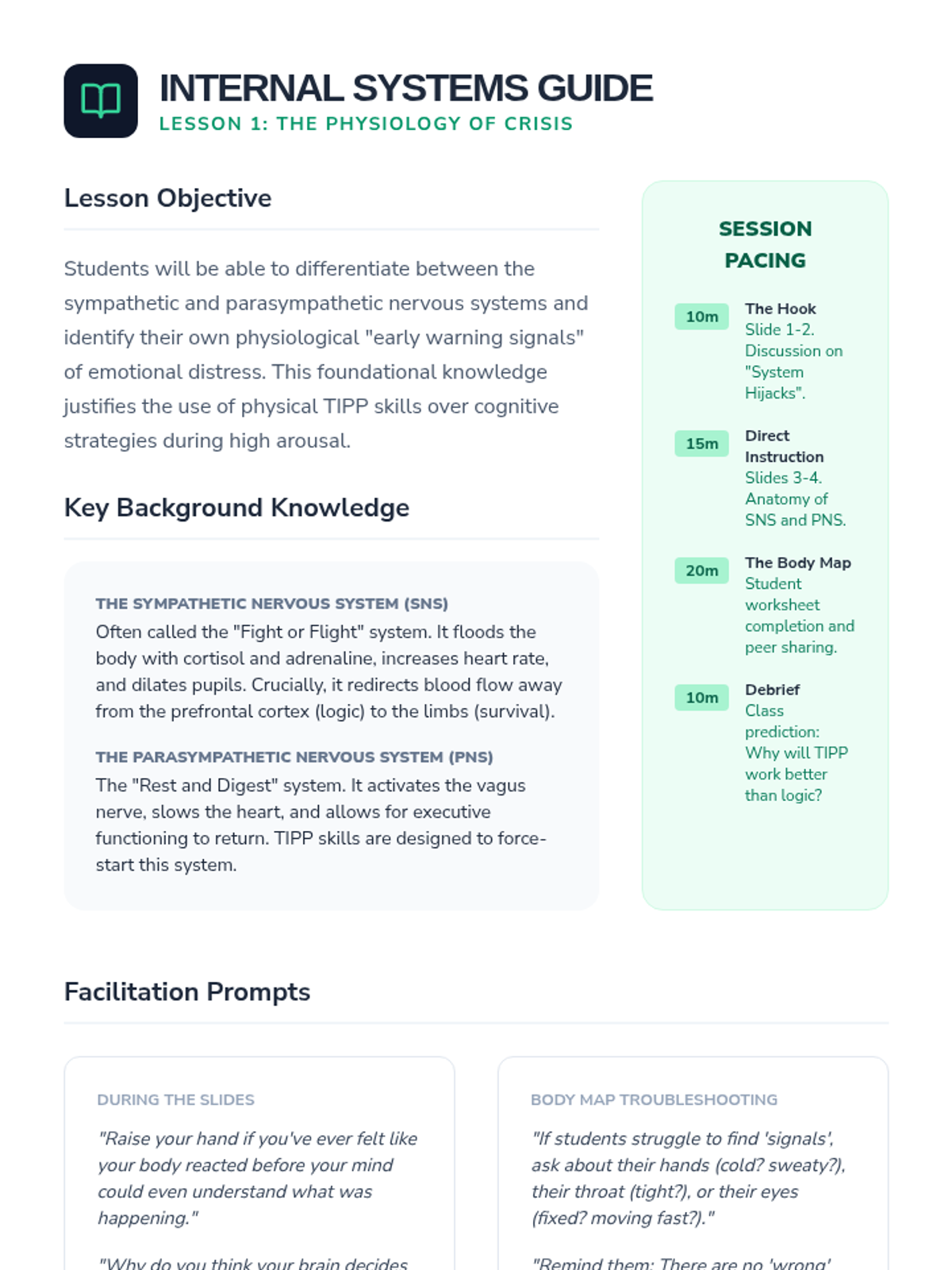
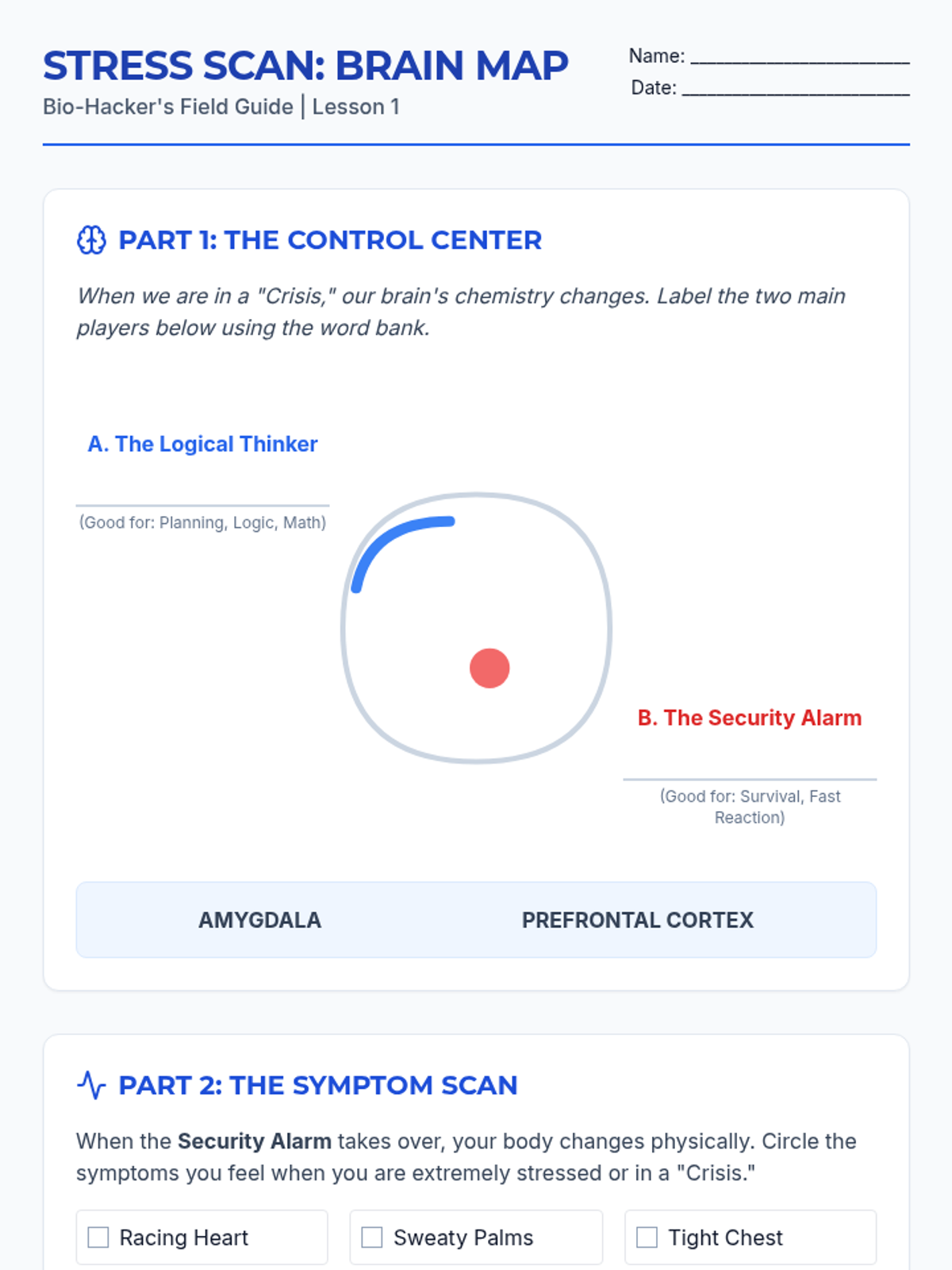
A biological approach to understanding and managing stress. Students explore the autonomic nervous system, interoception, and specific physiological interventions like proprioceptive input and vagus nerve stimulation to master the art of dysregulation recovery.
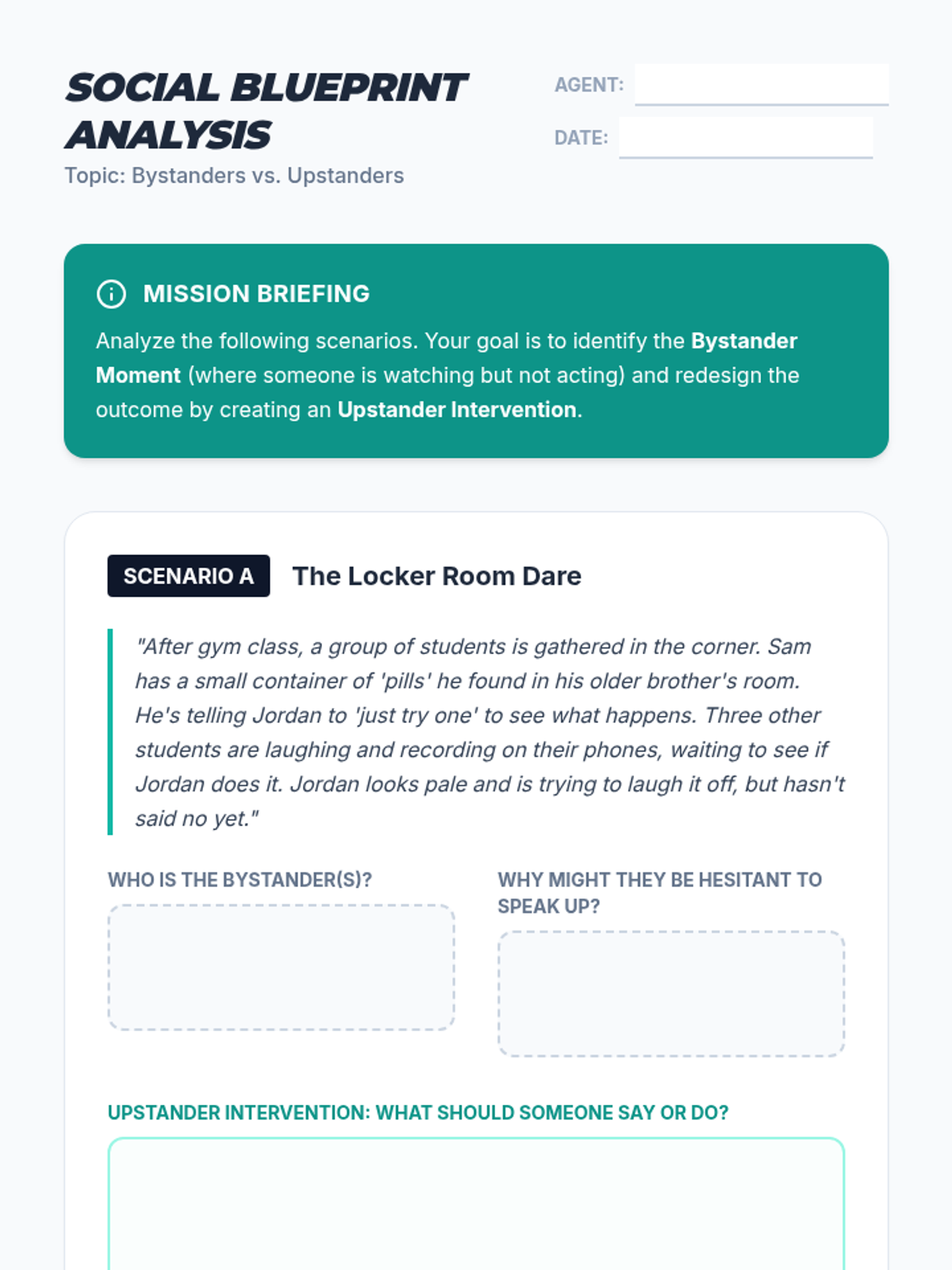
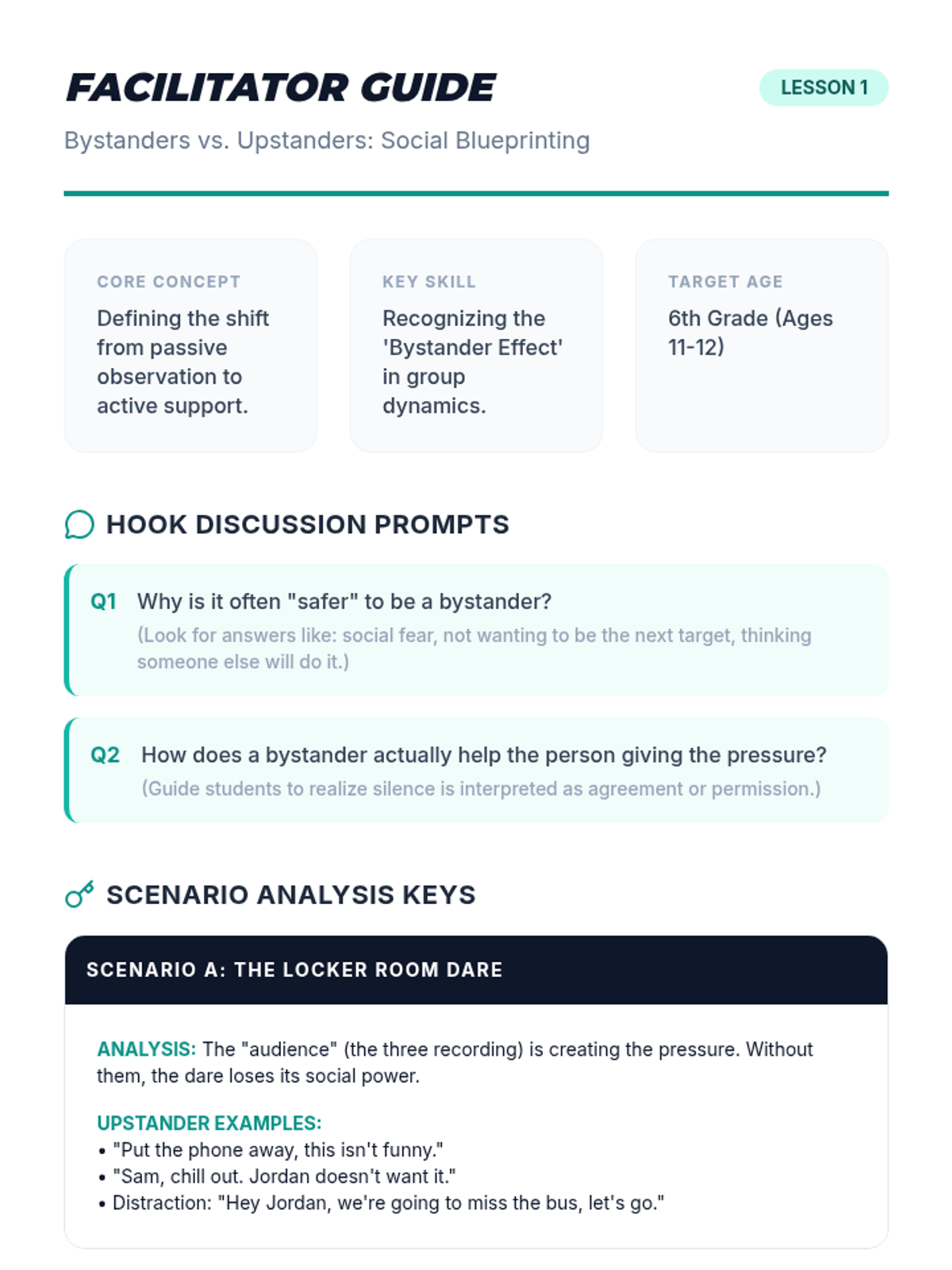
A comprehensive 6th-grade sequence focused on shifting peer culture from negative pressure to positive support. Students evolve from passive bystanders to active upstanders, learning techniques to support peers and leverage positive influence to create a healthier community.
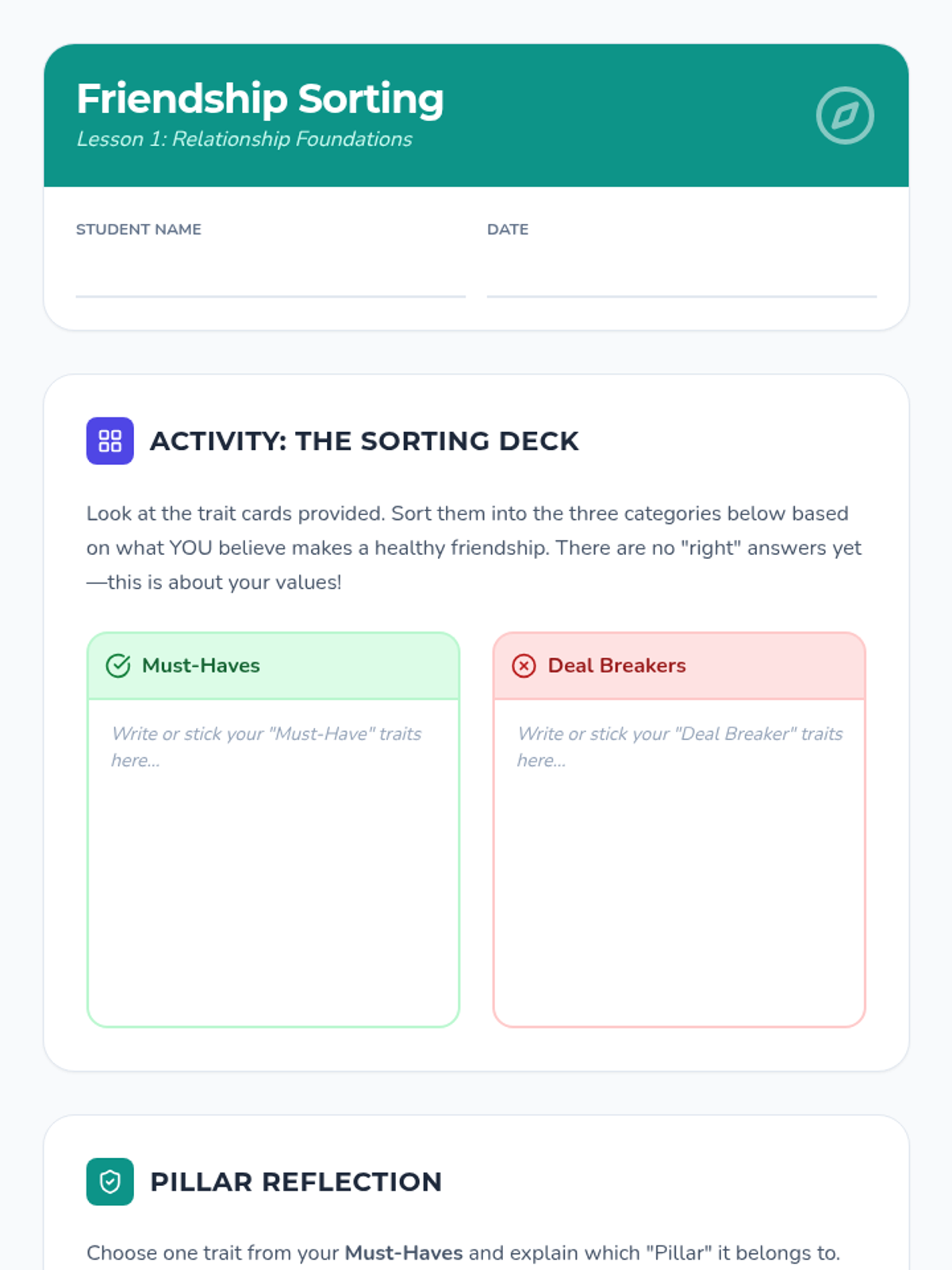
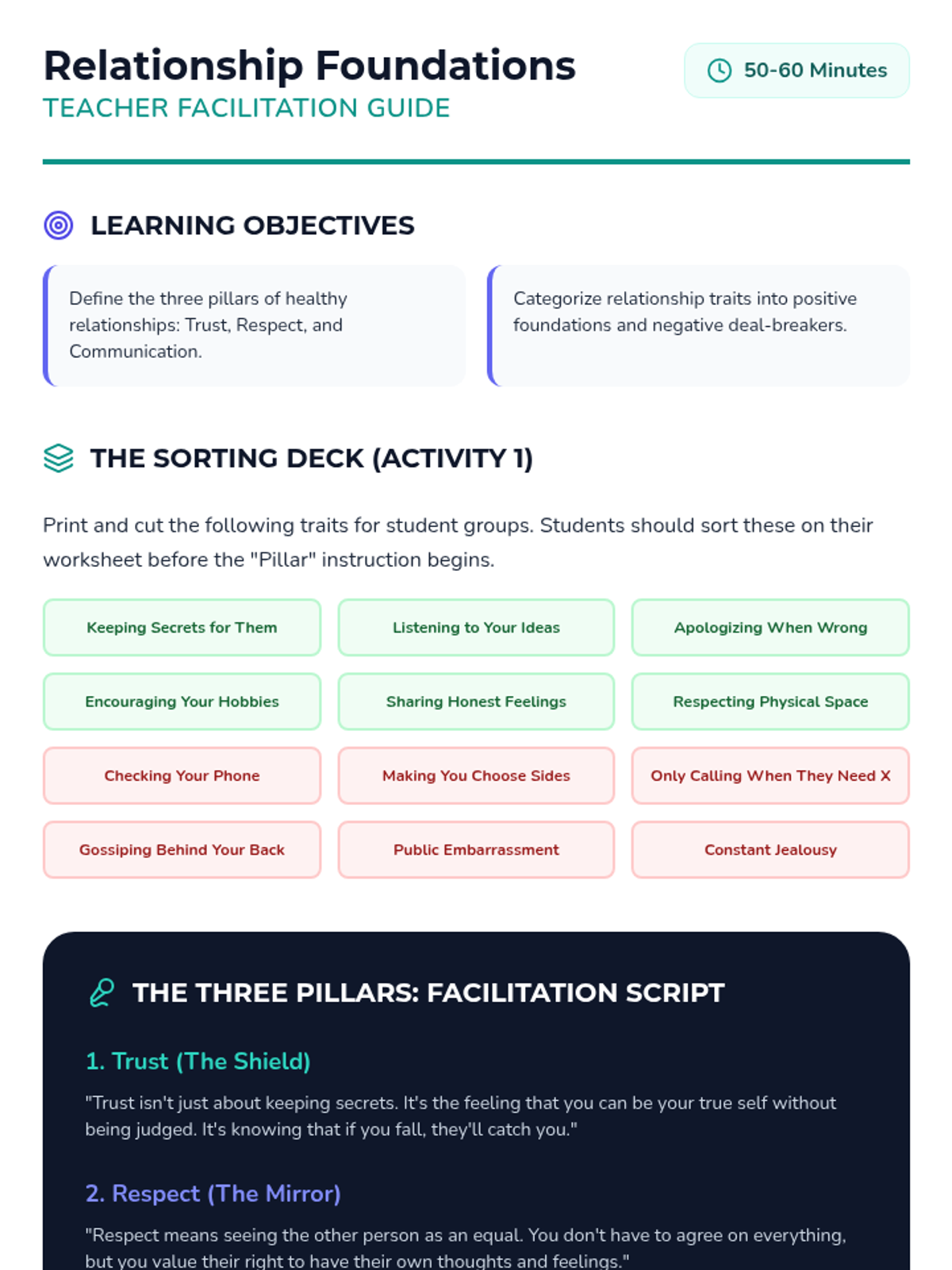
A comprehensive 5-lesson sequence for 6th graders exploring the dynamics of healthy vs. unhealthy relationships, conflict resolution strategies, and support systems. Students learn to identify red flags, use 'I-statements', and build personal resource maps.
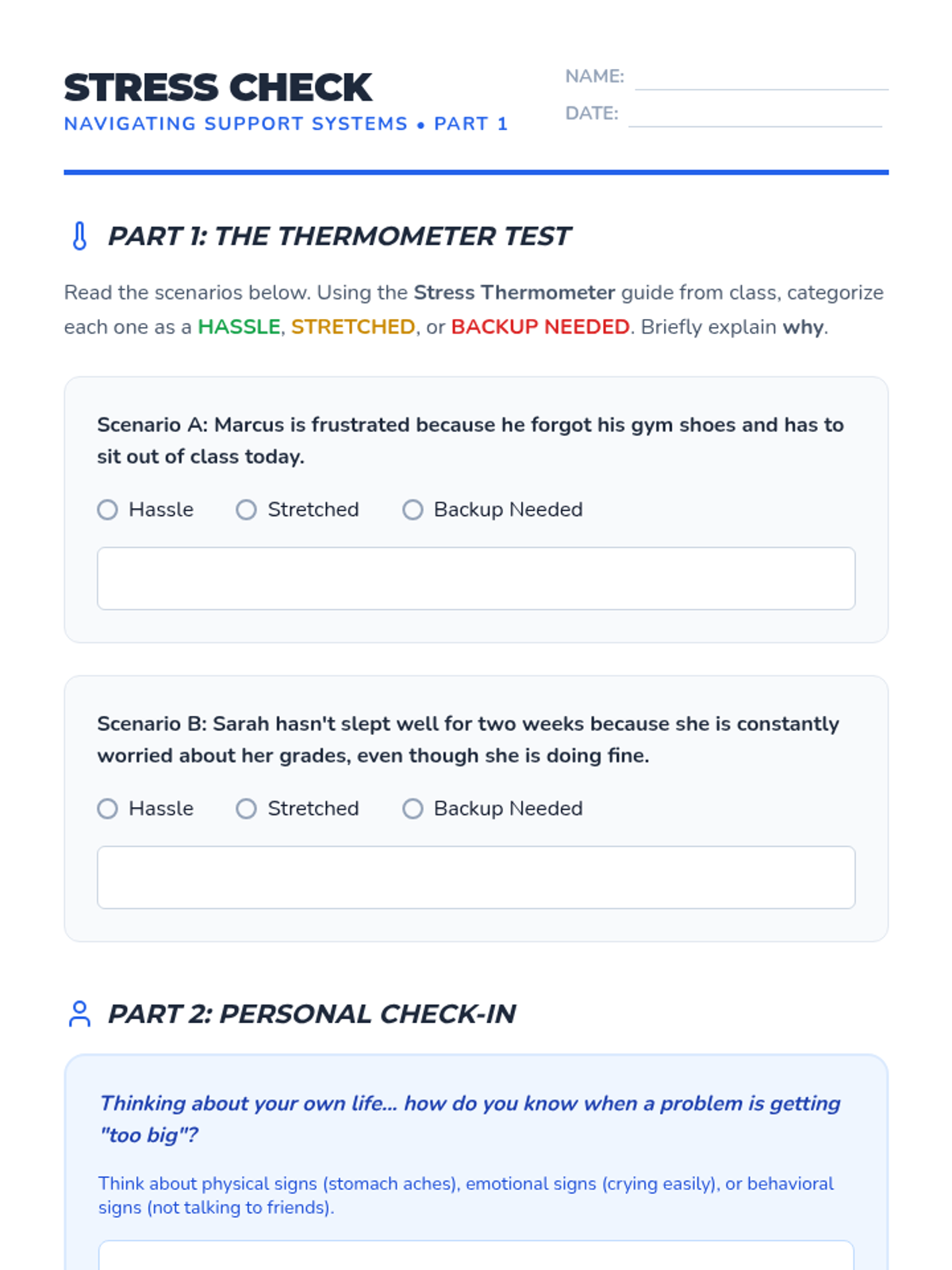
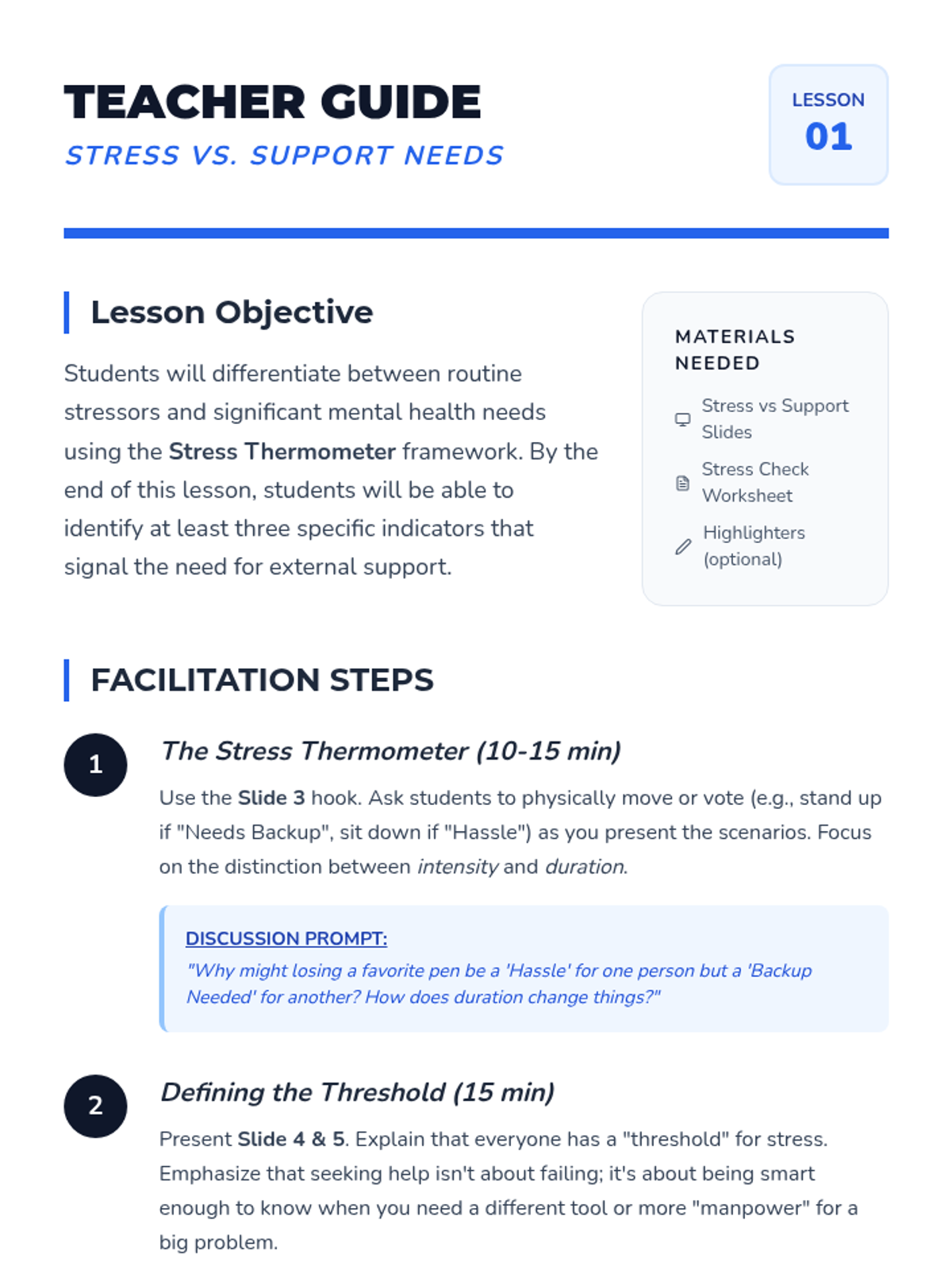
This unit empowers sixth-grade students to navigate the complexities of seeking help for mental health. Students learn to distinguish between daily stress and significant needs, map their support networks, identify barriers to help-seeking, and practice the specific communication skills required to disclose feelings to trusted adults.
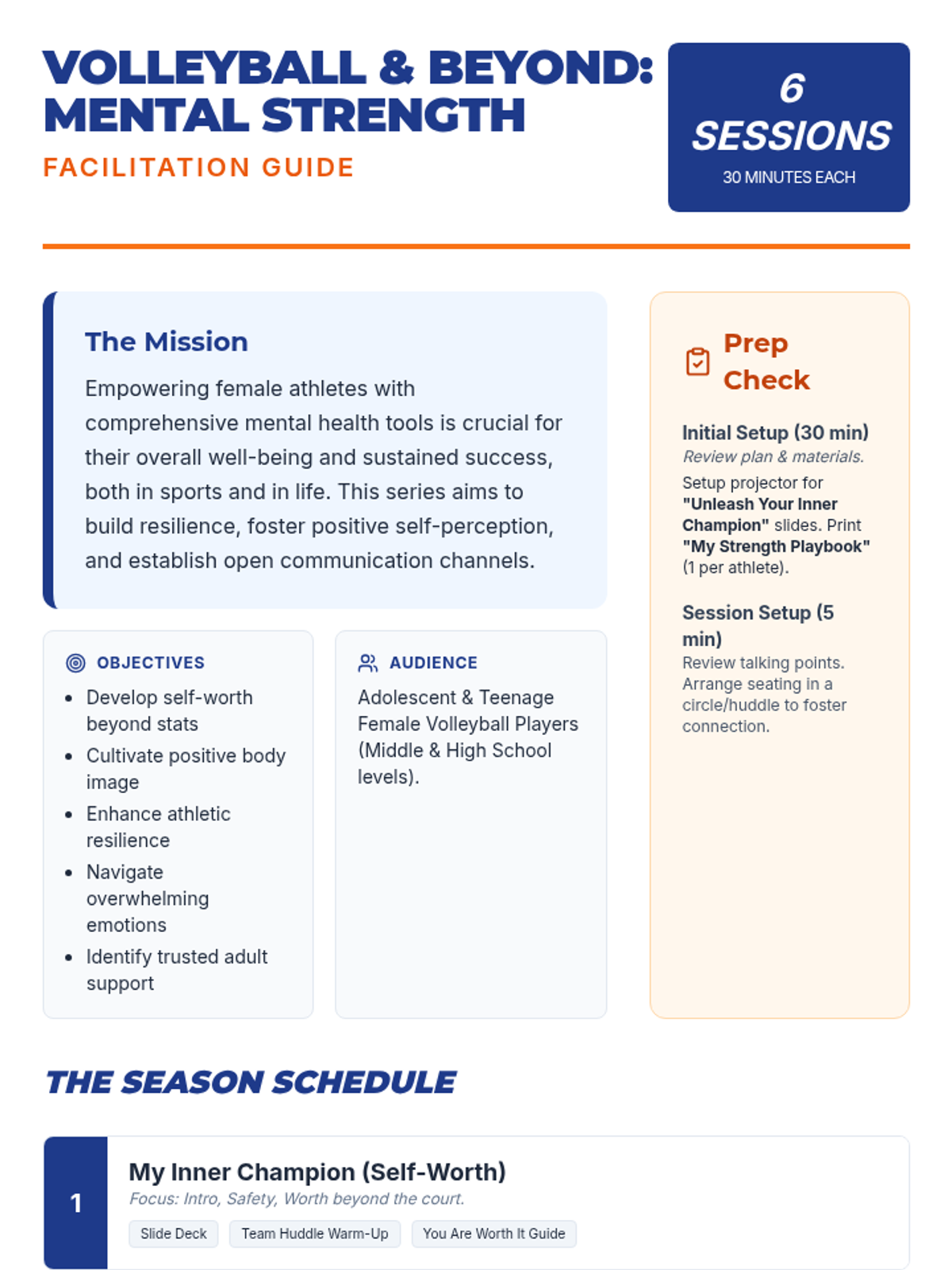
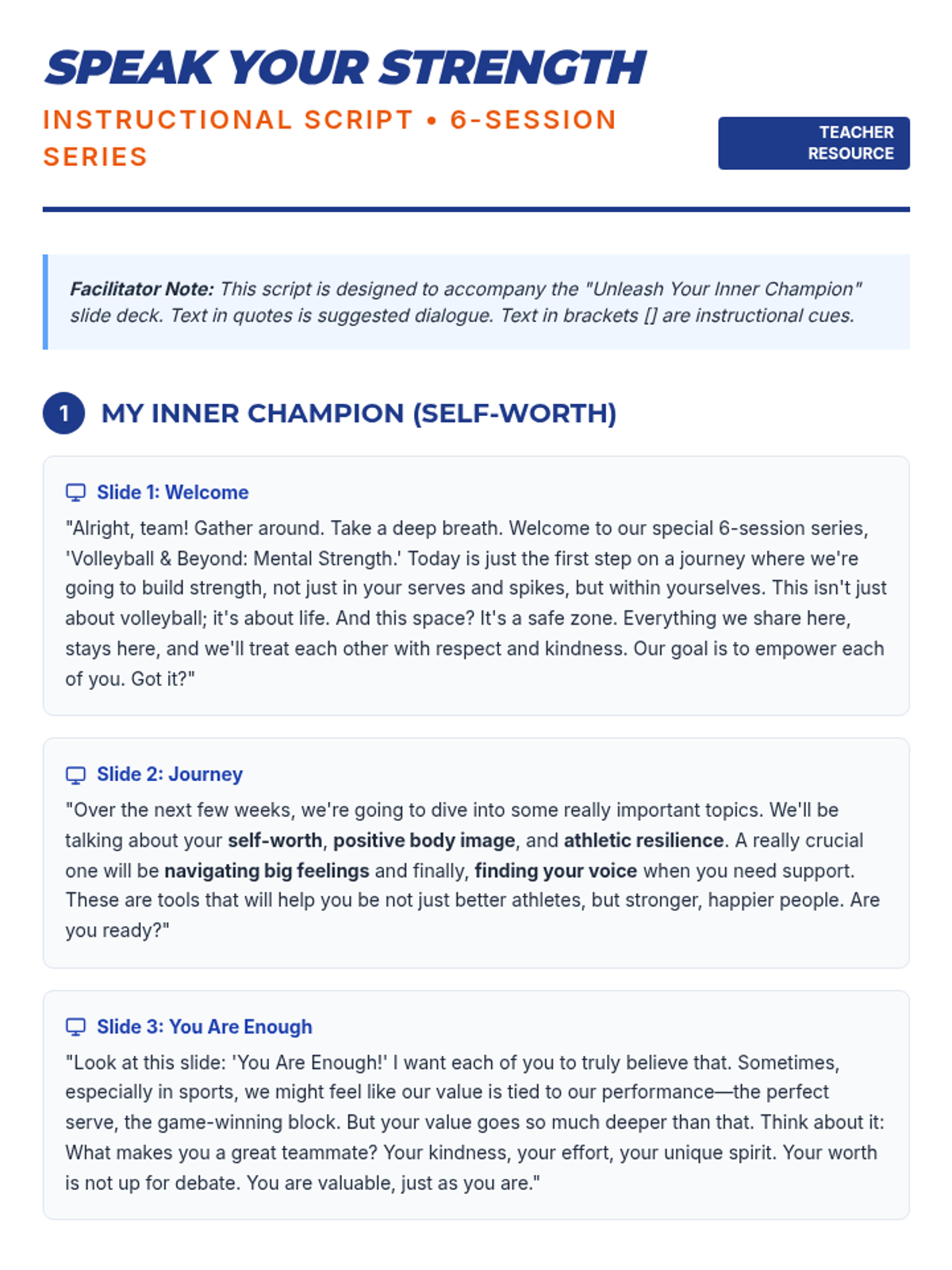
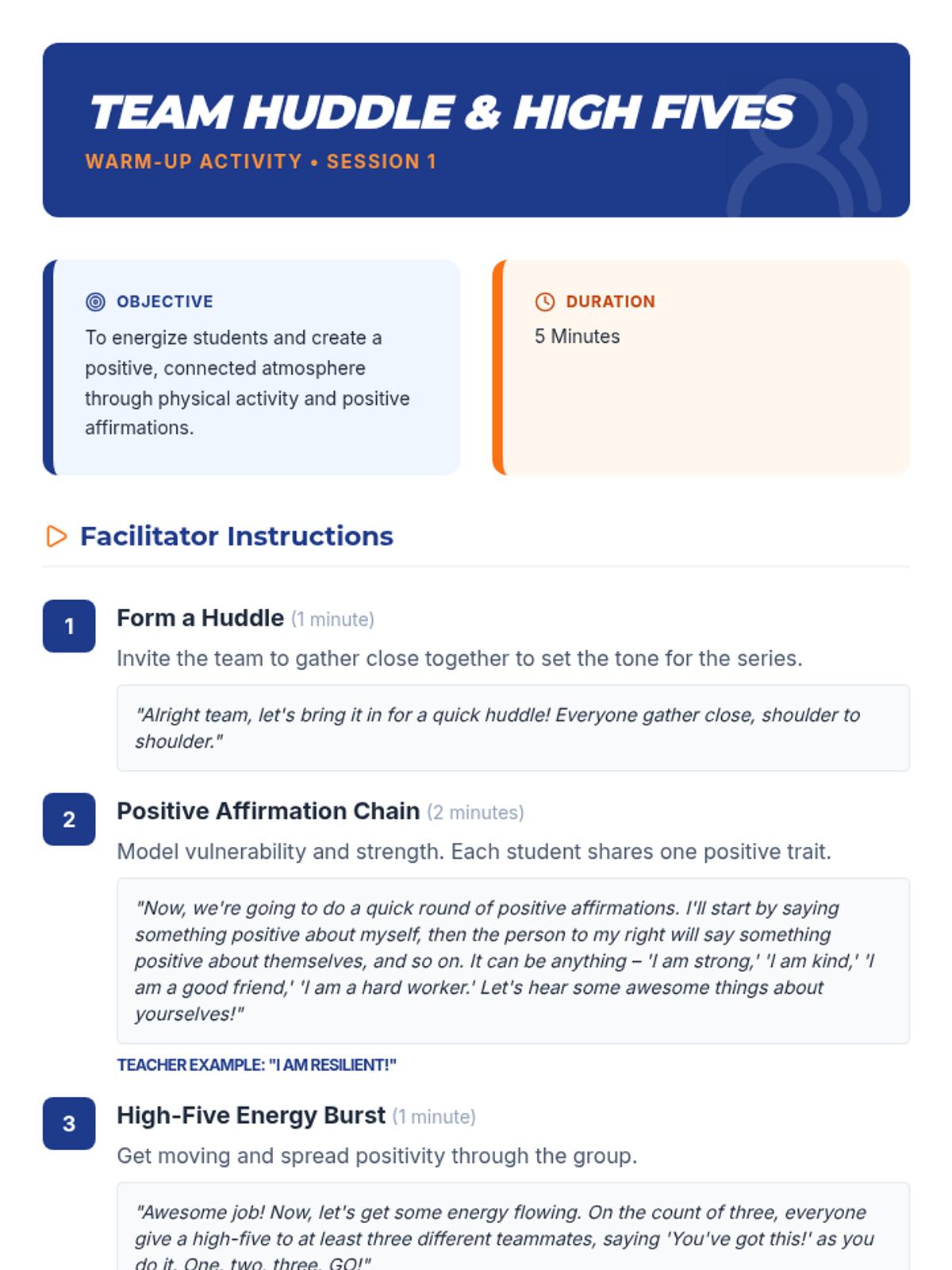
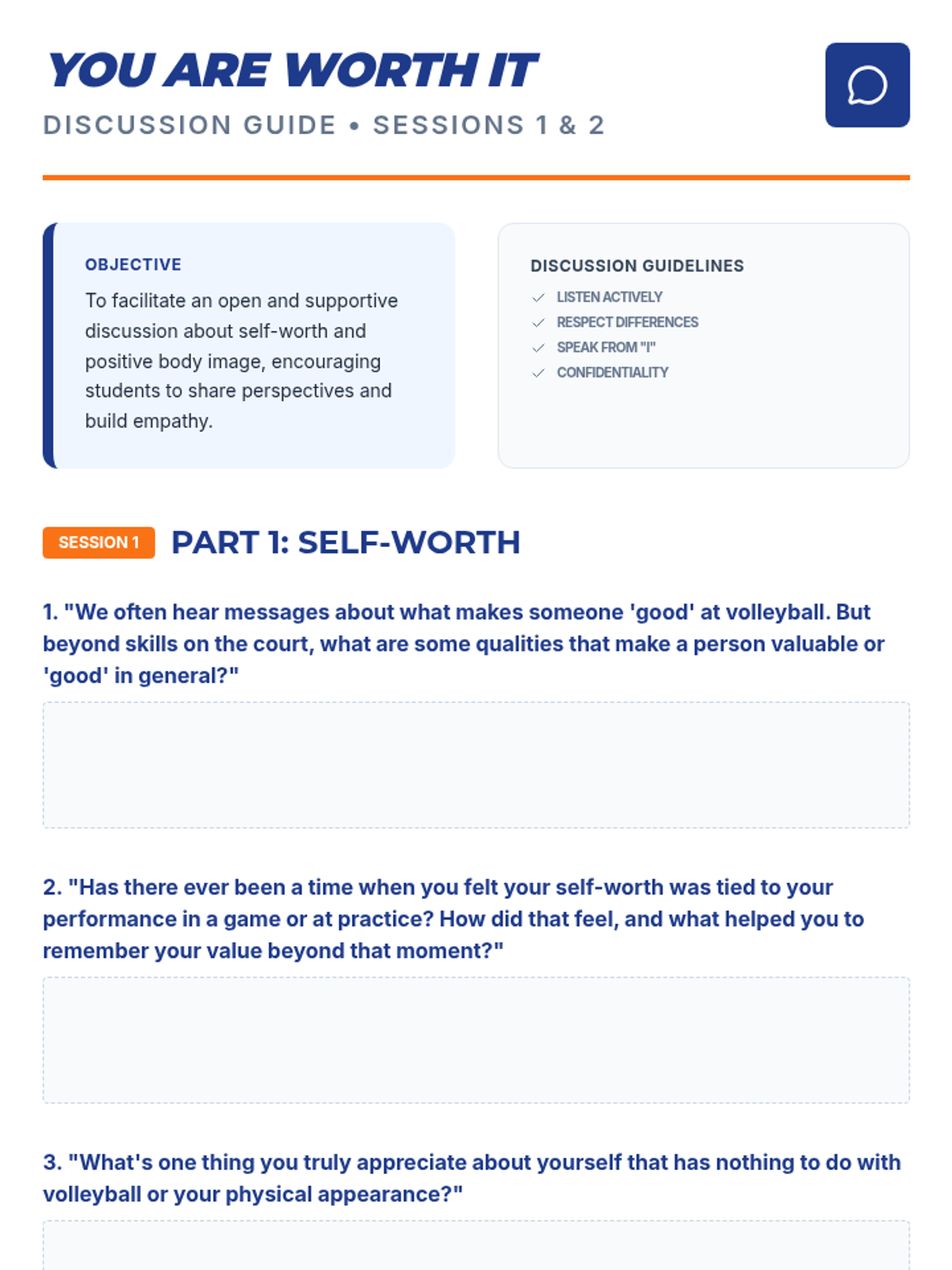
A 6-session series for adolescent female volleyball players focusing on self-worth, body image, resilience, and mental health communication.
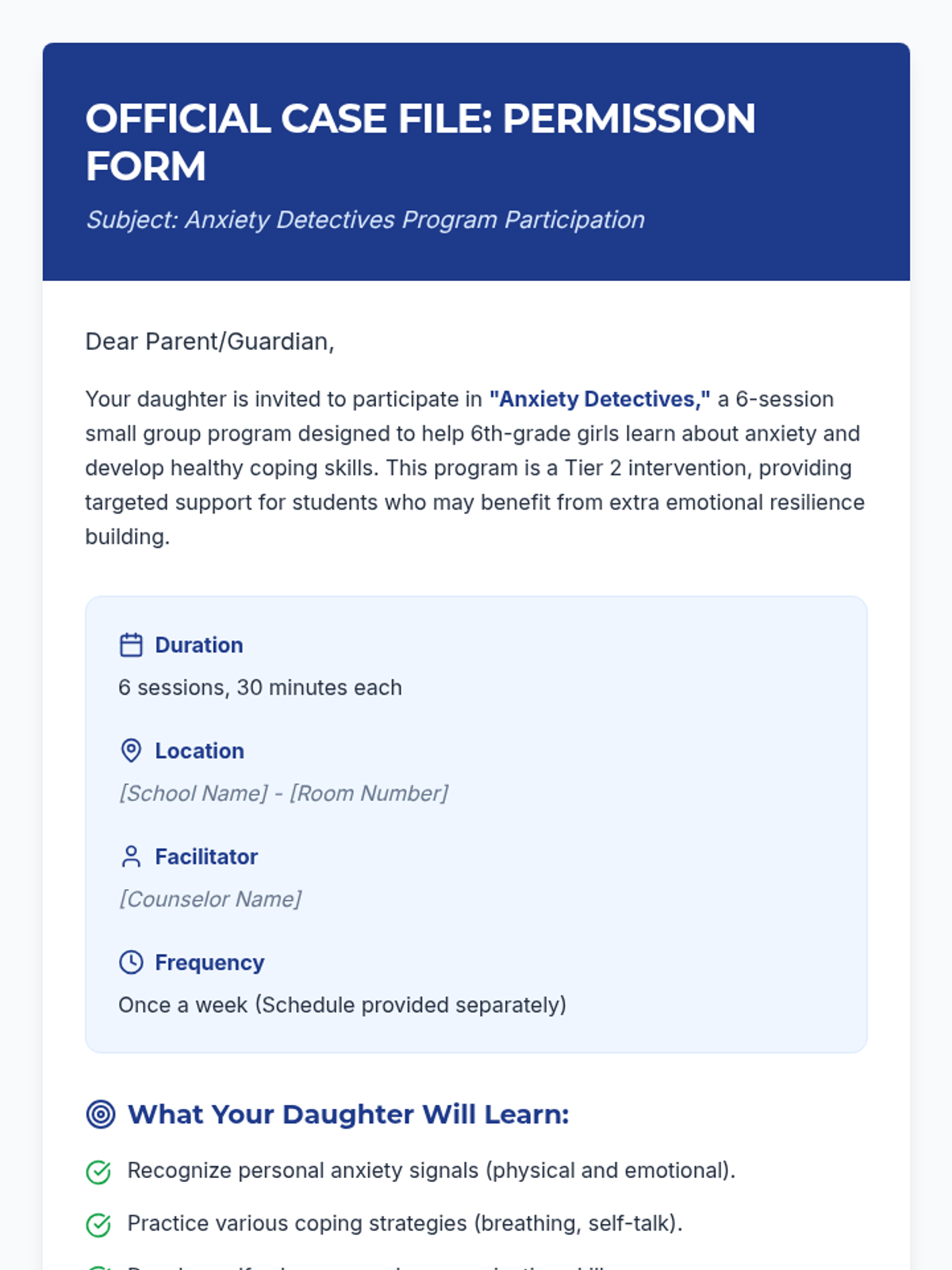
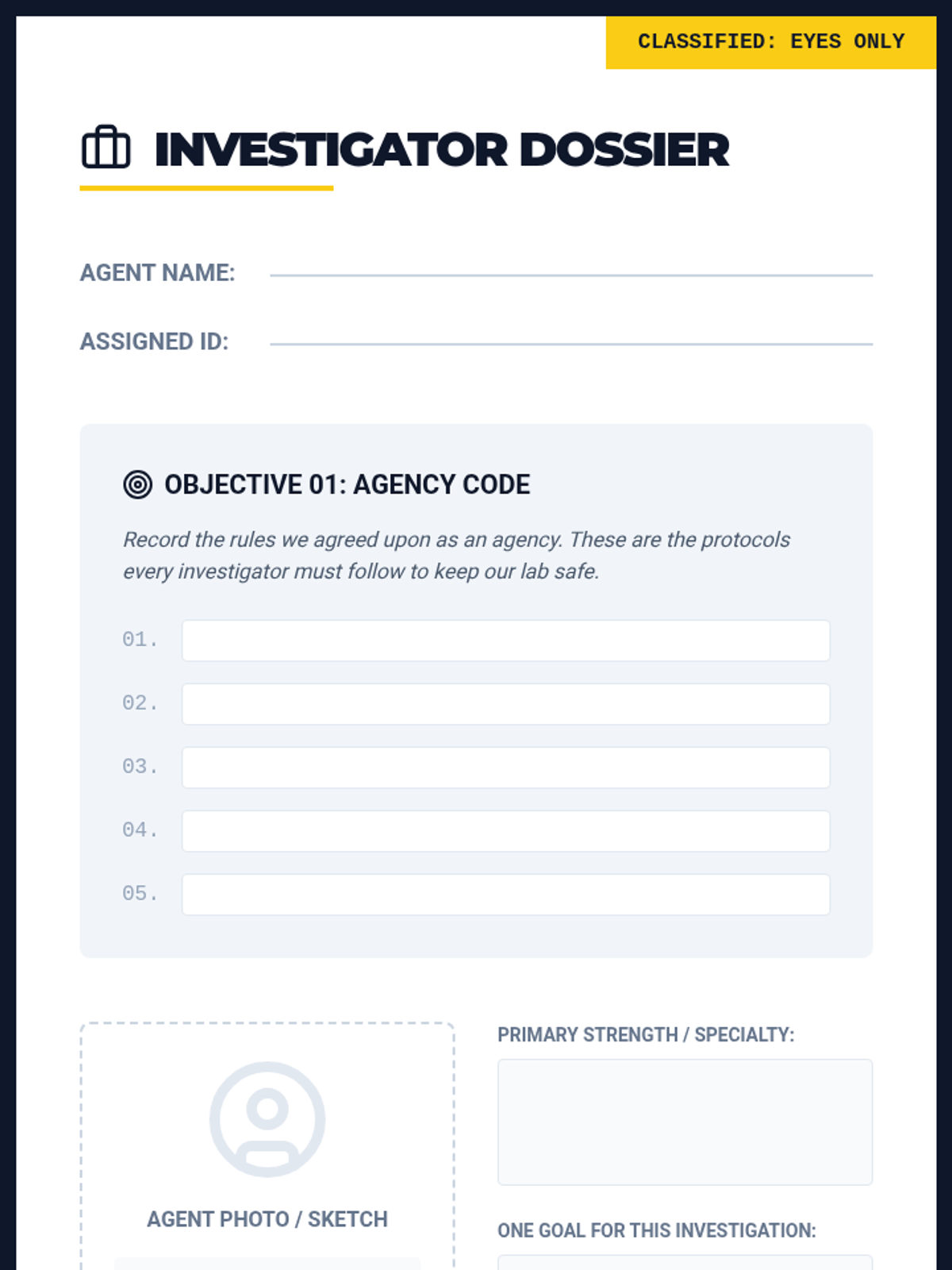
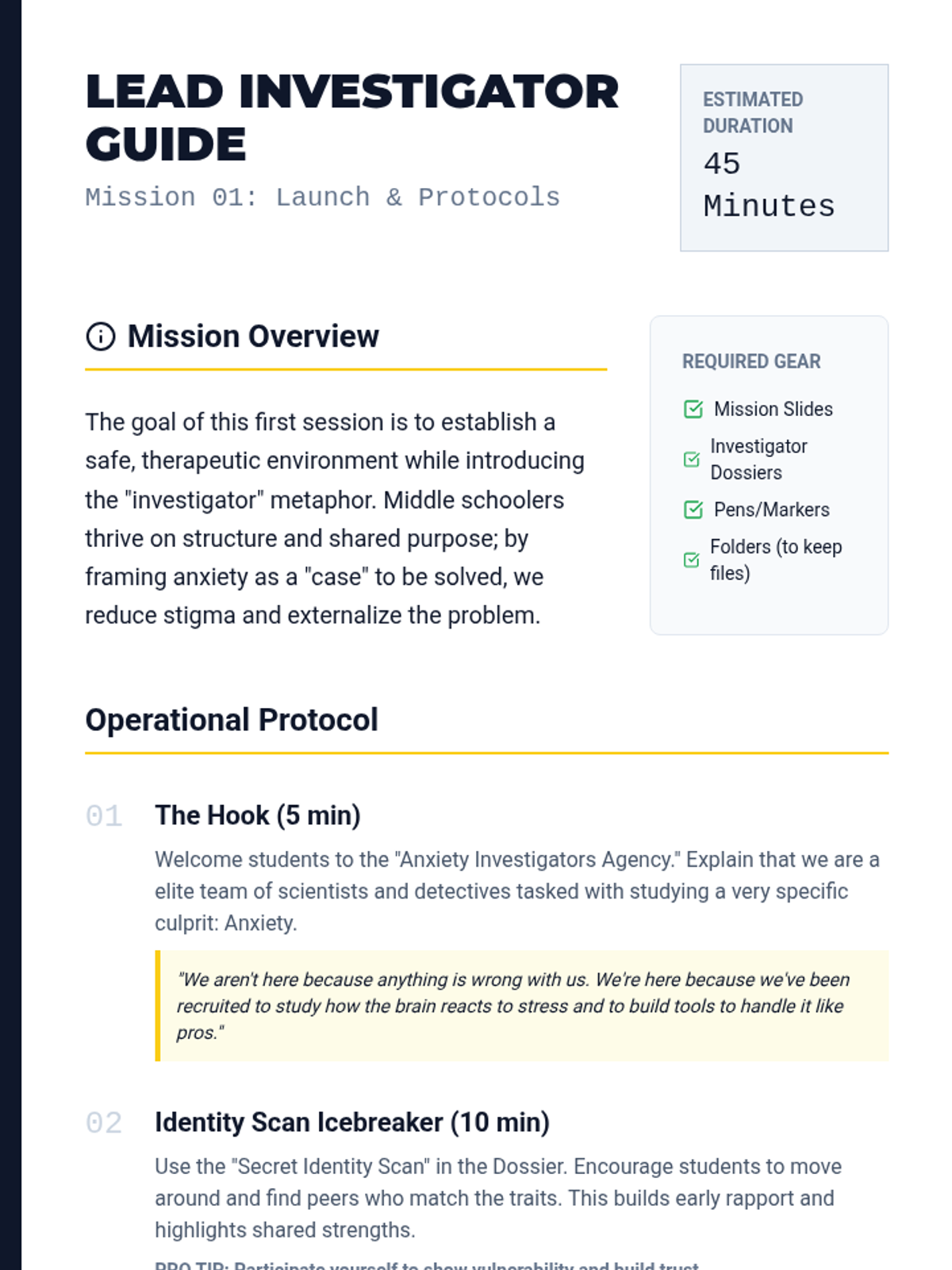
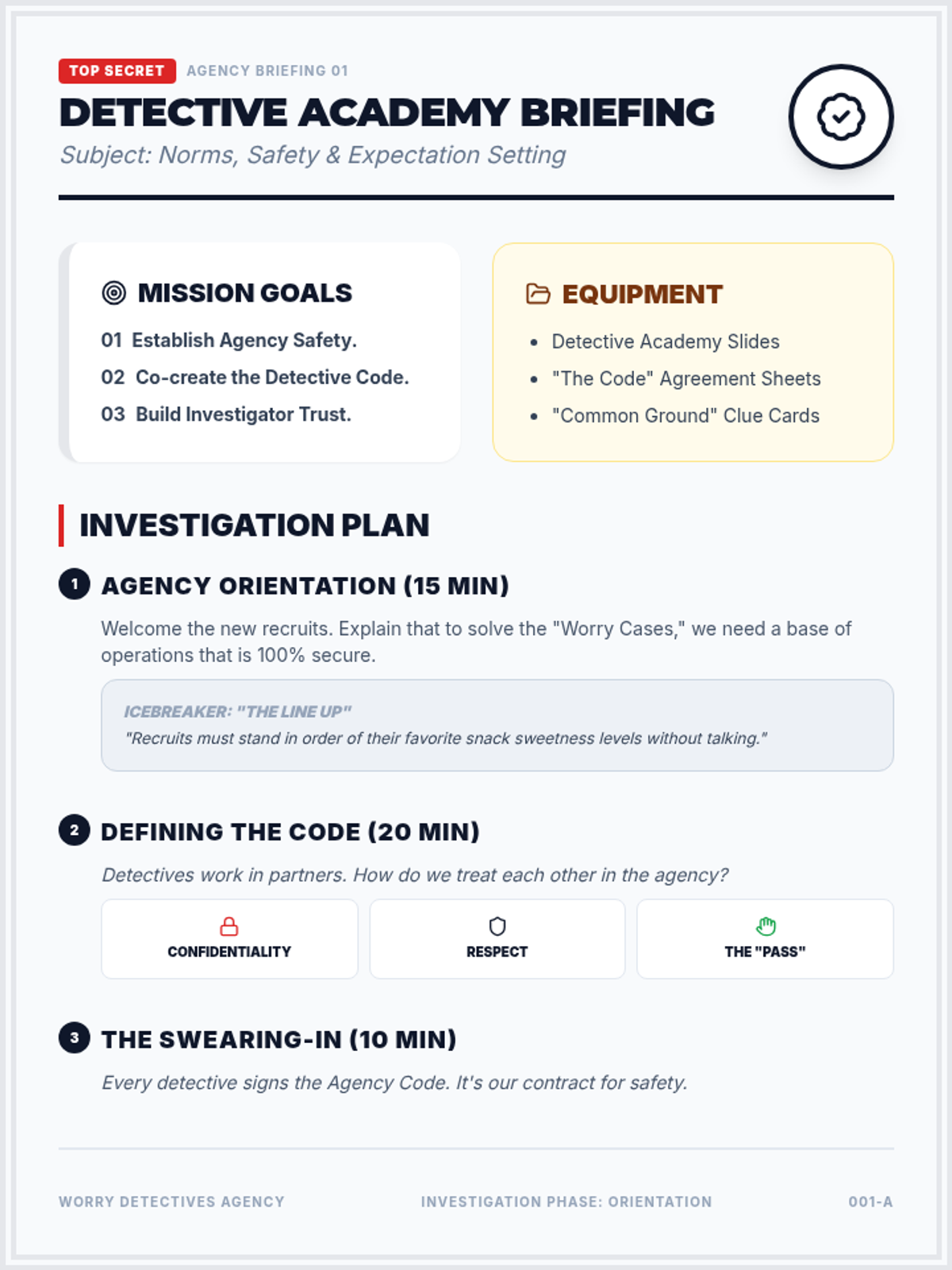
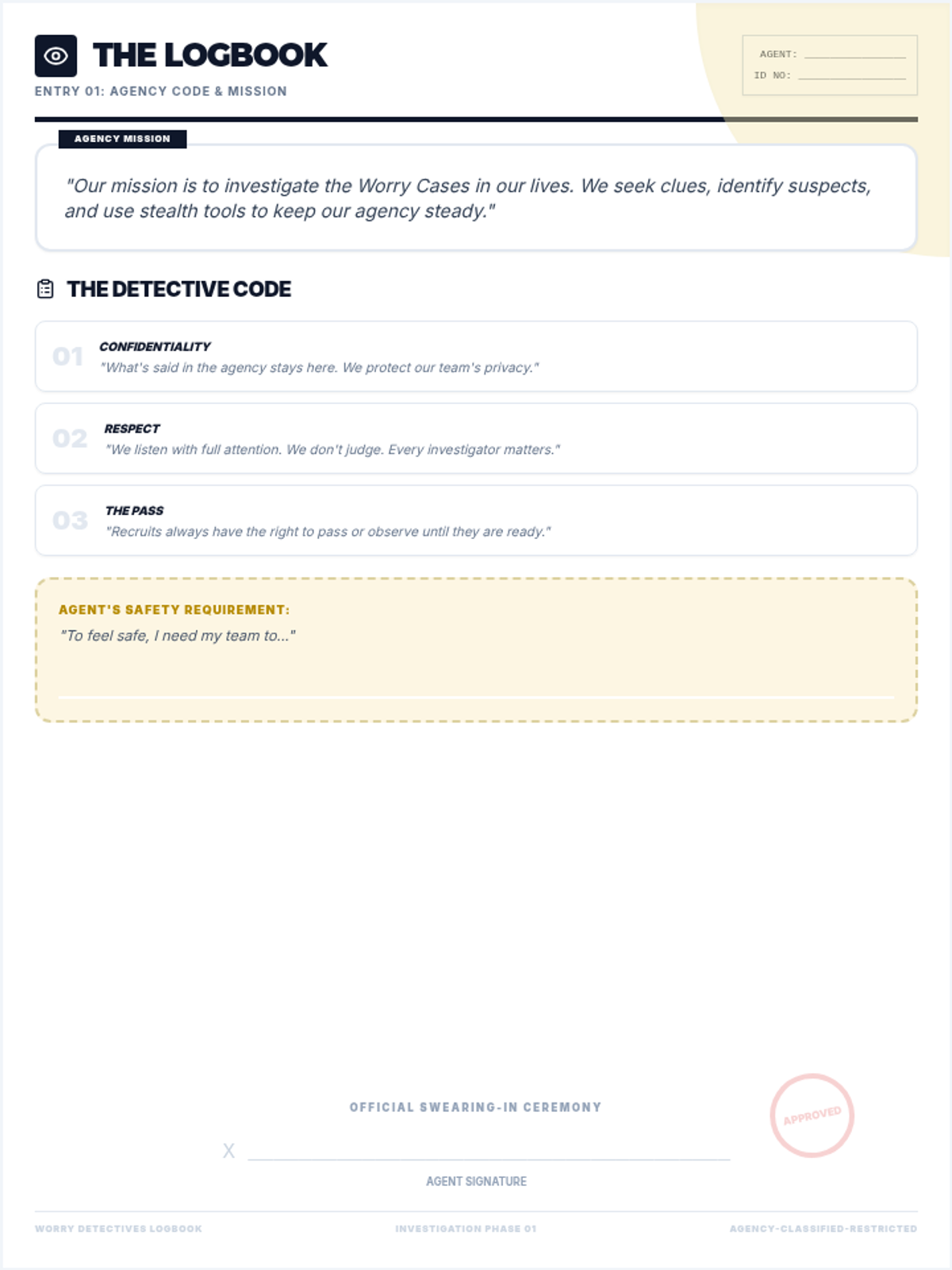
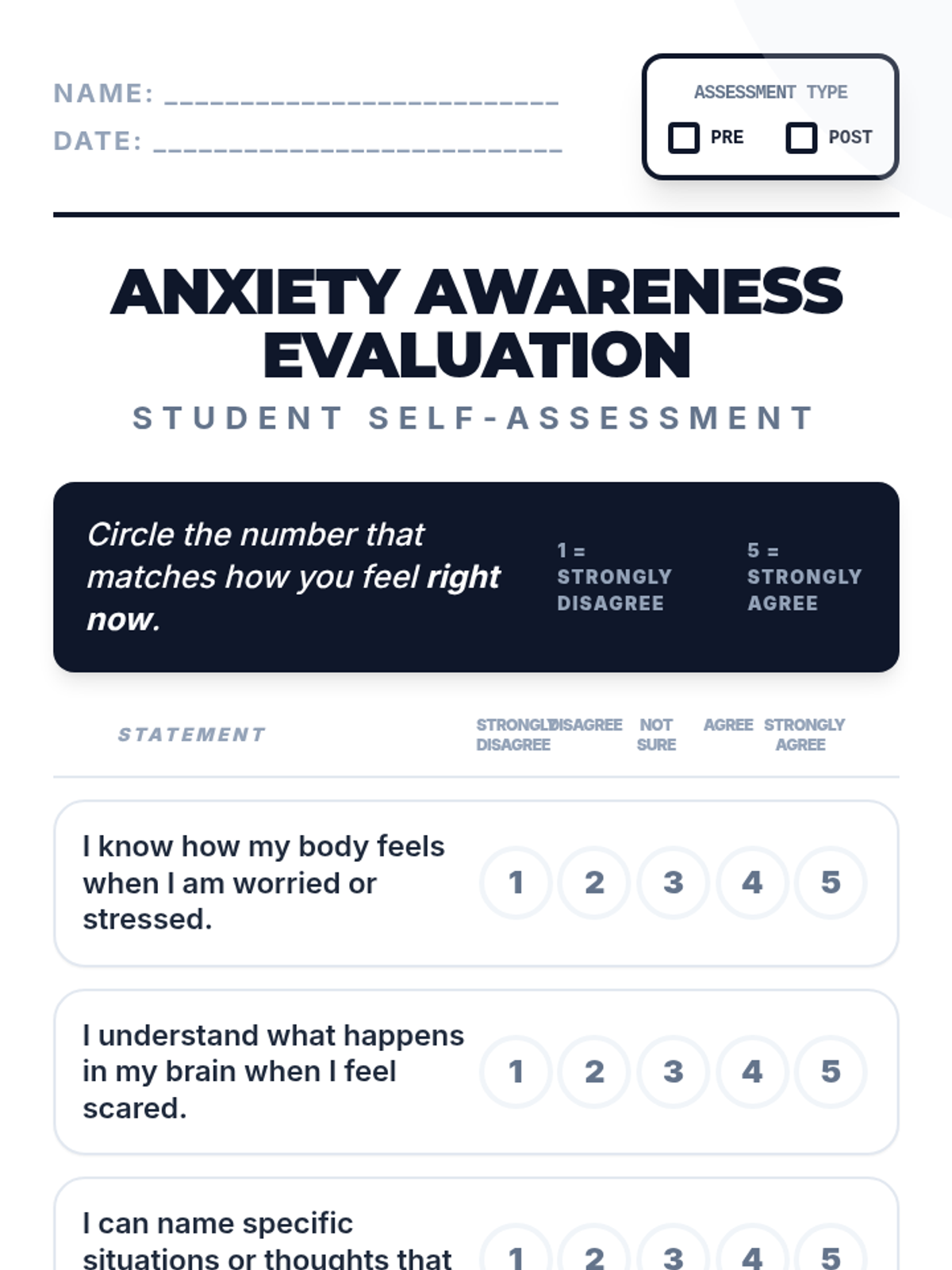
A 7-session Tier 2 intervention program for 6th-grade girls, using a detective-themed approach to build self-awareness, coping strategies, and resilience against anxiety. Students learn to identify personal signals, practice diverse coping tools, and build a strong support network through interactive activities and role-plays.
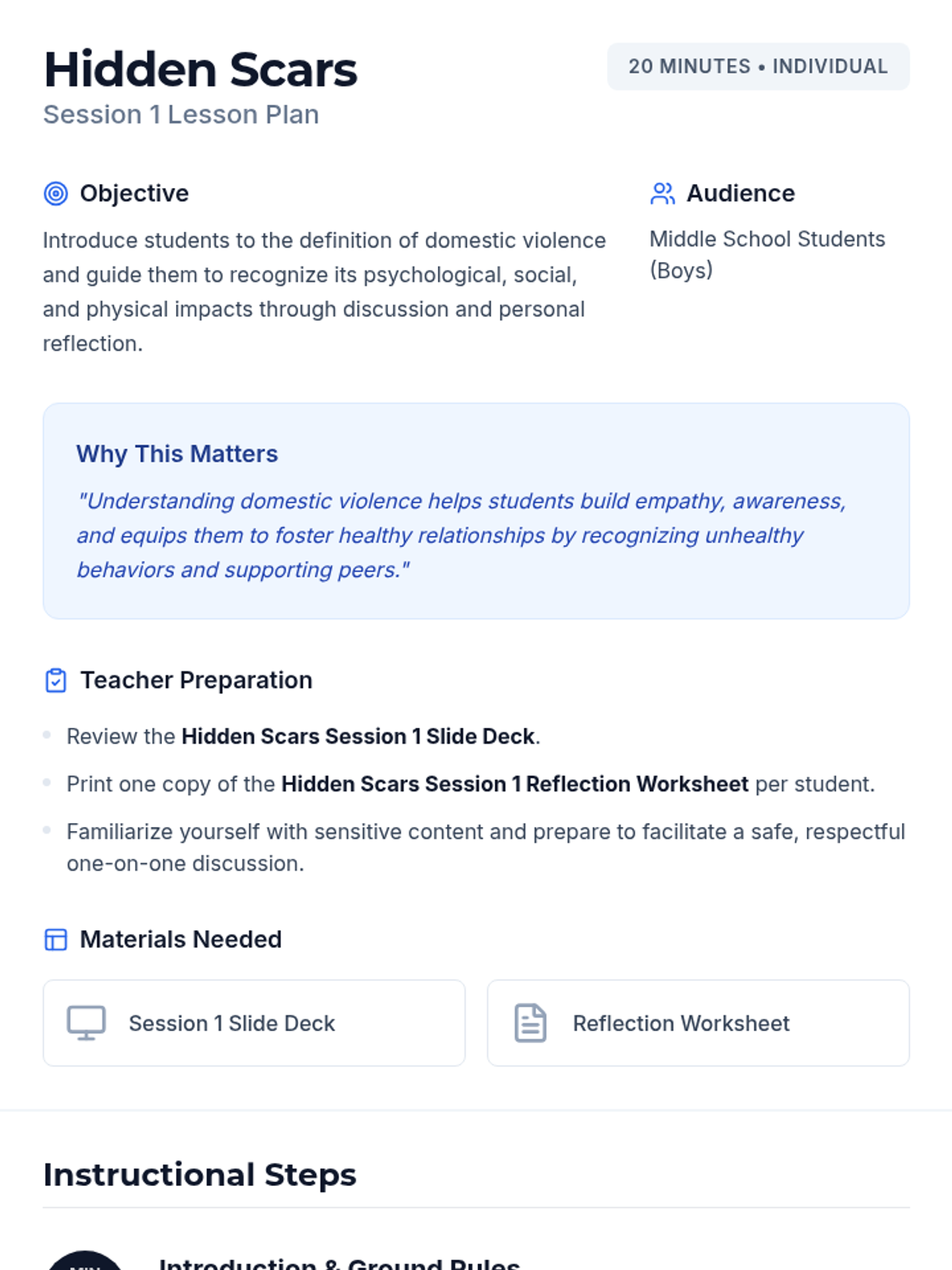
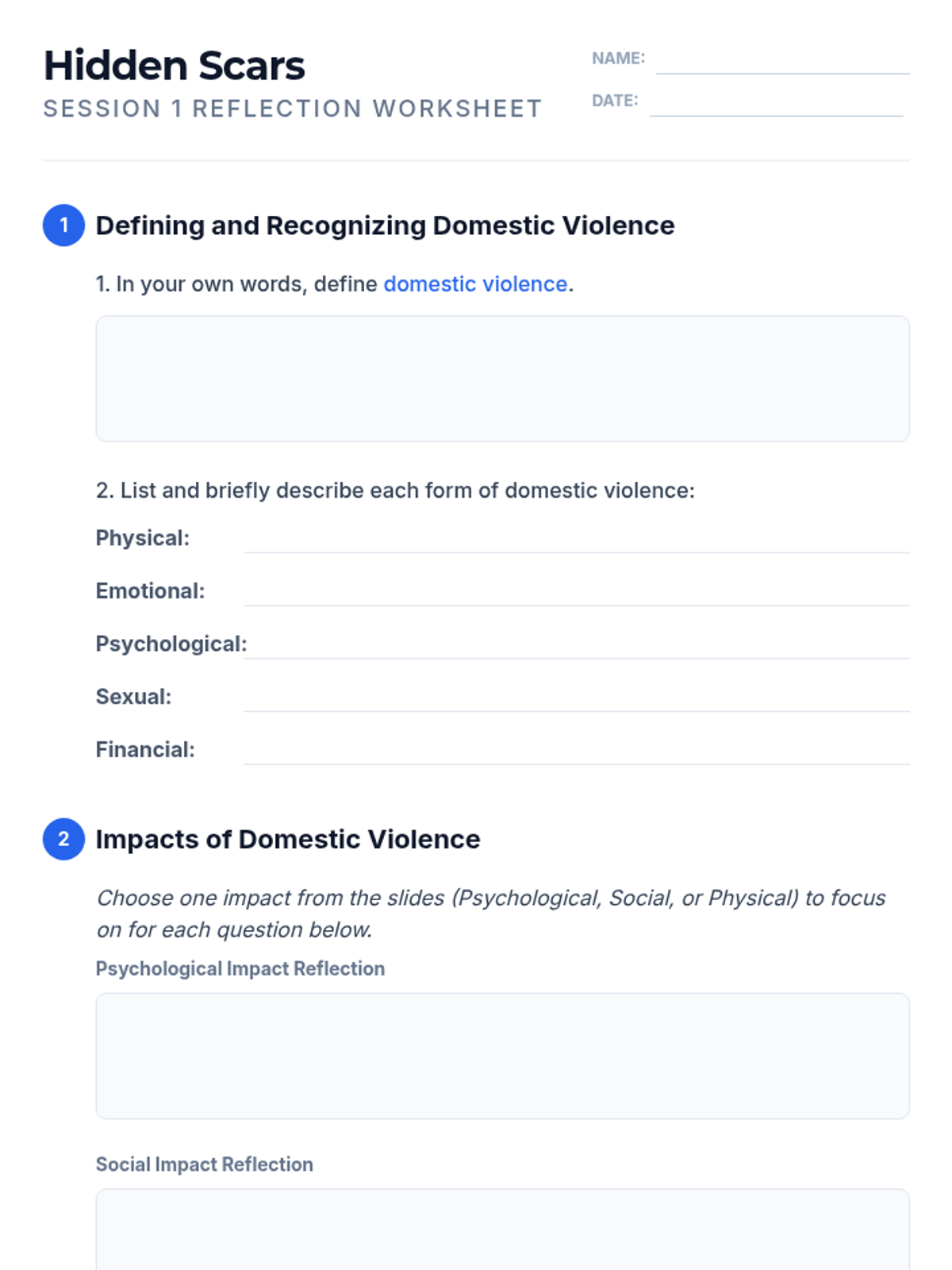
A two-session sequence for middle school boys exploring the psychological, social, and physical impacts of domestic violence while building healthy relationship skills and coping strategies.
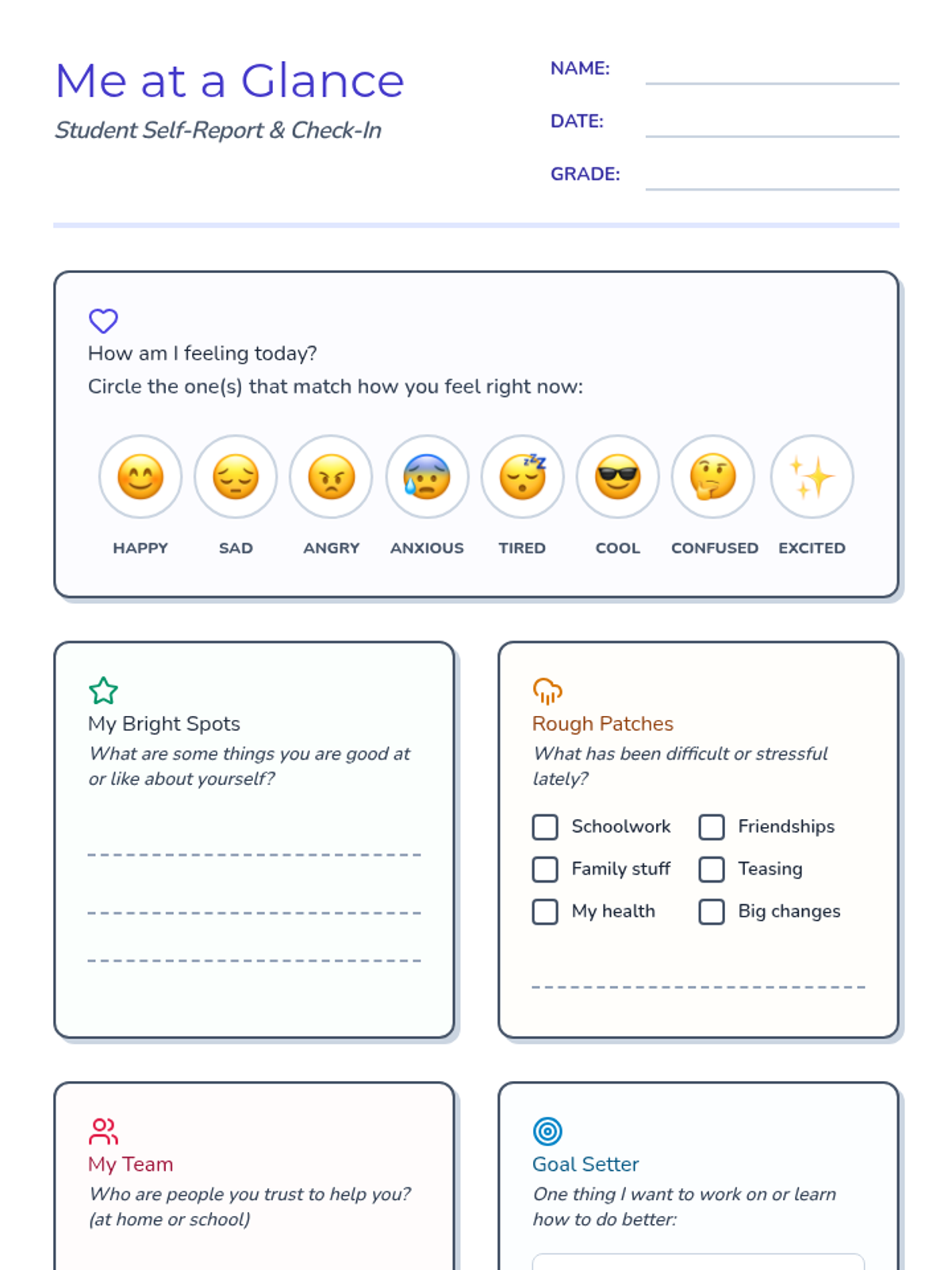
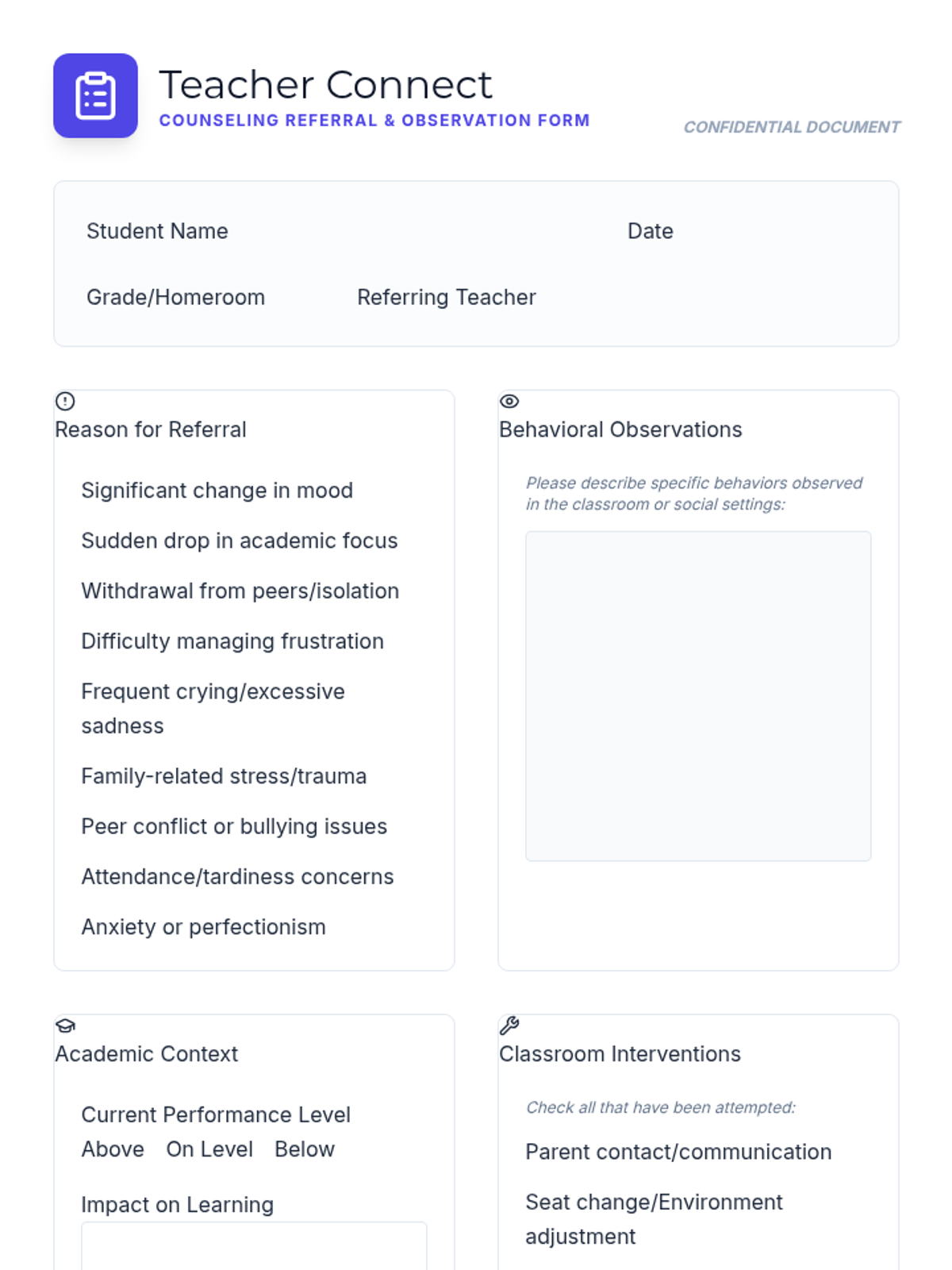
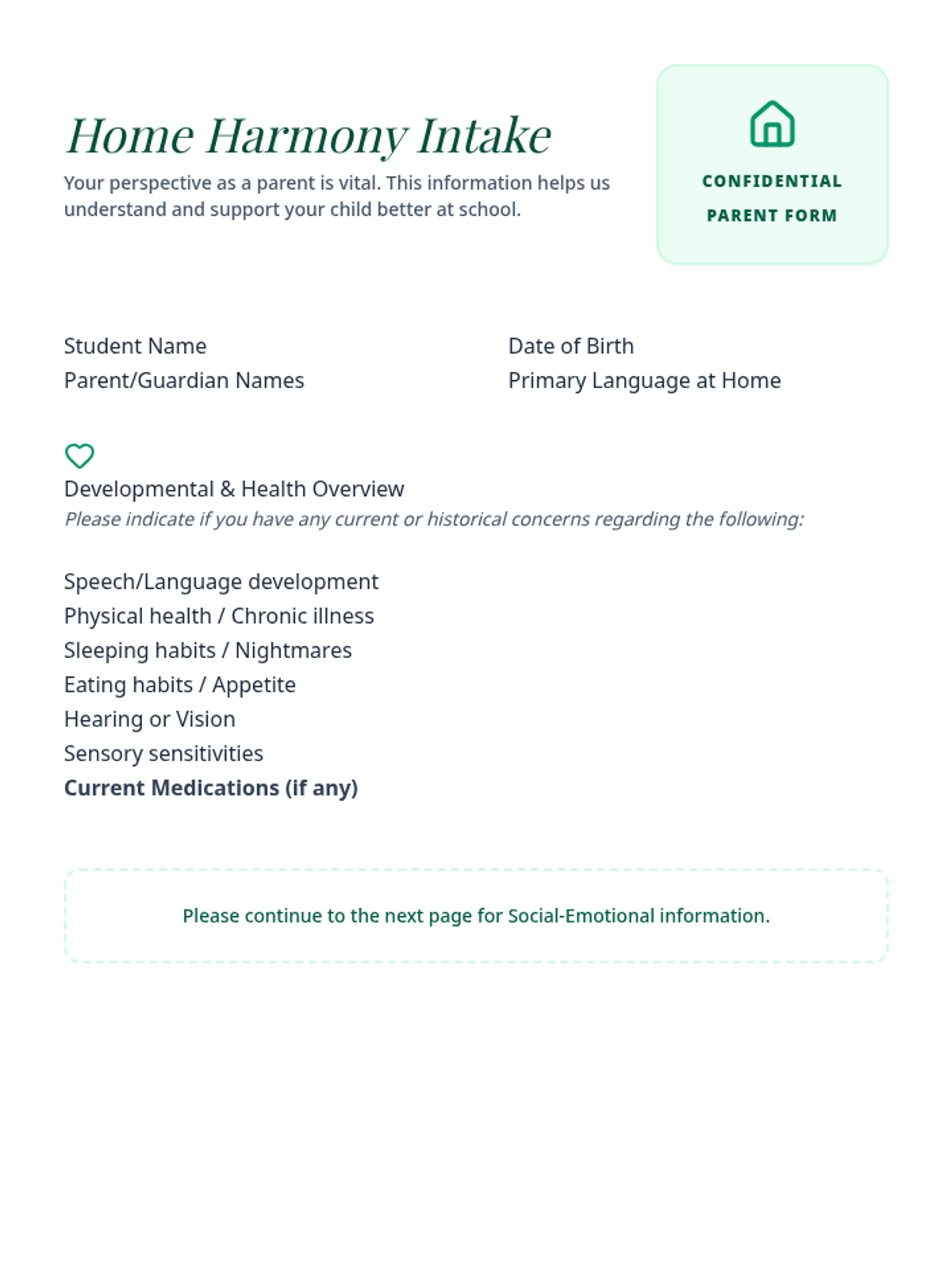
A comprehensive suite of school counseling resources designed to streamline student intake, track social-emotional progress, and facilitate communication between counselors, teachers, and families.
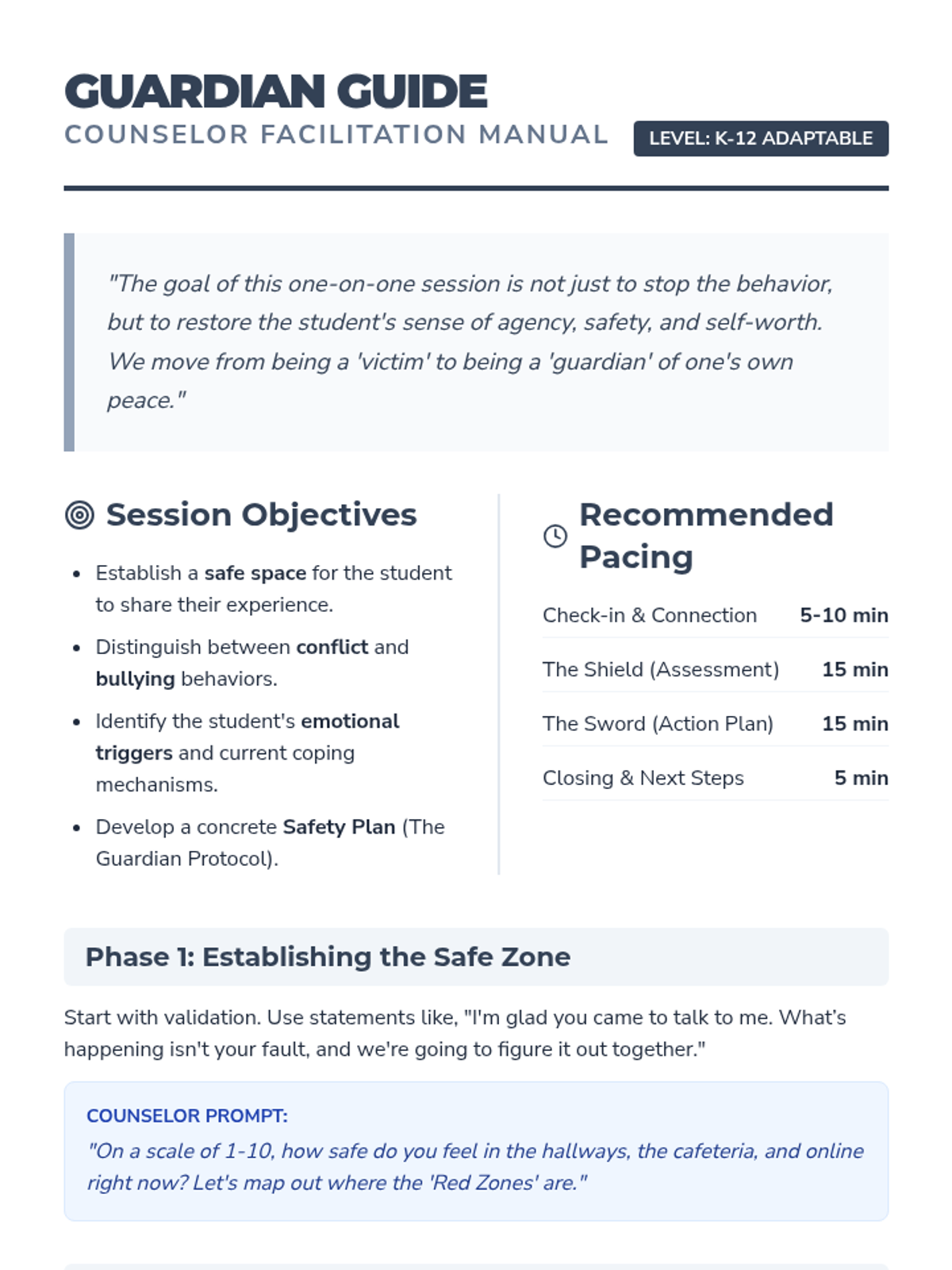
A tiered intervention series for school counselors to address bullying behaviors across different developmental stages, from foundational safety to complex social dynamics.
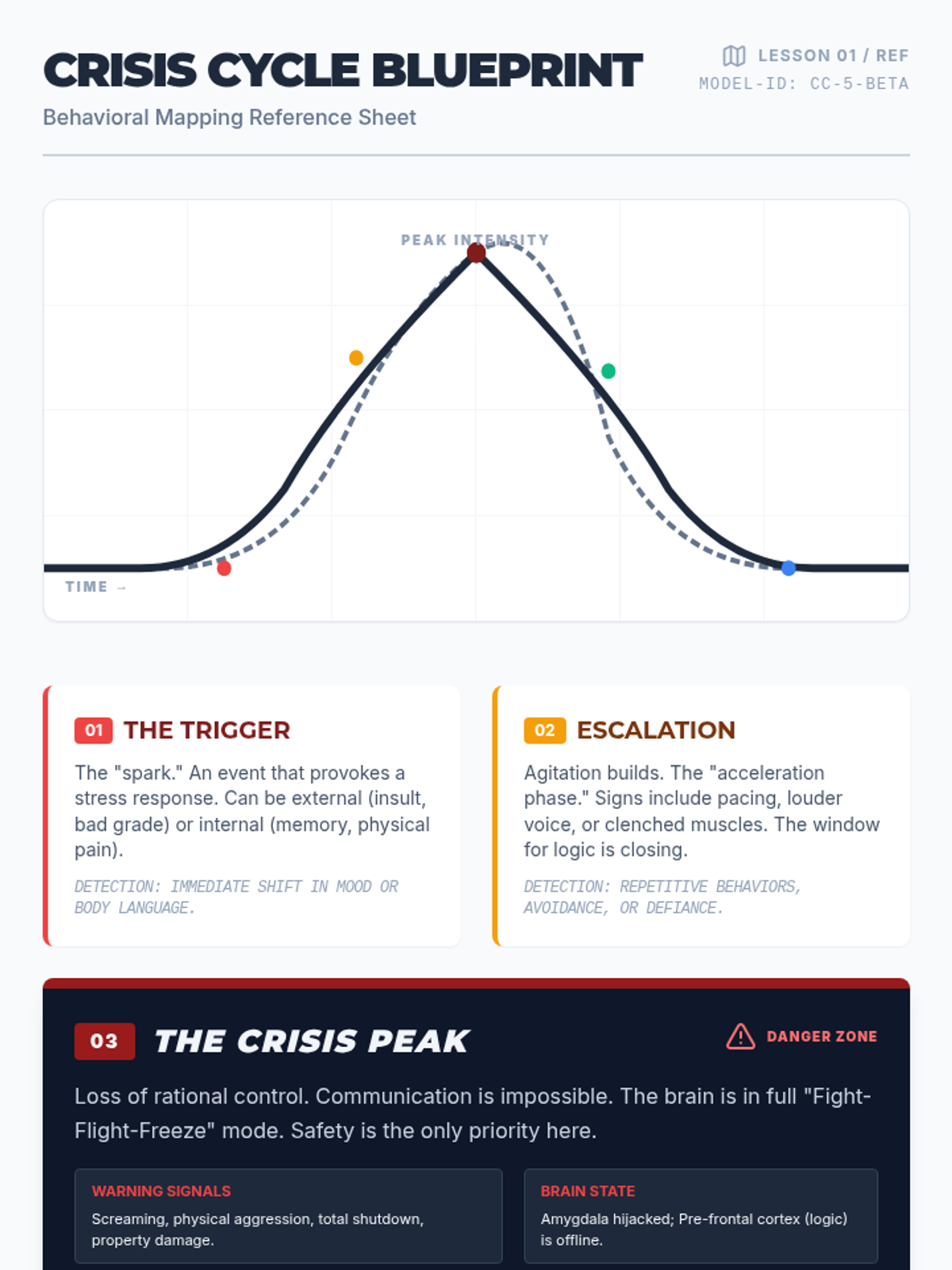
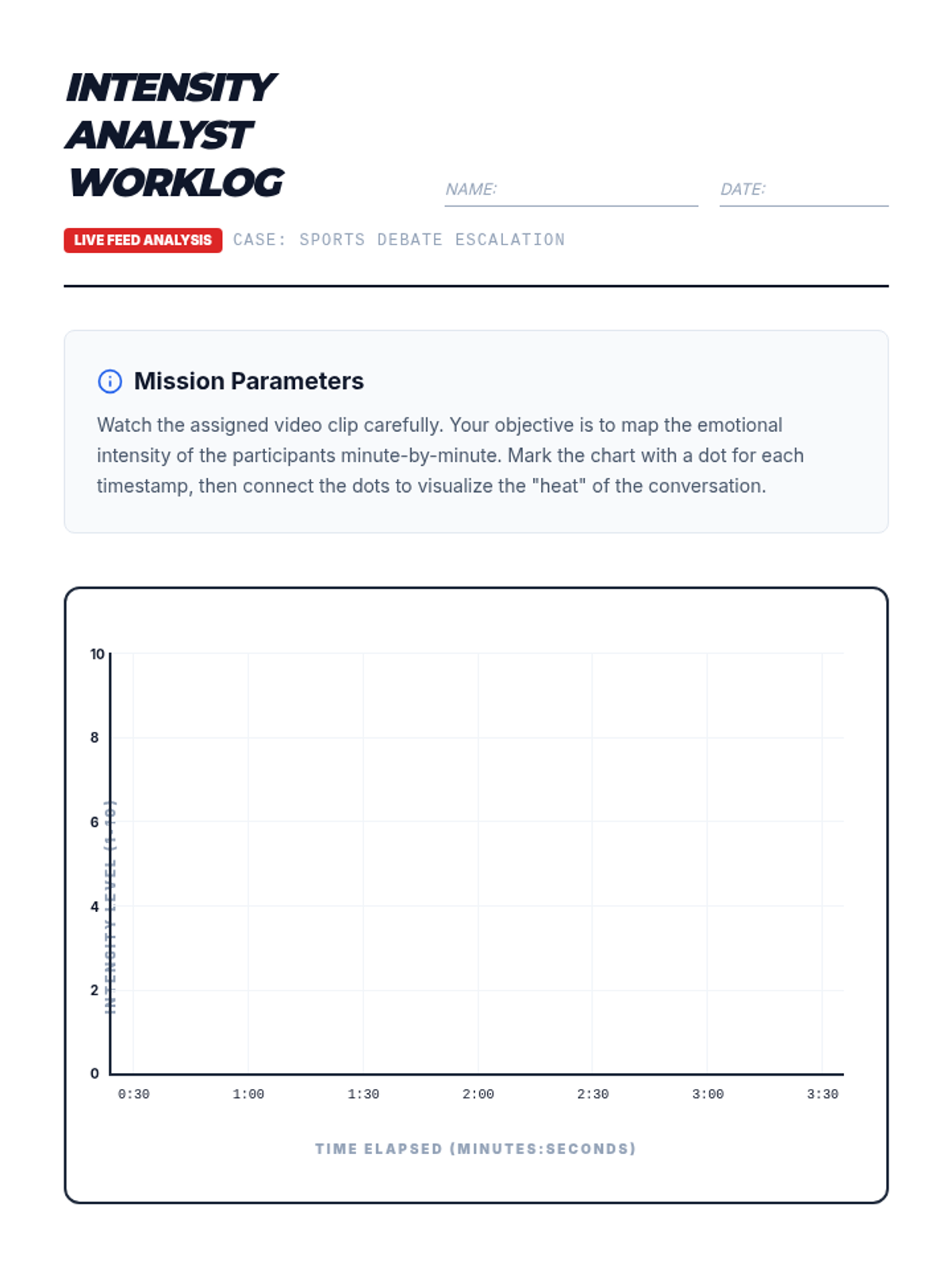
A comprehensive 5-lesson unit on the Crisis Cycle, focusing on identifying triggers, escalation stages, and intervention points through a technical mapping and simulation lens. Students move from theoretical understanding to retroactive detective work to understand behavioral patterns.
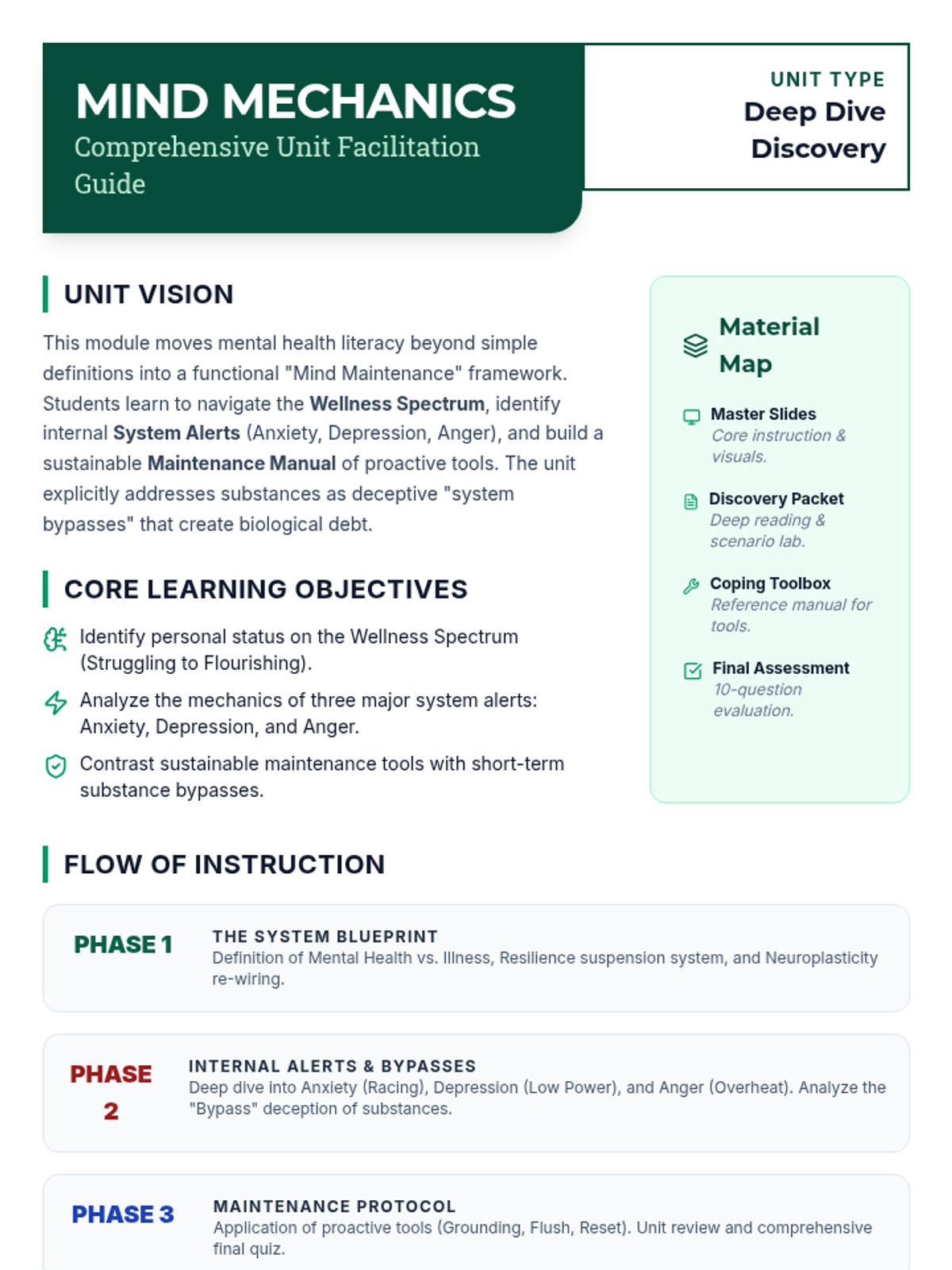
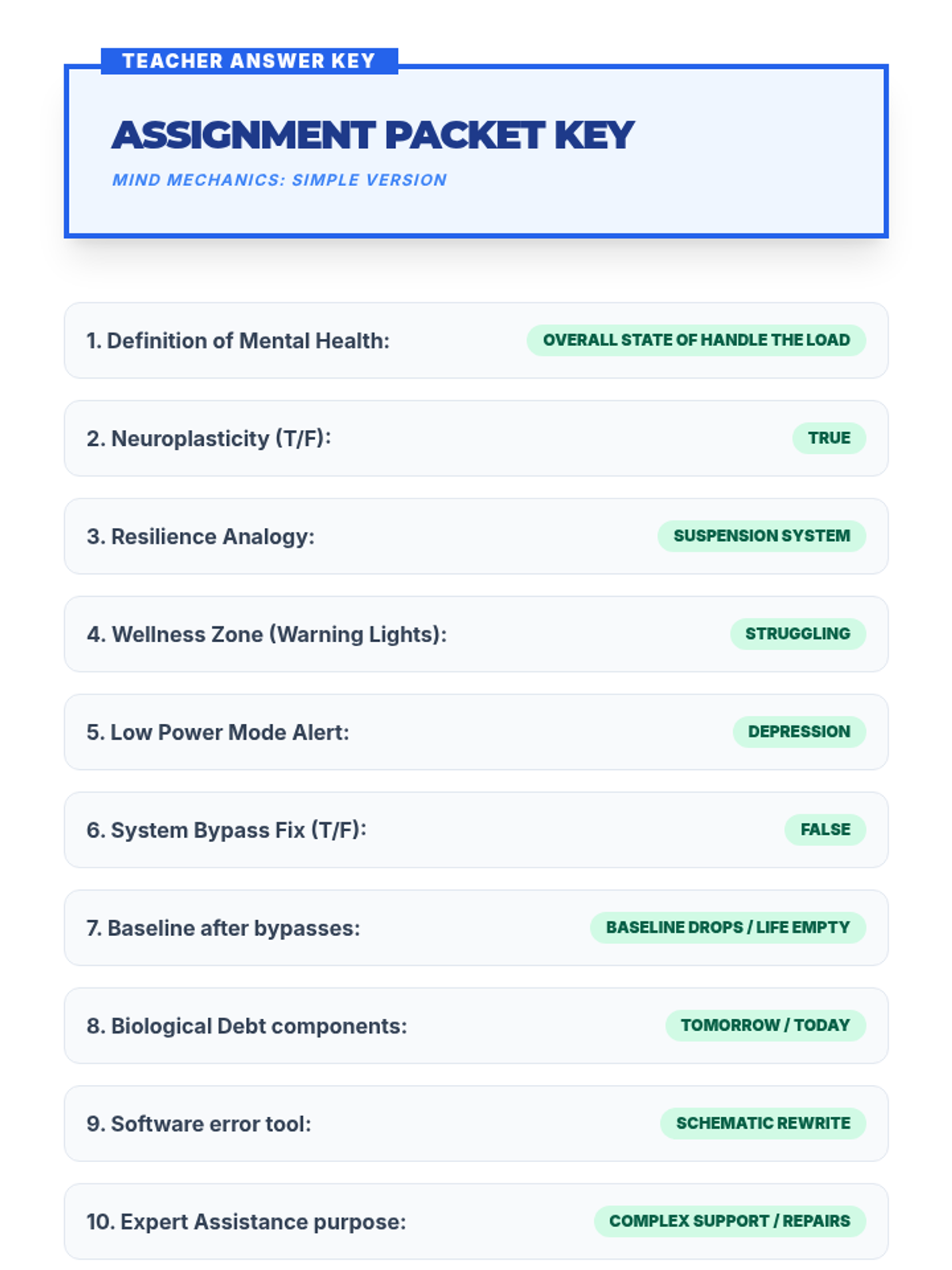
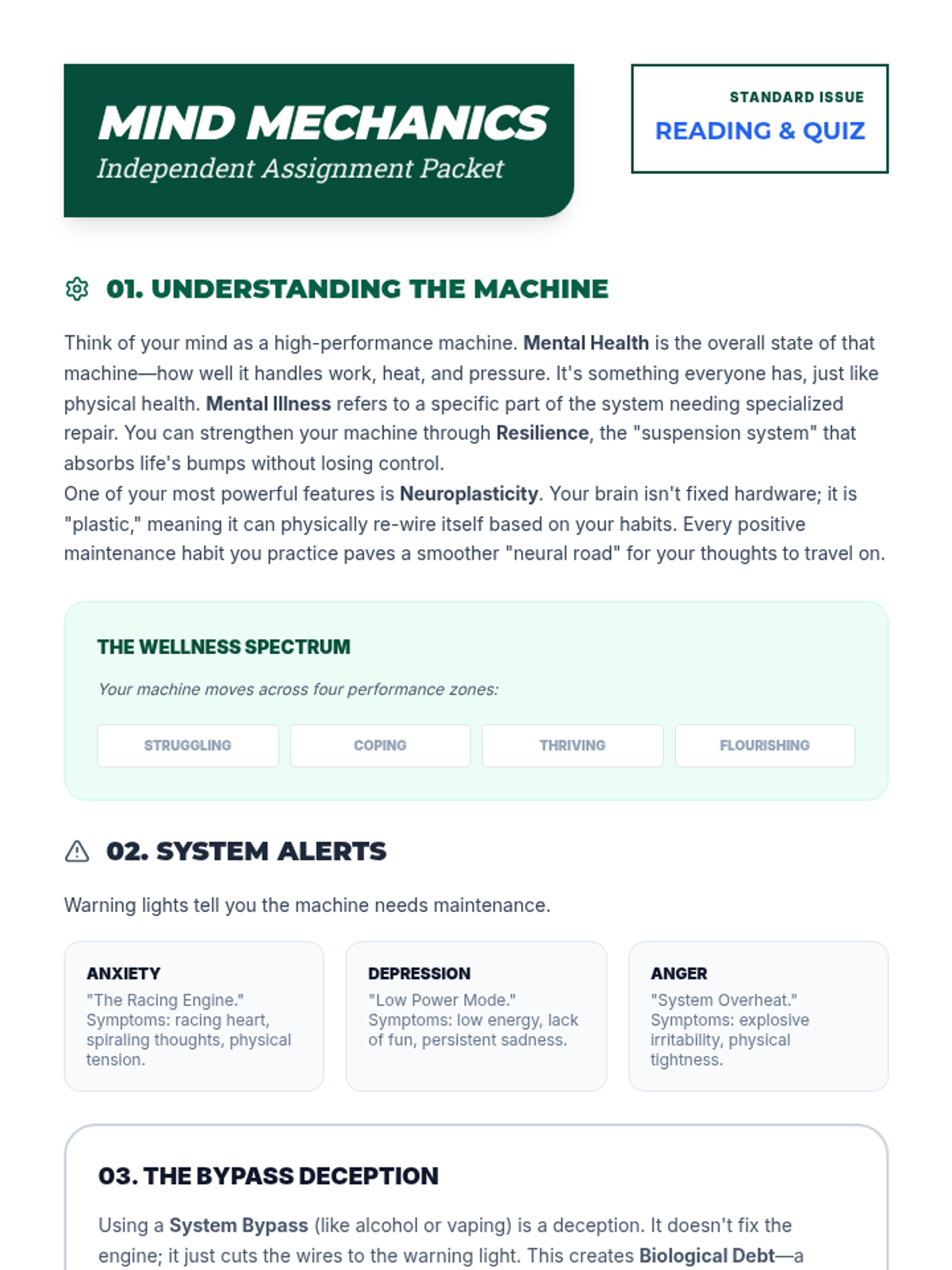
A multi-lesson unit designed to build mental health literacy, identify internal system alerts (Anxiety, Depression, Anger), and develop a sustainable toolkit of coping strategies. Students explore the 'Wellness Spectrum', 'Neuroplasticity', and the deceptive nature of 'System Bypasses' like substances.
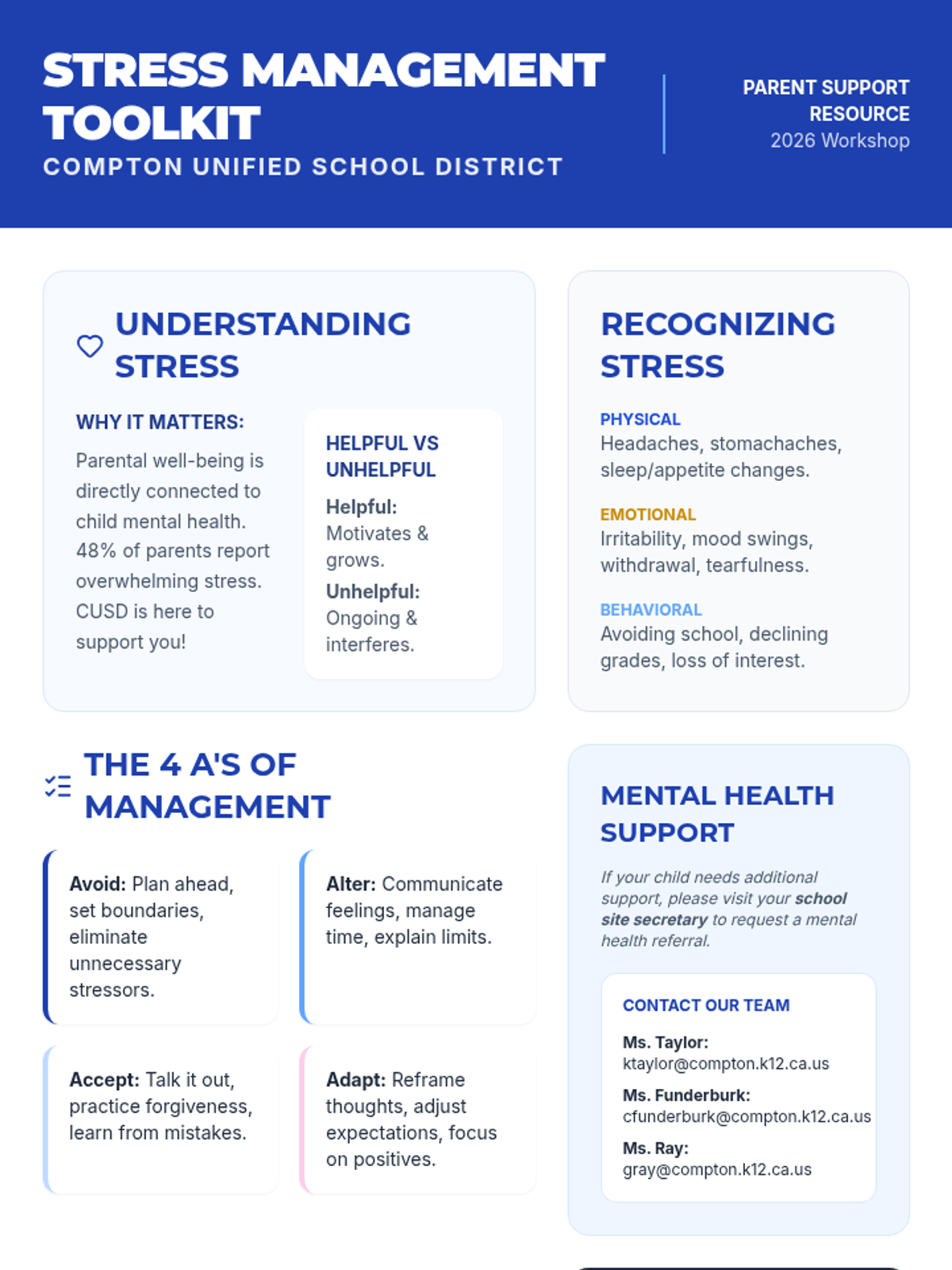
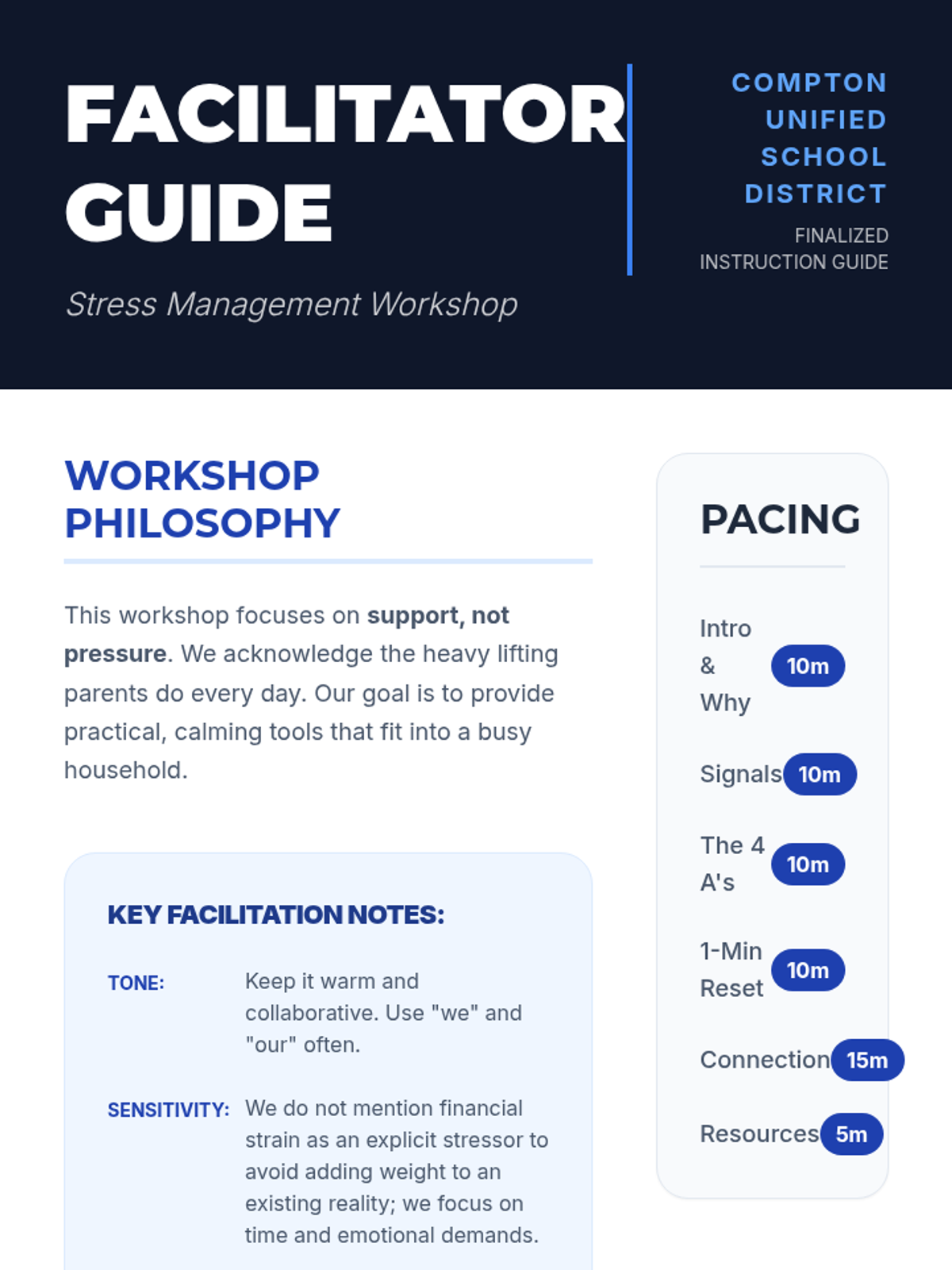
A comprehensive workshop sequence designed for parents and caregivers to understand and manage stress, identify stress signals in children, and implement practical coping strategies at home.
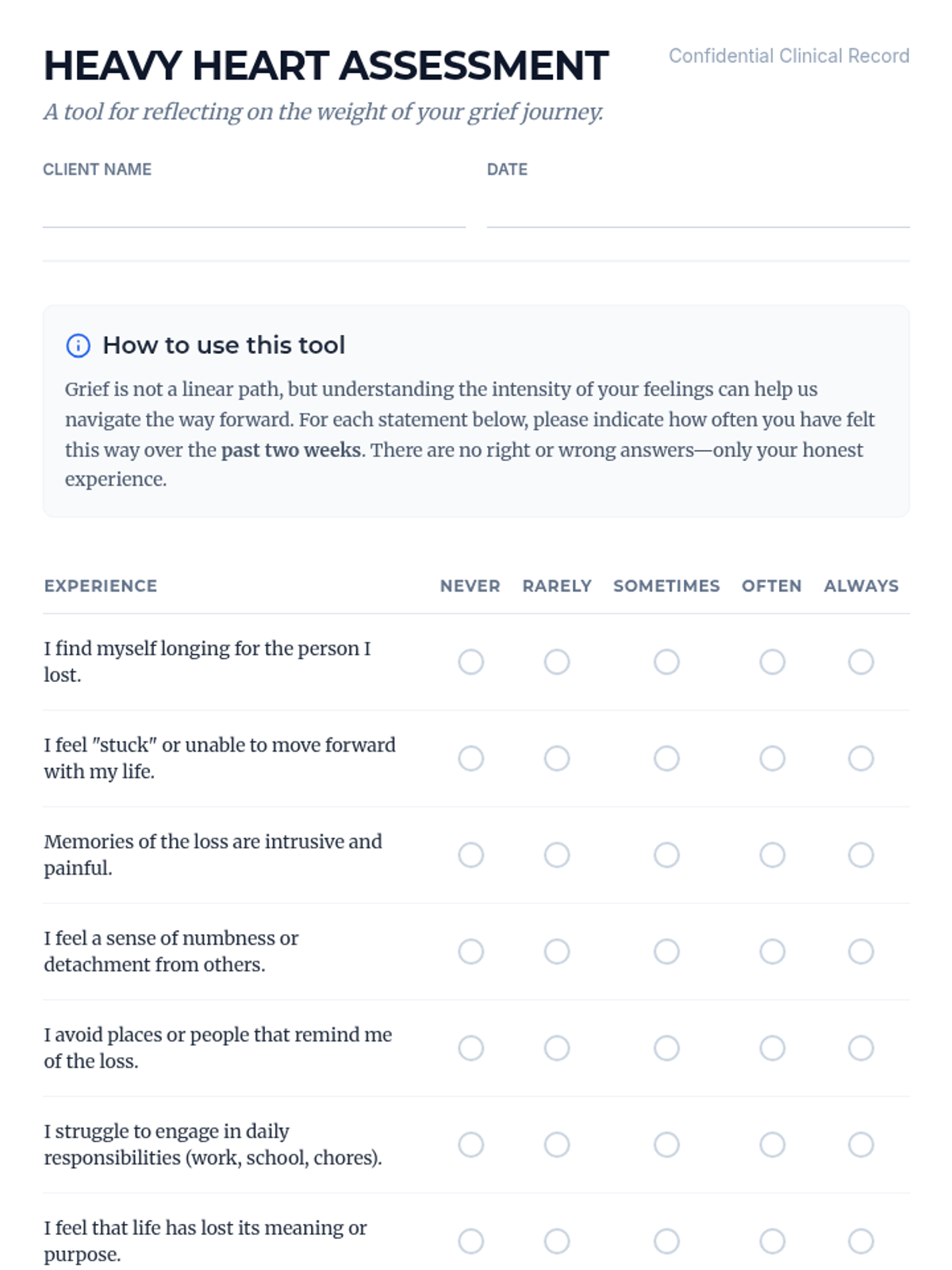
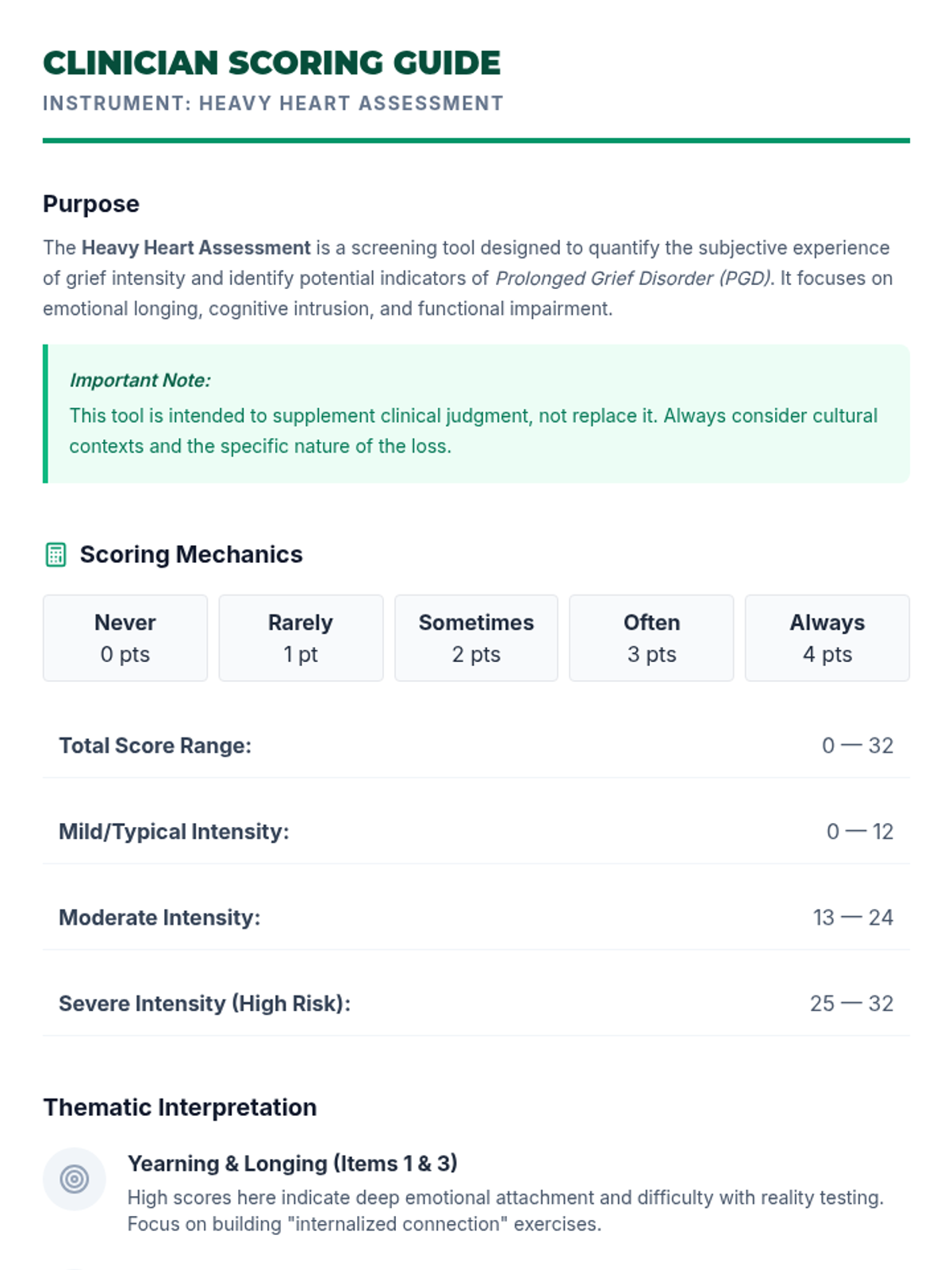
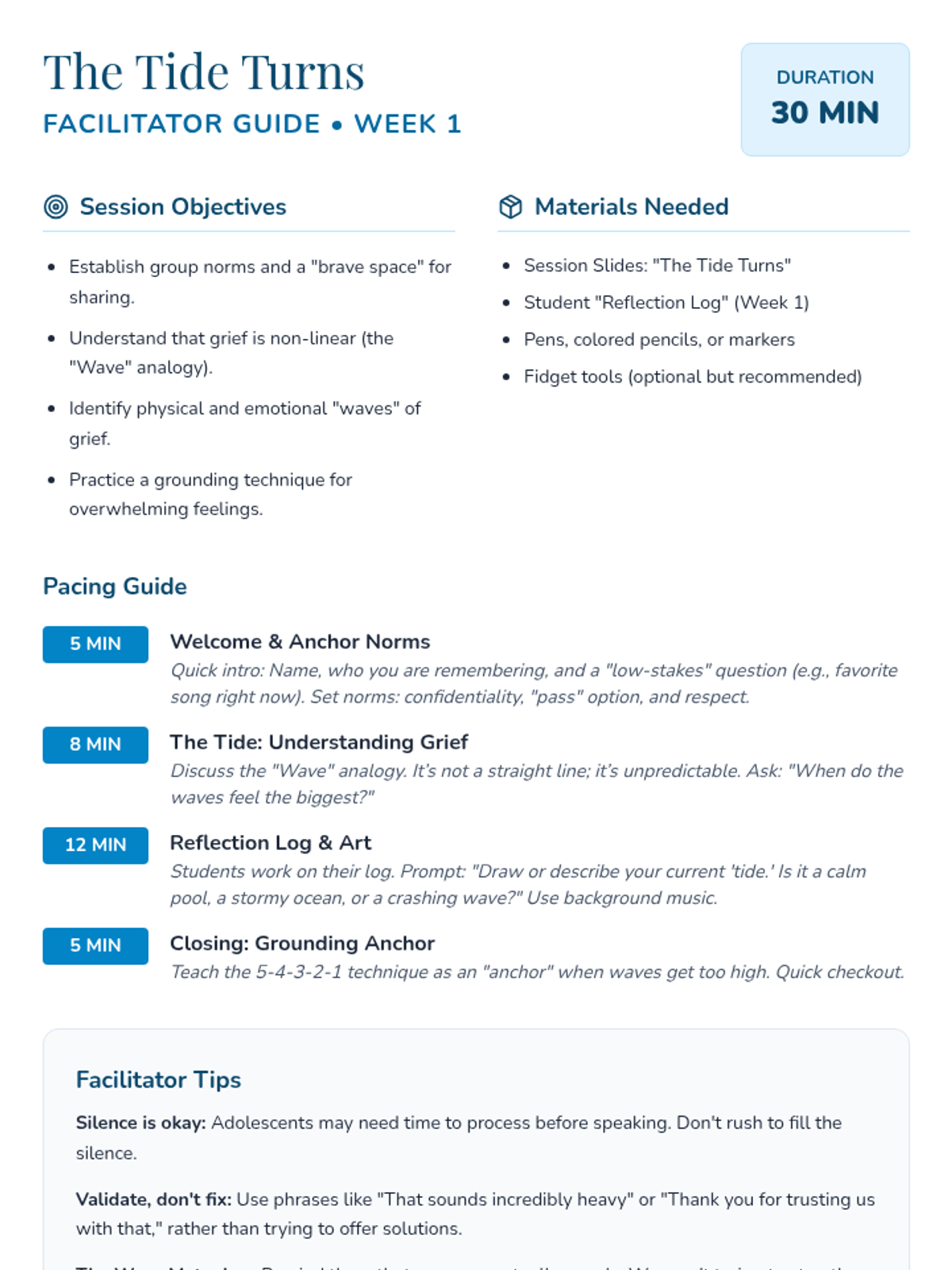
A comprehensive therapeutic sequence designed to guide clinicians and clients through the complexities of grief, focusing on assessment, psychoeducation, and age-appropriate coping strategies.
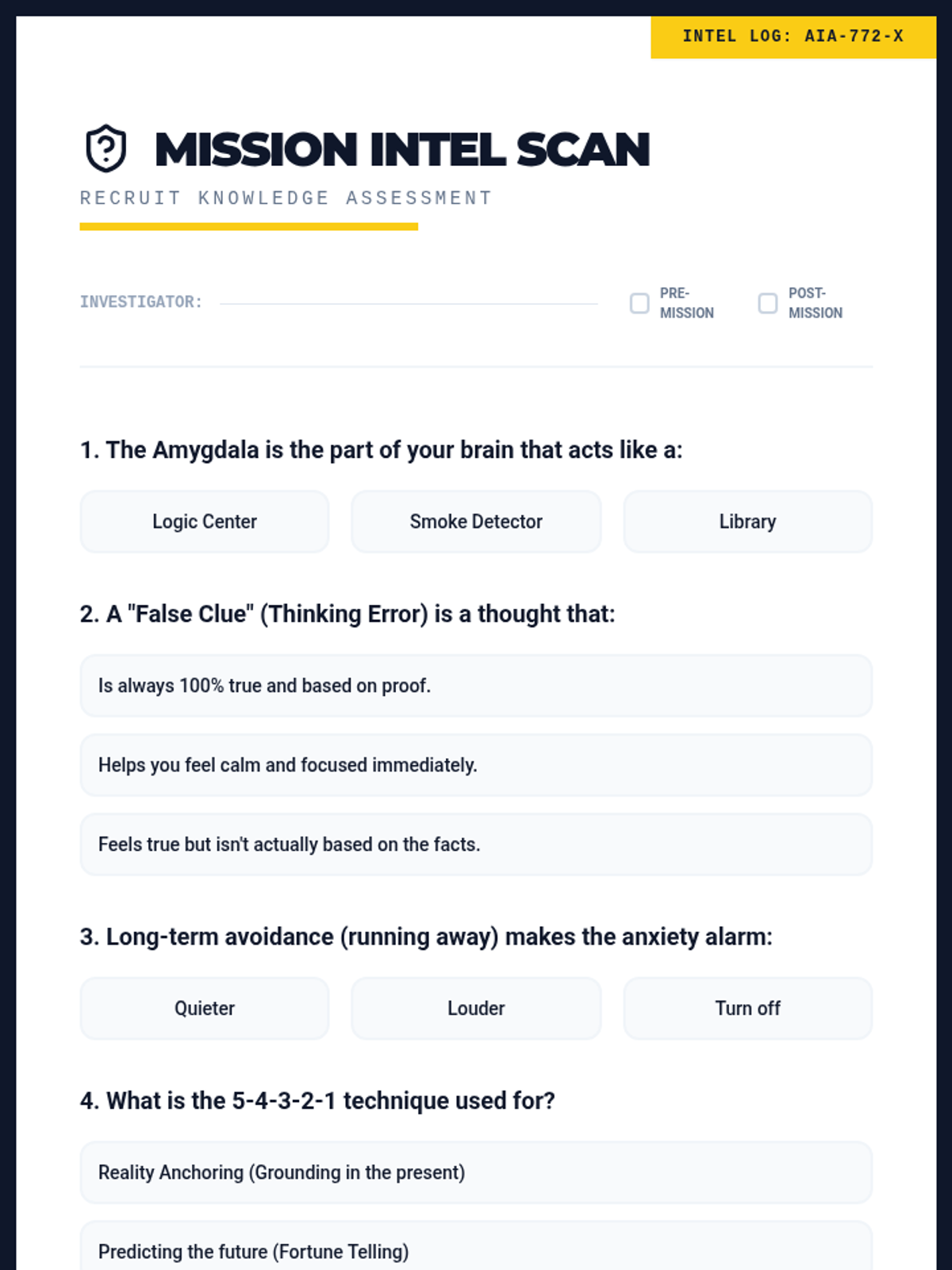
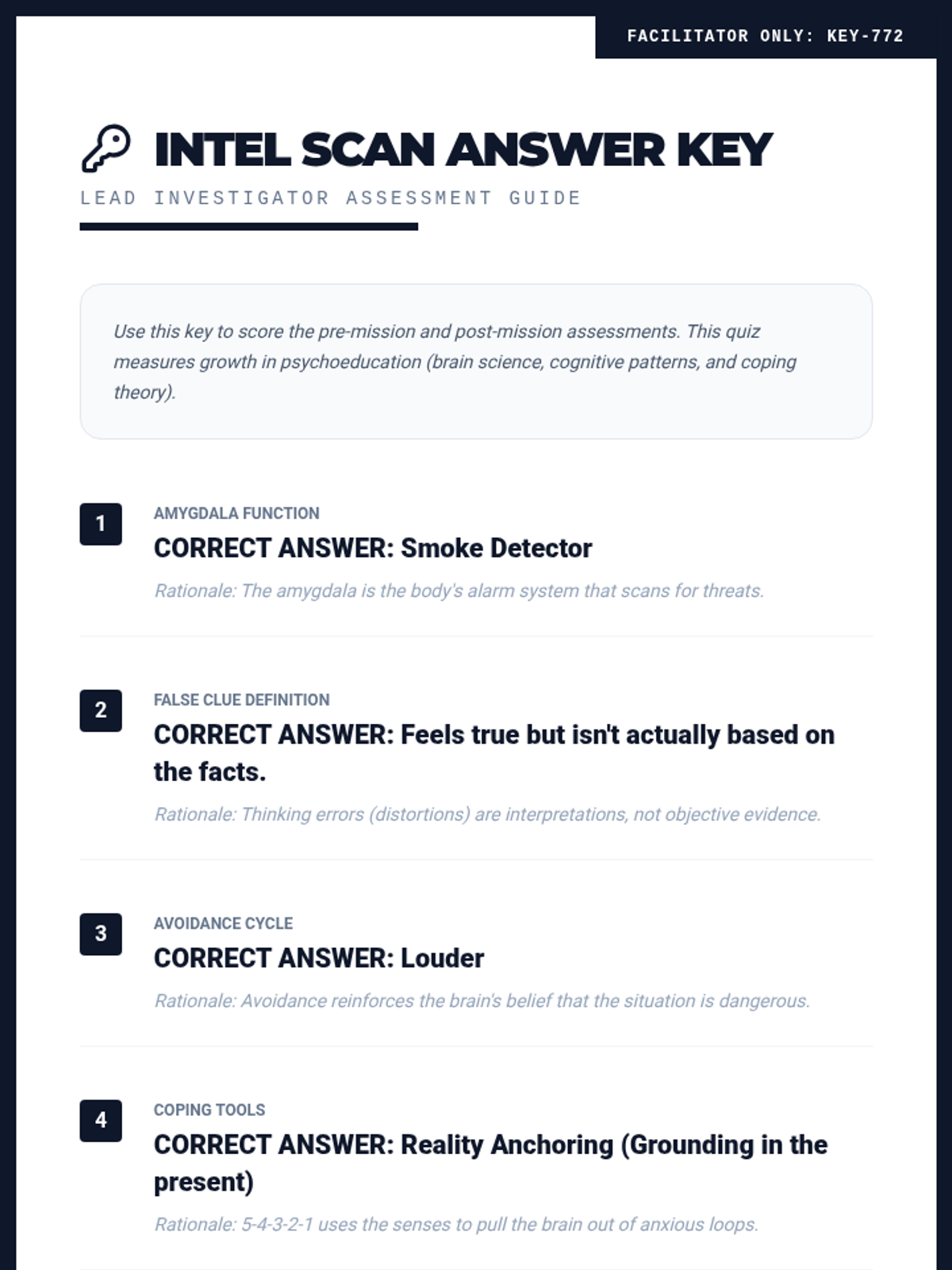
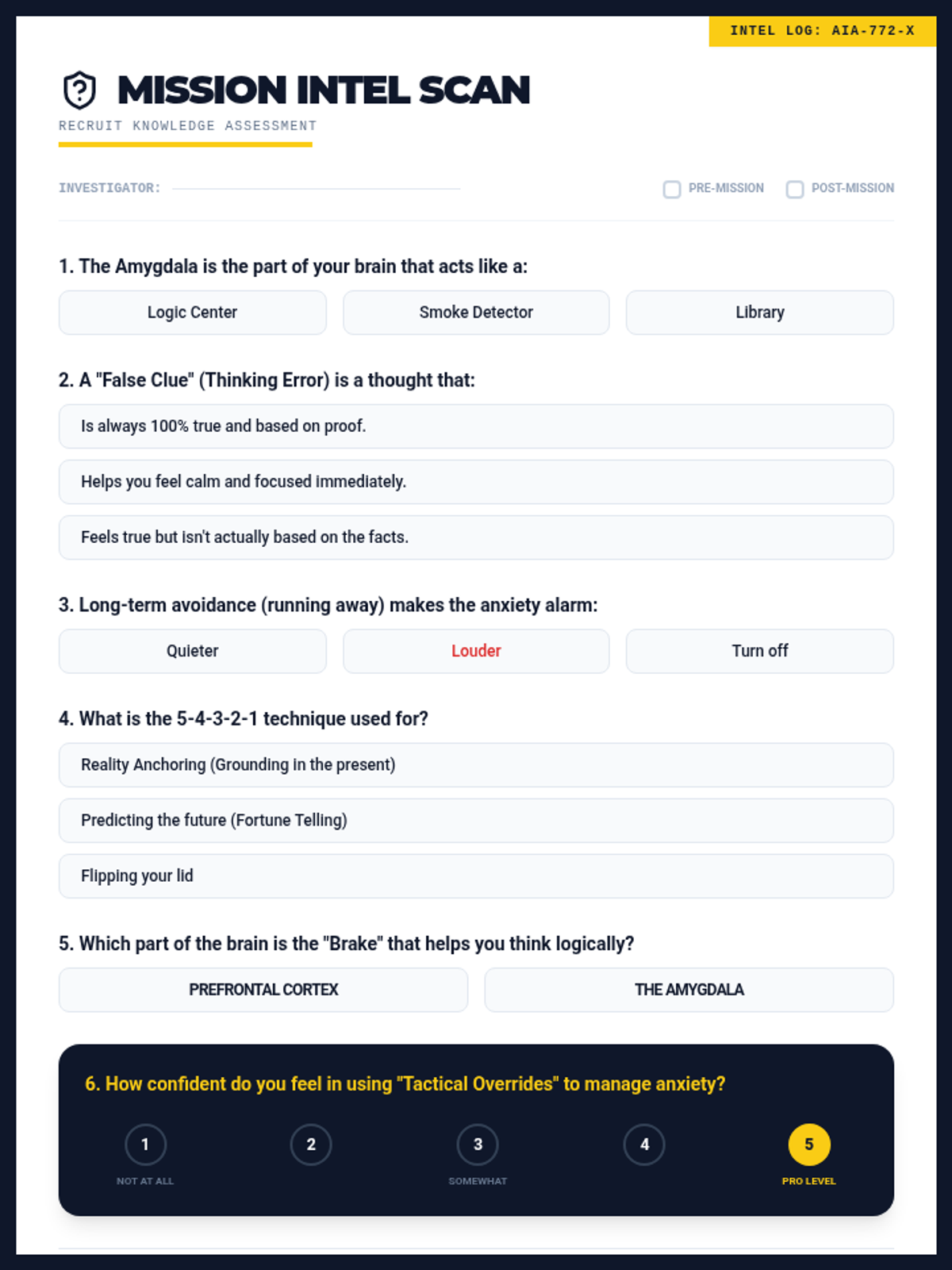
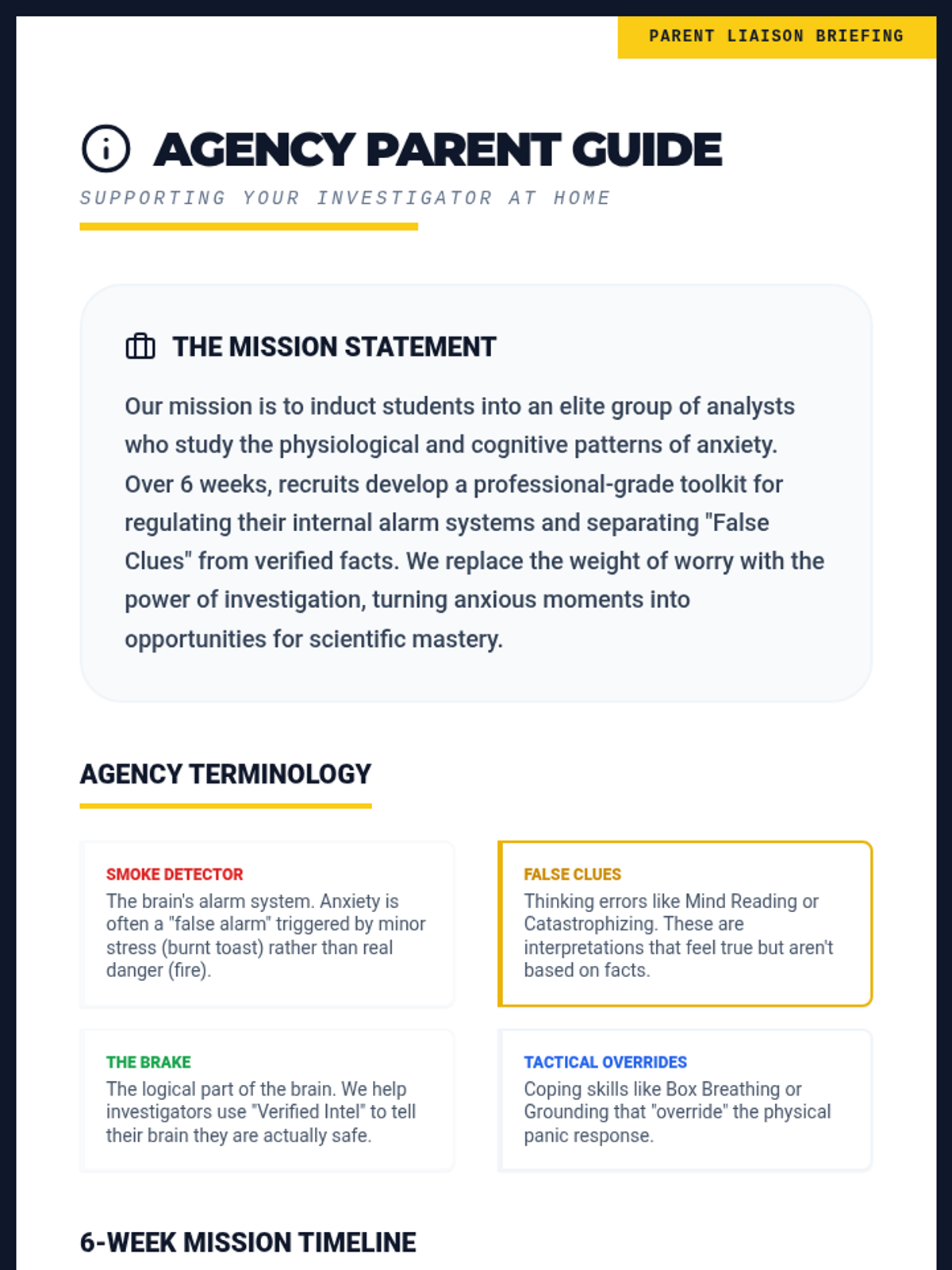
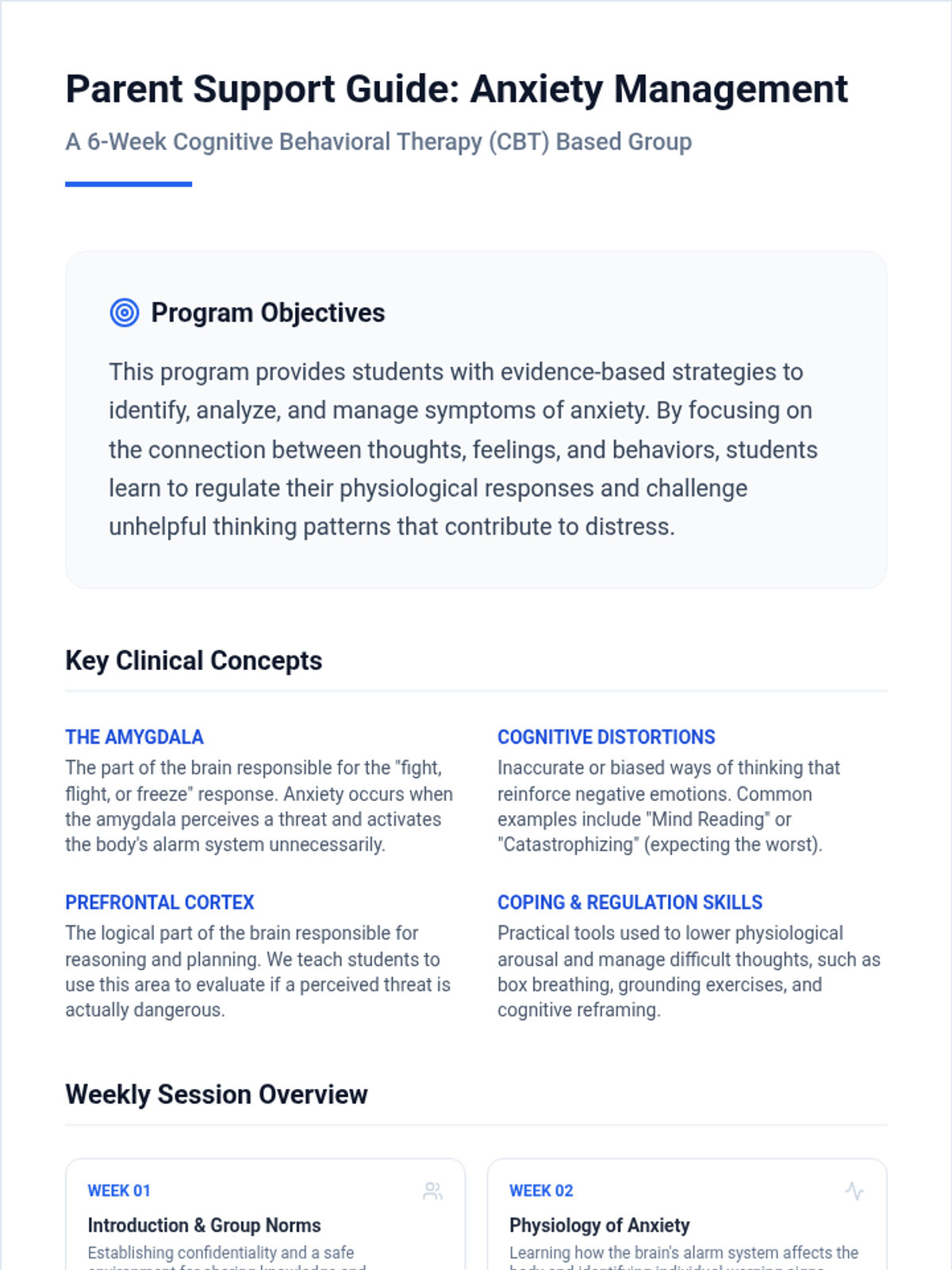
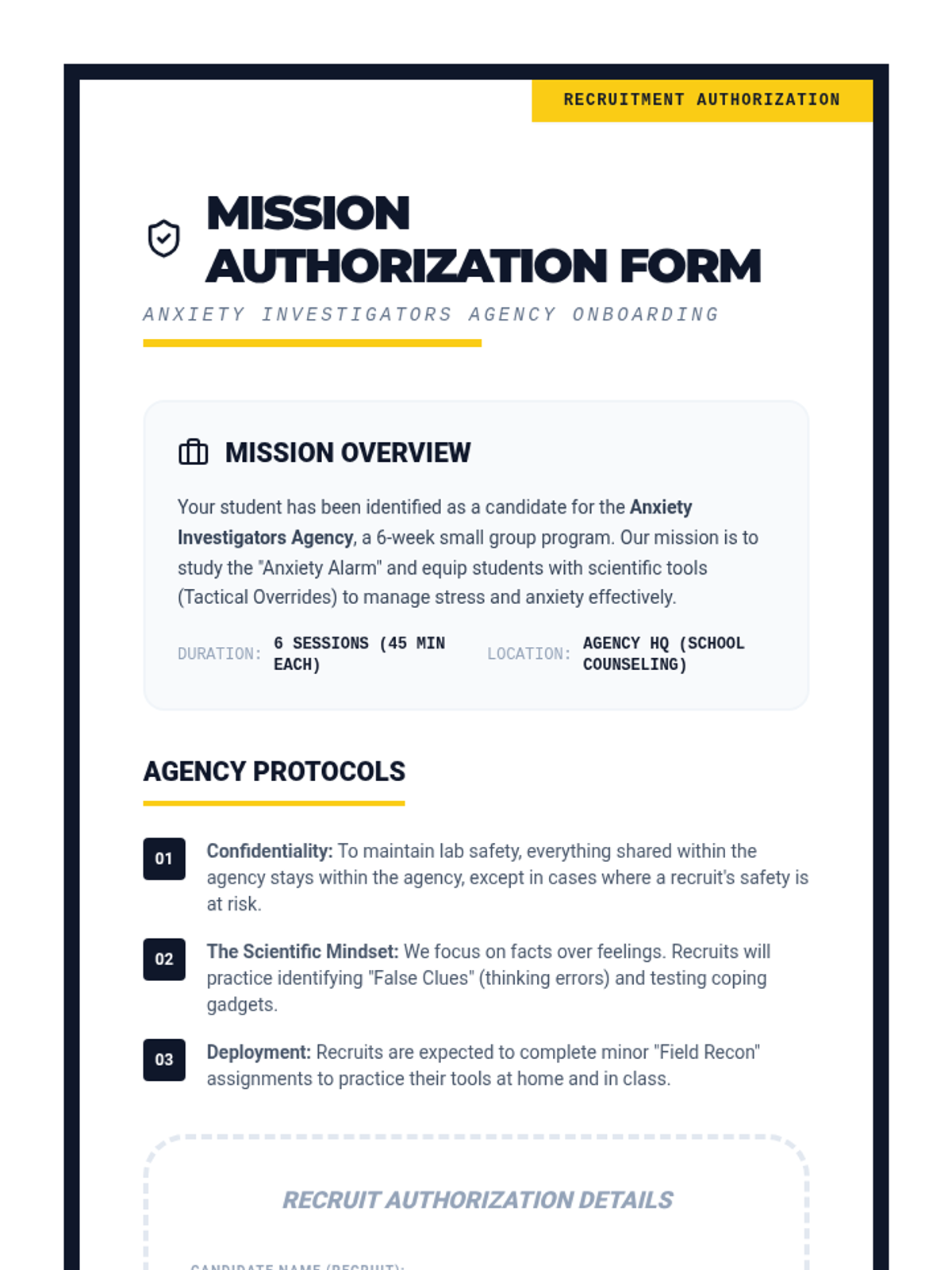
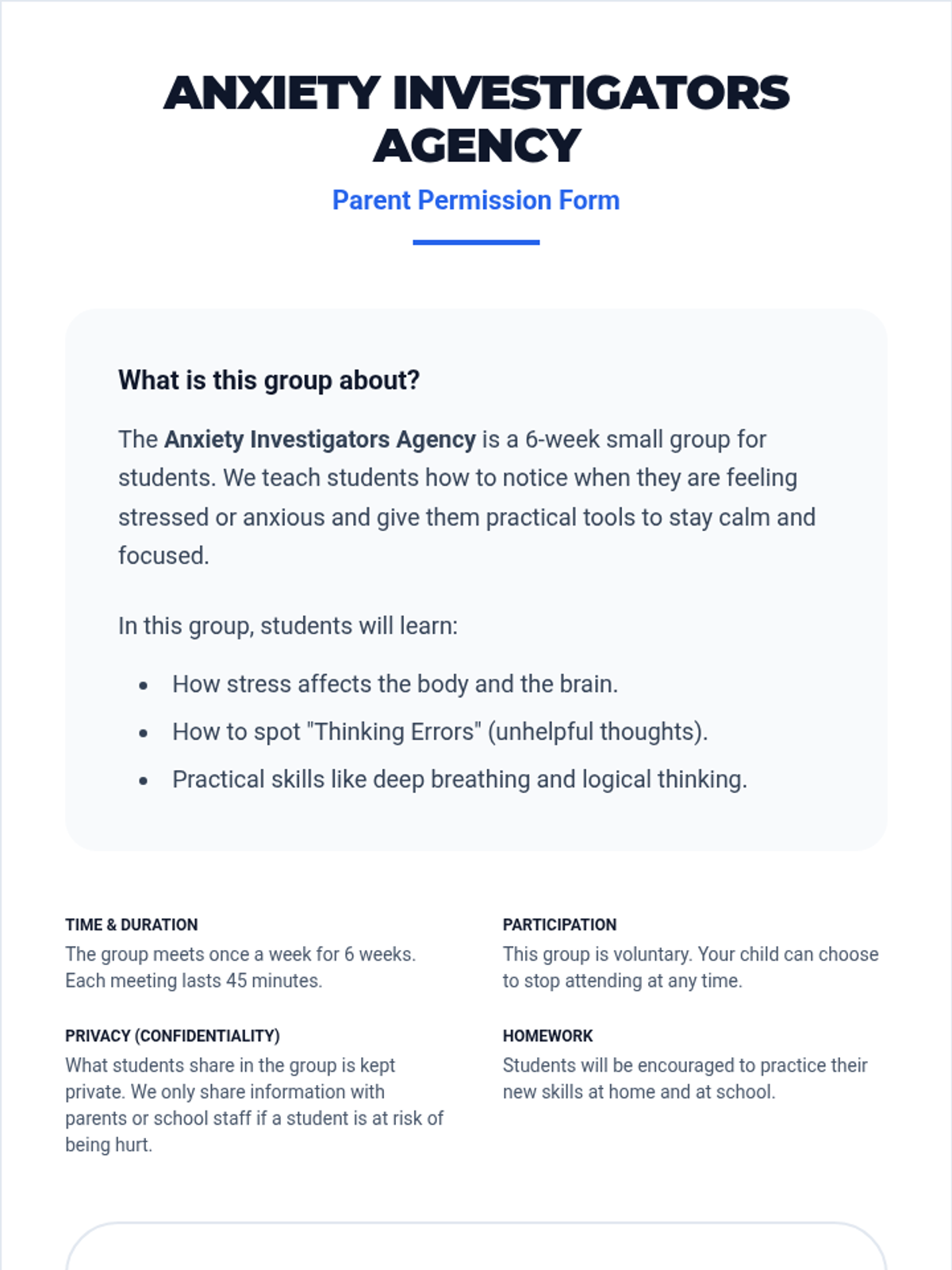
A 6-week small group program for middle schoolers that uses a detective and scientist theme to teach anxiety management, cognitive reframing, and coping skills.
A 6-week small group curriculum for middle schoolers to investigate and manage anxiety through the 'Worry Detectives' lens, covering body clues, triggers, stealth calm techniques, and truth-checking.
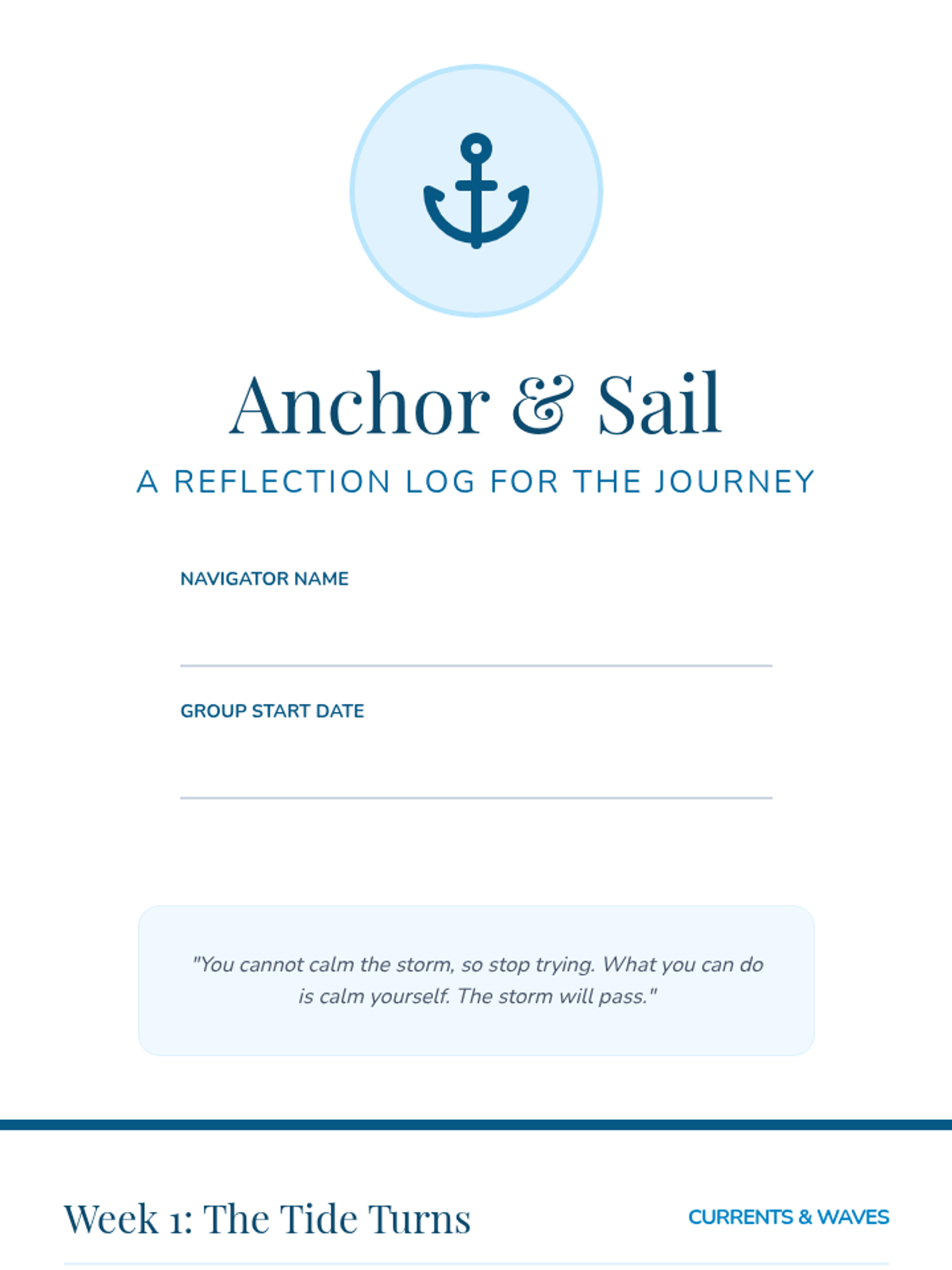
A ten-week small group curriculum for adolescents navigating grief, focusing on coping skills, narrative processing, identity, and moving forward through journaling, art, and discussion.
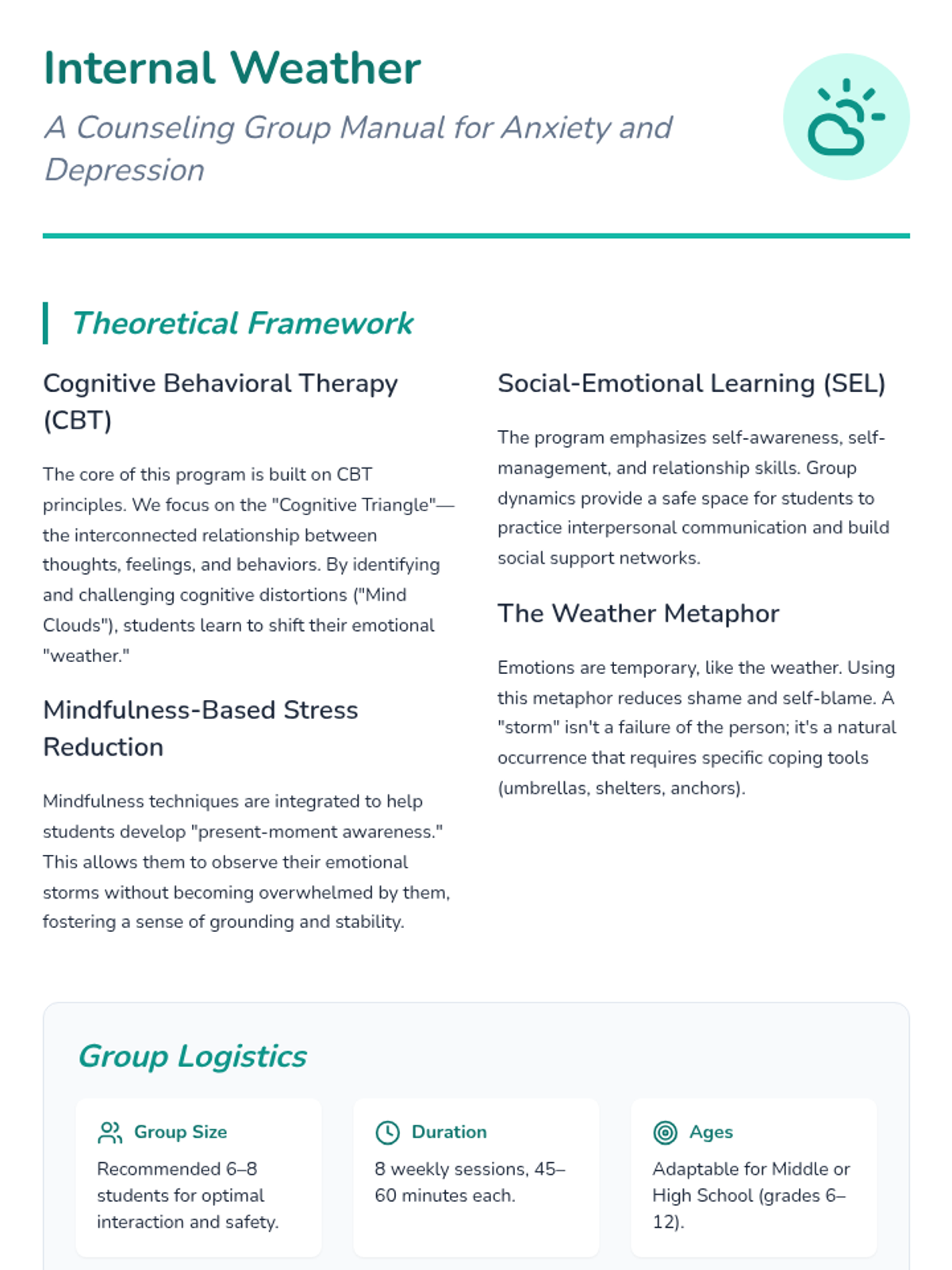
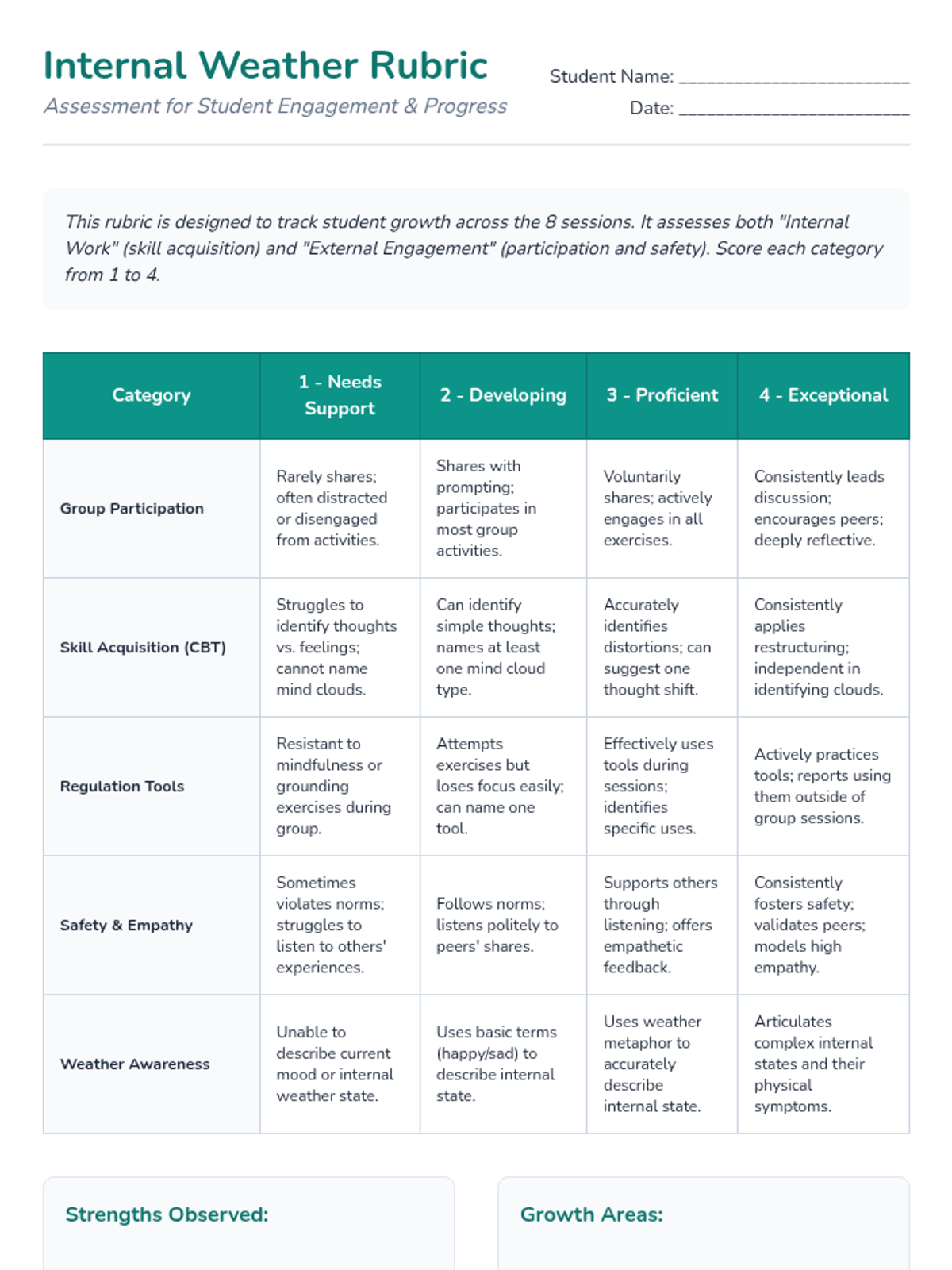
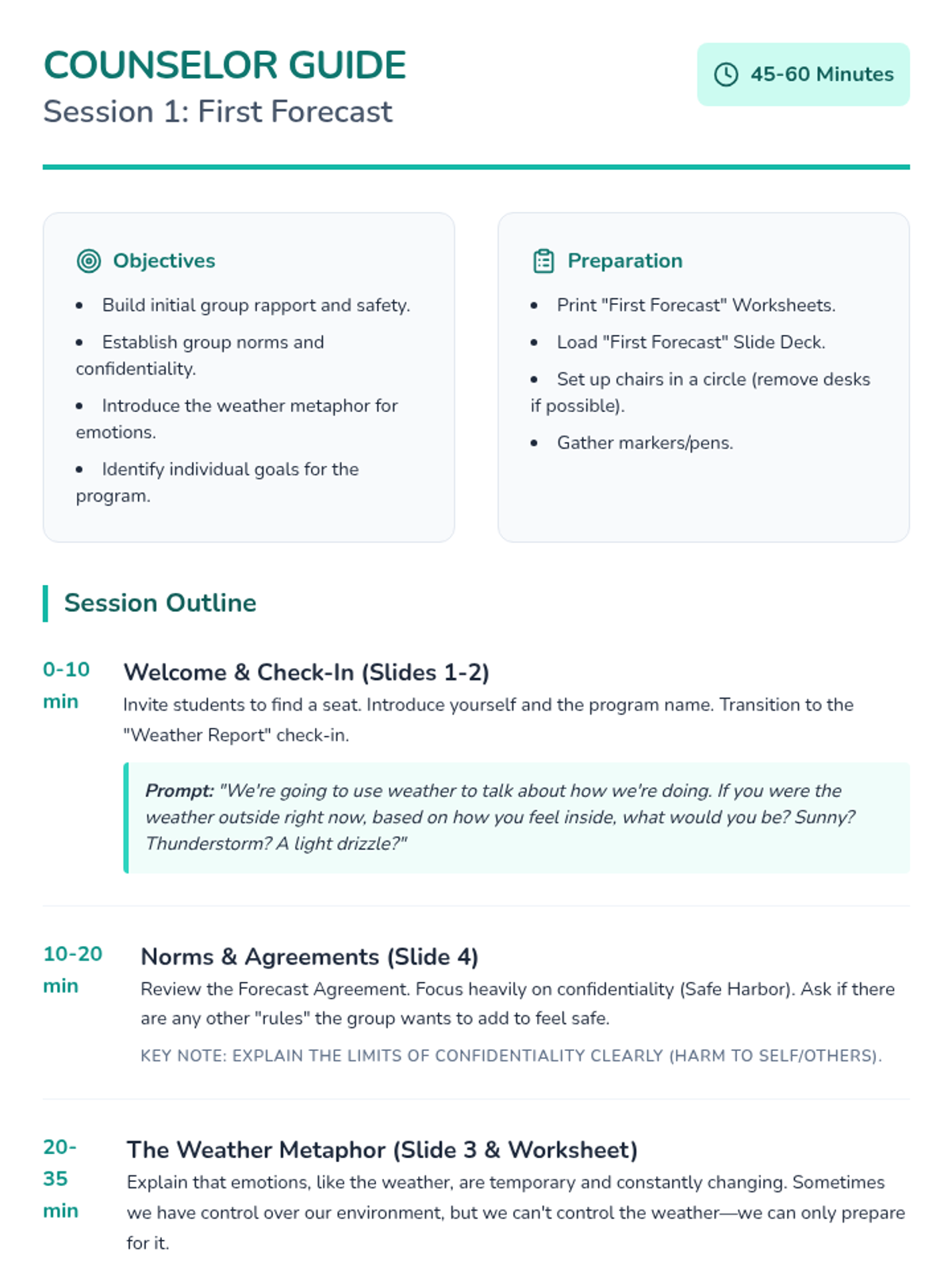
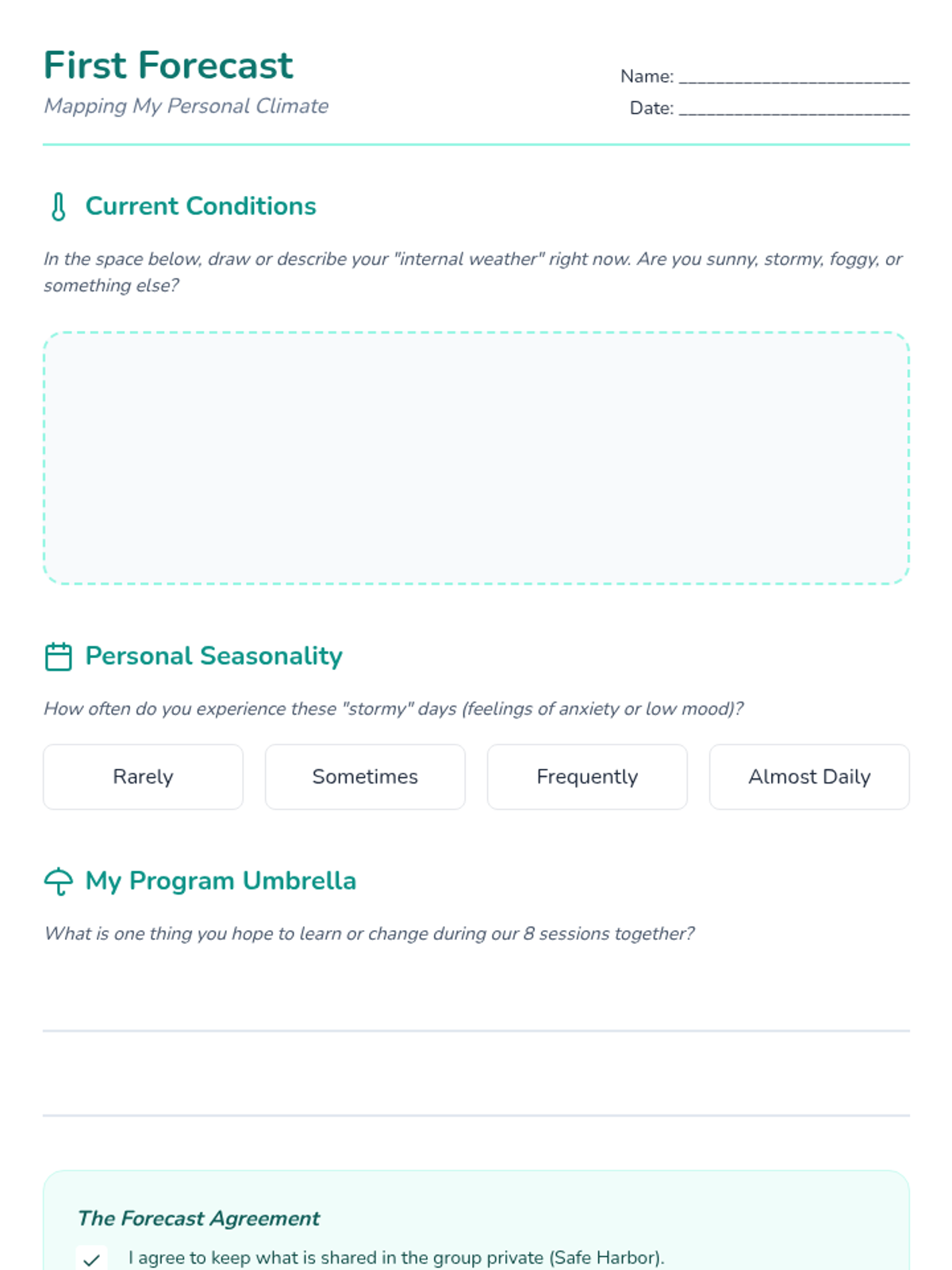
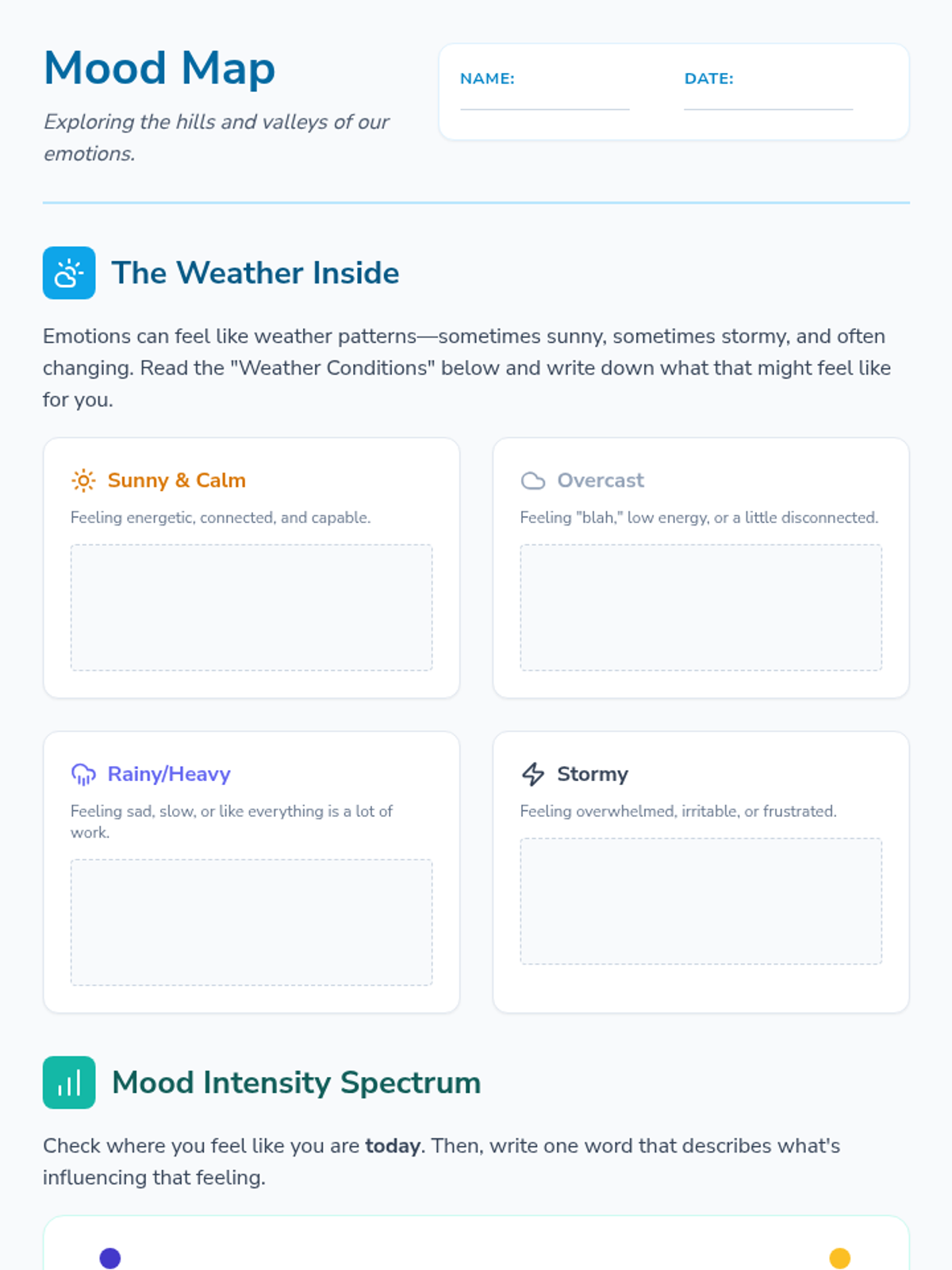
A comprehensive 8-session school counseling group program designed for students struggling with anxiety and depression. It uses a weather metaphor to help students identify, understand, and manage their internal emotional states through CBT, mindfulness, and social-emotional learning.
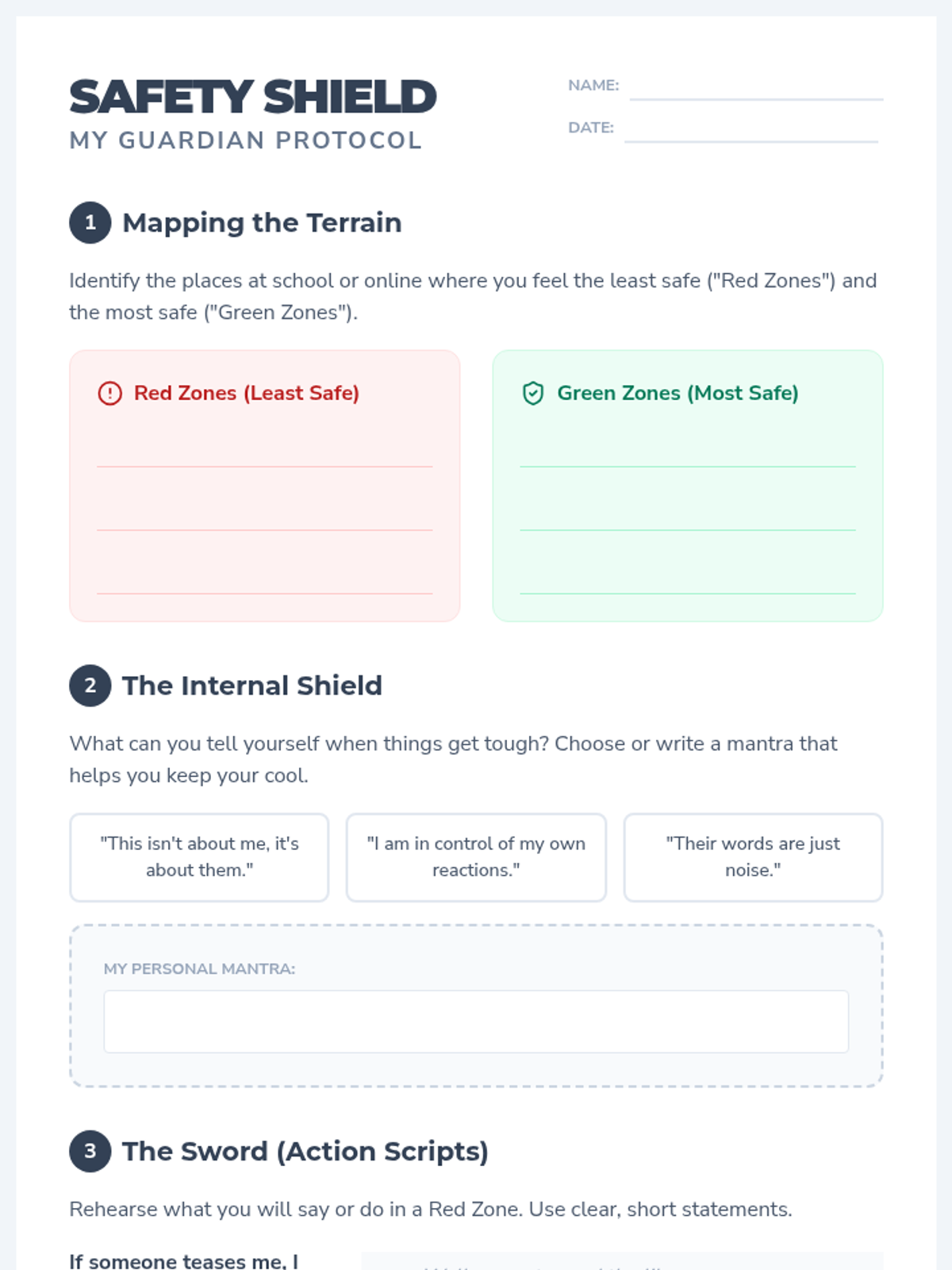
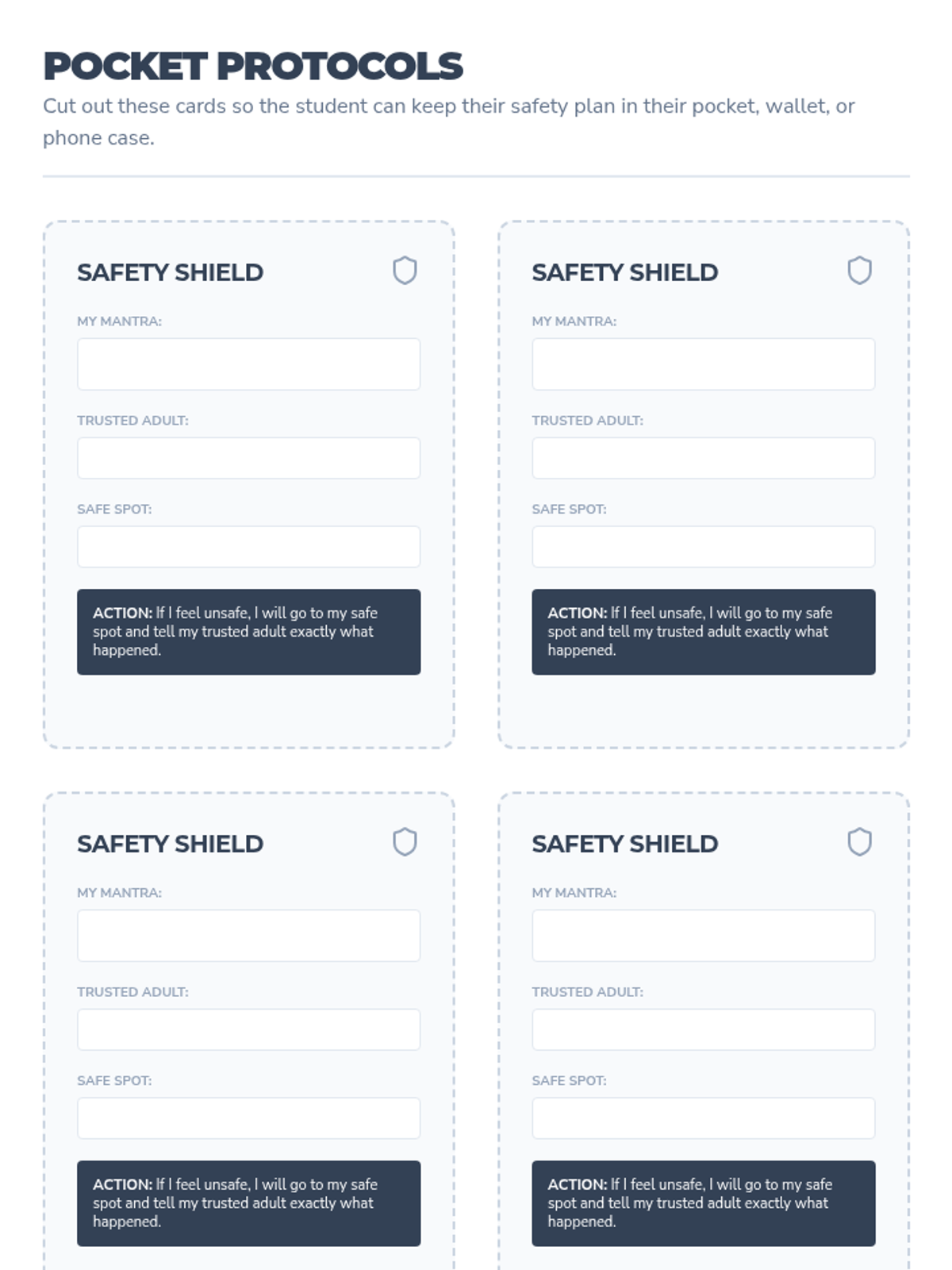
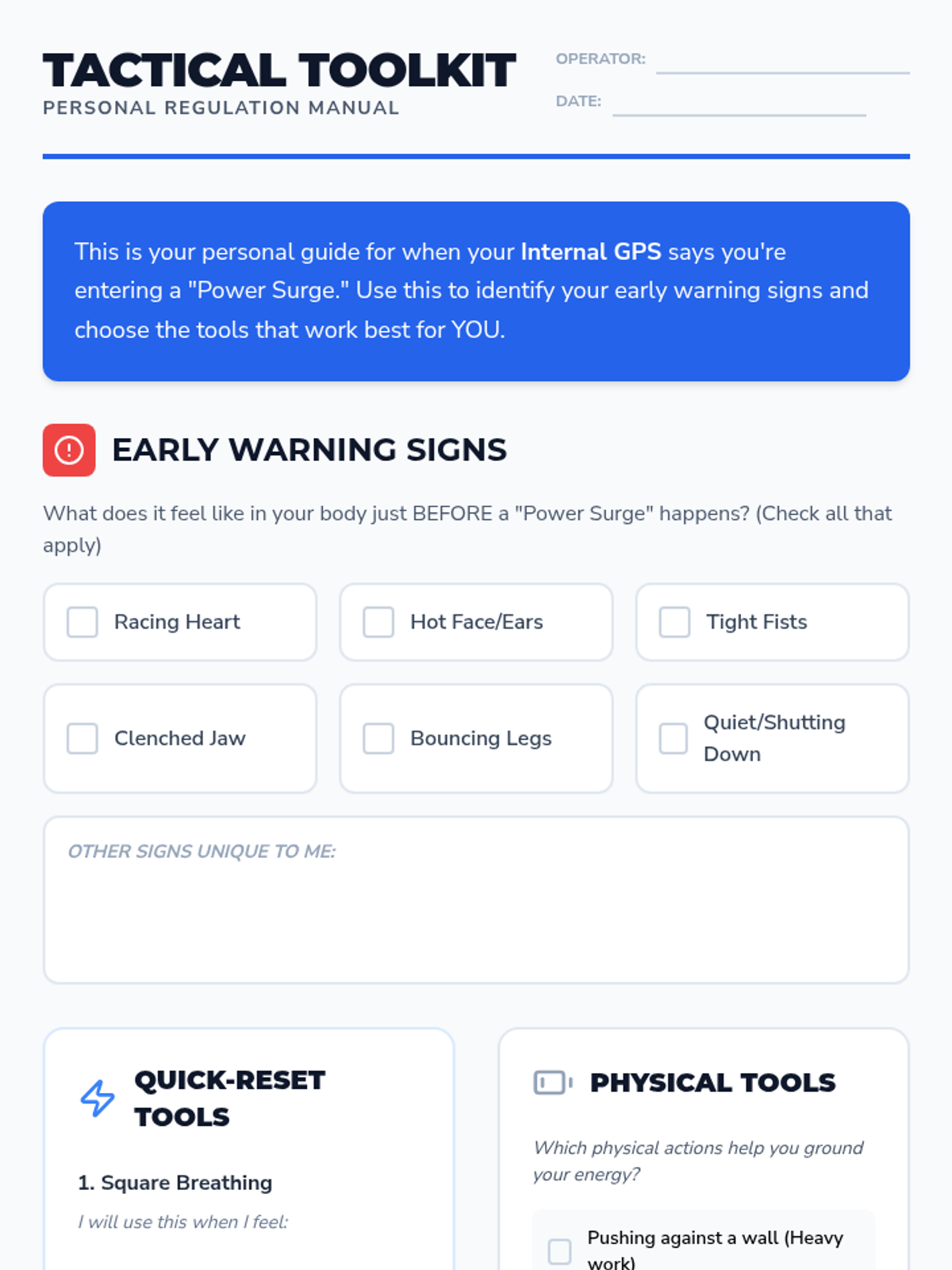
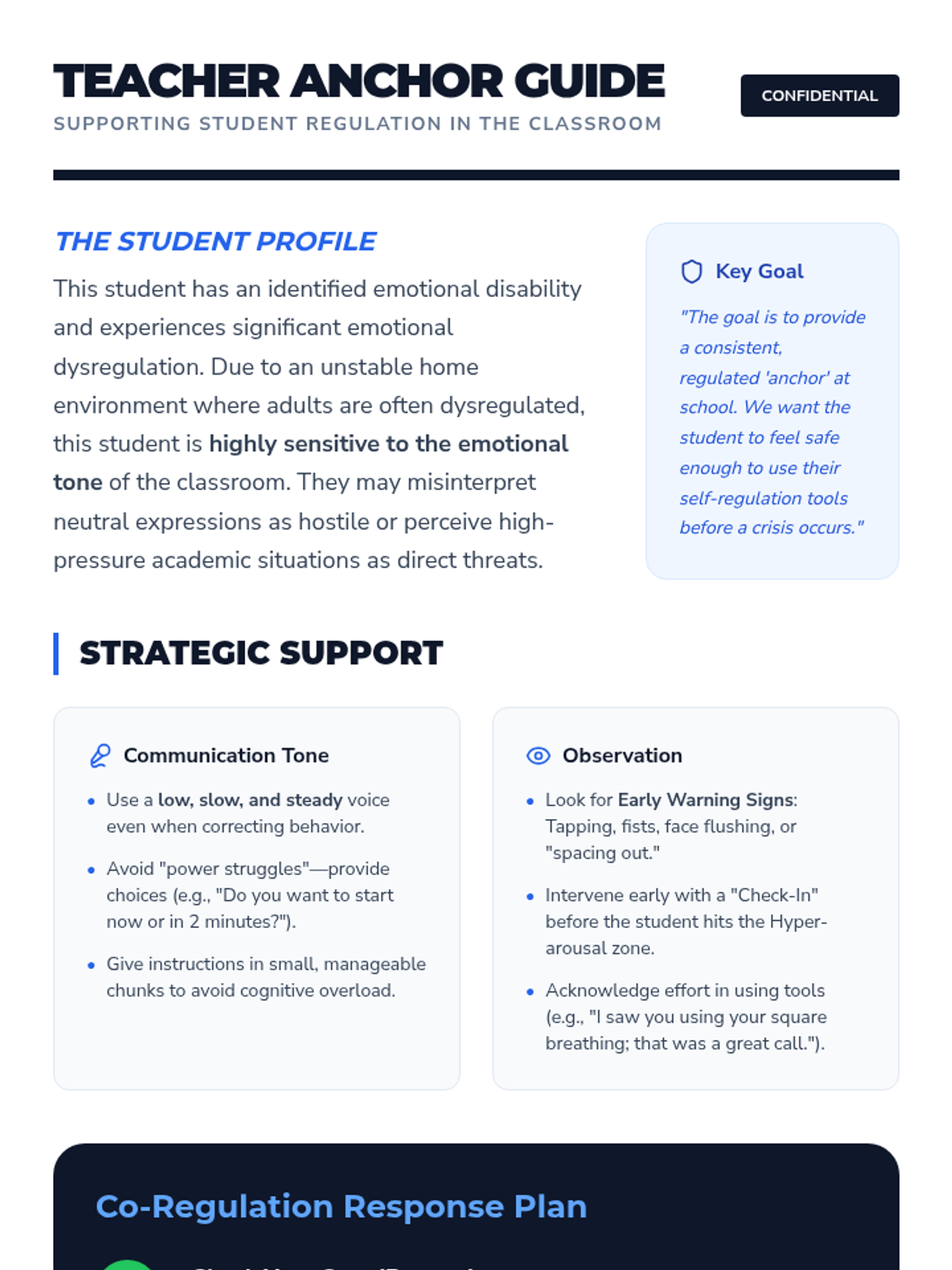
A comprehensive toolkit designed for a 6th-grade student to navigate emotional dysregulation. This sequence focuses on identifying internal triggers, building a personalized strategy toolkit, and establishing a clear safety protocol for crisis moments, providing stability in both school and home environments.
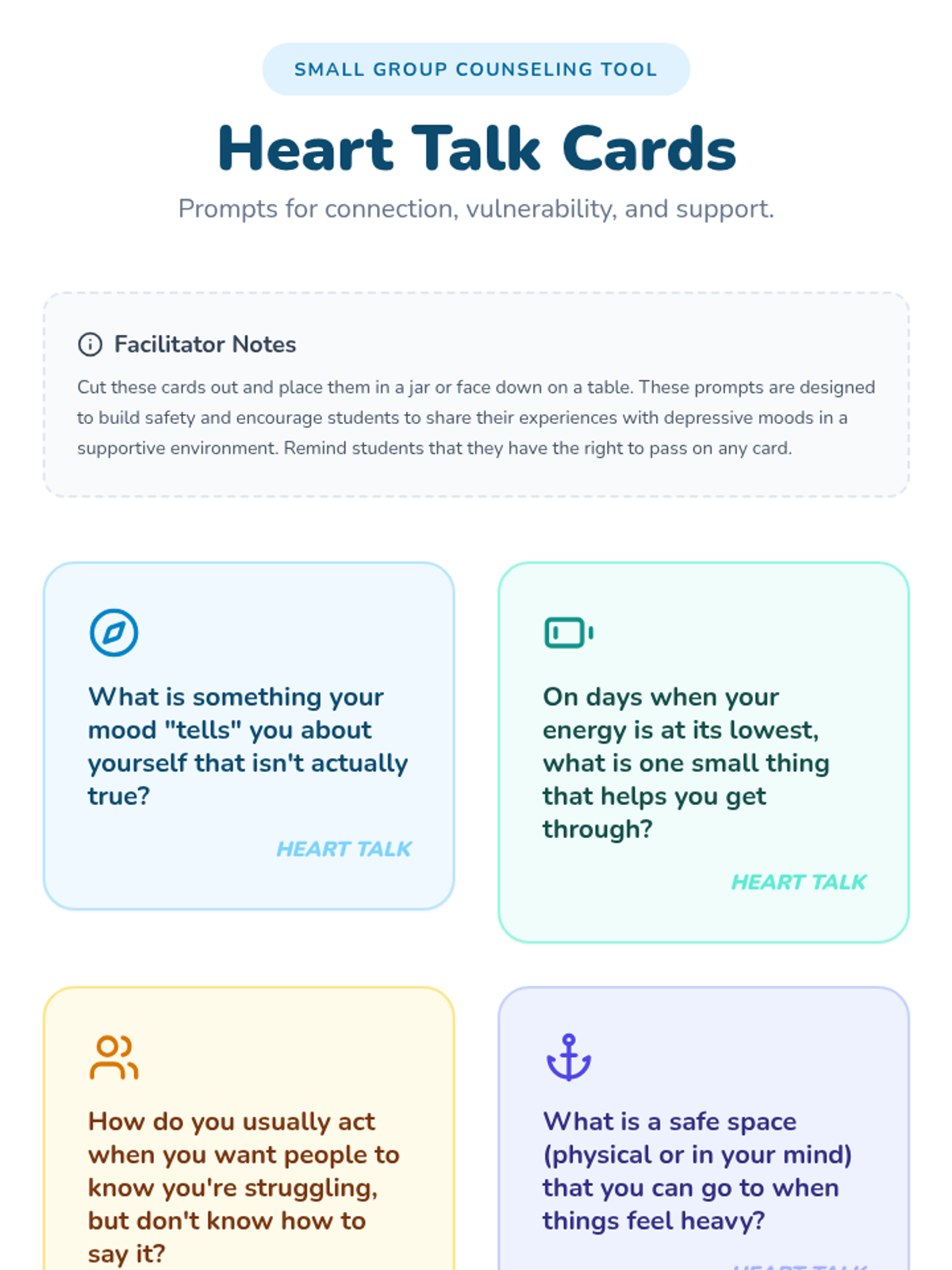
A comprehensive support program for middle school students focused on navigating depressive moods, building coping skills, and fostering resilience.
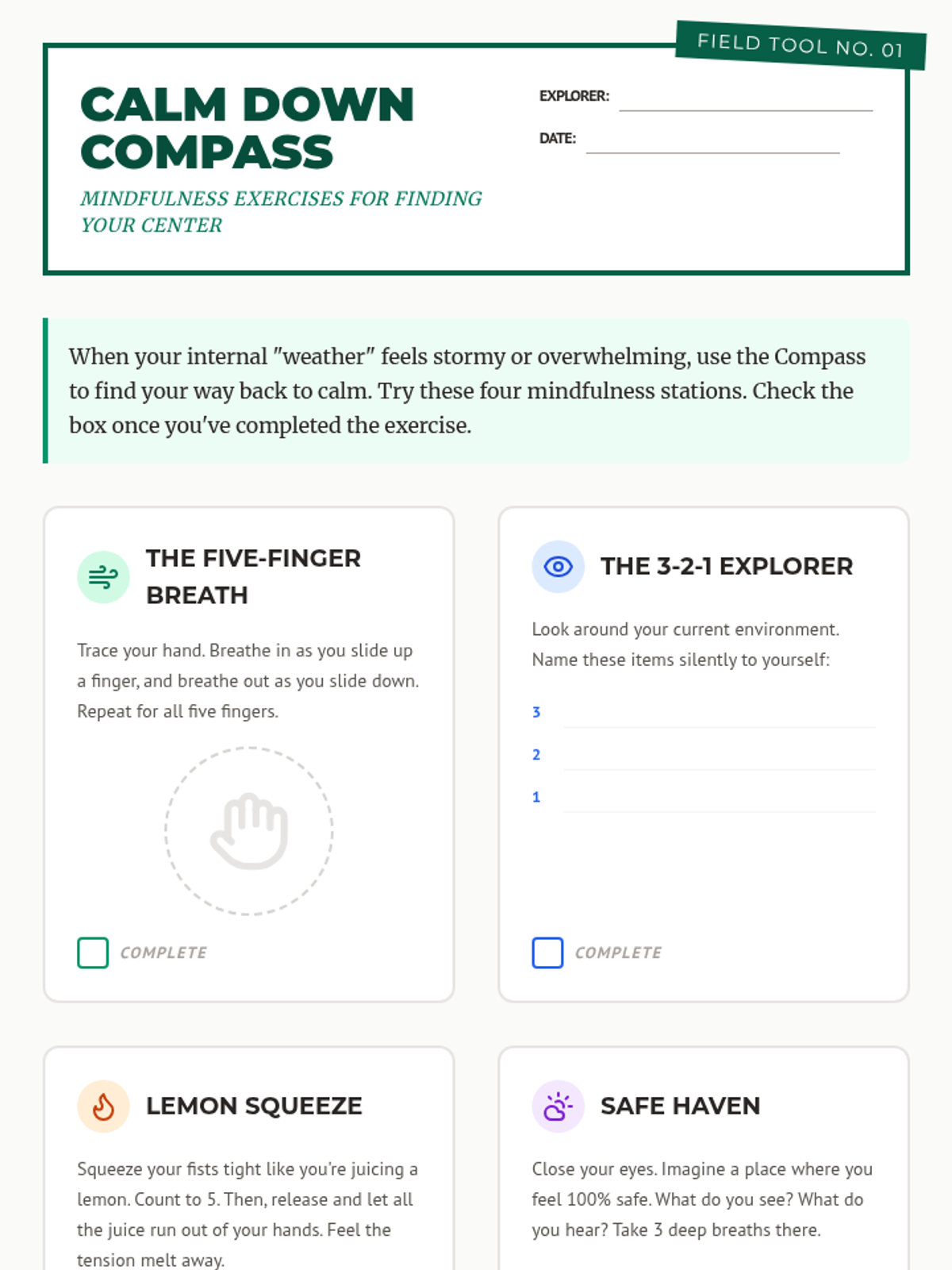
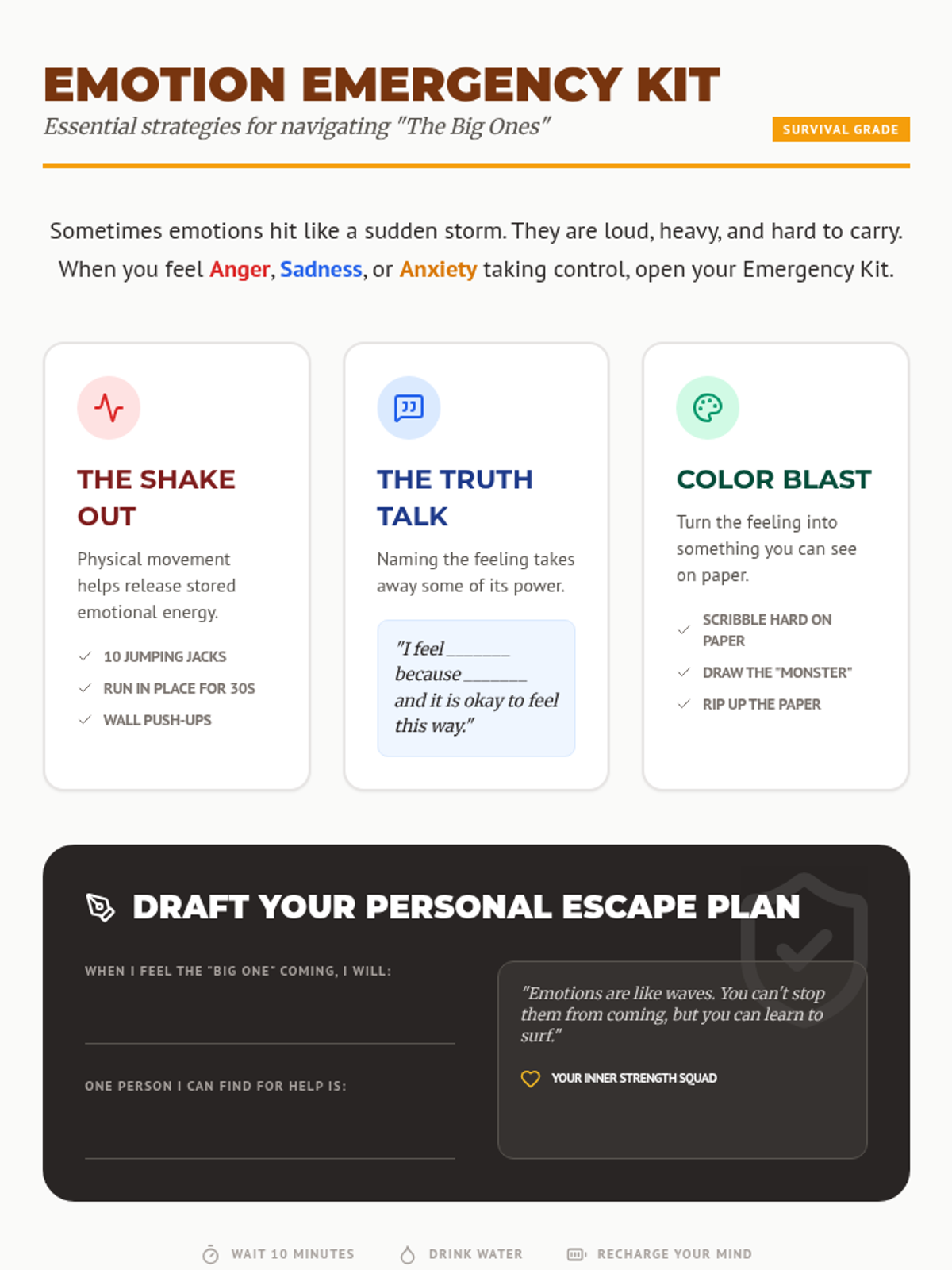
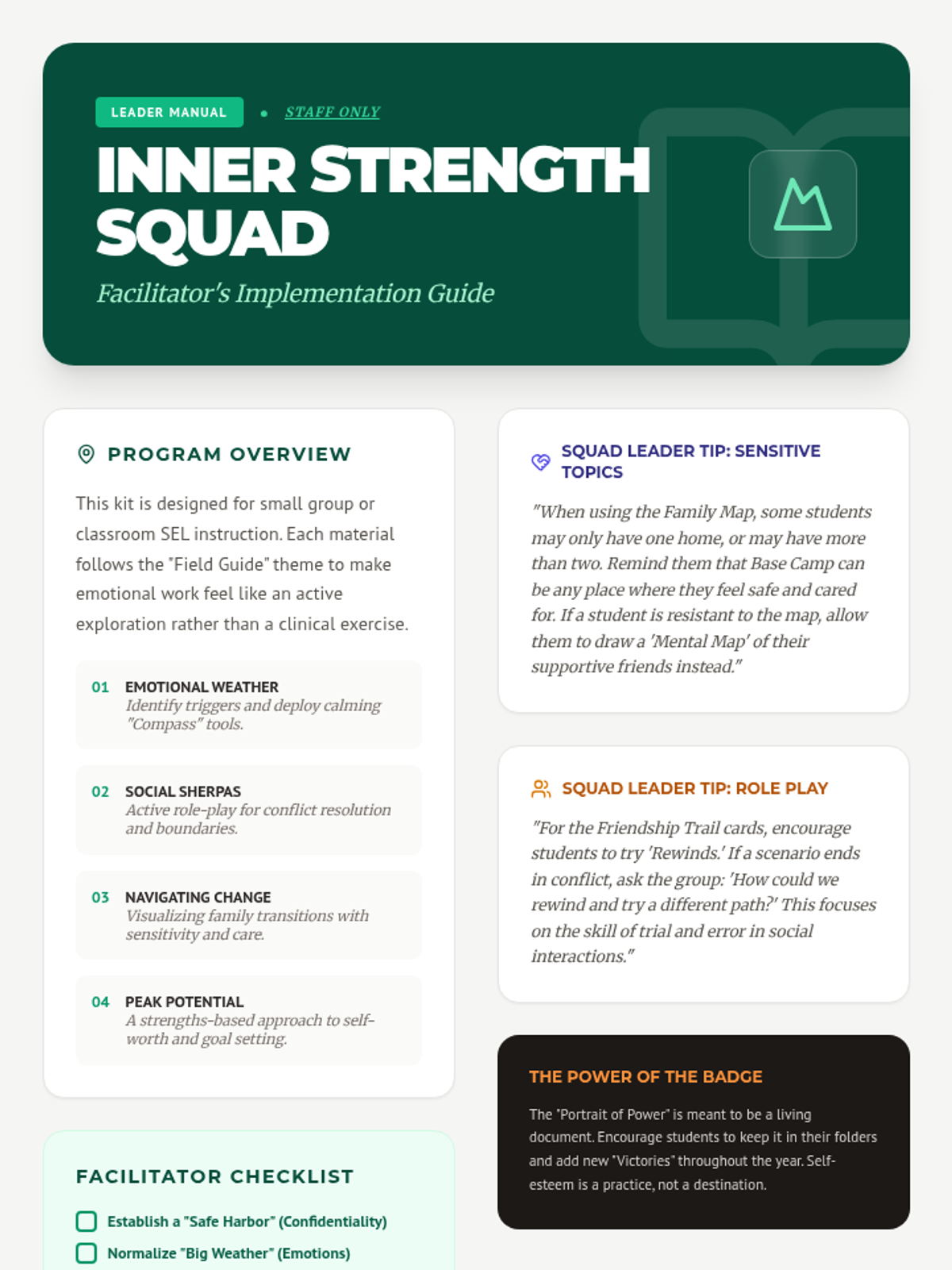
A comprehensive collection of social-emotional learning resources designed to help students navigate big feelings, life changes, and social dynamics. This 'field guide' style kit provides practical tools for mindfulness, coping, friendship, and self-worth.
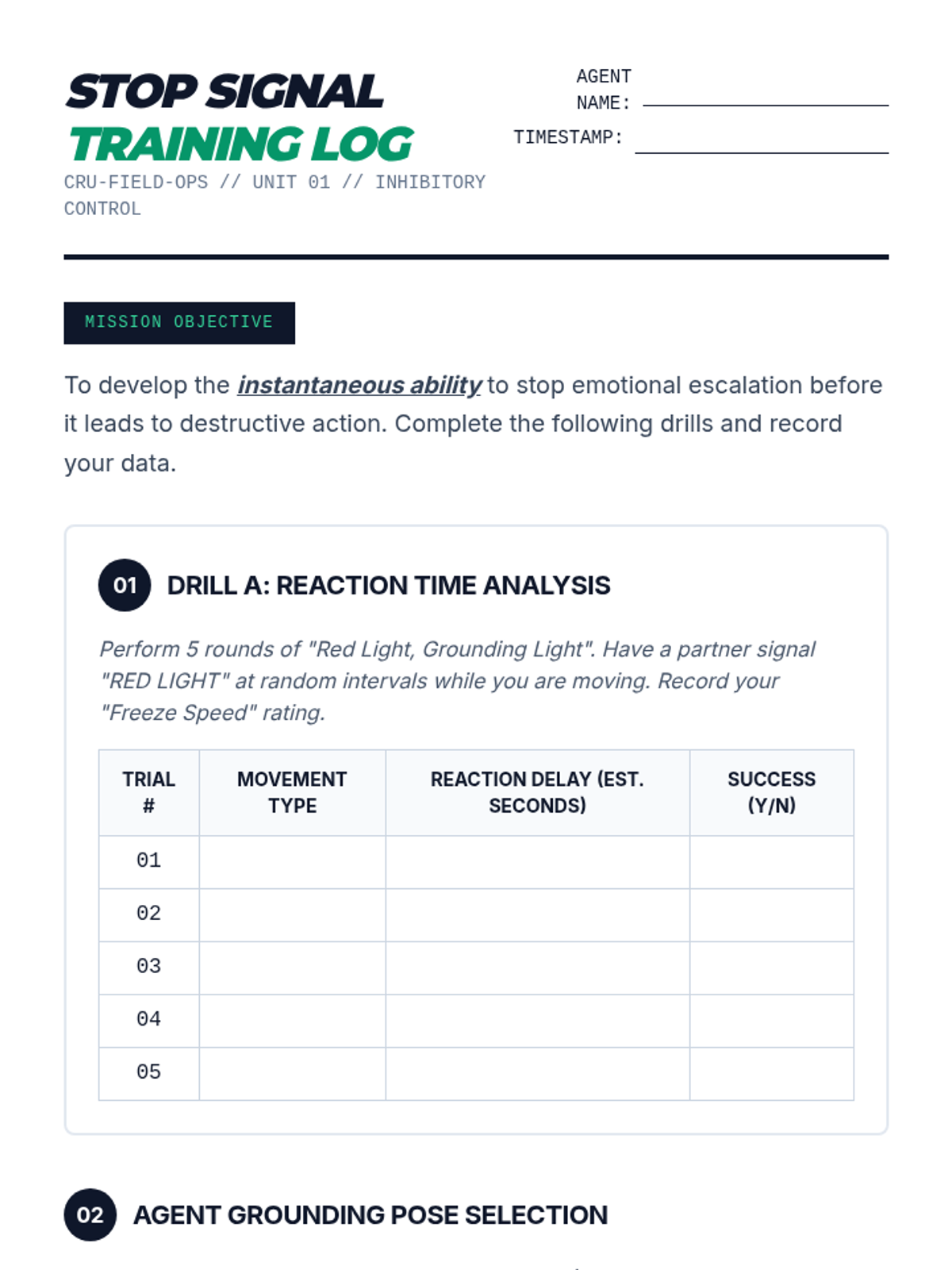
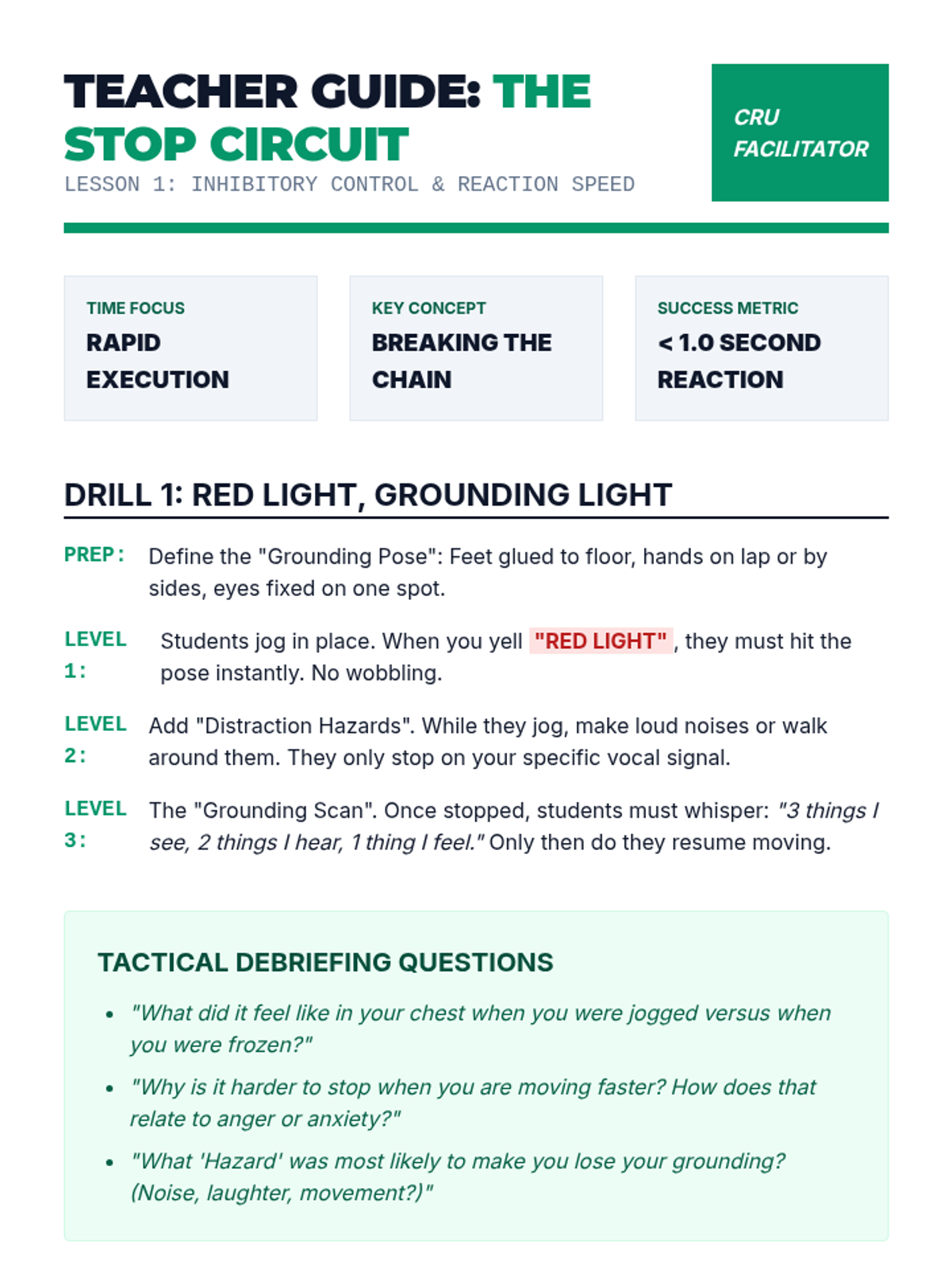
A high-intensity, gamified sequence designed to build procedural memory for TIPP (Temperature, Intense Exercise, Paced Breathing, Paired Muscle Relaxation) skills, ensuring students can regulate their nervous systems under pressure.
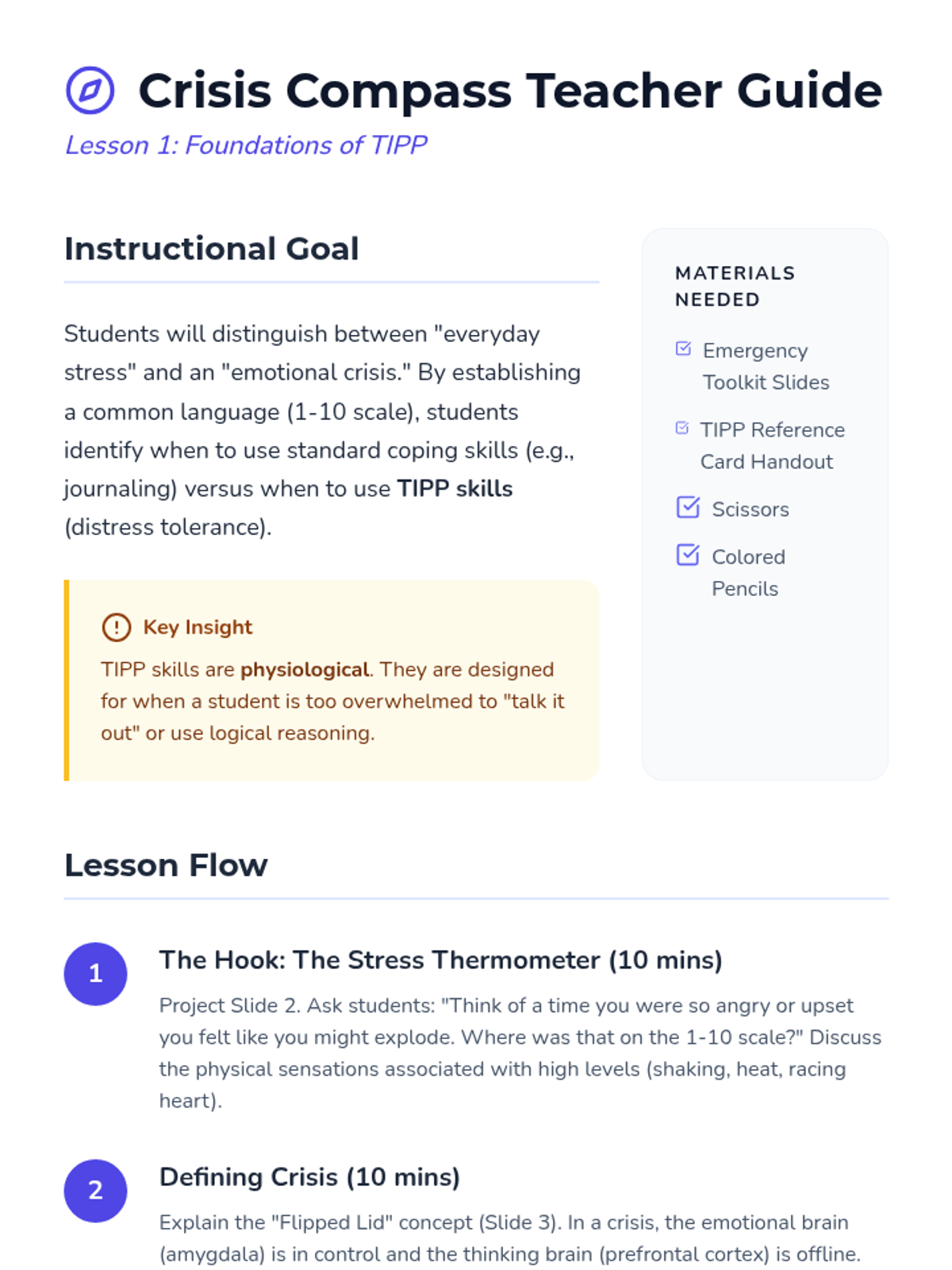
A comprehensive 5th-grade unit introducing the TIPP protocol for crisis survival. Students learn to distinguish between general stress and emotional crises, building a practical toolkit of physiological regulation strategies including temperature change, intense exercise, paced breathing, and paired muscle relaxation.
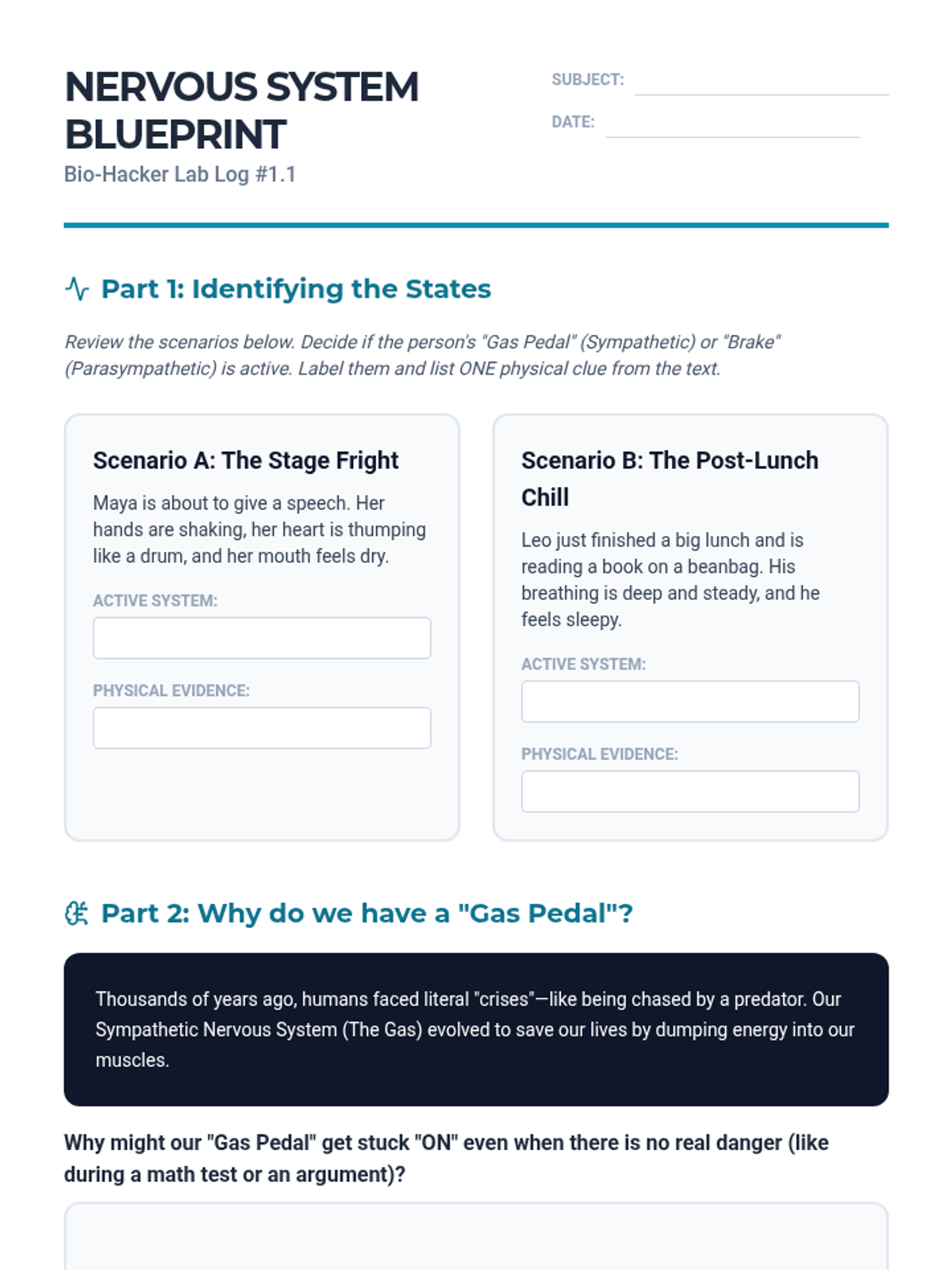
This inquiry-based sequence explores the biological 'why' behind TIPP skills, reframing them as 'bio-hacks' for the nervous system. Students investigate the autonomic nervous system, the Mammalian Dive Reflex, and the chemistry of stress to understand how physical interventions can regulate emotional states.
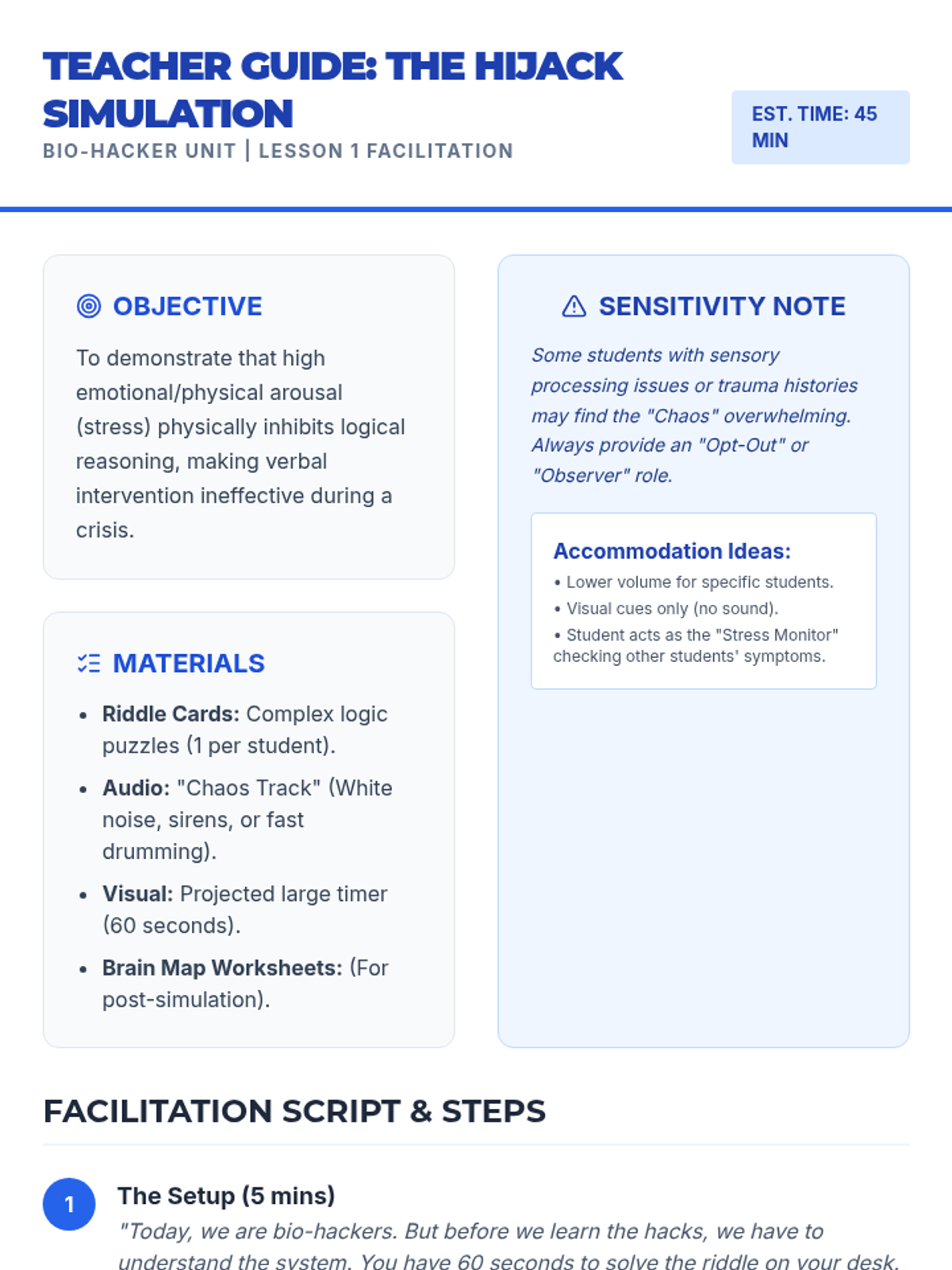
A scientific inquiry into the TIPP skills, treating the body as a laboratory to collect data on how physiological interventions affect emotional states and biometric markers. Students act as 'bio-hackers' to validate the effectiveness of crisis survival techniques through empirical evidence.
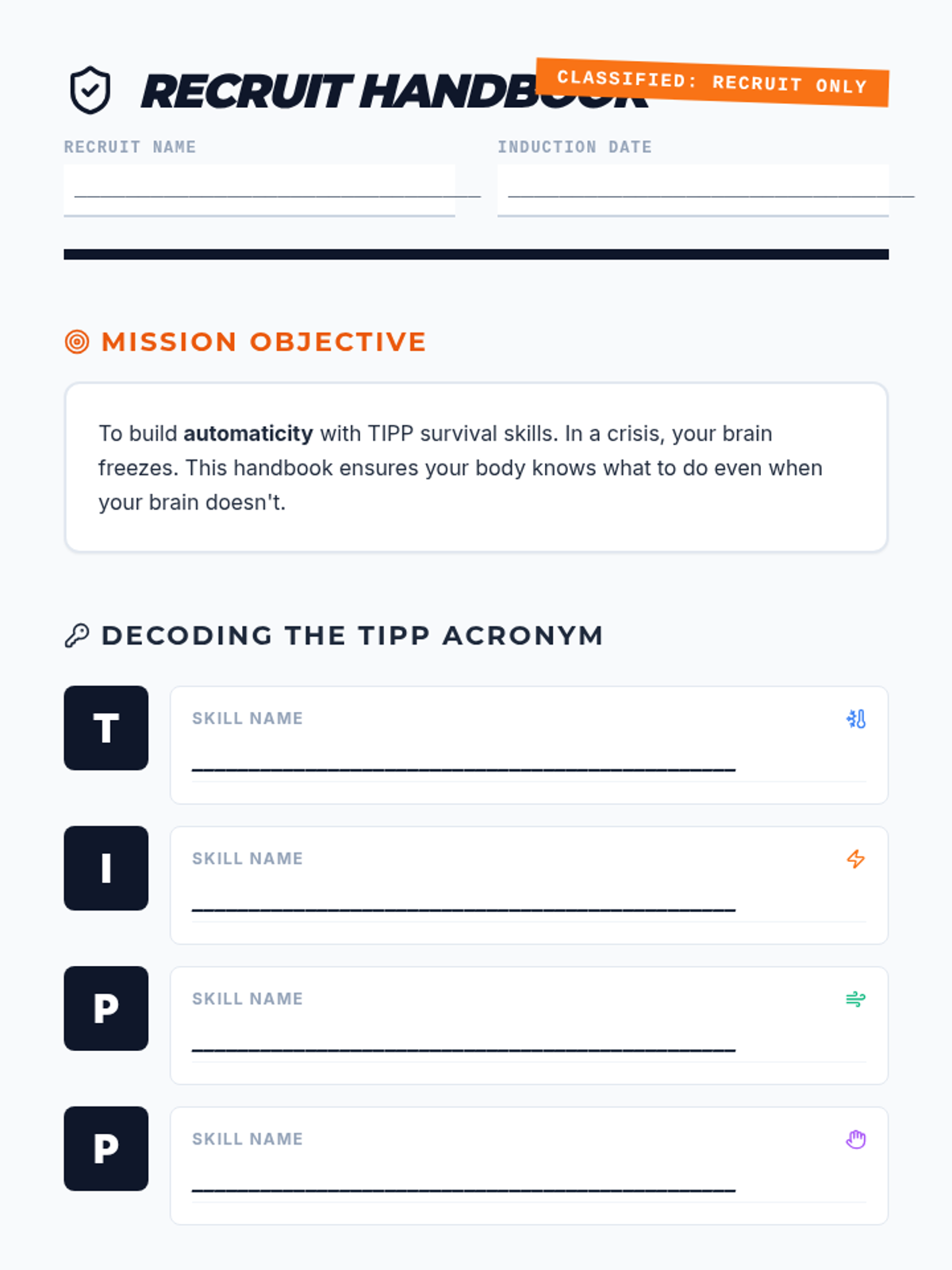
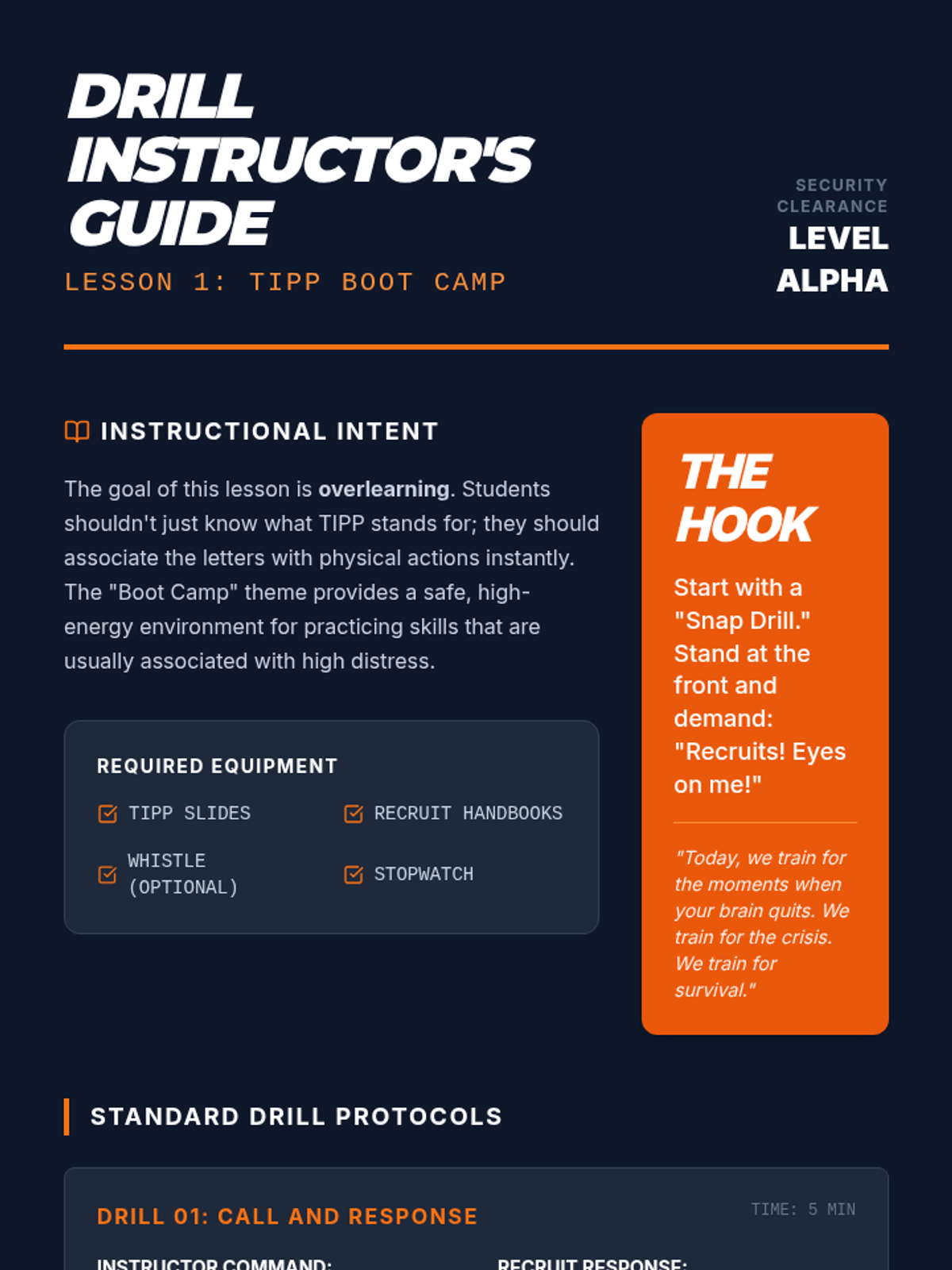
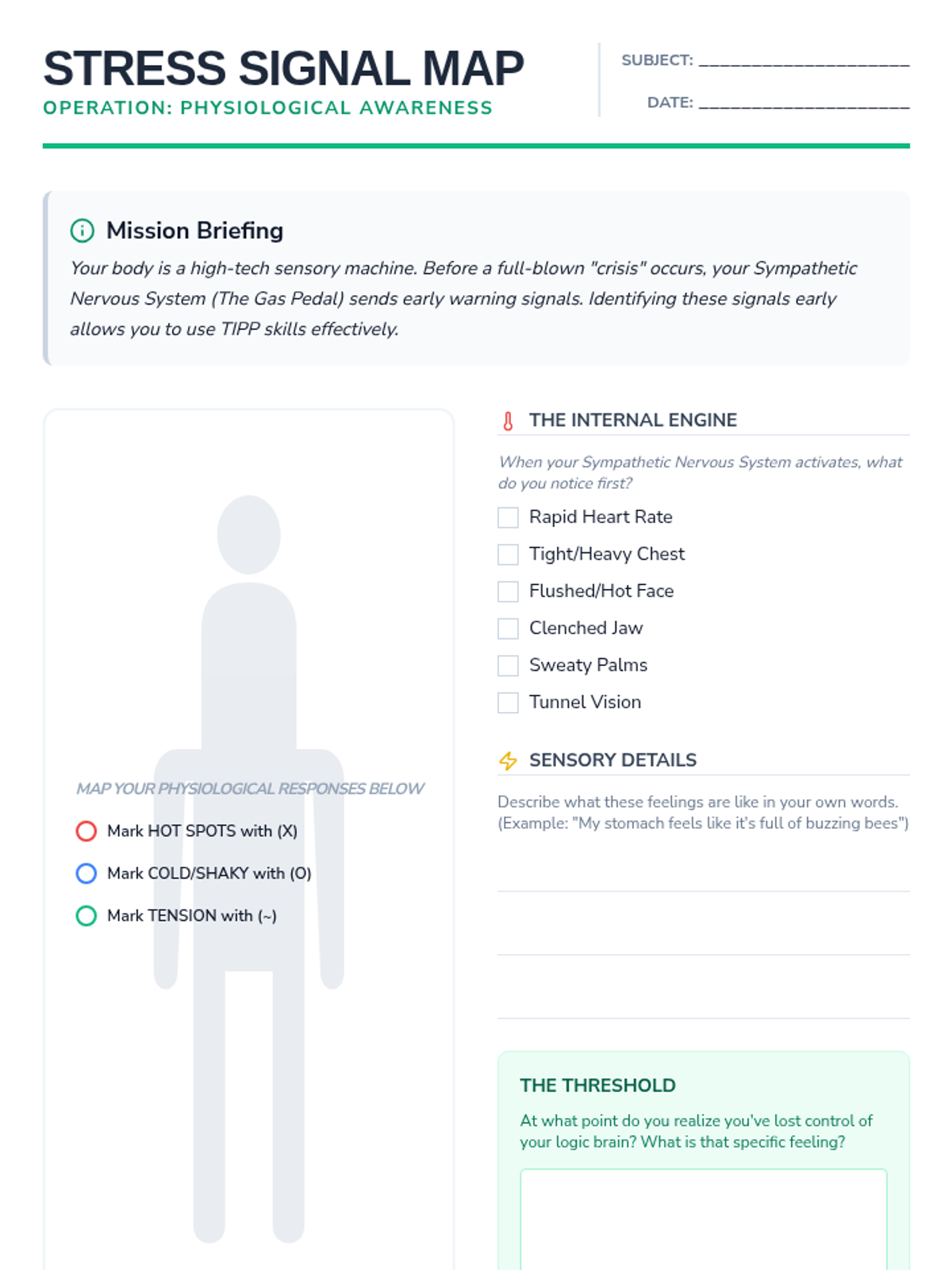
A gamified, mastery-based sequence designed to build automaticity with TIPP crisis survival skills. Students move through a 'Boot Camp' style curriculum, mastering Temperature, Intense Exercise, Paced Breathing, and Paired Muscle Relaxation through rapid-fire drills and simulations.
This sequence introduces students to the biological mechanisms behind the TIPP skill set (Temperature, Intense Exercise, Paced Breathing, Paired Muscle Relaxation). Students explore how the autonomic nervous system responds to stress and how specific physical actions can 'hack' this system to reduce emotional intensity.
A 5-lesson unit for 7th graders exploring the physiological basis of the TIPP crisis survival skills. Students learn how to 'hack' their nervous system using temperature, exercise, breathing, and muscle relaxation to override the brain's stress response.
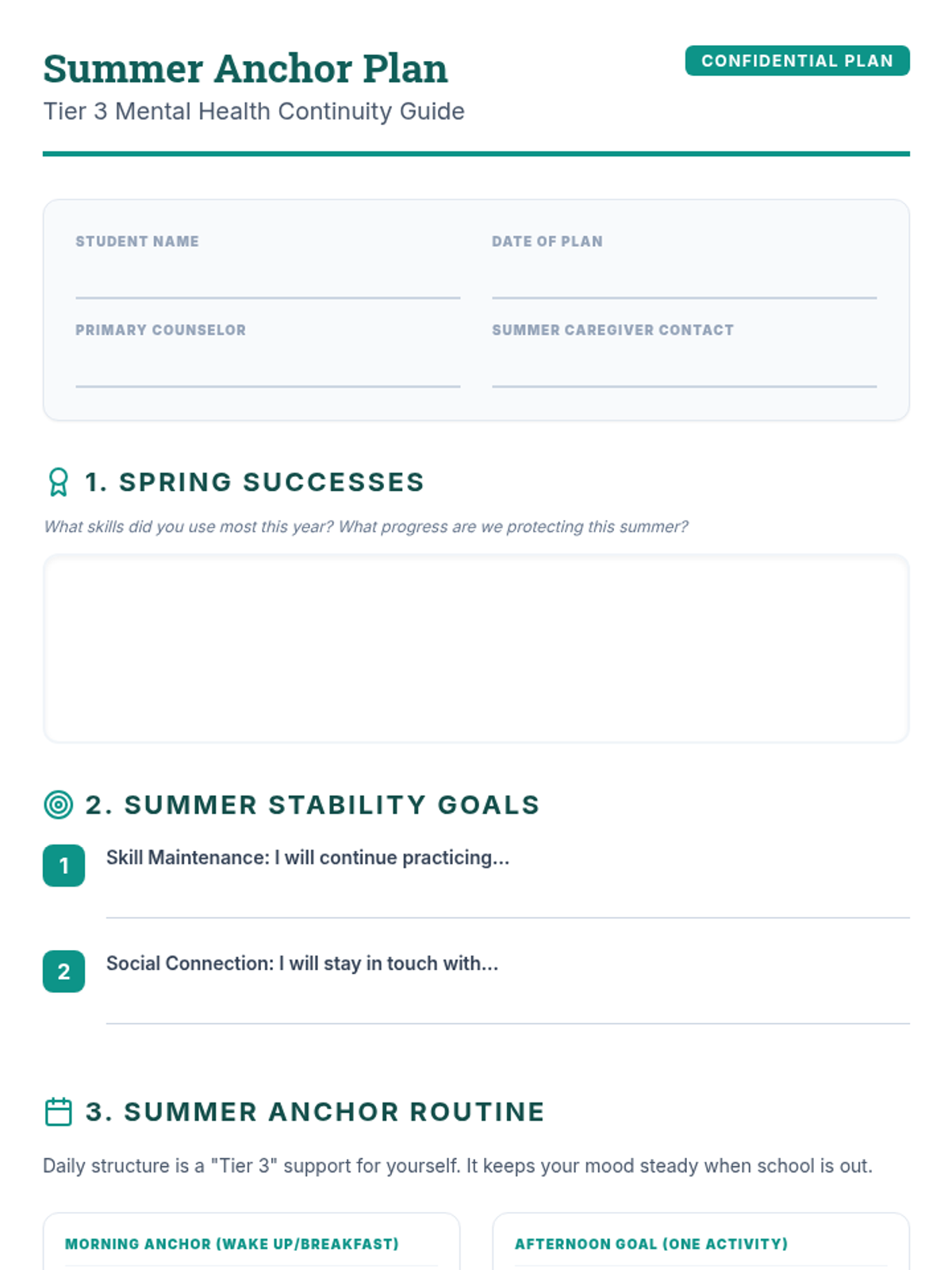
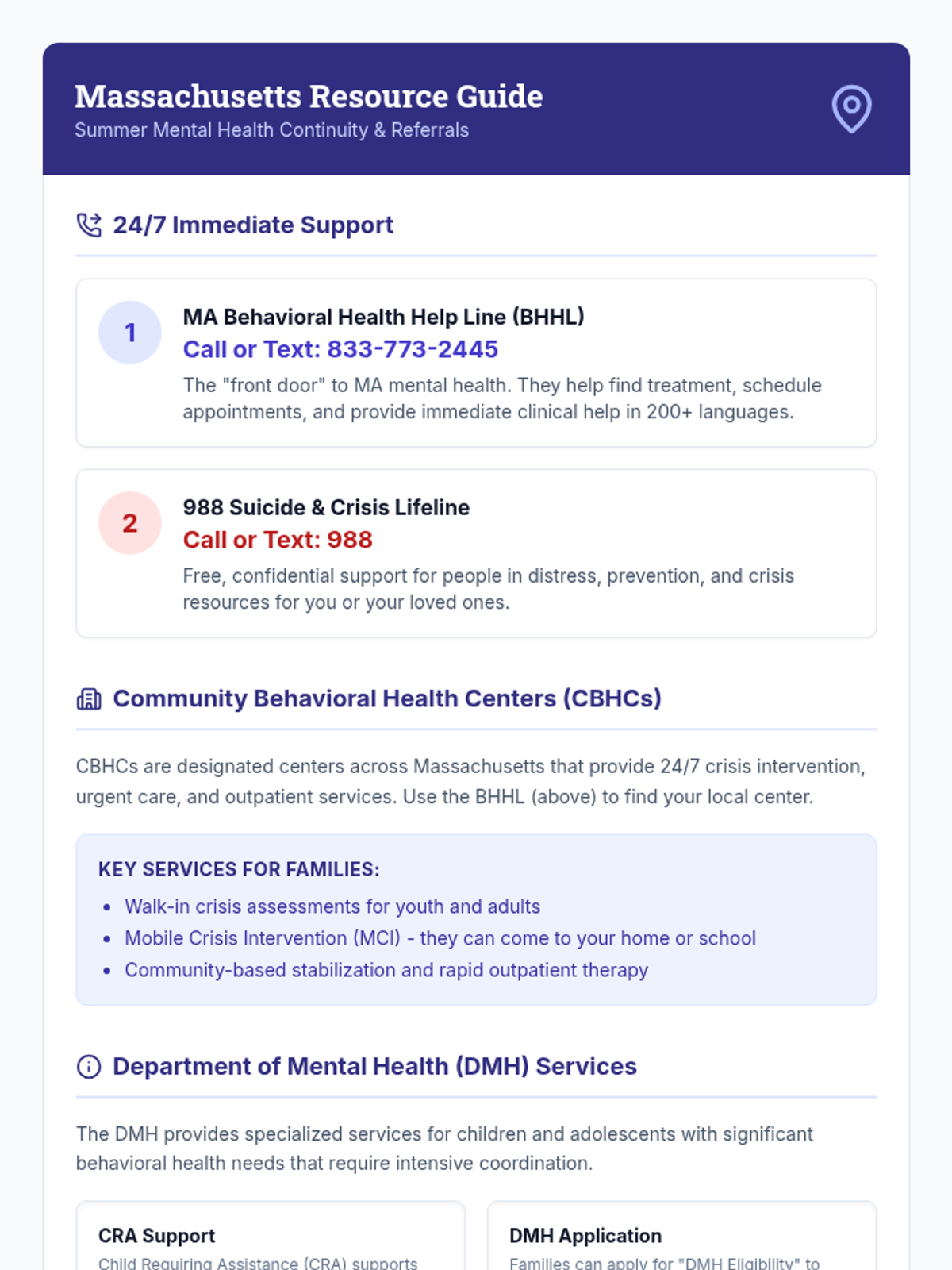
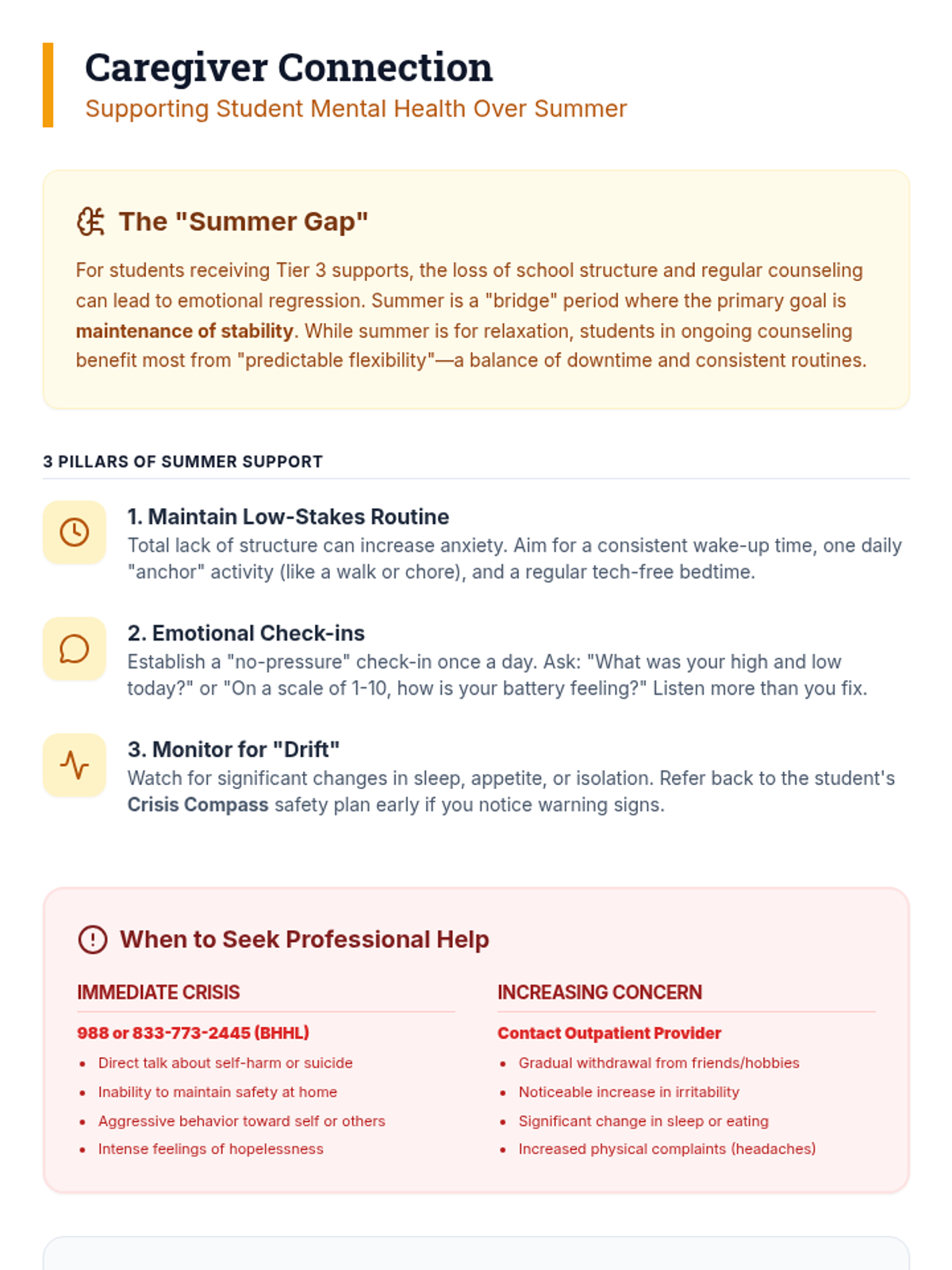
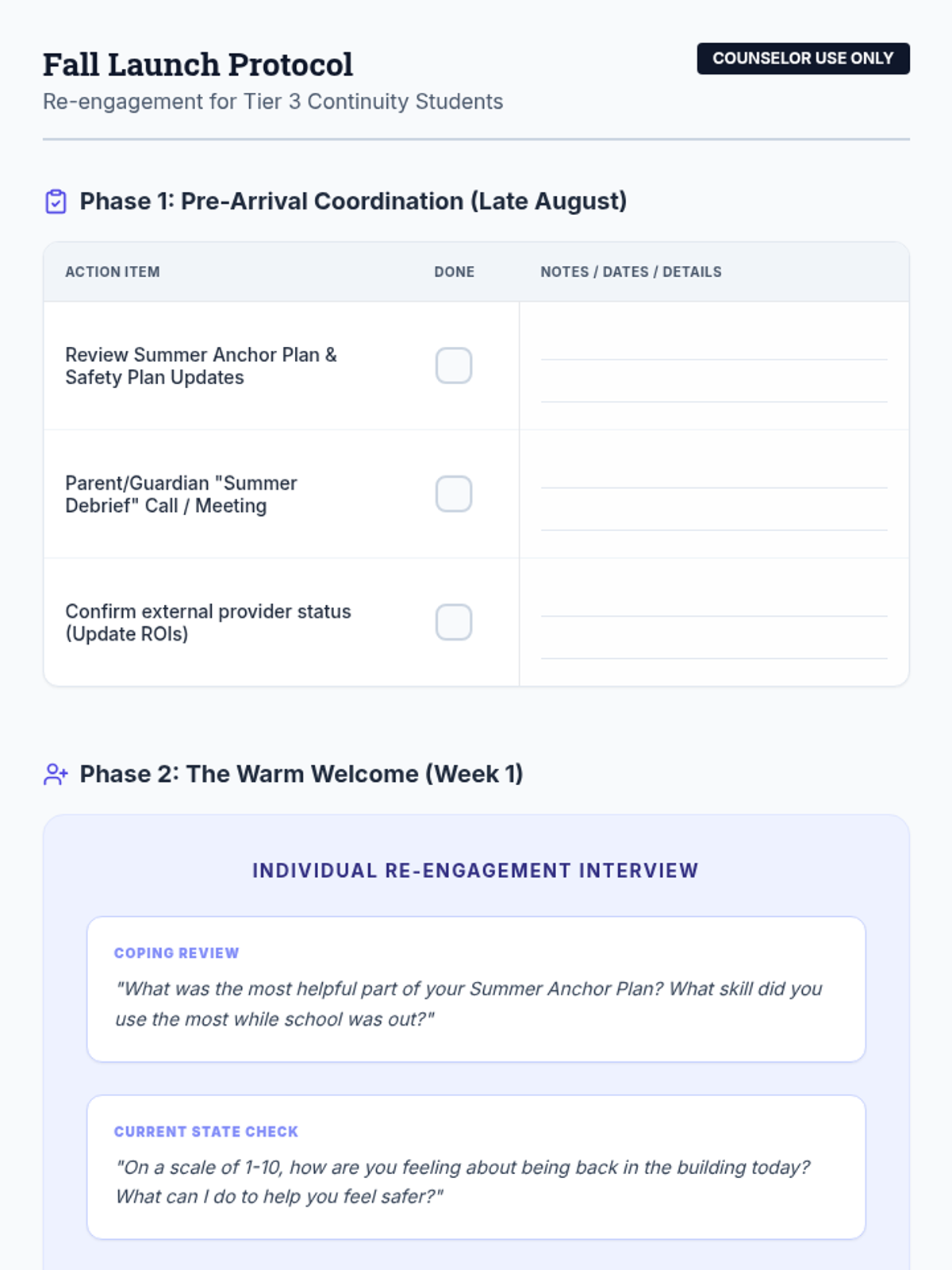
A comprehensive MTSS Tier 3 support package designed to maintain mental health stability for middle school students transitioning from school-based counseling to summer break, featuring Massachusetts-specific community referrals and crisis safety planning.
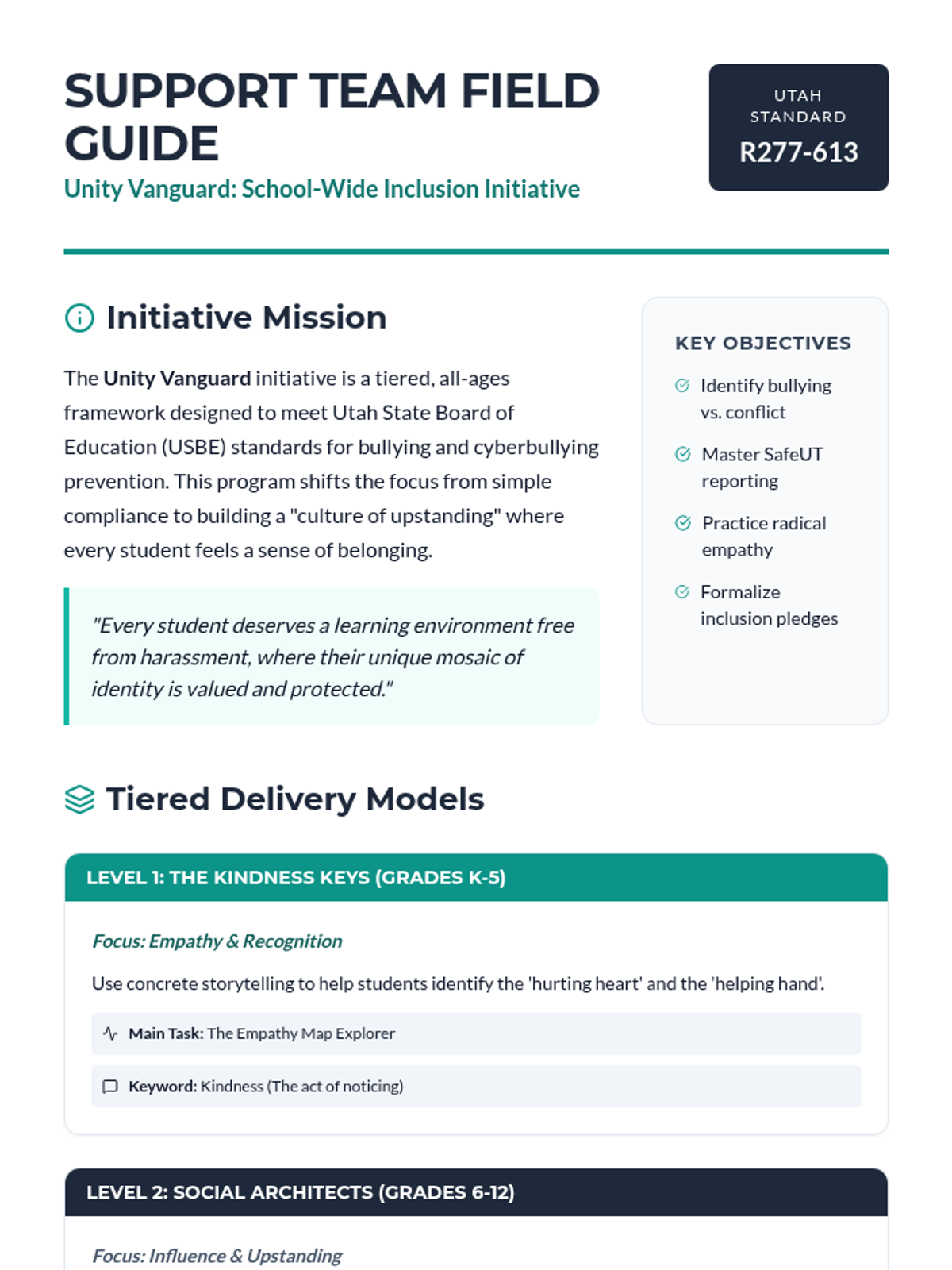
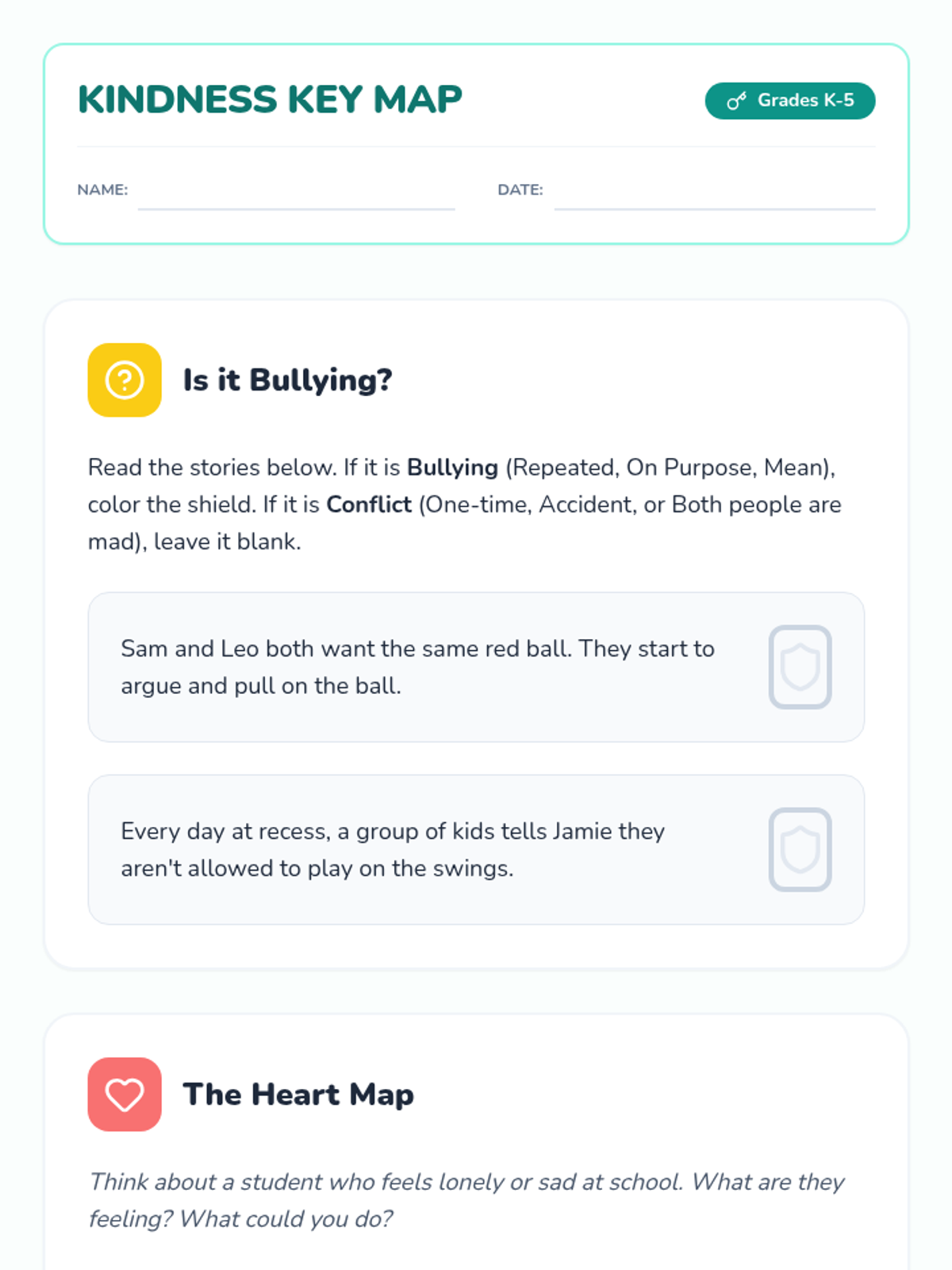
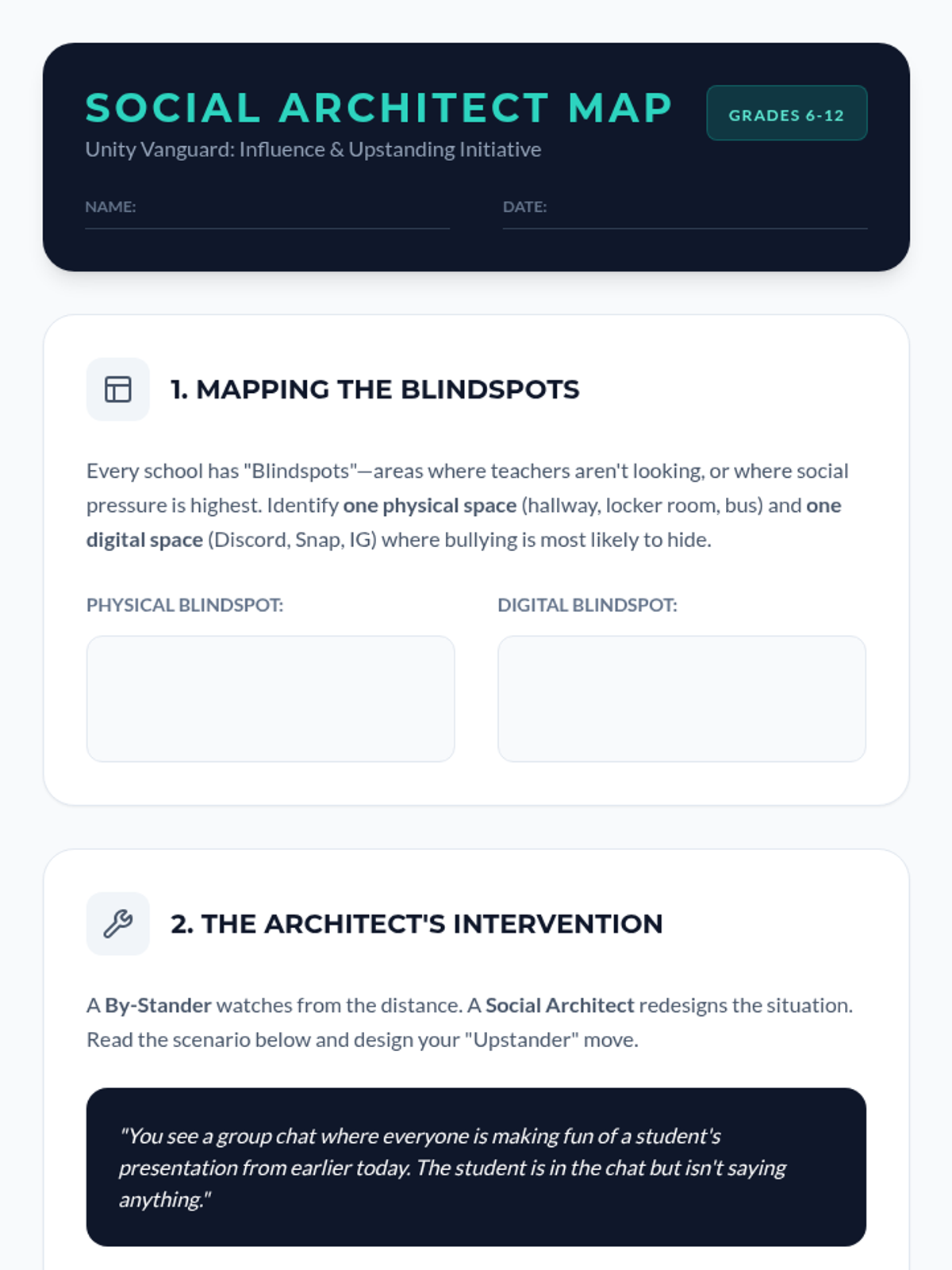
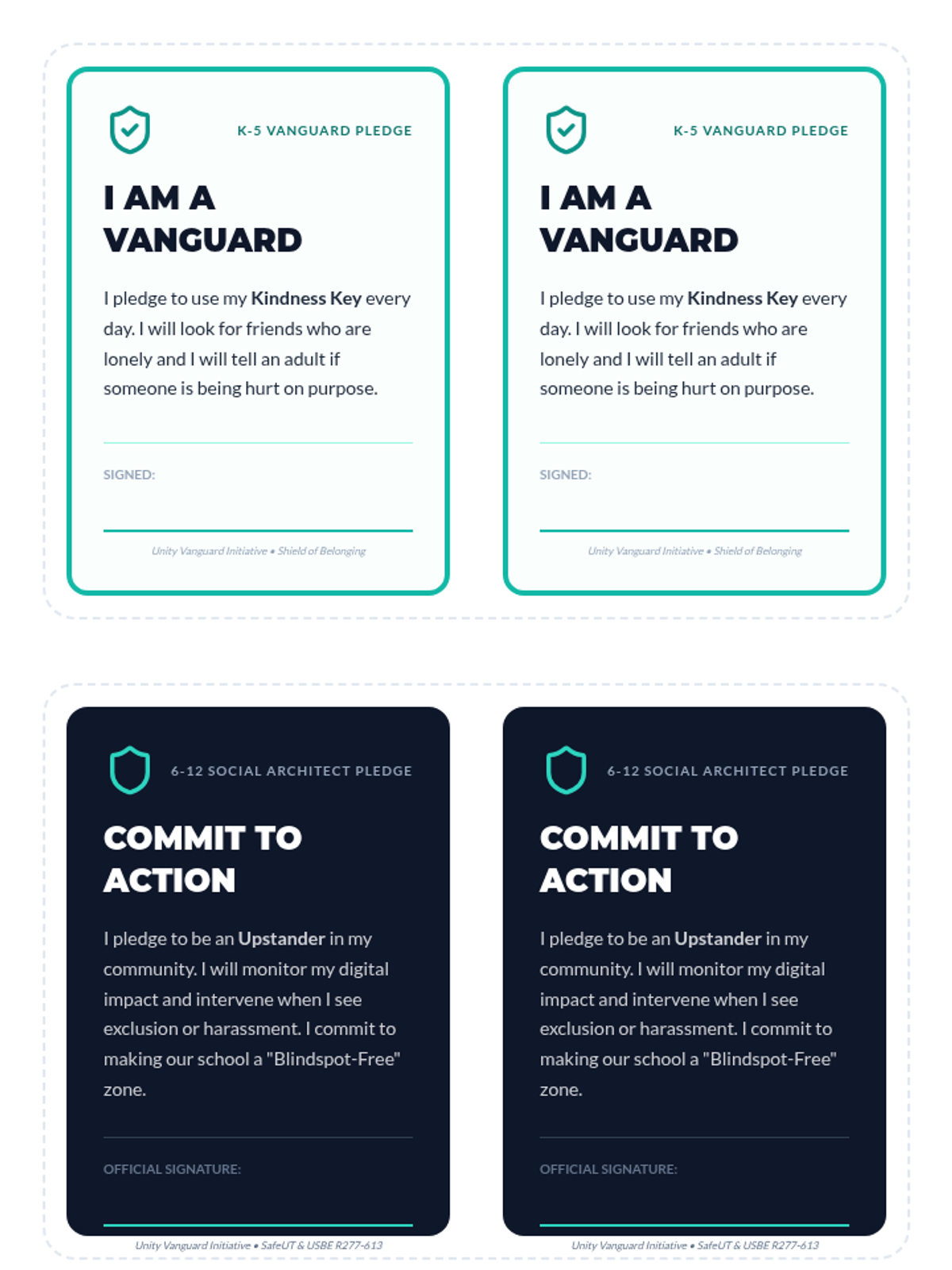
A comprehensive K-12 anti-bullying and inclusion program designed for school support teams to build safer, more empathetic school environments aligned with Utah state safety standards.
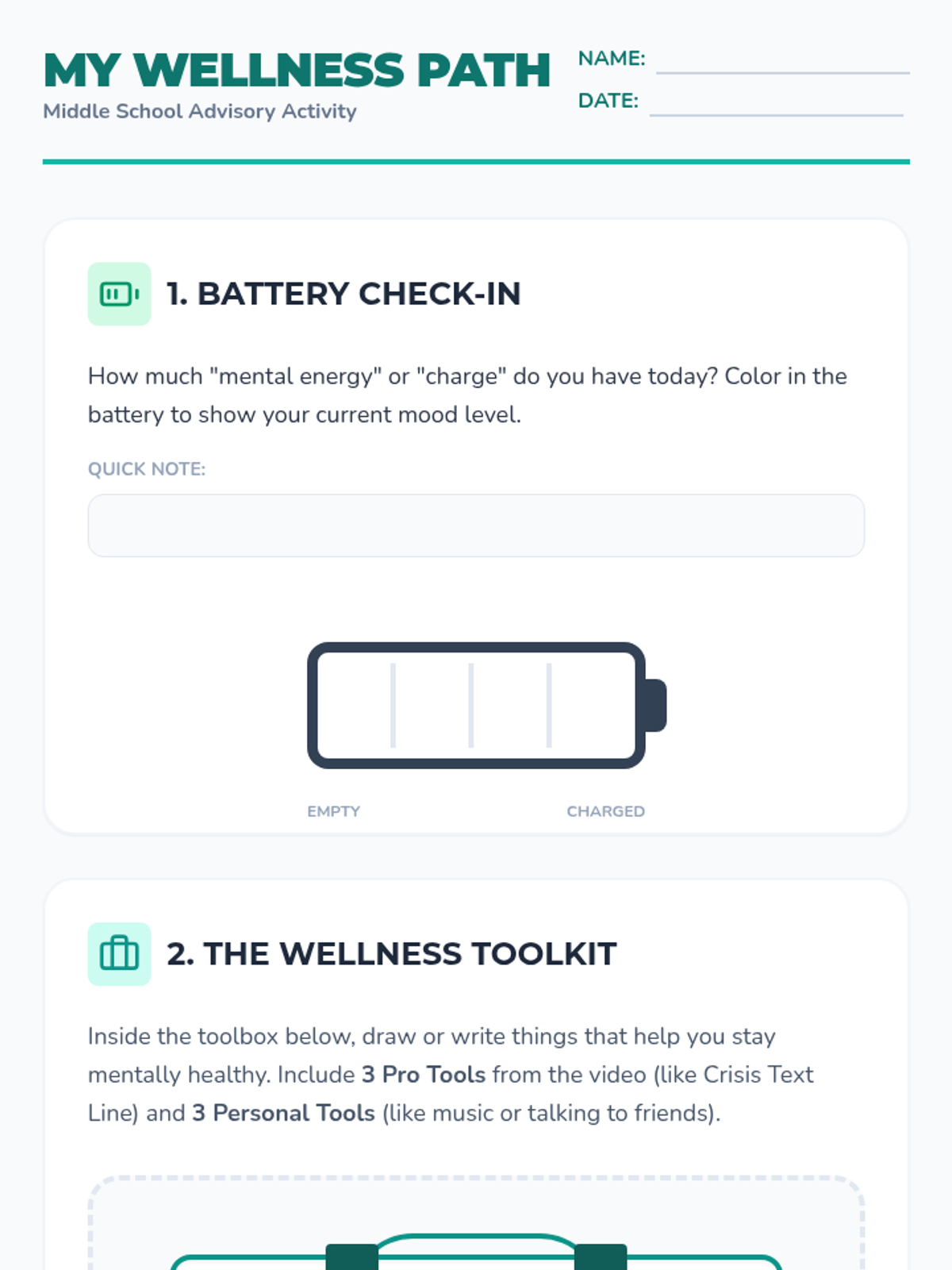
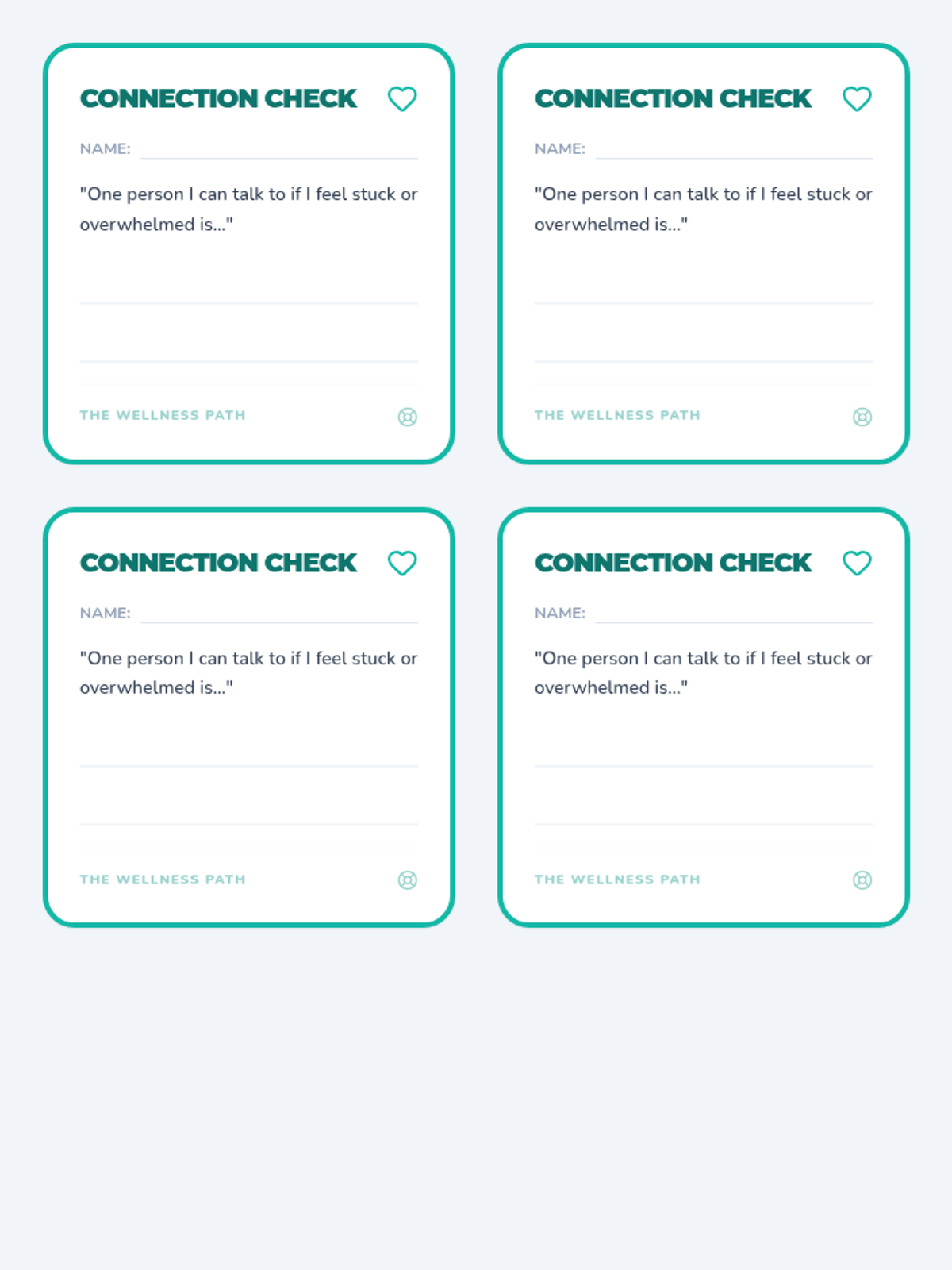
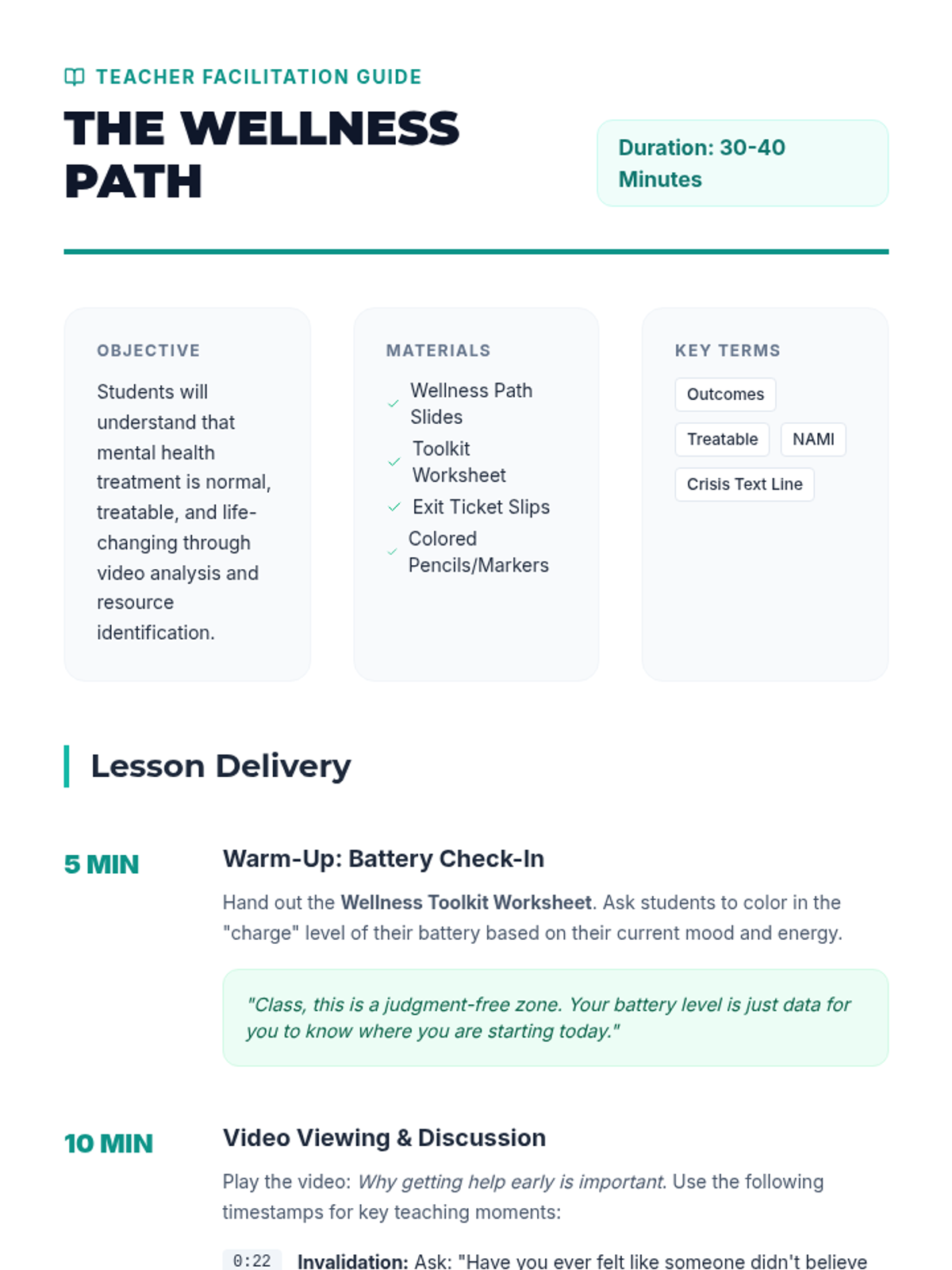
A mental health awareness sequence for middle school students focusing on the importance of early treatment, normalization of seeking help, and building a personal wellness toolkit.
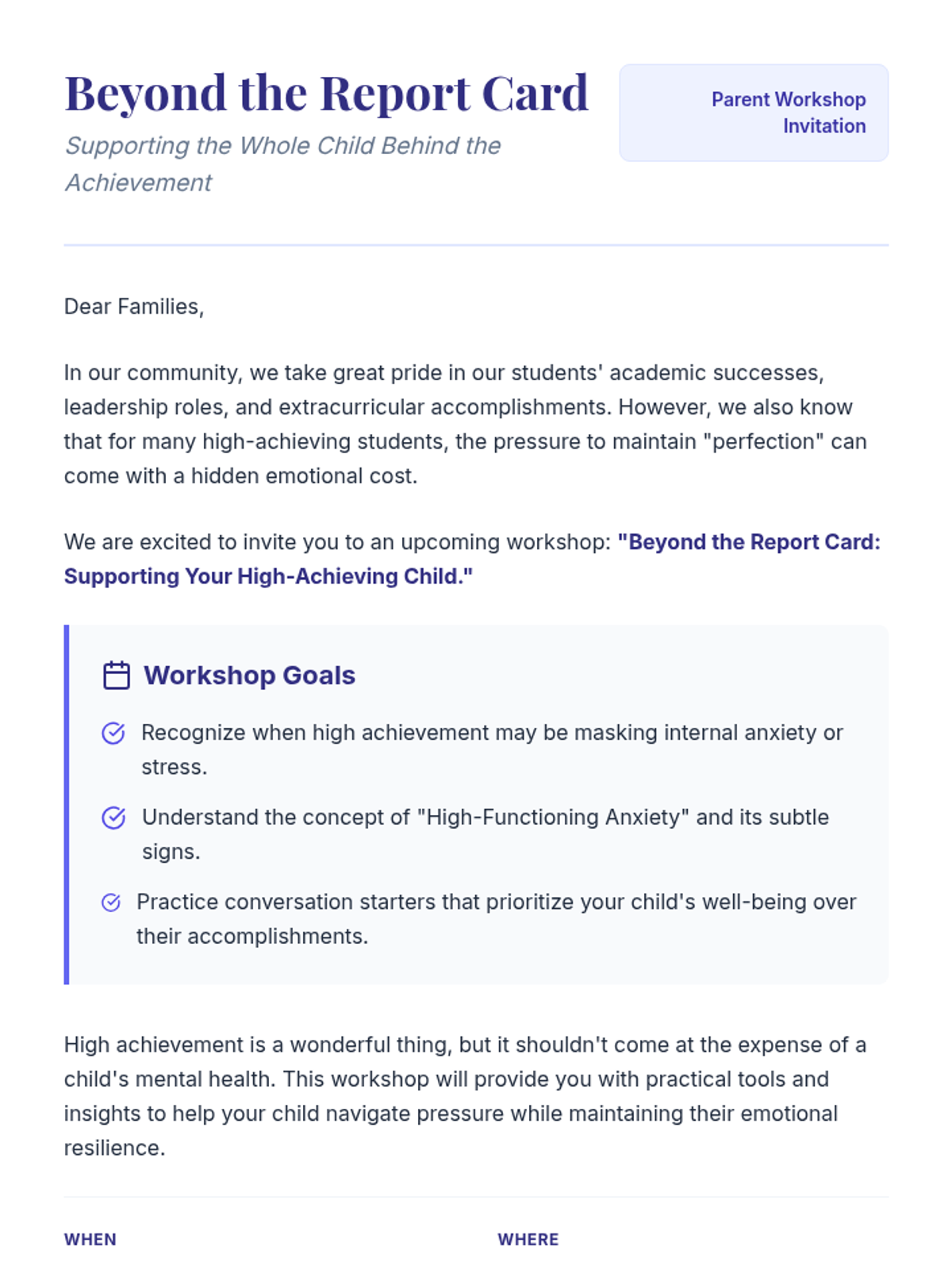
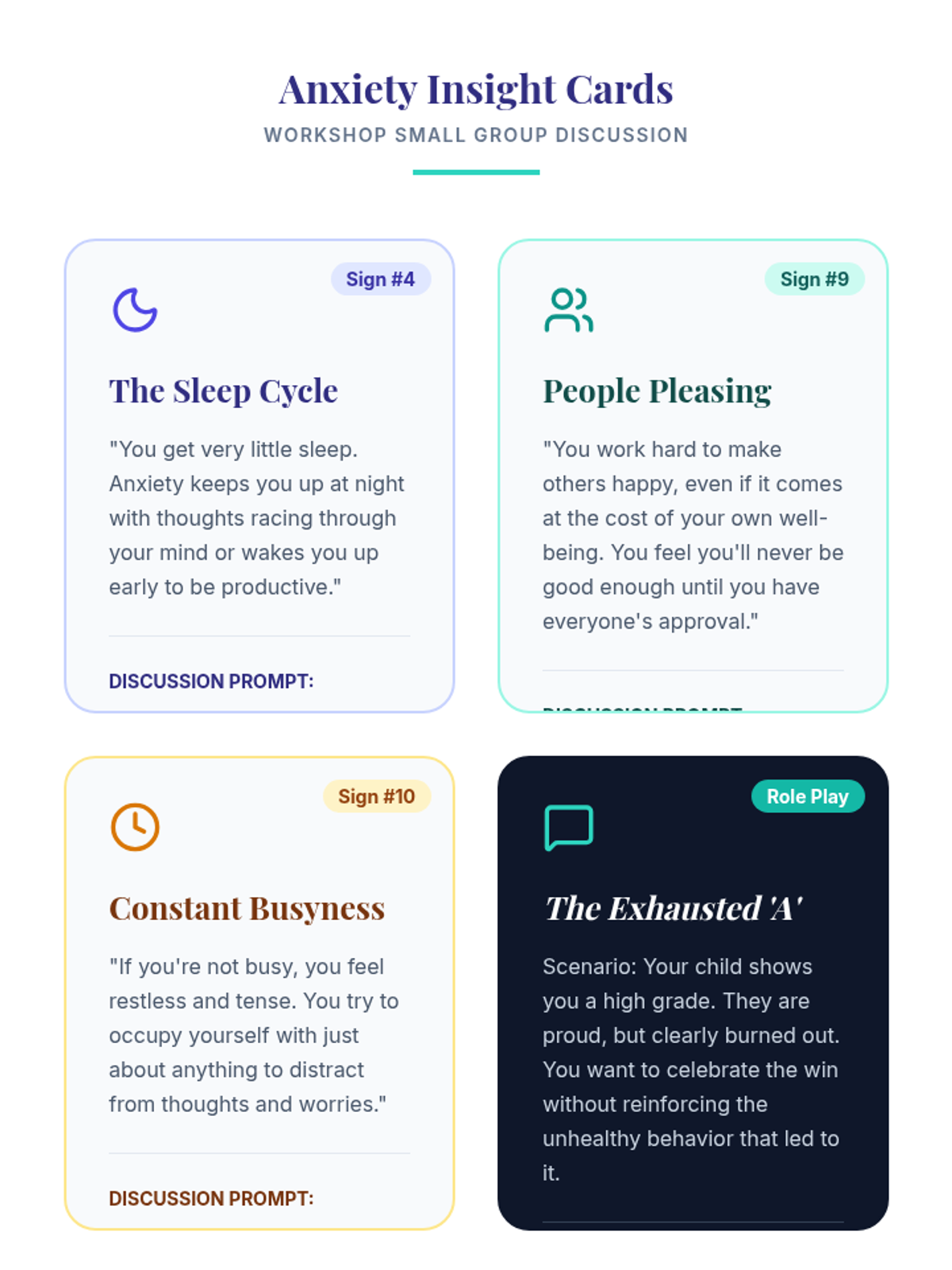
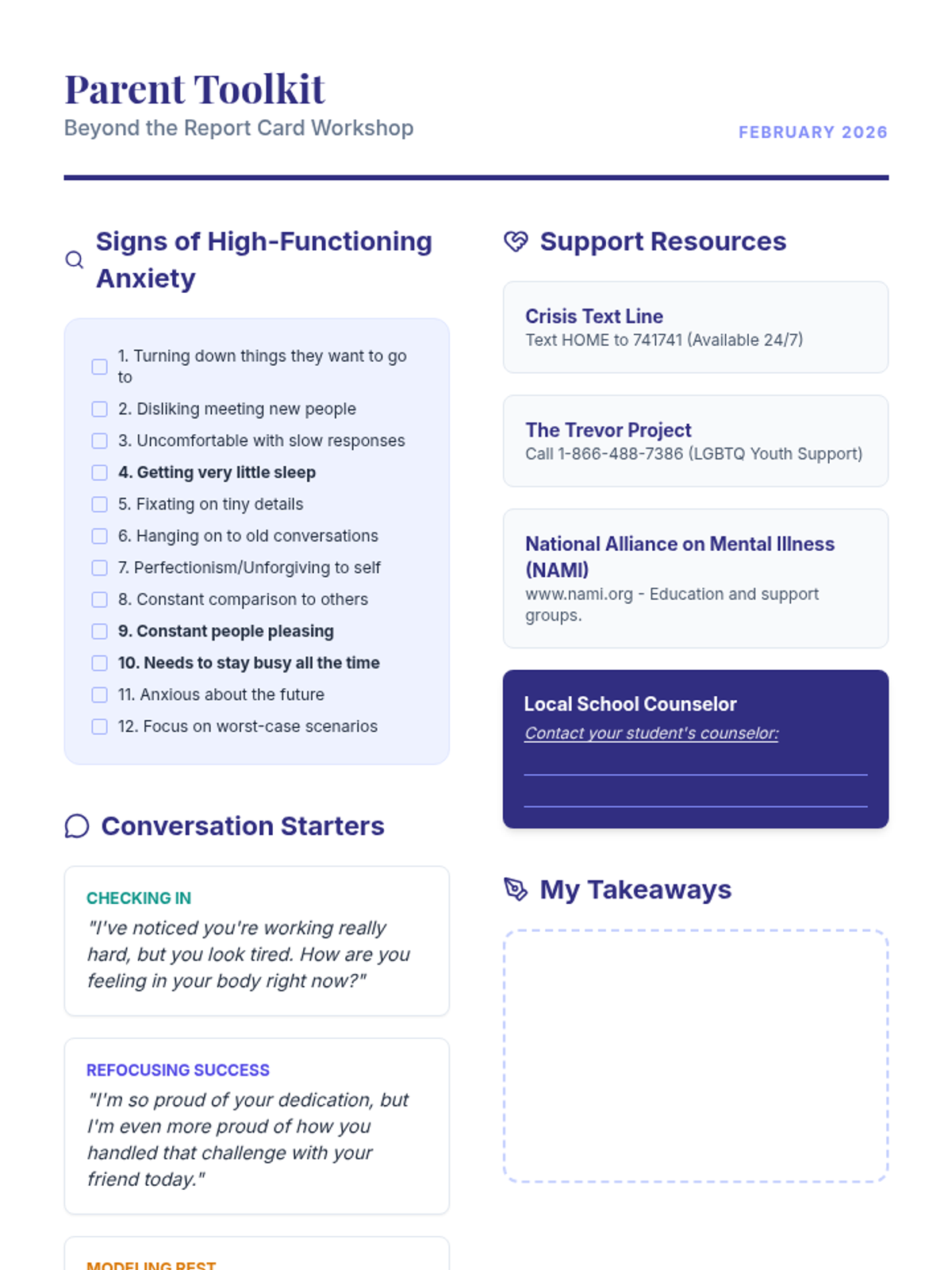
A workshop series designed for parents to understand the intersection of high academic achievement and mental health, focusing on identifying high-functioning anxiety and fostering healthy communication.
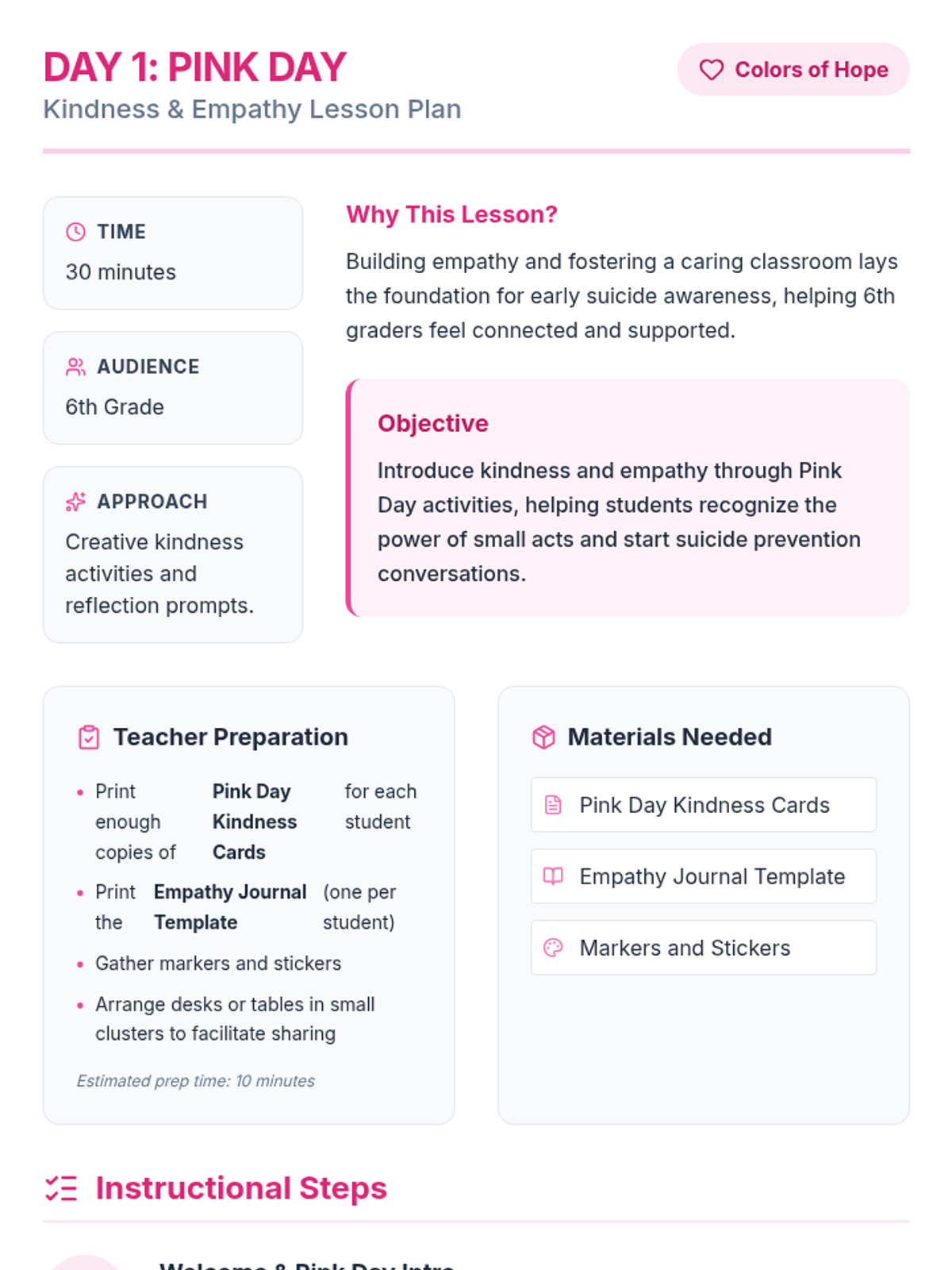
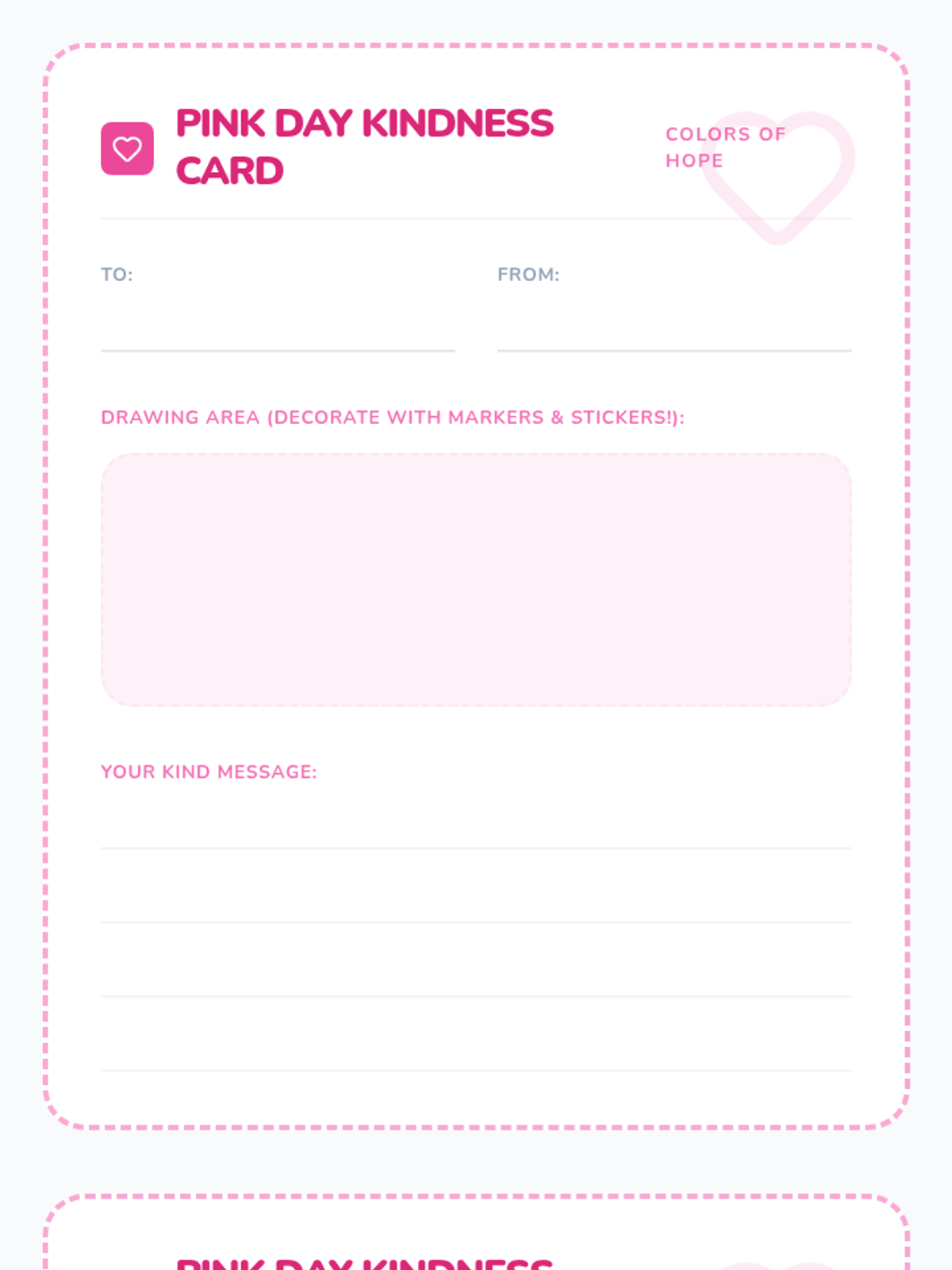
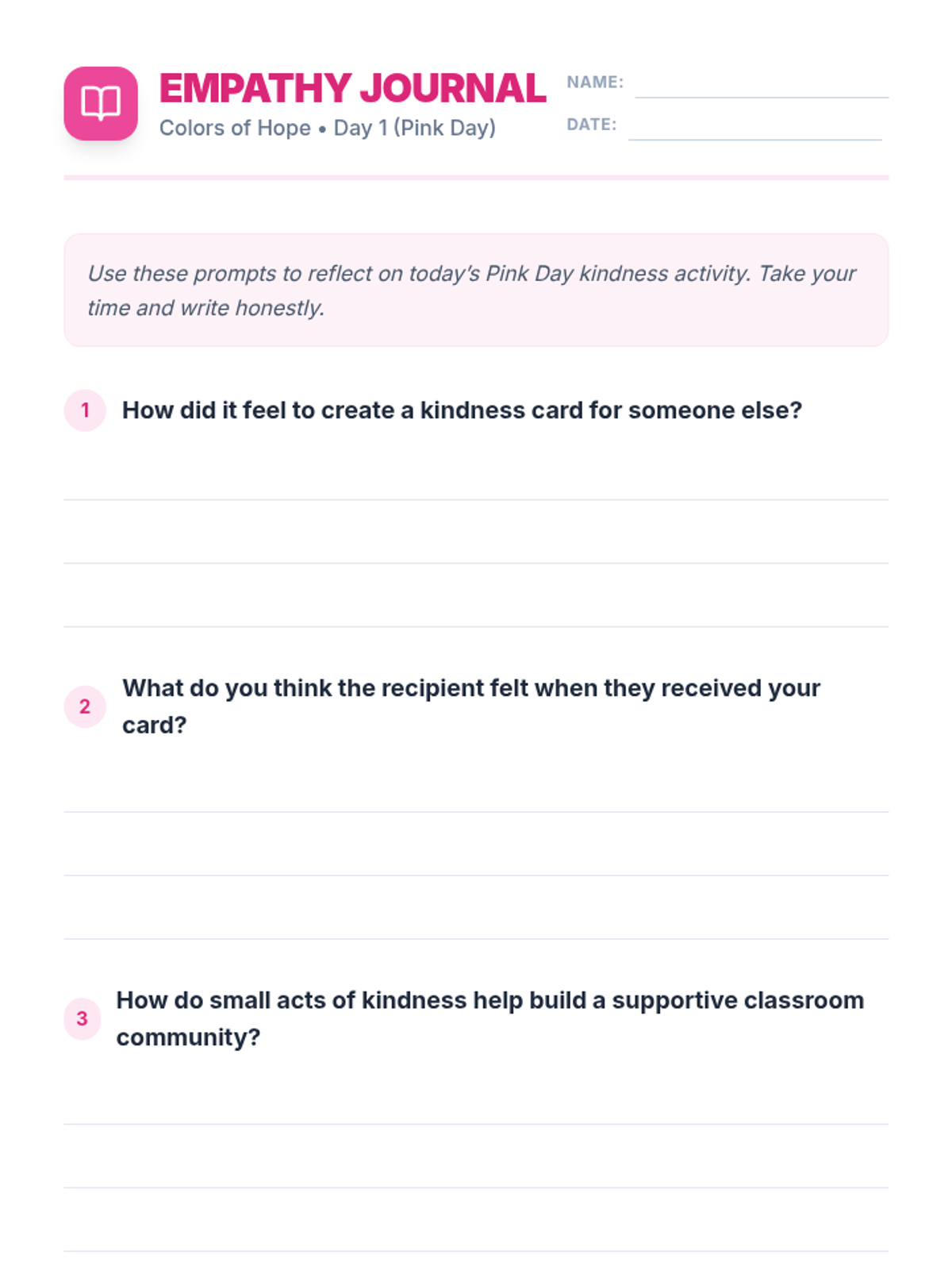
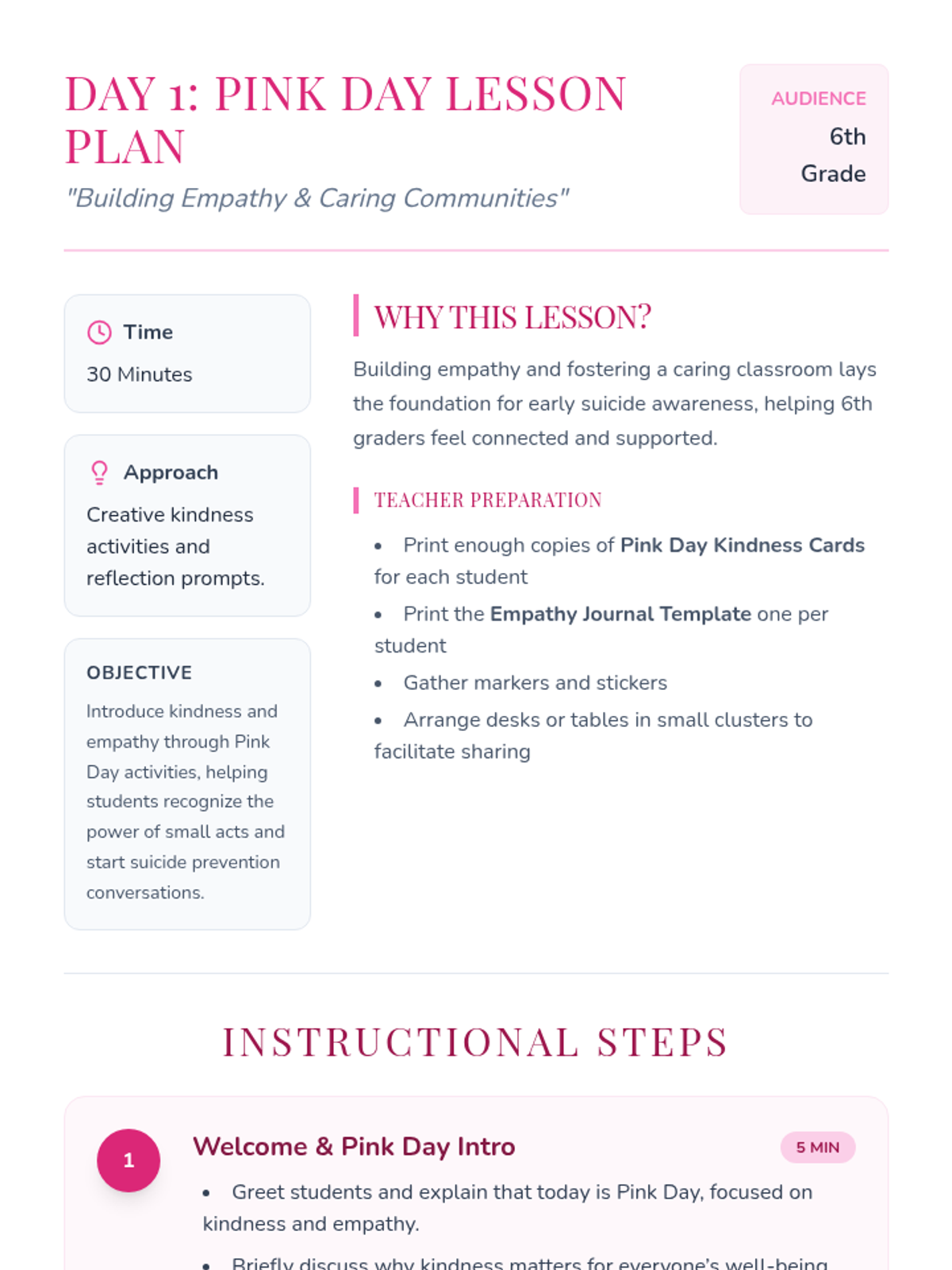
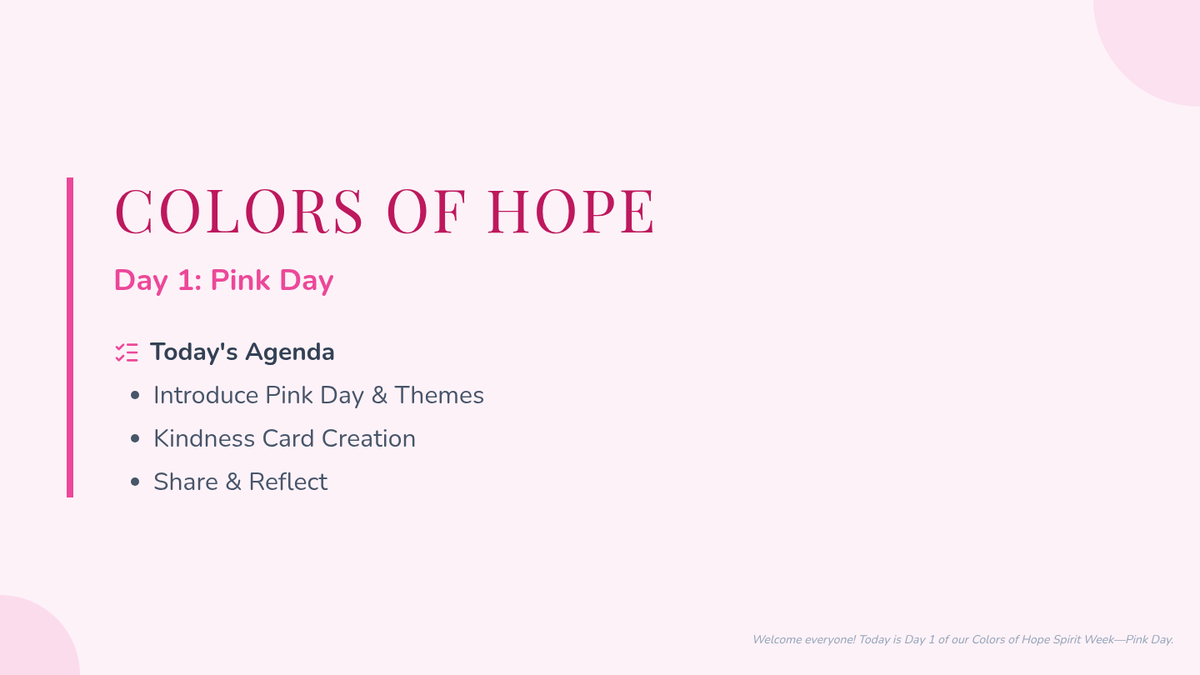
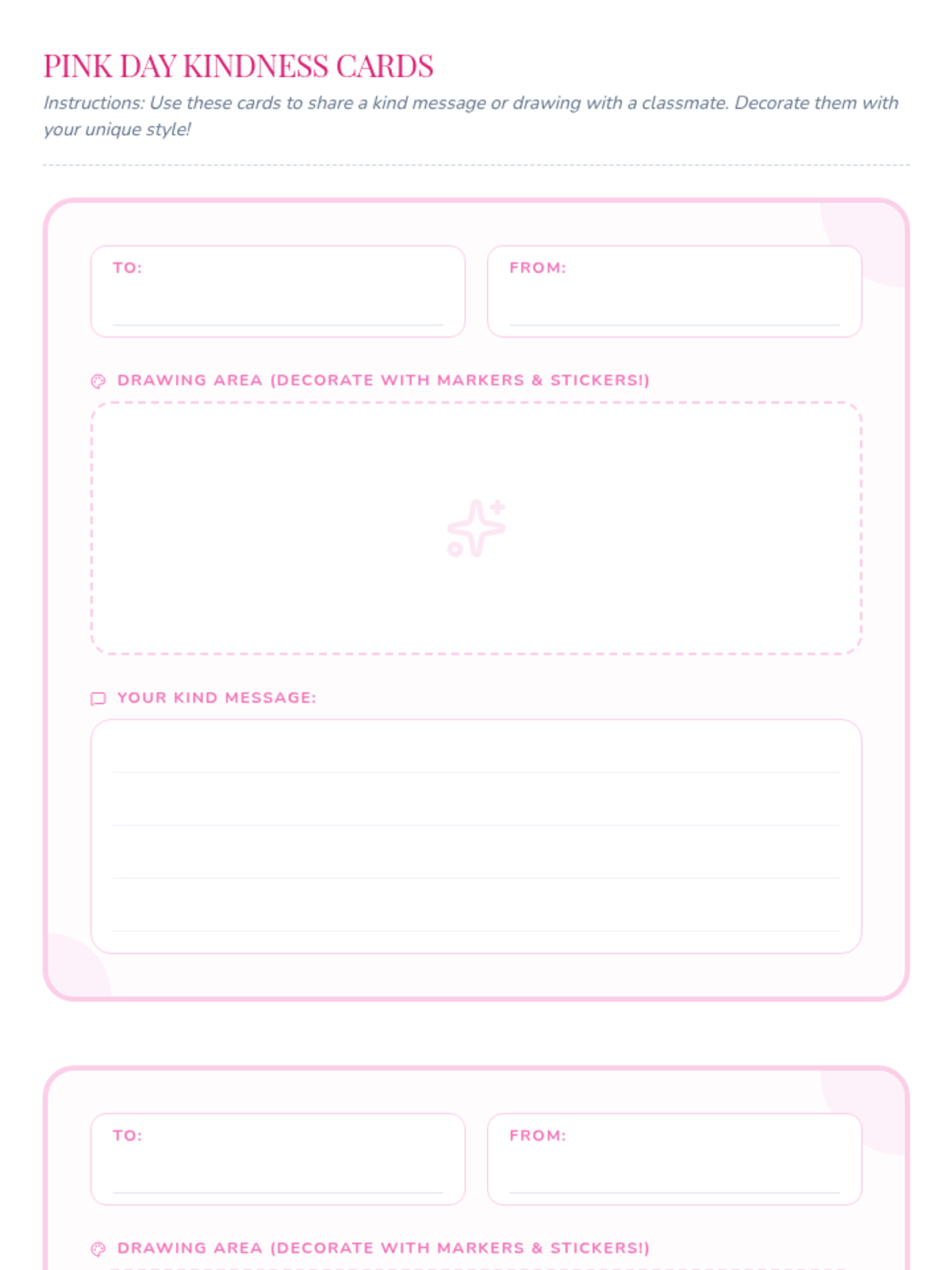
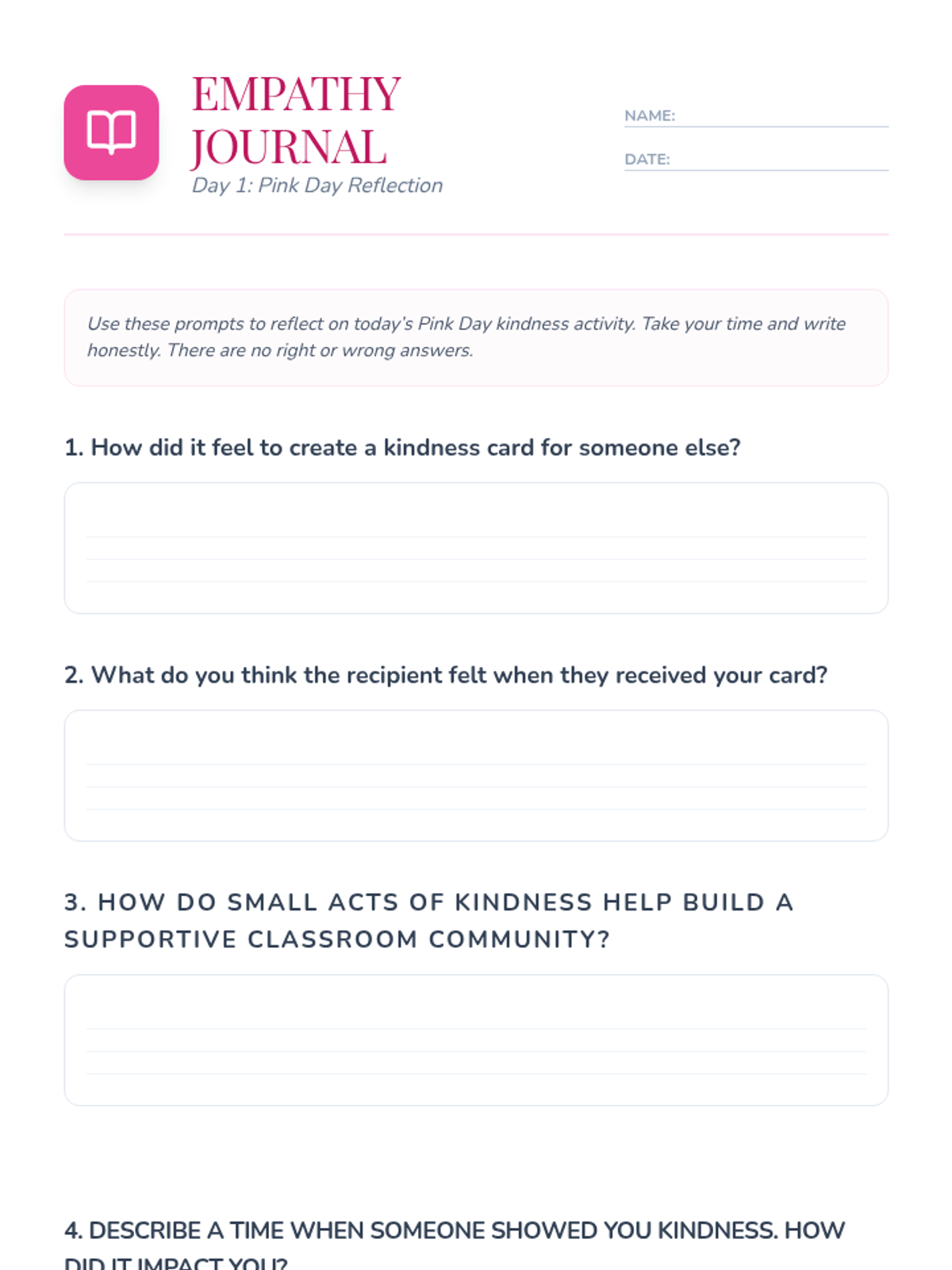
A 5-day spirit week program for 6th graders focused on building empathy, resilience, and connection to support suicide awareness and prevention. Each day uses a specific color theme to explore topics like kindness, self-affirmation, coping skills, peer support, and future hope.
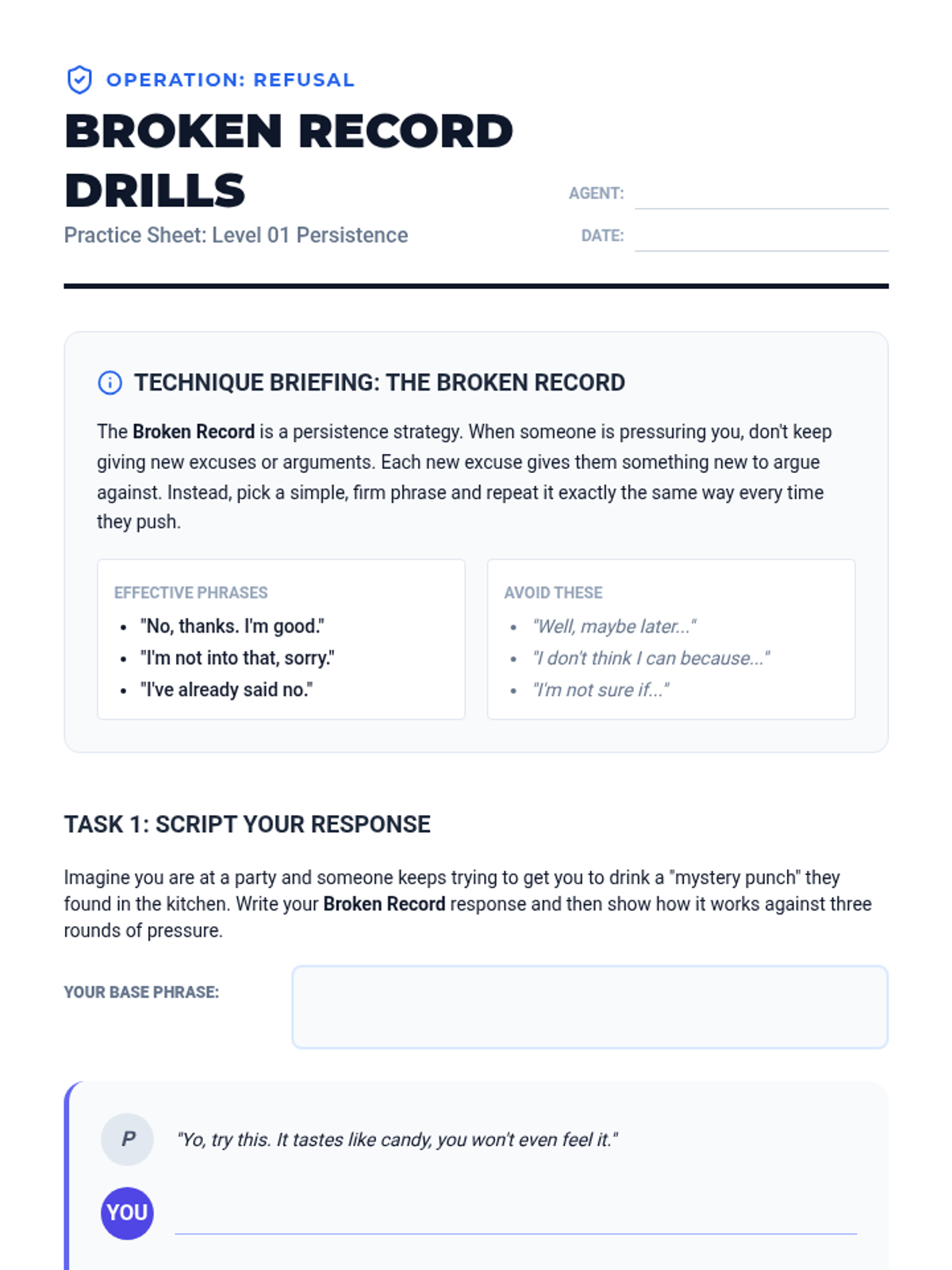
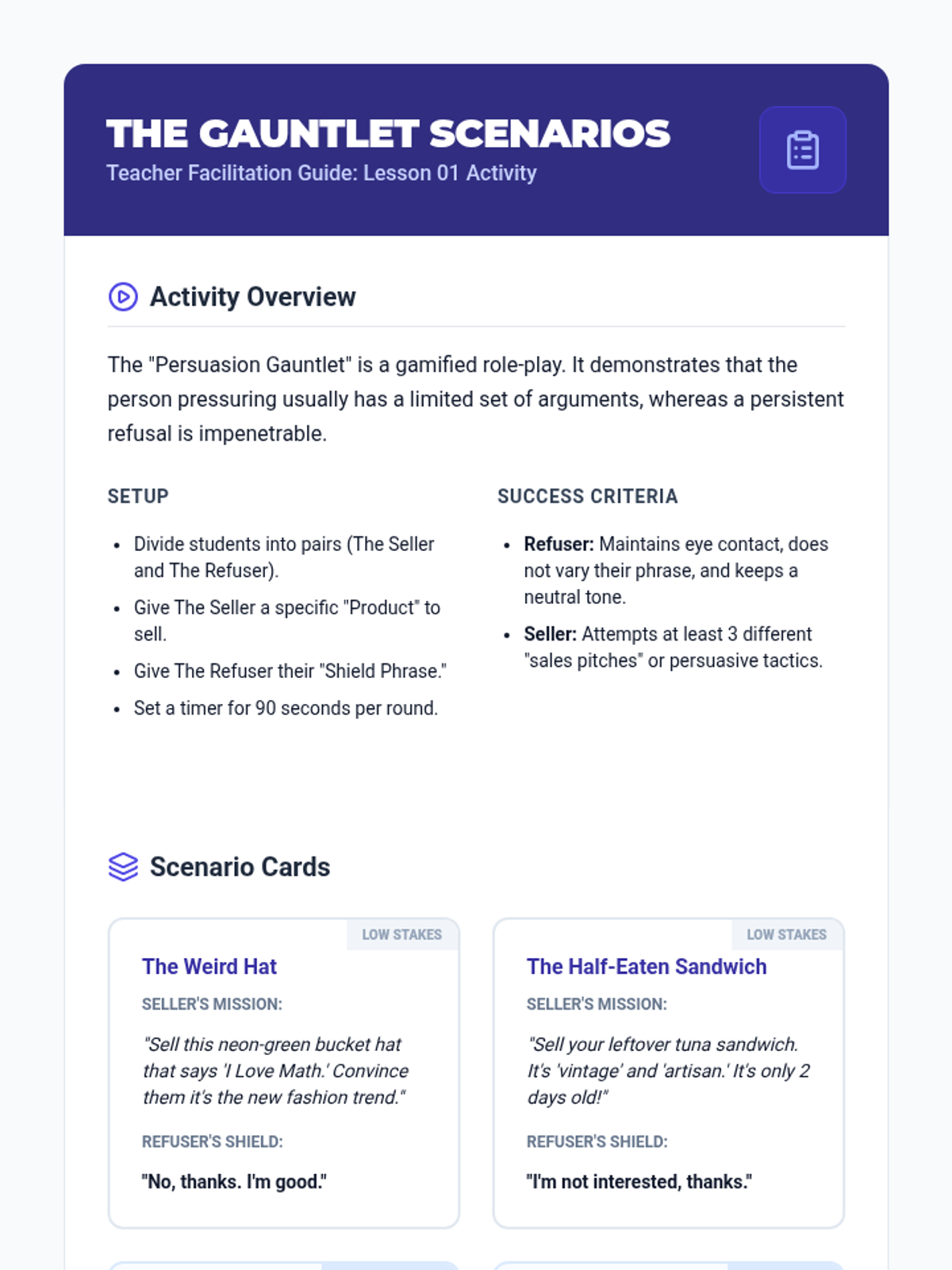
A comprehensive 5-lesson unit for 6th graders to develop and practice concrete refusal skills for substance use and high-pressure social situations. Students transition from simple direct refusals to advanced techniques like 'Reverse the Pressure' and 'Safety Codes.'
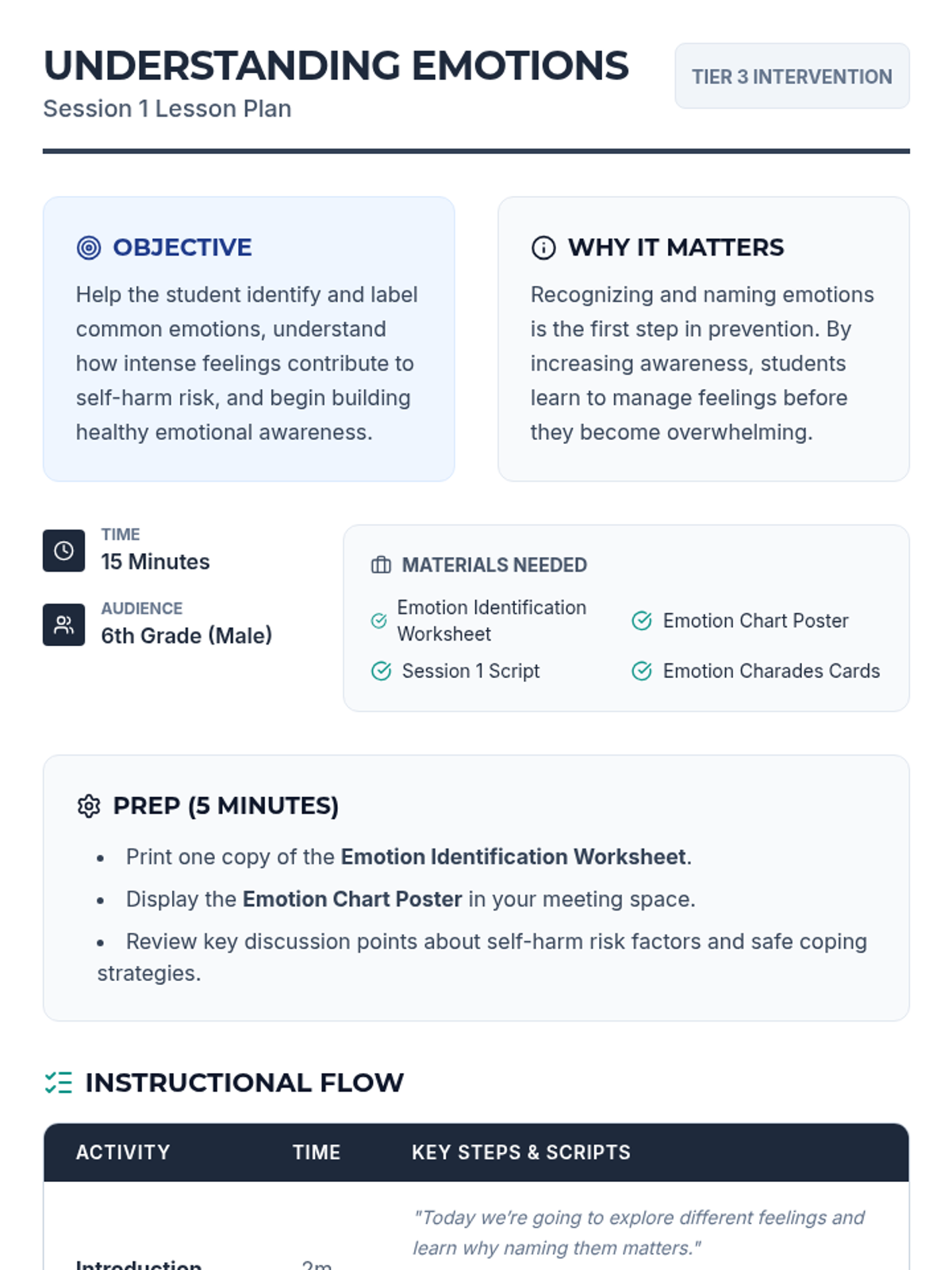
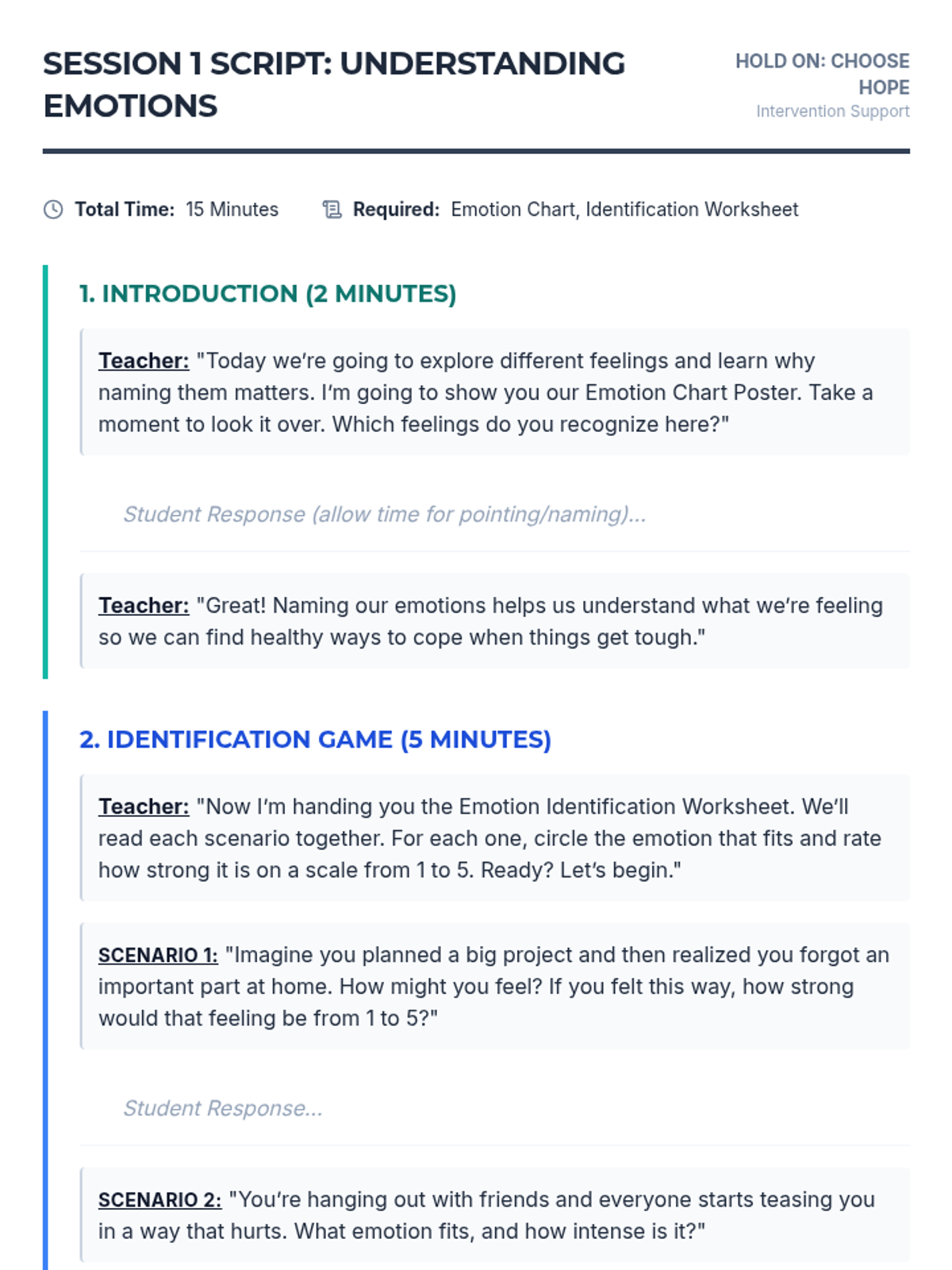
A 4-session Tier 3 individual intervention for 6th-grade students focusing on emotional awareness, coping strategies, support networks, and safety planning for self-harm prevention.
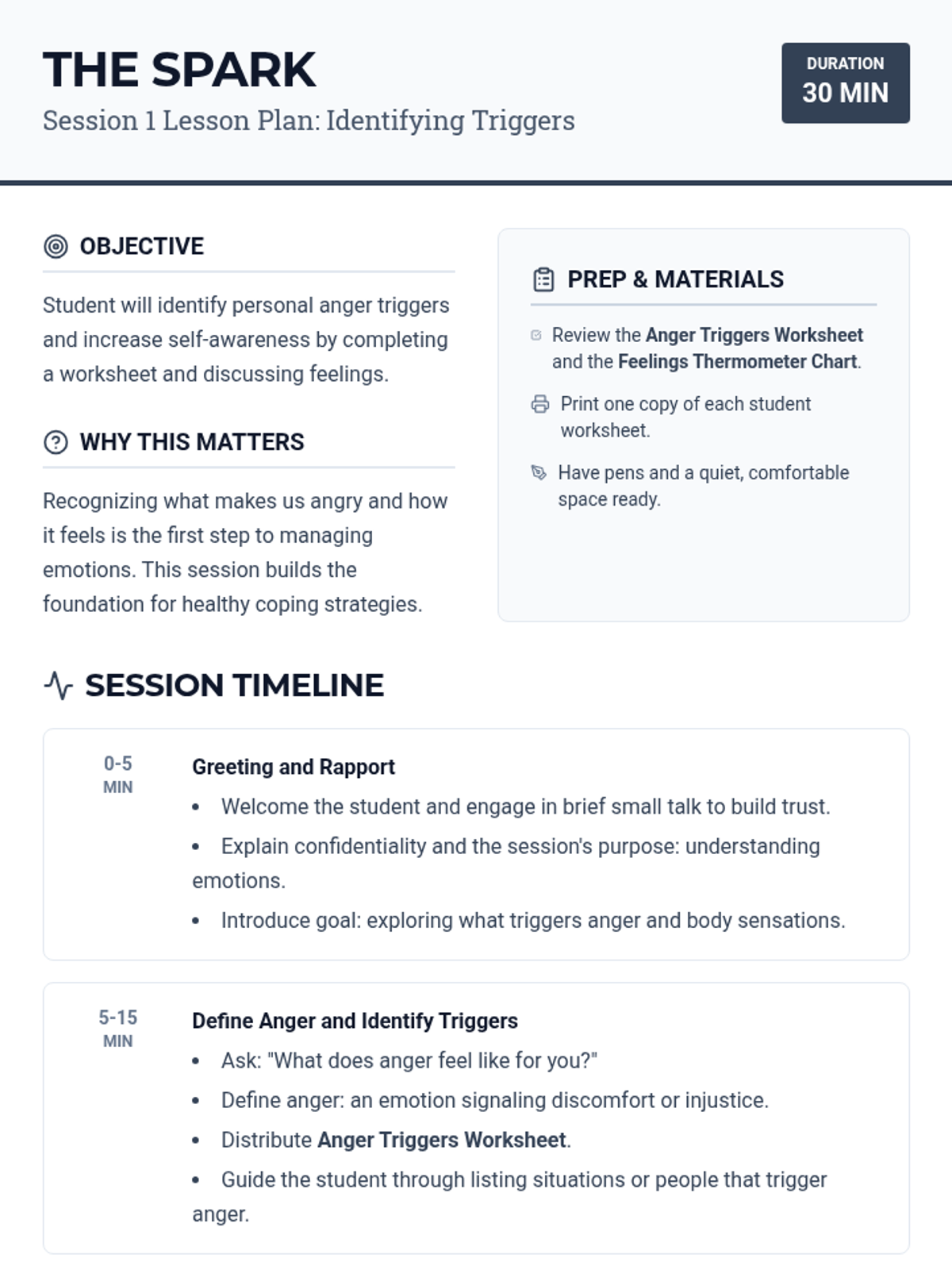
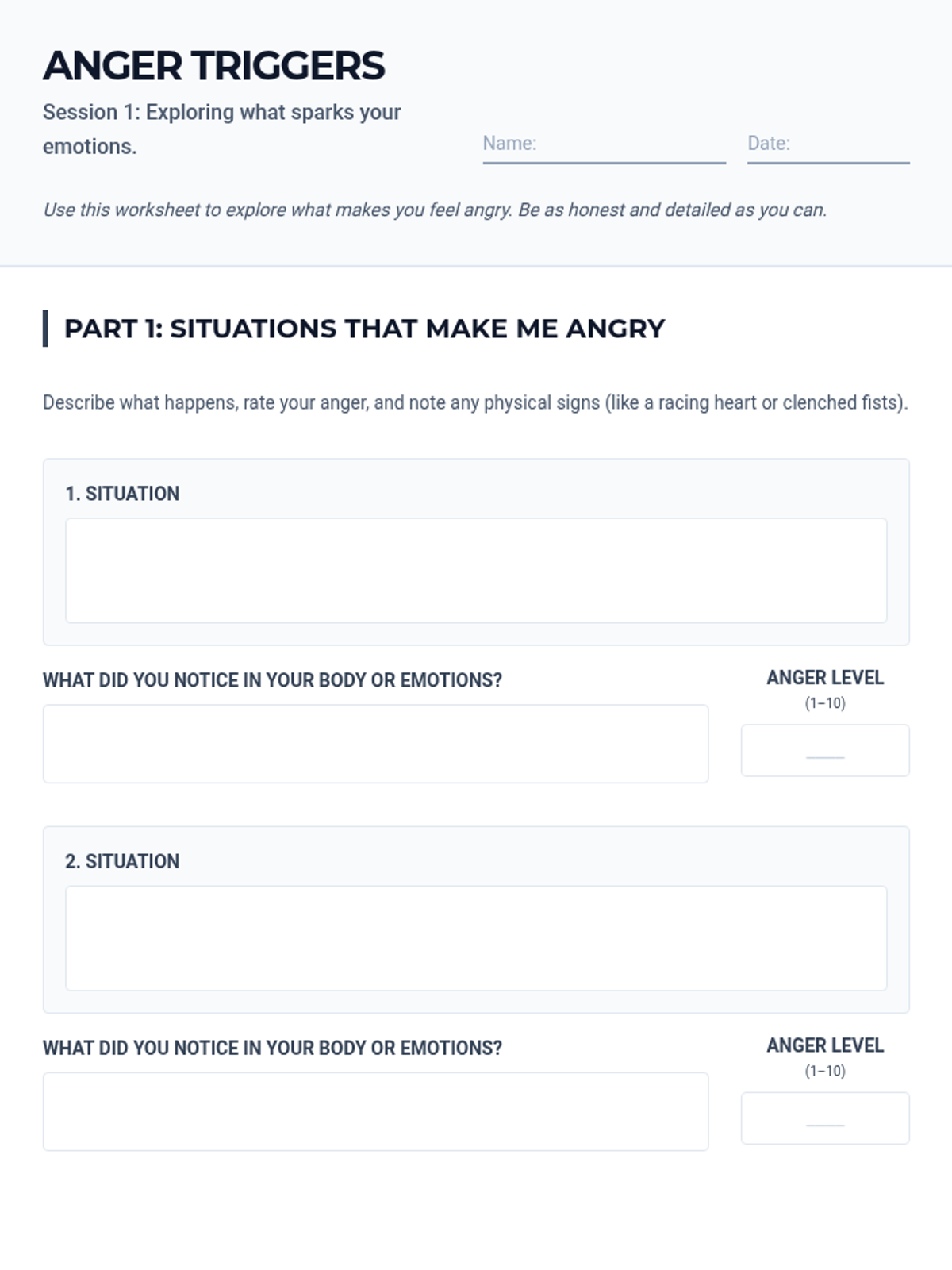
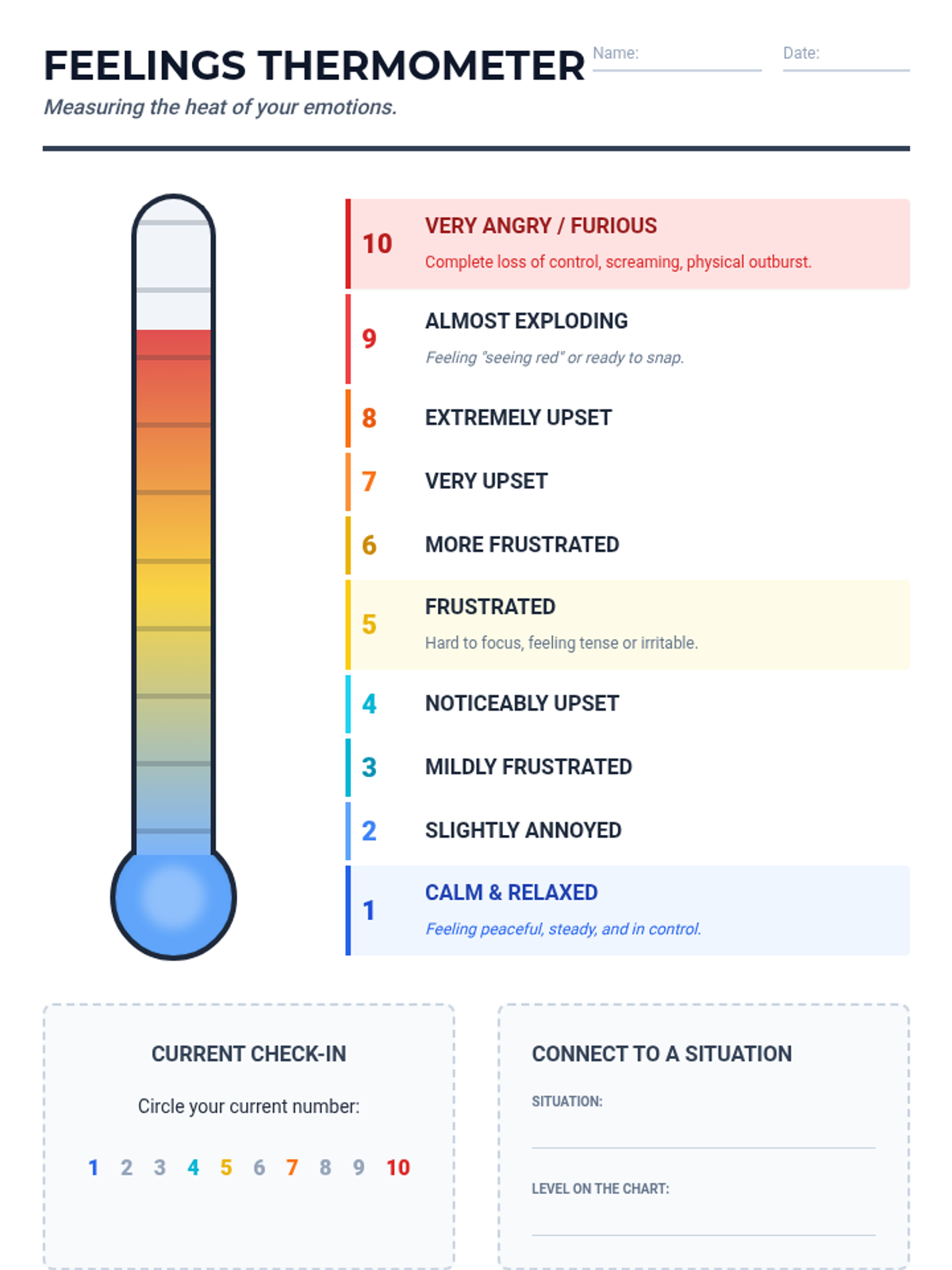
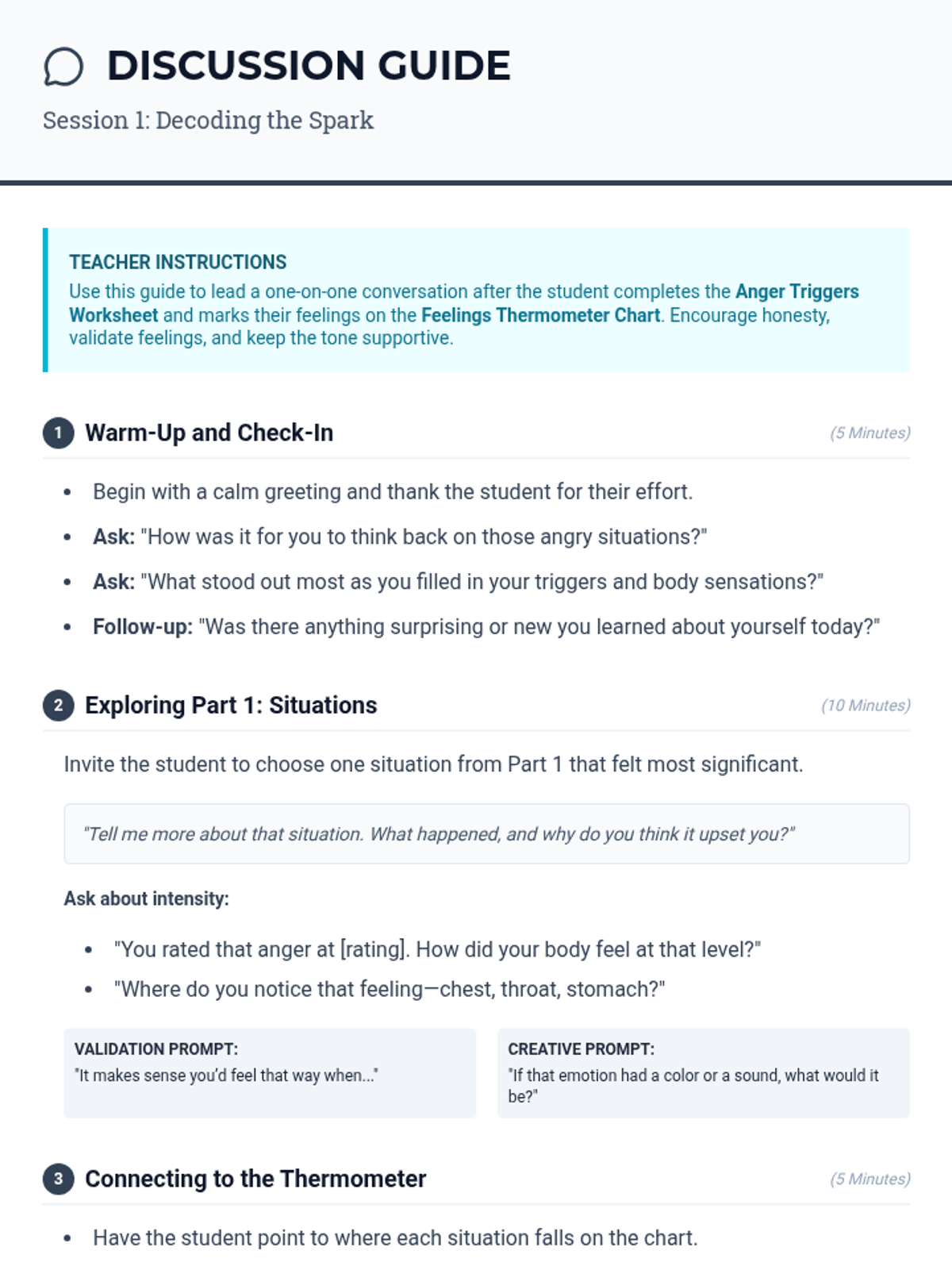
A structured six-session individual counseling curriculum for middle schoolers to manage anger. Through identifying triggers, physical calming techniques, cognitive reframing, and assertive communication, students build a personalized toolkit for emotional regulation.
A five-day Spirit Week program for 6th graders designed to foster suicide awareness and prevention through daily themes of kindness, self-expression, coping, connection, and hope.
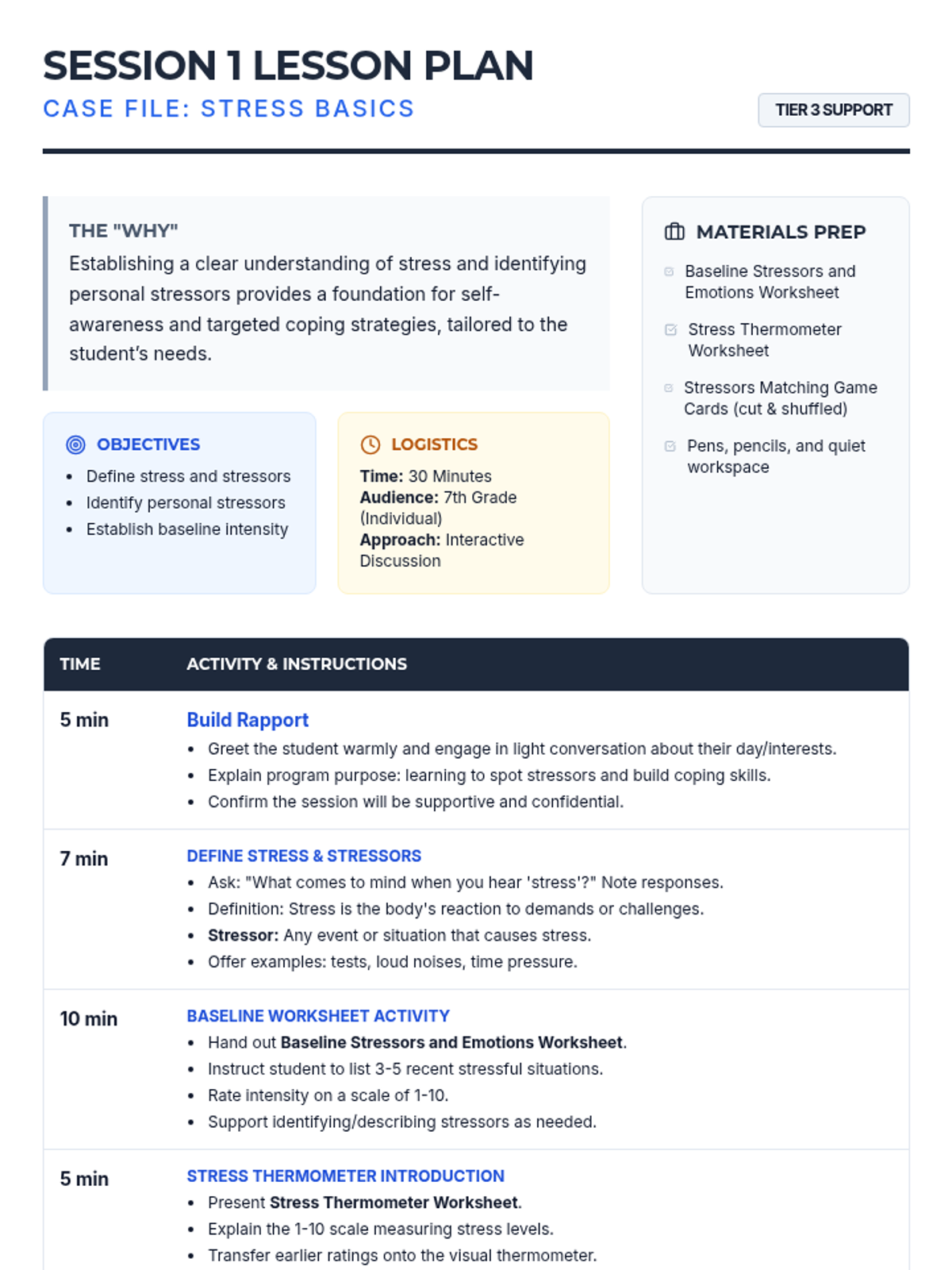
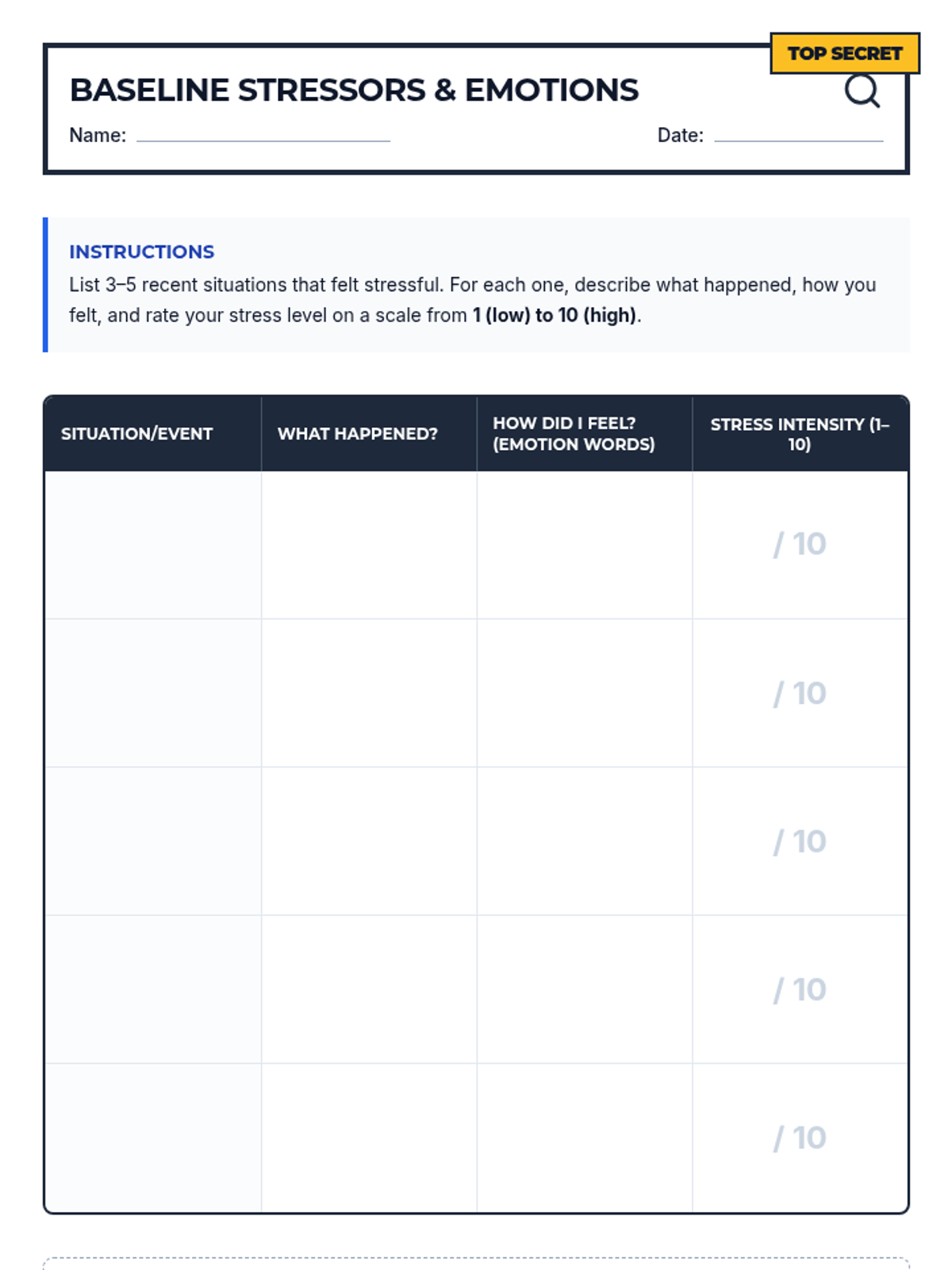
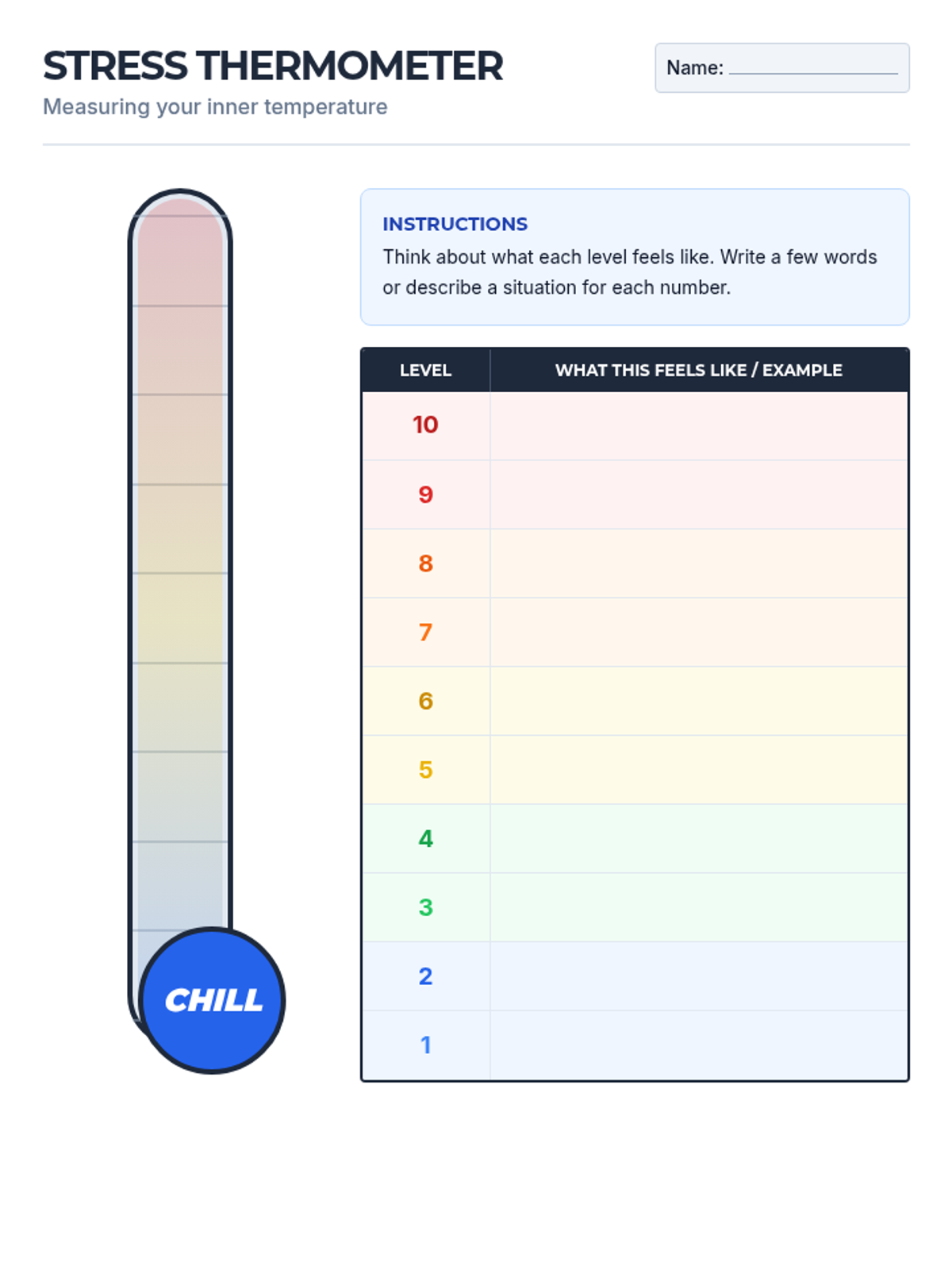
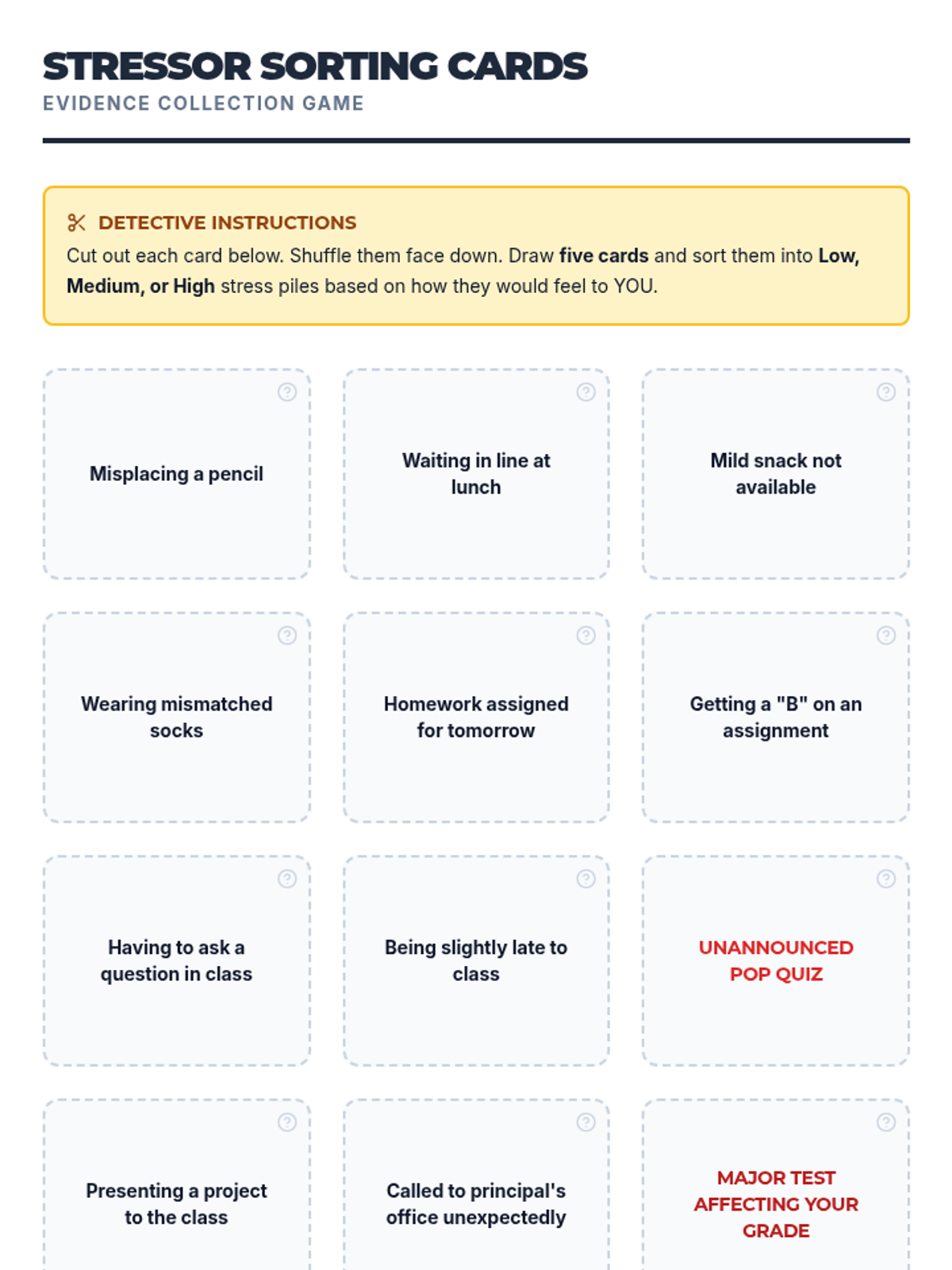
A 10-session Tier 3 intervention for a 7th-grade student with a seizure history, focusing on identifying stressors, physical cues, and building evidence-based coping resilience.
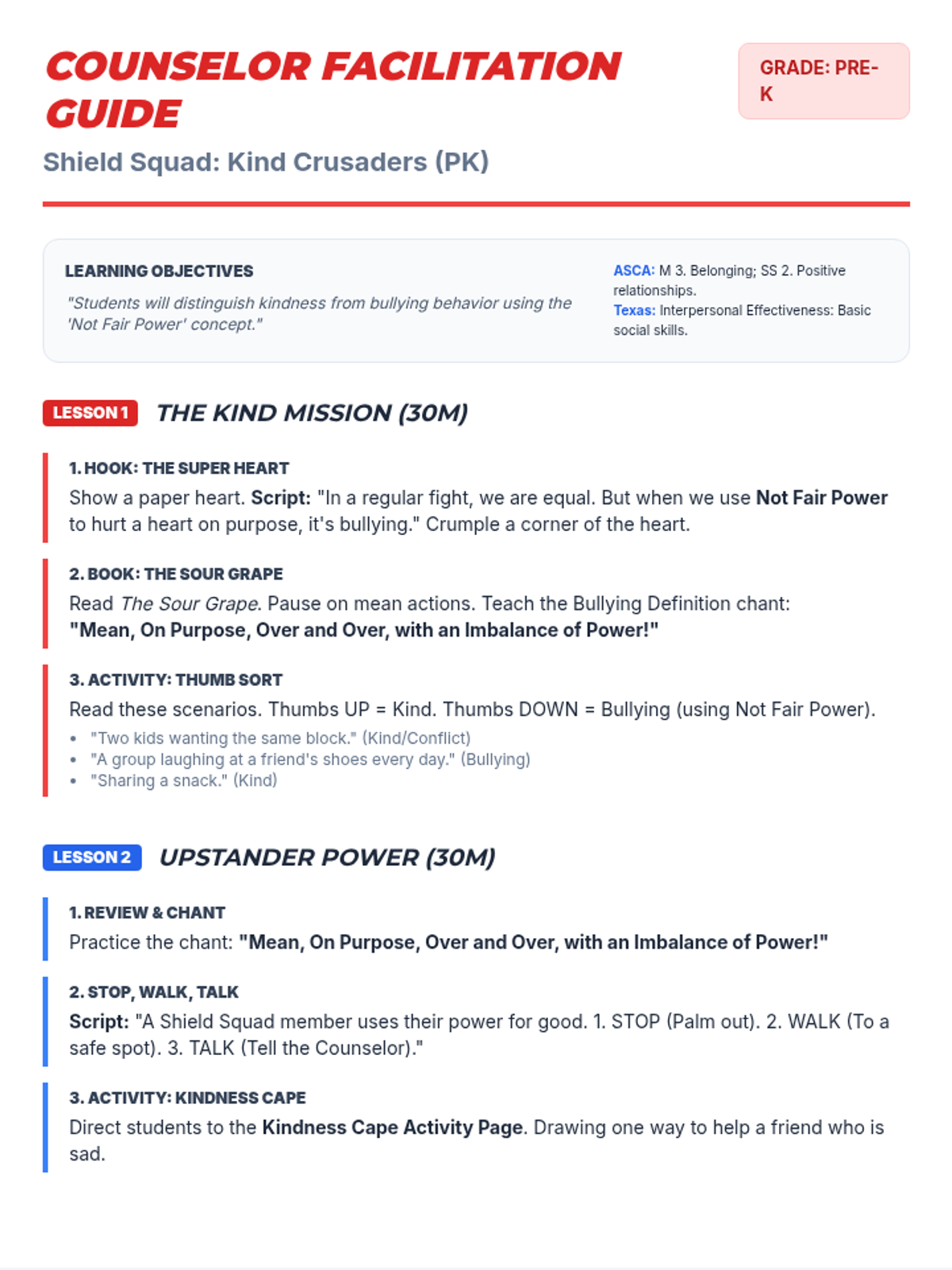
A comprehensive bullying prevention curriculum for PK-6 students, featuring two distinct 30-minute sessions for every individual grade level. The program uses mentor texts by Kathryn Otoshi, Trudy Ludwig, Julia Cook, and others to scaffold concepts of power imbalance, upstander strategies, and school culture change.
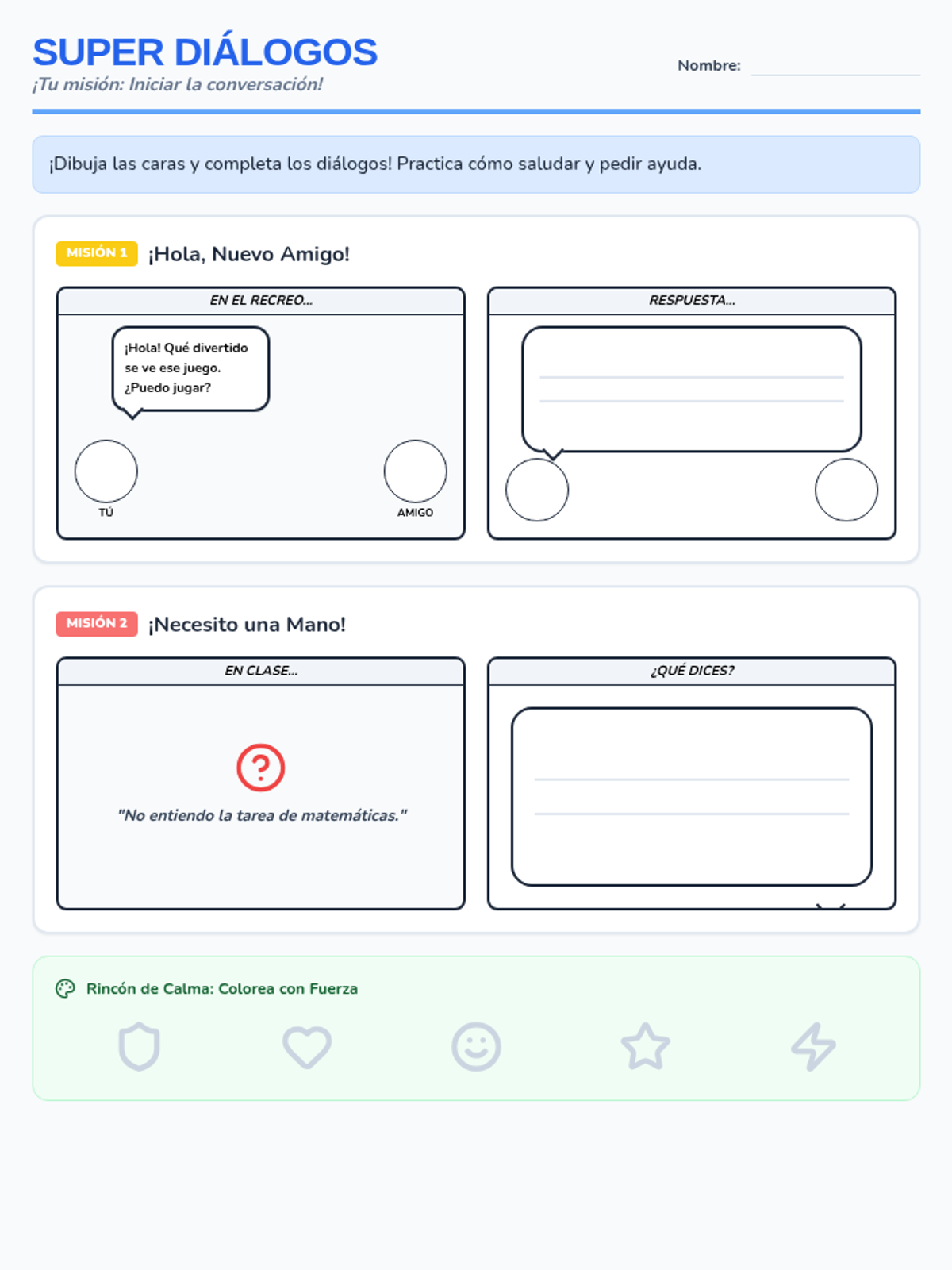
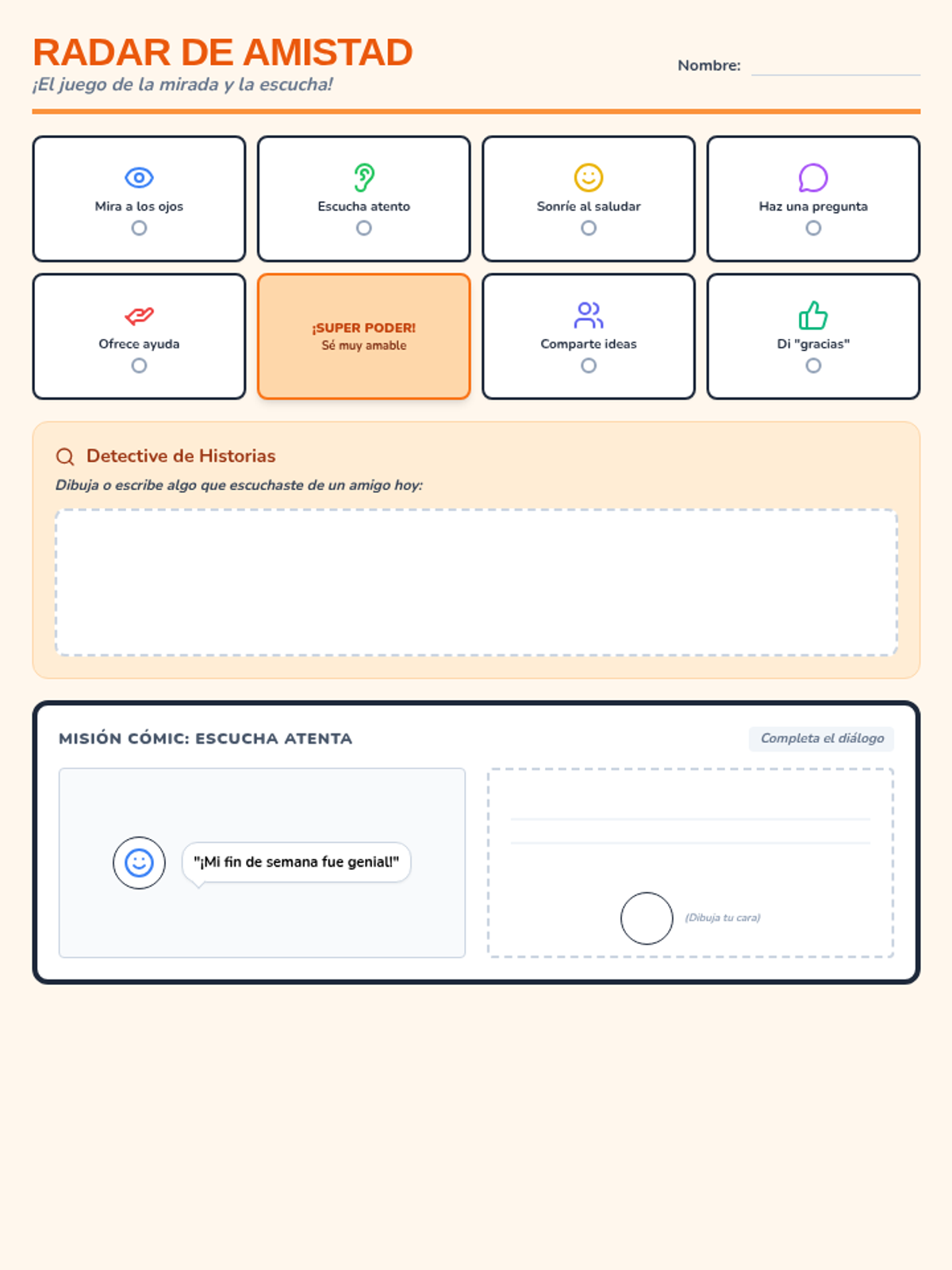
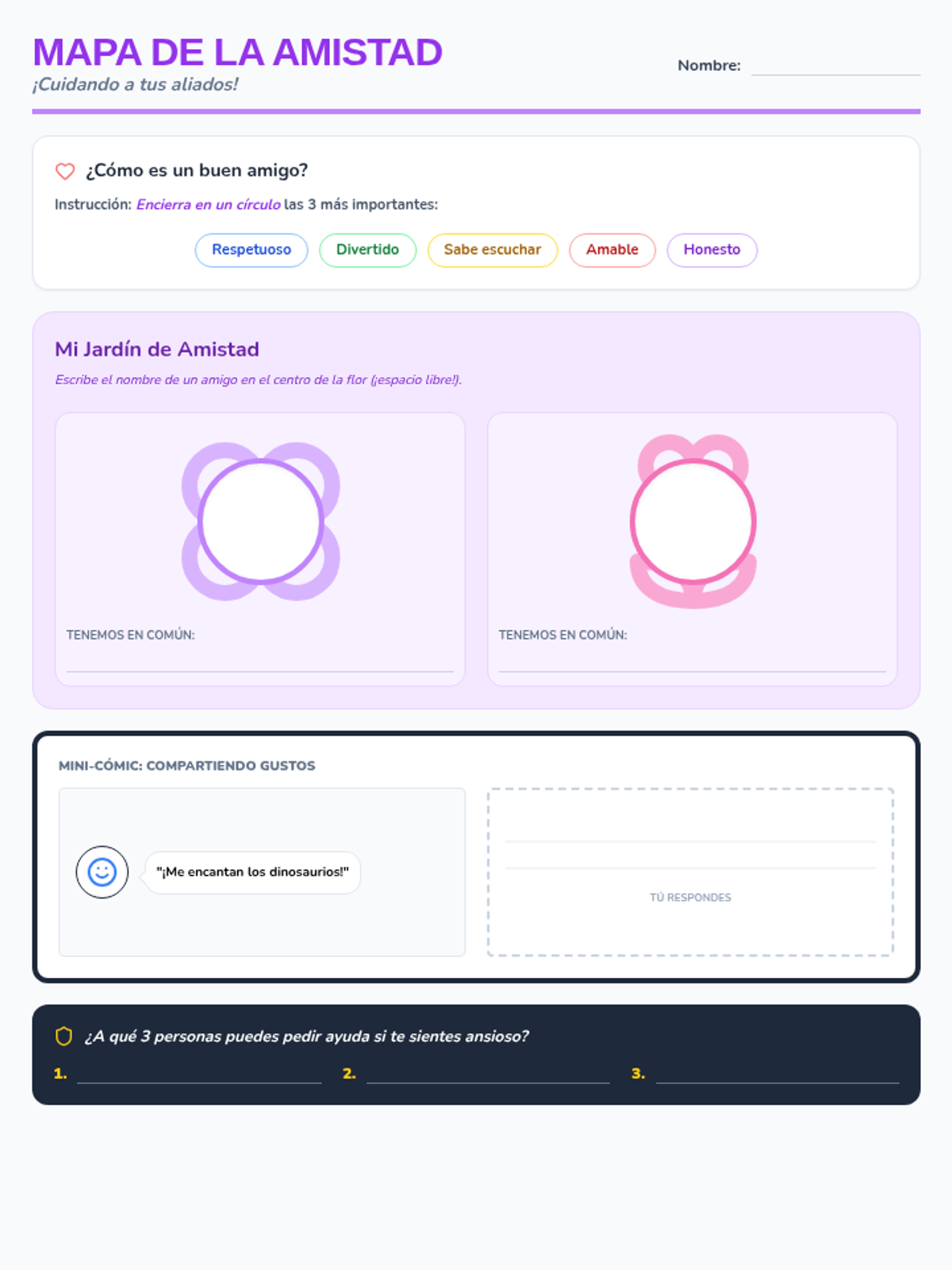
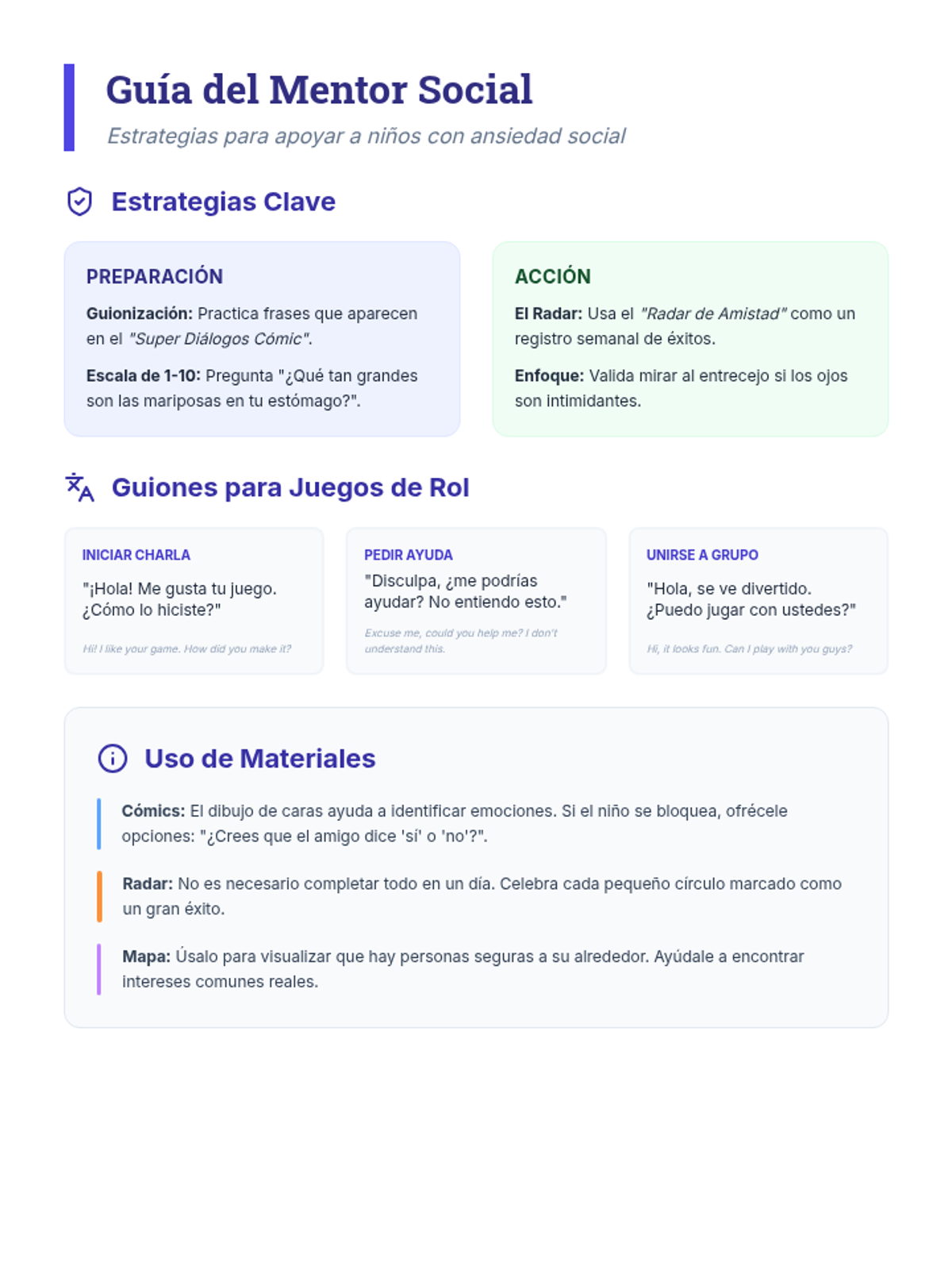
A comprehensive social skills program in both Spanish and English designed for children with social anxiety to build confidence in communication and peer relationships.
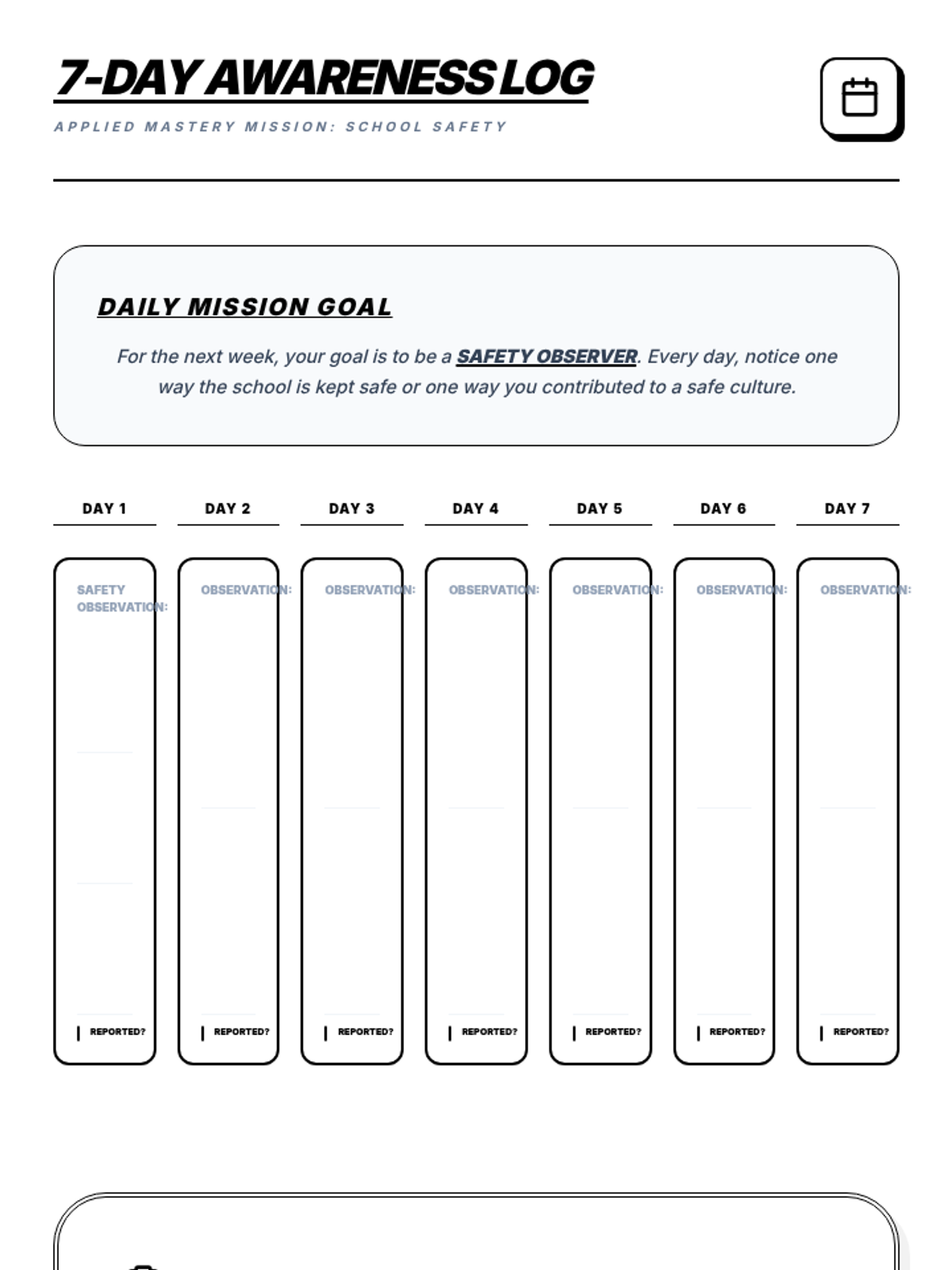
A series of independent social-emotional missions for middle schoolers to develop personal integrity, emotional regulation, and social communication skills.
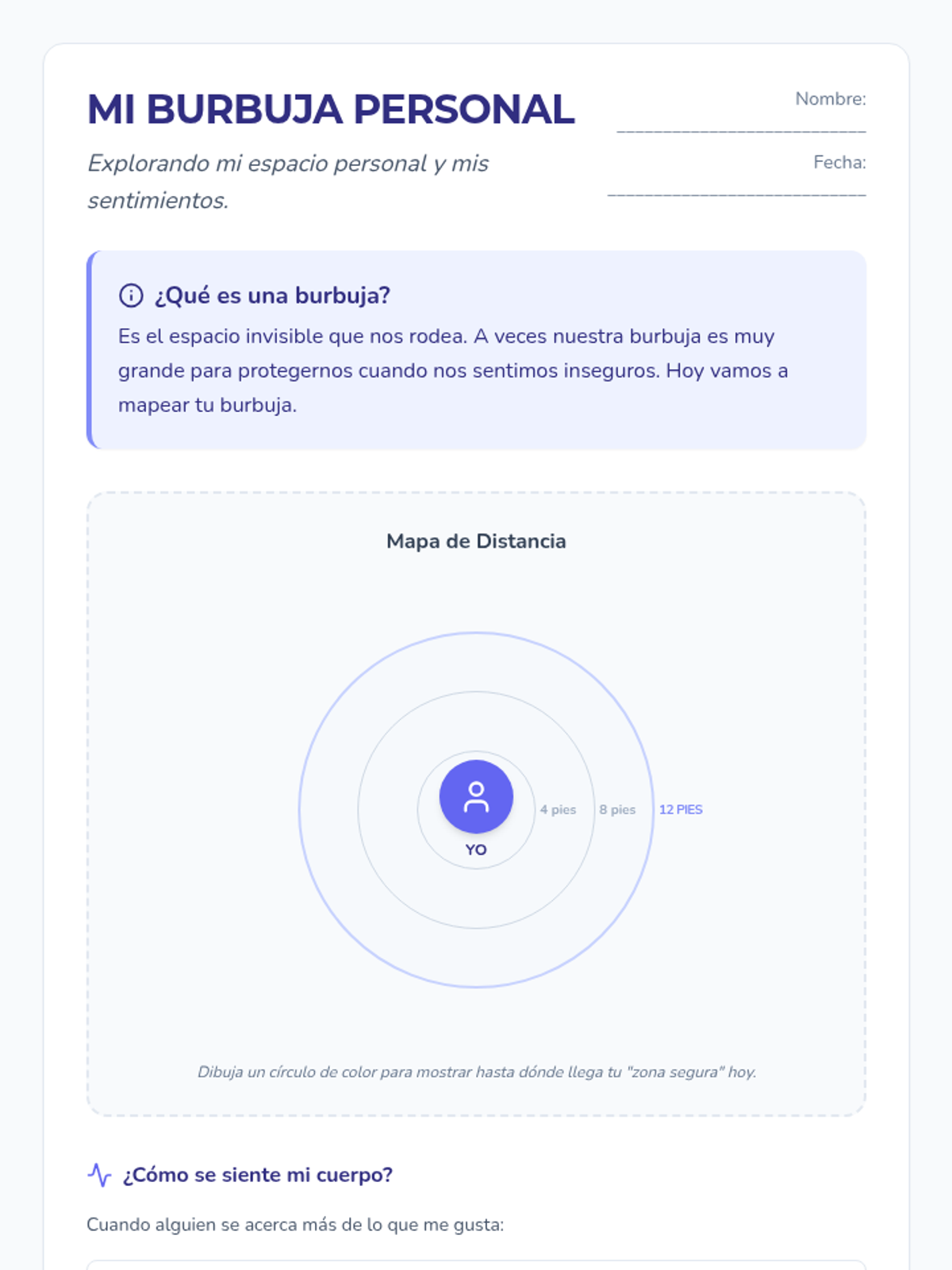
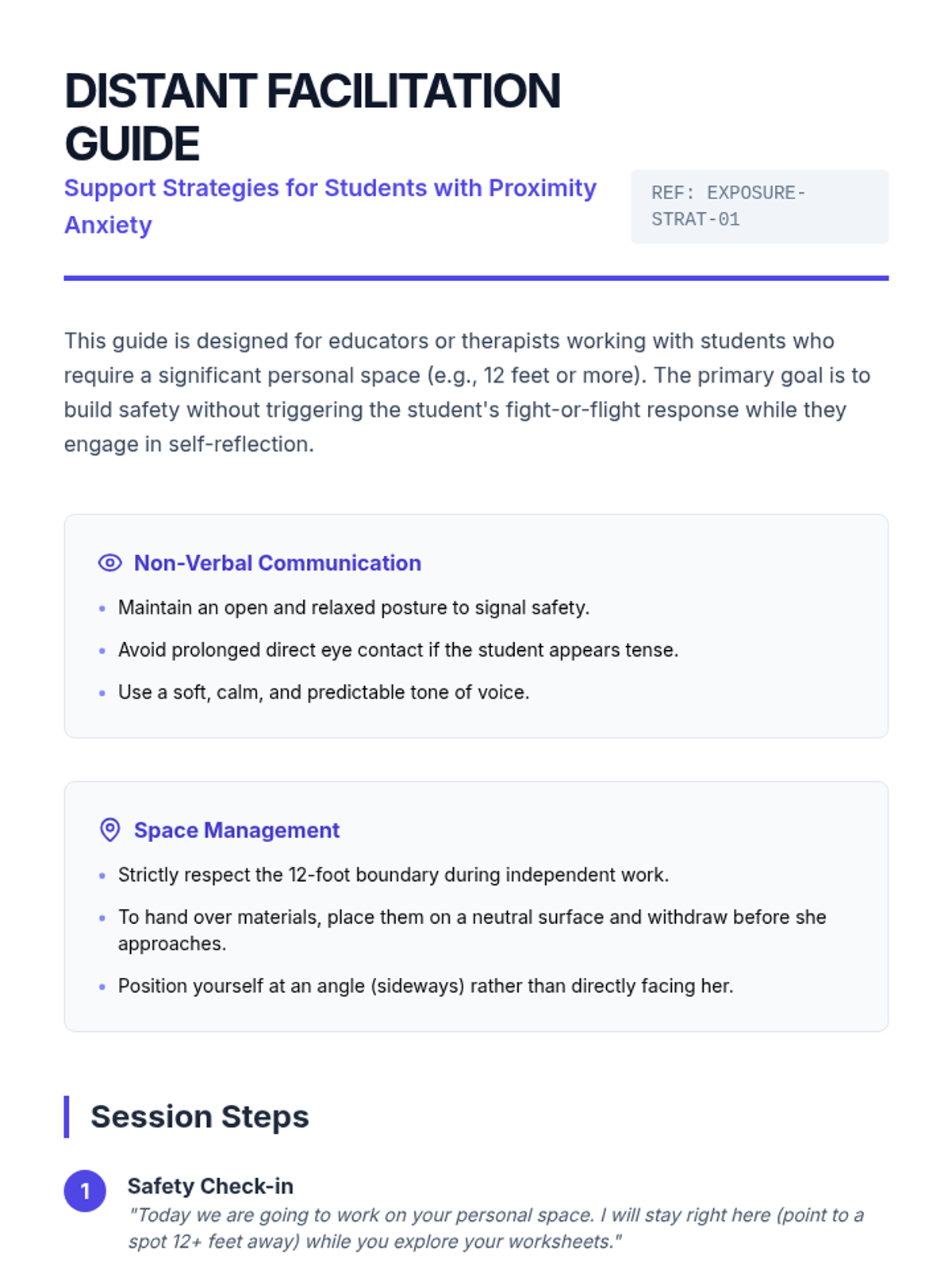
Una serie de actividades independientes diseñadas para una estudiante de 11 años que trabaja en la terapia de exposición para permitir que las personas se acerquen a ella. Los materiales están en español y se centran en la autorreflexión, el desafío de pensamientos y la creación de una jerarquía de exposición.
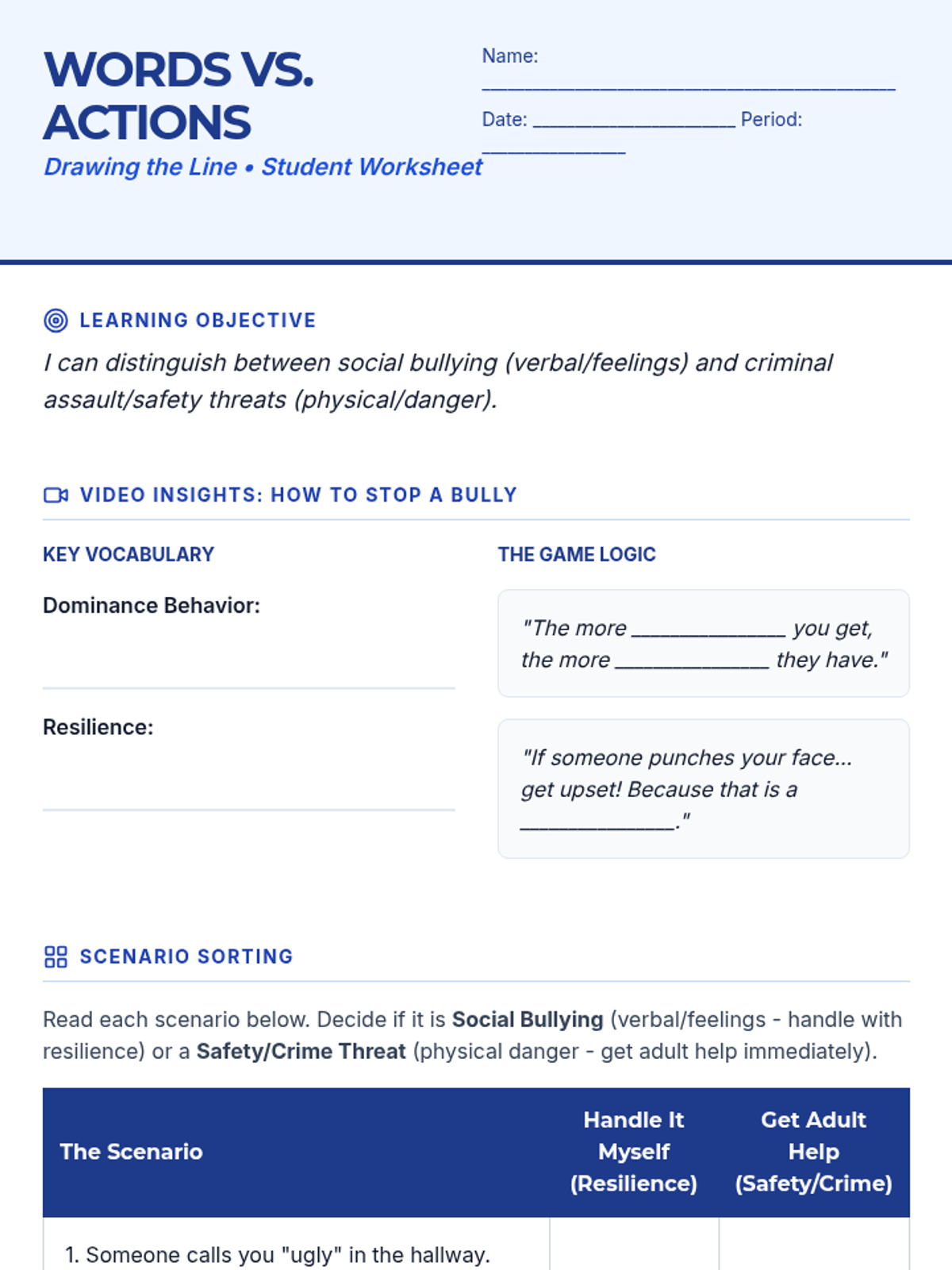
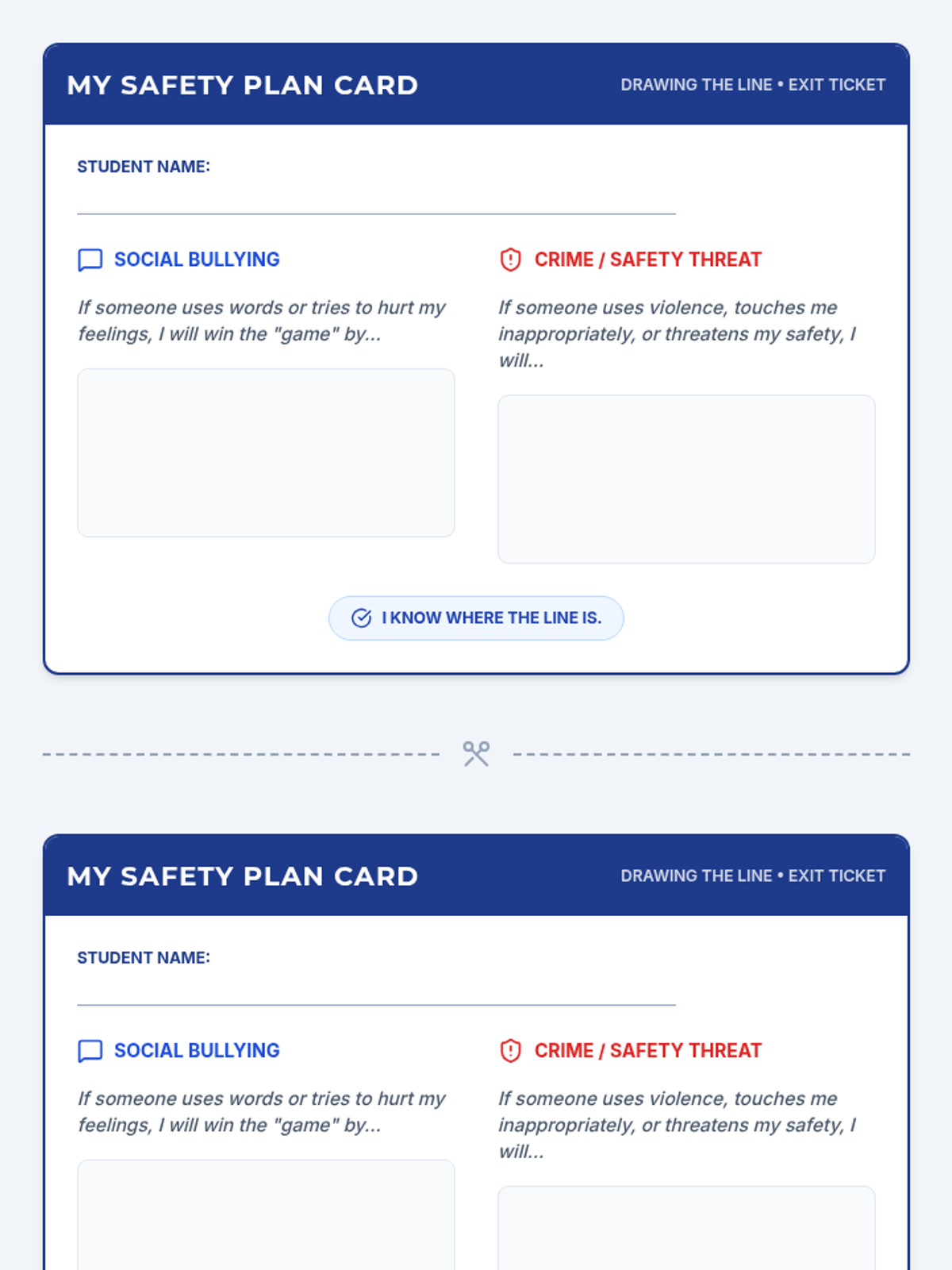
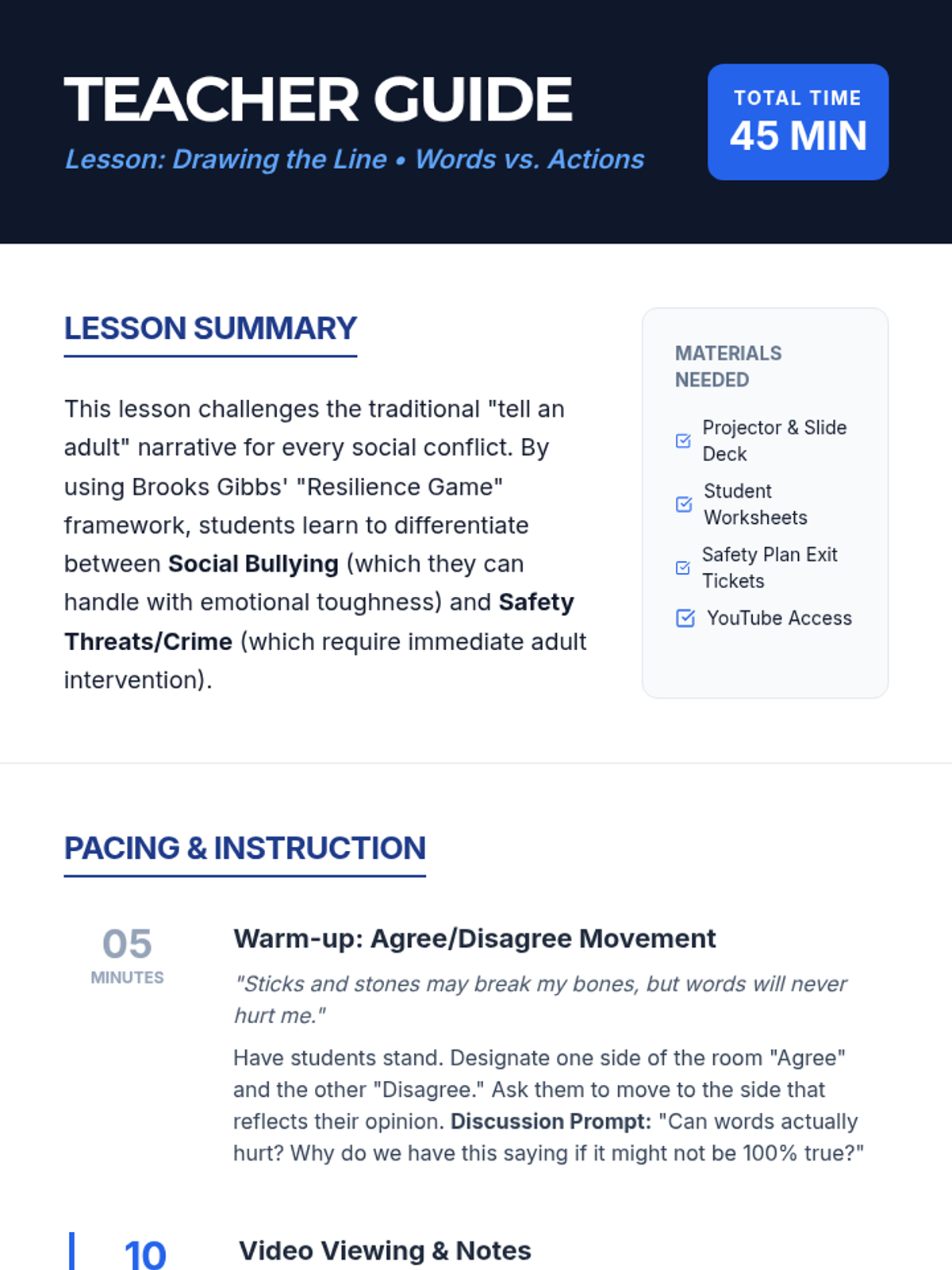
A middle school lesson sequence focused on the distinction between verbal bullying and physical/criminal safety threats, emphasizing resilience for the former and adult intervention for the latter.