Stop-and-think strategies, impulse management, and SMART goal setting for personal growth. Develops internal motivation, stress reduction techniques, and resilience through proactive planning and monitoring.
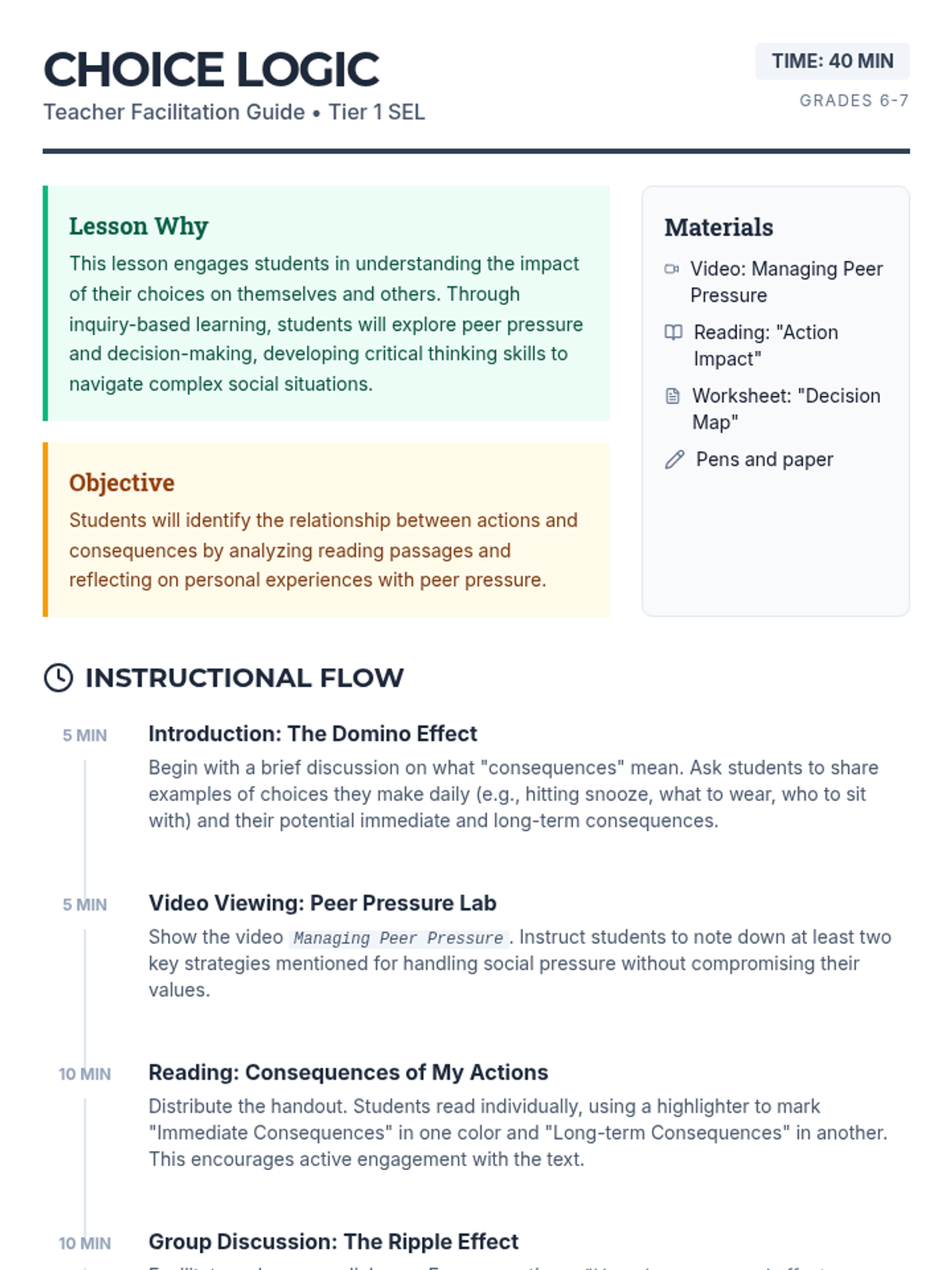
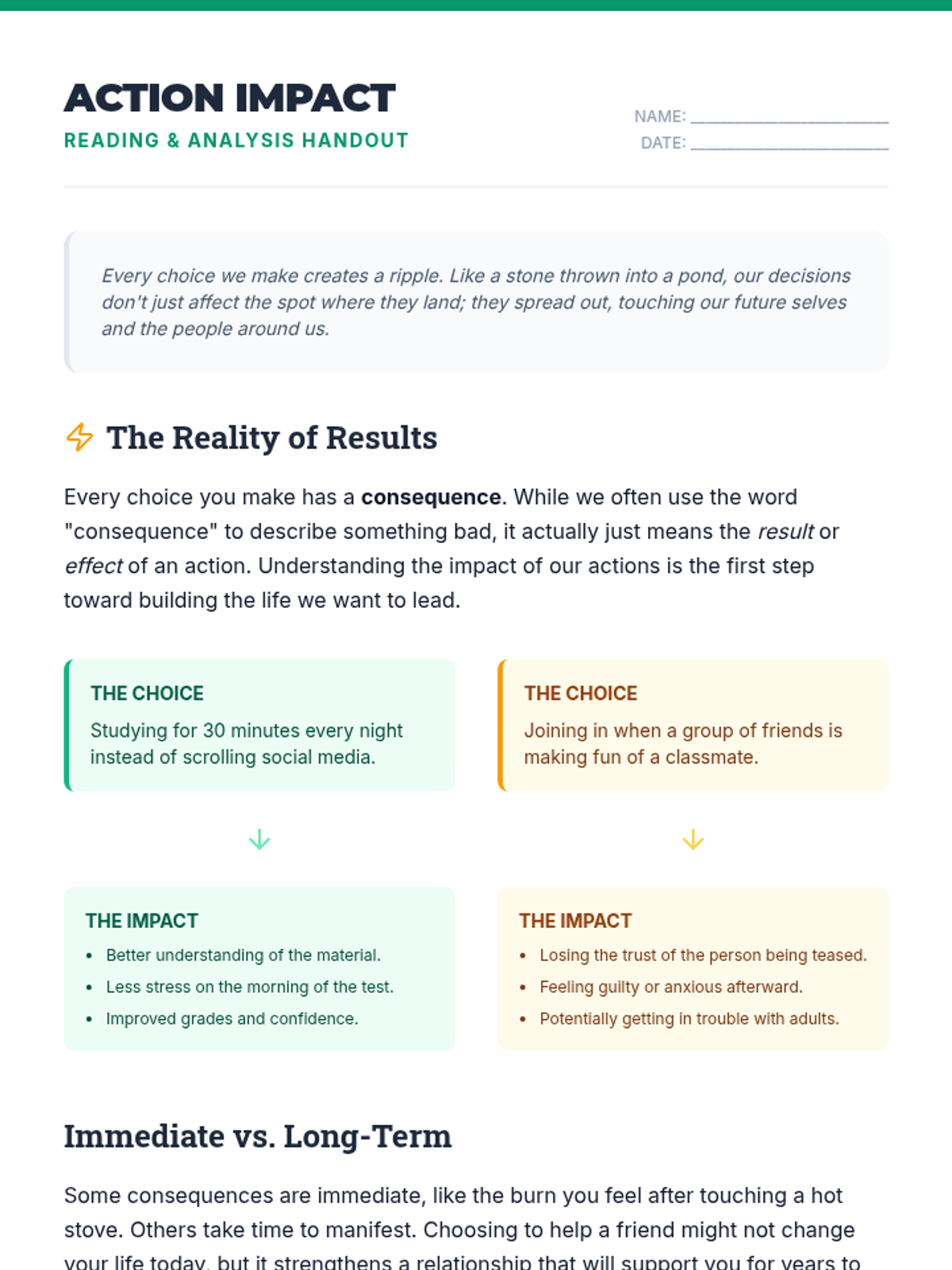
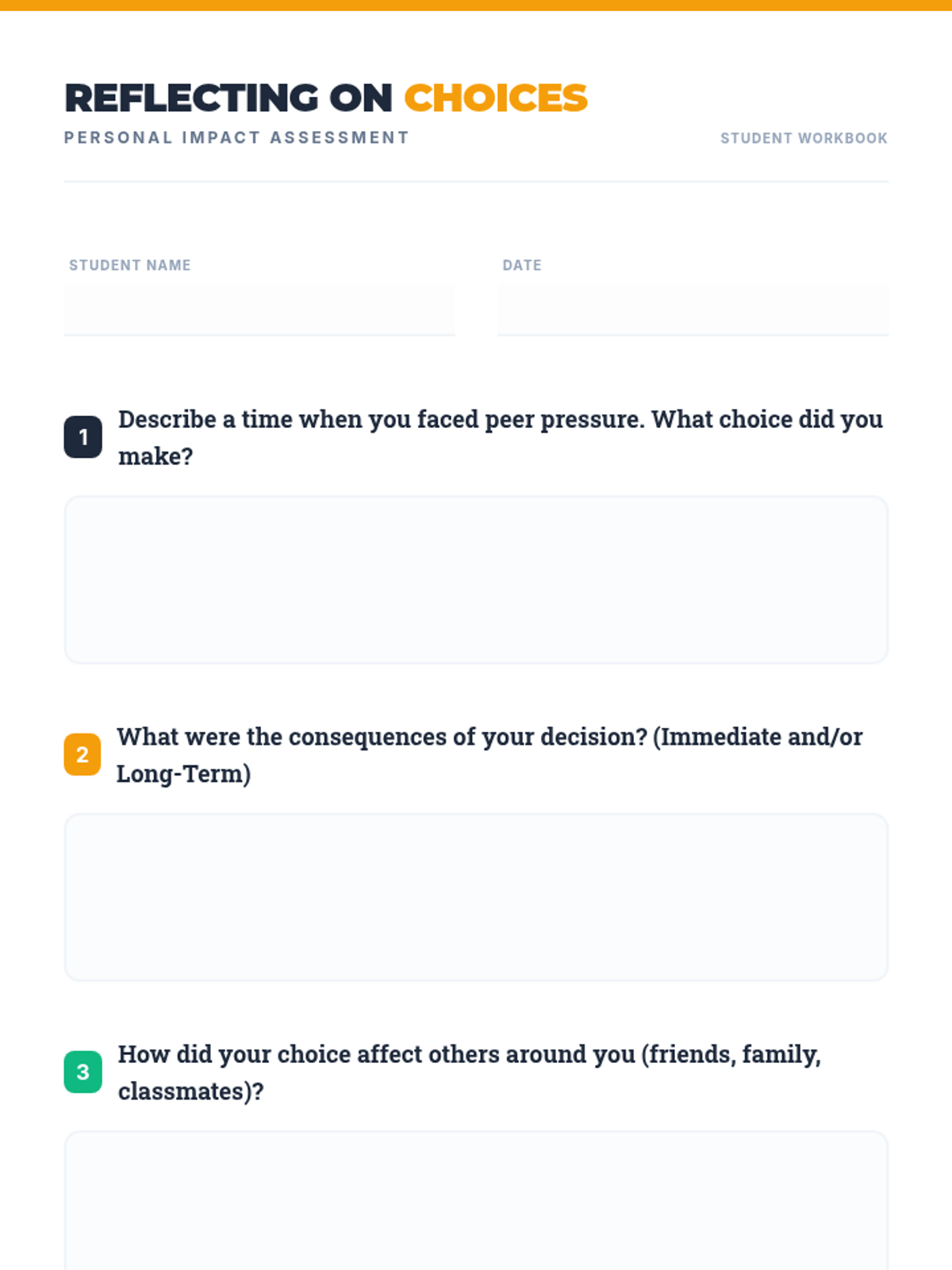
This lesson helps middle school students explore the relationship between choices and consequences, focusing on peer pressure and decision-making through inquiry and reflection.
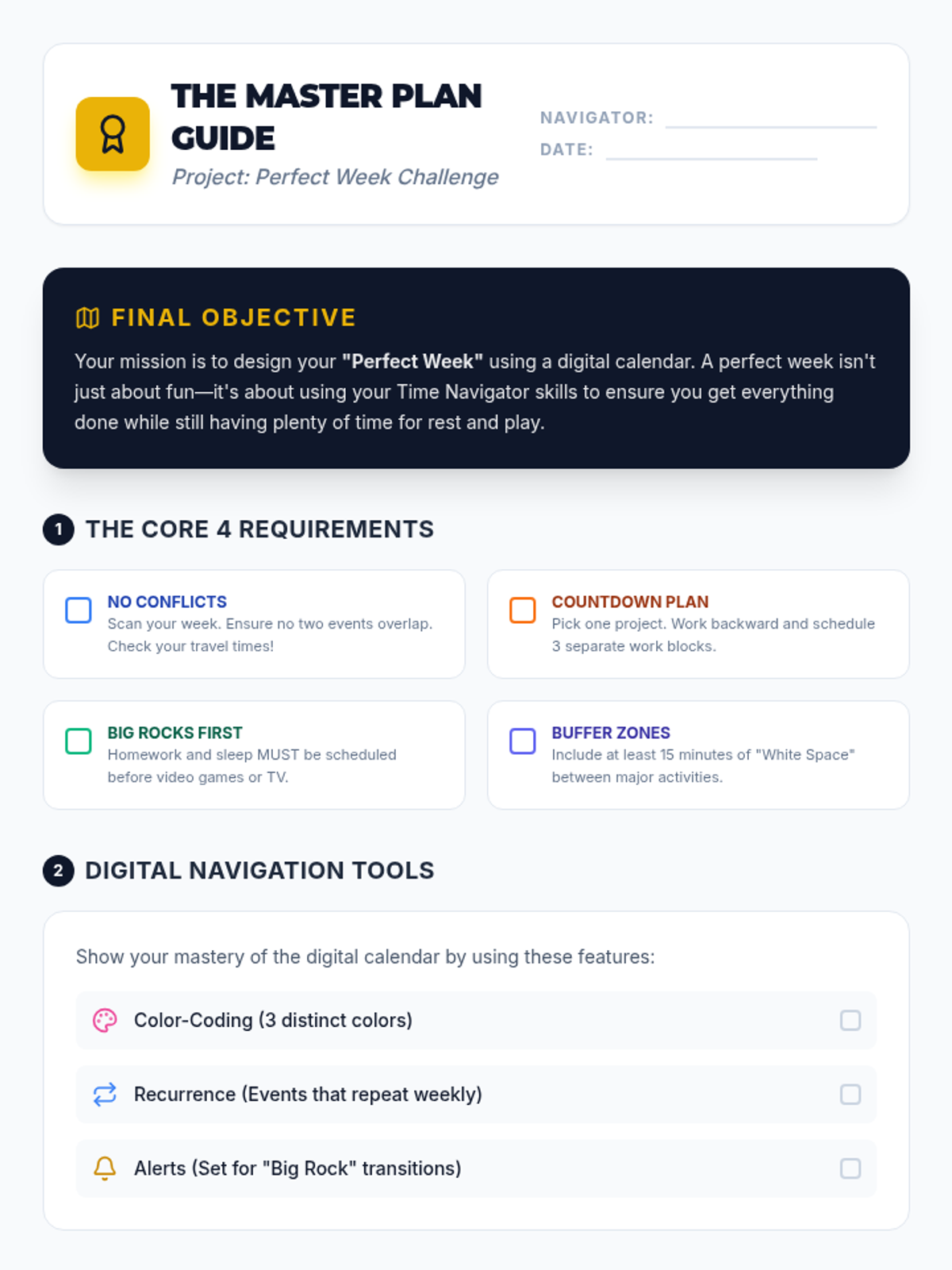
A culminating project where students design and present their 'Perfect Week' digital calendar, integrating all skills learned in the sequence.
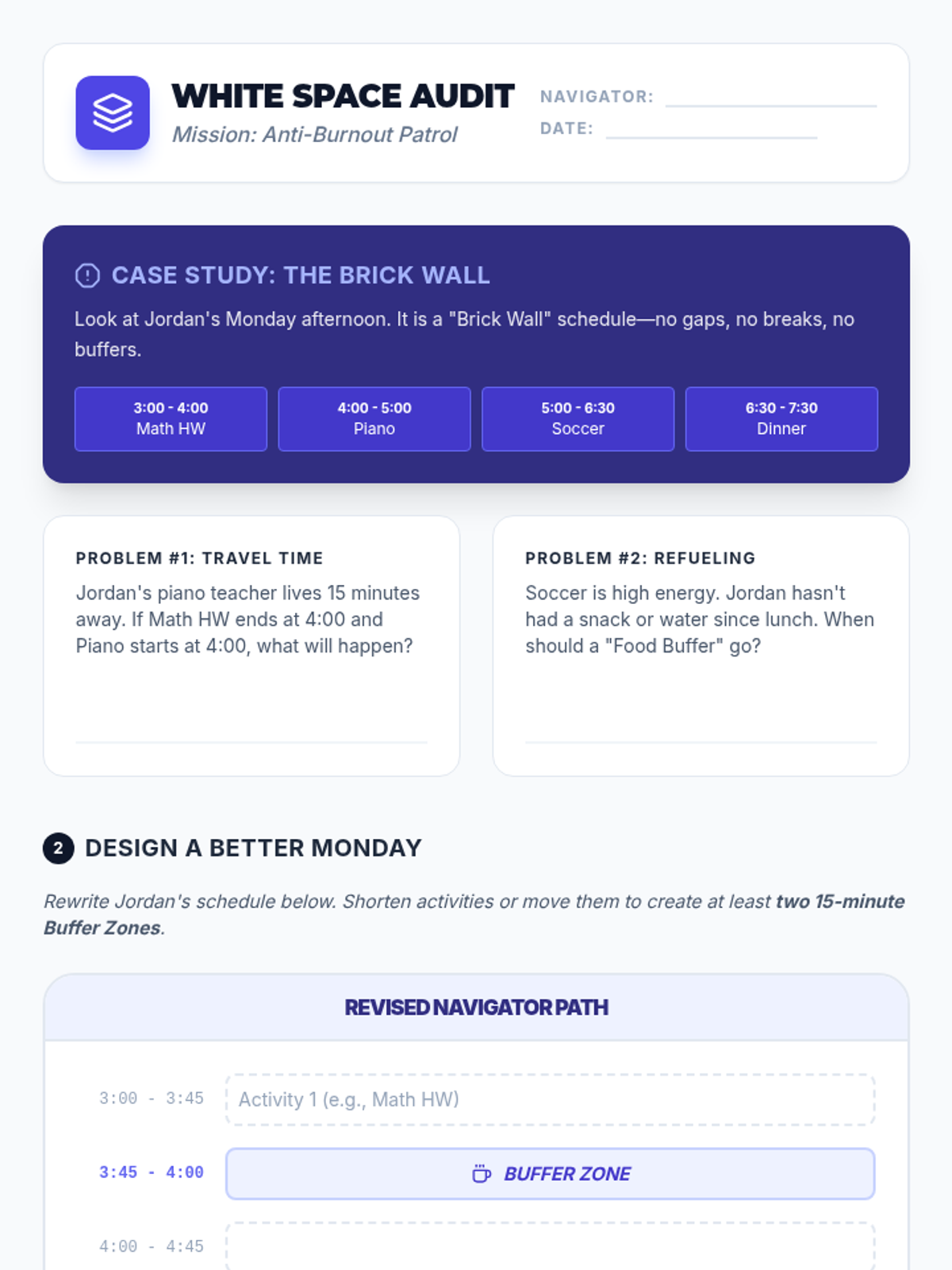
Students focus on the importance of buffer time and self-care, learning that a successful calendar must include white space to prevent burnout.
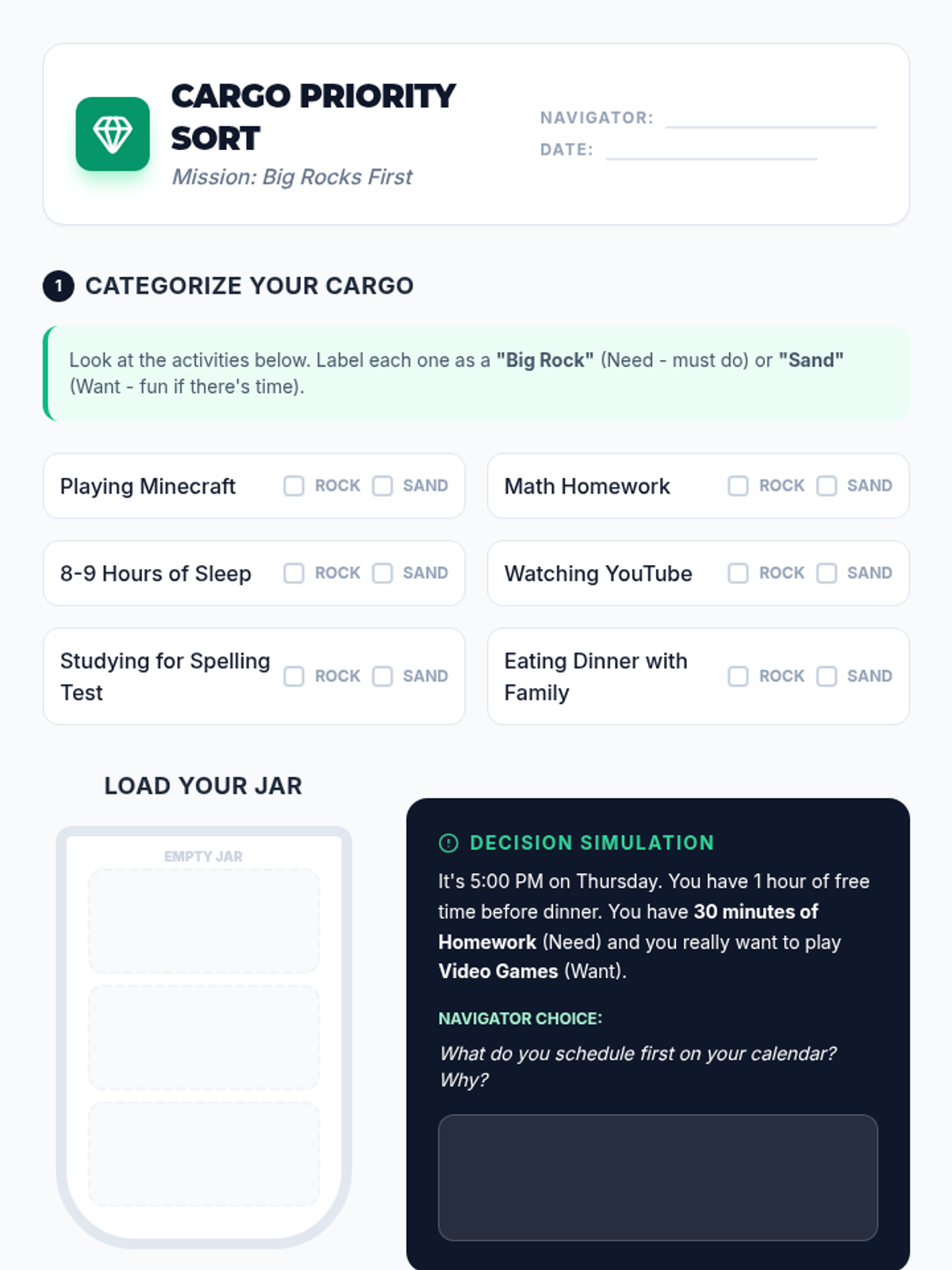
Using the 'Big Rocks' analogy, students learn to prioritize essential 'need' tasks over 'want' activities using visual calendar manipulation.
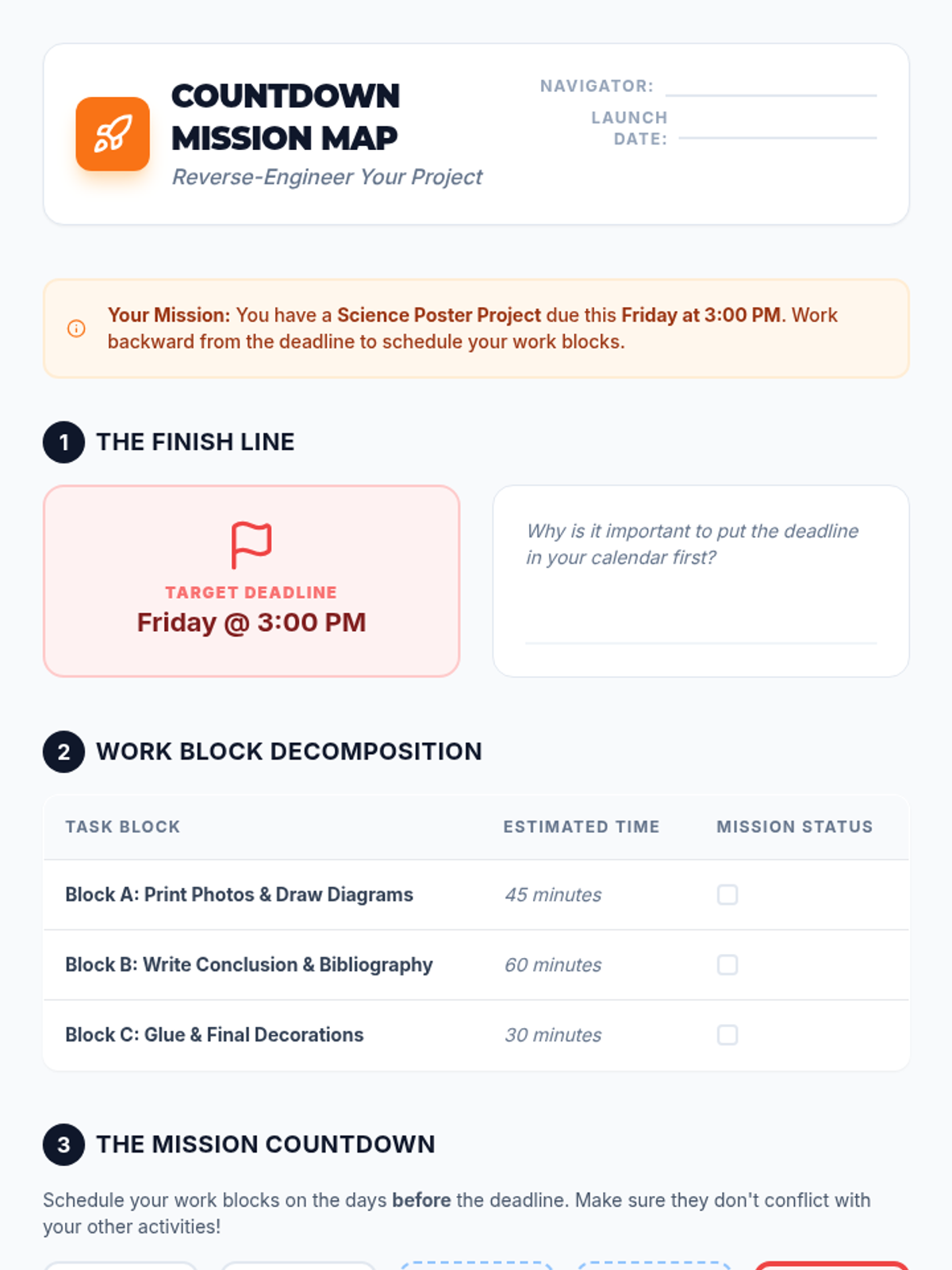
Students learn the 'Pizza Party' method of backward planning, breaking down large projects into smaller chunks and scheduling them from the deadline to the start date.
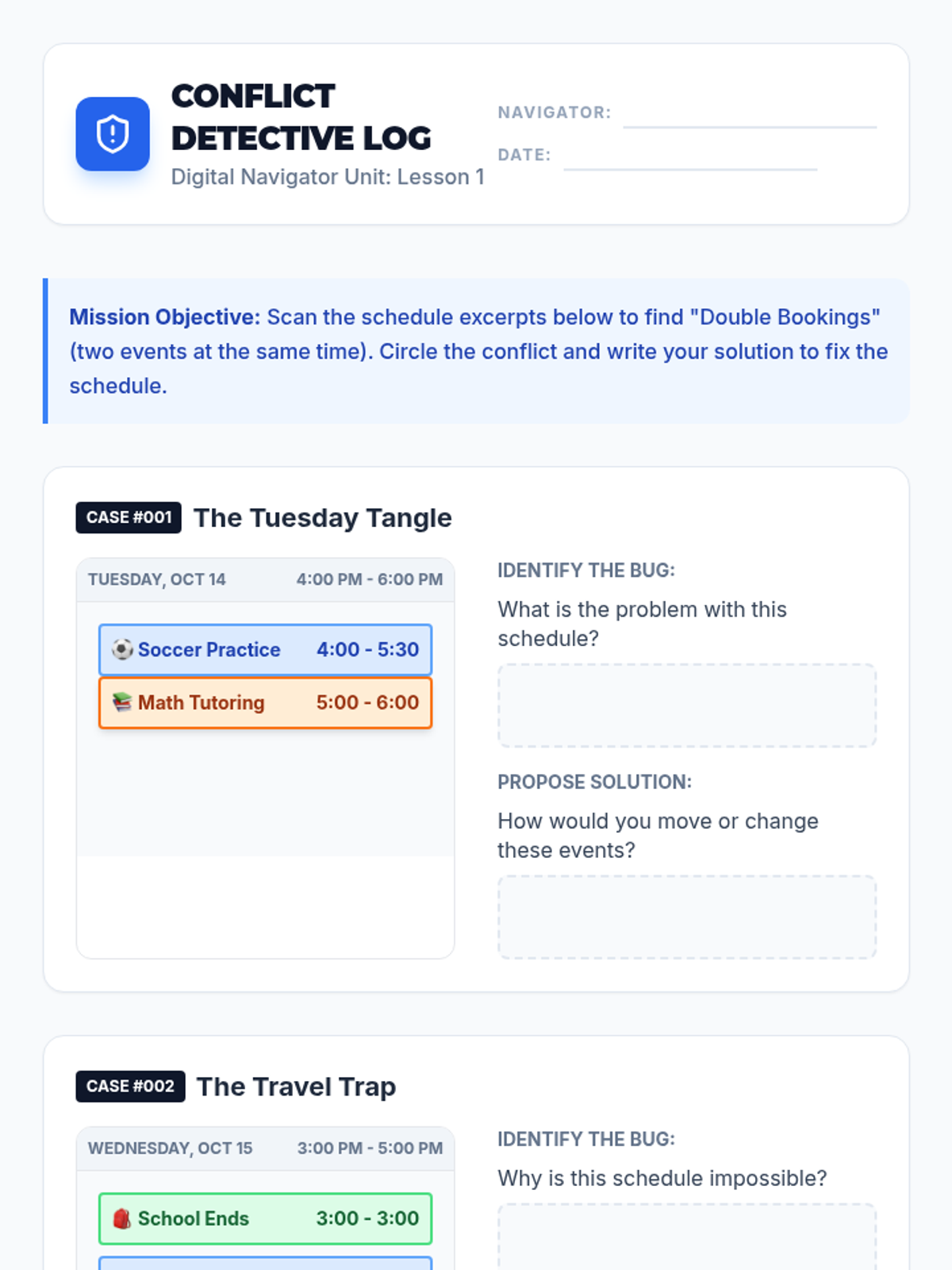
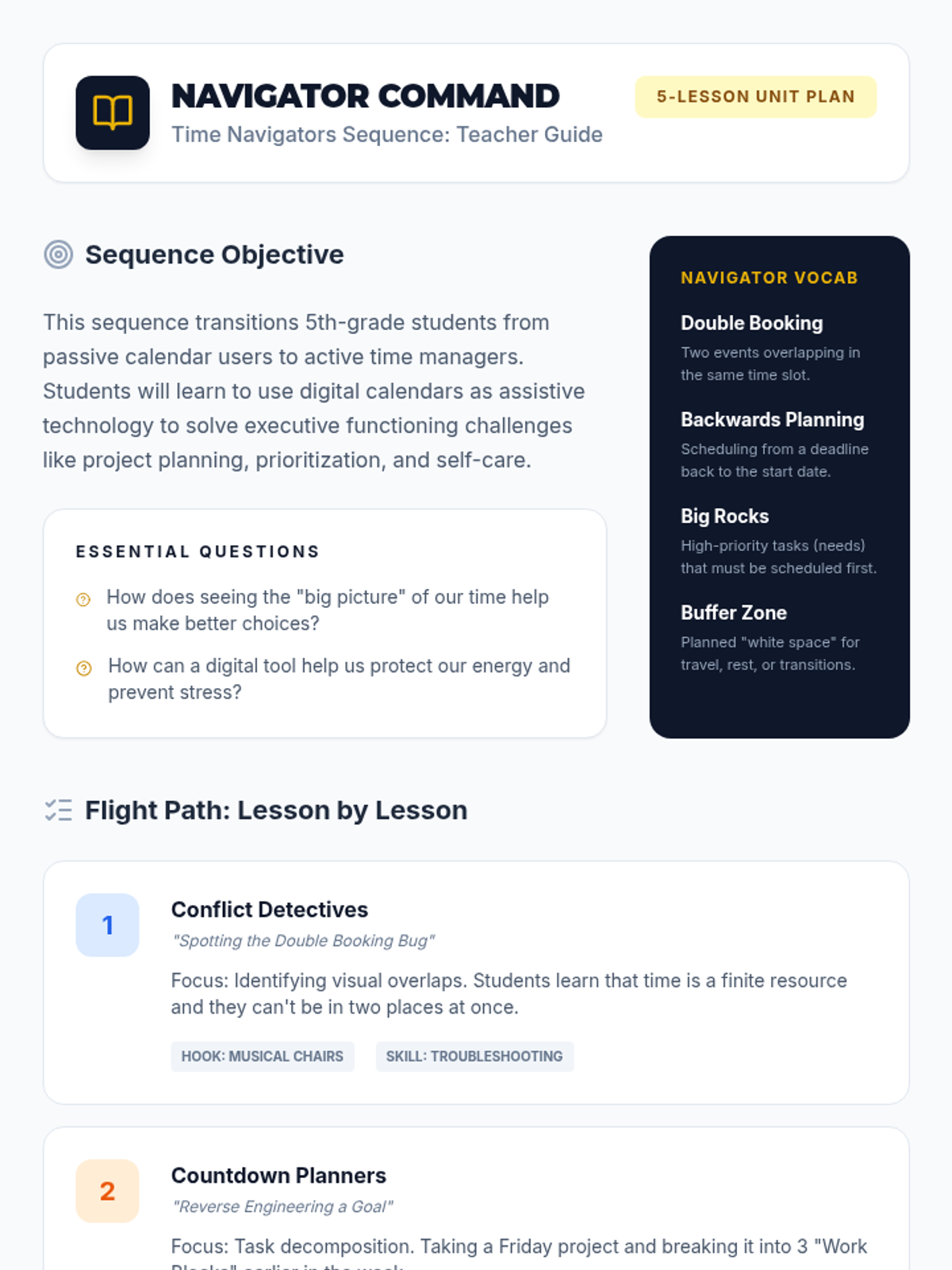
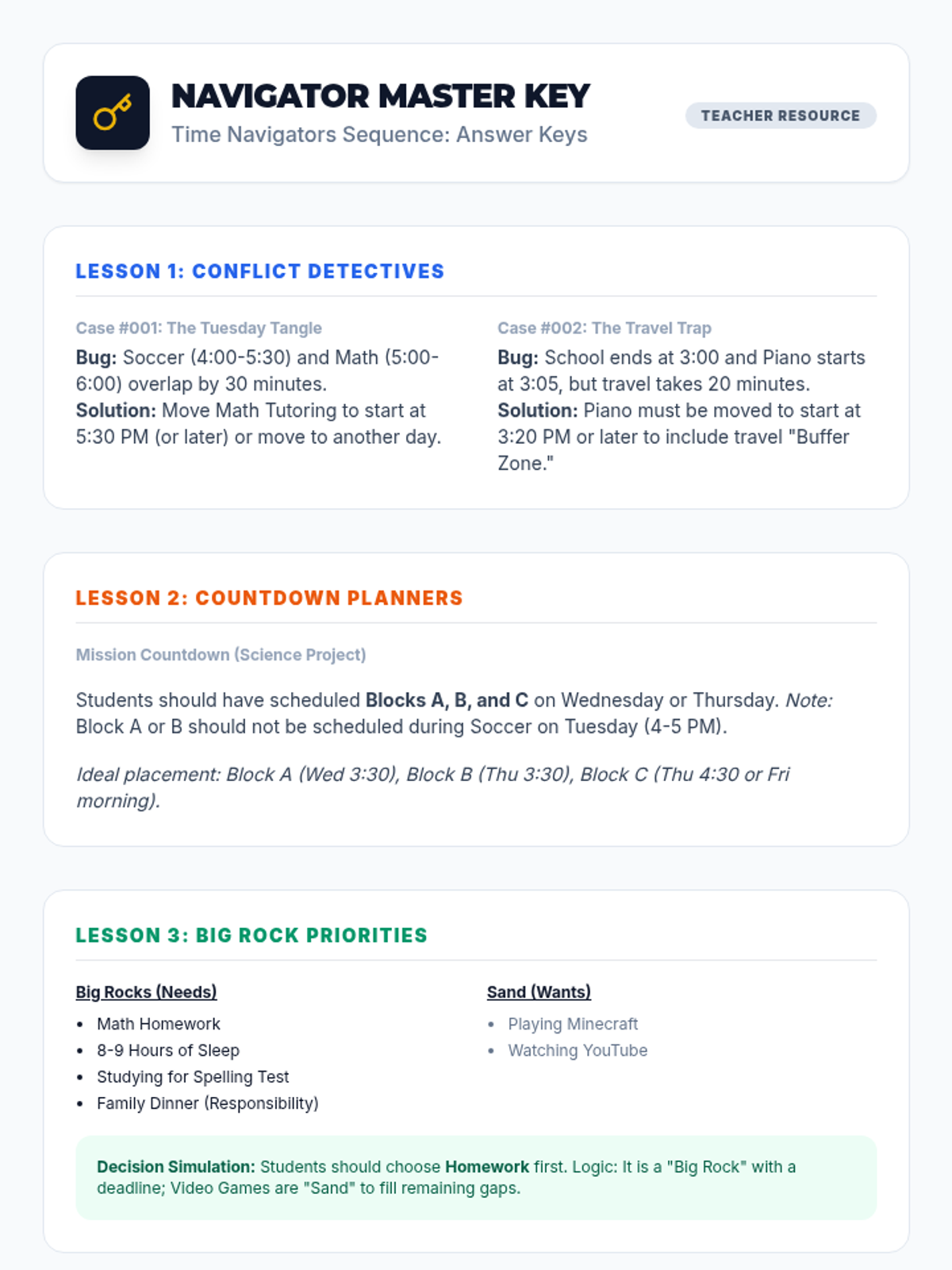
Students learn to identify and resolve 'double-bookings' in a digital calendar through case studies and a physical musical chairs analogy.
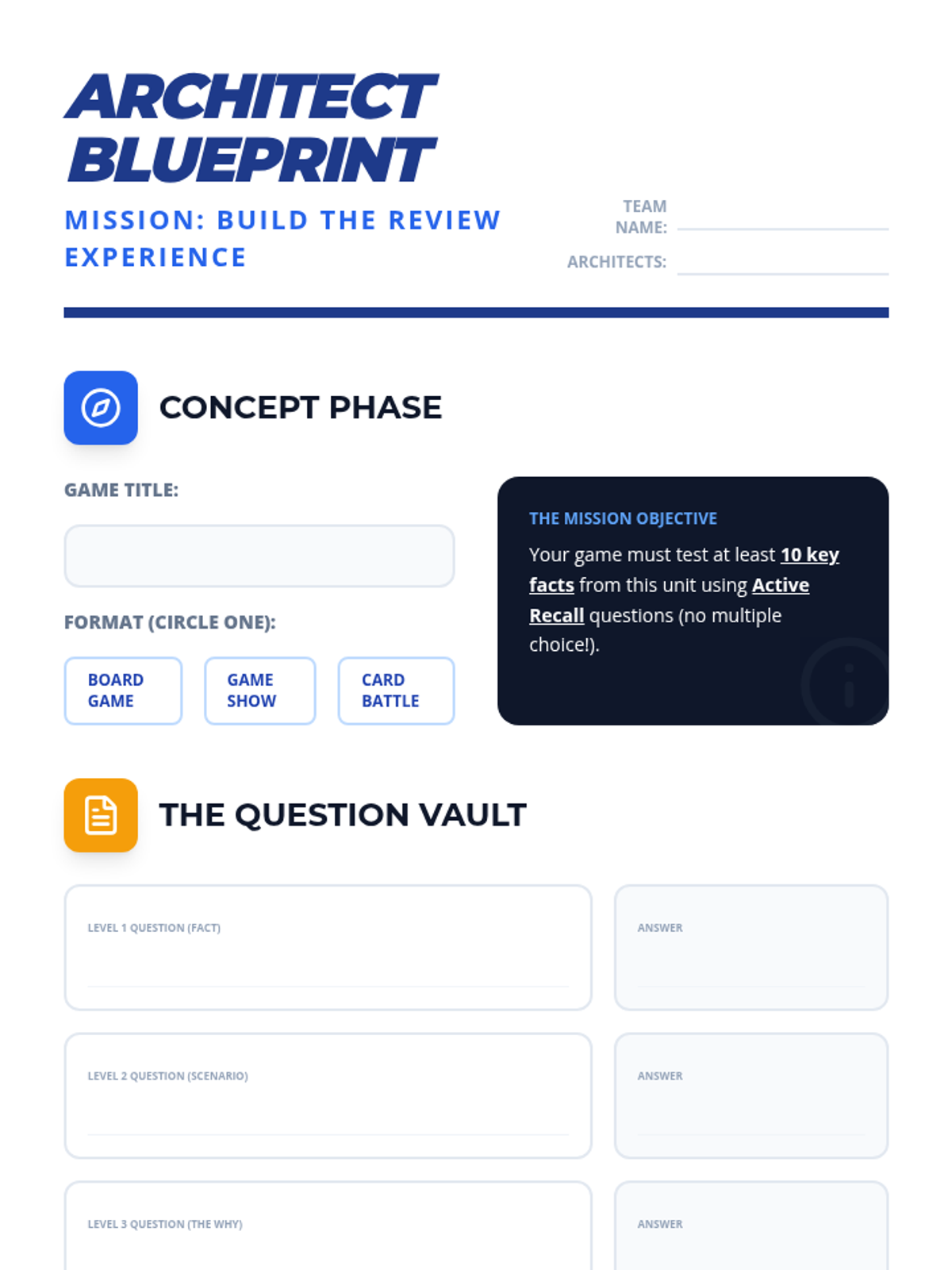
Students apply their knowledge by designing review games for their peers, synthesizing information into engaging questions and challenges.
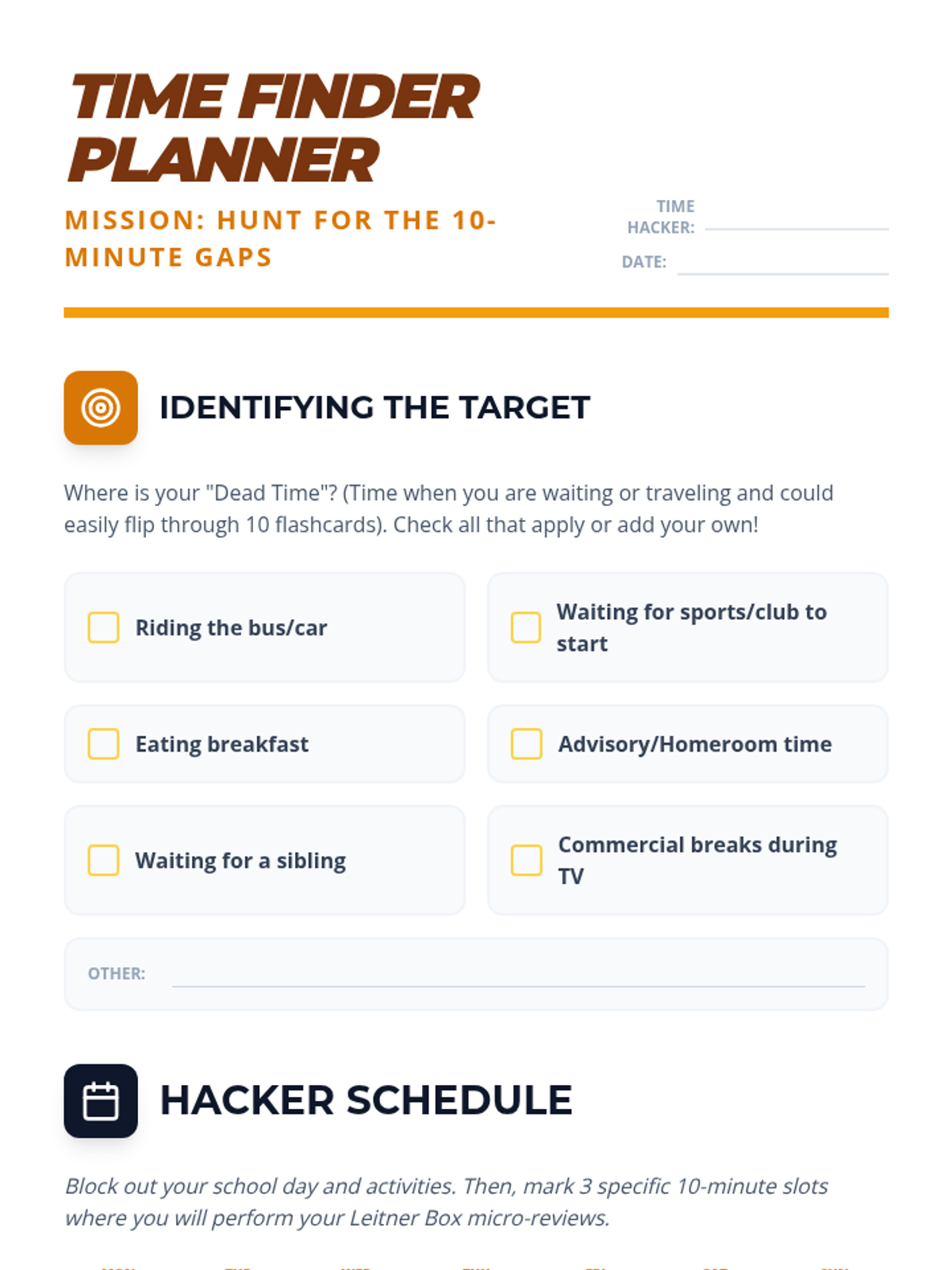
Students learn to find 'hidden time' in their schedules and plan 10-minute micro-reviews to replace exhausting cramming sessions.
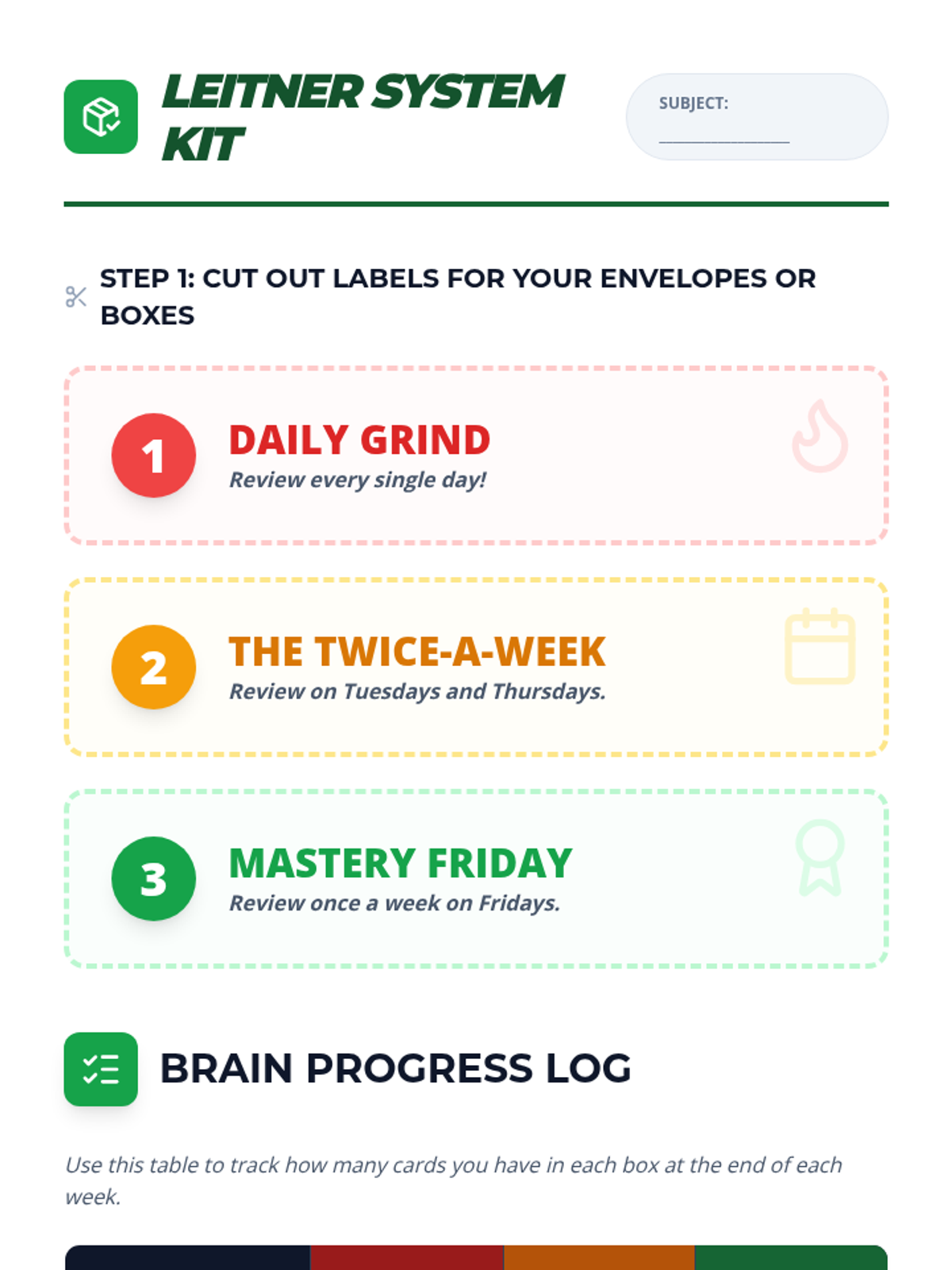
A hands-on lesson where students build a physical Leitner Box system to prioritize difficult information and space out their review sessions.
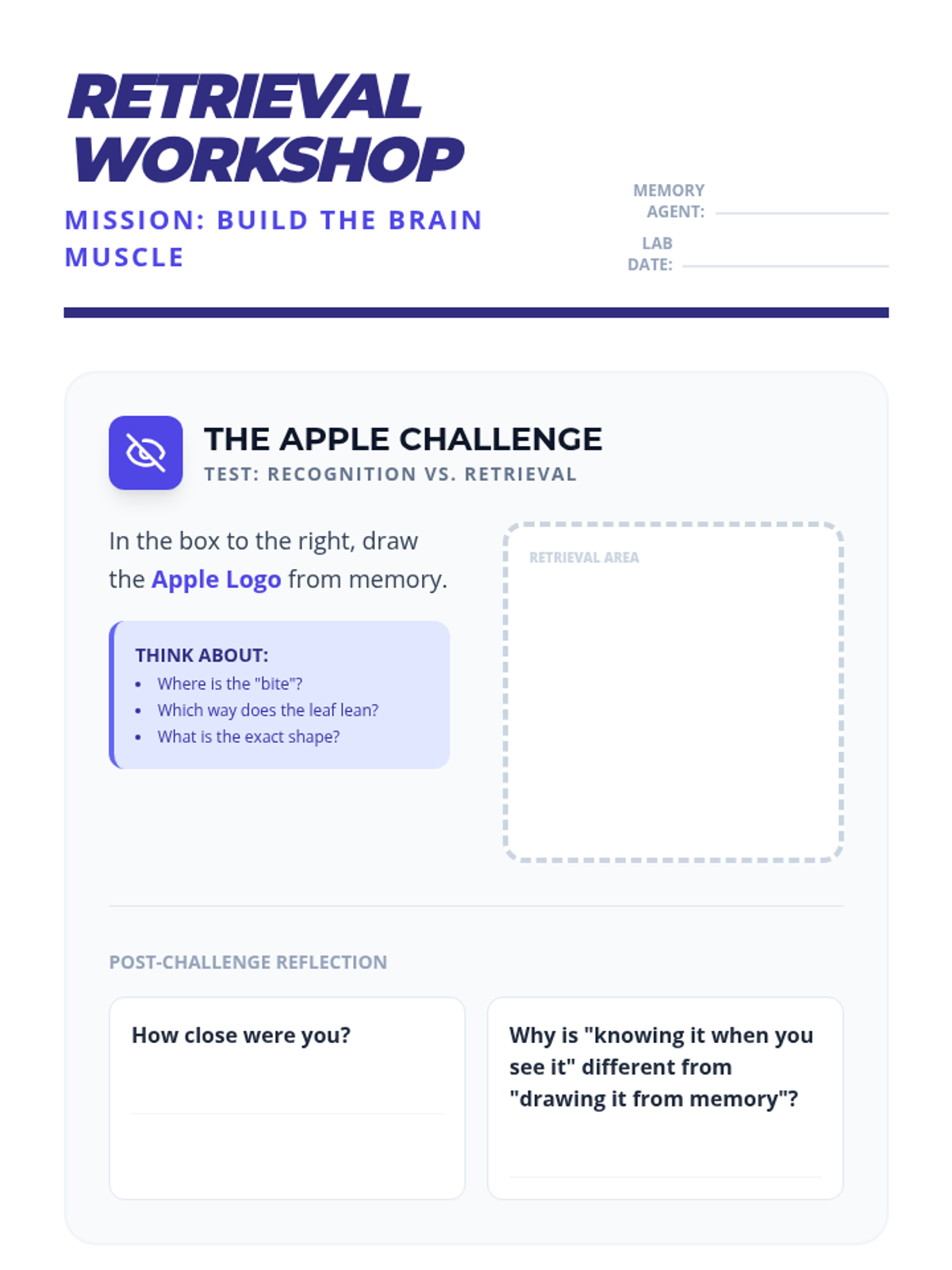
Focuses on the difference between passive re-reading and active recall, teaching students how to create tools that force the brain to work for information.
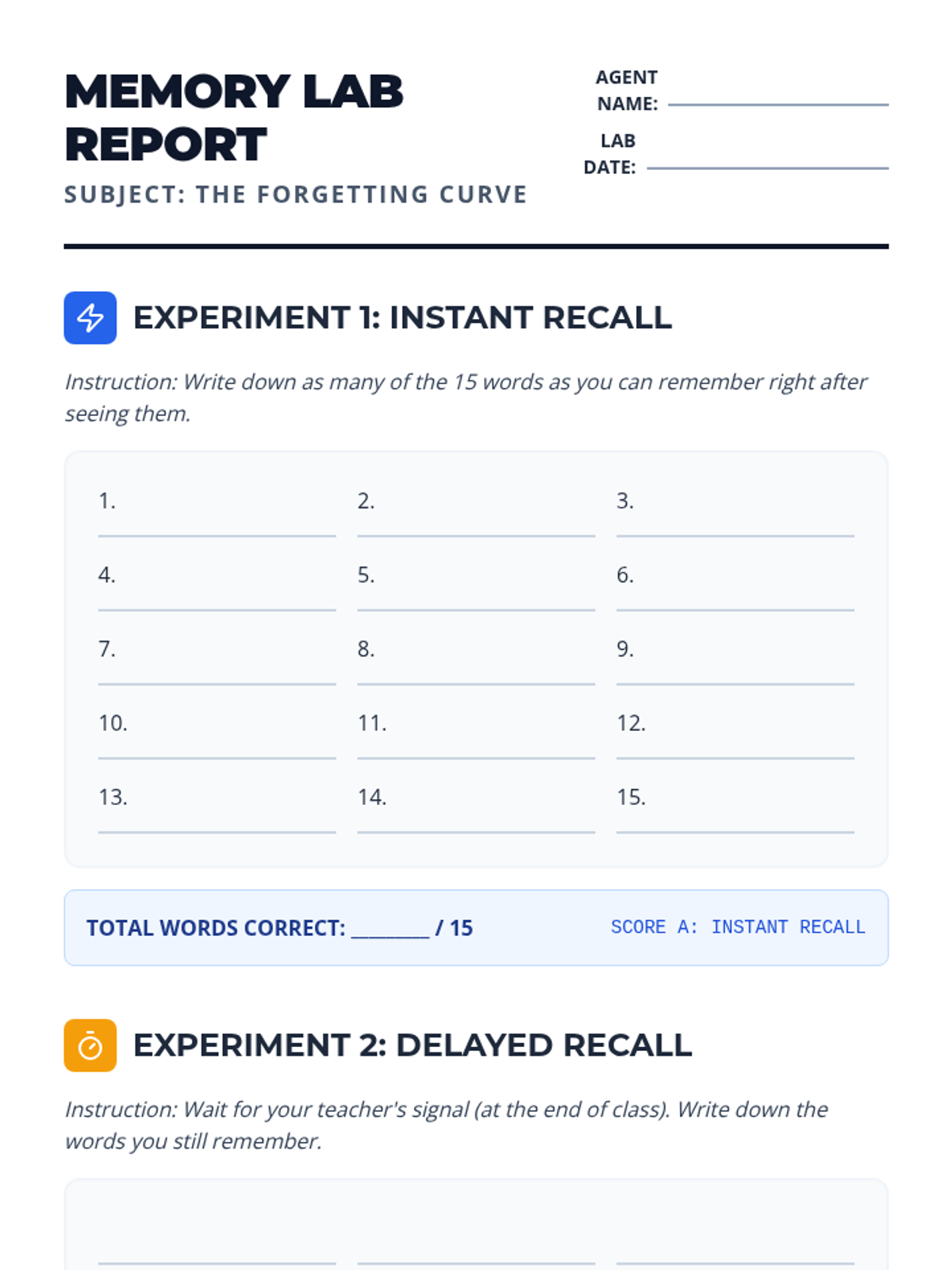
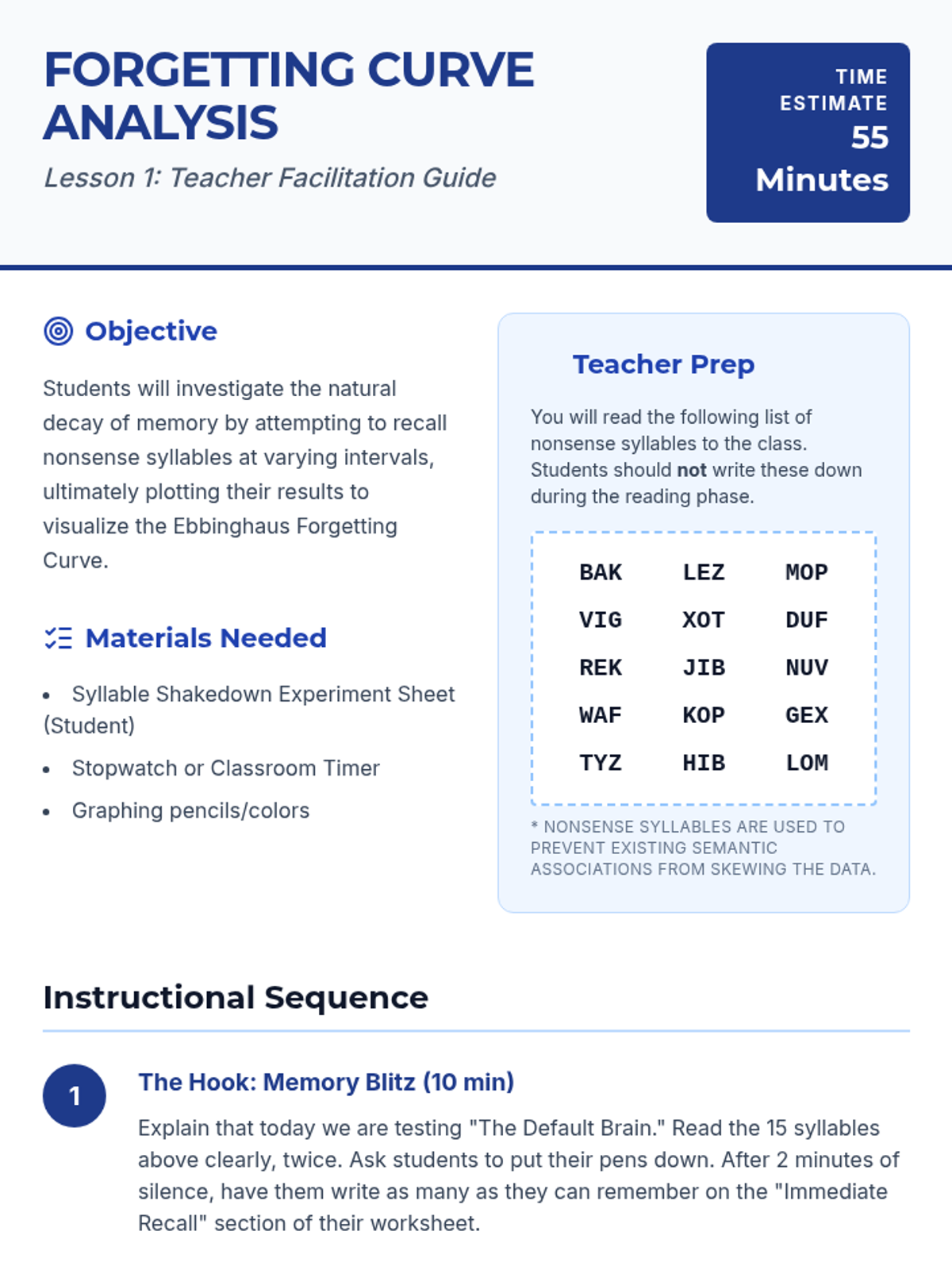
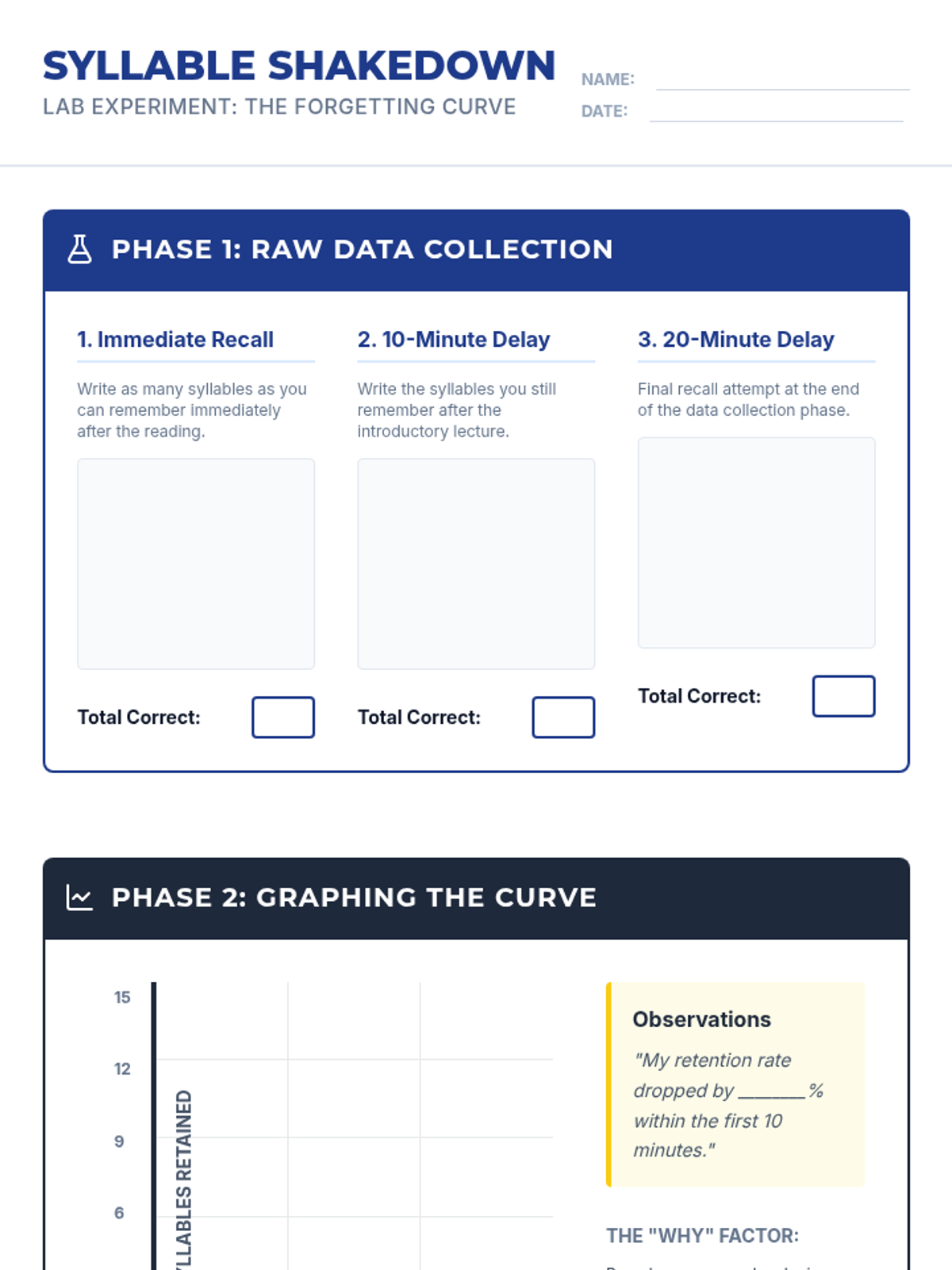
Students explore the science of forgetting through a live memory simulation and learn how timely reviews can 'interrupt' the curve to build lasting knowledge.
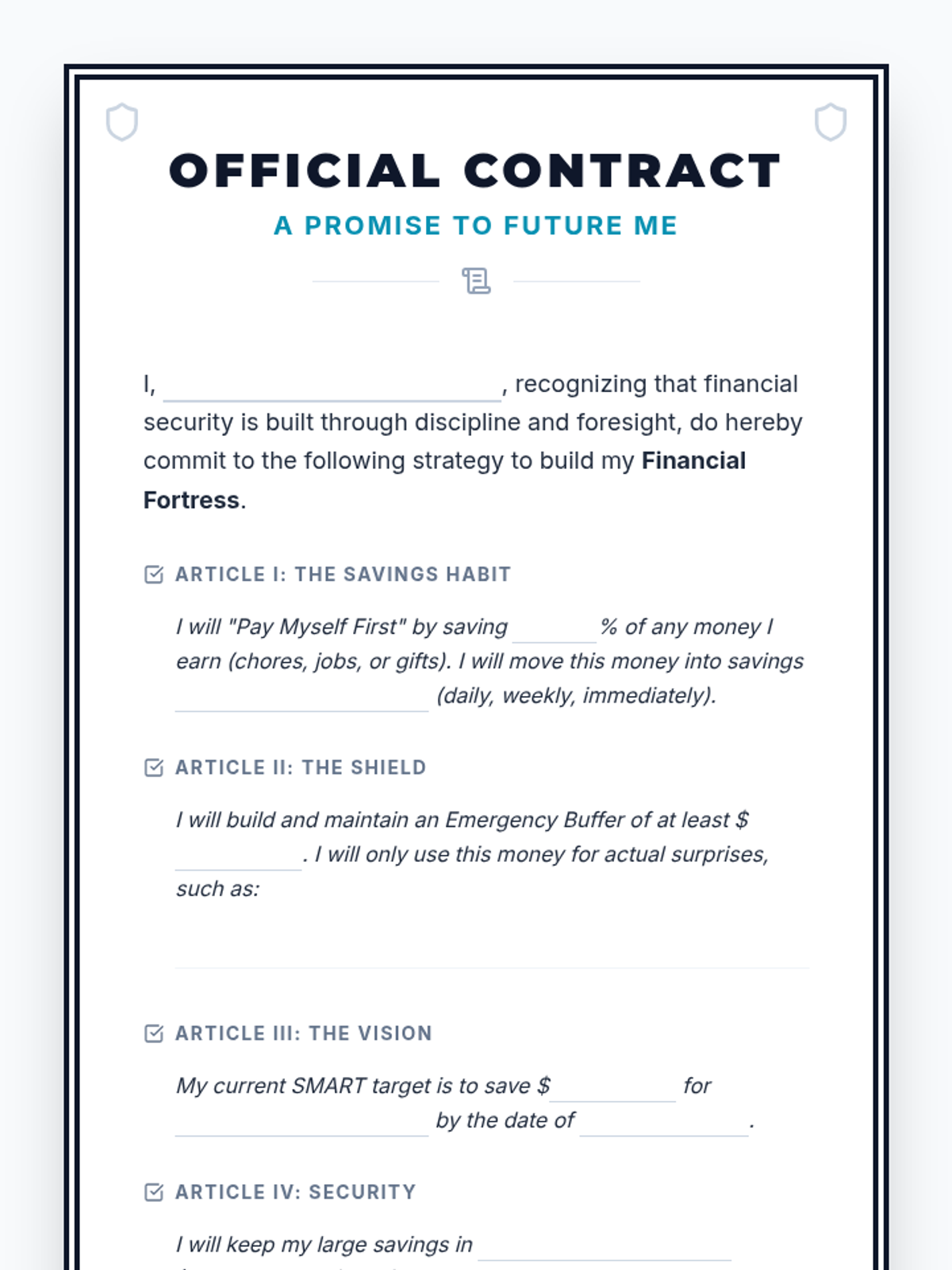
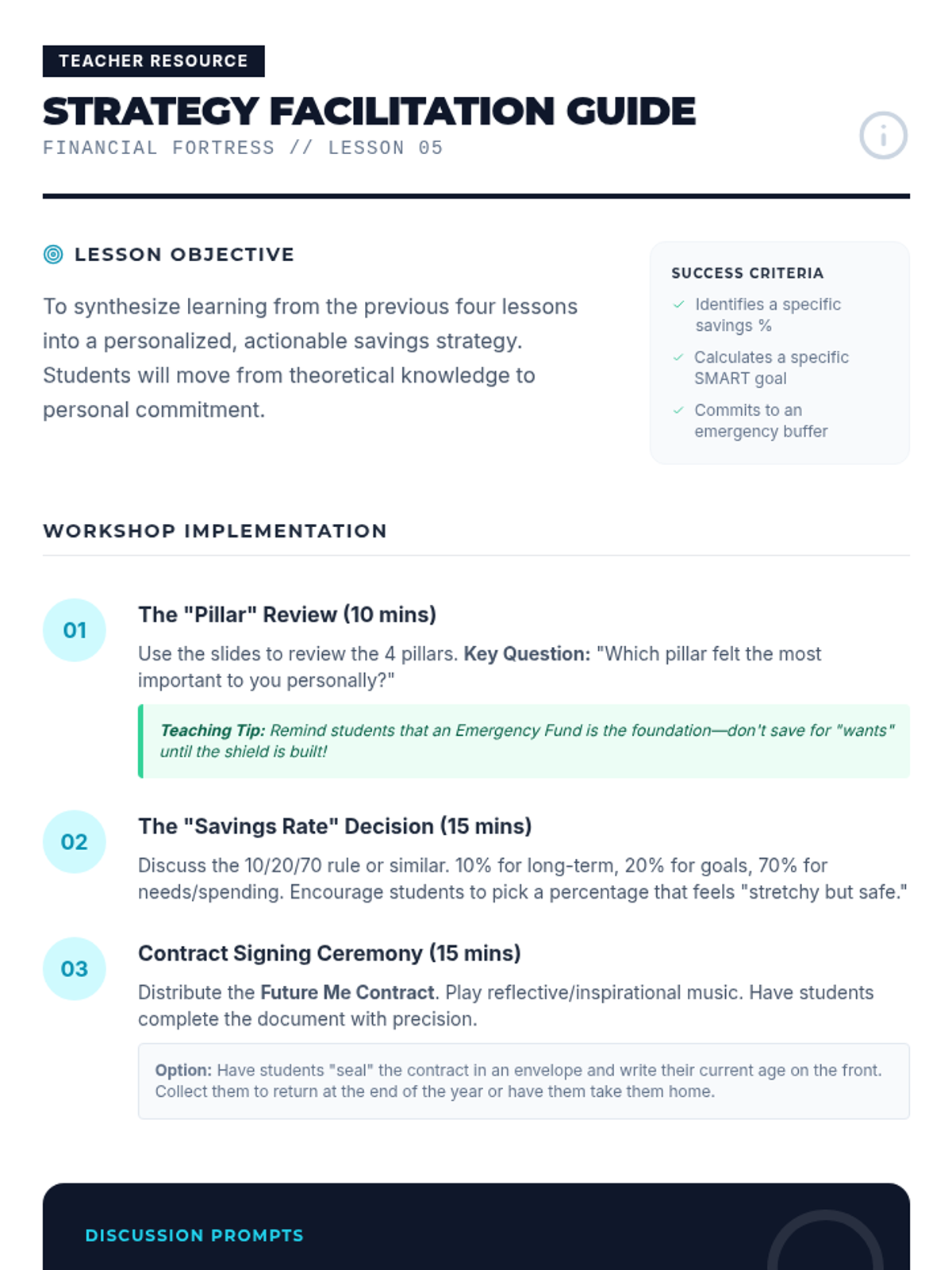
A culminating workshop where students synthesize their learning to draft a personal savings strategy and a 'Contract with Future Me'.
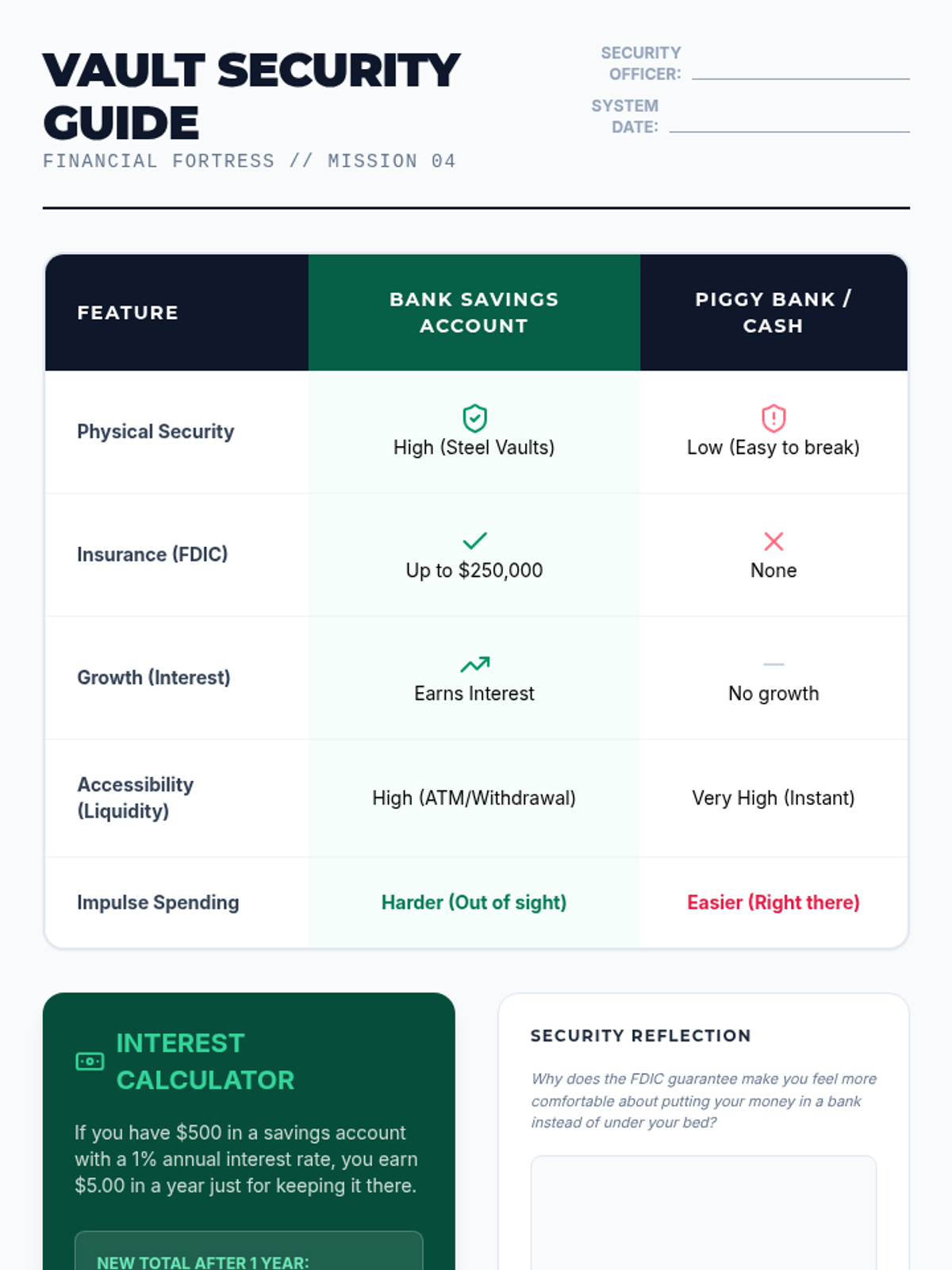
Introduces the benefits and security of banks over cash storage, covering FDIC insurance and the basics of how interest helps savings grow.
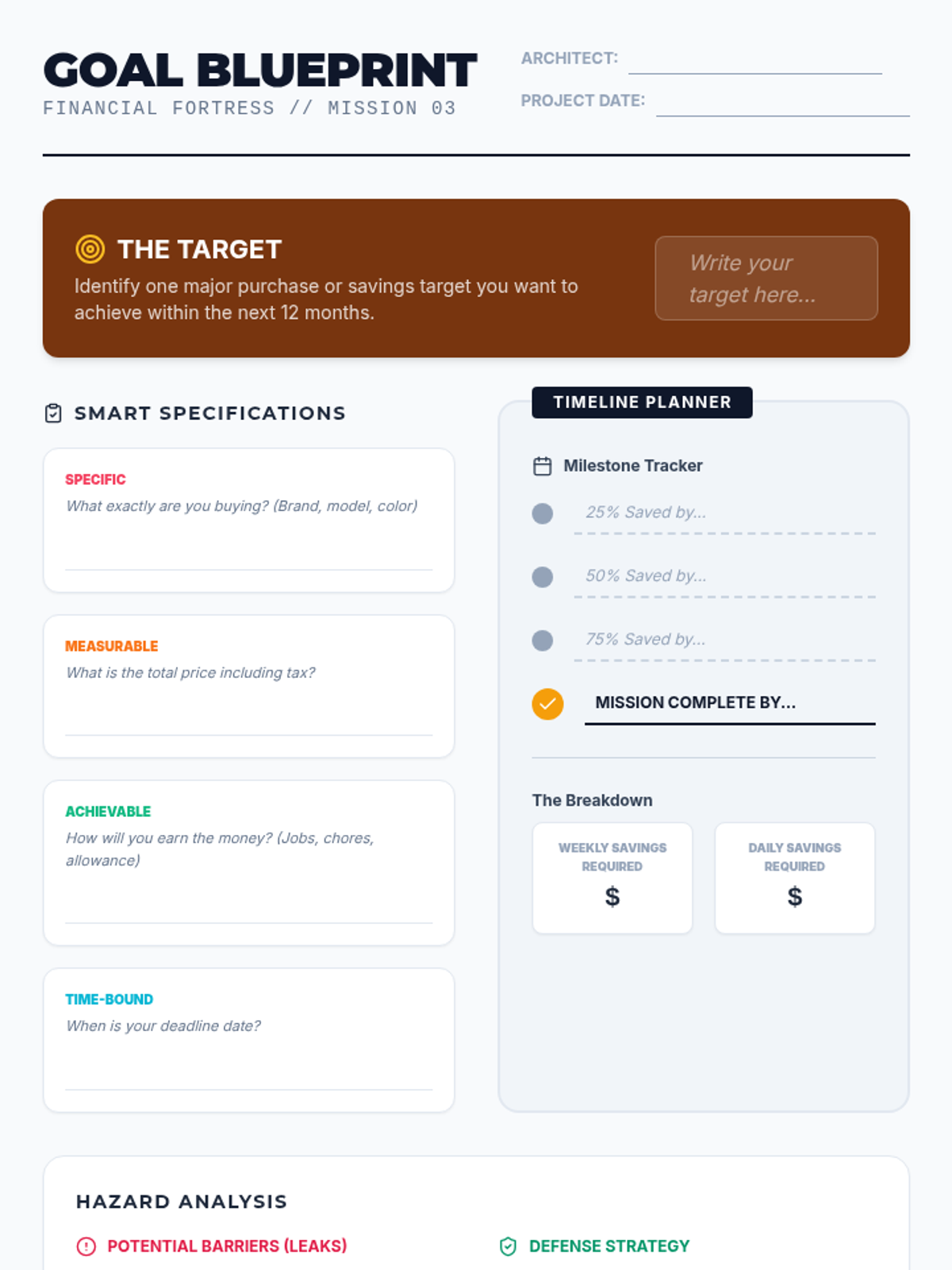
Teaches students to set Specific, Measurable, Achievable, Relevant, and Time-bound savings goals and map out timelines for their dream purchases.
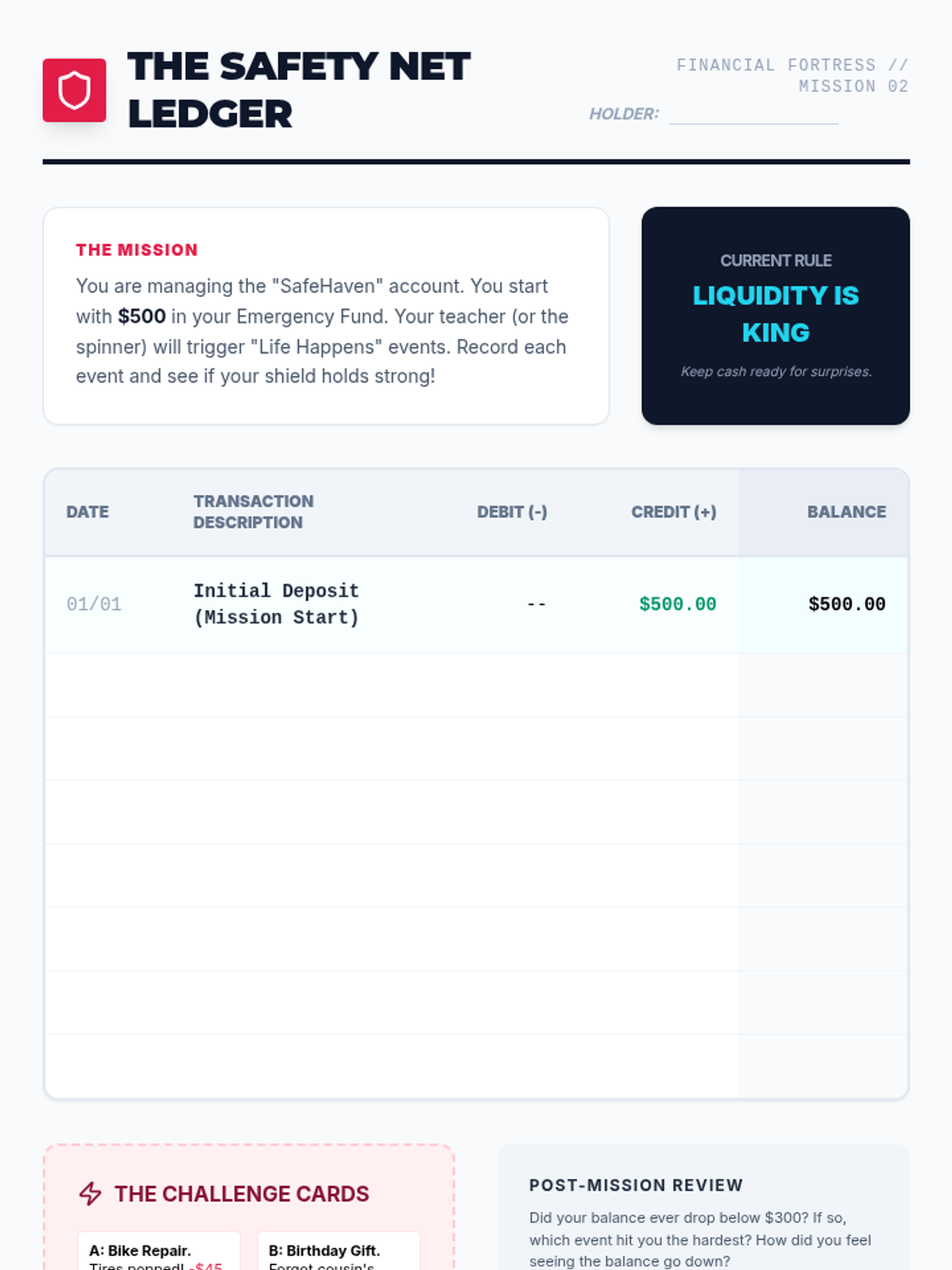
Explores the concept of liquidity and the importance of emergency funds through case studies and a 'Life Happens' game involving unexpected financial surprises.
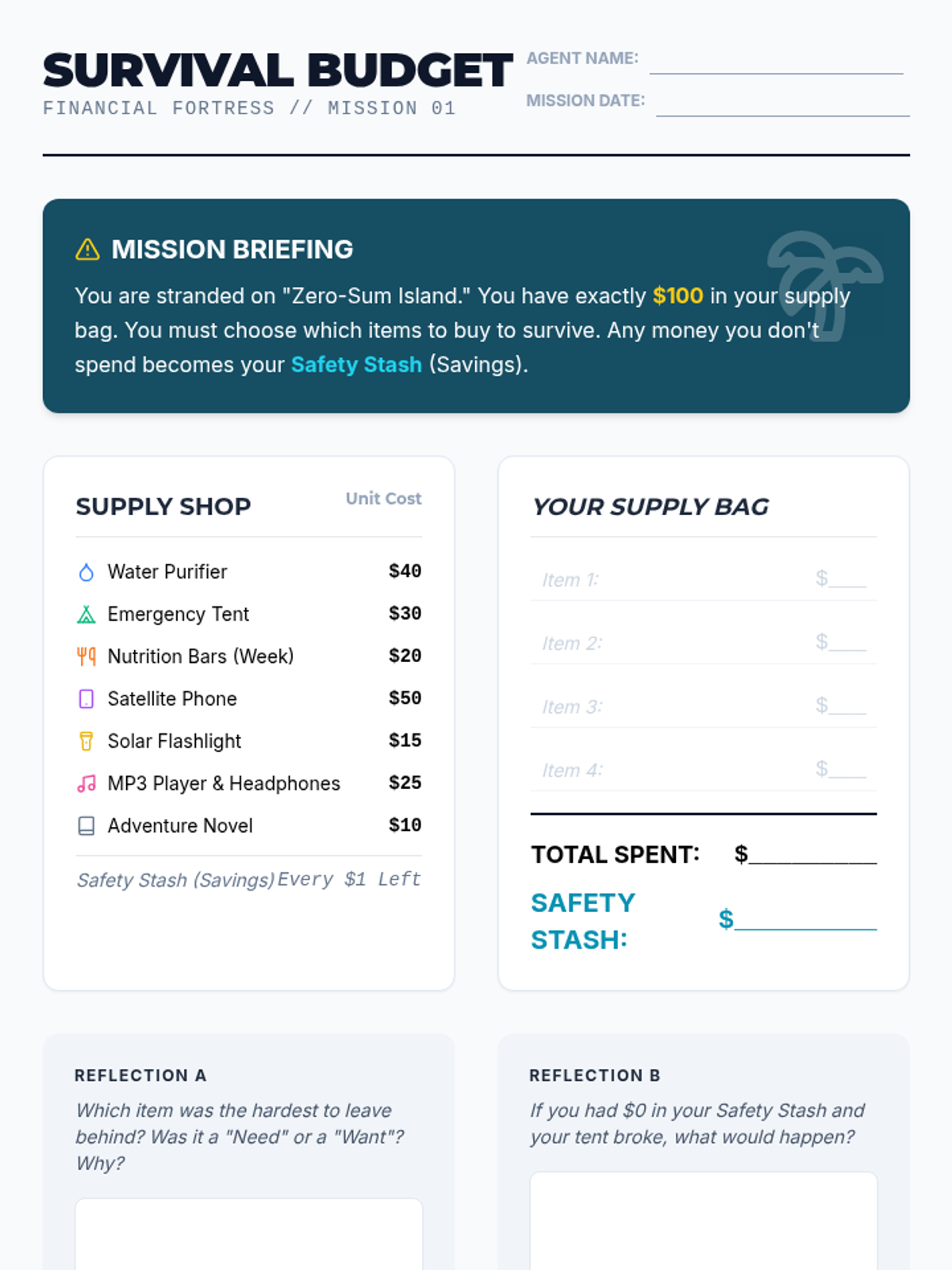
Students categorize expenses into needs and wants to identify potential savings 'leakage' and prioritize limited resources through a desert island survival challenge.
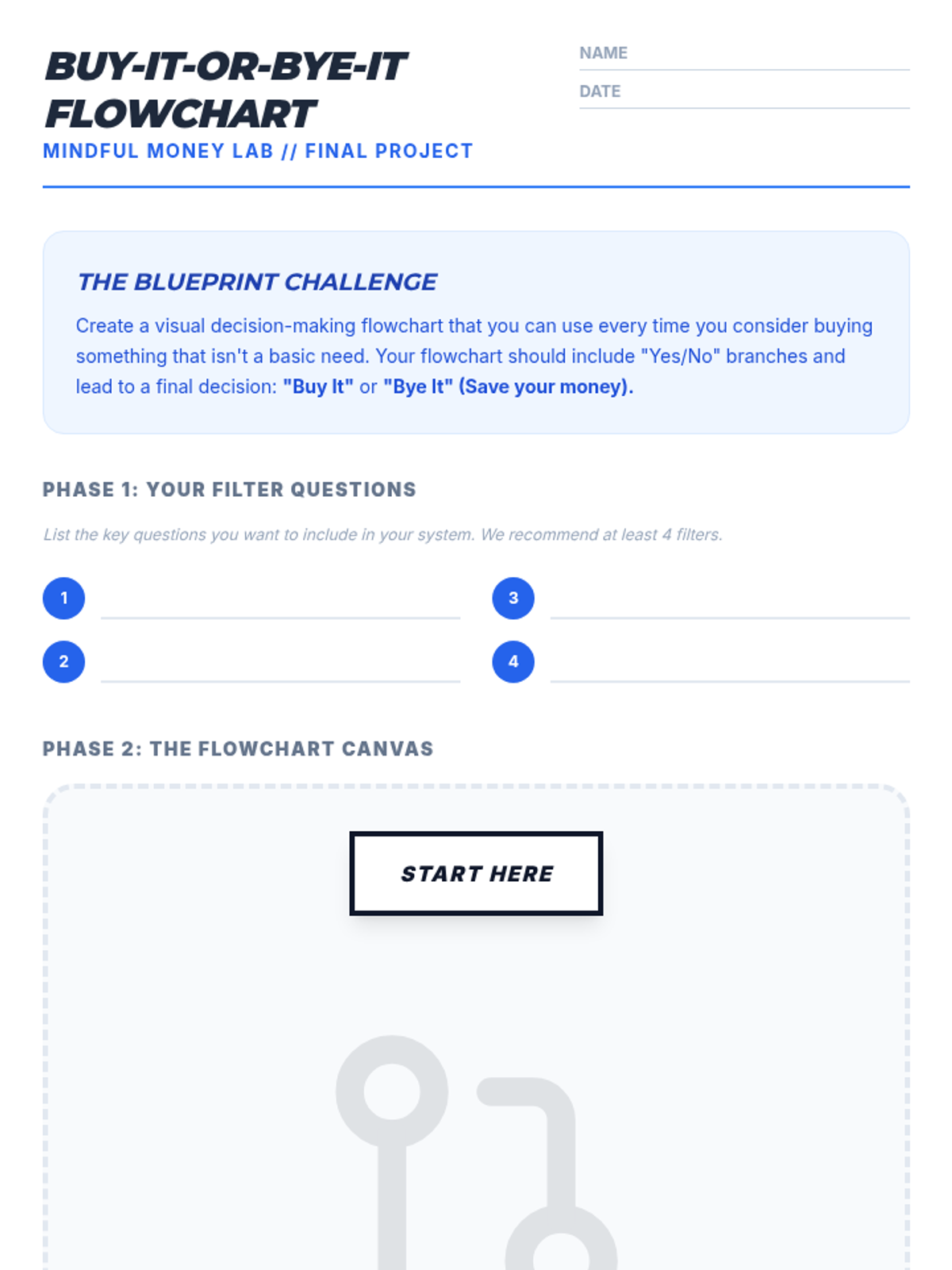
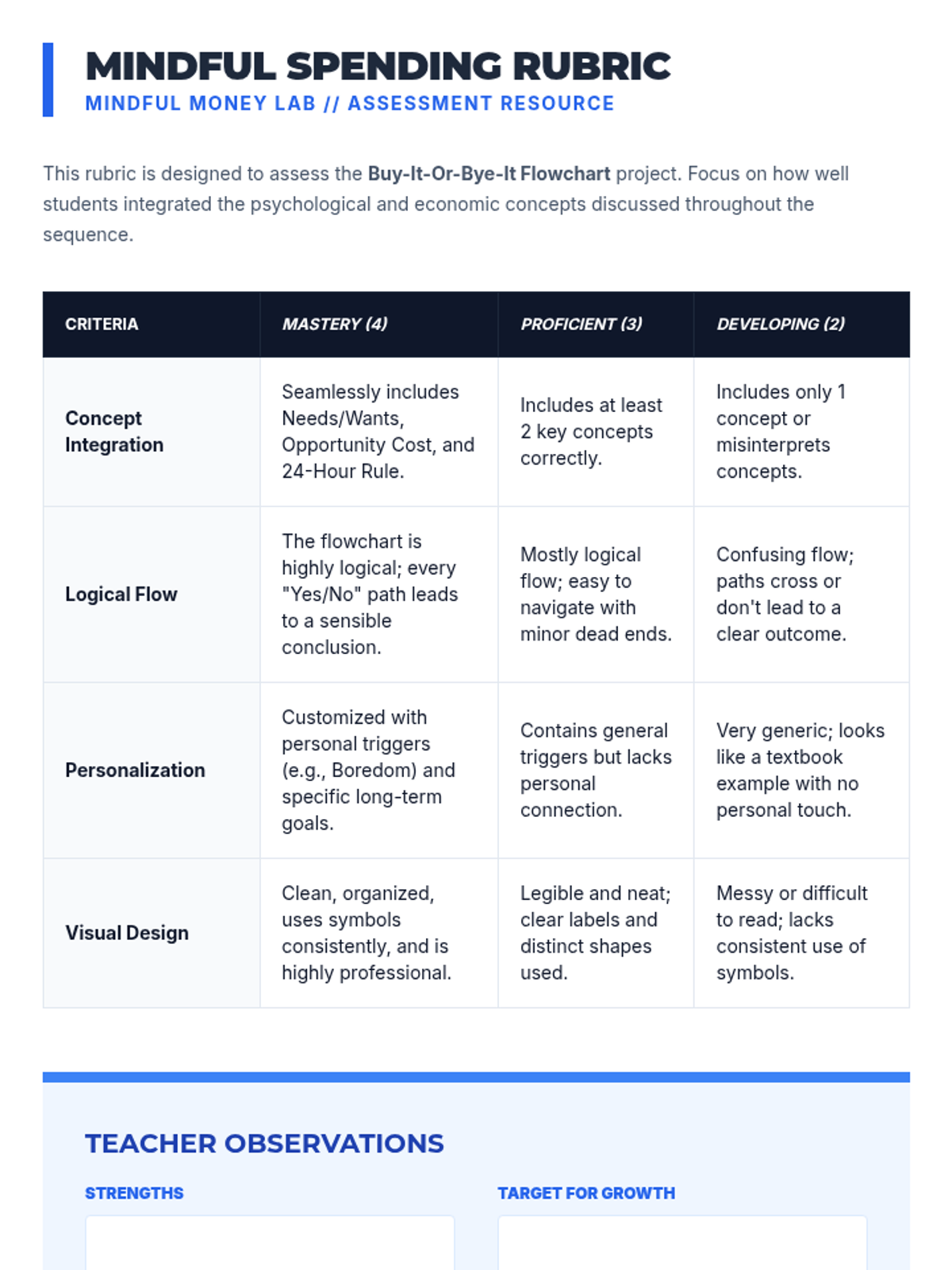
Students create a personal guide for future spending decisions, synthesizing their knowledge into a flowchart for making purchase decisions.
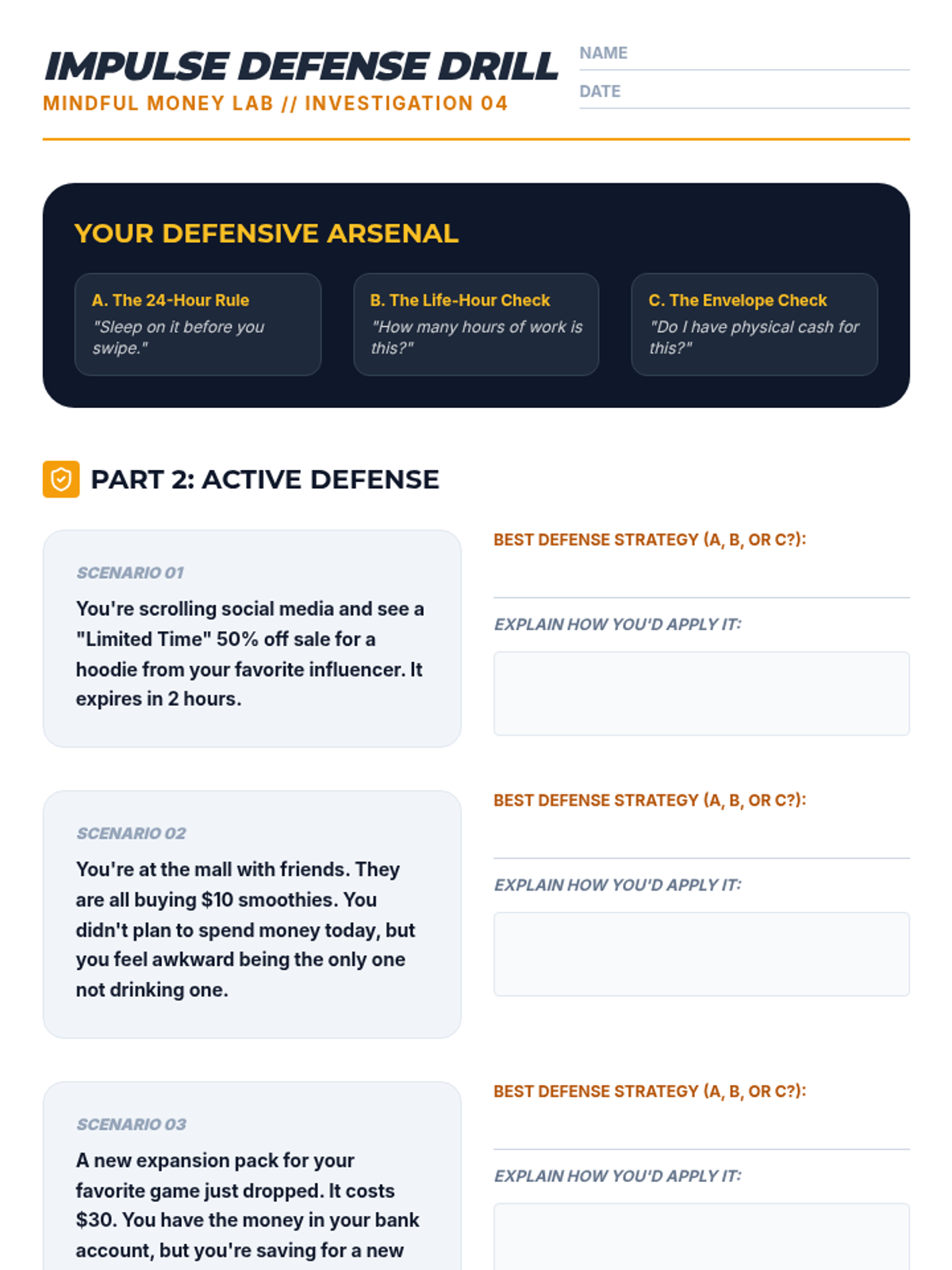
Students learn practical techniques to curb impulse spending, such as the '24-hour rule' and the 'envelope method,' testing them through hypothetical scenarios.
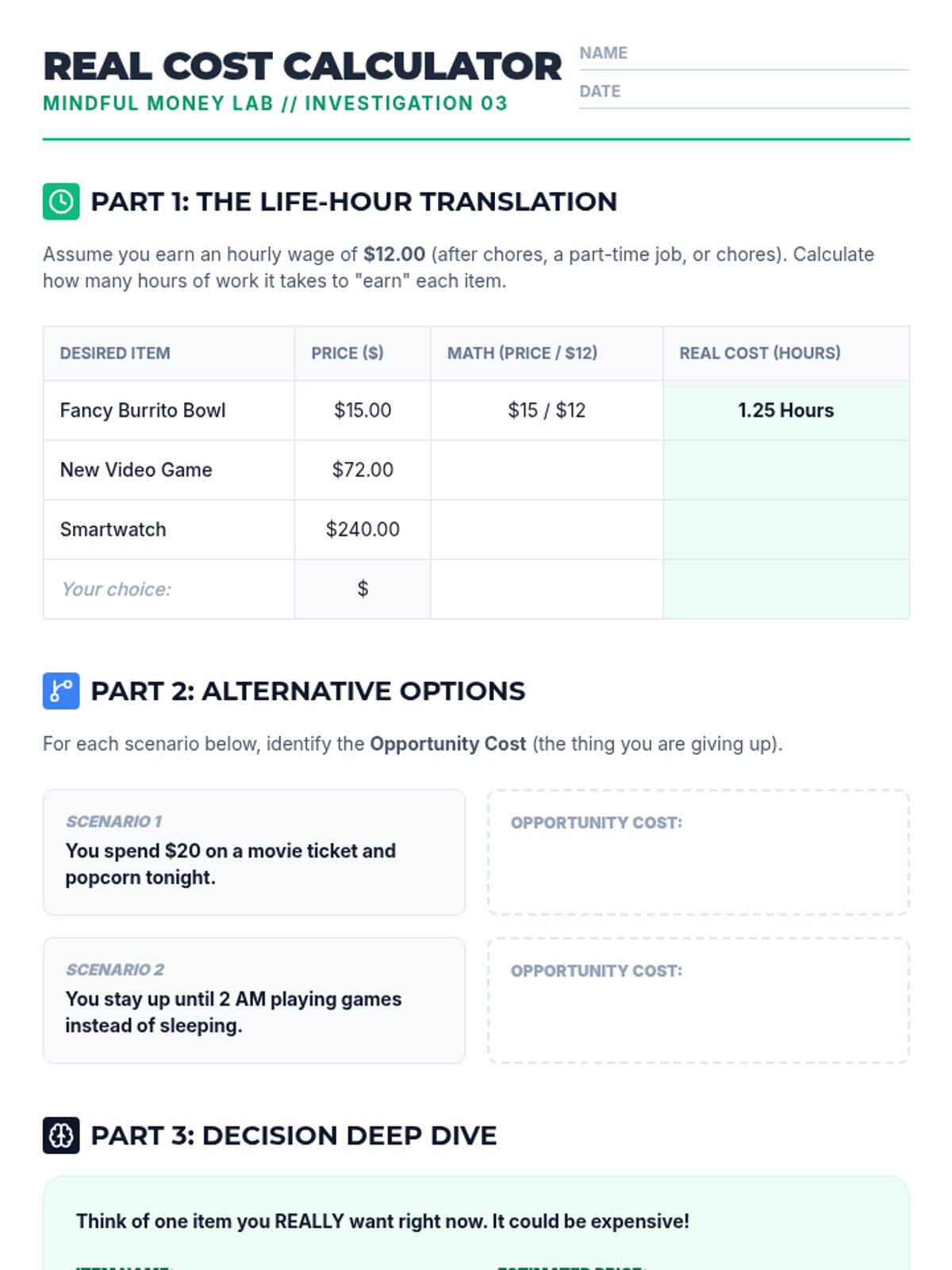
Introduces the economic concept of opportunity cost. Students practice calculating the 'real cost' of items in terms of hours worked or other items foregone.
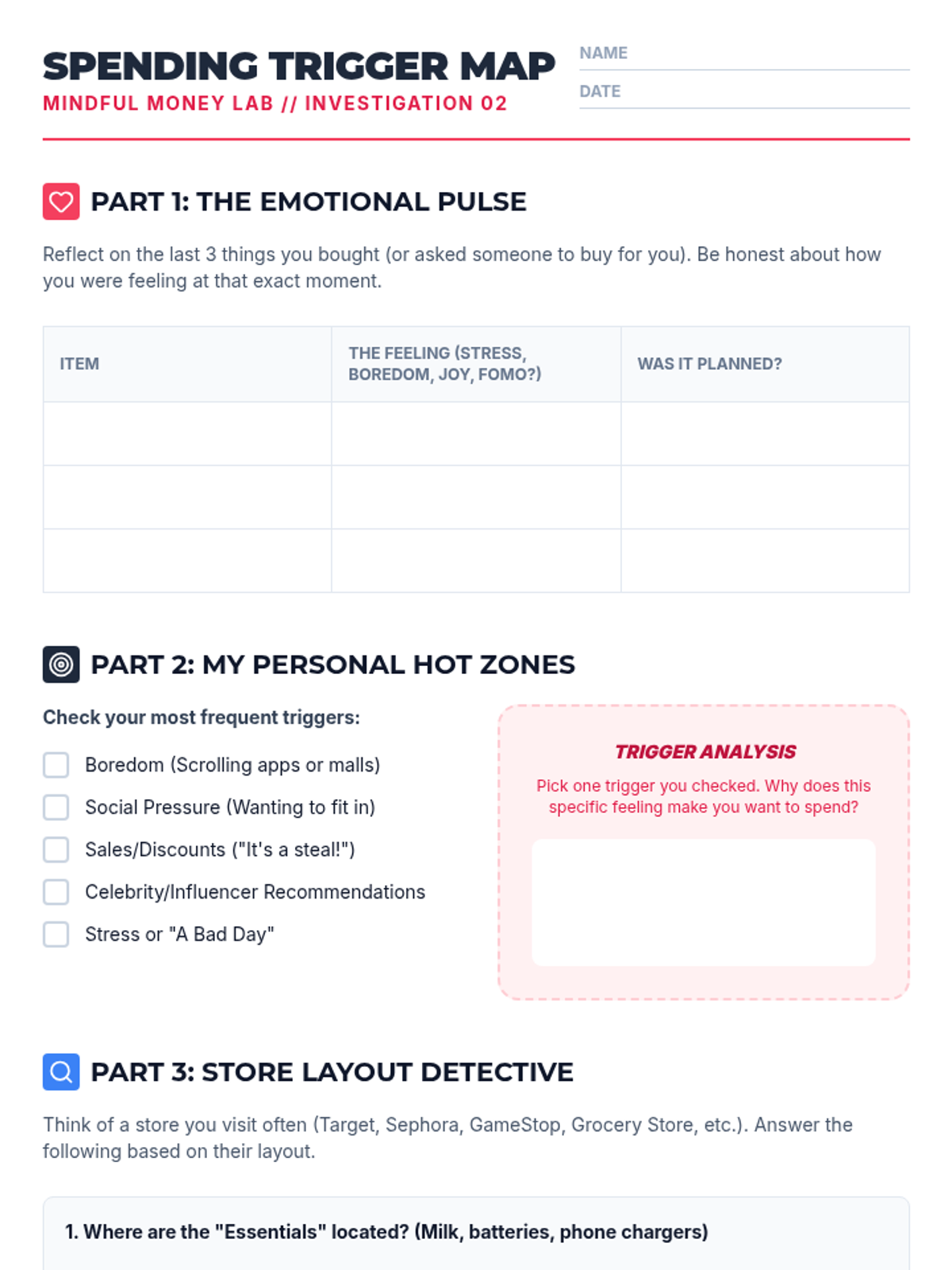
Students explore the concept of 'retail therapy' and emotional spending. They identify their own 'spending triggers' and discuss how stores are designed to encourage impulse buys.
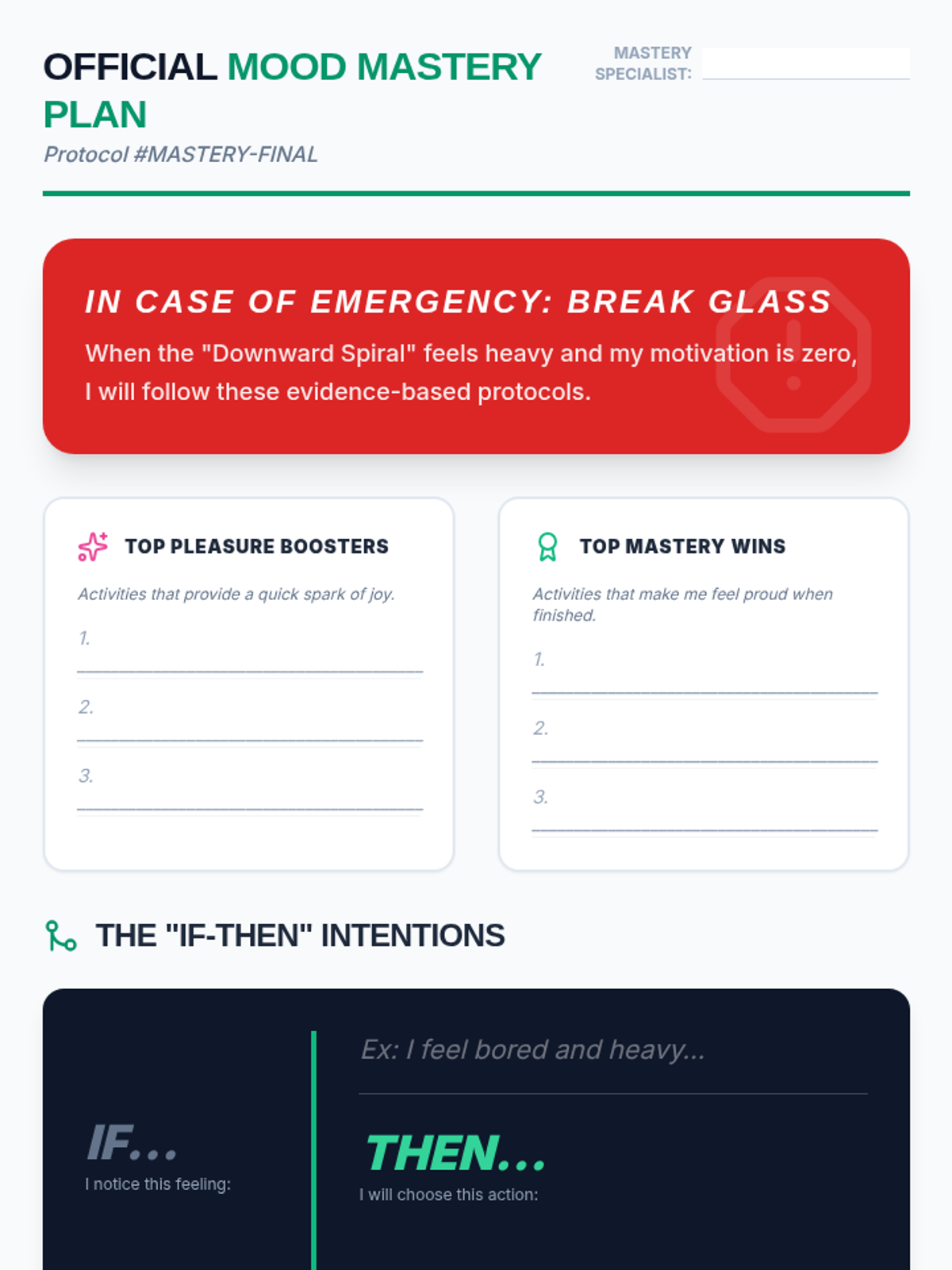
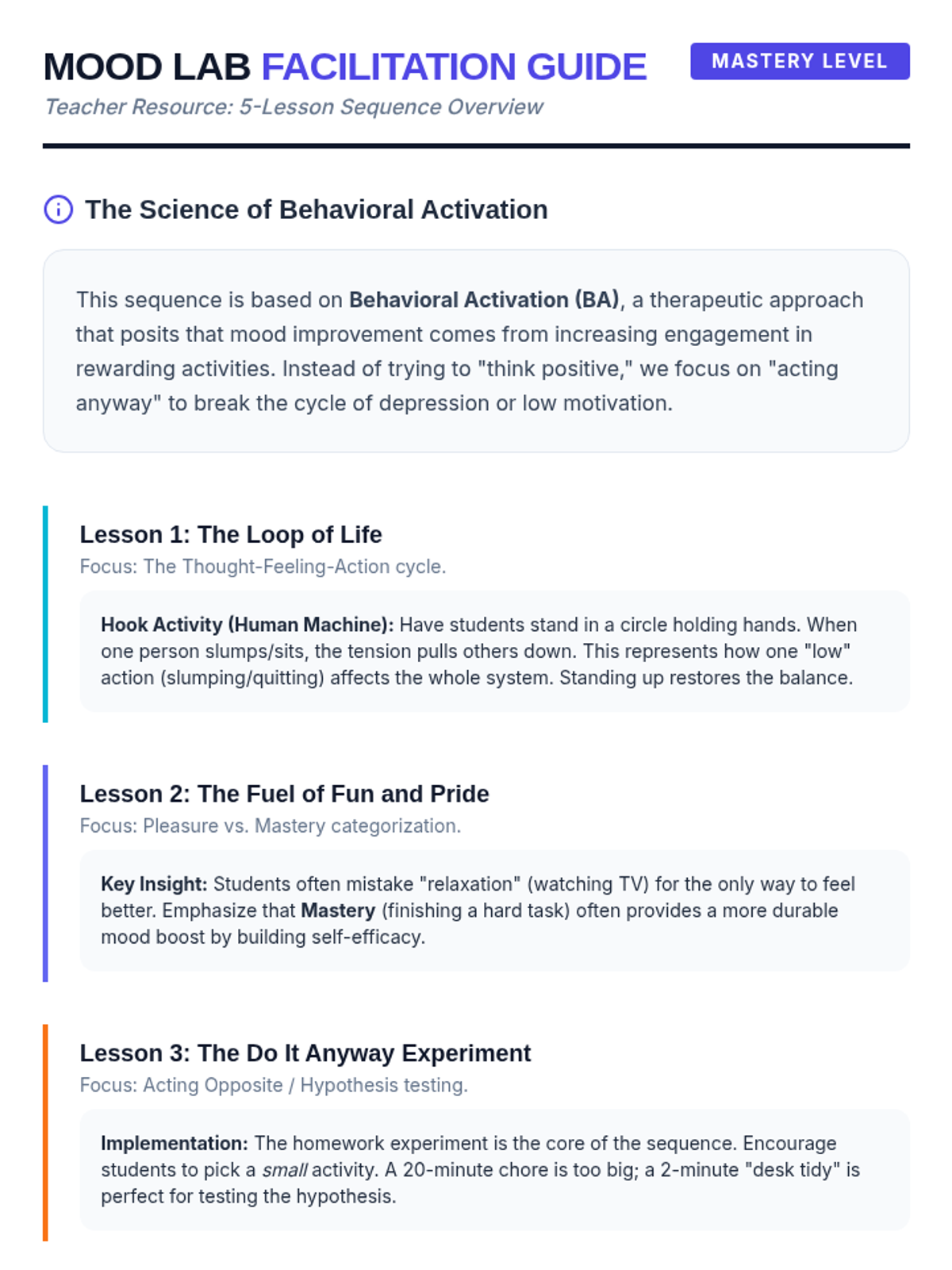
Synthesizing their learning, students create a 'Break the Glass' emergency plan for days when they feel low or anxious. They select their most effective pleasure and mastery activities and write specific implementation intentions (If I feel X, then I will do Y).
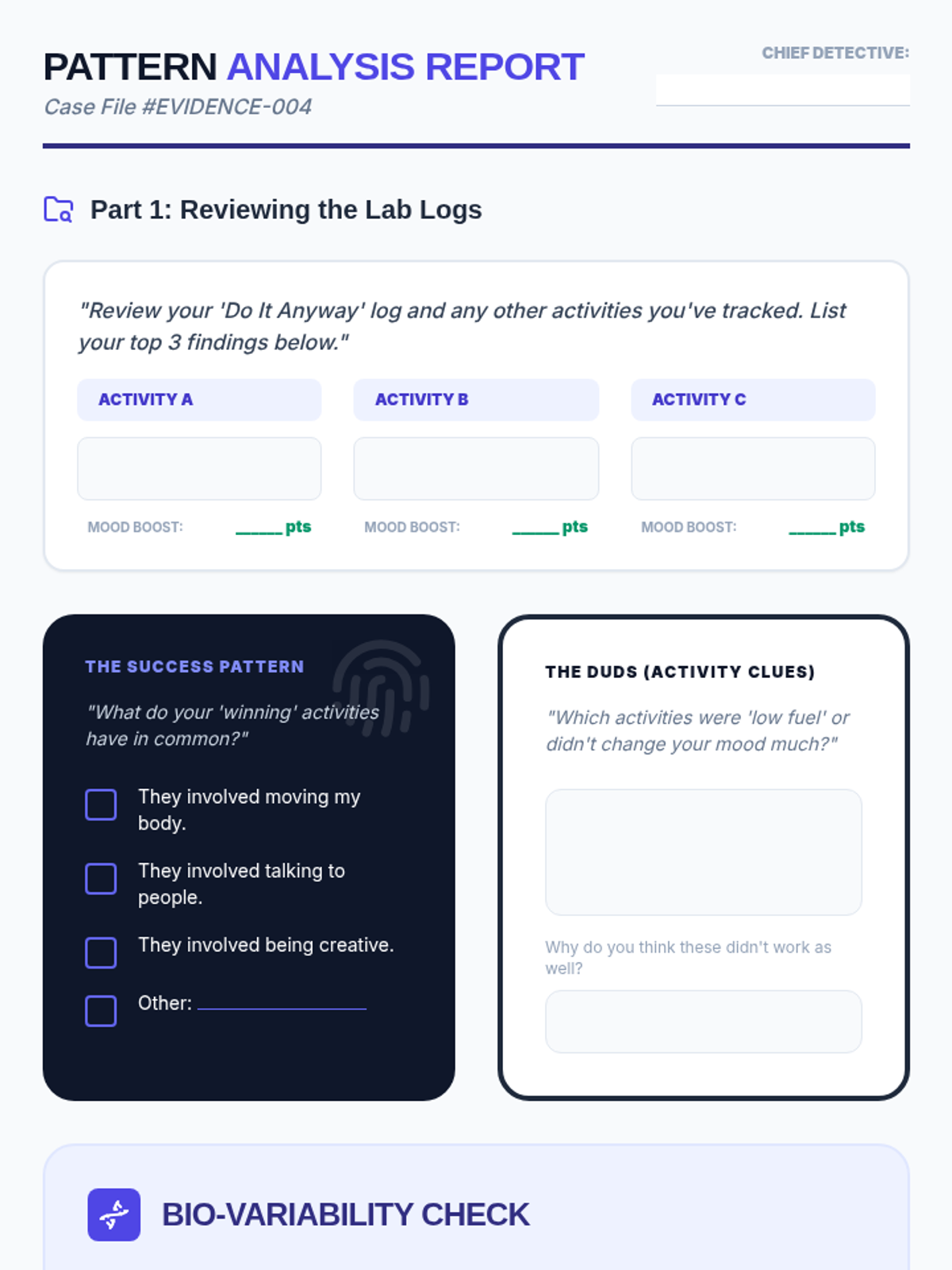
Students review the results of their personal experiments or case study data to identify patterns in how specific activities impact mood. They discuss the variability of results (what works for one person may not work for another) and begin curating their personal 'top hits' for mood improvement.
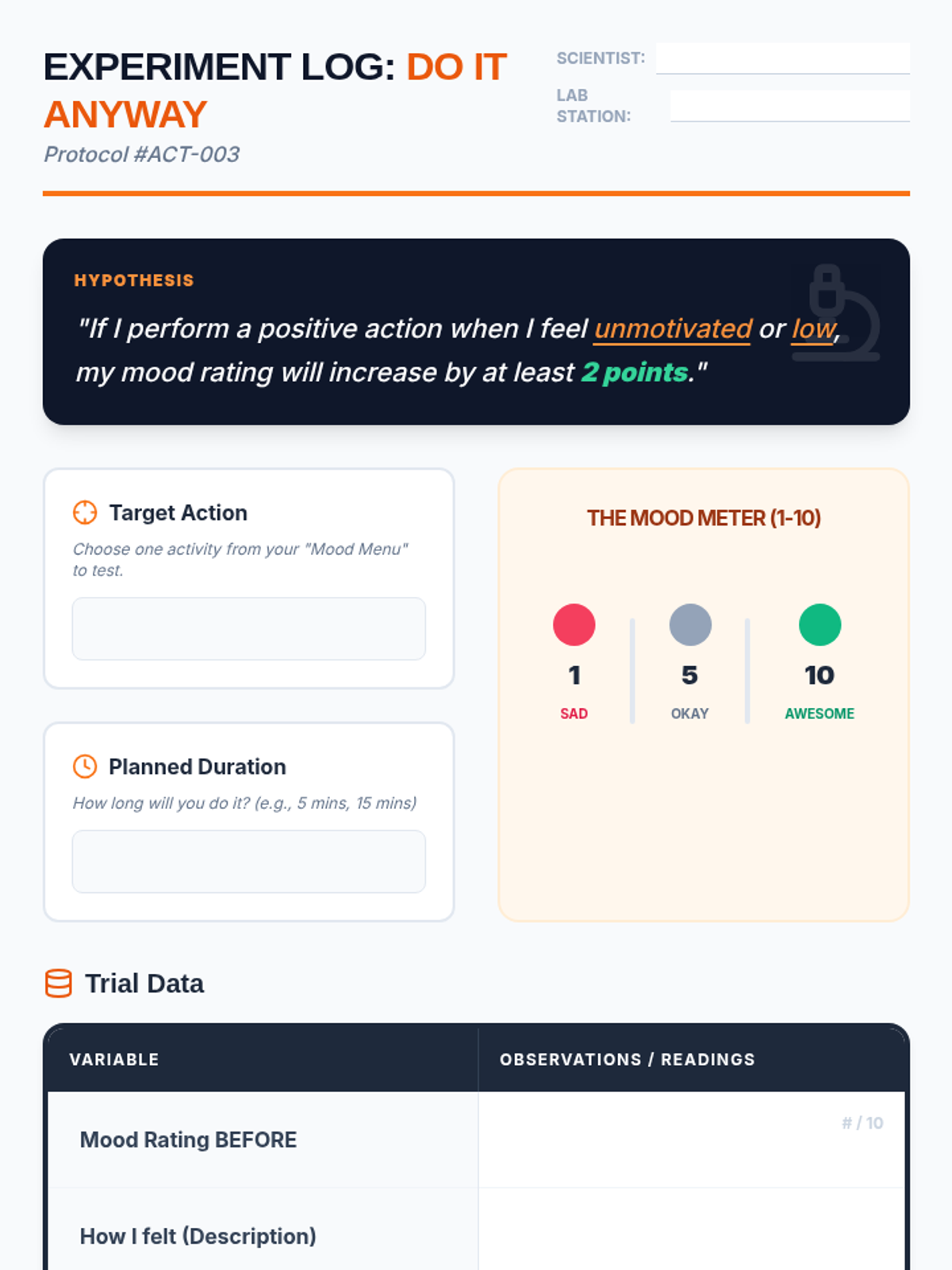
This lesson introduces the concept of 'acting opposite' to an emotion. Students design a short experiment to test the hypothesis that engaging in a positive activity—even when they don't feel like it—can improve their mood rating on a 1-10 scale. They prepare a data collection sheet for a homework experiment.
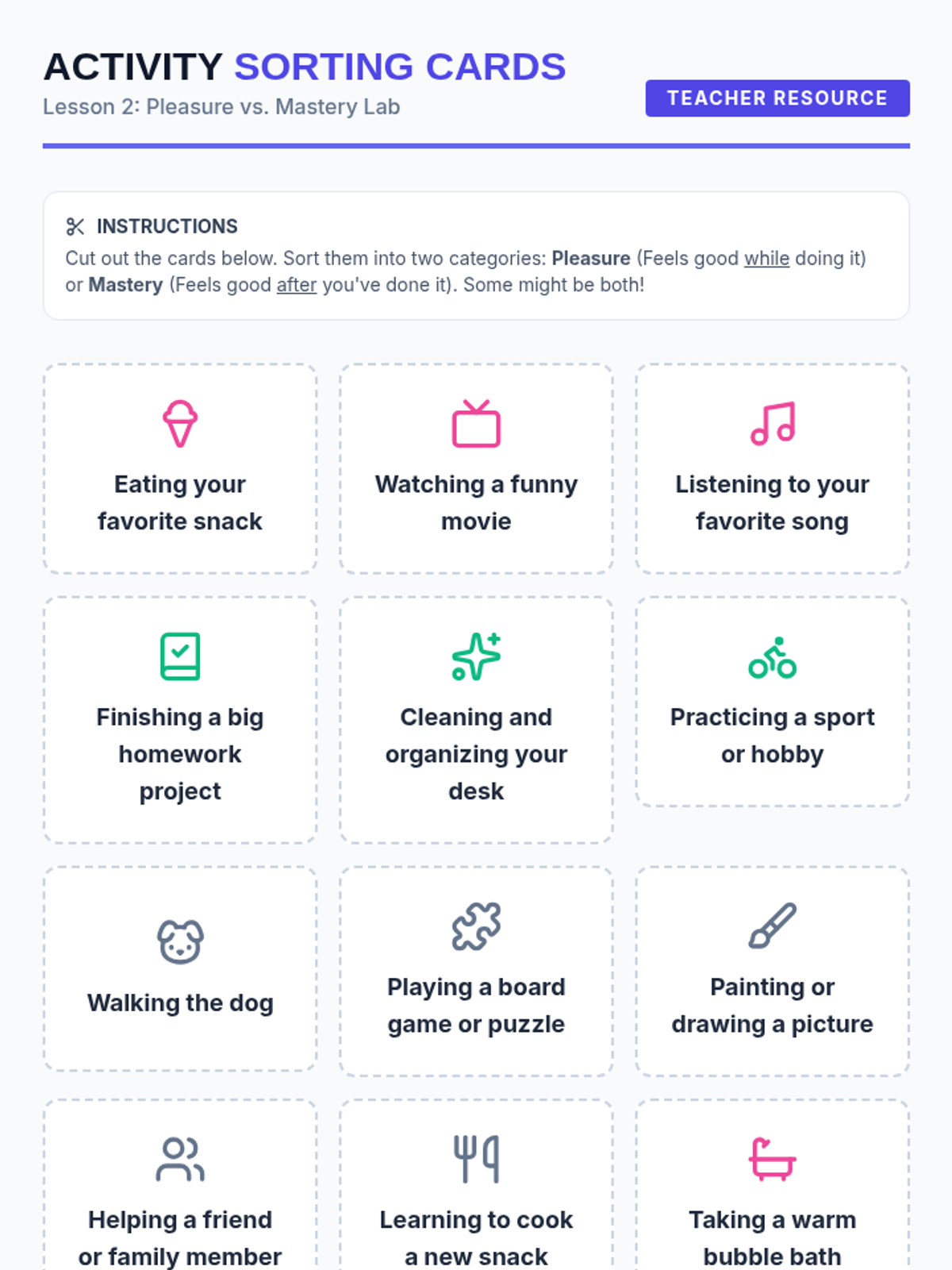
Students distinguish between activities that feel good in the moment (Pleasure) and those that make us feel accomplished (Mastery). Through a sorting workshop, they brainstorm examples for both categories, understanding that a balanced diet of experiences includes both fun and achievement.
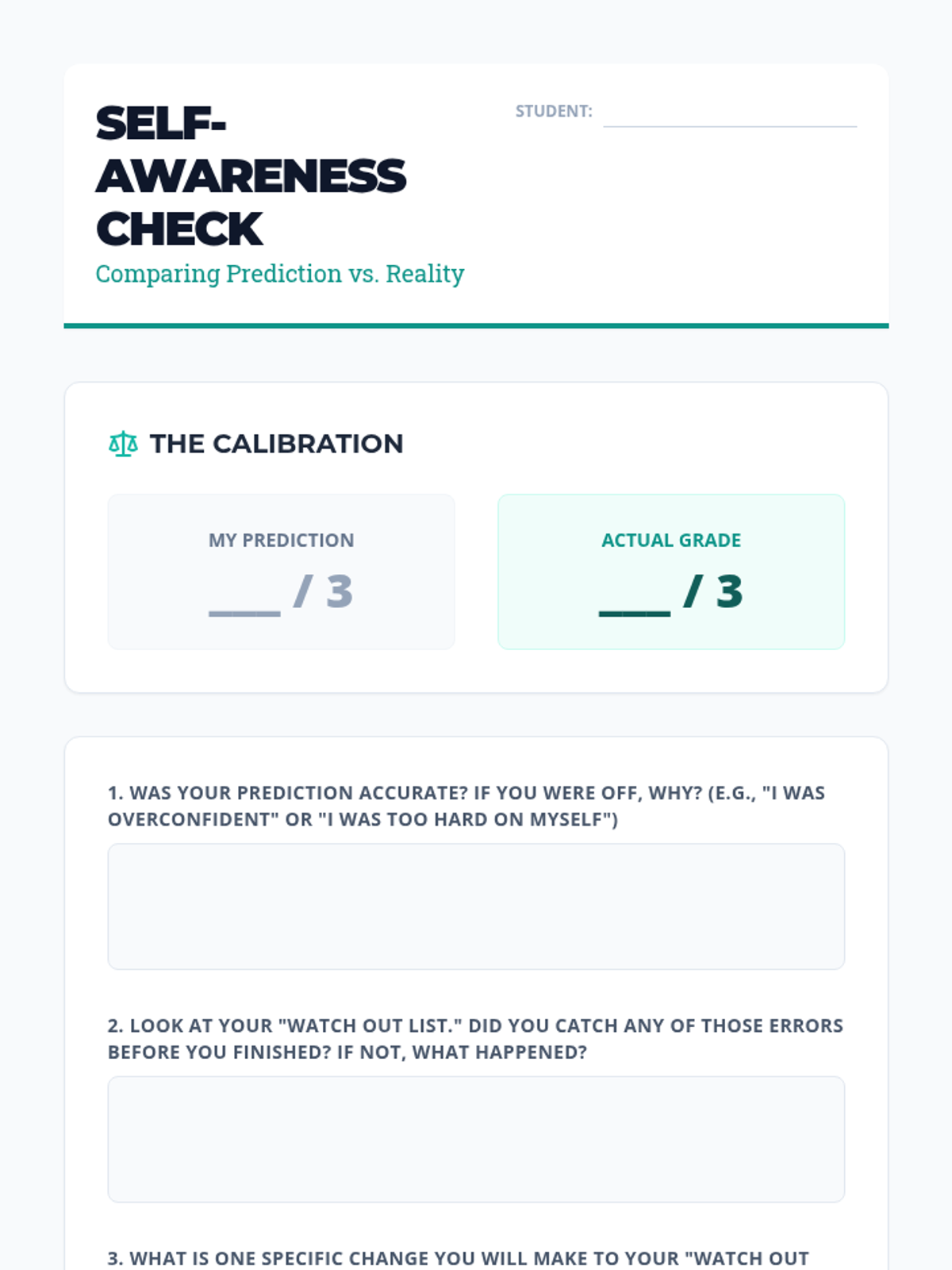
Students take a short assessment and immediately apply their error analysis protocol. They verify if their 'Watch Out' list helped them avoid previous habitual mistakes.
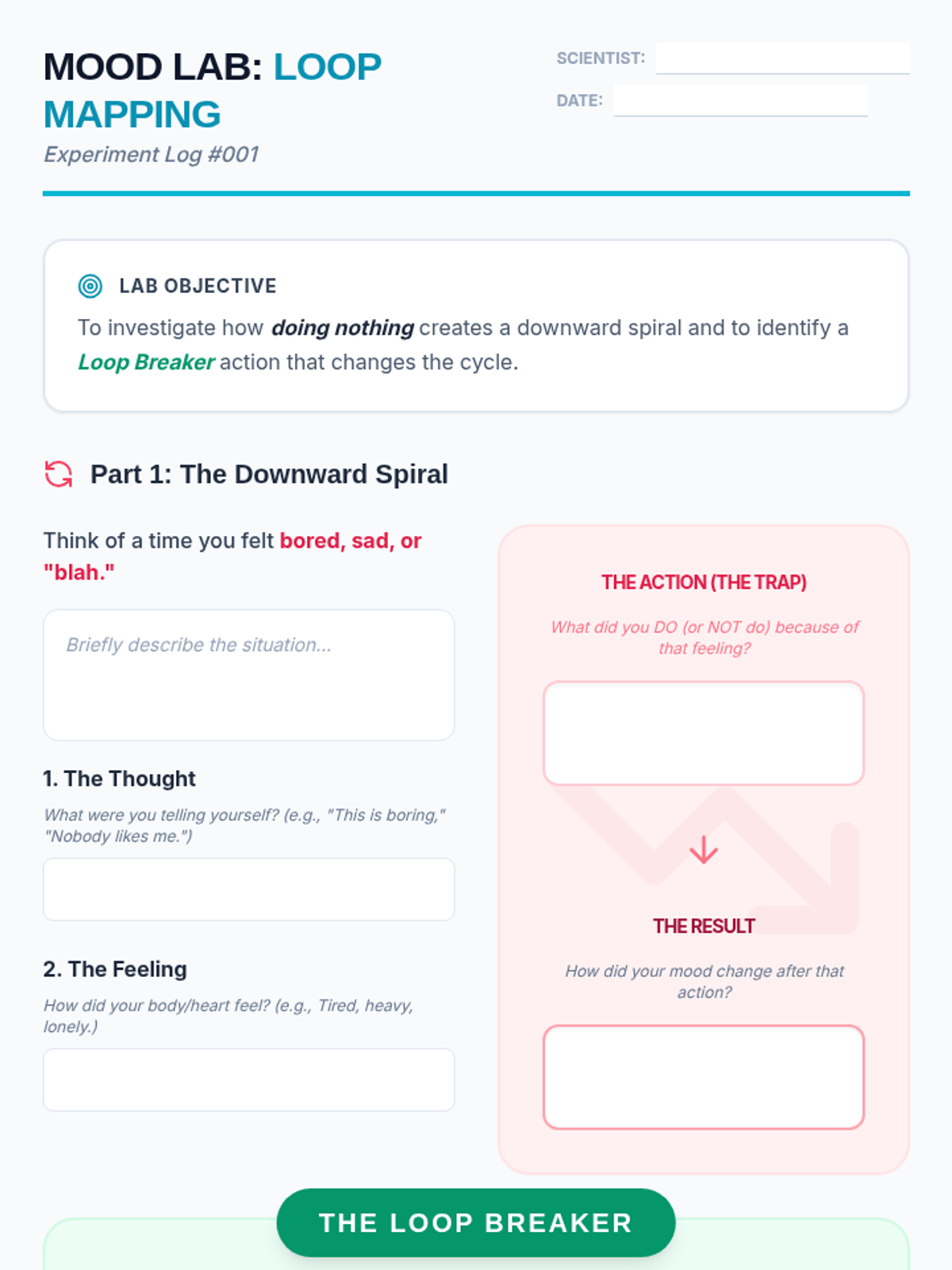
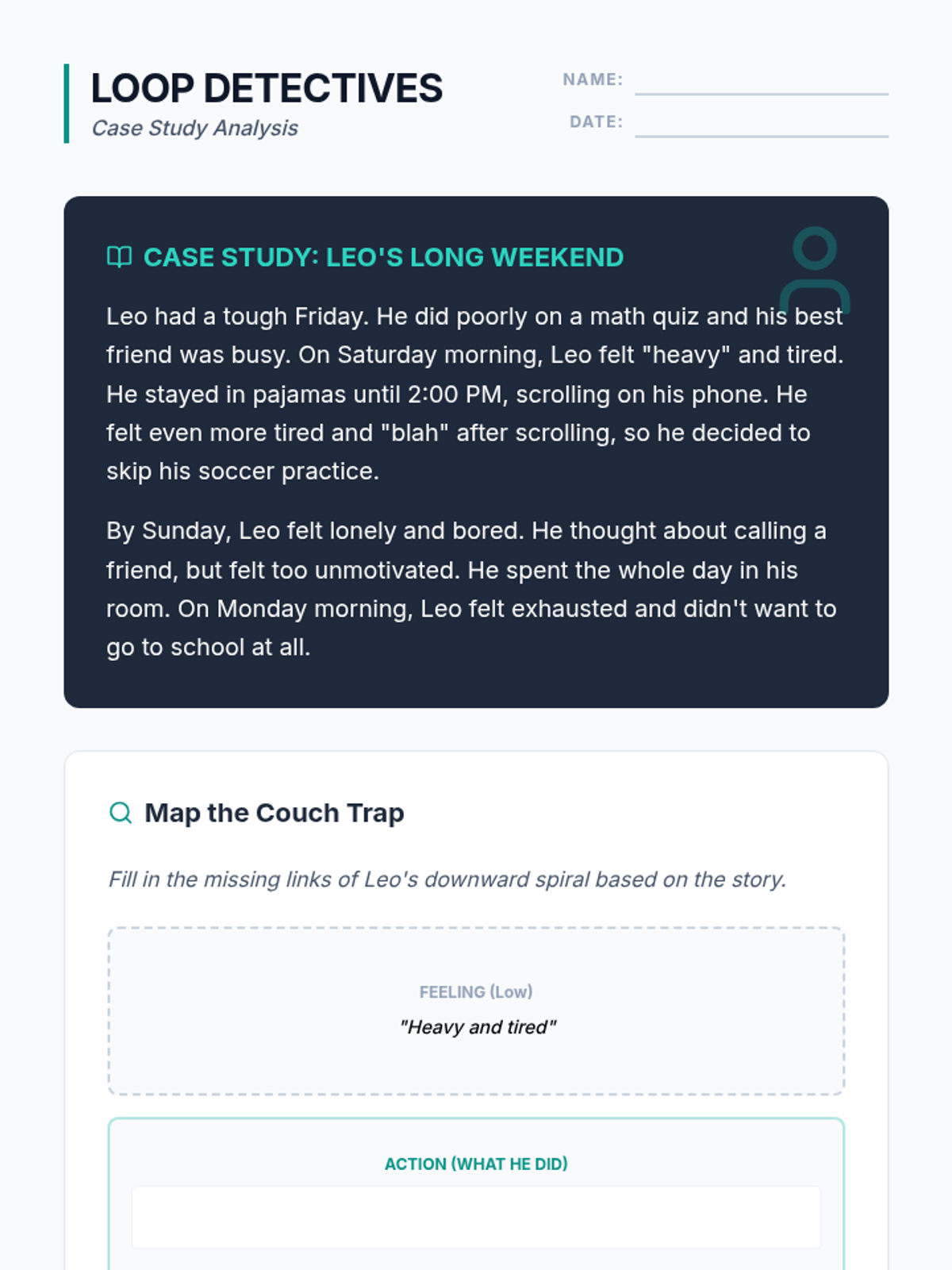
Students participate in a discussion and mapping activity to visualize the cycle between thoughts, feelings, and behaviors. They identify how doing nothing often leads to feeling worse (the downward spiral) and how small actions can reverse this.
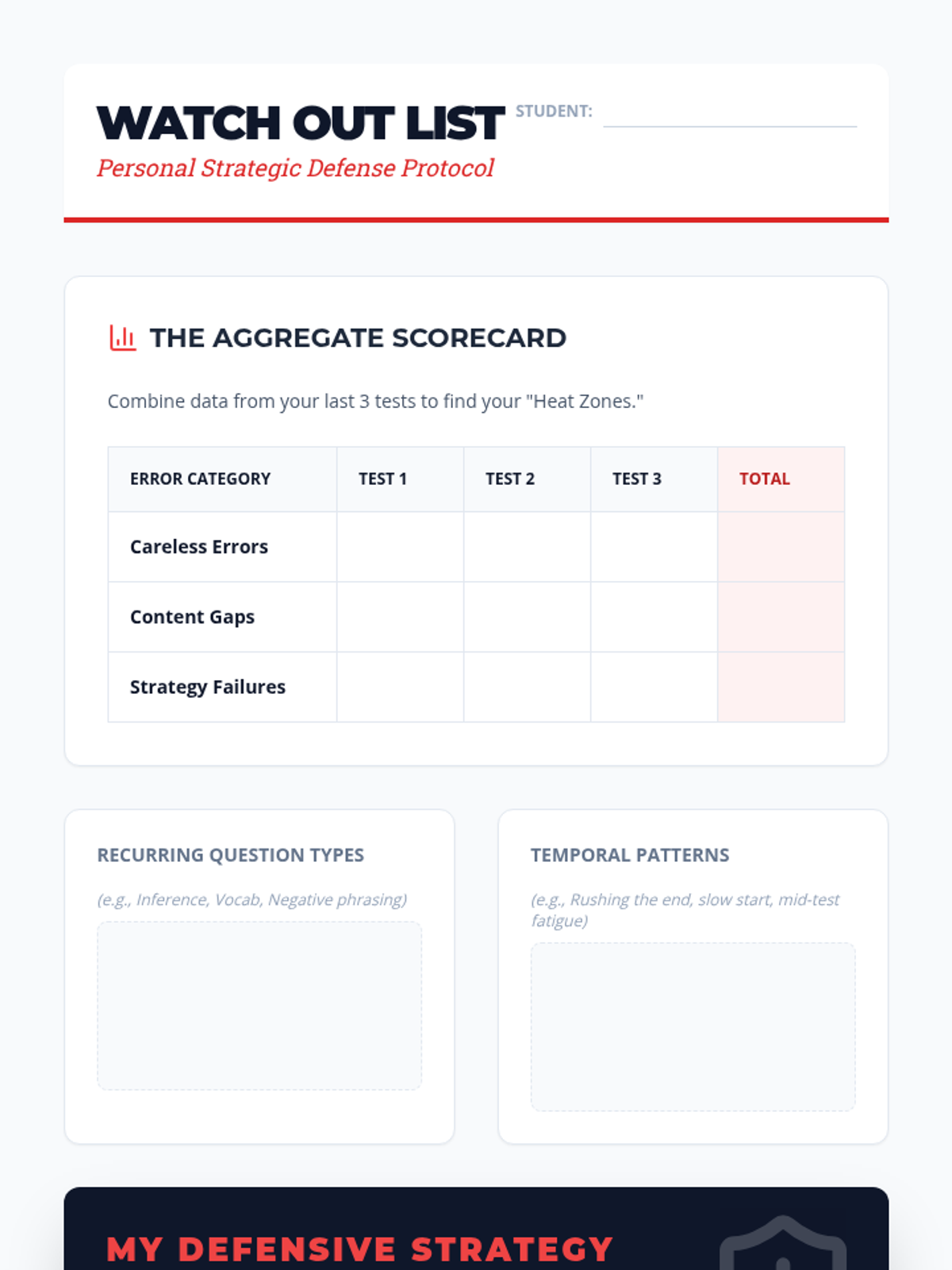
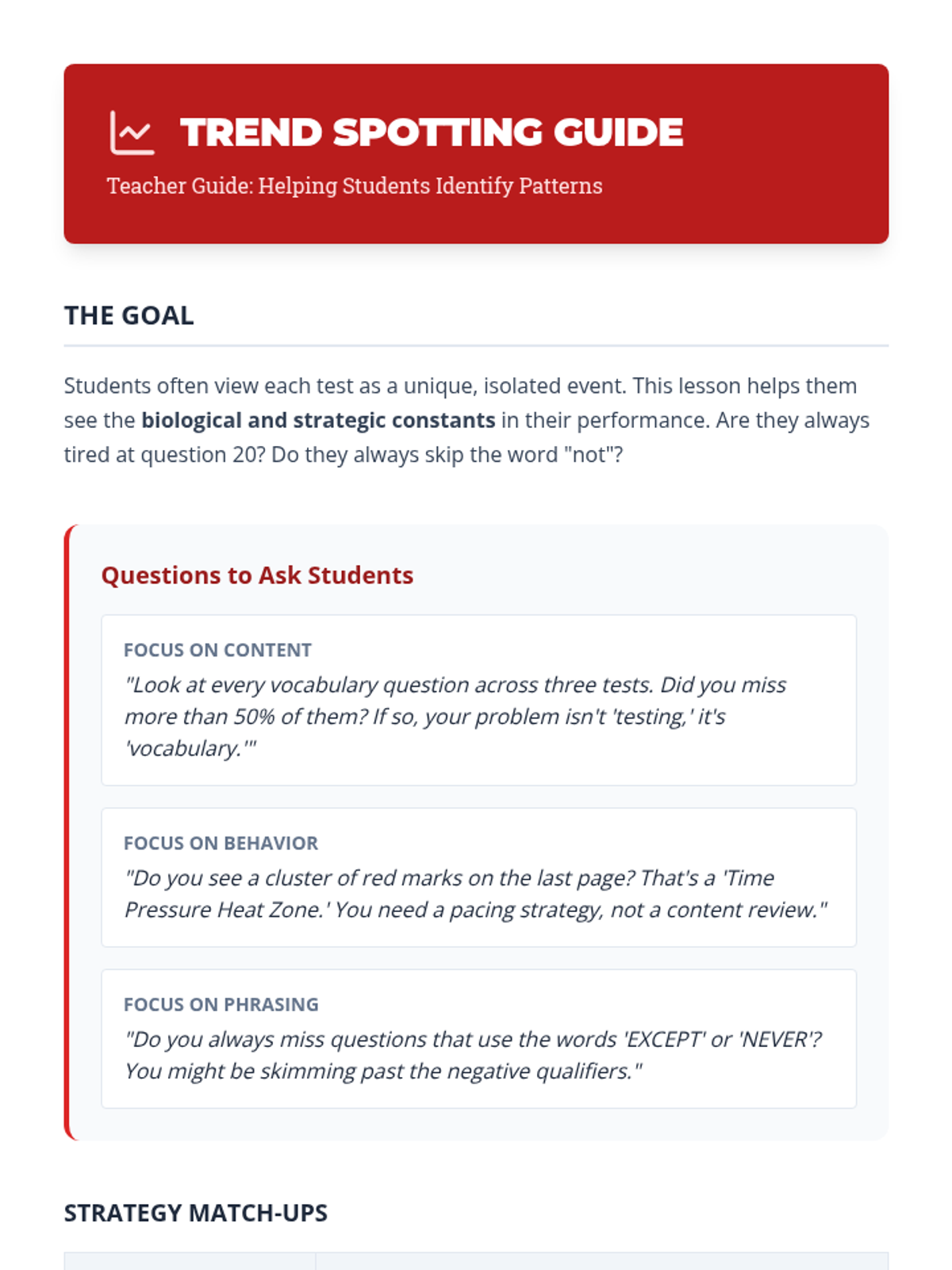
Students aggregate their error data to find personal patterns (e.g., 'I always miss inference questions' or 'I rush the last 5 minutes'). They create a personal 'Watch Out' list for future exams.
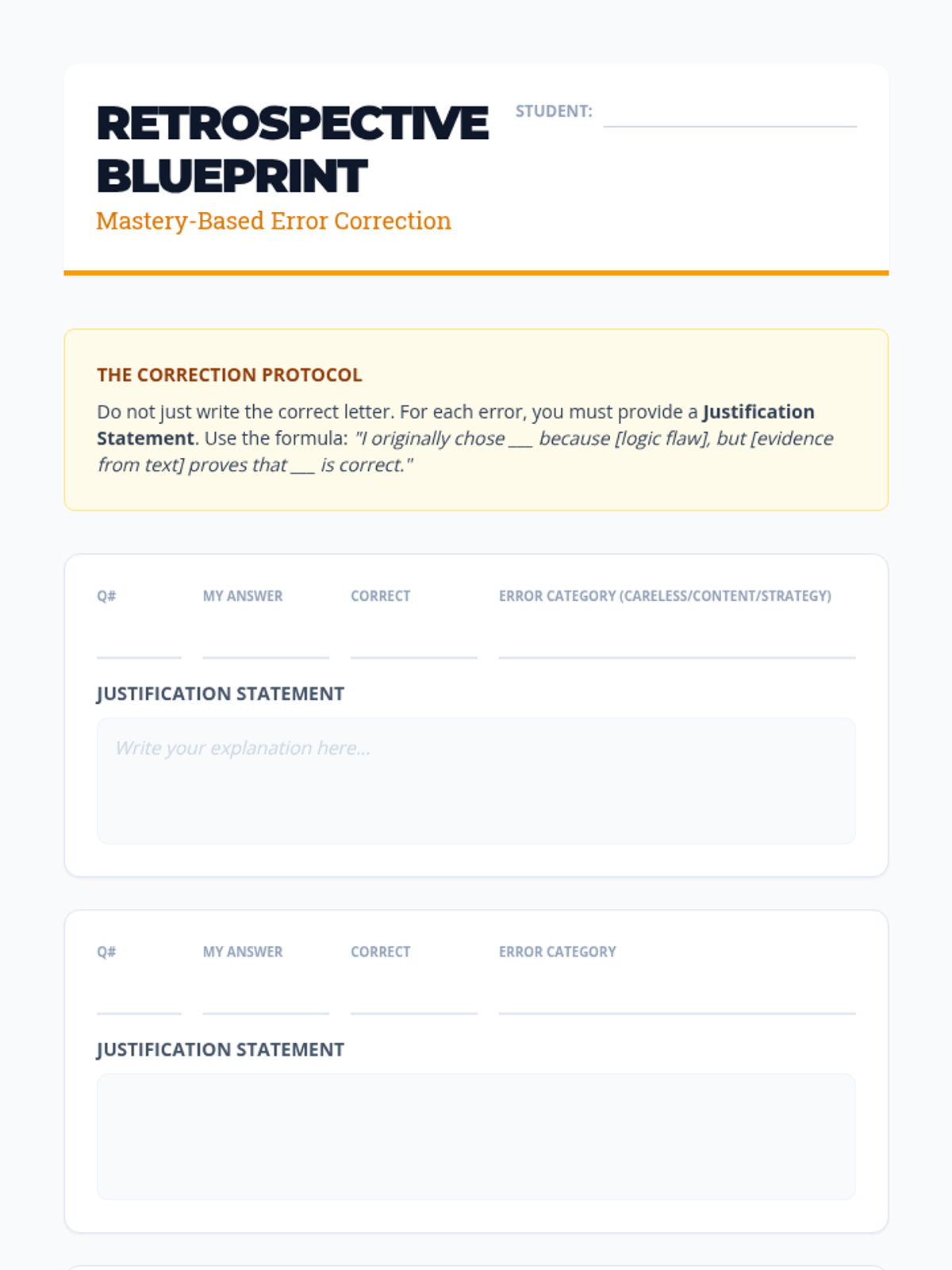
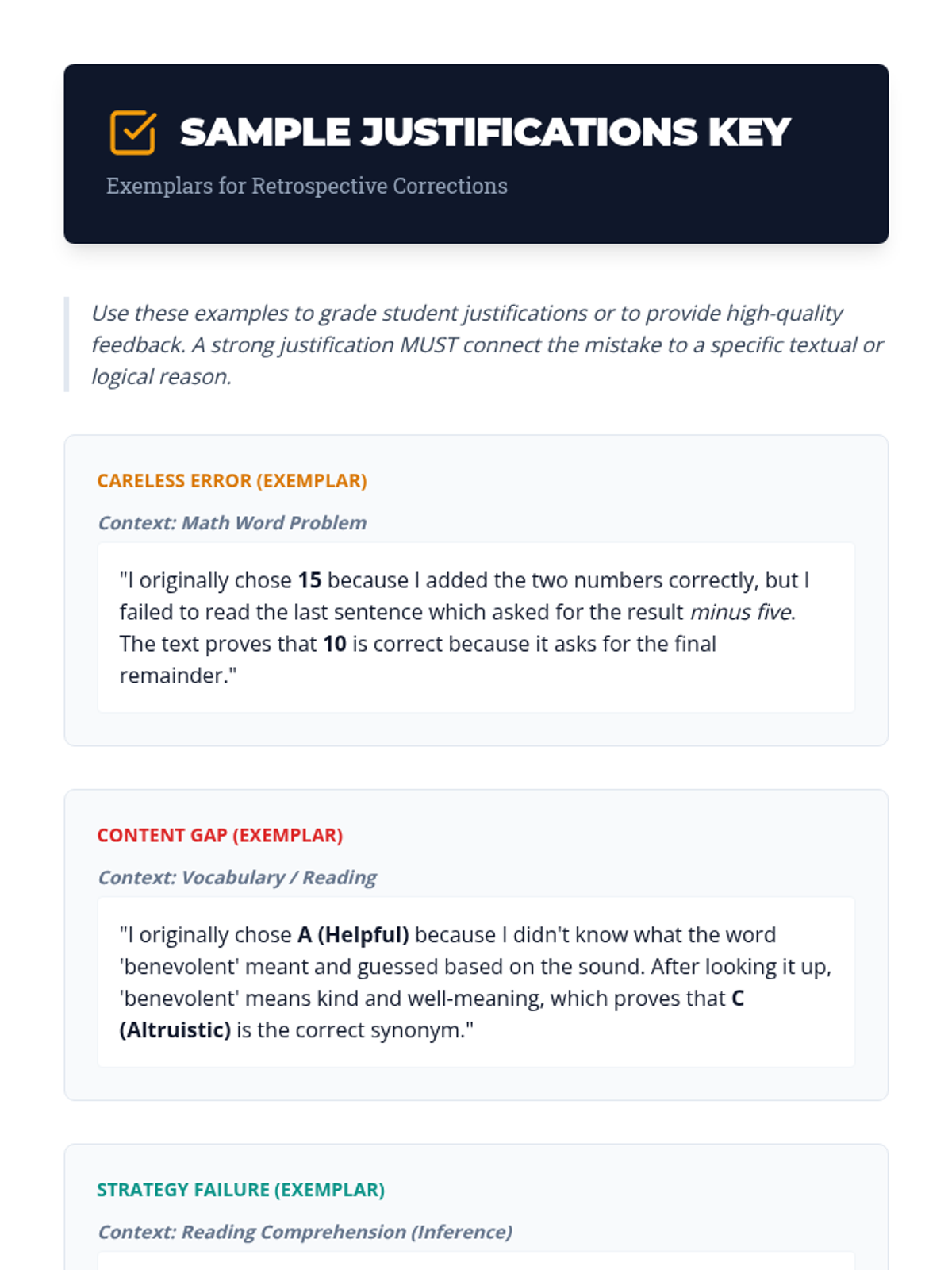
Instead of just marking correct answers, students must write a sentence explaining *why* their original answer was wrong and *why* the new answer is right. This ensures deep processing of the error.
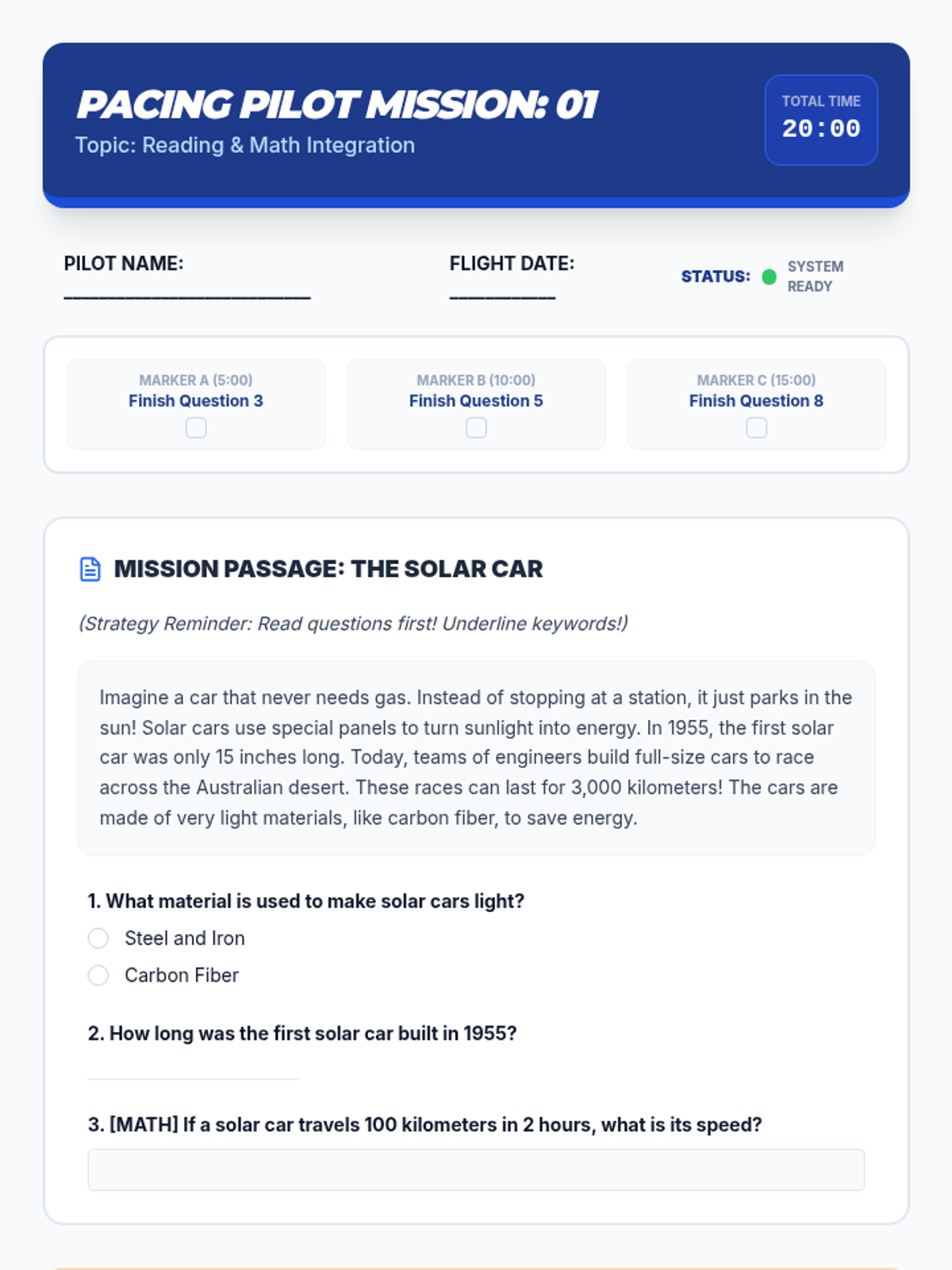
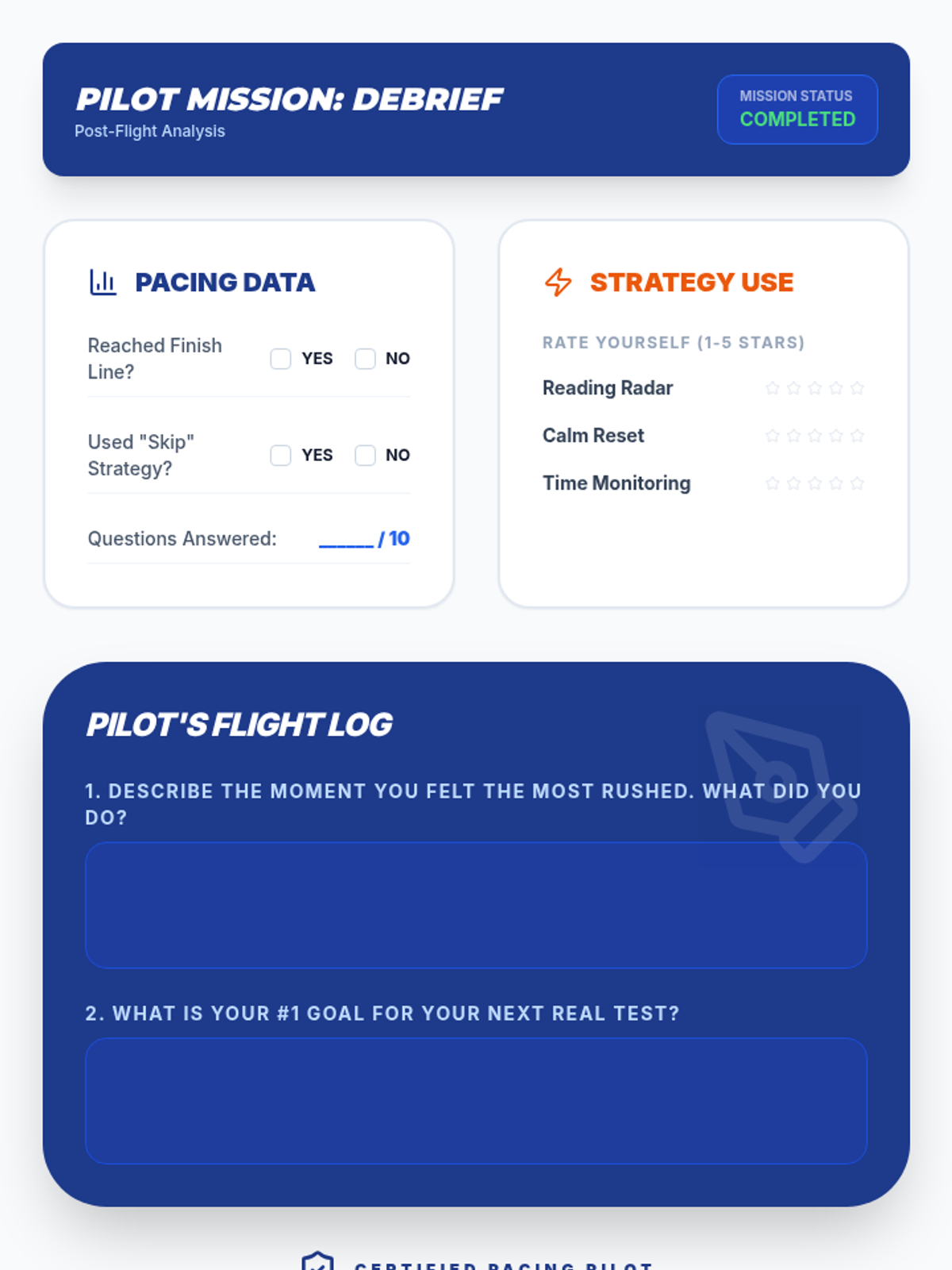
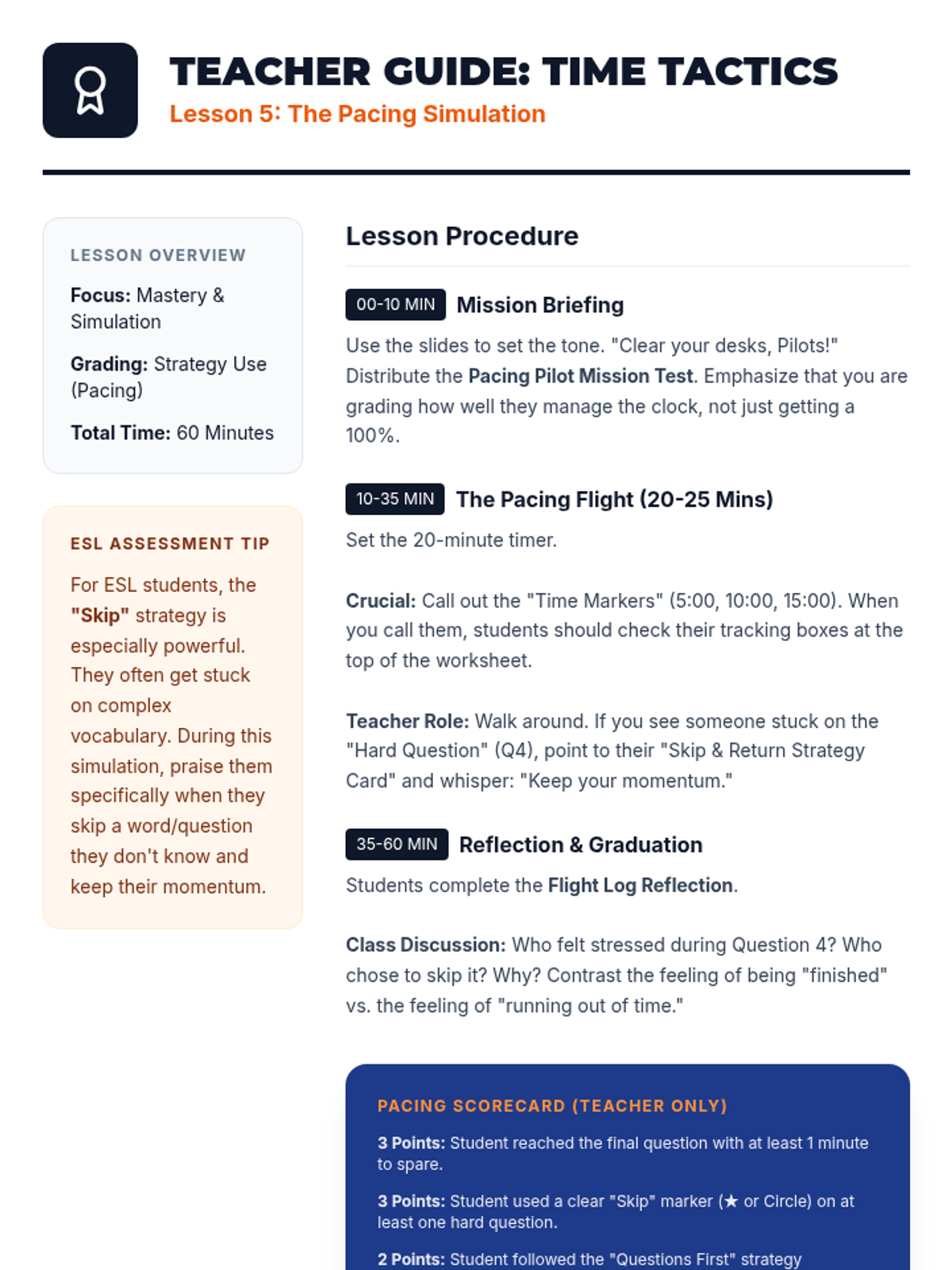
A simulated test session where students are graded on their ability to hit specific pacing markers and reflect on their performance.
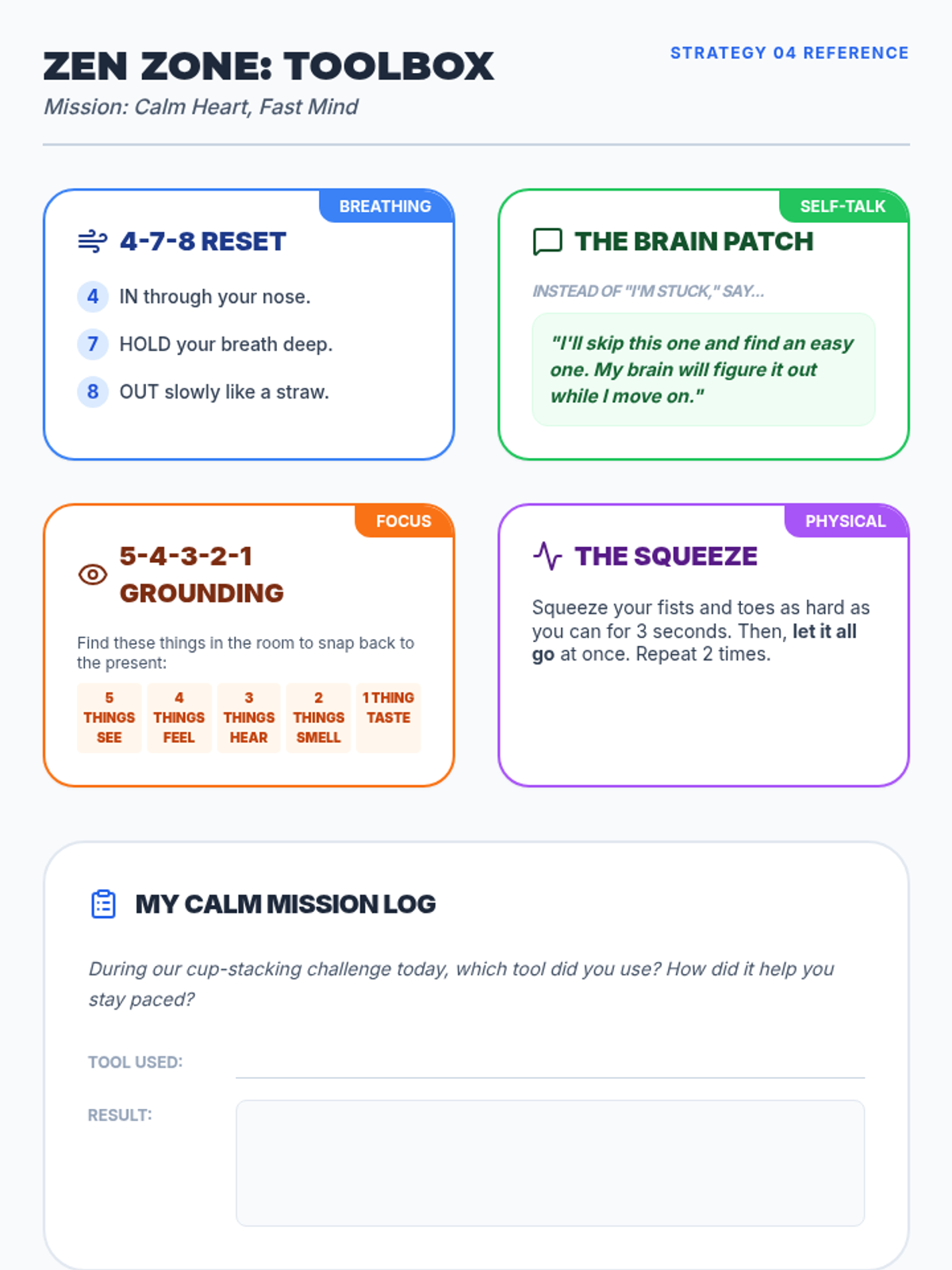
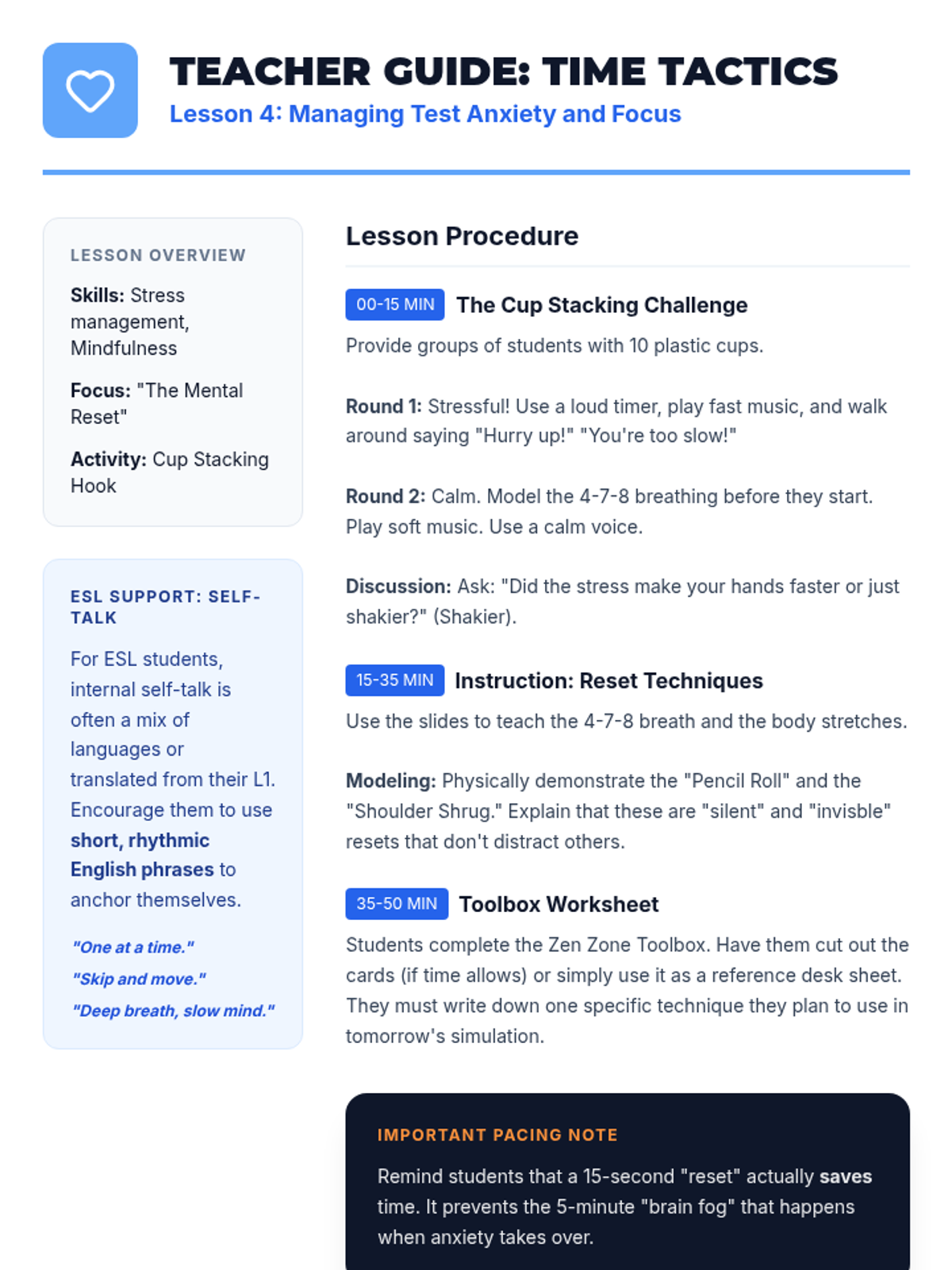
Teaches students physiological and mental reset techniques to stay calm and focused when the clock is ticking.
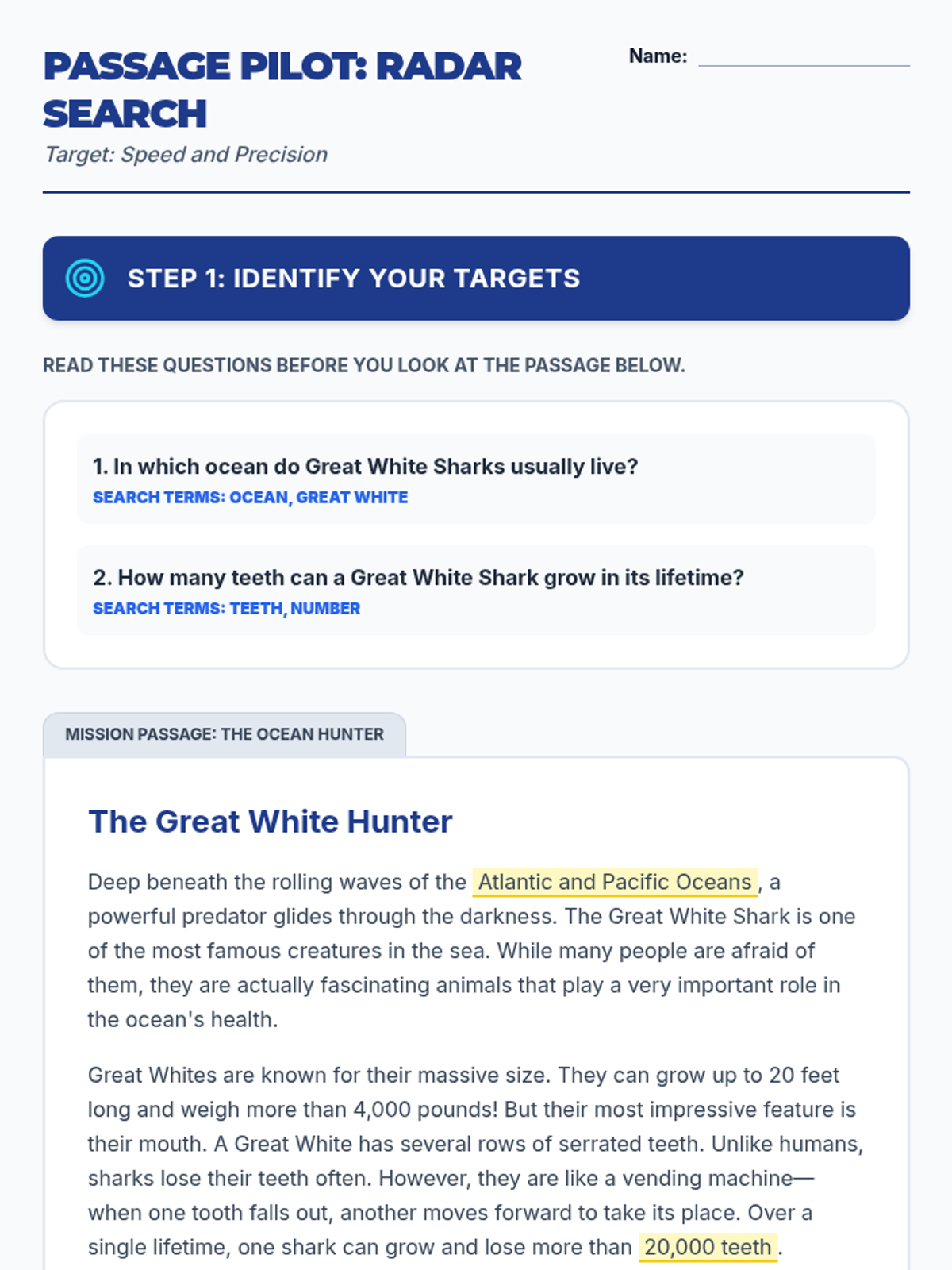
Focuses on reading strategies like 'questions first' to save time and improve focus during long reading comprehension sections.
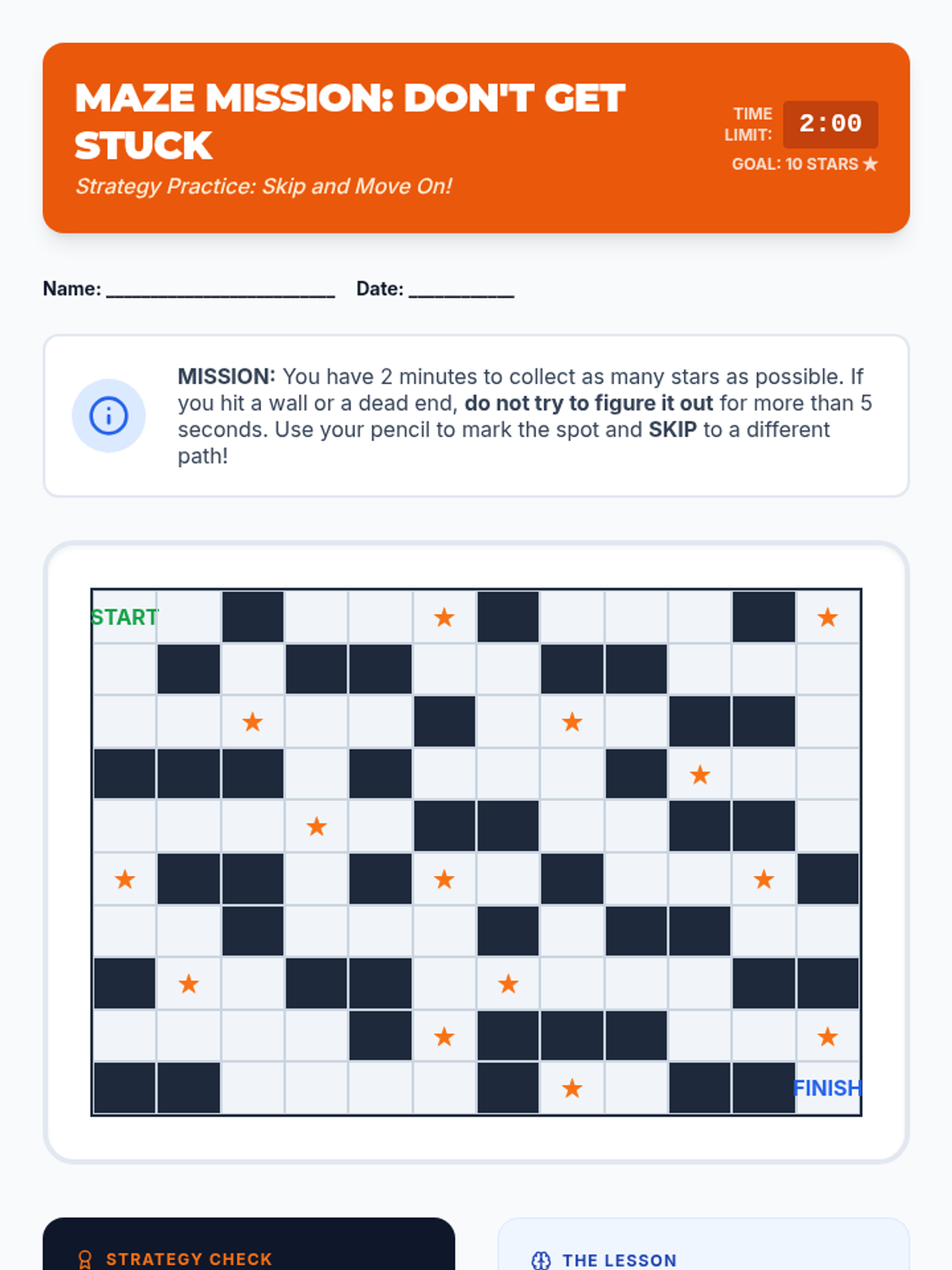
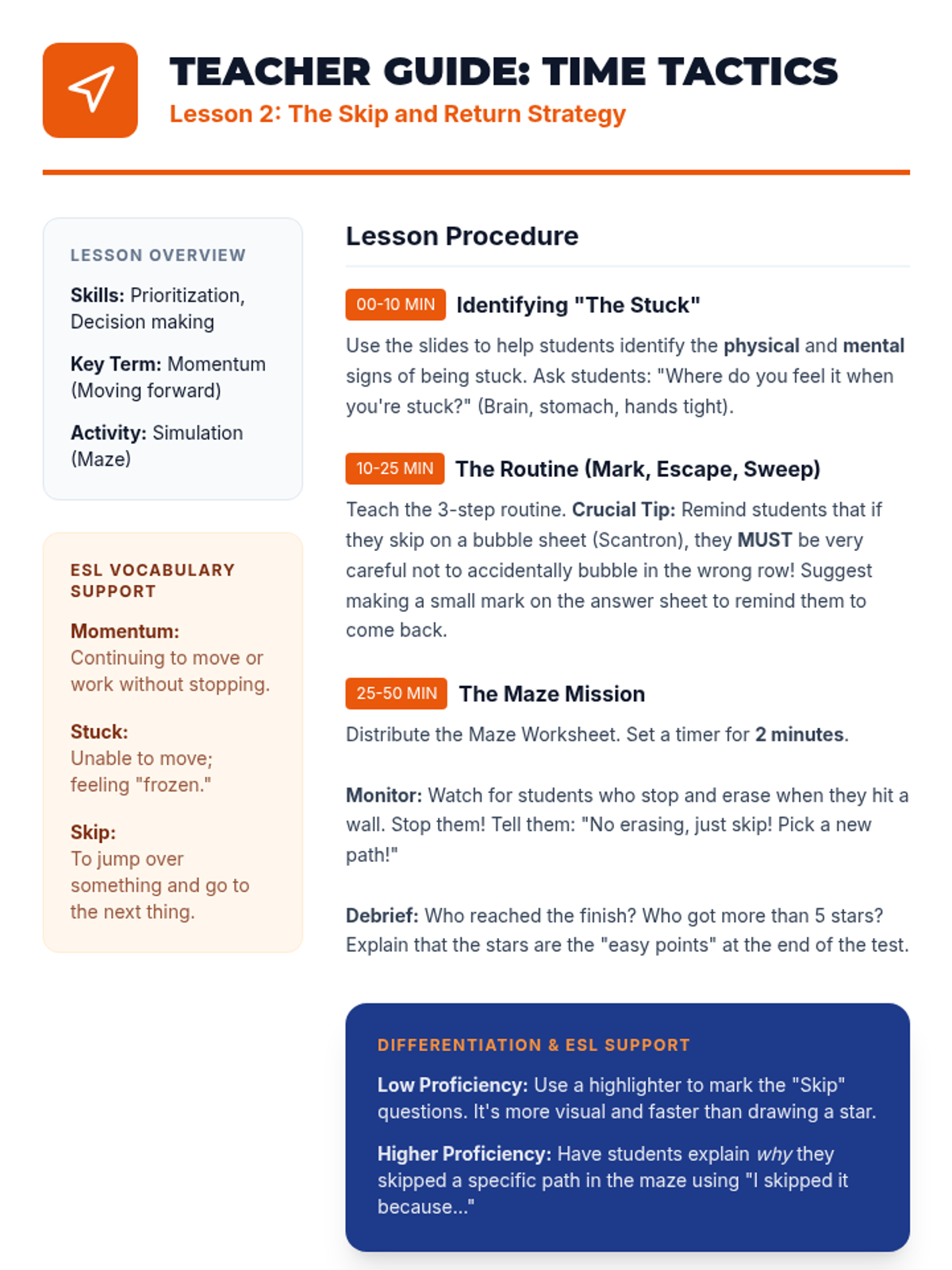
Students practice identifying when they are stuck and learn the 'skip and return' method to maximize their points by answering easy questions first.
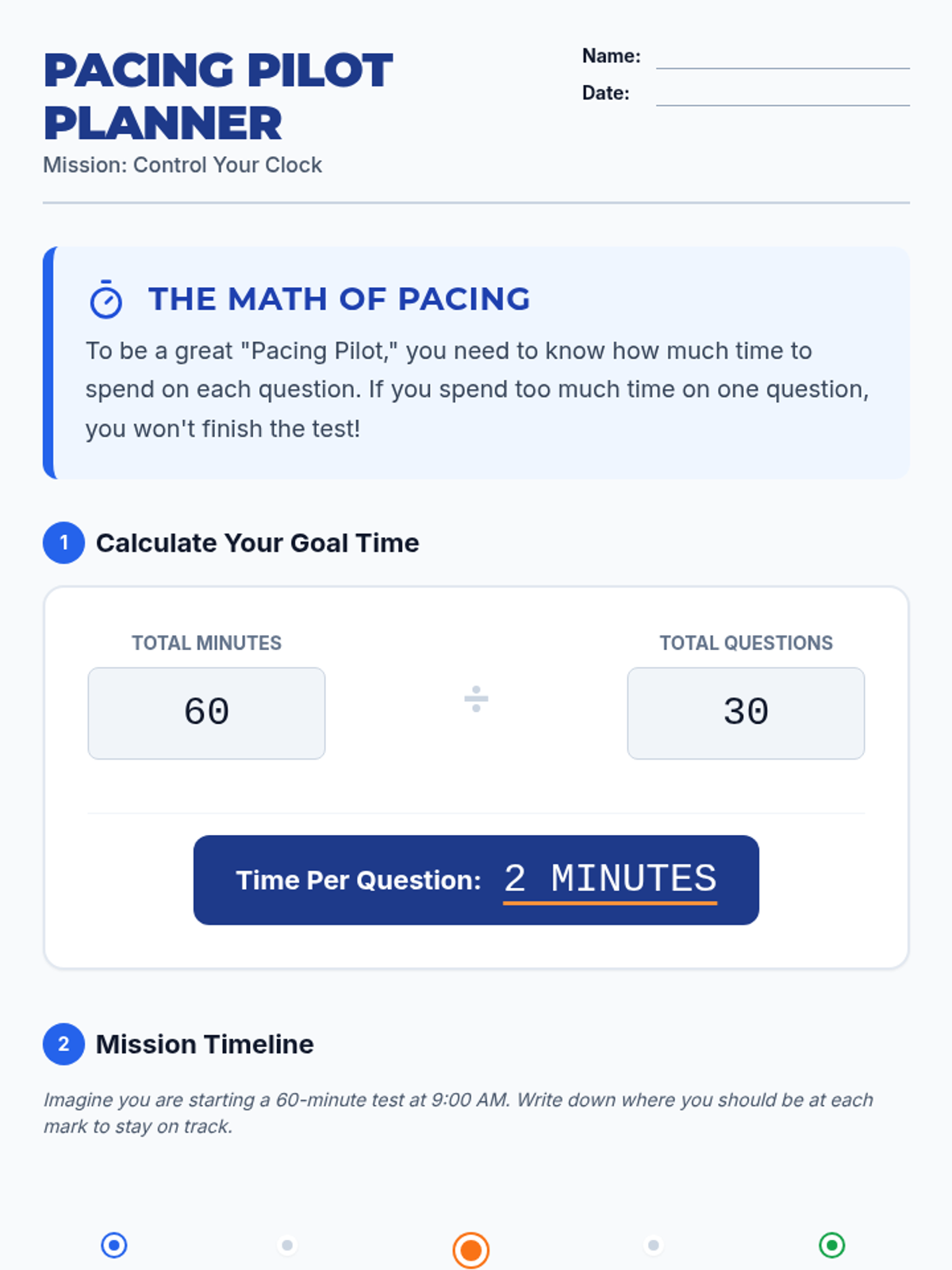
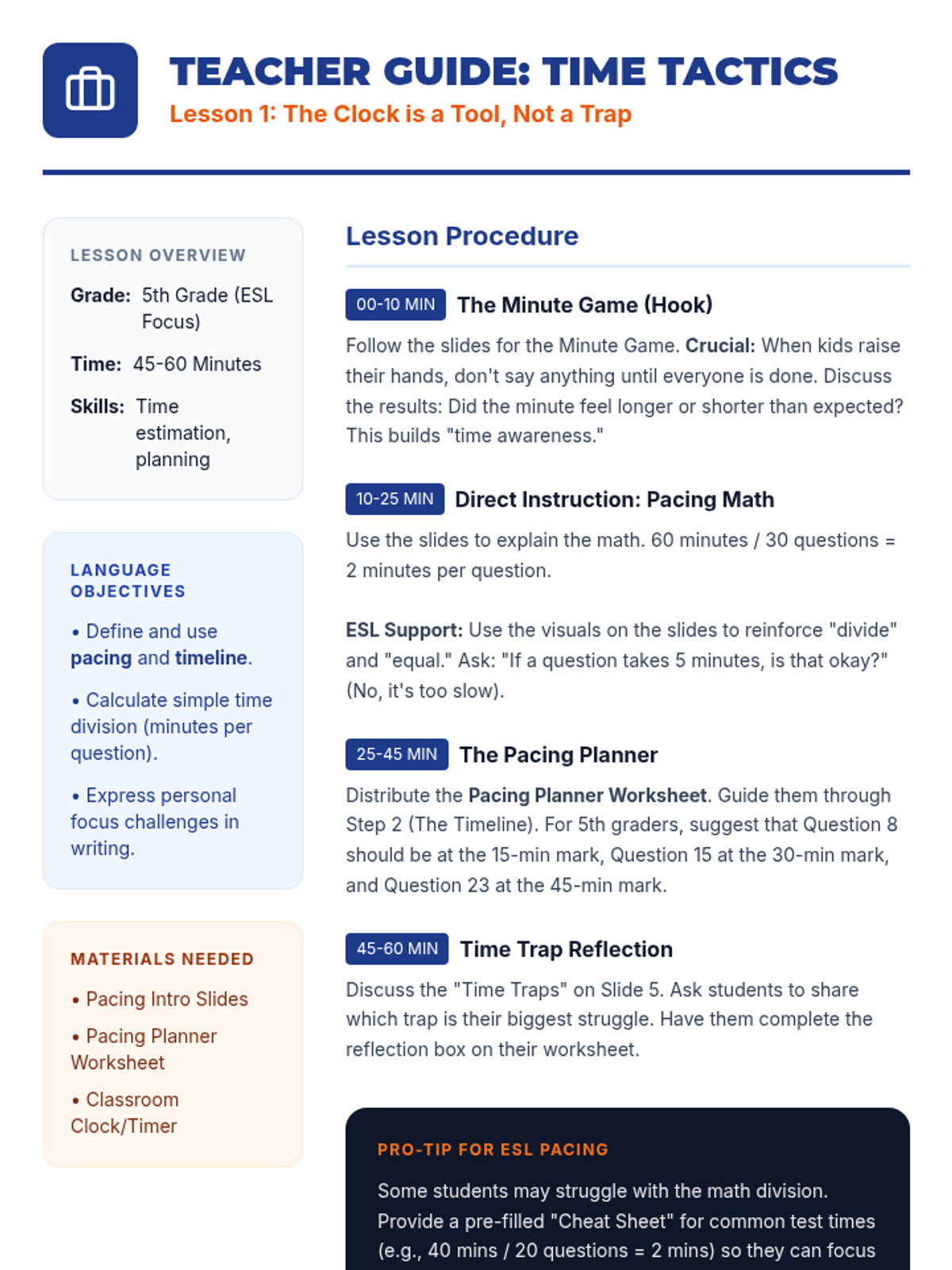
Students learn the basics of pacing by breaking down total test time and creating visual pacing guides to avoid the 'time trap.'
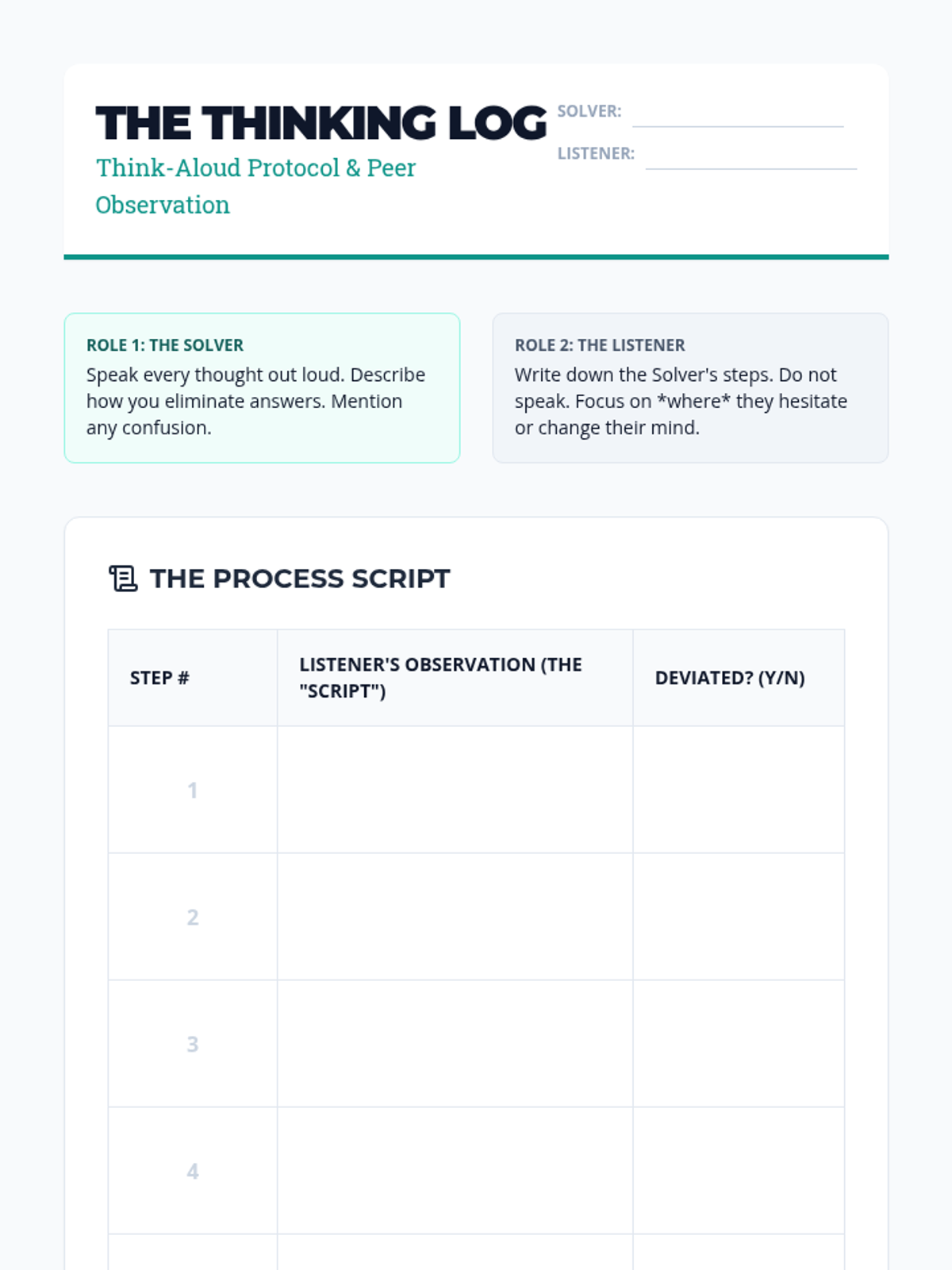
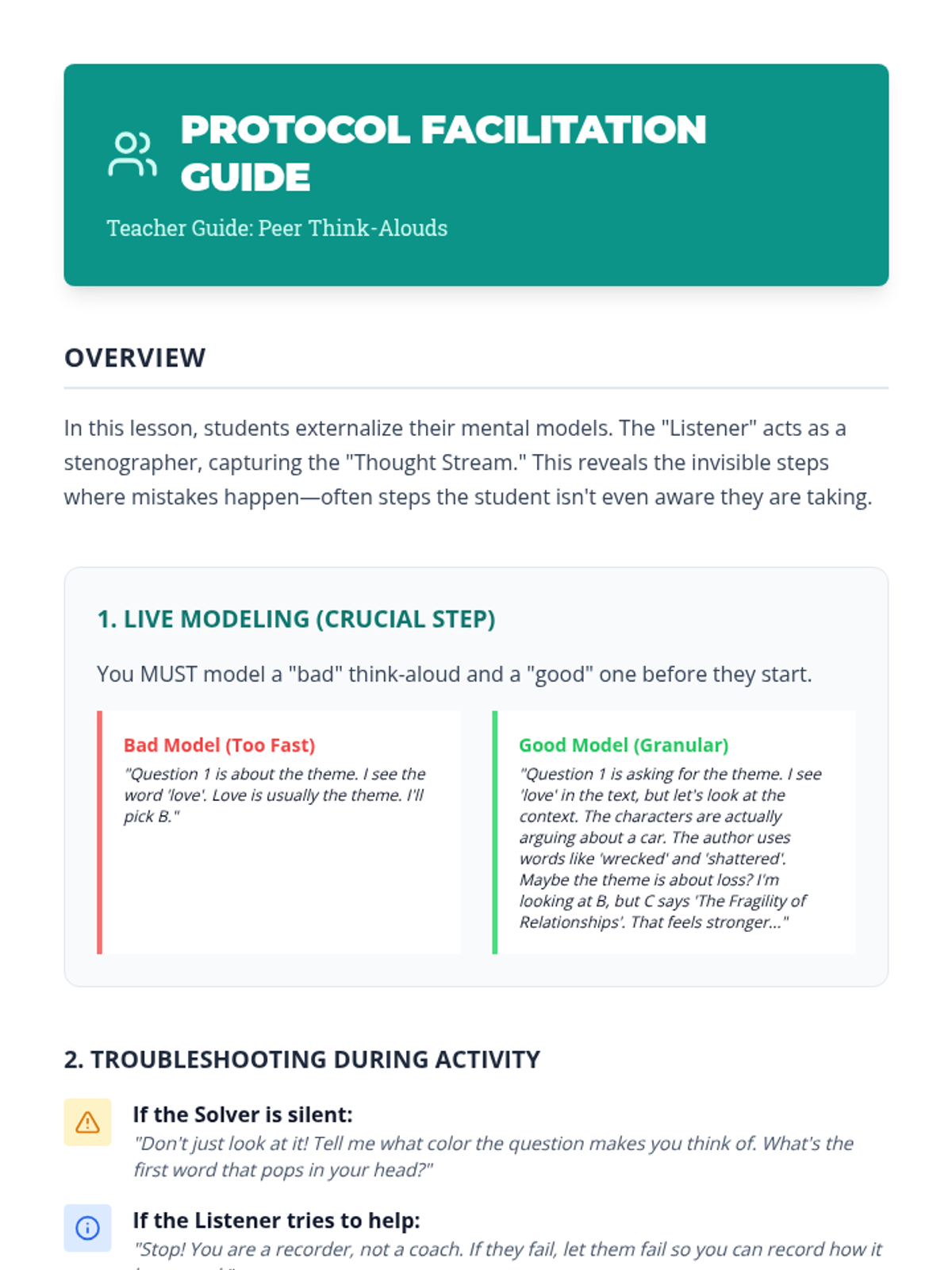
Working in pairs, students vocalize their thinking process while solving a problem while a partner records their steps. They analyze these recordings to identify where their logic deviated from the correct path.
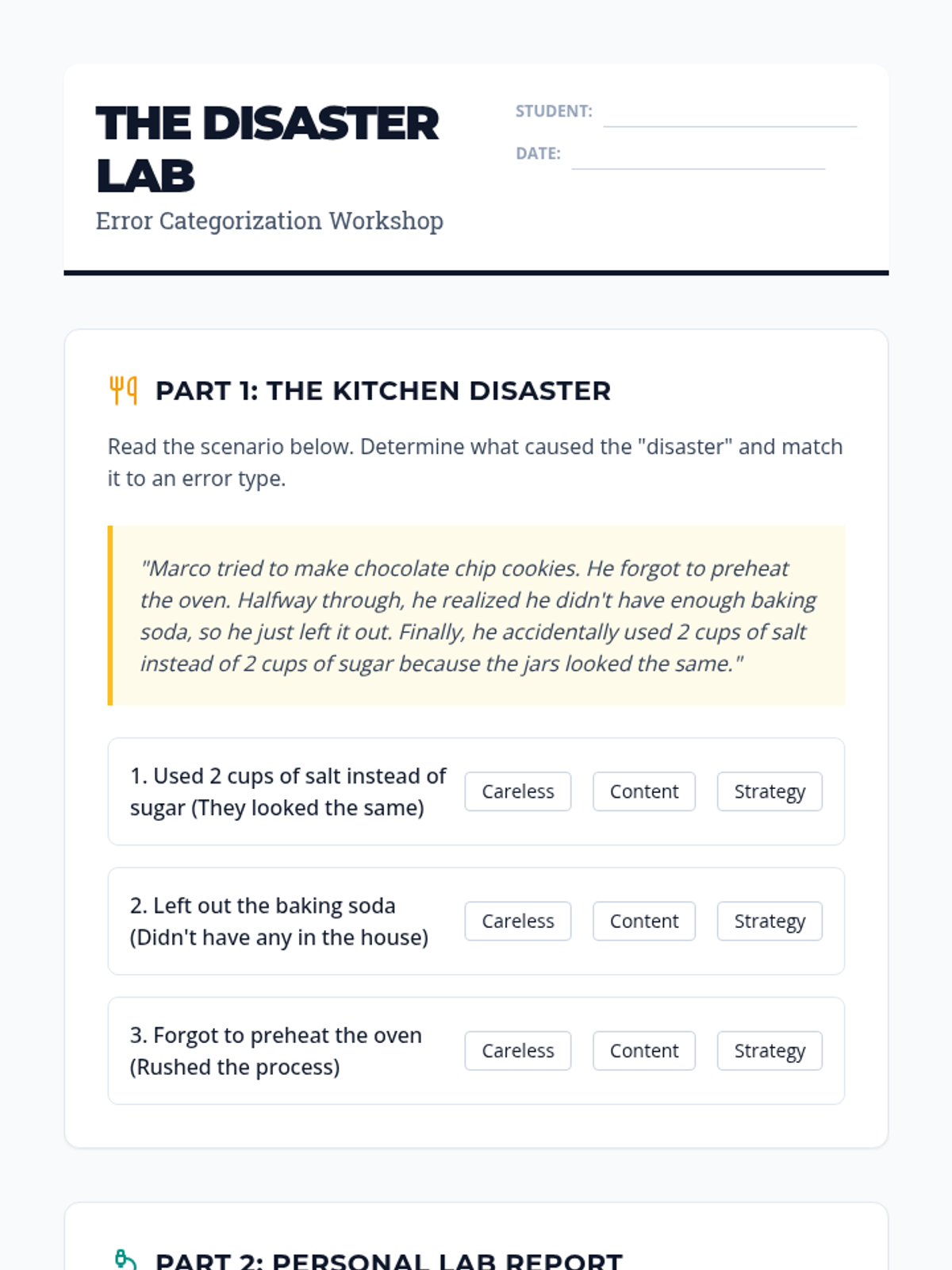
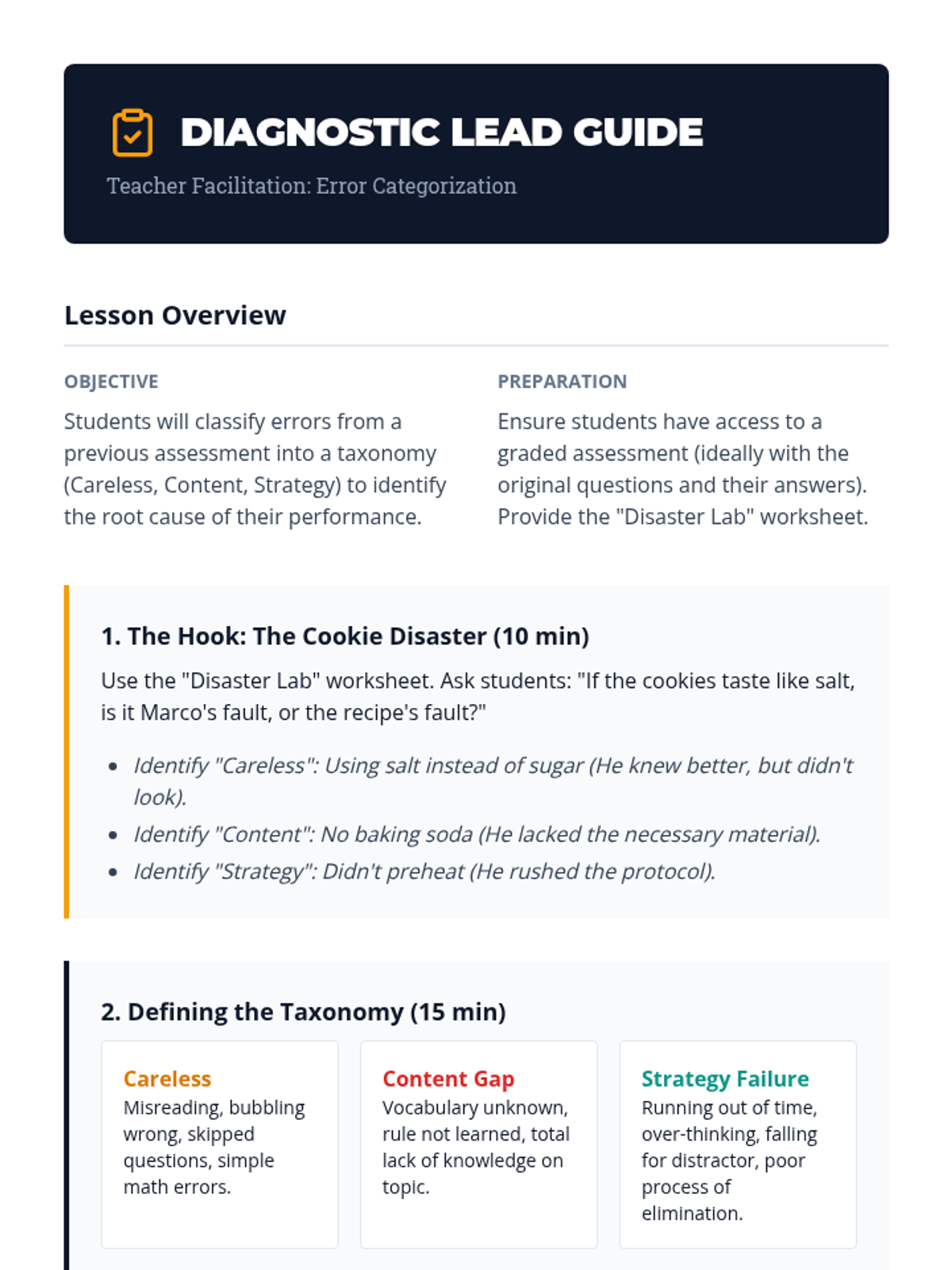
Students review a past assessment and categorize every incorrect answer as a 'Careless Error,' 'Content Gap,' or 'Strategy Failure.' This taxonomy helps them understand that not all mistakes are created equal.
Students apply their skills to fix a 'disaster schedule' and create their own real-world prioritization plan for a busy week.
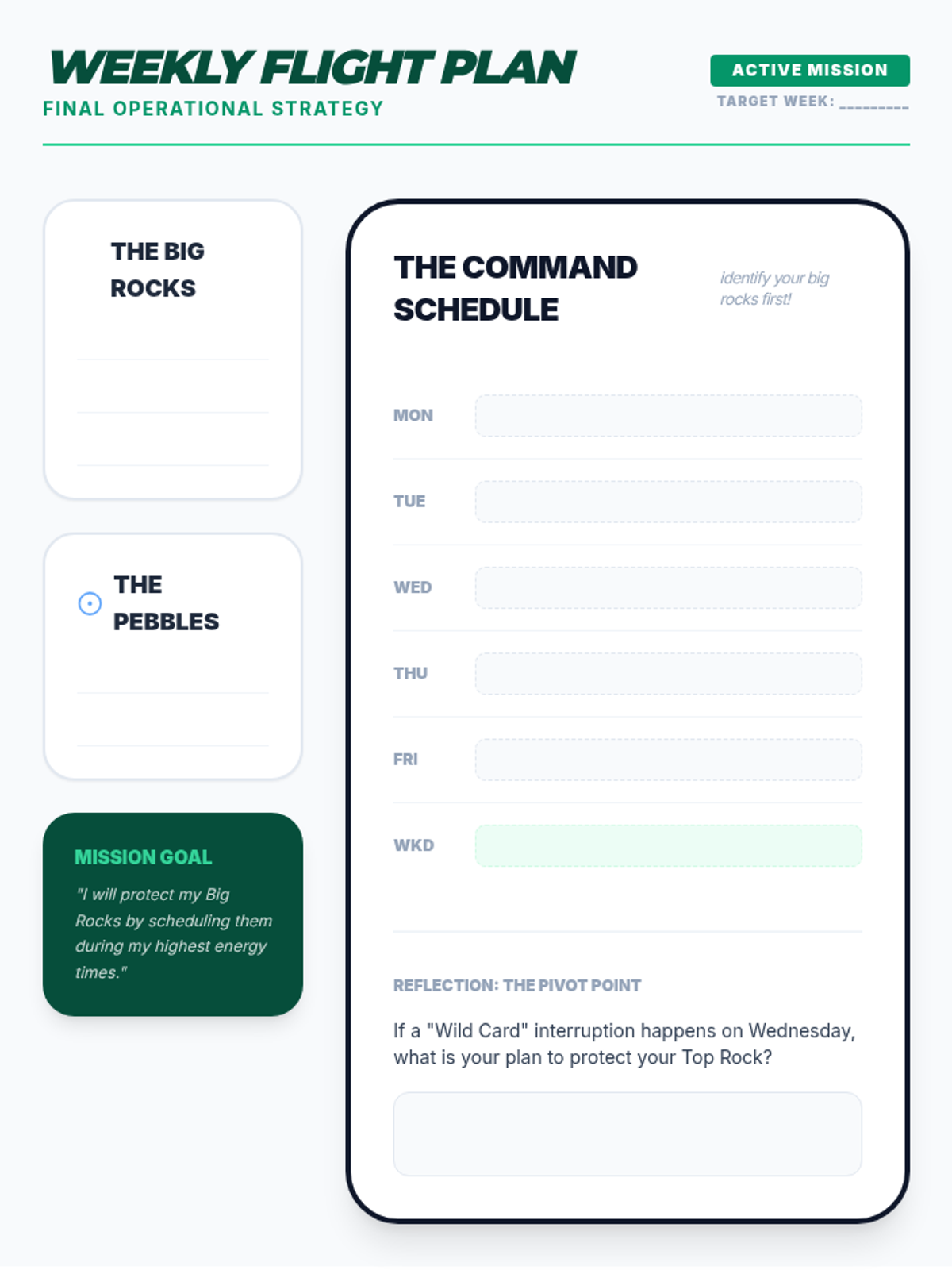
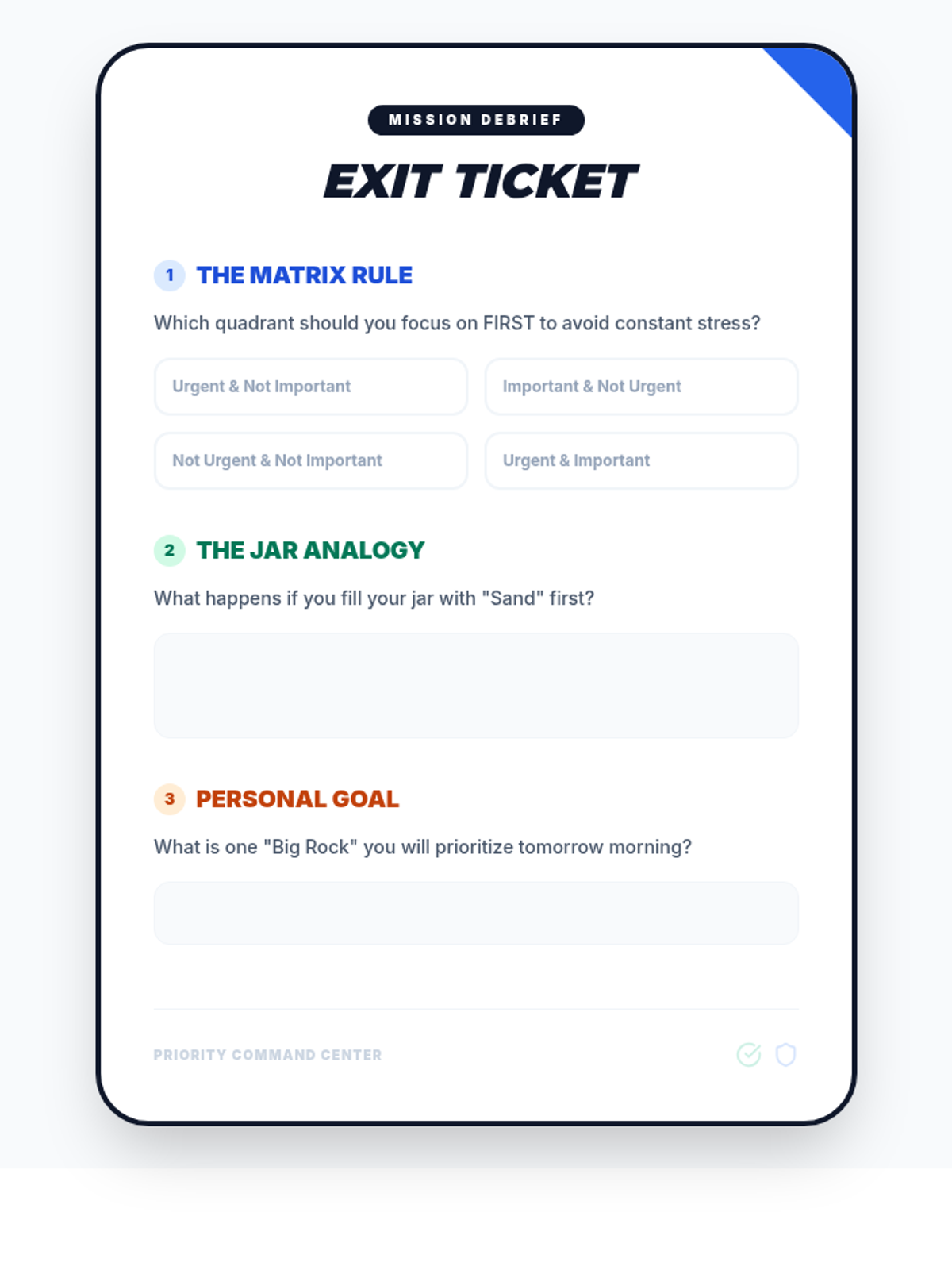
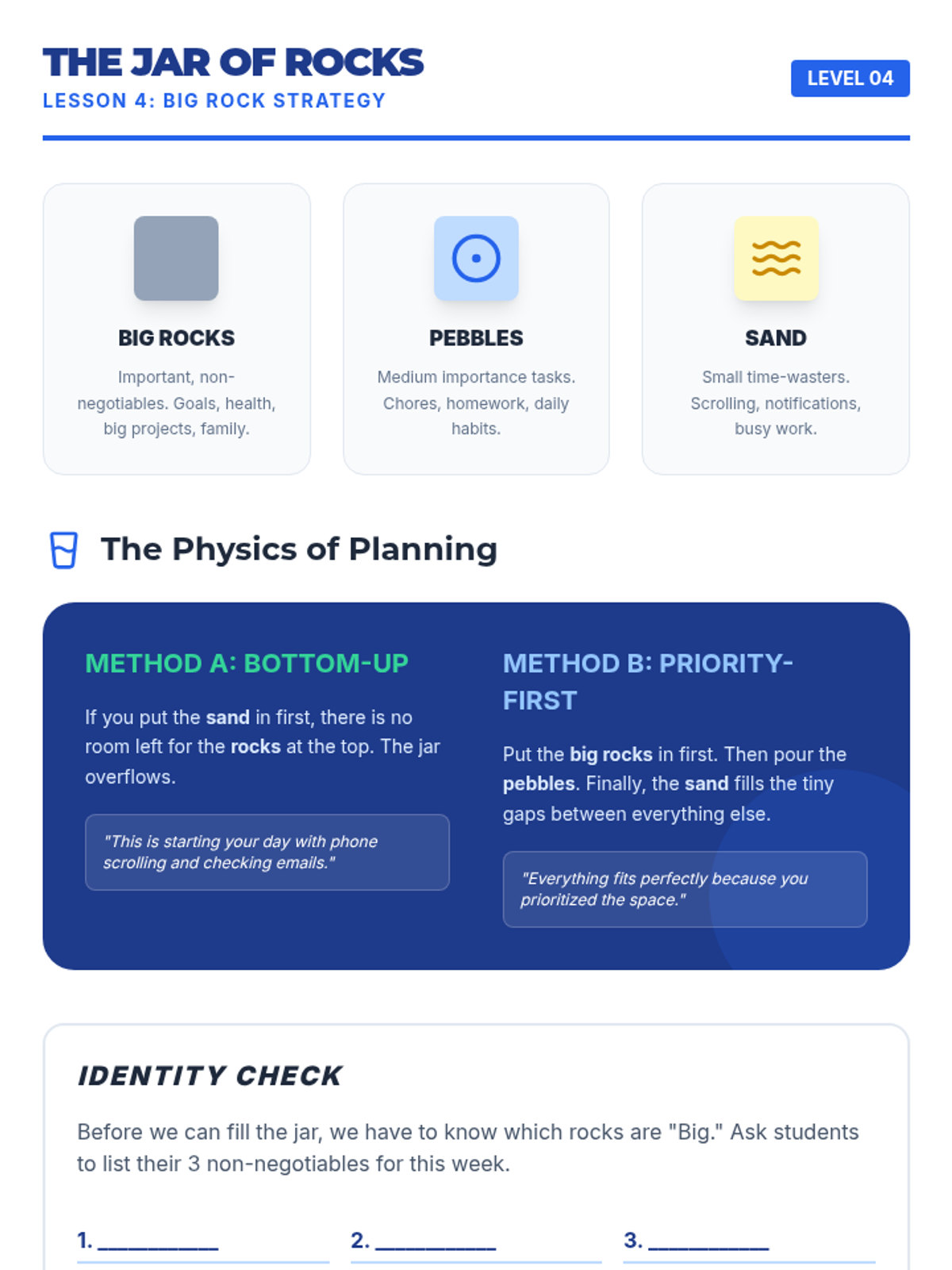
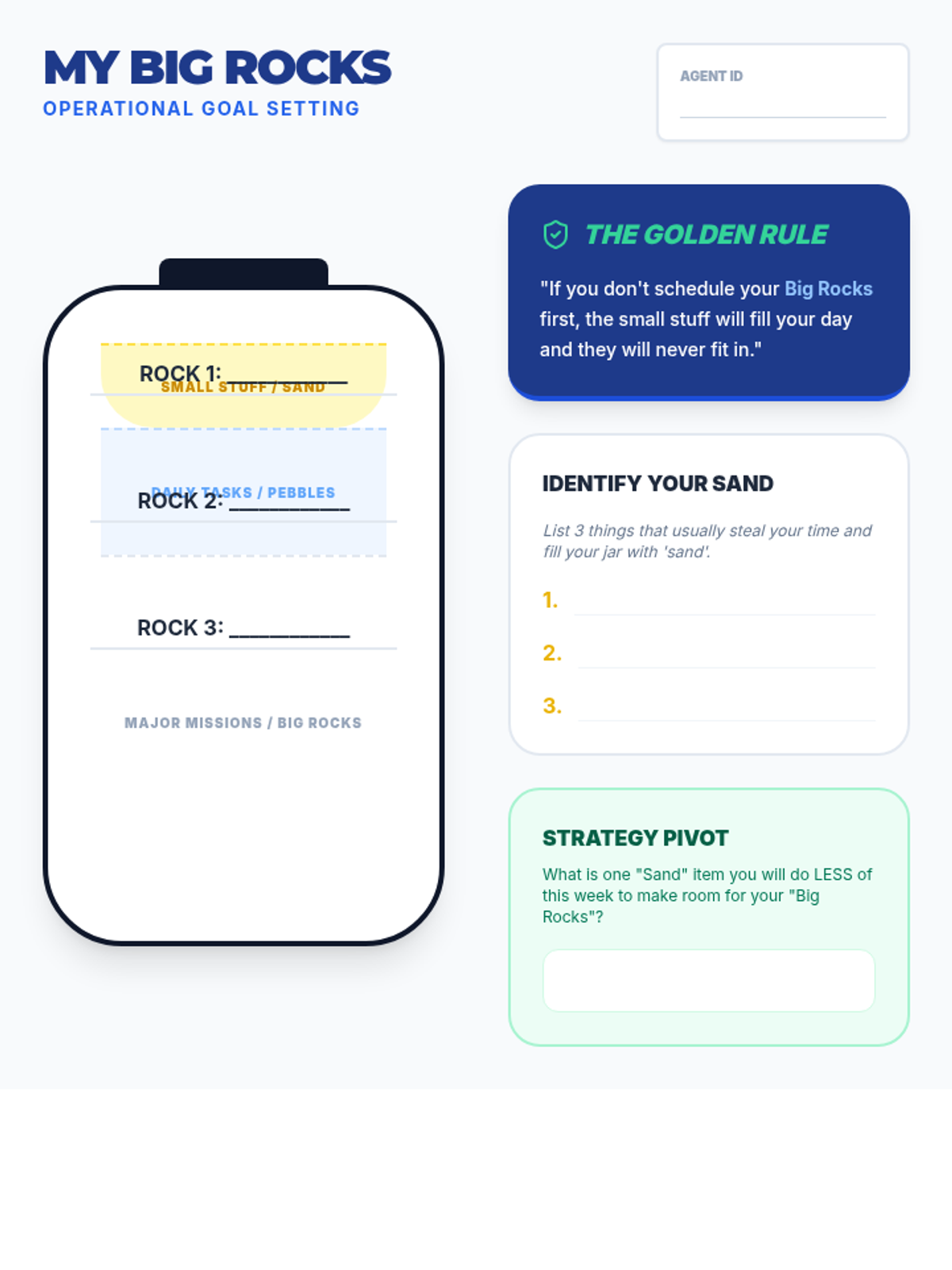
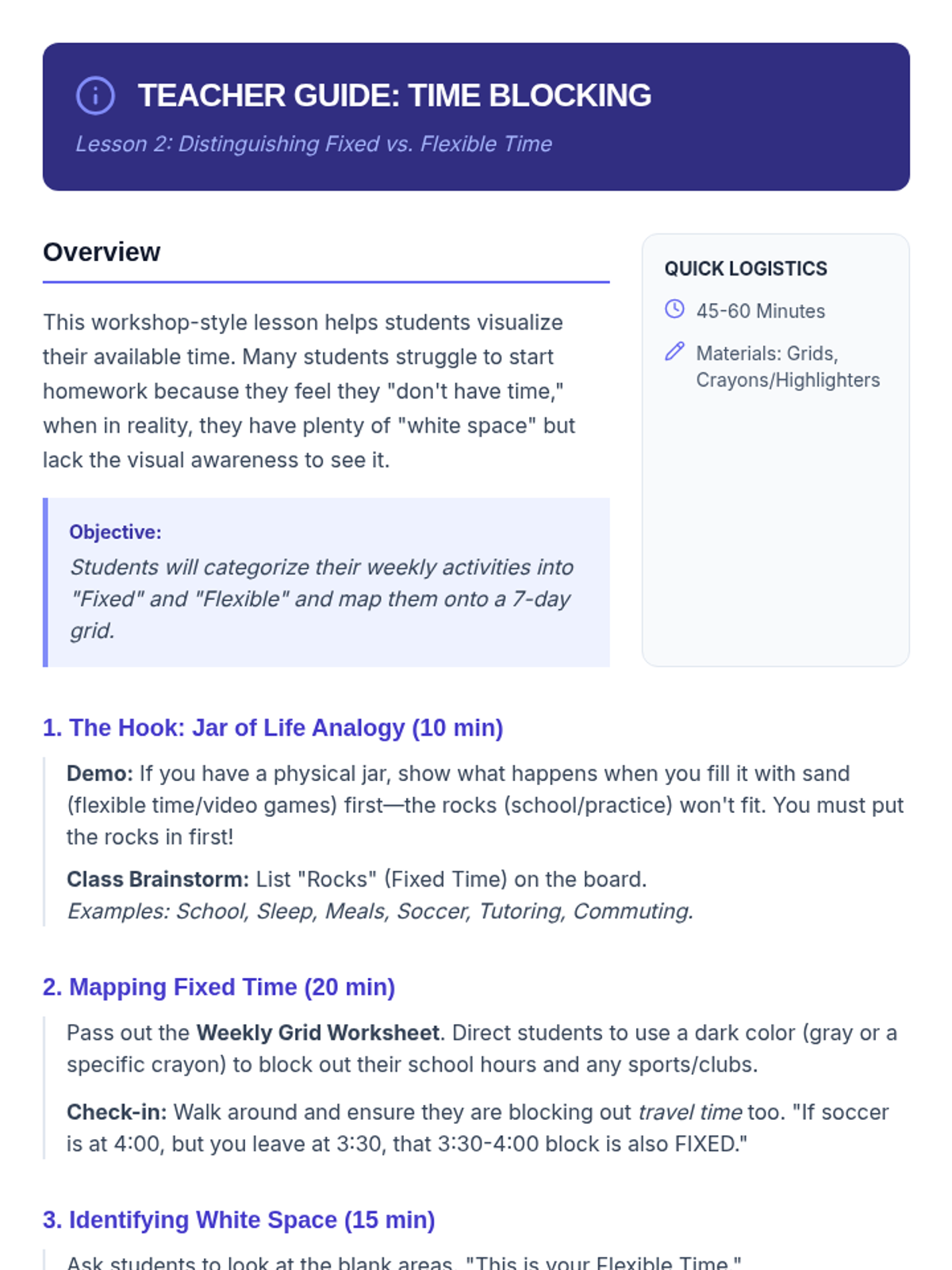
Using the classic 'Jar of Rocks' demonstration, students identify their non-negotiable 'Big Rocks' and learn to schedule them first.
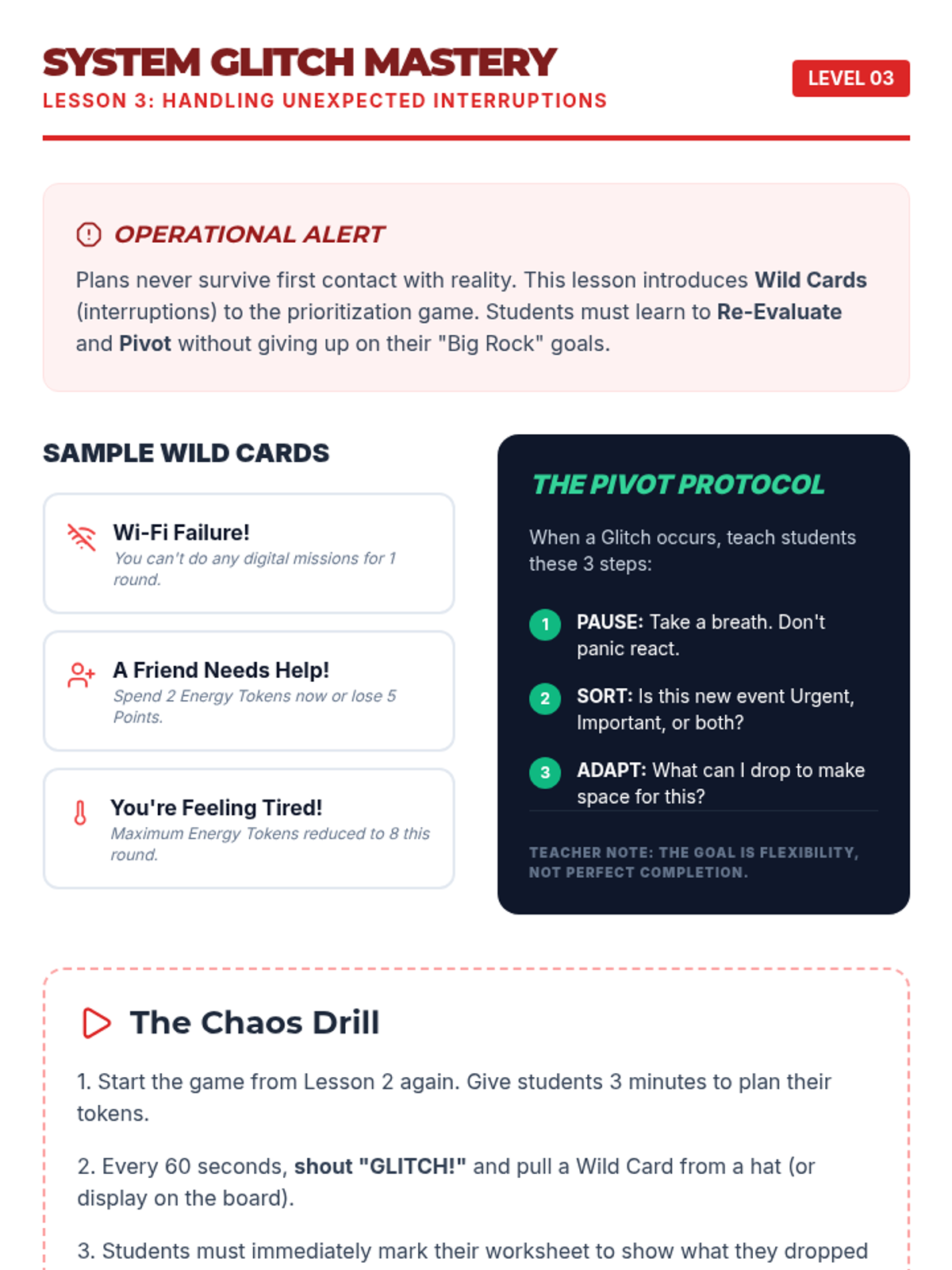
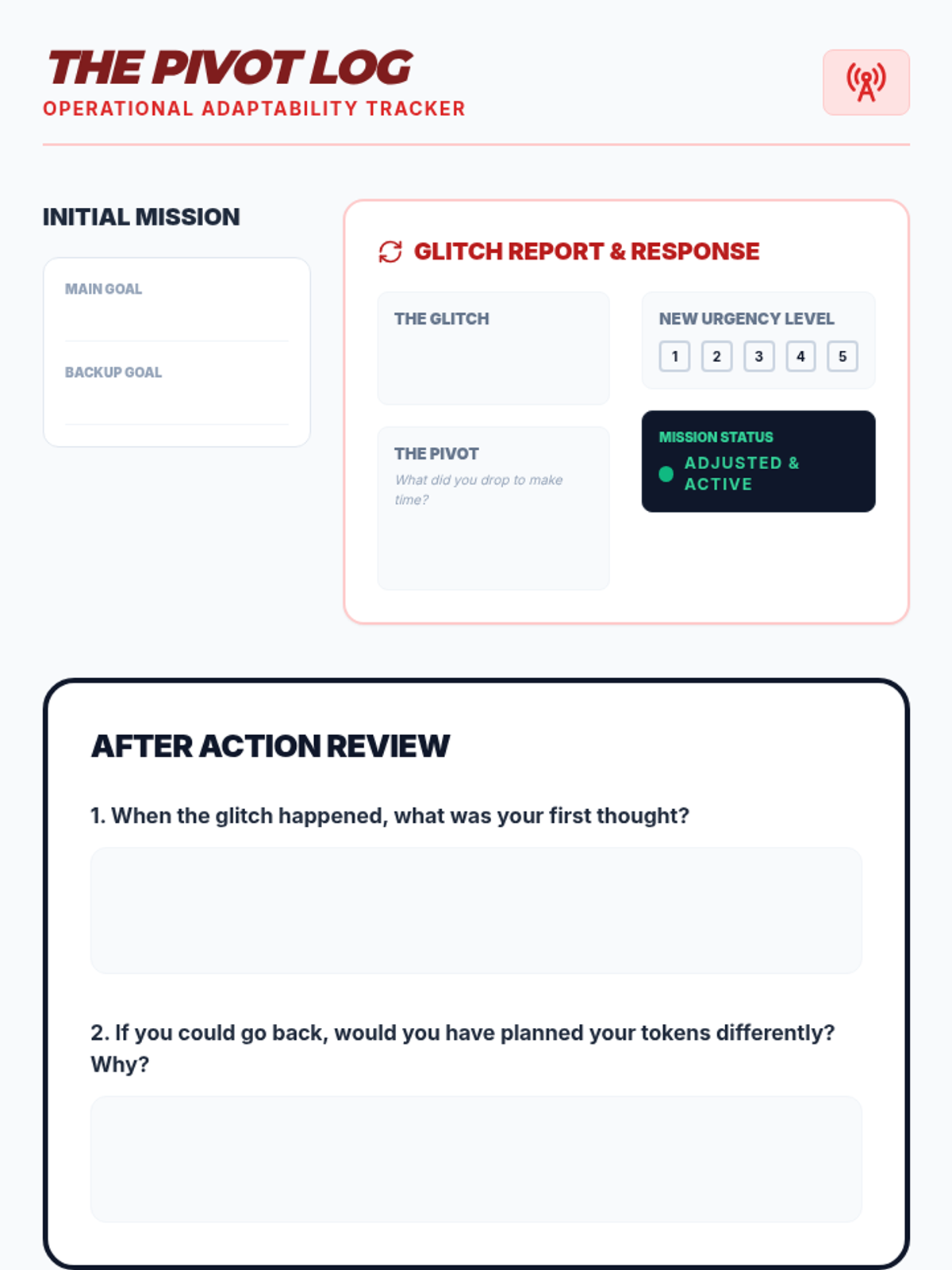
Students practice adapting their plans when 'Wild Cards' and unexpected interruptions occur, learning to pivot without losing sight of goals.
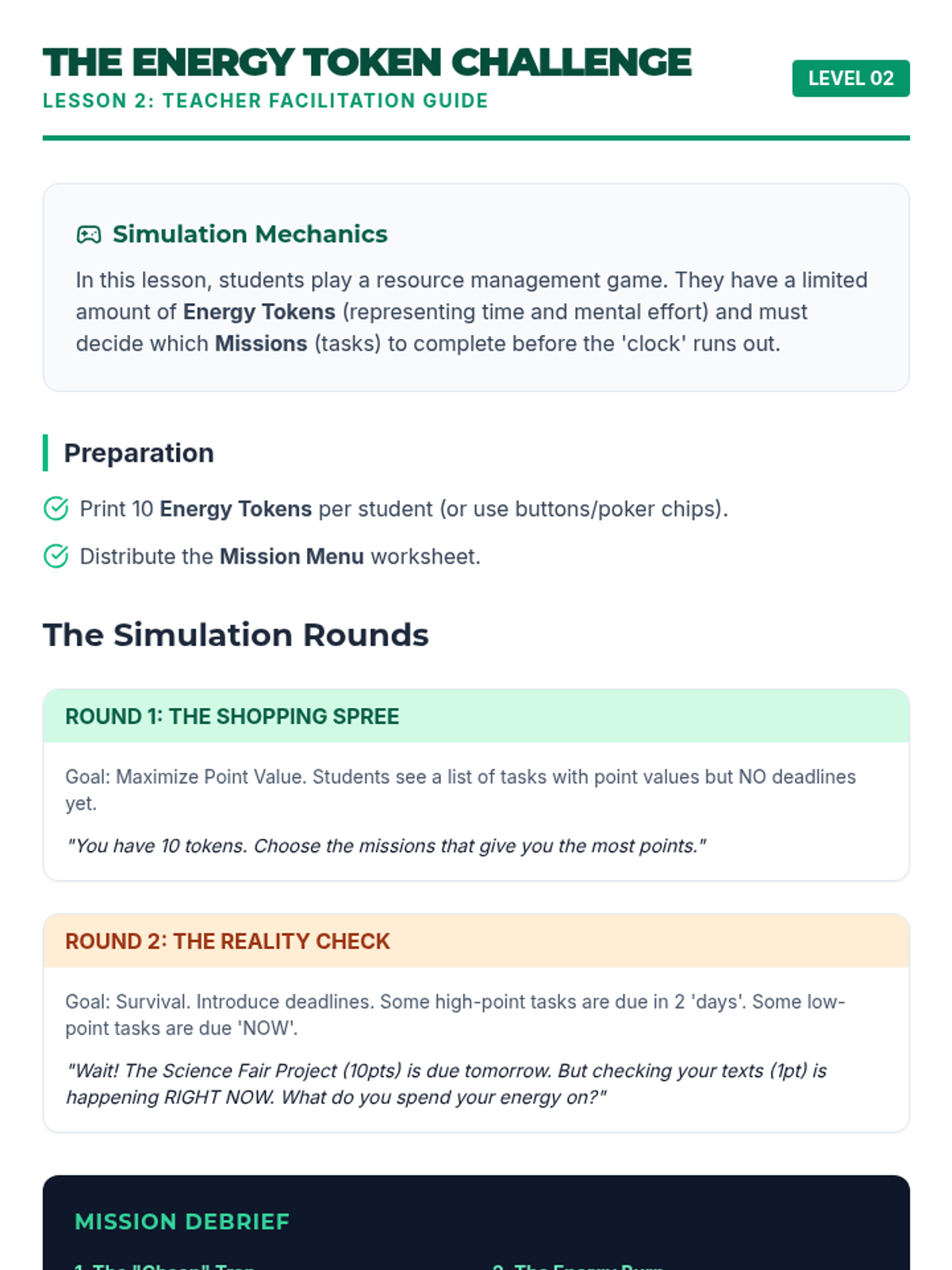
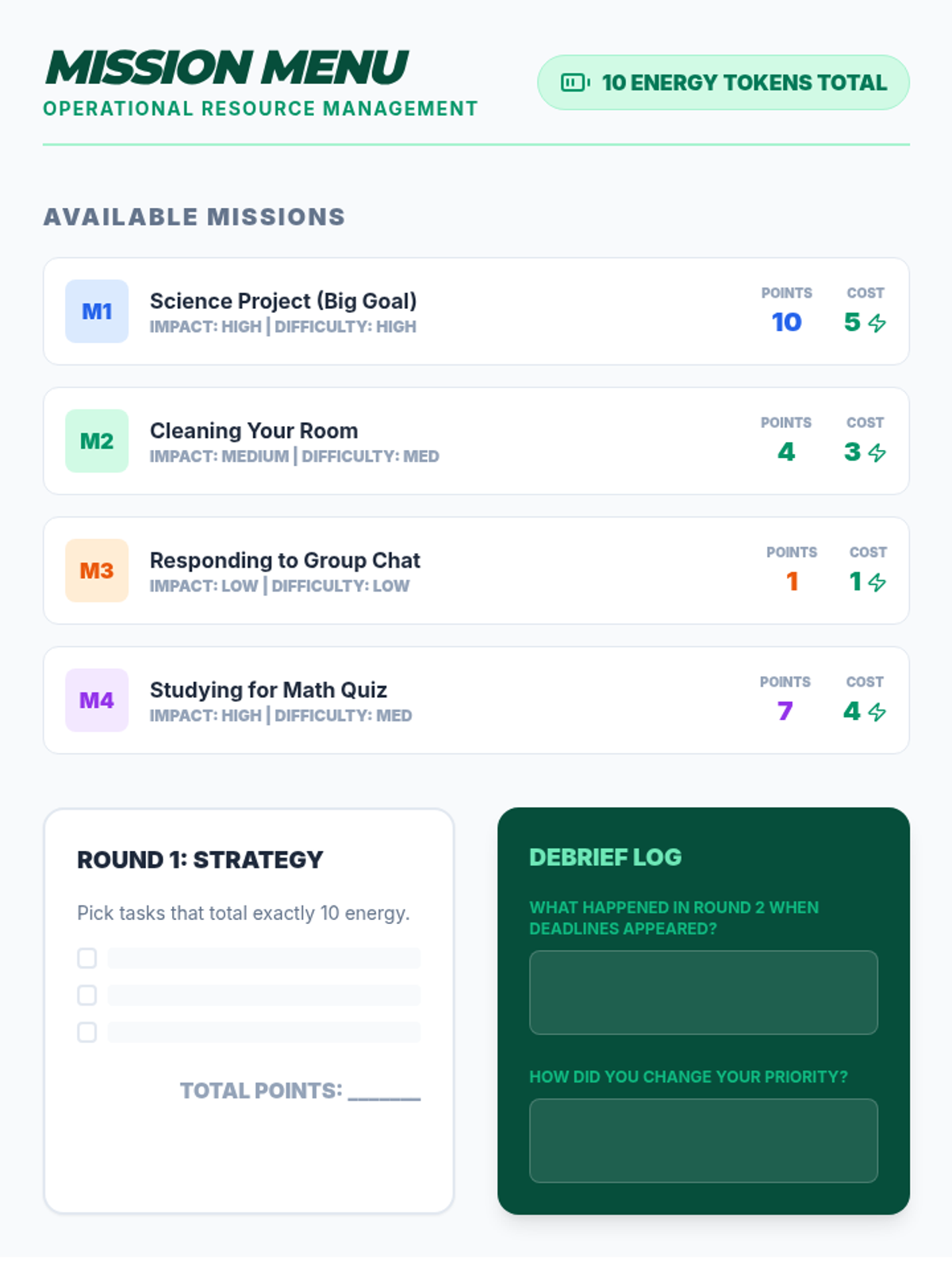
A game-based simulation where students manage limited energy tokens to complete tasks, experiencing the trade-offs of decision-making.
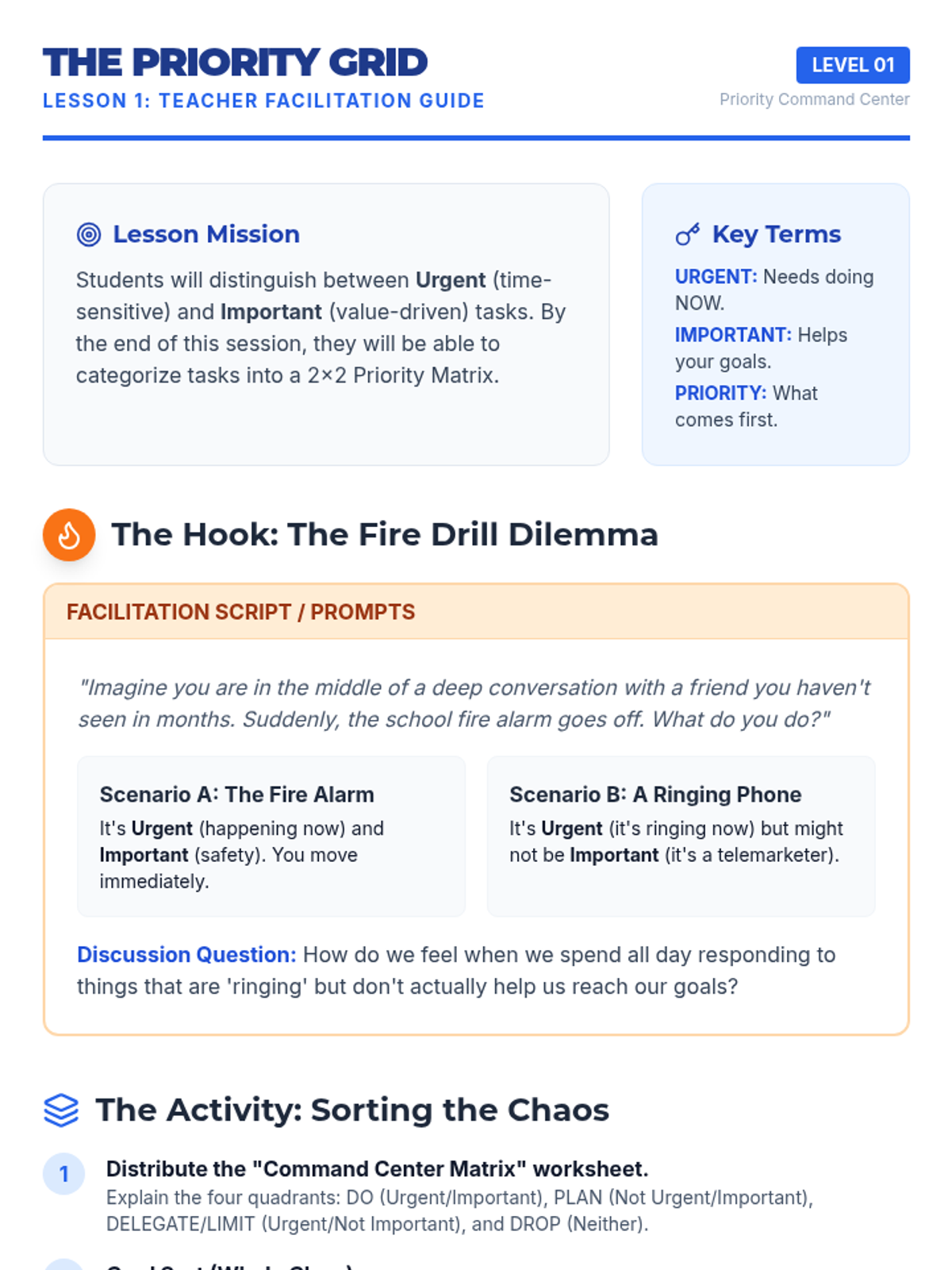
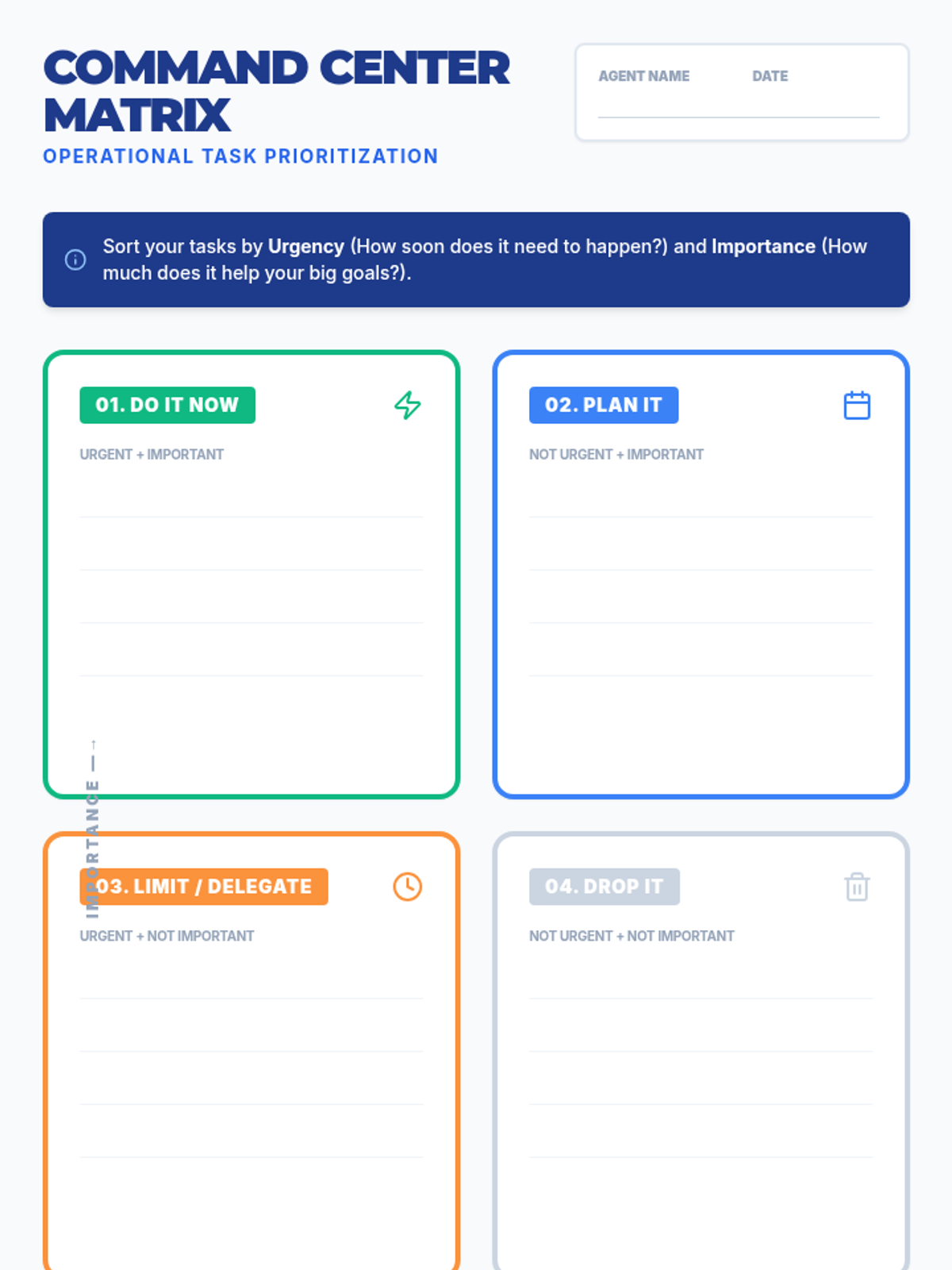
Students define urgency and importance, using a 2x2 matrix to categorize tasks and understand the 'Fire Drill' distinction.
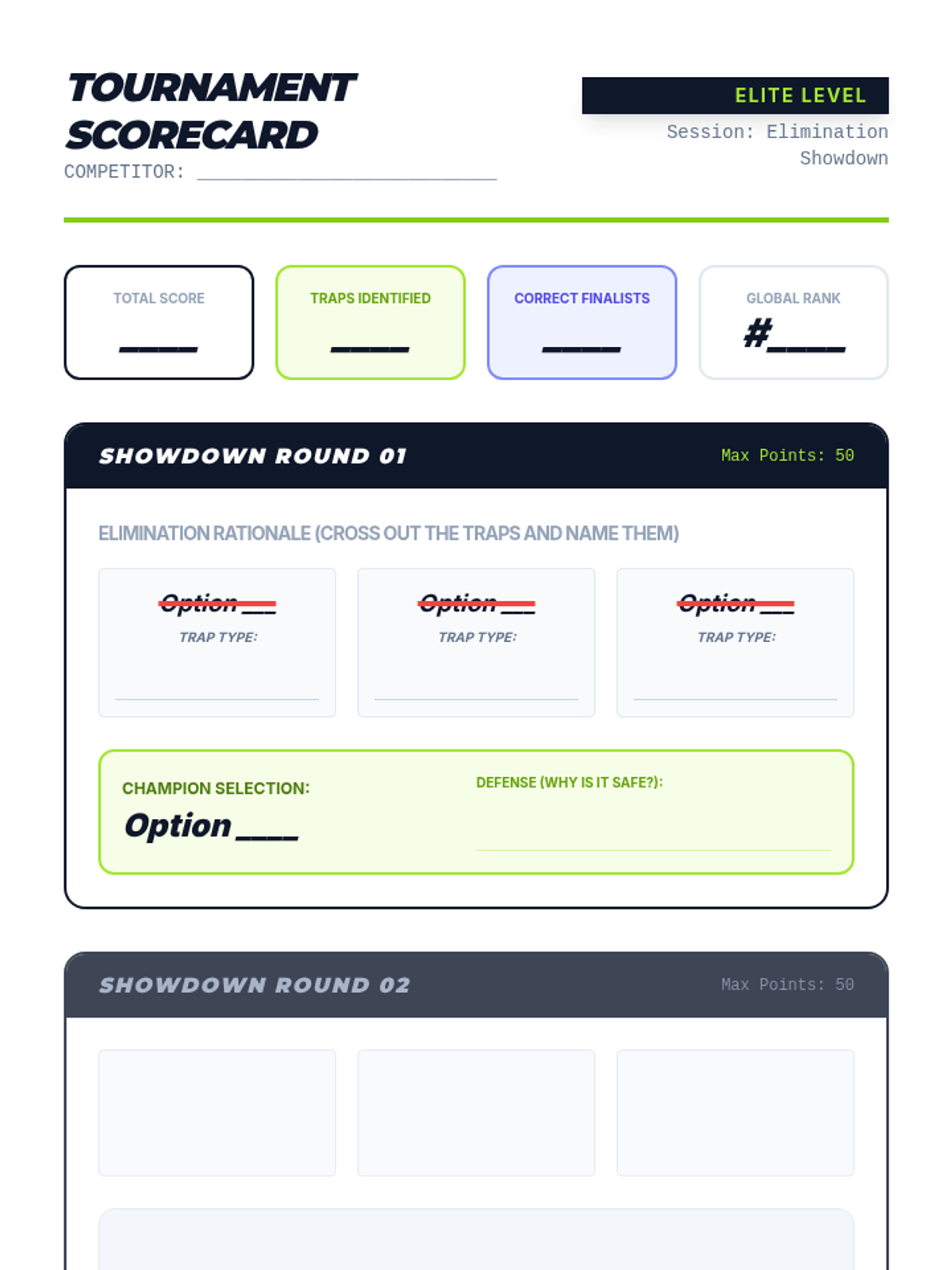
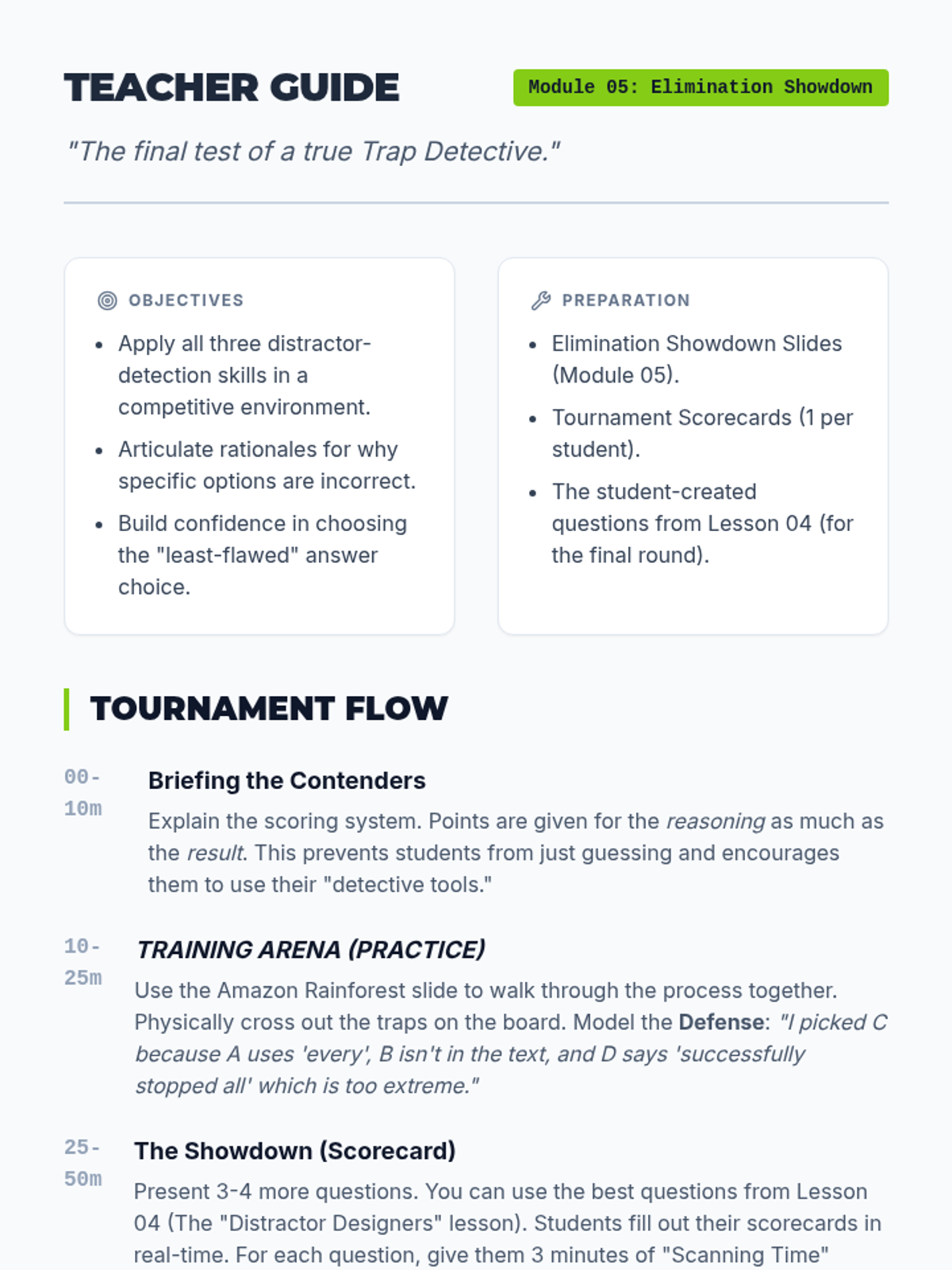
A competitive review tournament where students physically eliminate distractors with a rationale. Points are awarded for identifying specific trap types before selecting the correct answer.
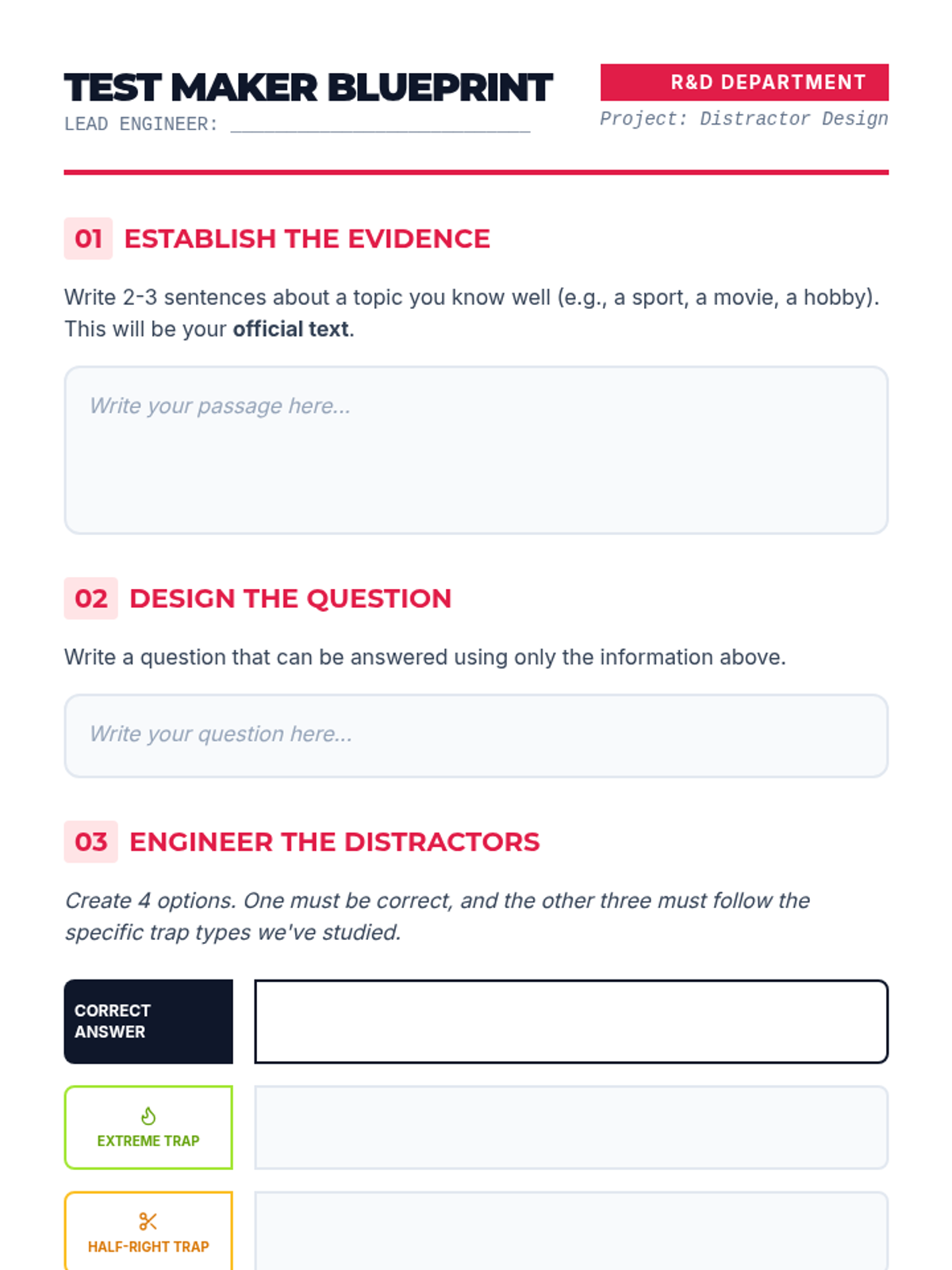
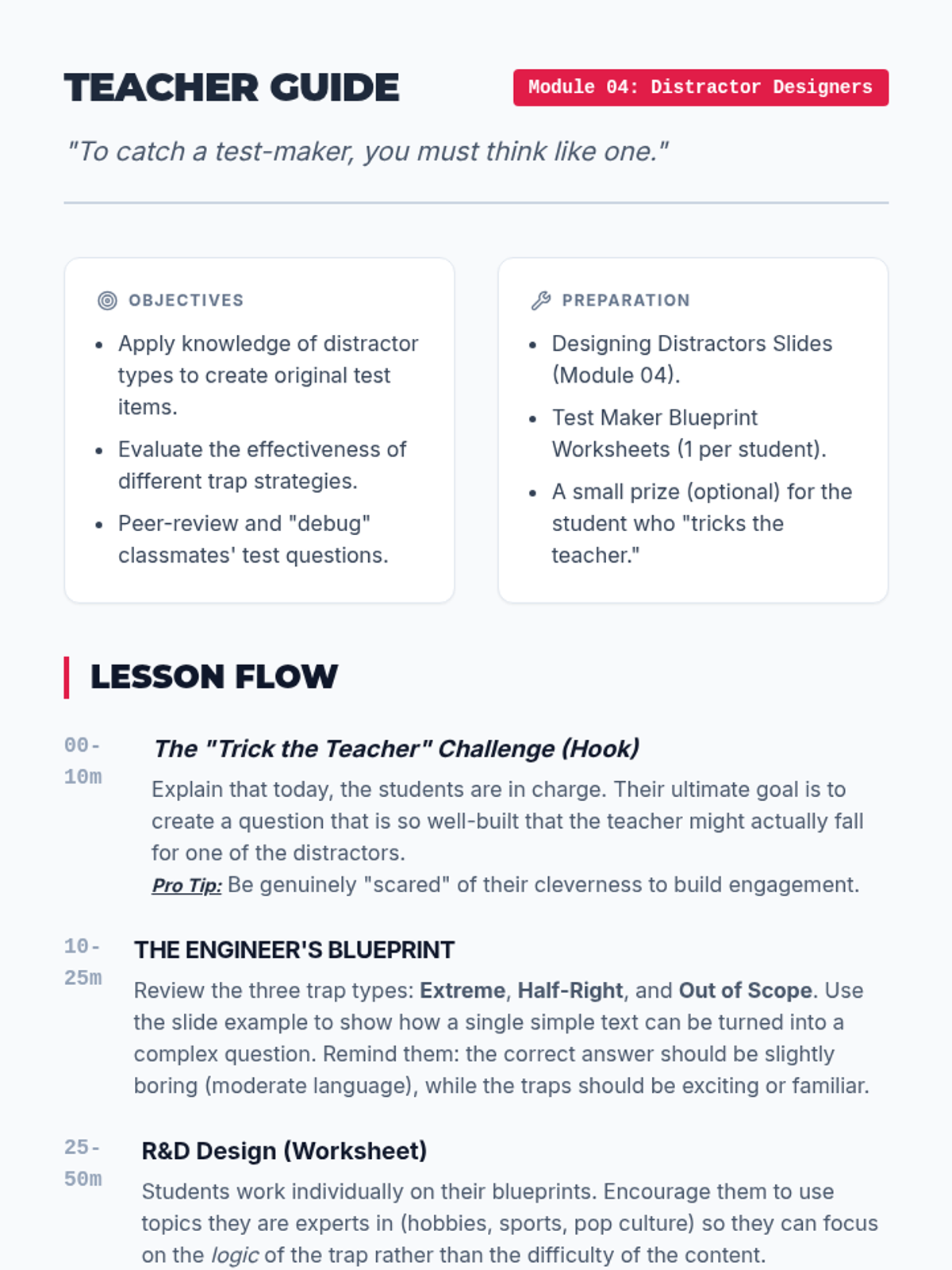
Students become test-makers by writing their own multiple-choice questions with deliberate traps. This role-reversal helps them internalize the logic behind distractor construction.
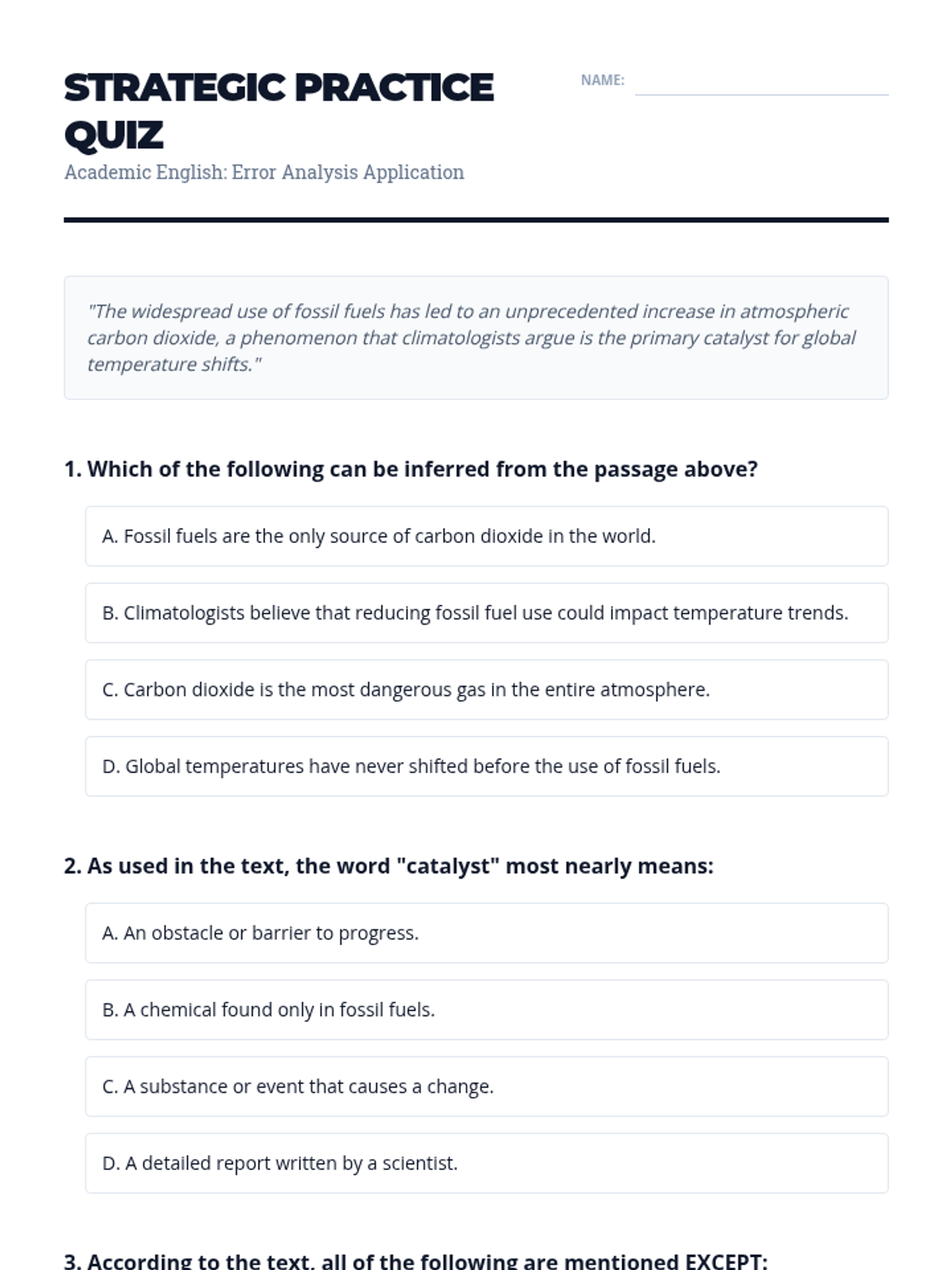
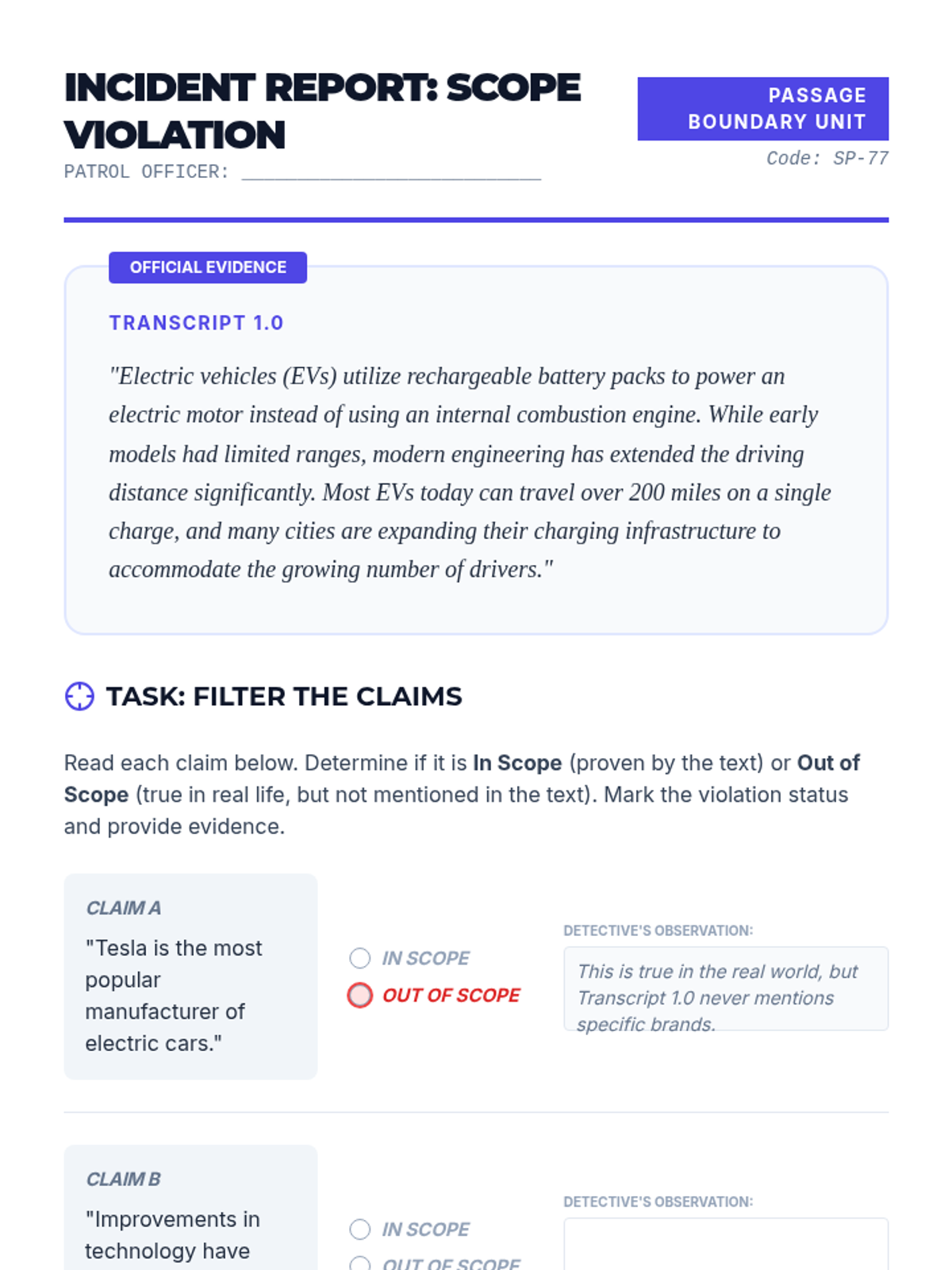
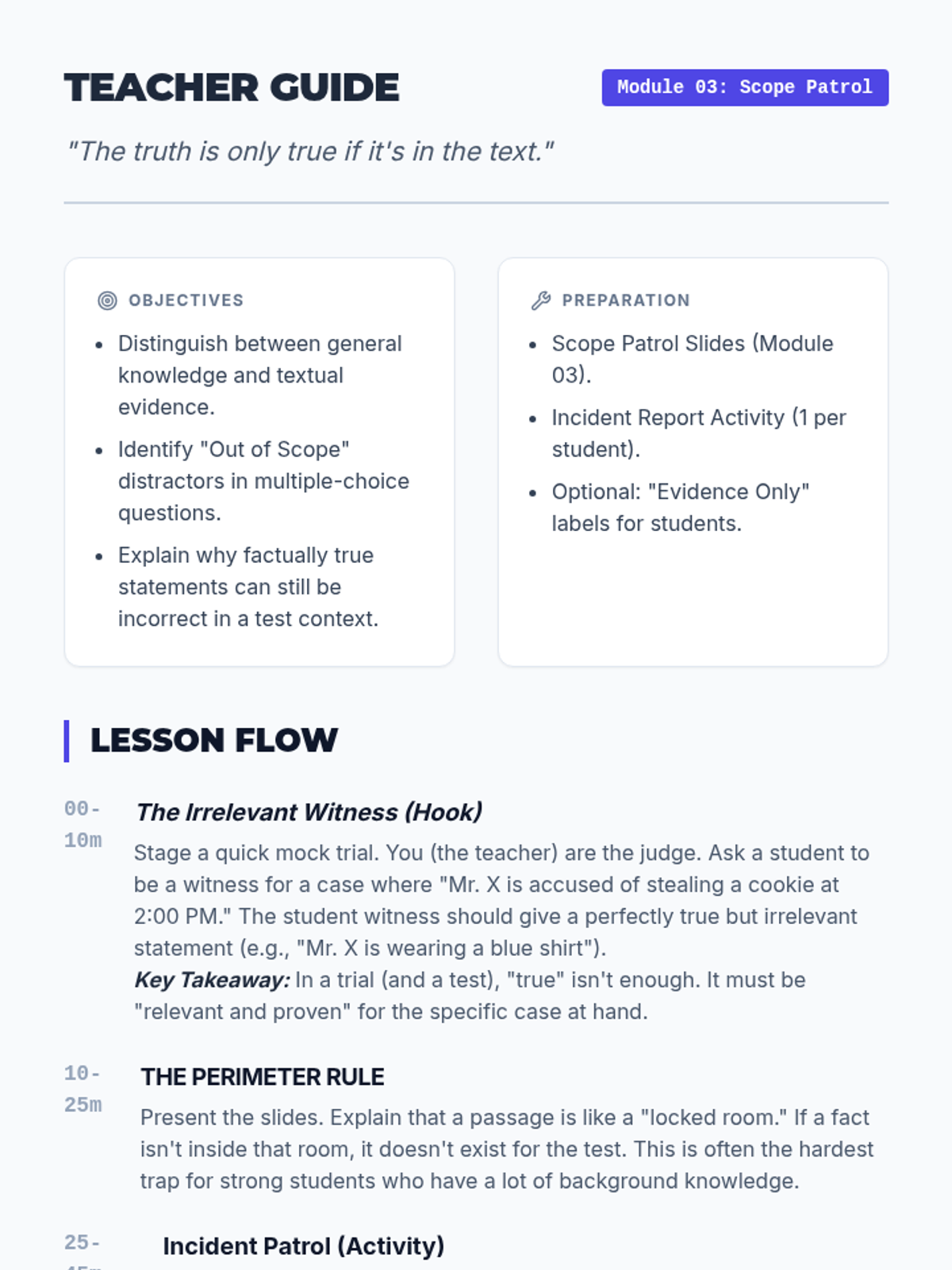
Students identify statements that are factually true in the real world but are not supported by the specific text provided. The focus is on maintaining evidence-based focus within the scope of the passage.
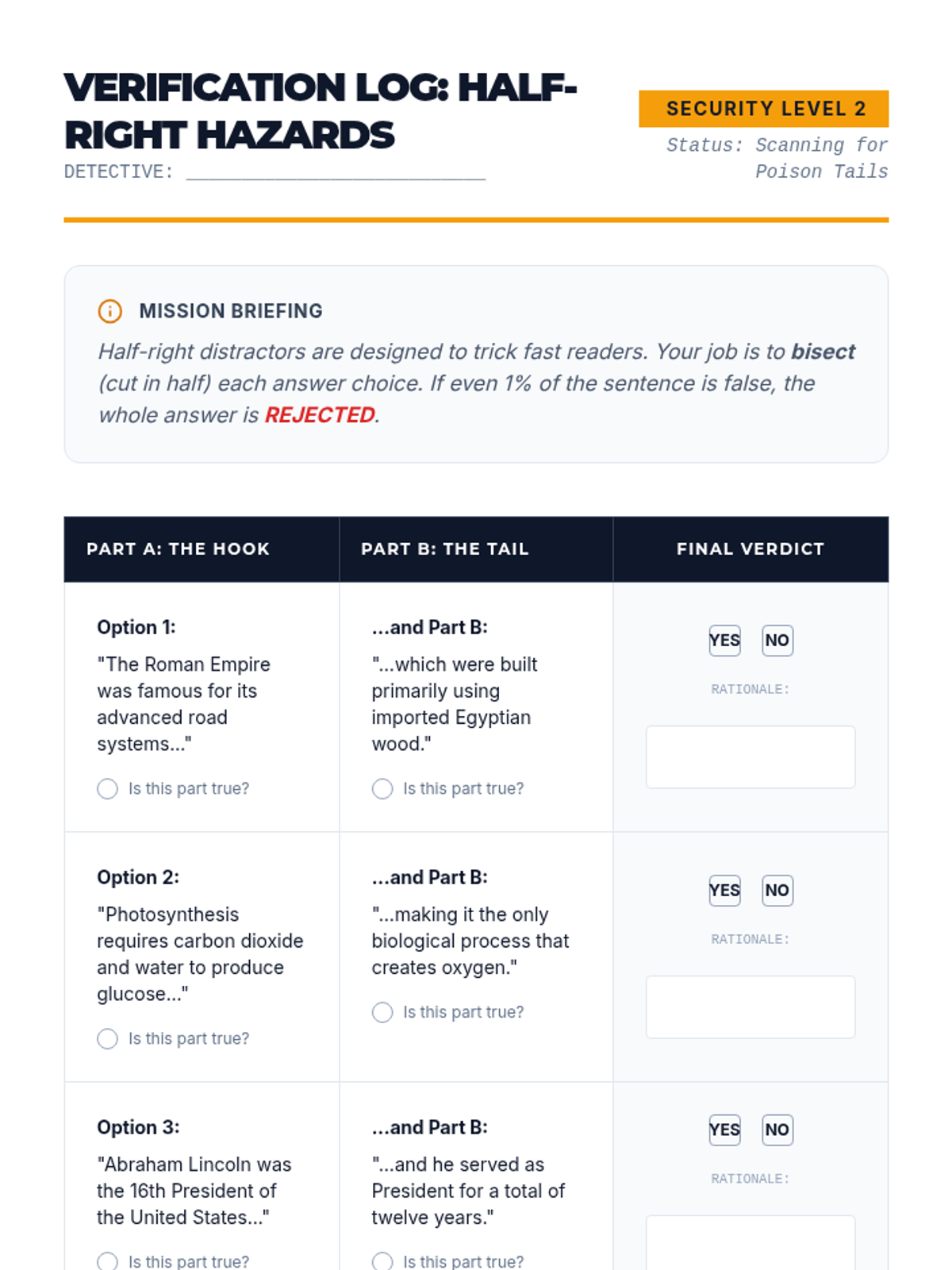
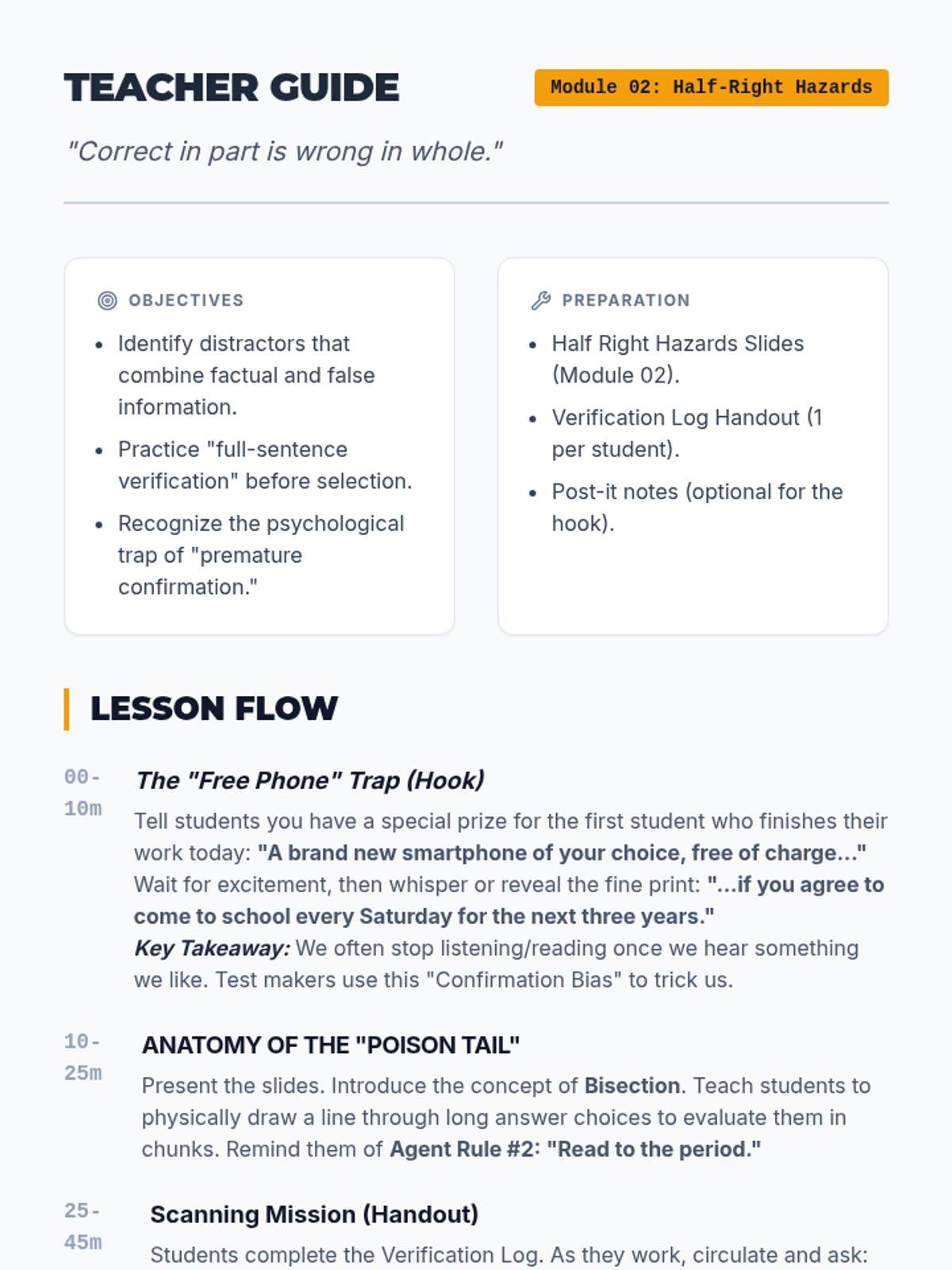
Learners analyze options that are partially correct but ultimately false. This lesson emphasizes the importance of reading every word of an answer choice to catch subtle inaccuracies.
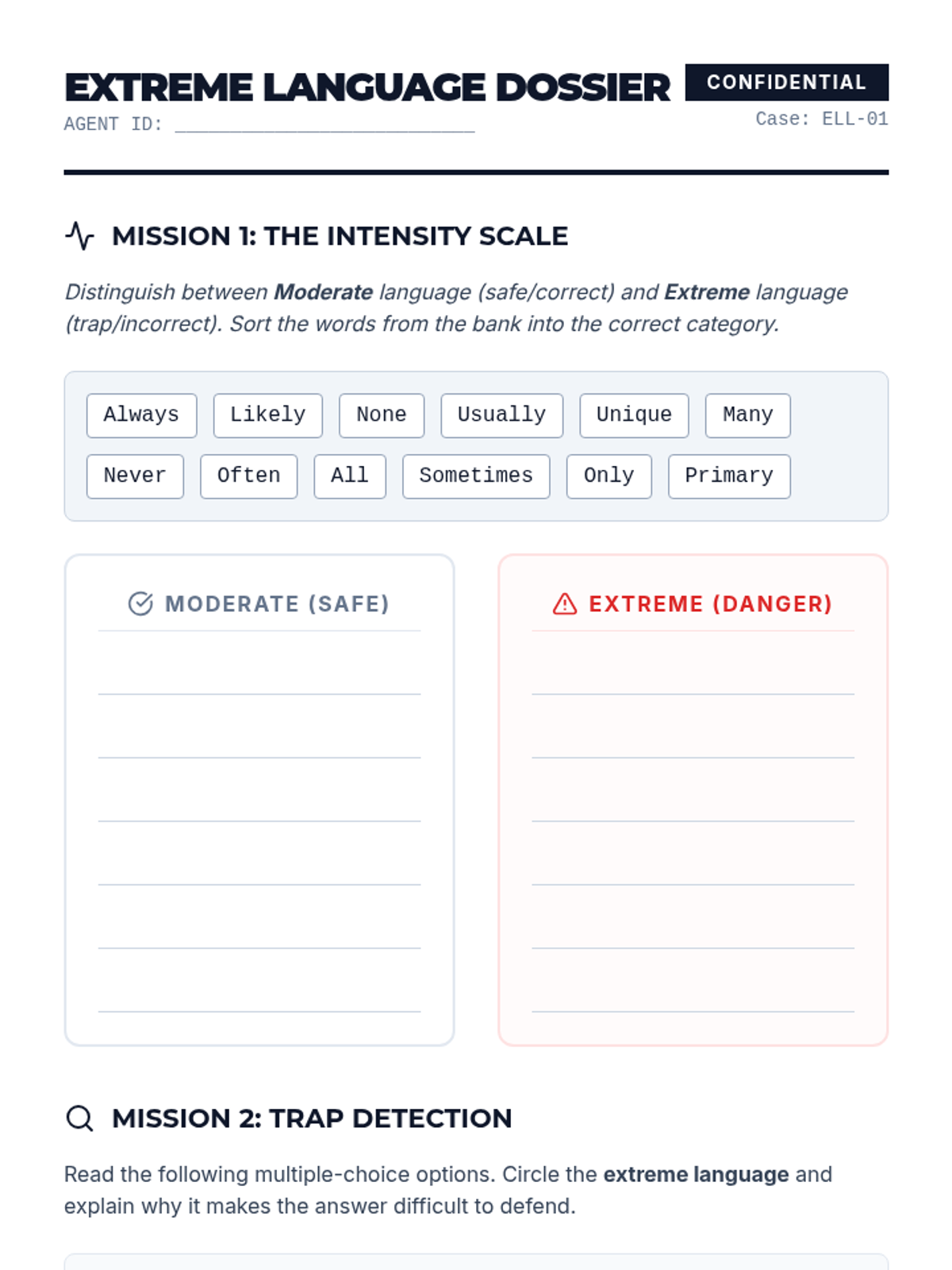
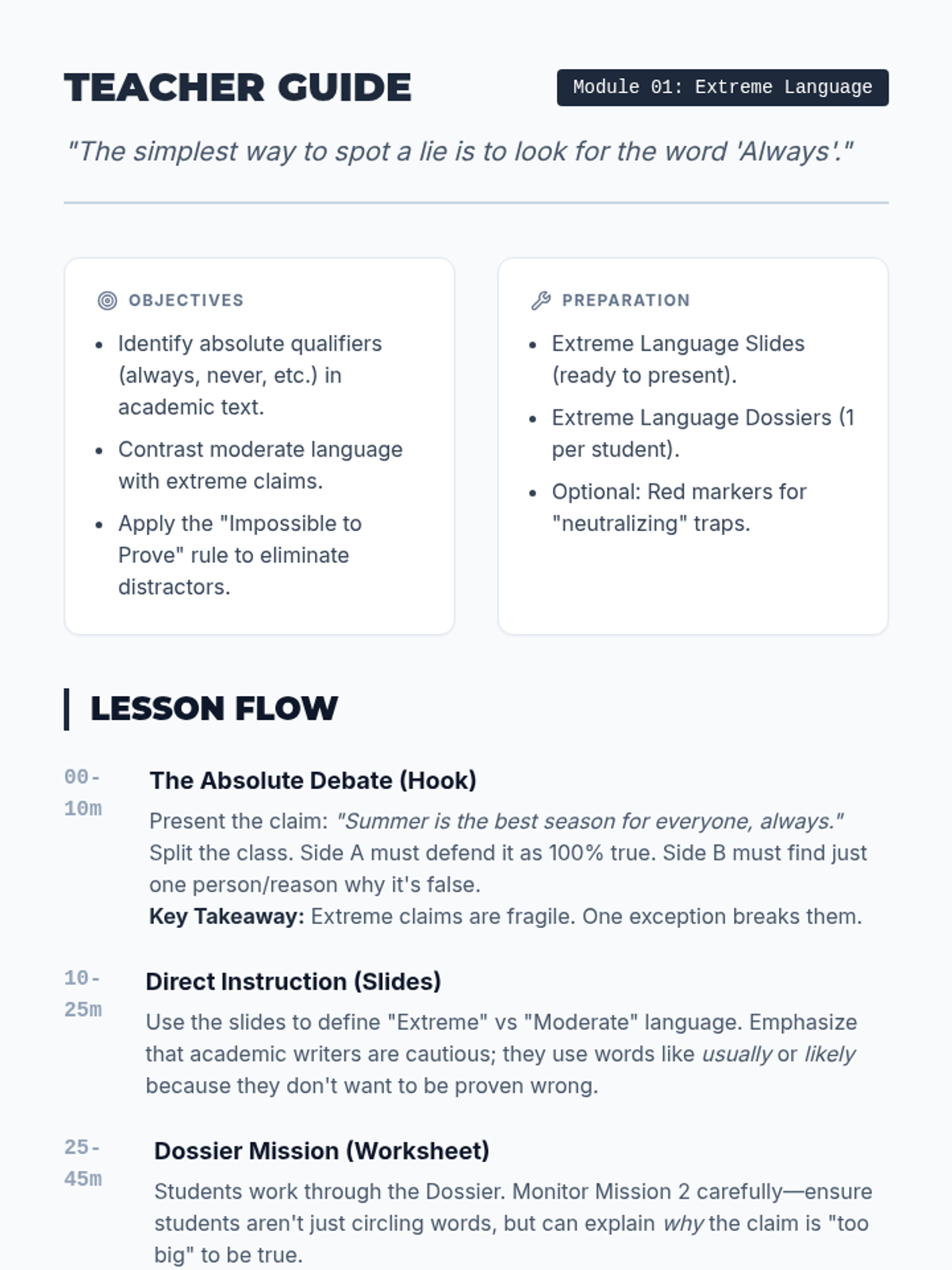
Students learn to identify absolute qualifiers like 'always' and 'never' that signal incorrect answers. They practice categorizing statements by their degree of intensity to evaluate their validity in a test context.
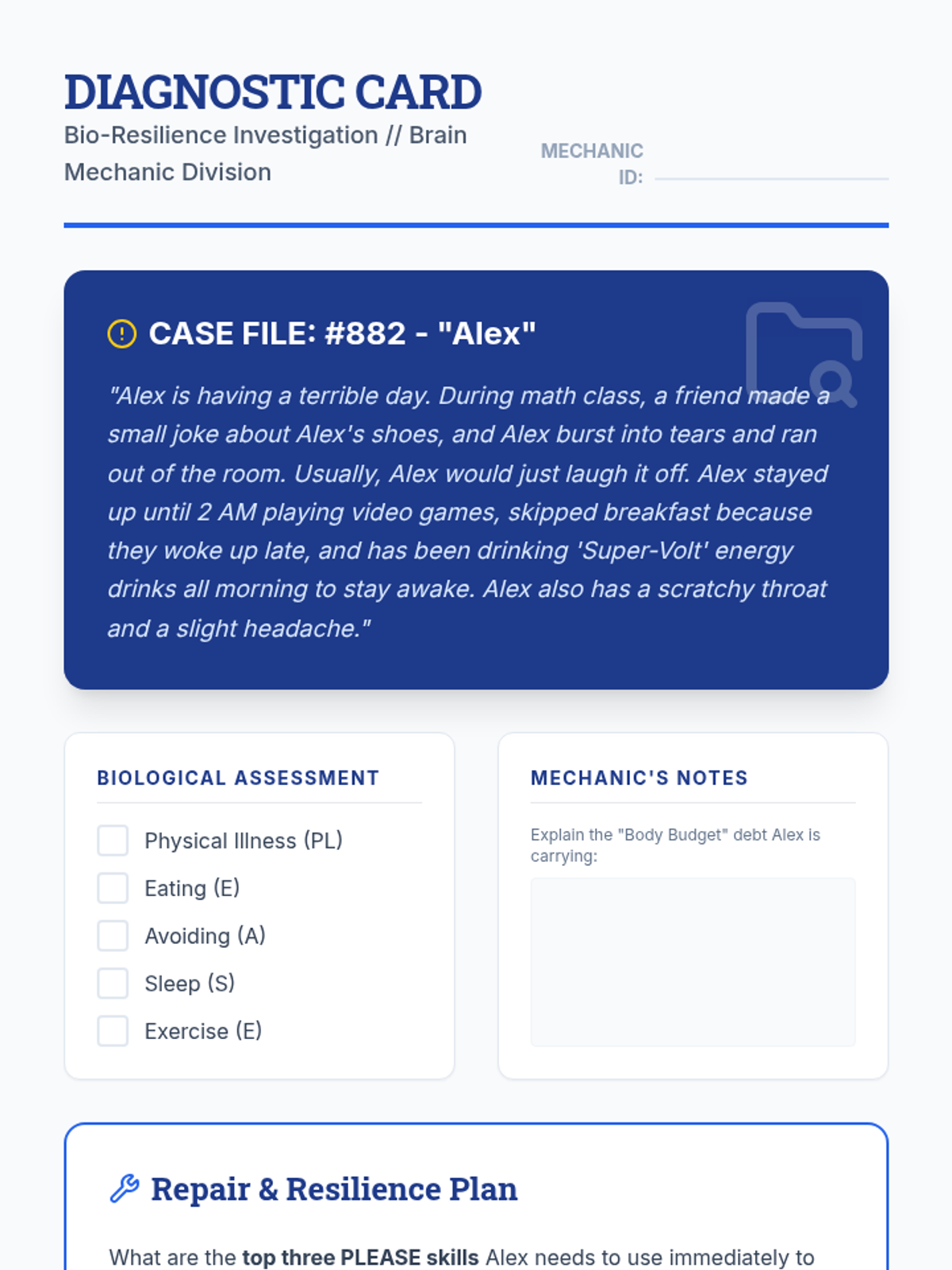
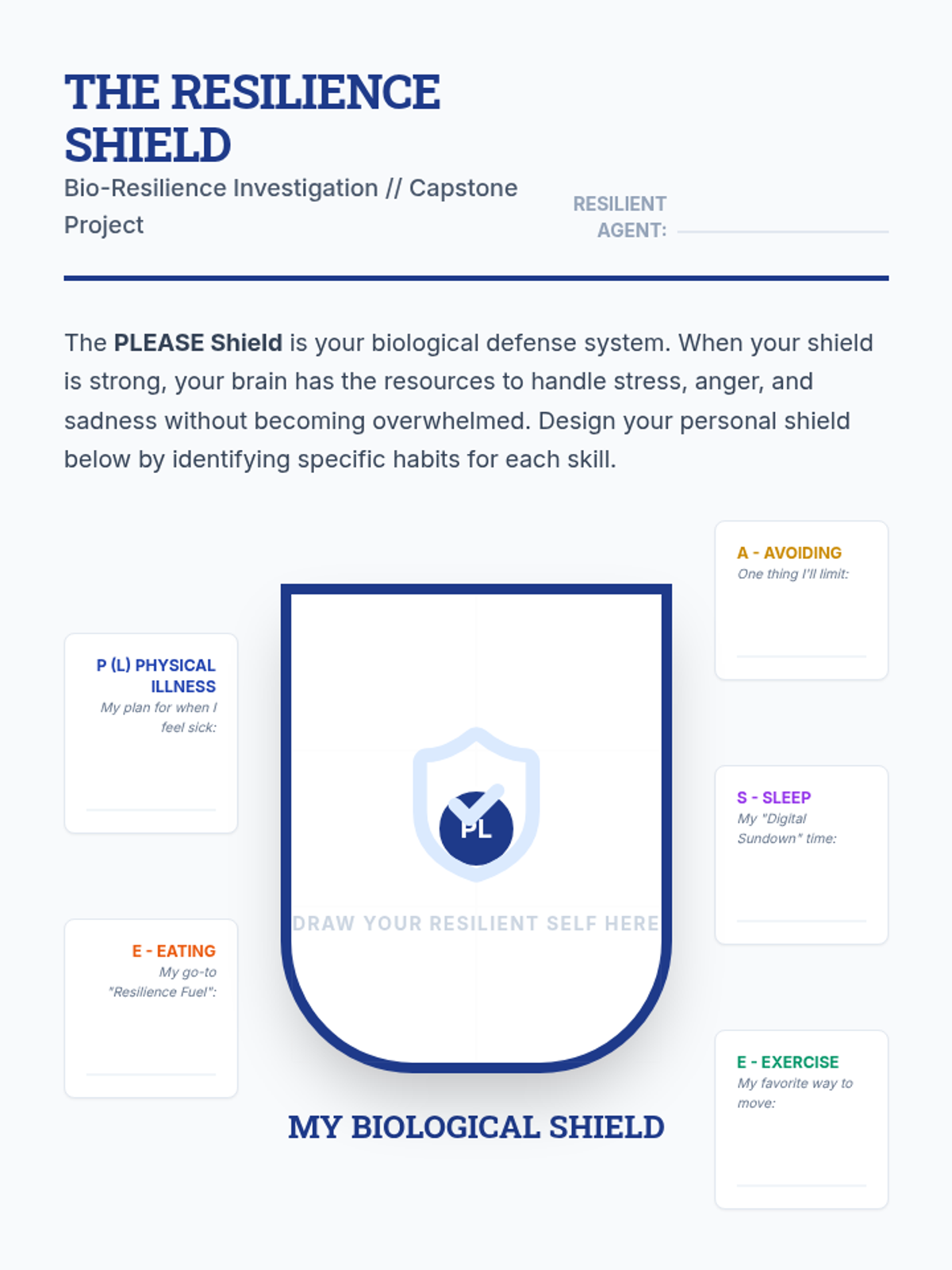
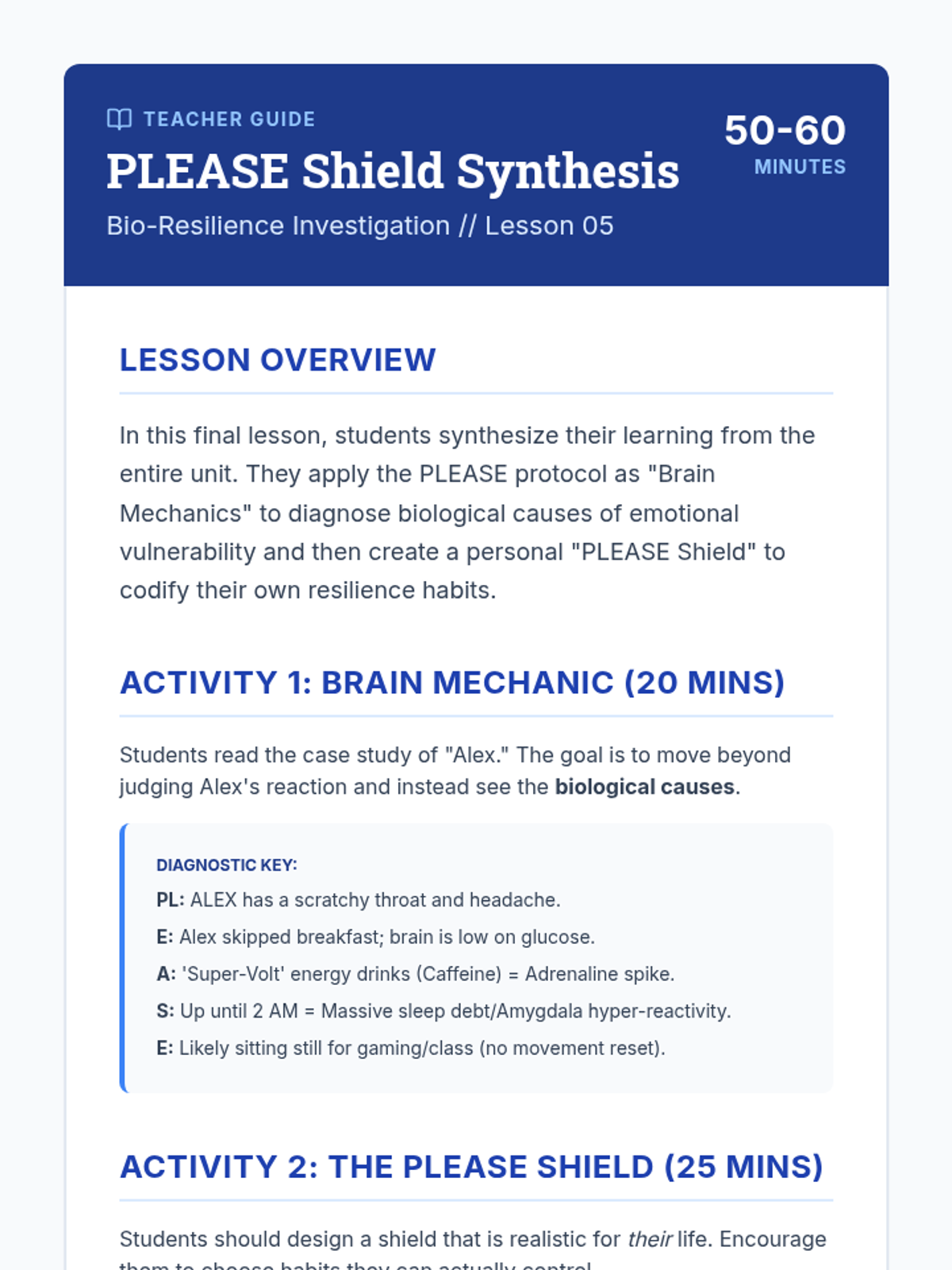
Students bring together all elements of the PLEASE protocol to create a scientific diagram and act as 'Brain Mechanics' to diagnose emotional vulnerability in fictional scenarios.
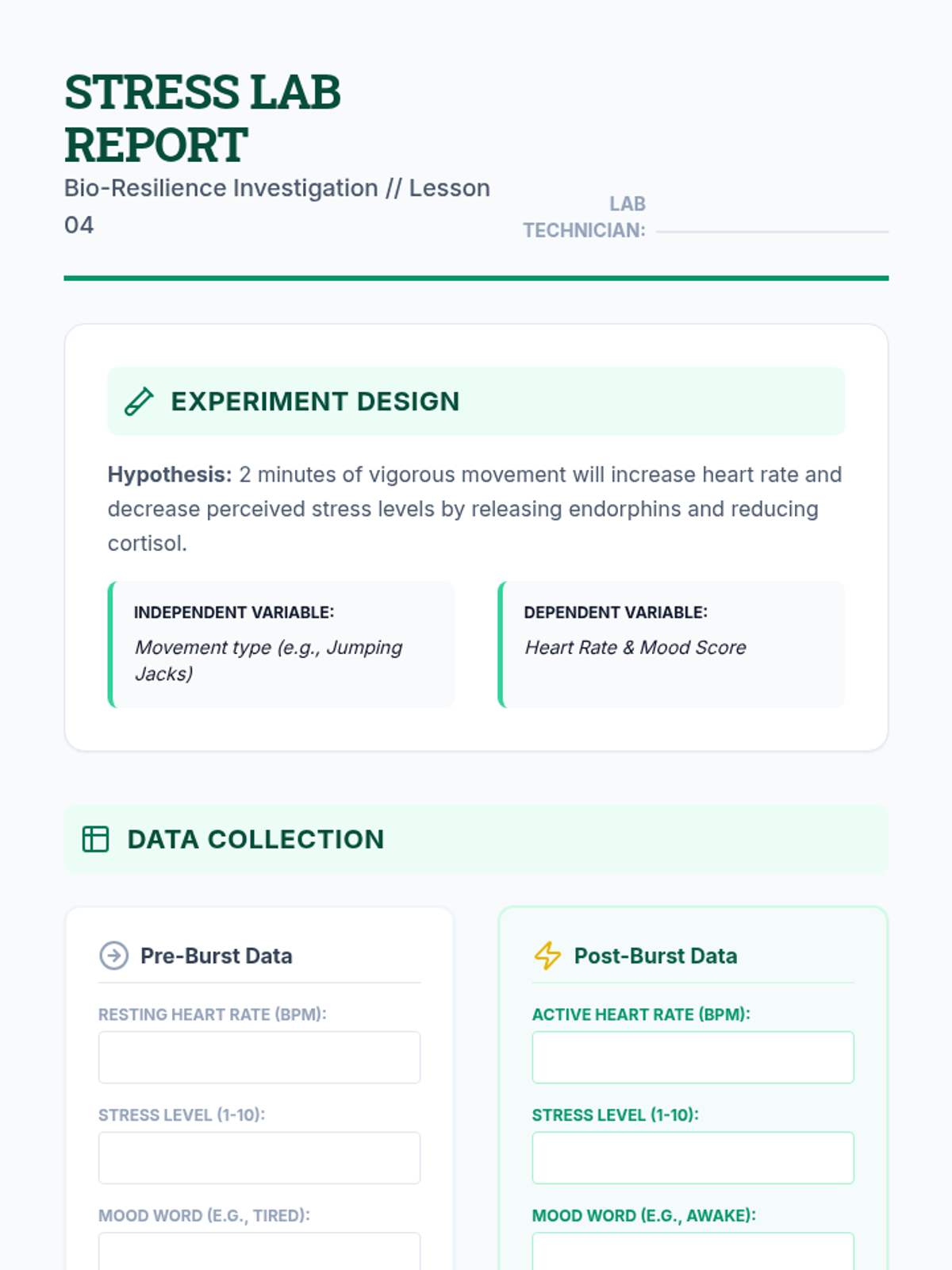
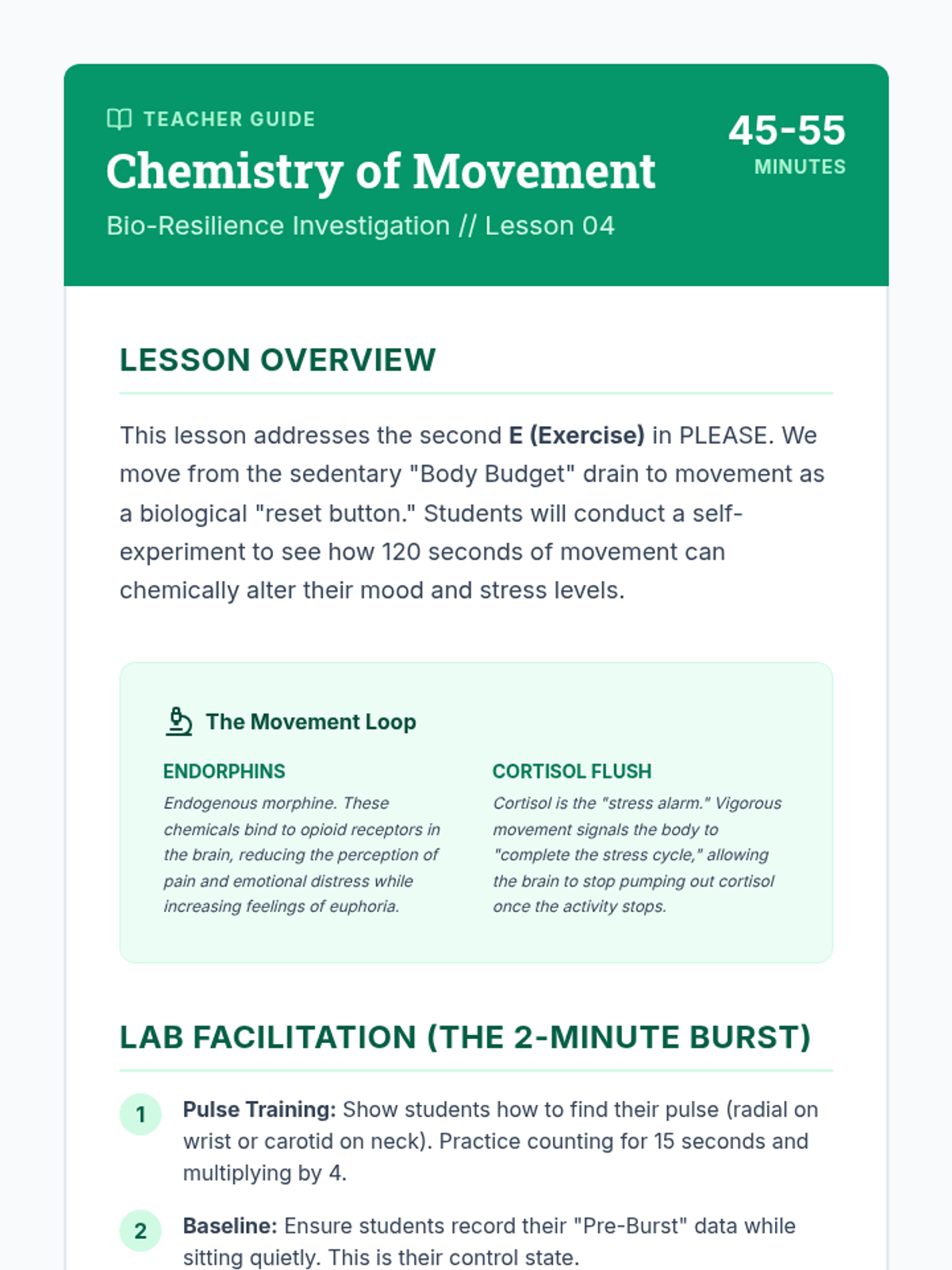
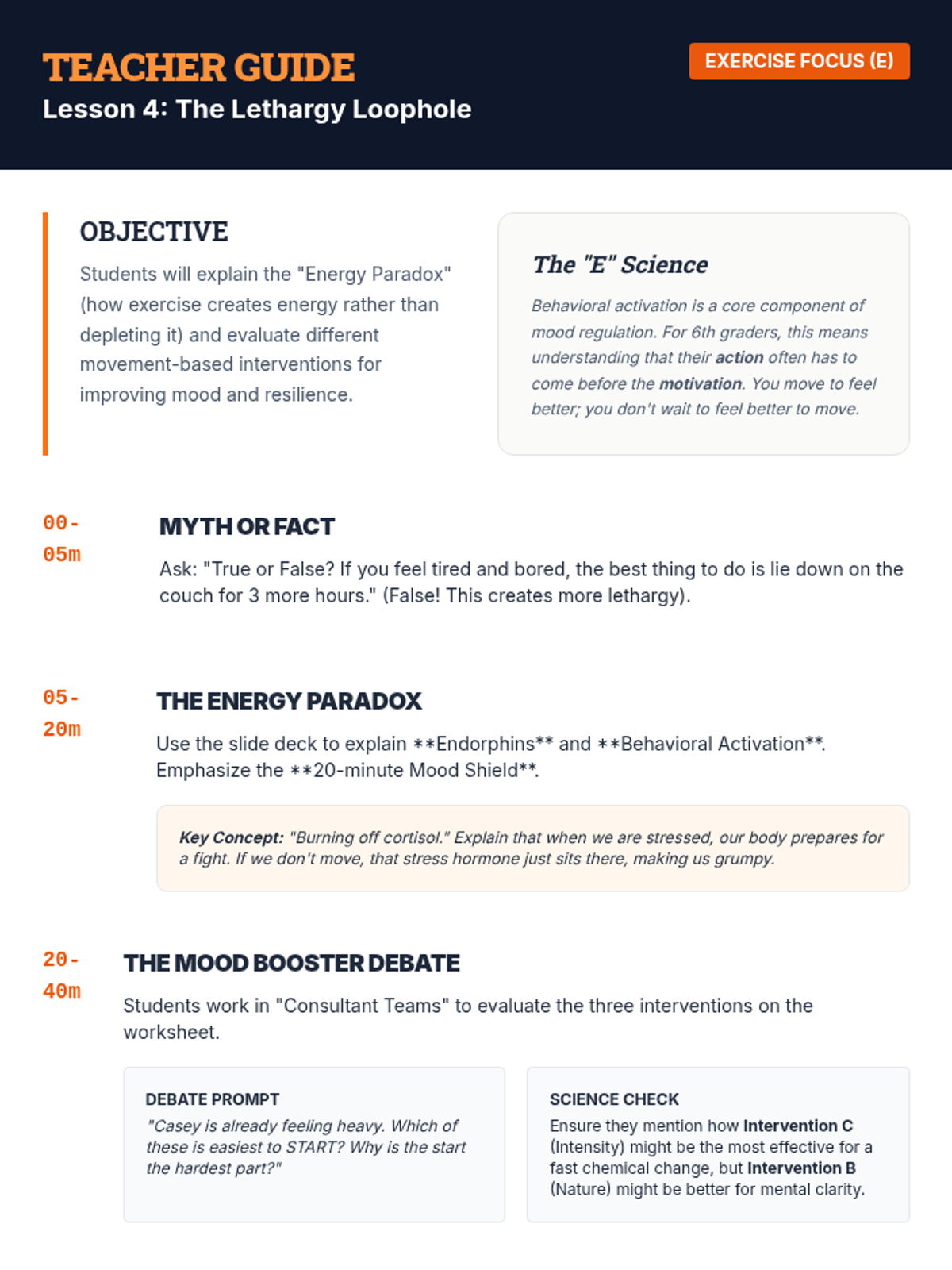
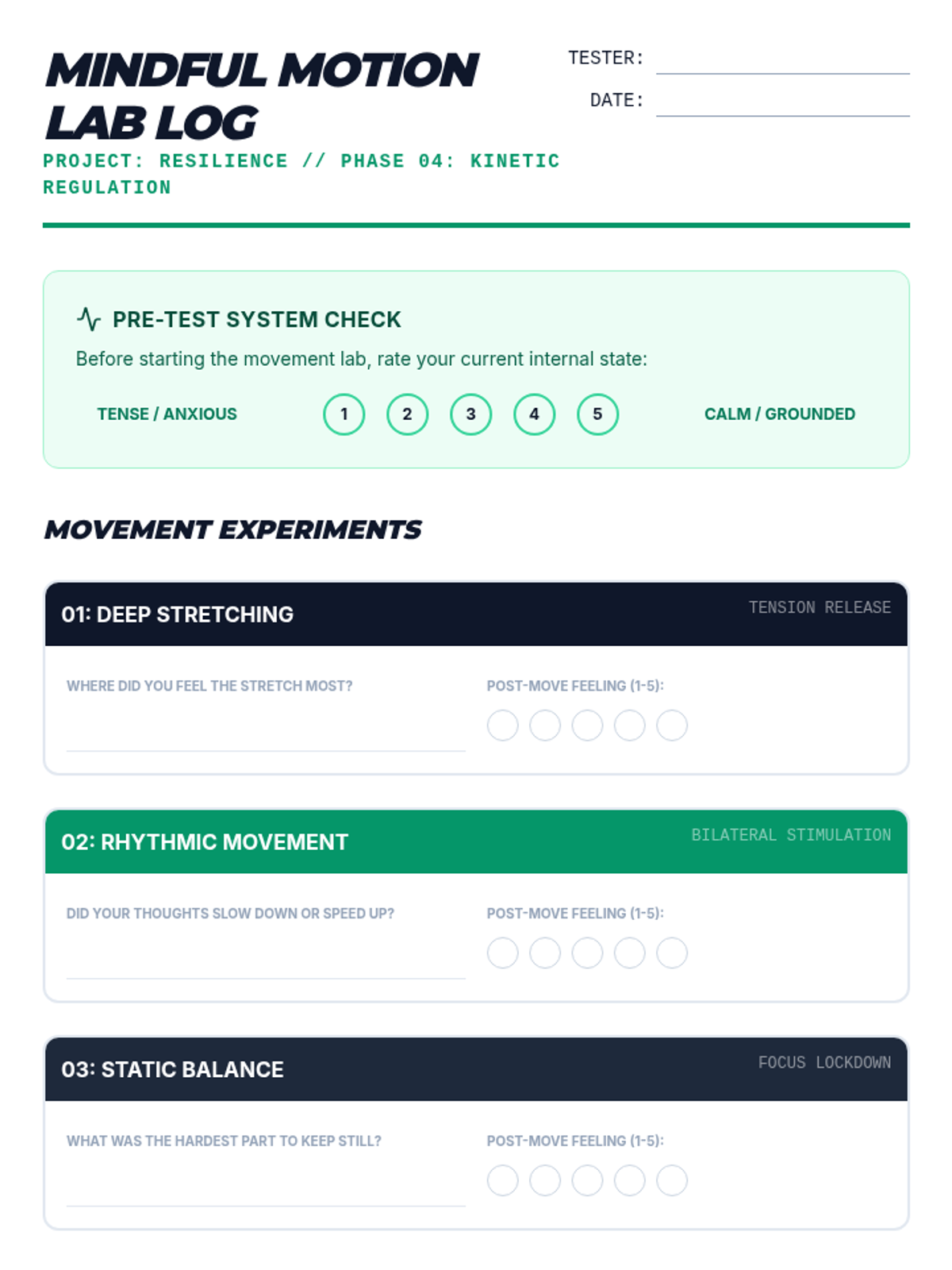
Students investigate the neurochemistry of exercise, specifically how movement releases endorphins and reduces cortisol. They test short bursts of activity to measure immediate changes in perceived stress levels.
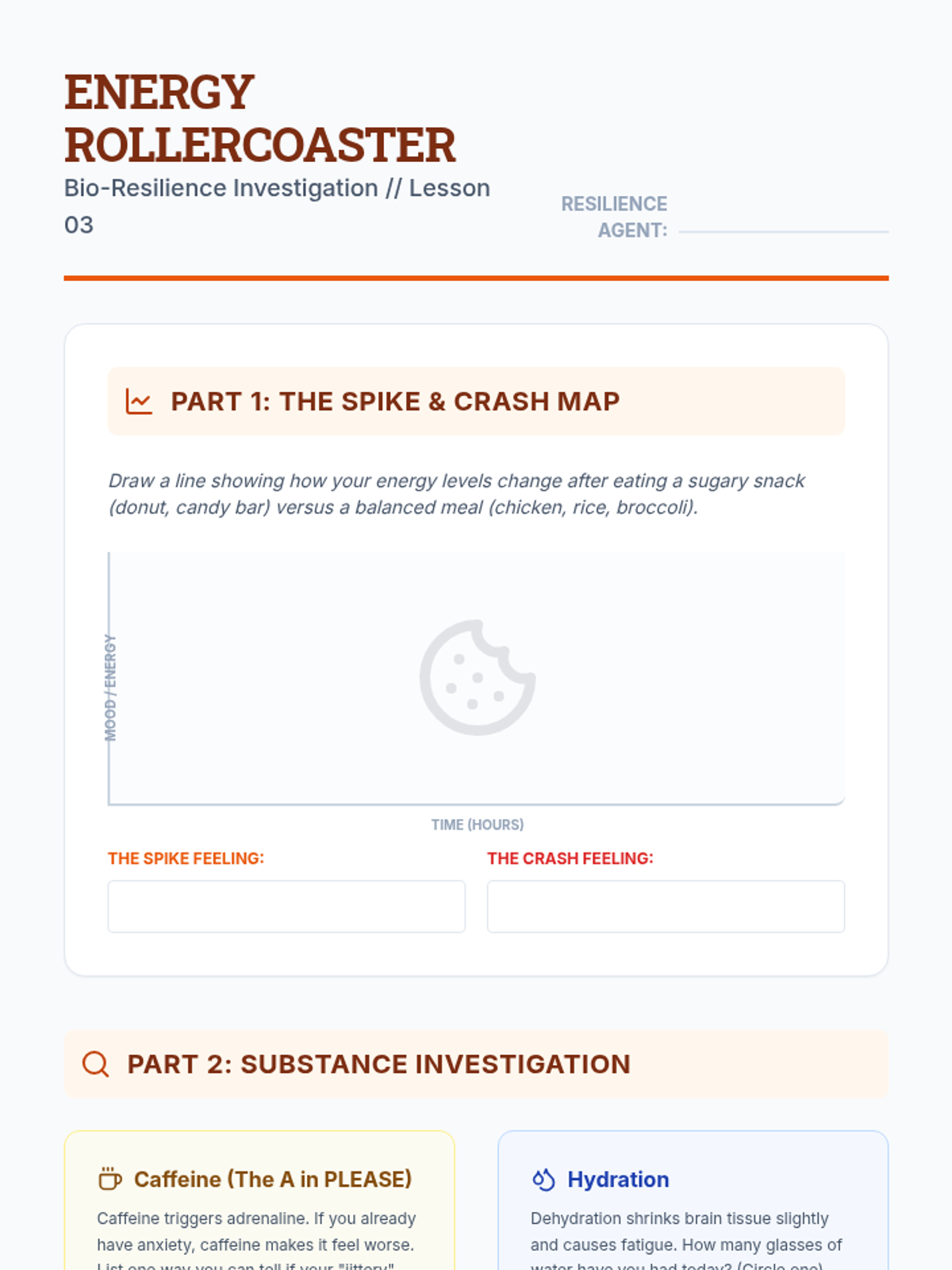
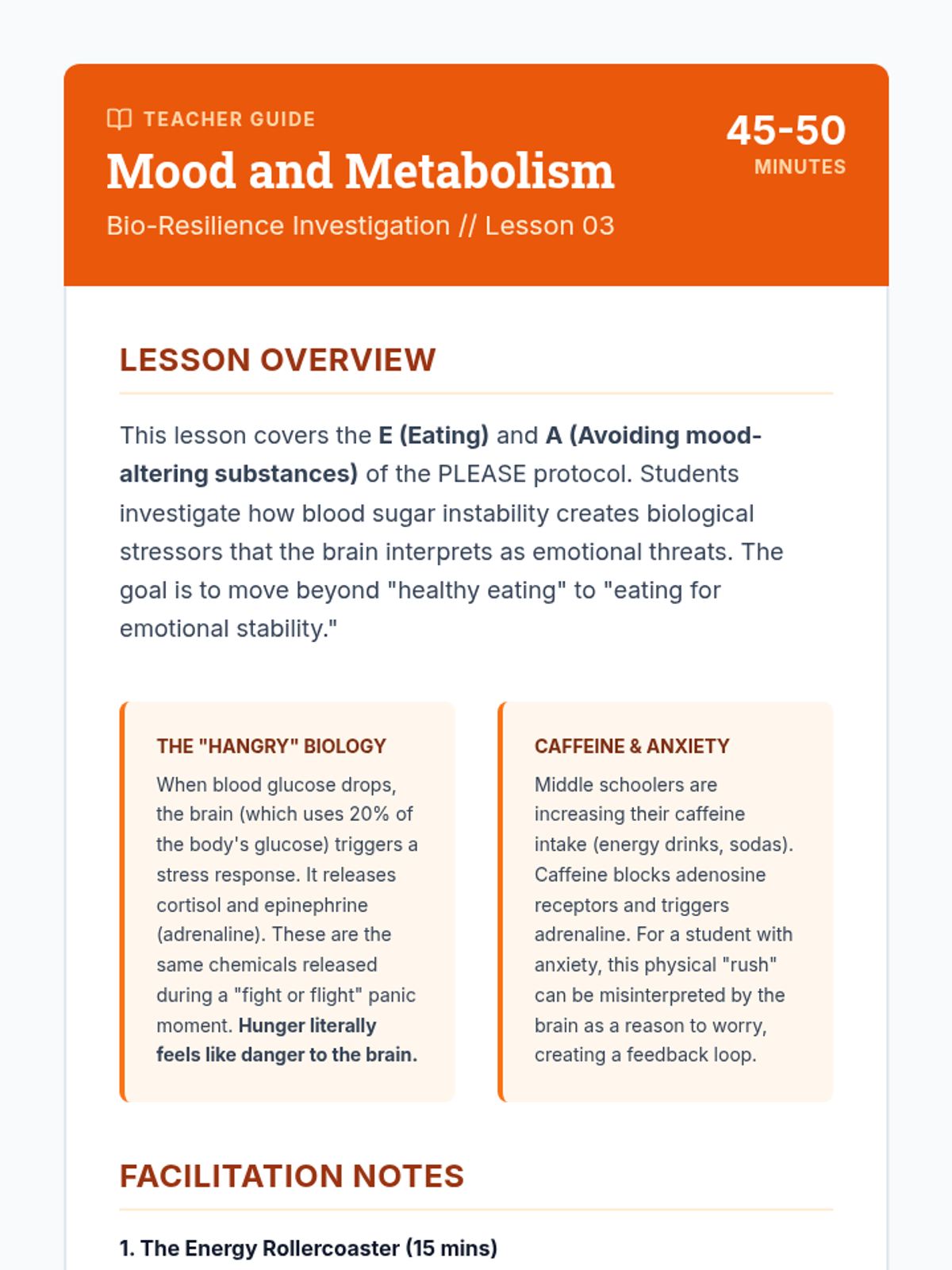
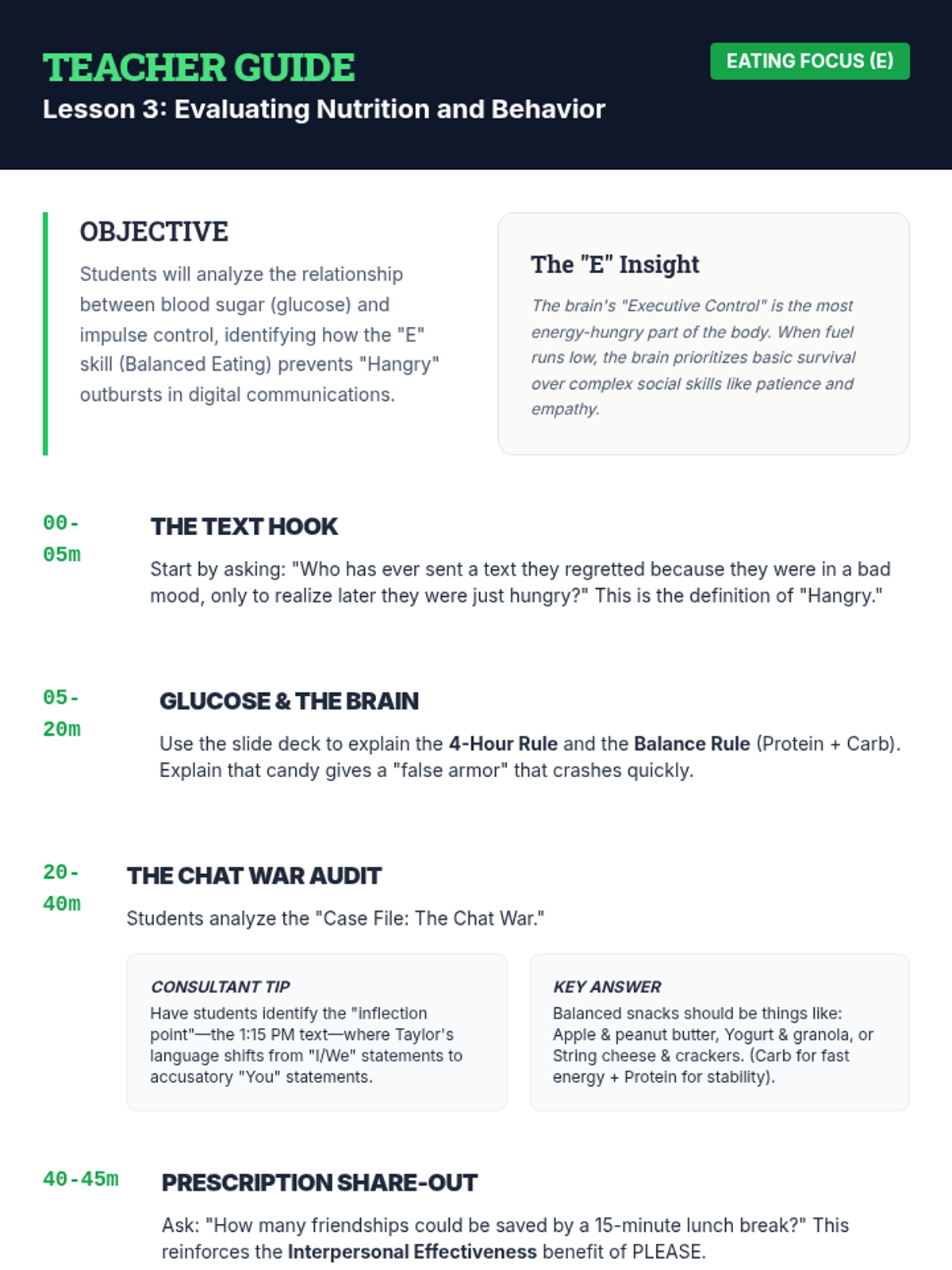
Focusing on the 'E' (Eating) and 'A' (Avoiding) parts of PLEASE, students explore how blood sugar spikes and caffeine crashes mimic anxiety and irritability.
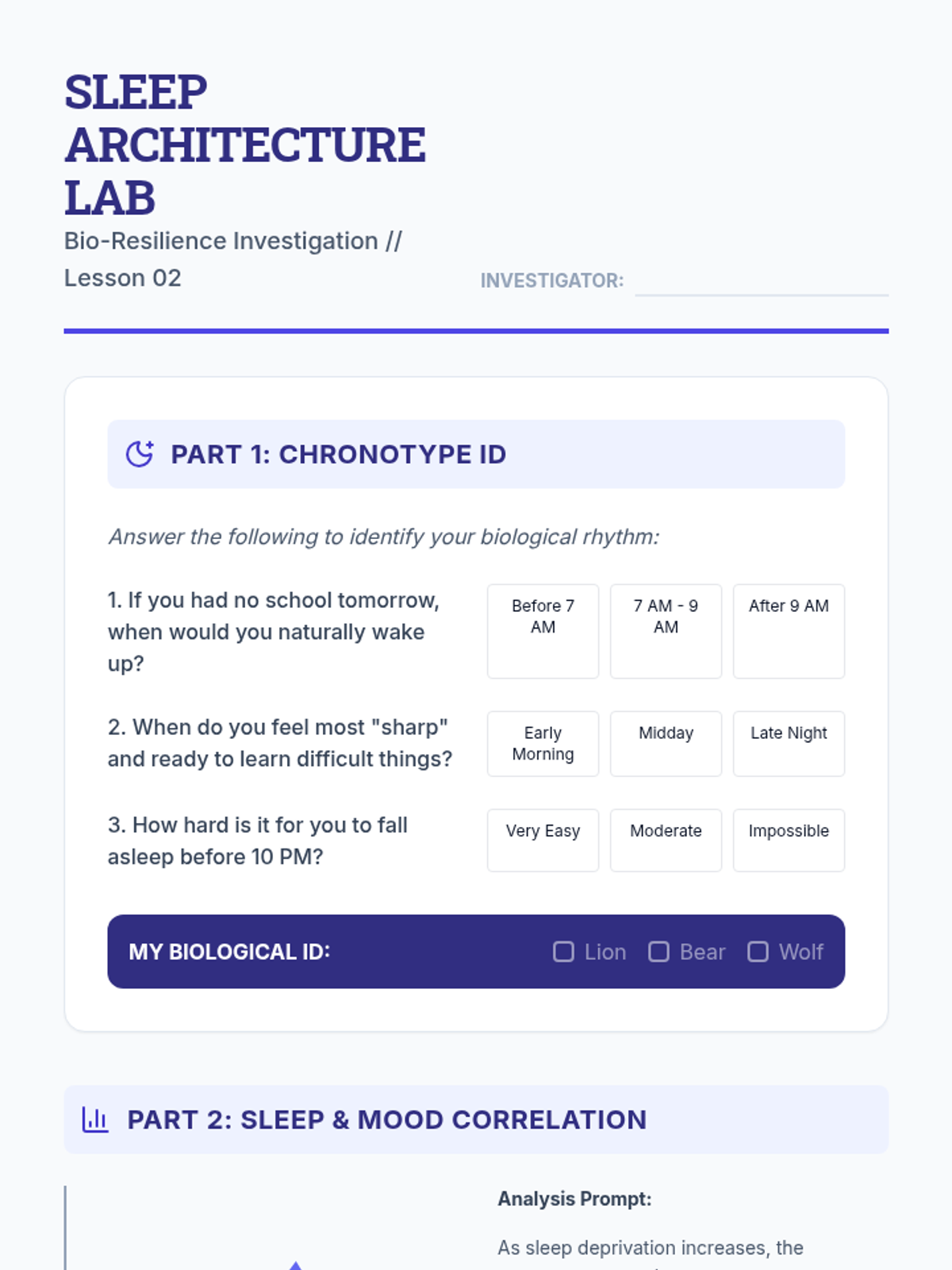
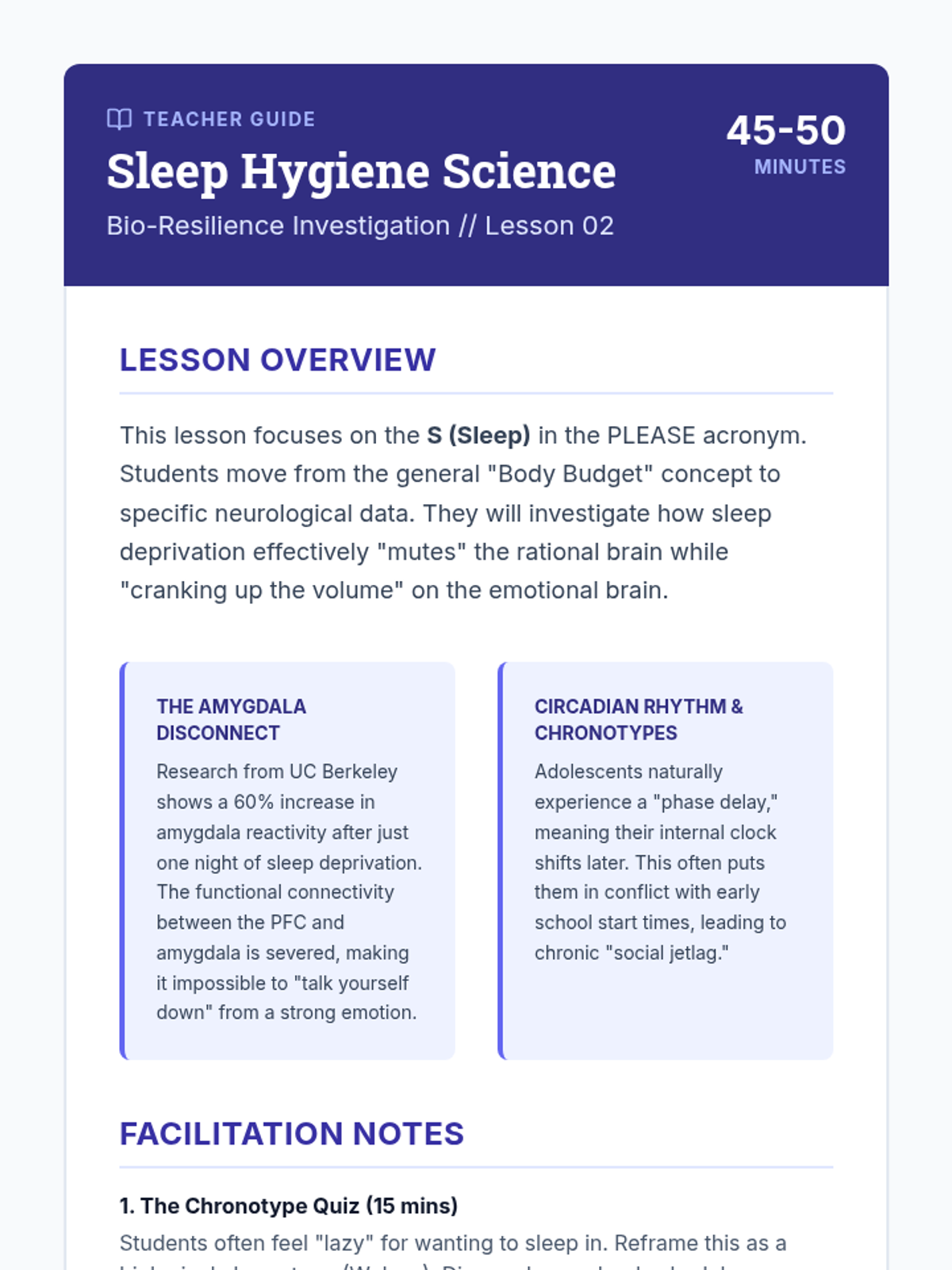
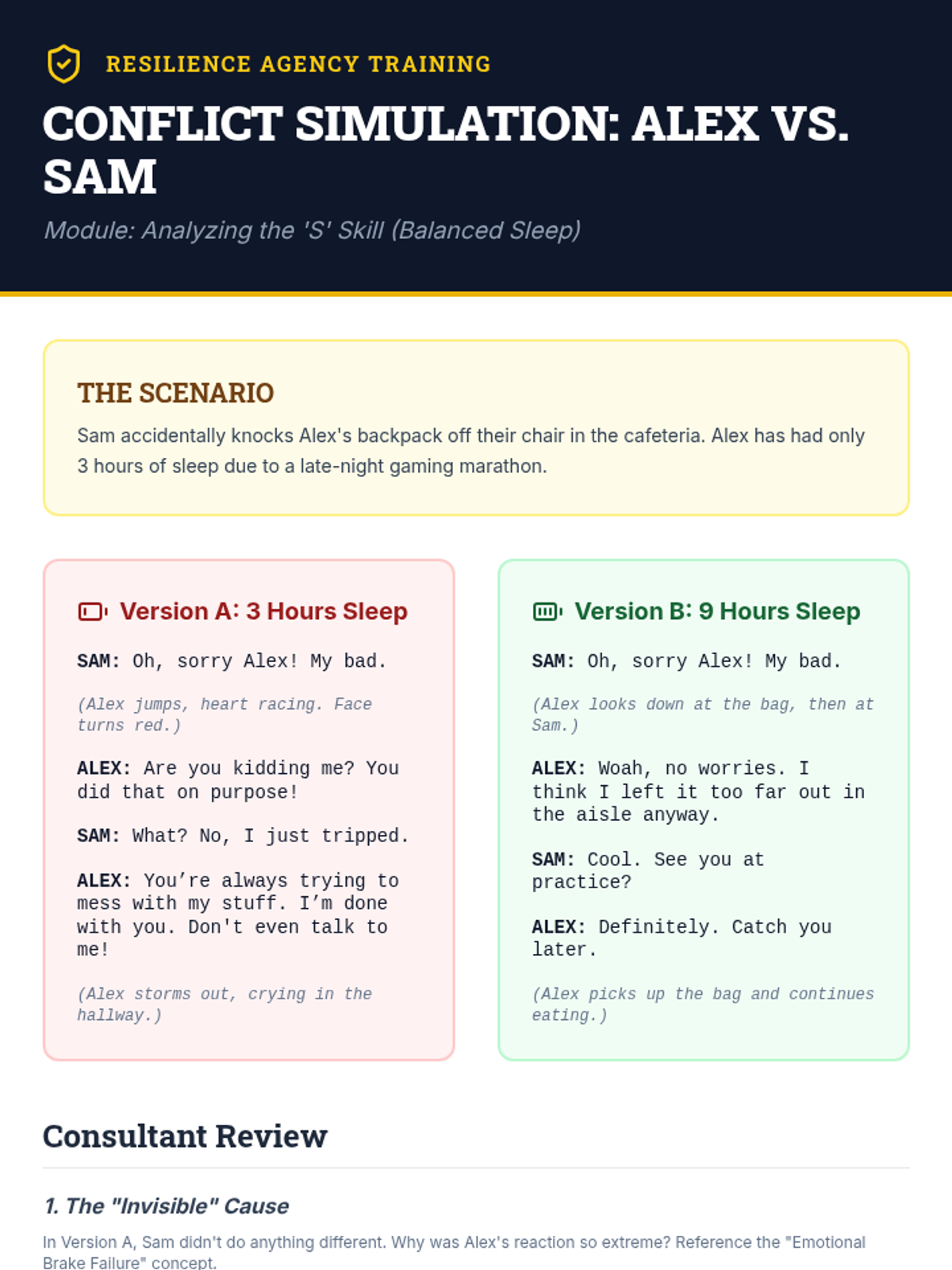
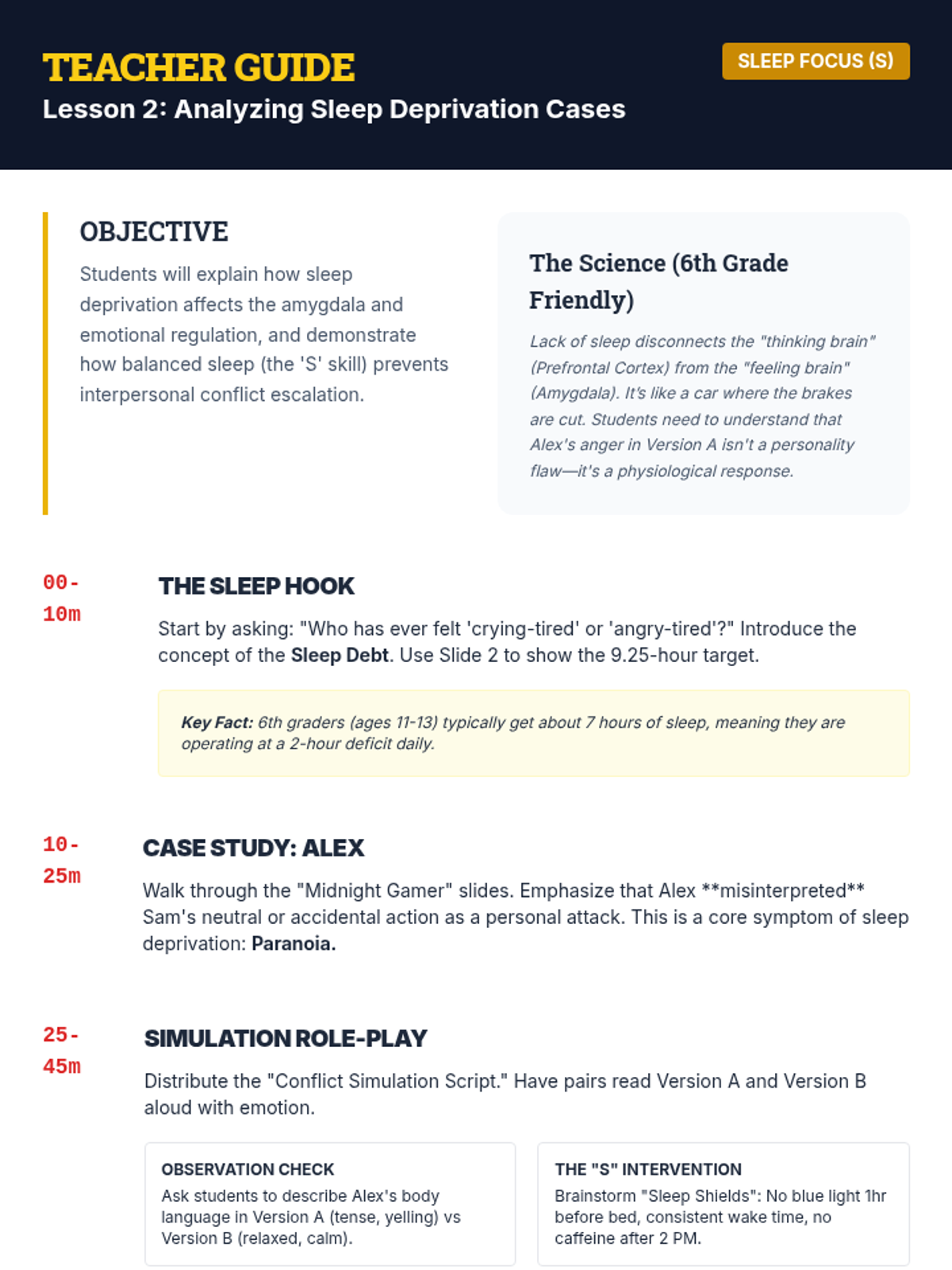
Students research the effects of sleep deprivation on the brain's emotional centers and analyze the biological necessity of sleep for resilience.
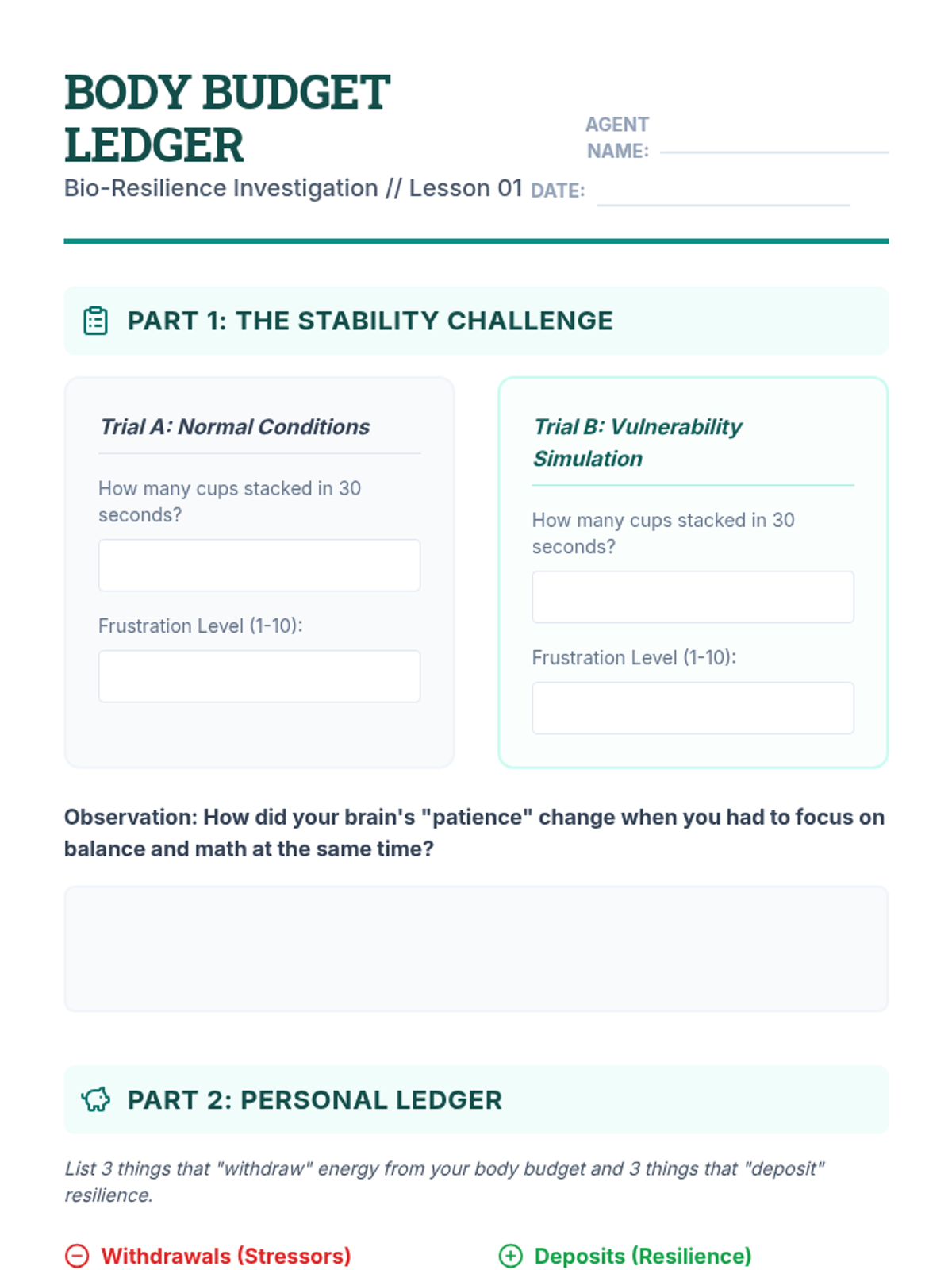
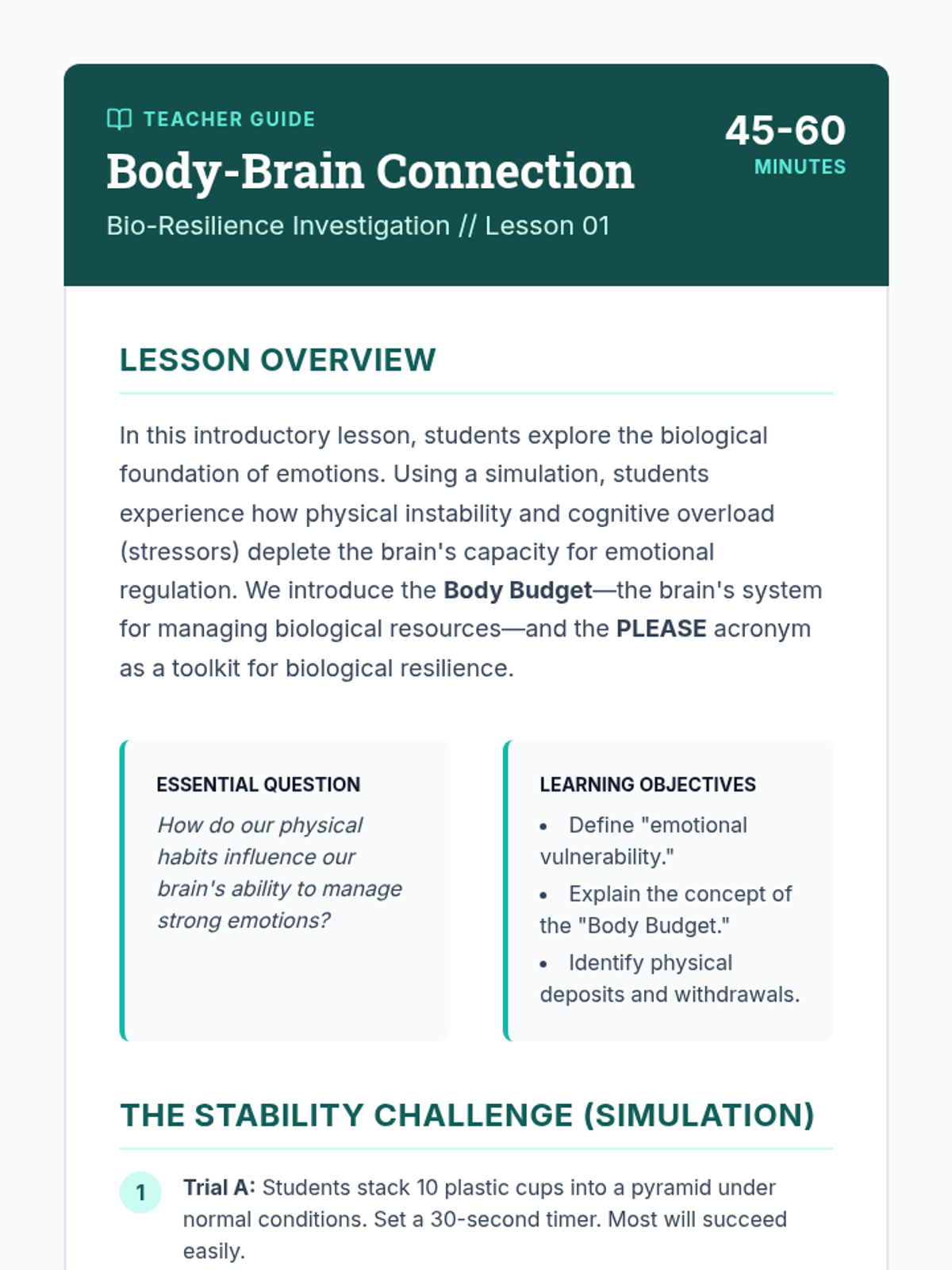
Students explore the concept of the 'Body Budget' and how physical stressors lead to emotional vulnerability through a simulation.
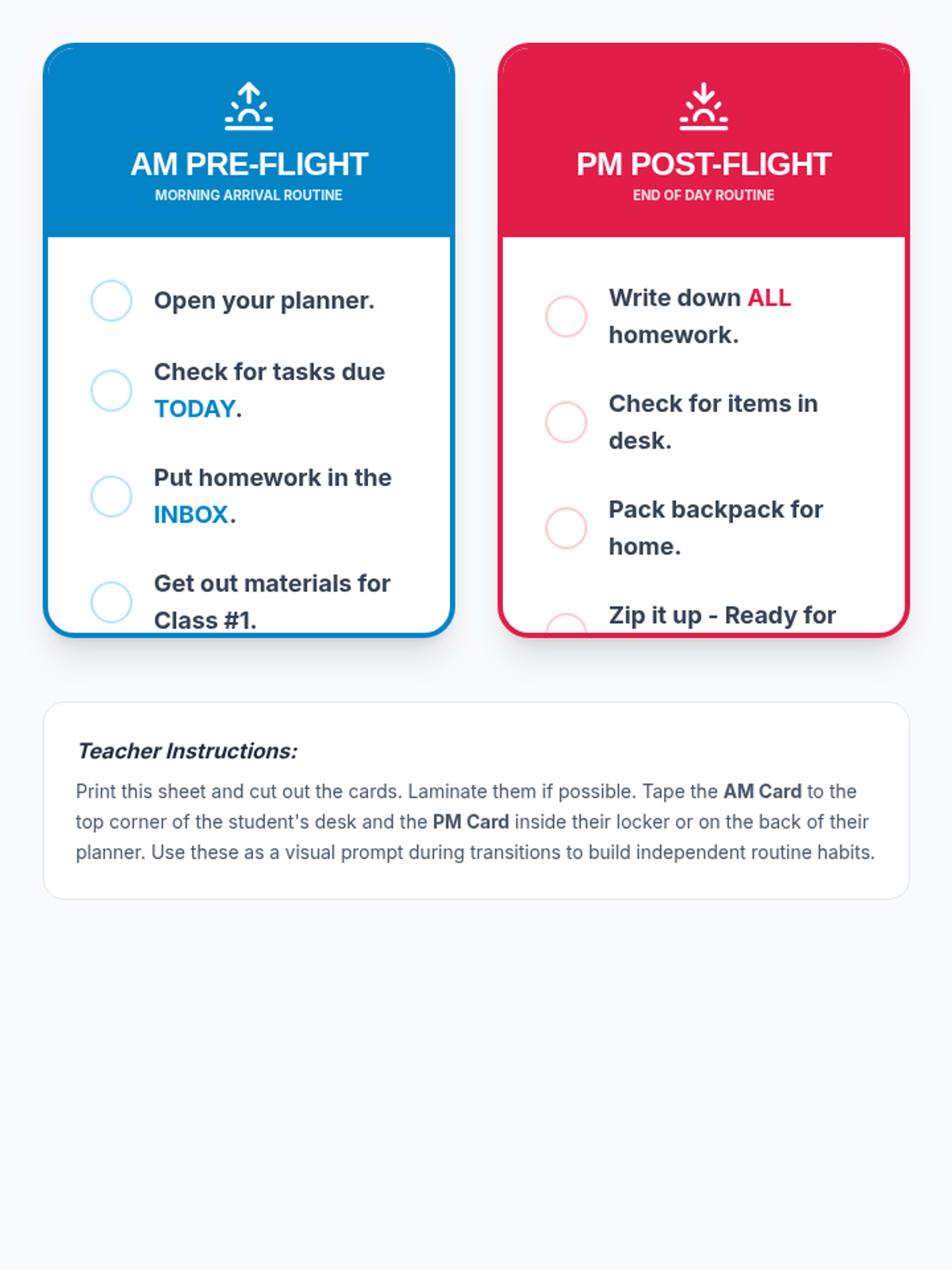
Students develop a checklist for a 'start-of-day' and 'end-of-day' review. They practice the habit of checking their planner to prepare materials for the next day.
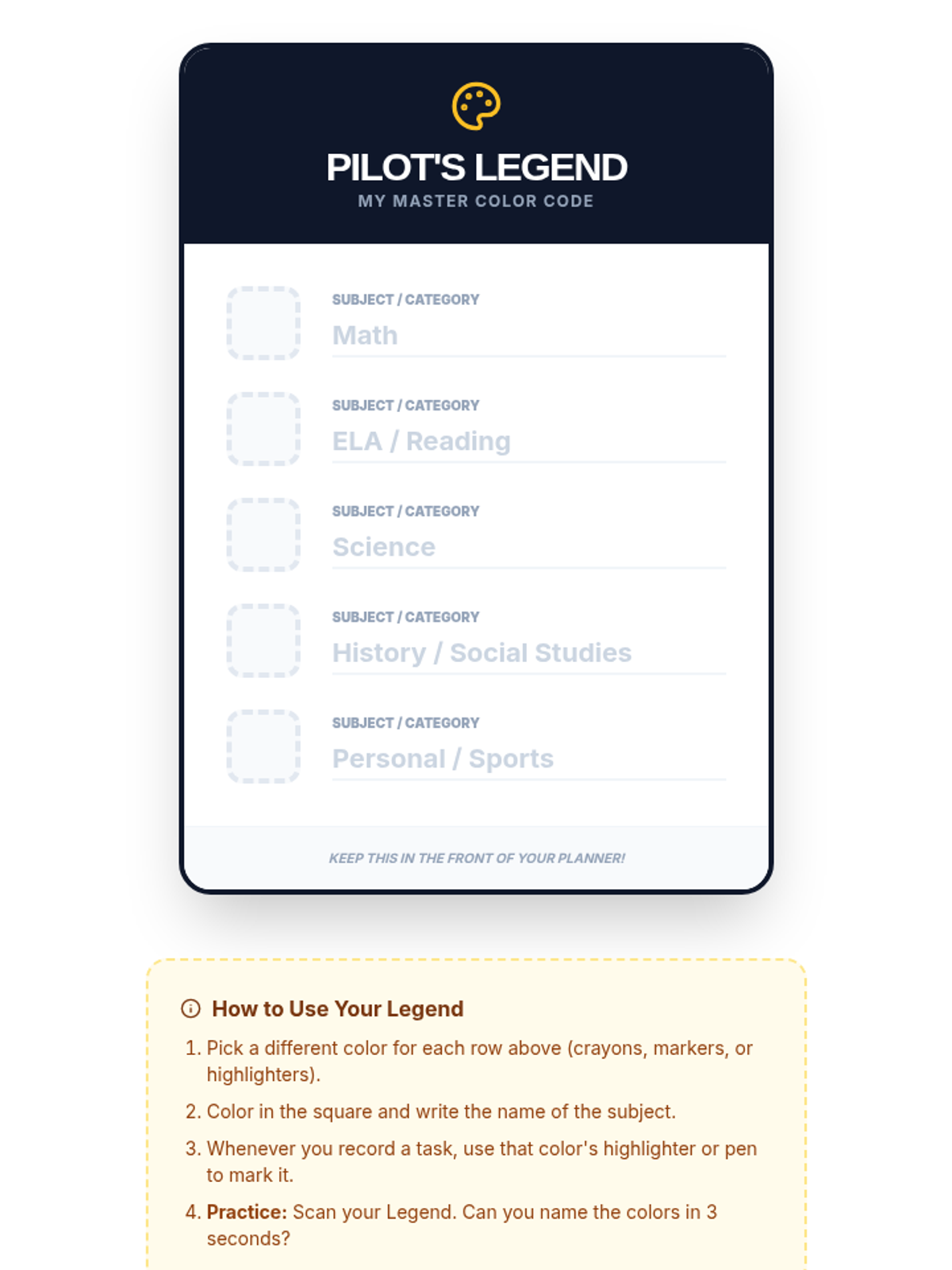
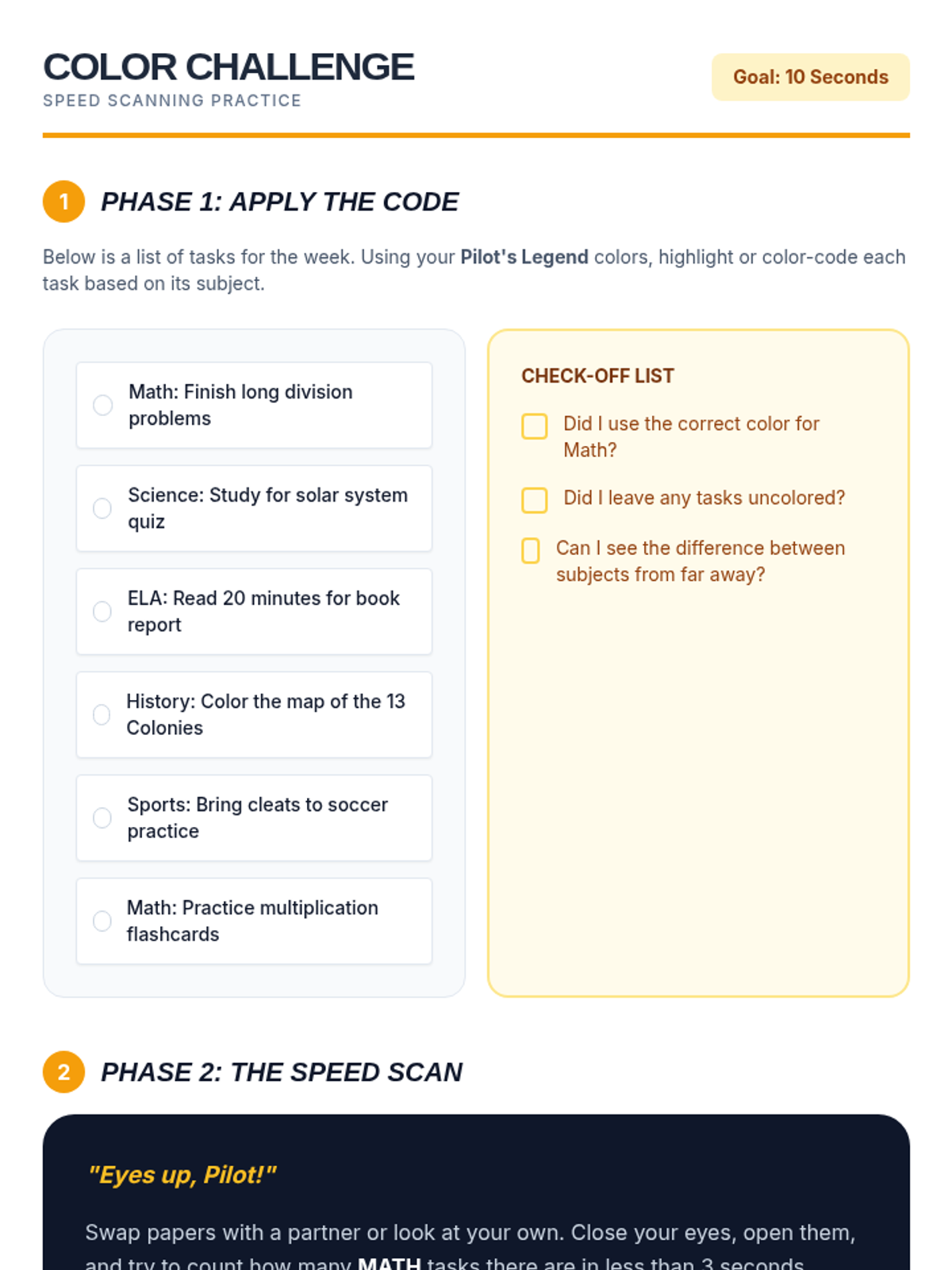
Students implement a color-coding system to categorize tasks by subject or type (e.g., Math, Home, Sports). This visual aid helps them quickly assess where their energy needs to be directed.
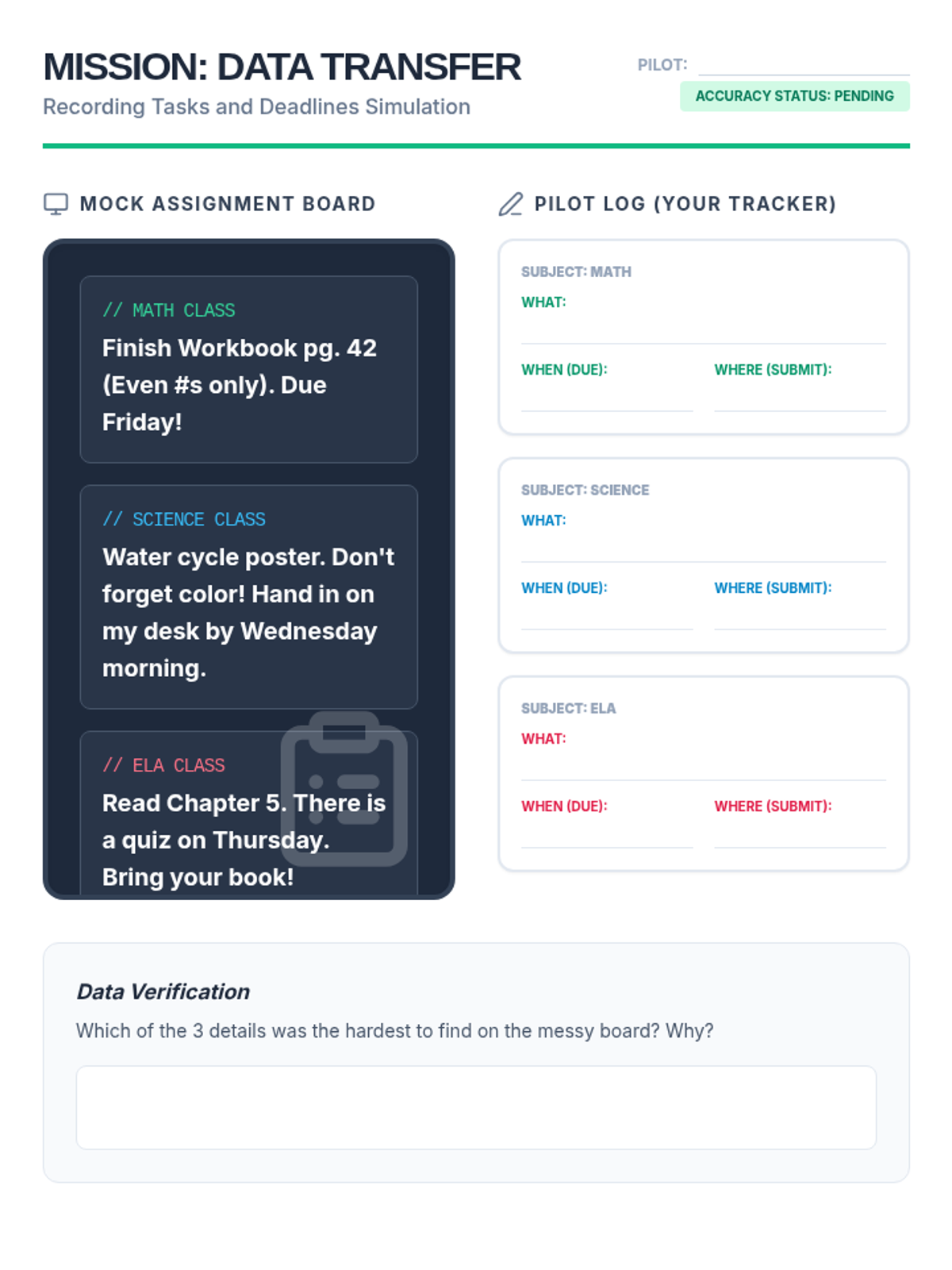
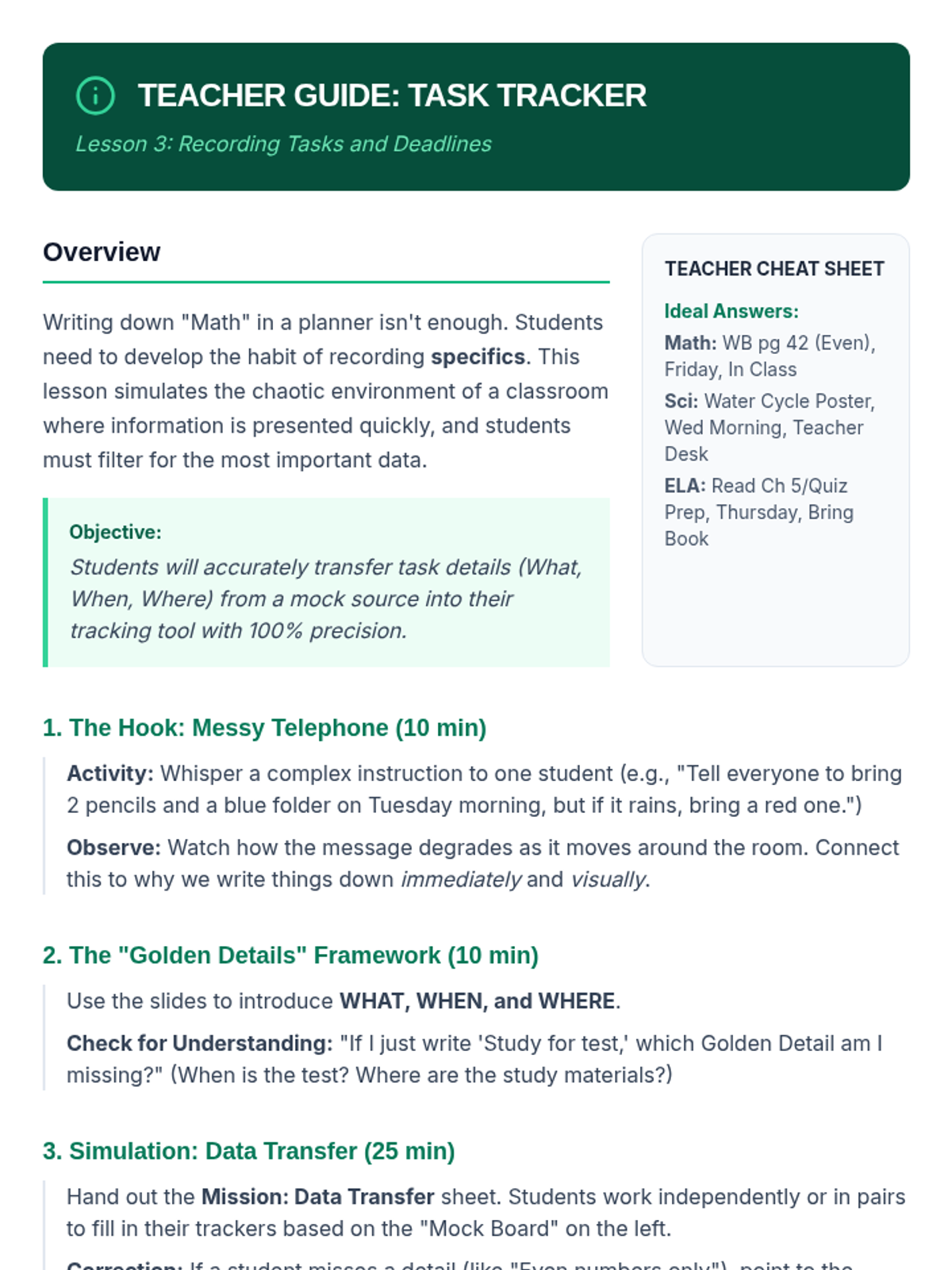
This lesson focuses on the mechanics of writing down assignments clearly and accurately. Students practice transferring information from a mock assignment board to their personal planners.
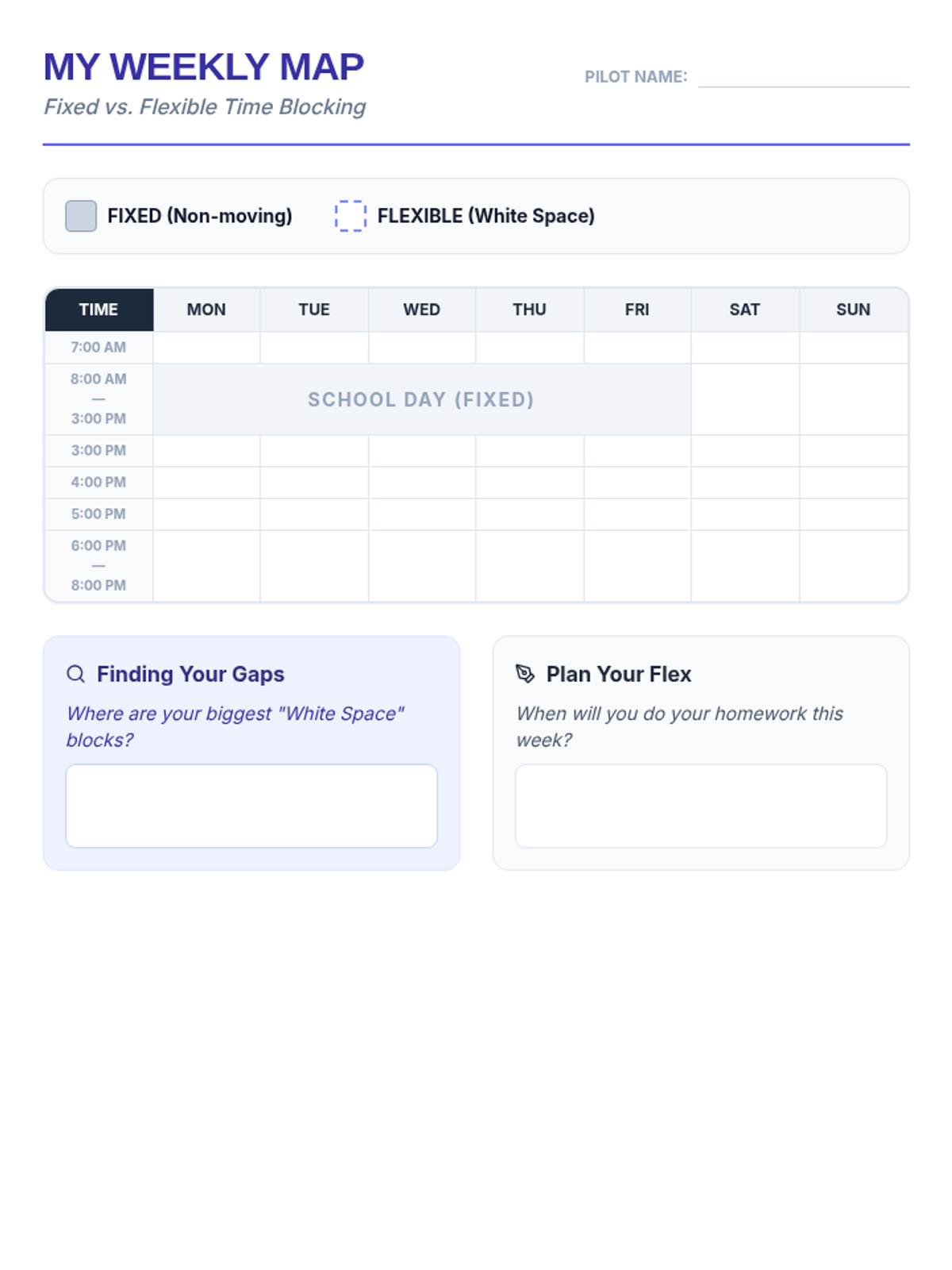
Students map out a typical week, blocking out 'hard' constraints like school hours and sports practice. They learn to identify the 'white space' available for homework and chores.
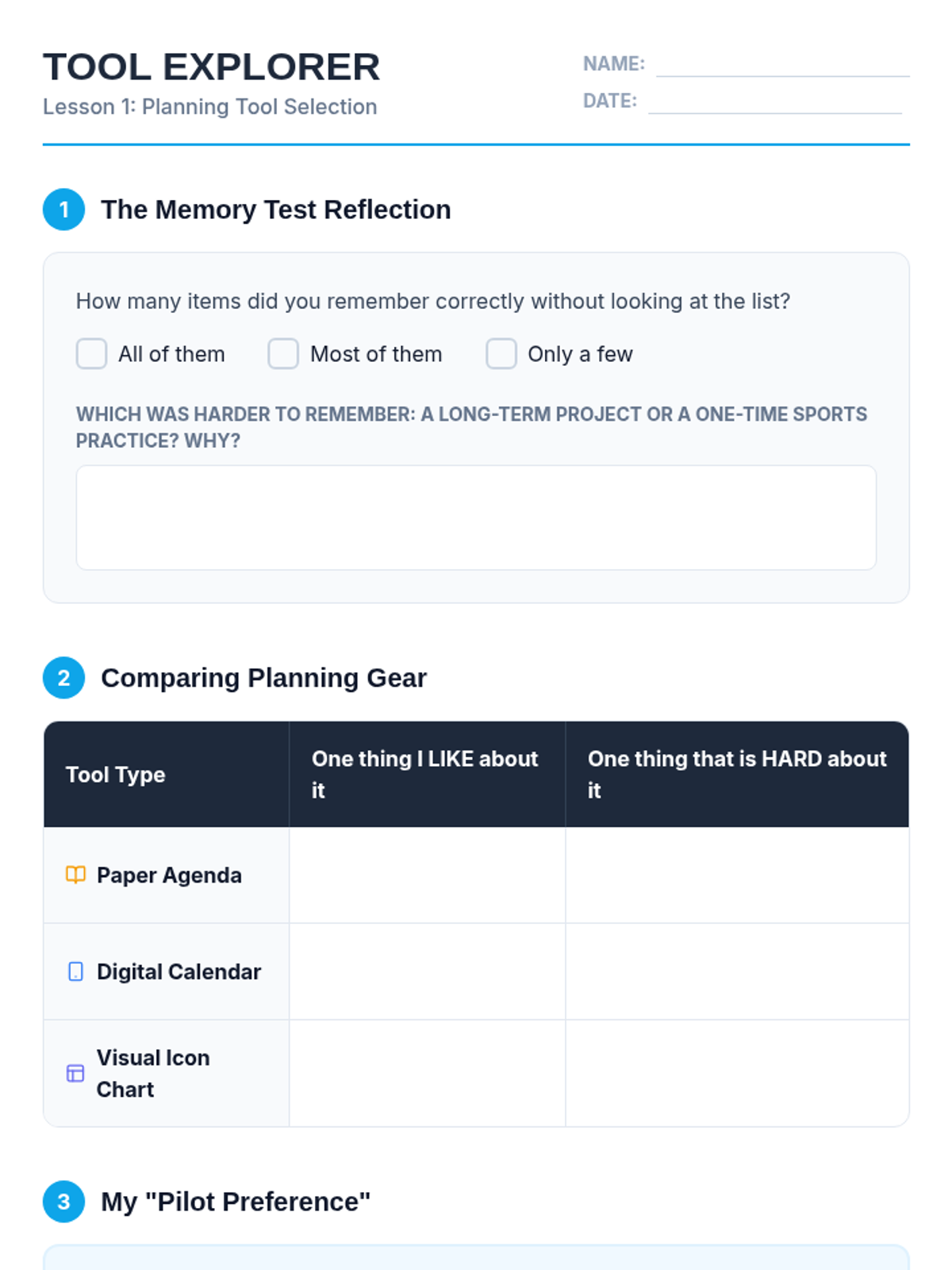
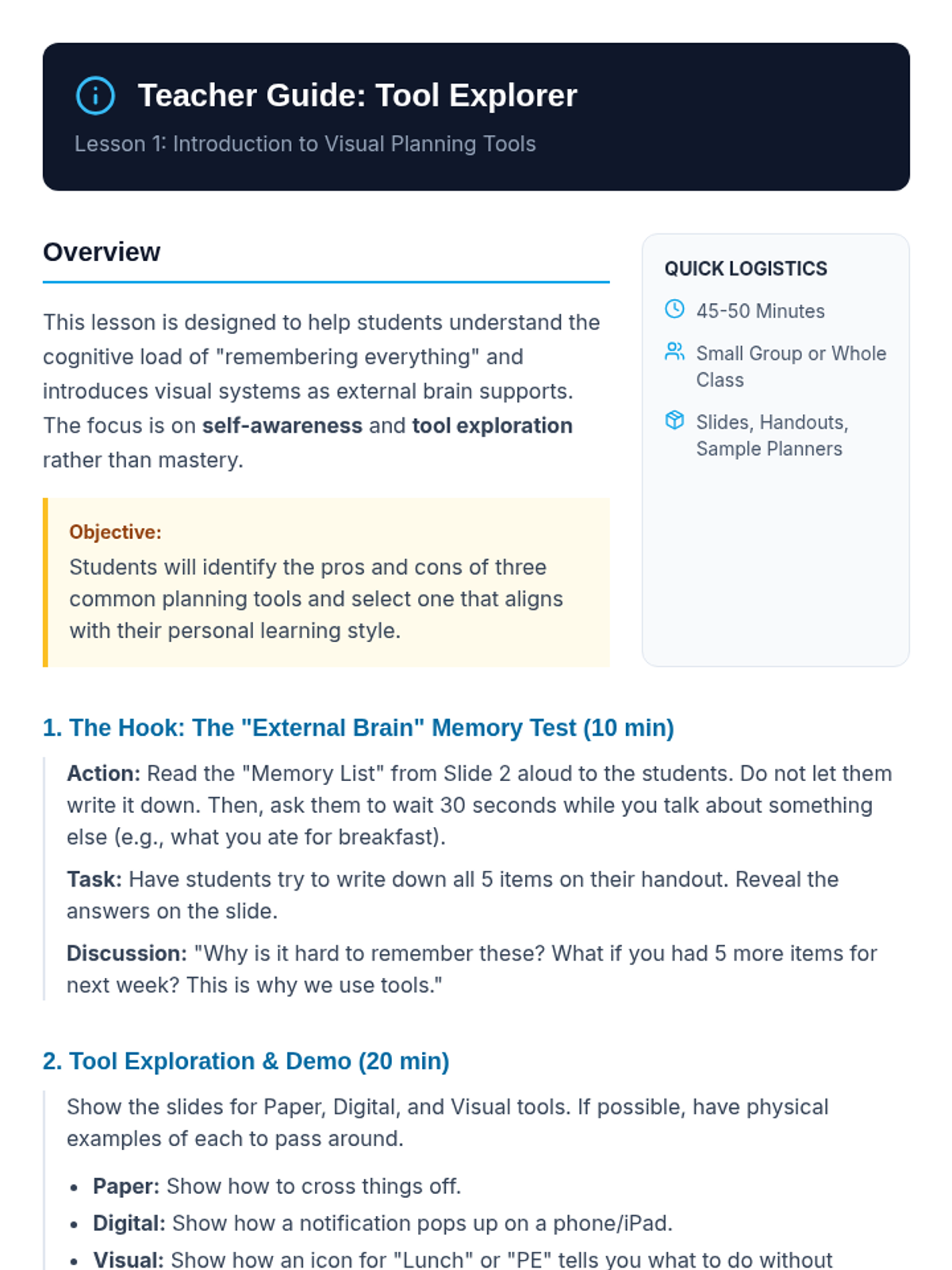
Students explore various formats of agendas, digital calendars, and visual schedules to understand how they function. They identify which tools might work best for their specific learning styles and needs.
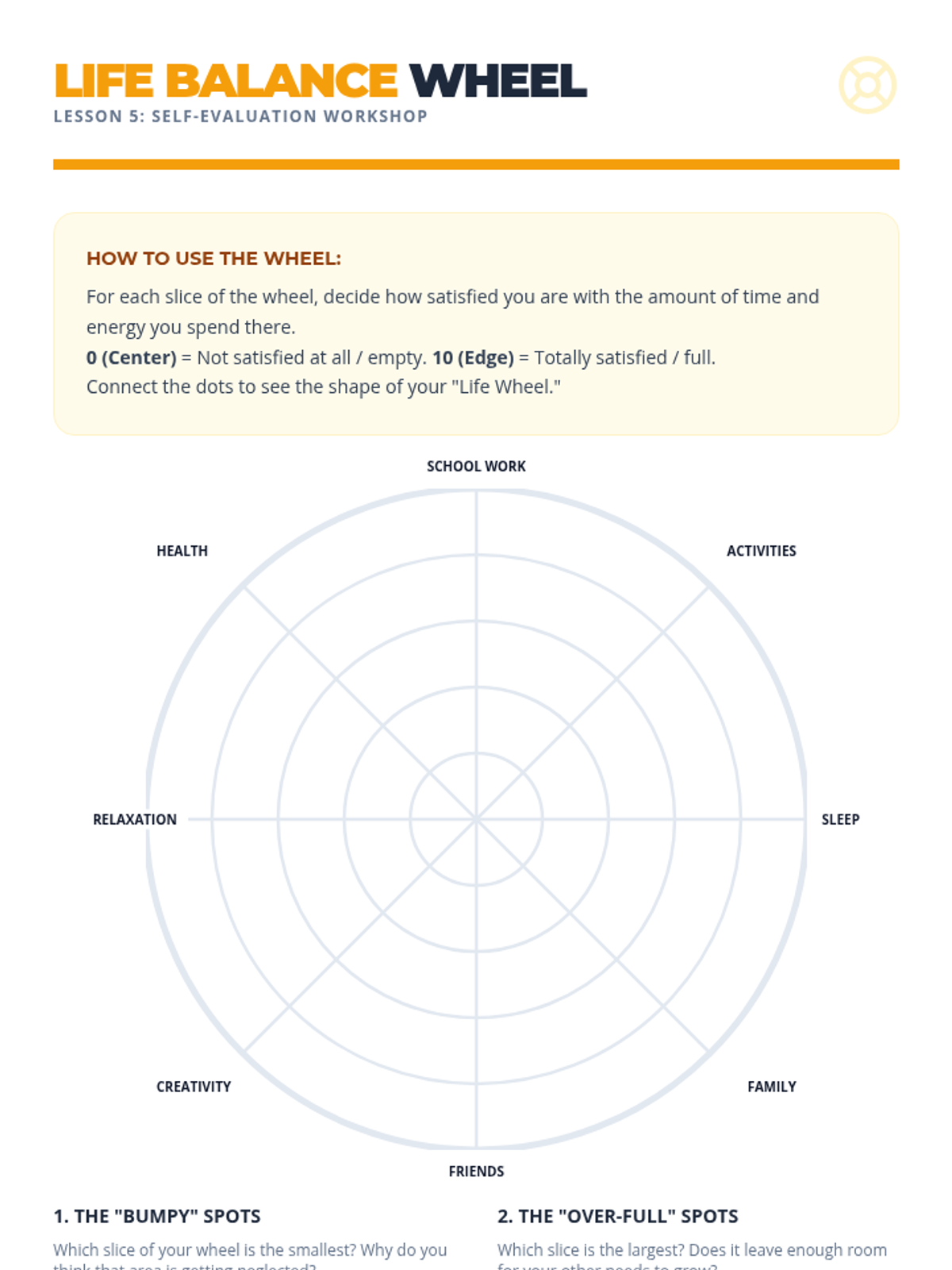
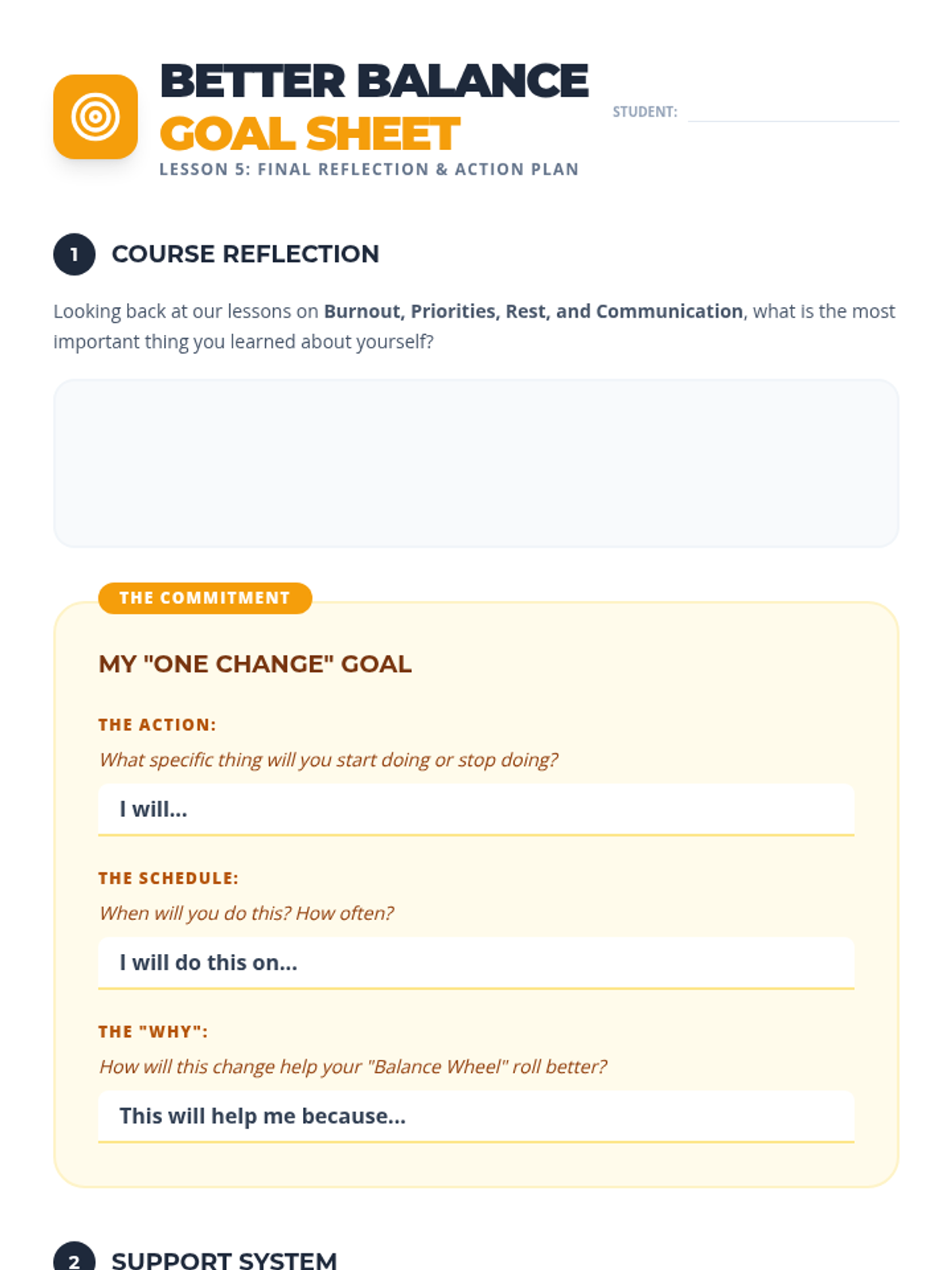
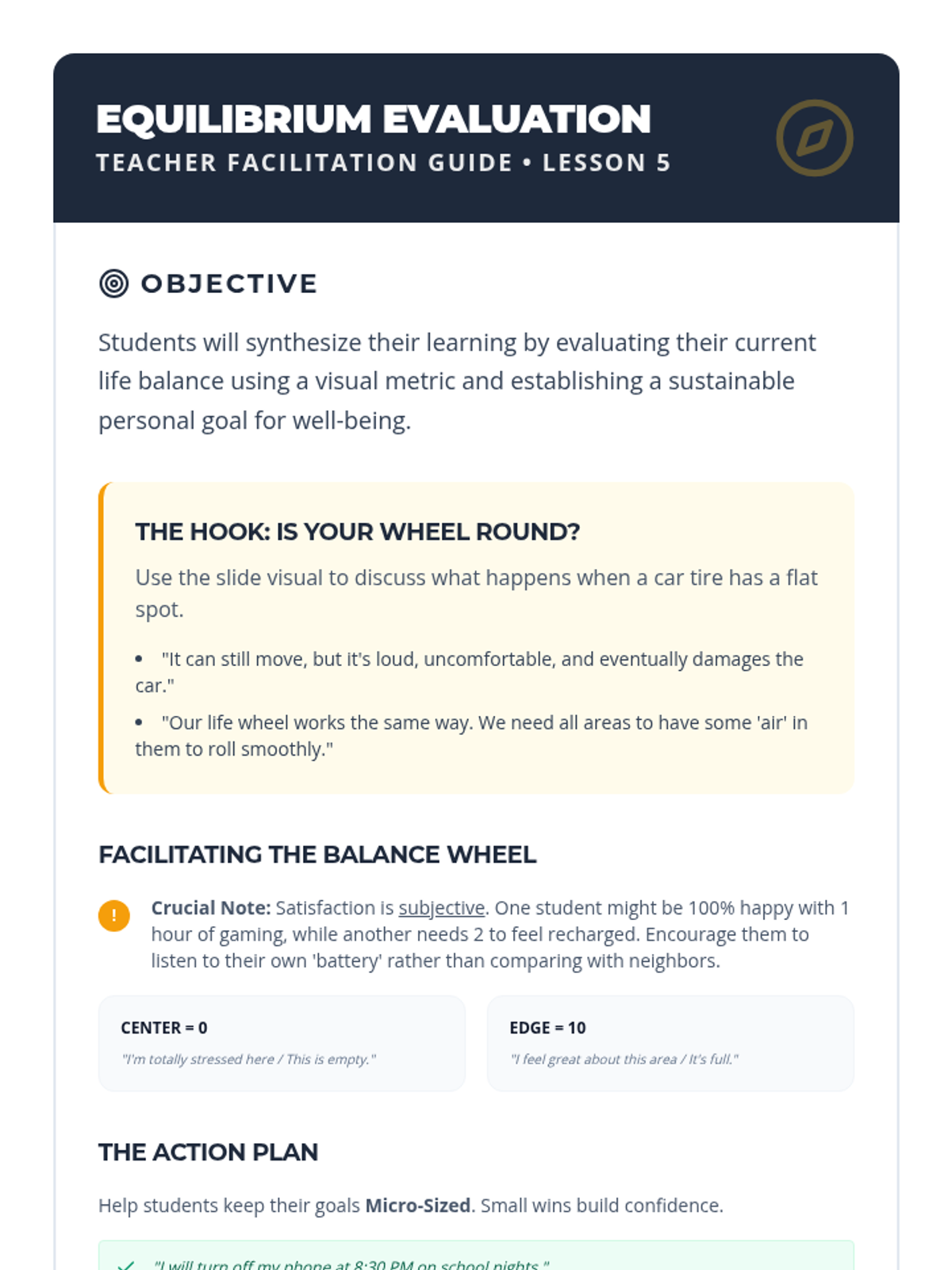
Students evaluate their current life balance using a visual 'Balance Wheel' and set a concrete goal for maintaining well-being.
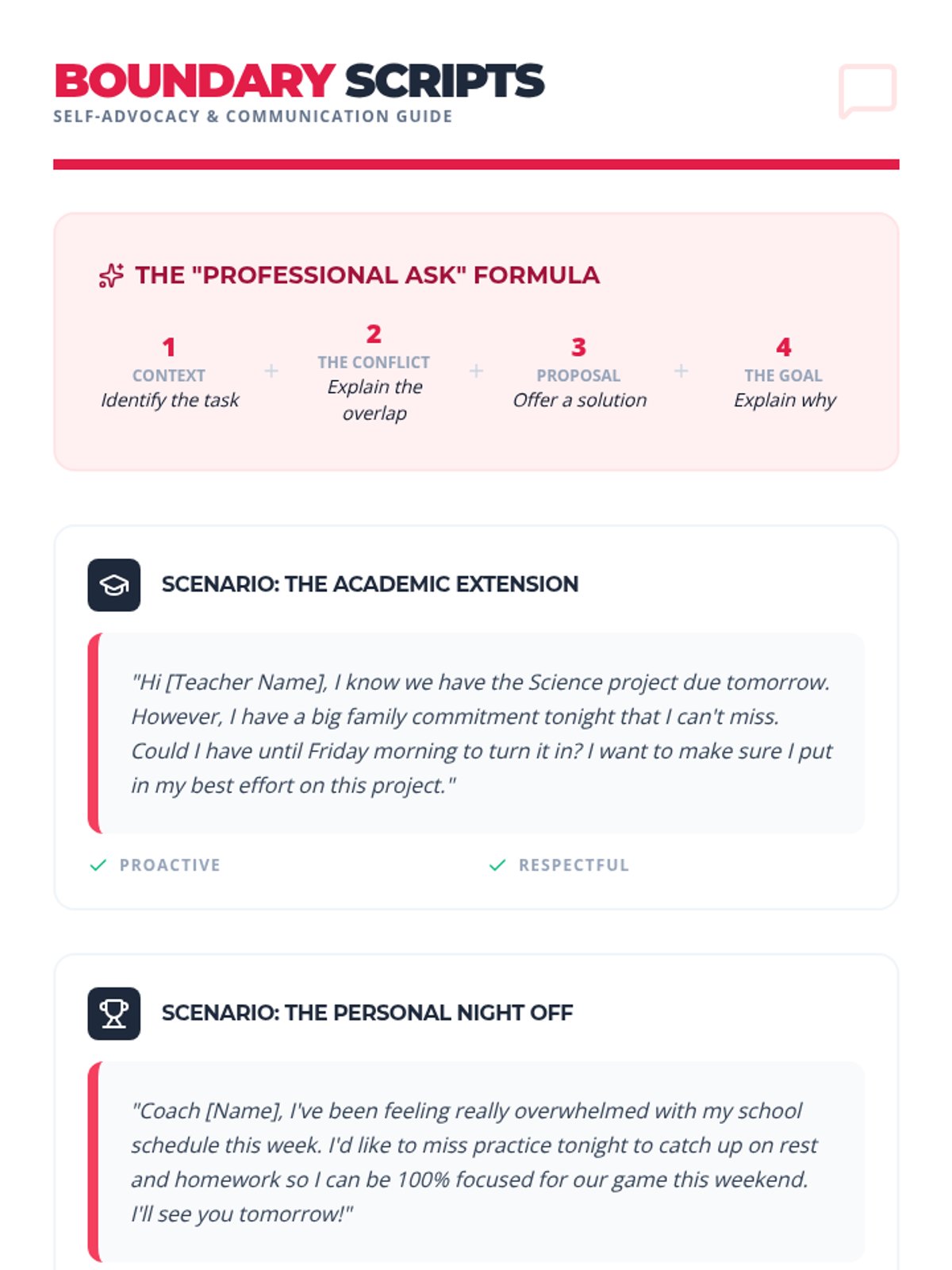
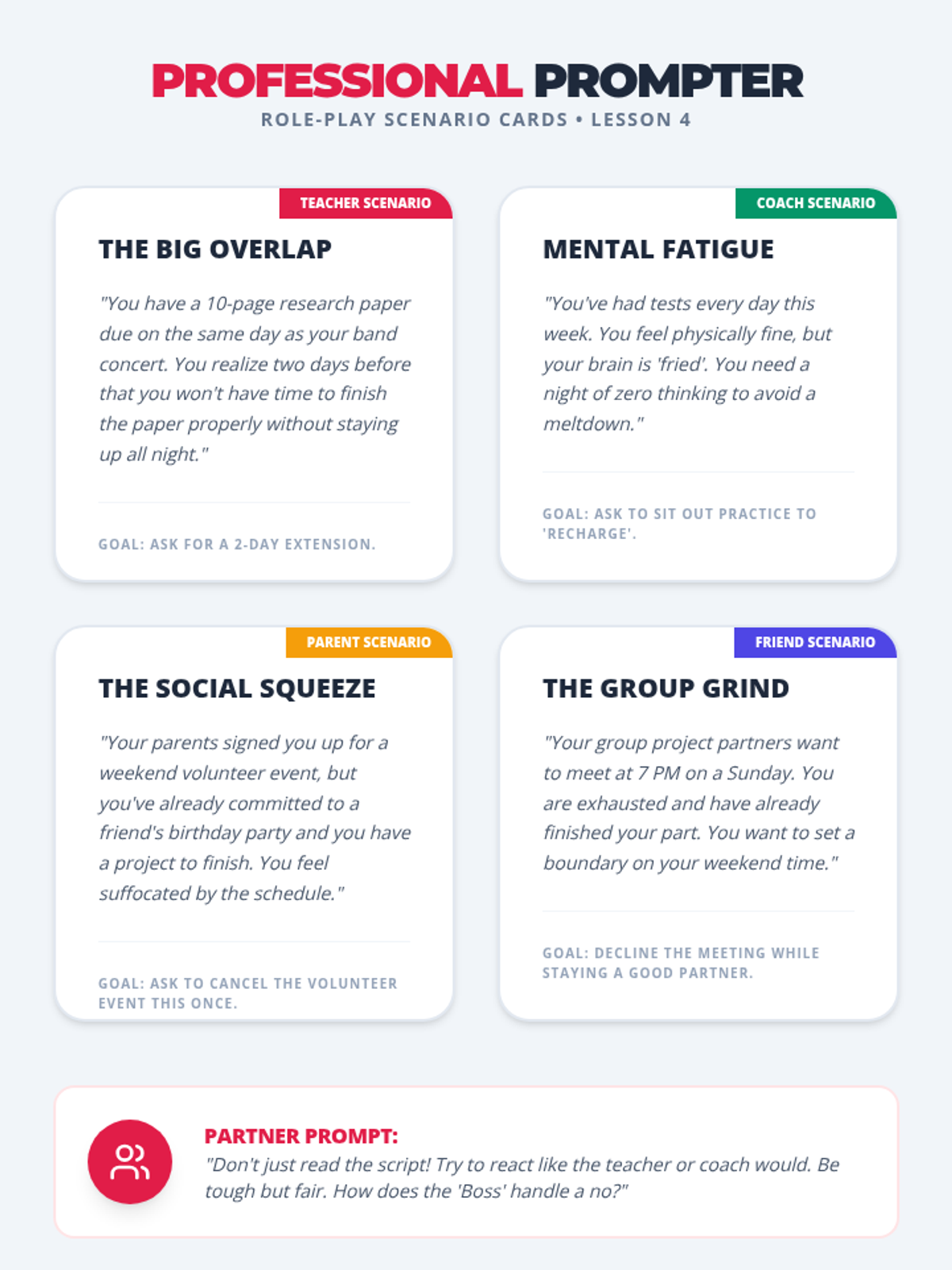
Students develop and practice proactive communication strategies for asking for help or setting boundaries with authority figures.
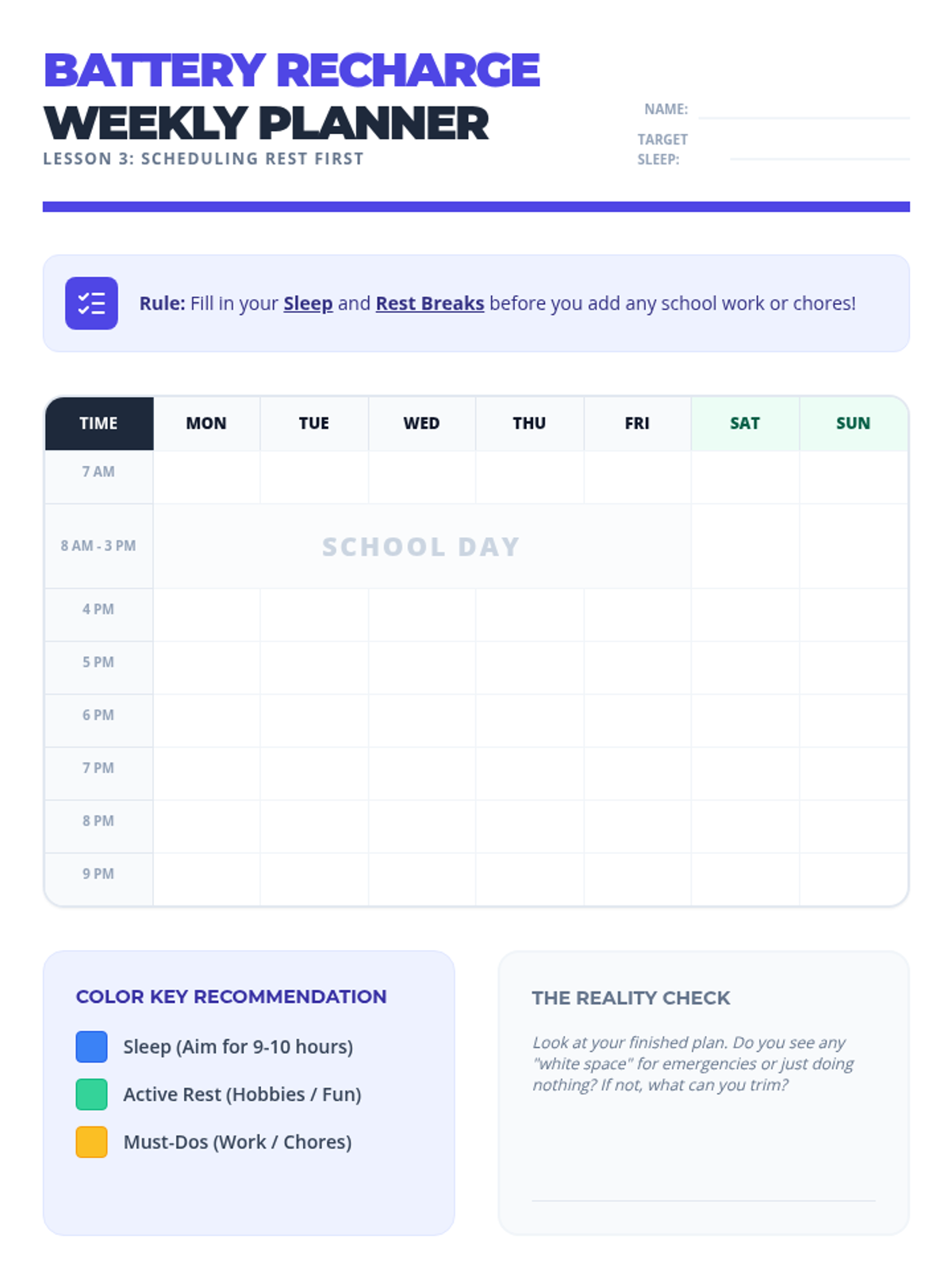
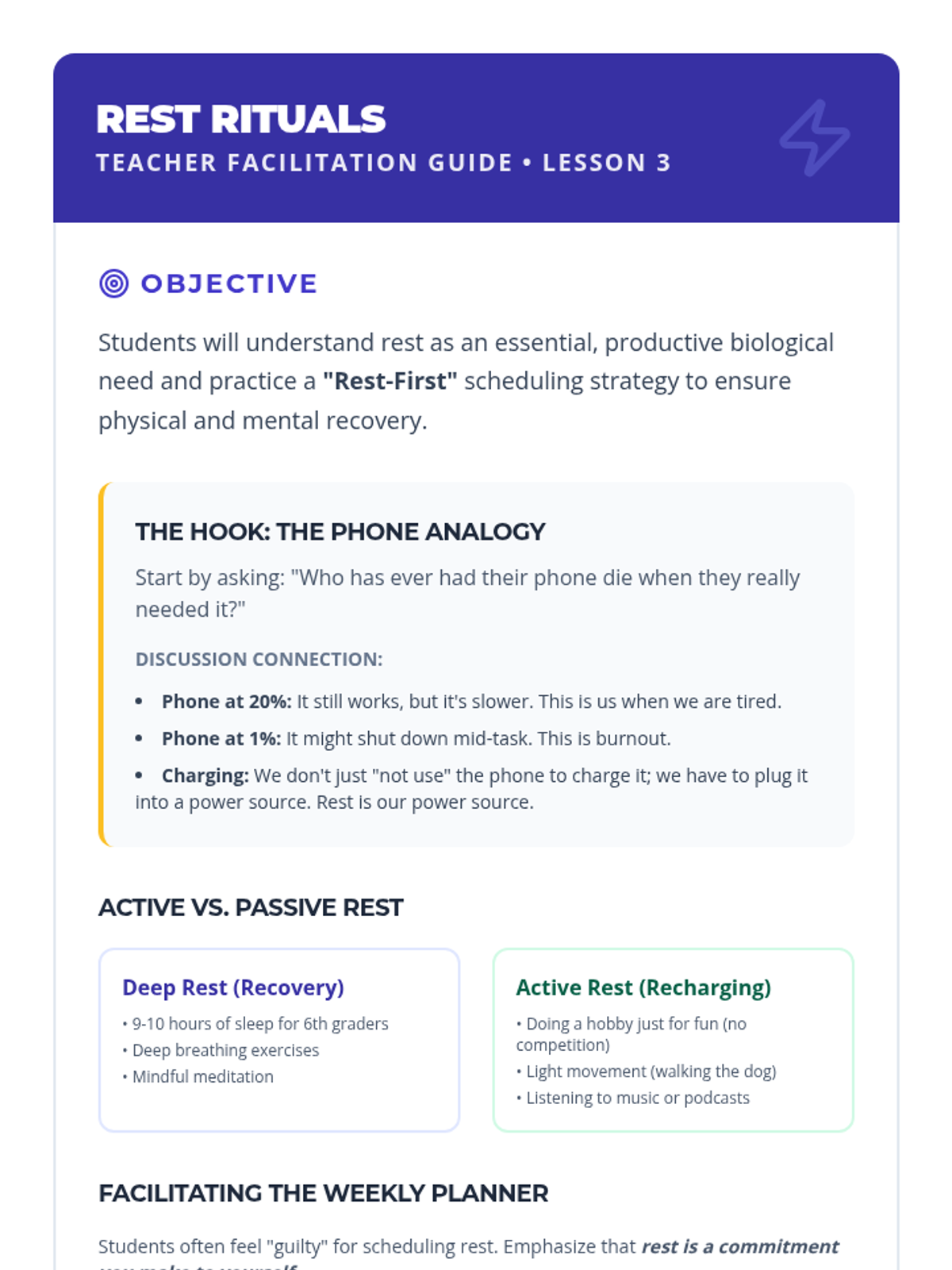
Students explore the necessity of rest and sleep as active components of a healthy schedule, creating a weekly plan that prioritizes 'recharge' time.
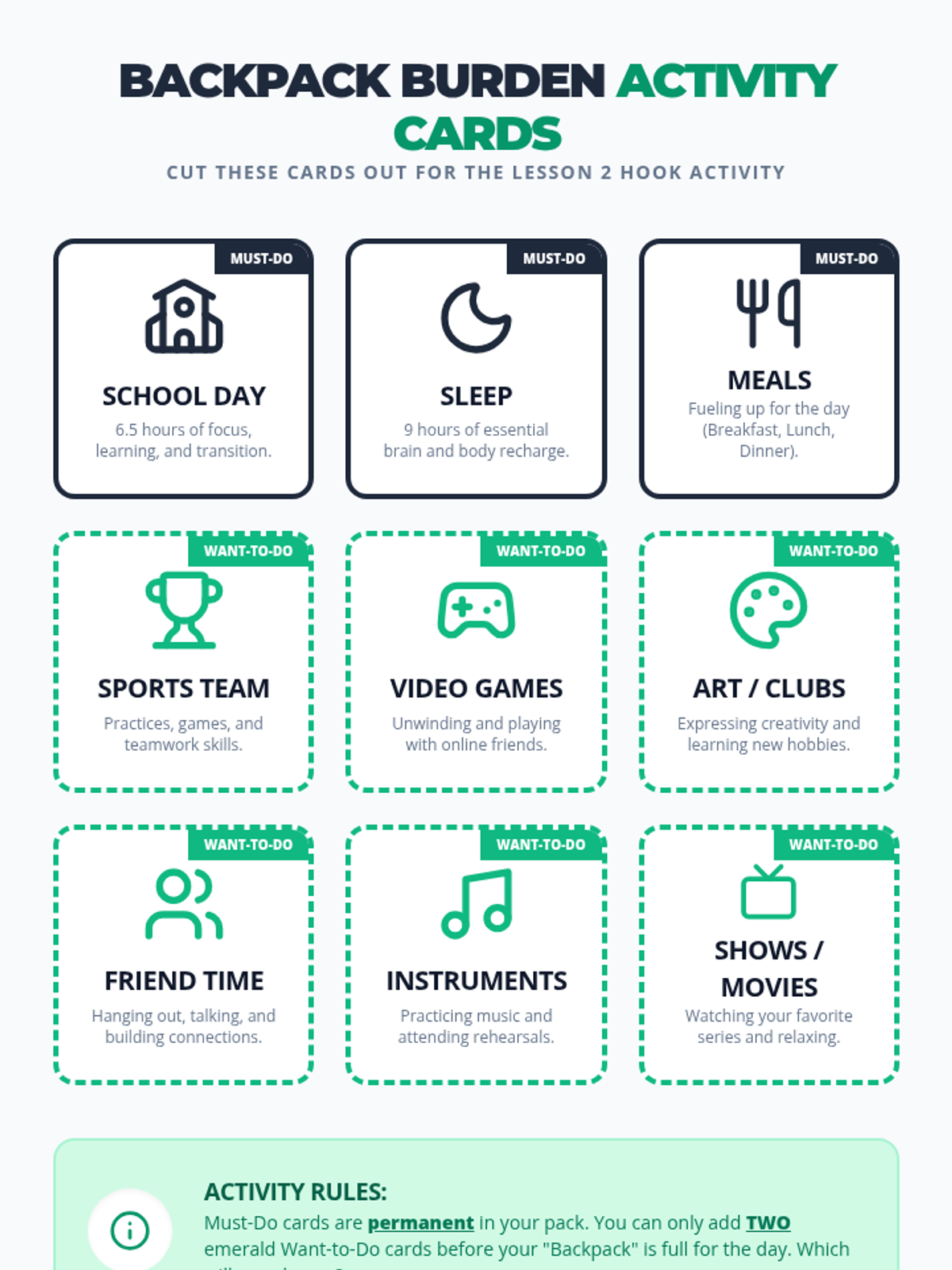
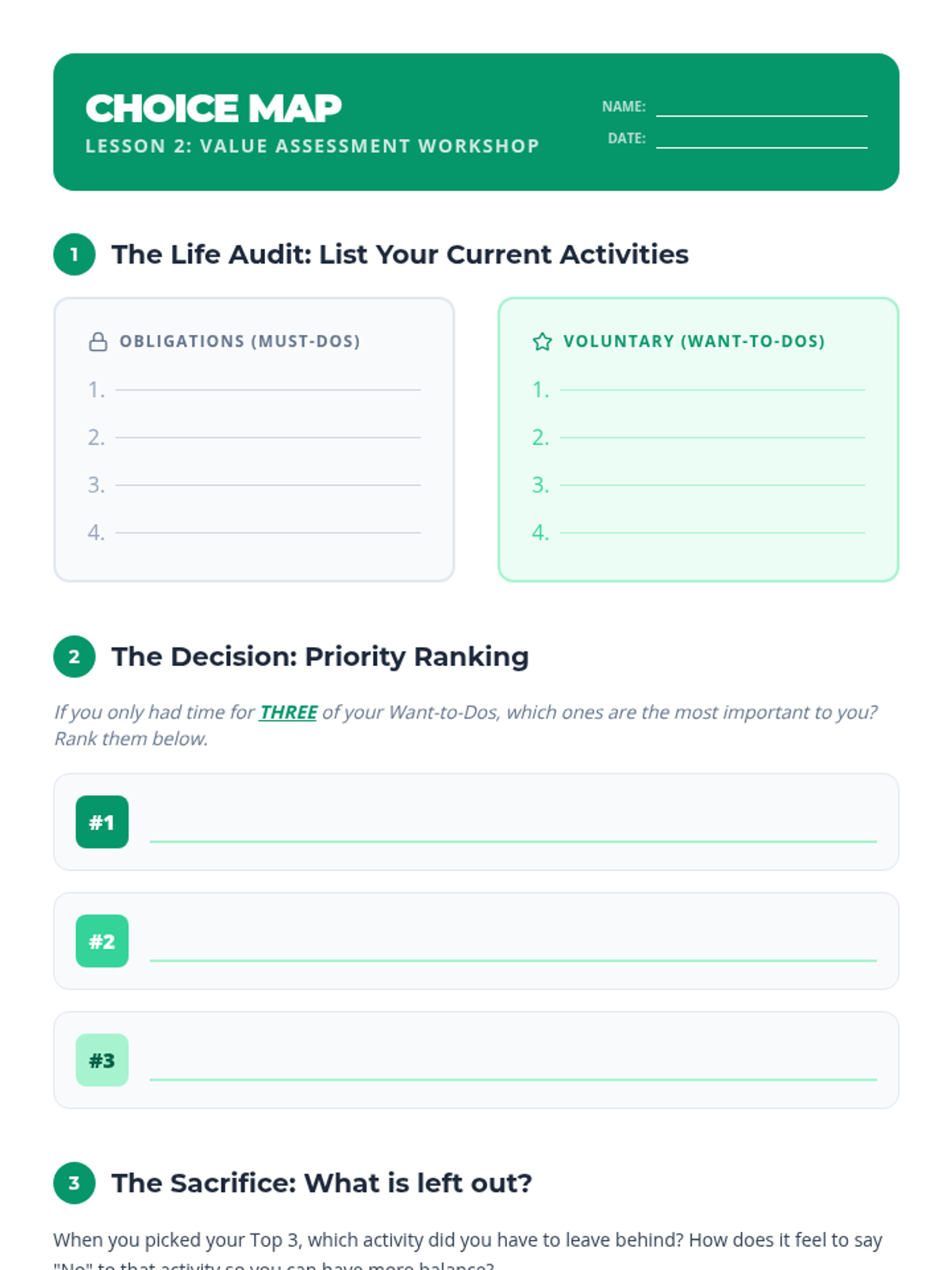
Students learn to distinguish between mandatory obligations and voluntary activities, practicing the art of making trade-offs.
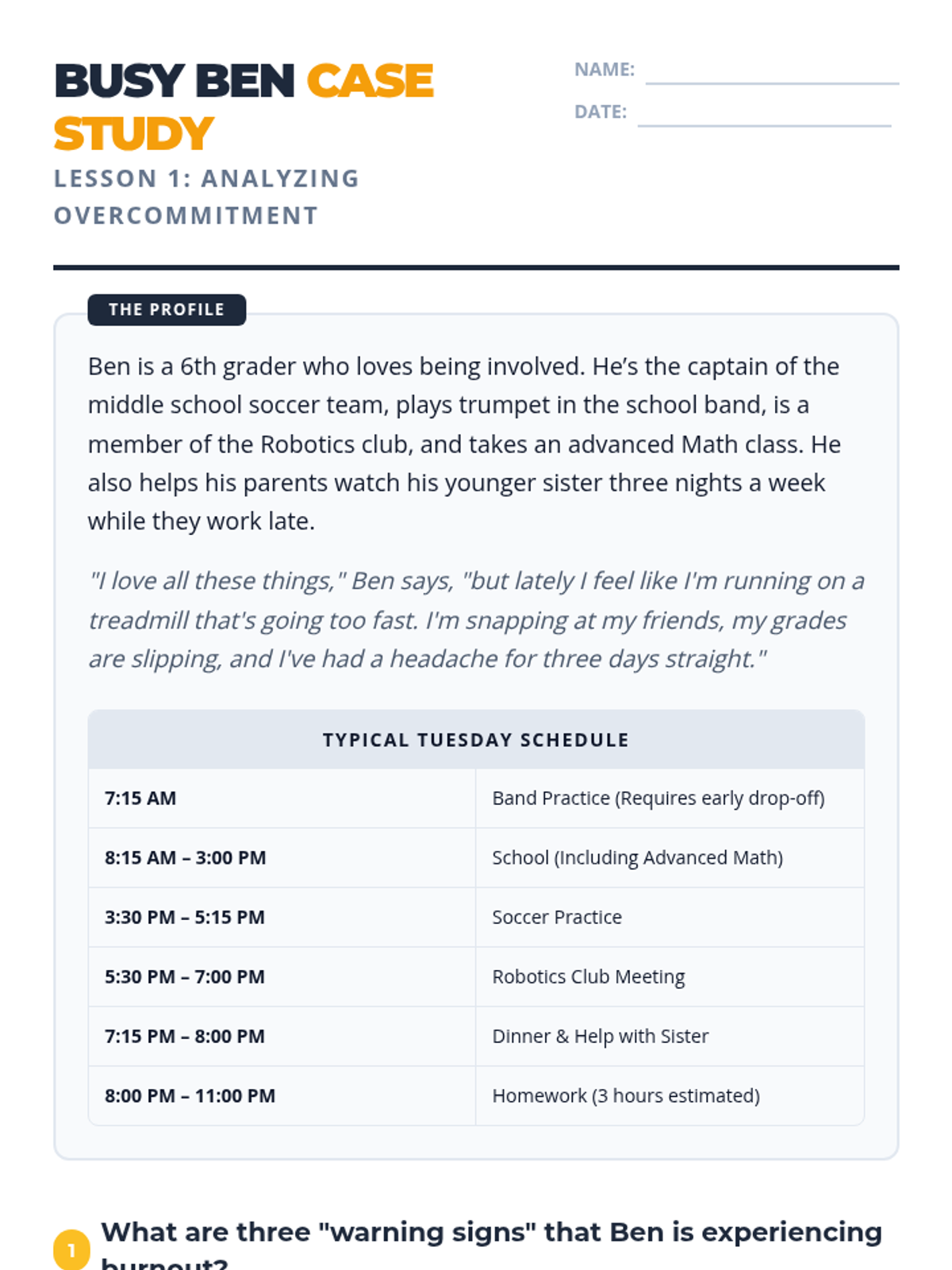
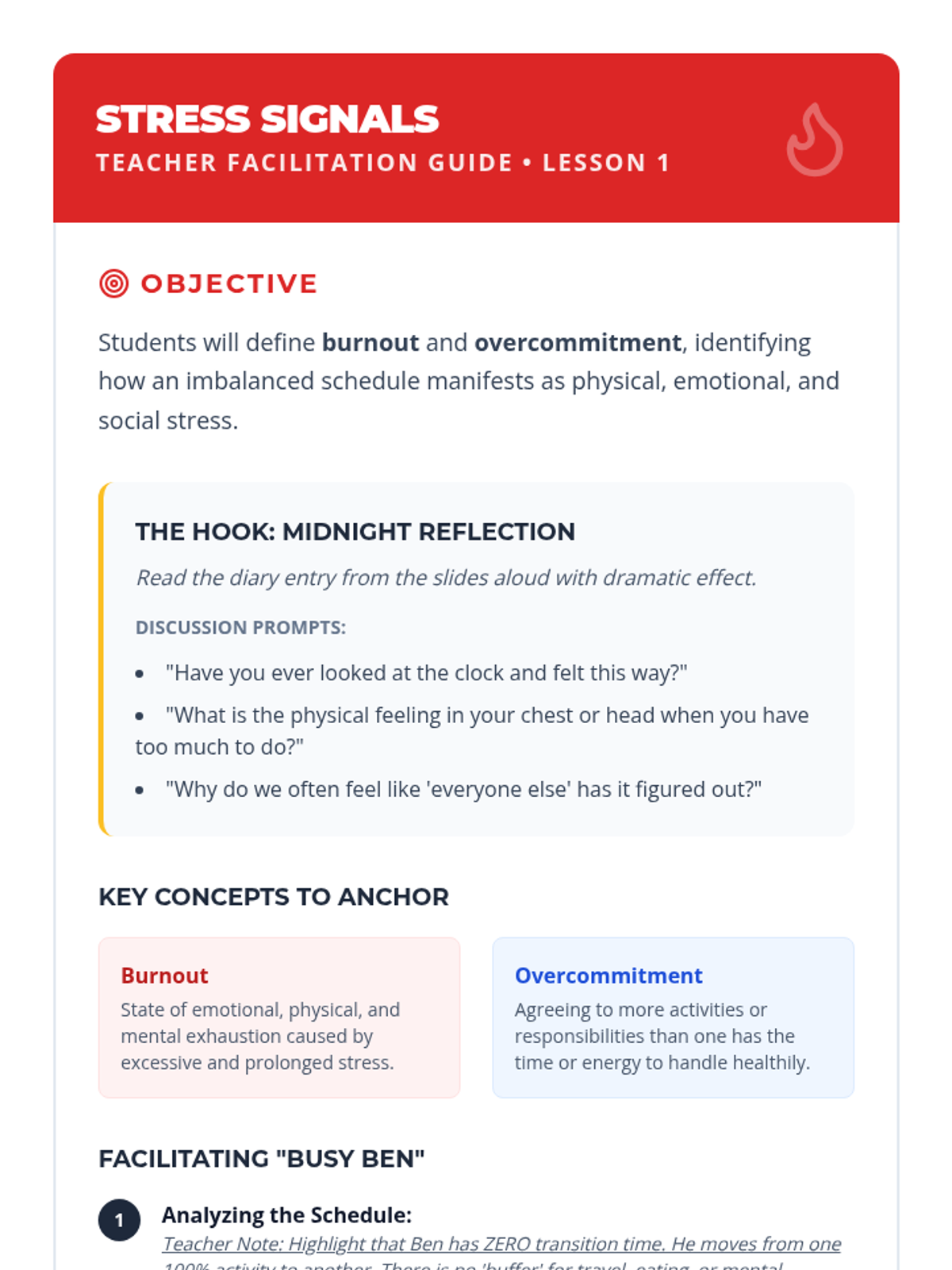
Students analyze the signs and consequences of overcommitment through a fictional case study of a student experiencing burnout.
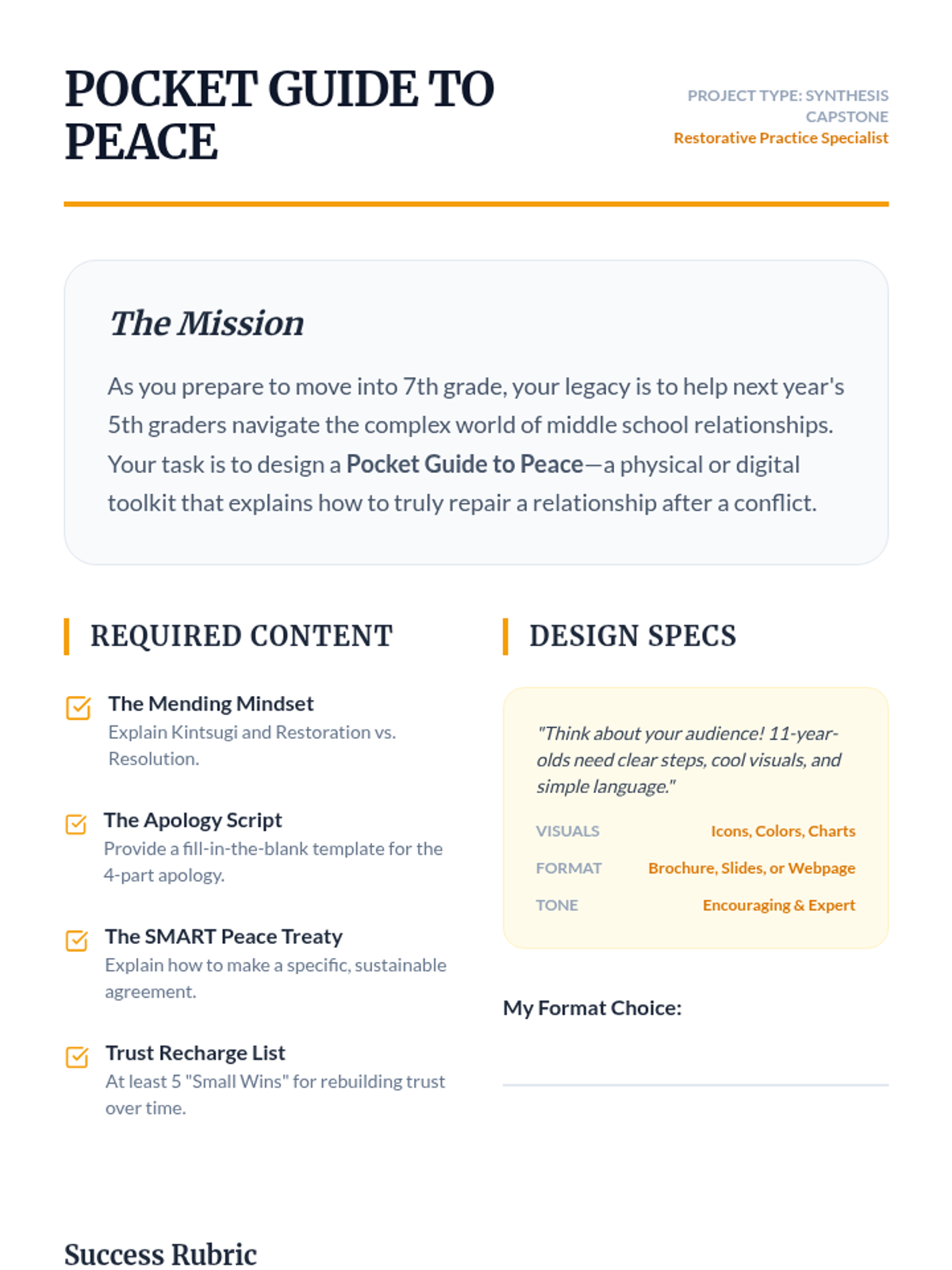
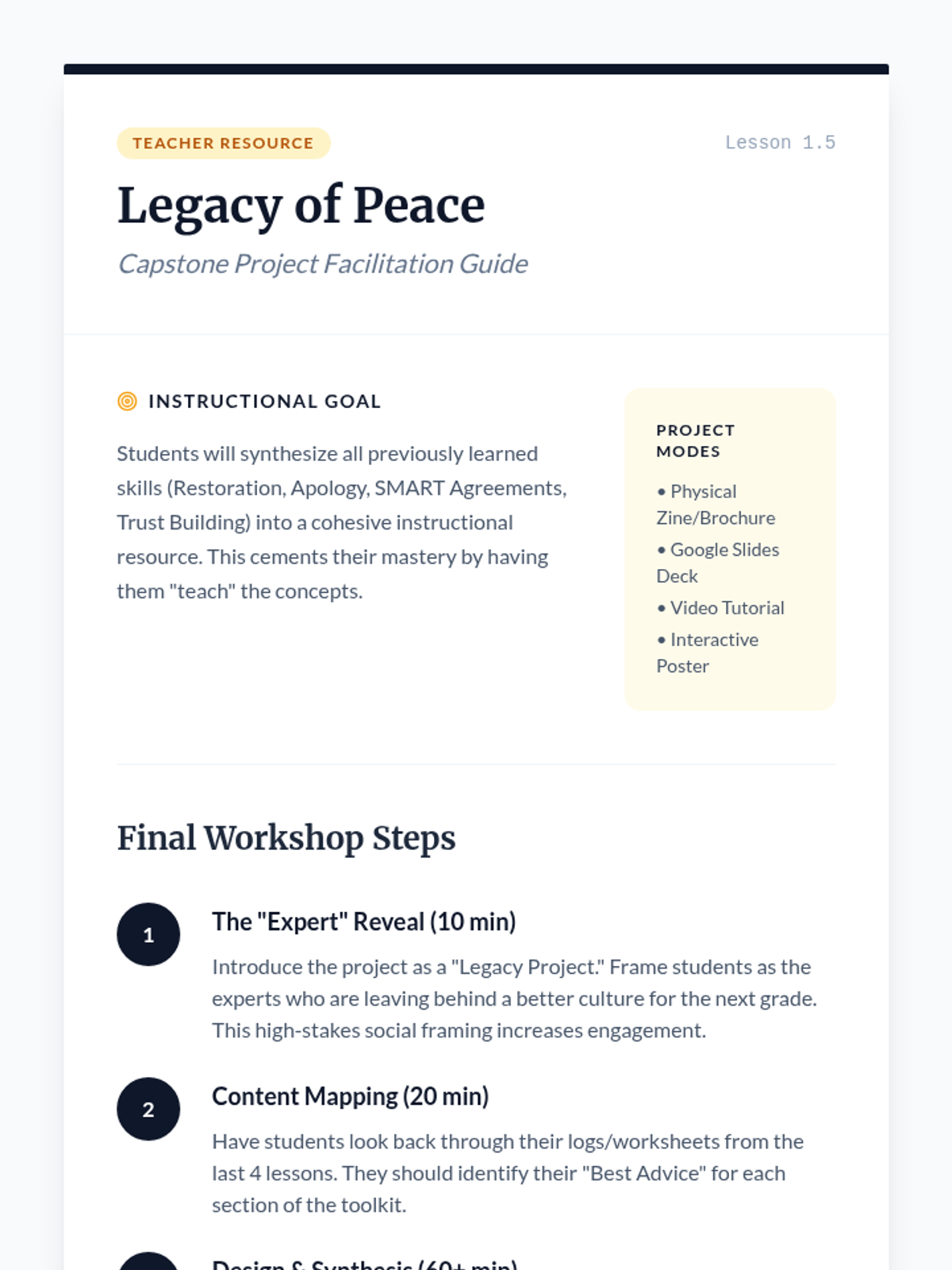
A capstone project where students synthesize their learning to create a 'Pocket Guide to Peace' for younger students.
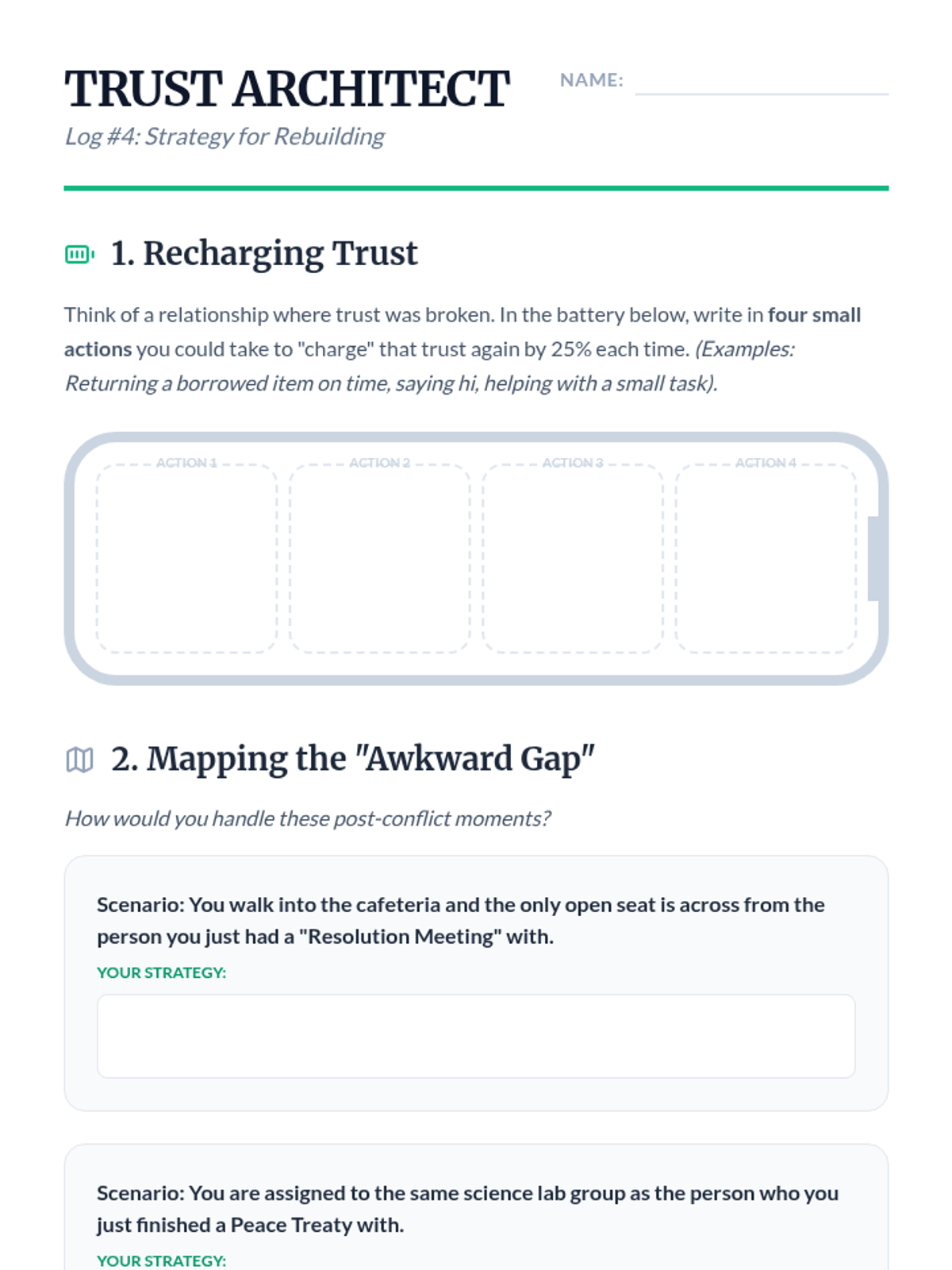
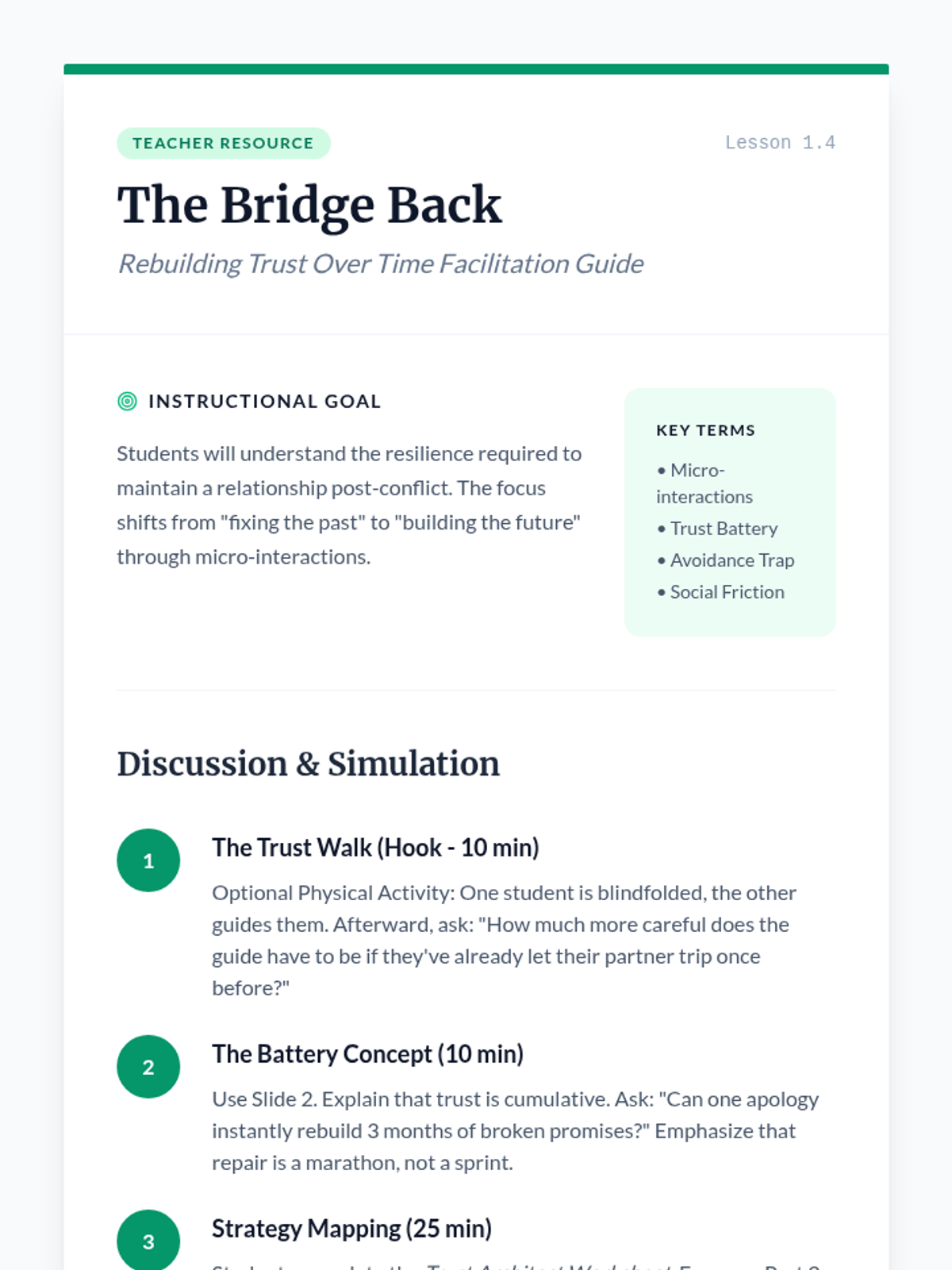
Explores the slow process of rebuilding trust after a conflict, focusing on small, consistent actions and the courage required to be vulnerable again.
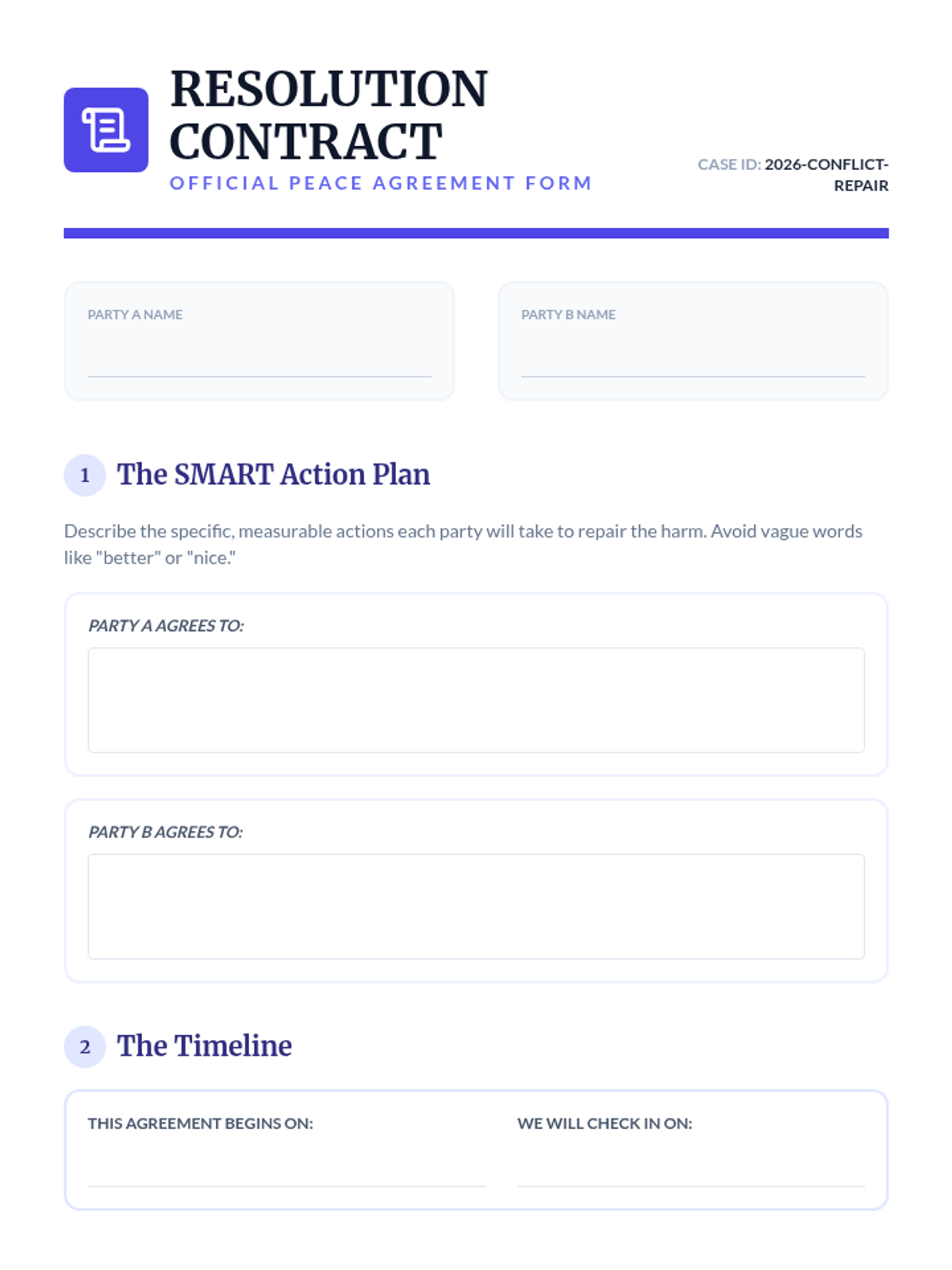
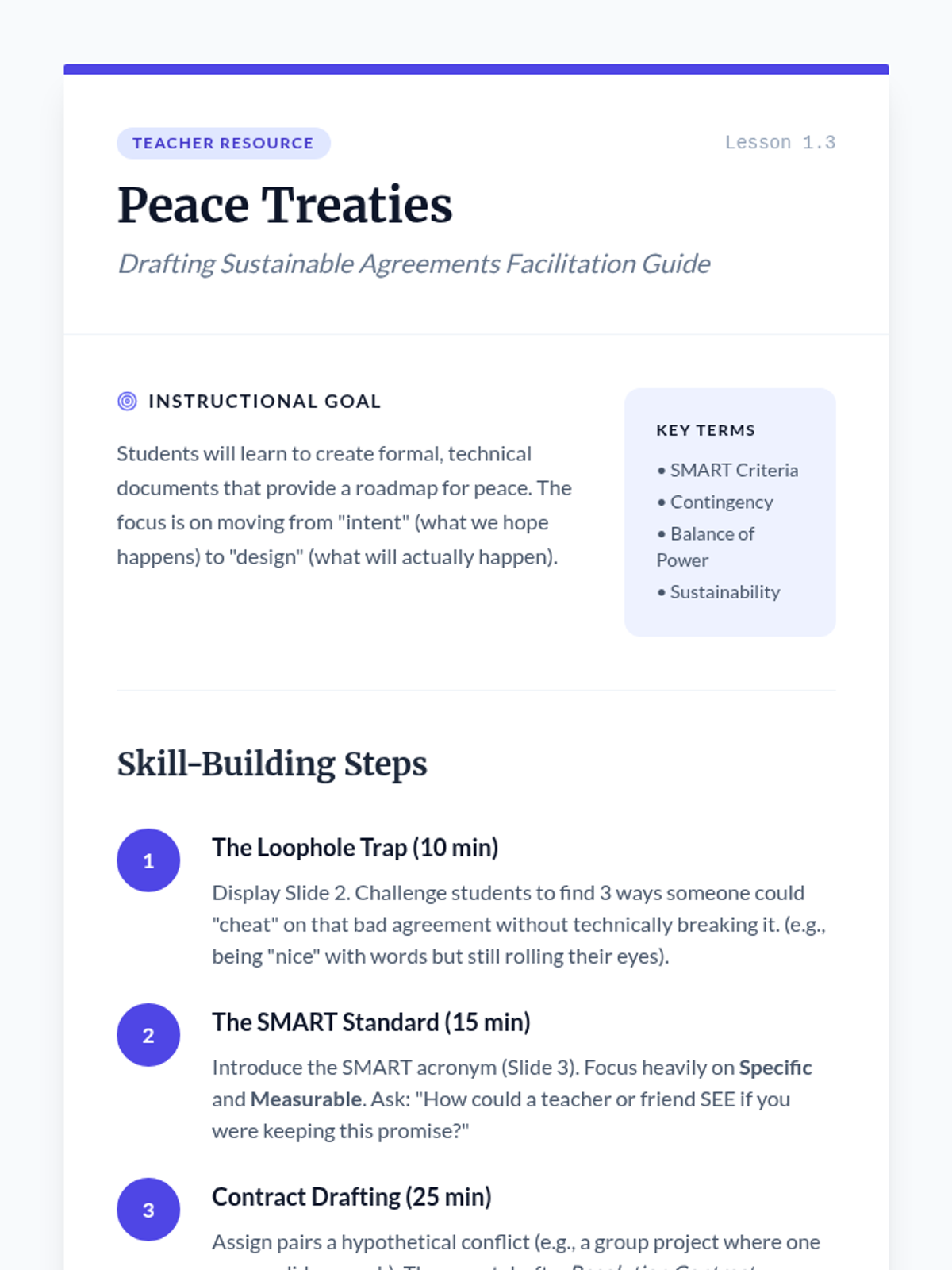
Focuses on technical skills for creating 'fight-proof' agreements that are specific, measurable, and include contingency plans for future friction.
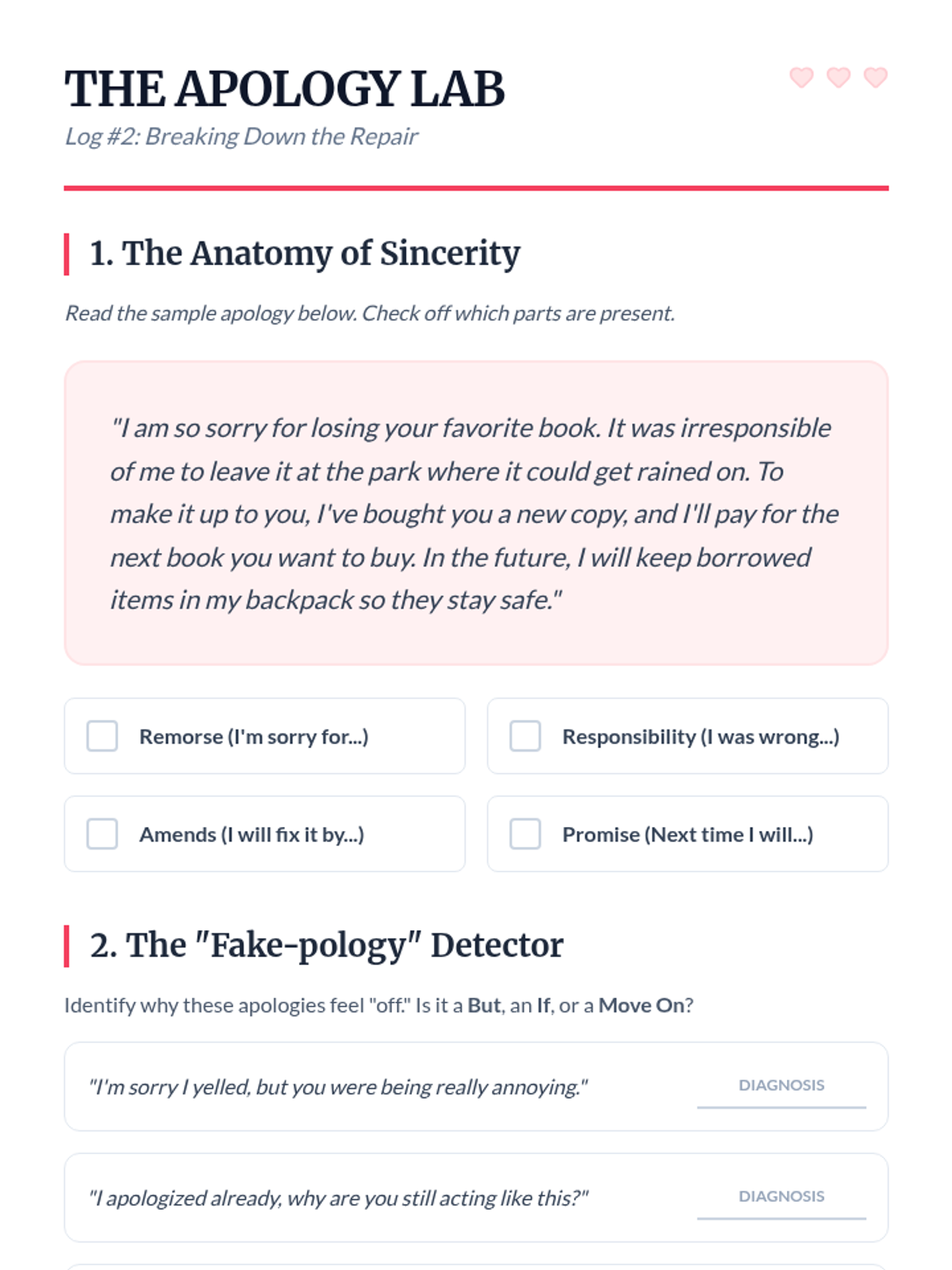
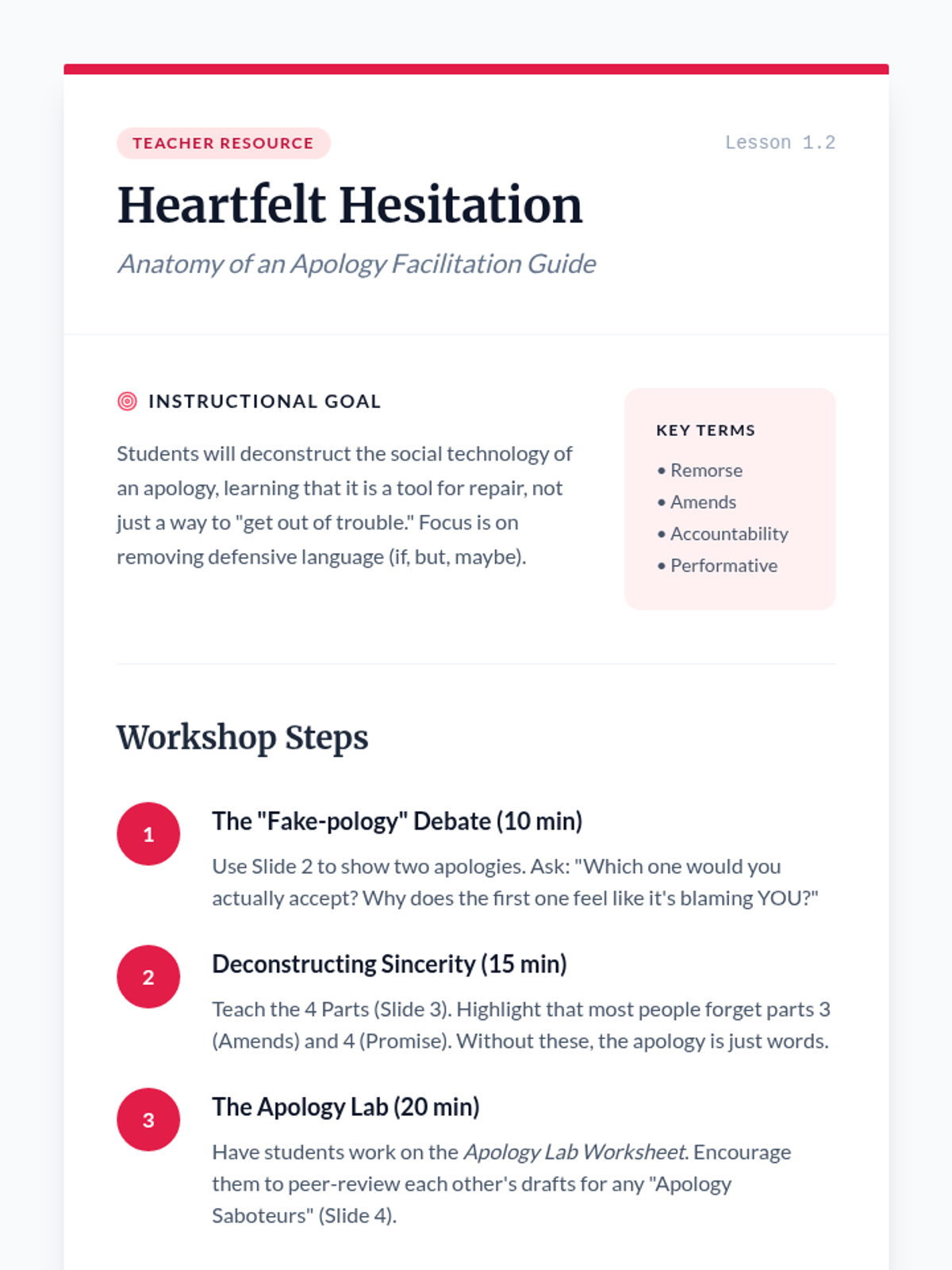
Learners break down the four essential components of a meaningful apology and practice distinguishing between performative and sincere expressions of remorse.
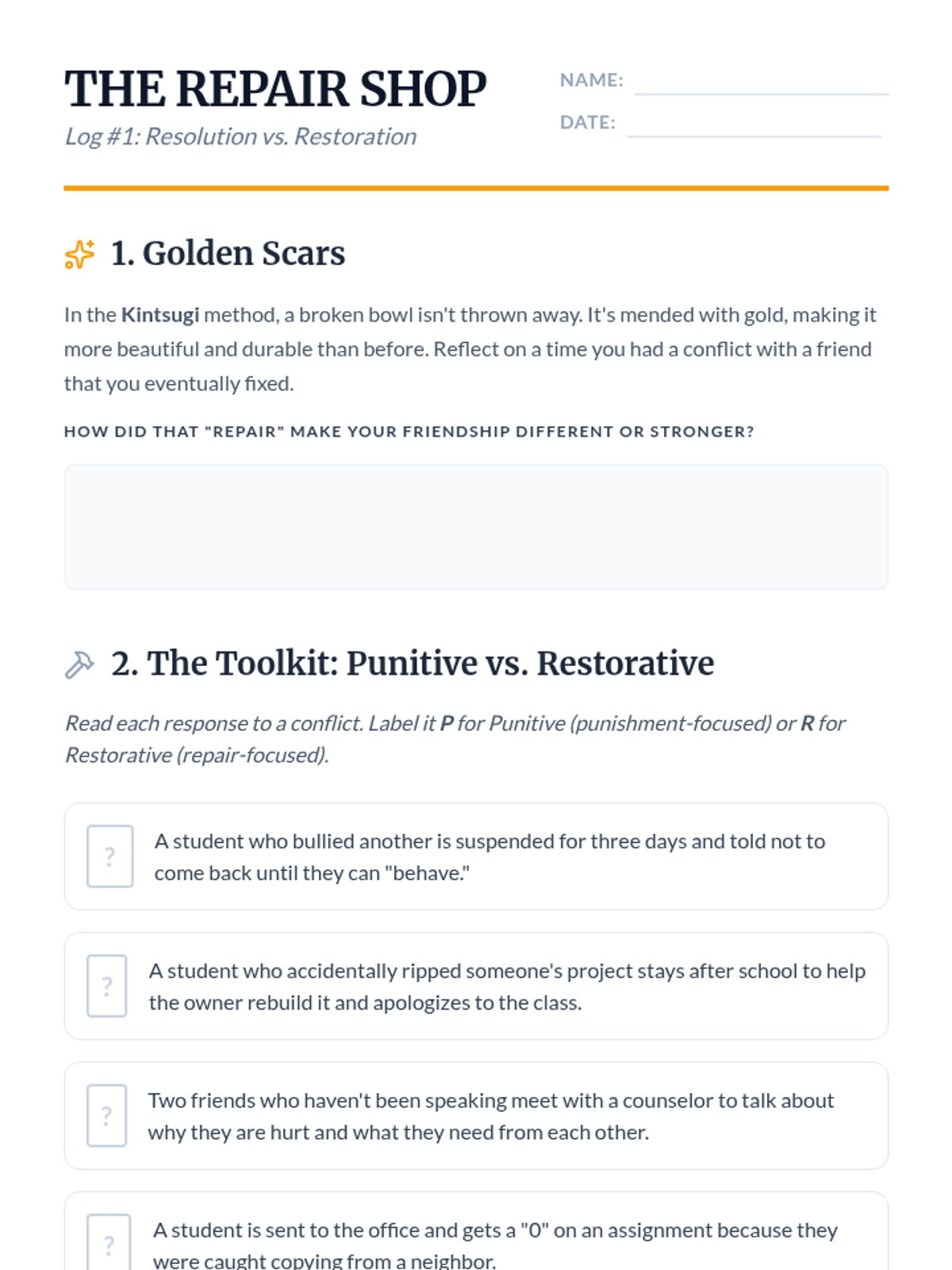
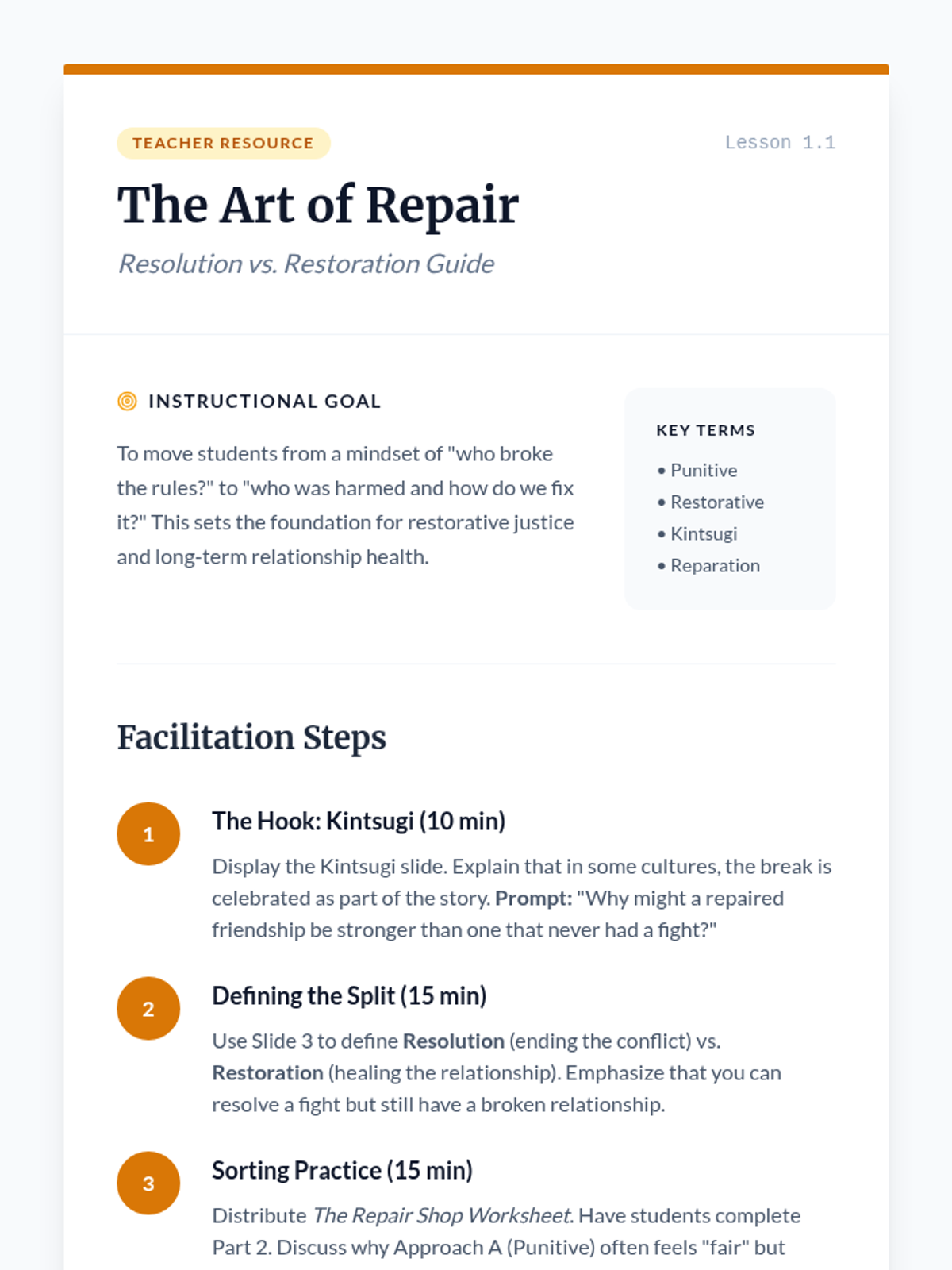
Students contrast punitive and restorative approaches to conflict, using the concept of Kintsugi to understand how repair can make a relationship stronger.
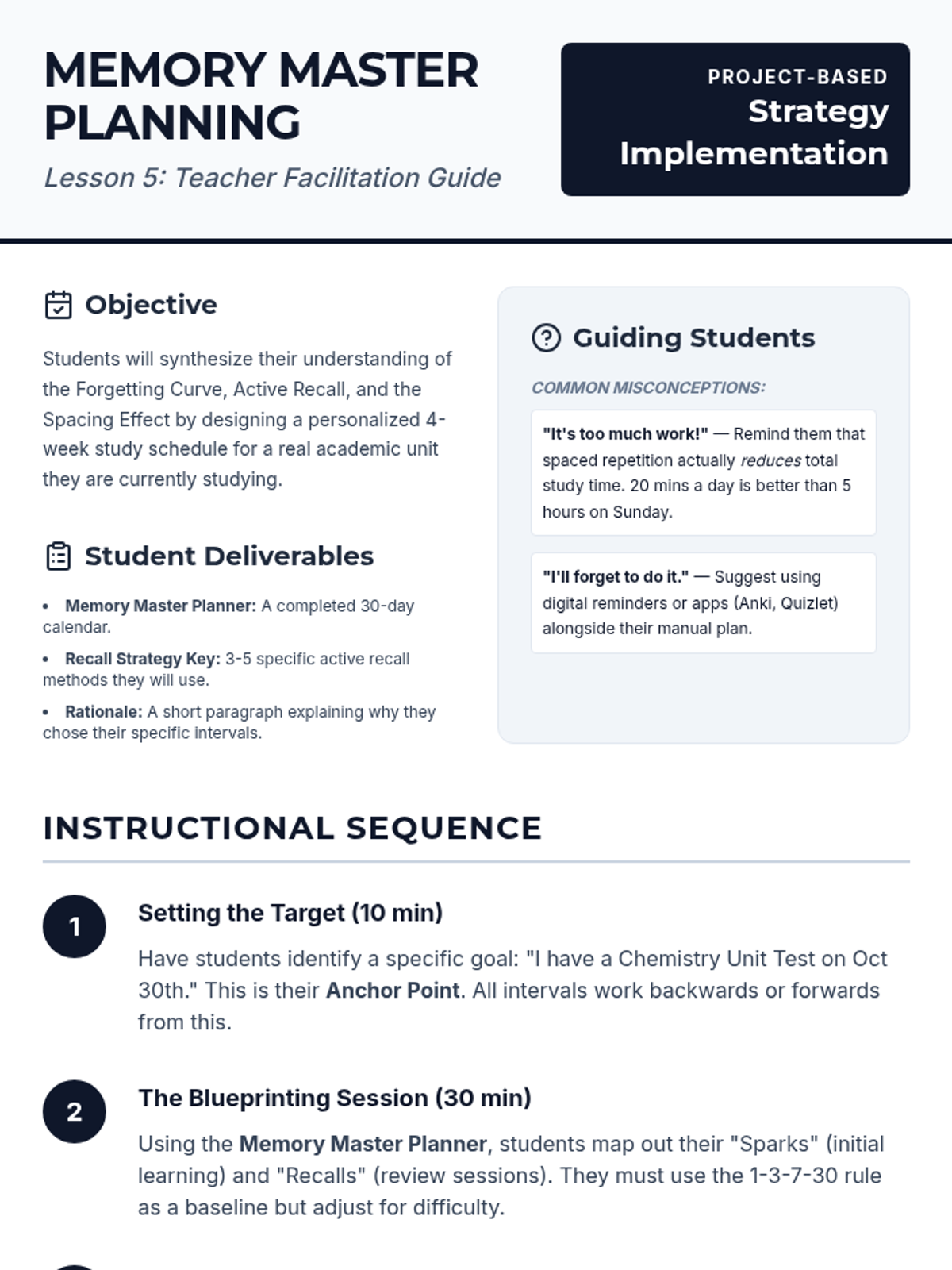
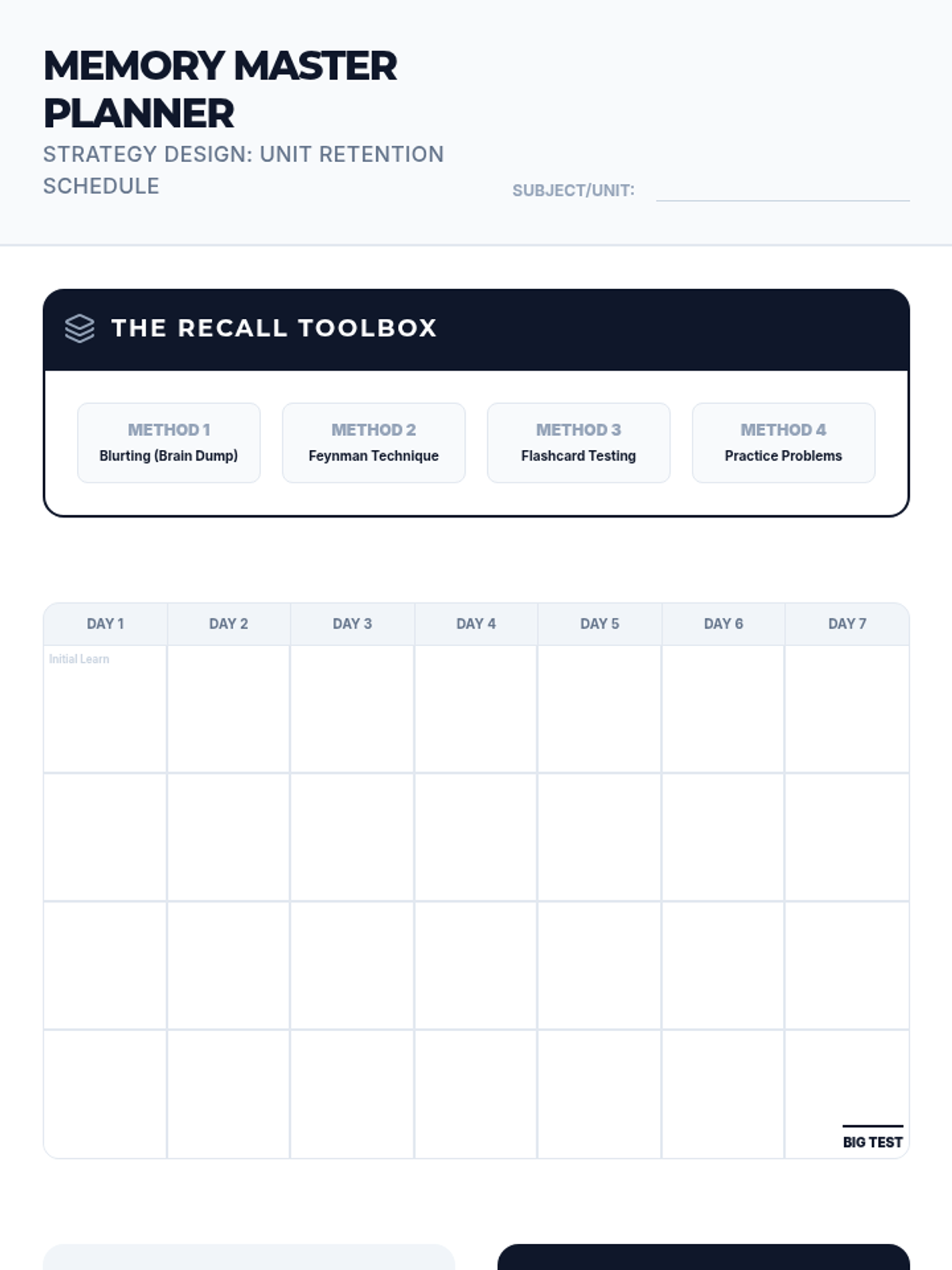
Students synthesize their learning by creating a personalized interval-based study schedule for a current academic unit.
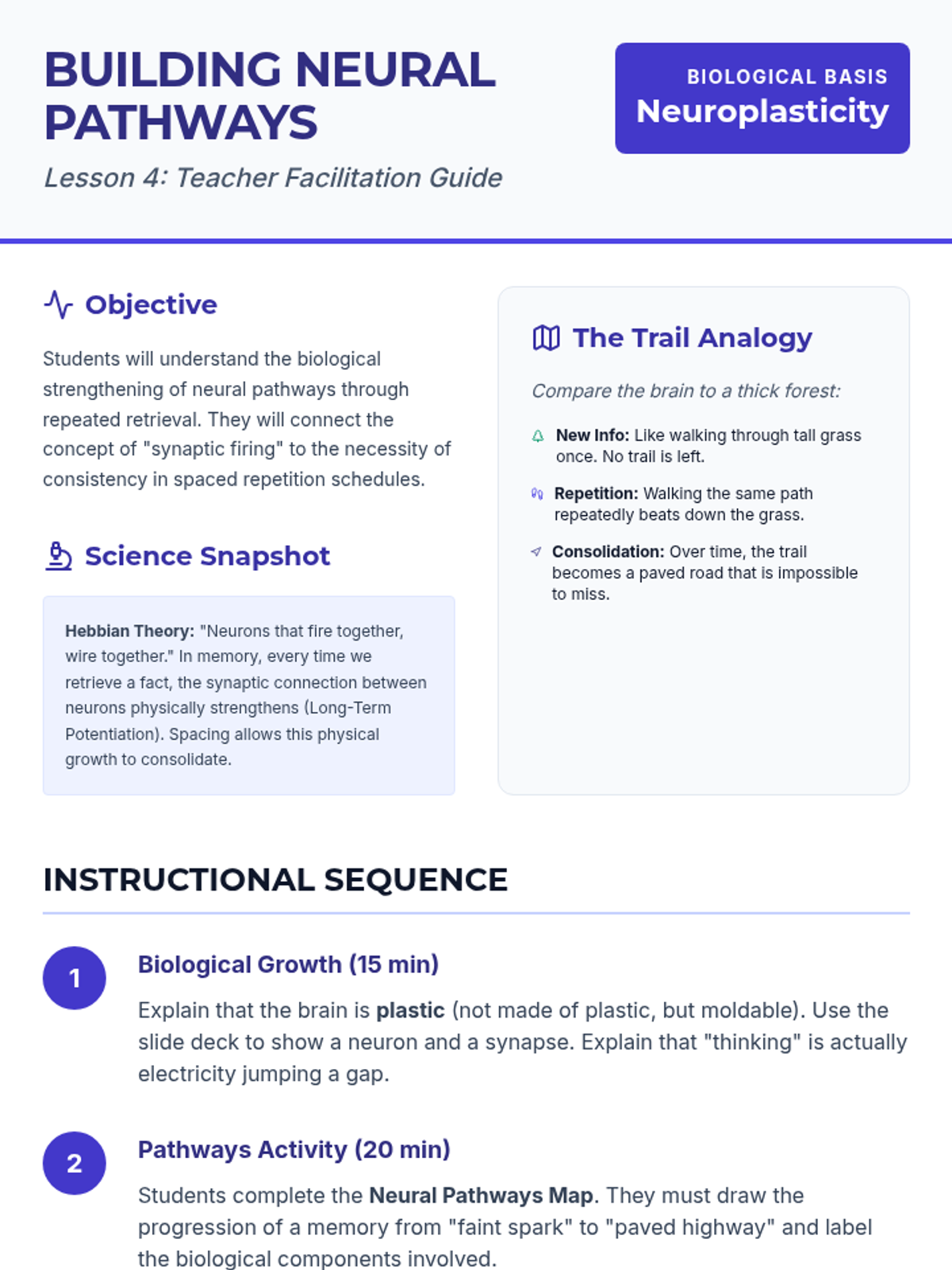
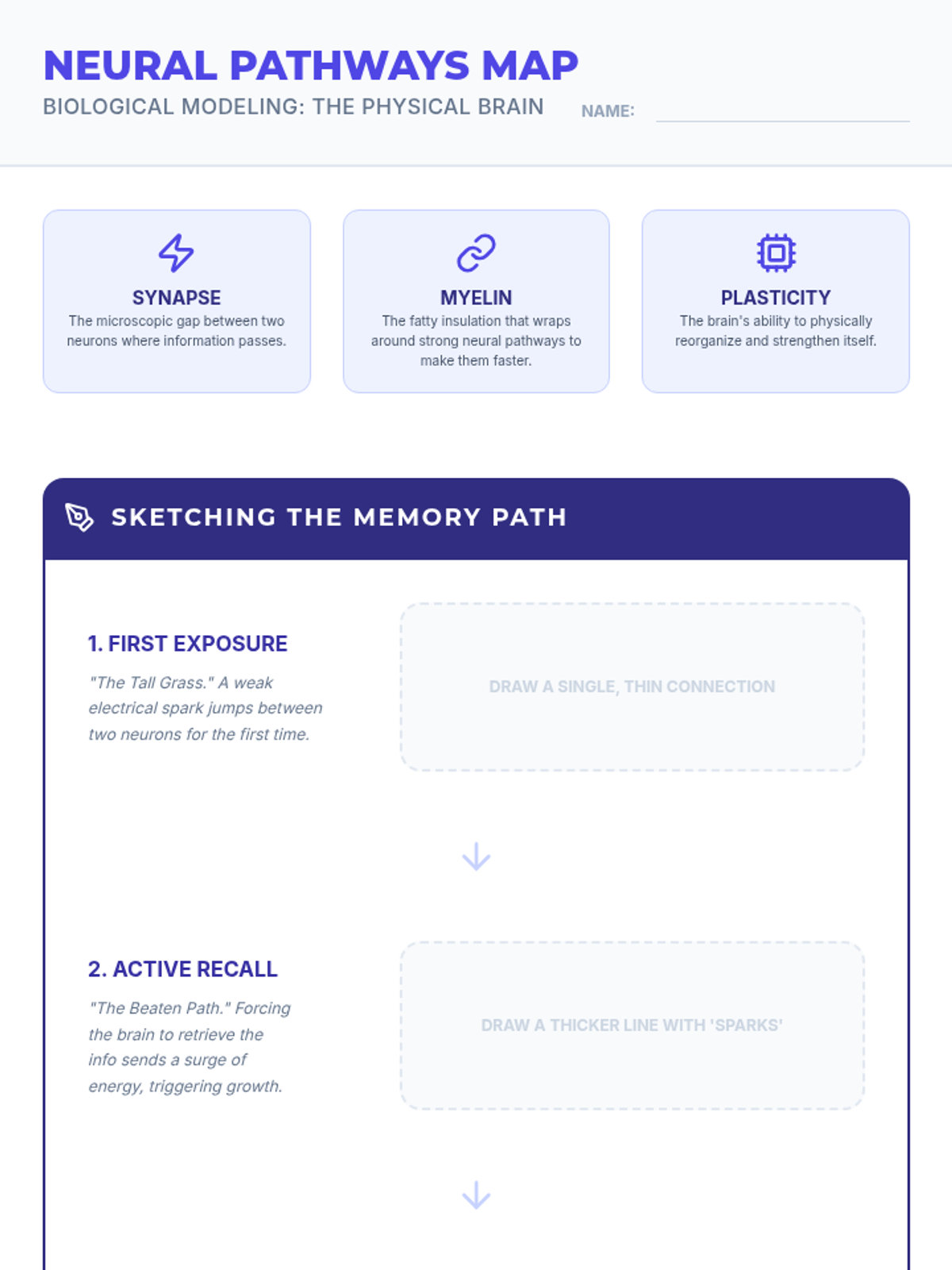
An exploration of the biological basis of memory, focusing on neuroplasticity and how repeated retrieval strengthens neural pathways.
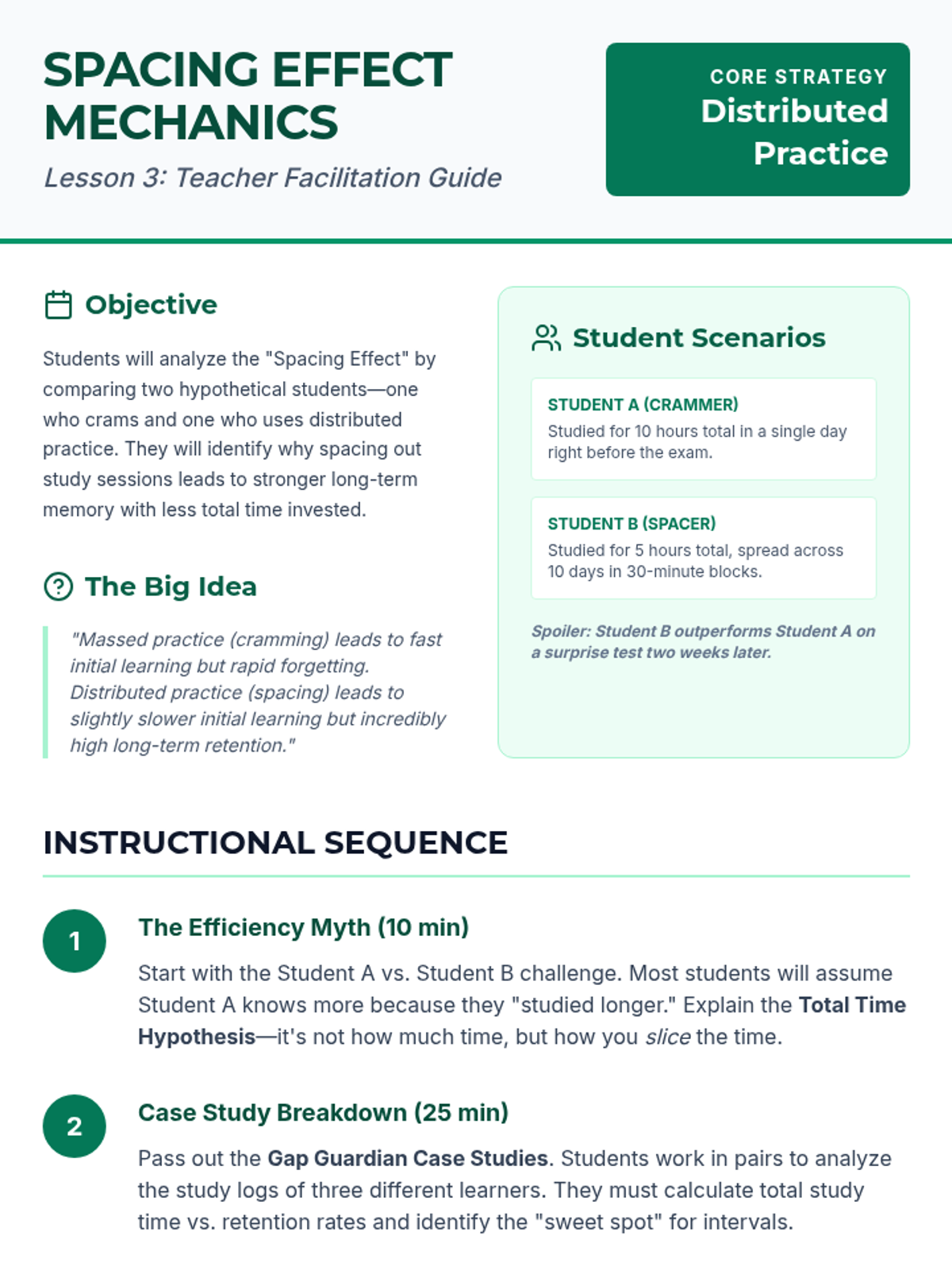
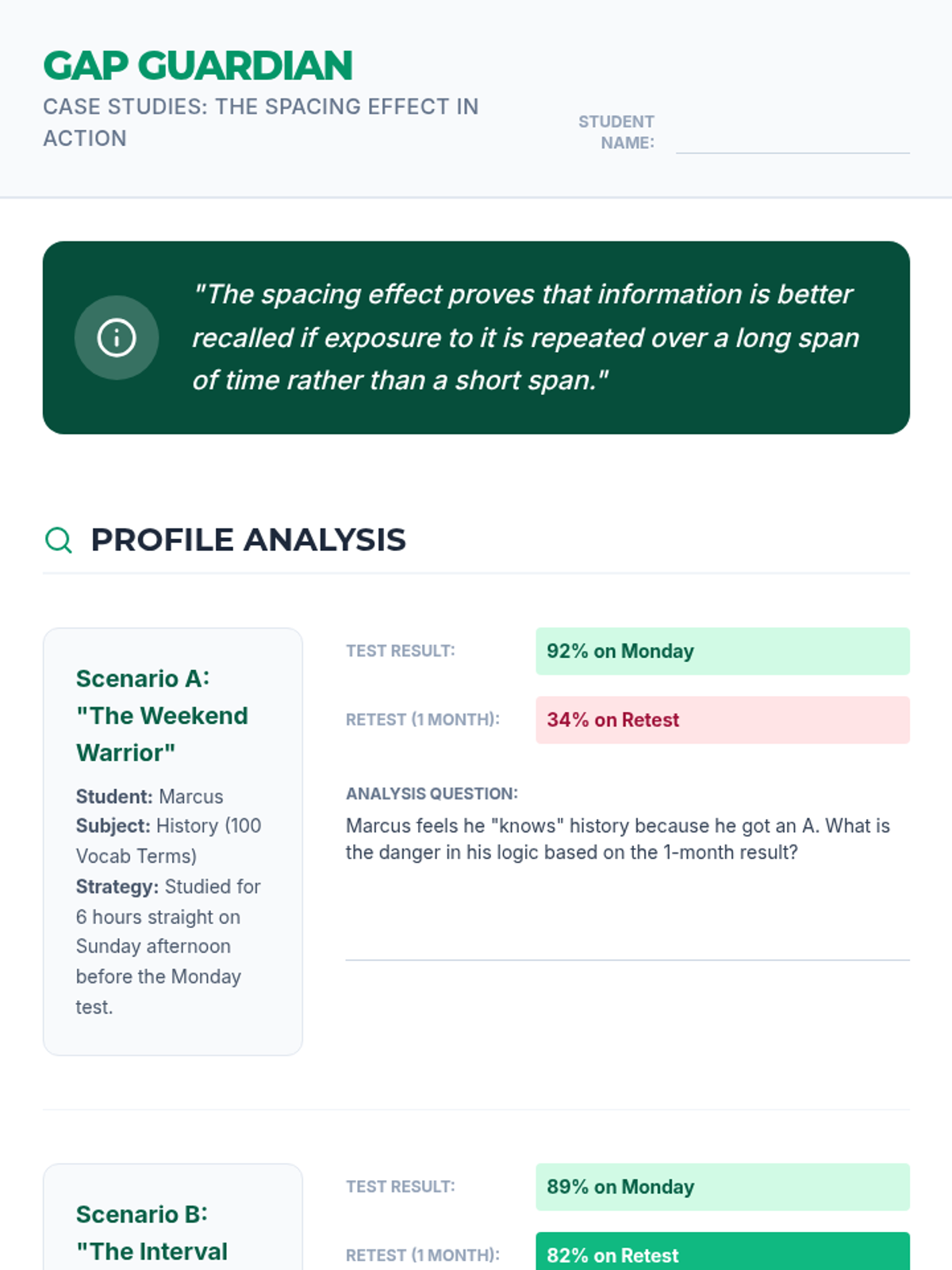
Students analyze case studies to understand the 'spacing effect' and determine the optimal intervals for long-term retention compared to cramming.
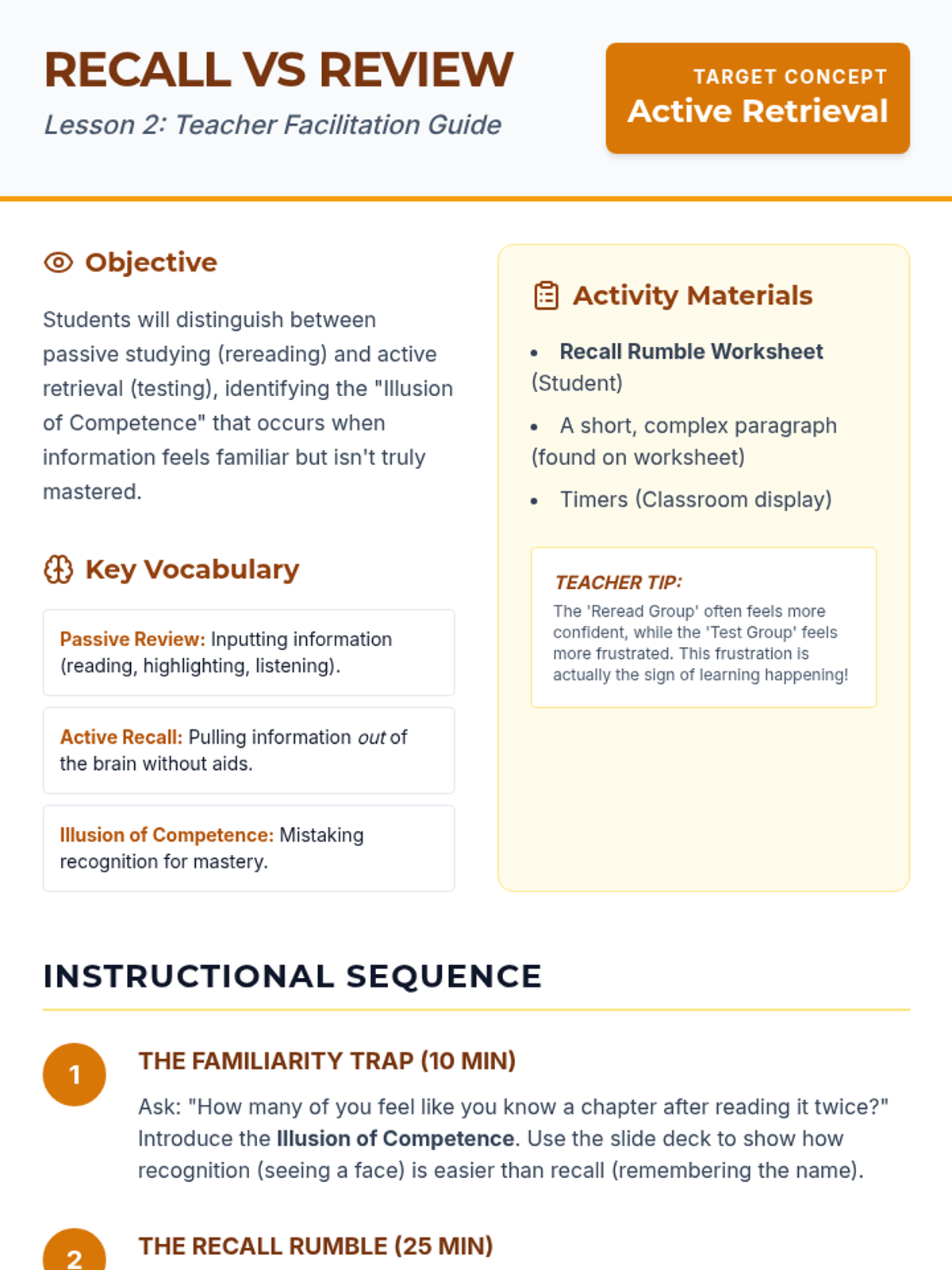
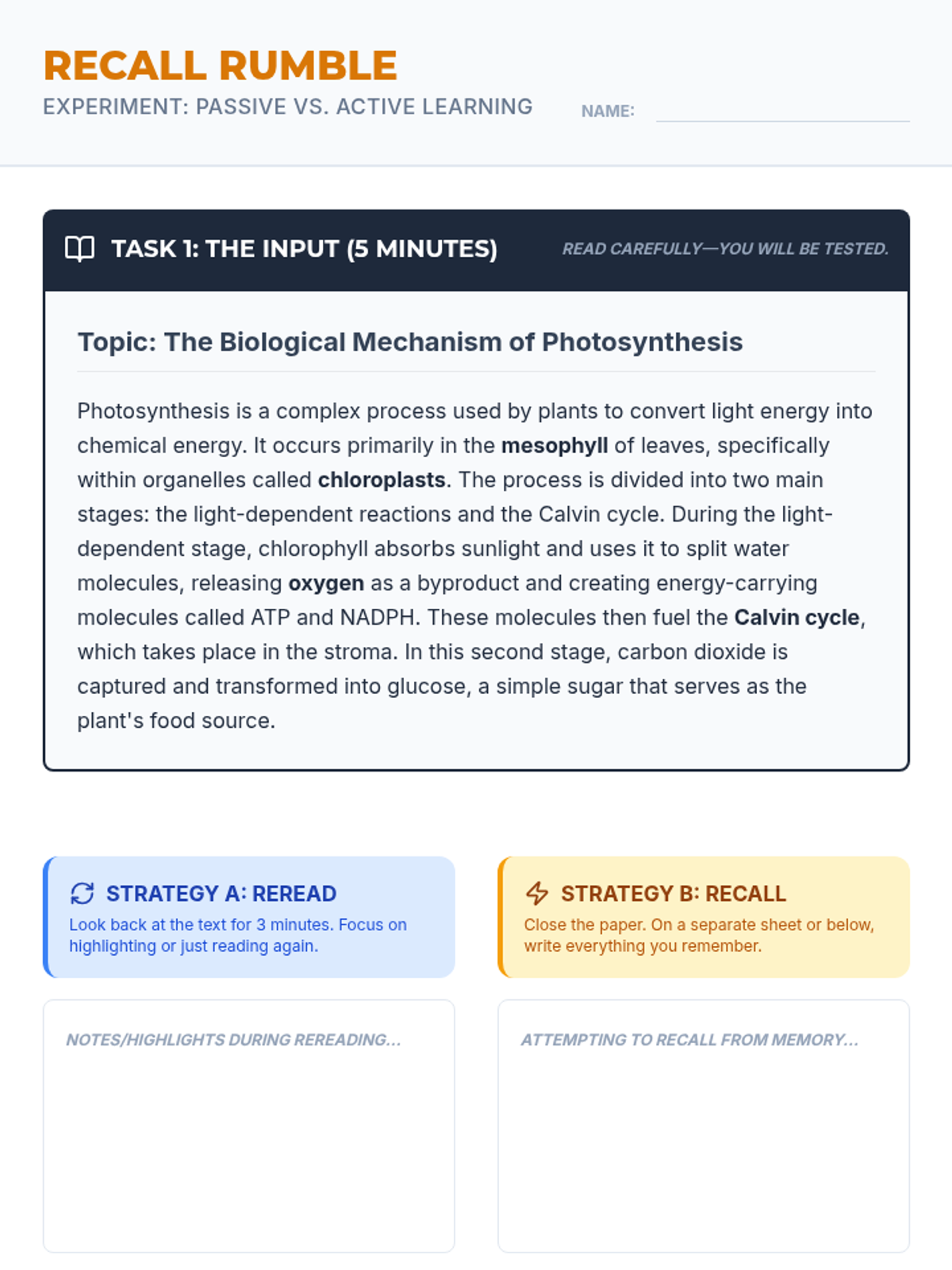
A comparison between passive rereading and active retrieval, highlighting the 'illusion of competence' and the power of testing oneself.
Students explore the Forgetting Curve through a hands-on experiment with nonsense syllables, visualizing how quickly information is lost without strategic review.
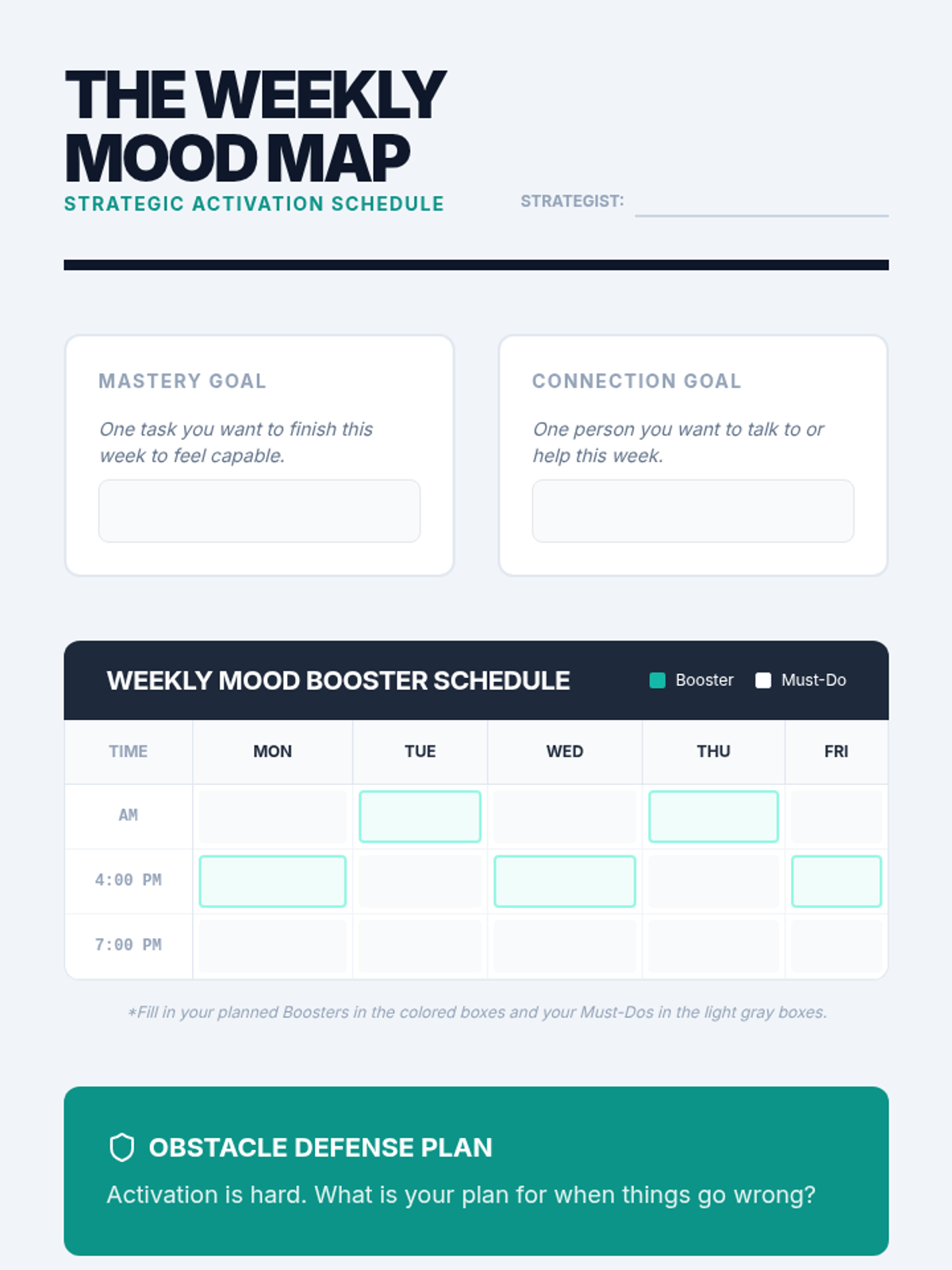
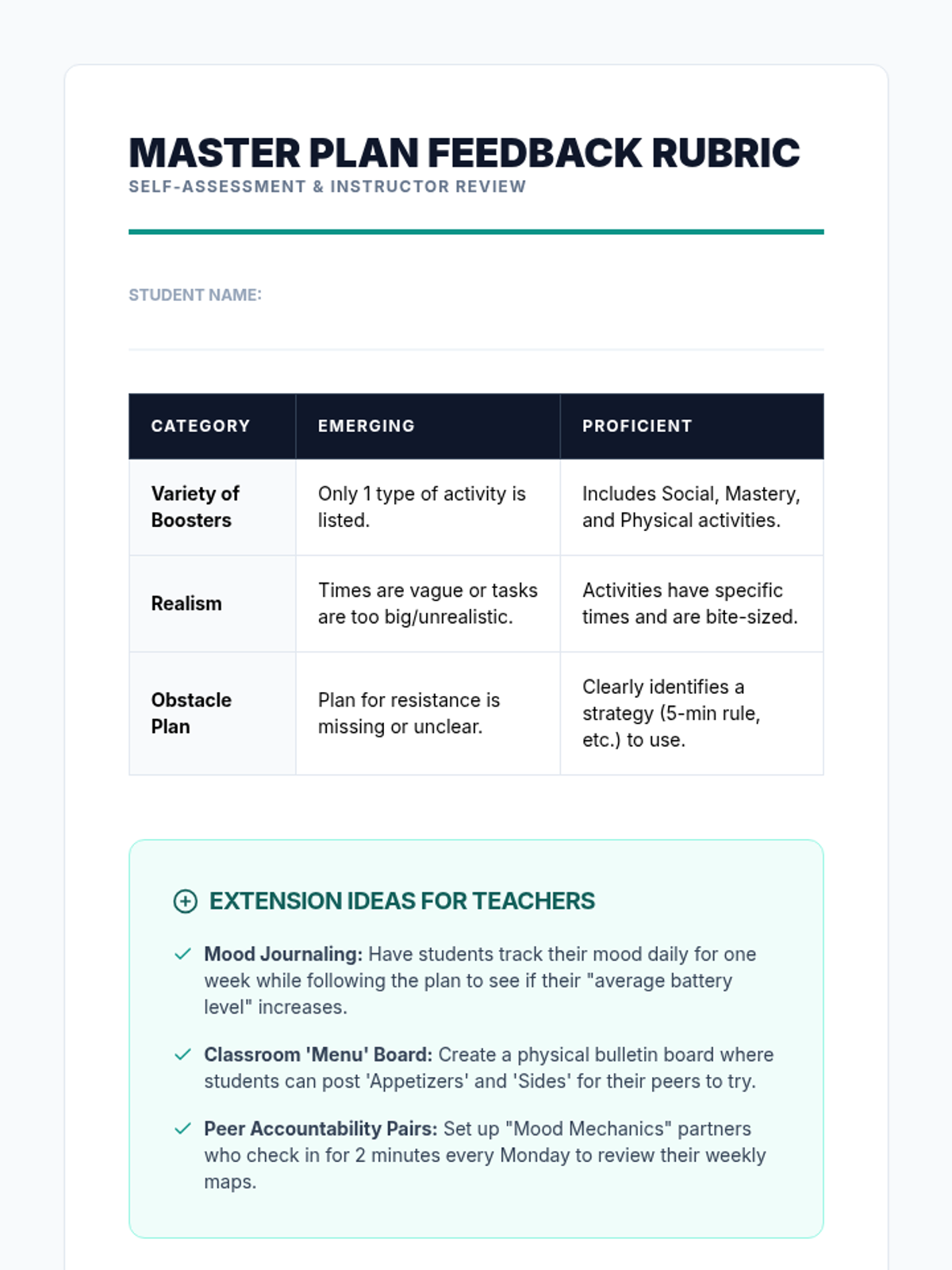
A workshop-style lesson where students design a balanced weekly schedule that integrates mood boosters and essential responsibilities.
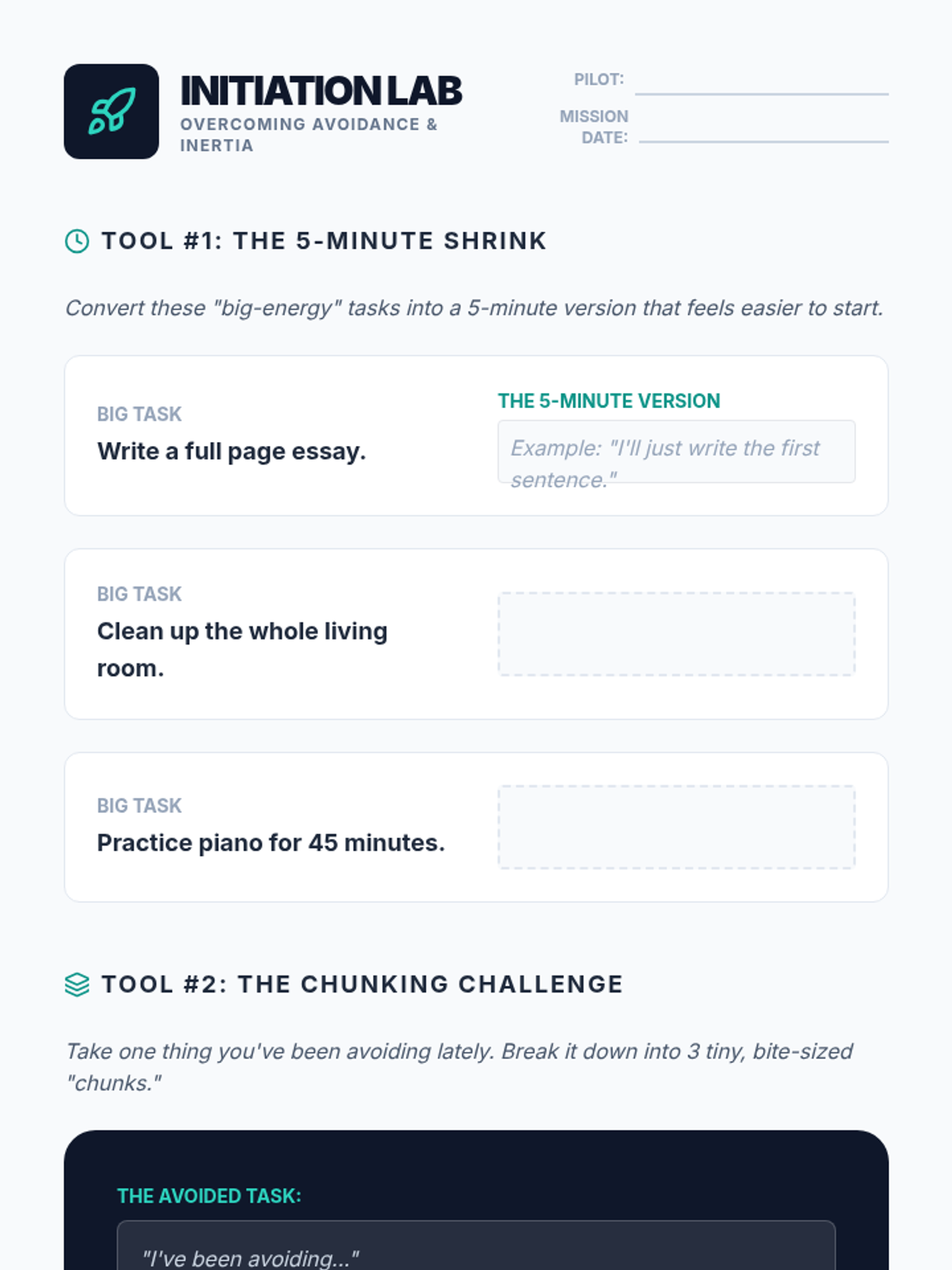
Students learn 'Action Before Motivation' and practice techniques like the 5-Minute Rule and Chunking to overcome inertia.
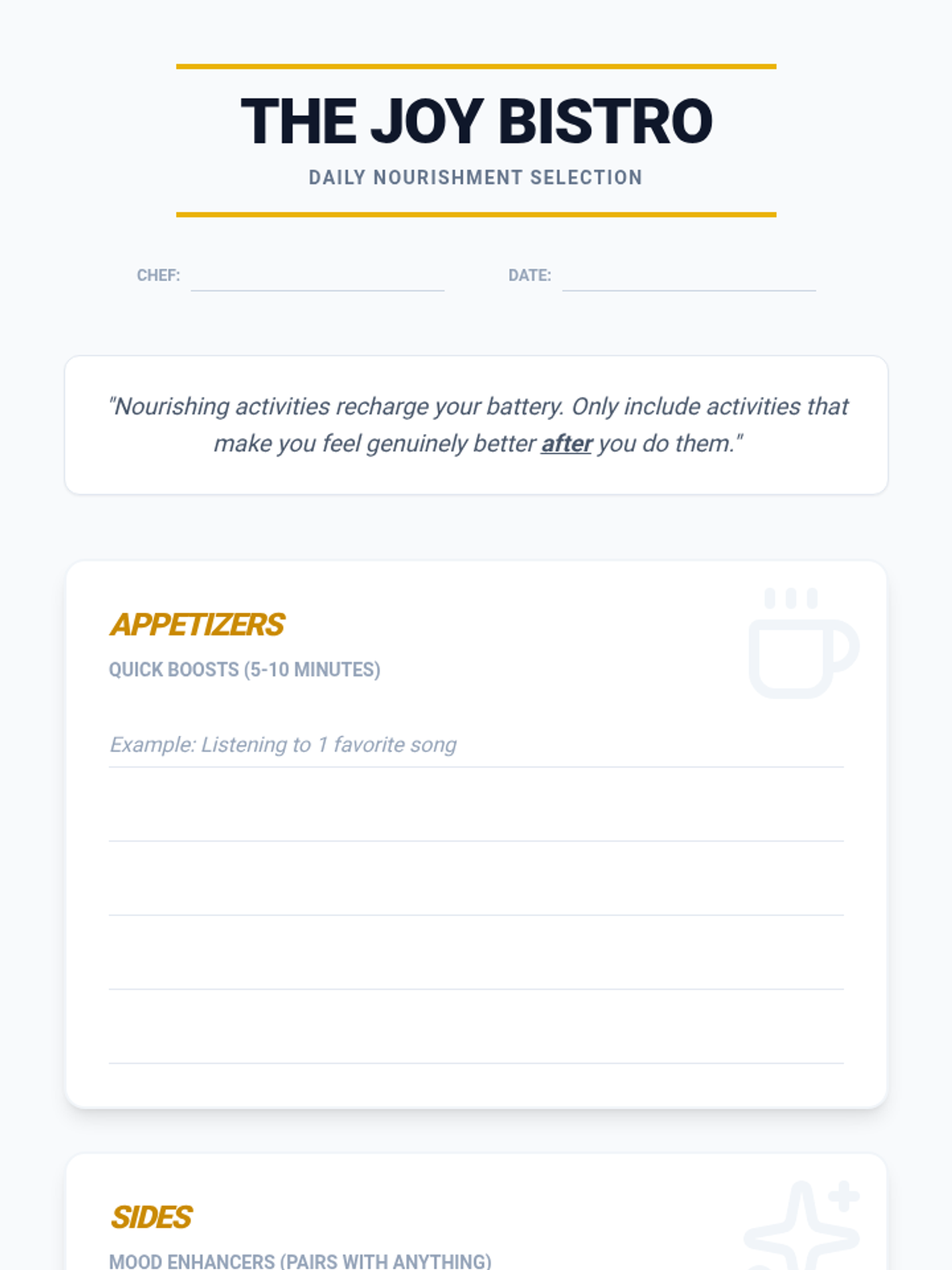
Students differentiate between numbing and nourishing activities, creating a personal 'Menu of Joy' aligned with their values.
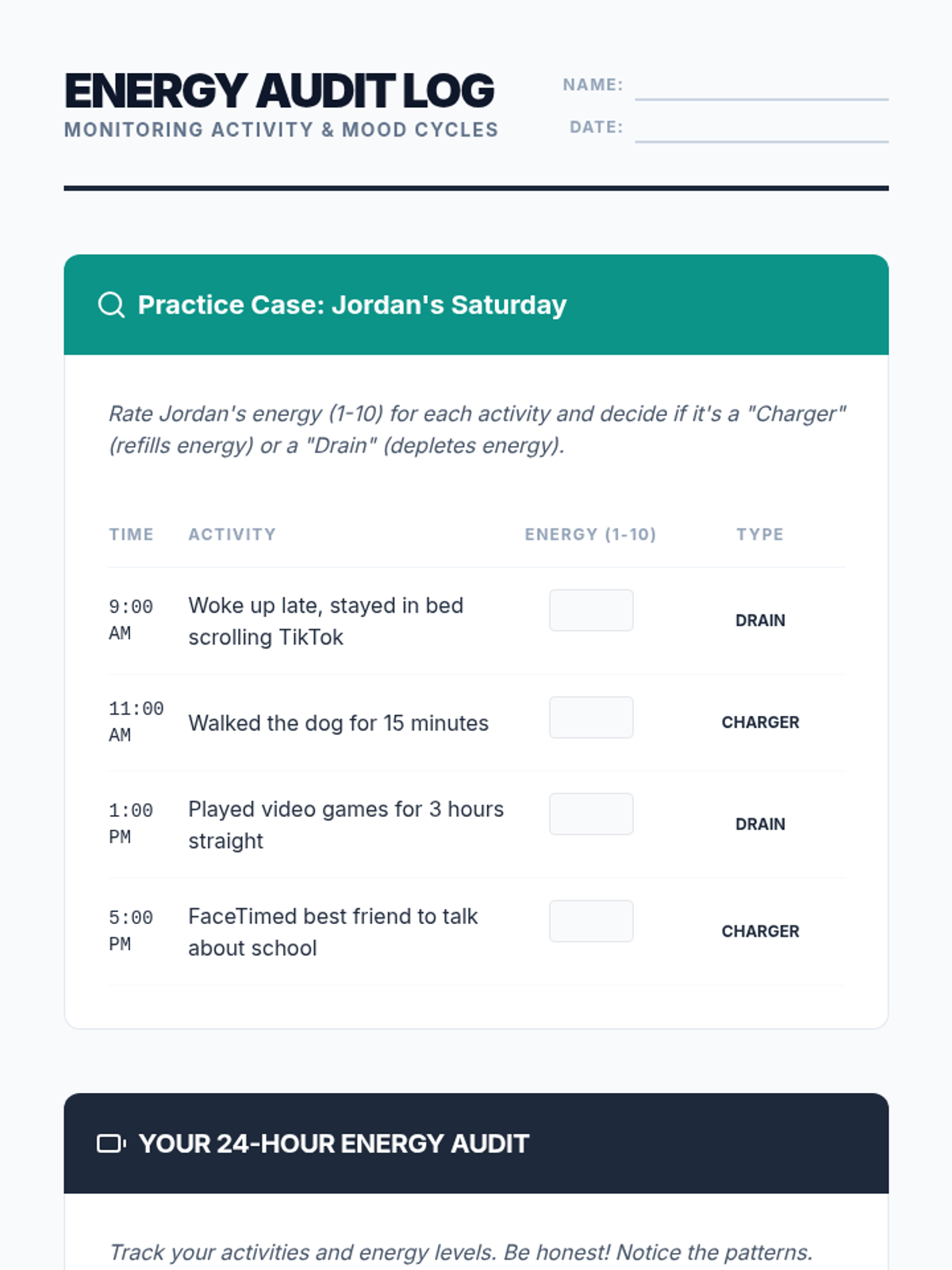
Students practice self-monitoring by auditing energy levels and correlating daily activities with their internal battery charge.
Students explore the cyclical relationship between behavior and emotion, mapping out the downward spiral of inactivity and the upward spiral of engagement through case studies.
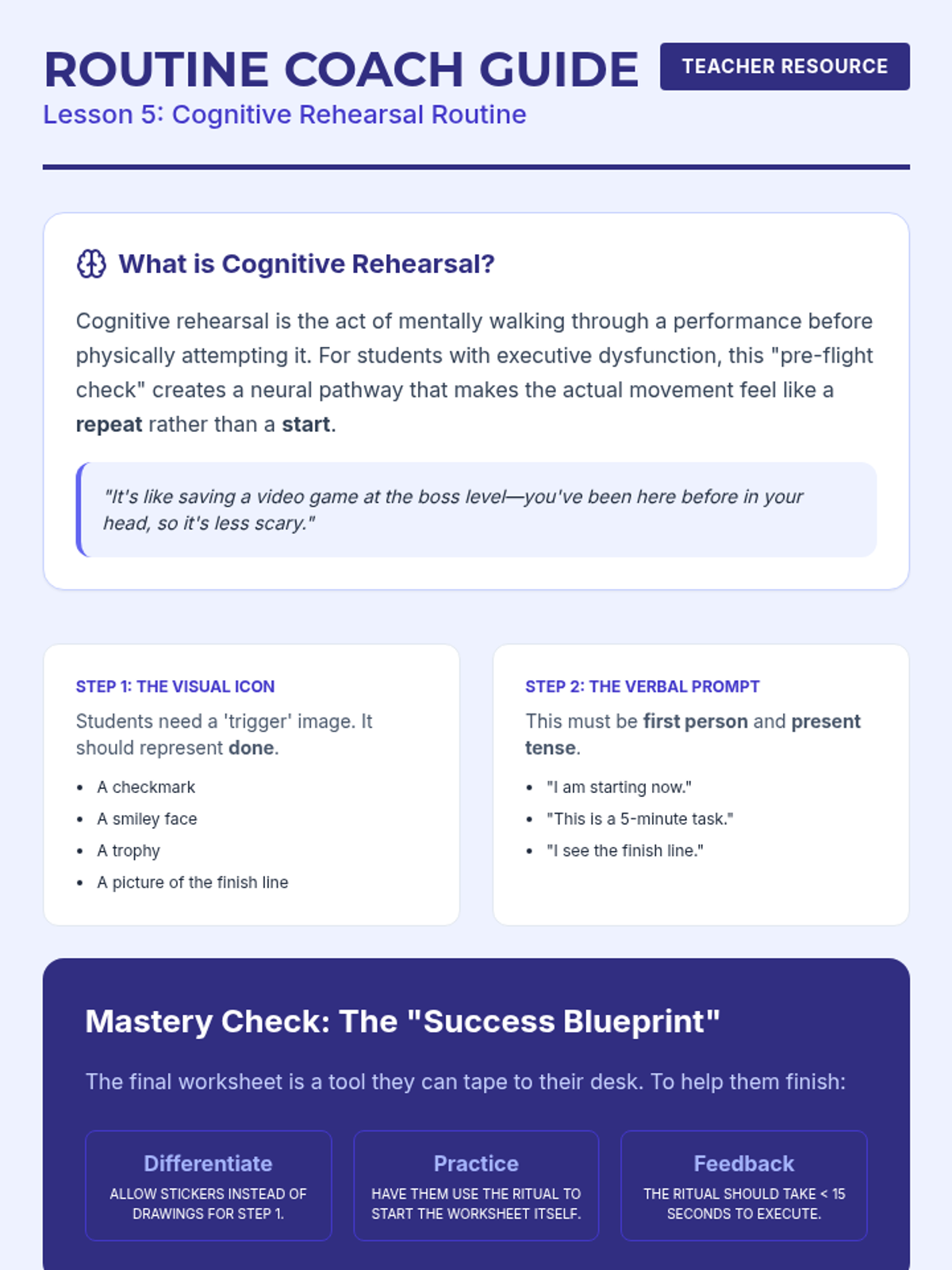
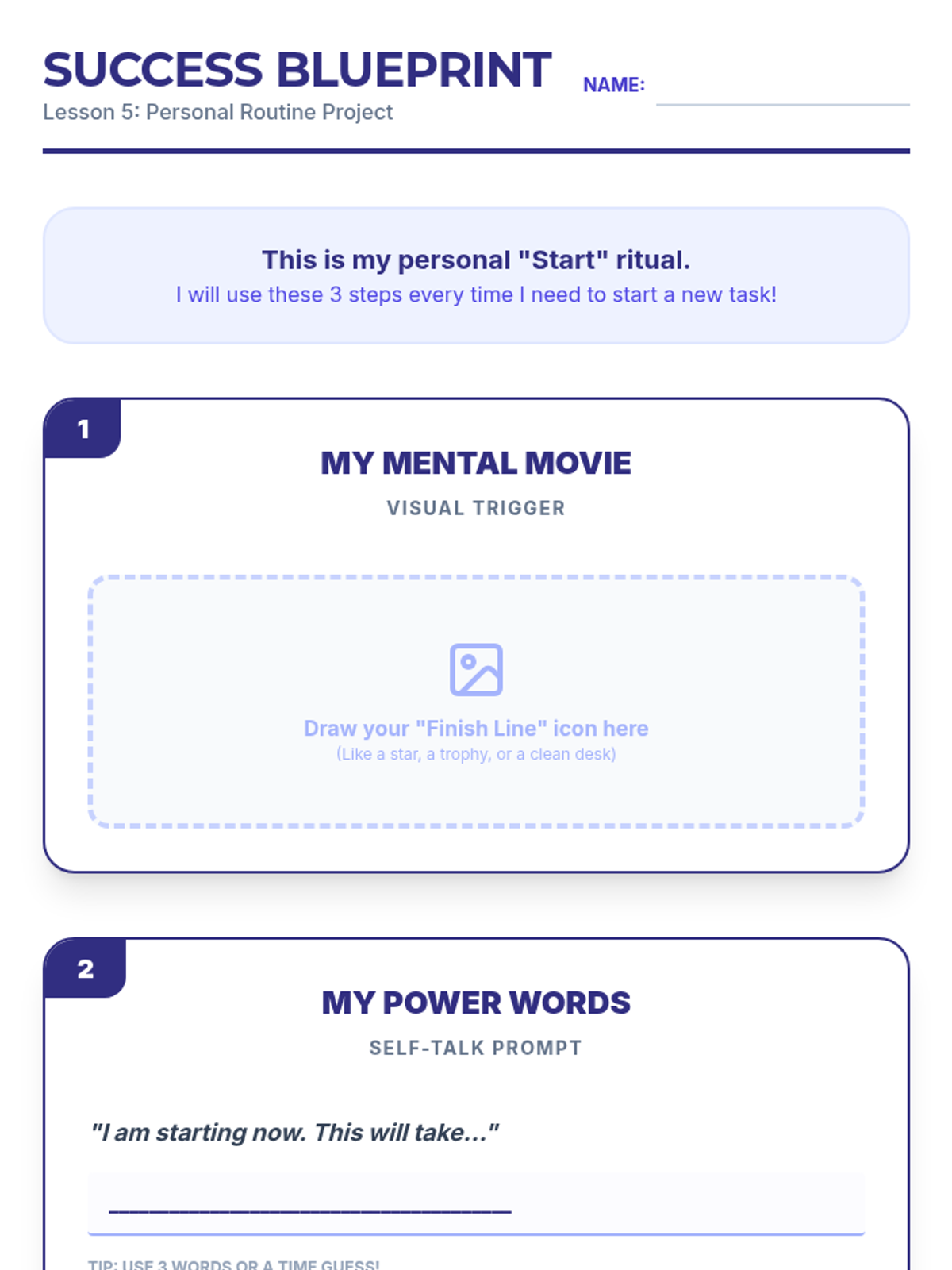
Students create a personal storyboard or checklist that combines a visual icon with a verbal prompt for task initiation.
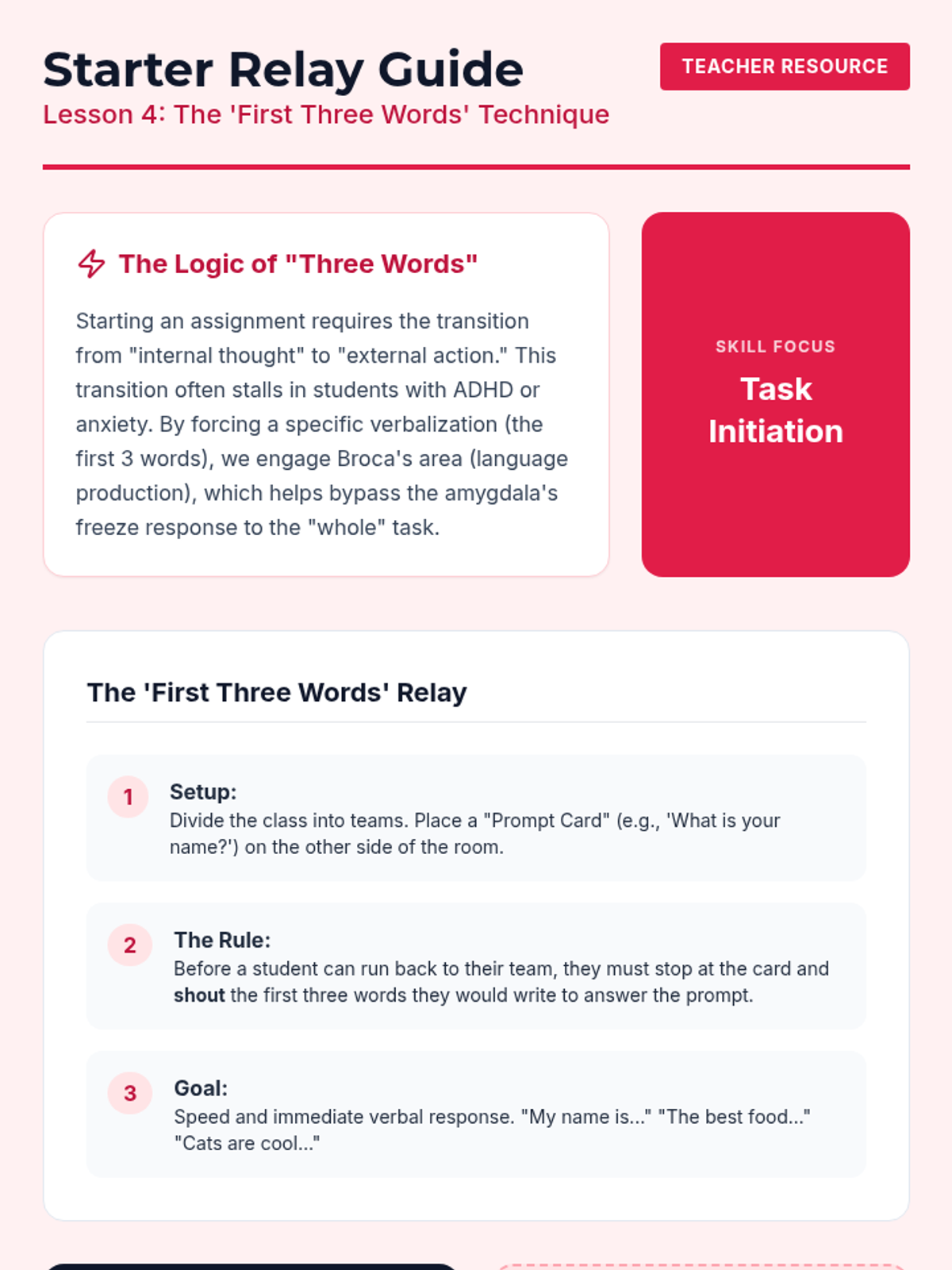
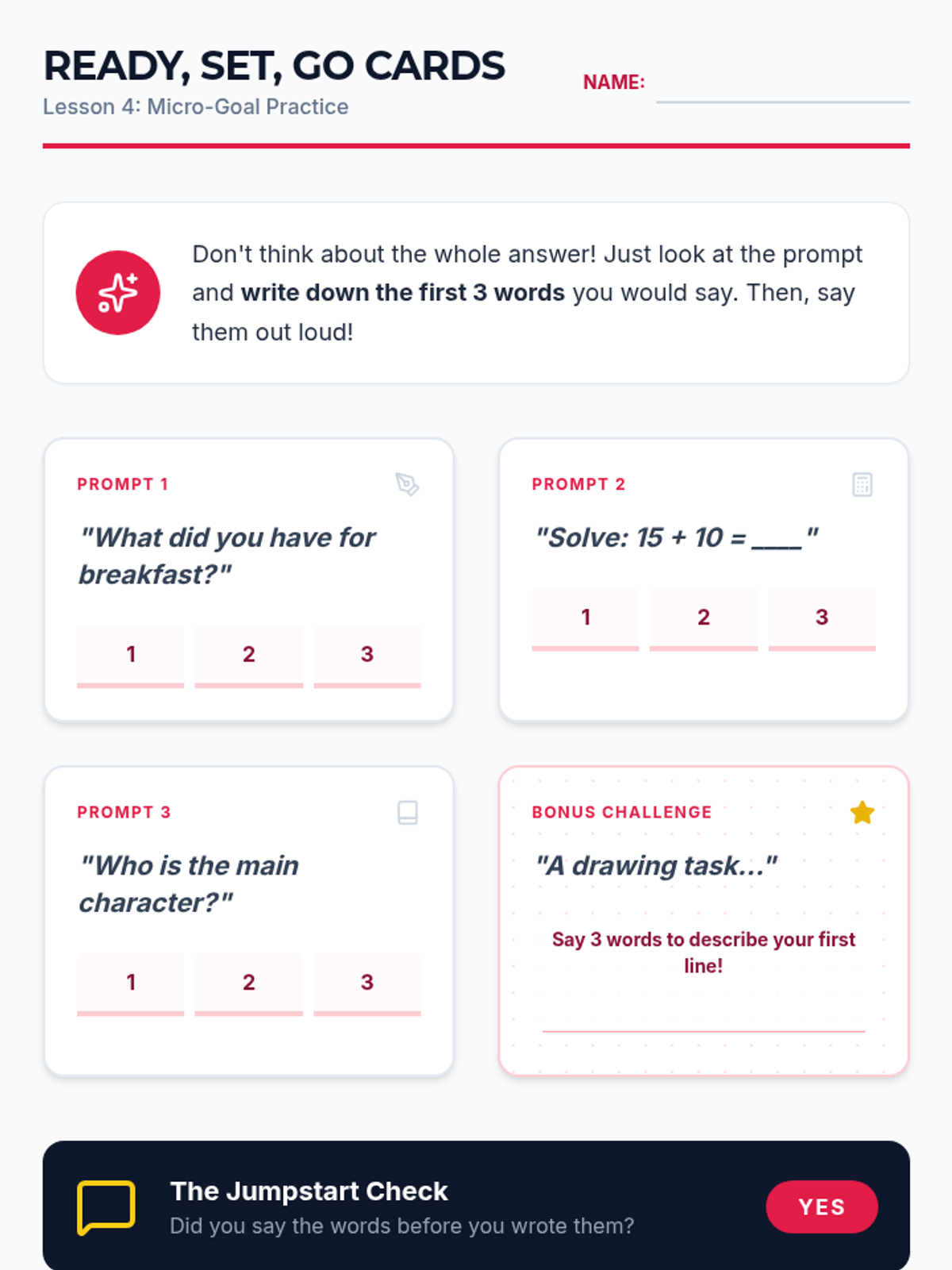
Students learn to identify the first three words of a task to lower the barrier to entry and engage the brain's language center.
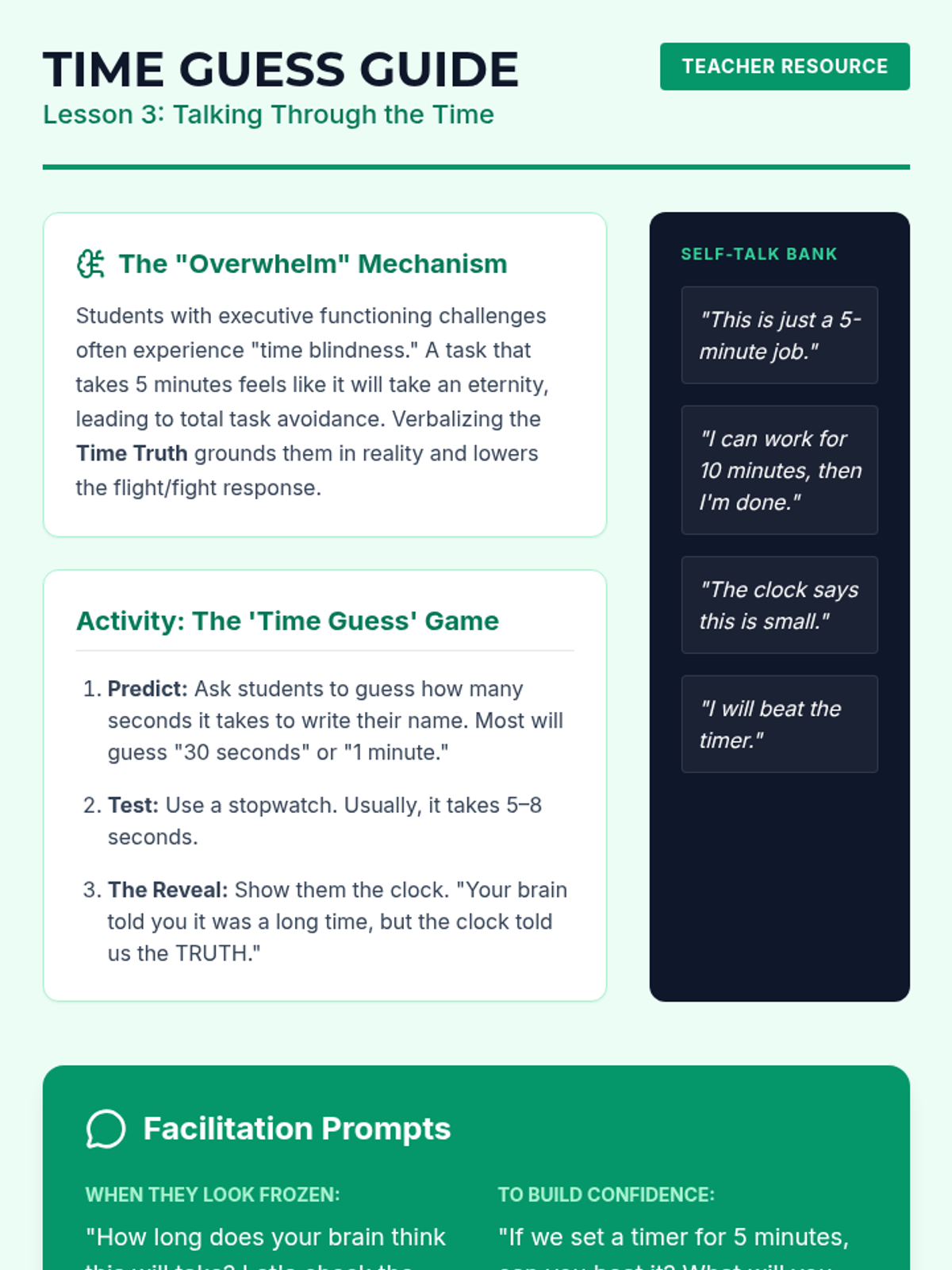
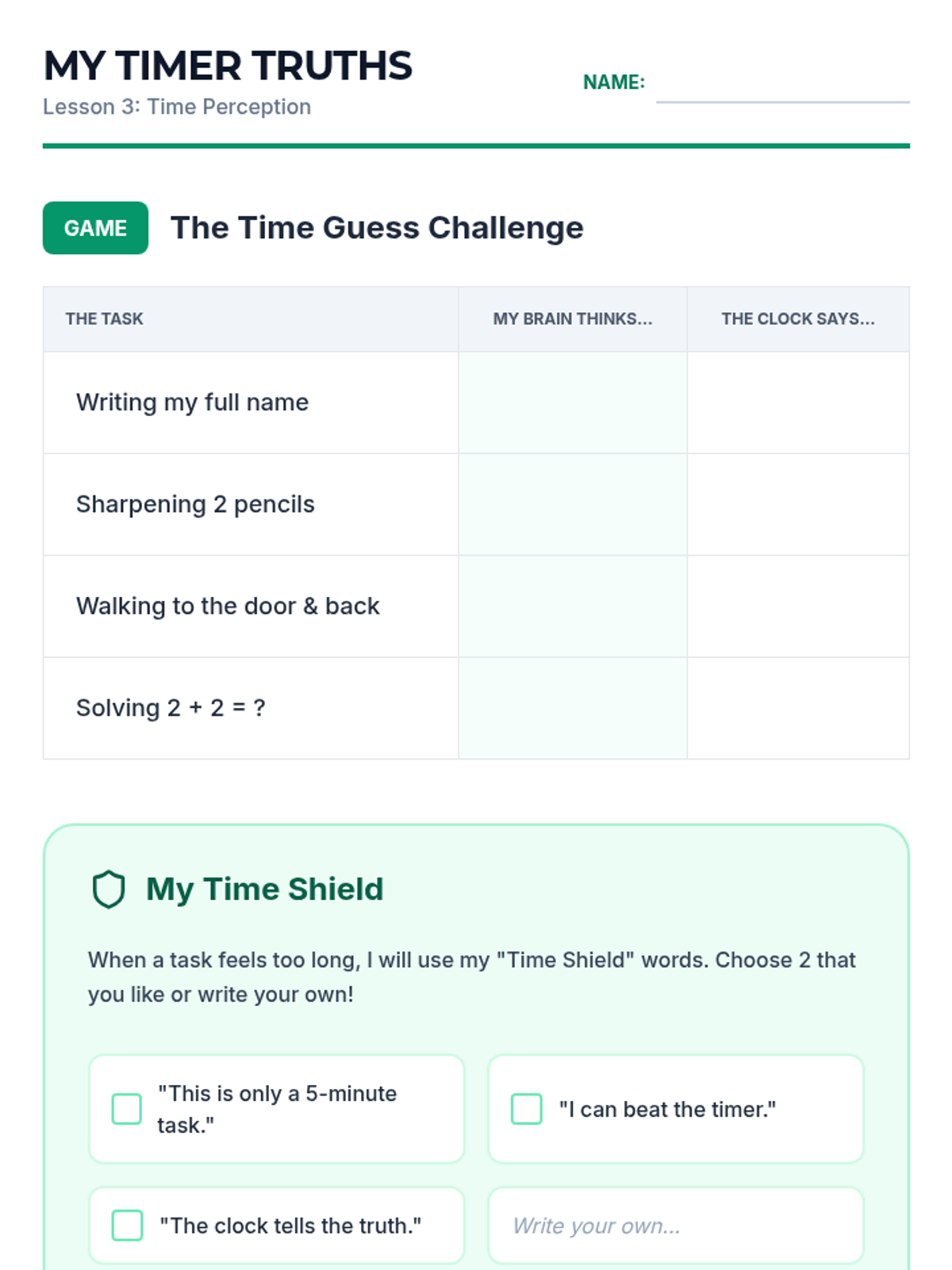
Students learn to estimate time and use verbal reassurance to reduce overwhelm.
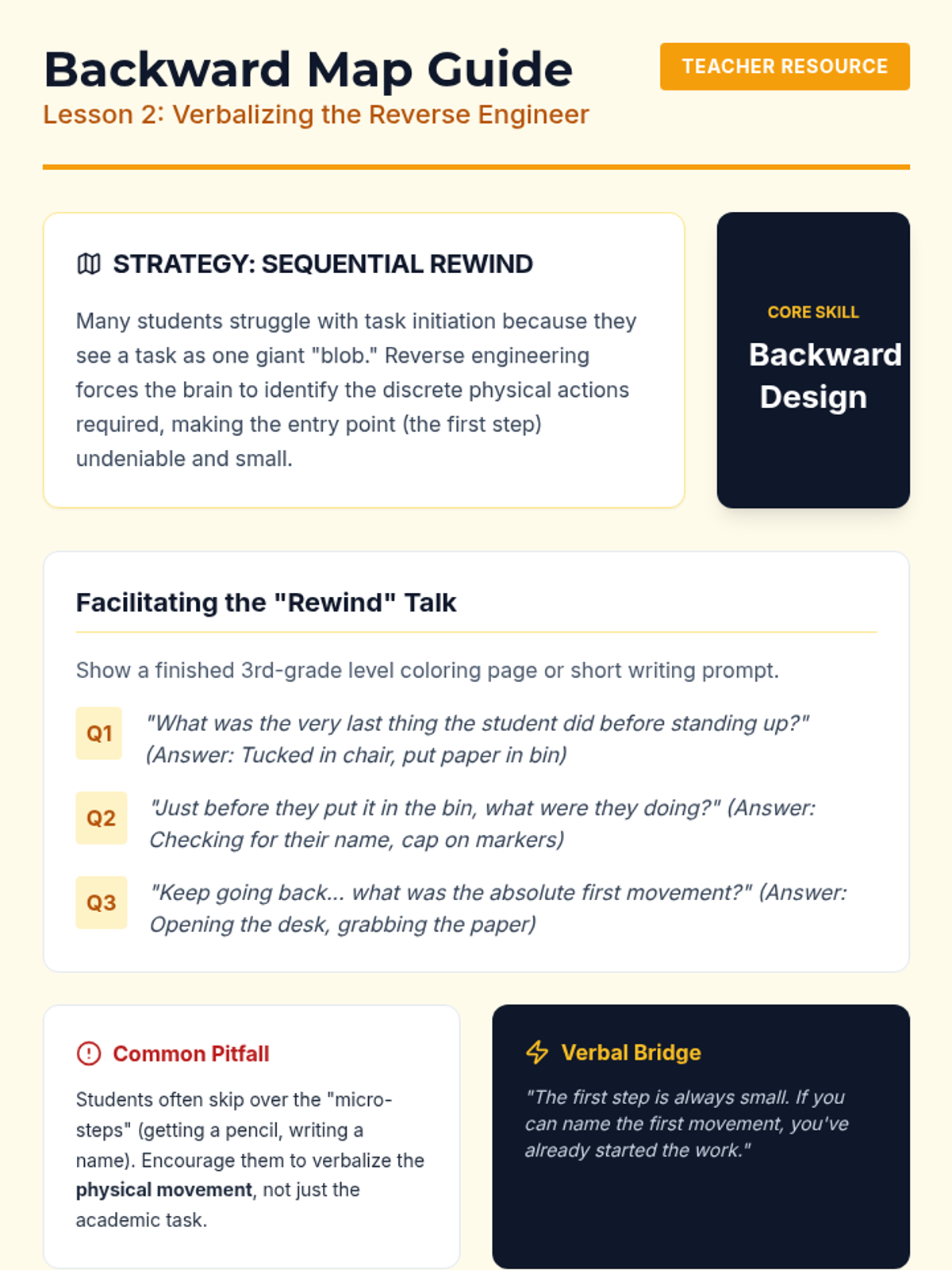
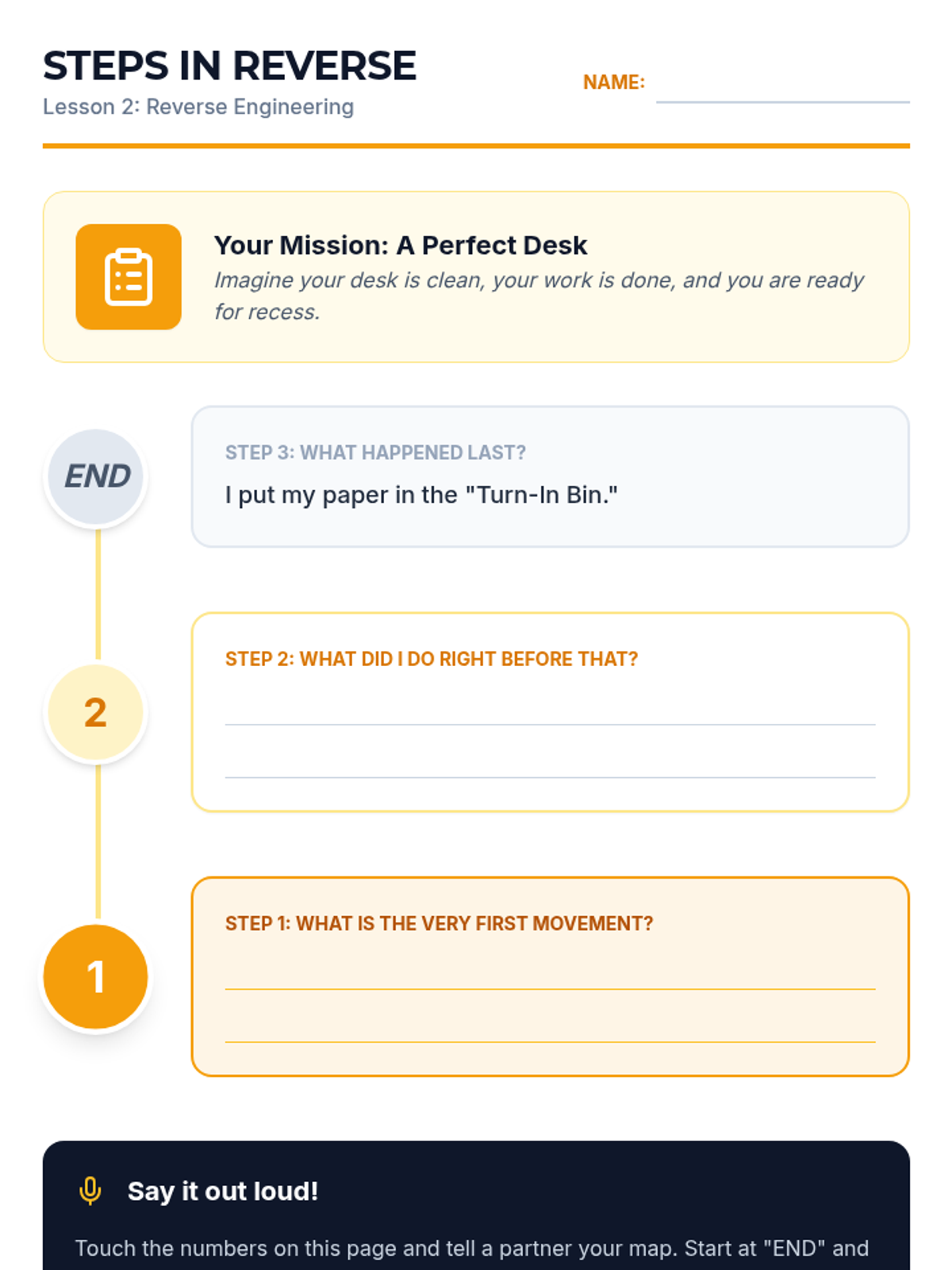
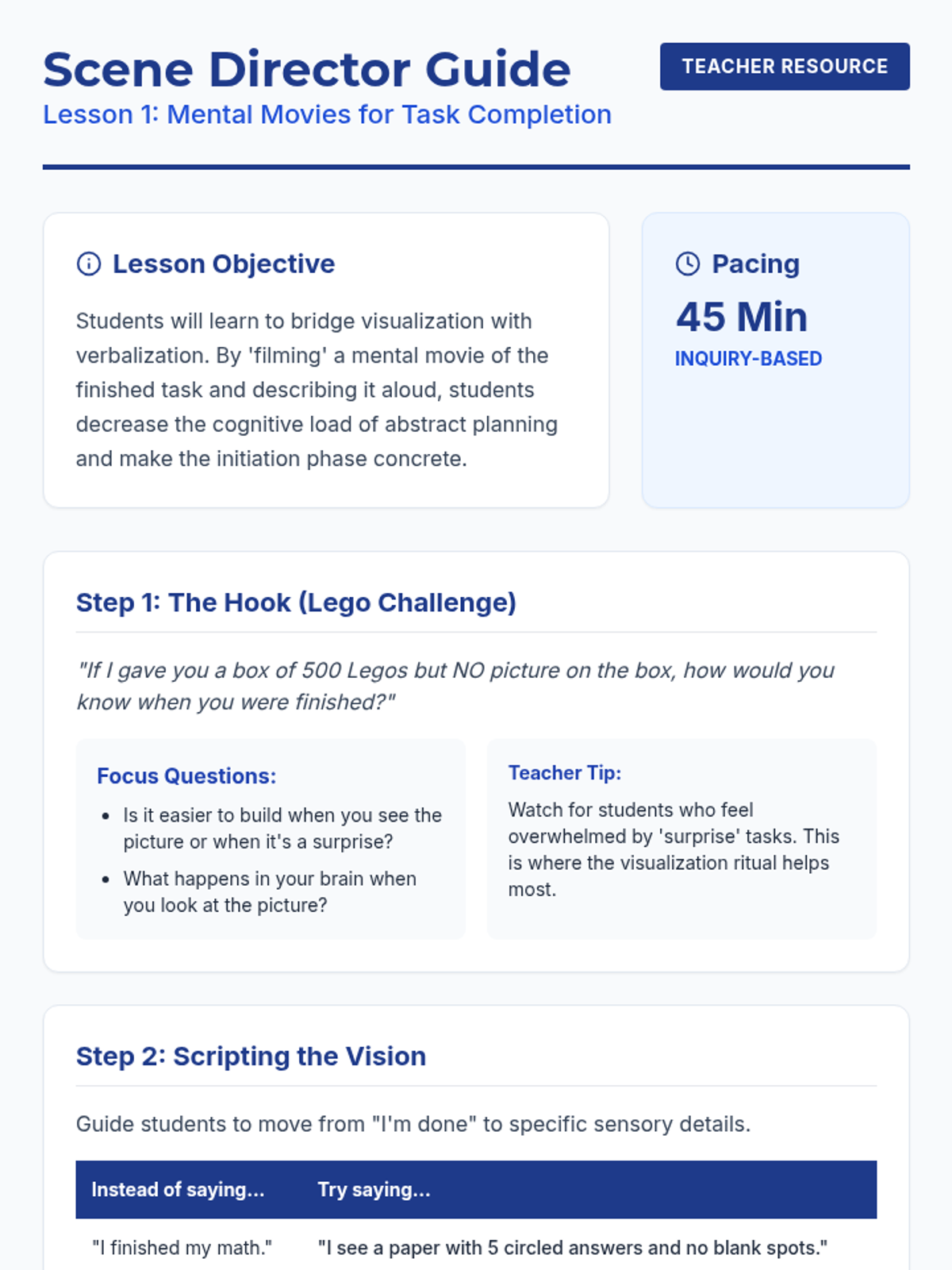
Students talk backward through the steps of a completed sample to make the first step obvious and approachable.
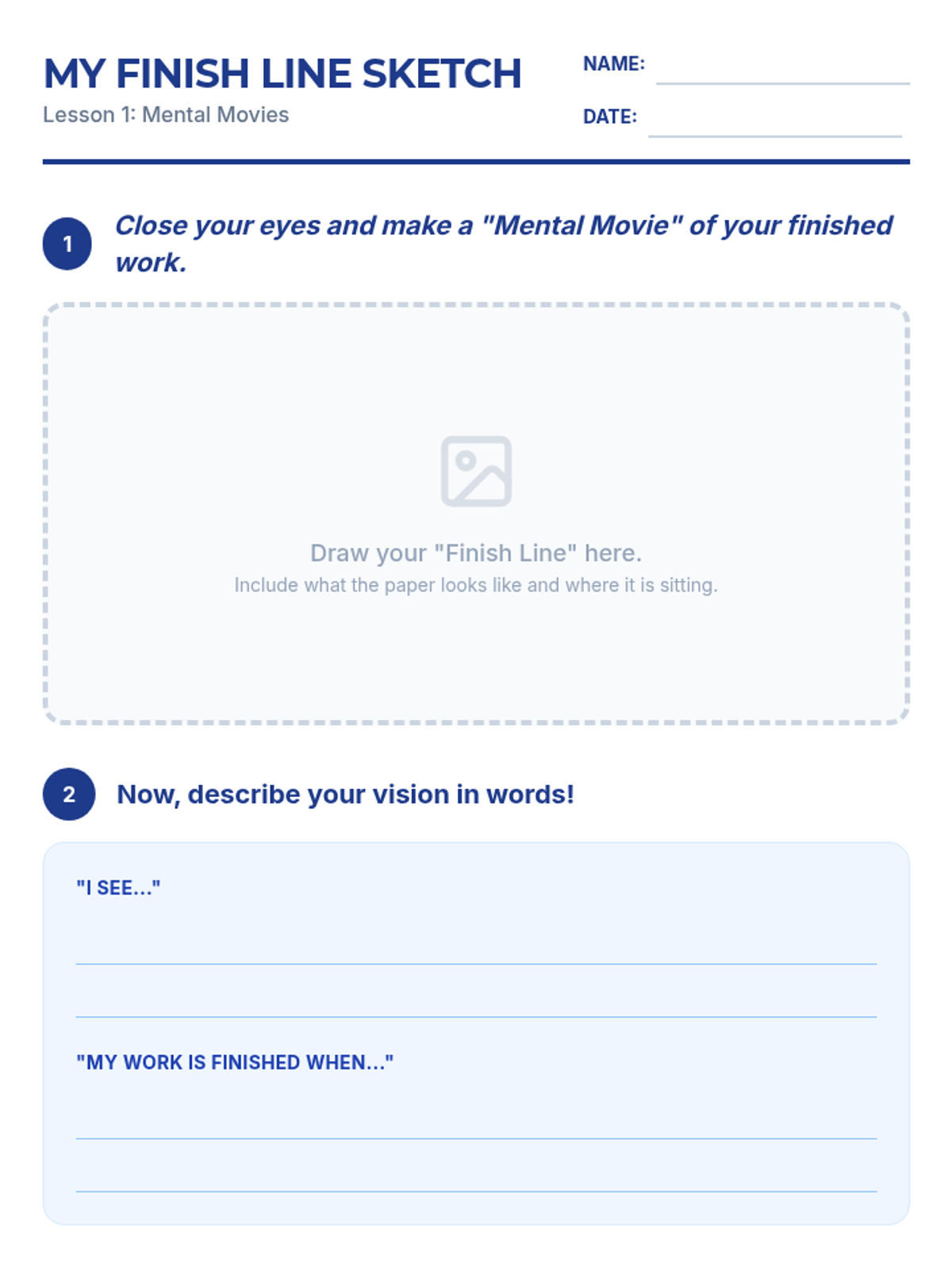
Students practice closing their eyes and creating a detailed mental image of what 'finished' looks like before describing it aloud.
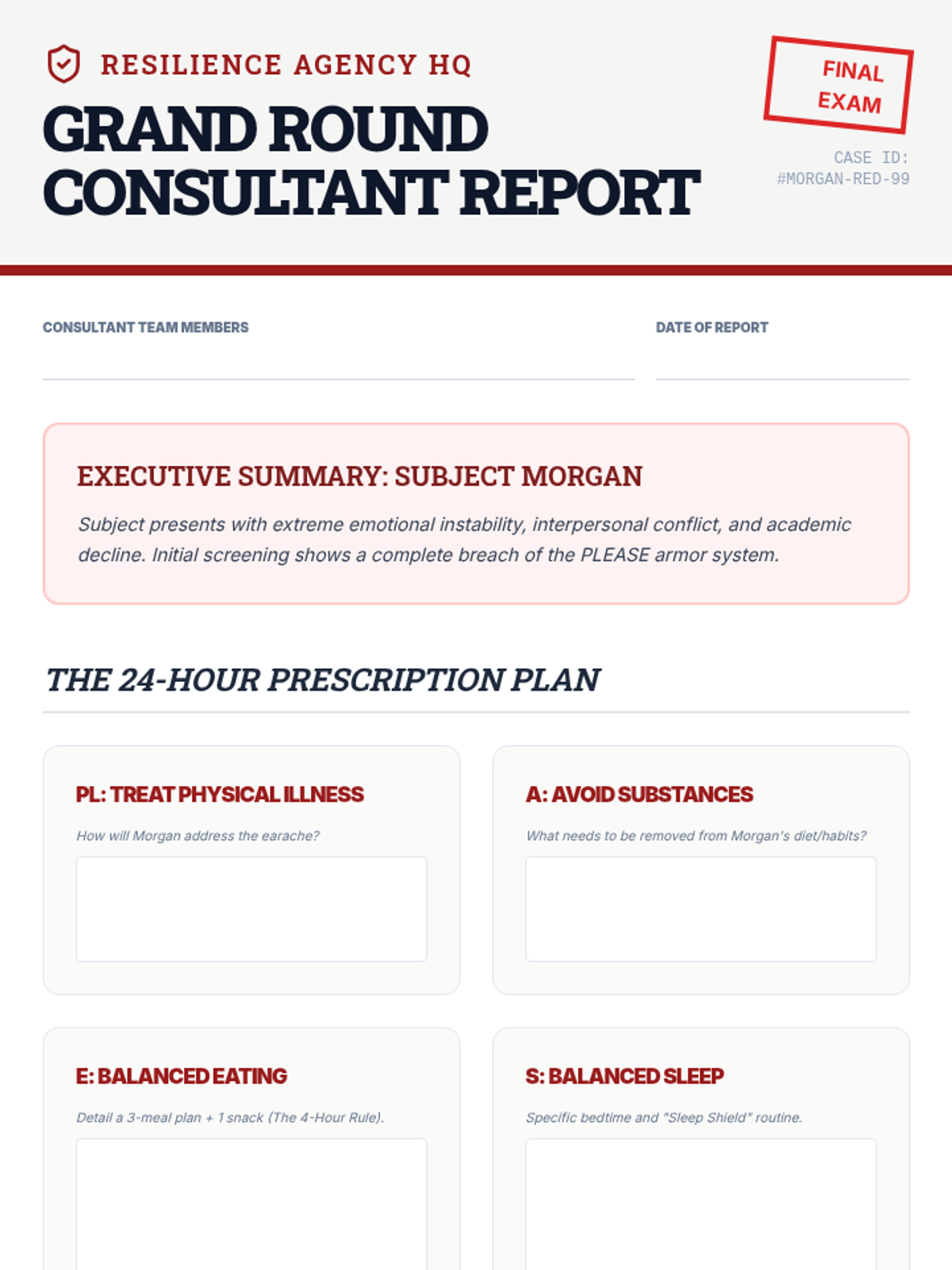
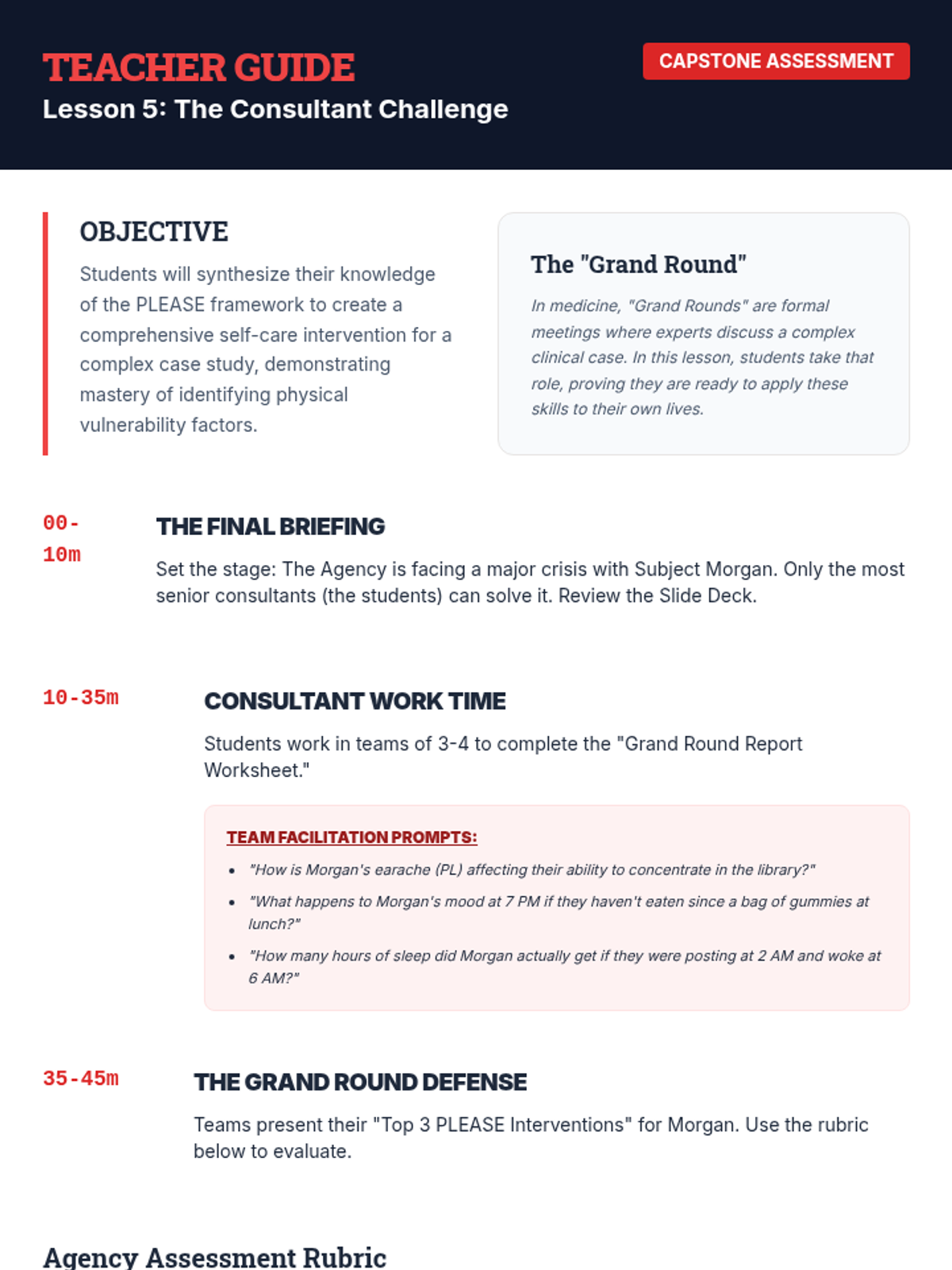
In a final 'Grand Round' challenge, student teams create a comprehensive PLEASE prescription for a complex behavioral case.
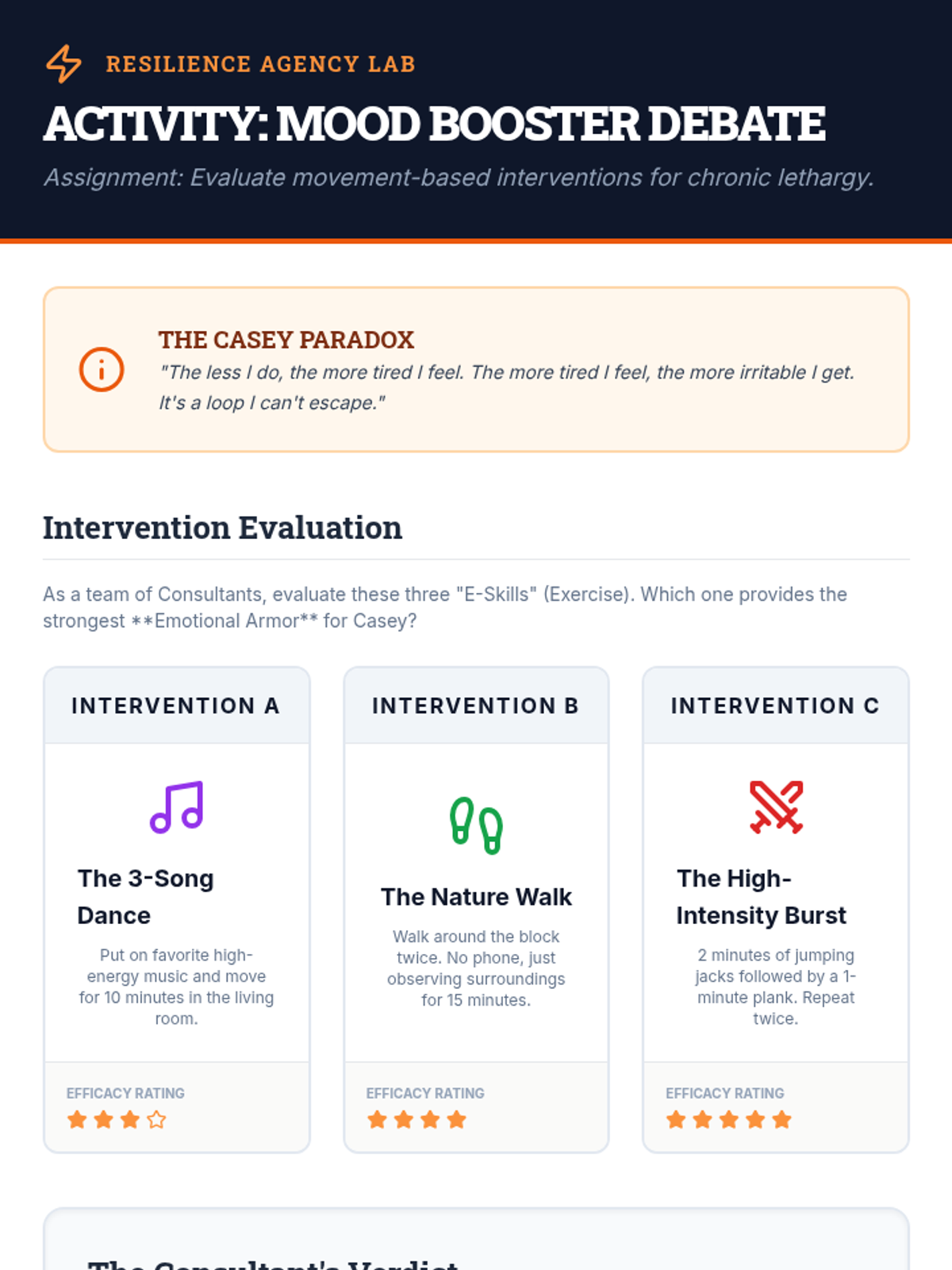
Students explore the energy paradox—how exercise boosts mood—and debate the effectiveness of movement-based interventions.
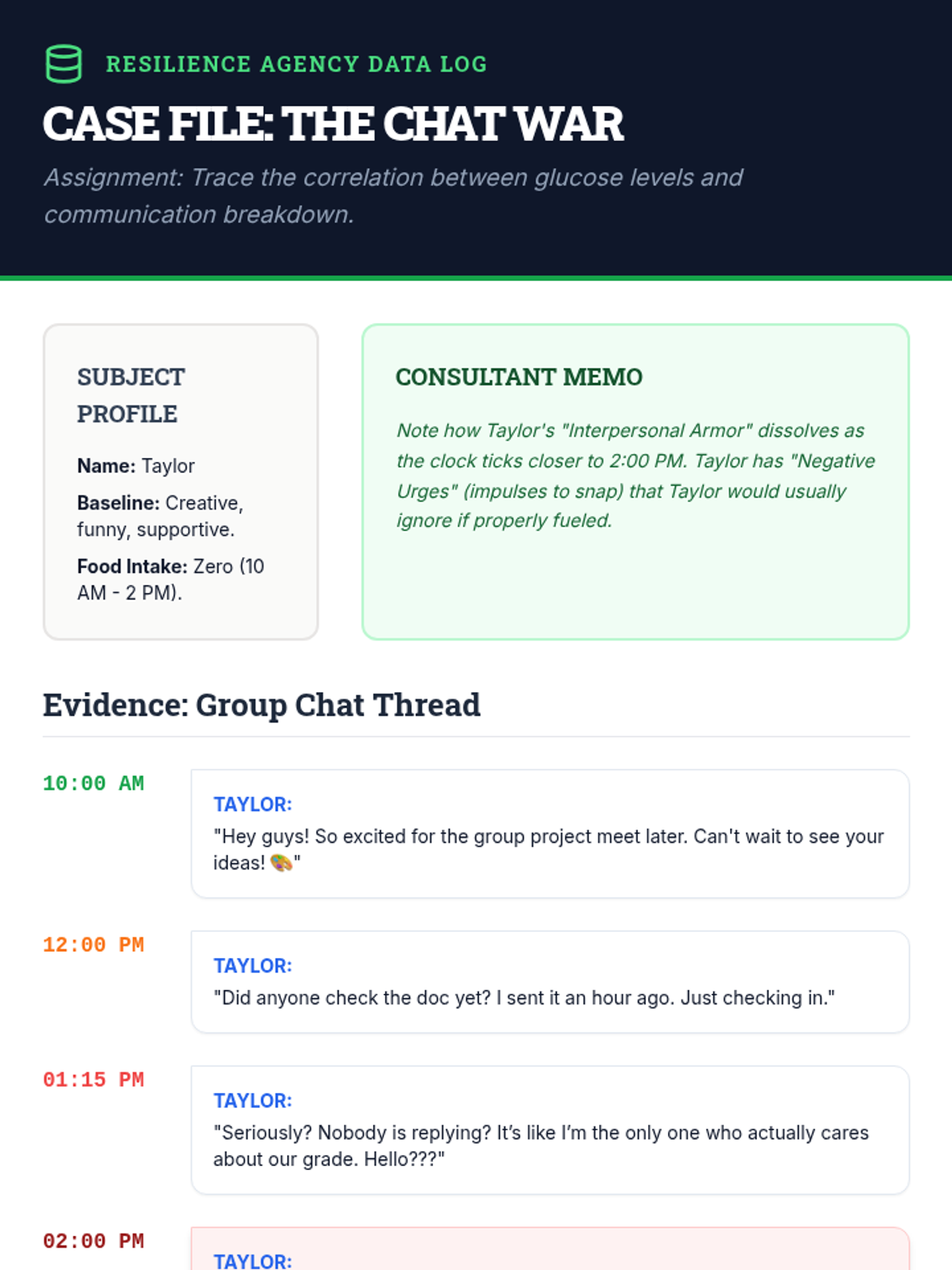
Students map the connection between blood sugar, meal timing, and emotional regulation through a text message timeline.
Students examine how sleep deprivation impacts mood and role-play conflict resolution with and without proper rest.
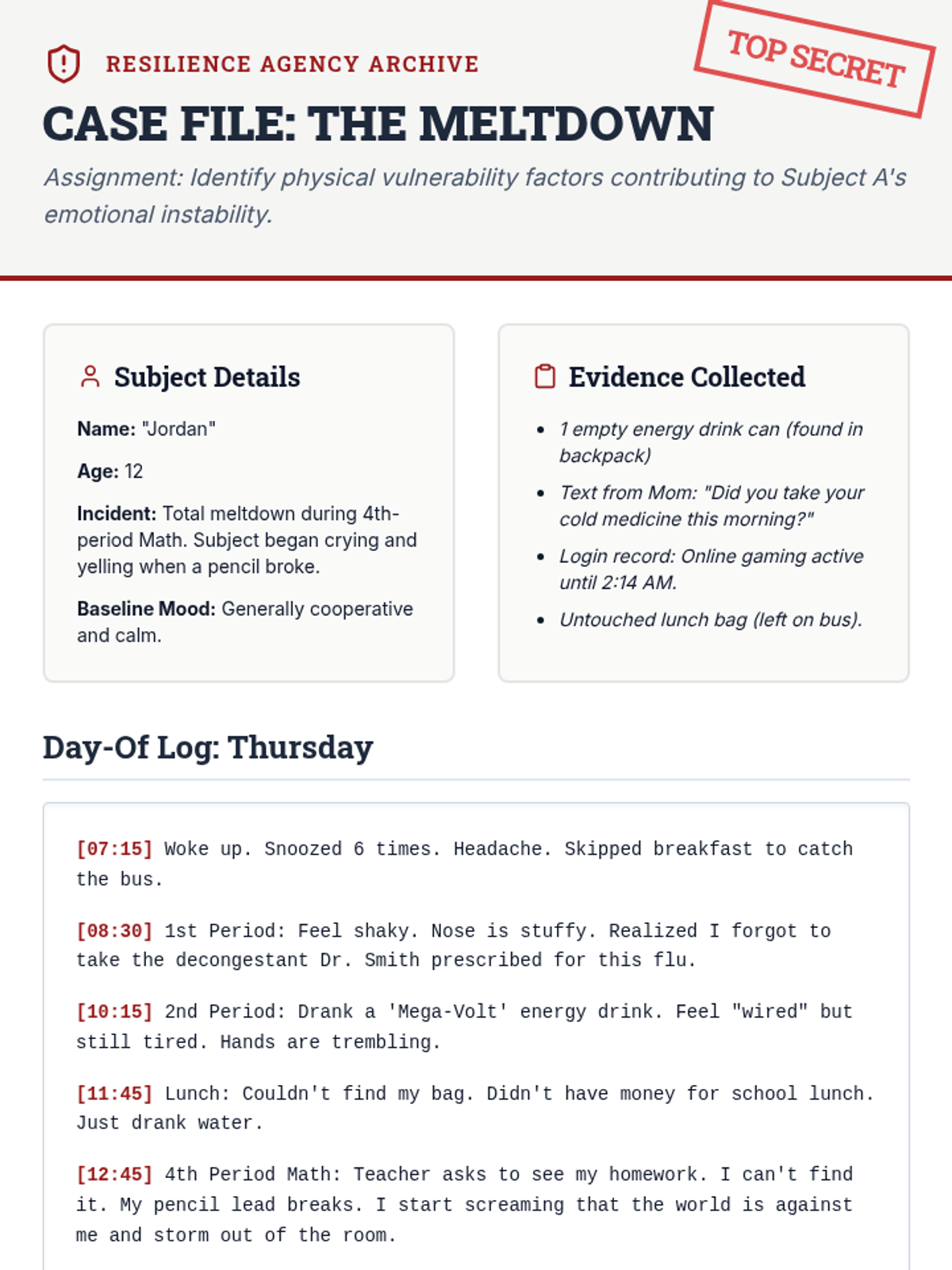
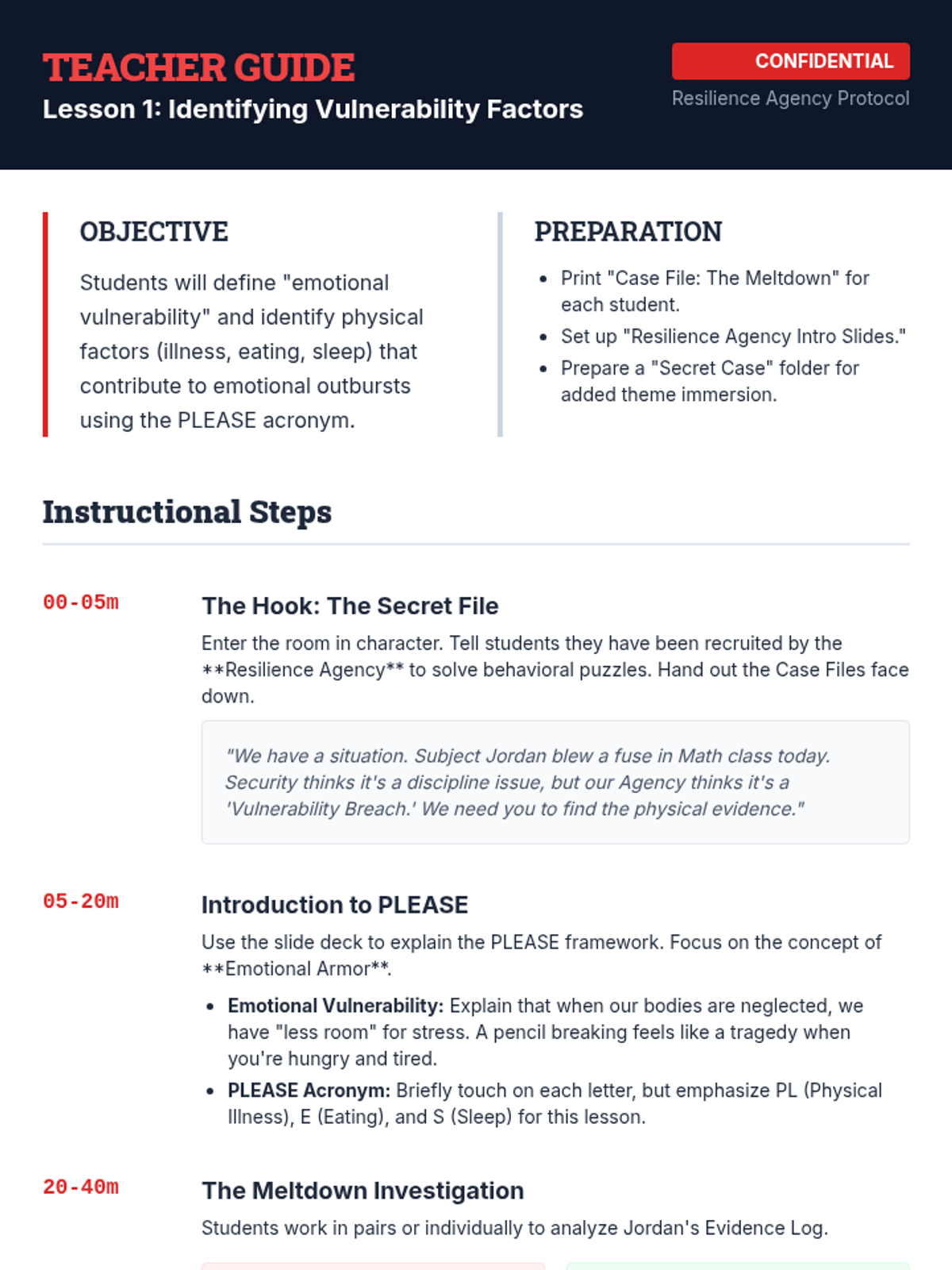
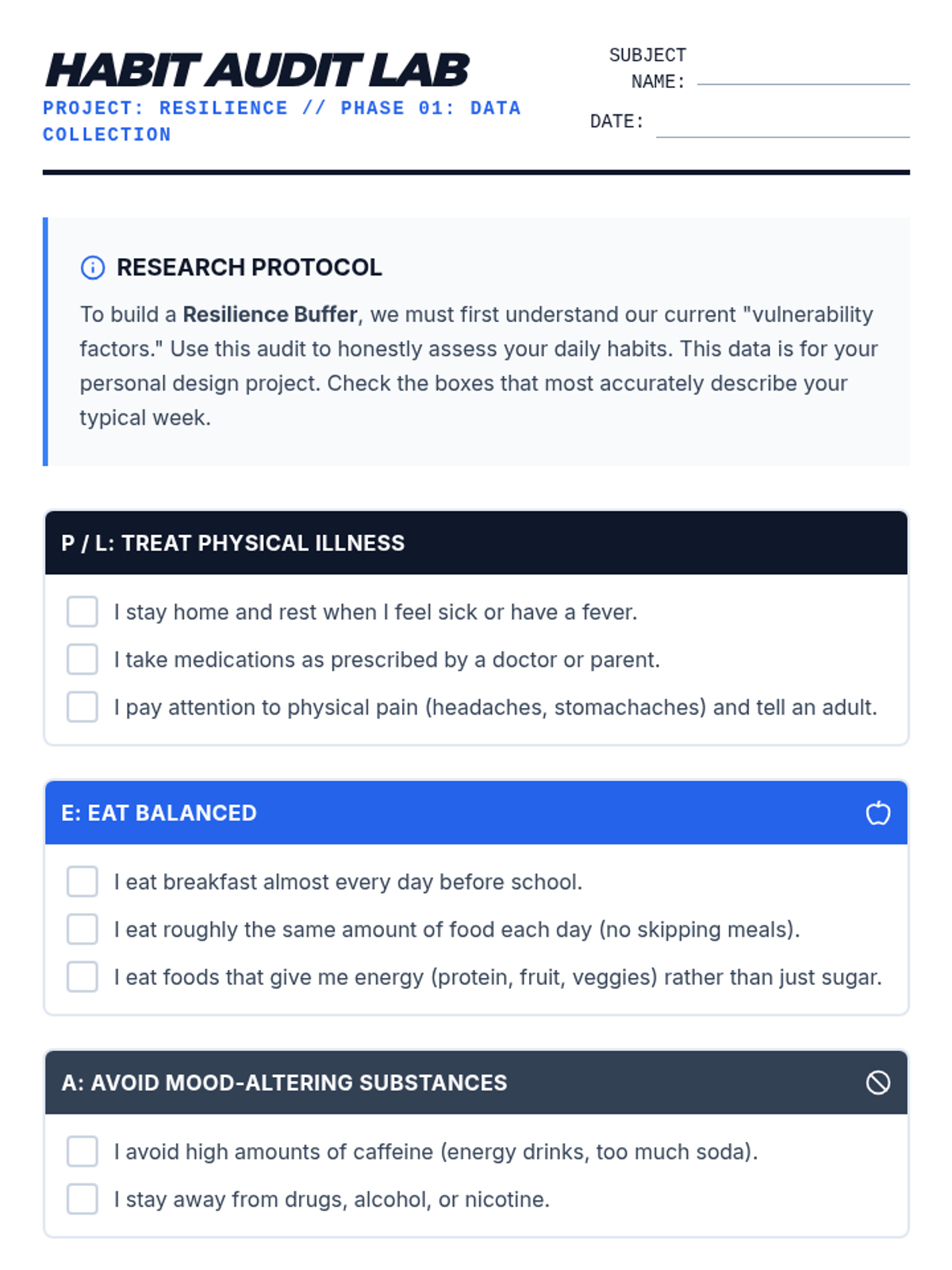
Students are introduced to the PLEASE framework and use evidence from a character's daily log to identify physical vulnerability factors.
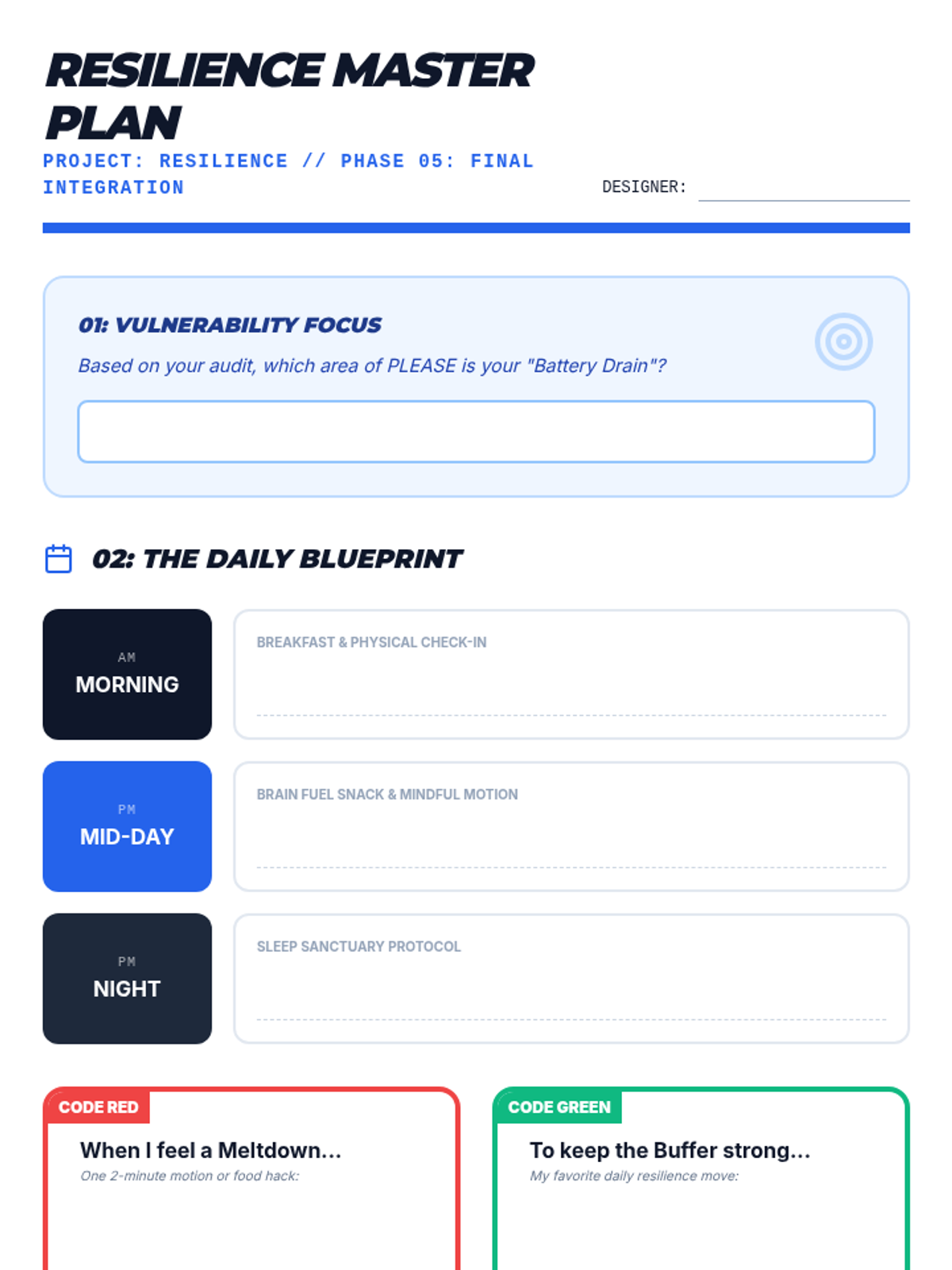
Students synthesize their learning into a final Resilience Routine and visual tracker, writing a letter to their future selves.
Students explore non-competitive movement as a tool for mindfulness and grounding, distinguishing it from competitive sports.
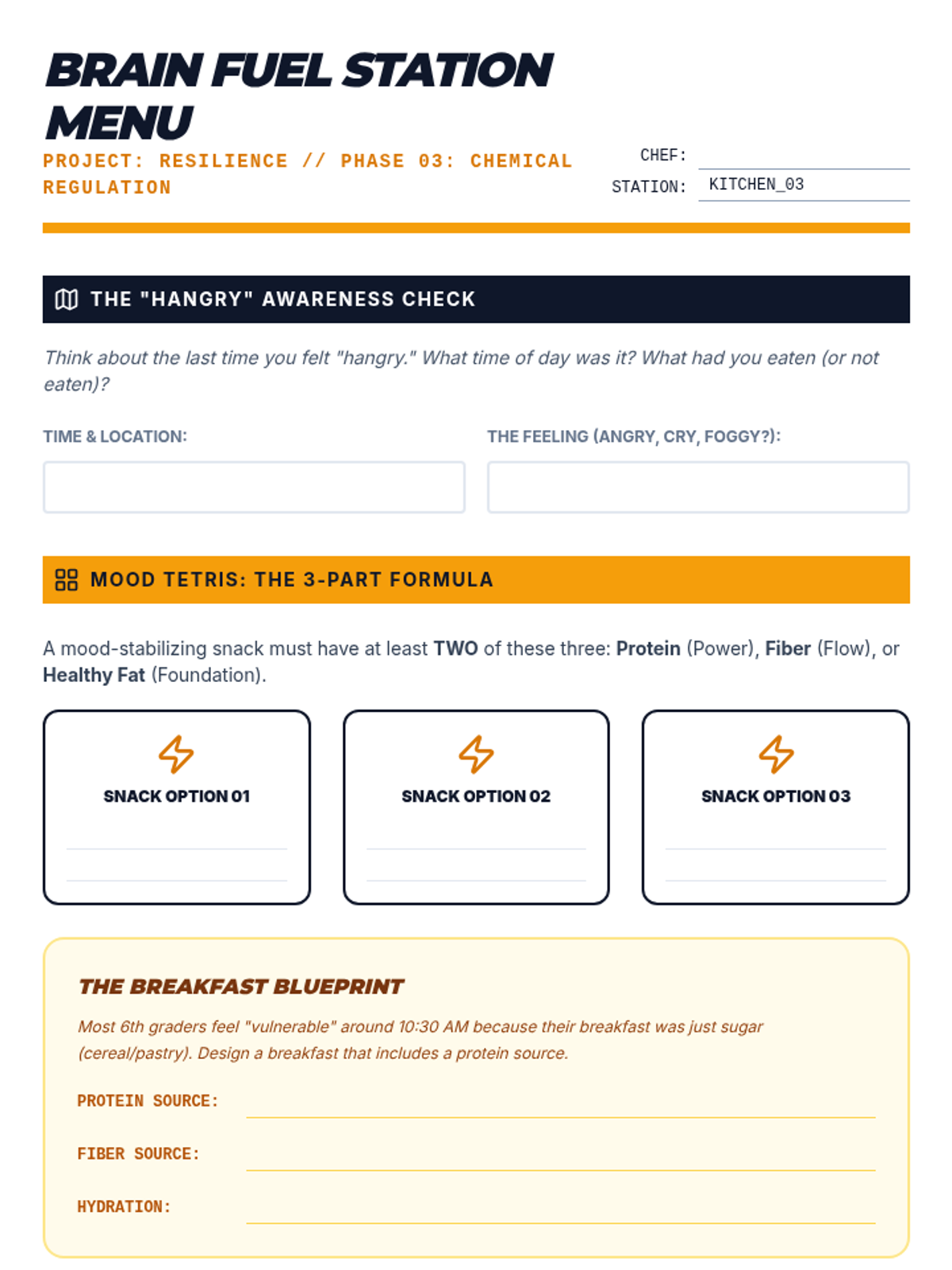
Students learn about the connection between nutrition and mood, creating a menu of balanced snacks to prevent 'hangry' emotional outbursts.
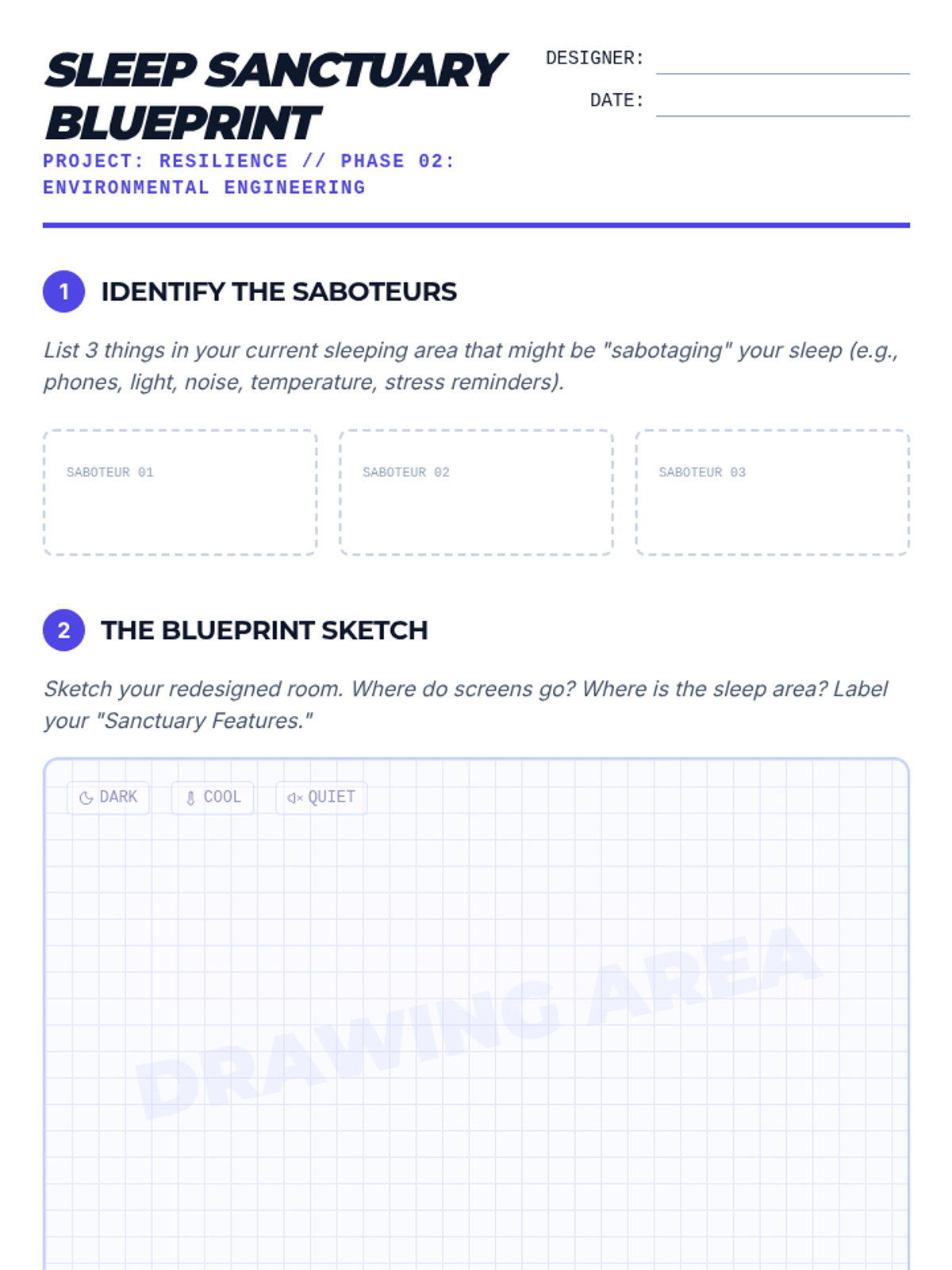
Students explore sleep hygiene principles and redesign a hypothetical bedroom environment for optimal rest and emotional regulation.
Students introduce the PLEASE acronym and use a self-assessment tool to track current behaviors, identifying a primary vulnerability area to focus on.