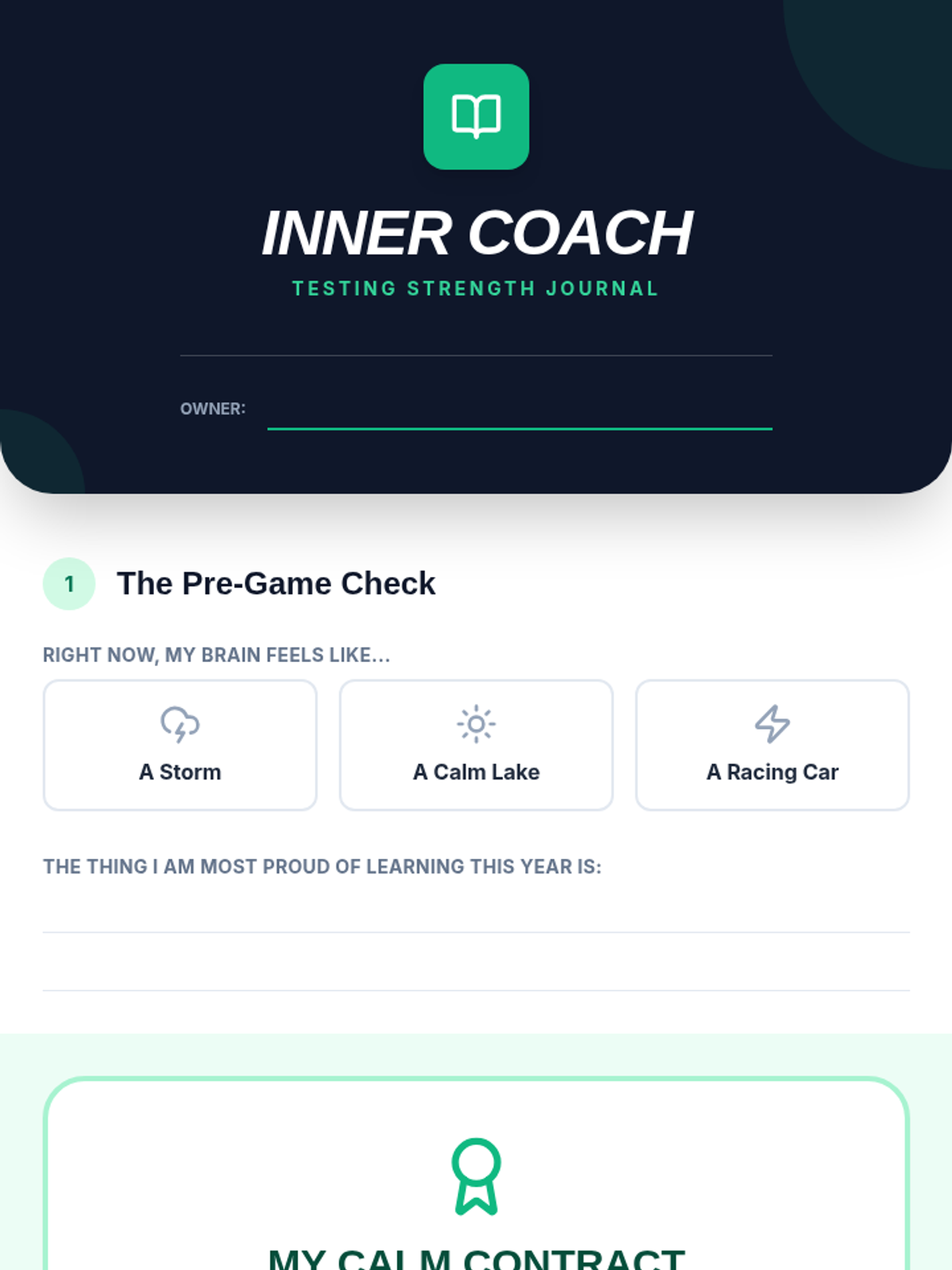
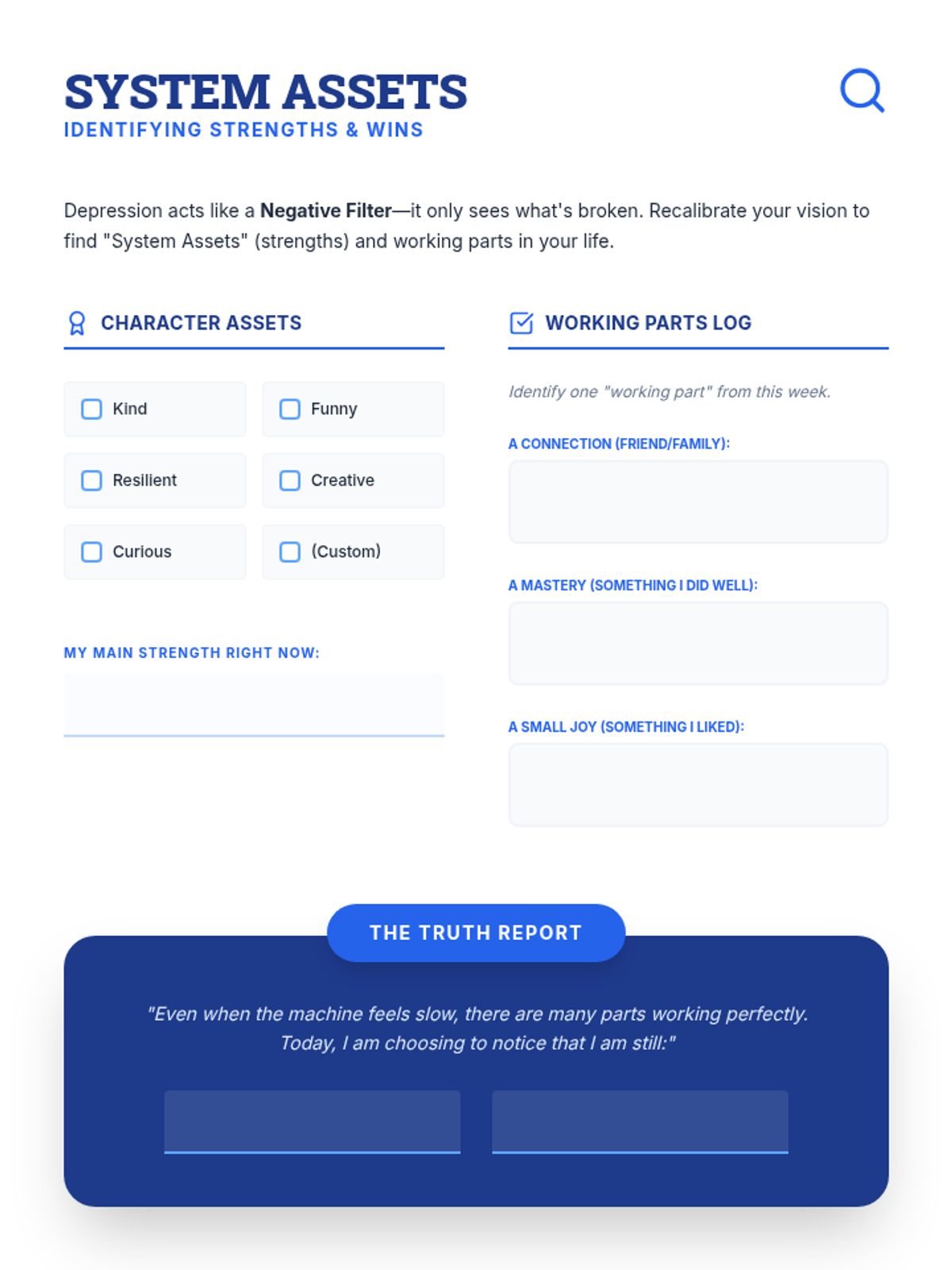
Emotion recognition ranging from basic feelings to complex nuances and mixed states. Strengthens accurate self-assessment through identity exploration, strength identification, and values-based decision making.
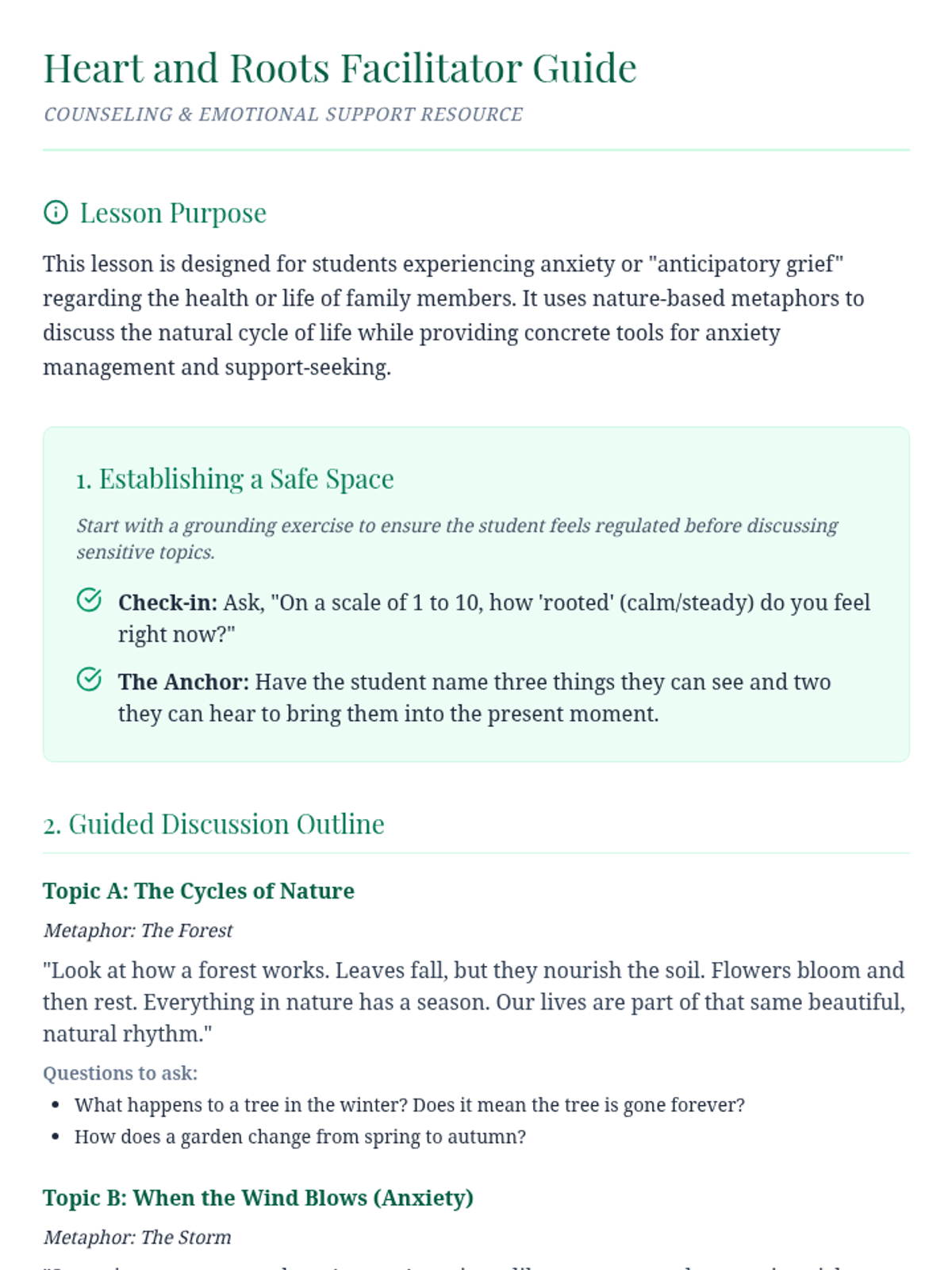
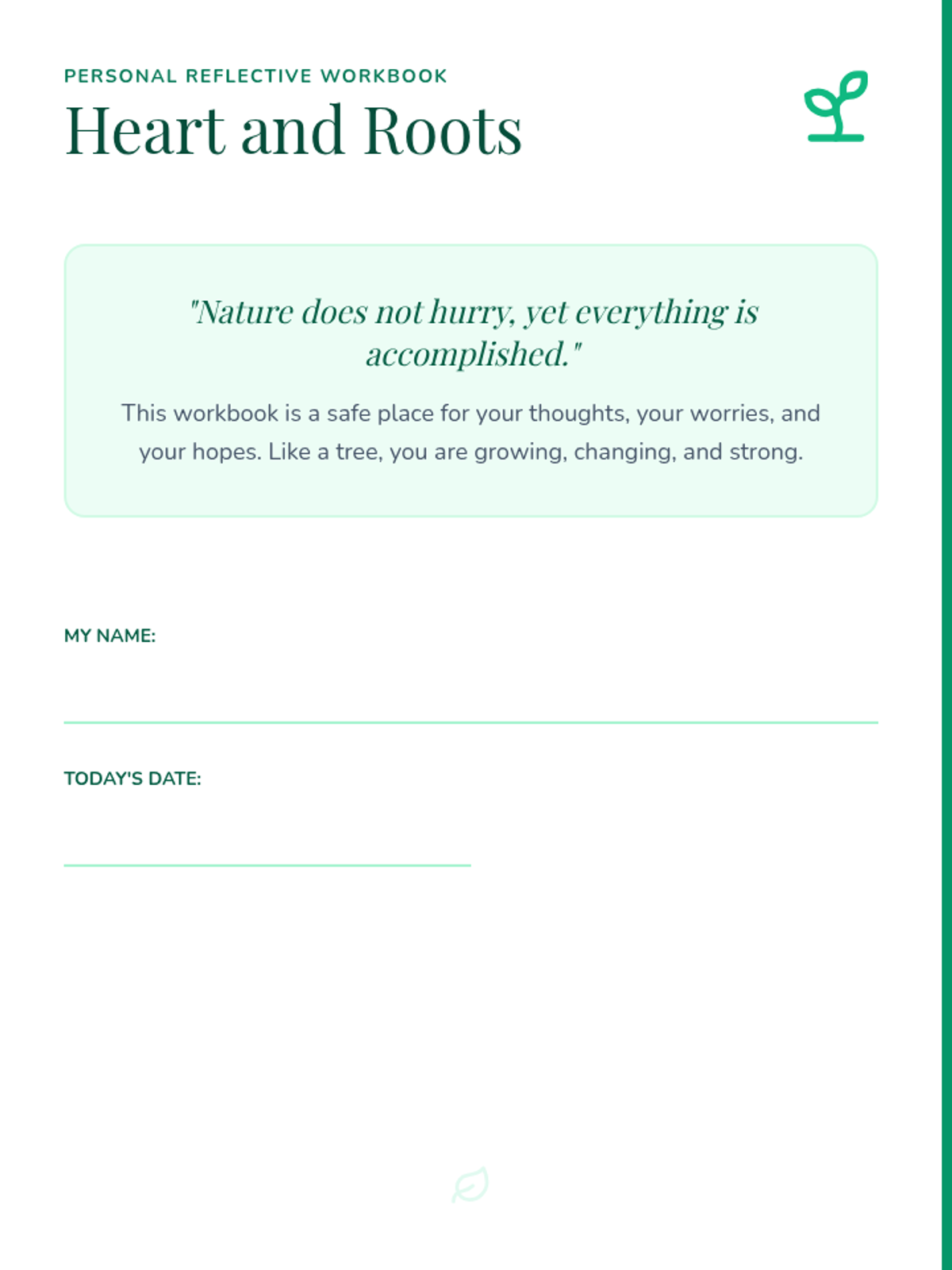
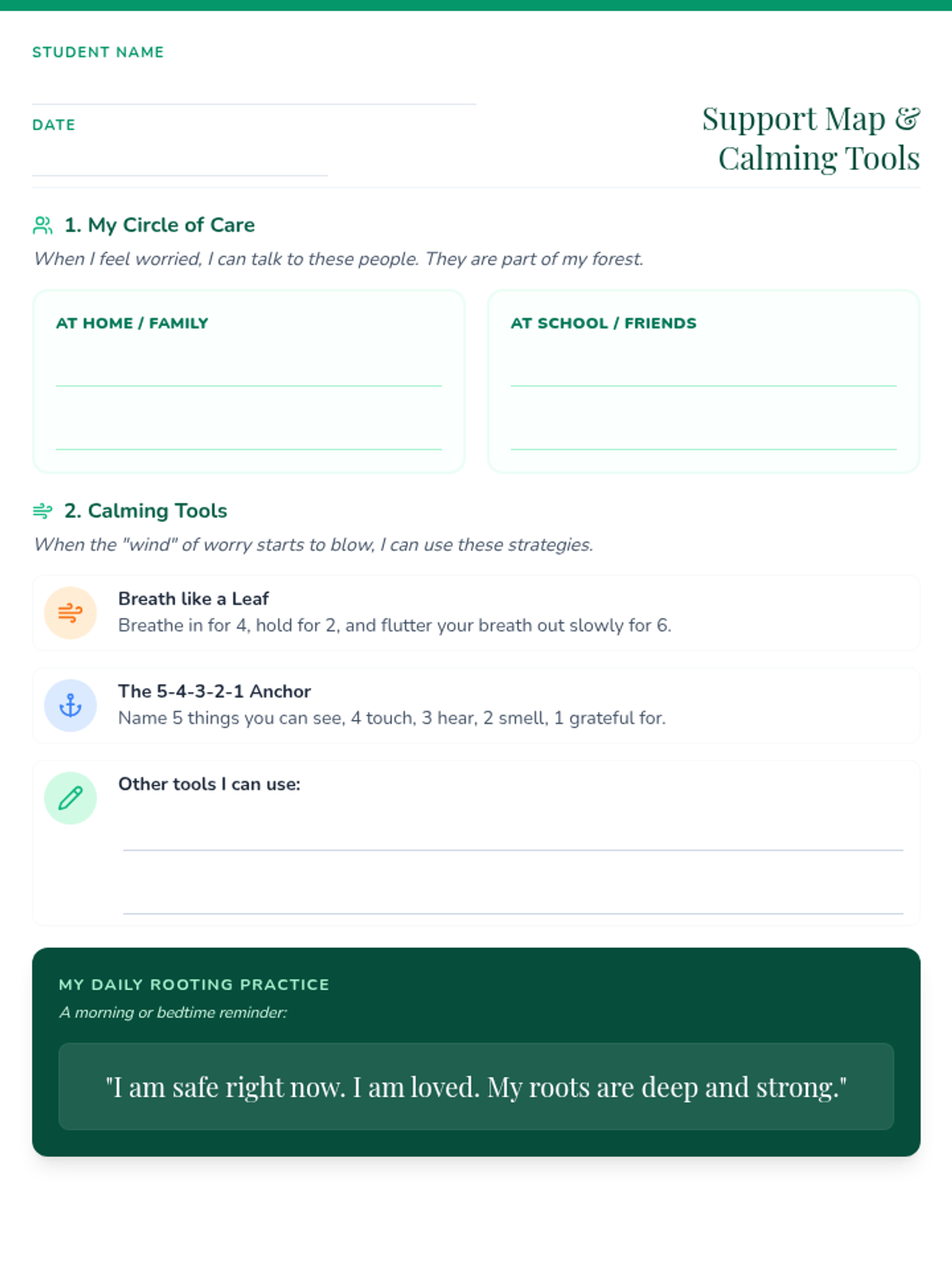
A sensitive and supportive lesson designed to help students navigate anxiety regarding the loss of loved ones through nature metaphors, expressive art, and identifying support systems.
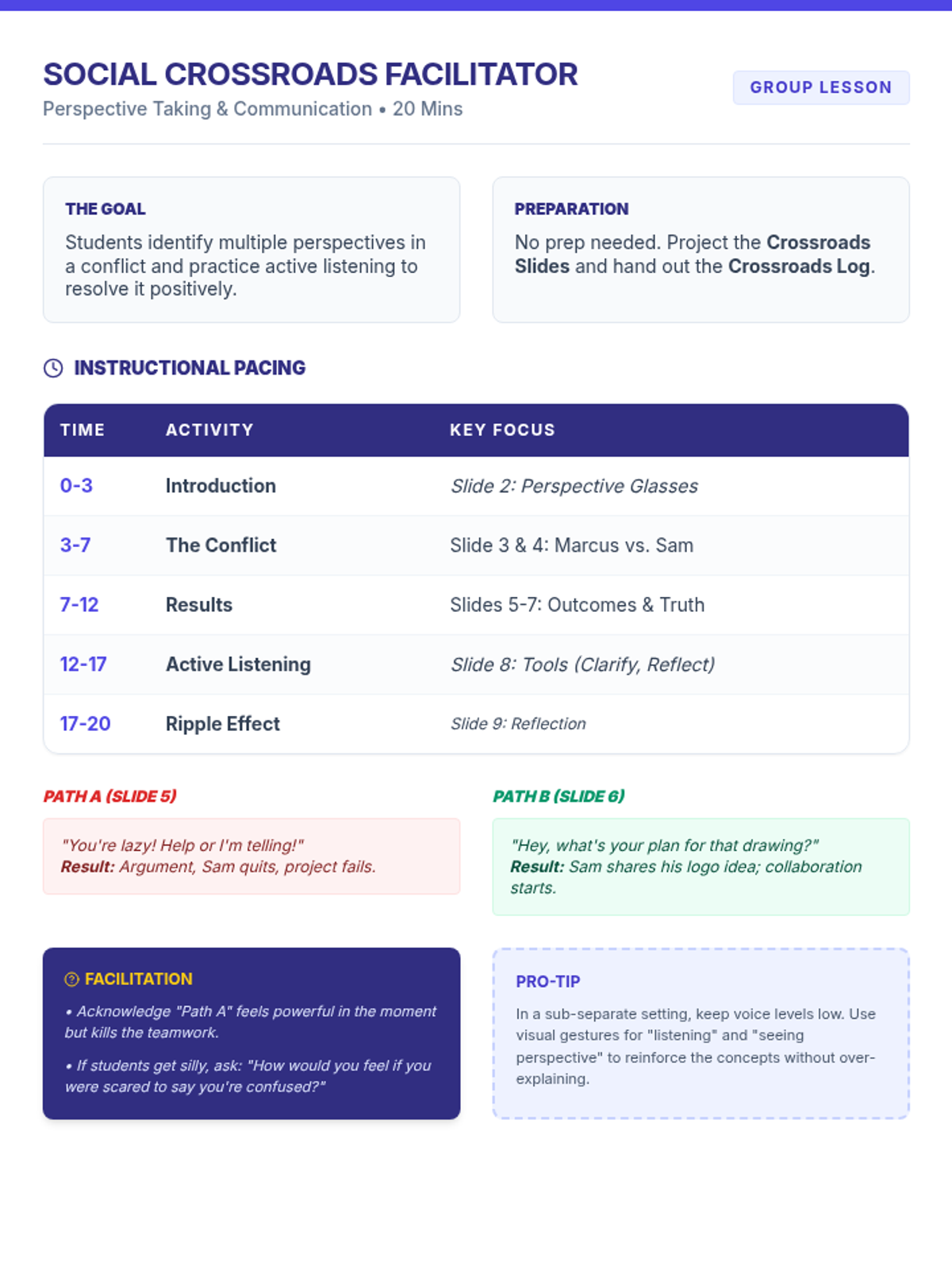
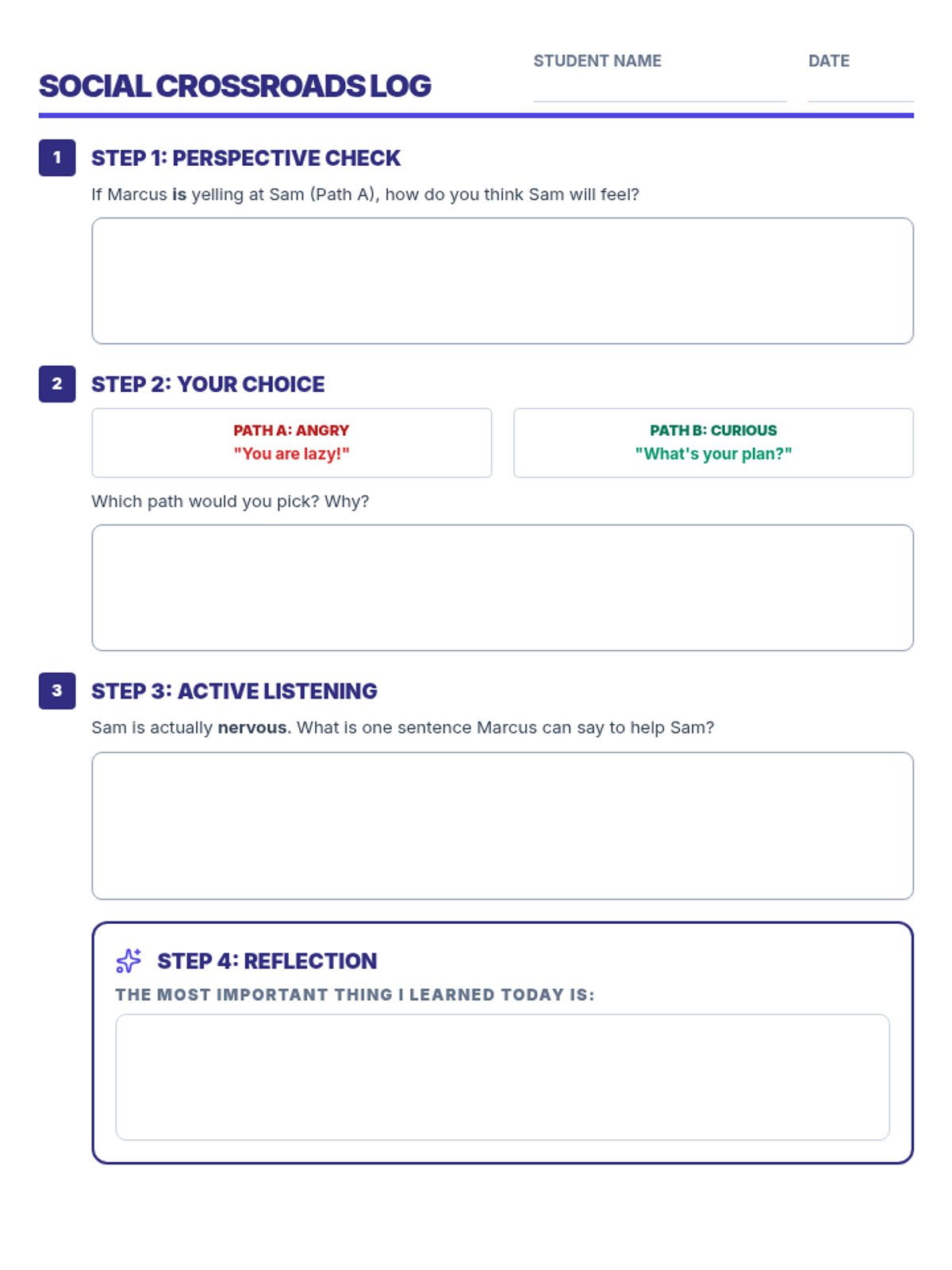
A 20-minute interactive social-emotional learning lesson focused on perspective taking and active listening through a 'choose your path' scenario. Designed for middle schoolers in a sub-separate setting with minimal movement.
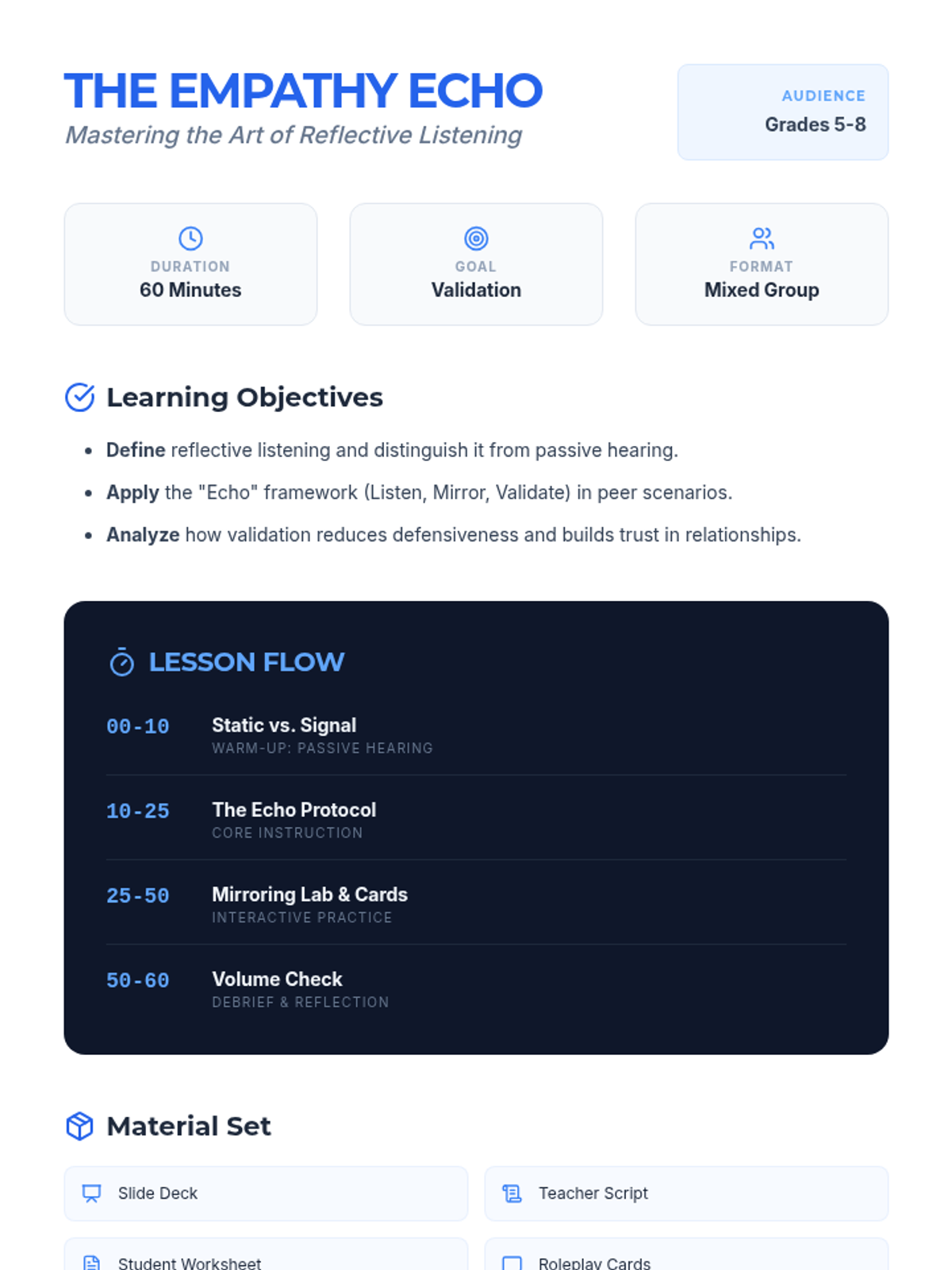
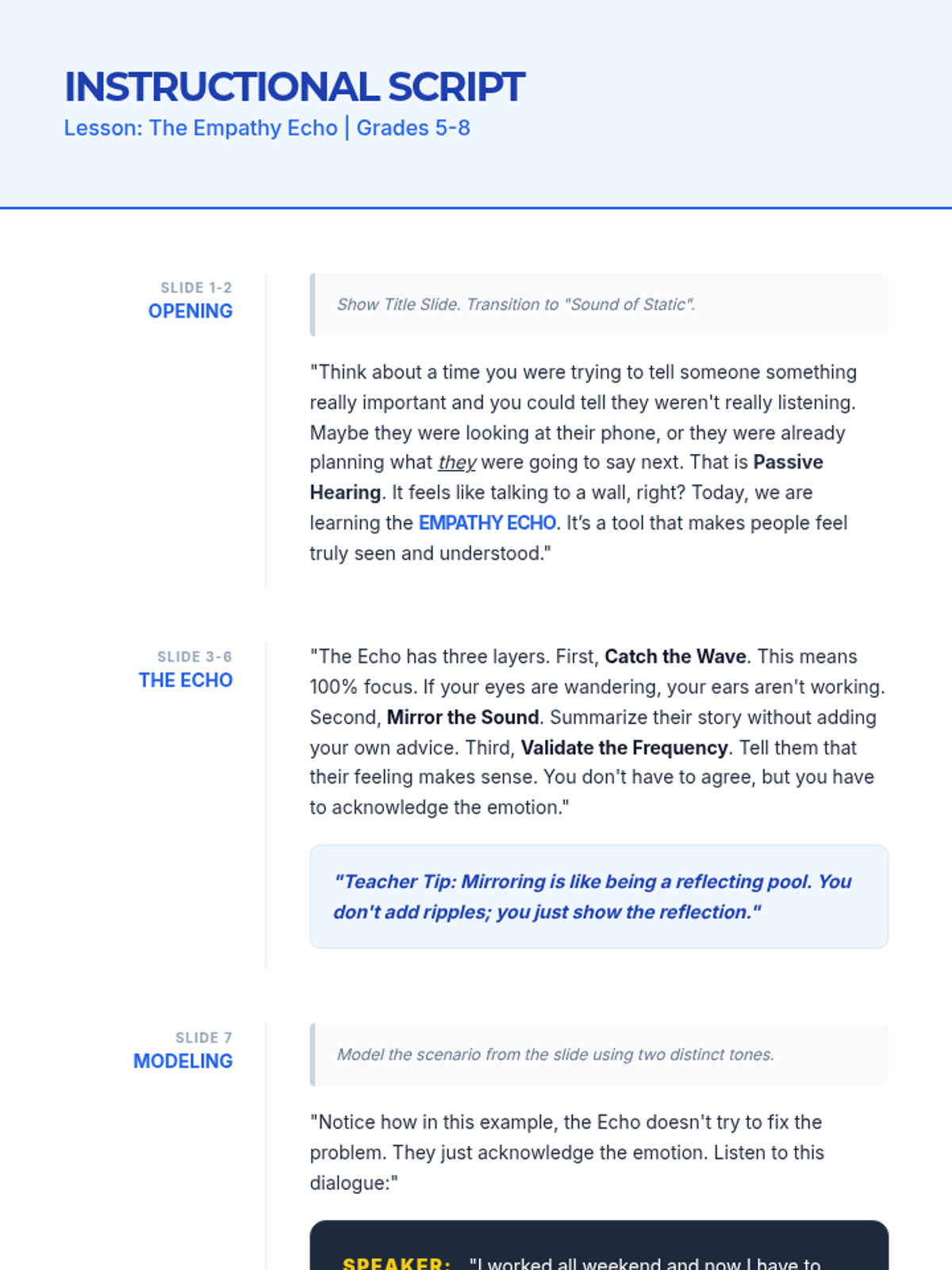
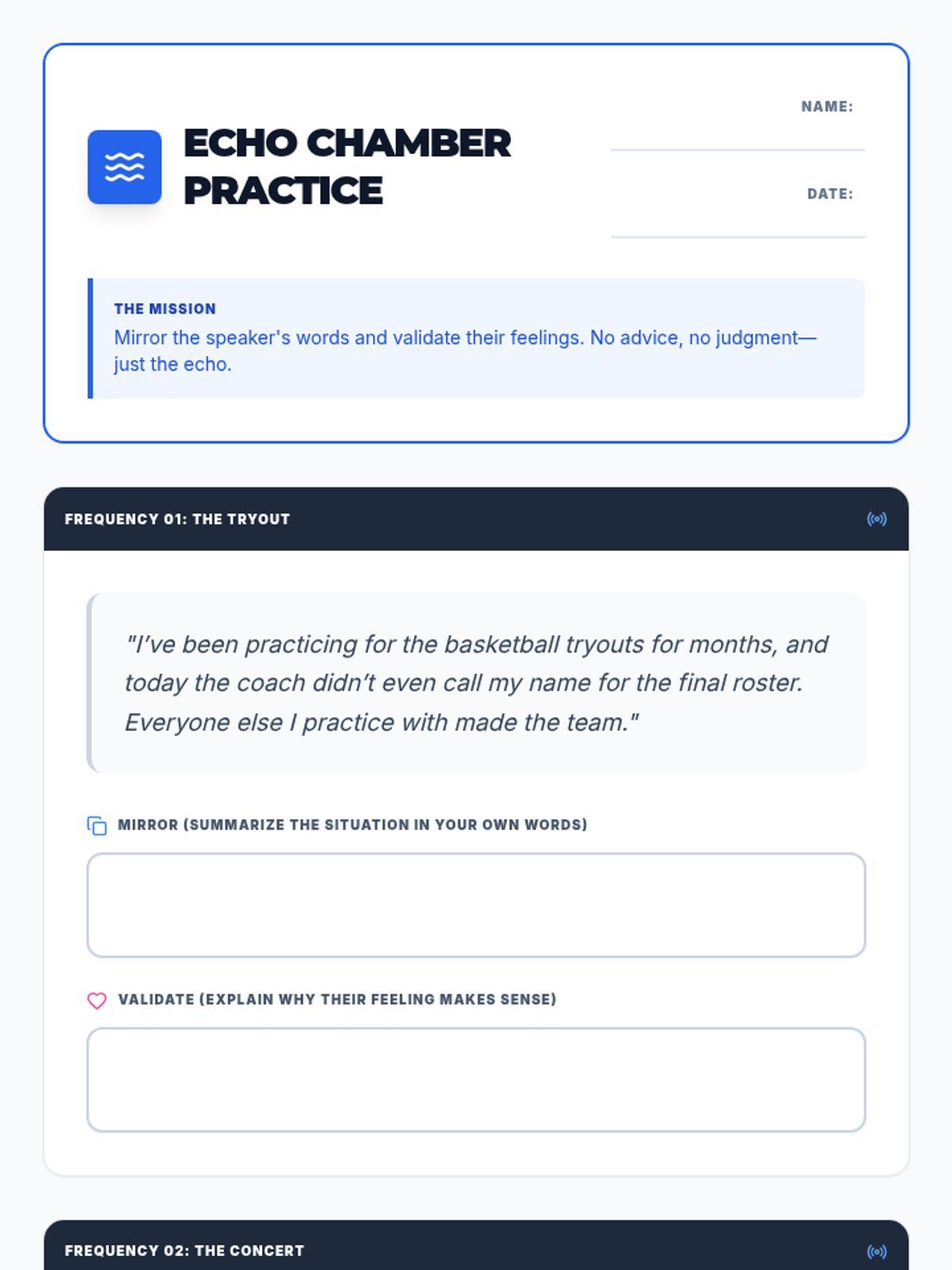
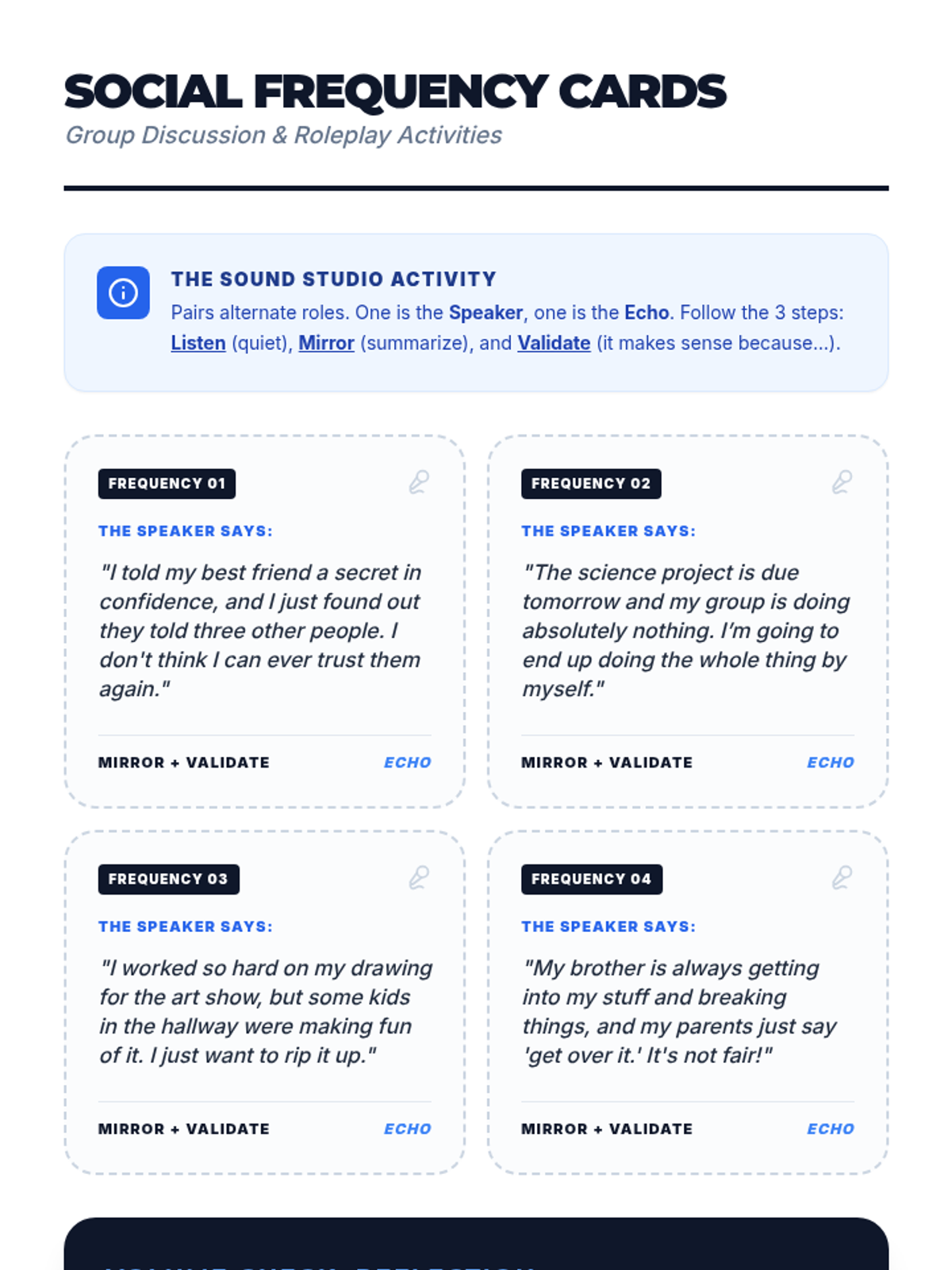
A communication-focused lesson for 5th-8th graders that teaches reflective listening and emotional validation through the 'Echo' technique. Students learn to listen, mirror, and validate peers to strengthen relationships and resolve conflicts.
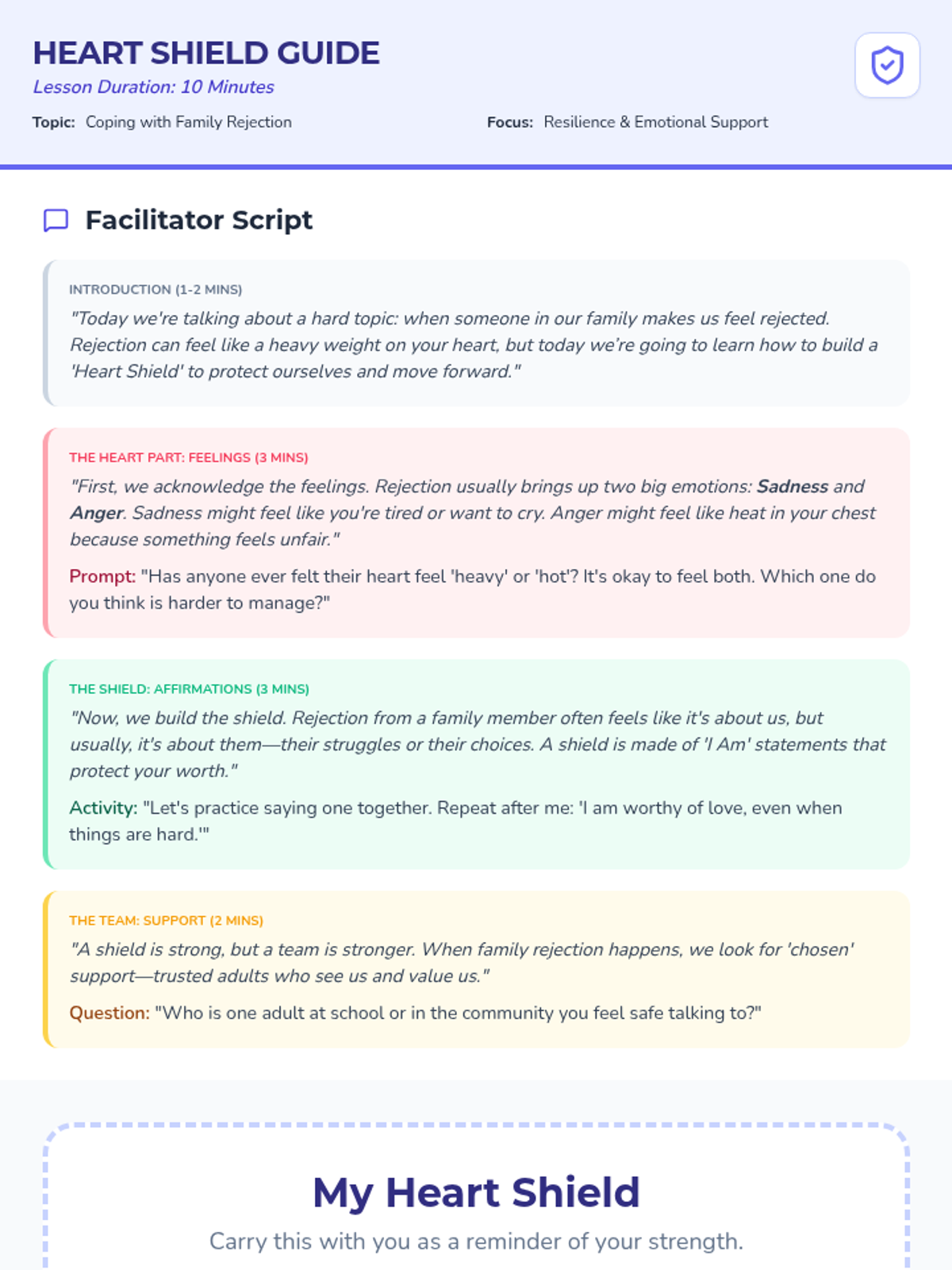
A brief, 10-minute social-emotional learning lesson focused on building resilience and processing emotions after experiencing rejection from a family member. Students learn to identify their feelings, use self-affirmations as a 'shield,' and identify a support network of trusted adults.
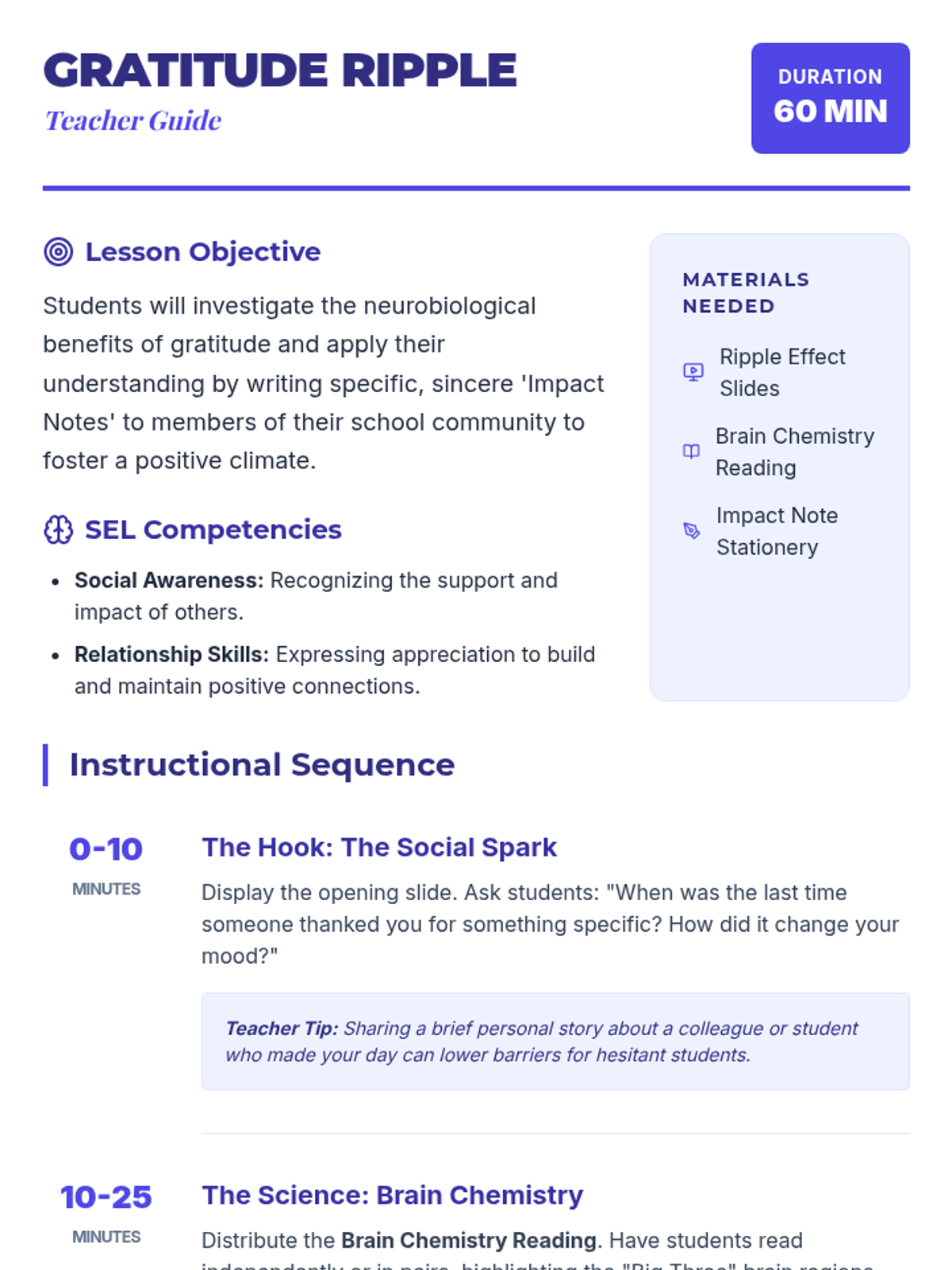
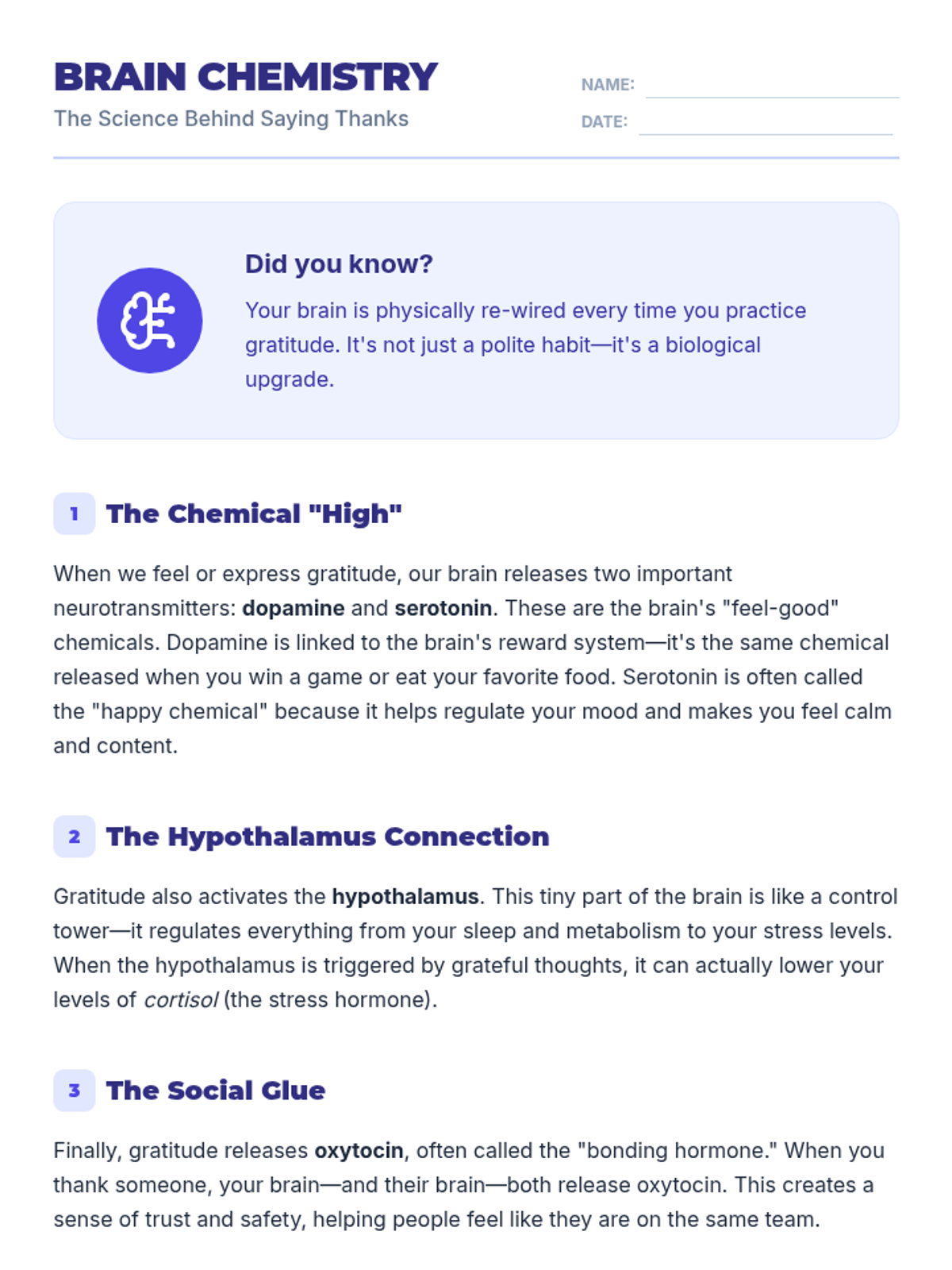
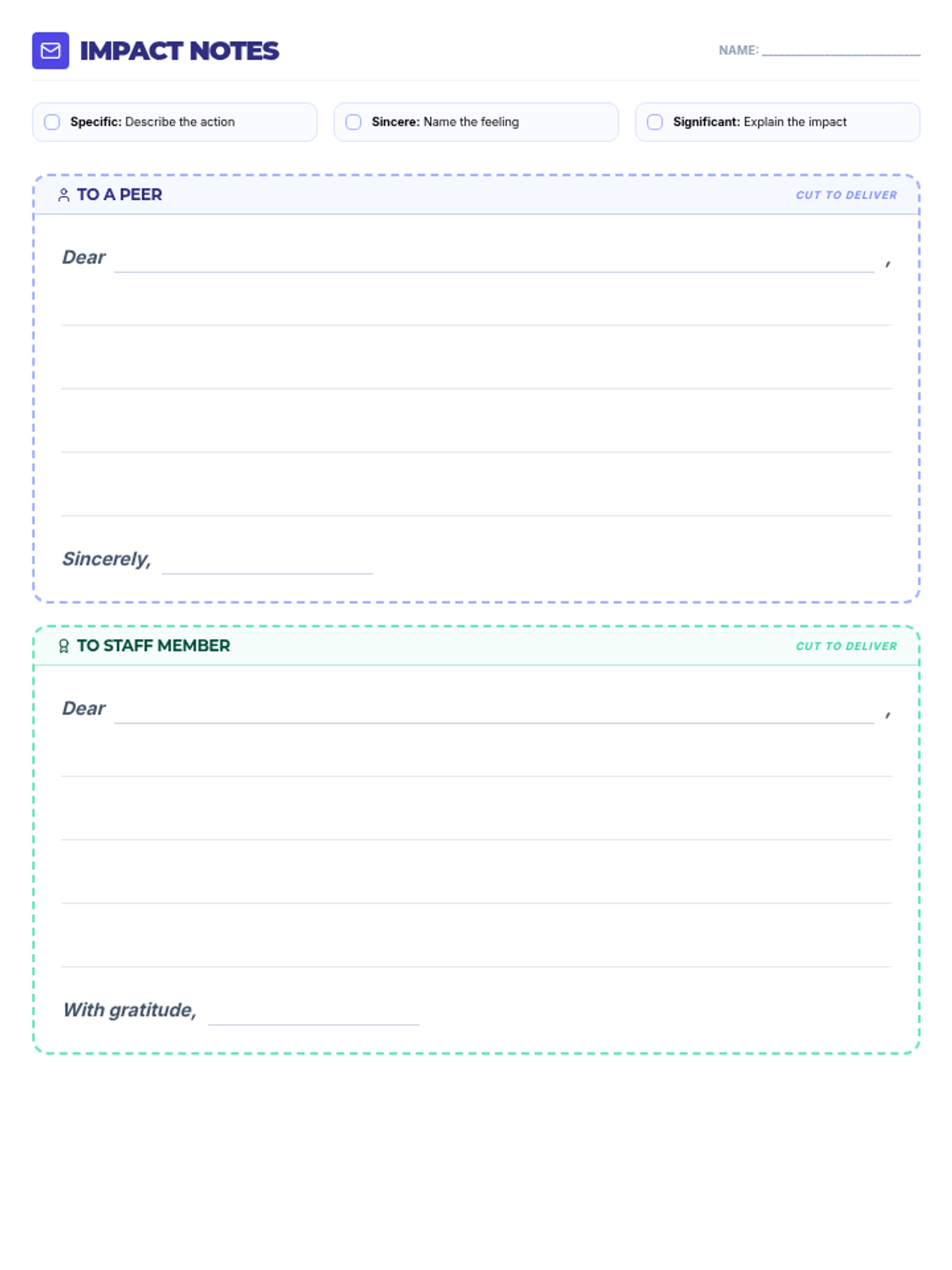
A social-emotional learning lesson for middle schoolers that explores the science behind gratitude and guides them in writing meaningful 'Impact Notes' to strengthen their school community.
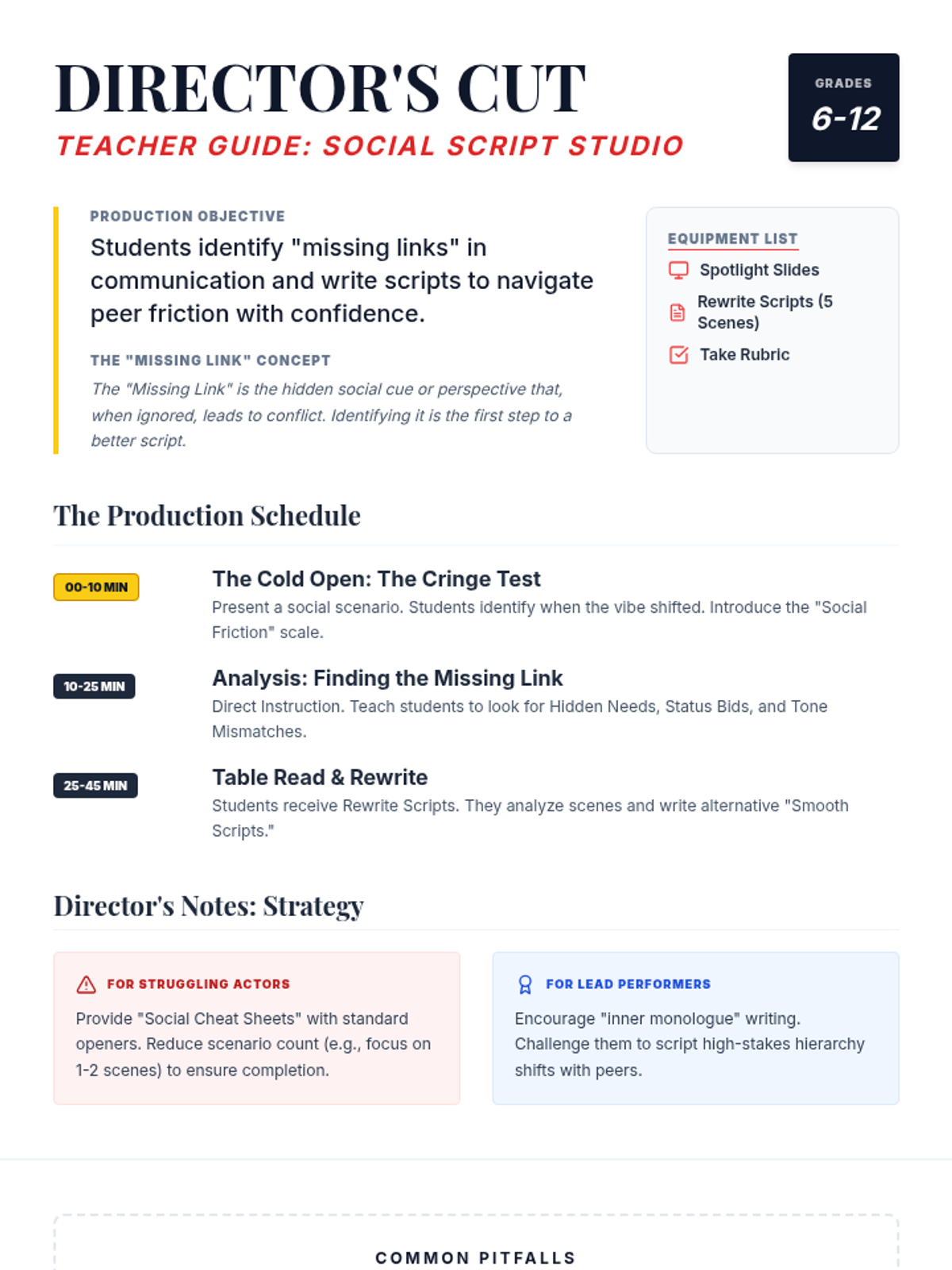
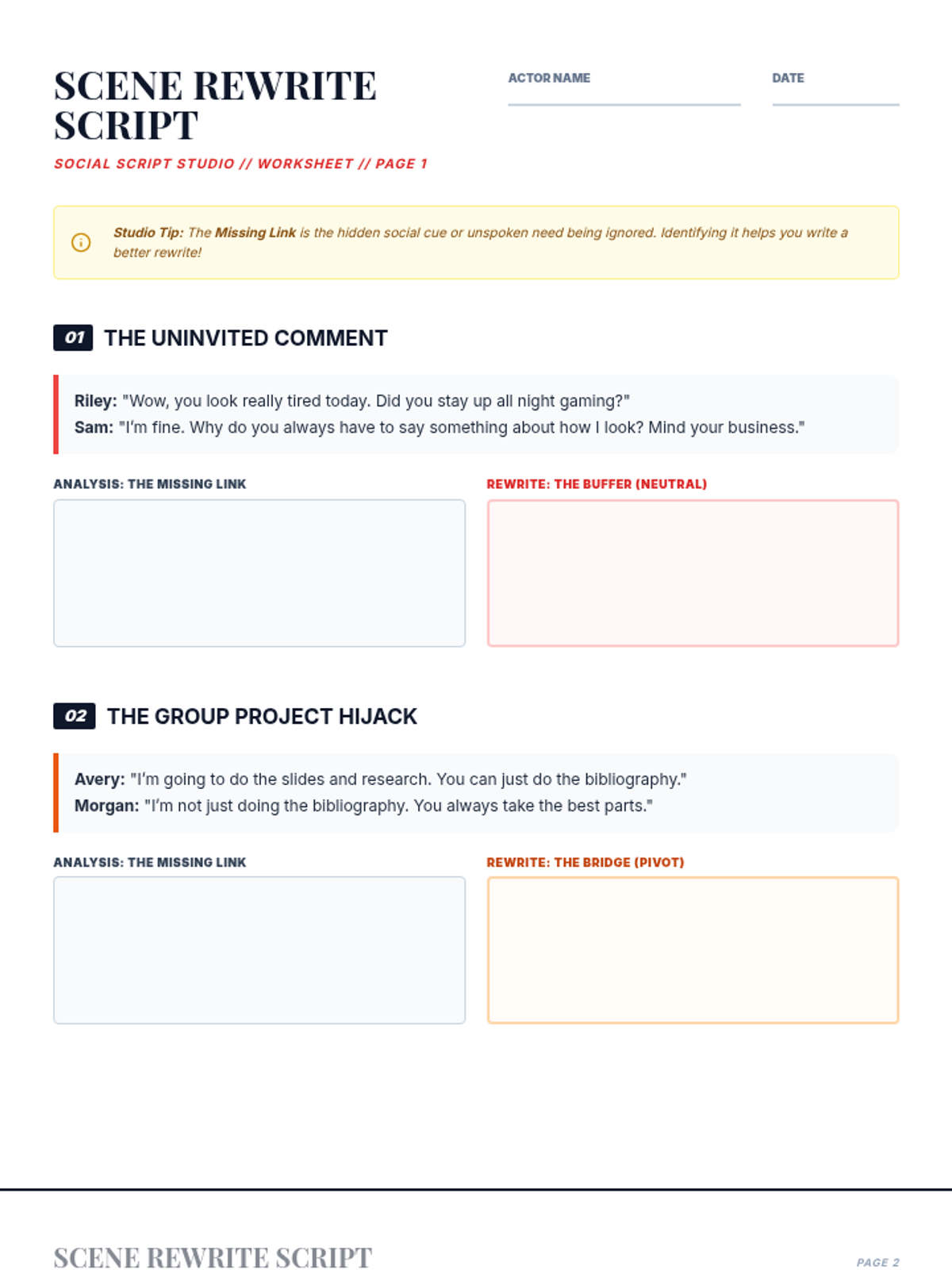
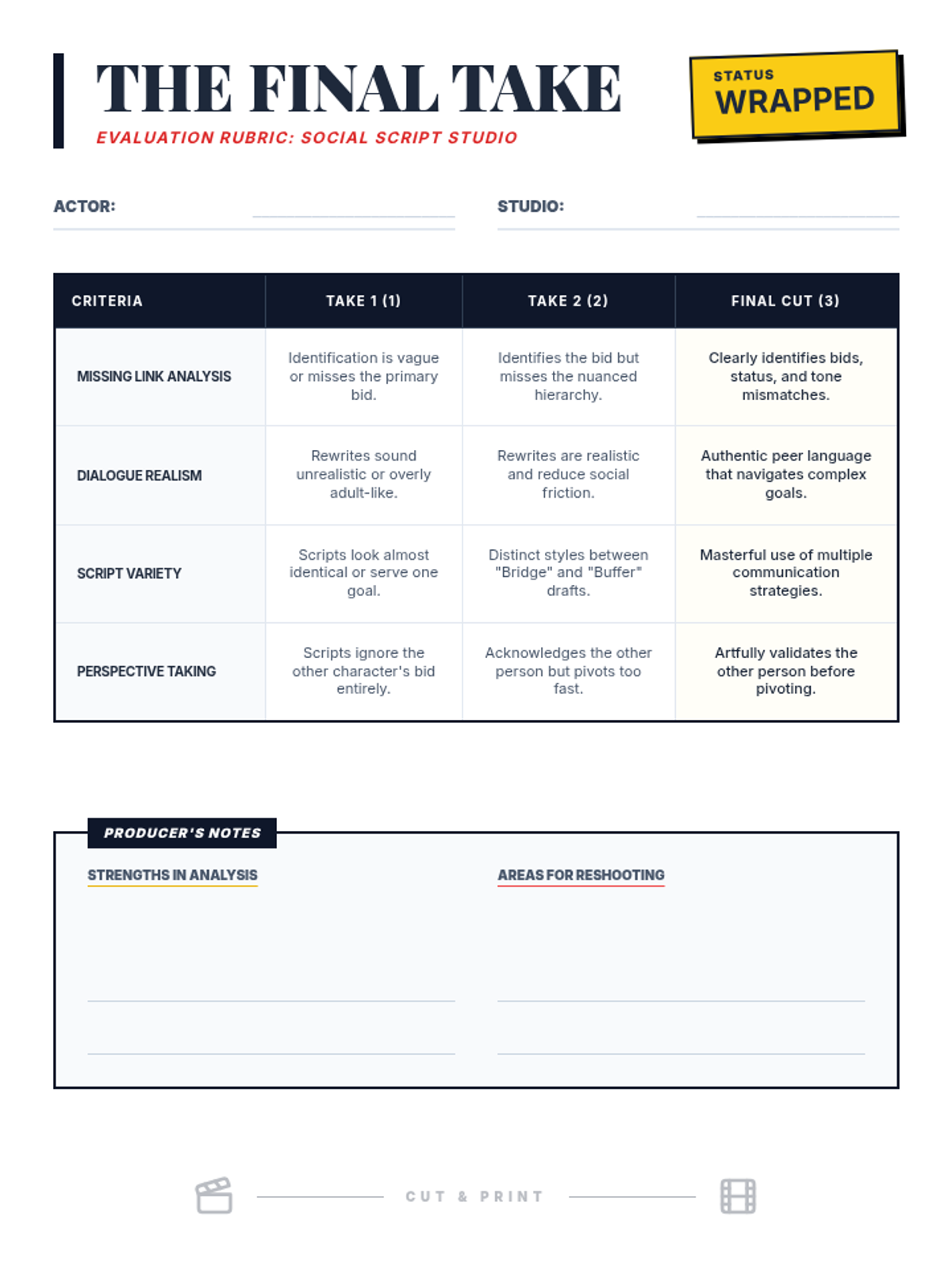
A social skills lesson for middle and high school students focused on analyzing social interactions, identifying communication gaps, and rehearsing alternative responses to peer conflict.
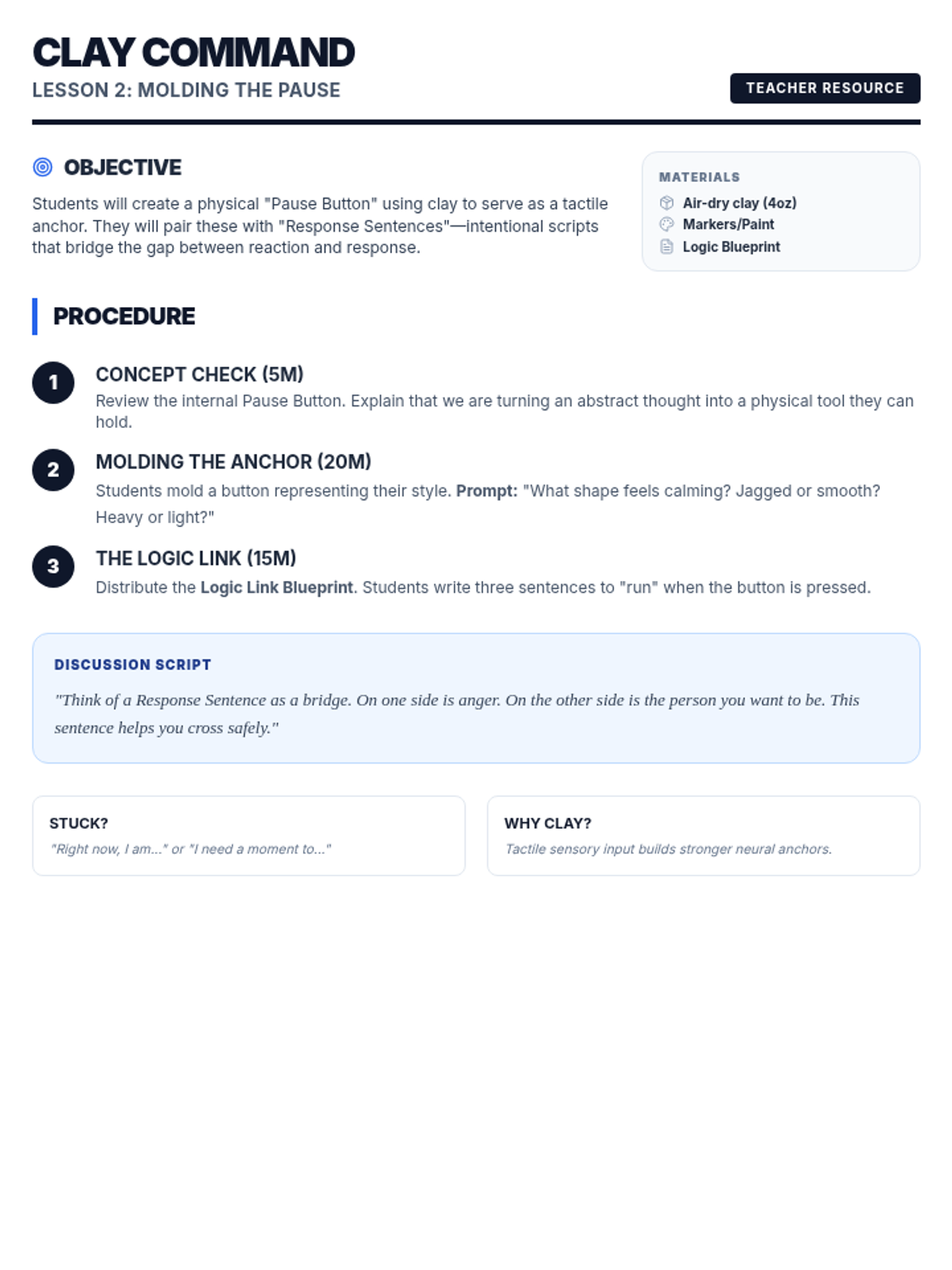
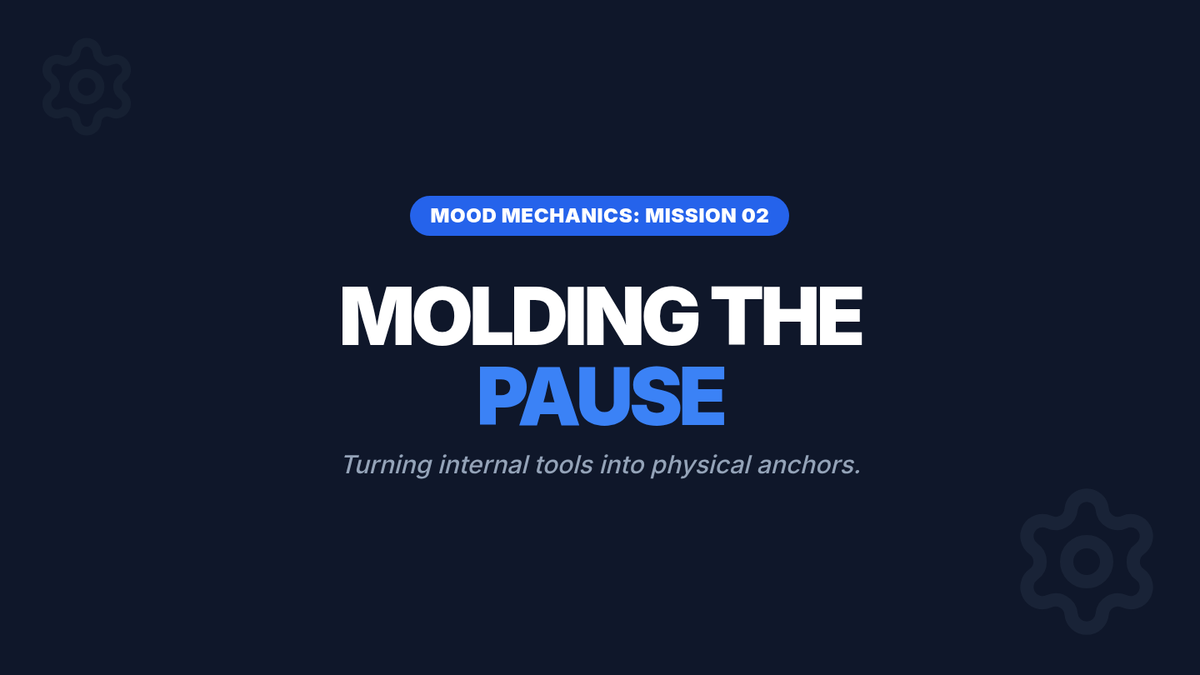
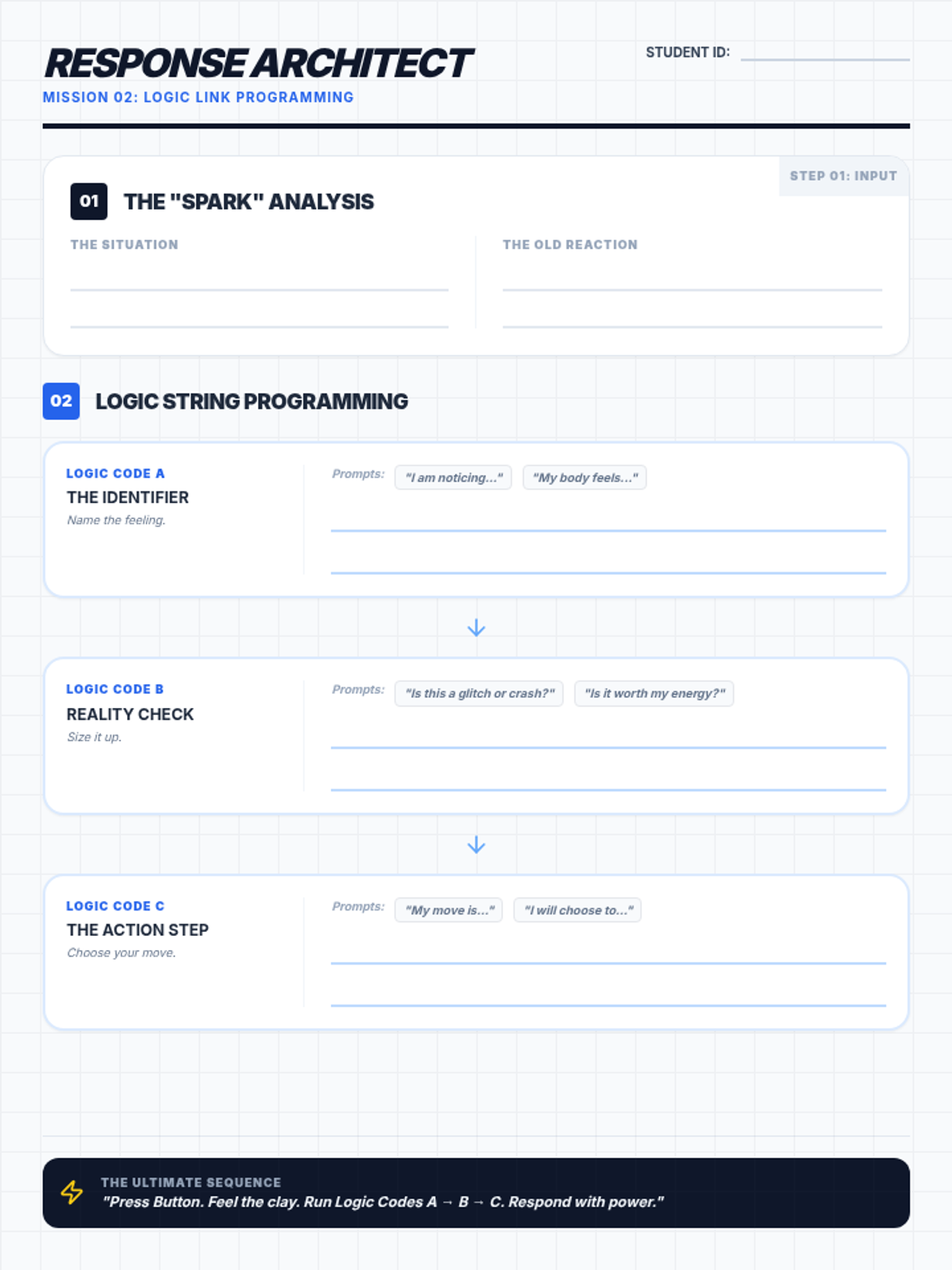
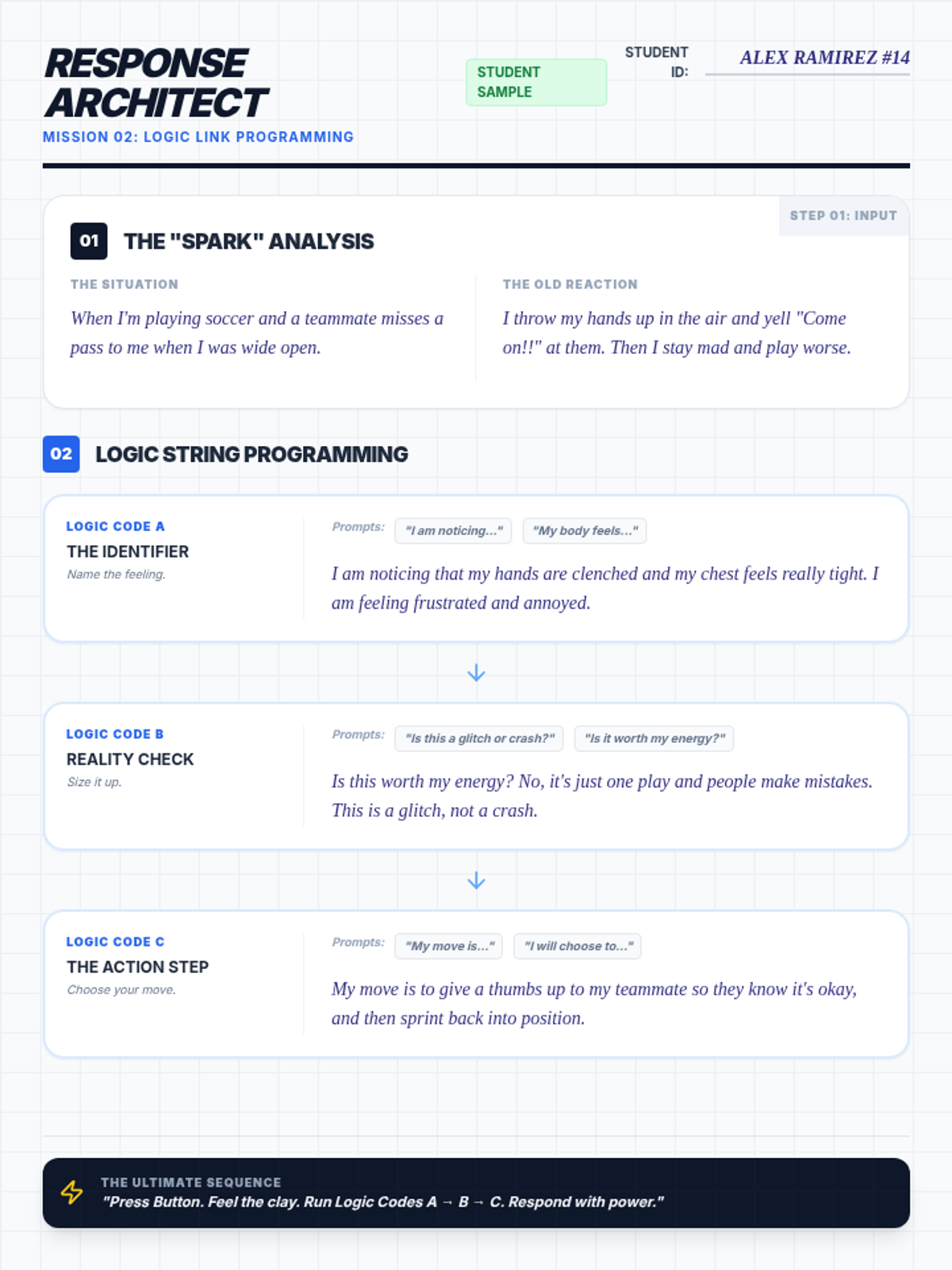
A hands-on creative session where students mold physical 'Pause Buttons' out of clay to serve as tactile anchors for emotional regulation. Students pair their physical buttons with 'Response Sentences' that help them transition from reaction to intentional response.
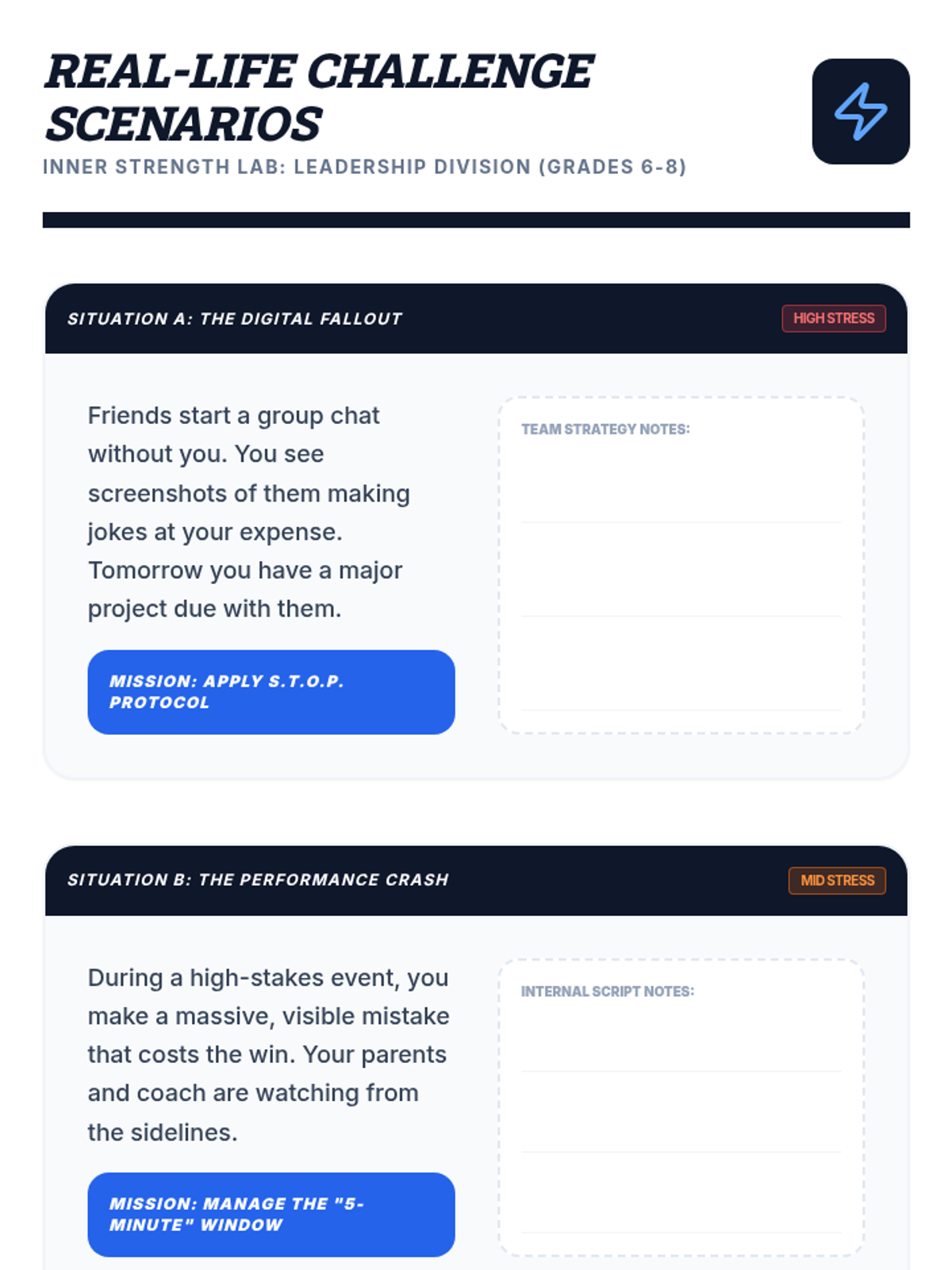
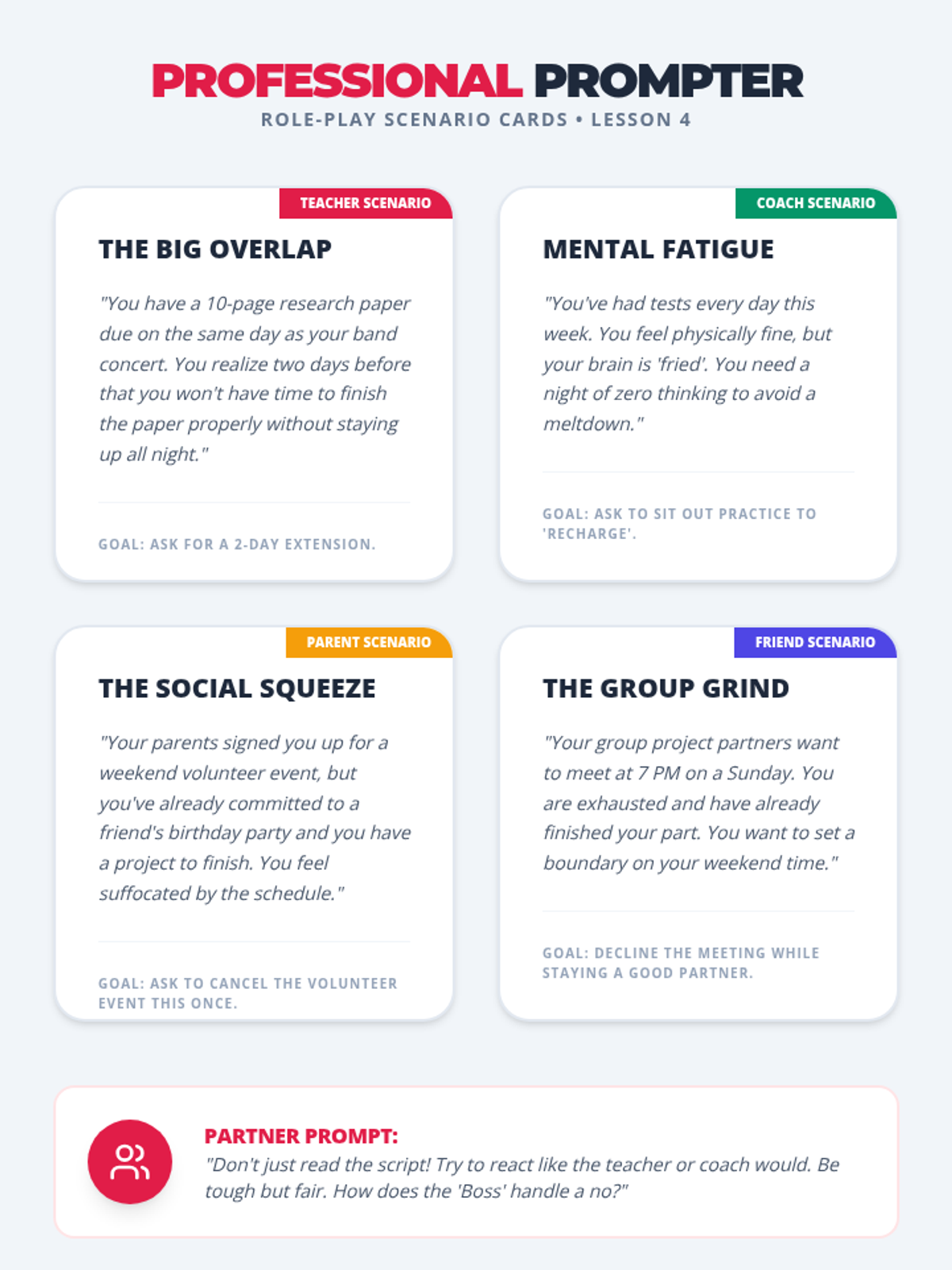
Equips middle schoolers (6th-8th) with strategies to handle complex social dynamics and personal setbacks using realistic role-play scenarios.
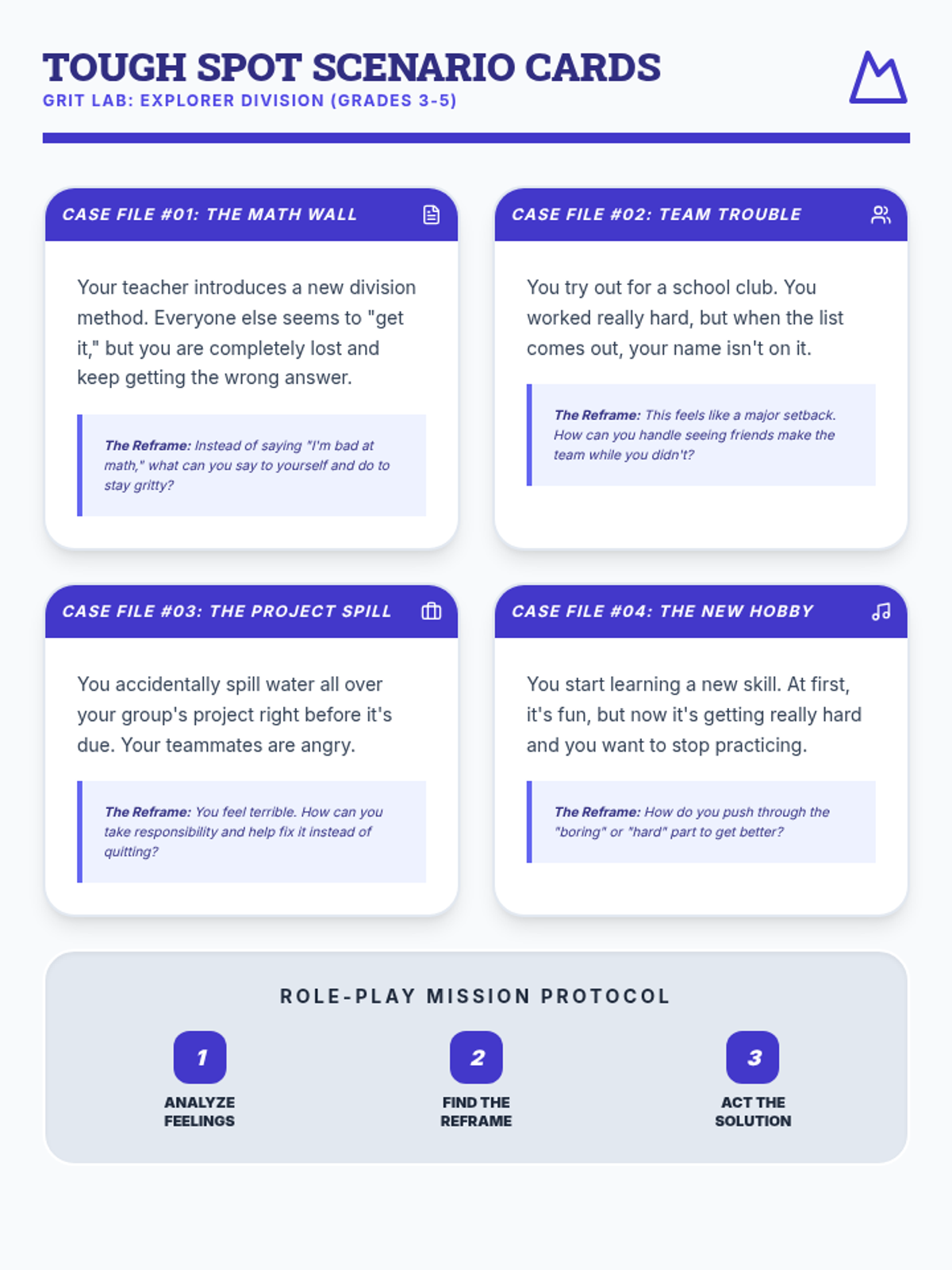
Helps 3rd to 5th graders develop grit and perspective when facing academic and social challenges through collaborative role-play.
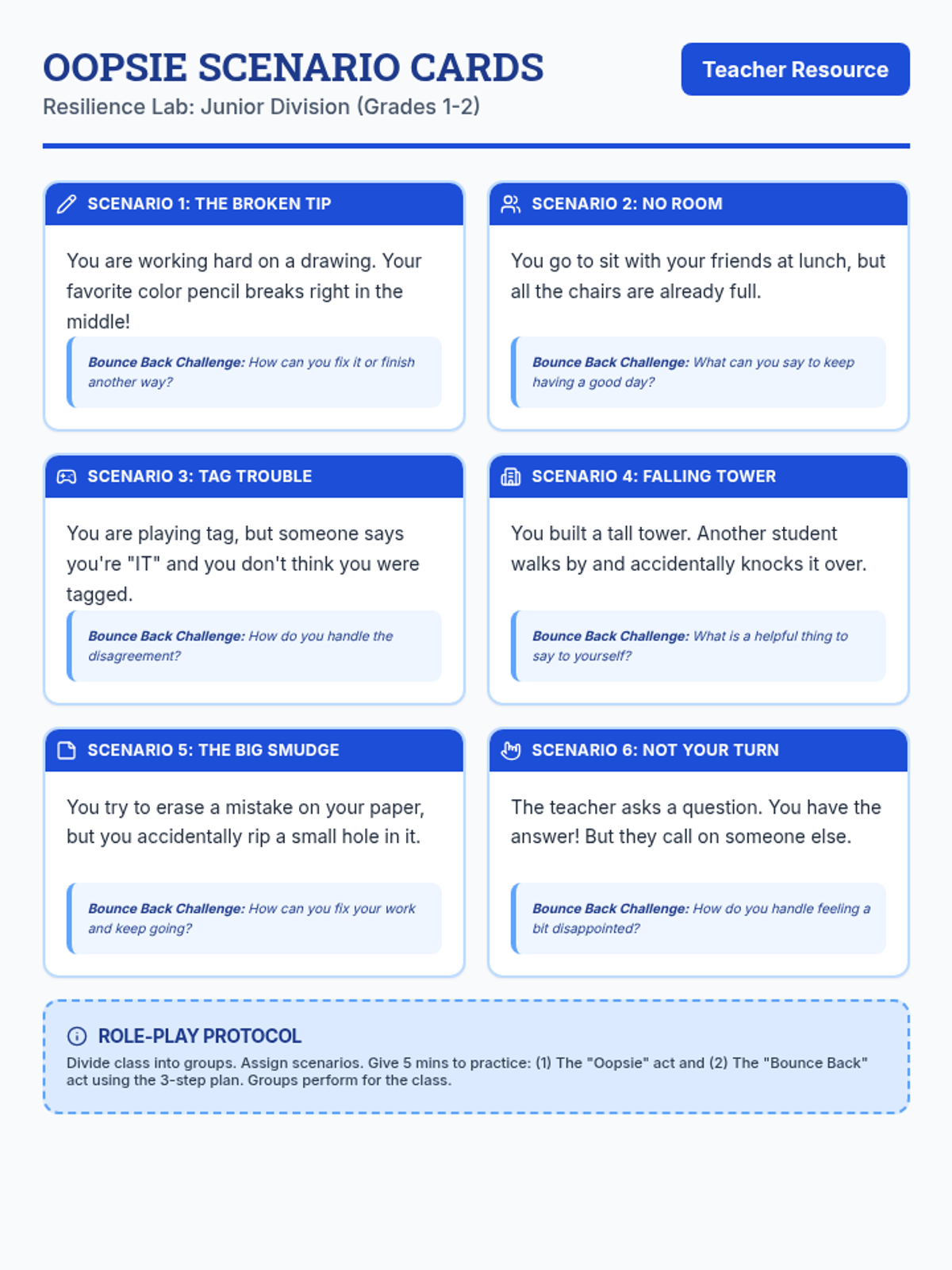
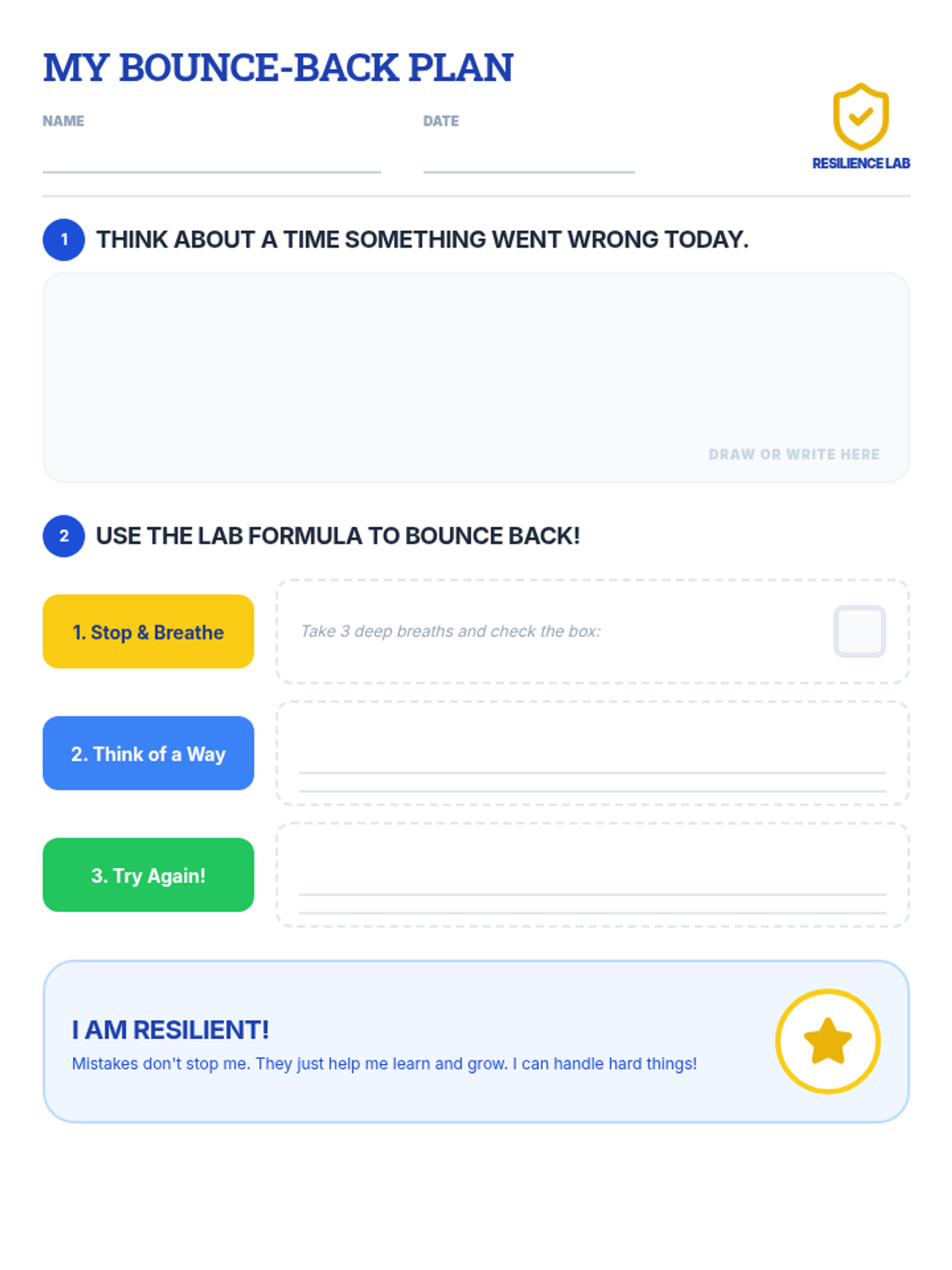
Introduces 1st and 2nd graders to the concept of 'bouncing back' from small mistakes and managing big feelings using role-play scenarios.
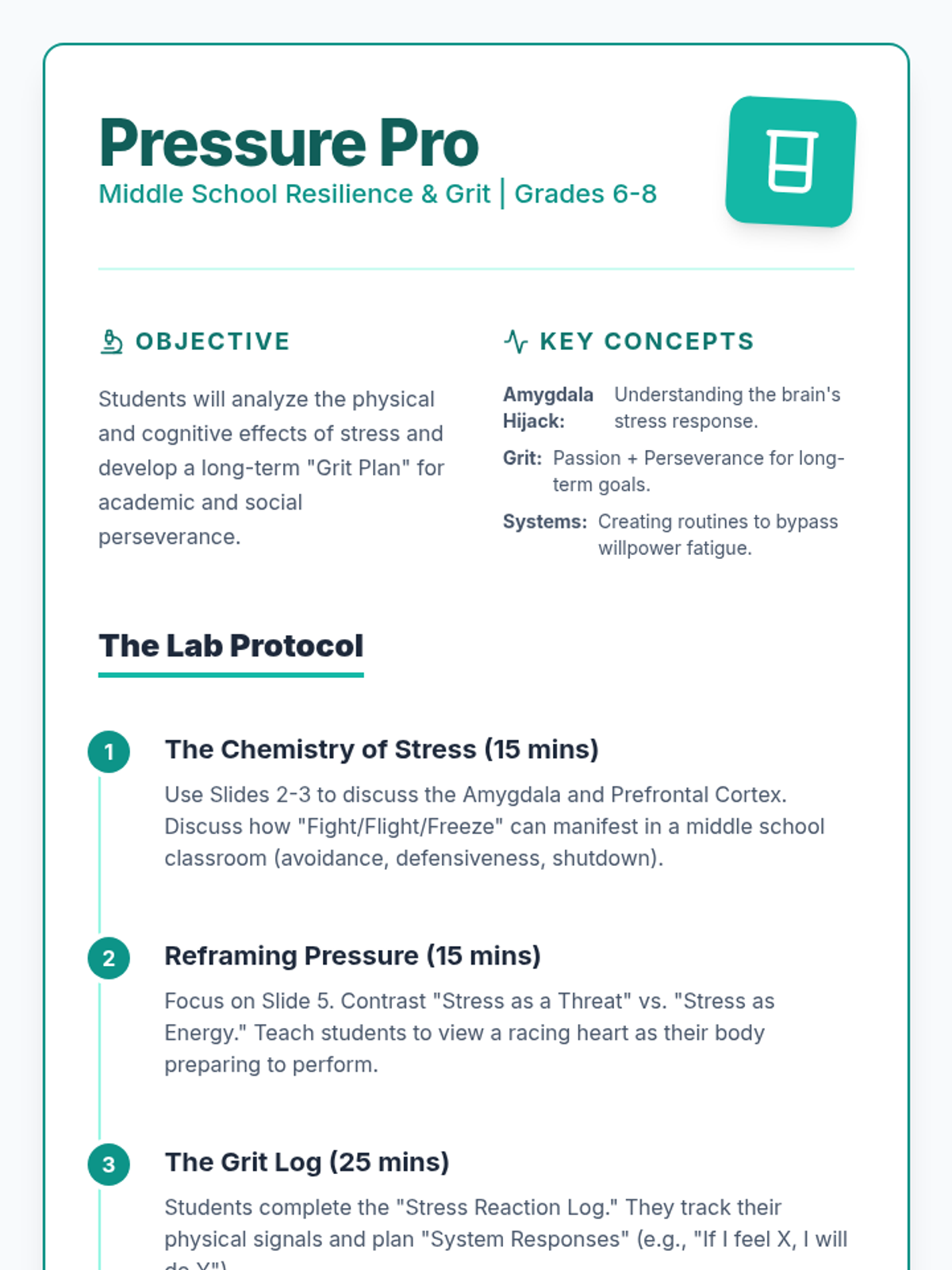
Explores the science of stress, long-term perseverance (grit), and developing a personal resilience plan for navigating middle school transitions.
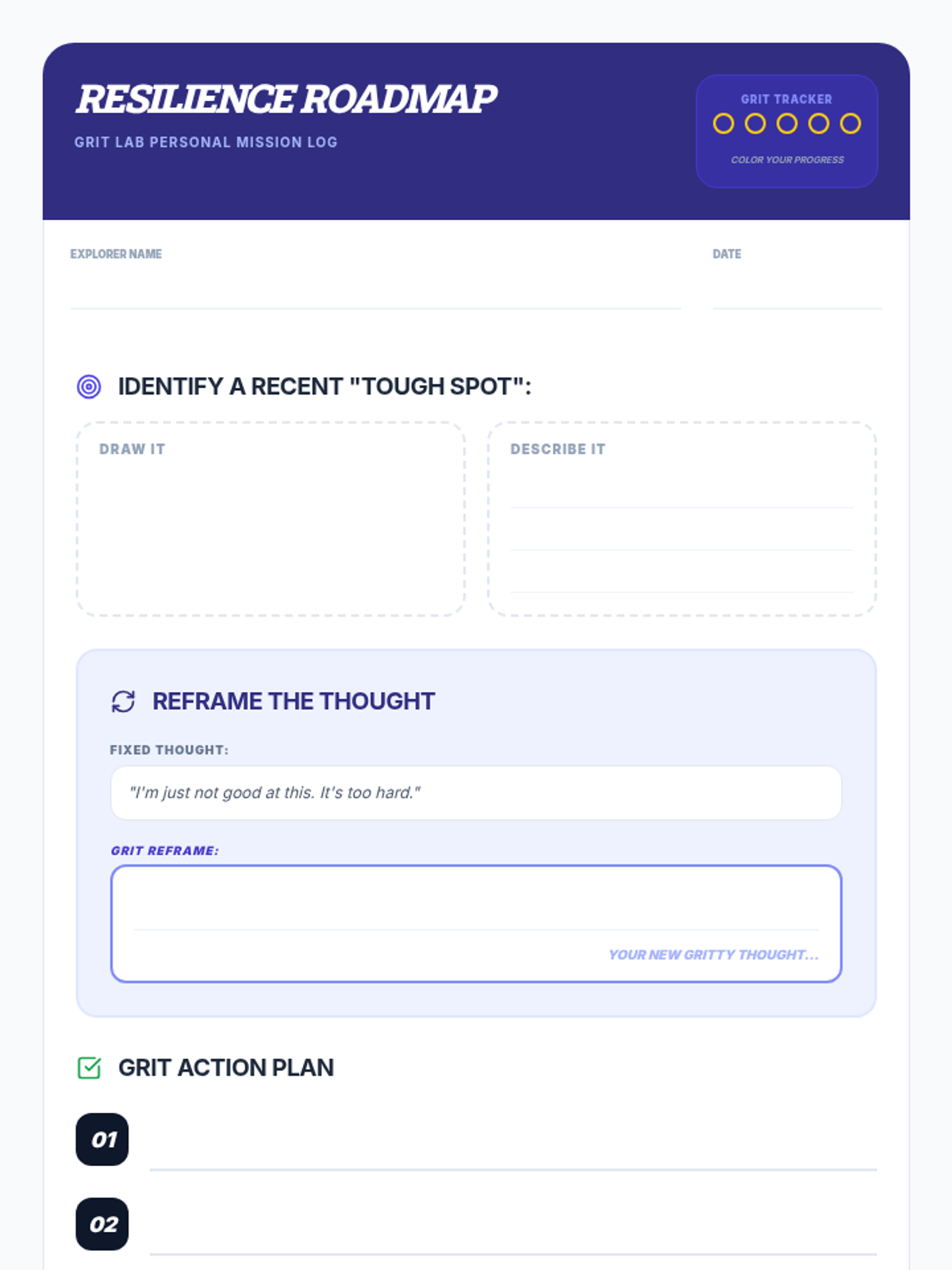
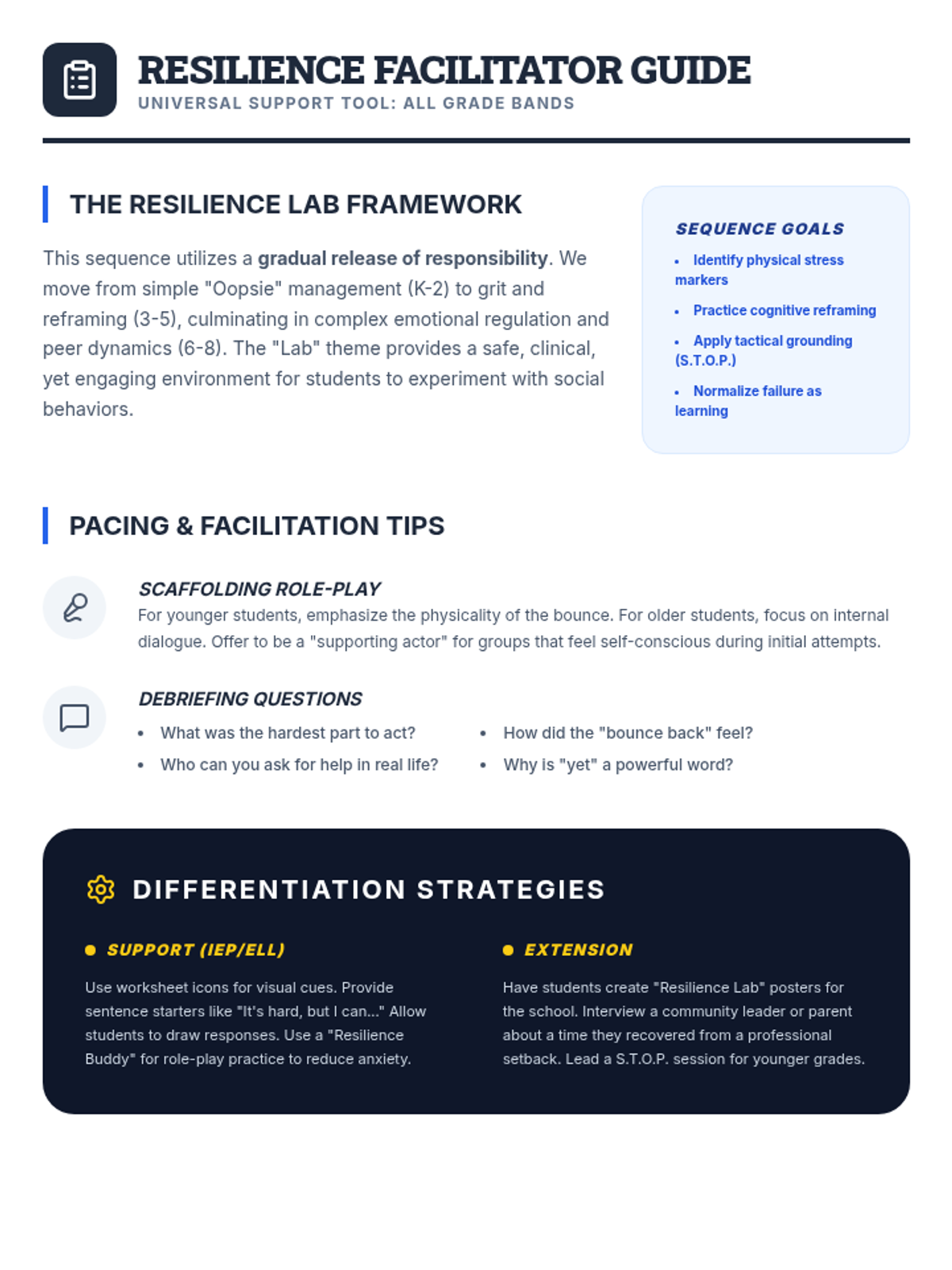
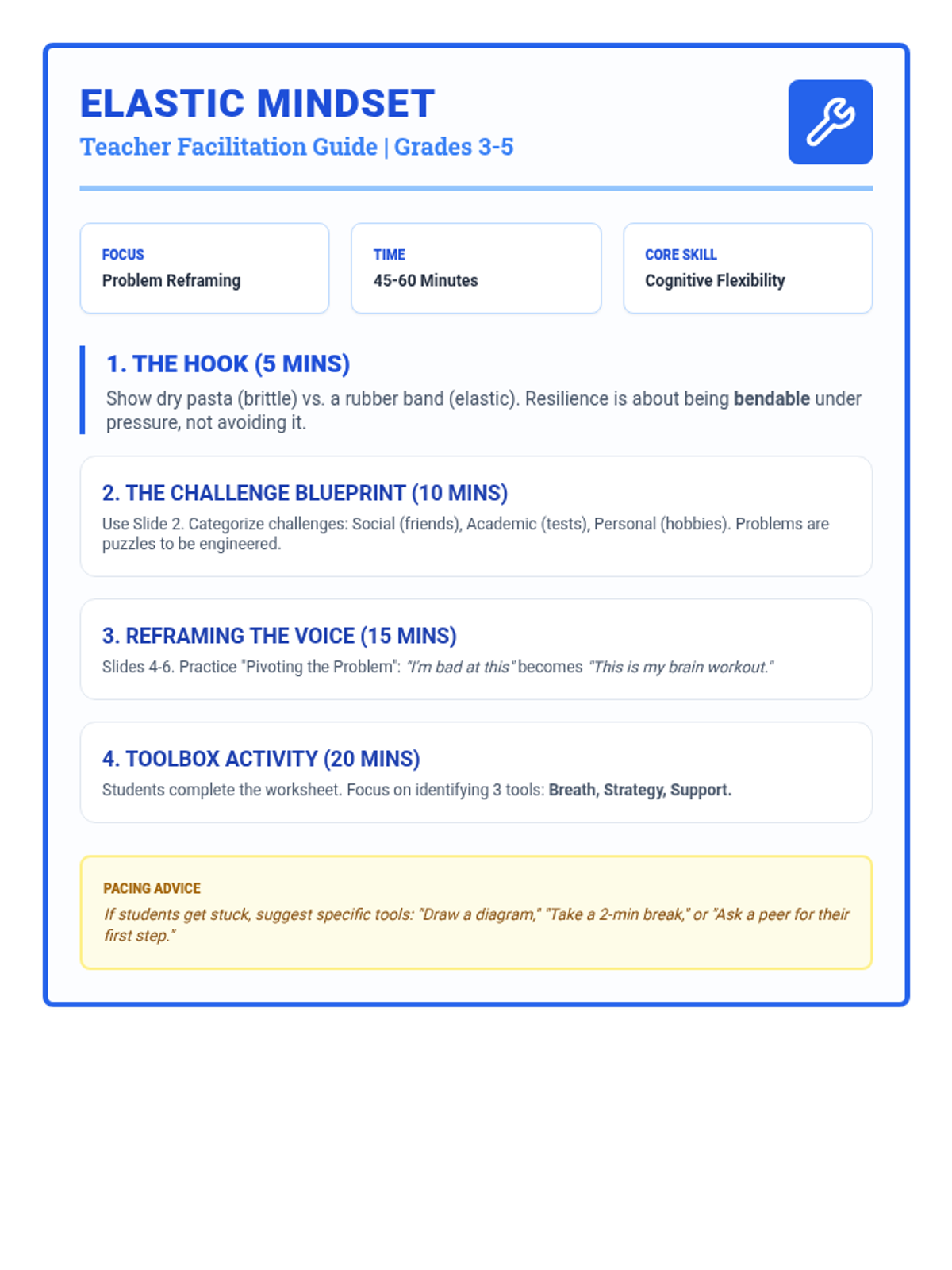
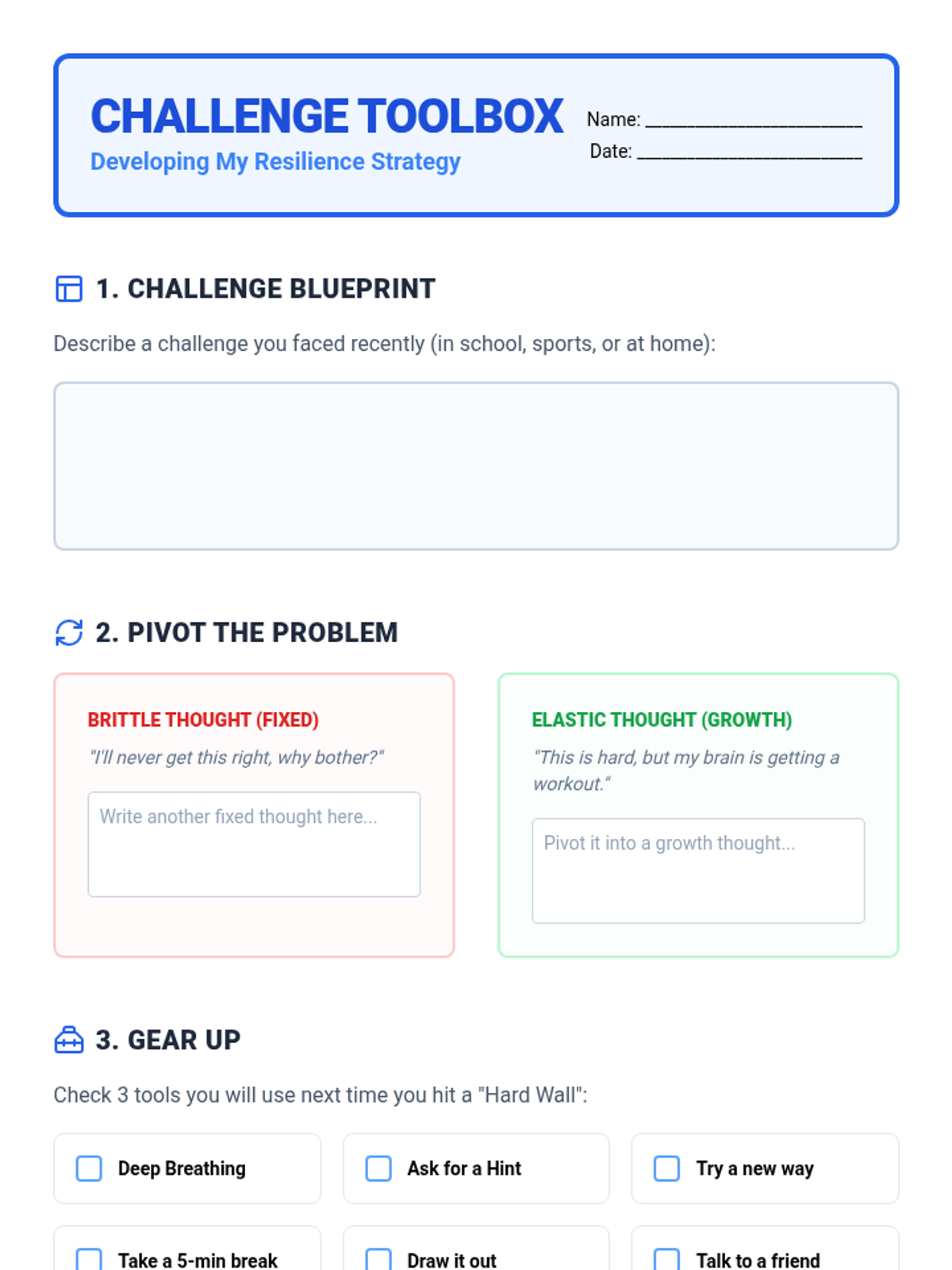
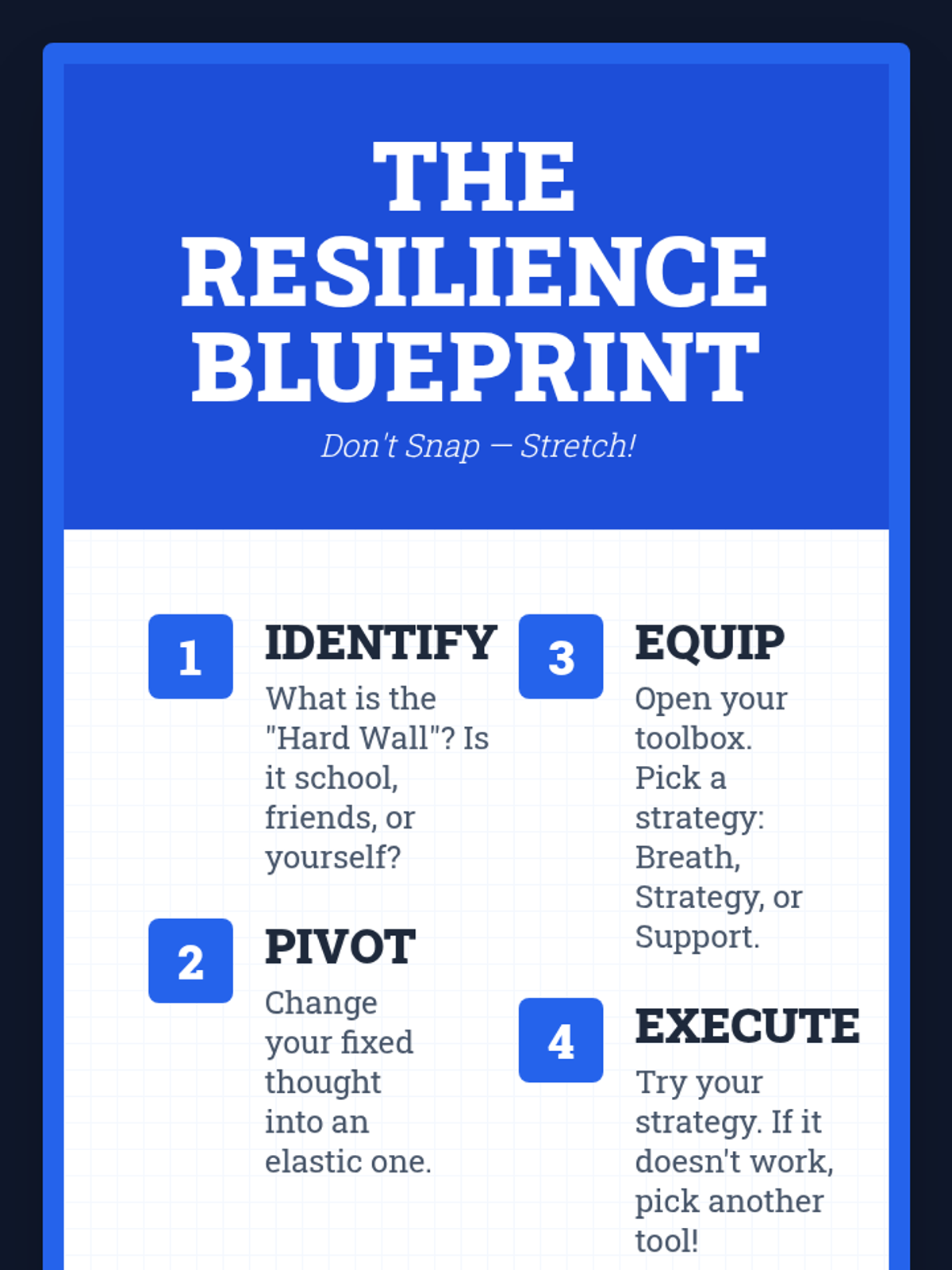
Teaches students to identify challenges, reframe negative thoughts, and build a 'toolbox' of coping strategies for social and academic hurdles.
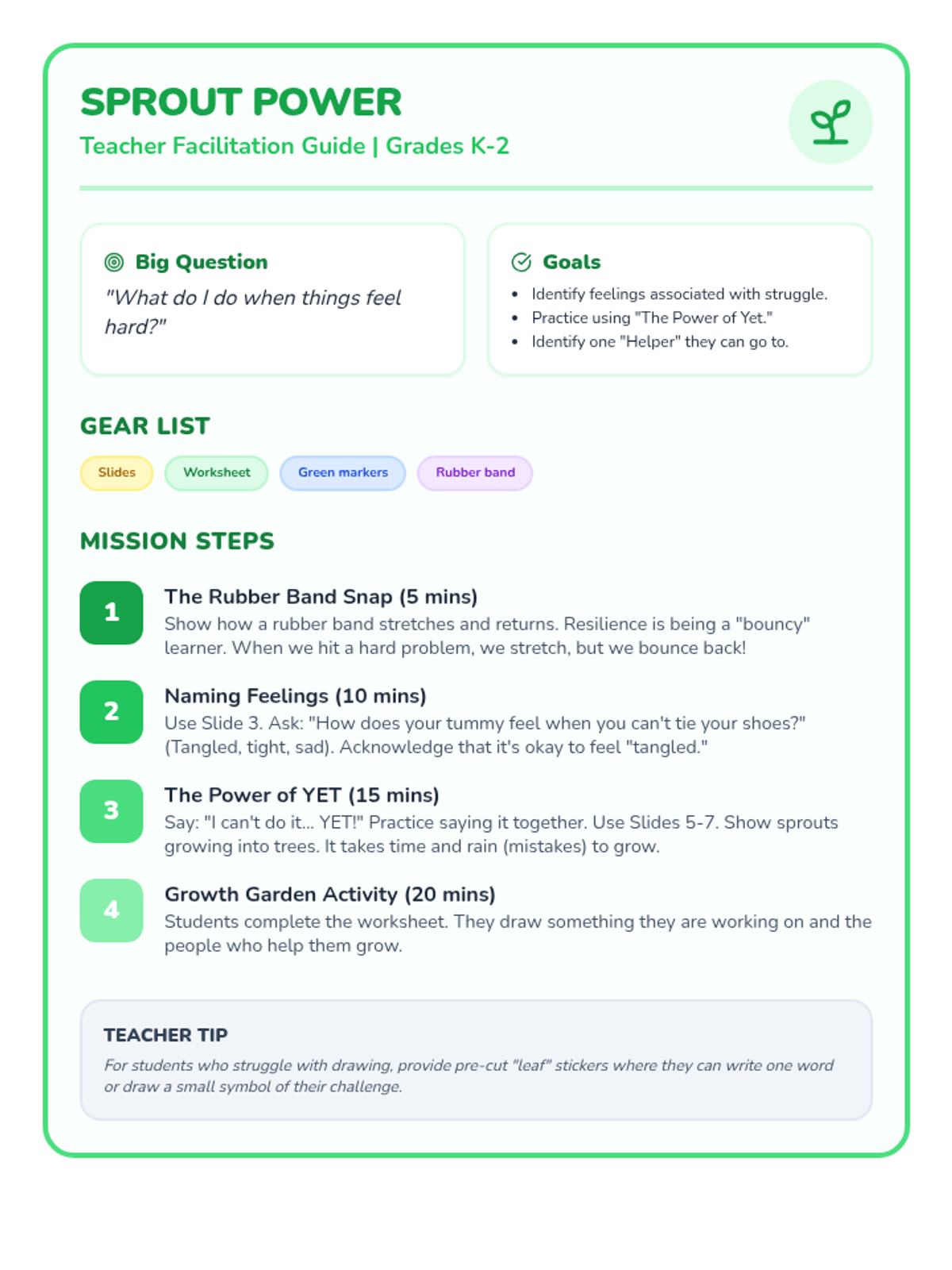
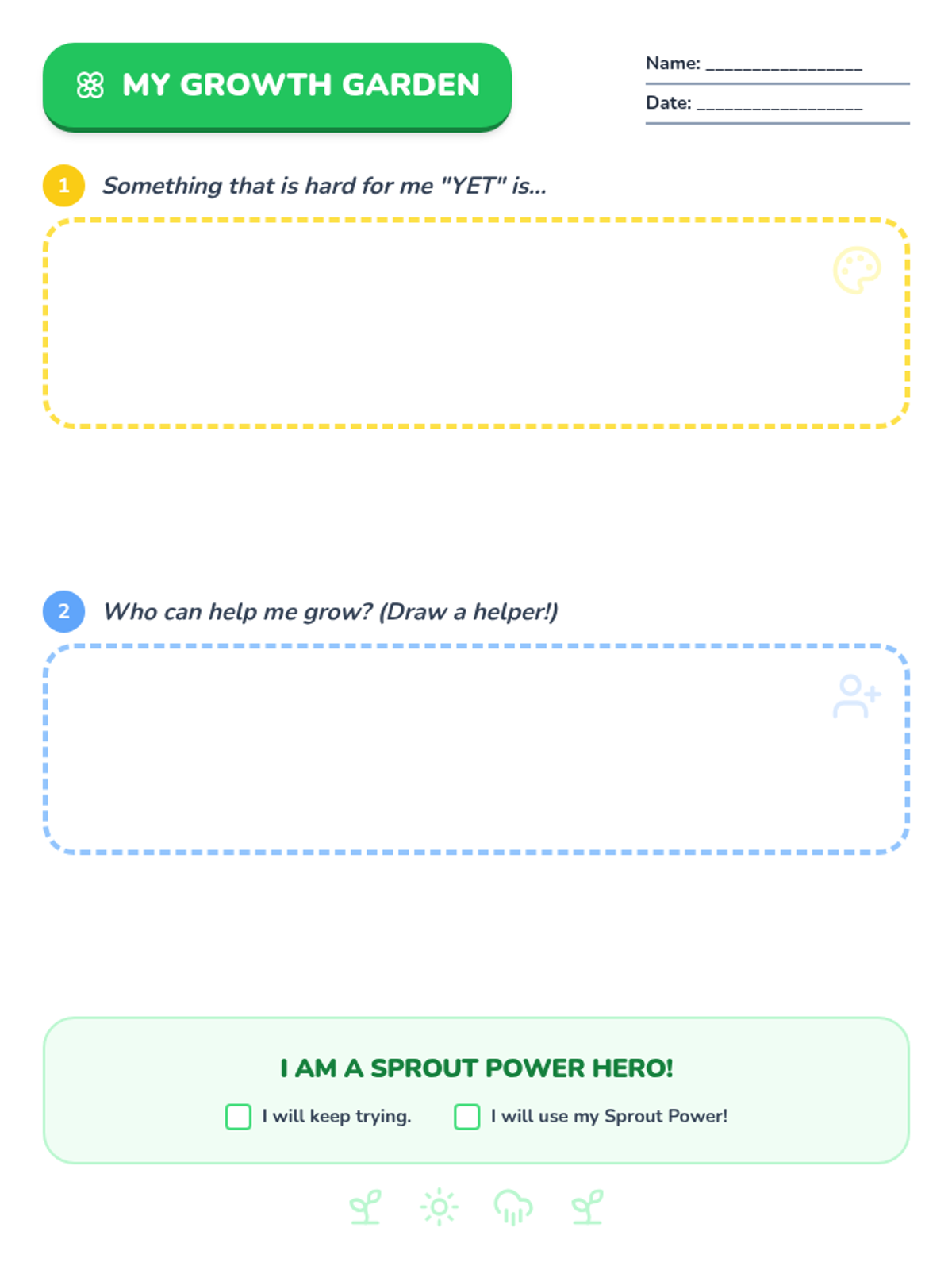
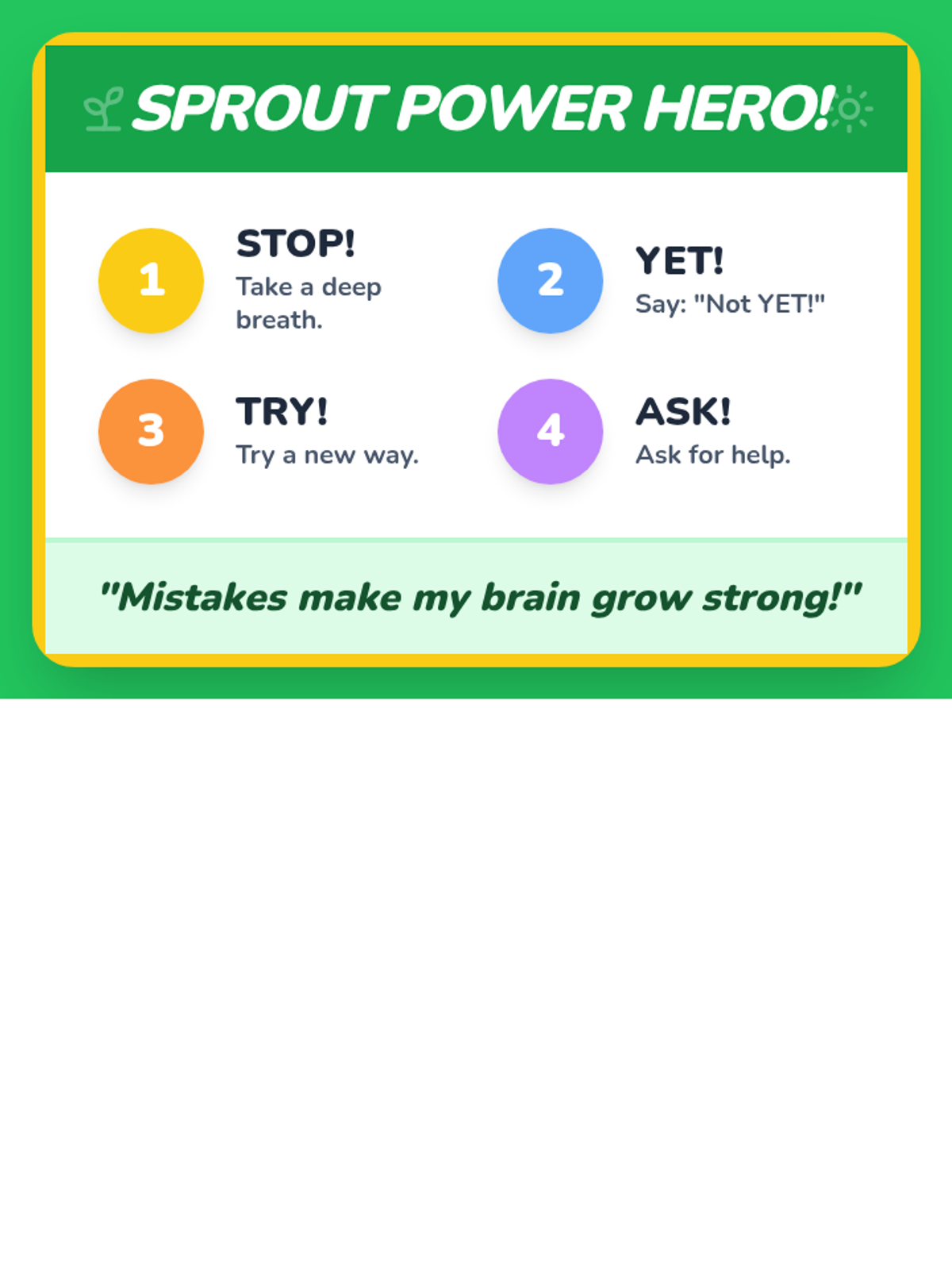
Focuses on naming emotions, understanding that mistakes help us grow, and using the 'Power of Yet' to build early resilience.
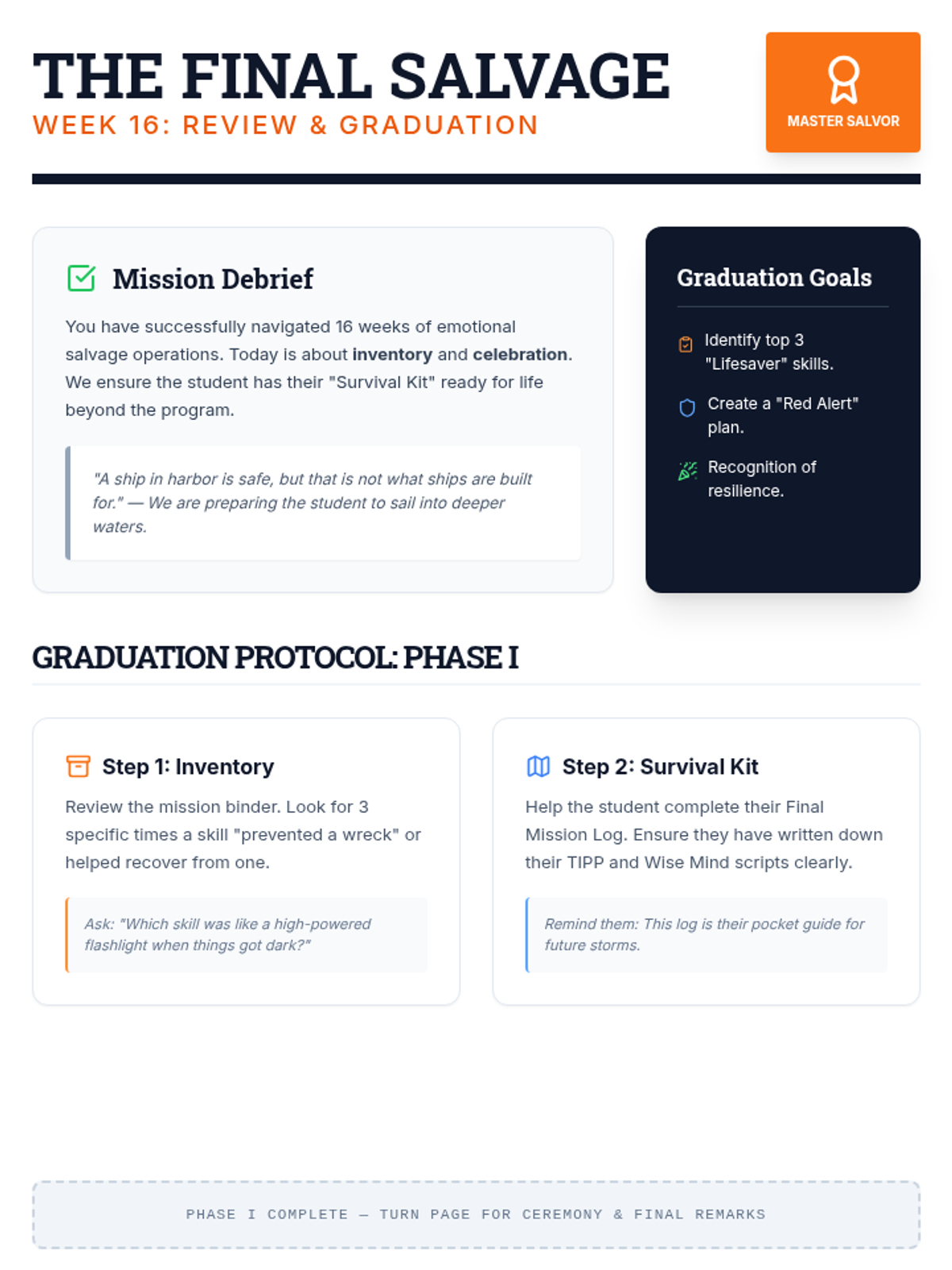
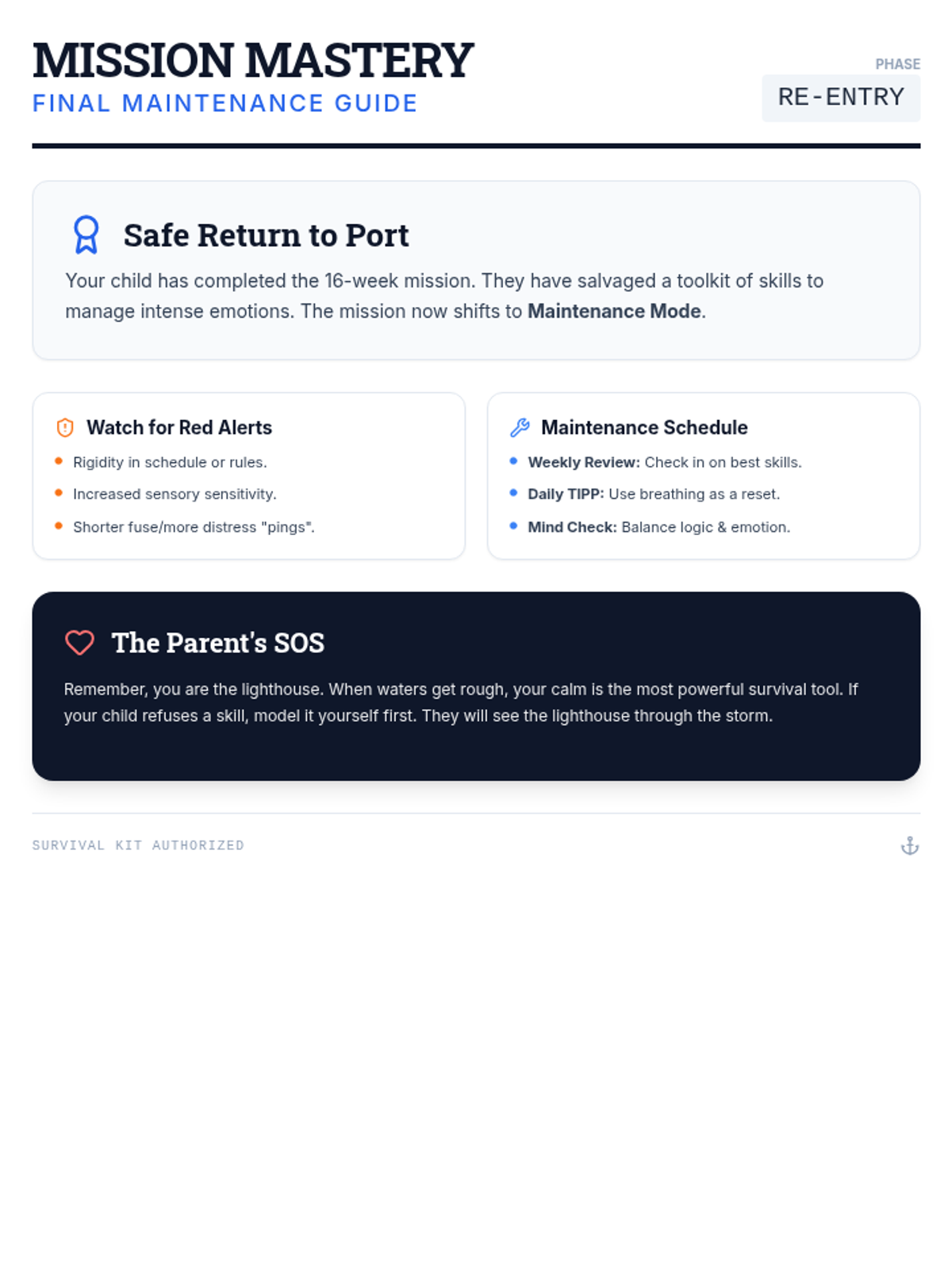
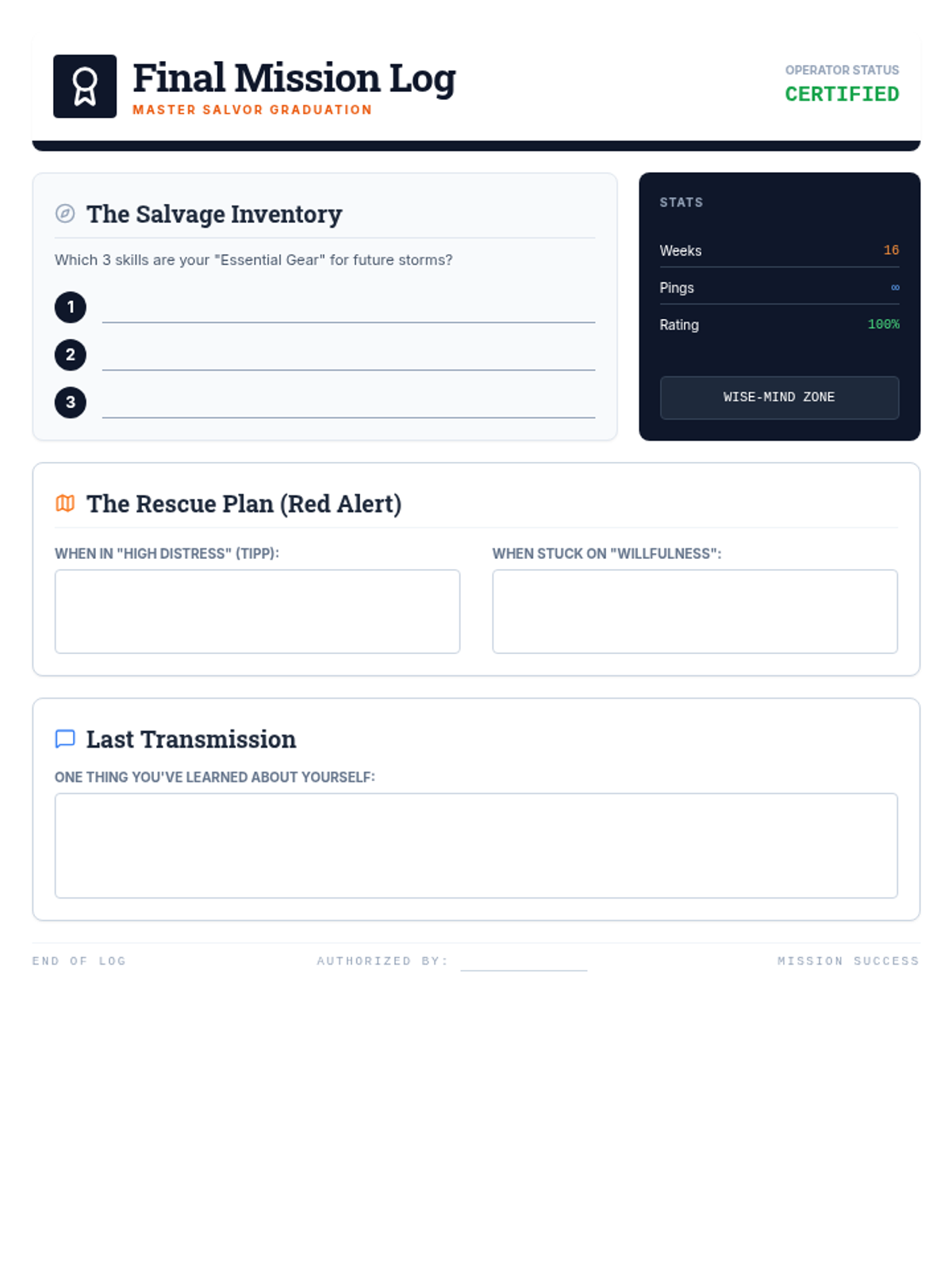
Comprehensive review and graduation from the Survival and Salvage DBT program.
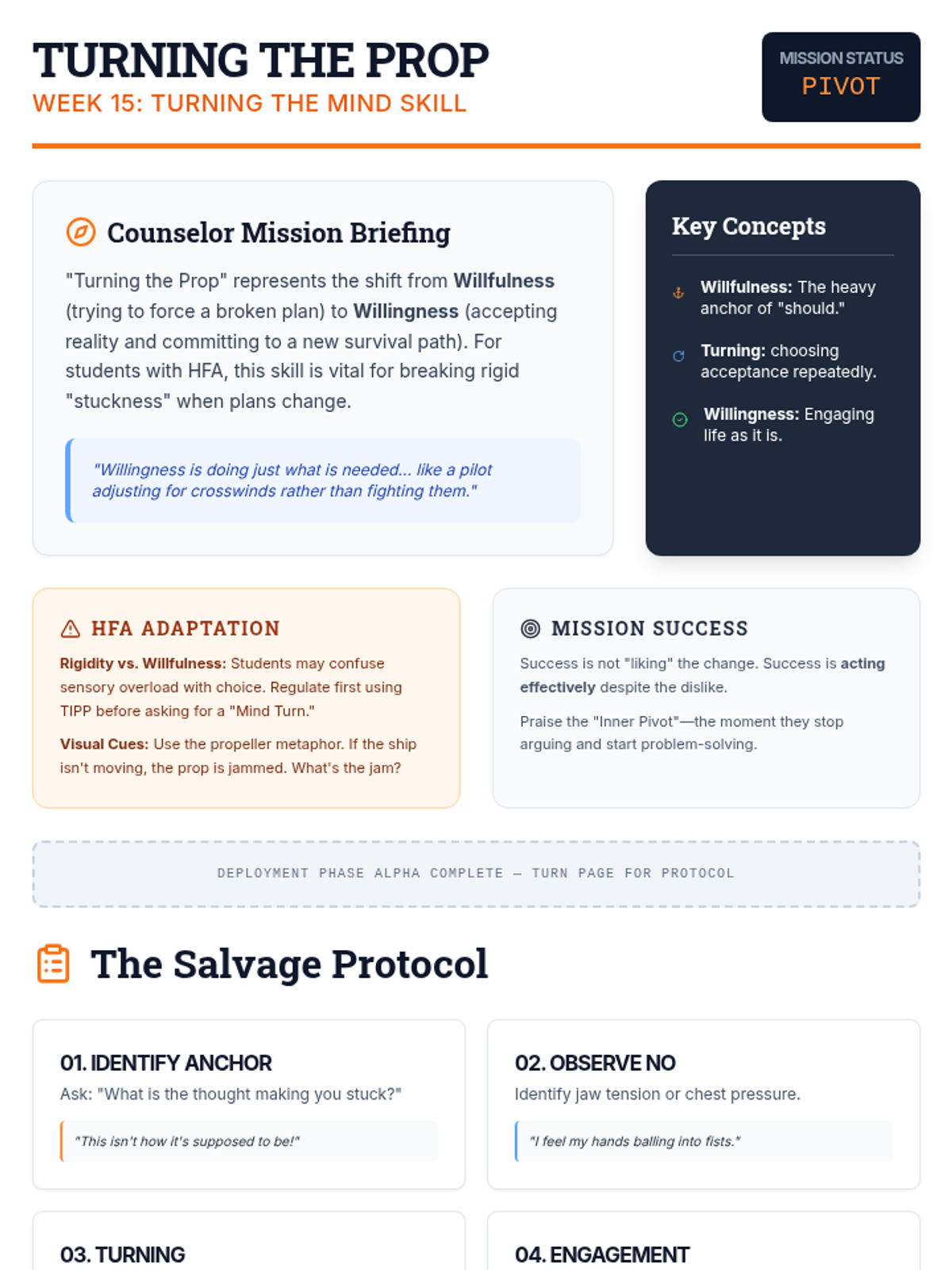
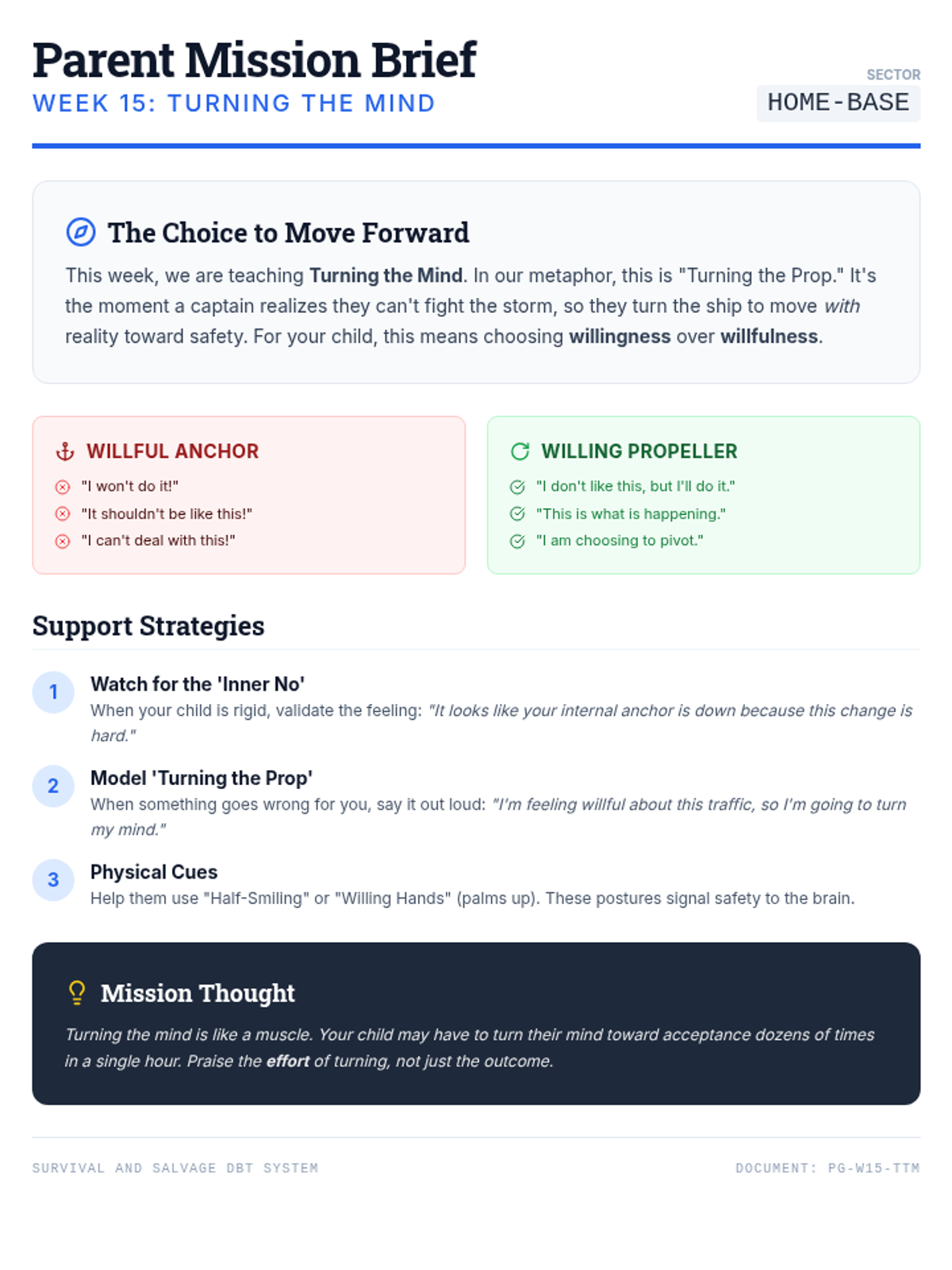
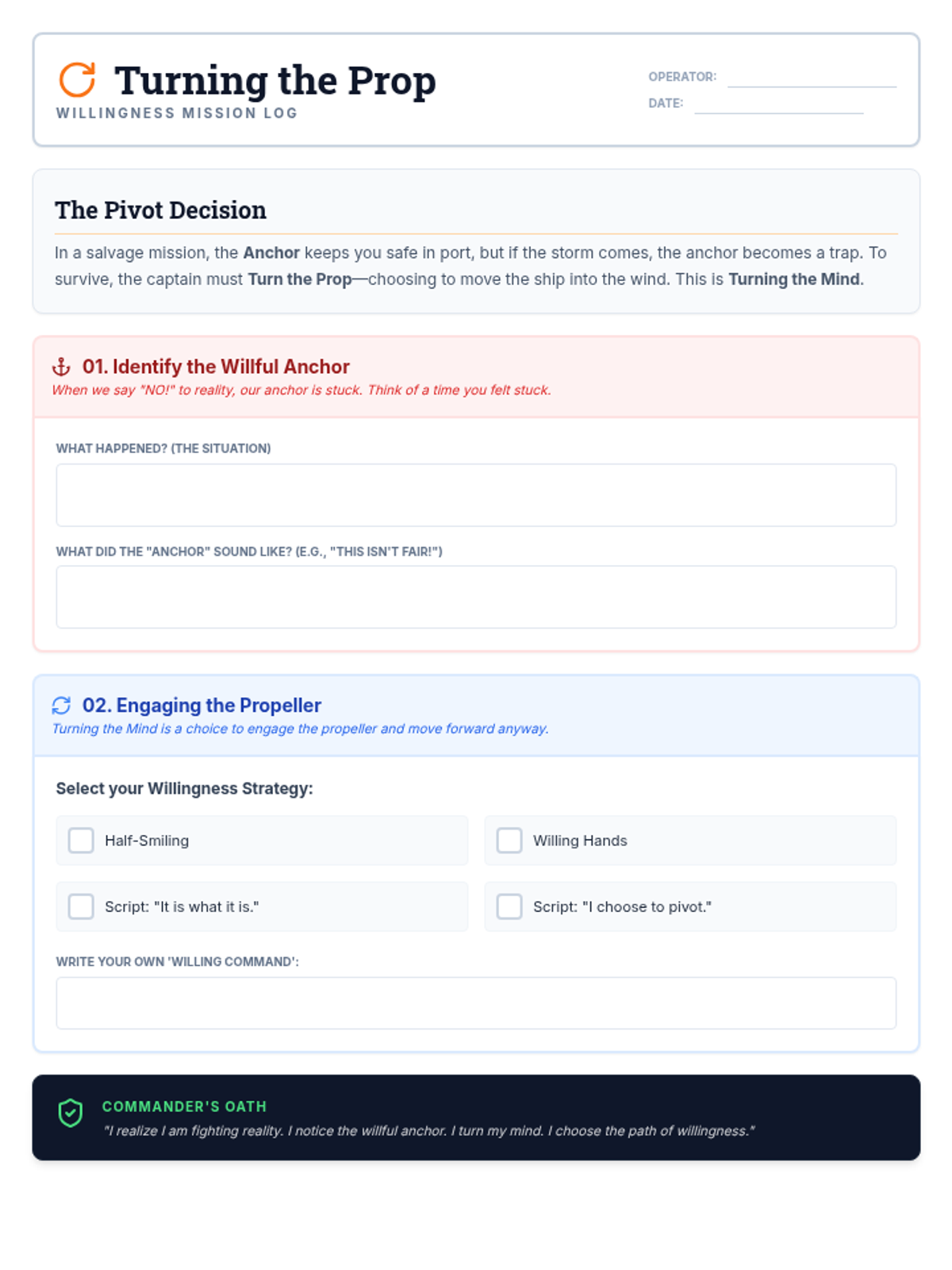
Committing to a new path (Turning the Mind) using the decision to pivot from salvage to survival.
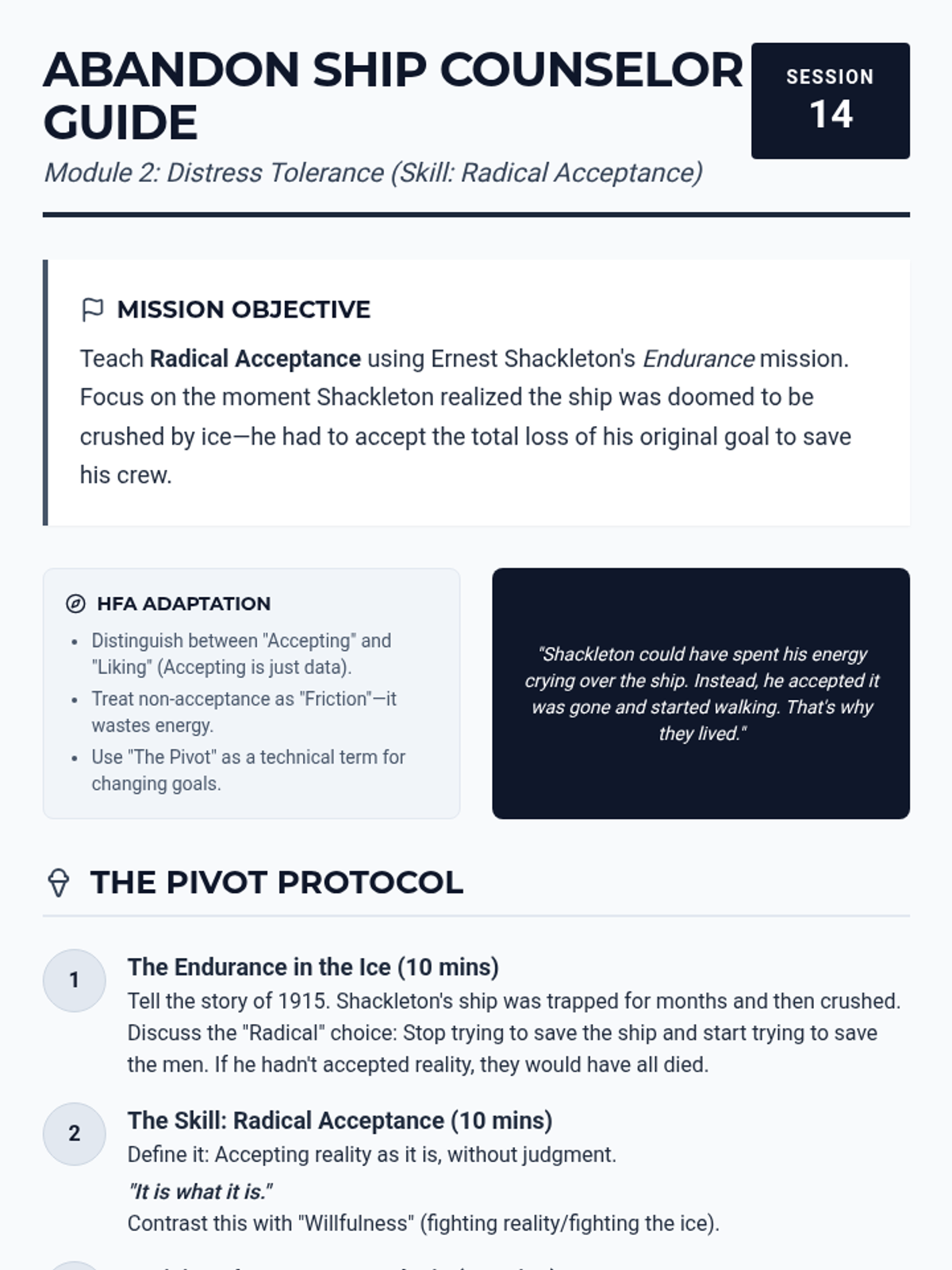
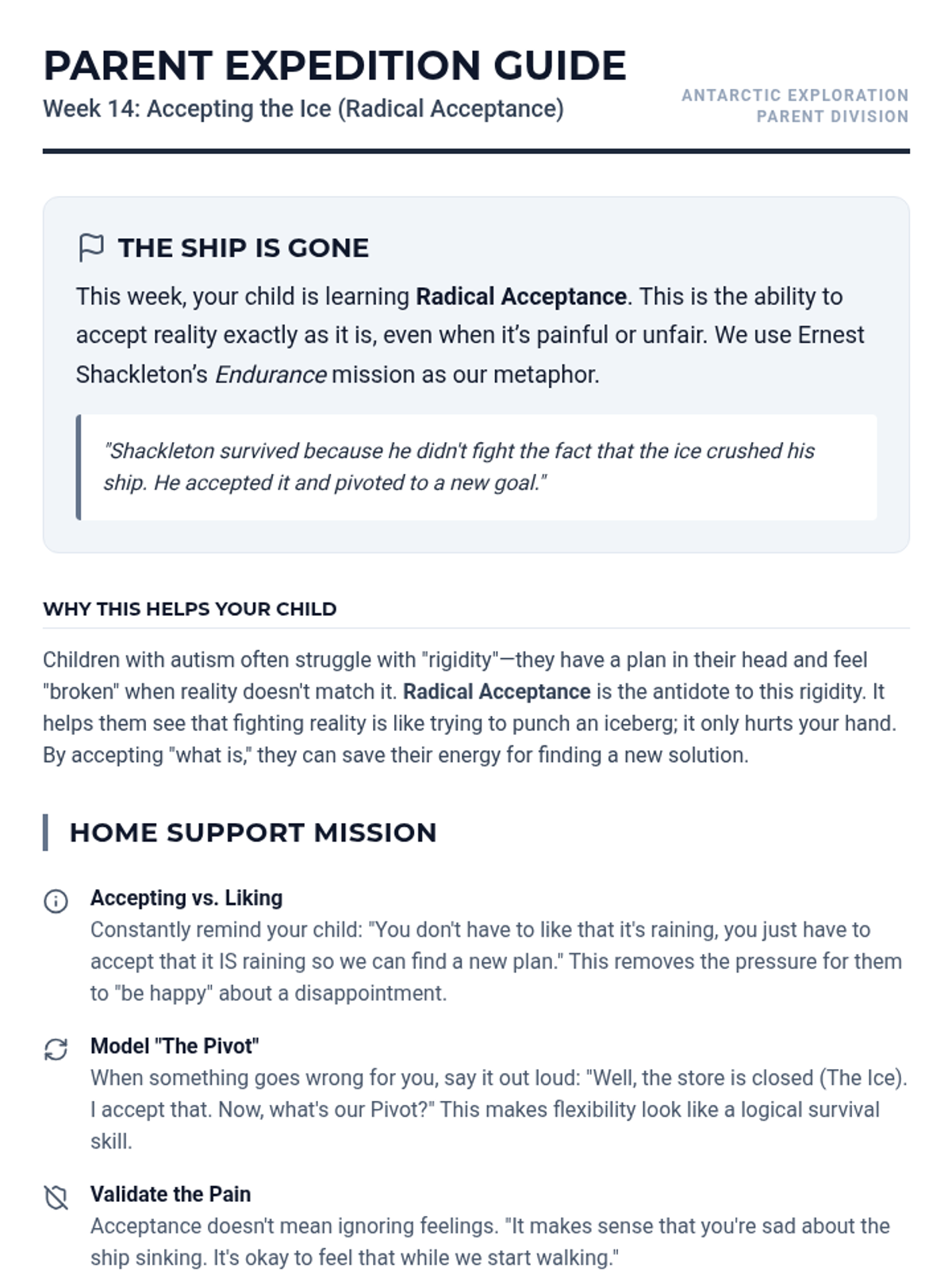
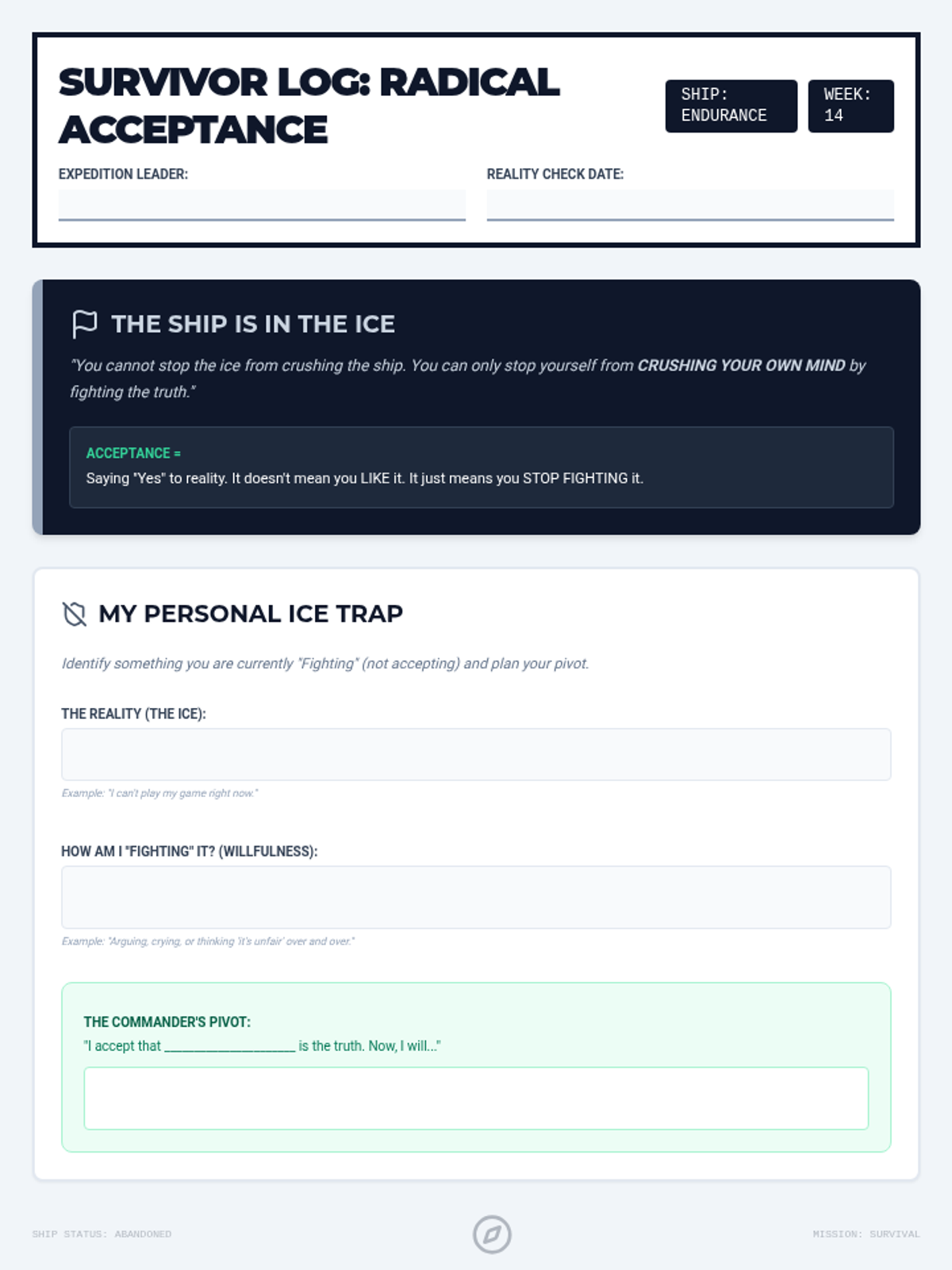
Accepting reality without judgment (Radical Acceptance) using Shackleton's Endurance survival story.
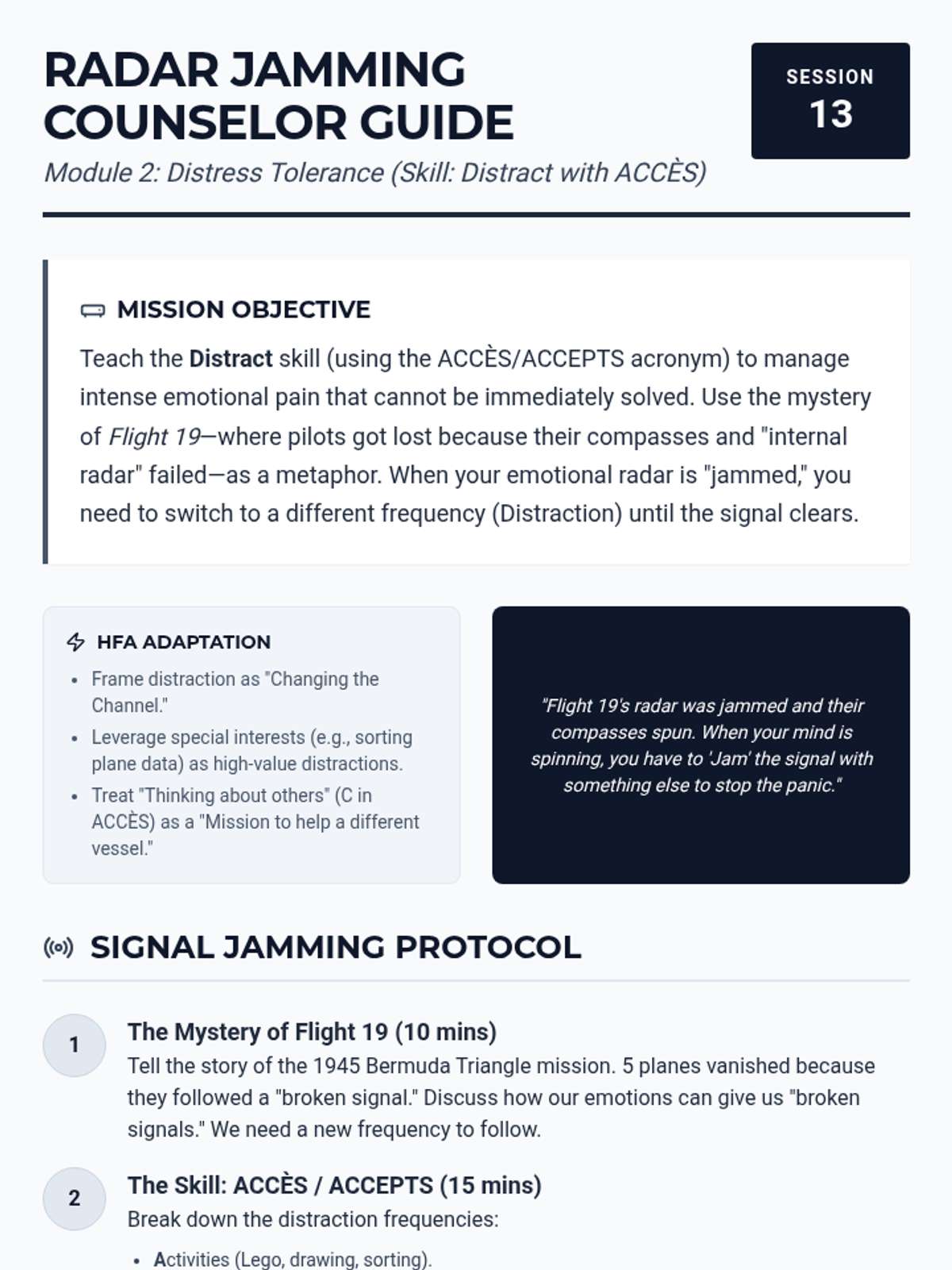
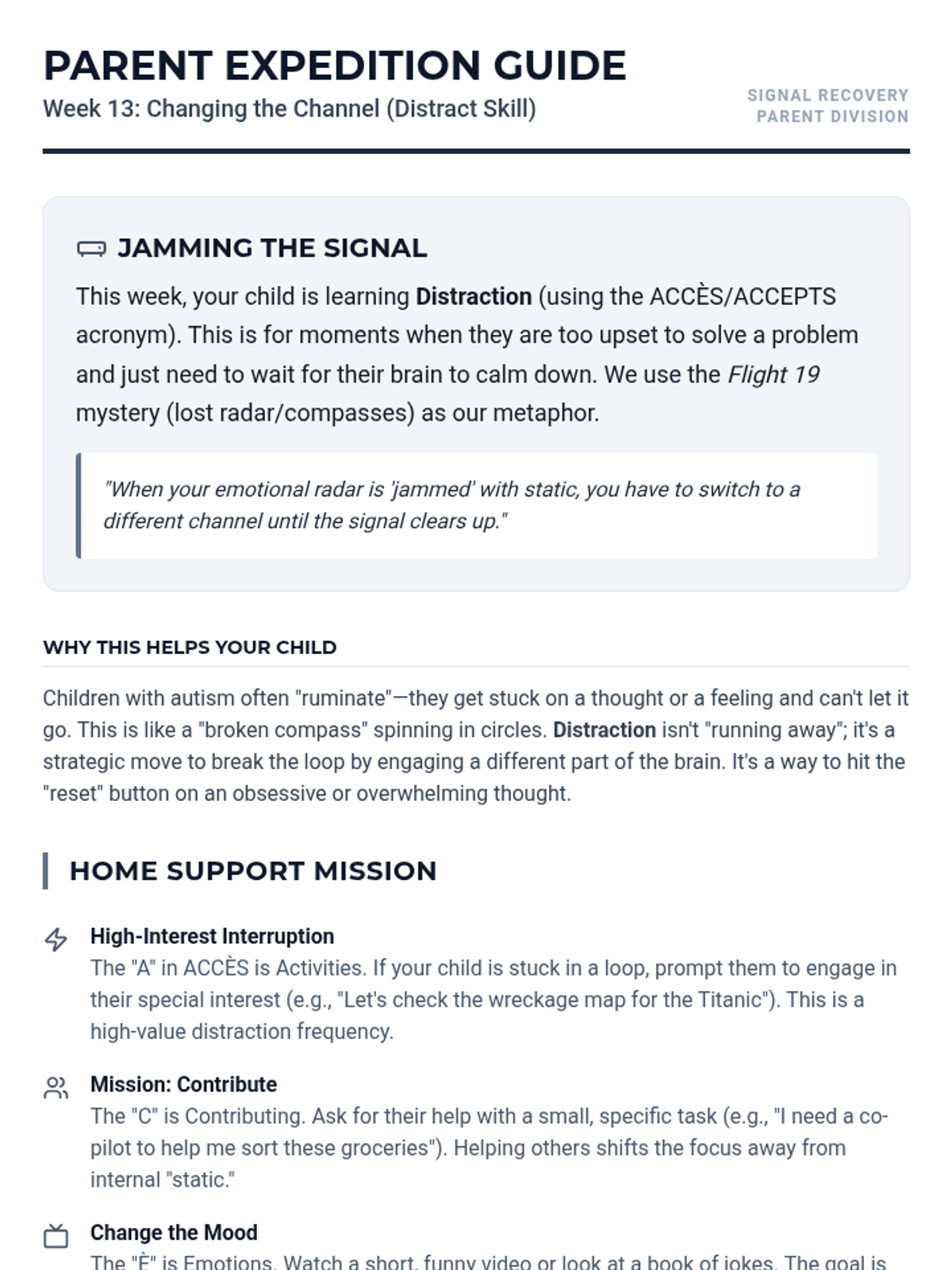
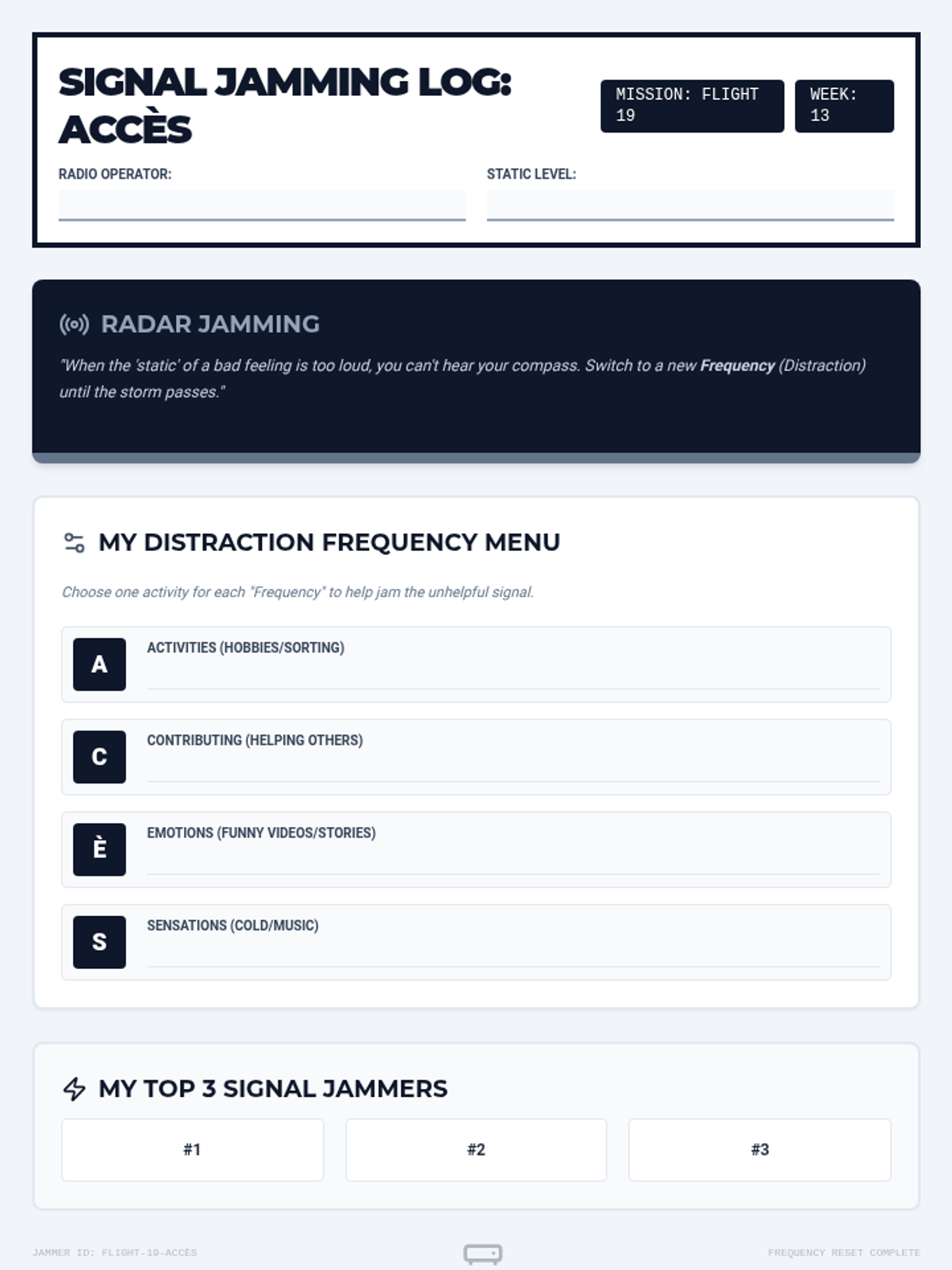
Using distraction and ACCÈS skills to manage distress, using the radar jamming metaphors of the Flight 19 mystery.
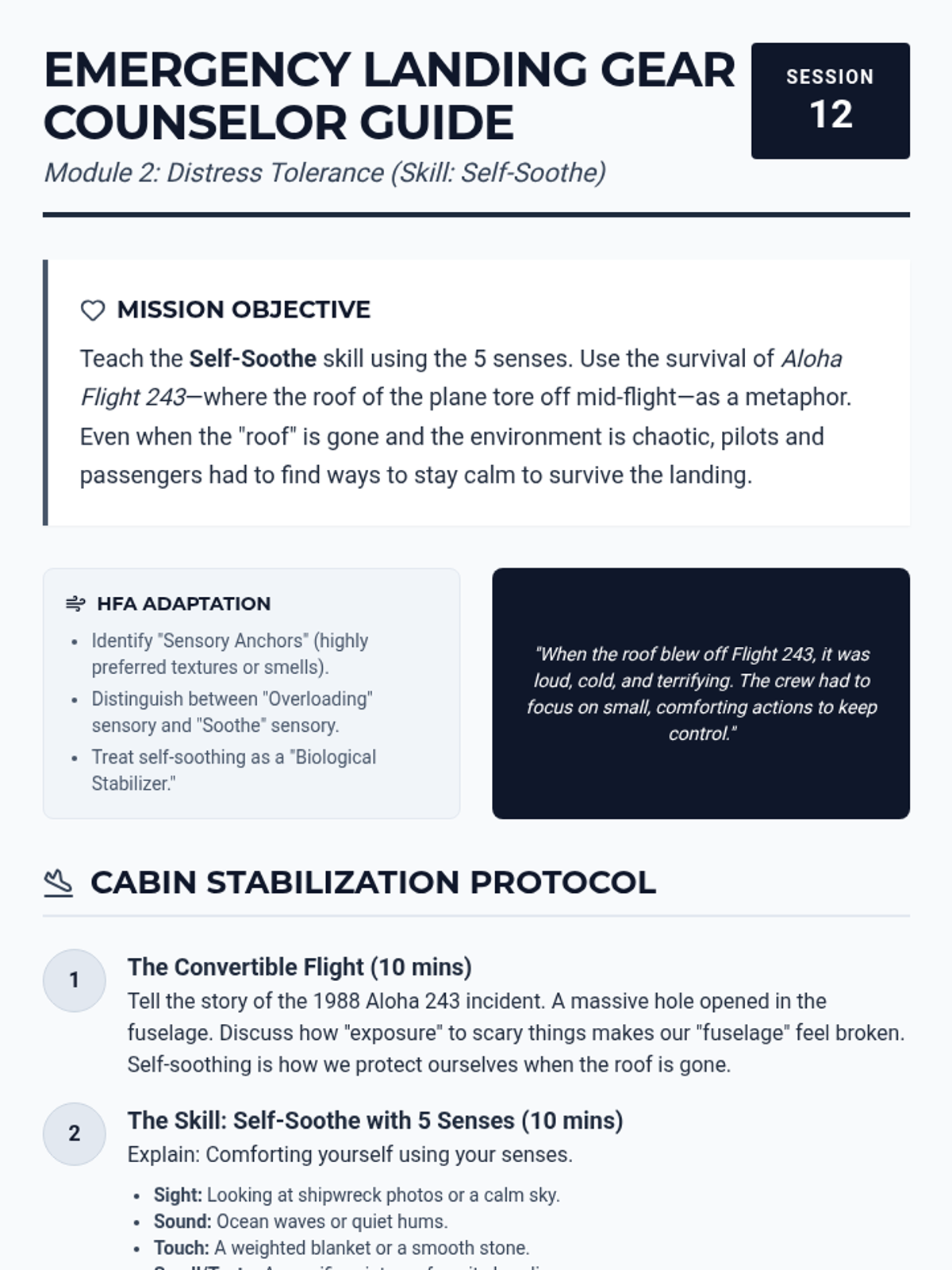
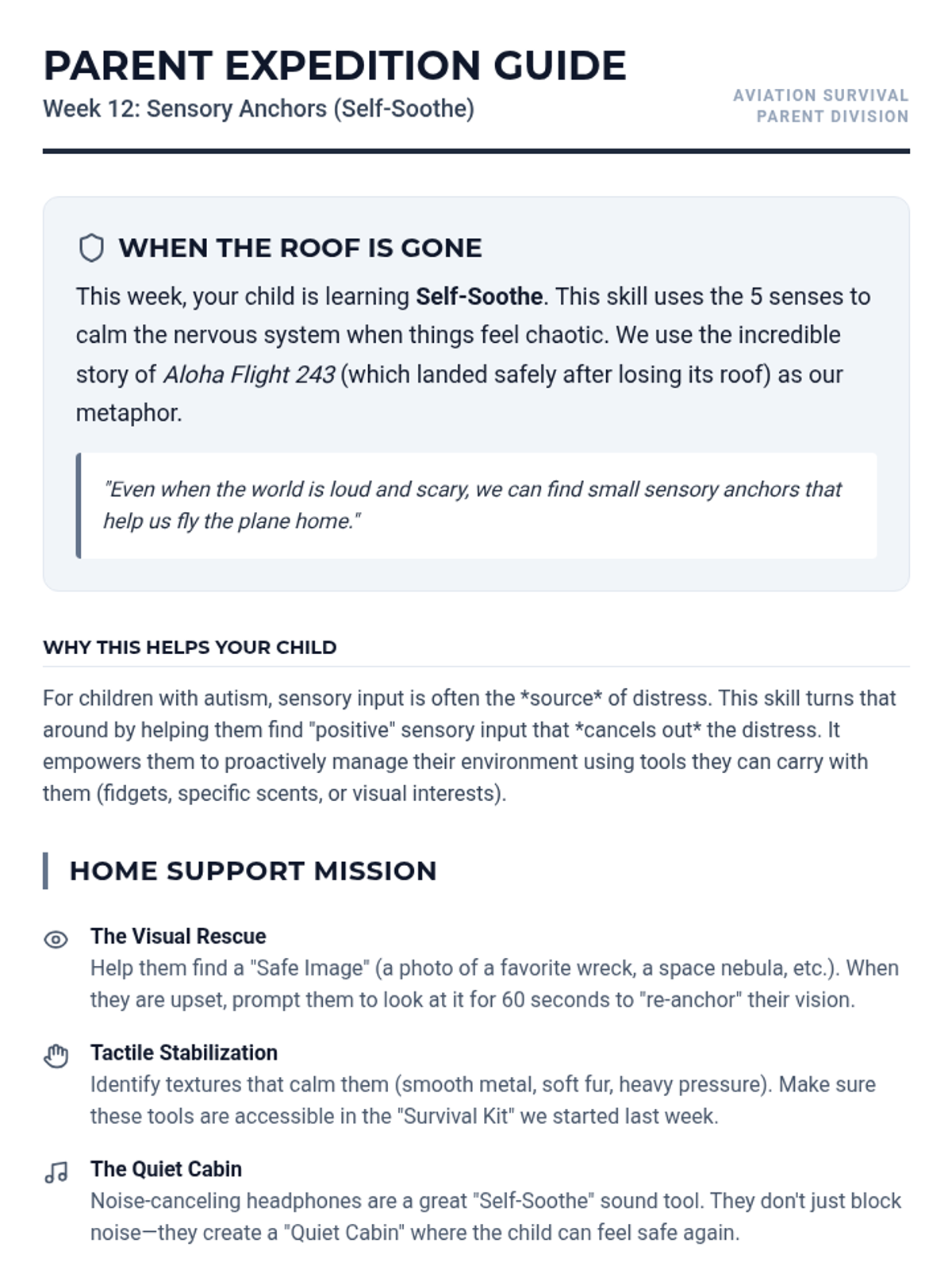
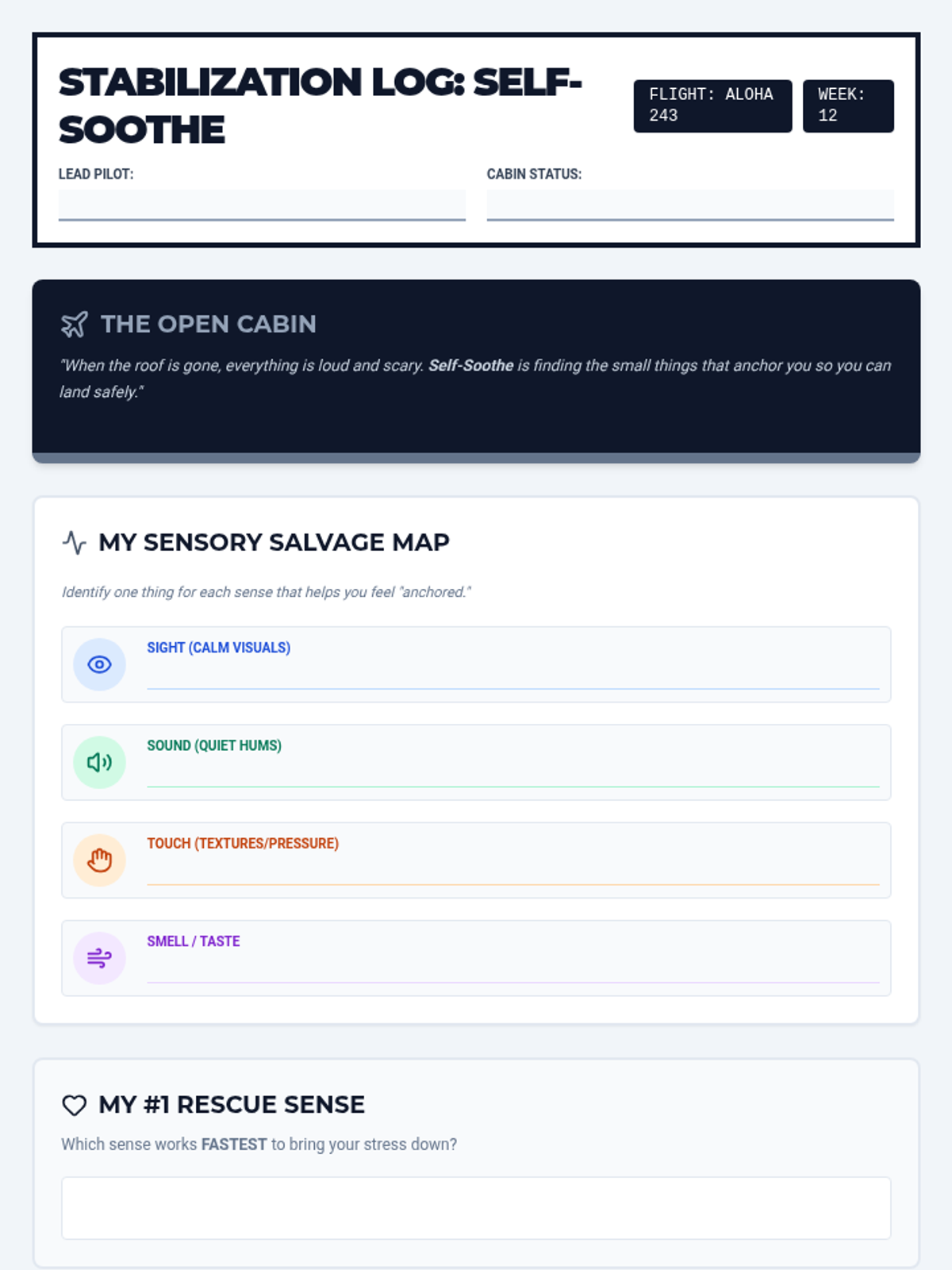
Developing self-soothing techniques (Self-Soothe) using the survival of Aloha Flight 243 after losing its roof.
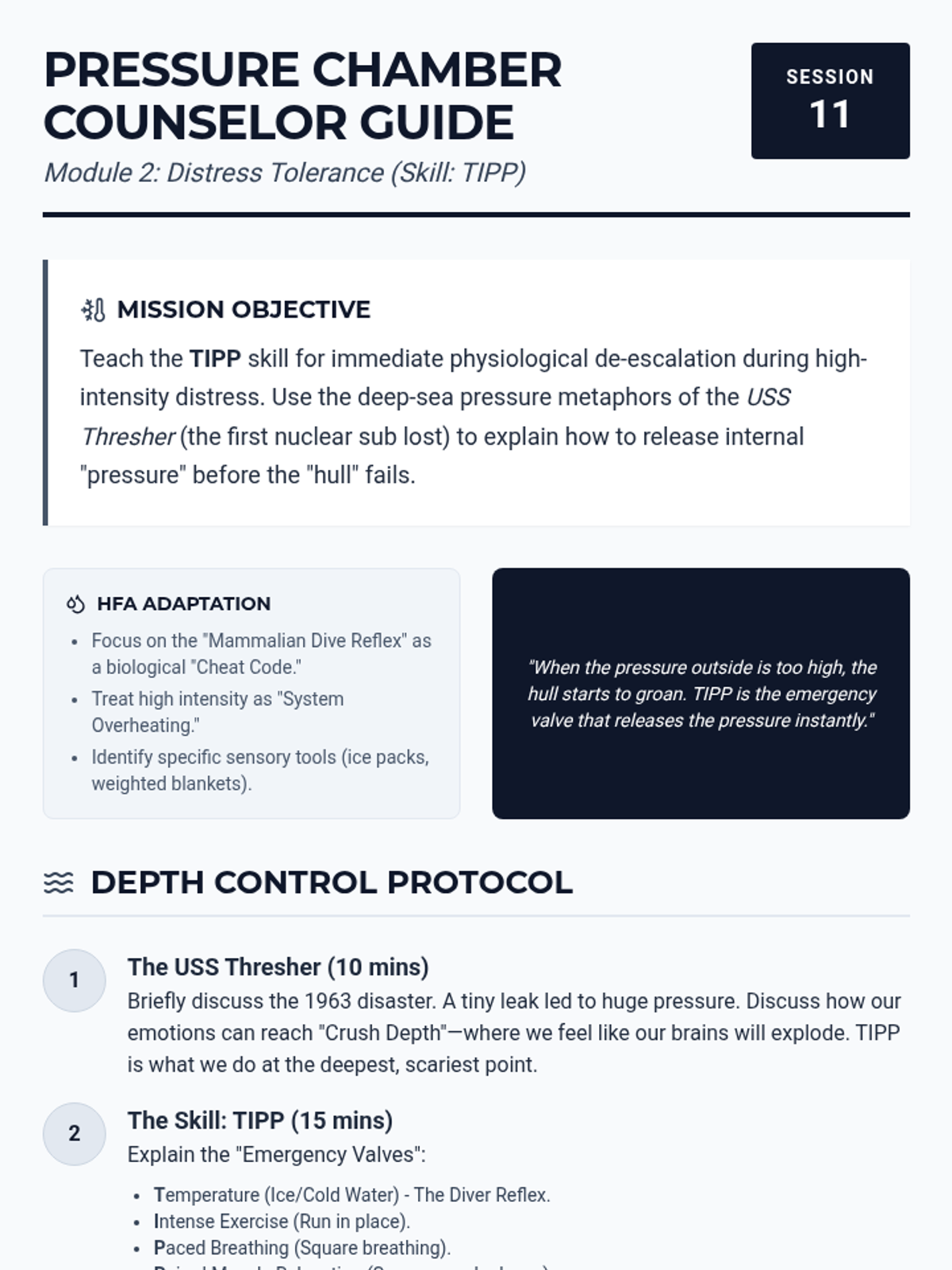
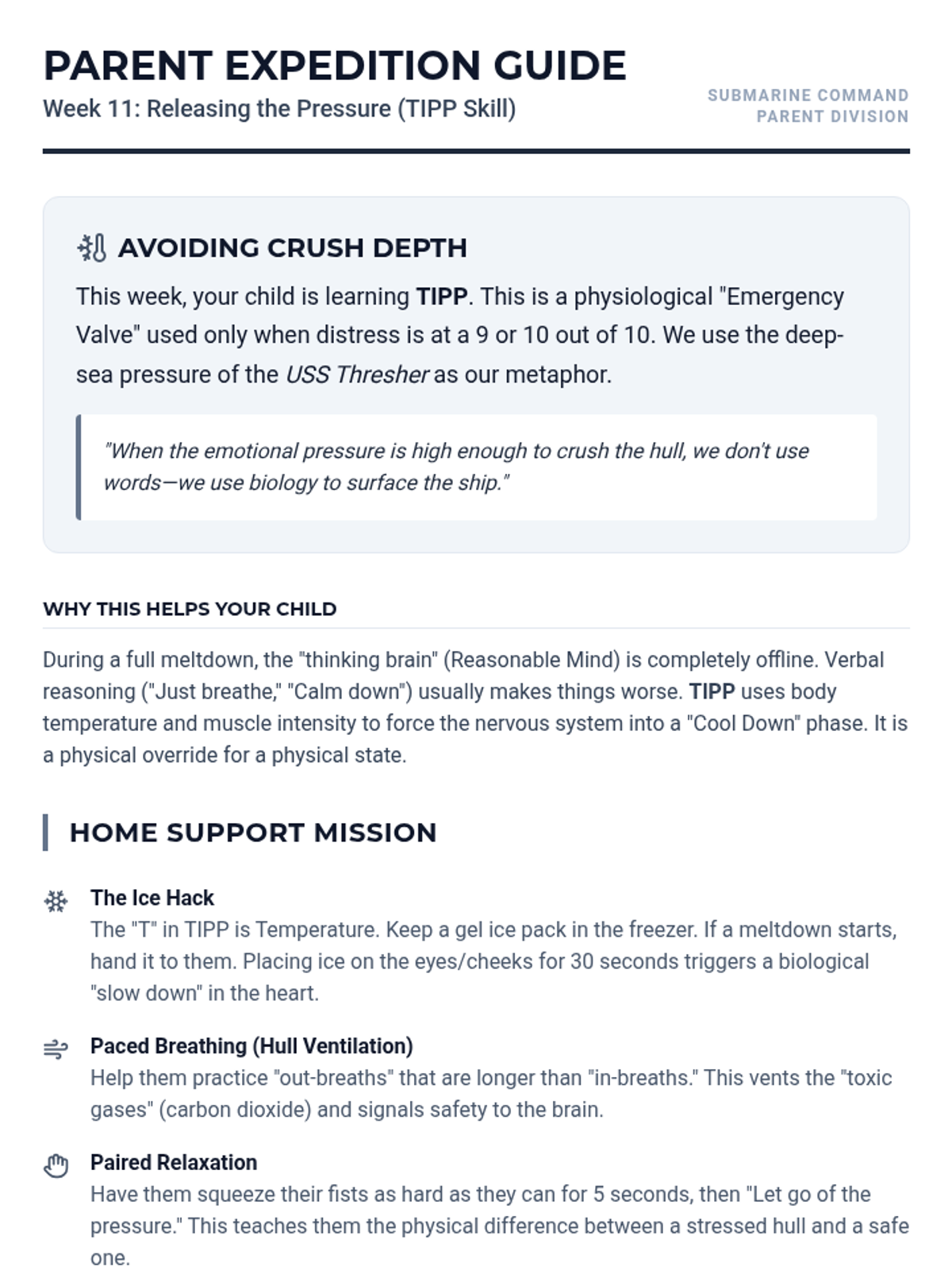
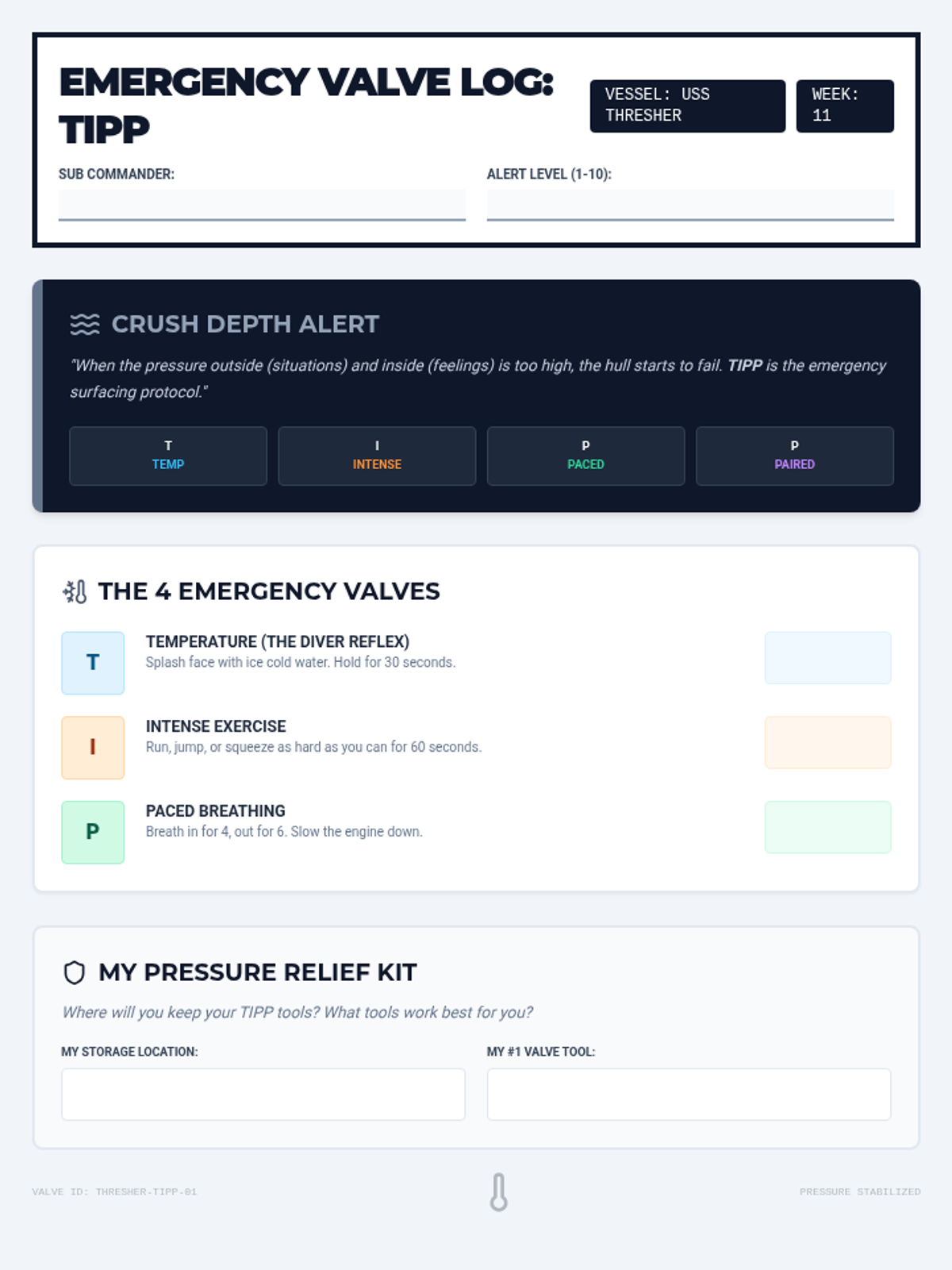
Using the TIPP skill for high-intensity distress, using the deep-sea pressure metaphors of the USS Thresher.
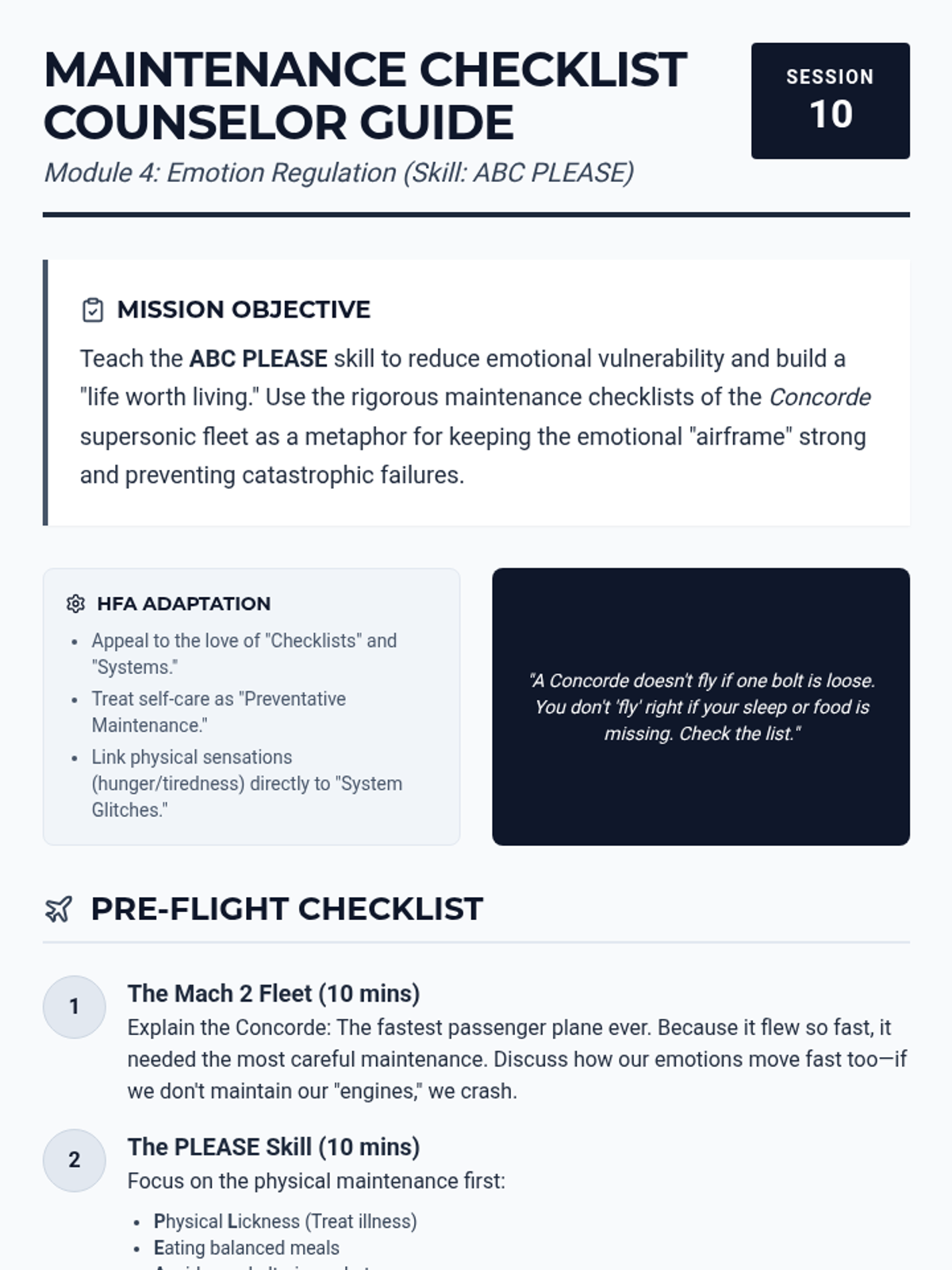
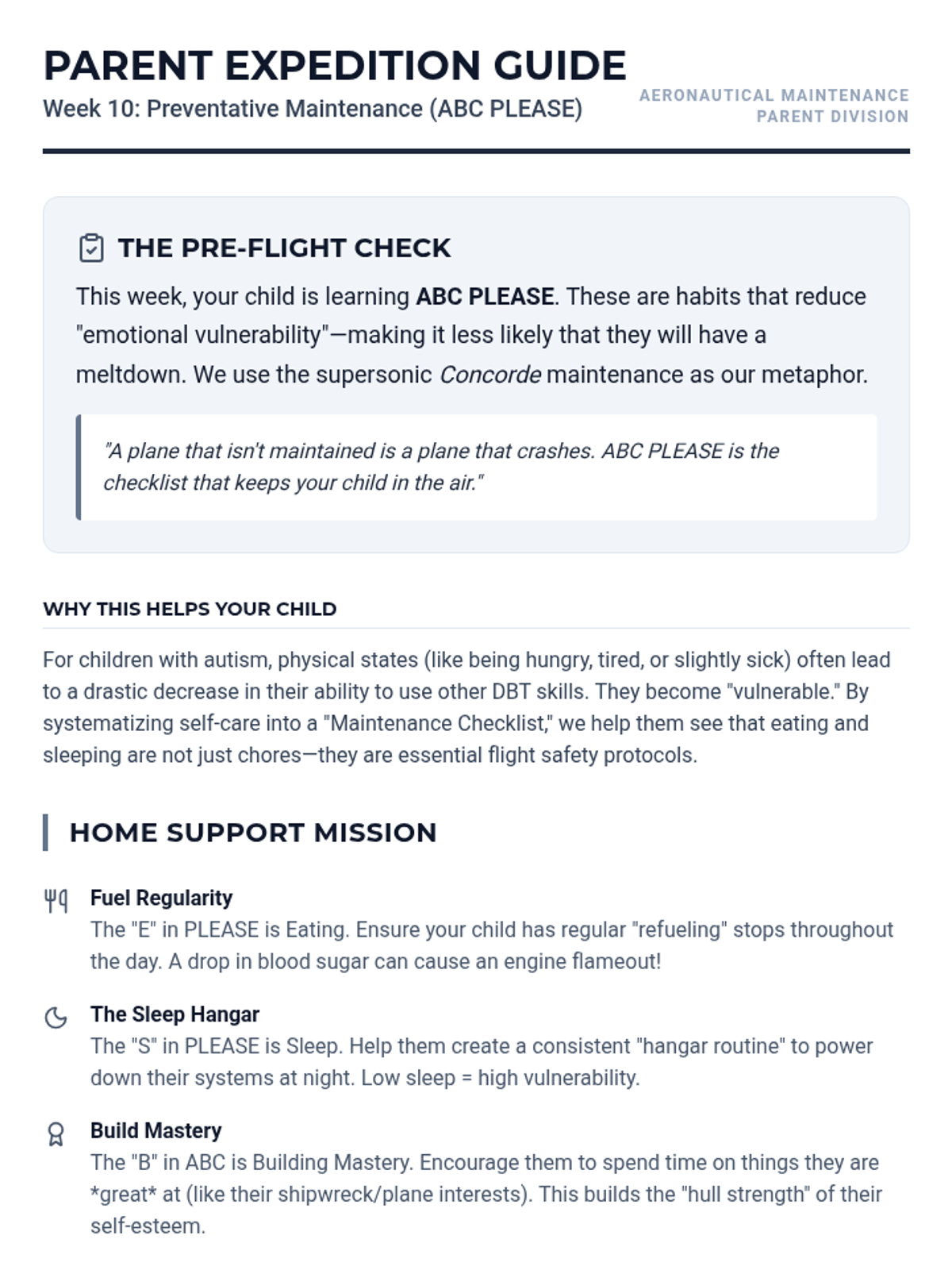
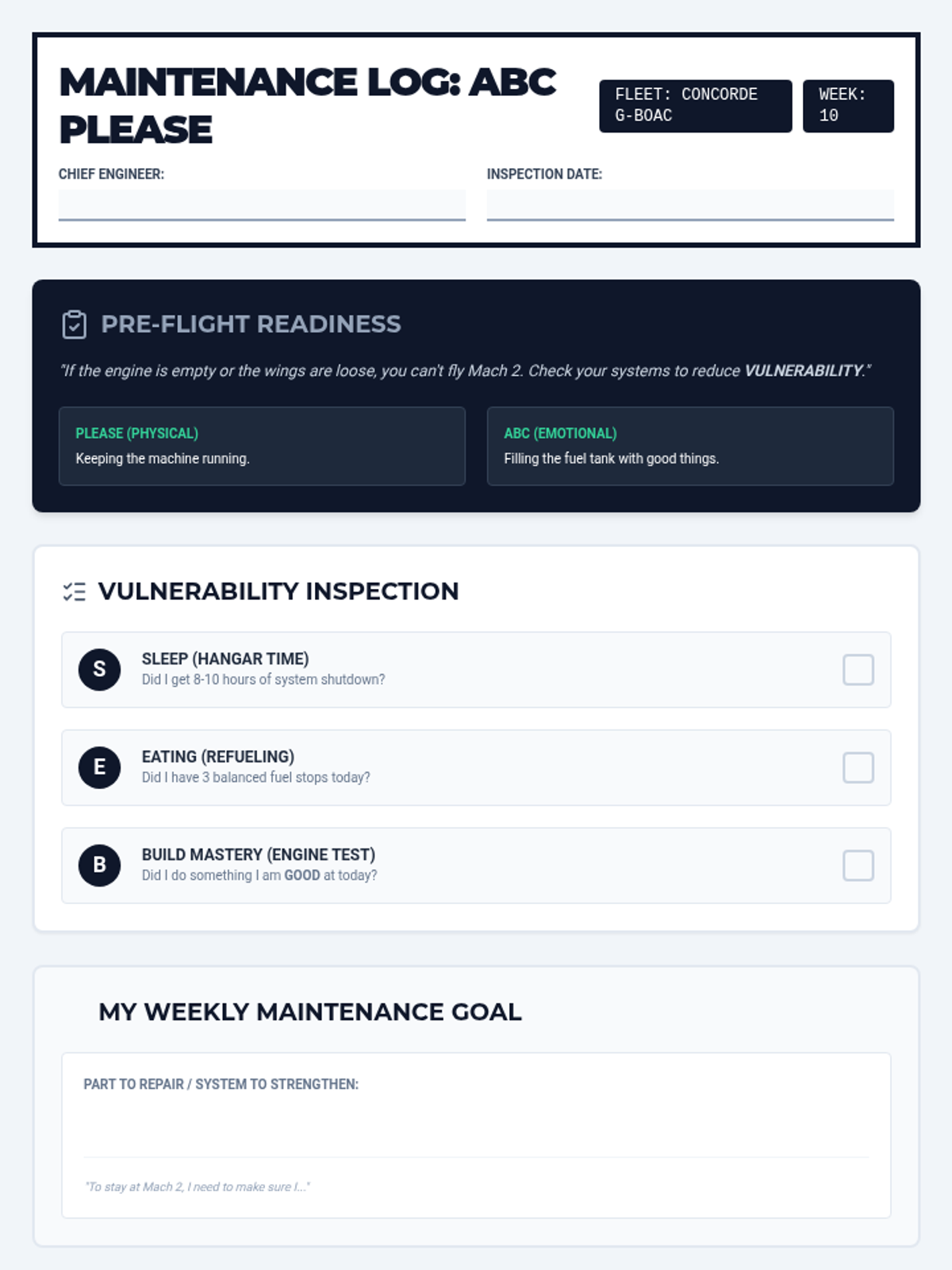
Reducing emotional vulnerability (ABC PLEASE) using the maintenance checklists of the Concorde fleet.
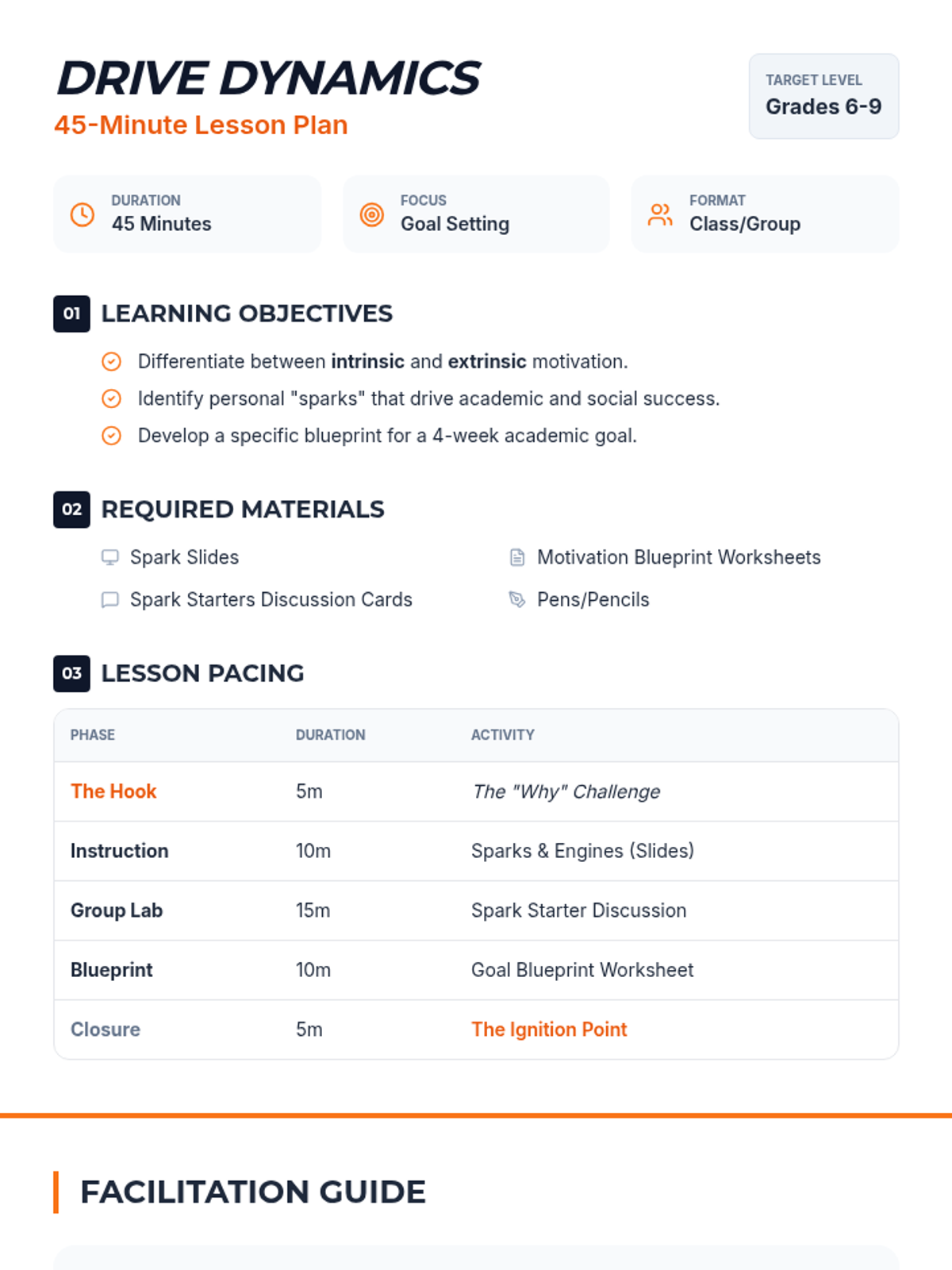
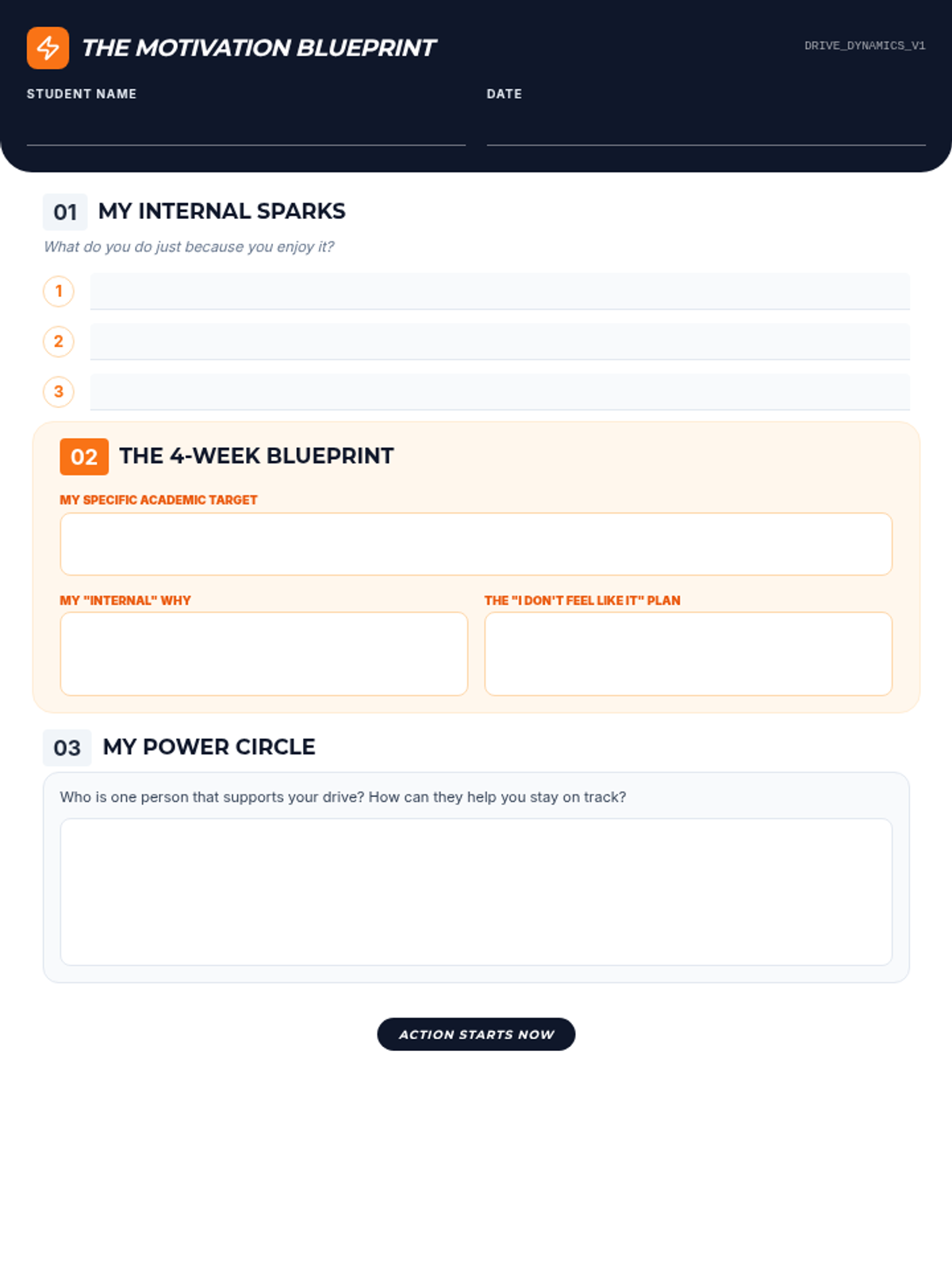
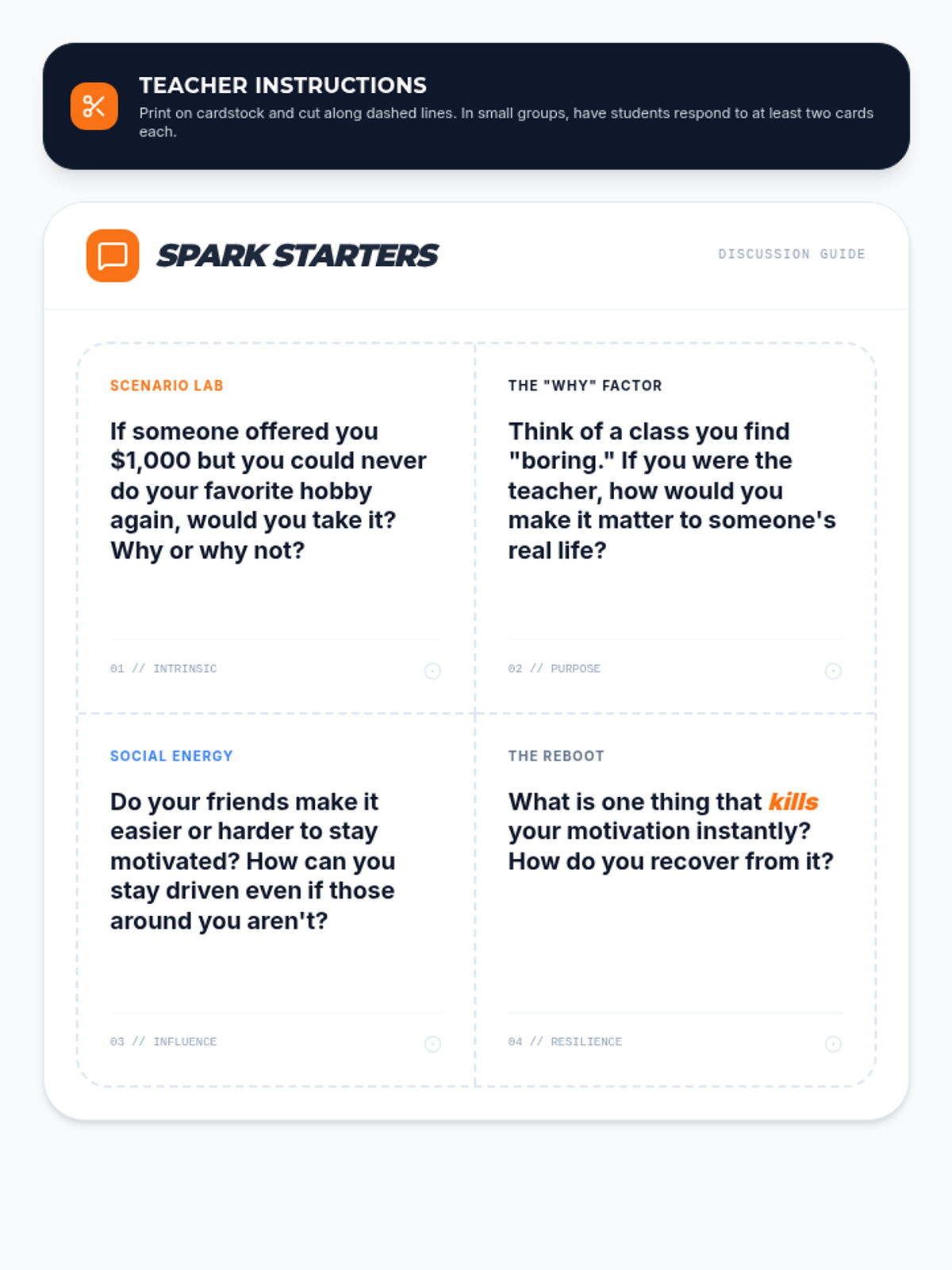
A comprehensive session focused on uncovering internal drivers, setting meaningful academic goals, and building social-emotional resilience through motivation strategies.
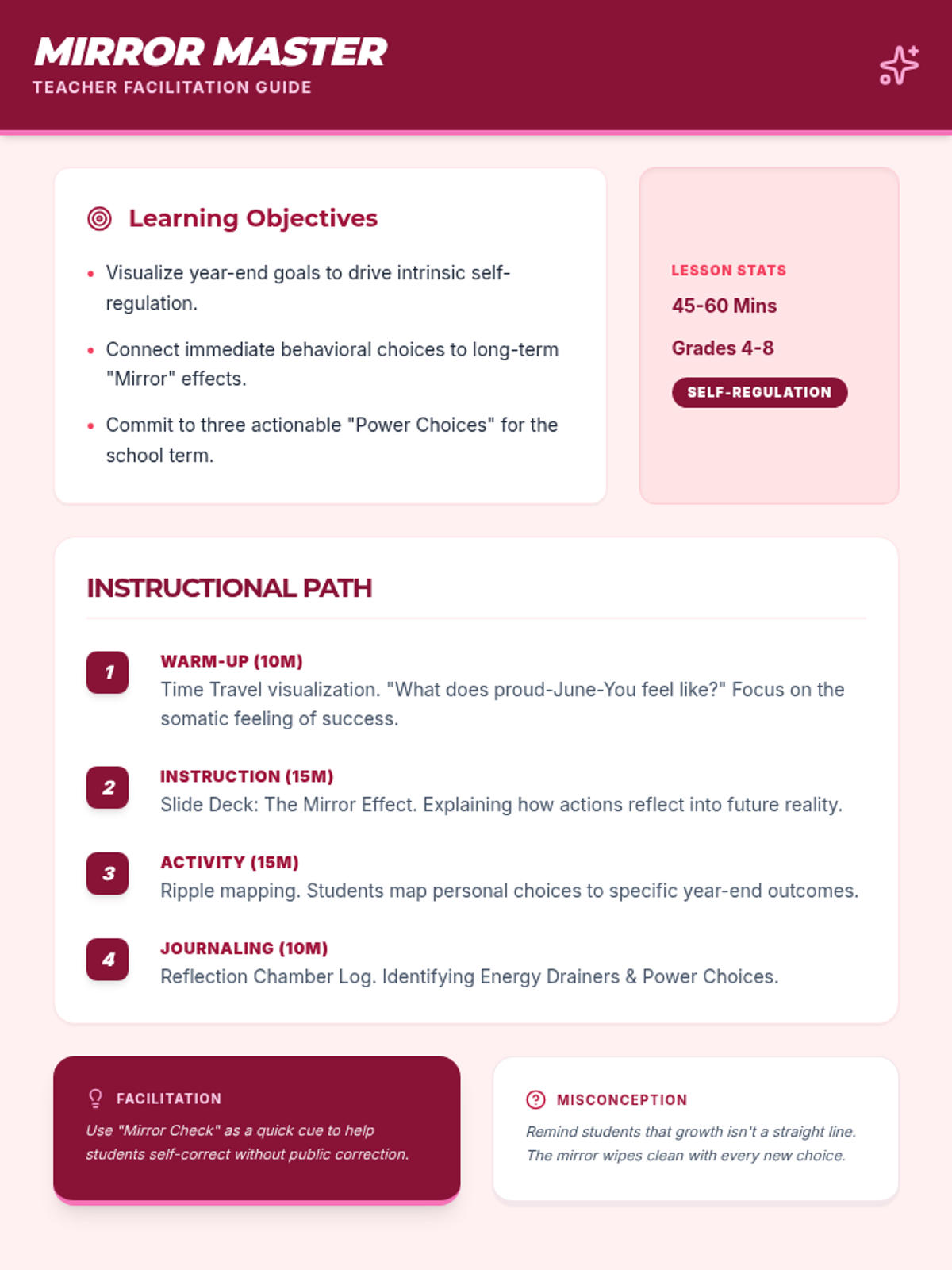
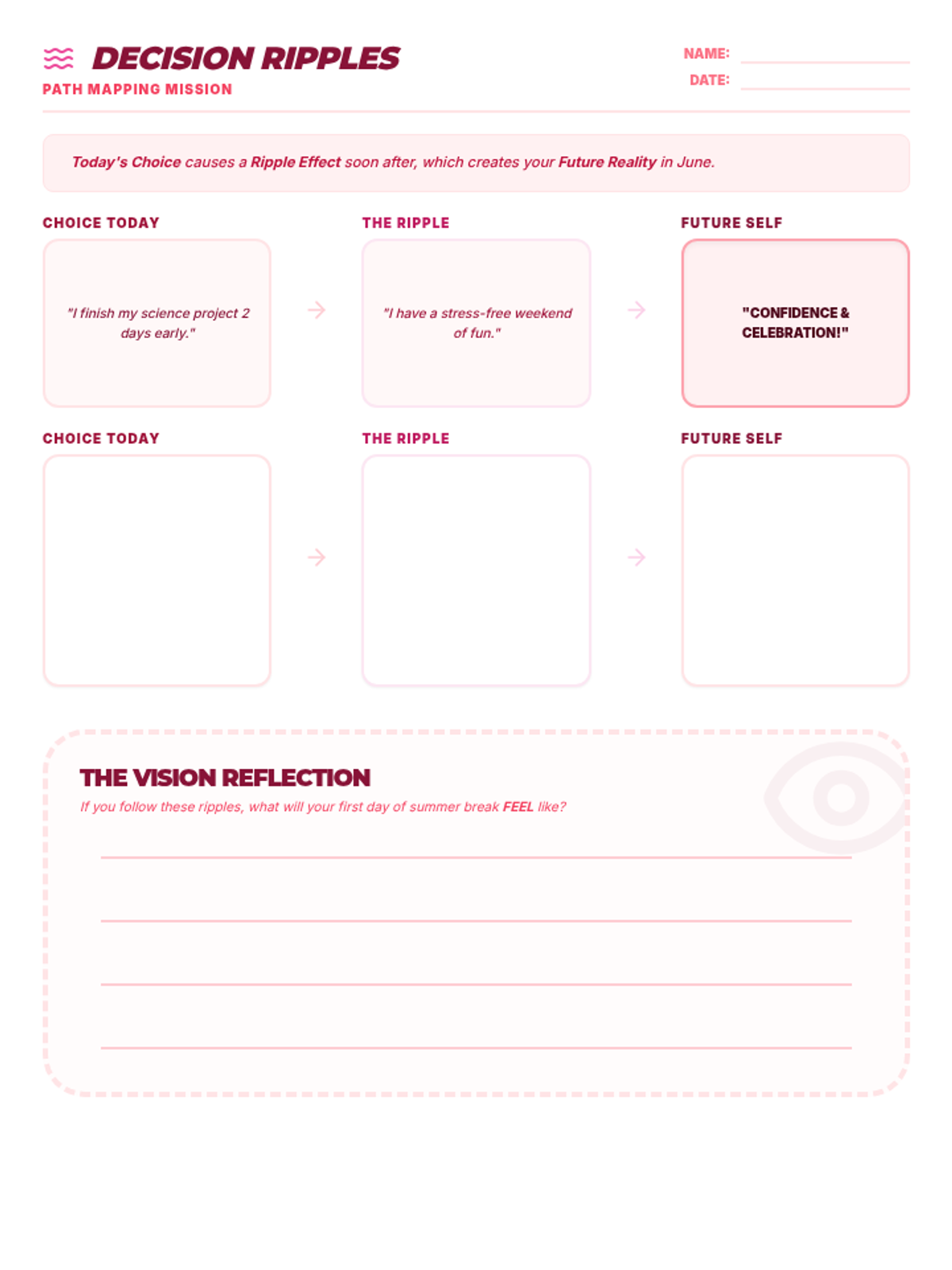
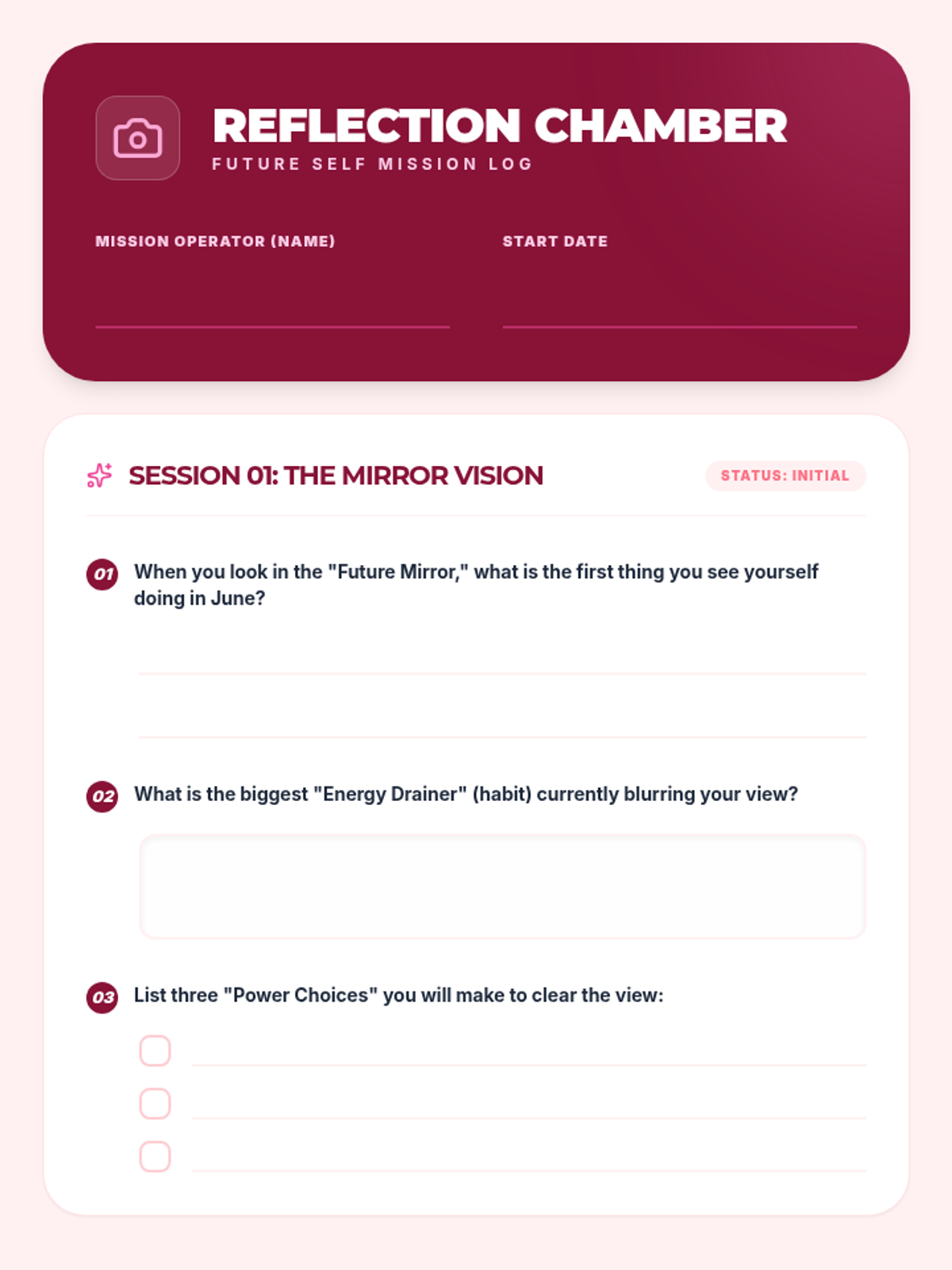
This lesson helps students visualize their future success to motivate self-regulation and goal-oriented decision-making in the present. Students explore the 'Mirror Effect,' connecting daily choices to long-term rewards like grade promotion and year-end celebrations.
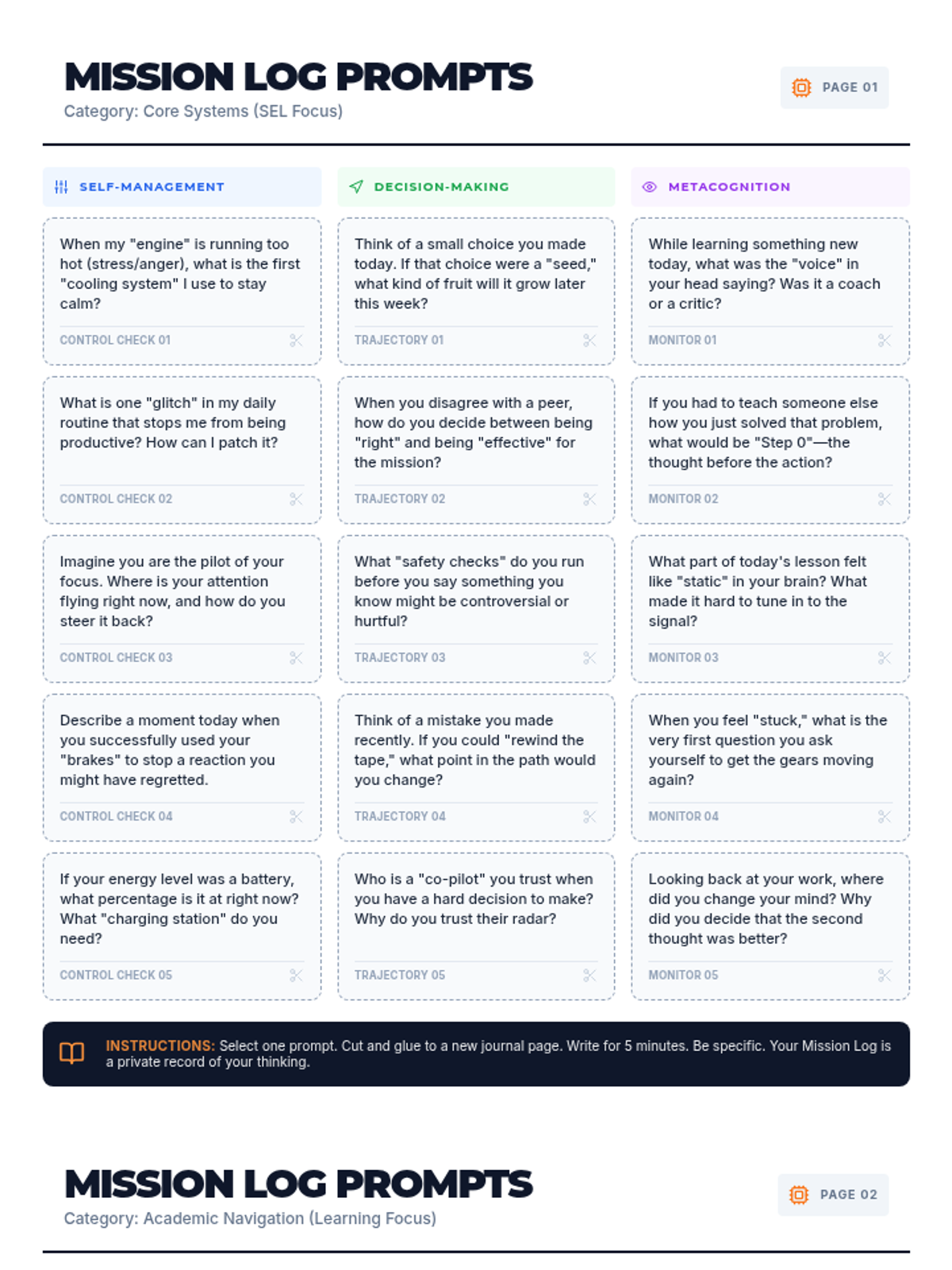
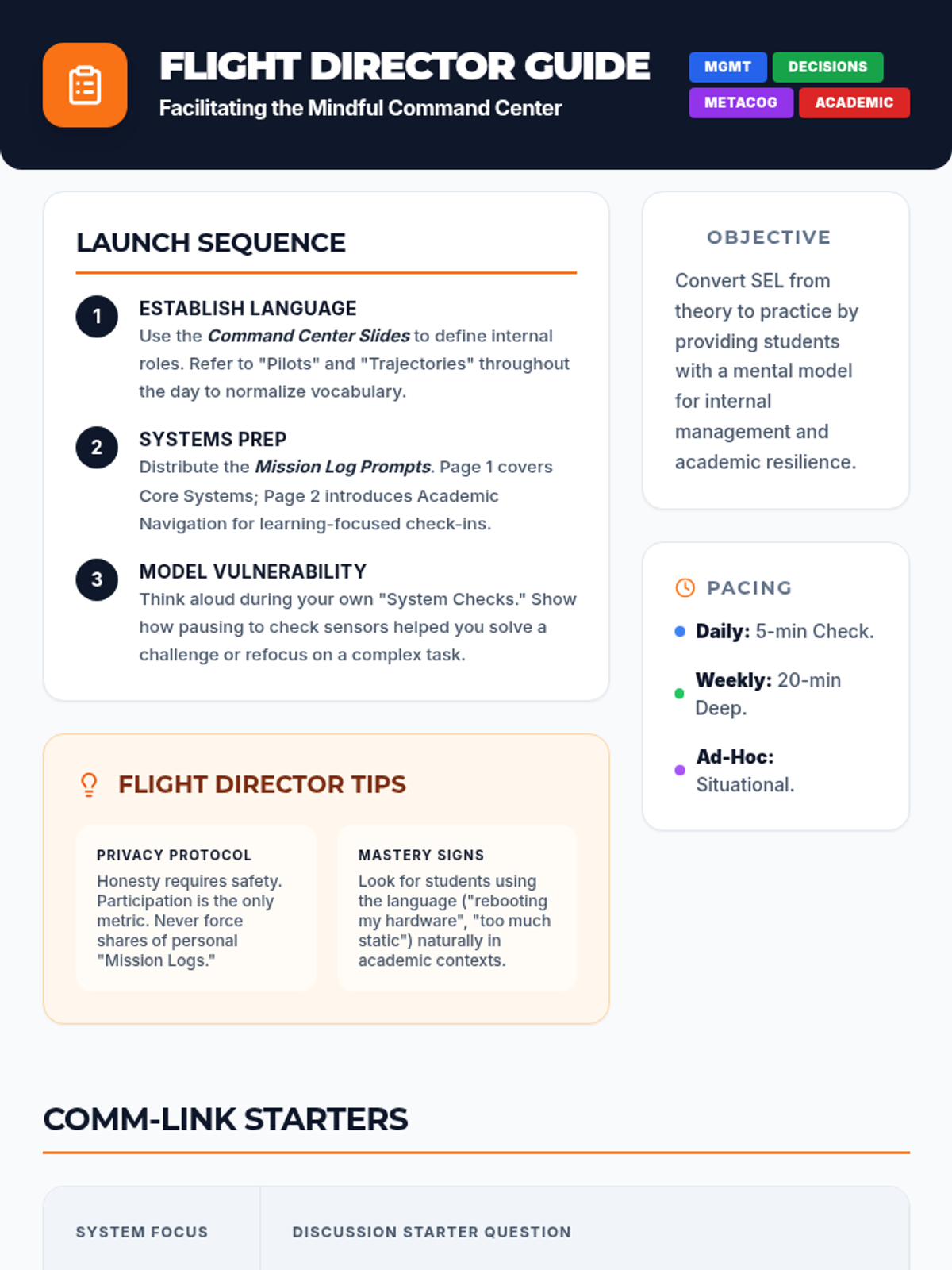
Students explore self-management, decision-making, and metacognition through a 'Command Center' metaphor. This lesson provides visual instruction and a set of reflection prompts for students to integrate into their personal journals.
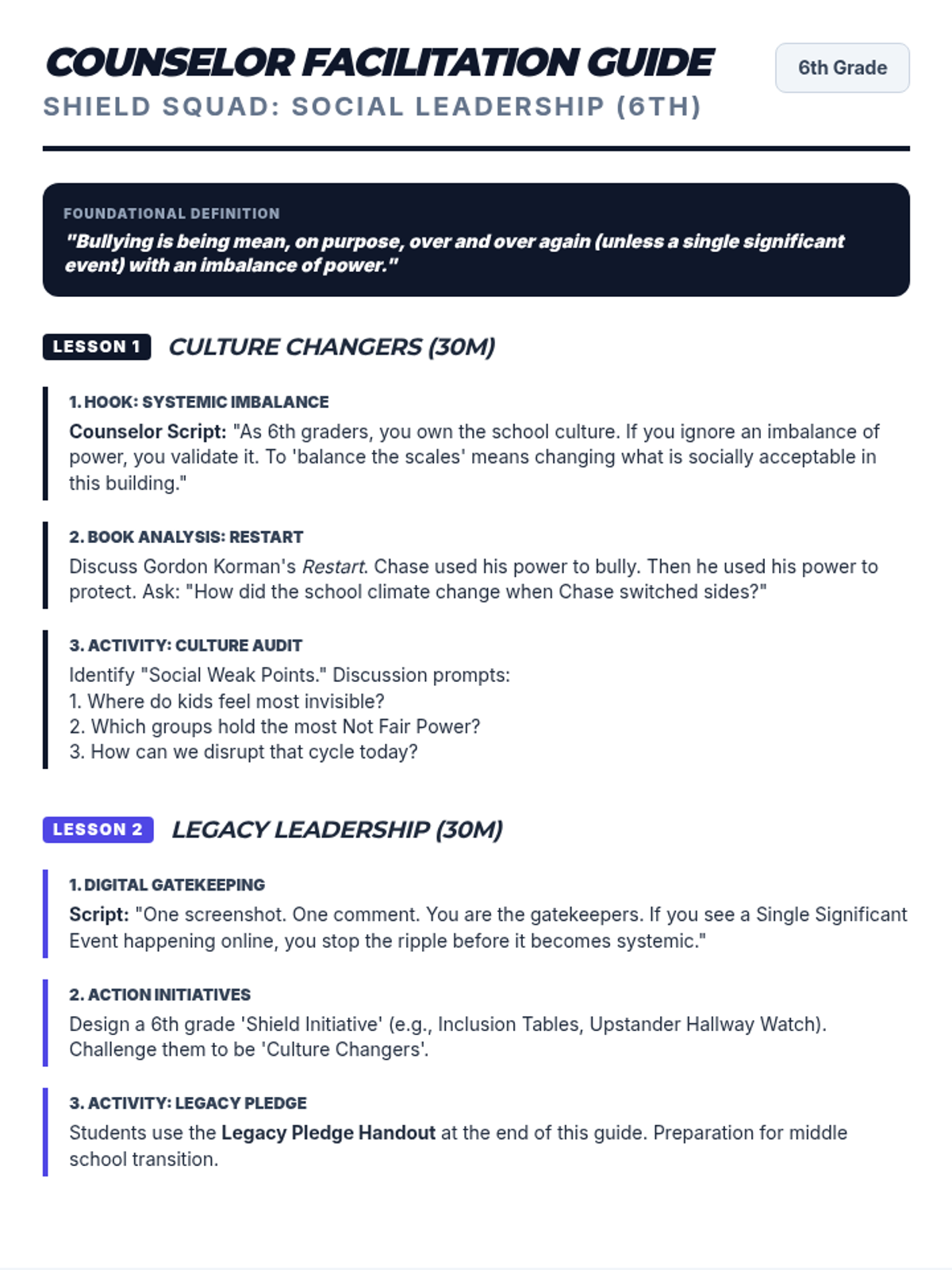
The first of two 30-minute sessions for 6th grade. Using 'Restart' by Gordon Korman, students analyze school culture, social leadership, and the concept of a 'Social Reset'.
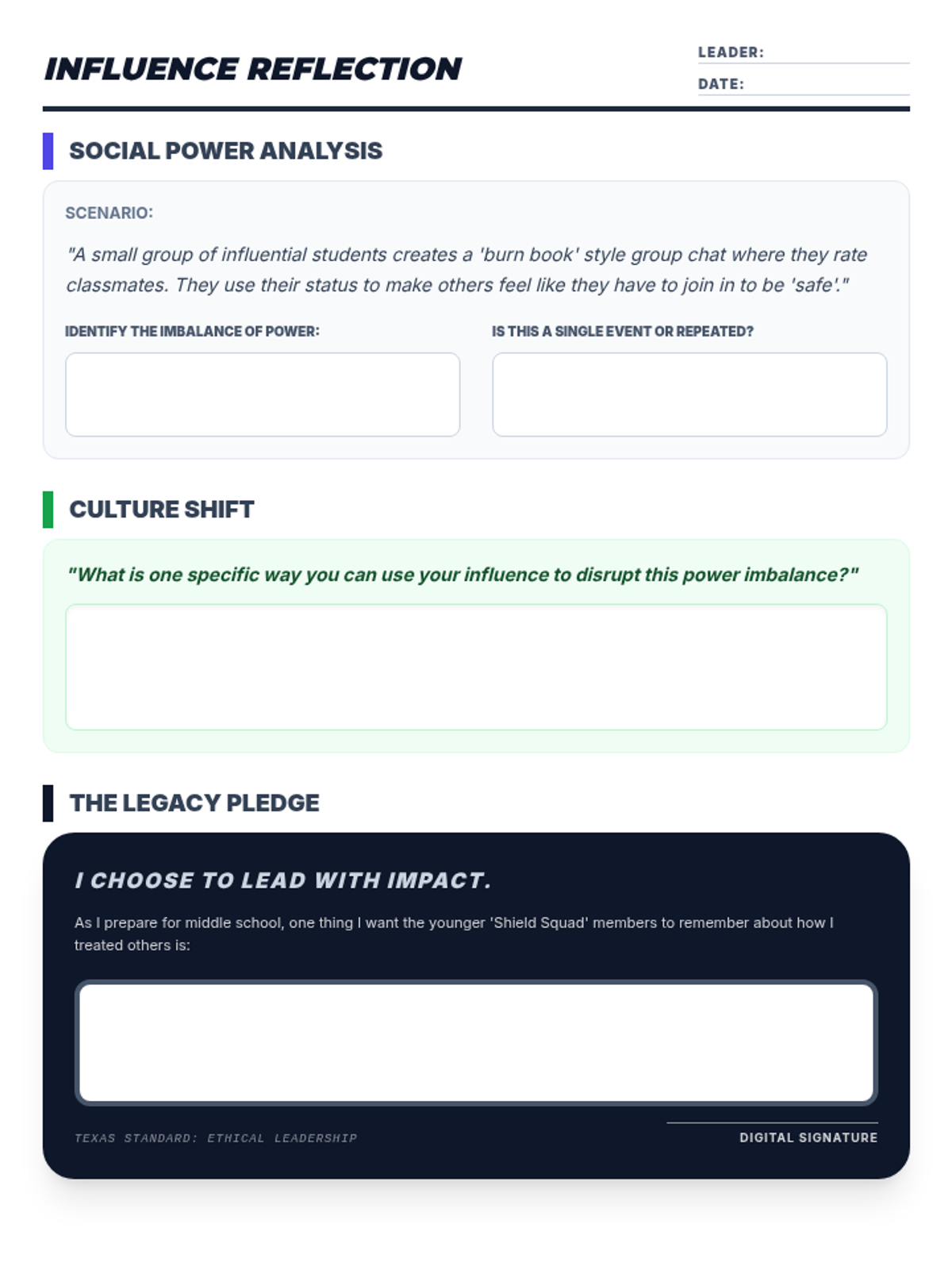
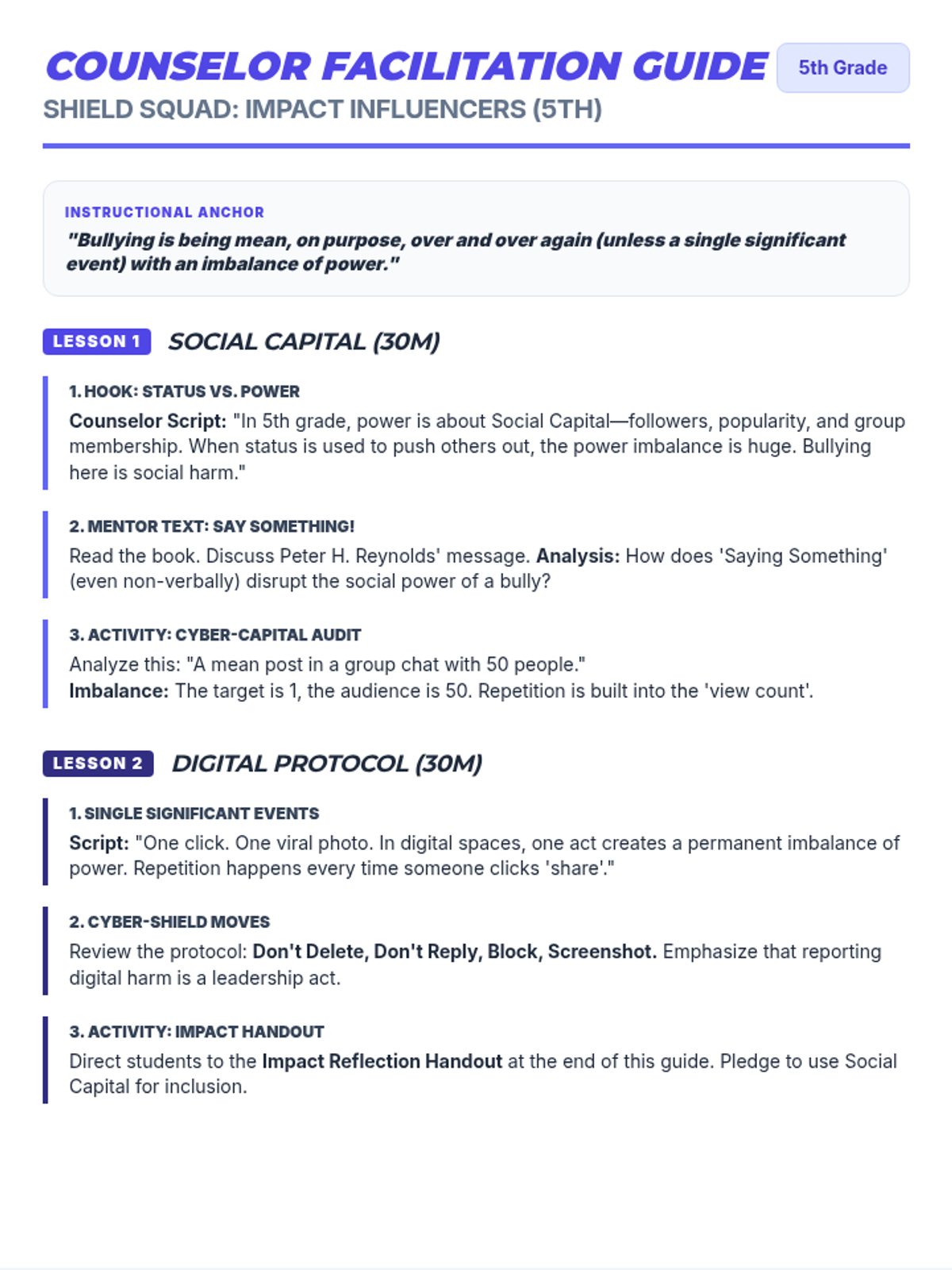
The first of two 30-minute sessions for 5th grade. Using 'Zero' by Kathryn Otoshi, students explore social capital as power and the specific dynamics of cyberbullying.
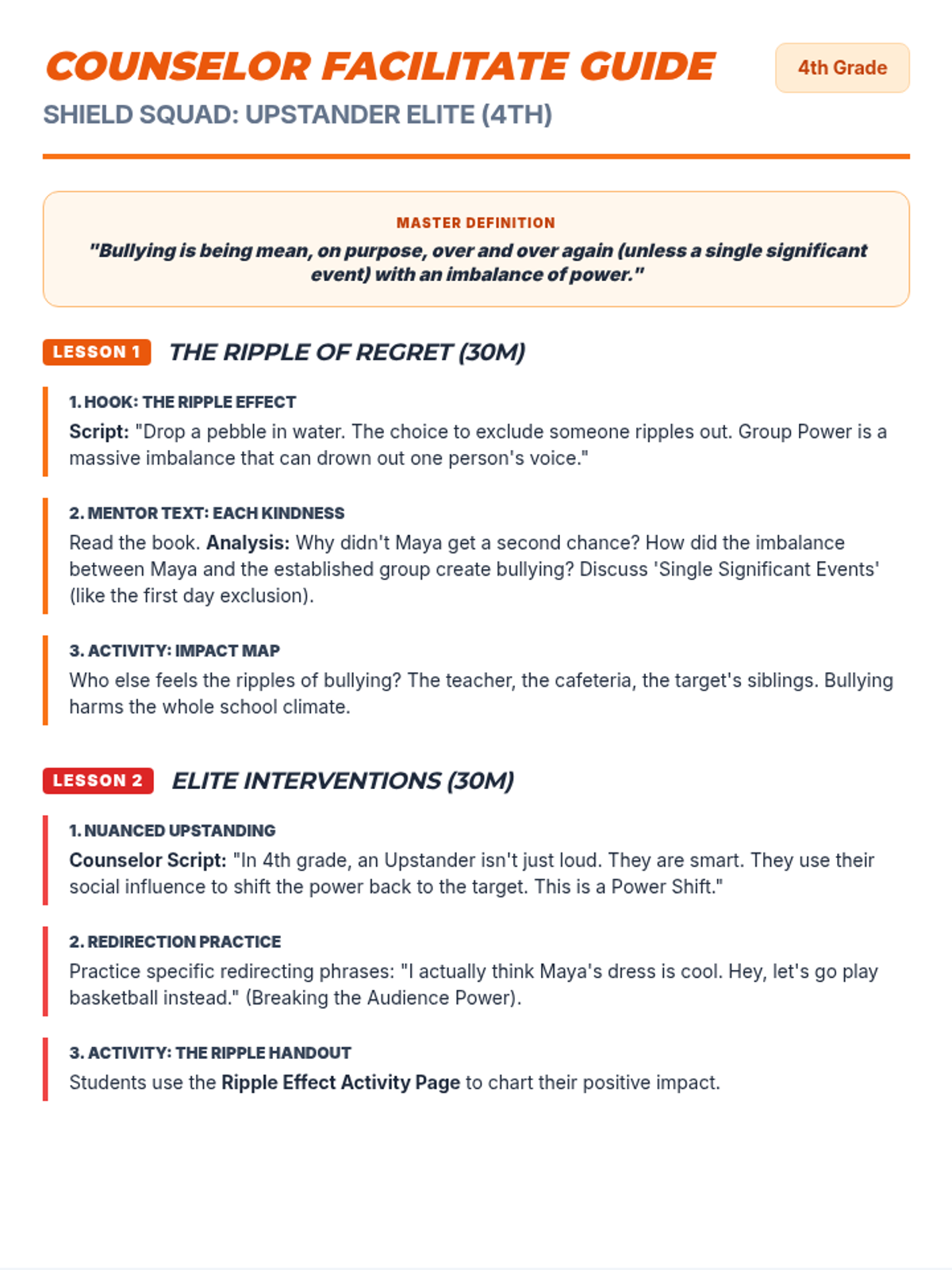
The first of two 30-minute sessions for 4th grade. Using 'Confessions of a Former Bully' by Trudy Ludwig, students understand the bullying circle and the roles people play in social dynamics.
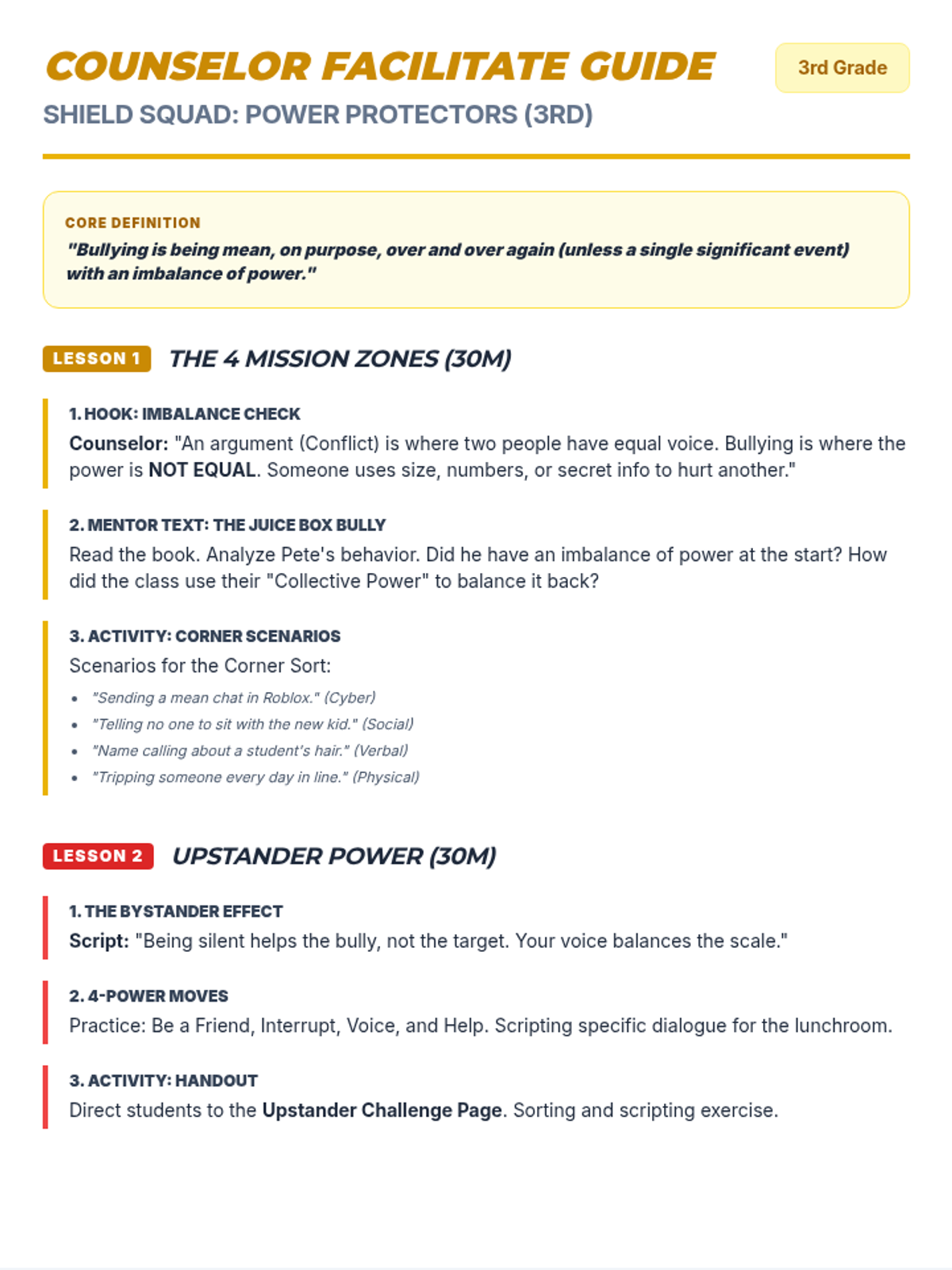
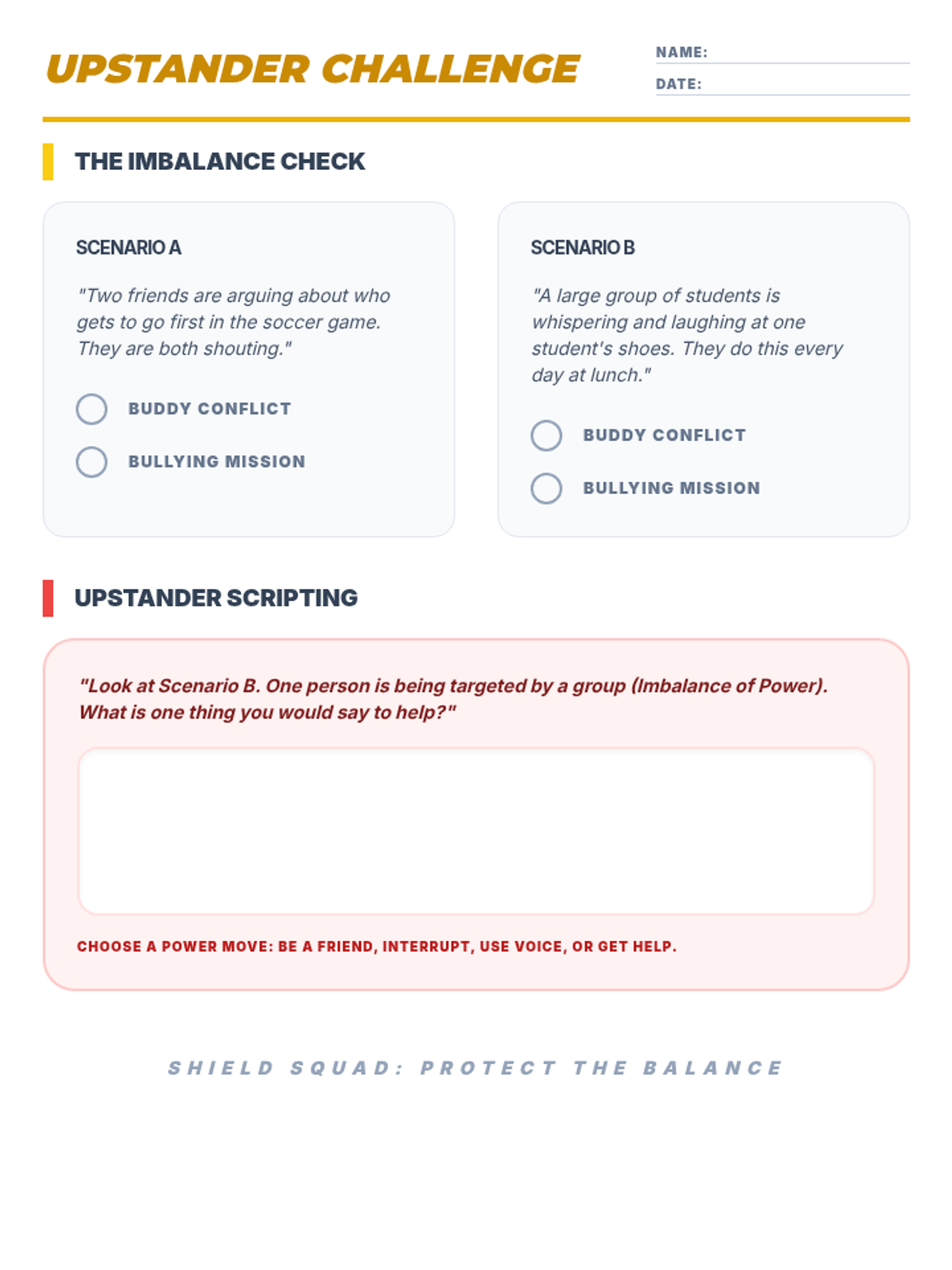
The first of two 30-minute sessions for 3rd grade. Using 'Tease Monster' by Julia Cook, students categorize behavior and analyze the 'Target' vs 'Bully' power gap.
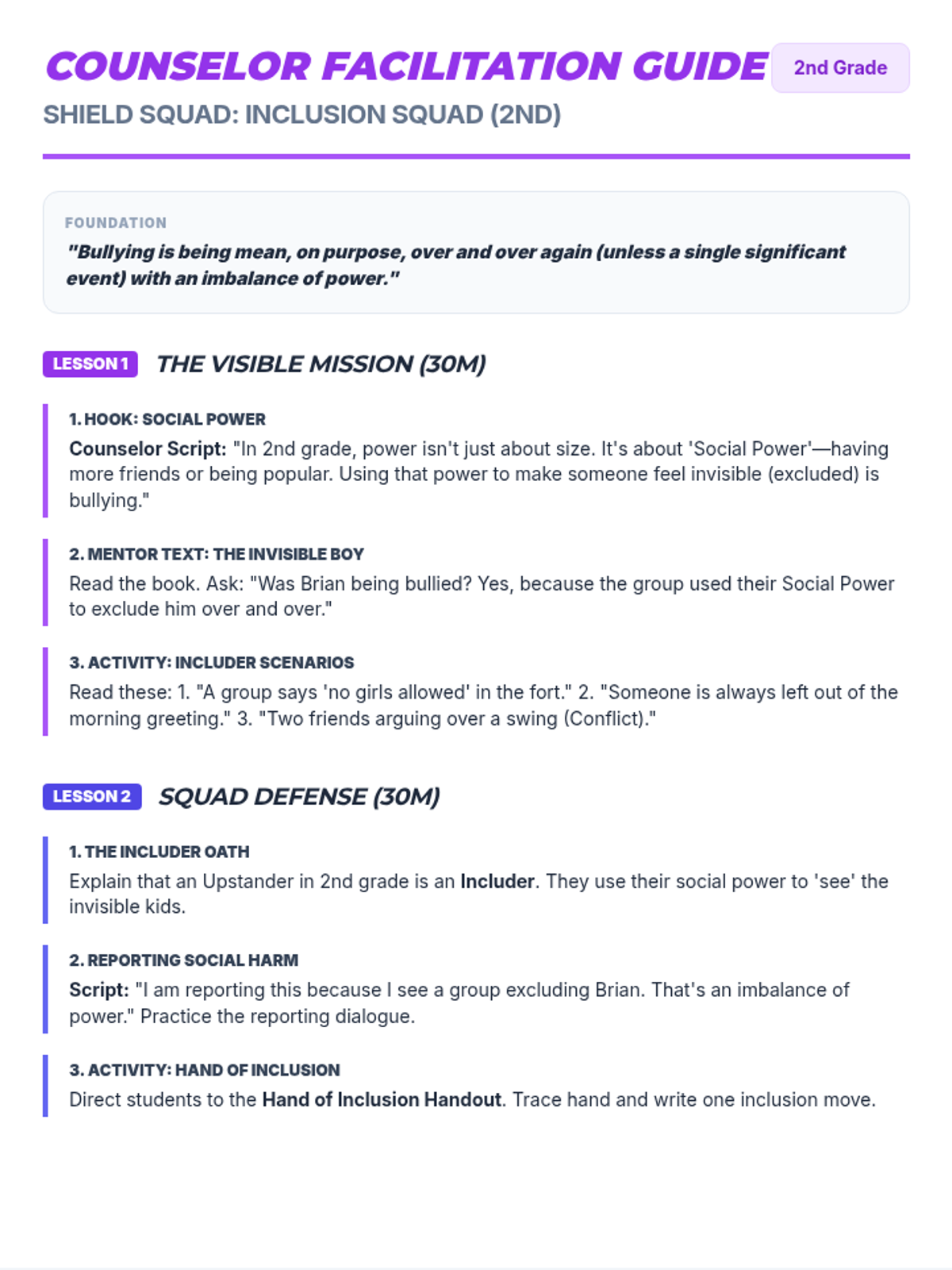
The first of two 30-minute sessions for 2nd grade. Using 'The Invisible Boy' by Trudy Ludwig, students explore social exclusion and the transition from a 'Buddy Conflict' to bullying.
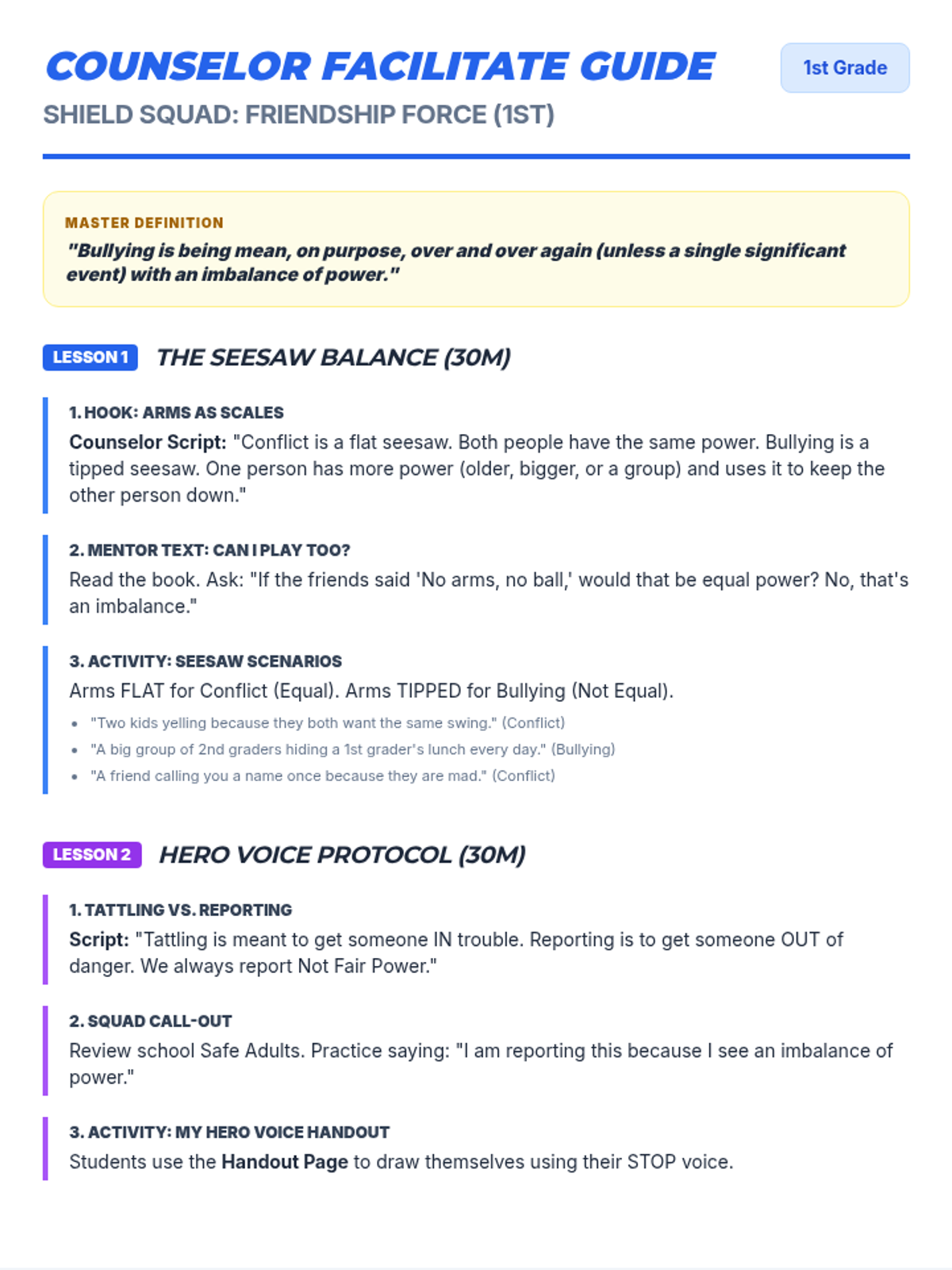
The first of two 30-minute sessions for 1st grade. Using 'Trouble Talk' by Trudy Ludwig, students explore verbal bullying and the 'Seesaw' model of unequal power.
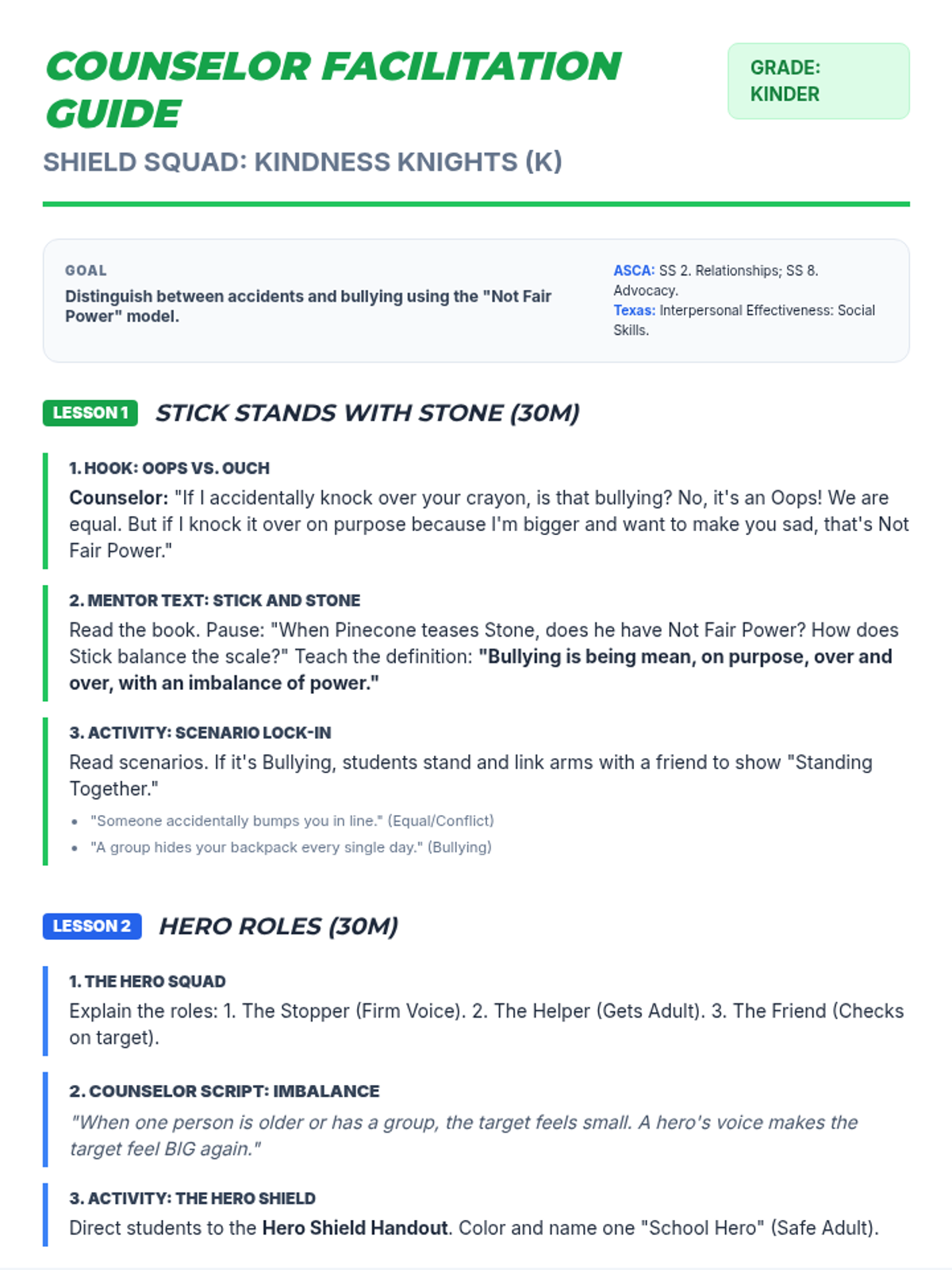
The first of two 30-minute sessions for Kindergarten. Using 'Bully B.E.A.N.S.' by Julia Cook, students learn to distinguish between accidents and bullying using the 'Purposeful' and 'Repeated' criteria.
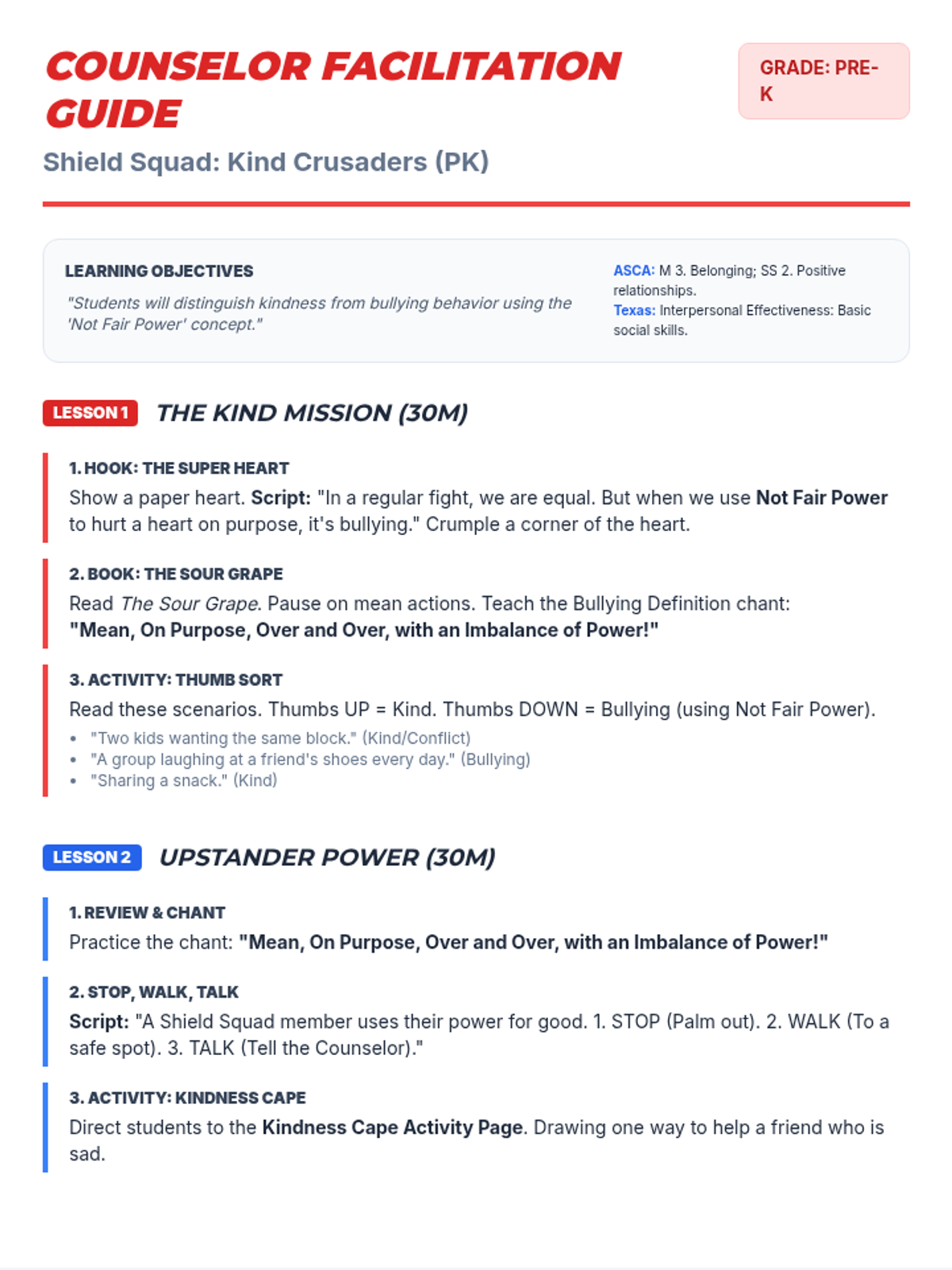
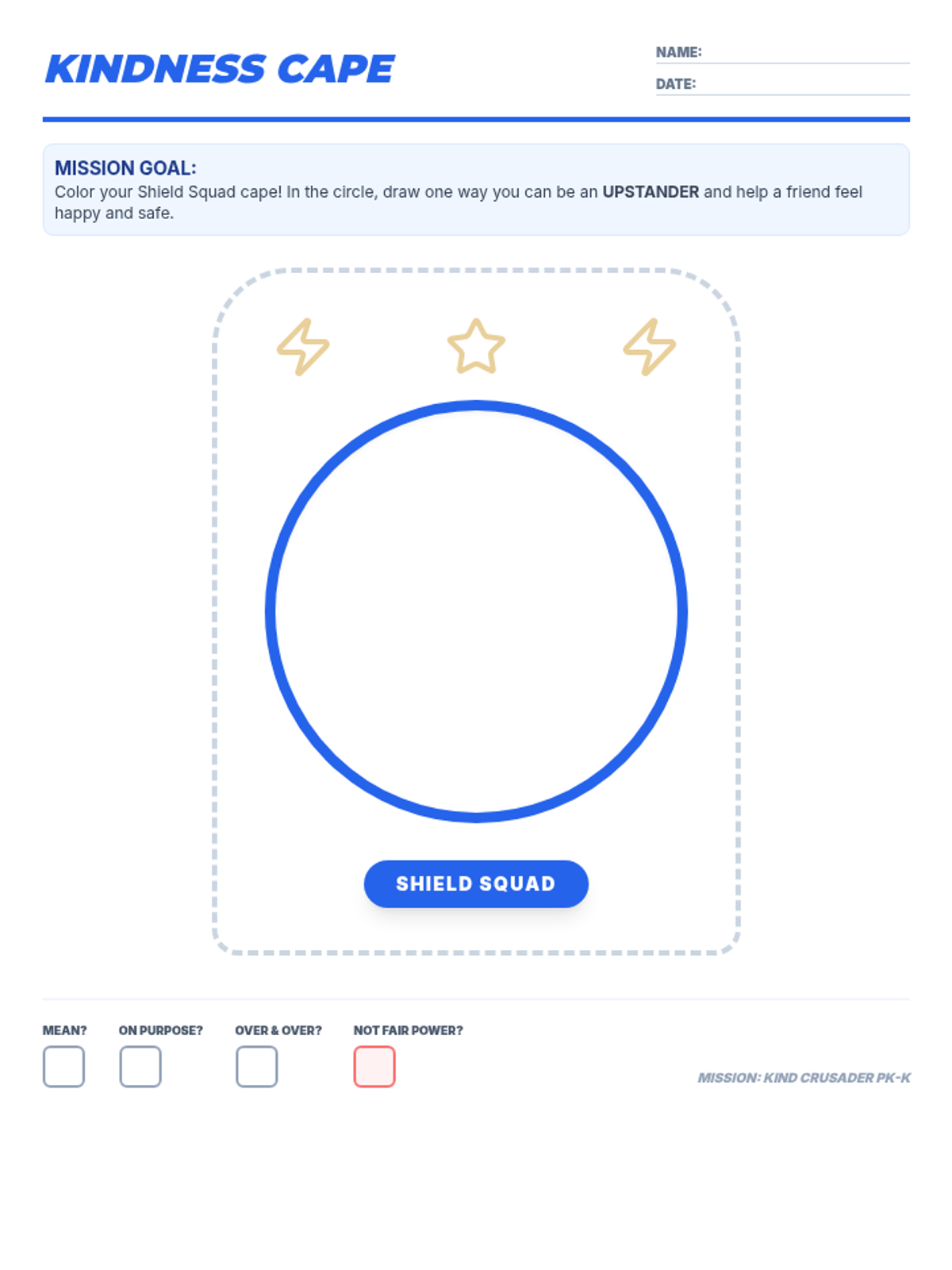
The first of two 30-minute sessions for PK. Using 'One' by Kathryn Otoshi, students are introduced to the 'Shield Squad' definition of bullying and the concept of 'Not Fair Power'.
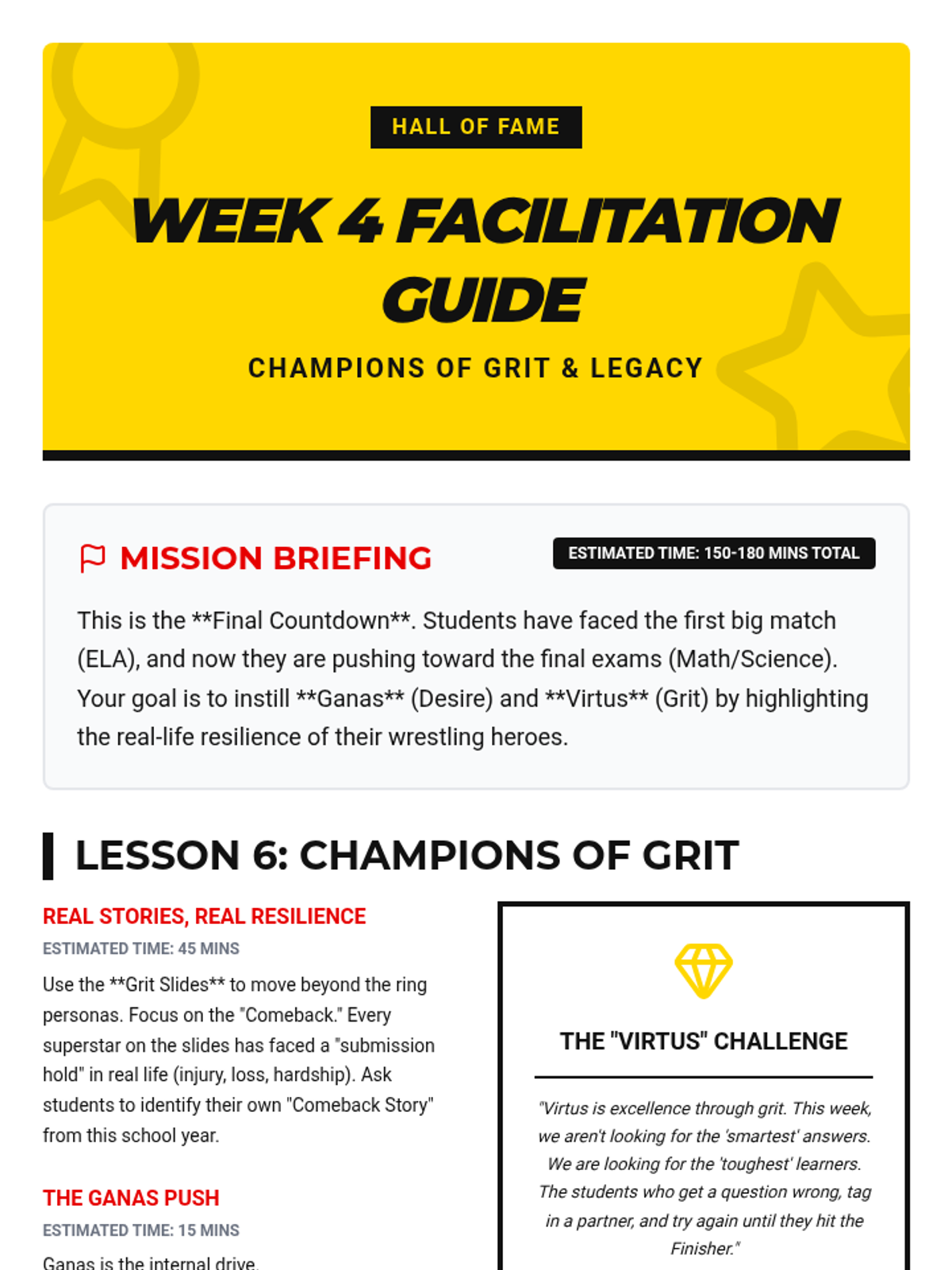
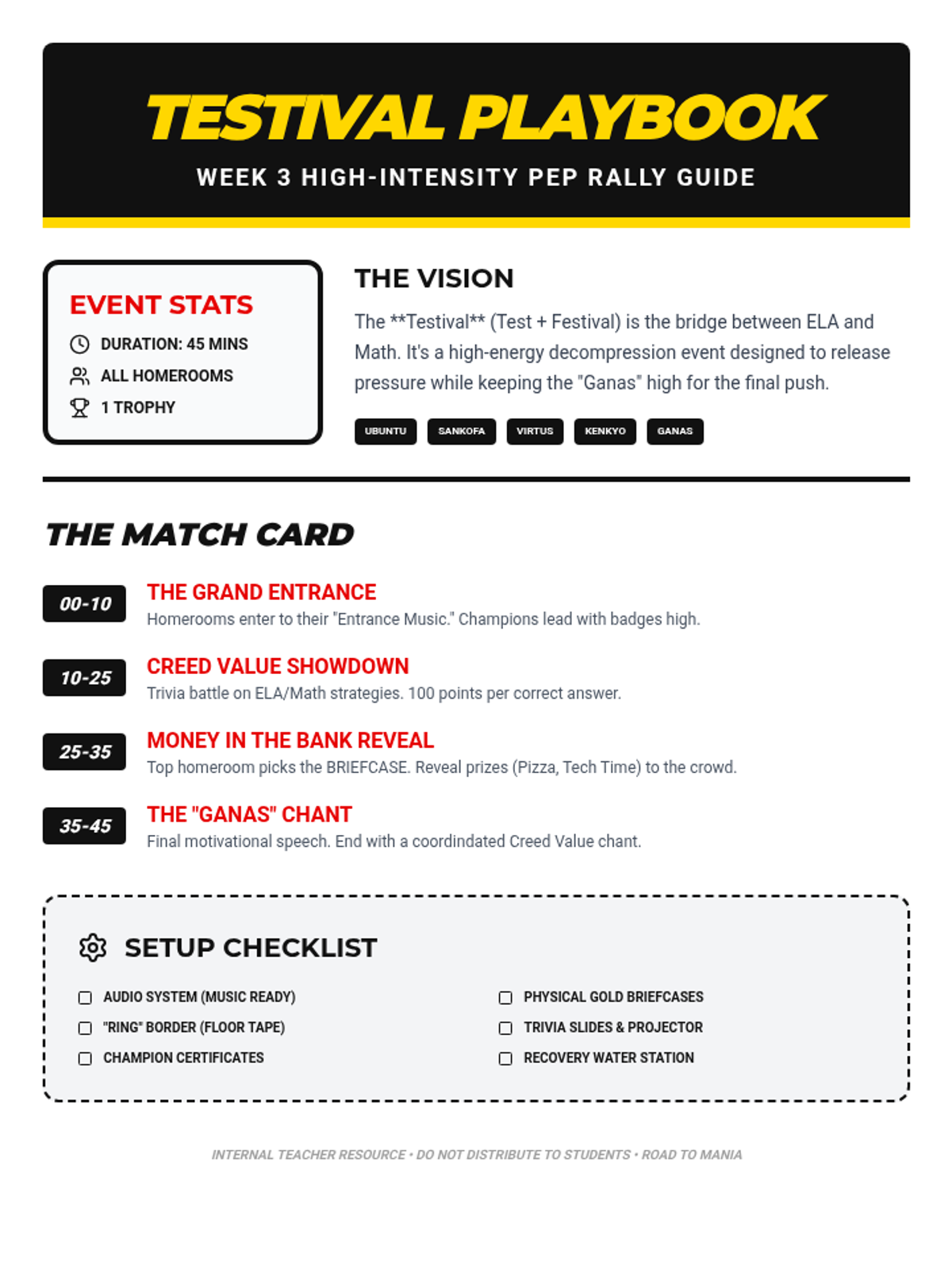
Examining real-life challenges faced by WWE stars to inspire resilience, grit, and the 'Ganas' required for the final push.
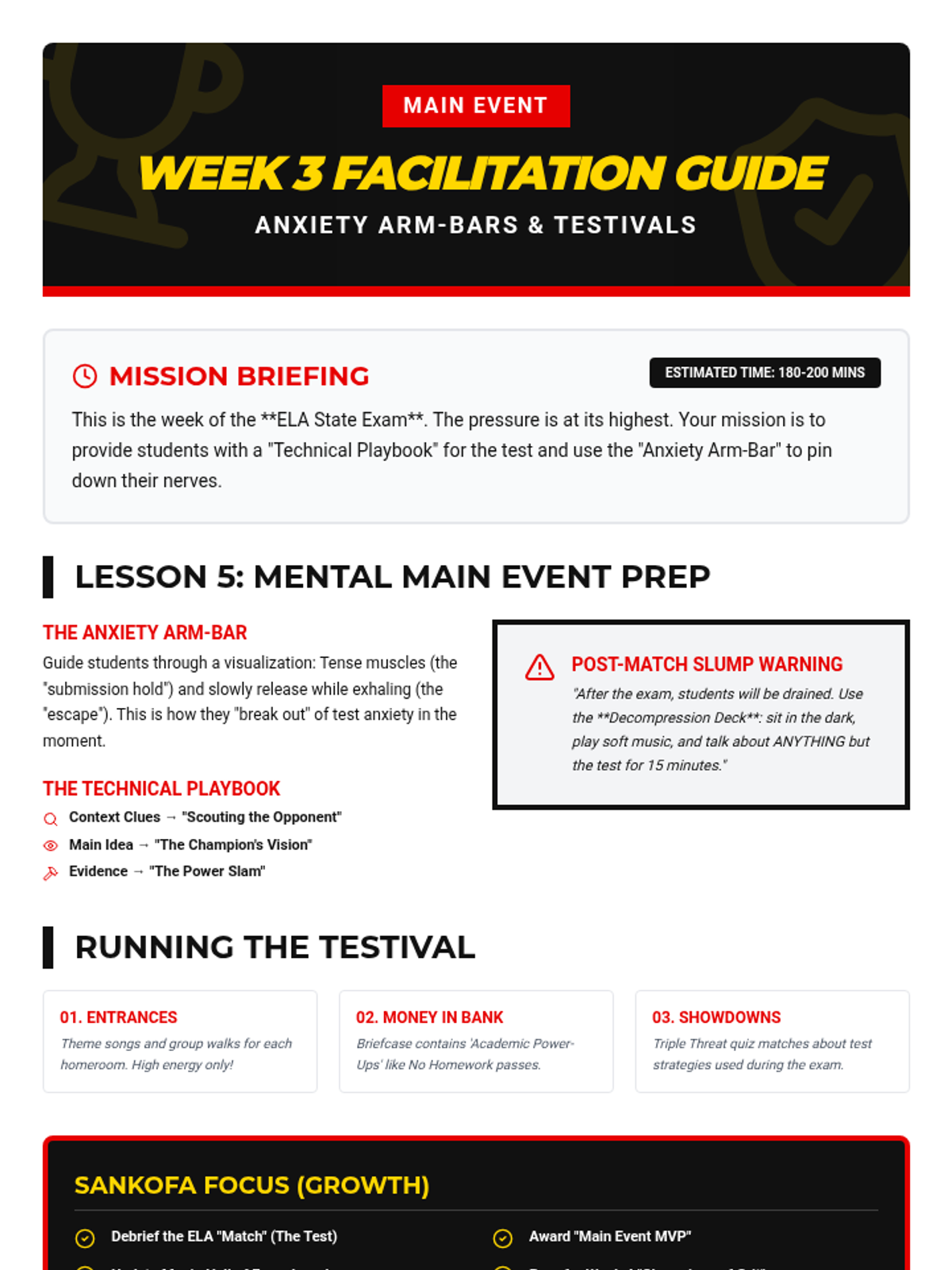
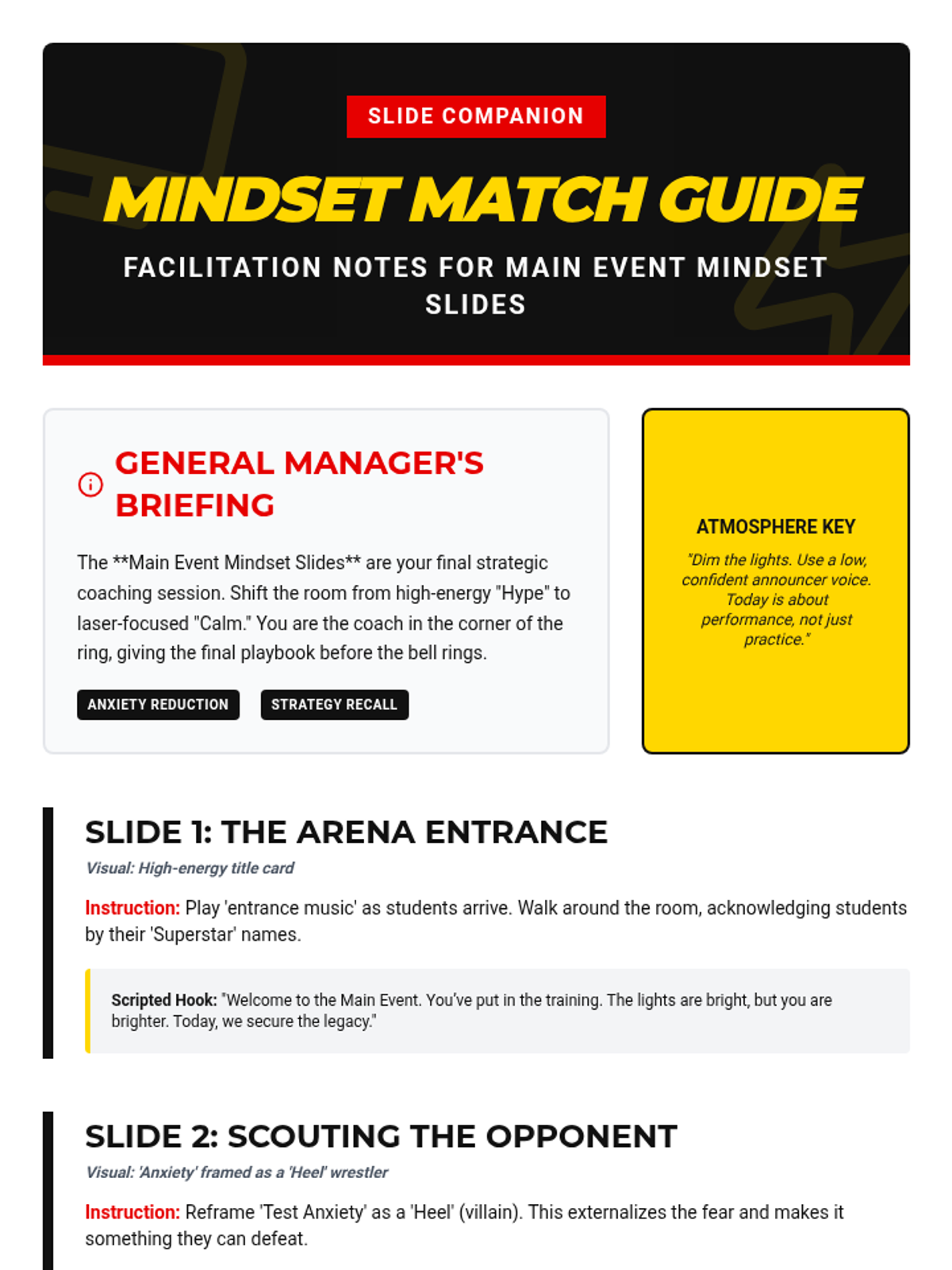
Addressing test anxiety and ELA state exam preparation, including decompression strategies to stay 'main event' ready.
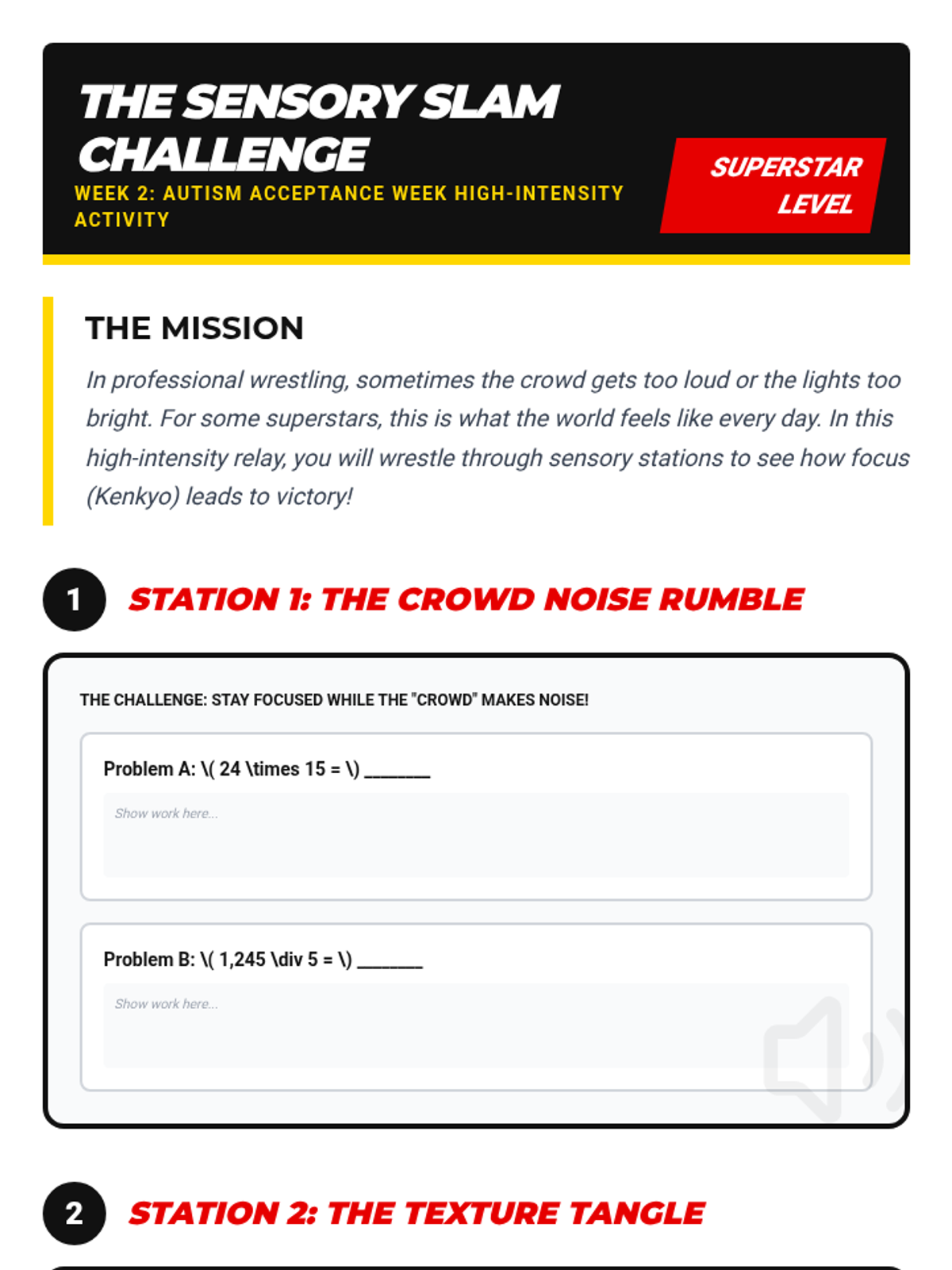
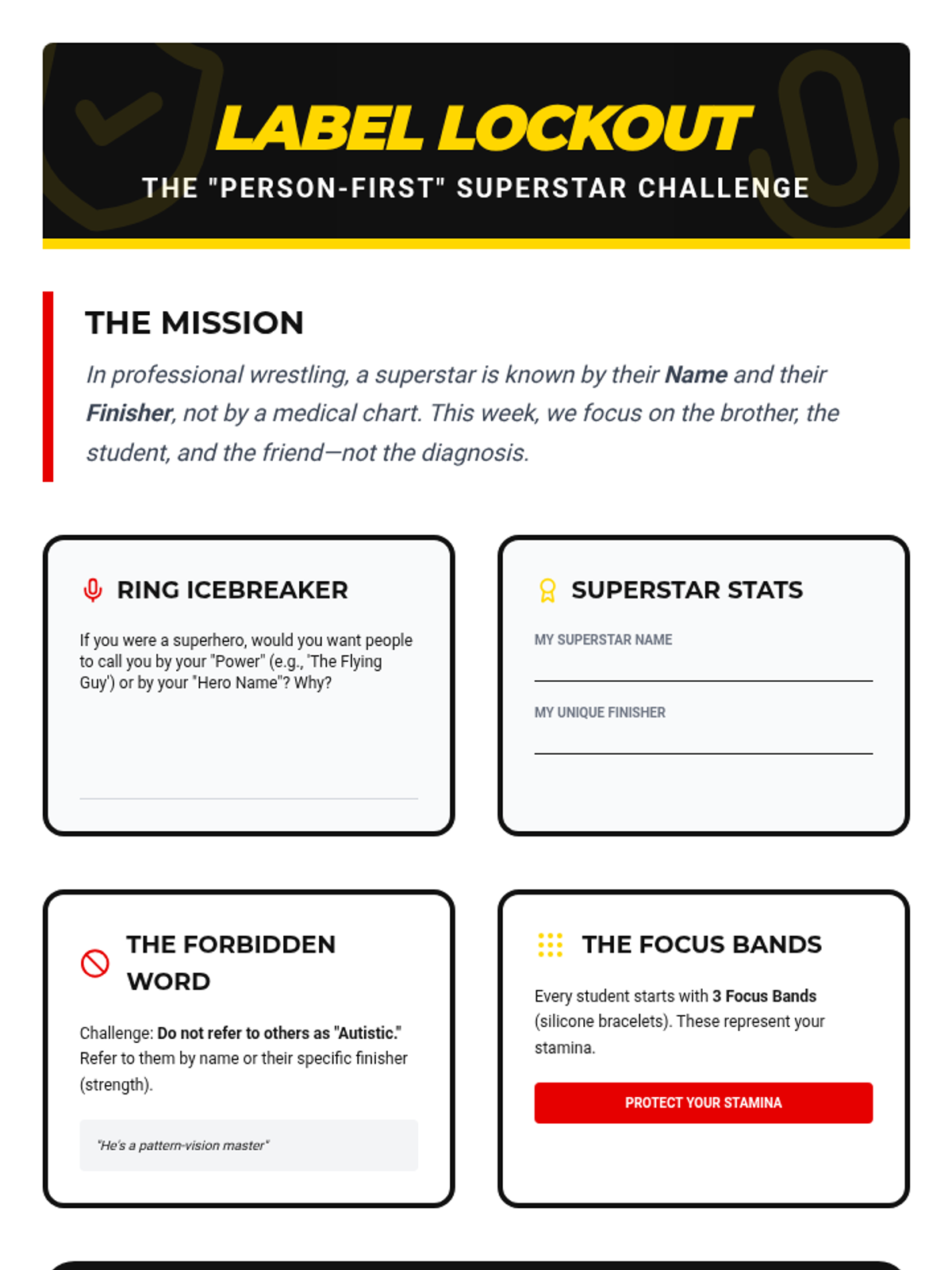
A high-energy activity focusing on inclusivity and celebrating different ways of thinking and 'wrestling' with challenges.
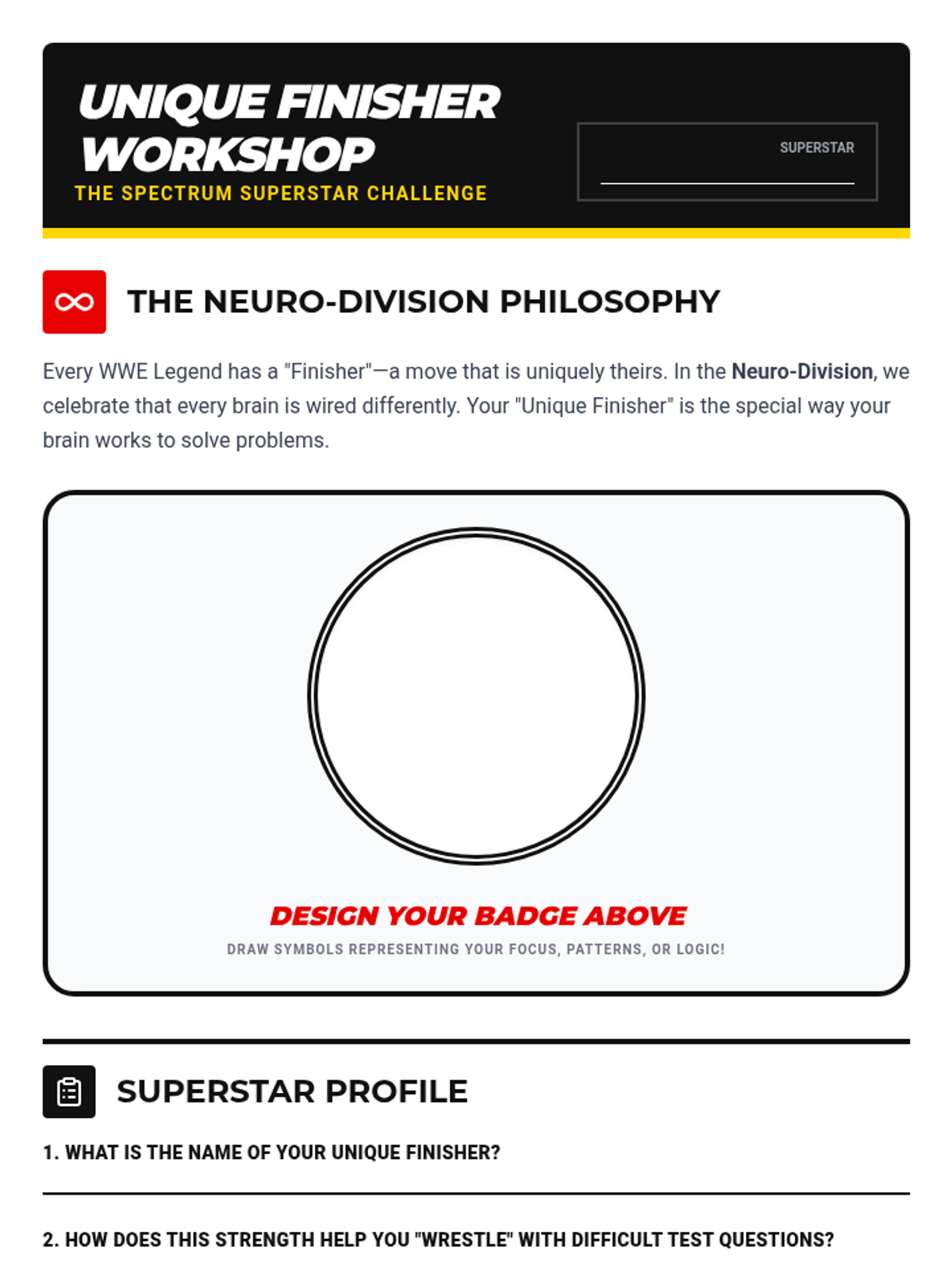
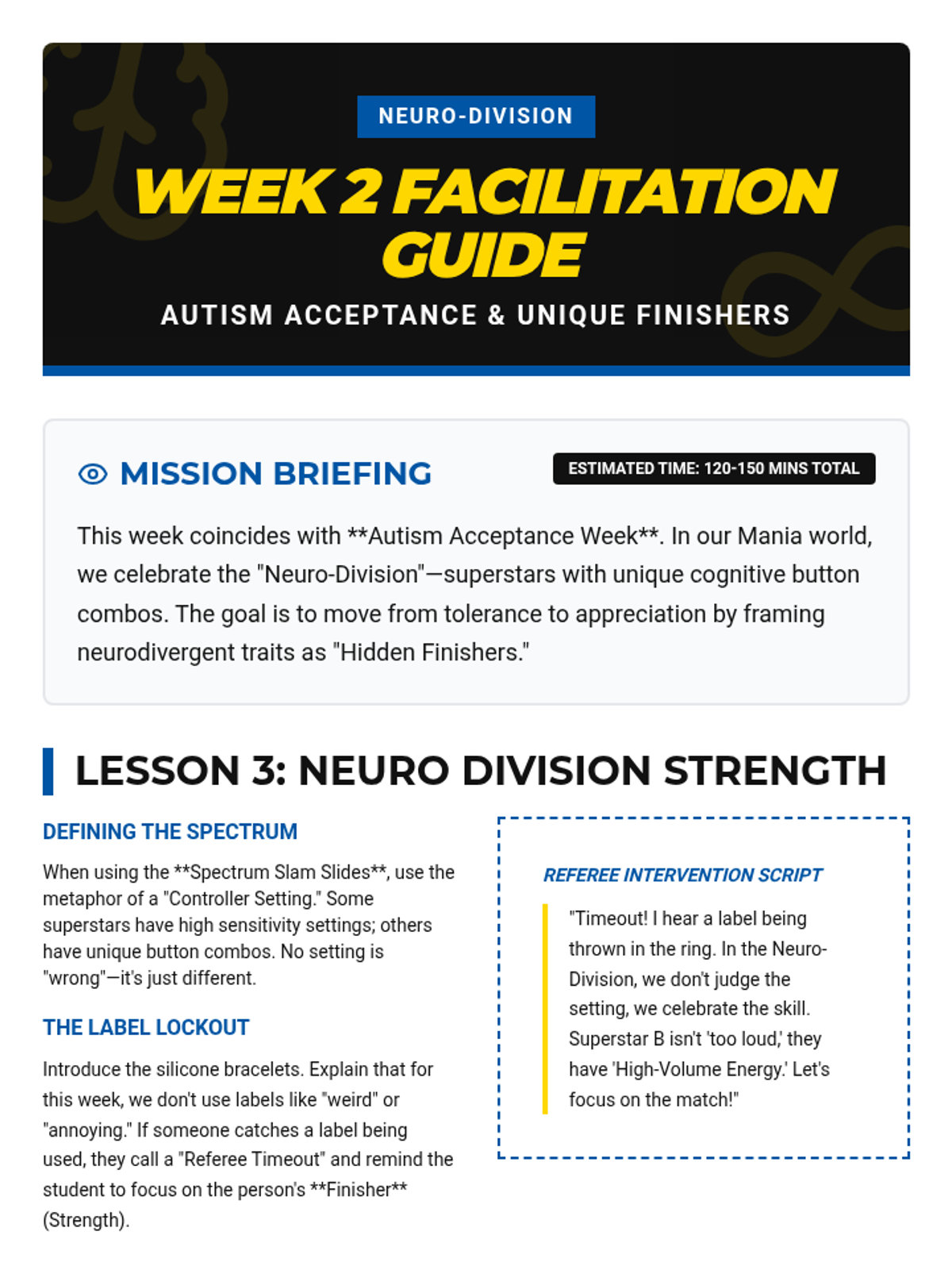
The first of two activities celebrating Autism Acceptance Week, highlighting the unique 'finishers' and strengths of neurodivergent individuals.
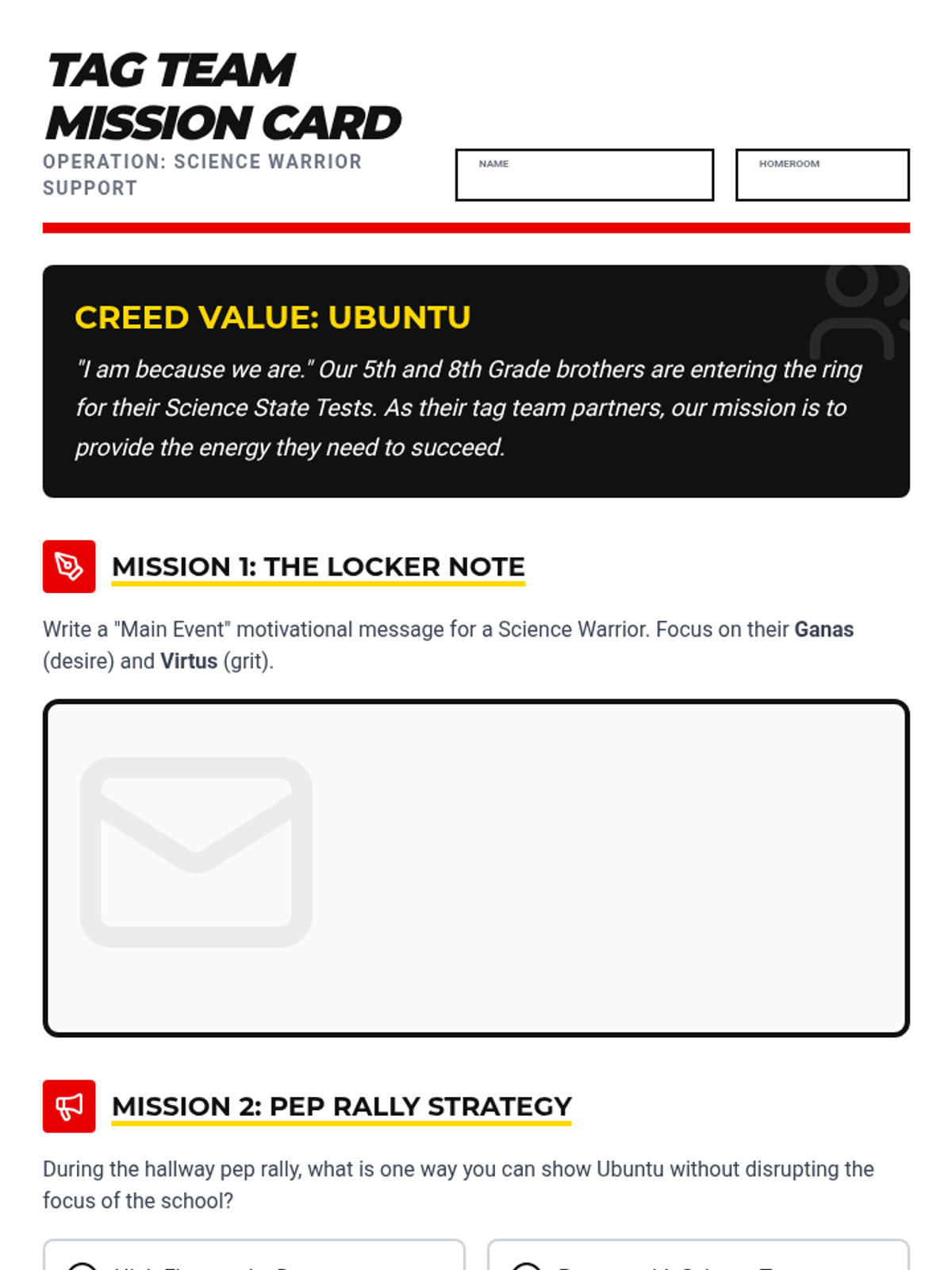
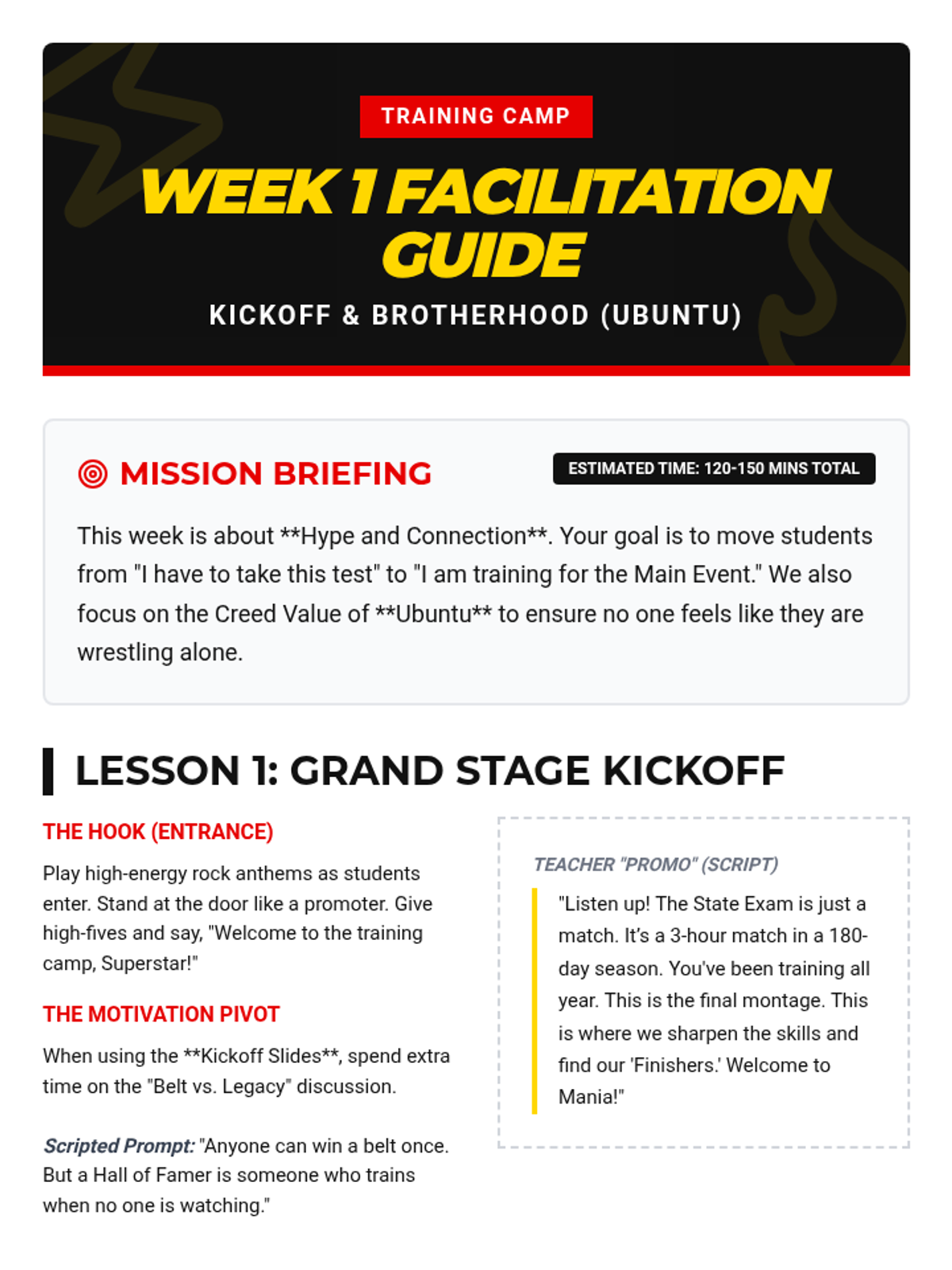
Focus on the Creed Value of Ubuntu and brotherhood, preparing students to support their peers during science test pep rallies.
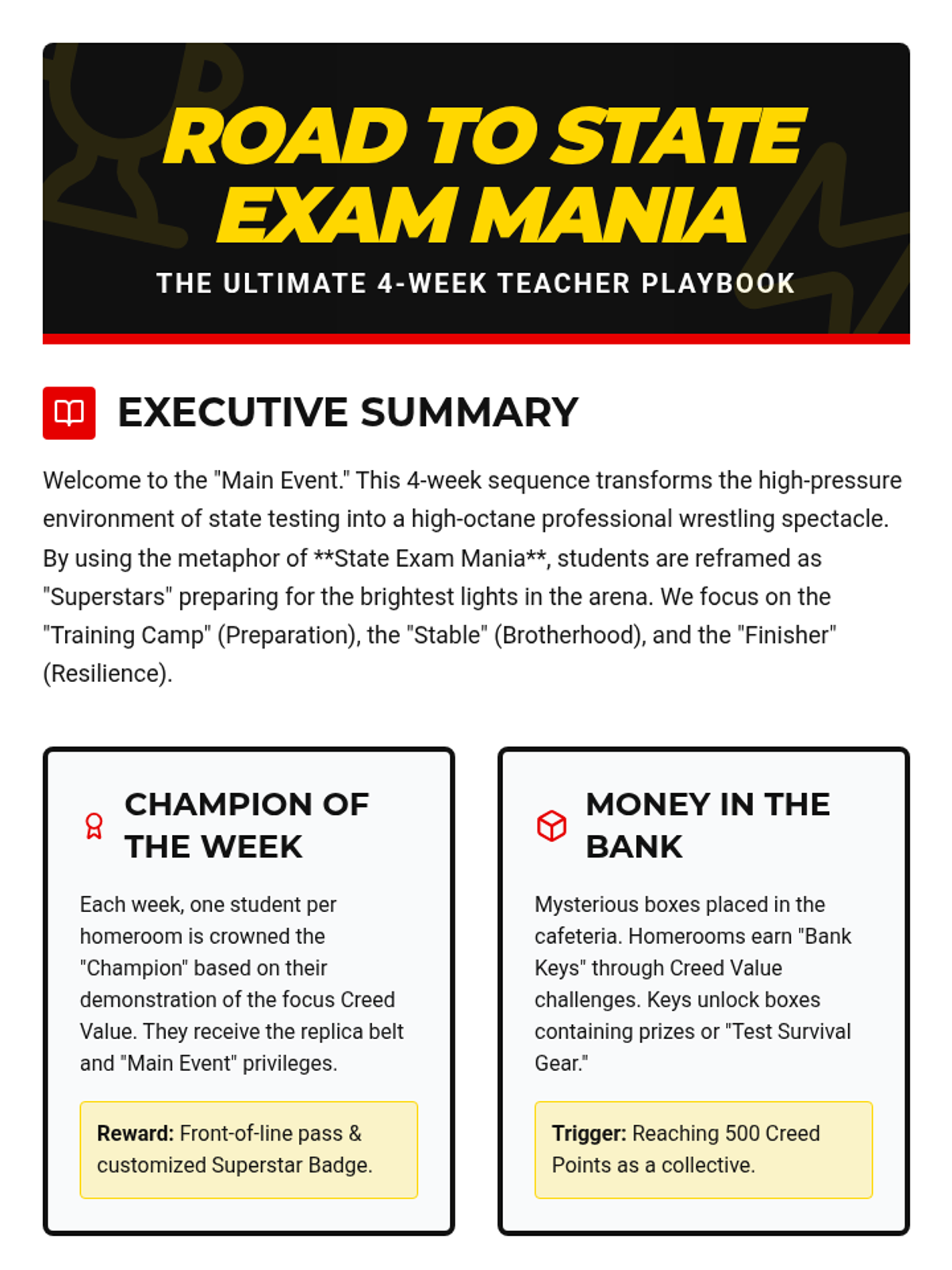
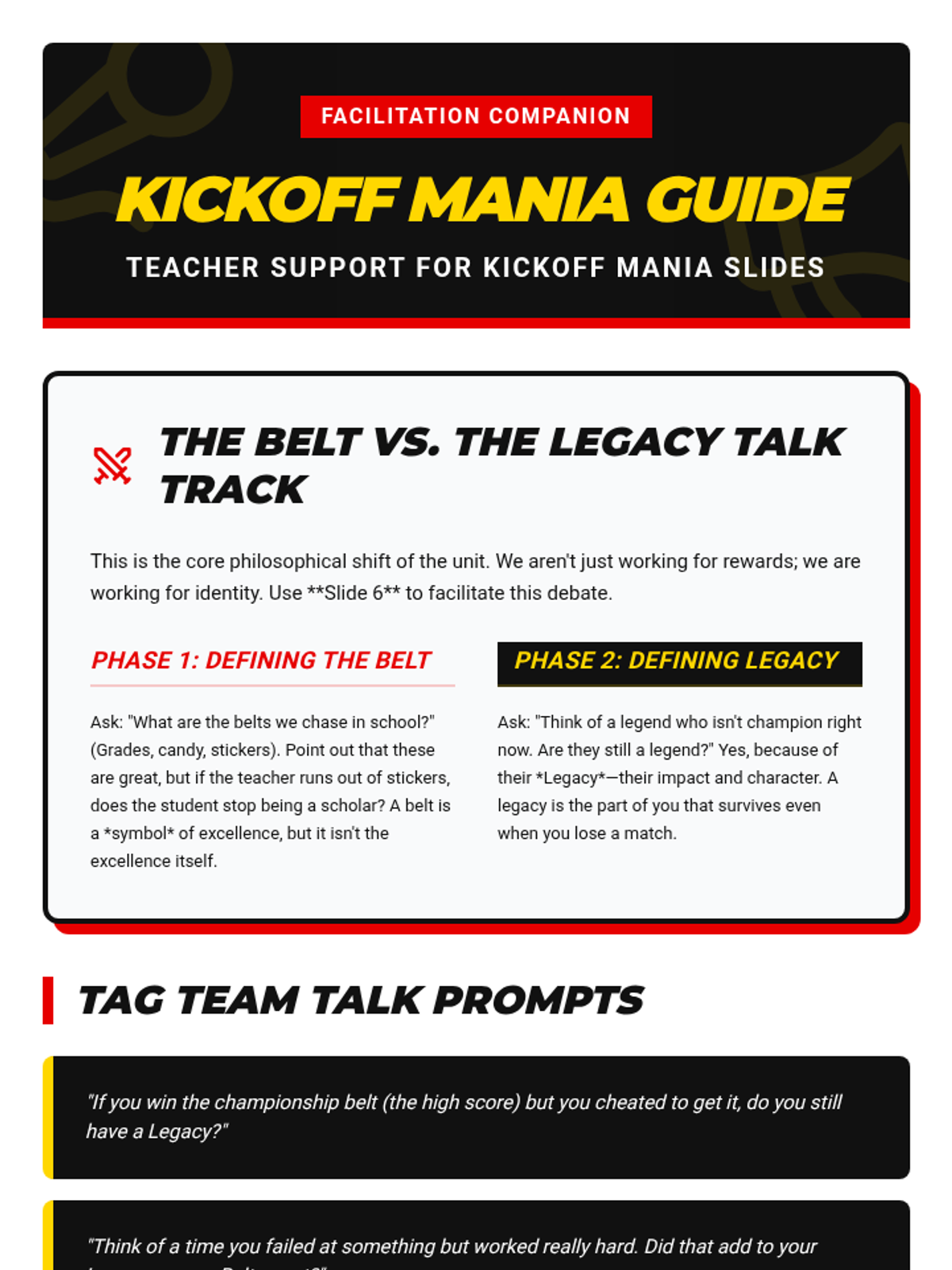
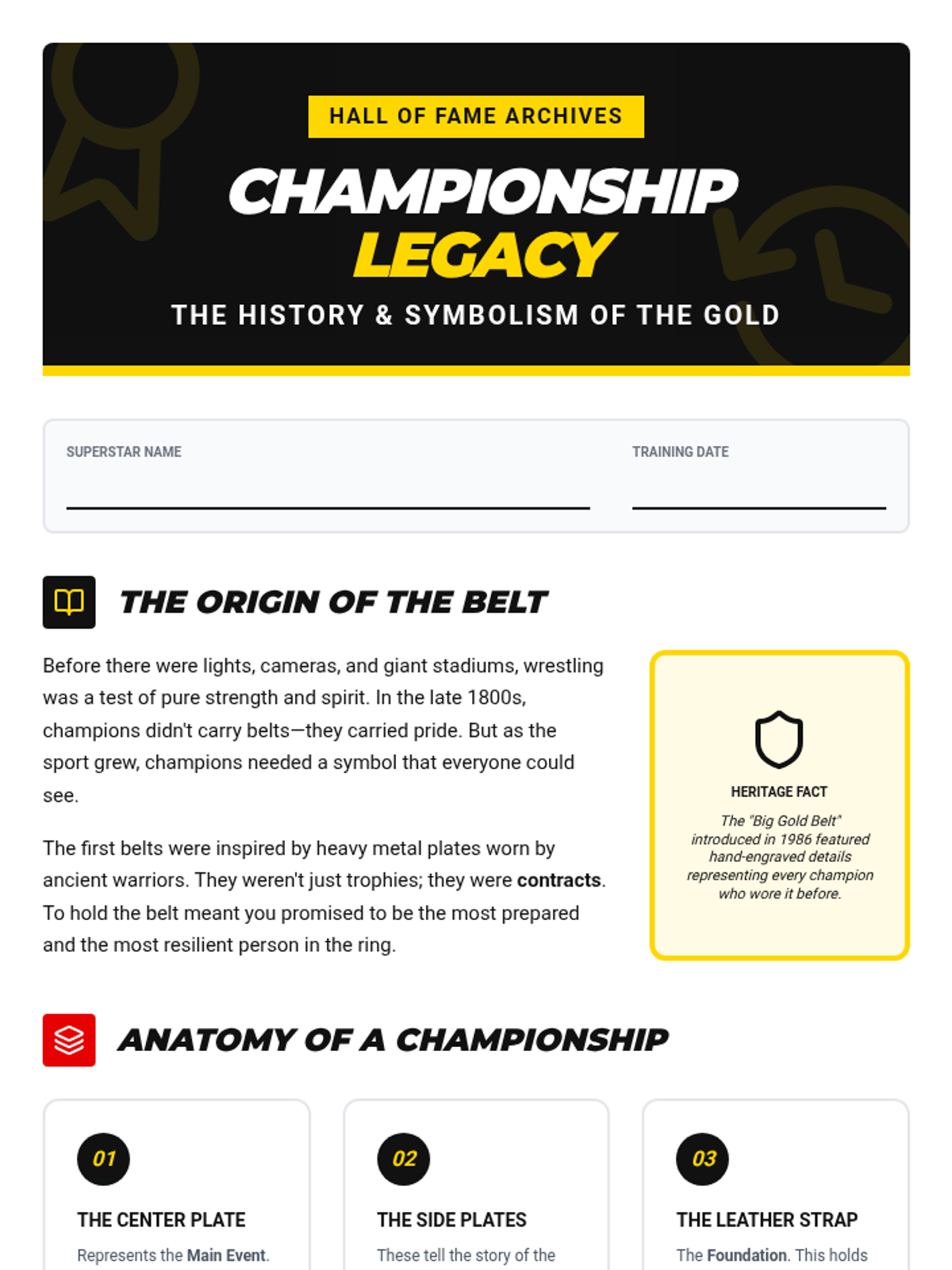
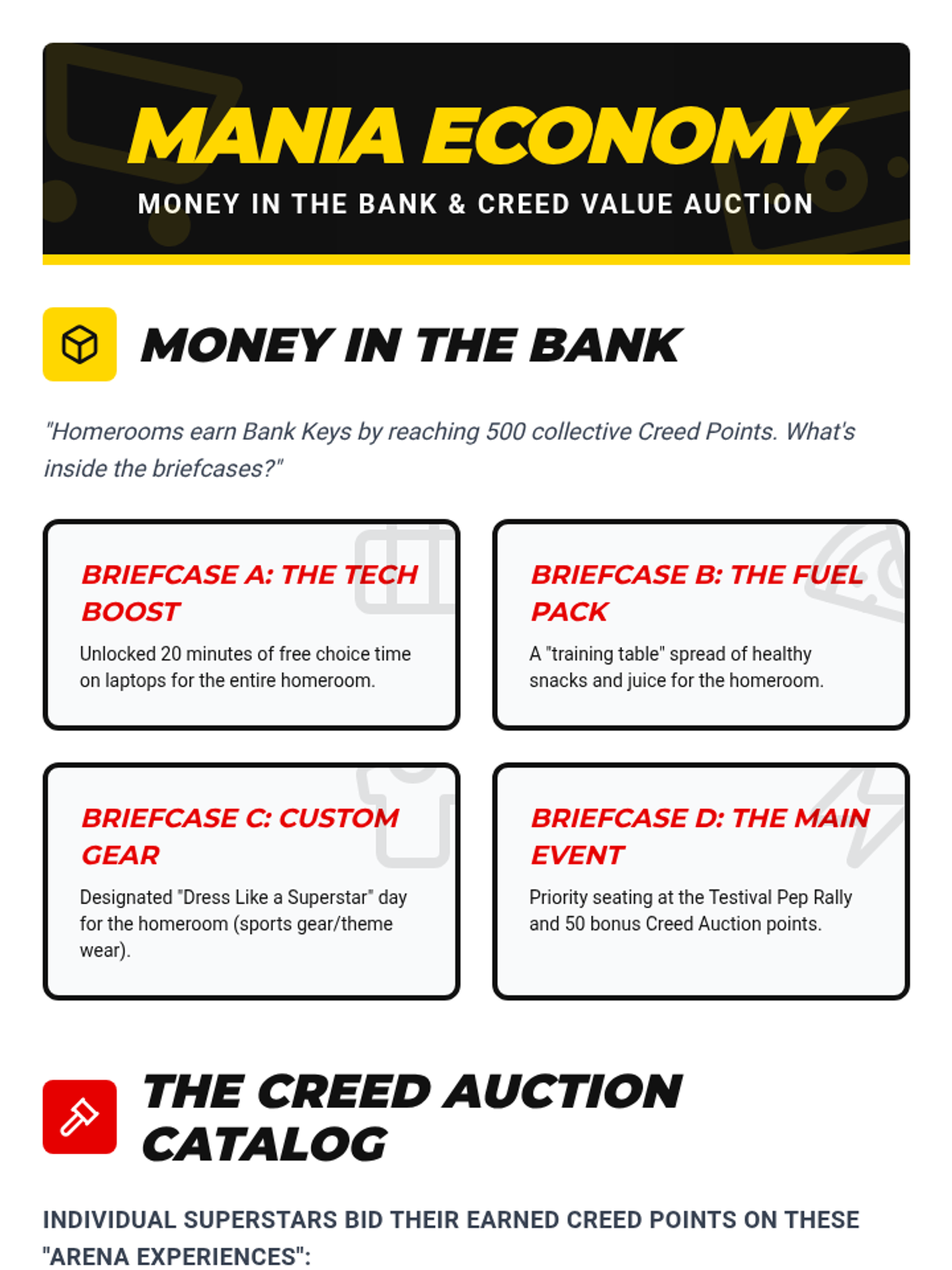
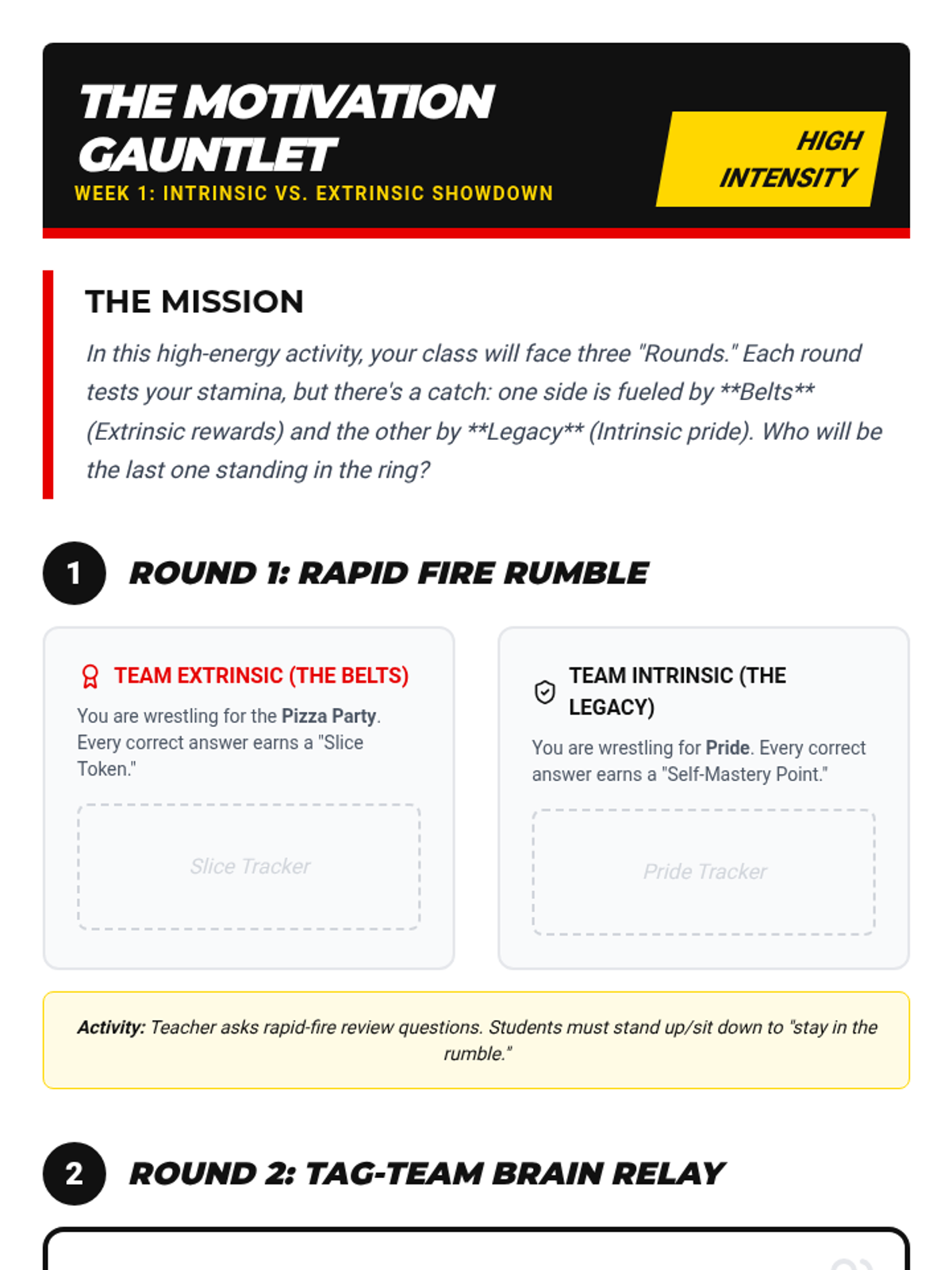
Introduce the 'State Exam Mania' theme, focusing on the difference between intrinsic and extrinsic motivation using the metaphor of championship belts vs. personal legacy.
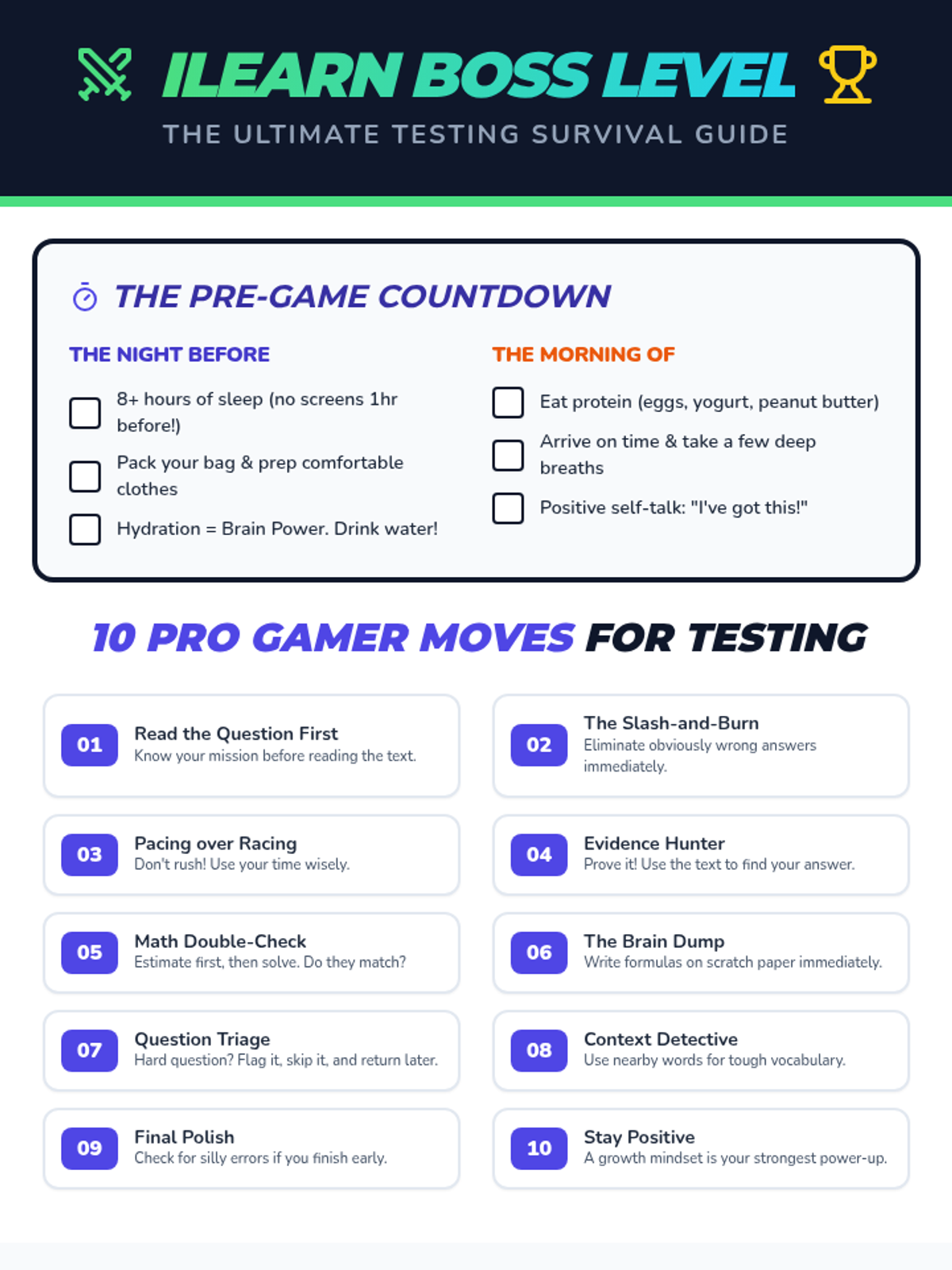
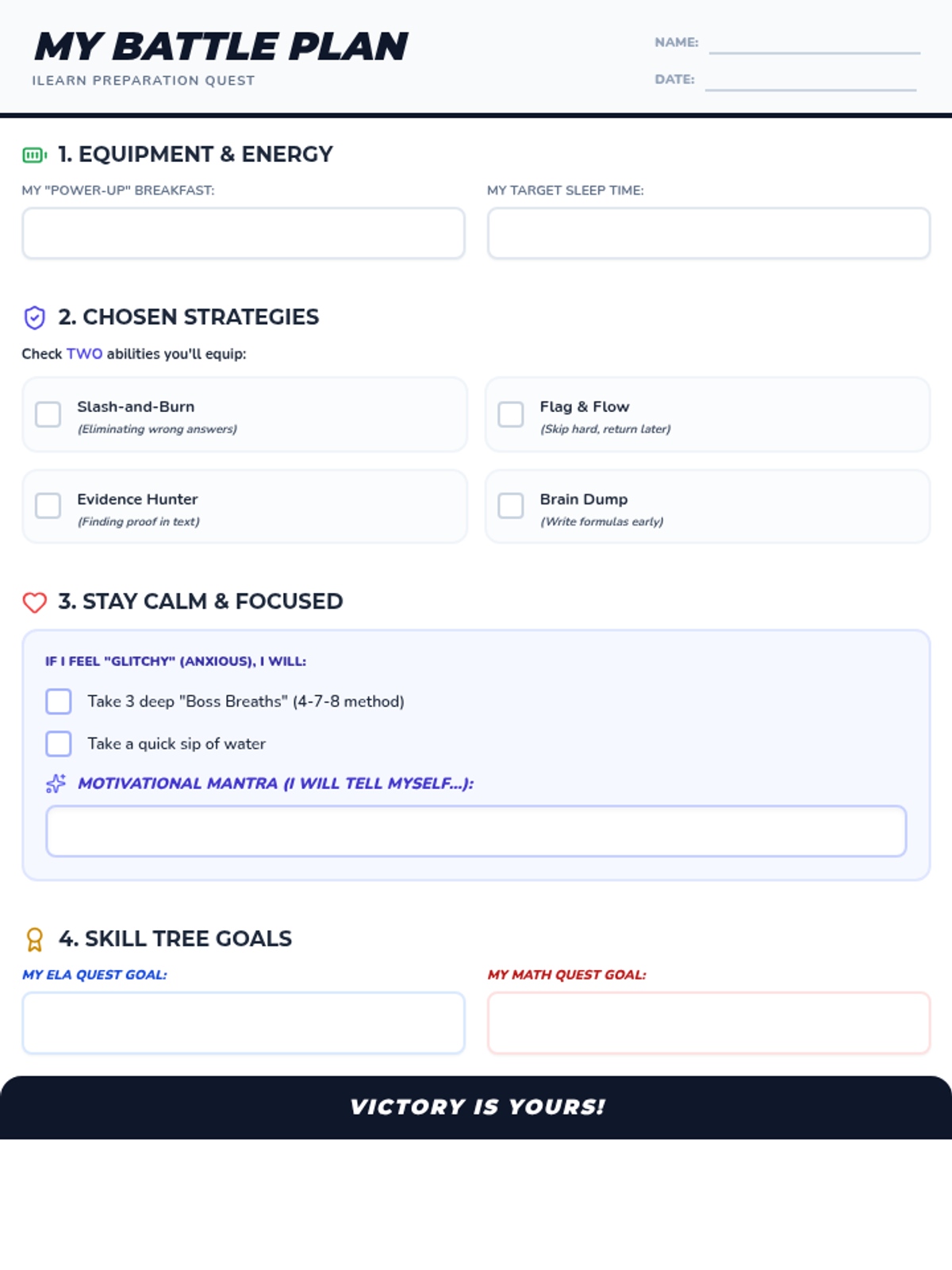
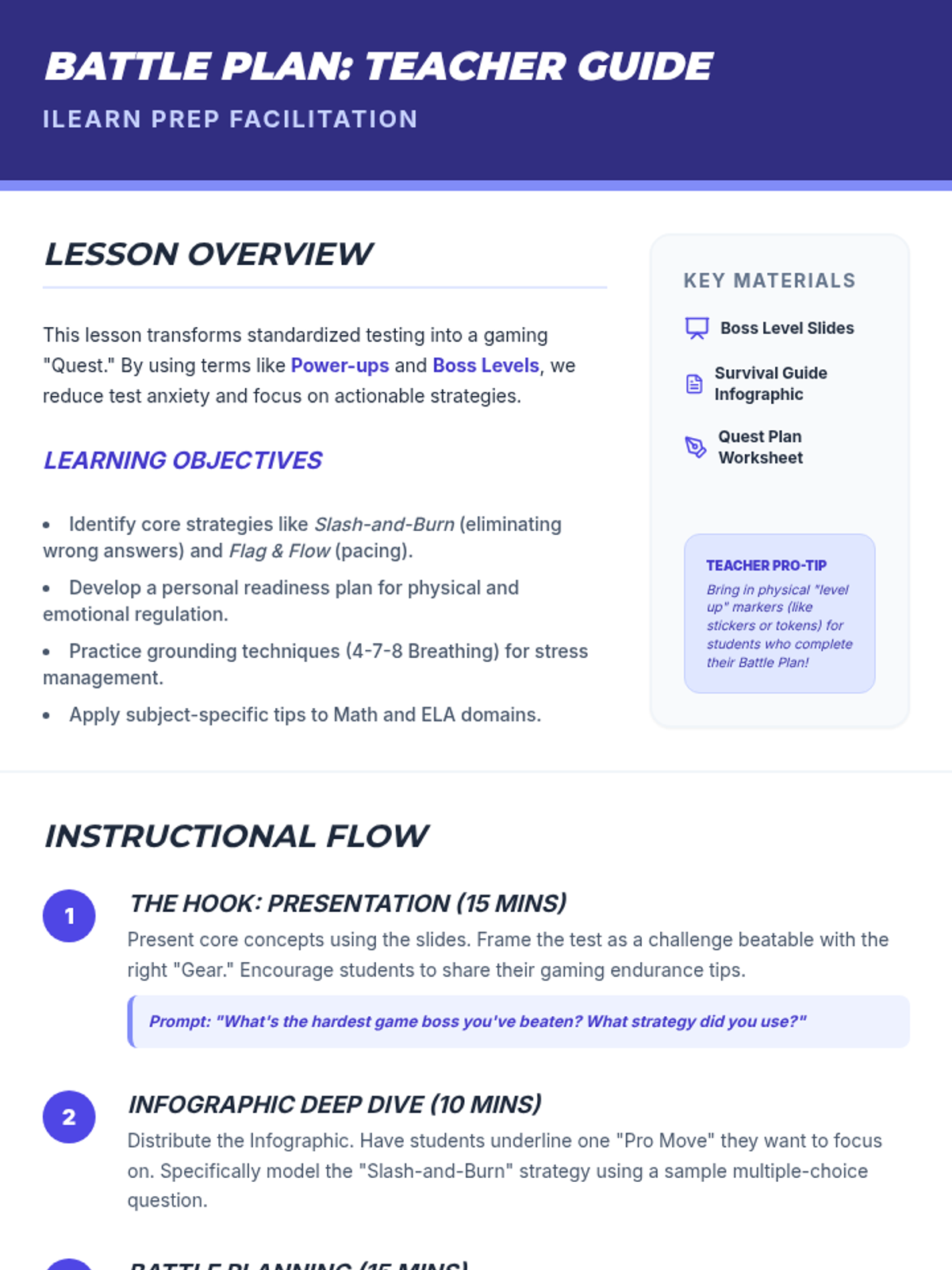
A comprehensive preparation lesson for the ILEARN assessment, focusing on test-taking strategies, physical readiness, and emotional regulation through a high-energy gaming theme.
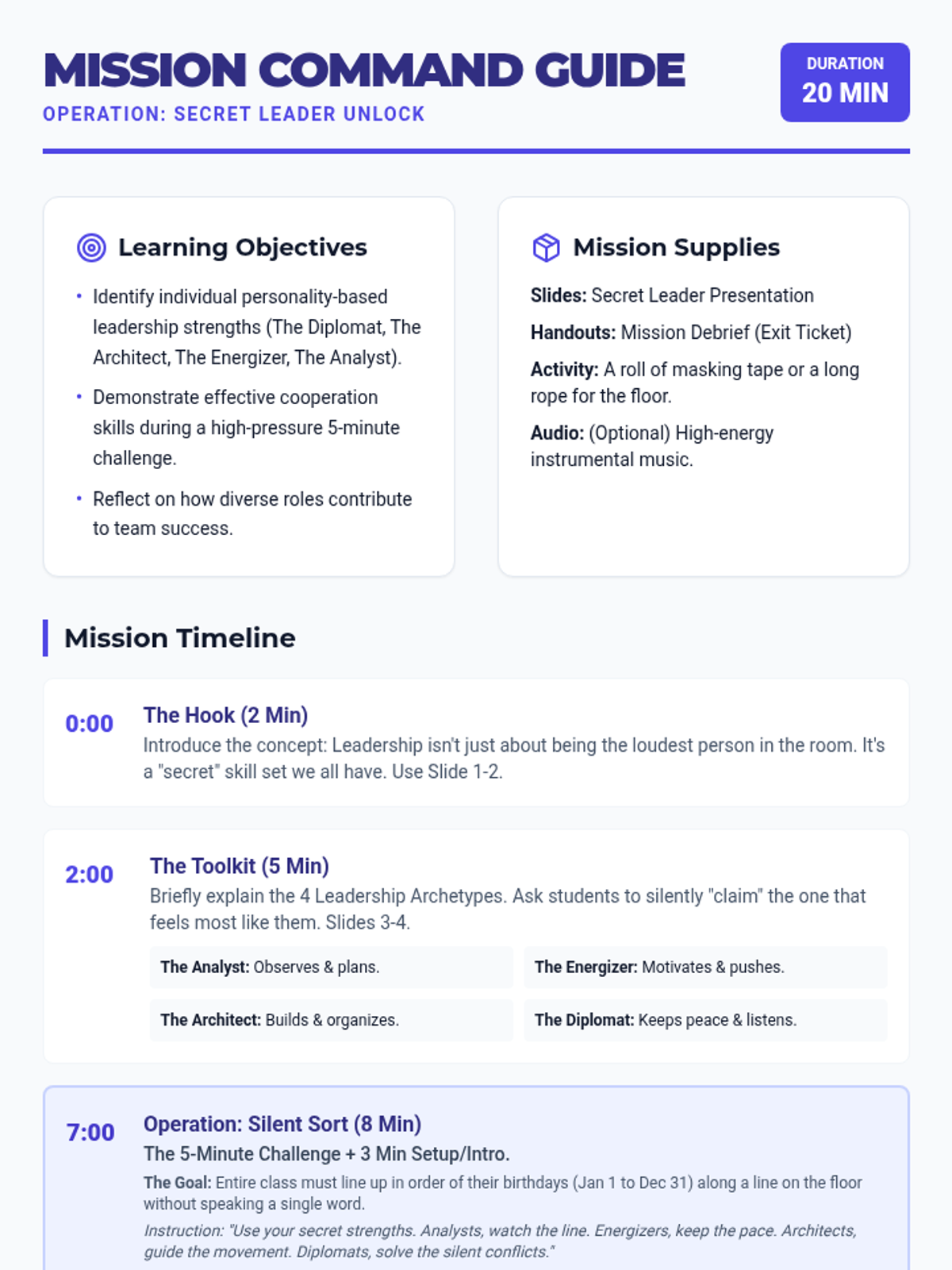
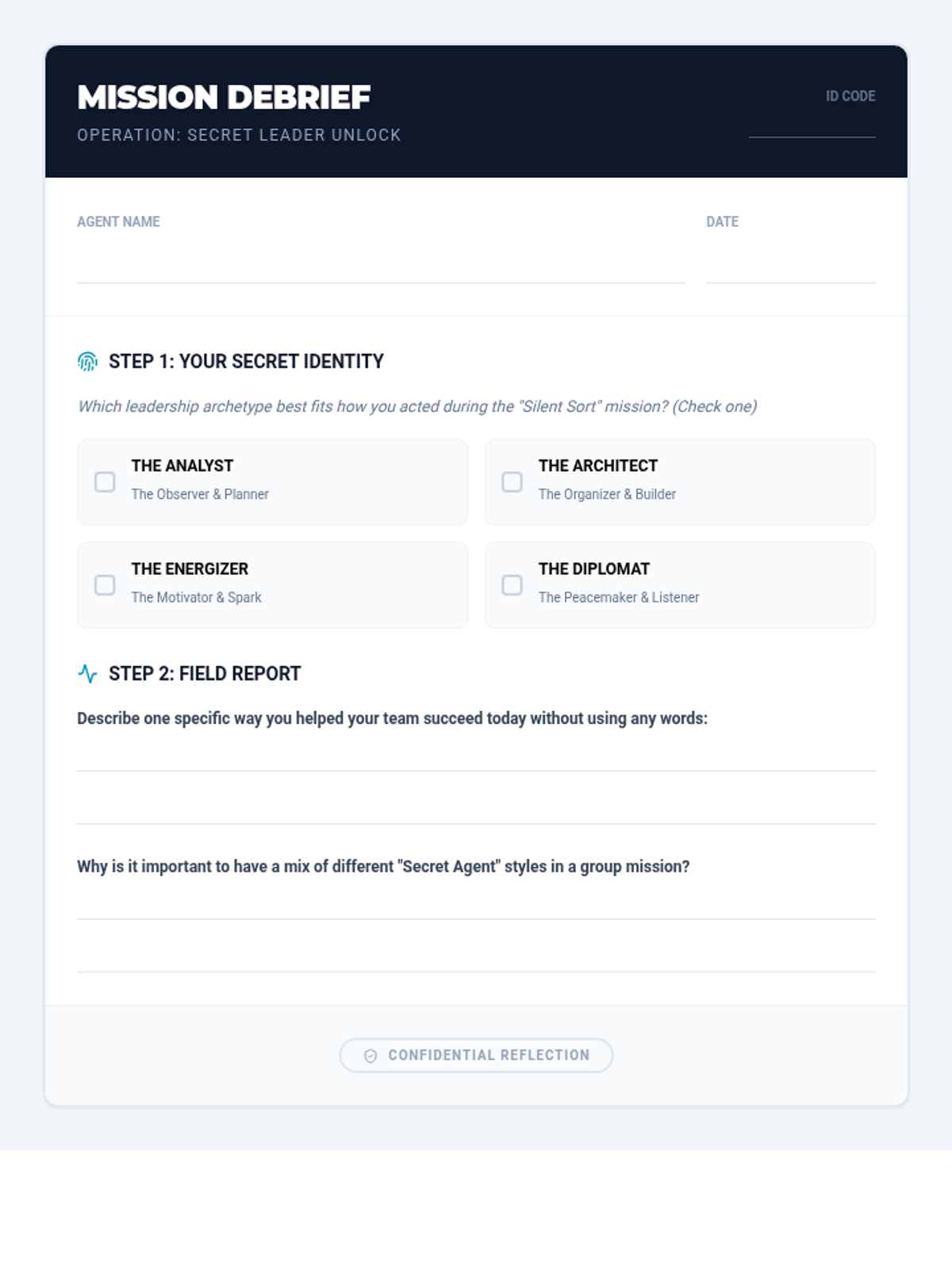
A high-energy, 20-minute session focusing on discovering personality-based leadership strengths and applying them through a rapid-fire teamwork challenge. Students identify their 'Secret Agent' leadership style and practice collaboration in diverse groups.
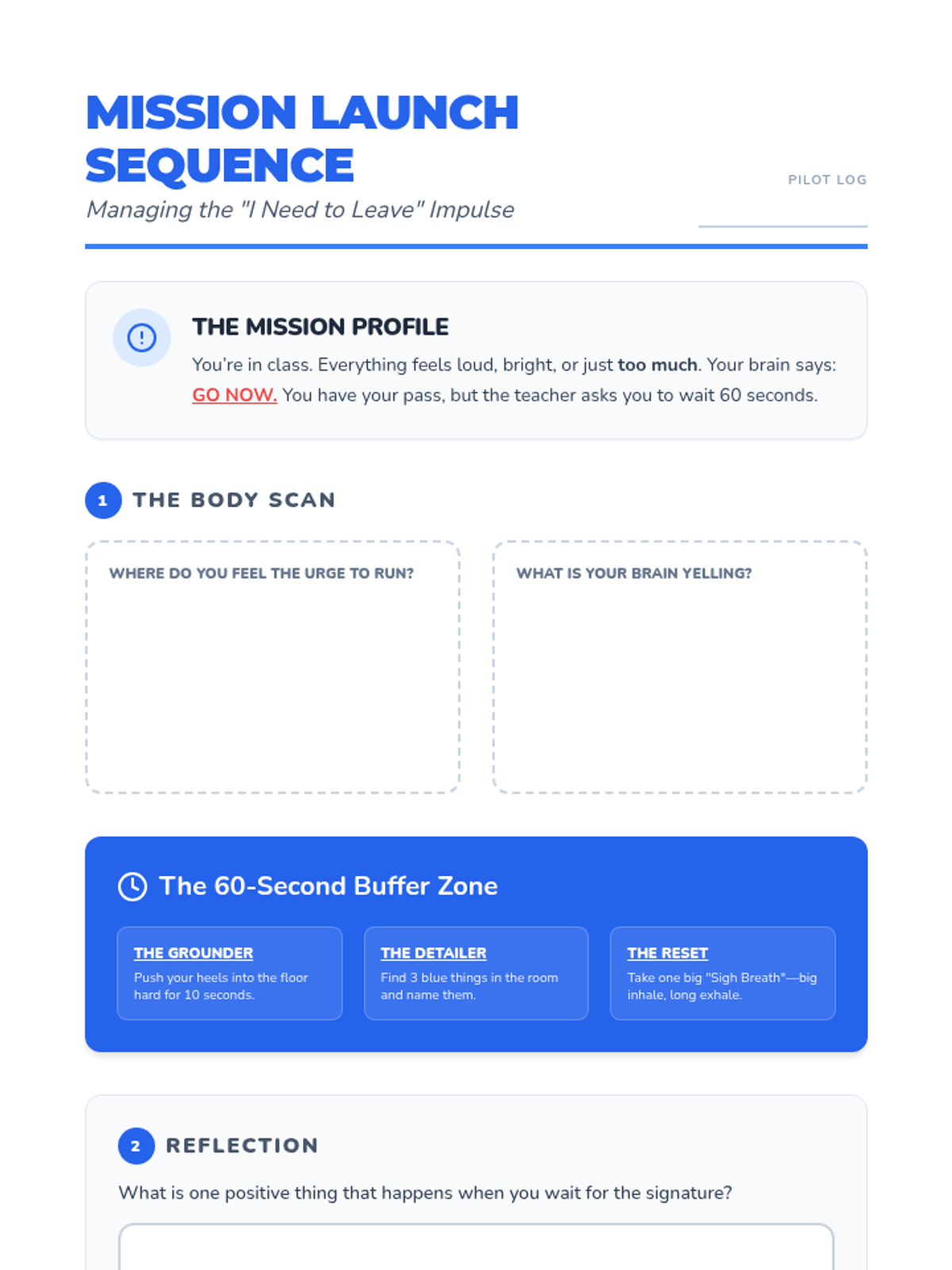
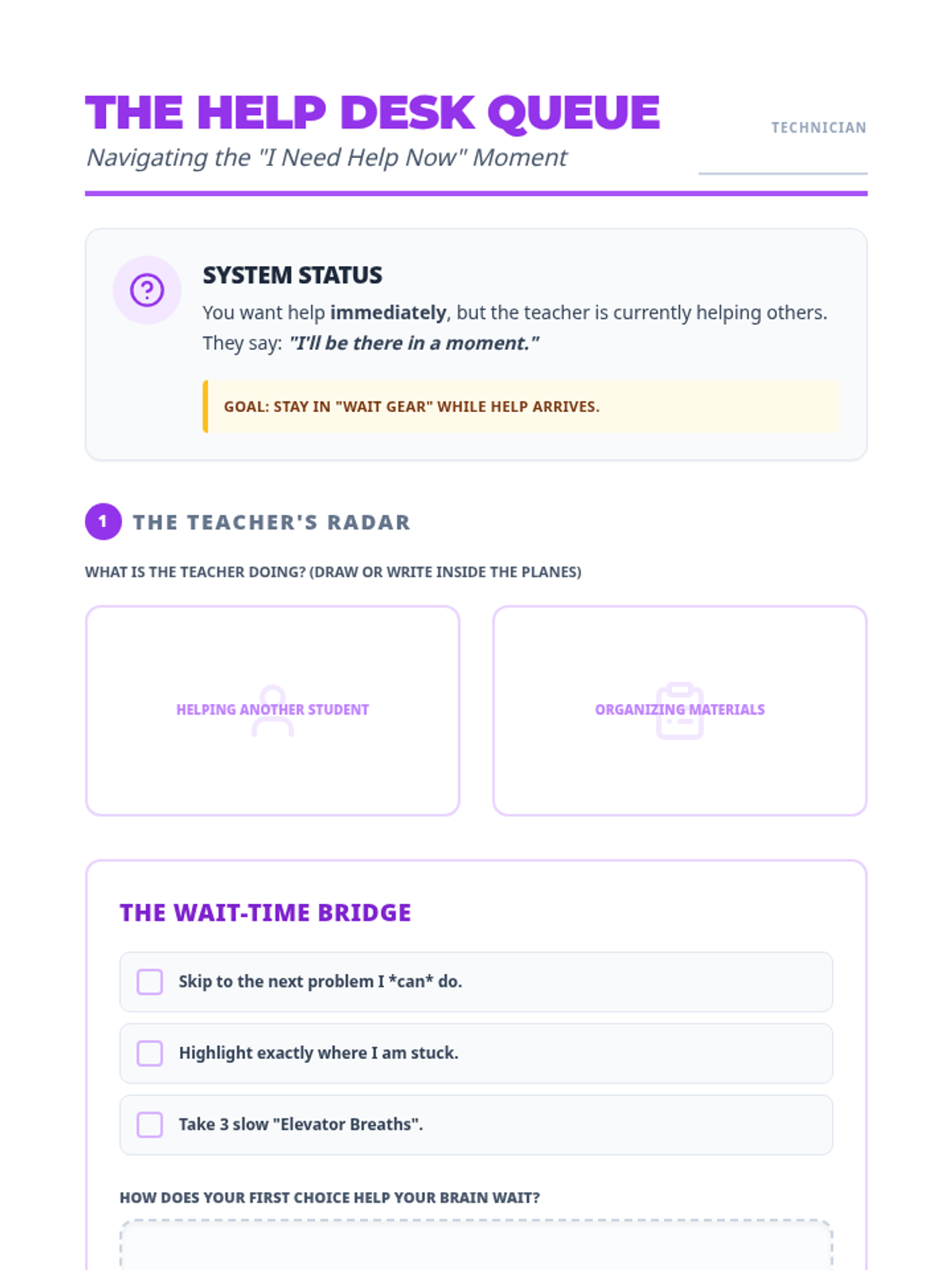
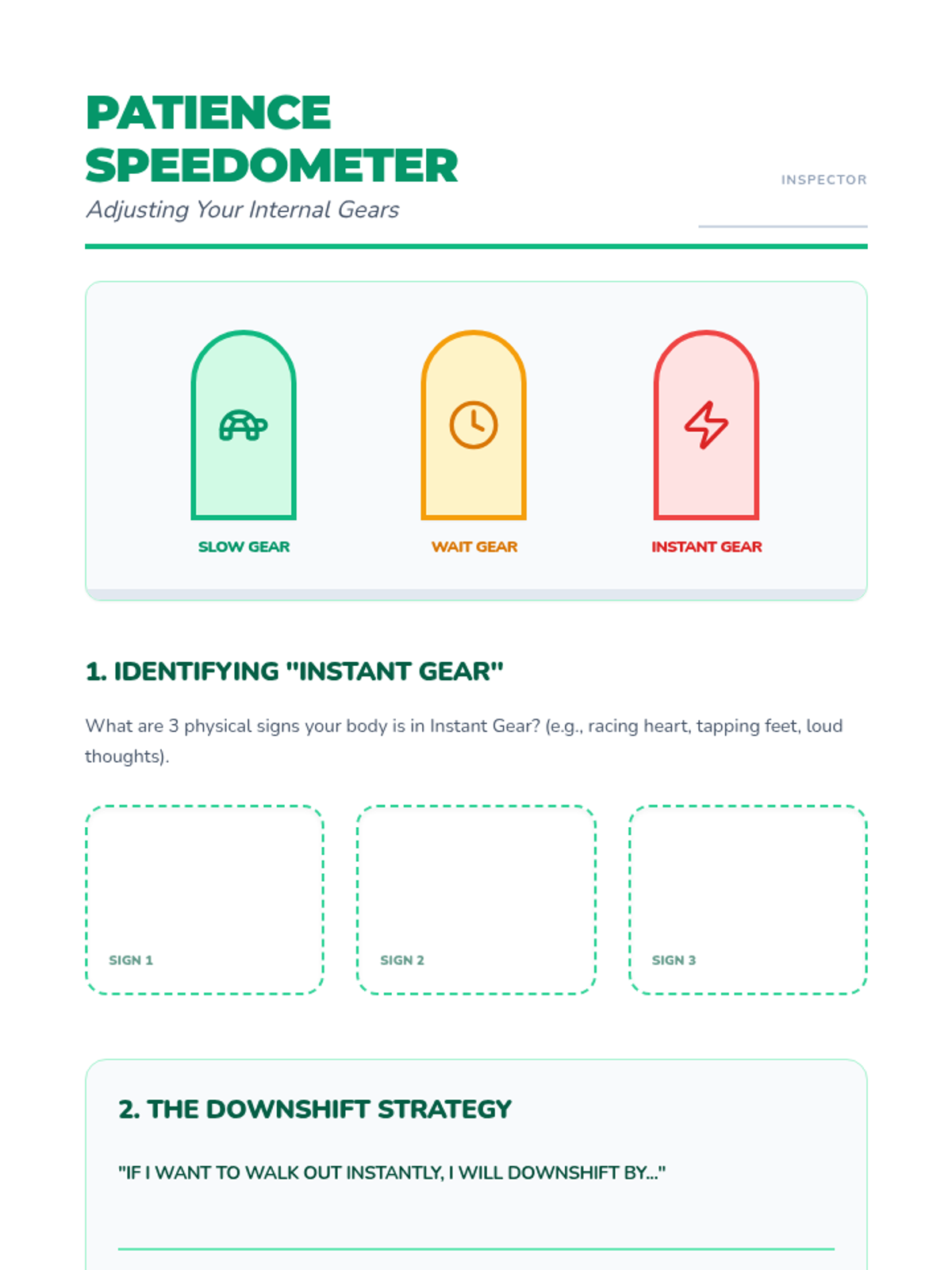
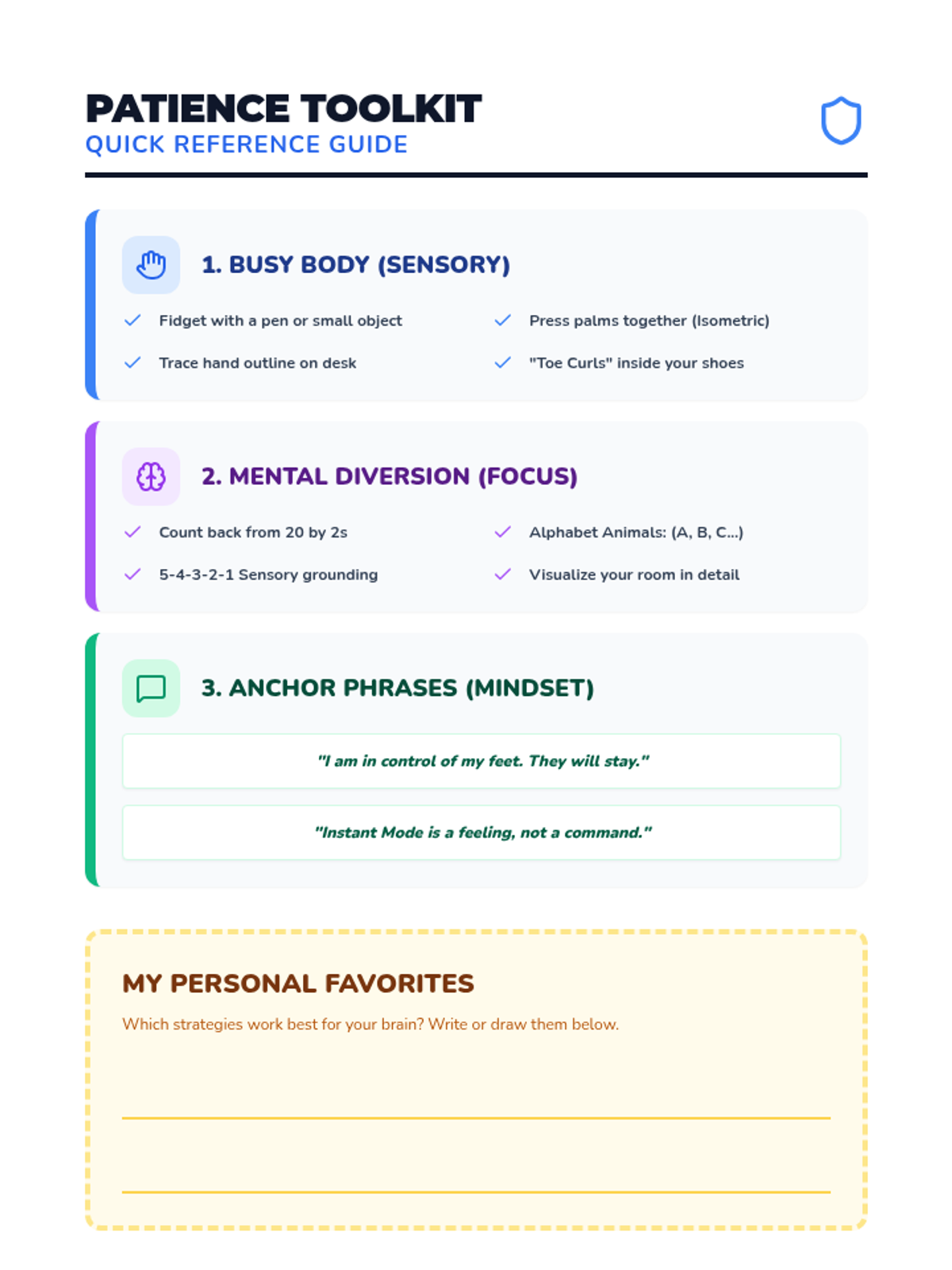
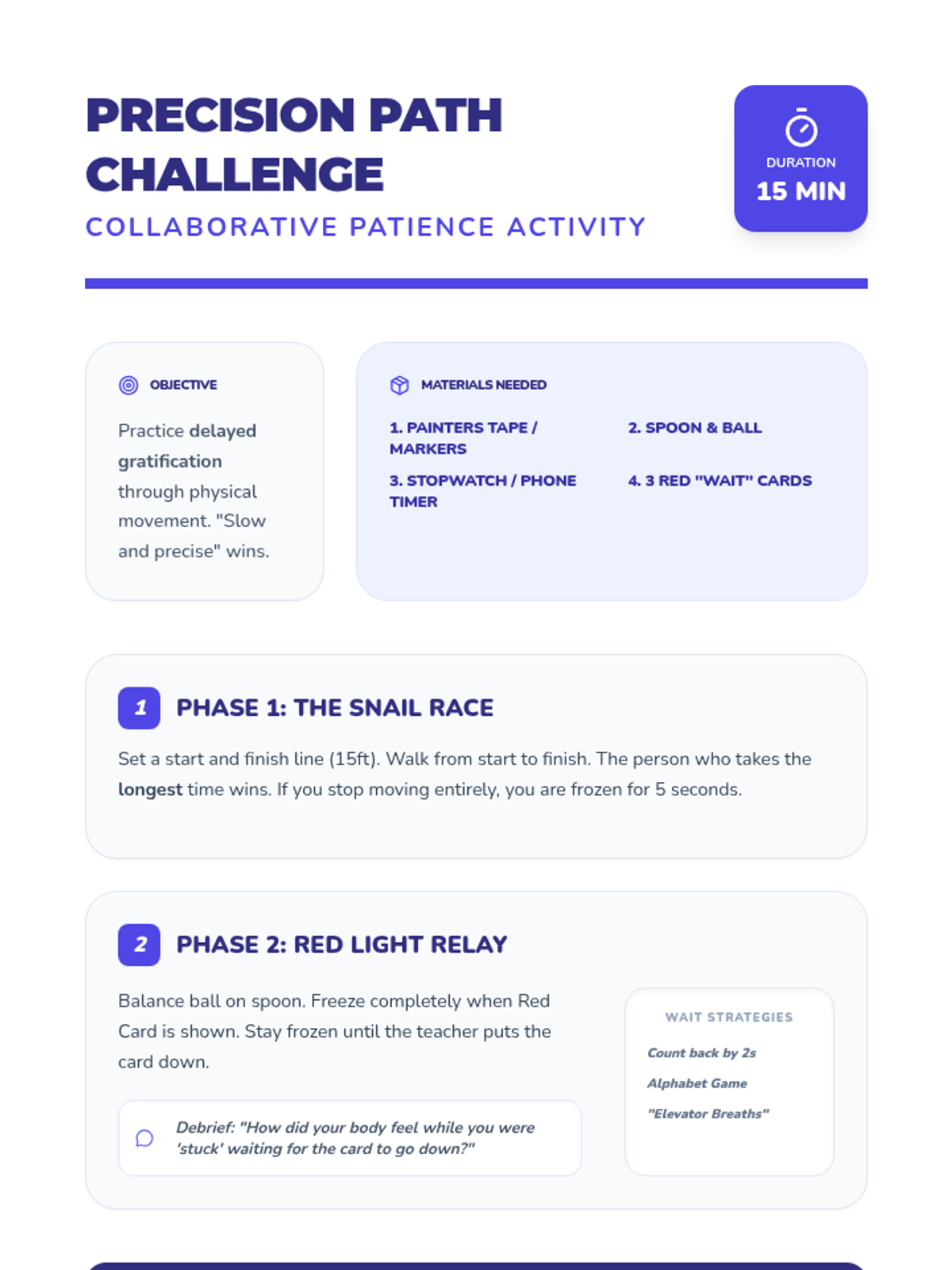
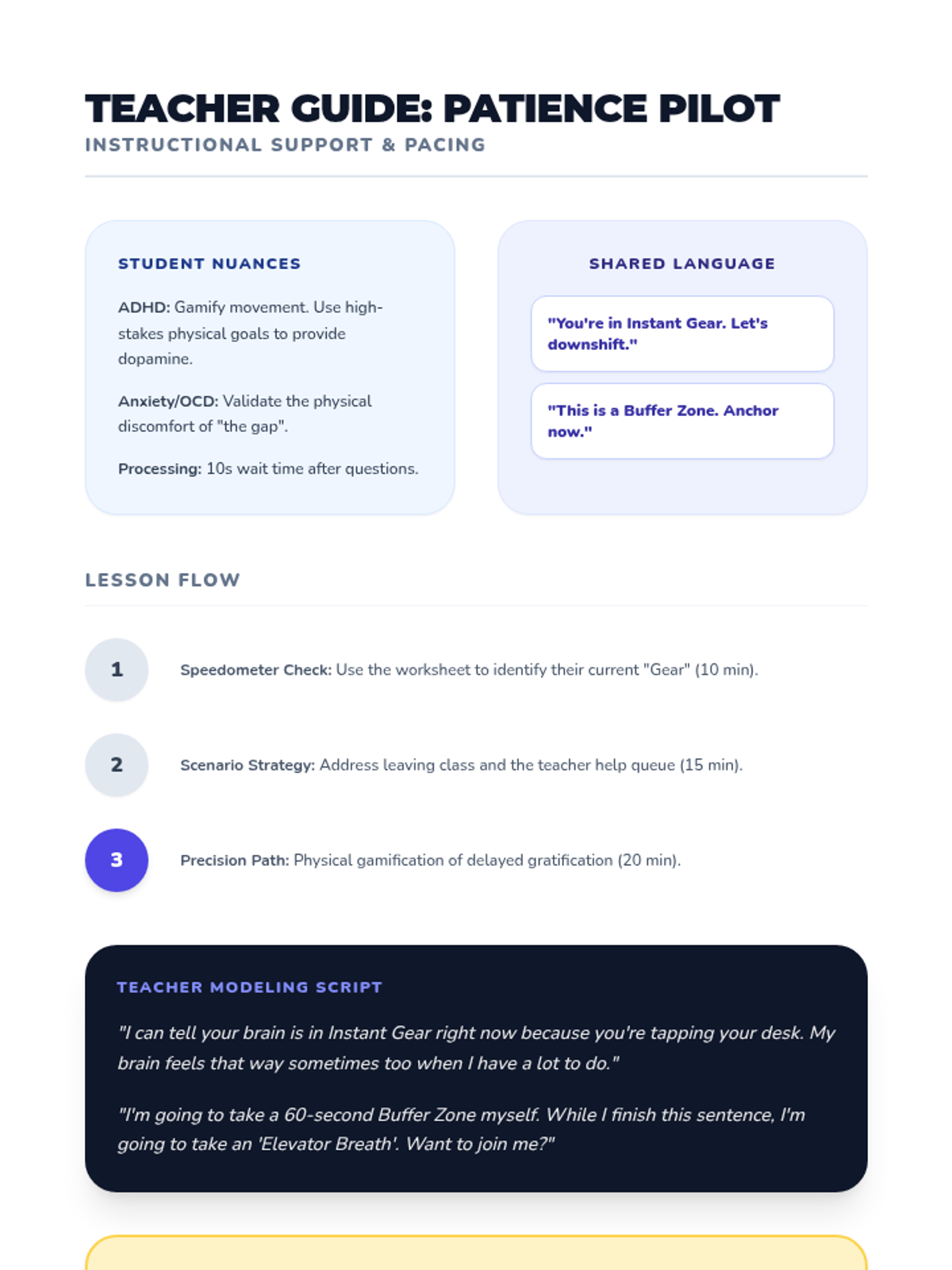
This lesson introduces the concept of the 'Waiting Gap' and provides practical tools for managing the physical and emotional urge to act instantly. Includes worksheets on specific classroom scenarios and a movement-based activity for building delayed gratification.
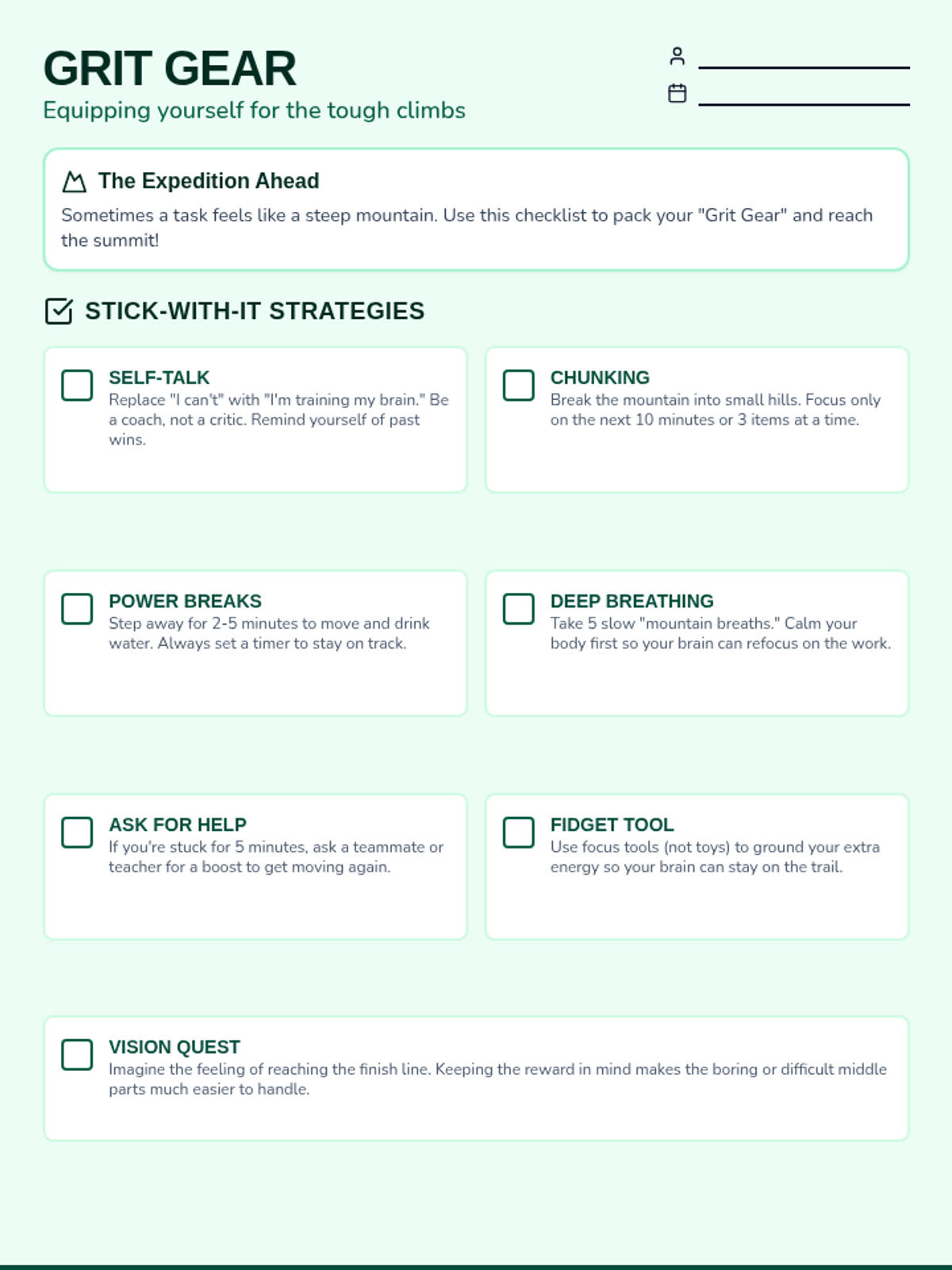
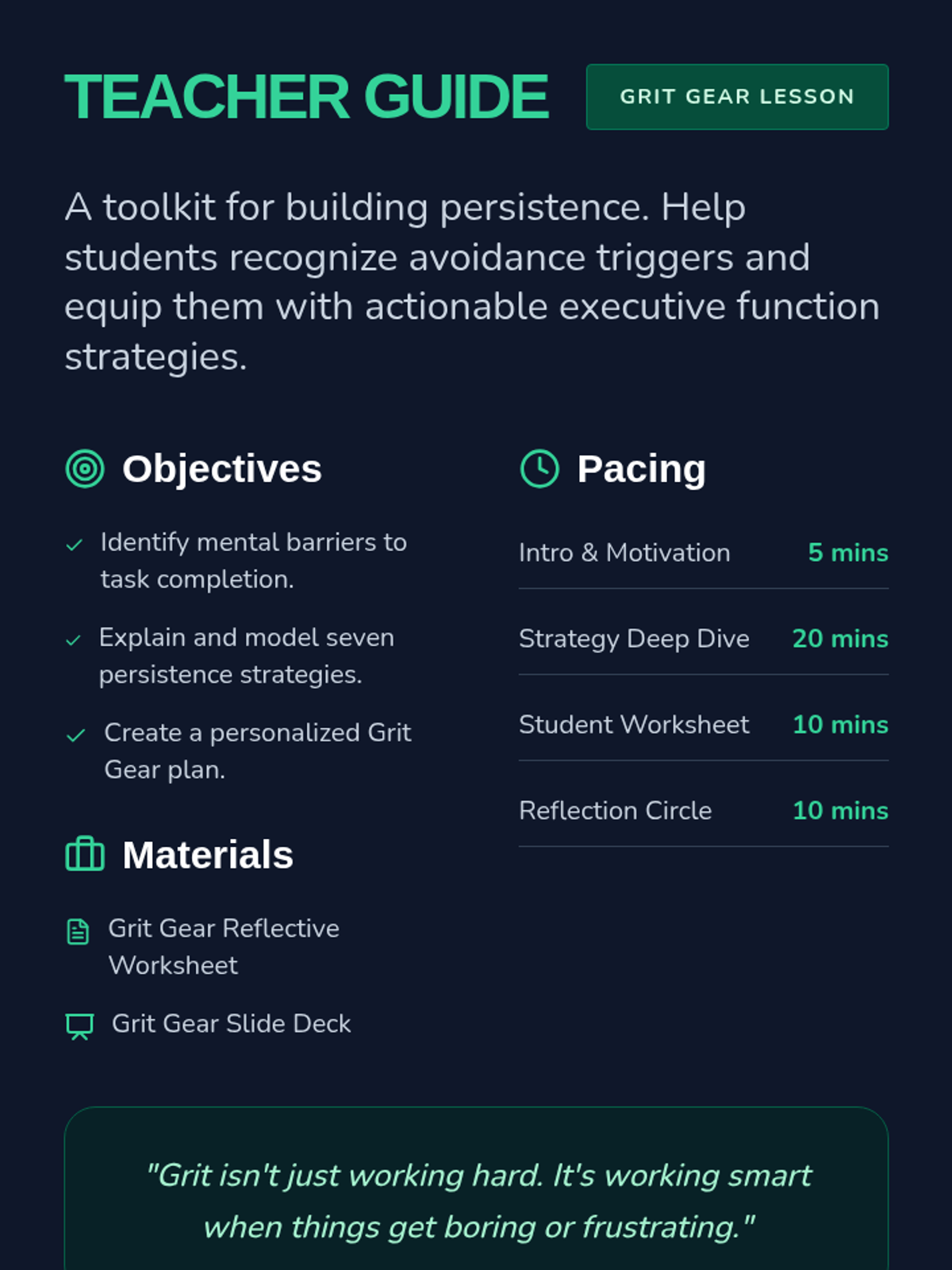
A lesson focused on equipping students with practical strategies to maintain focus and persistence during difficult or monotonous tasks.
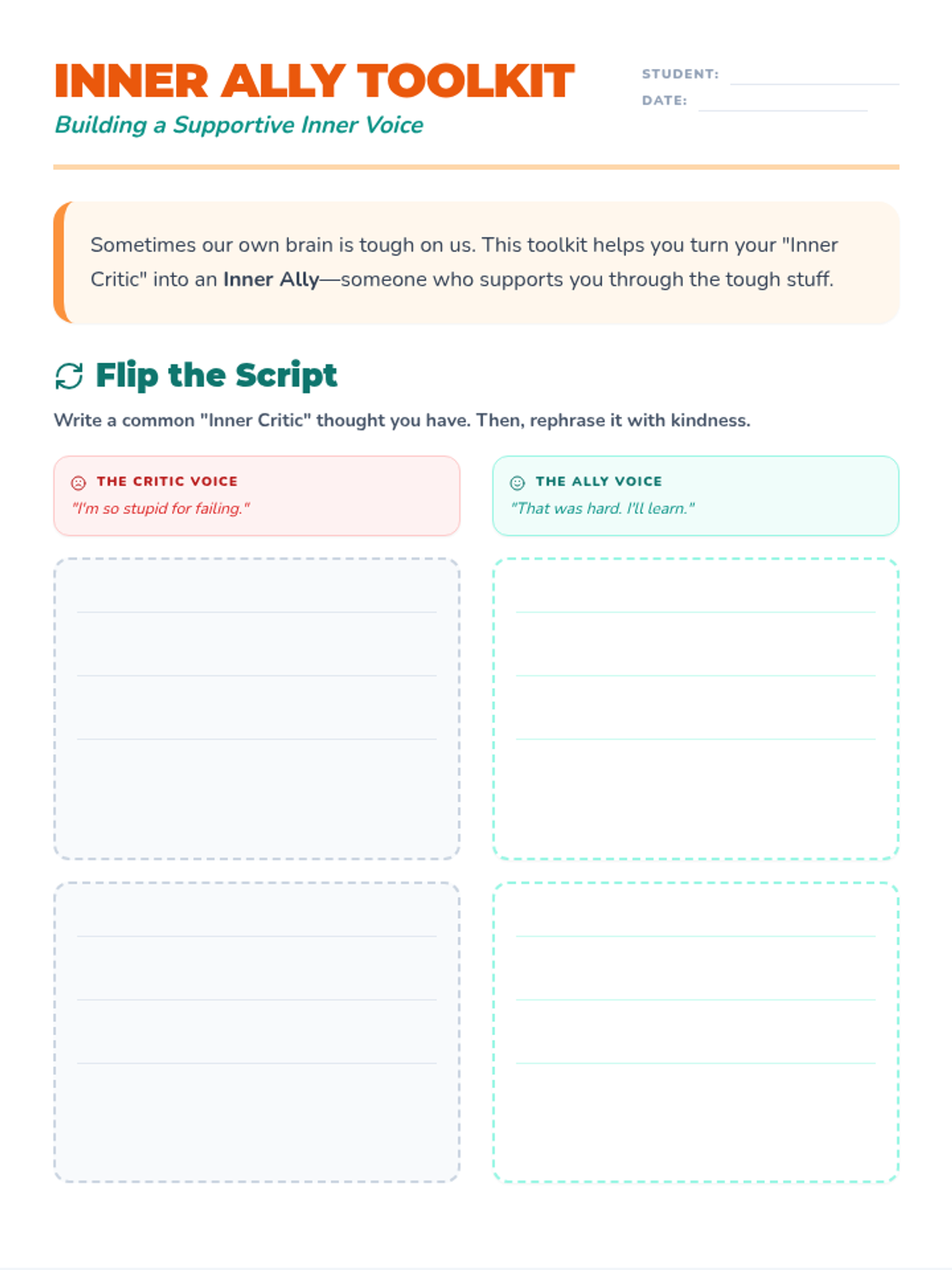
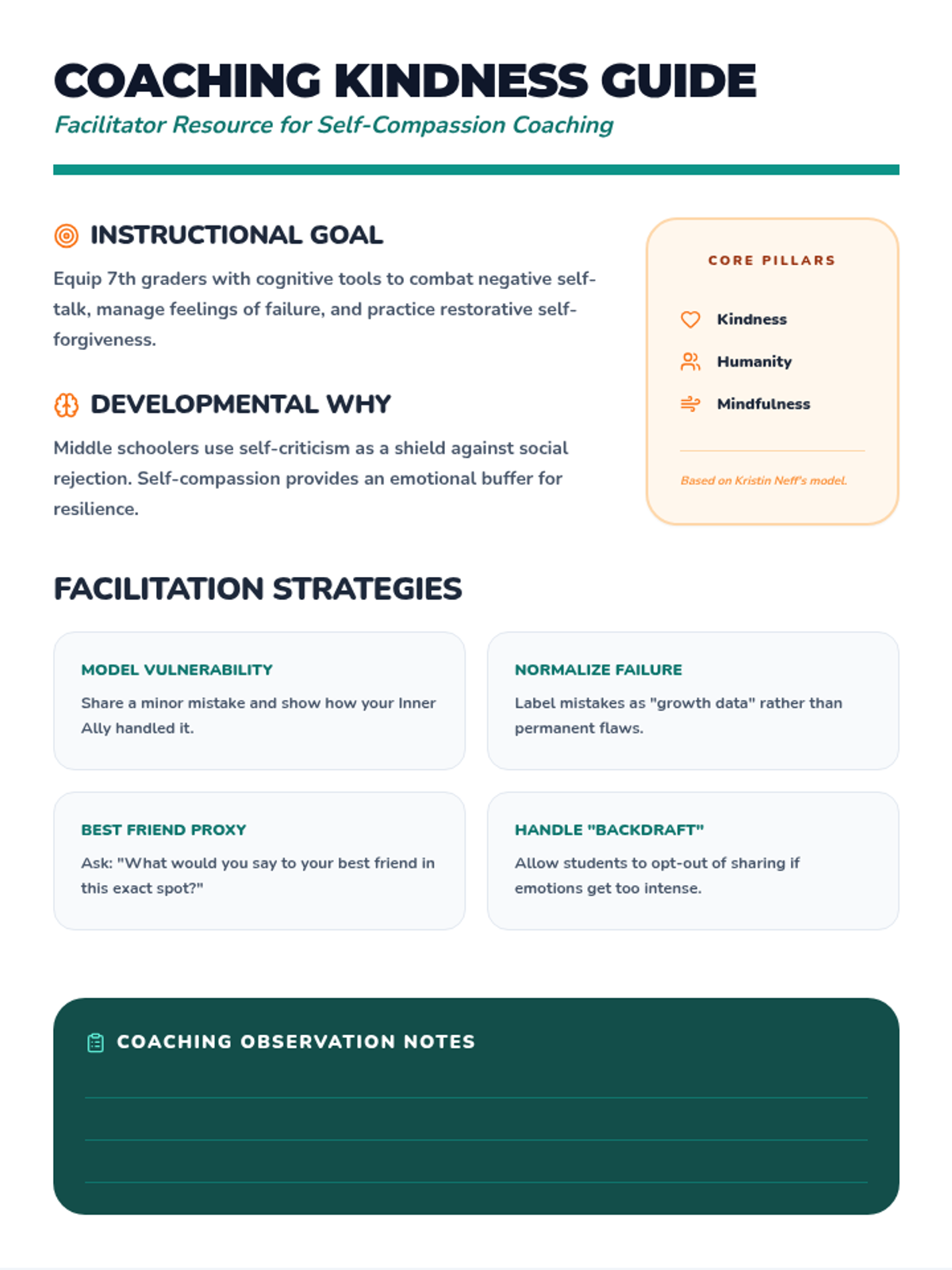
A supportive lesson for middle schoolers focused on developing self-compassion and the ability to forgive oneself after mistakes or difficult days. Students learn to identify their inner critic and cultivate a kind, supportive inner voice.
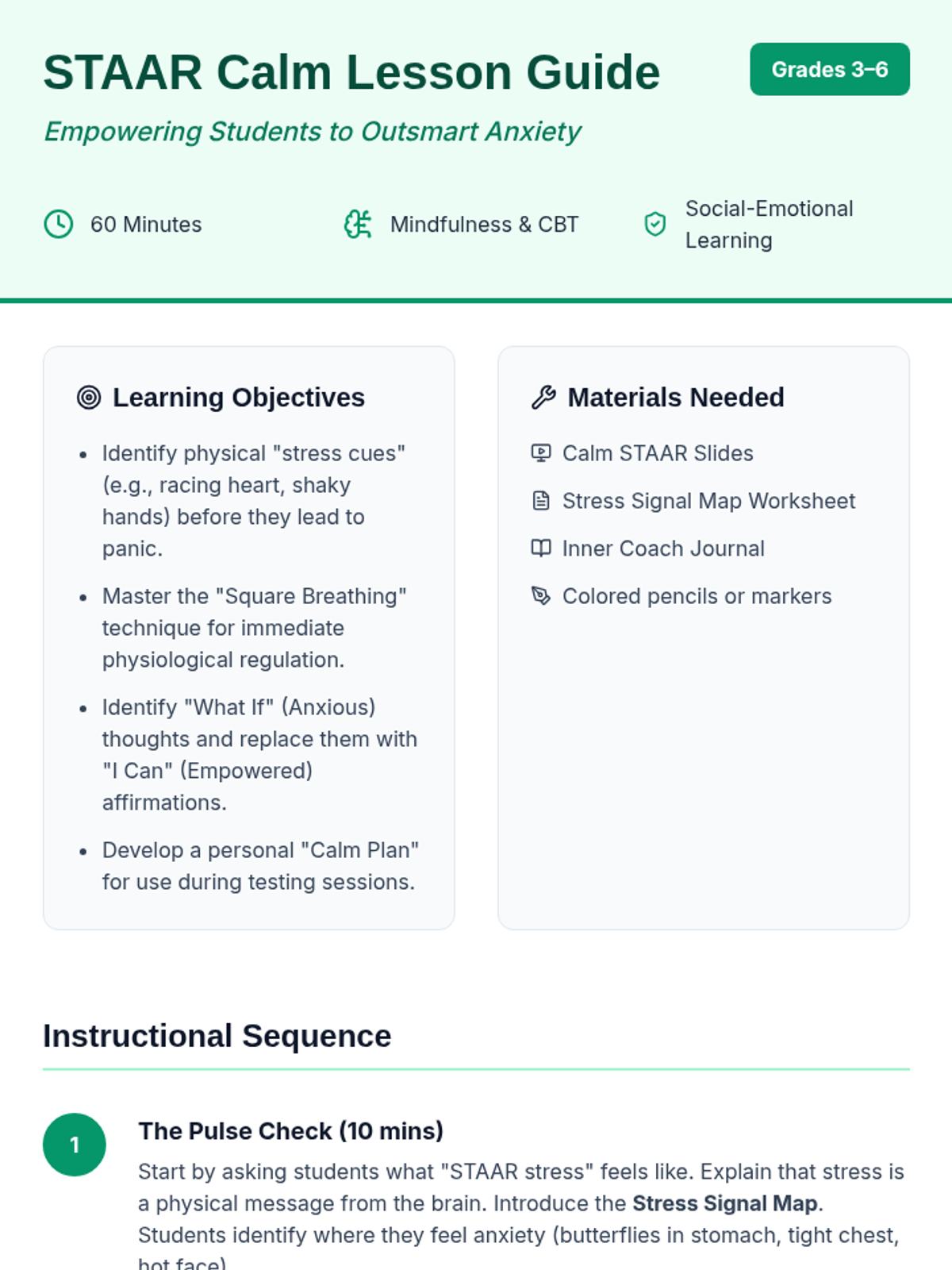
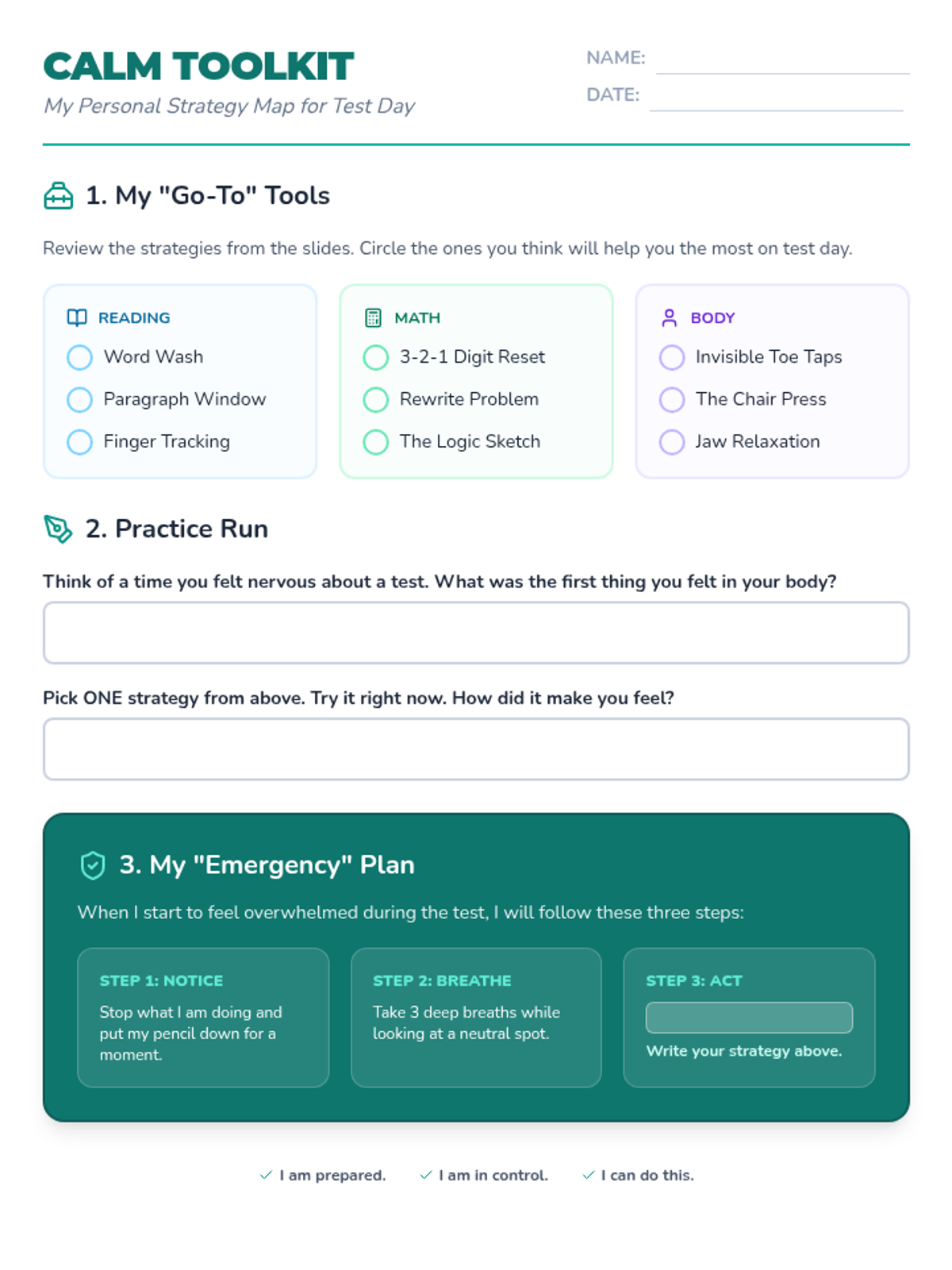
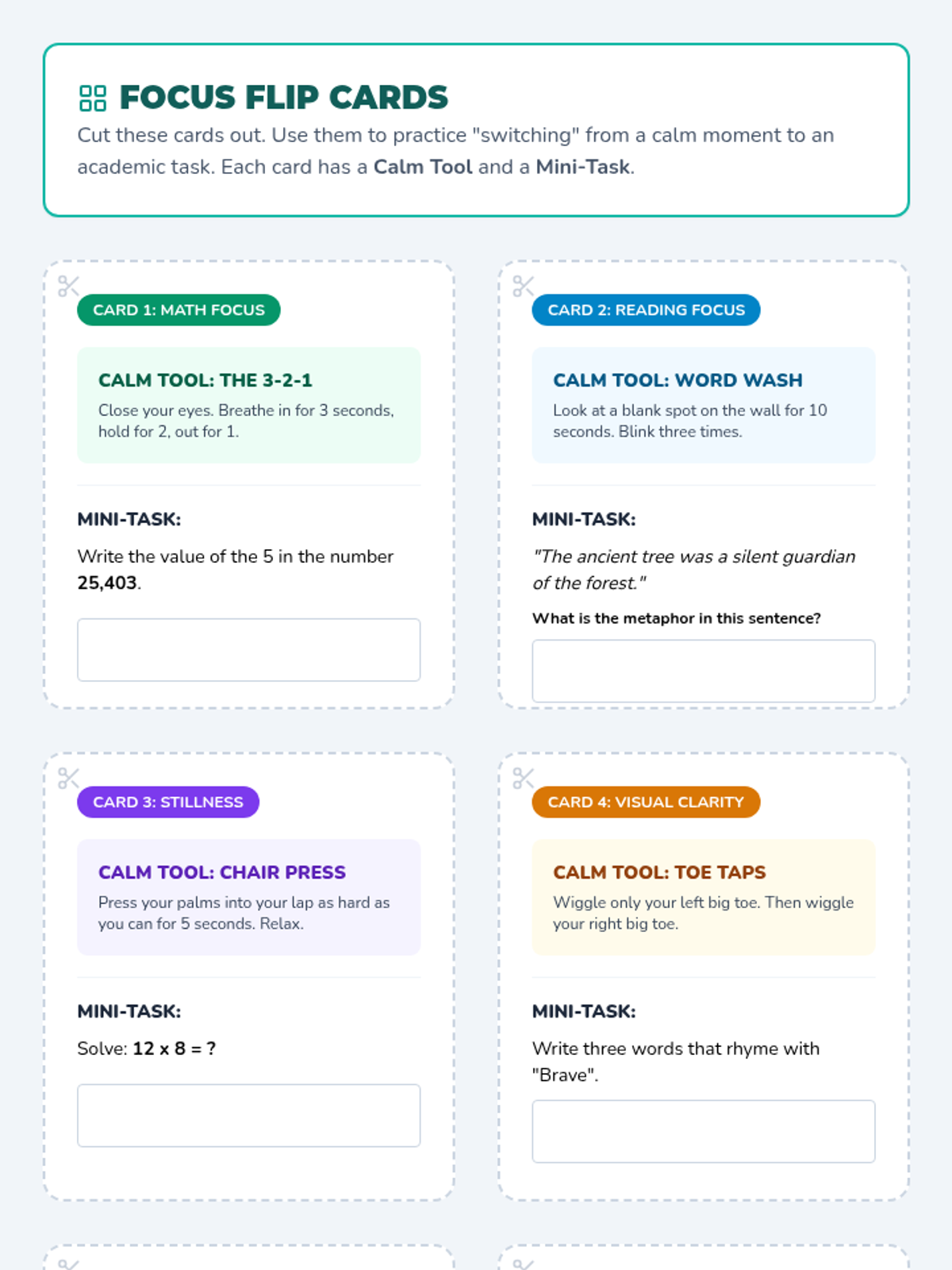
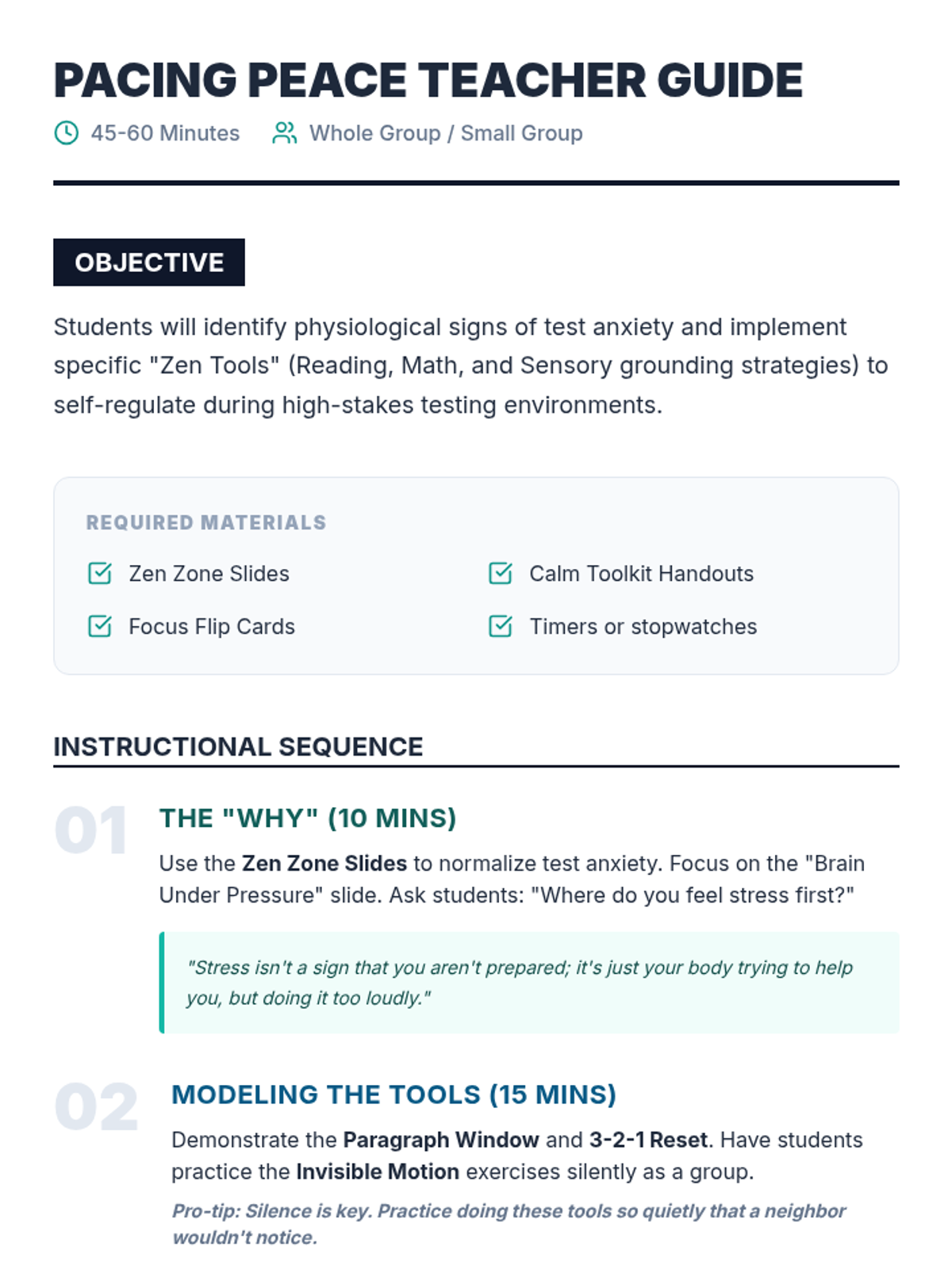
A comprehensive mindfulness workshop designed to equip 3rd-6th grade students with practical tools to manage testing anxiety, focusing on physiological awareness and cognitive reframing.
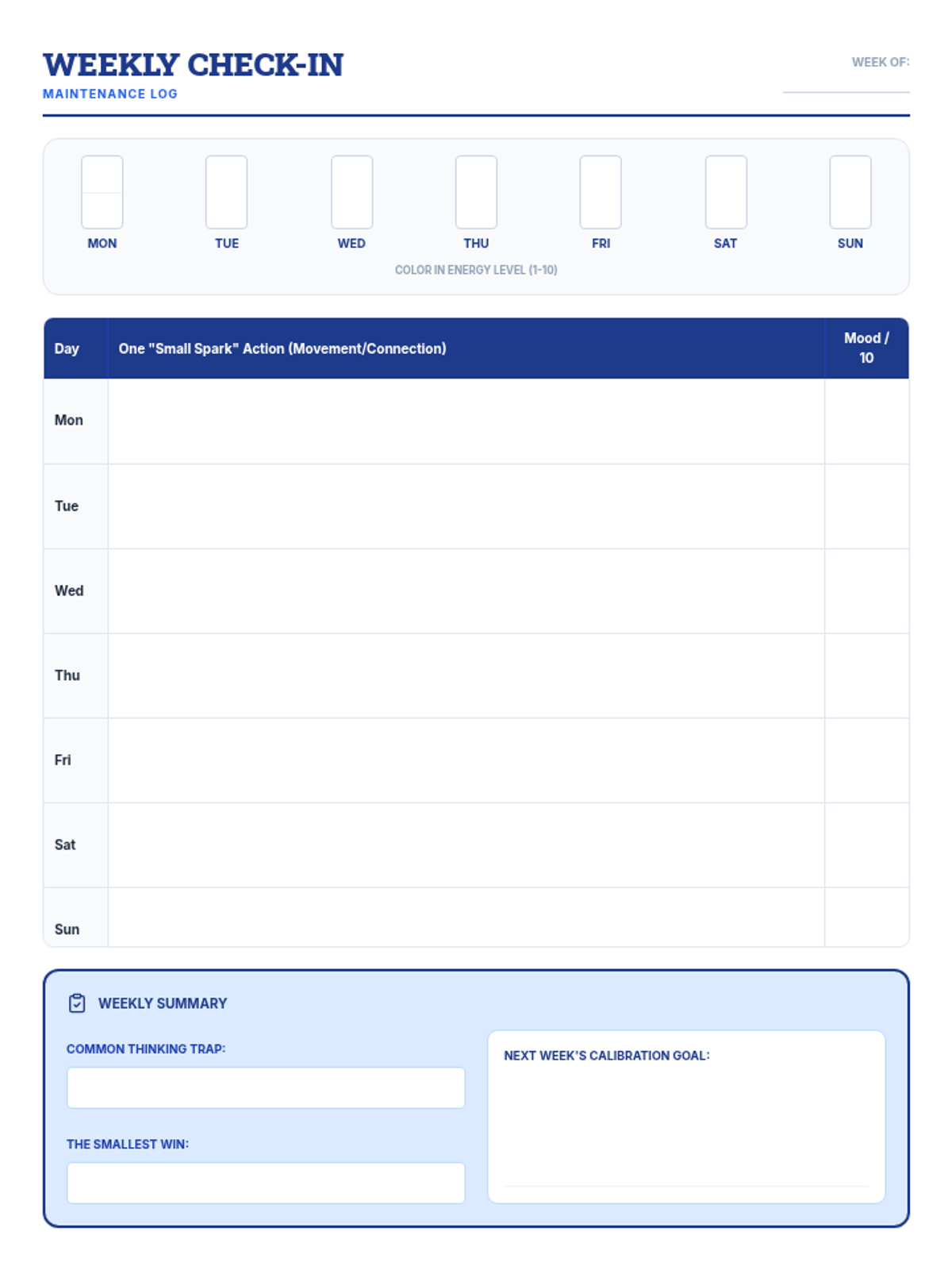
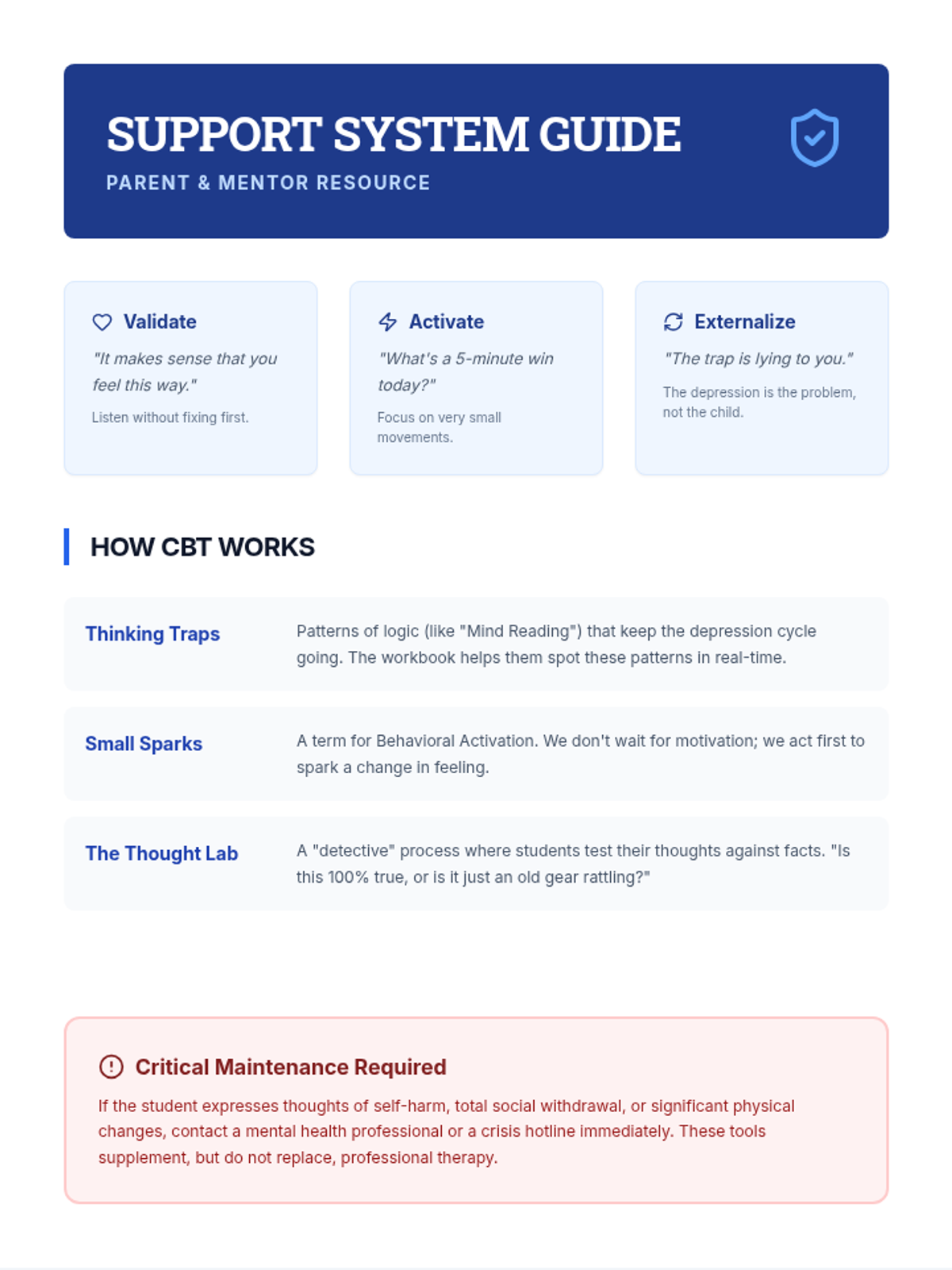
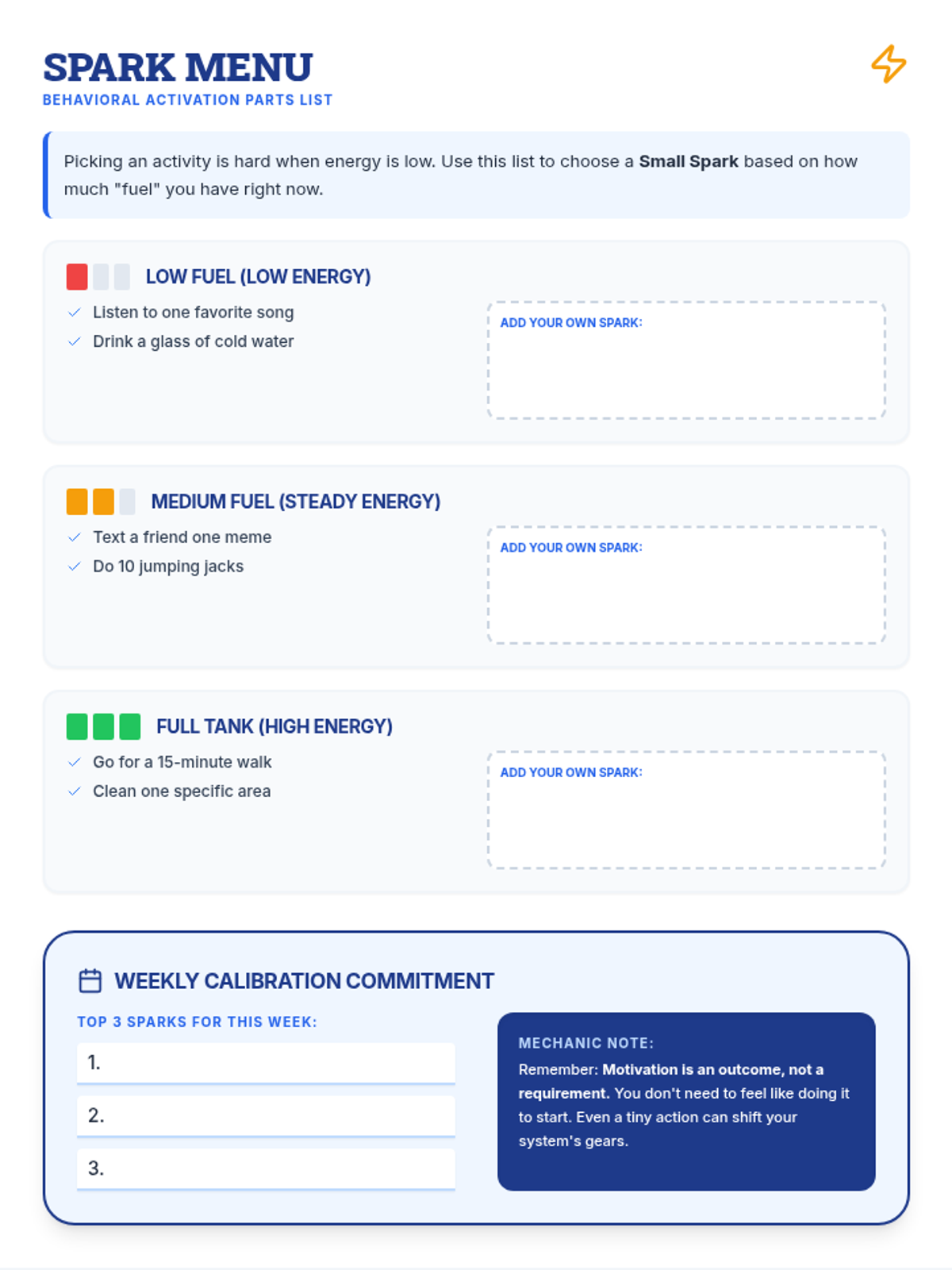
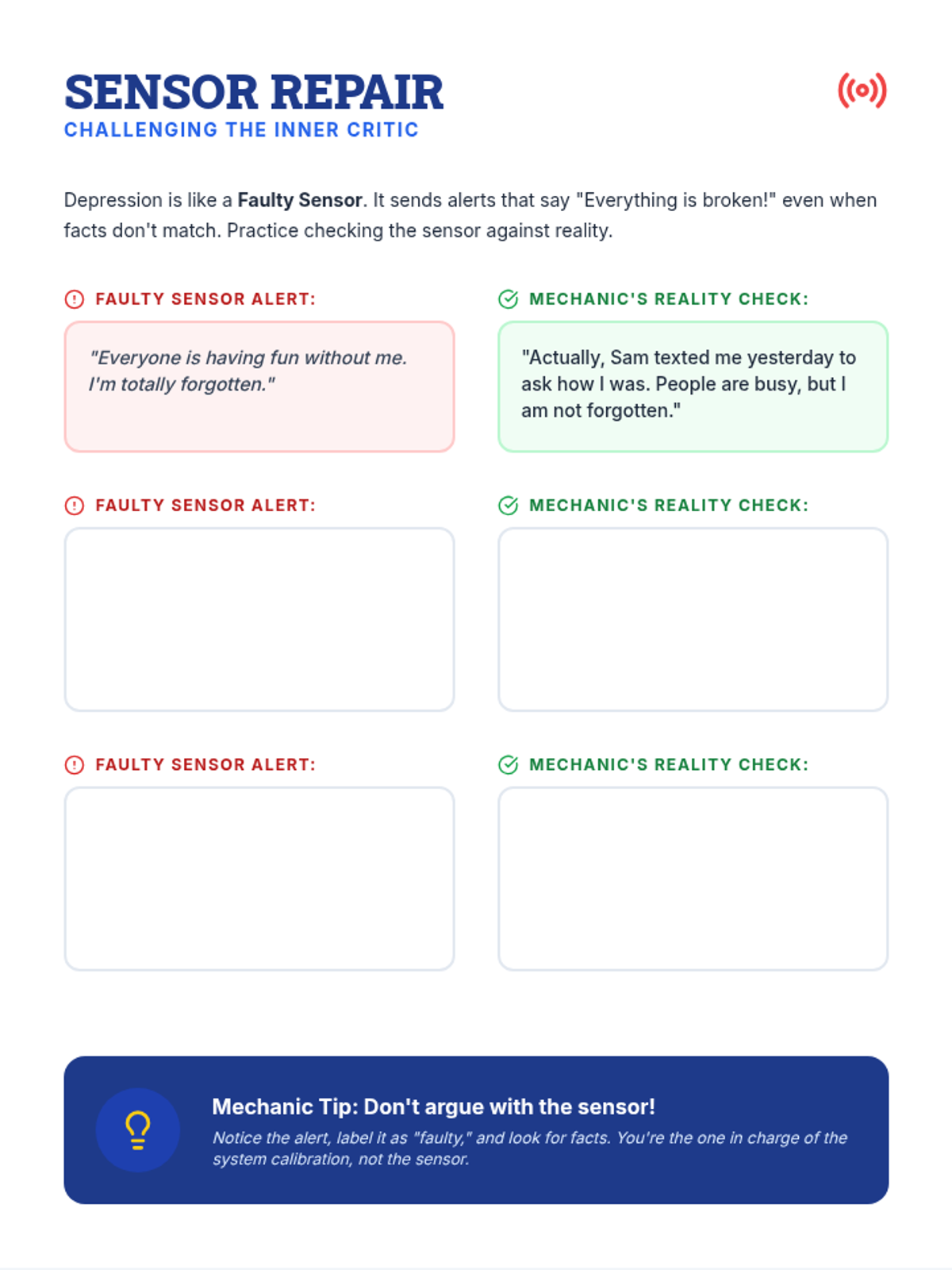
A CBT-based toolkit designed for middle school students to understand the connection between thoughts, feelings, and actions. It provides practical strategies for identifying negative thinking patterns and implementing small behavioral changes to improve mood.
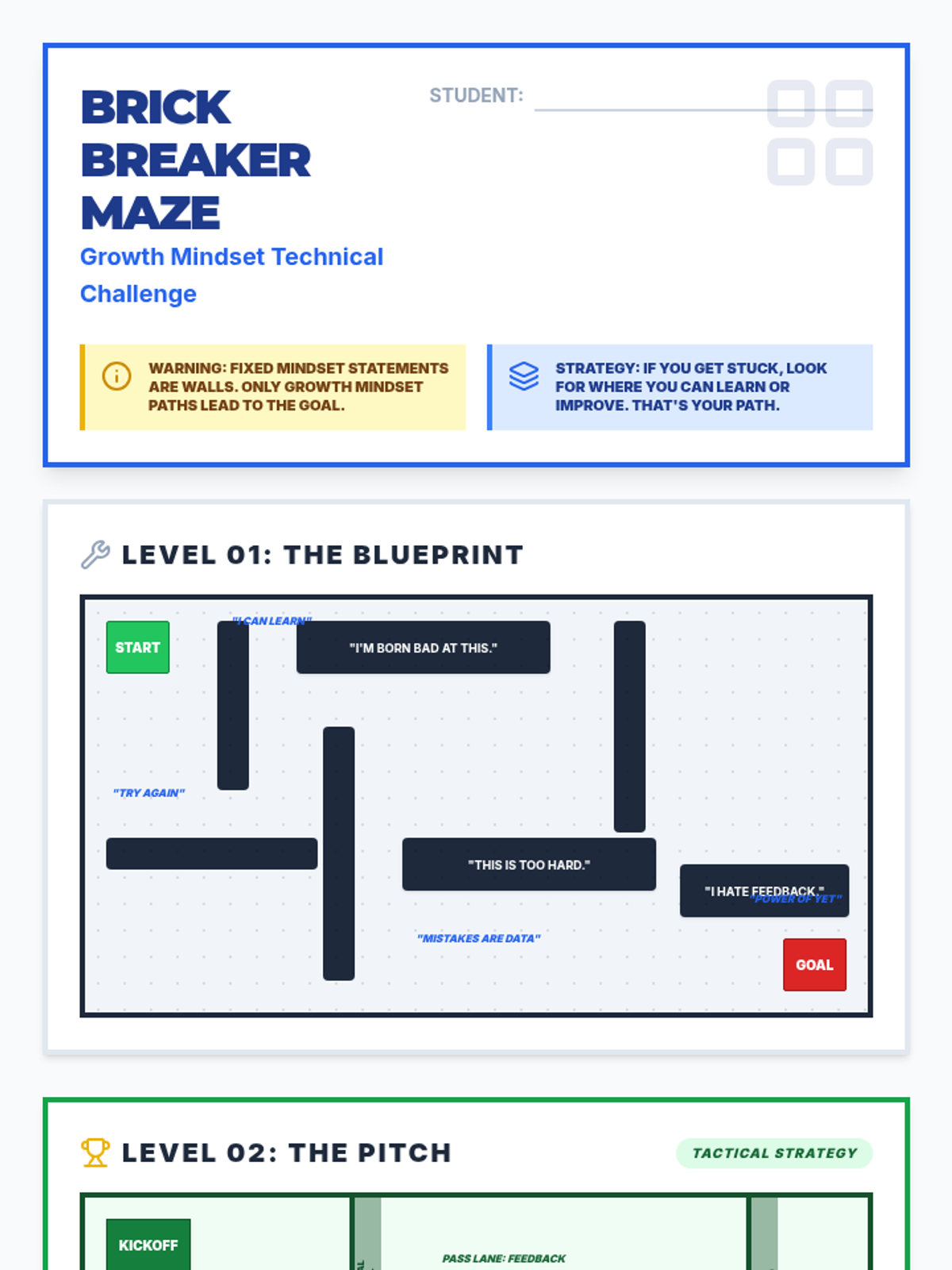
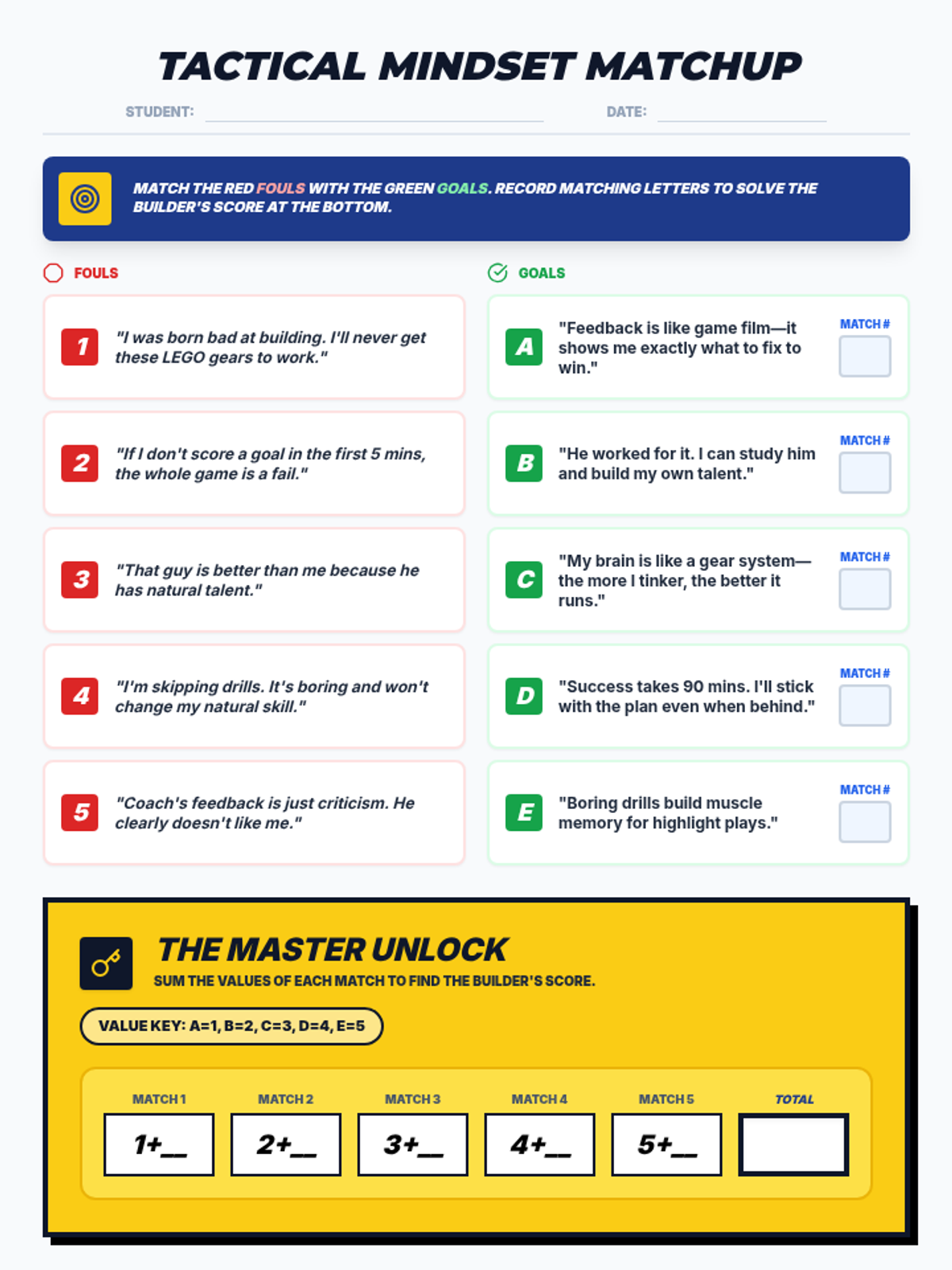
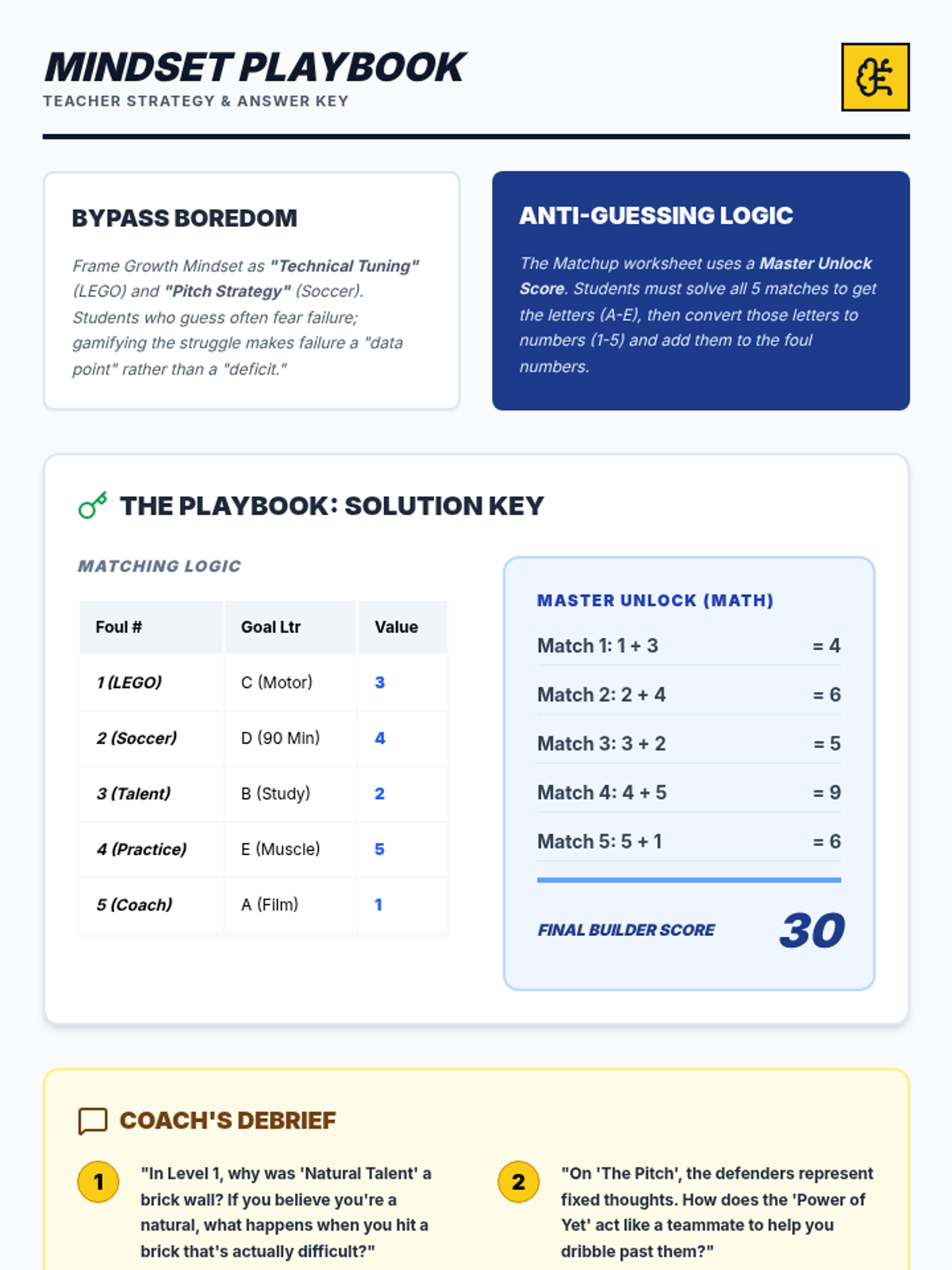
A high-engagement challenge pack for upper elementary and middle school students, using soccer and building themes to explore Growth vs. Fixed Mindset.
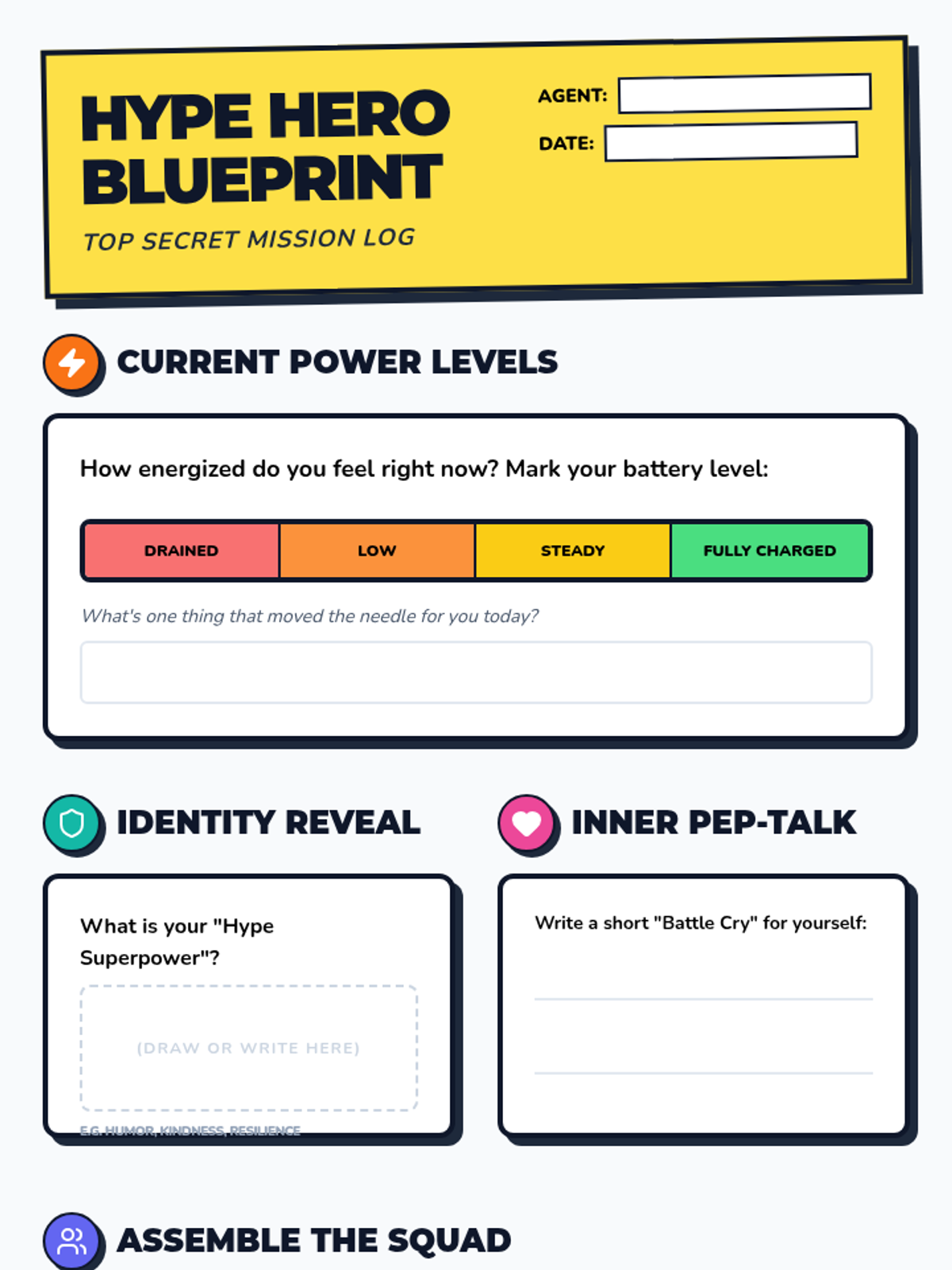
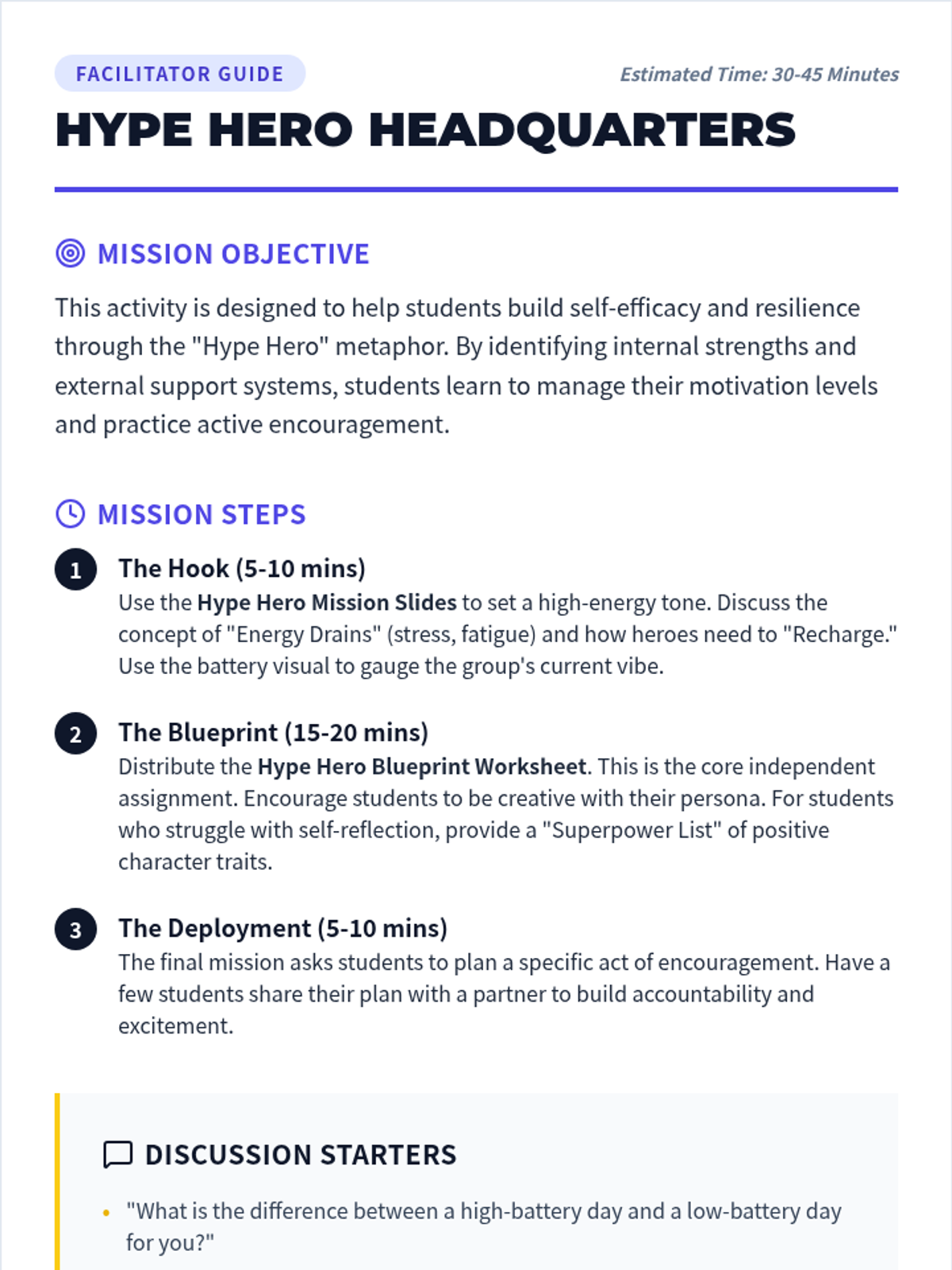
A high-energy lesson designed to boost student motivation and self-encouragement through a 'superhero' lens. Students identify their personal strengths and create a plan to stay 'pumped up' during challenges.
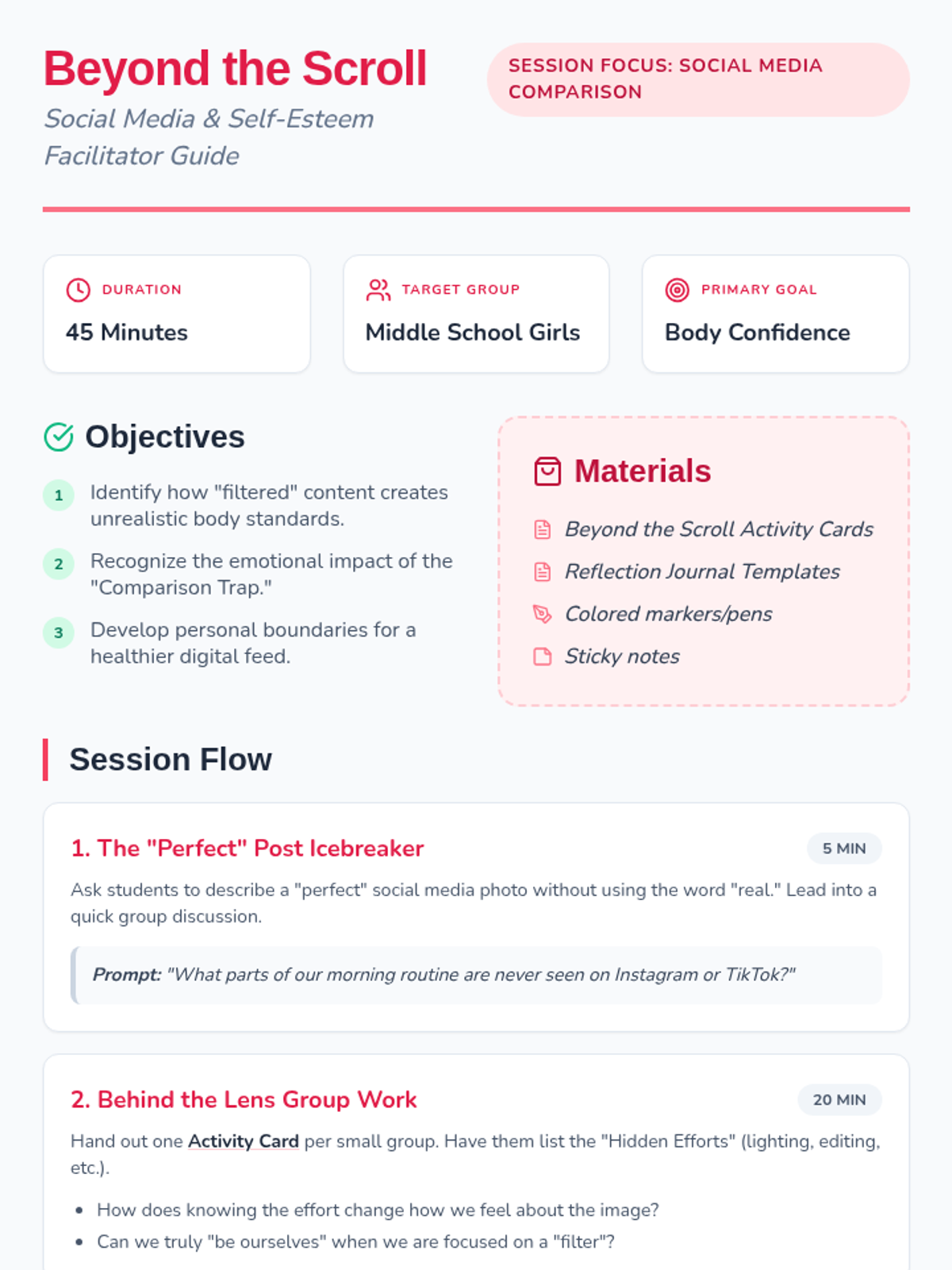
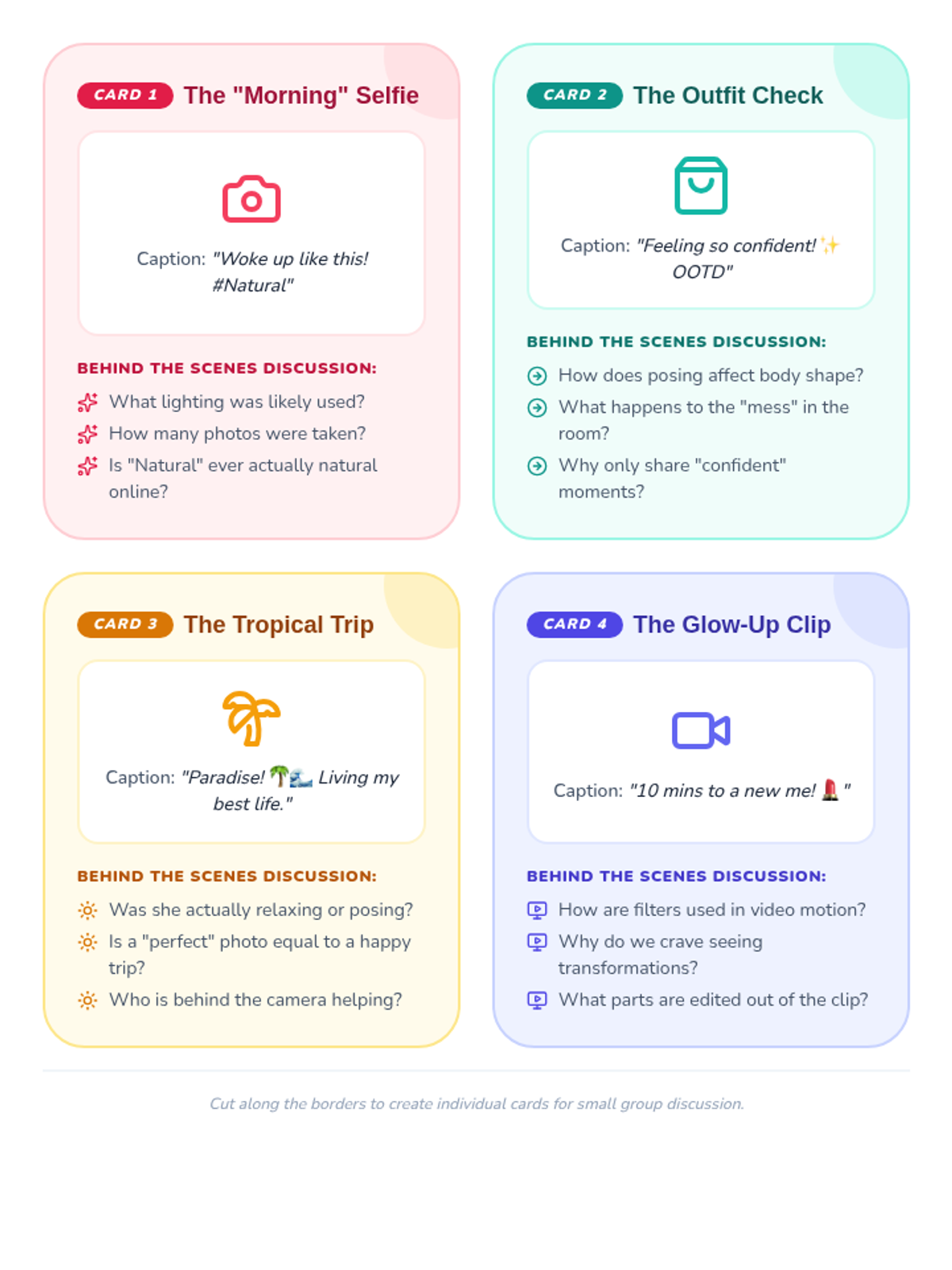
A 45-minute counseling session focused on the impact of social media comparison and body image for middle school girls, featuring group discussions and creative reflection.
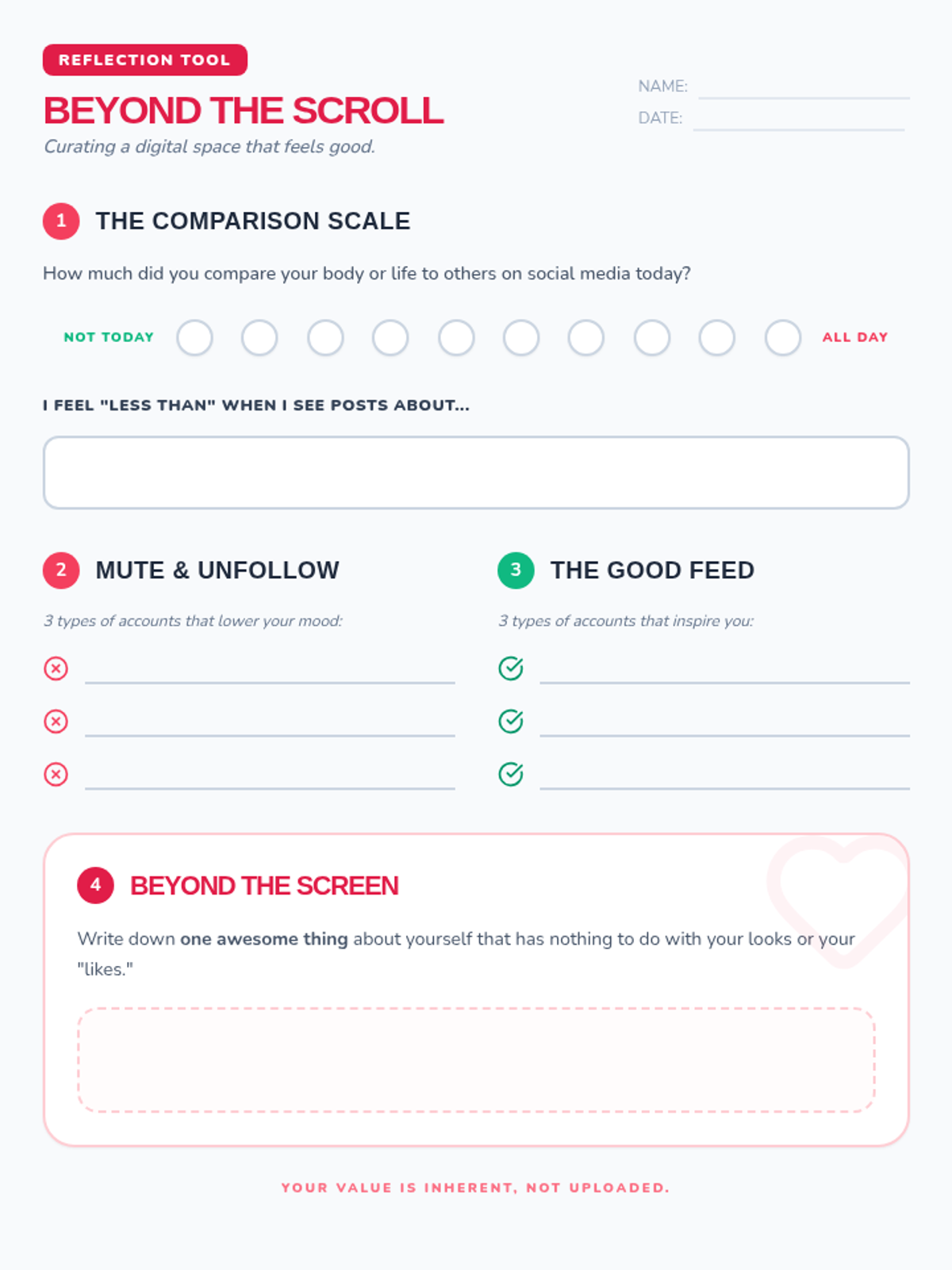
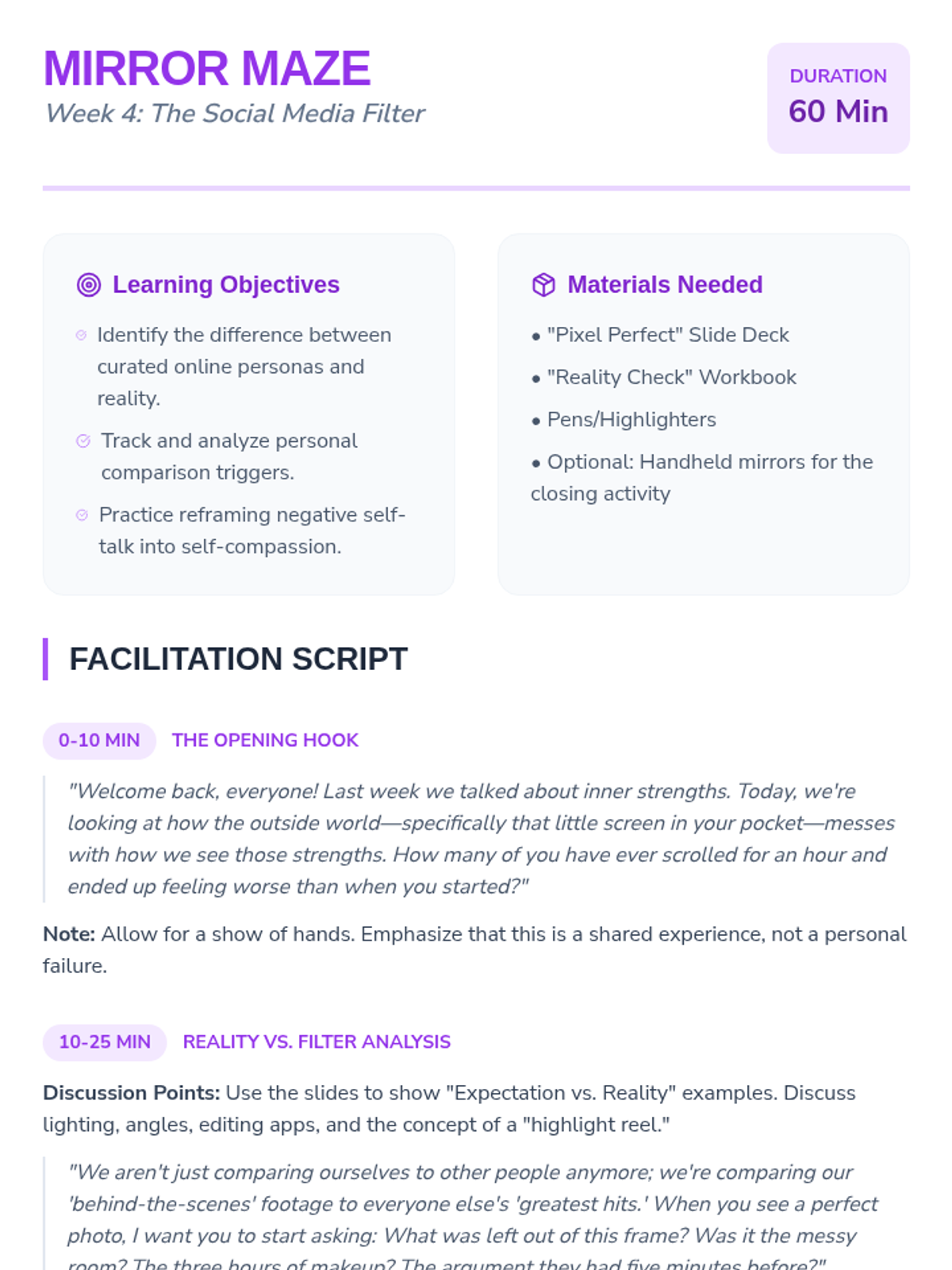
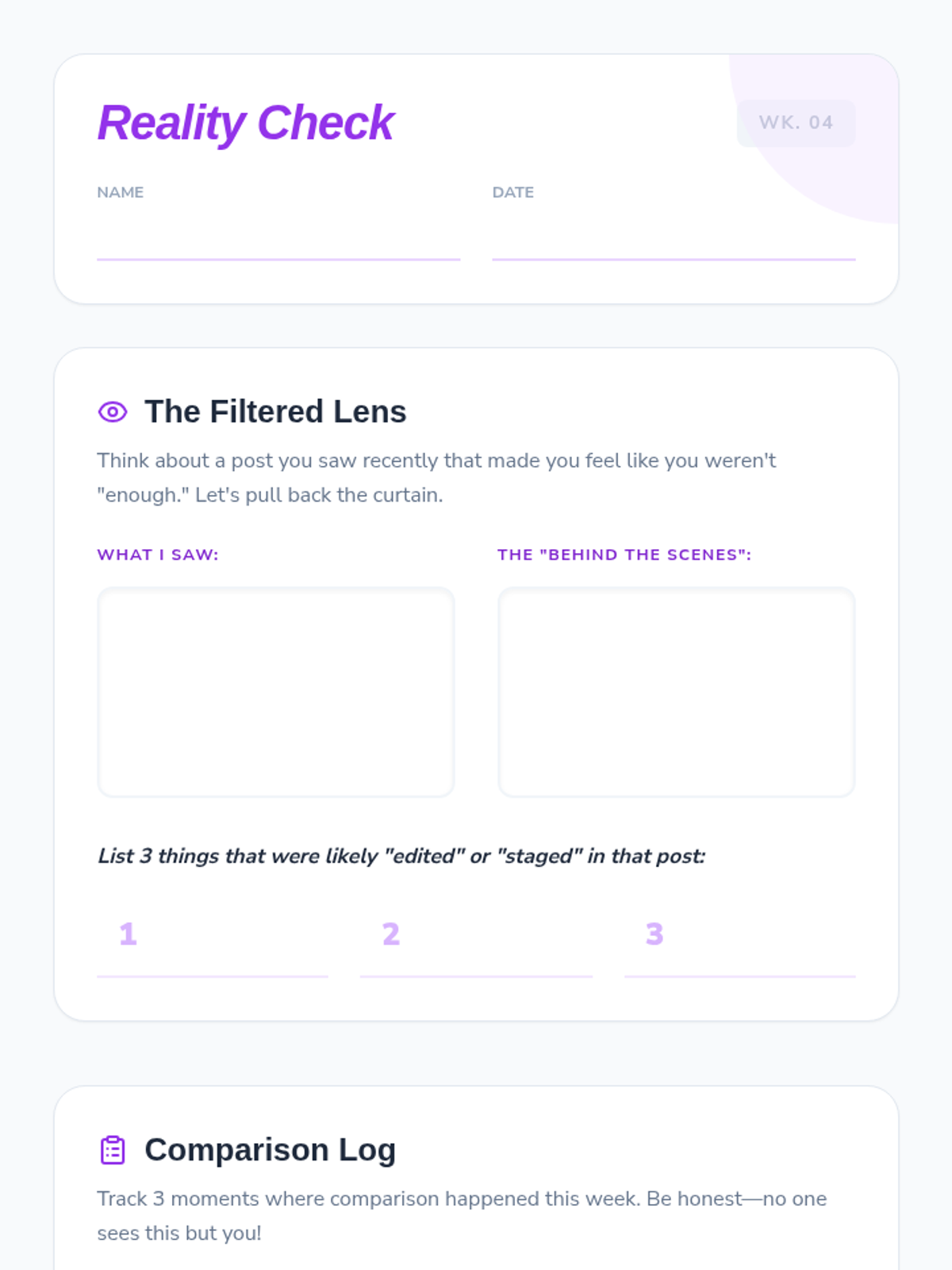
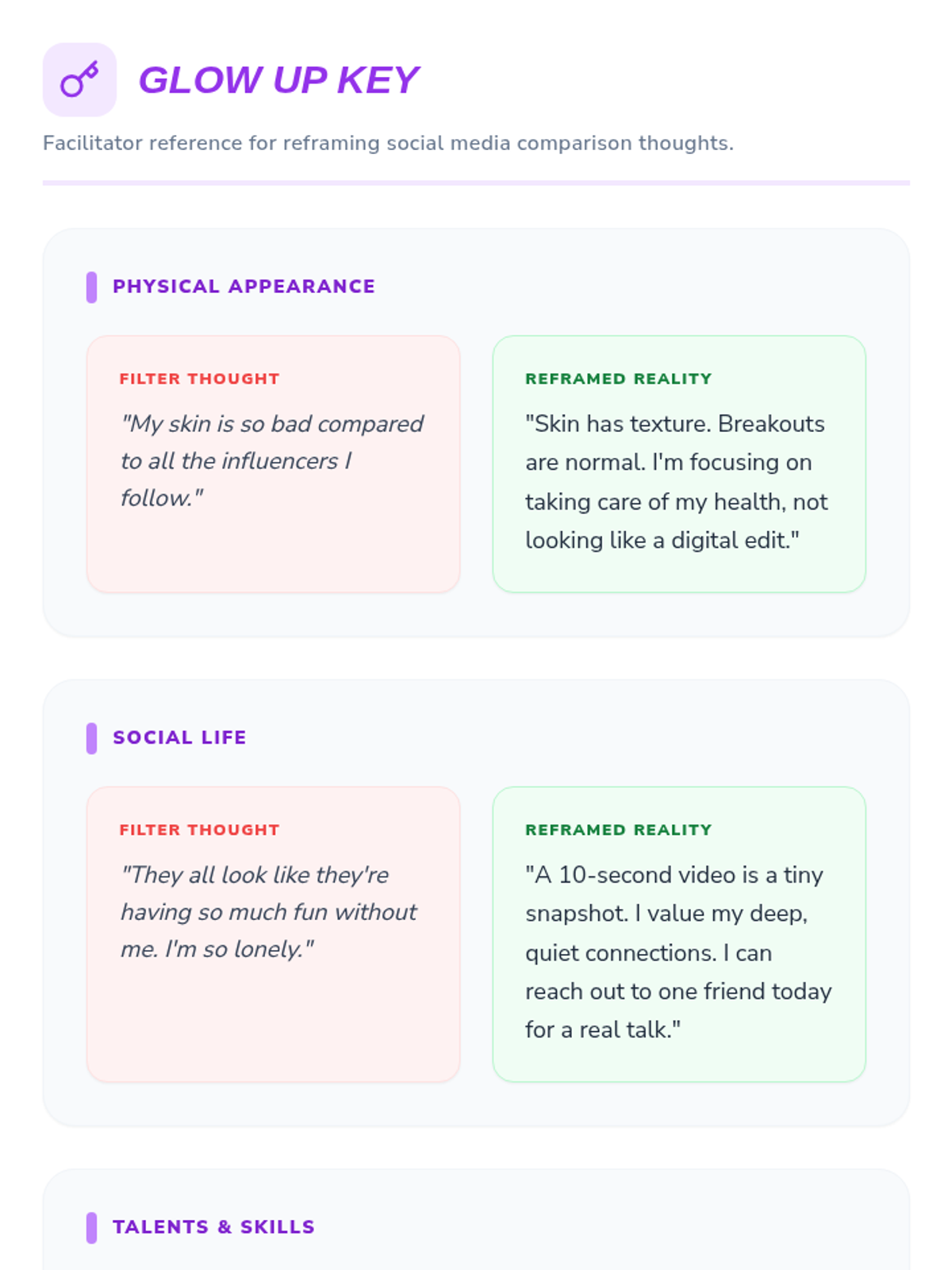
A lesson for middle school girls exploring the impact of social media on self-esteem, focusing on distinguishing reality from filters and reframing comparison-driven thoughts.
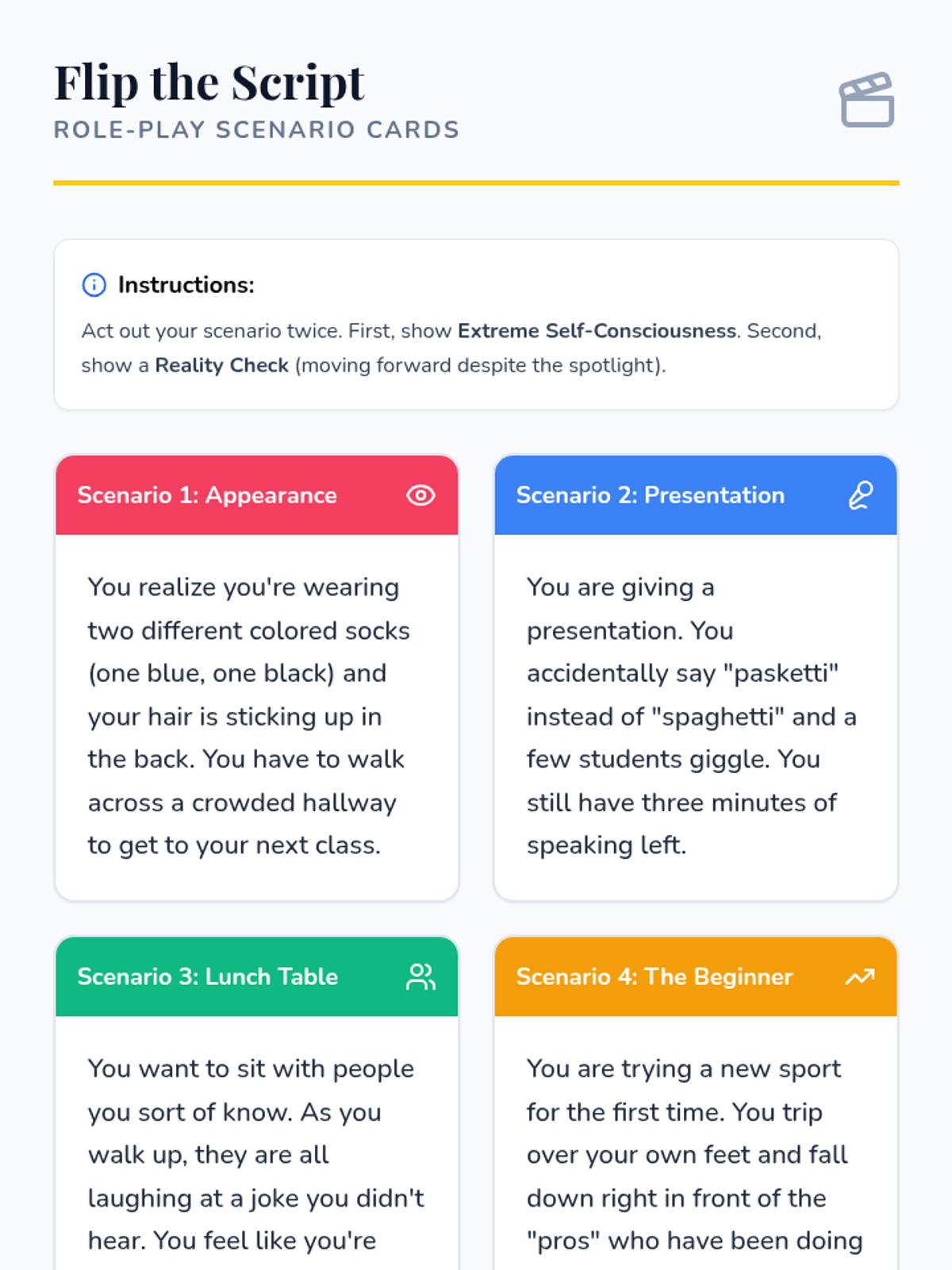
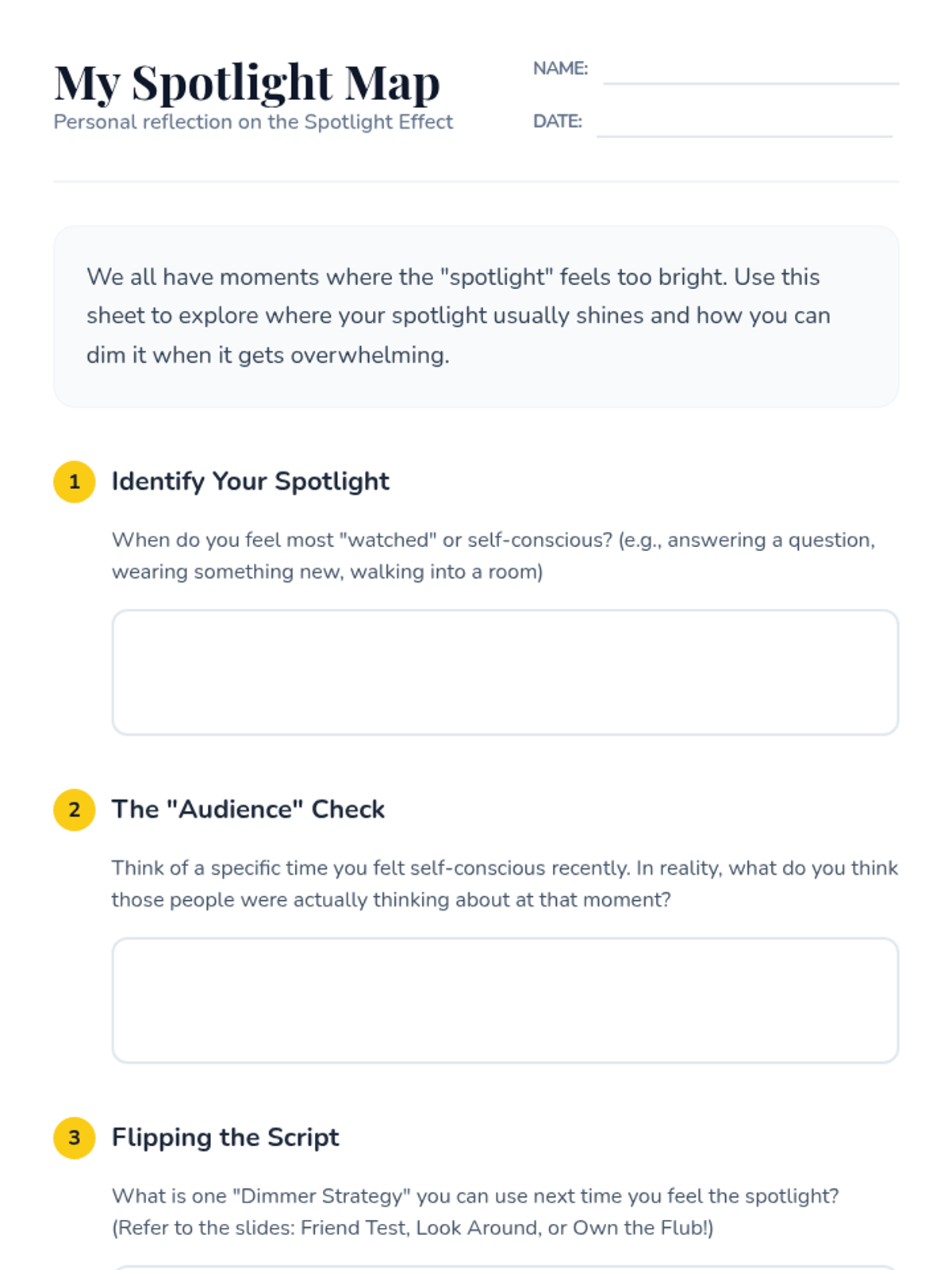
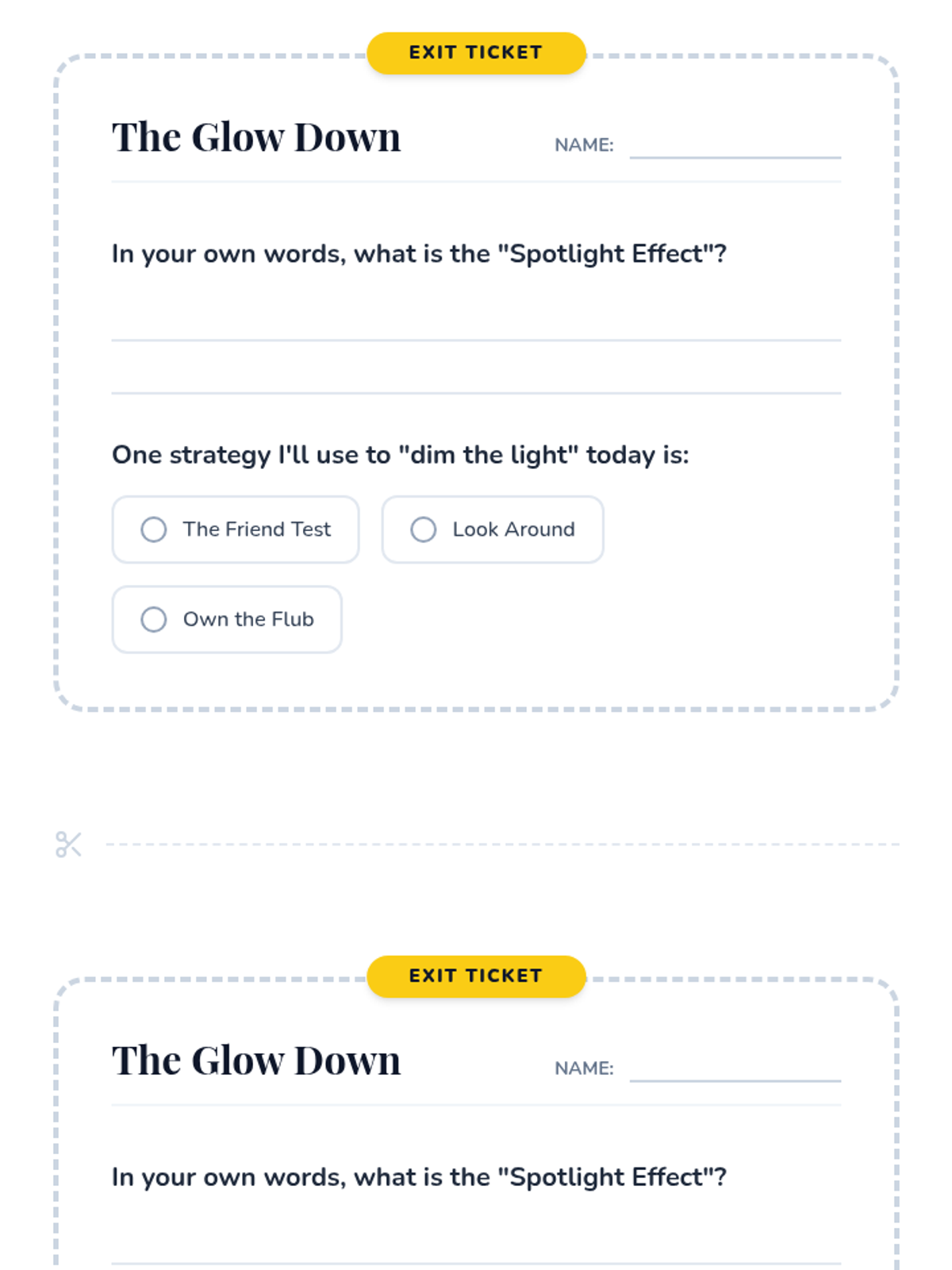
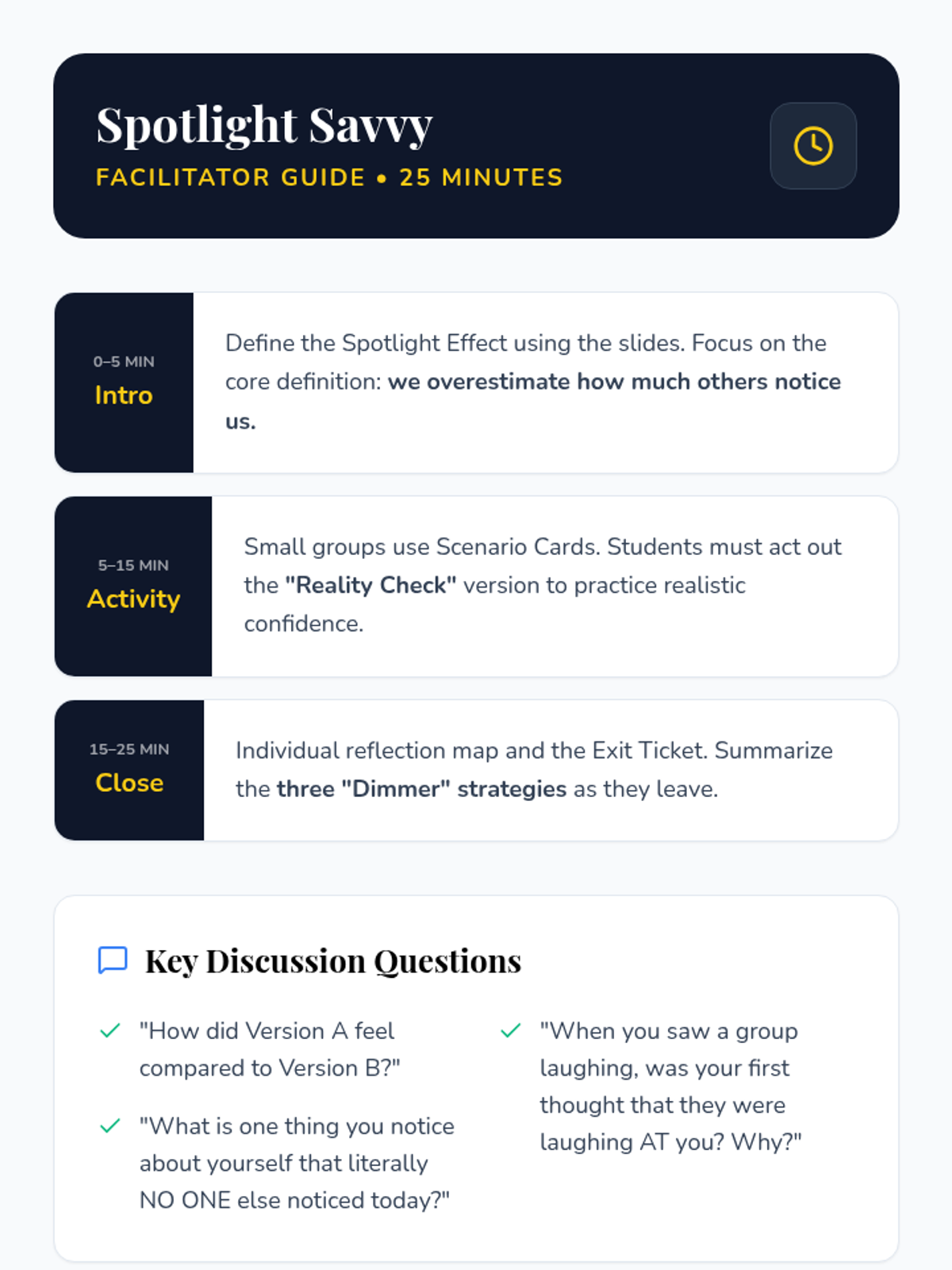
A 25-minute lesson on overcoming the 'Spotlight Effect' and reducing self-consciousness across social, physical, and performance-based situations. Students explore why we feel watched and practice 'flipping the script' through scenario-based role-play.
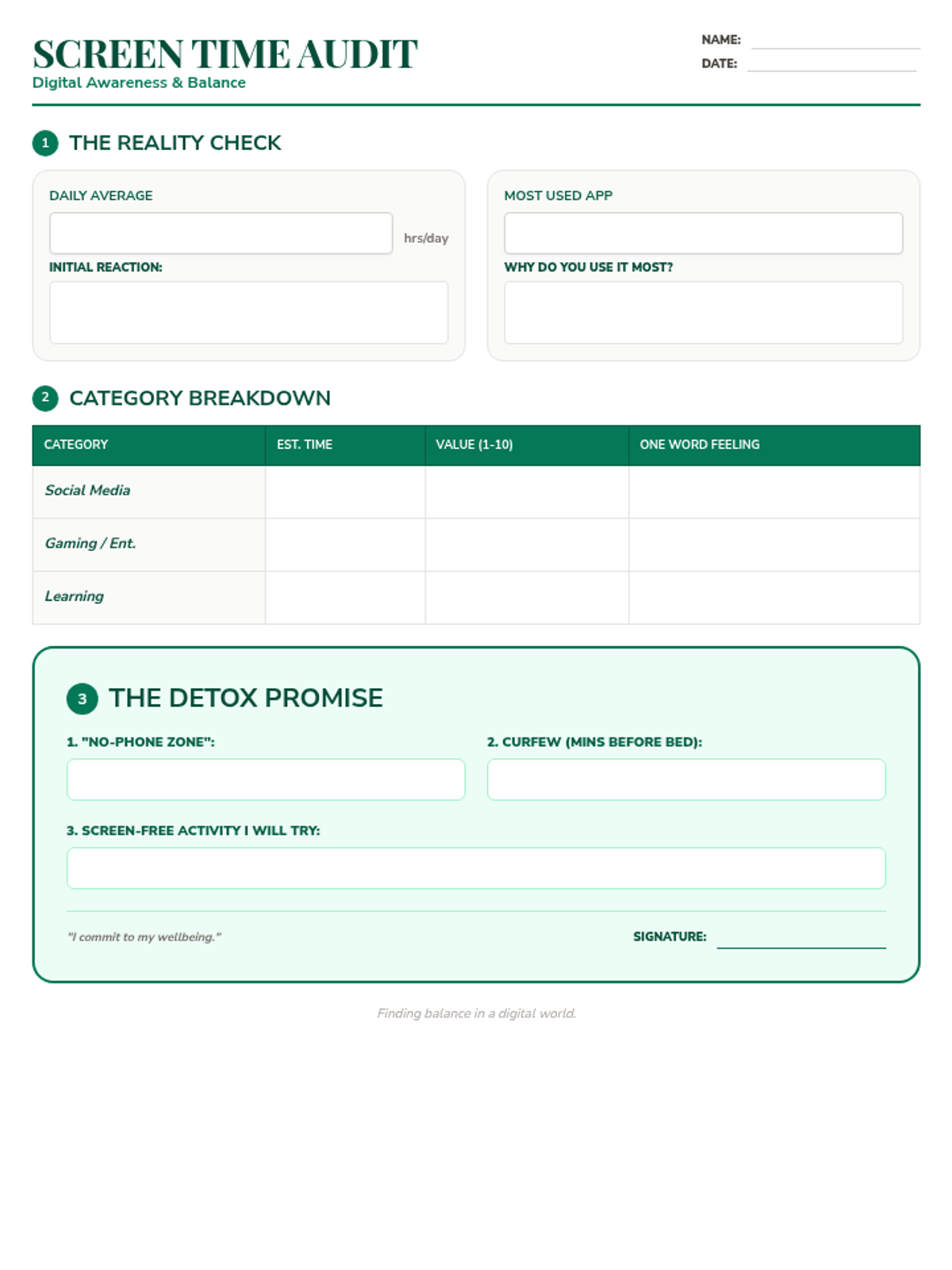
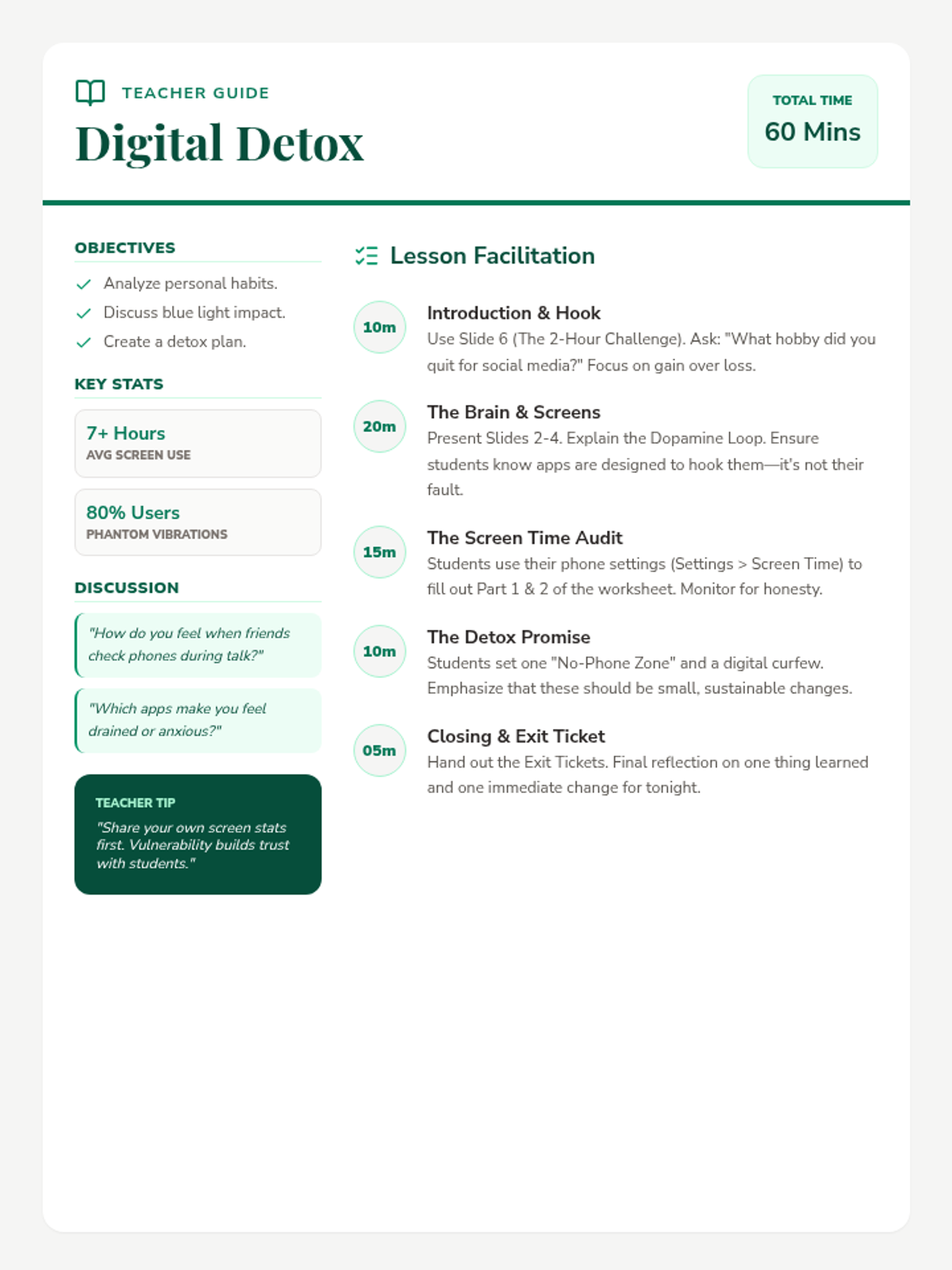
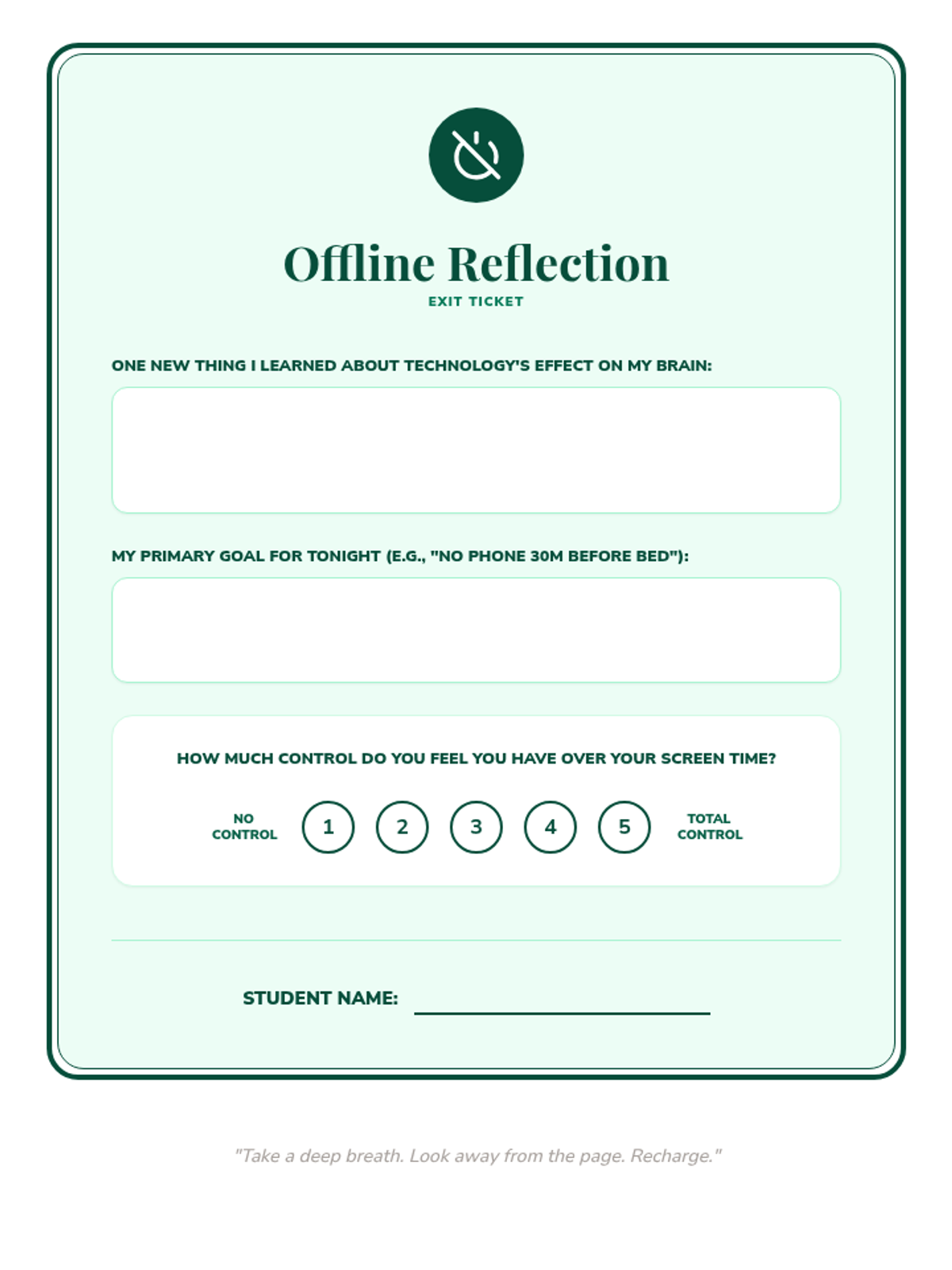
A lesson designed to help students understand the impact of excessive screen time and develop healthy, sustainable digital habits through reflection and goal-setting.
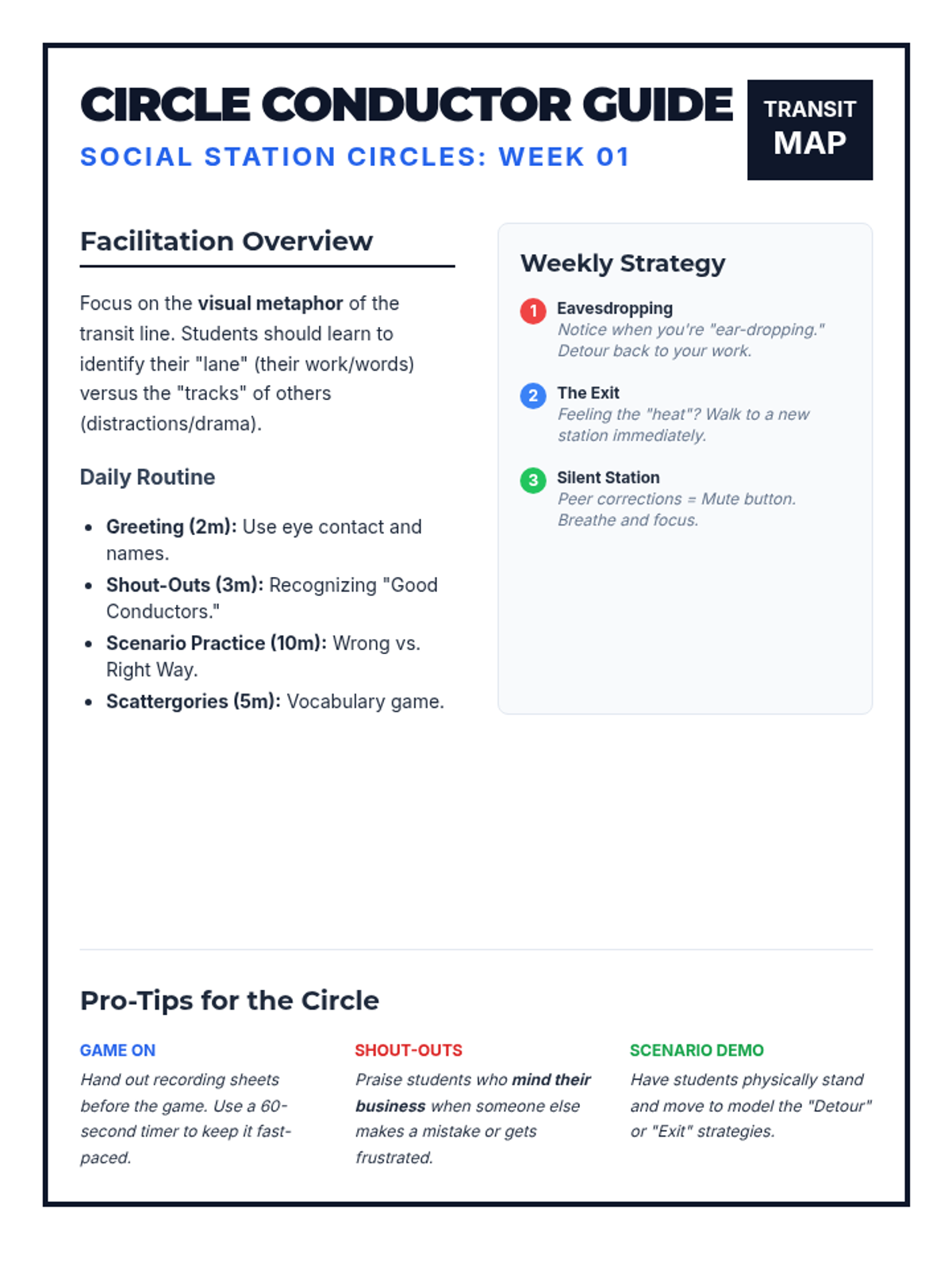
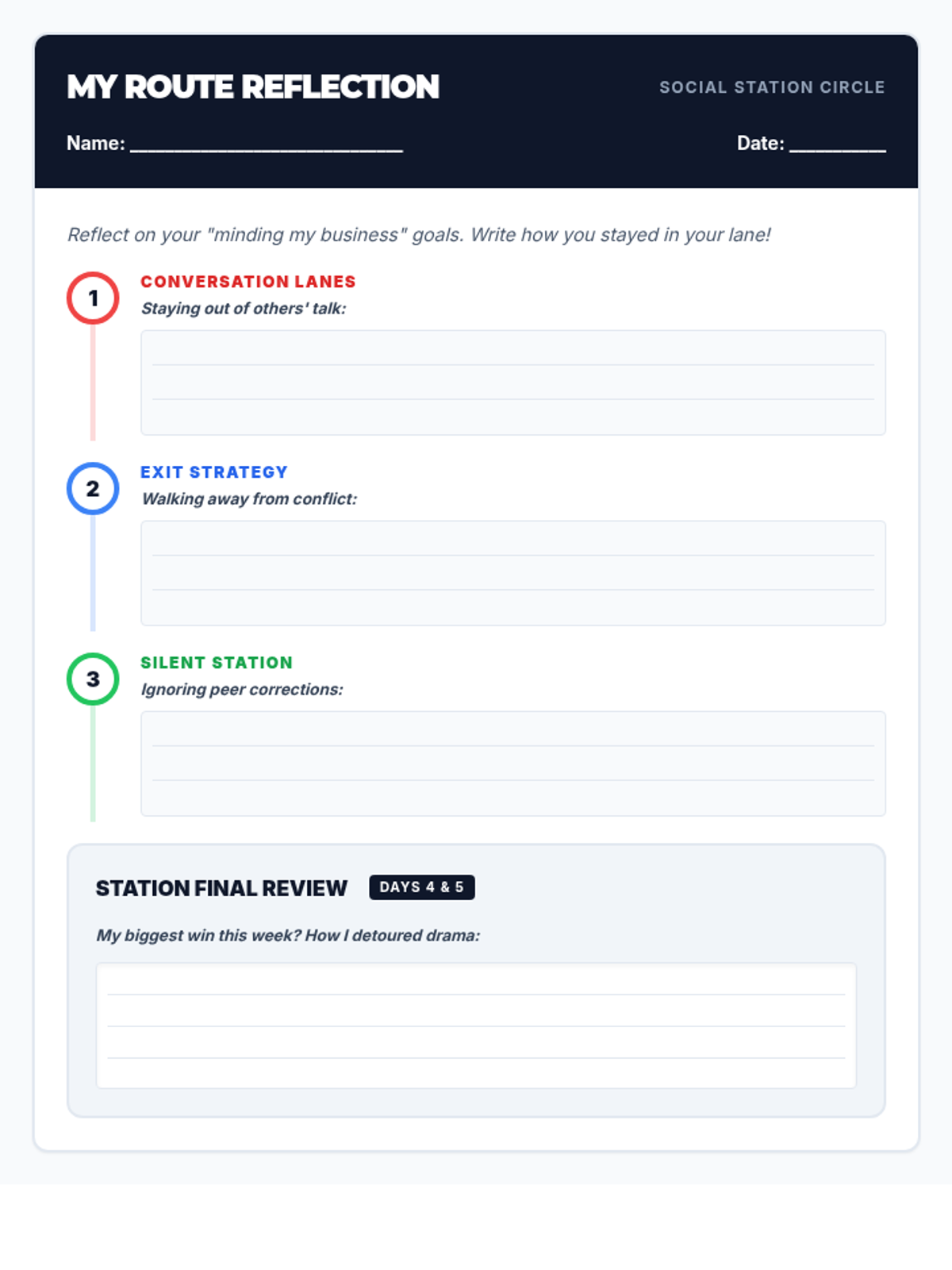
Day 5 covers staying focused and not contributing to classroom distractions.
Day 4 teaches students how to avoid drama and rumors by taking a 'detour'.
Day 3 addresses how to ignore peer corrections and focus on one's own work.
Day 2 focuses on the 'exit strategy' for walking away from rising conflict.
Day 1 focuses on staying out of others' conversations and 'ear-dropping' awareness.
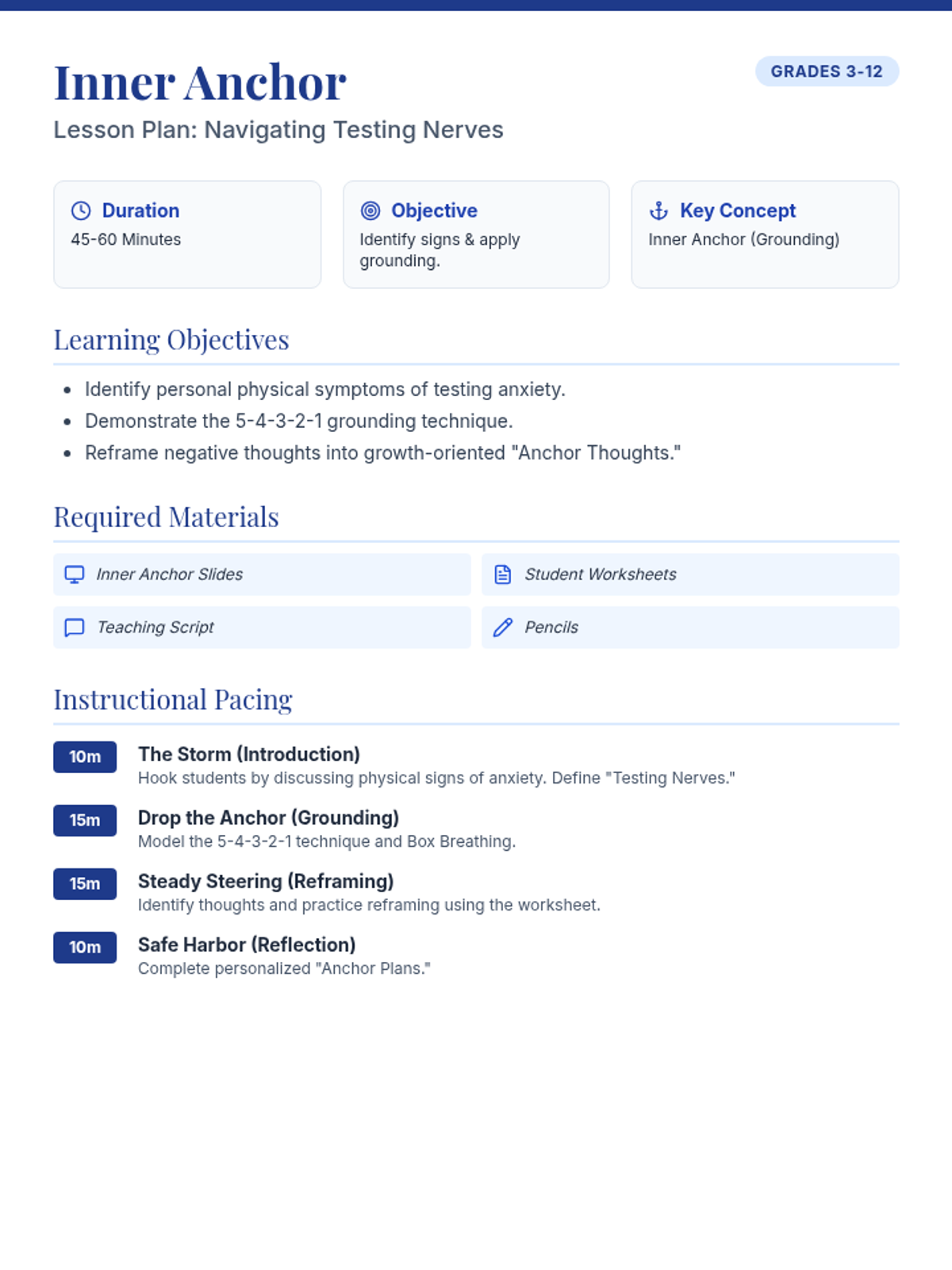
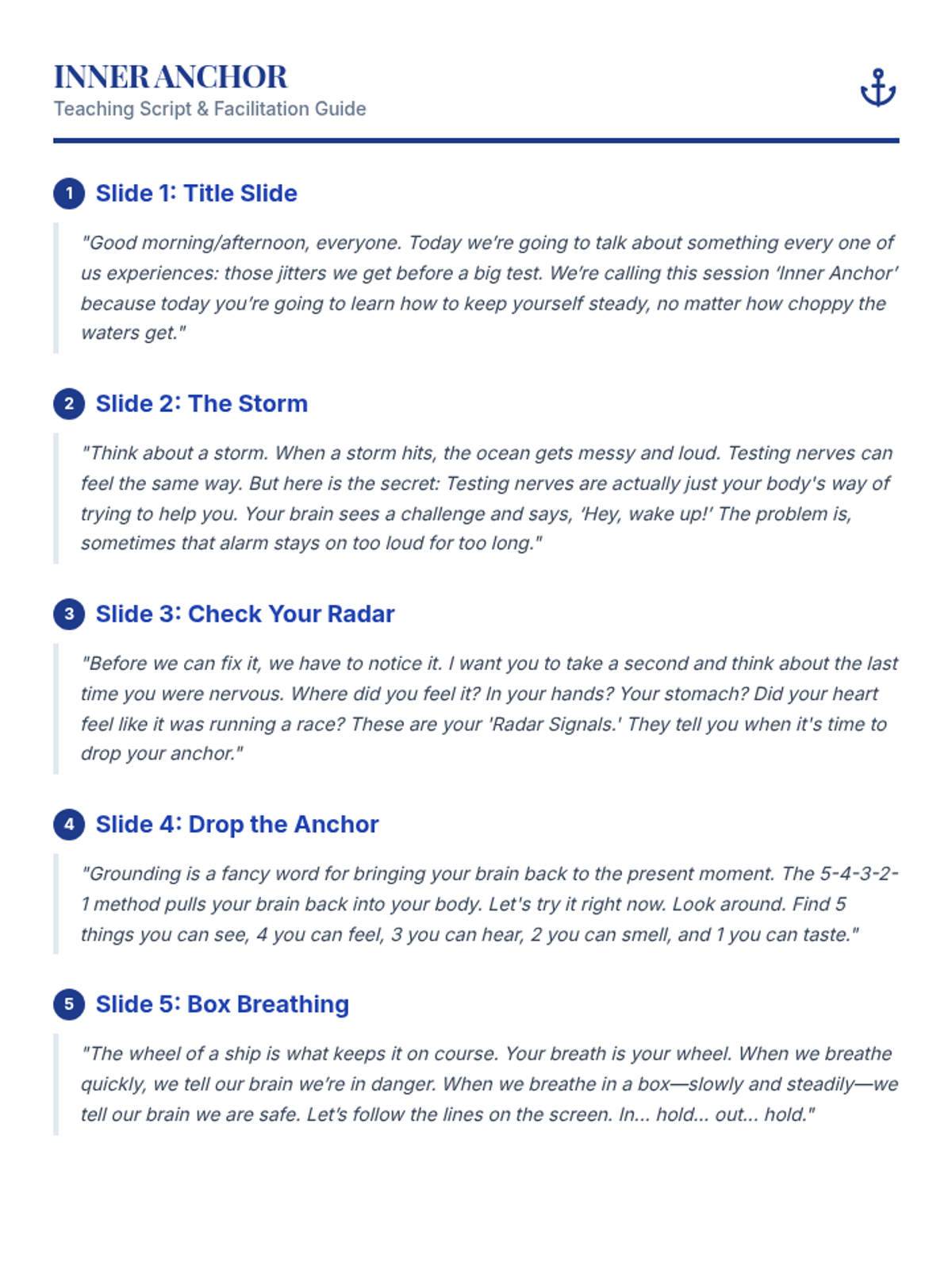
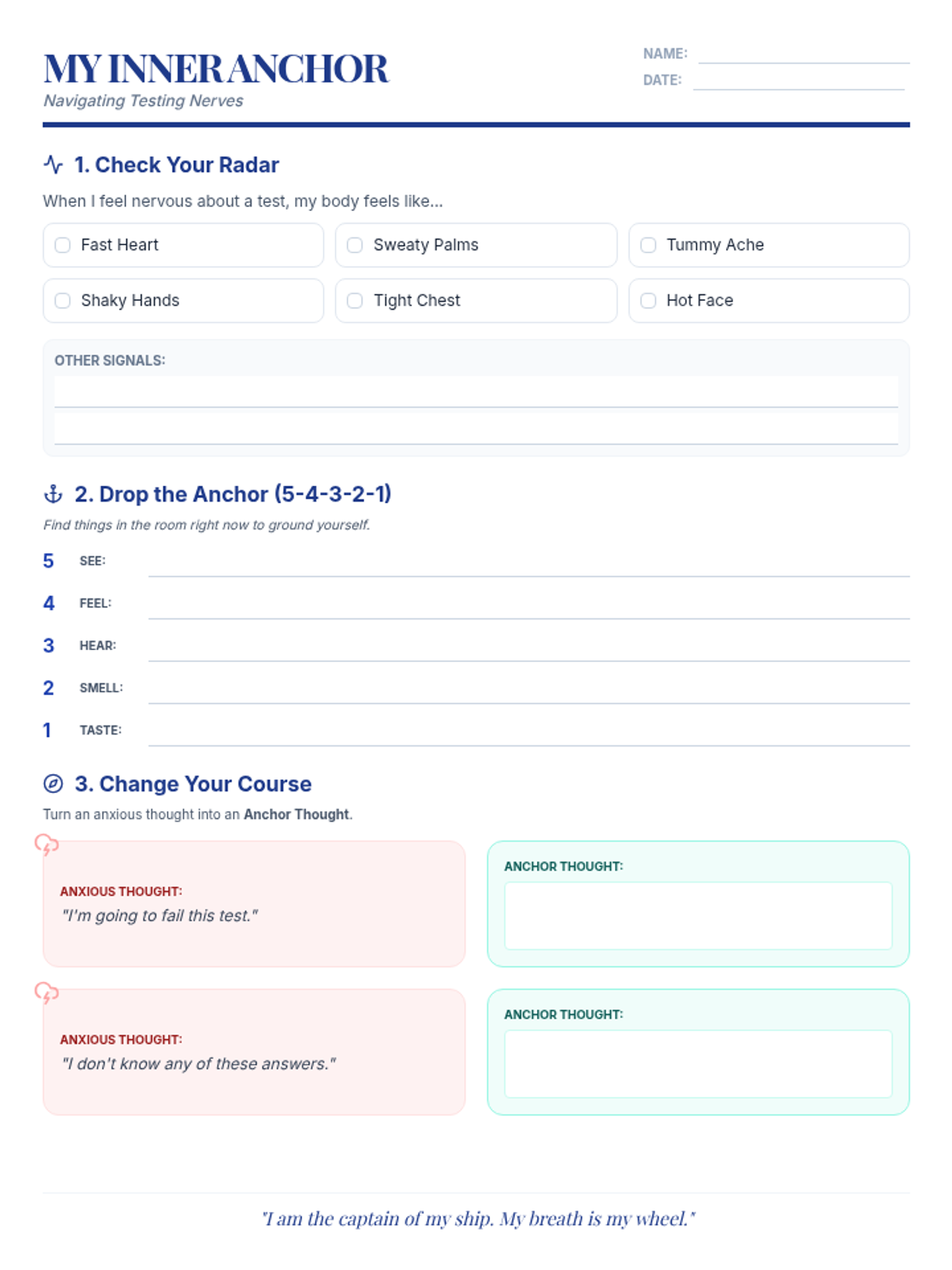
A comprehensive emotional regulation toolkit for students to manage testing anxiety using maritime-themed grounding techniques and cognitive reframing.
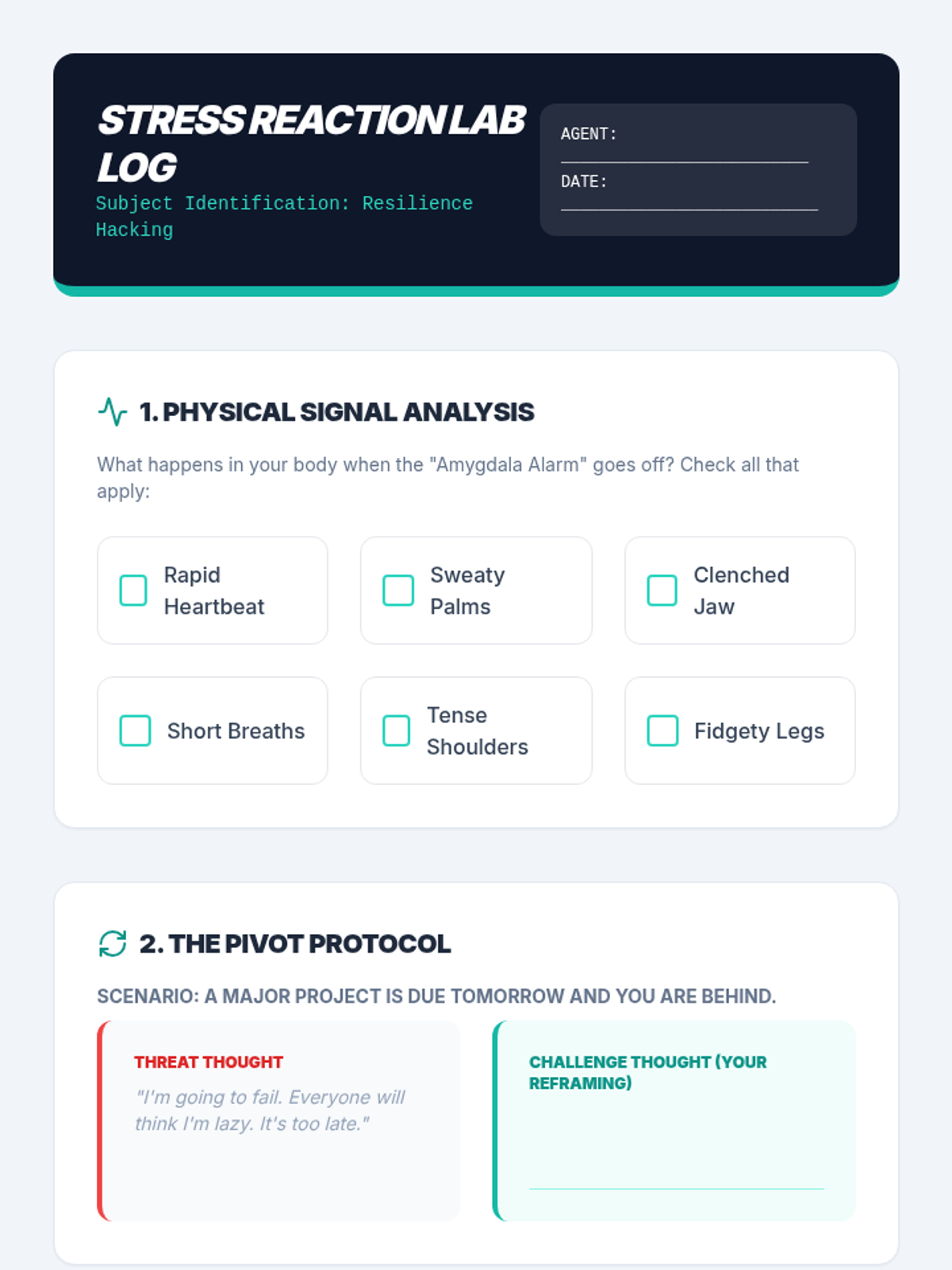
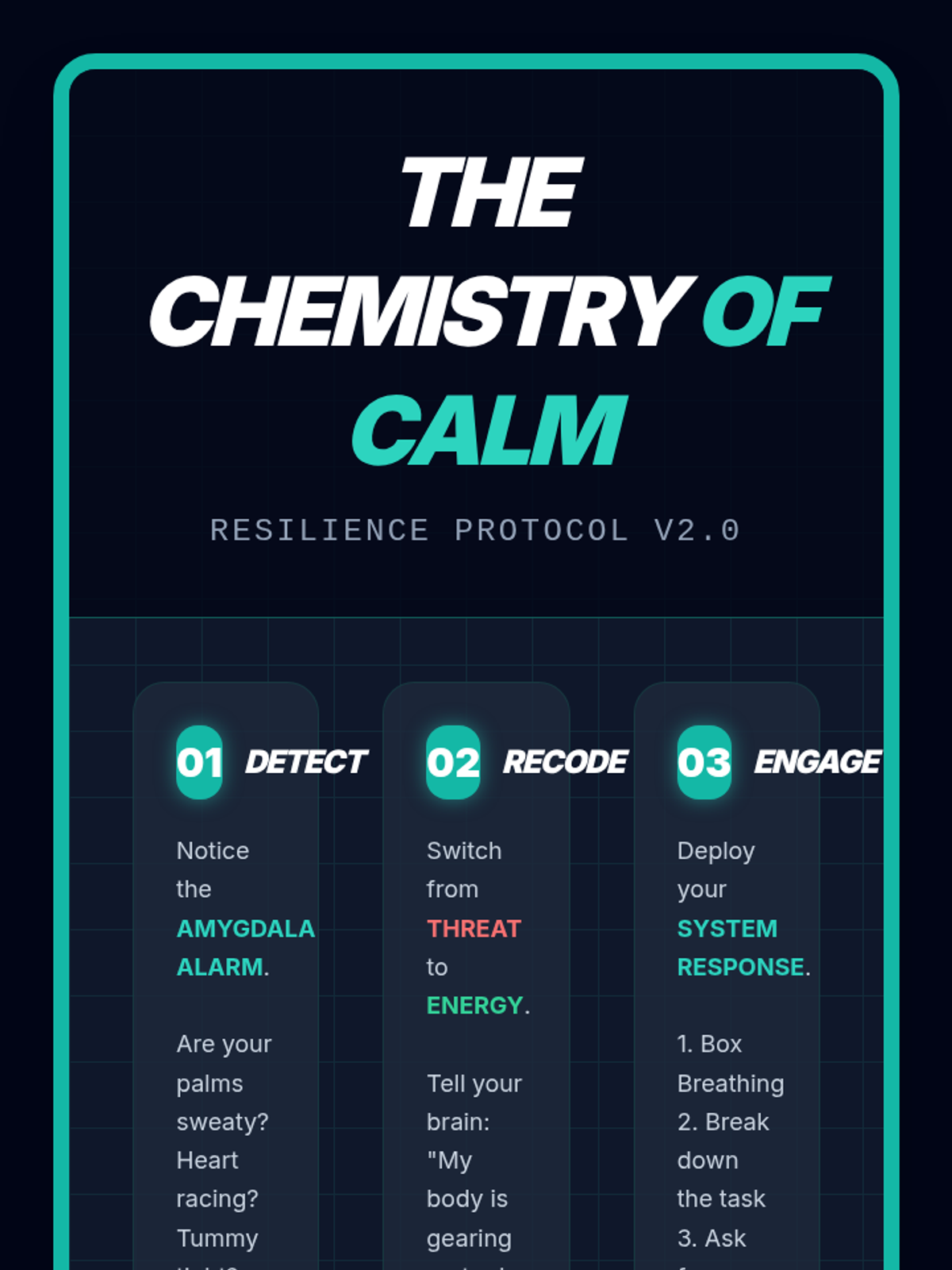
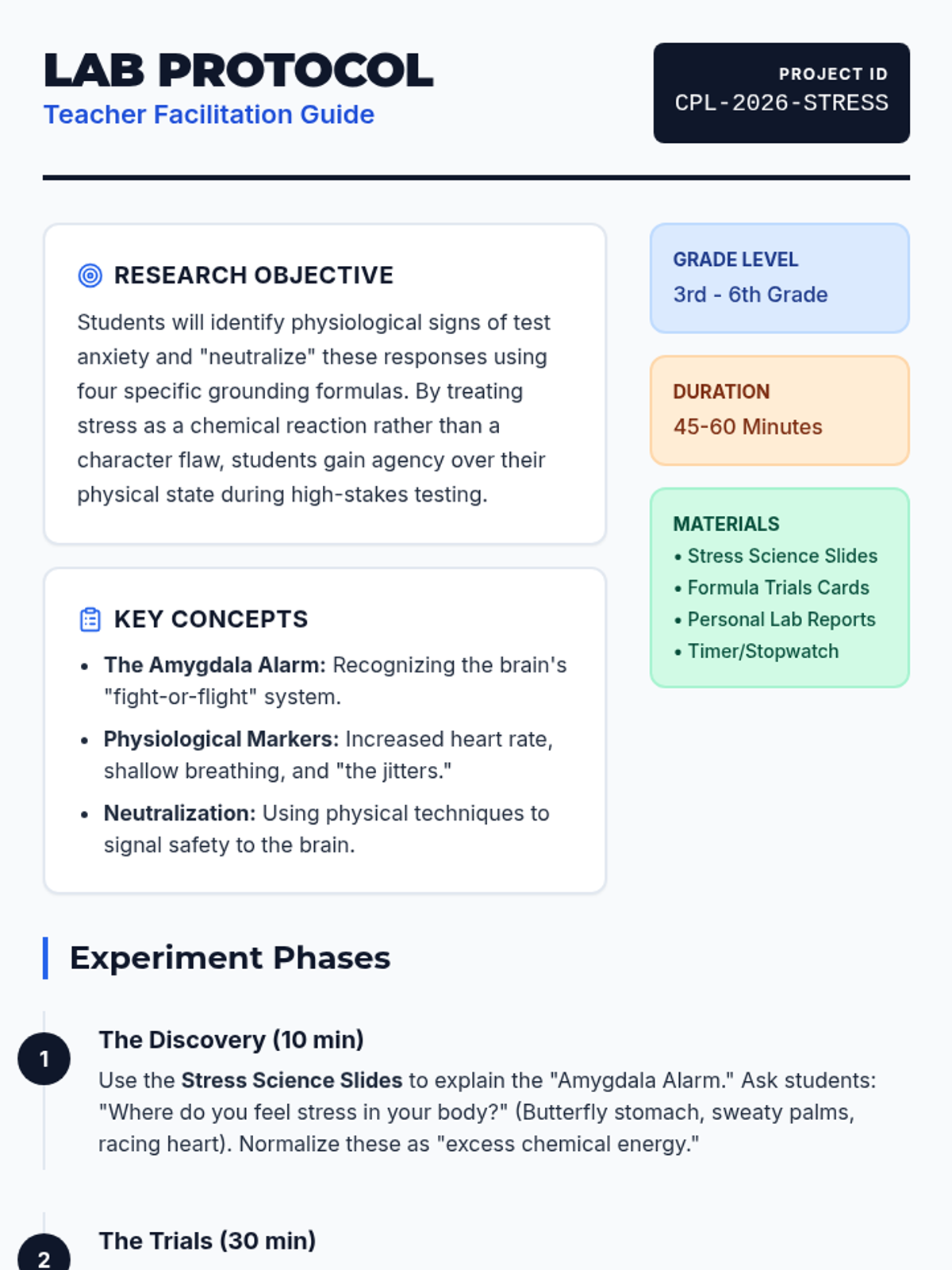
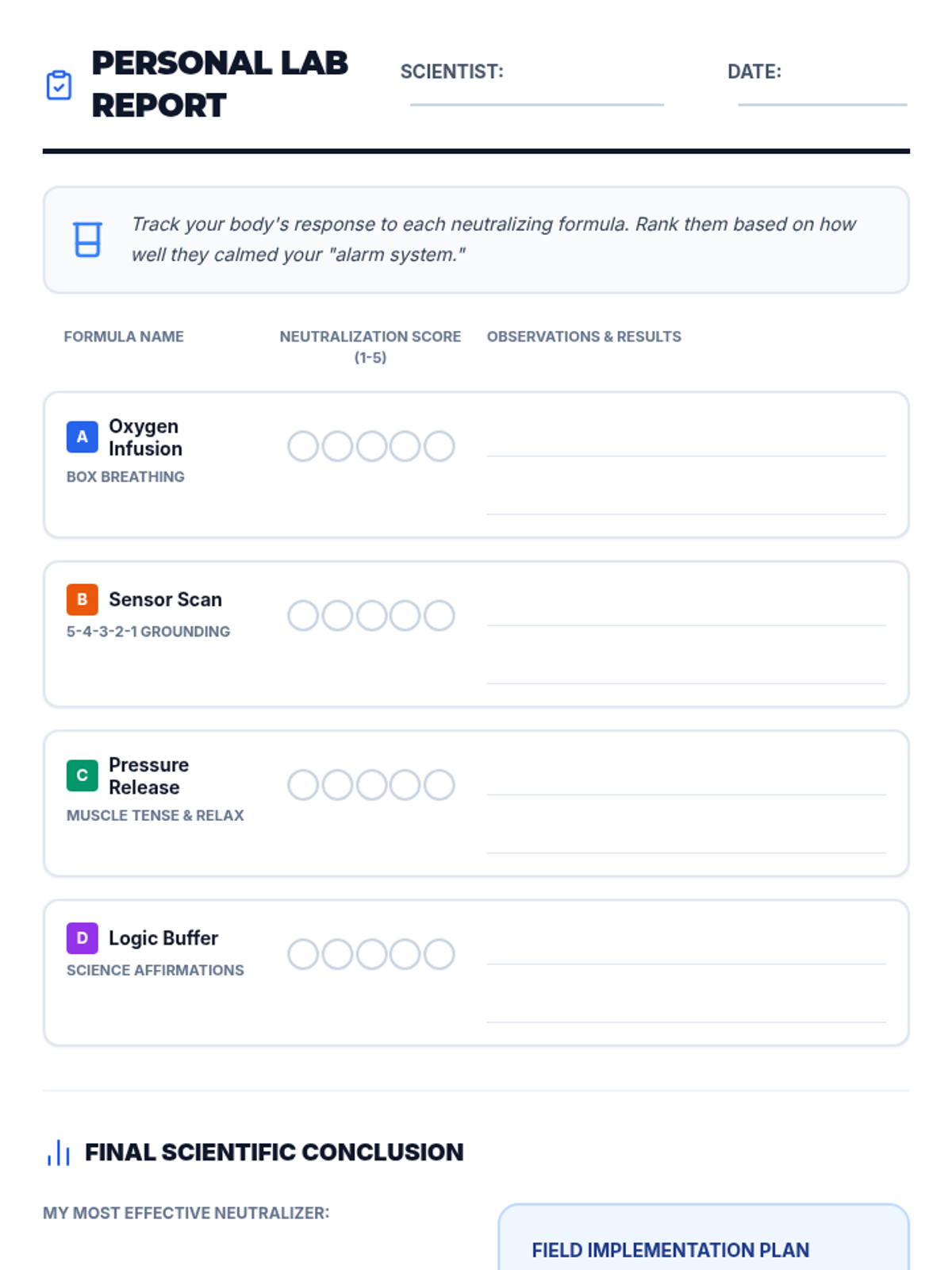
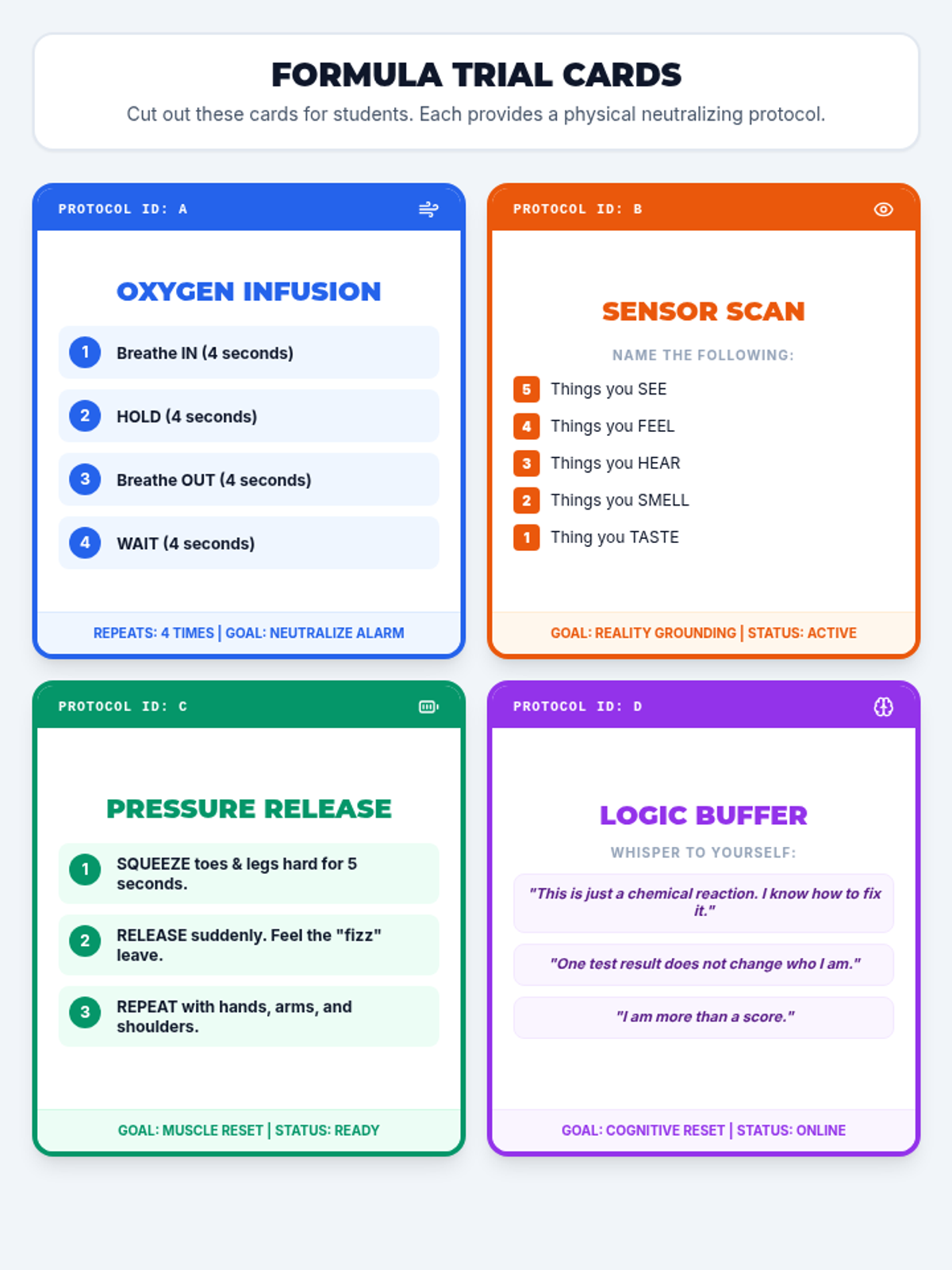
A science-themed lesson that teaches students to manage test anxiety by treating their physical stress responses as laboratory experiments, testing different 'calm-down formulas' to find their personal best stress-neutralizers.
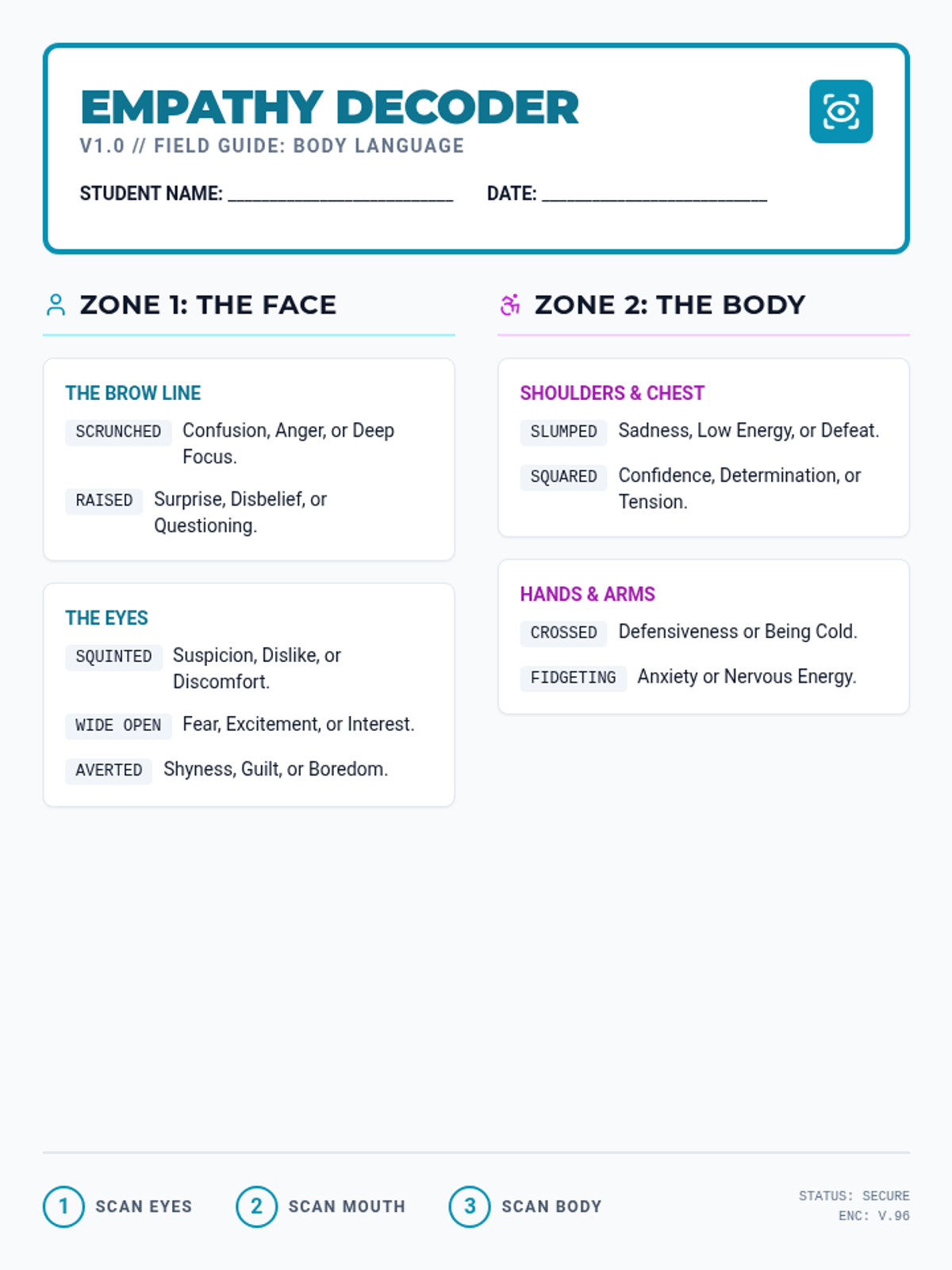
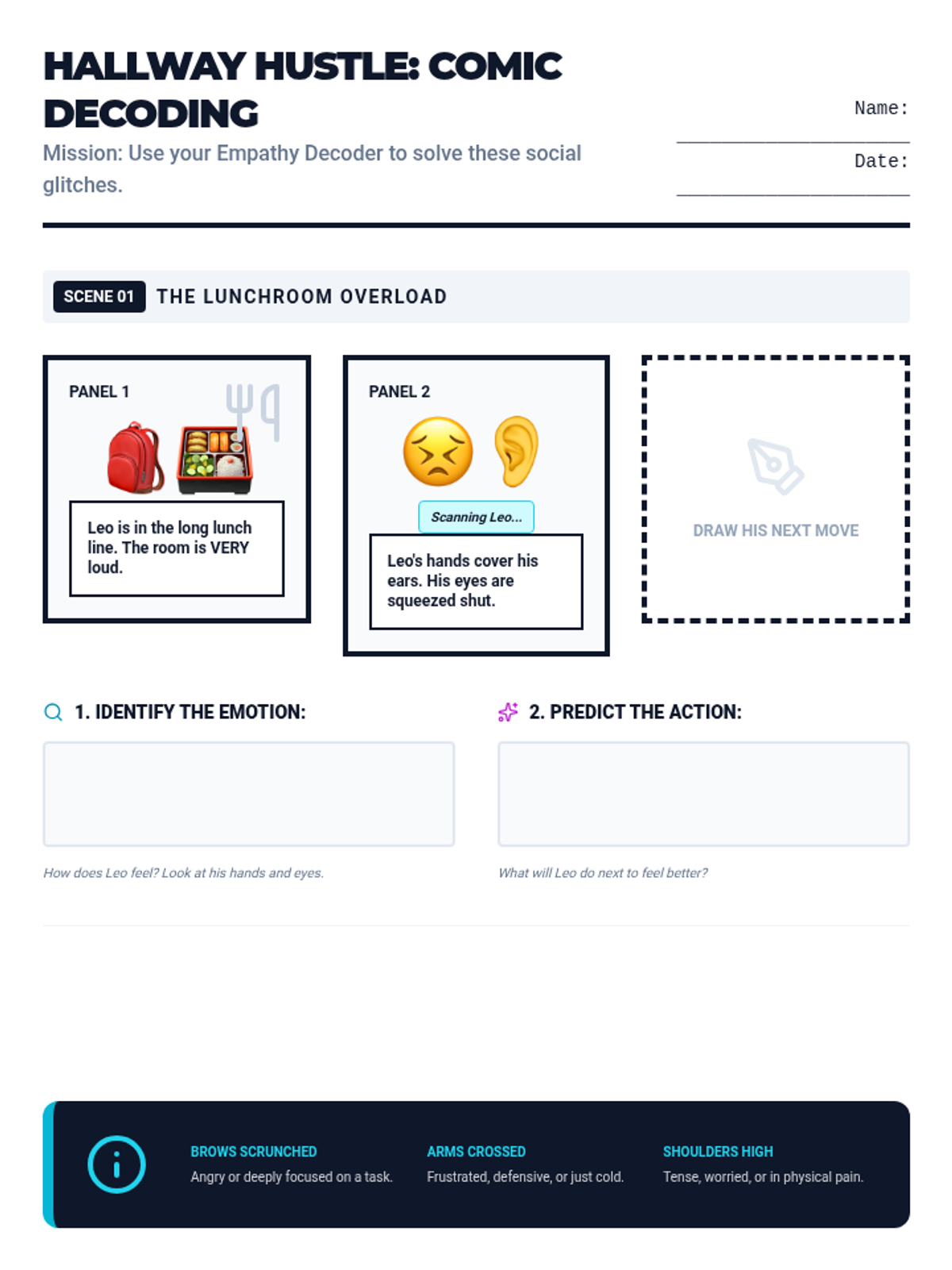
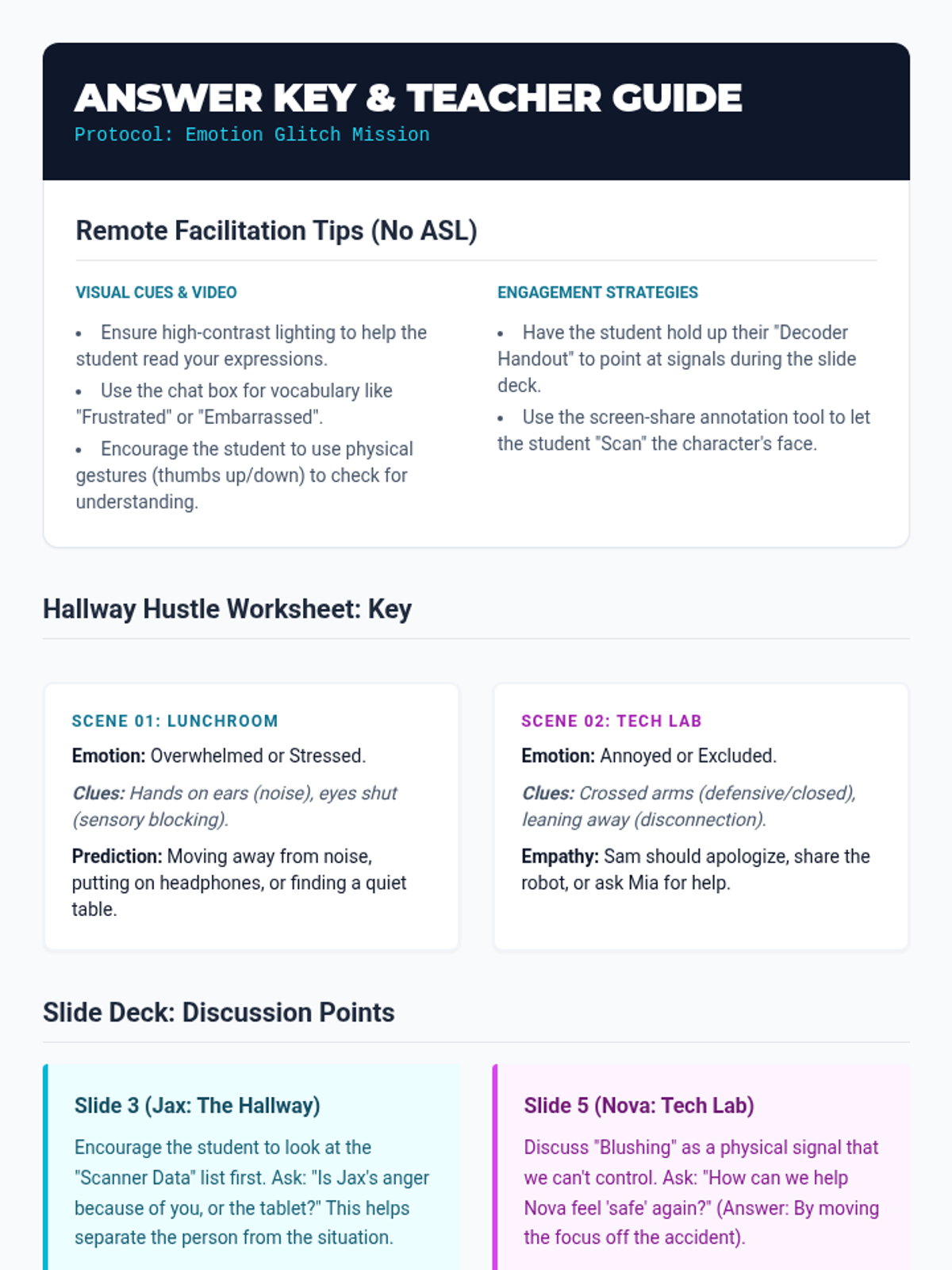
Students explore a futuristic high school hallway and tech lab to identify 'glitches' in social communication. They learn to decode body language and facial expressions in complex social situations.
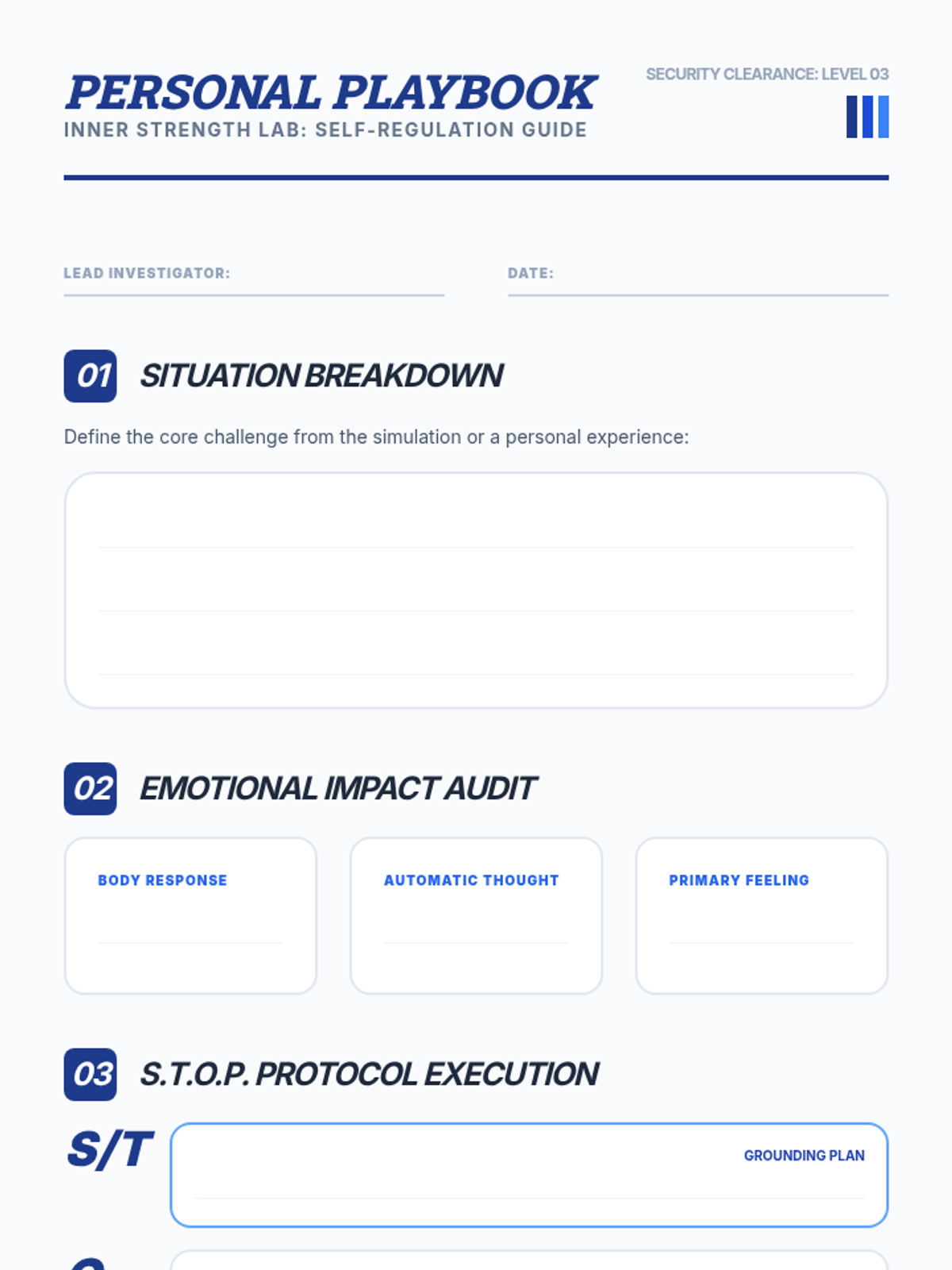
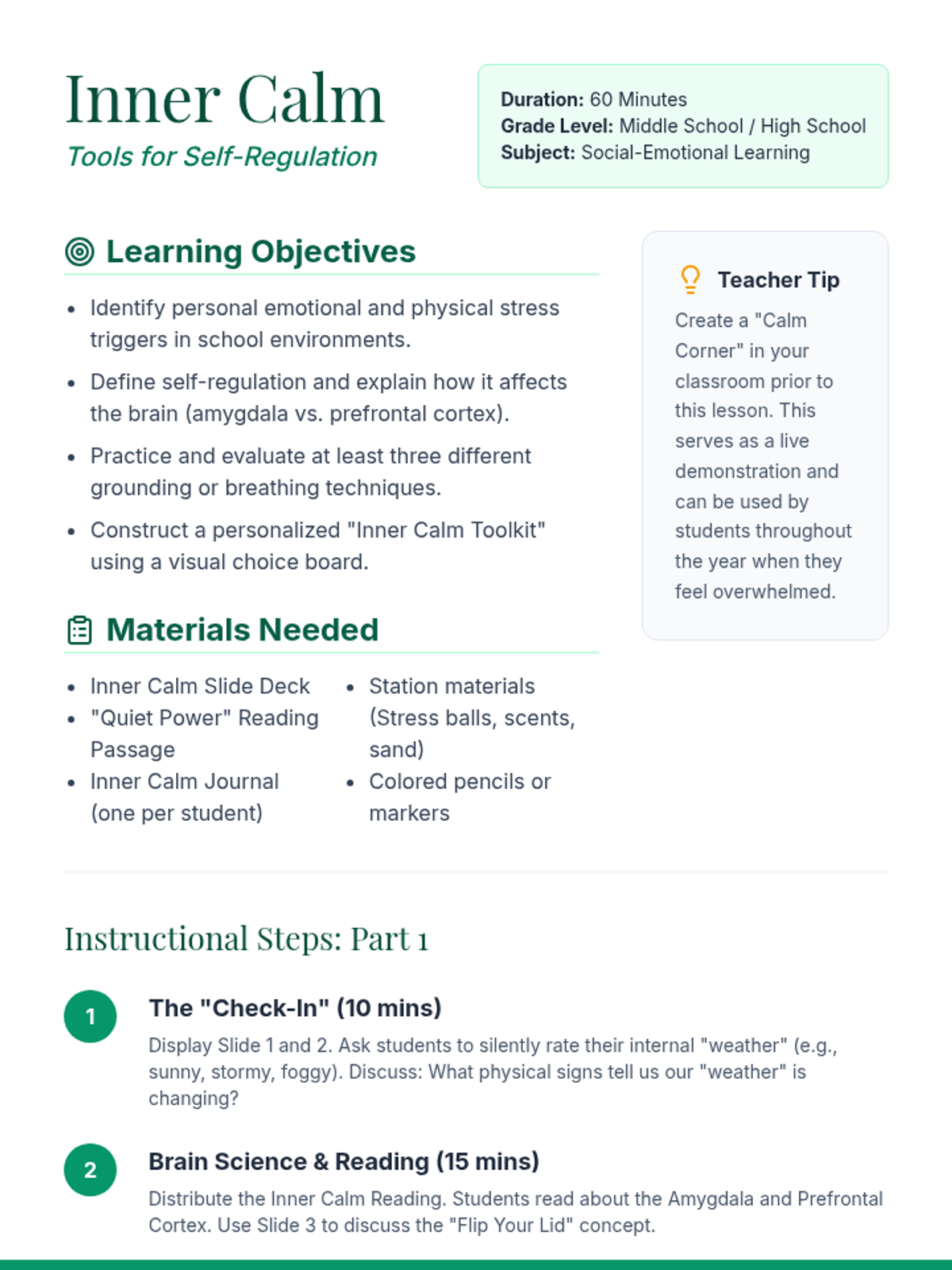
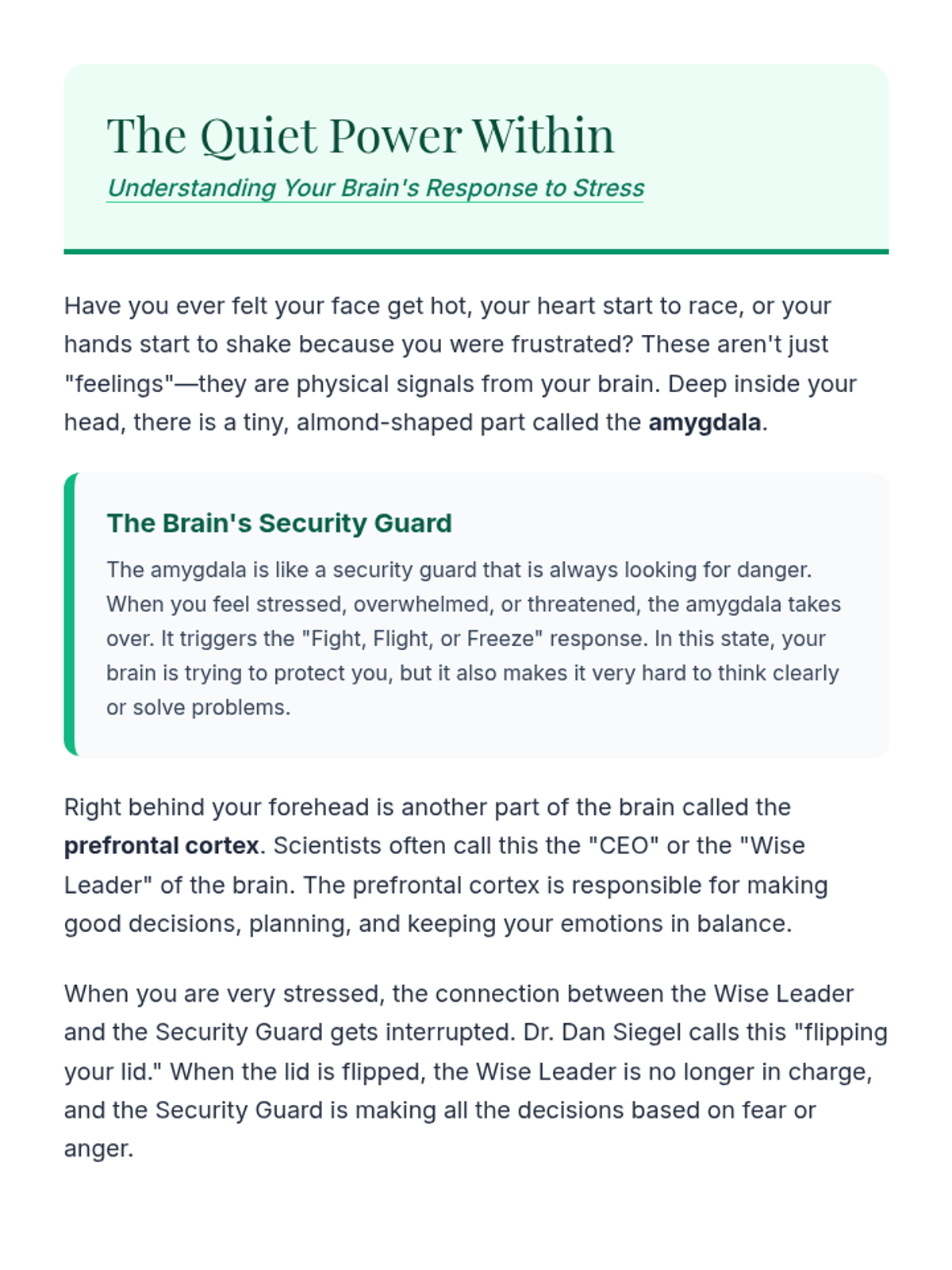
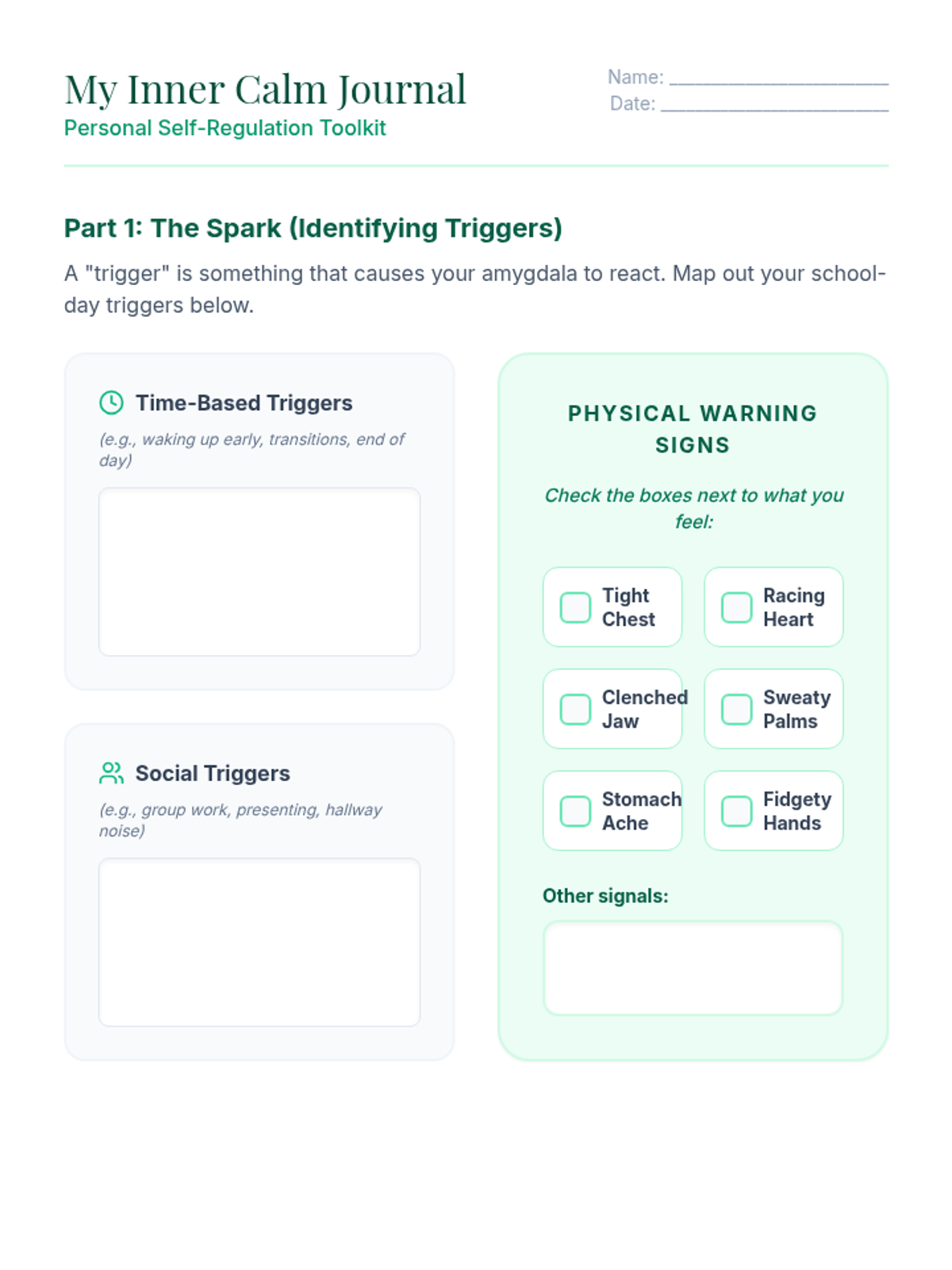
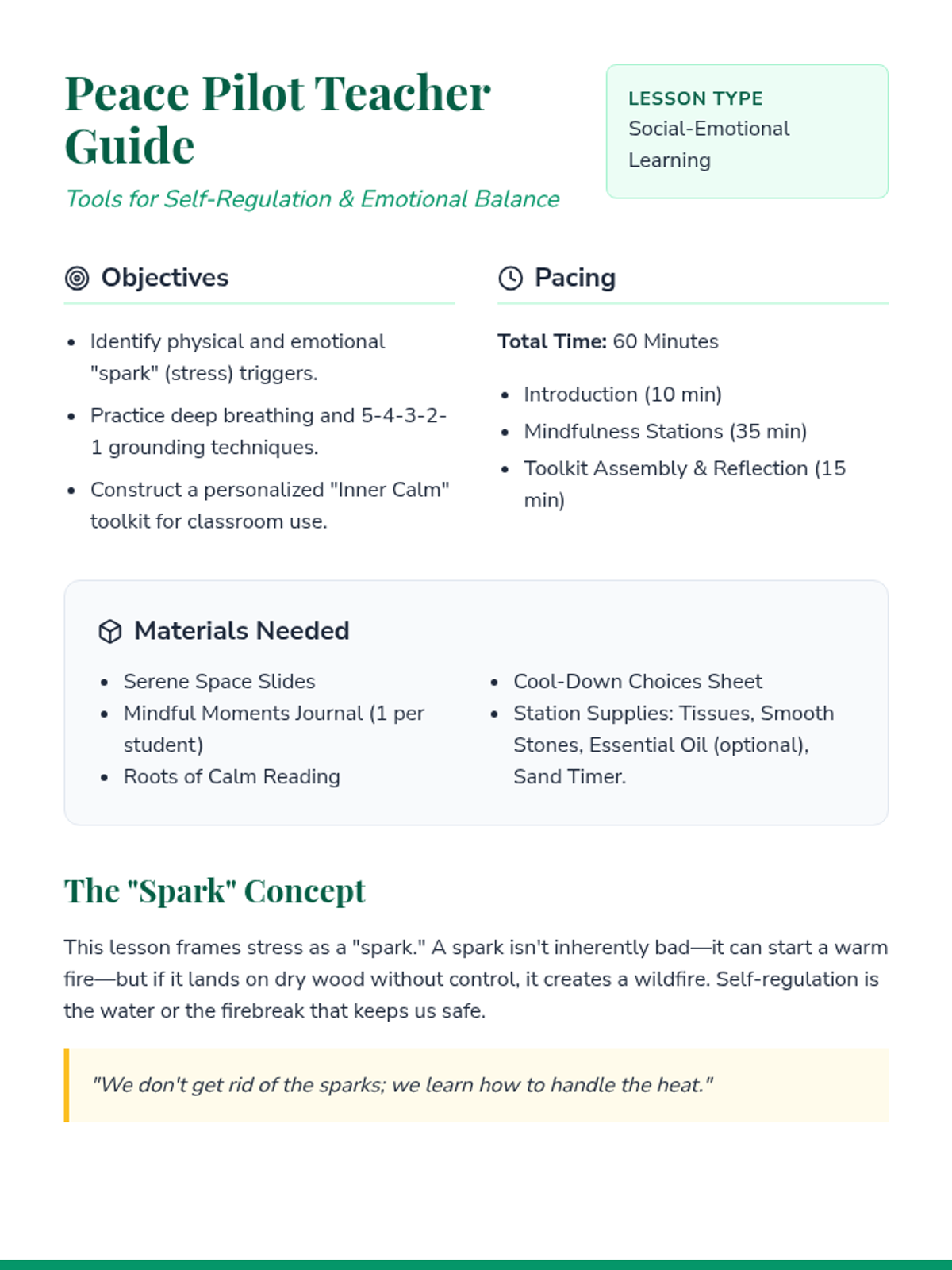
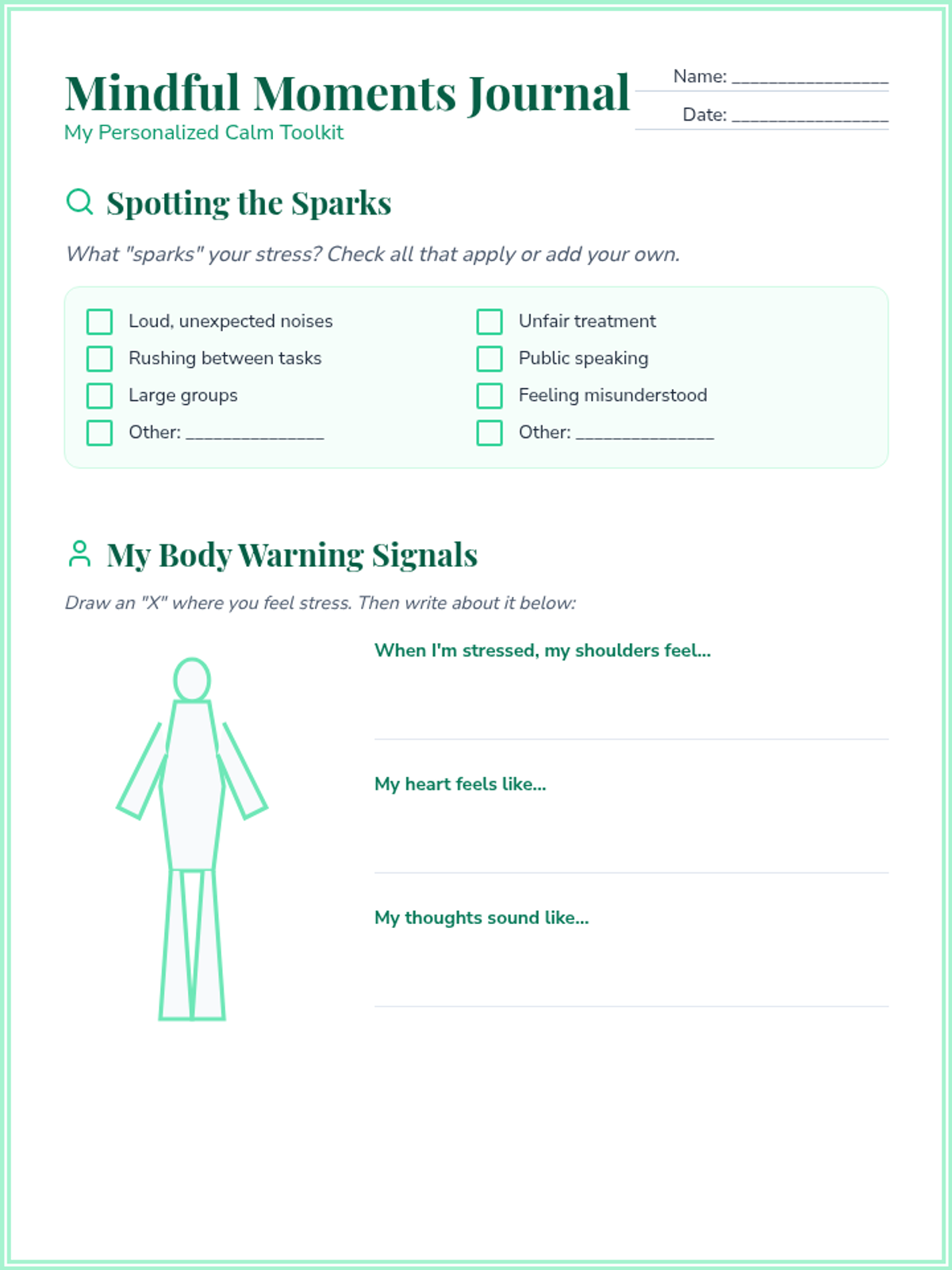
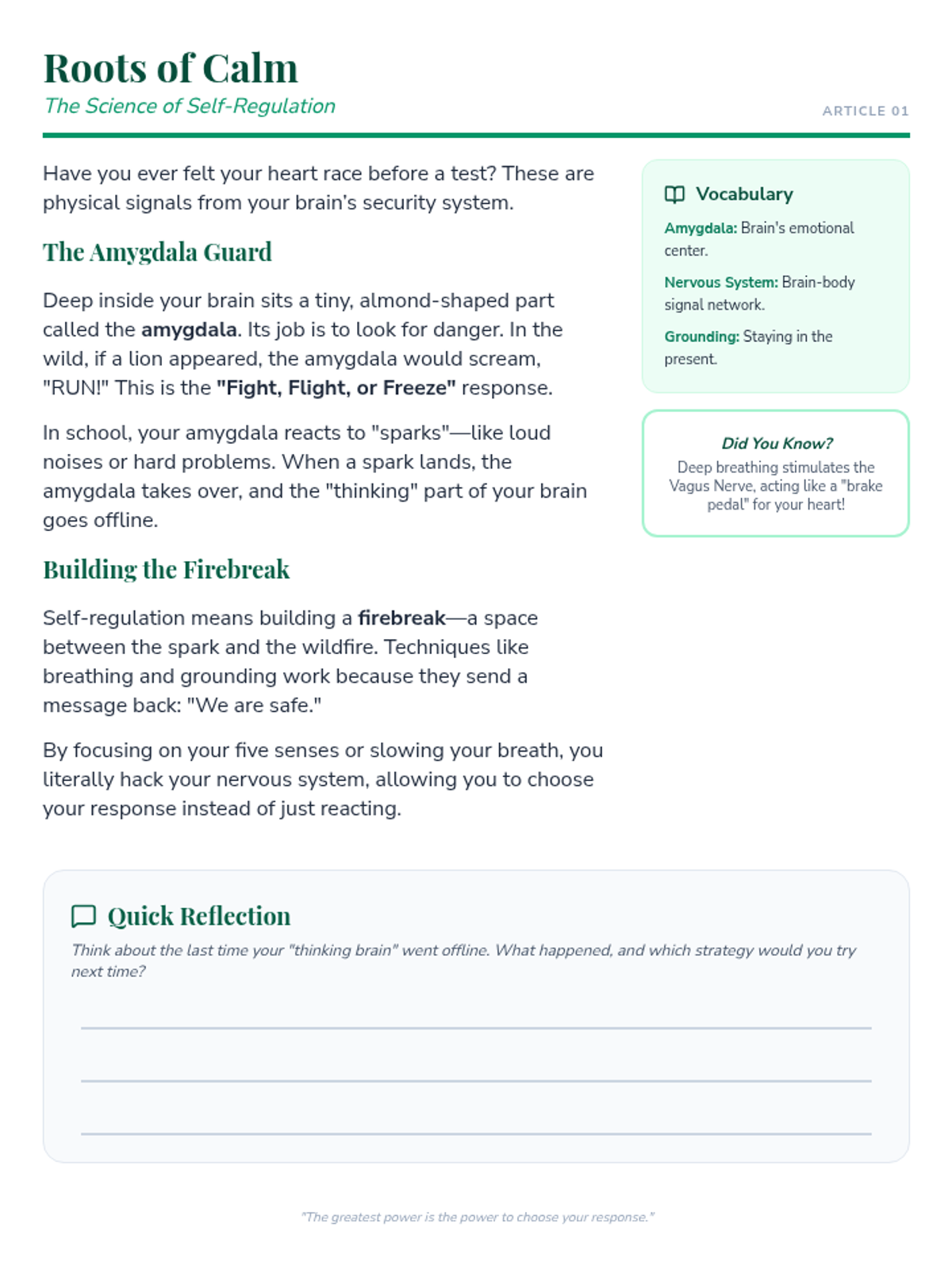
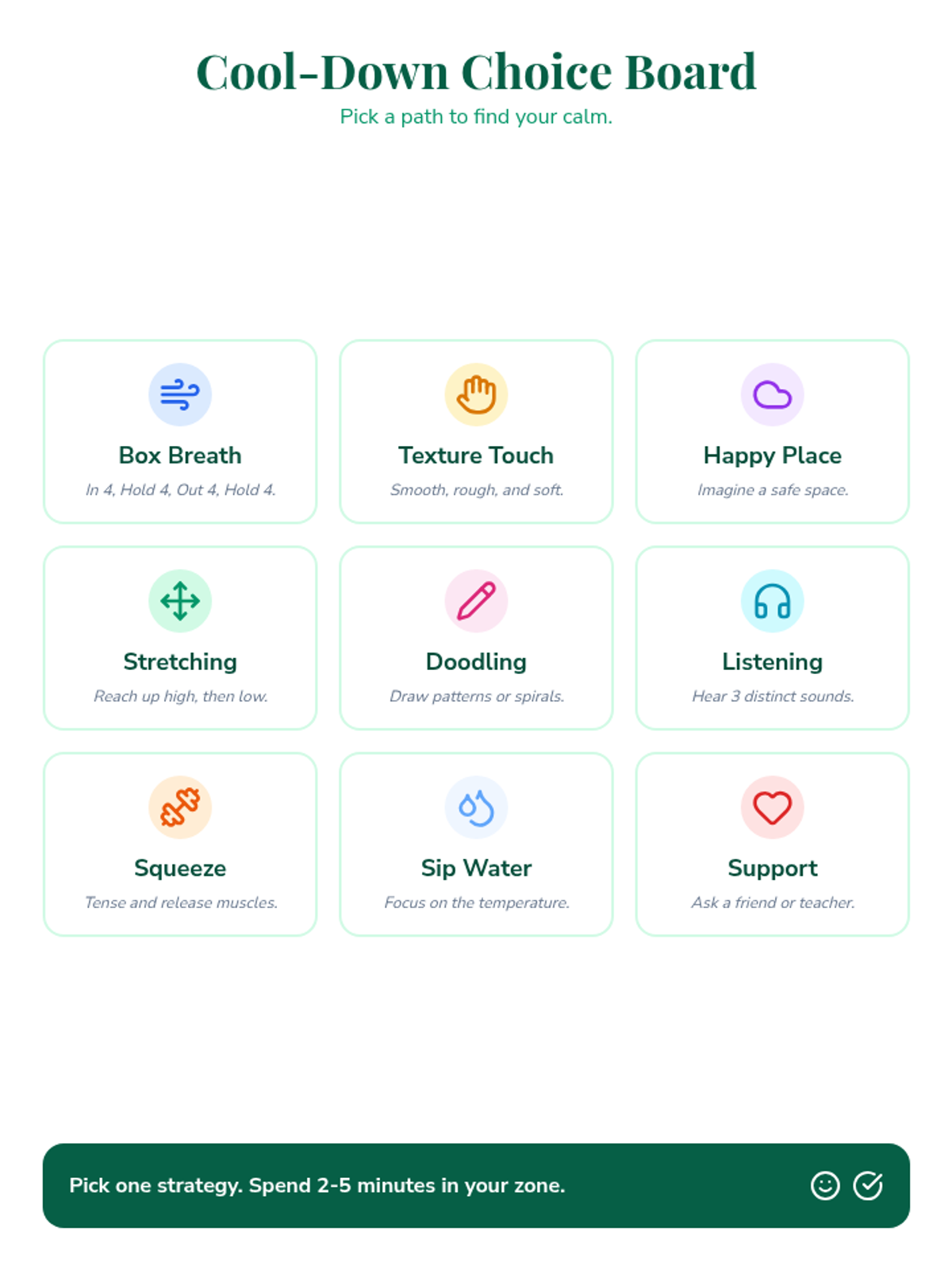
A comprehensive lesson on self-regulation where students identify stress triggers and build a personalized toolkit of mindfulness and grounding strategies.
Students explore personal stress triggers and develop a personalized toolkit of mindfulness and grounding strategies through hands-on stations and reflective journaling.
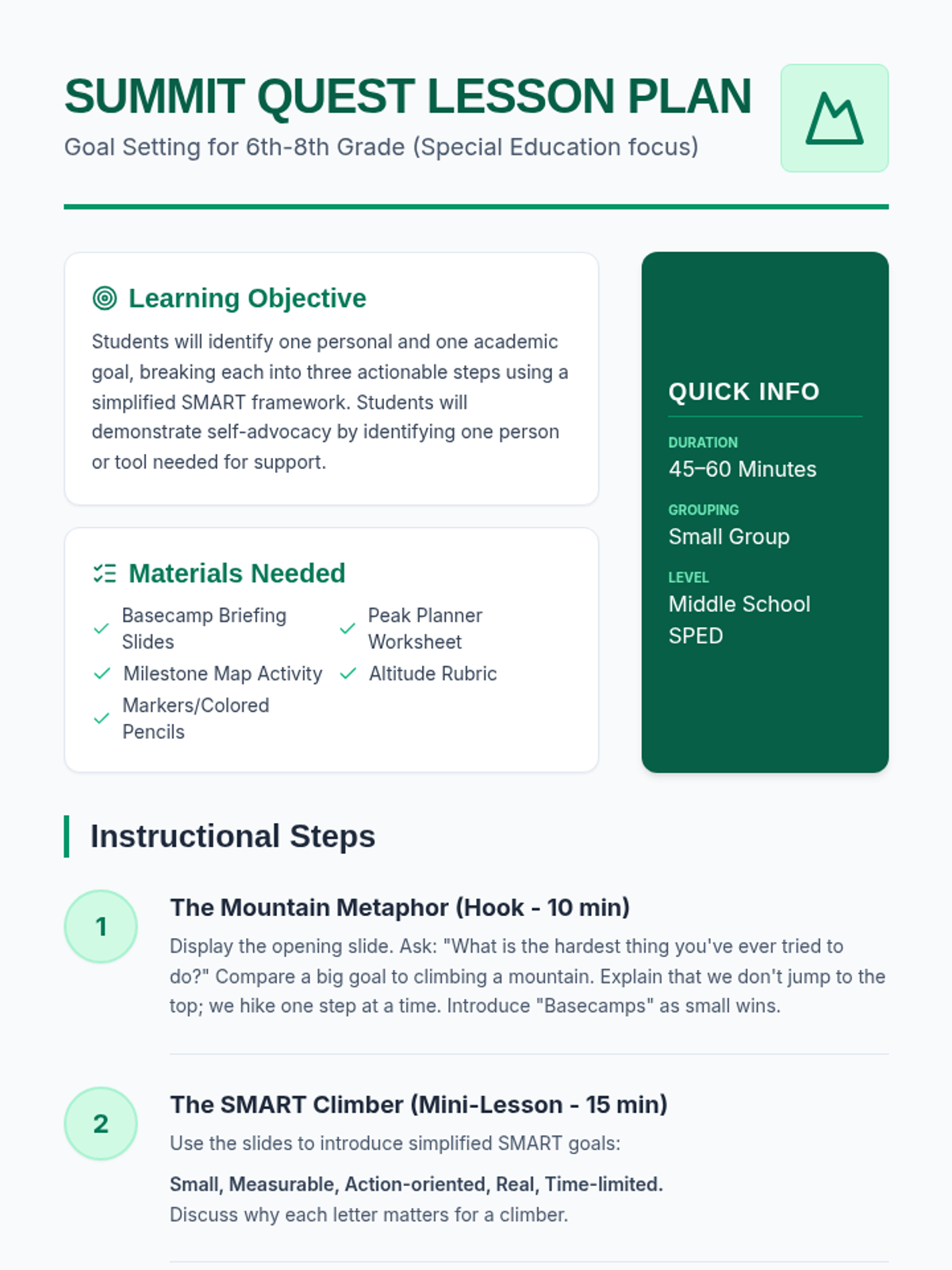
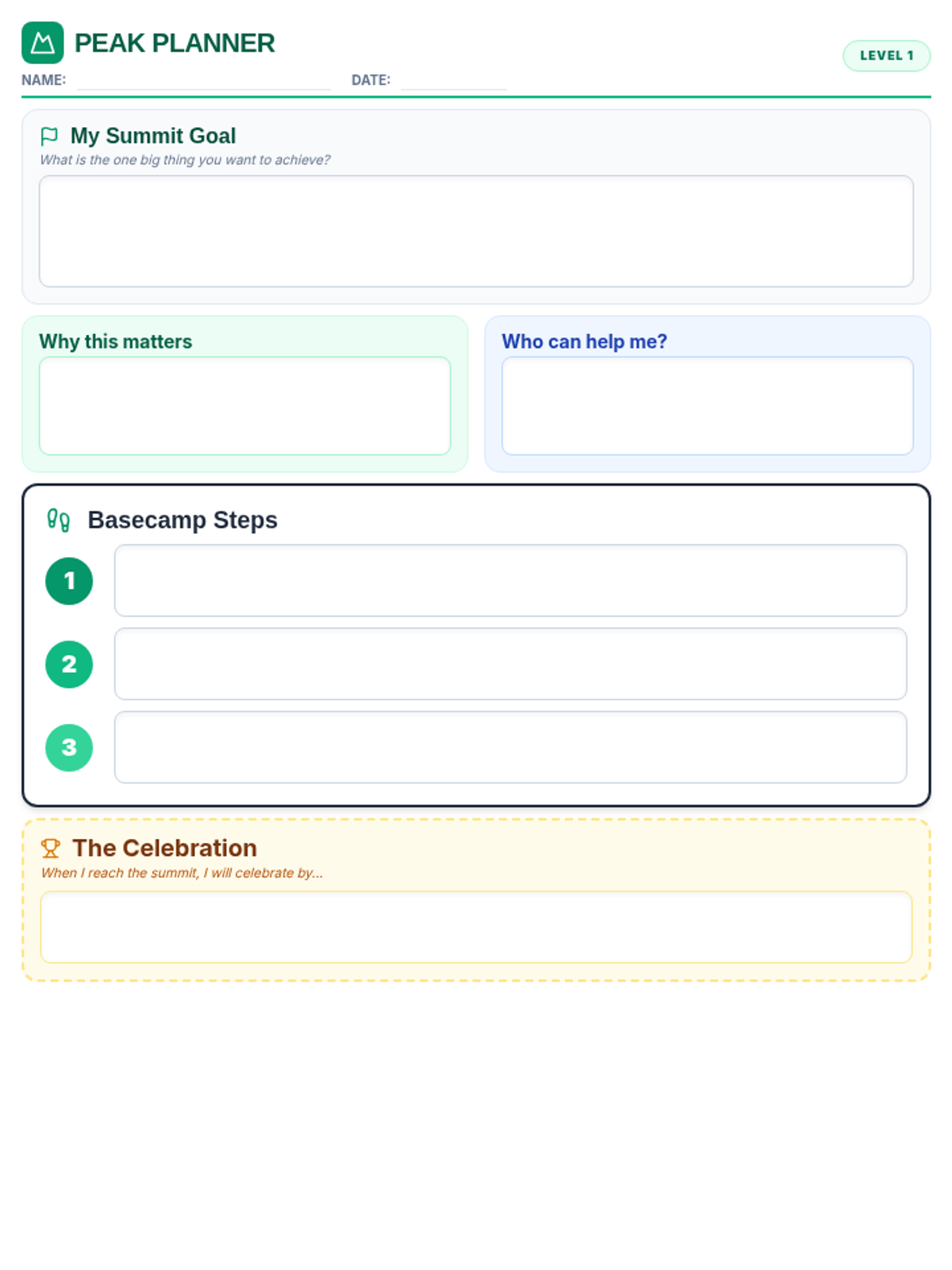
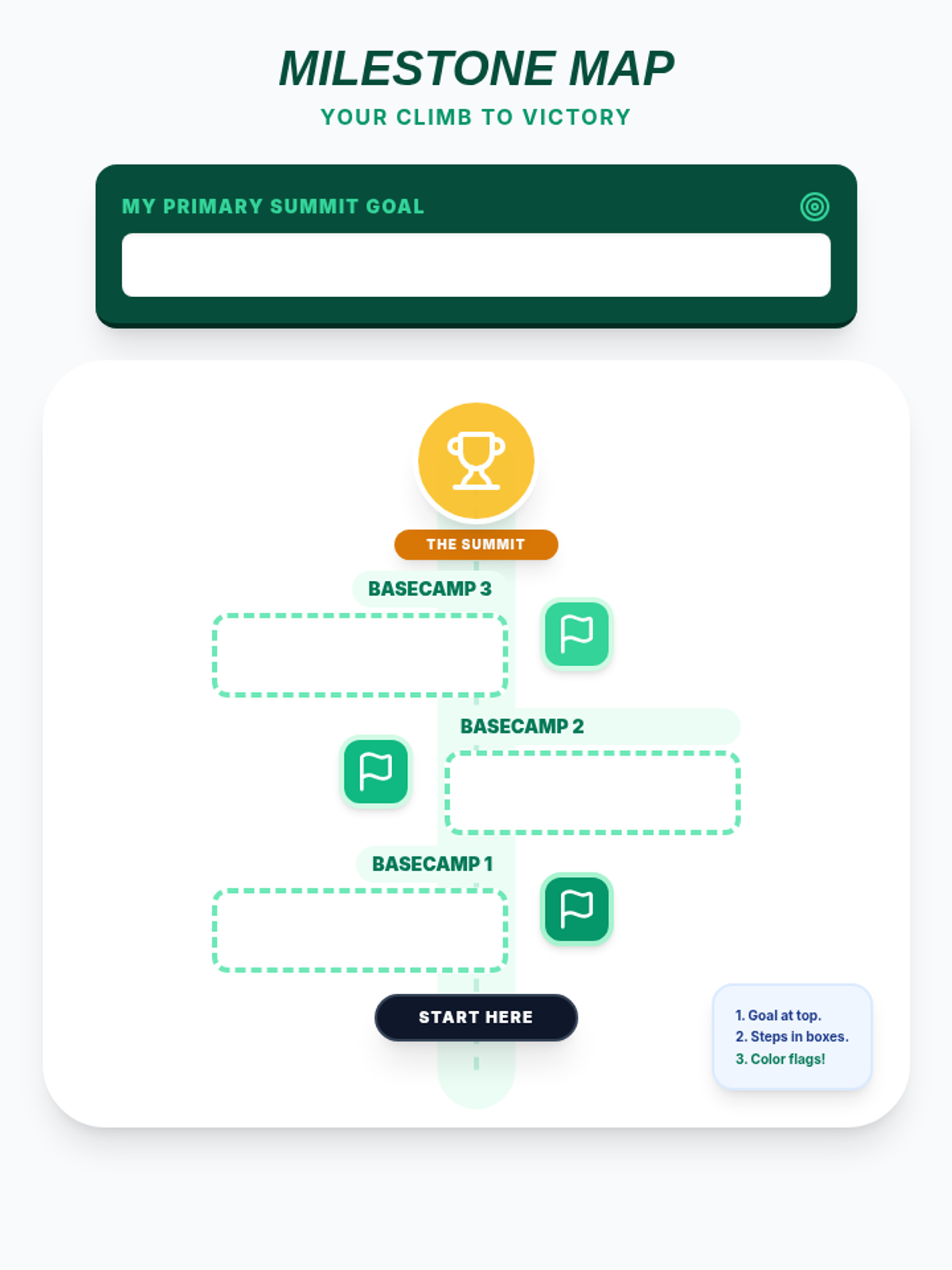
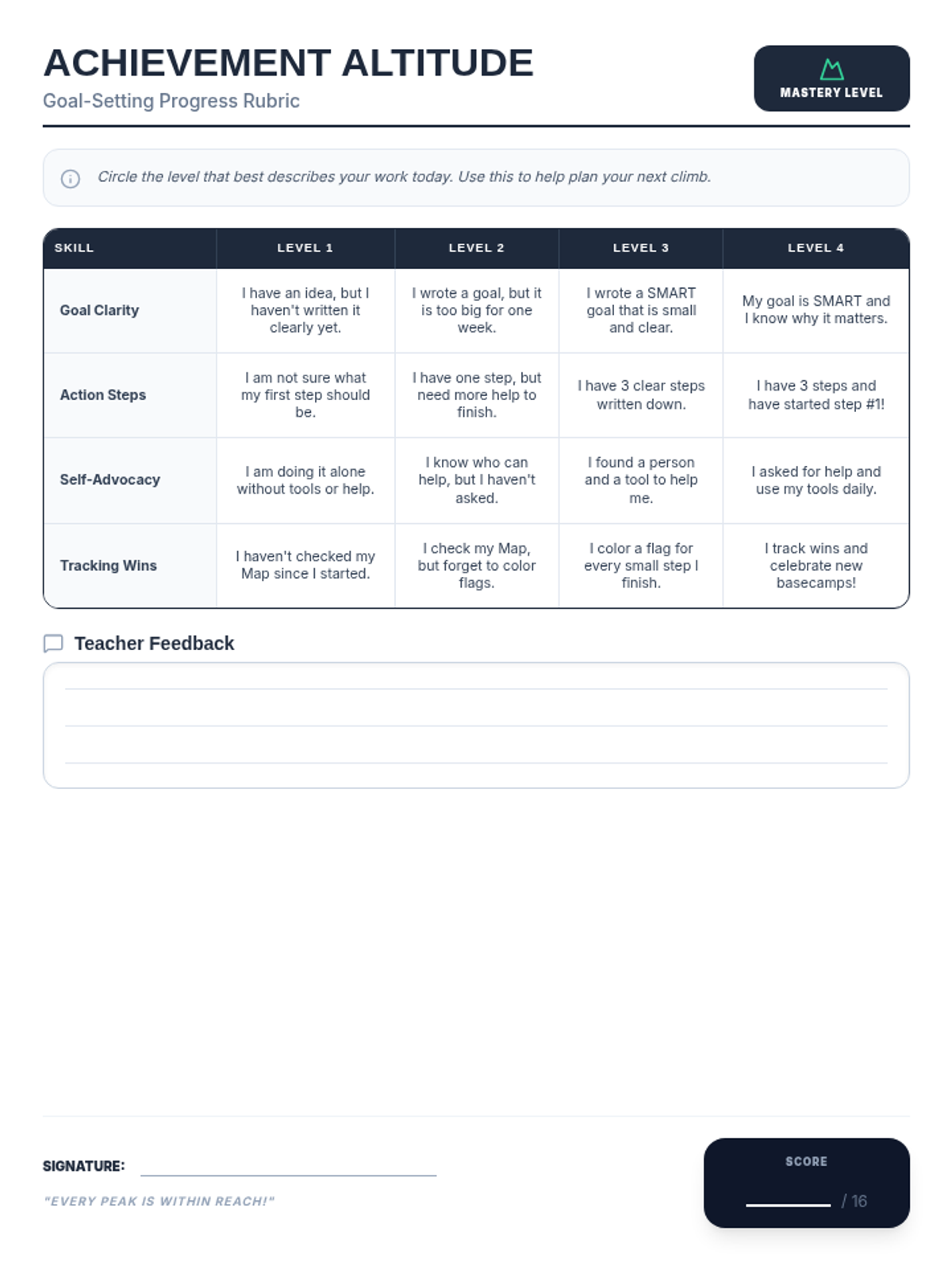
A lesson designed for 6th-8th grade special education students to learn the fundamentals of setting and tracking personal and academic goals using a mountain-climbing metaphor. Students will learn to break large objectives into manageable 'basecamp' steps to build confidence and self-advocacy.
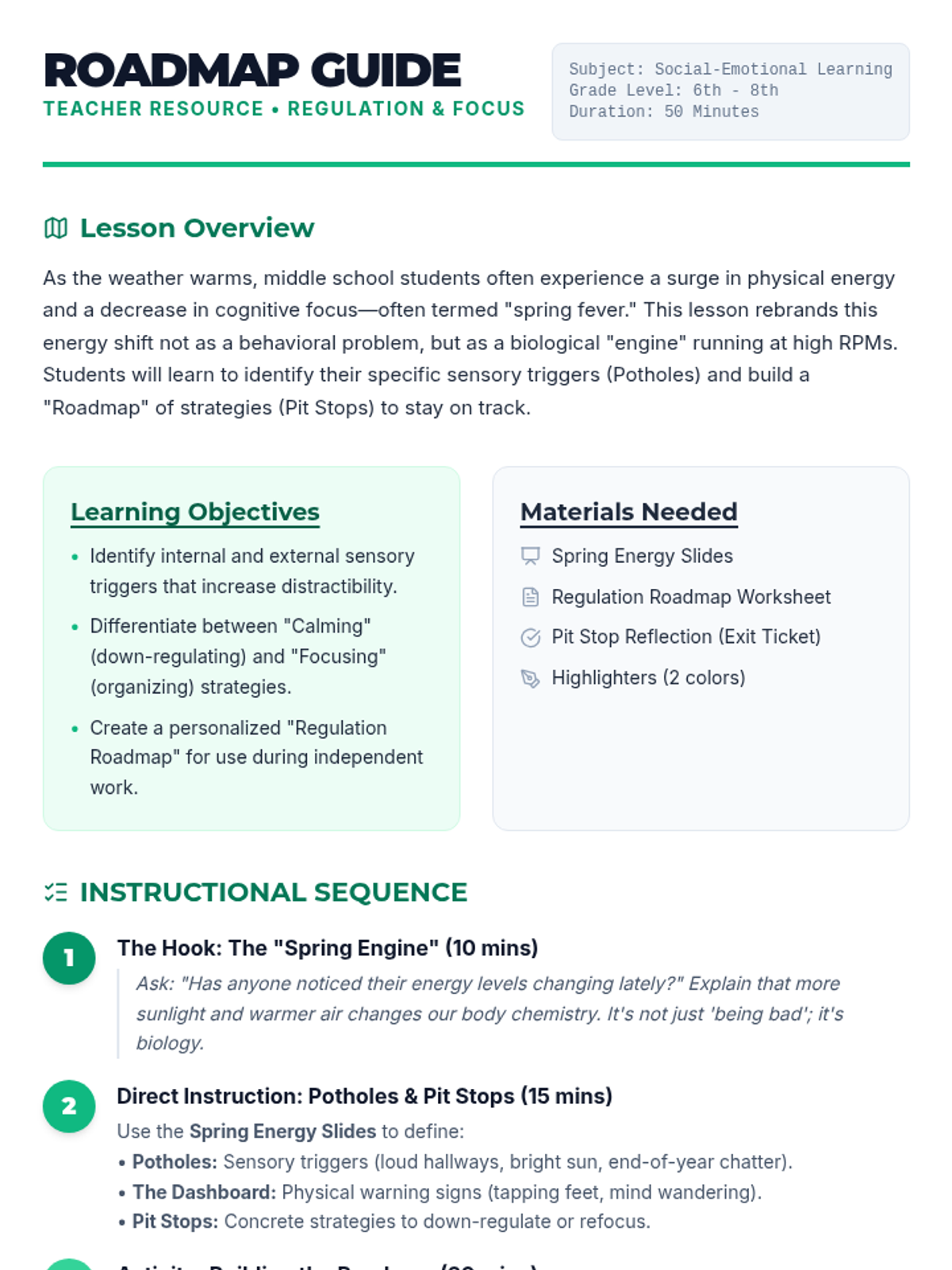
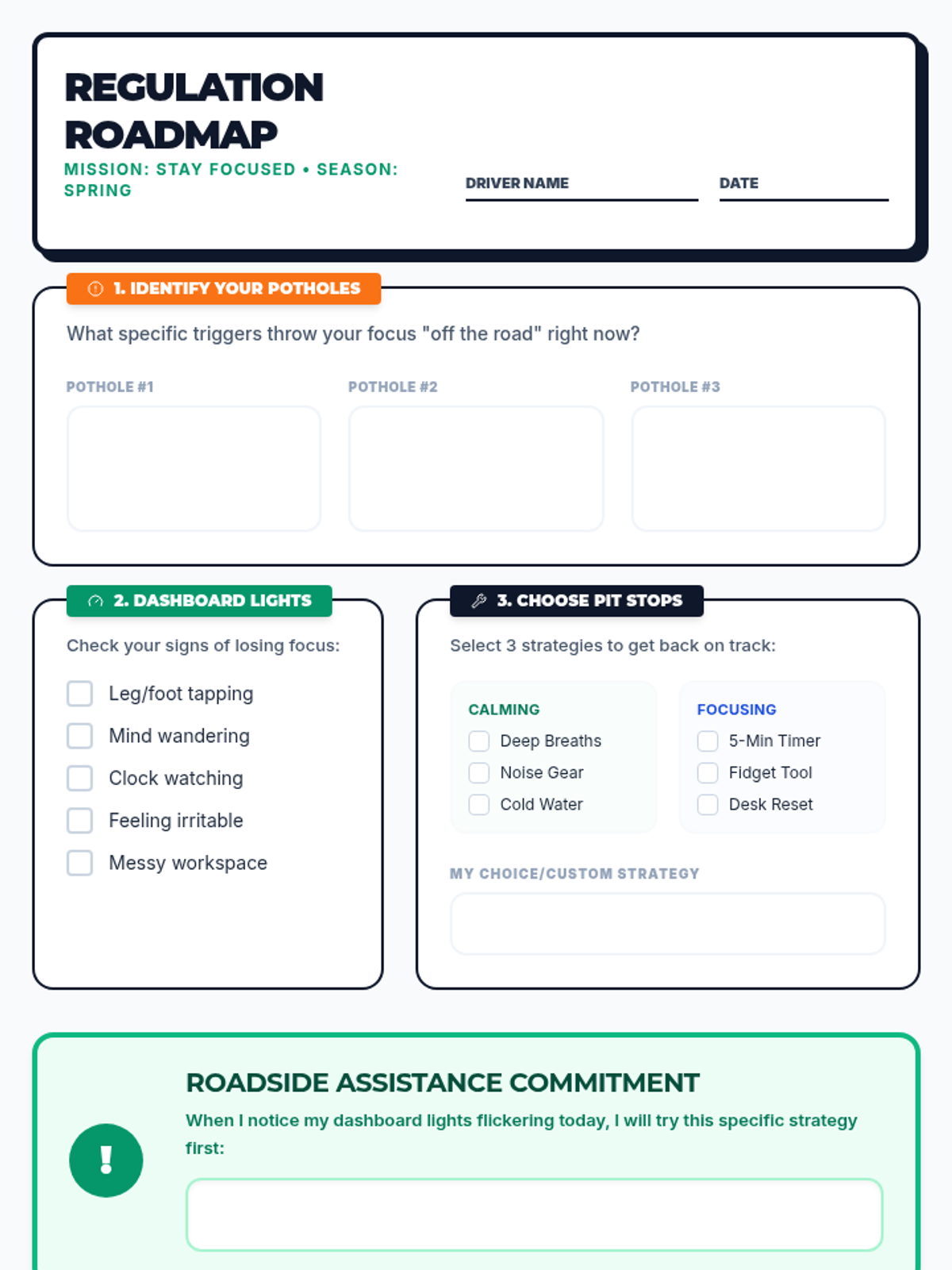
This lesson helps middle school students identify sensory triggers associated with seasonal energy shifts and develop a personalized regulation roadmap of calming and focusing strategies. Students explore the physiology of 'spring fever' and create a practical toolkit for maintaining focus during high-energy periods.
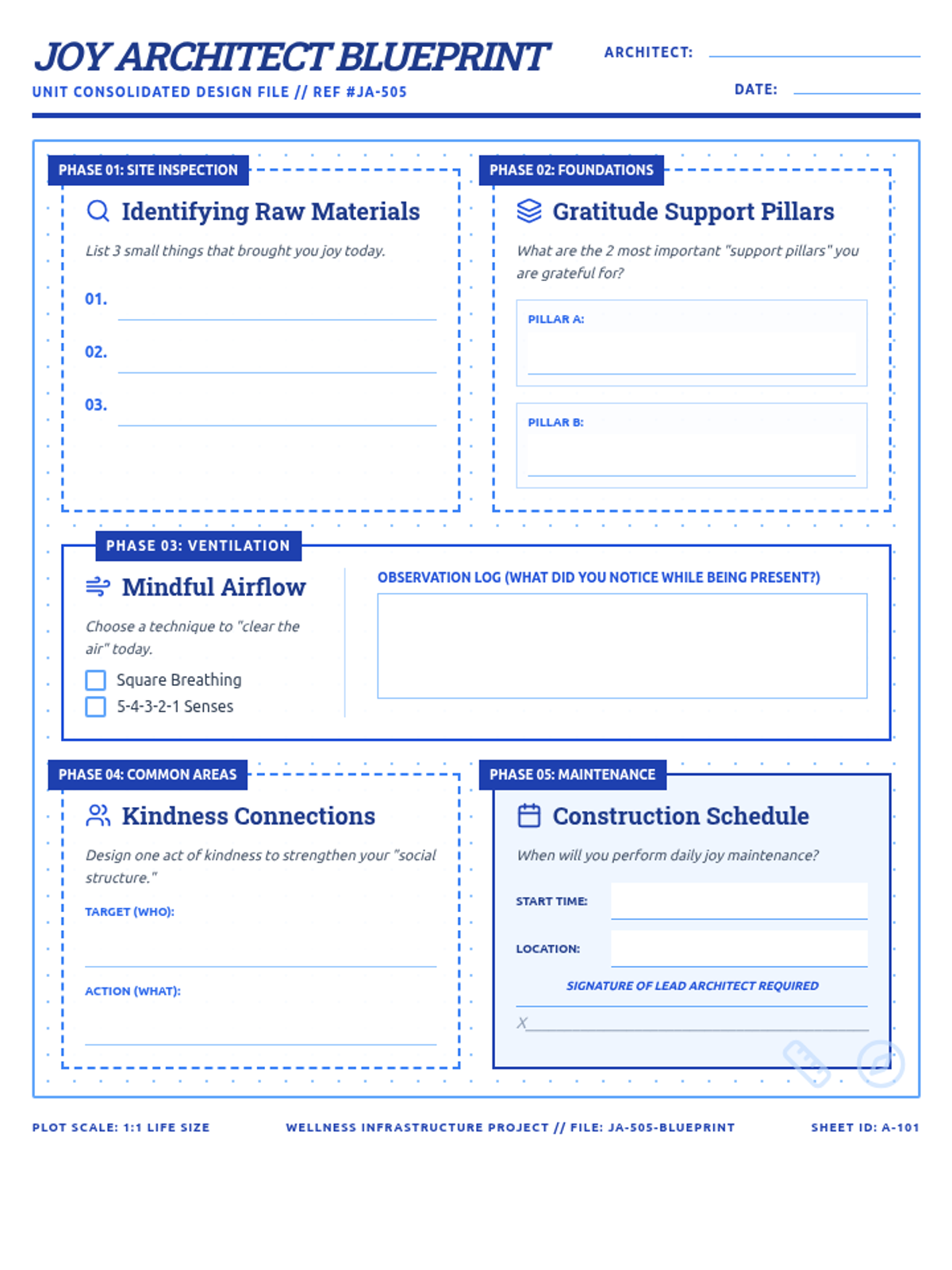
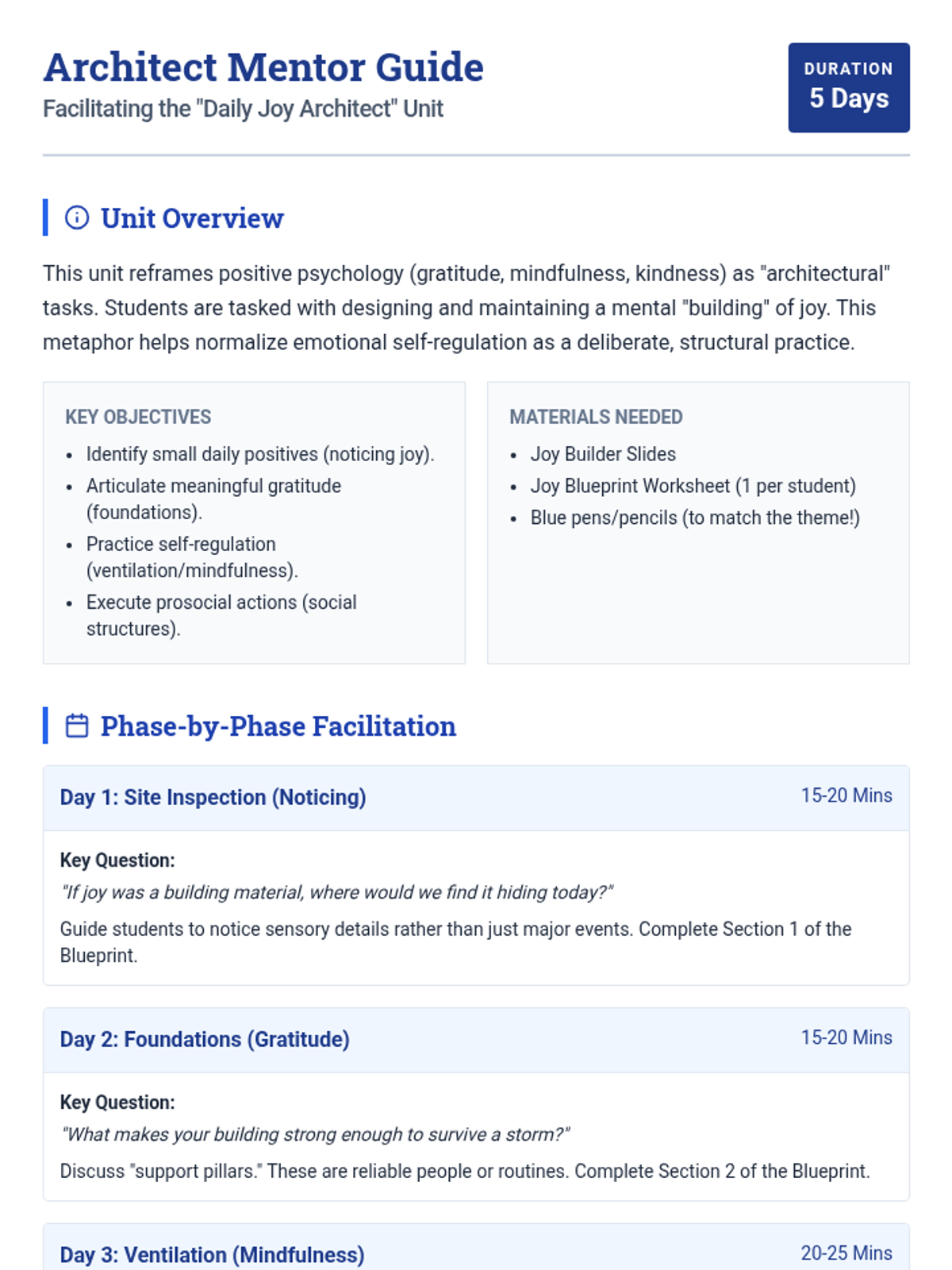
Finalizing the daily routine by creating a 'construction schedule' to keep the joy architecture maintained over time.
Students learn to identify 'raw materials' of joy—small, positive moments in their daily lives—and begin their joy site inspection.
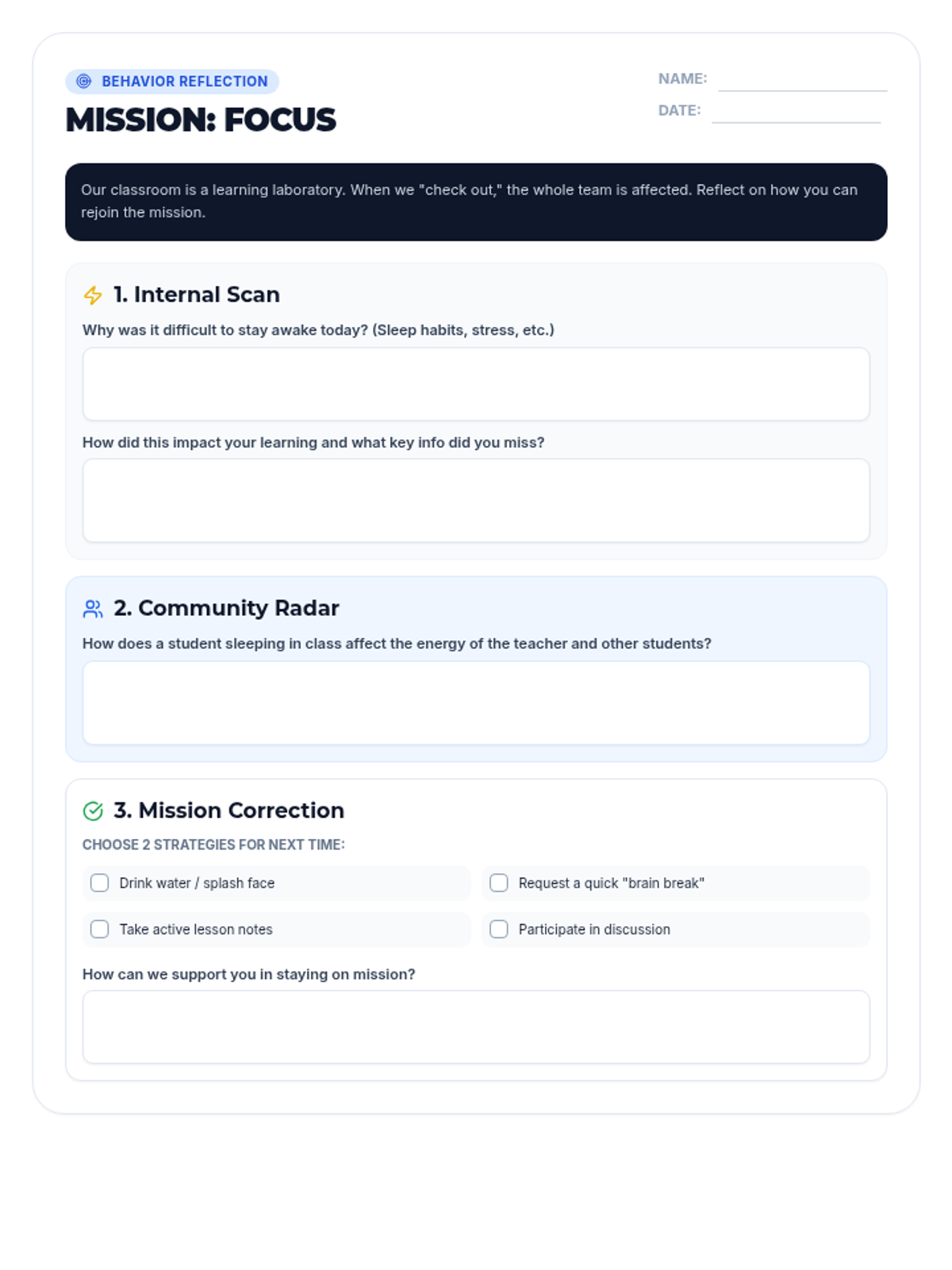
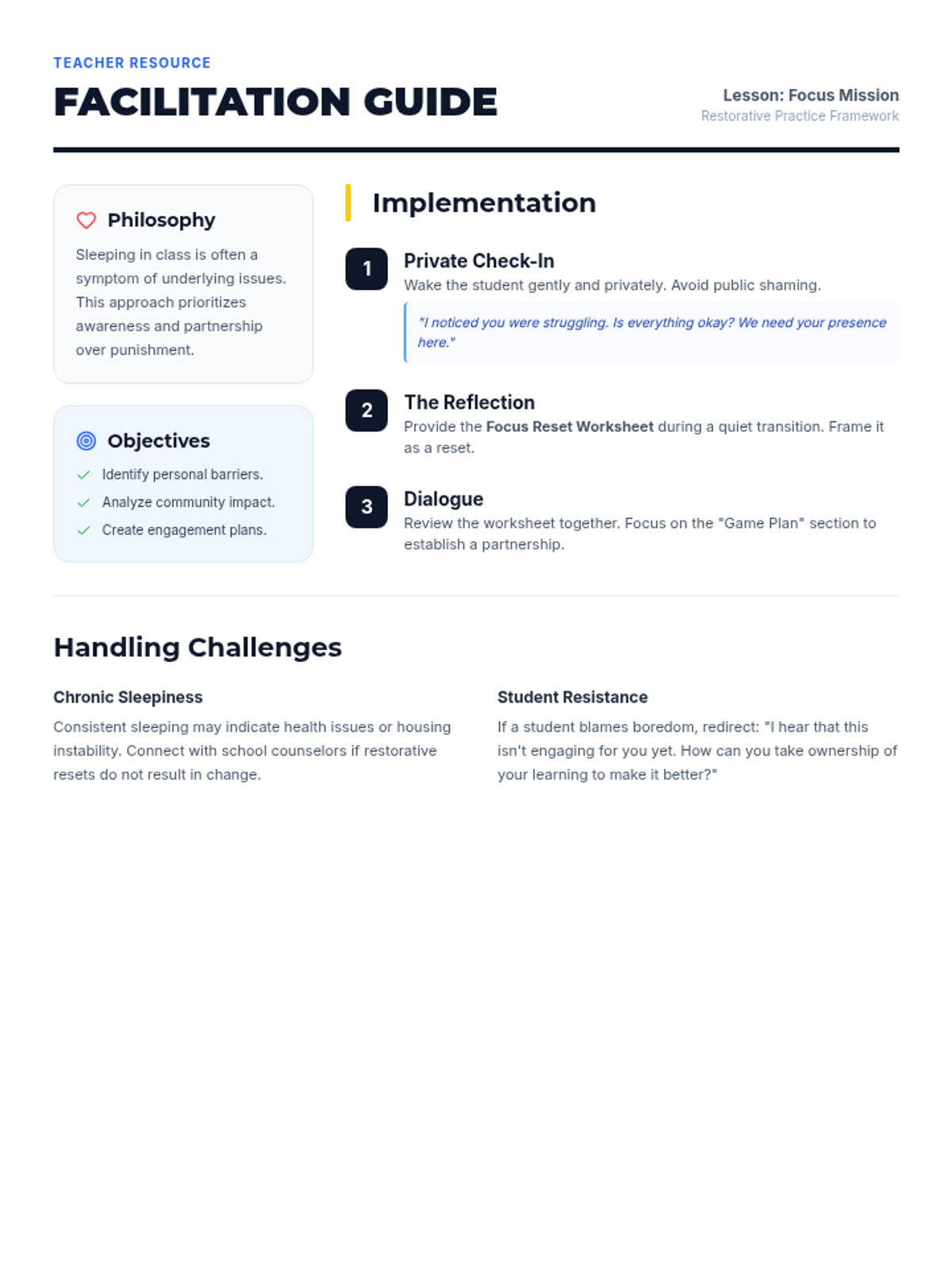
A restorative lesson designed to help students understand the importance of staying awake and engaged in class, focusing on personal success and classroom community respect.
A lesson designed to equip students with practical mindfulness and grounding techniques specifically tailored for the stresses of state testing in Reading and Math, plus strategies for managing physical restlessness.
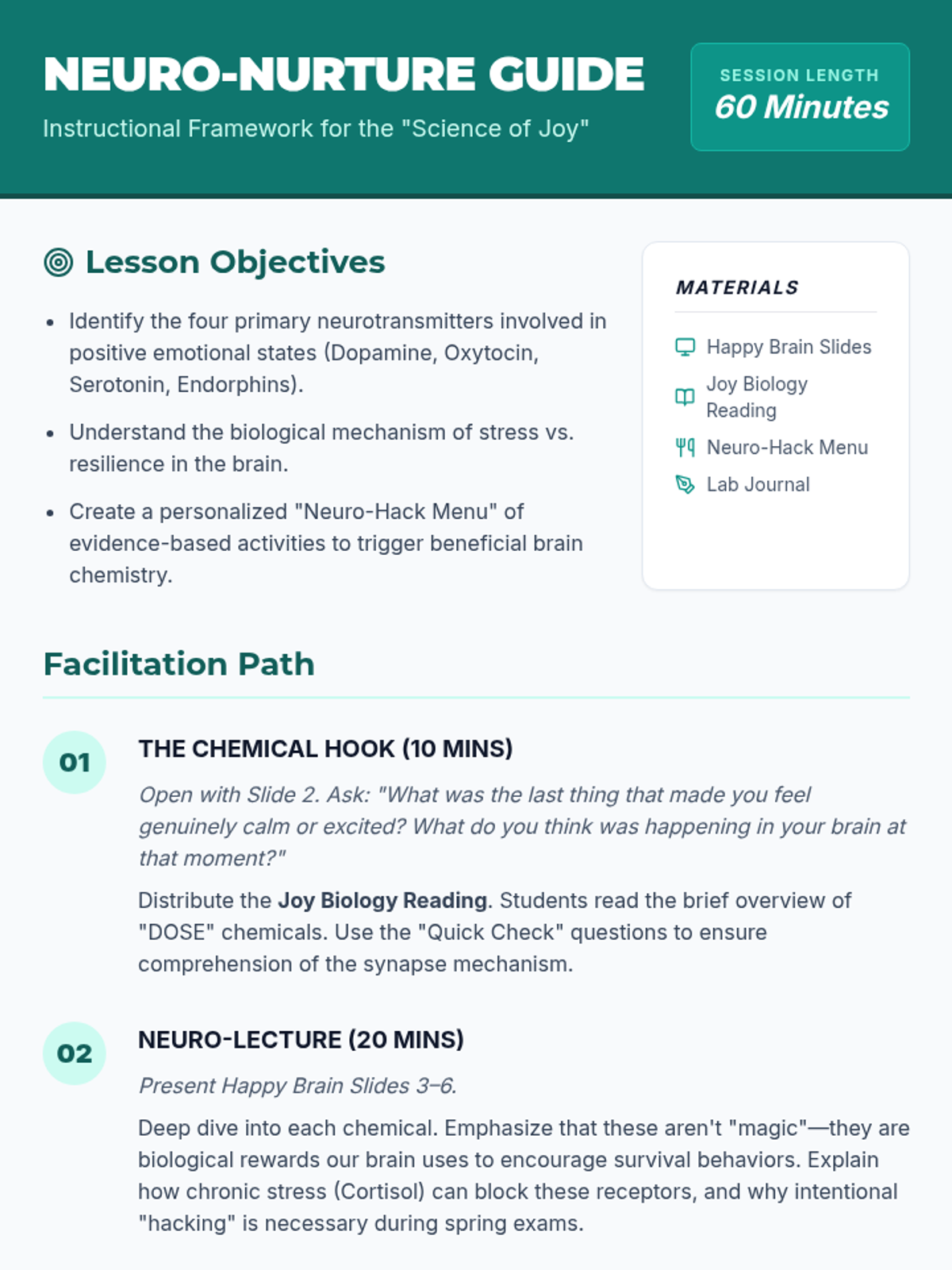
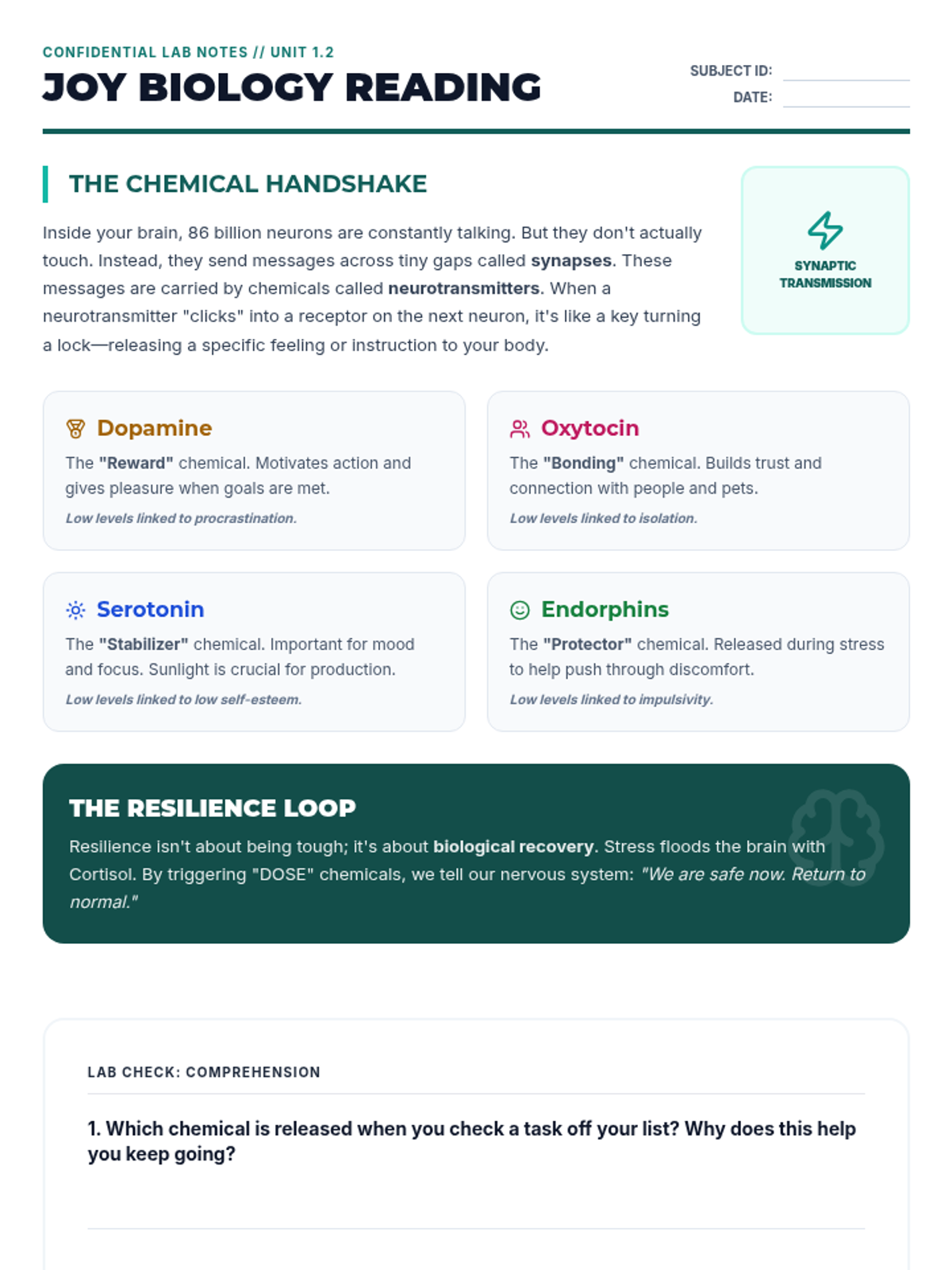
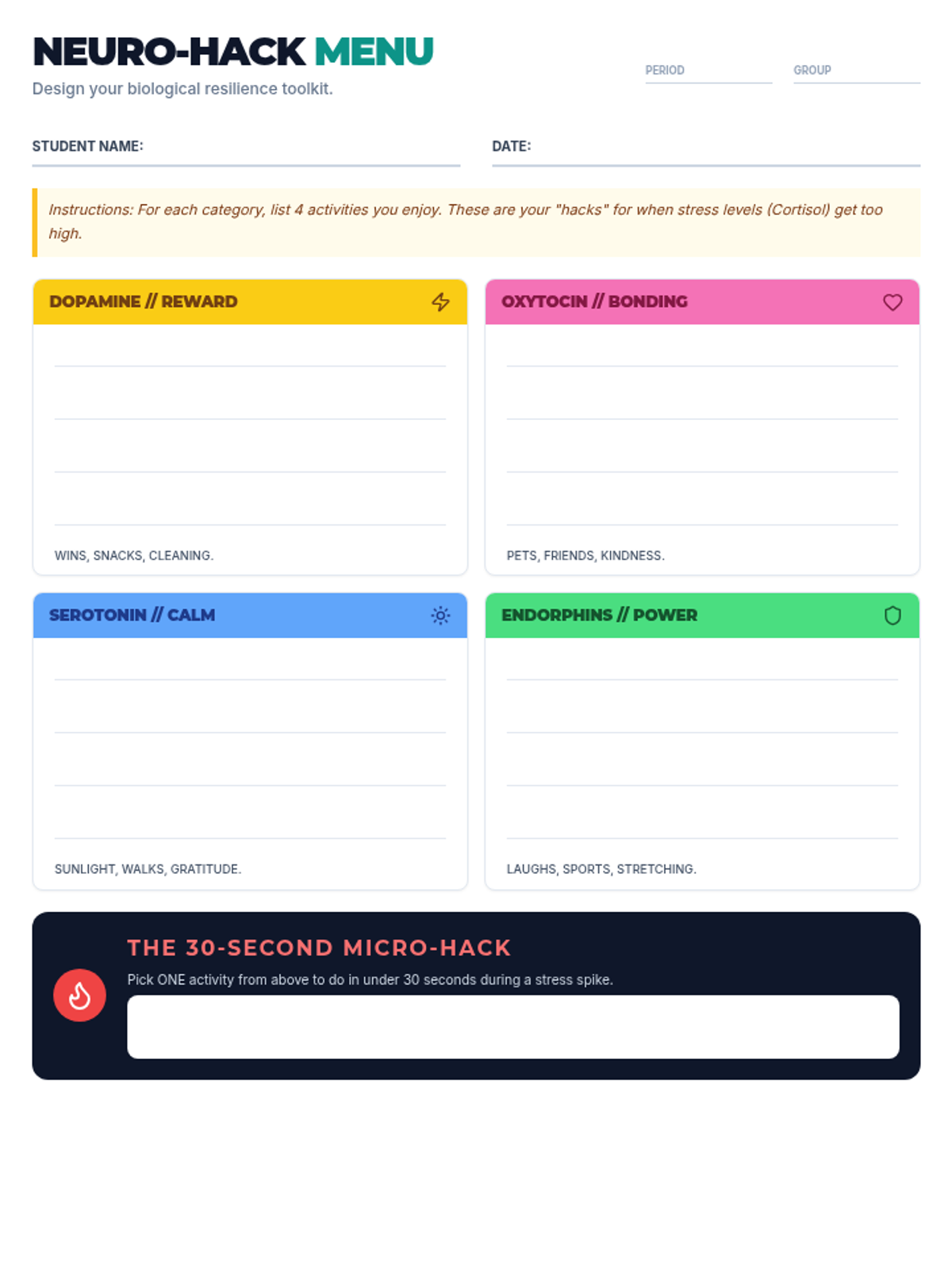
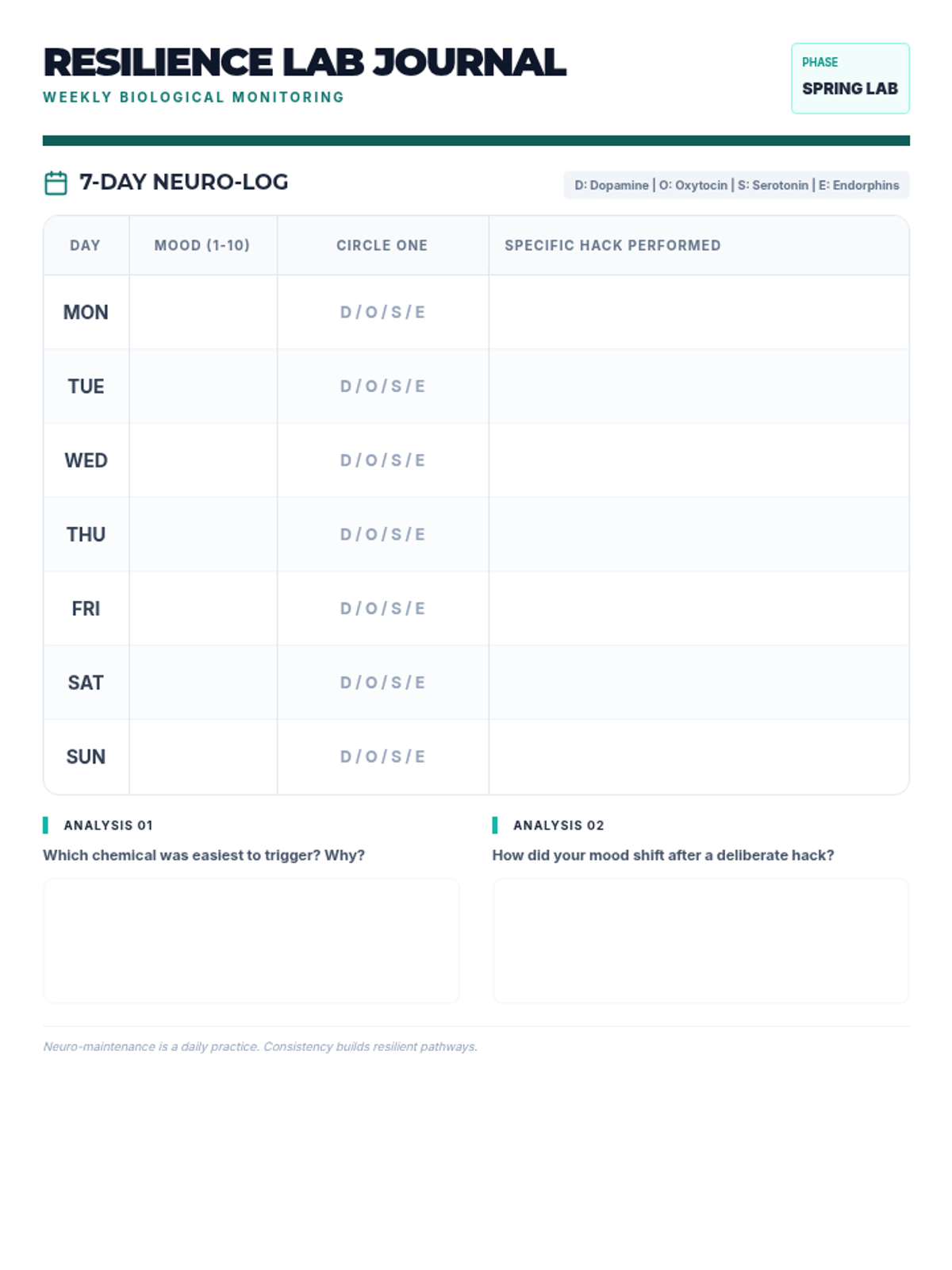
A lesson exploring the neurological basis of joy and resilience, providing students with biological tools to manage stress through the 'DOSE' neurotransmitters (Dopamine, Oxytocin, Serotonin, and Endorphins).
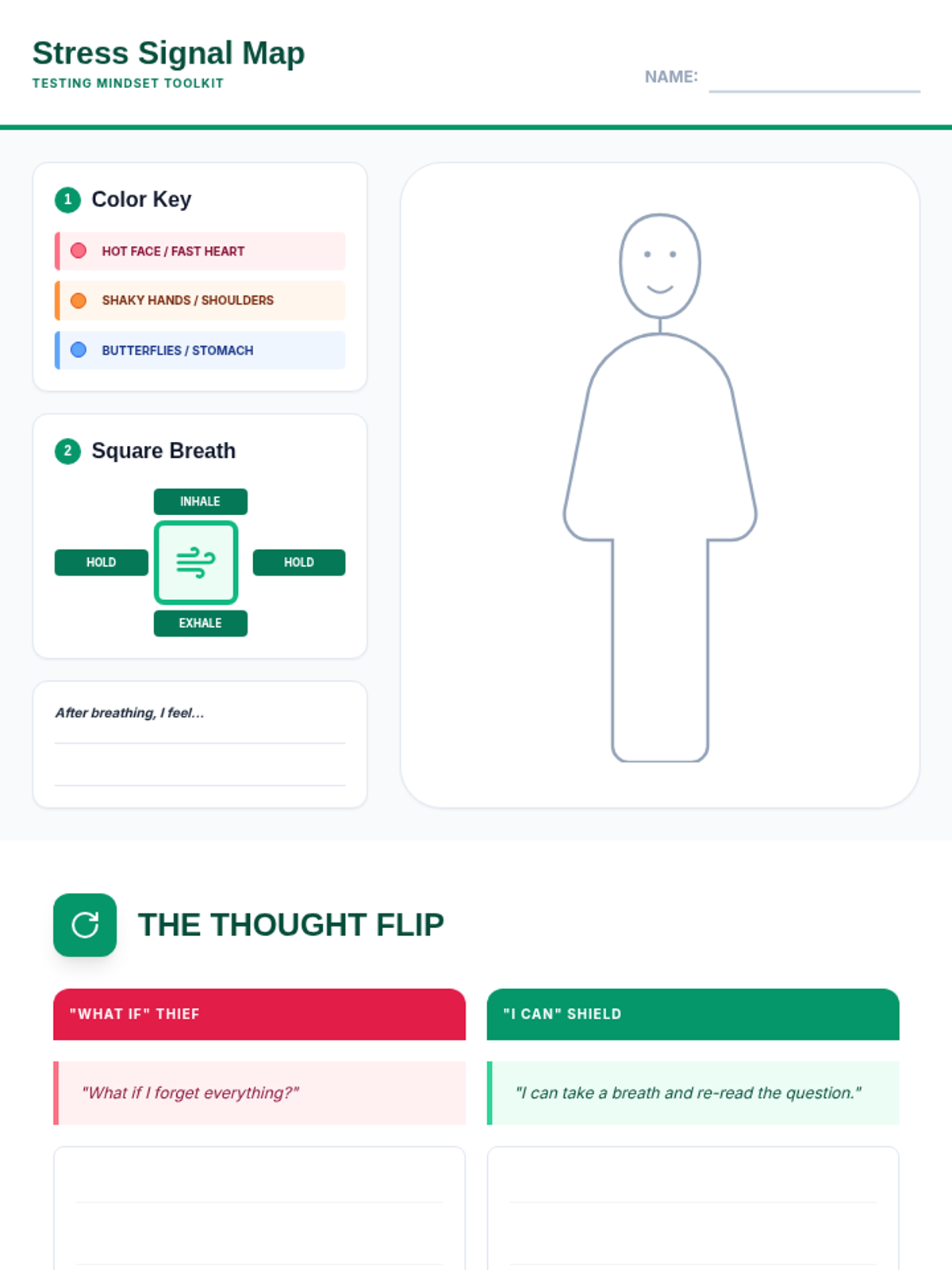
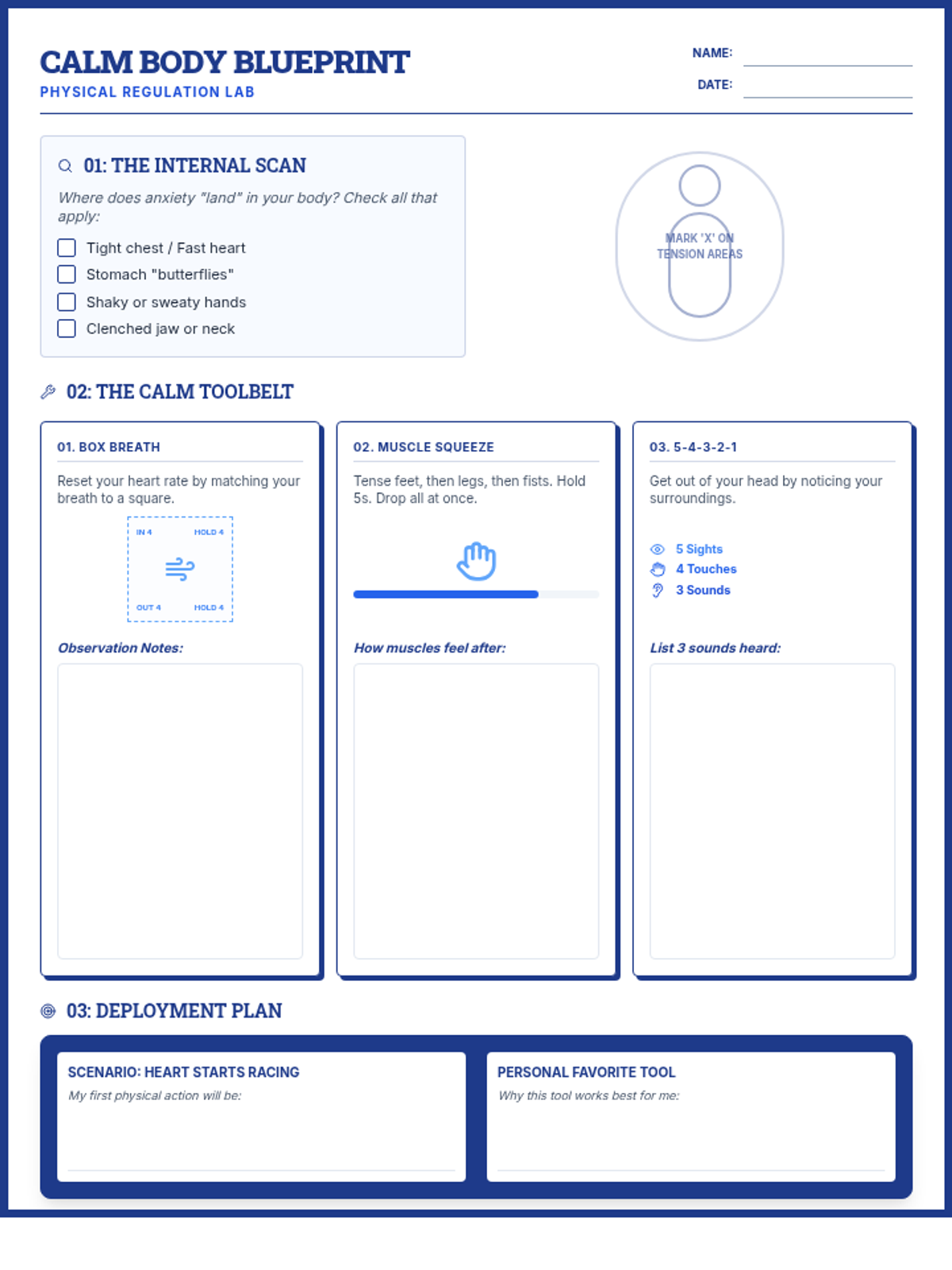
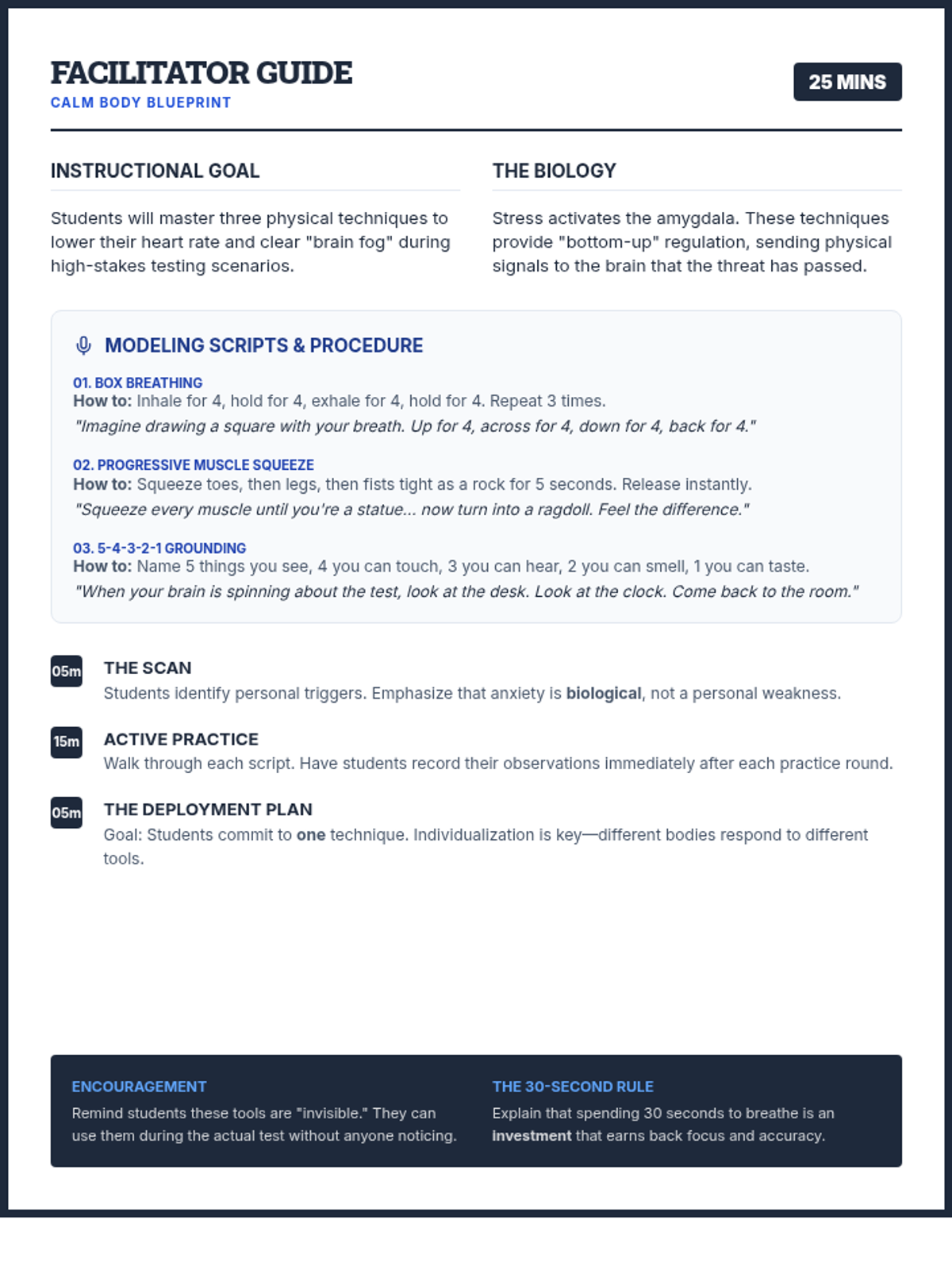
This lesson helps students identify physical symptoms of testing anxiety and practice three concrete physical relaxation techniques: Box Breathing, Progressive Muscle Relaxation, and Grounding.
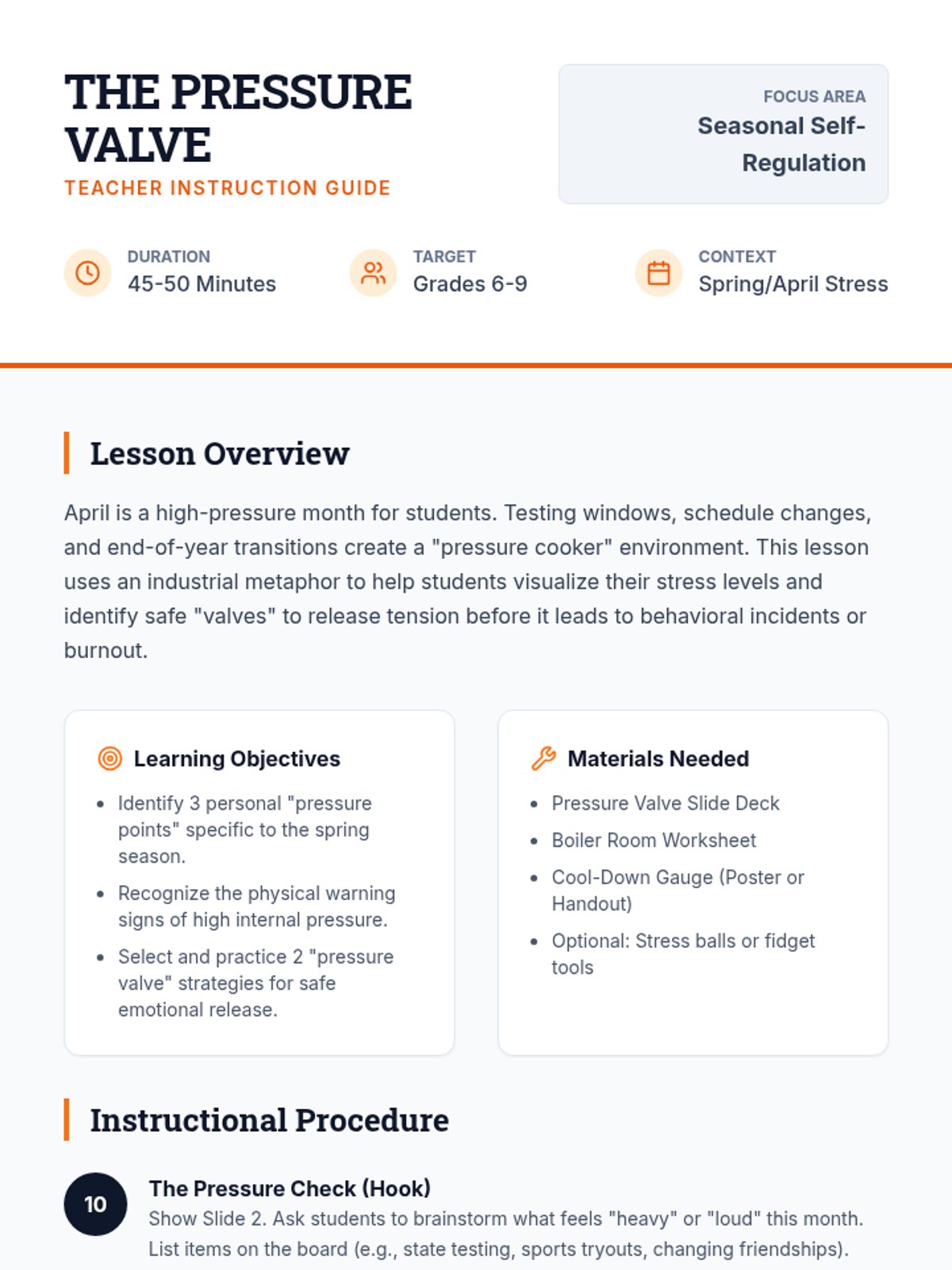
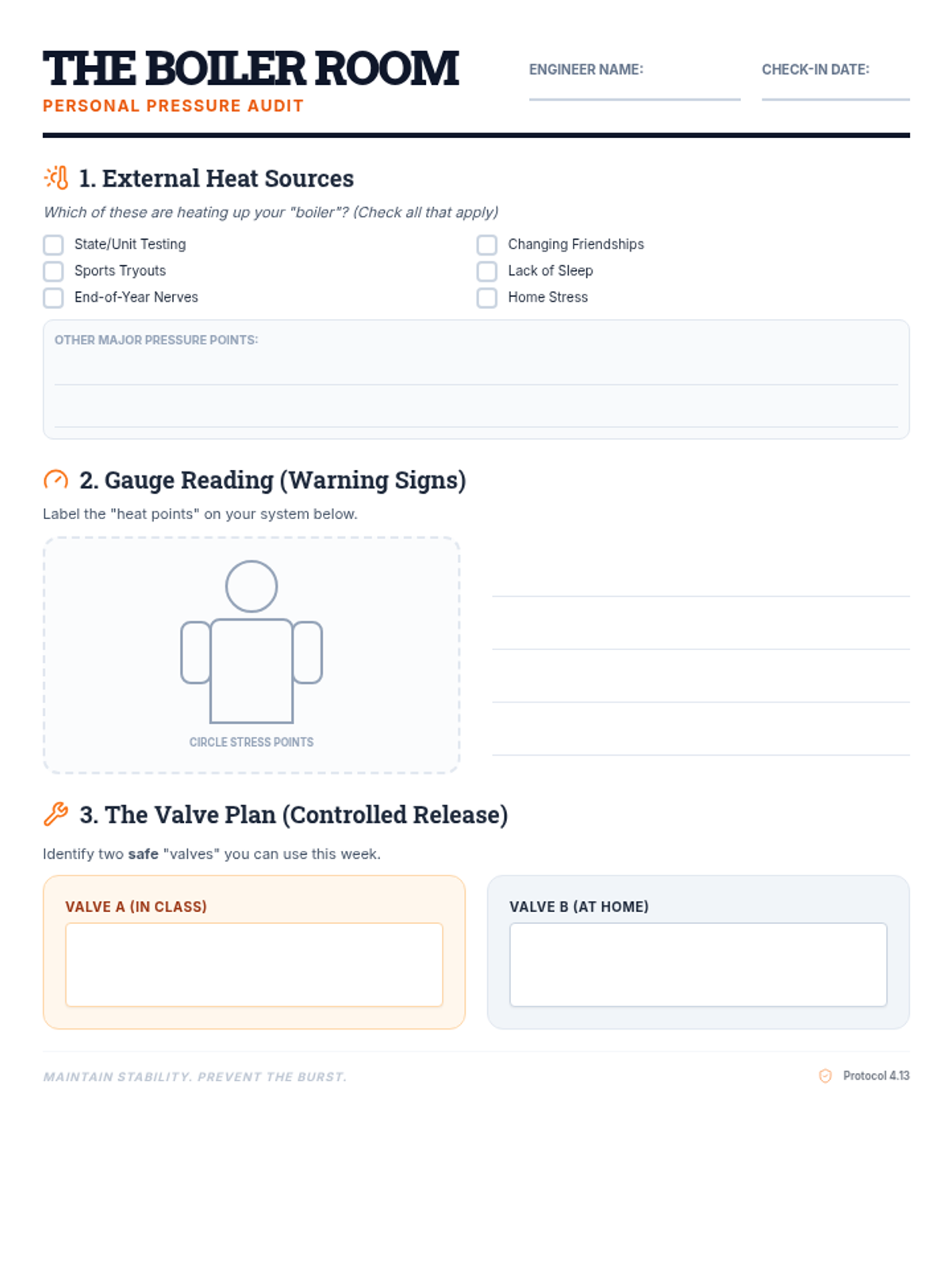
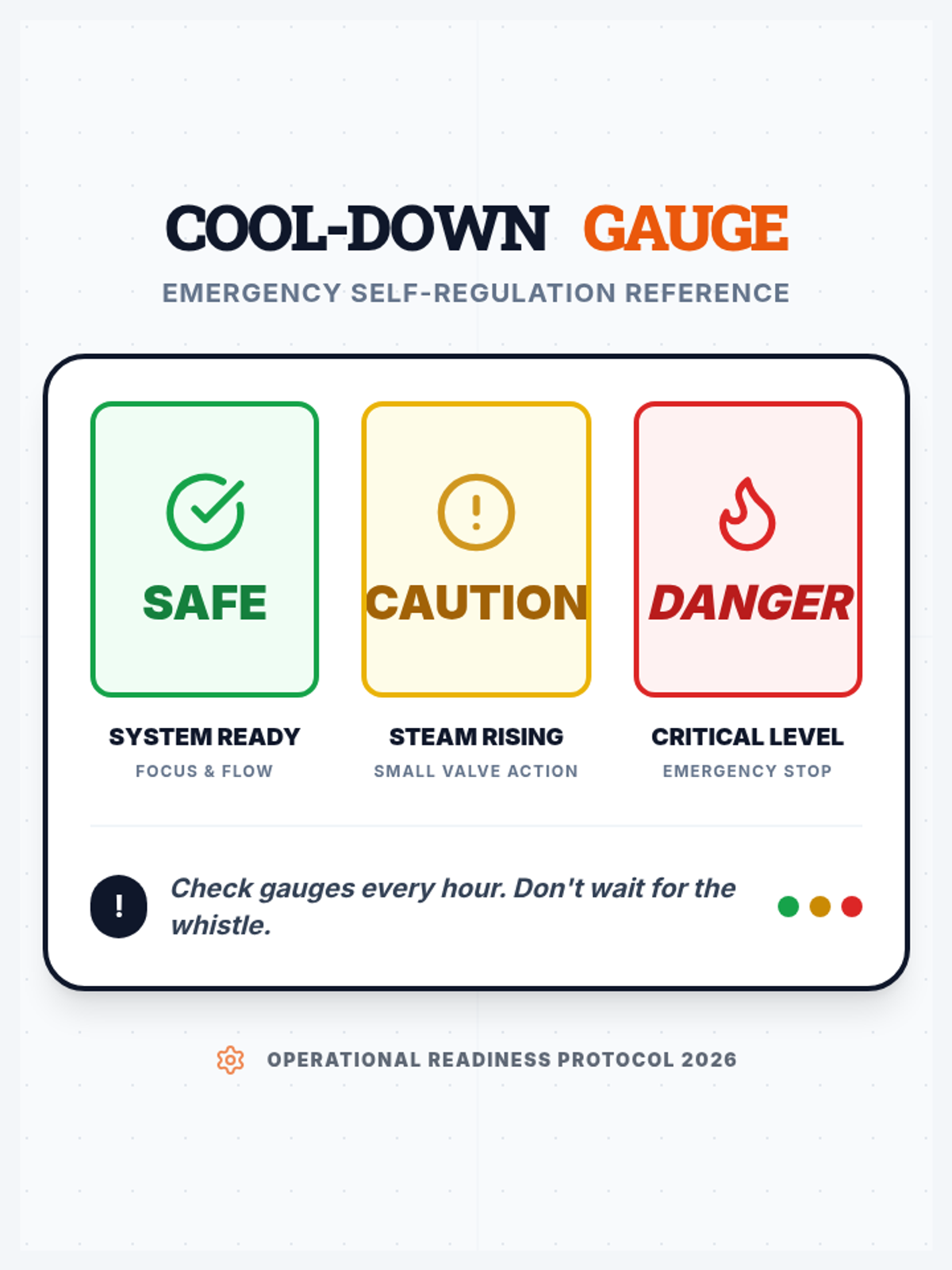
A lesson designed to help students manage the specific stressors of April, such as testing and transitions, using the 'Pressure Valve' metaphor for self-regulation.
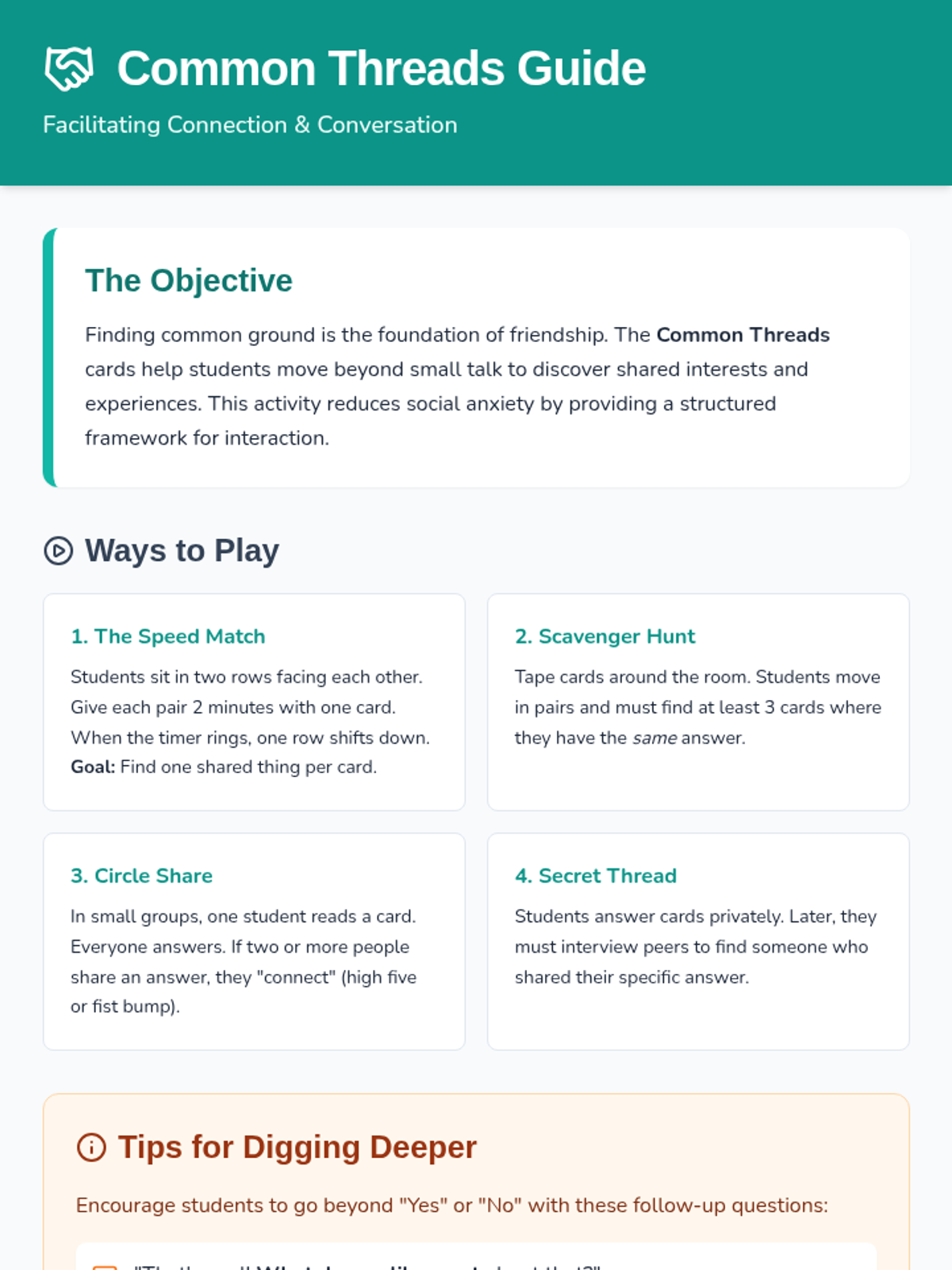
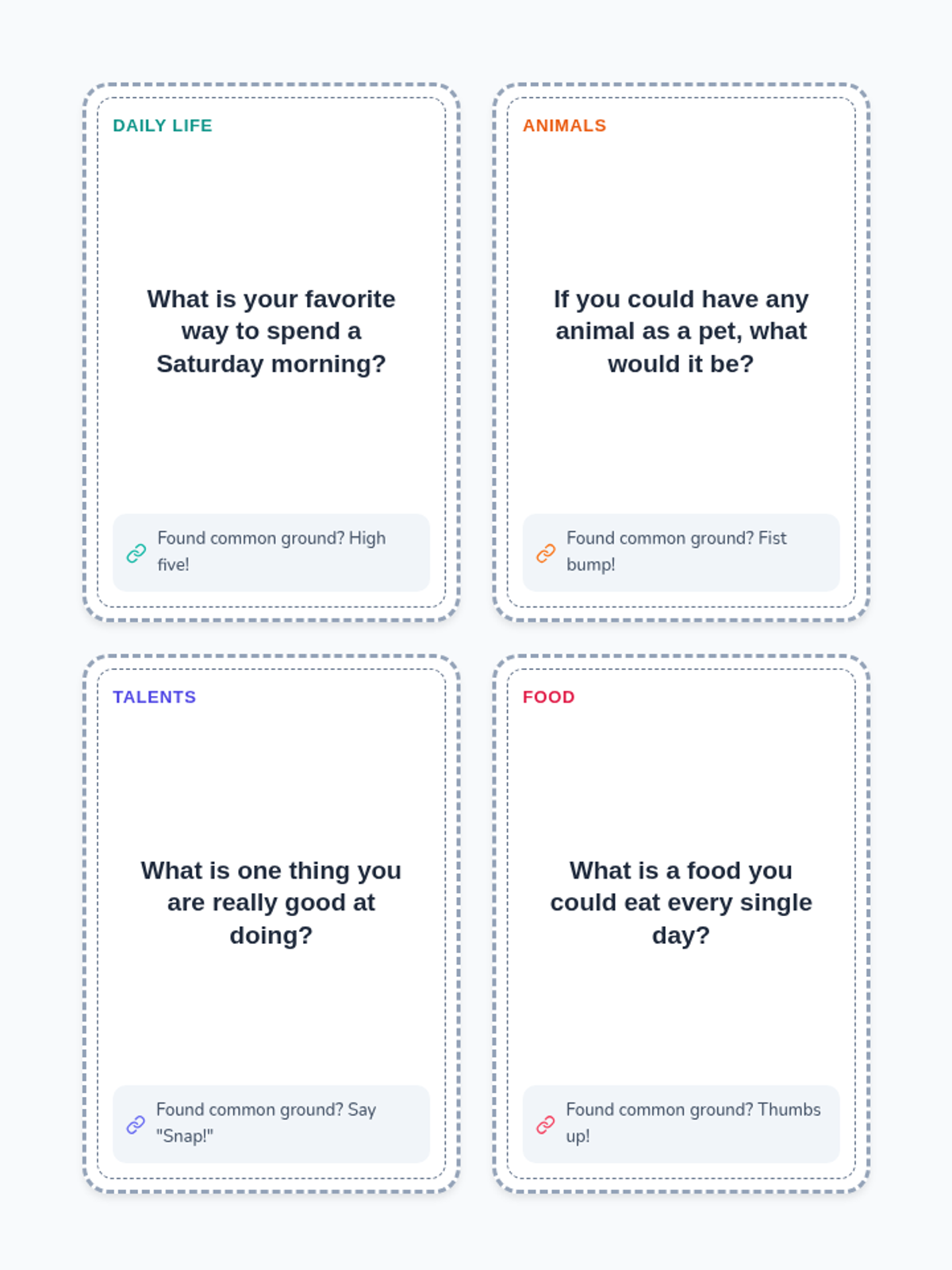
A social-emotional learning lesson focused on finding commonalities with peers through structured conversation. Students use conversation cards to discover shared interests and build connections.
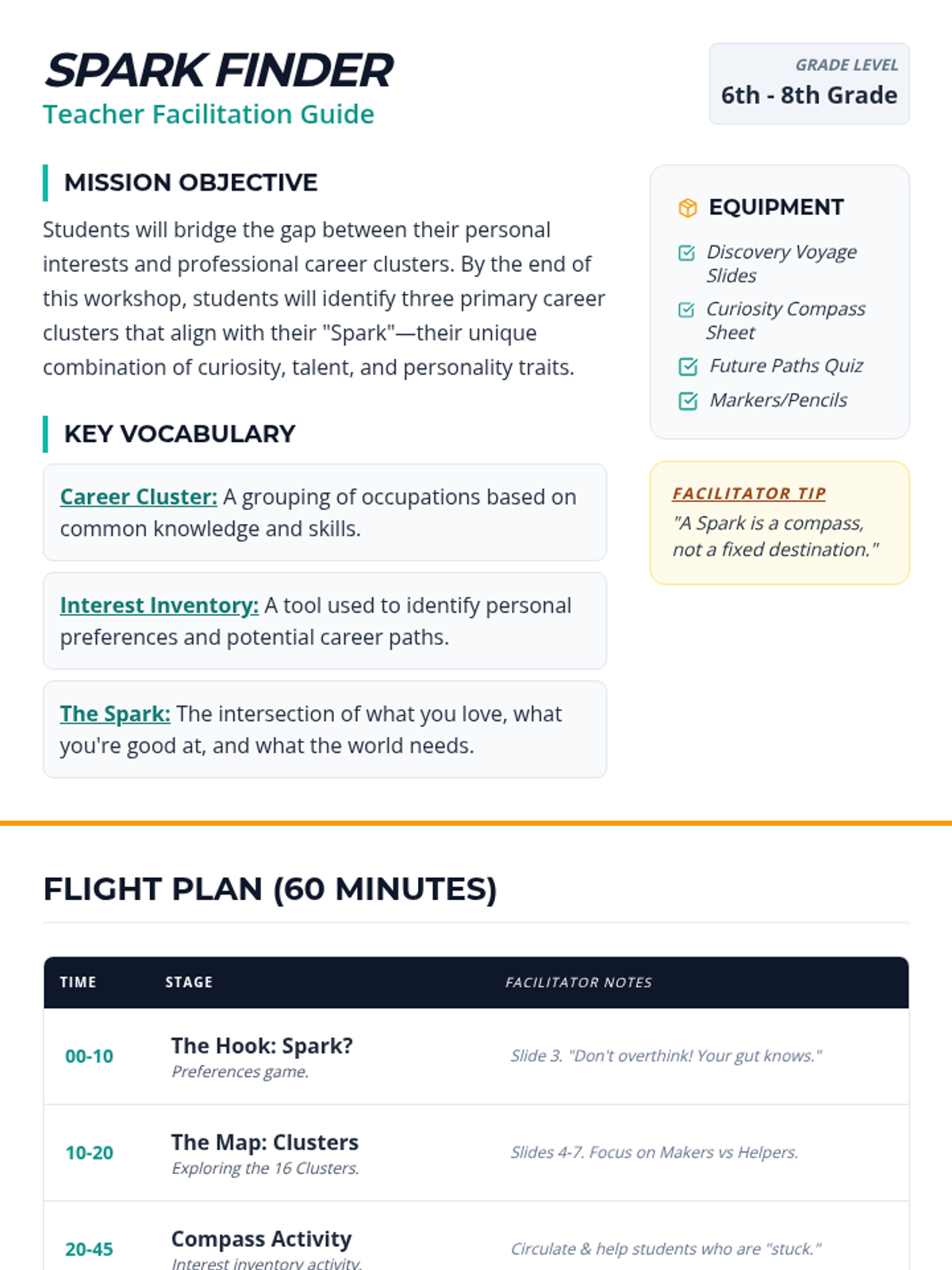
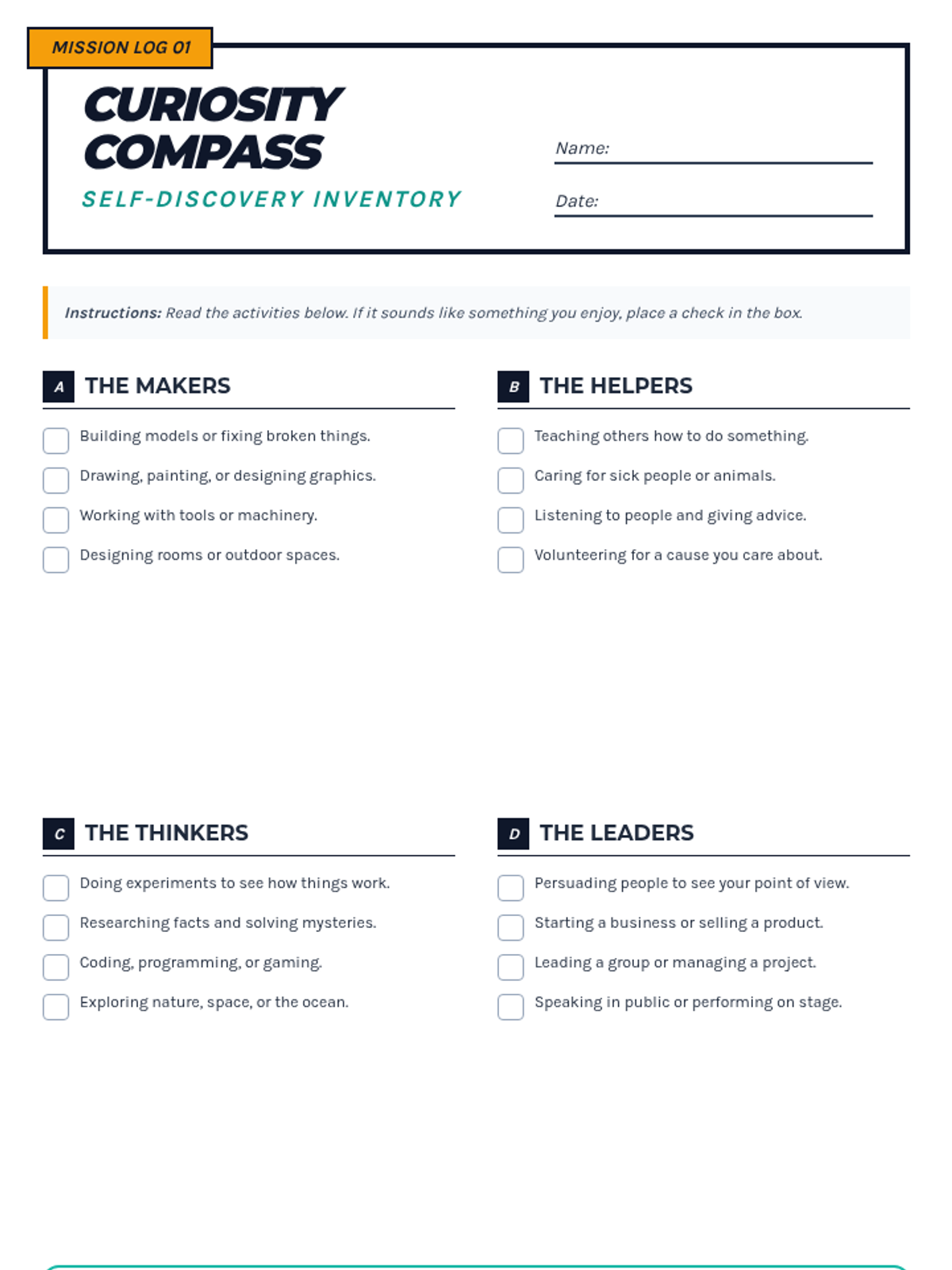
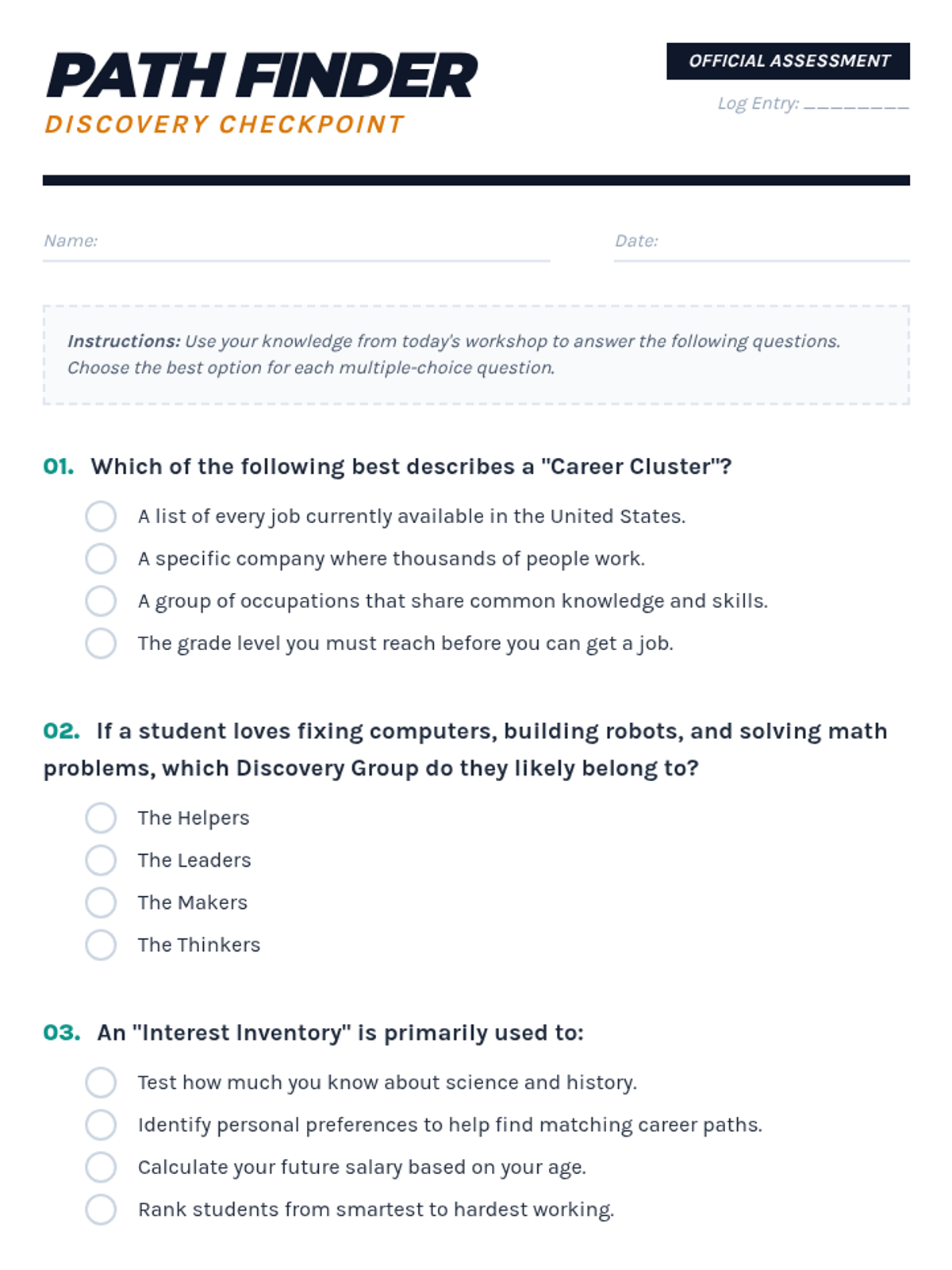
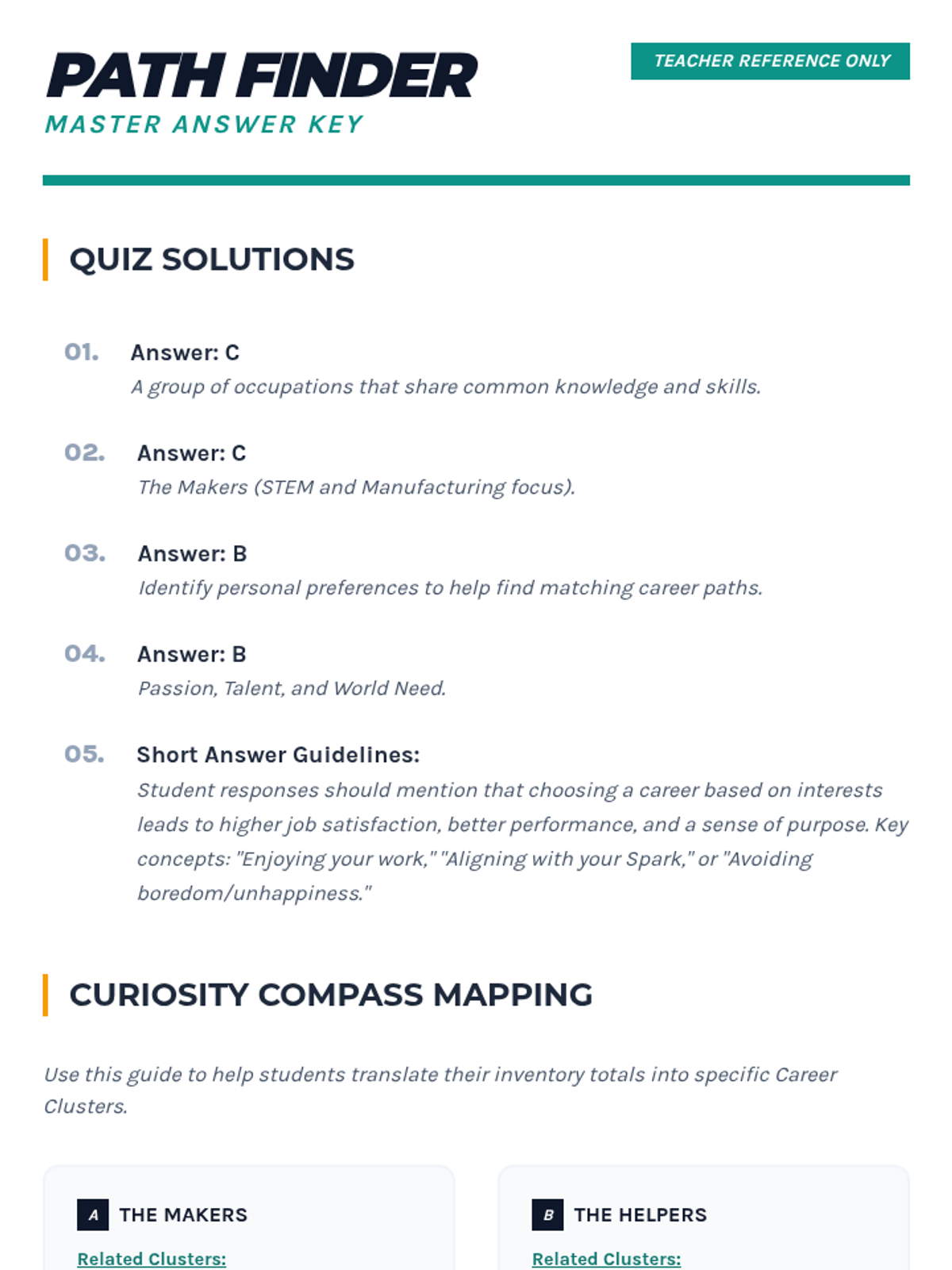
A career exploration workshop for middle schoolers to map natural curiosities to professional clusters using interest inventories. Students explore personality traits and vocational paths to foster hope and purpose.
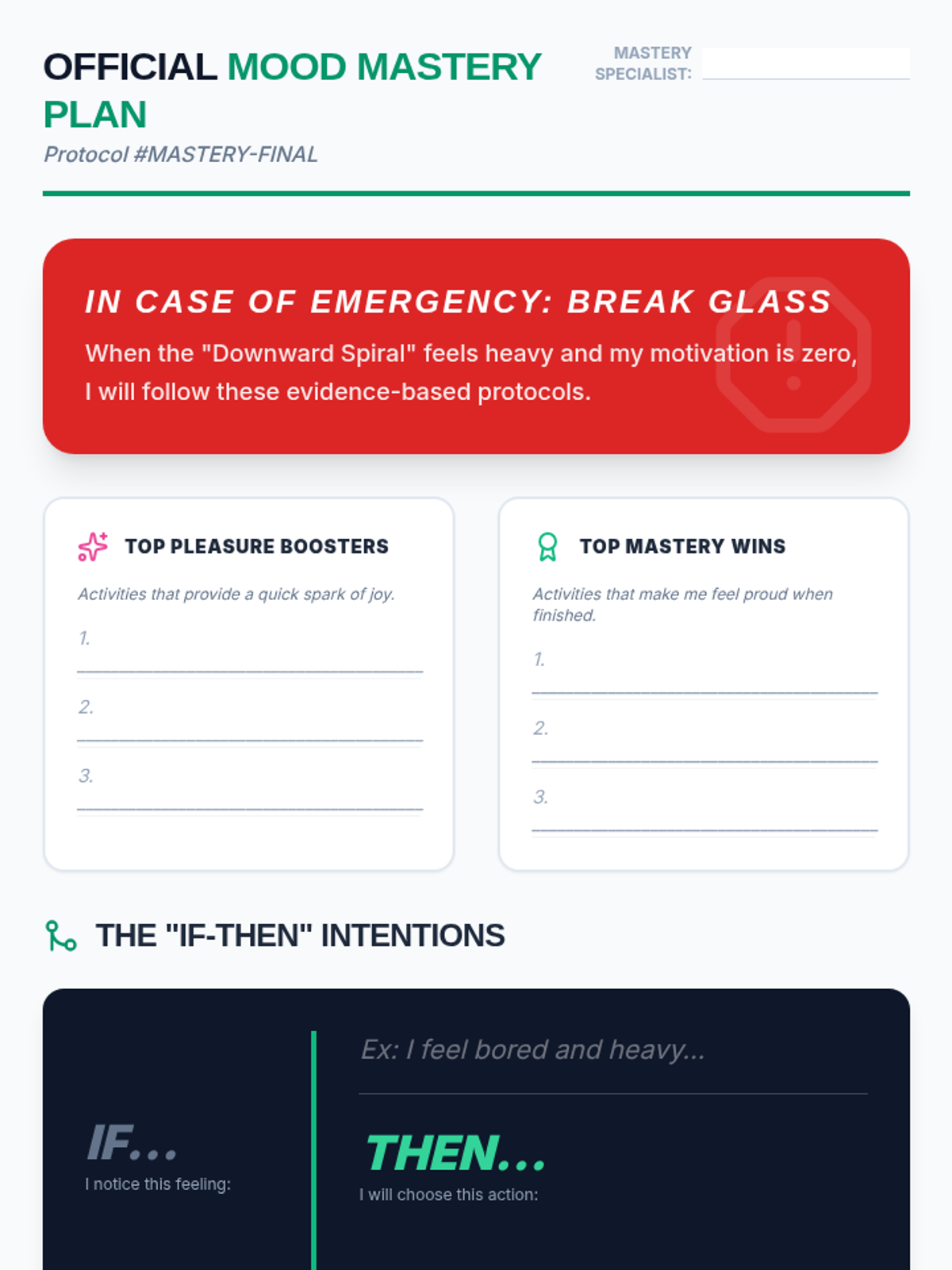
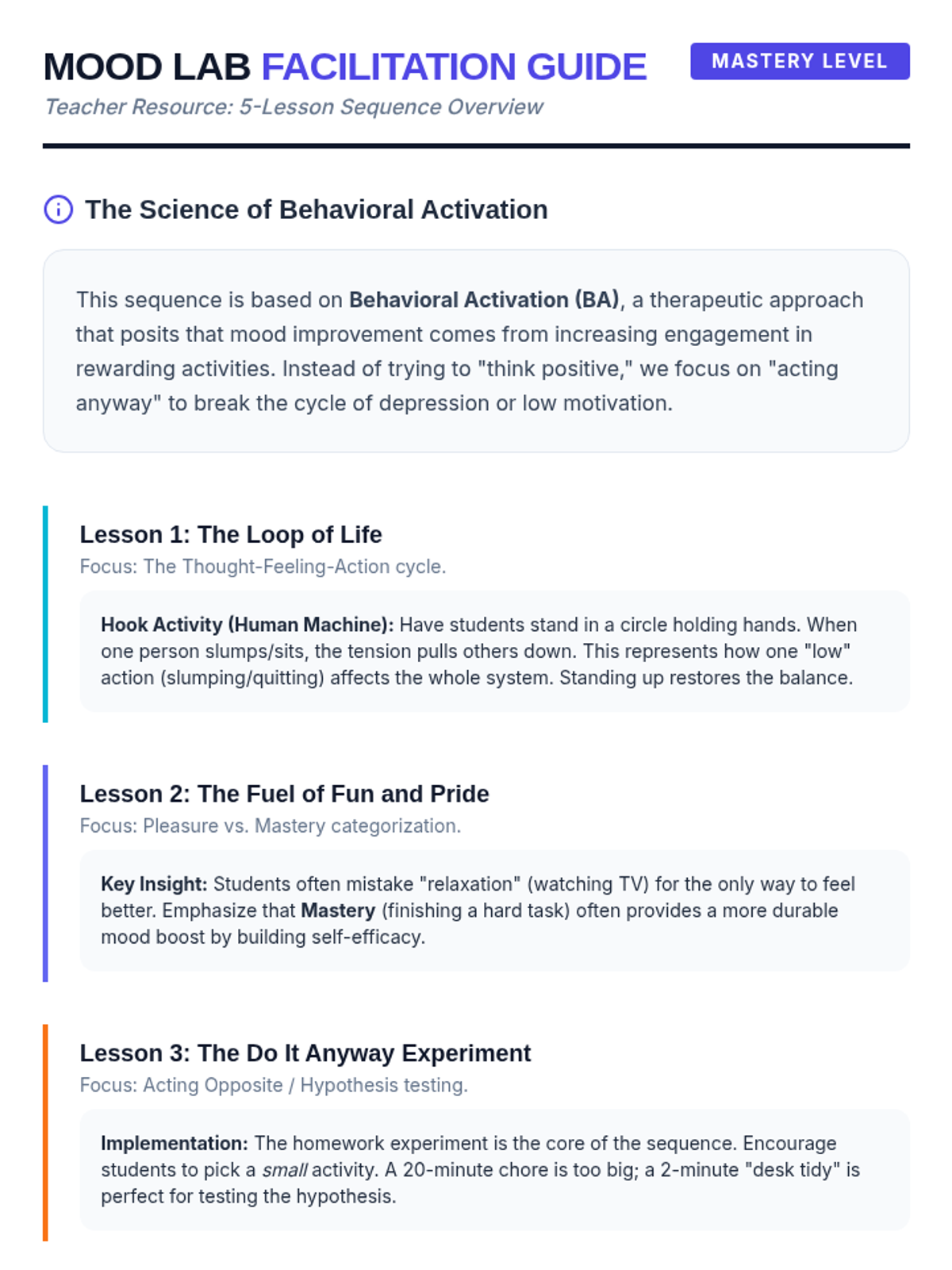
Synthesizing their learning, students create a 'Break the Glass' emergency plan for days when they feel low or anxious. They select their most effective pleasure and mastery activities and write specific implementation intentions (If I feel X, then I will do Y).
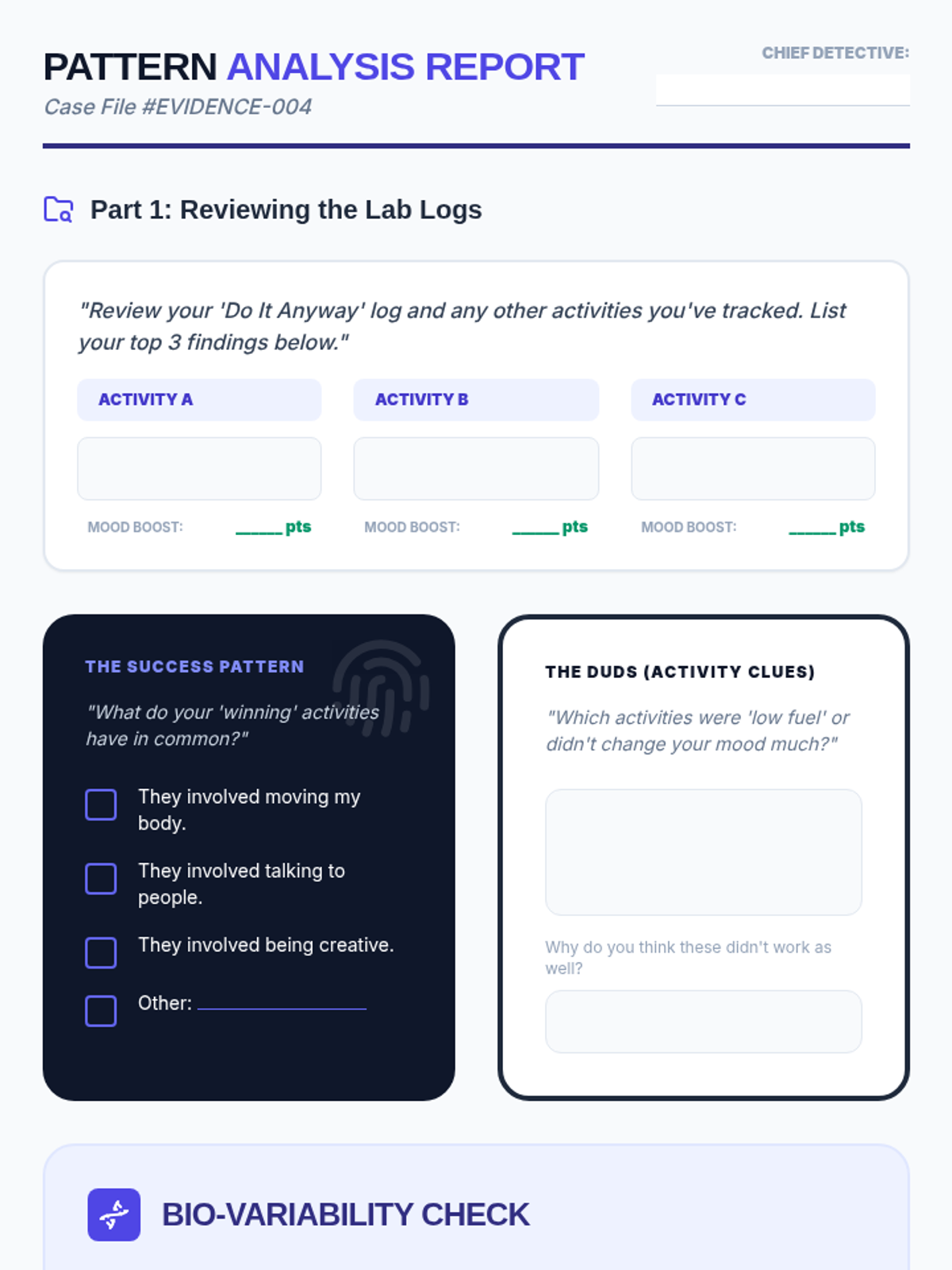
Students review the results of their personal experiments or case study data to identify patterns in how specific activities impact mood. They discuss the variability of results (what works for one person may not work for another) and begin curating their personal 'top hits' for mood improvement.
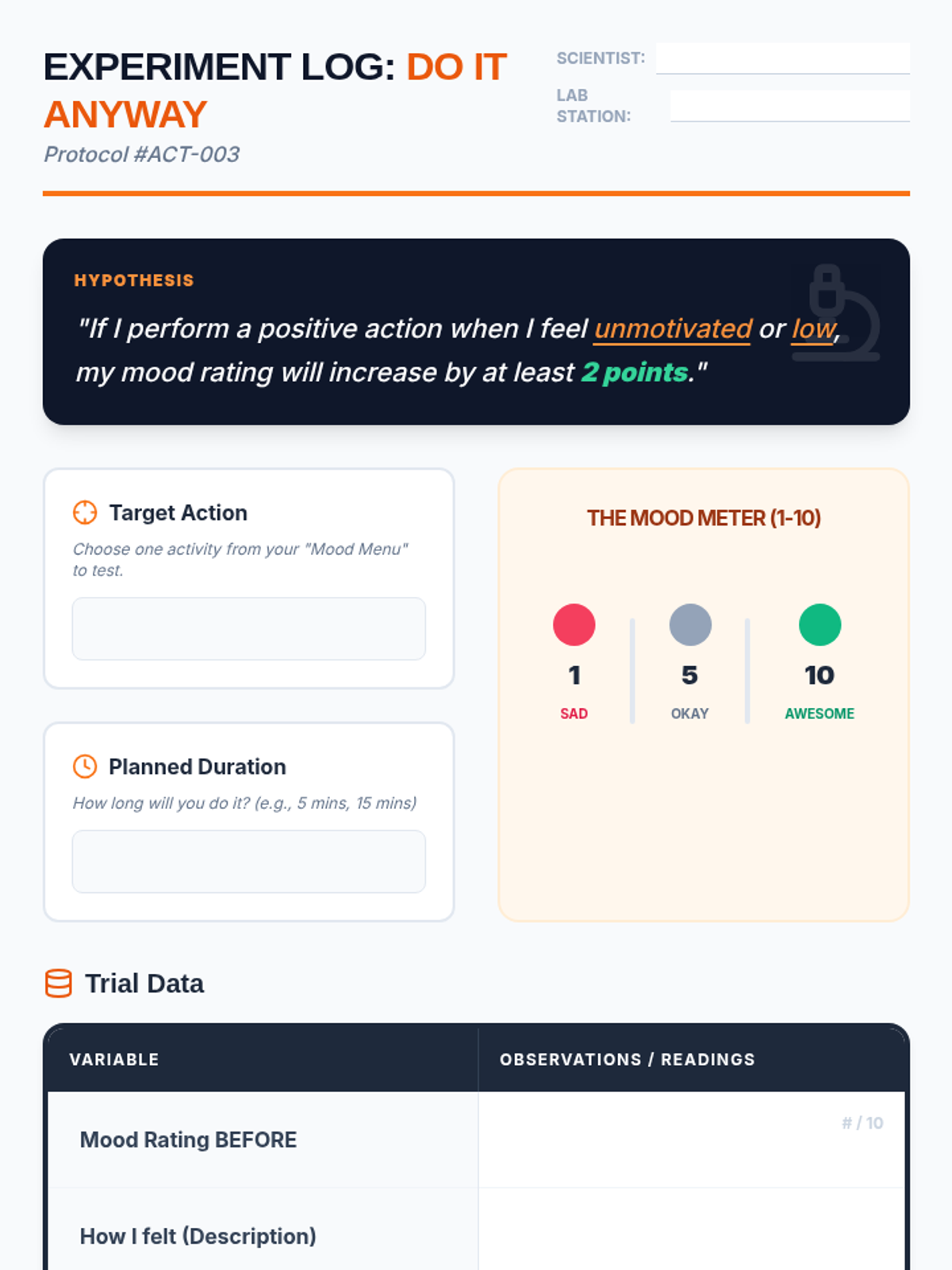
This lesson introduces the concept of 'acting opposite' to an emotion. Students design a short experiment to test the hypothesis that engaging in a positive activity—even when they don't feel like it—can improve their mood rating on a 1-10 scale. They prepare a data collection sheet for a homework experiment.
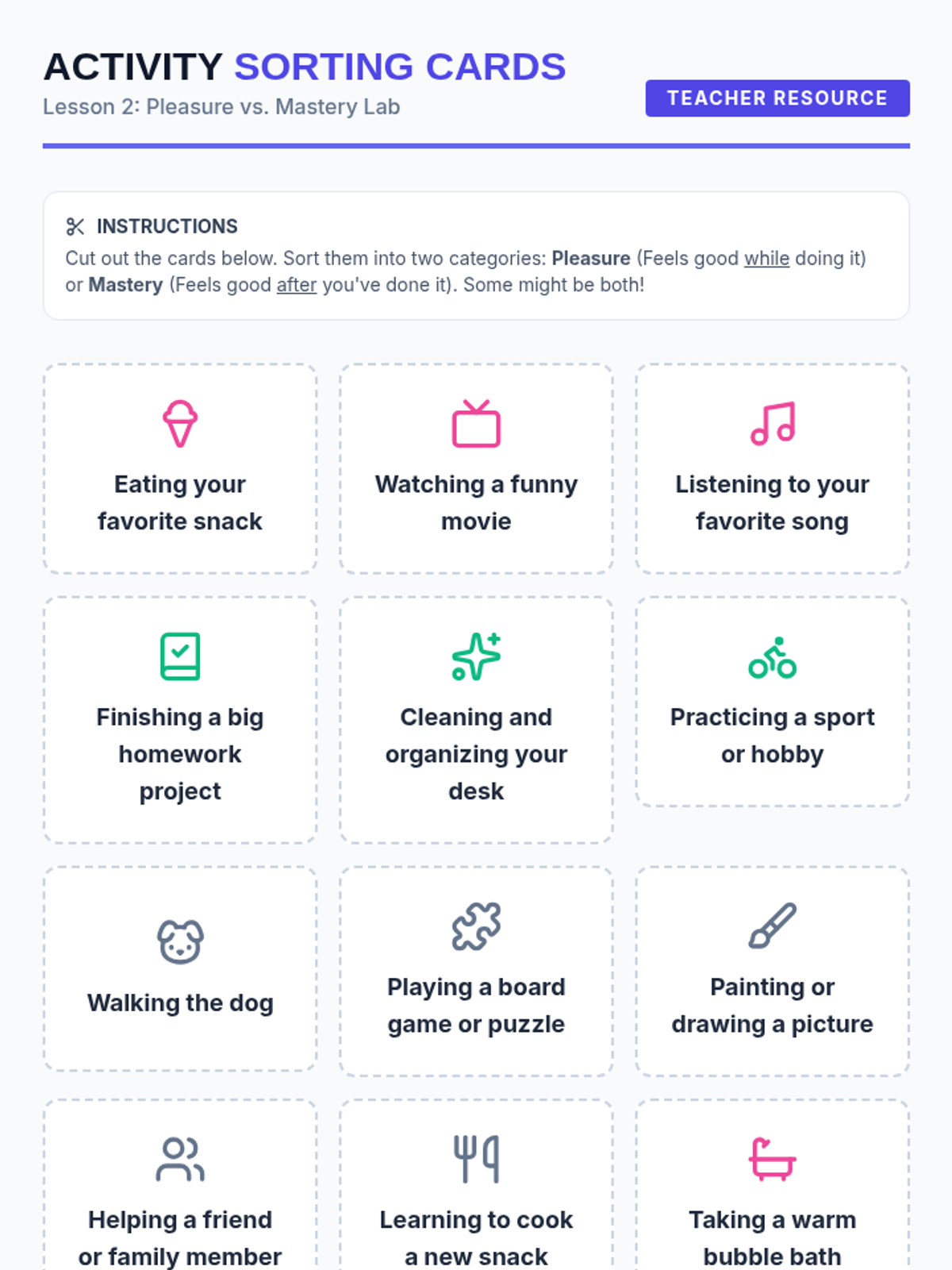
Students distinguish between activities that feel good in the moment (Pleasure) and those that make us feel accomplished (Mastery). Through a sorting workshop, they brainstorm examples for both categories, understanding that a balanced diet of experiences includes both fun and achievement.
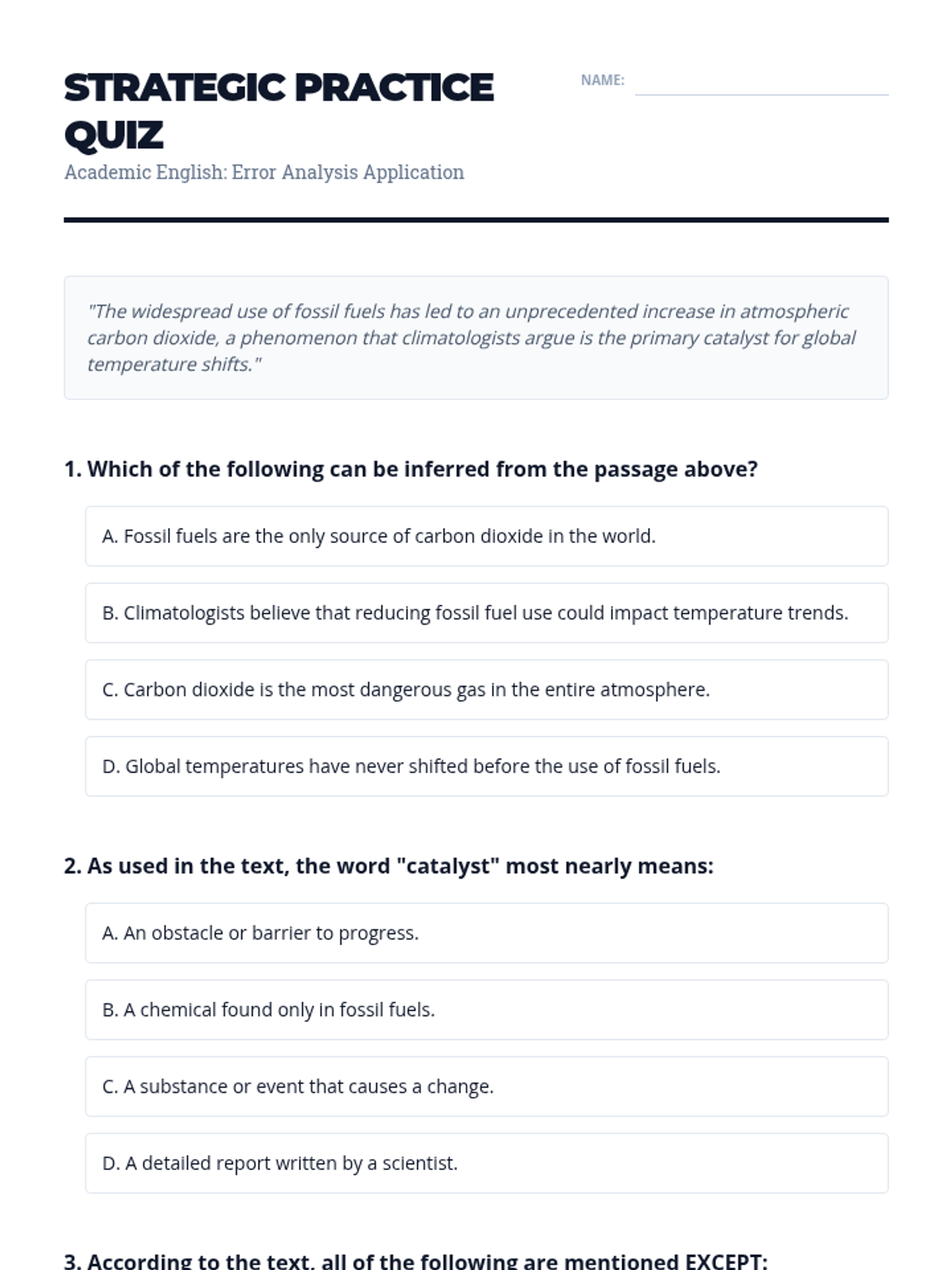
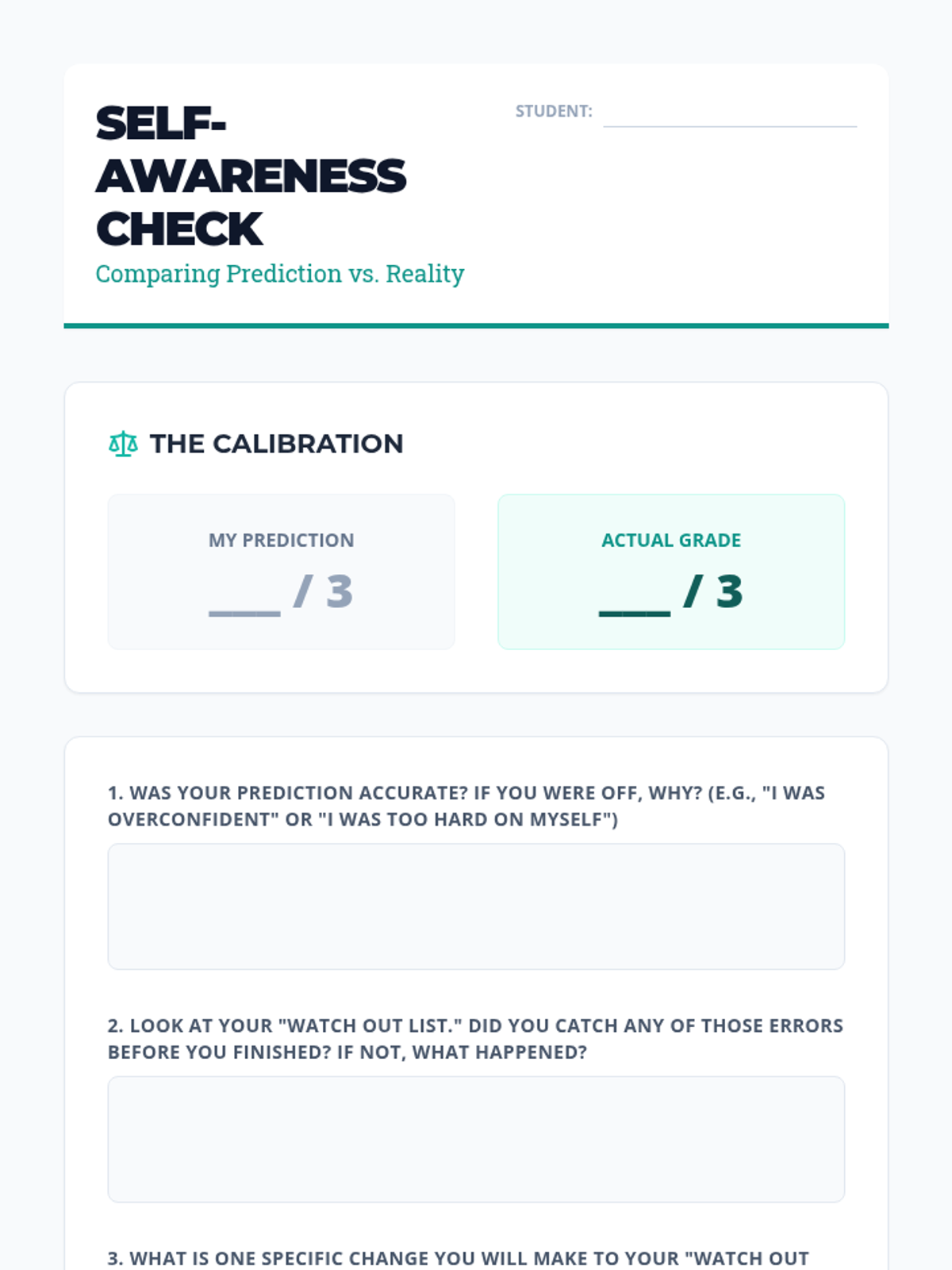
Students take a short assessment and immediately apply their error analysis protocol. They verify if their 'Watch Out' list helped them avoid previous habitual mistakes.
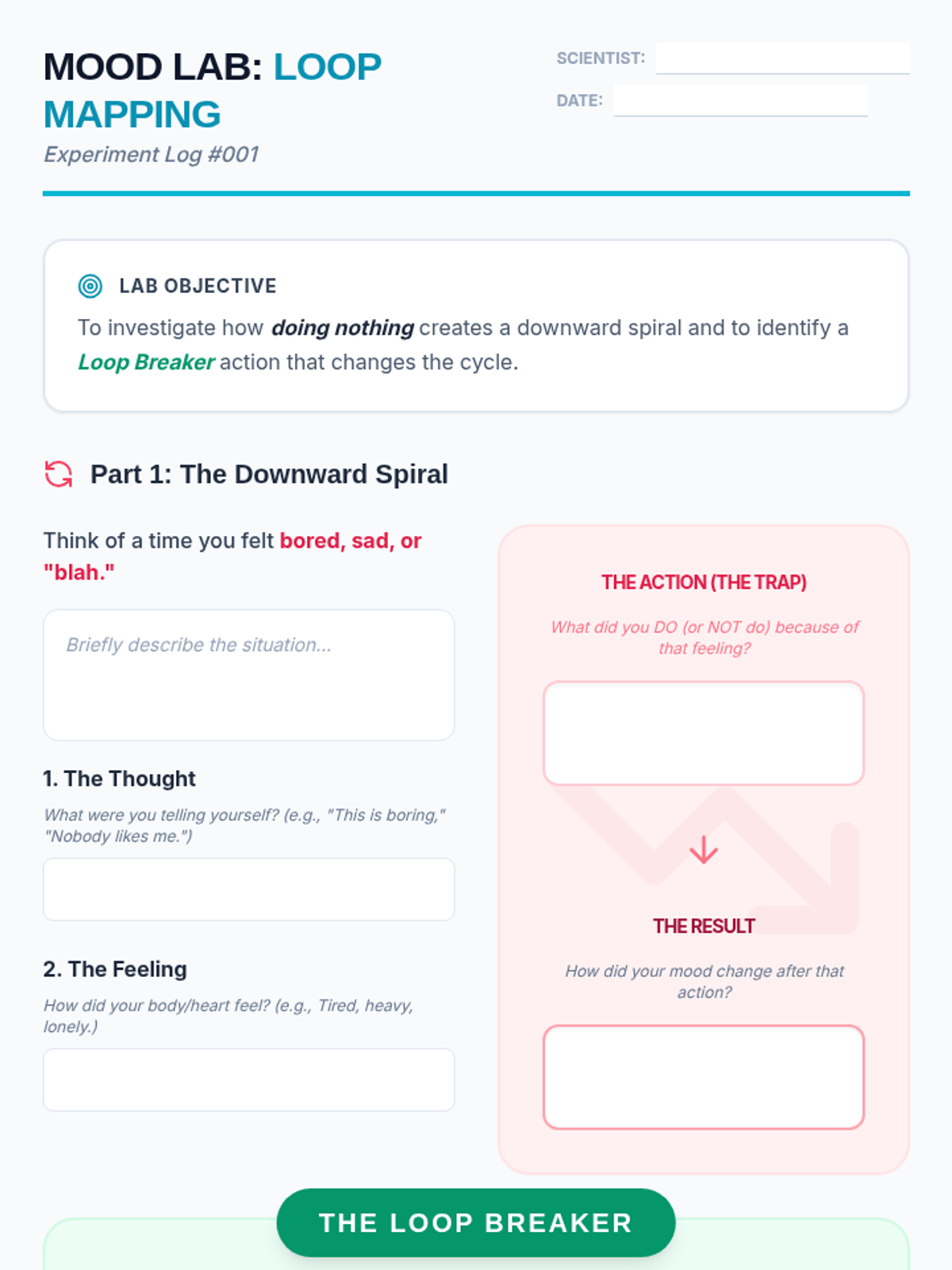
Students participate in a discussion and mapping activity to visualize the cycle between thoughts, feelings, and behaviors. They identify how doing nothing often leads to feeling worse (the downward spiral) and how small actions can reverse this.
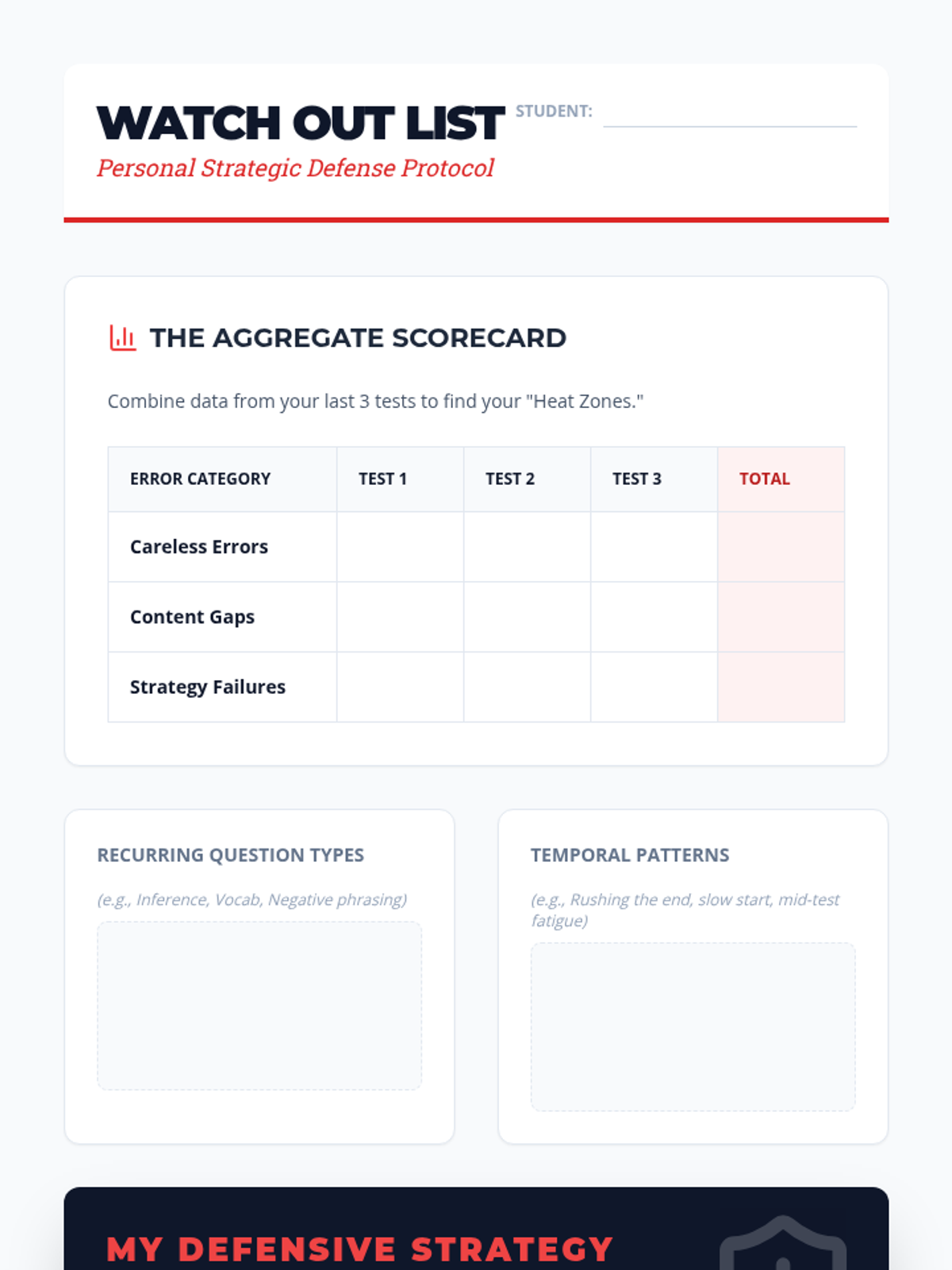
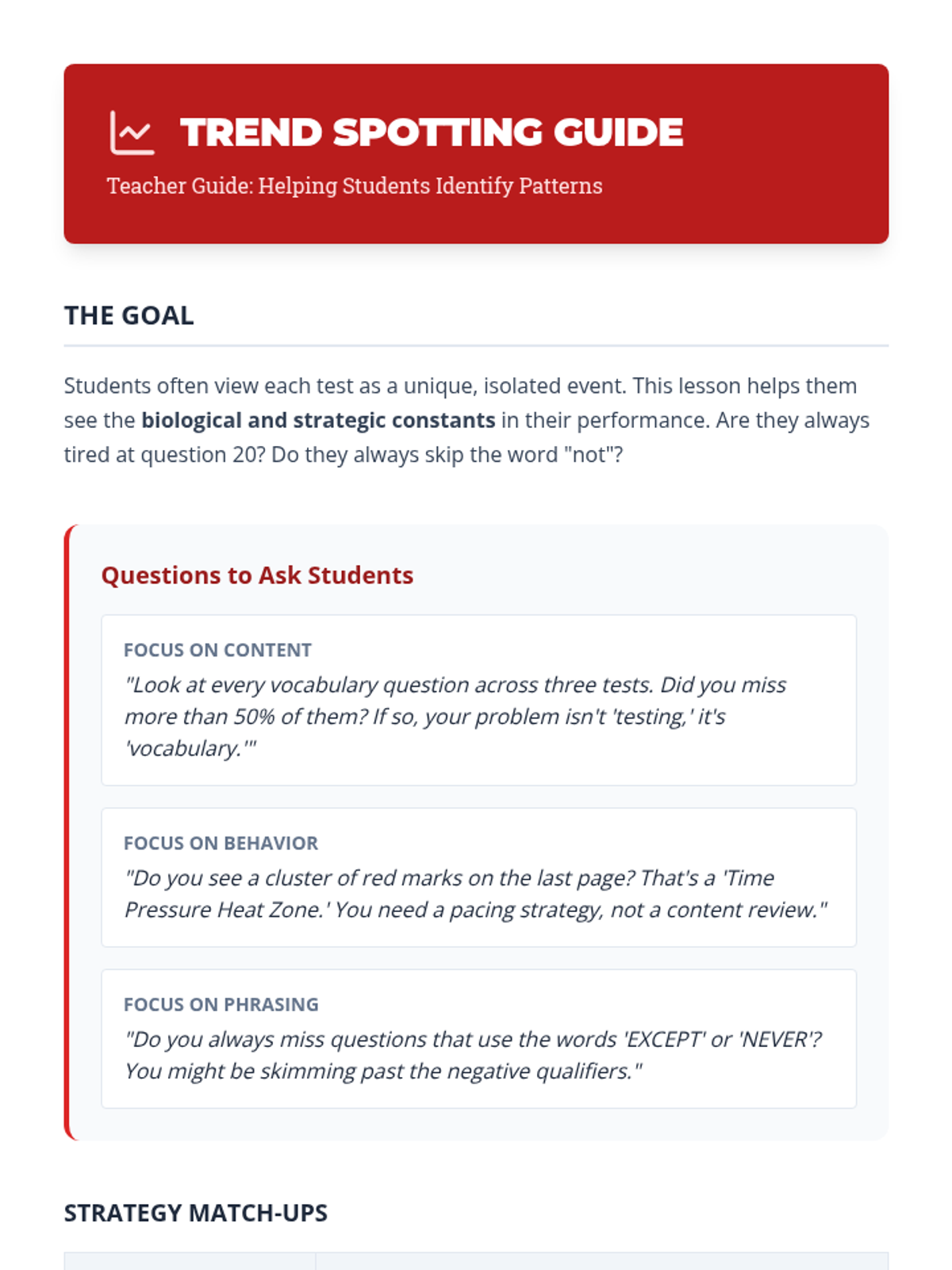
Students aggregate their error data to find personal patterns (e.g., 'I always miss inference questions' or 'I rush the last 5 minutes'). They create a personal 'Watch Out' list for future exams.
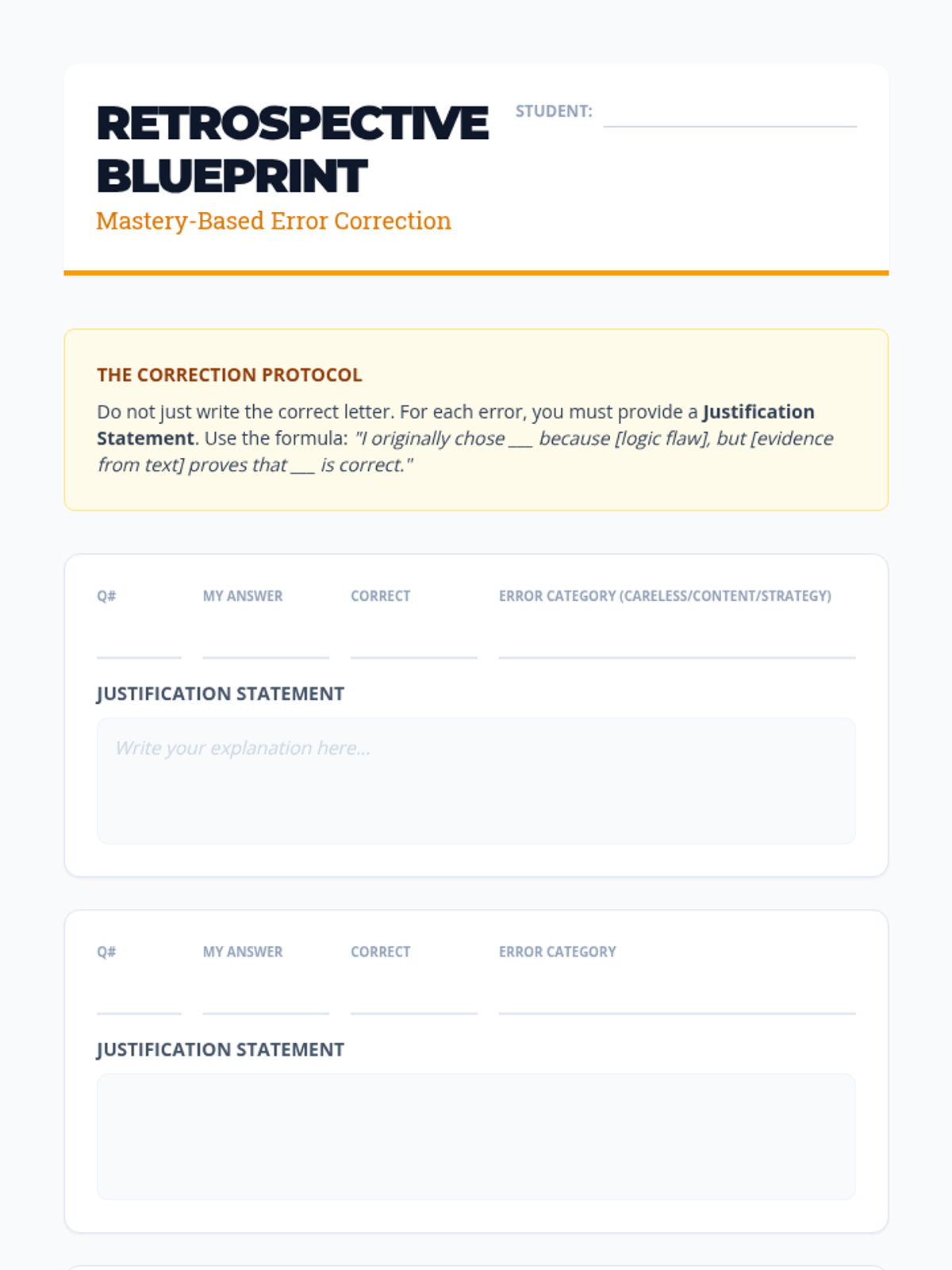
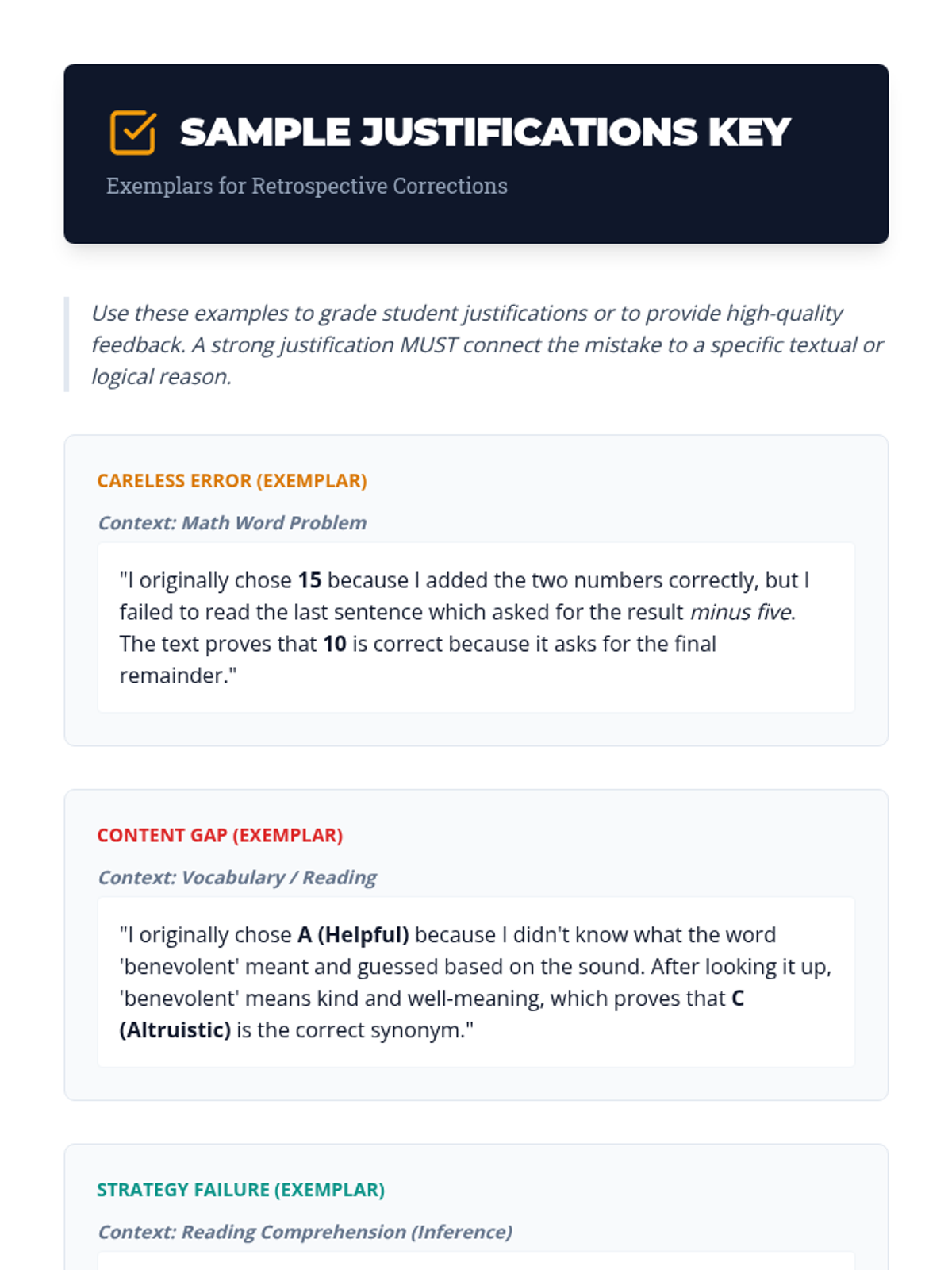
Instead of just marking correct answers, students must write a sentence explaining *why* their original answer was wrong and *why* the new answer is right. This ensures deep processing of the error.
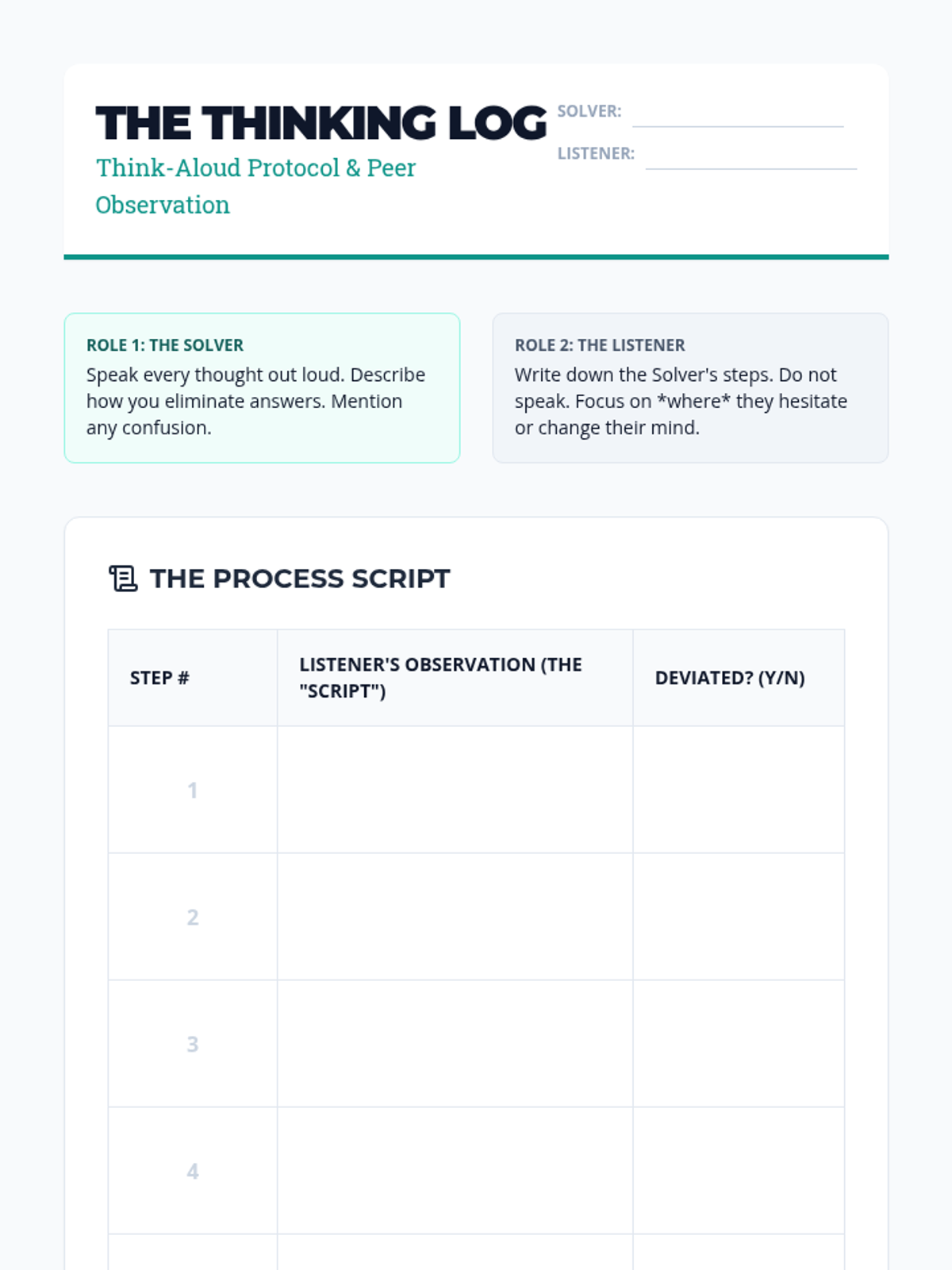
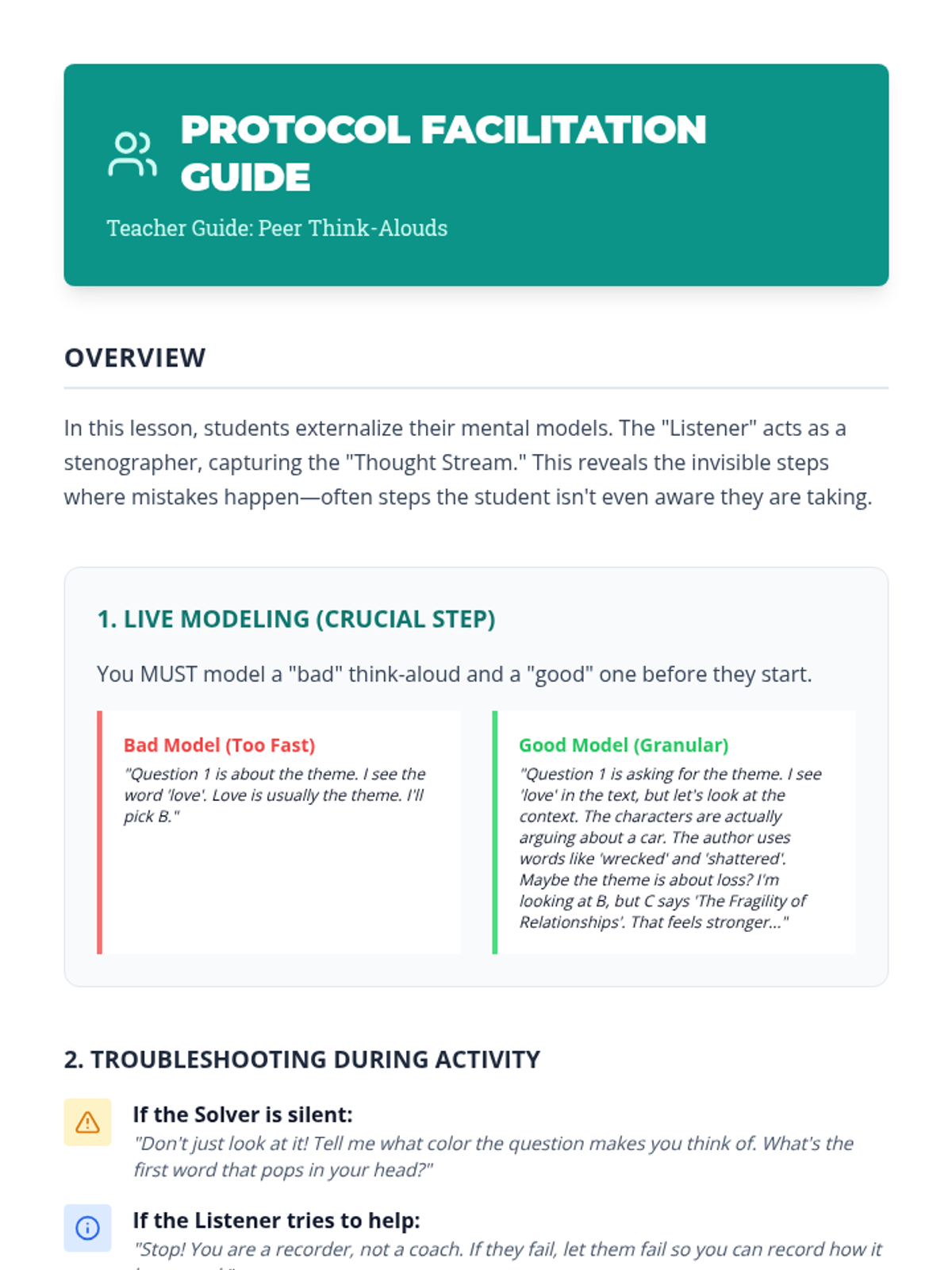
Working in pairs, students vocalize their thinking process while solving a problem while a partner records their steps. They analyze these recordings to identify where their logic deviated from the correct path.
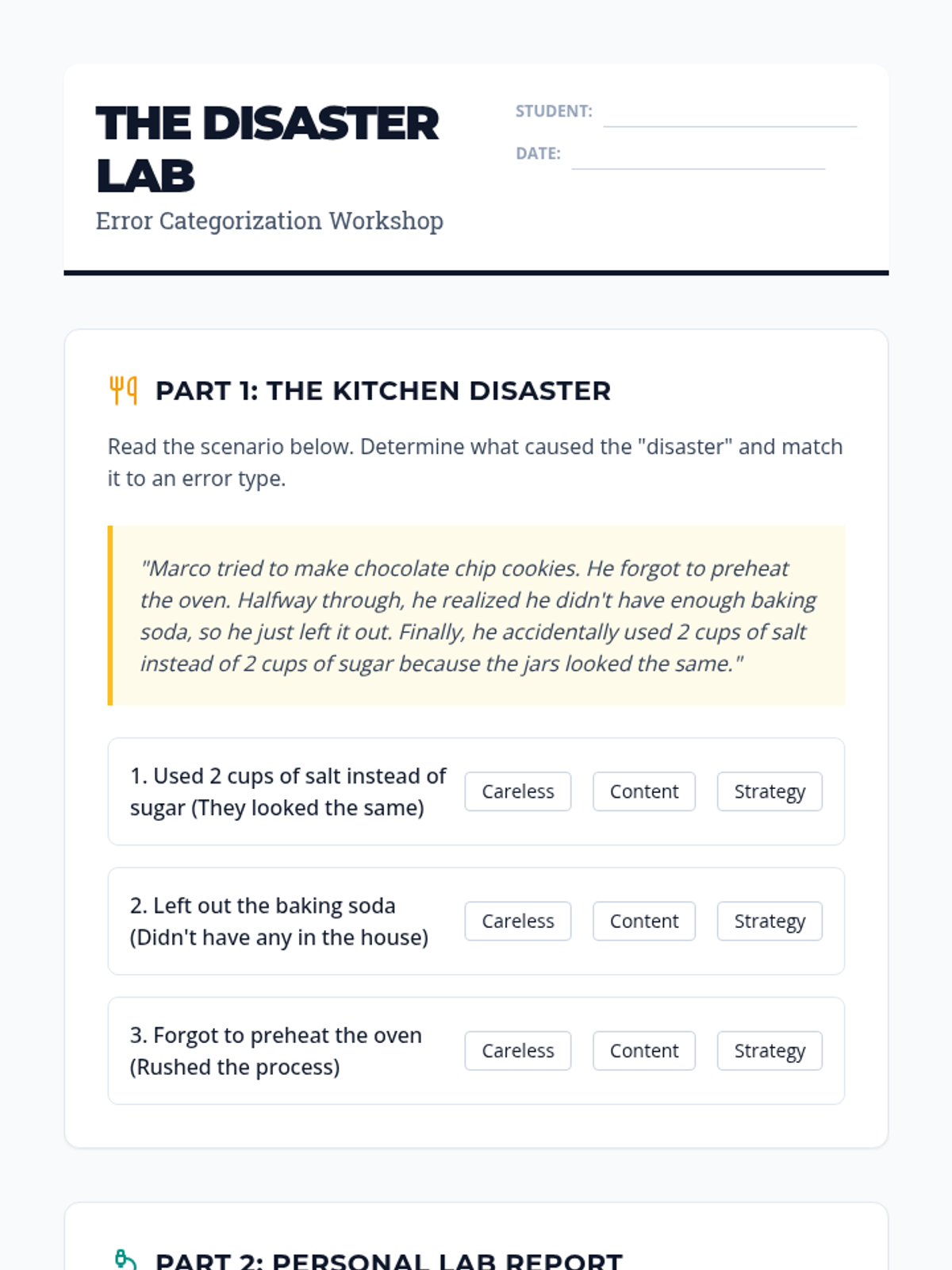
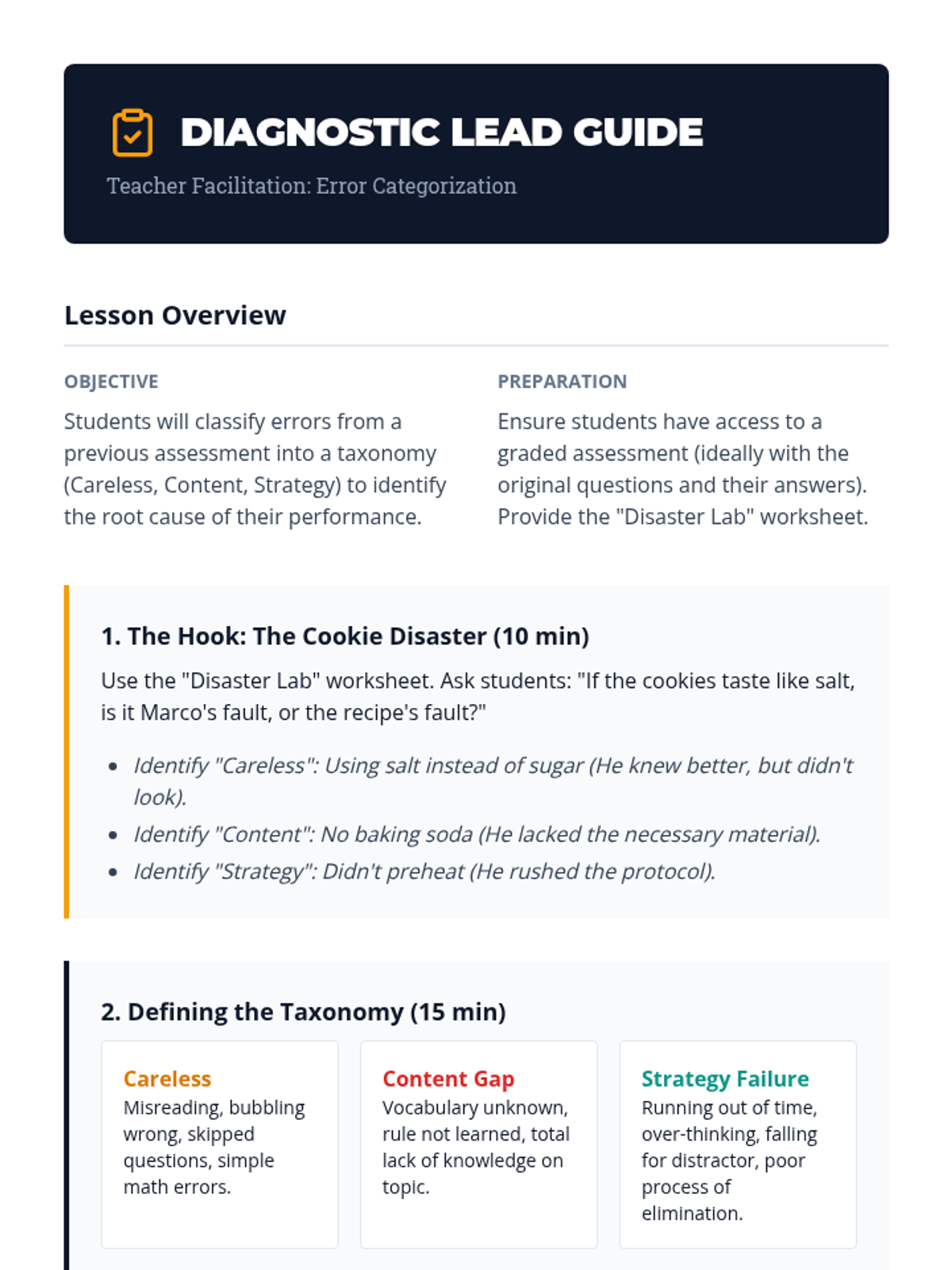
Students review a past assessment and categorize every incorrect answer as a 'Careless Error,' 'Content Gap,' or 'Strategy Failure.' This taxonomy helps them understand that not all mistakes are created equal.
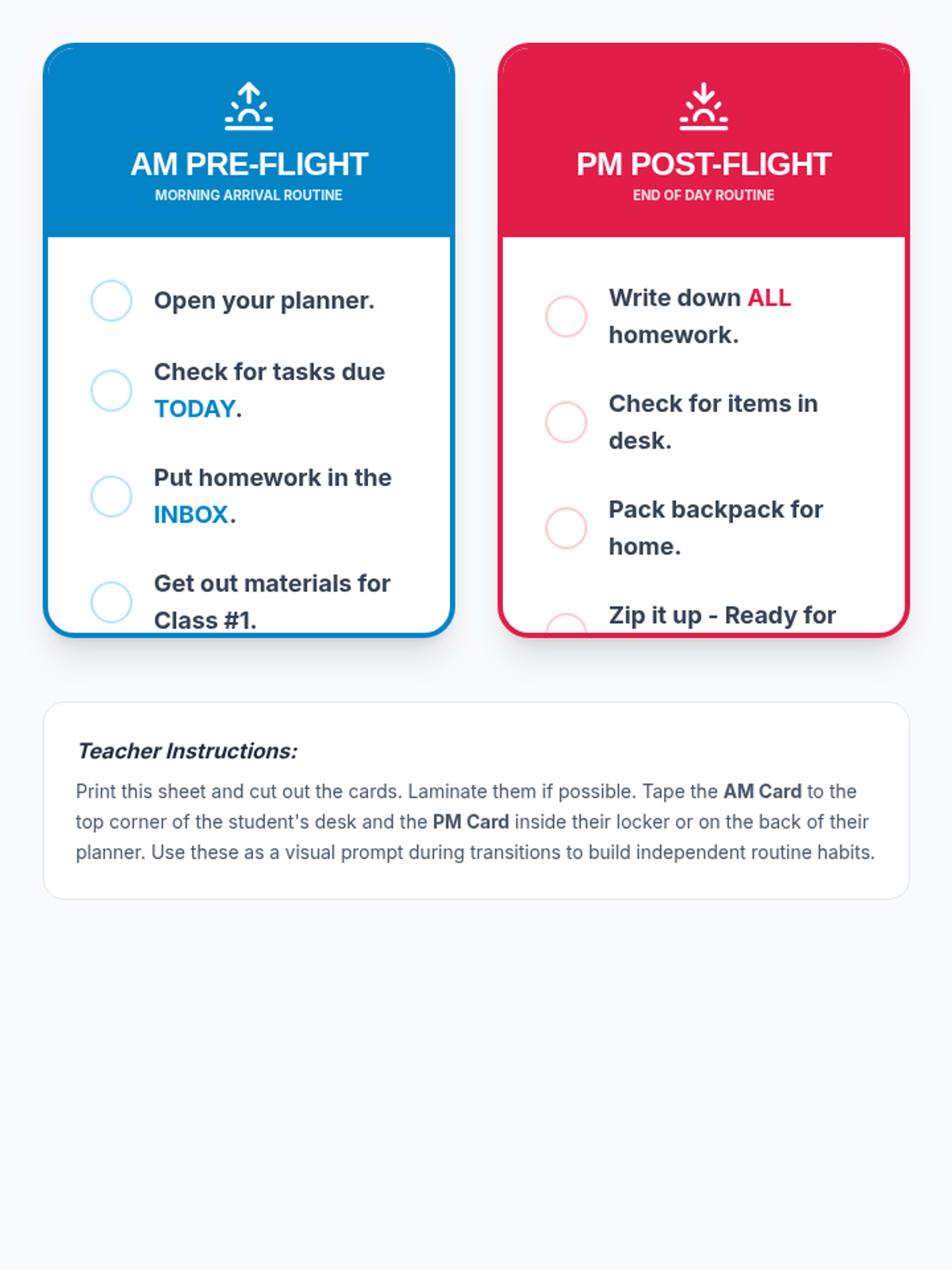
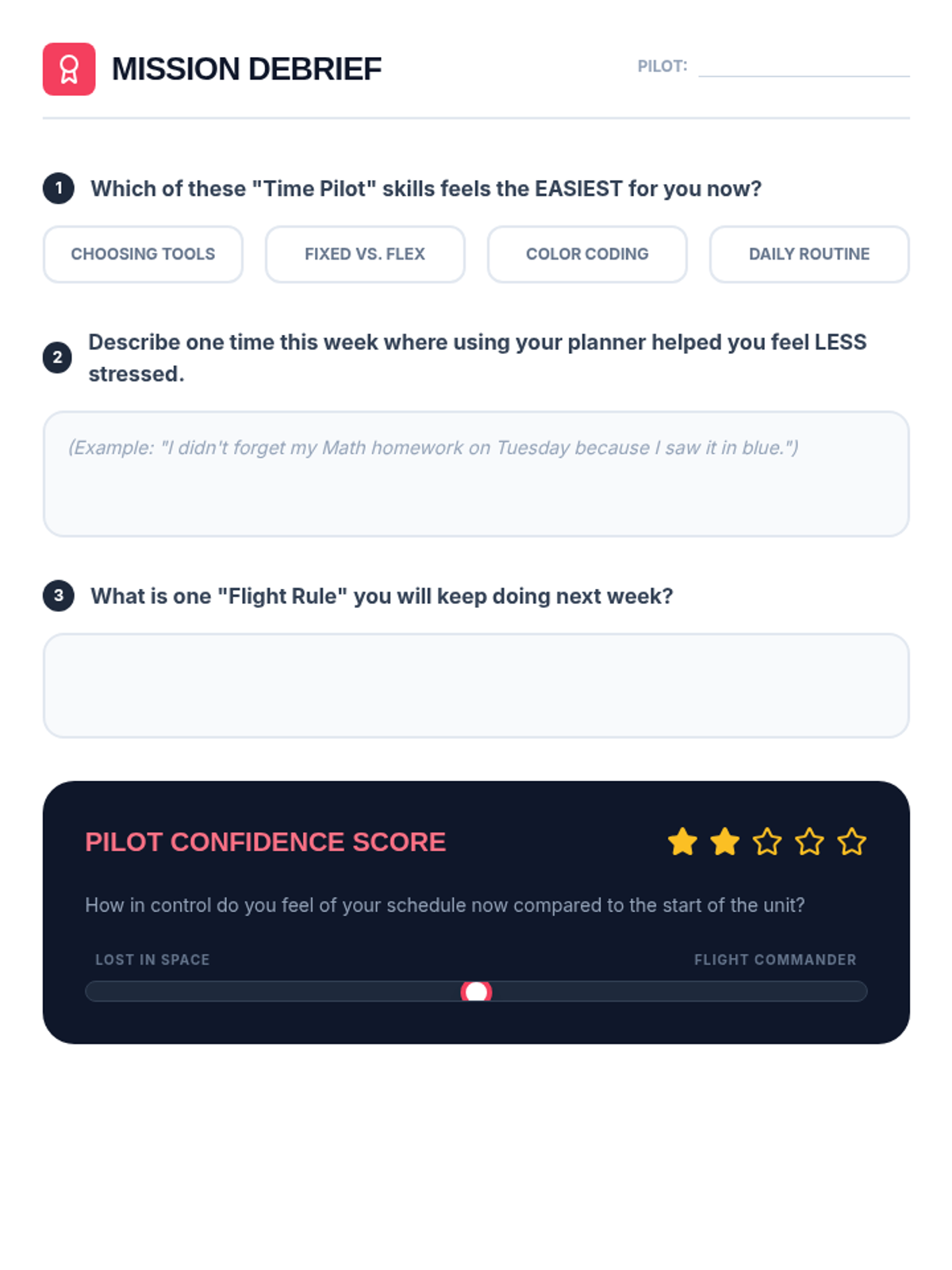
Students develop a checklist for a 'start-of-day' and 'end-of-day' review. They practice the habit of checking their planner to prepare materials for the next day.
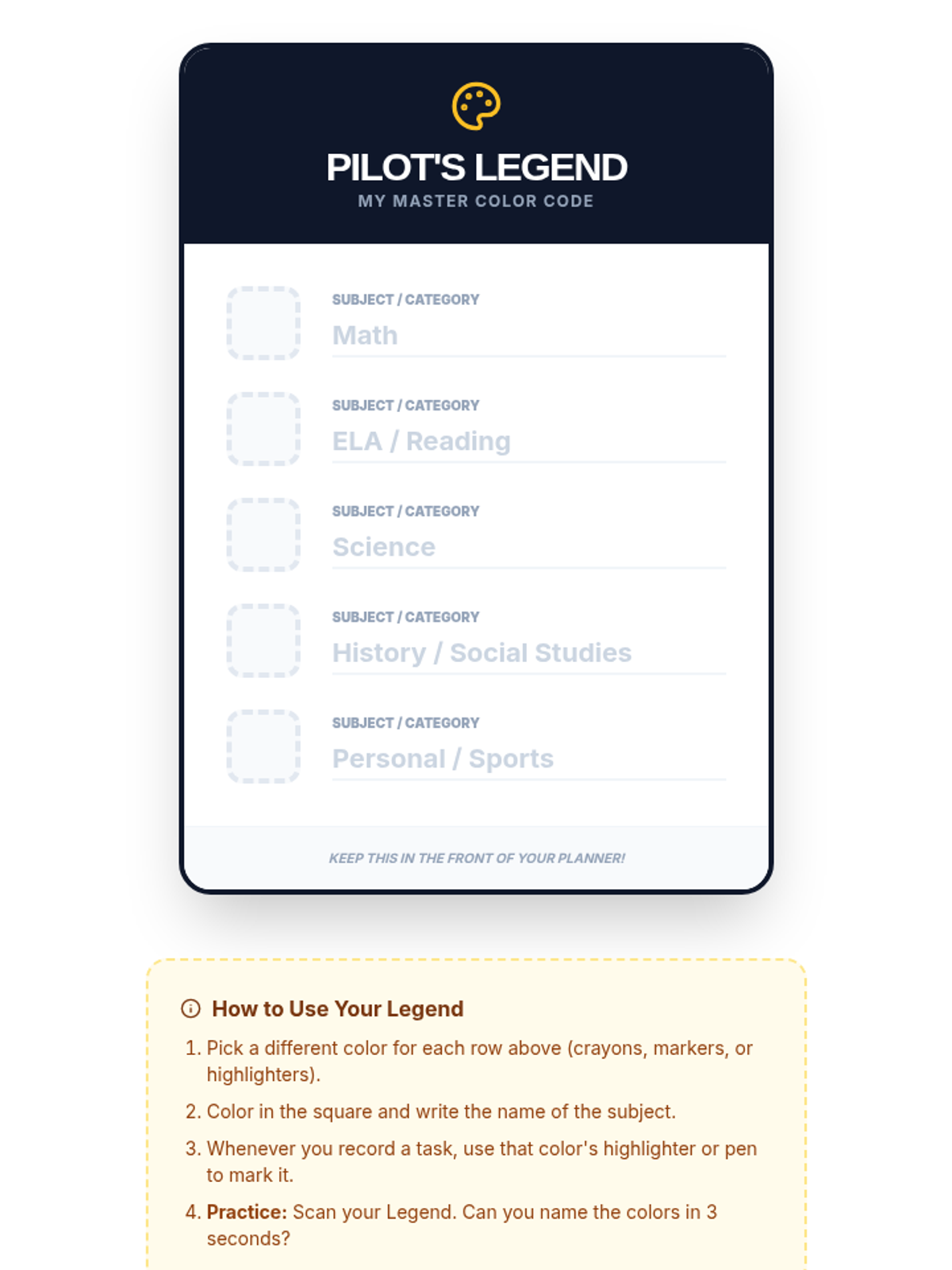
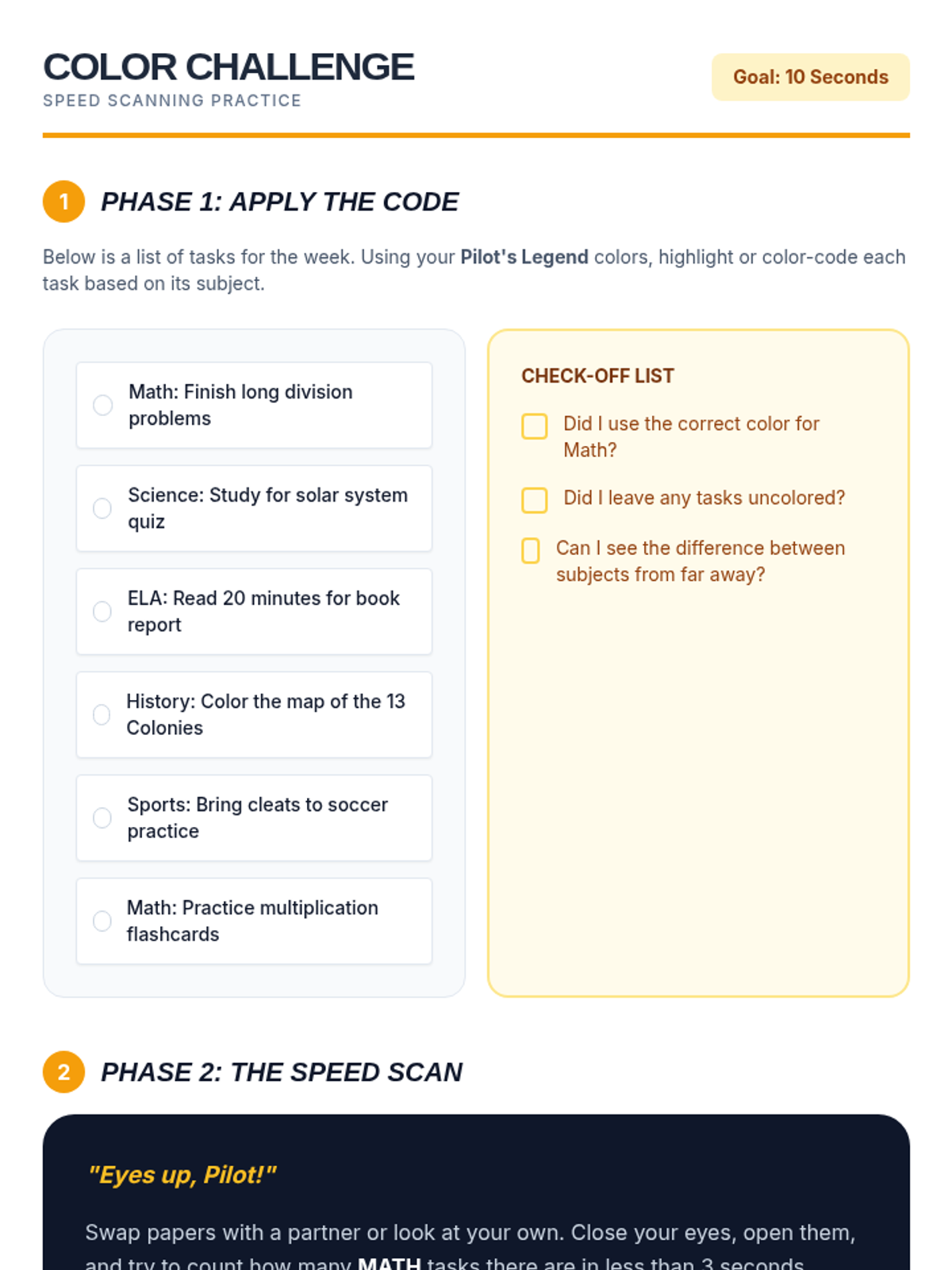
Students implement a color-coding system to categorize tasks by subject or type (e.g., Math, Home, Sports). This visual aid helps them quickly assess where their energy needs to be directed.
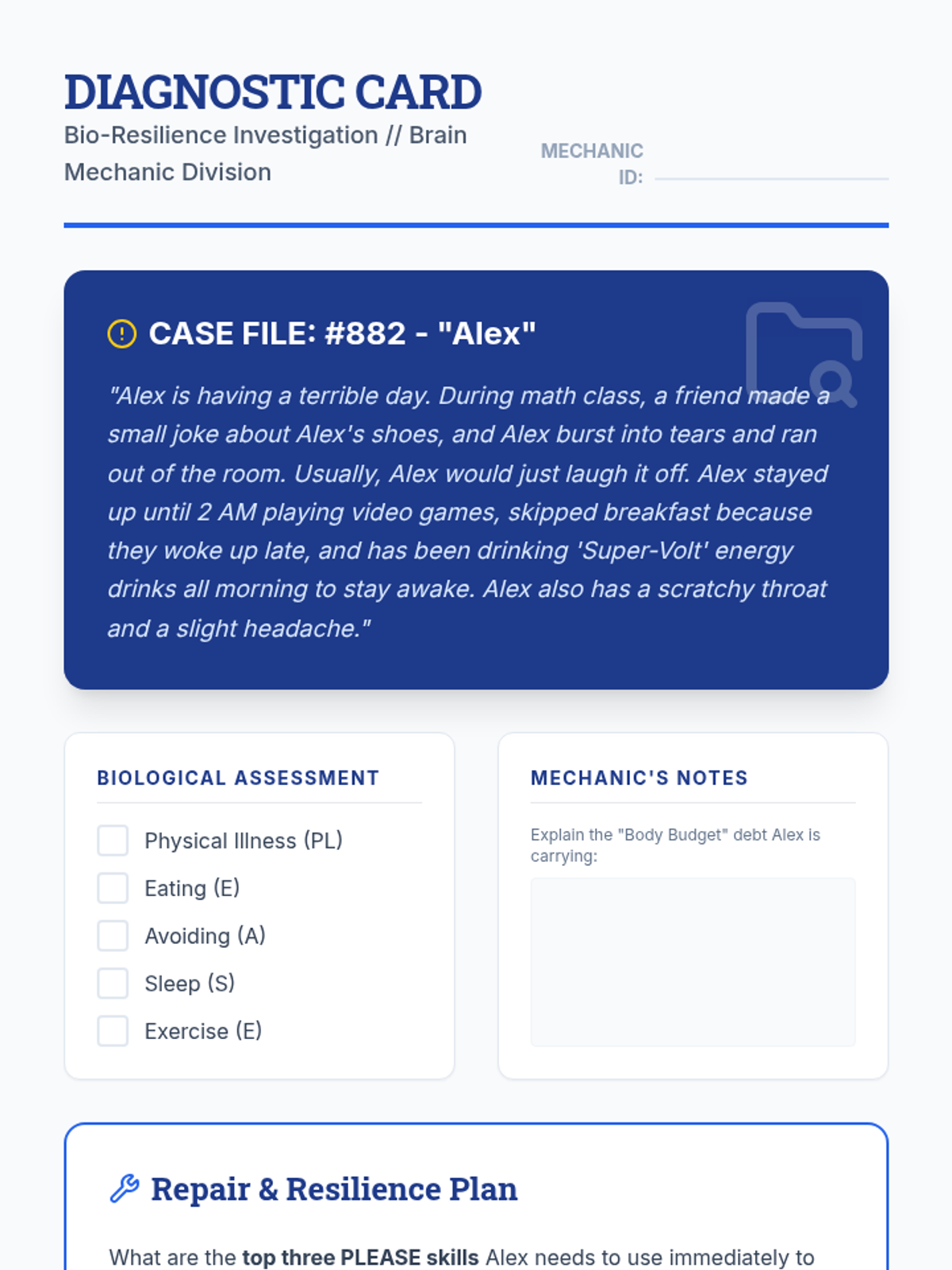
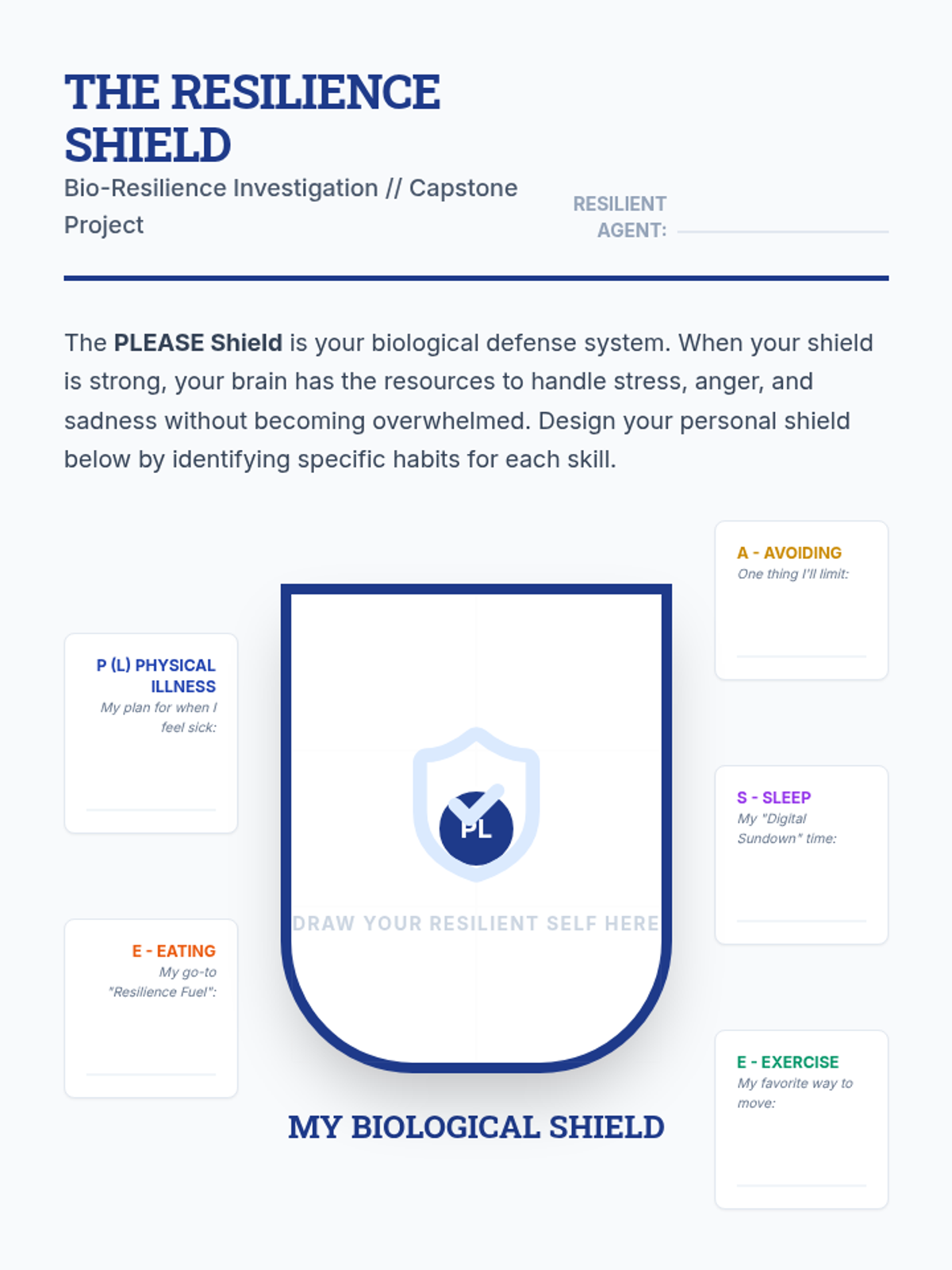
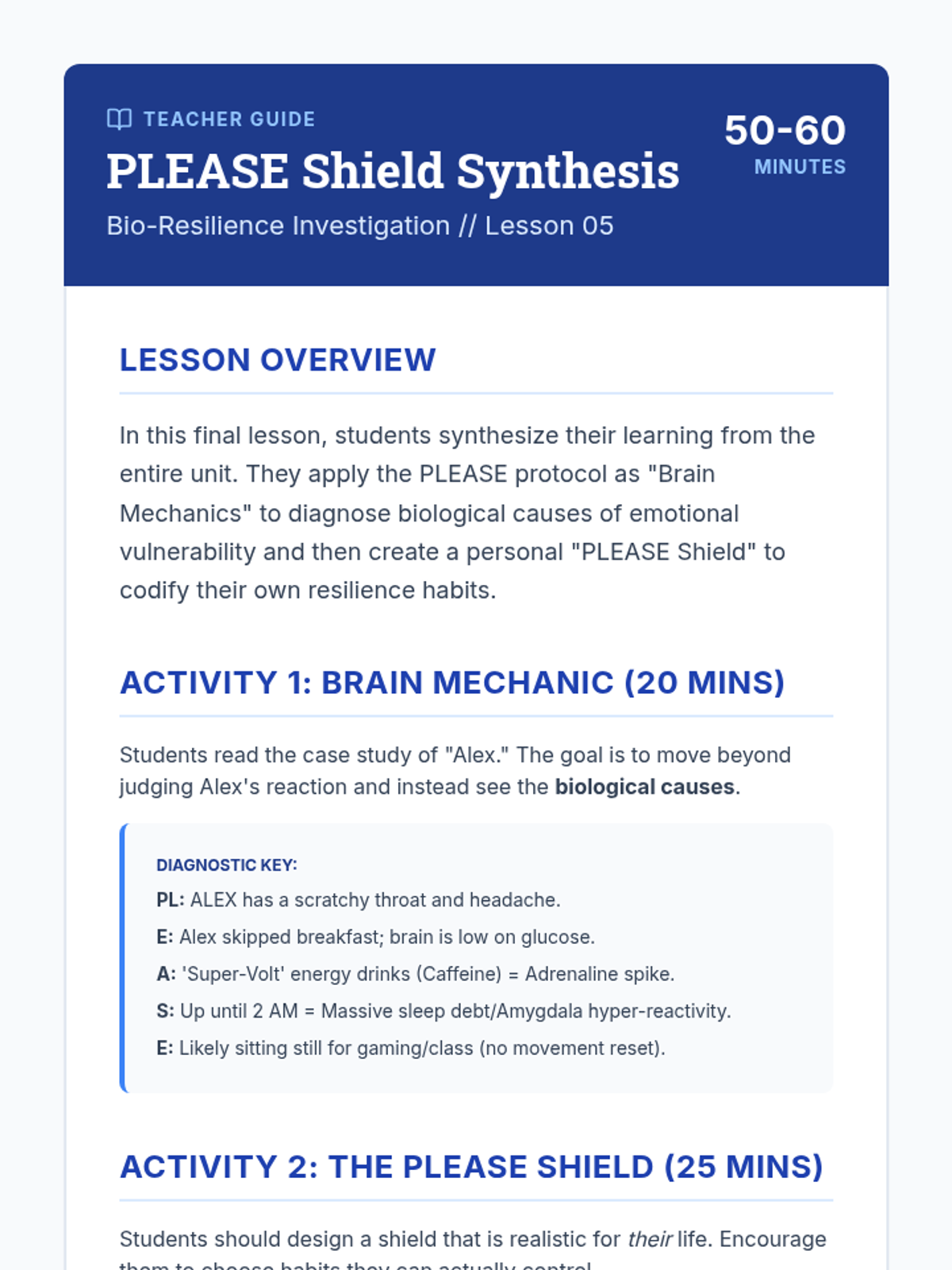
Students bring together all elements of the PLEASE protocol to create a scientific diagram and act as 'Brain Mechanics' to diagnose emotional vulnerability in fictional scenarios.
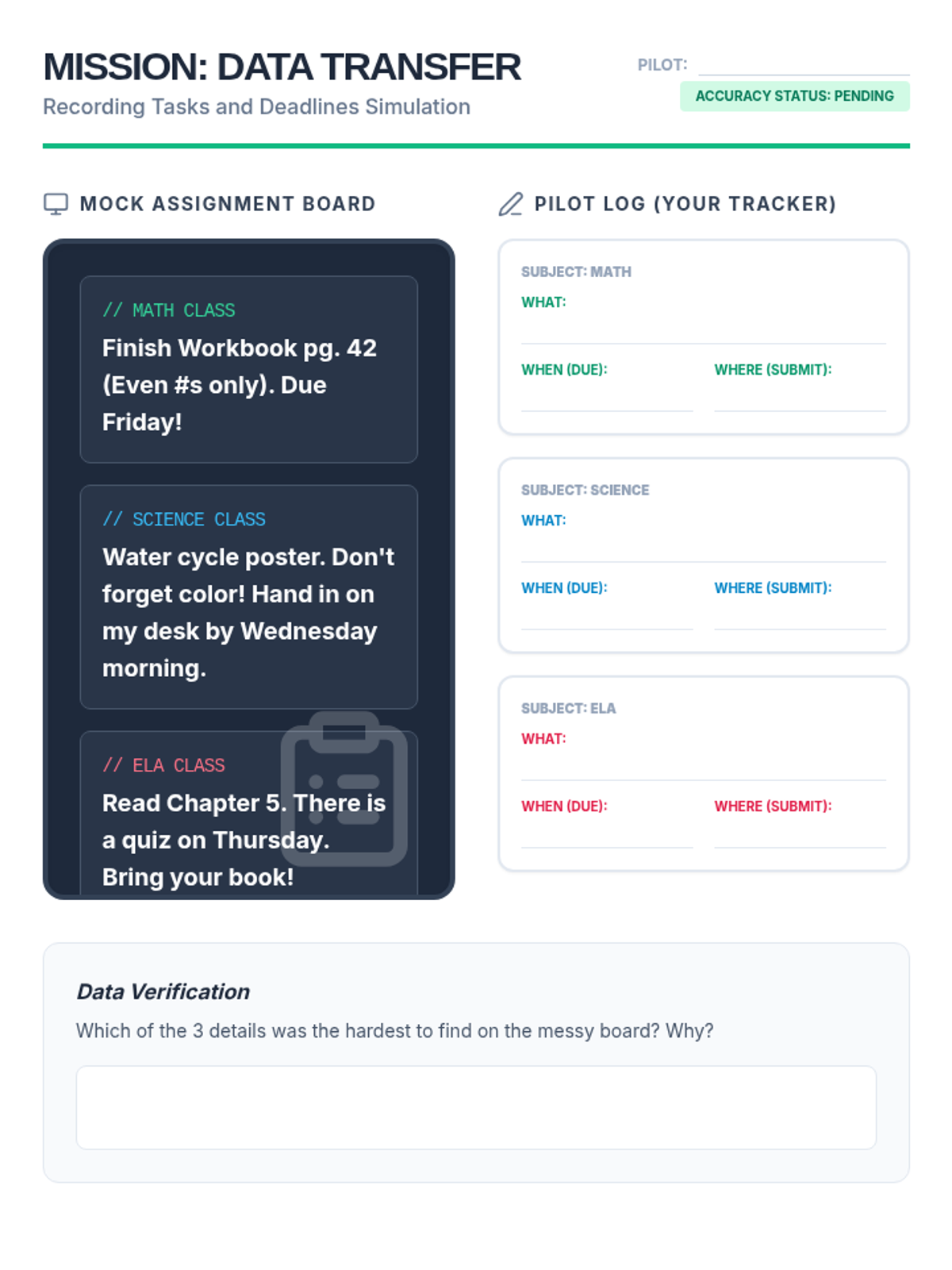
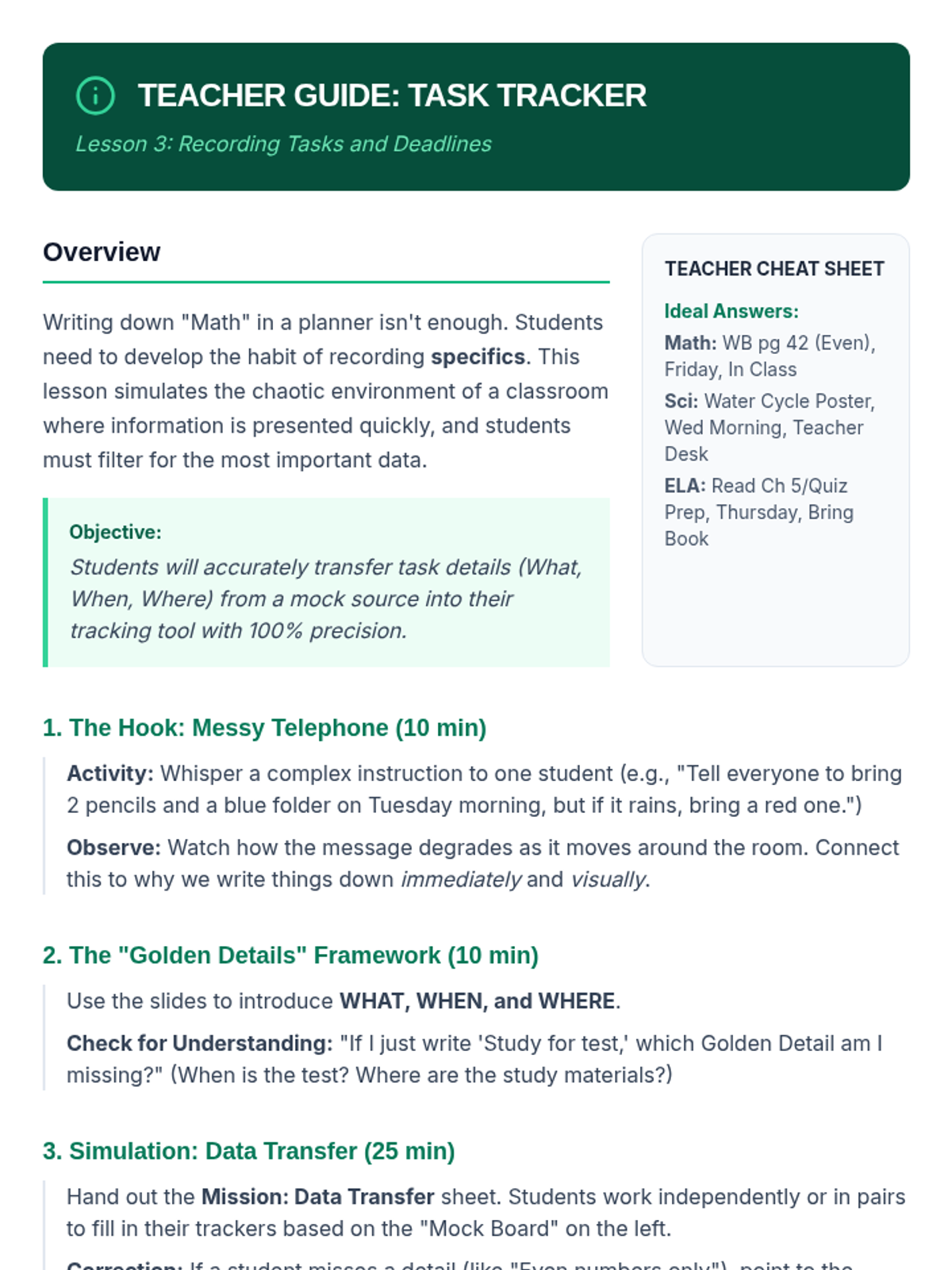
This lesson focuses on the mechanics of writing down assignments clearly and accurately. Students practice transferring information from a mock assignment board to their personal planners.
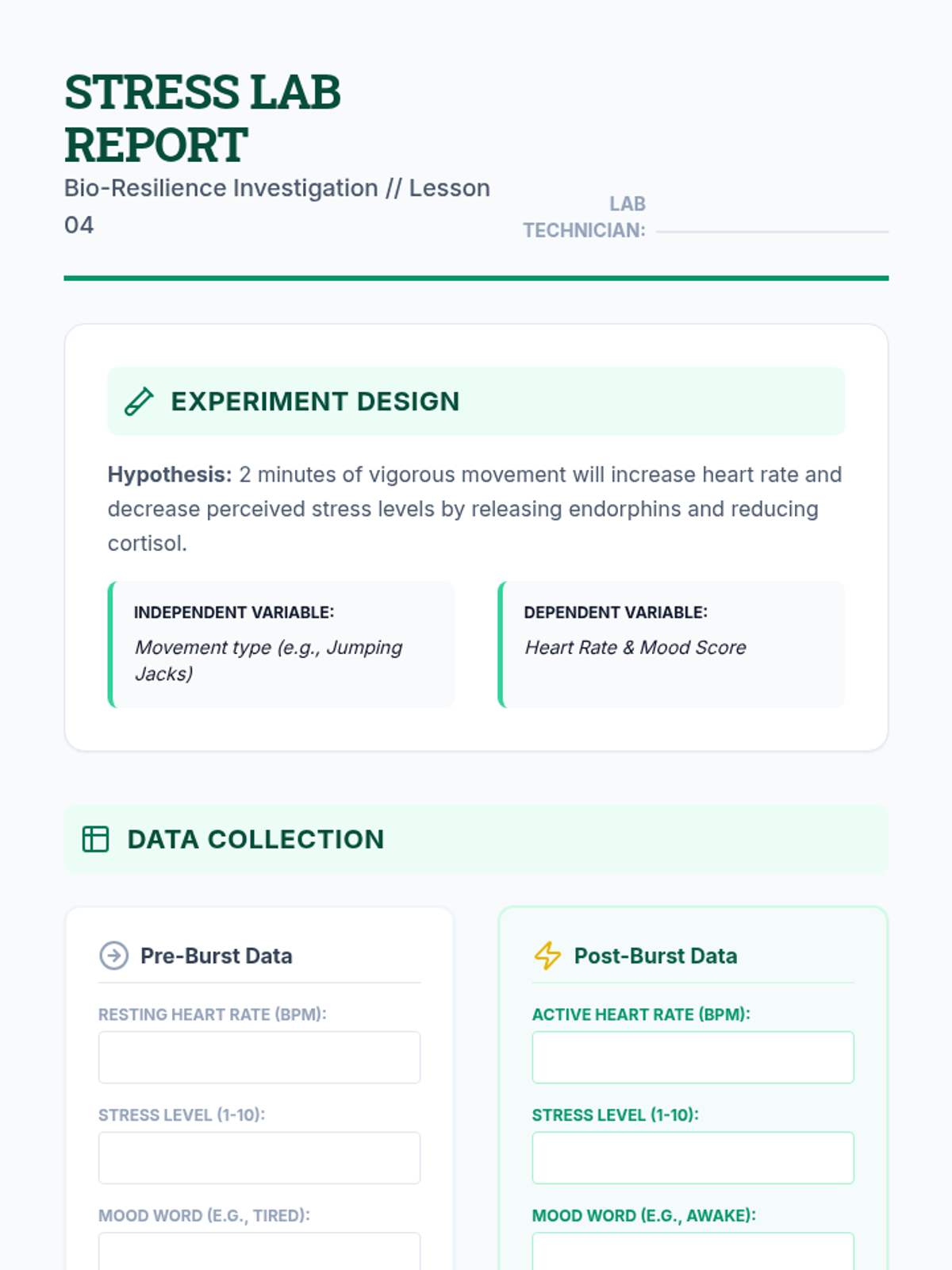
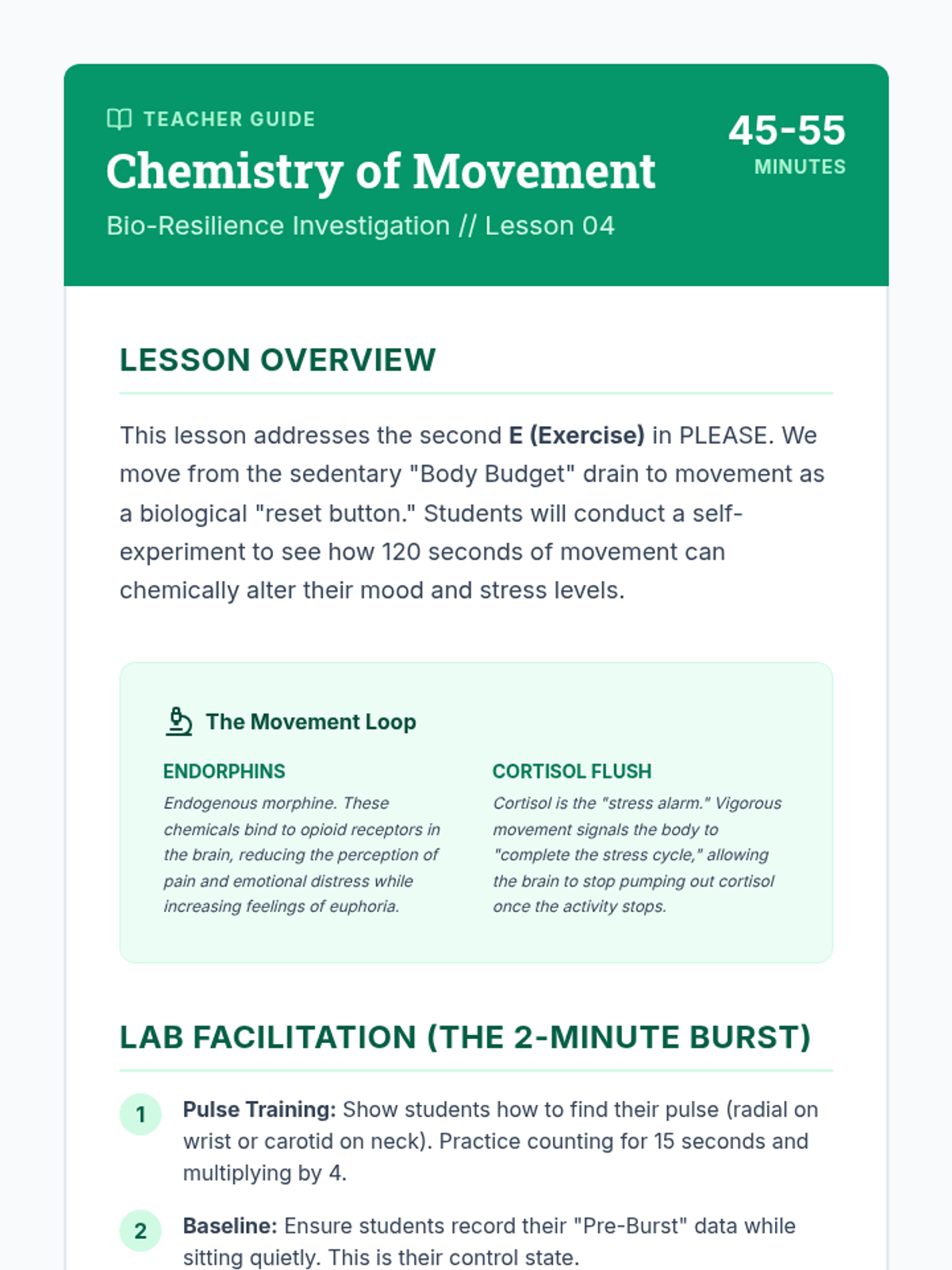
Students investigate the neurochemistry of exercise, specifically how movement releases endorphins and reduces cortisol. They test short bursts of activity to measure immediate changes in perceived stress levels.
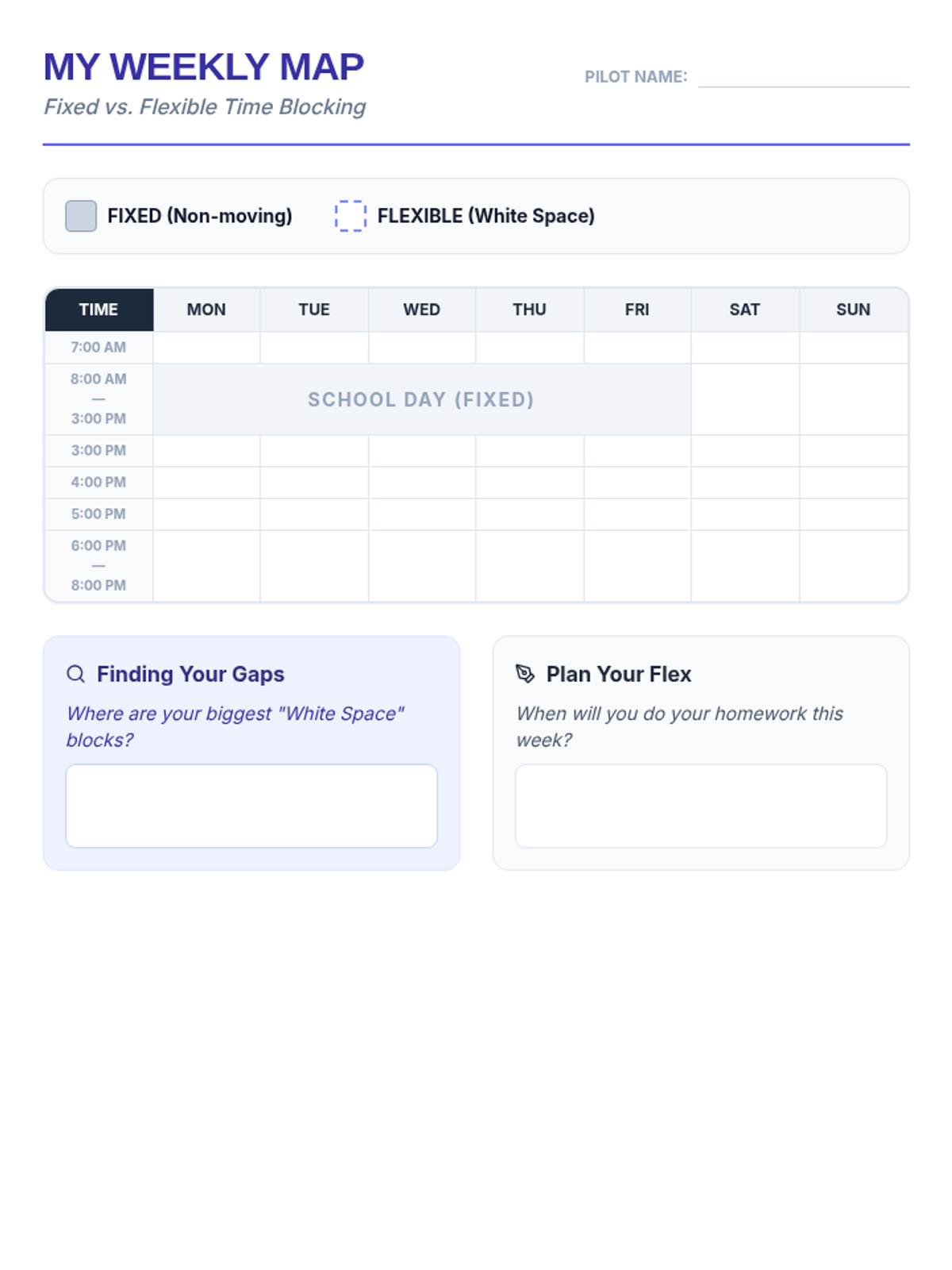
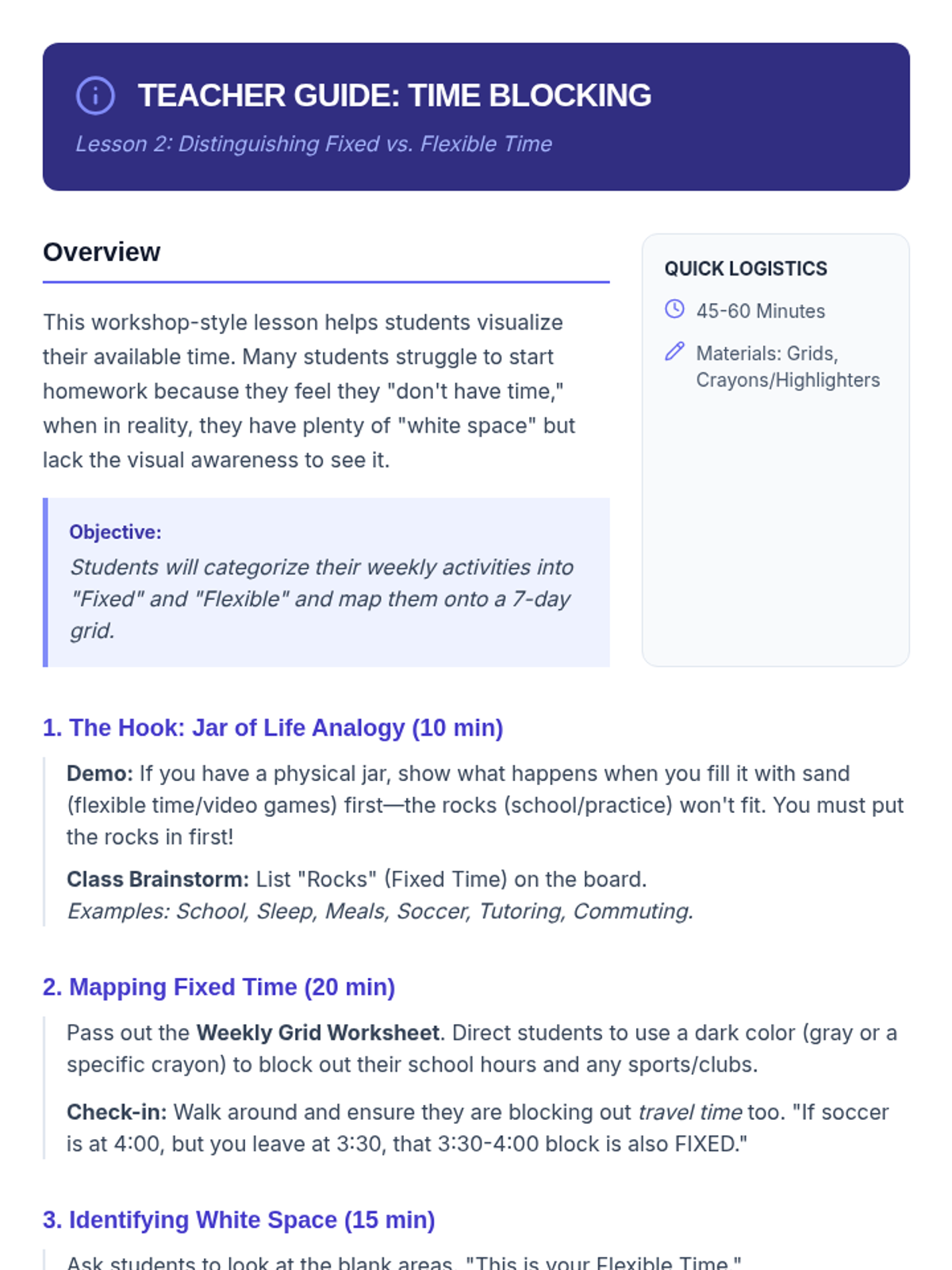
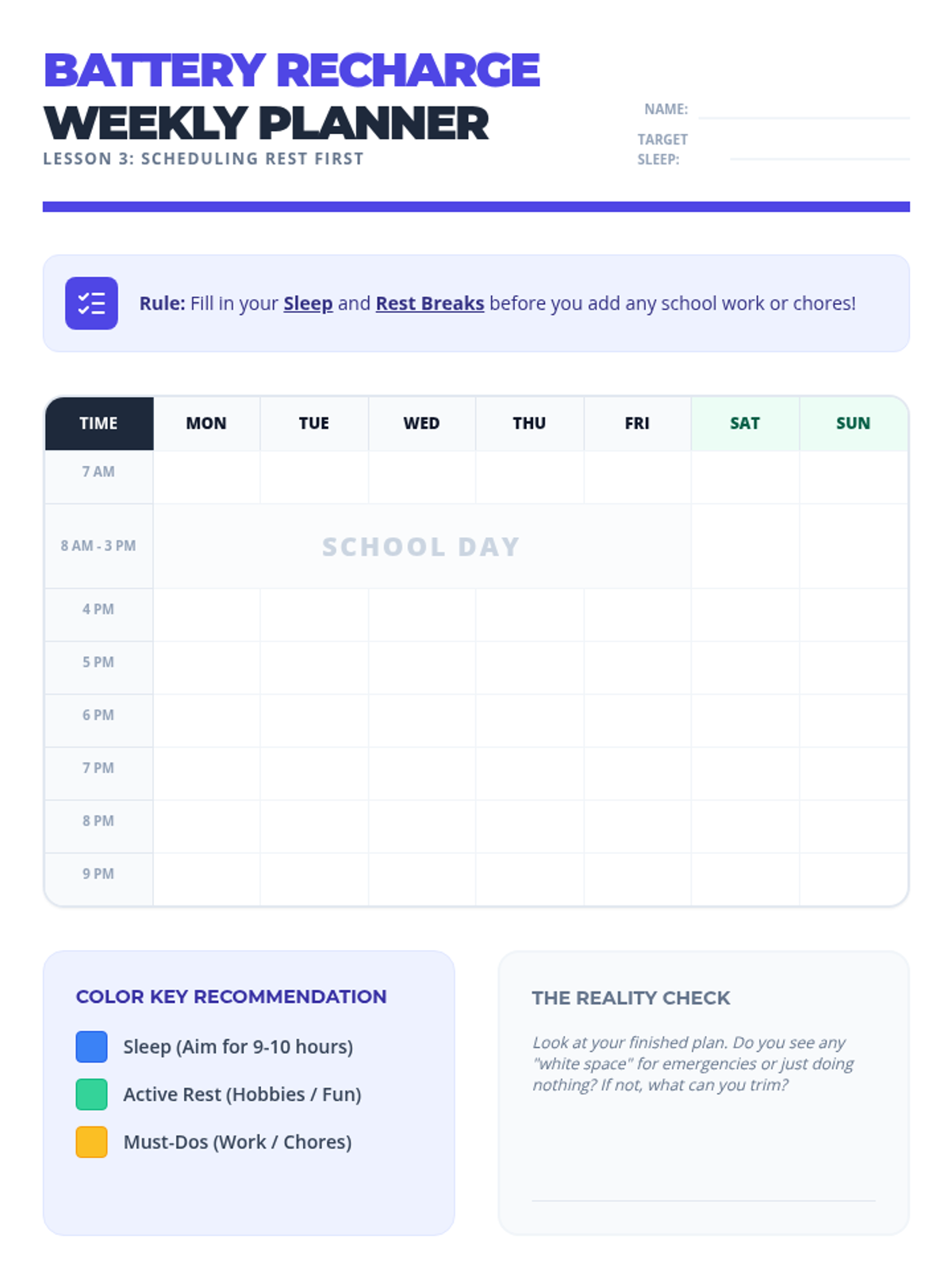
Students map out a typical week, blocking out 'hard' constraints like school hours and sports practice. They learn to identify the 'white space' available for homework and chores.
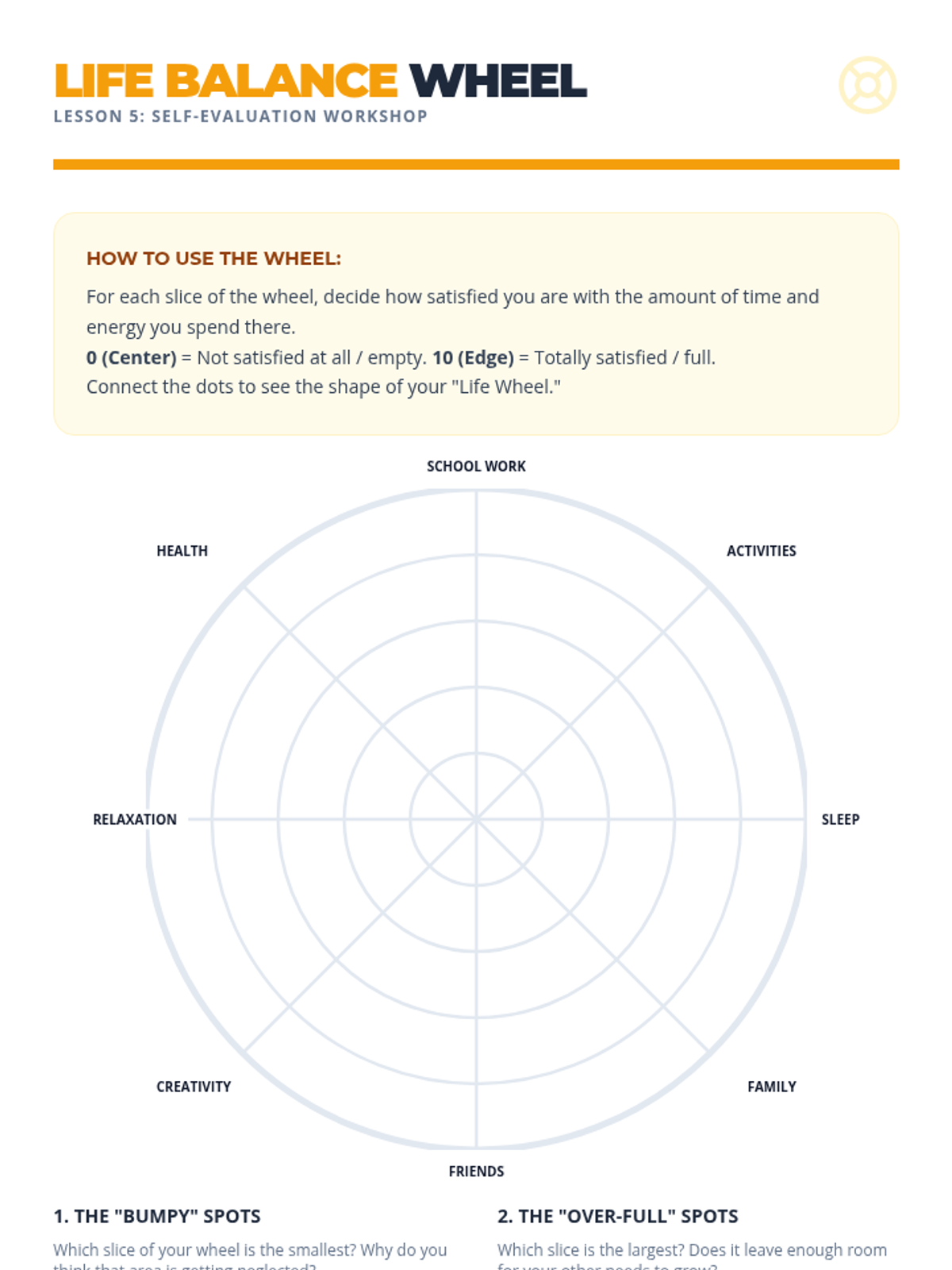
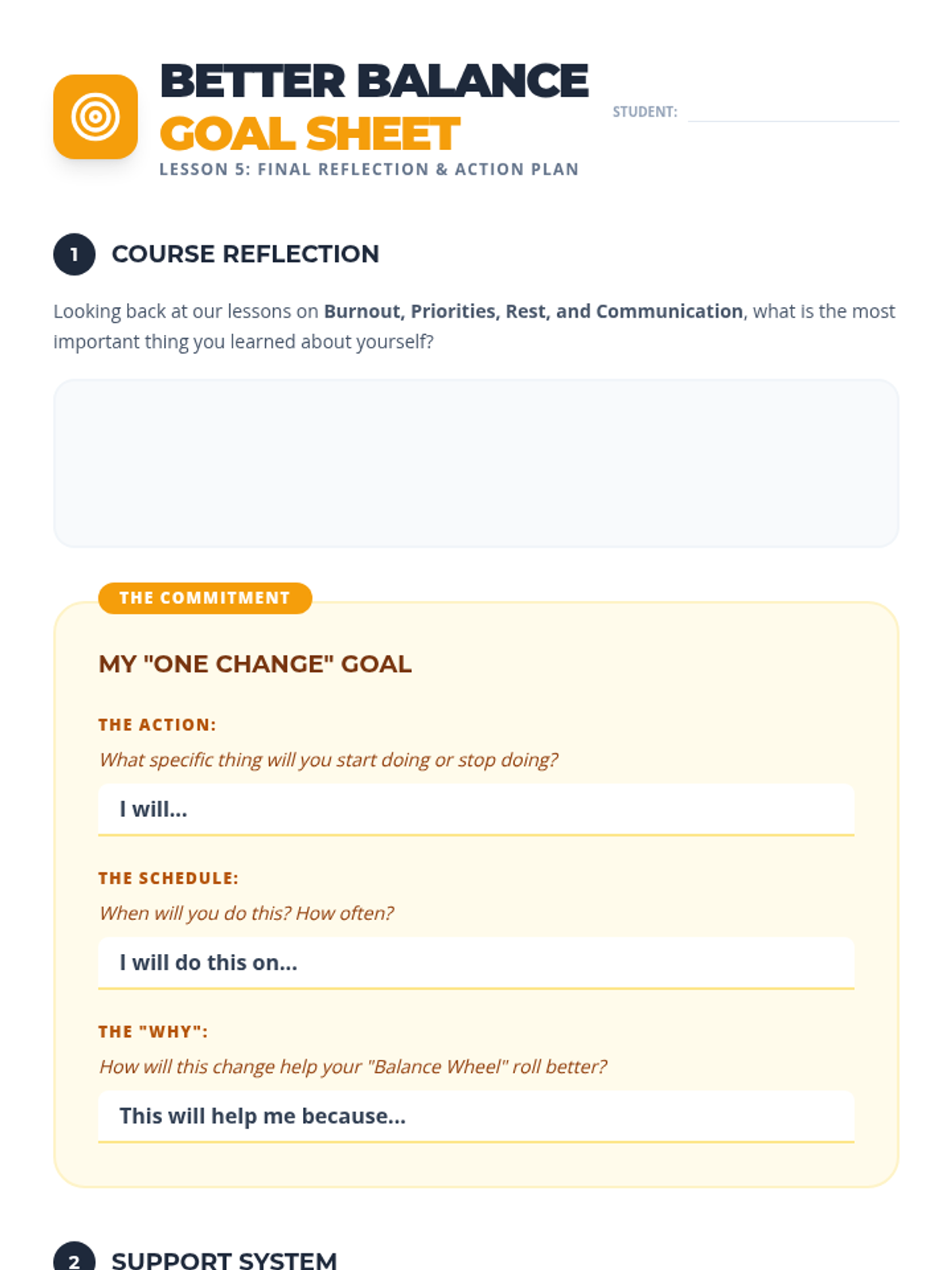
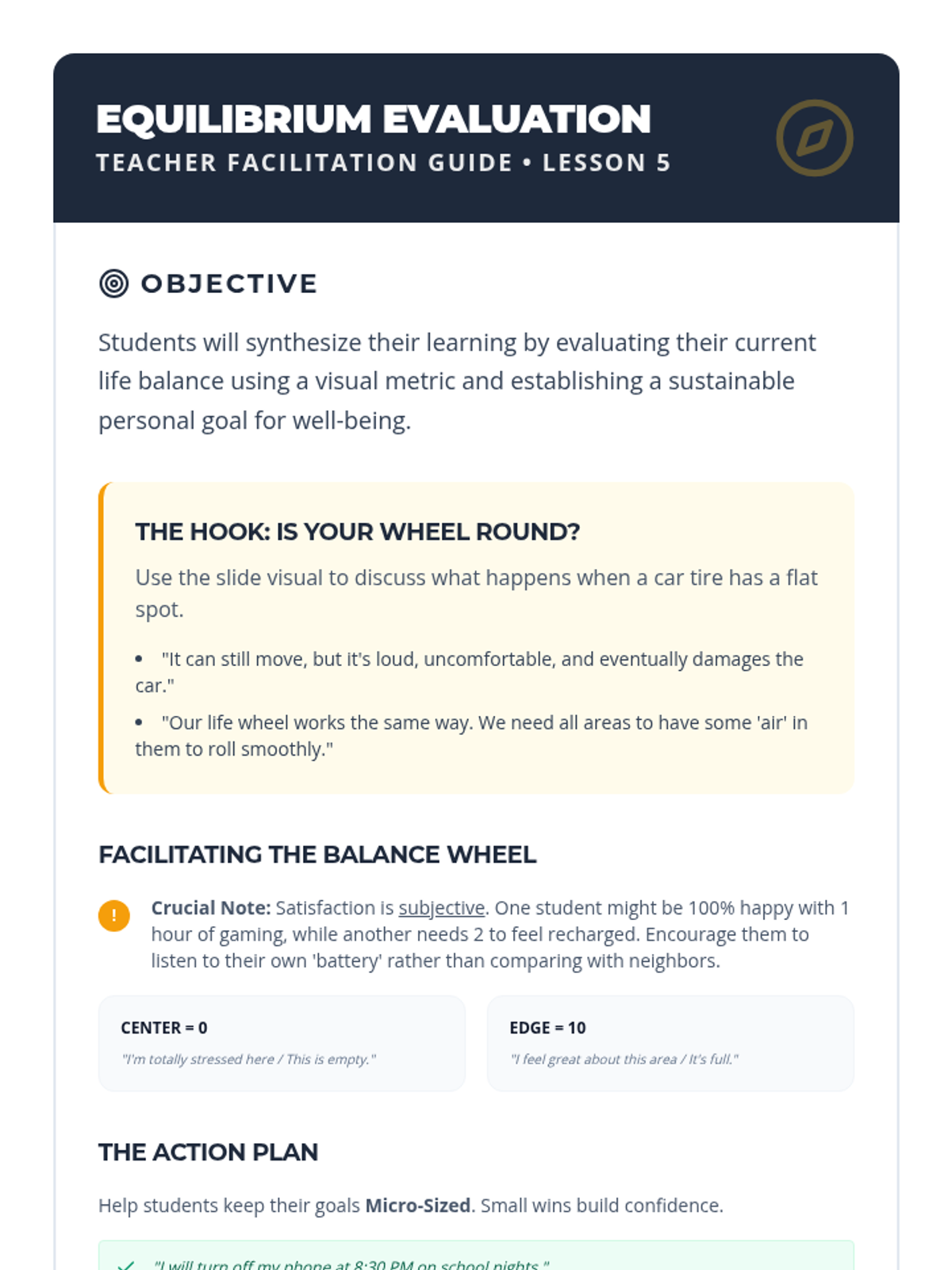
Students evaluate their current life balance using a visual 'Balance Wheel' and set a concrete goal for maintaining well-being.
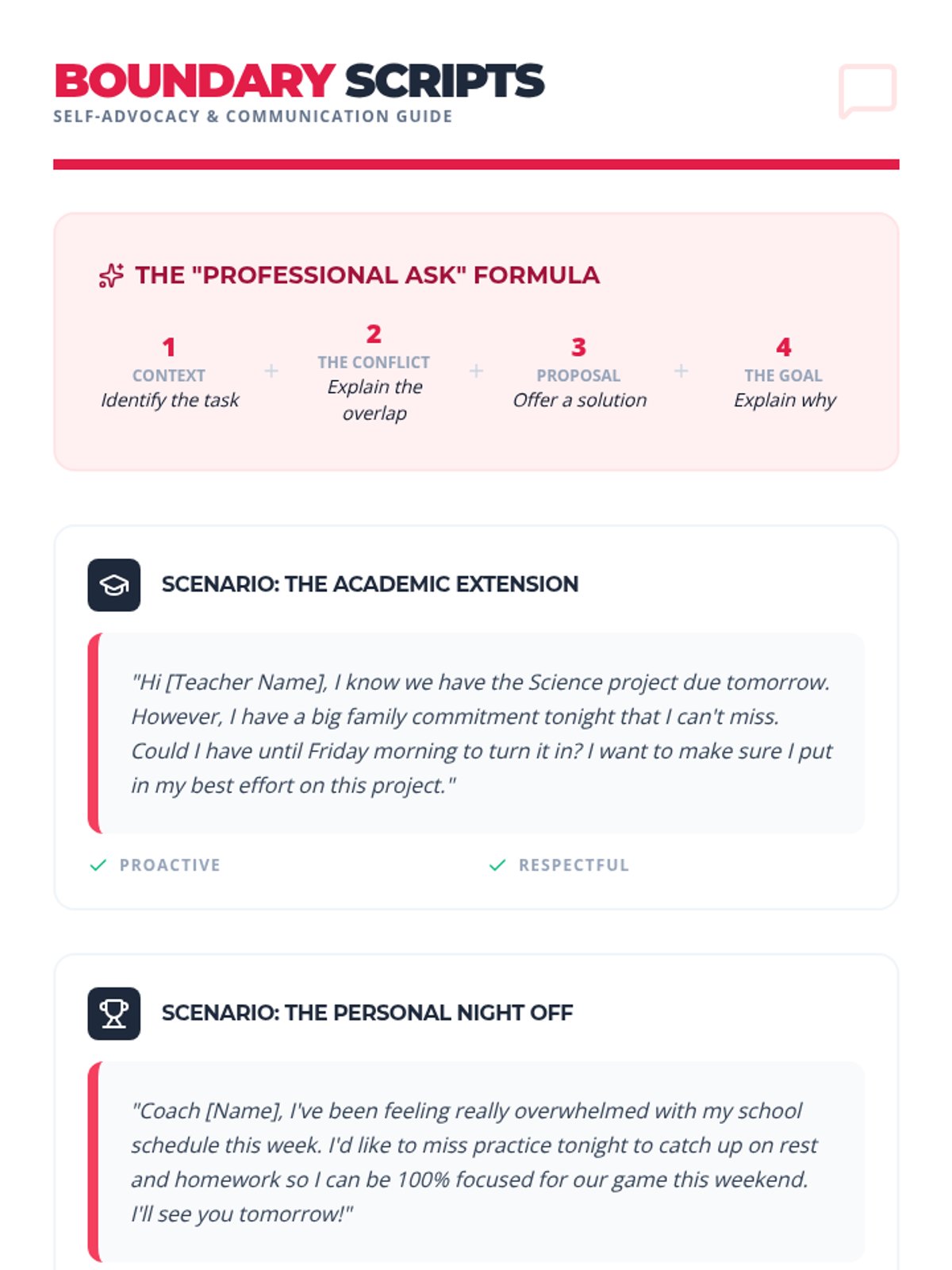
Students develop and practice proactive communication strategies for asking for help or setting boundaries with authority figures.
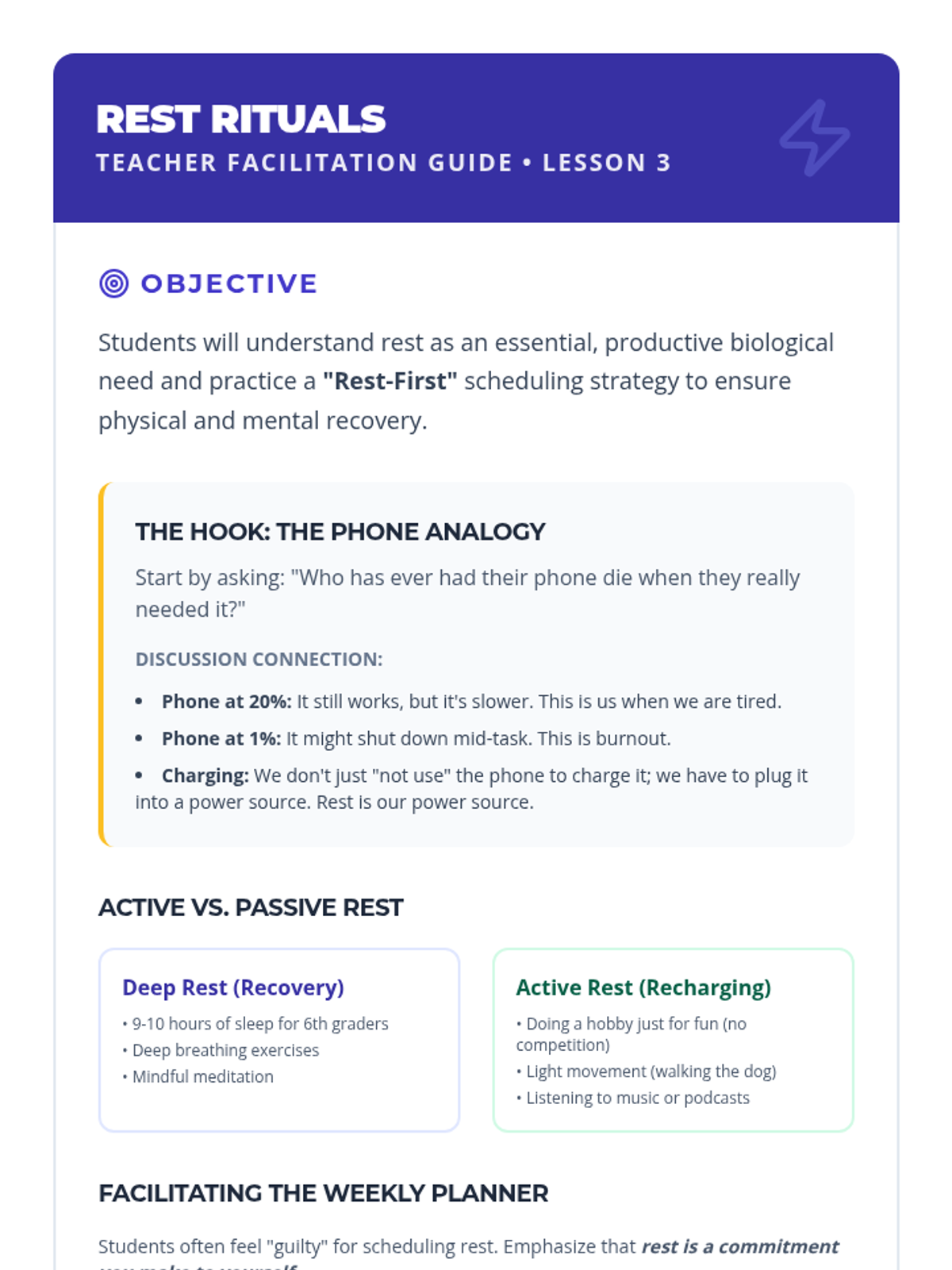
Students explore the necessity of rest and sleep as active components of a healthy schedule, creating a weekly plan that prioritizes 'recharge' time.
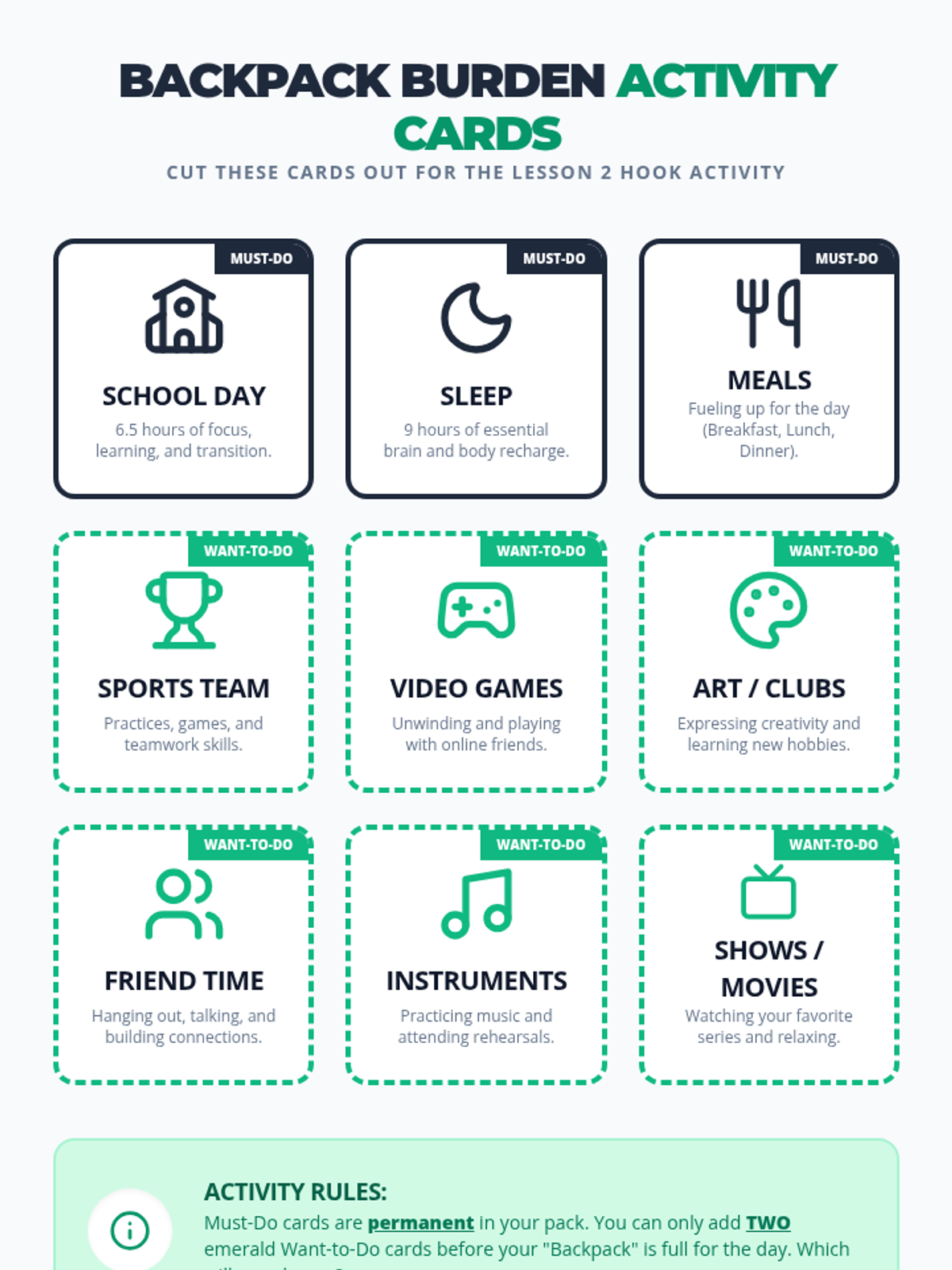
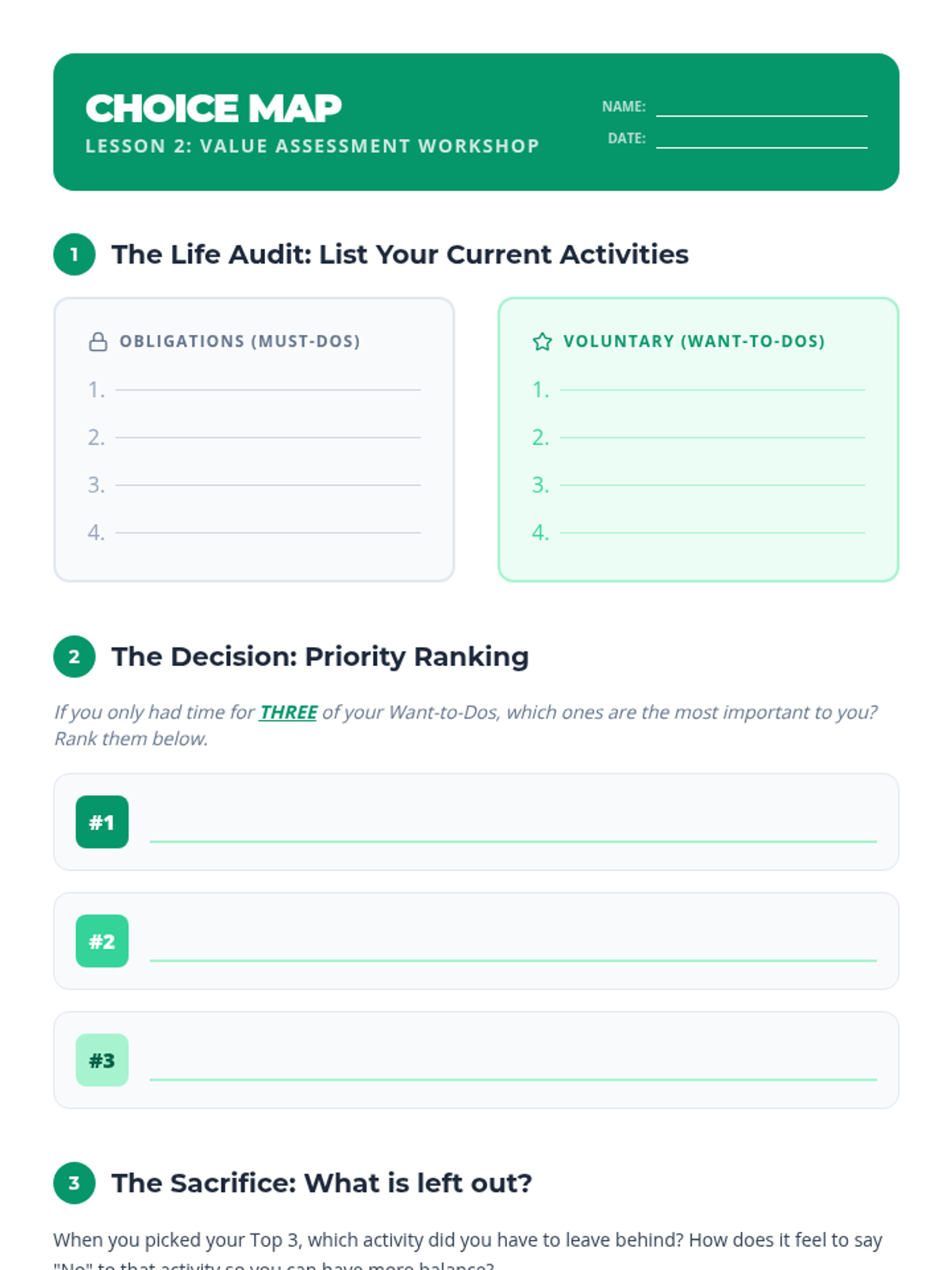
Students learn to distinguish between mandatory obligations and voluntary activities, practicing the art of making trade-offs.