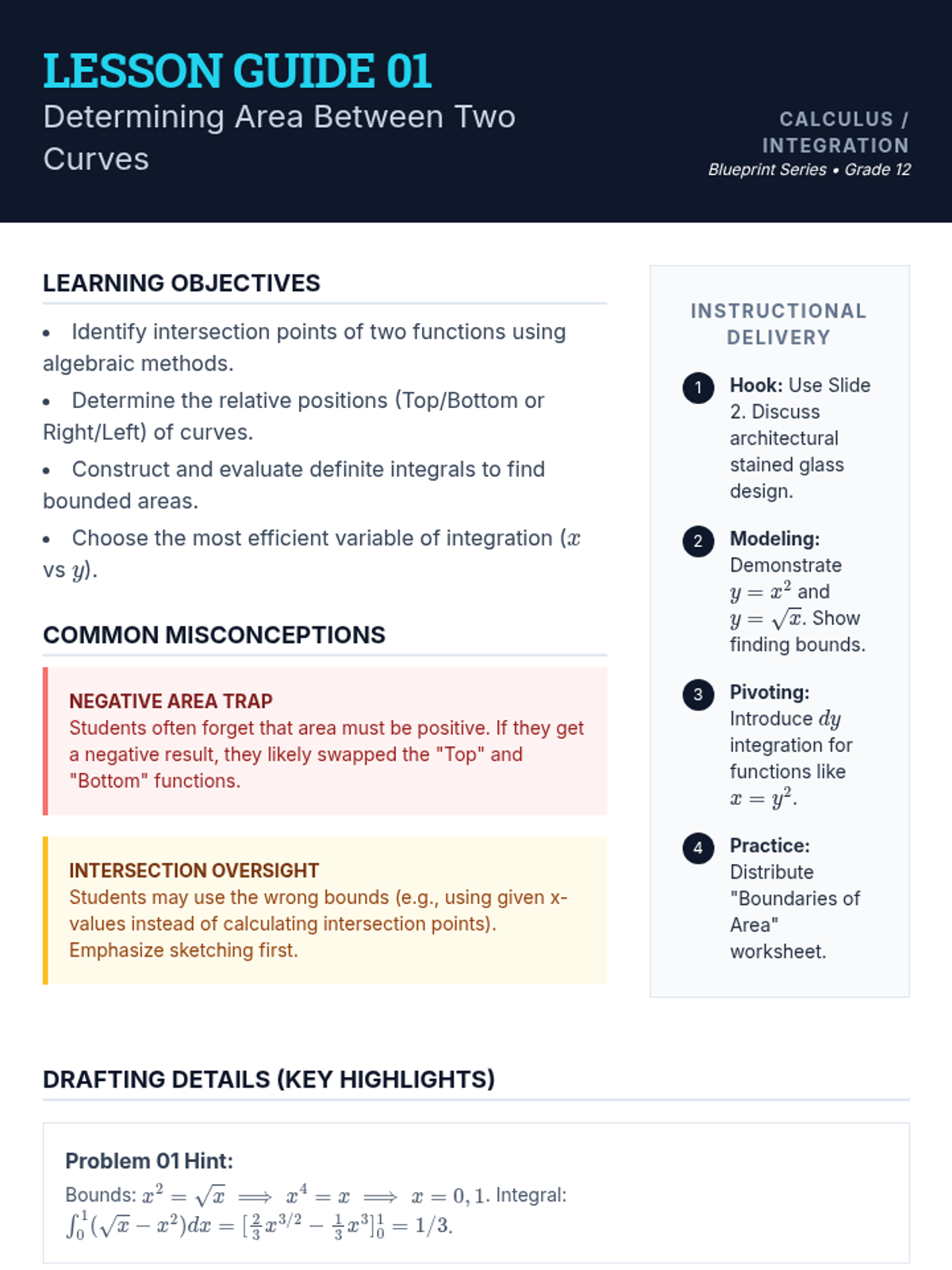
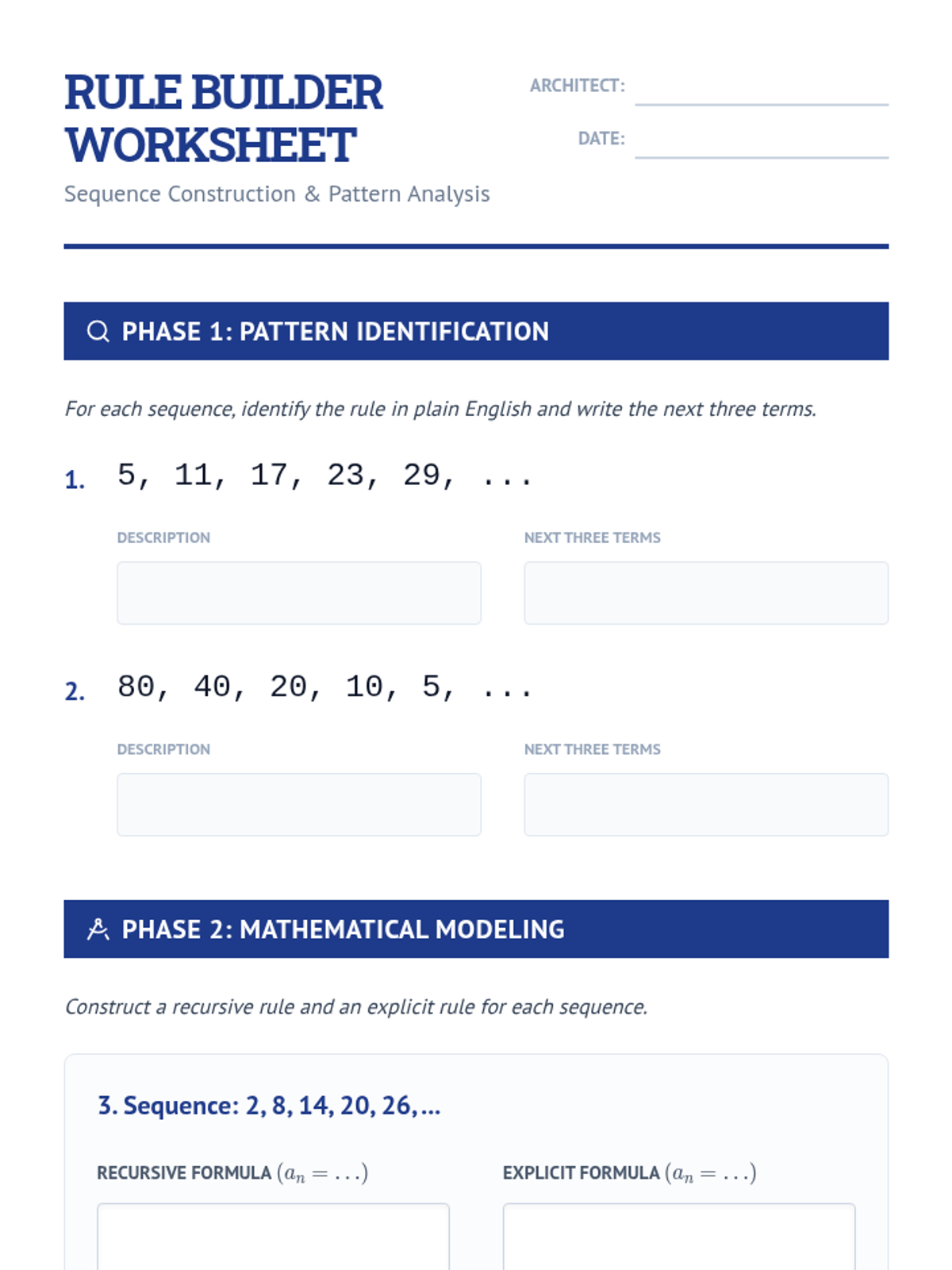
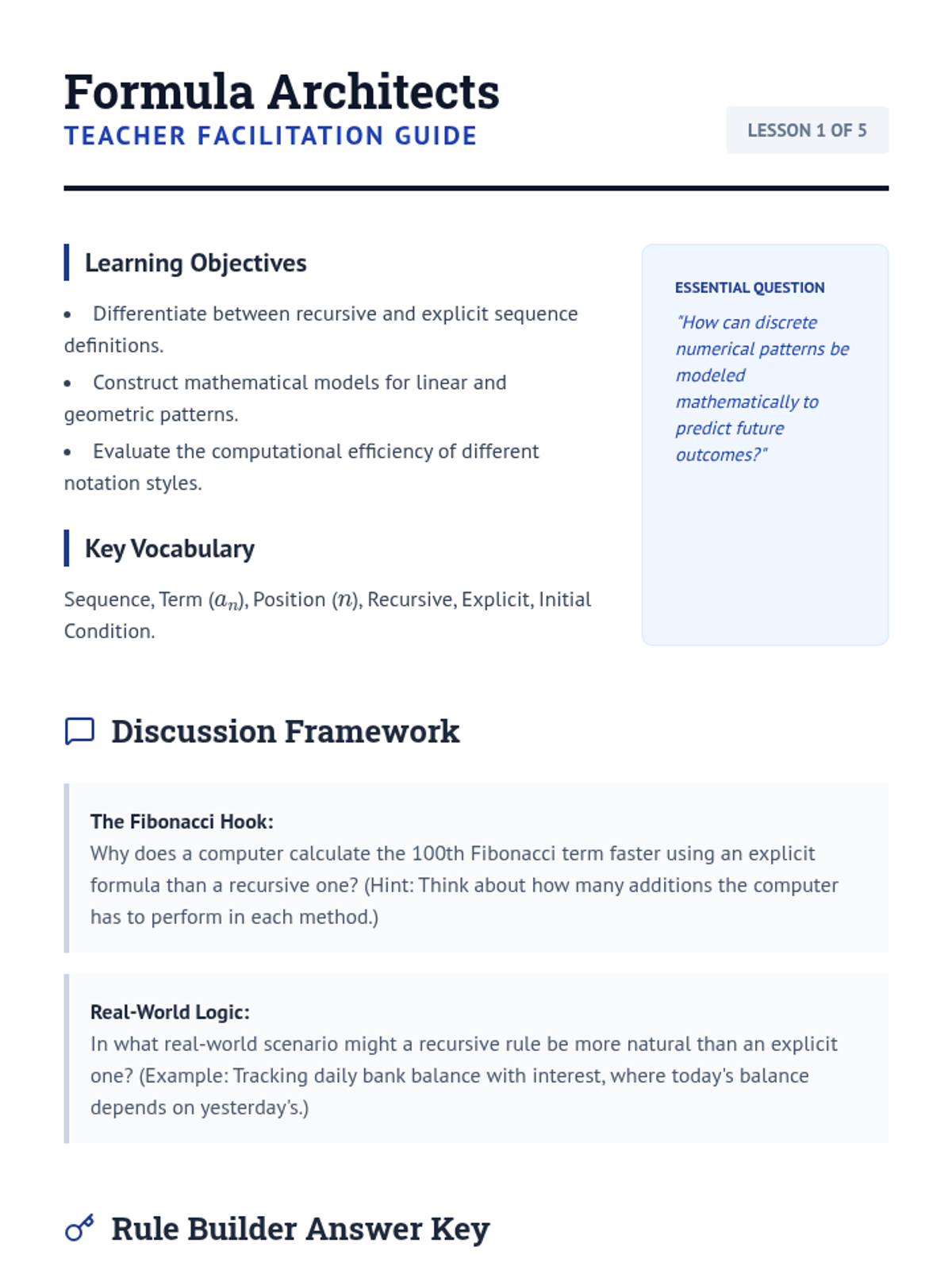
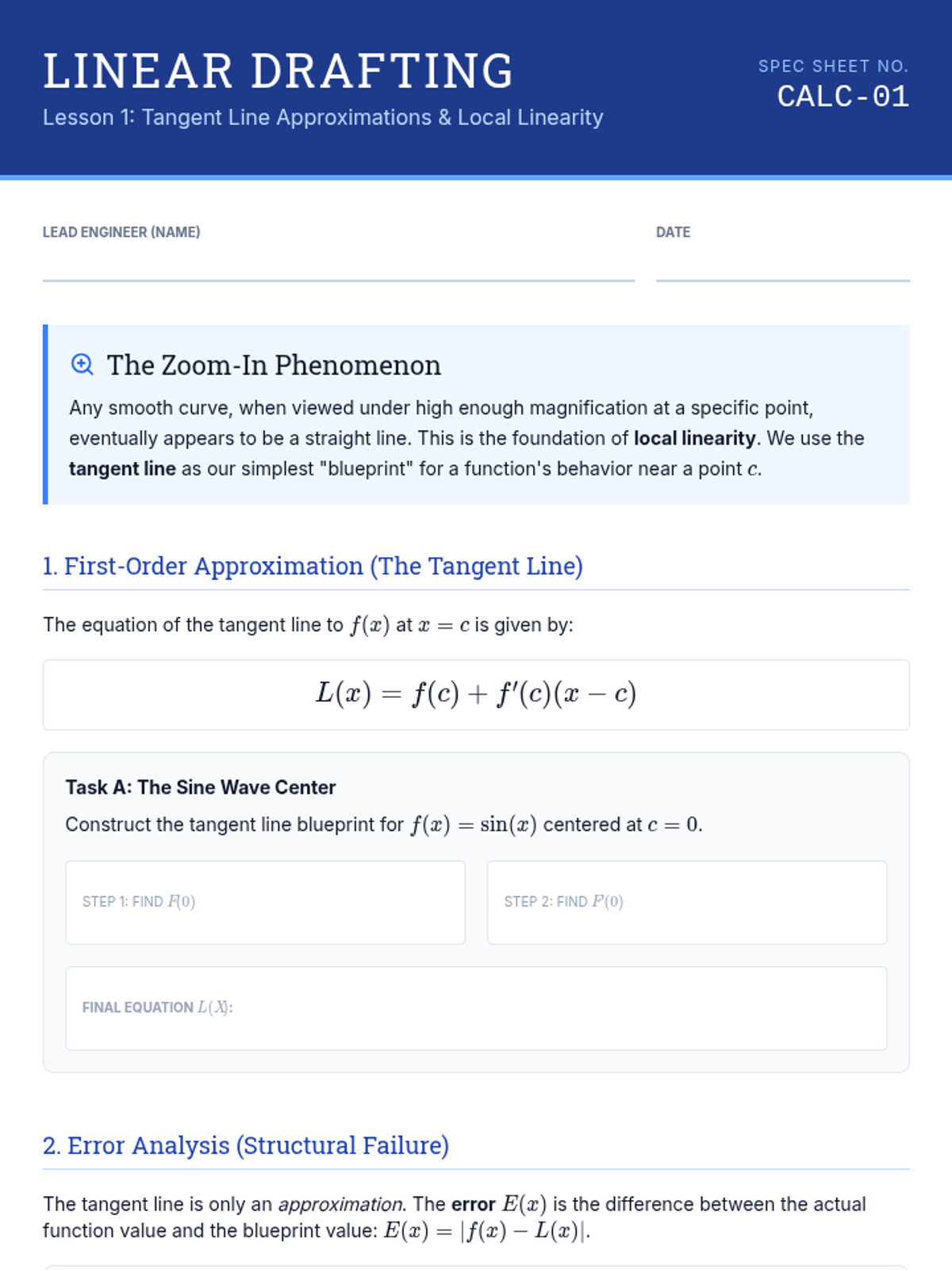
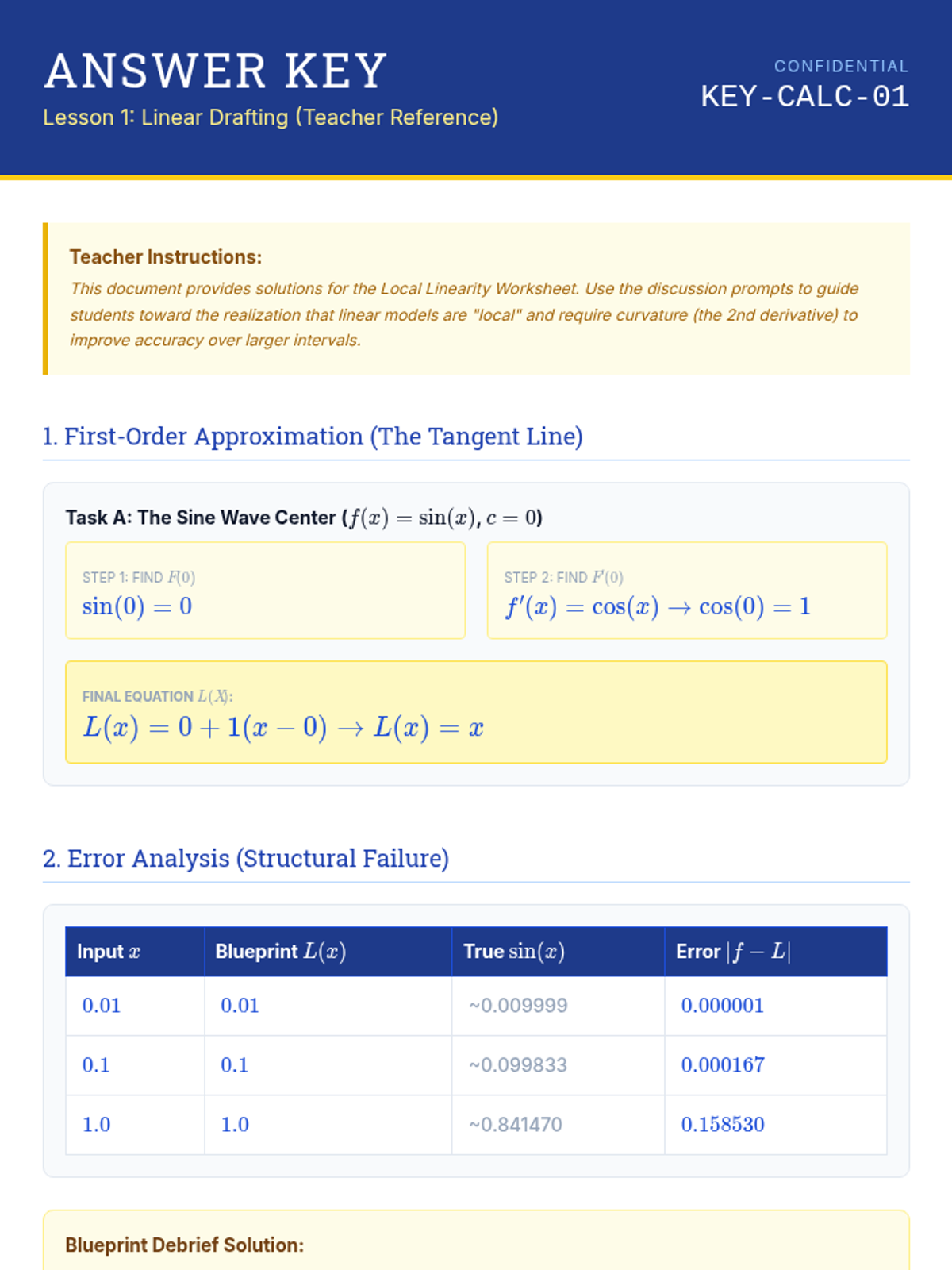
Fundamental concepts of limits, derivatives, and integrals for modeling change and motion. Examines techniques for differentiation and integration alongside applications in optimization, area calculation, and differential equations.
An advanced exploration of vector-valued functions and their applications in modeling 2D motion and force, preparing students for multivariable calculus.
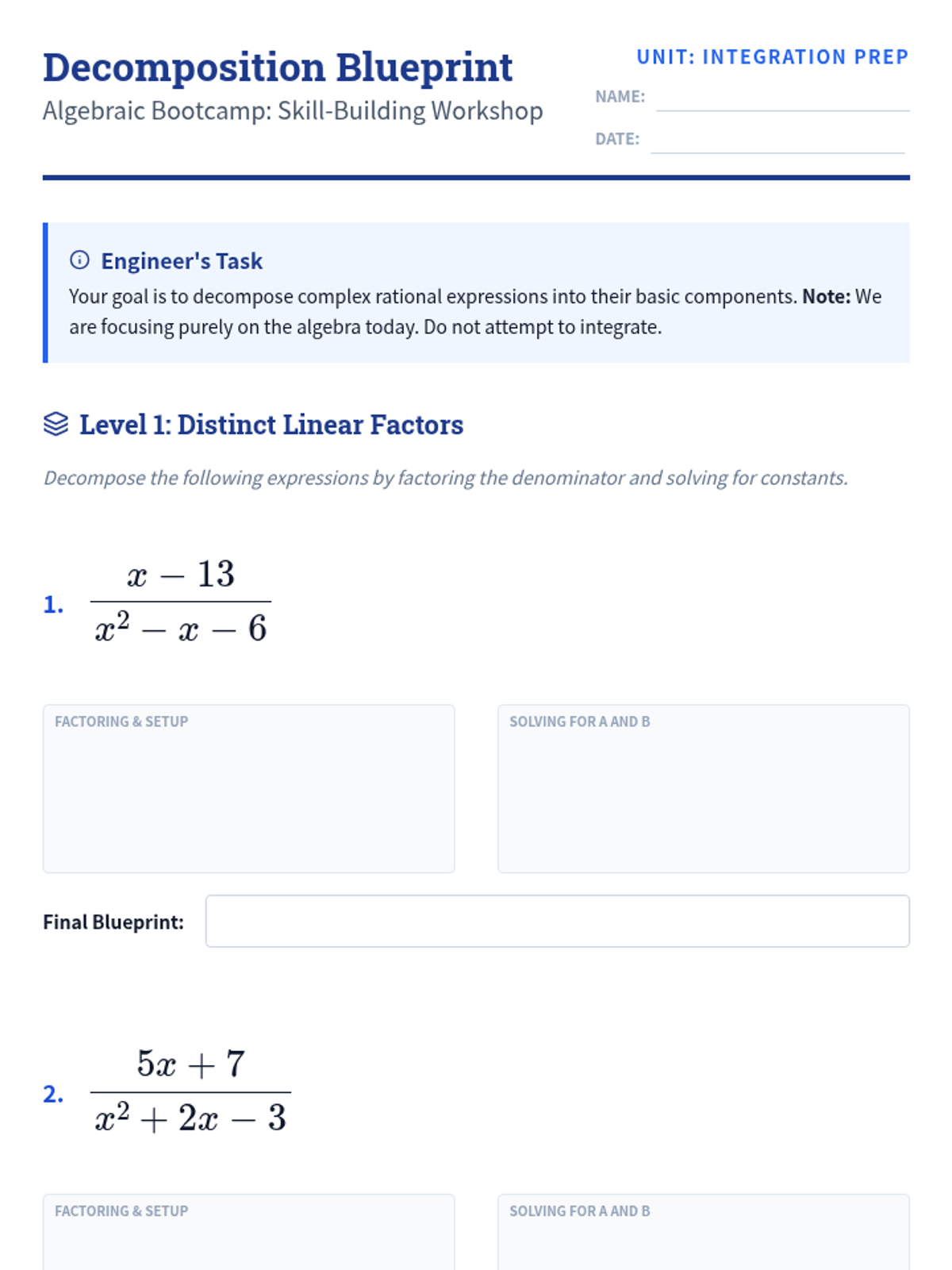
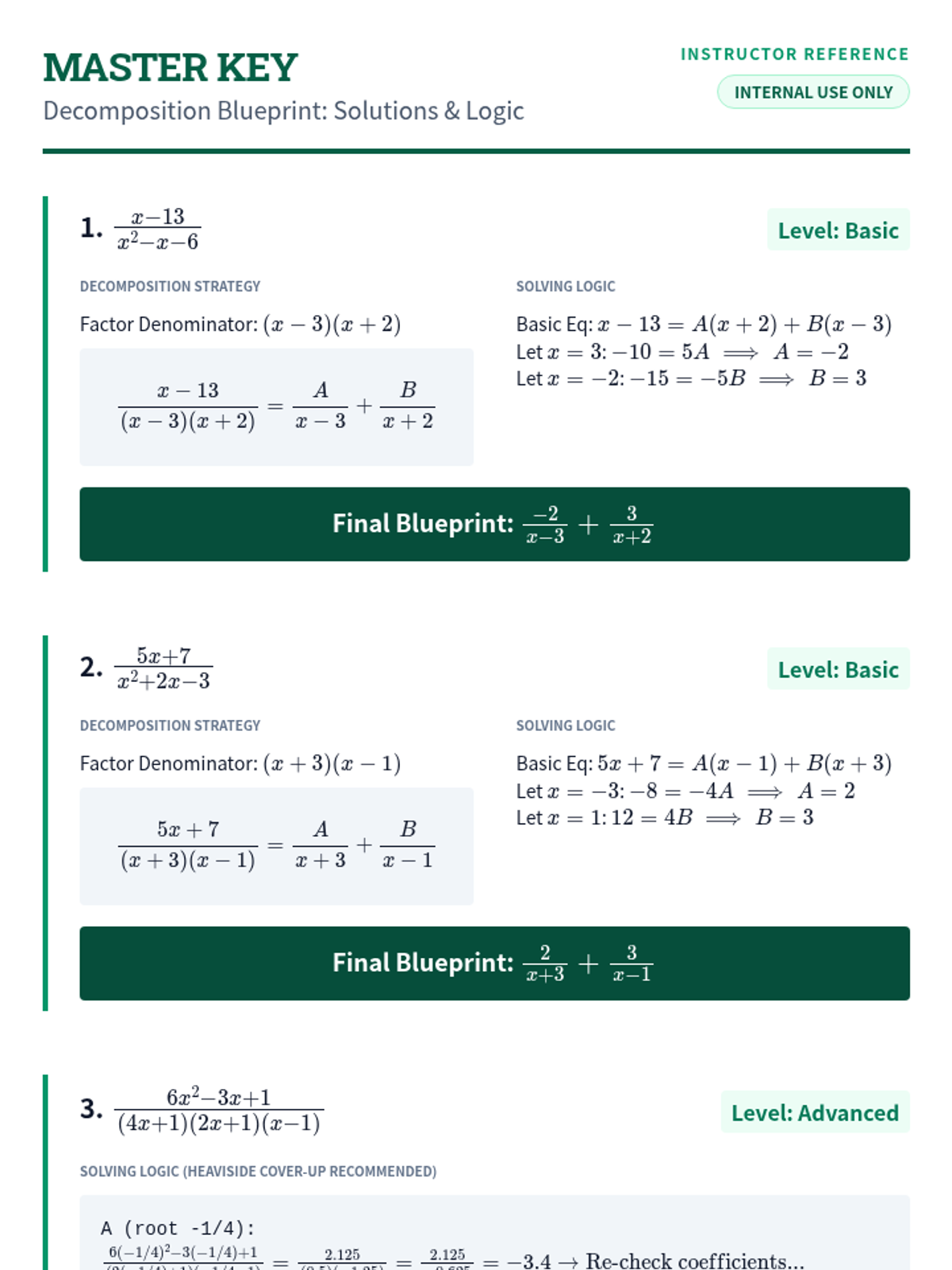
A comprehensive 11th-grade calculus unit focusing on Partial Fraction Decomposition for integration. The sequence moves from pure algebraic skill-building to complex integration techniques and real-world logistic growth modeling.
A 12th-grade calculus unit focusing on advanced integration techniques, including improper integrals, partial fractions, and trigonometric substitution, applied to real-world modeling scenarios like population growth and physics.
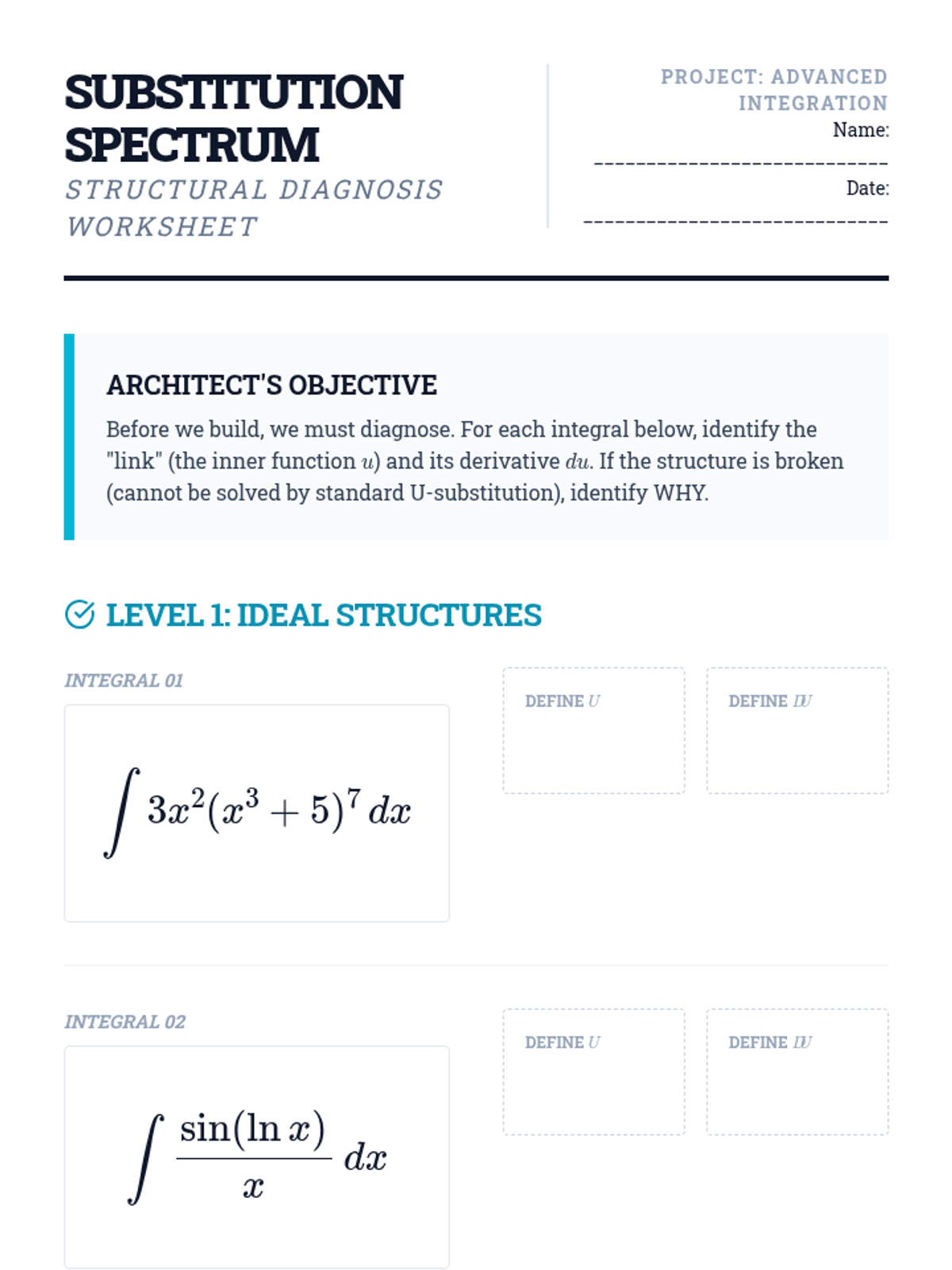
A comprehensive 12th-grade calculus unit covering advanced integration techniques, from sophisticated u-substitution to partial fraction decomposition, culminating in a strategic synthesis of all methods.
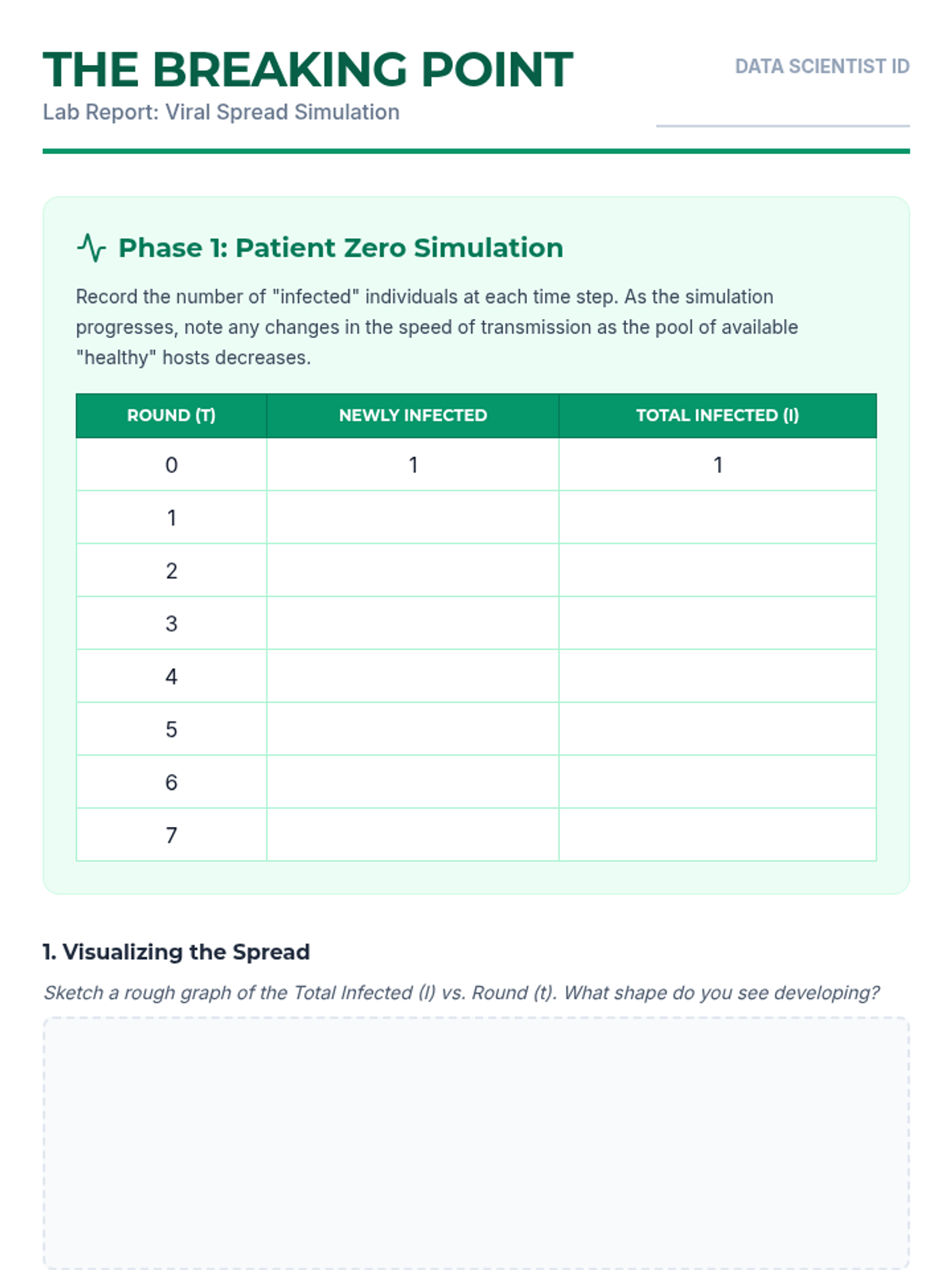
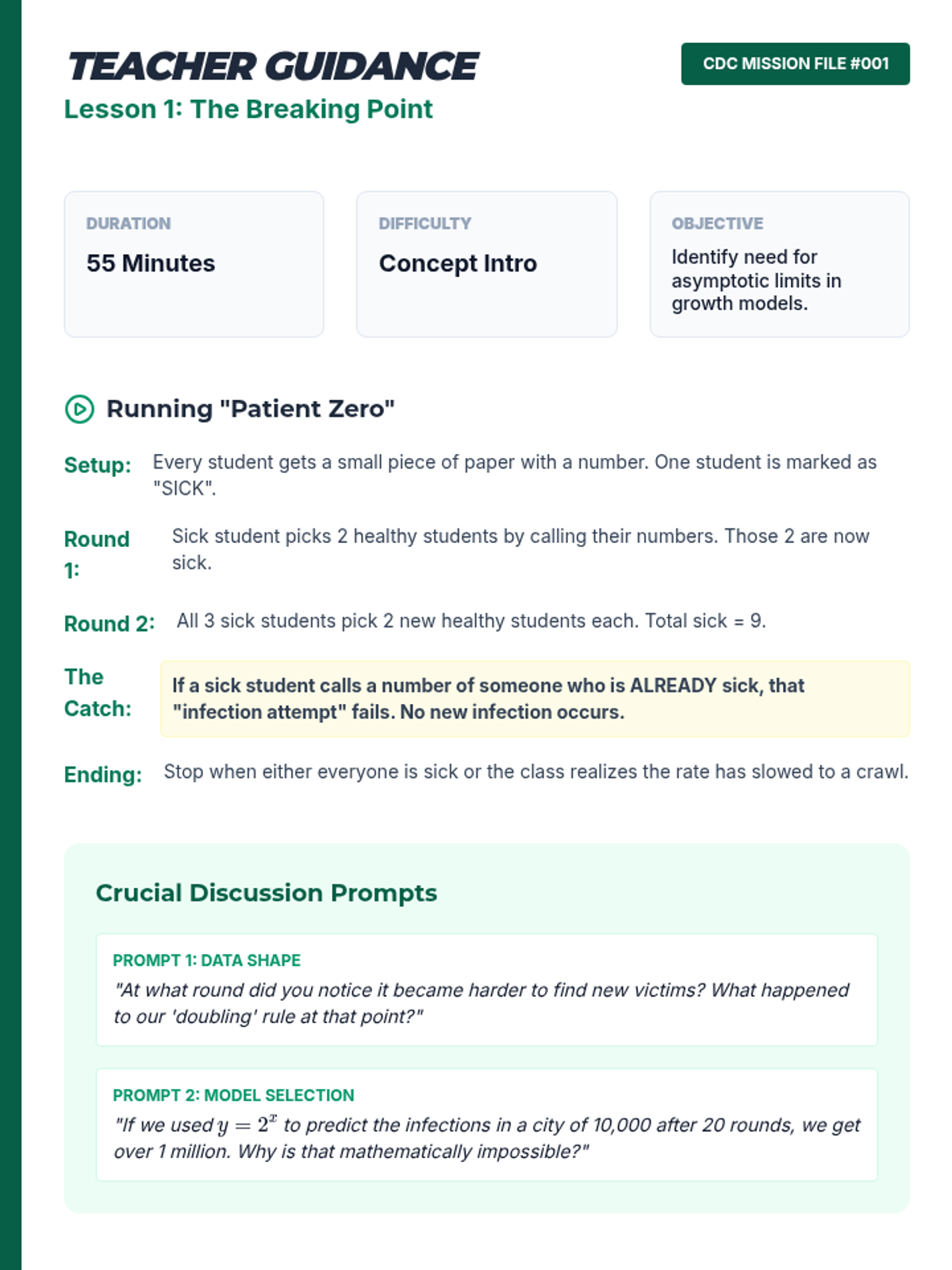
A high-level mathematics sequence for 12th-grade students exploring the transition from exponential growth to logistic models in the context of epidemiology. Students will analyze parameters, perform regression on real-world data, and use mathematical modeling to inform policy decisions.
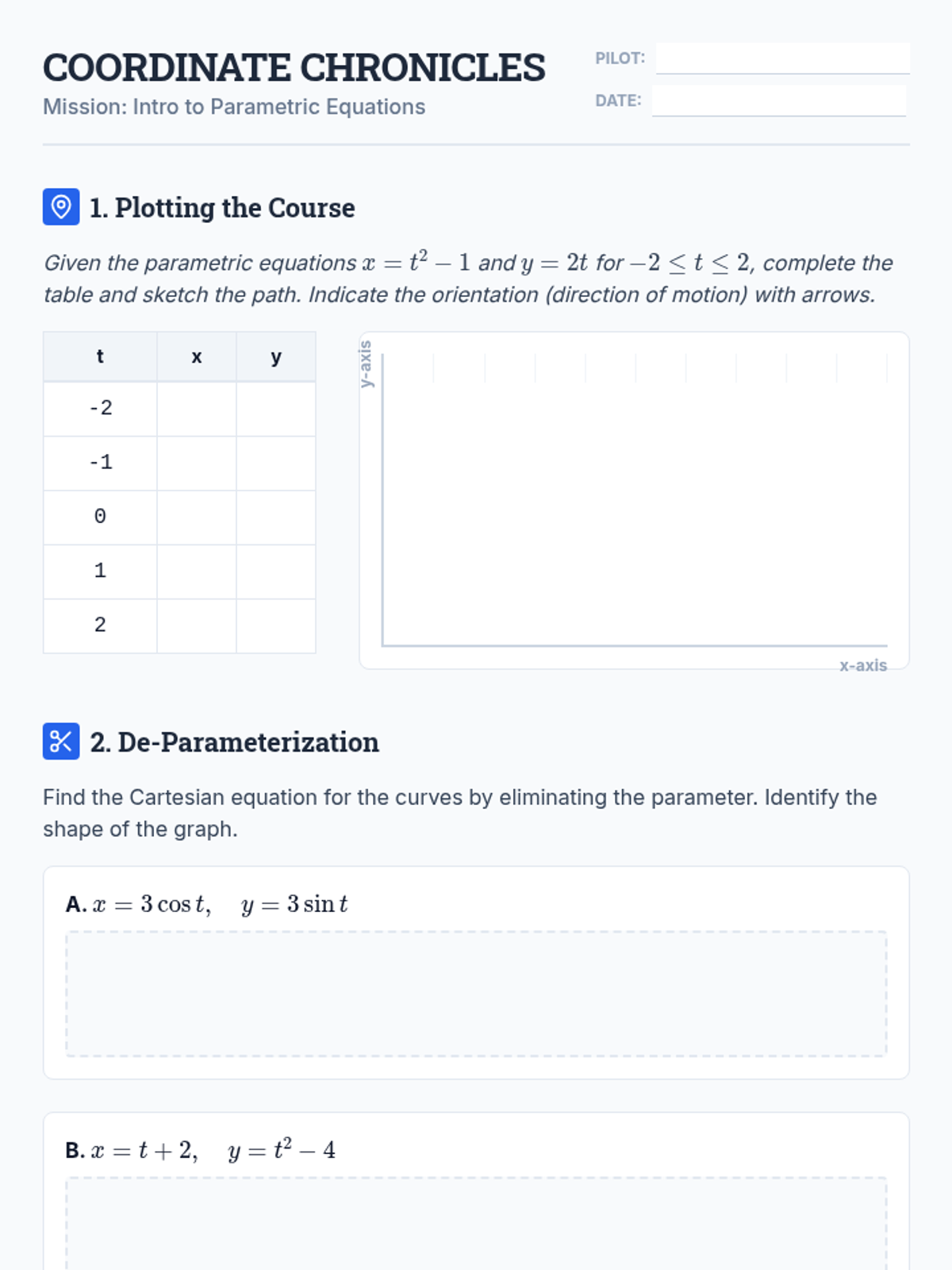
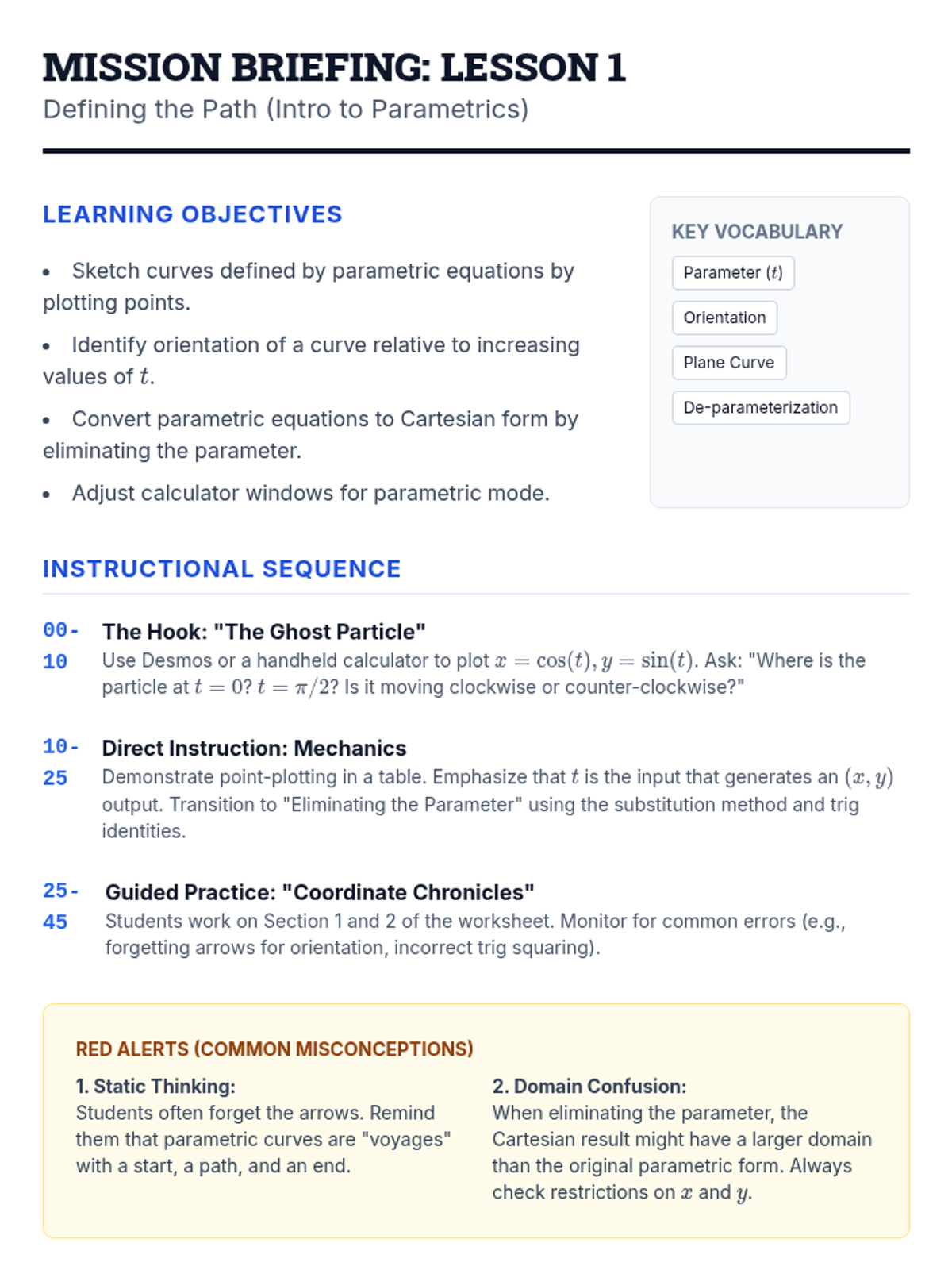
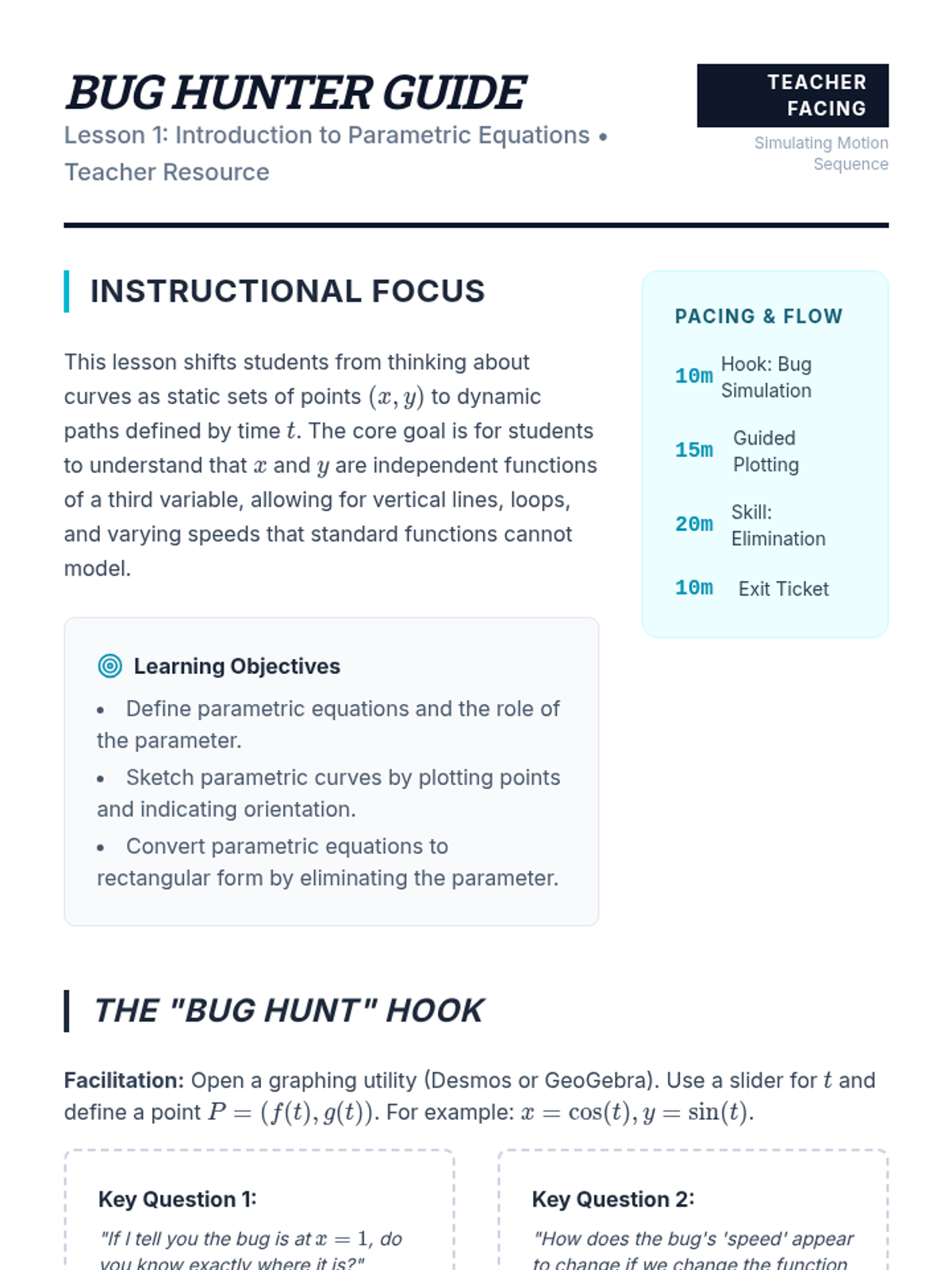
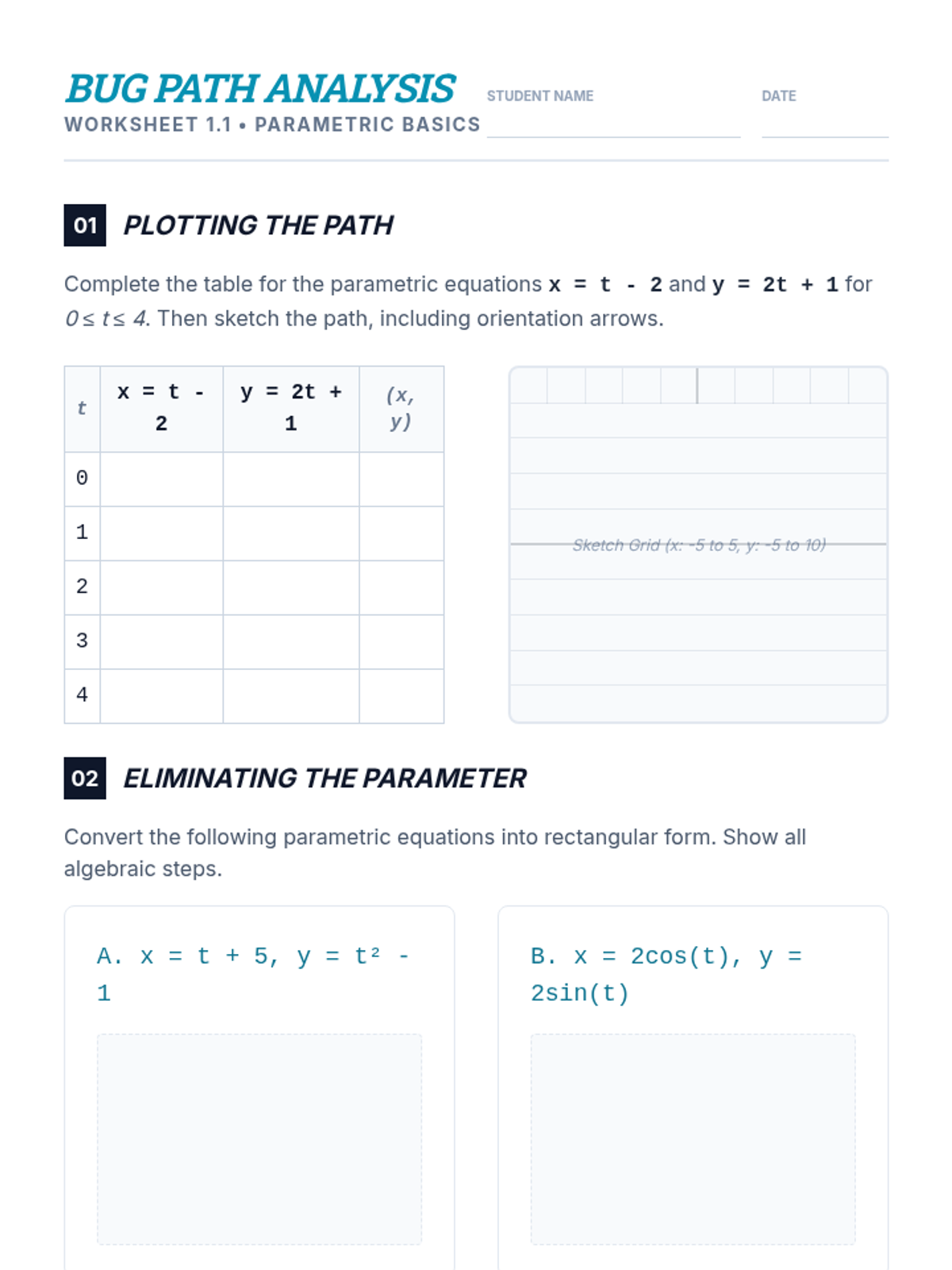
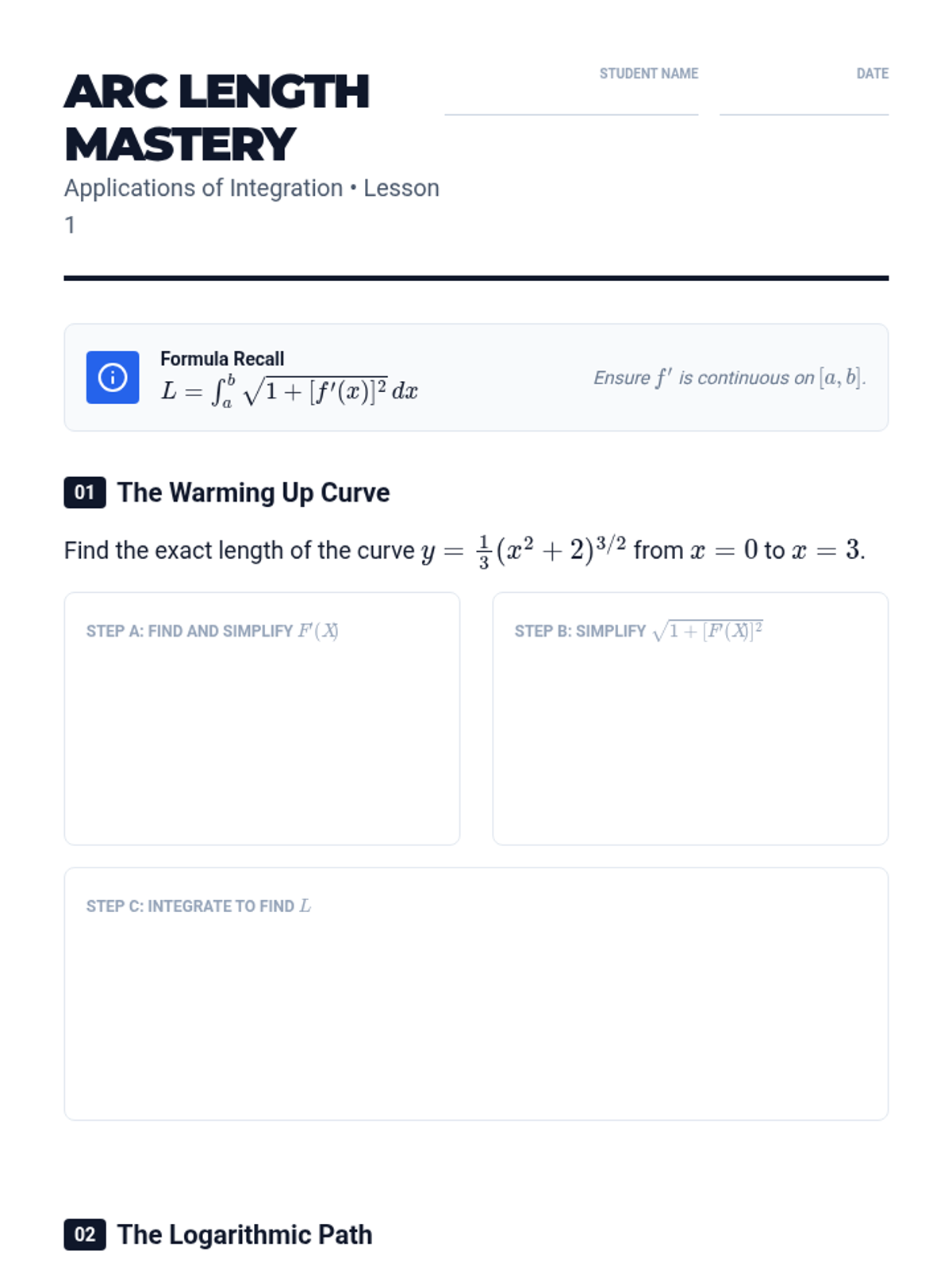
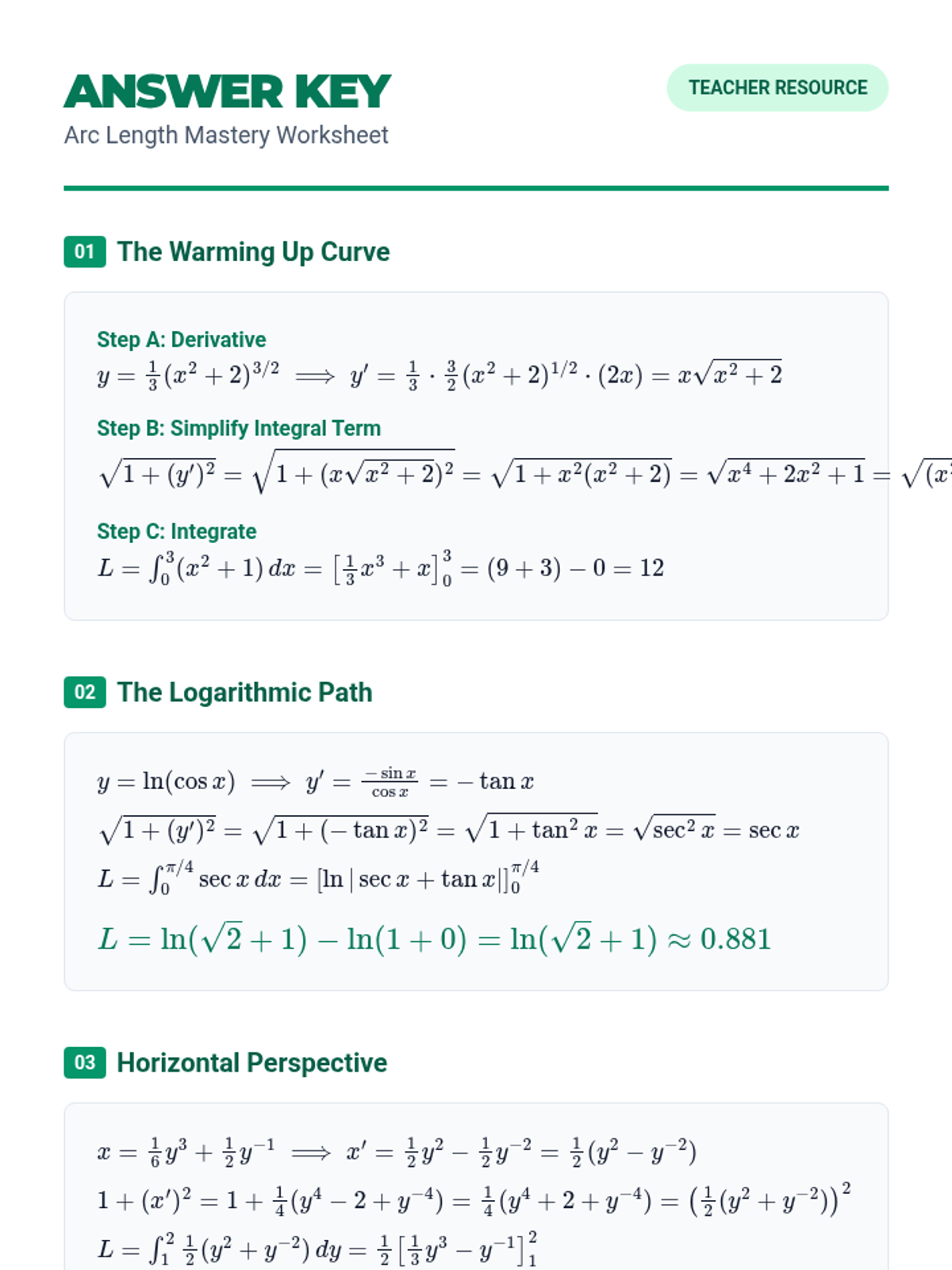
A comprehensive unit on parametric equations and their applications in modeling motion. Students move from the basics of parametric curves to advanced calculus concepts like derivatives, concavity, vectors, and arc length.
This sequence introduces students to parametric equations through the lens of particle motion and physics simulations. Students progress from basic plotting and parameter elimination to advanced calculus applications involving derivatives, vectors, and arc length.
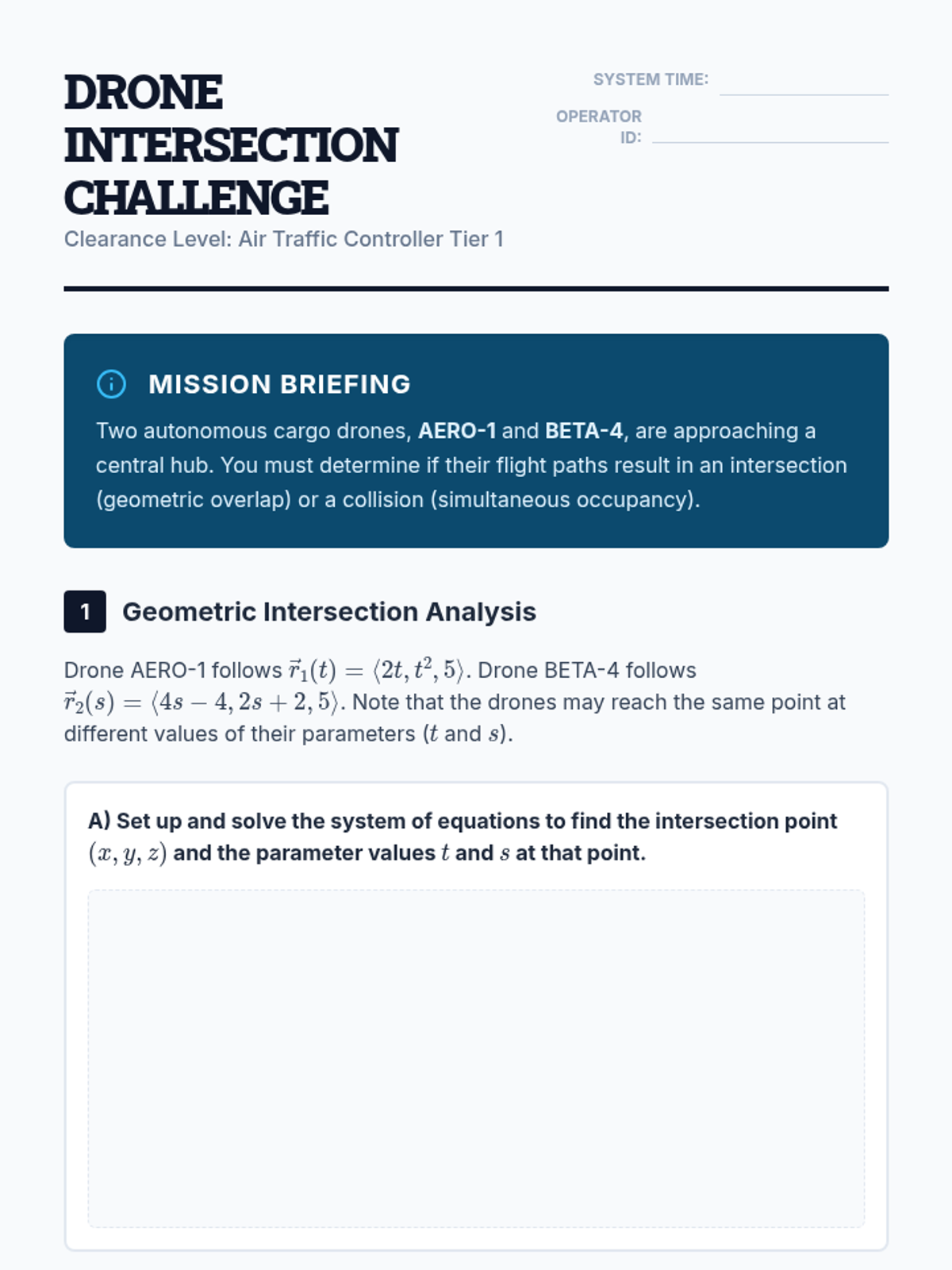
A project-based calculus sequence for 12th grade students focusing on the engineering applications of vector-valued functions, including path optimization, differentiability, and arc length.
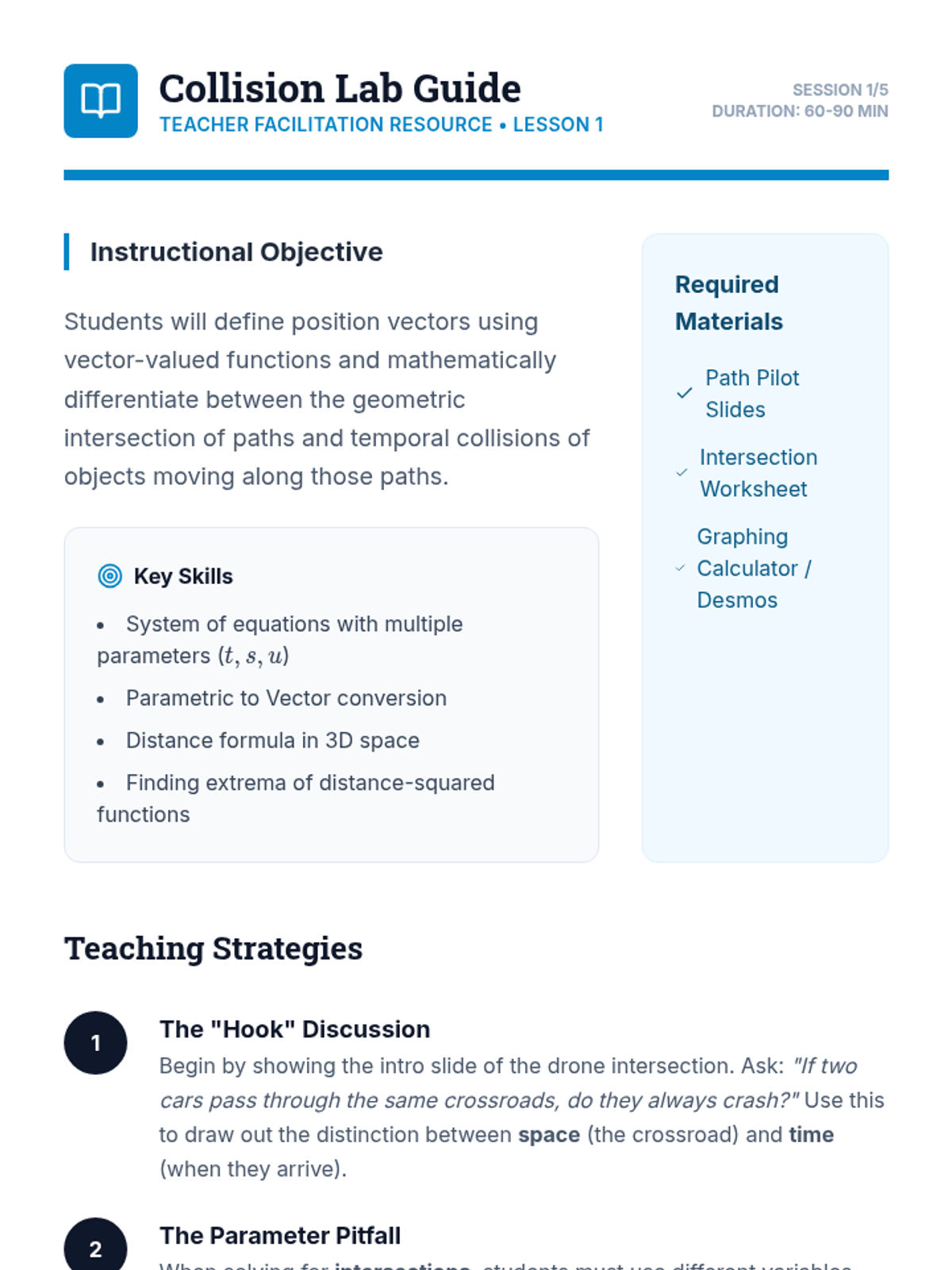
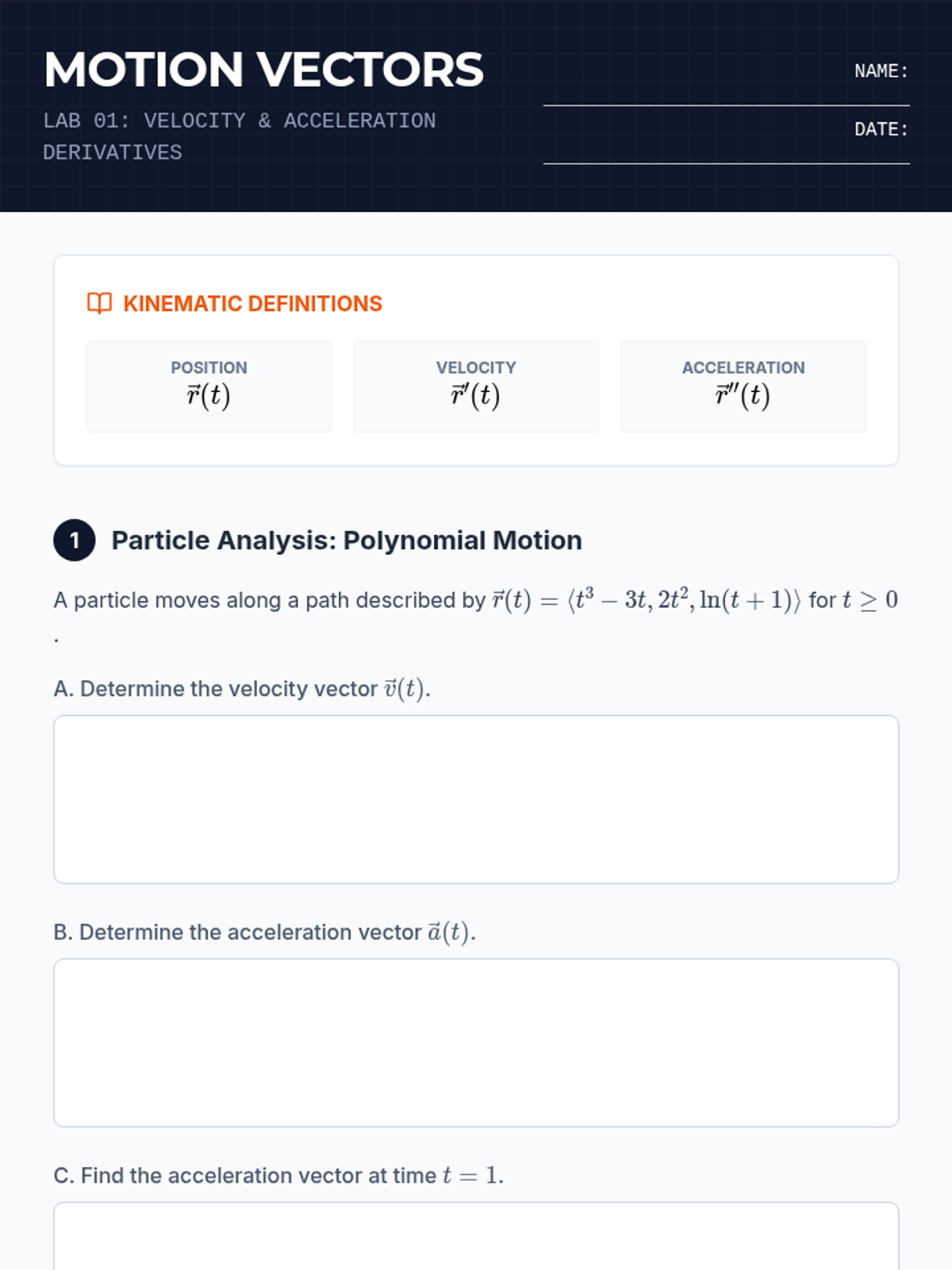
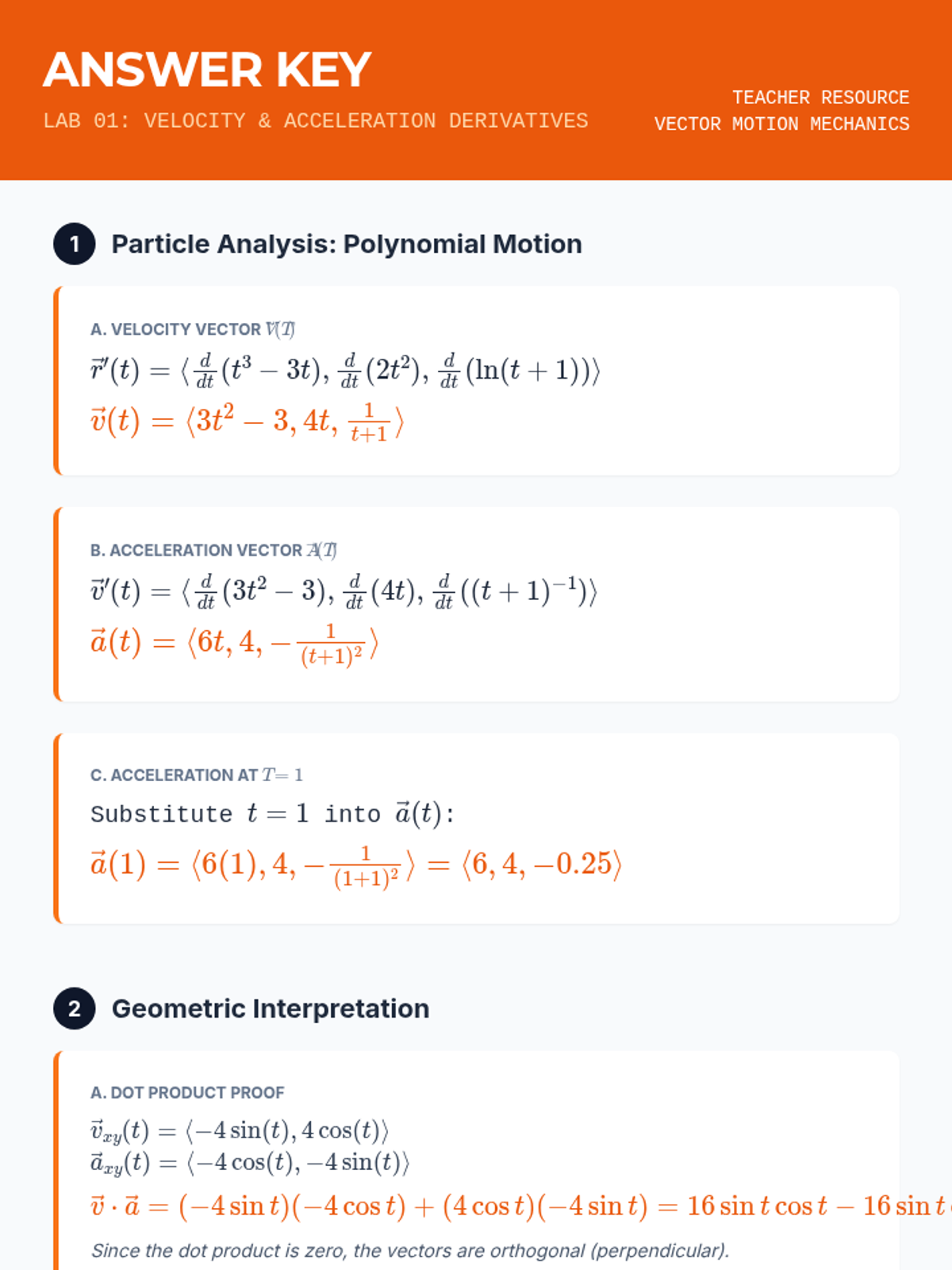
This sequence applies vector calculus to particle motion in two and three dimensions, interpreting derivatives and integrals as velocity, acceleration, and displacement to model real-world kinematics.
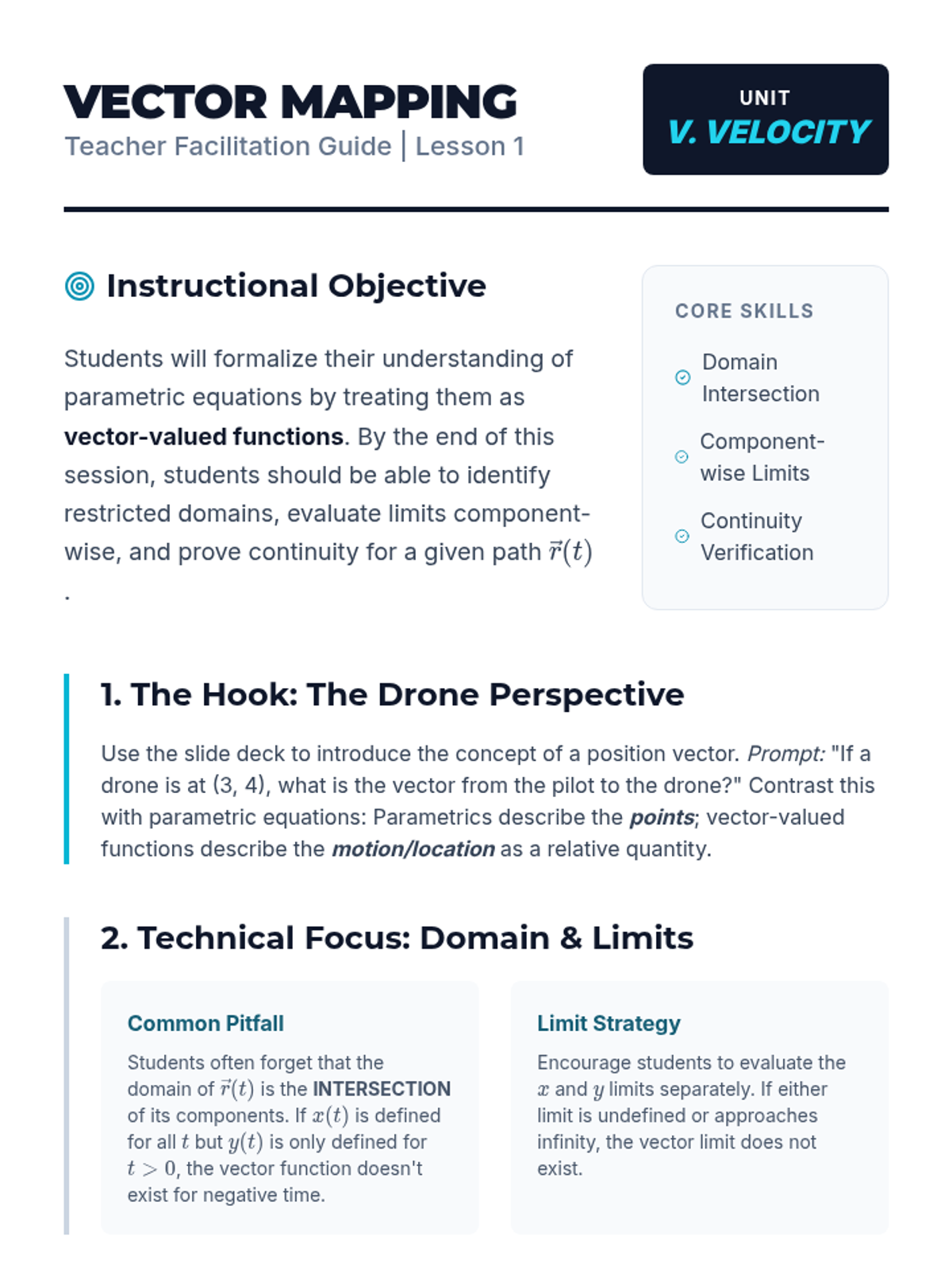
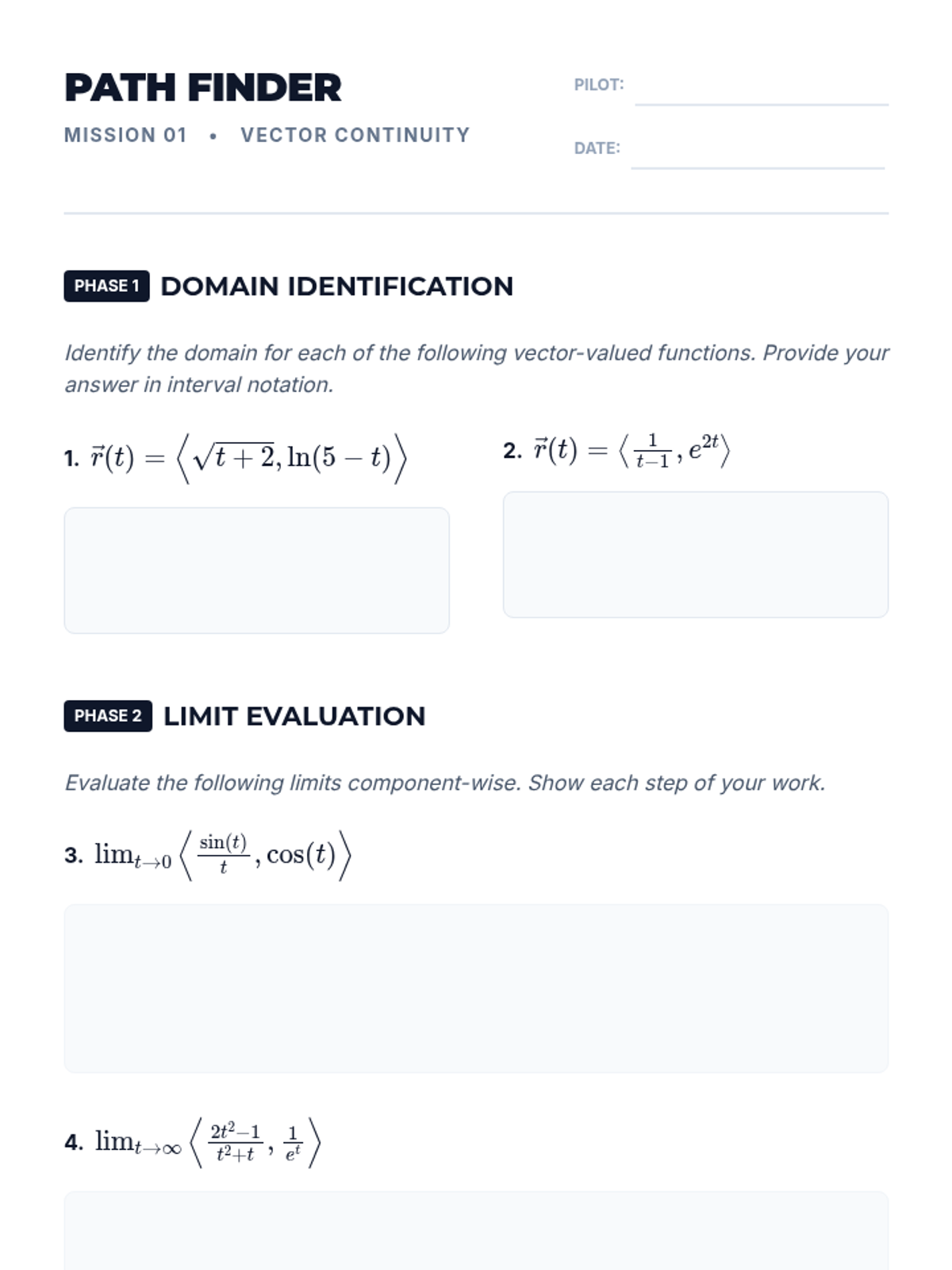
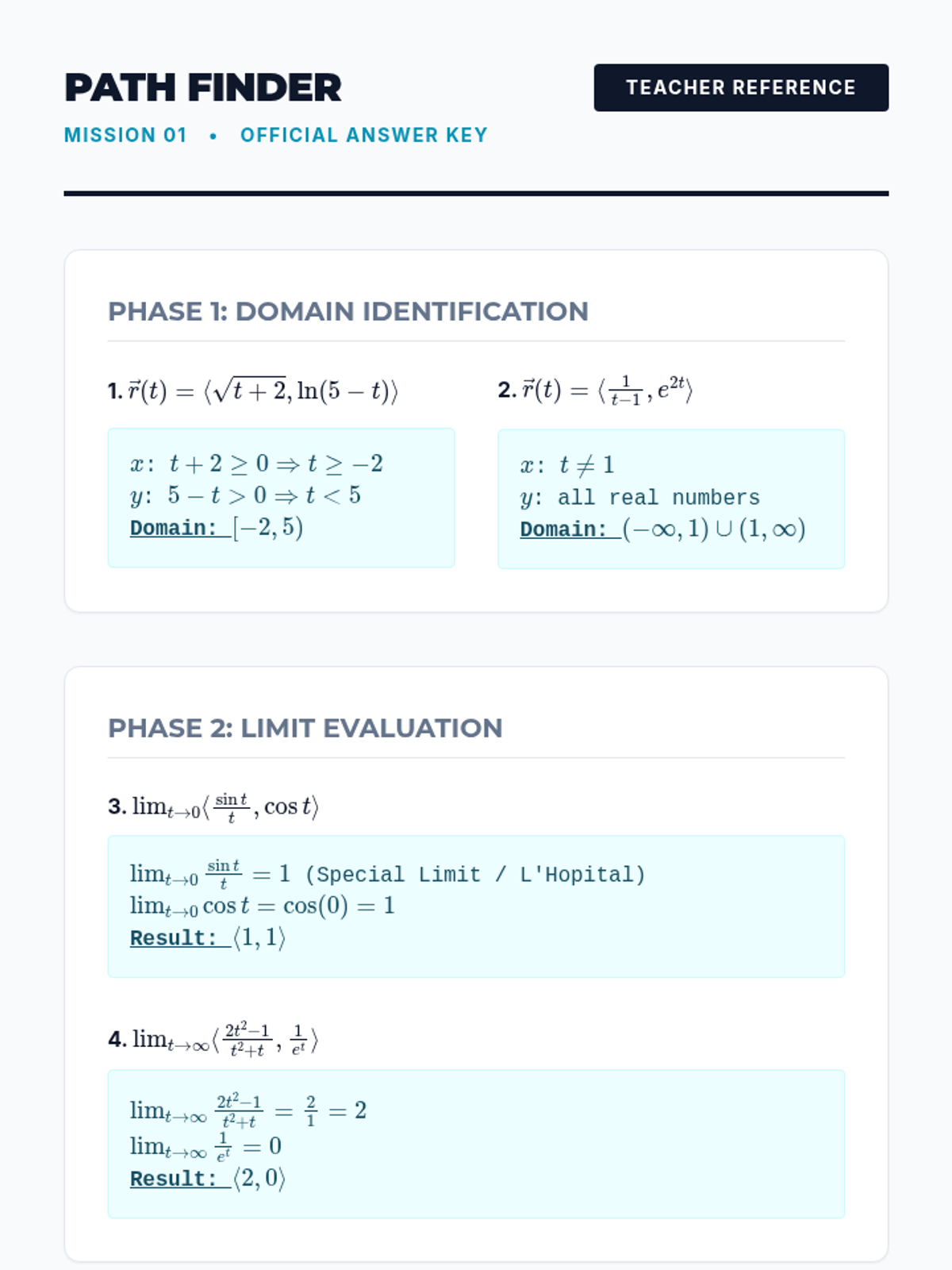
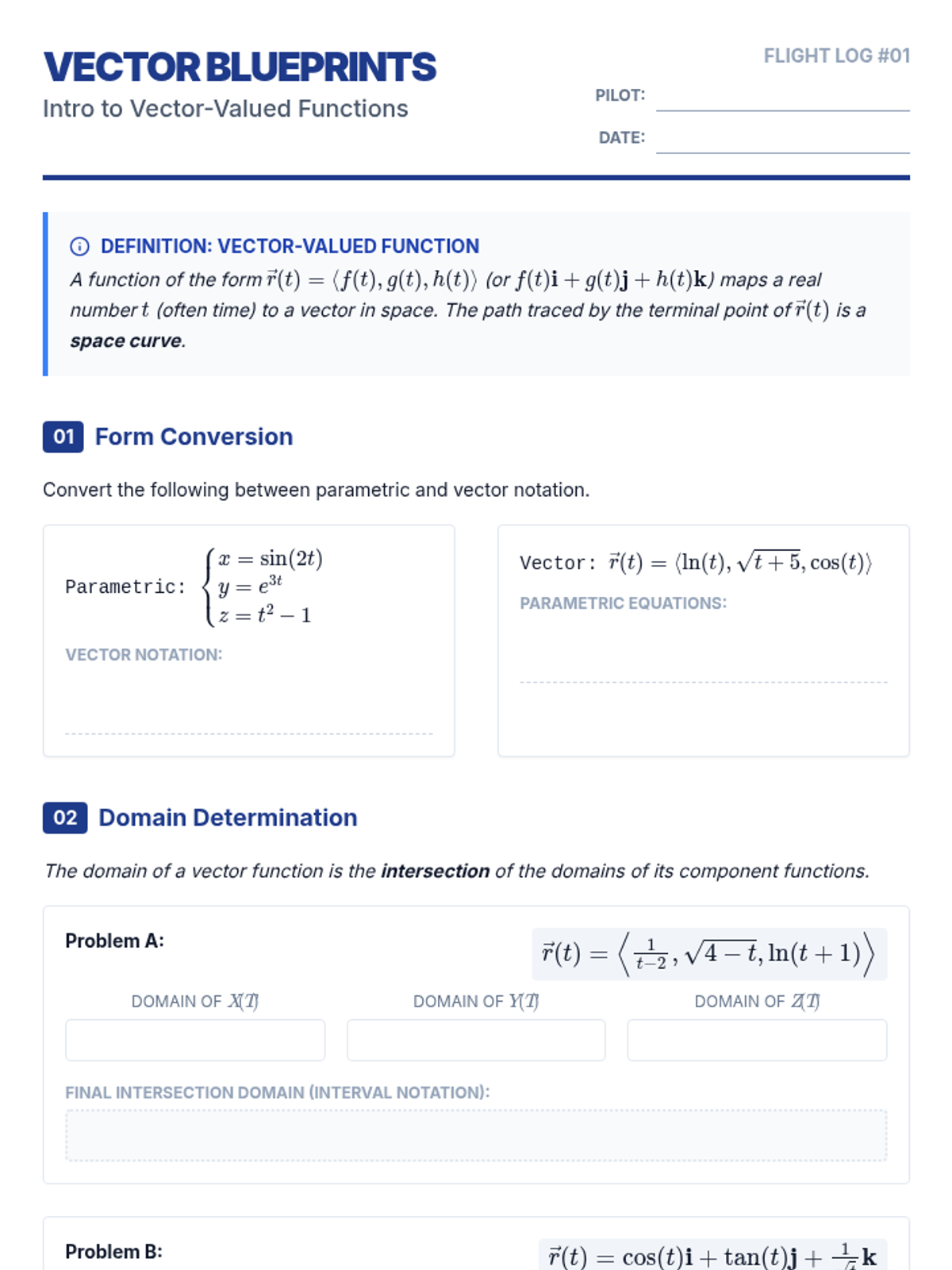
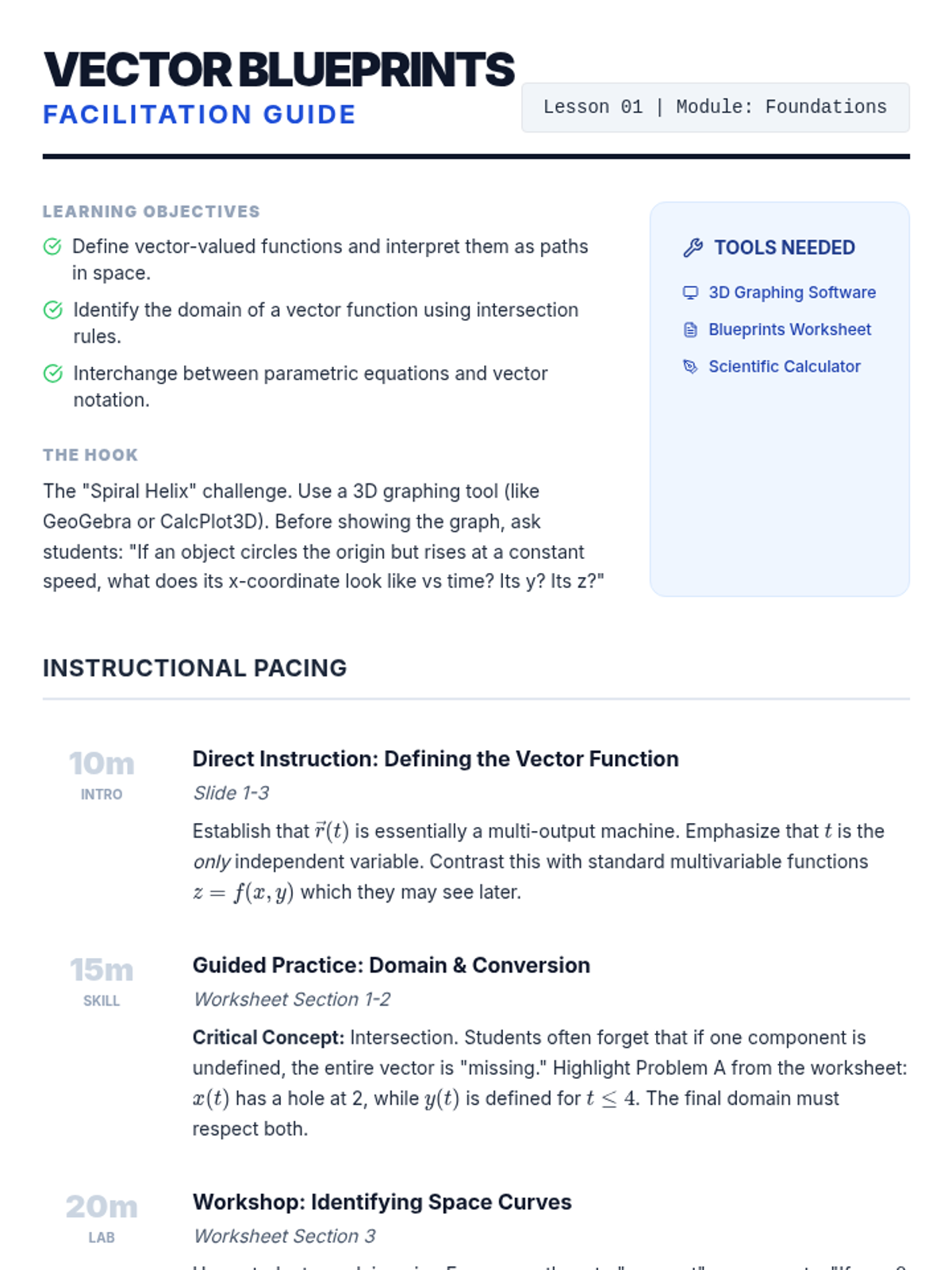
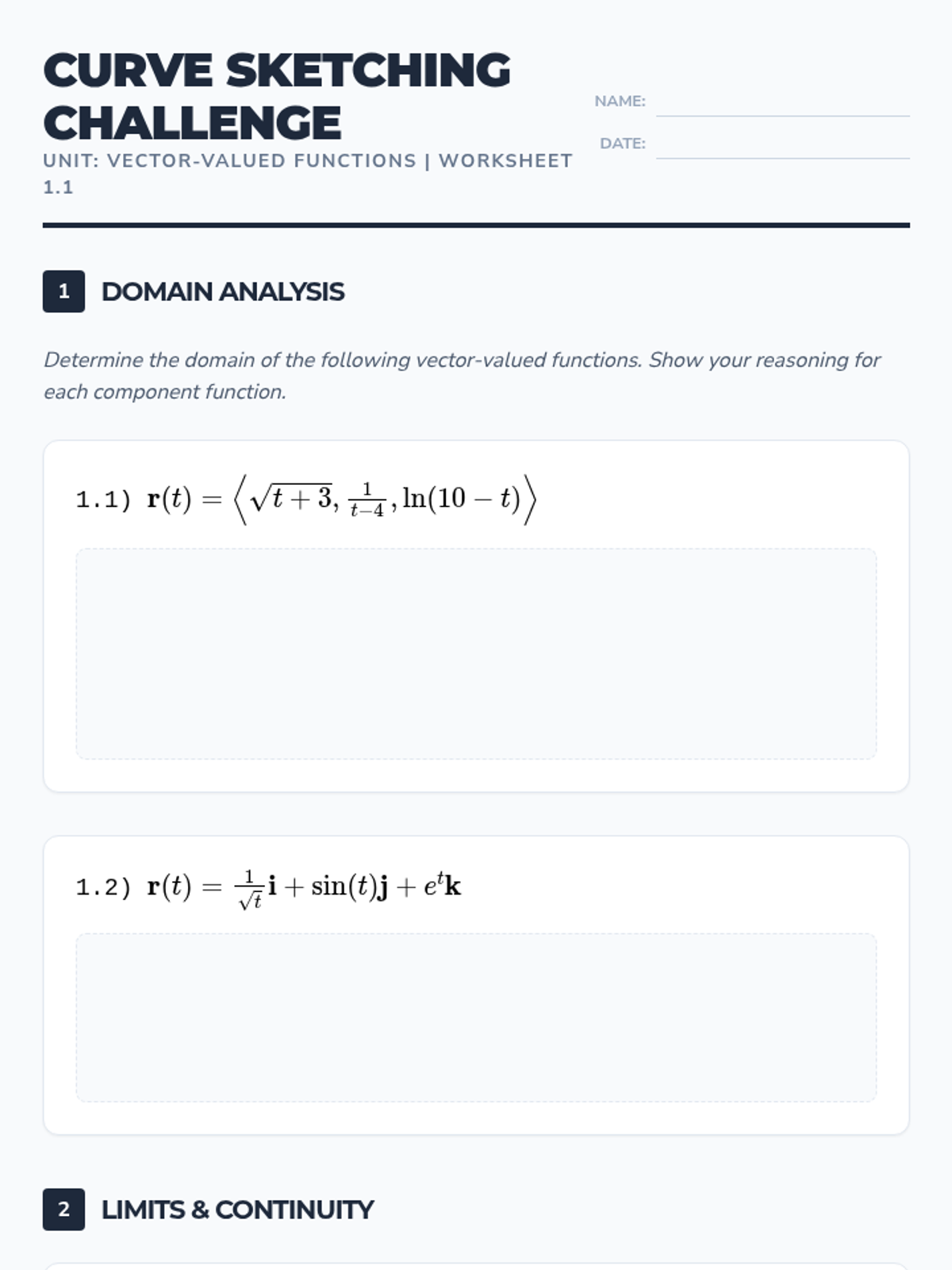
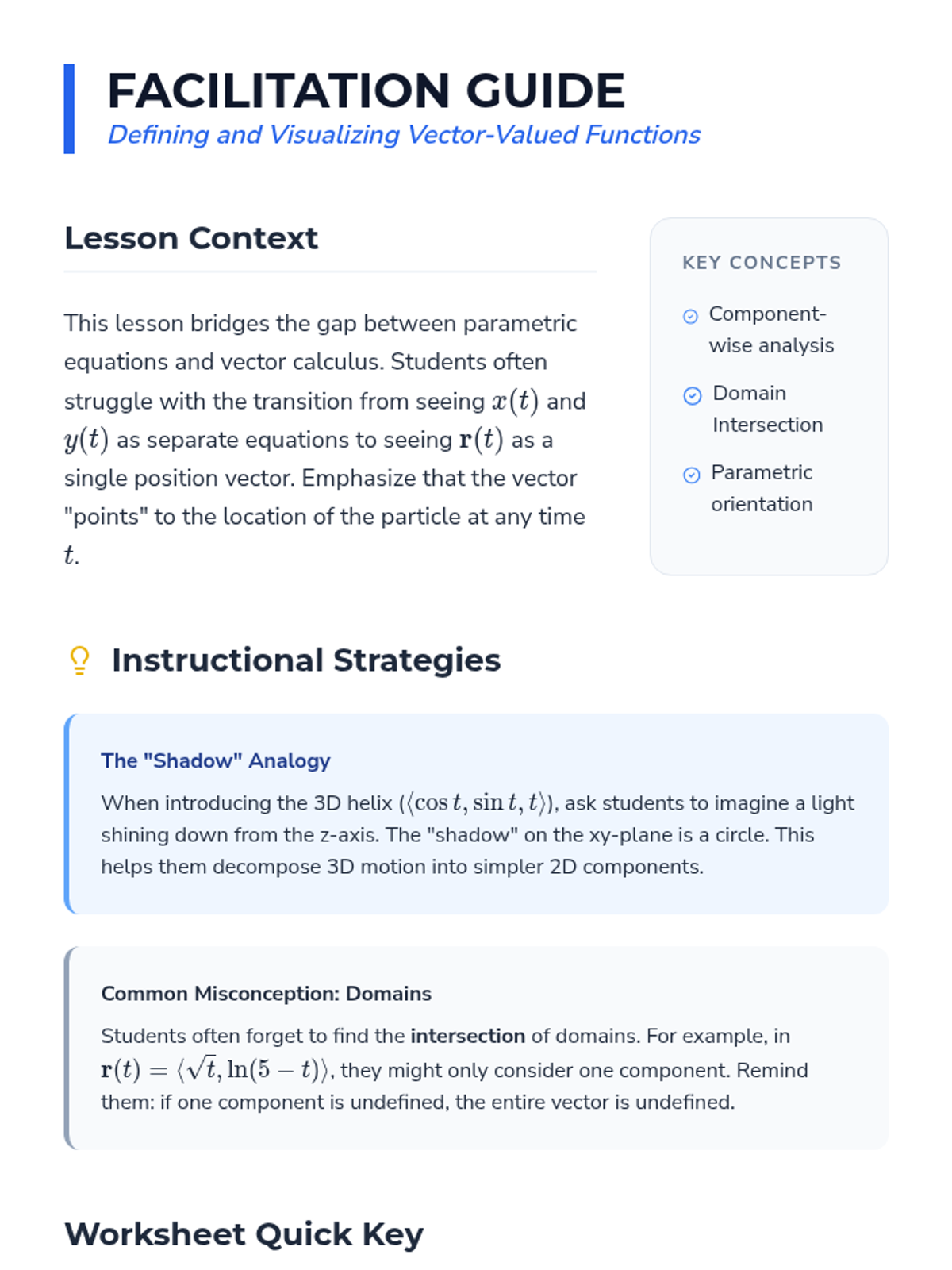
This foundational sequence introduces 12th-grade calculus students to vector-valued functions, bridging parametric equations with 3D vector analysis through the lens of aerospace navigation. Students explore domains, limits, continuity, differentiation, and integration to model and visualize complex space curves.
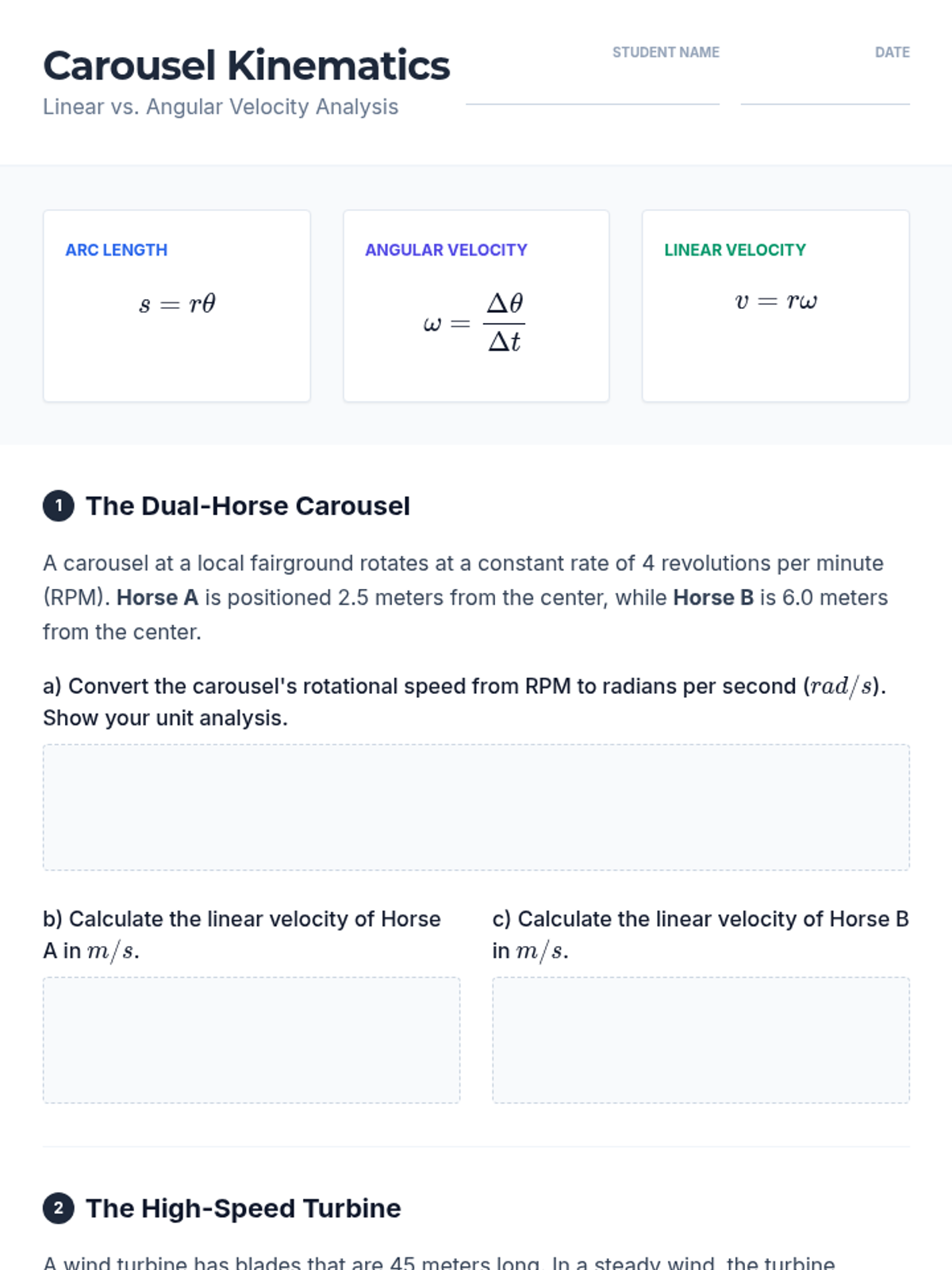
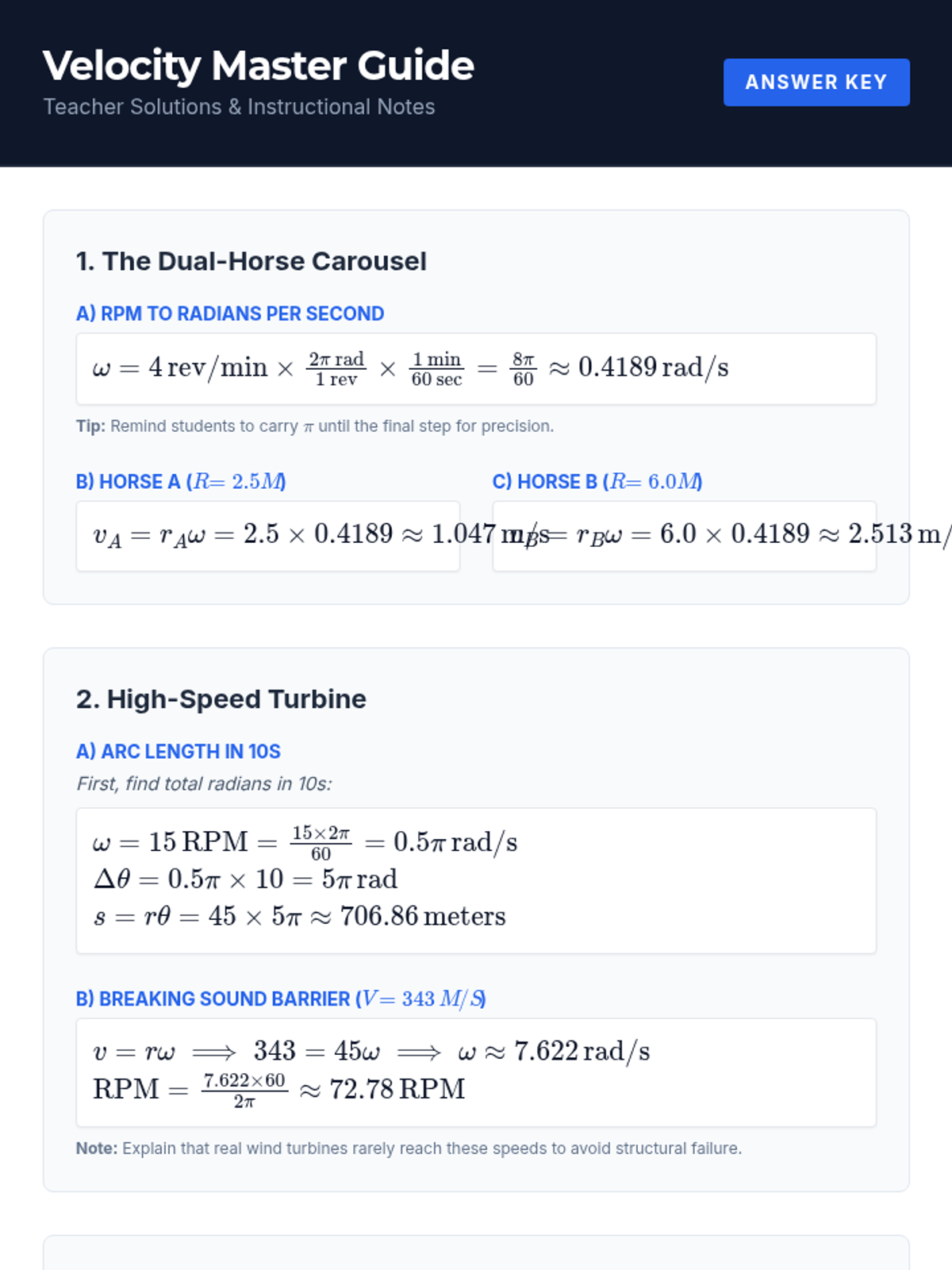
A sophisticated sequence for undergraduate students bridging the gap between static geometry (arc length and sector area) and dynamic circular motion. This unit explores linear and angular velocity, Kepler's Second Law, satellite communication footprints, and visual angles.
This advanced calculus sequence guides students through the theory and application of vector-valued functions, covering limits, differentiation, integration, and their real-world applications in kinematics and projectile motion.
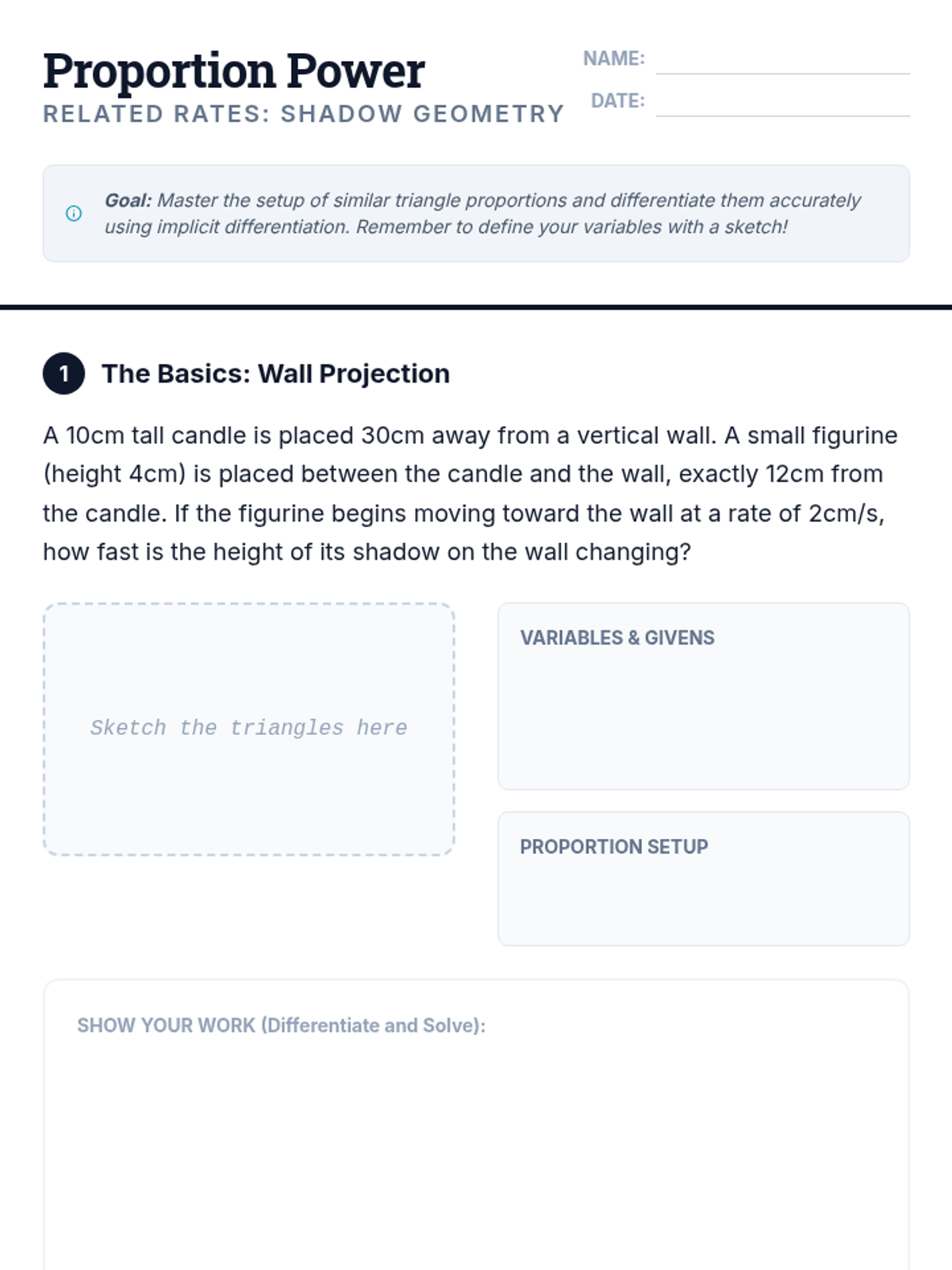
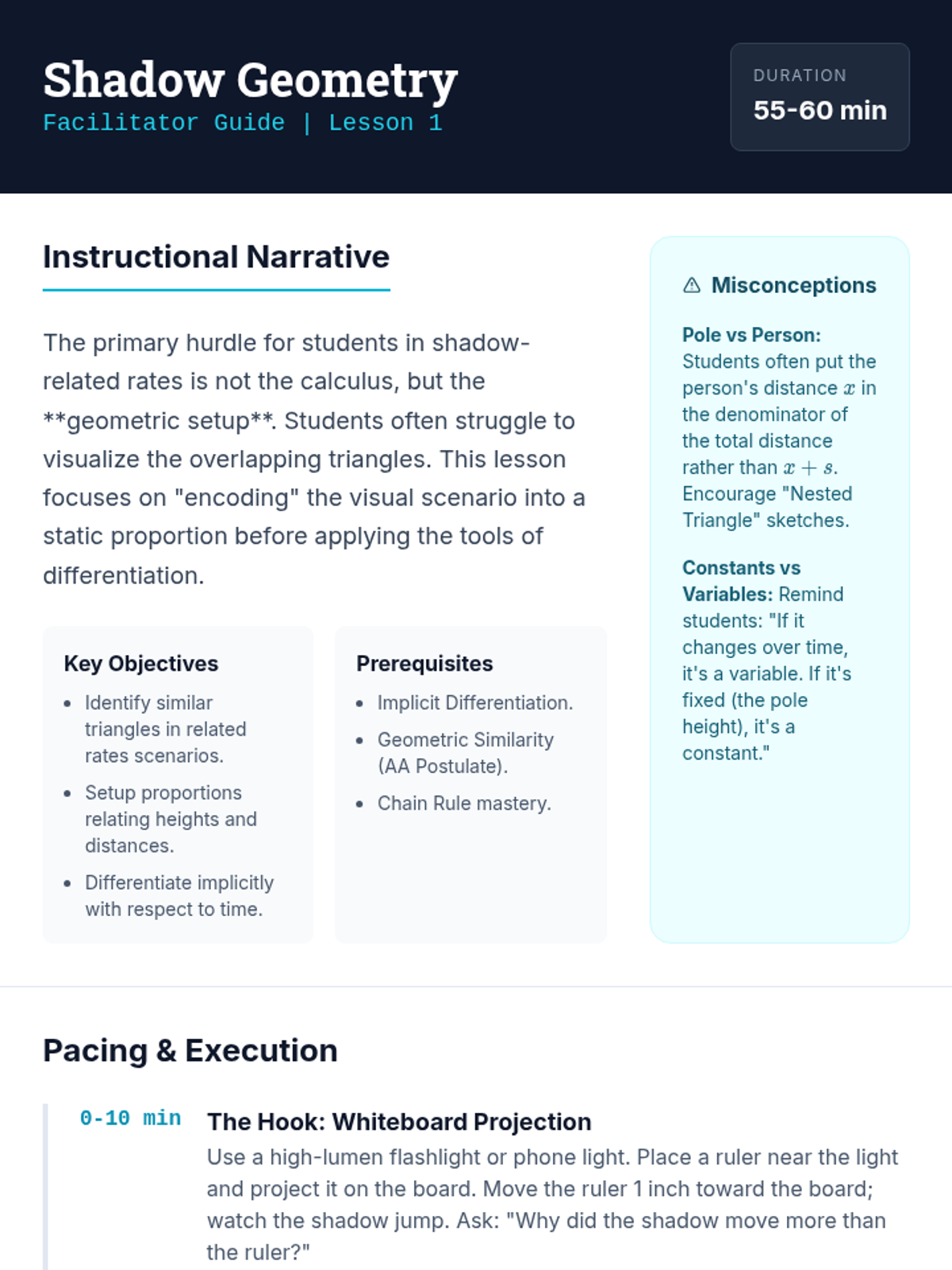
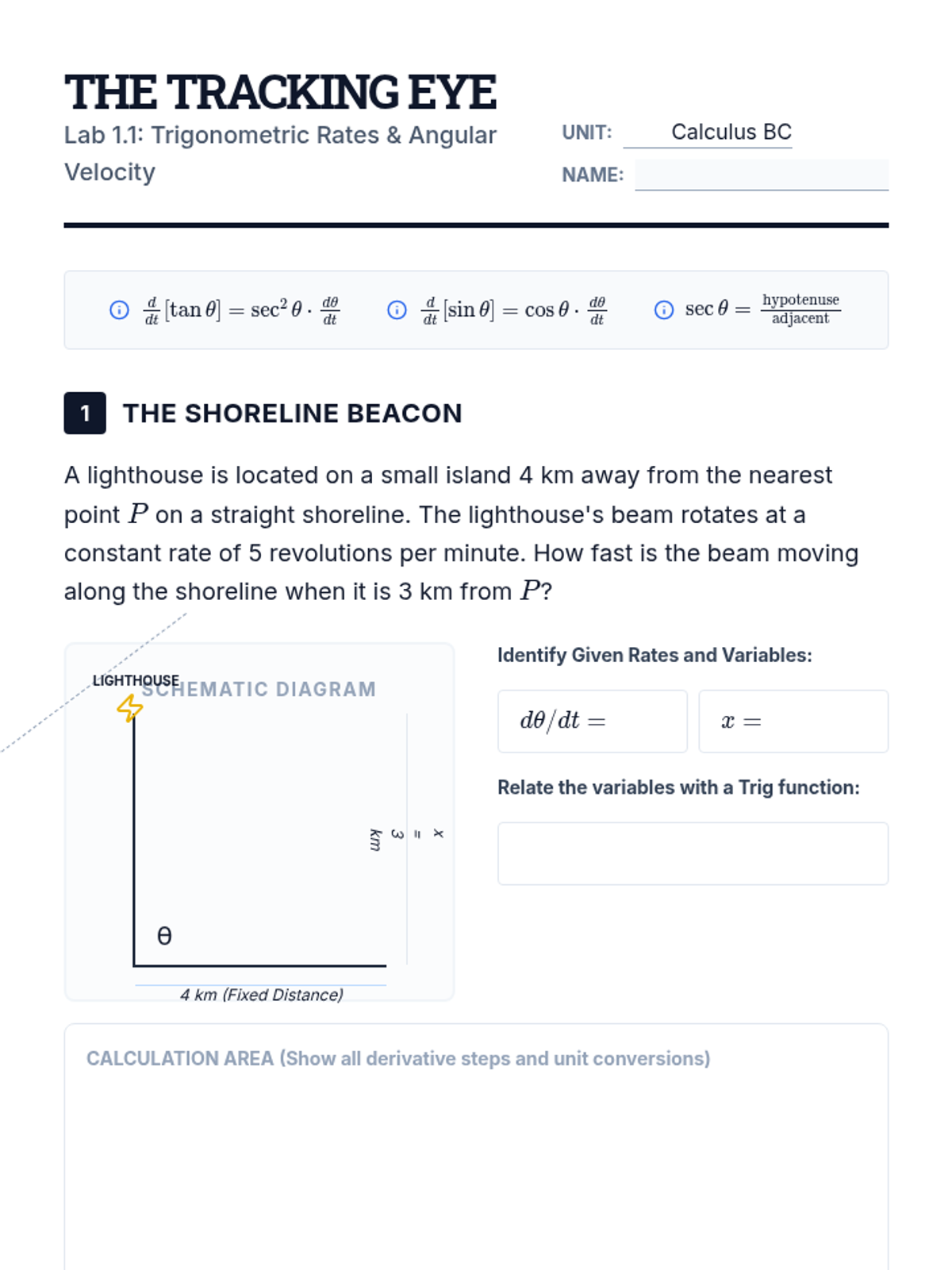
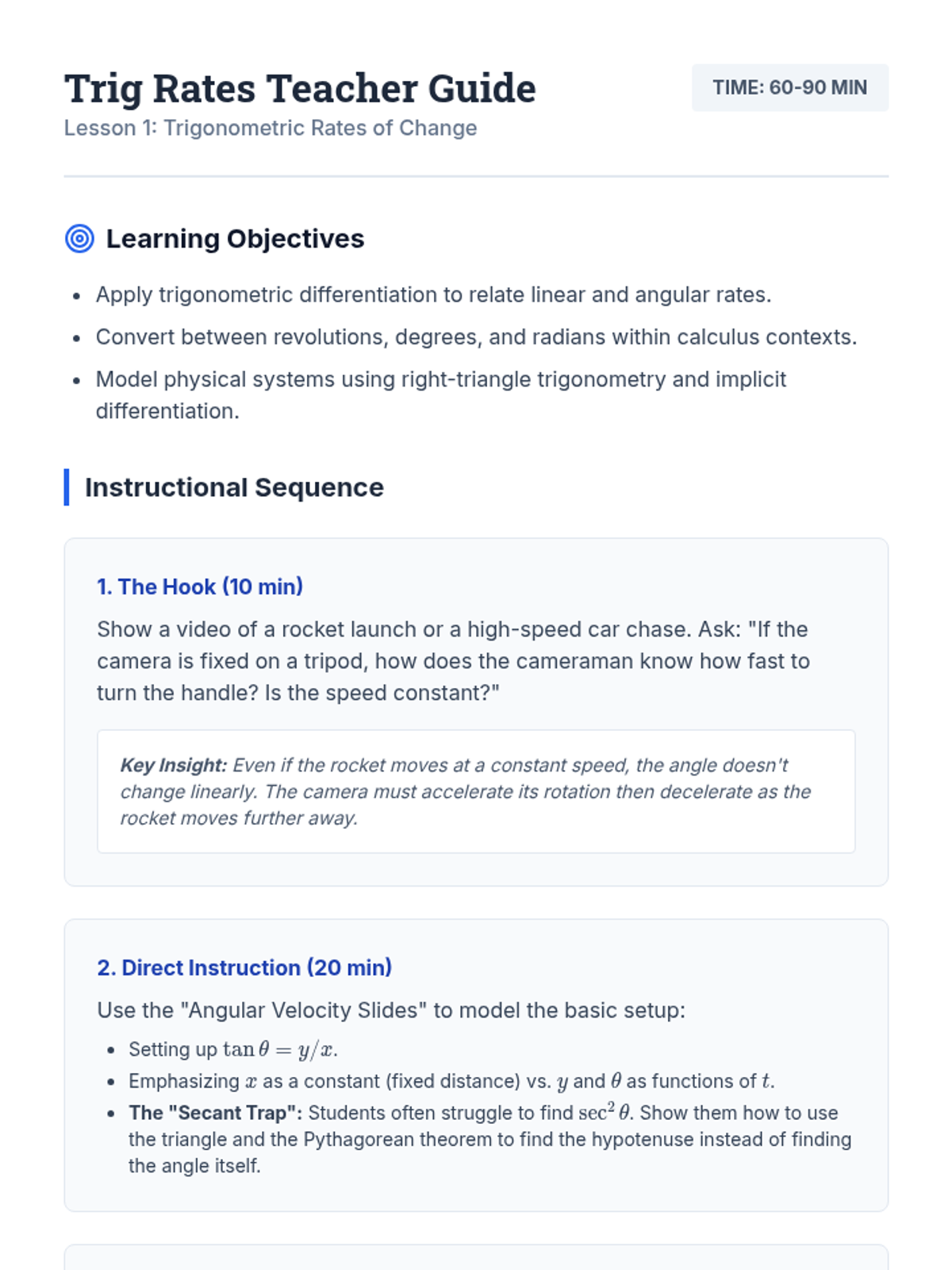
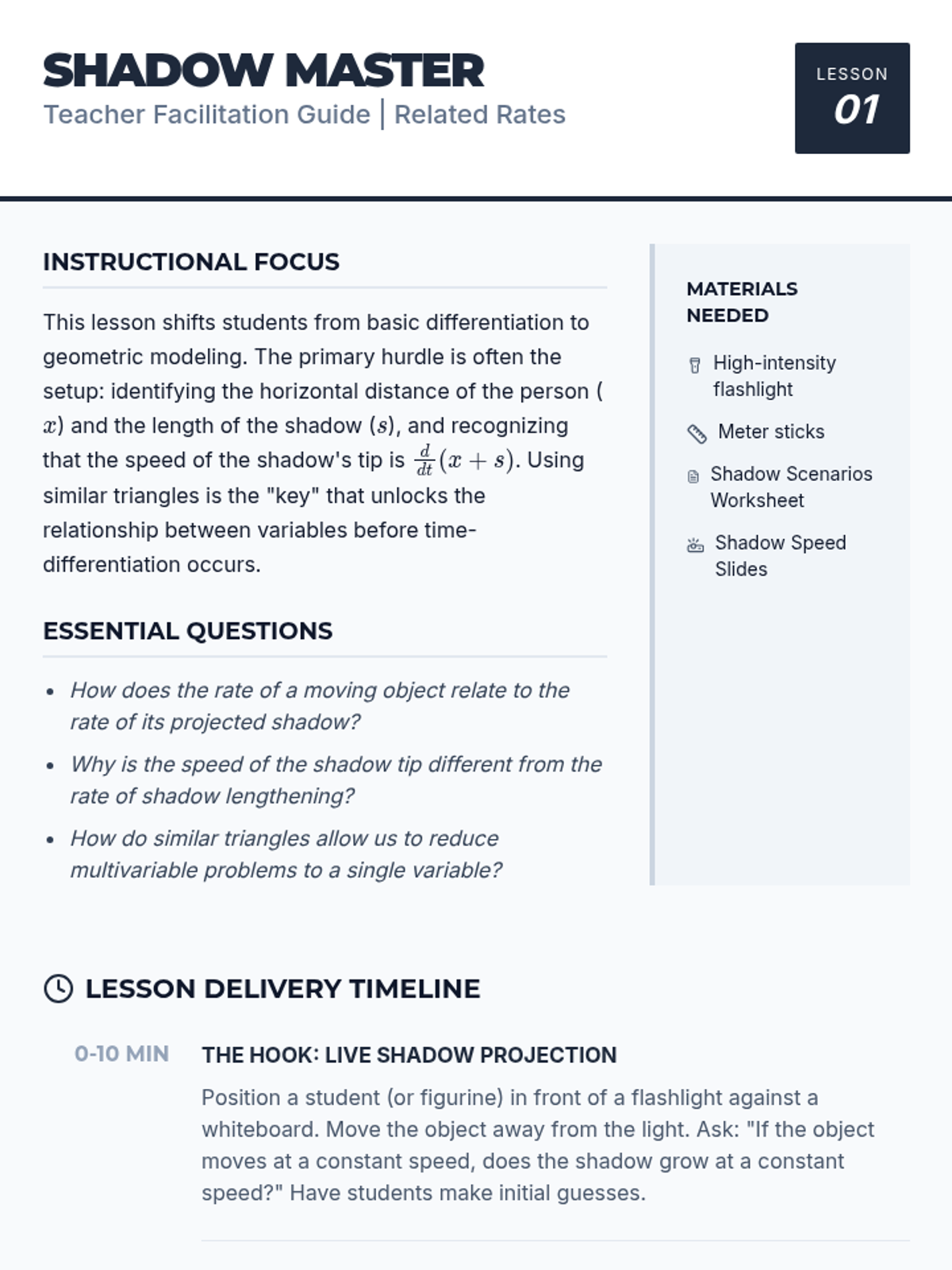
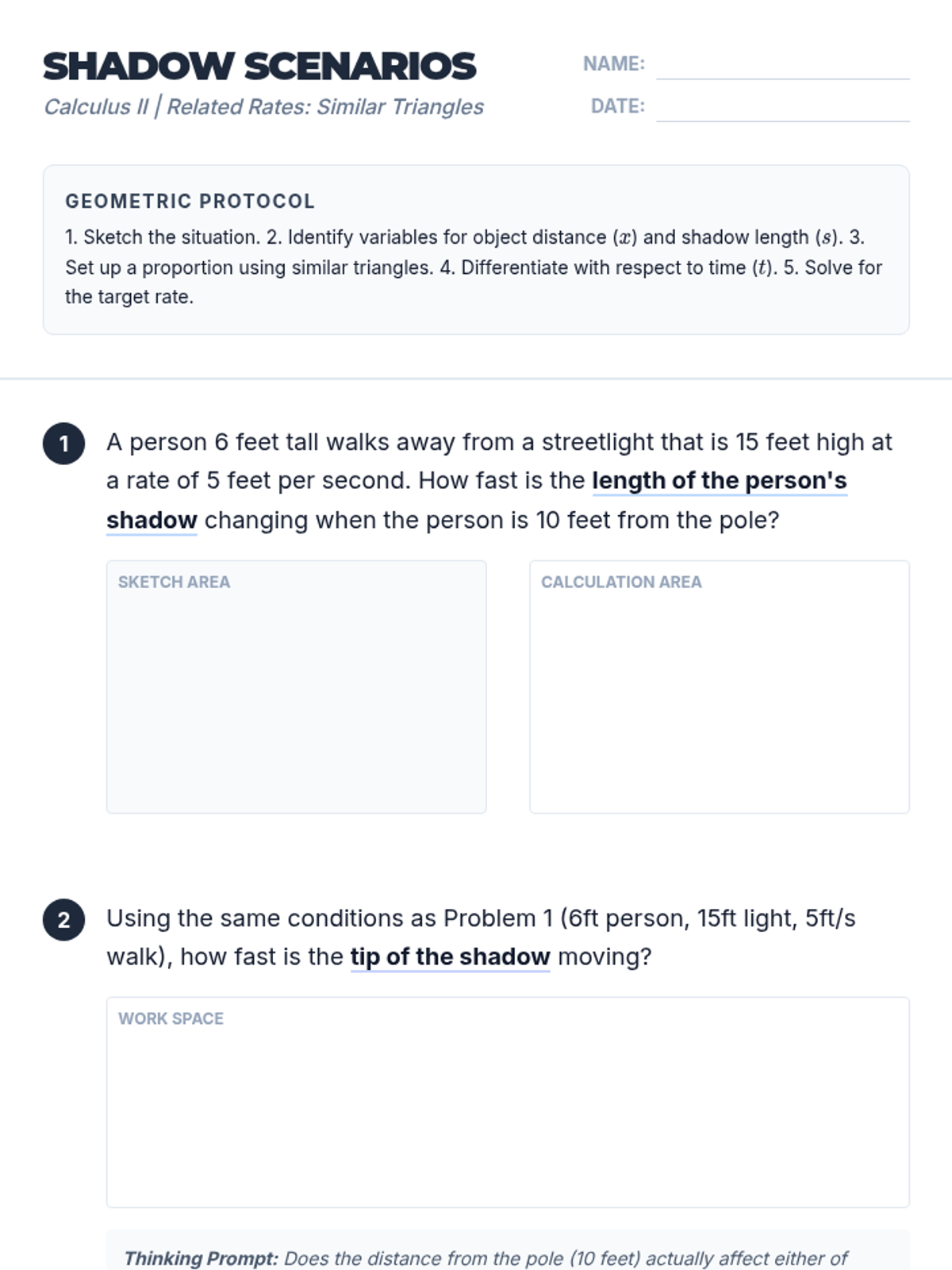
This advanced sequence explores related rates through the lens of geometric similarity and trigonometry, focusing on shadows and angular motion. Students move from linear proportions to complex angular derivatives, culminating in a mastery-based problem-solving seminar.
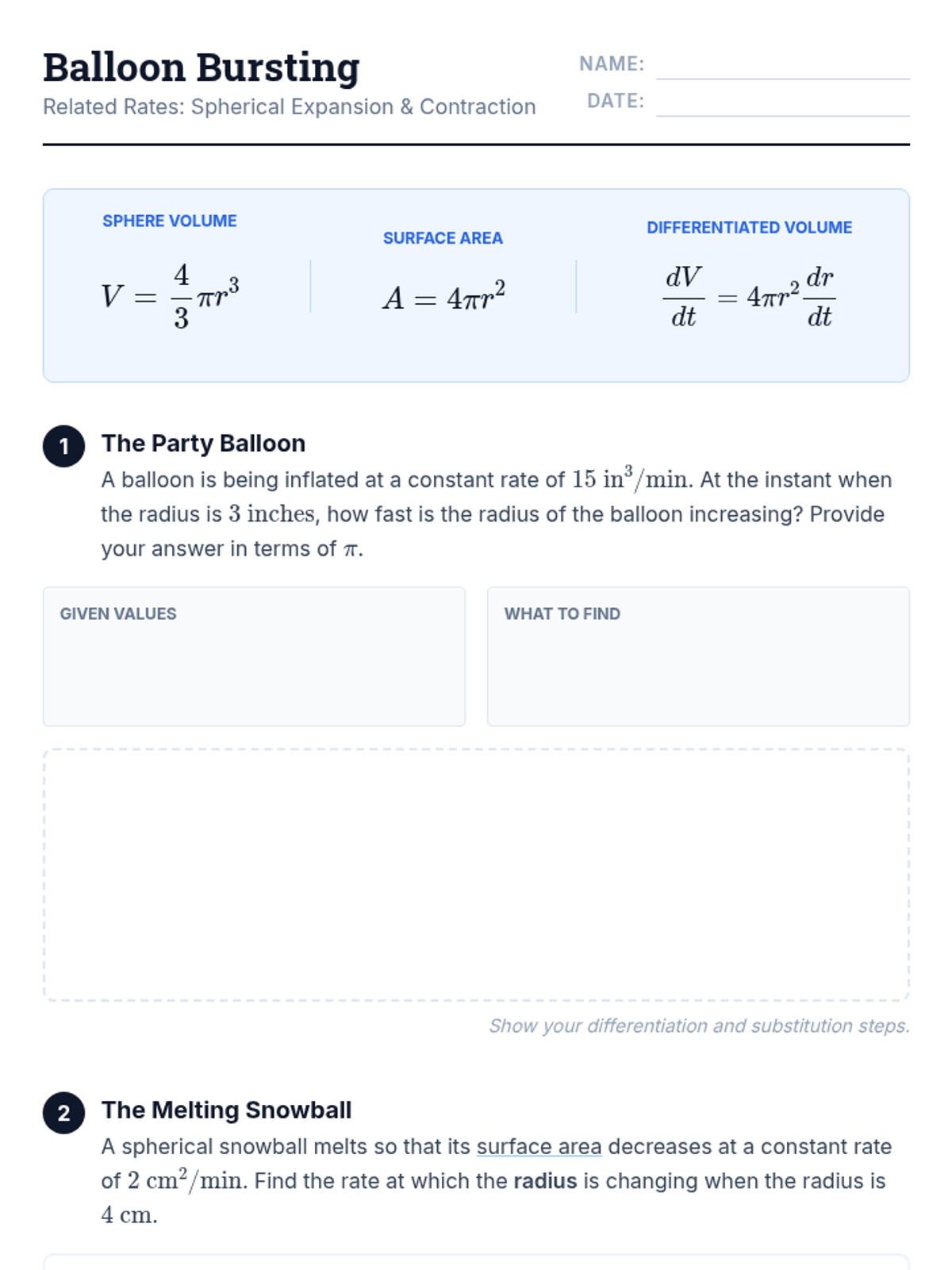
This sequence explores the calculus of related rates through the lens of 3D geometry and fluid dynamics. Students progress from simple spherical expansion to complex conical substitution and industrial net-flow applications.
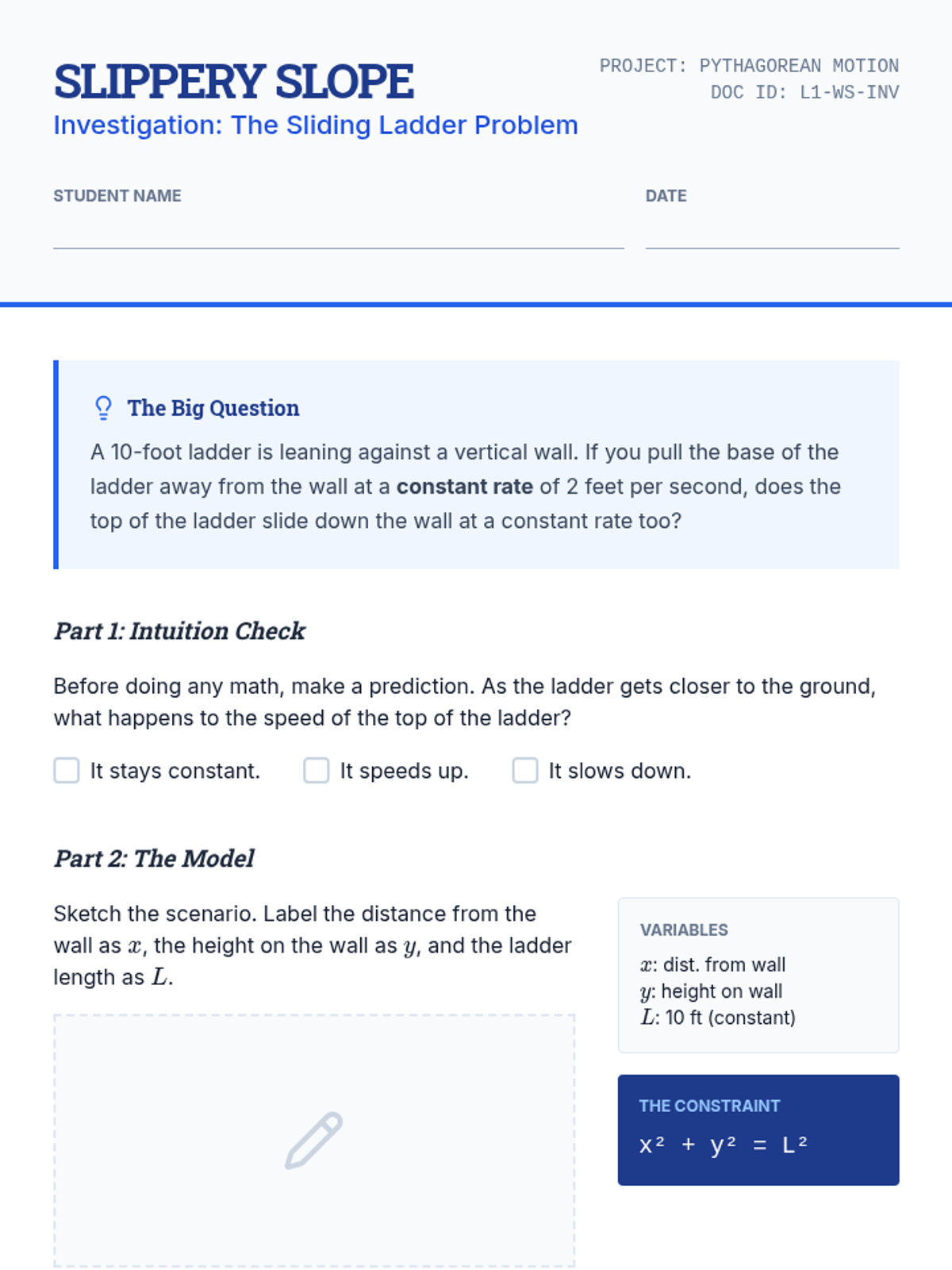
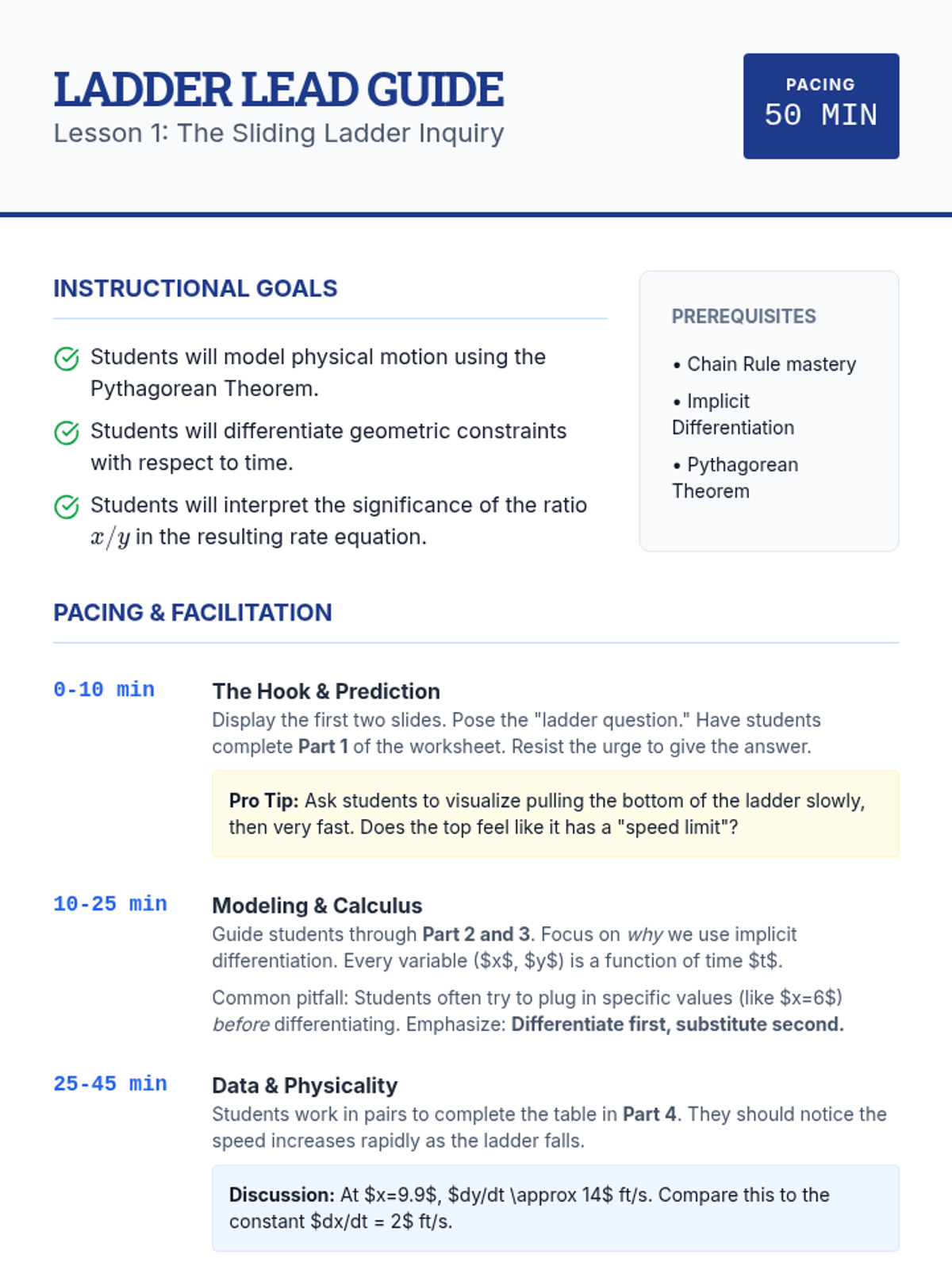
A comprehensive exploration of Related Rates using Pythagorean geometry, moving from basic ladder problems to complex multi-object motion. Students master the calculus of moving triangles through inquiry, digital modeling, and skill-building workshops.
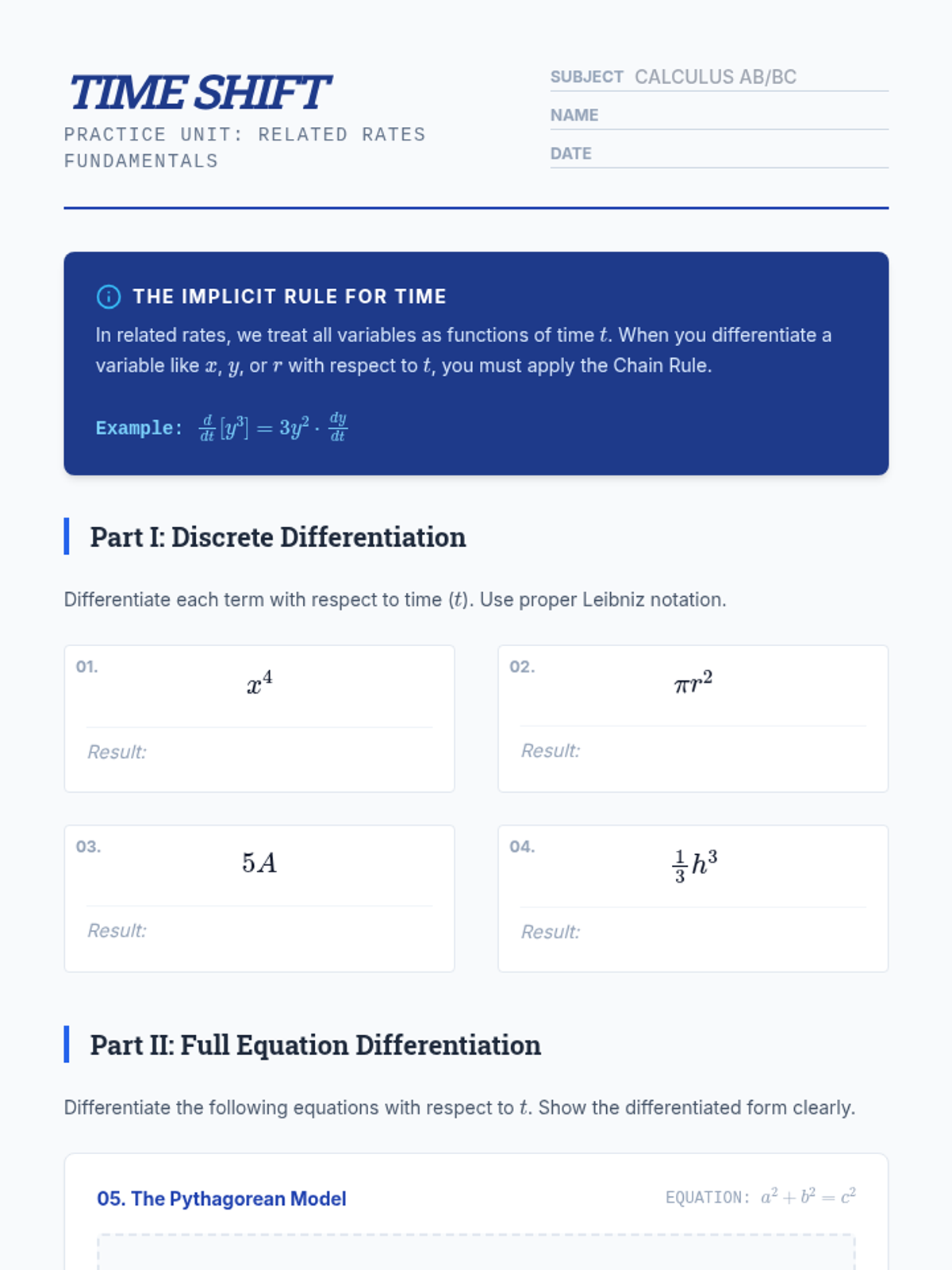
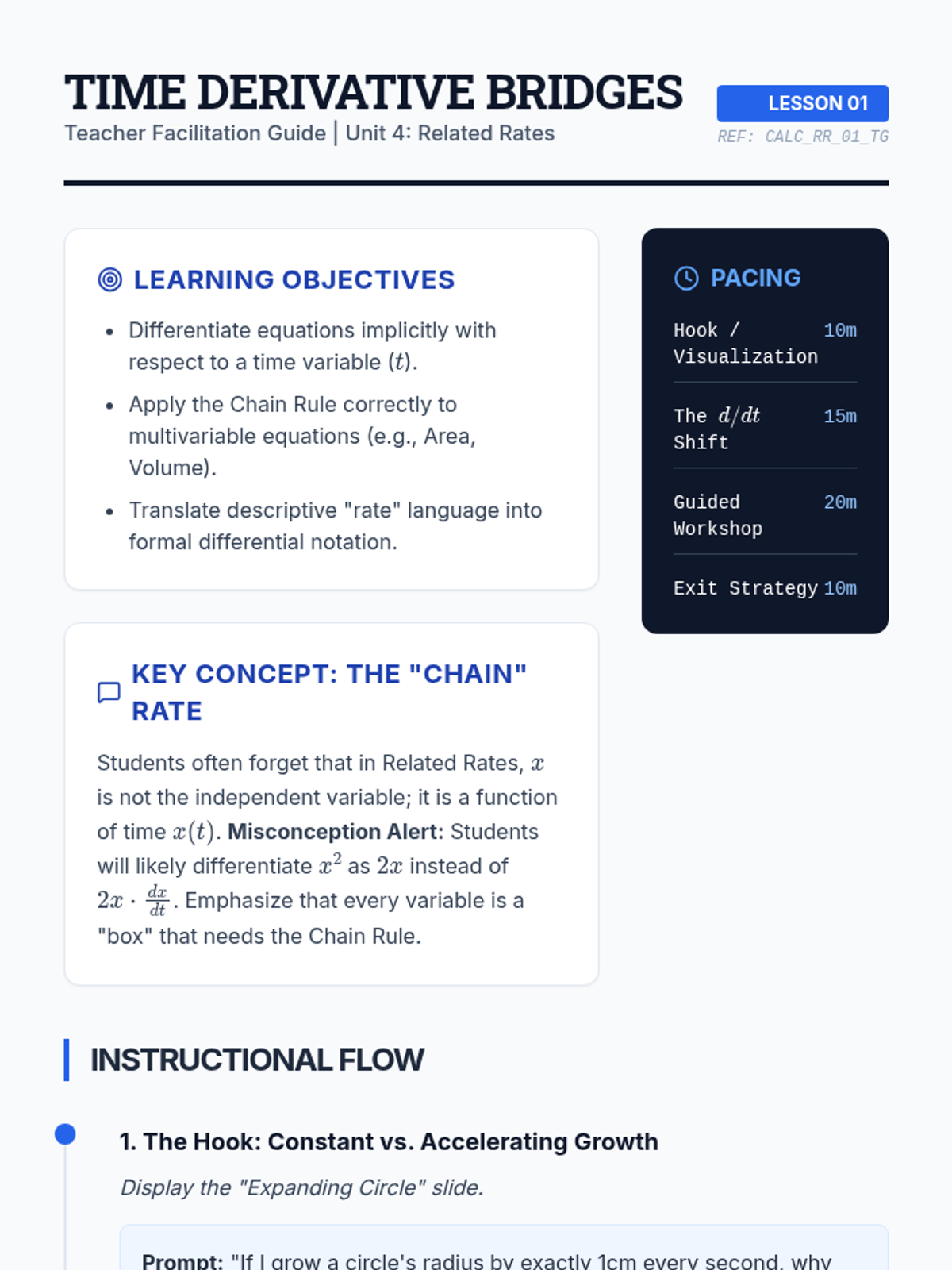
A foundational sequence for 11th-grade students on Related Rates in Calculus. Students move from static derivatives to dynamic, time-dependent rates of change, establishing a rigorous 4-step problem-solving protocol.
A systematic workshop-style approach to mastering related rates in Calculus. Students progress from foundational implicit differentiation to complex geometric modeling involving Pythagorean theorem, volume expansion, conical constraints, and trigonometric rates.
A high-level calculus sequence for 12th-grade students focused on related rates in complex physical and engineering contexts. Students explore trigonometric rates, multi-variable dependencies like the Ideal Gas Law, relative motion, and conclude with an engineering design project focused on safety protocols.
This sequence explores related rates in calculus through geometric modeling of 3D systems, including fluid dynamics and shadow propagation. Students progress from 2D similar triangle models to complex 3D variable elimination in conical tanks.
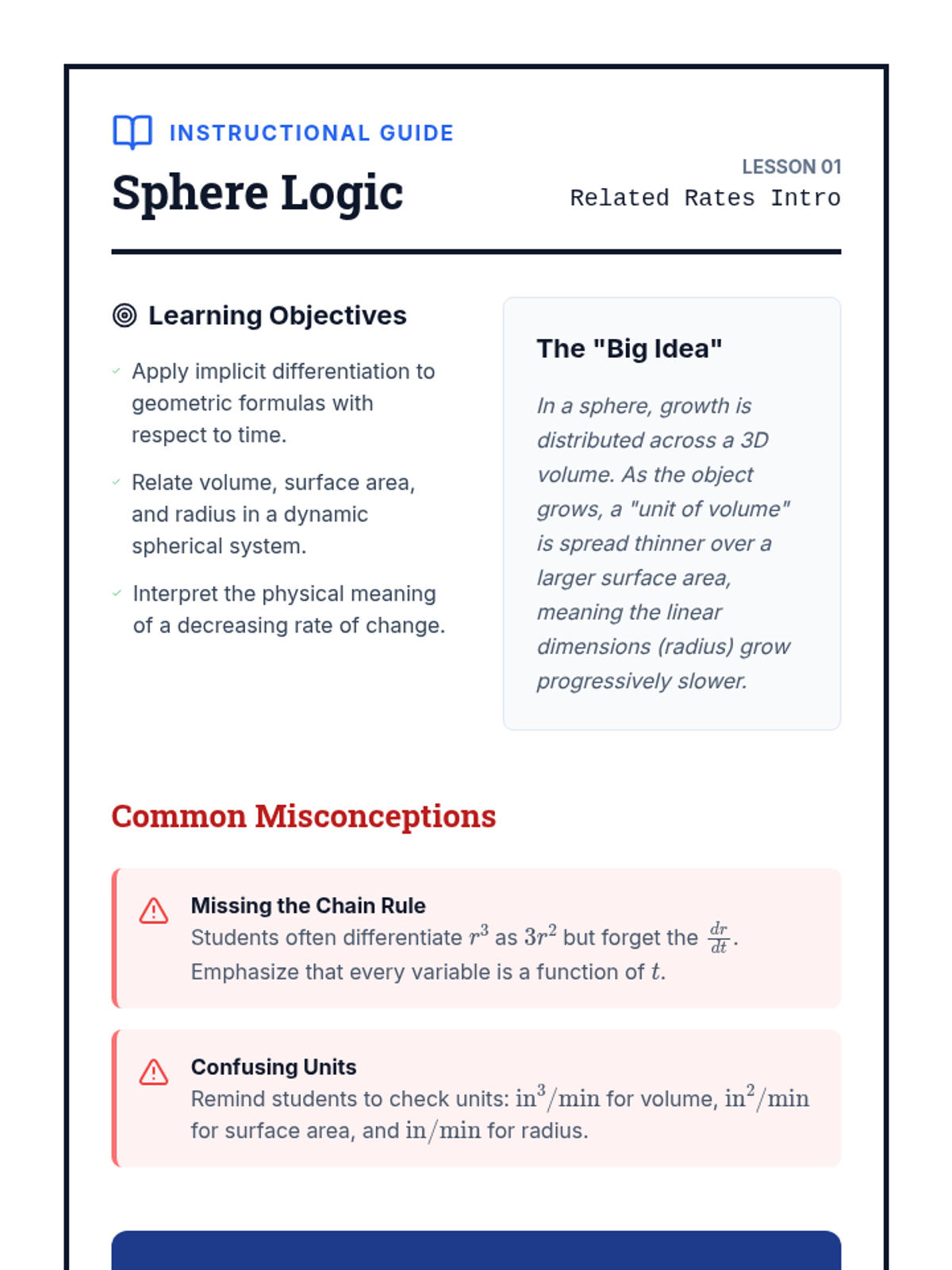
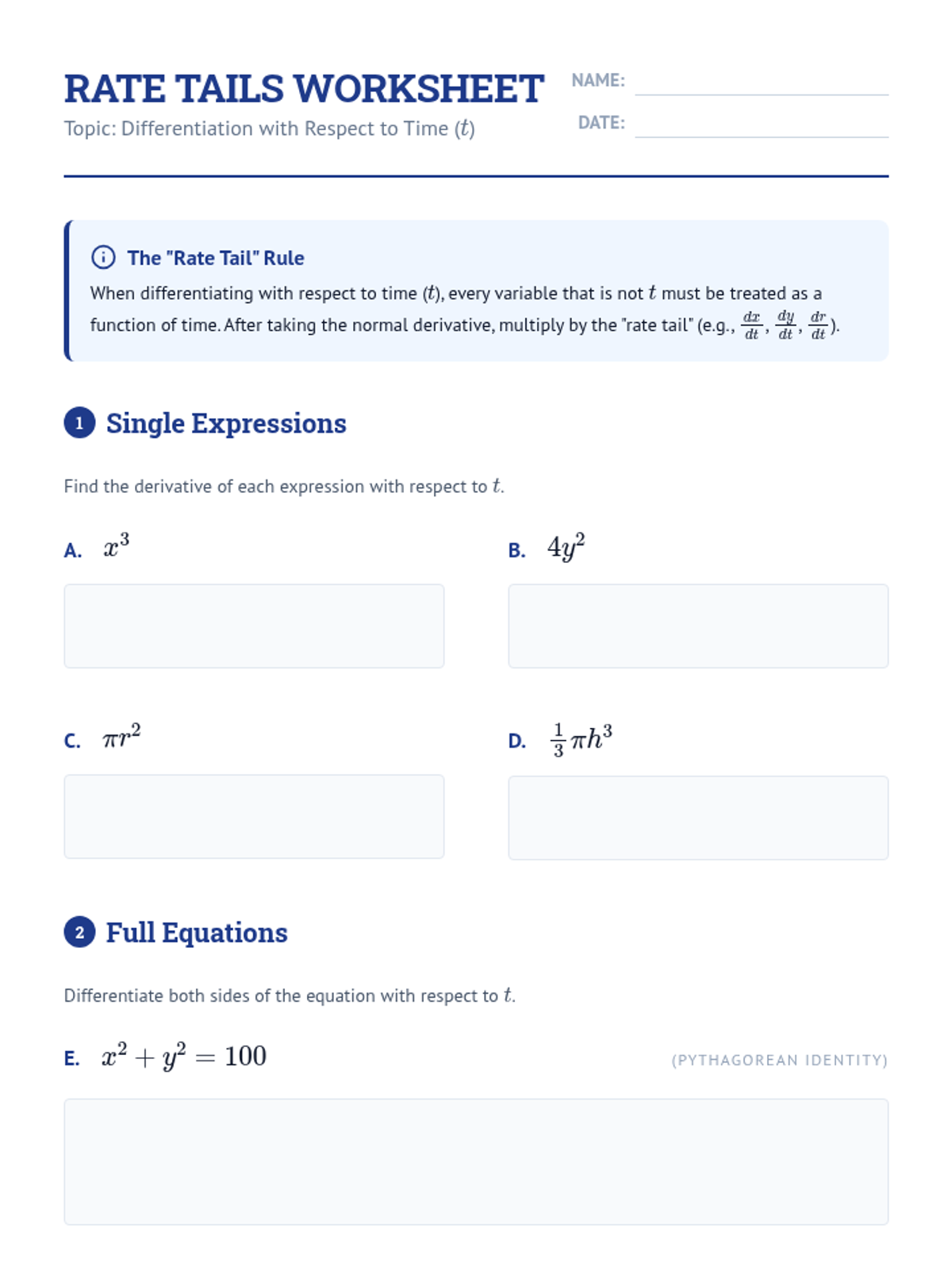
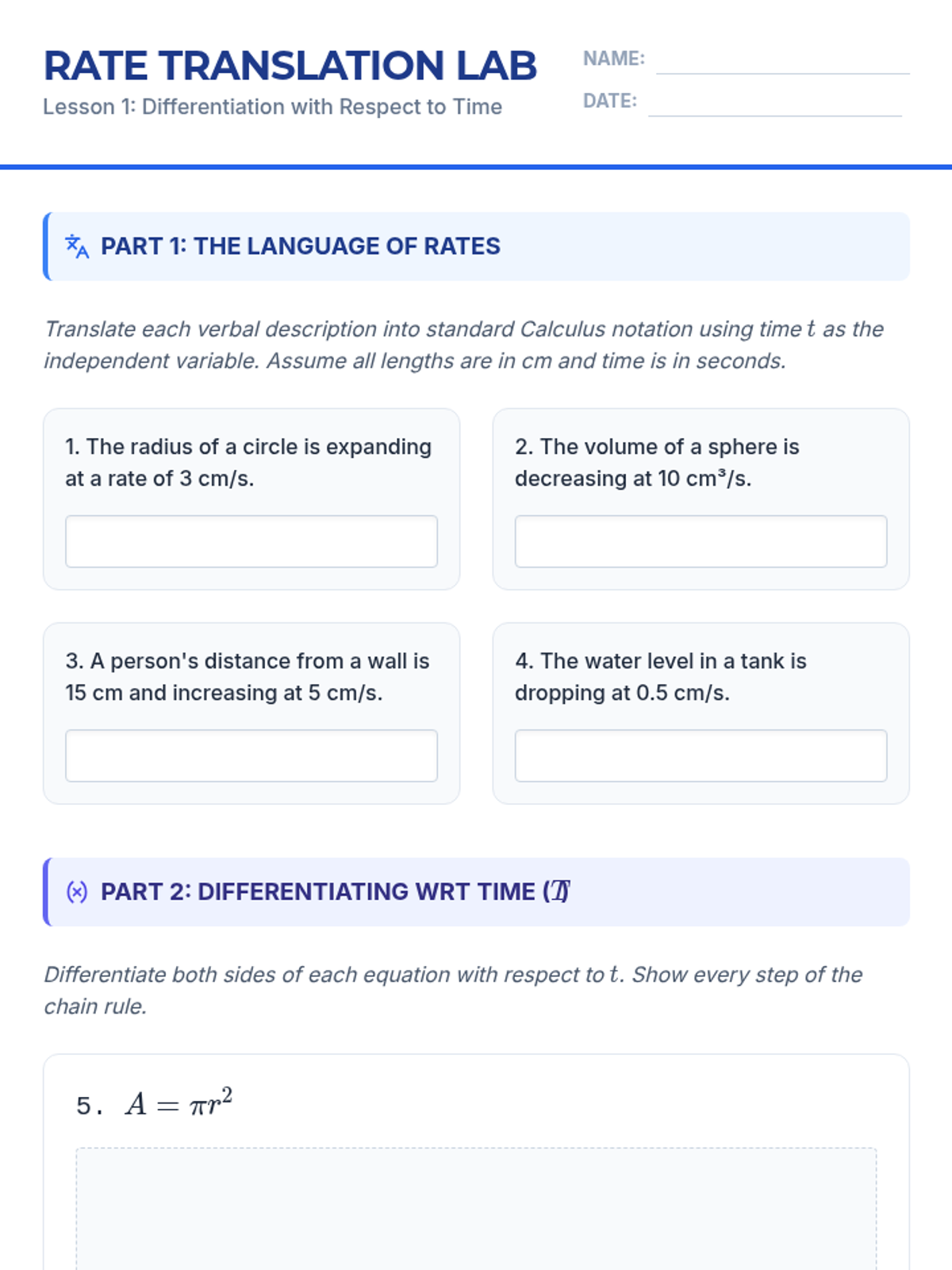
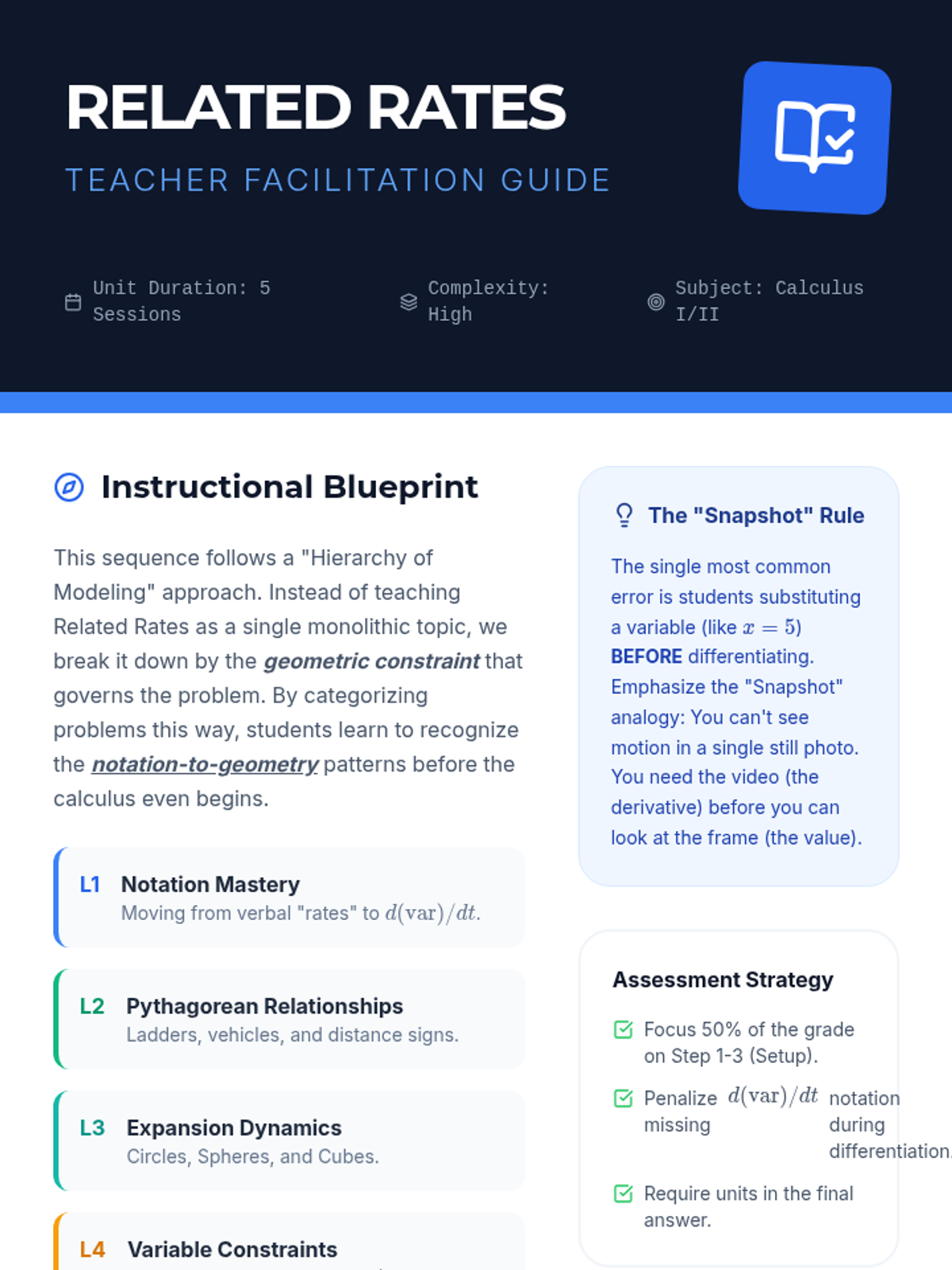
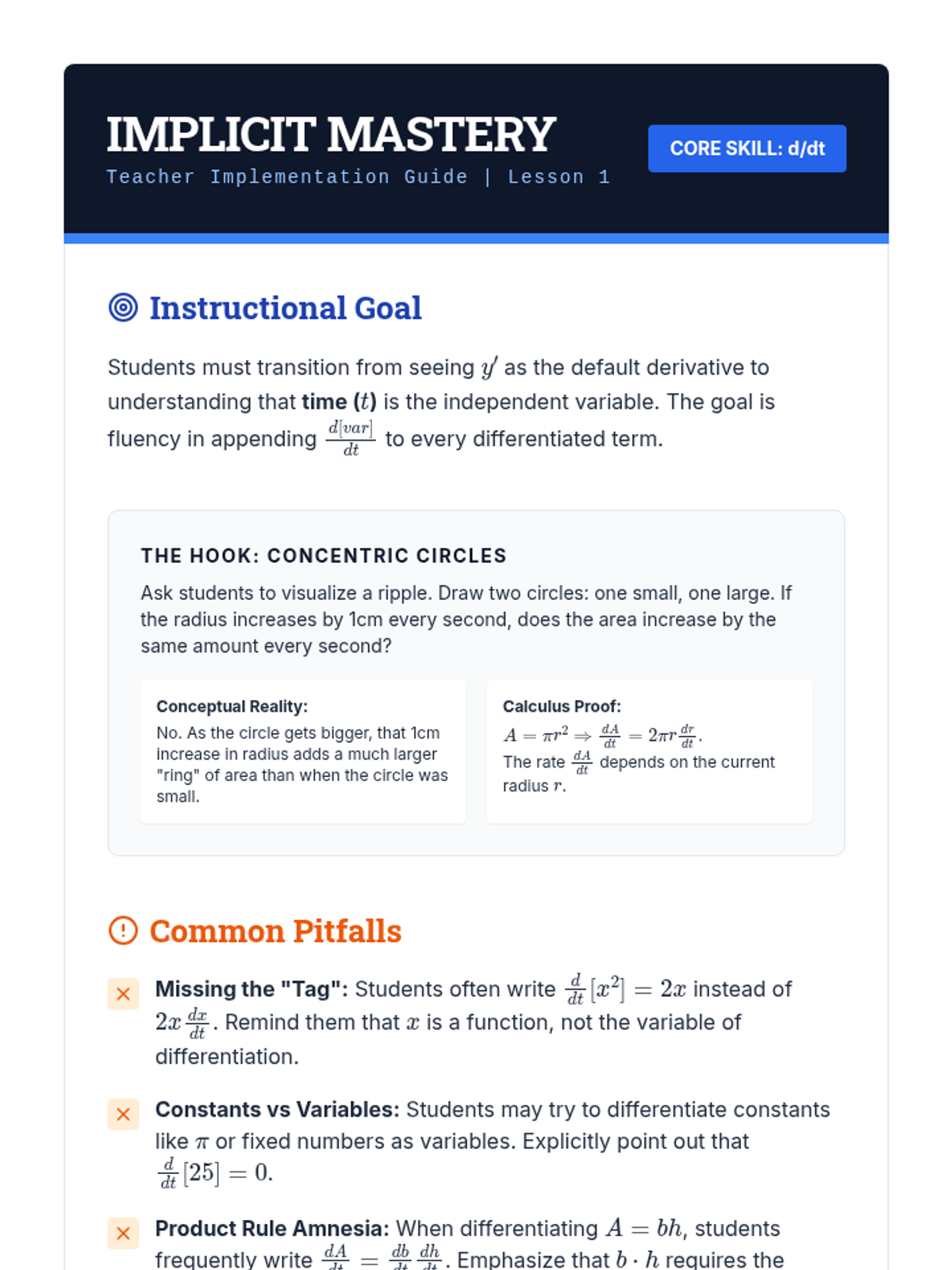
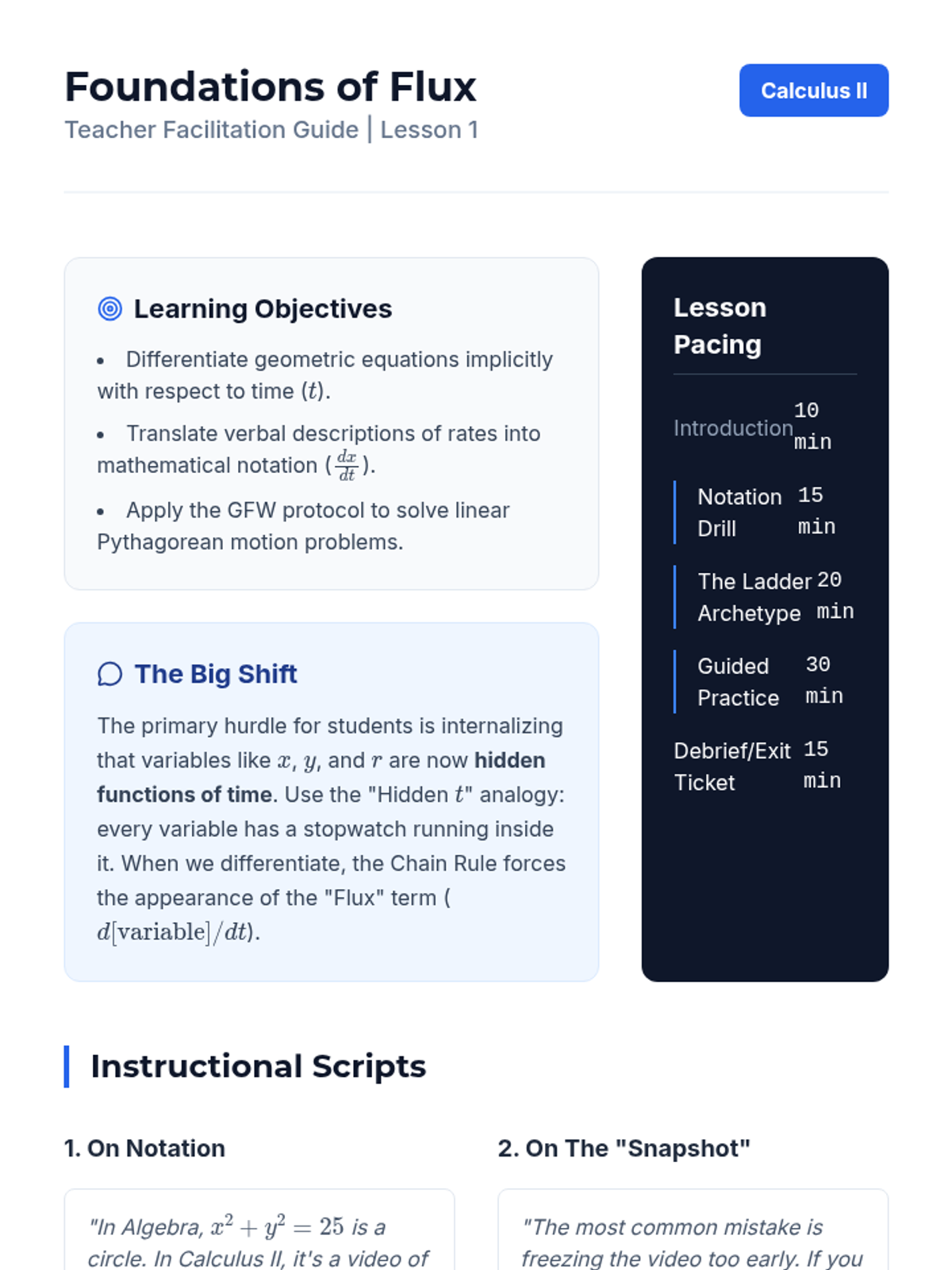
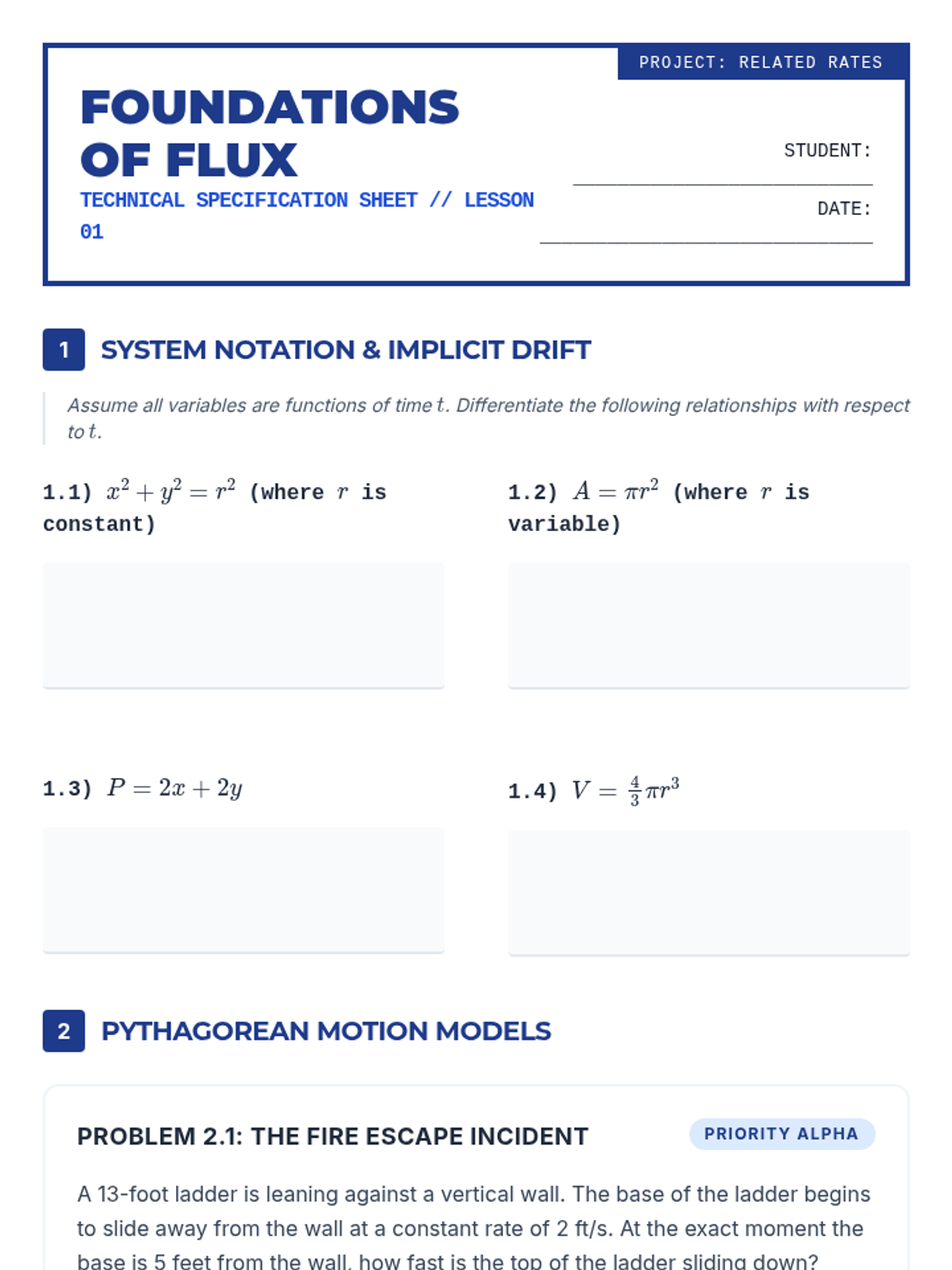
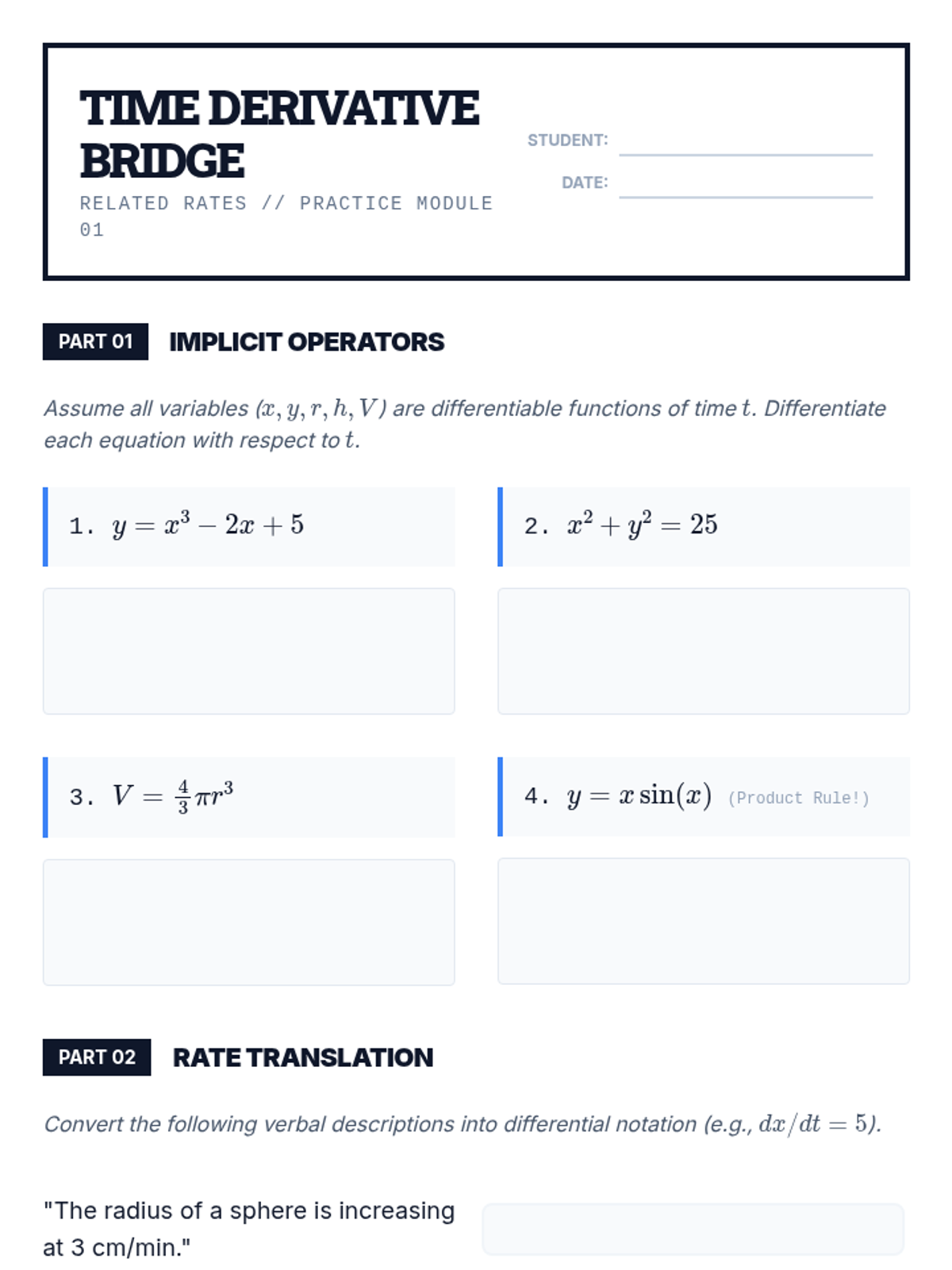
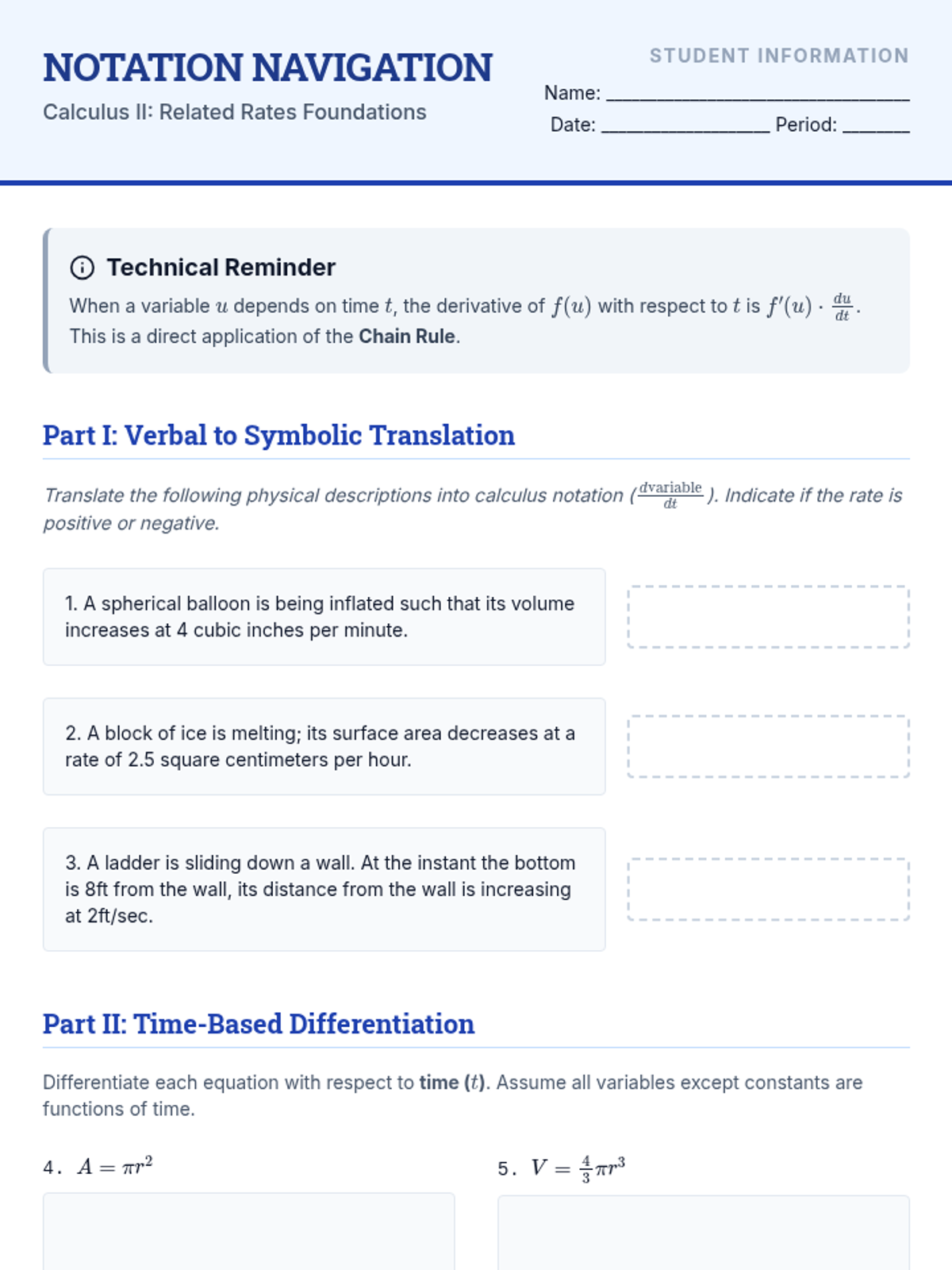
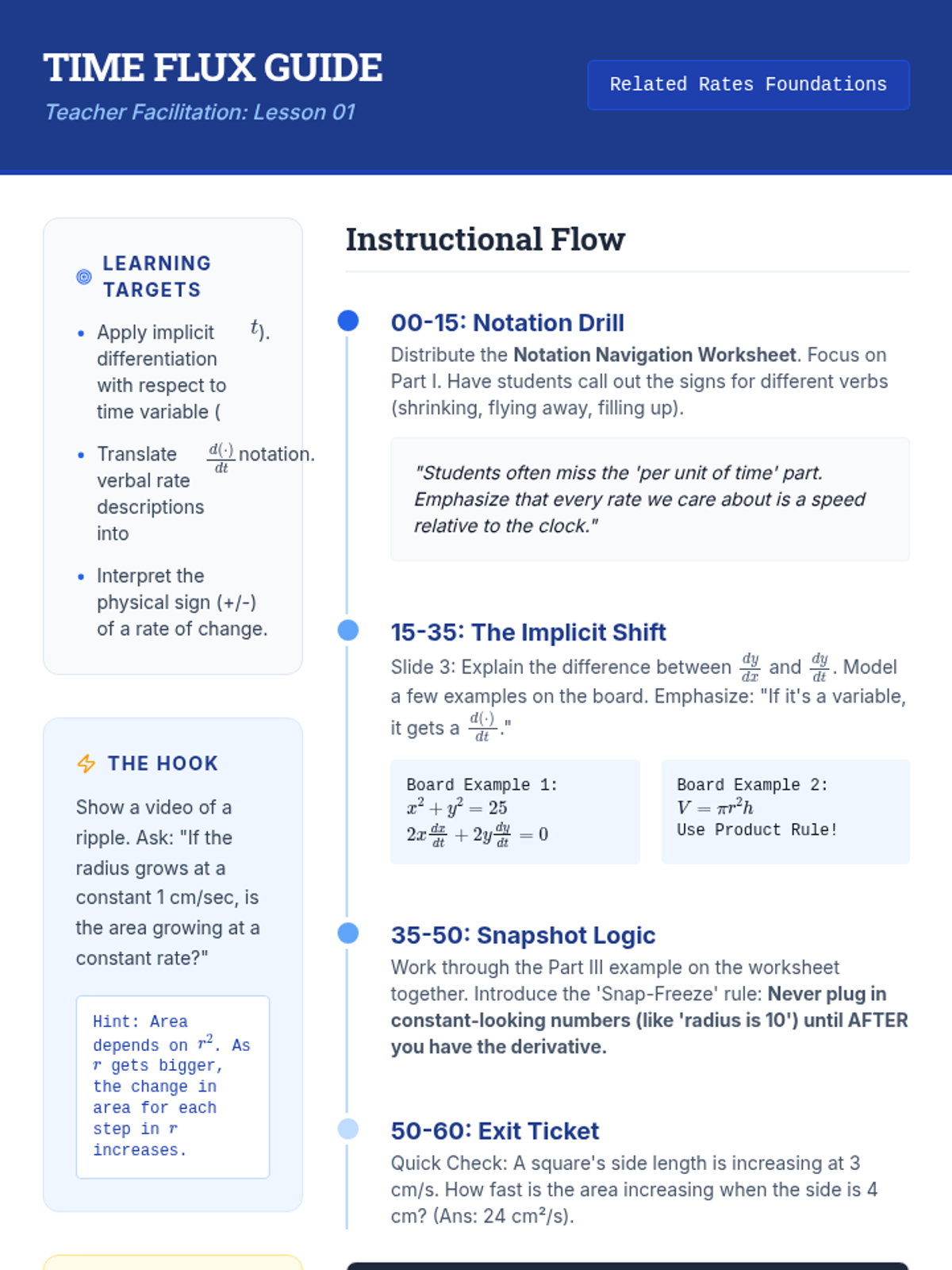
This sequence establishes the foundational skills for related rates in Calculus. It covers implicit differentiation with respect to time, translating word problems into notation, and solving problems involving Pythagorean relationships and geometric shapes.
A condensed 3-part Calculus sequence on Related Rates, moving from linear motion models to complex geometric constraints and angular velocity.
A comprehensive 12th-grade Calculus sequence on Related Rates, focusing on modeling dynamic physical systems through implicit differentiation and geometric relationships.
This sequence guides students through the rigorous process of modeling and solving related rates problems. Learners progress from simple geometric expansions to complex multi-variable systems involving fluid dynamics and angular displacement, emphasizing a structured problem-solving protocol.
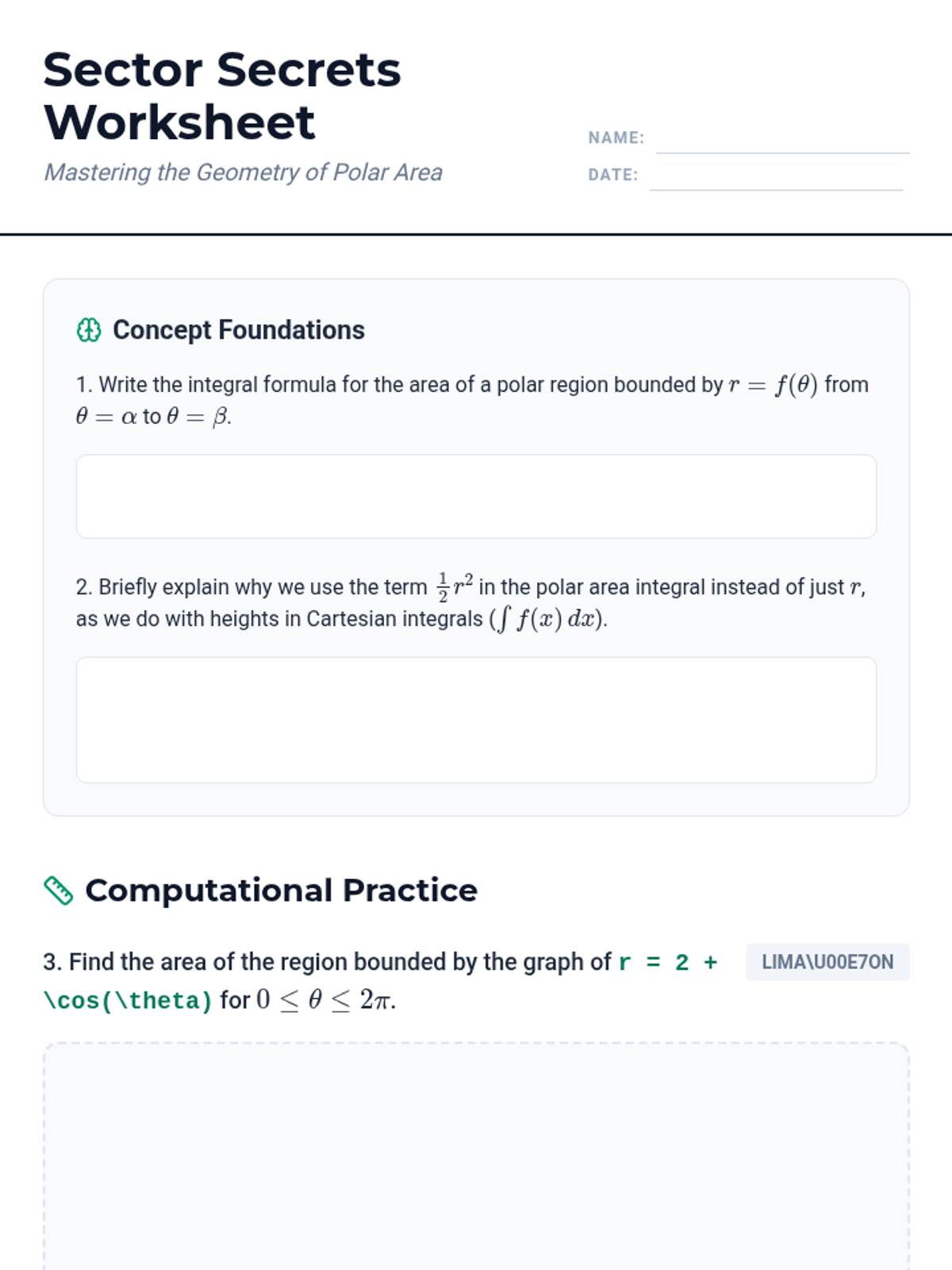
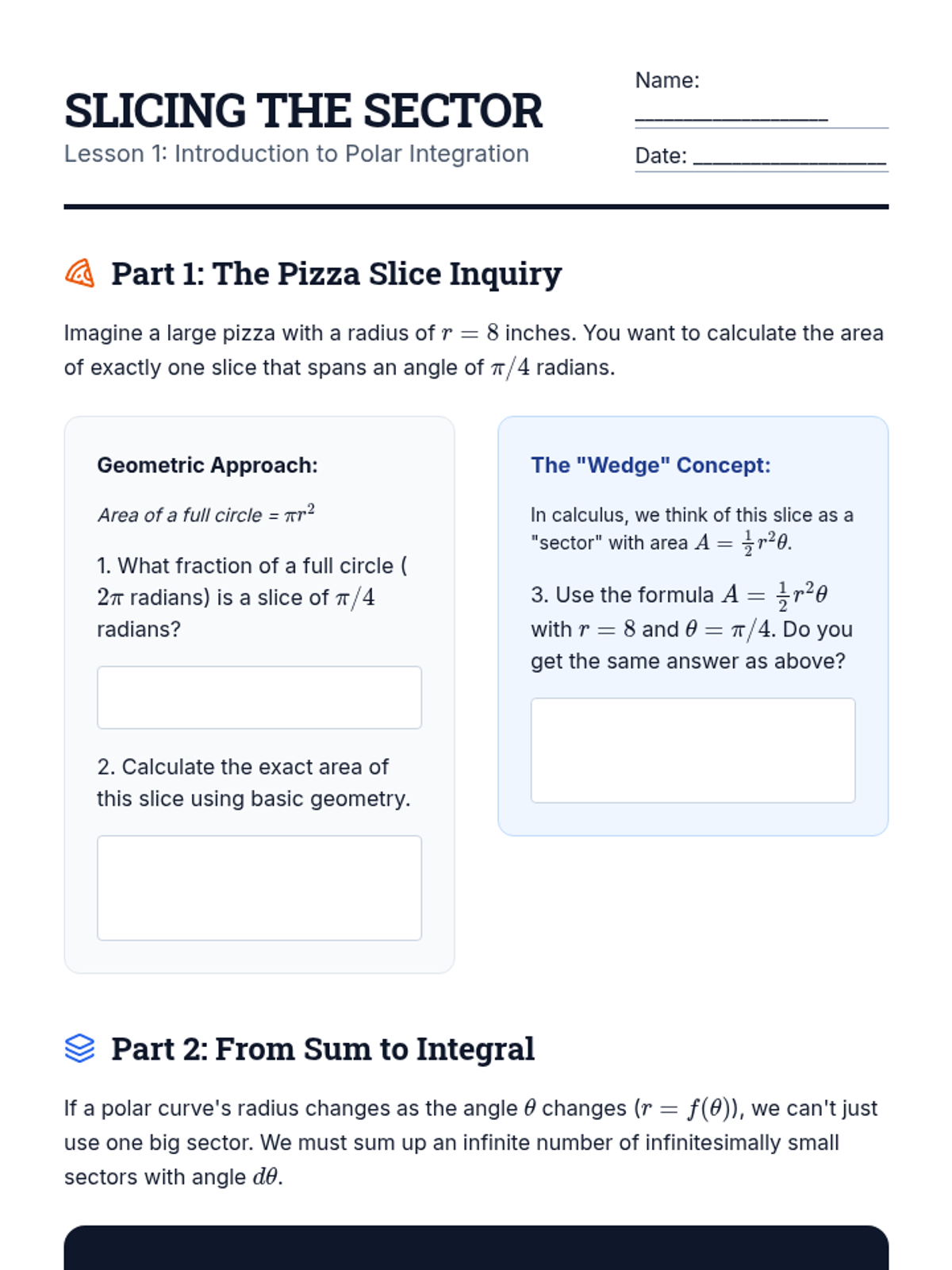
A comprehensive unit for 12th Grade Calculus students focusing on the integration of polar functions to find area, arc length, and surface area. Students transition from Cartesian thinking to radial accumulation, mastering the geometry of circular sectors and polar coordinate transformations.
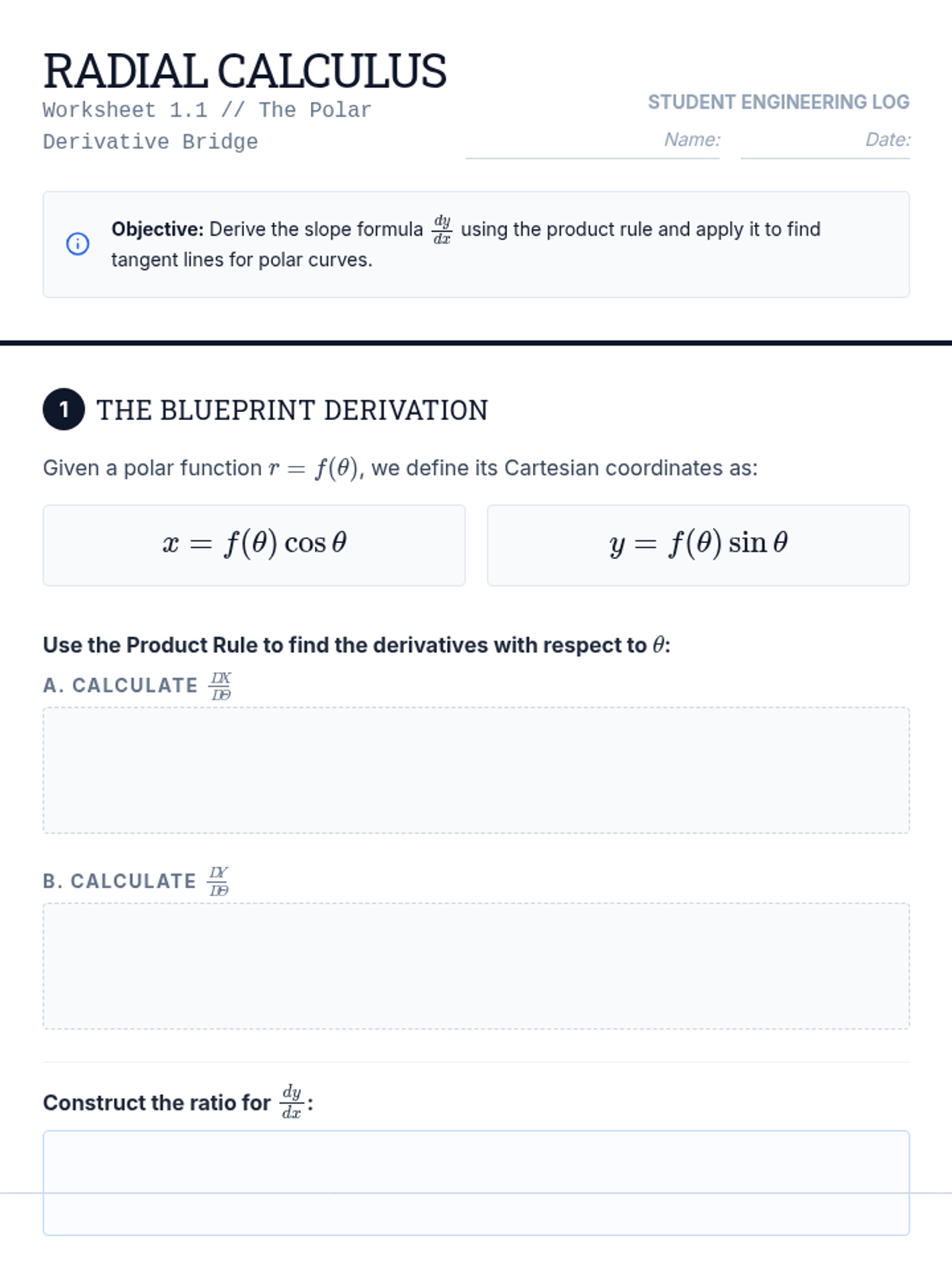
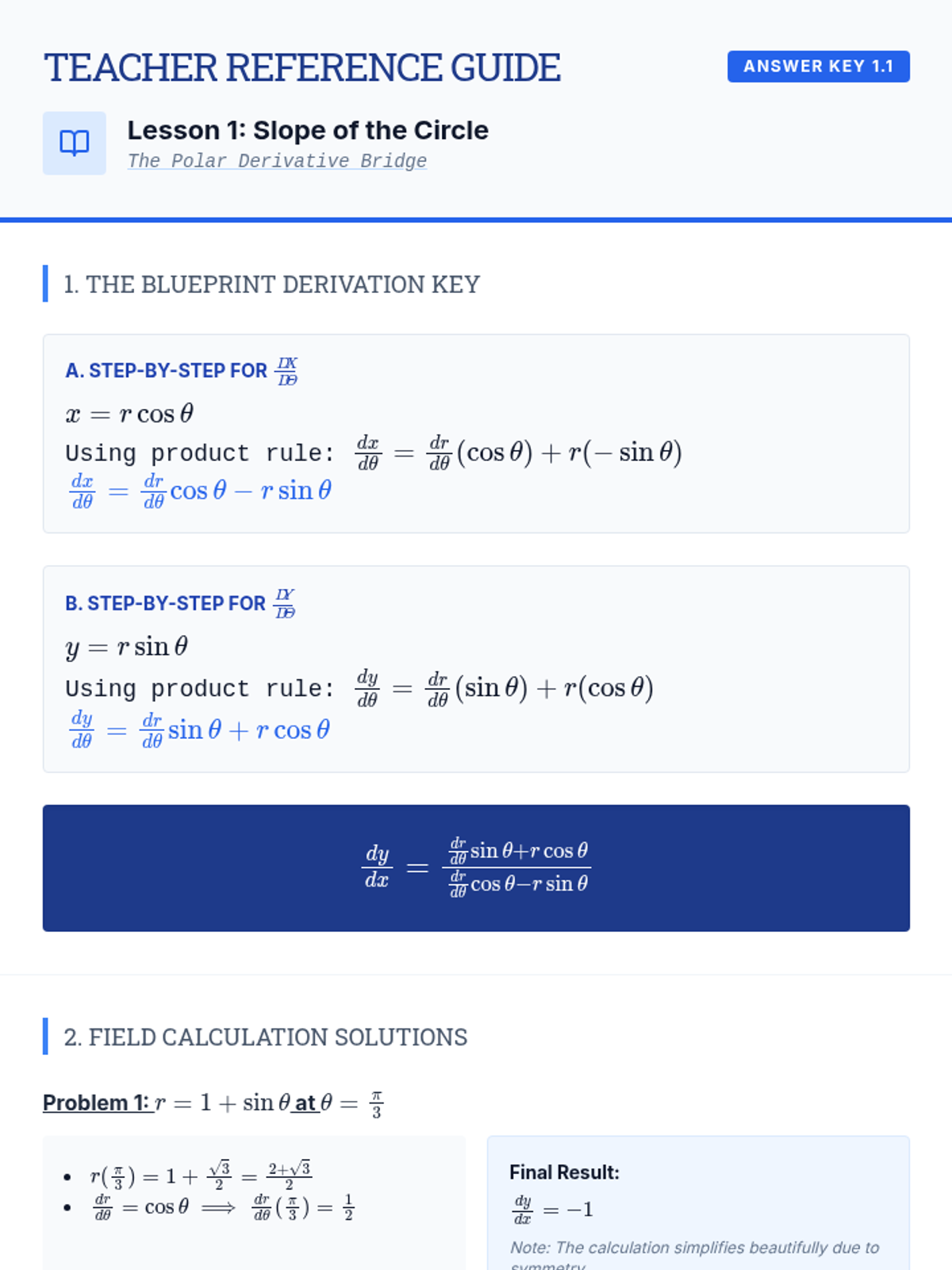
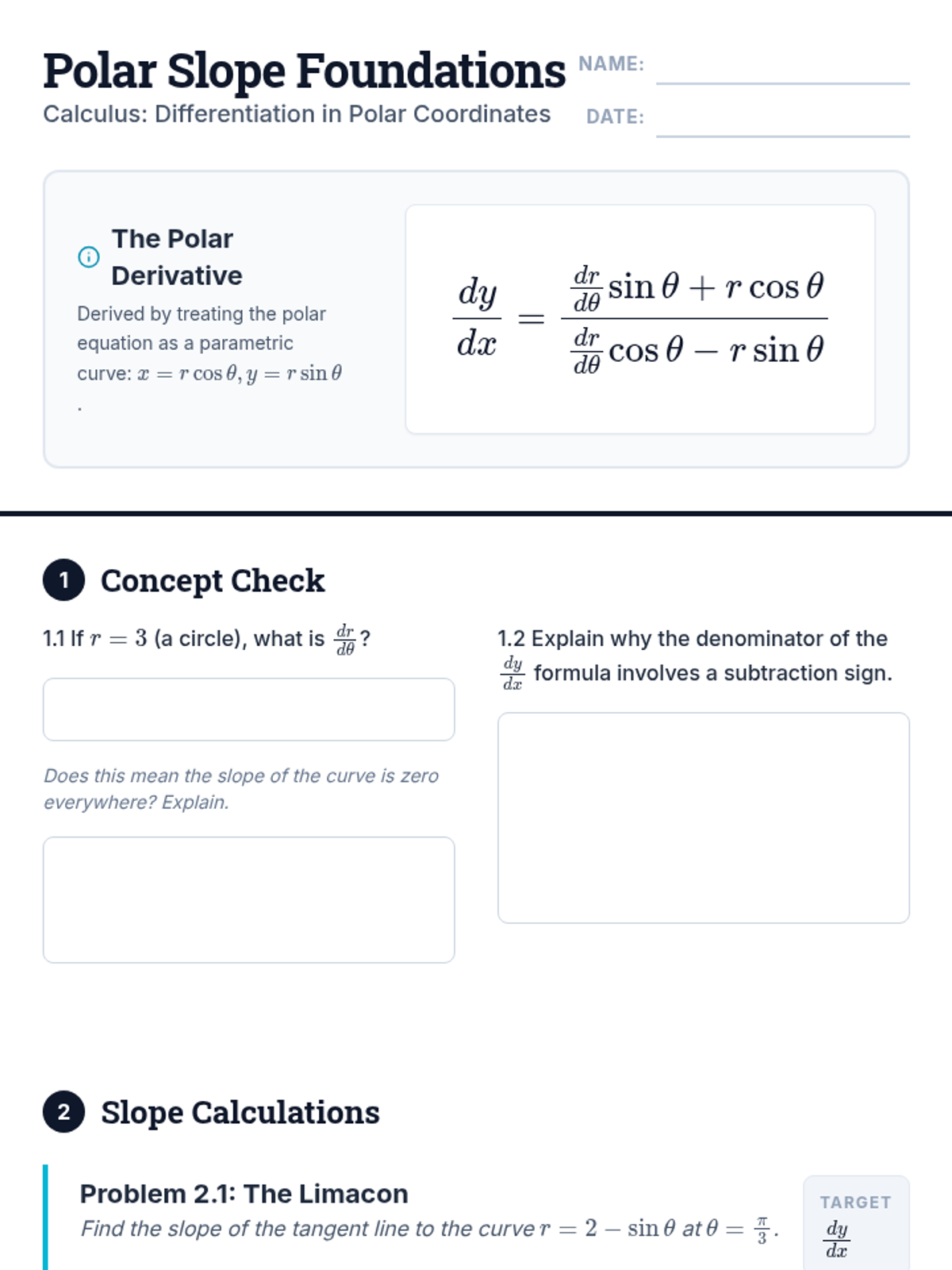
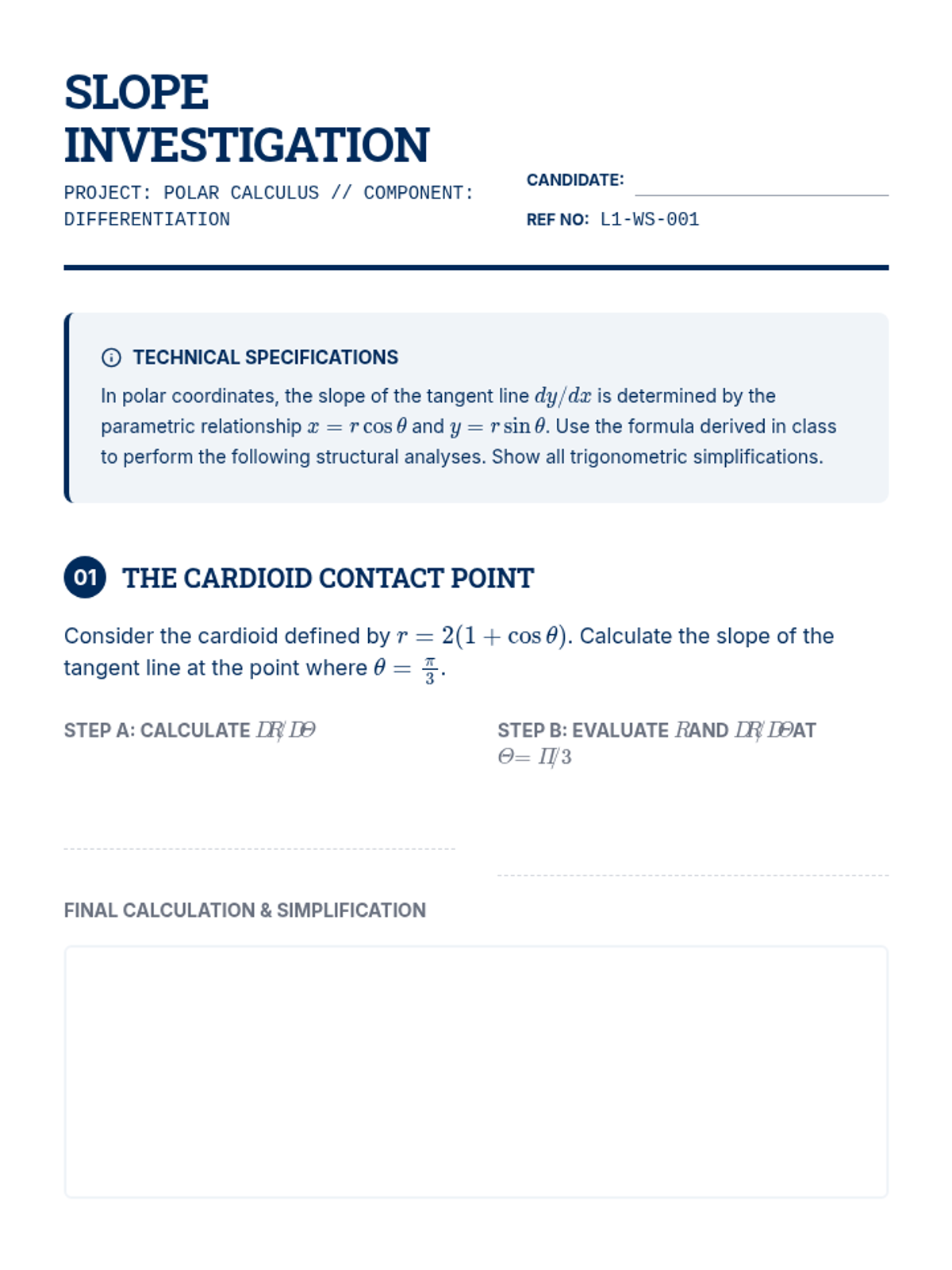
A comprehensive unit for 12th Grade Calculus students focusing on the derivation and application of derivatives in polar coordinates. Students transition from Cartesian slope to polar slope, analyze horizontal and vertical tangency, investigate behavior at the pole, and solve optimization problems involving polar curves.
An advanced 11th-grade Calculus unit focusing on the integration of parametric and polar coordinate systems. Students analyze motion, calculate complex areas, perform error analysis, and complete a final synthesis project based on particle kinematics.
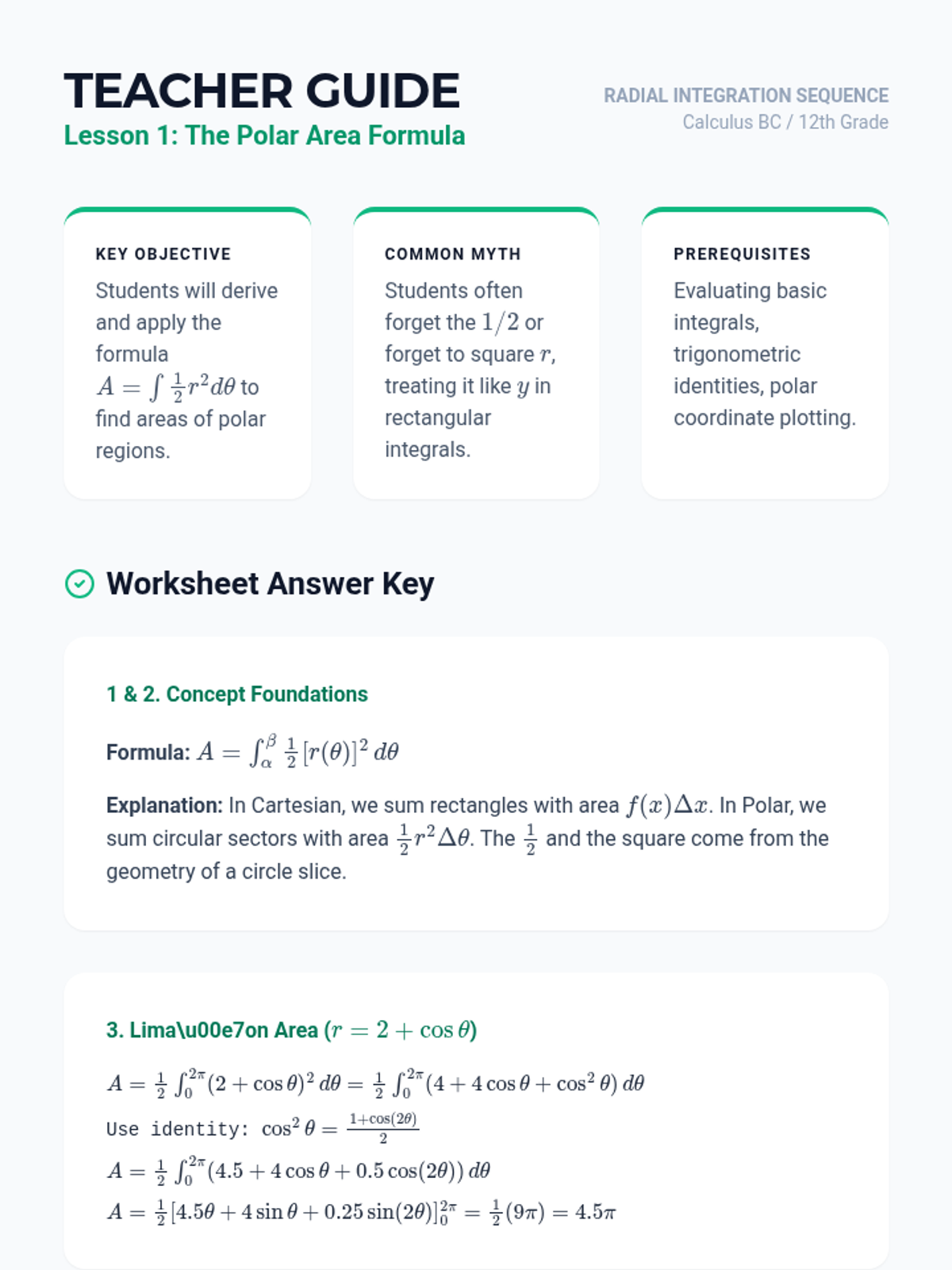
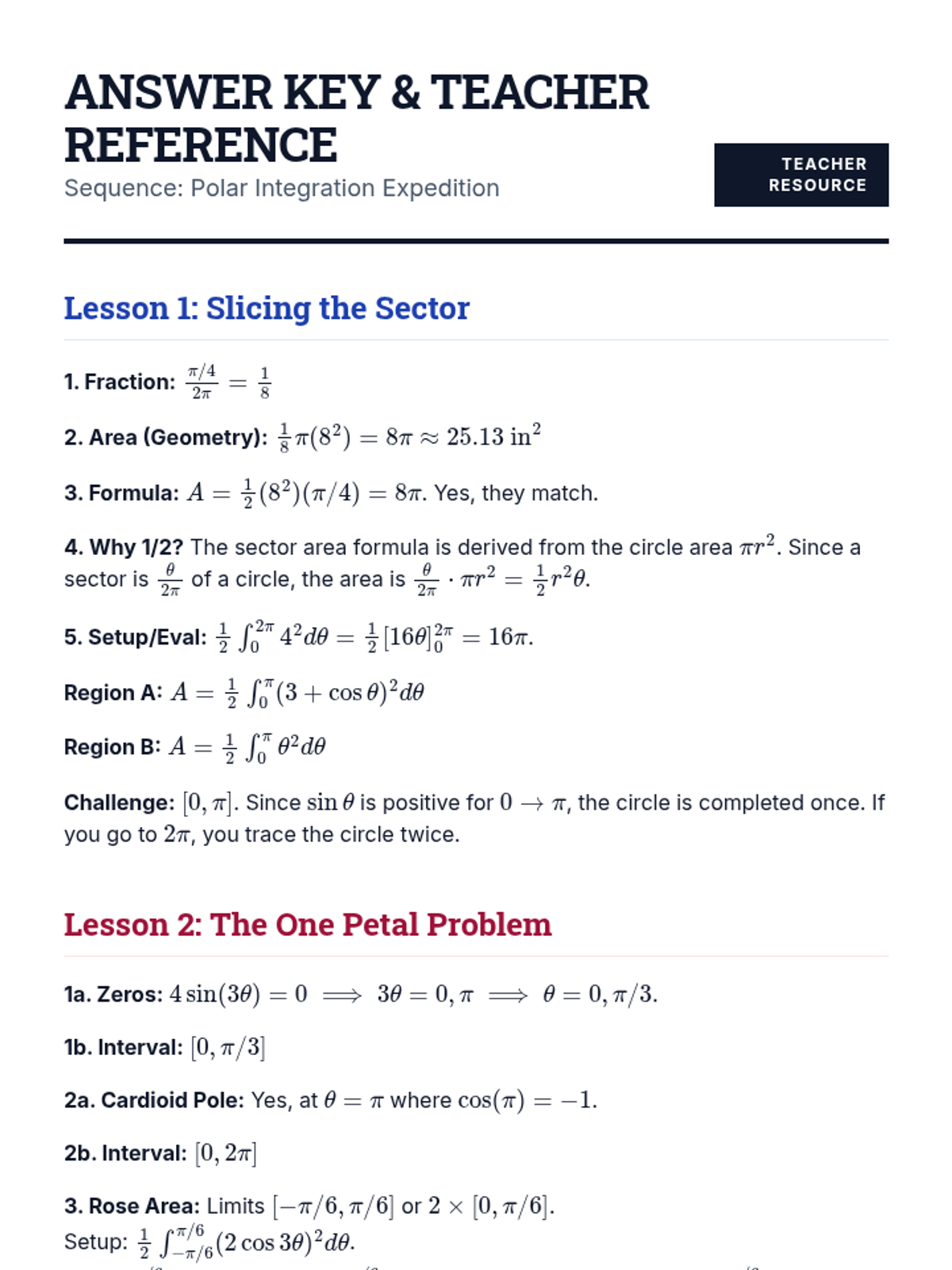
This calculus sequence guides 11th-grade students through the integration techniques required to calculate area and arc length within polar coordinate systems. From the geometric derivation of the polar sector formula to complex multi-curve regions and boundary measurements, students apply integral calculus to circular geometries.
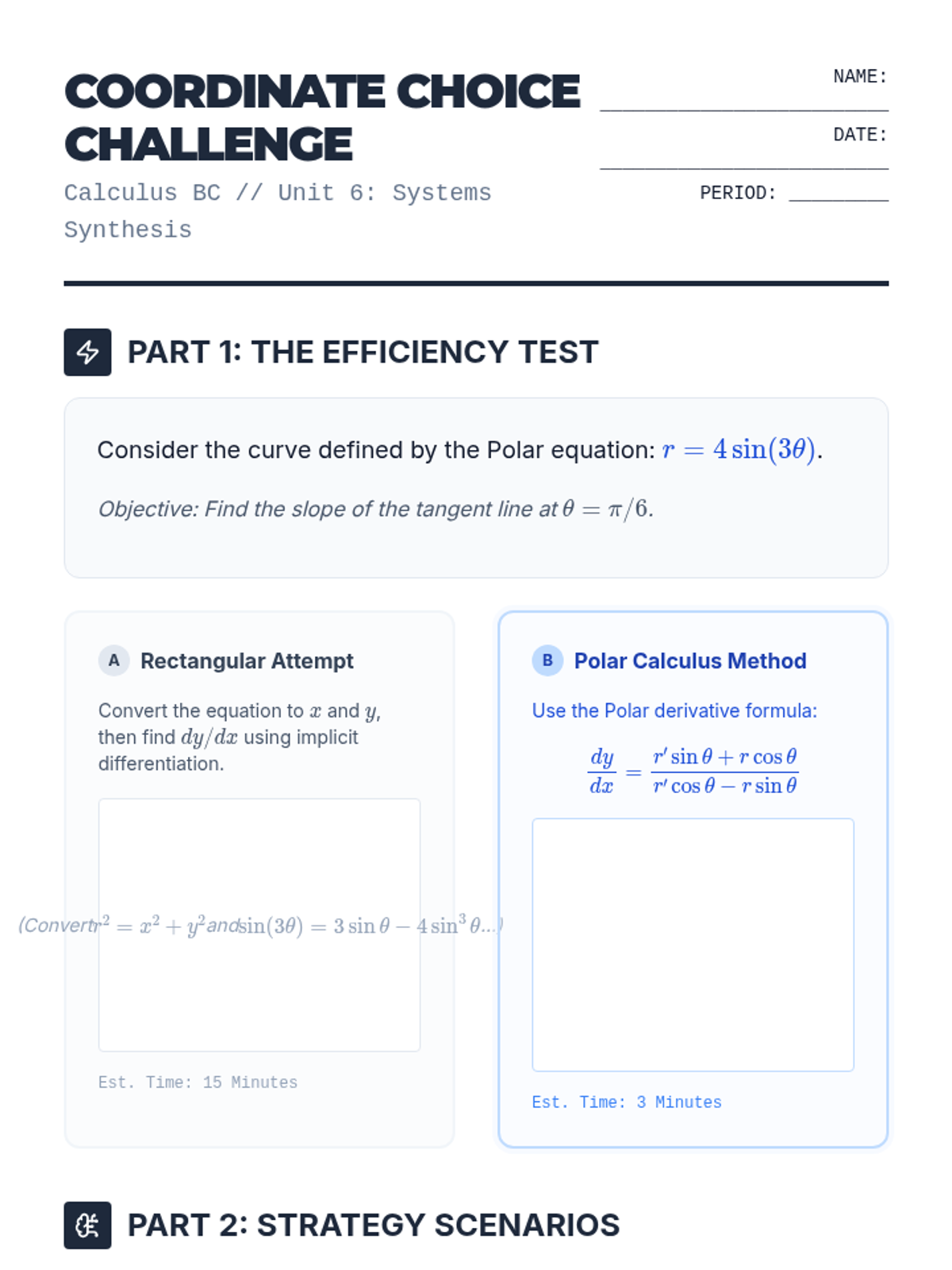
This sequence explores the calculus of polar functions, focusing on differentiation techniques. Students will learn to calculate slopes of tangent lines, identify horizontal and vertical tangents, analyze behavior at the pole, and apply optimization to find maximum and minimum distances from the origin.
This sequence explores calculus in the polar coordinate system, focusing on differentiation and integration. Students will master finding slopes of tangent lines, calculating areas of polar regions and intersection areas, and determining arc lengths of polar curves.
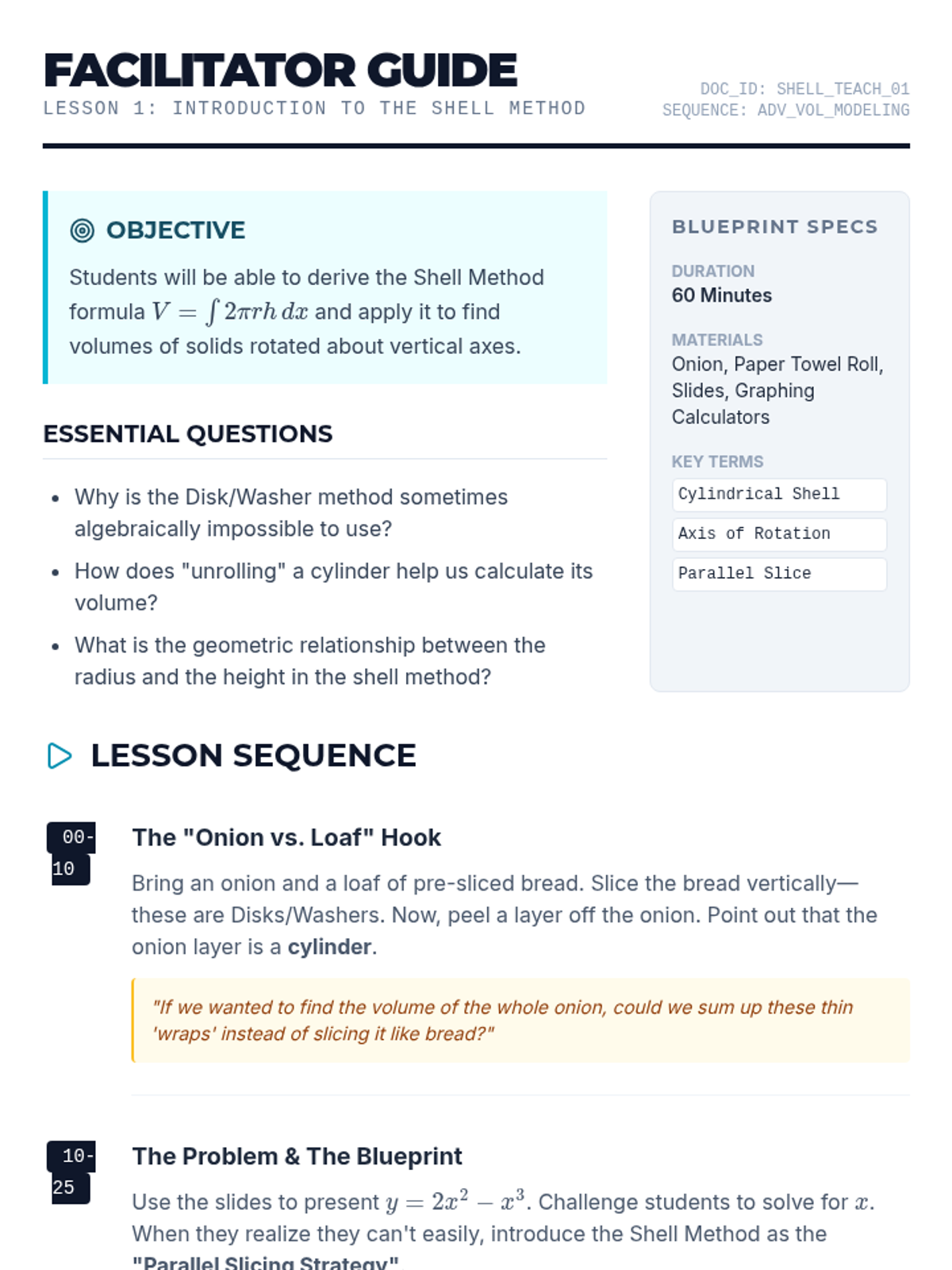
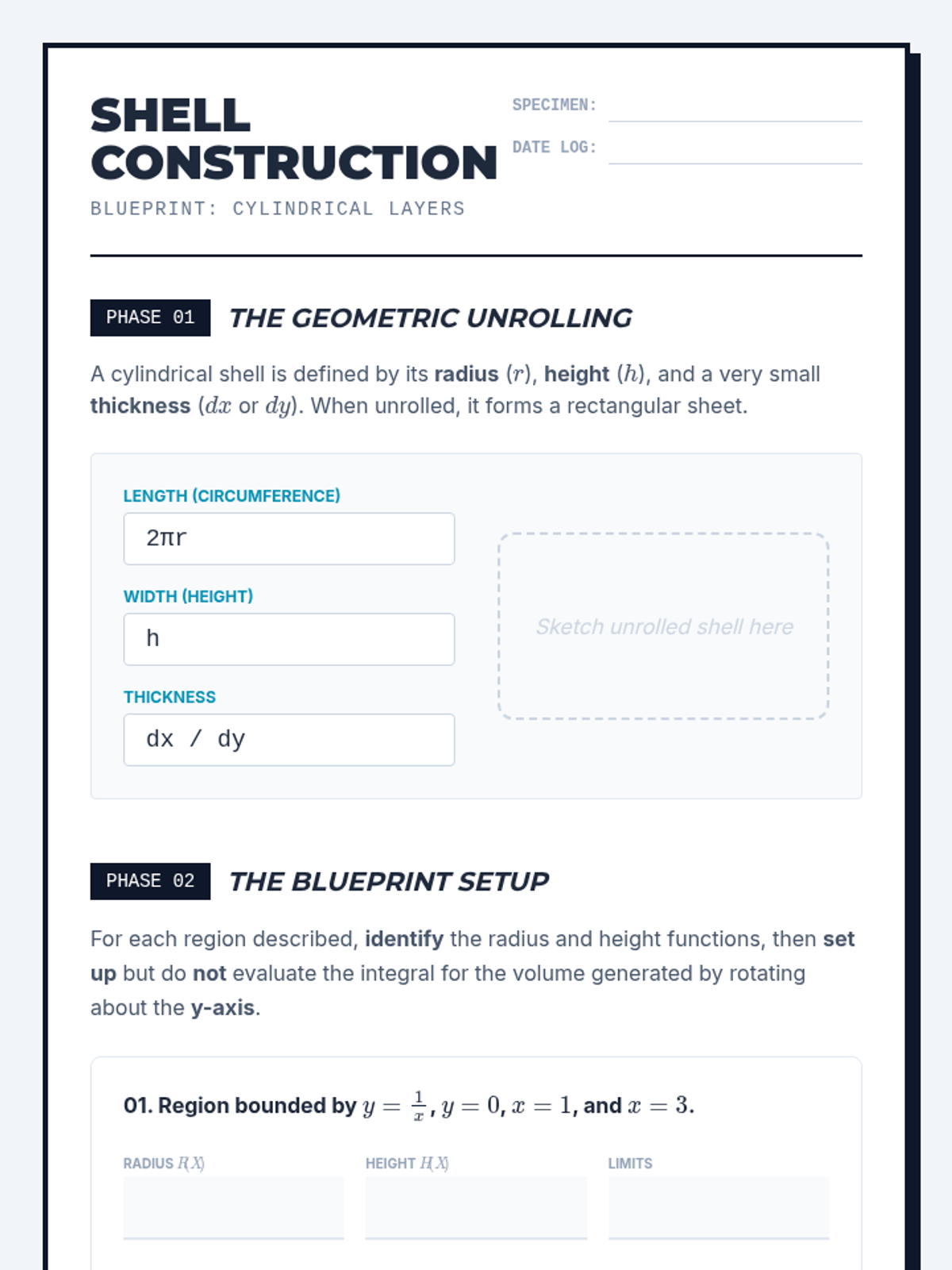
This sequence introduces advanced volume techniques in calculus, including the Shell Method and solids with known cross-sections. Students move from theoretical derivation to a project-based application where they model and calculate the volume of real-world objects.
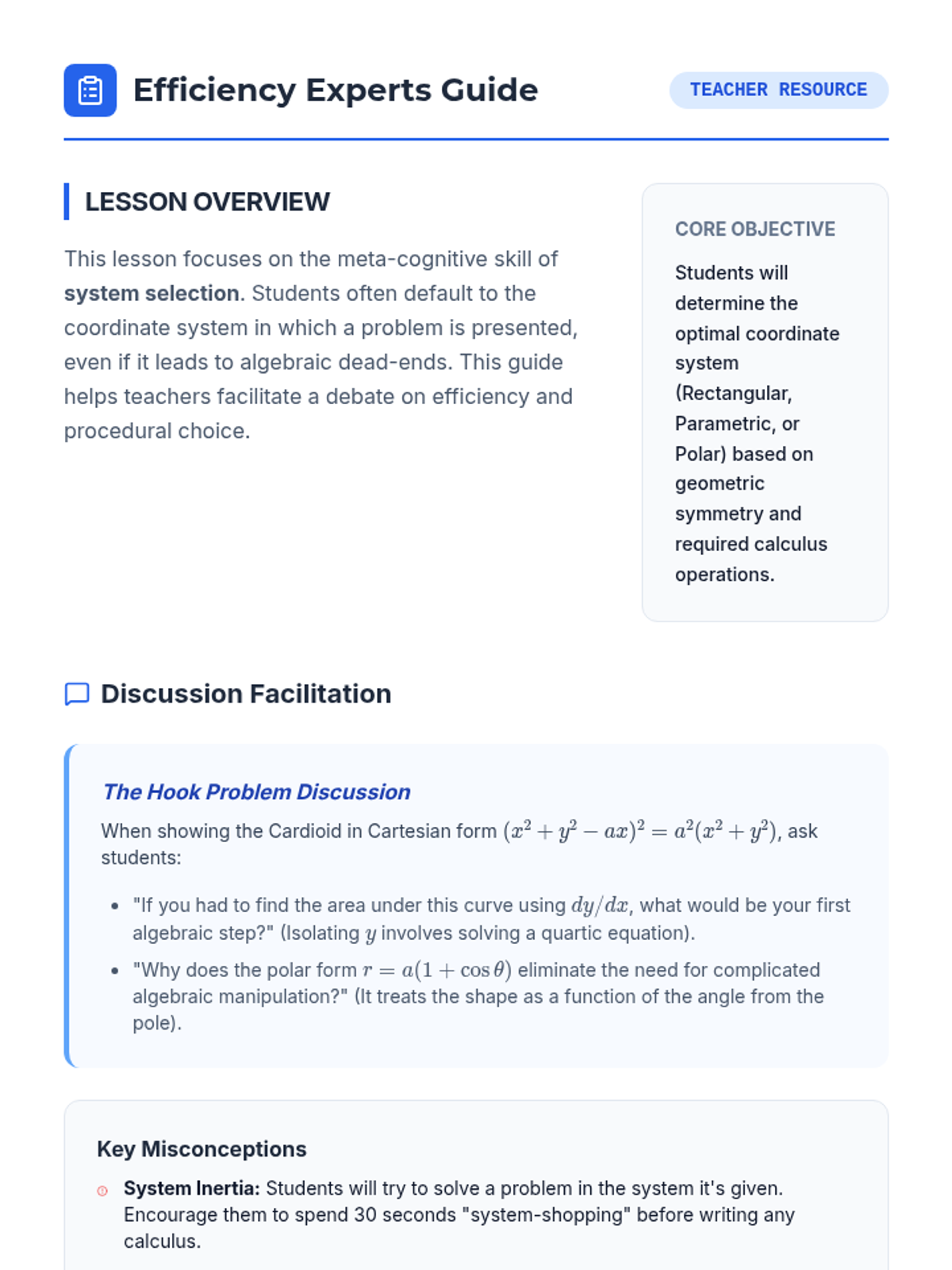
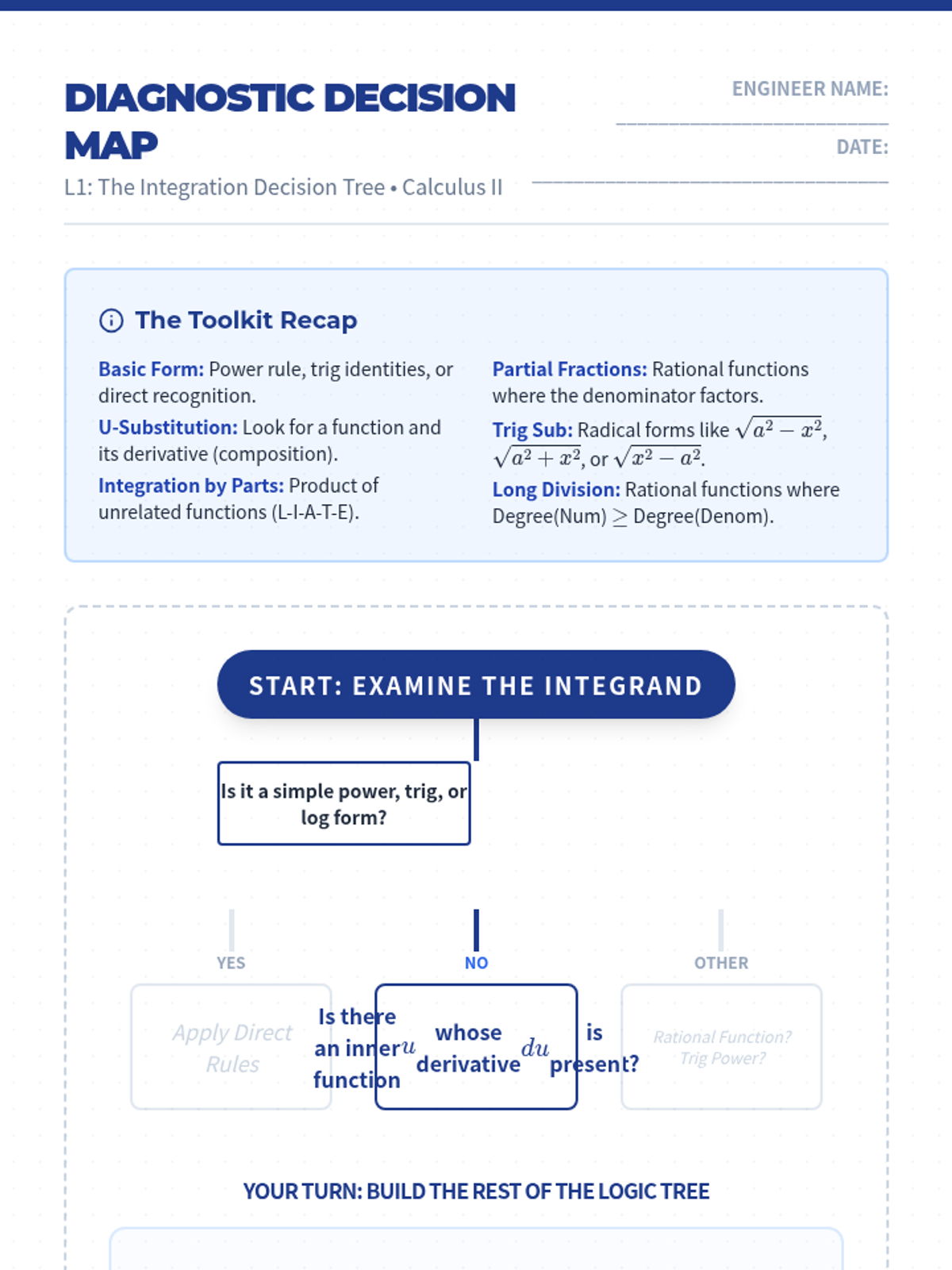
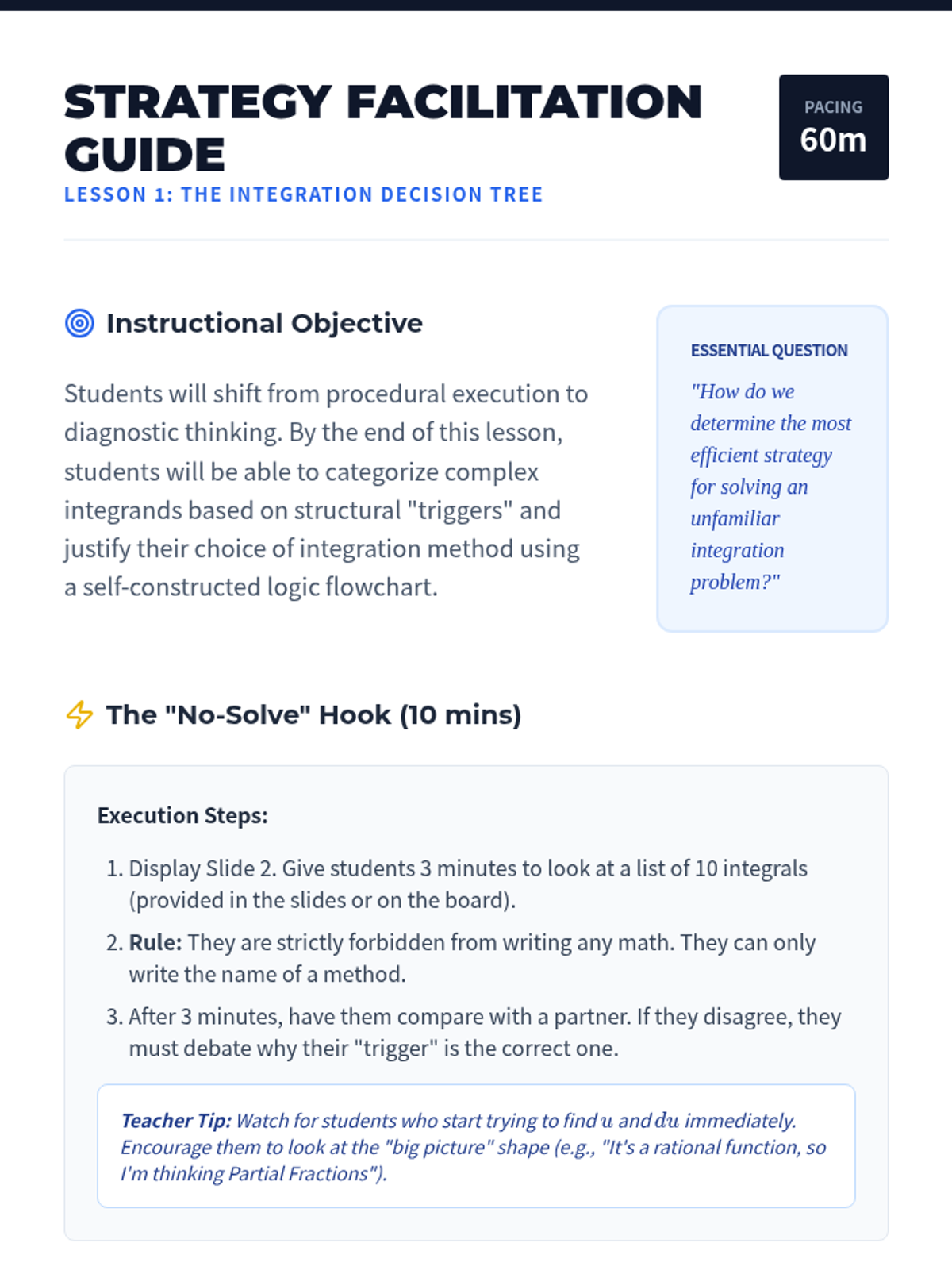
A comprehensive 11th-grade calculus unit focused on strategic method selection for complex integration. Students transition from basic procedural fluency to high-level diagnostic thinking and real-world applications in physics and engineering.
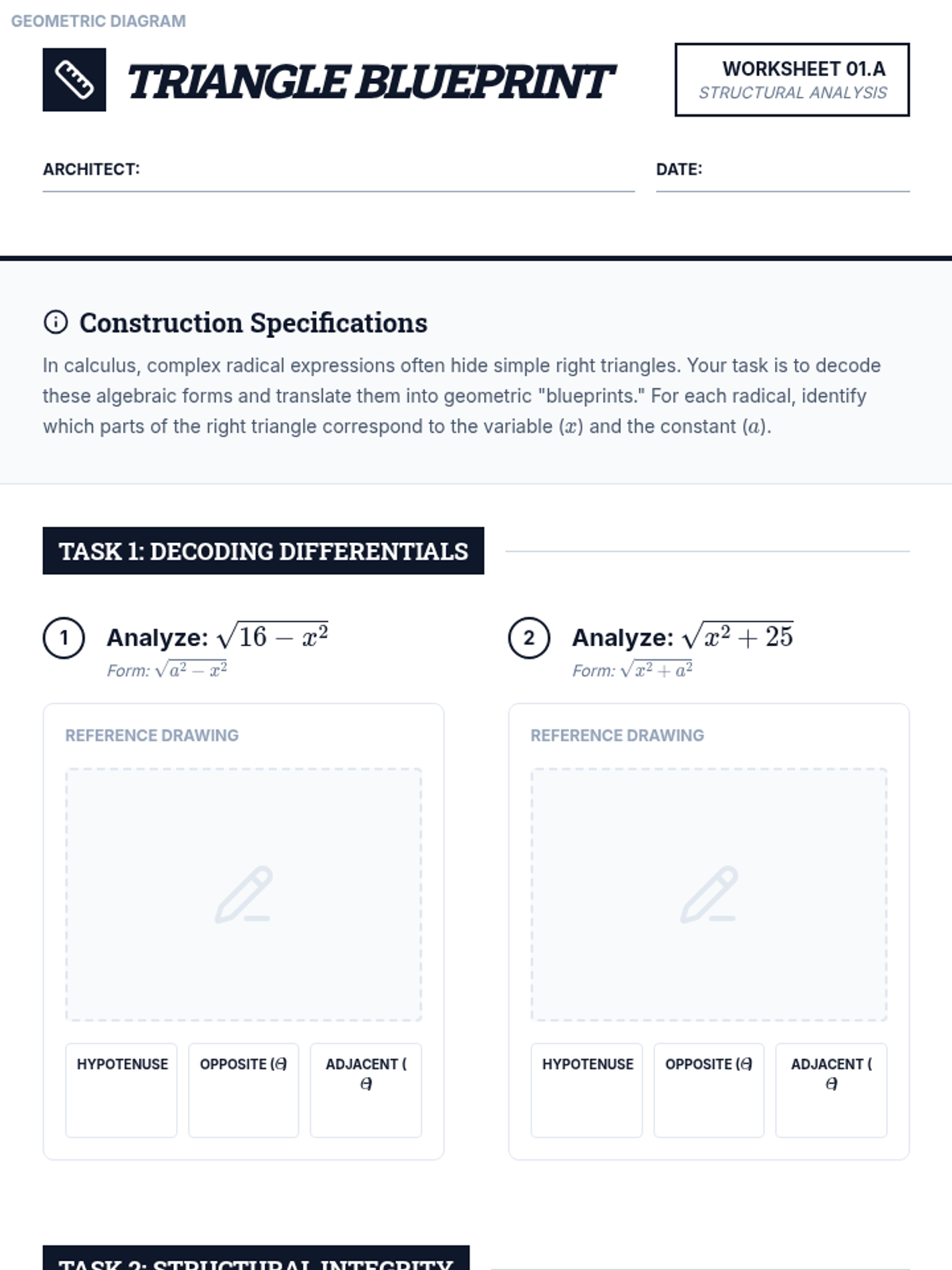
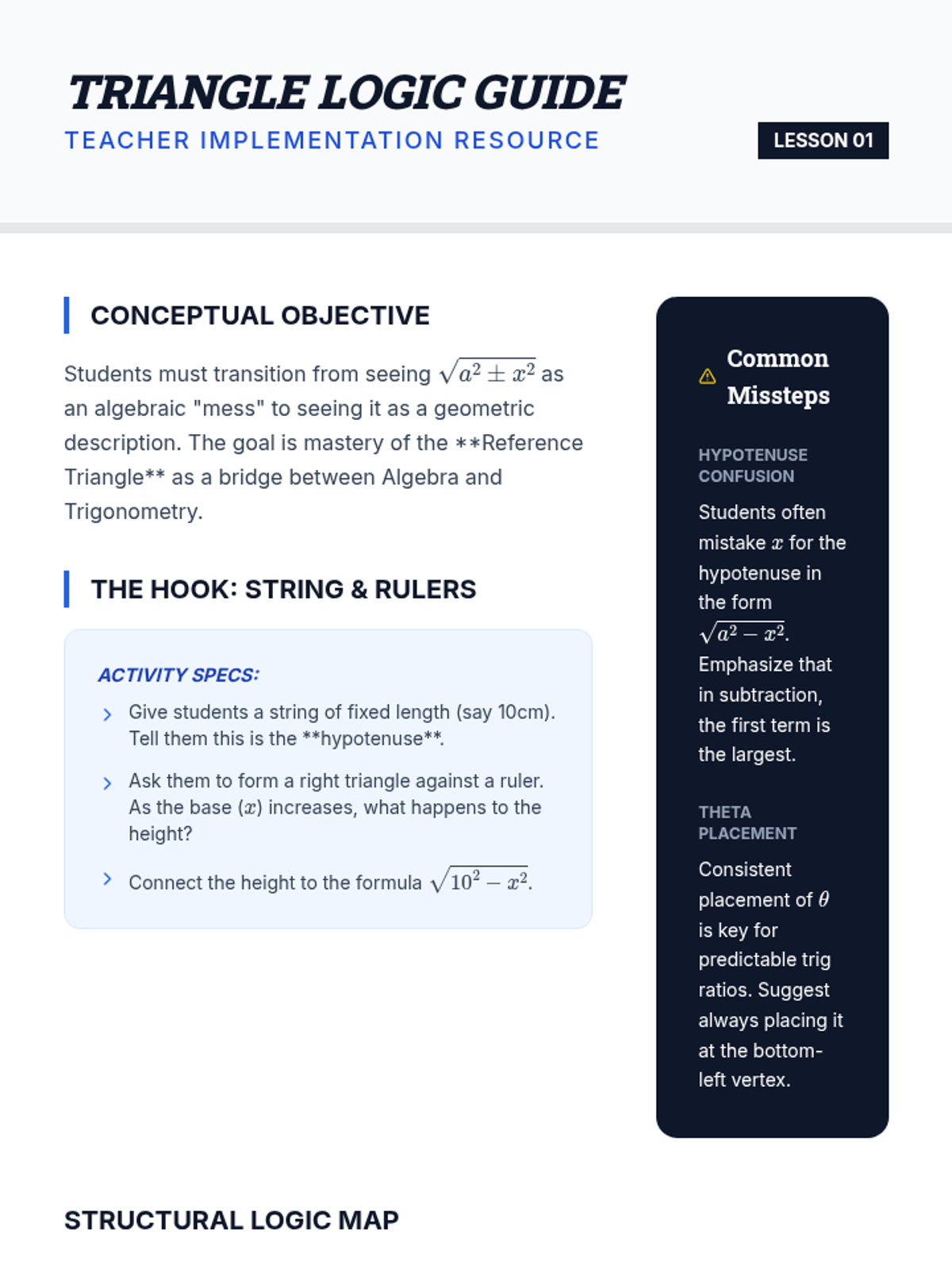
A comprehensive unit on trigonometric substitution in calculus, moving from geometric visualization of radicals to complex integration techniques and algebraic back-substitution. Students learn to map radical expressions onto right triangles and use trigonometric identities to simplify and solve integrals.
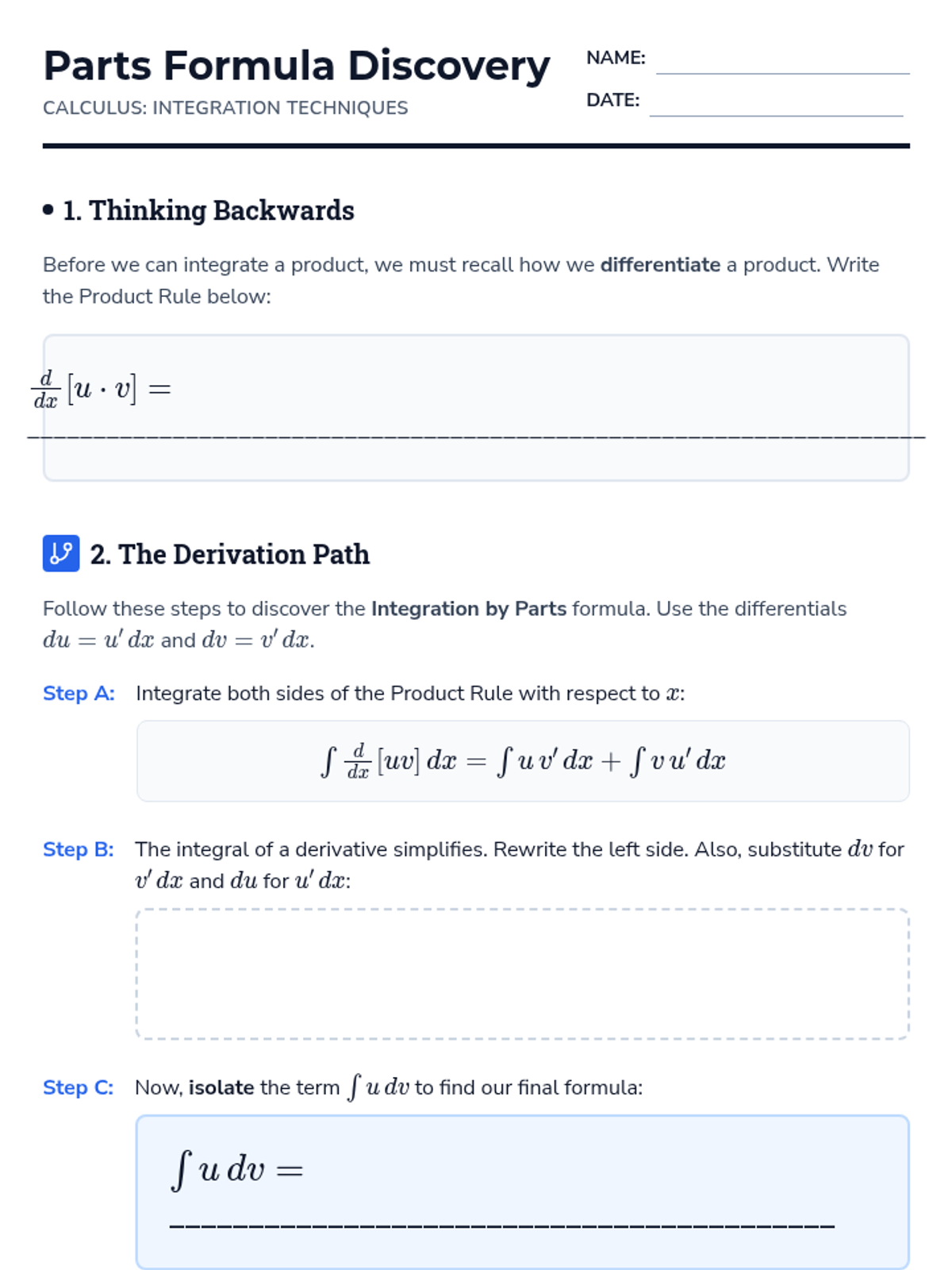
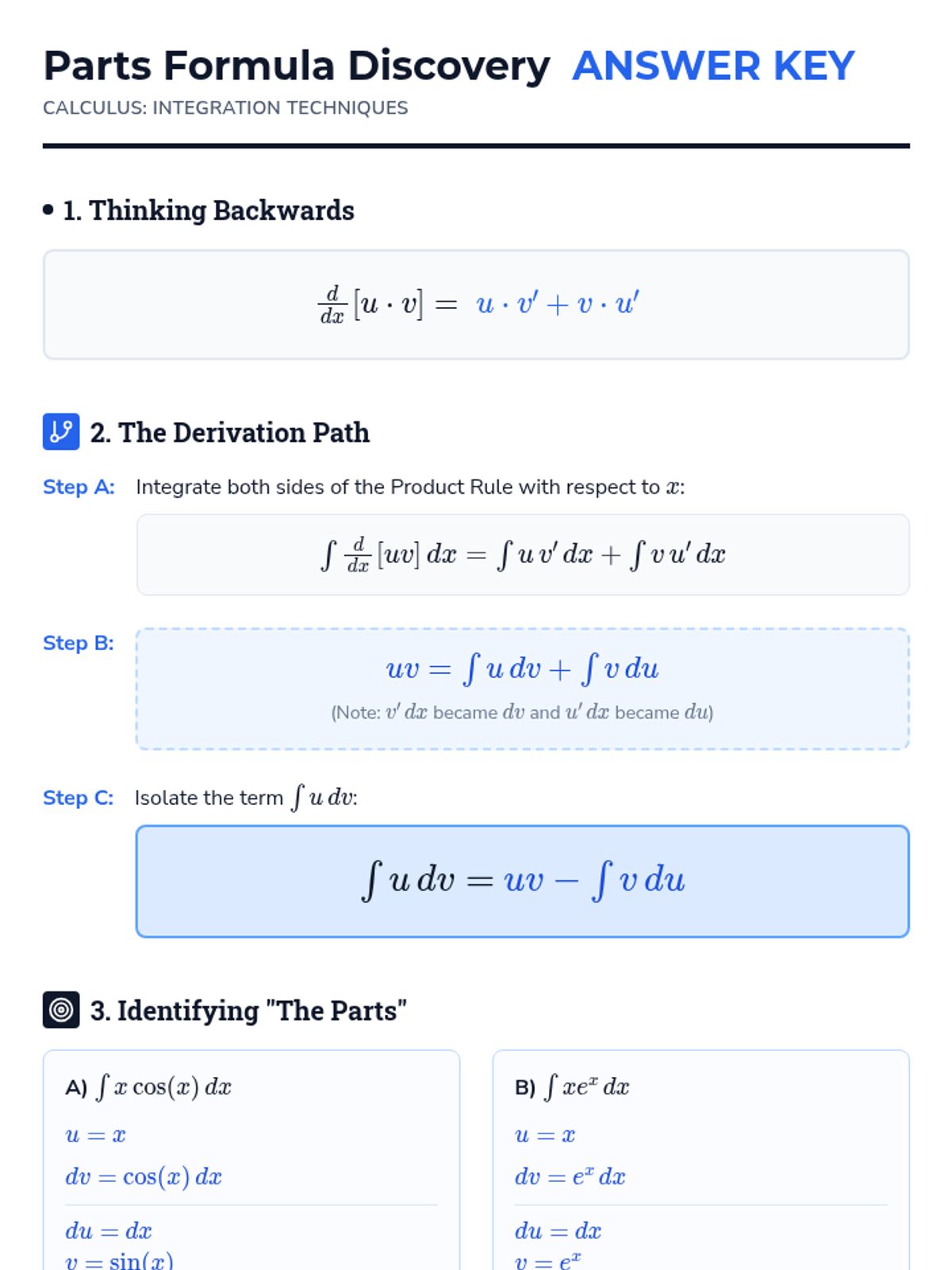
This sequence introduces Integration by Parts as the inverse of the Product Rule, equipping students to handle products of unrelated functions. Through inquiry, students derive the formula, apply the LIATE heuristic, master the Tabular Method for repeated integration, and solve cyclic integrals.
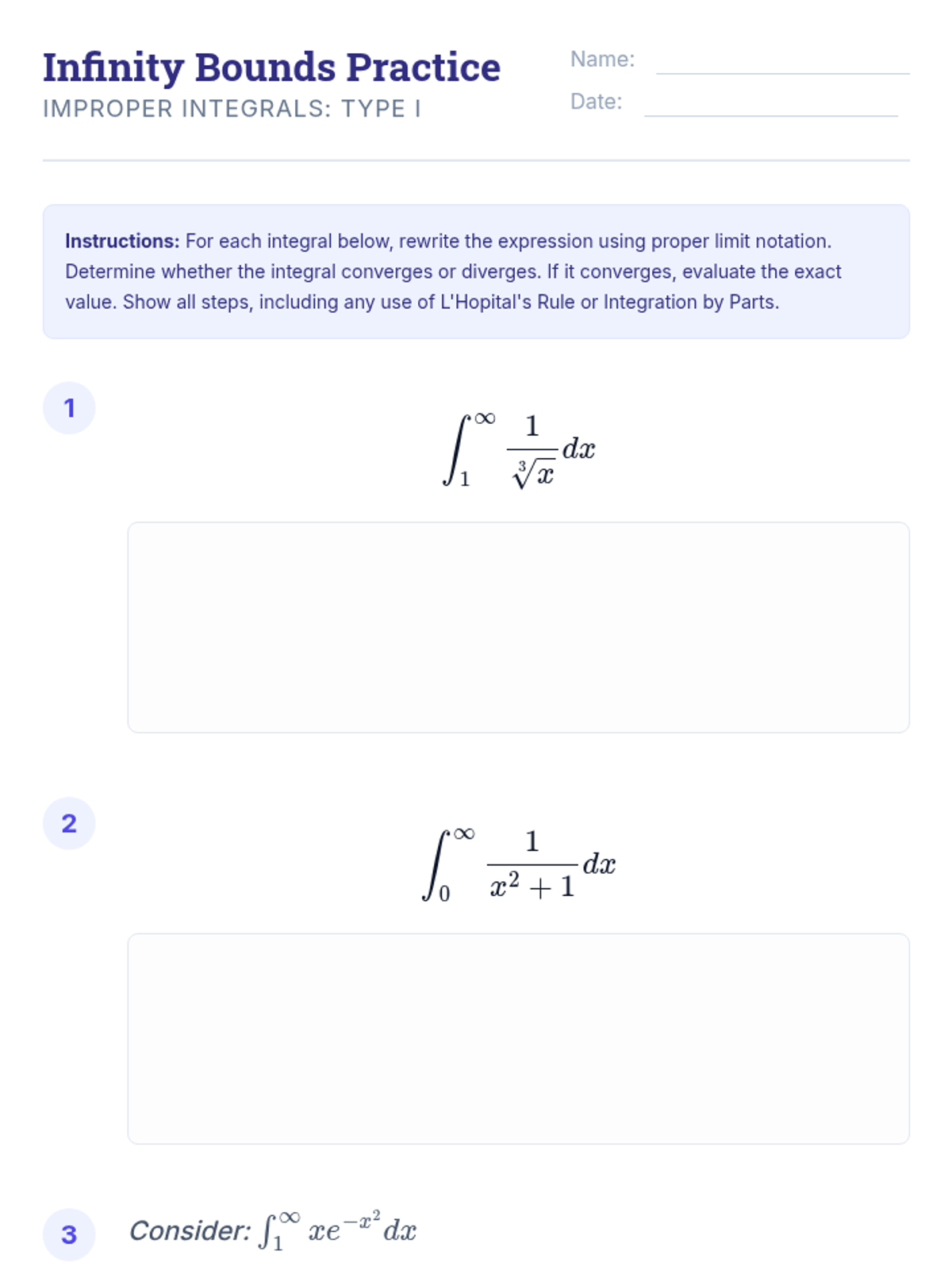
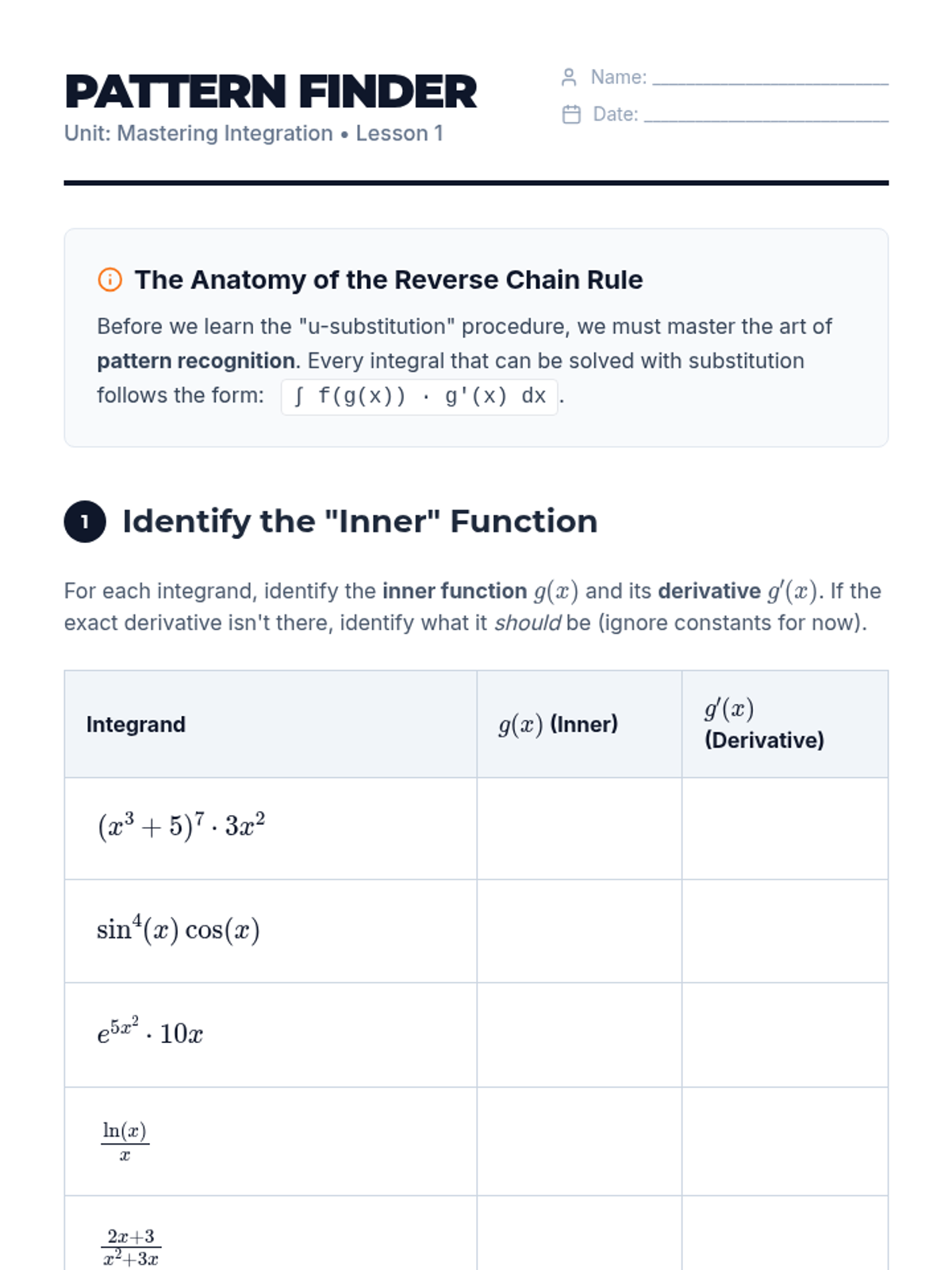
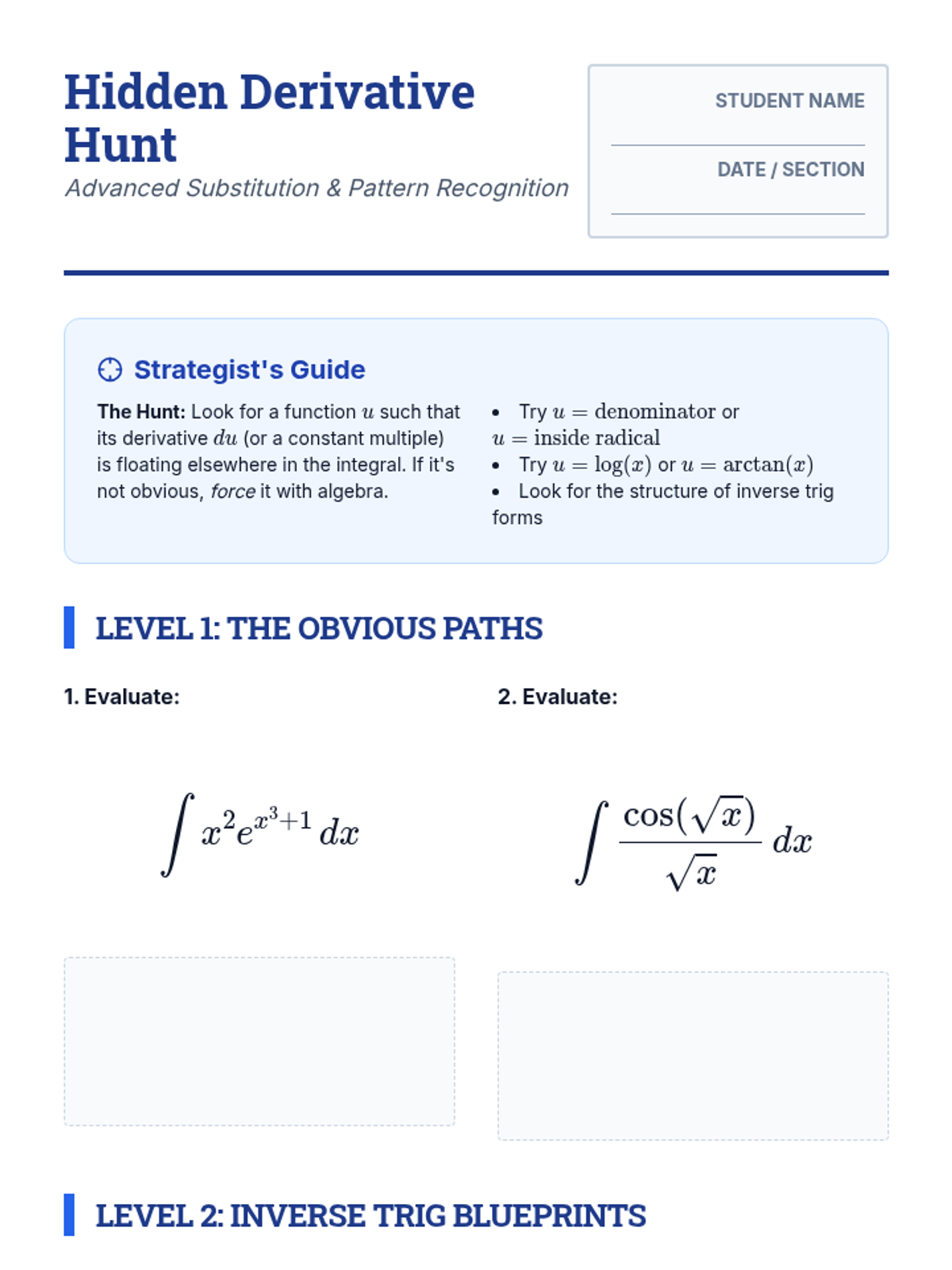
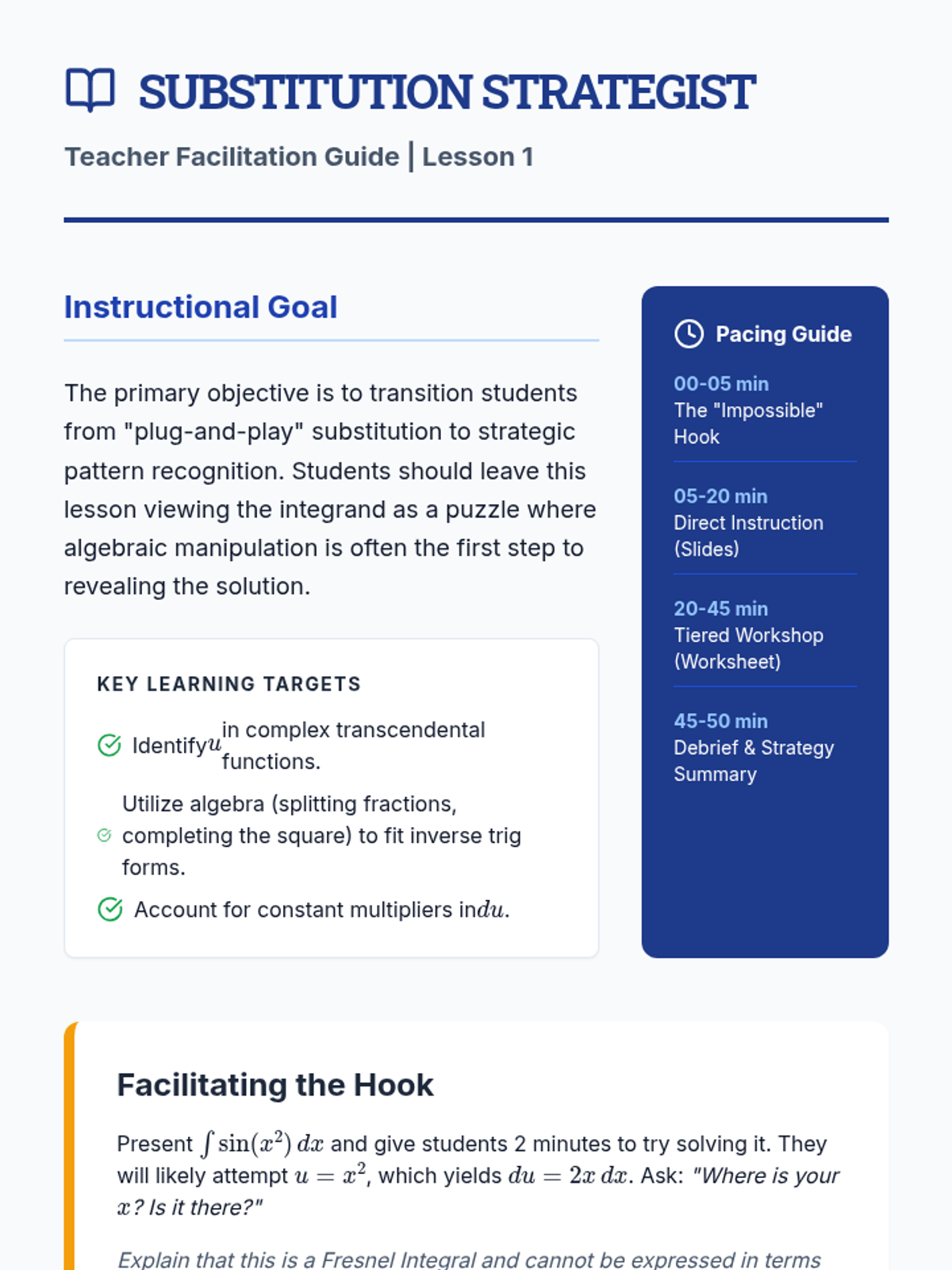
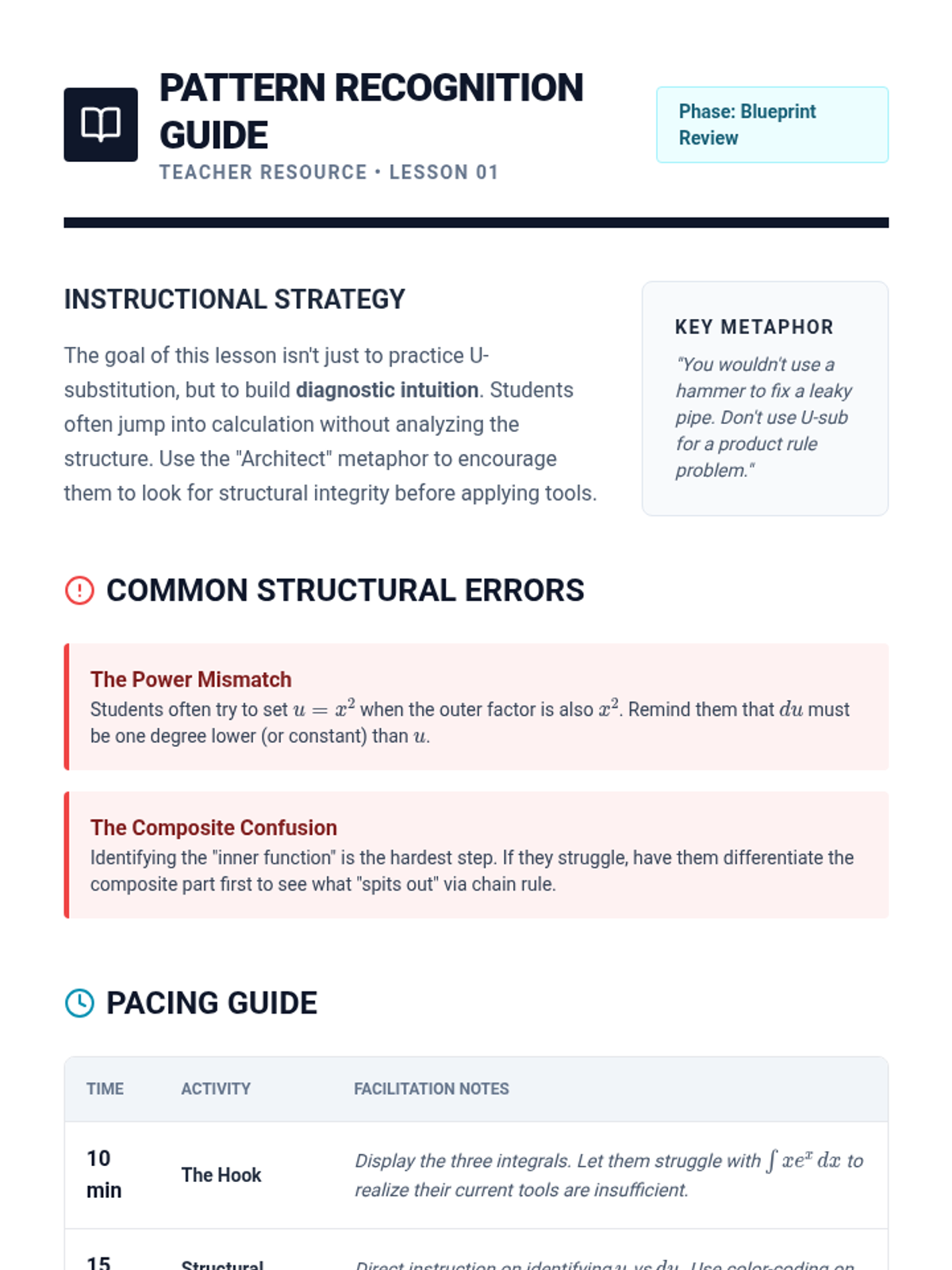
A comprehensive 5-lesson unit for 11th Grade Calculus students focusing on the u-substitution method for integration, emphasizing pattern recognition, definite integral boundary changes, and advanced algebraic manipulation.
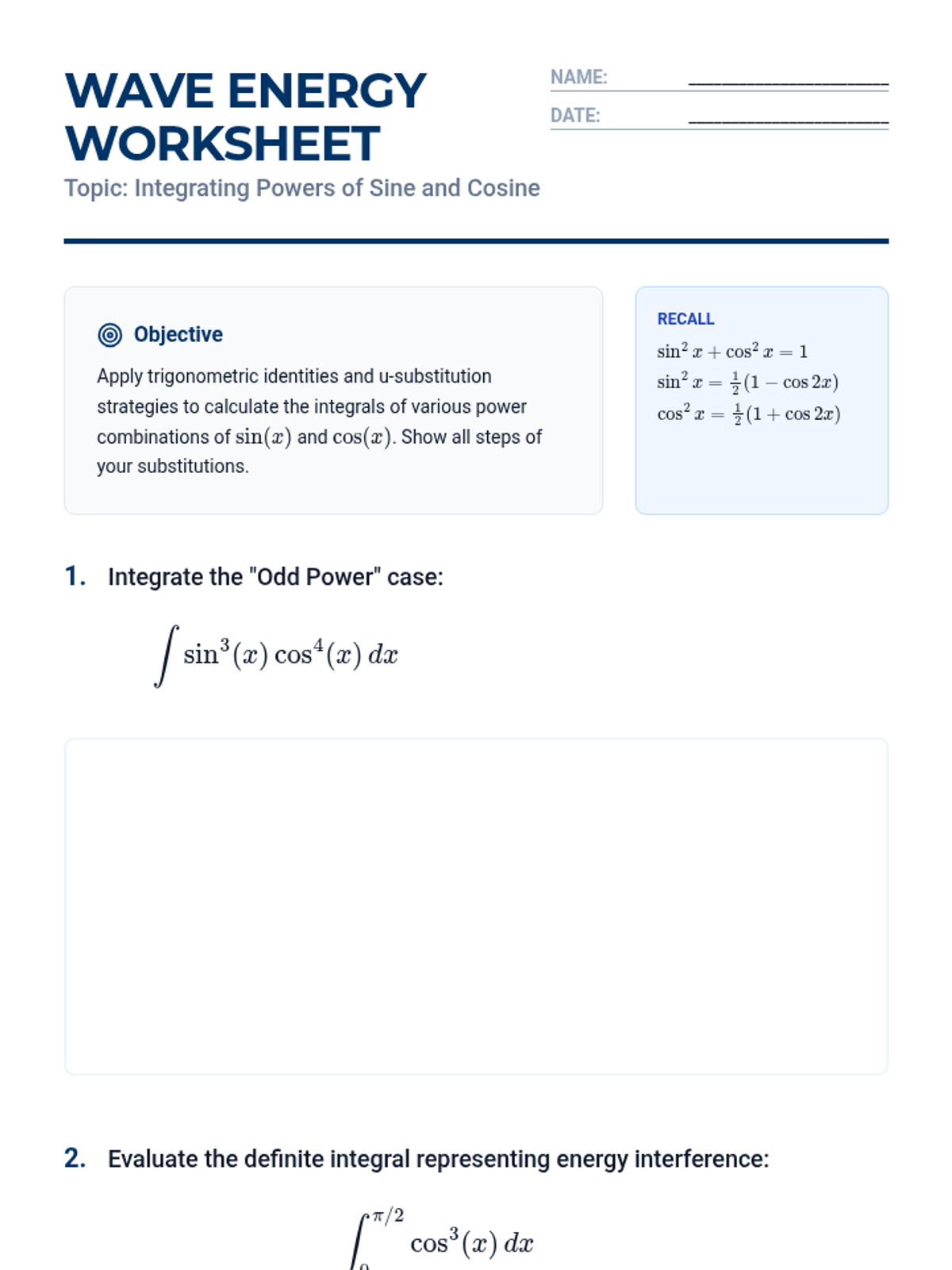
This sequence explores trigonometric integration techniques, from power reduction and identity manipulation to the geometric power of trigonometric substitution. Students learn to bridge the gap between algebraic radicals and right-triangle geometry.
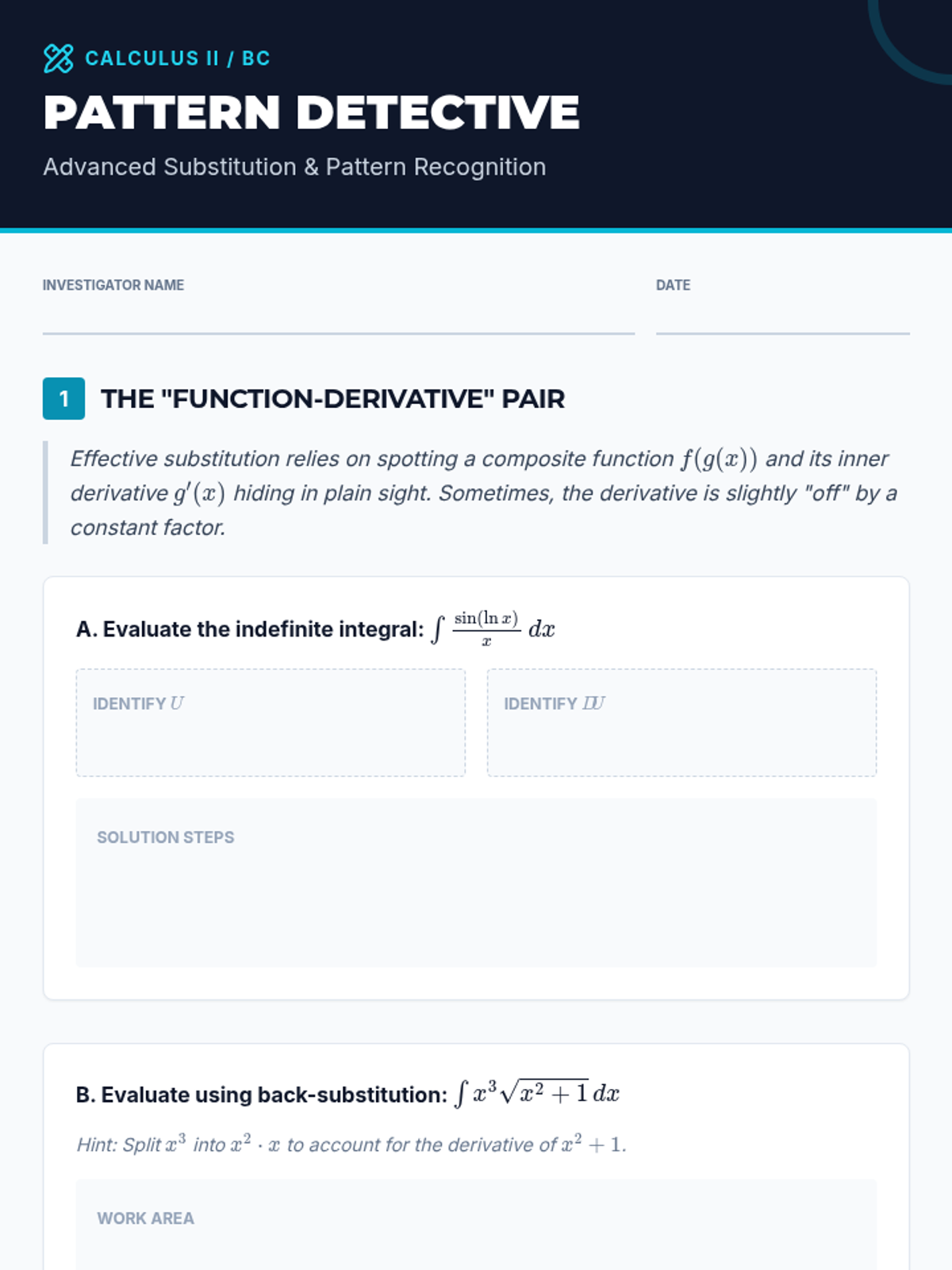
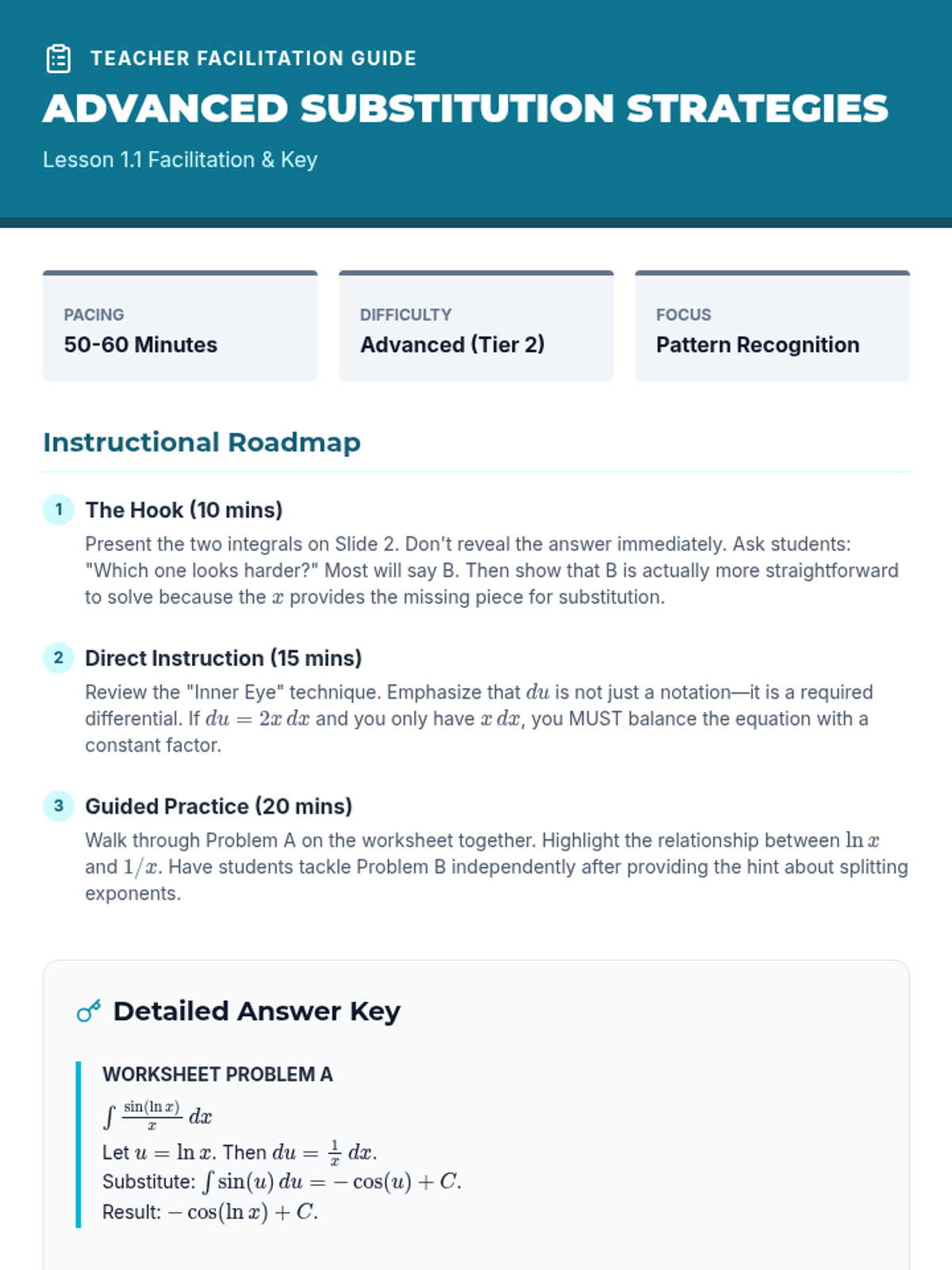
This calculus sequence focuses on mastering complex integration techniques beyond basic antiderivatives. Students learn to navigate Advanced Substitution, Integration by Parts, the Tabular Method, and Partial Fraction Decomposition through a strategy-first lens, culminating in a mastery-based mixed practice challenge.
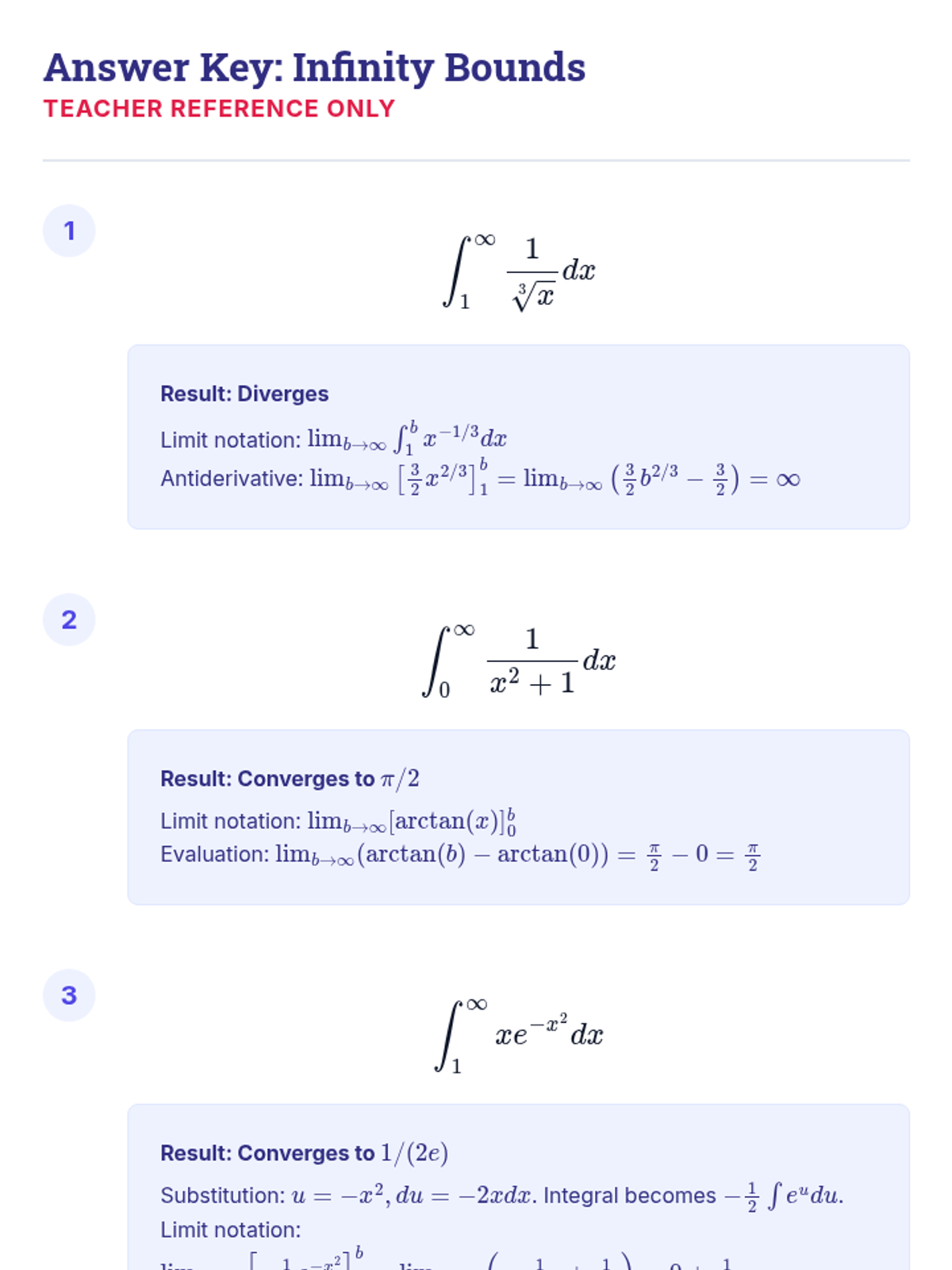
This advanced calculus sequence guides students through the systematic application of complex integration techniques including integration by parts, partial fractions, and trigonometric substitution. Students move from basic antiderivatives to analyzing the algebraic structure of functions to determine the most efficient solution pathway.
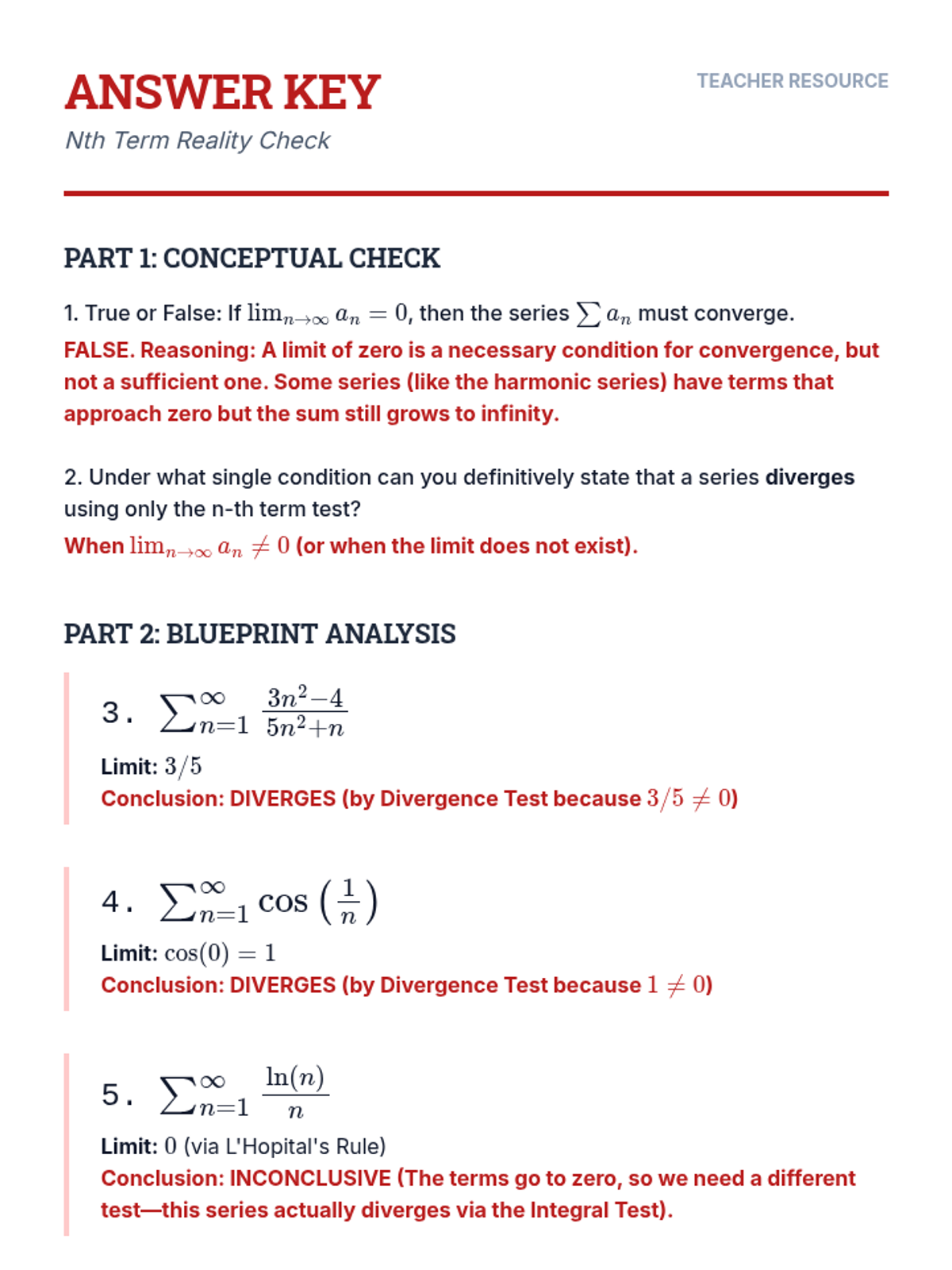
An inquiry-based exploration of convergence tests for infinite series, focusing on visualization, logical justification, and strategic selection of testing methods. Students develop a comprehensive understanding of how to determine the behavior of unending sums.
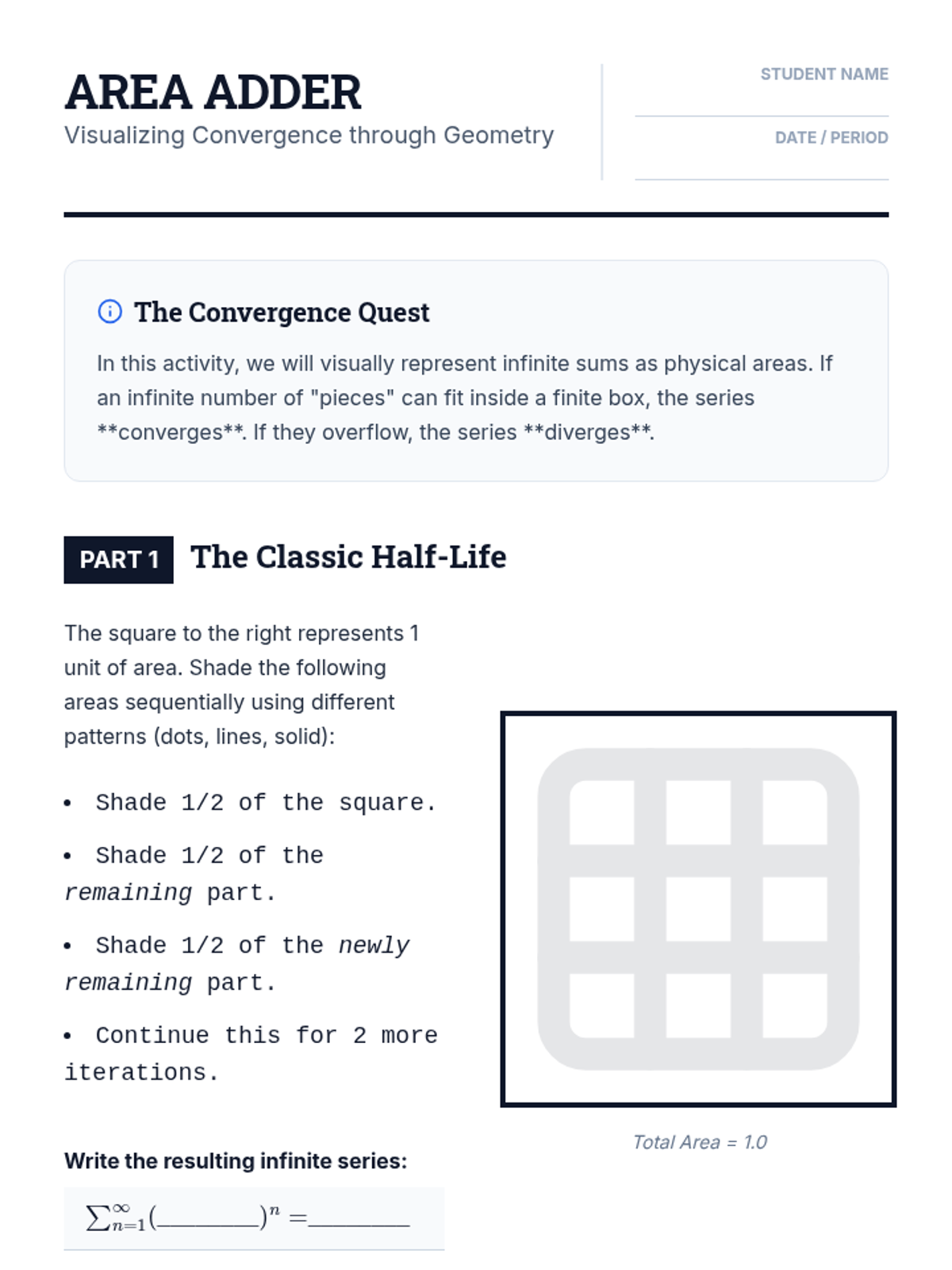
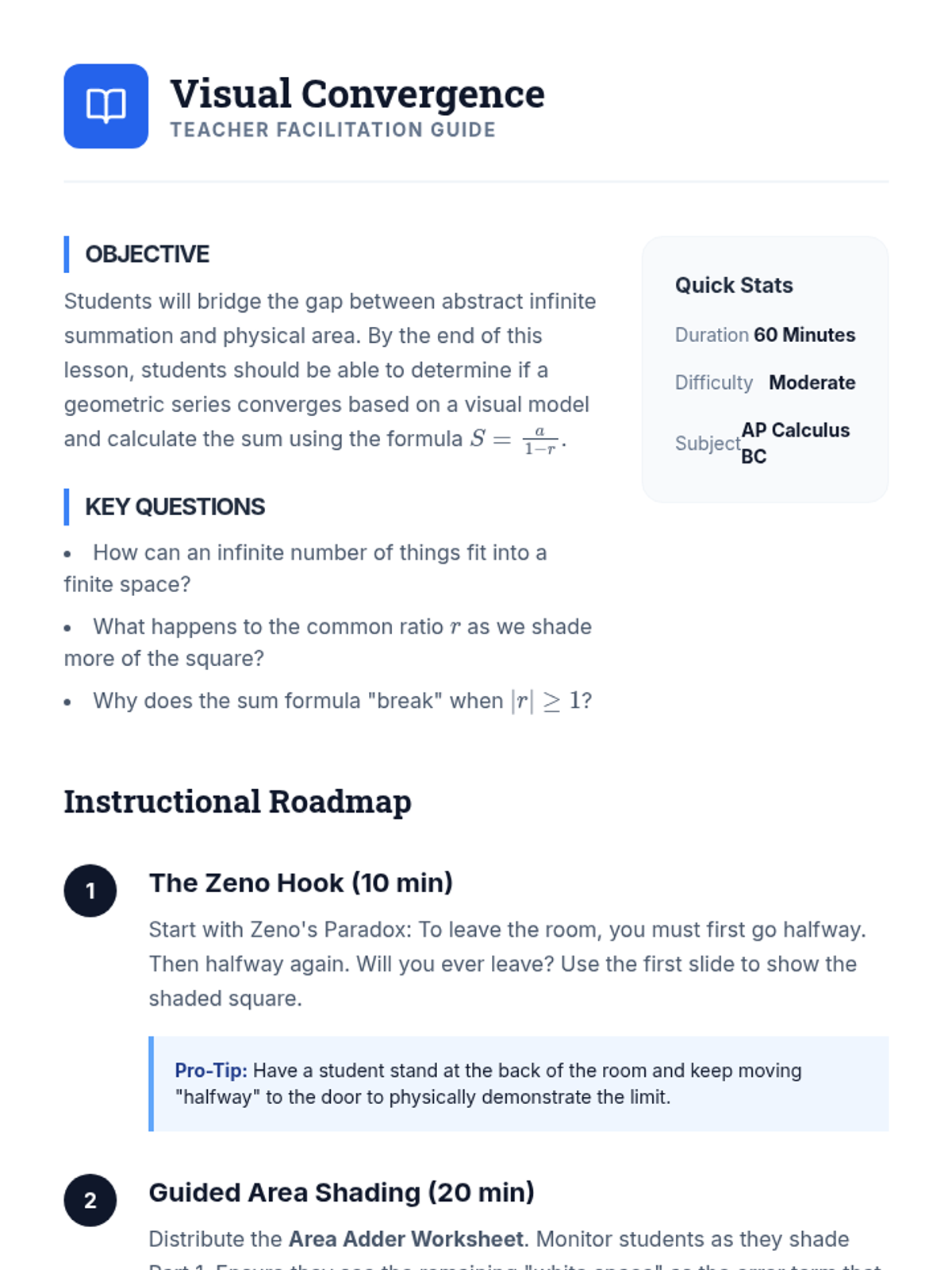
This sequence explores the intersection of calculus and geometry through infinite series and fractals. Students investigate convergence and divergence using visual area models, fractal dimensions, and physical simulations like block stacking.
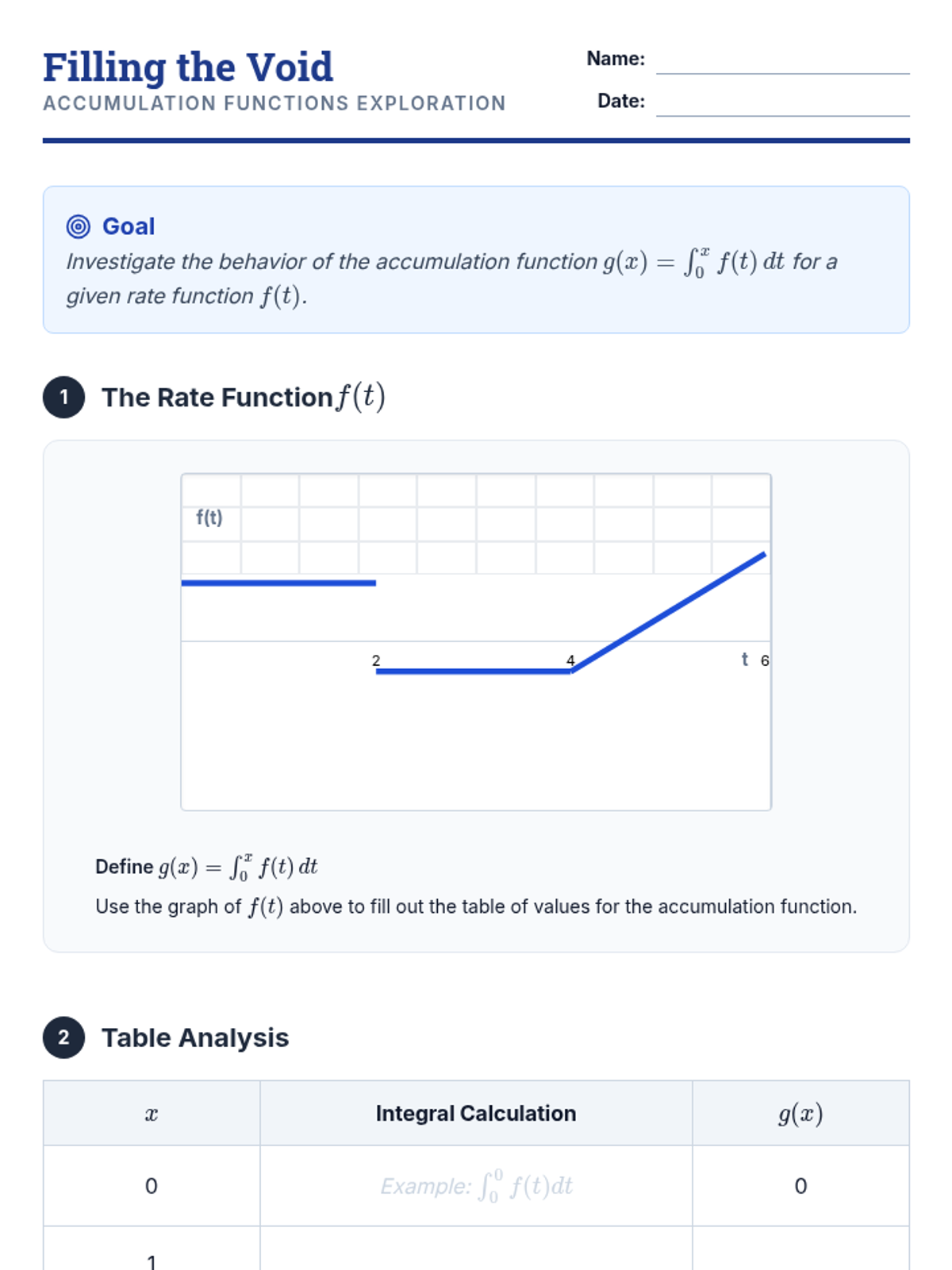
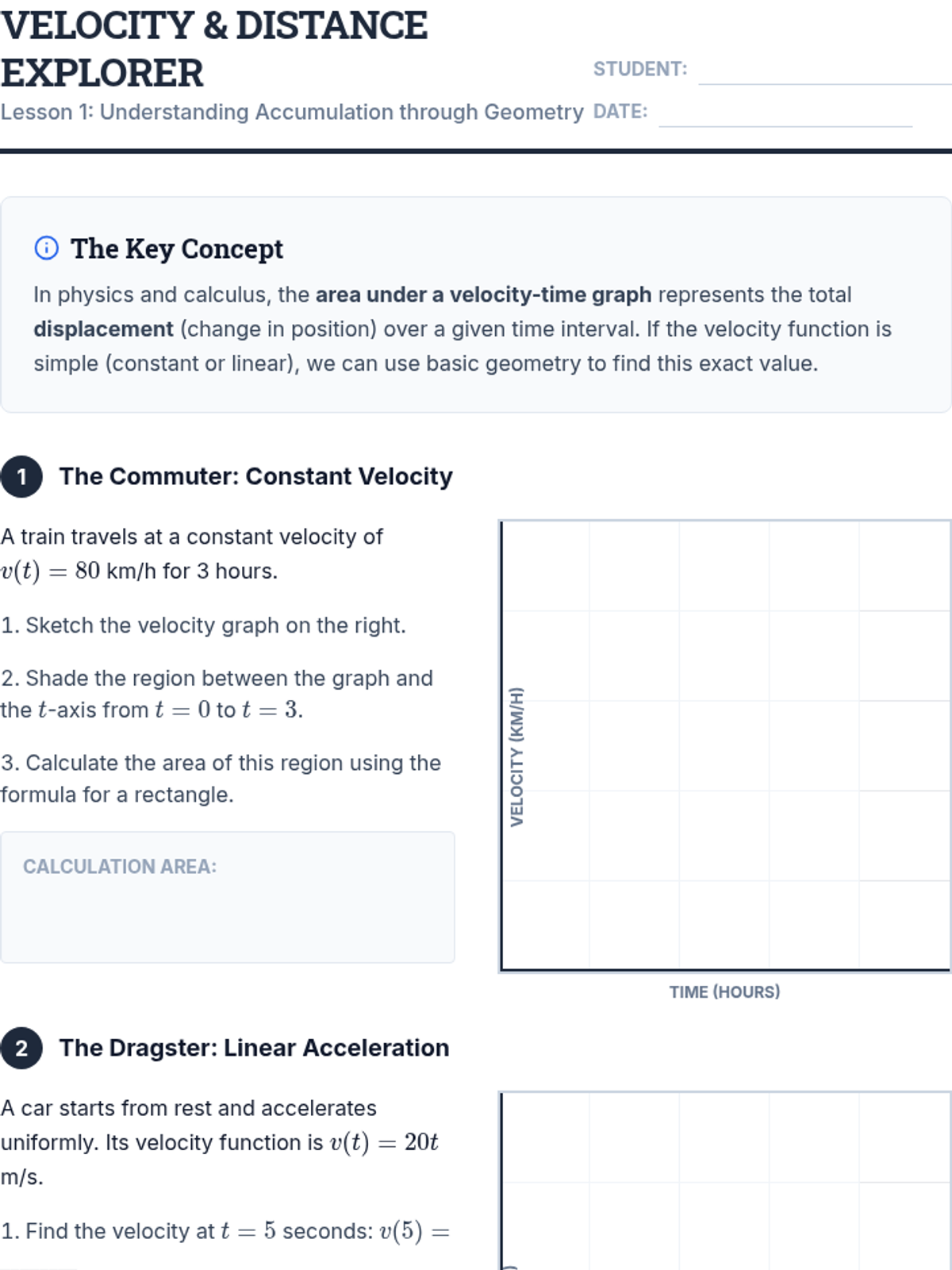
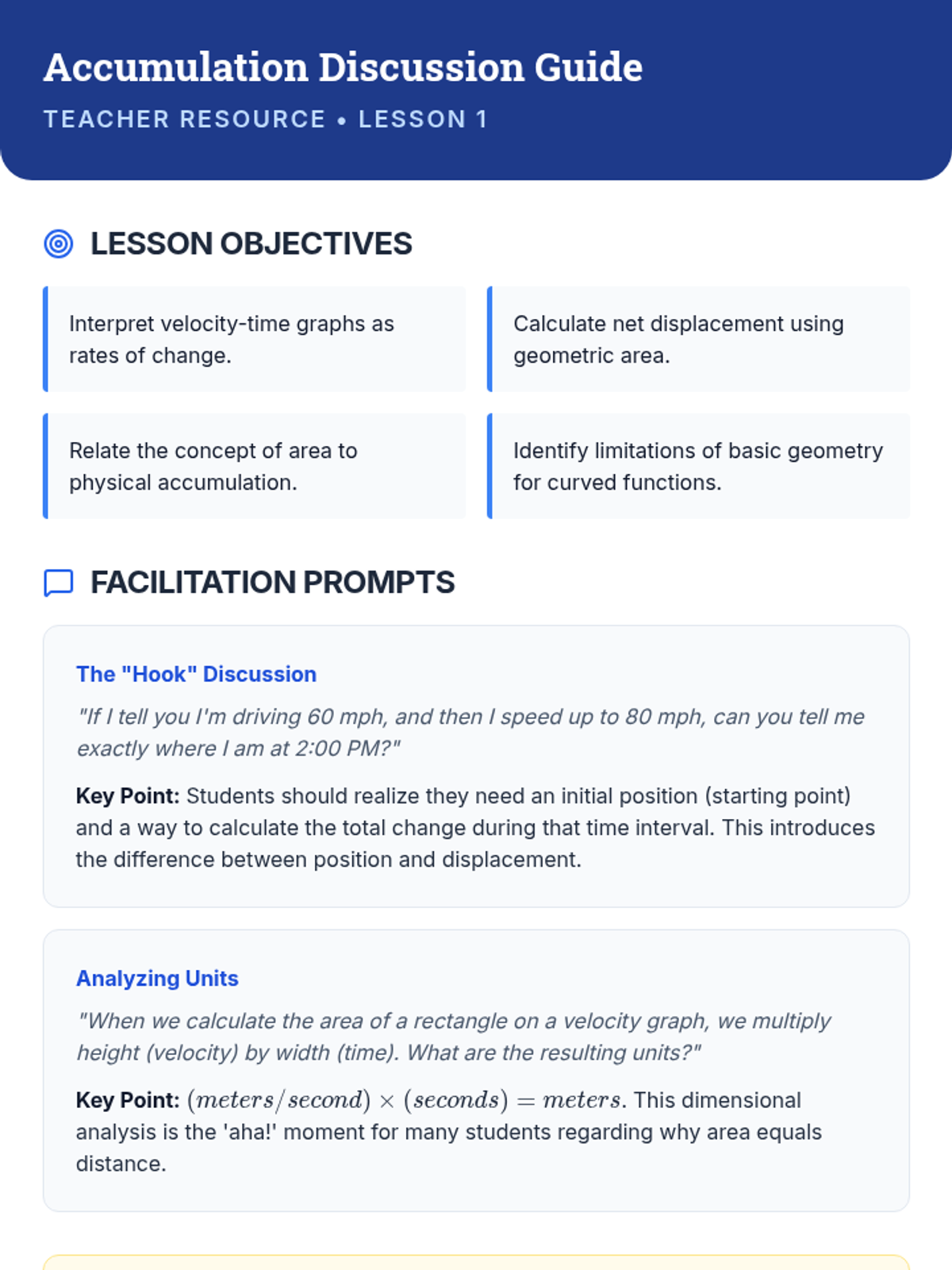
A comprehensive unit connecting differentiation and integration through the Fundamental Theorem of Calculus. Students transition from visualizing accumulation to mastery of algebraic evaluation, applying these concepts to real-world net change and total area problems.
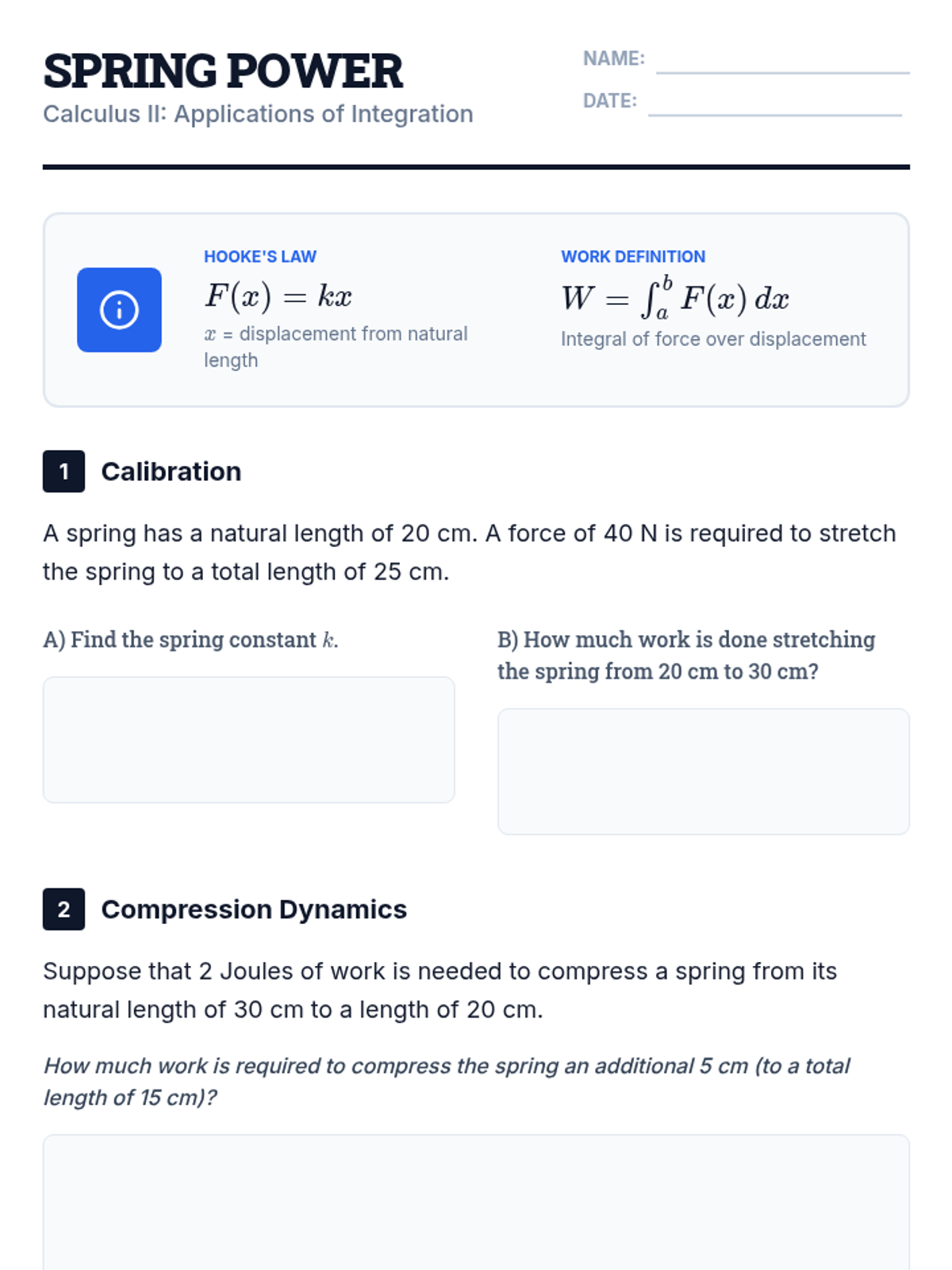
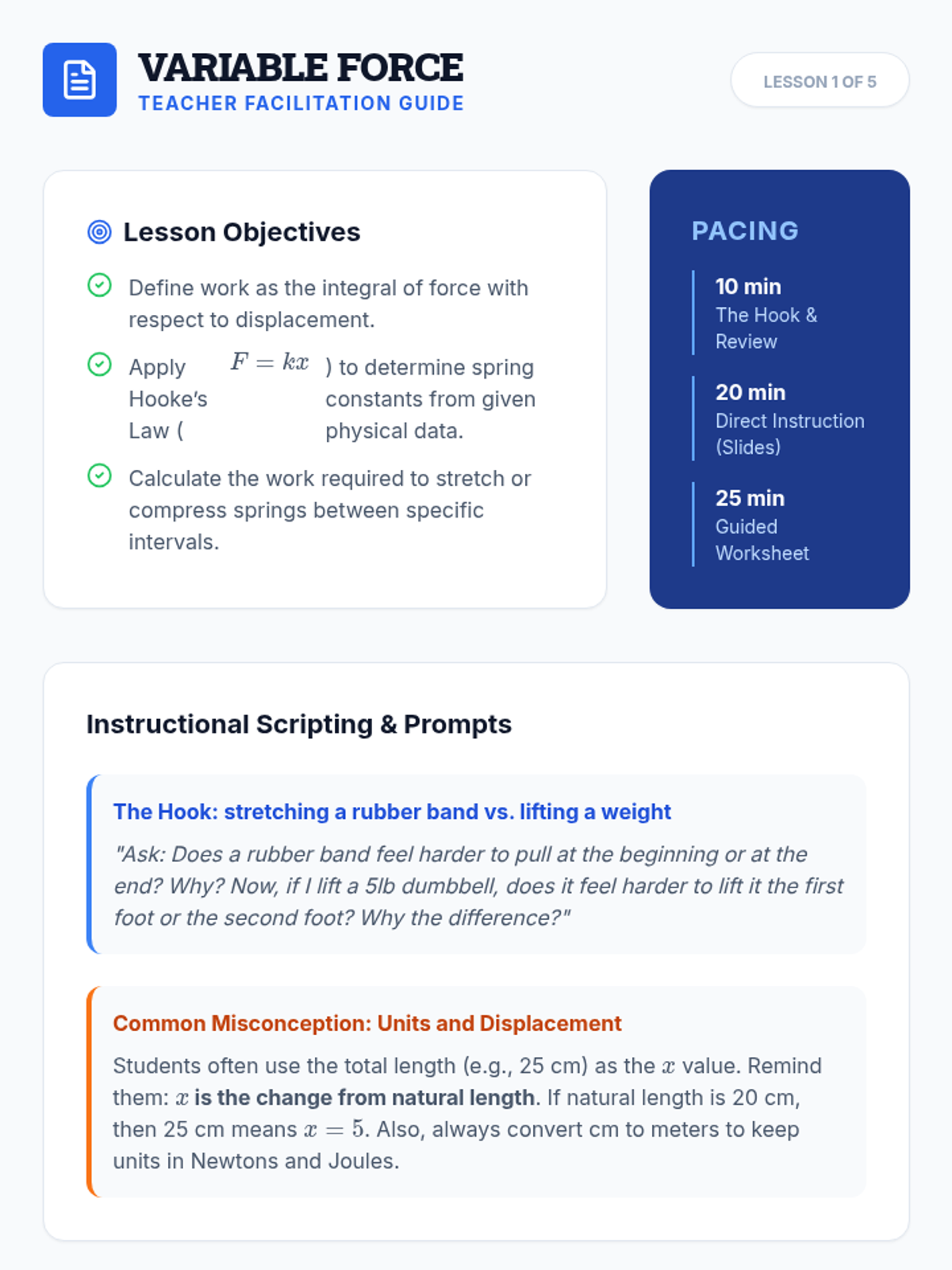
This sequence connects calculus to physics by applying integration to calculate Work and Force in variable systems. Students explore Hooke's Law, tank pumping, and lifting variable-mass objects, culminating in a mastery assessment of physical engineering applications.
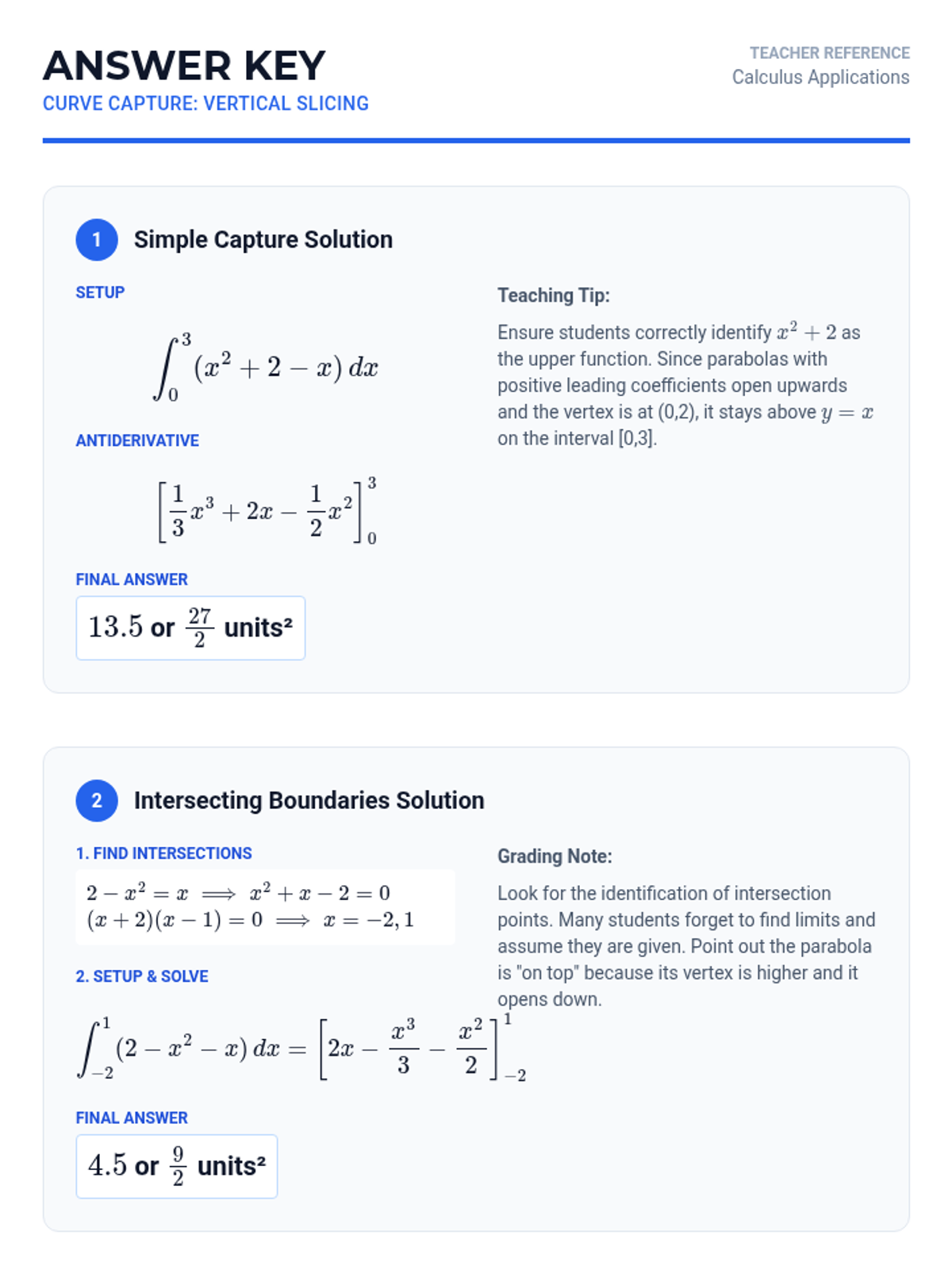
This sequence guides 11th-grade students through the transition from 2D area calculations to 3D volume determinations using integral calculus. Students will master vertical and horizontal slicing techniques for area, and progress to the Disk and Washer methods for rotational volumes.
This sequence guides 12th-grade students from the conceptual understanding of area as accumulation to the algebraic precision of the Fundamental Theorem of Calculus. Students explore the 'area problem', formalize approximations via Riemann sums, define the definite integral through limits, and culminate in applying the Fundamental Theorem.
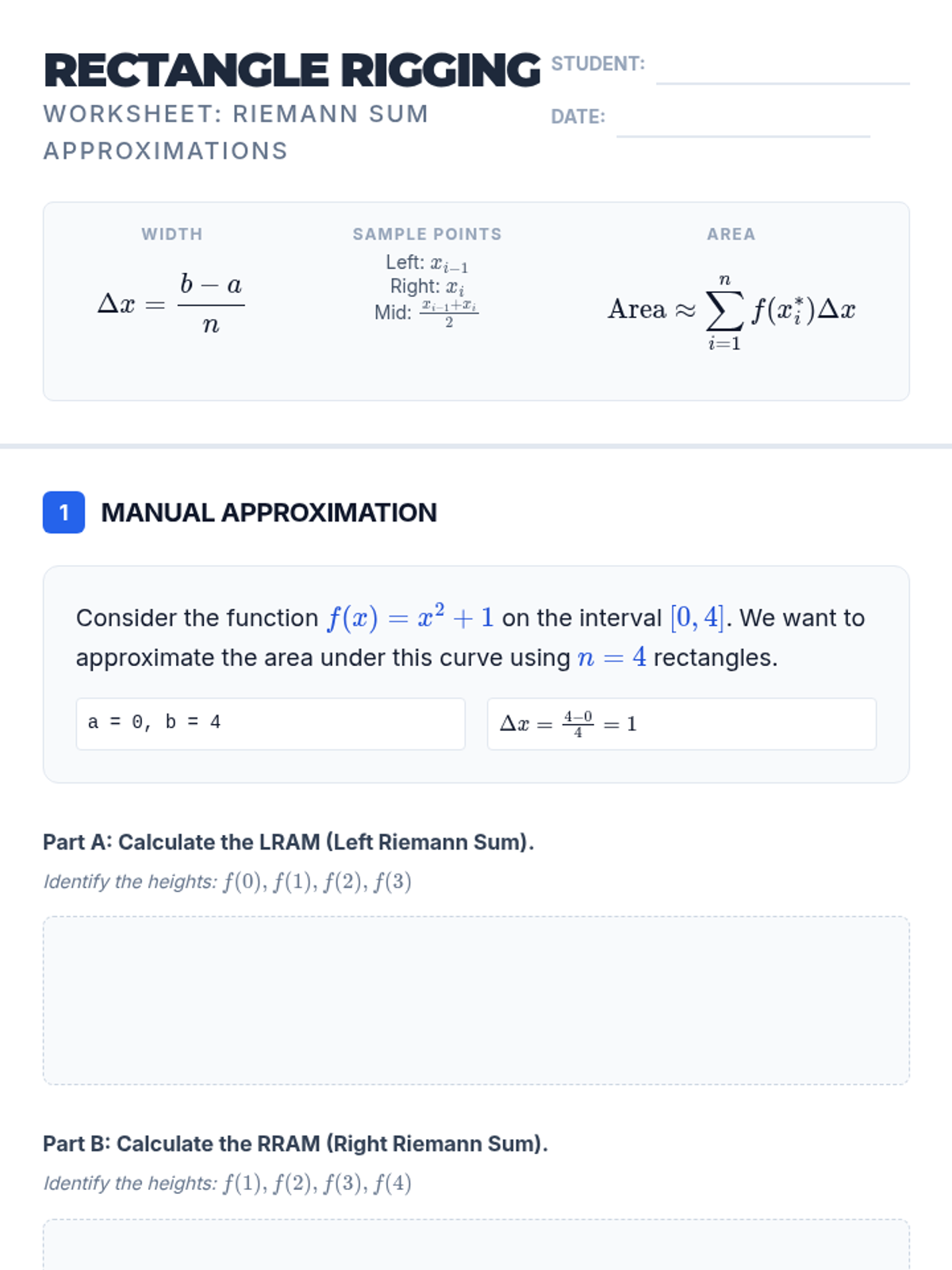
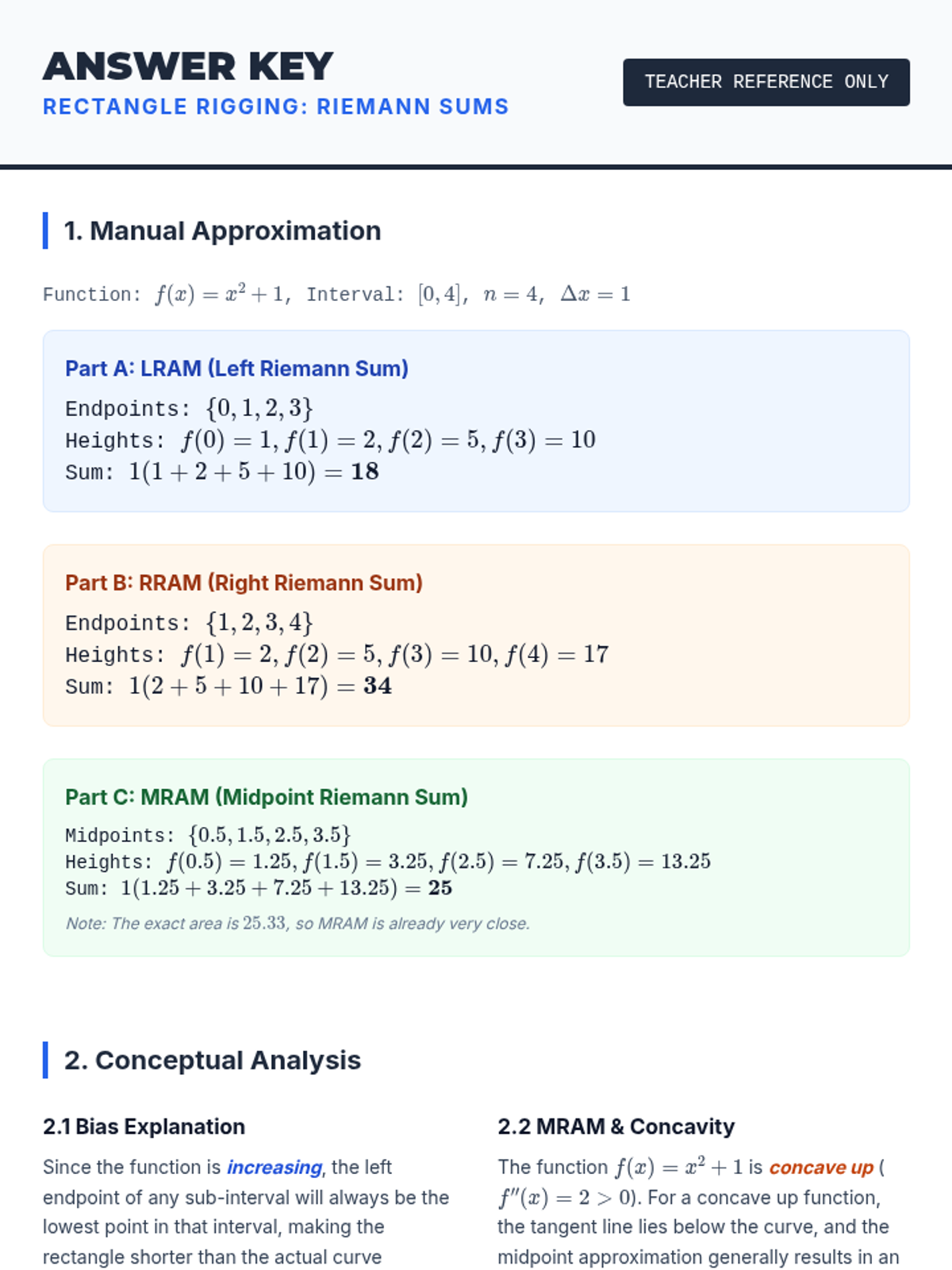
A comprehensive journey from approximating areas under curves with rectangles to the powerful Fundamental Theorem of Calculus. Students explore Riemann sums, the limit definition of the integral, geometric interpretations of area, and the mechanics of antiderivatives.
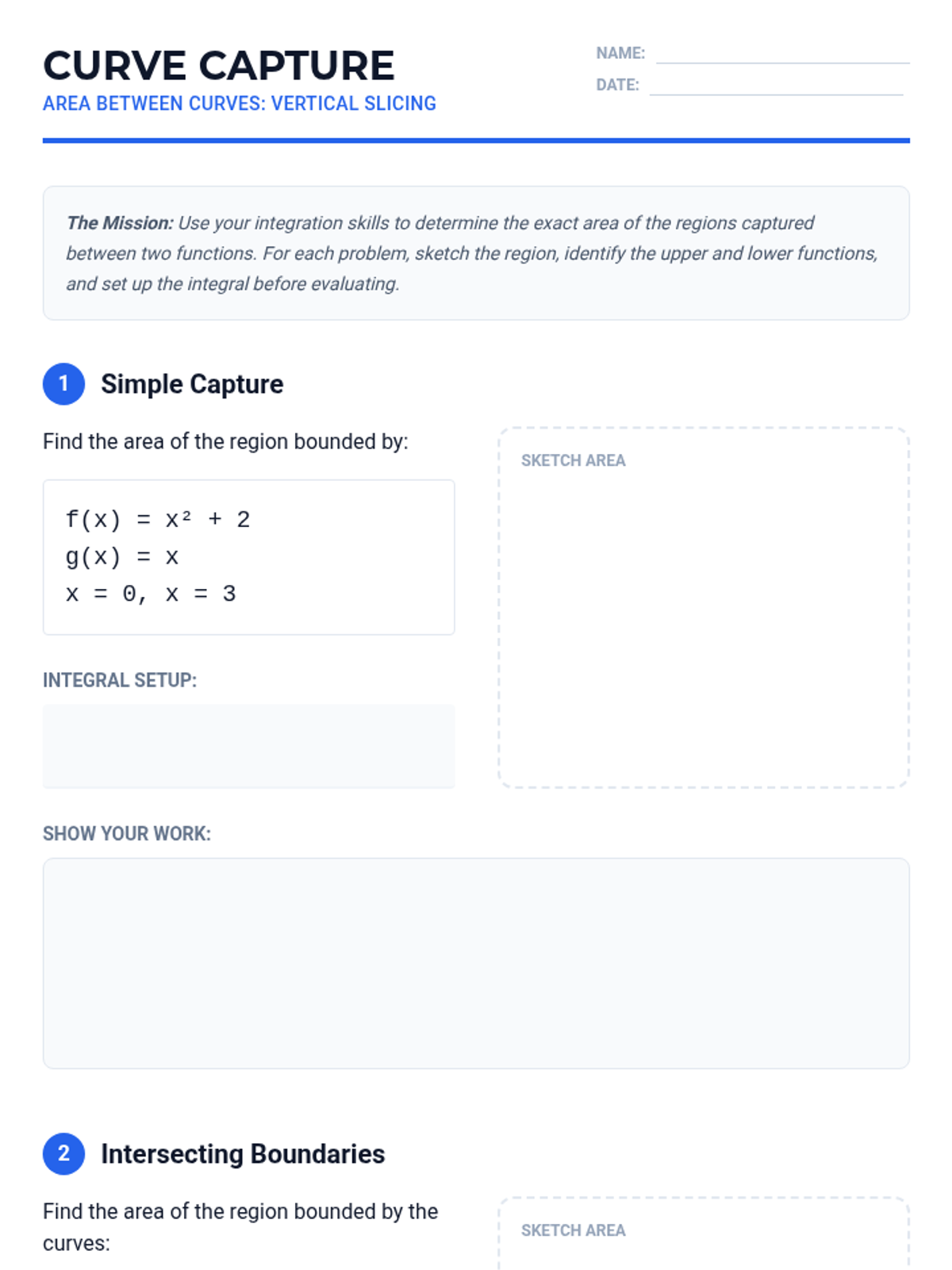
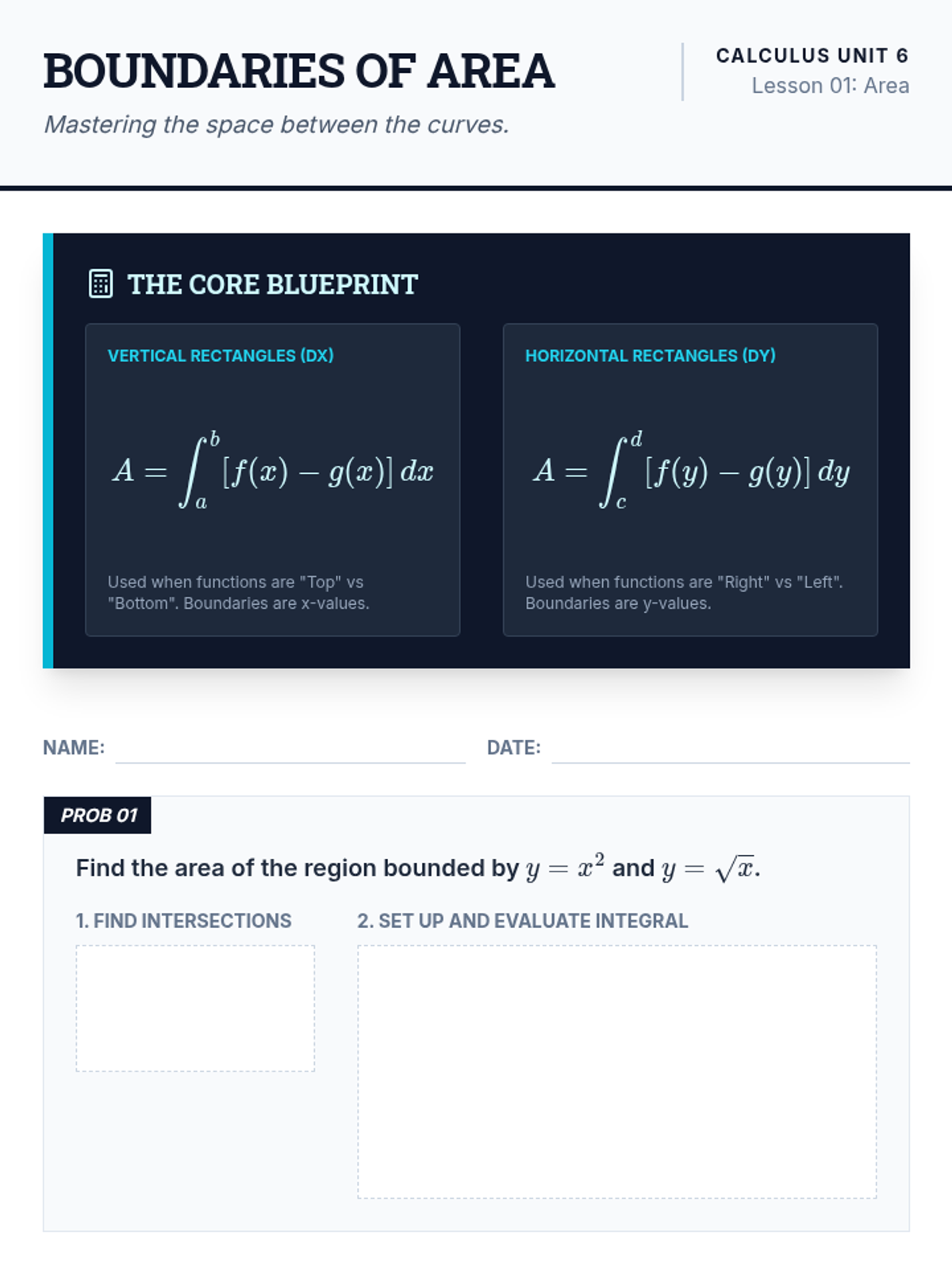
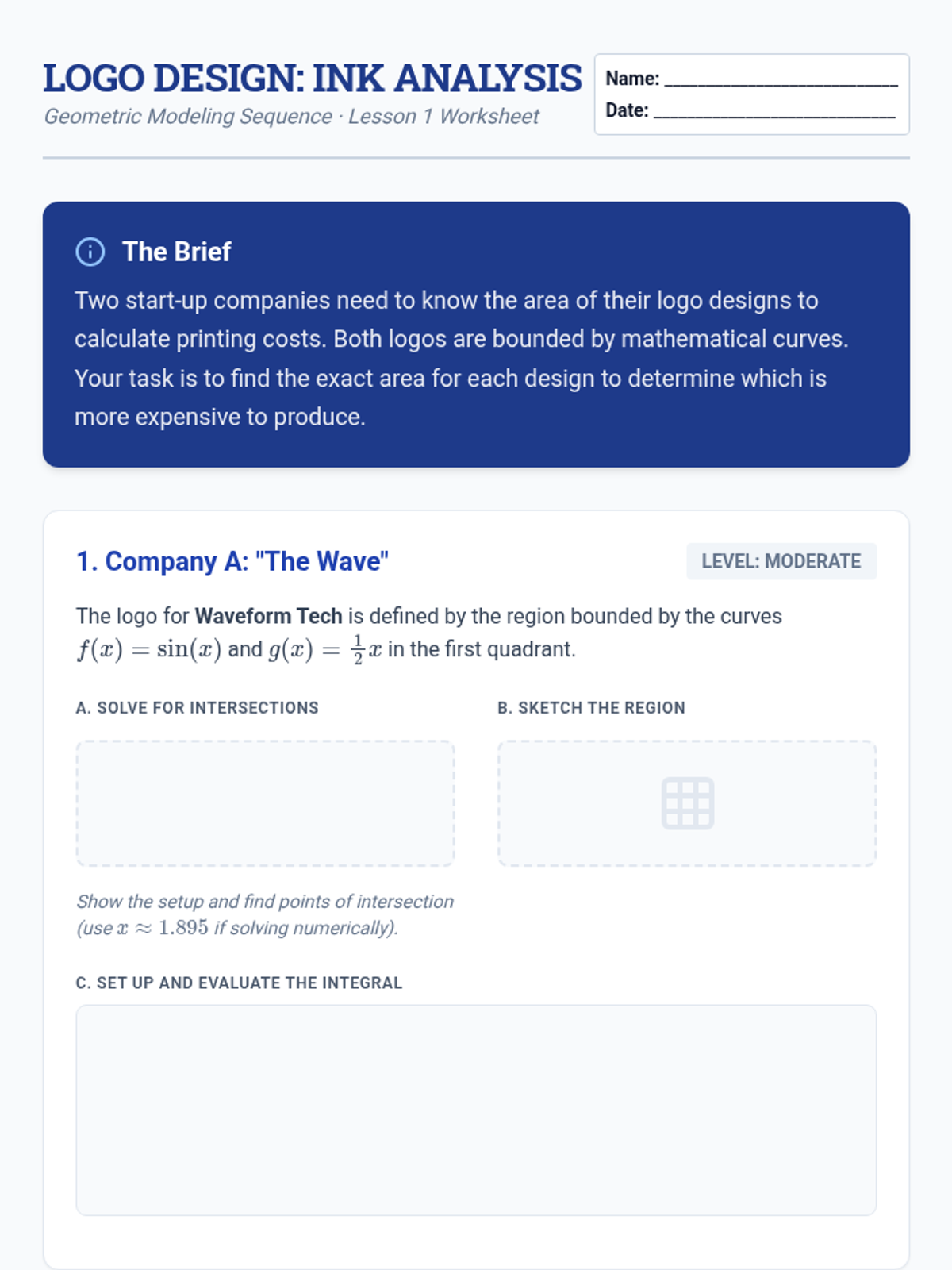
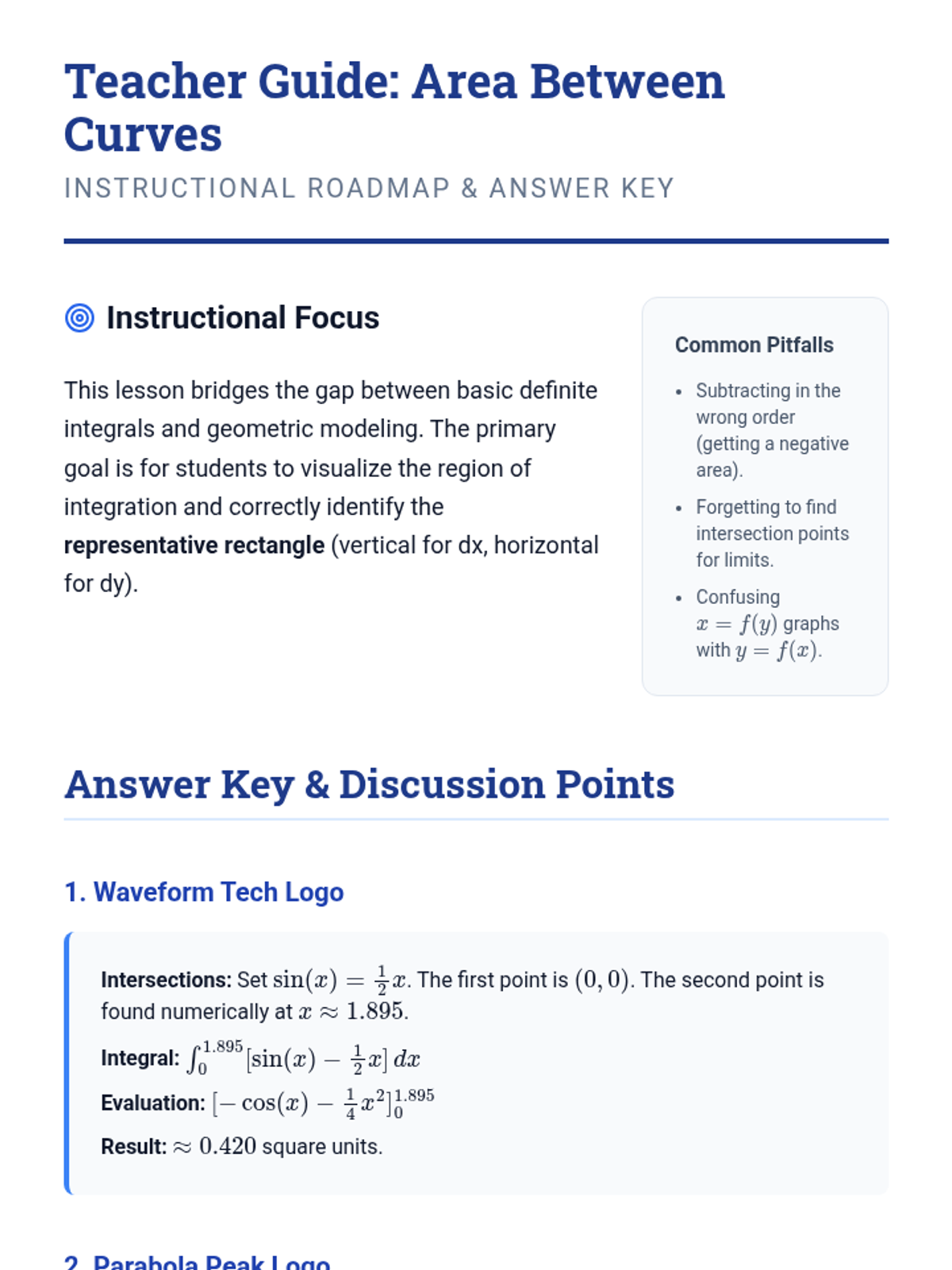
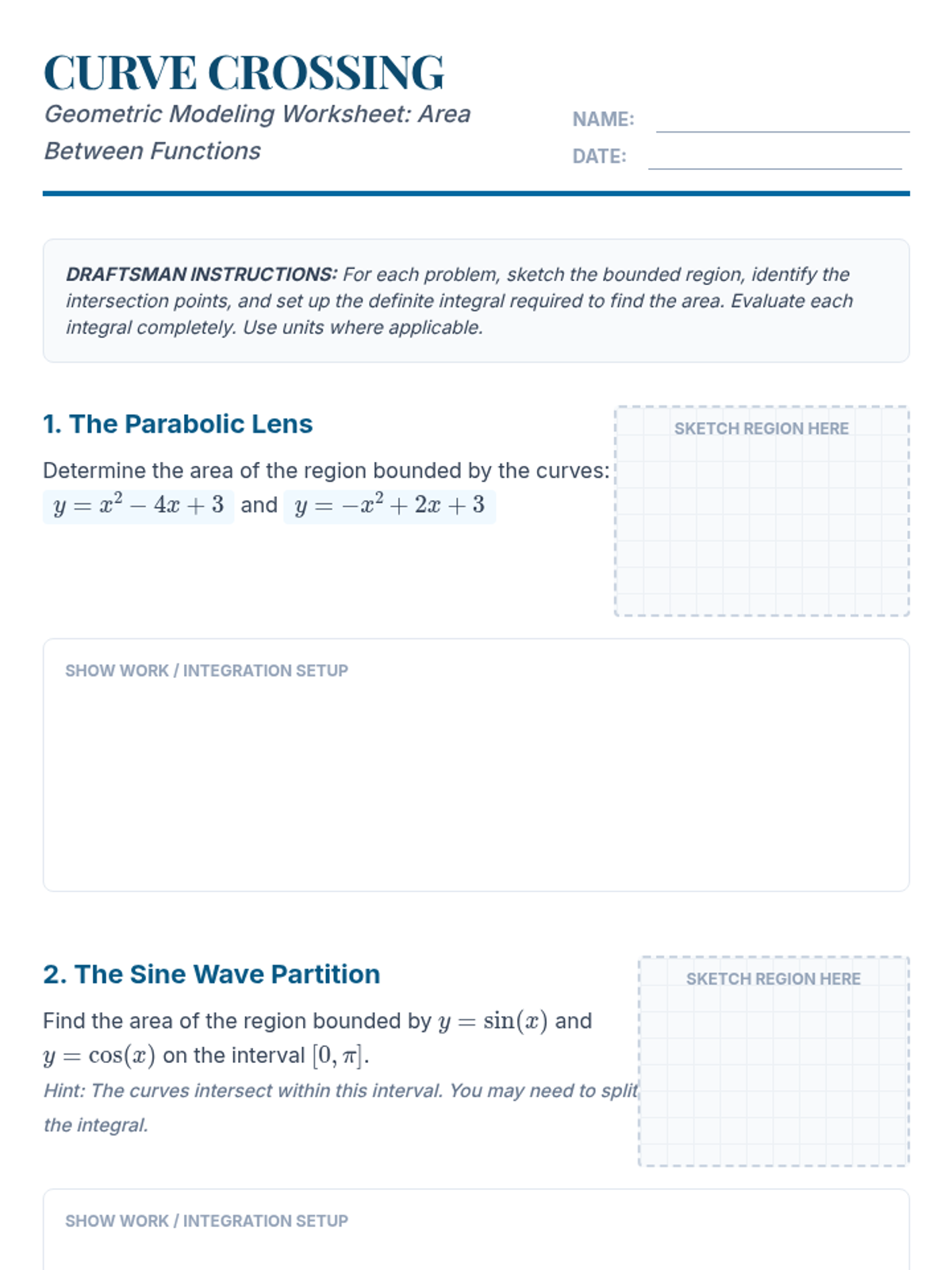
An advanced calculus sequence covering the calculation of area between curves and the volume of solids of revolution using disk, washer, and shell methods. Students transition from 2D area analysis to 3D spatial visualization and integration.
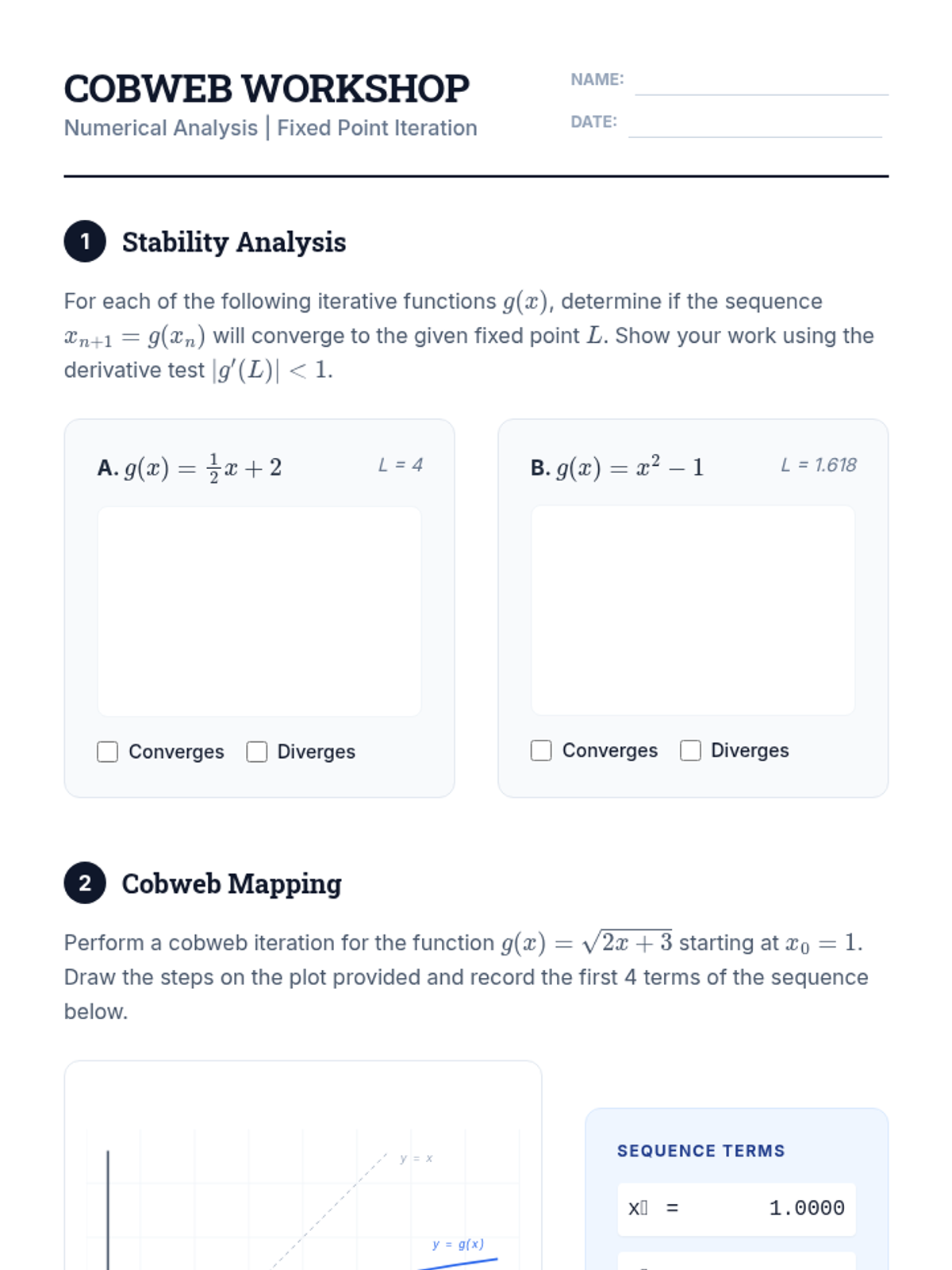
This sequence explores numerical analysis through the lens of sequences, focusing on iterative methods to approximate solutions to complex equations. Students investigate fixed-point iteration, Newton's method, convergence rates, and the transition into chaotic behavior.
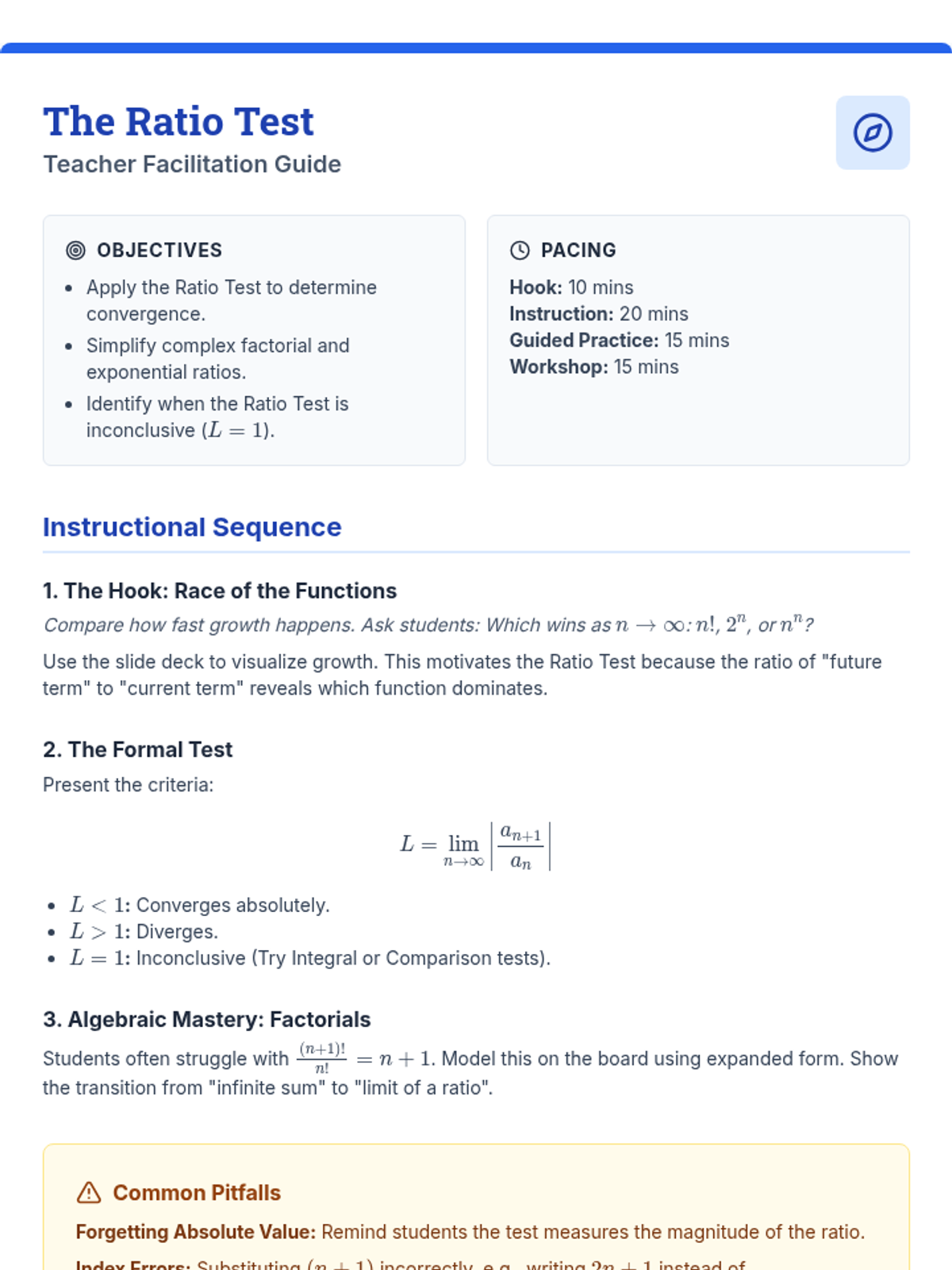
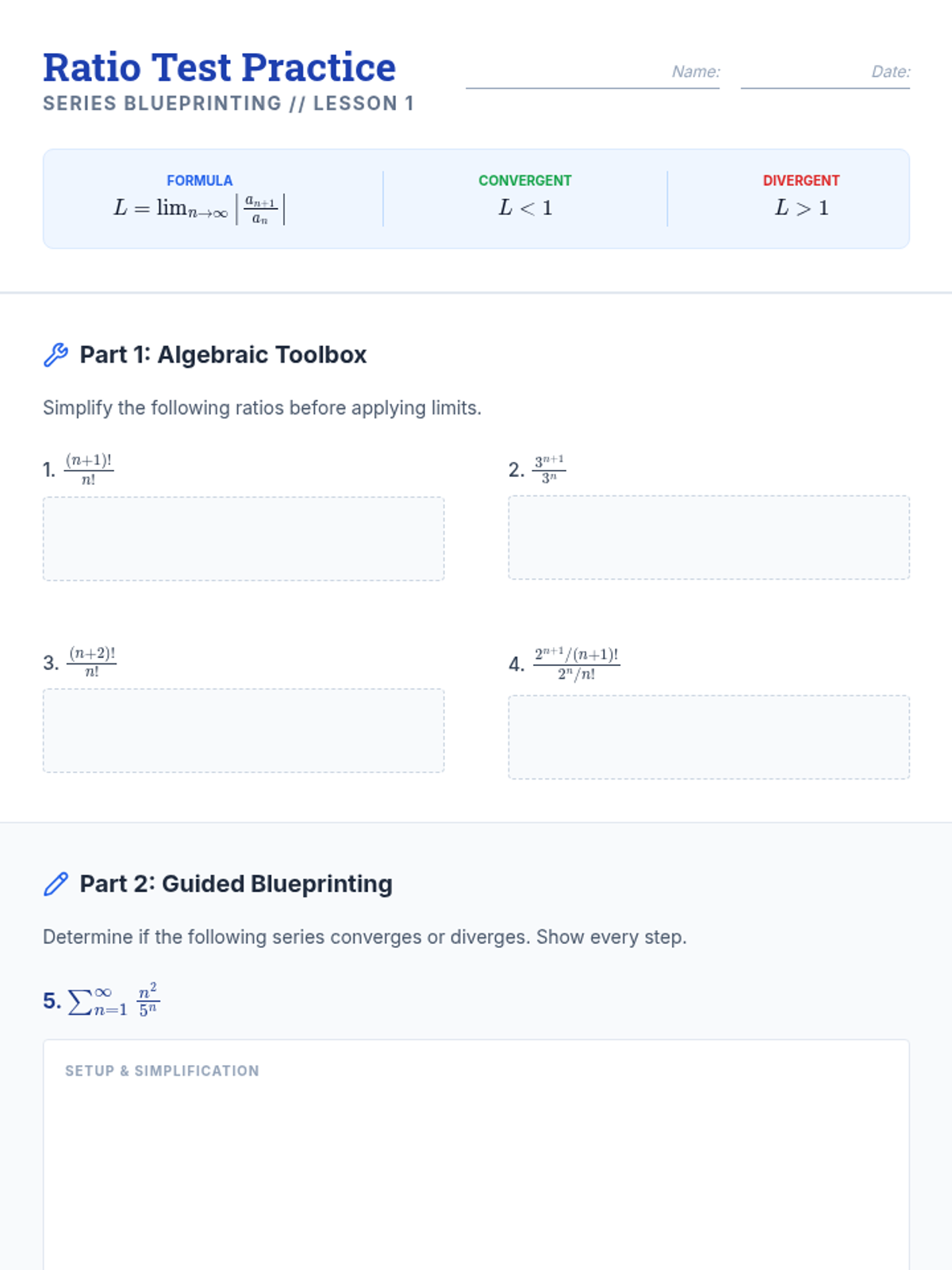
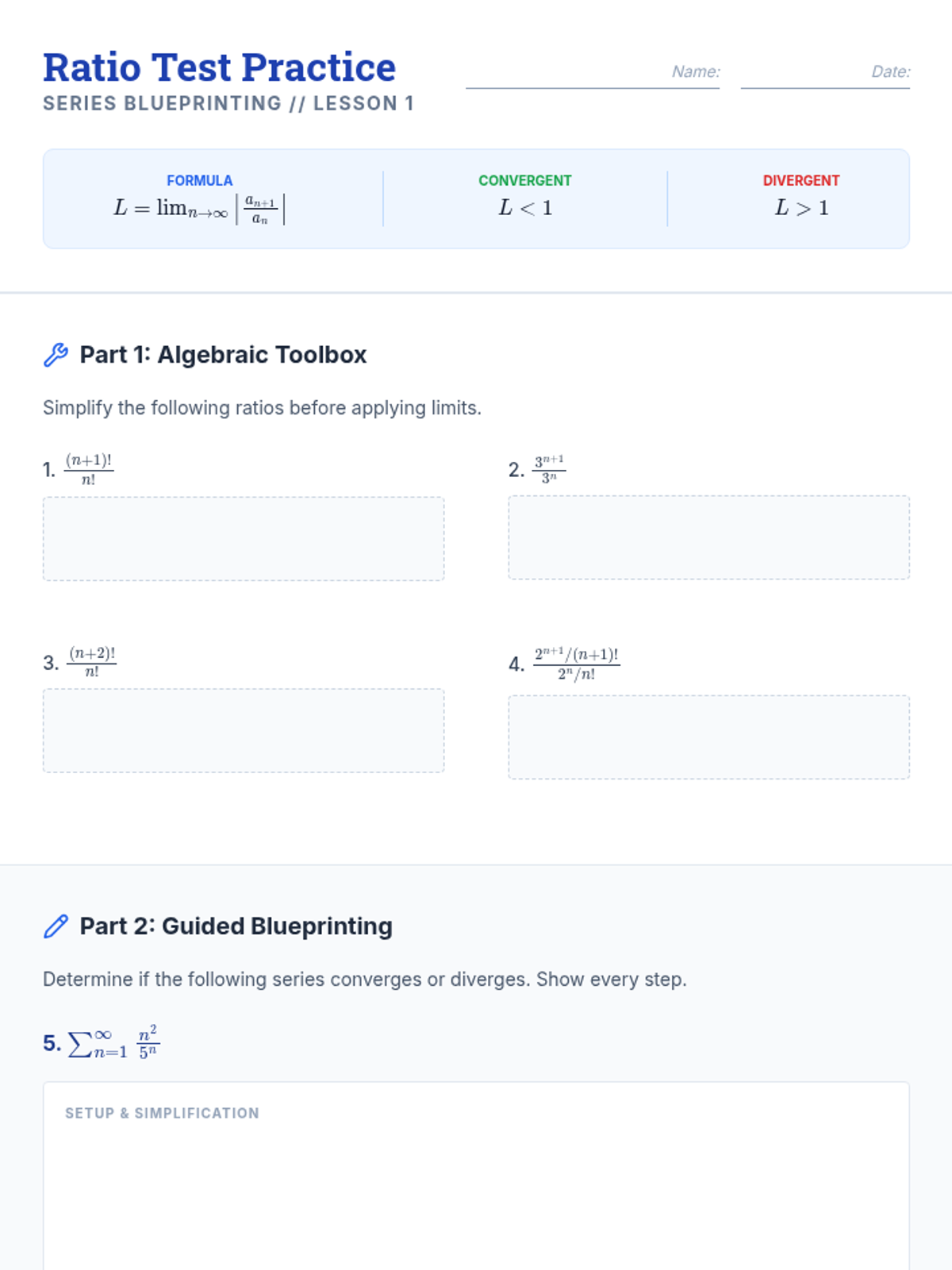
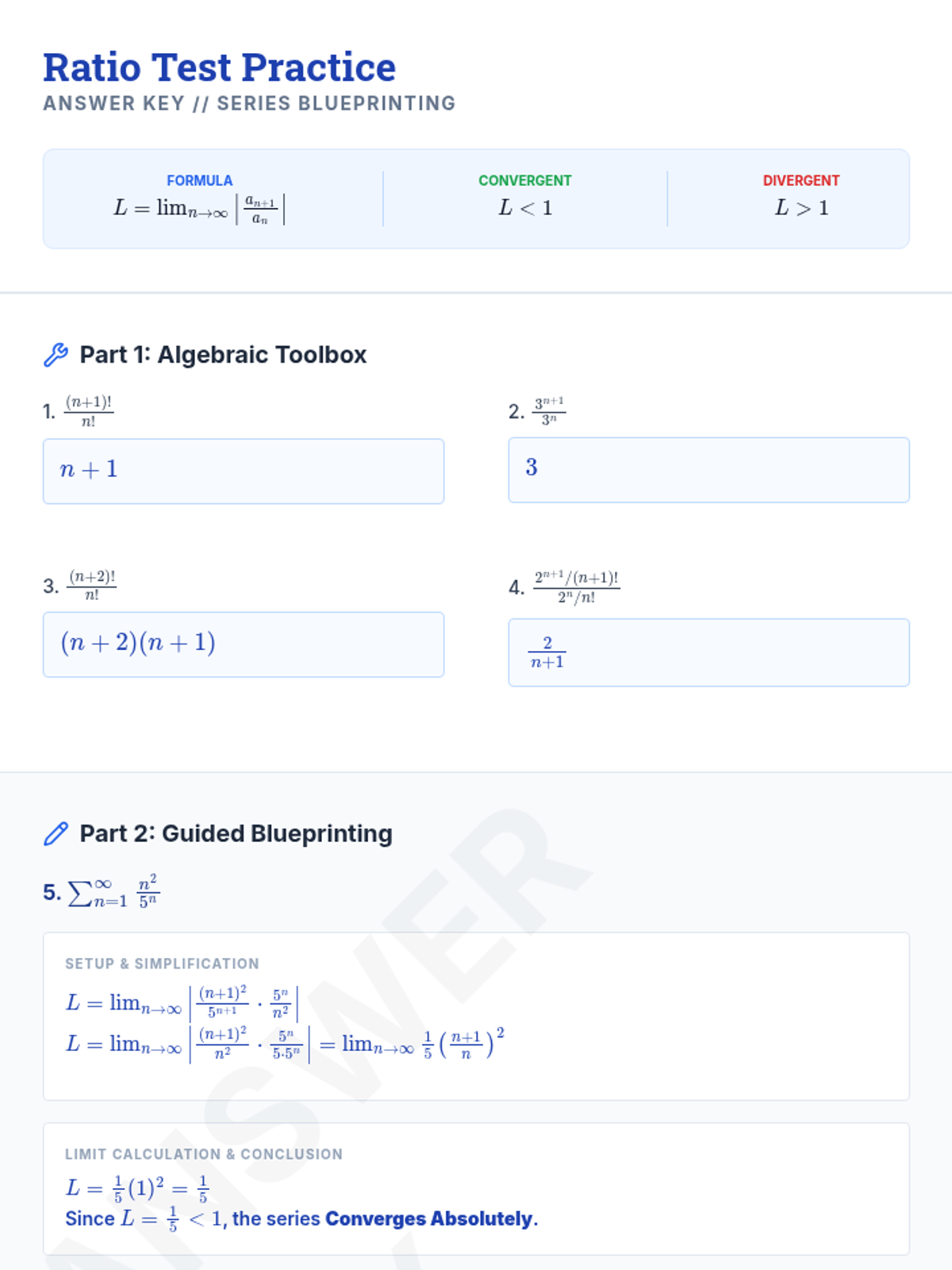
This advanced sequence introduces powerful tools for analyzing series with factorials and powers, leading to the concept of power series. Students master the Ratio and Root tests, explore absolute versus conditional convergence, and conclude by connecting series to functions through Taylor polynomials.
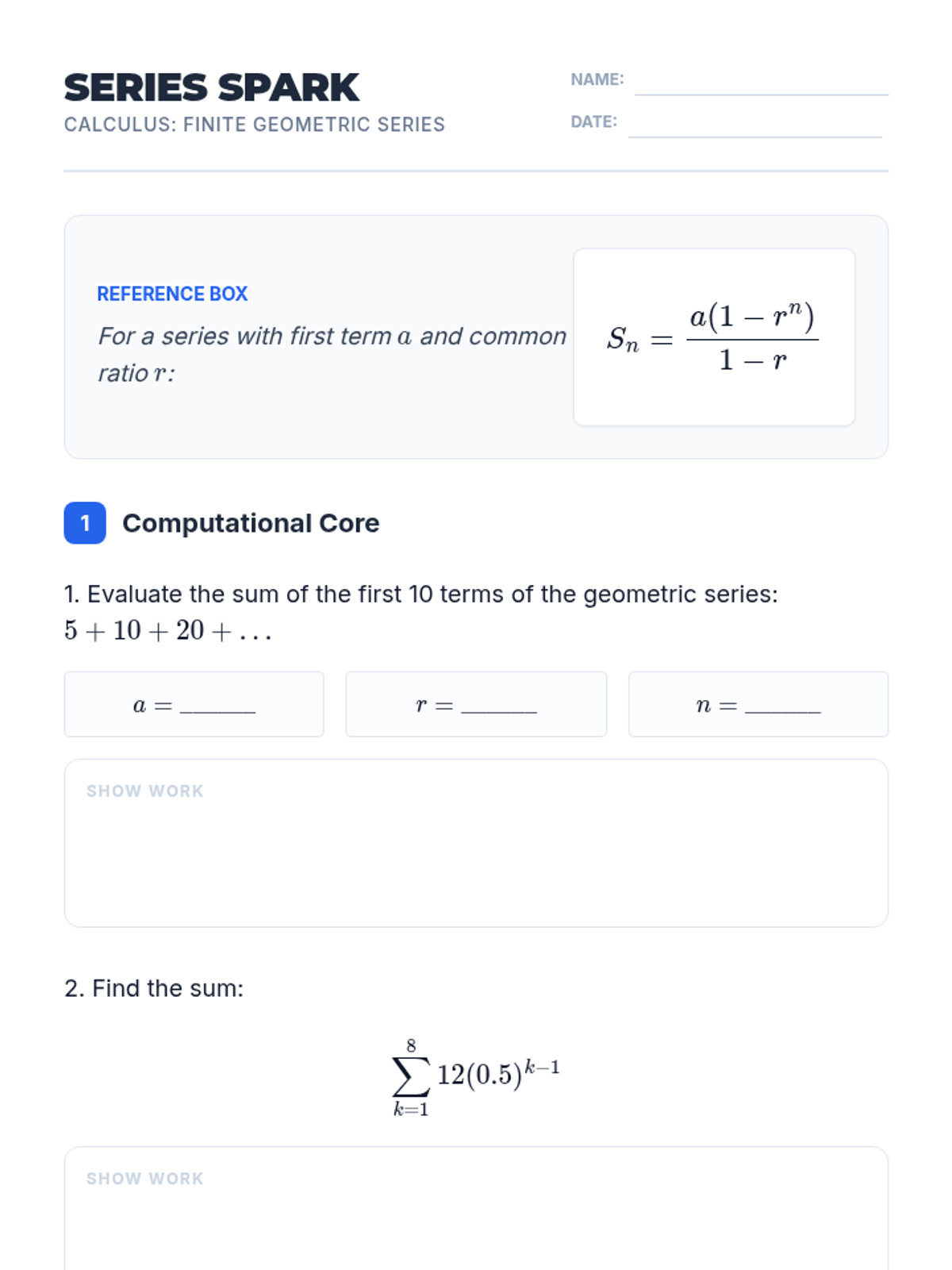
A comprehensive unit for 11th Grade Calculus exploring geometric series through the lens of financial literacy and fractal geometry. Students transition from finite sums to infinite convergence, applying these models to population growth, Zeno's Paradox, and complex loan amortization.
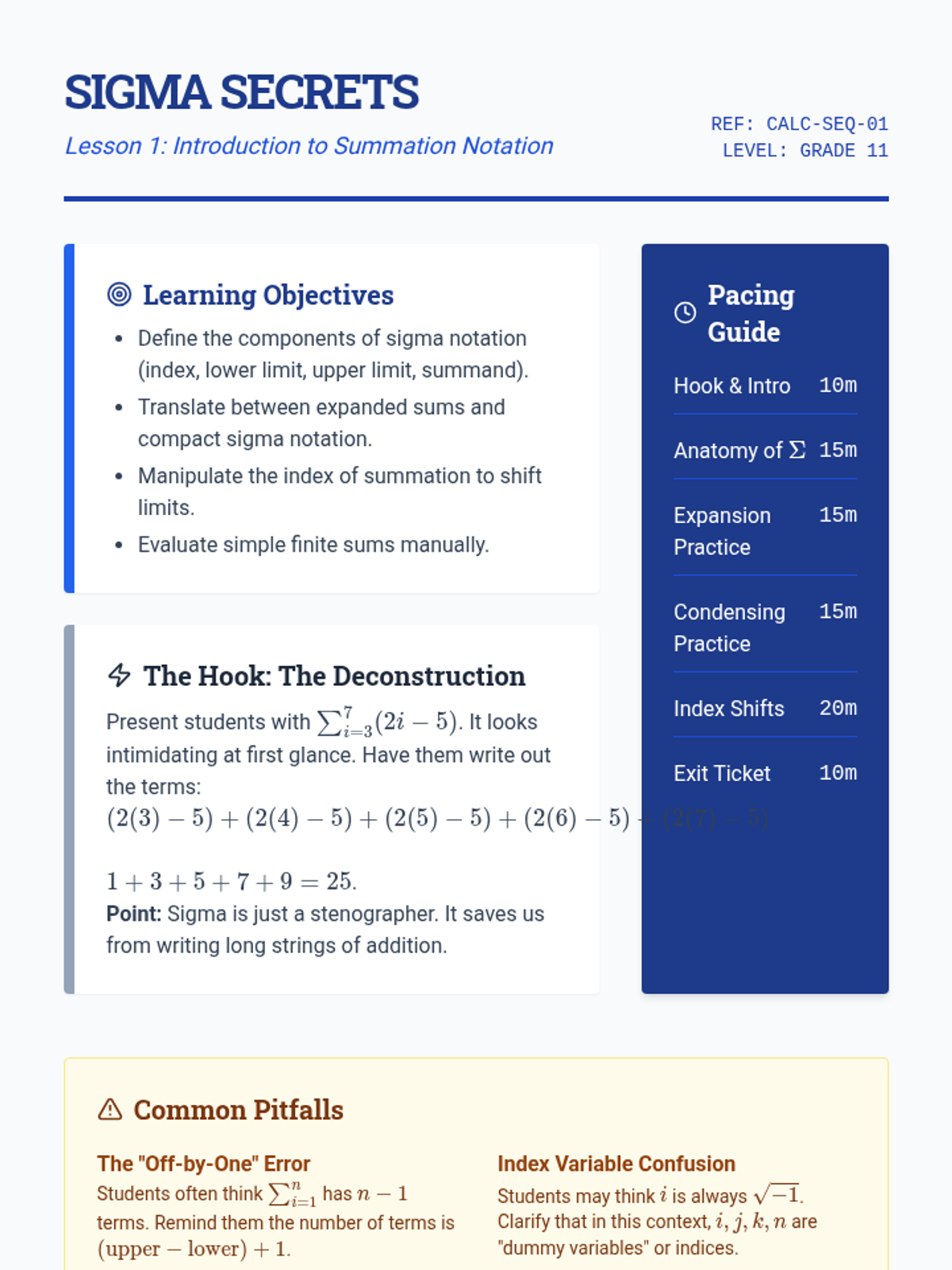
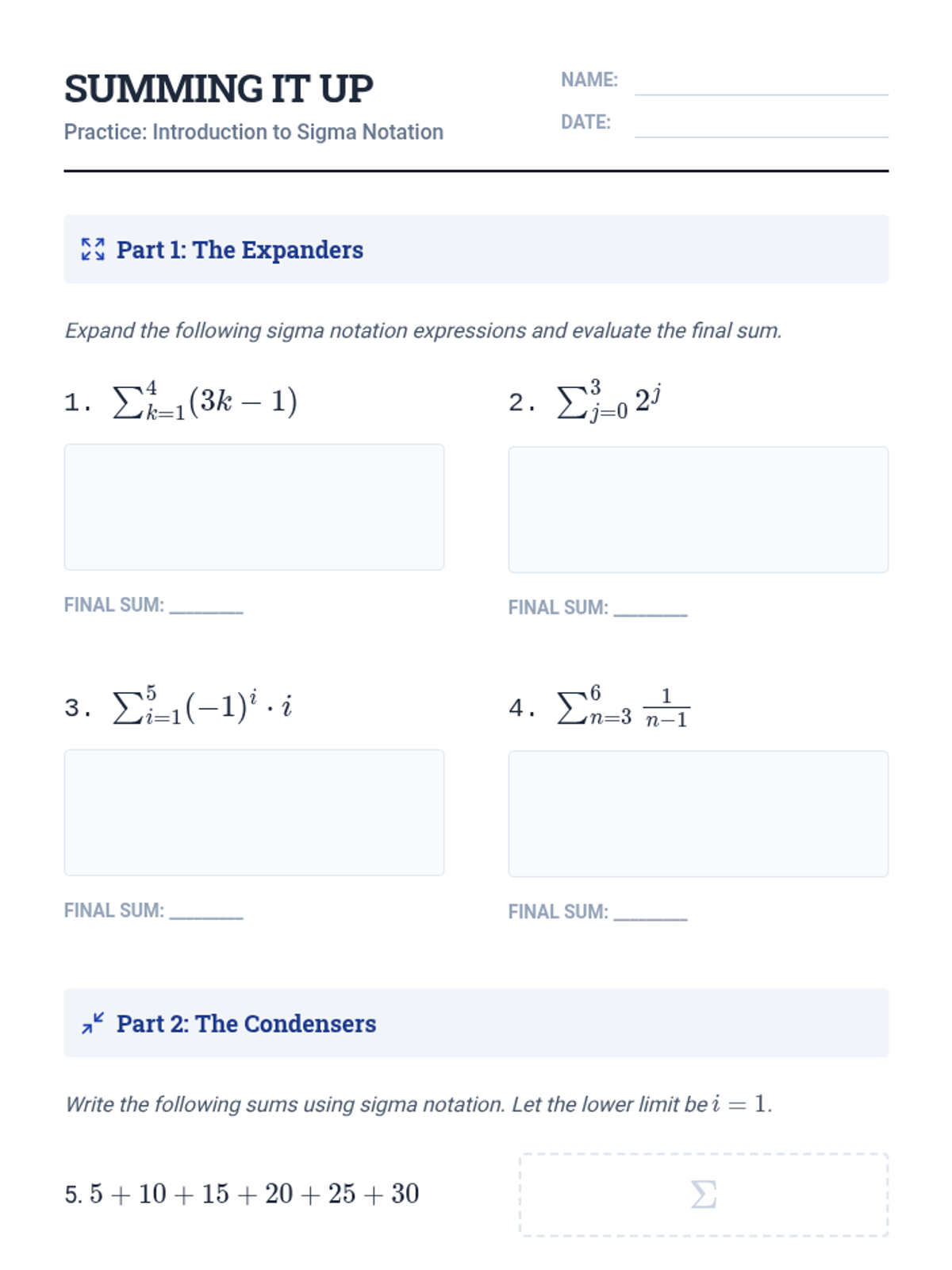
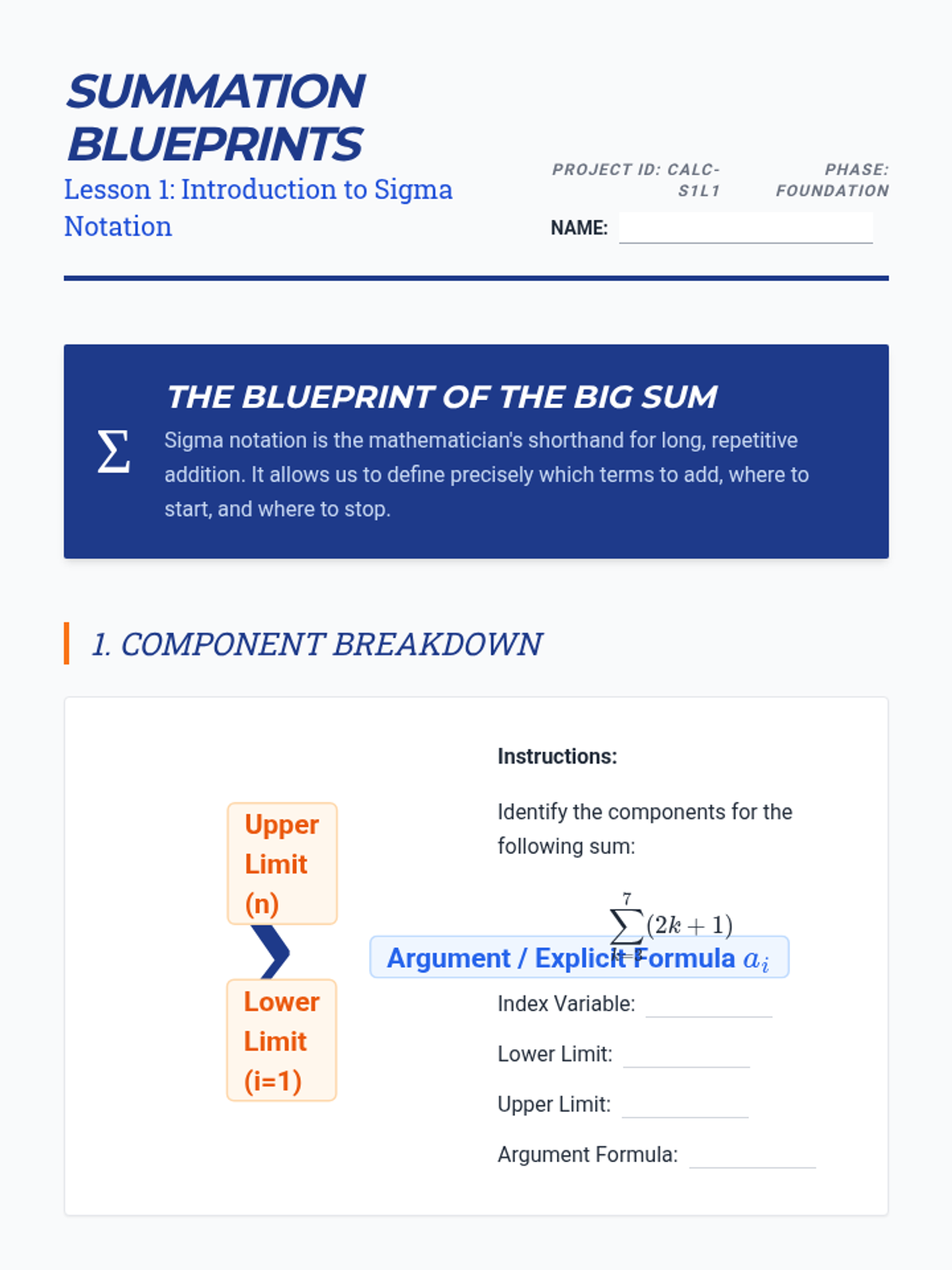
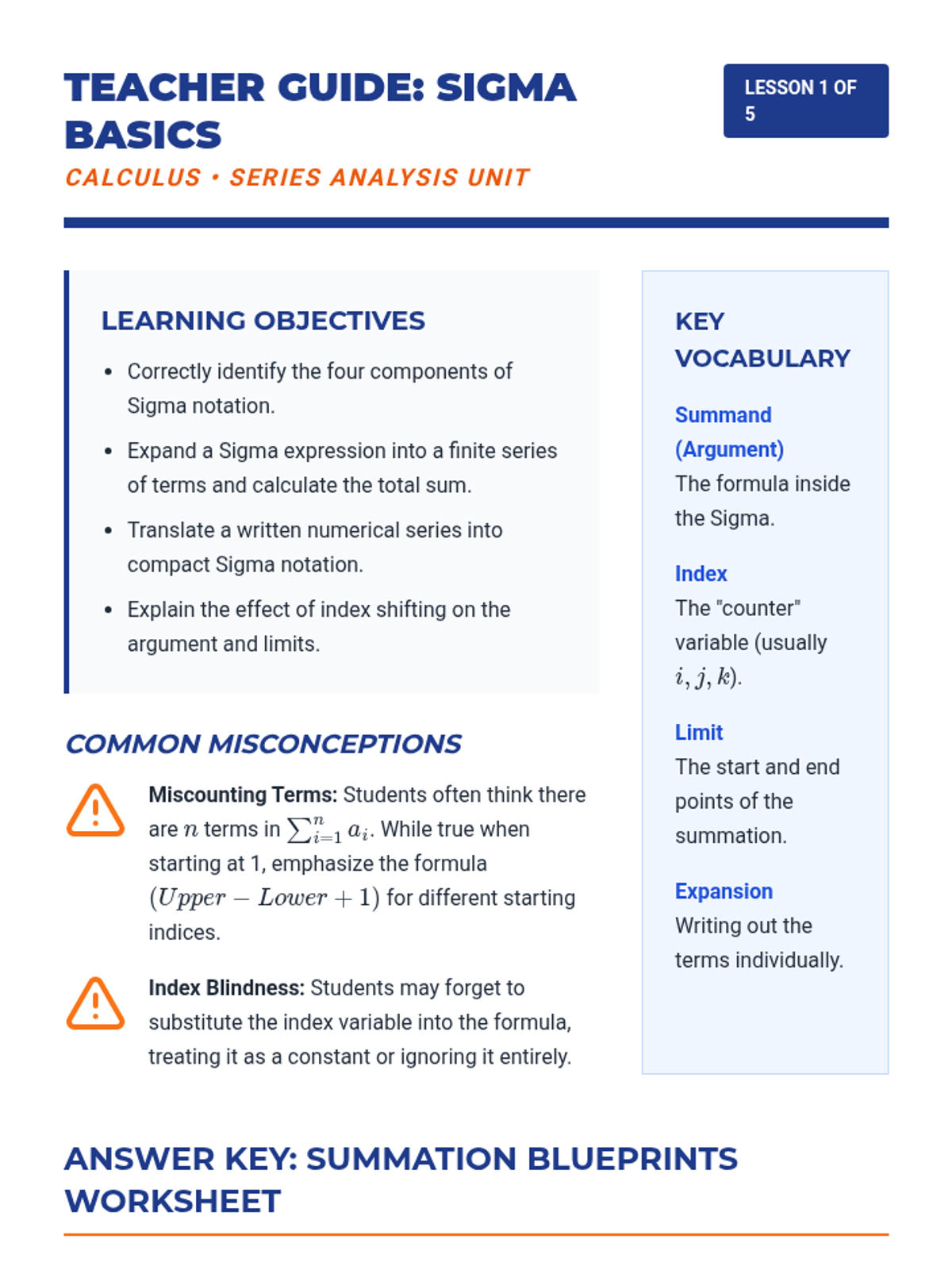
This sequence transitions students from listing terms to aggregating them, focusing on the rigorous use of summation notation. Through a workshop approach, learners practice manipulating sigma notation, applying properties of sums, and deriving formulas for arithmetic series.
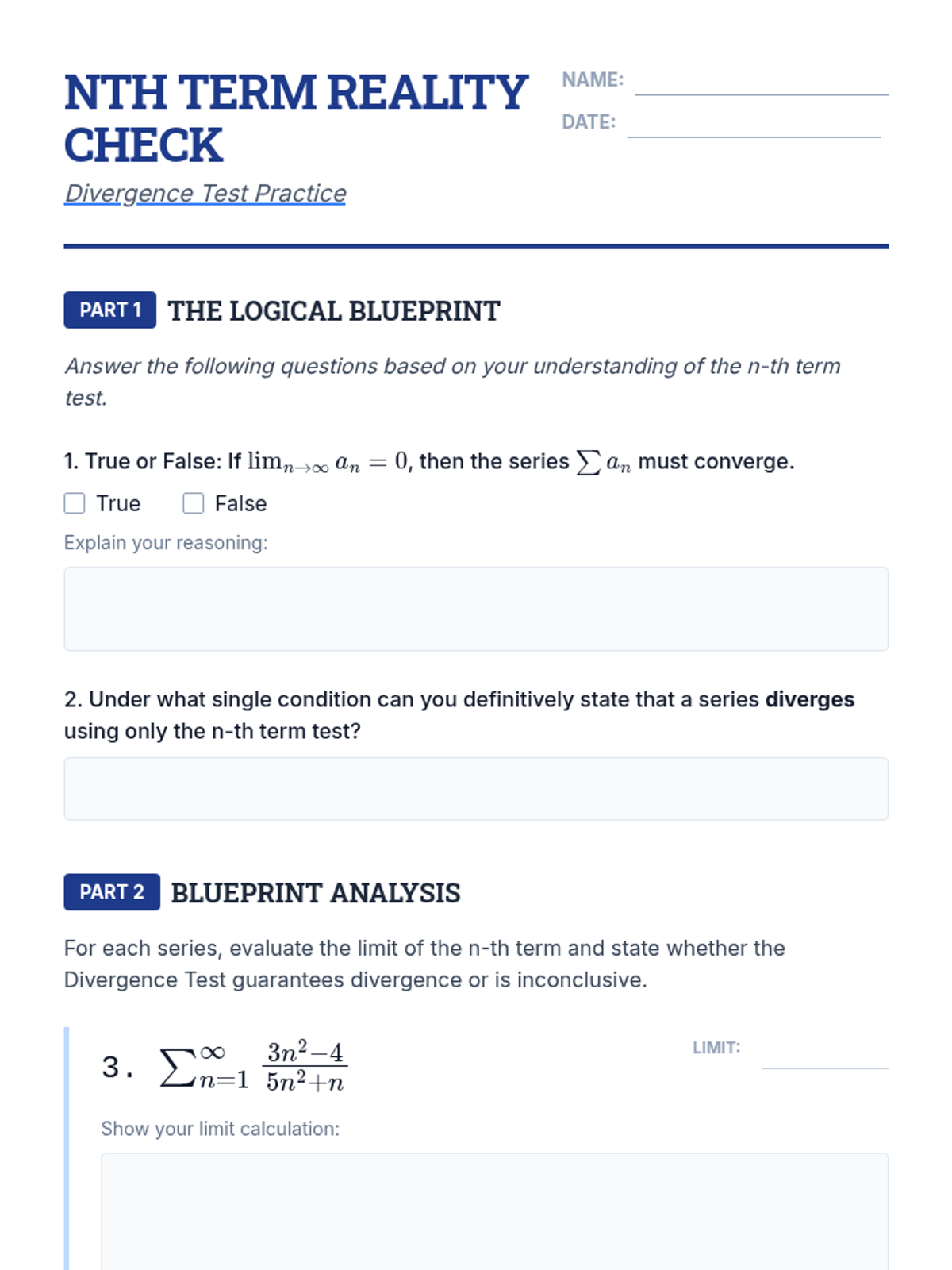
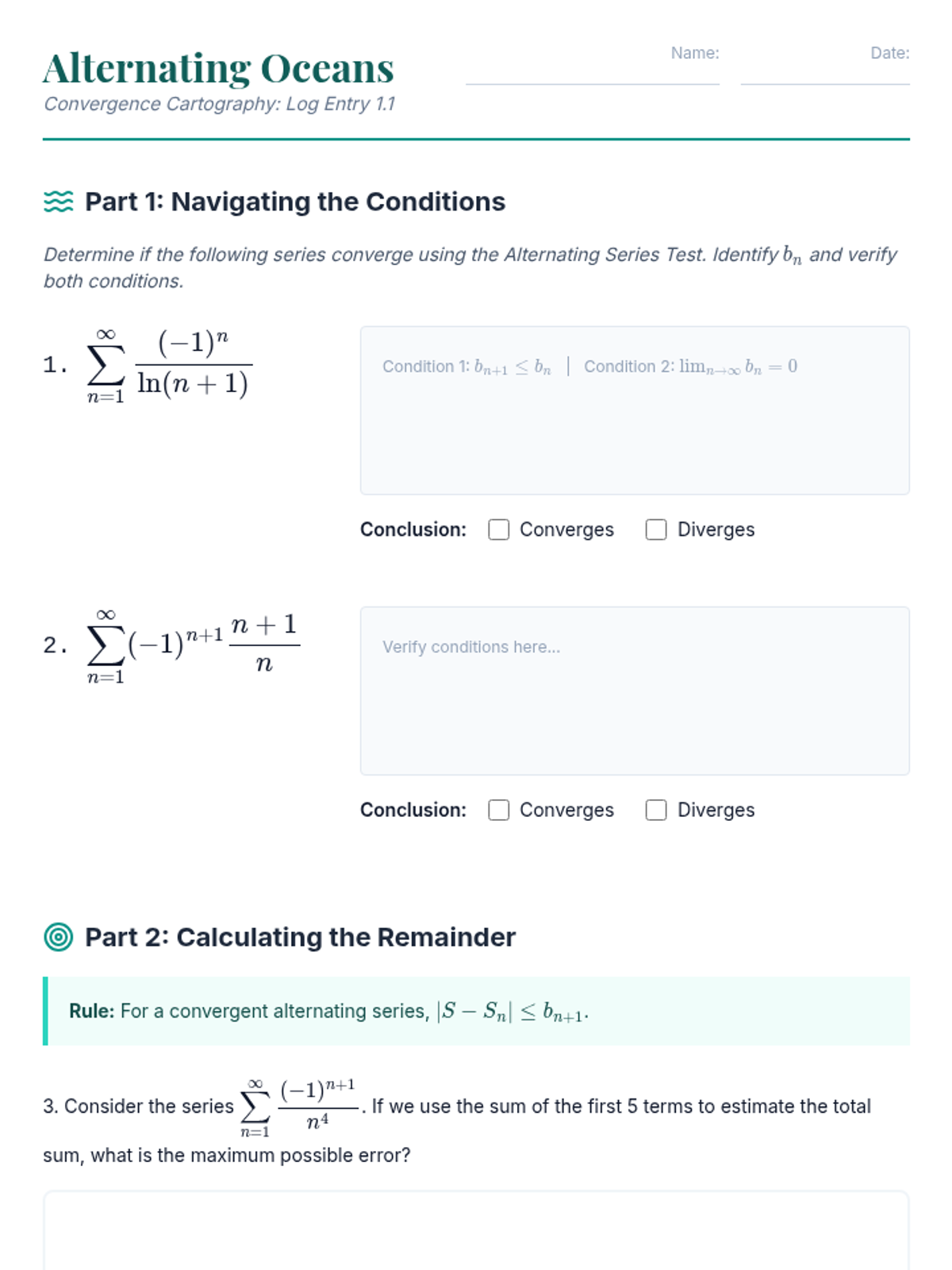
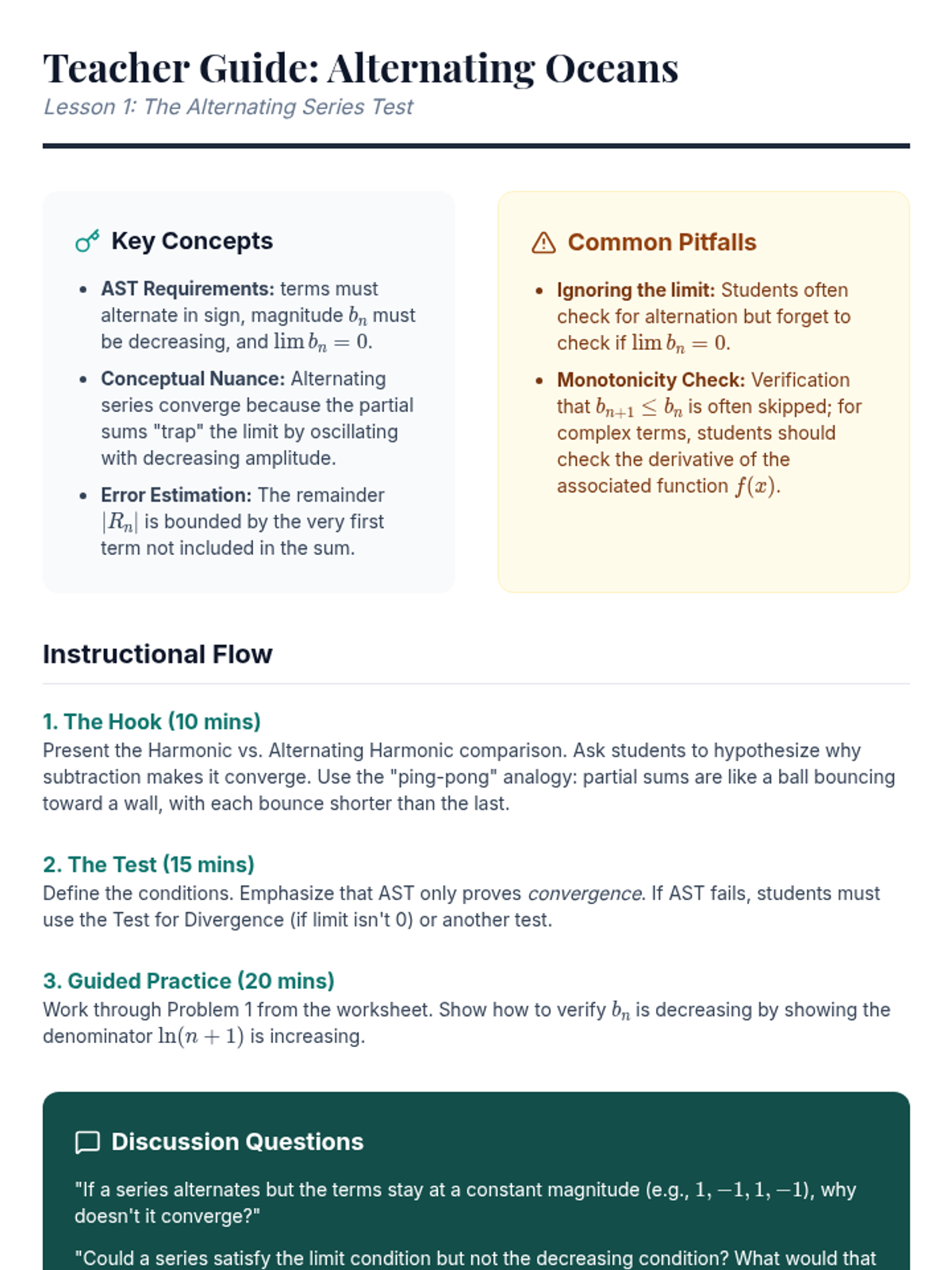
This sequence guides 12th-grade students through advanced convergence tests for infinite series, including the Alternating Series Test, Ratio Test, and Root Test, concluding with a comprehensive classification strategy.
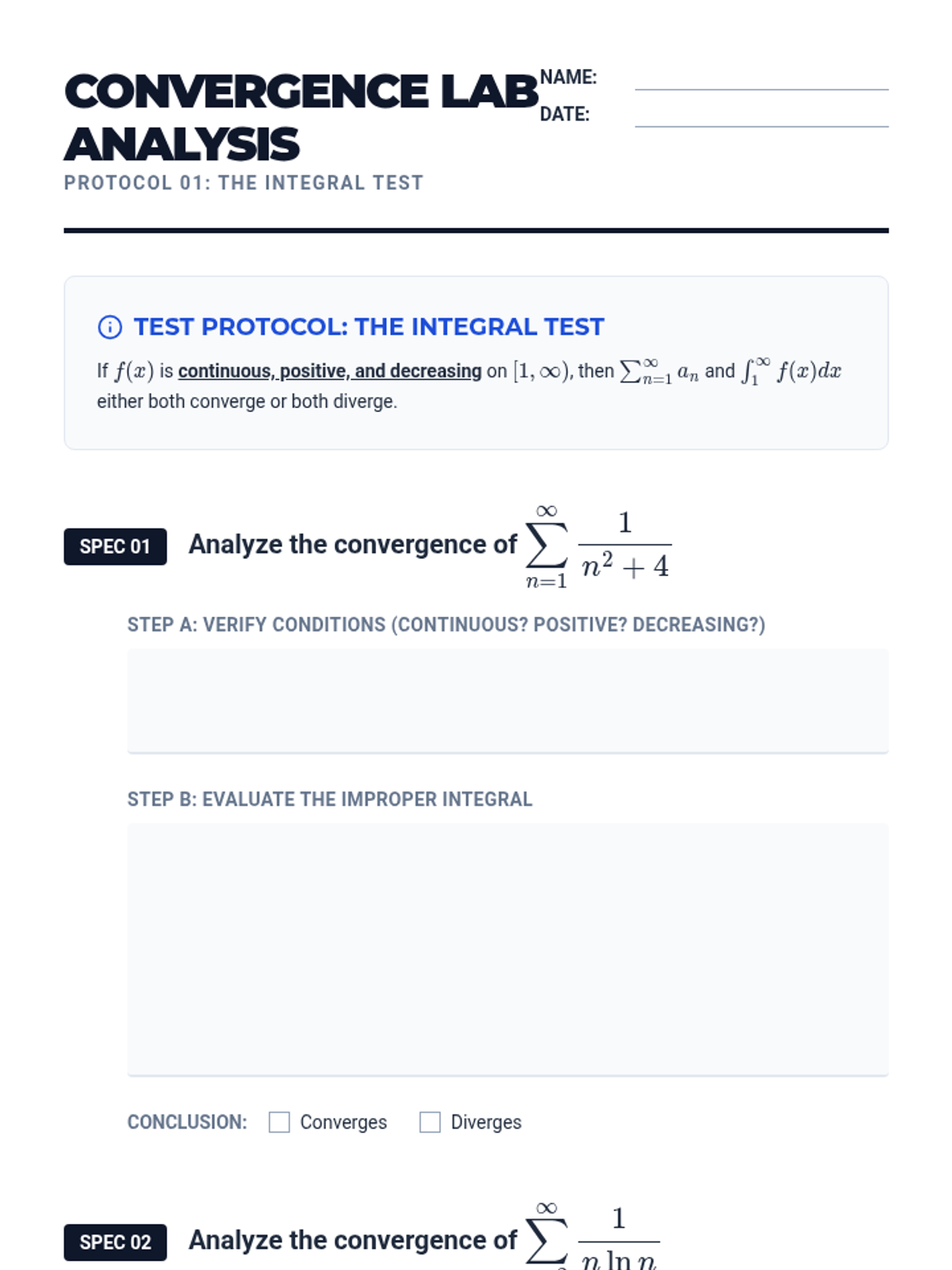
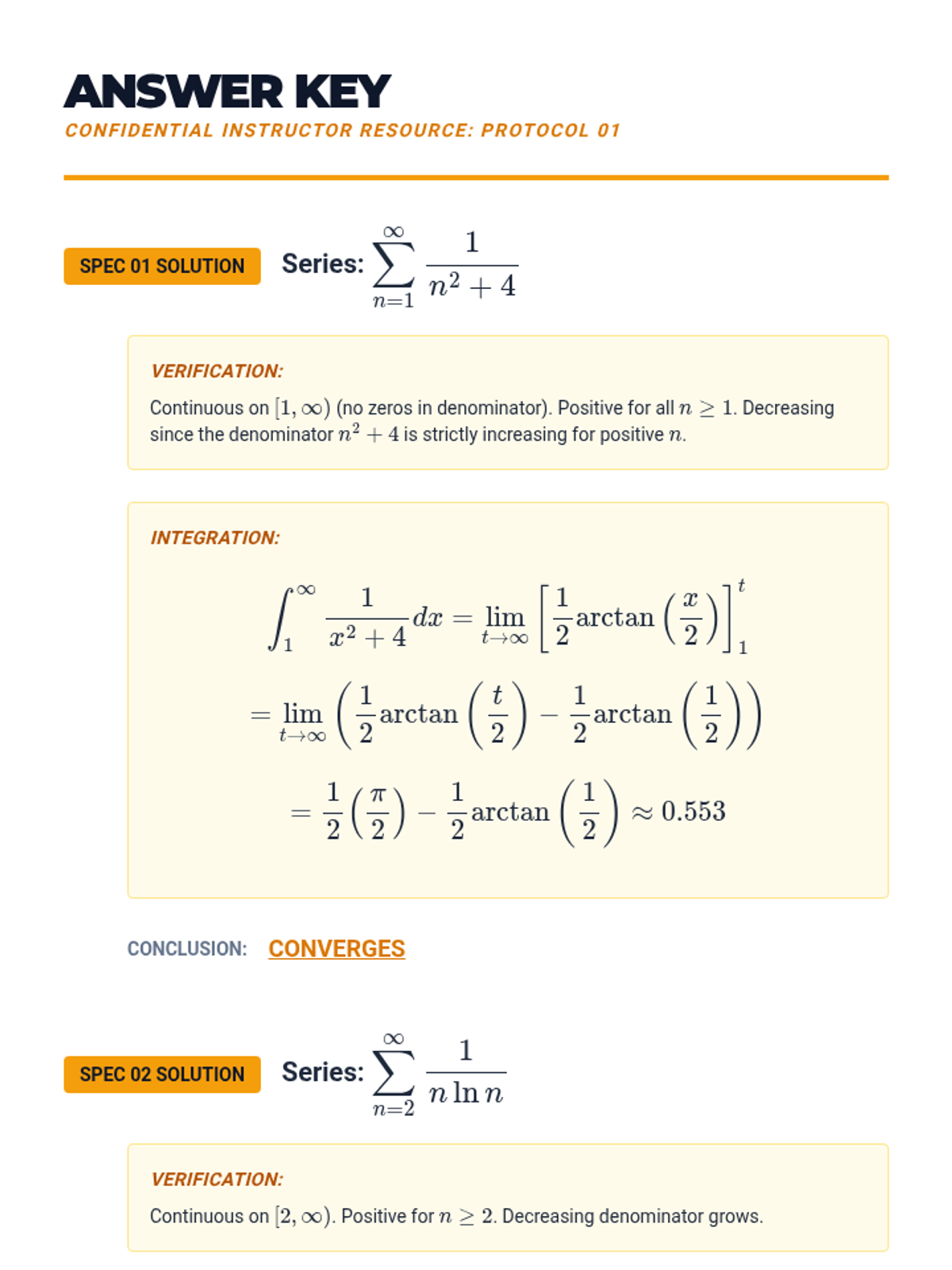
A rigorous unit for 12th-grade Calculus students focusing on the Integral Test, p-series, and Comparison Tests (Direct and Limit) to determine the convergence of positive-term infinite series. Students will build a logical framework for selecting the most efficient convergence test for various mathematical structures.
A comprehensive unit for 12th-grade calculus students exploring the power of summation. This sequence covers Sigma notation, arithmetic and geometric series formulas, financial applications, and the transition to infinite sums through telescoping series and Zeno's Paradox.
This sequence bridges algebra and calculus by formalizing numerical patterns. Students move from identifying arithmetic and geometric patterns to evaluating limits at infinity and applying the Monotonic Convergence Theorem to real-world models.
This advanced sequence bridges series to function approximation, introducing Power Series and Taylor Polynomials. Students discover how polynomials can mimic complex curves like sine and cosine, moving from simple tangent lines to higher-order polynomials while investigating convergence and approximation error.
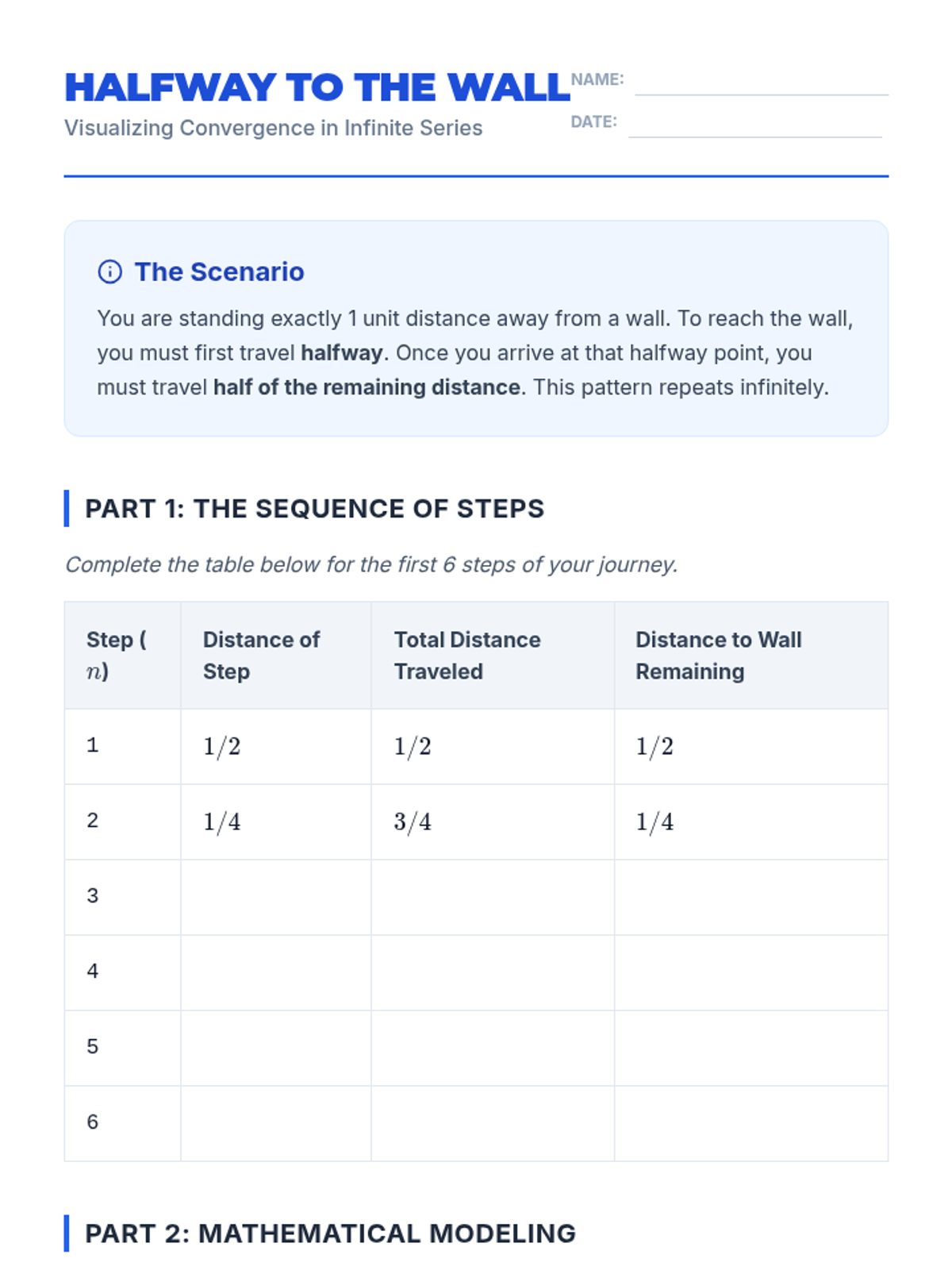
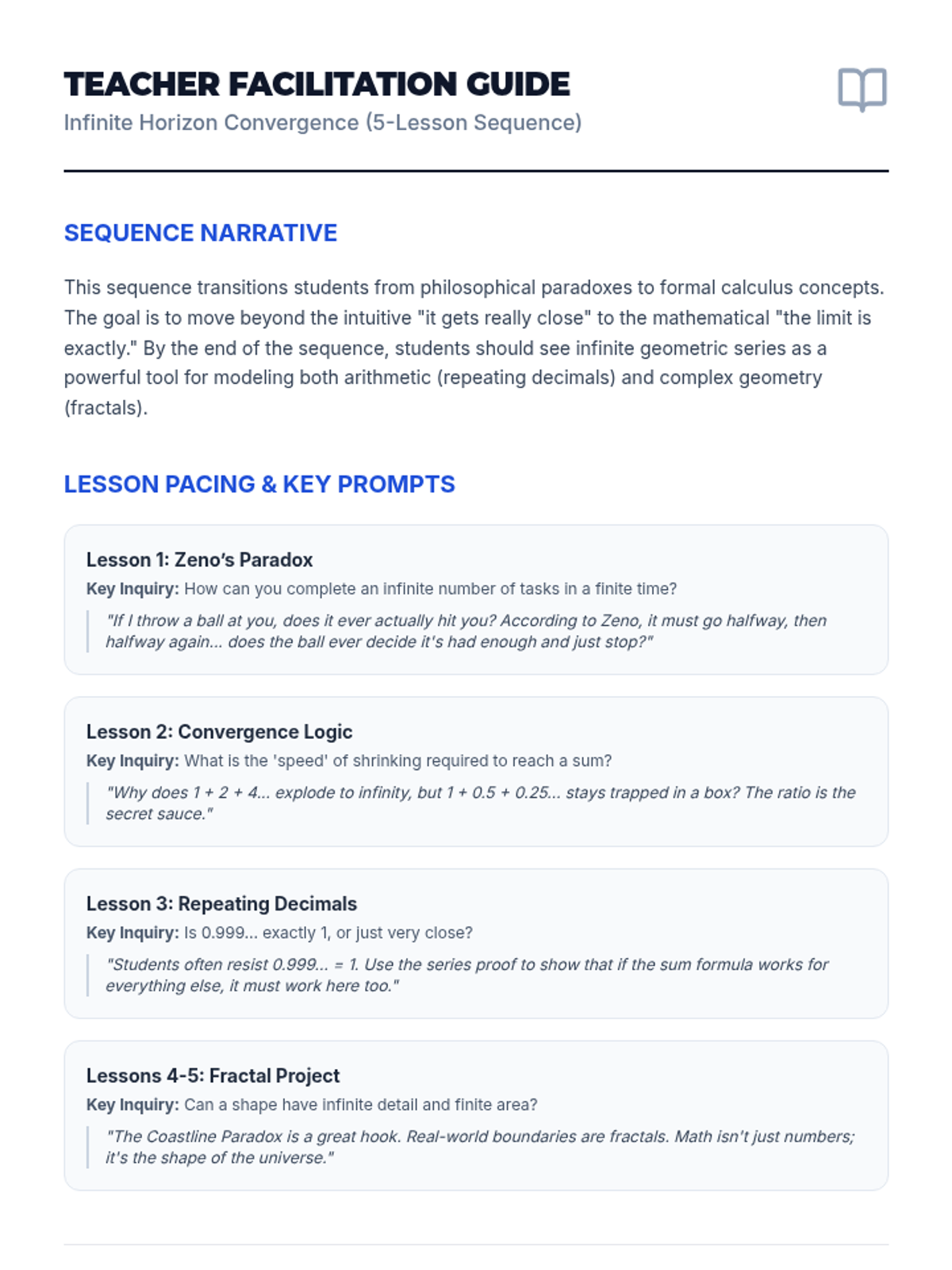
A project-based sequence exploring infinite geometric series through Zeno's paradox, algebraic proofs of convergence, and fractal geometry. Students investigate how infinite additions can result in finite sums and apply these concepts to real-world paradoxes and self-similar shapes.
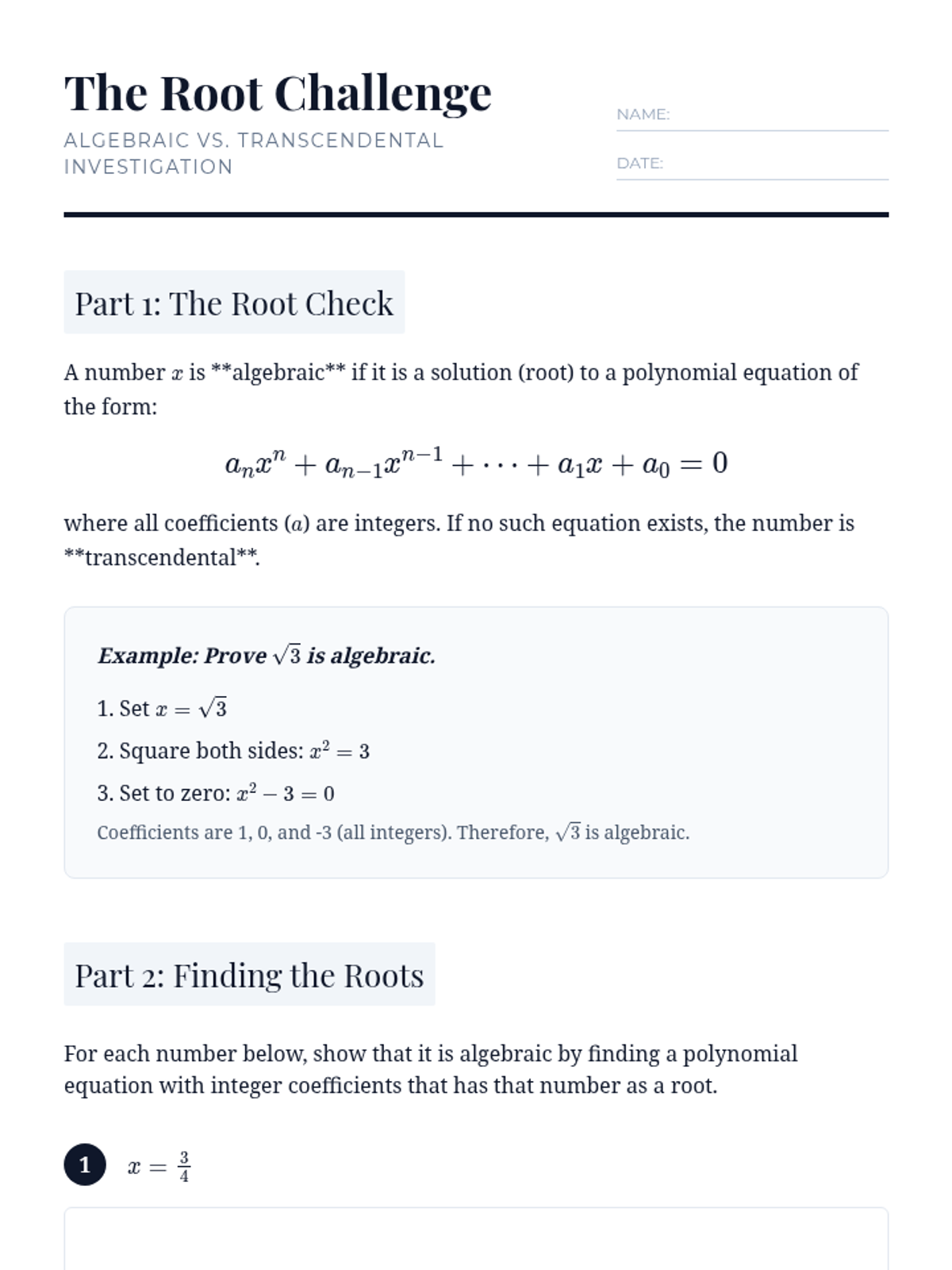
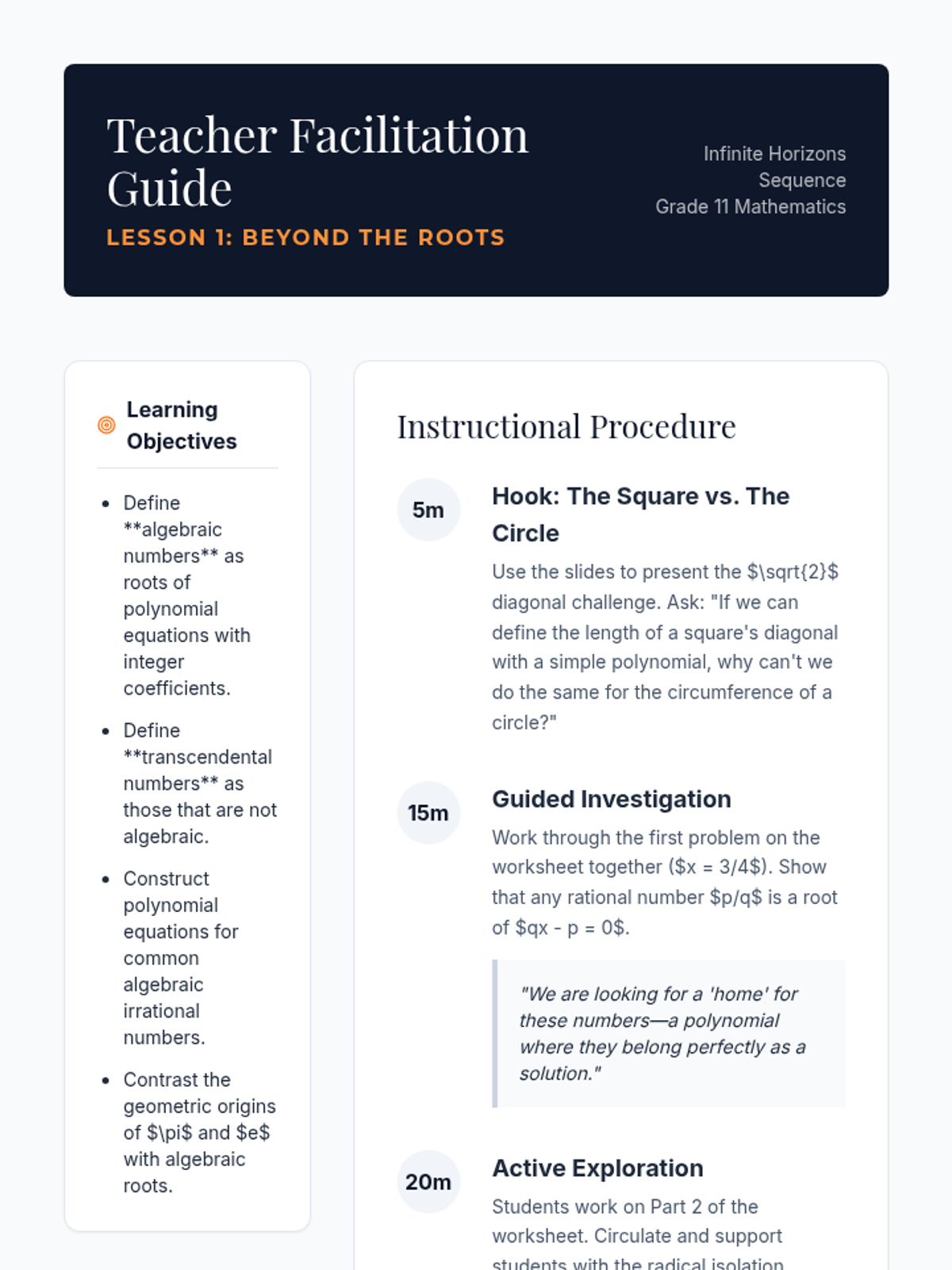
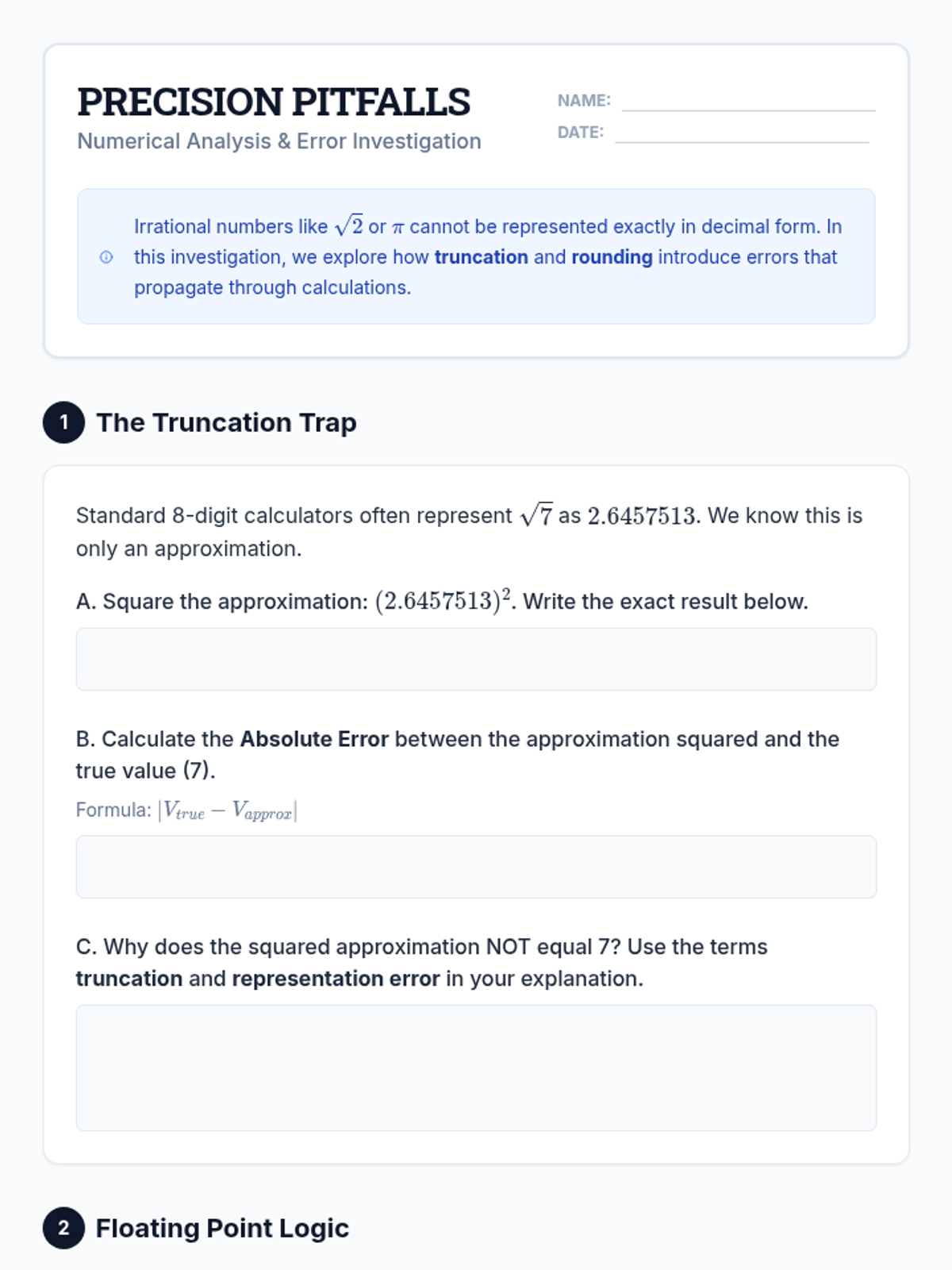
This inquiry-based sequence explores transcendental numbers like Pi and Euler's number (e) to connect irrationality with real-world phenomena and geometry. Students investigate historical methods of approximation and modern infinite series.
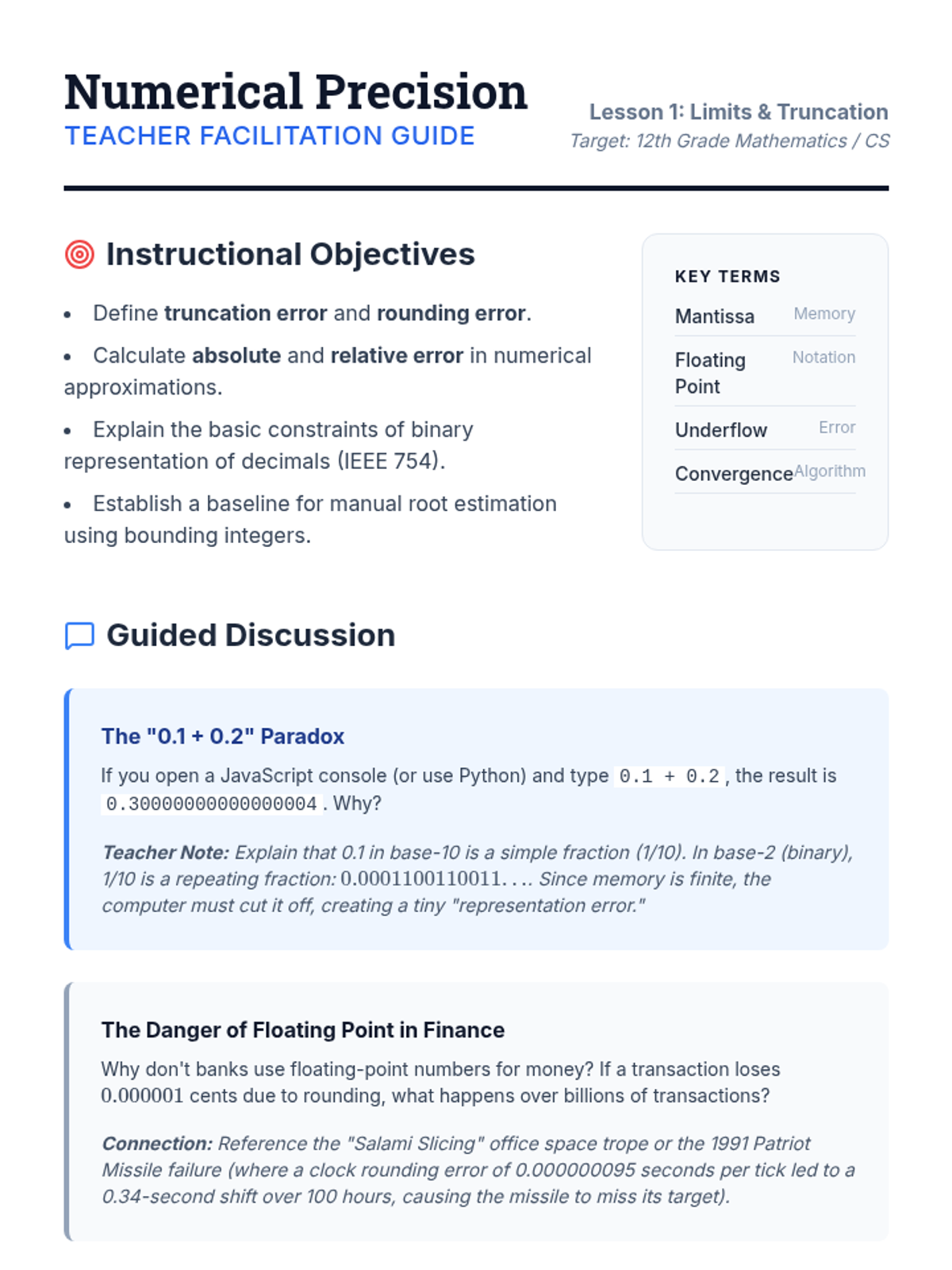
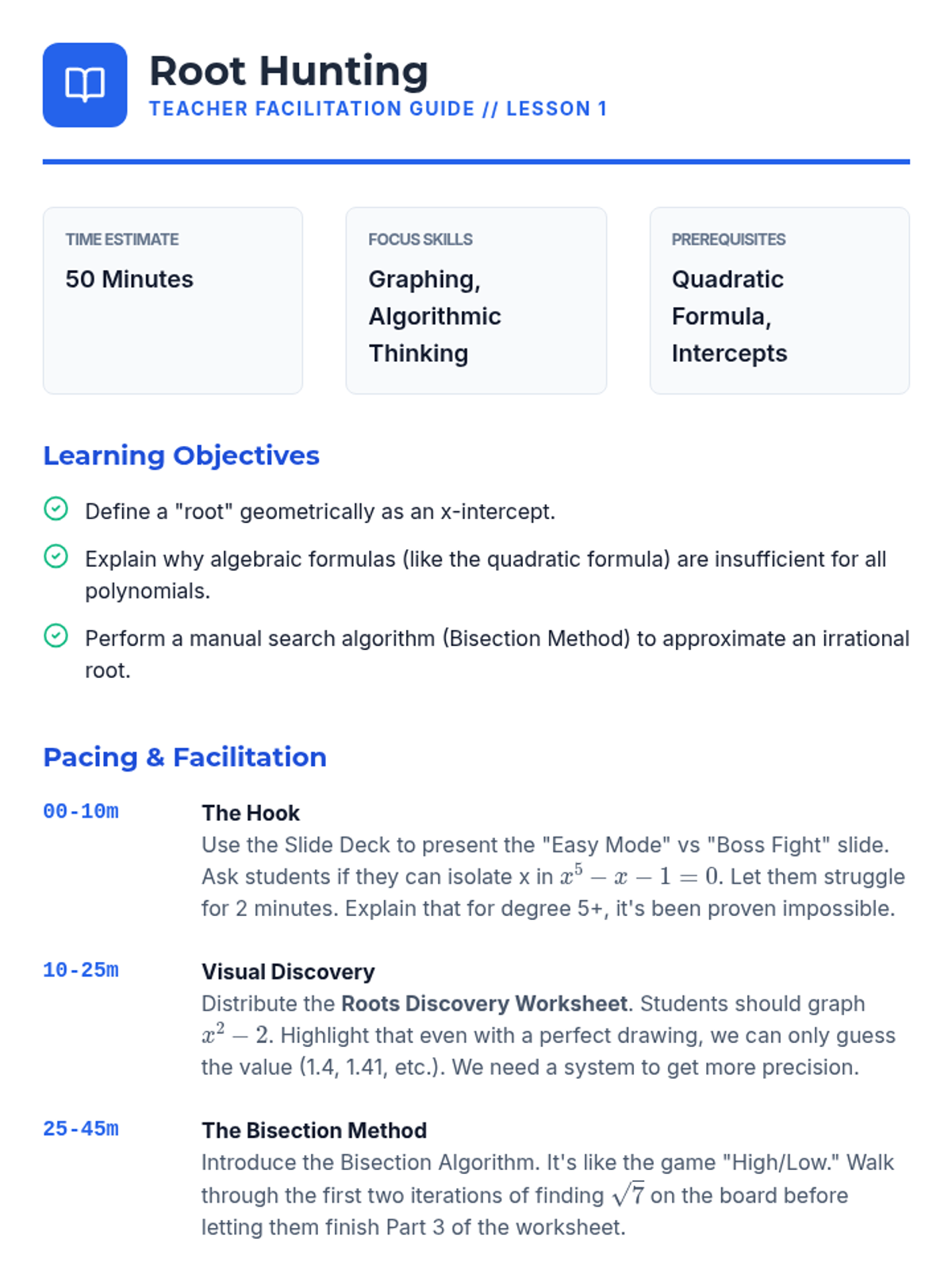
An exploration of how irrational numbers are approximated in science, engineering, and computer science using algorithms like the Bisection Method and Newton's Method.
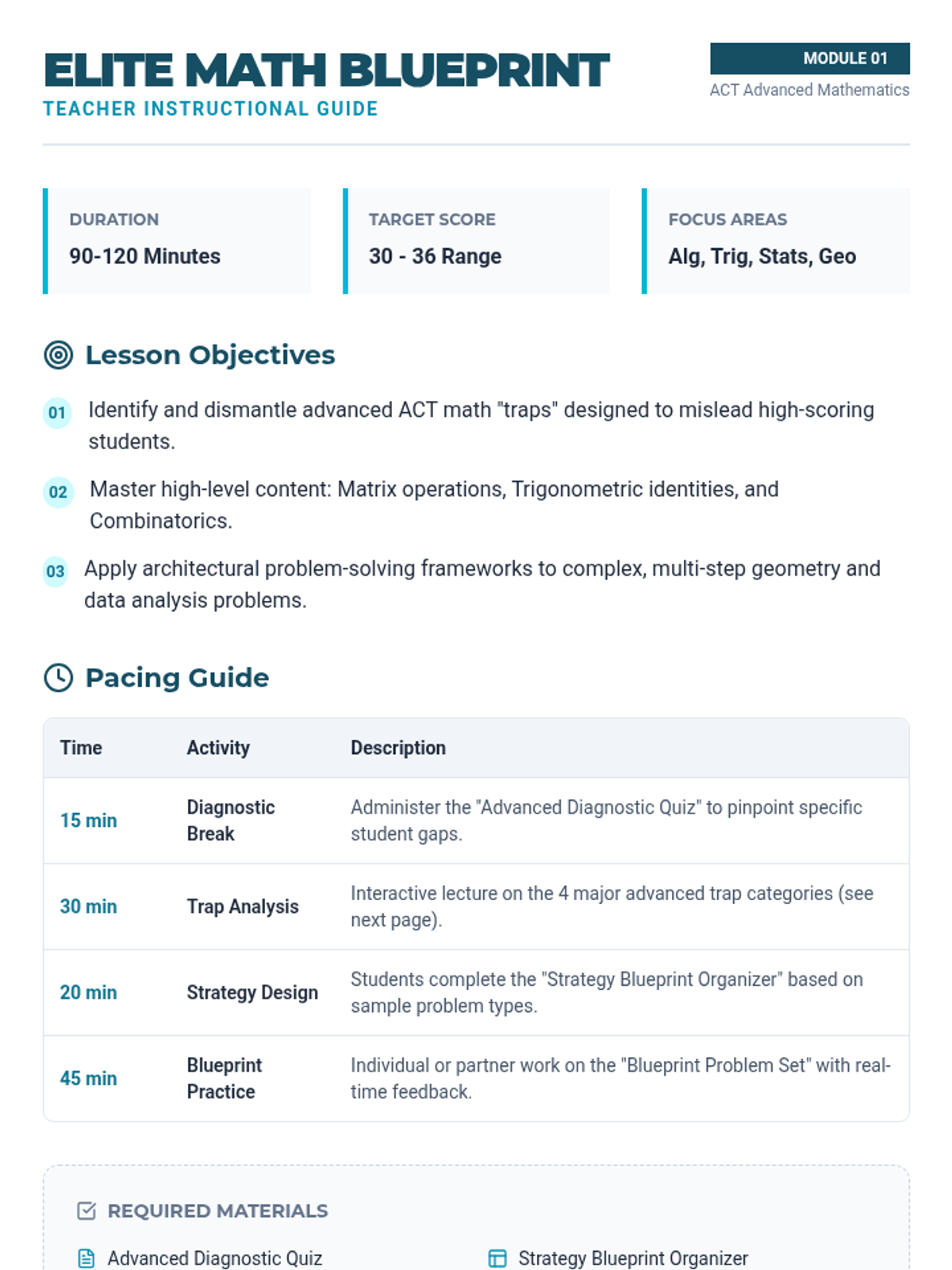
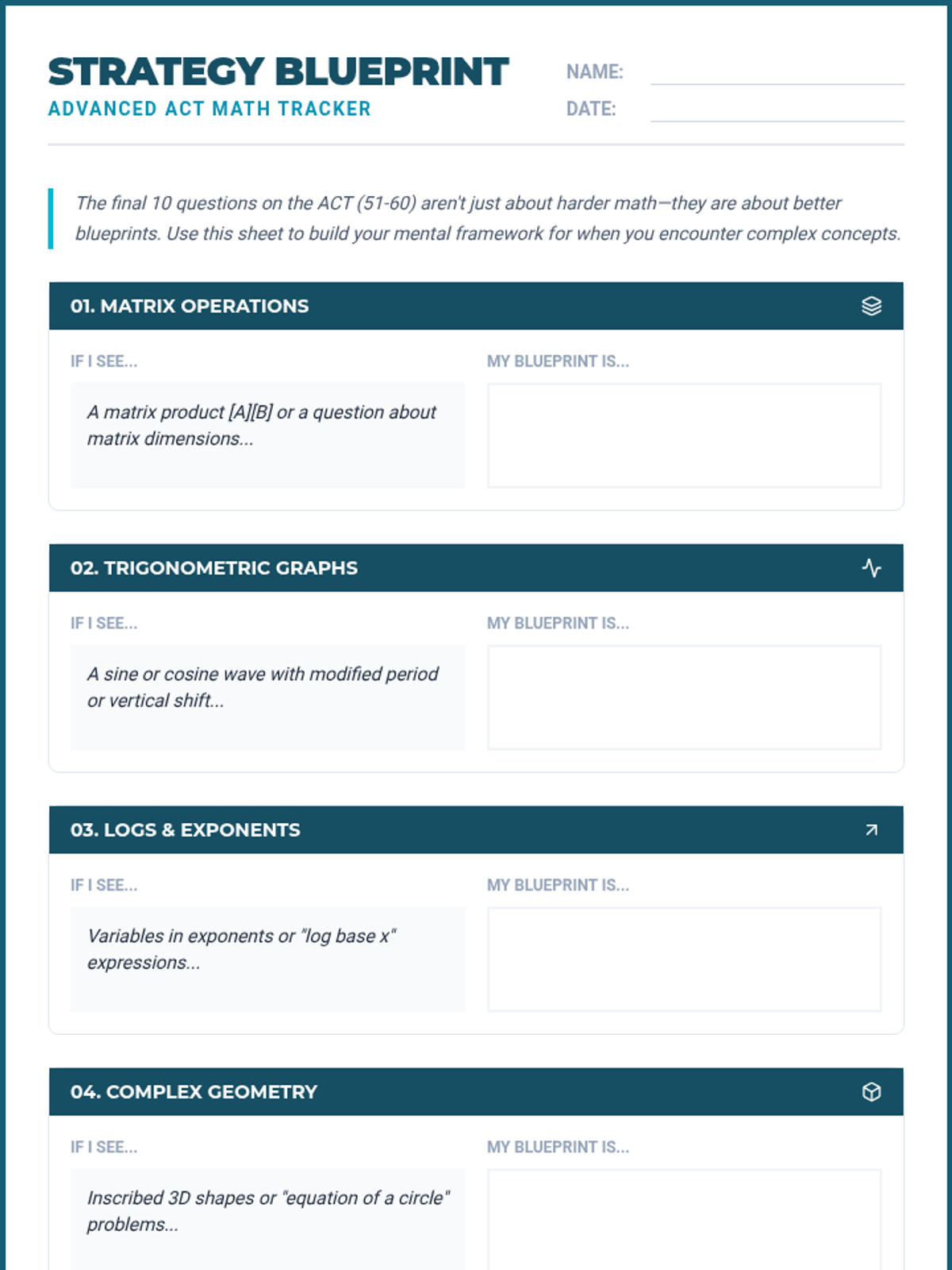
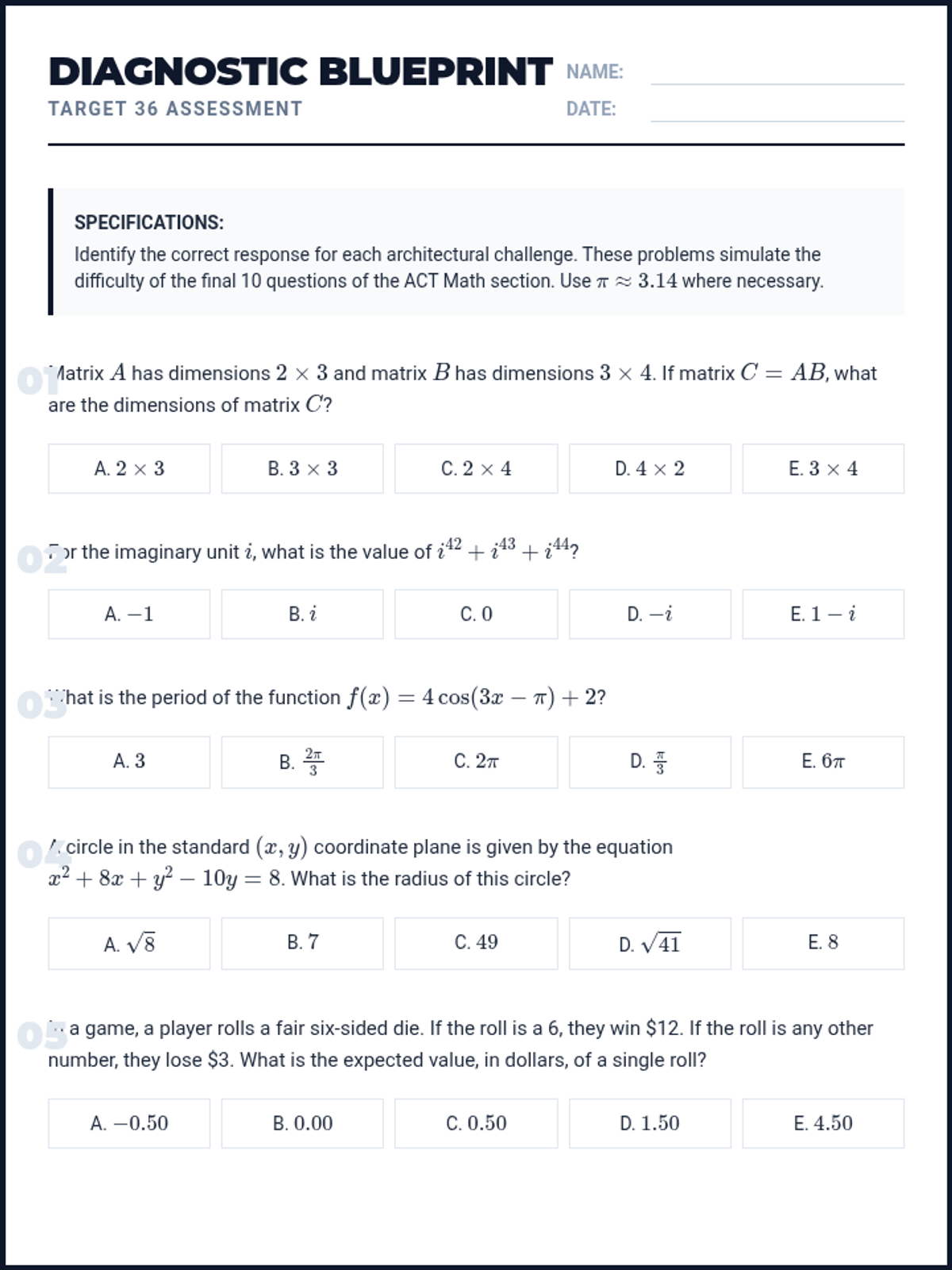
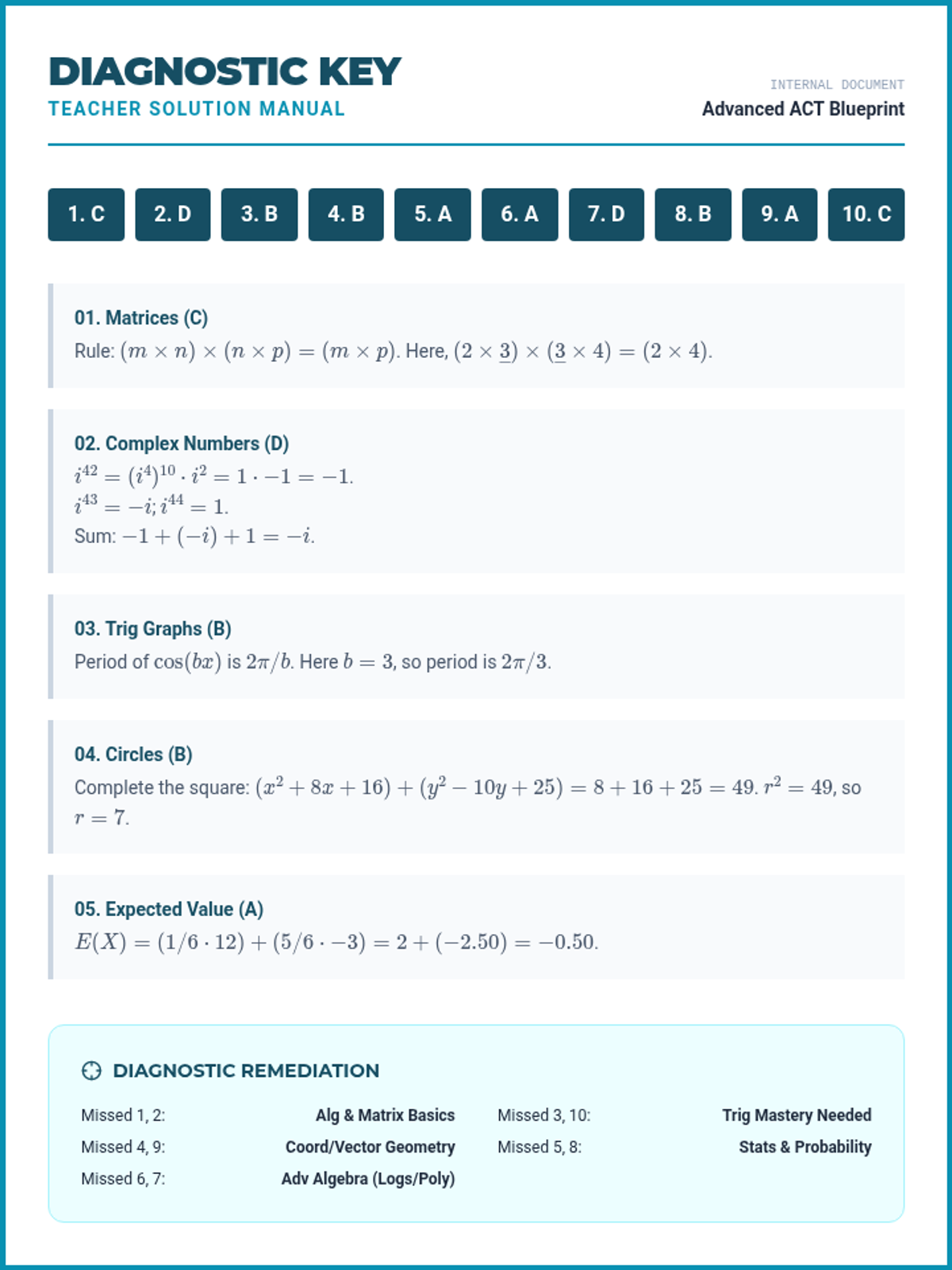
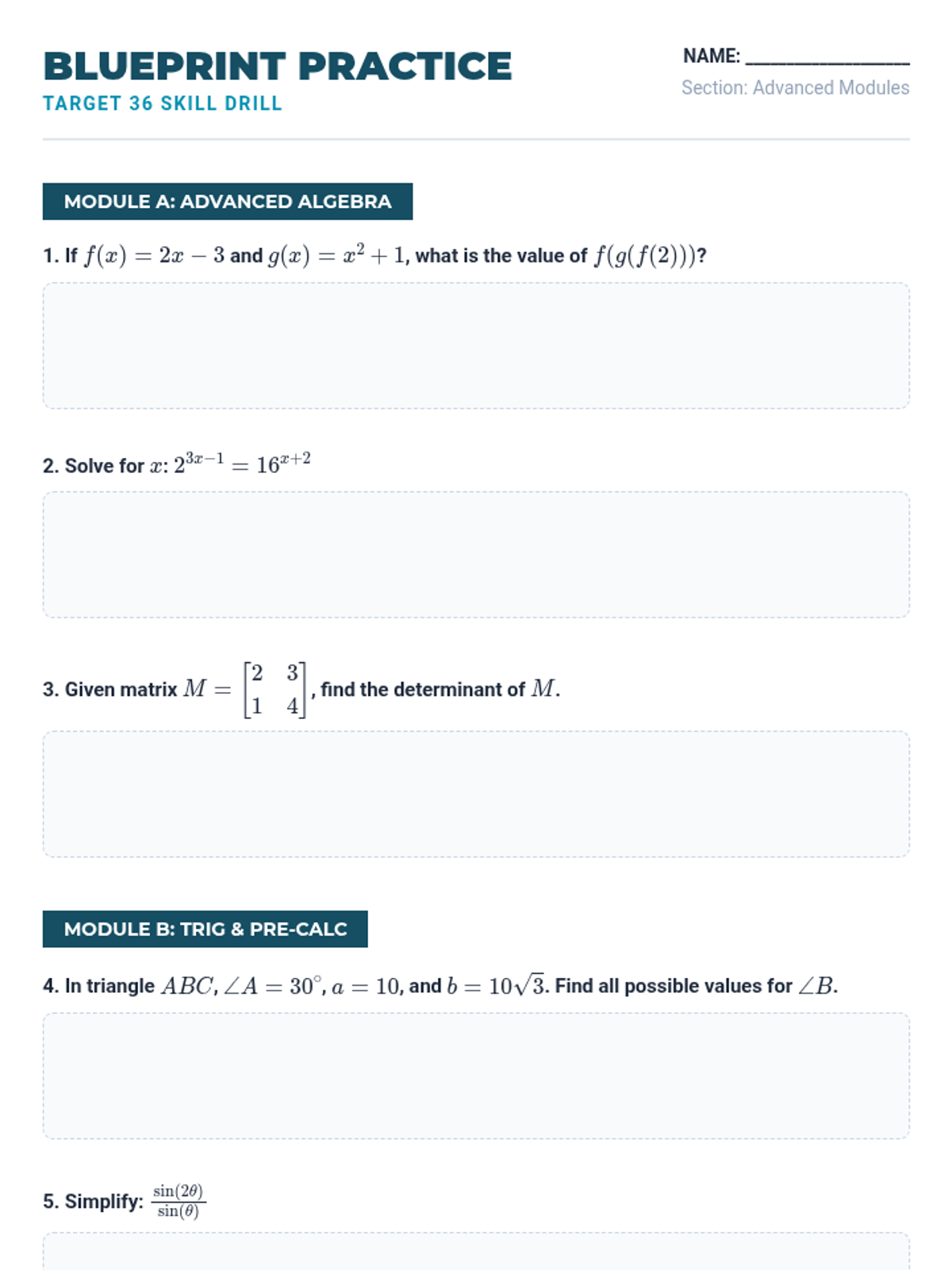
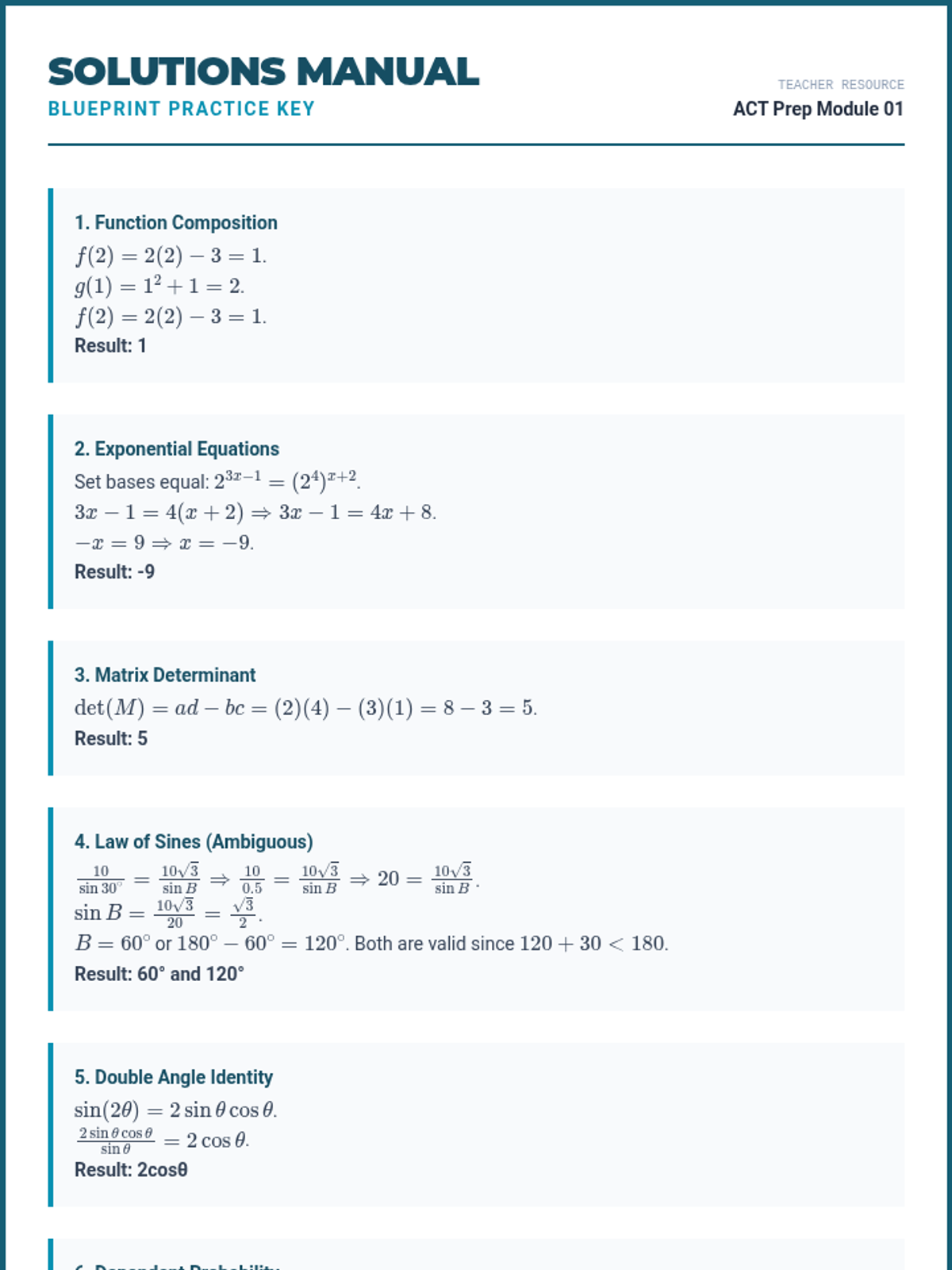
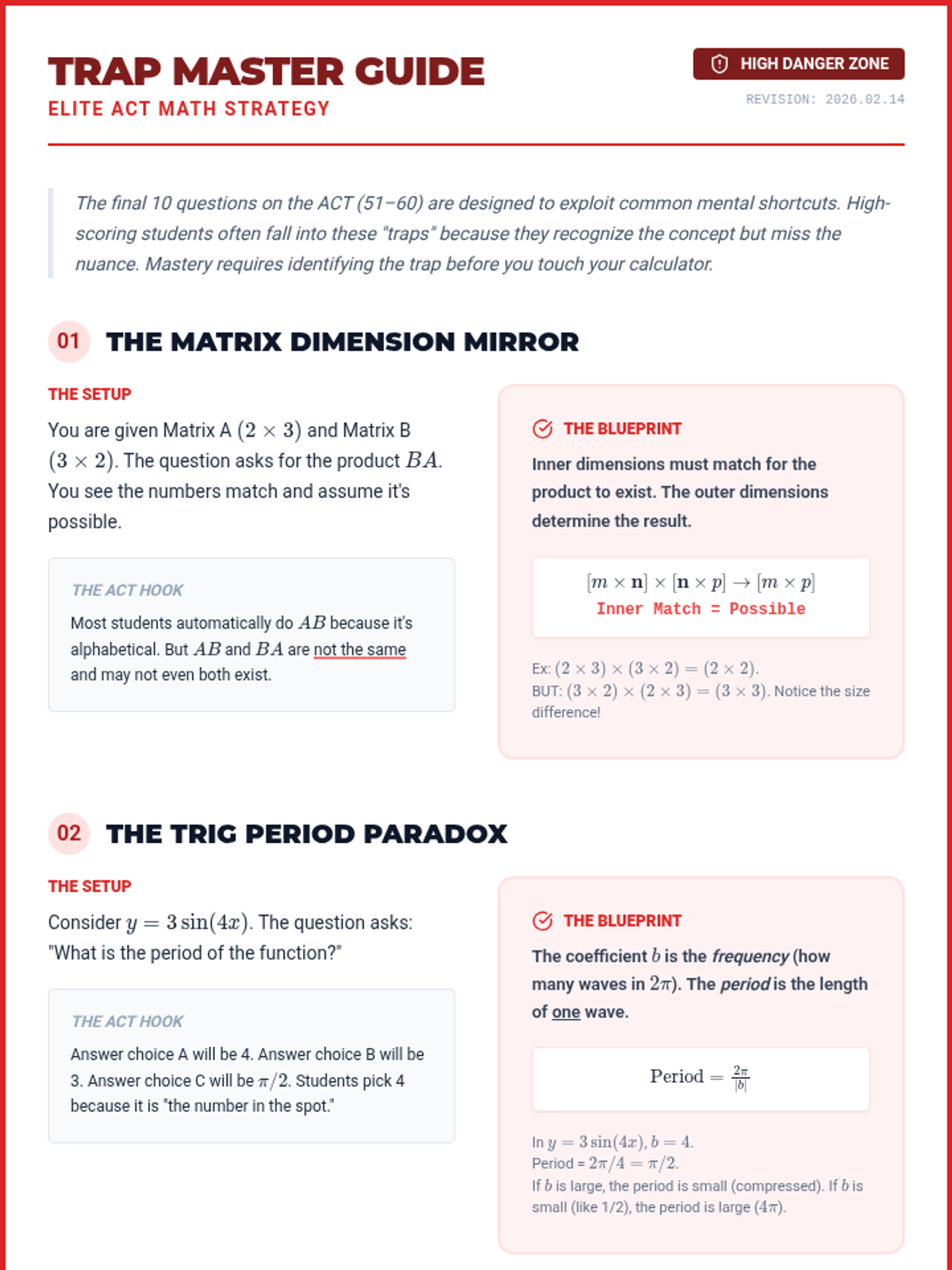
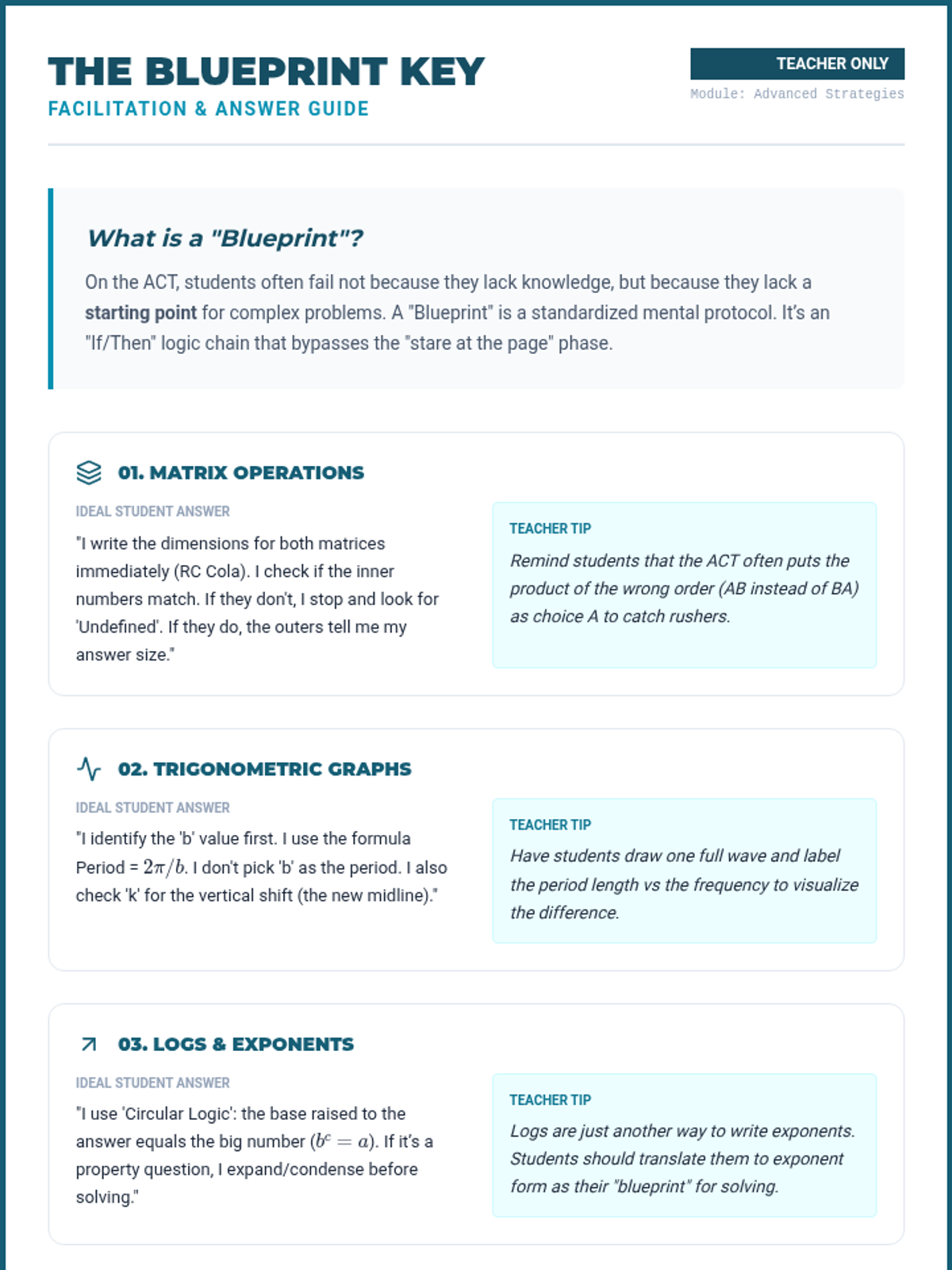
A comprehensive prep sequence for the most challenging questions on the ACT Math and Science sections. It focuses on high-level conceptual blueprints for math topics like complex numbers and matrices, alongside speed-reading and data-interpretation strategies for the Science section.
A series of higher-level mathematics lessons exploring calculus foundations through engaging, thematic activities and visual demonstrations.
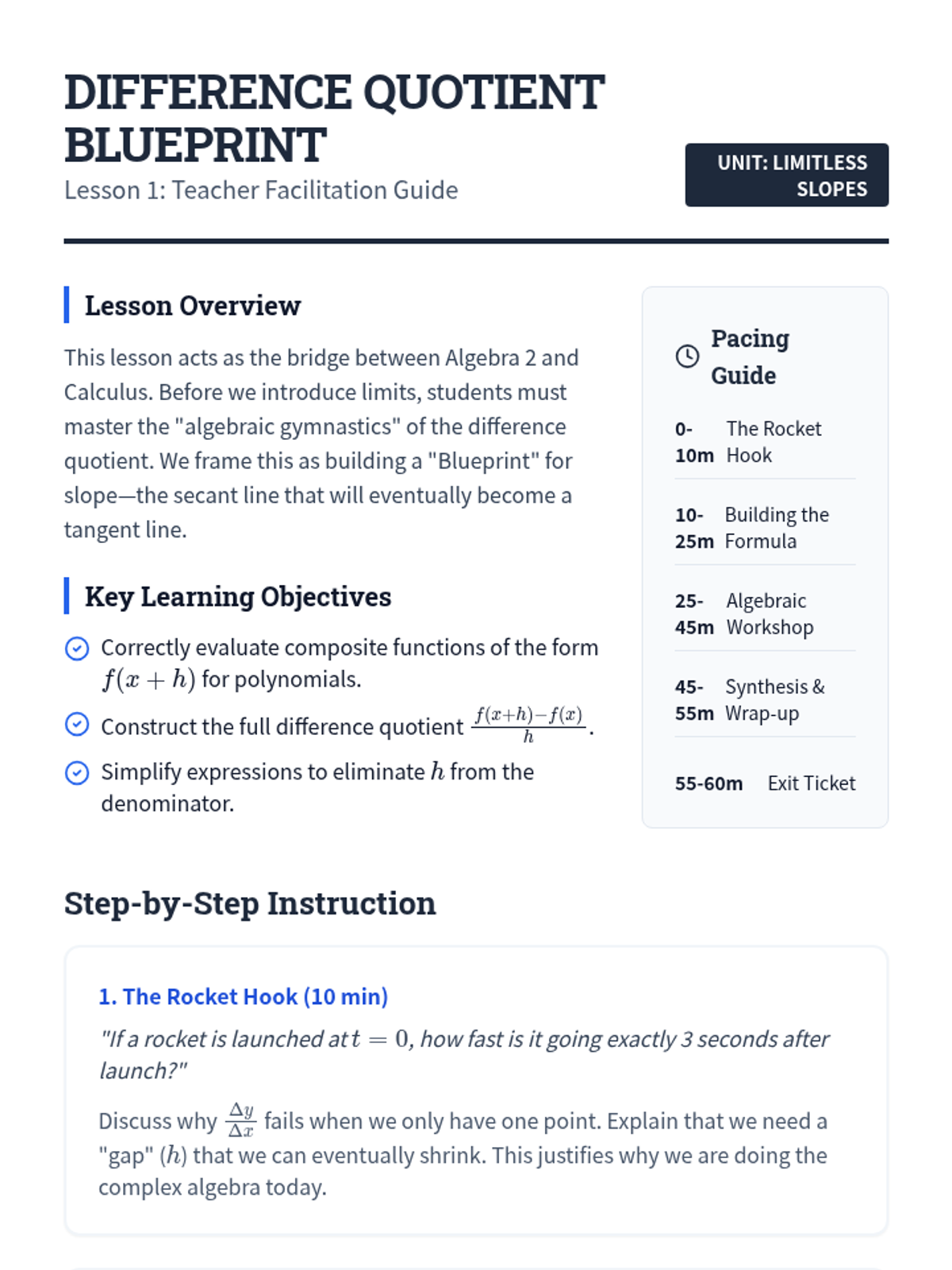
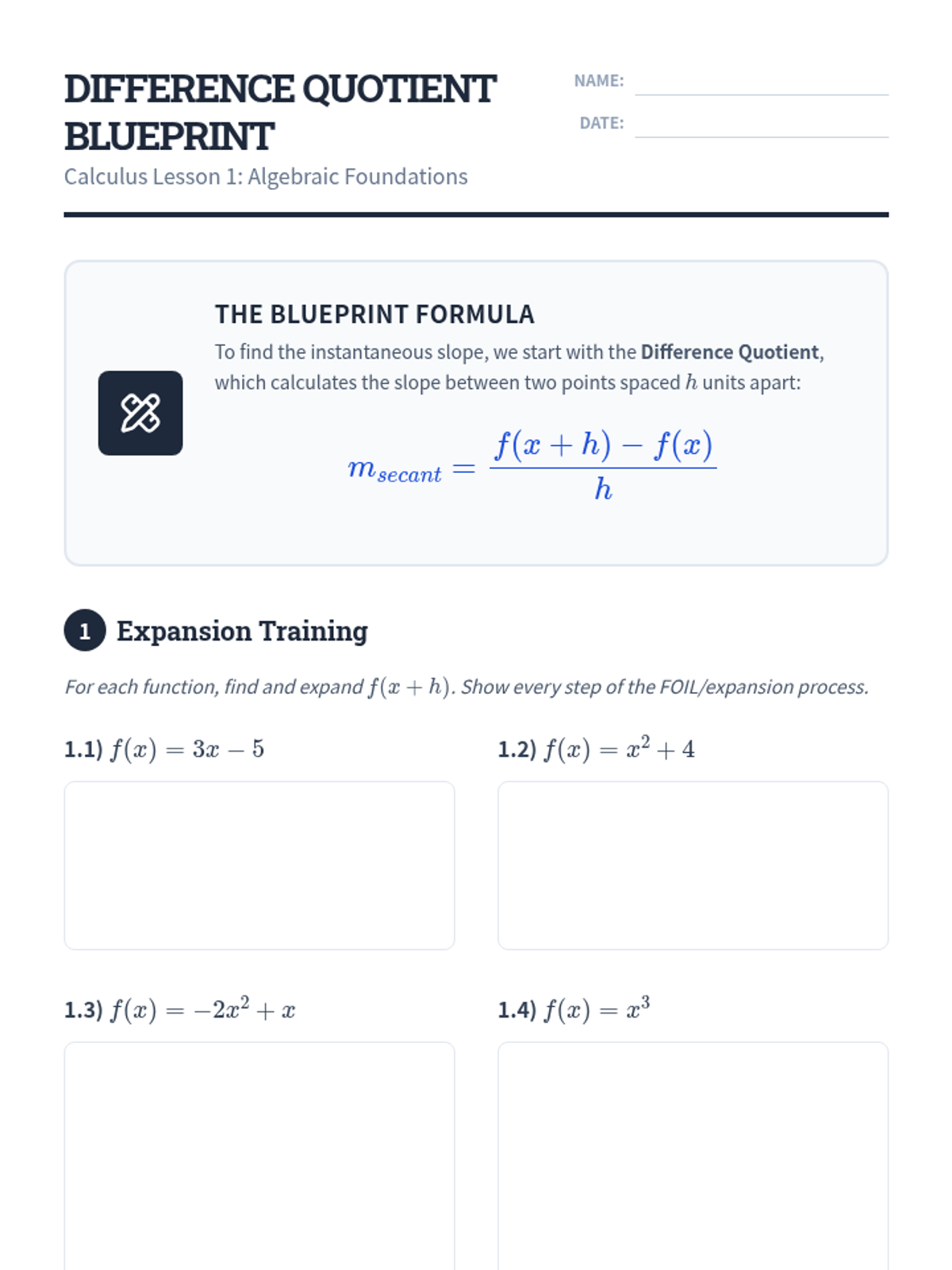
A comprehensive introduction to the formal definition of the derivative, moving from the algebraic construction of the difference quotient to the rigorous limit definition. Students explore differentiability, continuity, and notation fluency.
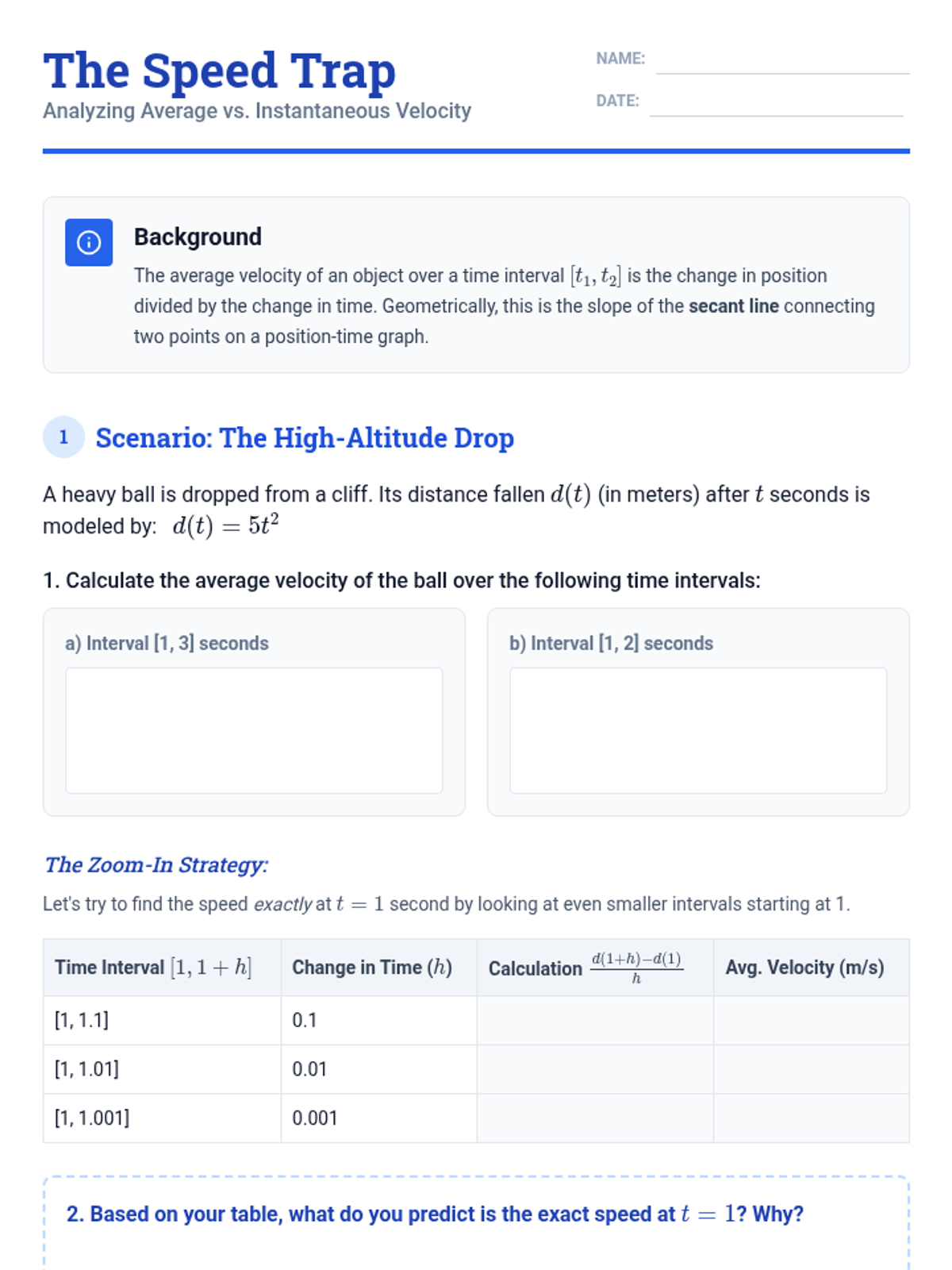
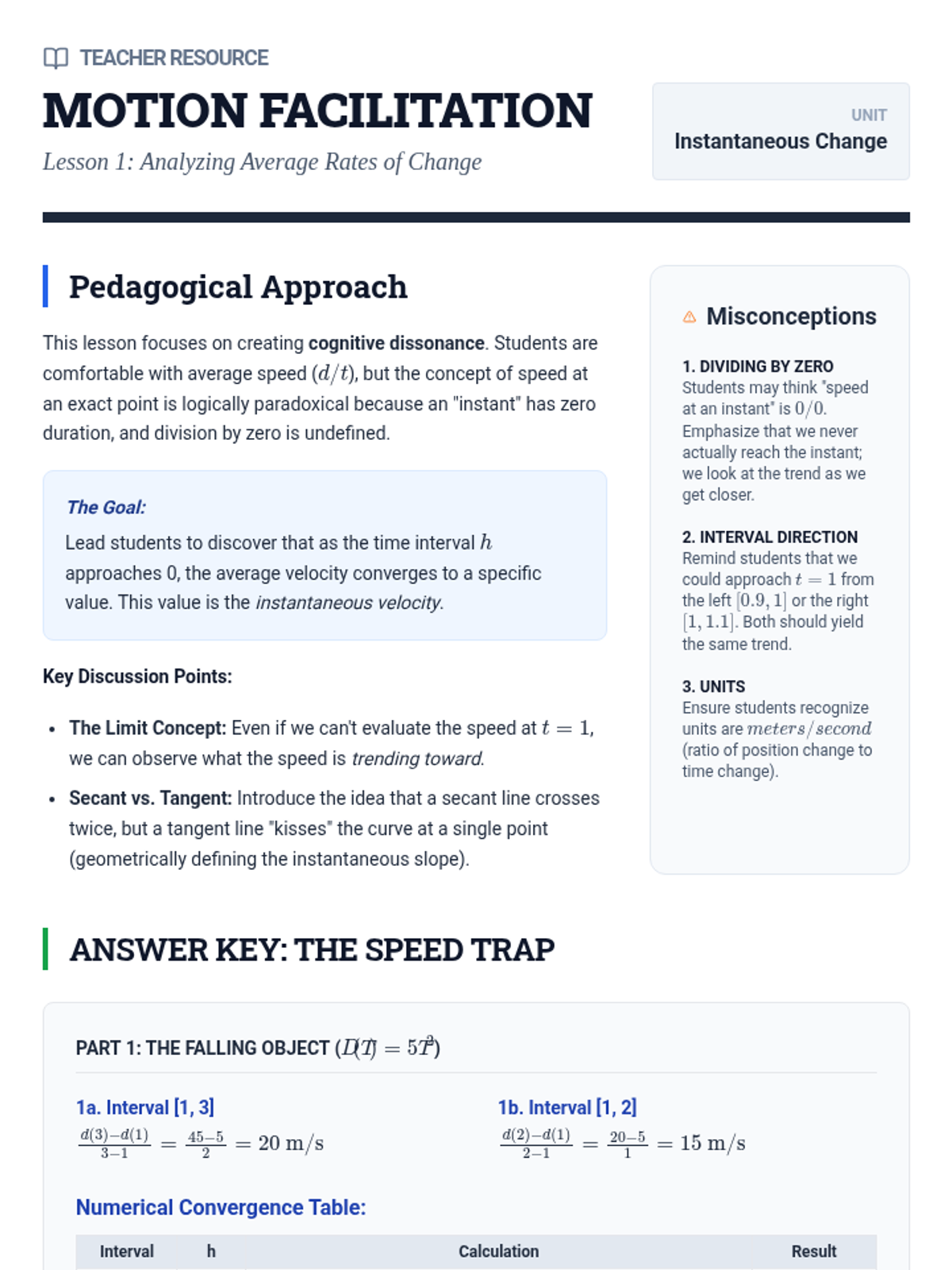
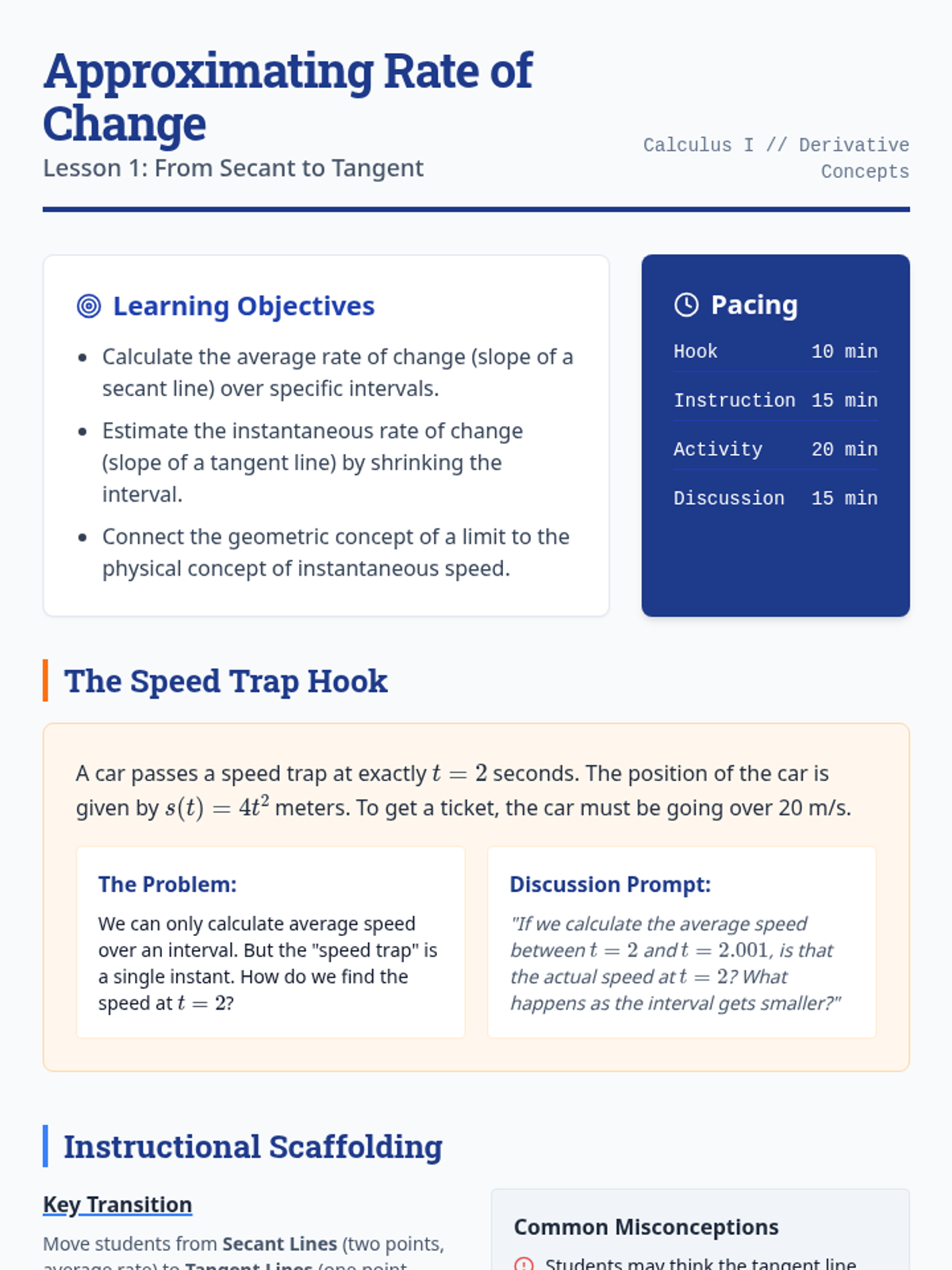
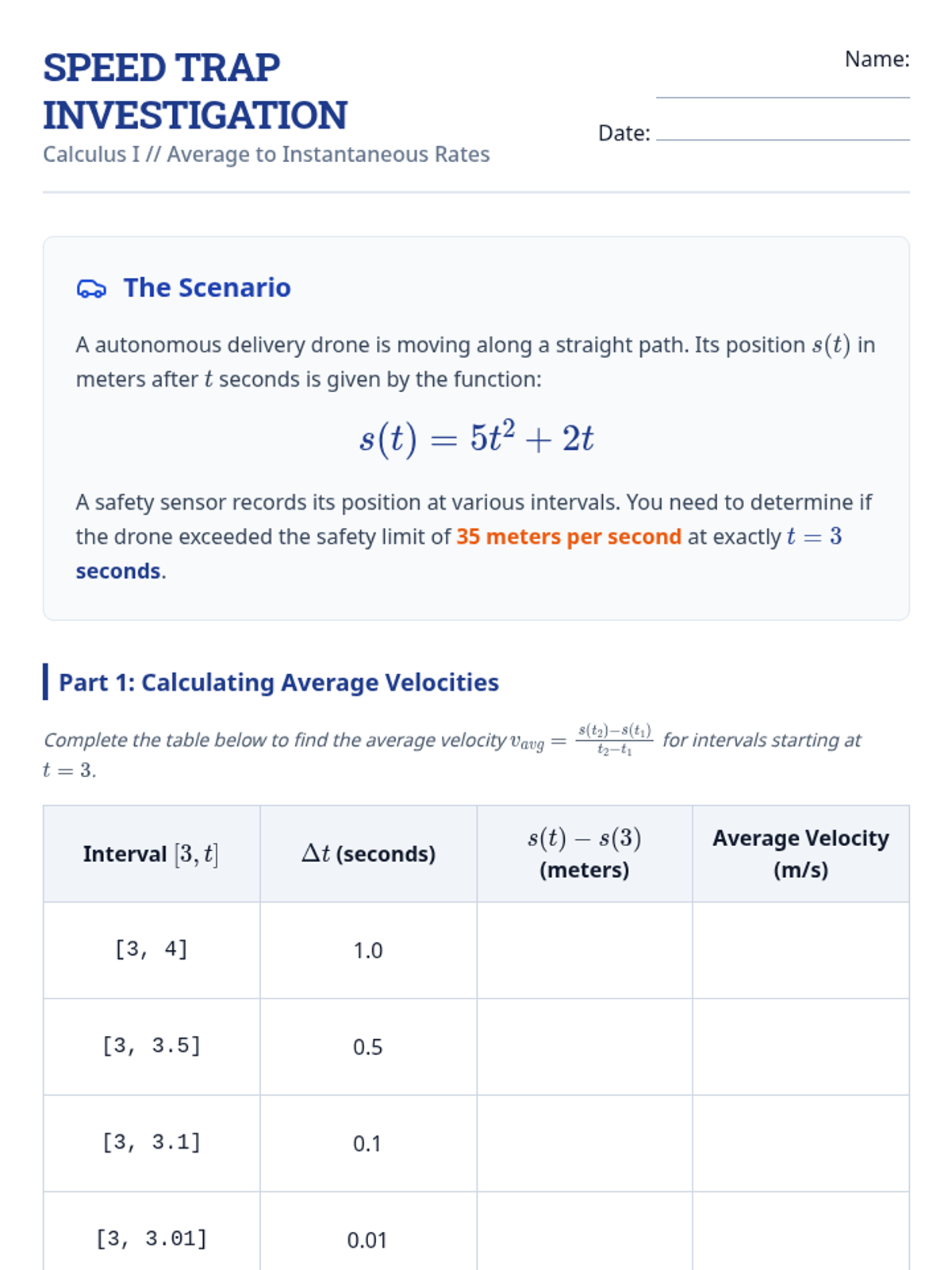
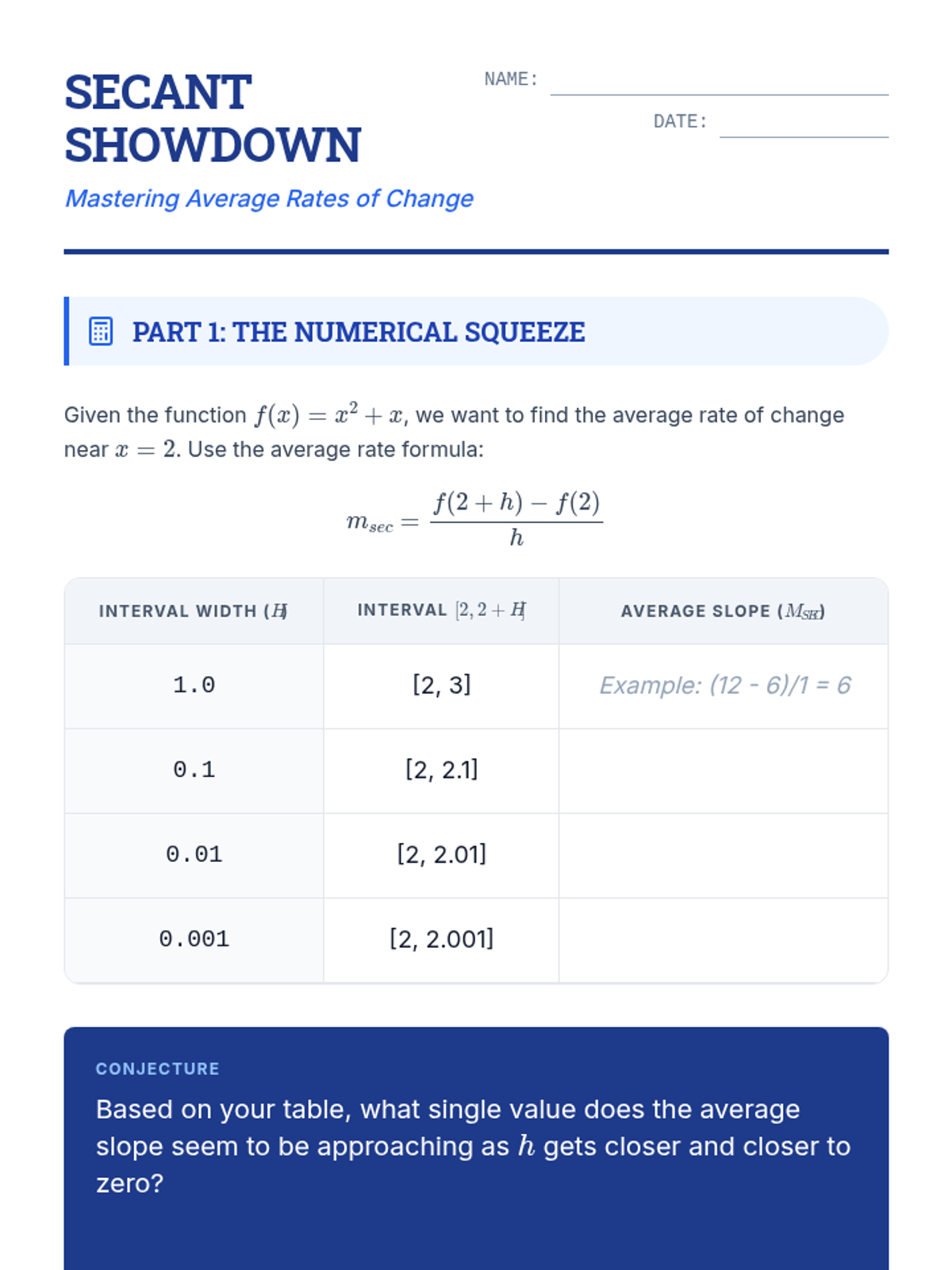
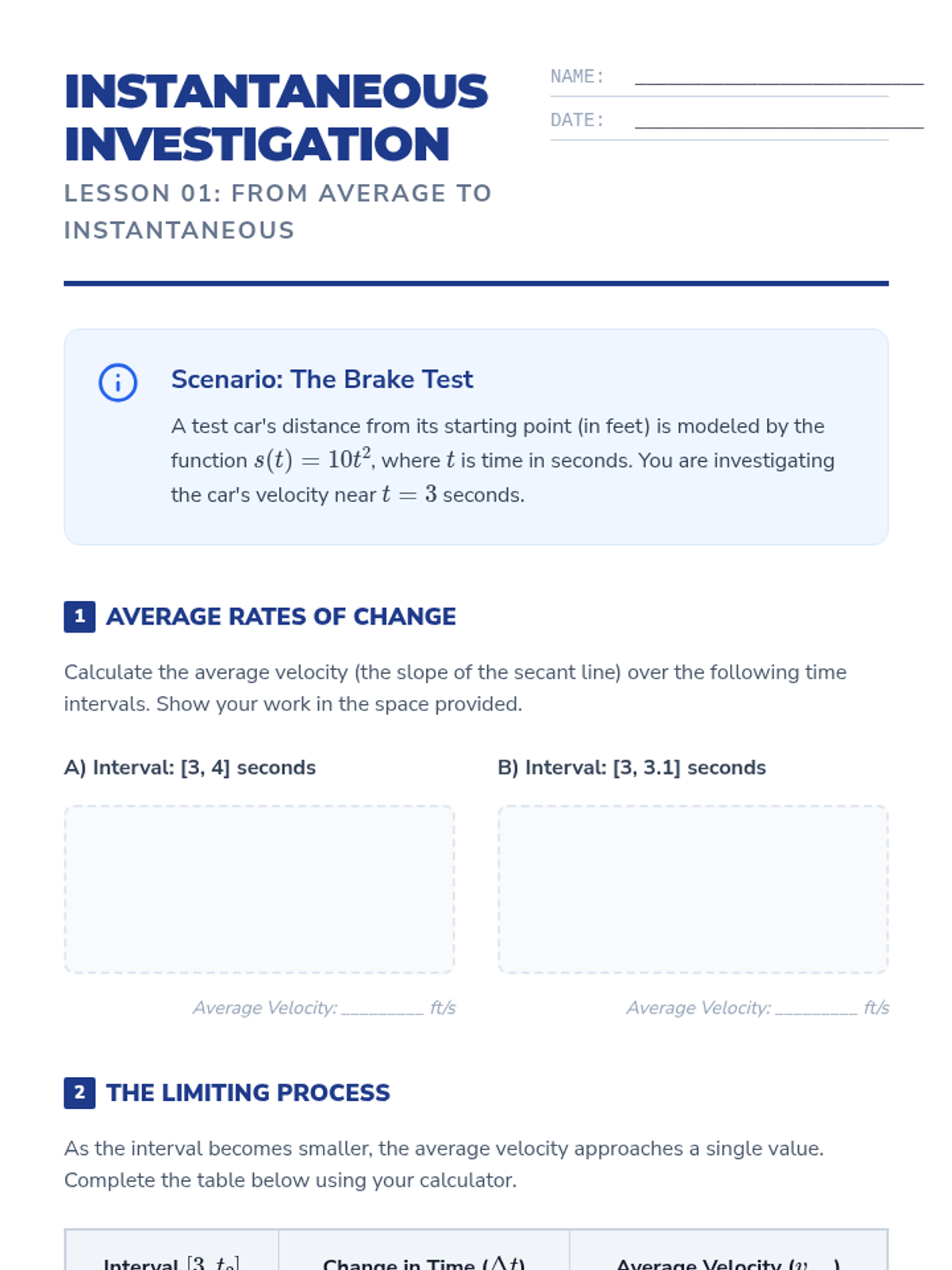
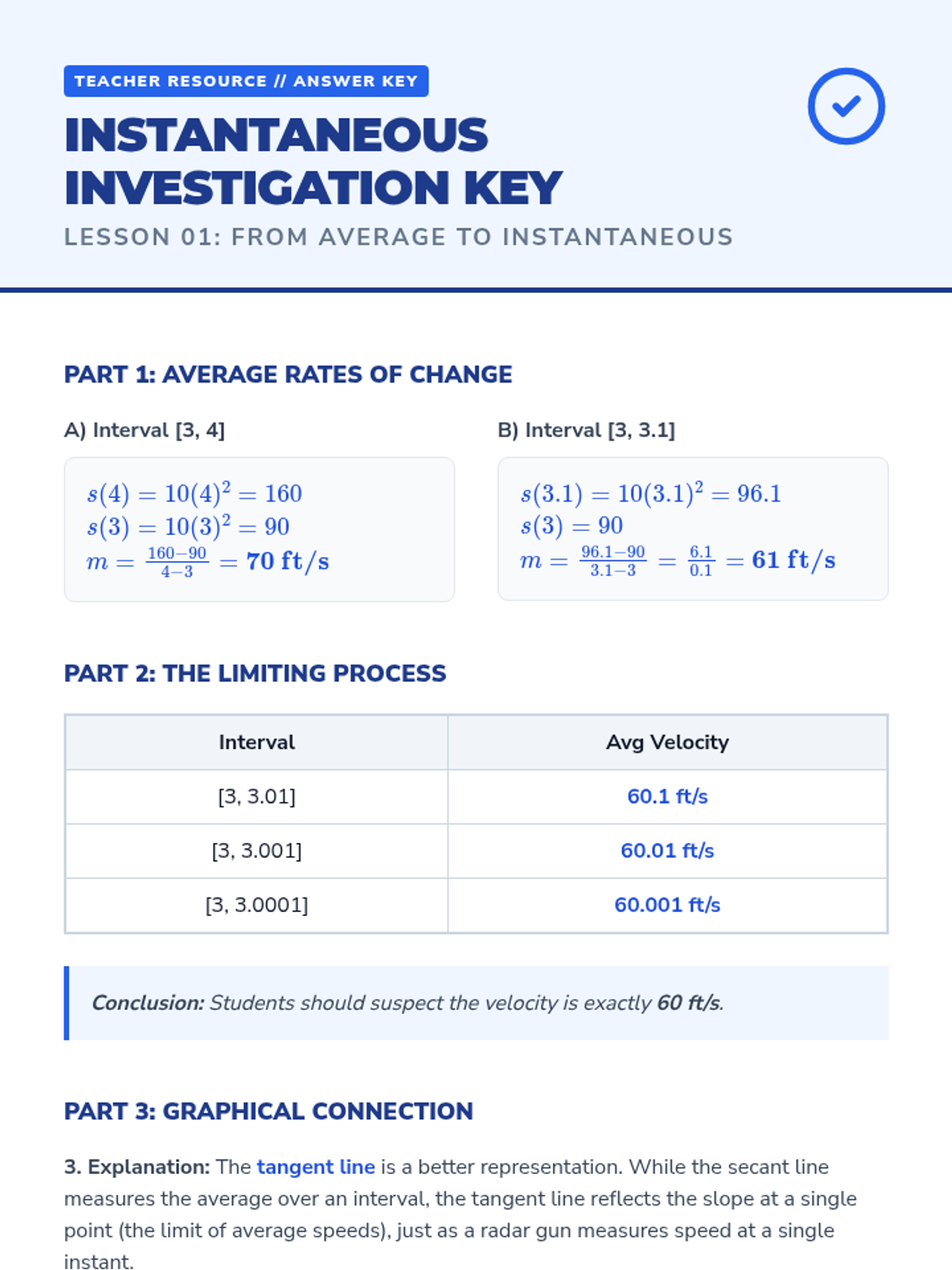
A foundational calculus unit bridging average and instantaneous rates of change. Students move from physical motion data to geometric visualization and numerical estimation, culminating in the qualitative sketching of derivative graphs and interpretation of notation in real-world contexts.
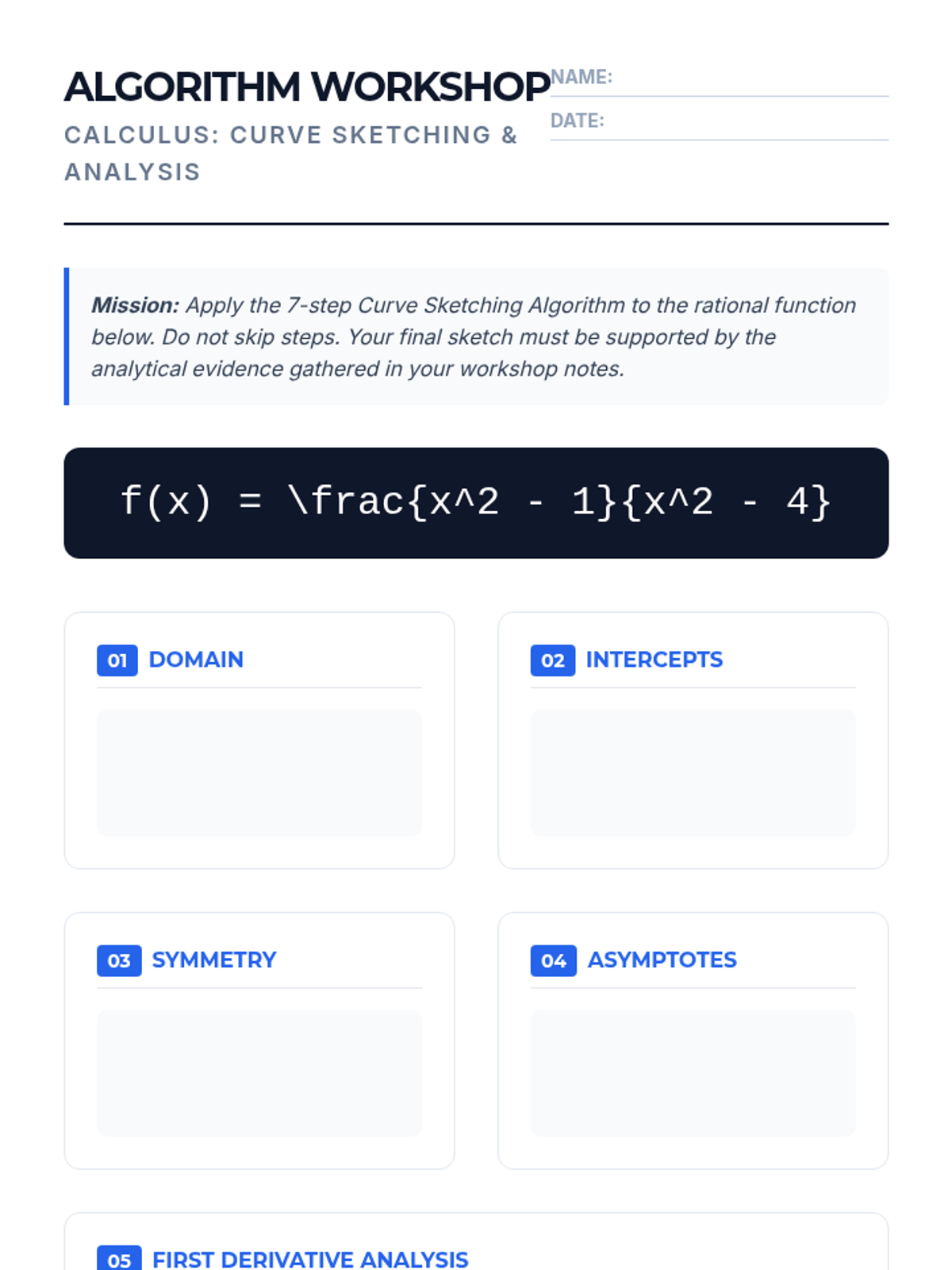
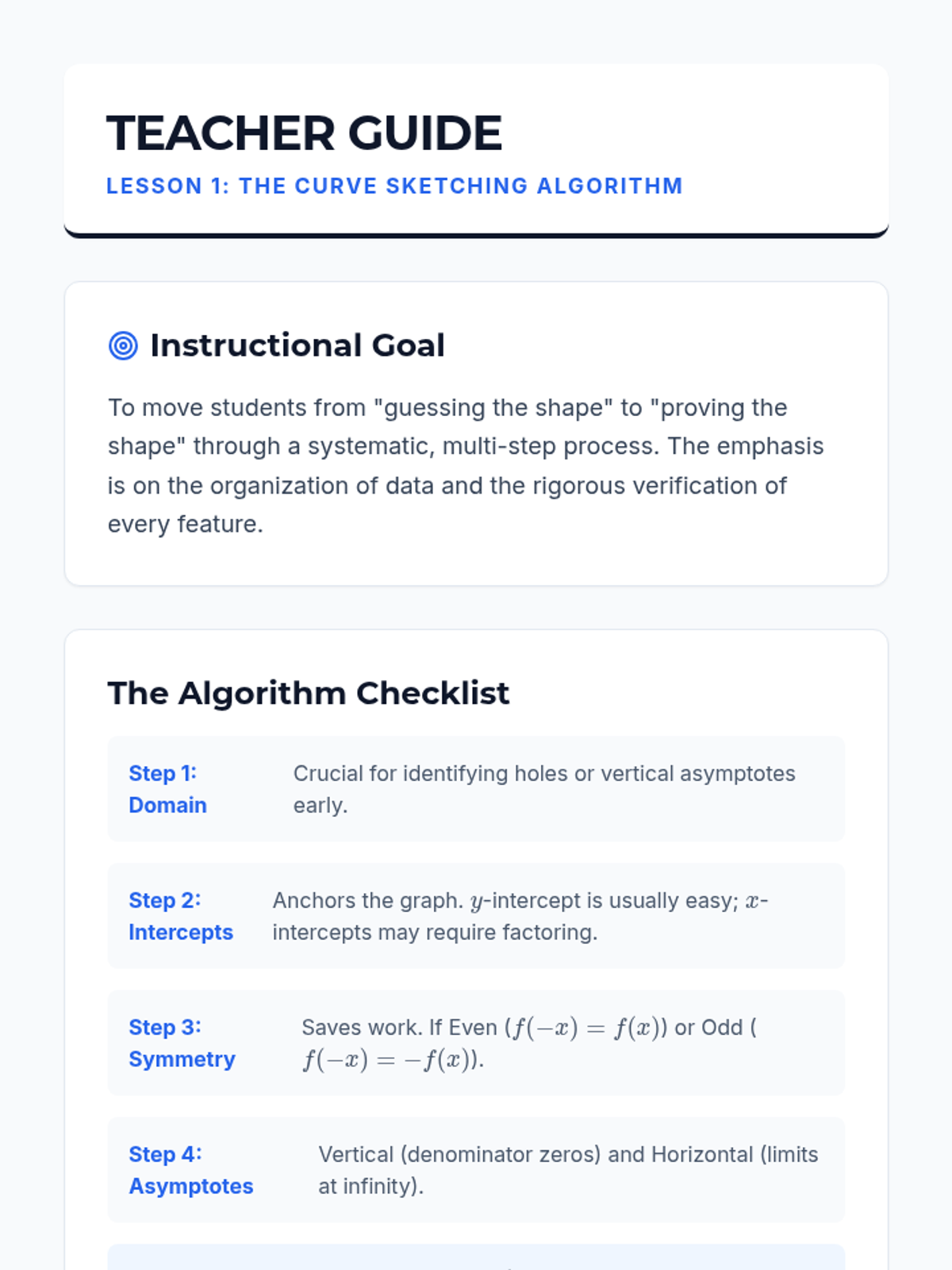
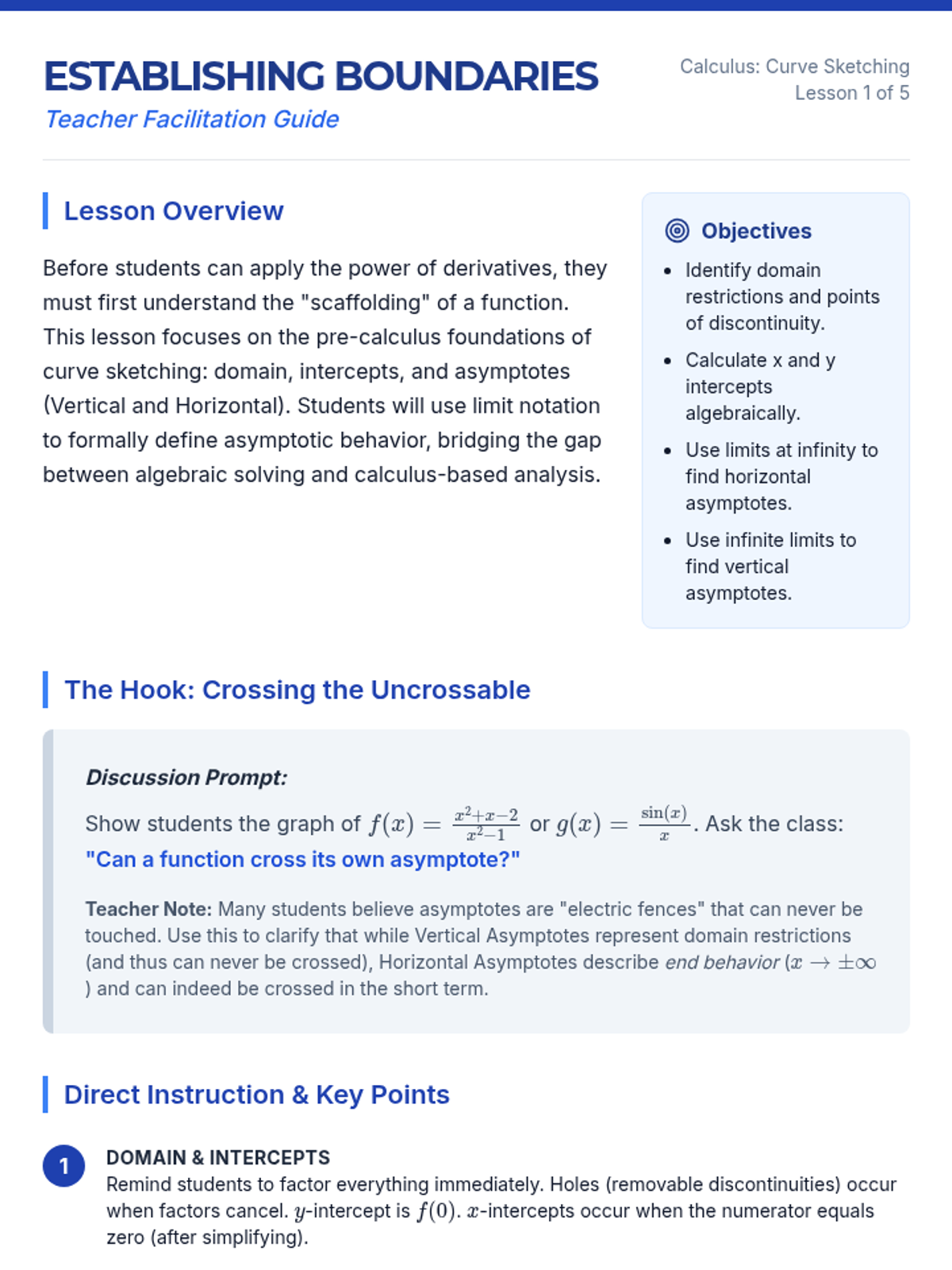
A comprehensive 11th-grade calculus sequence that synthesizes domain, intercepts, symmetry, asymptotes, derivatives, and concavity into a systematic curve sketching algorithm. Students progress from procedural mastery to critical analysis of technological limitations and a final synthesis project.
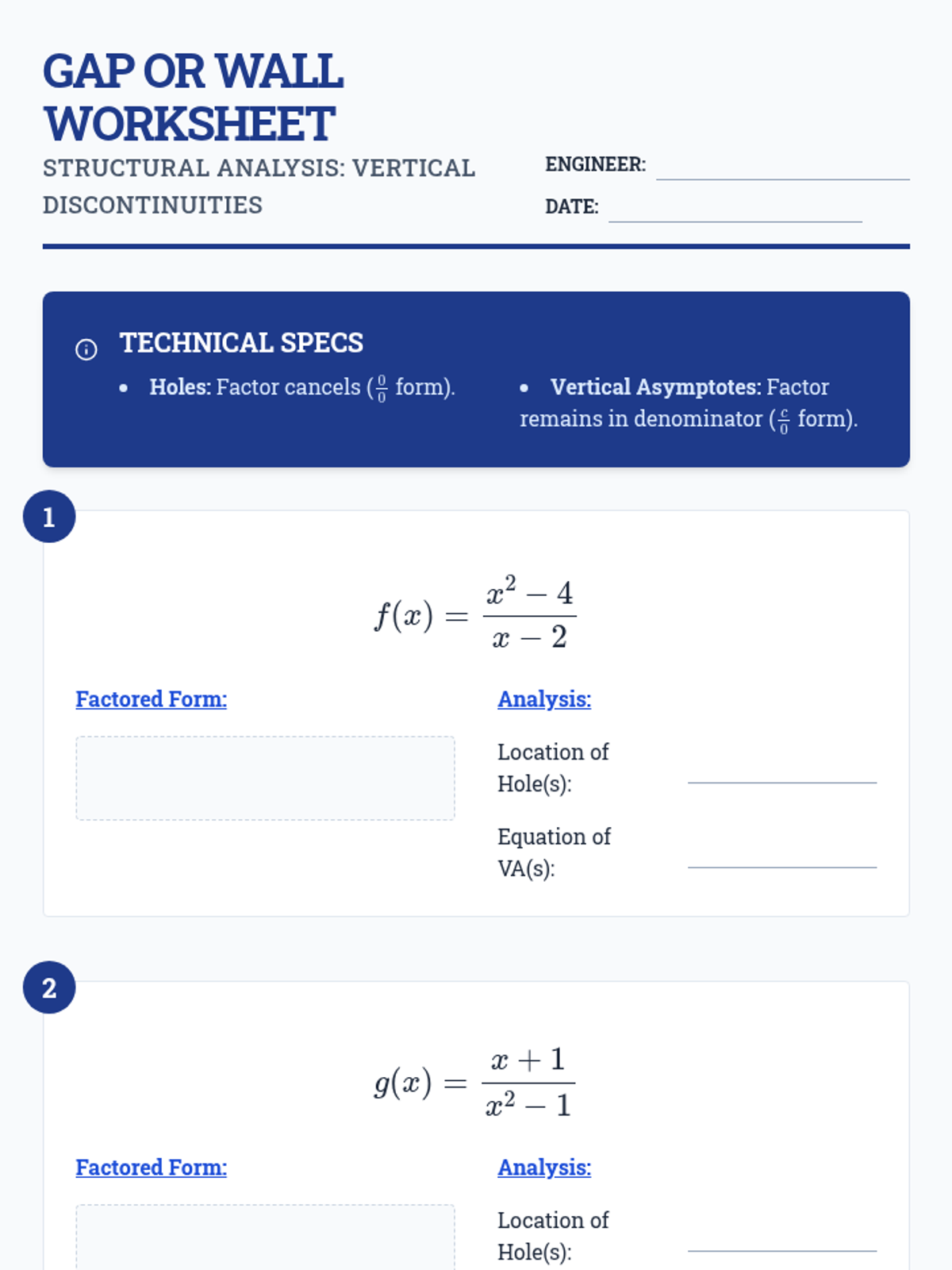
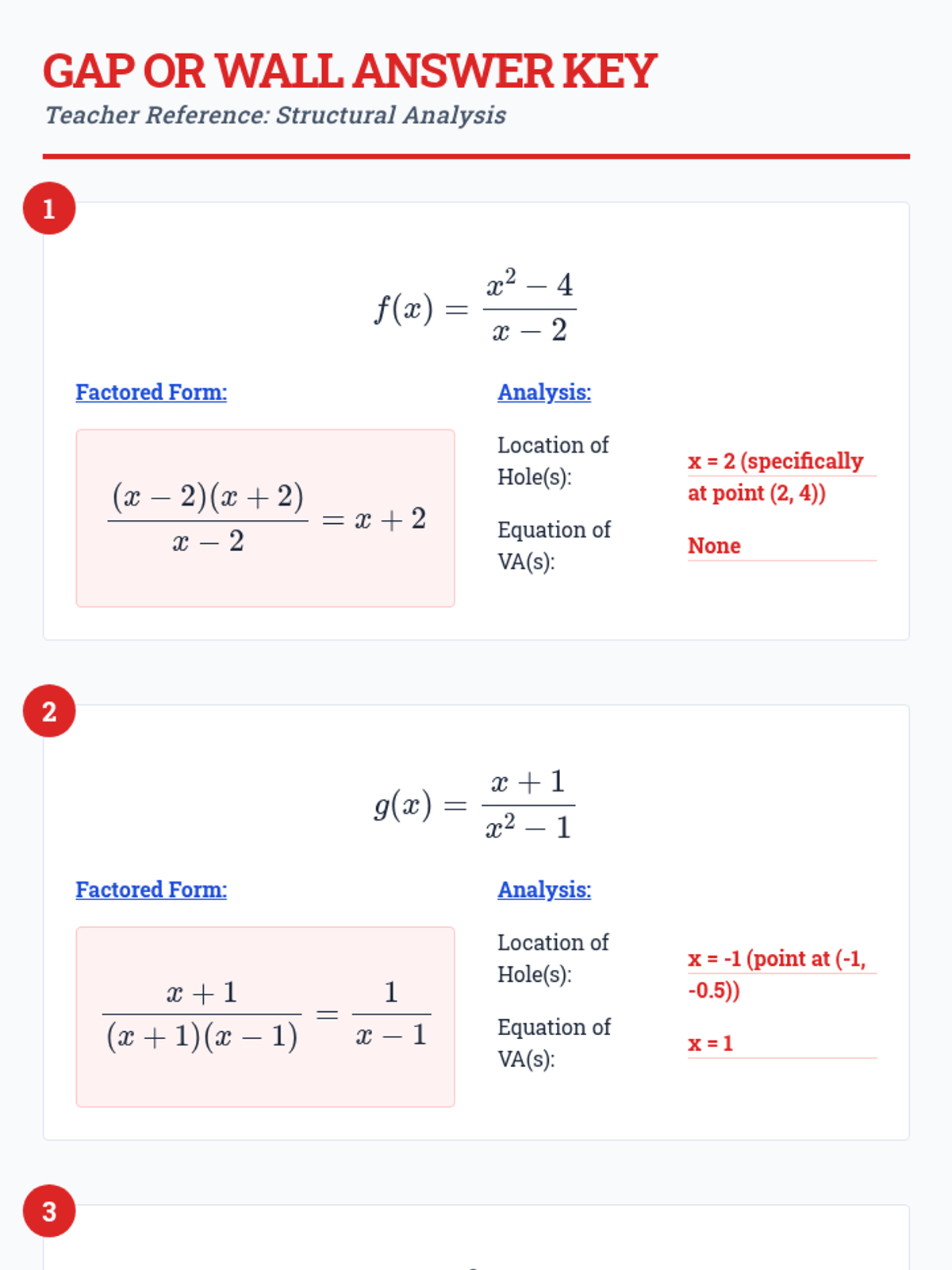
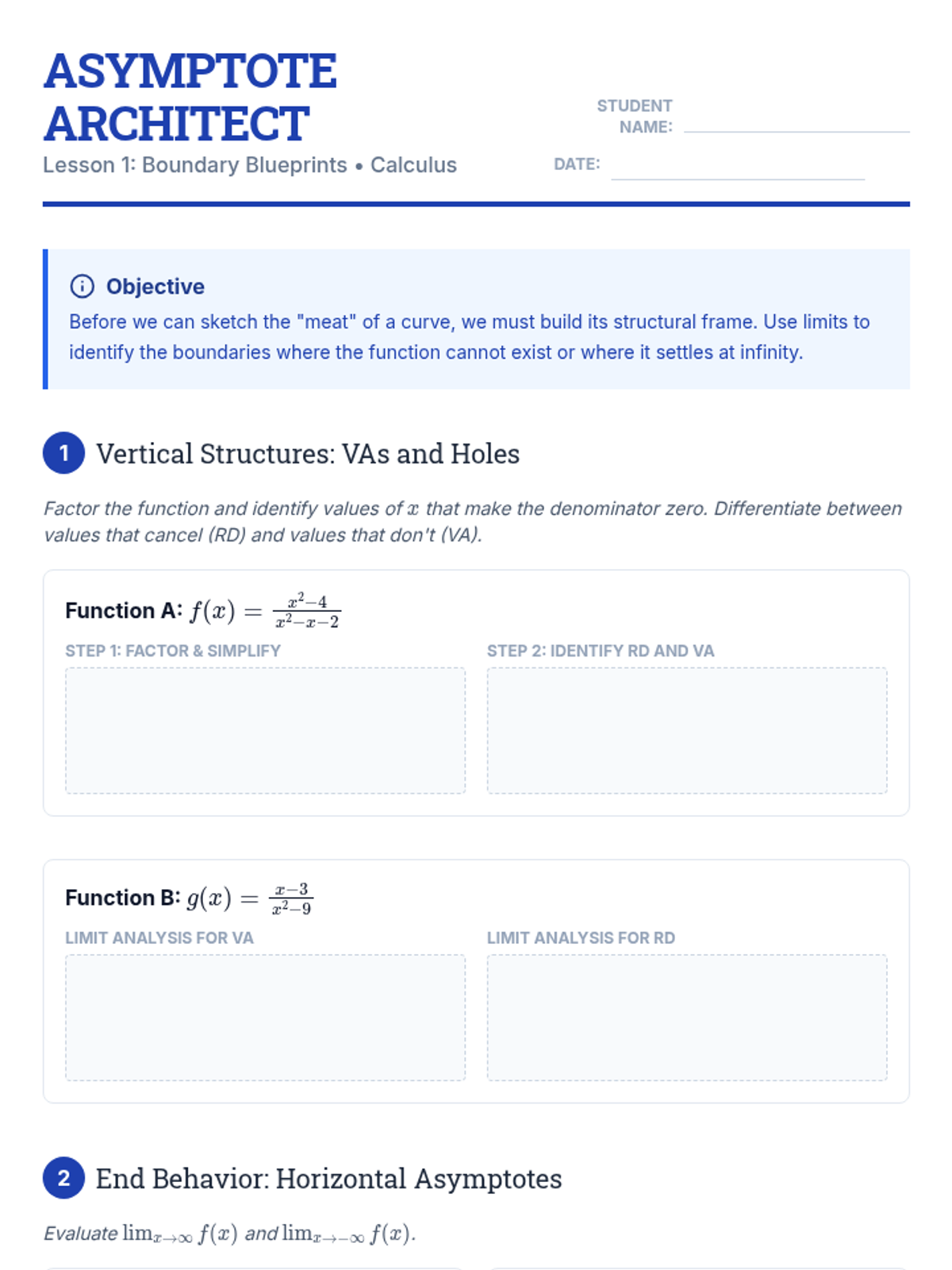
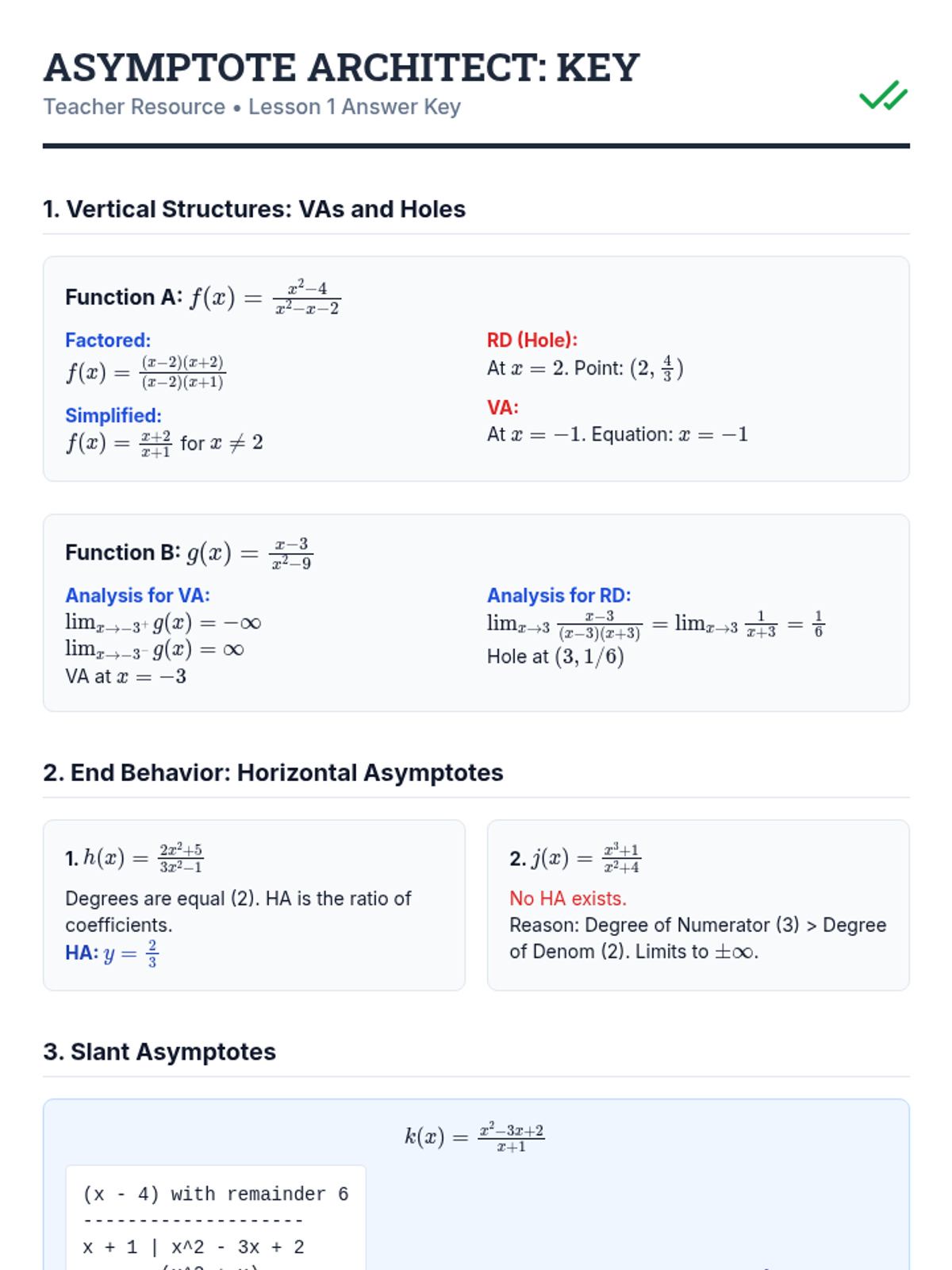
This sequence explores the behavior of rational functions, focusing on limits, asymptotes, and discontinuities. Students learn to distinguish between removable and non-removable discontinuities, analyze end behavior at infinity, perform polynomial division for slant asymptotes, and synthesize these skills to sketch complex functions.
A comprehensive 12th-grade calculus unit that synthesizes limits, first derivatives, and second derivatives to analytically sketch and analyze complex functions without technology. Students progress from isolating specific derivative behaviors to integrating all analytical tools into a master sketching protocol.
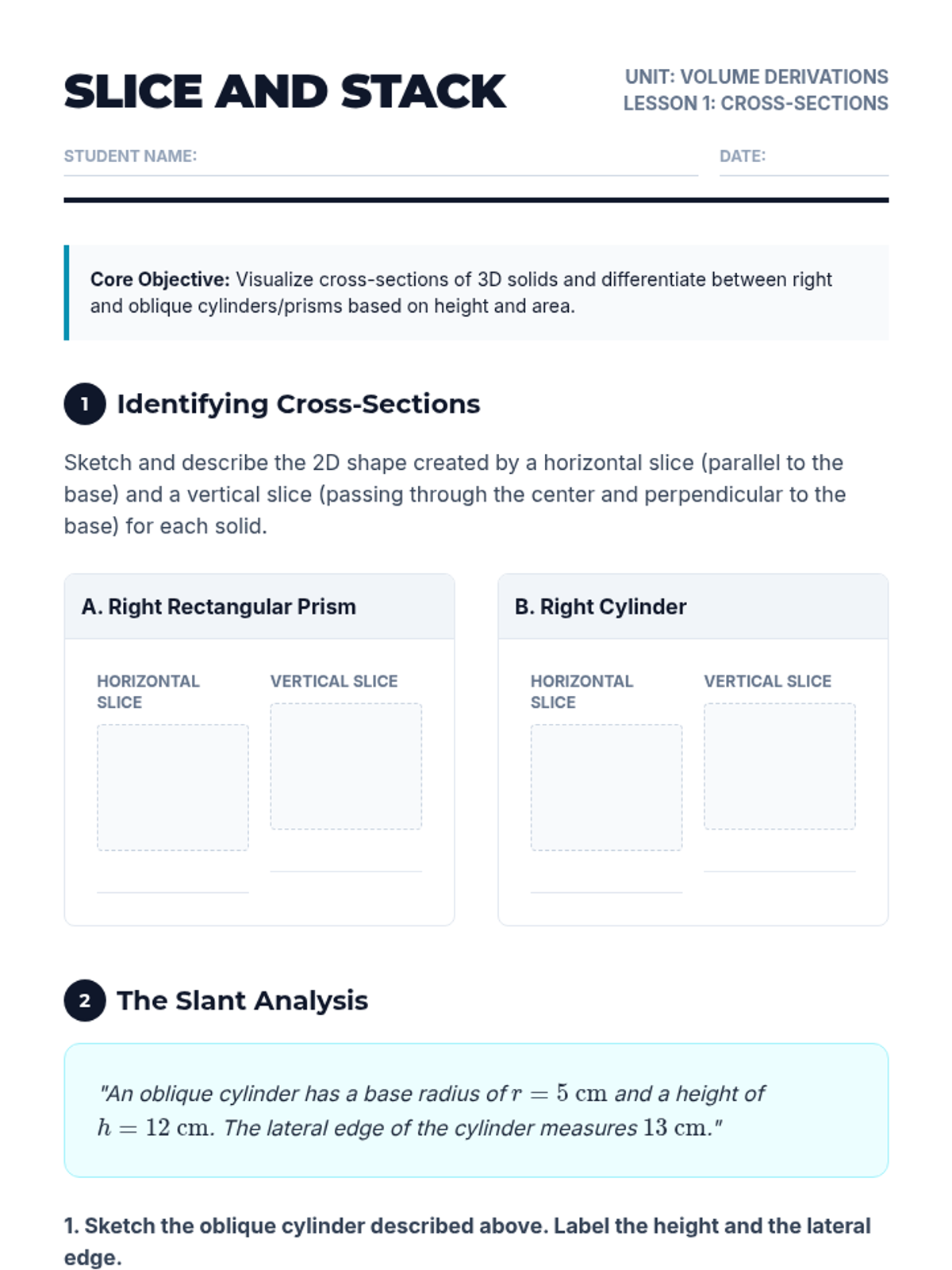
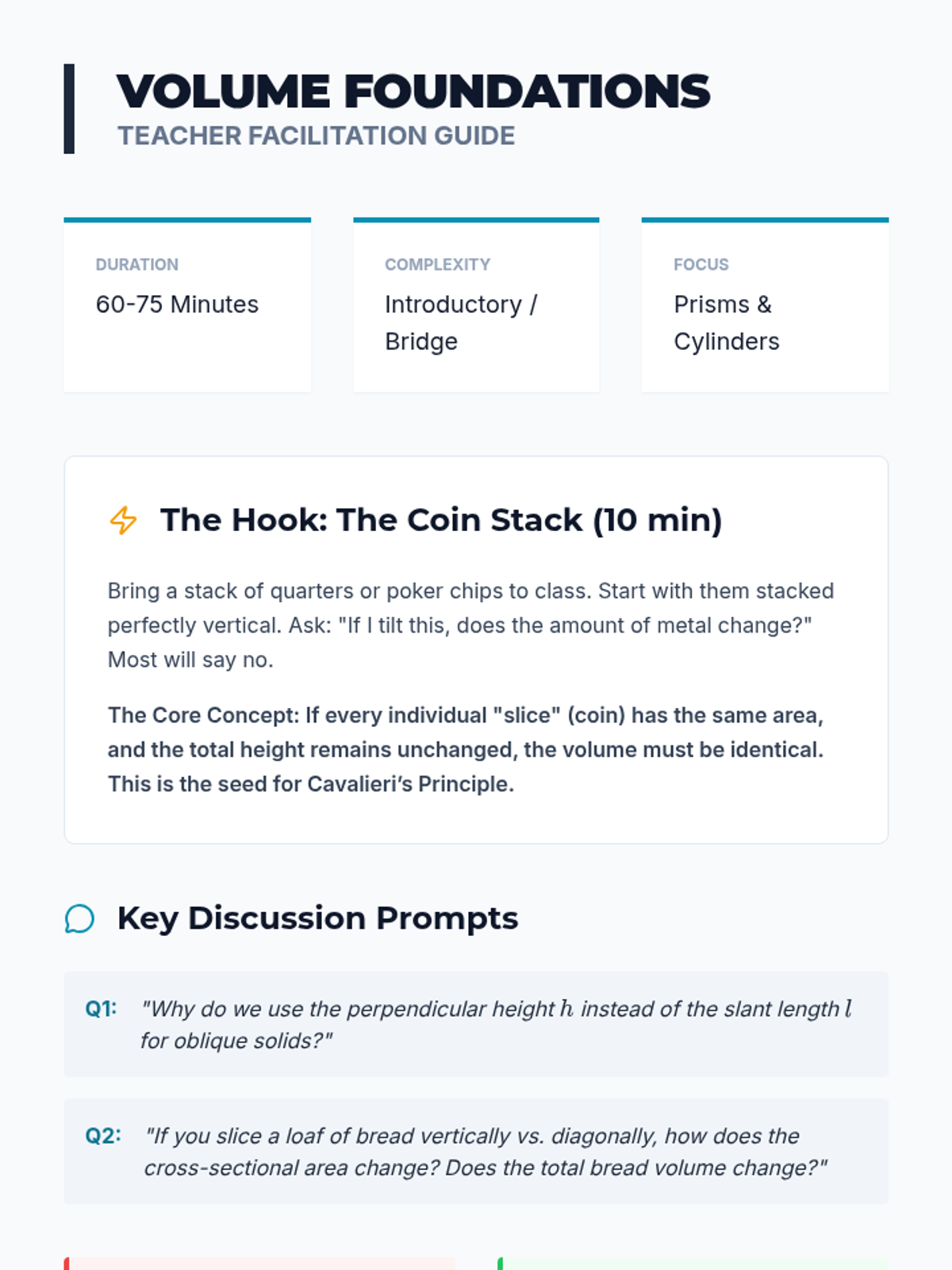
A 12th-grade geometry sequence exploring the derivation of volume formulas using Cavalieri's Principle, limits, and cross-sectional analysis to bridge geometry and calculus.
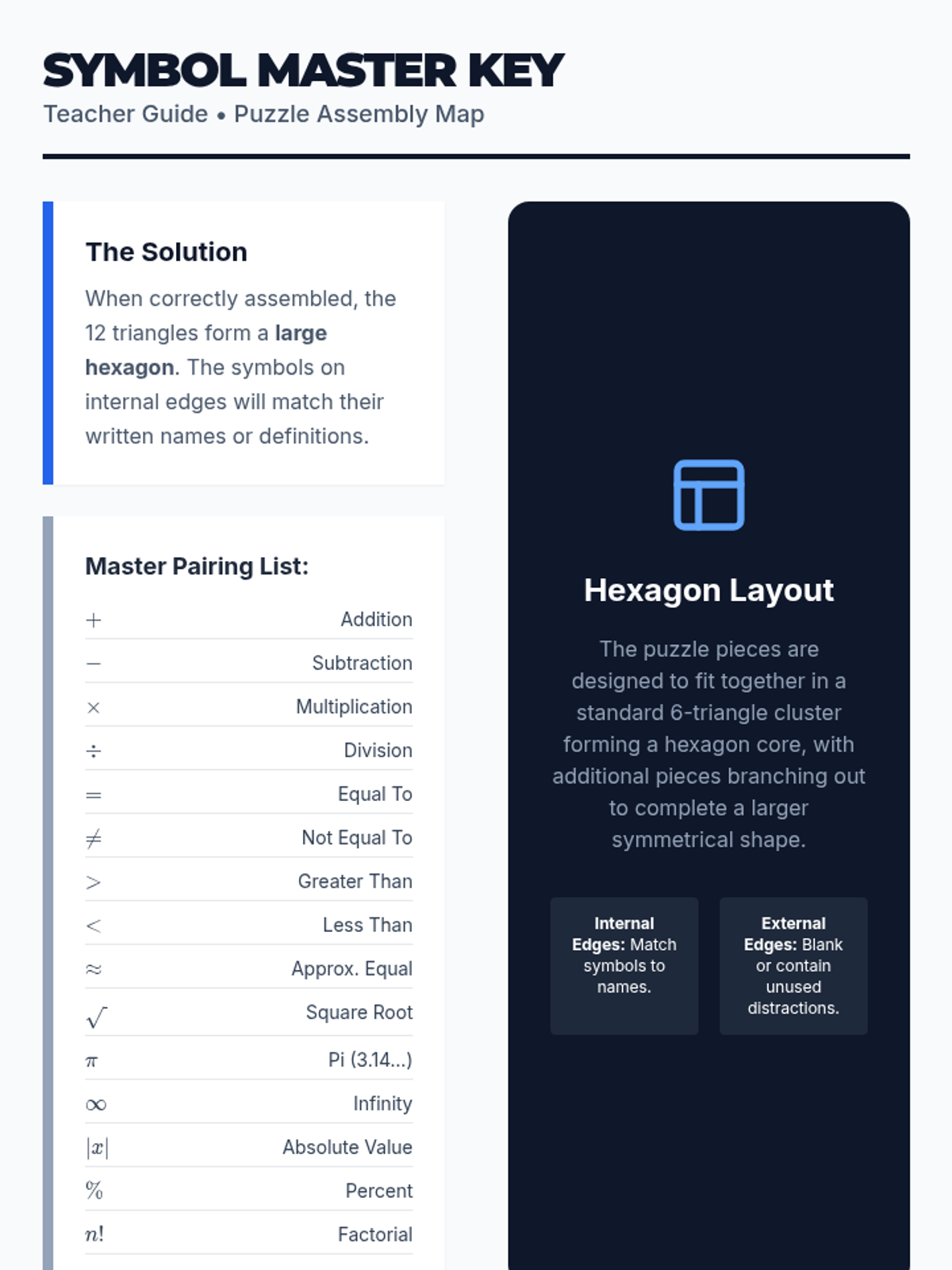
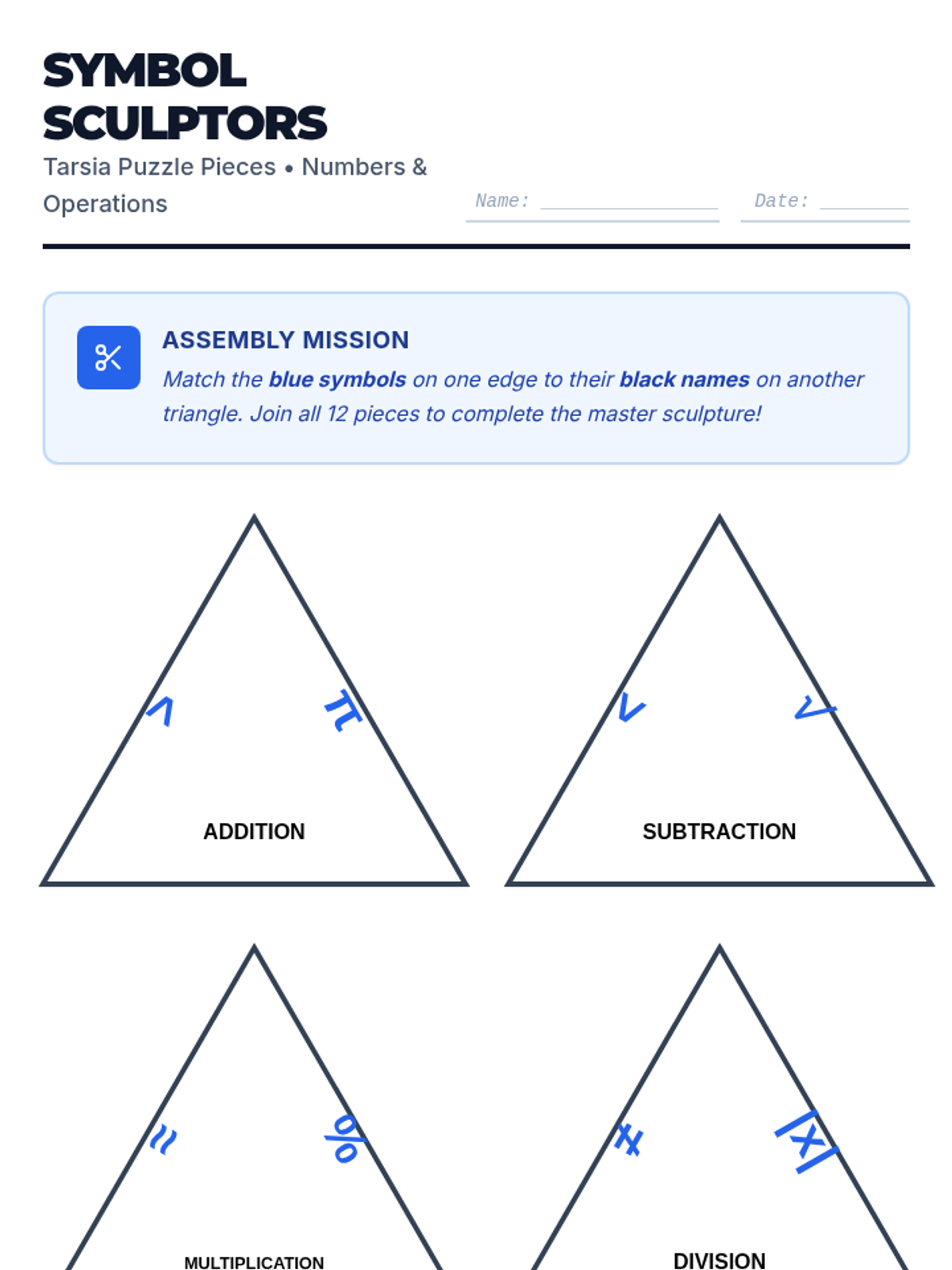
A series of lessons designed to build fluency in mathematical notation and operations through visual and tactile learning.
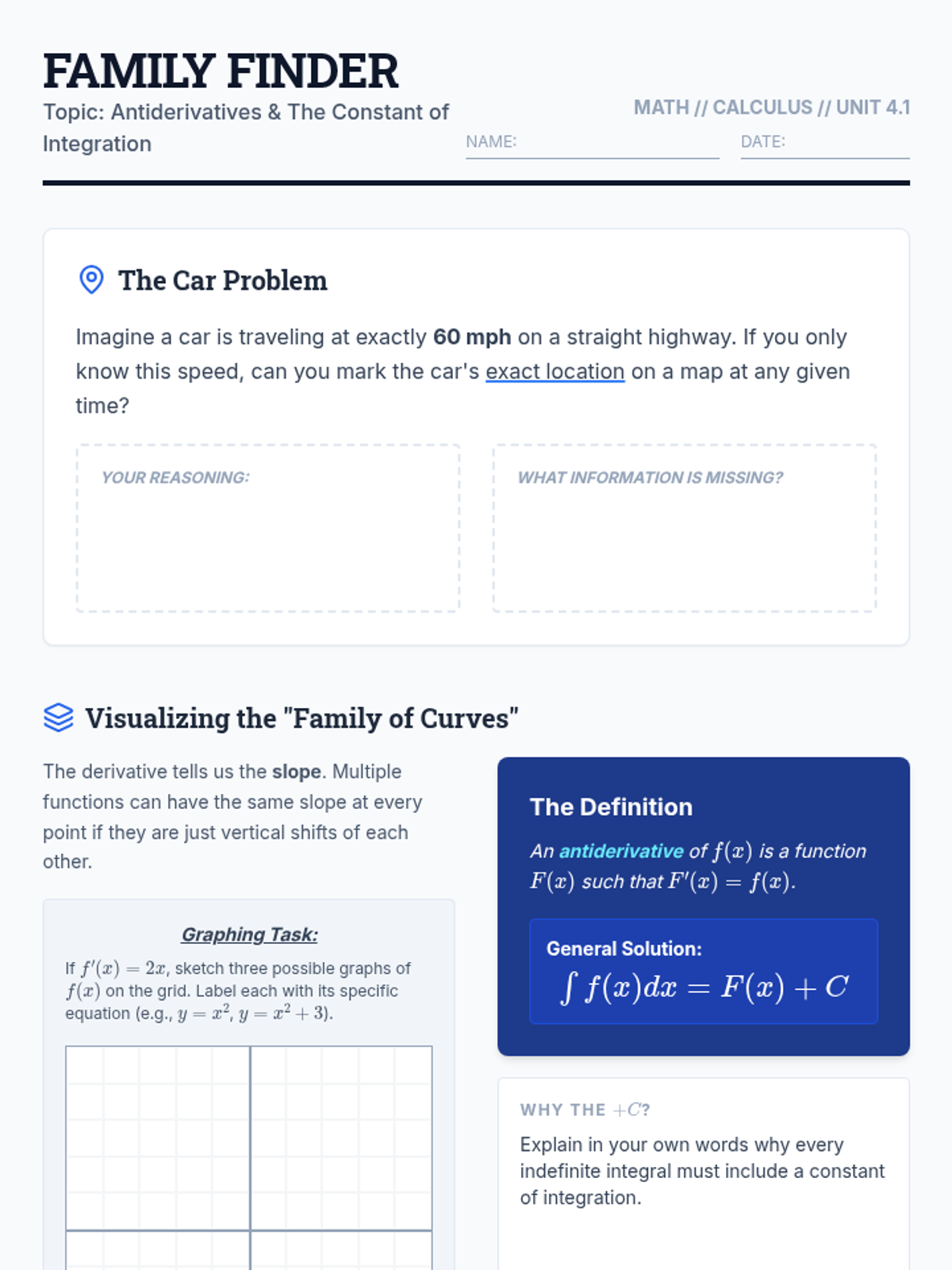
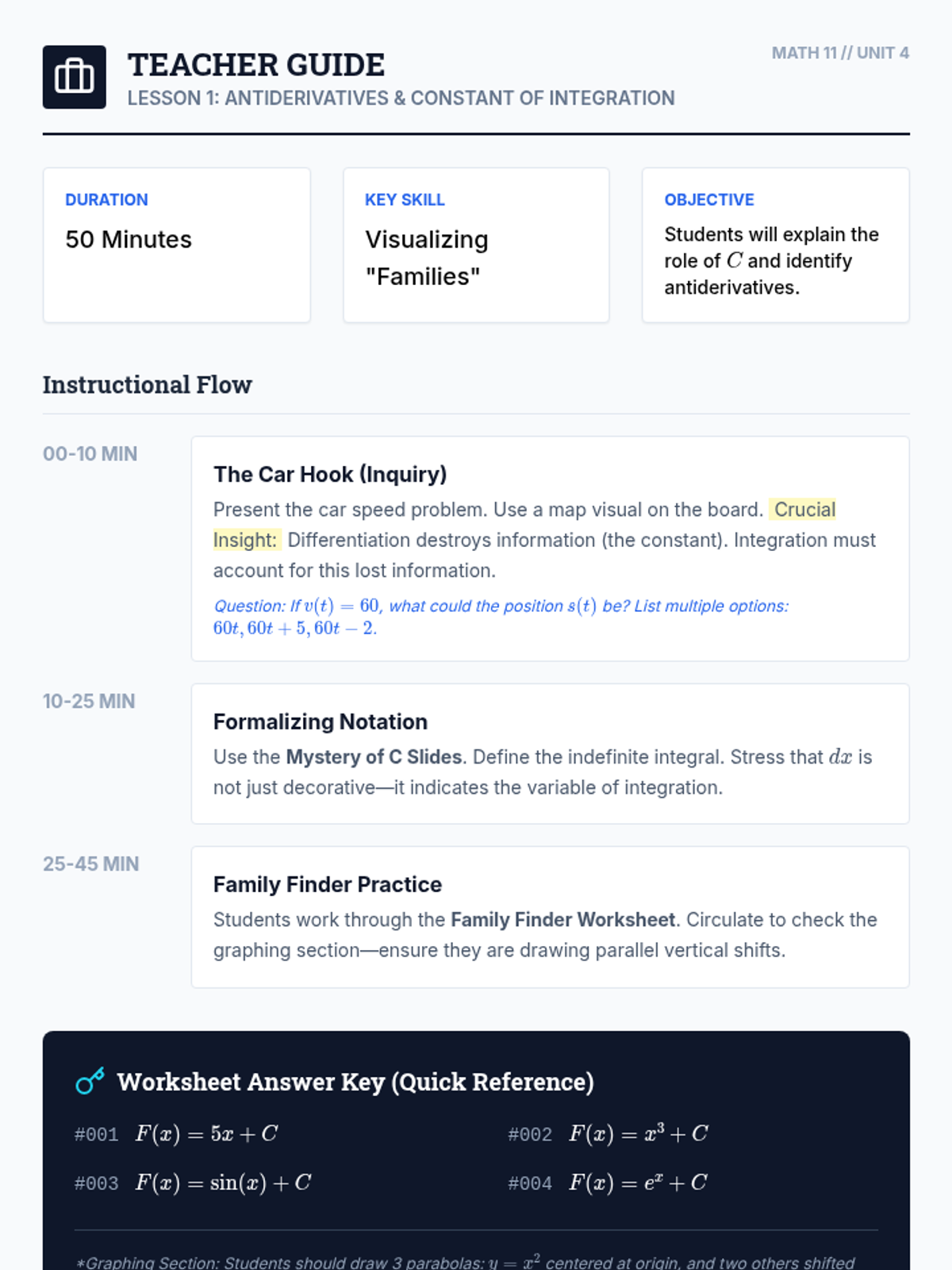
A technical skill-building sequence for 11th-grade students focusing on the algebraic processes of finding antiderivatives, from basic power rules to solving initial value problems.
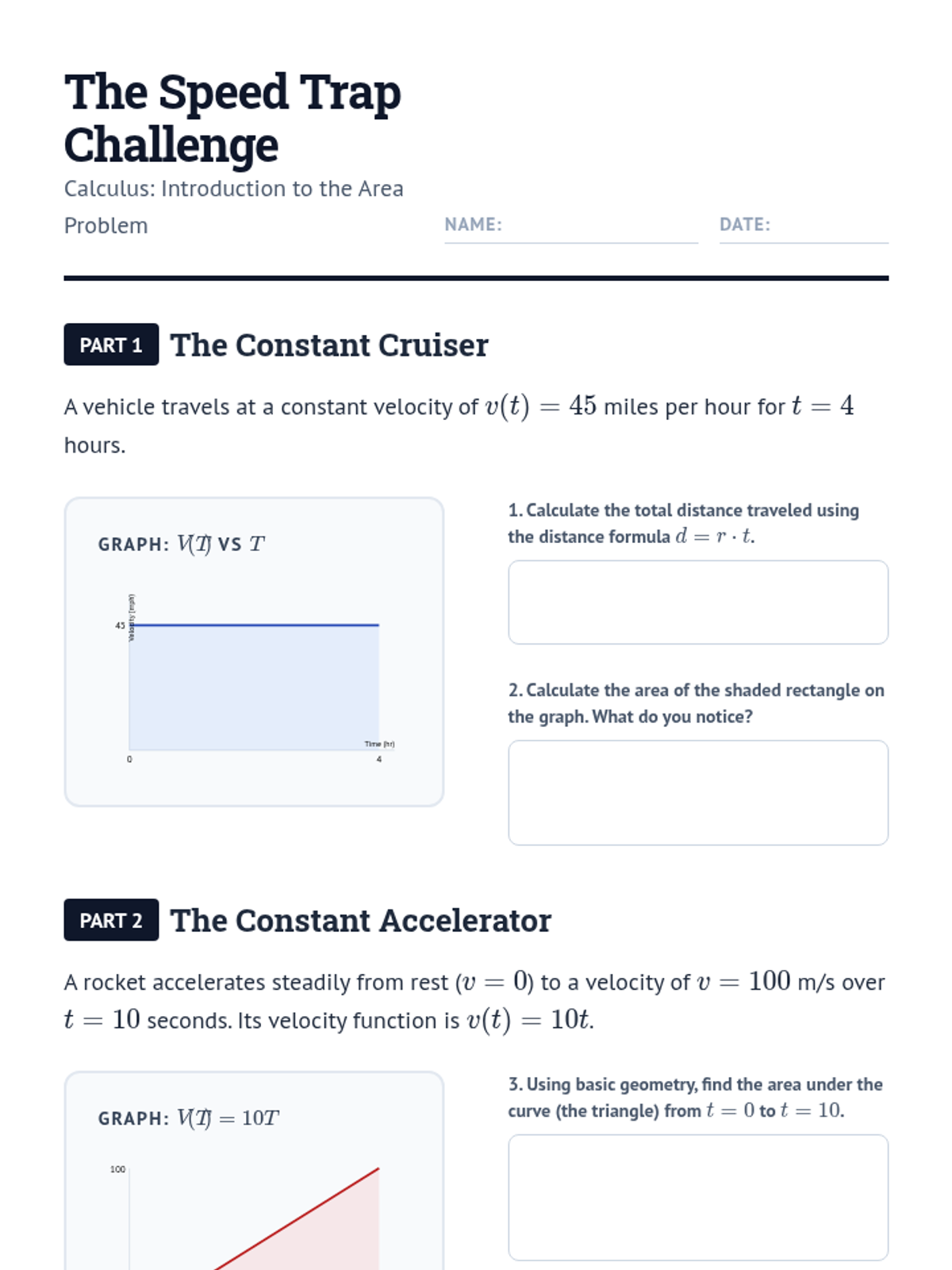
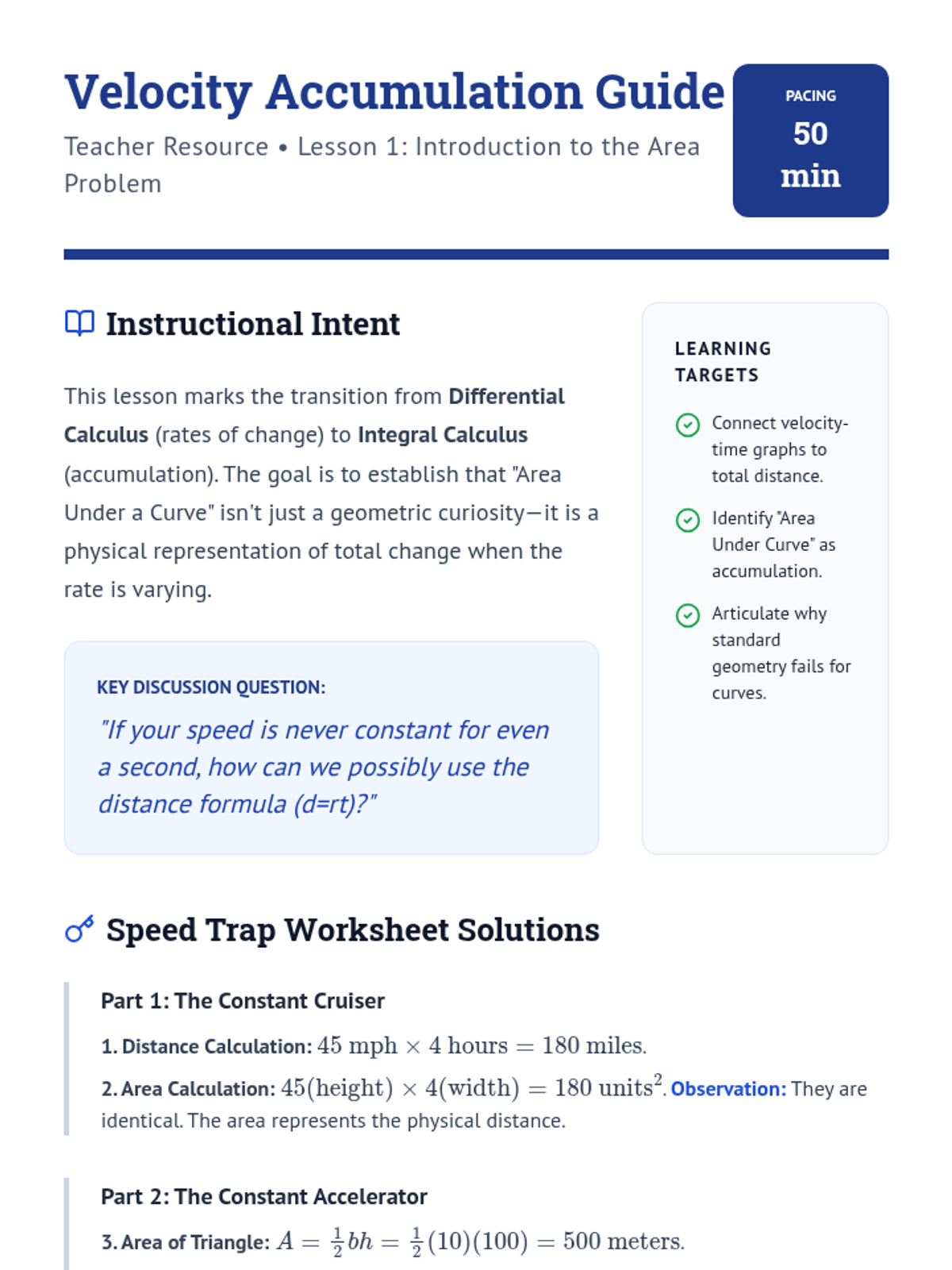
This sequence guides students through the conceptual transition from geometry to calculus by investigating the Area Problem. Students begin by estimating areas under curves using geometric shapes, discovering the relationship between rectangle width and approximation accuracy. As the sequence progresses, learners formalize these approximations using Sigma notation and limits, ultimately defining the definite integral.
A comprehensive Calculus unit focused on calculating areas and volumes using integration. Students move from 2D area analysis to 3D geometric modeling using disks, washers, and cross-sections, culminating in a real-world modeling project.
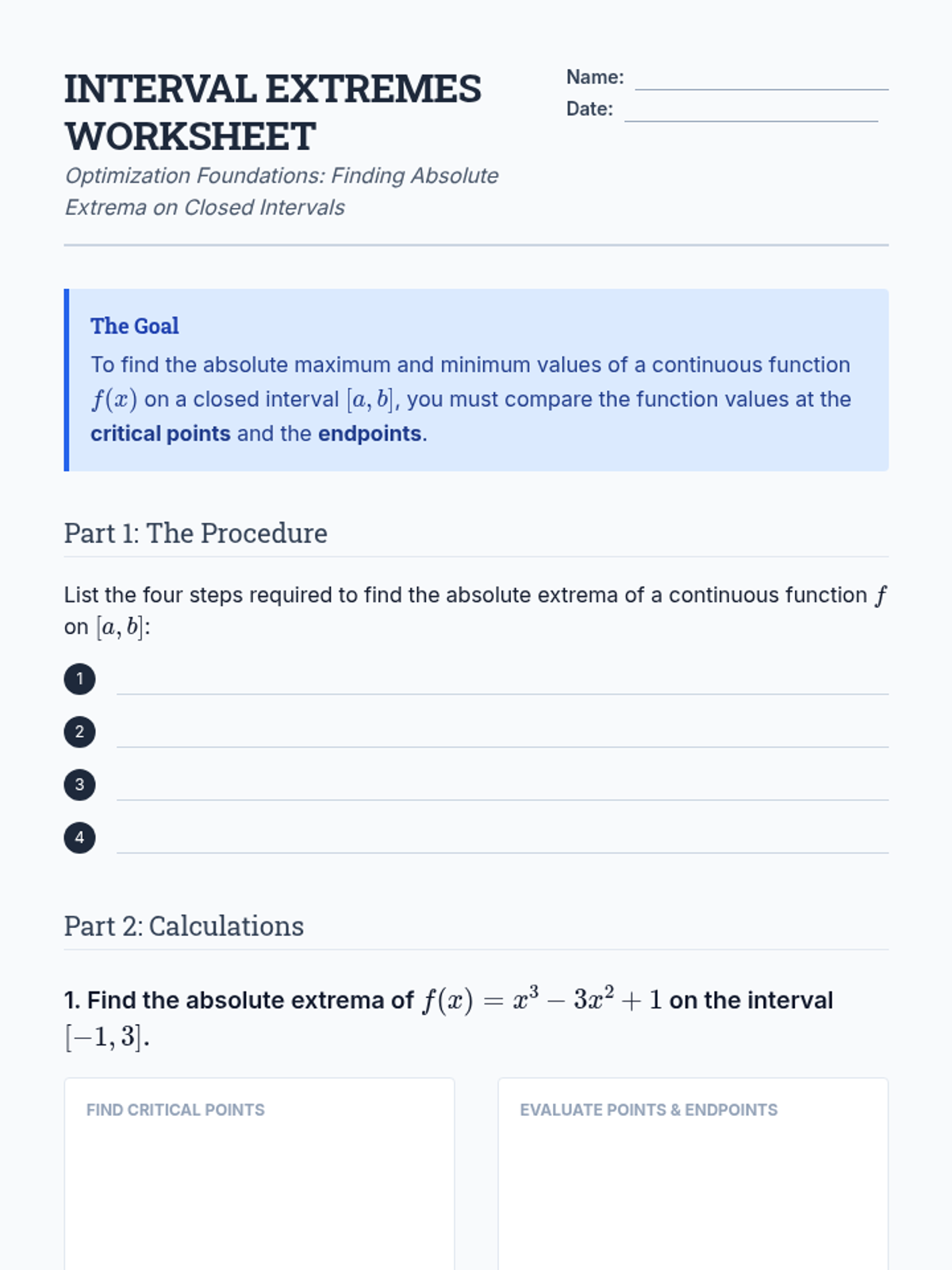
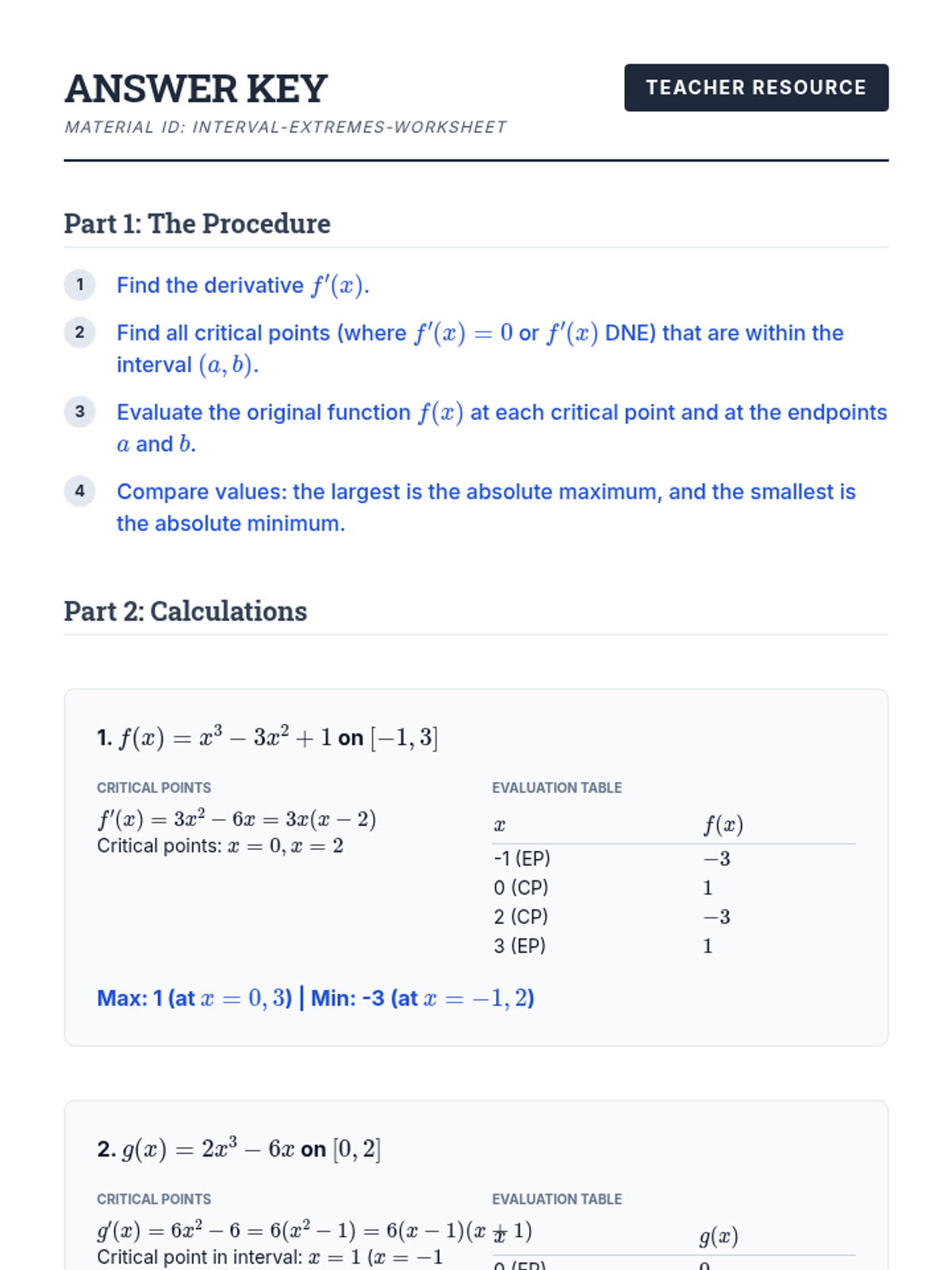
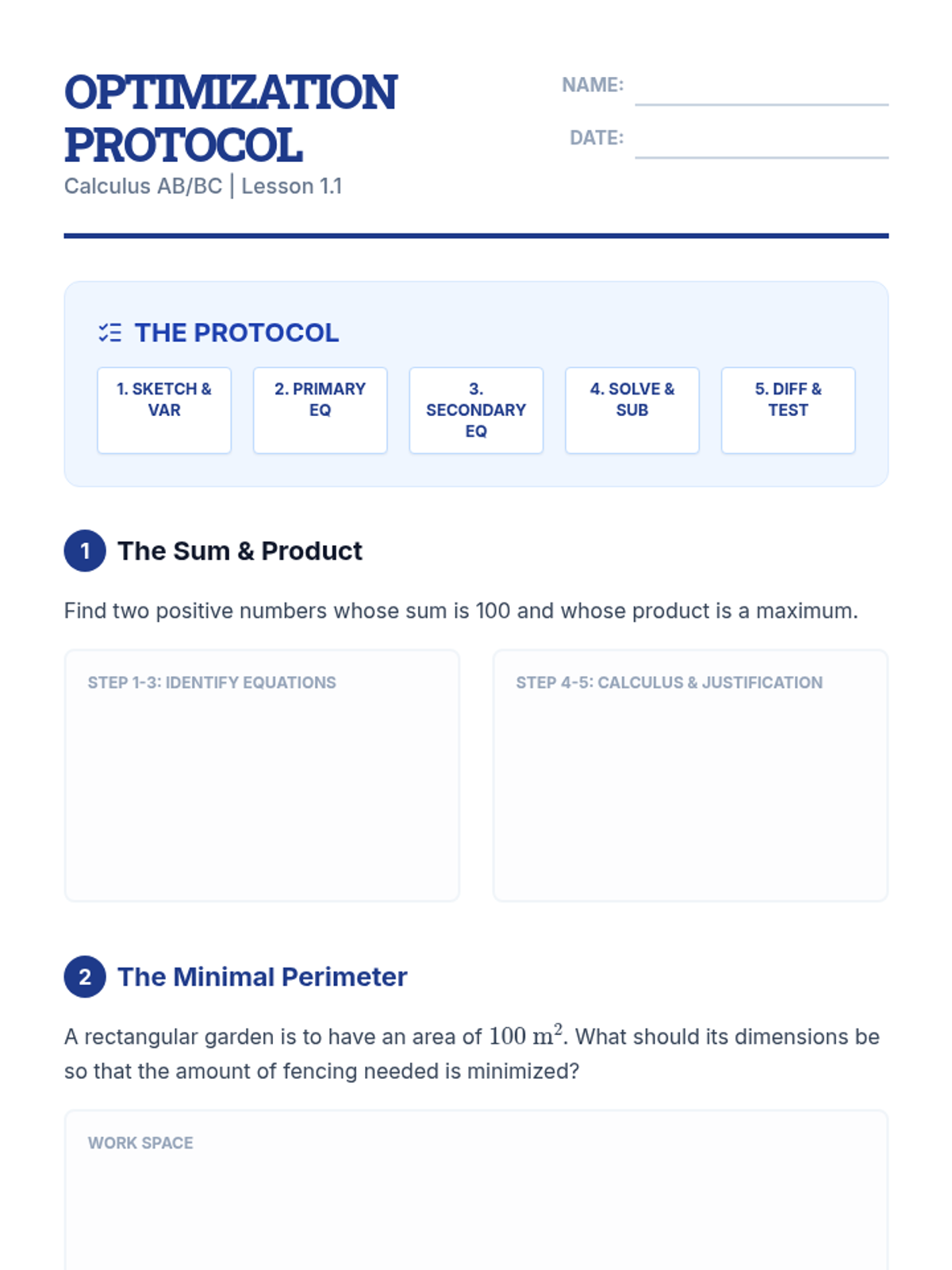
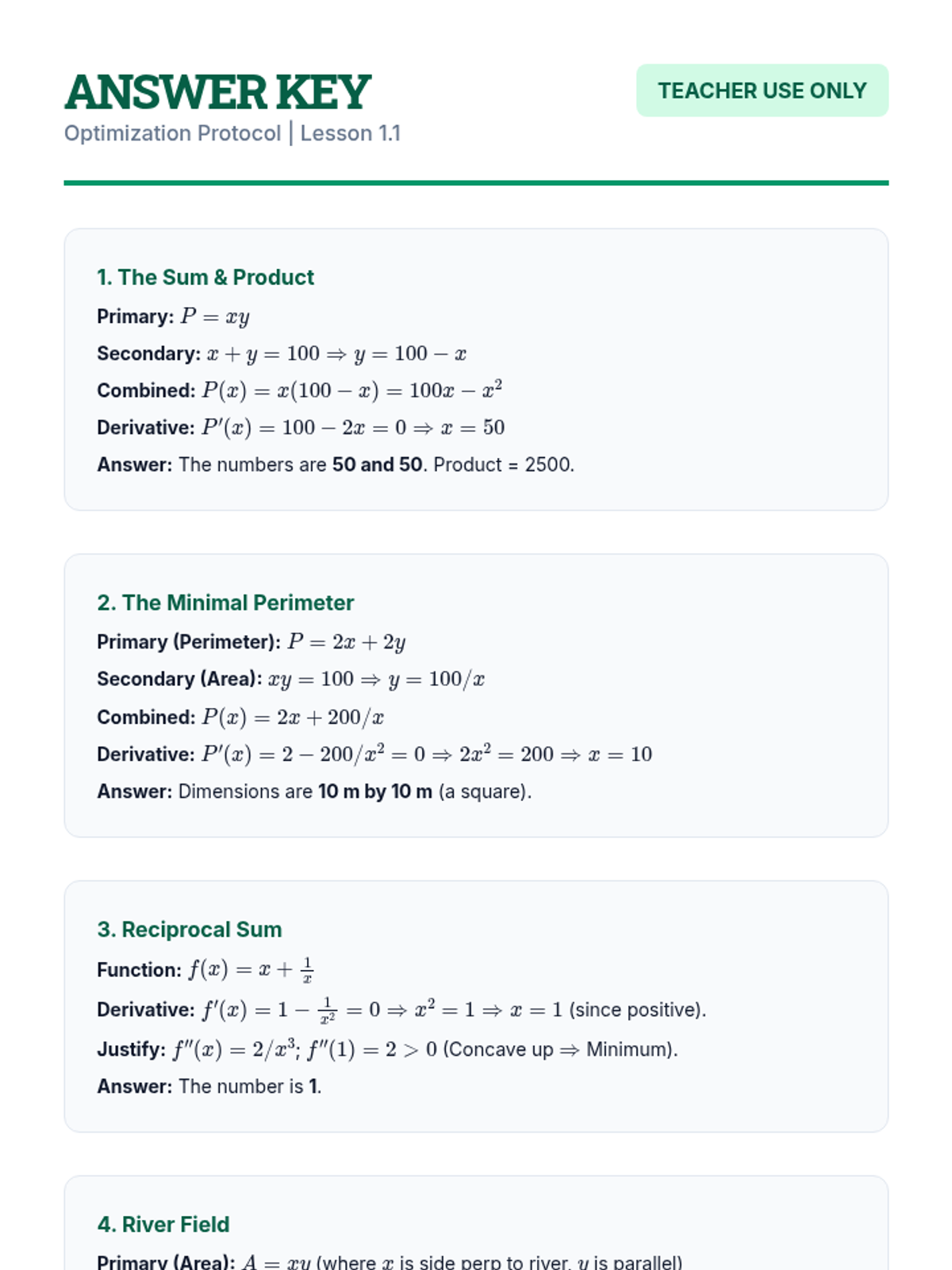
A comprehensive workshop series on optimization in calculus. Students master the Extreme Value Theorem, learn to translate complex word problems into mathematical models, and apply differentiation to find optimal outcomes in number theory and geometric contexts.
A project-based calculus unit where students apply curve sketching and derivative tests to real-world optimization problems, moving from modeling constraints to defending optimized designs.
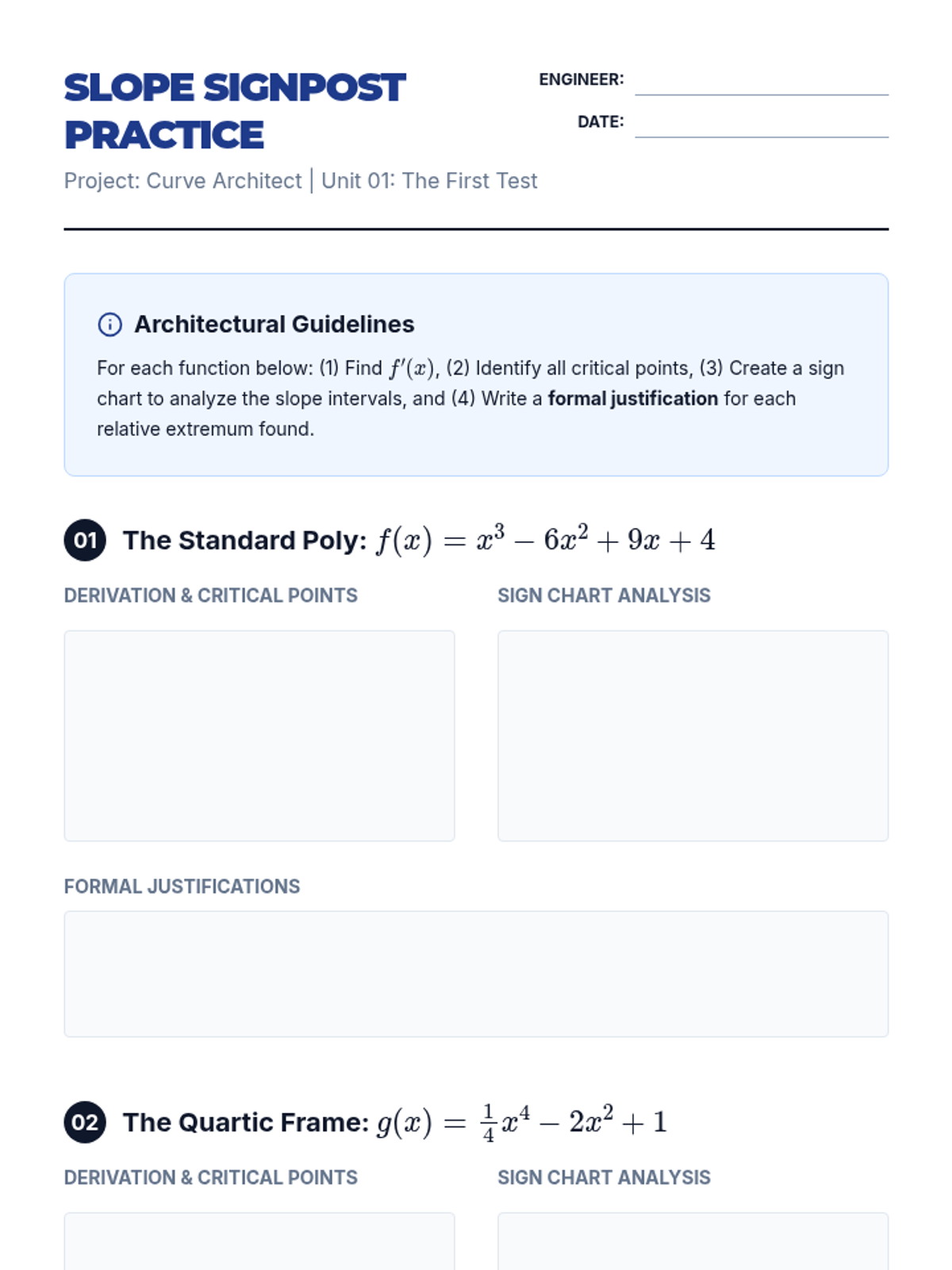
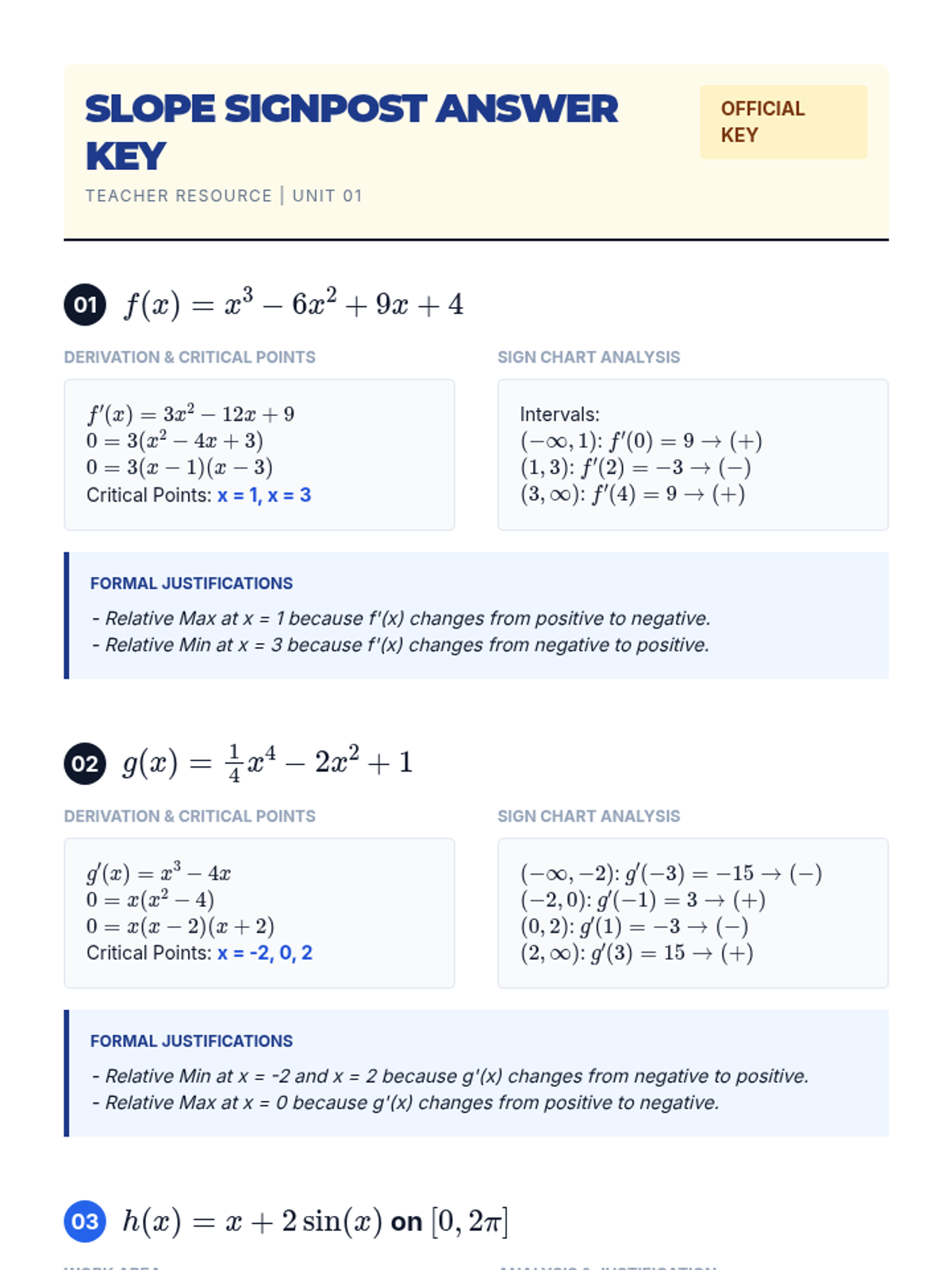
This sequence guides 11th-grade students through the formal application of derivative tests to analyze function behavior. Students will master the First and Second Derivative Tests, the Extreme Value Theorem, and the analysis of non-differentiable points to find and justify relative and absolute extrema.
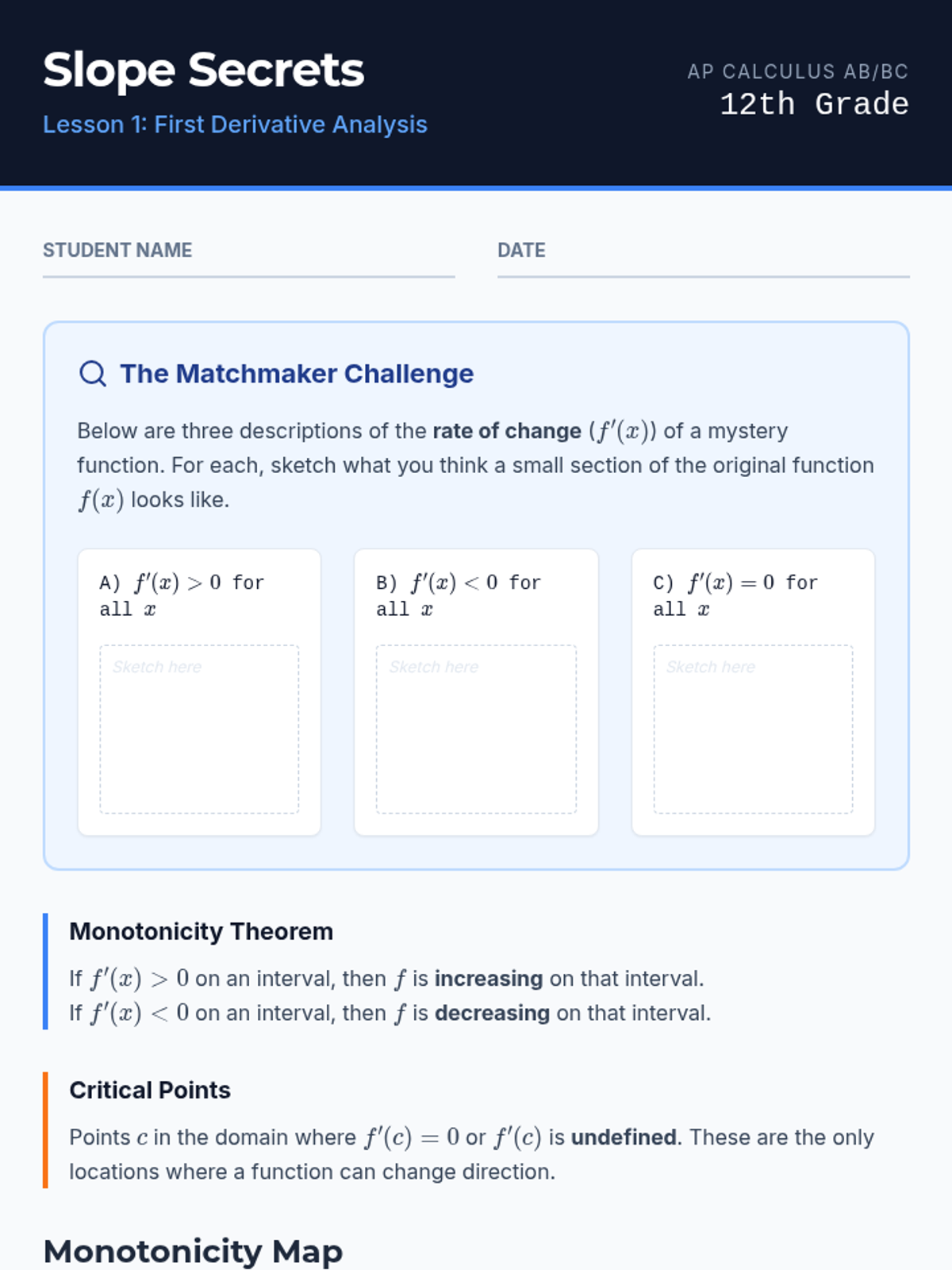
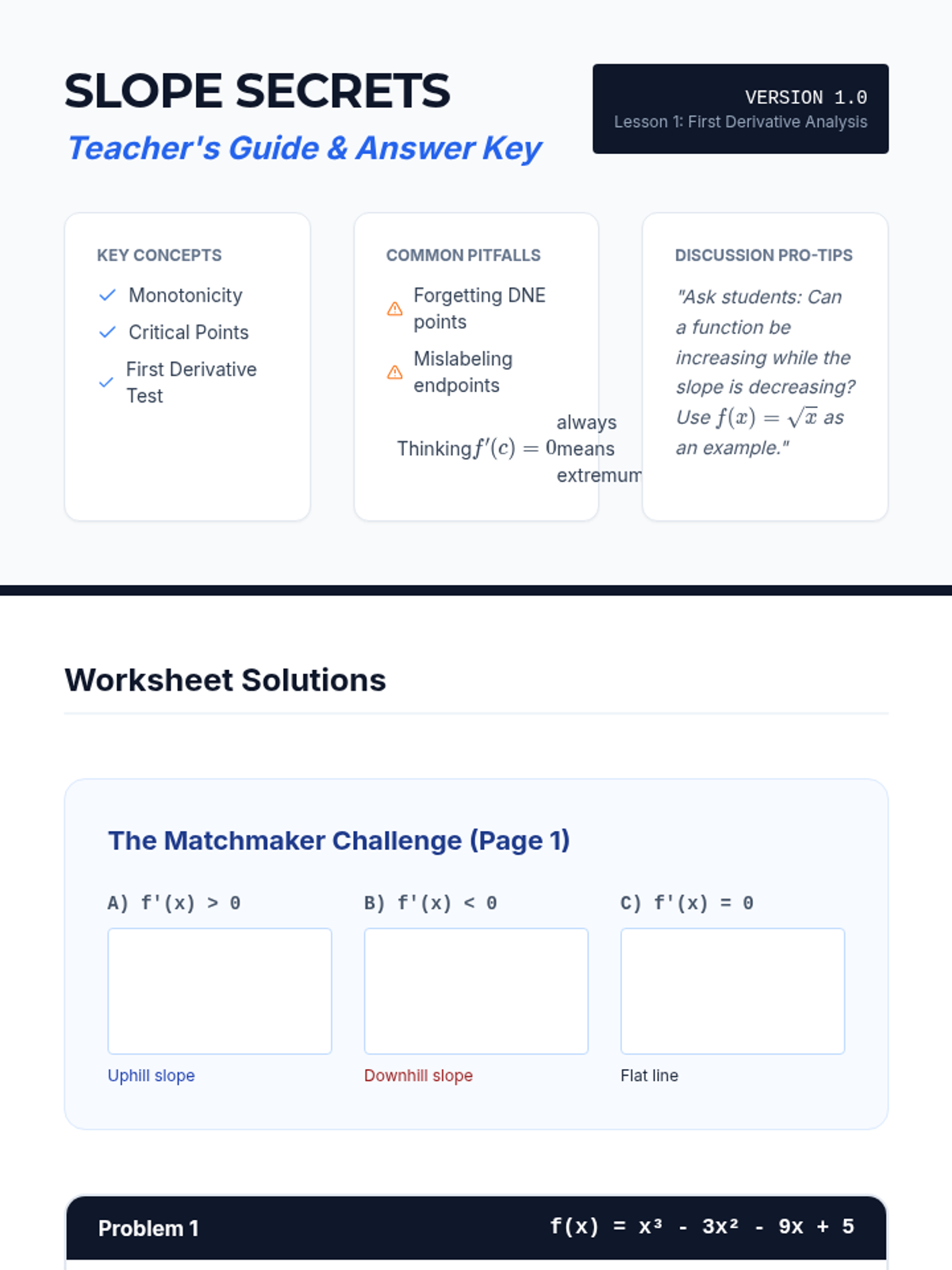
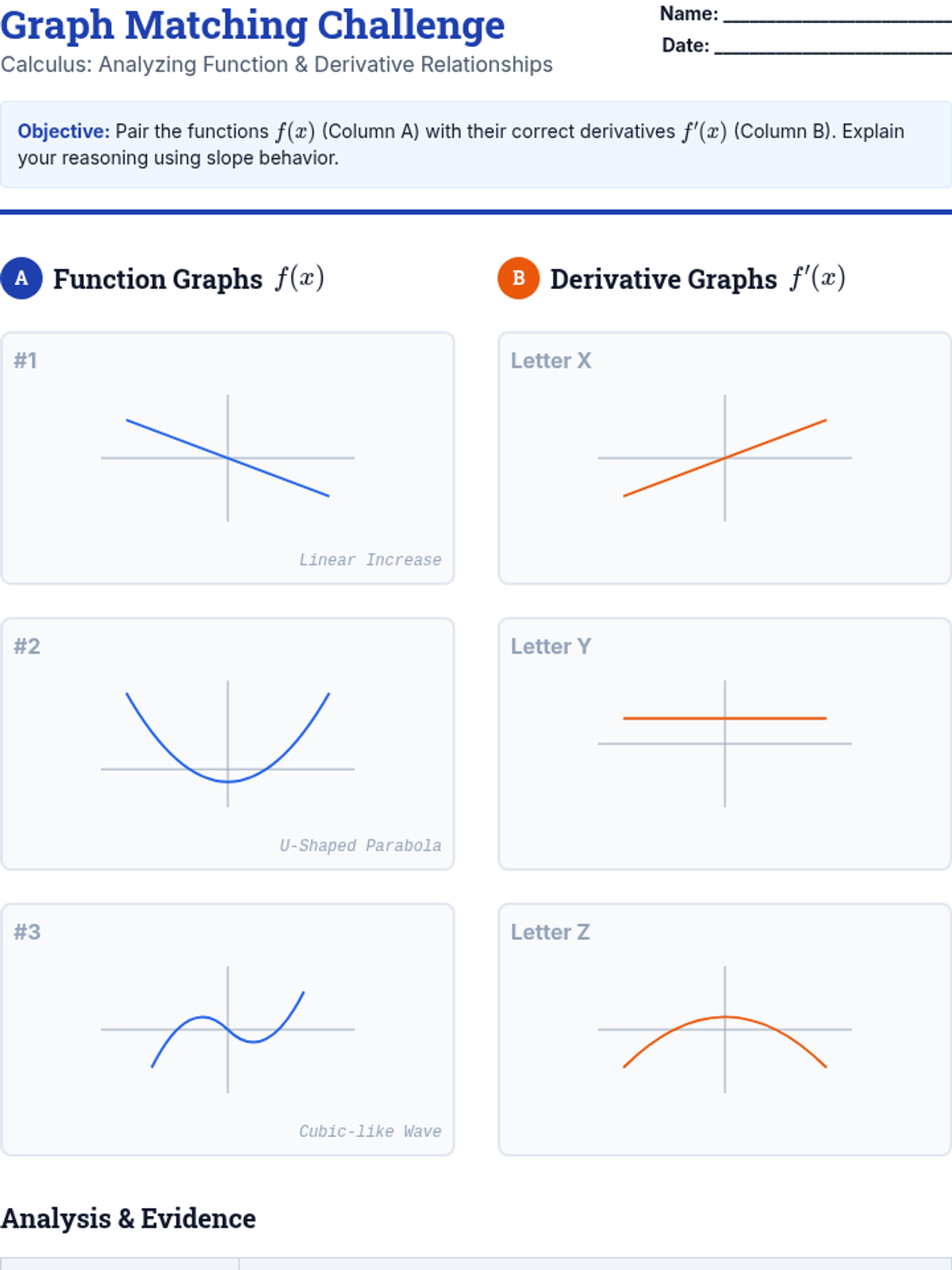
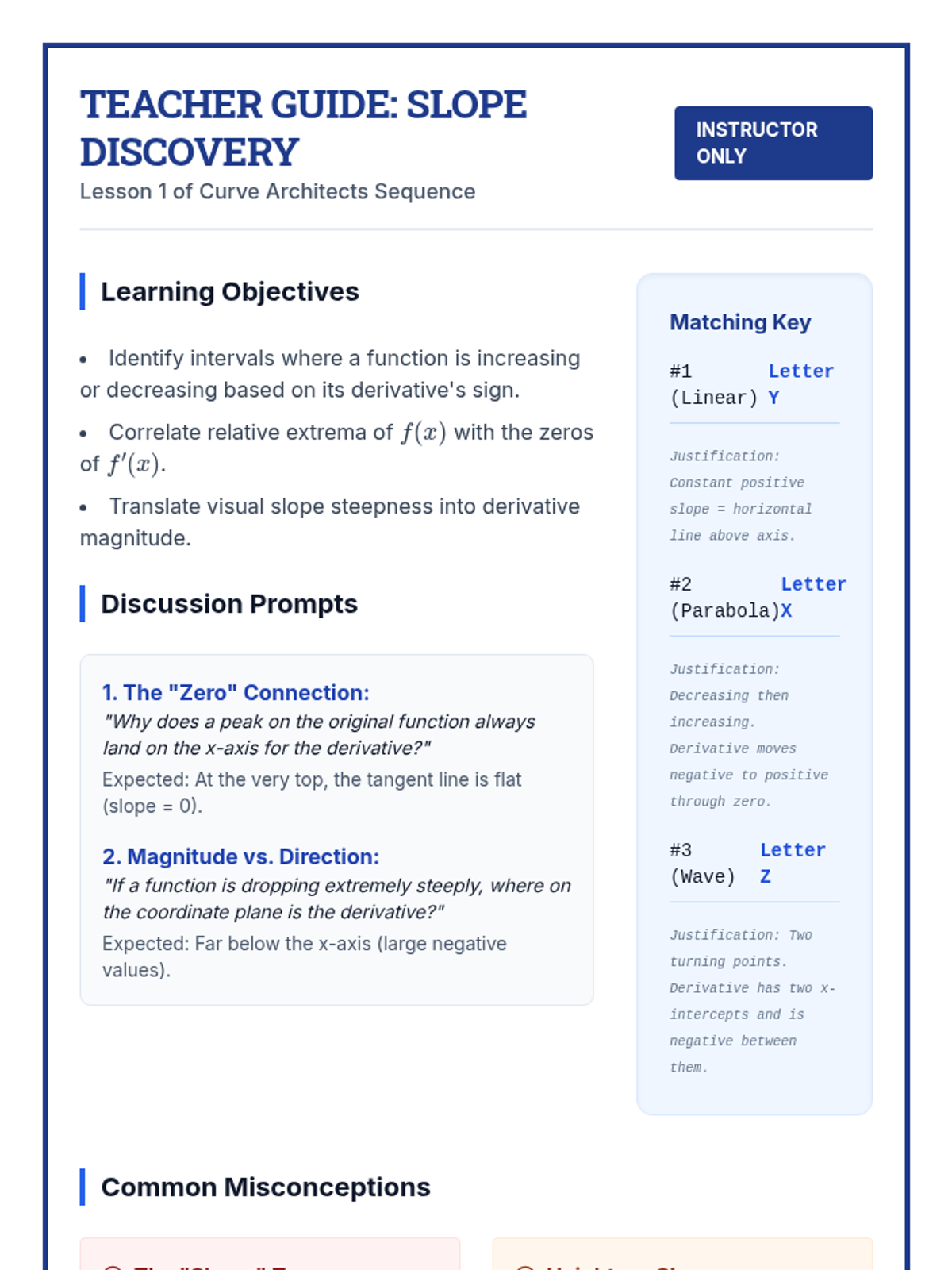
An inquiry-based exploration of the geometric relationships between functions and their derivatives. Students progress from visual observation of slope and concavity to algebraic analysis using sign charts, culminating in the ability to sketch complex curves from derivative data.
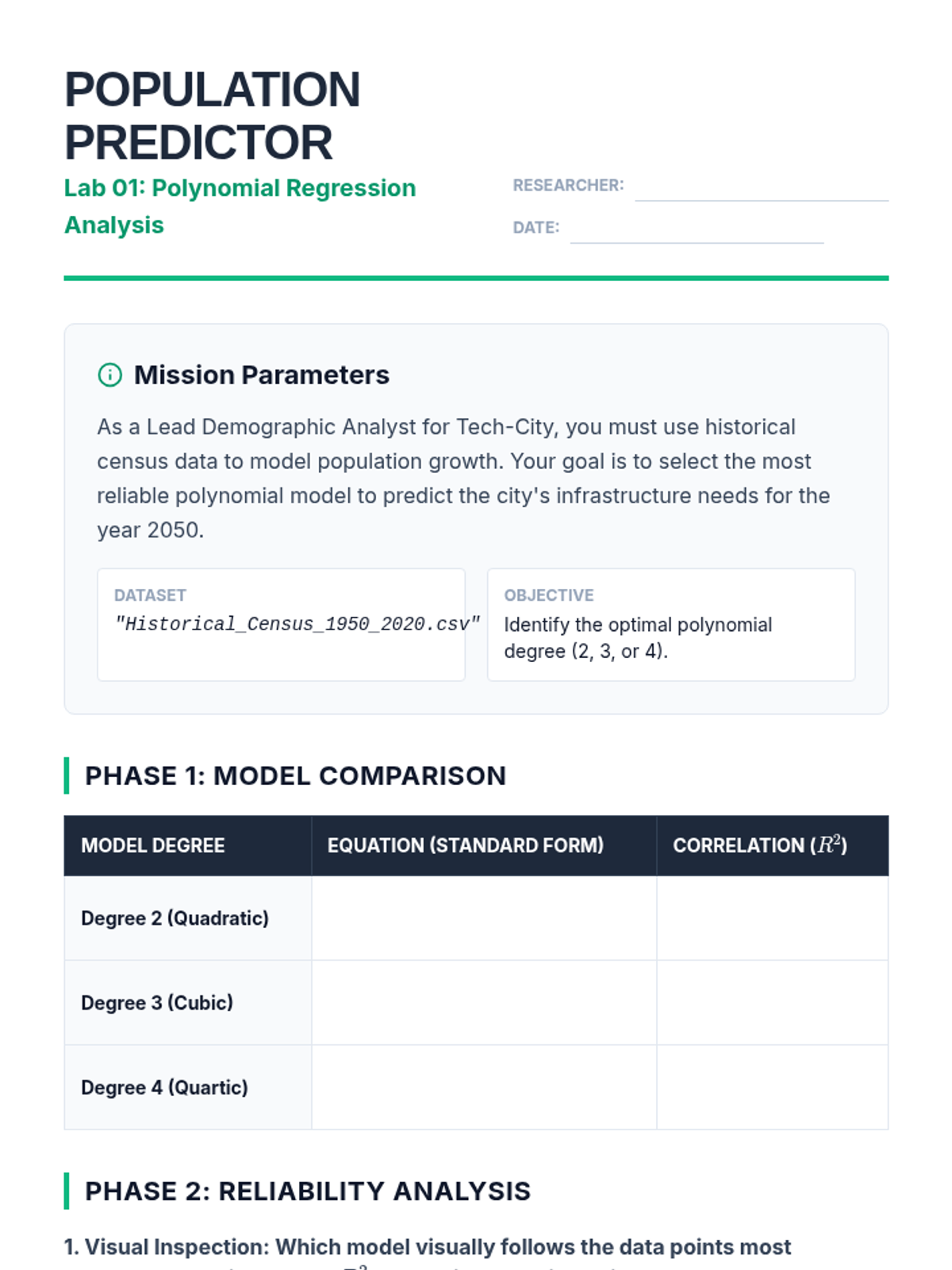
A project-based unit where students apply polynomial calculus concepts to real-world scenarios like business profits, projectile motion, and engineering design. Students transition from abstract solving to modeling data and optimizing outcomes using regression, intercepts, and extrema.
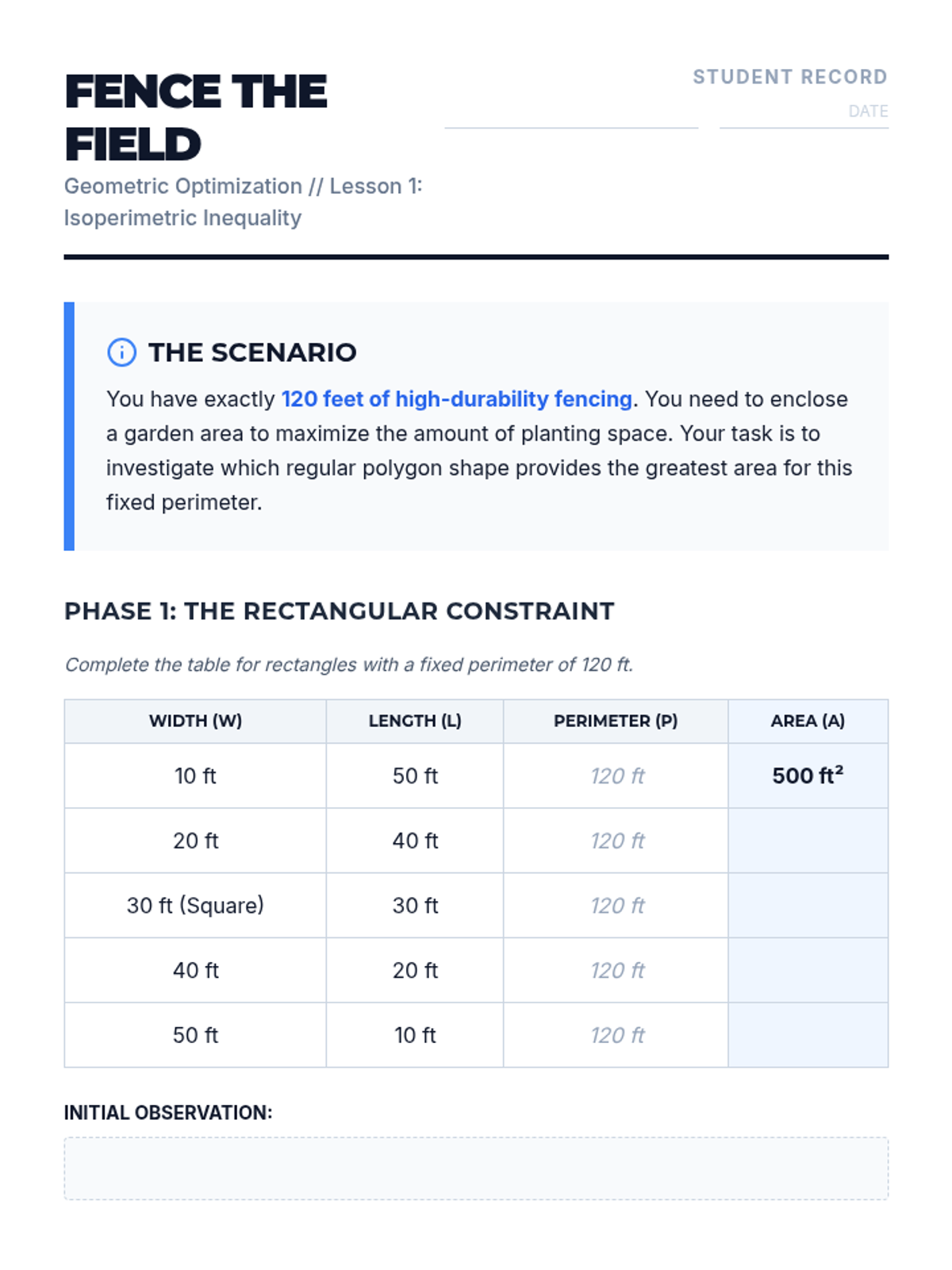
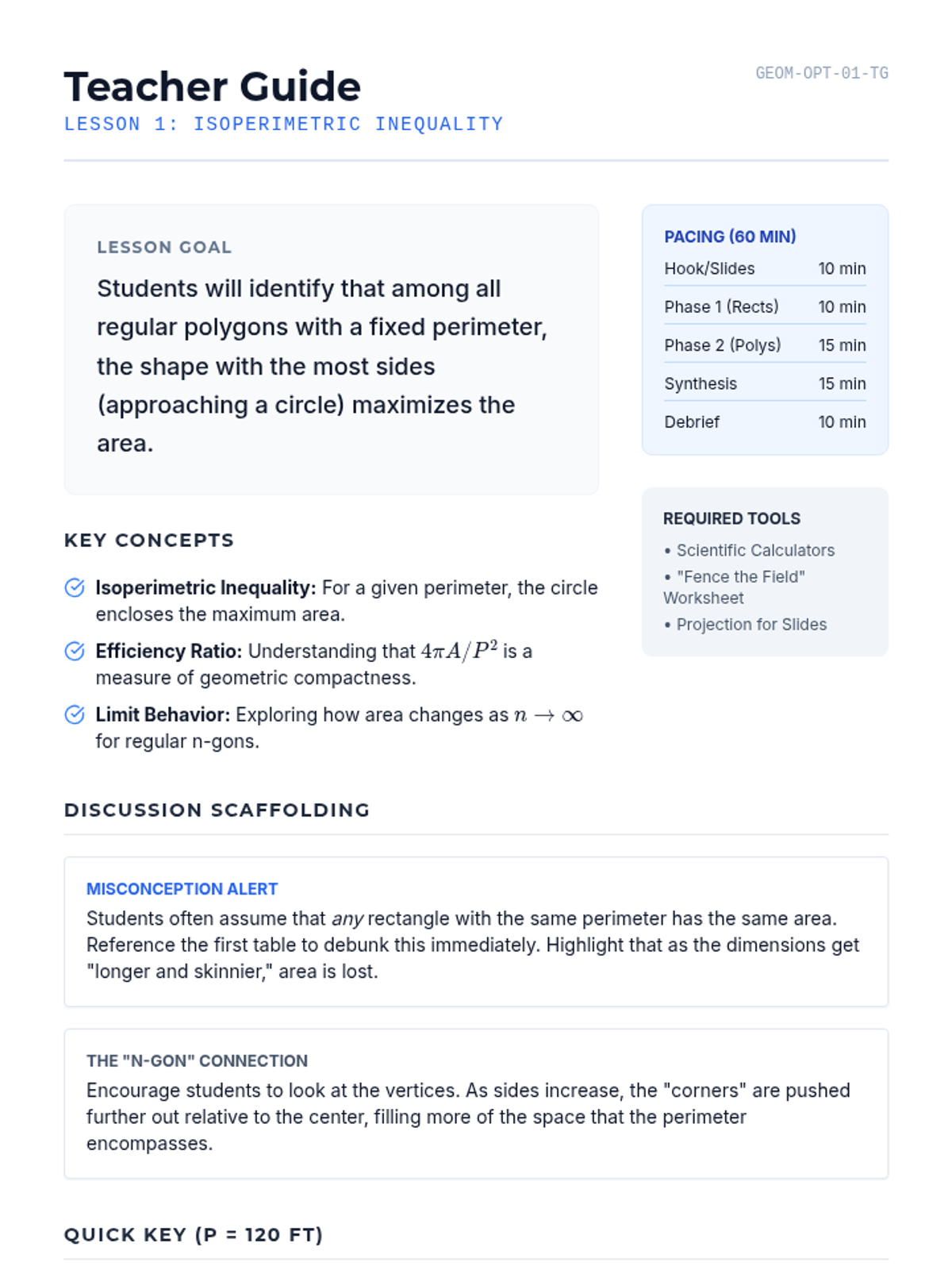
A high-school geometry sequence focusing on the mathematical relationship between surface area and volume to solve optimization problems in manufacturing and design. Students progress from 2D isoperimetric problems to 3D packaging efficiency analysis.
This undergraduate calculus sequence explores the fundamental concept of the derivative by bridging the gap between geometric intuition and algebraic rigor. Students journey from approximating slopes of tangent lines to mastering the formal limit definition, analyzing differentiability, and interpreting various mathematical notations in real-world contexts.
A comprehensive 12th-grade calculus unit on analyzing function behavior and curve sketching. Students move from basic pre-calculus boundaries through first and second derivative tests to synthesize complete, accurate graphs of polynomial and rational functions.
A comprehensive sequence on analyzing function behavior using calculus. Students move from identifying boundaries with limits to analyzing direction and curvature with derivatives, culminating in the ability to sketch complex functions by hand.
A comprehensive 11th Grade Calculus sequence covering applications of integration including arc length, surface area of revolution, centroids, and the theorems of Pappus. Students explore the geometric properties of curves and regions using analytical methods.
This sequence guides students through the geometric applications of definite integrals, transitioning from two-dimensional area analysis to complex three-dimensional volume modeling and arc length. Students will master techniques including the area between curves, disk, washer, and shell methods, and the rectification of smooth curves.
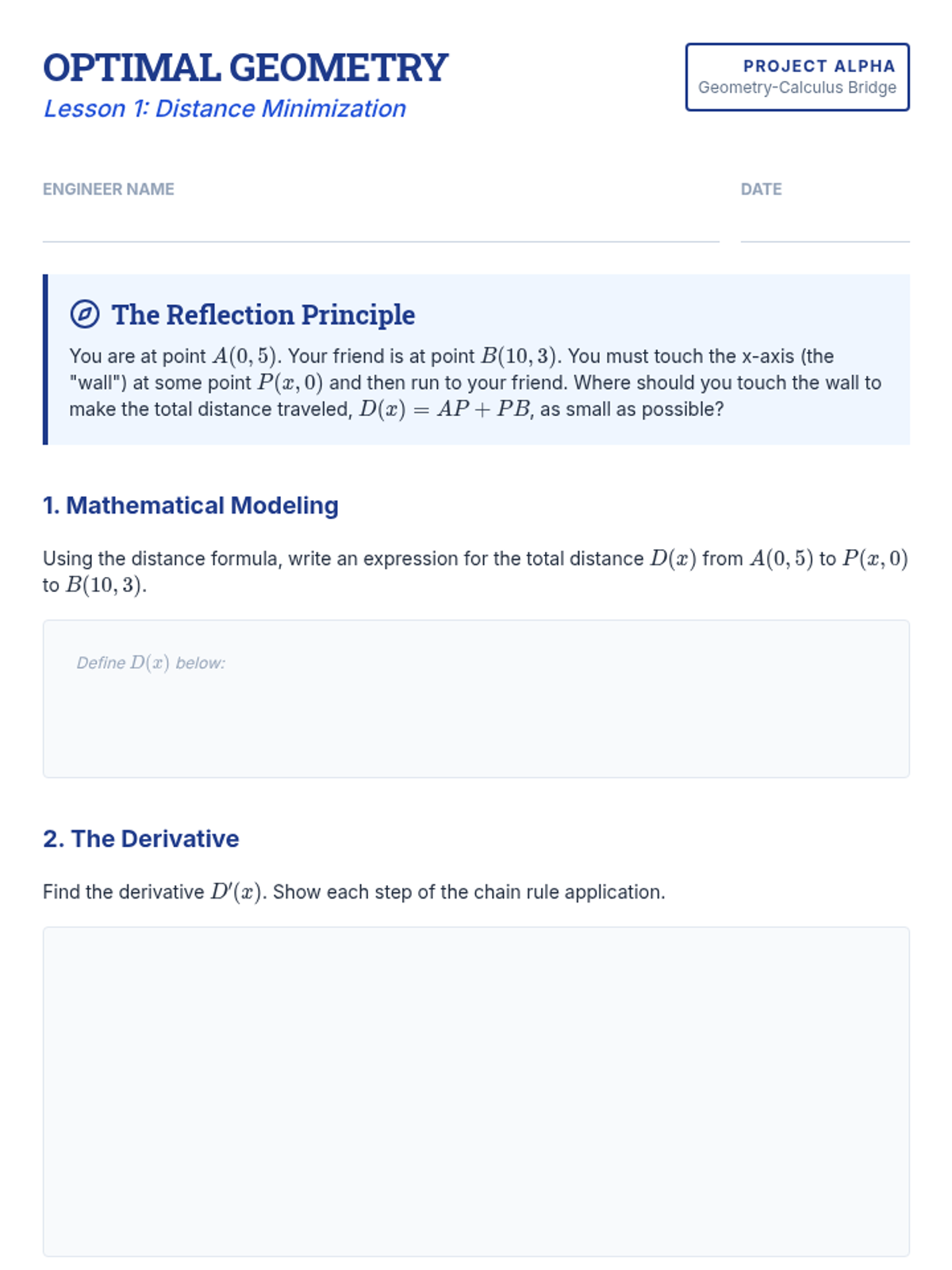
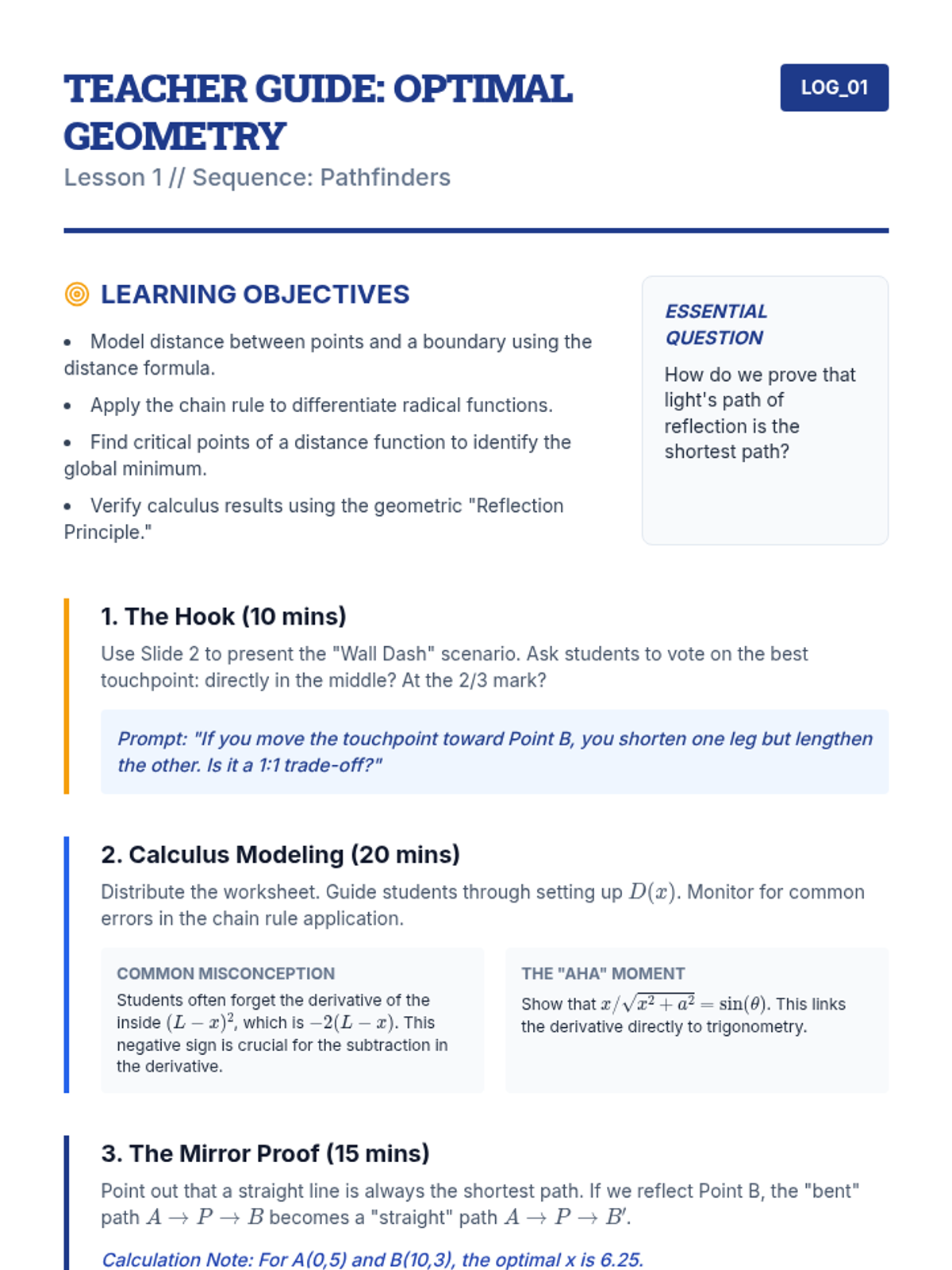
An inquiry-based exploration of calculus optimization, focusing on real-world efficiency in travel time, infrastructure cost, and business profit. Students progress from geometric shortest-paths to complex rate-based modeling.
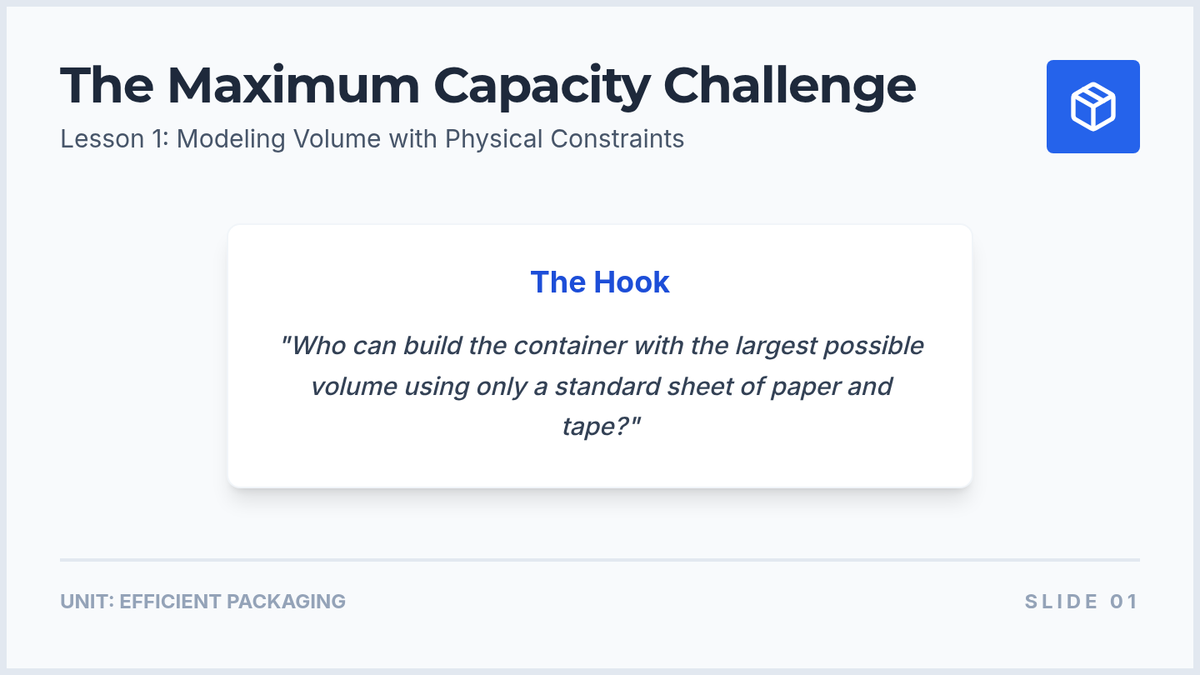
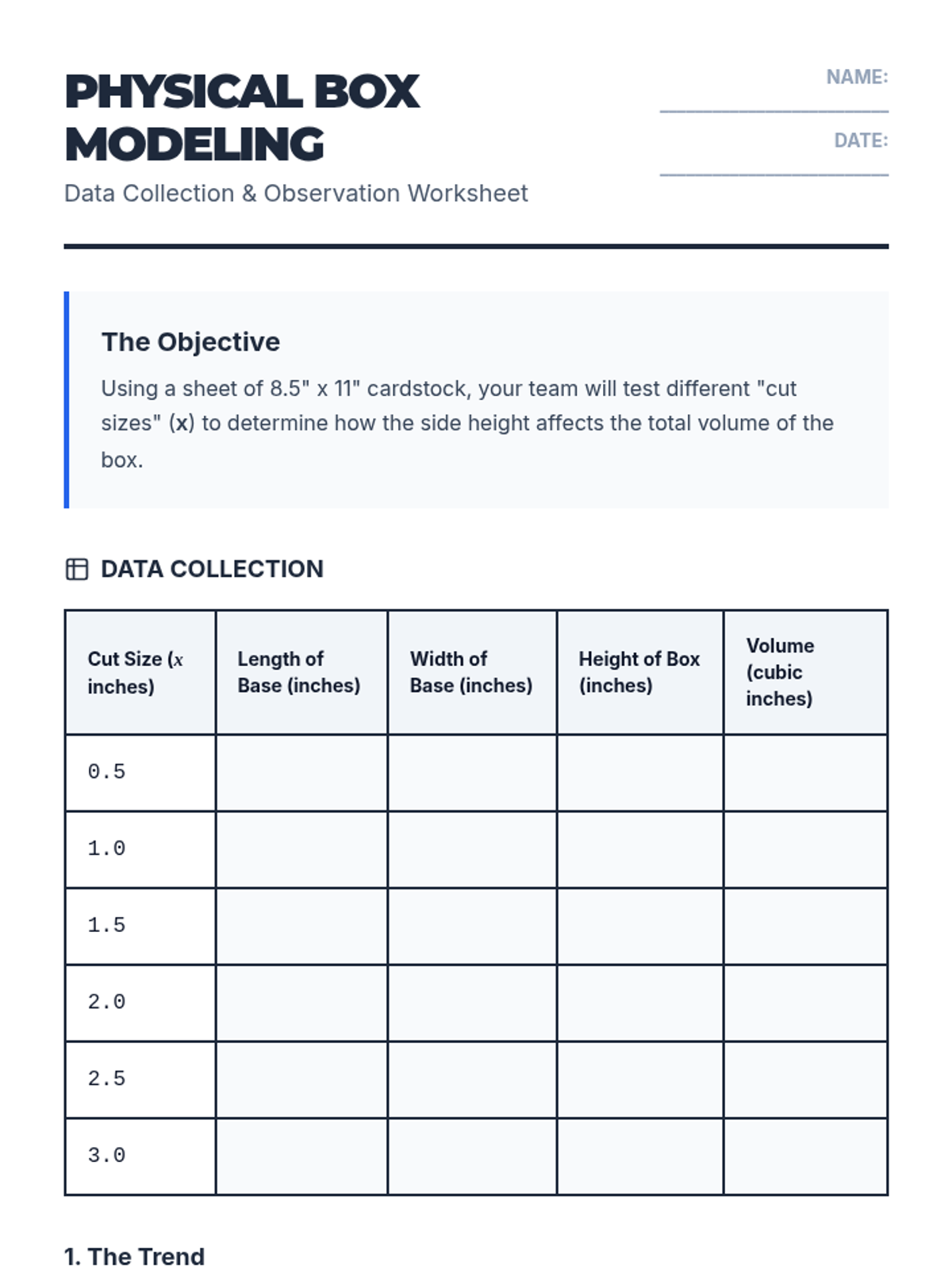
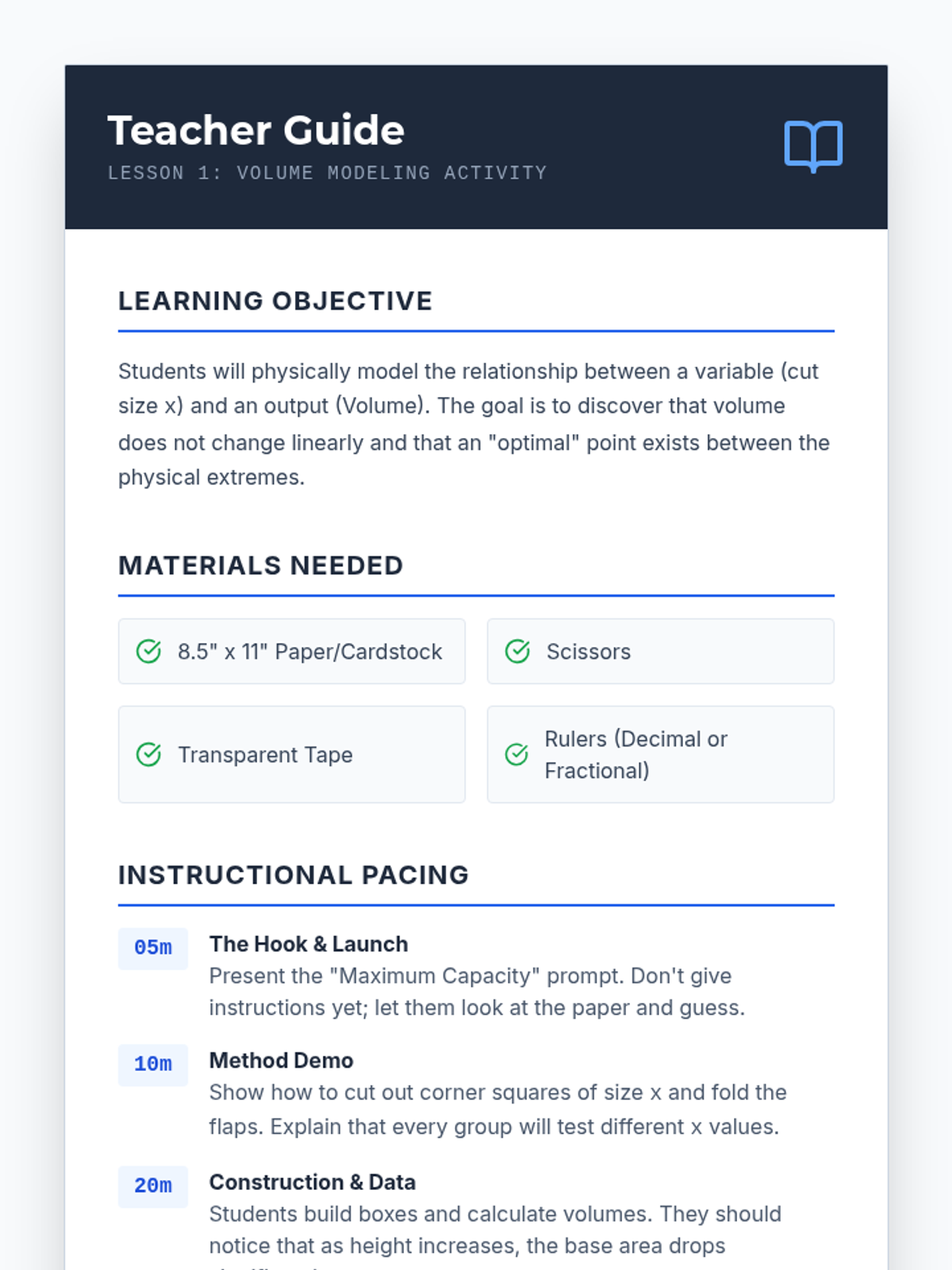
A project-based calculus sequence where students use optimization to design efficient packaging. They transition from physical modeling to algebraic functions and derivative-based solutions to maximize volume and minimize material costs.
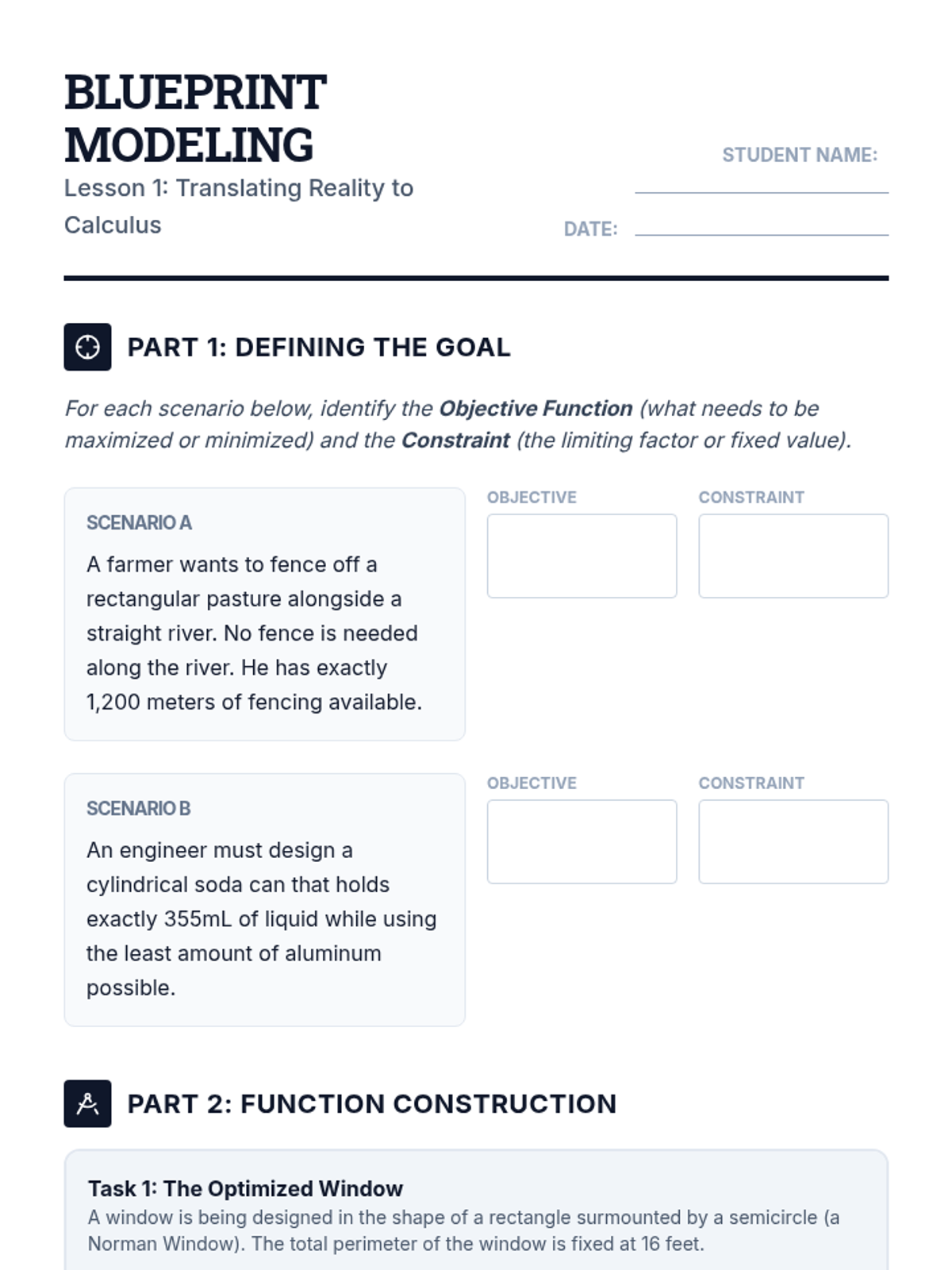
This sequence bridges the gap between theoretical calculus operations and applied problem-solving by focusing on optimization in real-world contexts. Students begin by mastering the 'modeling process'—translating verbal constraints into mathematical objective functions. Over five lessons, they progress from simple geometric maximization to complex economic minimization and physical efficiency problems. By the end, students will demonstrate proficiency in using the First and Second Derivative Tests to justify absolute extrema in manufacturing and design scenarios.
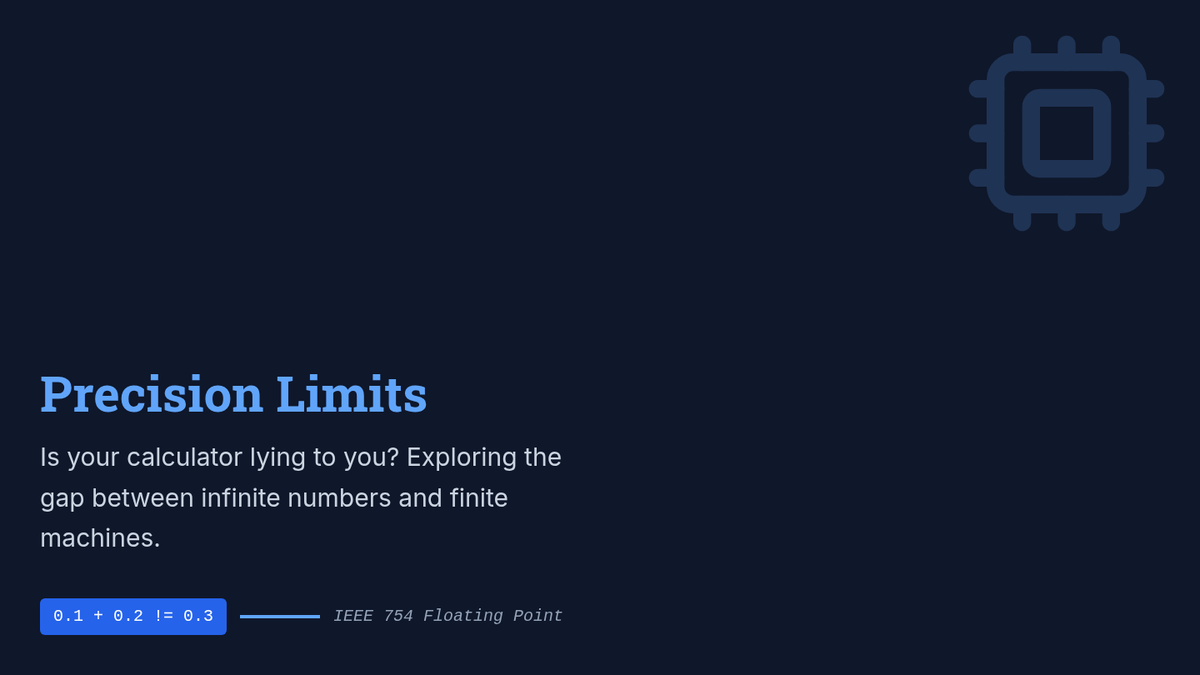
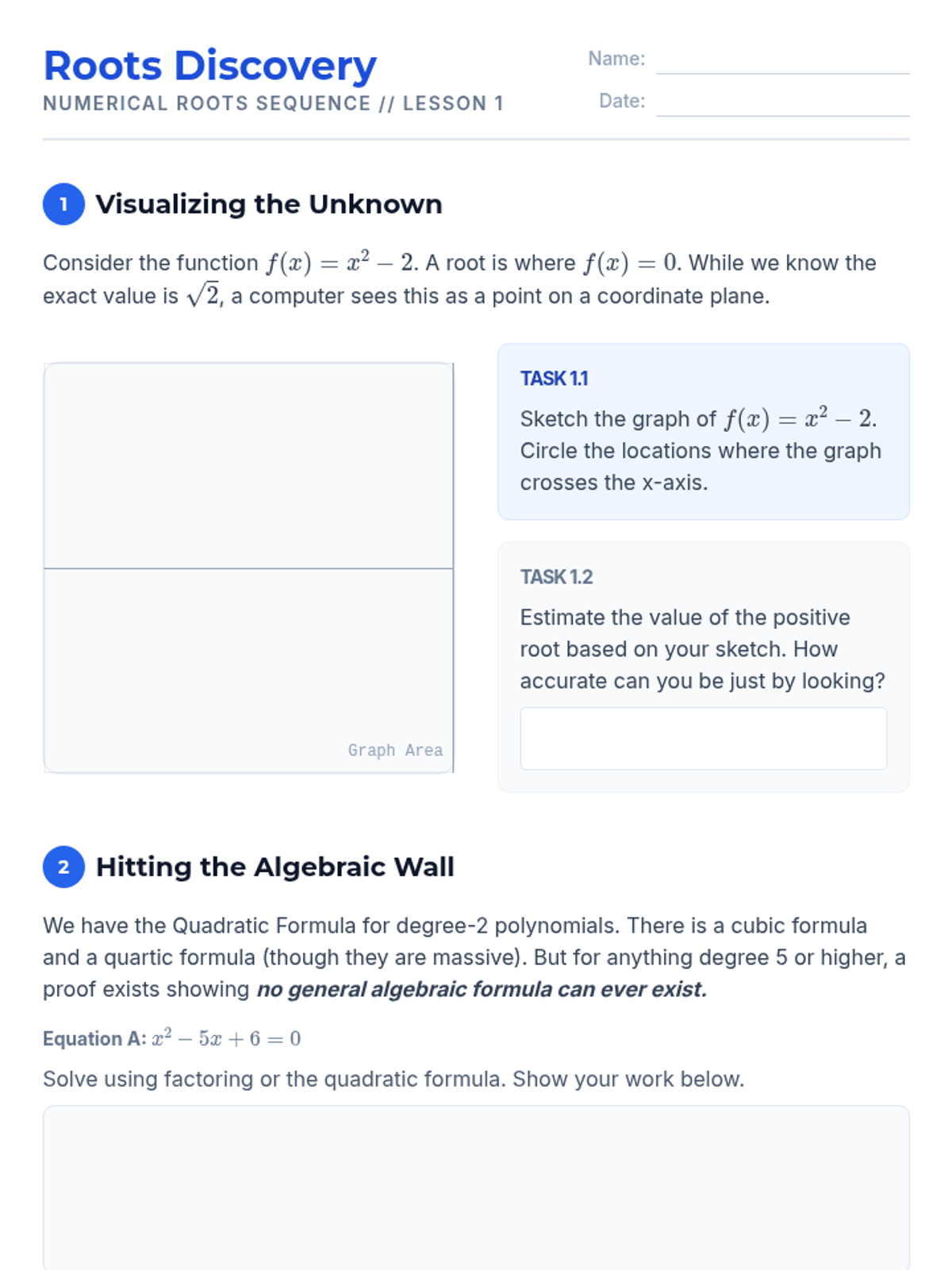
This sequence explores irrational numbers through the lens of numerical analysis and computer science. Students learn to approximate roots using Newton's Method, transition from manual calculation to algorithmic thinking, and analyze how computers handle infinite decimals.
A rigorous introduction to the formal definition of the derivative, bridging the gap between average rates of change and instantaneous rates using limits, various notations, and graphical analysis of differentiability.
This sequence bridges the gap between pre-calculus algebra and calculus by rigorously defining the derivative through geometric intuition, the formal limit definition, and varied notation systems. Students transition from average to instantaneous rates of change, explore differentiability, and master the algebraic manipulation required to find derivatives from first principles.
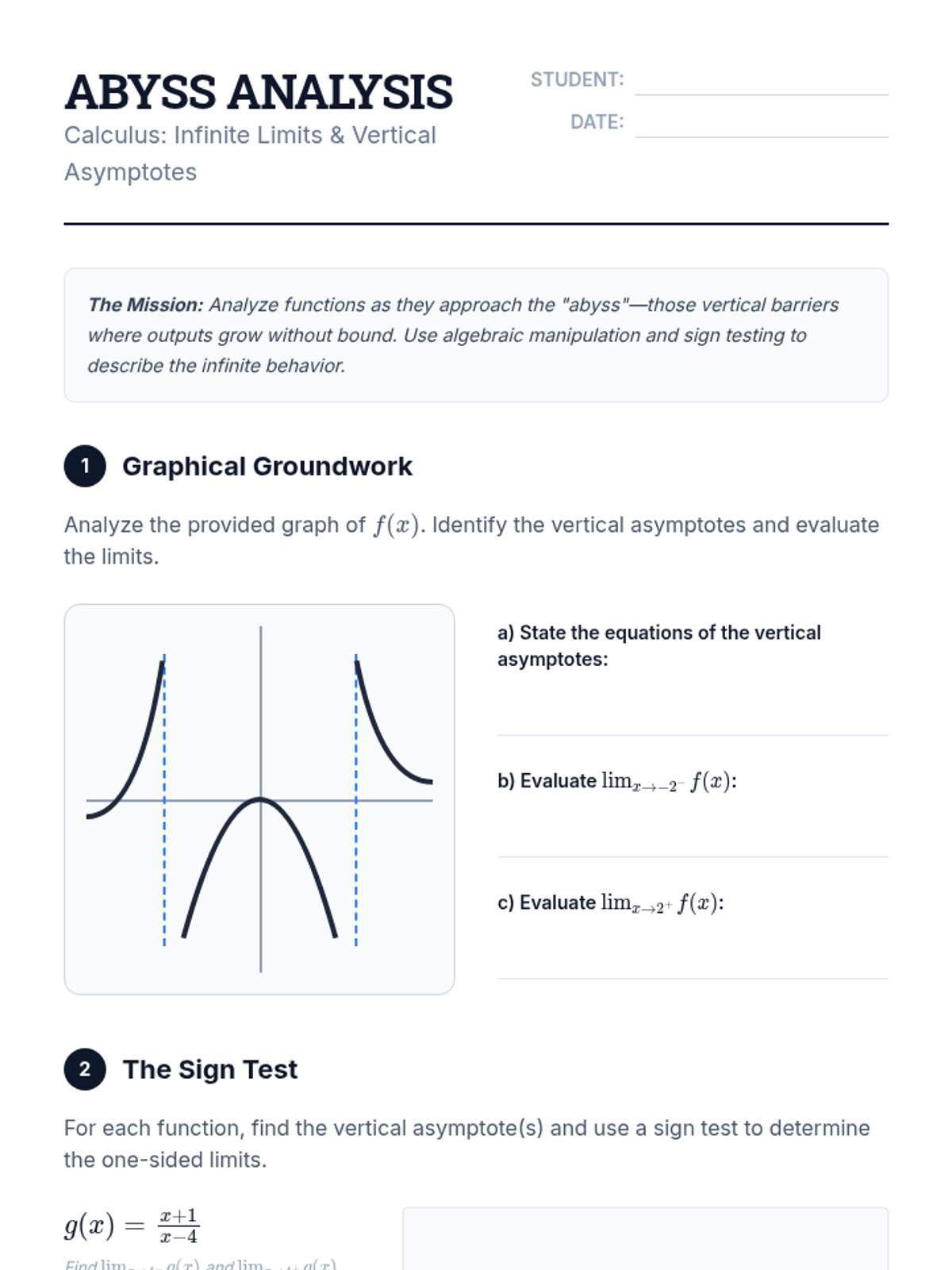
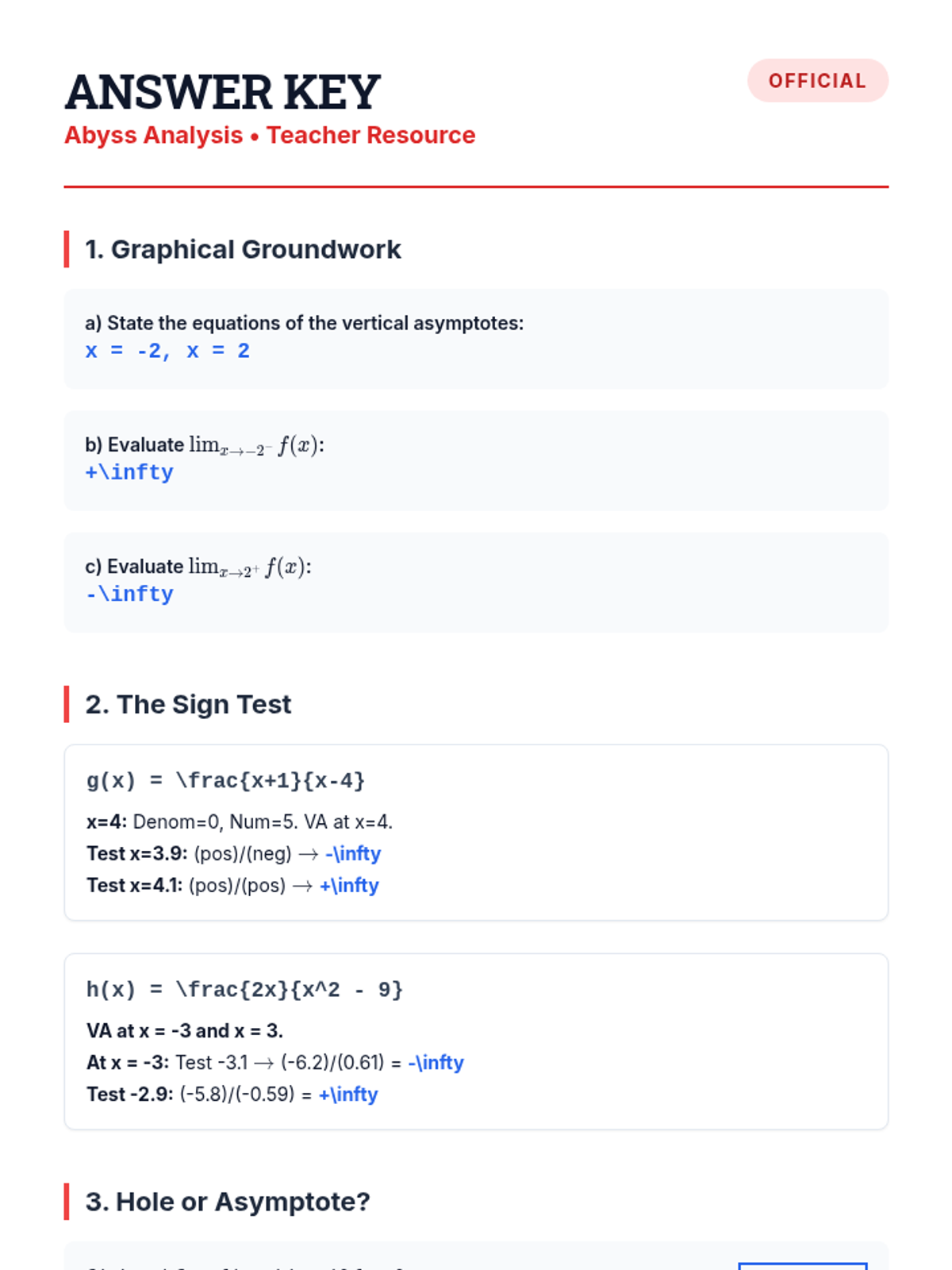
A comprehensive 12th-grade Calculus unit exploring function behavior as variables approach infinity or asymptotes. Students master vertical, horizontal, and slant asymptotes, apply limits to real-world modeling, and bridge the gap to derivatives.
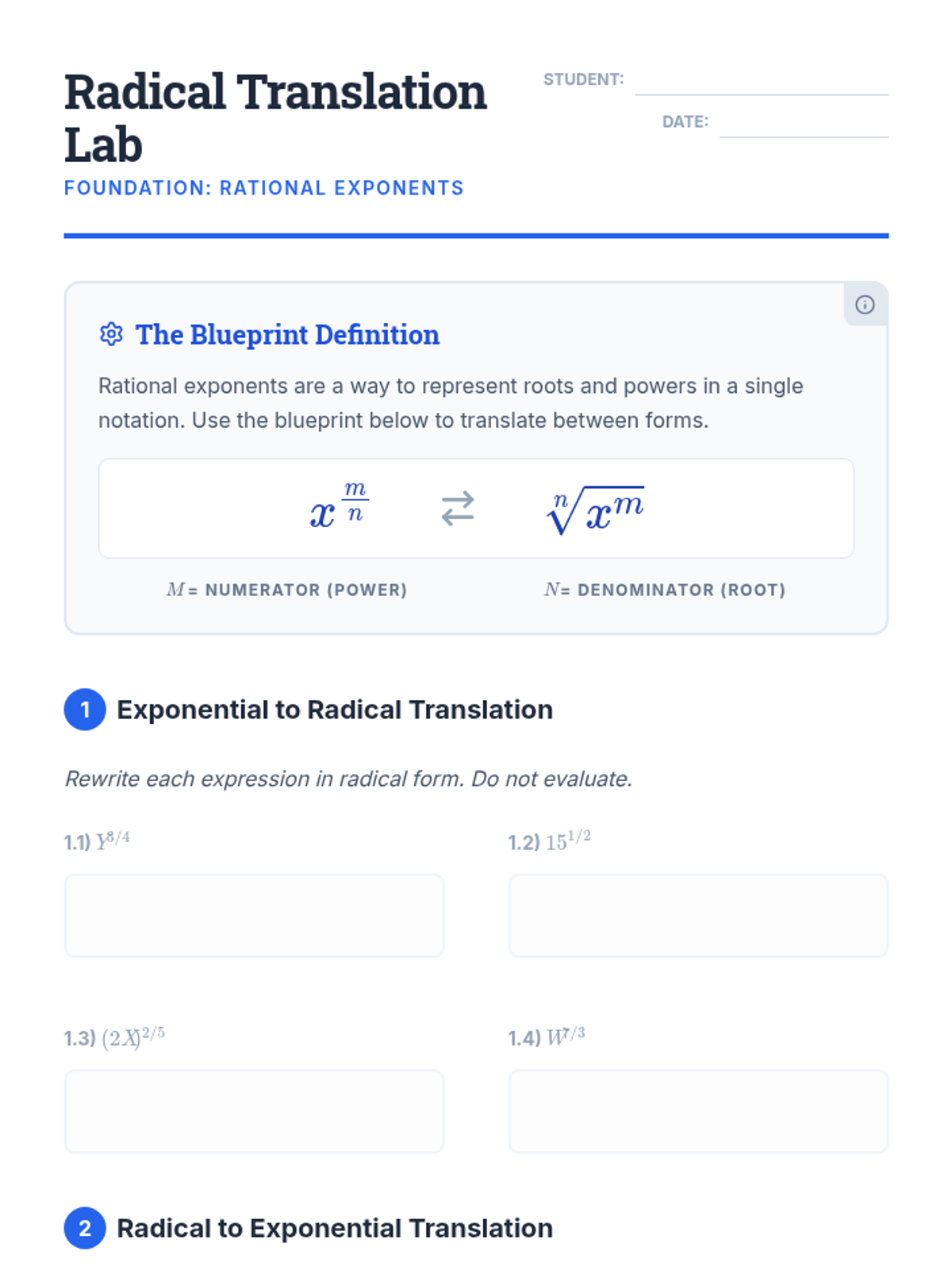
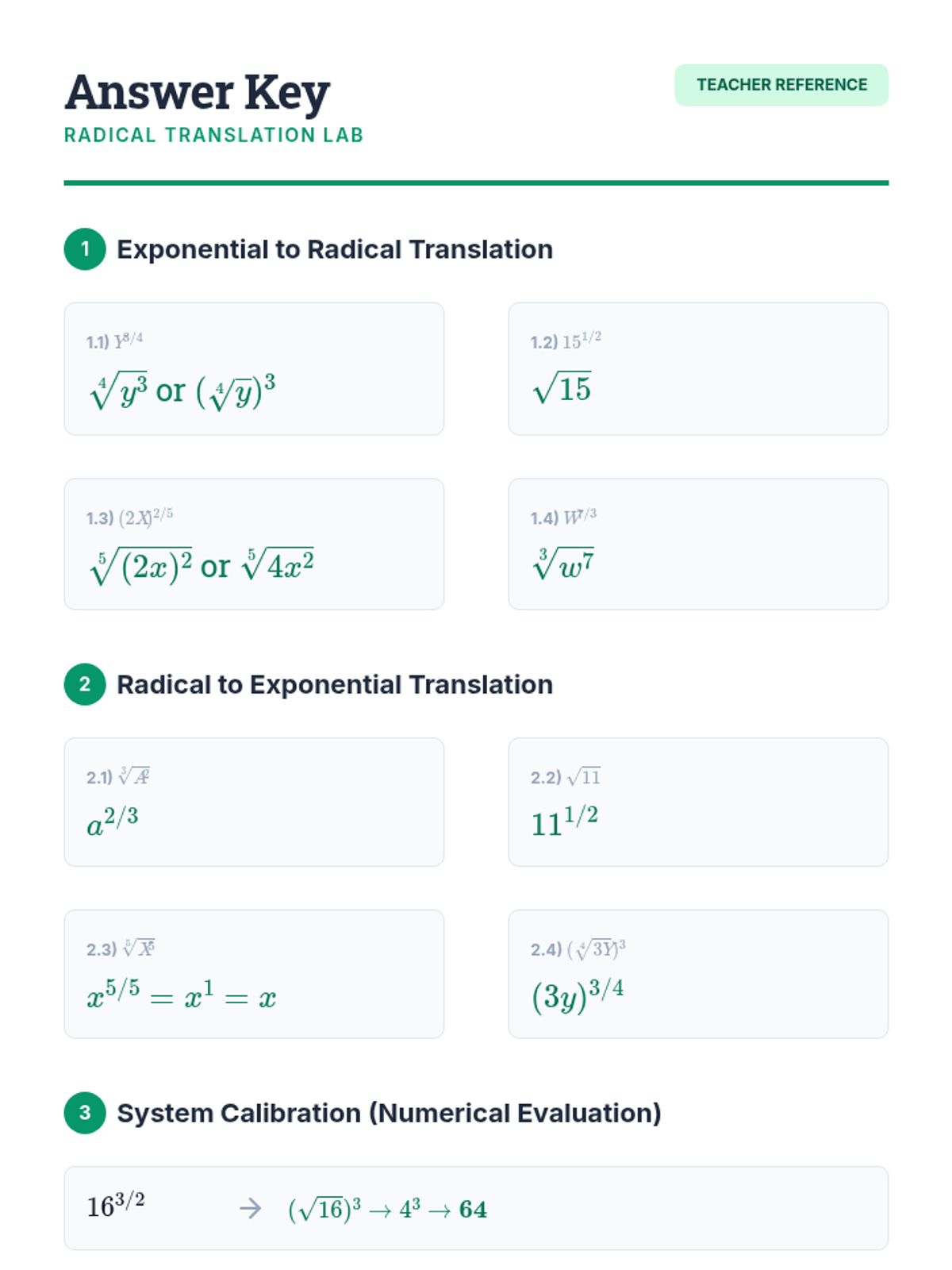
This sequence bridges the gap between radical notation and exponential notation, establishing a unified system for algebraic manipulation. Students begin by defining rational exponents through the lens of roots and powers, then systematically apply the laws of exponents to simplify expressions containing fractional powers.