An engaging introduction to the water cycle for 2nd graders, featuring a hands-on experiment, a narrative story about a water droplet, and visual aids to explain evaporation, condensation, and precipitation.
A collection of supplemental activities to reinforce foundational concepts of DNA, inheritance, and genetics. Students will practice vocabulary, sequencing biological structures, and verifying facts through interactive worksheets.
Students act as 'Marine Bio-Engineers' to design and build artificial reef structures that support a healthy ecosystem on Mystery Island's coast, focusing on biotic and abiotic interactions.
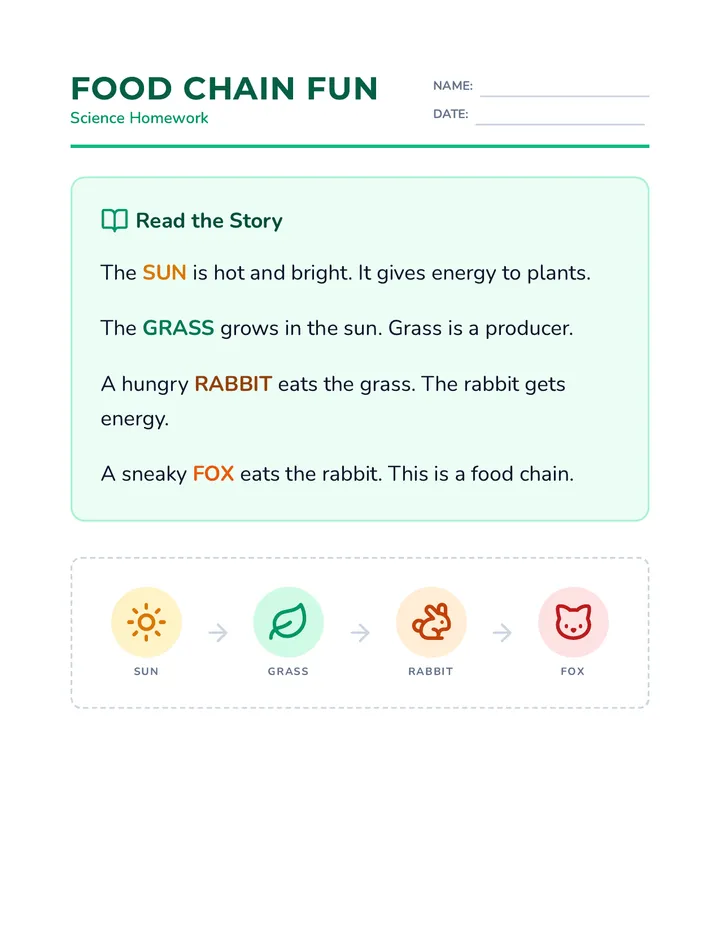
Students design and build 'Food Web Restoration' models to visualize and explain the flow of energy from producers to multiple consumers on Mystery Island.
Students design and build 'Weather Shields' to protect a model plant from extreme temperature and precipitation changes on Mystery Island, exploring how environmental factors affect organisms.
Students act as 'Botanical Engineers' to design and build seed models that can travel through the air to reach new parts of Mystery Island, focusing on seed dispersal methods.
Students design external structures for a 'Mystery Organism' to help it meet its basic needs (food, water, shelter) on Mystery Island, focusing on the link between structure and function.
An introductory lesson on tiger-related vocabulary, focusing on conservation, biology, and habitat through kid-friendly definitions and syllable practice.
An introductory lesson on the importance of native plants for local ecosystems, designed for K-2 students. Includes hands-on garden design projects and visual aids for ecosystem services.
An outdoor sensory experience where students use natural materials to create 'mud pies,' focusing on texture, composition, and imaginative play.
Students compare and contrast the textures and molding properties of homemade playdough and kinetic sand through tactile exploration.
A deep dive into non-Newtonian fluids as students mix cornstarch and water to create oobleck, exploring how it changes from solid to liquid.
Students explore density and mixtures by creating mesmerizing sensory bottles using oil, water, and various floating objects.
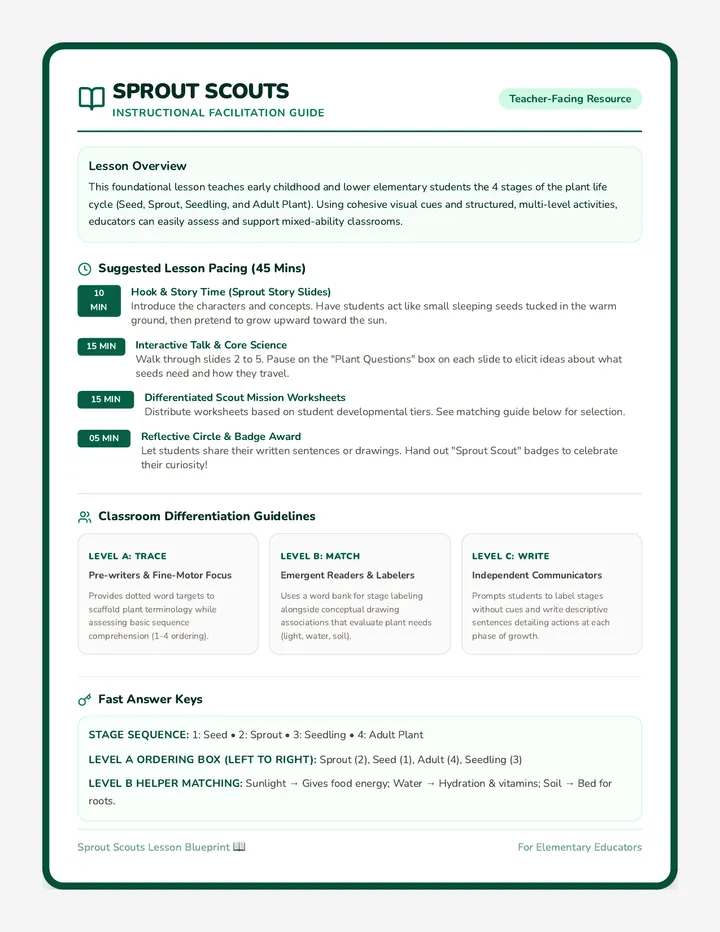
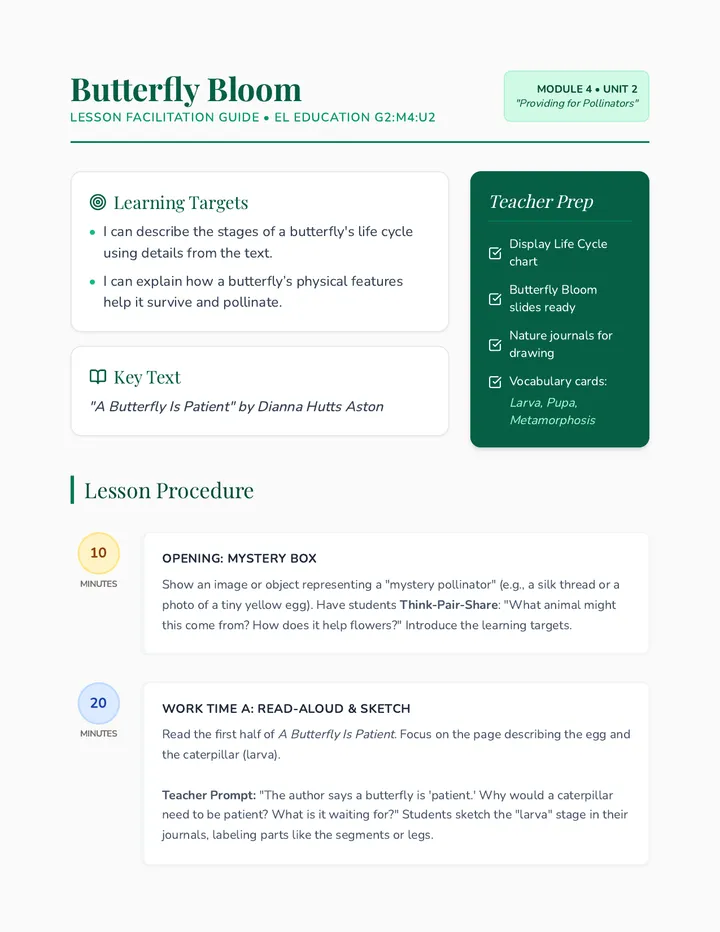
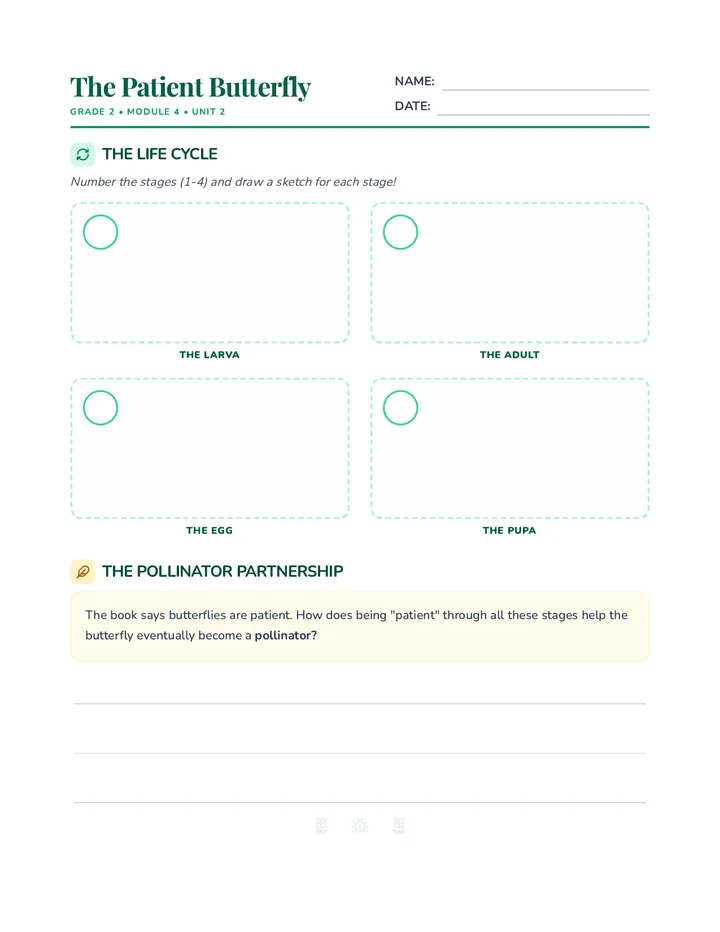
An engaging science lesson for 2nd graders that explores the life cycles of plants, butterflies, and frogs. Students will observe, sequence, and describe the stages of growth and change in the natural world.
A high-impact, 10-minute small group lesson focusing on the vowel teams ew, ue, and ui, following Science of Reading principles including explicit instruction and orthographic mapping.
A hands-on lesson where 2nd-grade students become 'Earth Architects' to build and compare models of mountains and hills. Students will explore the physical characteristics of these landforms through tactile construction and observation.
Students explore and design ways to slow down or prevent wind and water from changing the land using plants and structures.
Students investigate how wind can pick up and move Earth materials like sand and dirt to create new landforms like dunes.
Students discover how flowing water, from rain to rivers, moves soil and carves paths through the land over time.
A K-2 lesson introducing students to the unique biodiversity of island ecosystems through storytelling and visual exploration, emphasizing species identification and environmental care.
A comprehensive lesson exploring the sense of sight through a detailed reading passage and STAAR-aligned comprehension questions designed for second grade.
A comprehensive guide and evaluation system for elementary students conducting science research projects. Includes a student-friendly rubric, a teacher grading sheet, and instructional slides to set students up for success.
A phonics-focused lesson where students identify and sort 2-syllable words based on whether their first syllable is open or closed. Includes a hands-on cut-and-paste activity with a space exploration theme.
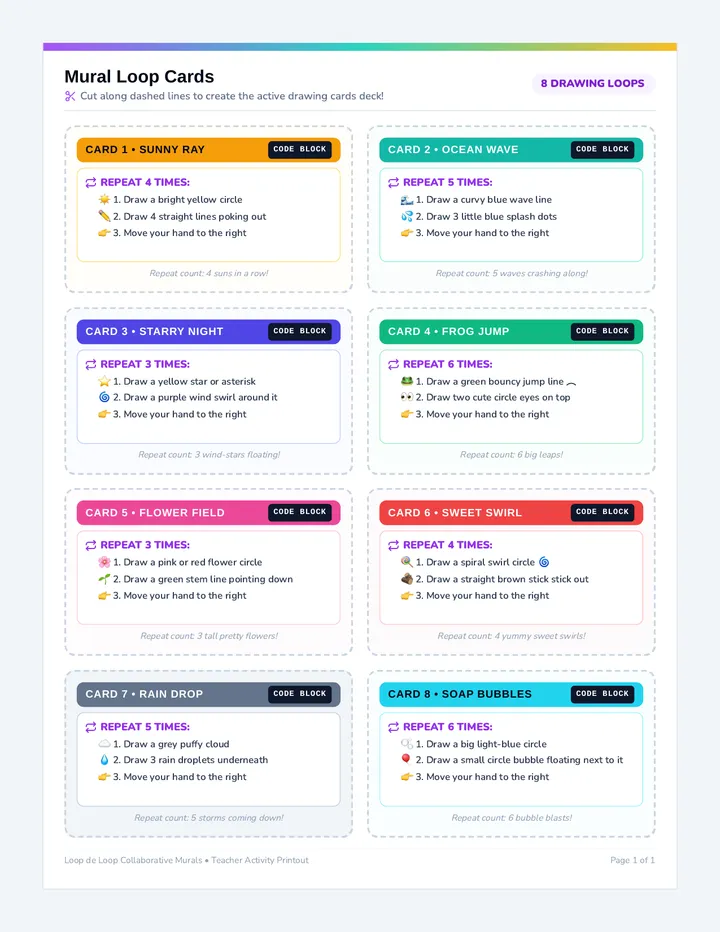
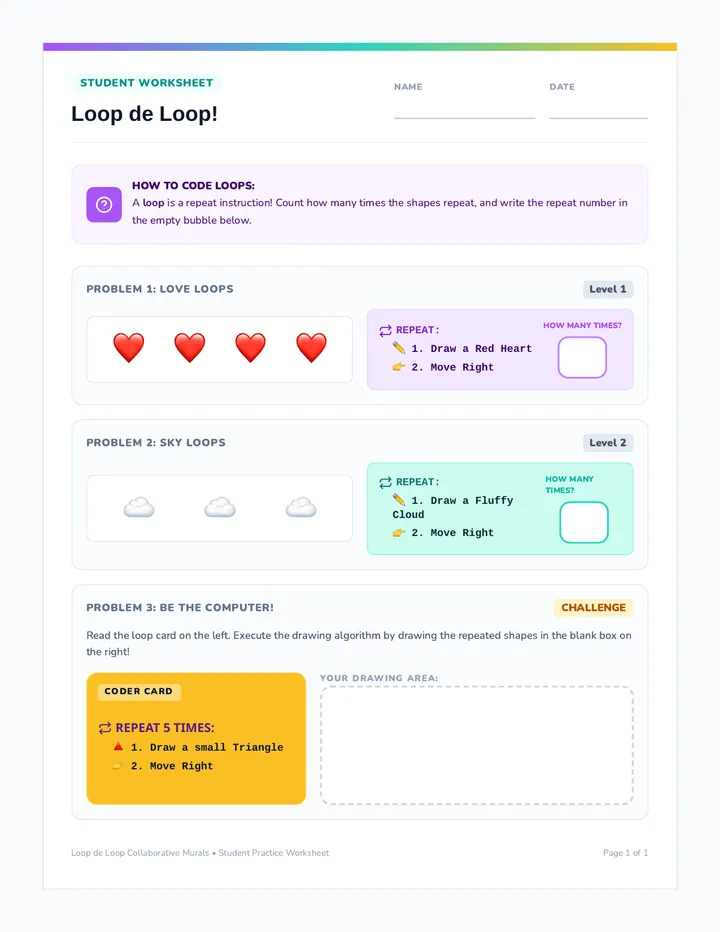
A hands-on introduction to algorithmic thinking for K-2 students, using the metaphor of recipes to explain how computers follow specific sequences of instructions.
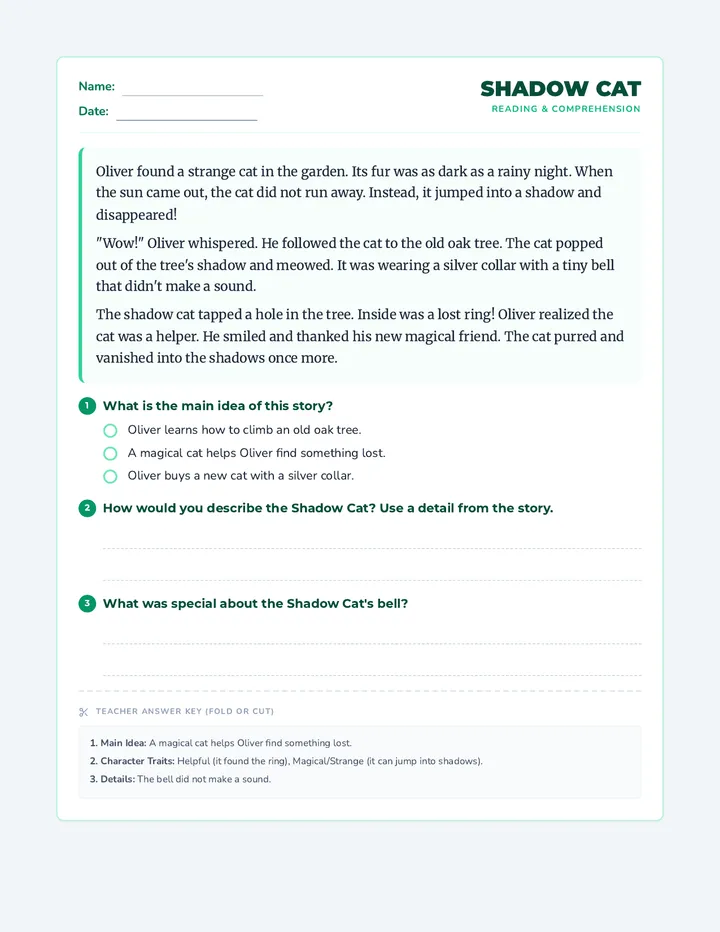
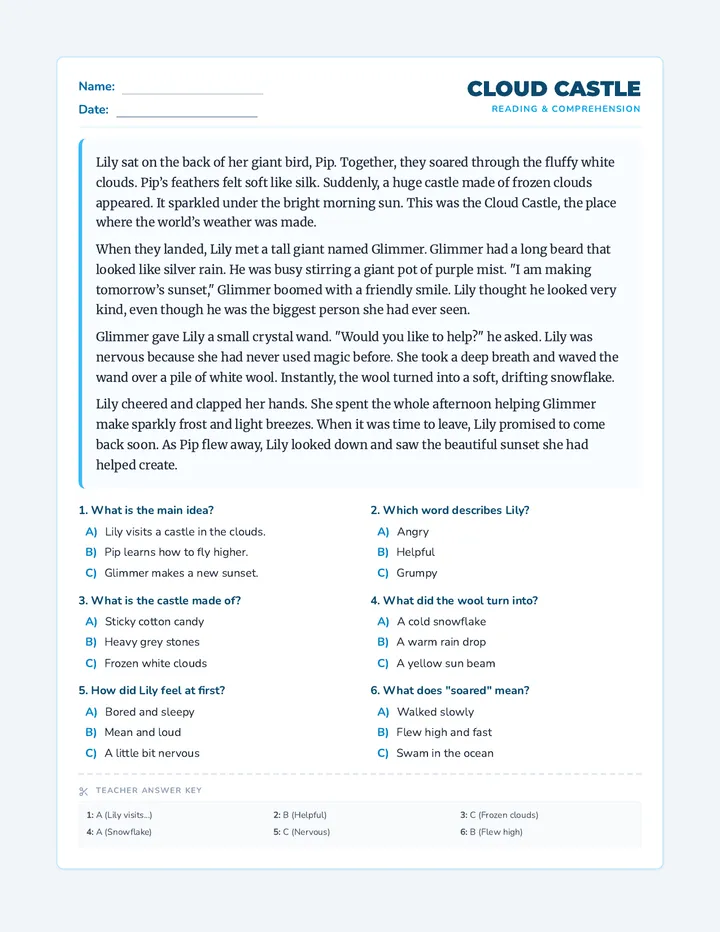
Focused instruction on identifying main idea, comparing and contrasting texts, and determining story themes.
Techniques and materials to improve reading rate, accuracy, and expression for developing readers.
Tools for decoding multi-syllabic words and understanding how prefixes and suffixes change word meaning.
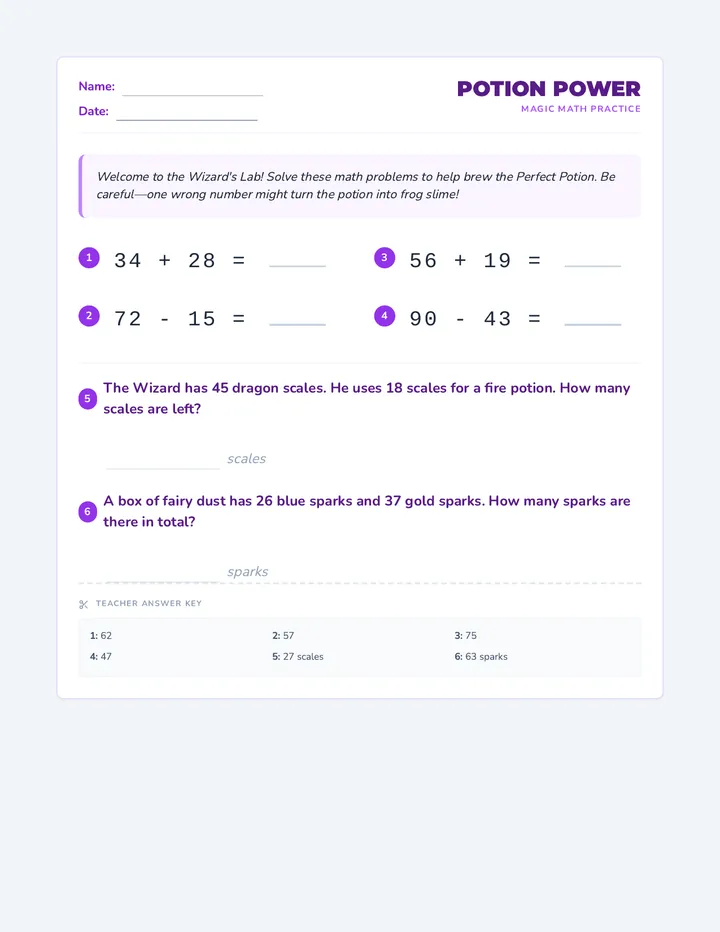
Strategies and practice for solving single-step and multi-operational word problems across all four basic operations.
Resources for mastering addition, subtraction, multiplication, and division facts, including specific materials for fact families and levels up to 10 and 20.
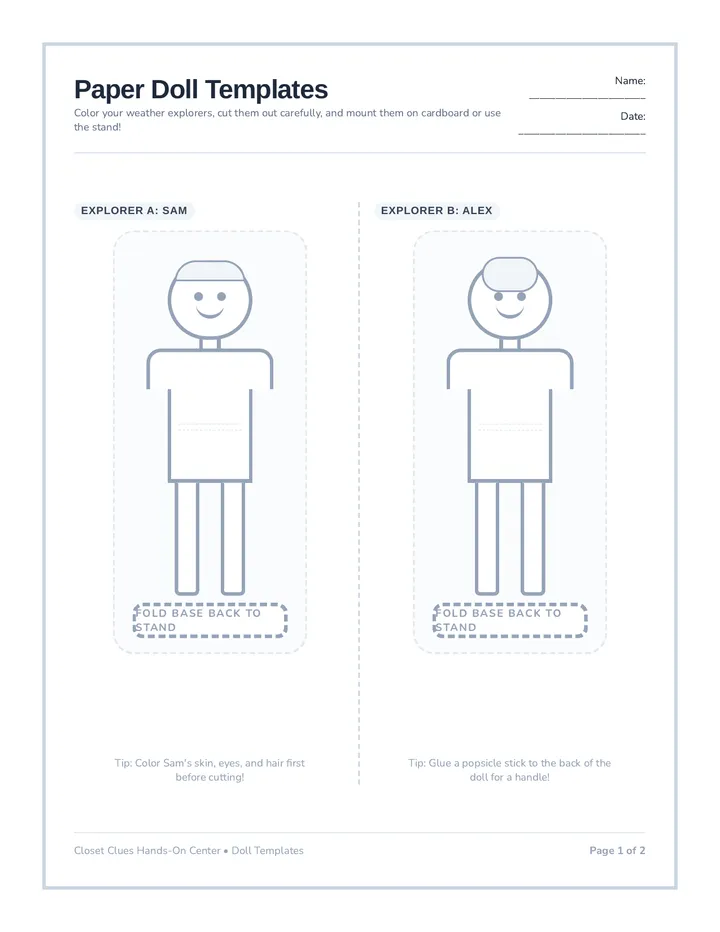
An introductory lesson for 2nd graders on observing and recording daily weather patterns, featuring hands-on activities and data collection.
A foundational science lesson exploring the three primary states of matter—solids, liquids, and gases—through reading, visual aids, and interactive observation.
Cette séance de 2 heures permet aux élèves de distinguer qualification et compétence, d'analyser l'impact des conditions de travail sur le comportement des salariés et de mesurer la performance de l'activité humaine via des indicateurs de productivité et de climat social.
Combining electricity and magnetism to create a temporary magnet. Students follow instructions to build their own electromagnet using a battery, wire, and nail.
Identifying the path electricity takes. Students differentiate between conductors that let electricity pass and insulators that stop it, while building basic circuits.
Exploring the invisible forces of magnets. Students learn about poles (North and South) and how magnetic fields create attraction and repulsion.
Introduction to what electricity is and how it moves through wires. Focuses on the concept of energy flow and simple 'push' and 'pull' analogies.
An energetic, hands-on introduction to conductors and insulators for 2nd graders, featuring the 'Zap & Trap' theme to help students understand how electricity moves or stays put.
A hands-on exploration of how matter can change through heating and cooling. Students act as 'Change Detectives' to identify which changes can be undone and which are permanent.
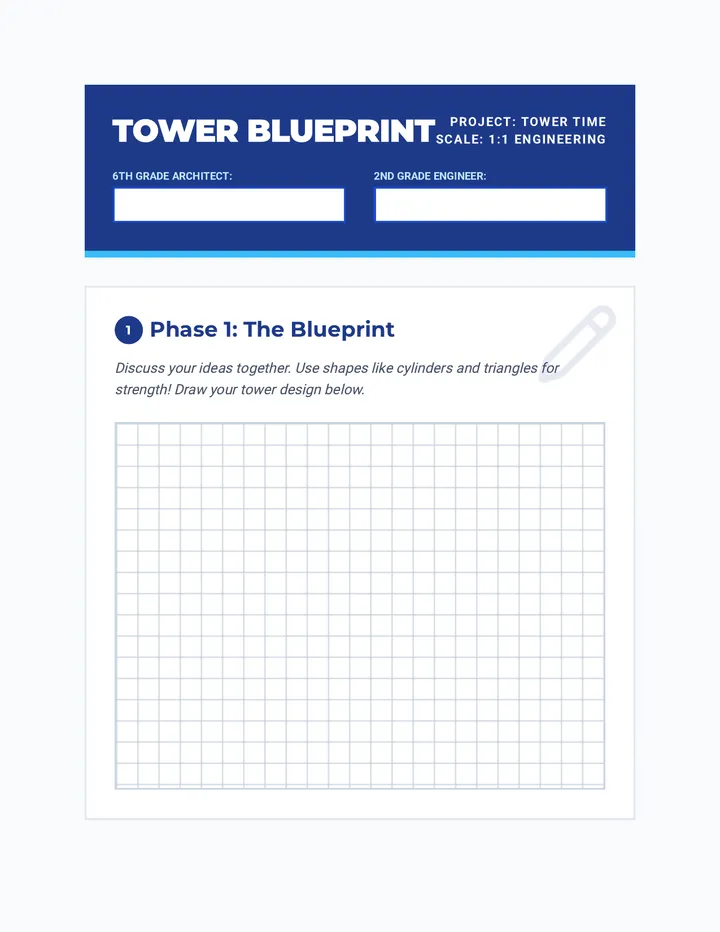
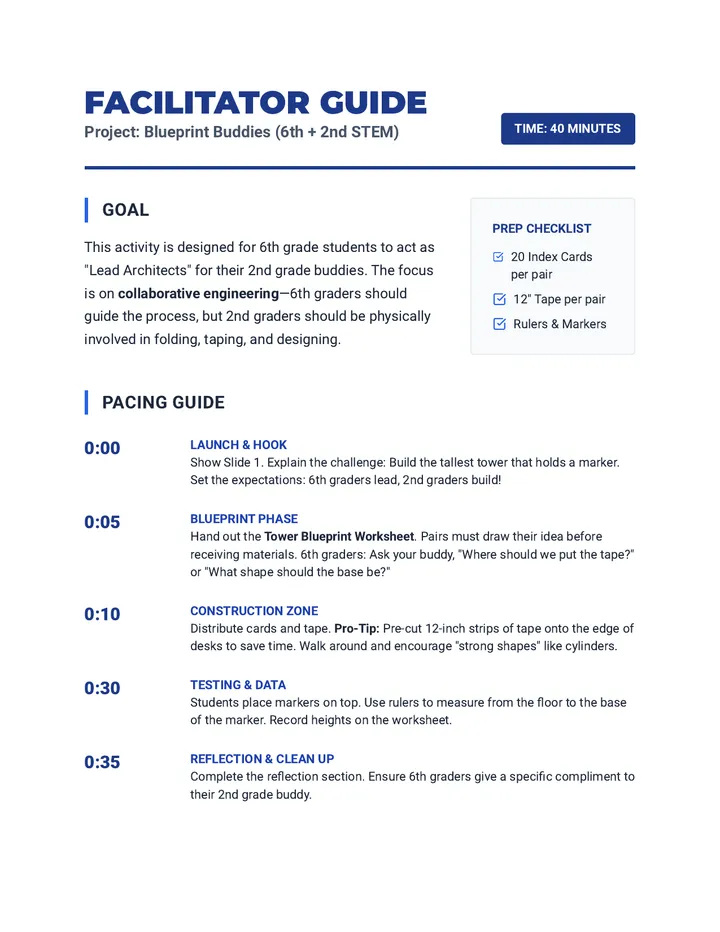
A fun, playful building challenge for early learners. Small teams work together to build the tallest tower they can using simple materials, focusing on sharing, taking turns, and trying again.
An introduction to the concept of cycles in nature, focusing on the definition of a cycle and the repeating patterns of the seasons.