Combining electricity and magnetism to create a temporary magnet. Students follow instructions to build their own electromagnet using a battery, wire, and nail.
A final review and benchmark assessment to evaluate student understanding of multicellular organization.
A hands-on laboratory experience where students observe levels of organization in plant and animal specimens.
Understanding the highest levels of biological organization: organ systems and the complete organism.
Exploring how cells group together to form tissues and how tissues collaborate to create organs.
An introduction to the cellular basis of life, comparing unicellular and multicellular organisms and the concept of specialized cells.
Students explore the major human body systems by identifying their key components and organs. Through a hands-on card sort, they categorize body parts and discover how these systems work together to keep the body functioning.
An introductory lesson for 2nd graders on observing and recording daily weather patterns, featuring hands-on activities and data collection.
A foundational science lesson exploring the three primary states of matter—solids, liquids, and gases—through reading, visual aids, and interactive observation.
Cette séance de 2 heures permet aux élèves de distinguer qualification et compétence, d'analyser l'impact des conditions de travail sur le comportement des salariés et de mesurer la performance de l'activité humaine via des indicateurs de productivité et de climat social.
A comprehensive middle school lesson where students apply engineering design principles to create sustainable solutions for local ecosystem challenges, focusing on wildlife corridors and habitat connectivity.
A two-part lesson exploring the physics of buoyancy and density through the lens of Ancient Egyptian boat building. Students will investigate buoyant forces and compete in a hands-on lab to carry the most 'cargo' across the Nile.
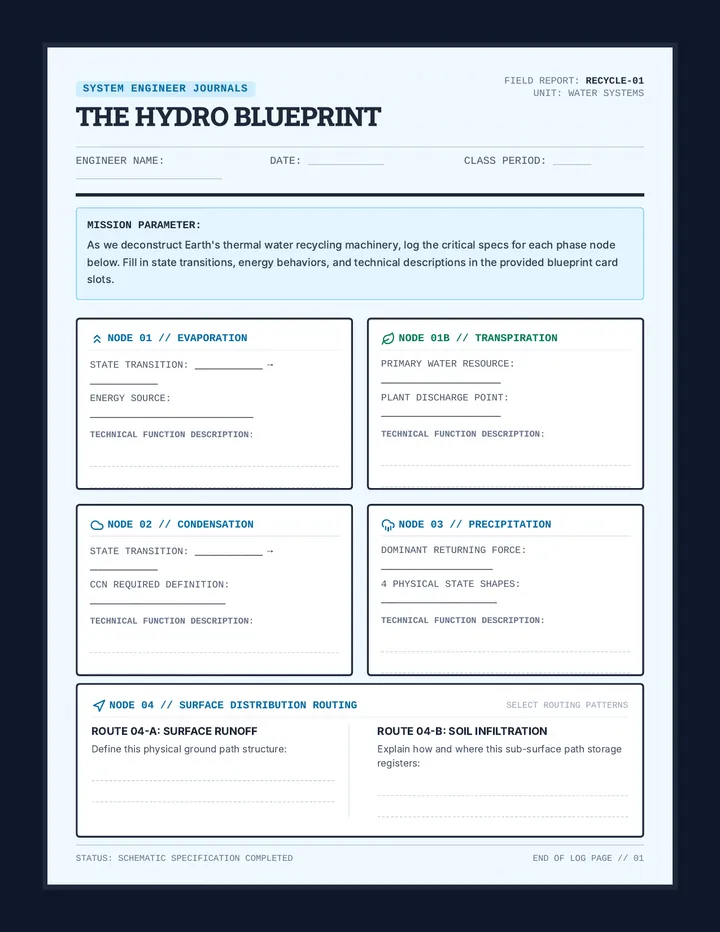
A comprehensive exploration of the water cycle, covering evaporation, condensation, precipitation, and collection through hands-on activities and visual aids. Students will learn how water moves through Earth's systems and why it is vital for life.
An introductory lesson exploring the eight planets of our solar system, their unique characteristics, and space-related vocabulary.
A comprehensive introduction to cybersecurity for secondary students, focusing on threat identification, personal data protection, and safe online habits through case studies and practical protocols.
A lesson focused on teaching 4th graders how to effectively research animals using online resources and organizing their findings.
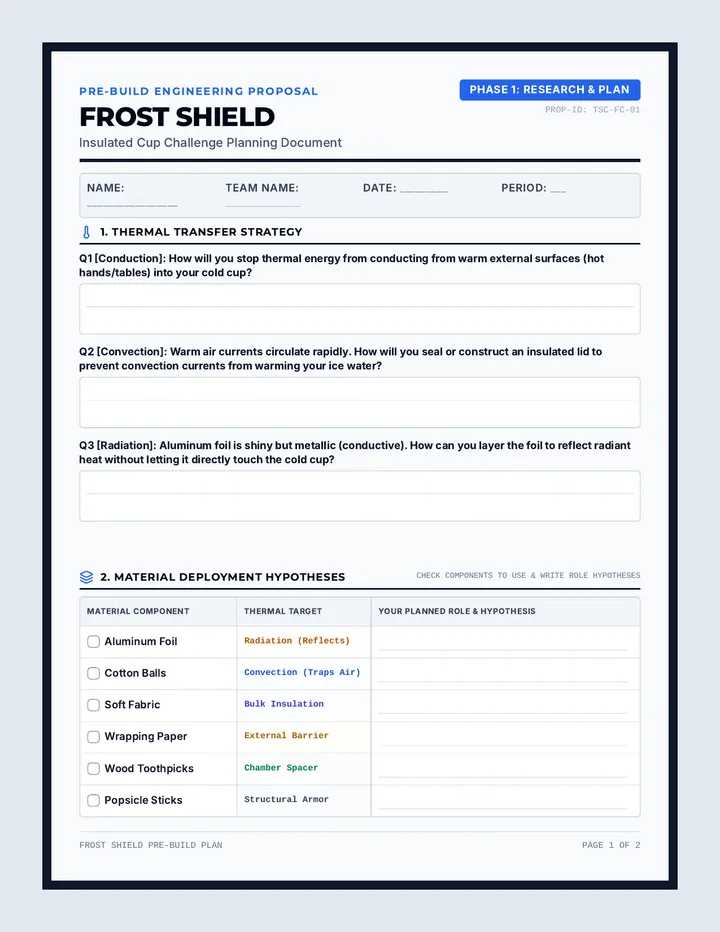
A comprehensive investigation into thermal energy transfer (conduction, convection, and radiation) for 4th-grade students, featuring hands-on experiments and standards-based assessment.
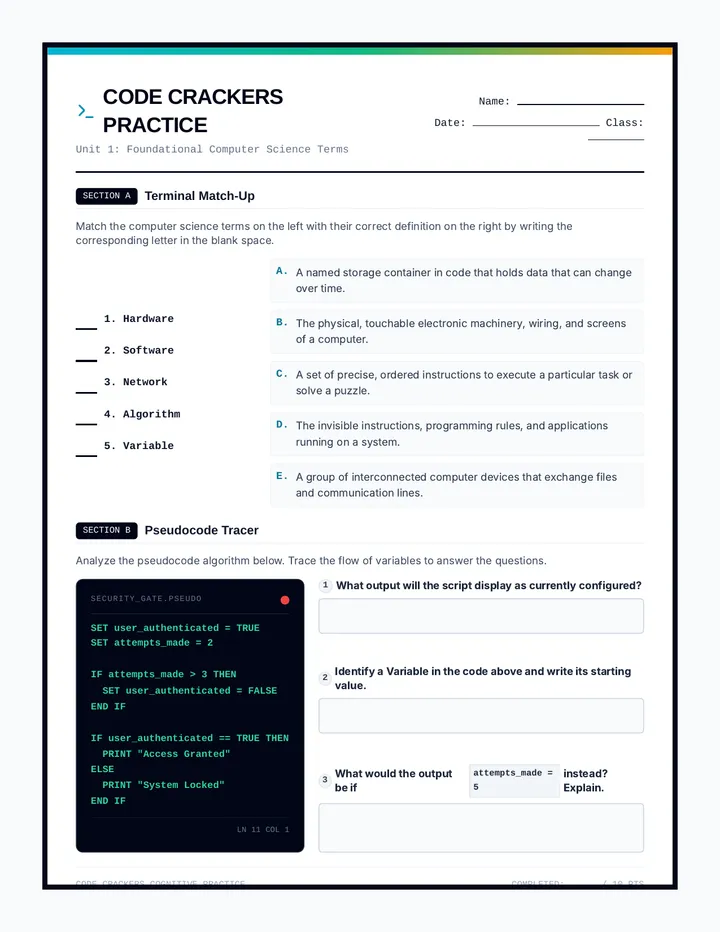
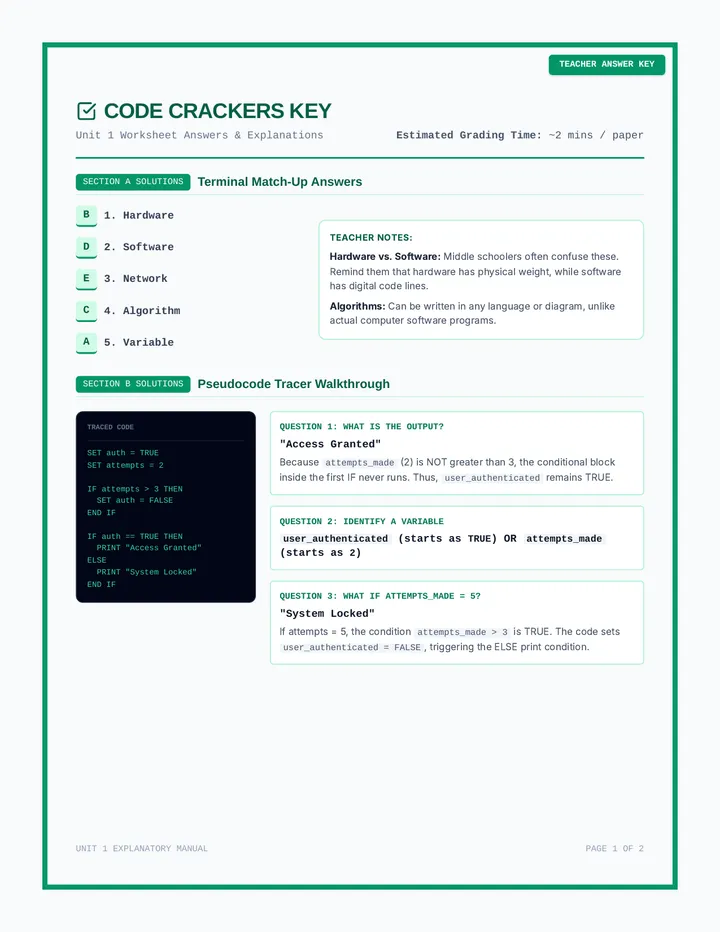
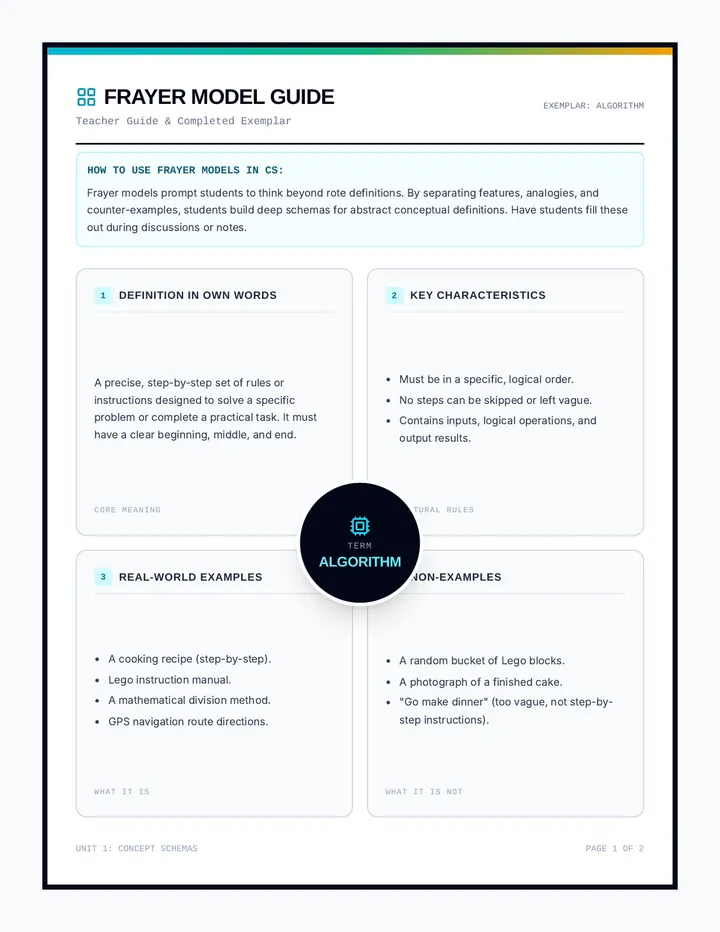
A project-based lesson where students learn algorithmic thinking by designing game mechanics using flowcharts and pseudocode with a retro arcade theme.
Identifying the path electricity takes. Students differentiate between conductors that let electricity pass and insulators that stop it, while building basic circuits.
Exploring the invisible forces of magnets. Students learn about poles (North and South) and how magnetic fields create attraction and repulsion.
Introduction to what electricity is and how it moves through wires. Focuses on the concept of energy flow and simple 'push' and 'pull' analogies.
Une exploration approfondie des besoins nutritionnels humains, des groupes d'aliments et de l'équilibre alimentaire, alignée sur le programme de cycle 3. Les élèves apprennent à identifier la provenance de leur énergie et à composer des repas équilibrés pour leur santé.
The capstone project where students combine their coding knowledge and engineering skills. Students design a functional 'helper bot' using recycled materials and write the pseudo-code for its operations.