An outdoor sensory experience where students use natural materials to create 'mud pies,' focusing on texture, composition, and imaginative play.
Students act as 'Marine Bio-Engineers' to design and build artificial reef structures that support a healthy ecosystem on Mystery Island's coast, focusing on biotic and abiotic interactions.
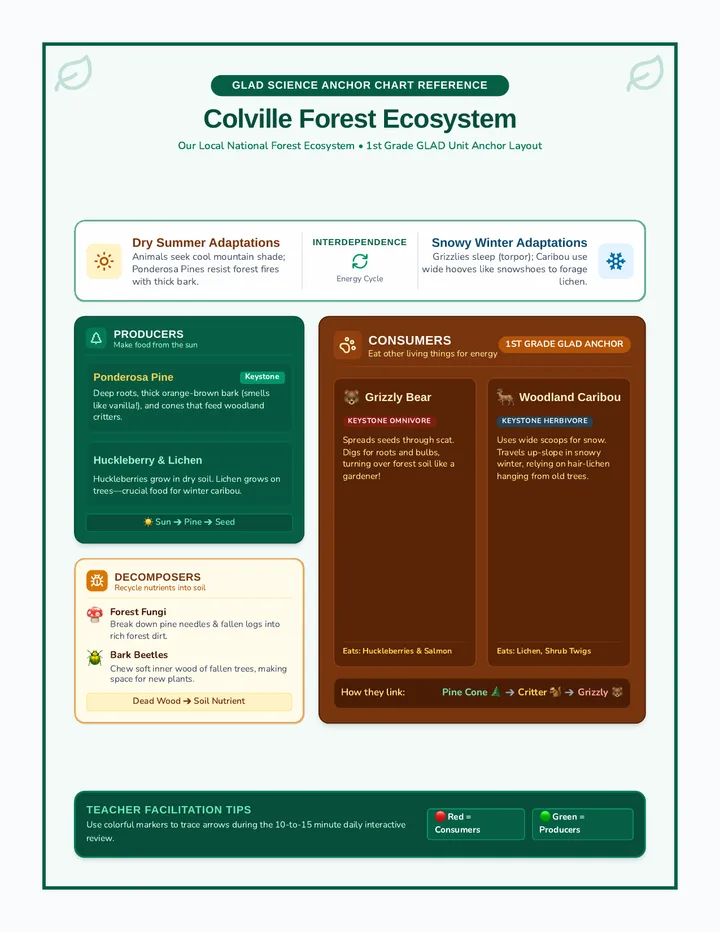
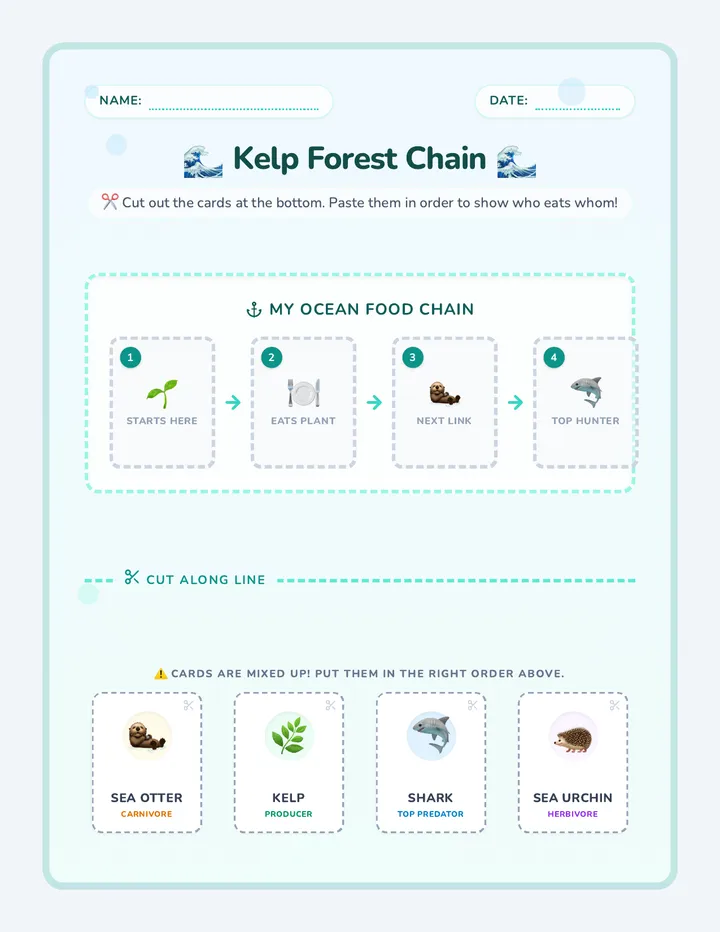
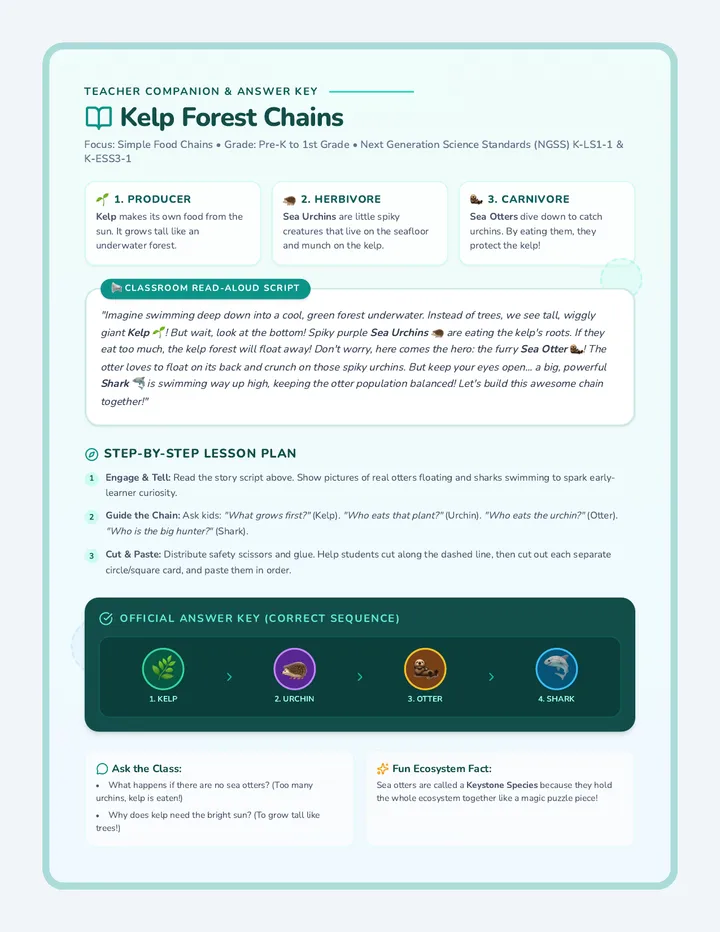
Students design and build 'Food Web Restoration' models to visualize and explain the flow of energy from producers to multiple consumers on Mystery Island.
Students design and build 'Weather Shields' to protect a model plant from extreme temperature and precipitation changes on Mystery Island, exploring how environmental factors affect organisms.
Students act as 'Botanical Engineers' to design and build seed models that can travel through the air to reach new parts of Mystery Island, focusing on seed dispersal methods.
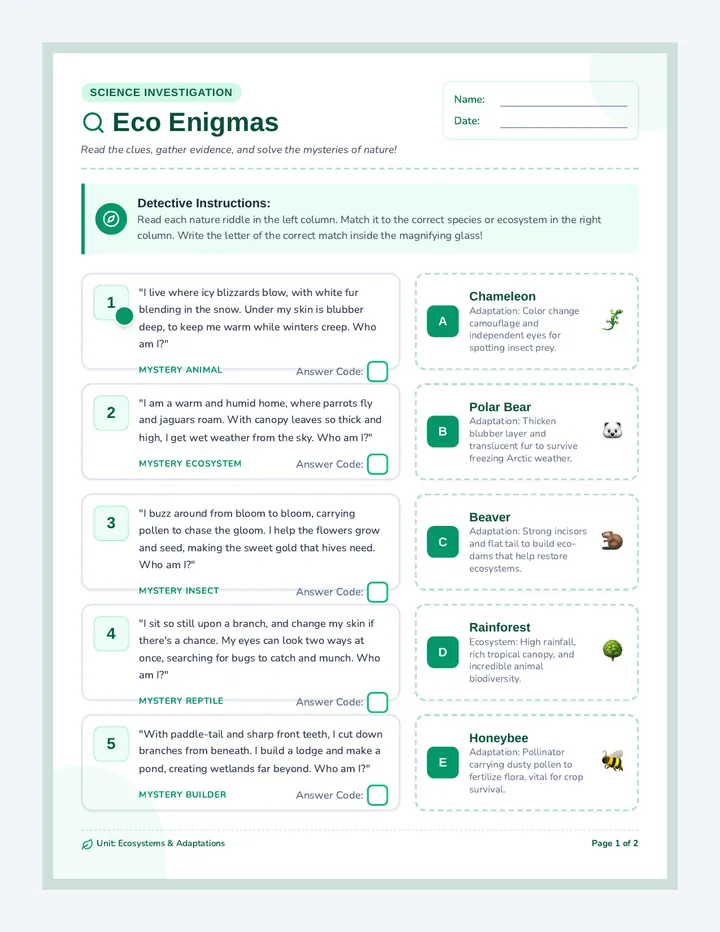
Students design external structures for a 'Mystery Organism' to help it meet its basic needs (food, water, shelter) on Mystery Island, focusing on the link between structure and function.
A foundational science lesson for Kindergarten students to identify and demonstrate the forces of pushing and pulling through visual aids and hands-on movement.
An introductory lesson on tiger-related vocabulary, focusing on conservation, biology, and habitat through kid-friendly definitions and syllable practice.
An introductory lesson on the importance of native plants for local ecosystems, designed for K-2 students. Includes hands-on garden design projects and visual aids for ecosystem services.
Students compare and contrast the textures and molding properties of homemade playdough and kinetic sand through tactile exploration.
A deep dive into non-Newtonian fluids as students mix cornstarch and water to create oobleck, exploring how it changes from solid to liquid.
Students explore density and mixtures by creating mesmerizing sensory bottles using oil, water, and various floating objects.