A comprehensive guide and evaluation system for elementary students conducting science research projects. Includes a student-friendly rubric, a teacher grading sheet, and instructional slides to set students up for success.
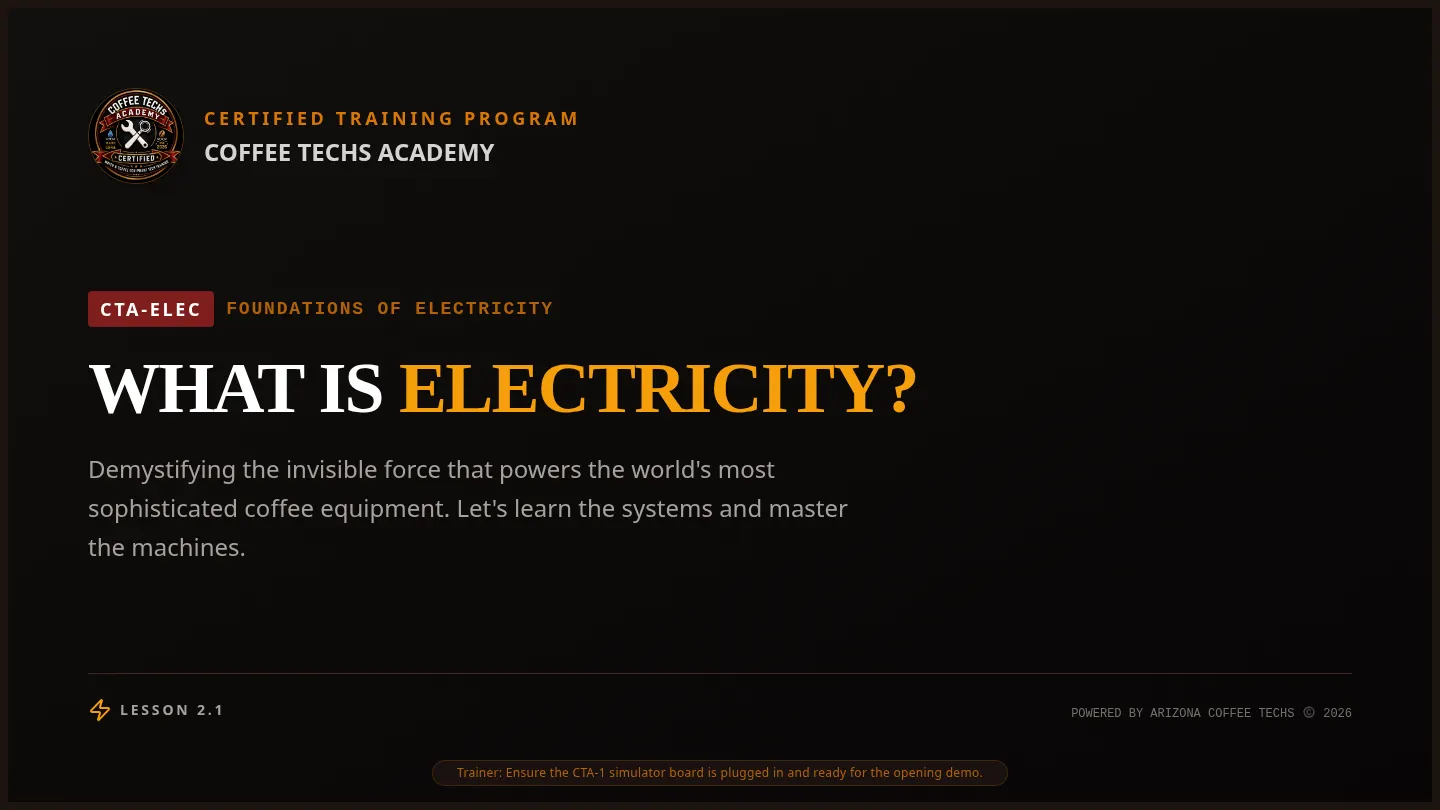
A comprehensive technical certification sequence designed to teach commercial coffee equipment technicians how to demystify electricity, safely troubleshoot components, and master electrical systems.
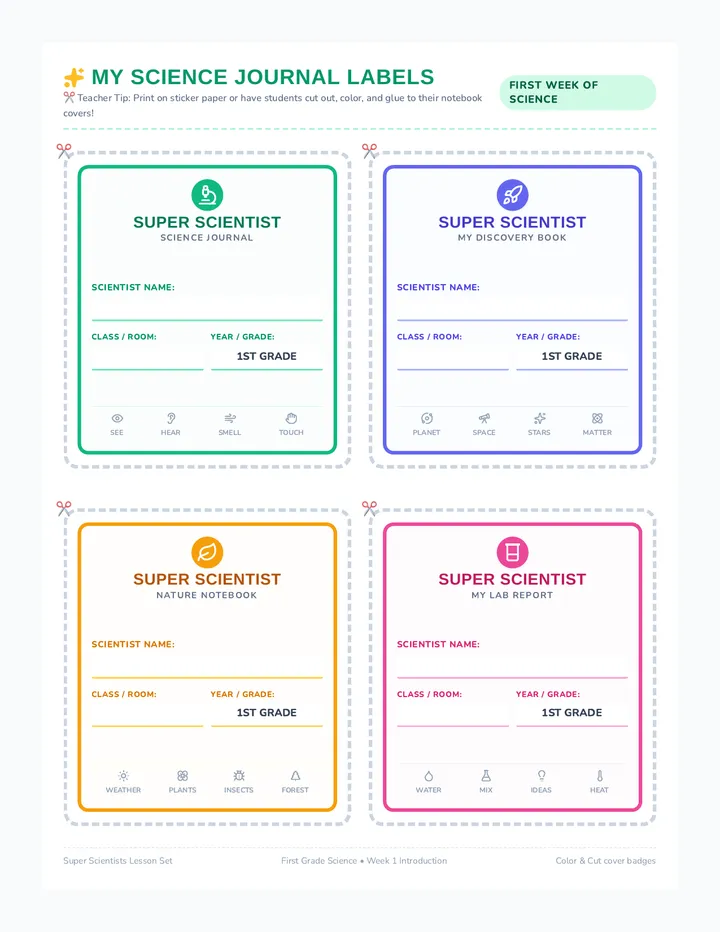
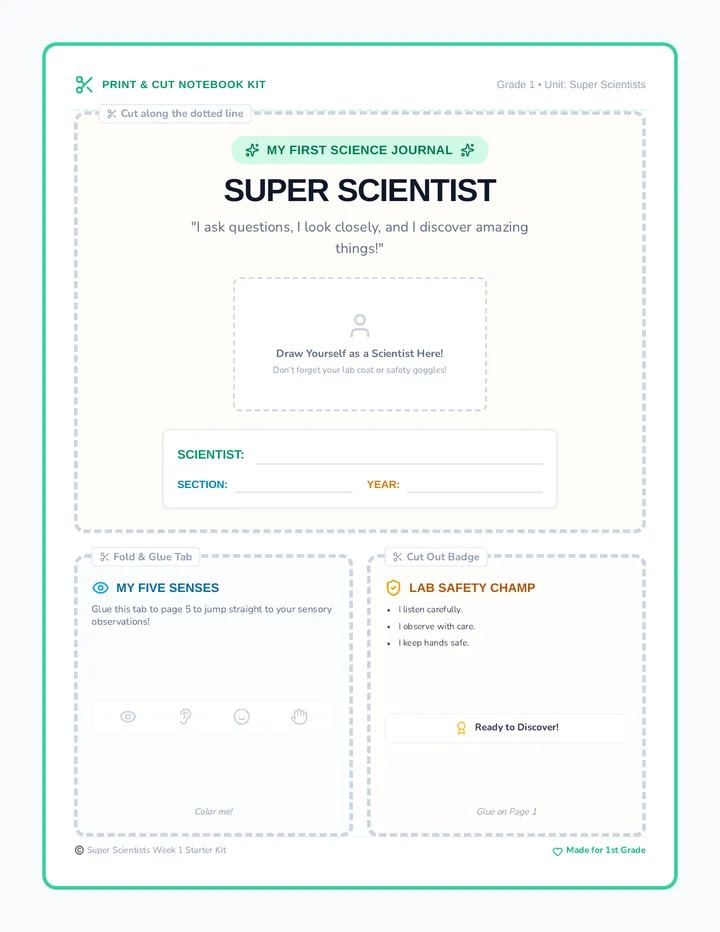
An introductory science lesson for first graders to establish their scientific identity, explore the five senses, and set up their very first Interactive Science Notebook.
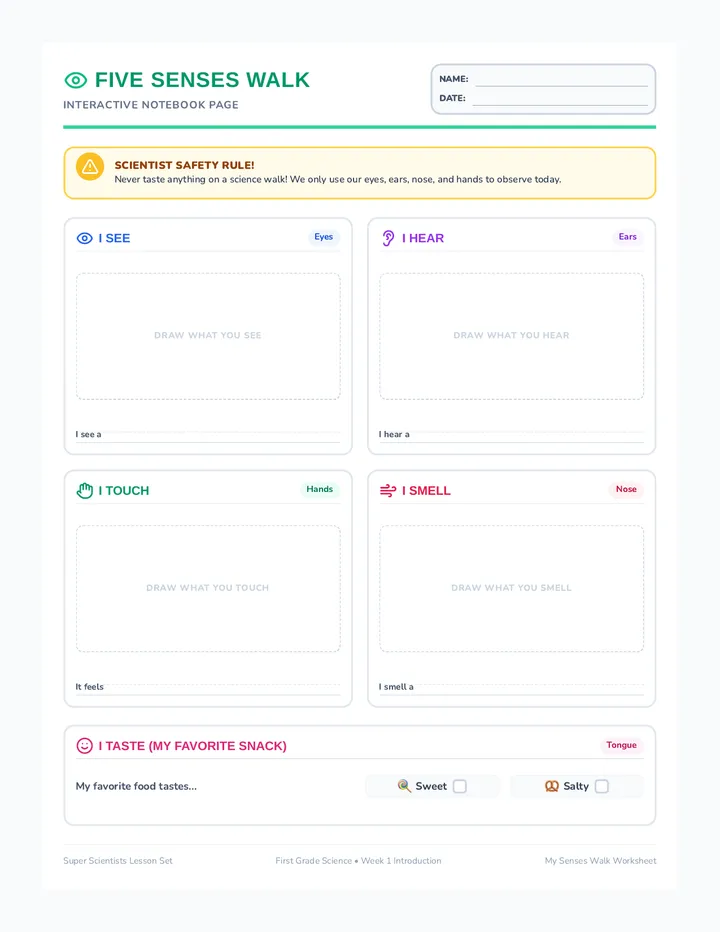
An interactive worksheet designed for a classroom or outdoor Senses Walk. Students observe the environment around them and record their findings using their five senses.
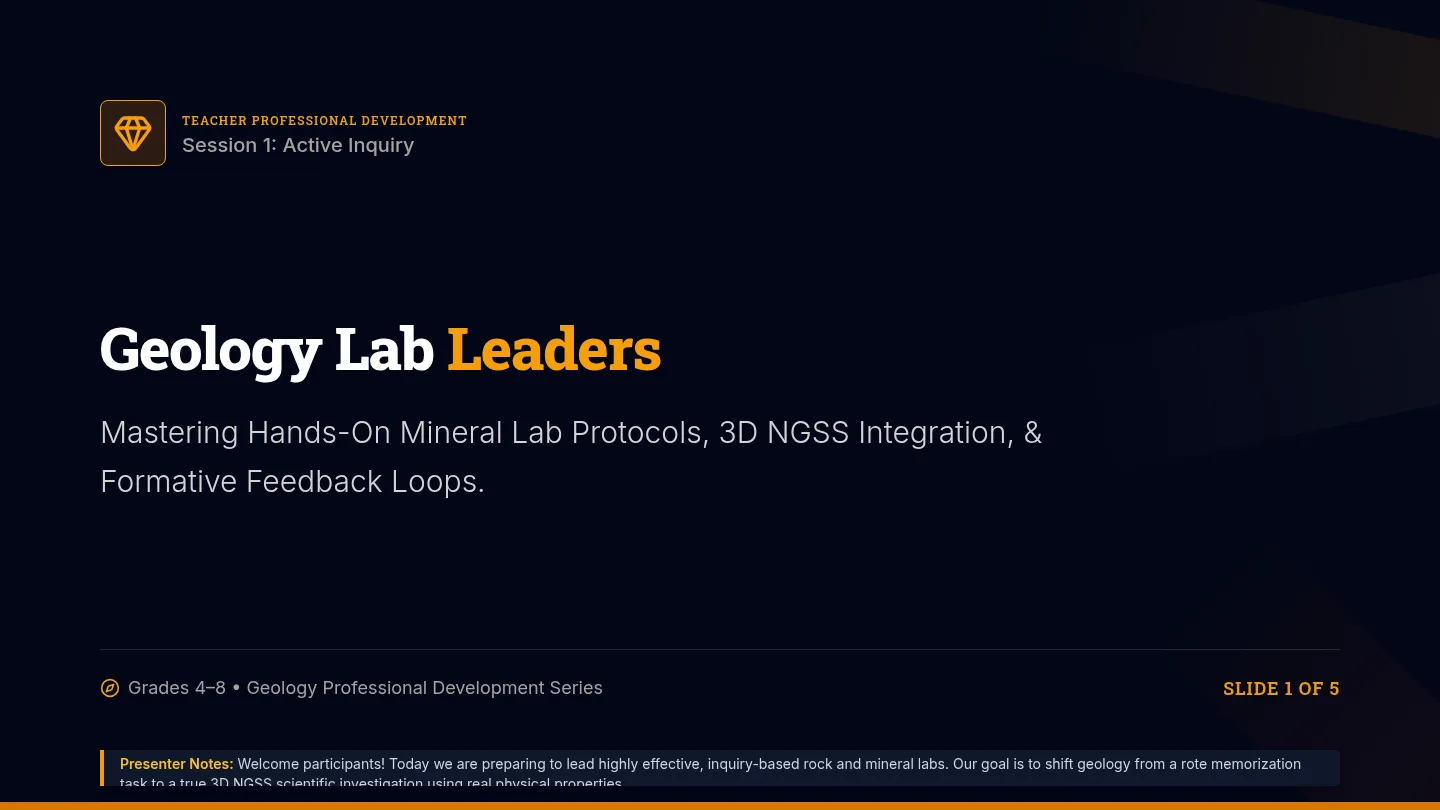
A comprehensive teacher professional development and model lesson plan sequence. It equips educators with hands-on mineral testing protocols, inquiry-based (3D) NGSS teaching strategies, geological vocabulary support, and formative assessment tools for grades 4-8.
An introductory first-week science unit for 1st graders to explore scientific identity, observation, and the five senses through interactive notebooks.
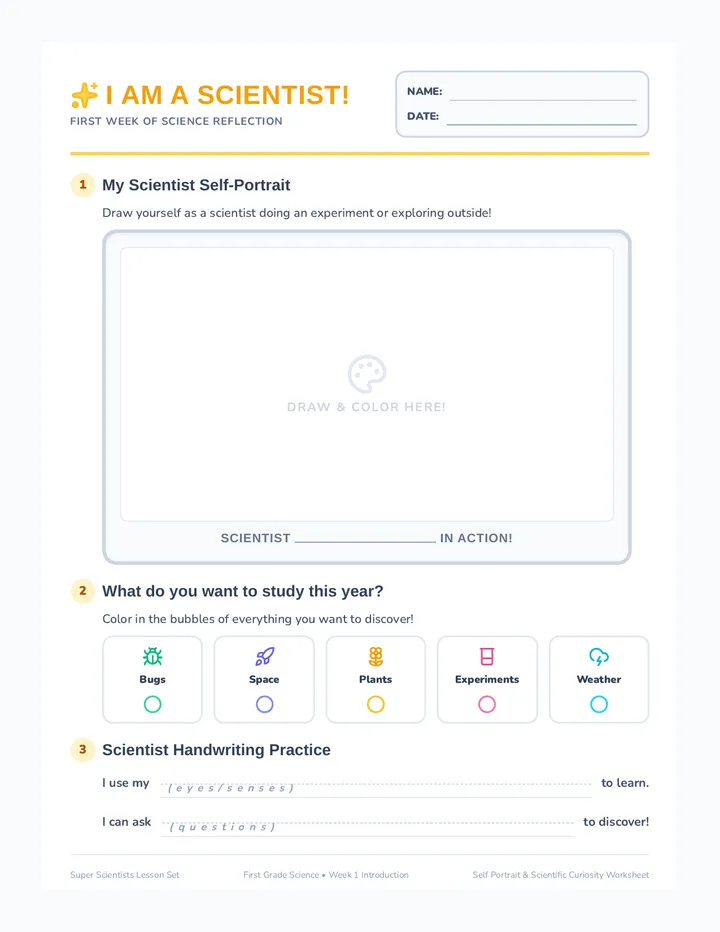
An introductory worksheet where first-grade students draw themselves as super scientists and reflect on scientific traits like asking questions and making observations.
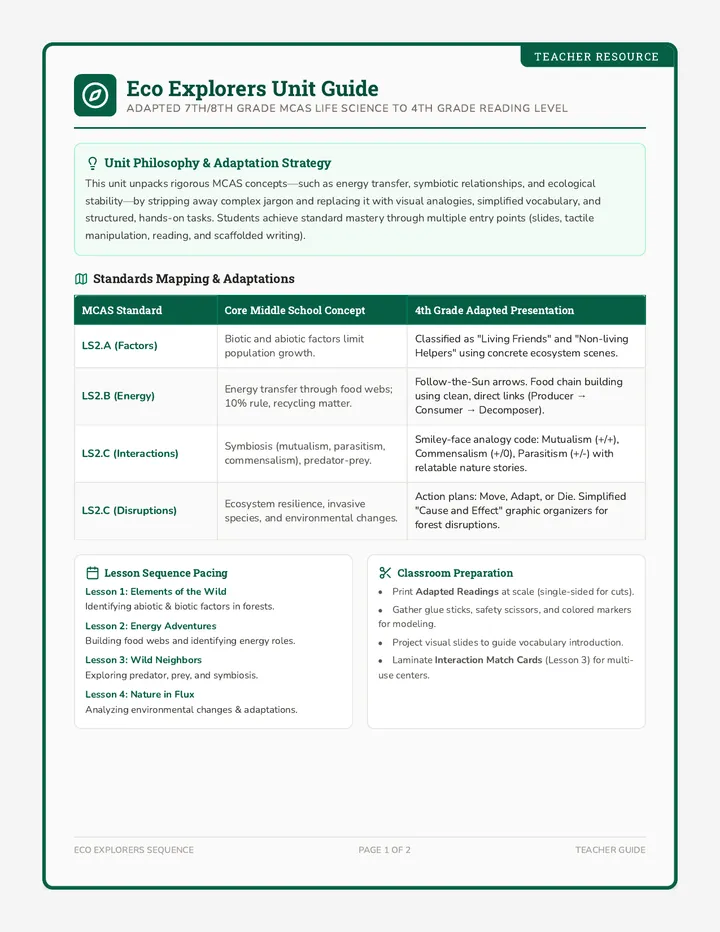
An interactive, highly visual ecosystem unit designed for 7th/8th grade MCAS standards but adapted to a 4th-grade reading and comprehension level. The unit explores abiotic/biotic factors, energy flow, interactions, and disruptions through hands-on activities, adapted readings, visual slides, and scaffolded assessments.
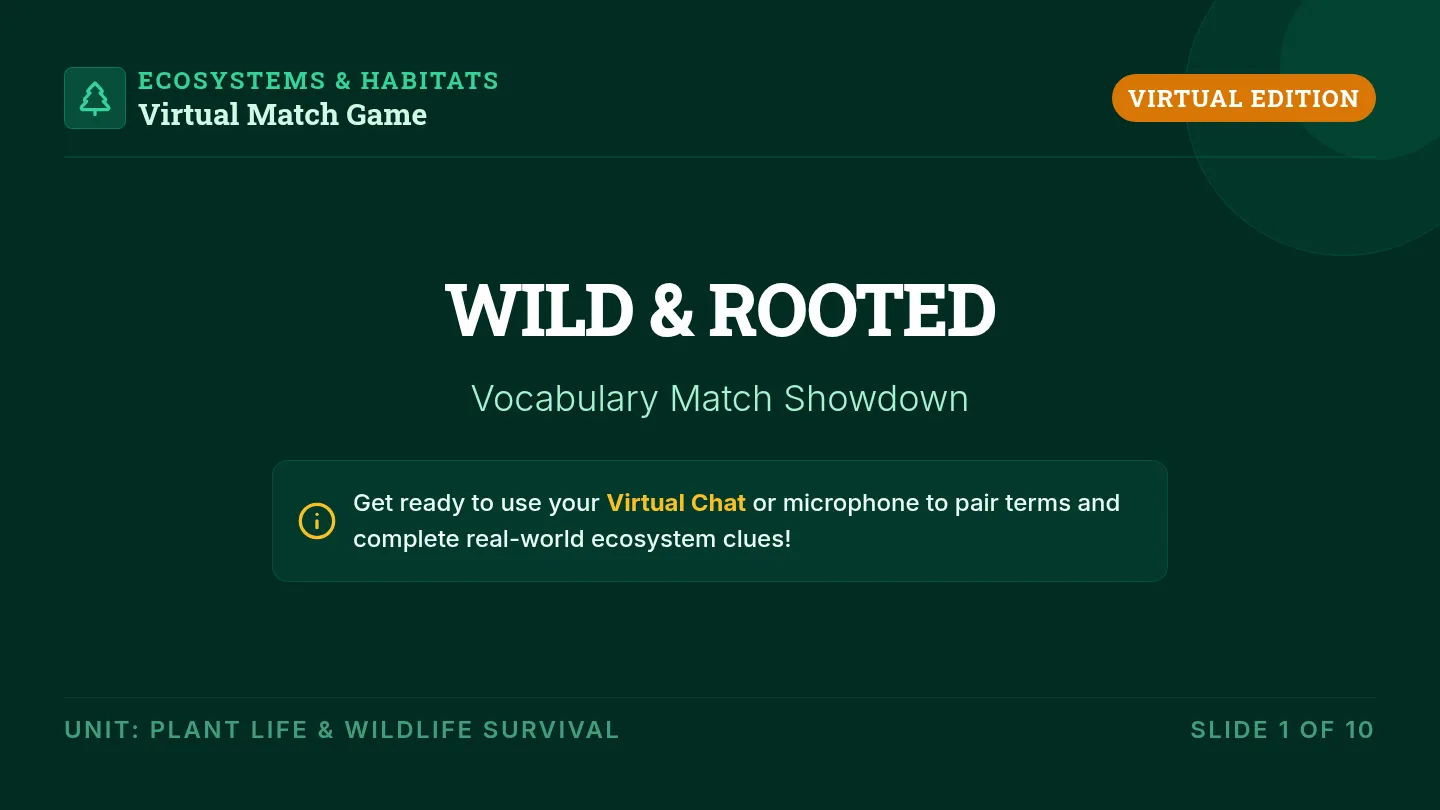
A highly engaging vocabulary lesson where students master key ecosystem and habitat terms through interactive pairing games and hands-on sentence completion.
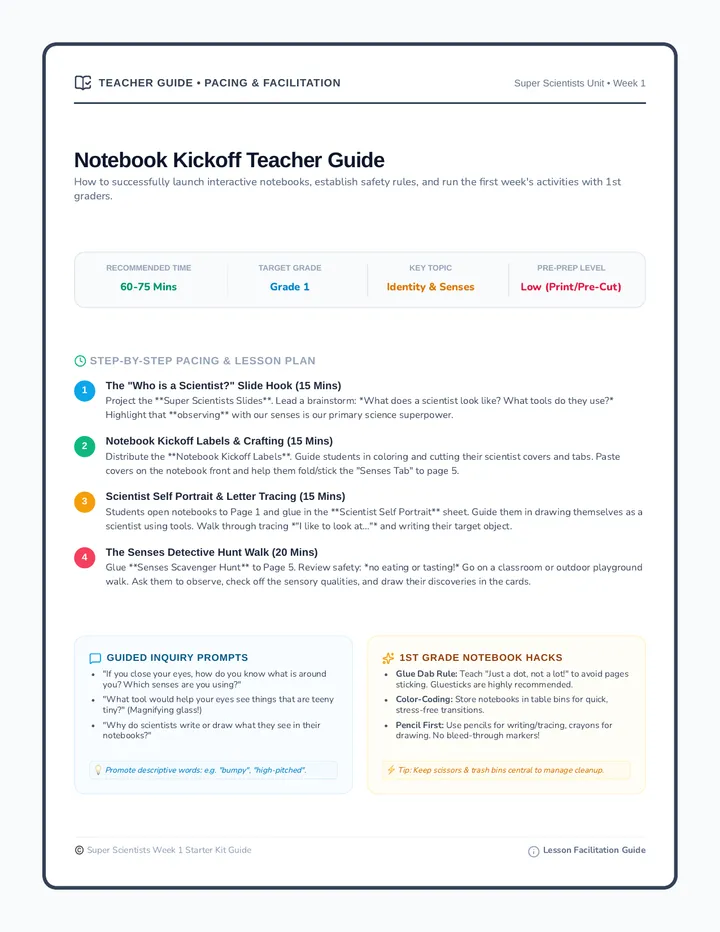
A comprehensive guide for teachers detailing how to set up science notebooks, facilitate the first week's activities, and prompt sensory observations in 1st grade.
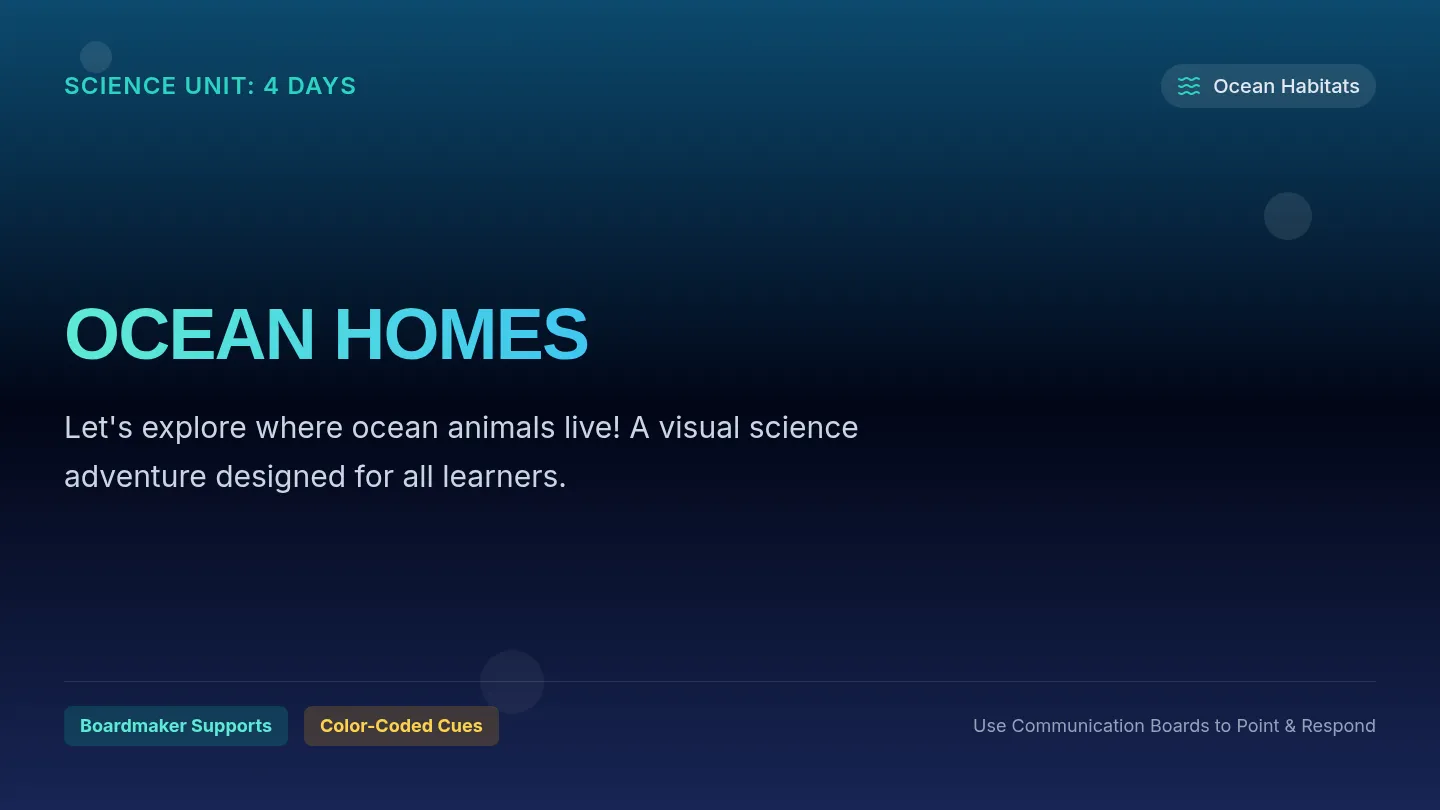
A highly visual 4-day science unit exploring ocean habitats and depth zones. Tailored for differentiated instruction for 3rd grade and nonverbal 7th grade students using Boardmaker-style symbols, color-coded matching, and visual check comprehension.
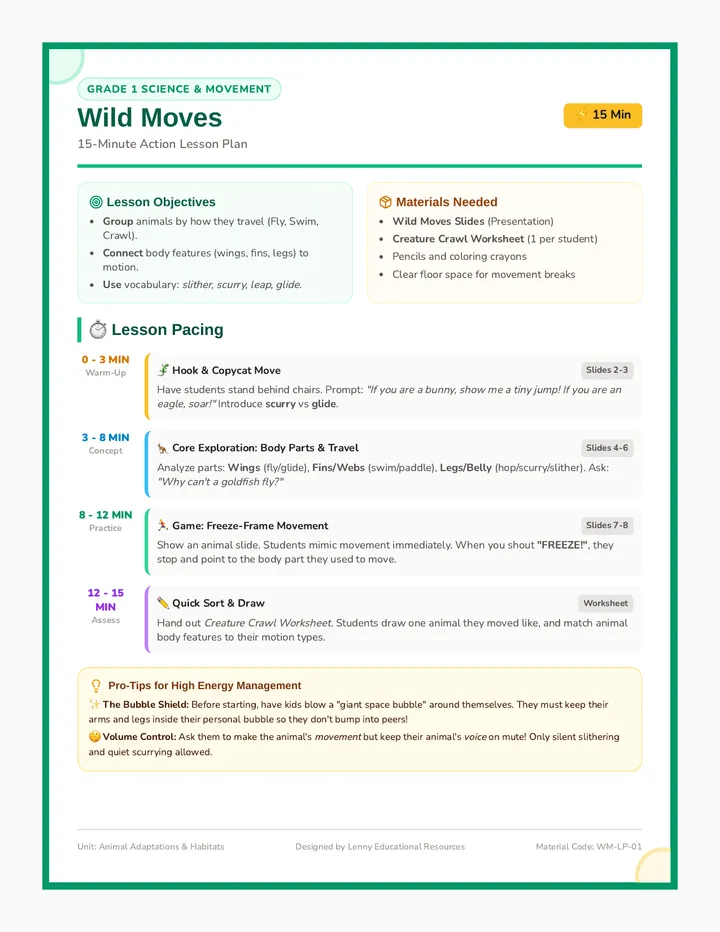
A high-energy, 15-minute introductory lesson for 1st graders to explore how animals move, categorize them by travel types (flying, swimming, crawling), and connect their physical body features to their motion.
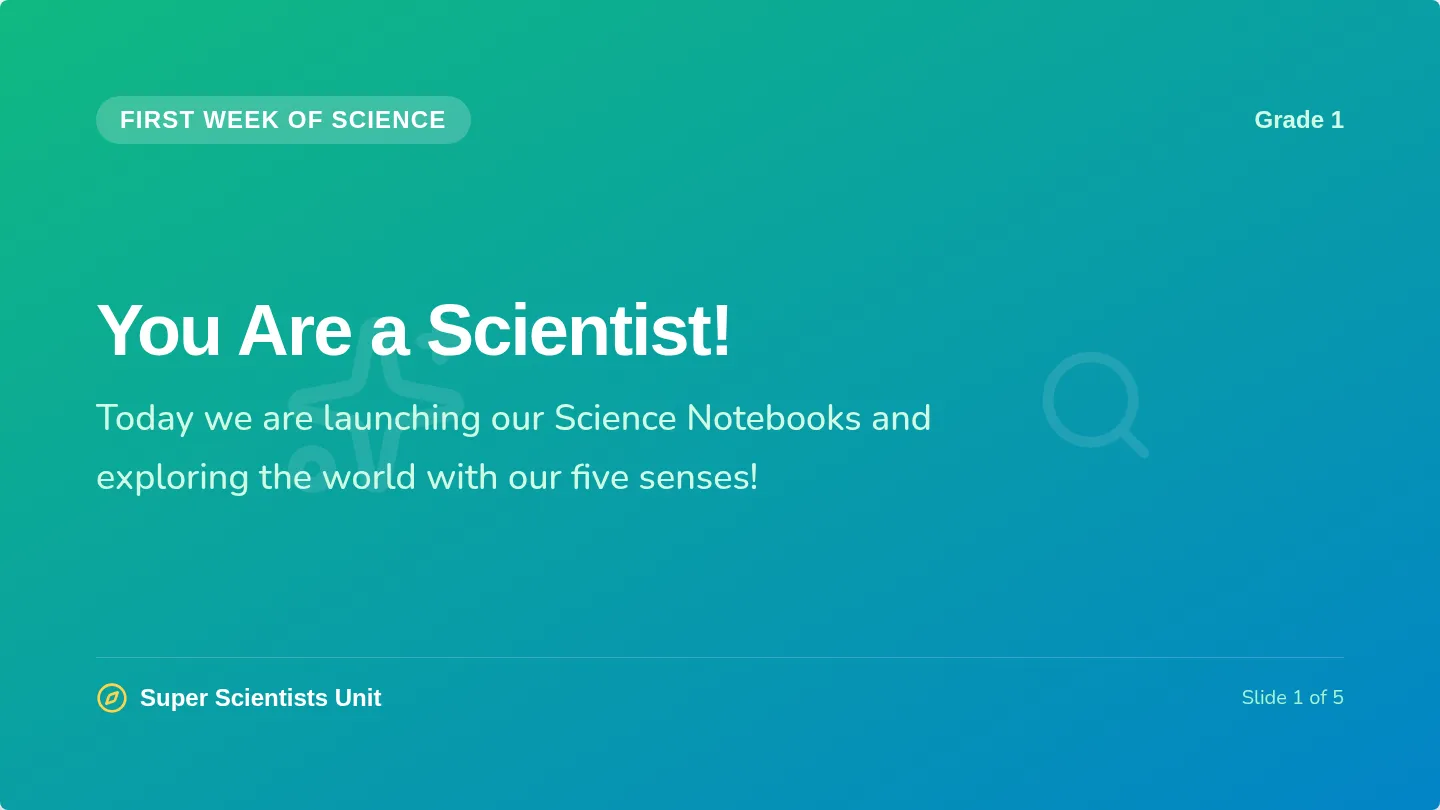
An interactive slide deck introducing first graders to what a scientist is, the five senses as their primary scientific tools, and notebook organization.