Una sesión práctica de 60 minutos que integra los fundamentos de la programación orientada a objetos en Python con la persistencia de datos mediante el manejo de archivos (File I/O).
No materials in this lesson yet.
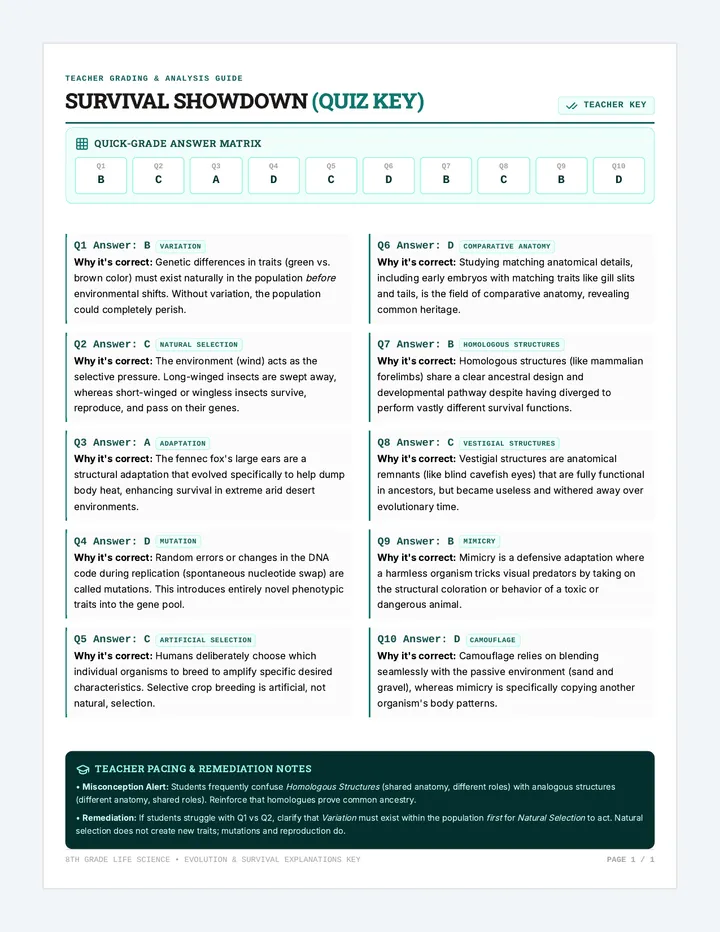
A comprehensive review of how plant and animal systems interact to maintain homeostasis and respond to the environment, including a comparison of viral and cellular structures based on unit exam standards.
A comprehensive lesson exploring the sense of sight through a detailed reading passage and STAAR-aligned comprehension questions designed for second grade.
Discover the structure of watershed systems, the importance of the Chesapeake Bay, and how human activity impacts water quality.
Investigate the chemical nature of water through pH testing, exploring acidity, alkalinity, and how water's role as a solvent impacts life and the environment.
Explore the unique molecular properties of water, including cohesion, adhesion, and surface tension, through the 'Penny Power' lab and interactive demonstrations.
An introductory overview of blockchain security vulnerabilities, focusing on the mechanics and consequences of a 51% attack on decentralized networks.
En esta lección, los estudiantes aprenderán a transformar aplicaciones estáticas en interfaces interactivas mediante el uso de TouchableHighlight y la actualización del estado (setState) en React Native dentro del entorno CodeHS.
Este plan de lección se enfoca en la actualización dinámica del estado en aplicaciones móviles utilizando React Native. Los estudiantes aprenderán a conectar eventos táctiles con funciones de modificación de datos para crear interfaces interactivas y reactivas.
A comprehensive set of practice problems covering the six fundamental gas laws: Boyle's, Charles's, Gay-Lussac's, Ideal, Combined, and Dalton's law of partial pressures.
A comprehensive guide and evaluation system for elementary students conducting science research projects. Includes a student-friendly rubric, a teacher grading sheet, and instructional slides to set students up for success.
A master's level exploration of the Bishop et al. (2023) paper on carbonate submarine fans, focusing on facies analysis, architectural elements, and depositional models in the Mississippian Lake Valley Formation.
A comparative study of geomorphology, exploring how liquid properties (viscosity, density, and flow) shape land formations on Earth and other celestial bodies like Mars, Titan, and Venus.
An immersive exploration of liquid properties—viscosity, density, capillary action, and intermolecular forces—comparing water to various common fluids through hands-on experimentation and data analysis.
A focused lesson on the fundamental laws of electricity, covering Ohm's Law for circuits and Coulomb's Law for electrostatic forces through conceptual analysis and calculation practice.
A deep dive into the industrial processing of seed oils, their prevalence in modern diets, and how to identify them on food labels. Students will explore the journey from crop to bottle and become 'oil detectives' in the grocery aisle.
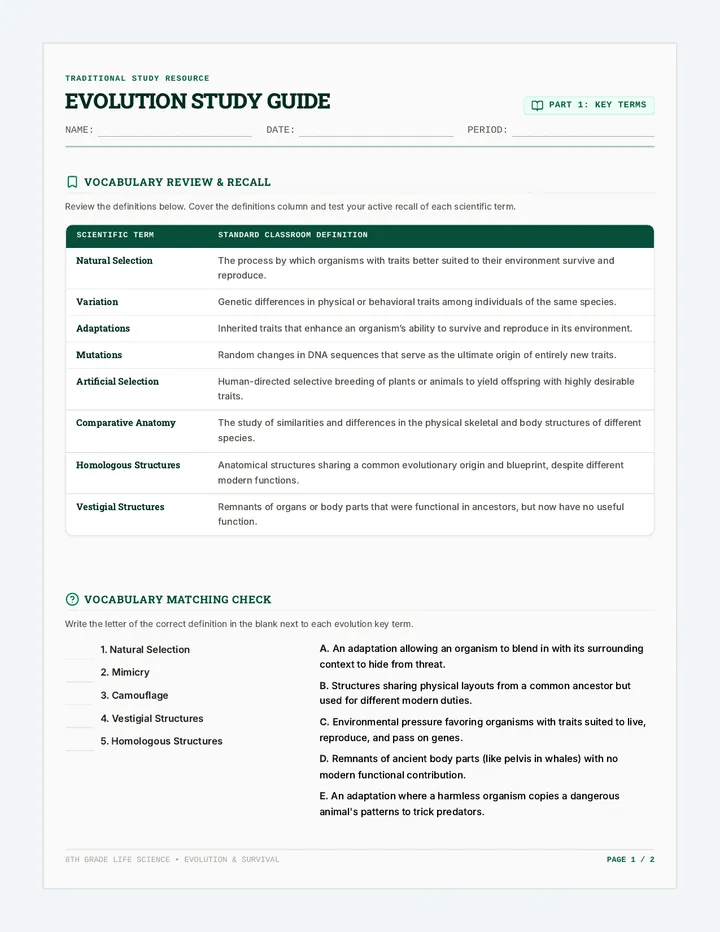
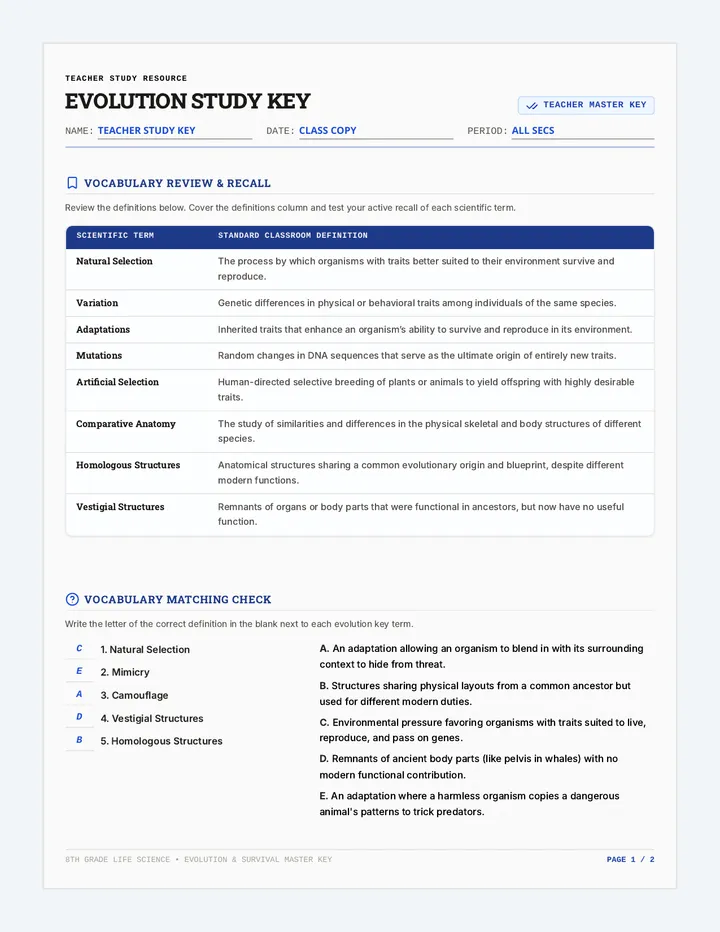
A comprehensive biology lesson covering genetics (transcription/translation), evolutionary classification, and ecological succession, designed to mirror the rigor and format of the Texas EOC.
A comprehensive midterm review for CS10 covering NC standards for data representation, cybersecurity, and basic programming logic. Includes a detailed study guide and a 75-question practice exam.
A comprehensive look at the structural differences between plant and animal cells, using a technical blueprint aesthetic to explore organelles and their functions.
An exploration of data collection methods, storage formats, and the practical implications of data management in computer science. Students will identify data sources and compare storage solutions.
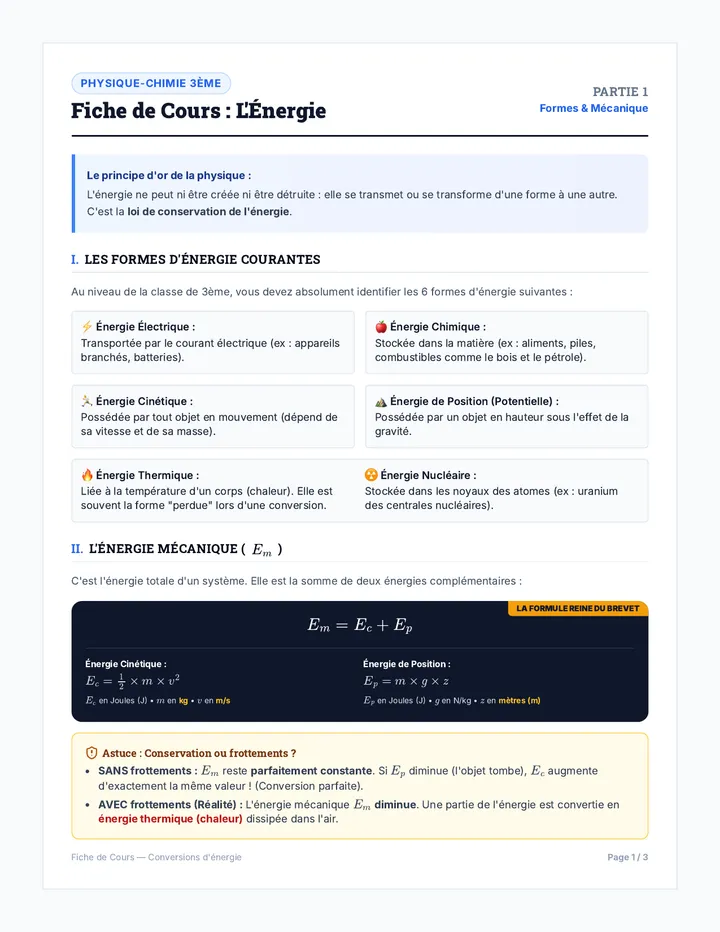
This lesson compares linear and rotational motion through a case study of a high-tech amusement park ride. Students explore the analogies between force and torque, mass and inertia, and work/power/conservation laws in both systems.
This lesson compares linear and angular motion through a multi-part reading assignment, including an informational article, a textbook excerpt, and a case study. Students will identify key formulas and physical principles.
An introductory lesson for 2nd graders on observing and recording daily weather patterns, featuring hands-on activities and data collection.
Cette séance de 2 heures permet aux élèves de distinguer qualification et compétence, d'analyser l'impact des conditions de travail sur le comportement des salariés et de mesurer la performance de l'activité humaine via des indicateurs de productivité et de climat social.
A comprehensive introduction to cybersecurity for secondary students, focusing on threat identification, personal data protection, and safe online habits through case studies and practical protocols.
A comprehensive investigation into thermal energy transfer (conduction, convection, and radiation) for 4th-grade students, featuring hands-on experiments and standards-based assessment.
A project-based lesson where students learn algorithmic thinking by designing game mechanics using flowcharts and pseudocode with a retro arcade theme.
Students will learn to track energy transformations in simple harmonic motion, understanding how kinetic and potential energy exchange while maintaining a constant total energy.
A comprehensive look at simple harmonic motion, focusing on the relationship between restoring forces and displacement, Hooke's law, and real-world oscillatory systems.
A 100-minute intensive lesson covering the four experiences of animal systems: organization, nutrient regulation, reproduction, and environmental response. Includes an outdoor observation activity to analyze animal behavior and responses in real-time.
Analyze how the nervous, muscular, and integumentary systems work together to detect and react to external changes.
Investigate the reproductive and endocrine systems and how they ensure the continuation of animal species.
Examine the collaborative roles of the digestive, circulatory, and excretory systems in managing energy intake and waste removal.
Explore the levels of biological organization and the feedback mechanisms that allow animals to maintain a stable internal environment.
A lesson exploring the intersection of stoichiometry and ethics, where students use chemical calculations to argue for or against specific industrial processes or environmental policies.
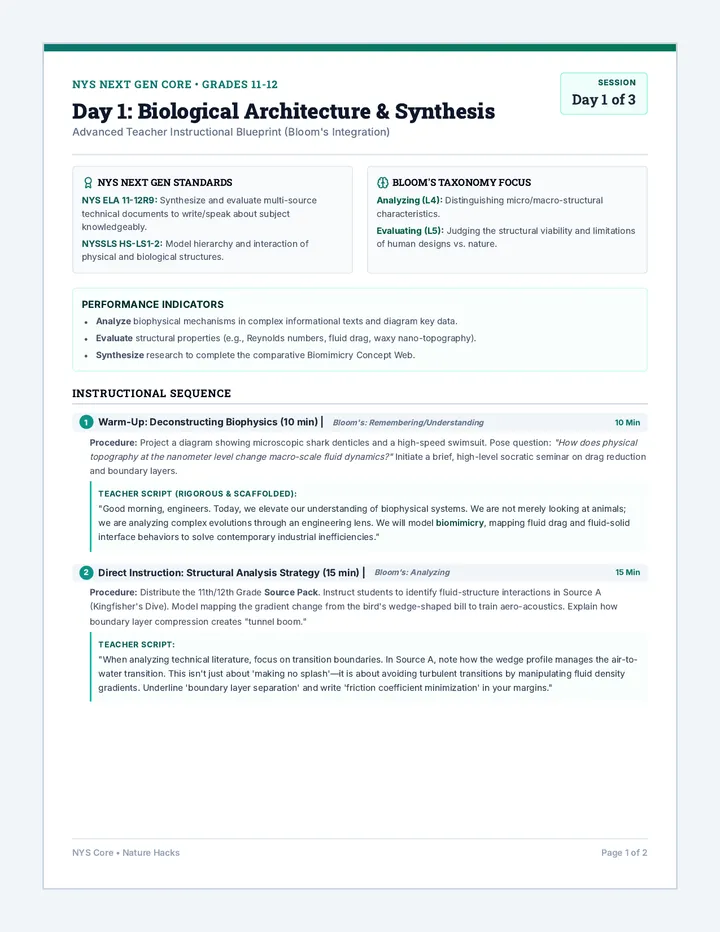
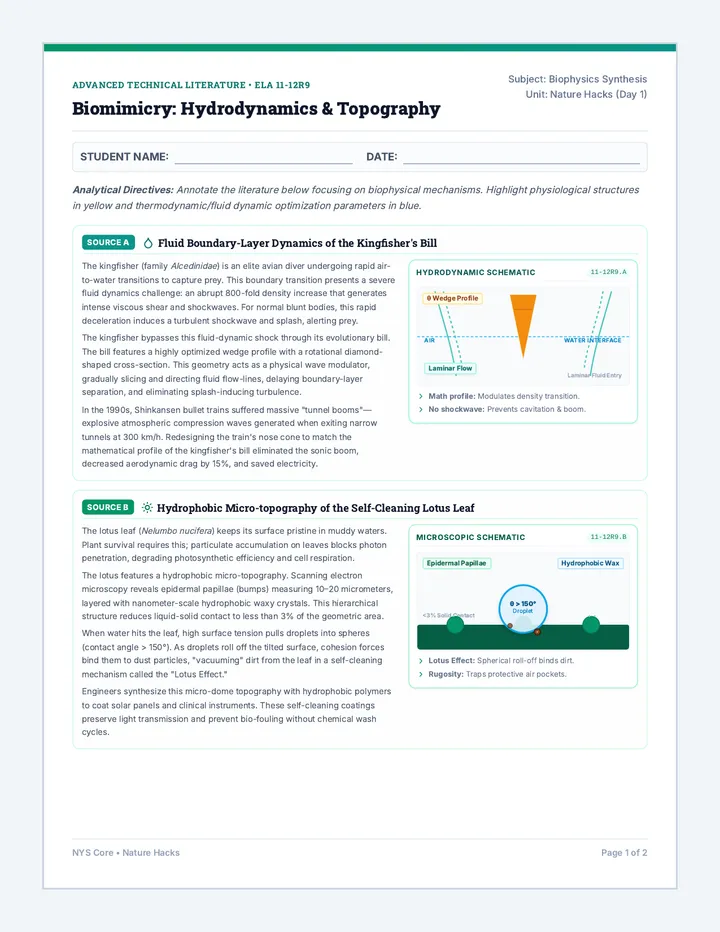
An introduction to biomimicry for 1st Grade students, exploring how plants and animals inspire human inventions through interactive slides and creative worksheets.
A comprehensive lesson introducing K-1st grade students to debugging through the lens of Kodable. Students identify, circle, and fix errors in directional code sequences to help their Fuzz friends navigate grids.