In this 30-minute Pre-K shapes lesson, students embark on a 'Shape Safari' to identify and explore circles, squares, triangles, and rectangles through movement, song, and hands-on matching.
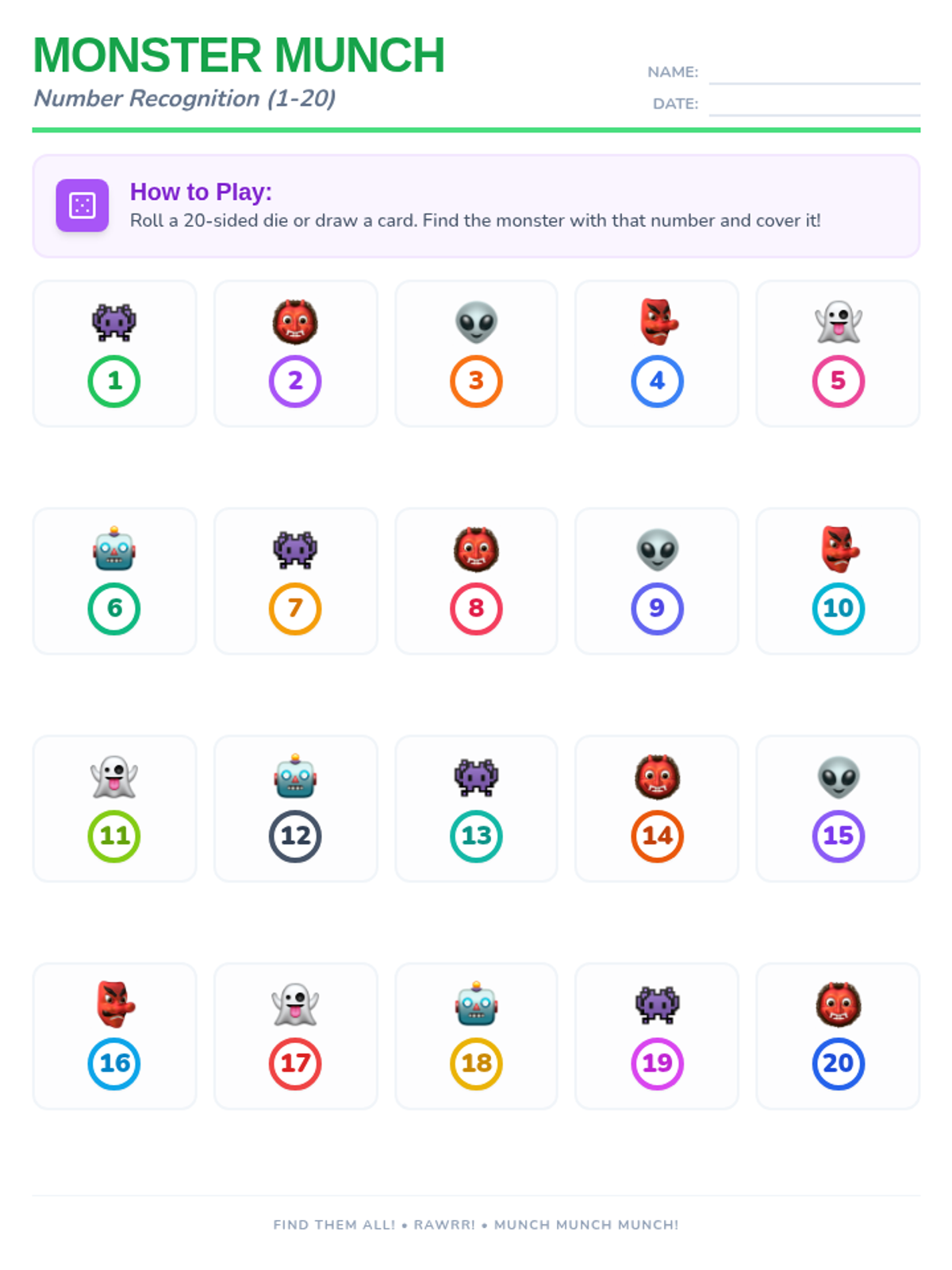
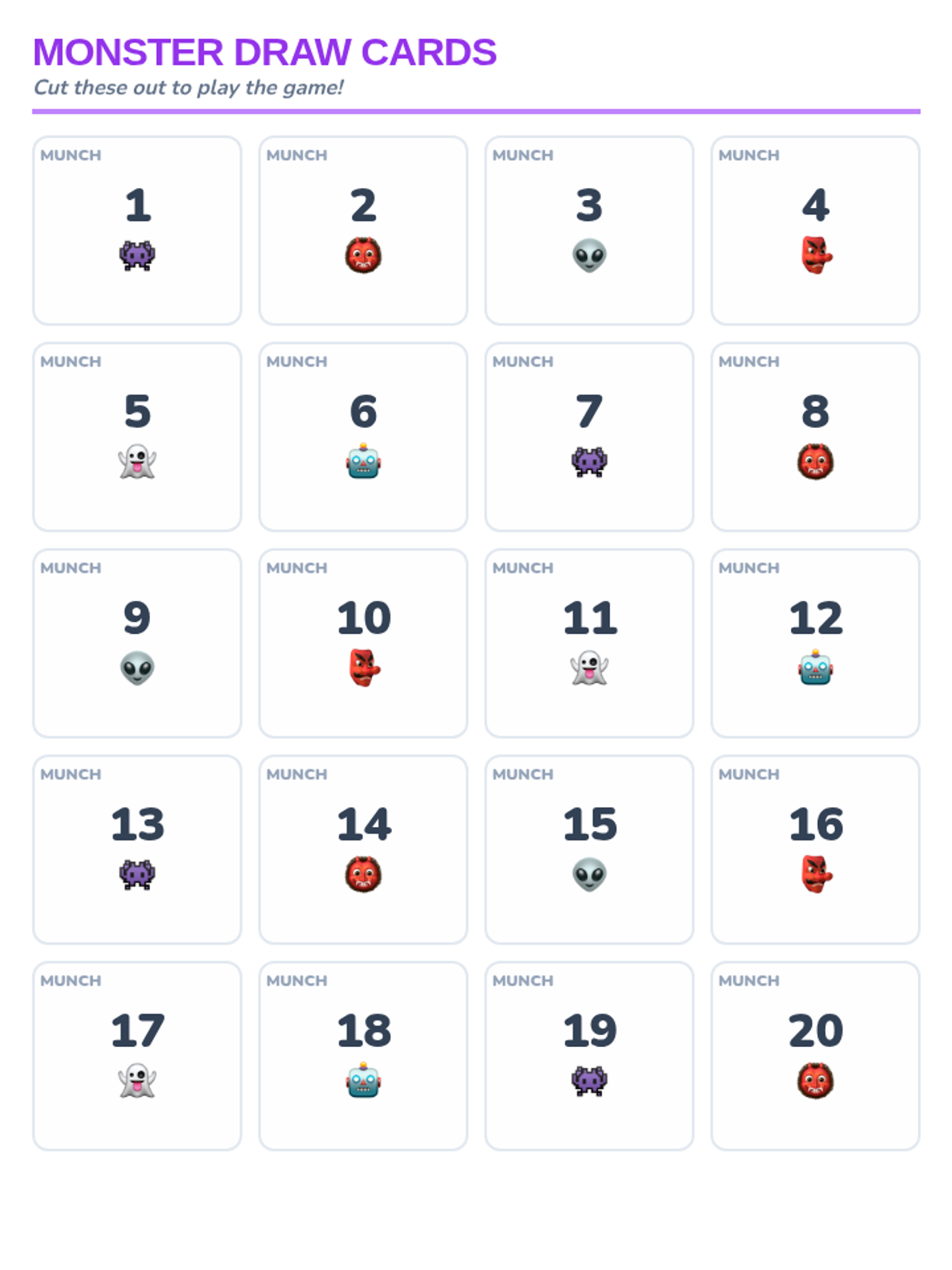
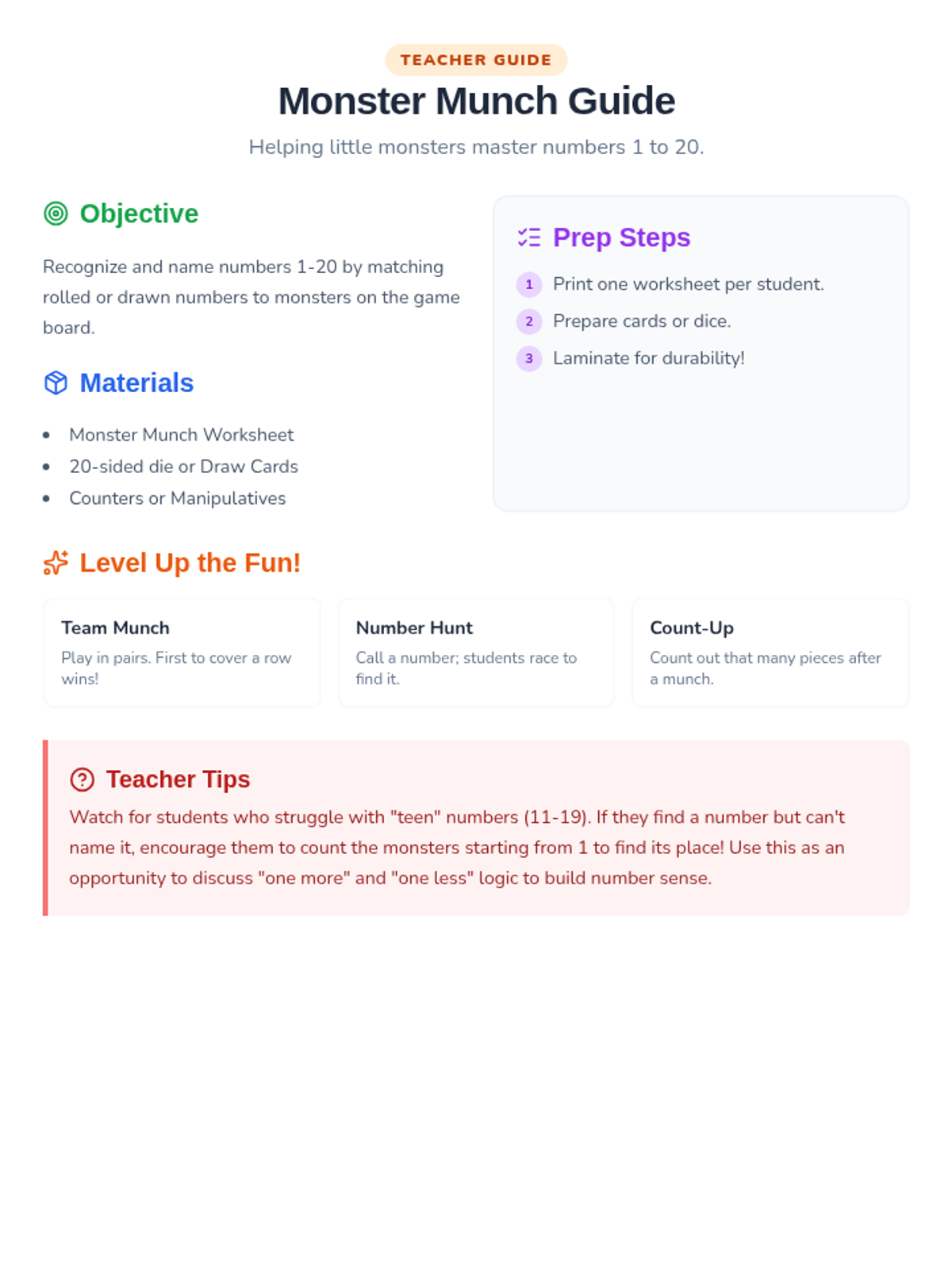
A fun, monster-themed lesson focused on identifying and naming numbers 1-20 through a hands-on 'Roll and Cover' game. Students practice subitizing and number recognition in a playful, low-stakes environment.
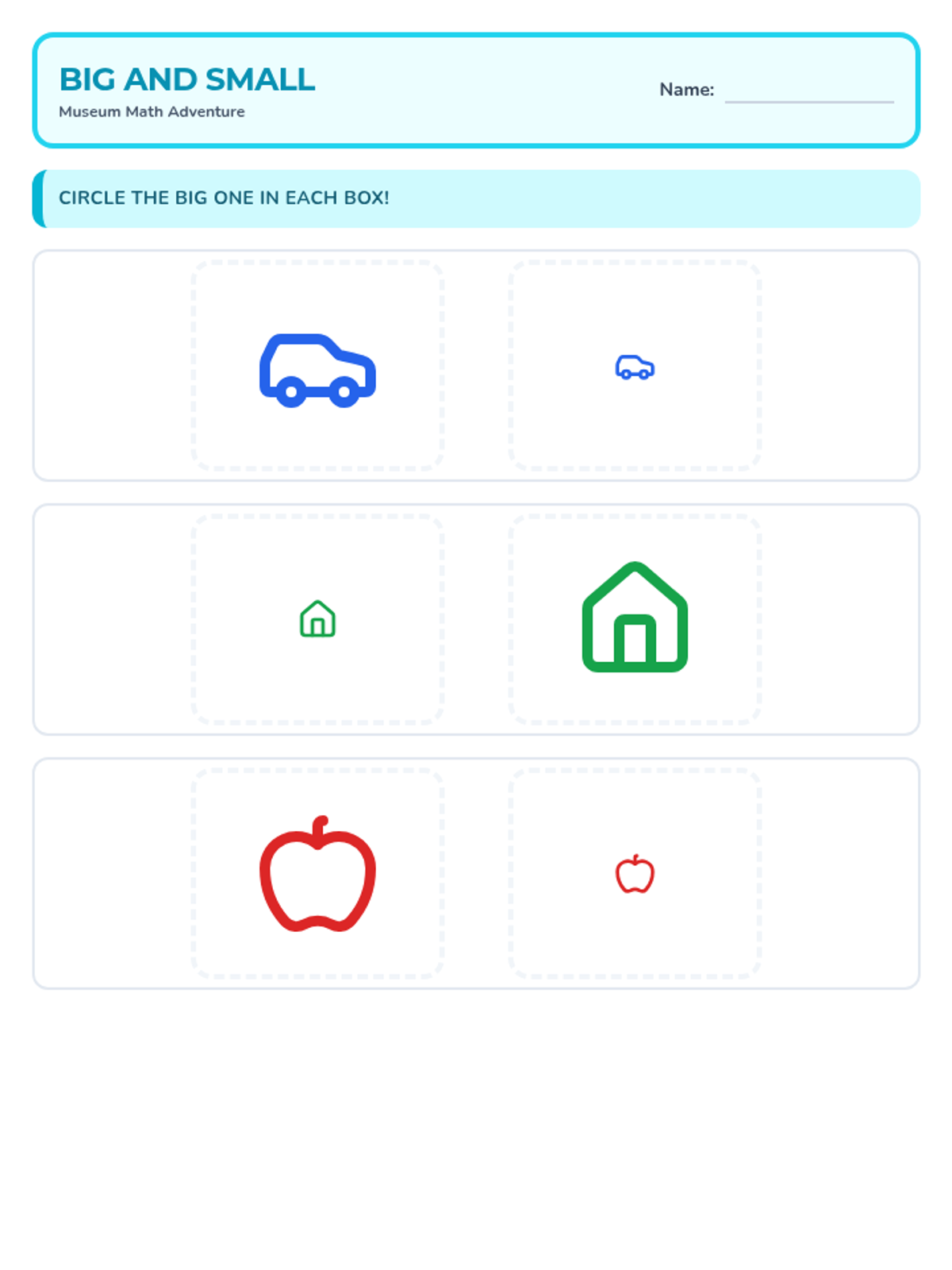
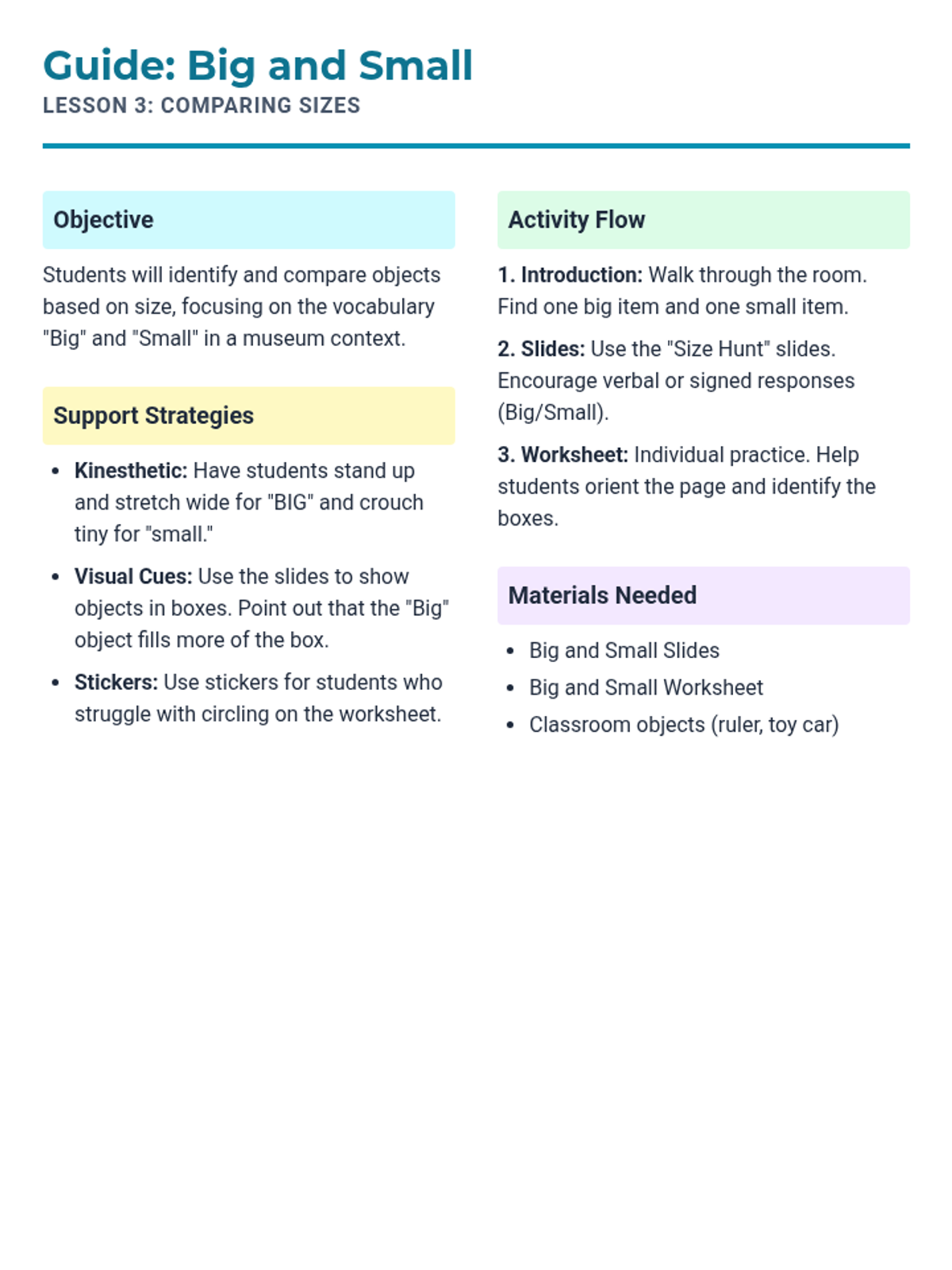
Students will explore the concepts of big, medium, and small by comparing various objects in the museum exhibits, promoting vocabulary development and visual discrimination.
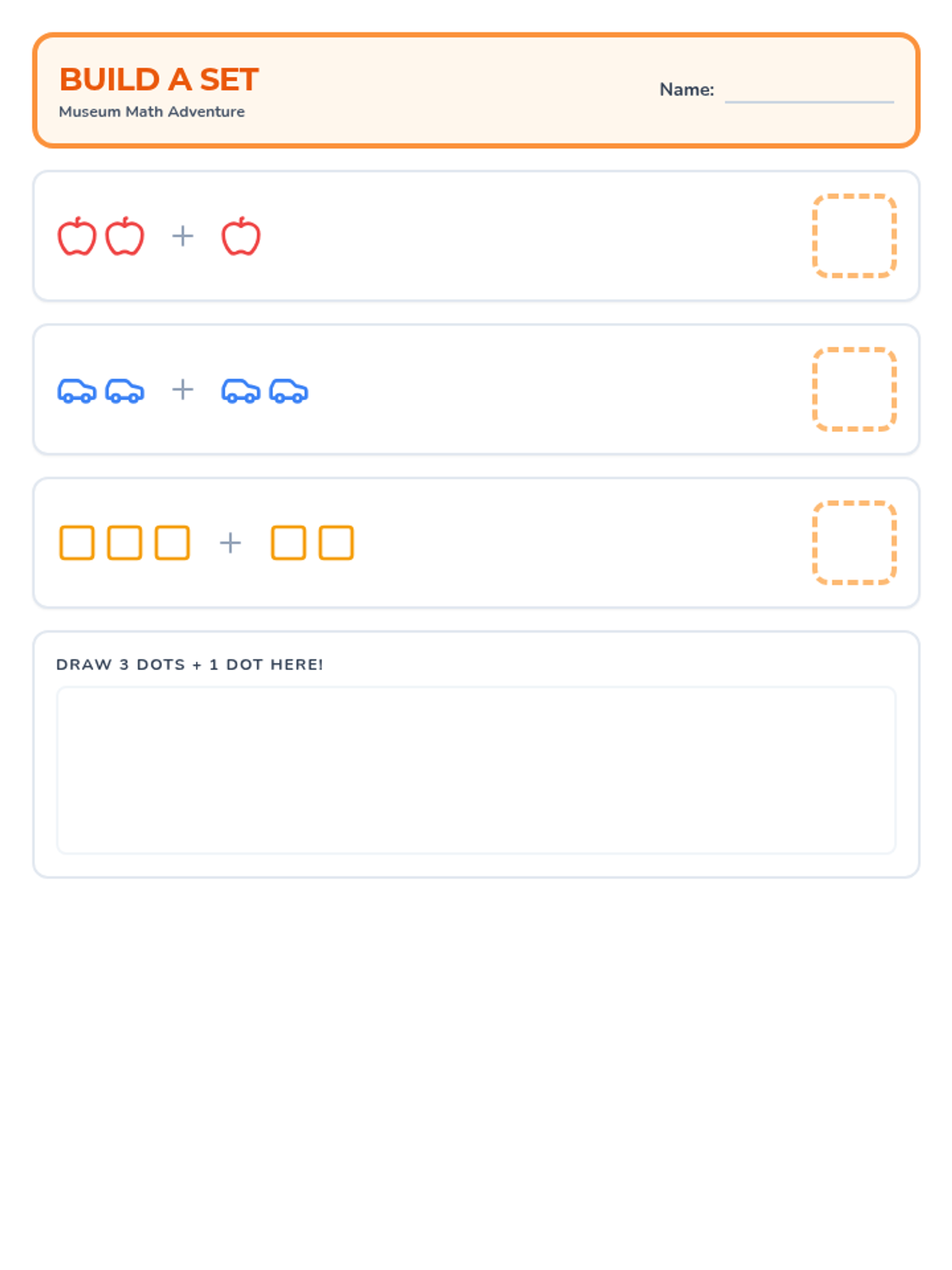
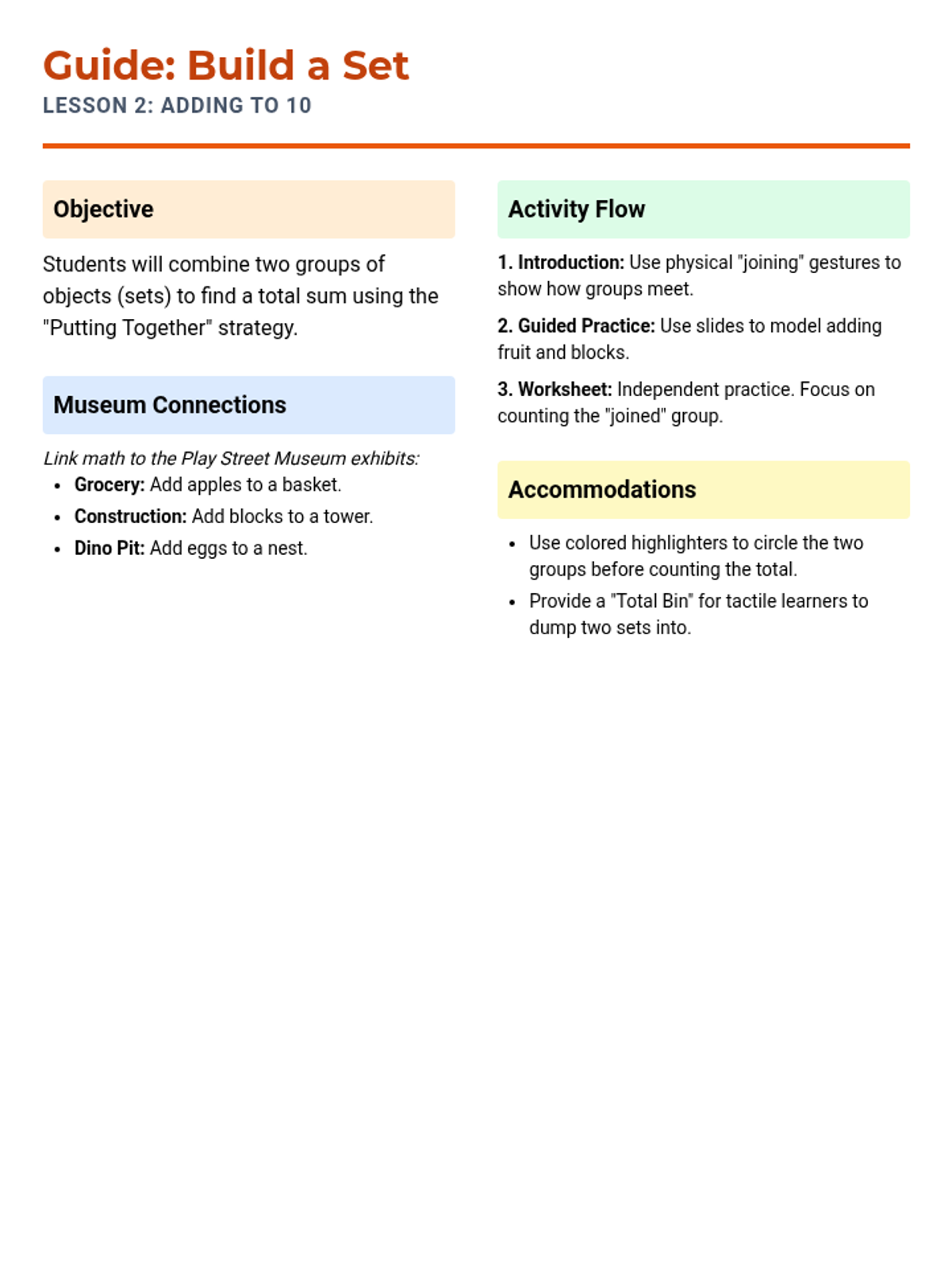
An introduction to simple addition by combining groups of museum objects, focusing on the concept of 'putting together' using visual aids and tactile play scenarios.
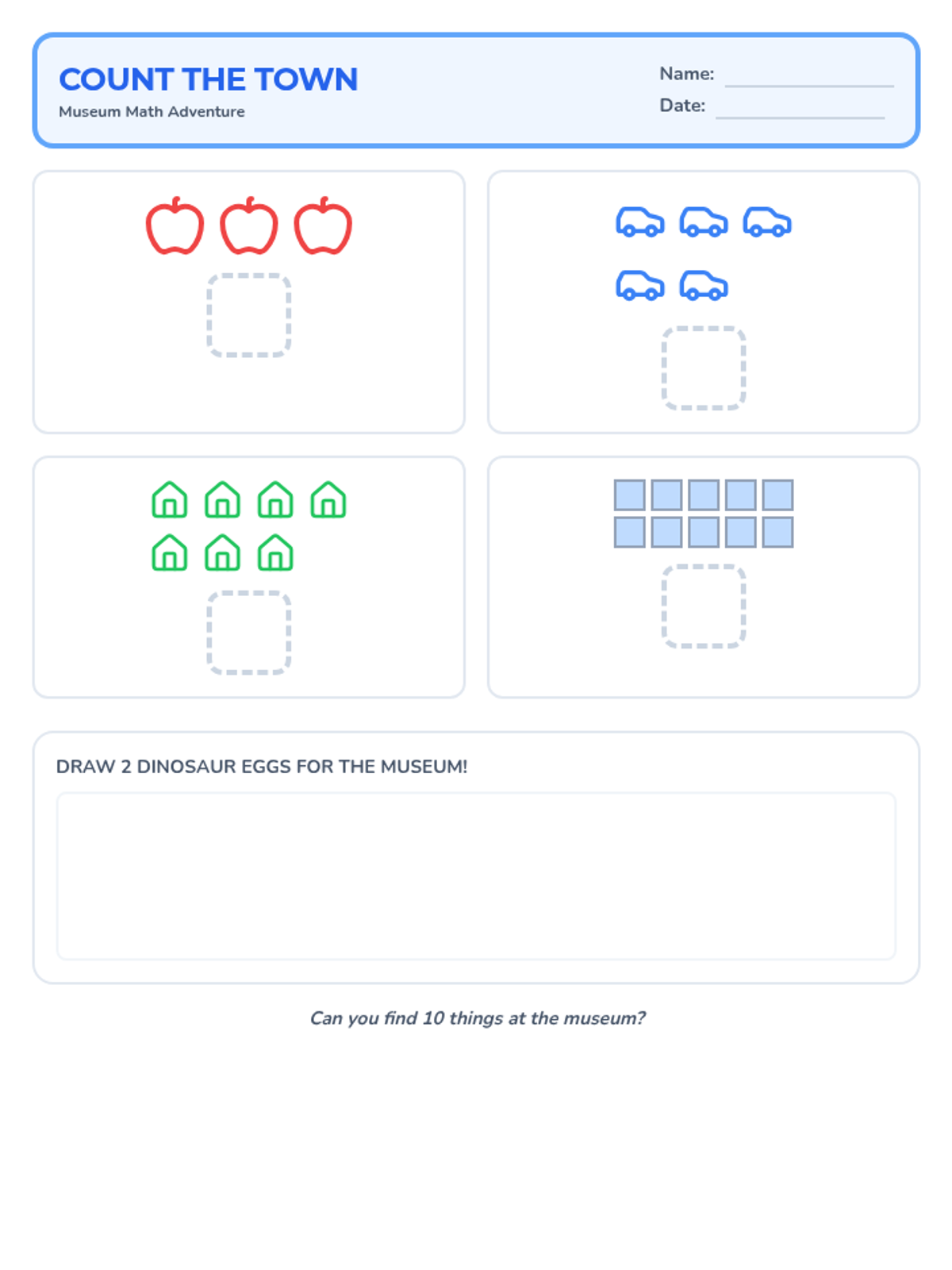
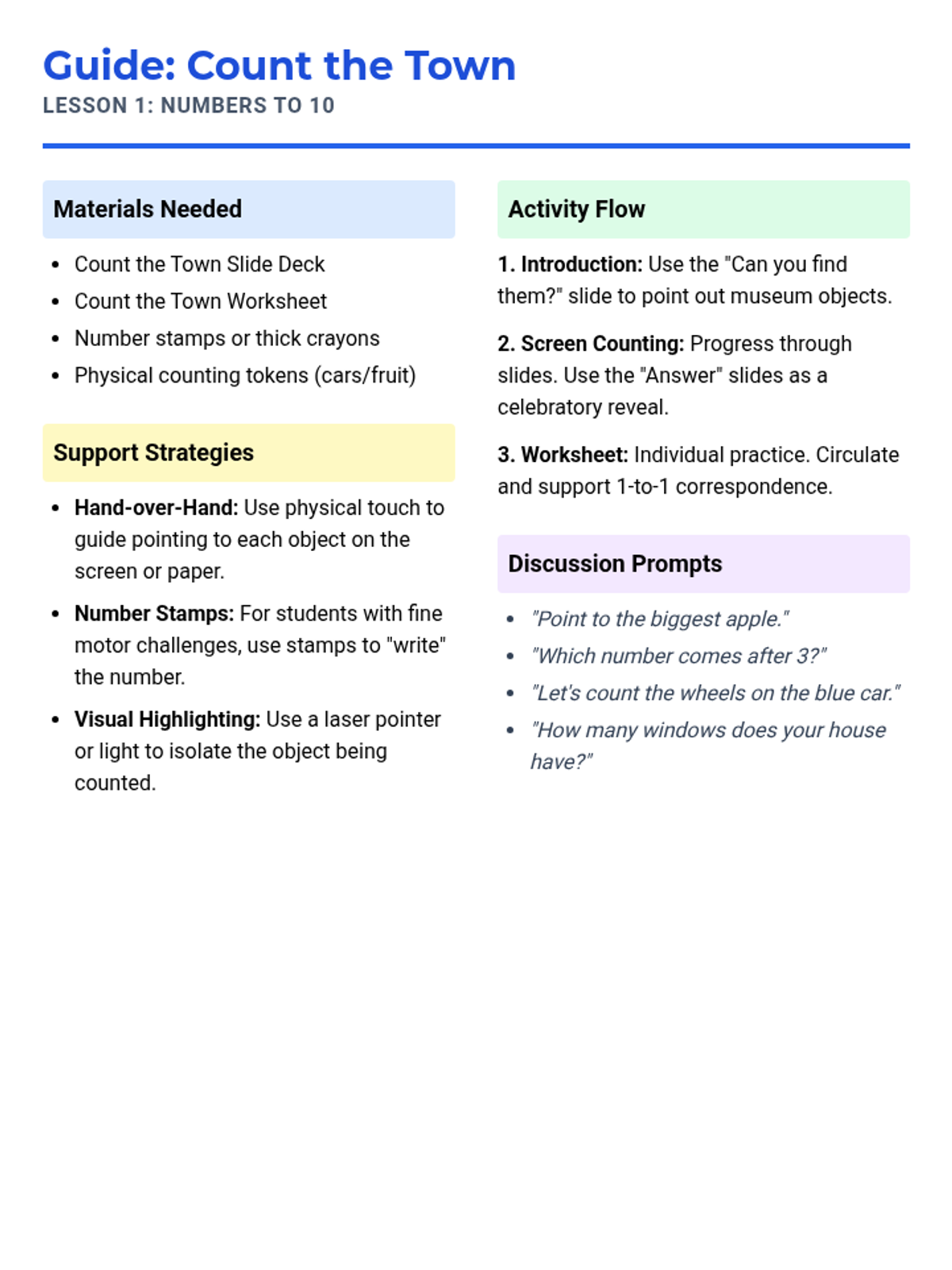
Students will practice identifying and counting numbers 1-10 using common items found in a play museum setting, such as grocery items, toy cars, and house windows.
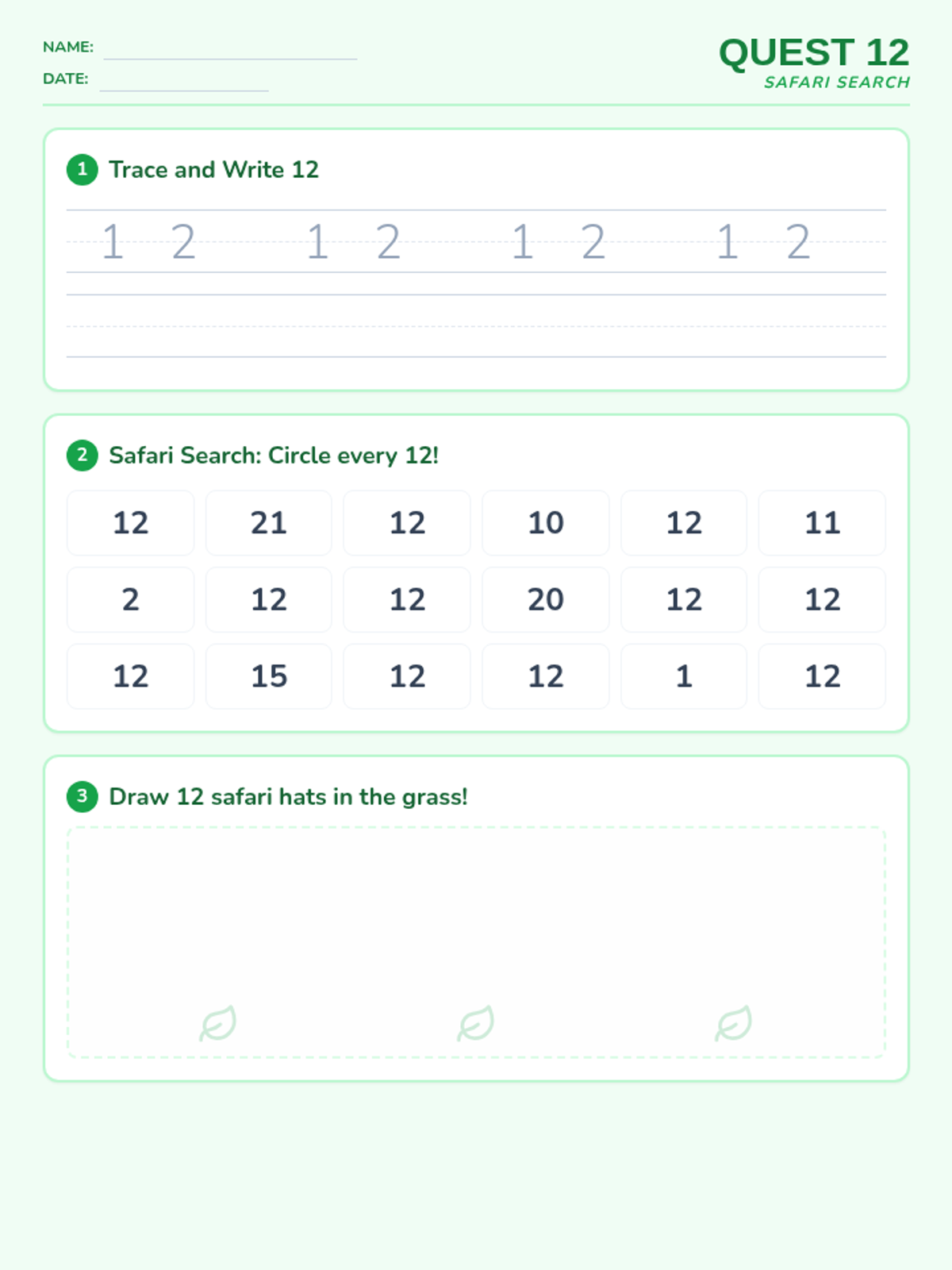
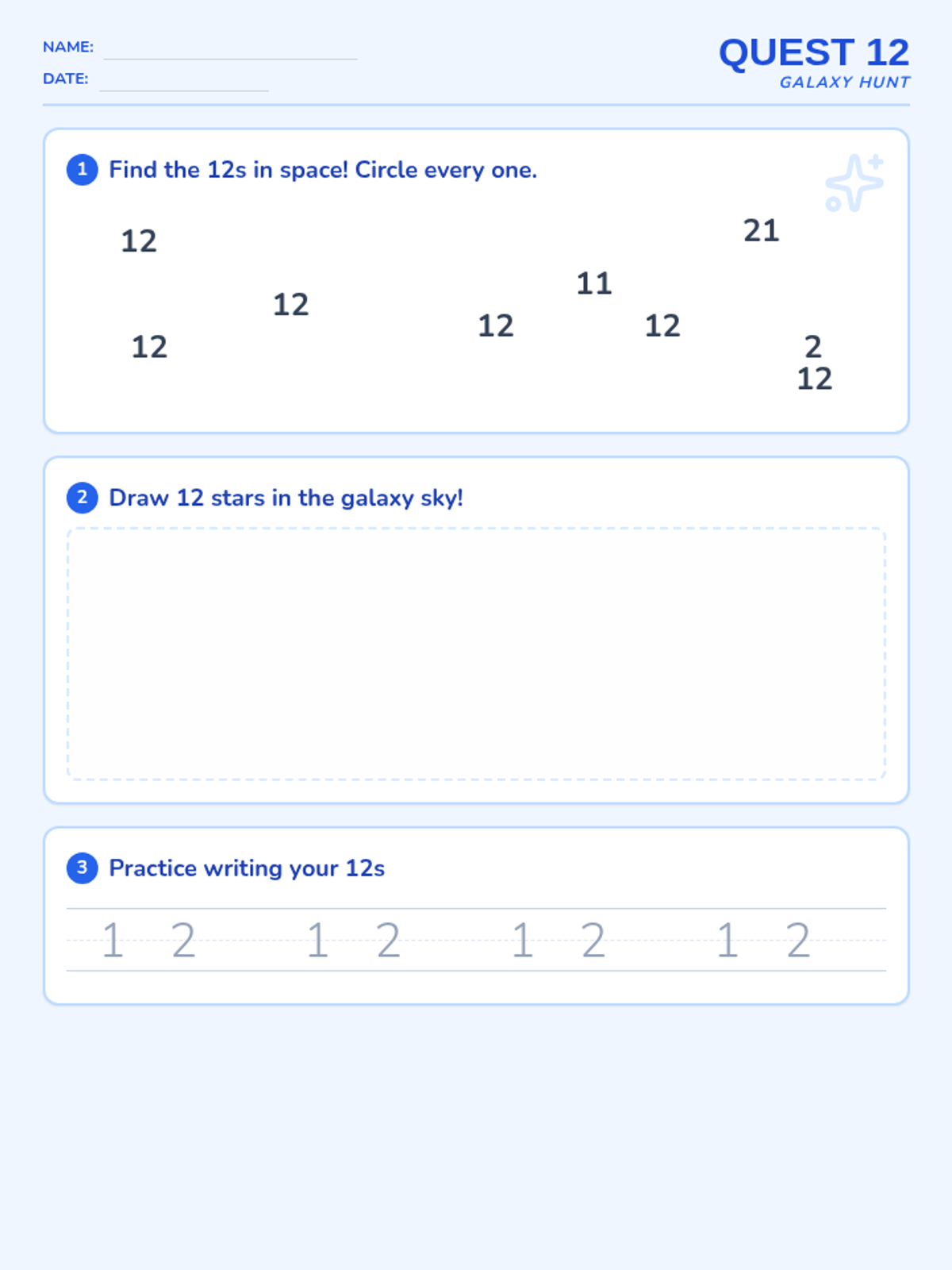
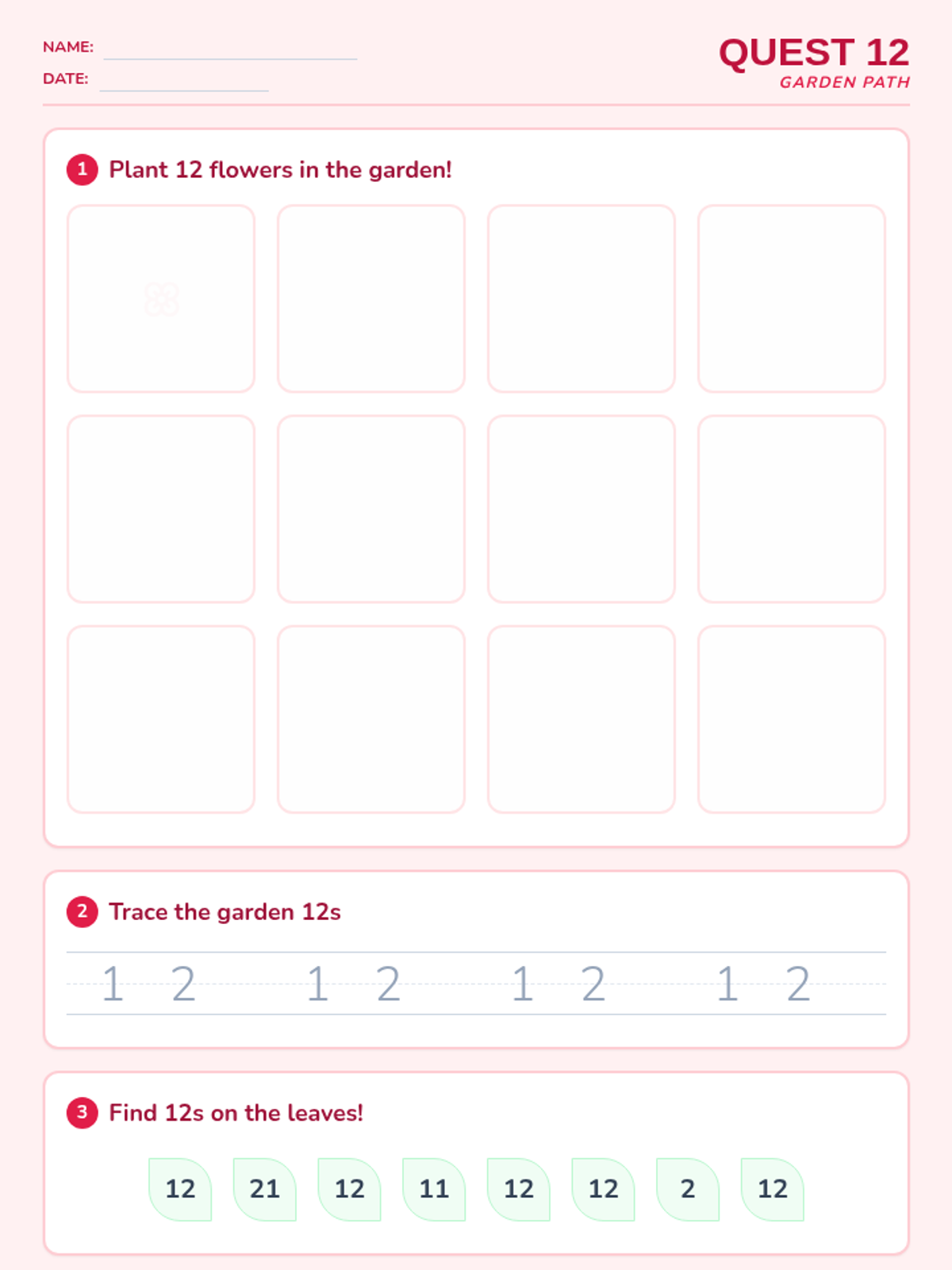
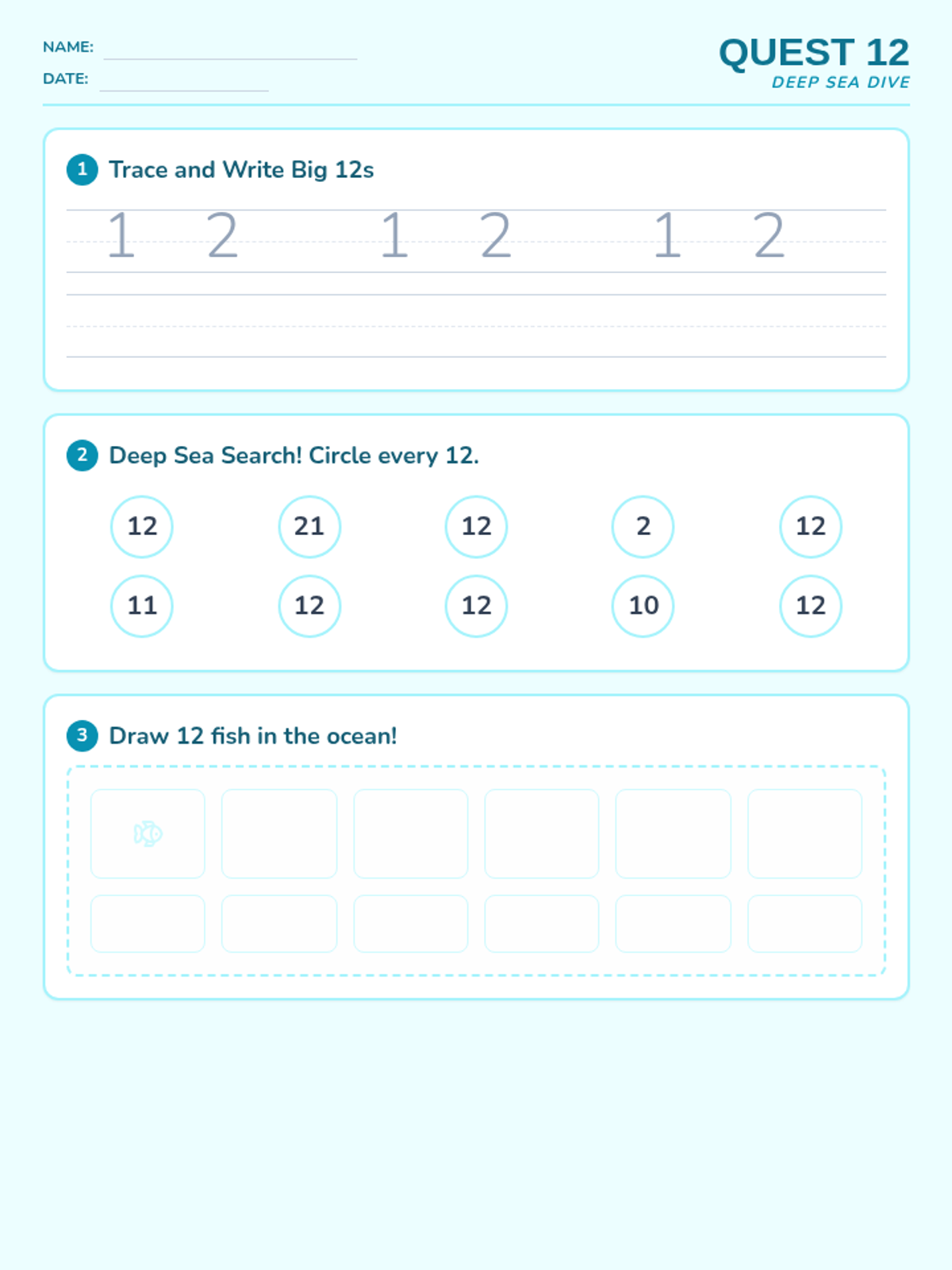
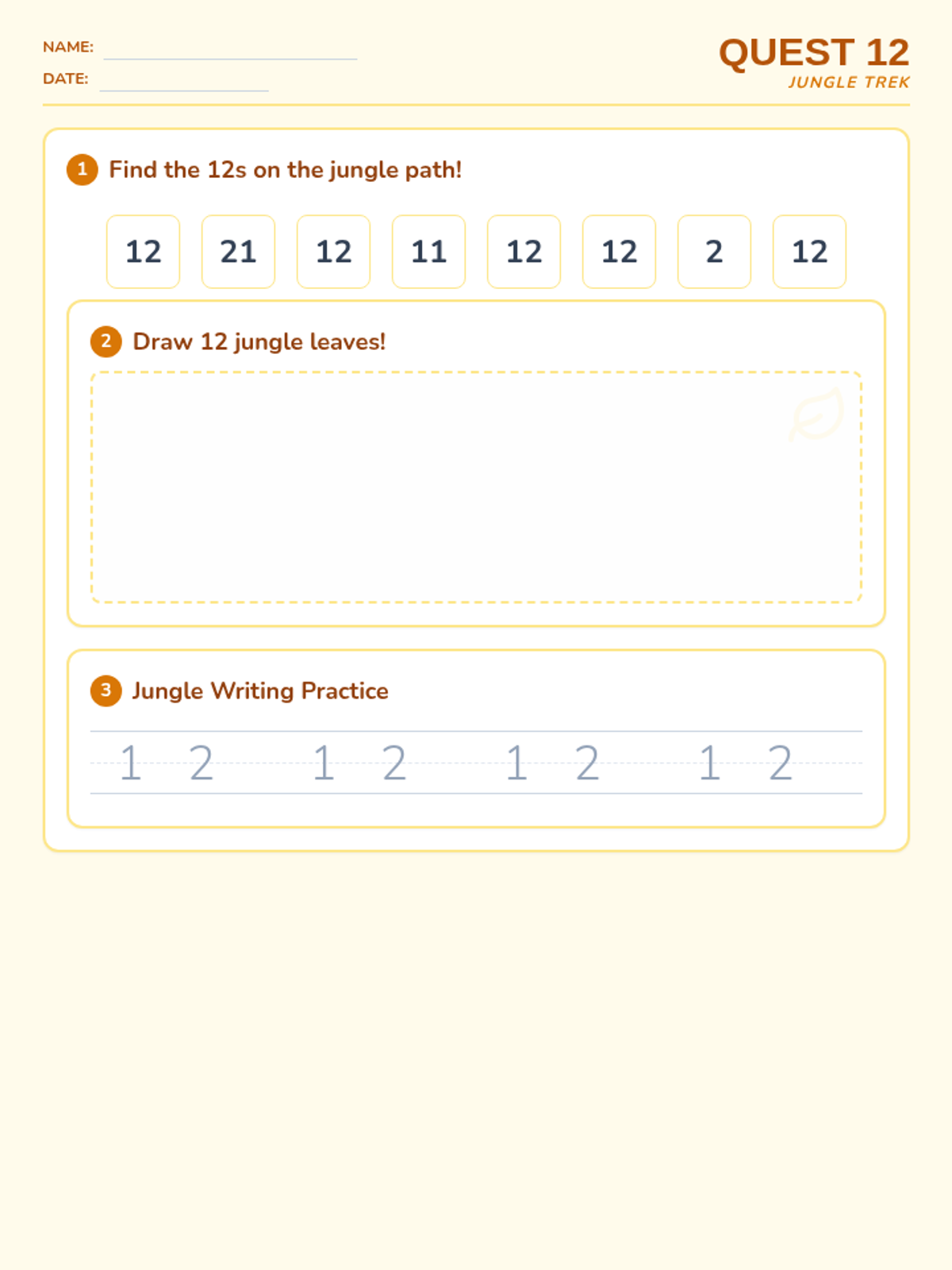
A collection of five varied practice pages designed for kindergarten students to master the number 12 through finding, writing, and drawing. Each page features a unique layout and theme to maintain engagement through repetition.

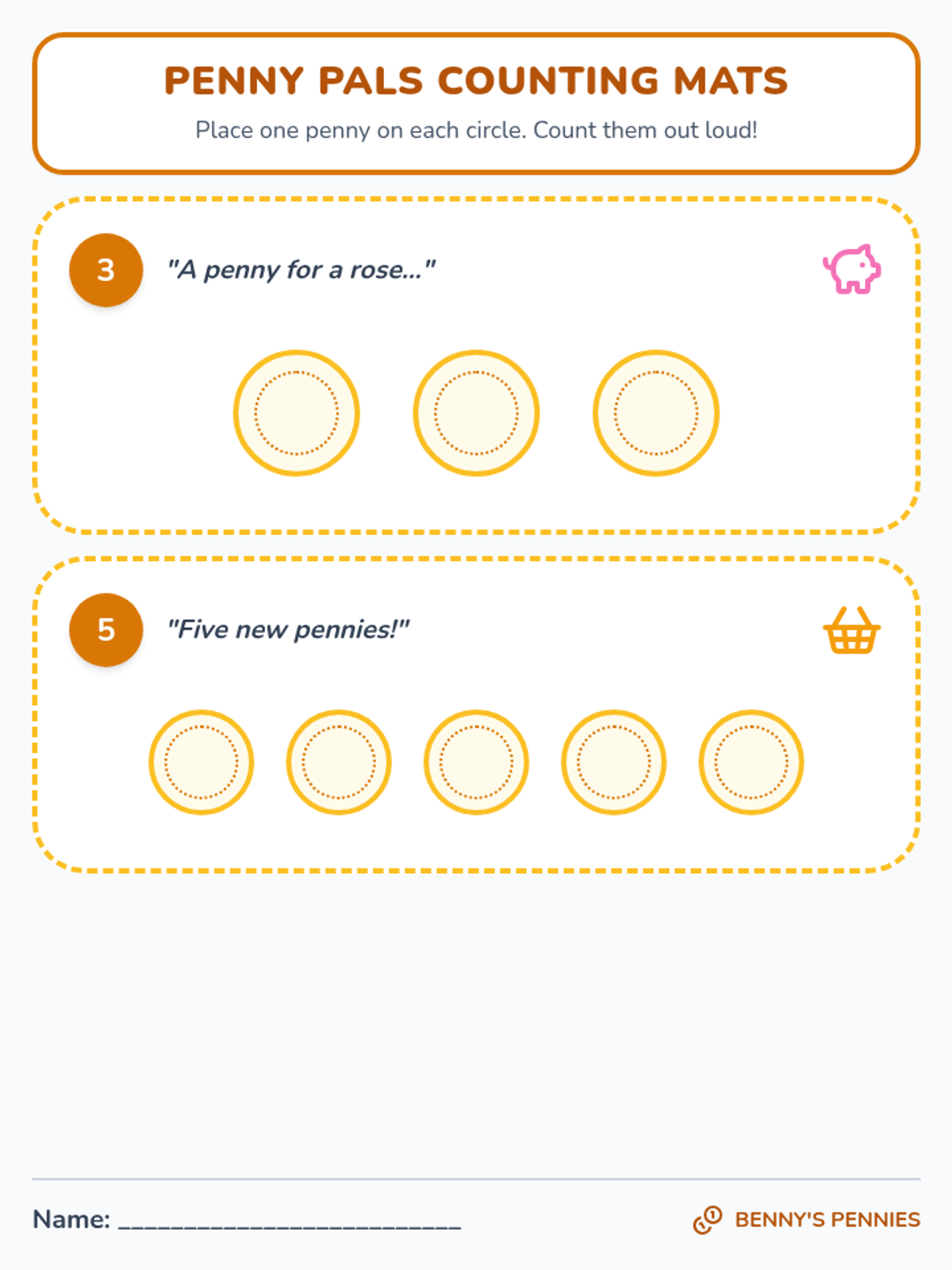
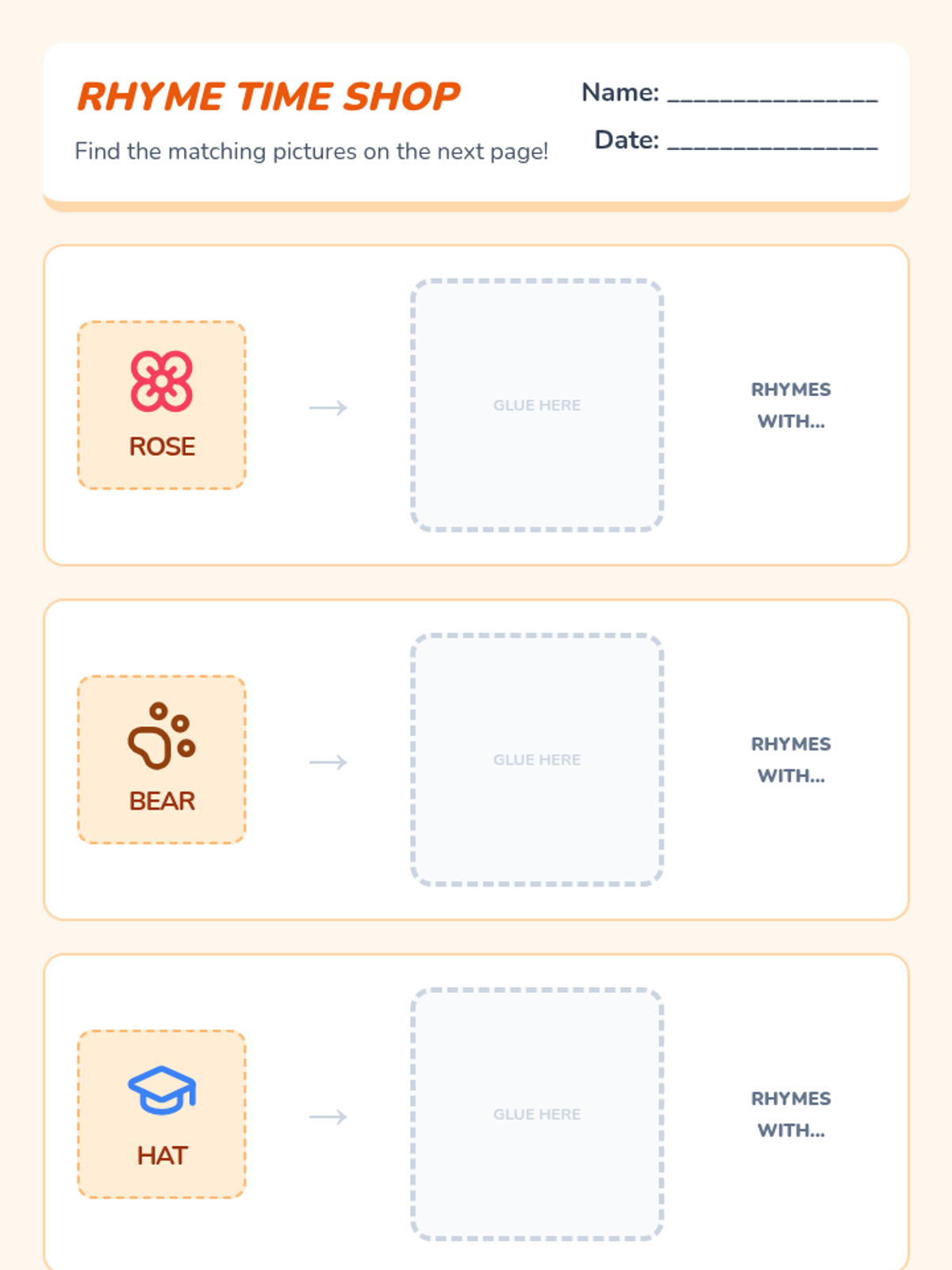
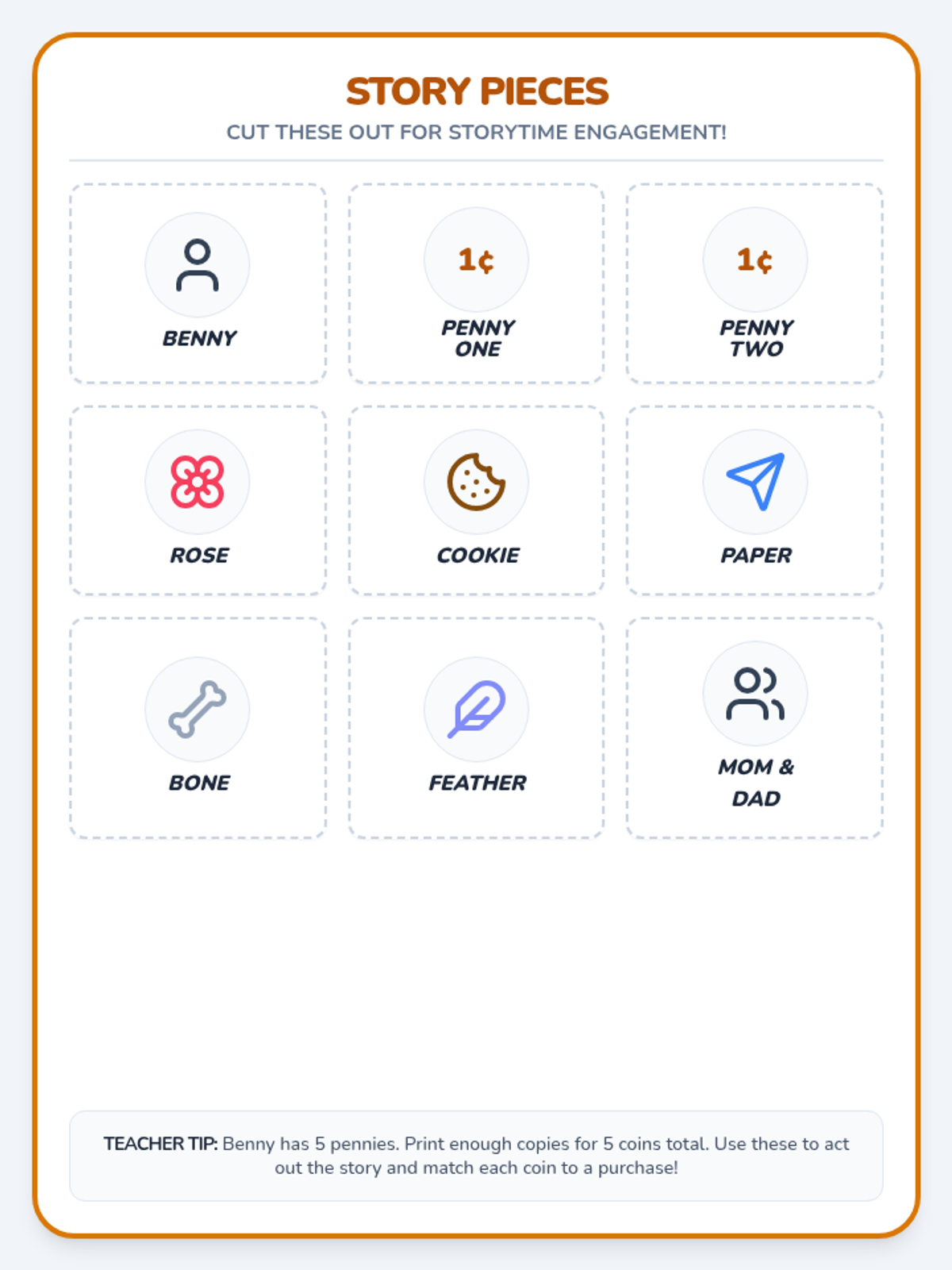
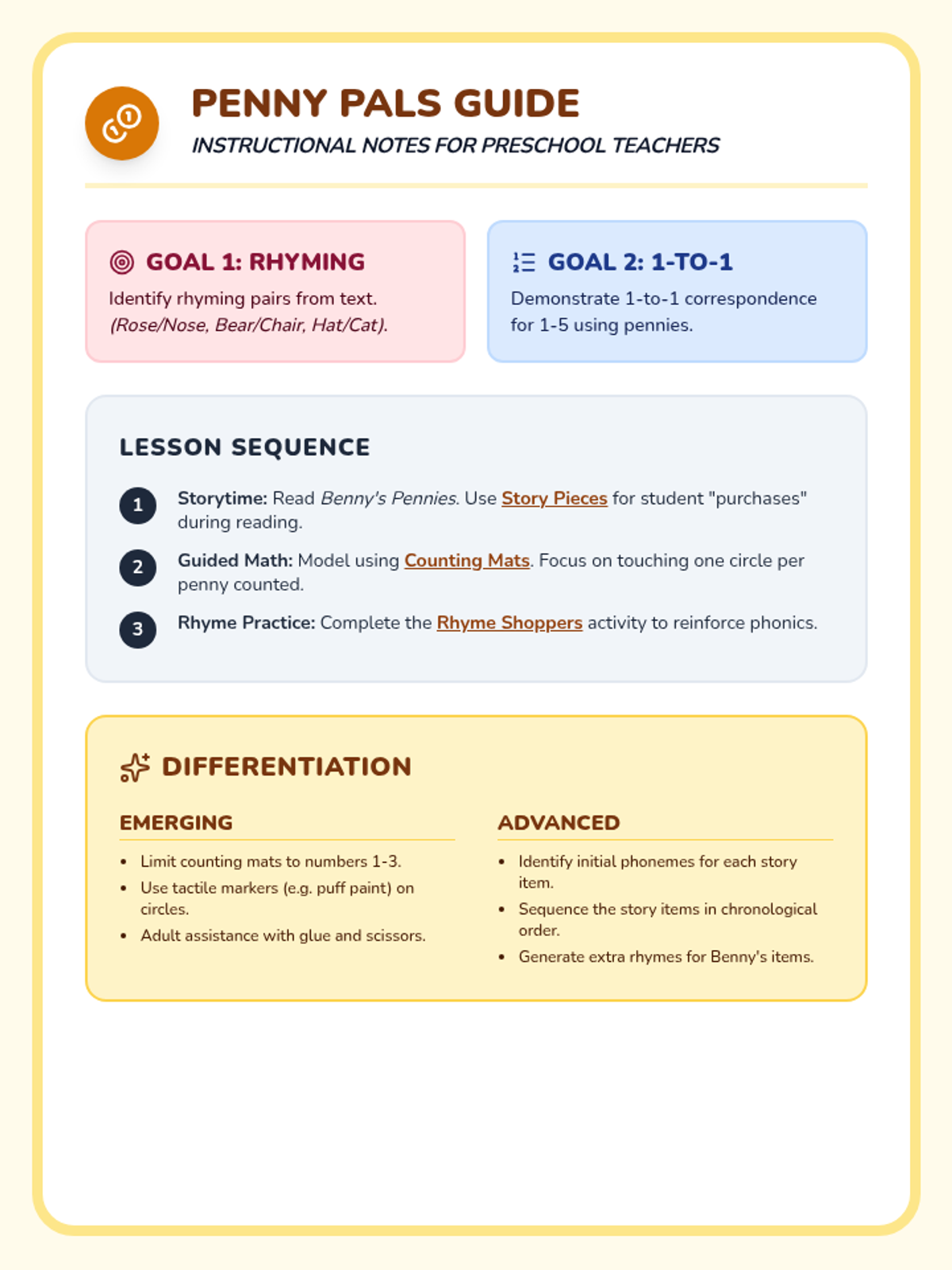
A preschool-focused lesson based on 'Benny's Pennies' by Pat Brisson, targeting one-to-one correspondence and rhyming through hands-on play.
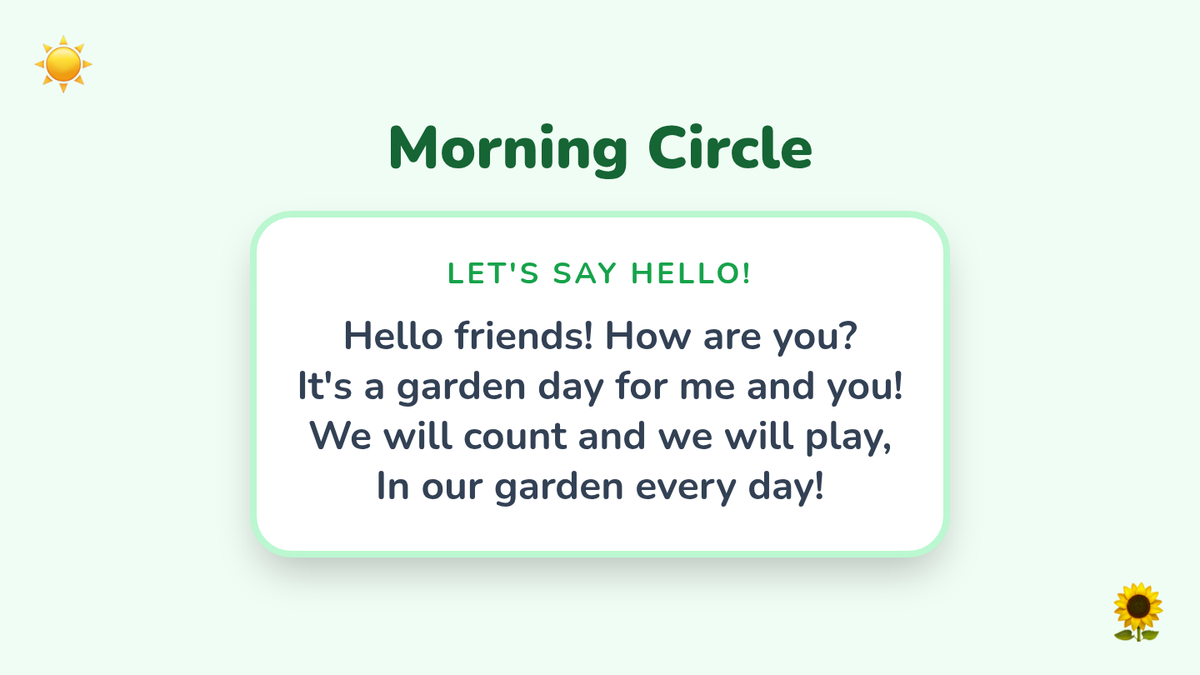
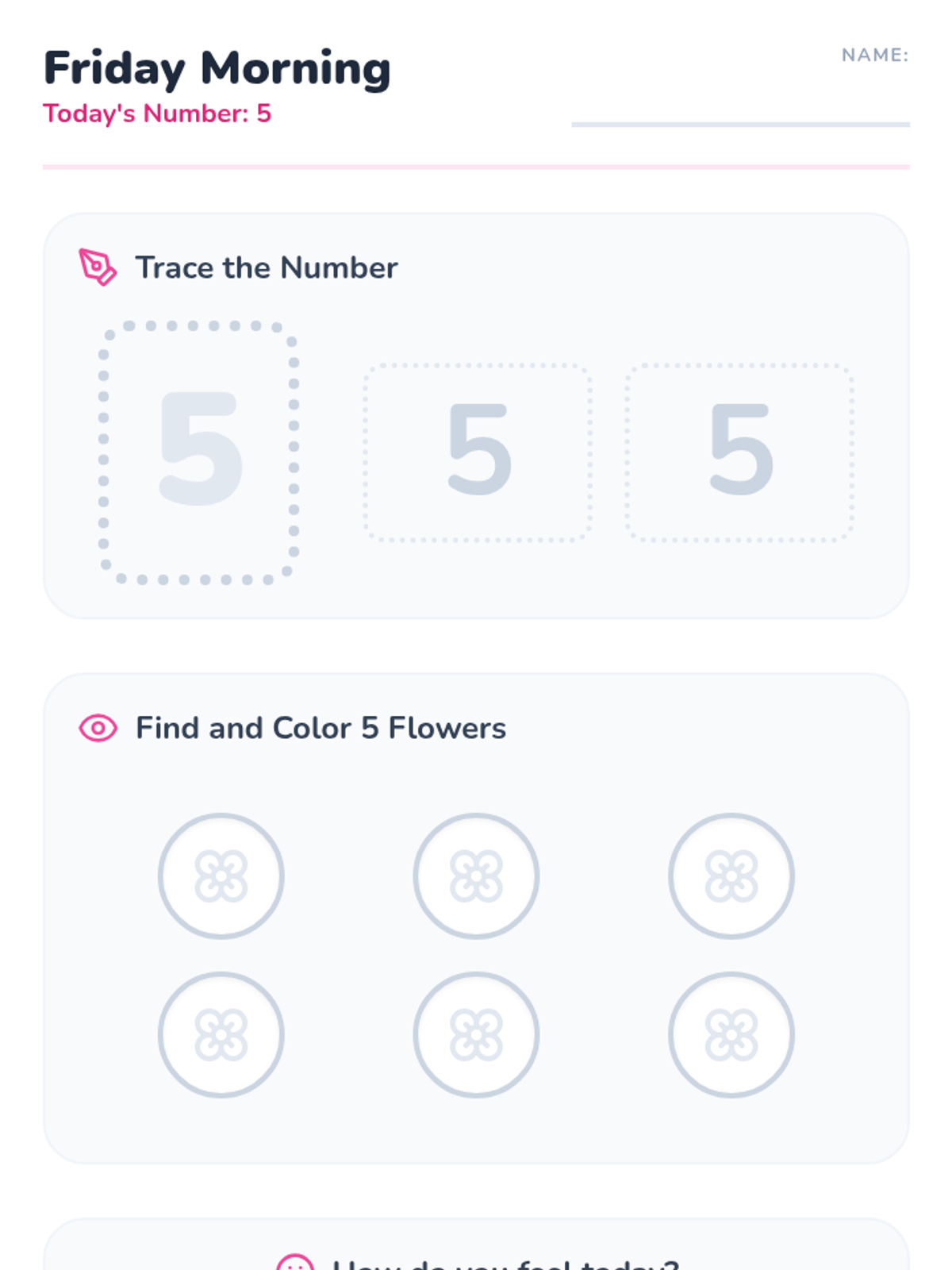
A daily routine lesson for morning circle and daily work, reinforcing garden themes, calendar skills, and social-emotional awareness.
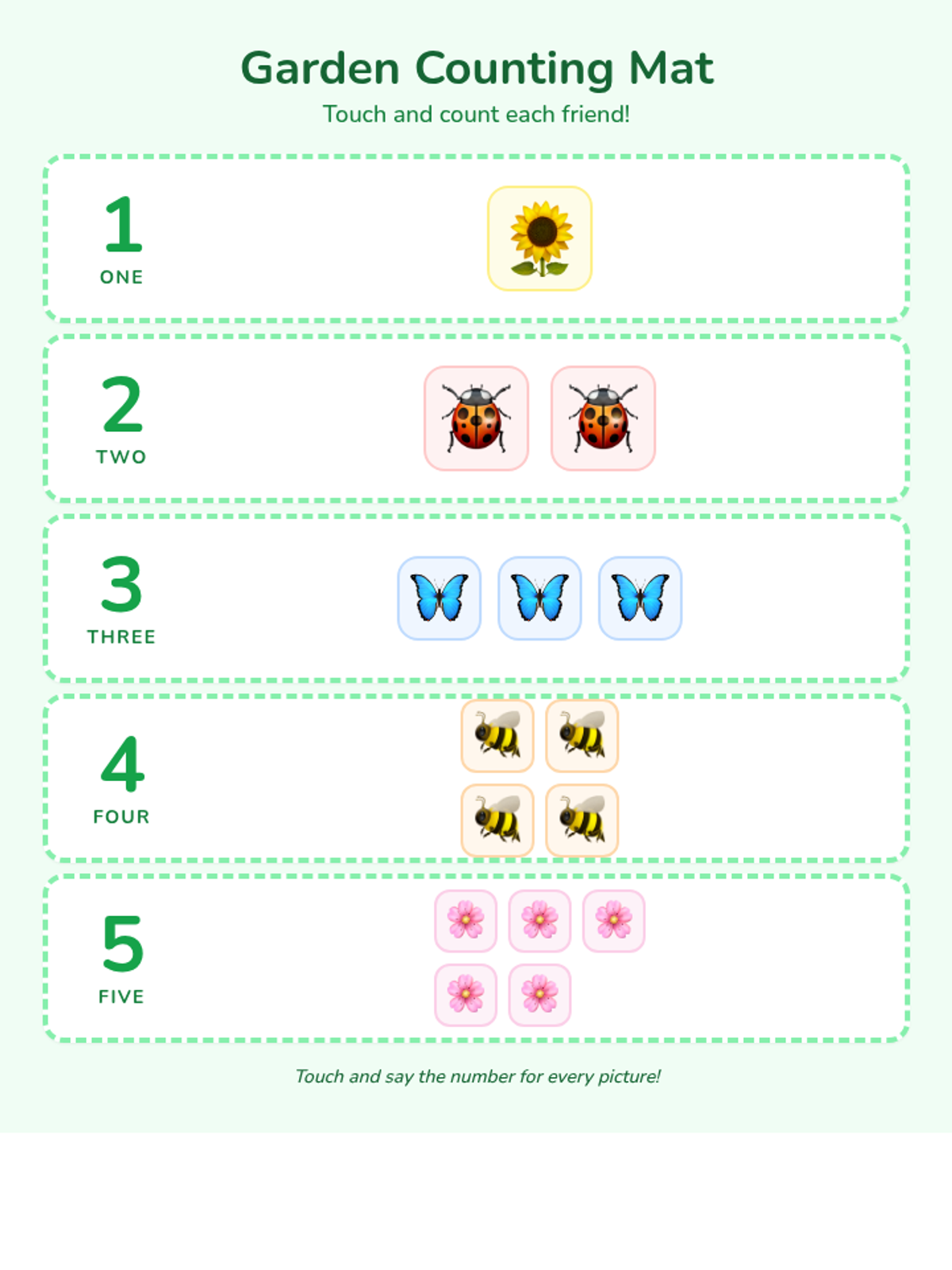
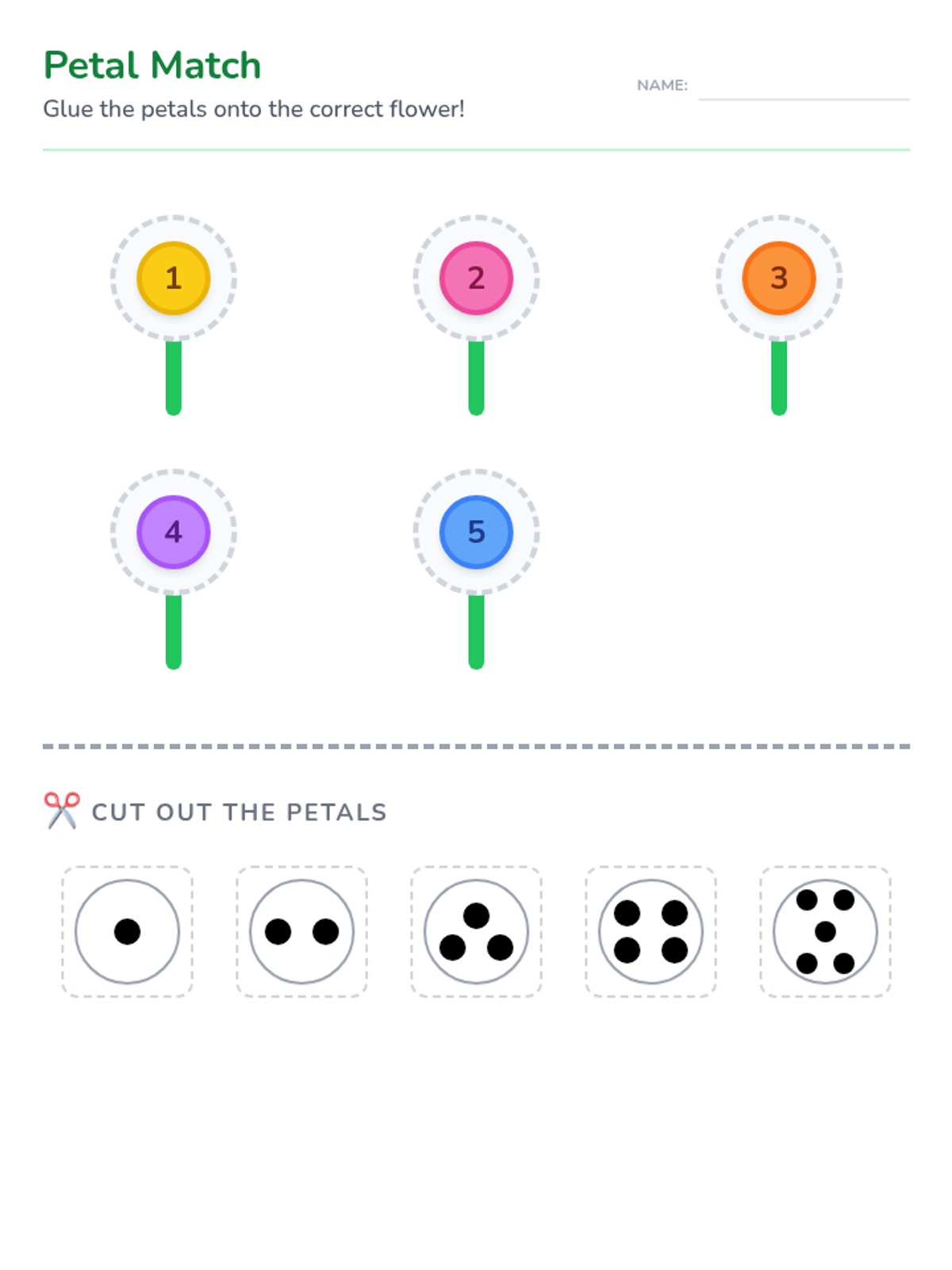
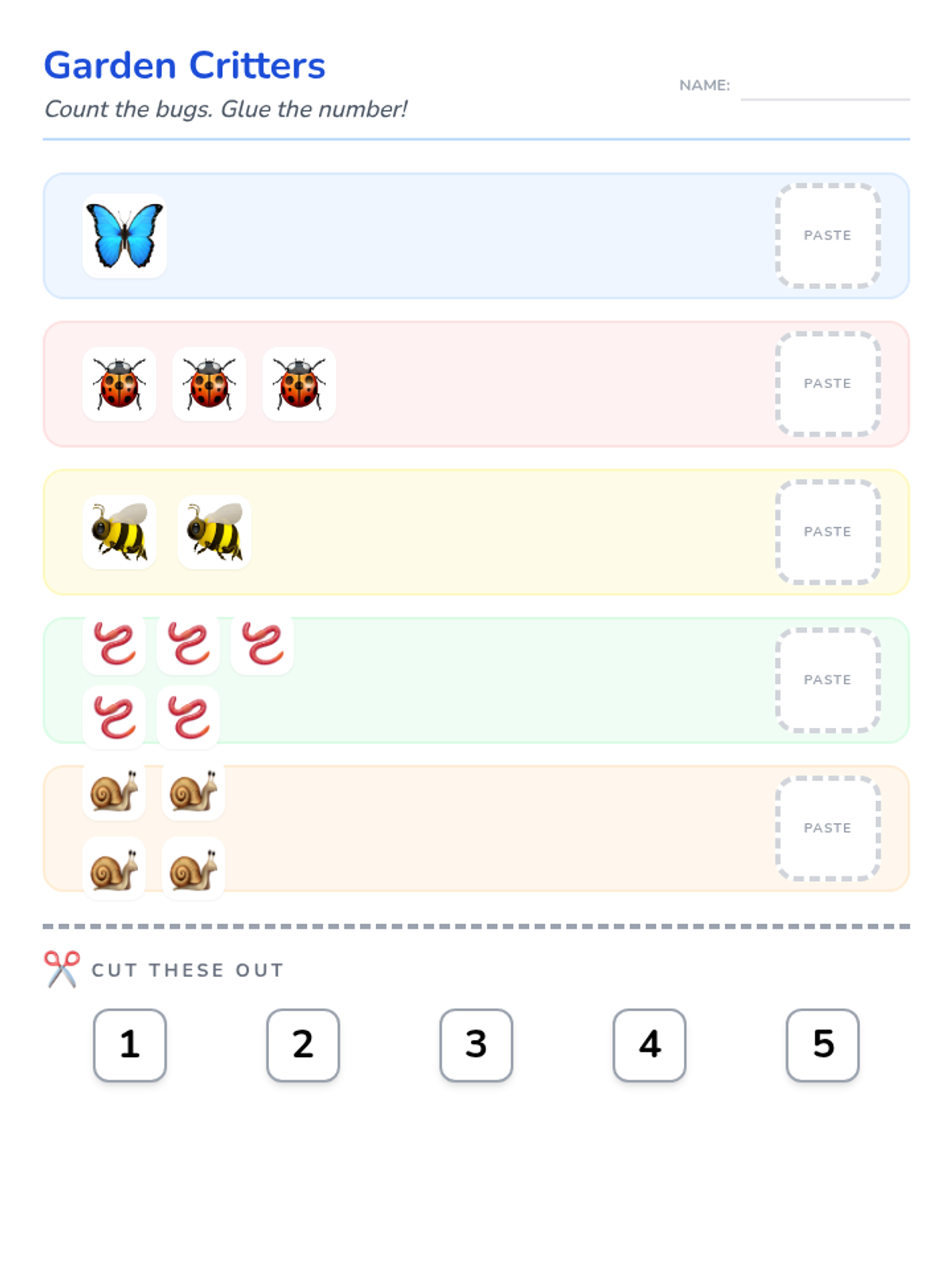
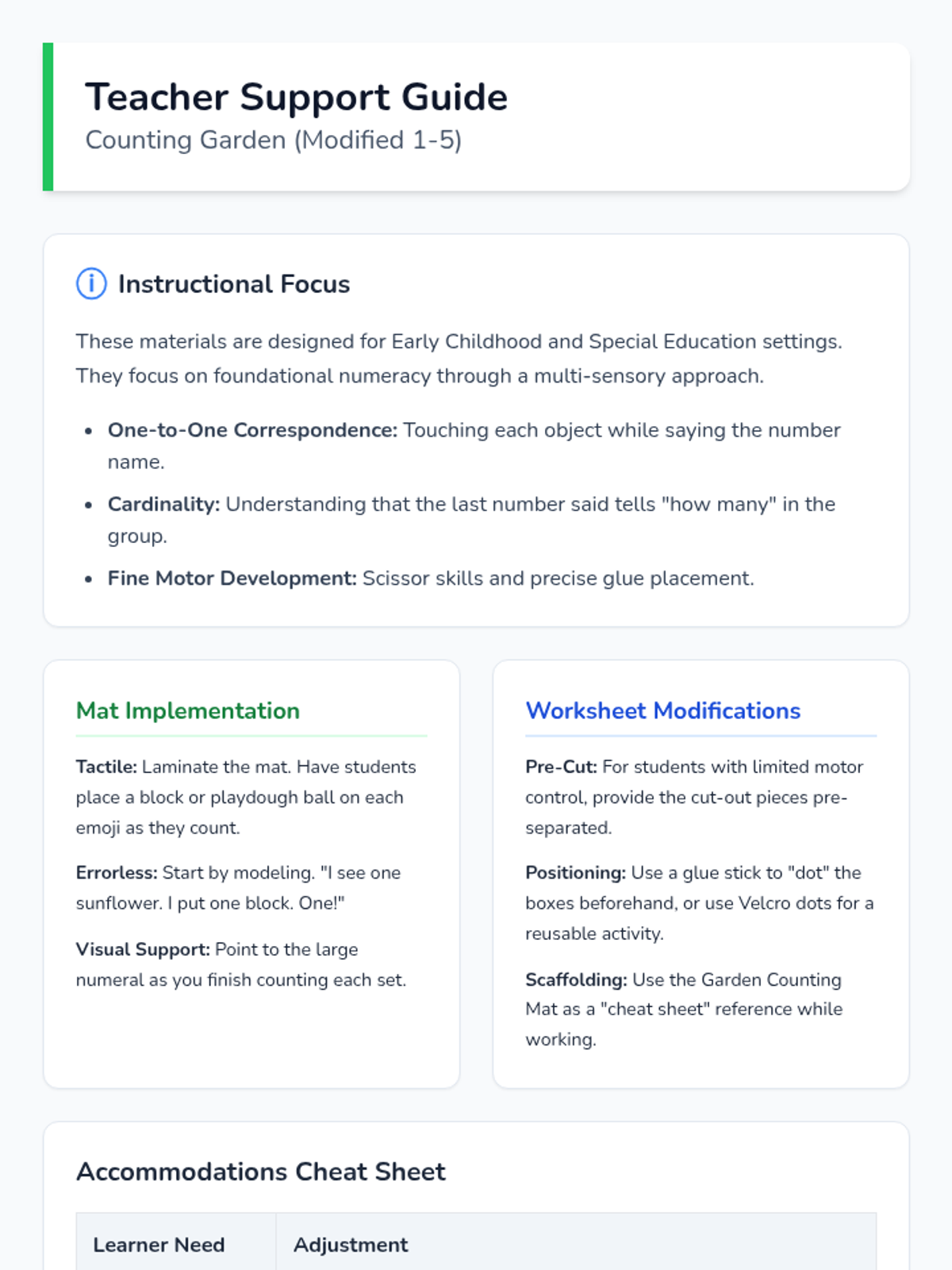
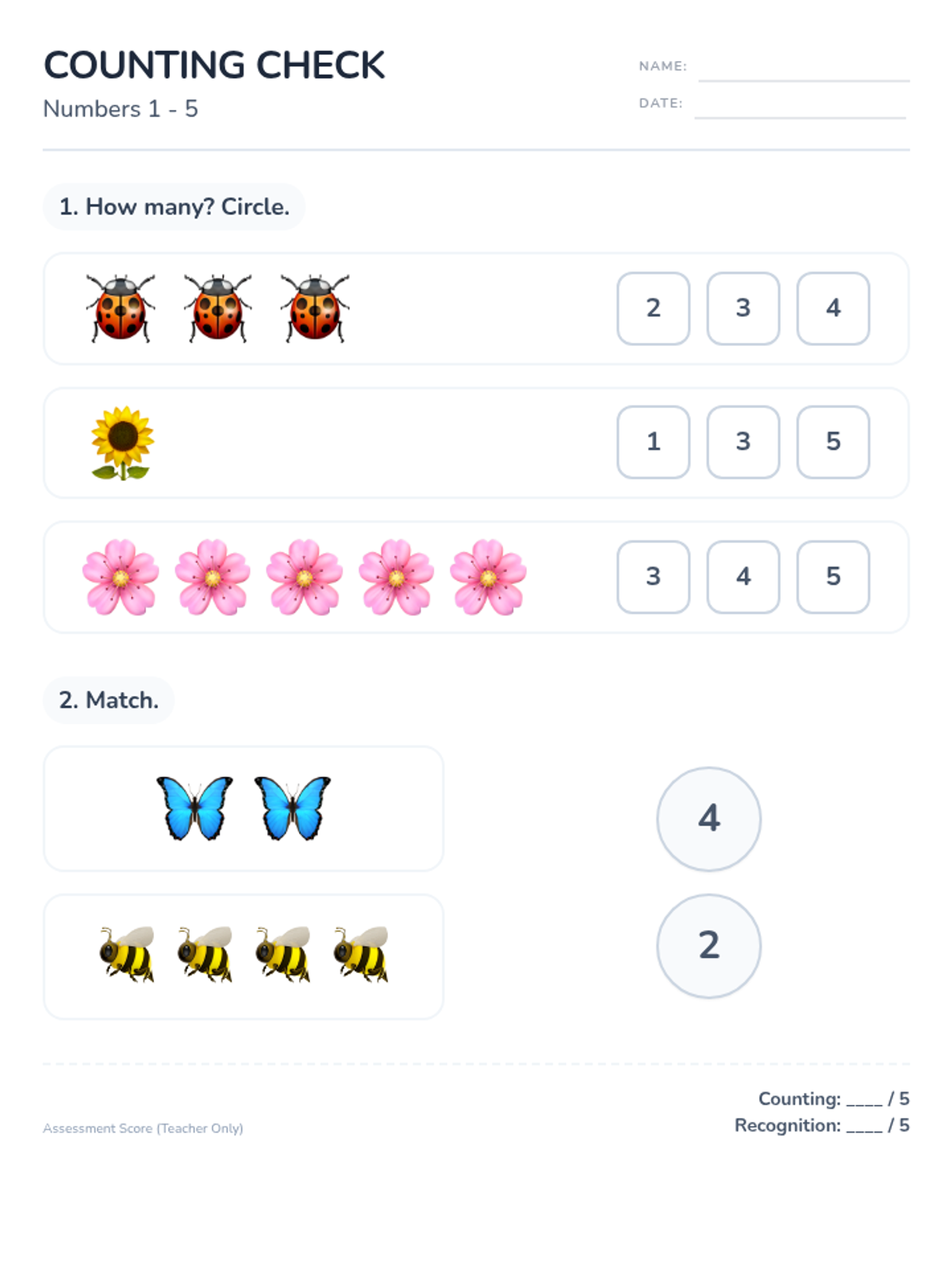
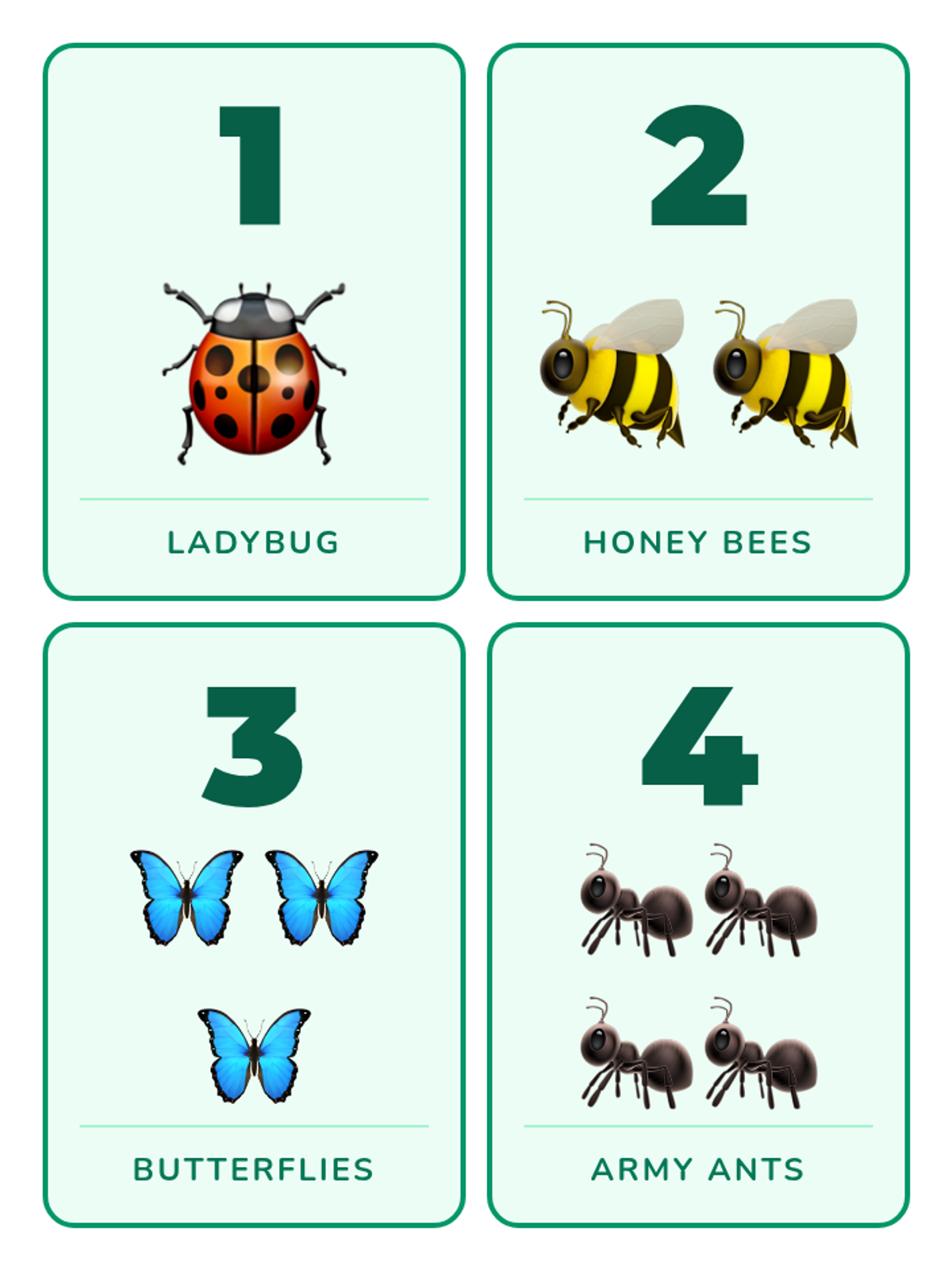
Students explore the numbers 1 through 5 using visual supports and hands-on matching activities to build one-to-one correspondence.
A hands-on lesson focused on counting quantities up to 13 and using the terms 'more' and 'less' to compare groups of objects. Students will practice visual estimation, precise counting, and basic mathematical comparison symbols.
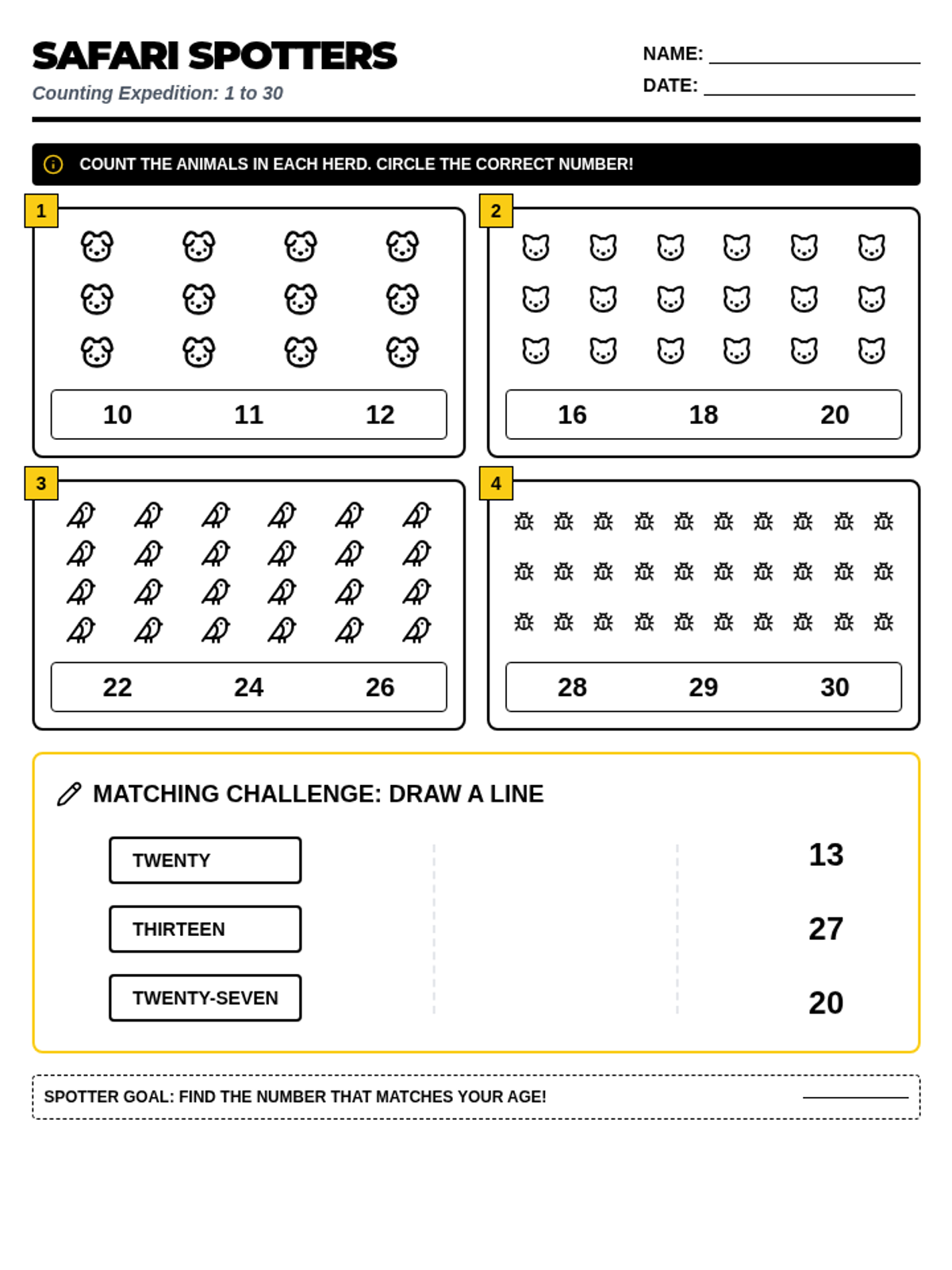
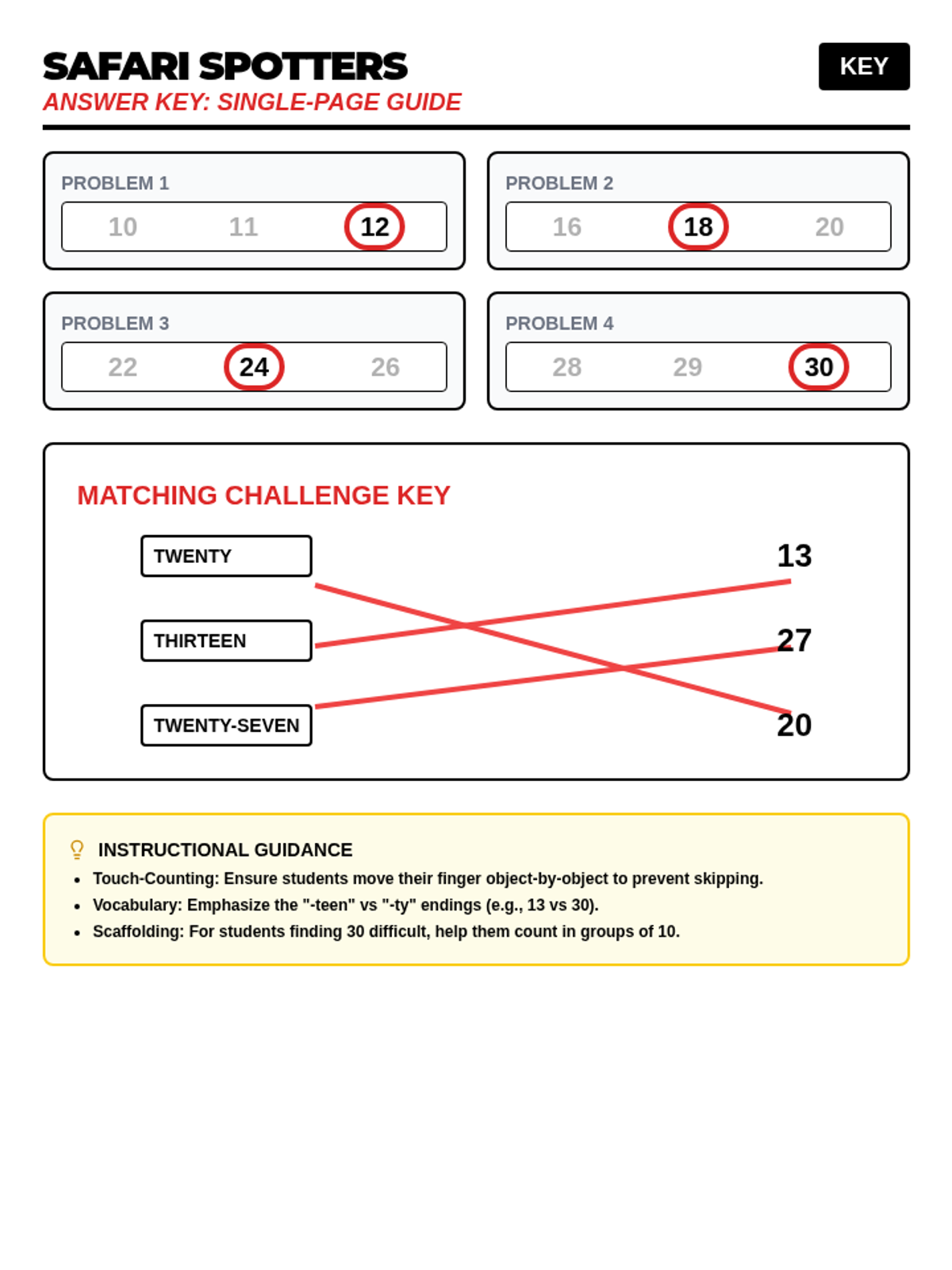
A high-contrast, animal-themed lesson focusing on identifying numbers 1-30 and mastering one-to-one correspondence through engaging visual counting exercises.
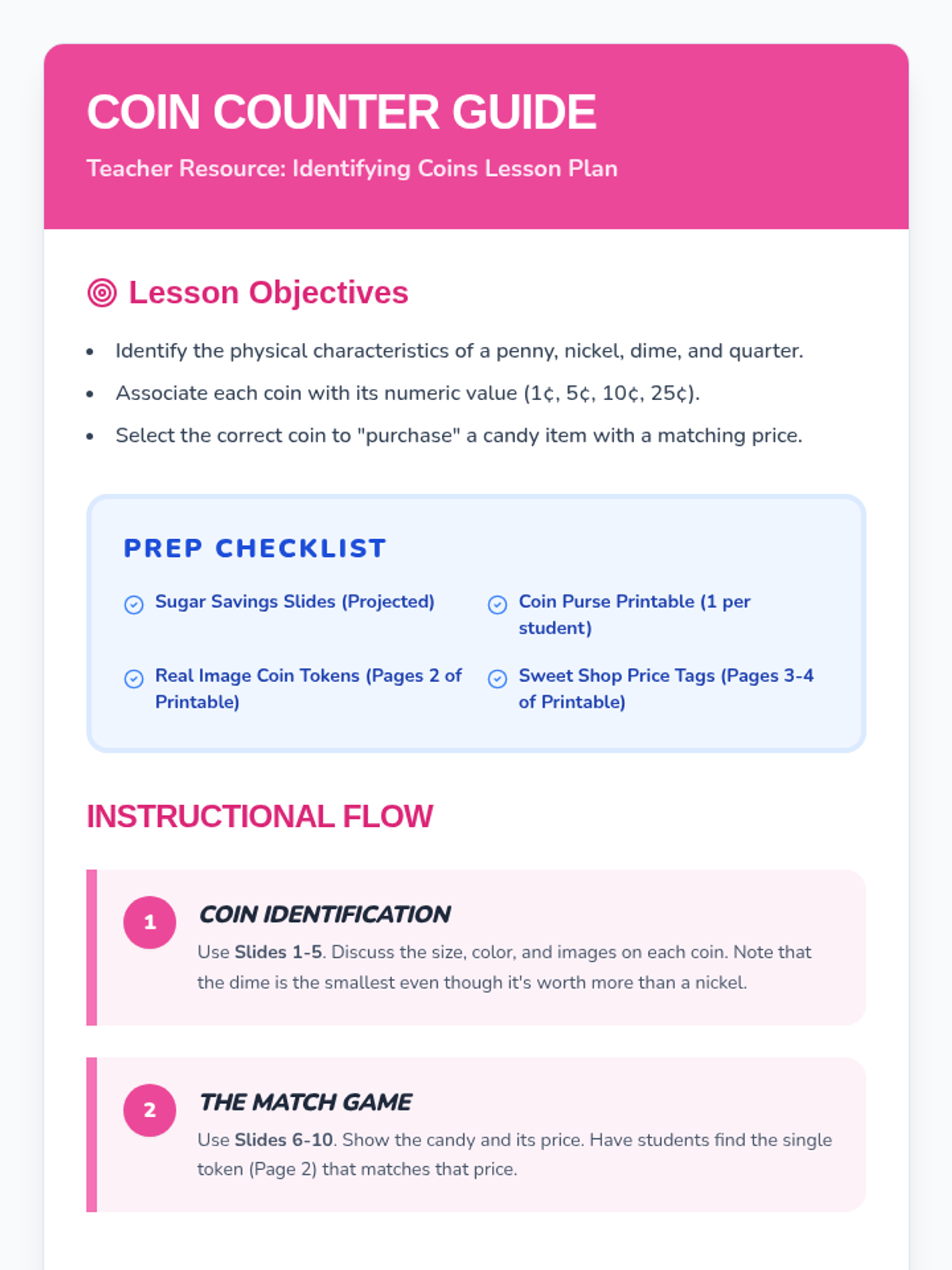
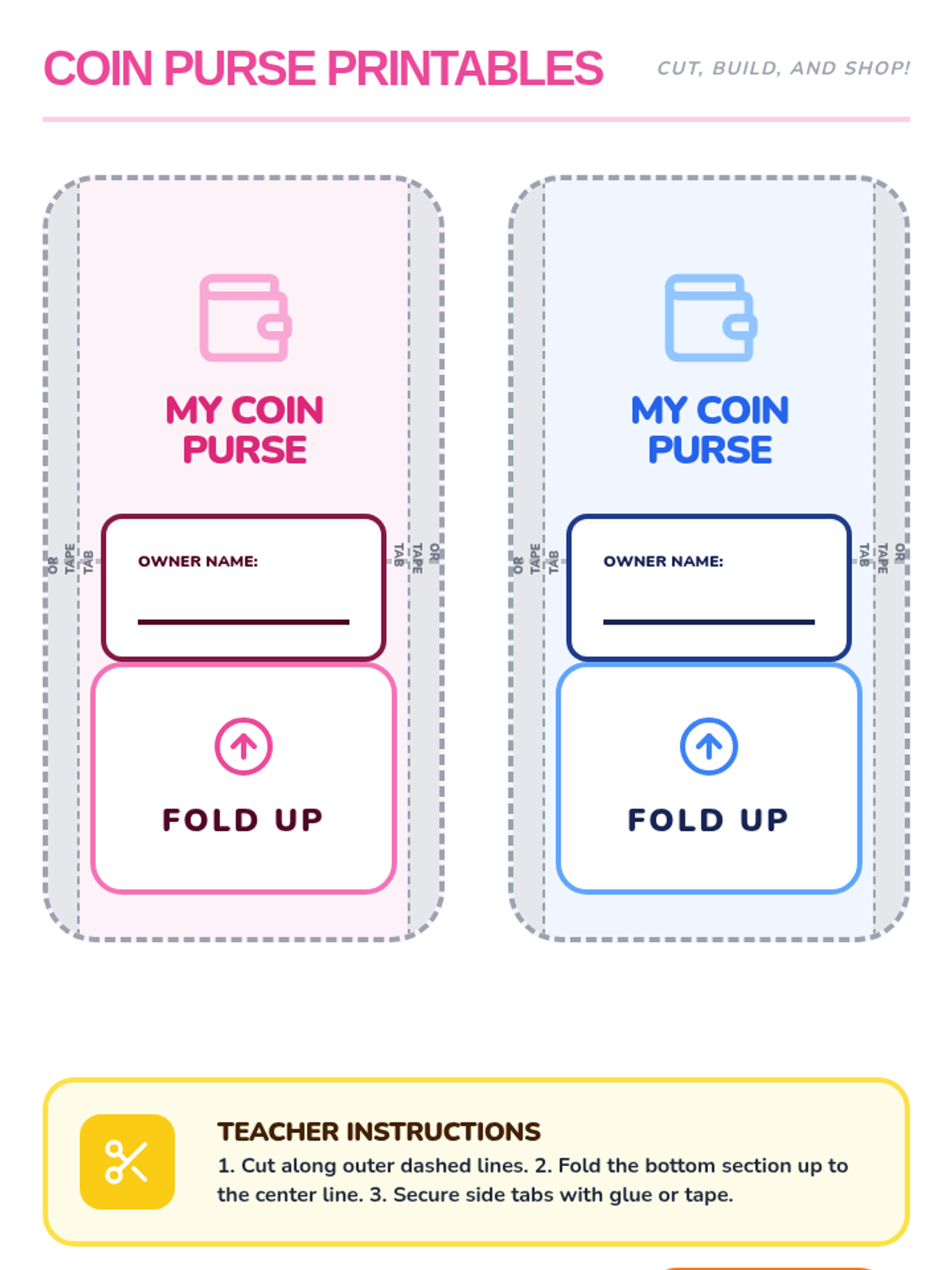
A sweet introduction to identifying and counting coins. Students visit a virtual candy shop, learn to recognize pennies, nickels, dimes, and quarters, and use their own 'coin purses' to buy treats.
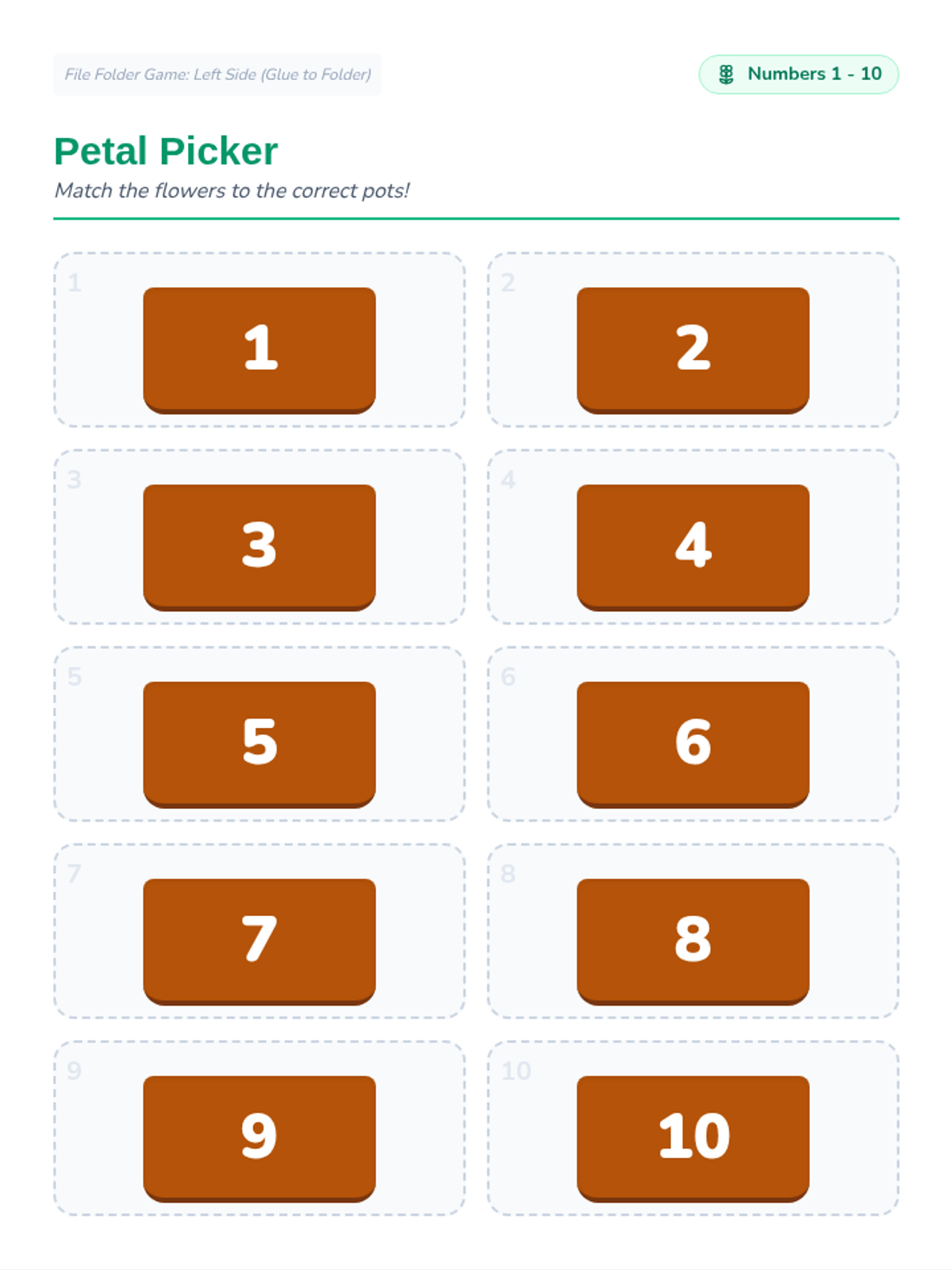
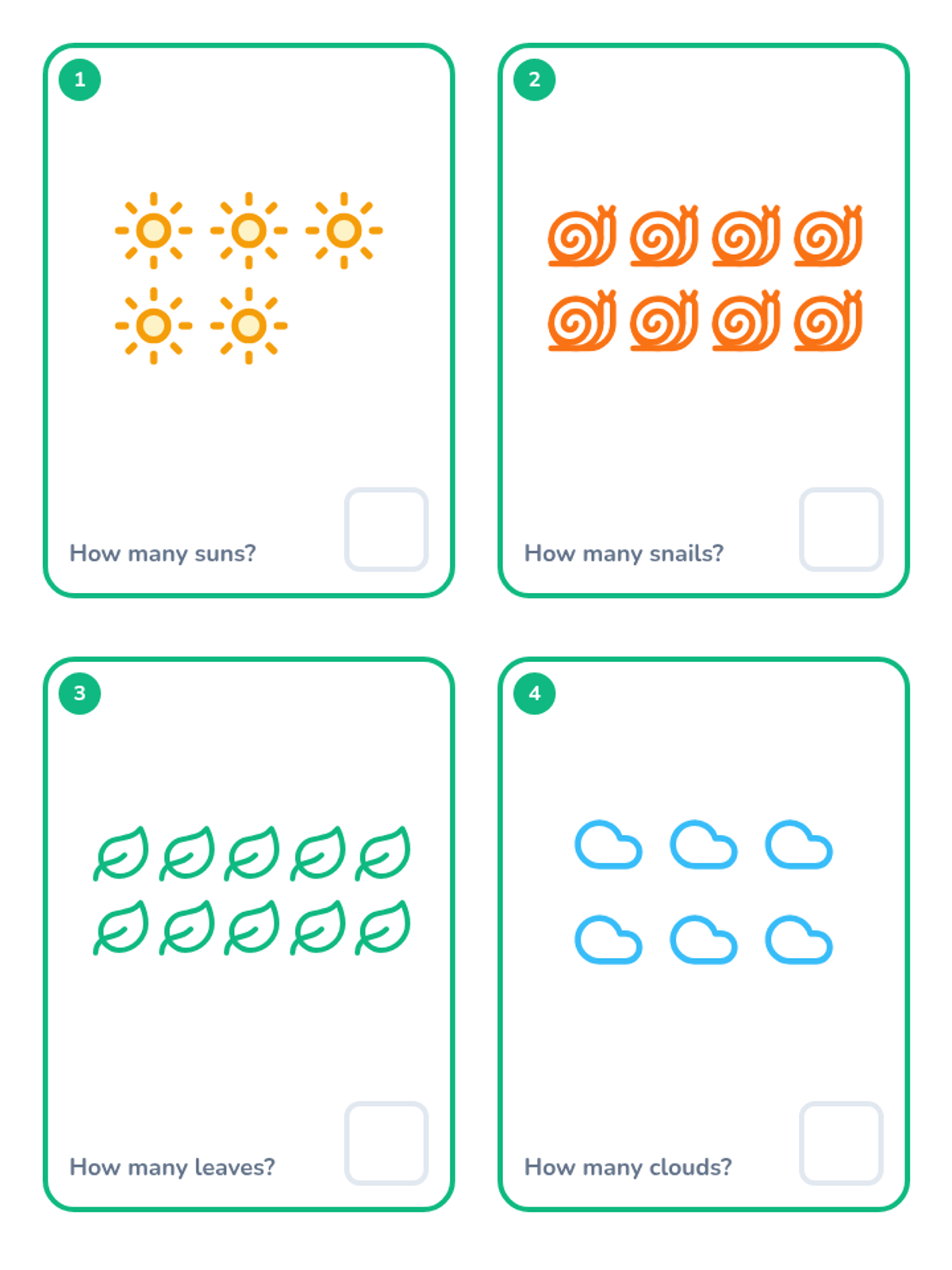
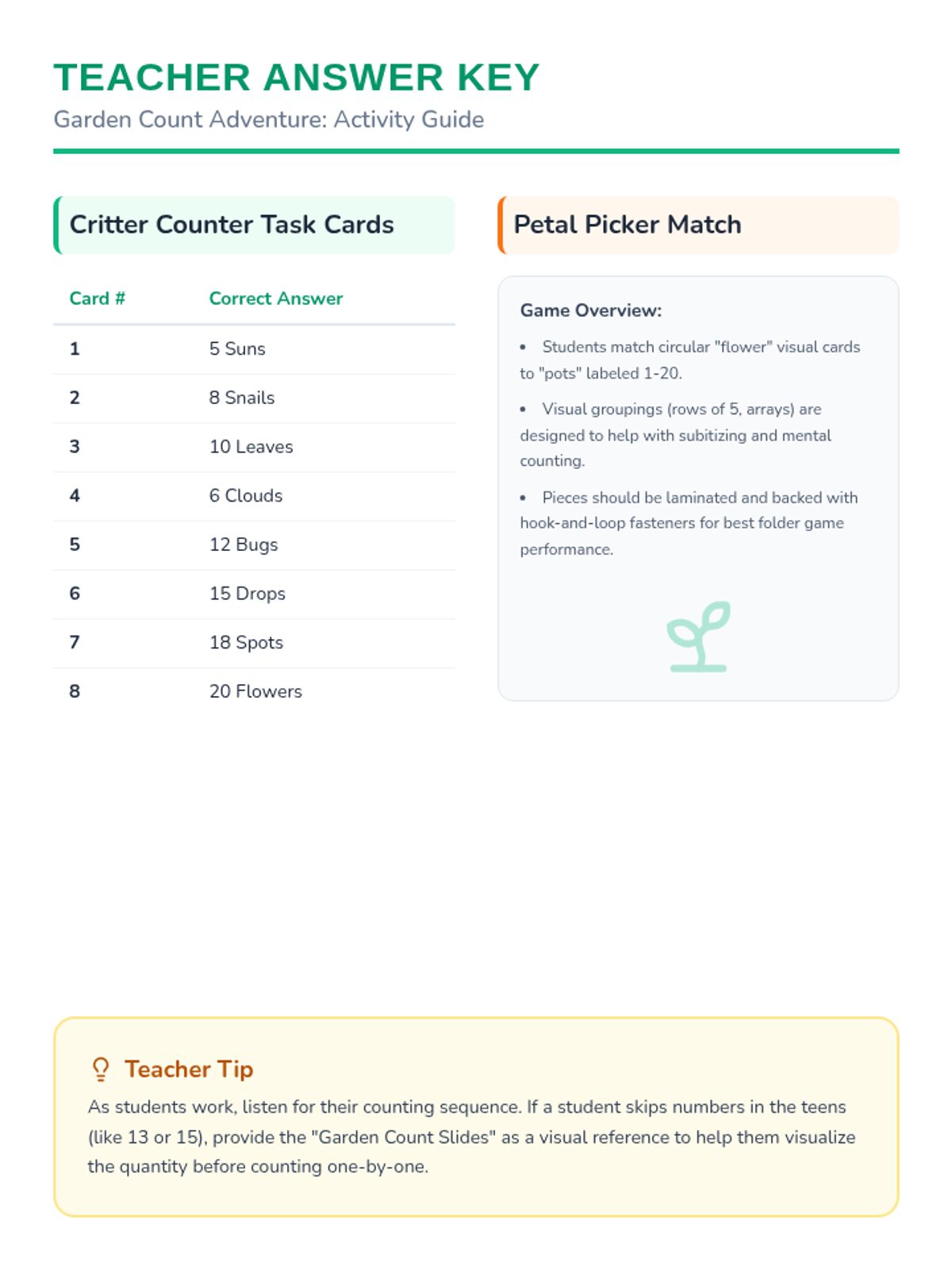
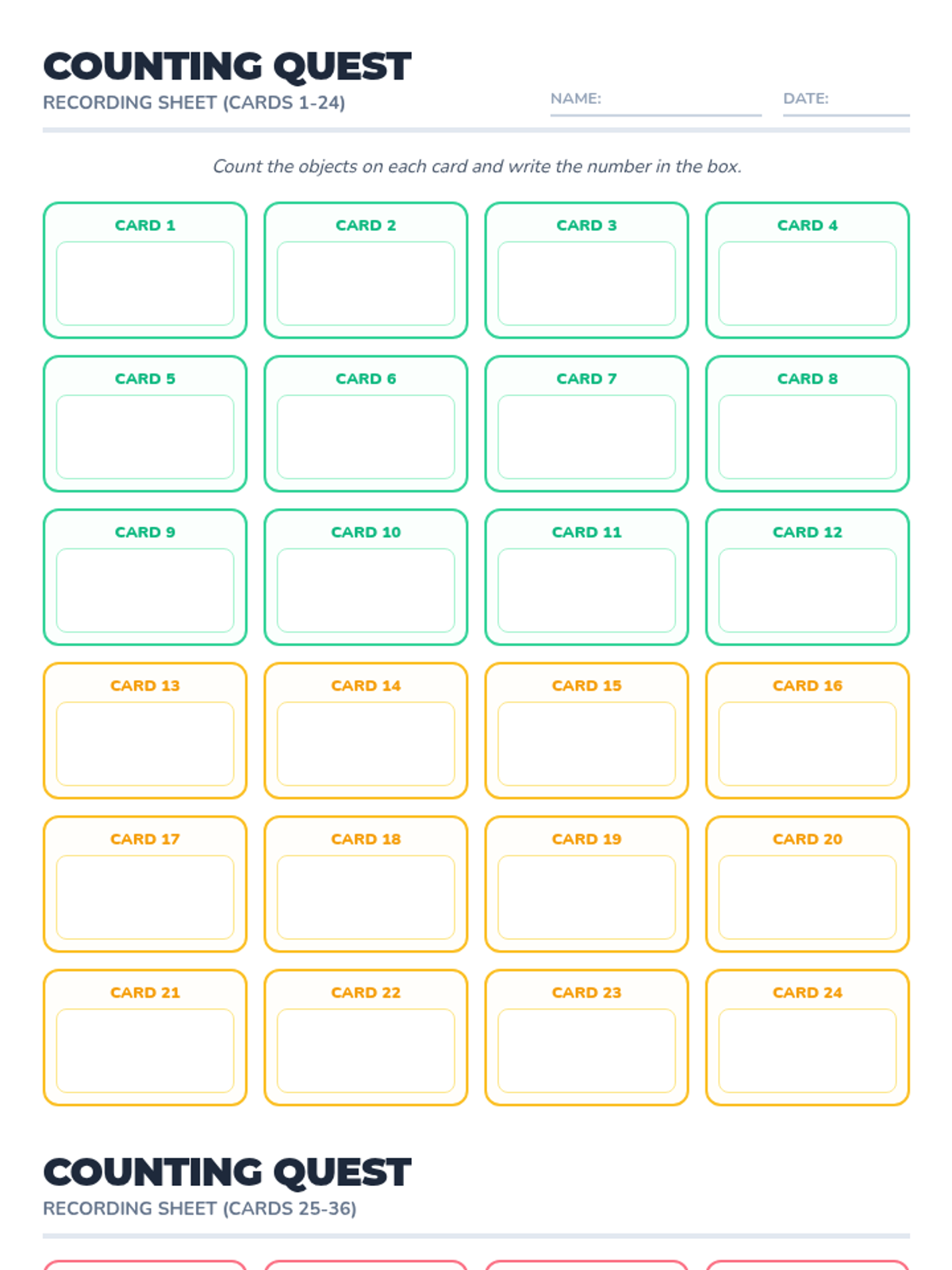
A hands-on counting unit where students explore garden-themed visuals to master numbers up to 20 through interactive slides, a file folder game, and task cards.
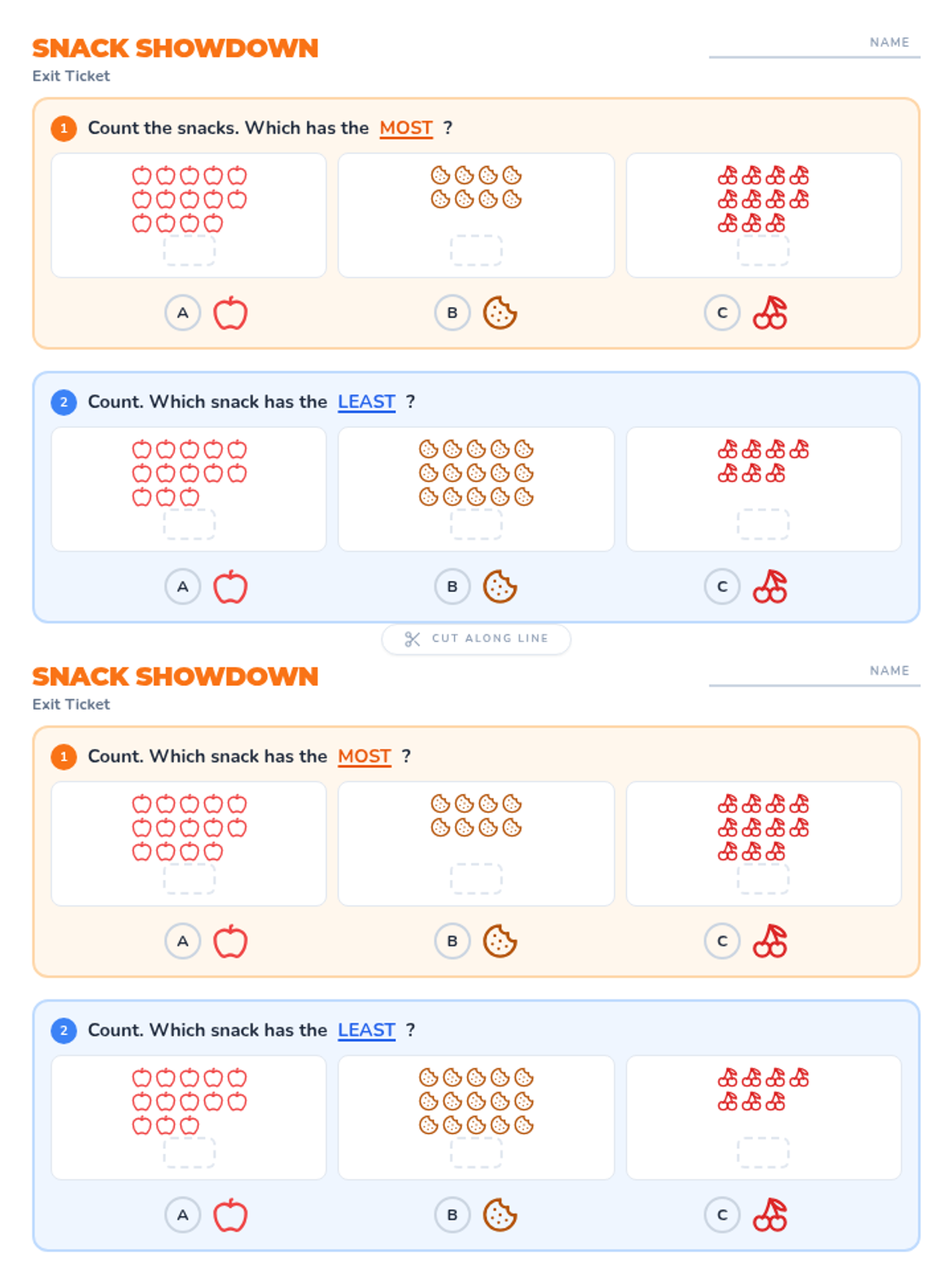
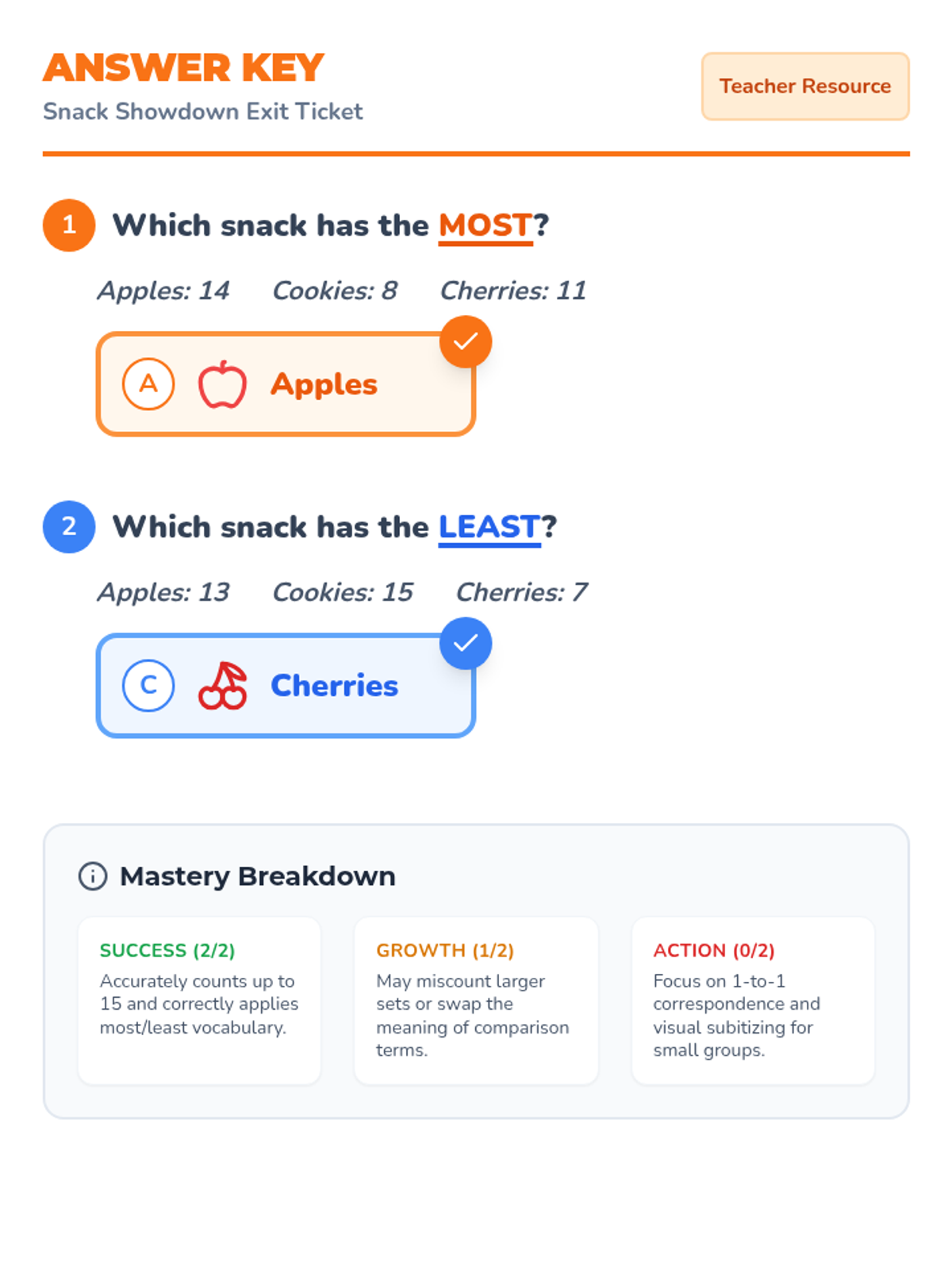
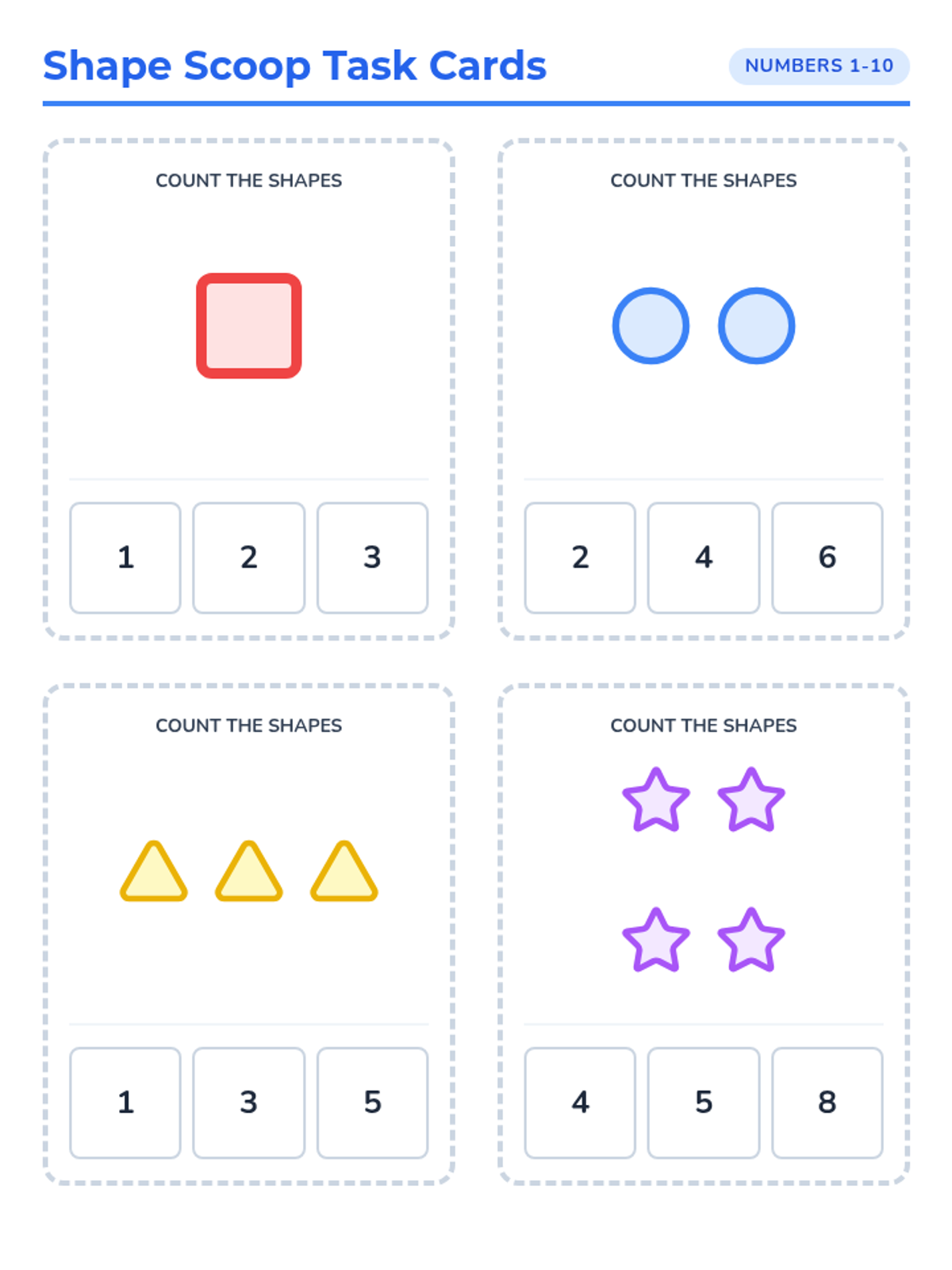
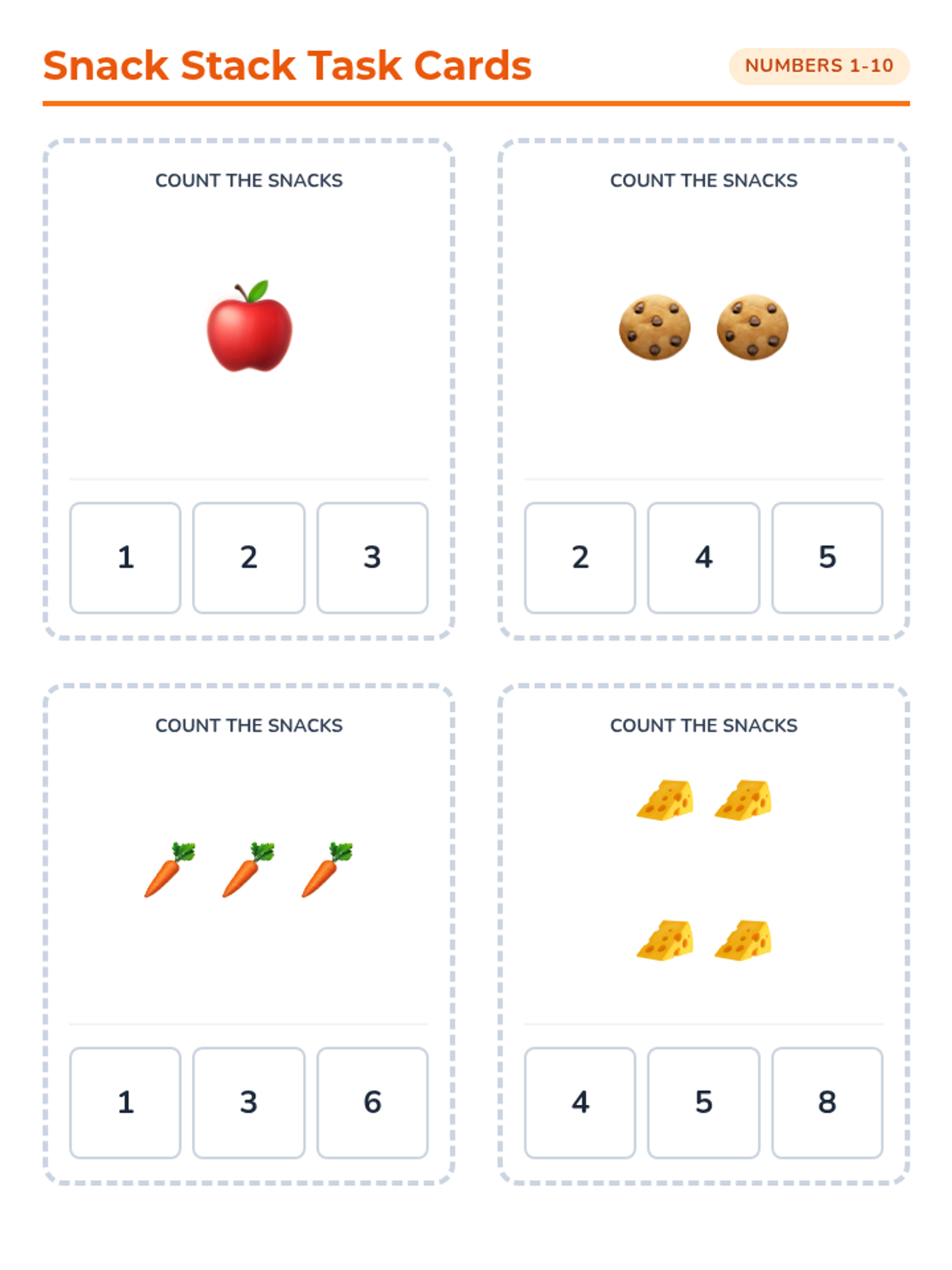
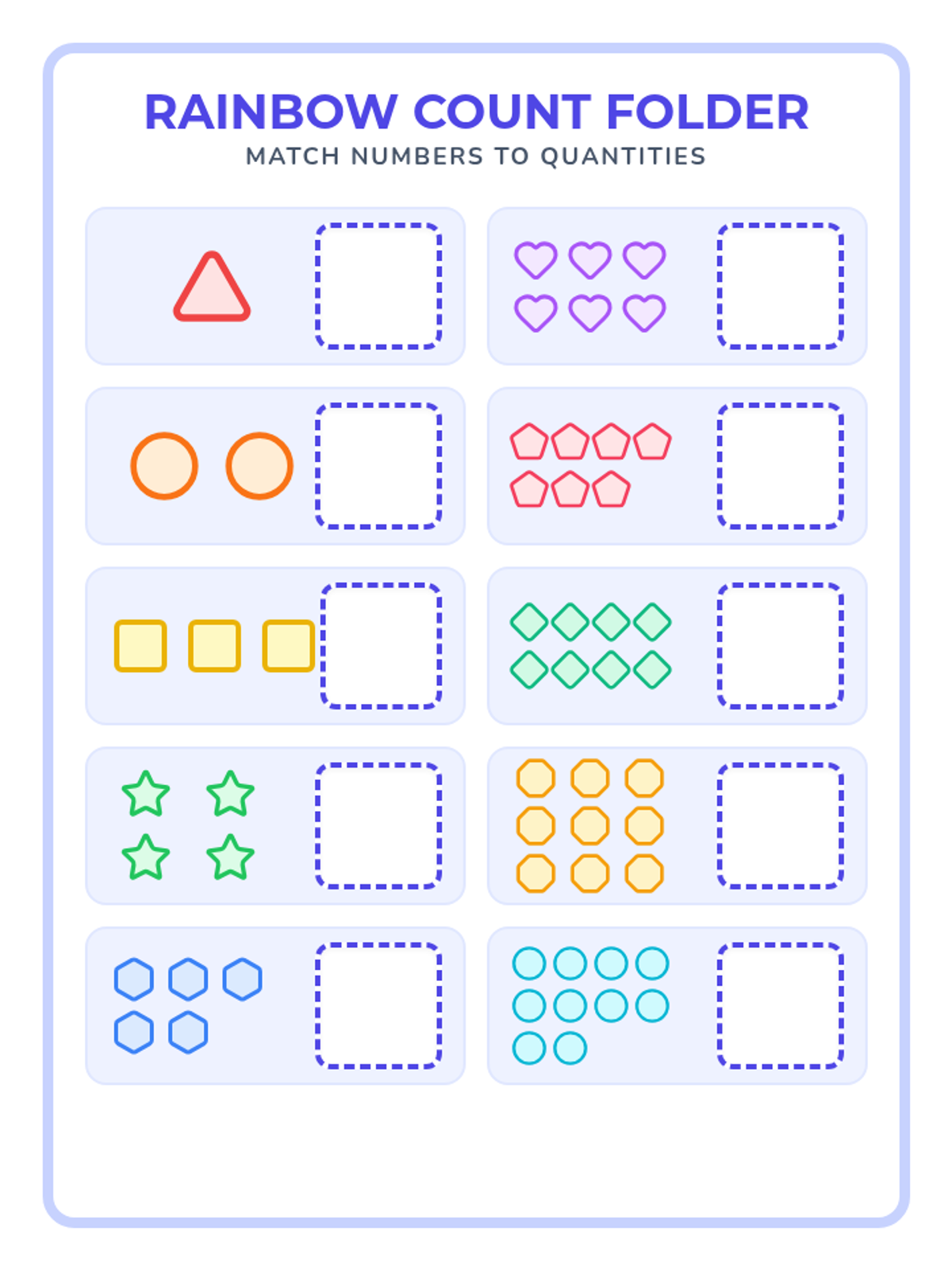
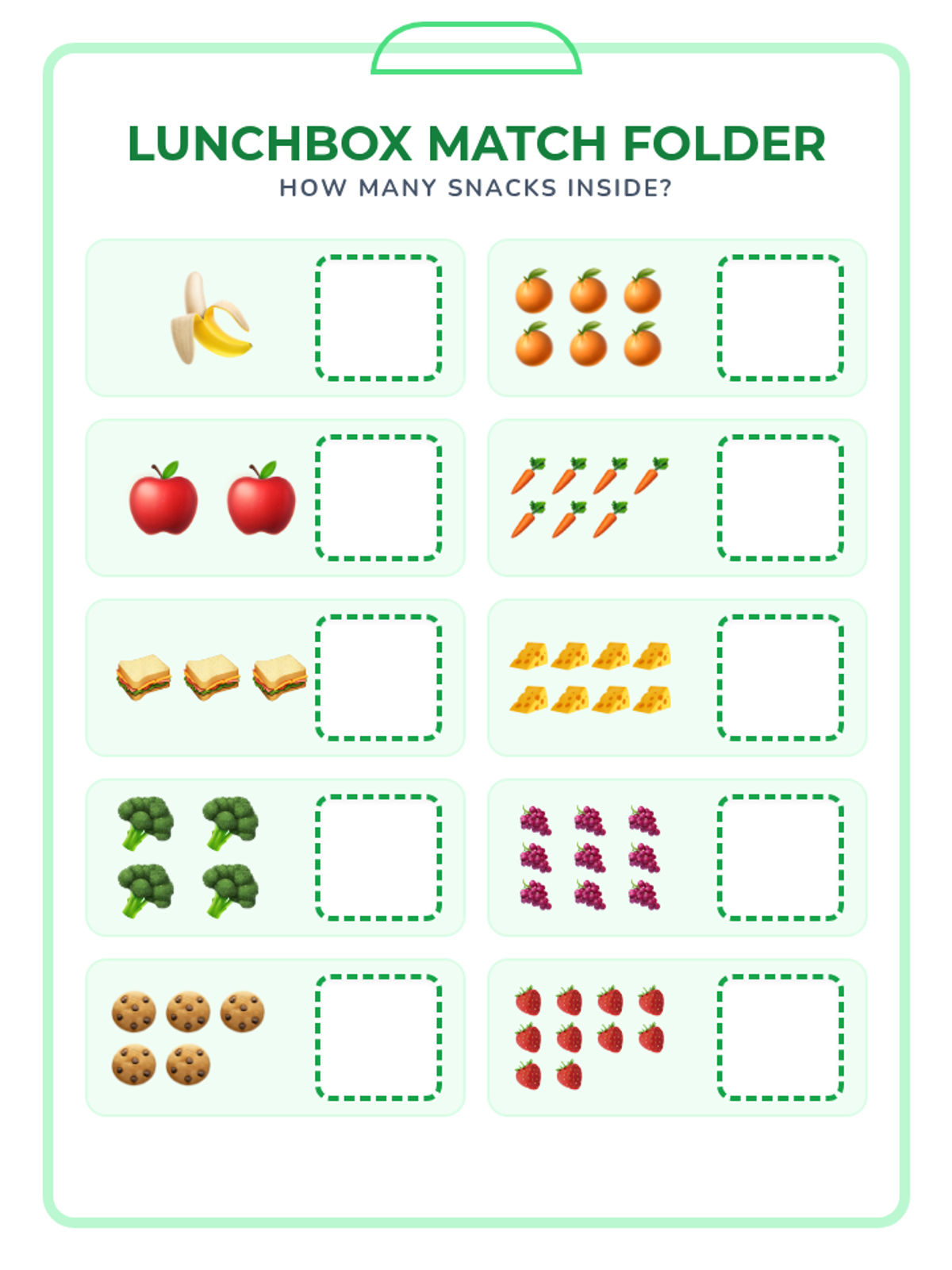
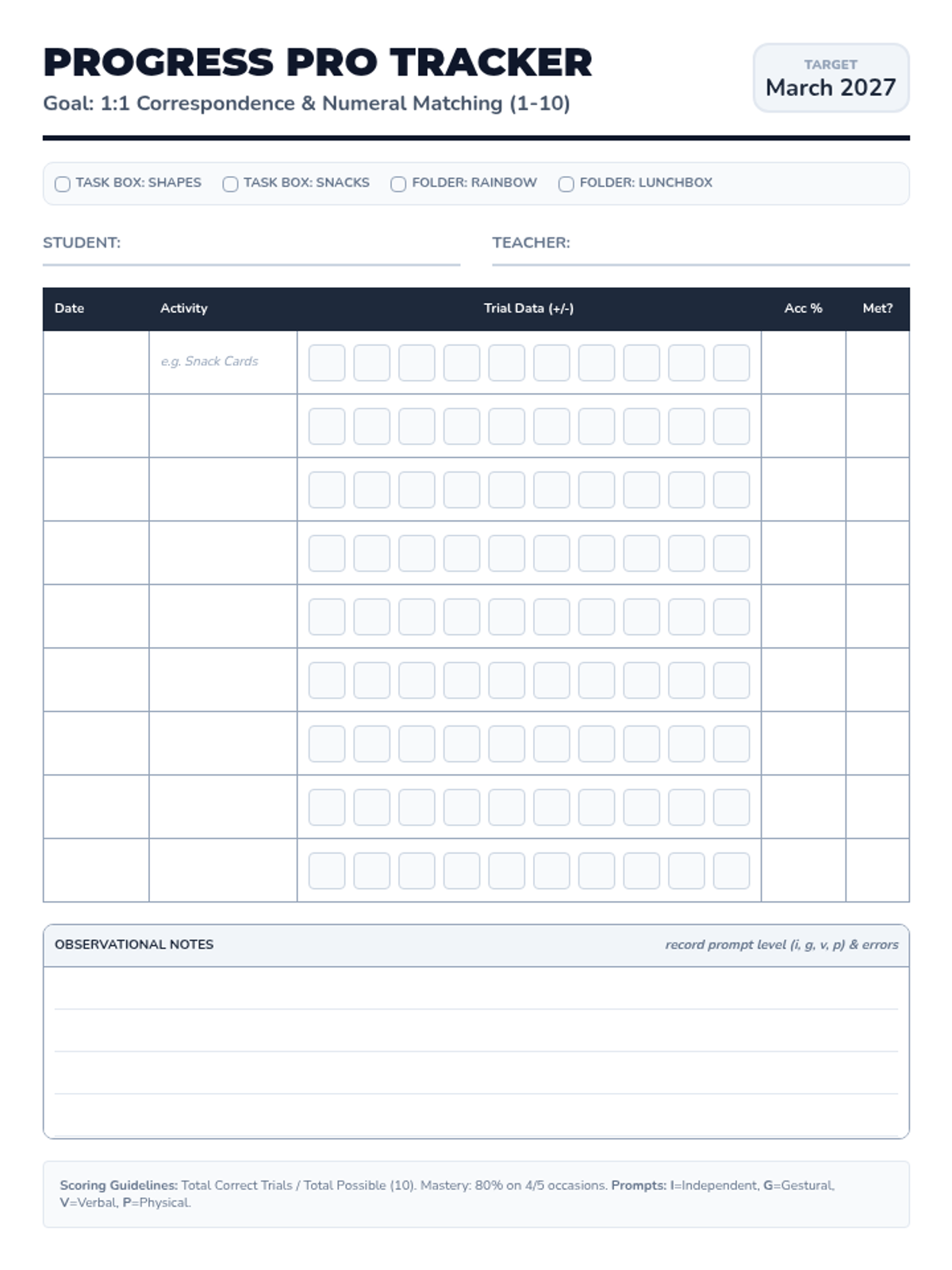
A collection of hands-on math center materials designed to build 1:1 correspondence and numeral-to-quantity matching for numbers 1-10, featuring vibrant colors, geometric shapes, and tasty snacks.
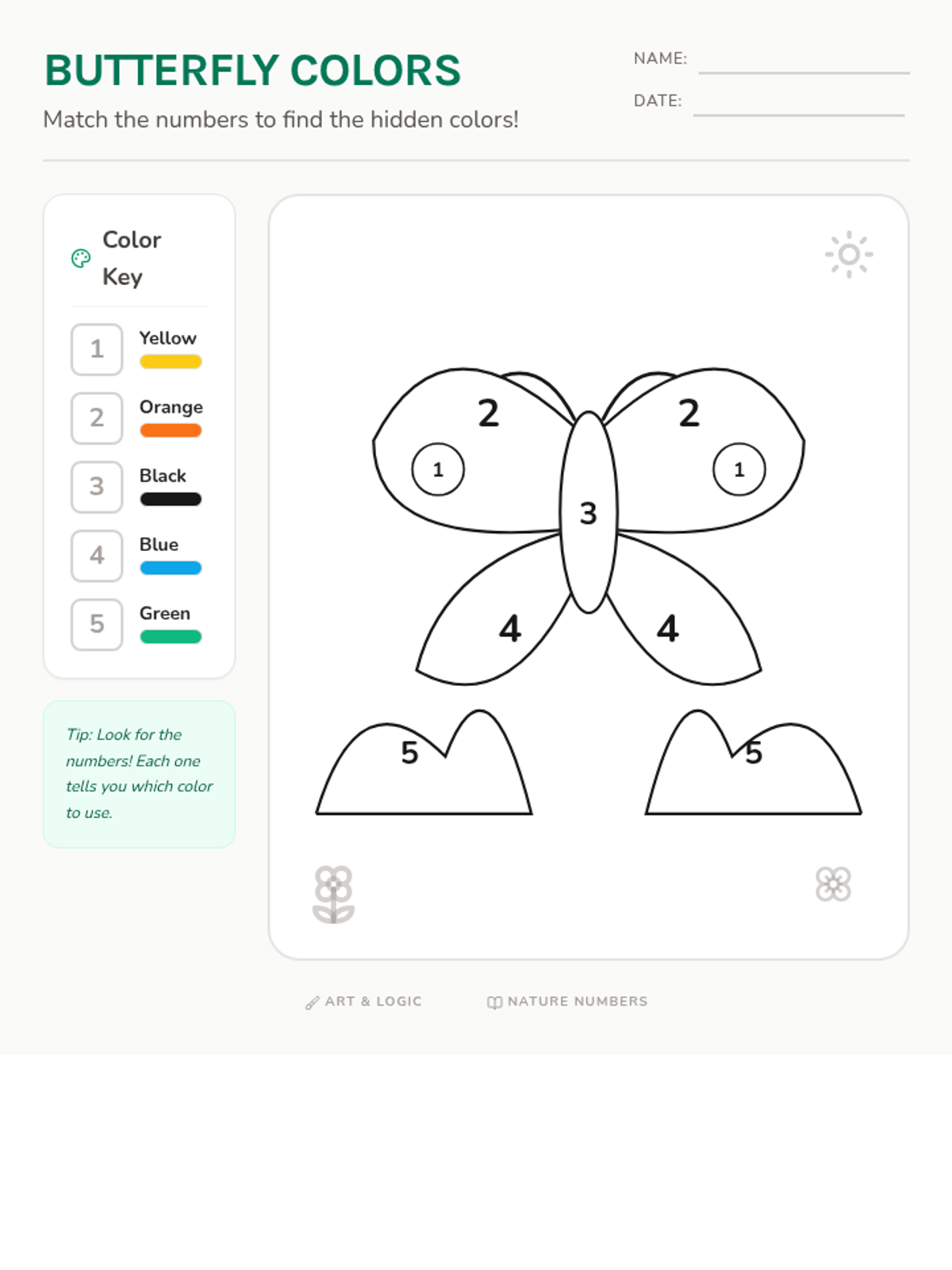
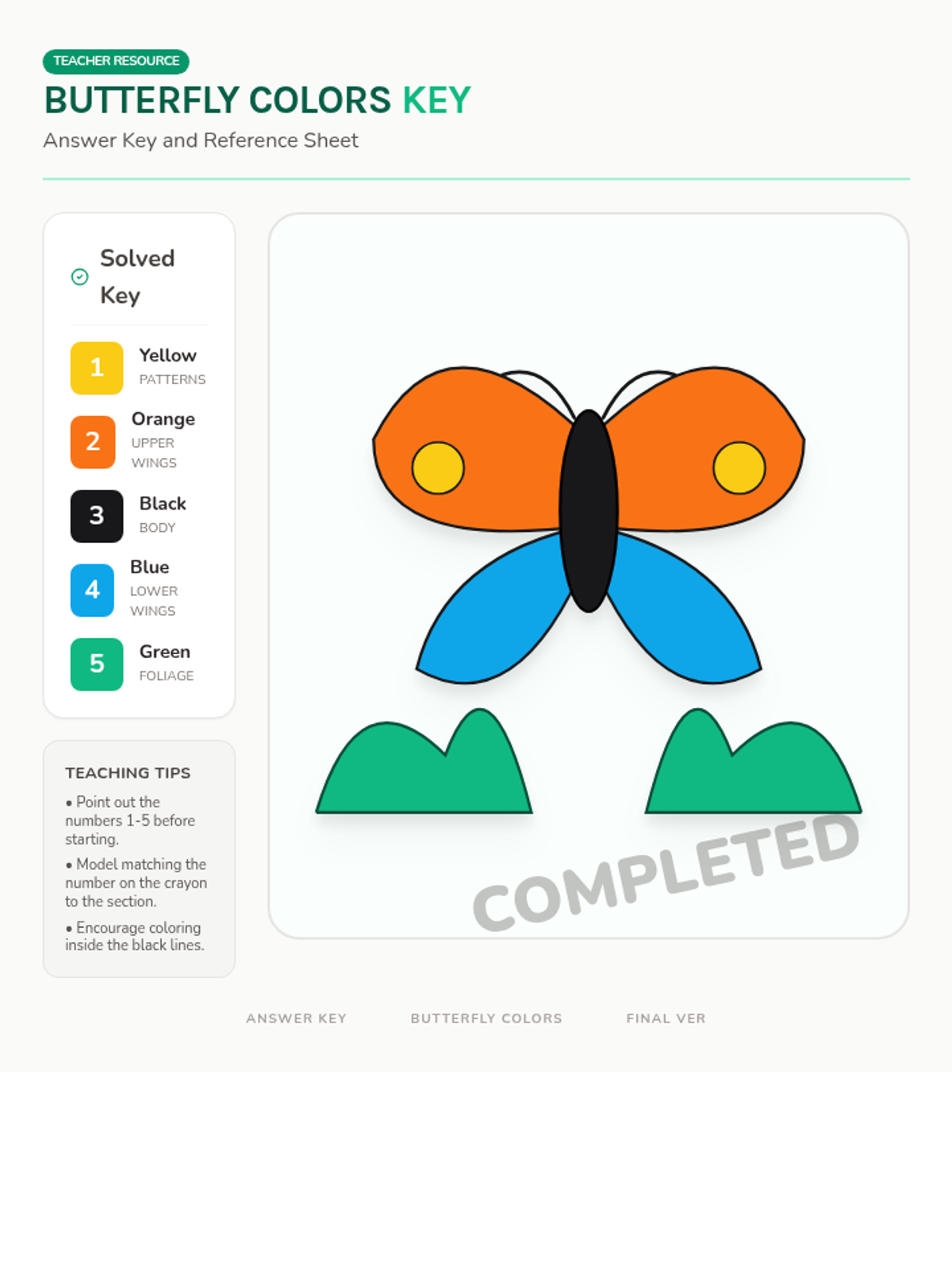
A foundational lesson on number recognition through a creative butterfly coloring activity. Students identify numbers 1-5 to reveal a vibrantly colored monarch-style butterfly.
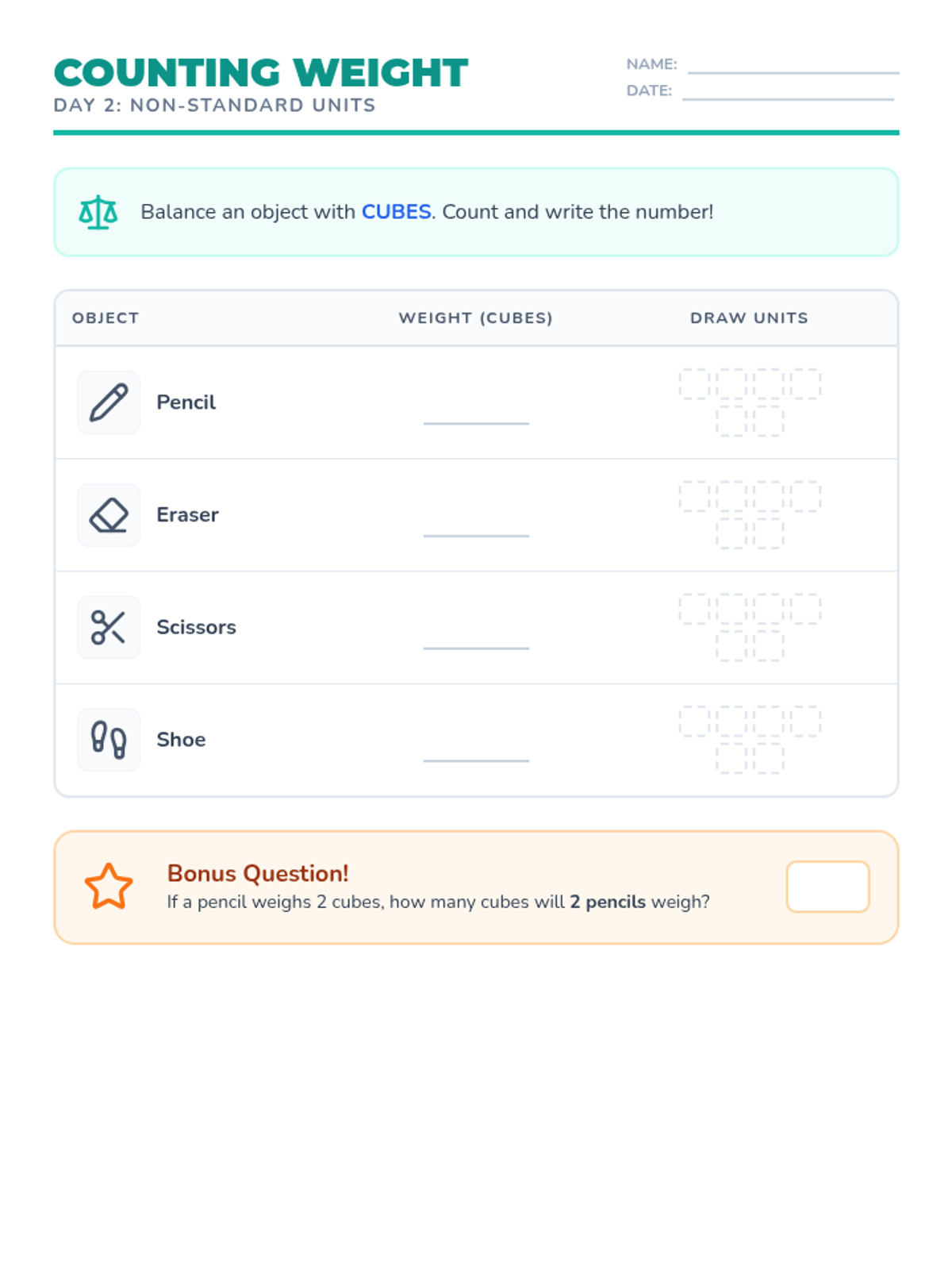
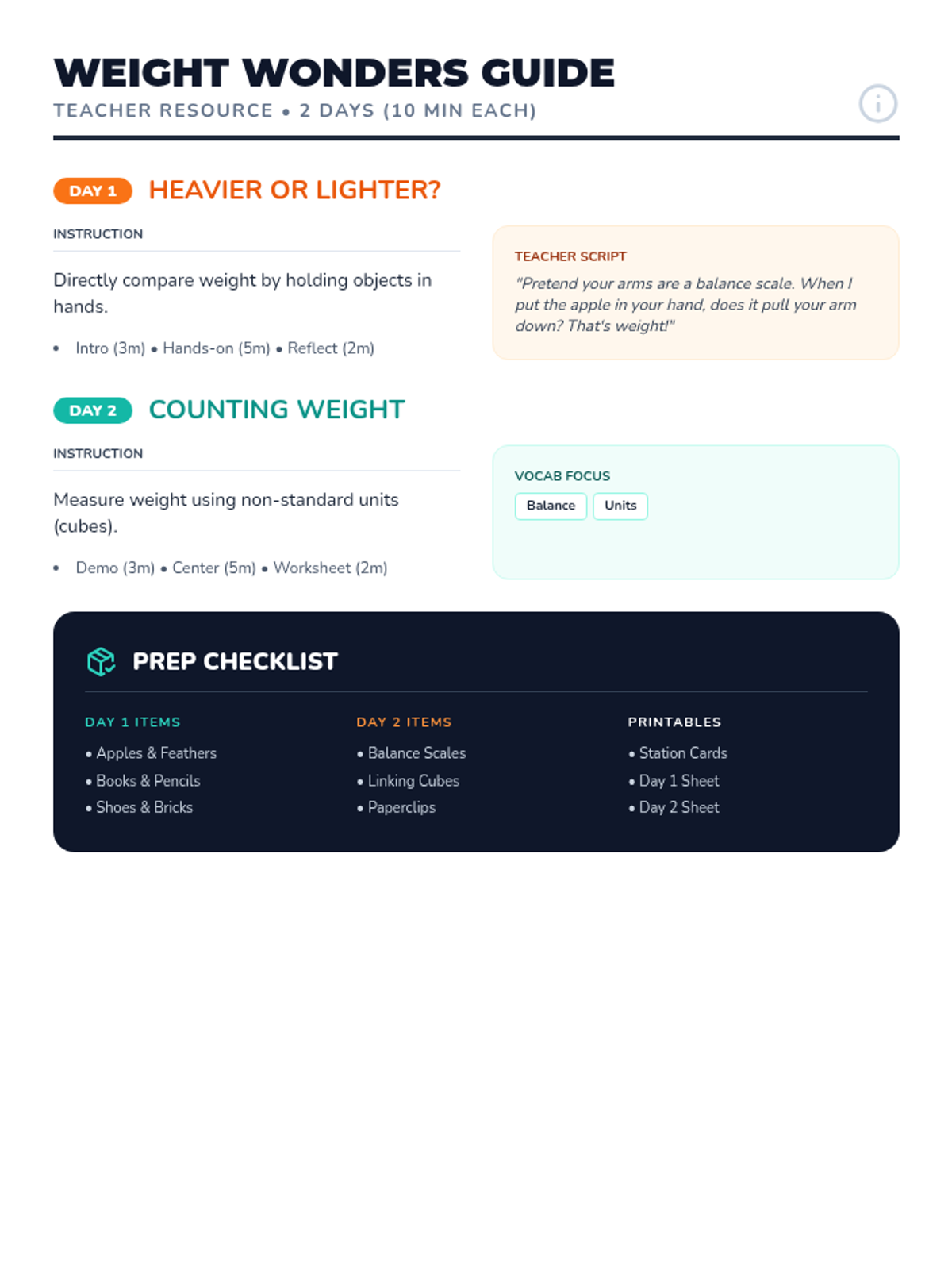
Students measure the weight of objects using non-standard units like cubes and paperclips with a balance scale.
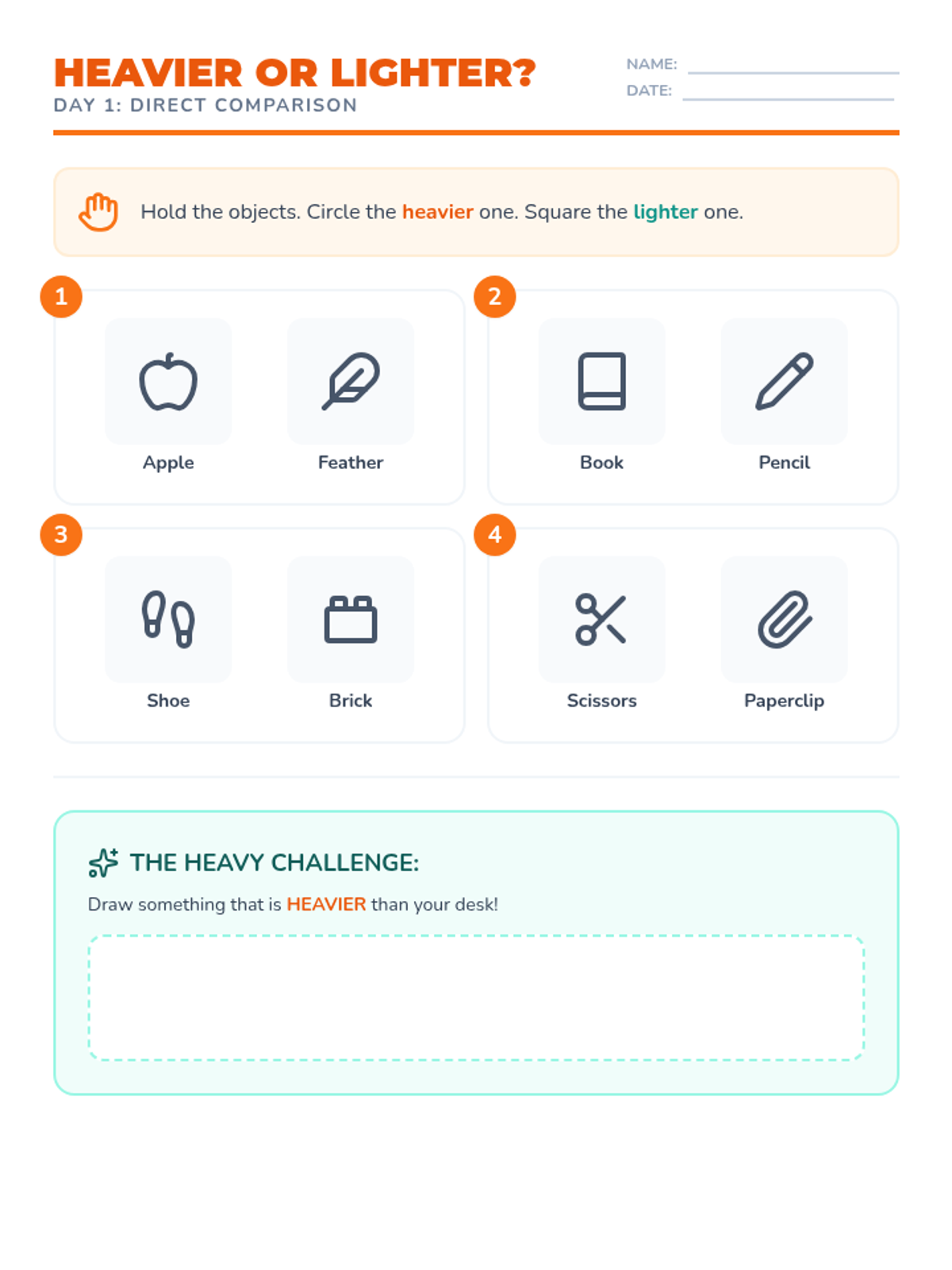
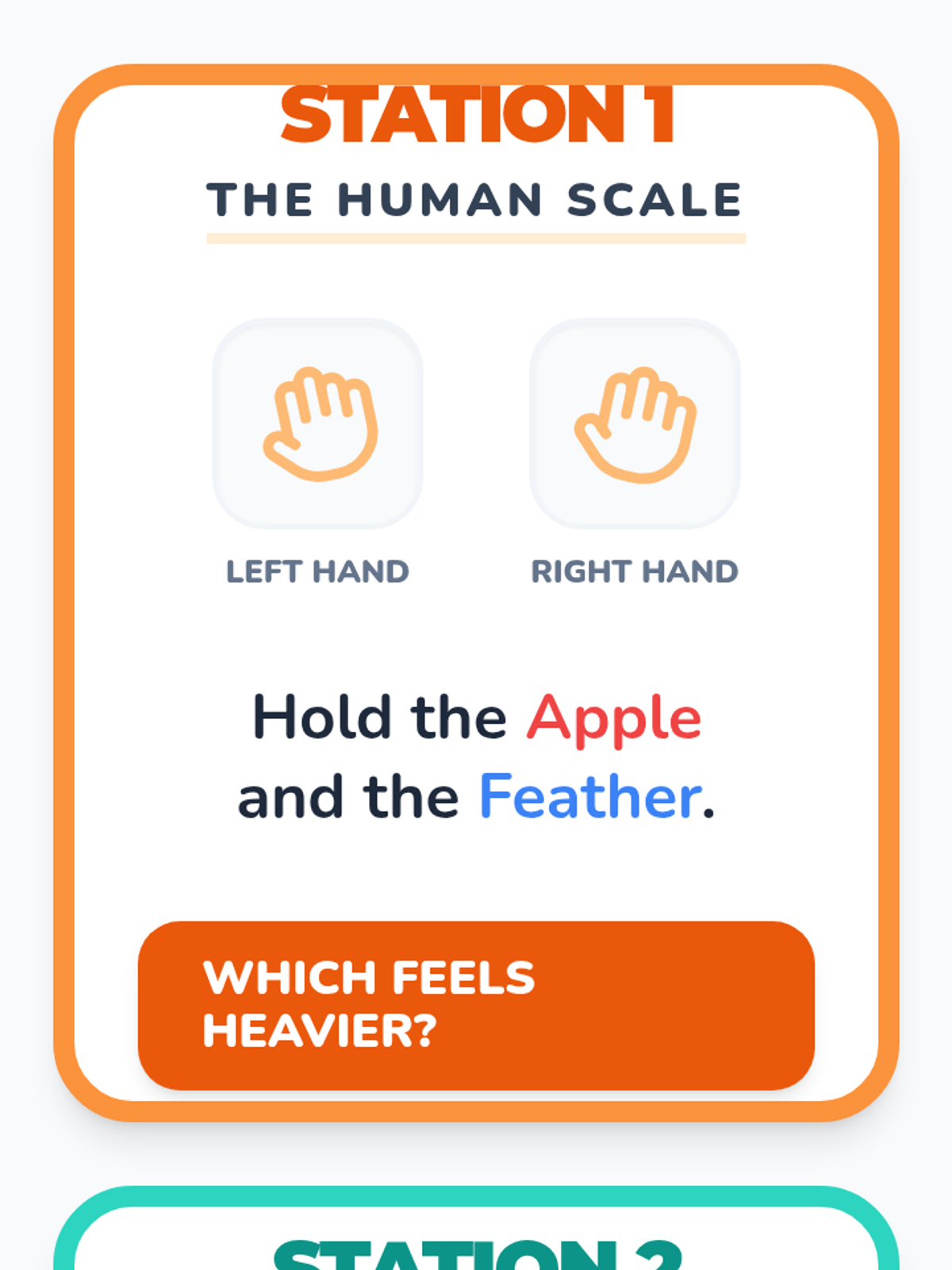
Students learn to compare the weight of two objects directly by holding them and using the terms 'heavier' and 'lighter'.
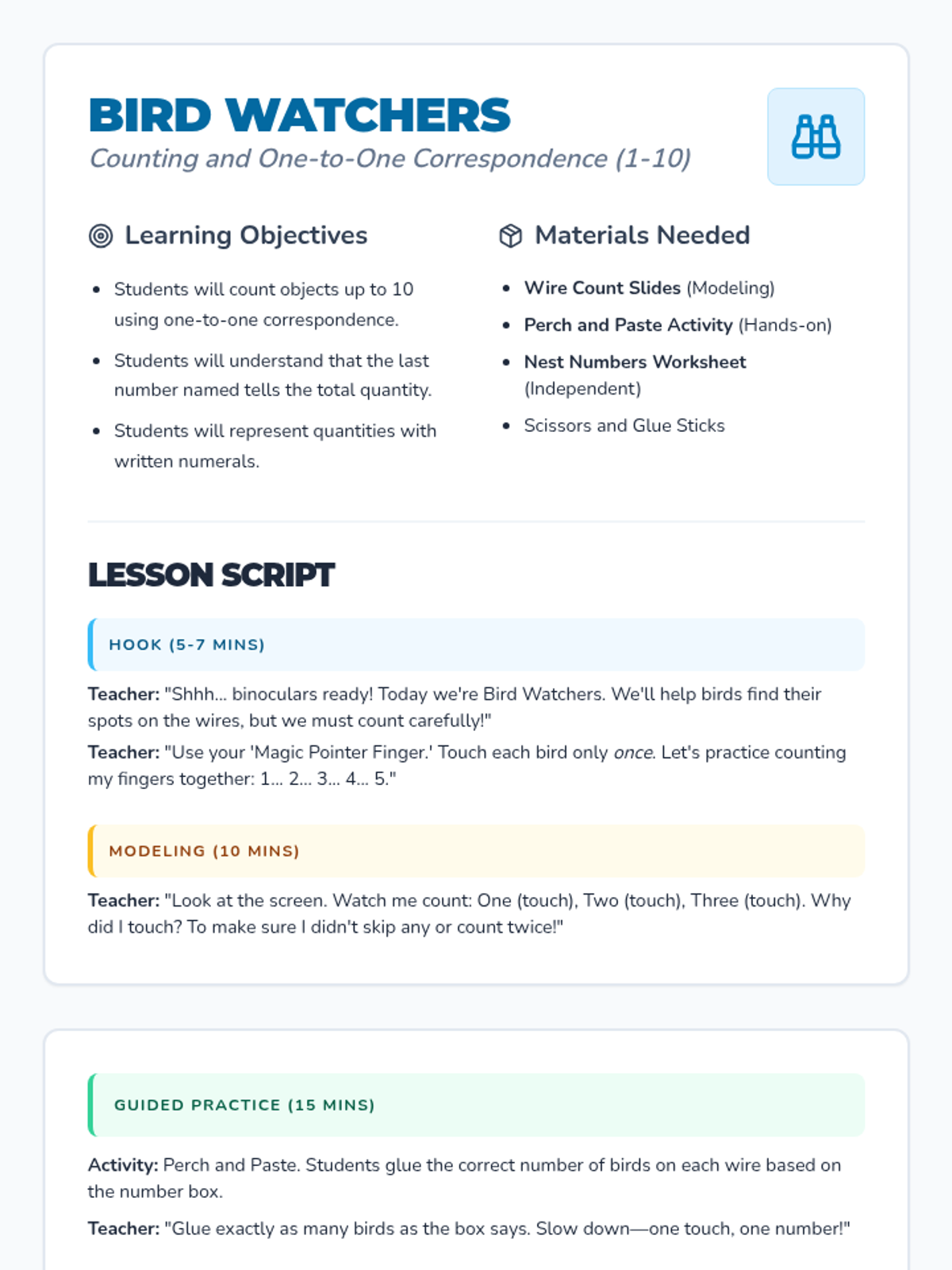
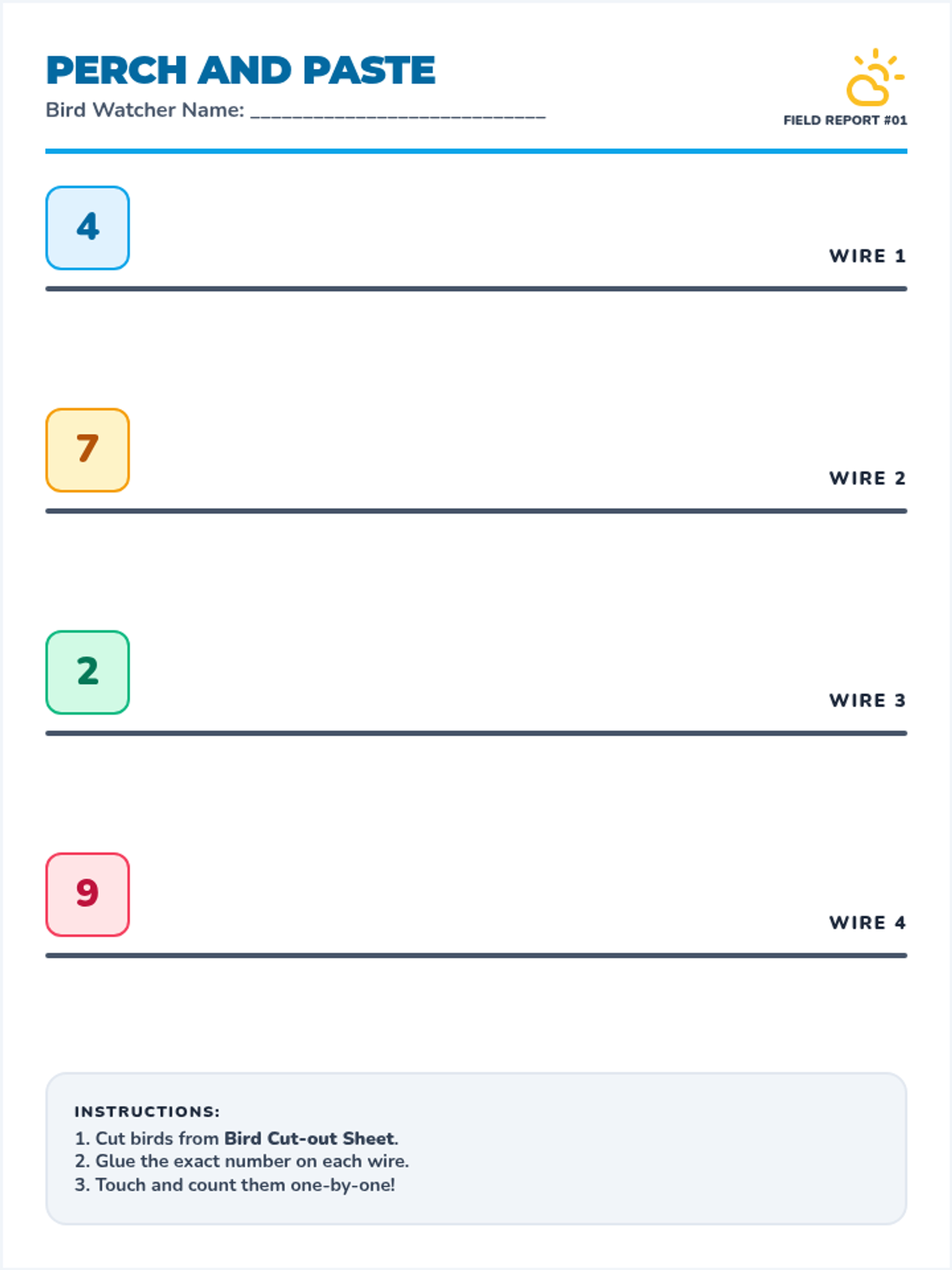
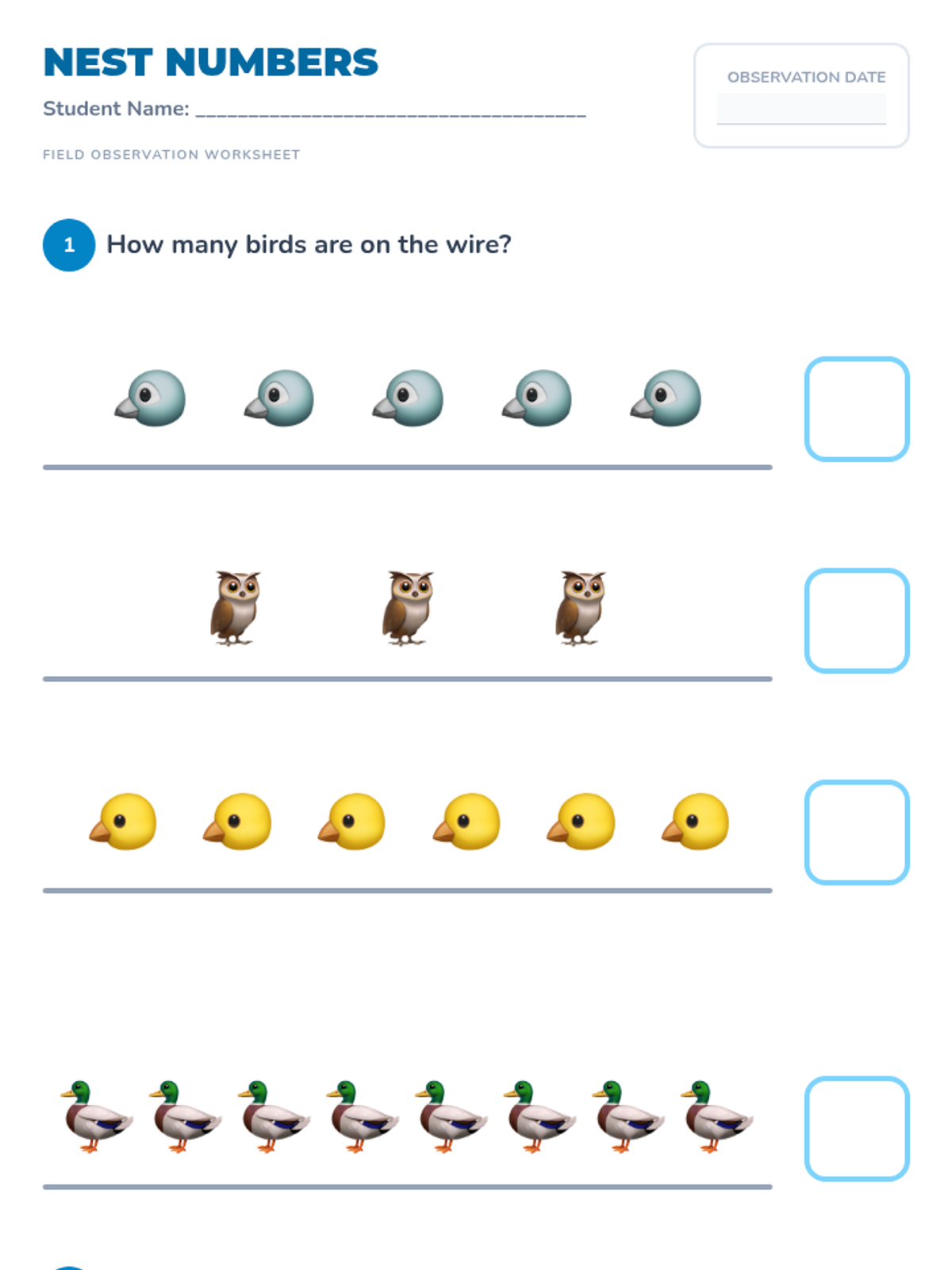
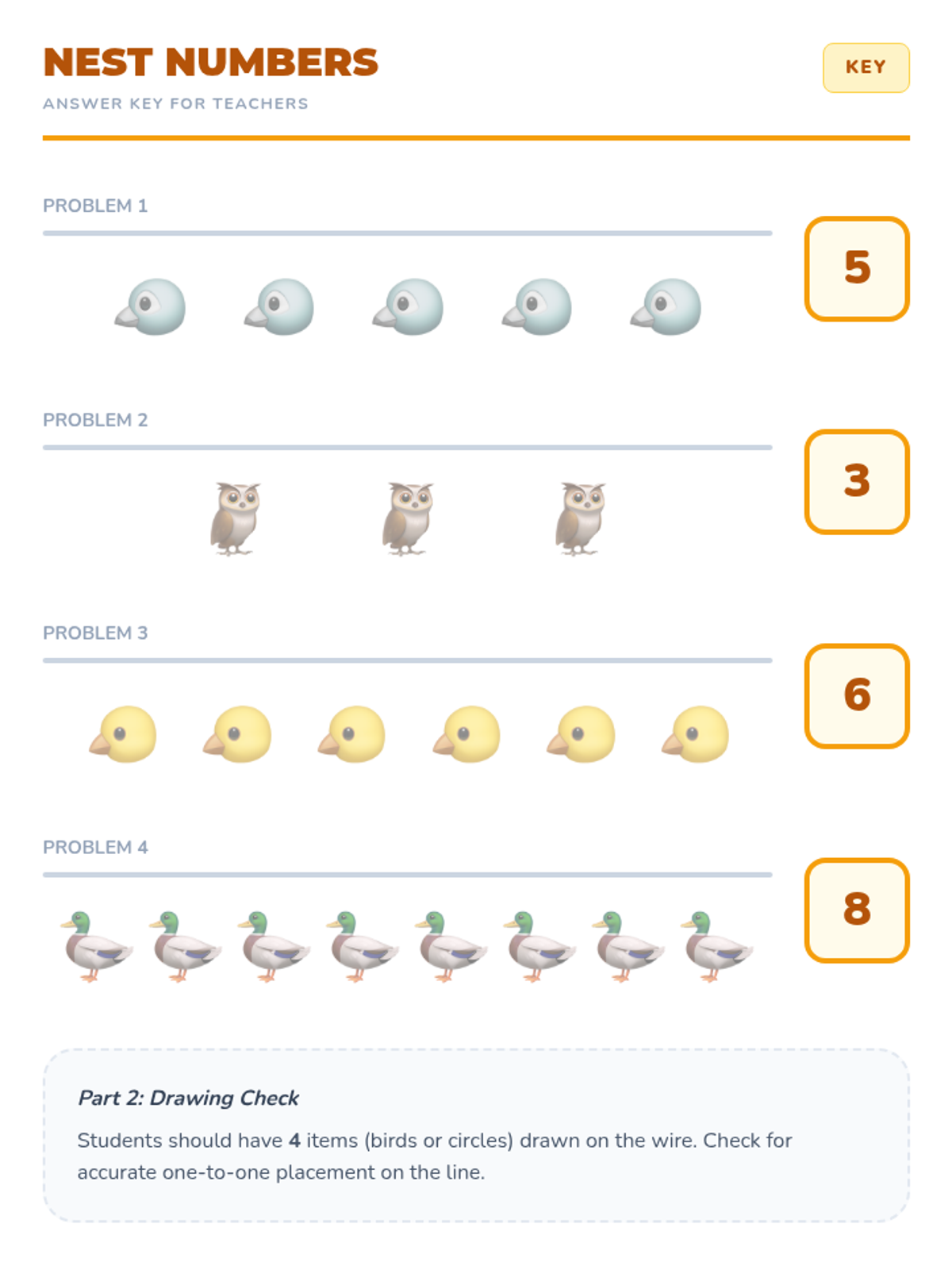
An interactive math lesson for early learners focusing on counting up to 10 and one-to-one correspondence using a charming bird-themed field notebook aesthetic. Students will practice counting birds as they land on wires through modeling, hands-on activities, and independent practice.
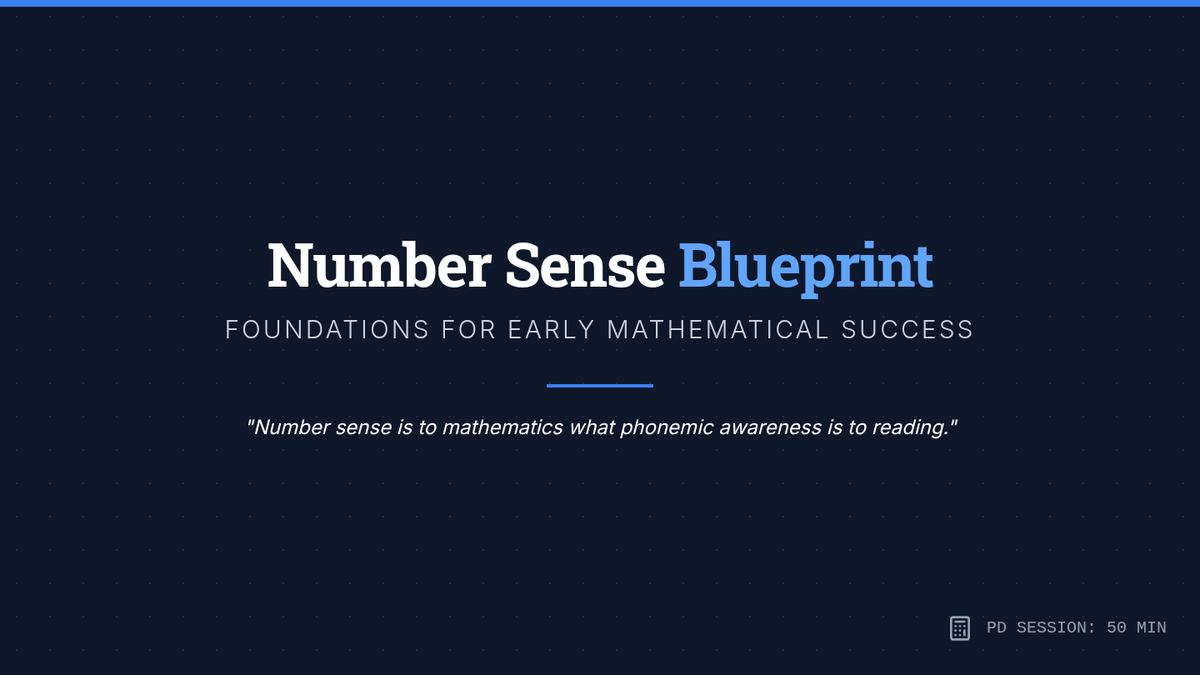
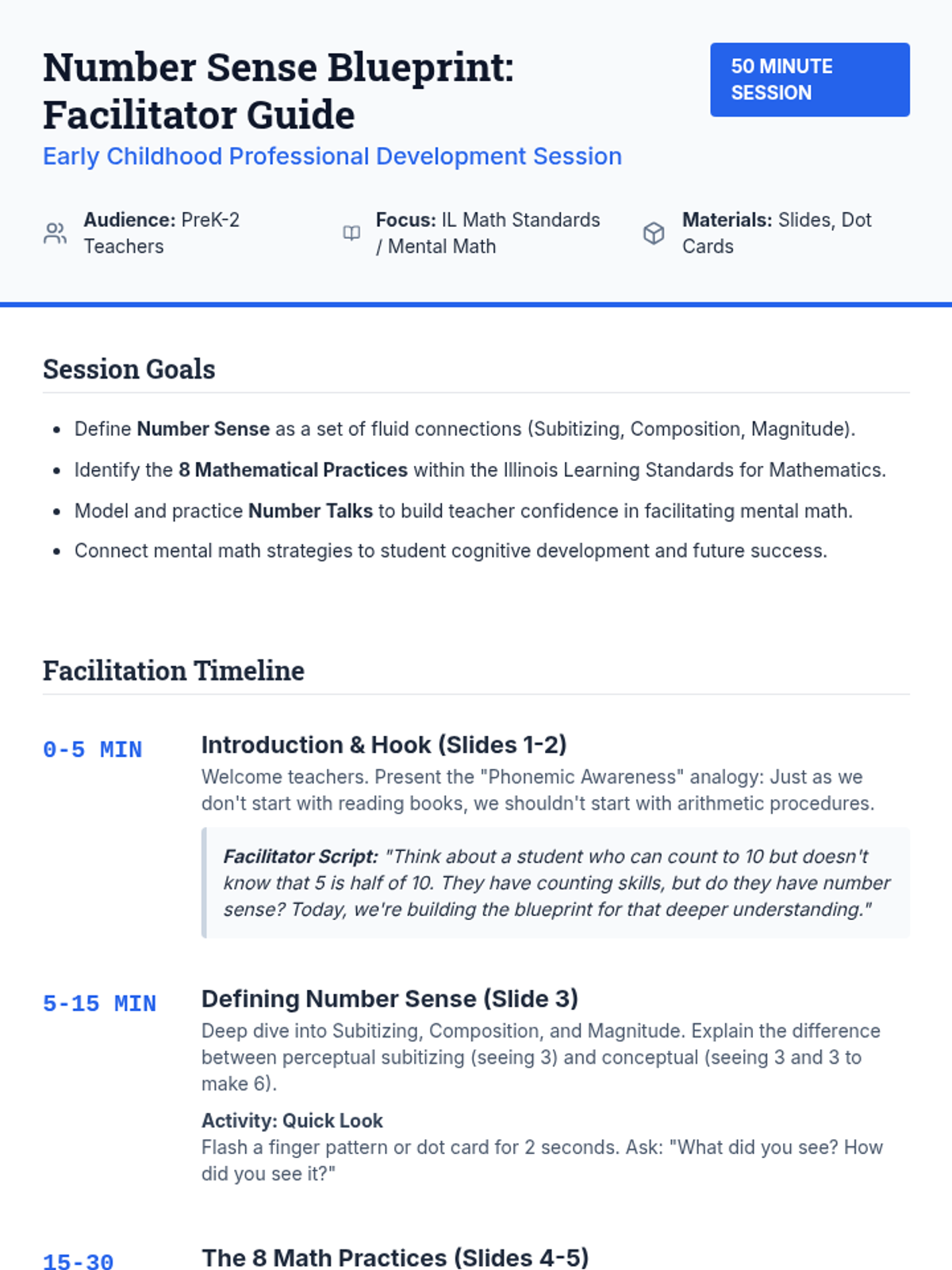
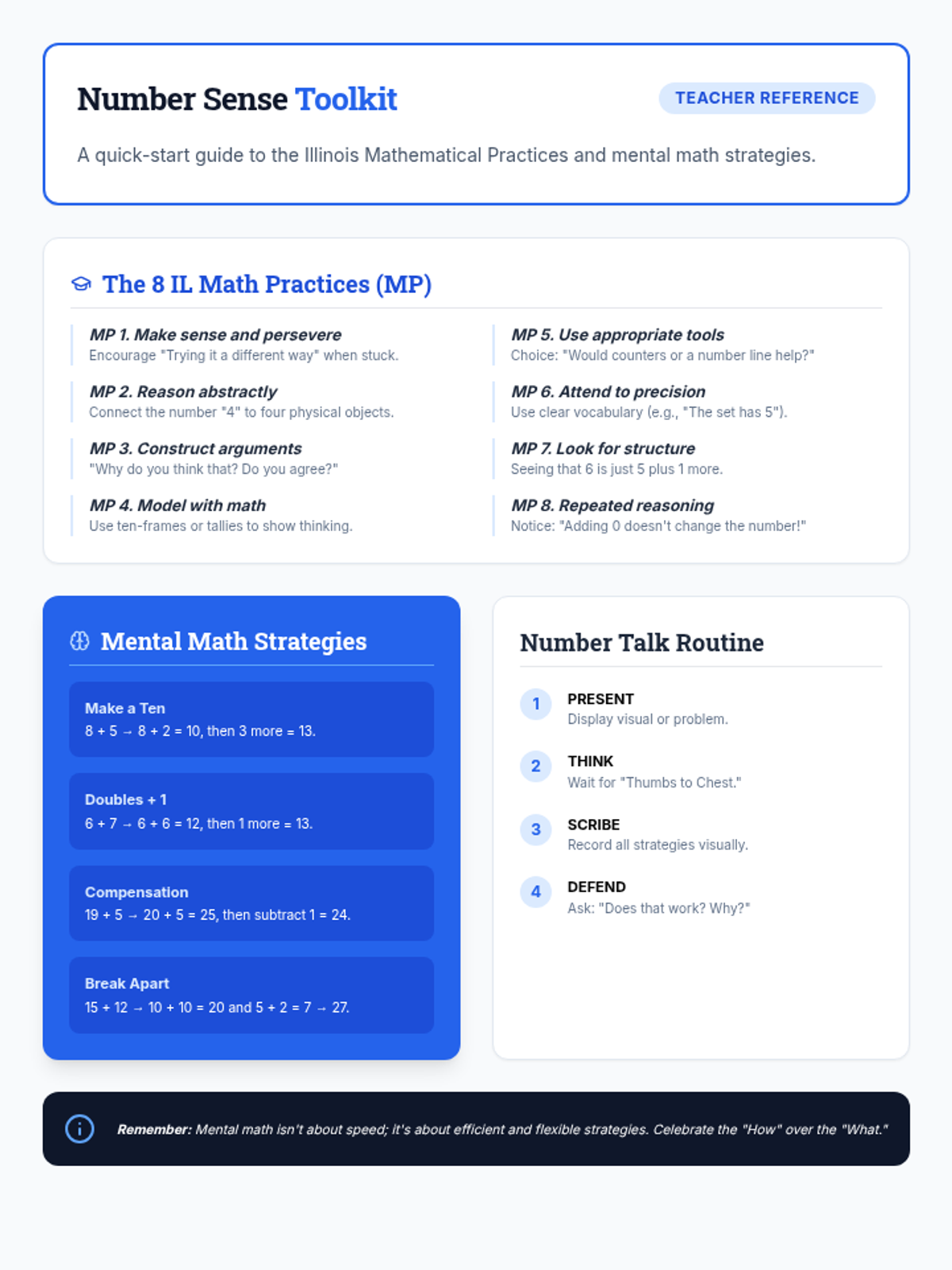
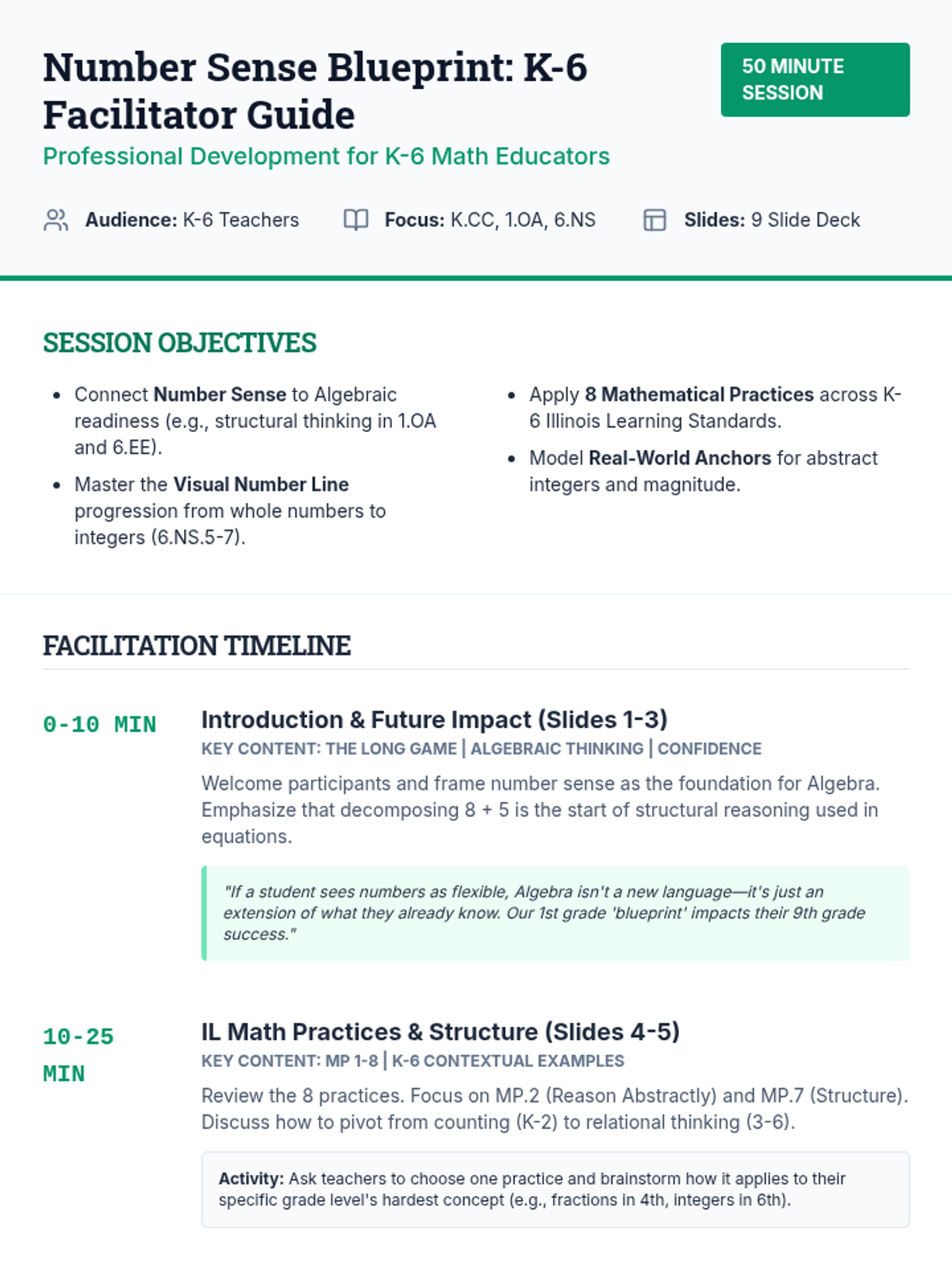
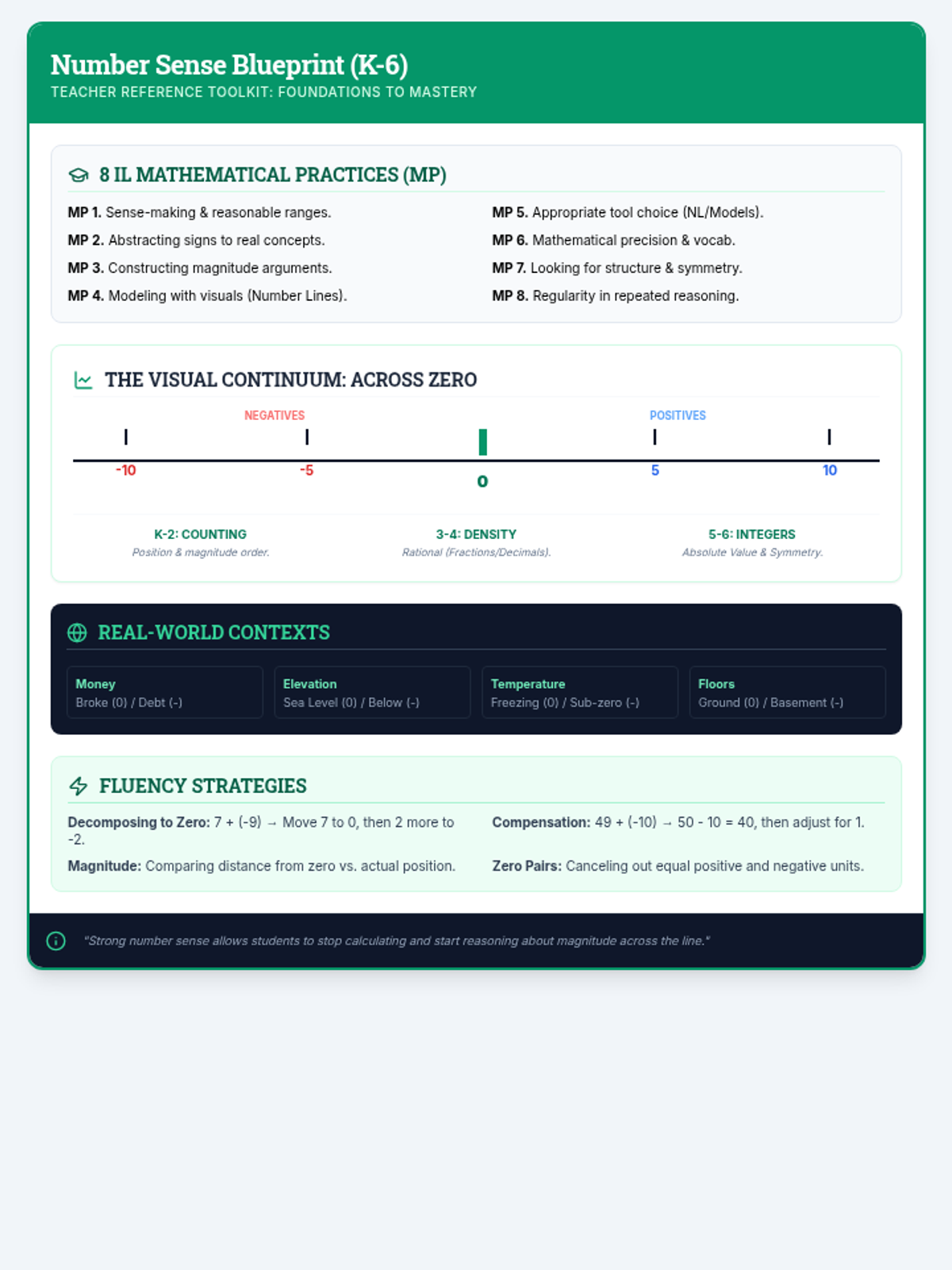
A 50-minute professional development session for K-6 educators focusing on number sense, the visual number line (positive and negative), real-world applications, and the 8 IL Mathematical Practices.
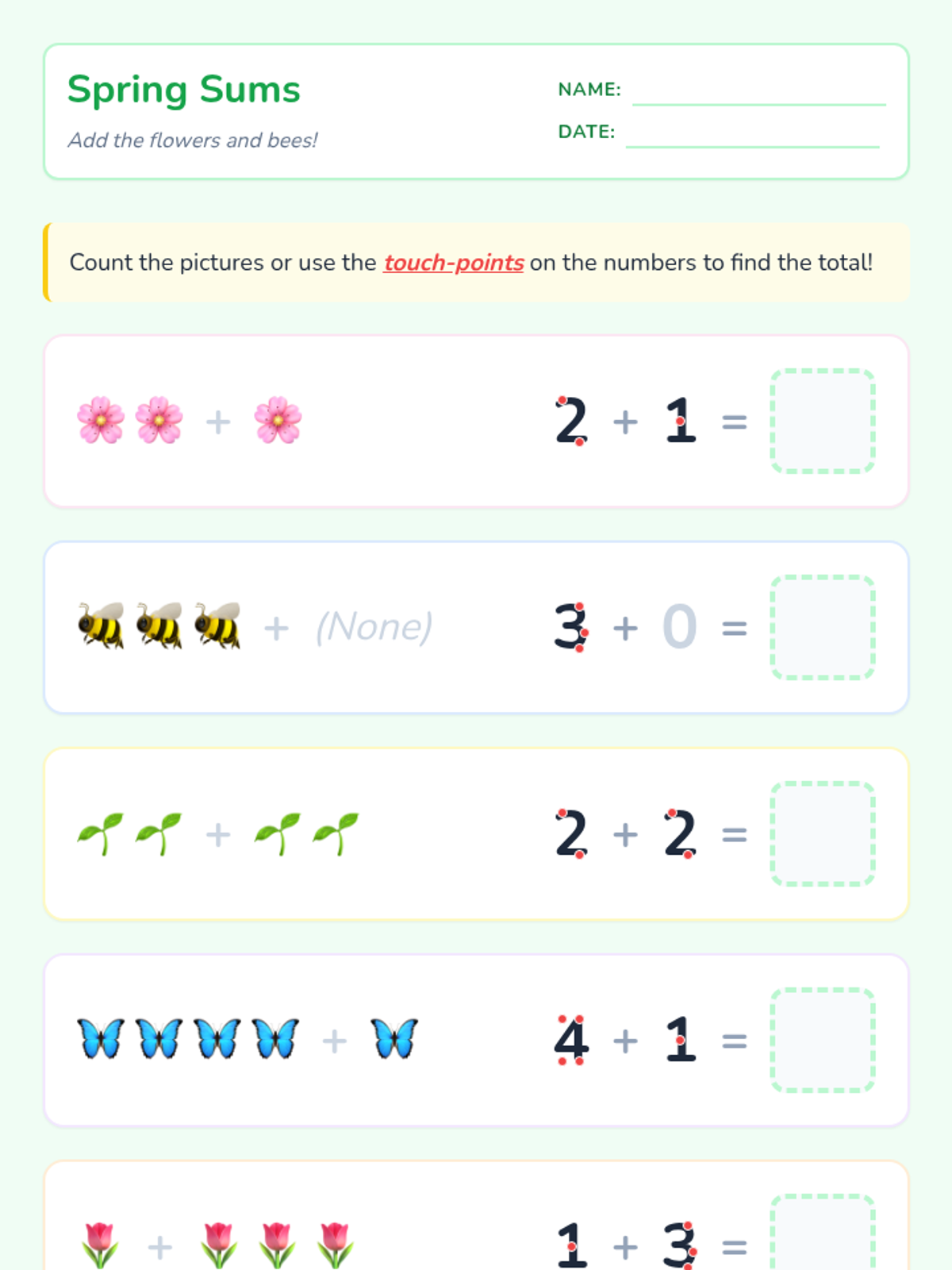
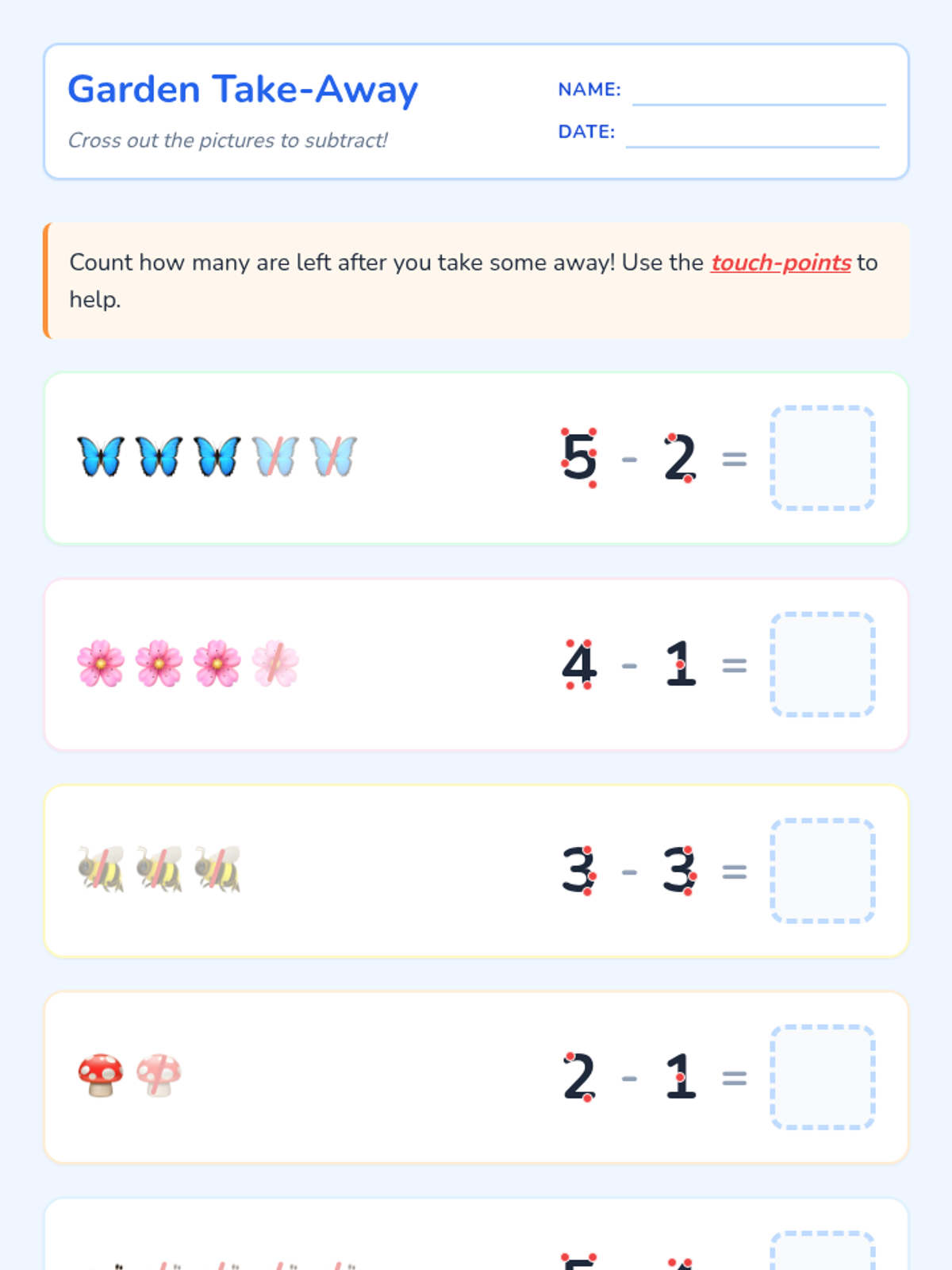
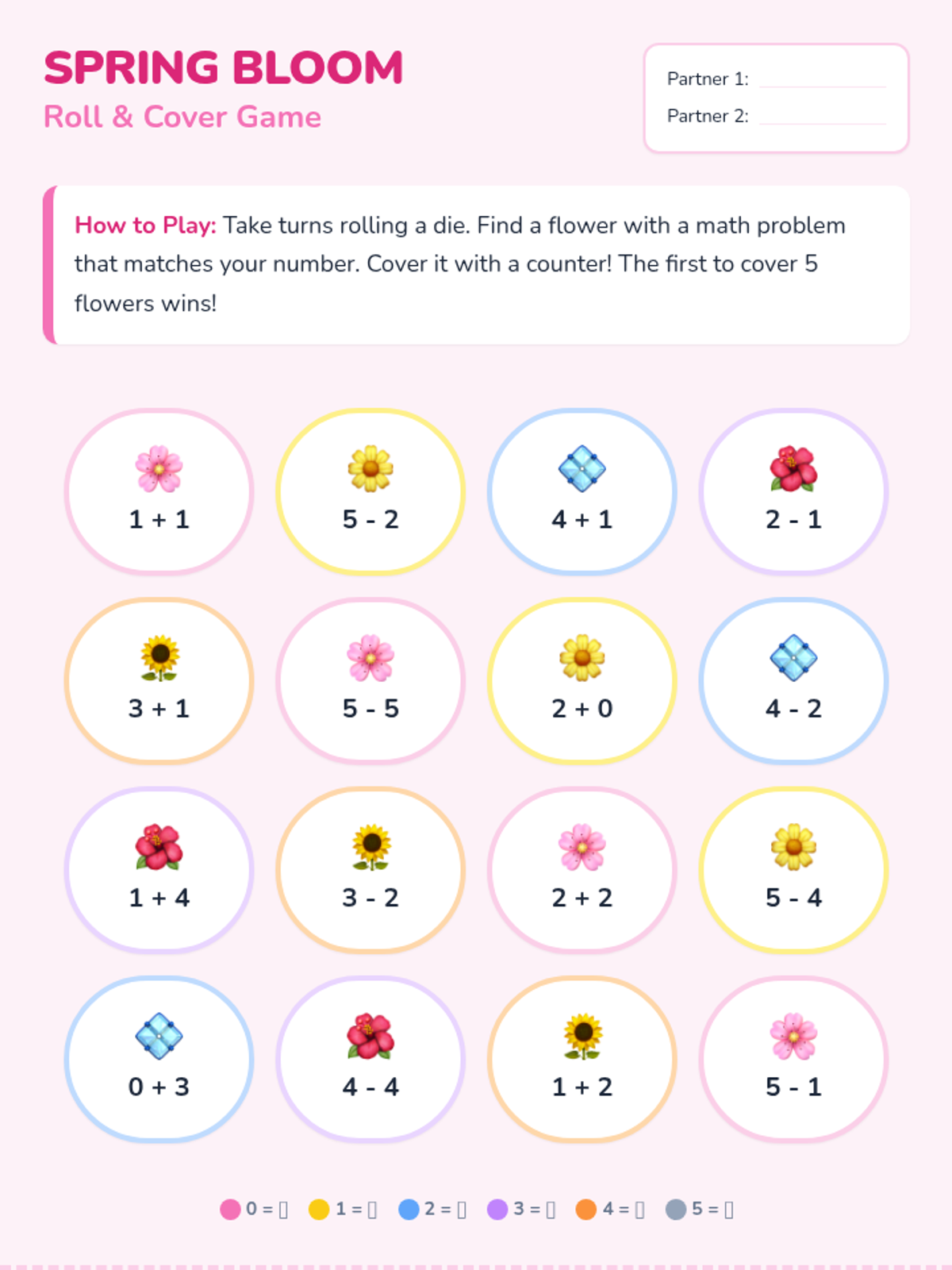
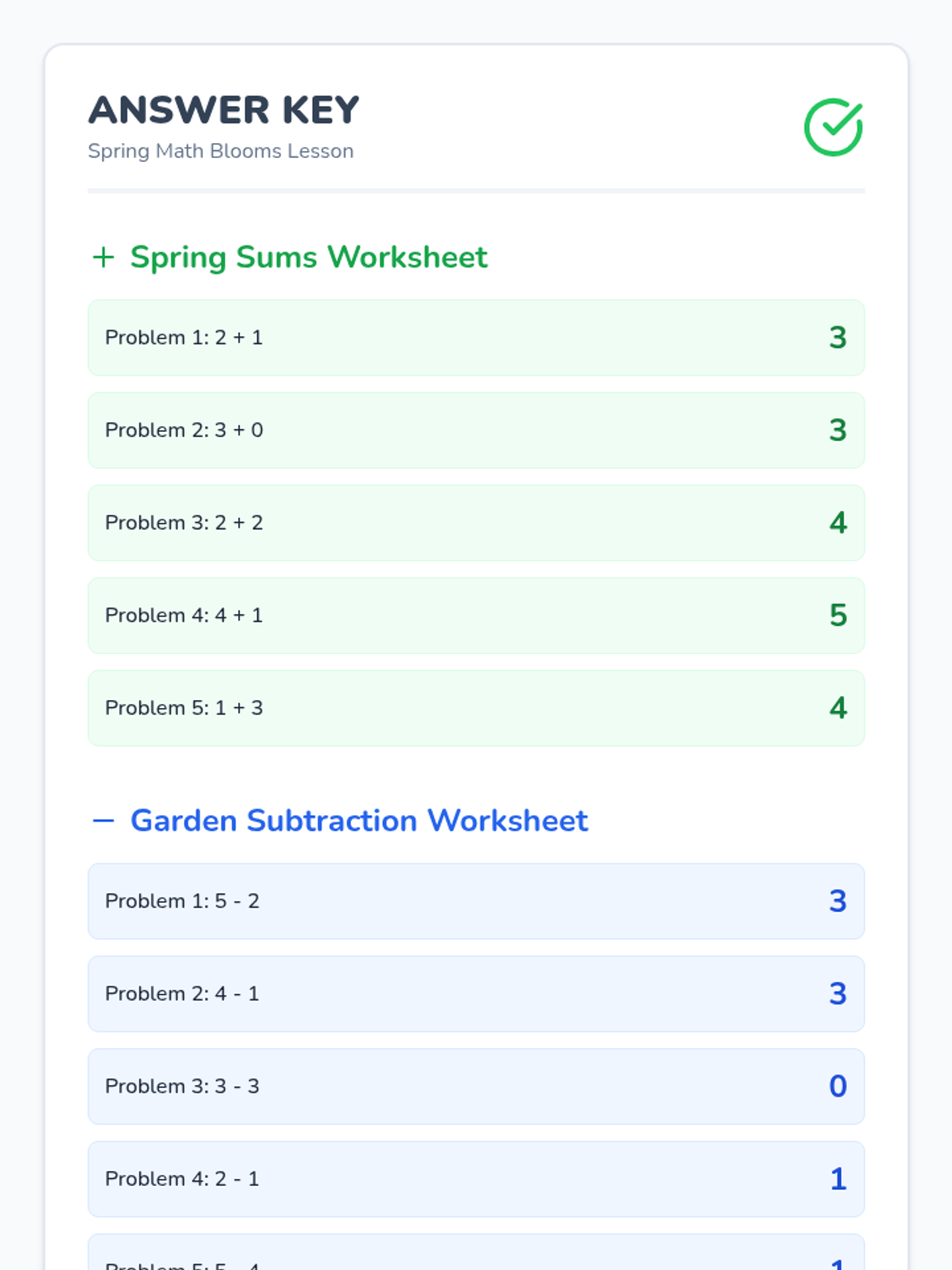
A collection of spring-themed math activities focusing on addition and subtraction within 5 using visual supports like touch-points and pictures. Includes a collaborative partner game to reinforce skills through play.
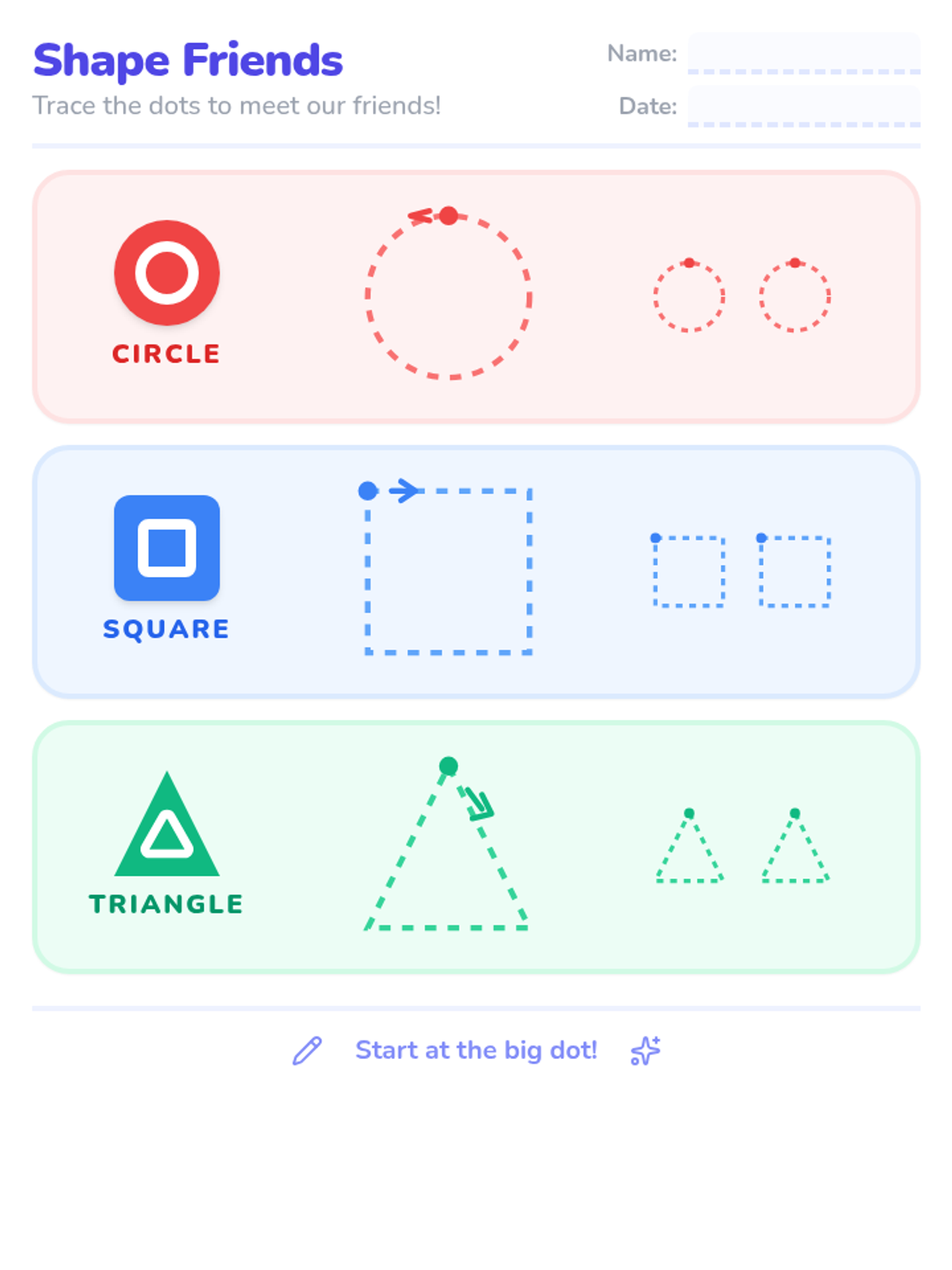
A fun introduction to basic shapes through tracing and recognition activities.
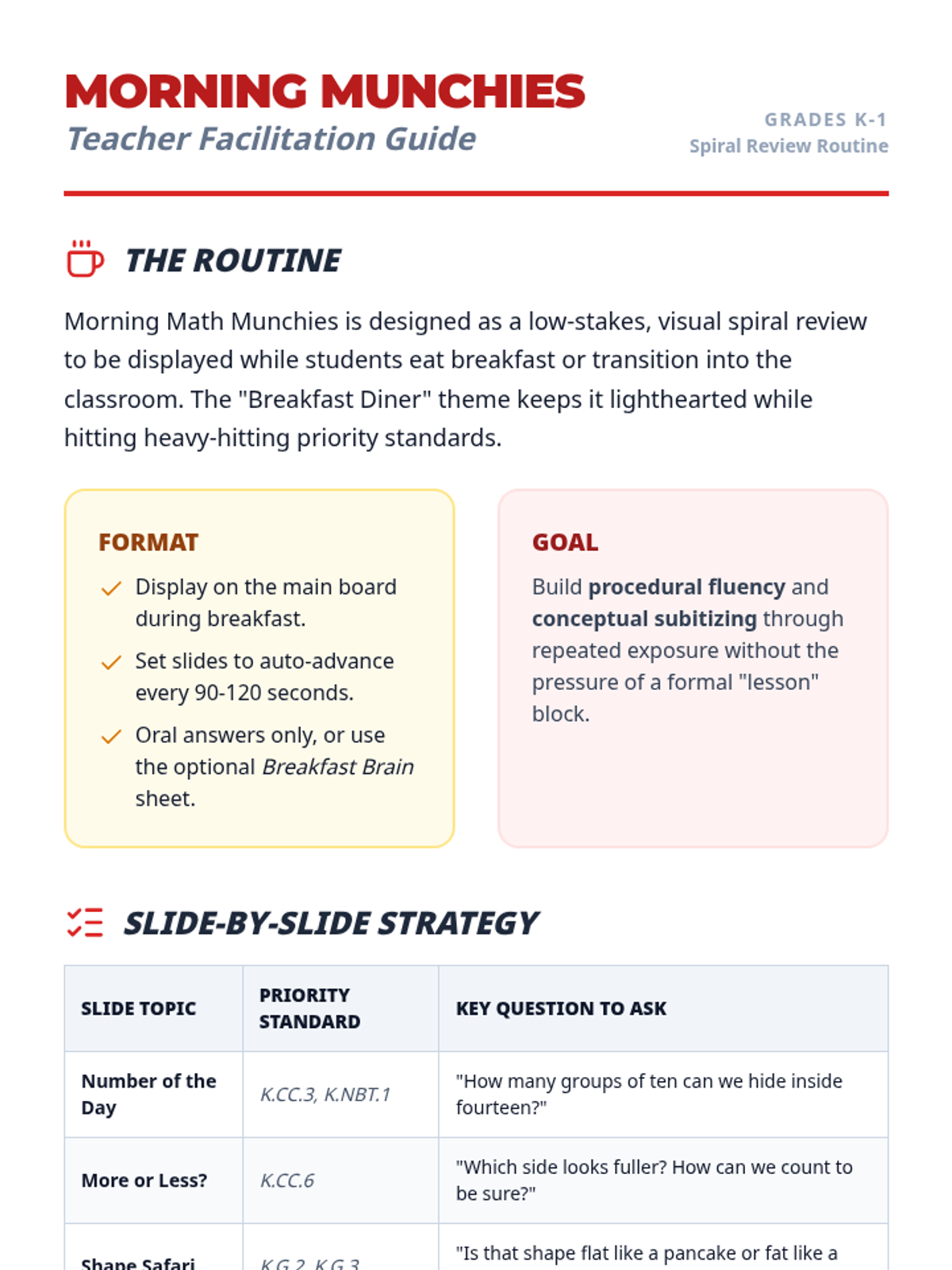
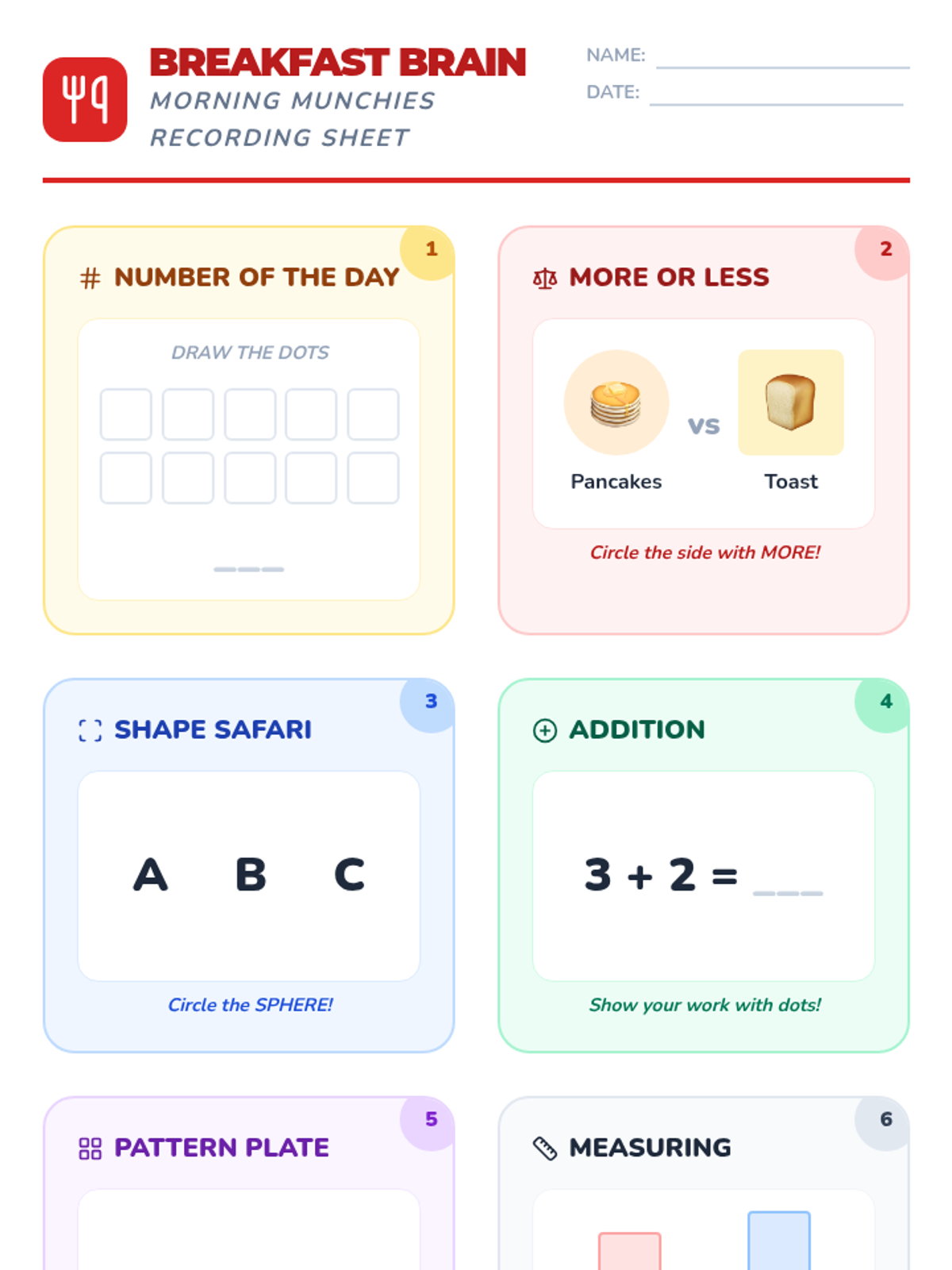
A daily spiral review of priority Kindergarten math standards, designed to be visually engaging and accessible for students to view during breakfast or morning routines.
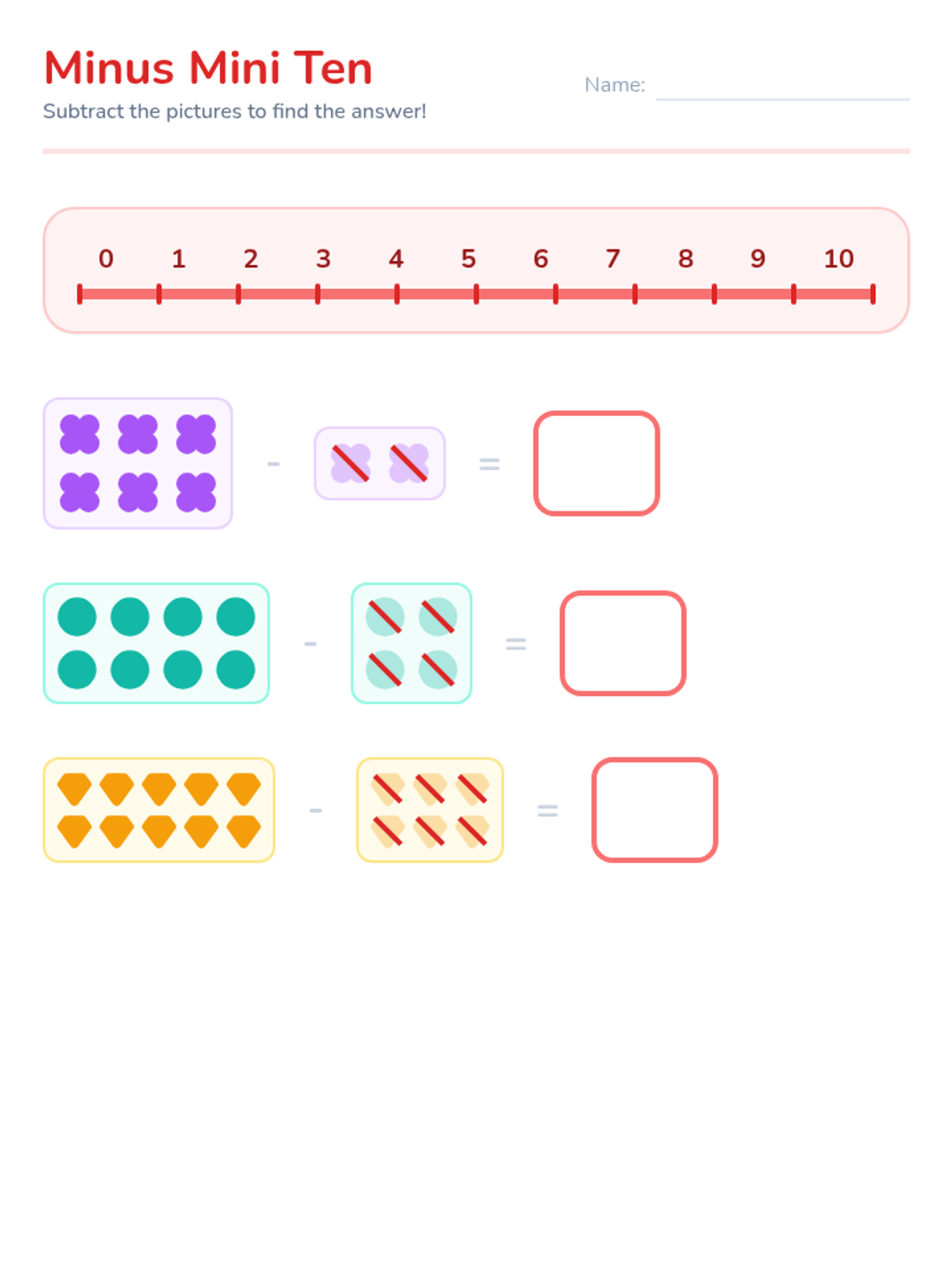
Advanced subtraction practice using numbers up to 10. Students master the concept of taking away through visual problems and number line counting.
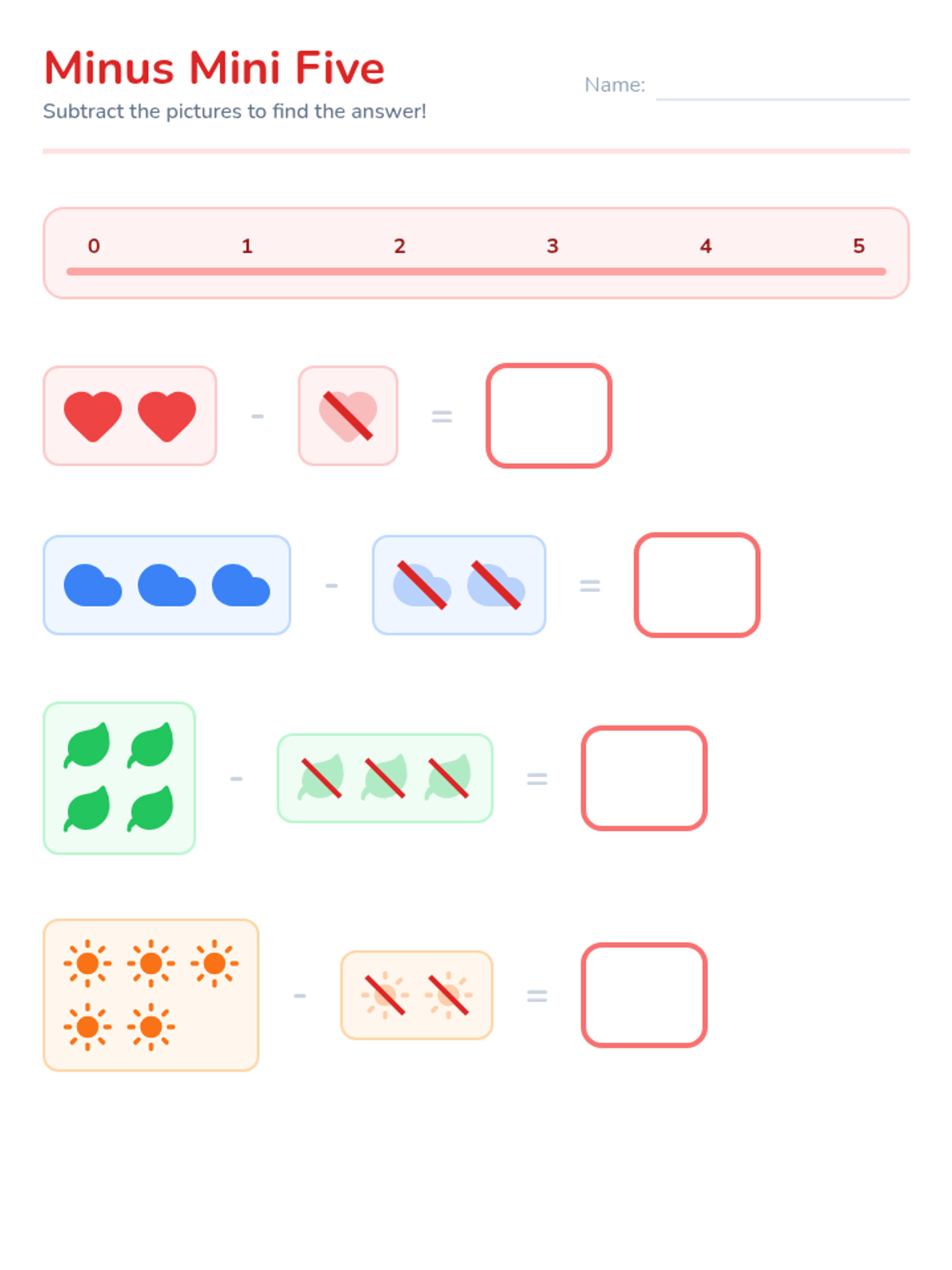
Introducing subtraction by 'taking away' items from a group of 5 or less. Visual cross-outs help students see the remaining quantity.
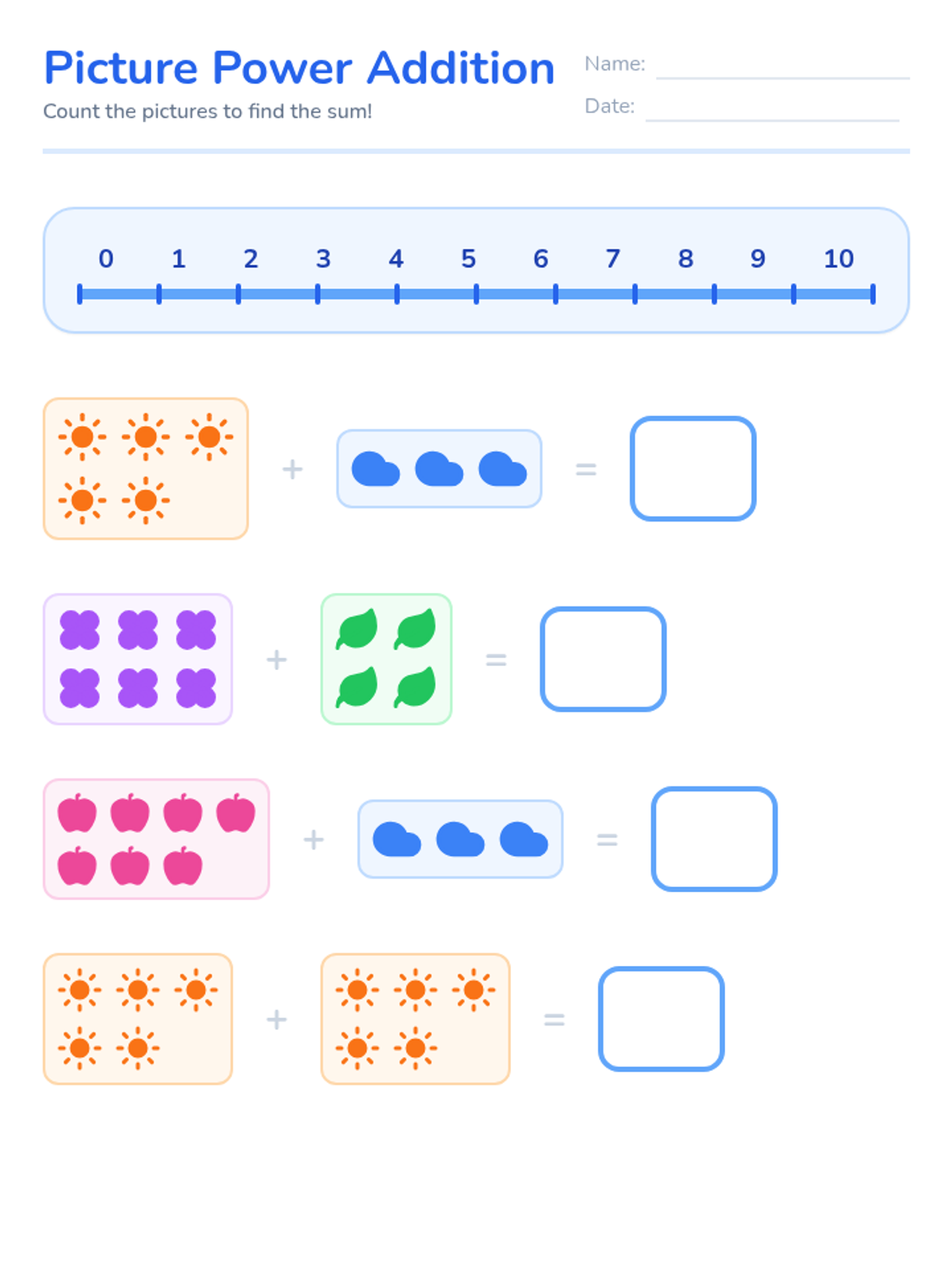
Expanding addition skills to sums up to 10. Students use a variety of icons and color-coding to solve larger addition problems and use number lines for support.
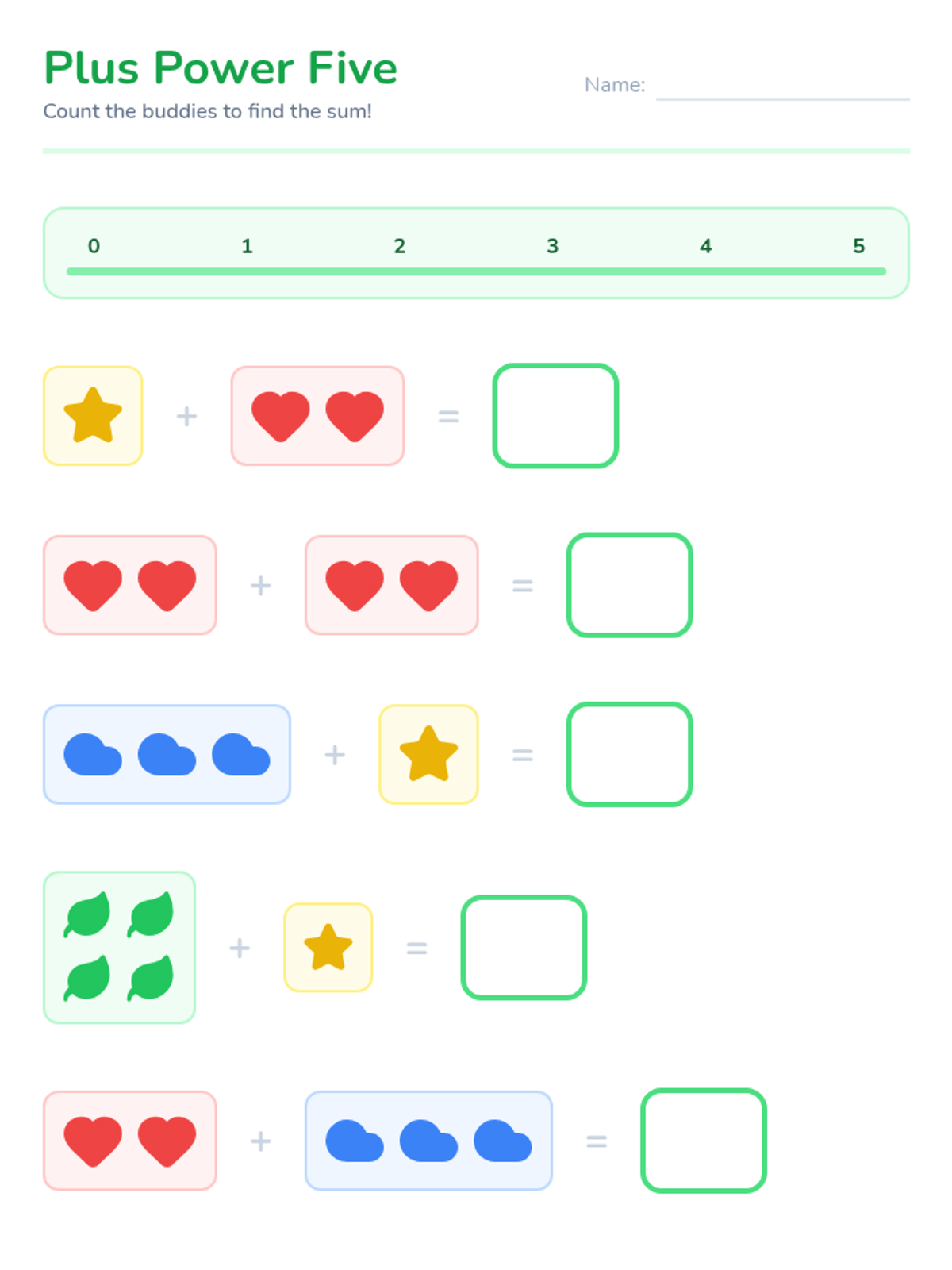
Introducing the concept of addition using visual groups and colors for sums up to 5. Students use icons to see how two small groups become one larger group.
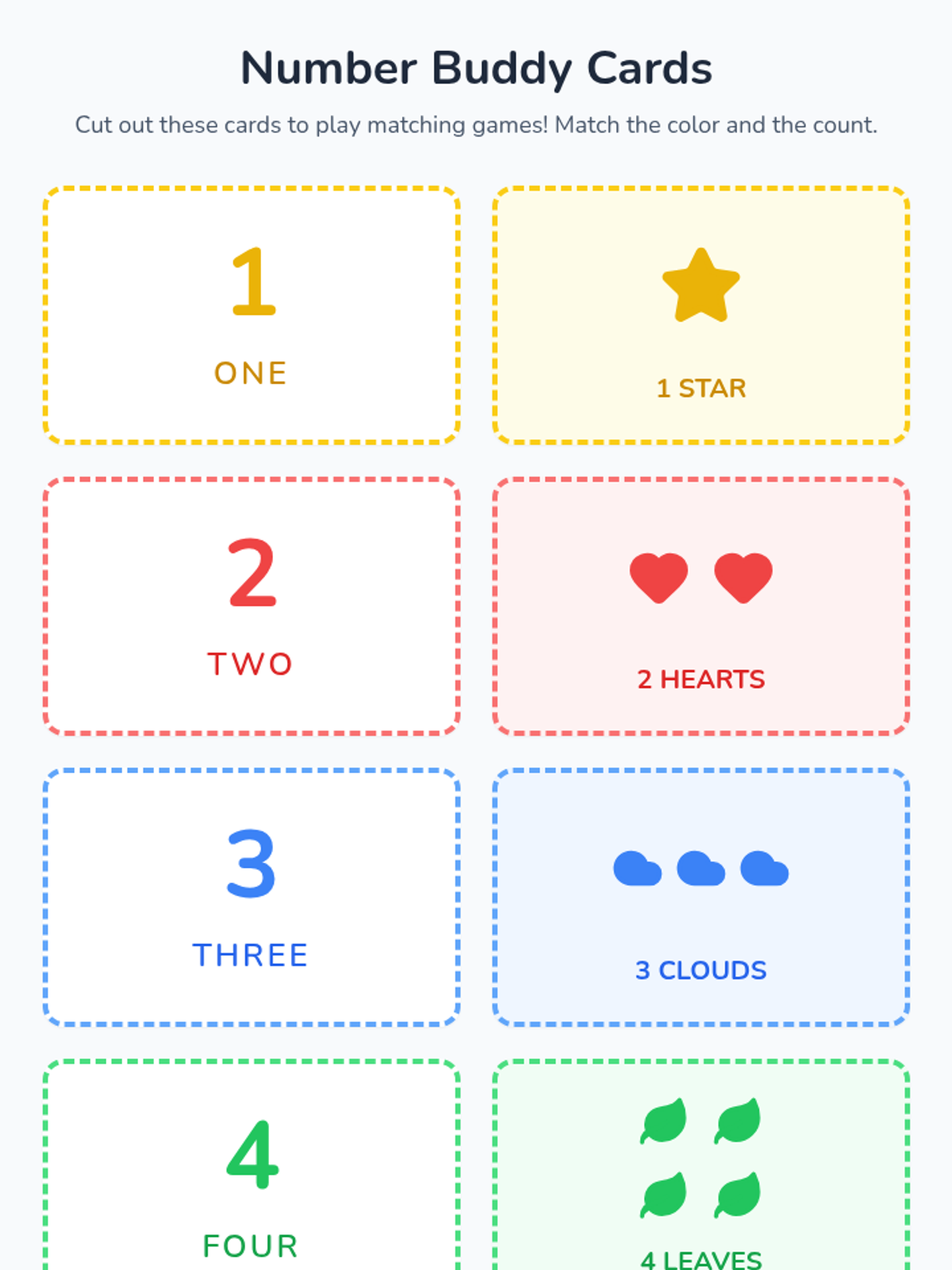
A fun introduction to the numbers 1-10 through matching and visual recognition. Students use color-coded cards to connect numerals with sets of objects.
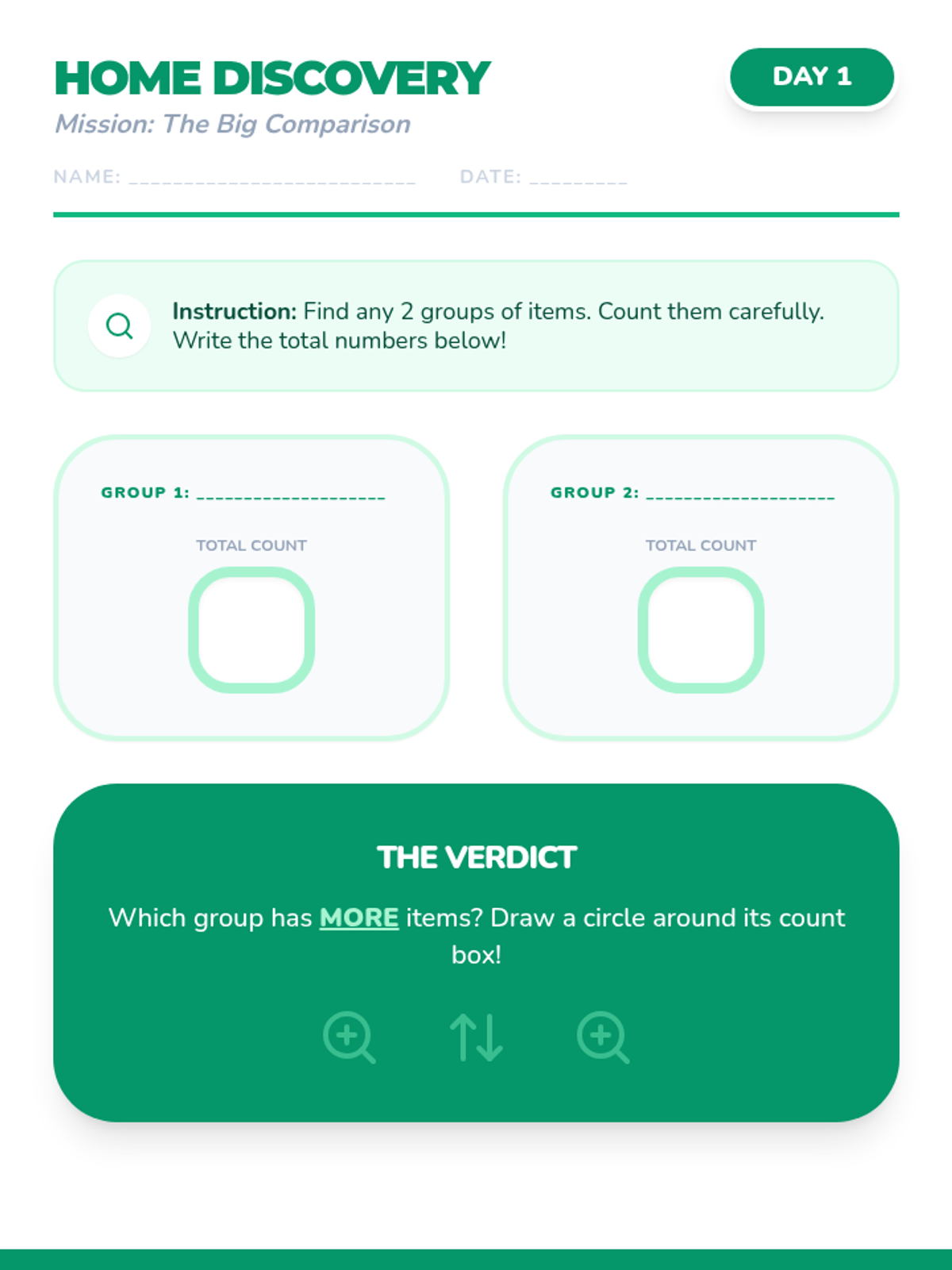
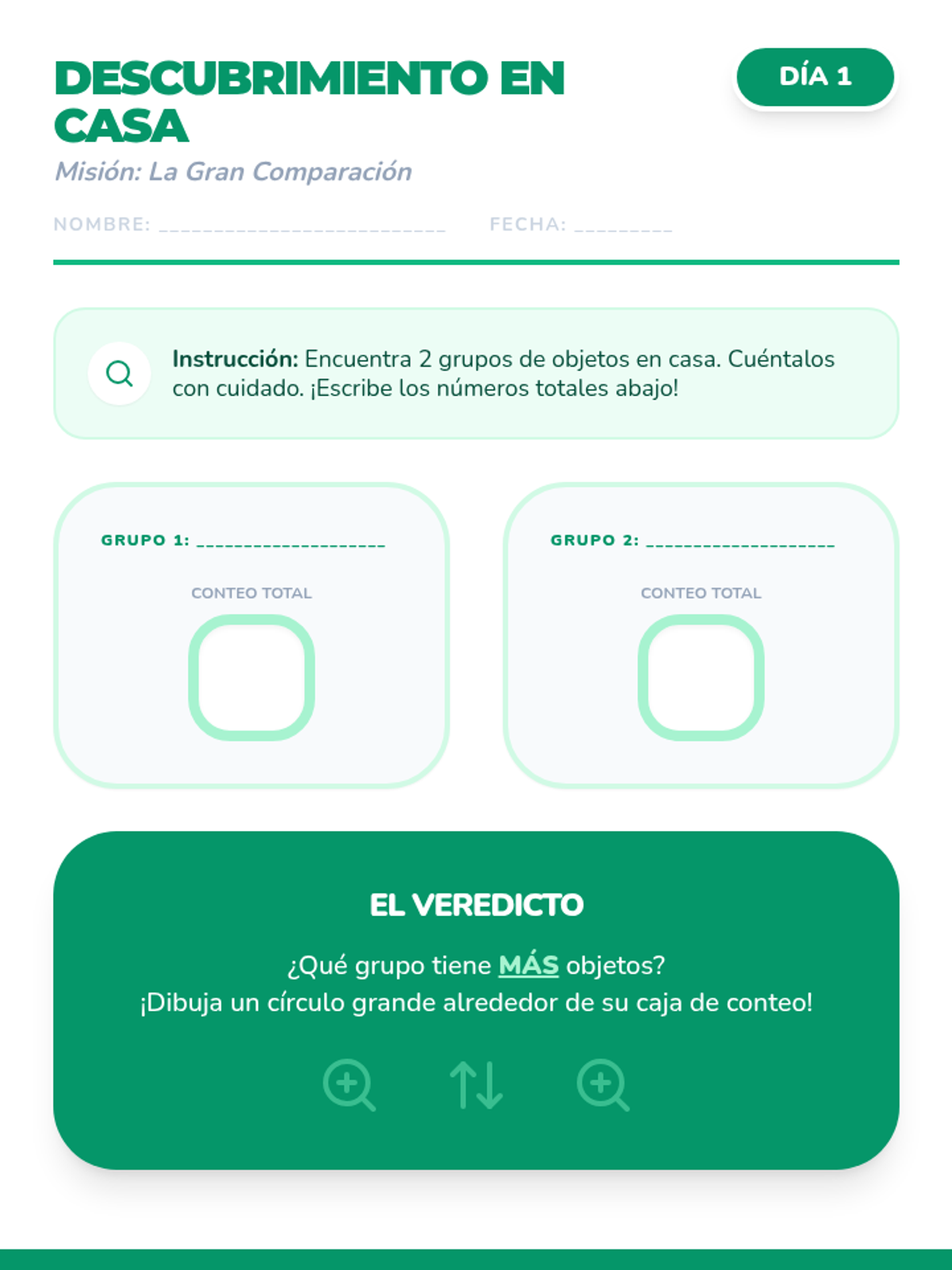
A 5-day homework series focused on one-to-one correspondence, comparing quantities, and number identification through daily household scavenger hunts.
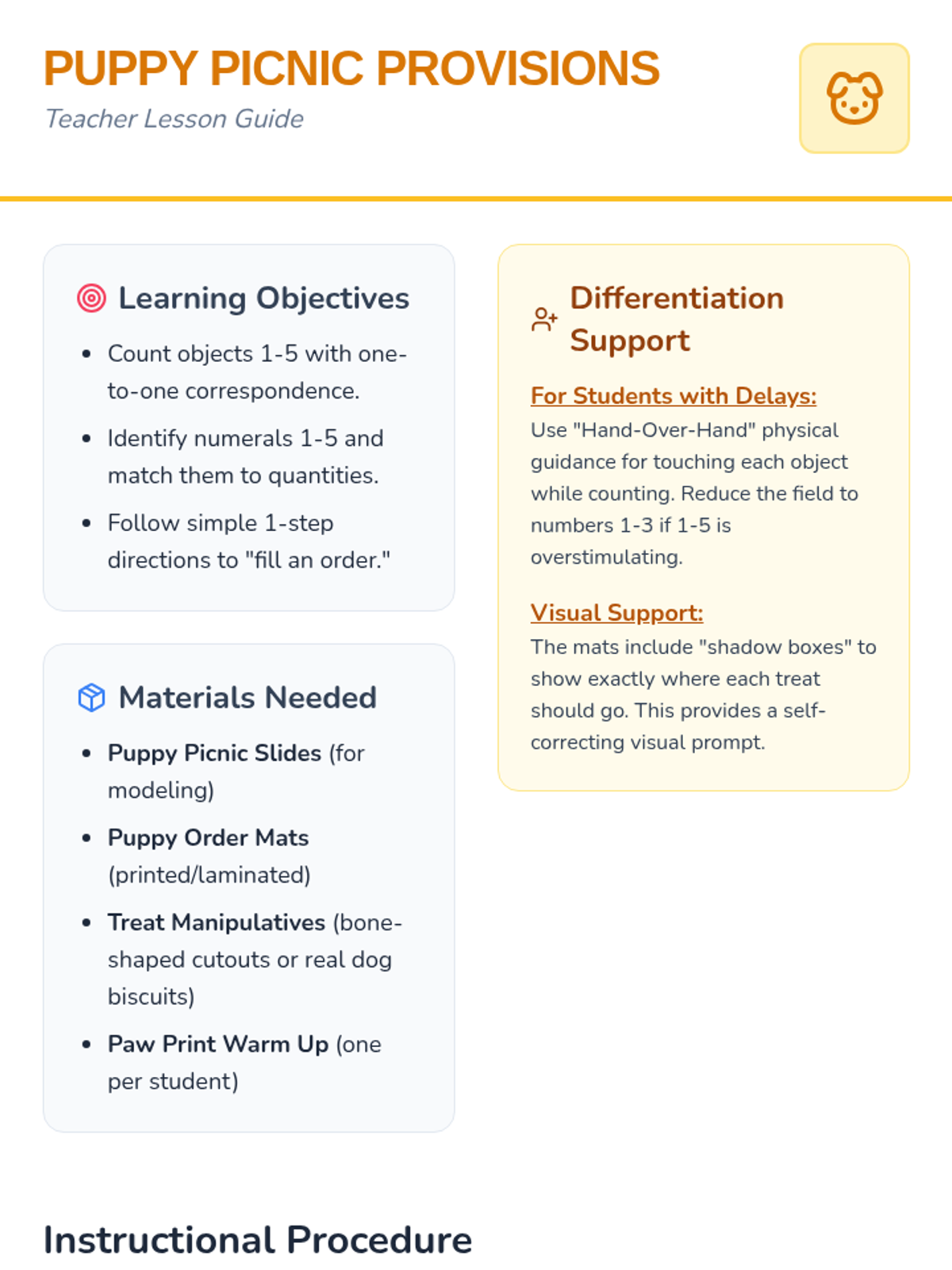
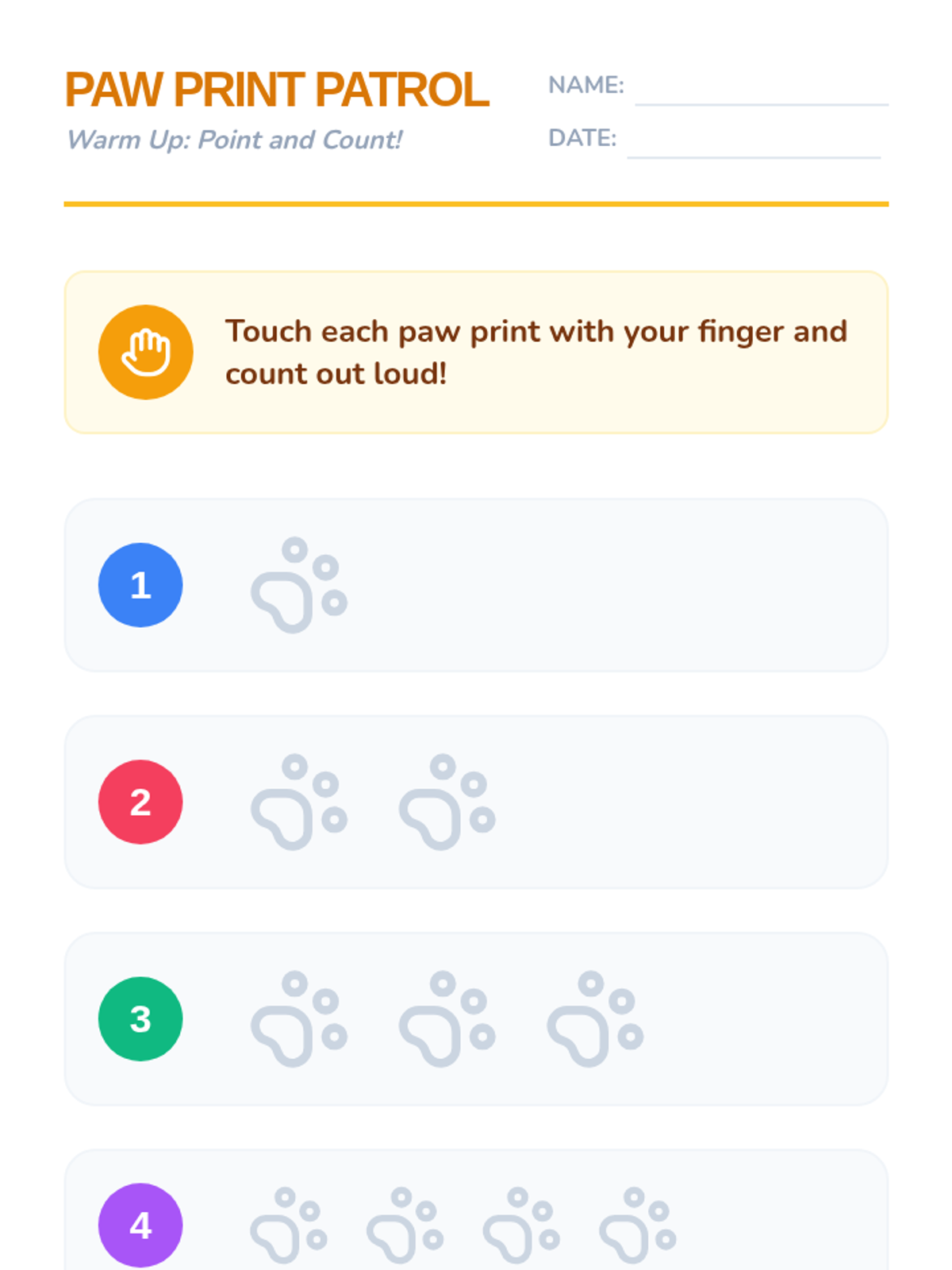
A hands-on numeracy lesson for Pre-K students focused on counting 1-5 and one-to-one correspondence through a playful puppy picnic theme. Students use visual mats and 'treat' manipulatives to fulfill specific orders for their puppy friends.
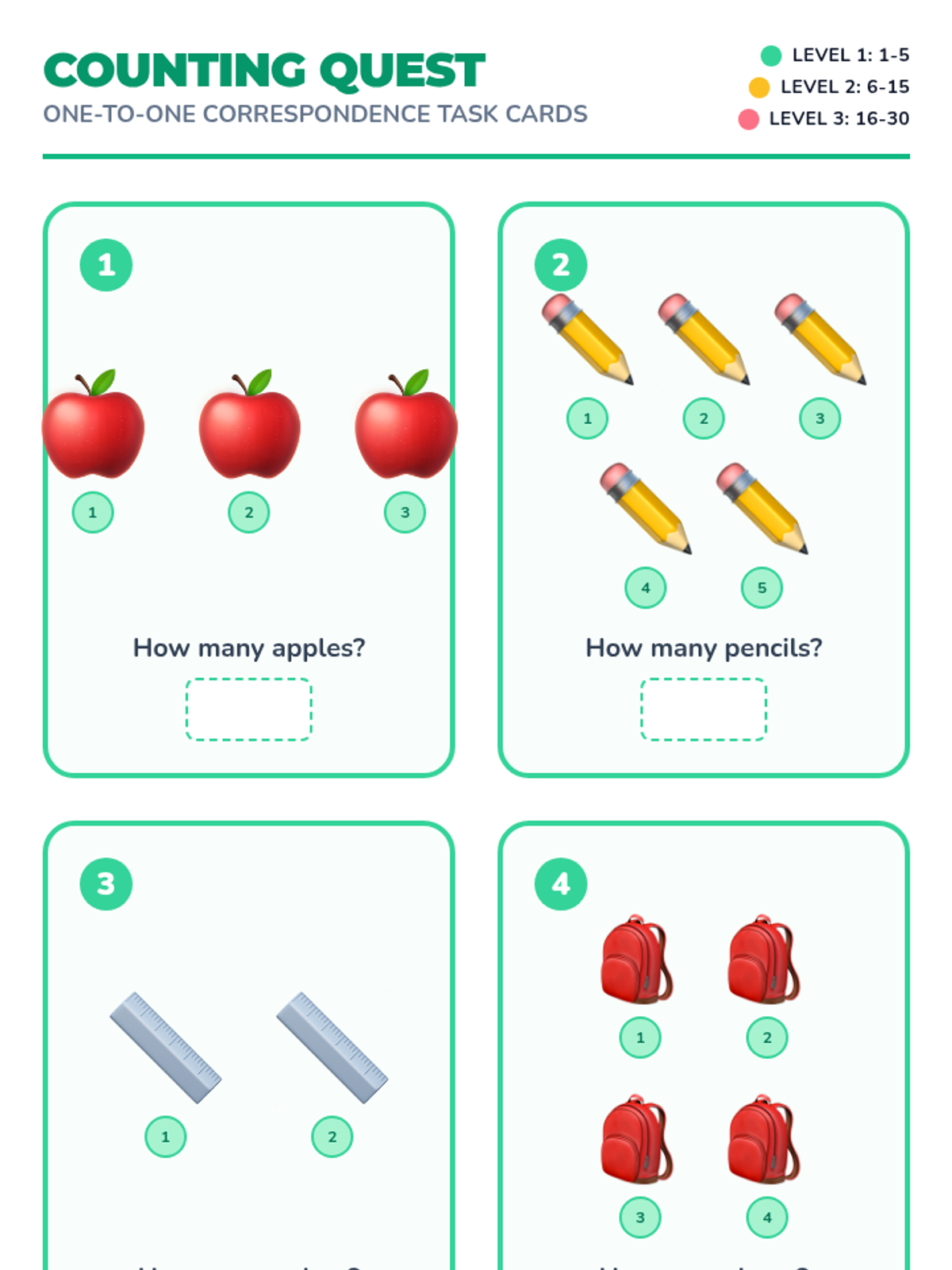
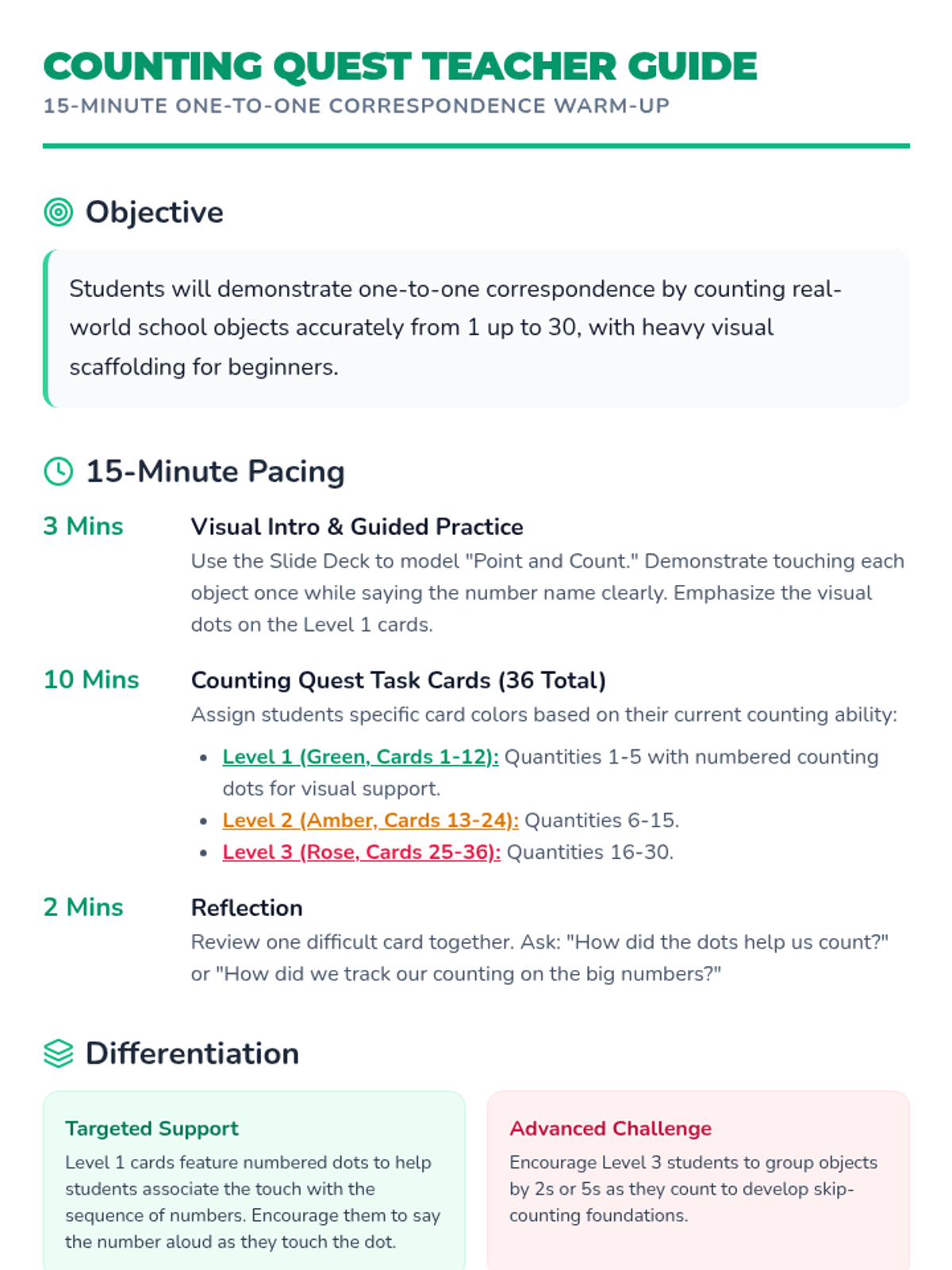
A quick 15-minute warm-up activity where students practice one-to-one correspondence by counting school-themed objects. The lesson is scaffolded with three levels of difficulty, ranging from numbers 1-5 to numbers up to 30.
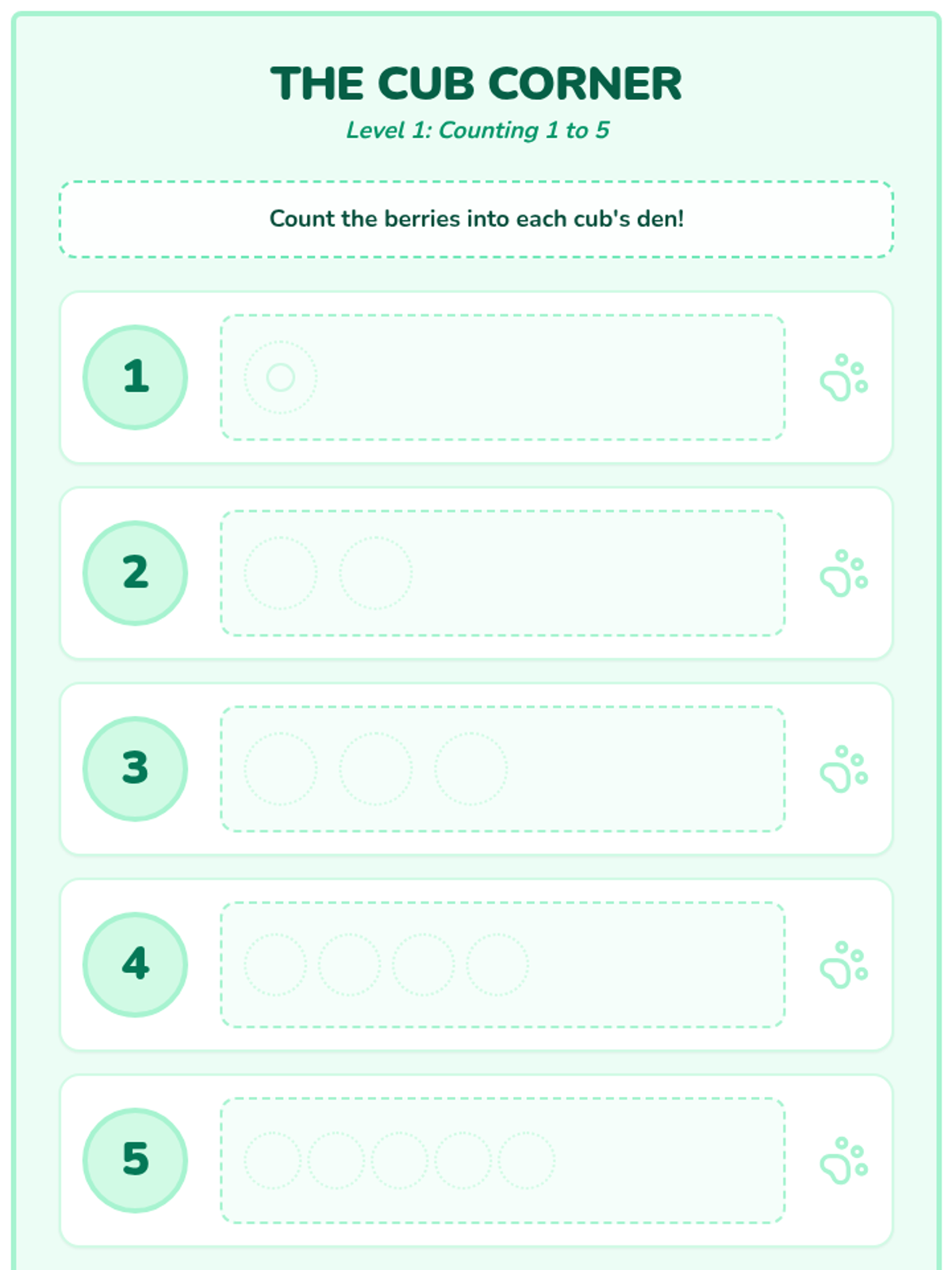
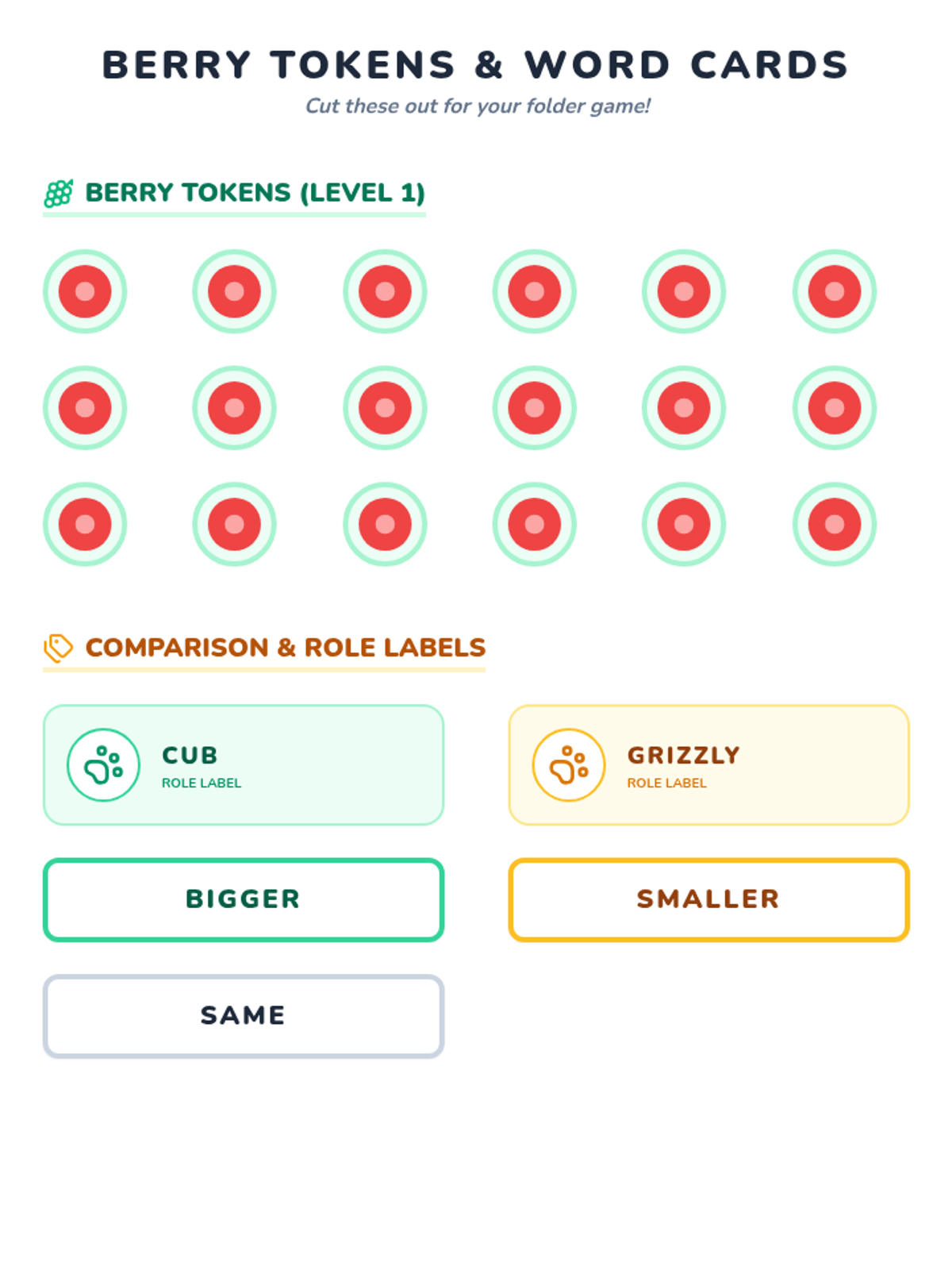
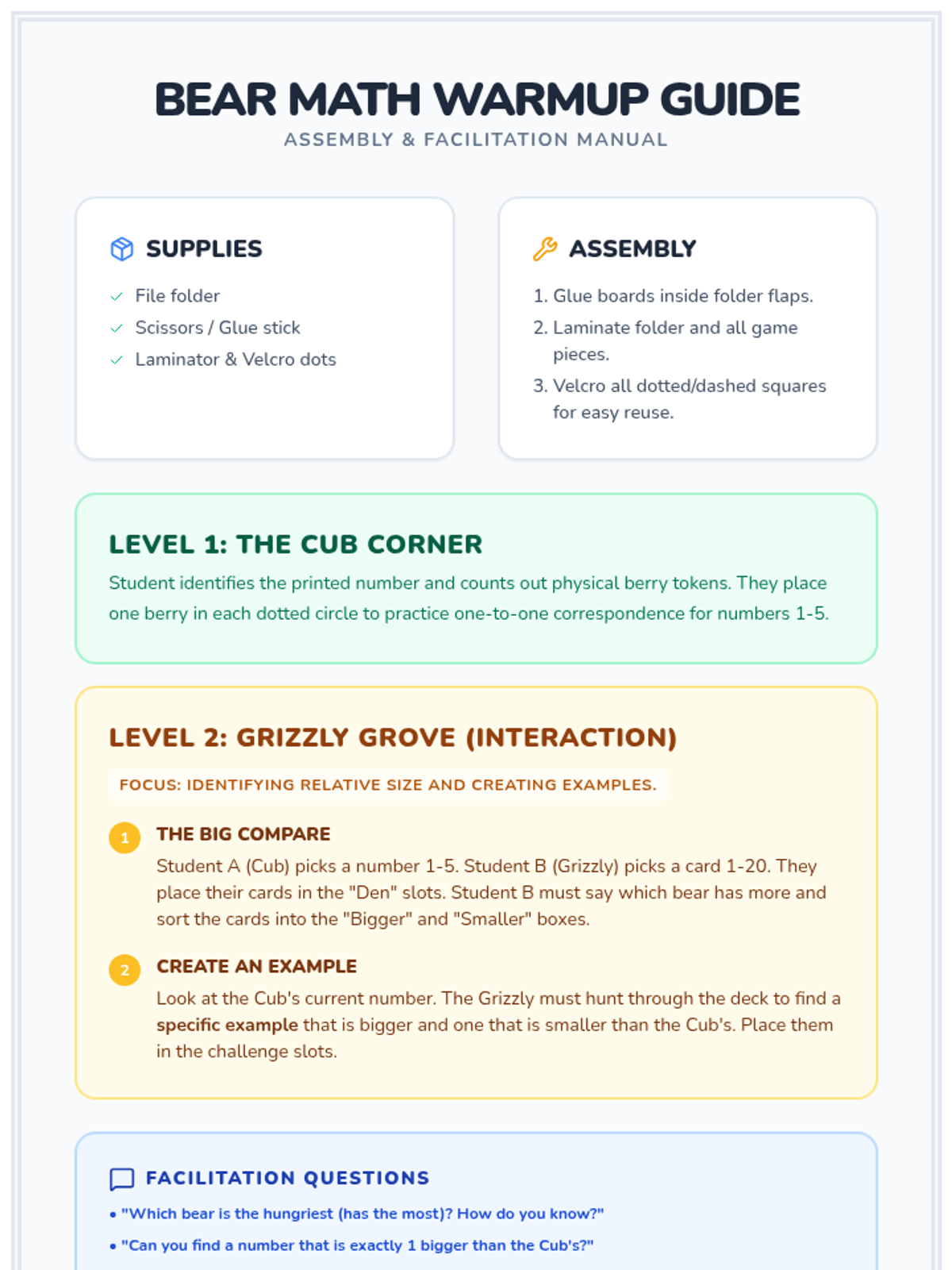
A bear-themed file folder game designed for differentiated morning warm-ups, focusing on one-to-one correspondence (1-5) and number comparison (up to 20).
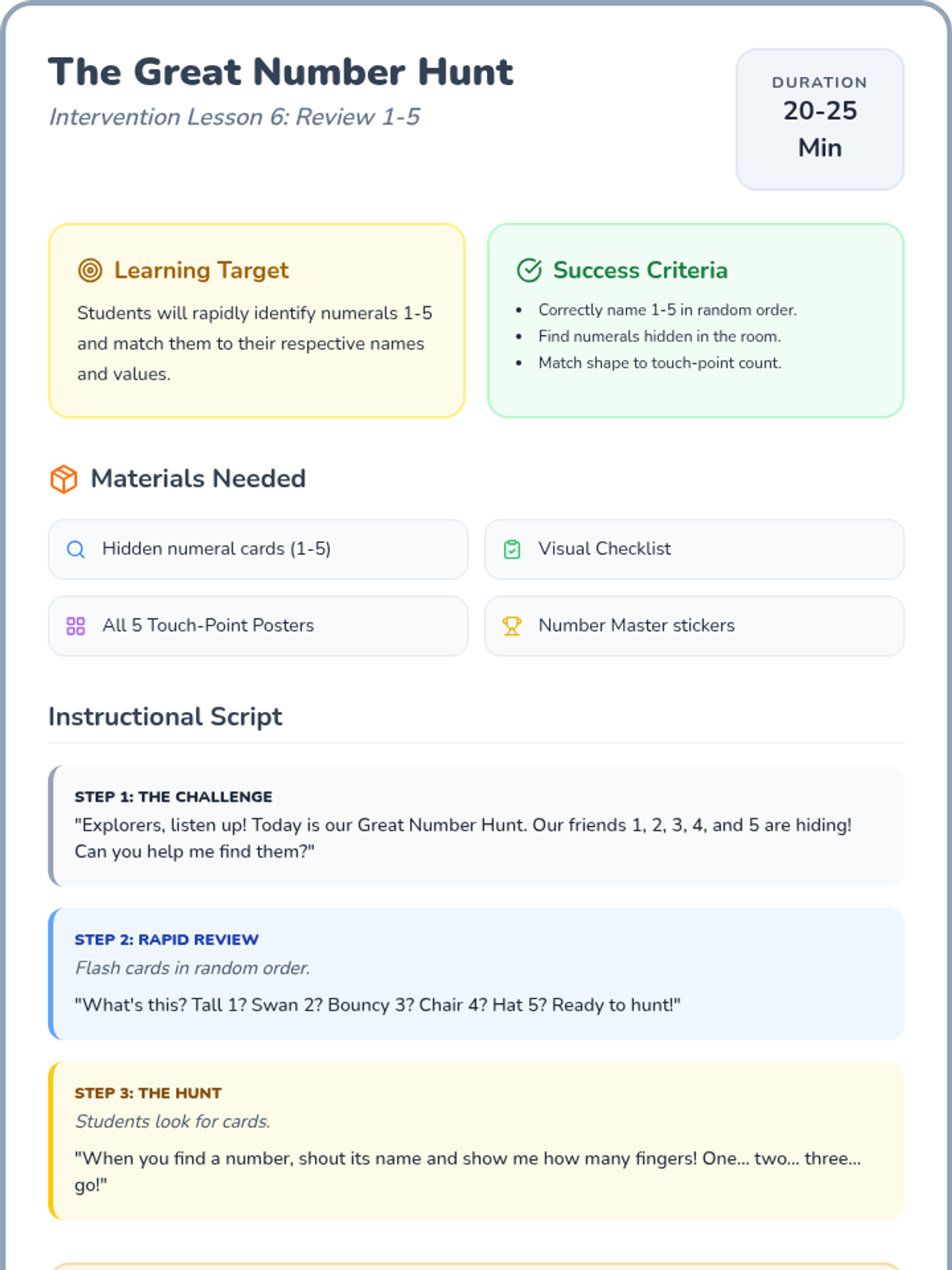
A comprehensive review of numerals 1-5, focusing on rapid identification and matching names to shapes through a 'scavenger hunt' format.
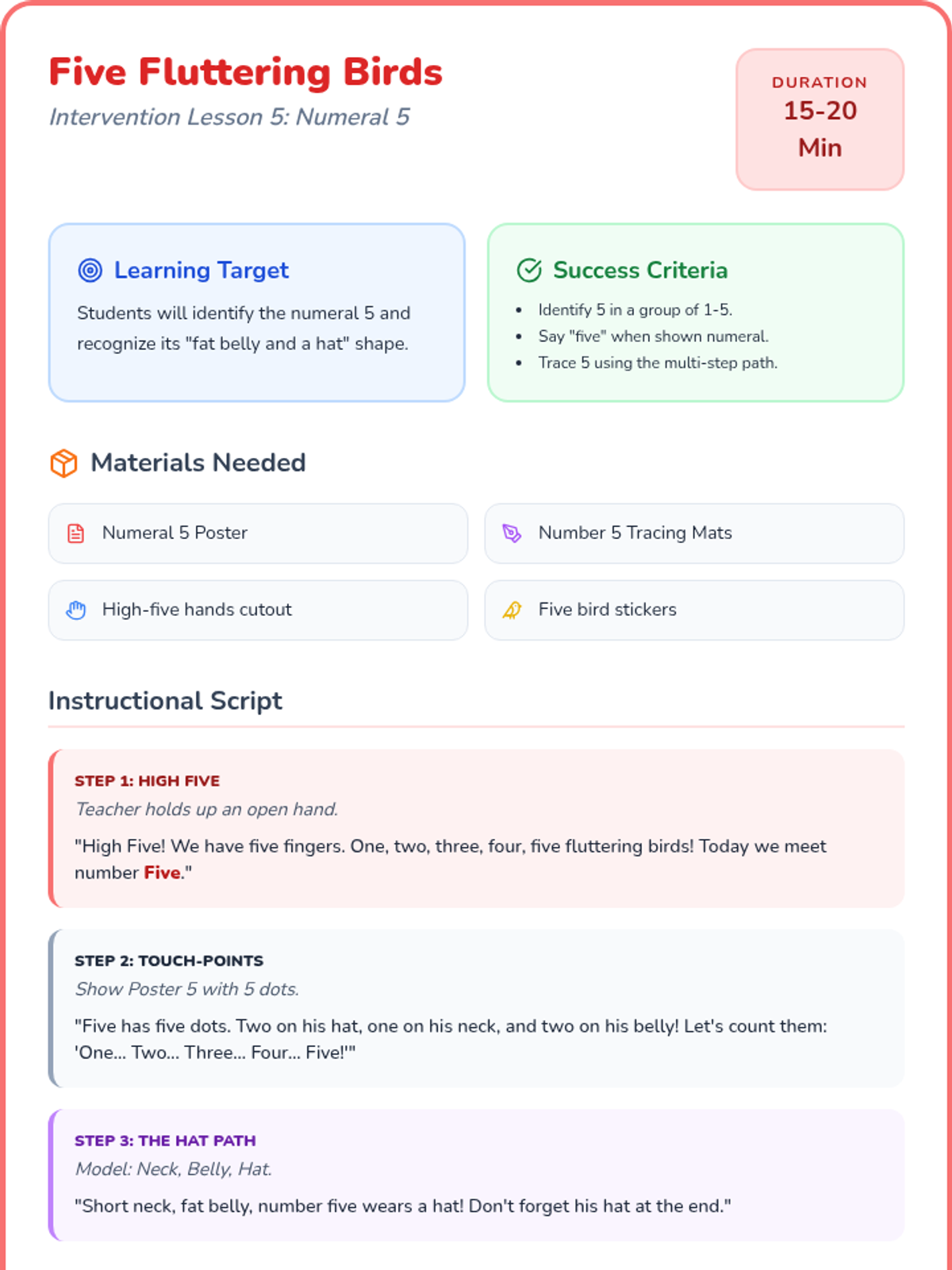
Introduction to the numeral 5, focusing on its unique shape and five touch-points using 'high-five' analogies and bird imagery.
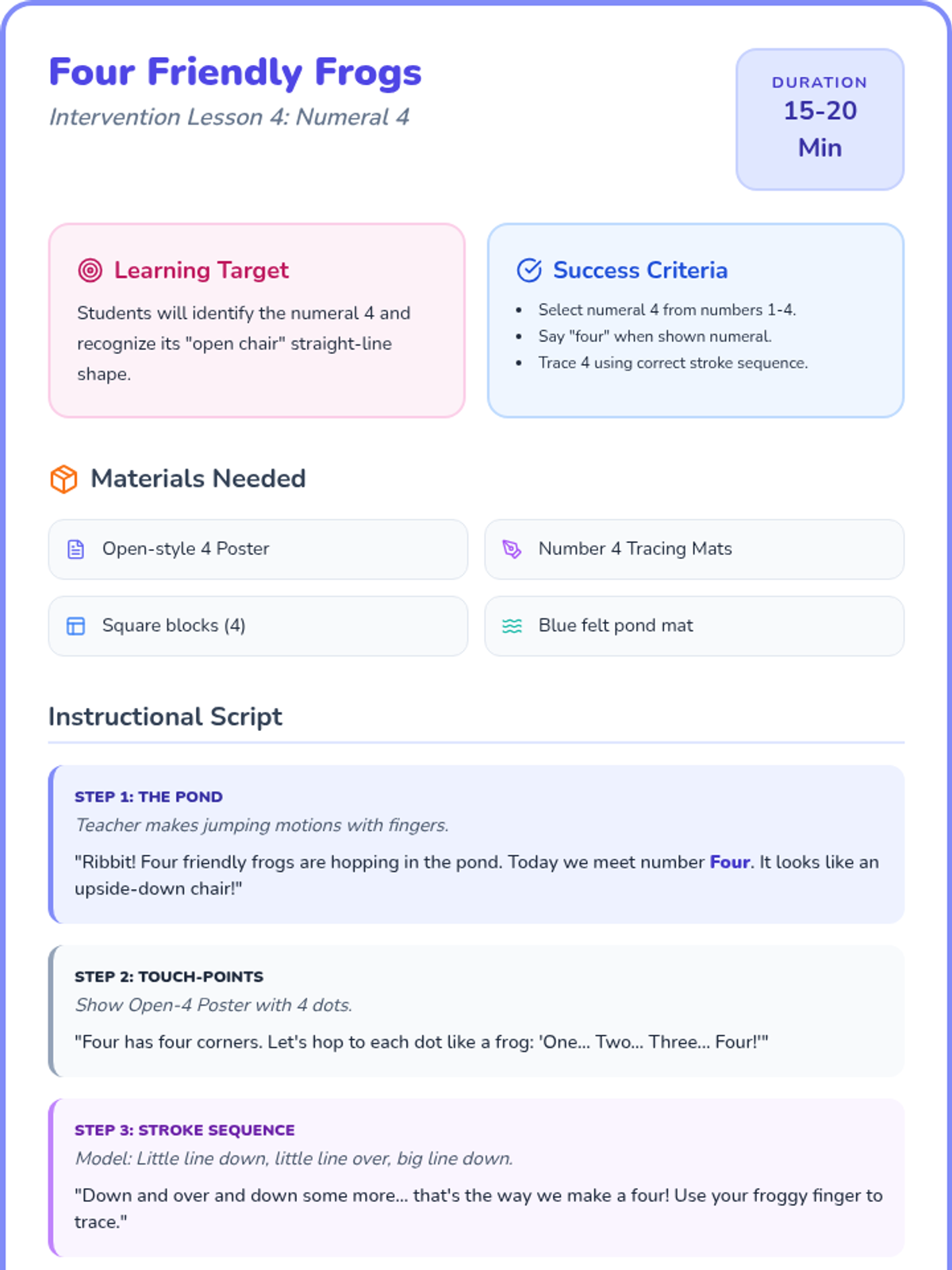
Discovering the numeral 4, teaching its straight lines and four distinct touch-points with a friendly frog theme.
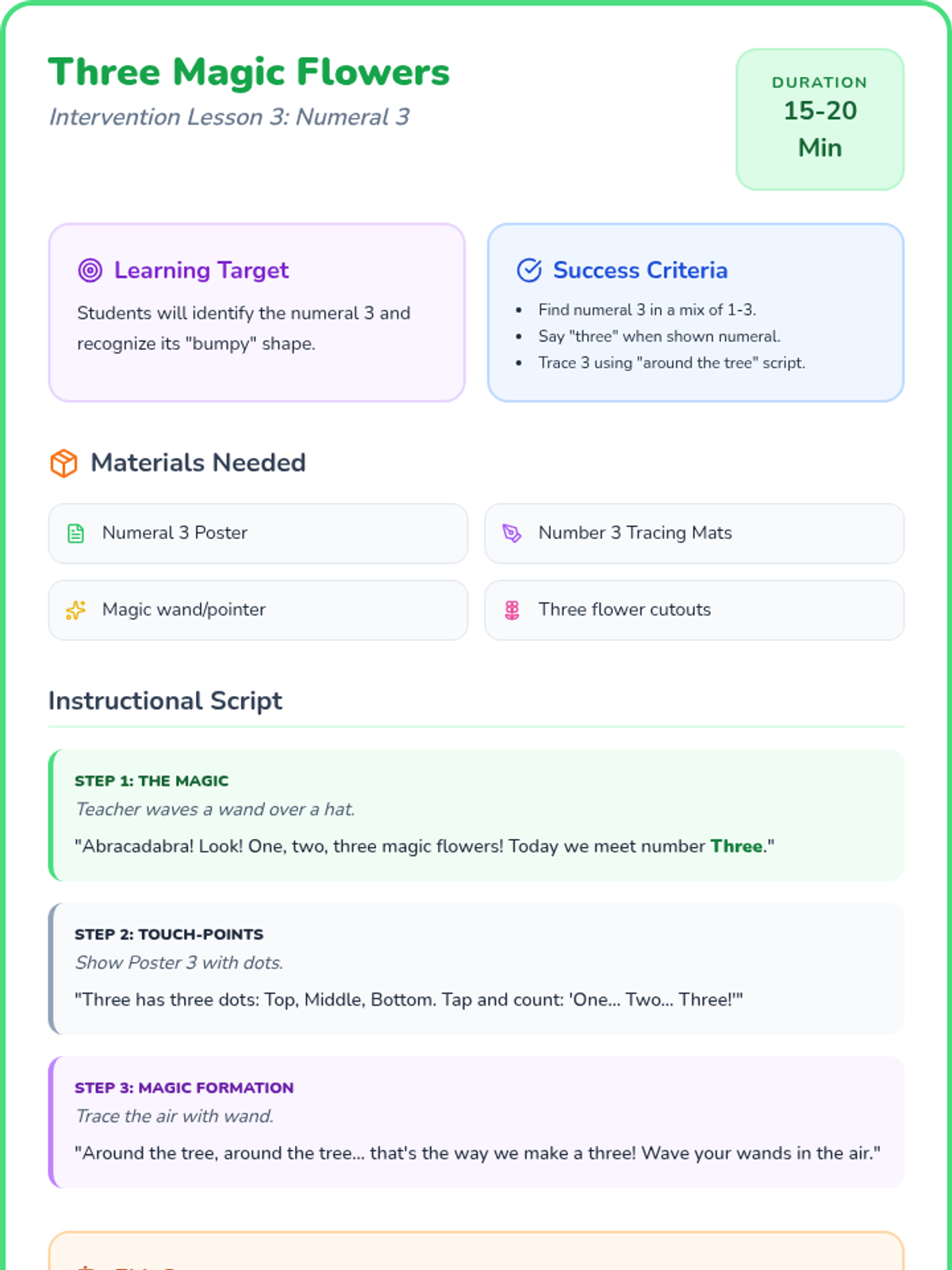
Exploring the numeral 3, focusing on its identifying features and the three touch-points in a 'magic' themed lesson.
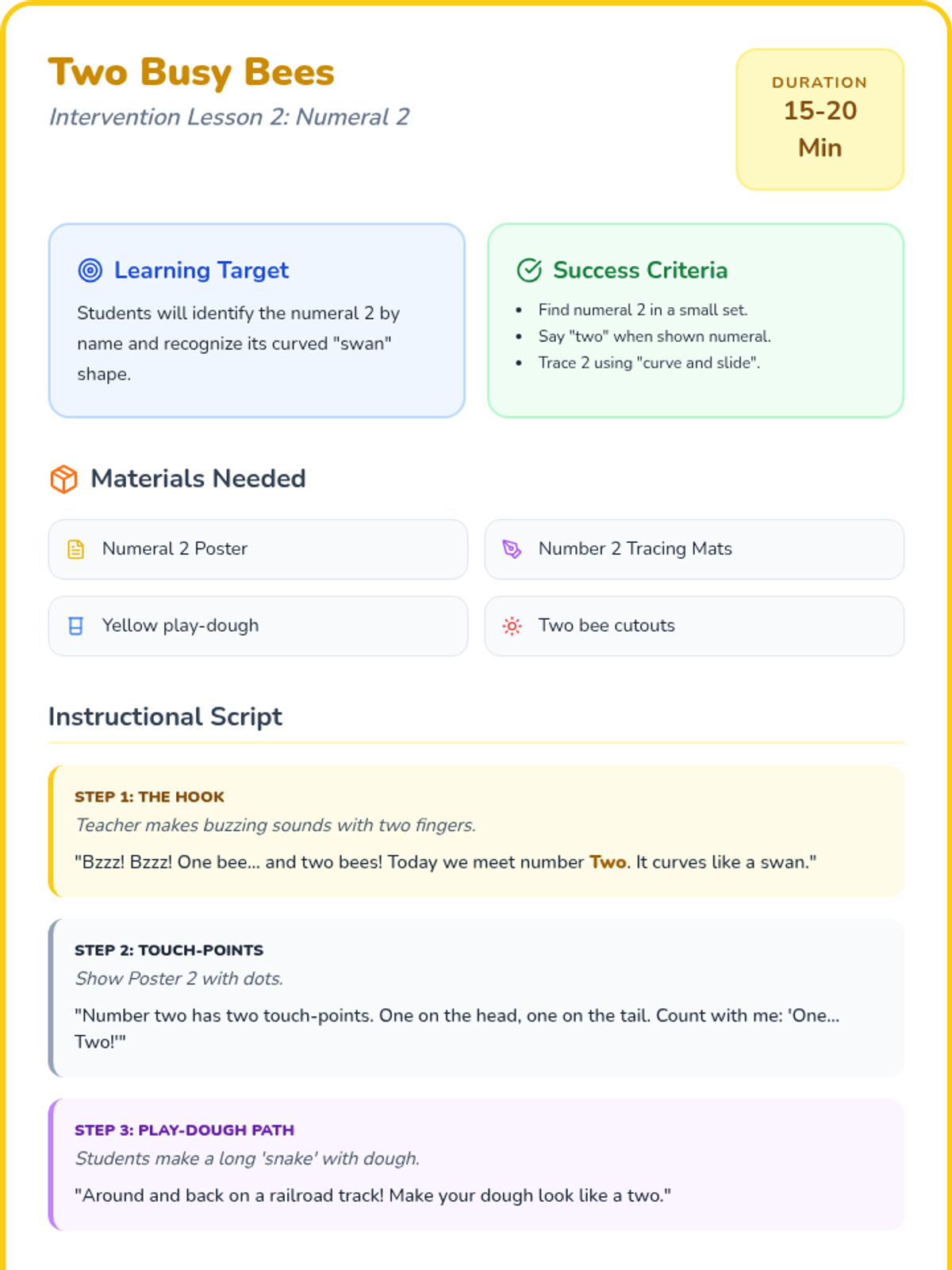
Introduction to the numeral 2, emphasizing its curved shape and the two touch-points through interactive storytelling.
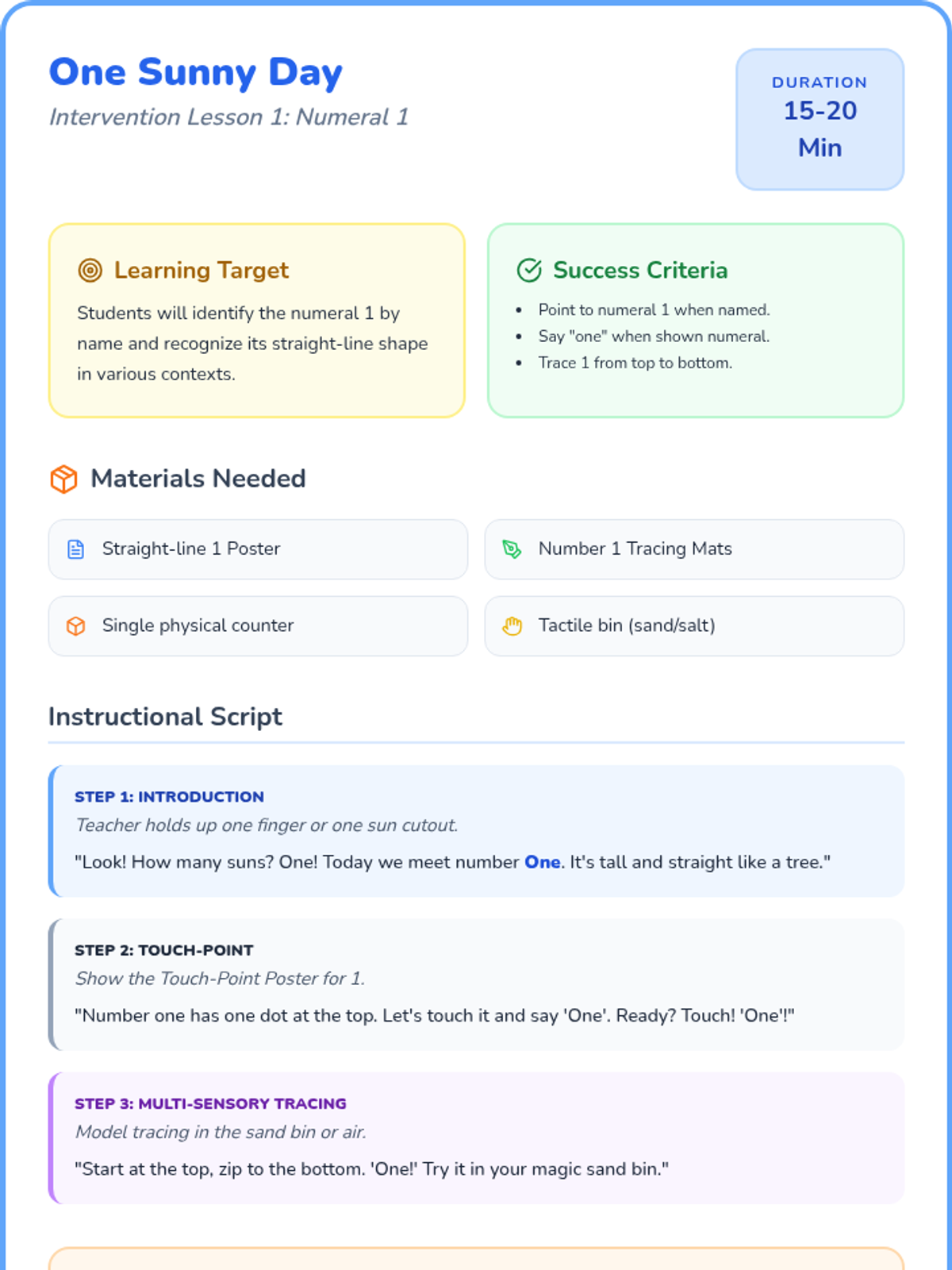
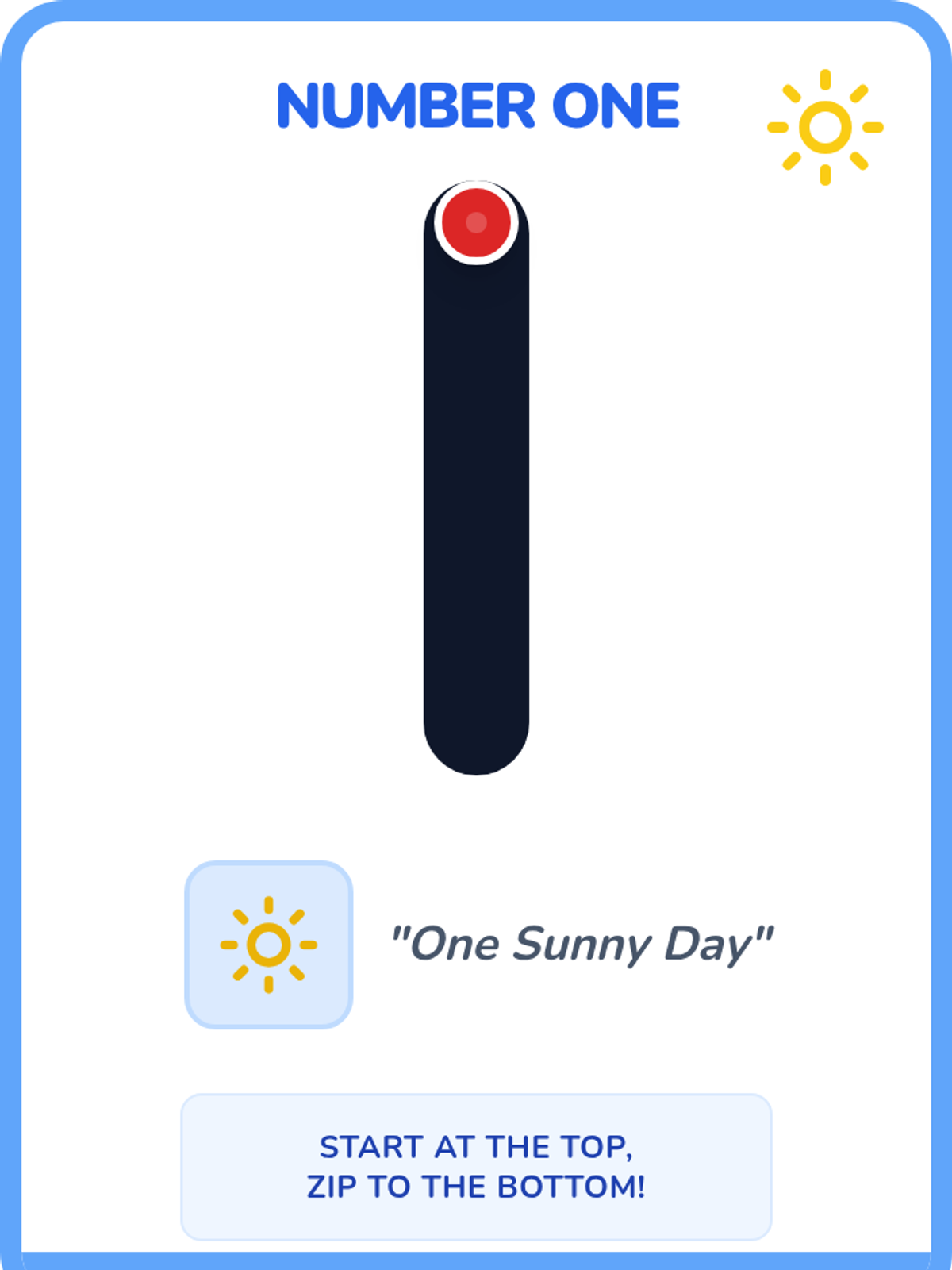
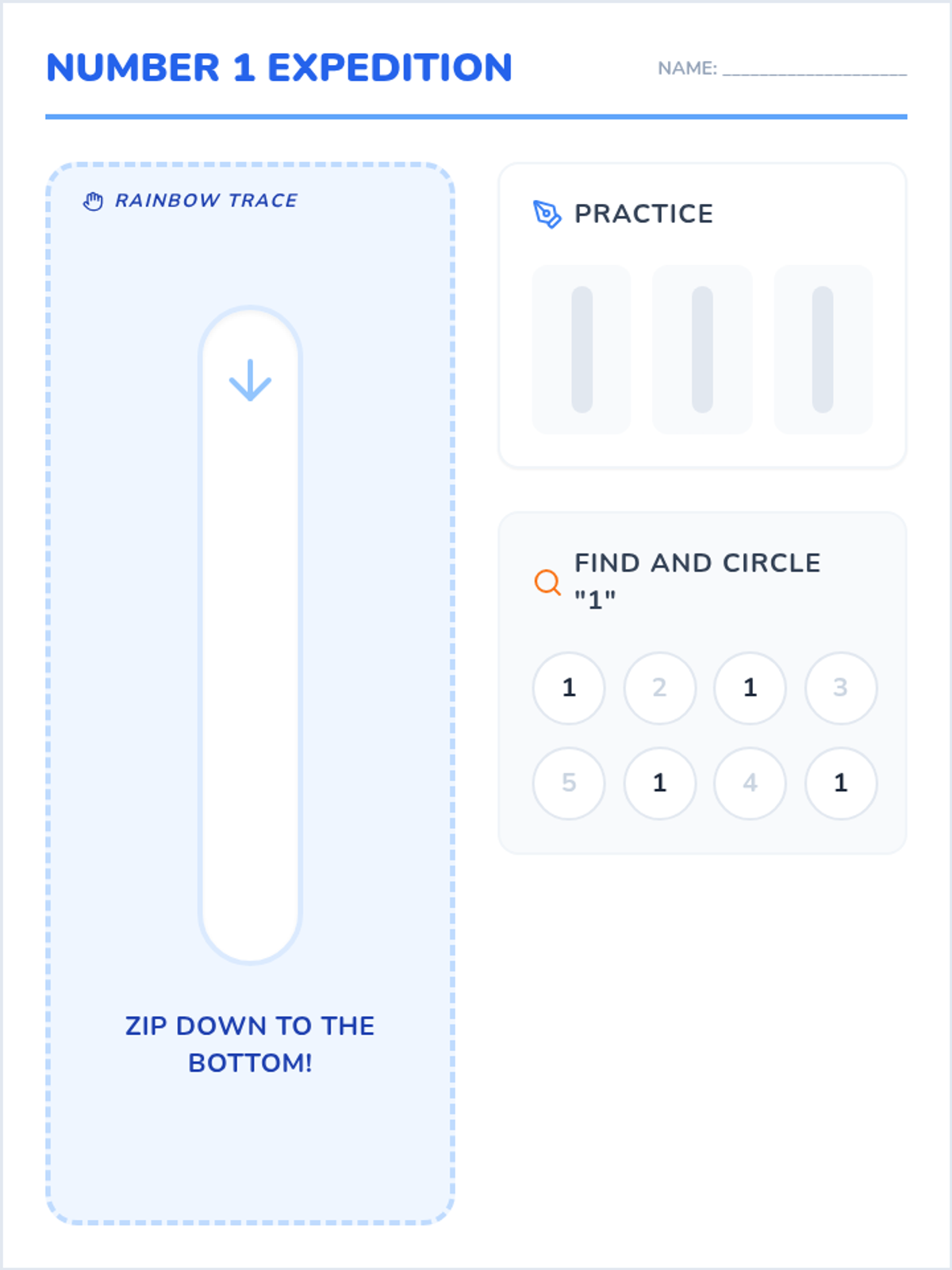
Introduction to the numeral 1, focusing on its name, shape, and value using touch-point imagery and sky-writing scripts.

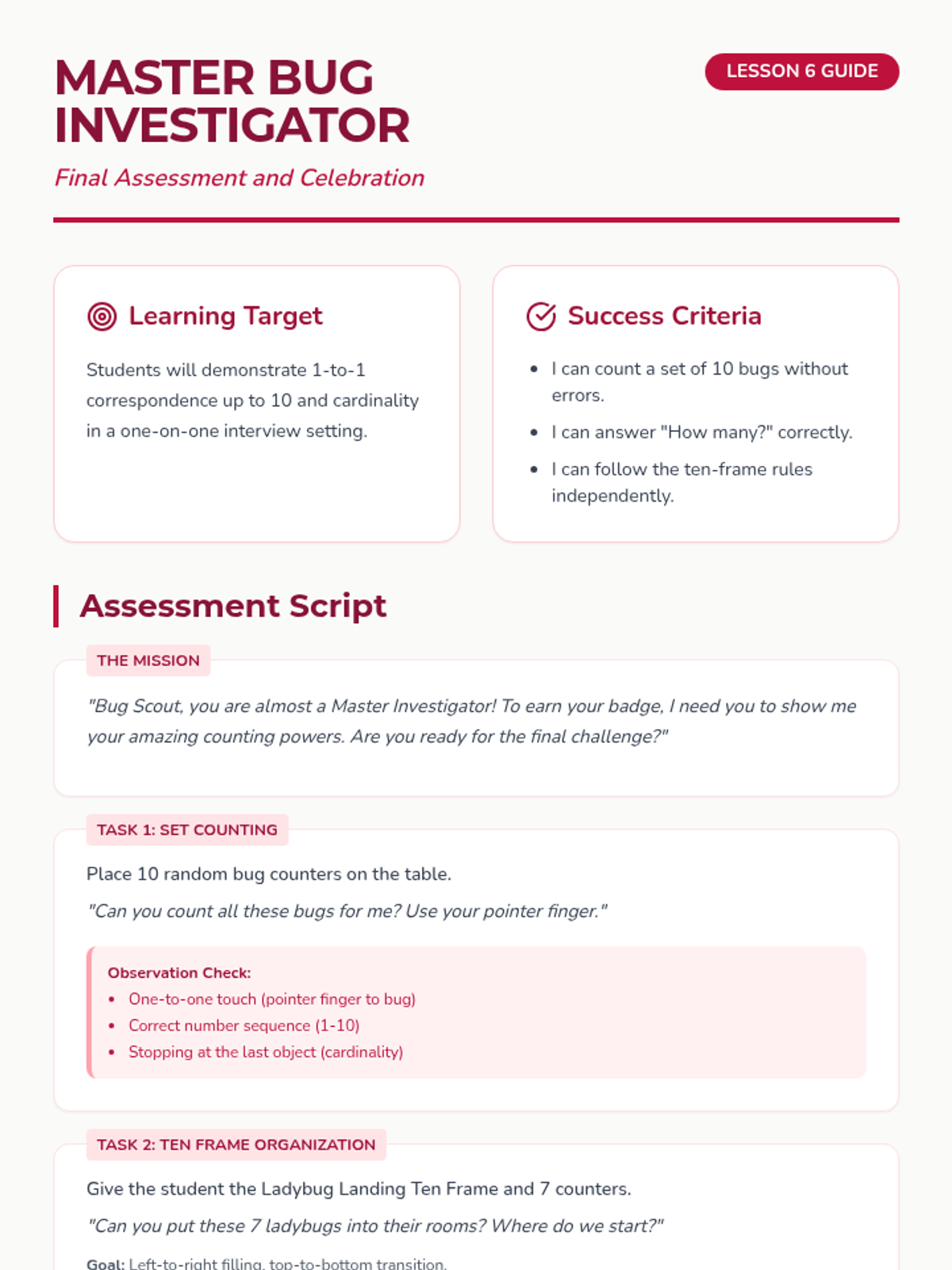
A final consolidation and assessment lesson where students demonstrate their counting skills to earn their 'Master Bug Scout' badge.
A review lesson focusing on subitizing and counting mixed groups of butterflies up to 10.
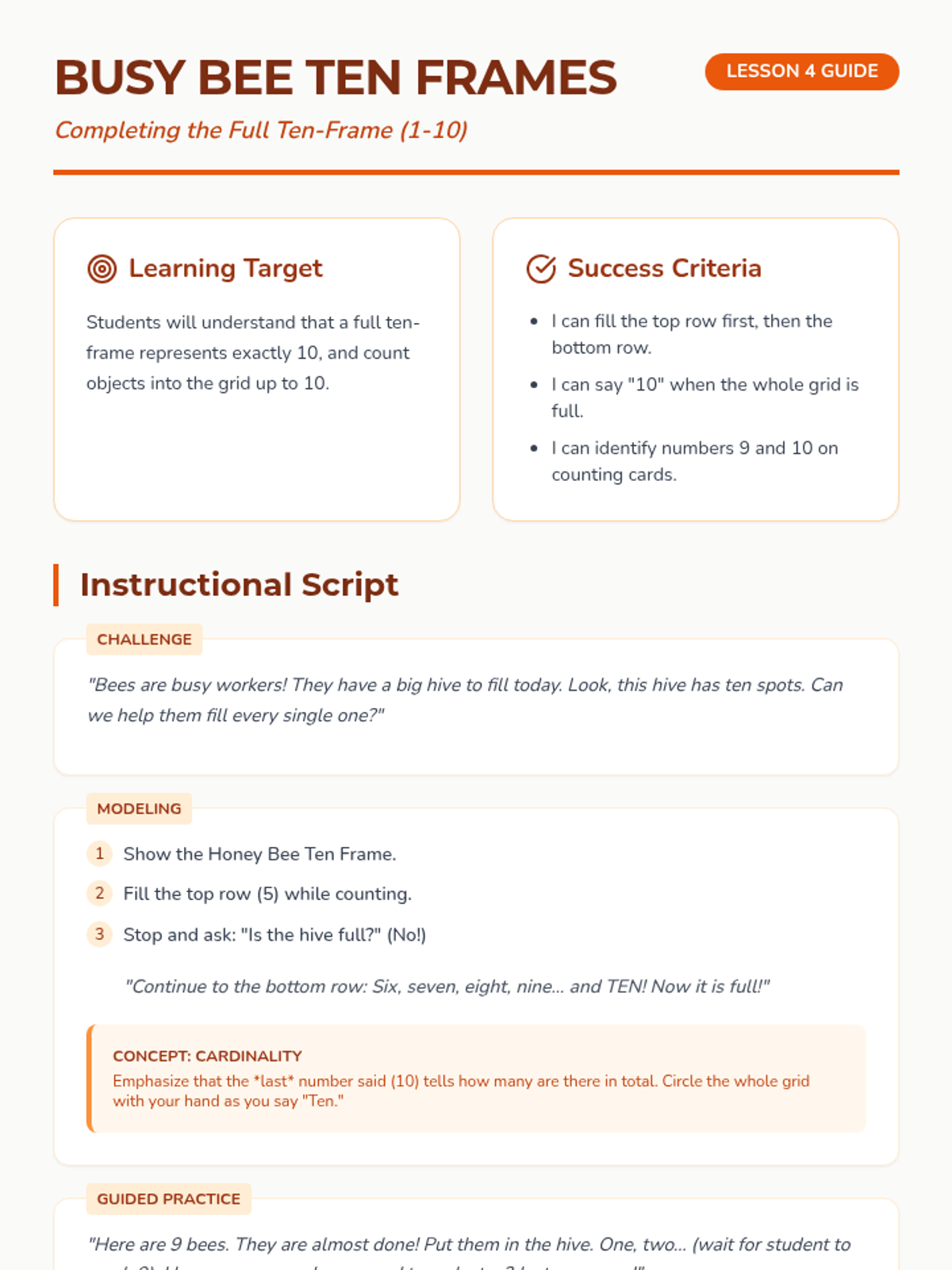
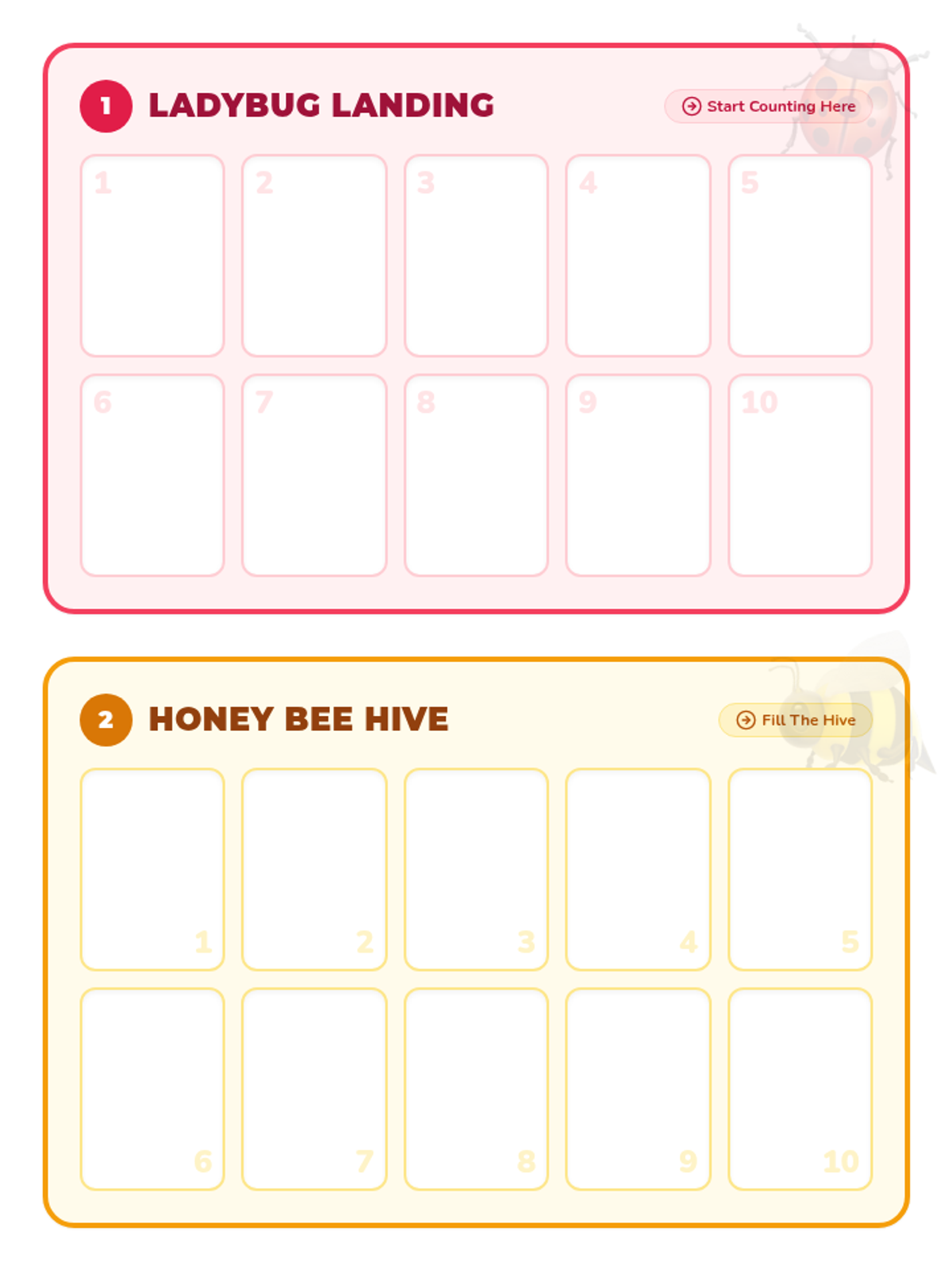
Mastering the full ten-frame by helping bees fill their hive with 10 drops of nectar.
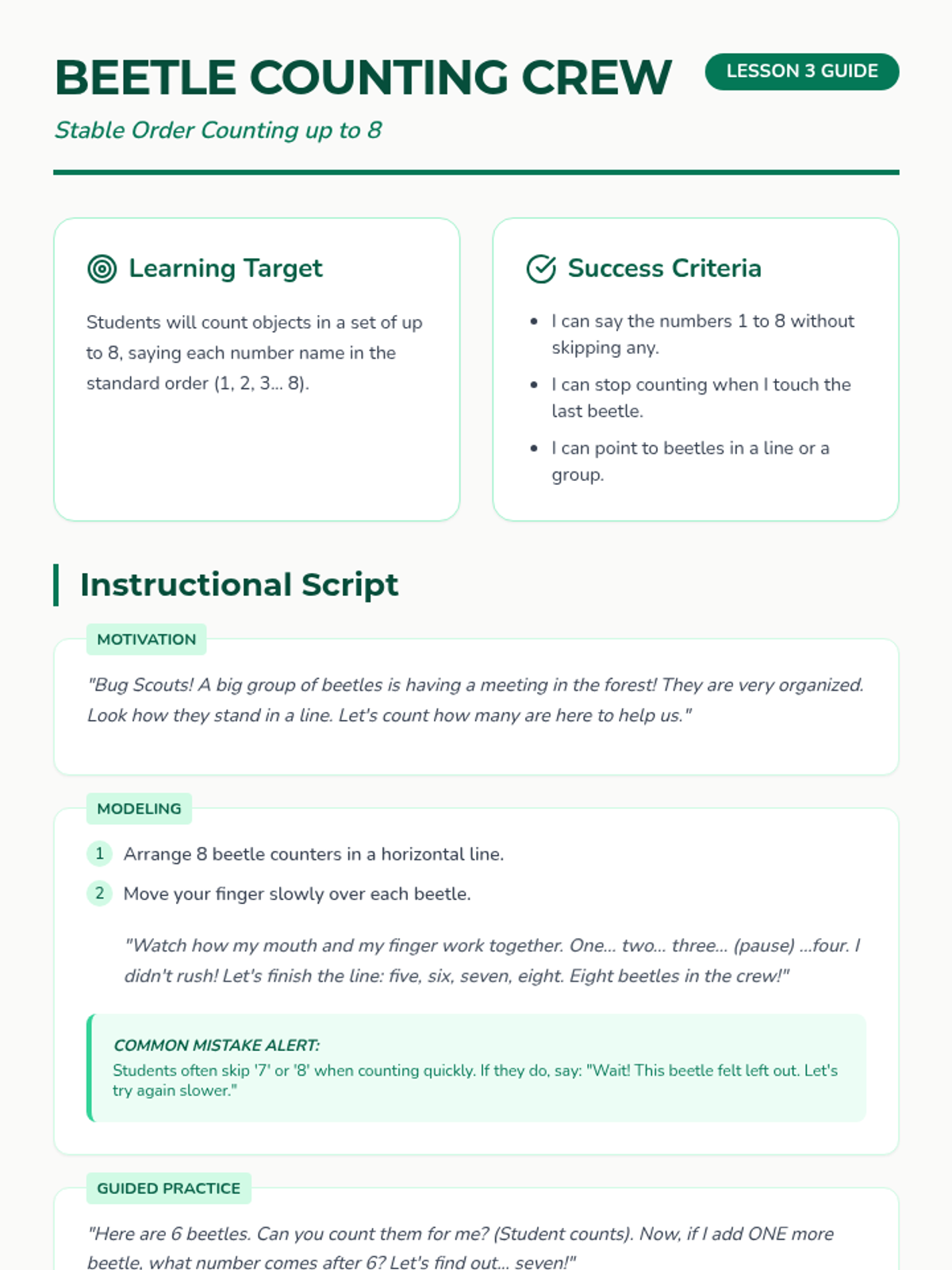
Practicing counting from 1 to 8 using a beetle-themed grid and focusing on stable order counting.
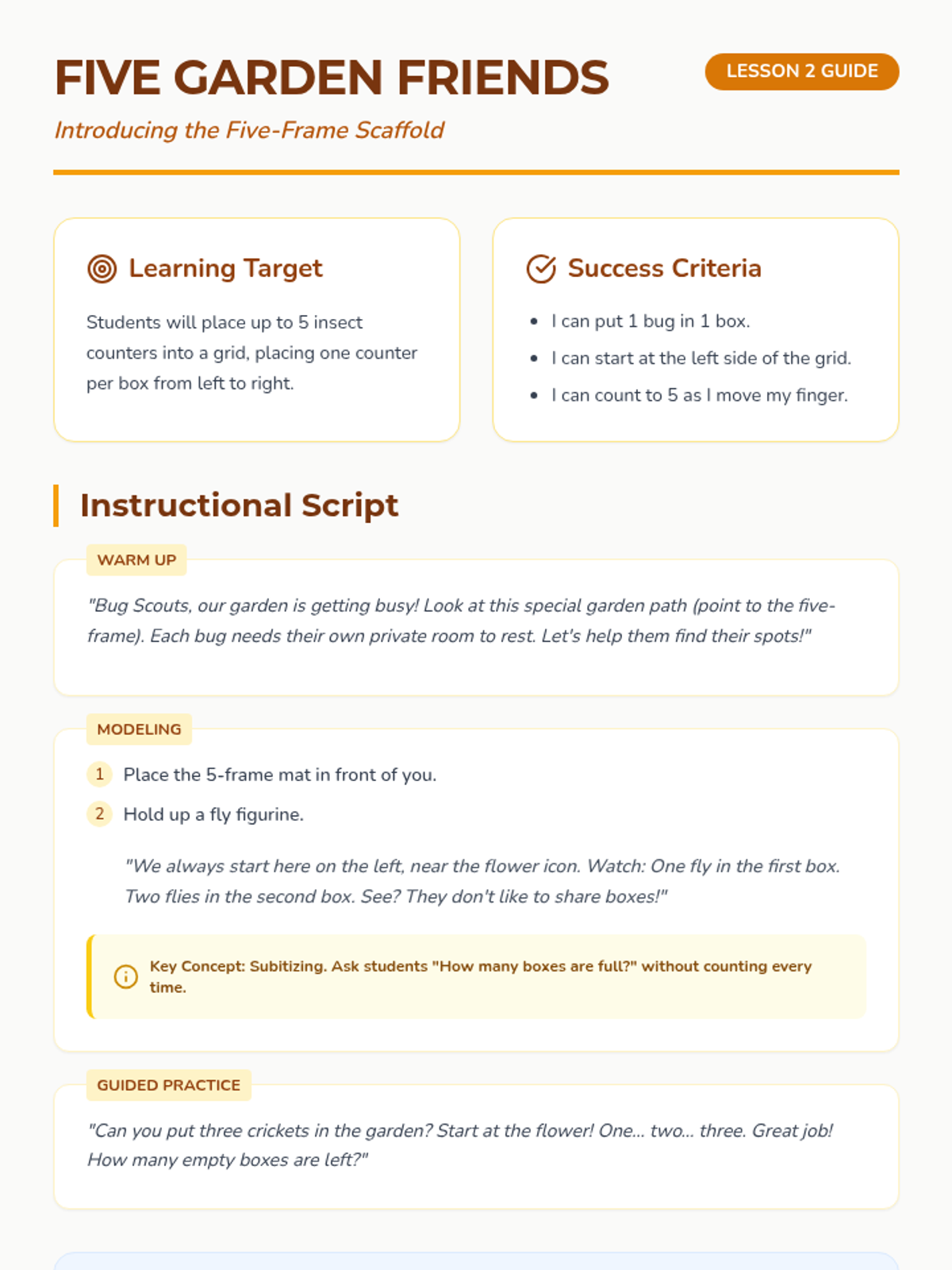
Expand counting skills to 5 using a five-frame (top half of a ten-frame) and friendly garden flies.
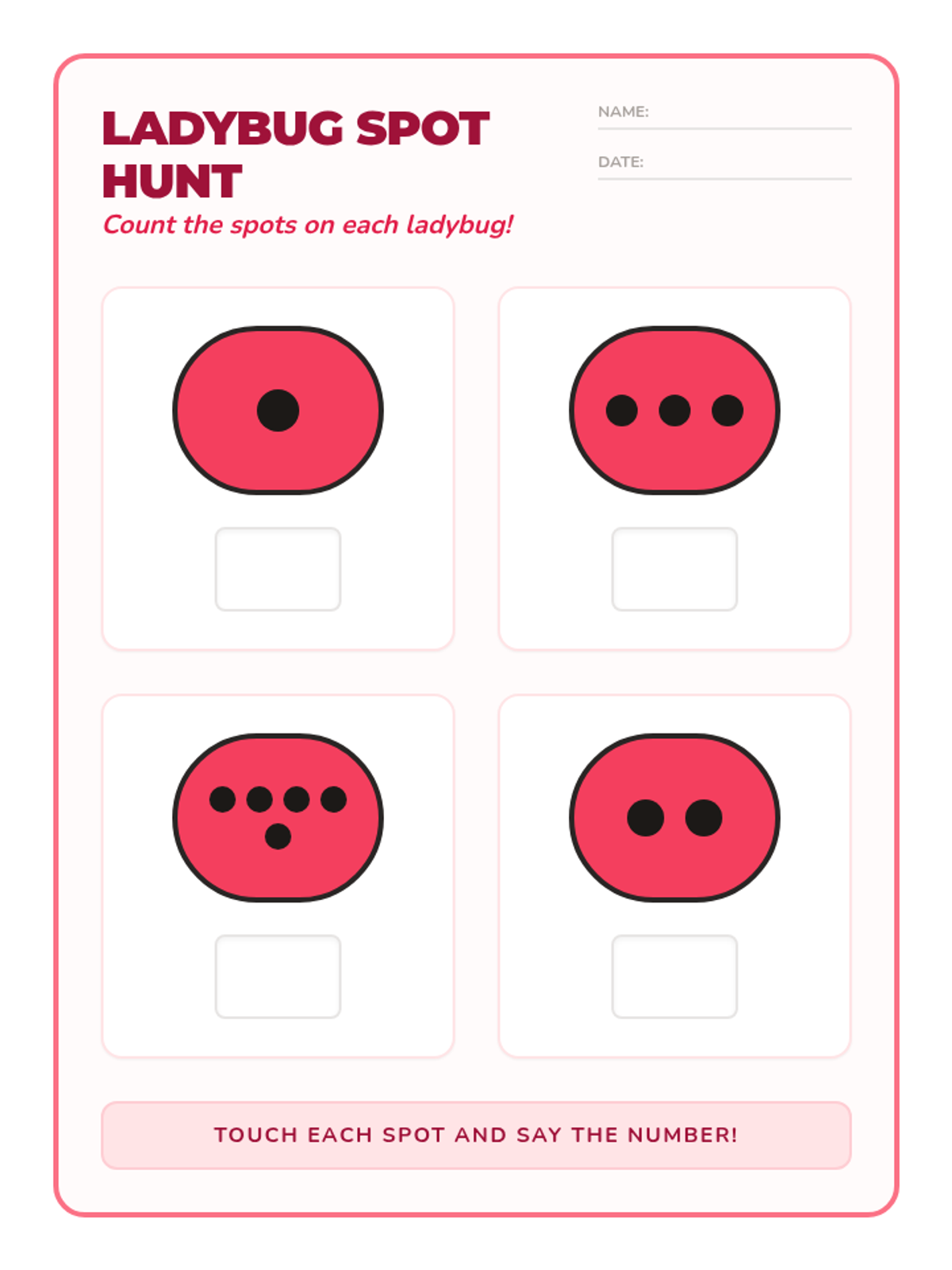
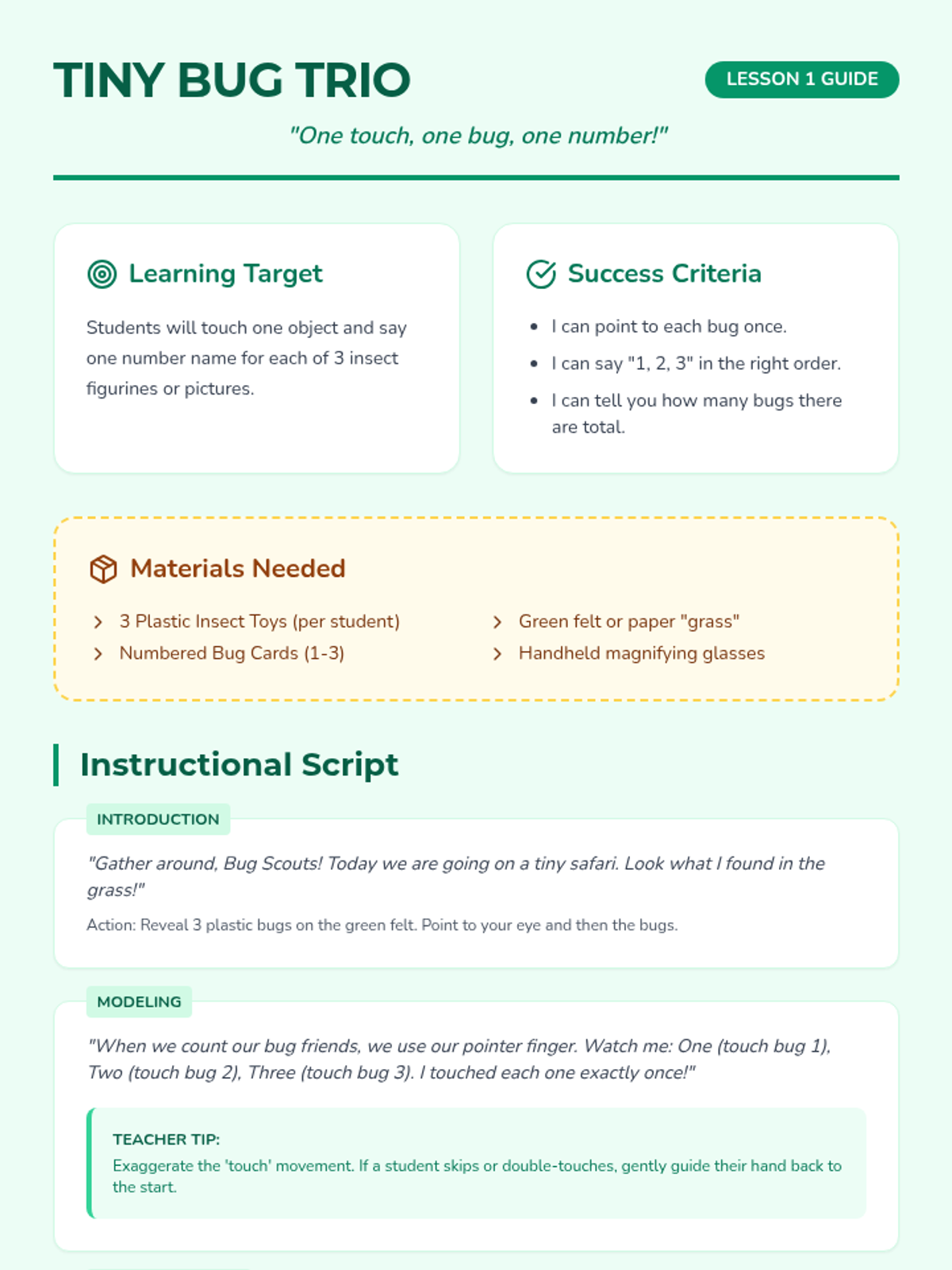
Introduce the concept of one-to-one correspondence by counting 1, 2, and 3 insect friends. Focus on pointing to each object once.
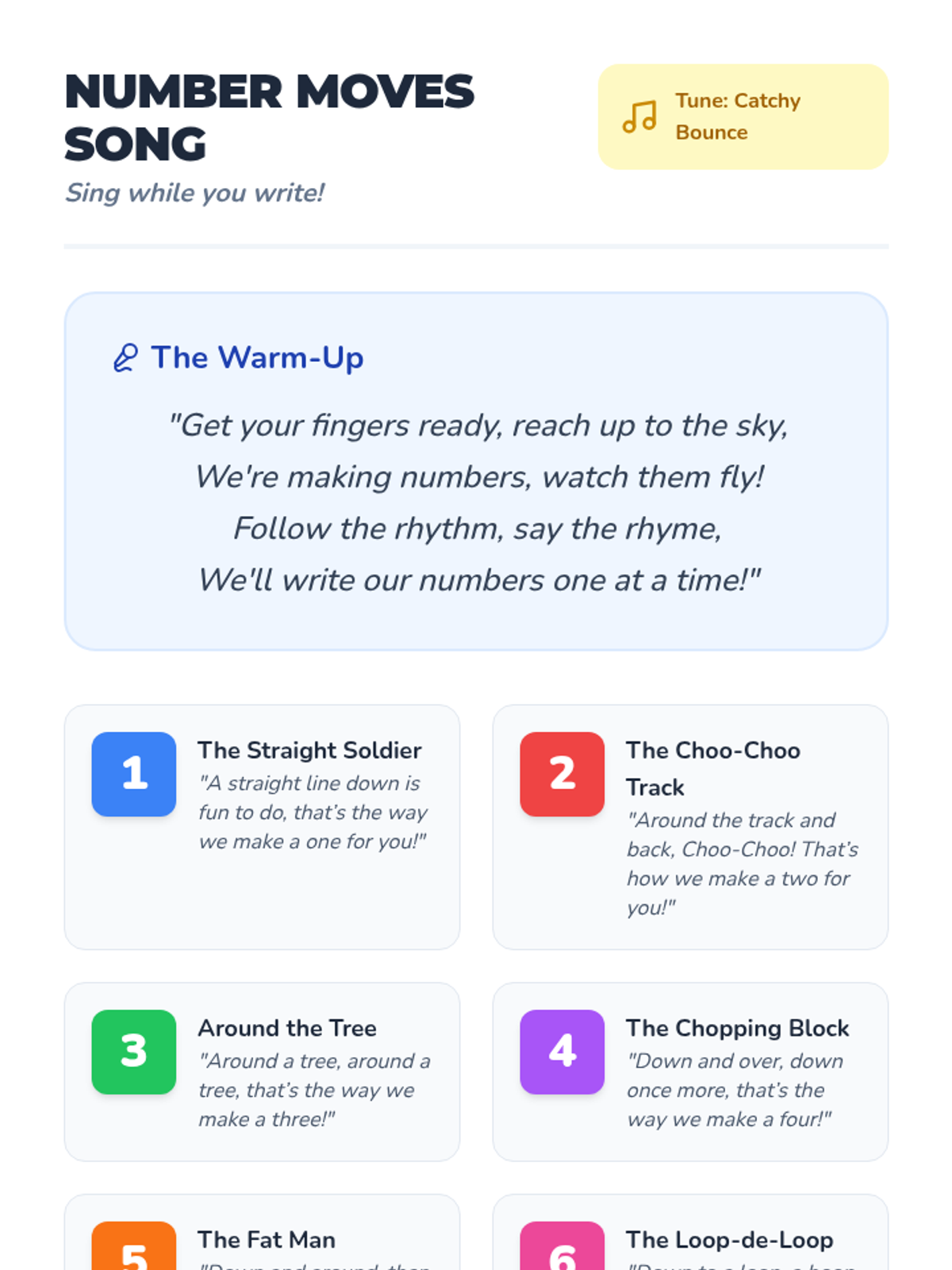
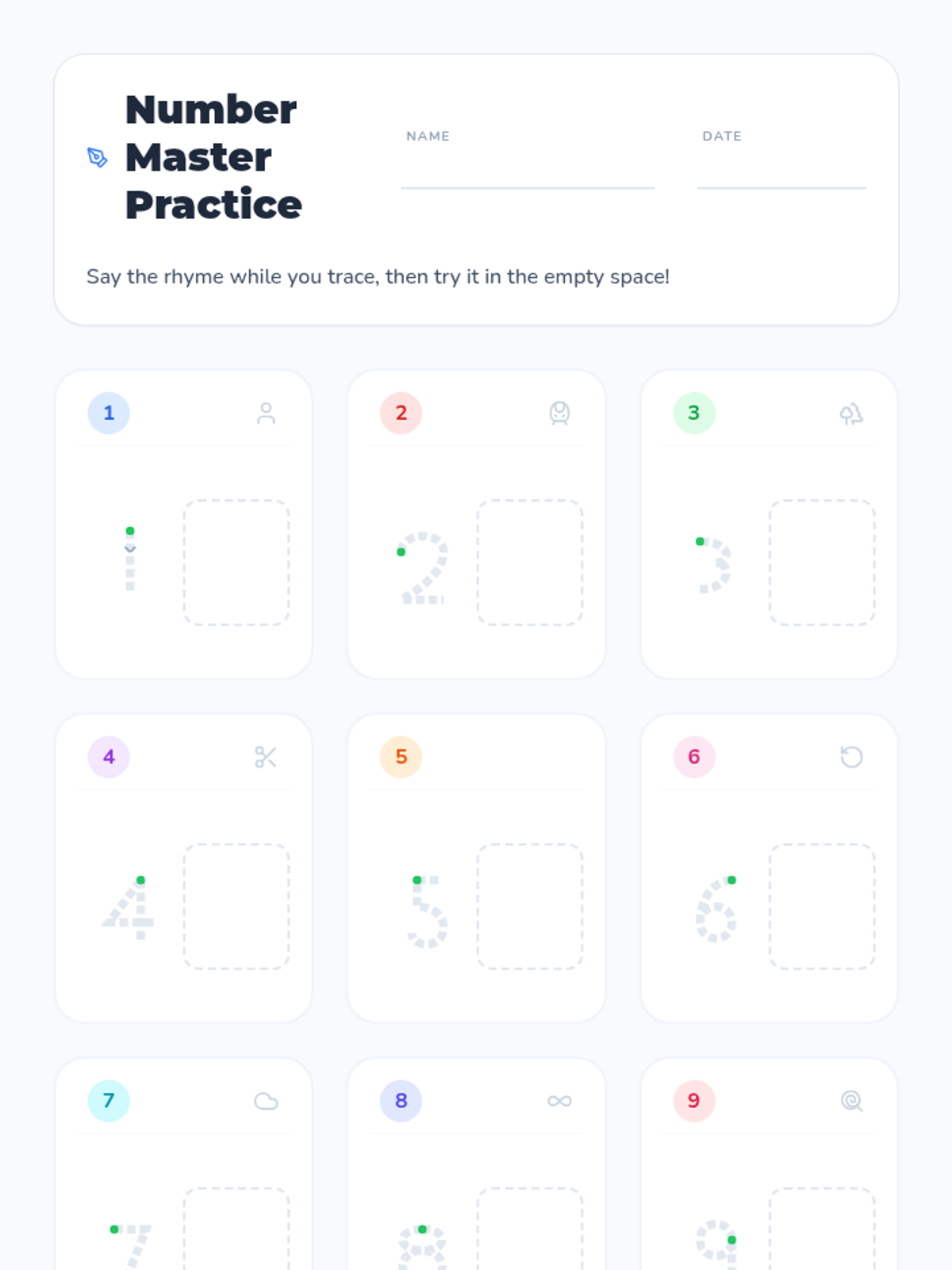
A high-energy lesson that uses rhyming movement words and visual prompts to teach students how to correctly form numbers 1 through 9. Includes a presentation with drawing animations, a song sheet for motor memory, and a practice worksheet.
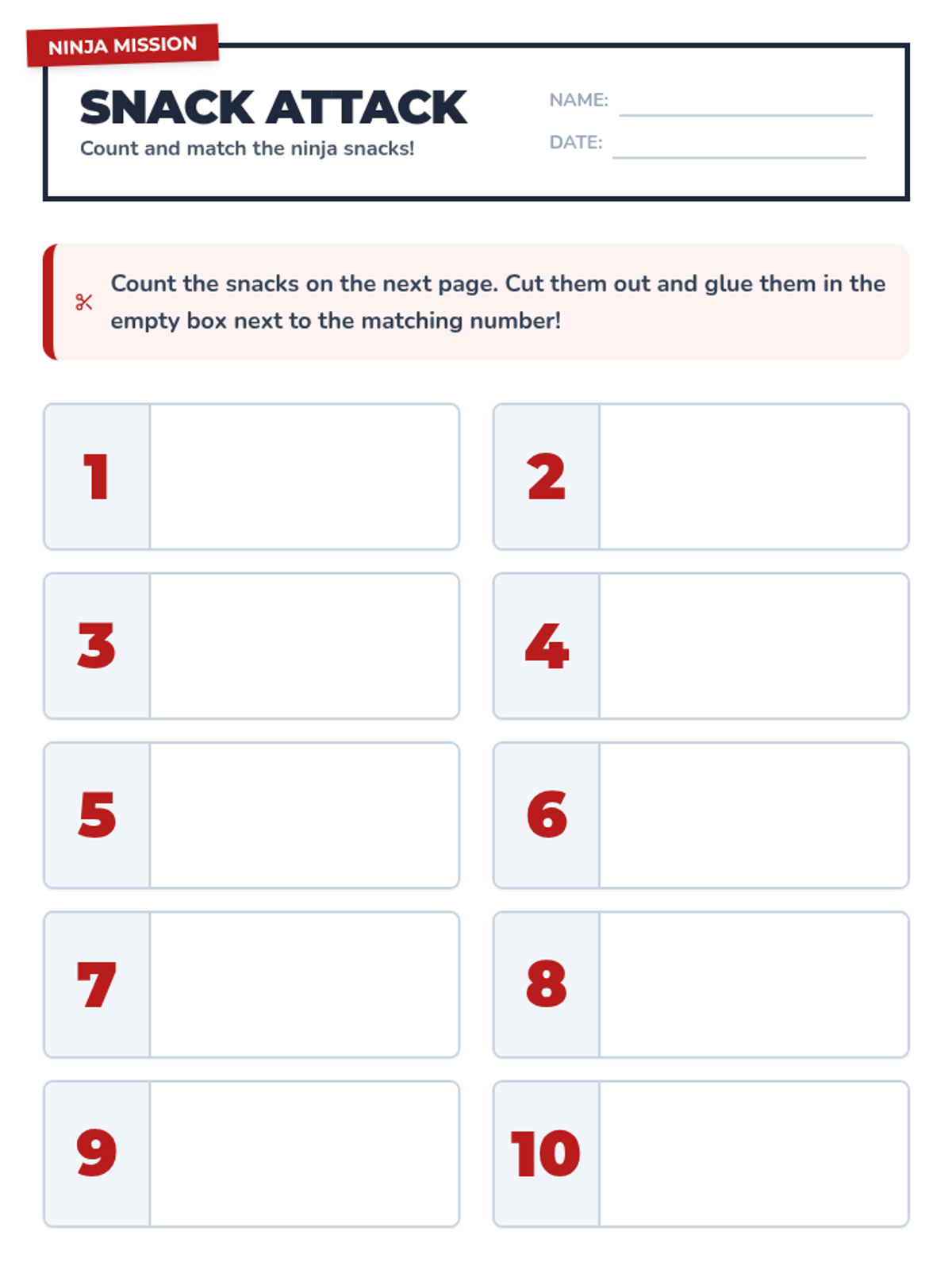
A foundational numeracy lesson focusing on numbers 1-10 through 1-to-1 correspondence and hands-on counting activities. Students practice matching sets of objects to numerals in a fun ninja-themed environment.
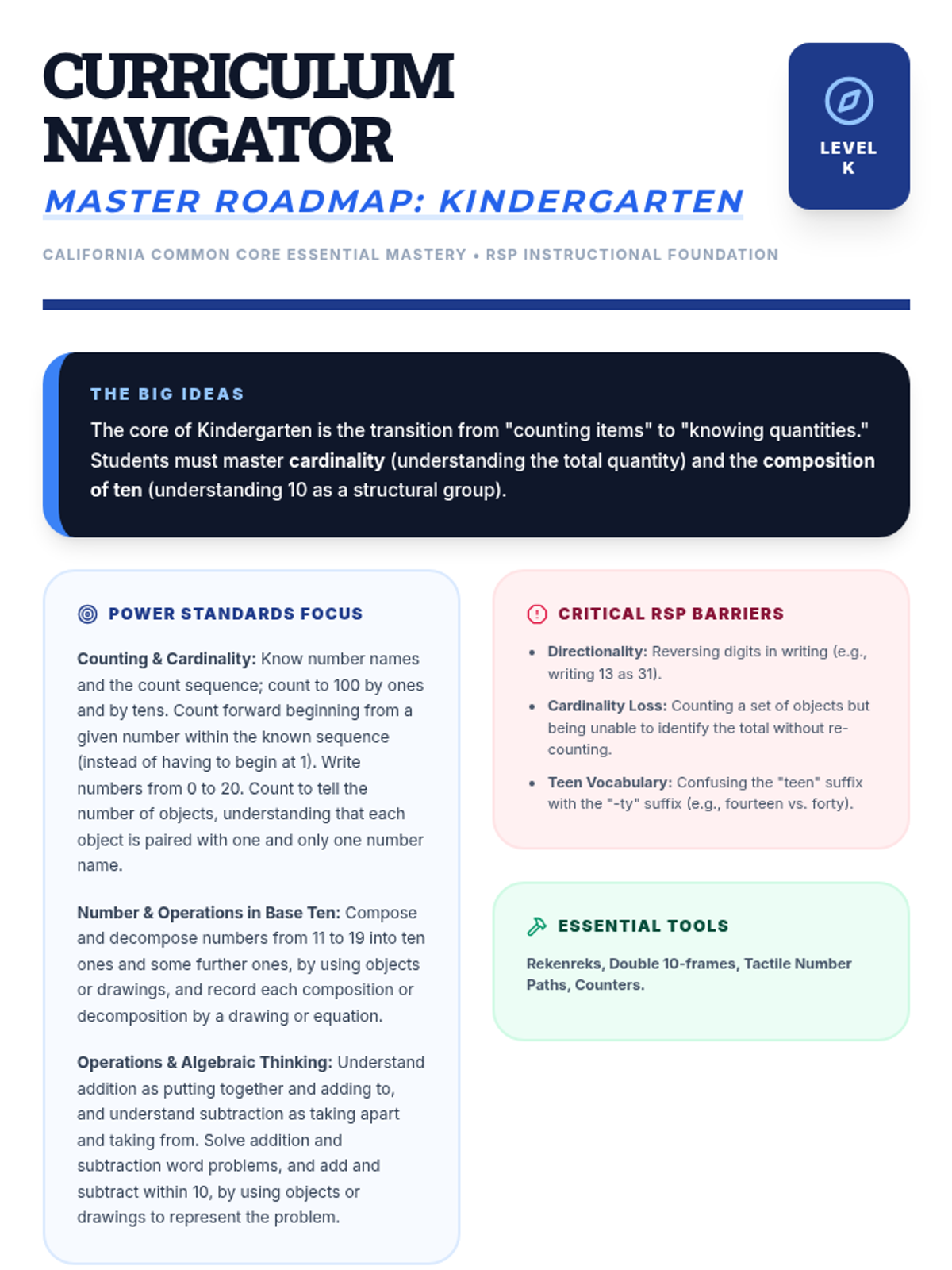
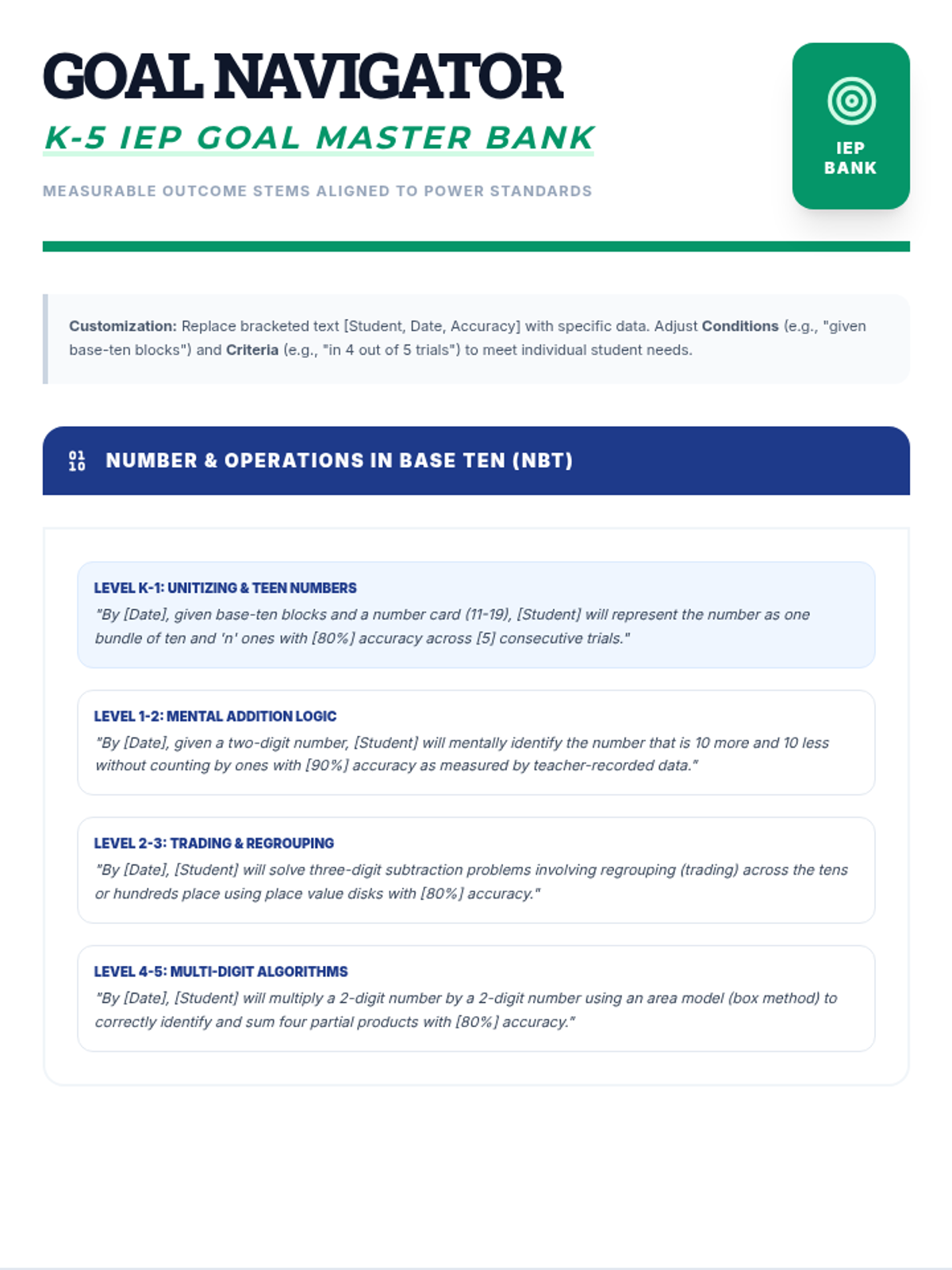
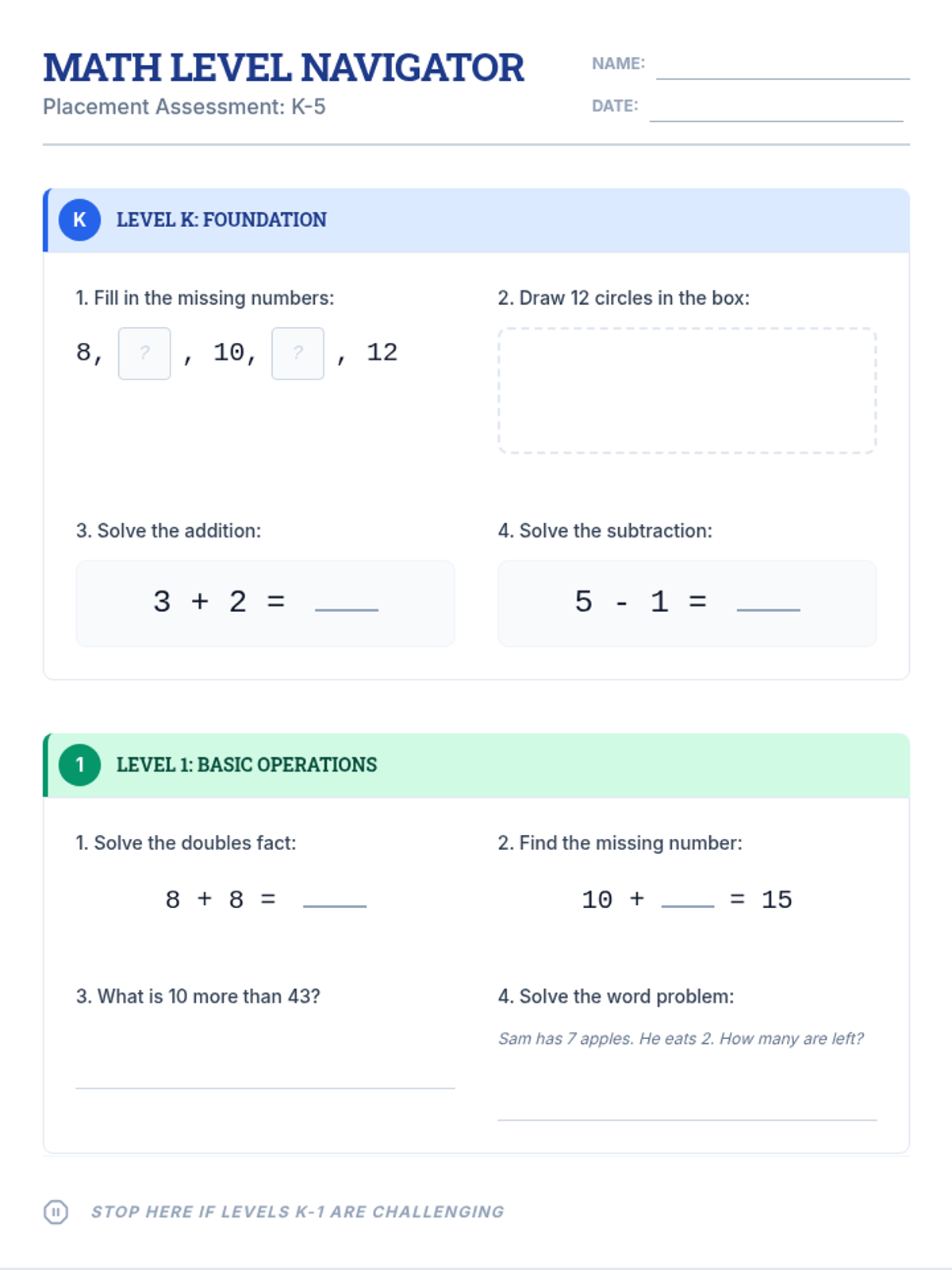
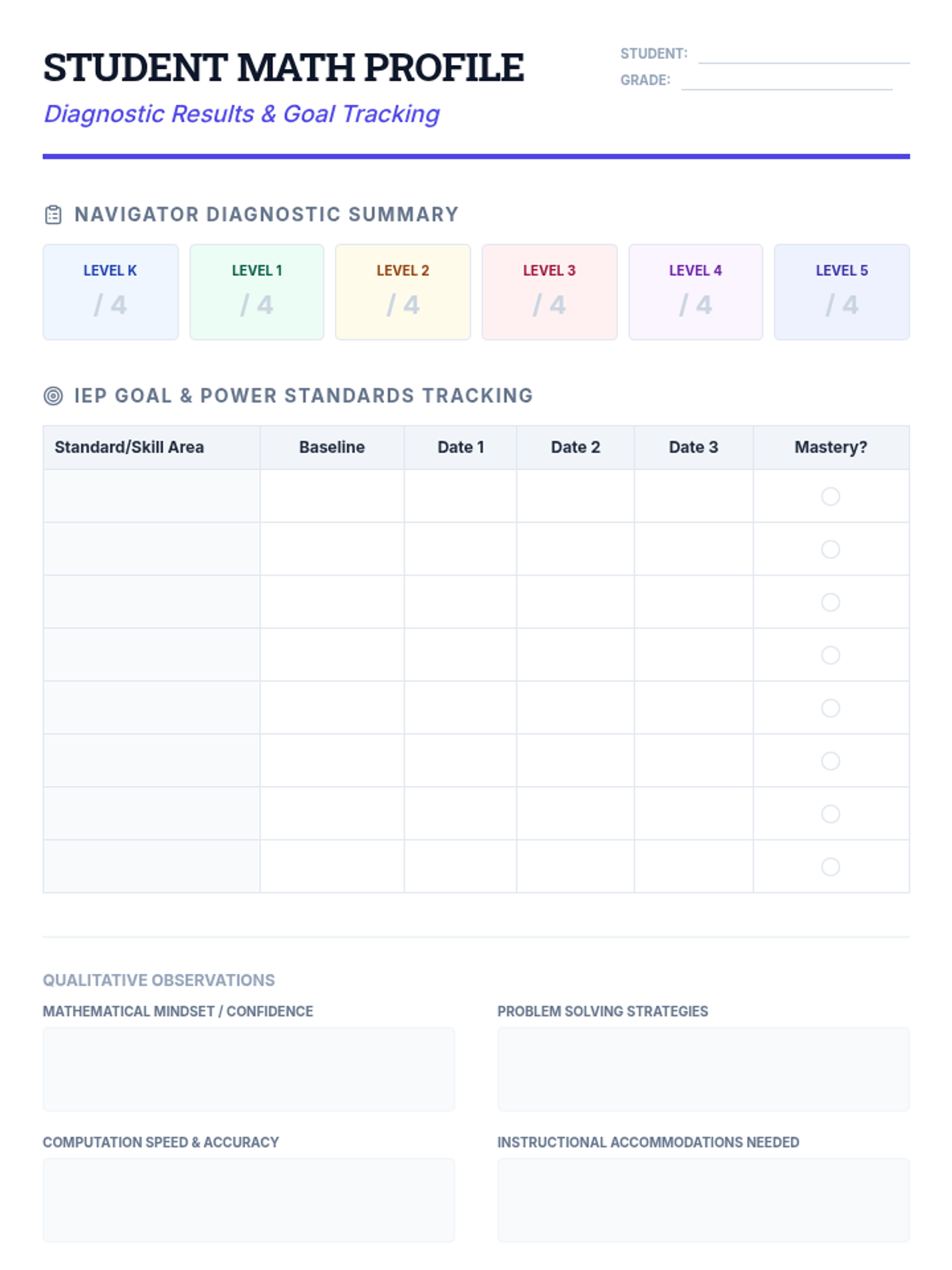
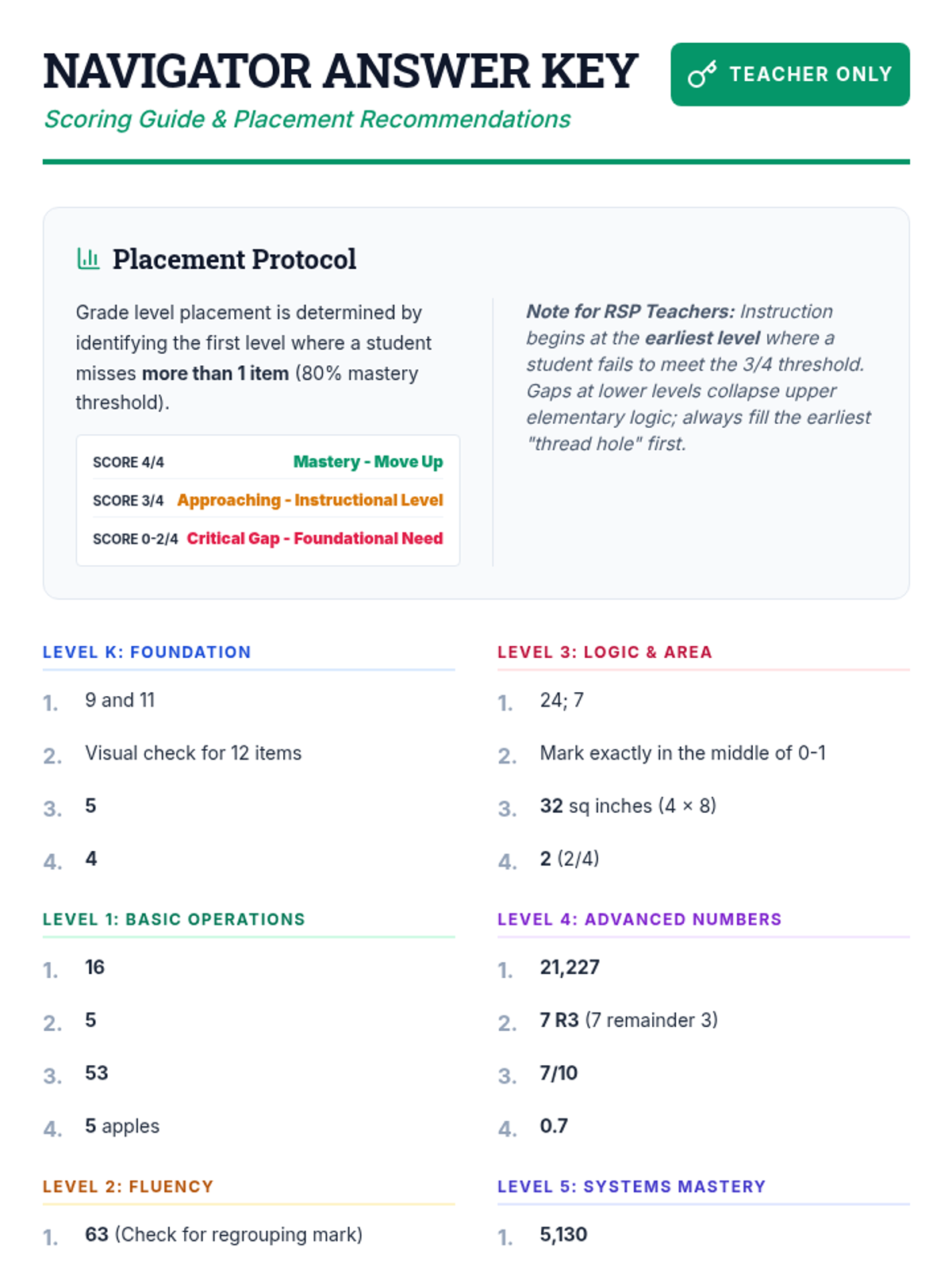
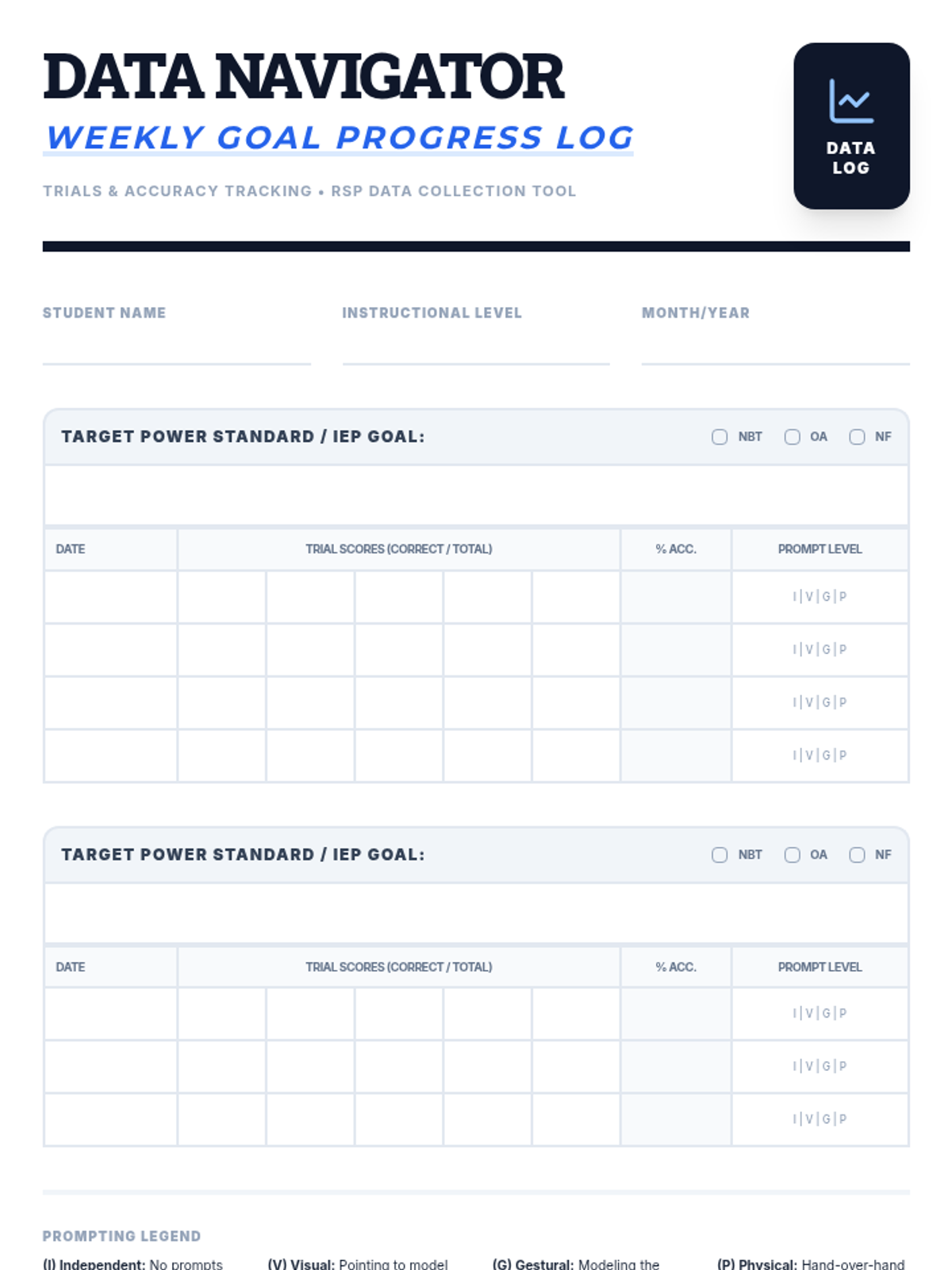
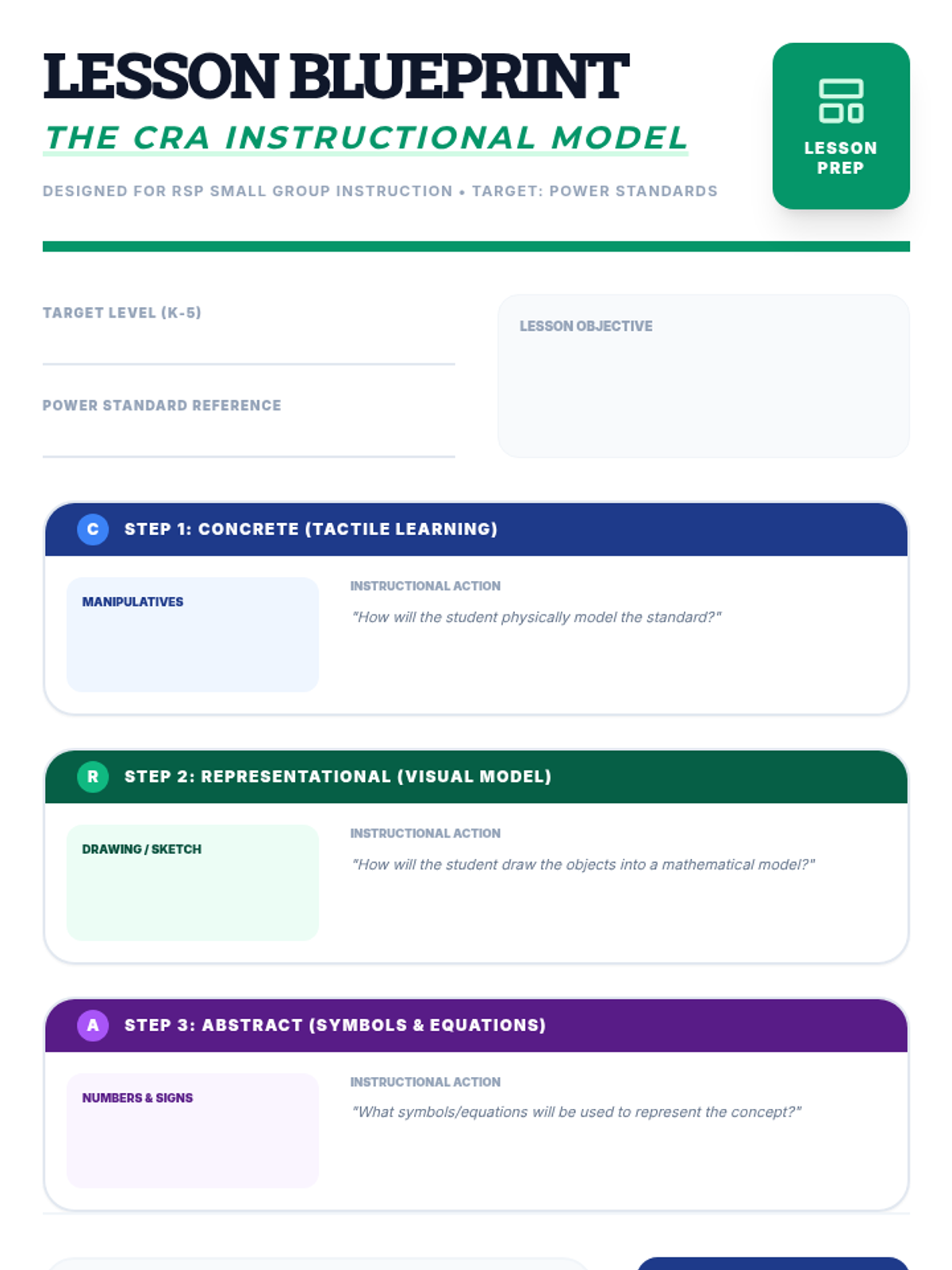
Foundational tools for assessing student levels and planning instruction based on California Power Standards across grades K-5.