Discovering the numeral 4, teaching its straight lines and four distinct touch-points with a friendly frog theme.
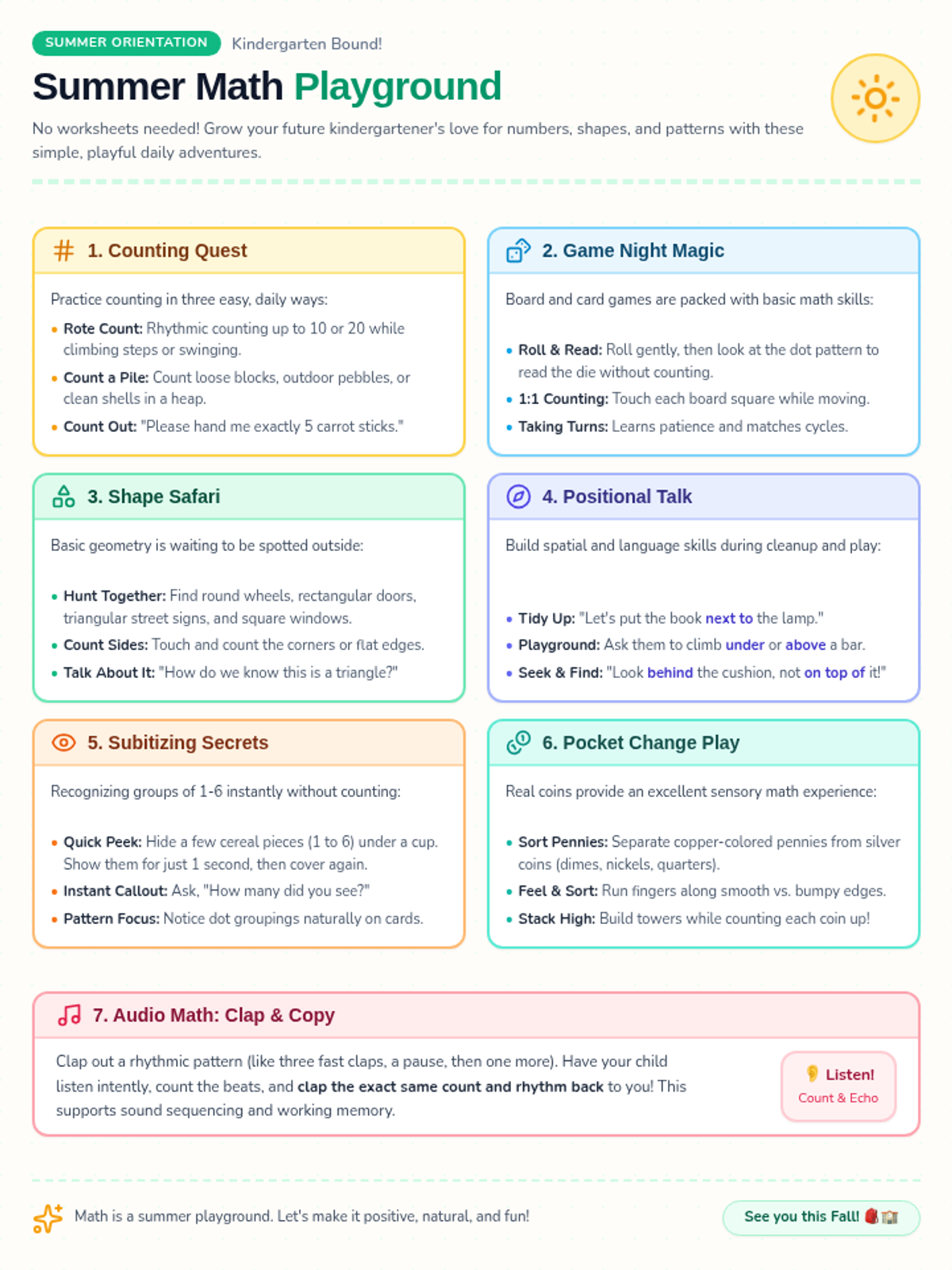
A supportive guide and flyer for families to foster early math skills during the summer before kindergarten, emphasizing hands-on play, spatial vocabulary, and everyday discovery.
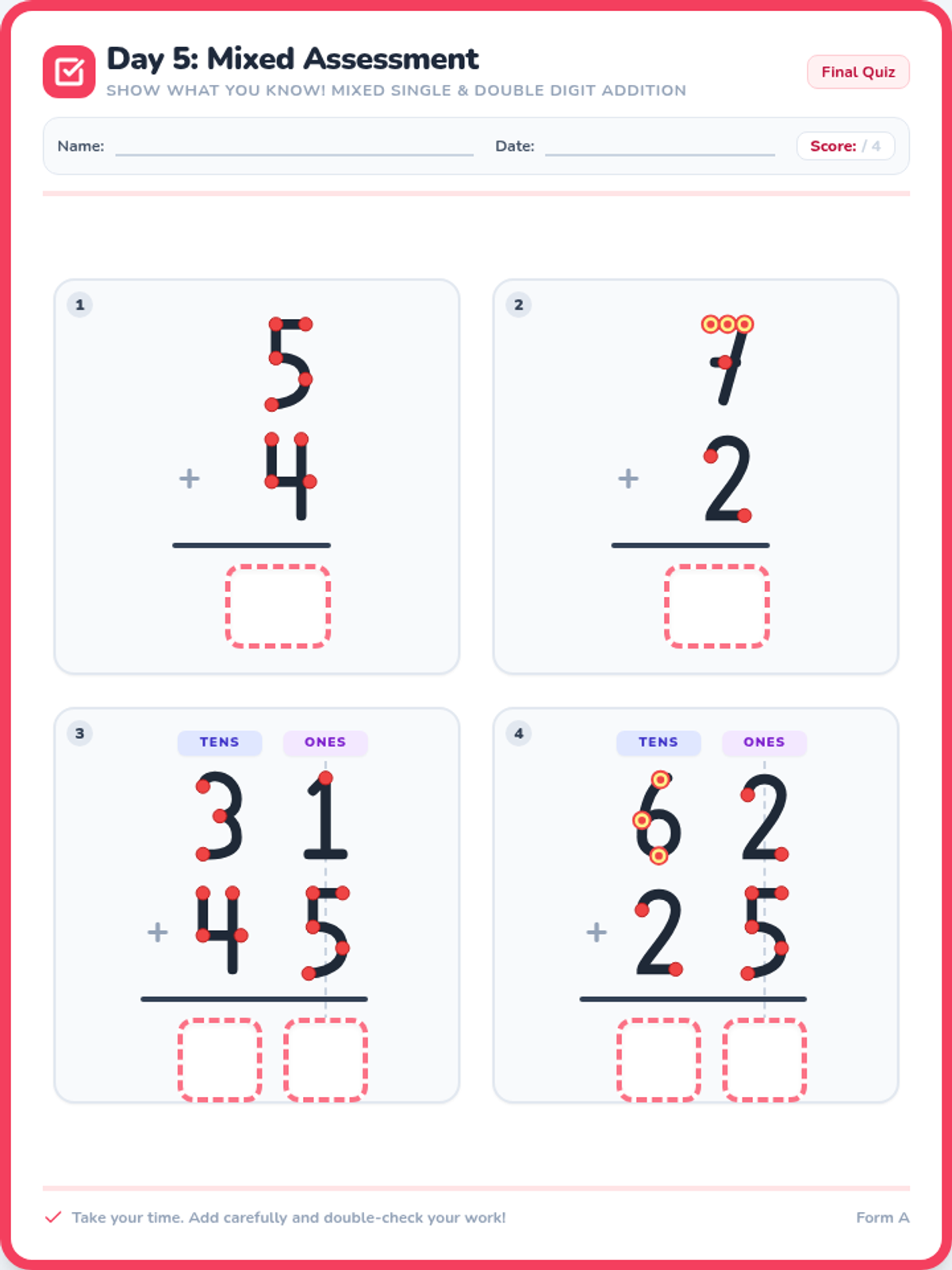
A final day of mixed practice and a structured assessment to measure mastery of single-digit and double-digit touchpoint addition.
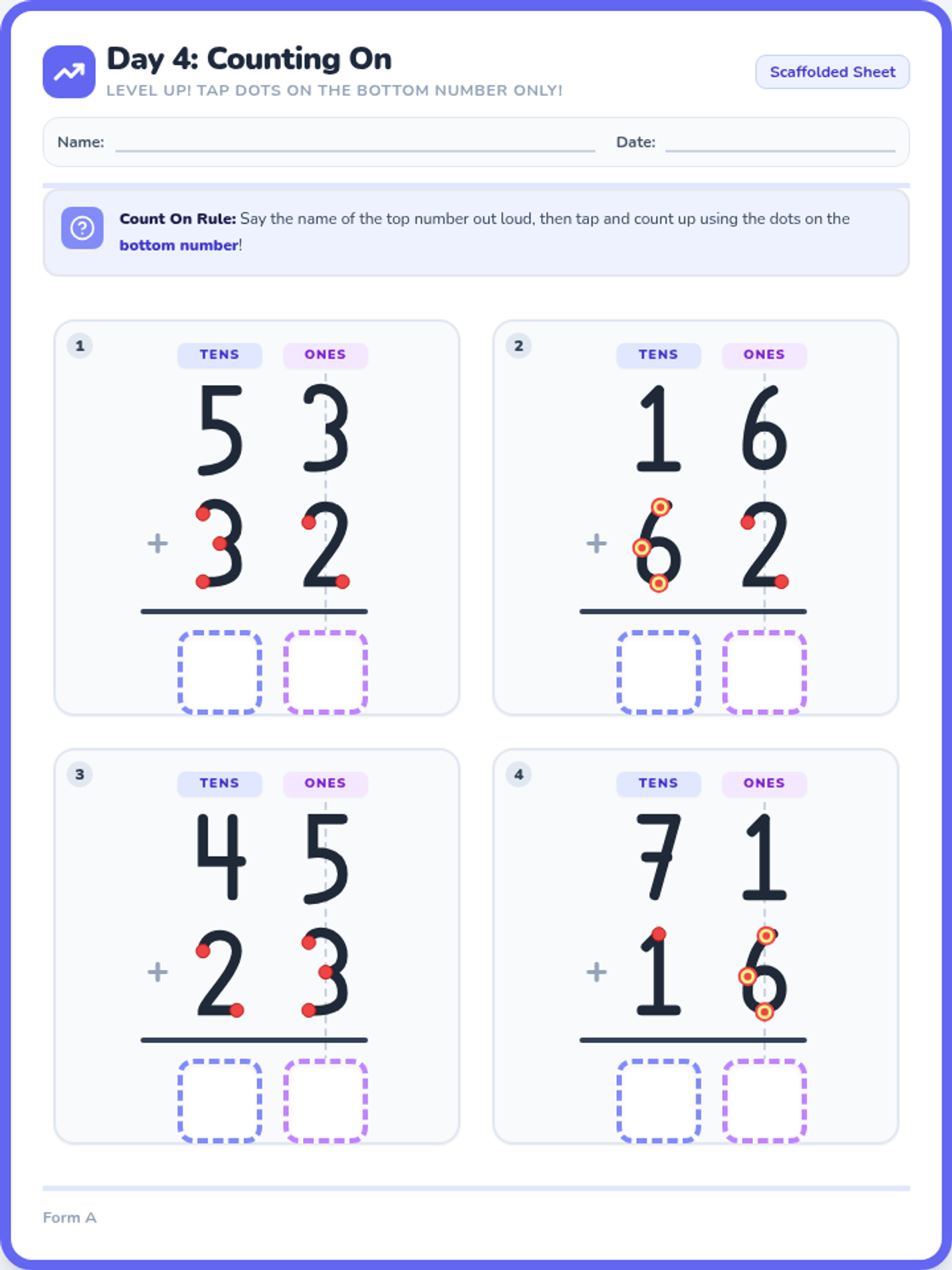
Reinforcing double-digit addition using scaffolded materials where grid lines and touchpoints are gradually faded to foster mental math and fluency.
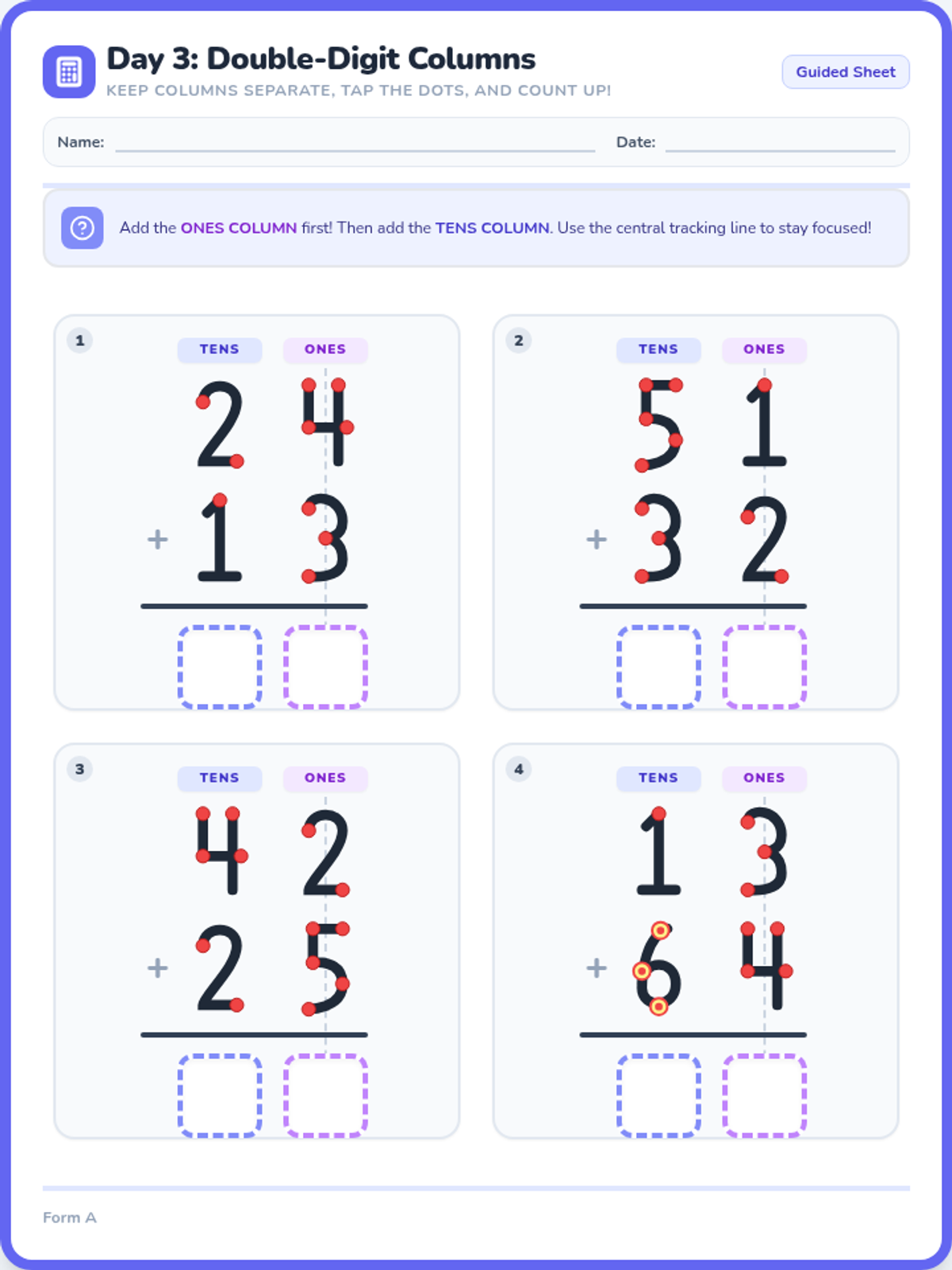
Transitioning to double-digit addition without regrouping, with high-contrast vertical dividers and large columns to support tracking.
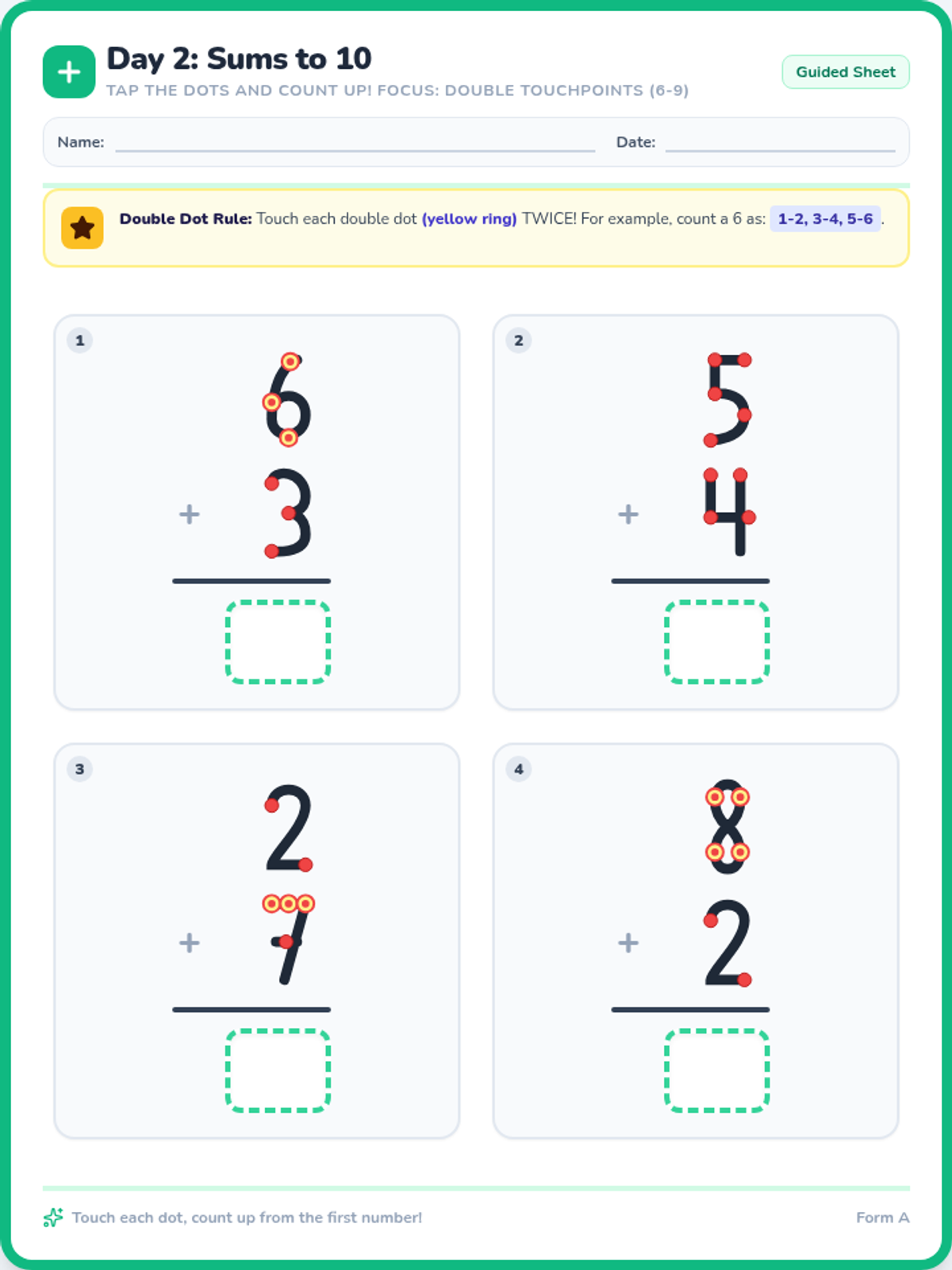
Developing single-digit addition with sums up to 10, utilizing single and double touchpoints on numbers 6 through 9 with scaffolded worksheets.
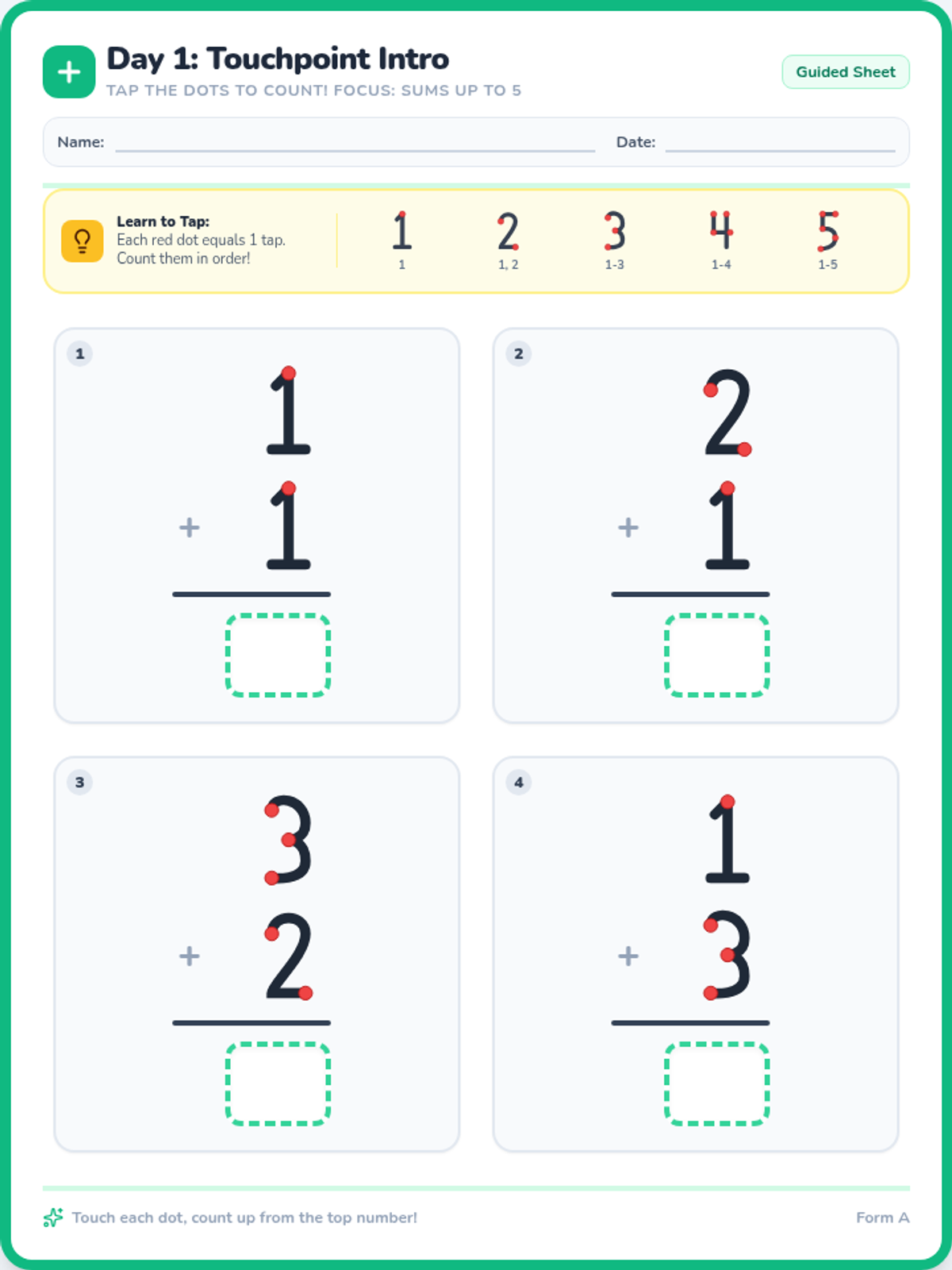
Introduction to single-digit touchpoint addition with sums up to 5, featuring large-print guided and independent practice sheets.
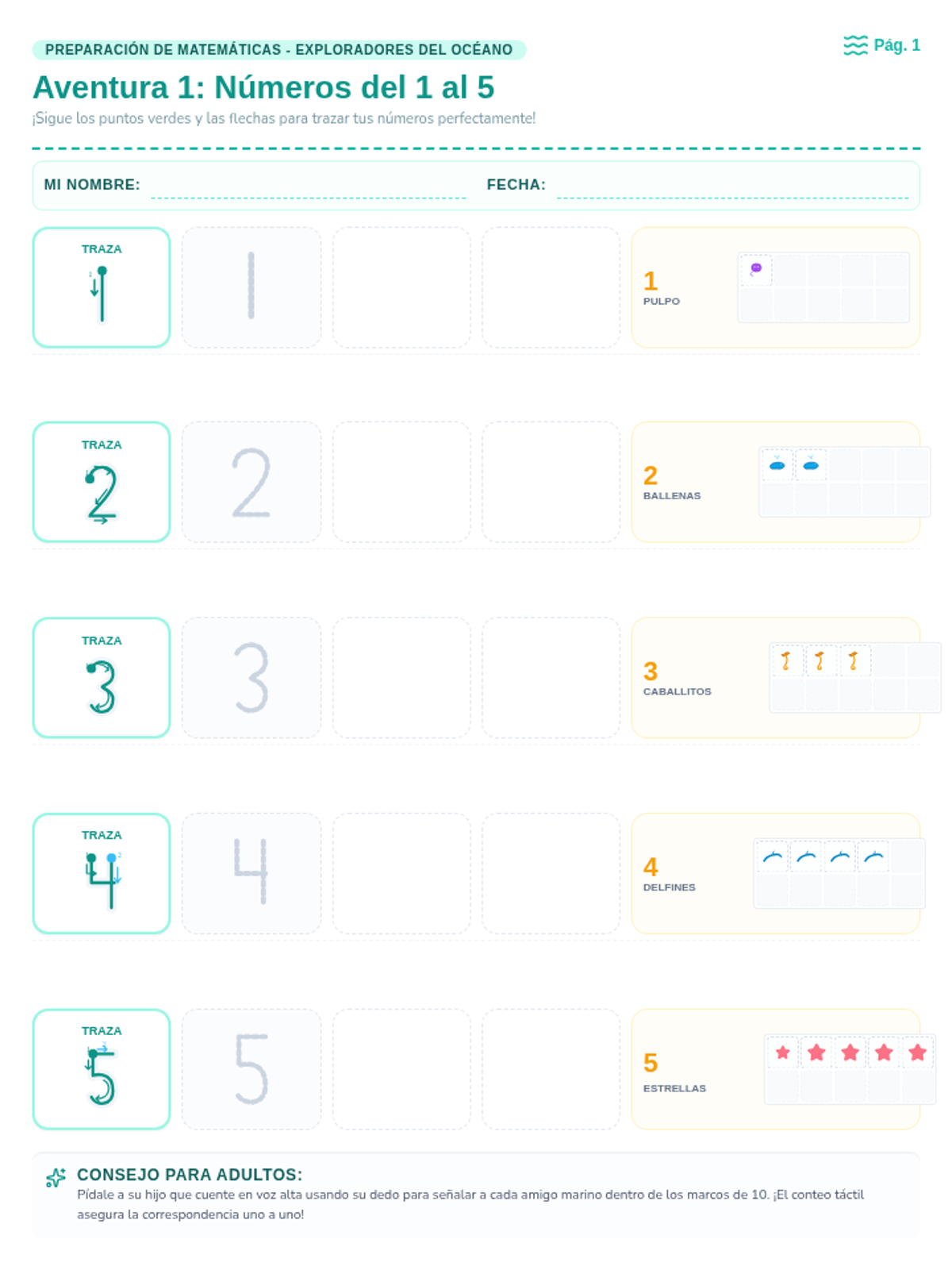
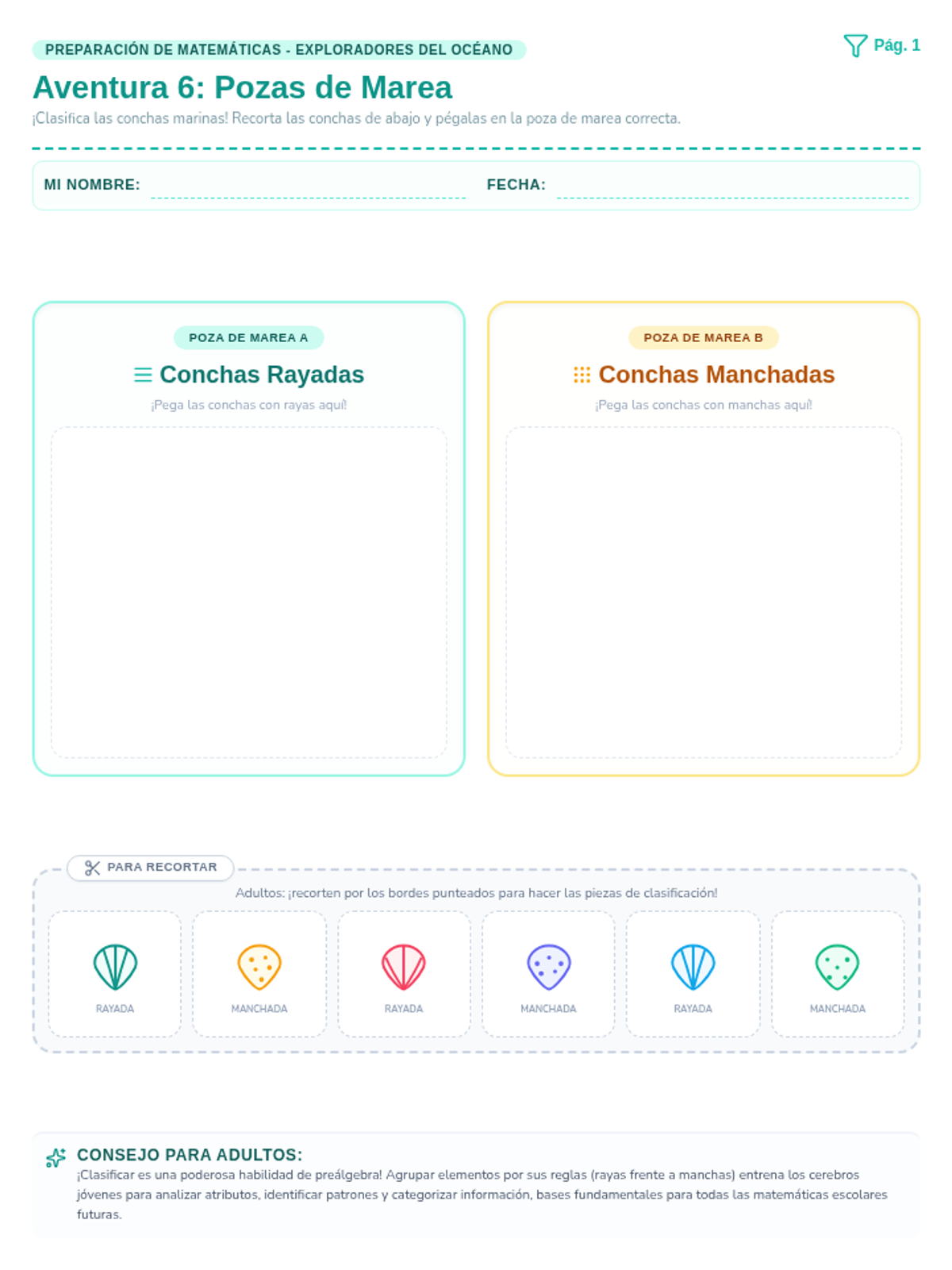
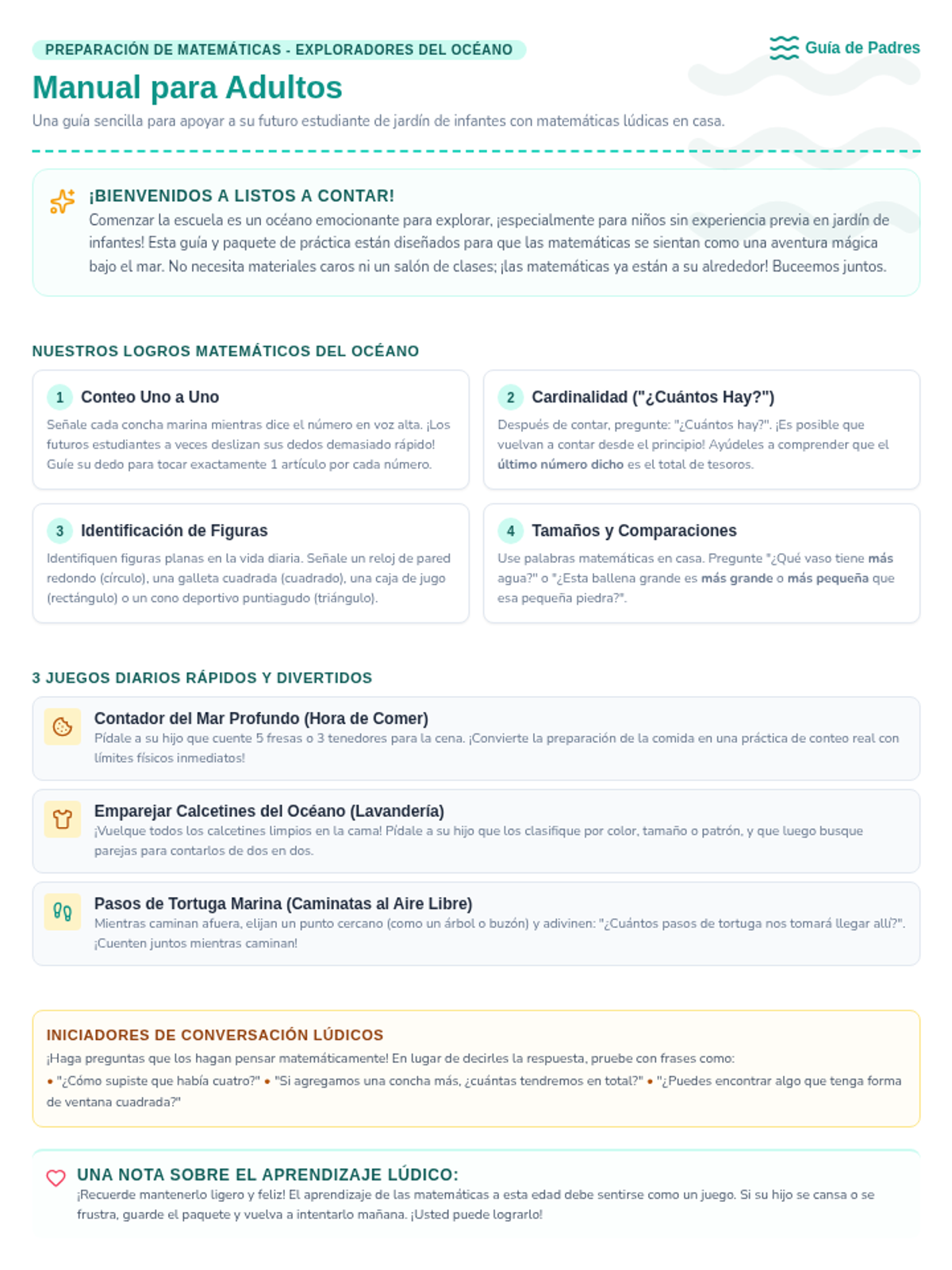
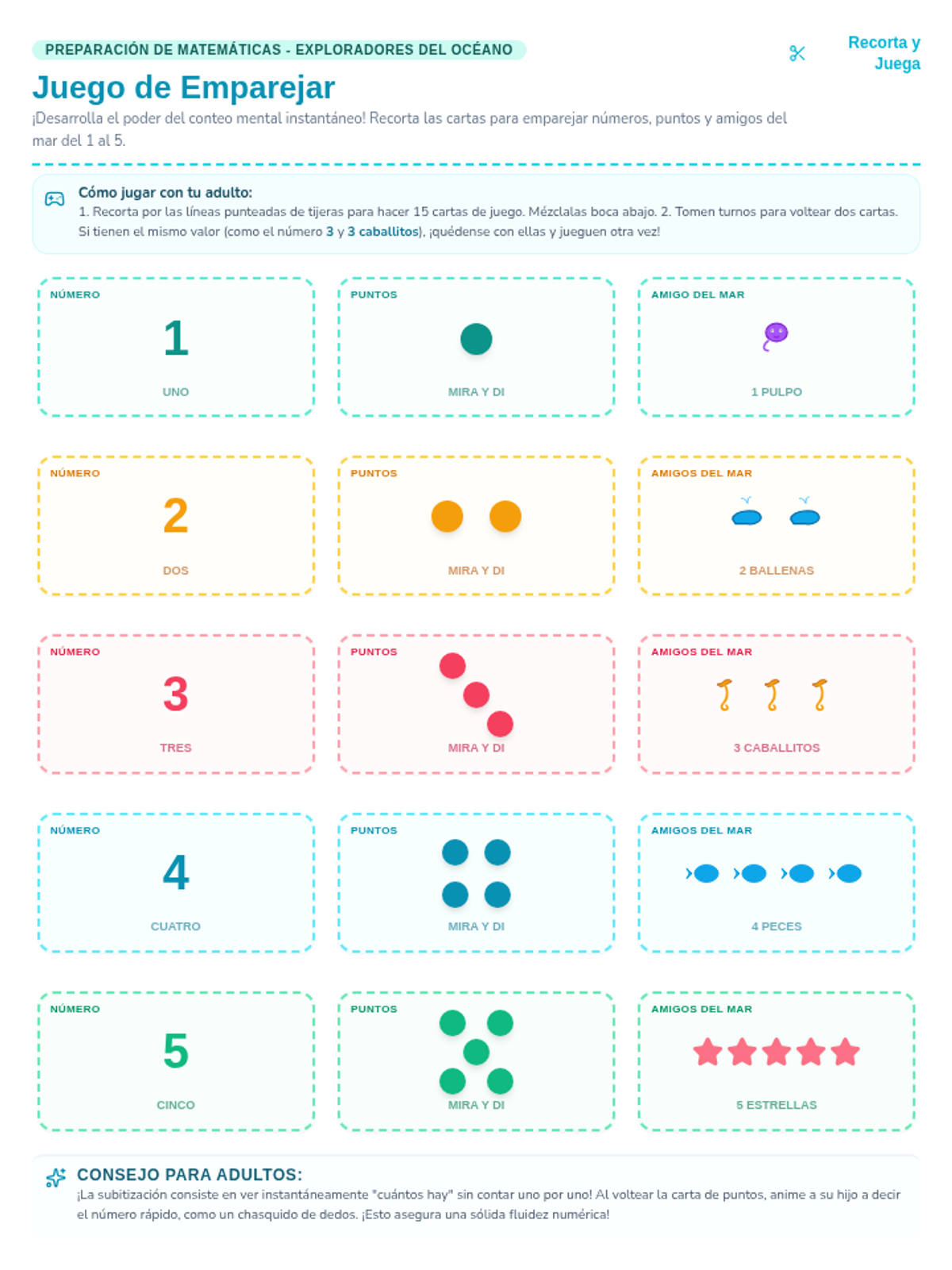
Un programa de preparación de matemáticas de verano con temas del océano diseñado para estudiantes que ingresan a jardín de infantes con un tema mágico y amigable bajo el mar. Ofrece práctica lúdica en español de habilidades matemáticas básicas.
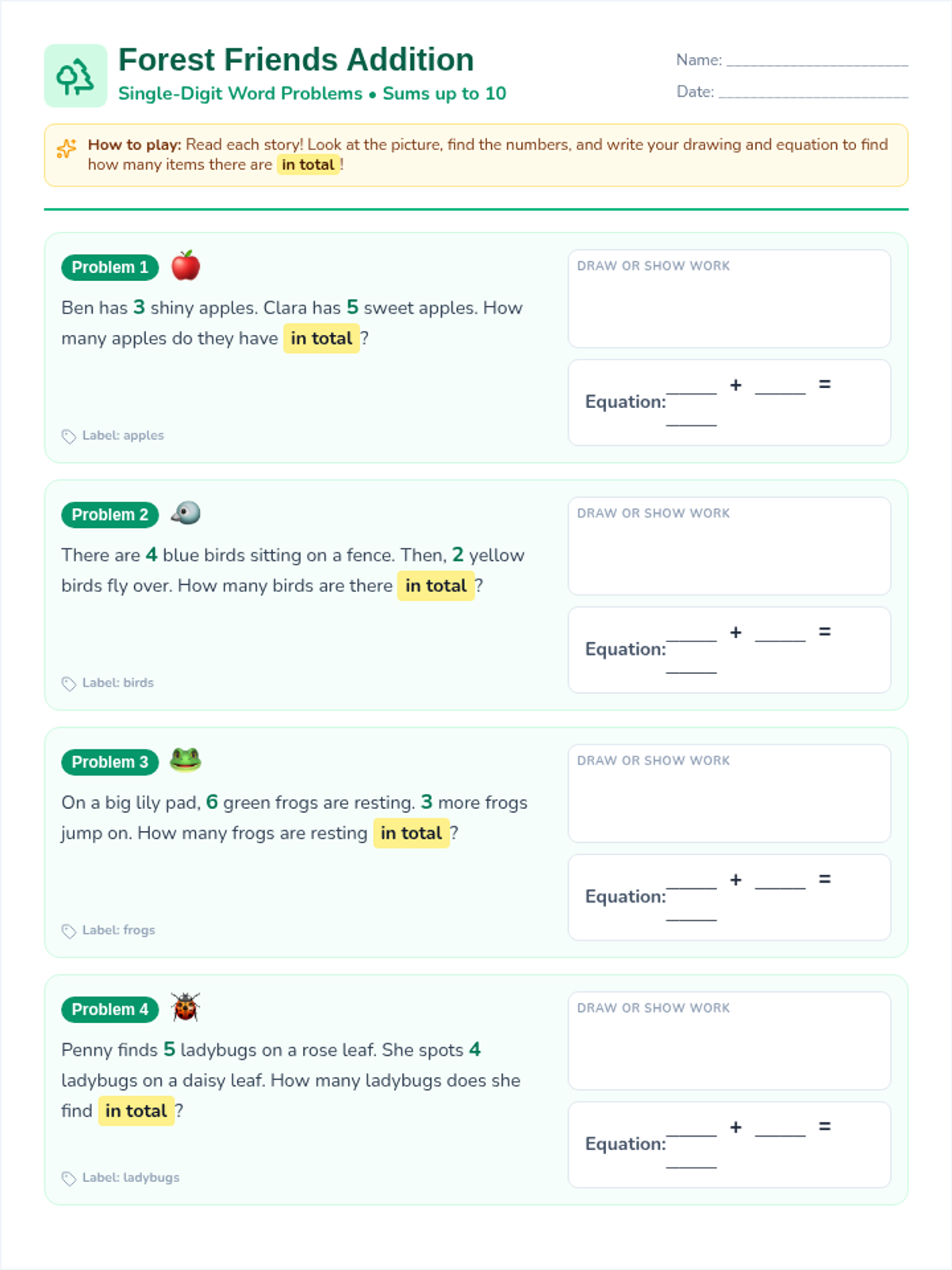
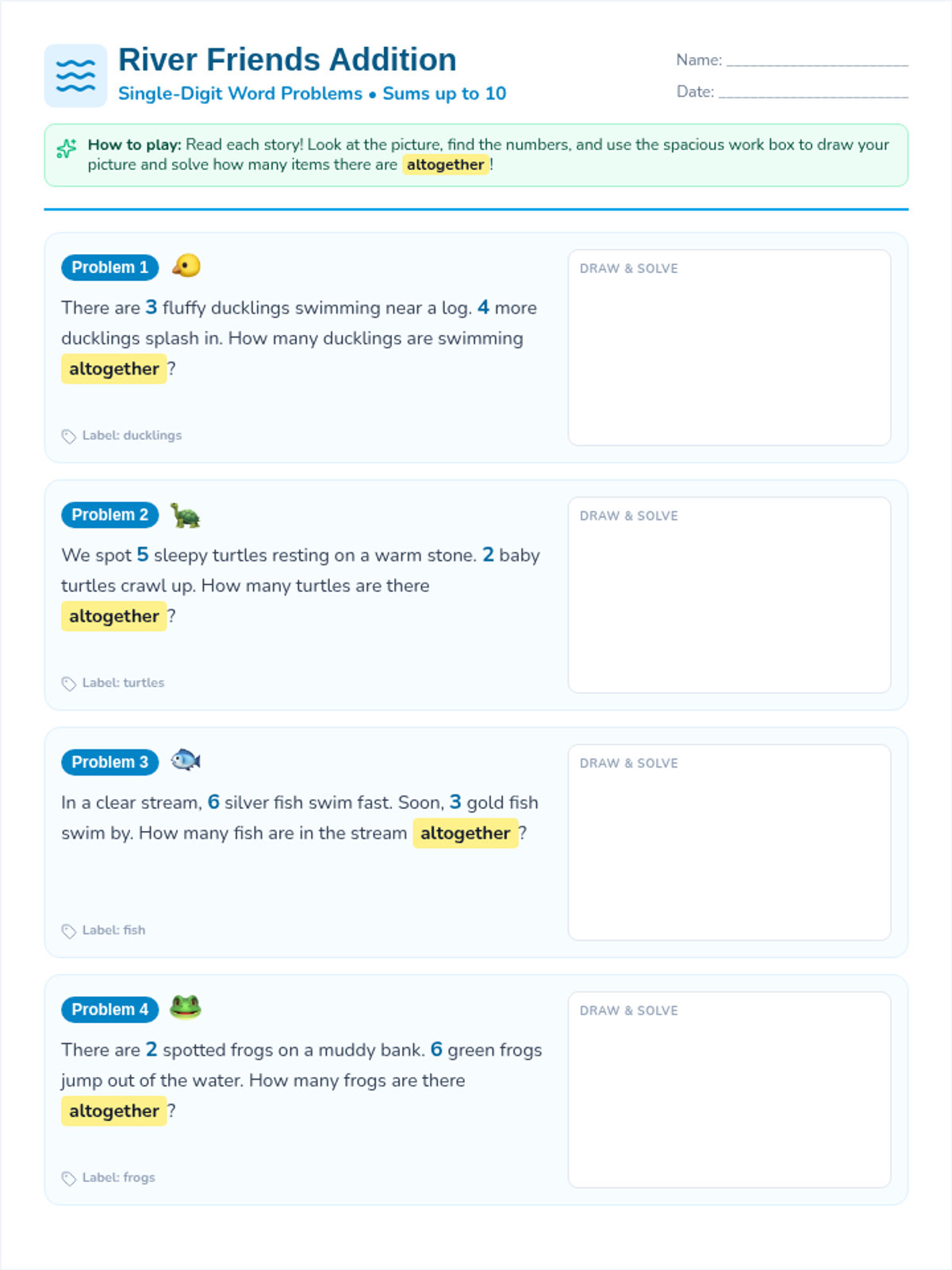
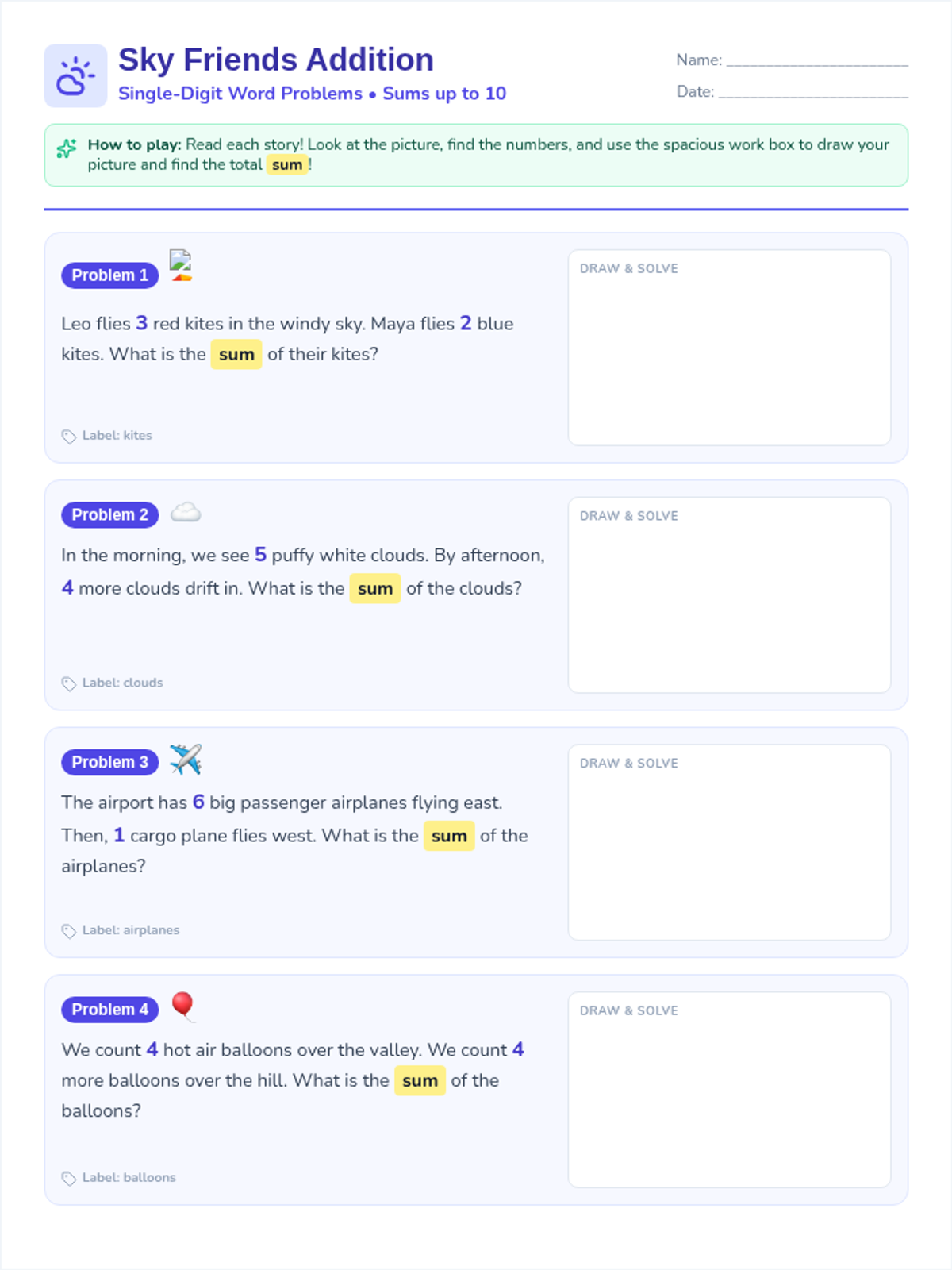
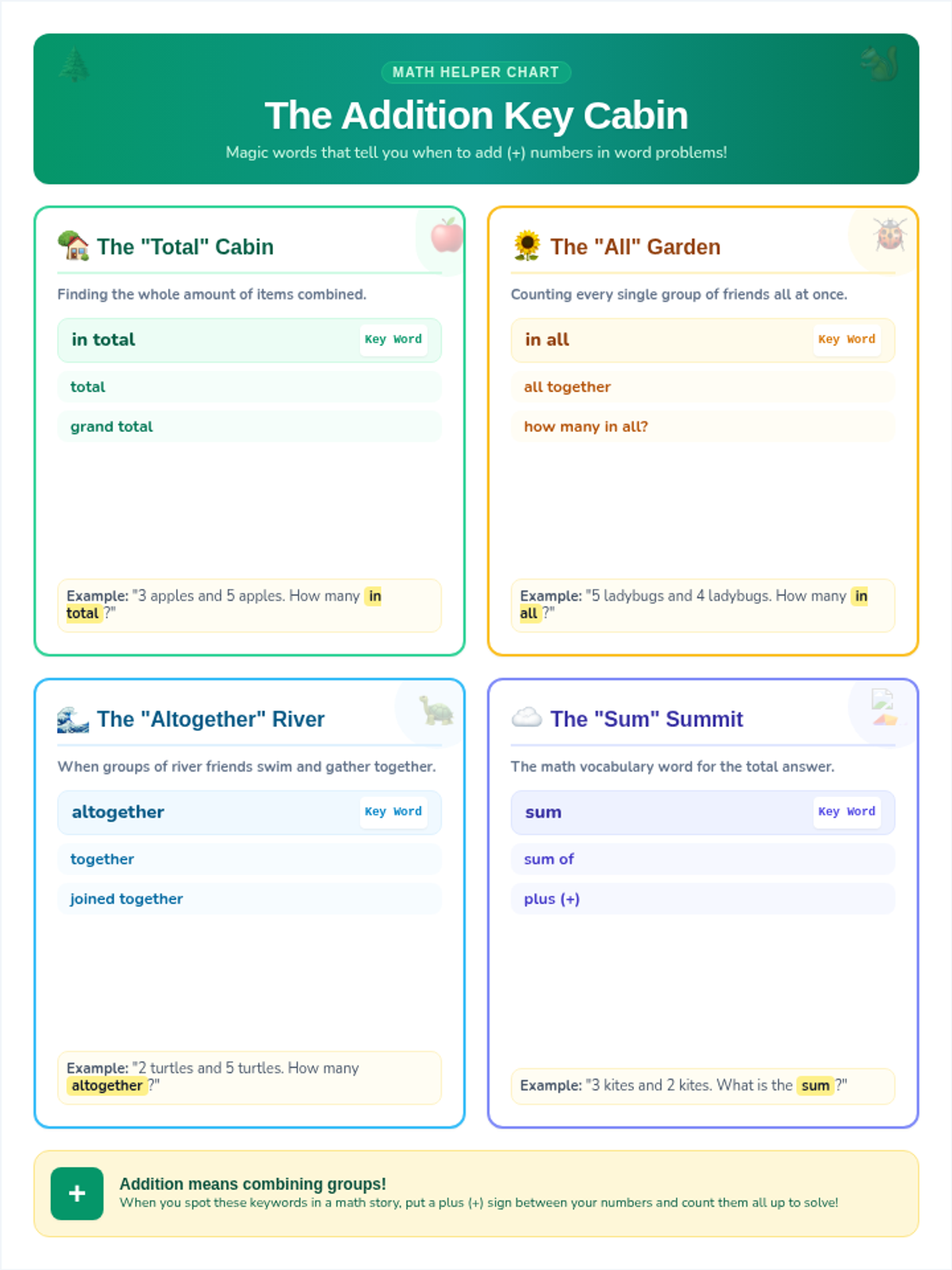
A foundational early-elementary lesson introducing single-digit addition word problems. Students use visual labels and highlighted keywords like 'in total' to parse and solve addition scenarios within 10, supported by spacious workspace grids.
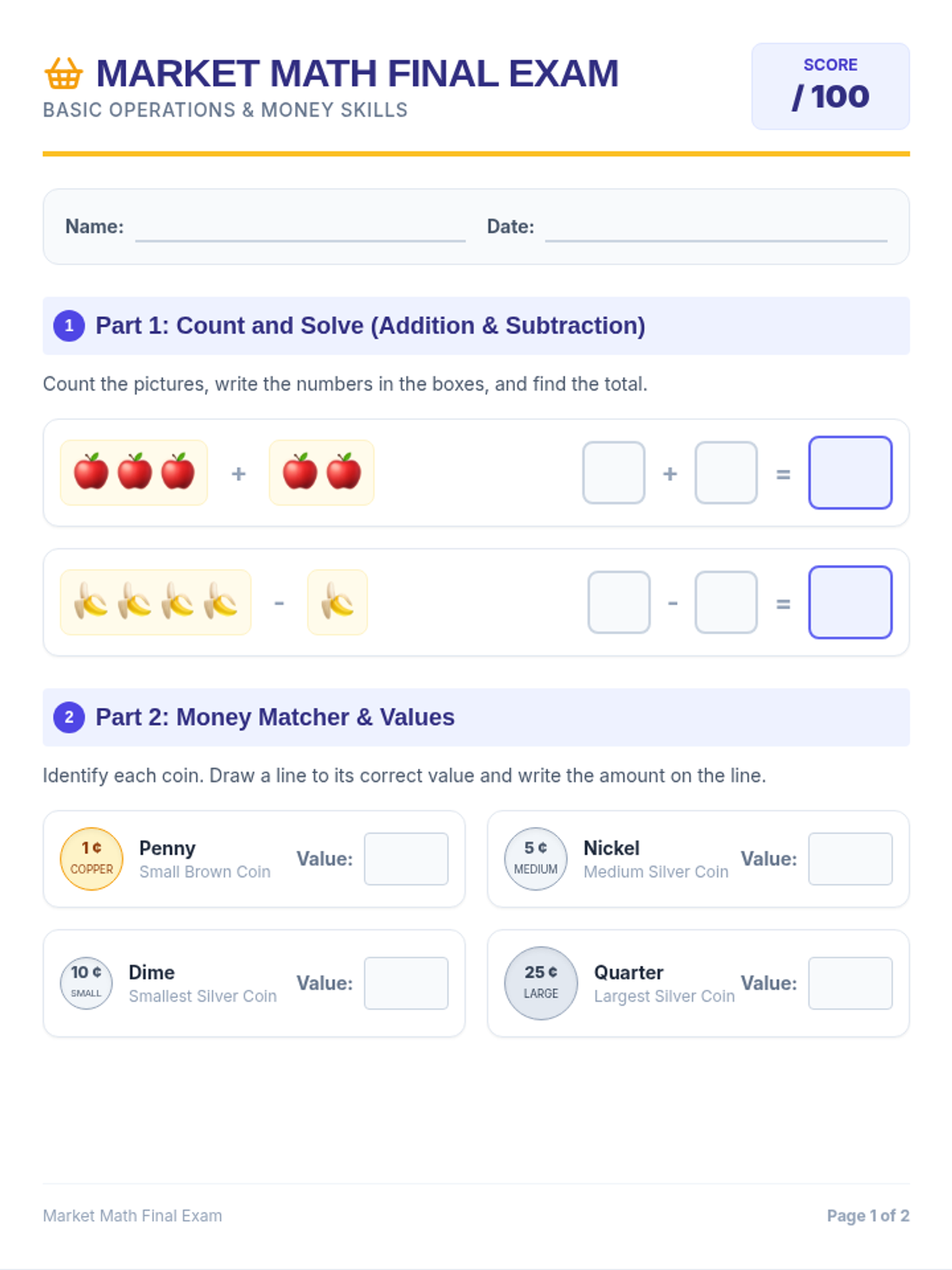
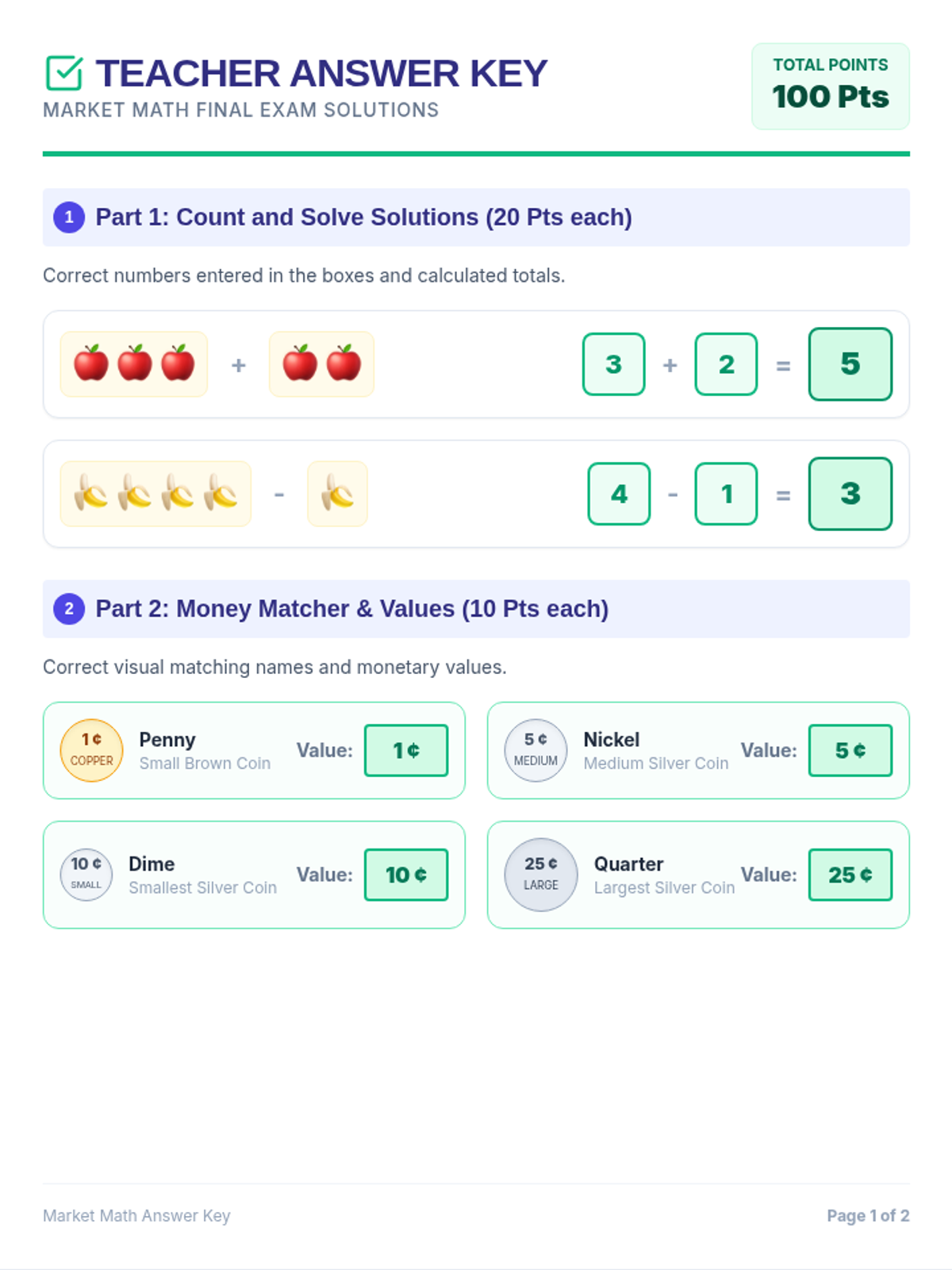
A comprehensive final exam lesson covering basic addition, subtraction, coin identification, and functional life skills grocery shopping math with visual support.
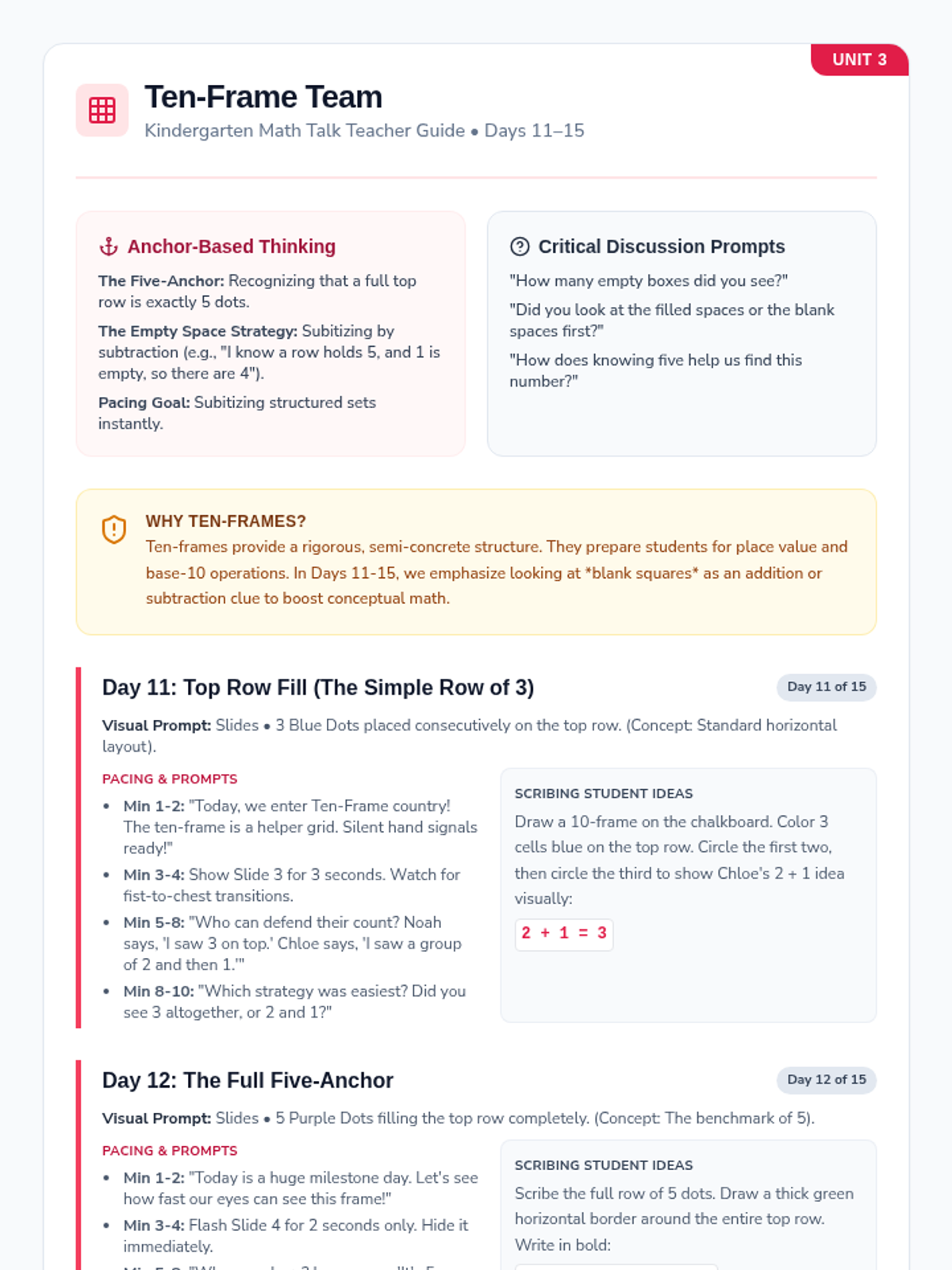
Explores subitizing numbers 1-5 within a ten-frame structure, helping students visualize numbers relative to five- and ten-anchors over Days 11-15.
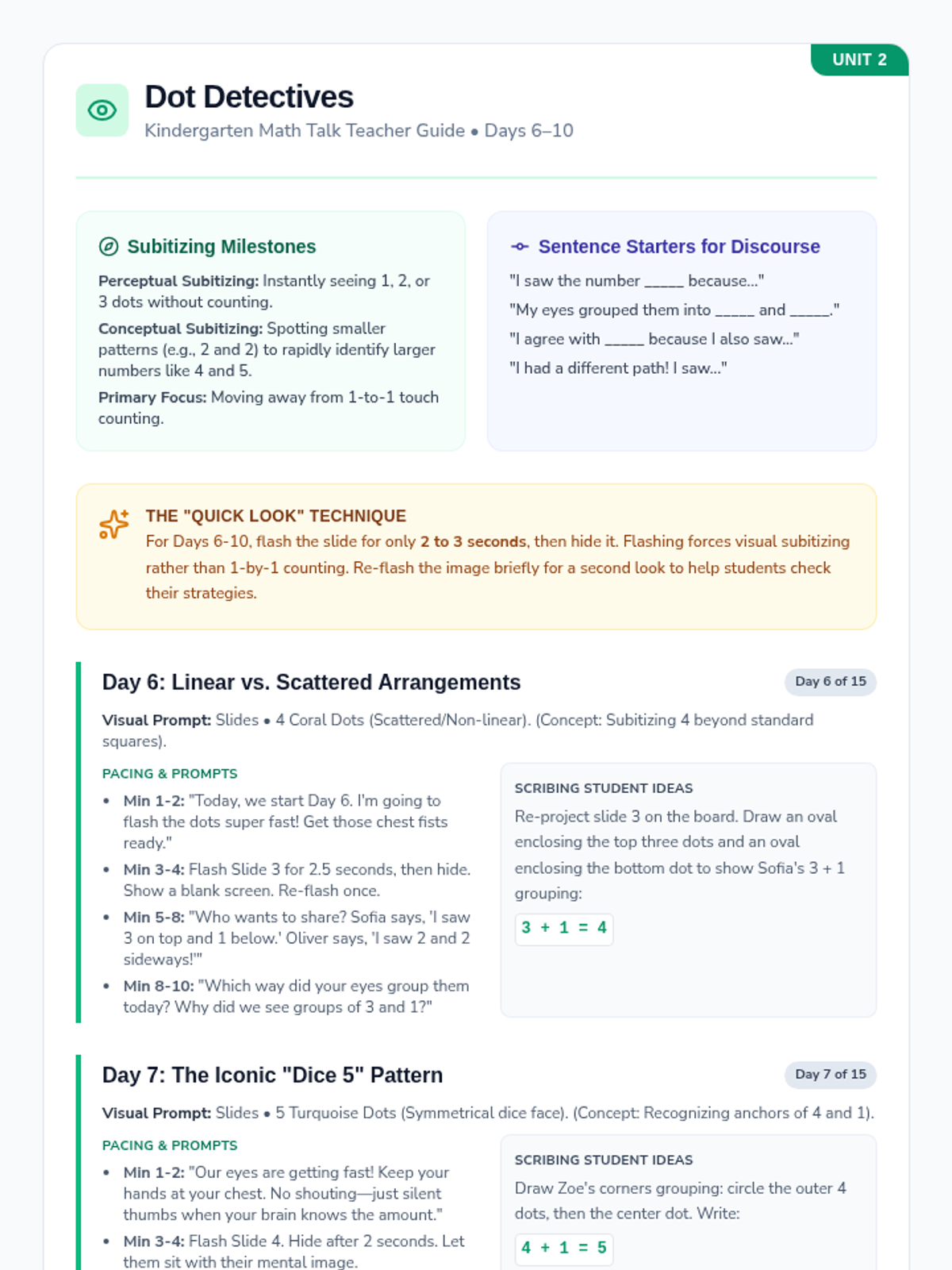
Develops rapid subitizing and spatial awareness for numbers 1 to 5 using varied dot configurations (dice, linear, and scattered) over Days 6-10.
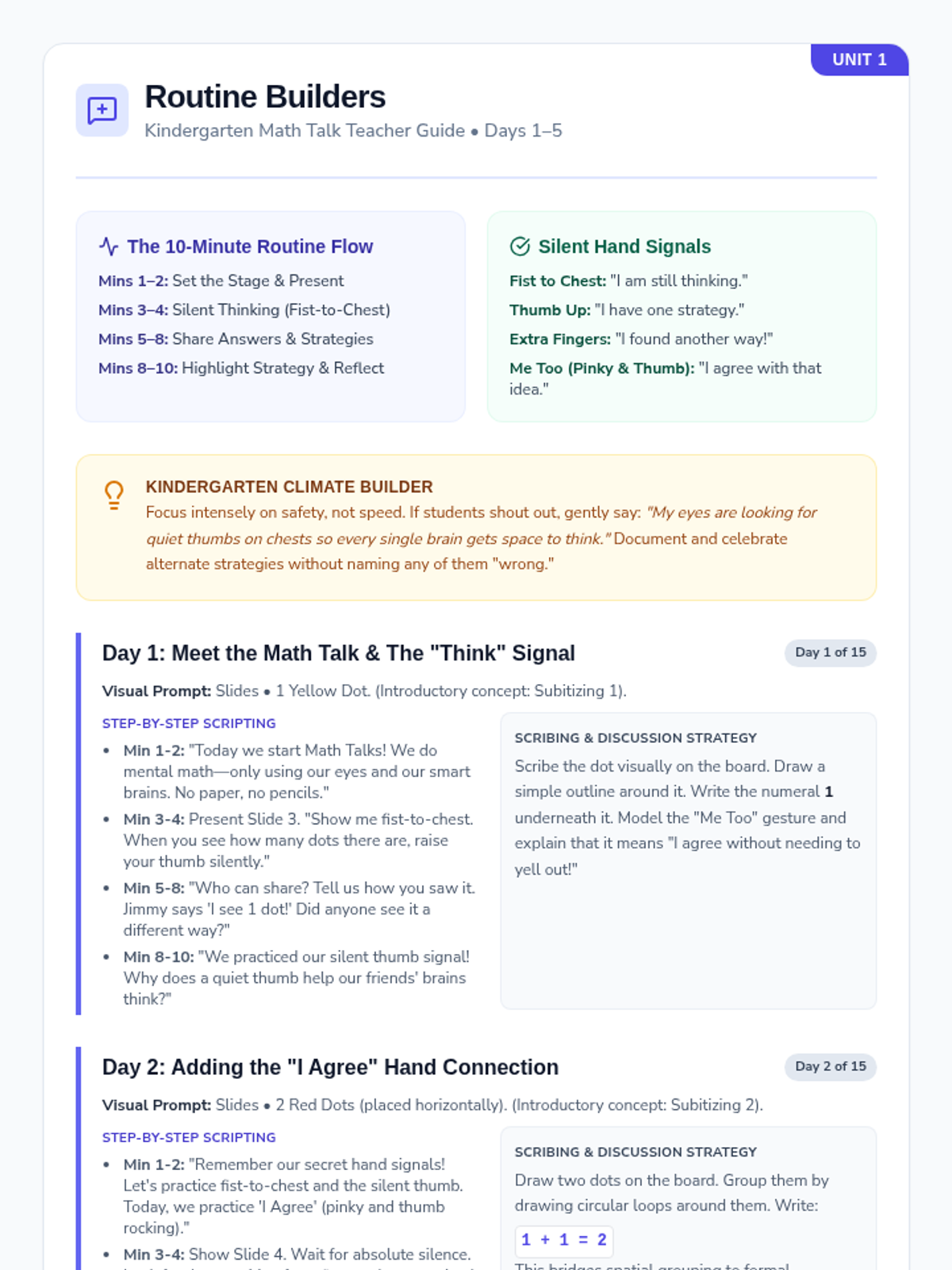
Introduces the foundational mental math protocols, silent hand signals, and first simple visual count talks (dots/fingers) over Days 1-5 to build classroom safety.
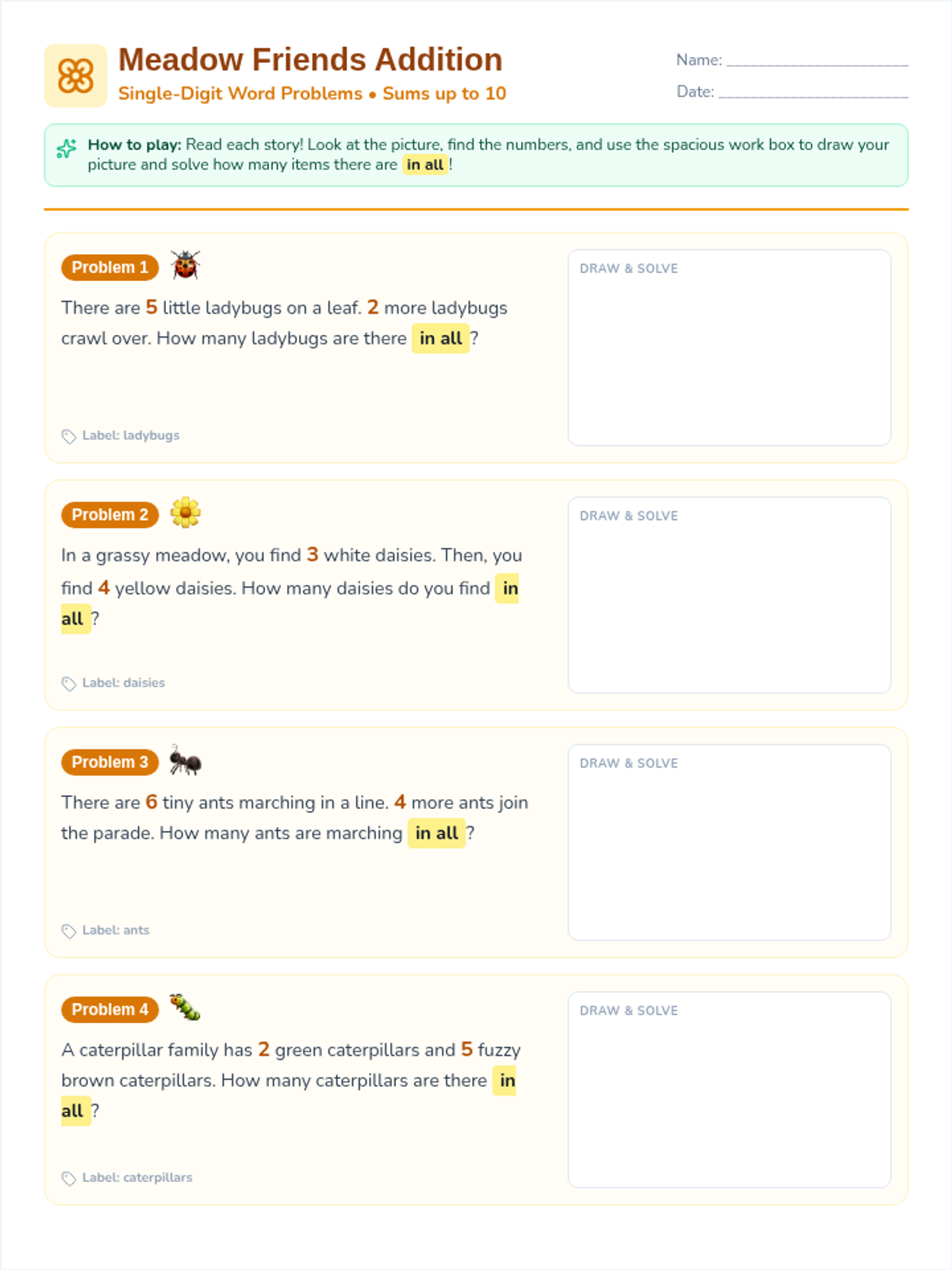
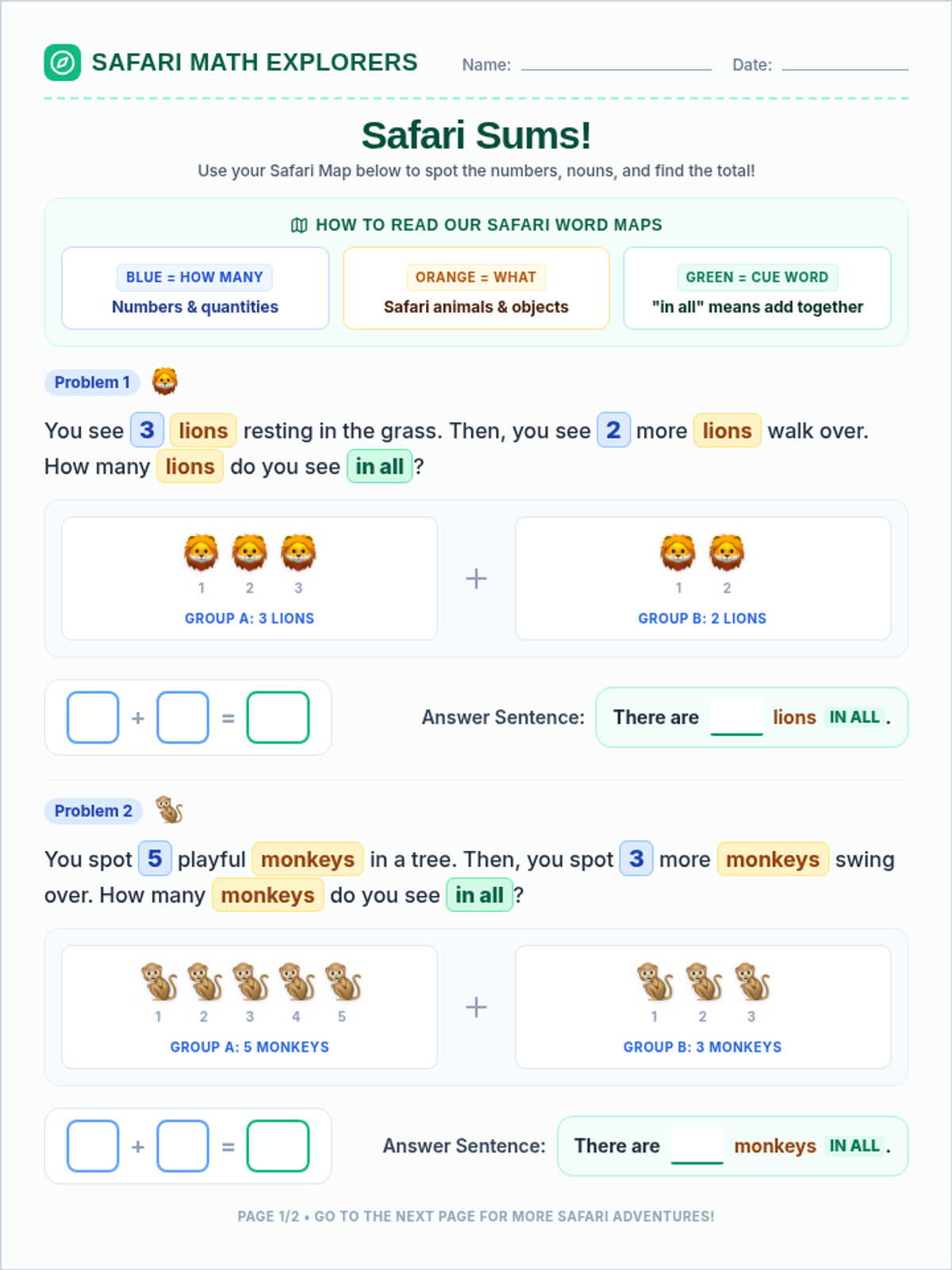
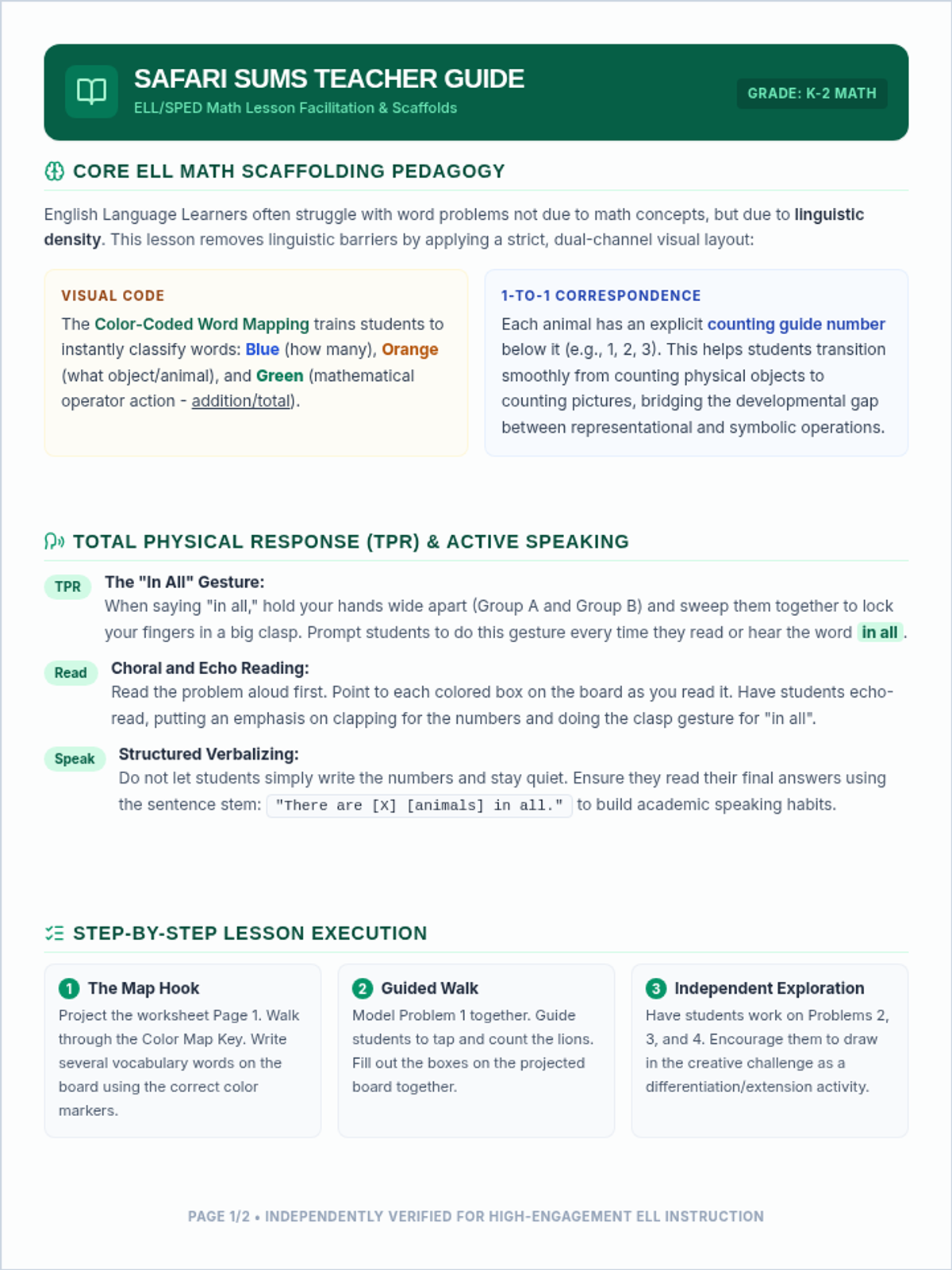
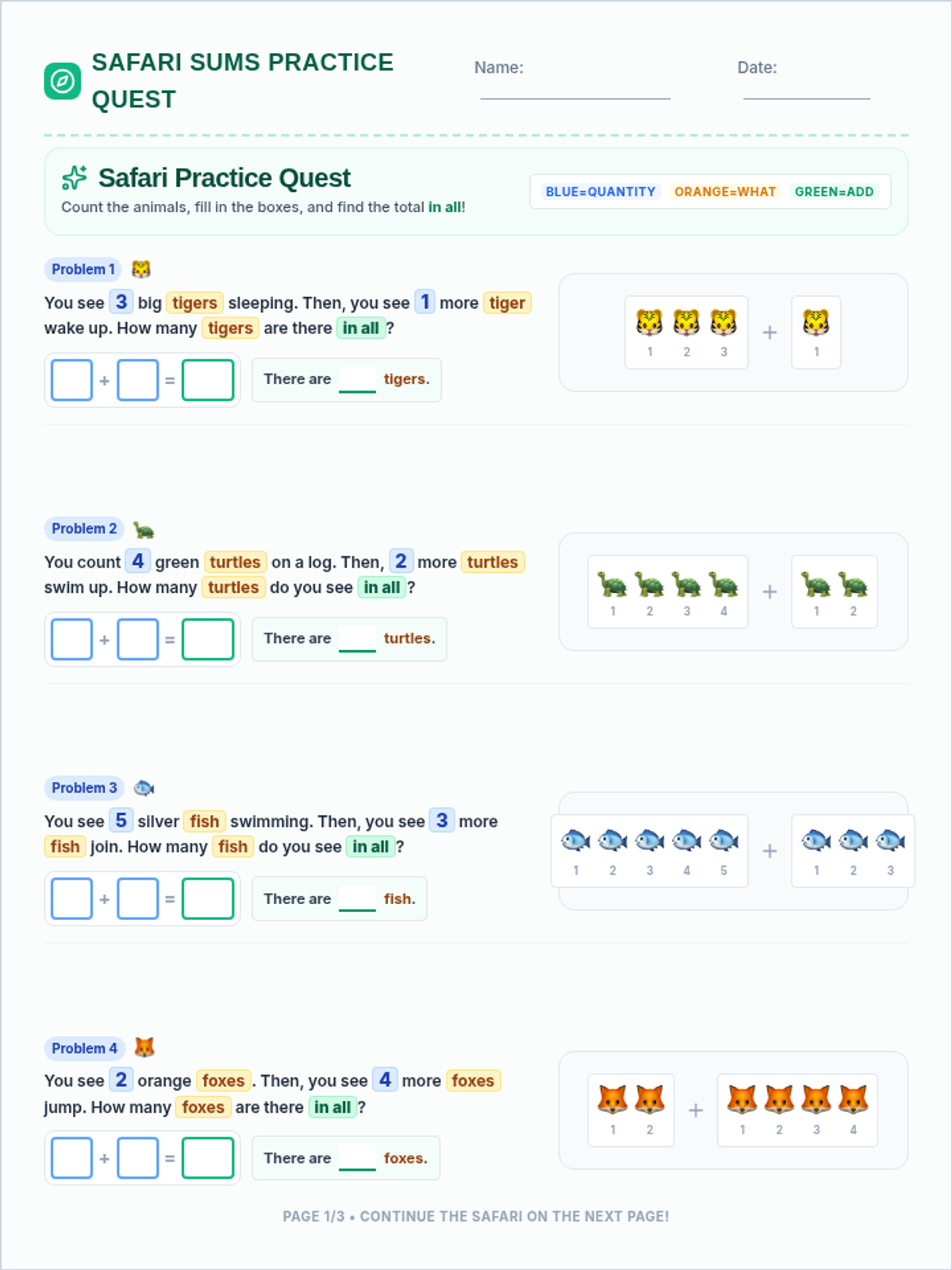
A visual addition lesson designed for English Language Learners (ELL) to master single-digit word problems. It utilizes a Safari theme, clear icon-based pictorial support, and color-coded text highlighting to build confidence in identifying quantities, key nouns, and the 'in all' action cue.