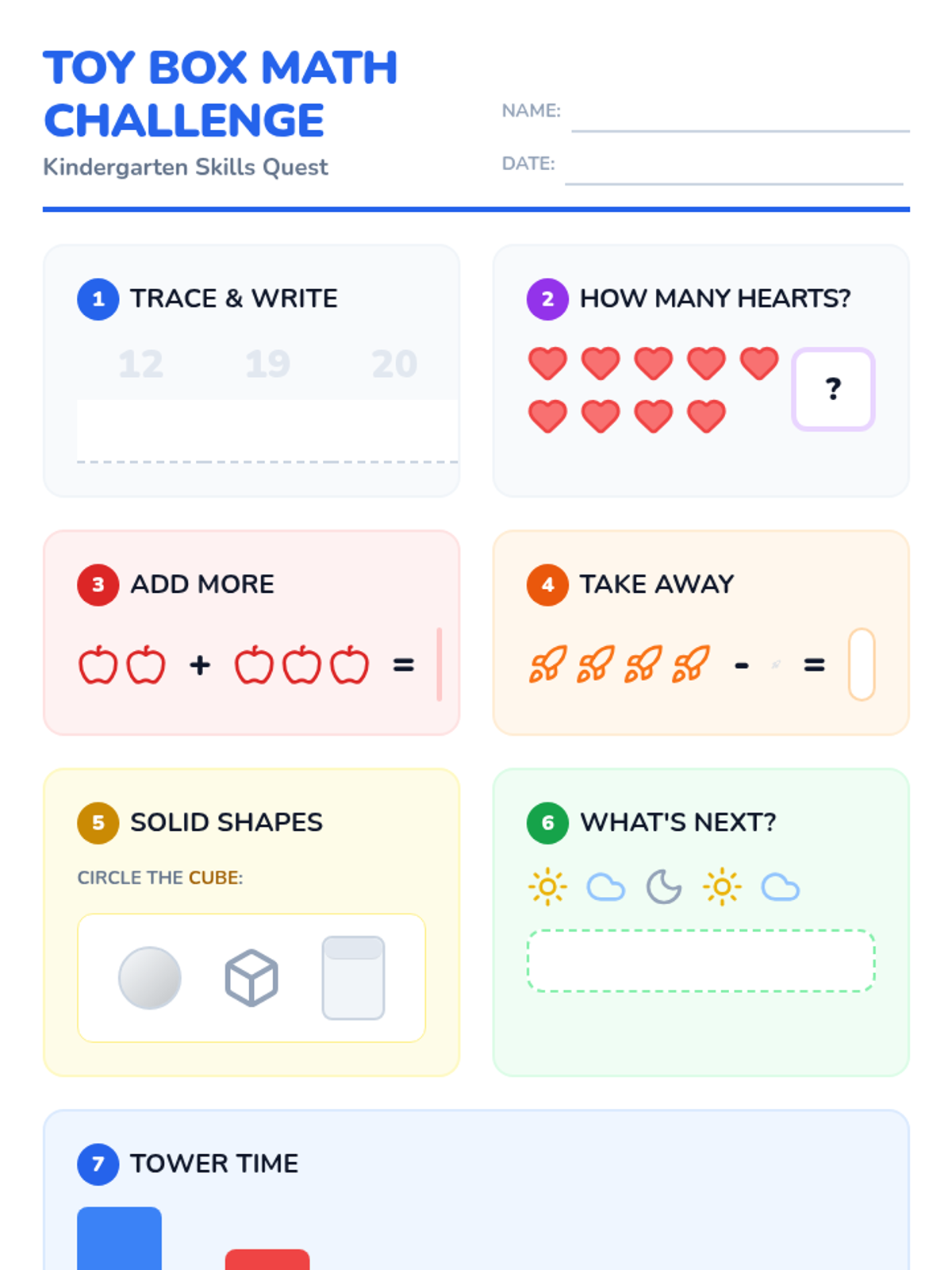
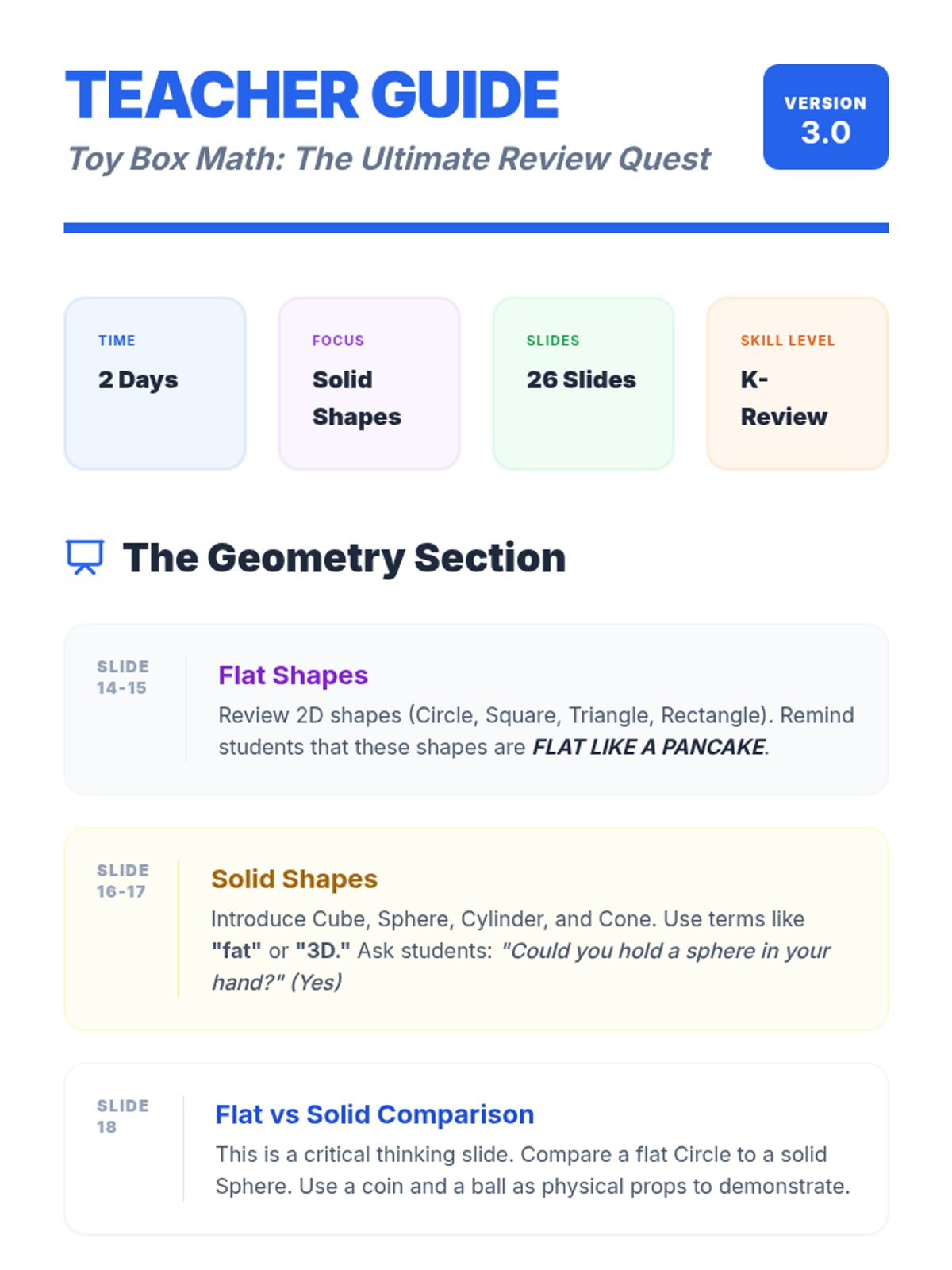
A fun introduction to basic shapes through tracing and recognition activities.
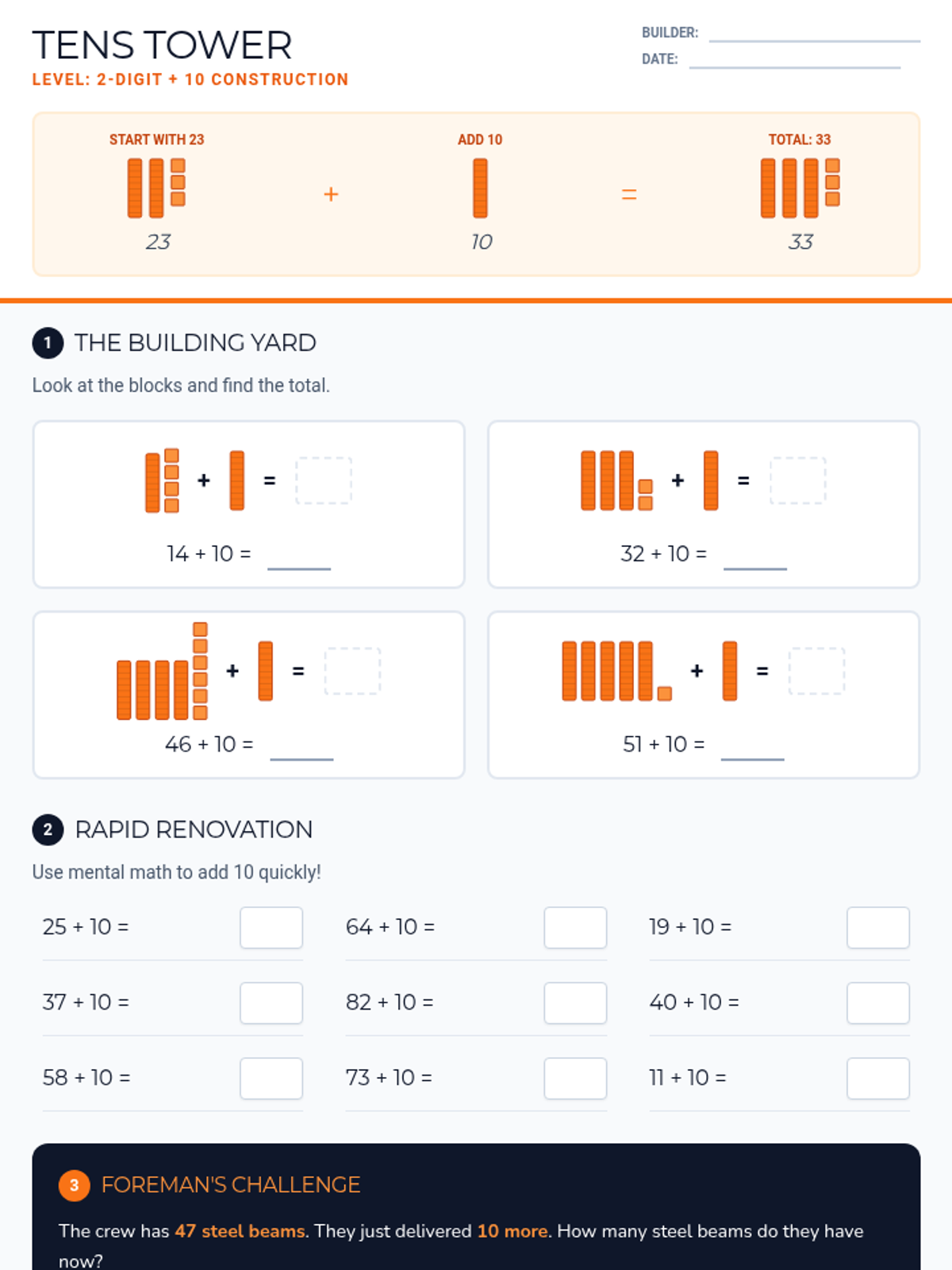
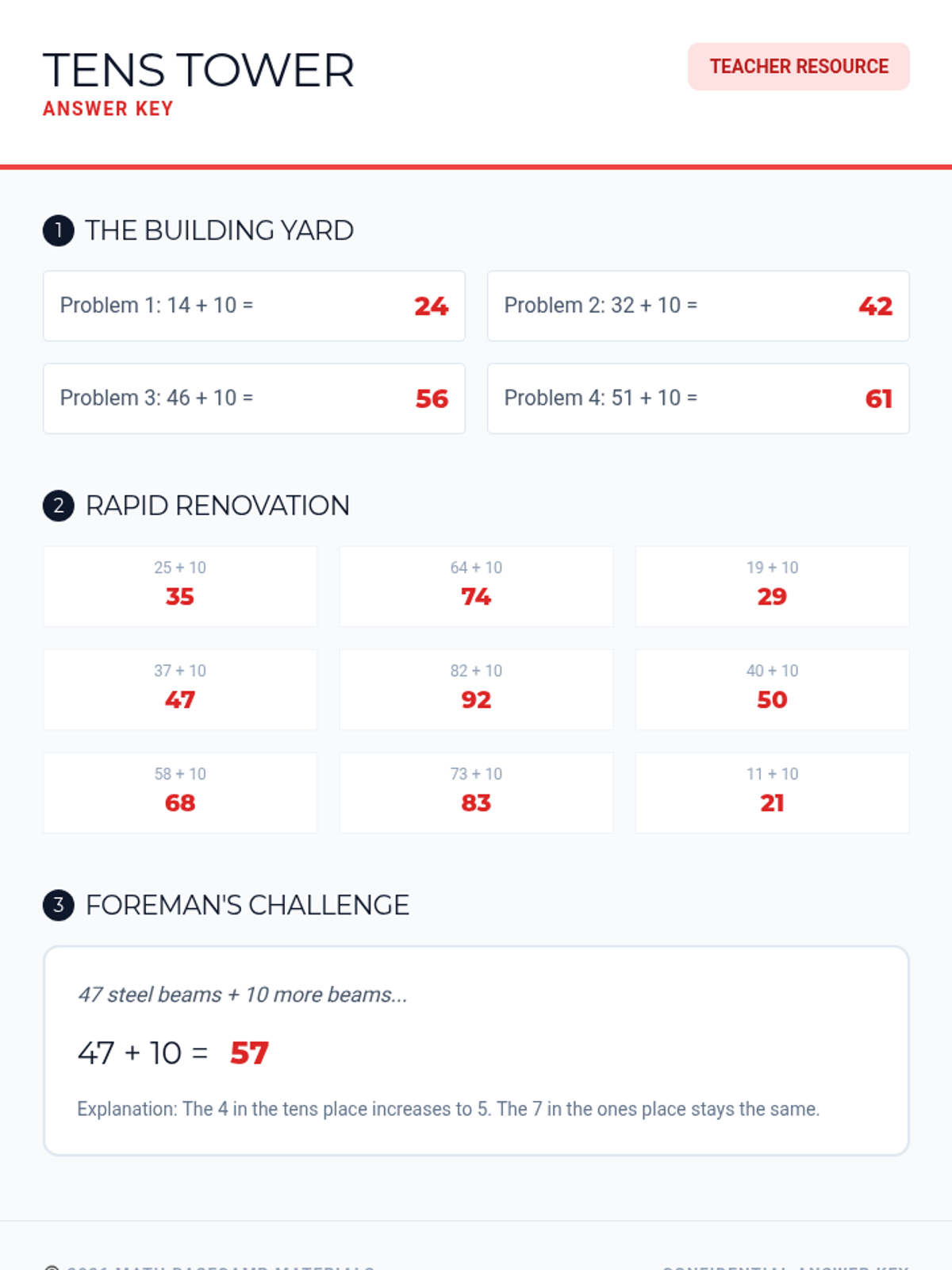
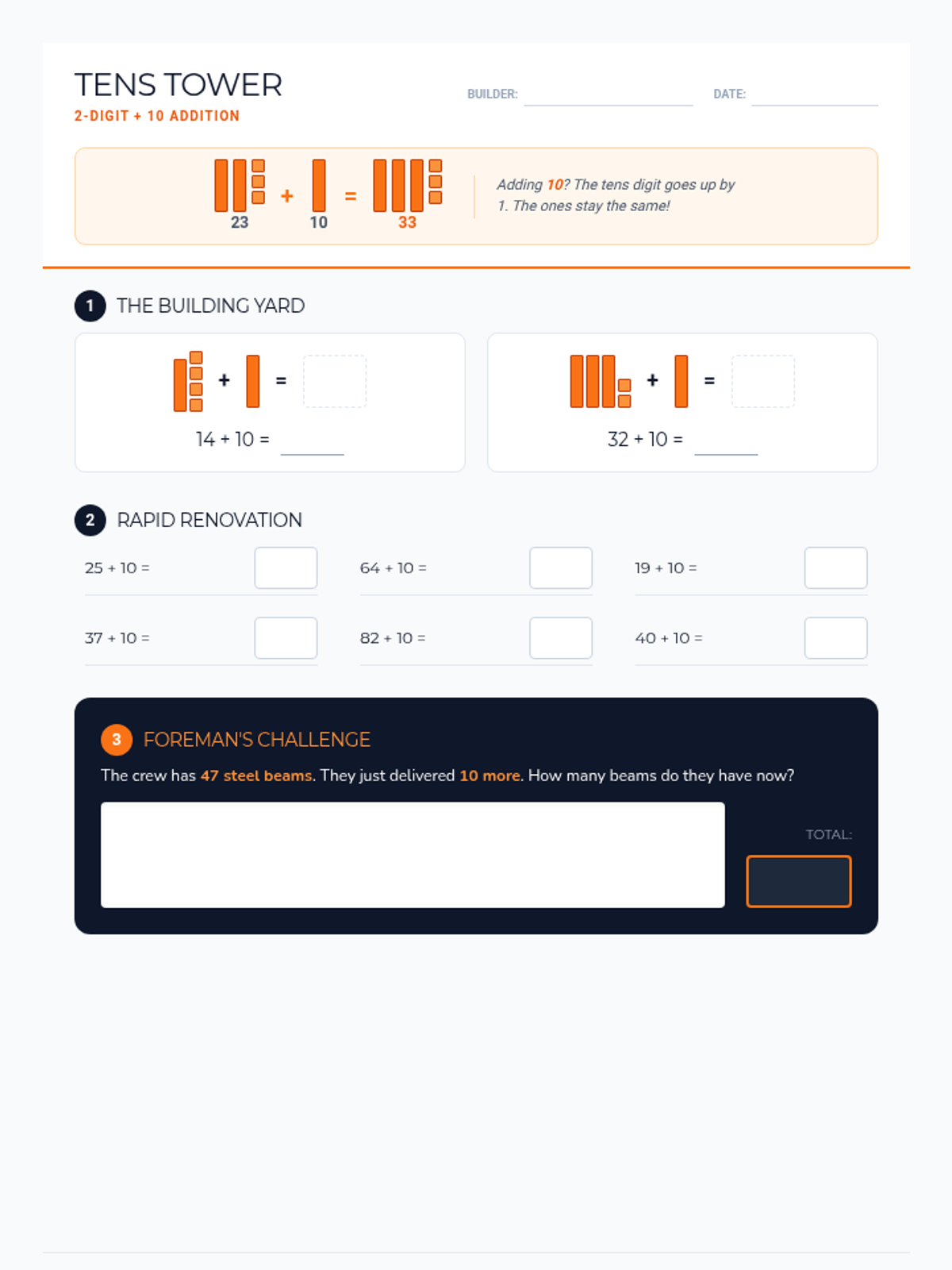
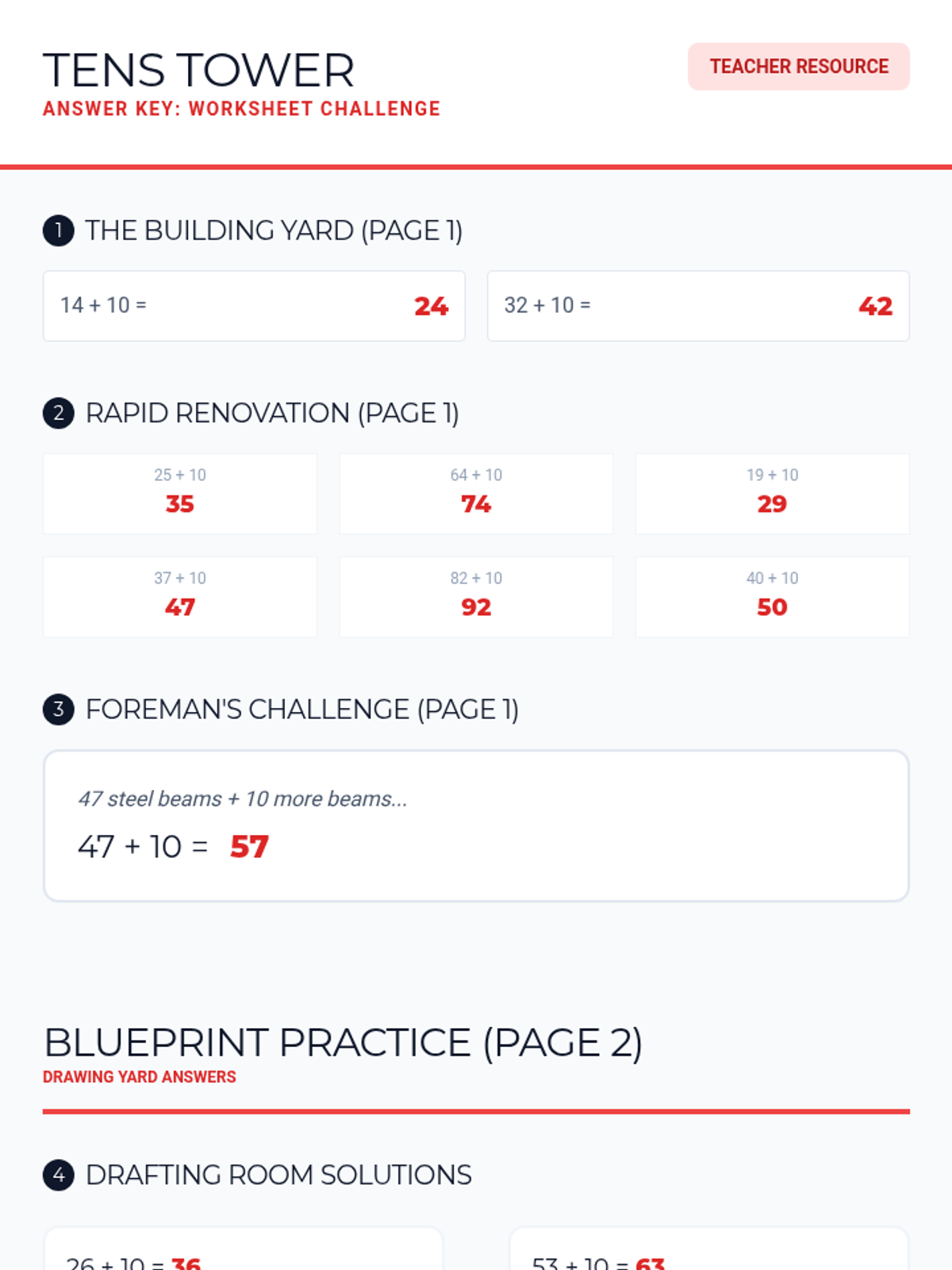
A lesson focused on adding 10 to any 2-digit number using visual base-ten models and mental math strategies. Students explore how the tens digit increases by one while the ones digit remains constant.
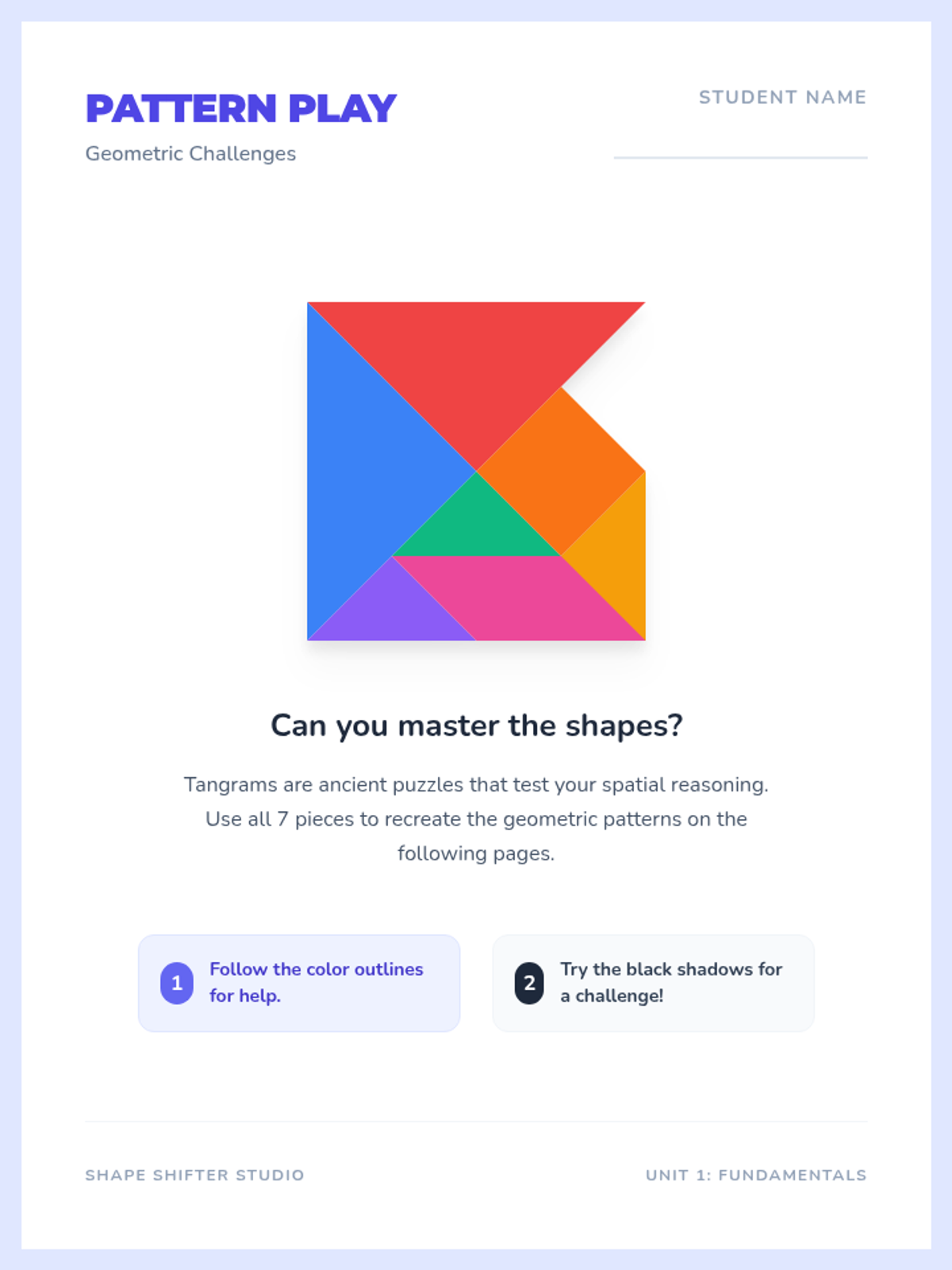
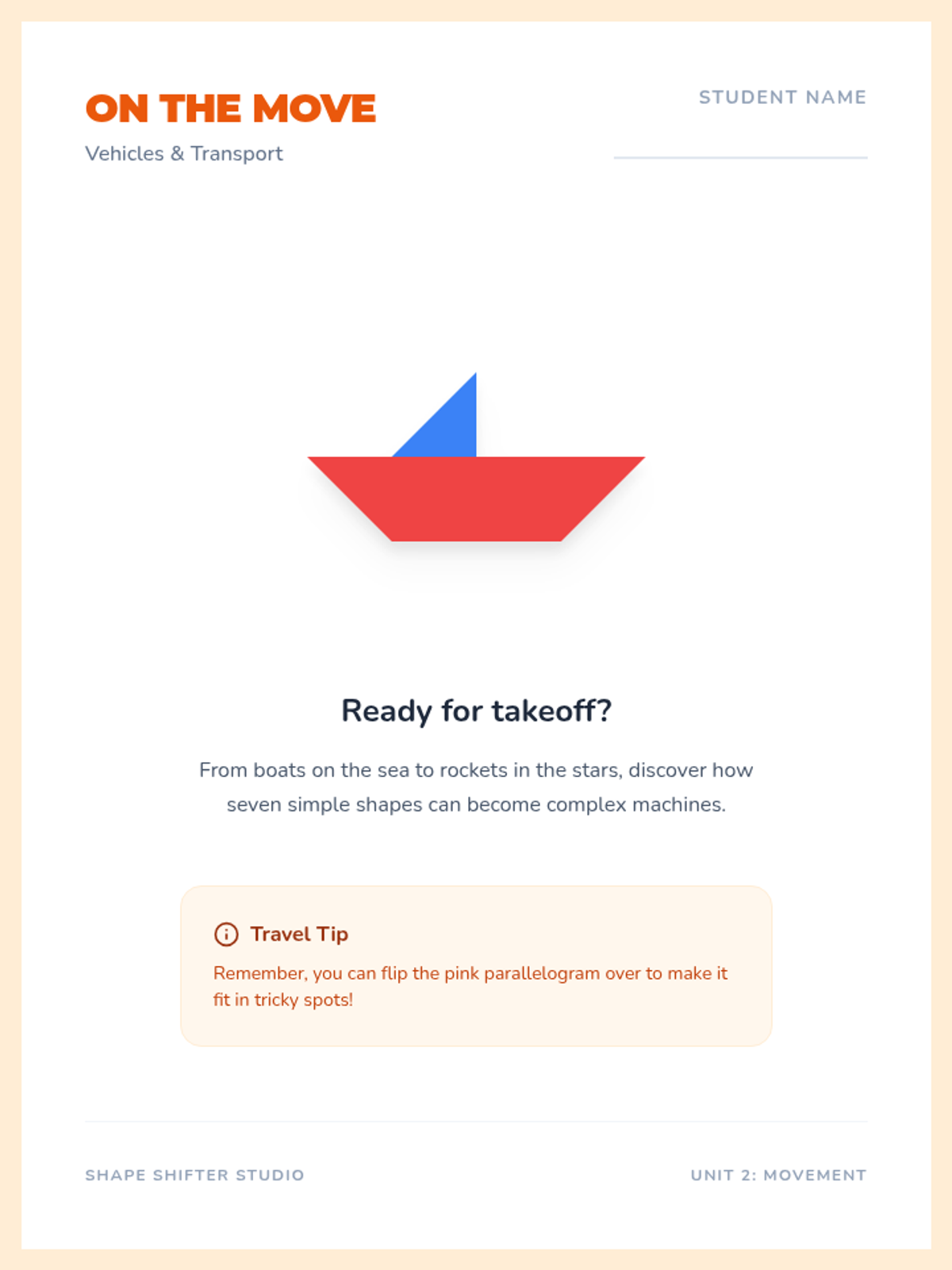
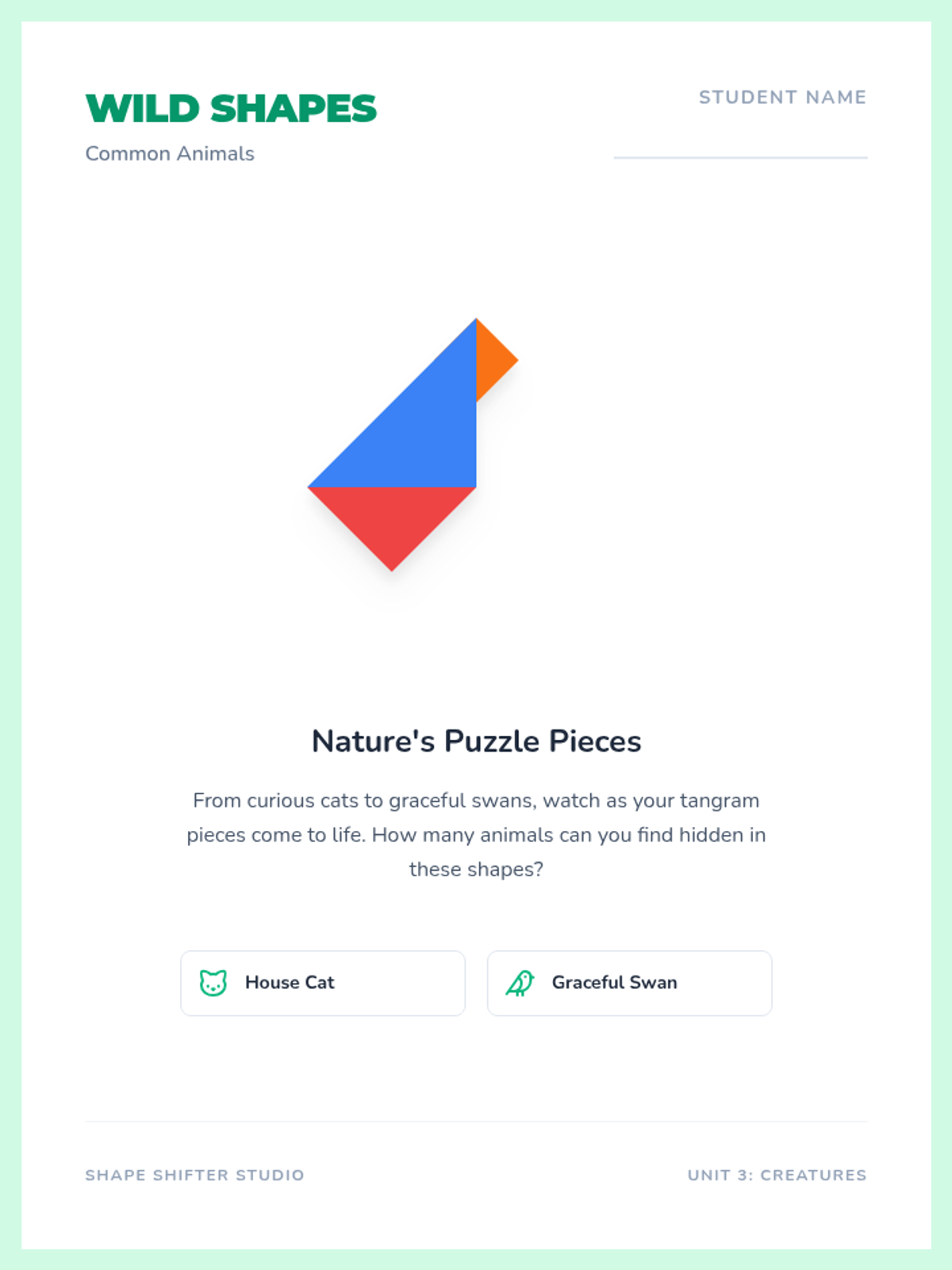
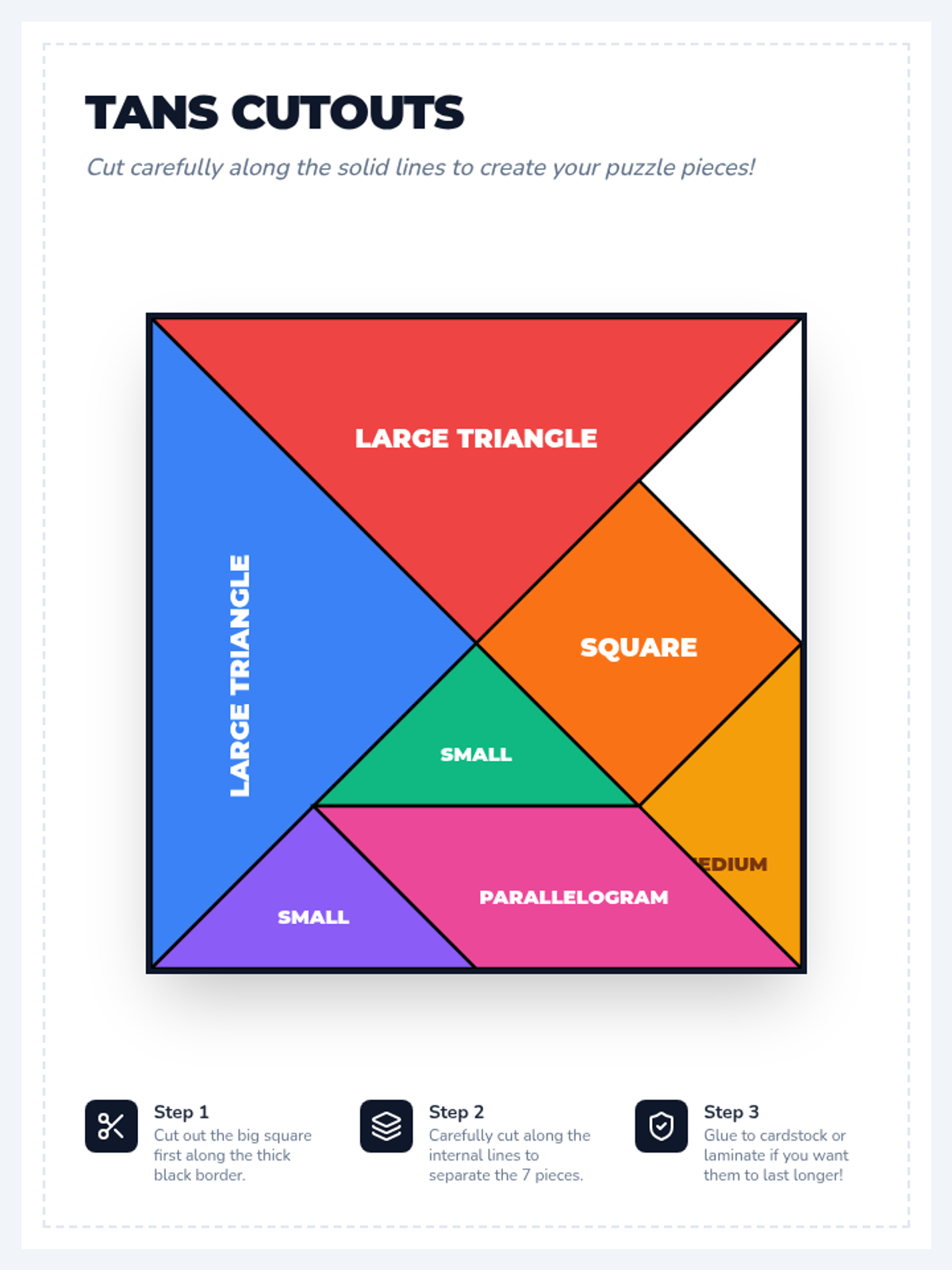
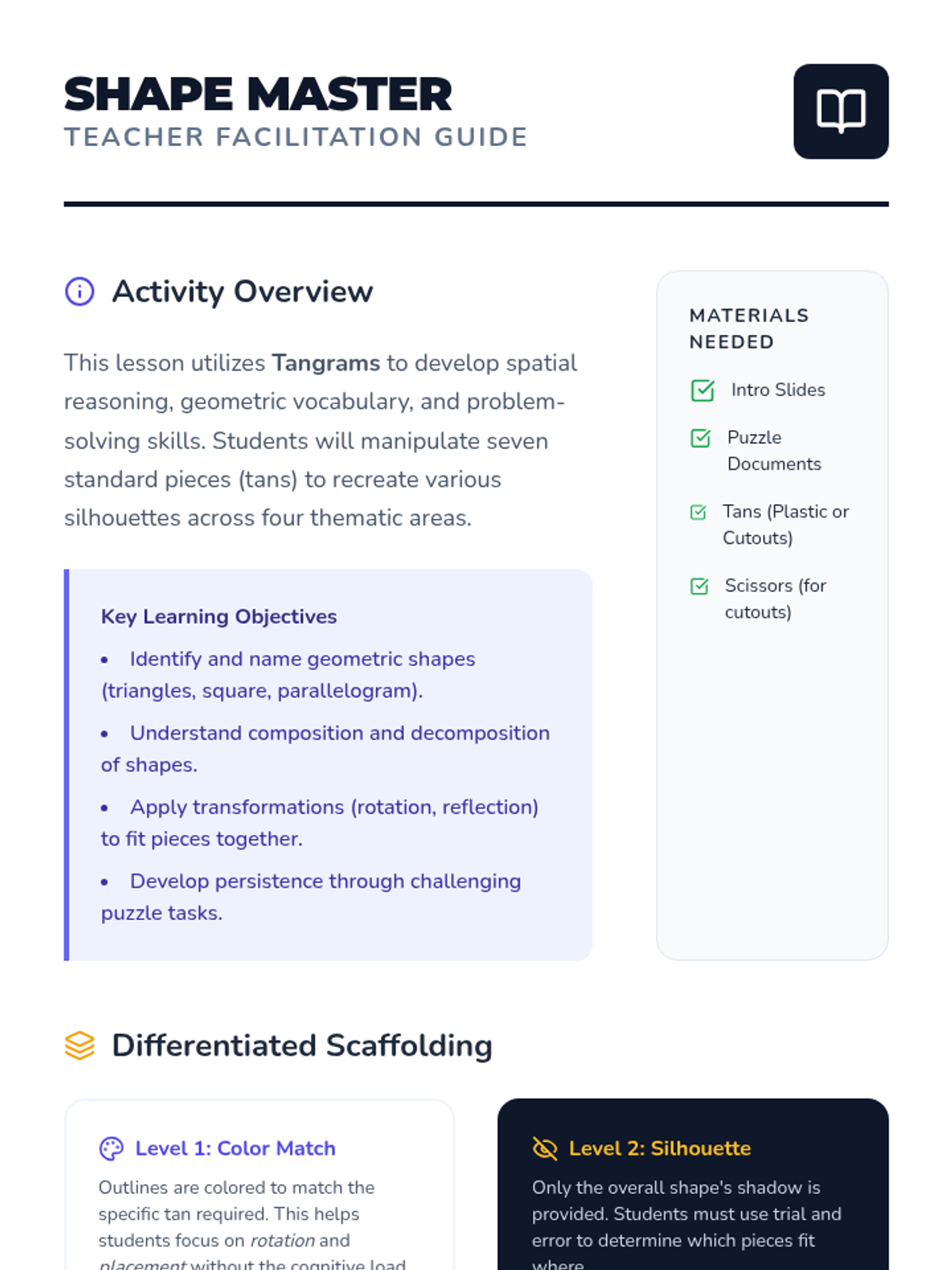
A hands-on exploration of geometry and spatial reasoning using tangrams, featuring puzzles across four diverse themes with varying difficulty levels.
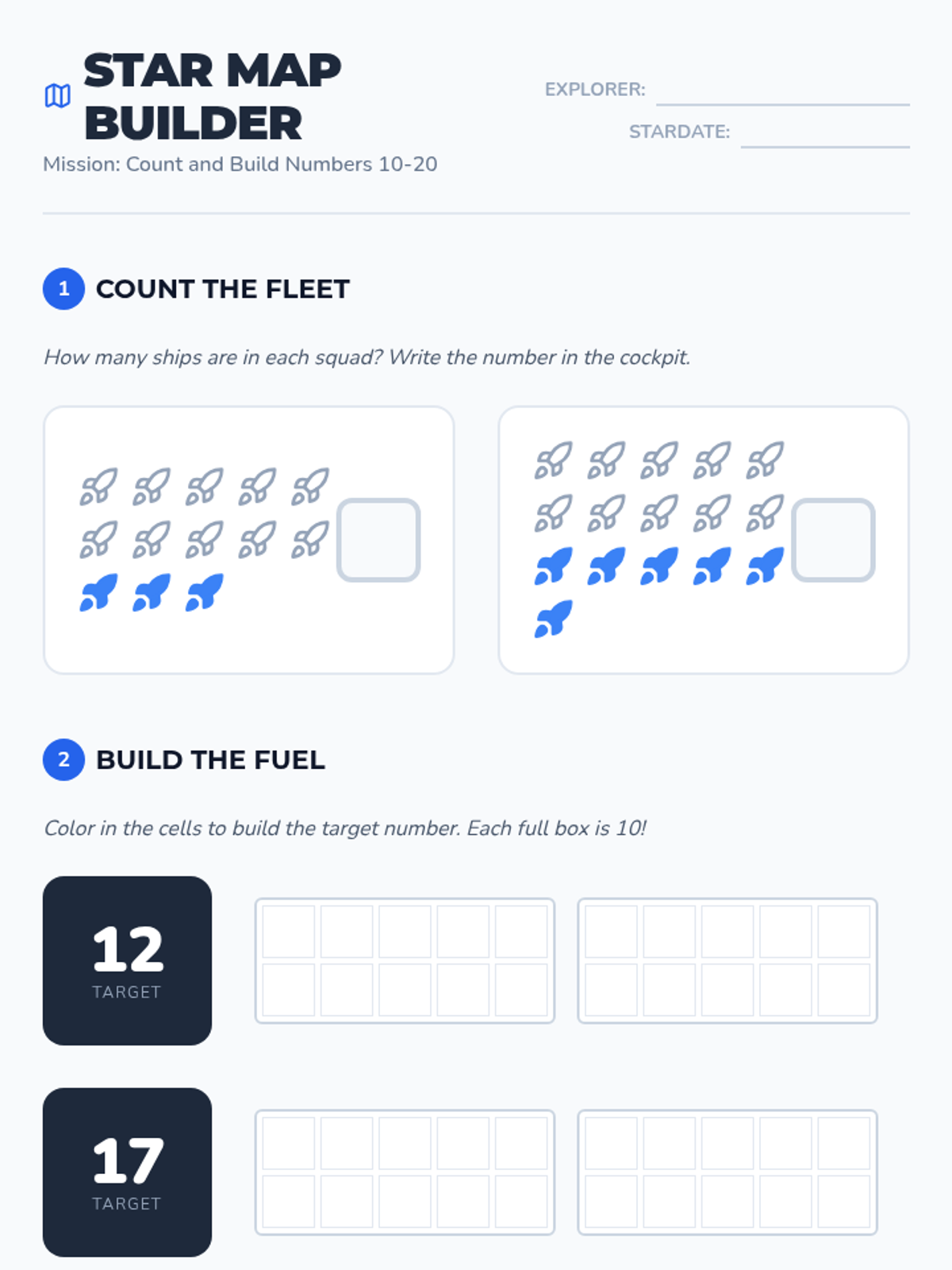
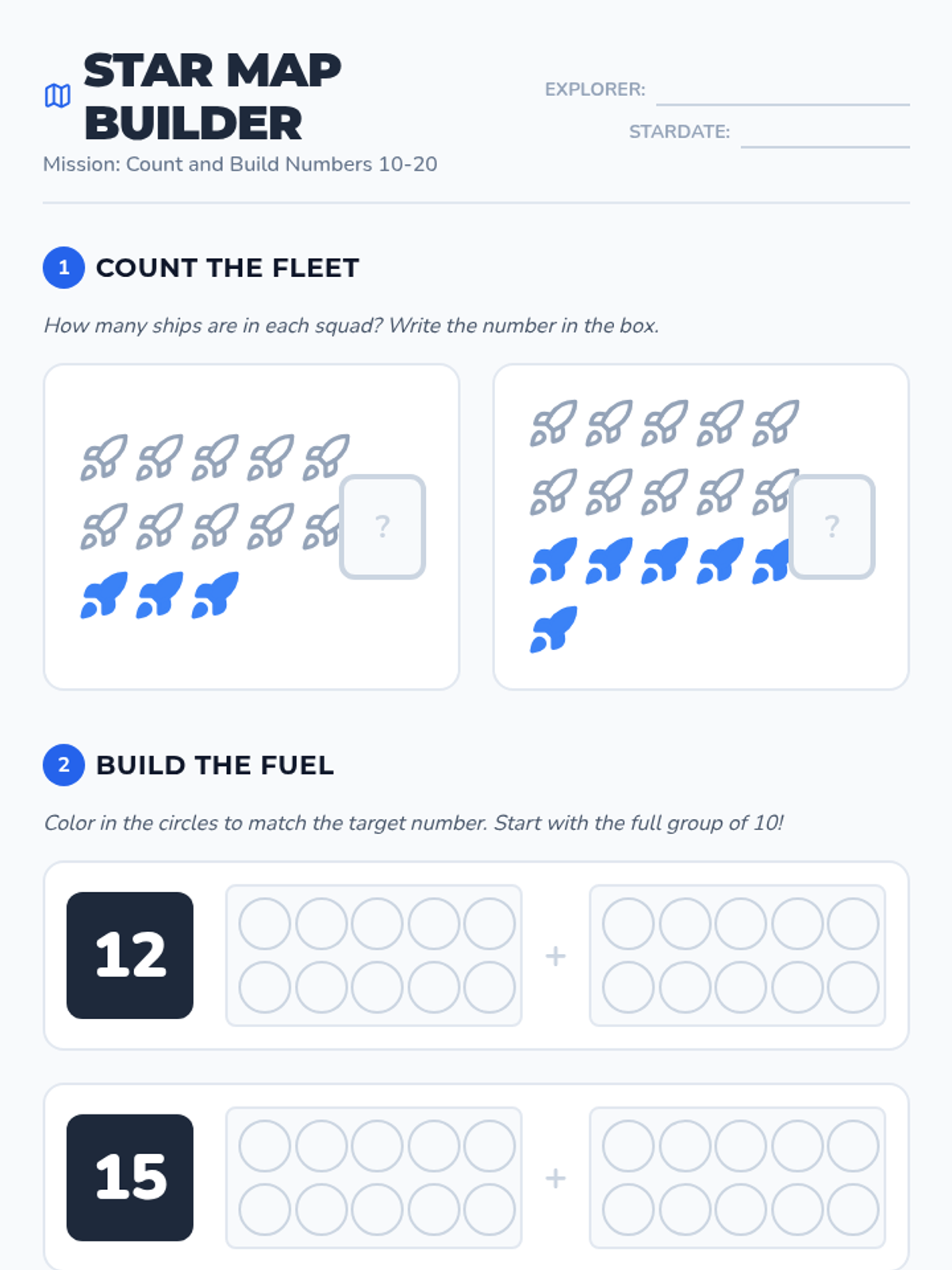
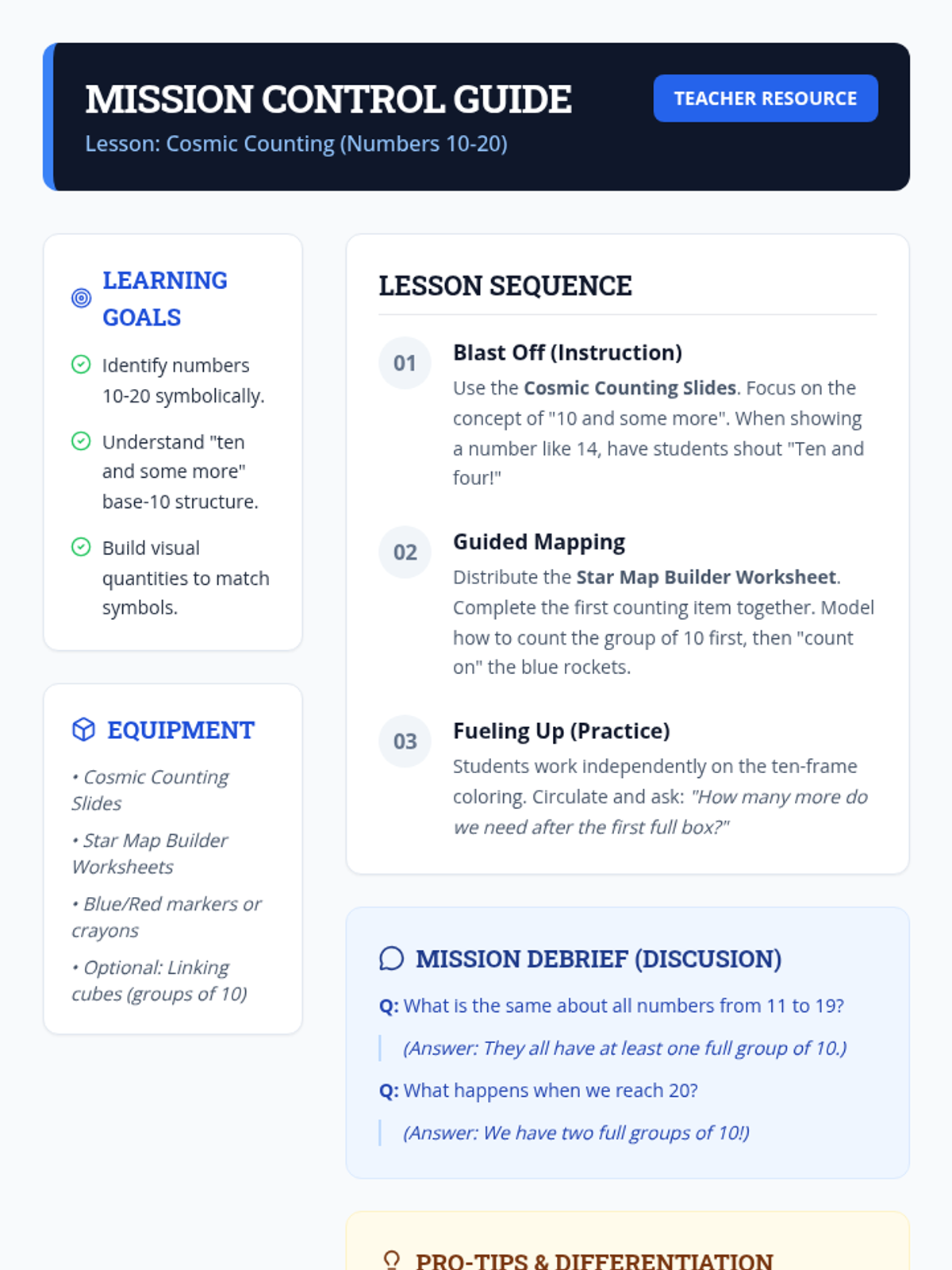
A lesson designed to help students recognize and build numbers 10 through 20 by connecting visual quantities (ten-frames and groups of stars) to their symbolic representations.
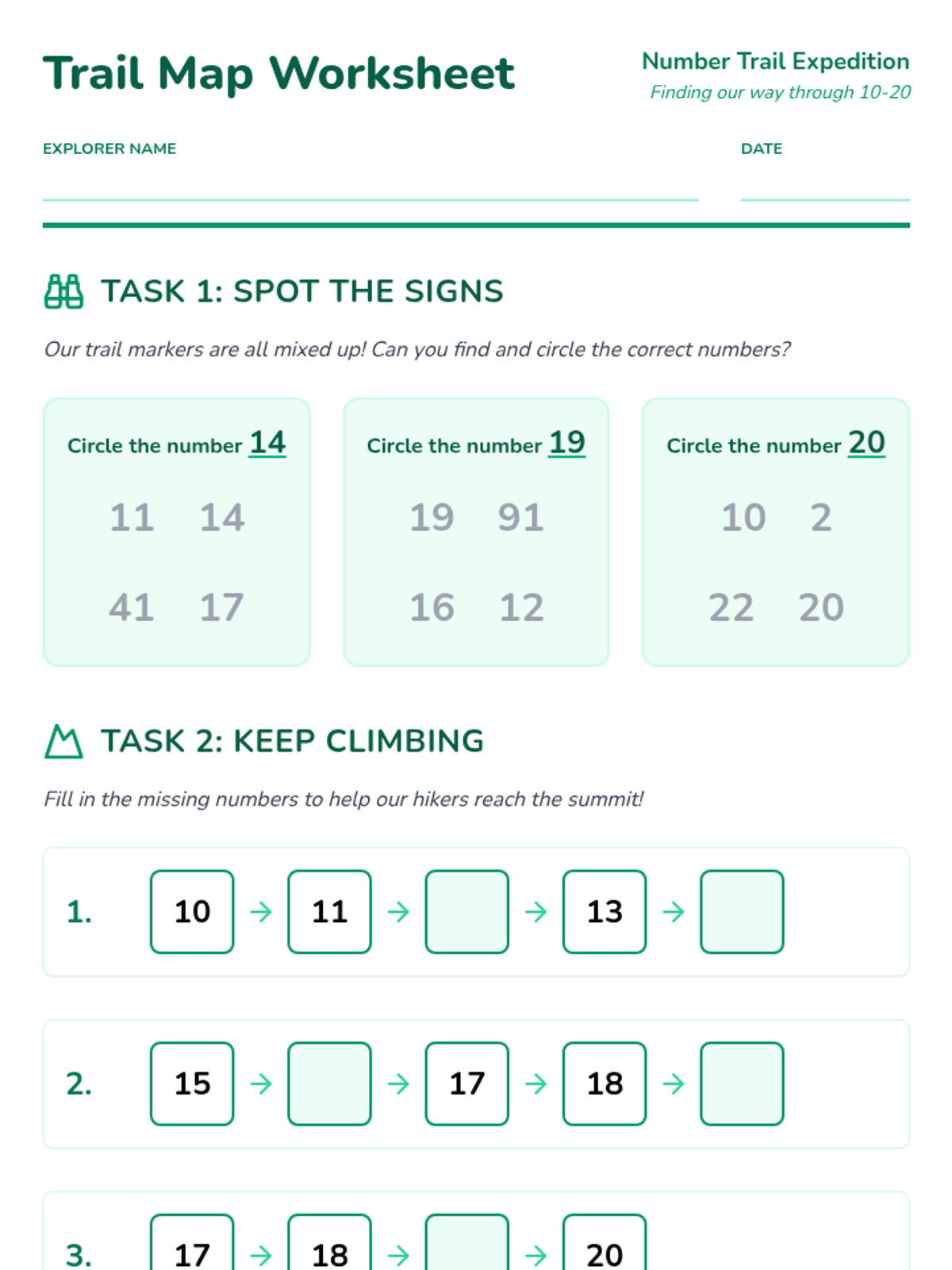
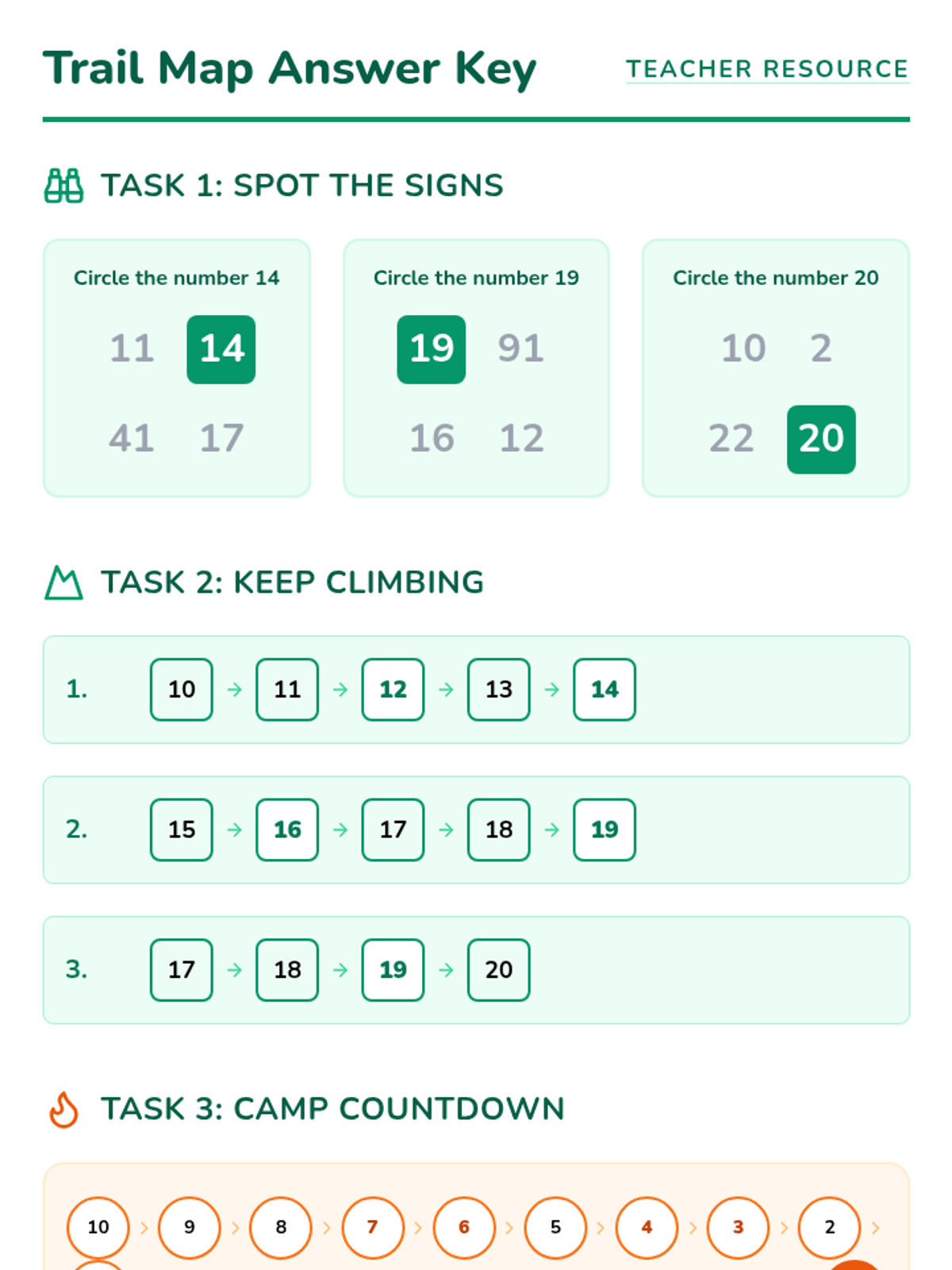
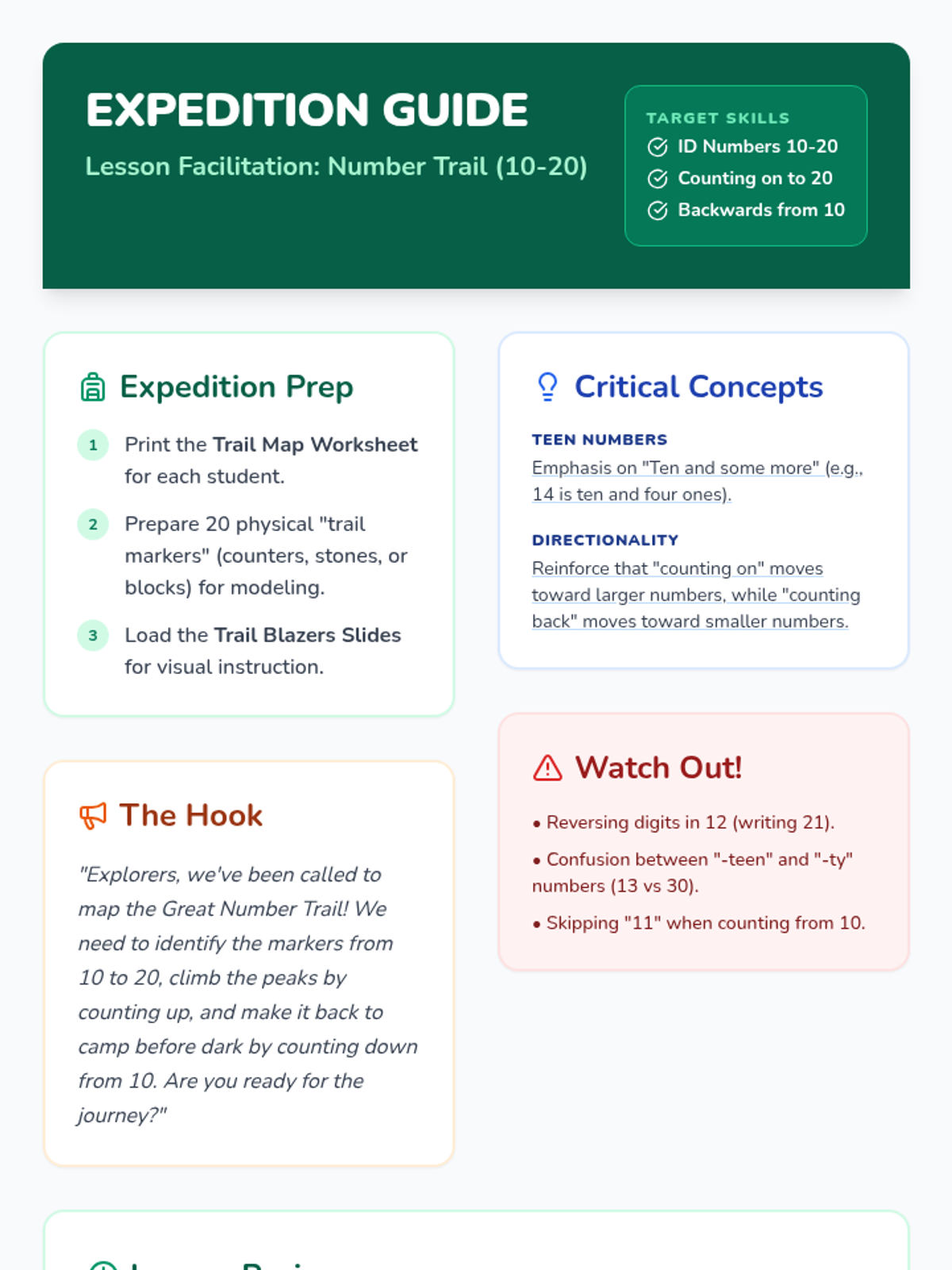
A foundational math lesson focusing on recognizing numbers 10-20, counting on to 20, and counting backwards from 10. Students embark on a nature-themed journey to build number sense.
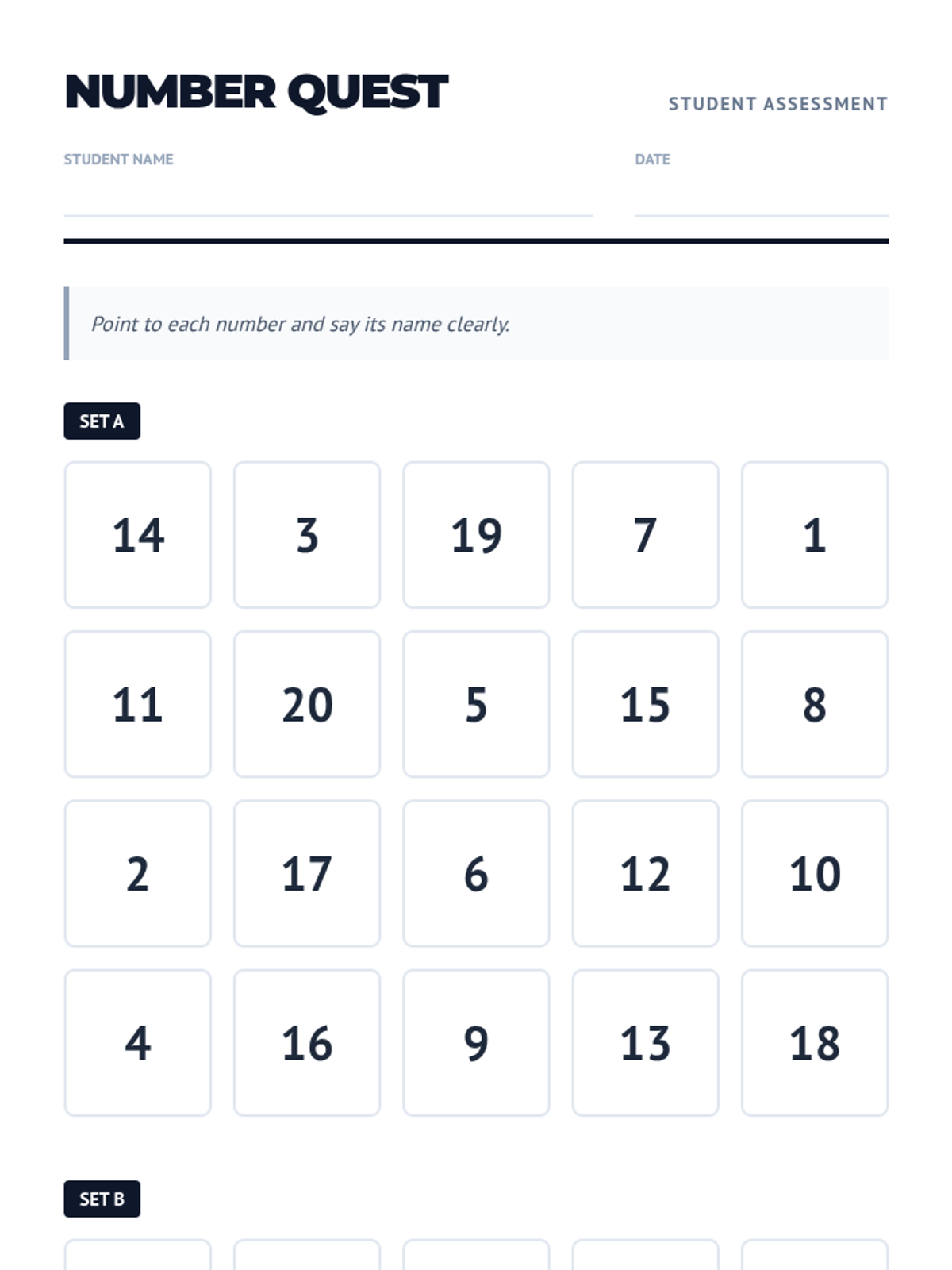
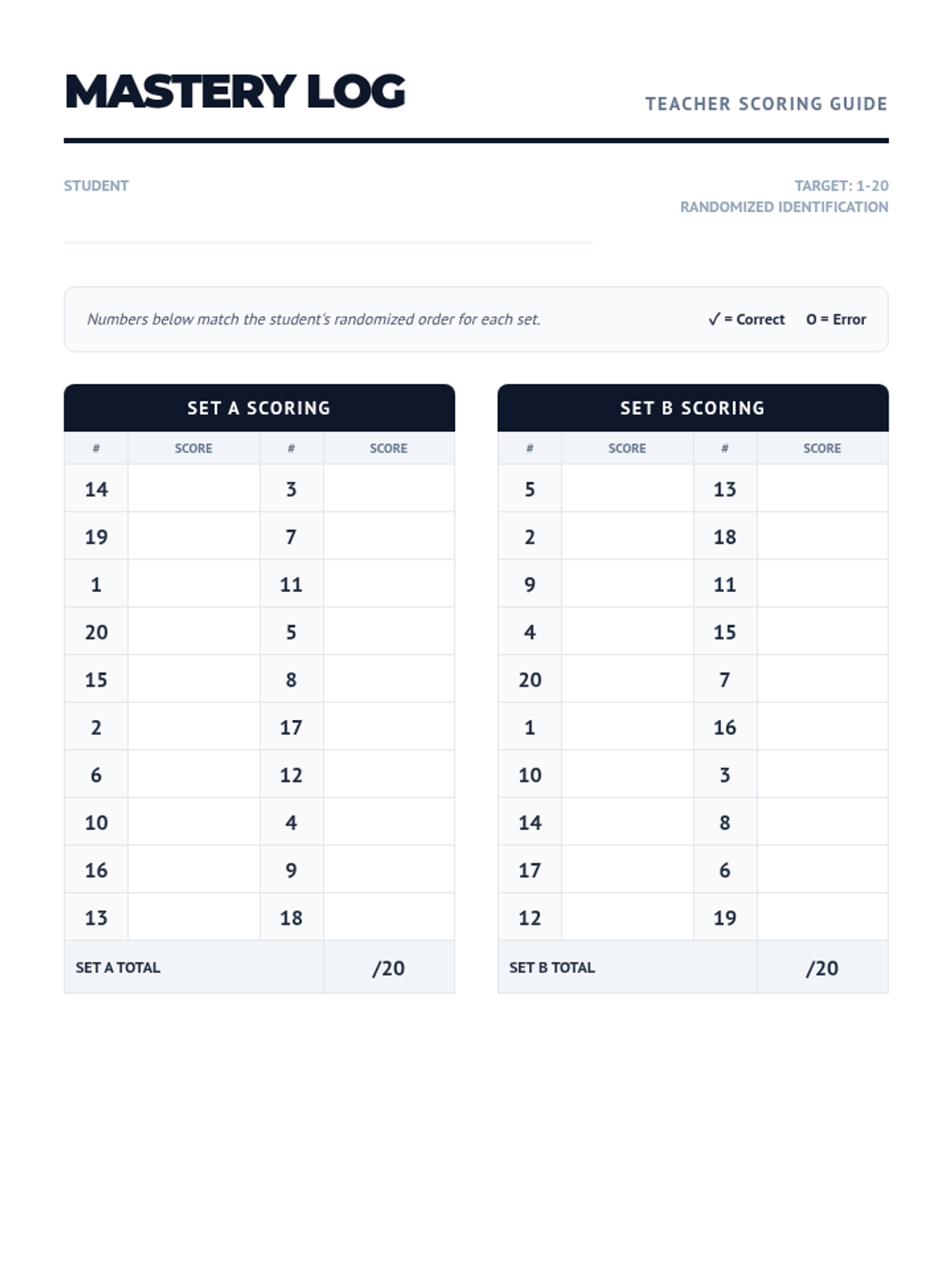
A comprehensive set of tools for assessing and tracking a student's ability to identify numbers 1 through 20 in randomized order.
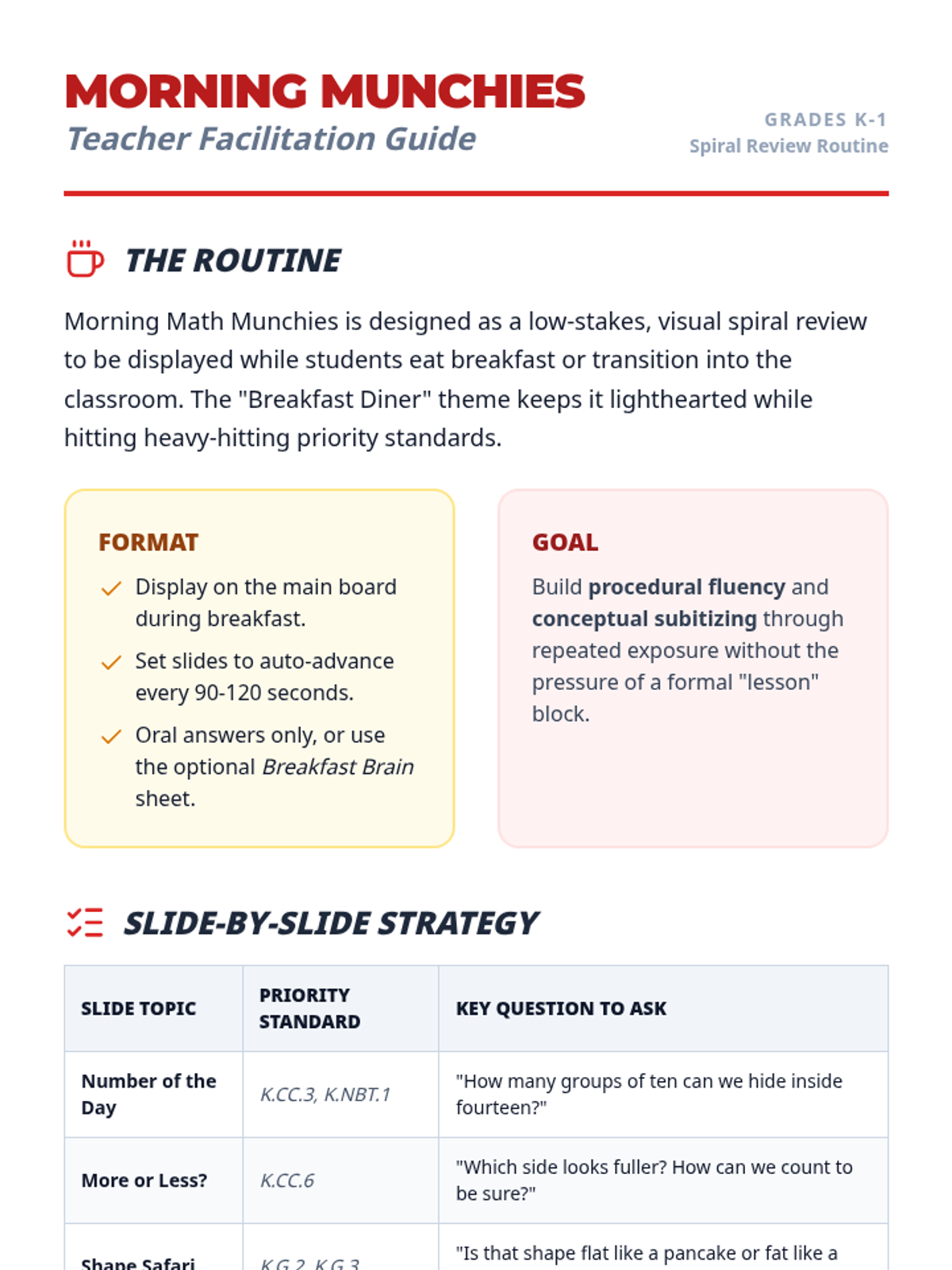
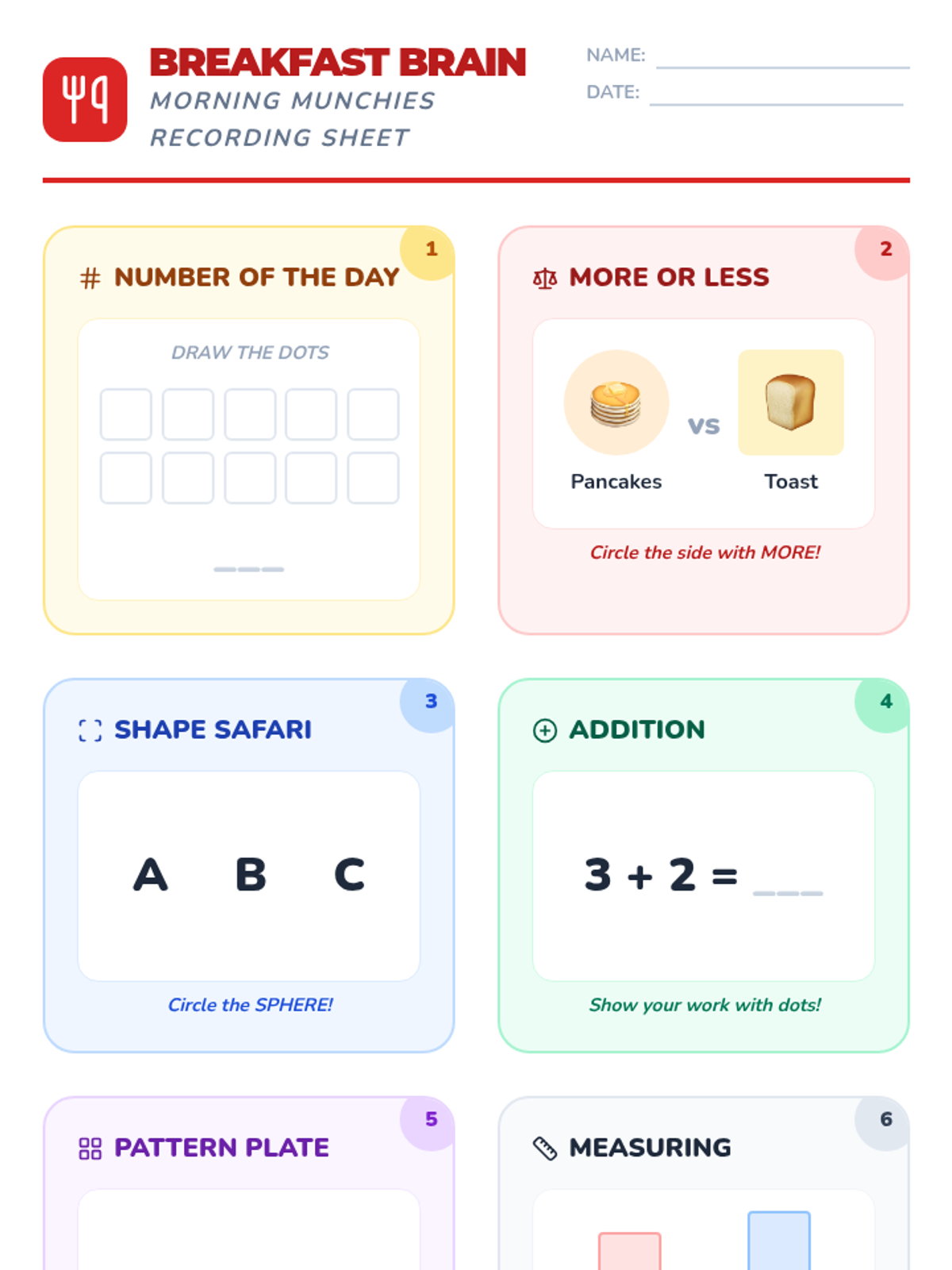
A daily spiral review of priority Kindergarten math standards, designed to be visually engaging and accessible for students to view during breakfast or morning routines.
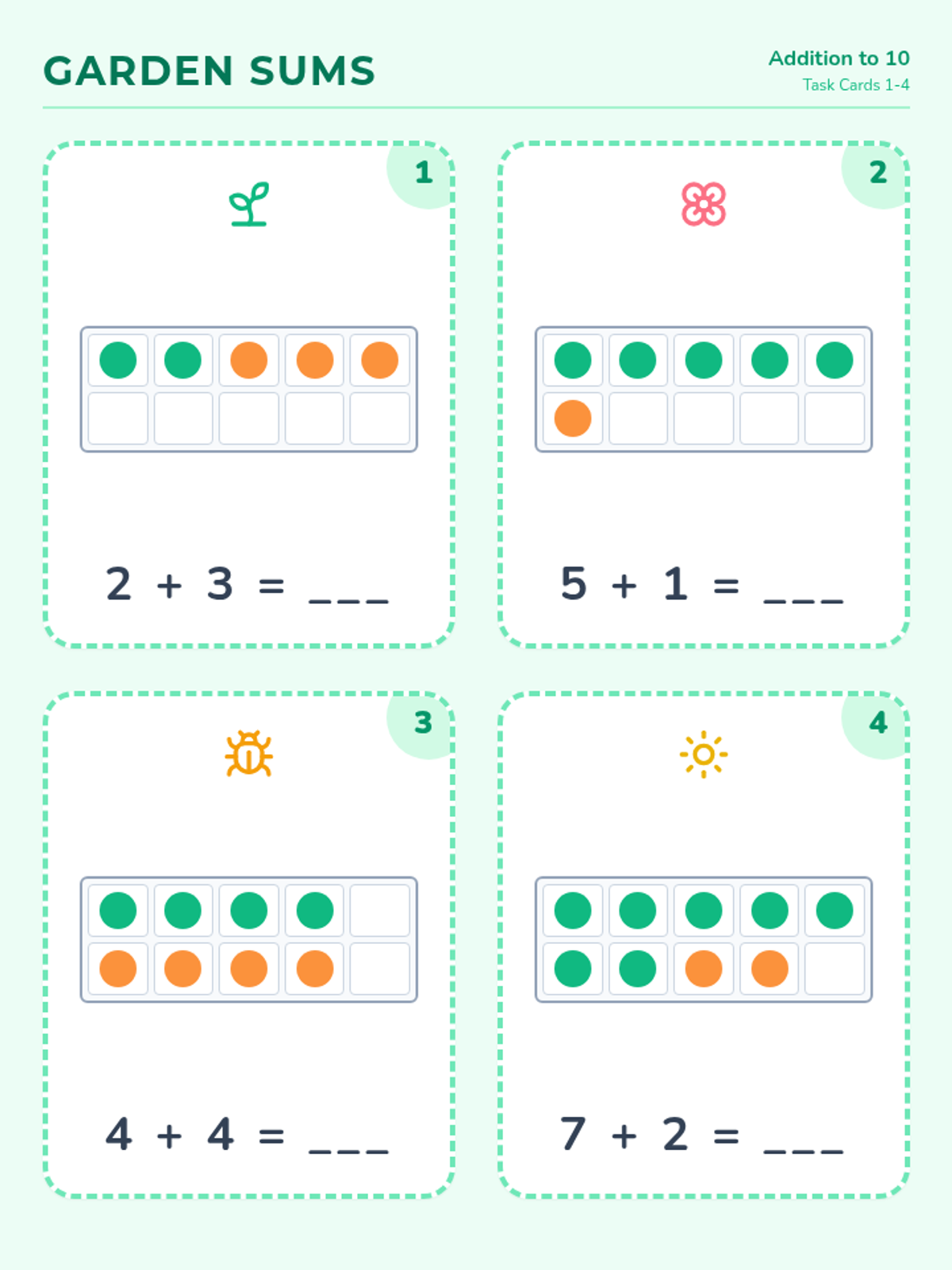
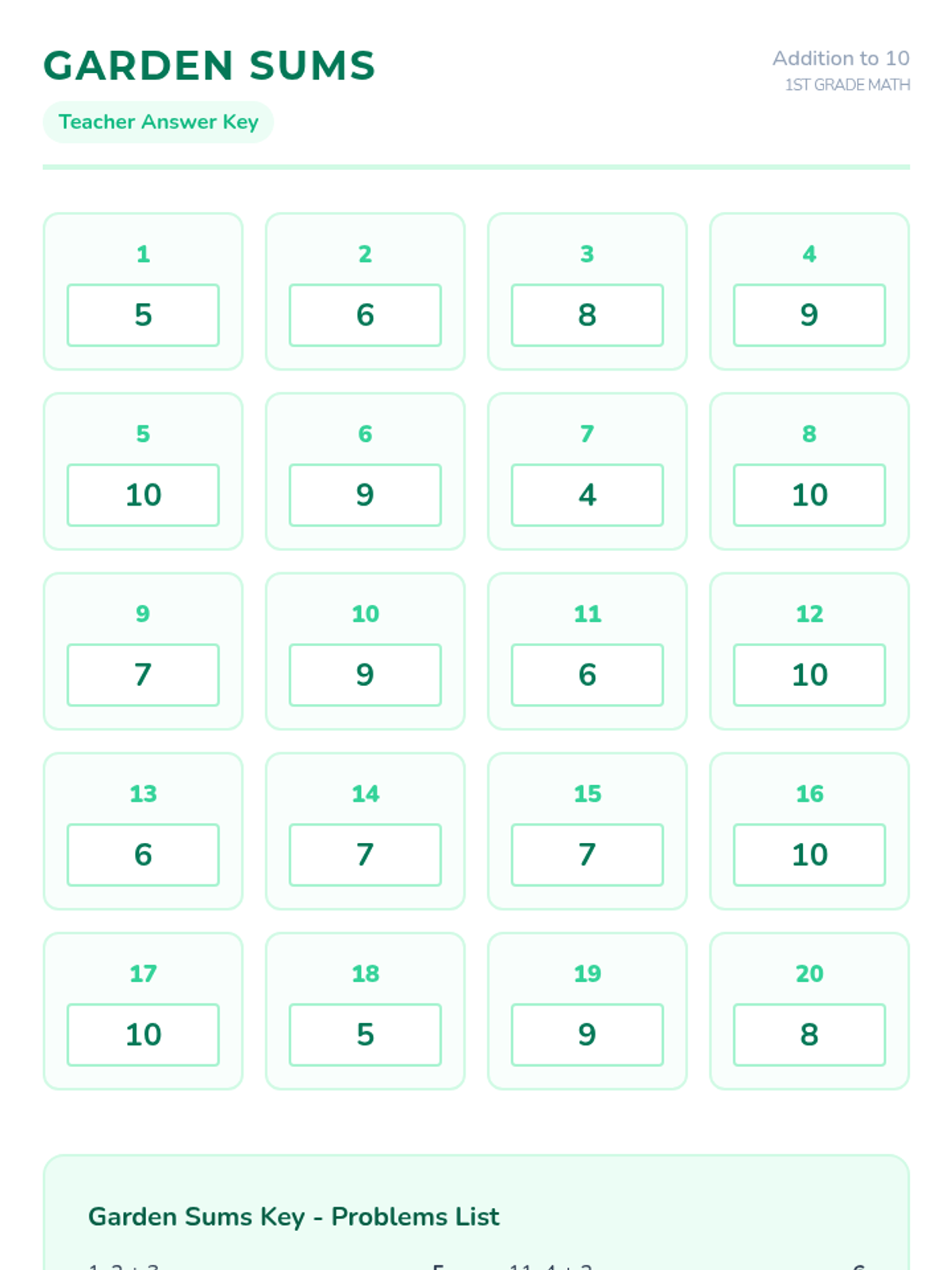
A set of addition task cards featuring ten frames to help first-grade students master sums up to 10 with a garden-themed aesthetic.
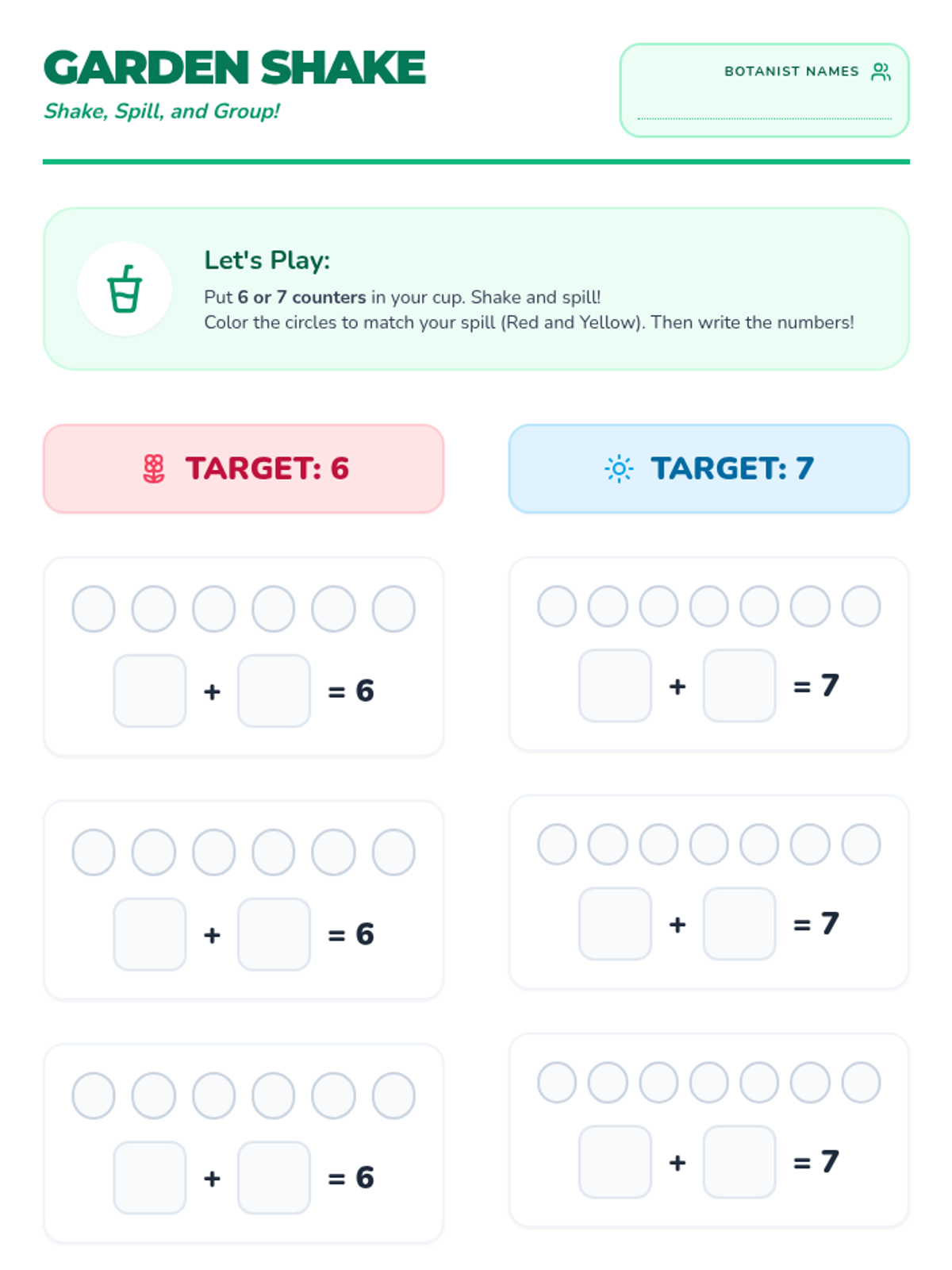
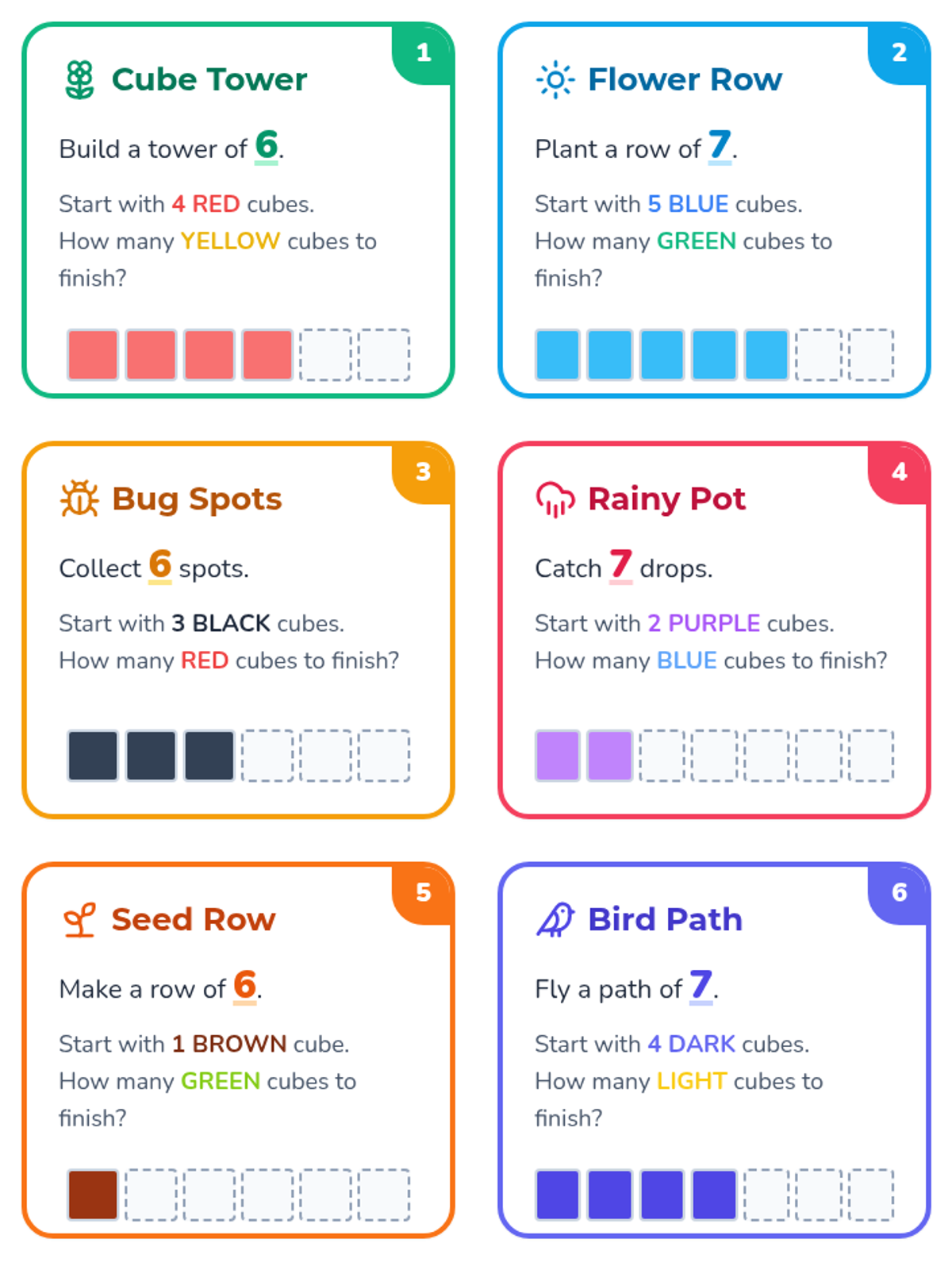
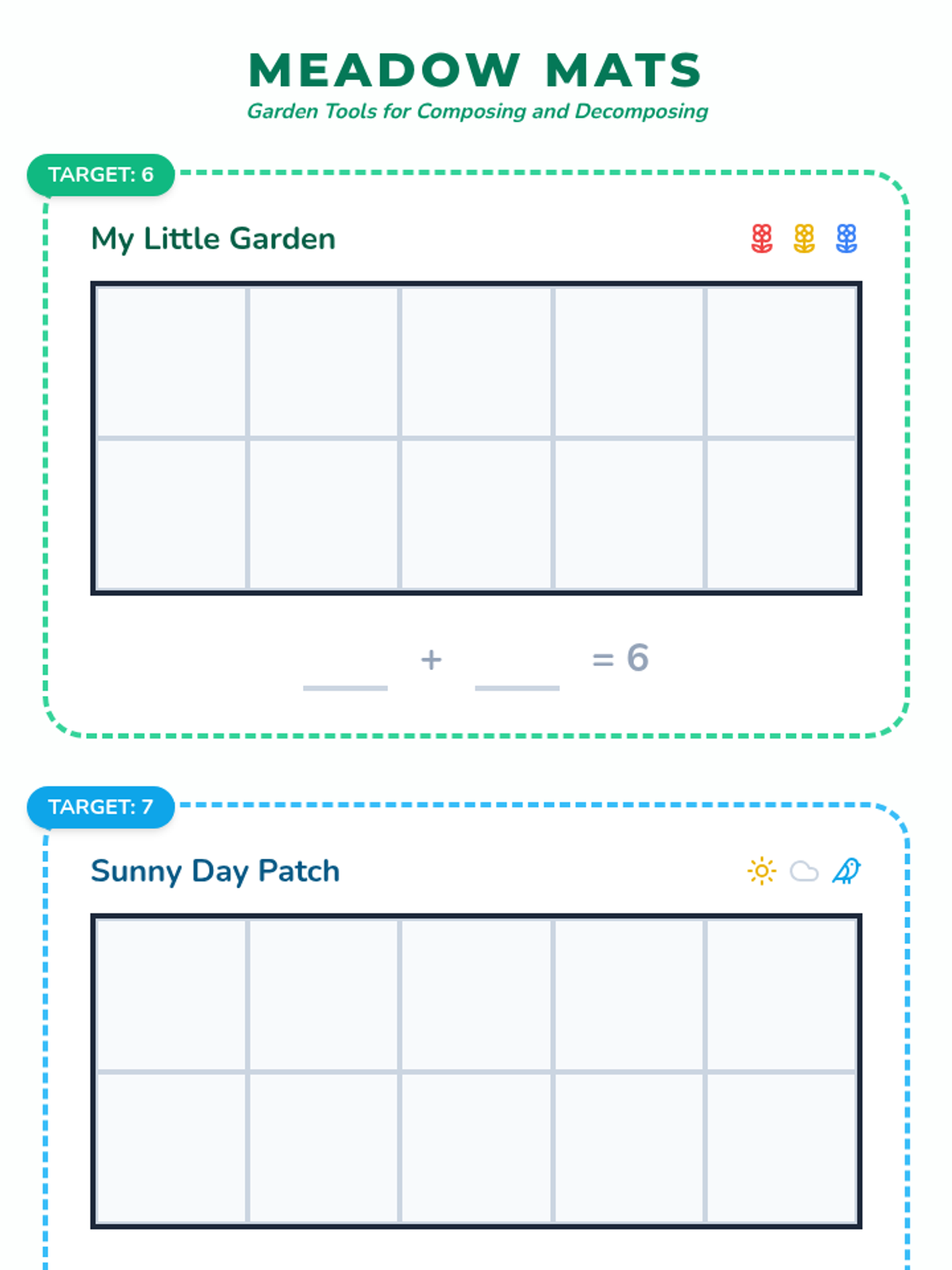
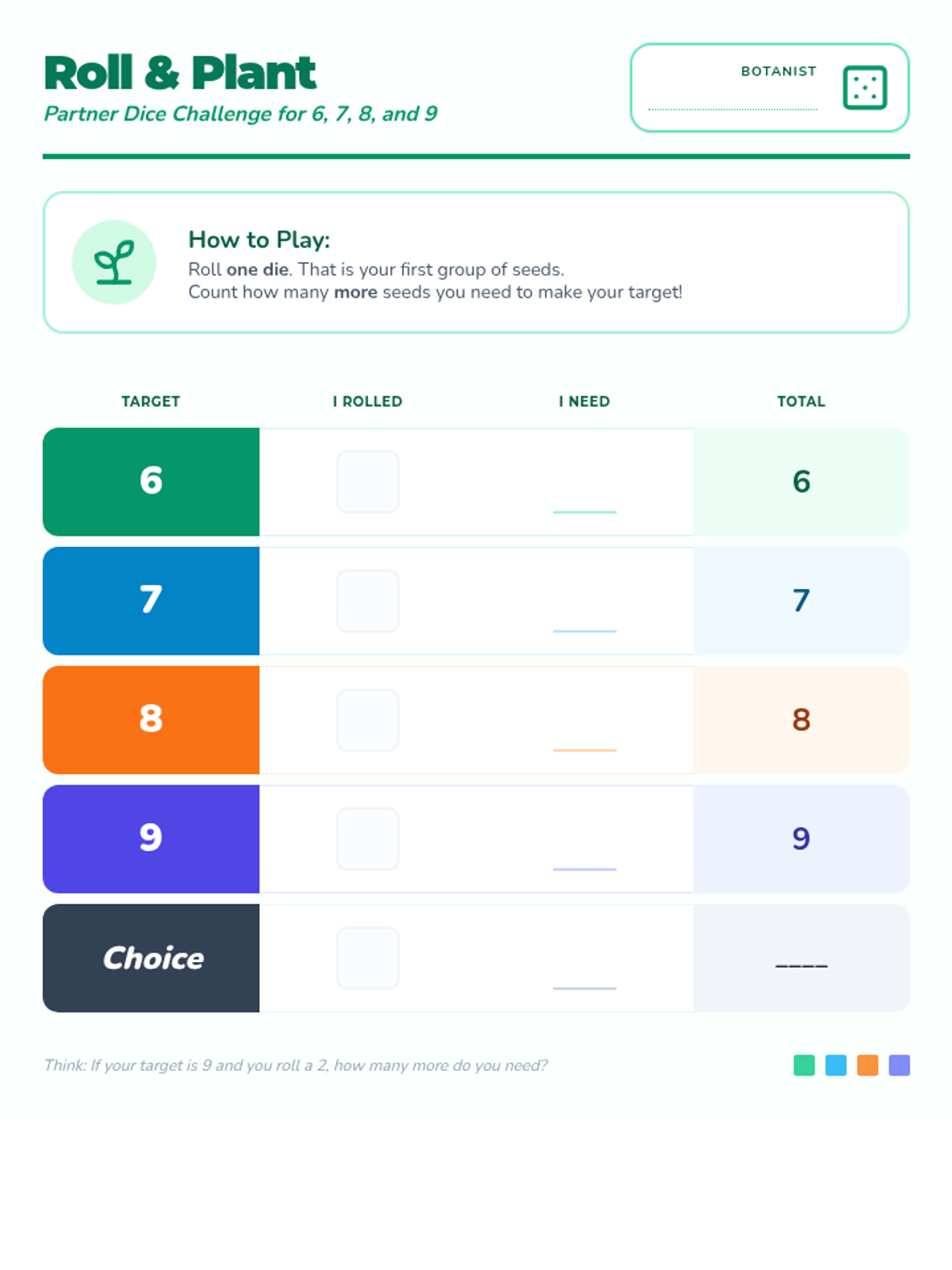
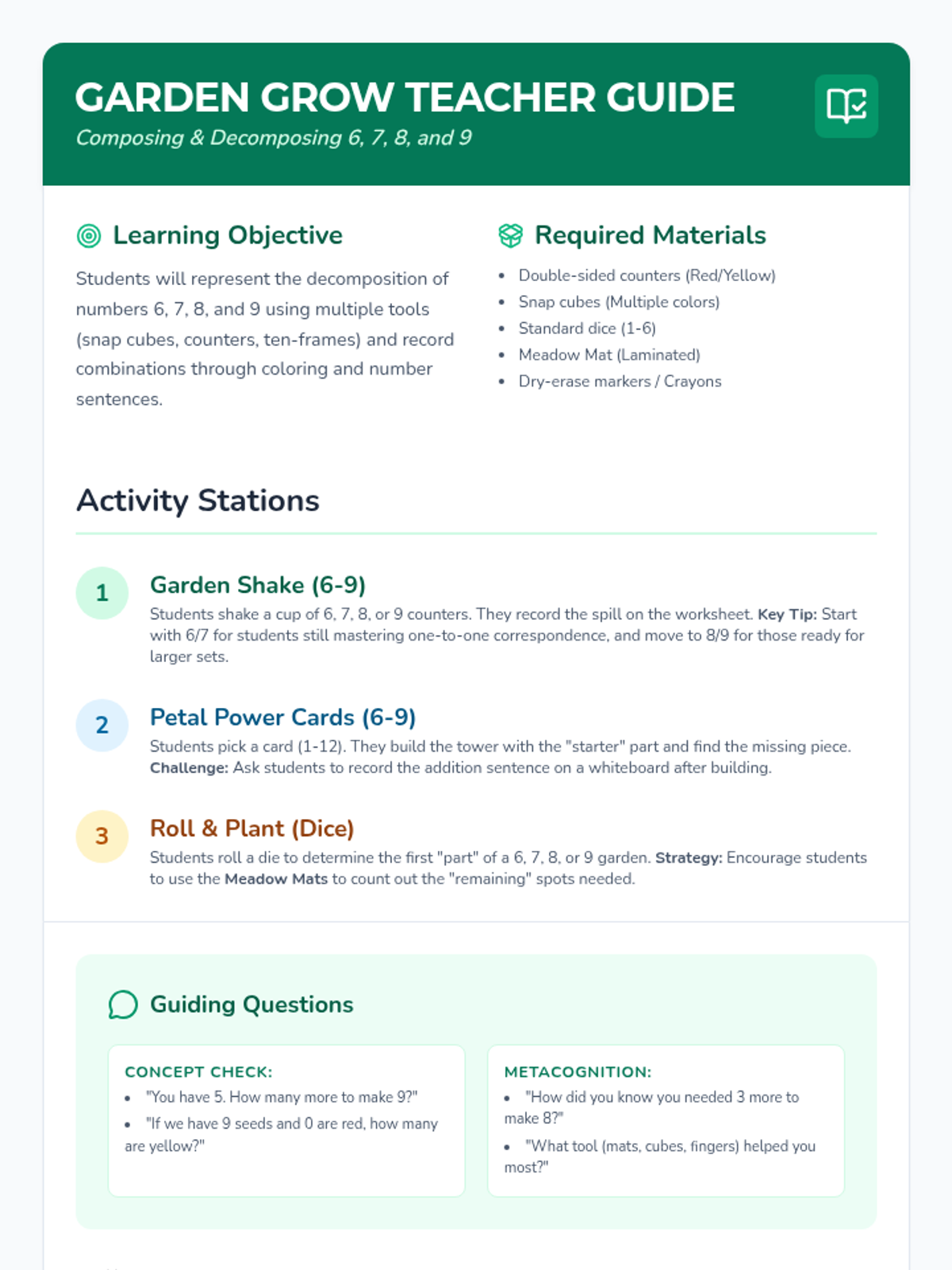
A collection of hands-on partner activities for kindergarteners to master composing and decomposing the numbers 6-9 using snap cubes, counters, and ten-frames.
A comprehensive review of essential kindergarten math concepts including counting, addition, subtraction, shapes, and measurement, featuring high-contrast visuals and picture-supported problems.
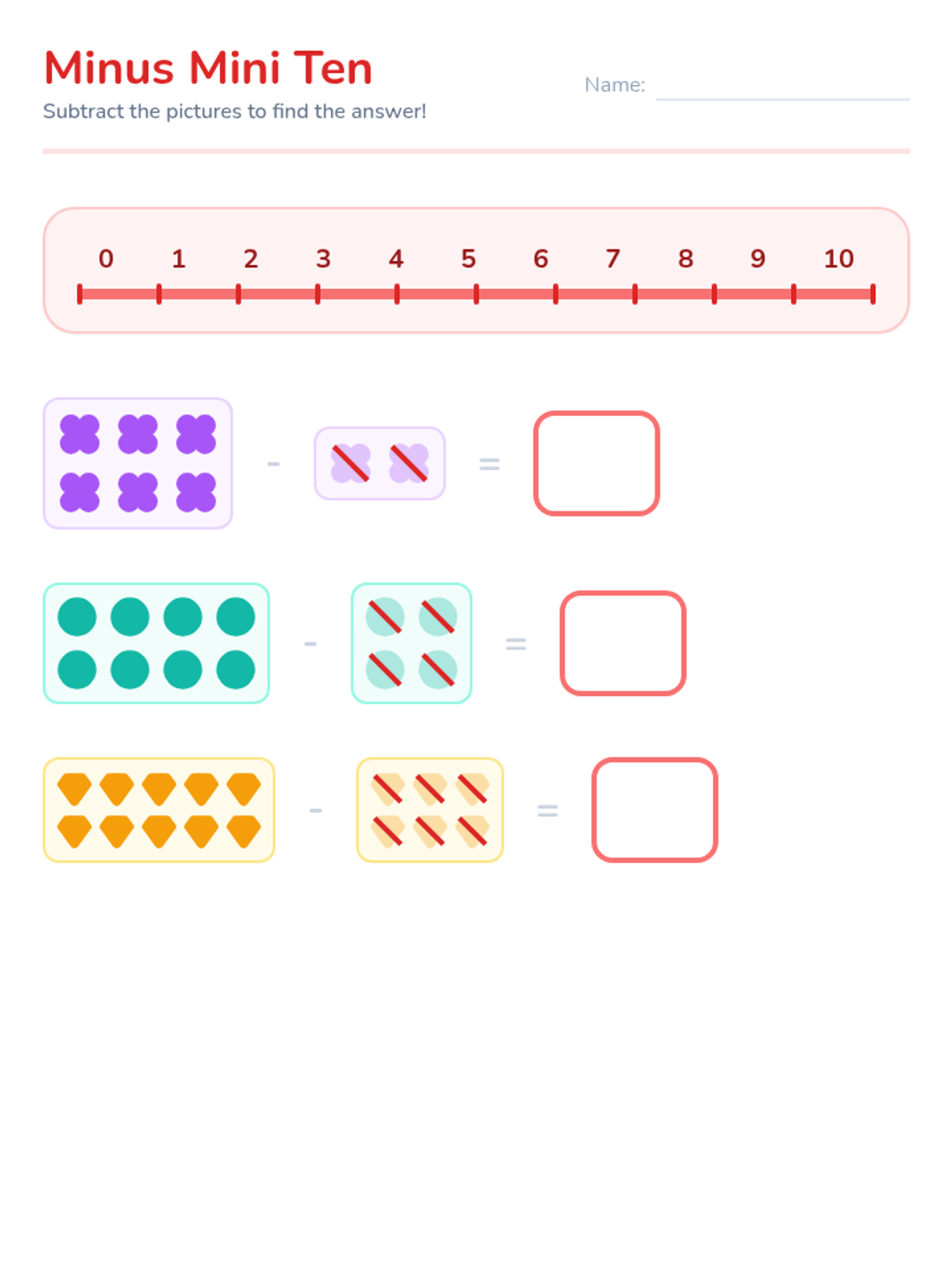
Advanced subtraction practice using numbers up to 10. Students master the concept of taking away through visual problems and number line counting.
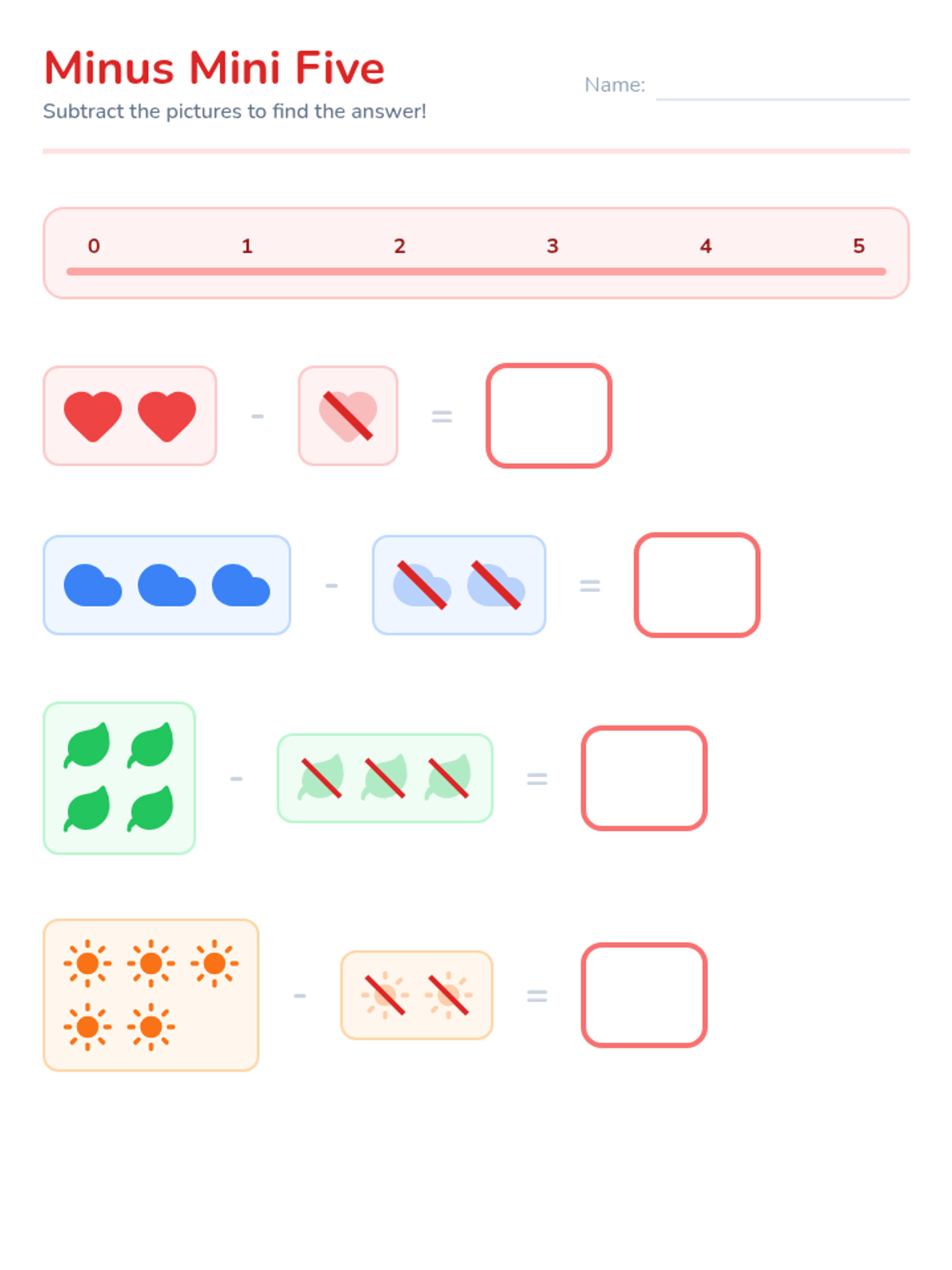
Introducing subtraction by 'taking away' items from a group of 5 or less. Visual cross-outs help students see the remaining quantity.
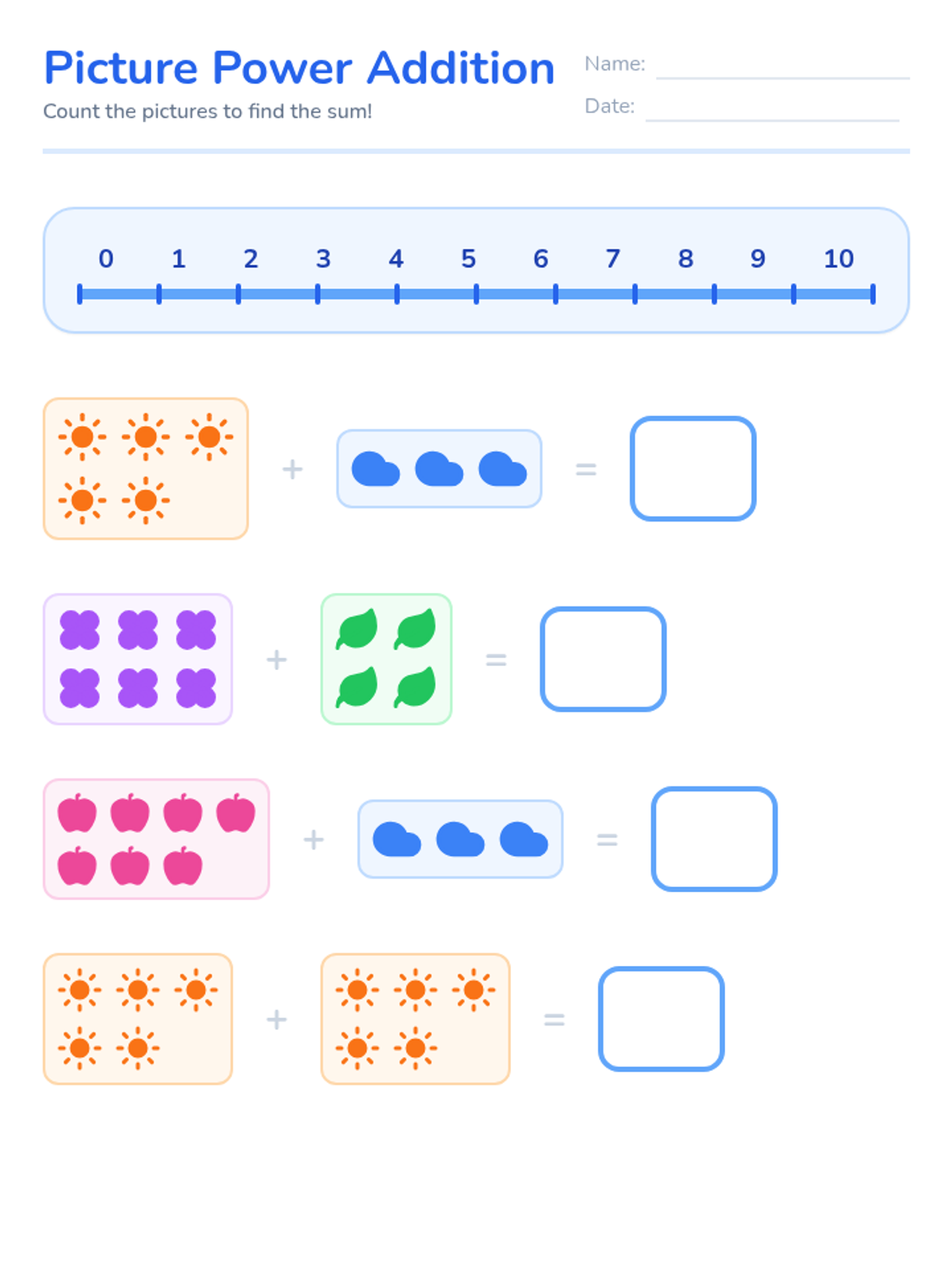
Expanding addition skills to sums up to 10. Students use a variety of icons and color-coding to solve larger addition problems and use number lines for support.
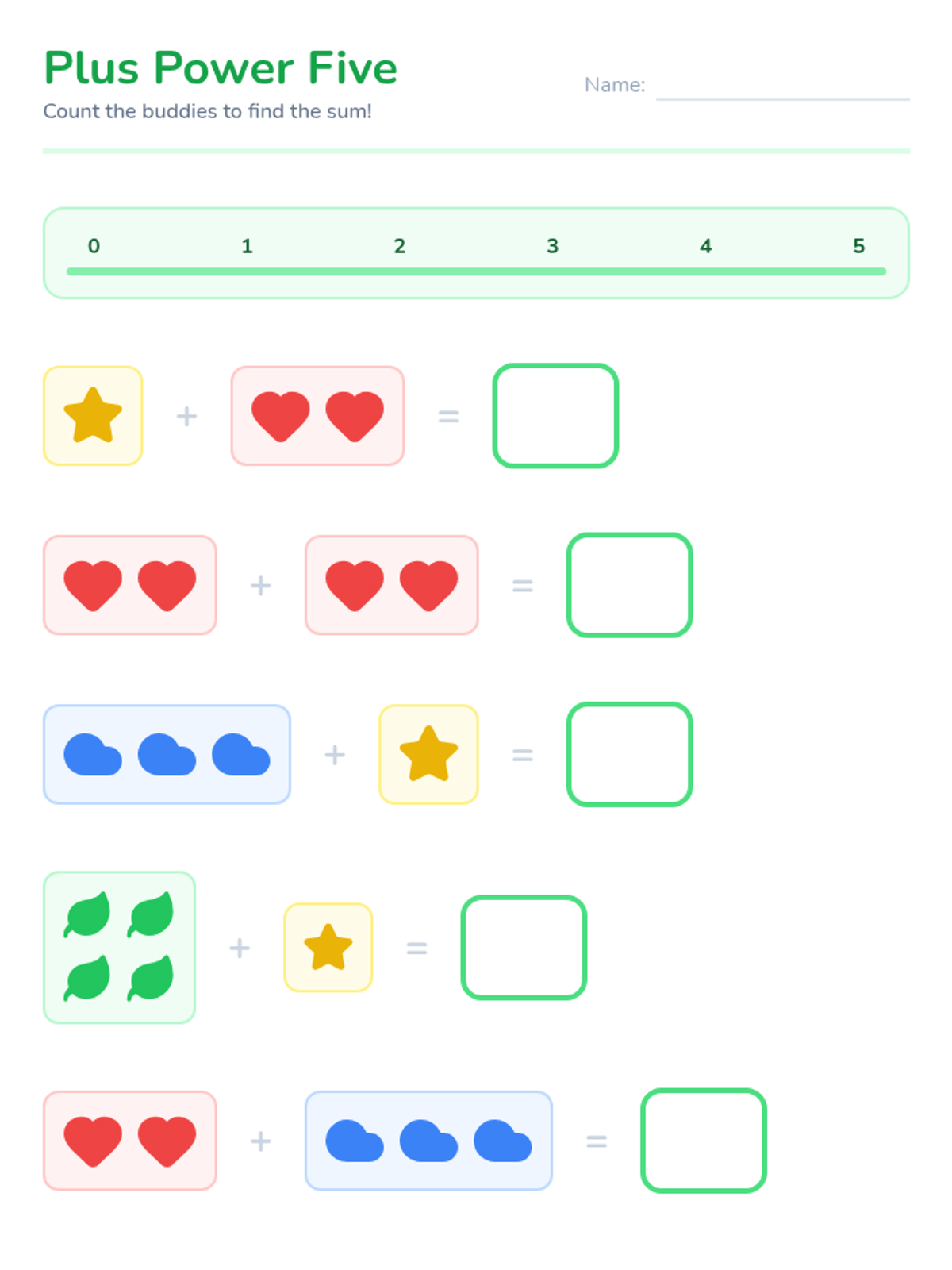
Introducing the concept of addition using visual groups and colors for sums up to 5. Students use icons to see how two small groups become one larger group.
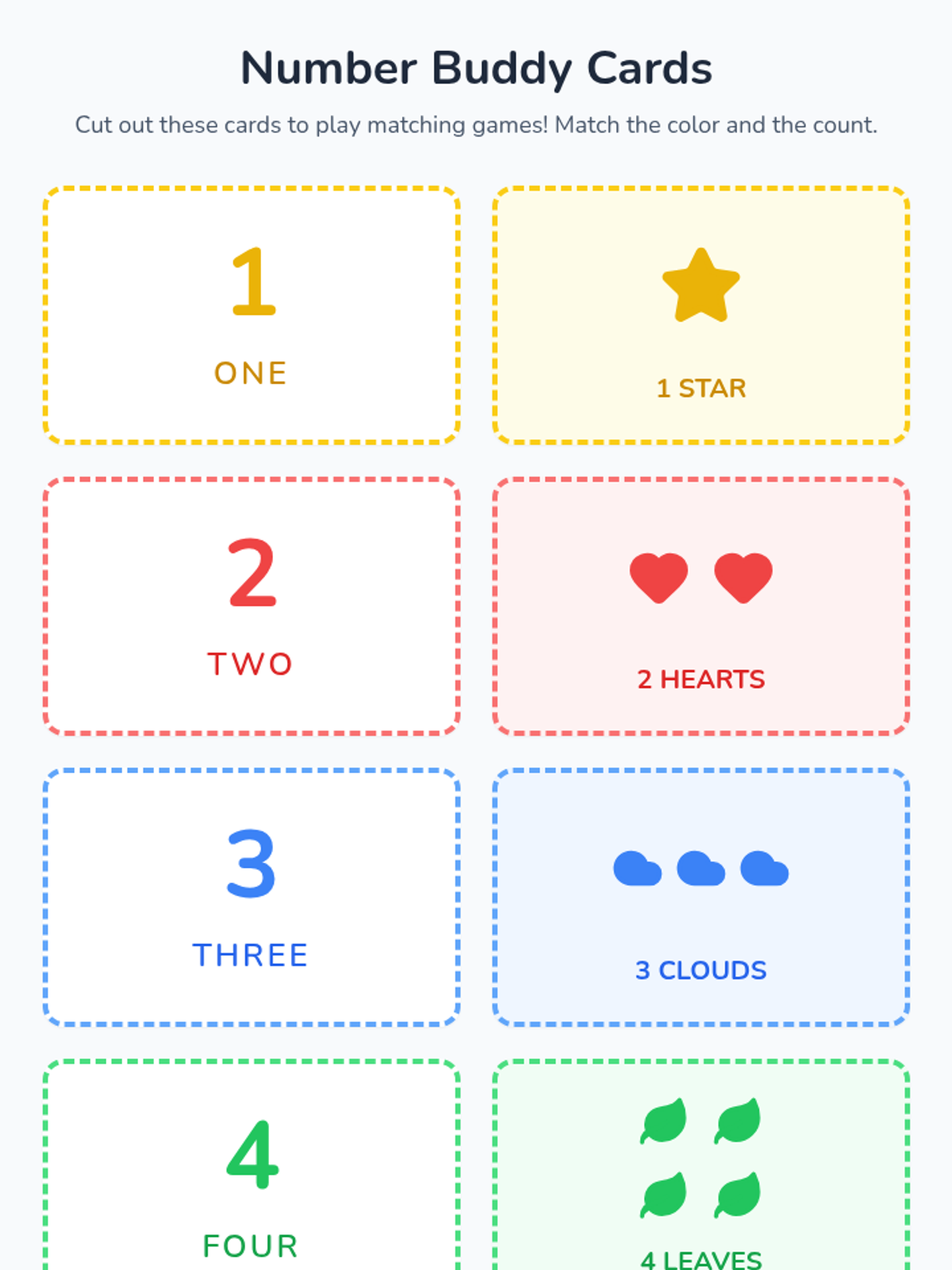
A fun introduction to the numbers 1-10 through matching and visual recognition. Students use color-coded cards to connect numerals with sets of objects.
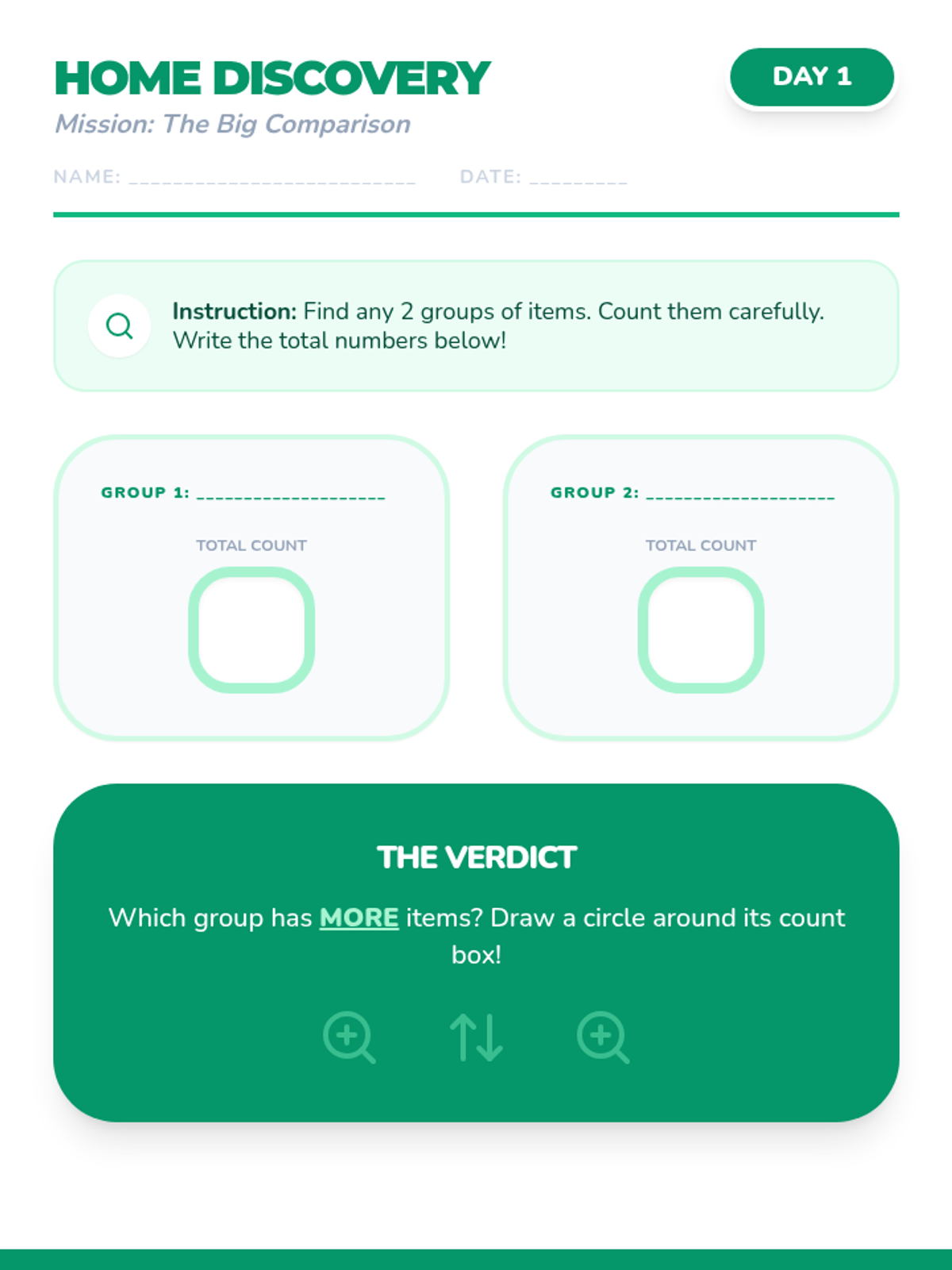
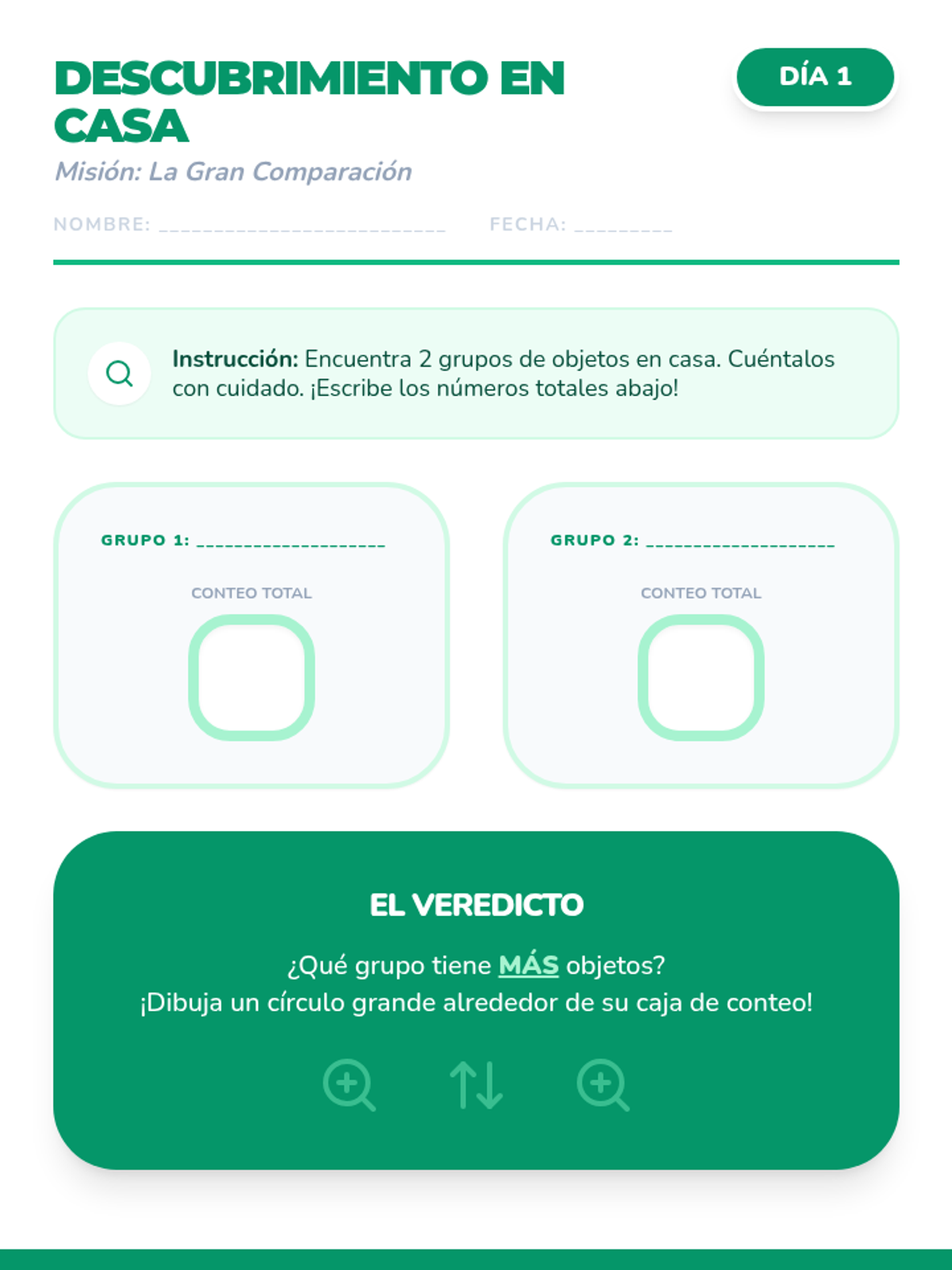
A 5-day homework series focused on one-to-one correspondence, comparing quantities, and number identification through daily household scavenger hunts.
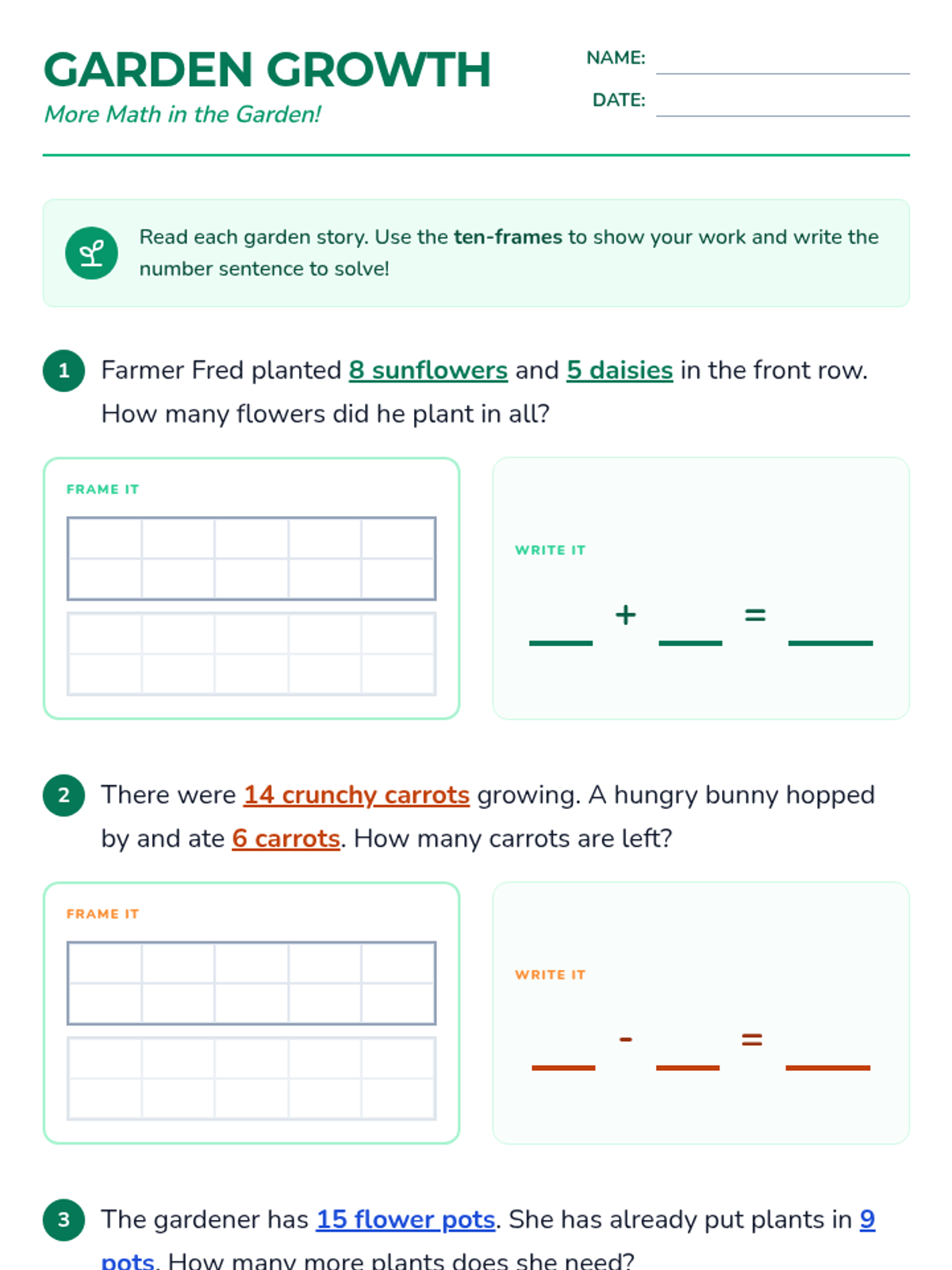
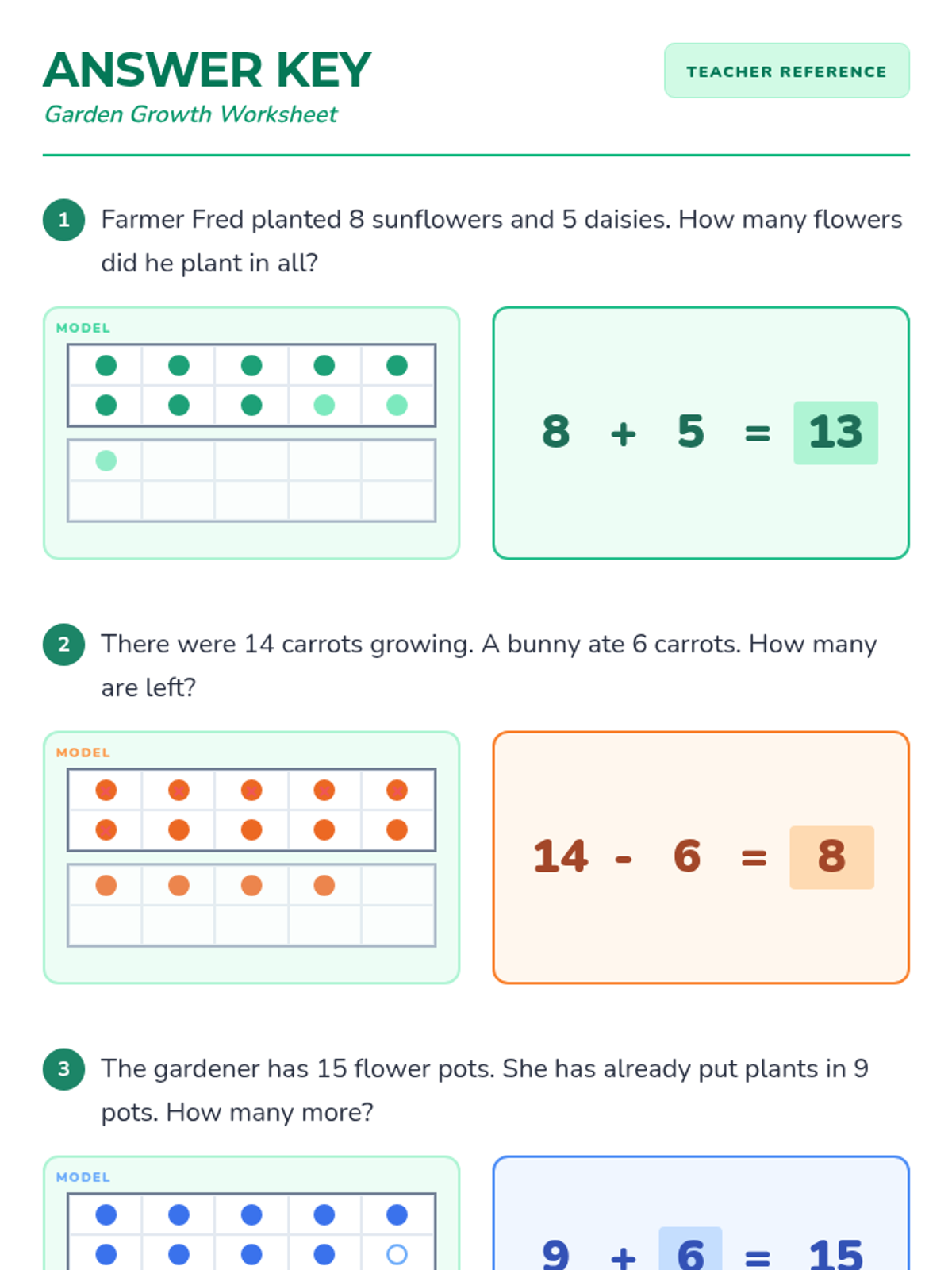
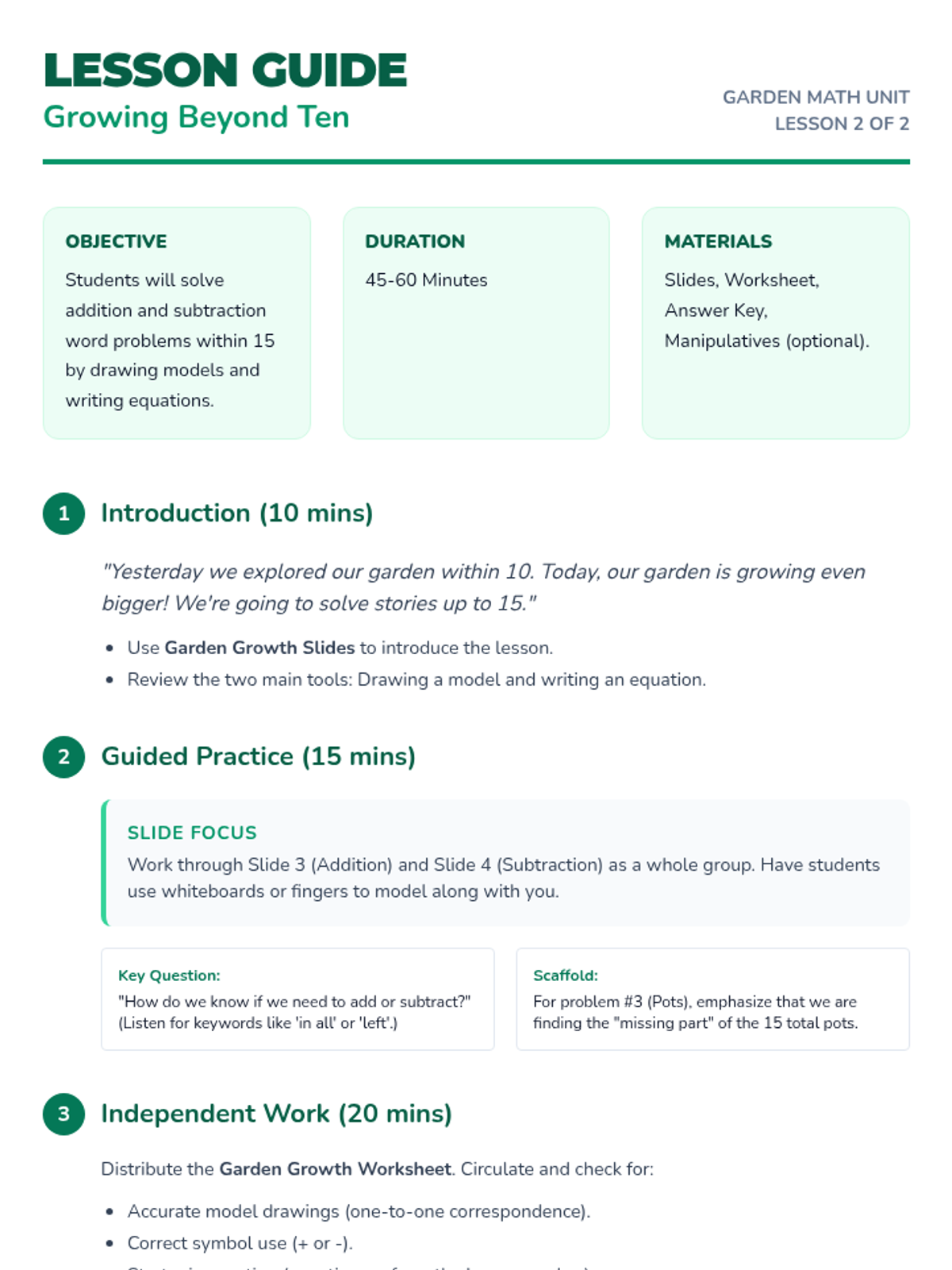
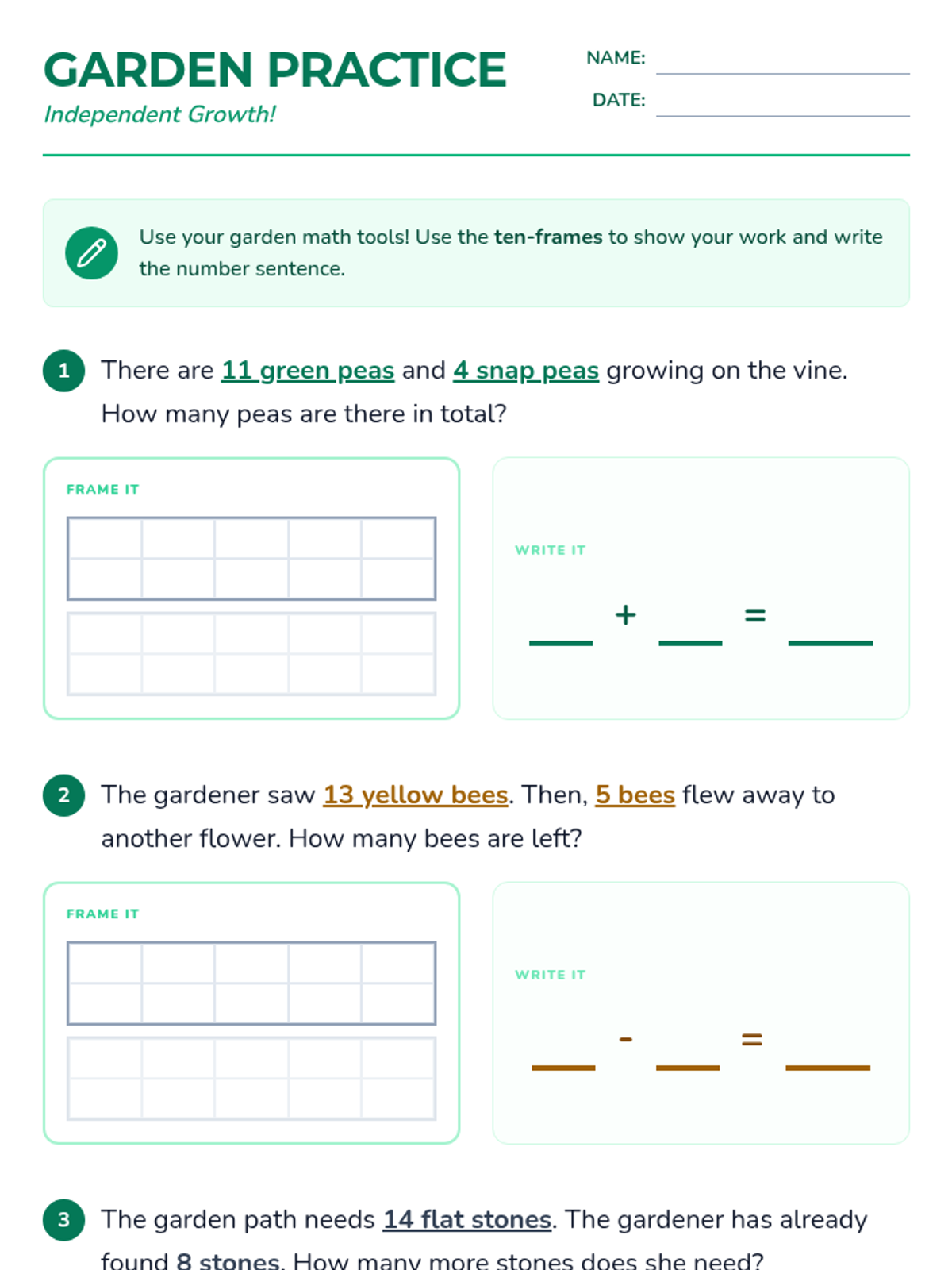
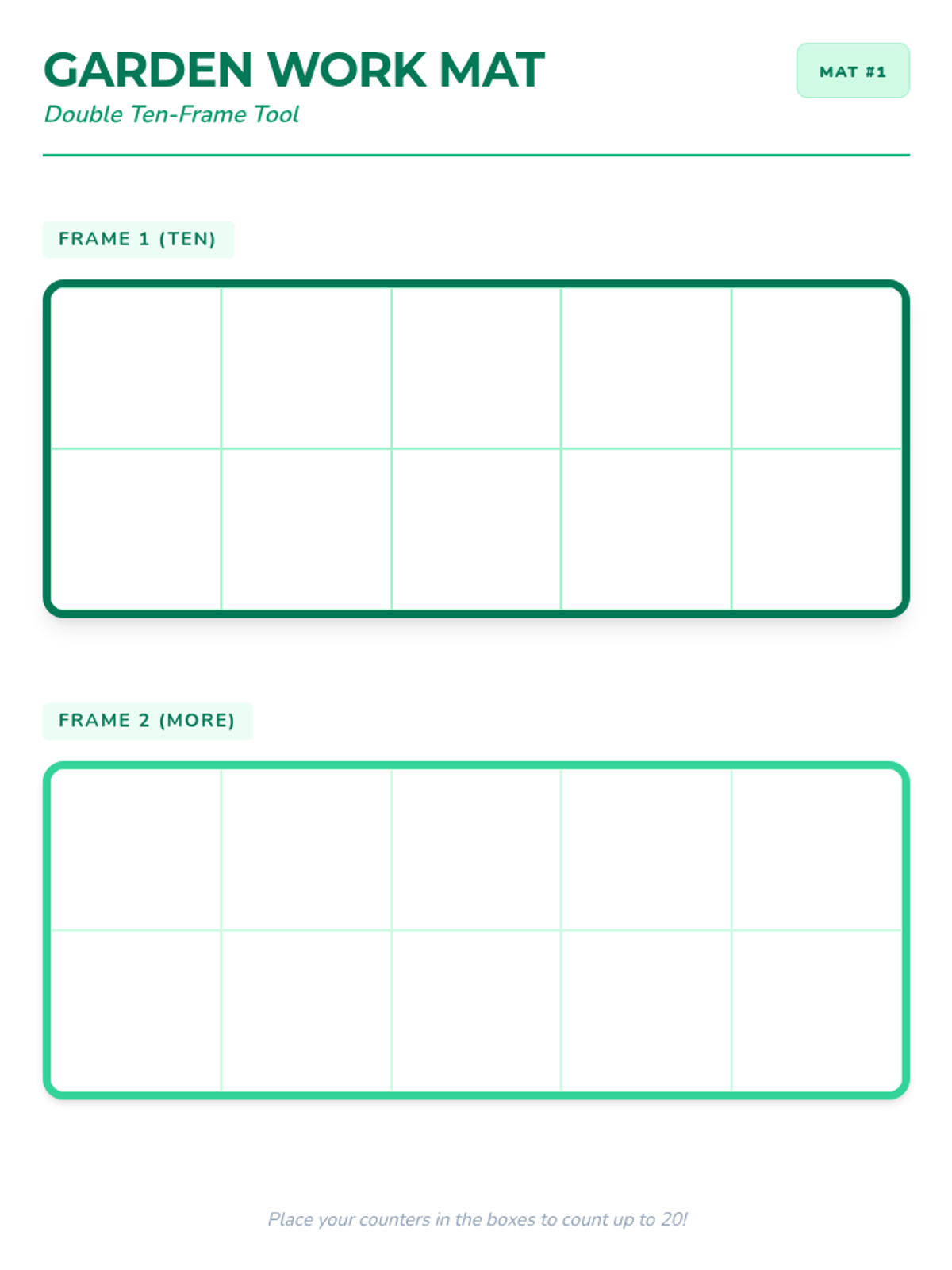
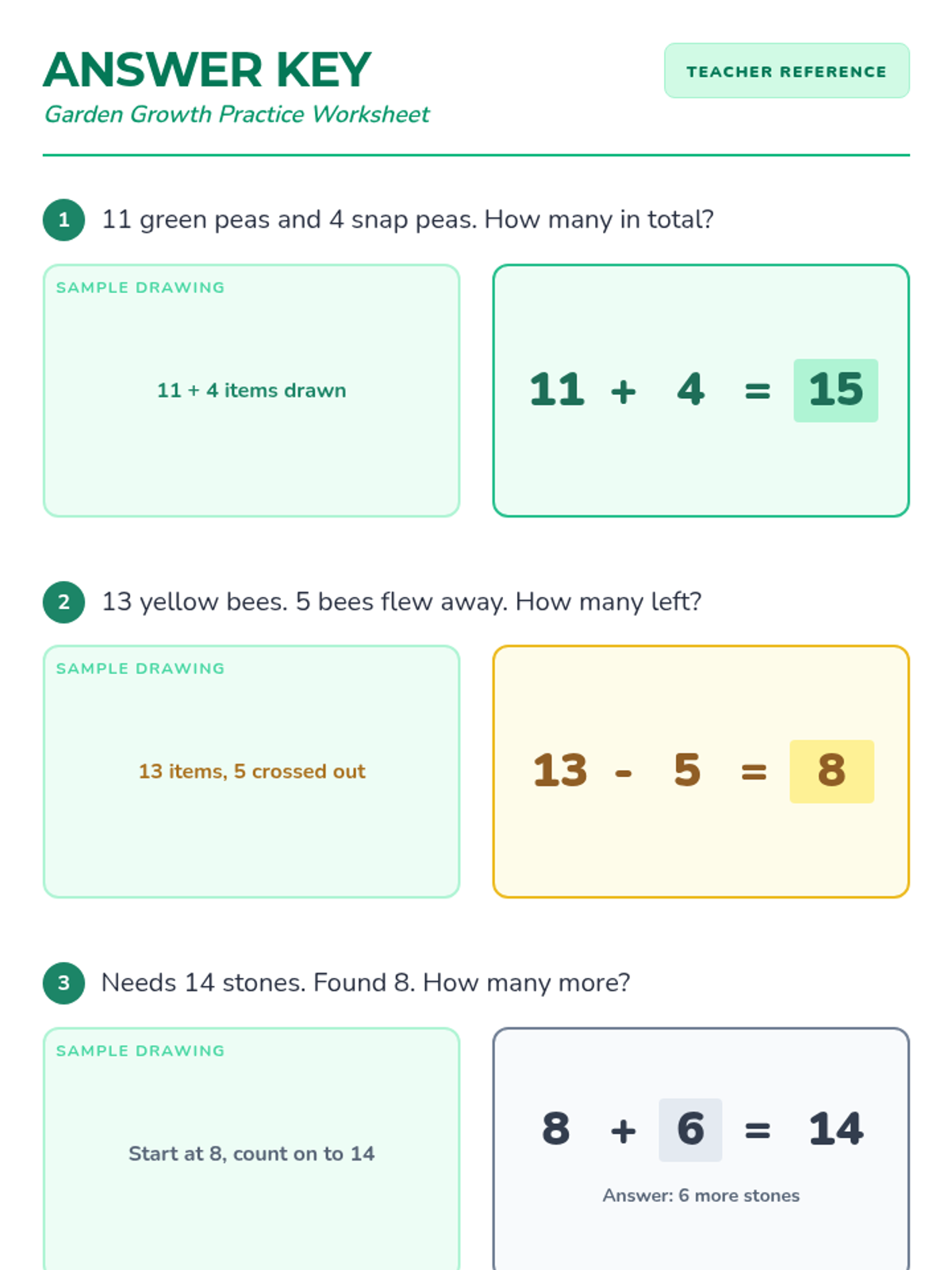
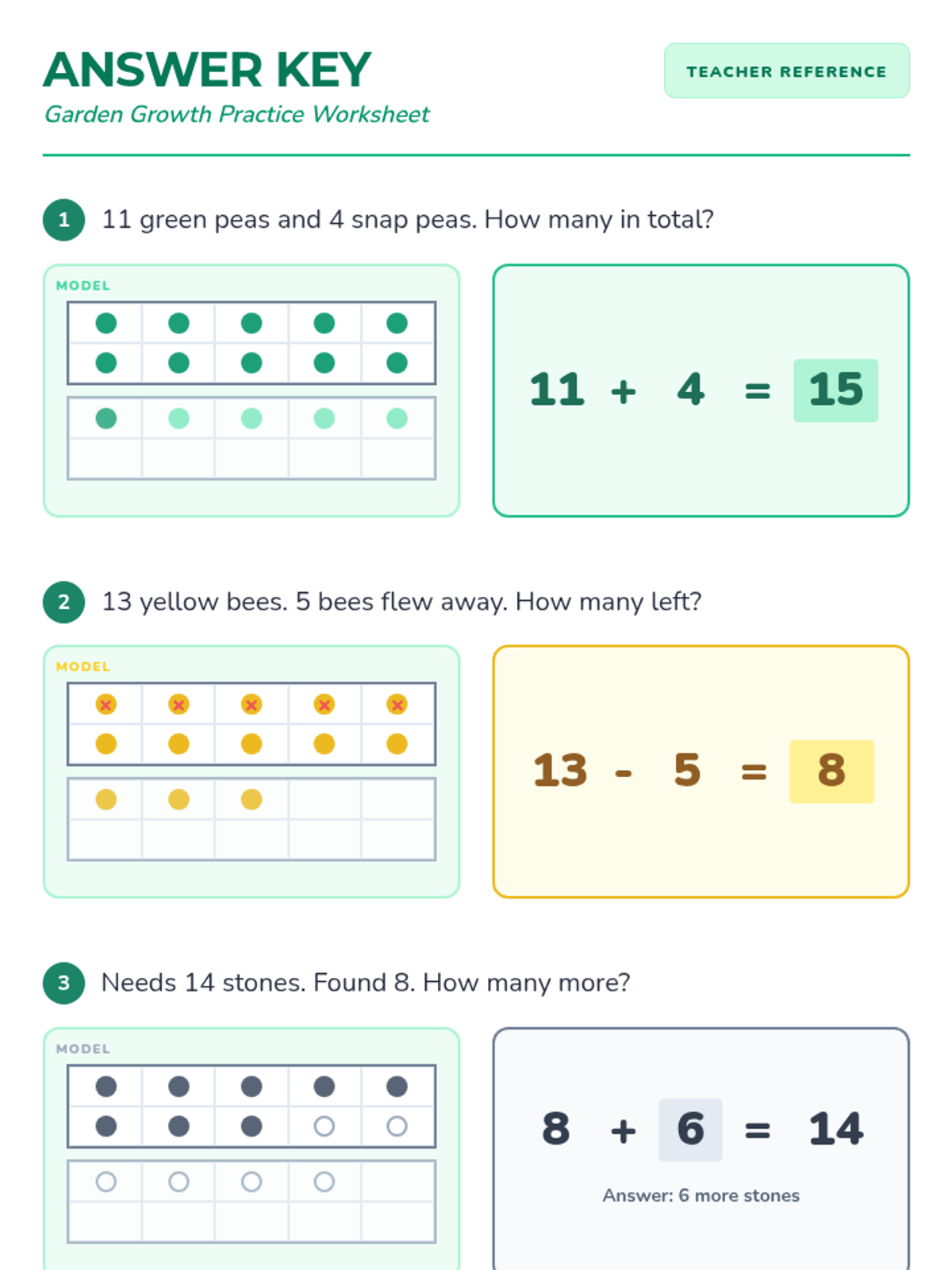
A math lesson extending addition and subtraction skills to numbers within 15 through garden-themed word problems, focusing on drawing models and writing equations.
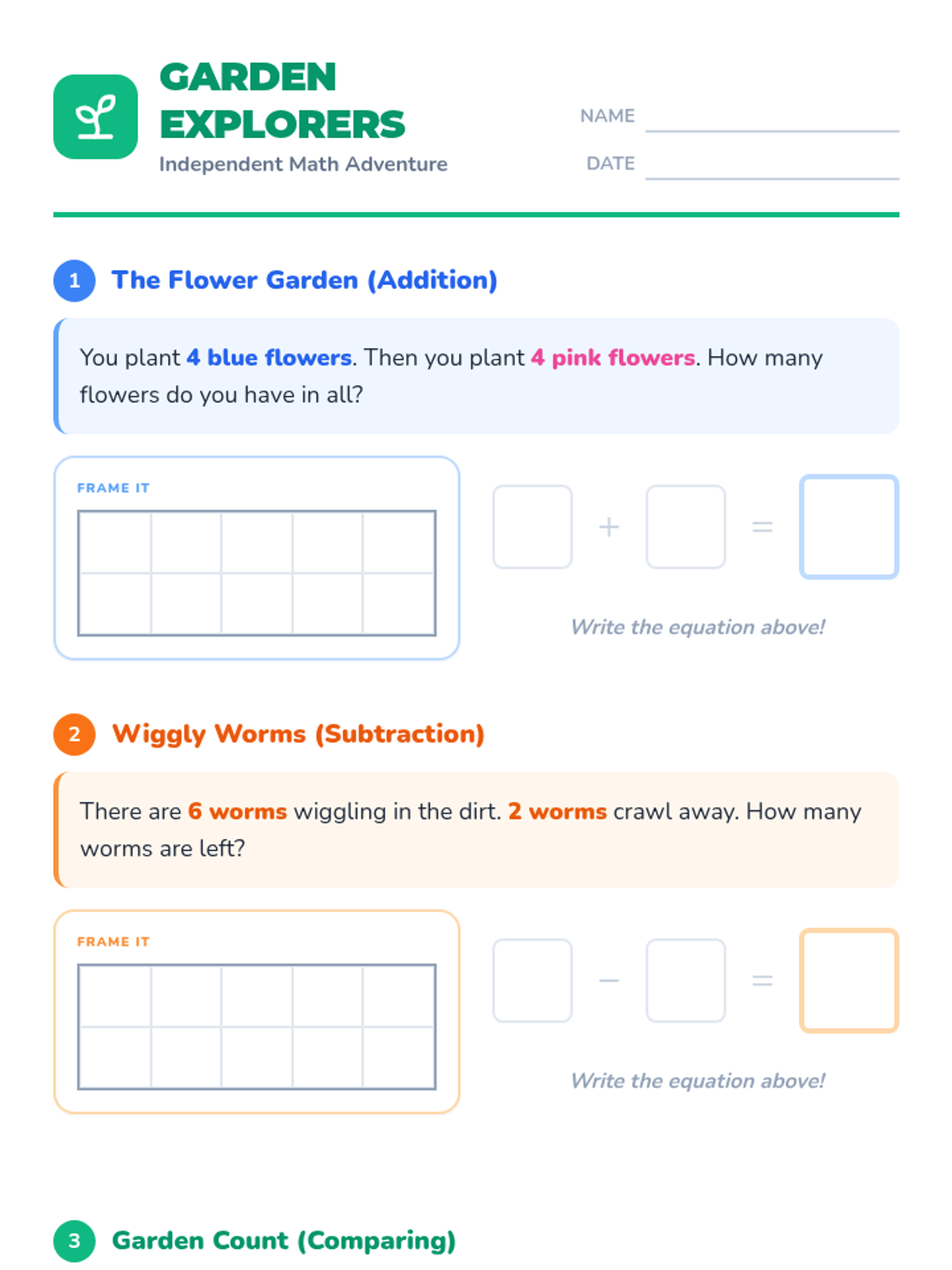
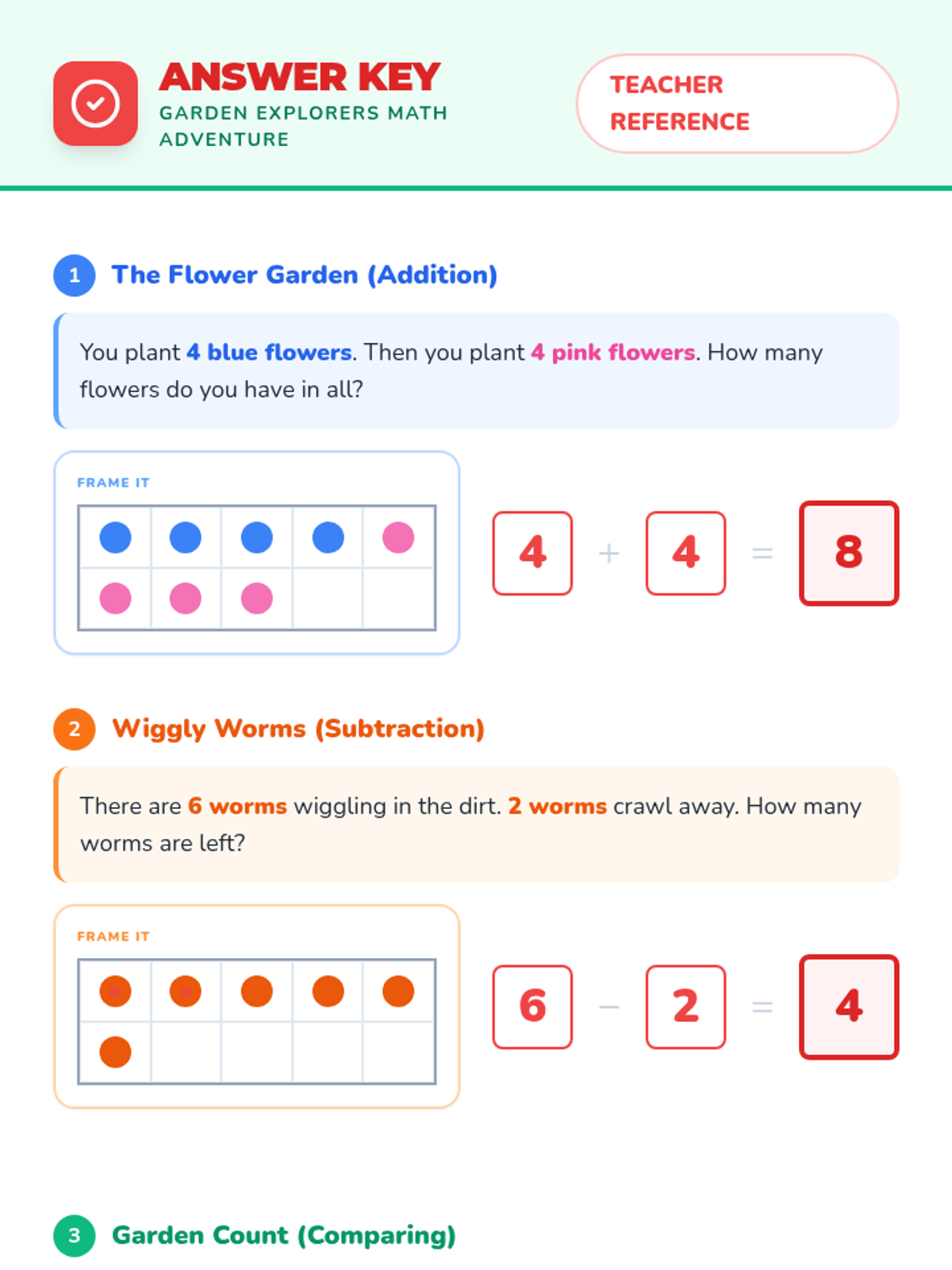
A kindergarten math lesson focusing on addition and subtraction within 10, comparing quantities, and extending patterns through a 'Garden Explorers' theme. Includes group instruction slides, independent practice worksheets, and a hands-on sorting activity.
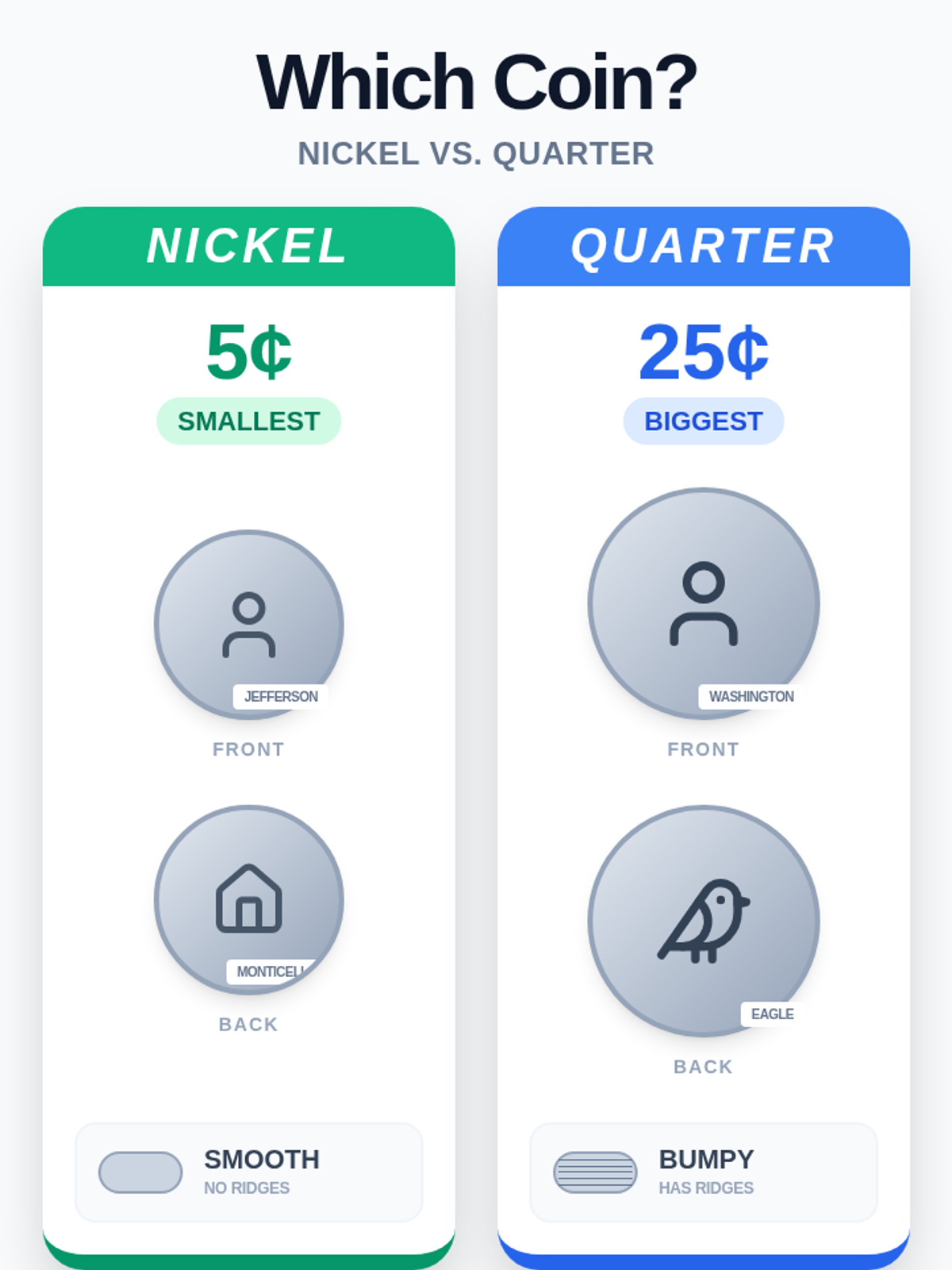
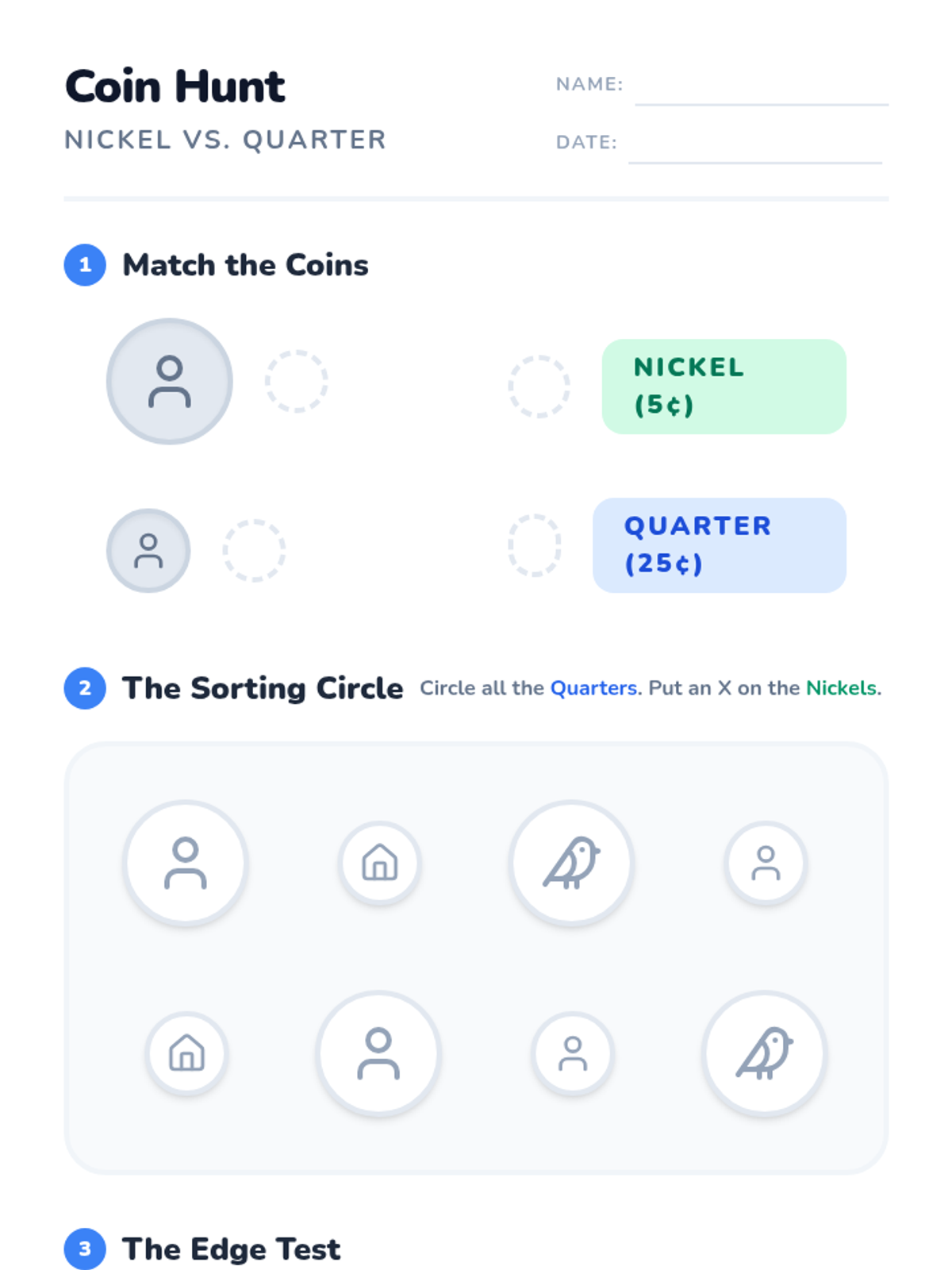
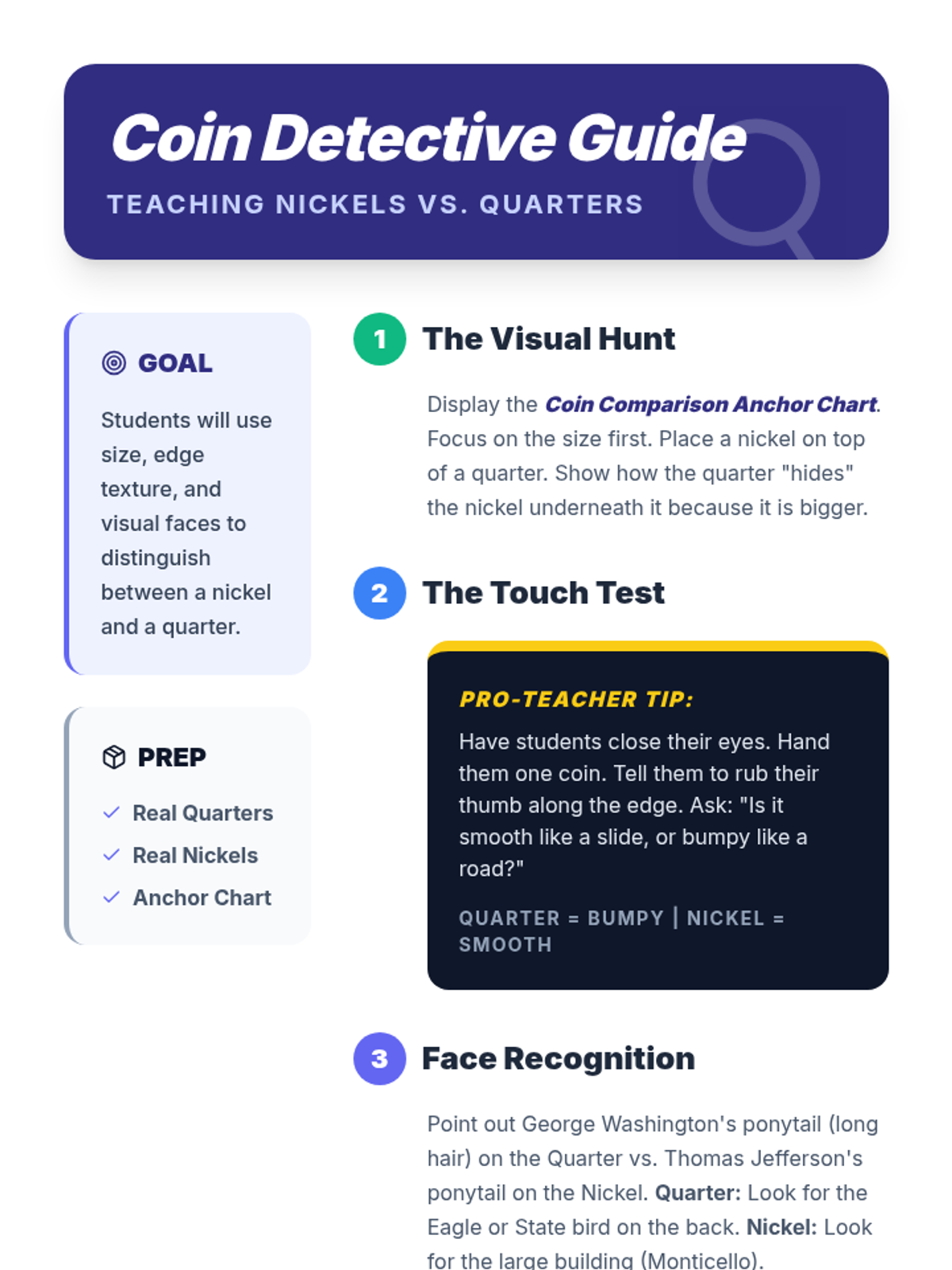
A lesson focused on identifying and distinguishing between nickels and quarters through visual cues and physical characteristics.
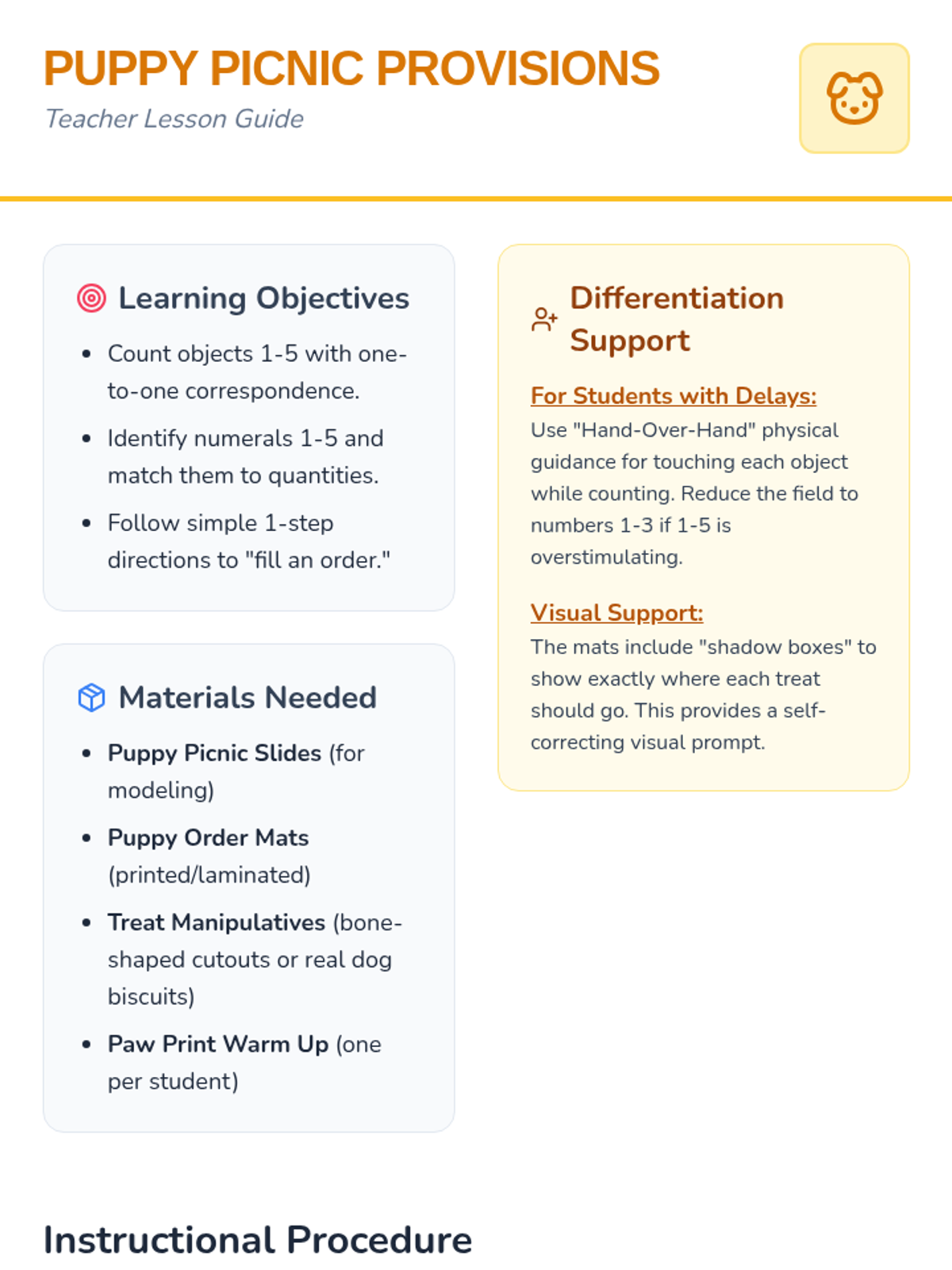
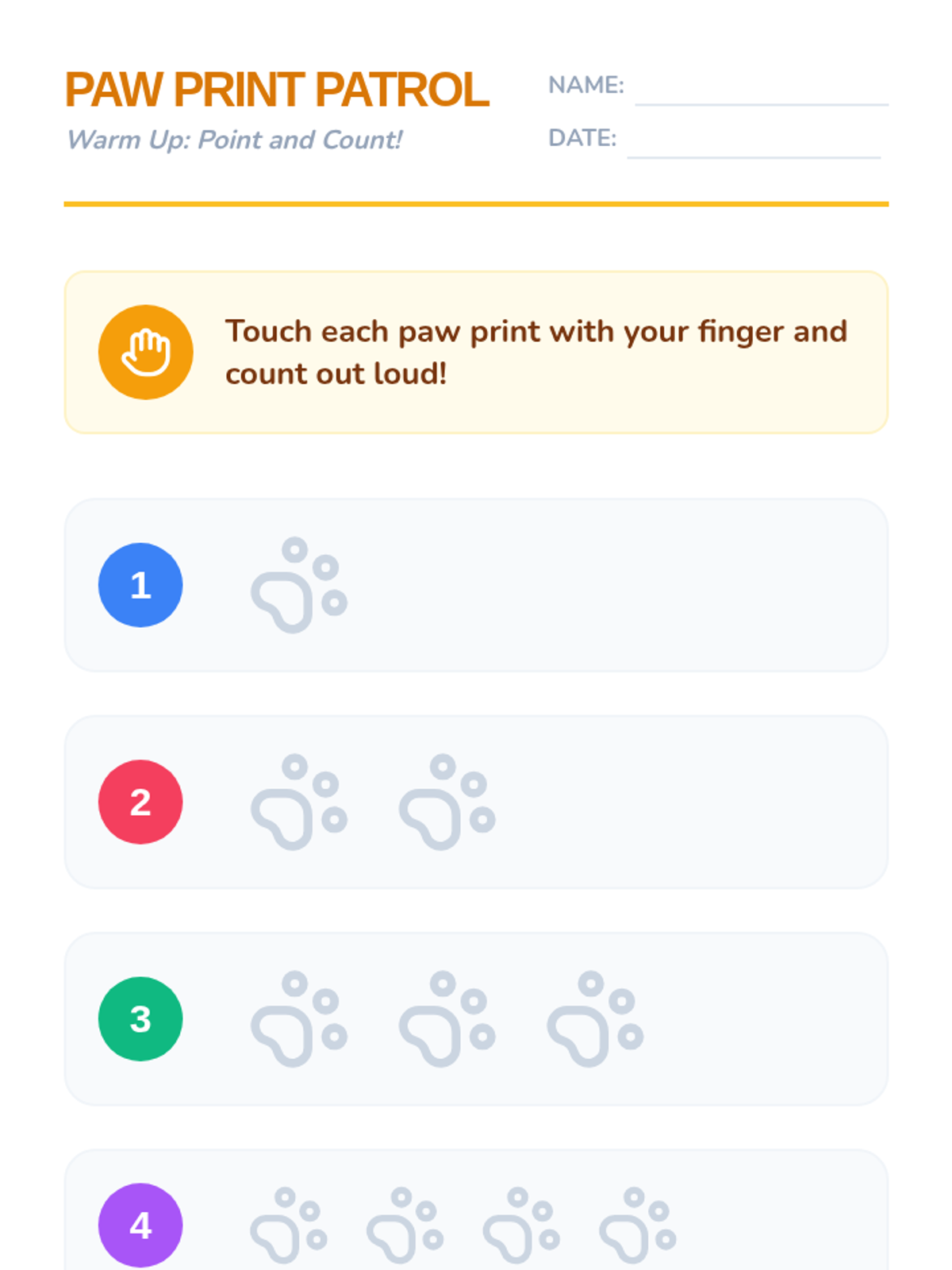
A hands-on numeracy lesson for Pre-K students focused on counting 1-5 and one-to-one correspondence through a playful puppy picnic theme. Students use visual mats and 'treat' manipulatives to fulfill specific orders for their puppy friends.
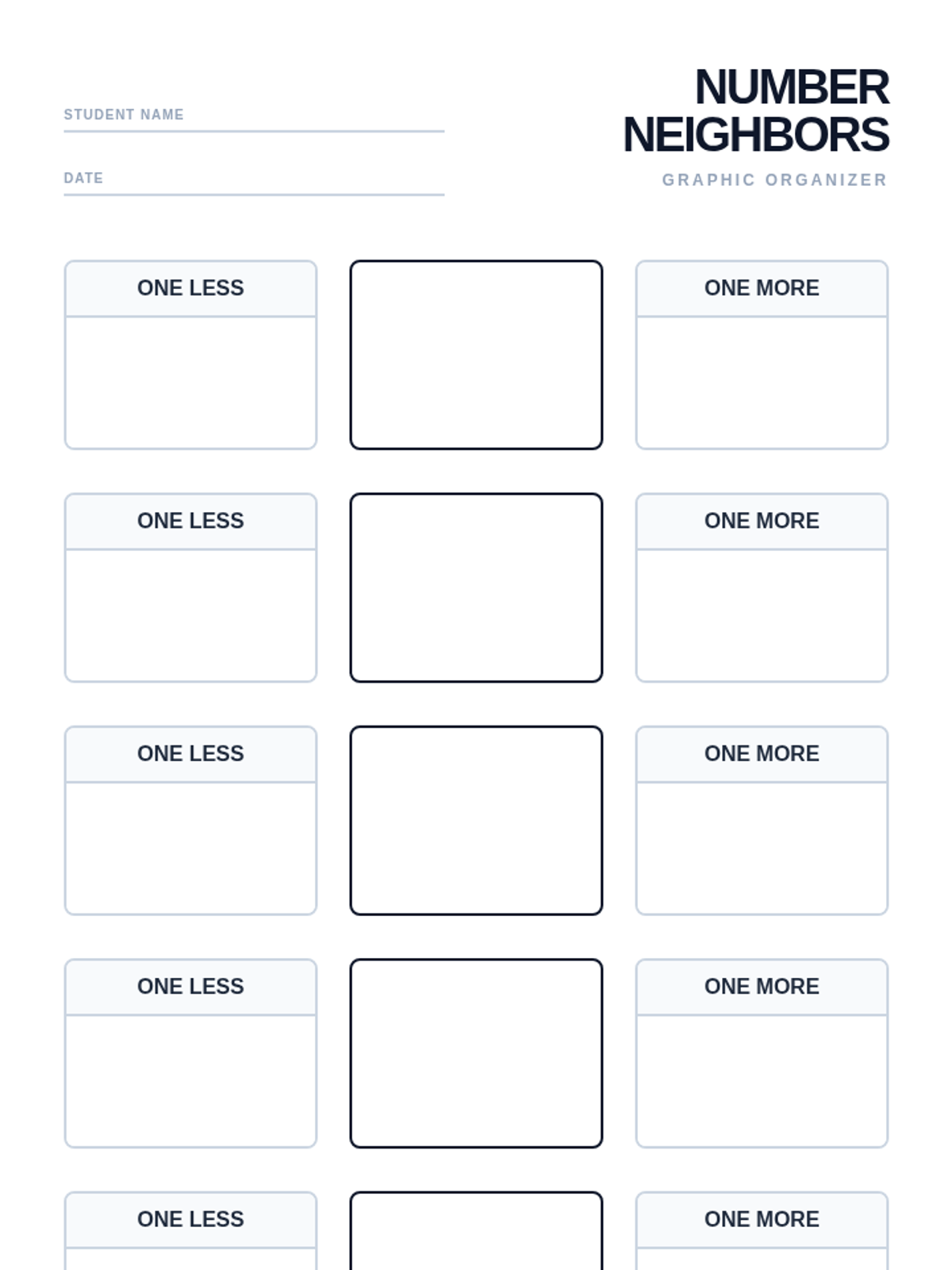
A set of materials focused on helping students understand number relationships by identifying 'one more' and 'one less' than a given number.
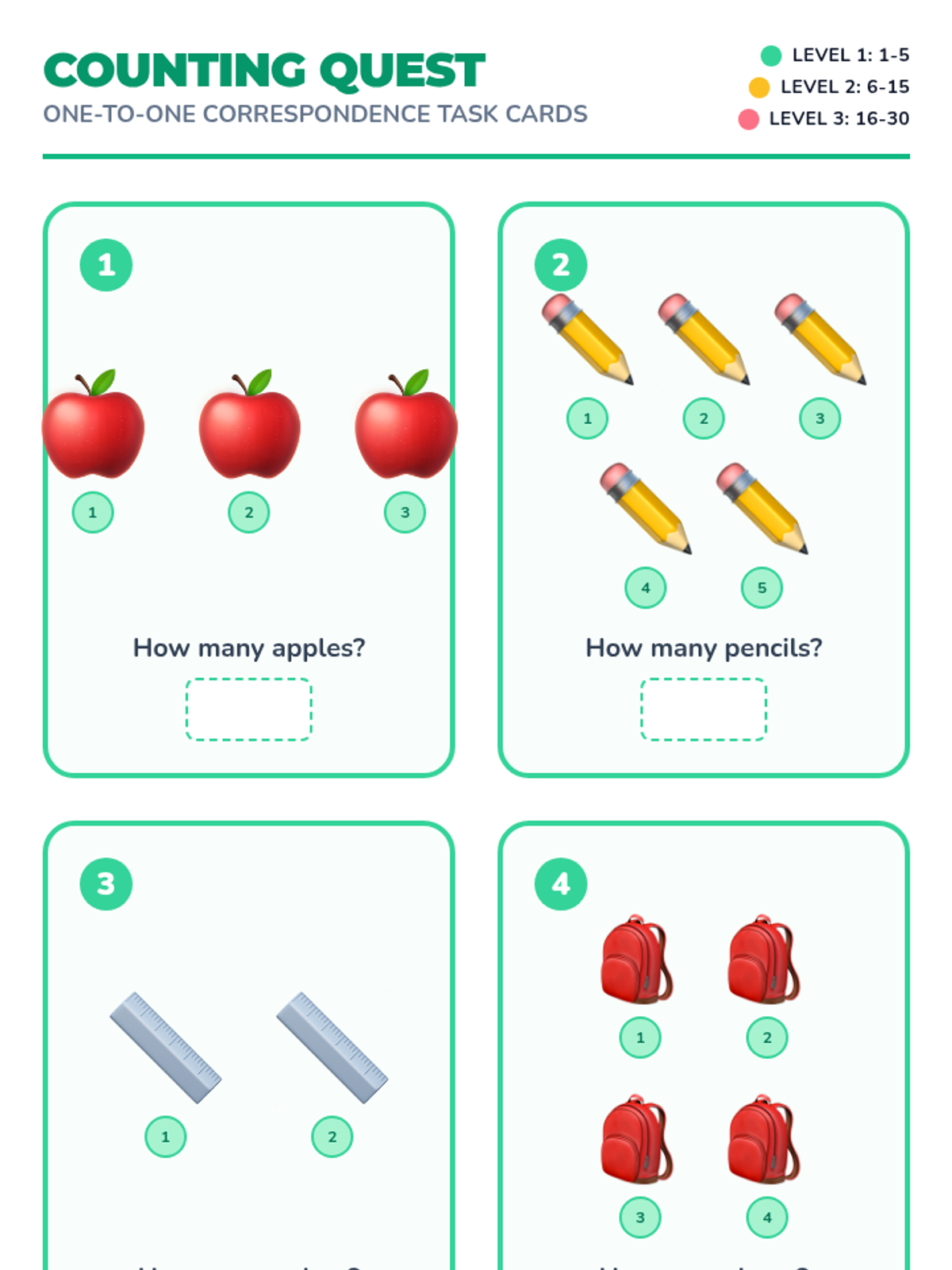
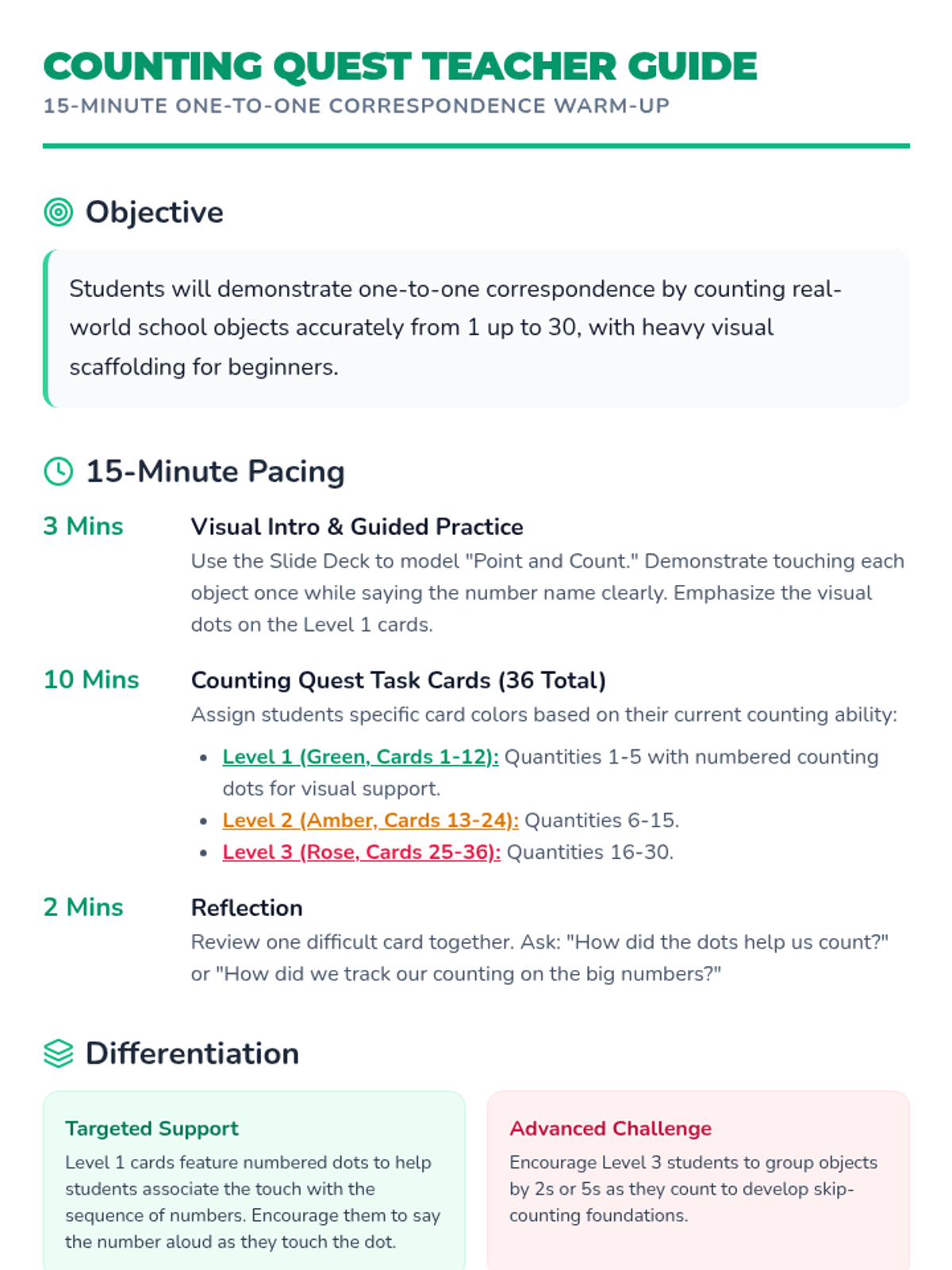
A quick 15-minute warm-up activity where students practice one-to-one correspondence by counting school-themed objects. The lesson is scaffolded with three levels of difficulty, ranging from numbers 1-5 to numbers up to 30.
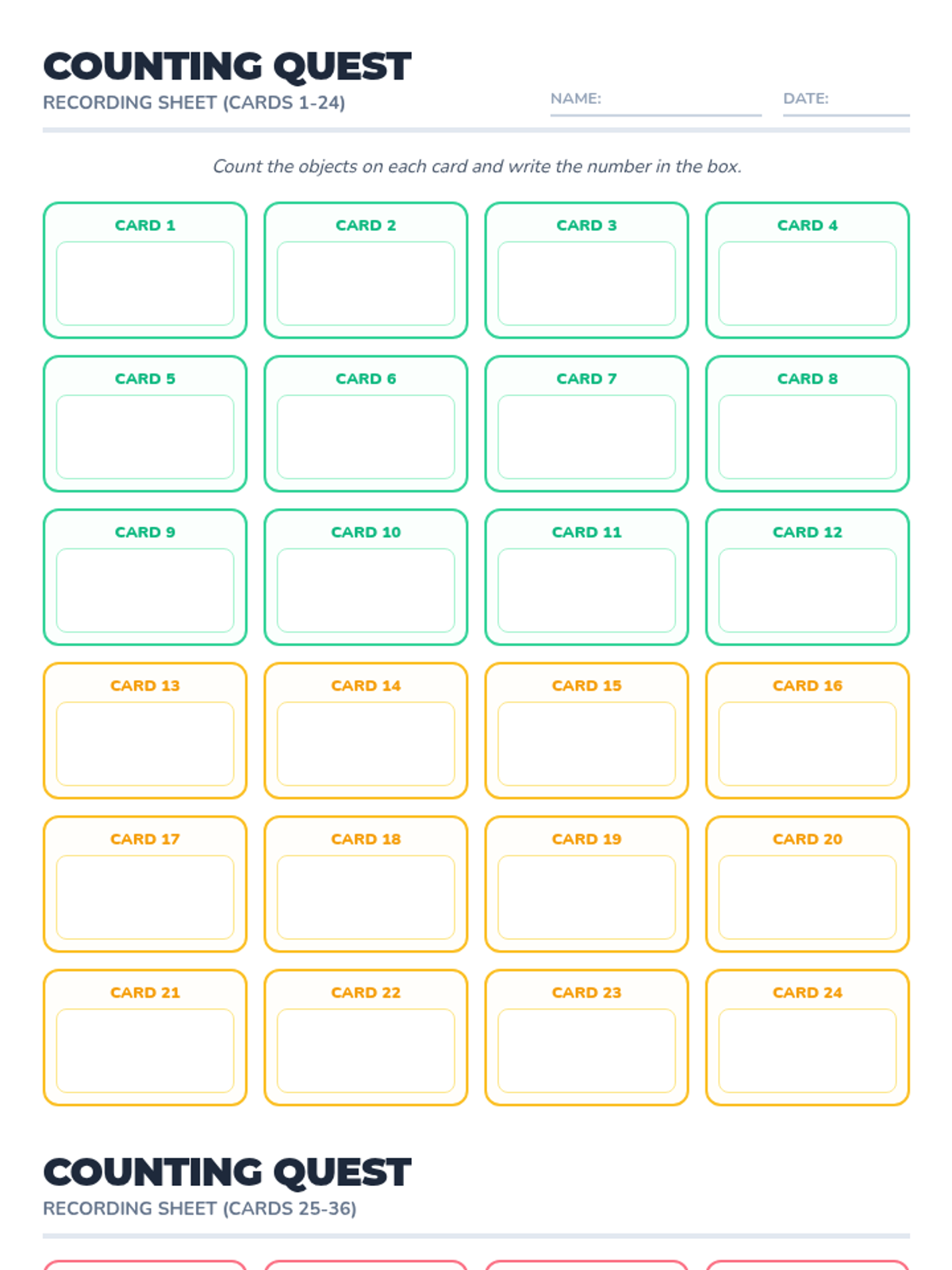
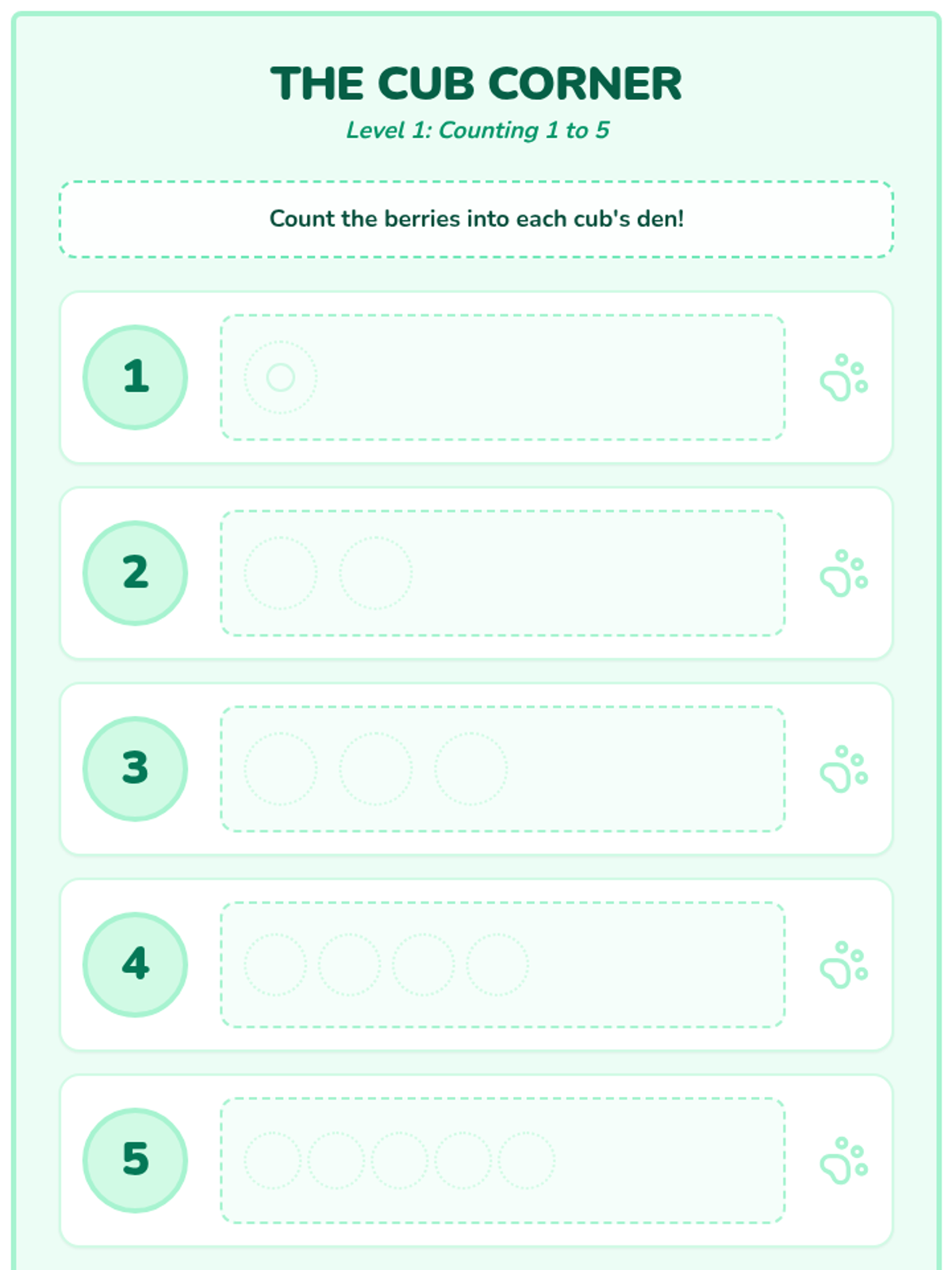
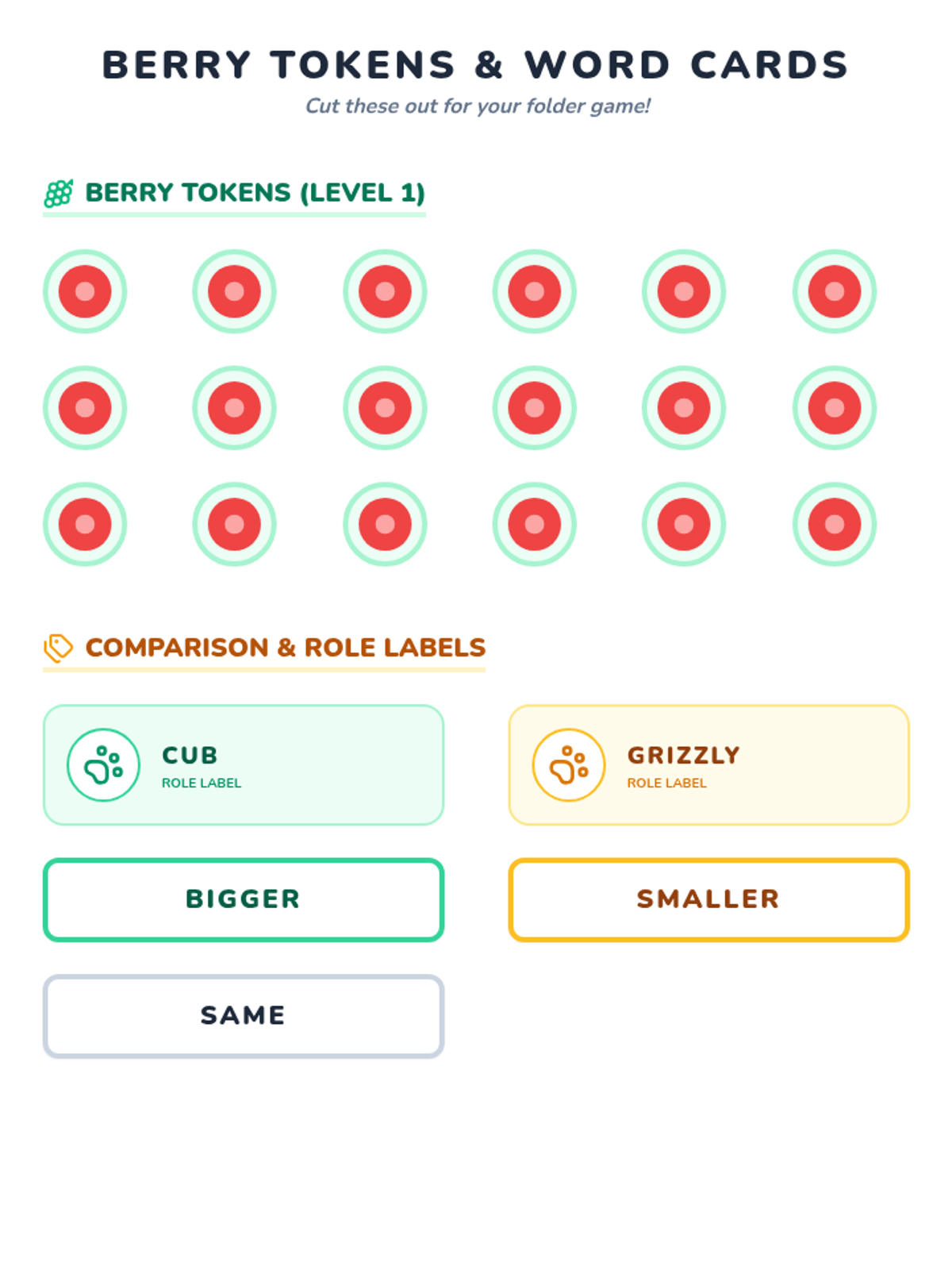
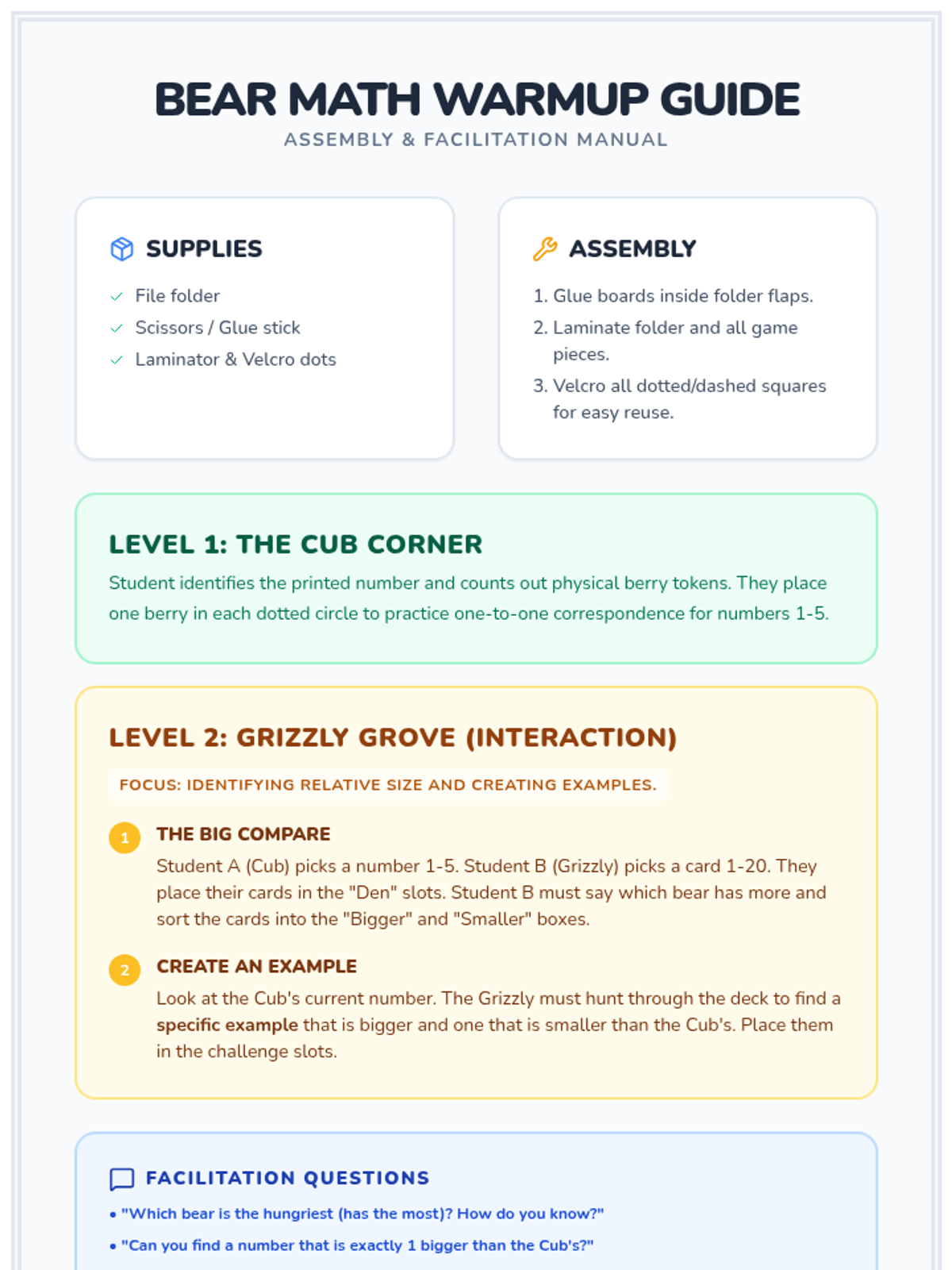
A bear-themed file folder game designed for differentiated morning warm-ups, focusing on one-to-one correspondence (1-5) and number comparison (up to 20).
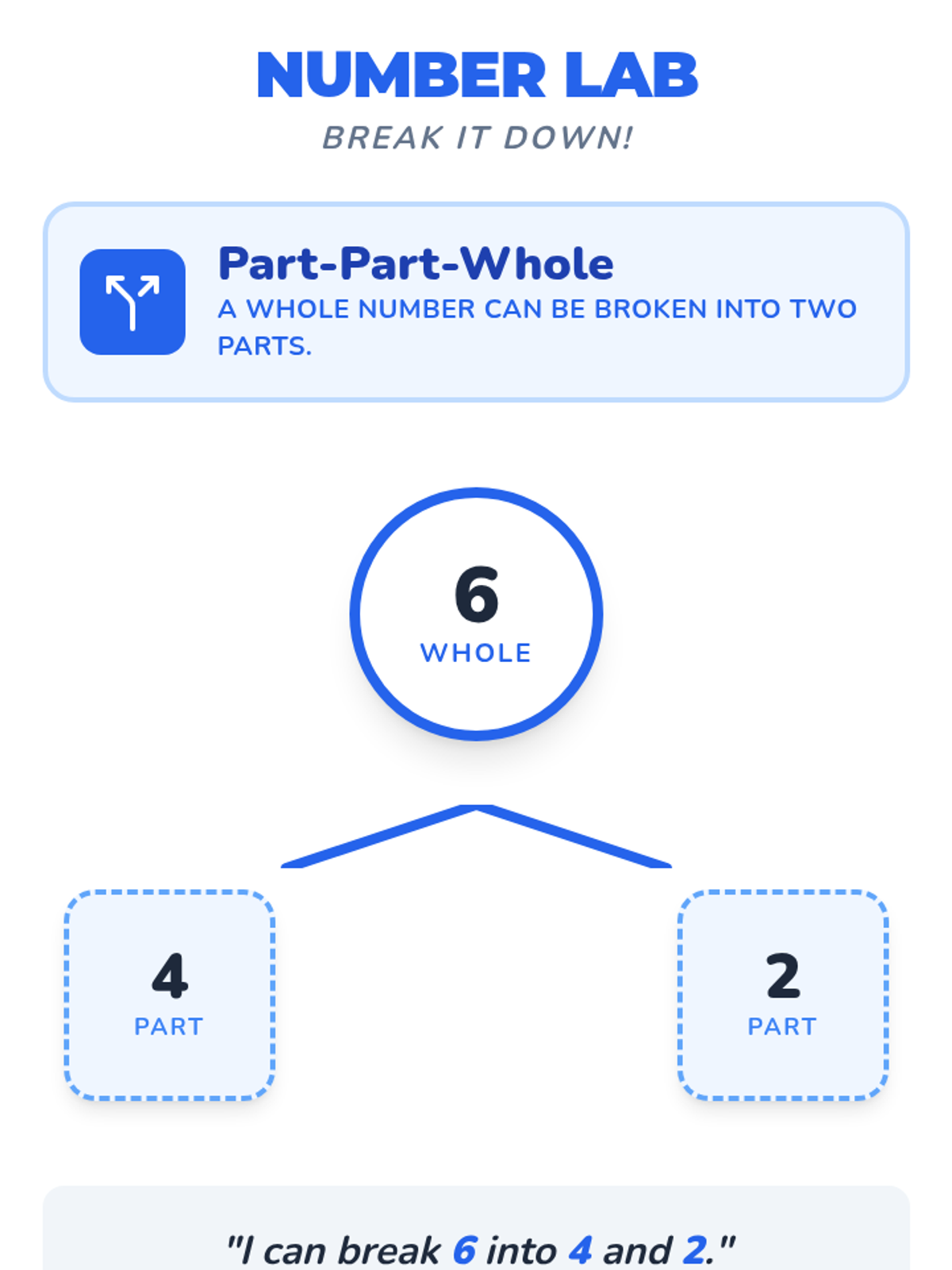
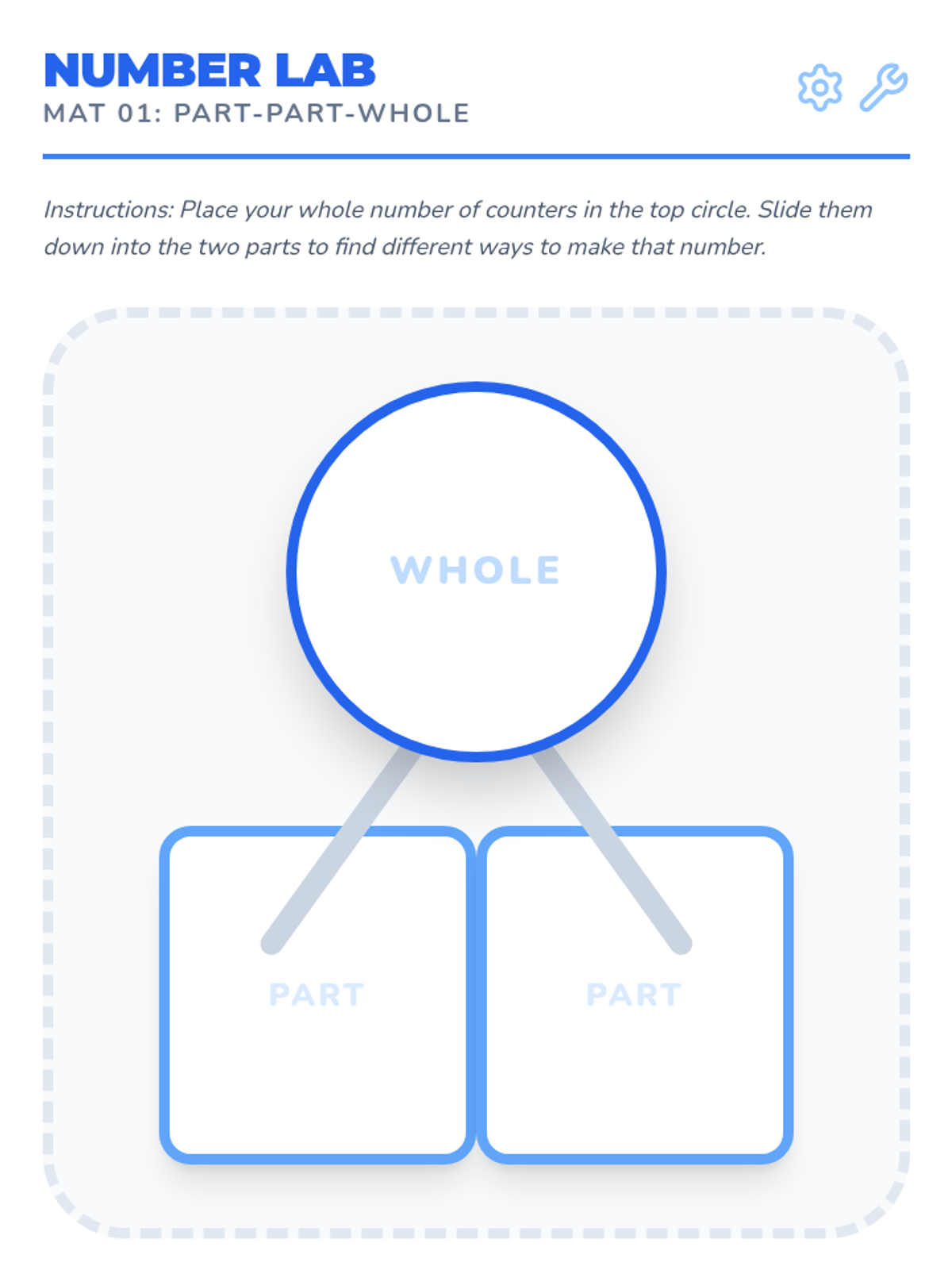
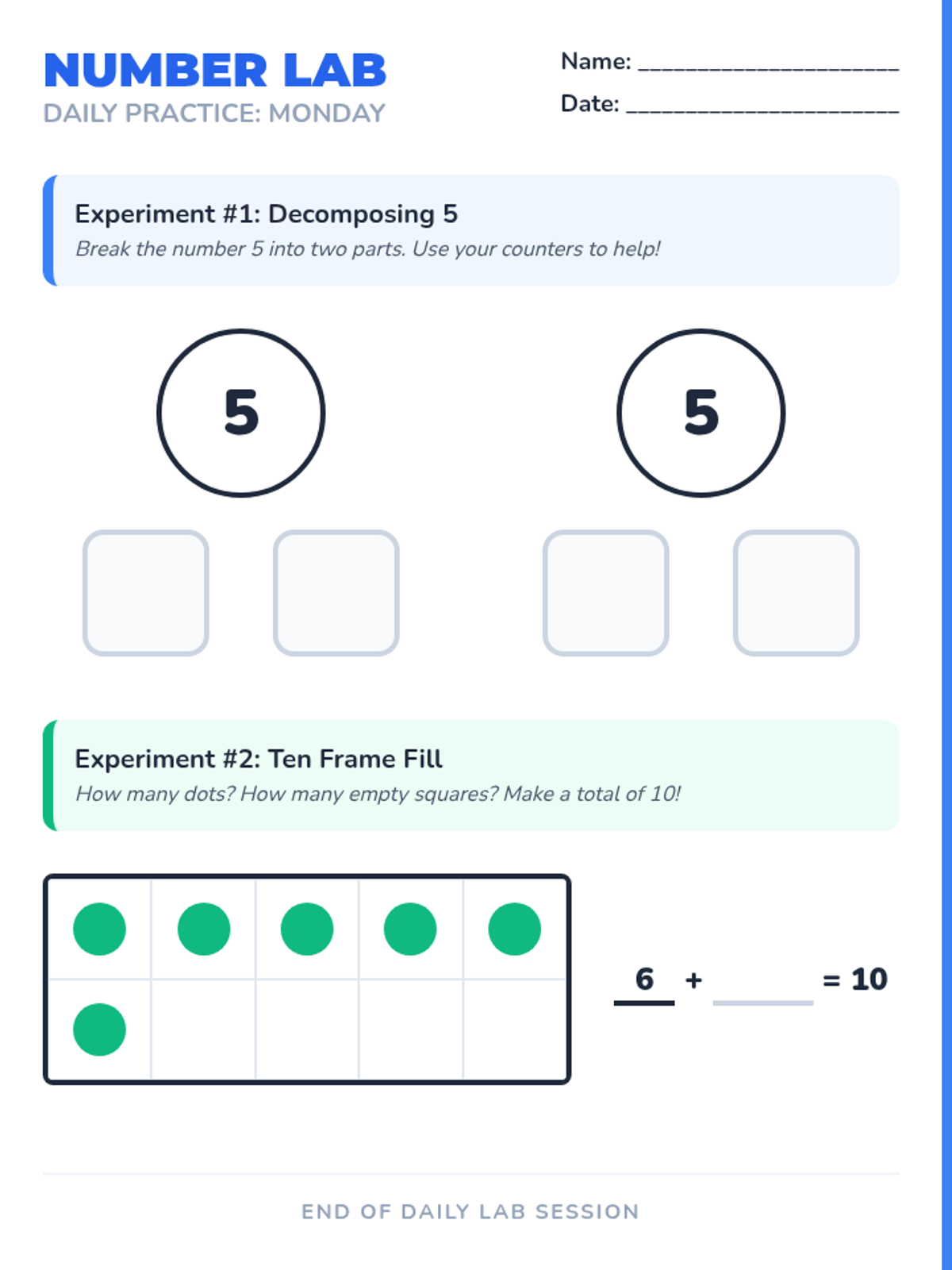
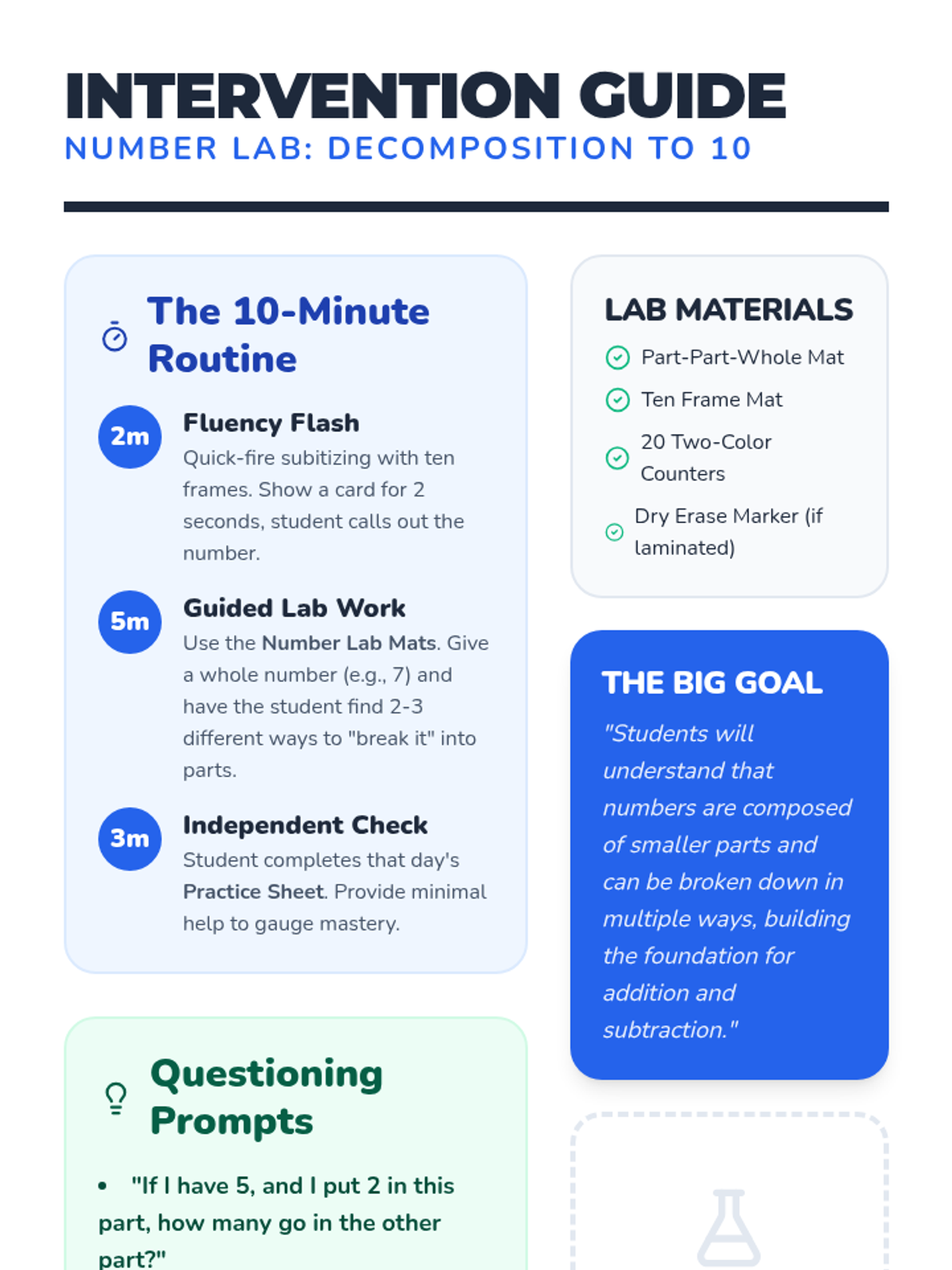
A focused ten-minute daily math intervention designed to help first-grade students master decomposing numbers up to 10 using Part-Part-Whole models and Ten Frames.
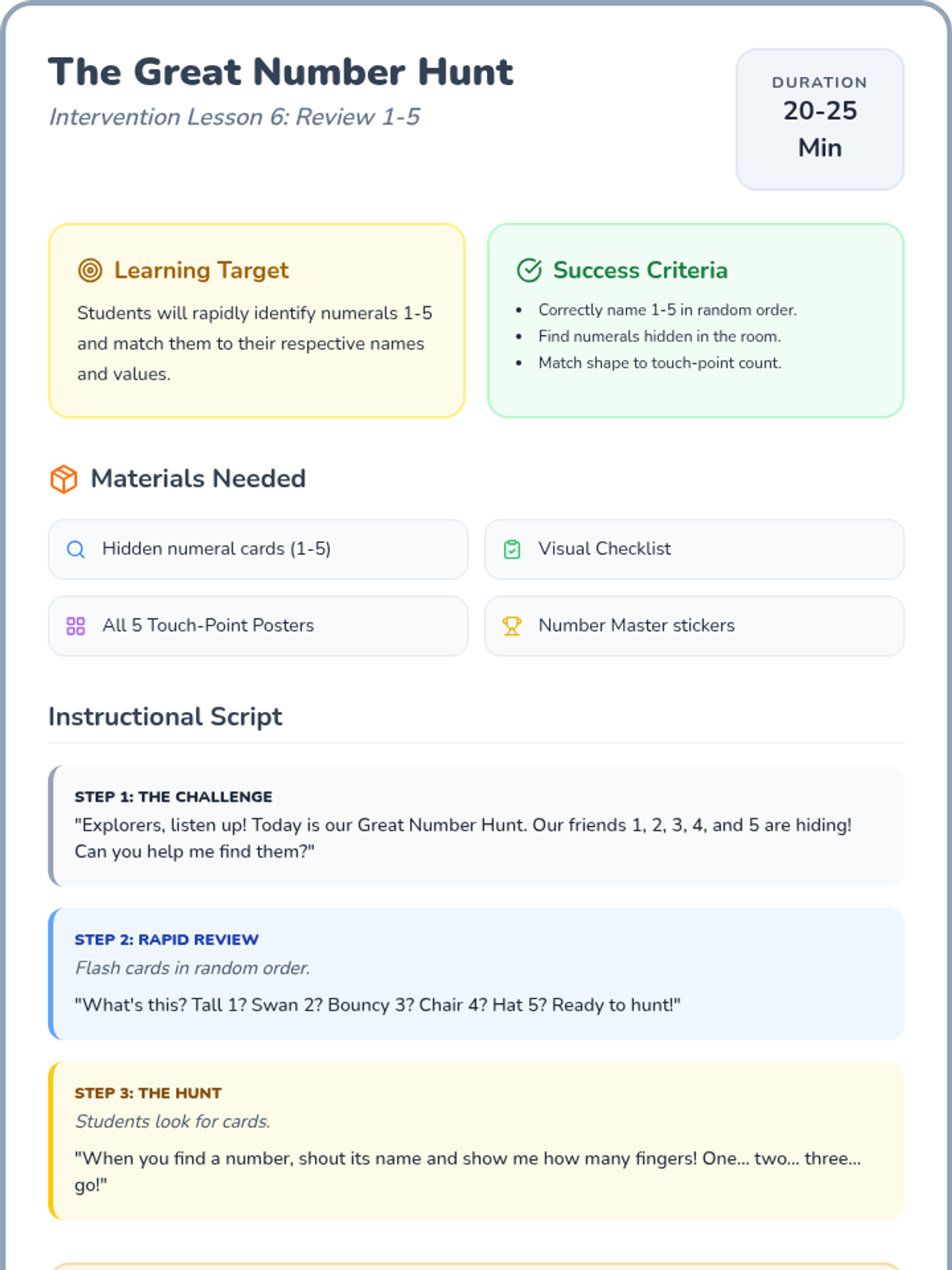
A comprehensive review of numerals 1-5, focusing on rapid identification and matching names to shapes through a 'scavenger hunt' format.
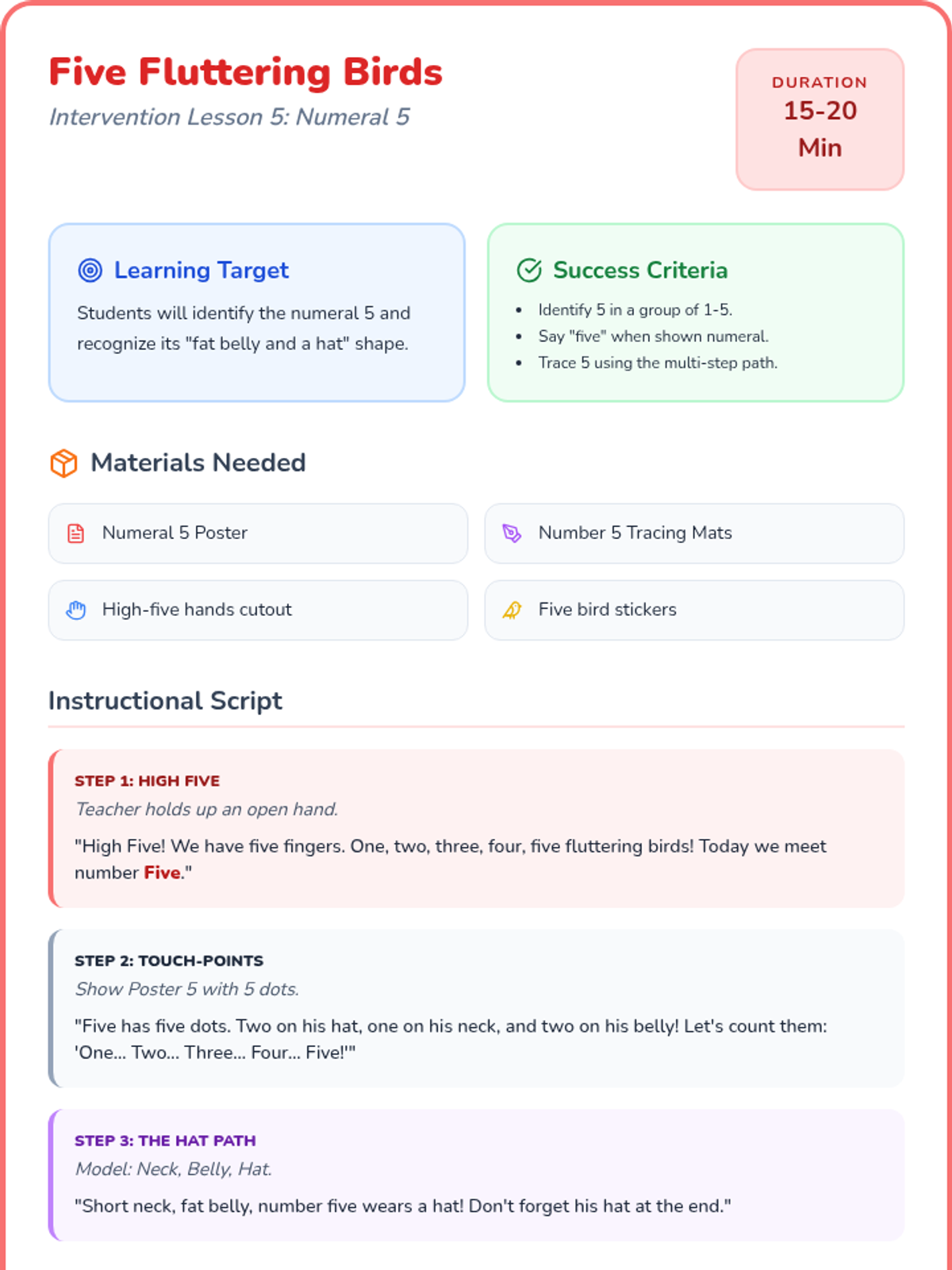
Introduction to the numeral 5, focusing on its unique shape and five touch-points using 'high-five' analogies and bird imagery.
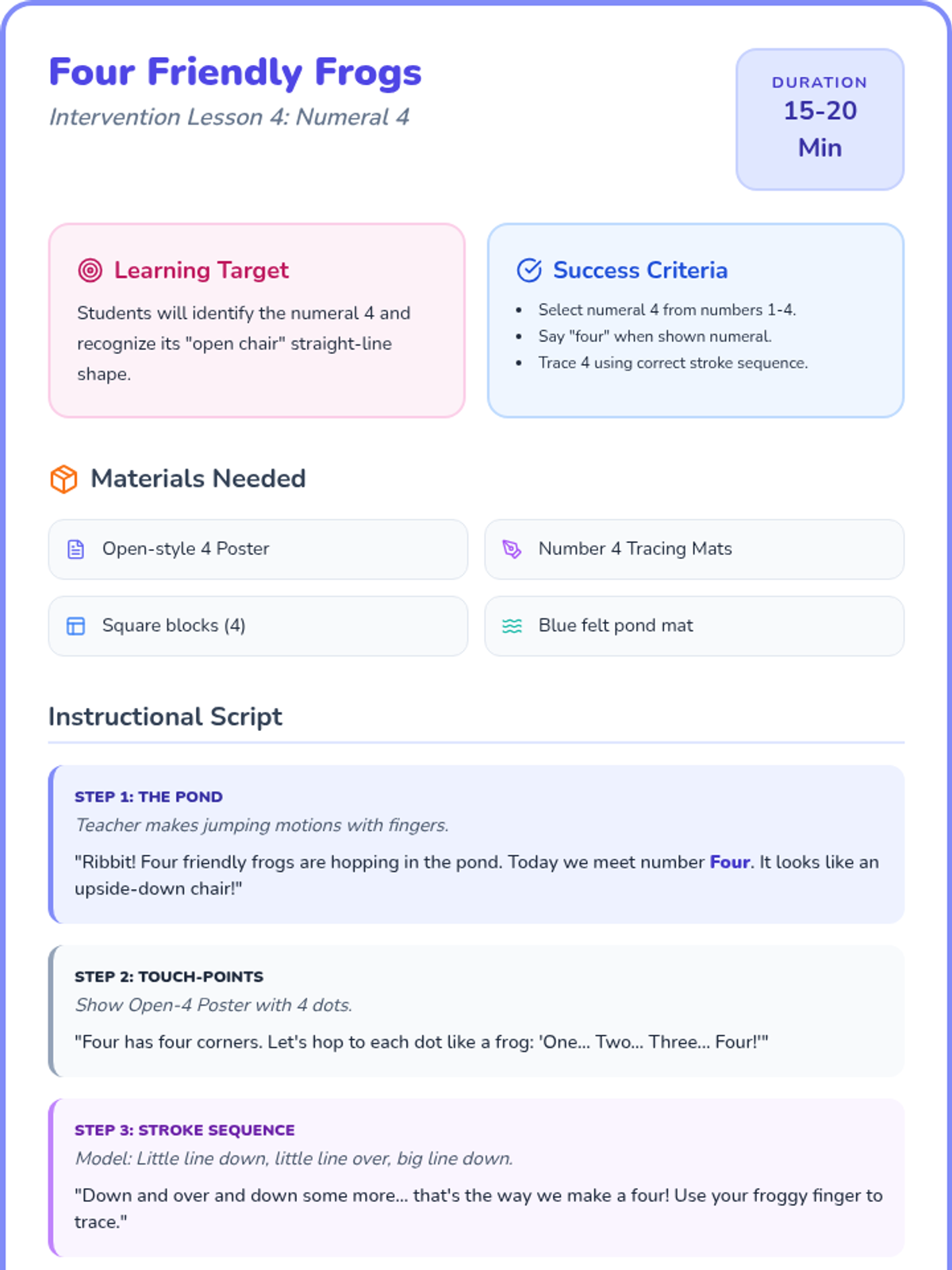
Discovering the numeral 4, teaching its straight lines and four distinct touch-points with a friendly frog theme.
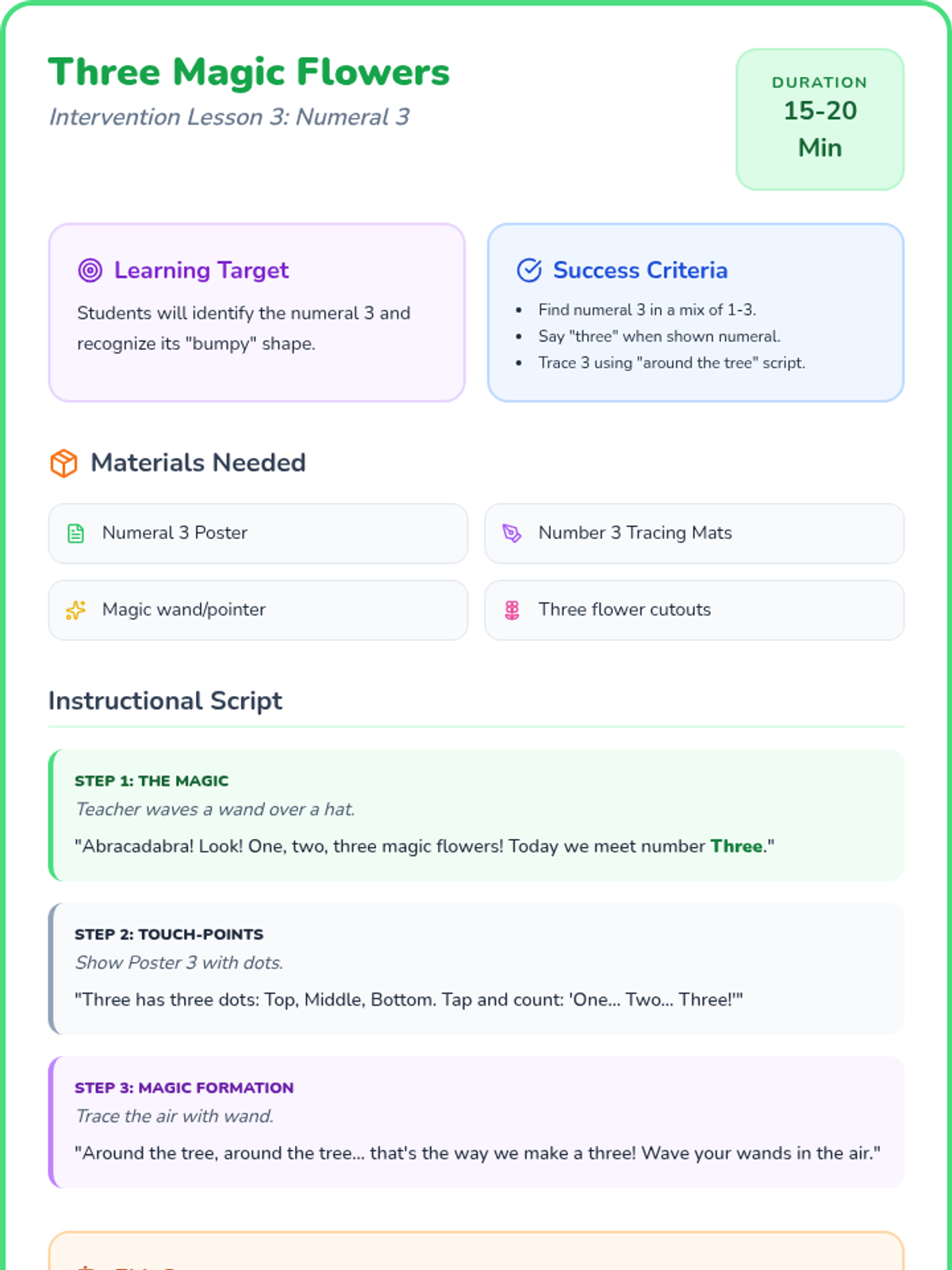
Exploring the numeral 3, focusing on its identifying features and the three touch-points in a 'magic' themed lesson.
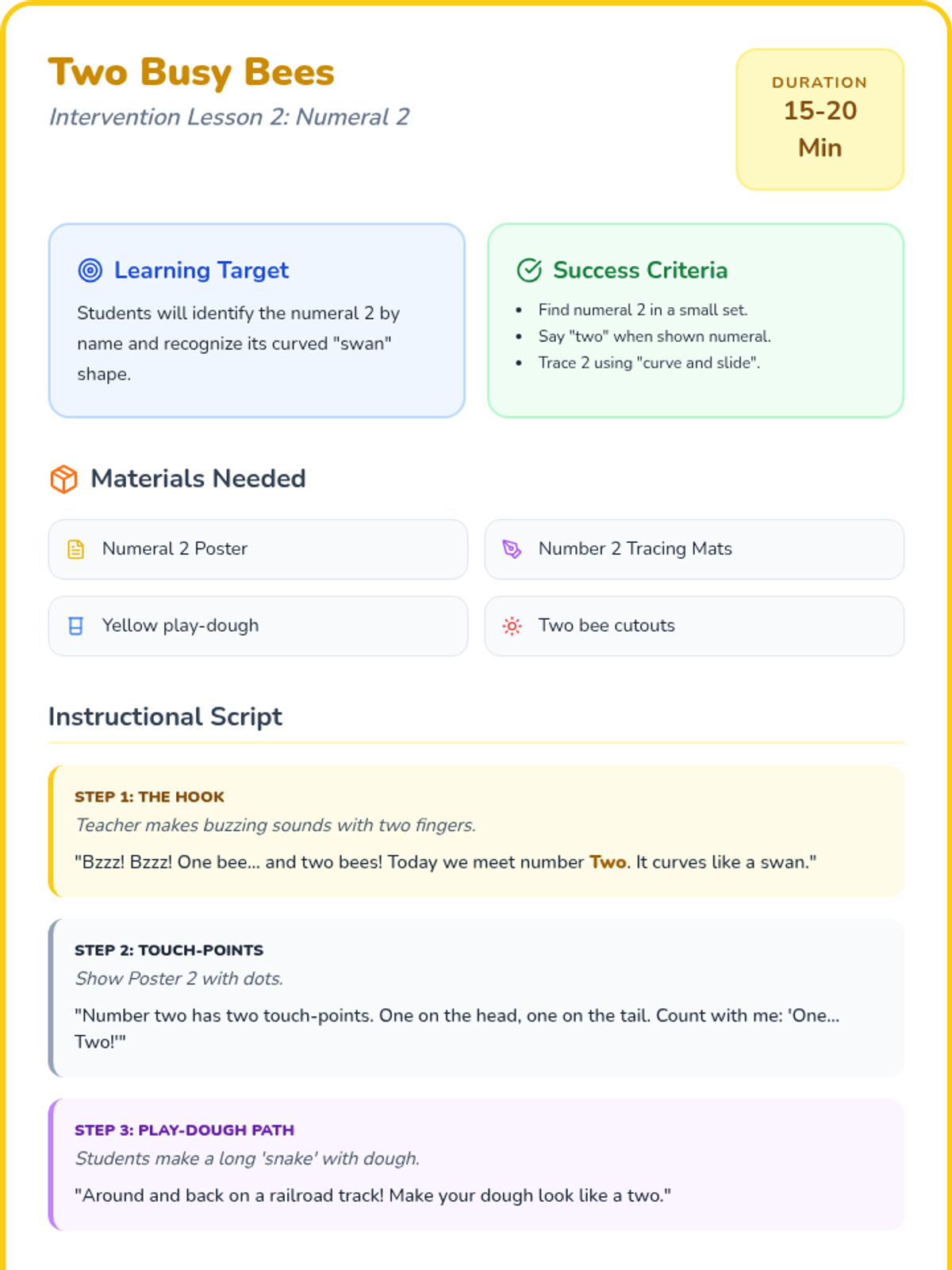
Introduction to the numeral 2, emphasizing its curved shape and the two touch-points through interactive storytelling.
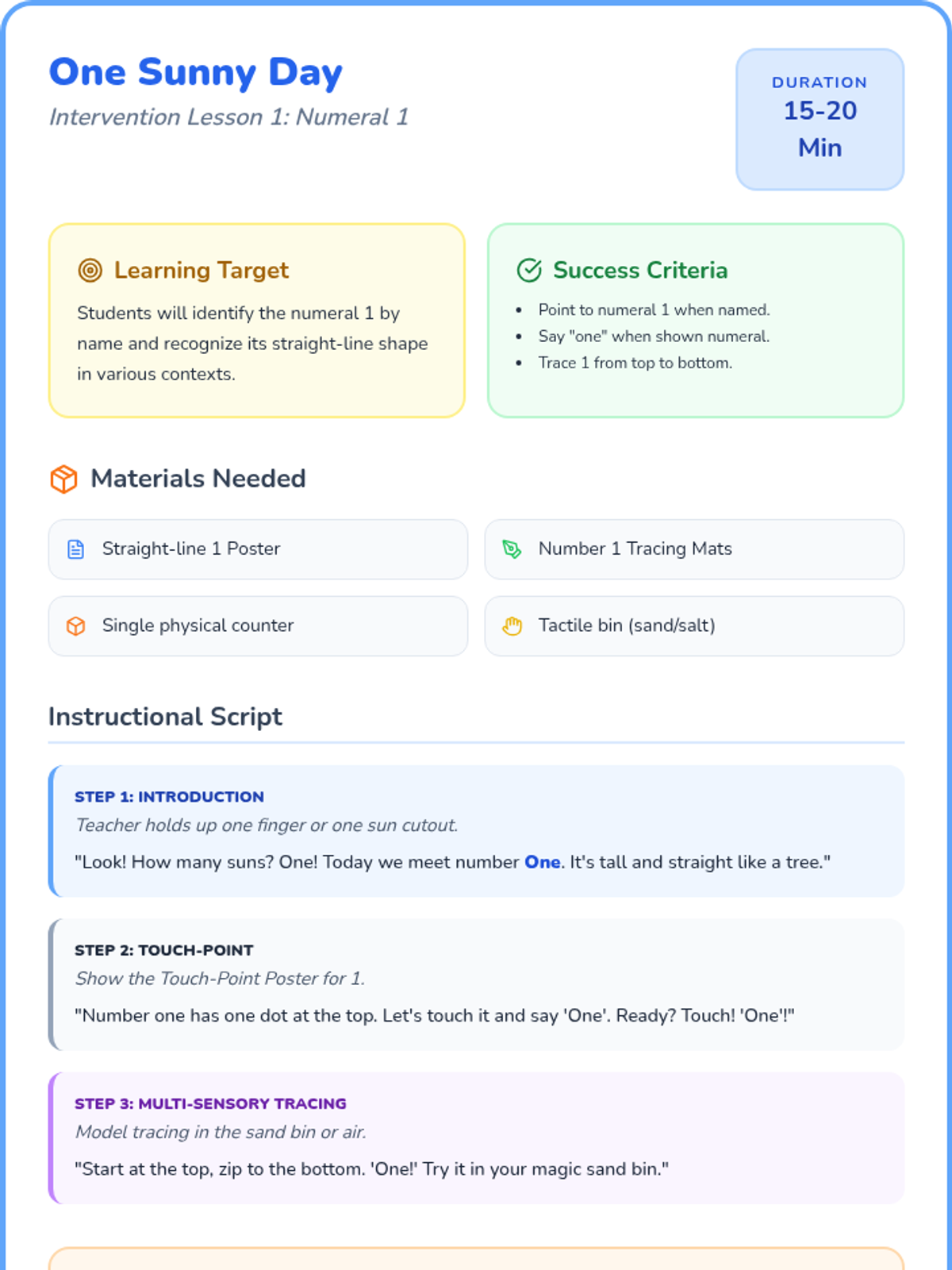
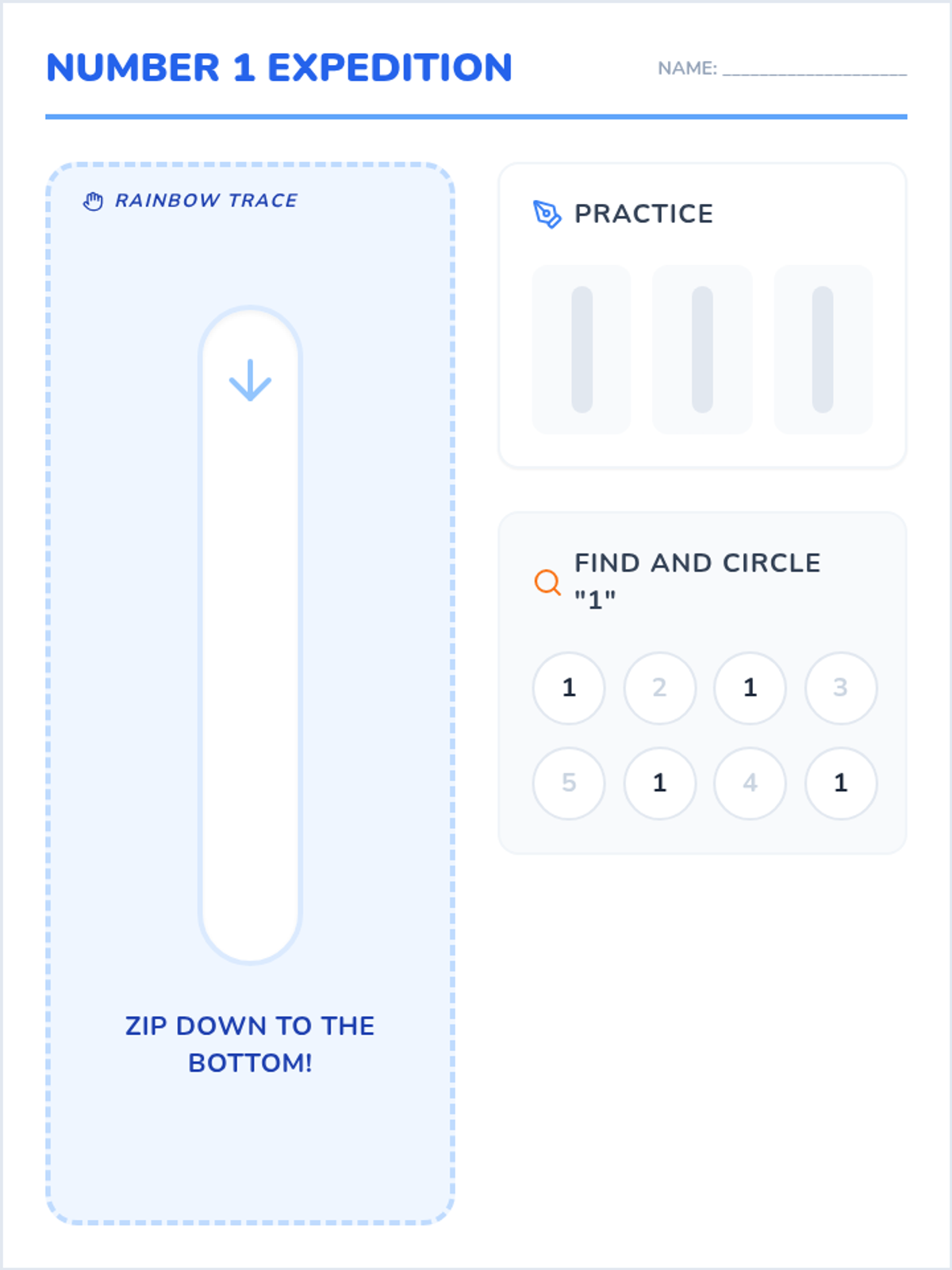
Introduction to the numeral 1, focusing on its name, shape, and value using touch-point imagery and sky-writing scripts.
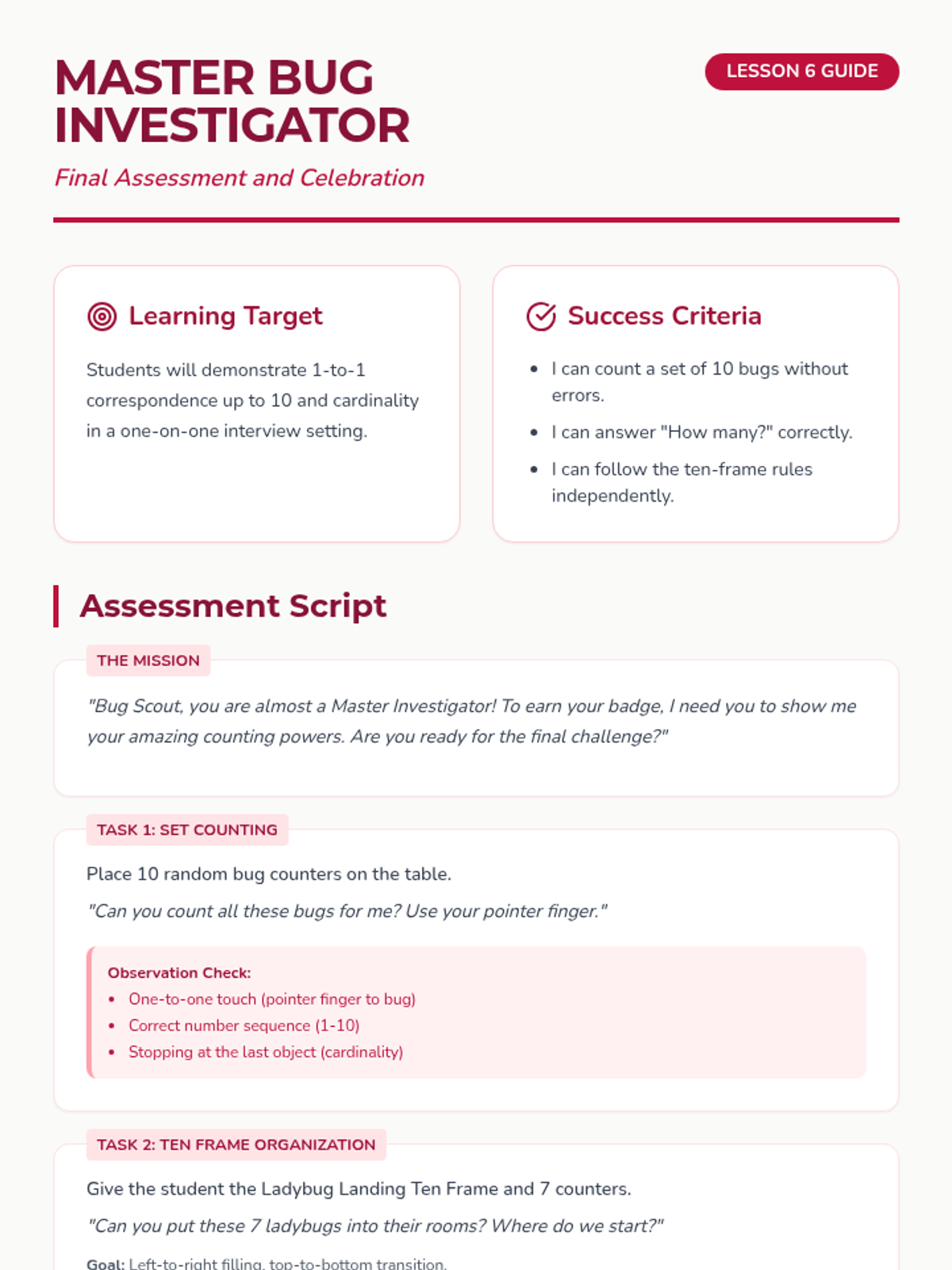
A final consolidation and assessment lesson where students demonstrate their counting skills to earn their 'Master Bug Scout' badge.
A review lesson focusing on subitizing and counting mixed groups of butterflies up to 10.
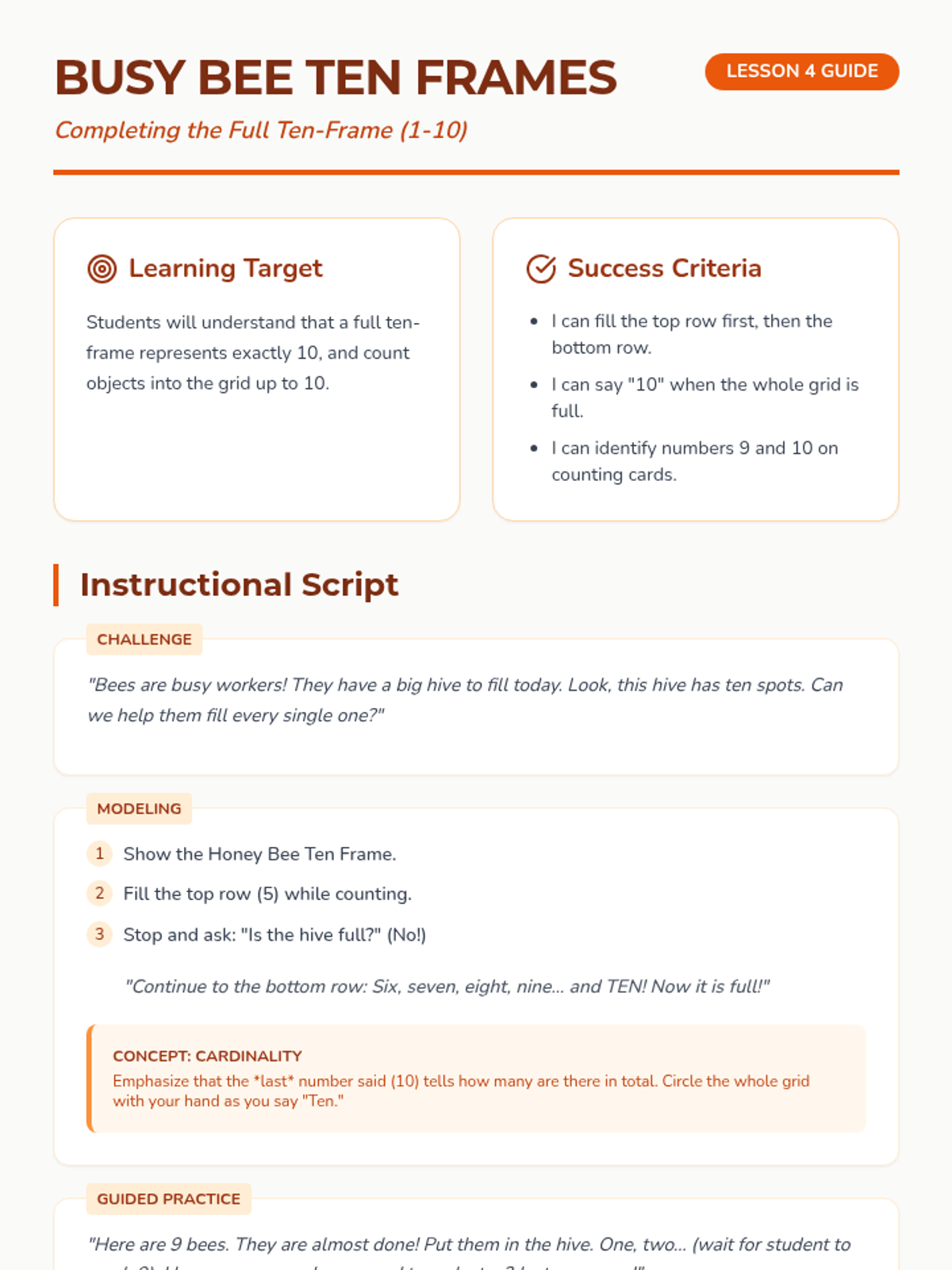
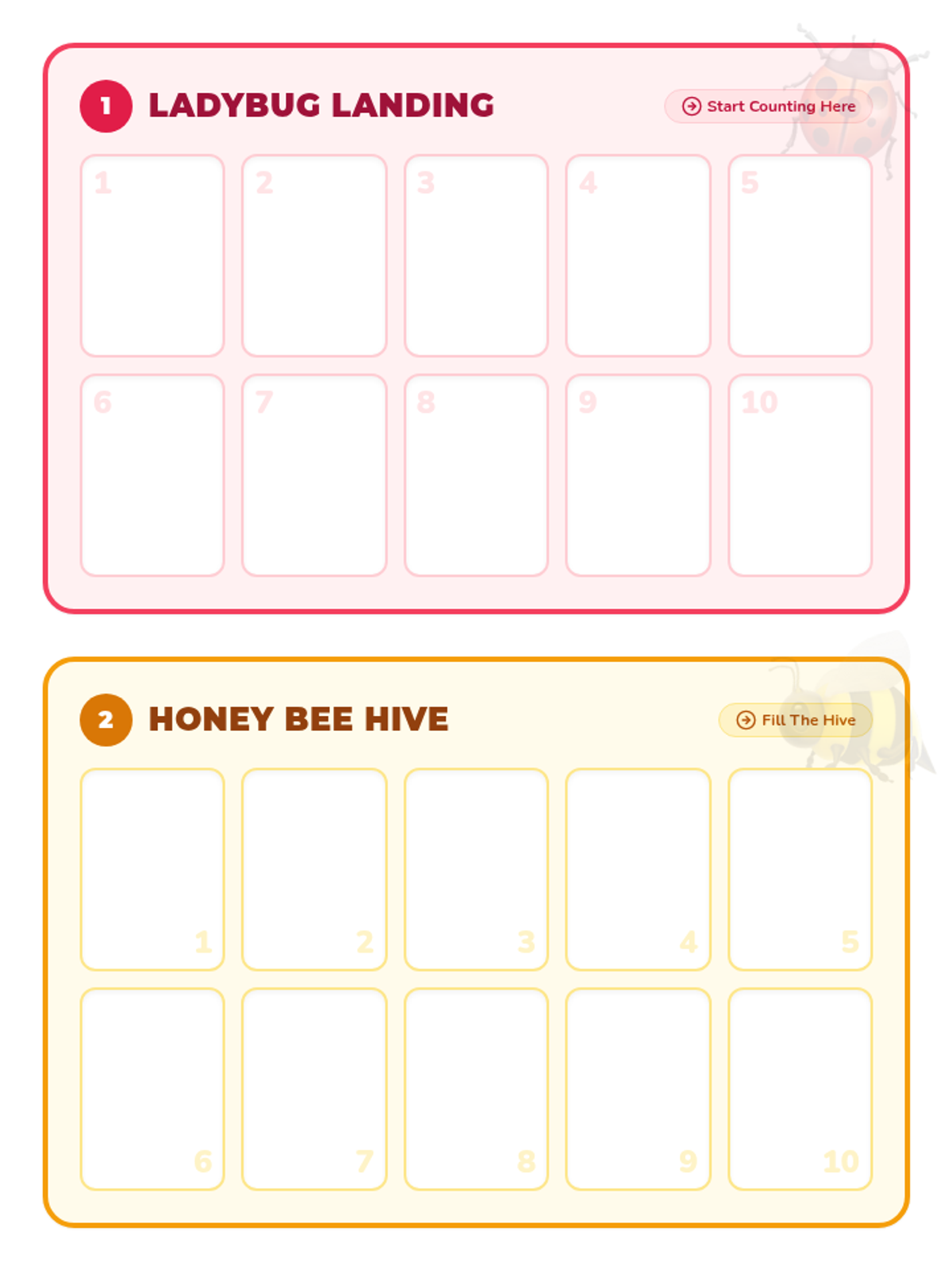
Mastering the full ten-frame by helping bees fill their hive with 10 drops of nectar.
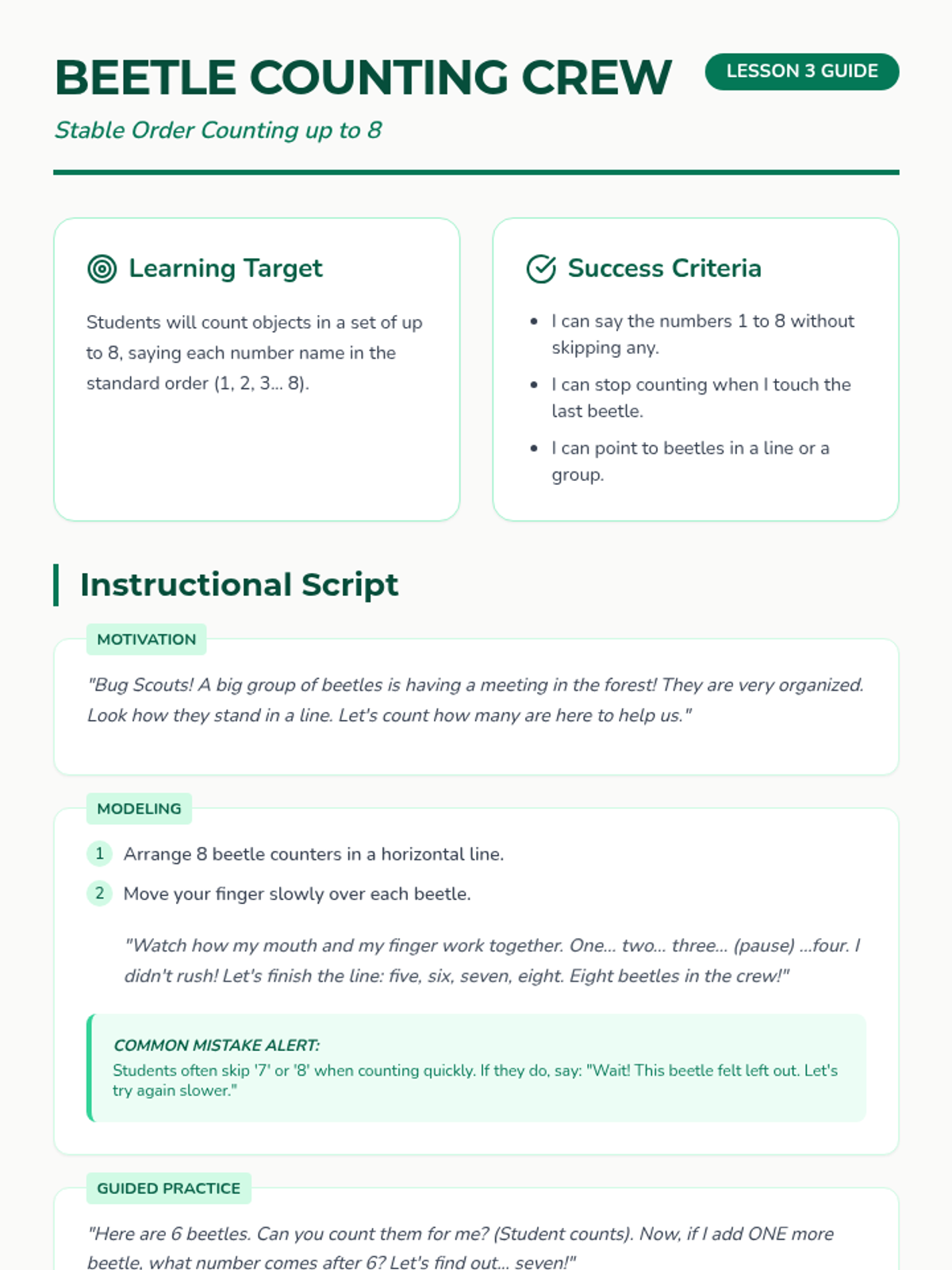
Practicing counting from 1 to 8 using a beetle-themed grid and focusing on stable order counting.
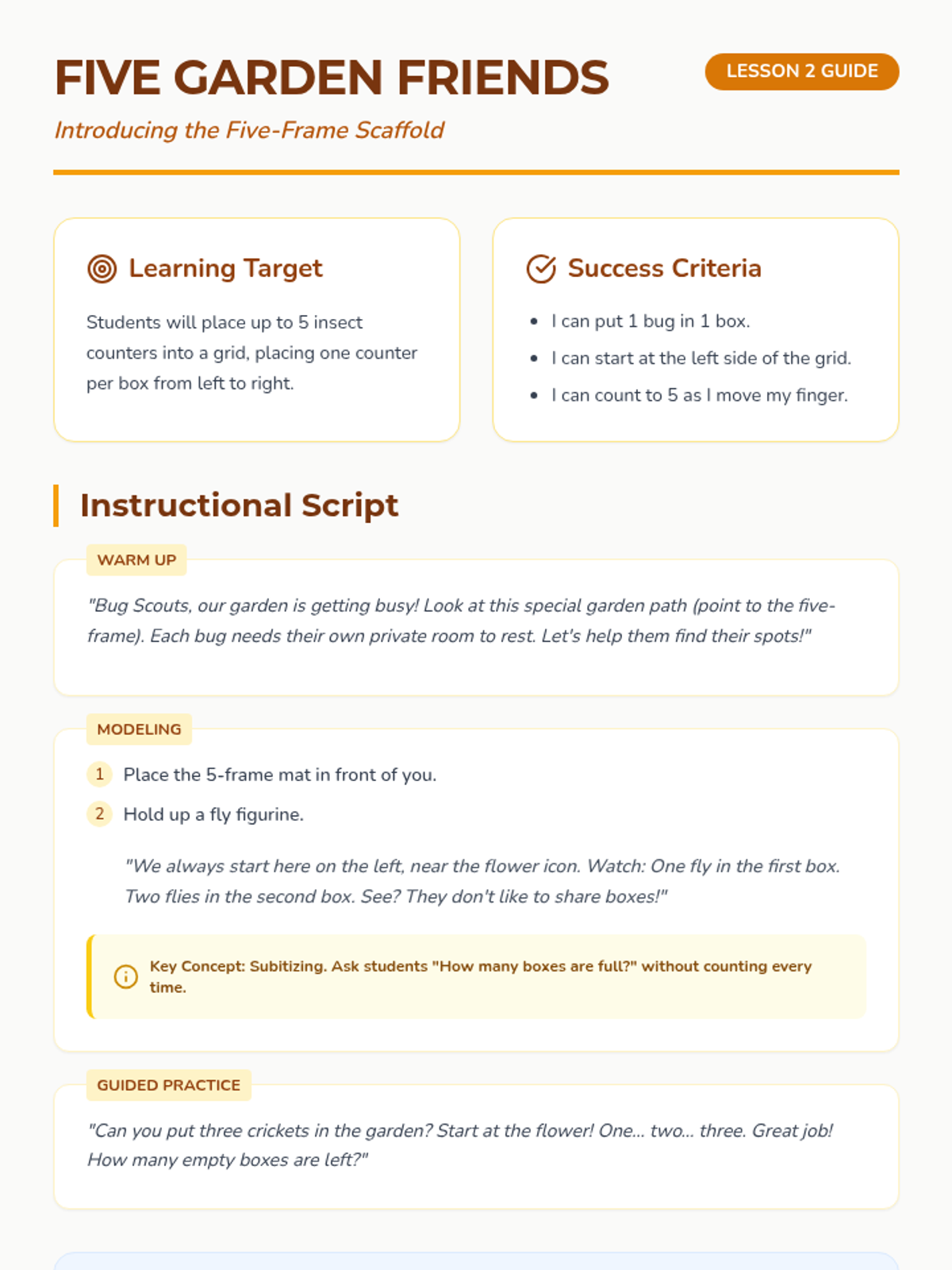
Expand counting skills to 5 using a five-frame (top half of a ten-frame) and friendly garden flies.
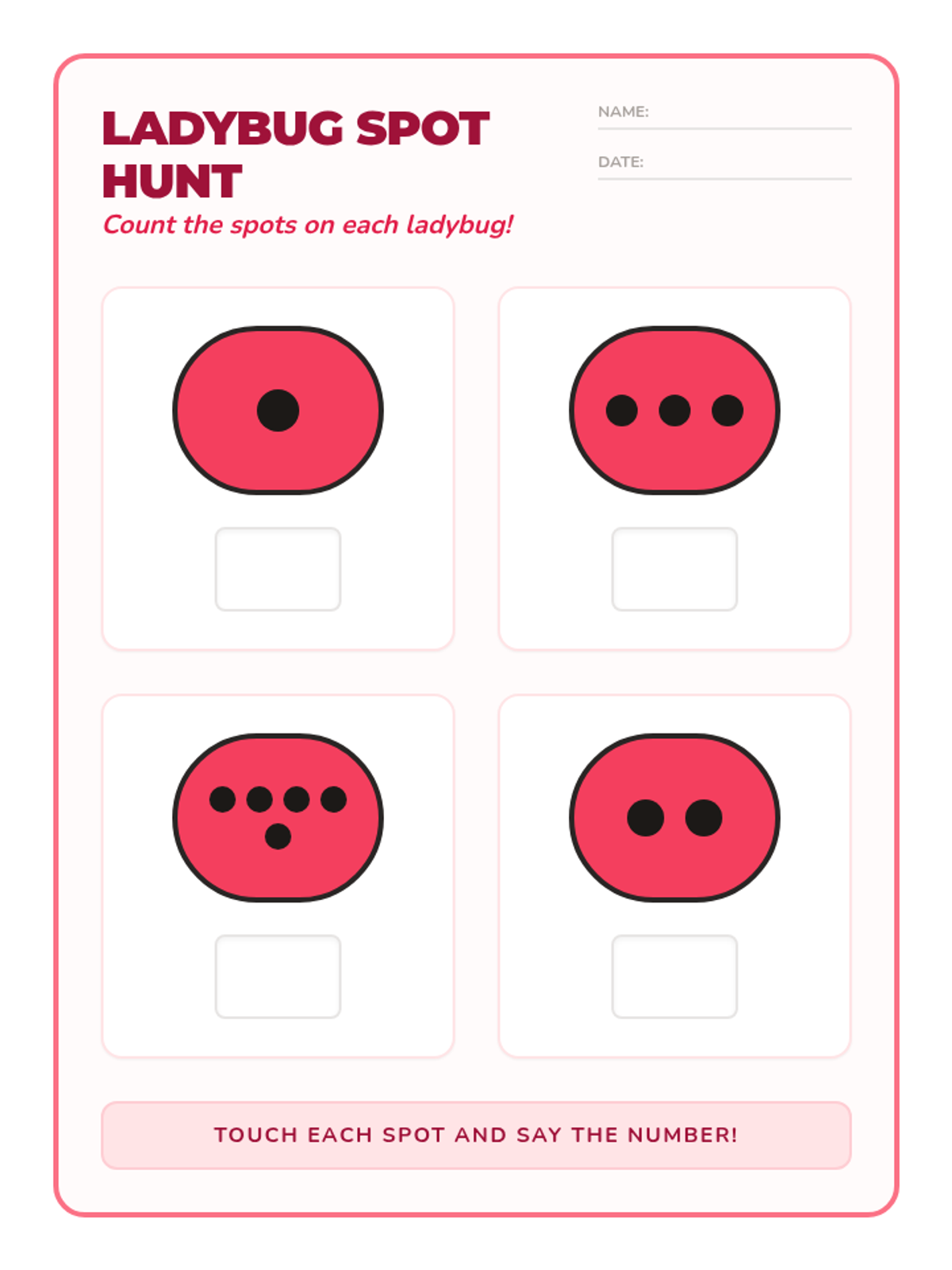
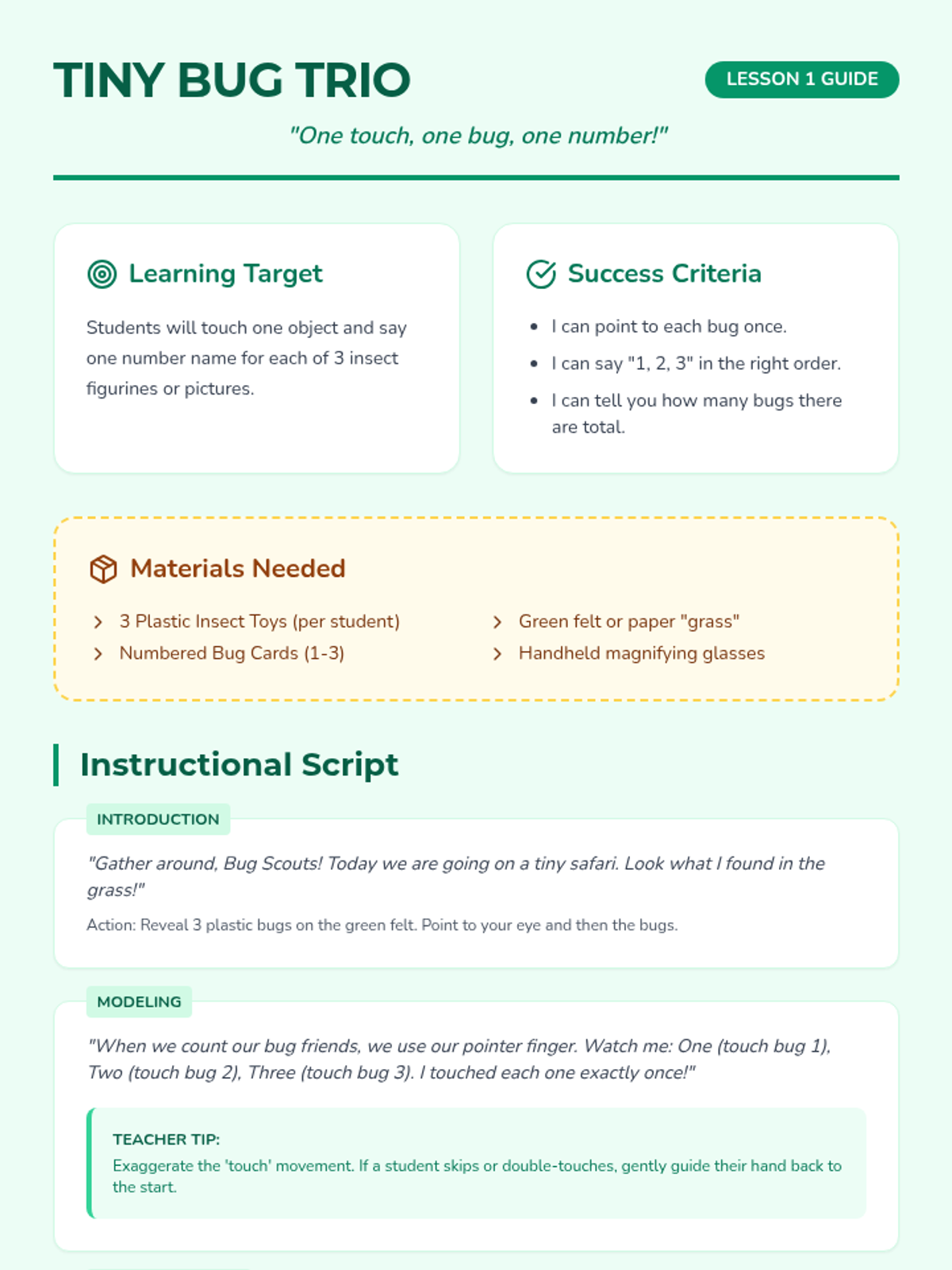
Introduce the concept of one-to-one correspondence by counting 1, 2, and 3 insect friends. Focus on pointing to each object once.
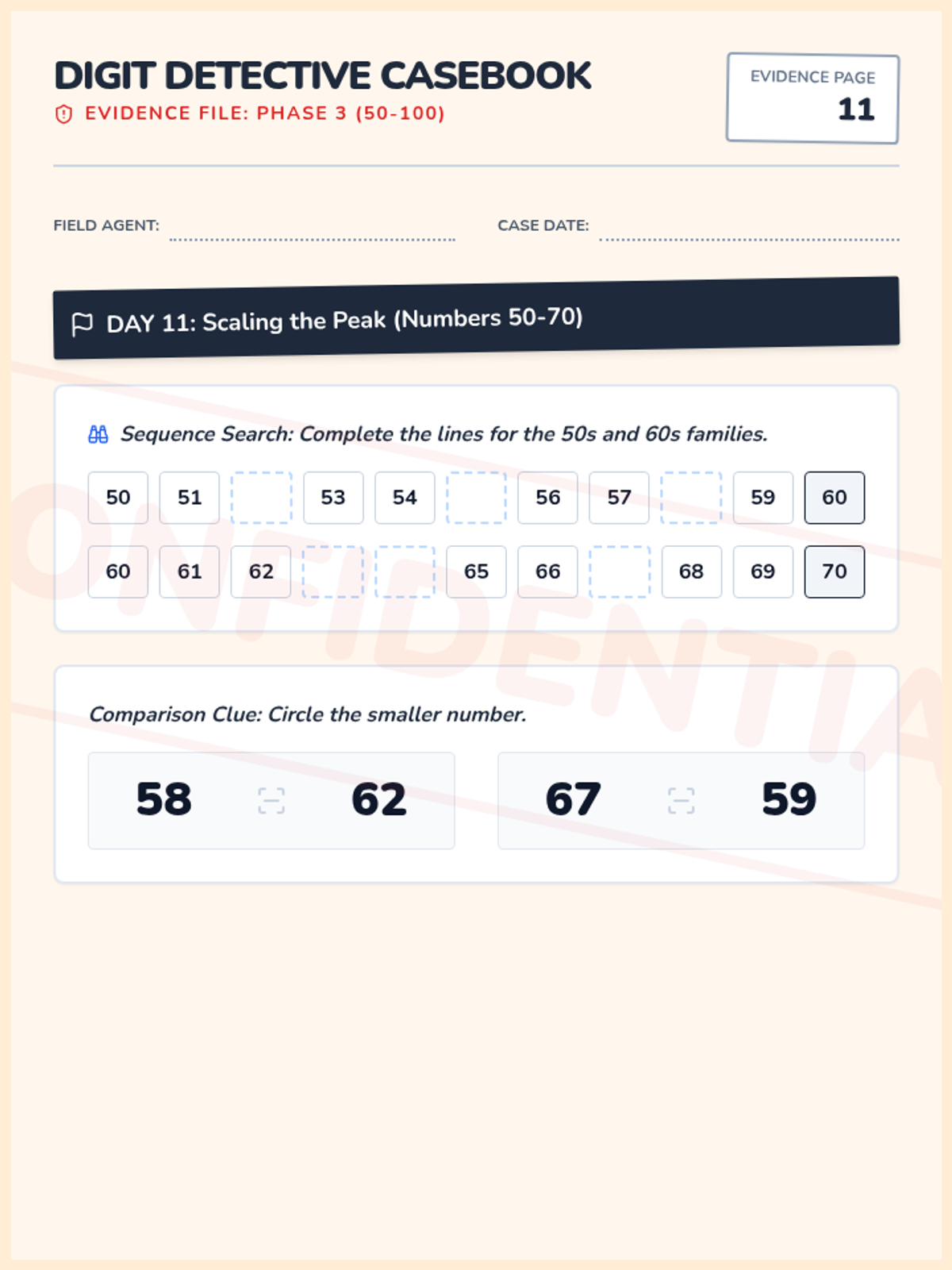
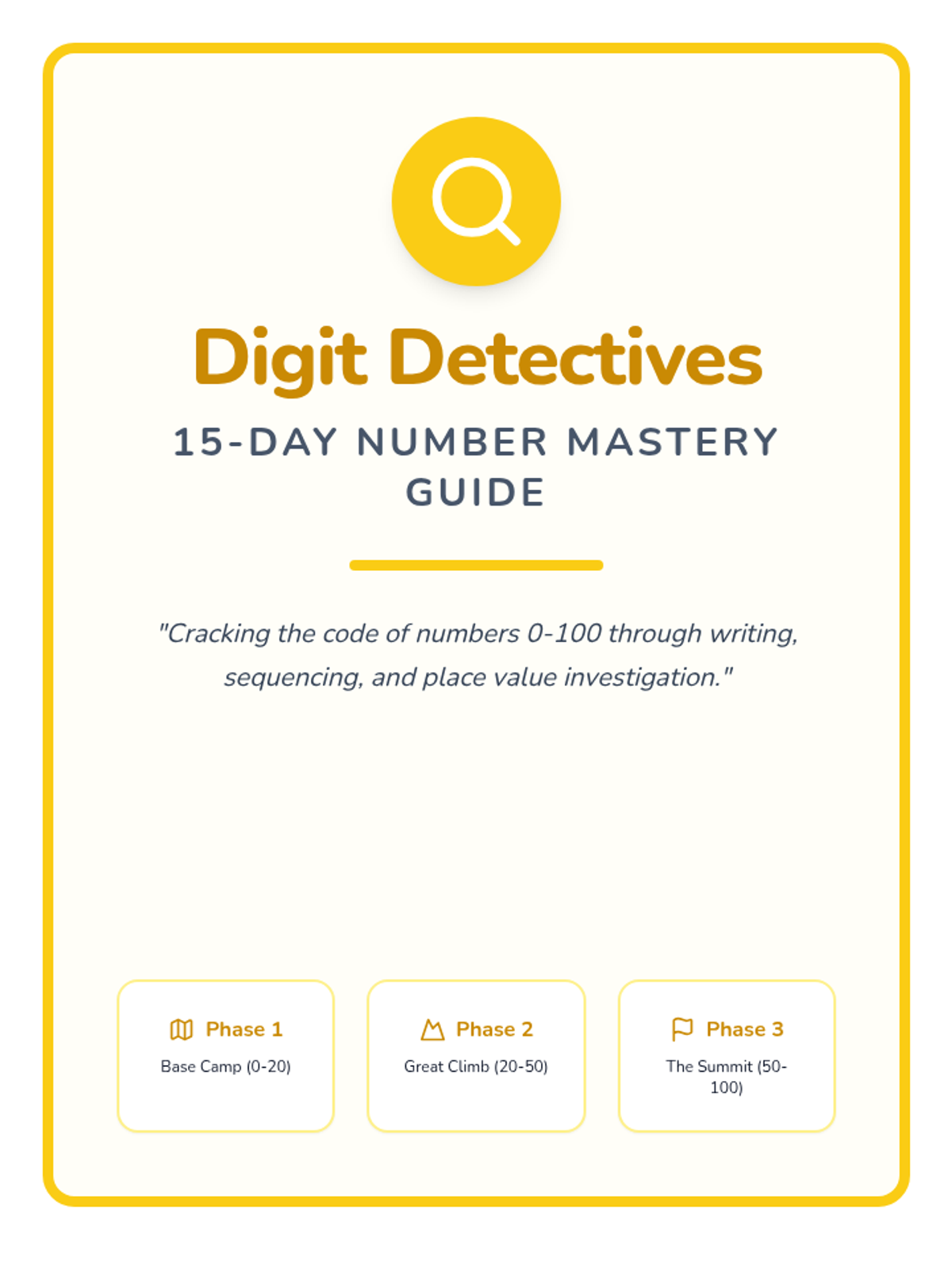
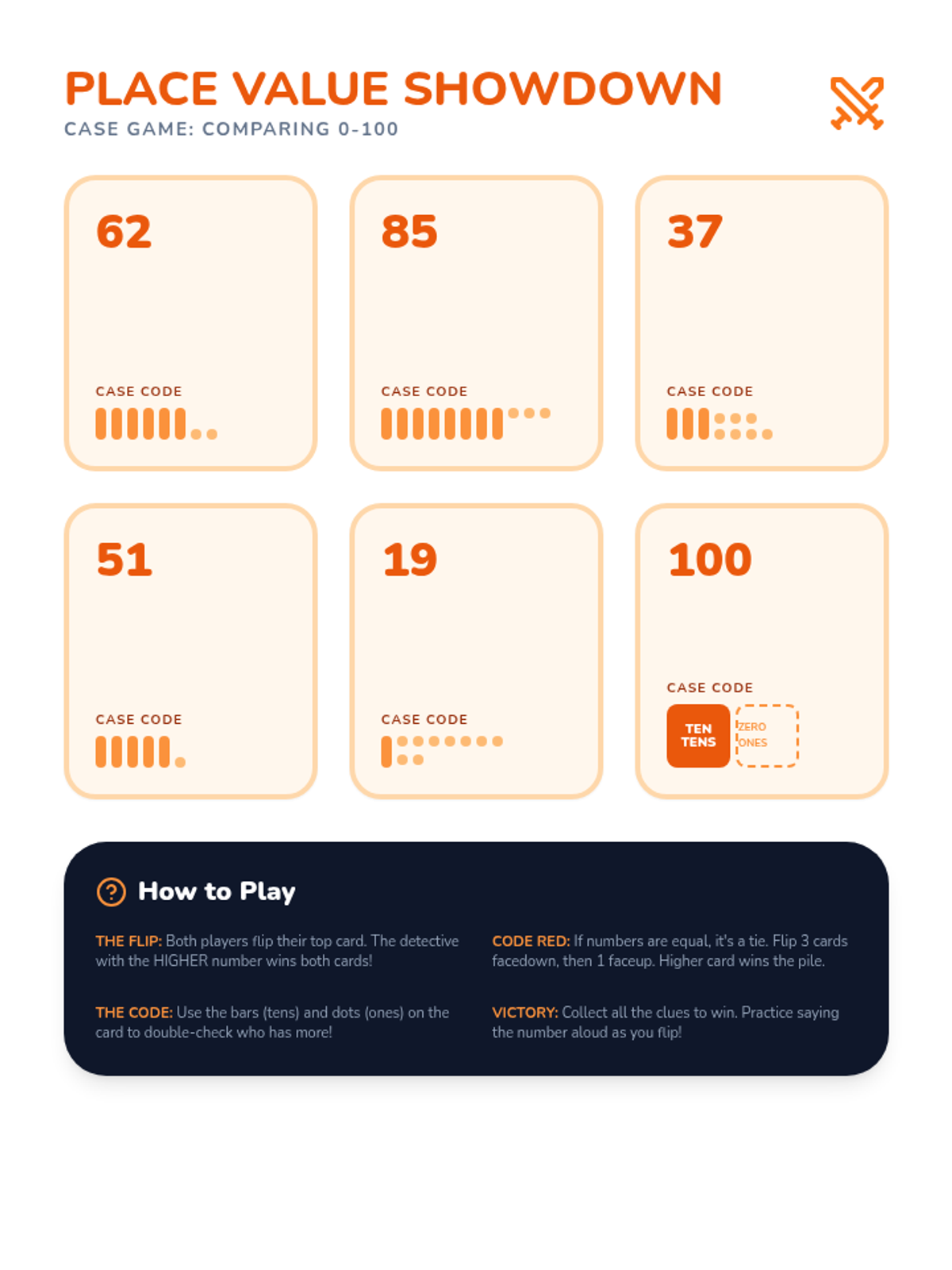
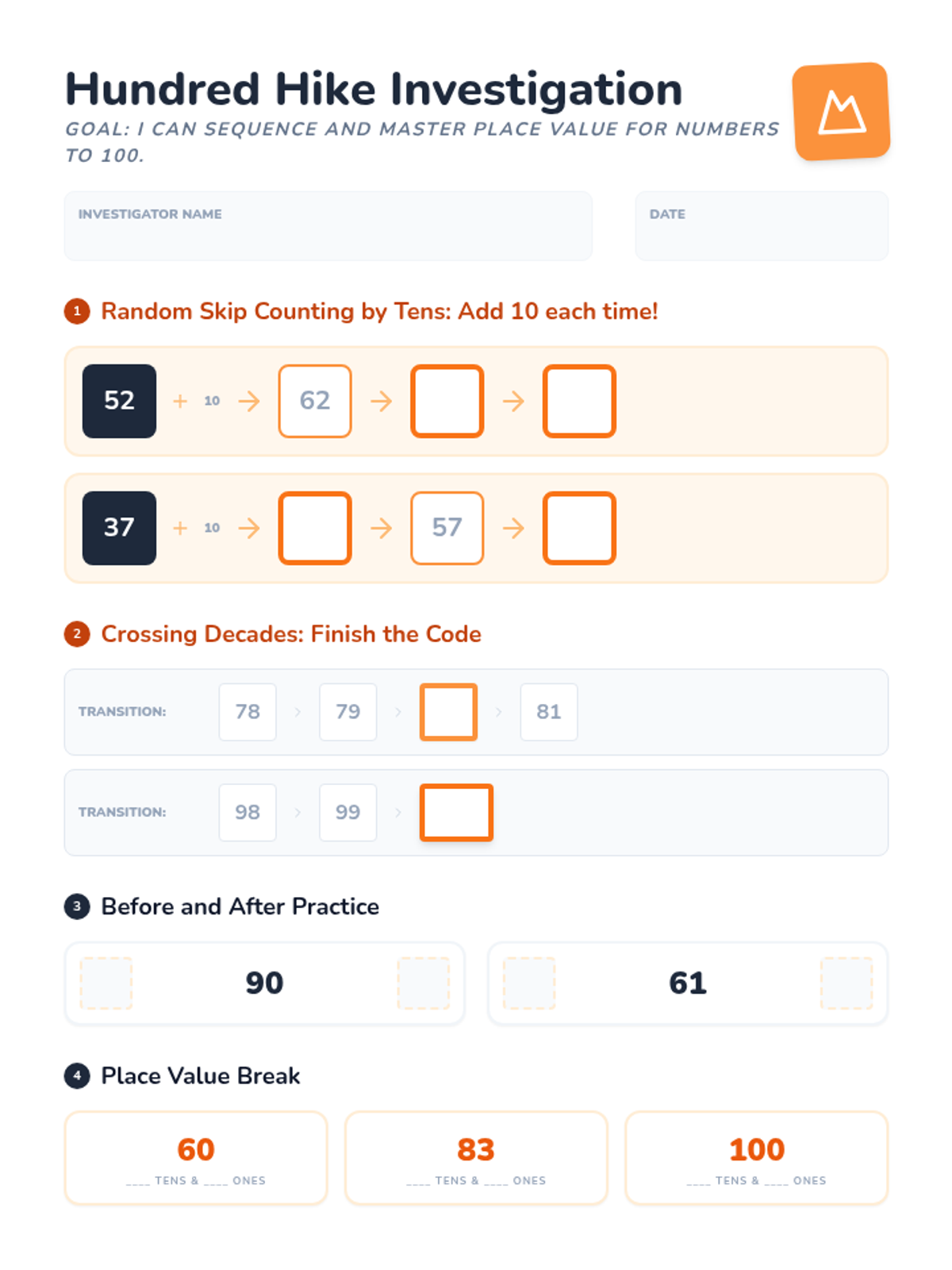
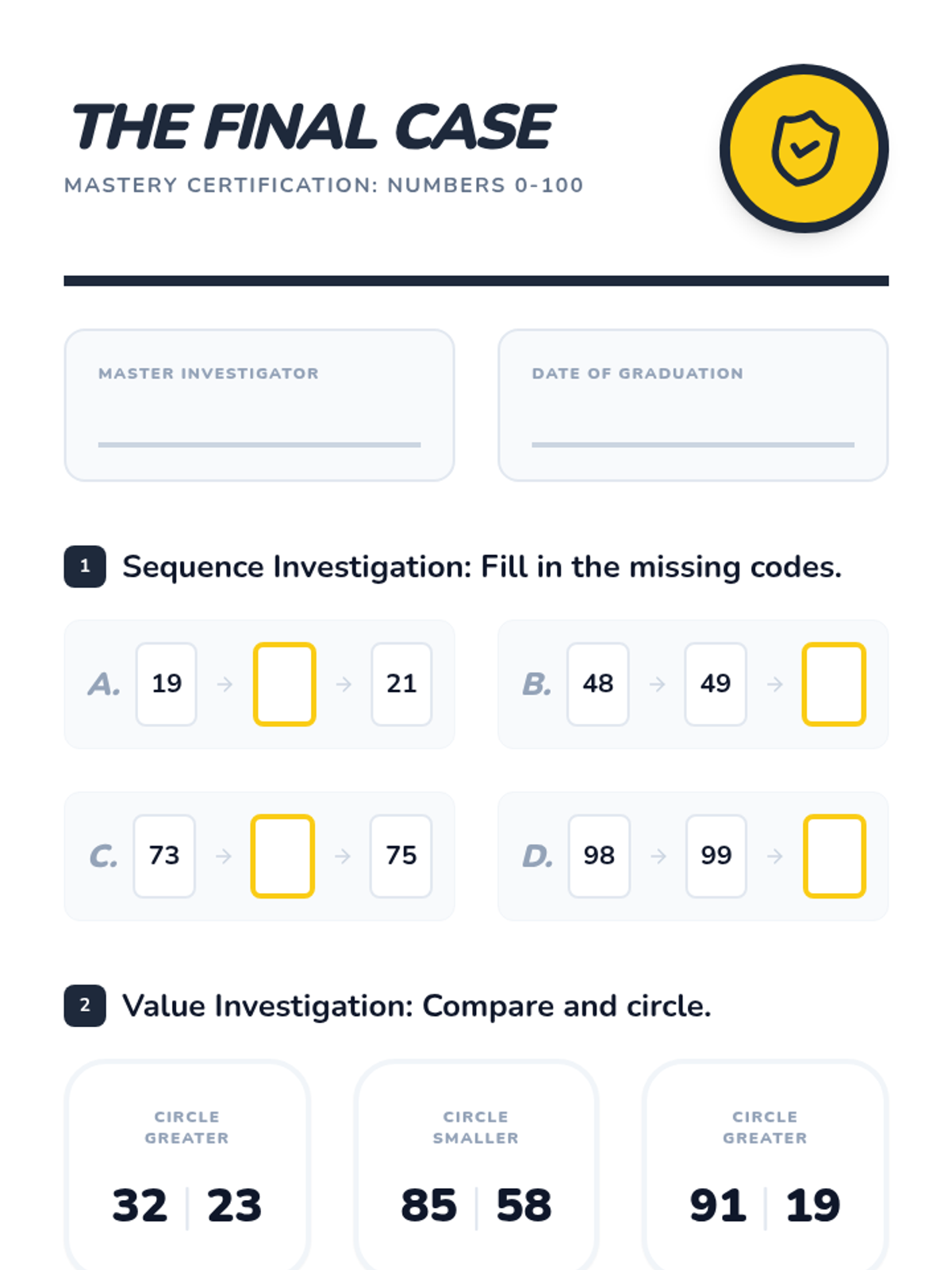
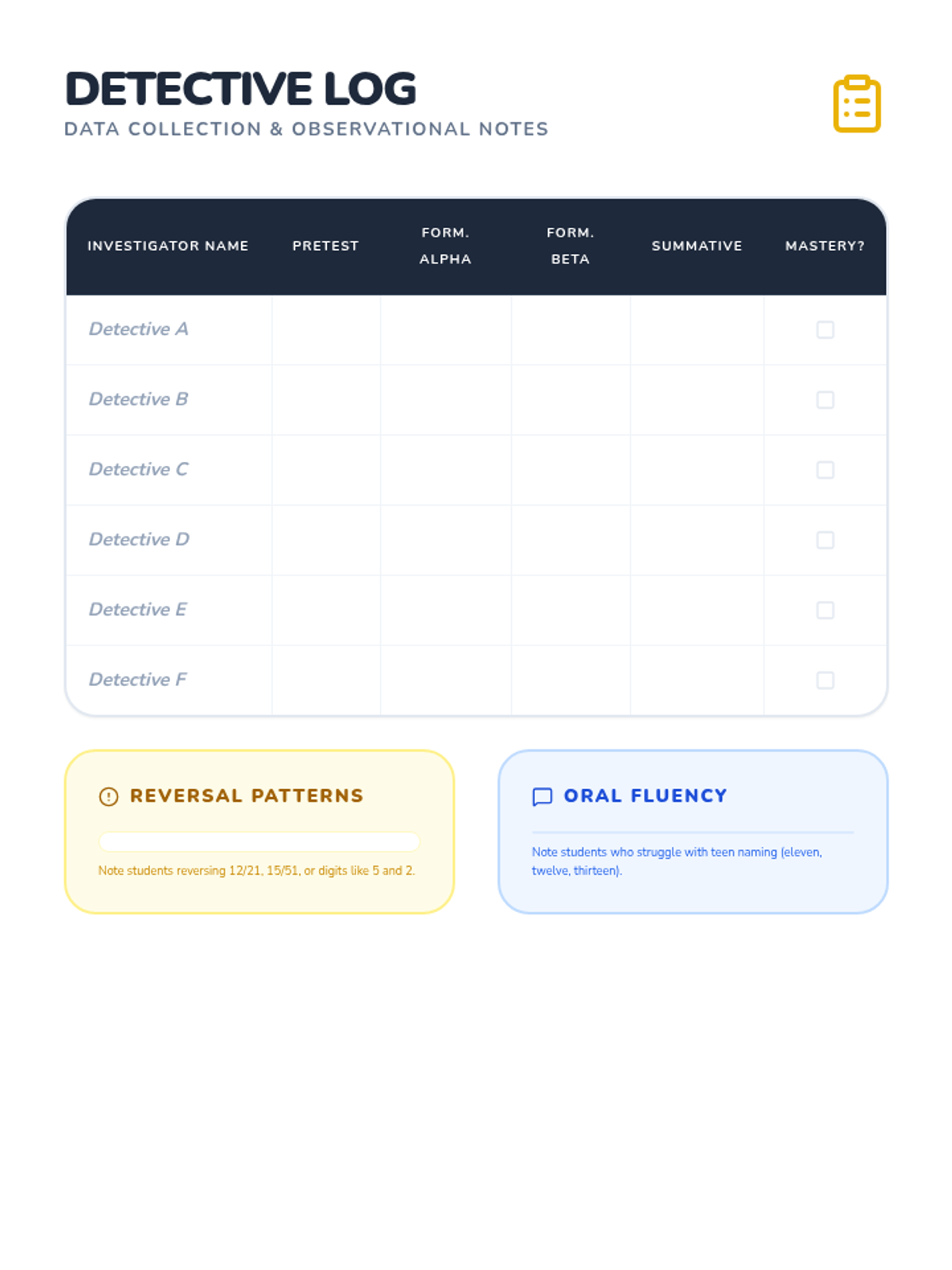
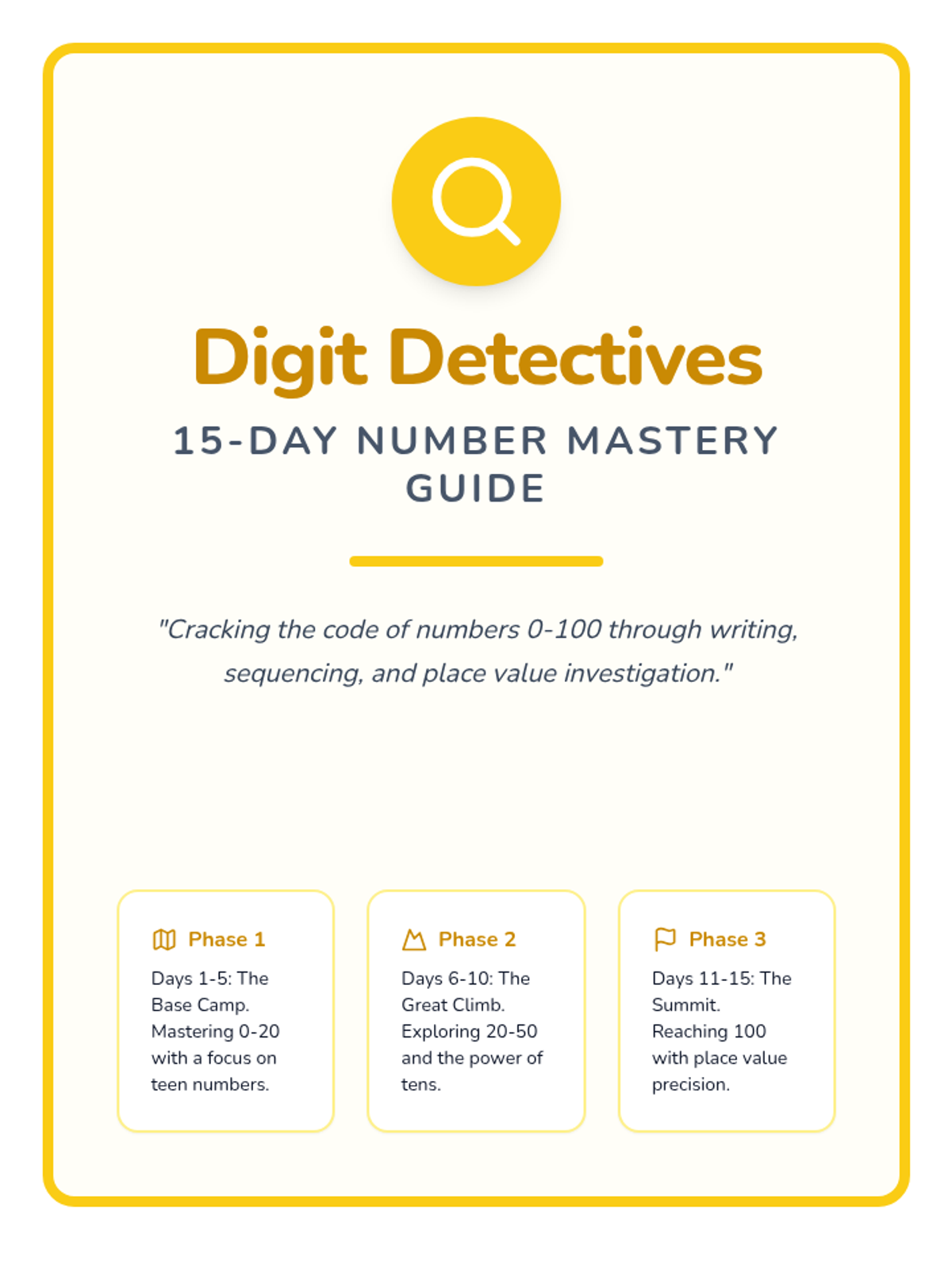
Days 11-15 reach the summit with numbers up to 100, focusing on place value mastery and full sequencing. Concludes with the Place Value Showdown game and a final summative assessment.
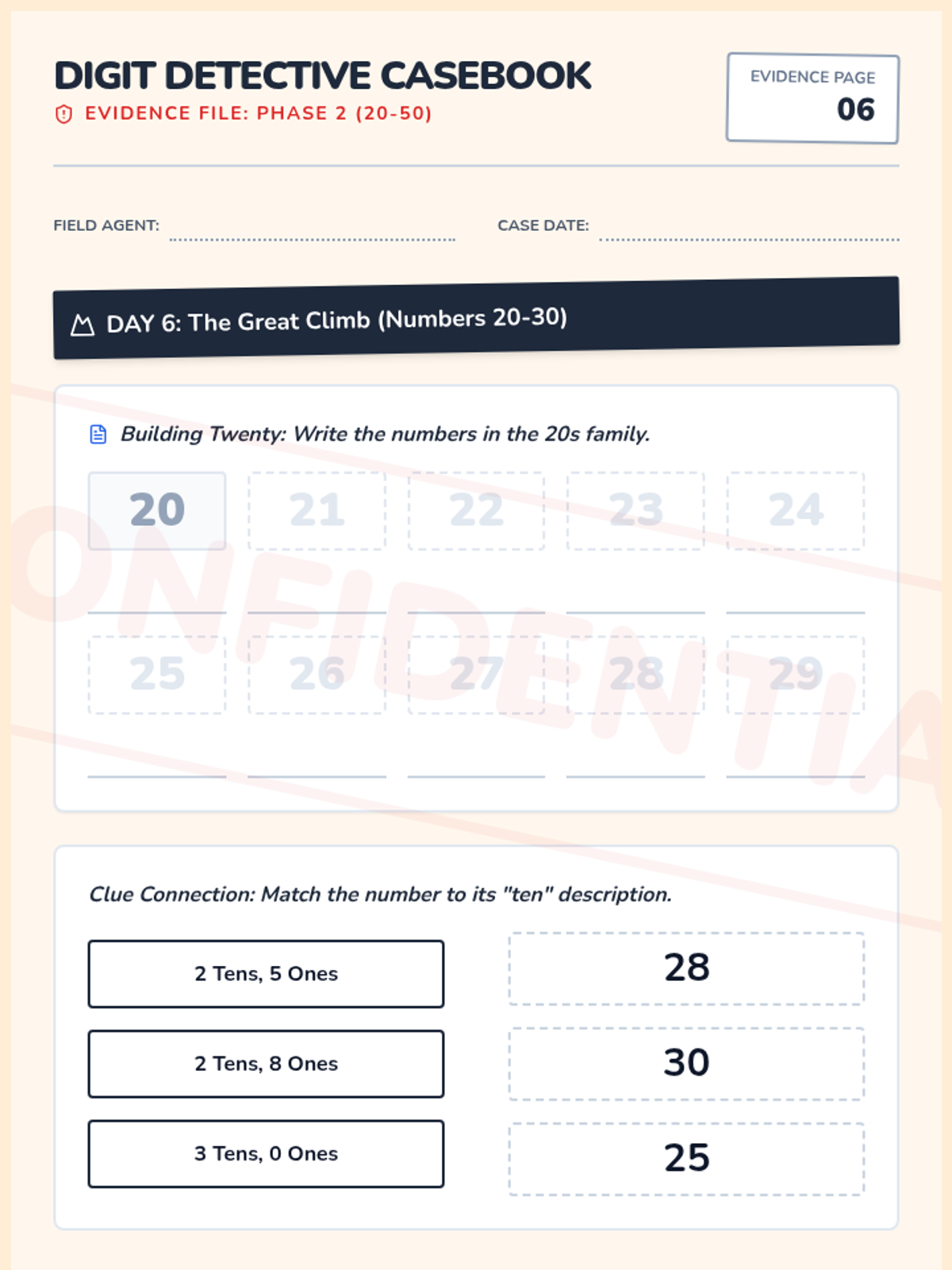
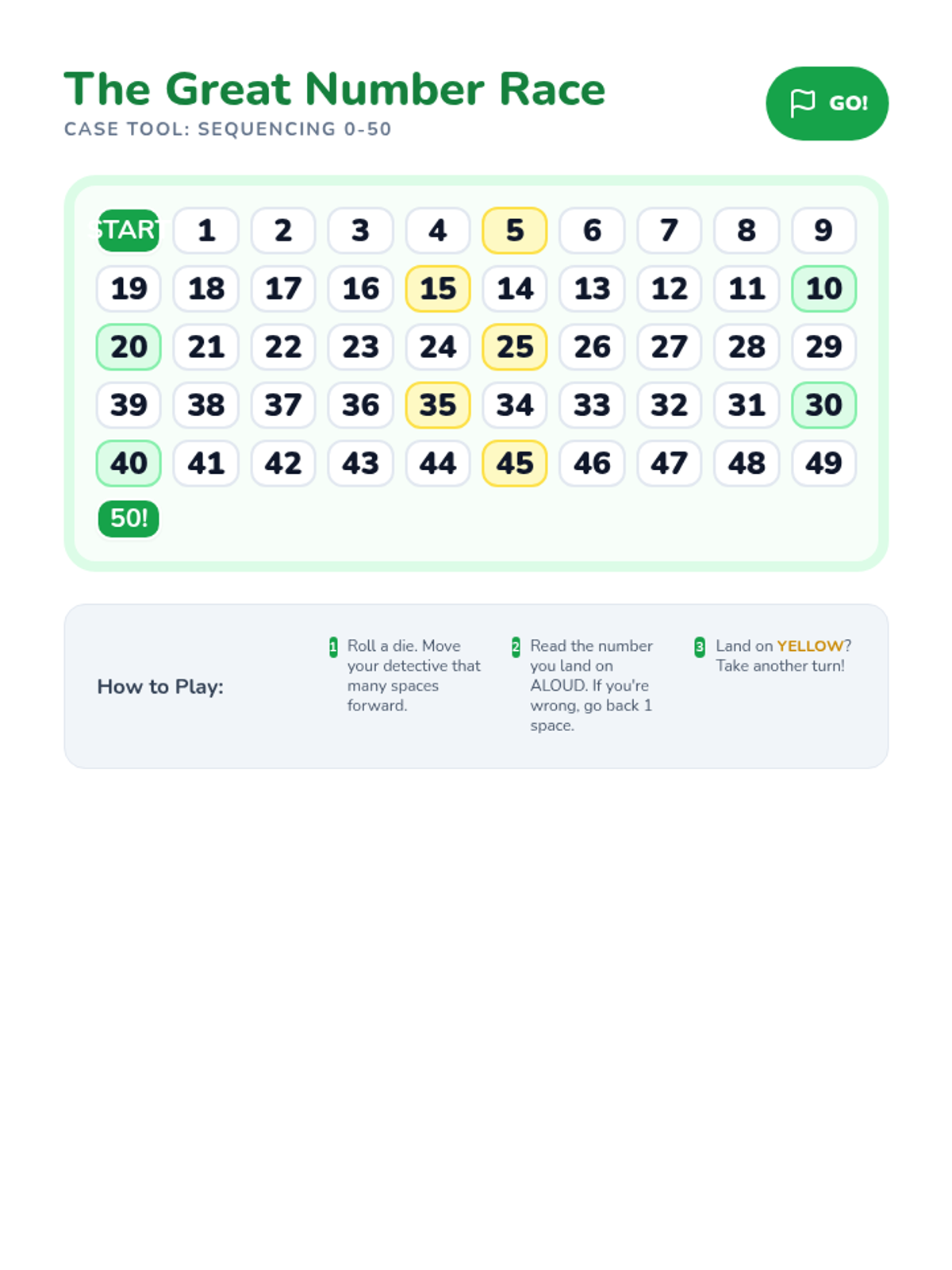
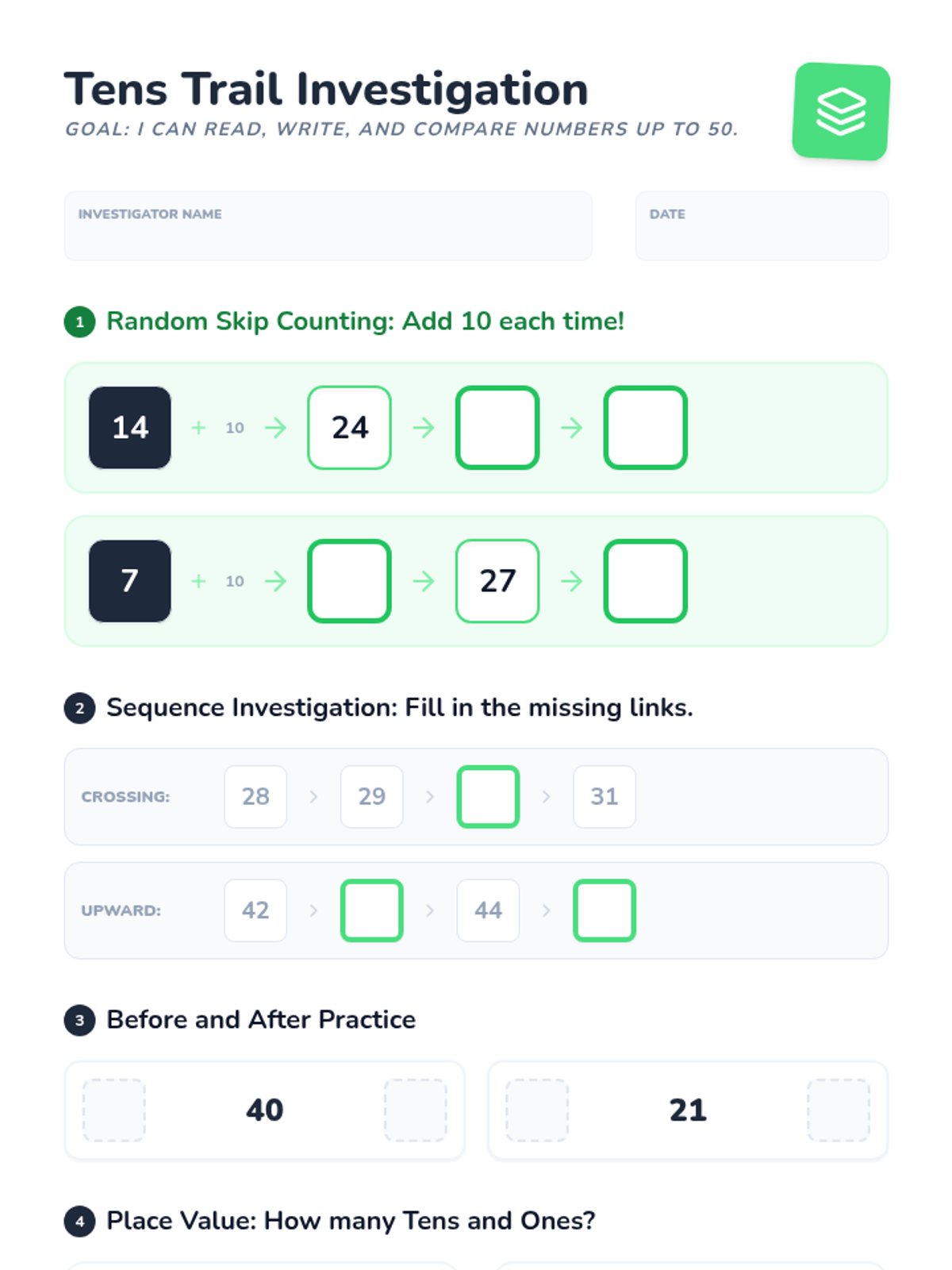
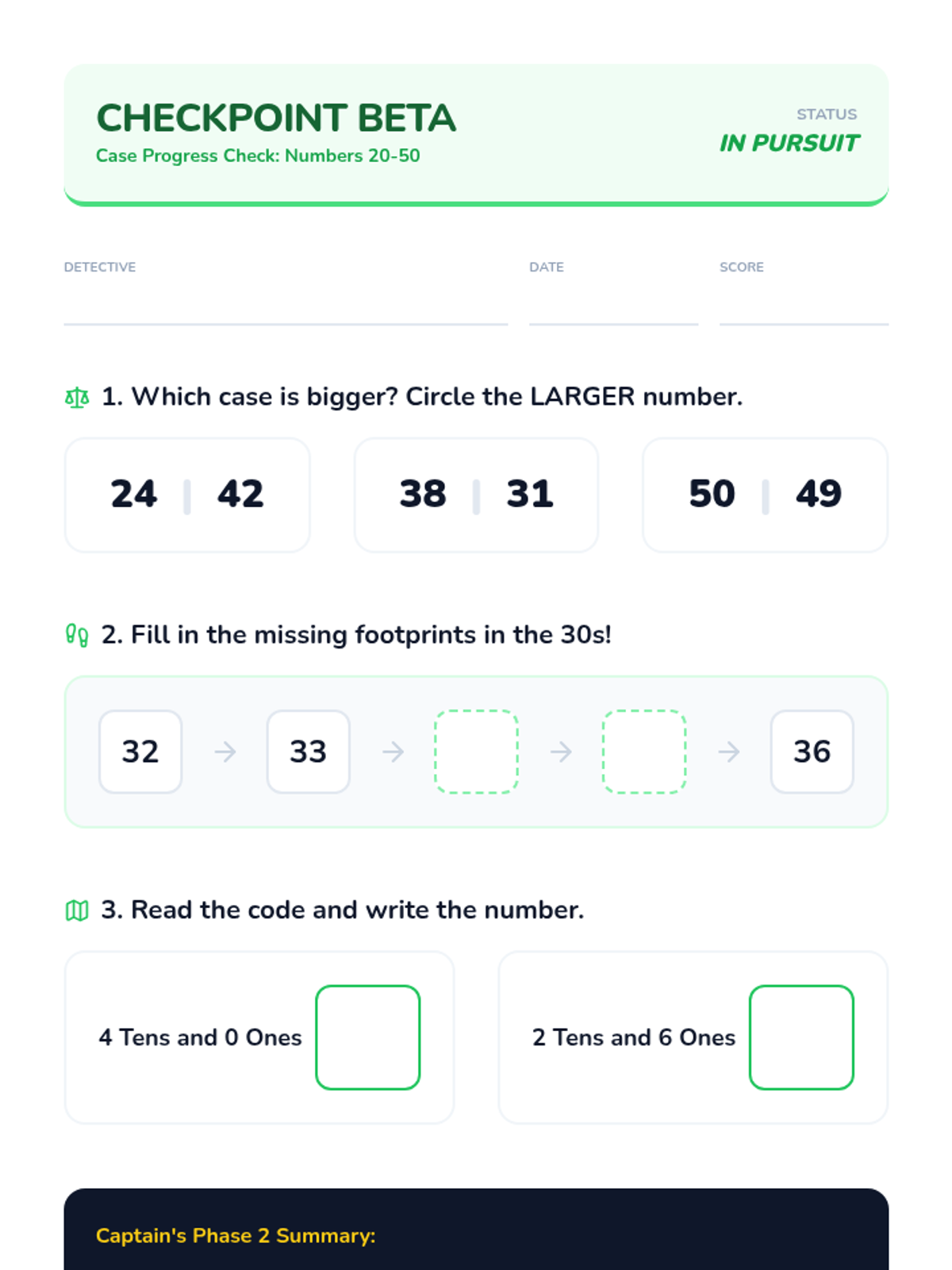
Days 6-10 transition to numbers 20-50, introducing base-ten concepts and pattern recognition on the number line. Features the Number Race game and a mid-point formative check.
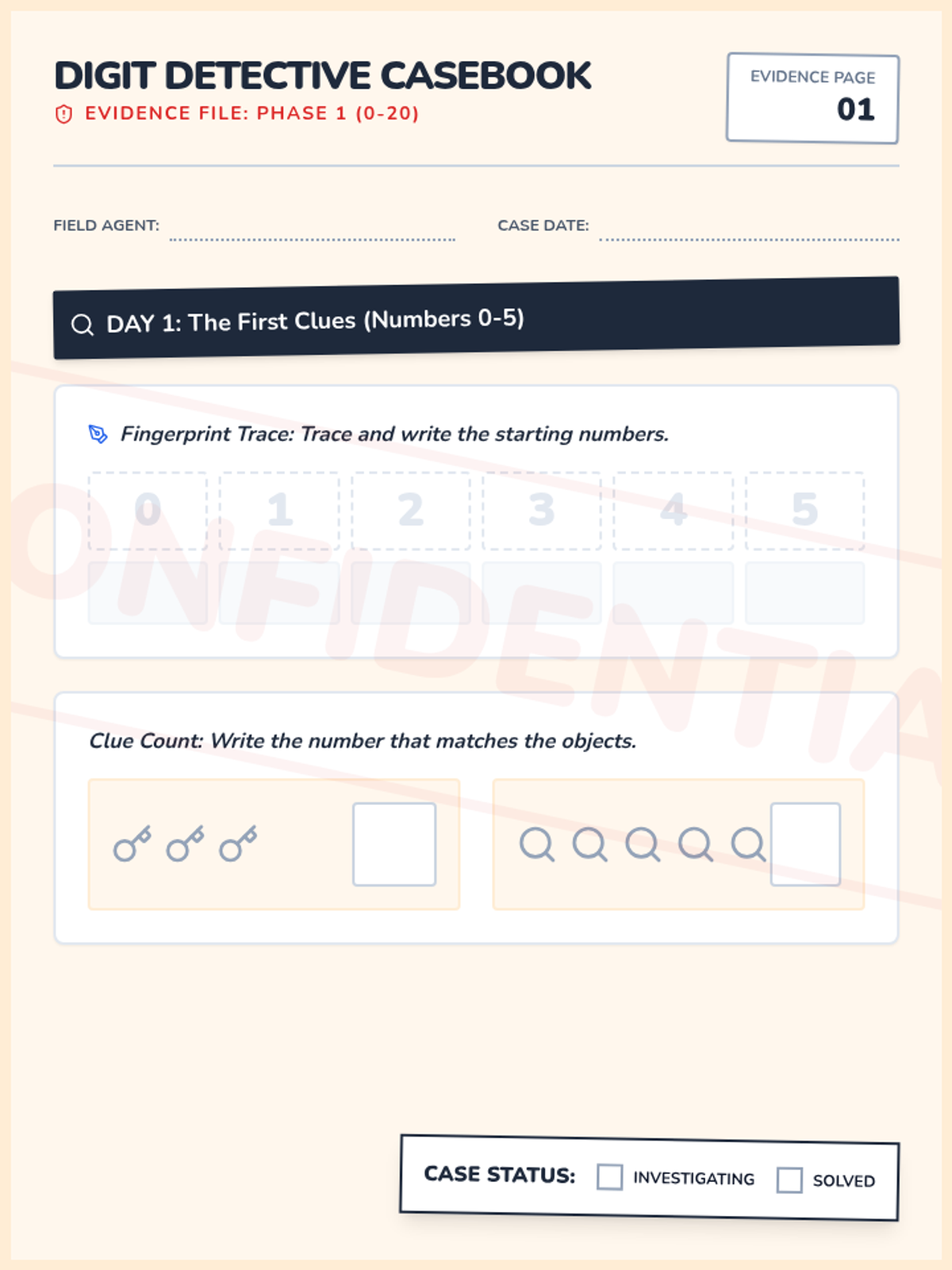
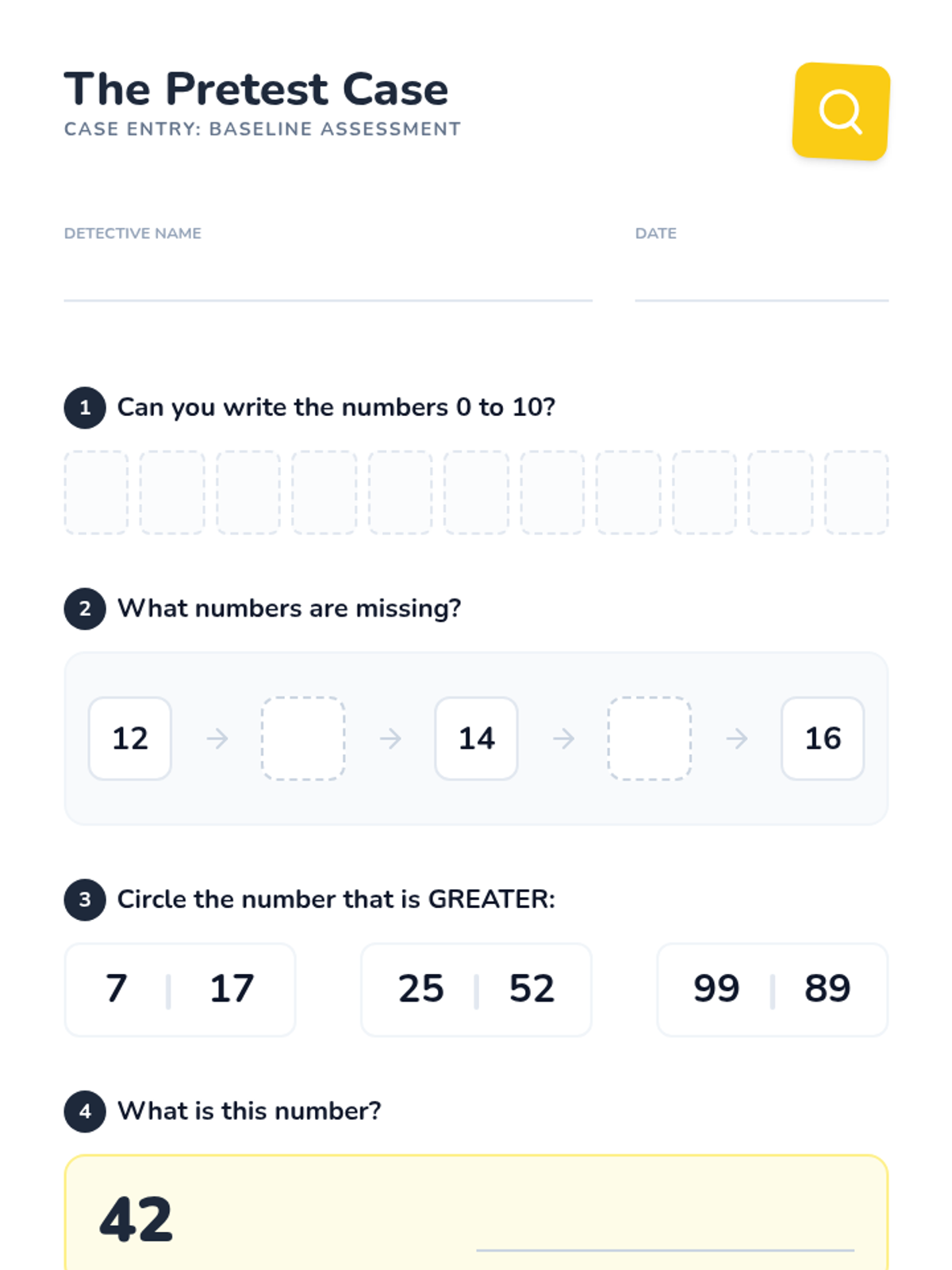
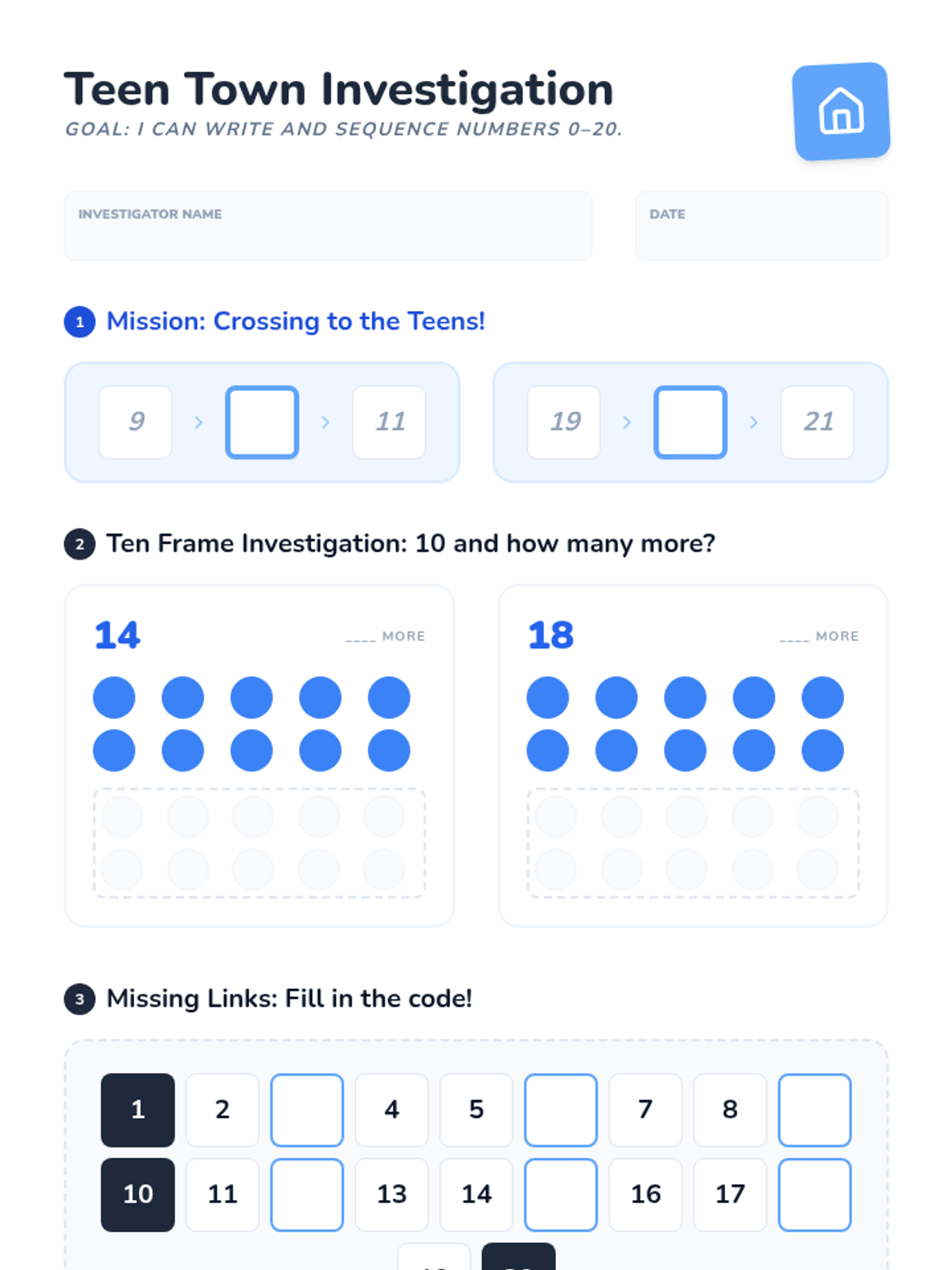
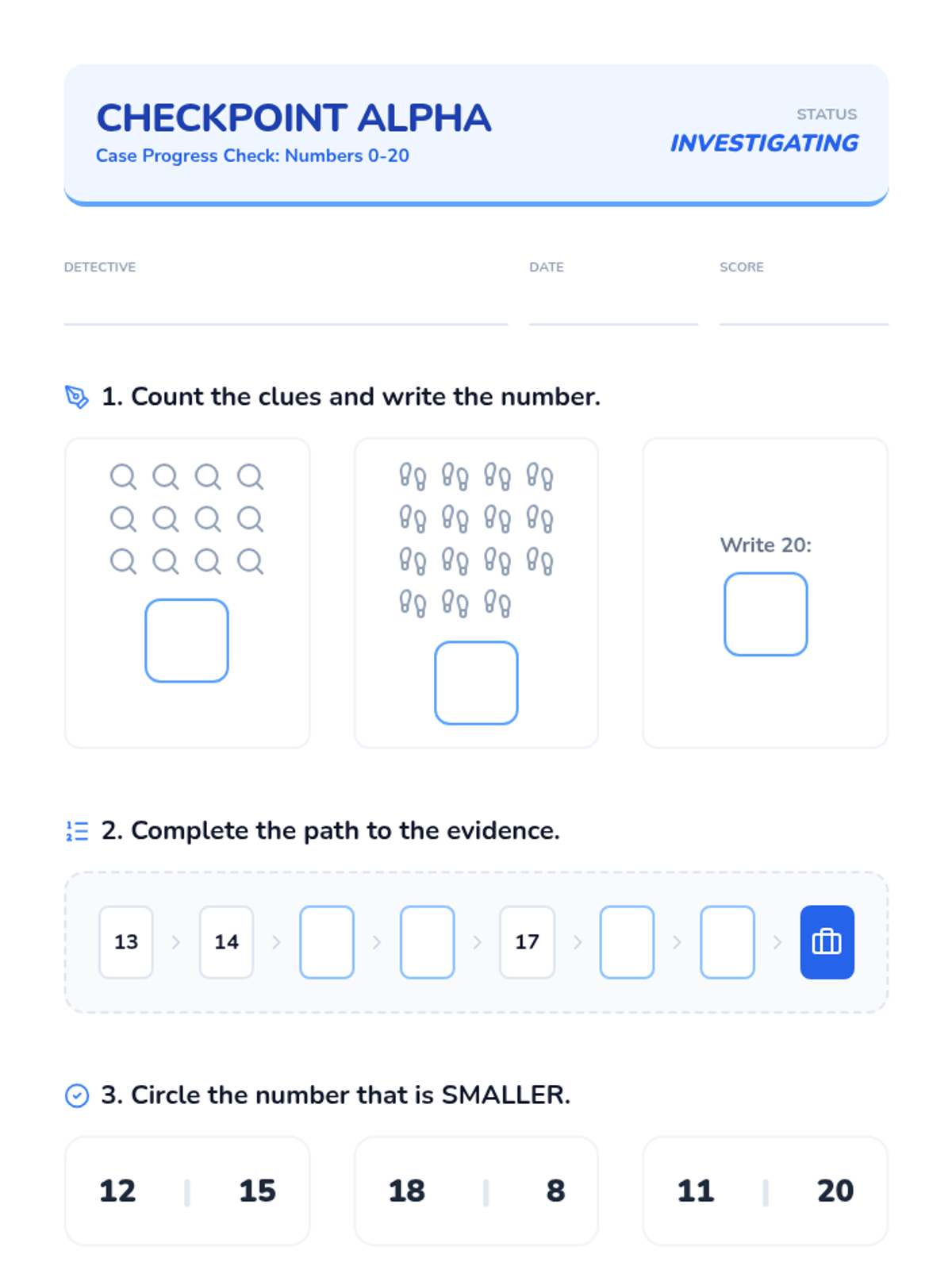
Days 1-5 focus on establishing a strong foundation with numbers 0-20, emphasizing correct formation, sequencing, and the unique structure of teen numbers as 'ten and some more.' Includes a pretest and initial formative assessment.
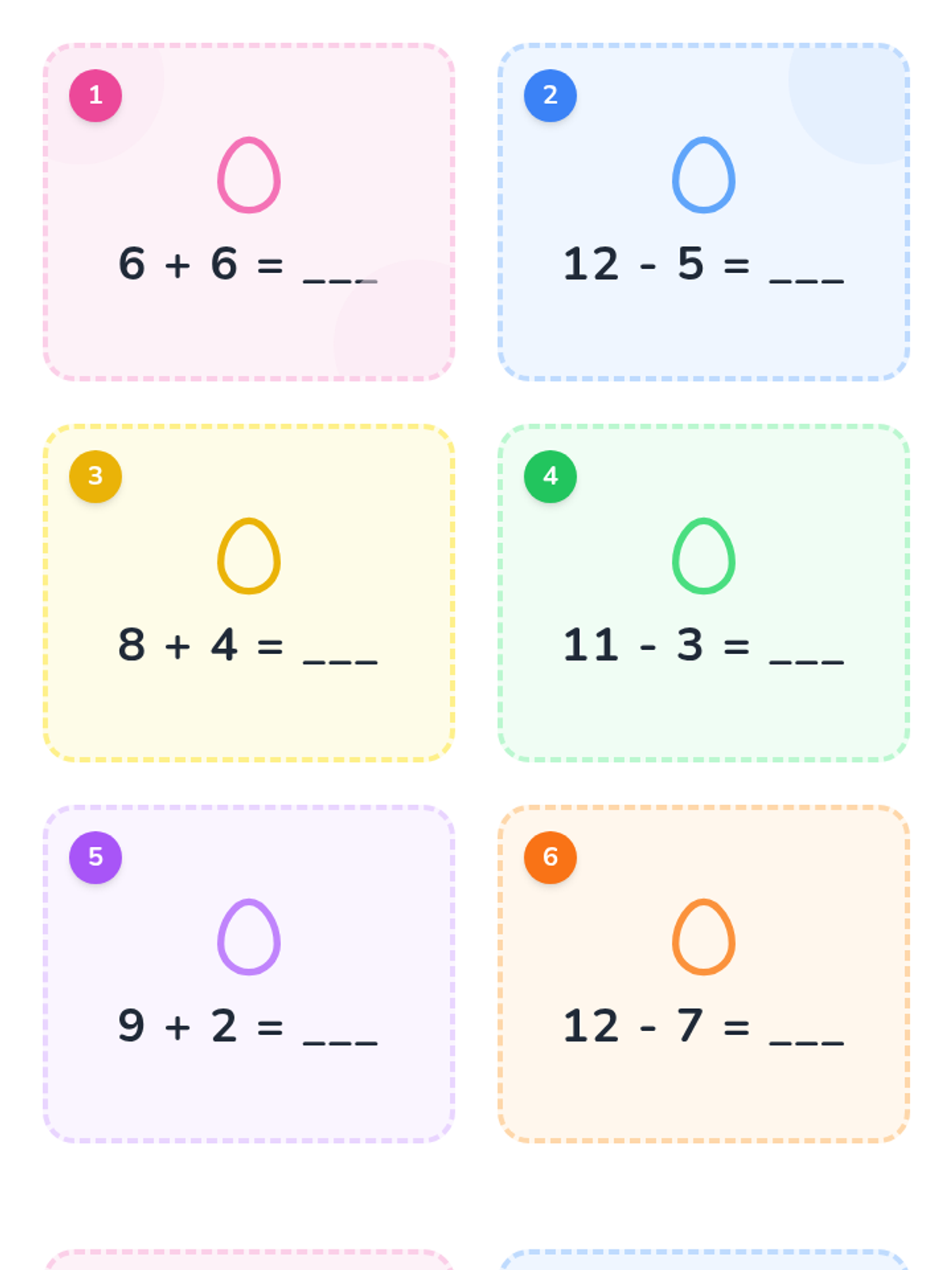
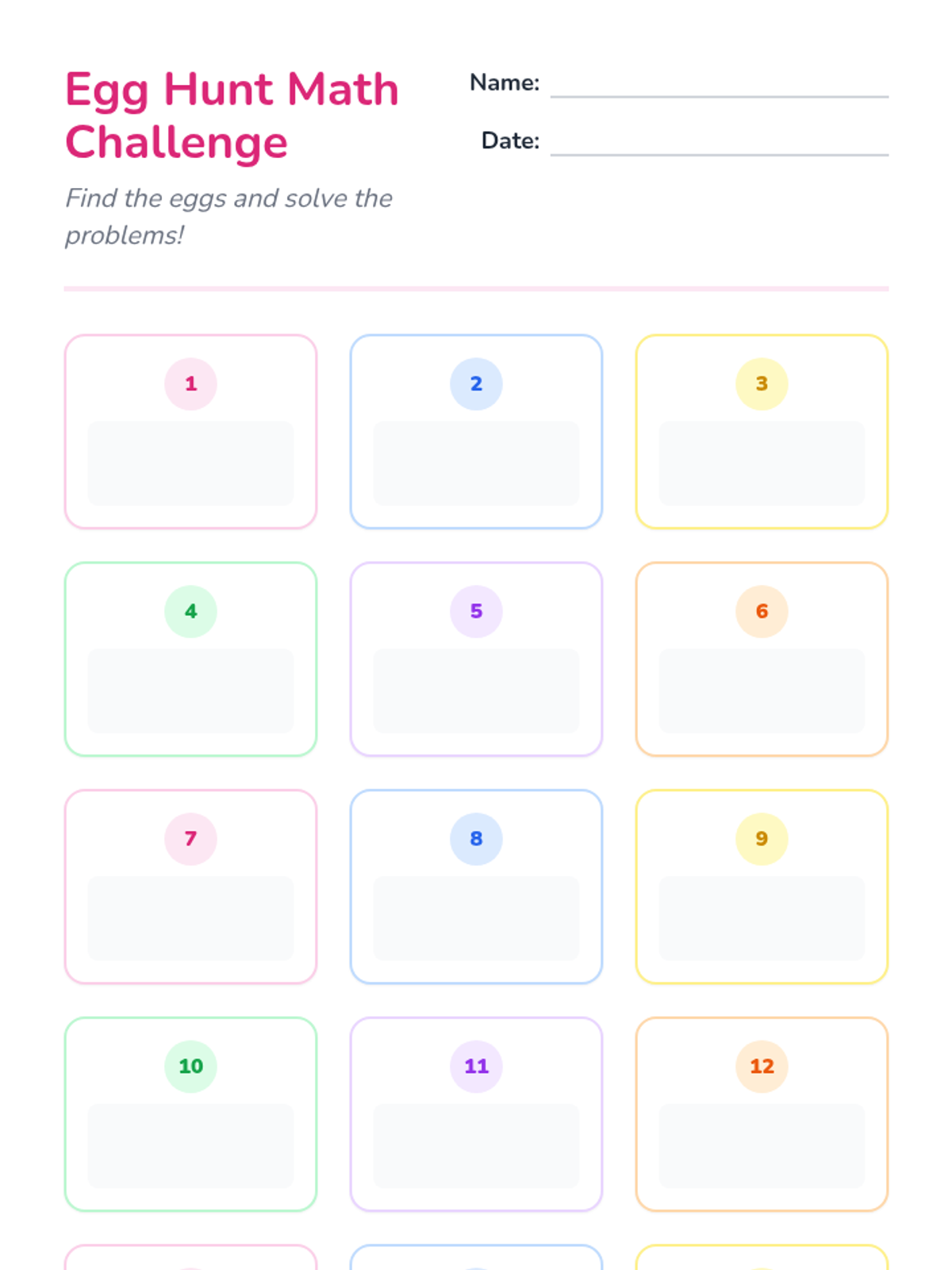
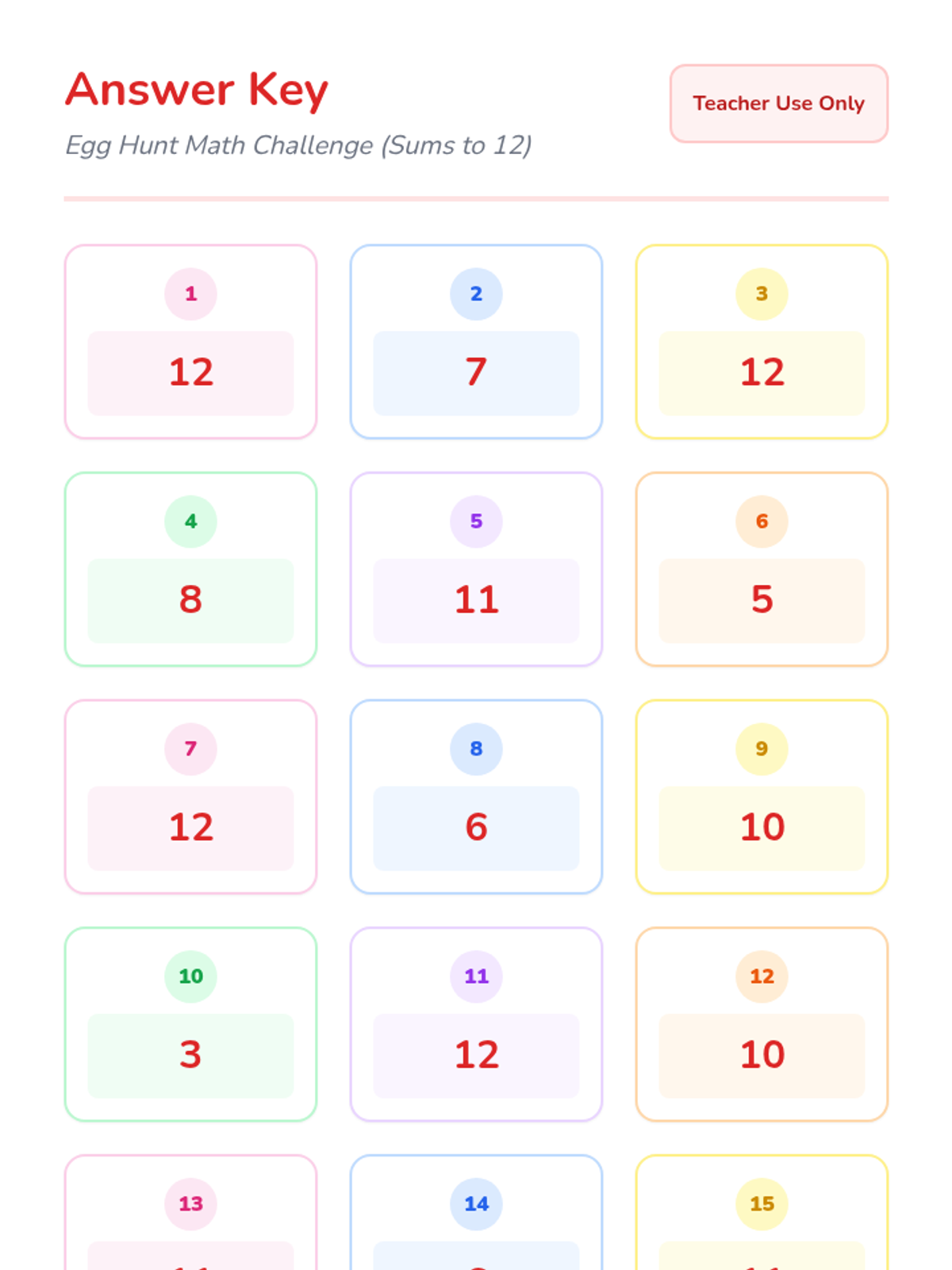
A fun, movement-based math activity where students hunt for 18 egg-themed task cards to solve addition and subtraction problems with sums and minuends up to 12.
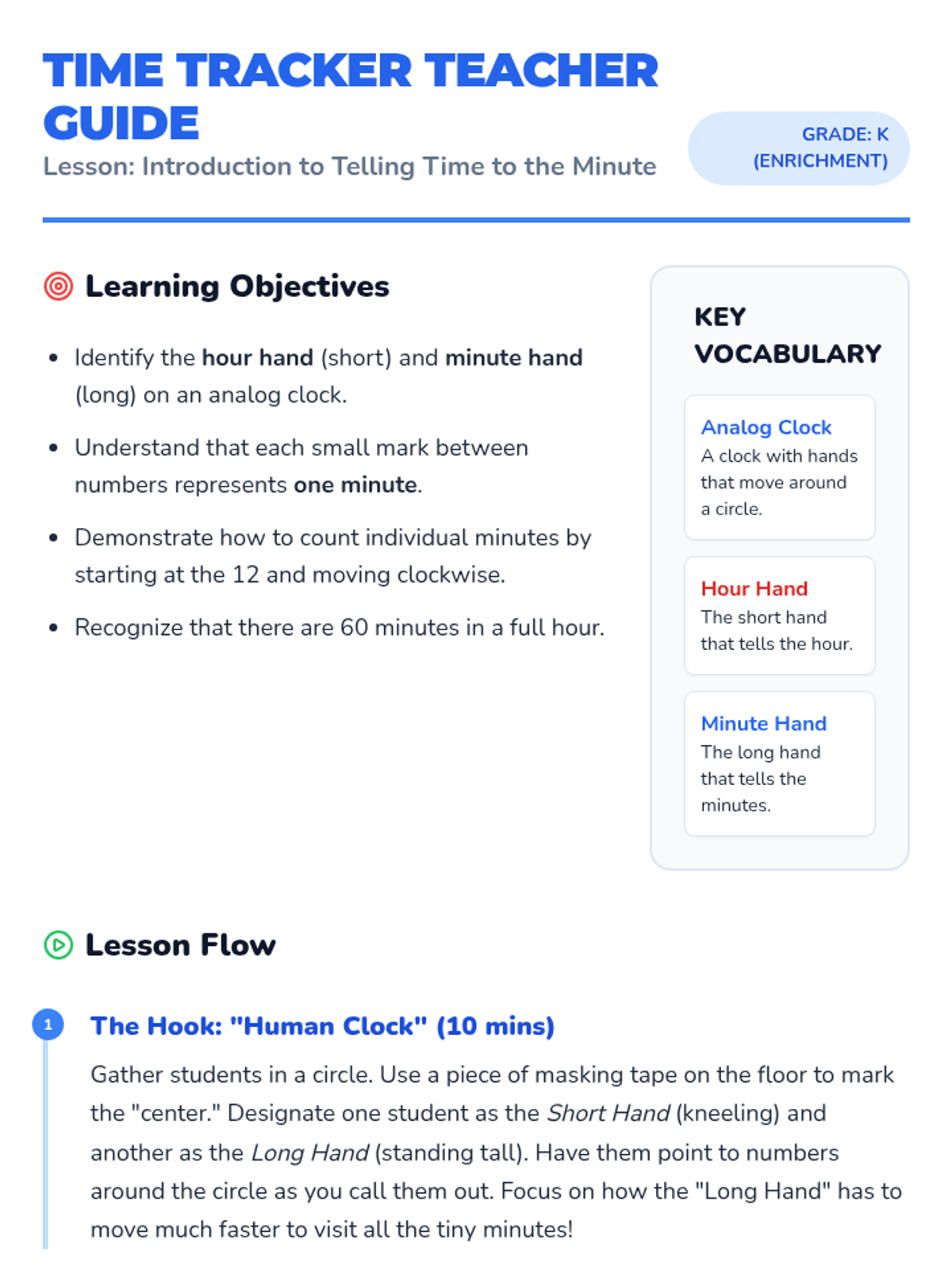
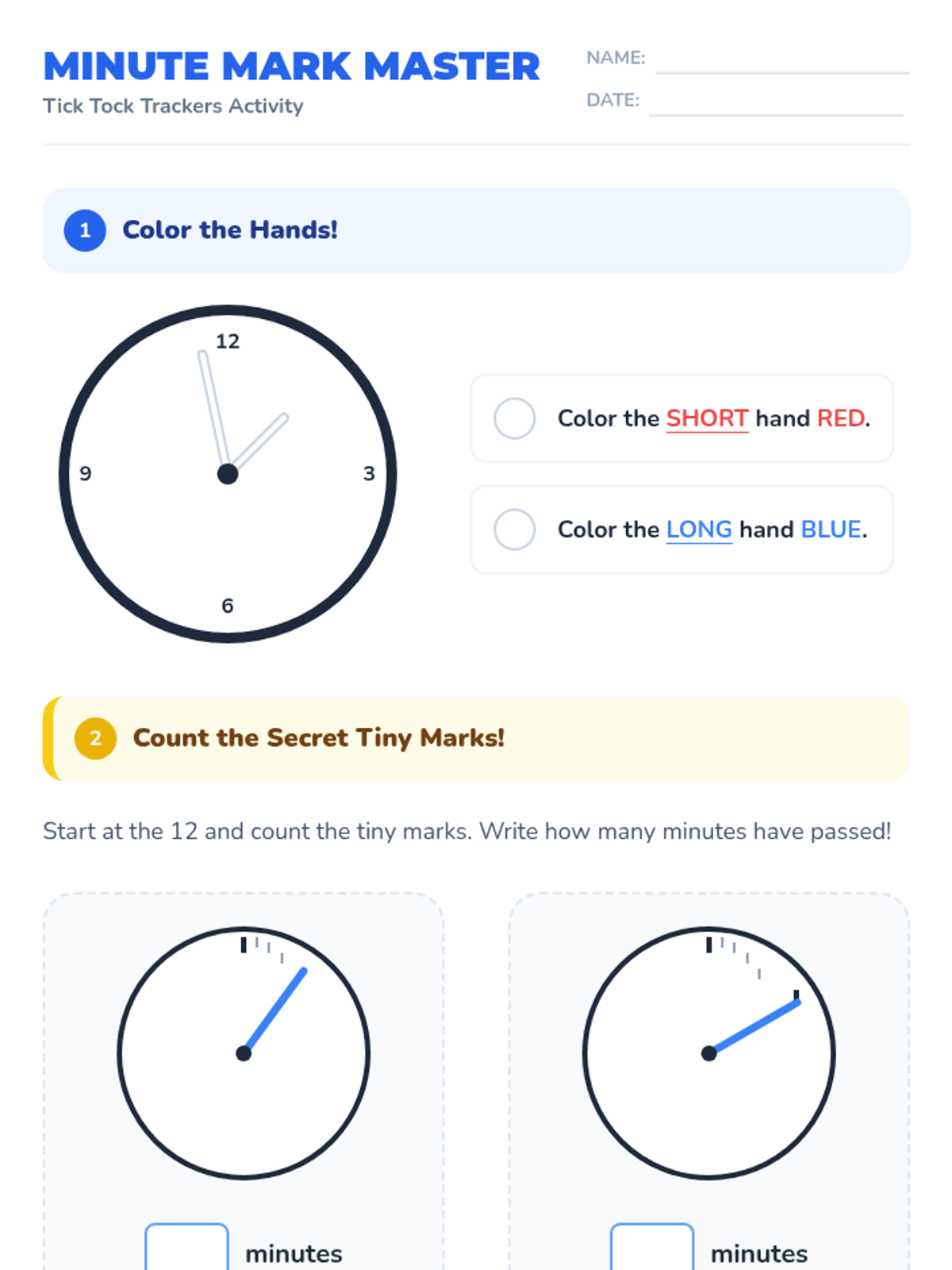
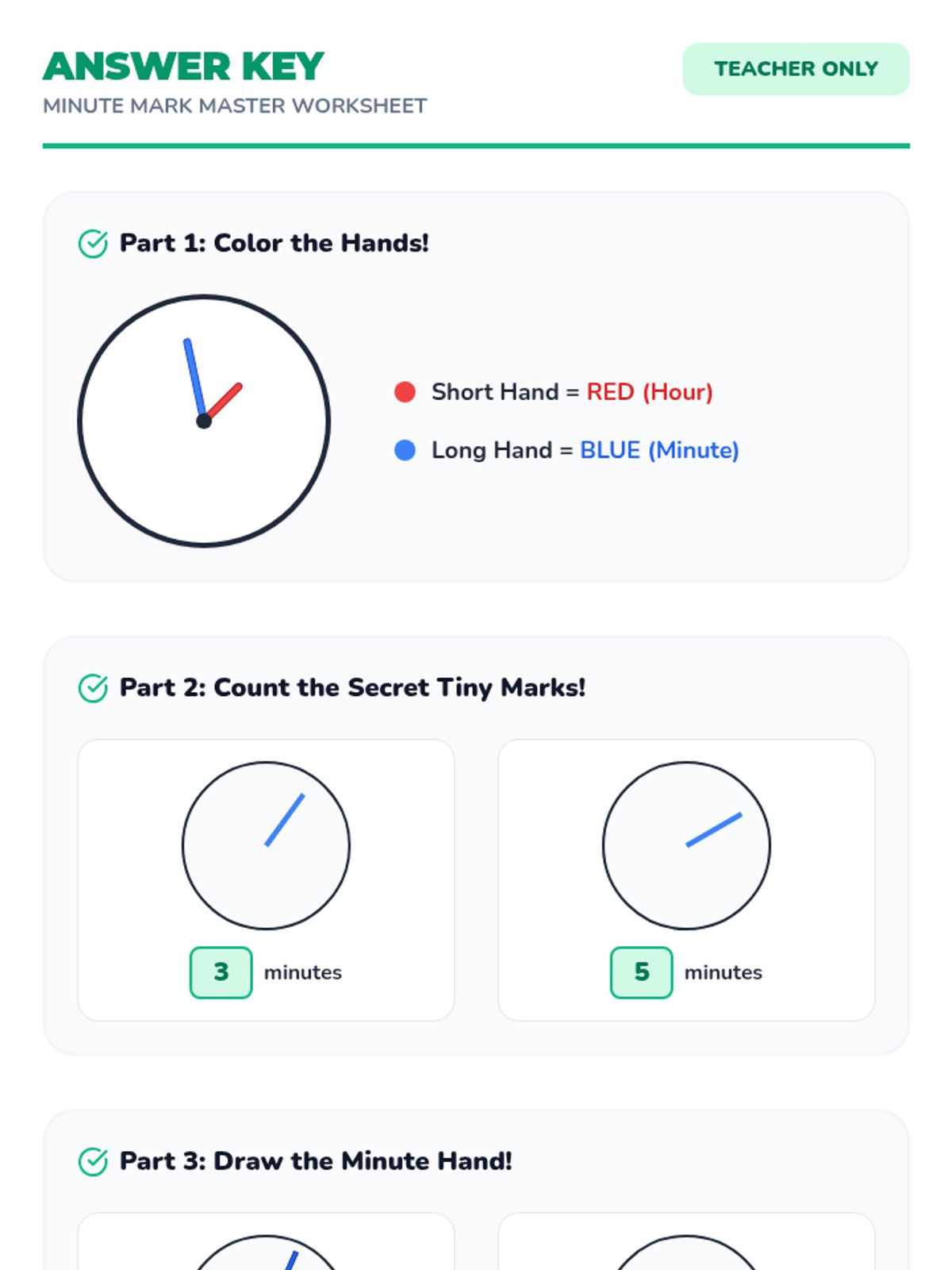
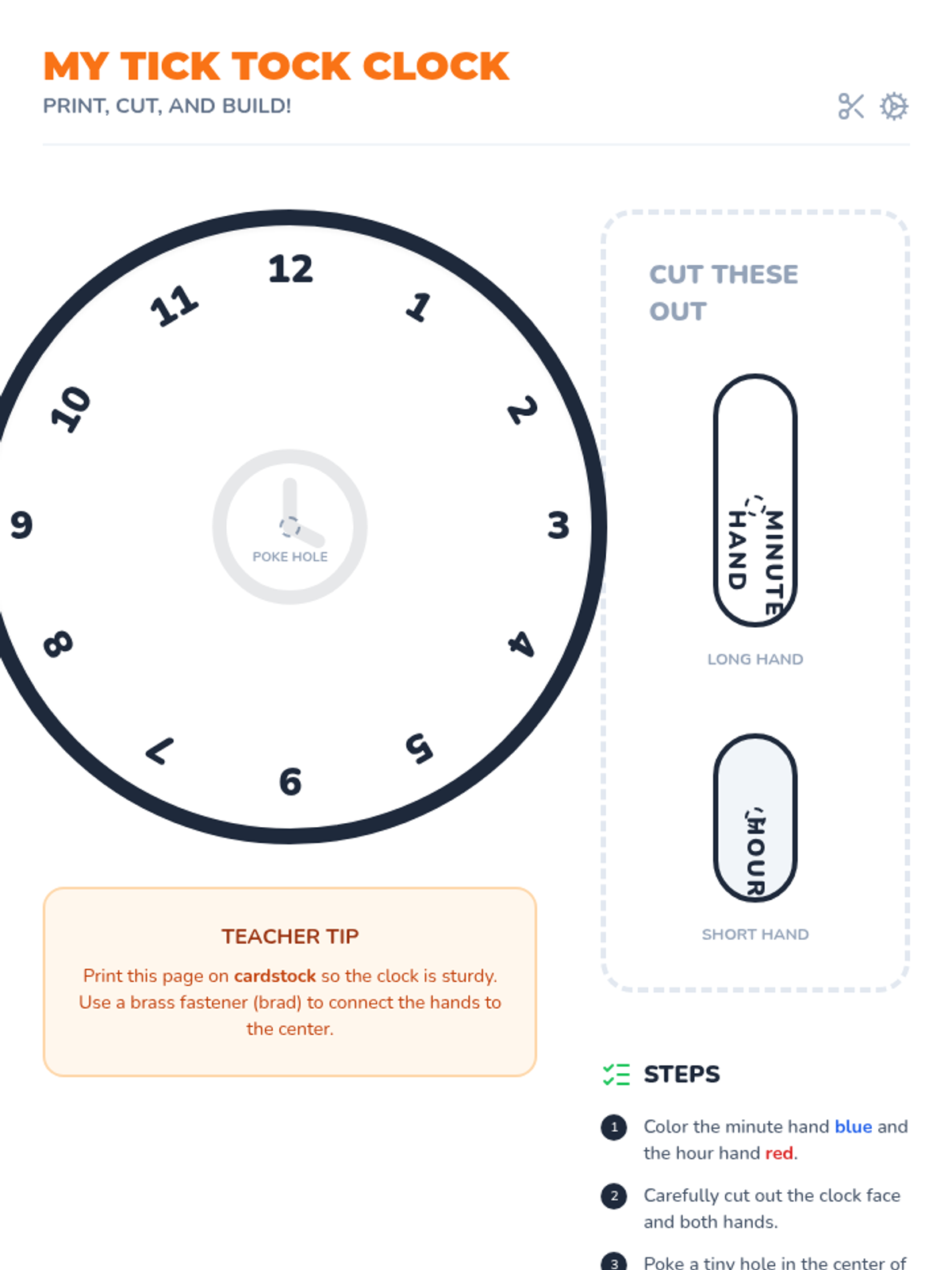
A comprehensive introduction to telling time, focusing on identifying clock parts and understanding how the minute hand moves to specific marks. Designed for advanced Kindergarten learners or as an enrichment unit.
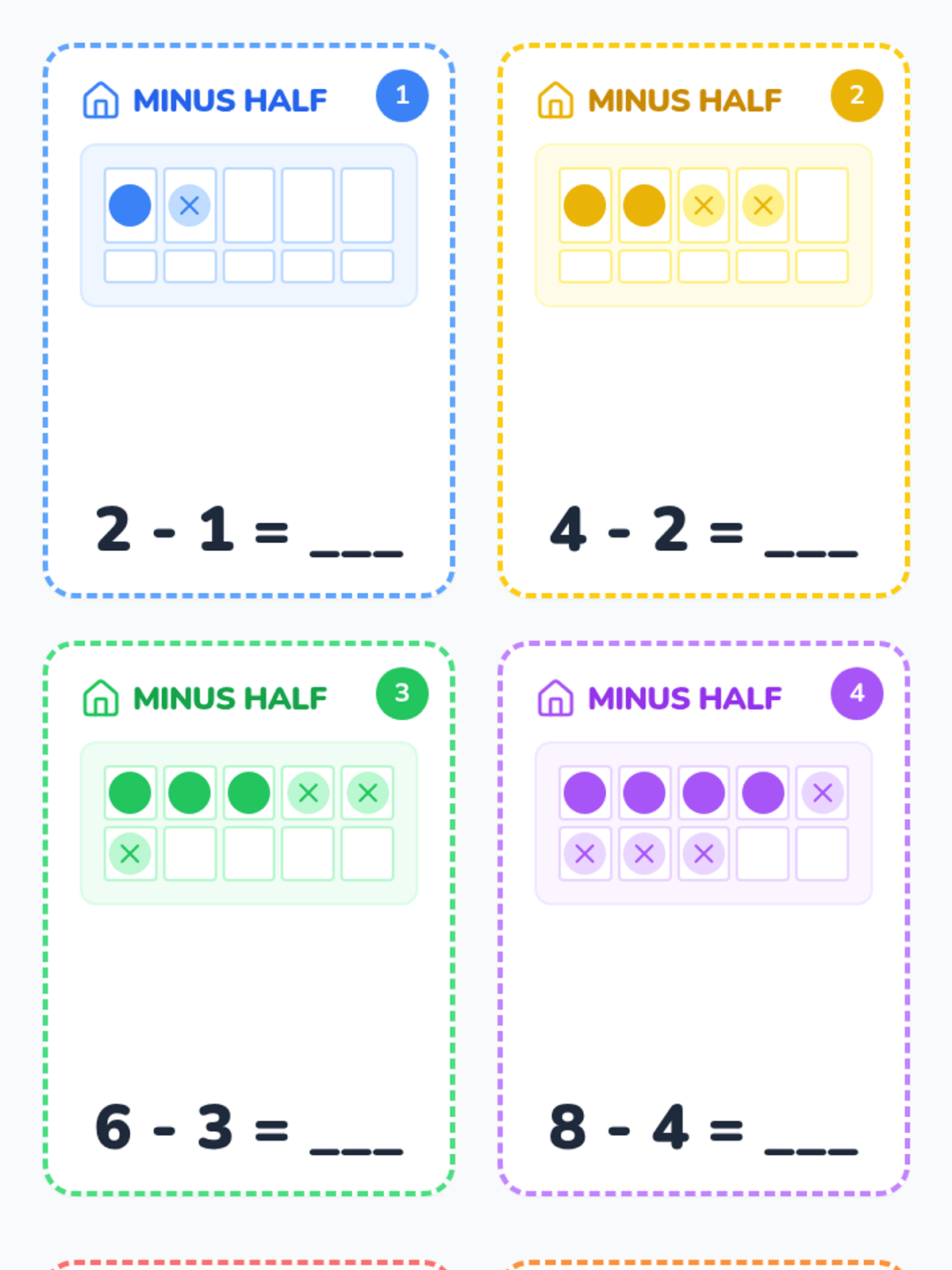
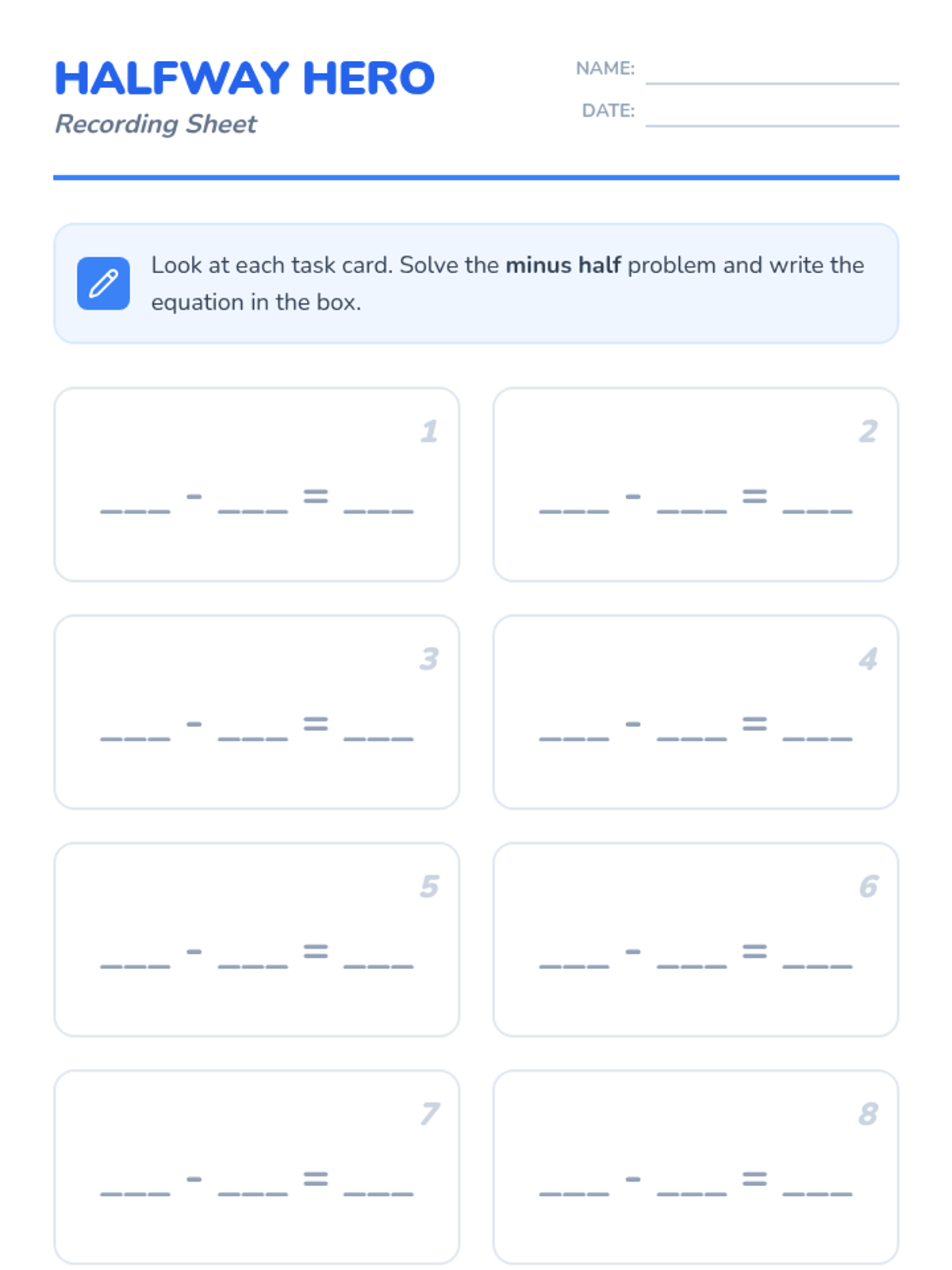
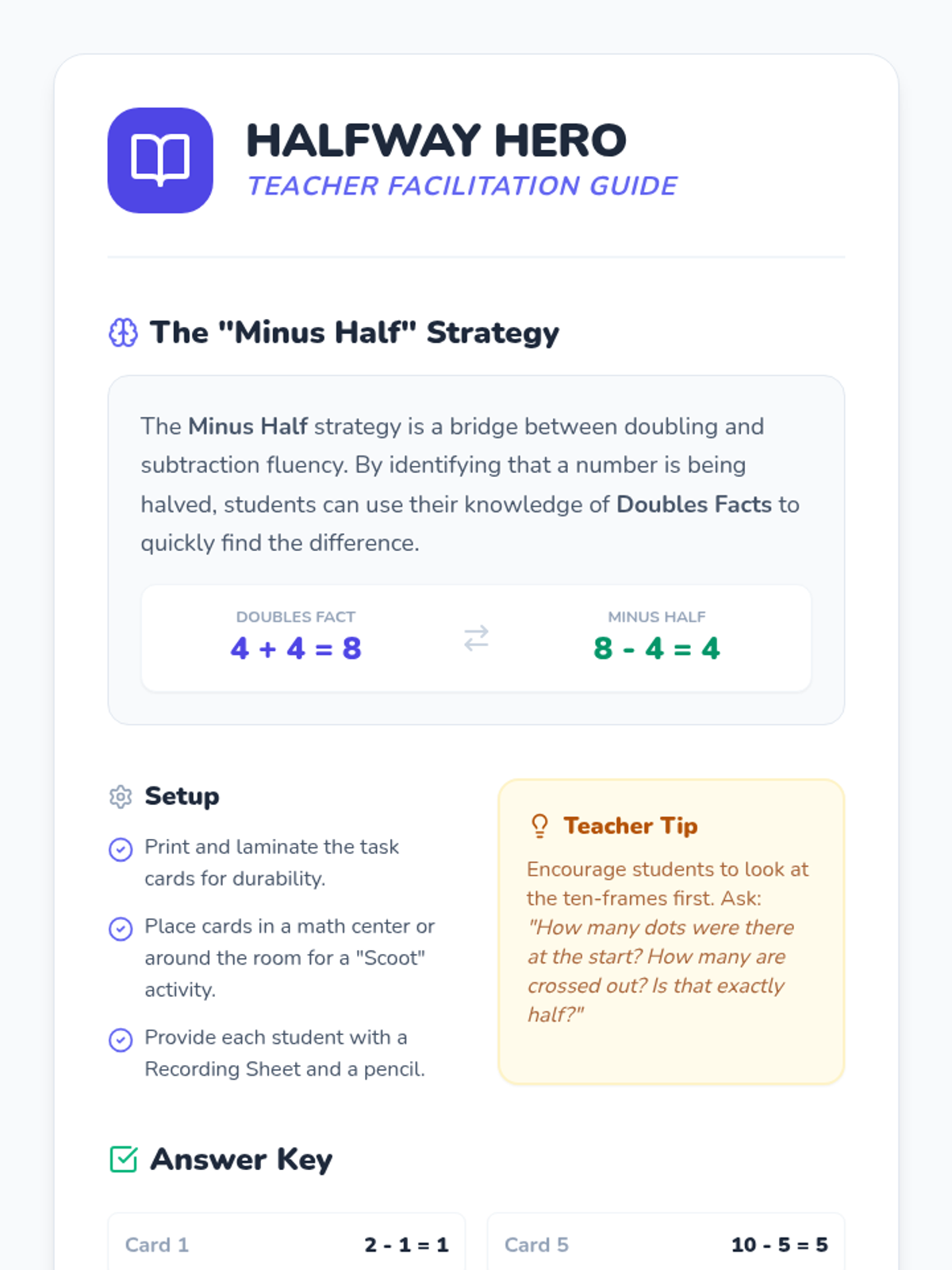
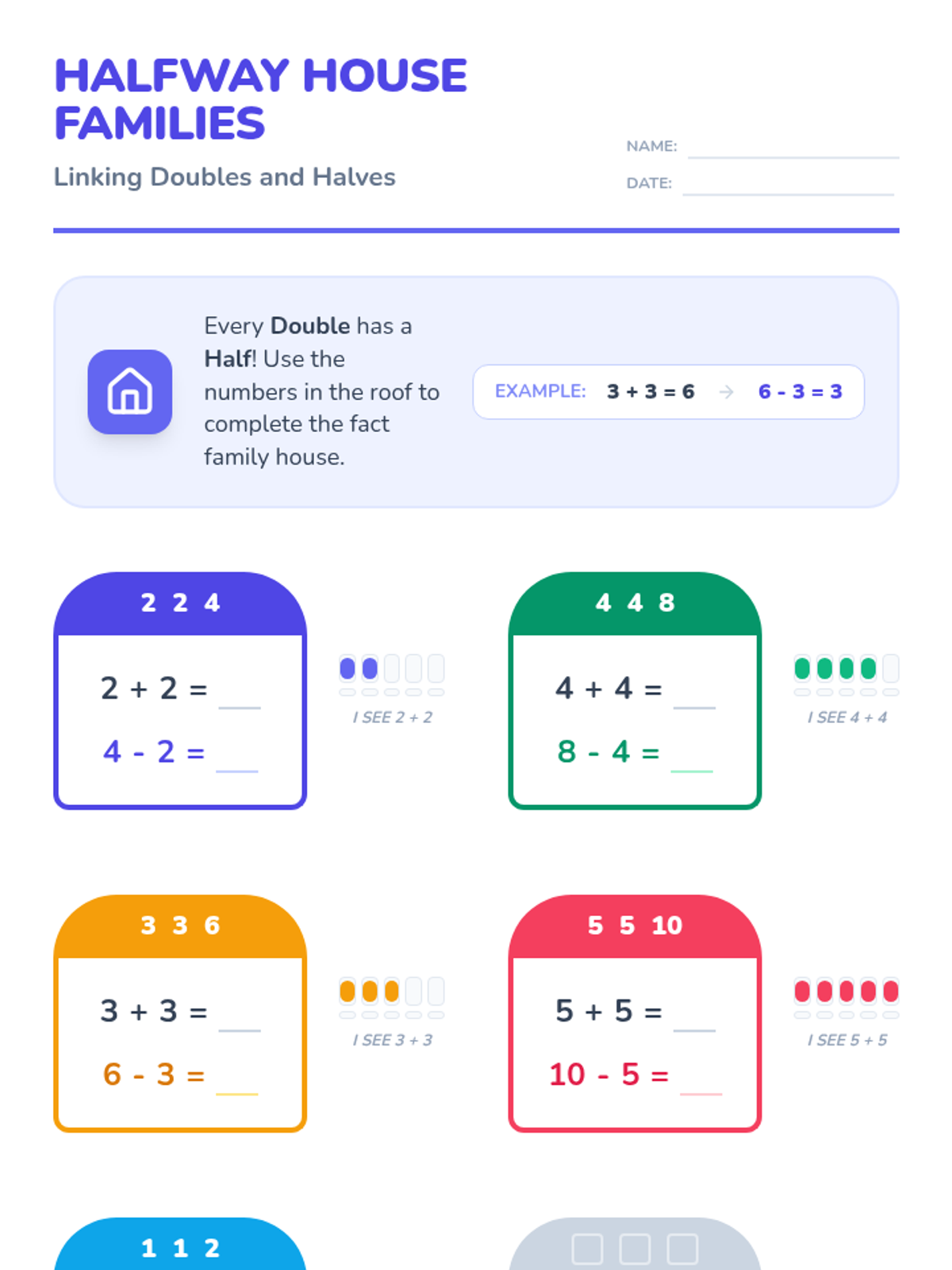
Students master the 'minus half' subtraction strategy for numbers up to 10 using ten-frame visuals. This lesson builds on doubling knowledge to strengthen subtraction fluency through hands-on task cards.