A foundational lesson on number recognition through a creative butterfly coloring activity. Students identify numbers 1-5 to reveal a vibrantly colored monarch-style butterfly.
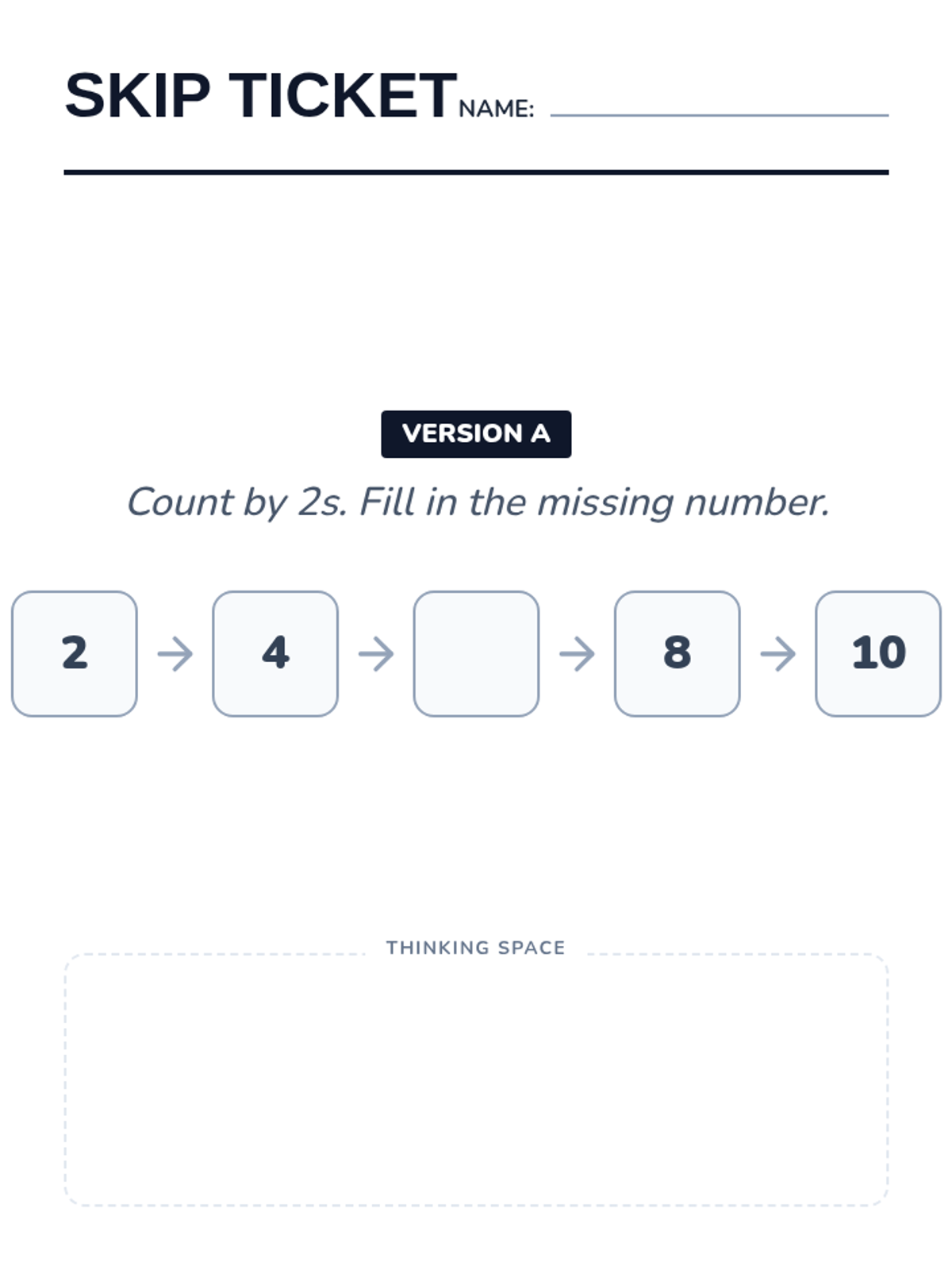
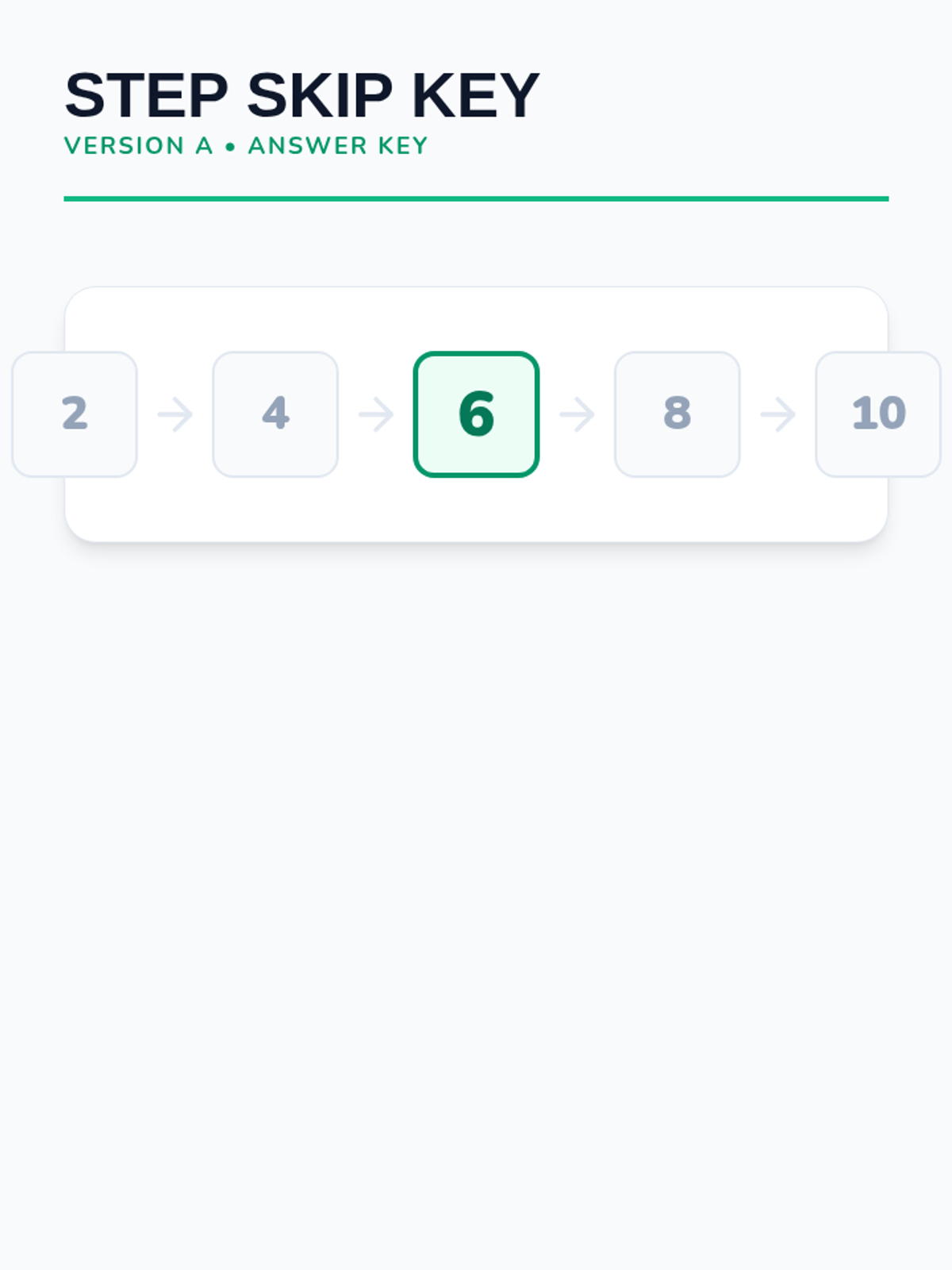
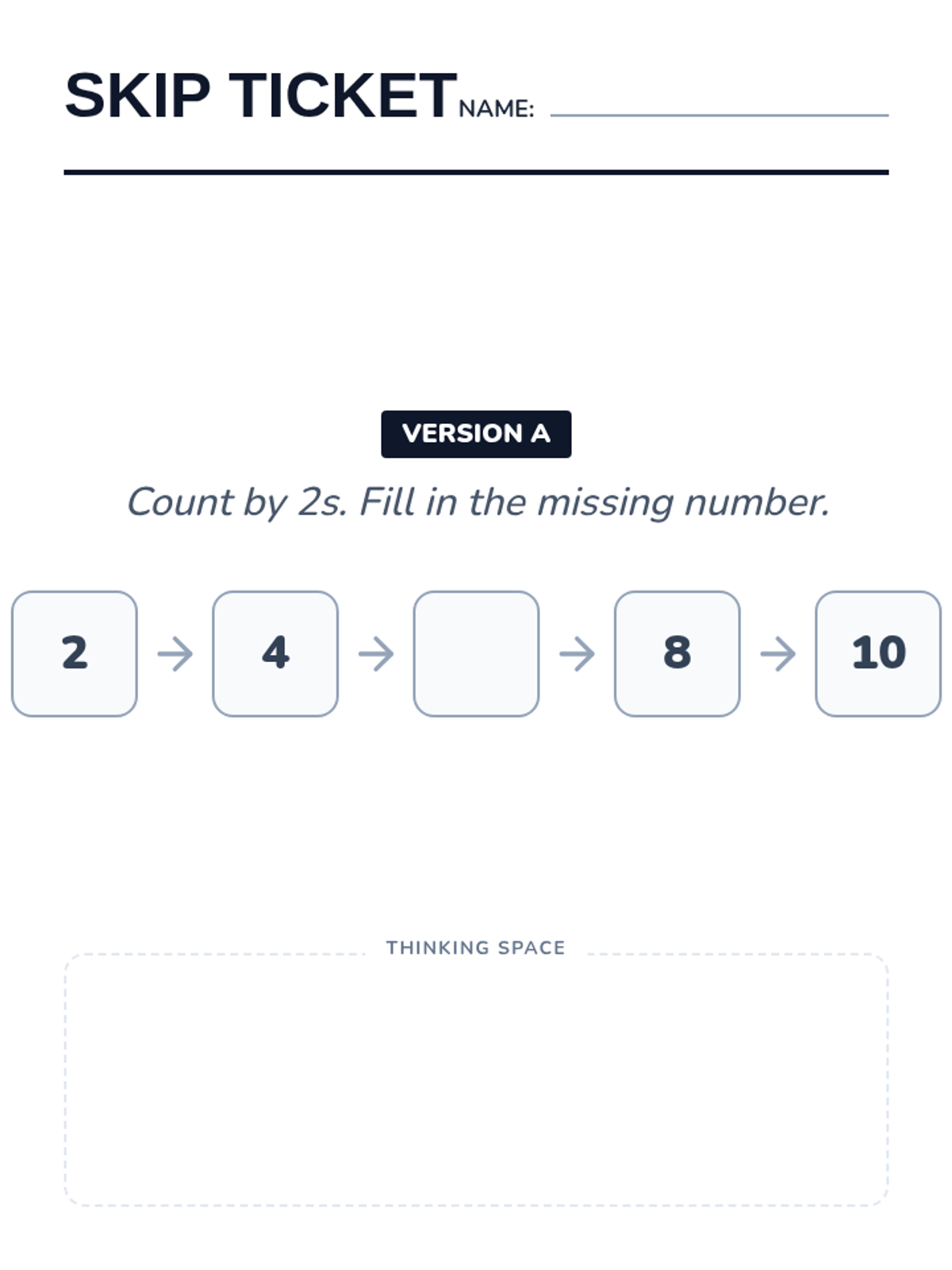
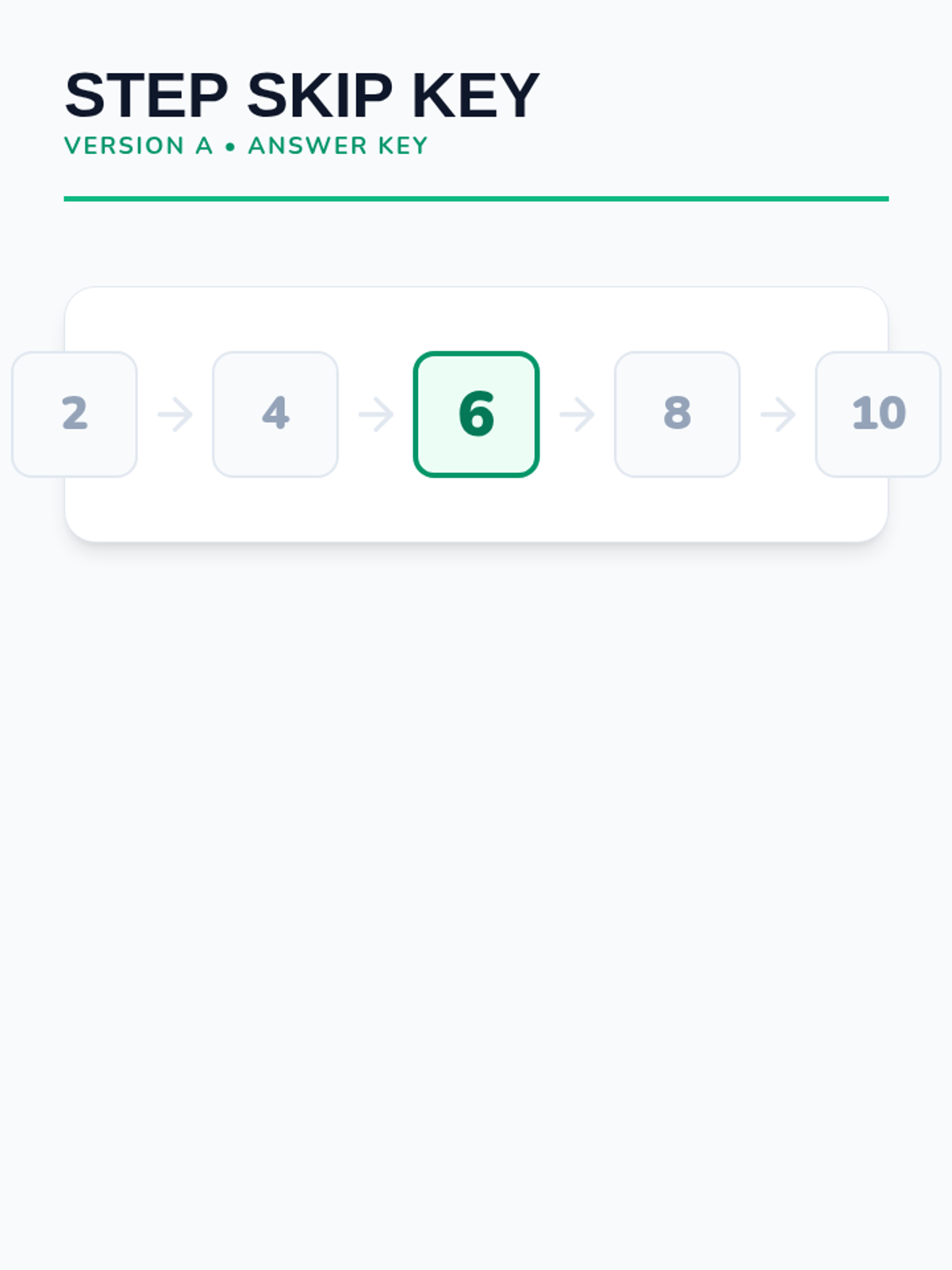
A focused assessment on skip counting by 2s within the range of 2-10. Students identify the missing number in a single sequence to demonstrate mastery of the pattern.
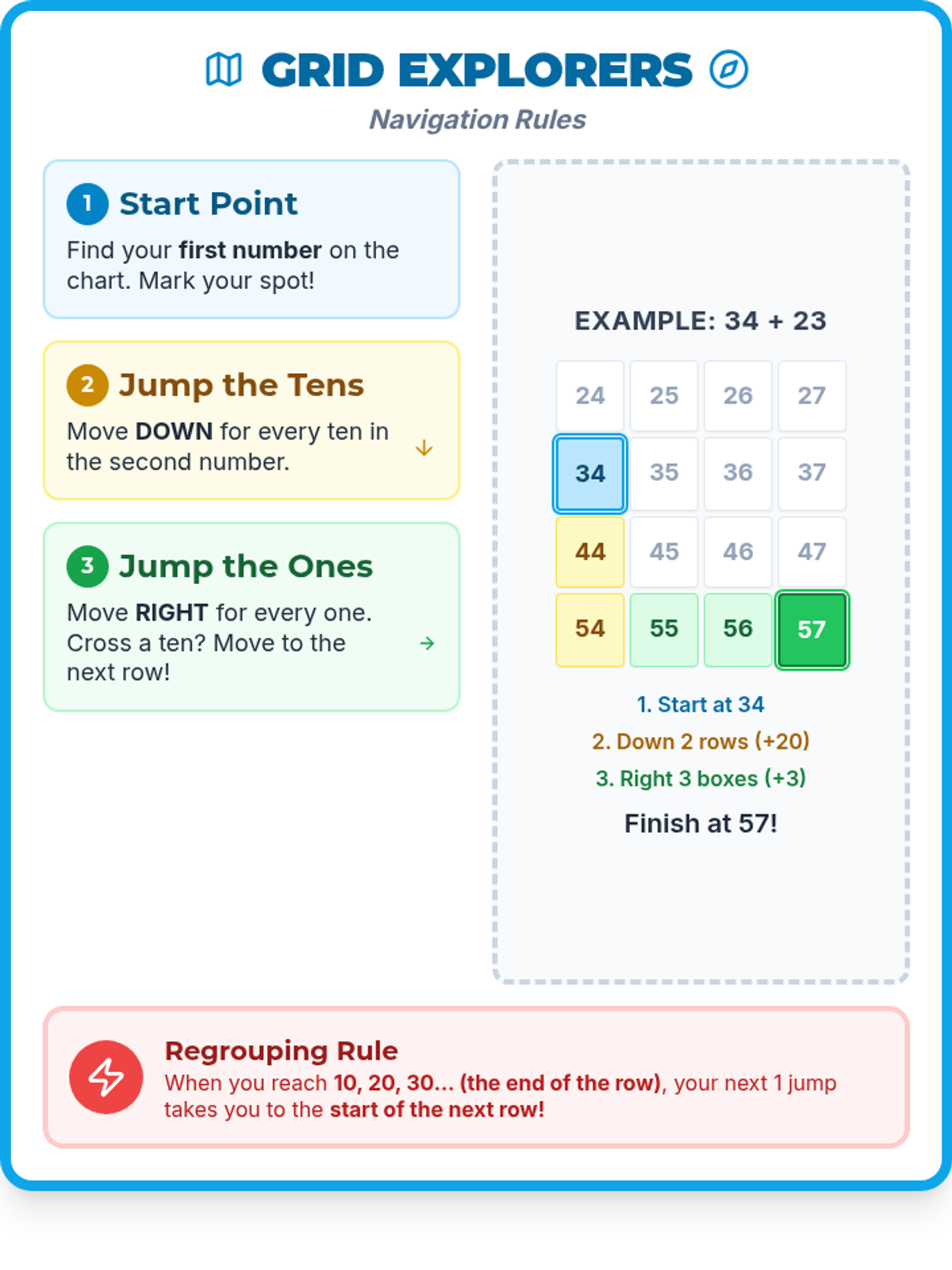
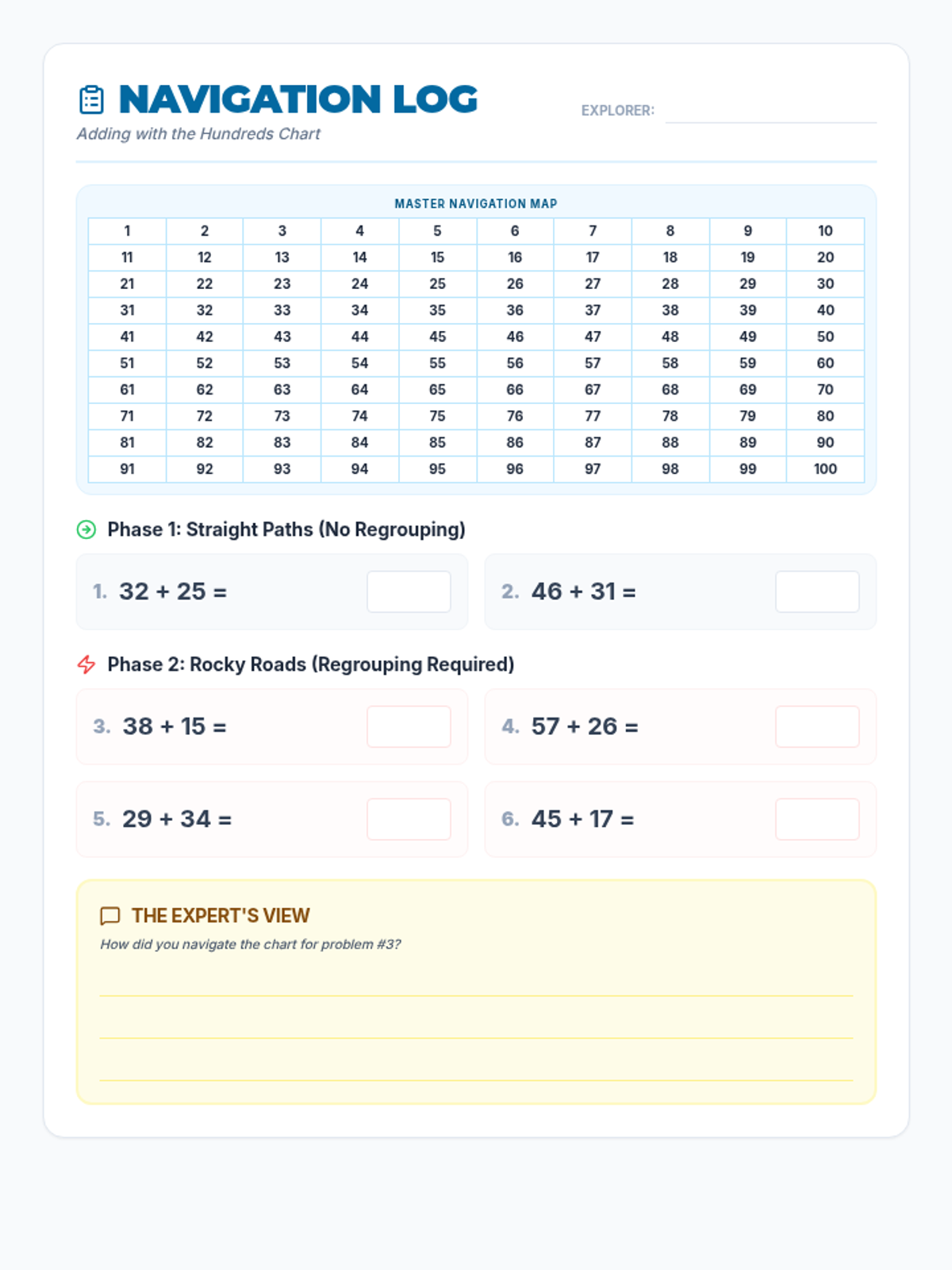
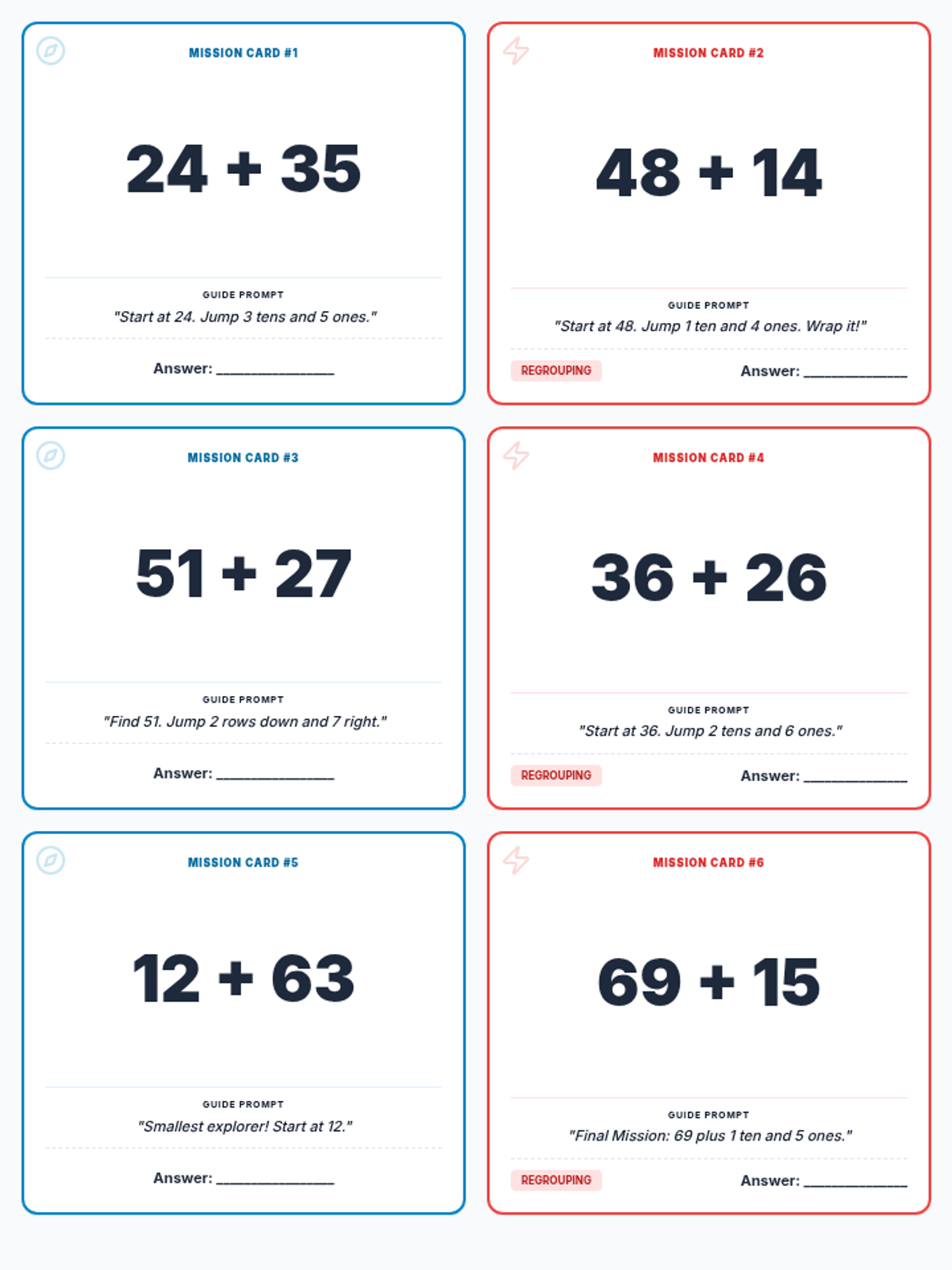
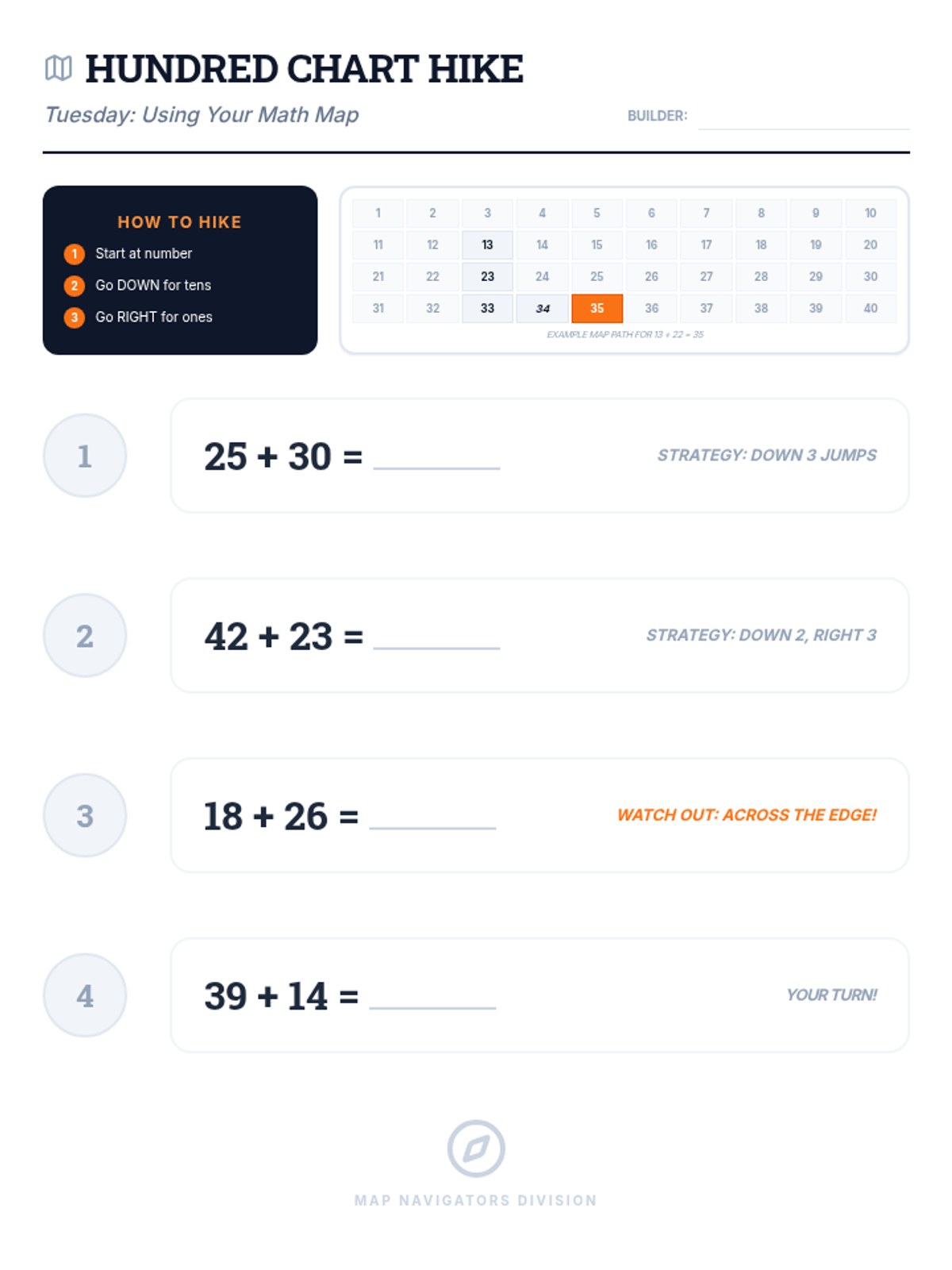
A primary math lesson focused on using a hundreds chart to solve two-digit addition problems, including those requiring regrouping by composing a ten. Students will learn to navigate the chart by jumping tens (moving down) and ones (moving right).
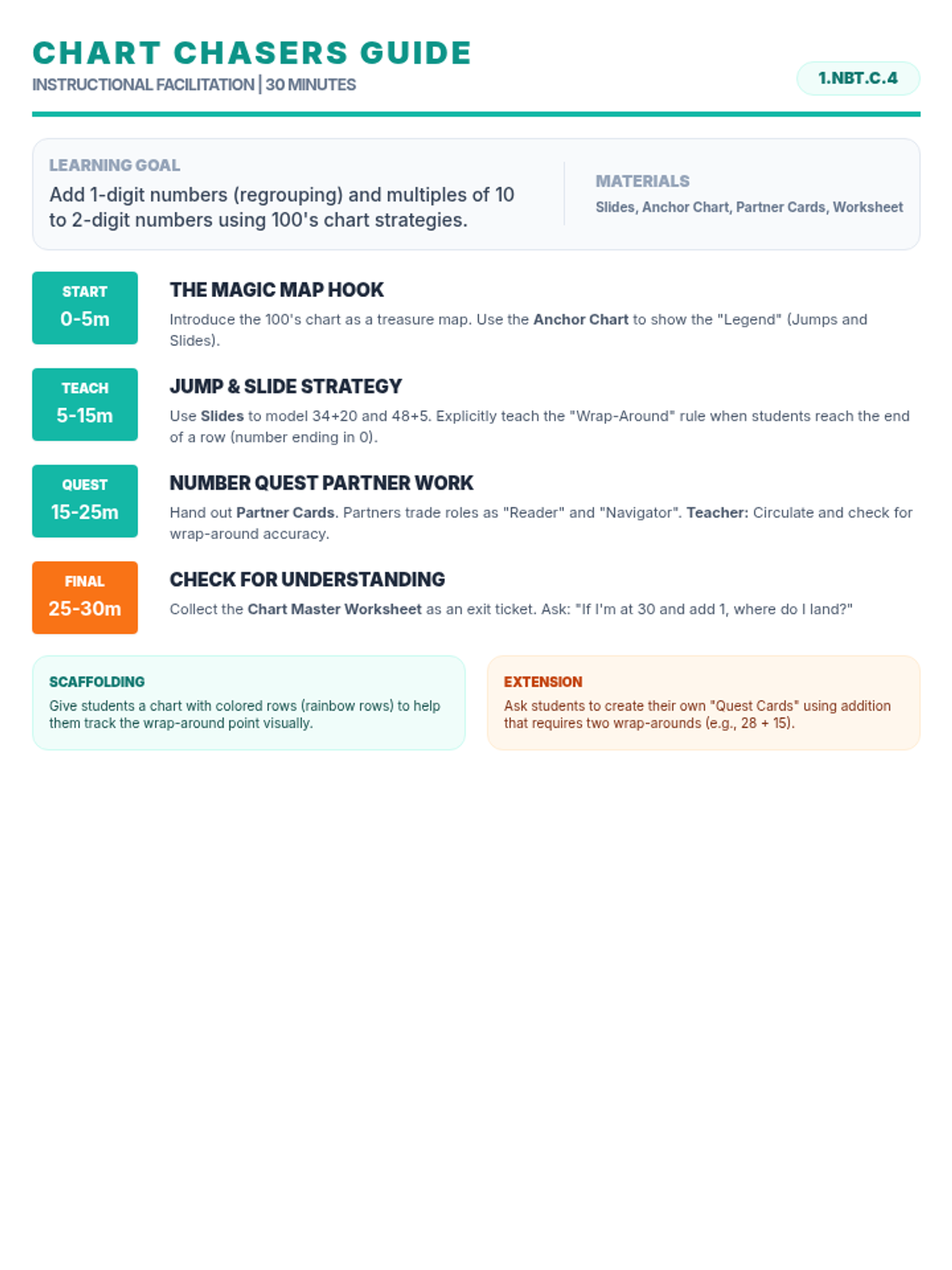
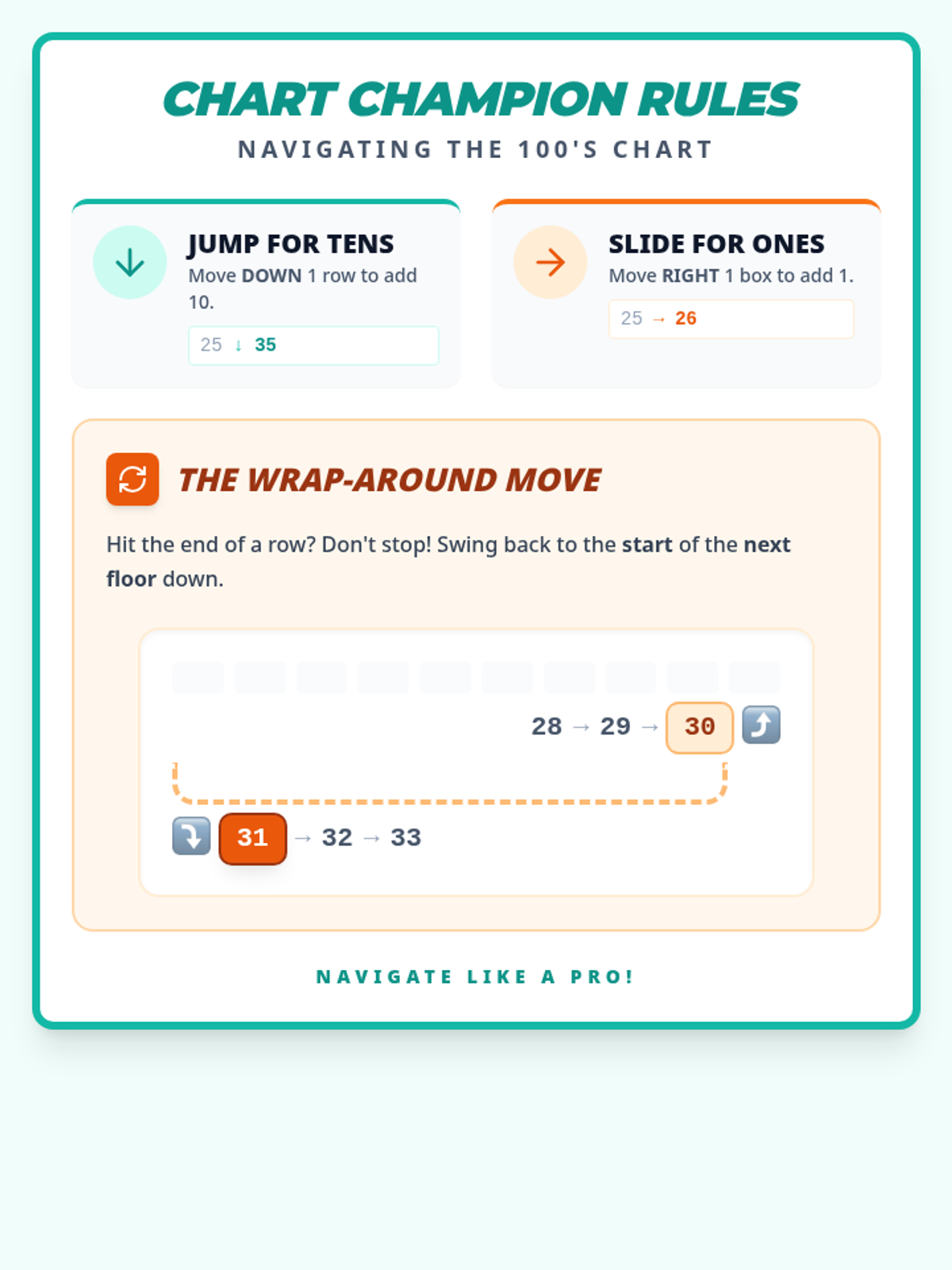
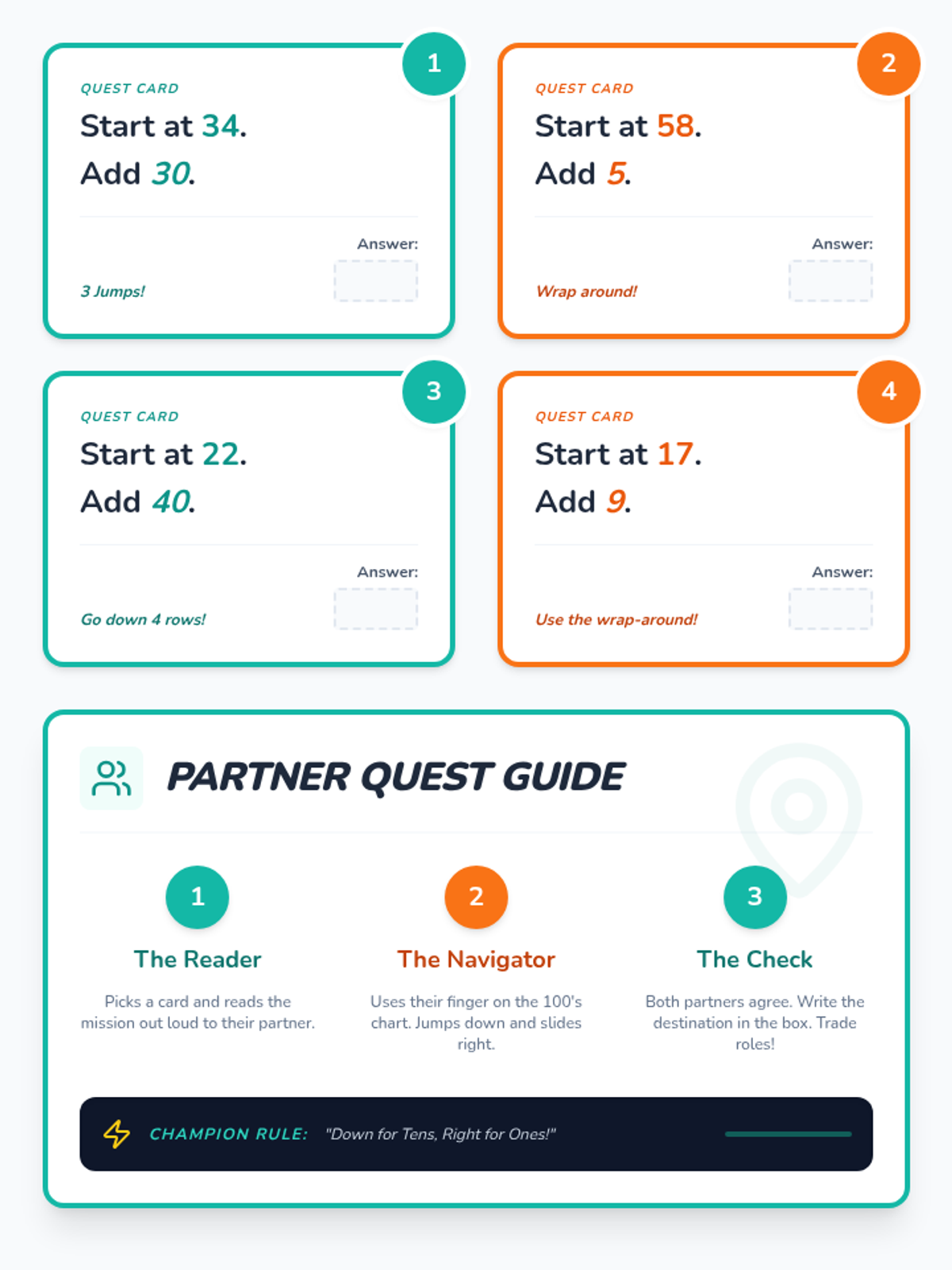
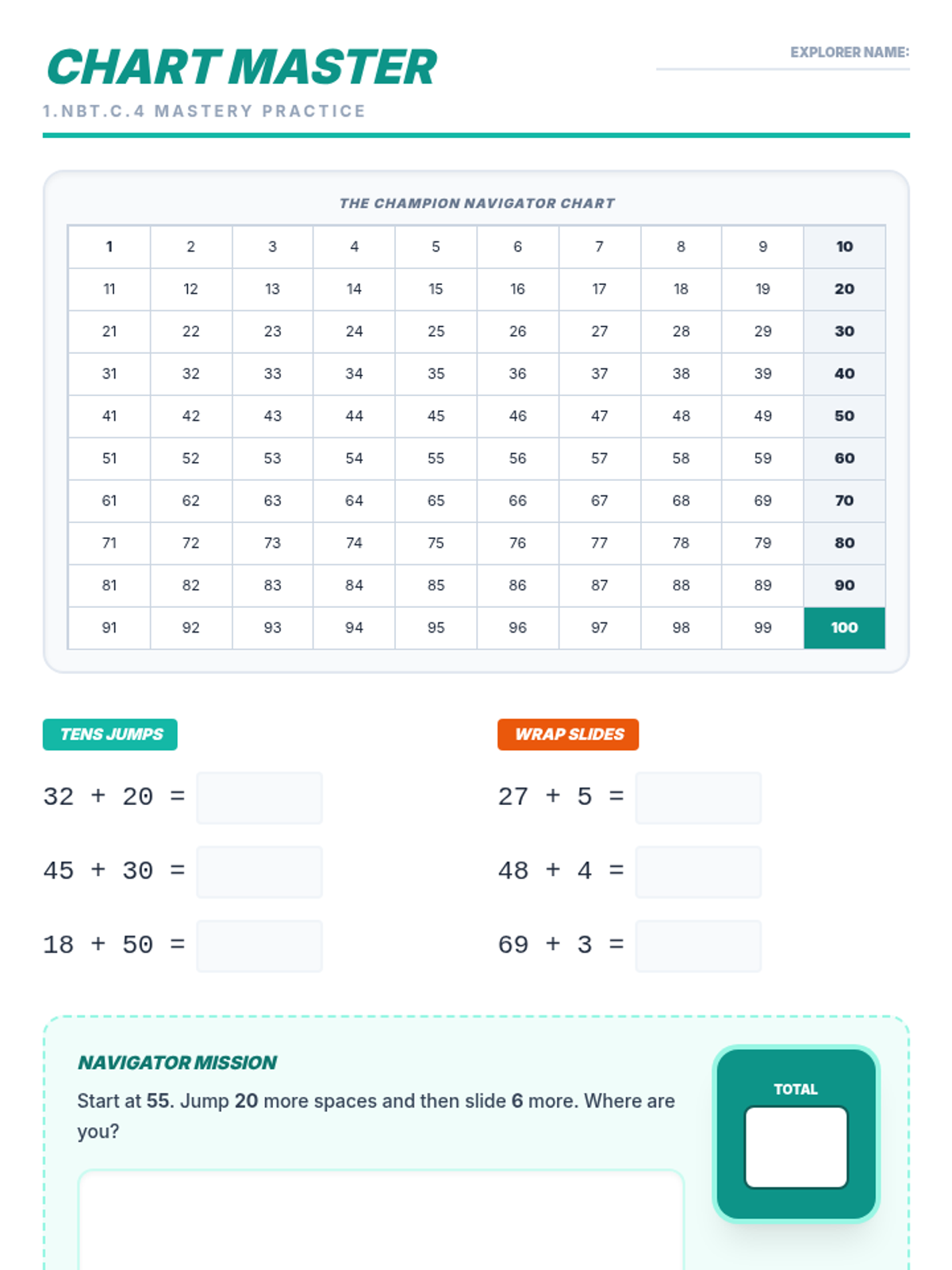
A 30-minute lesson teaching students how to use a 100's chart to add two-digit numbers, focusing on 2-digit + 1-digit with regrouping and 2-digit + multiples of 10. Students will learn the 'Jump and Slide' method for navigating the chart.
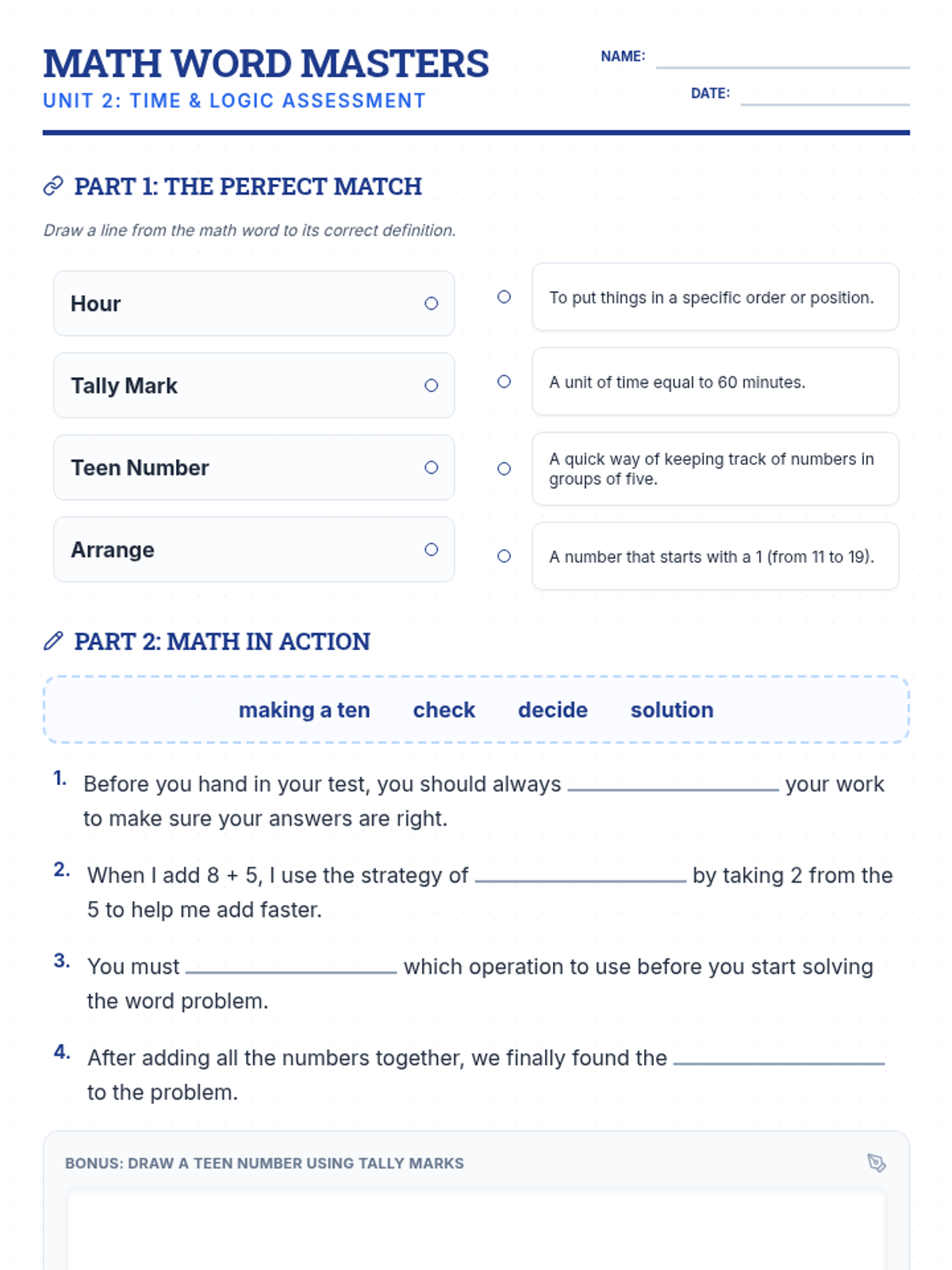
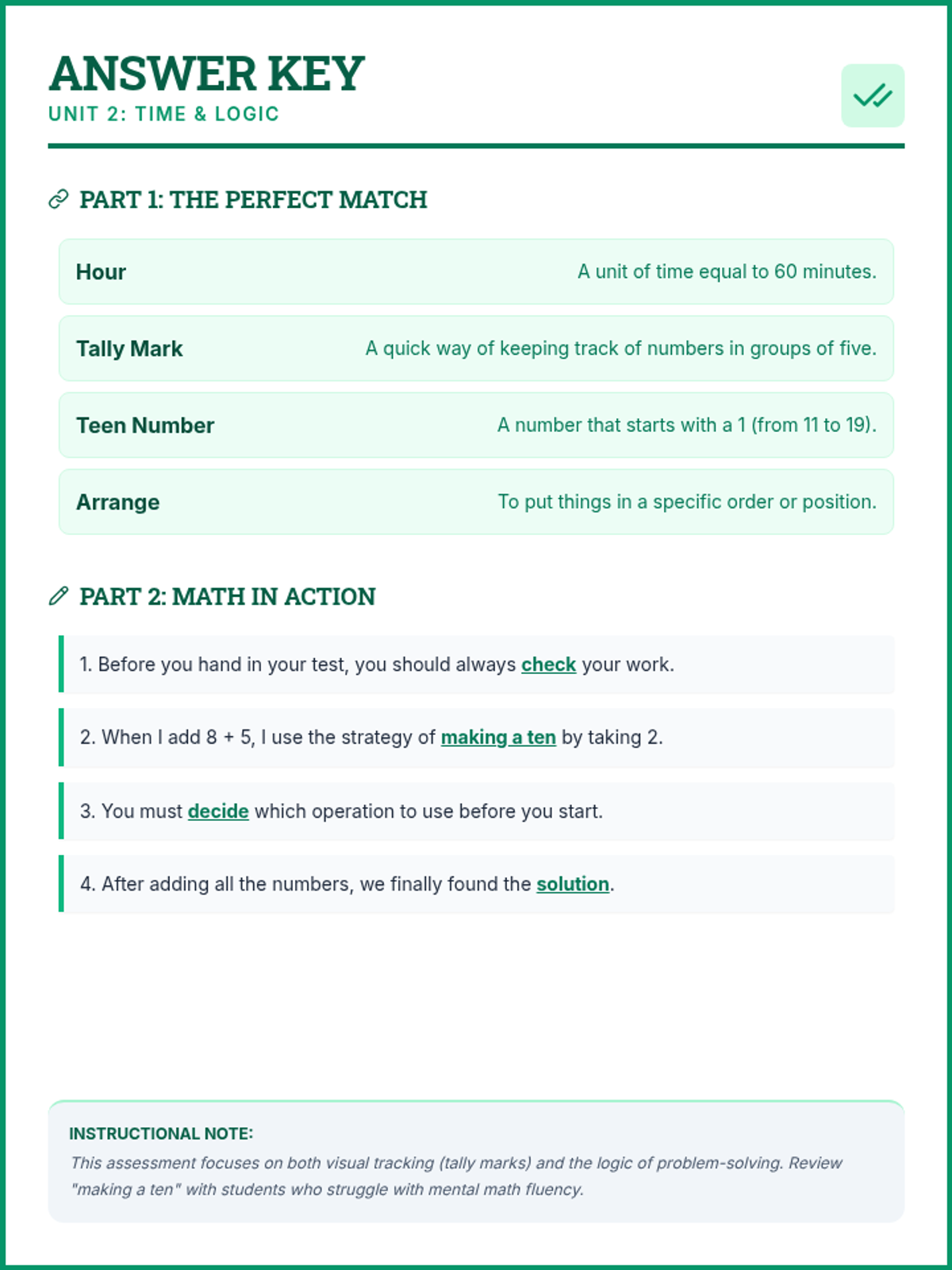
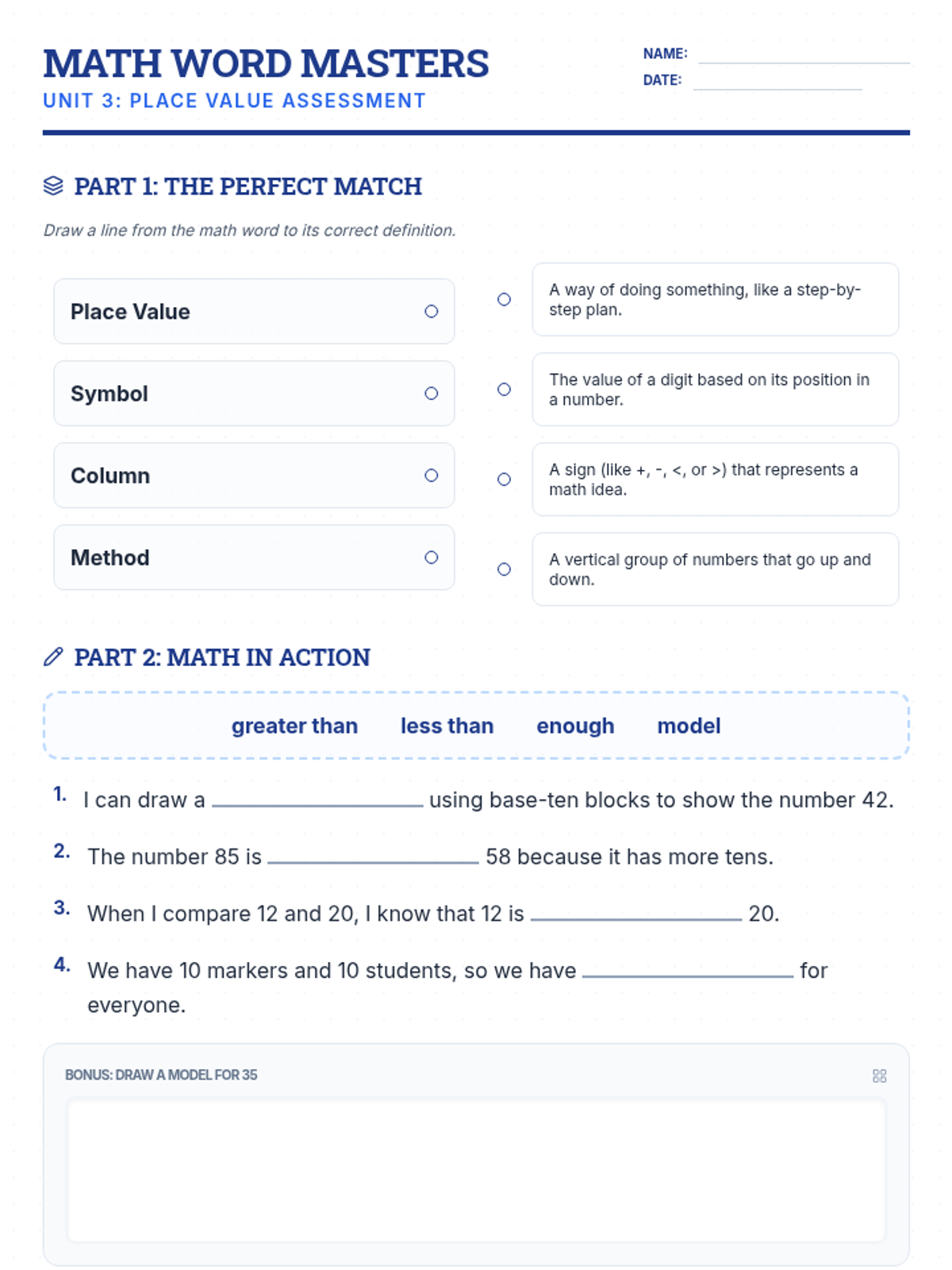
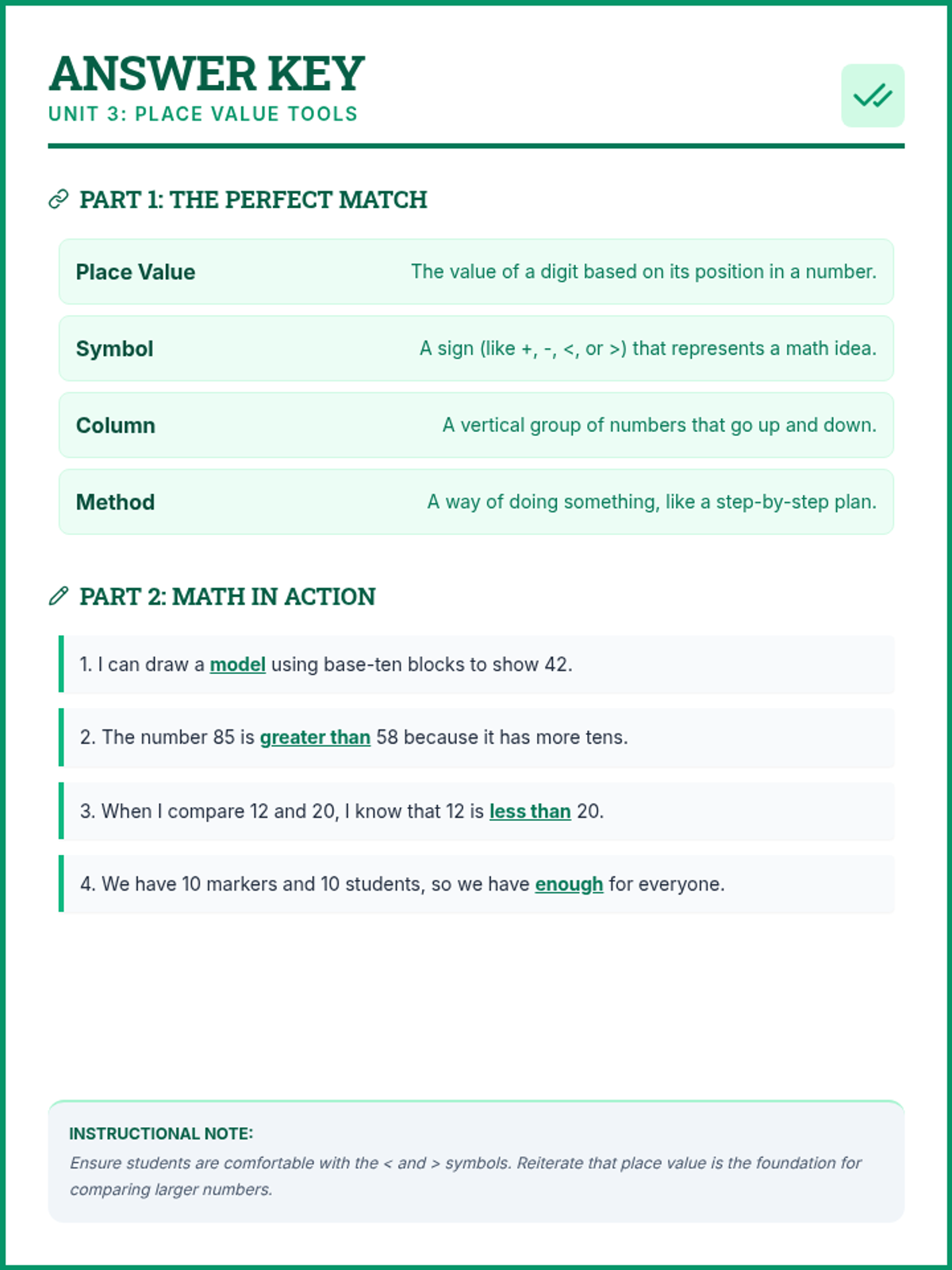
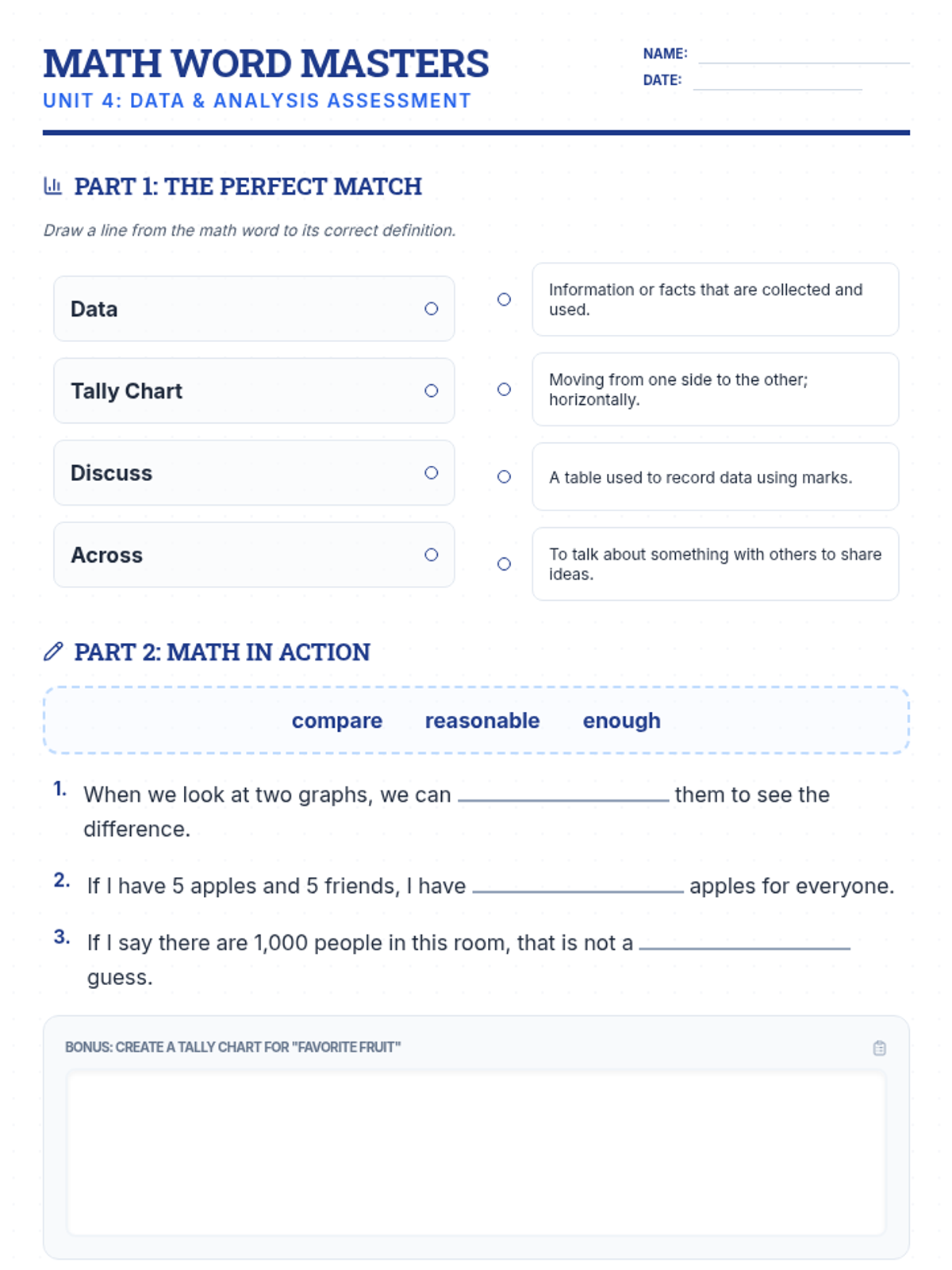
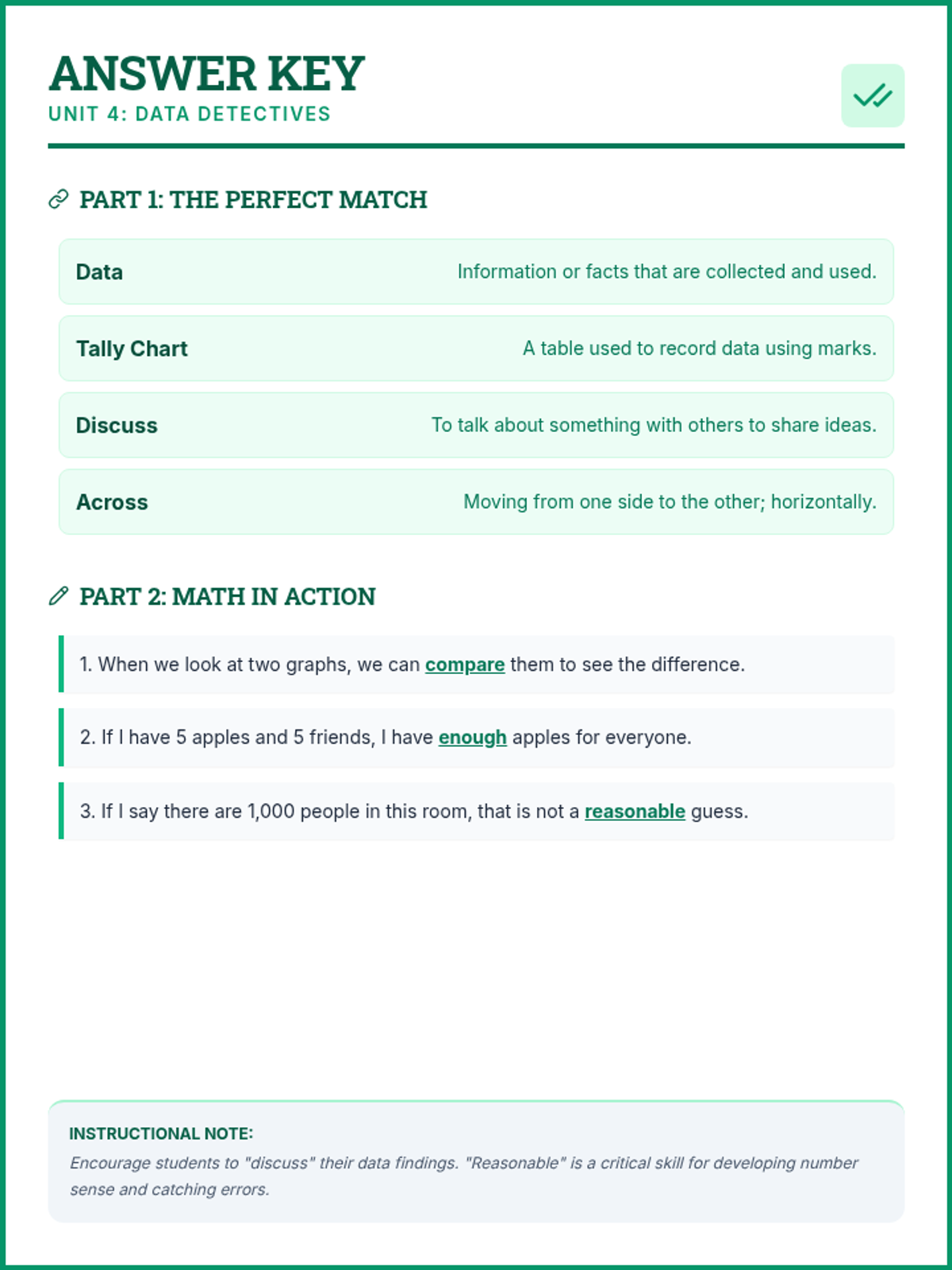
Vocabulary assessment for Unit 2 covering time, counting, and problem-solving strategies.
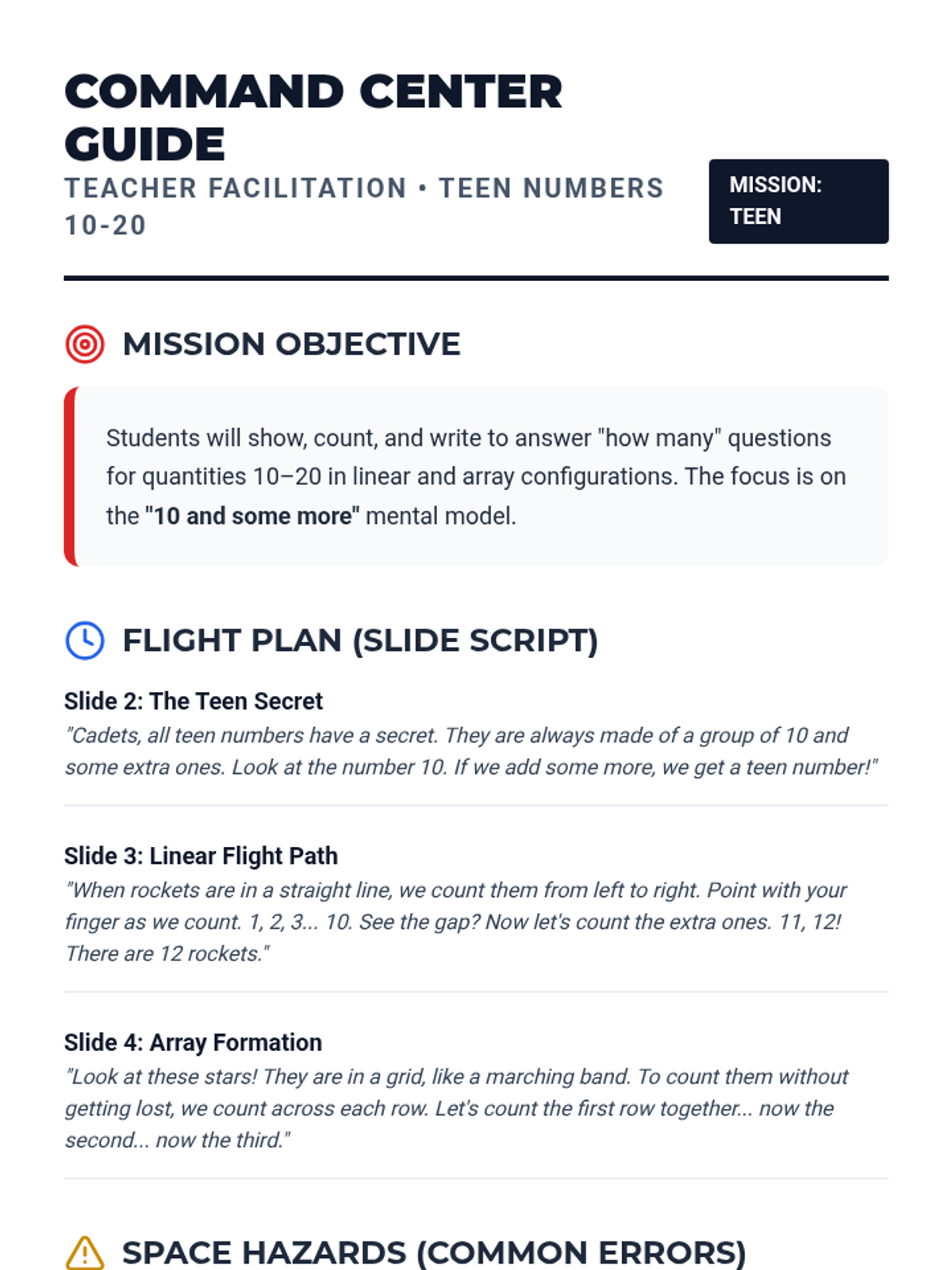
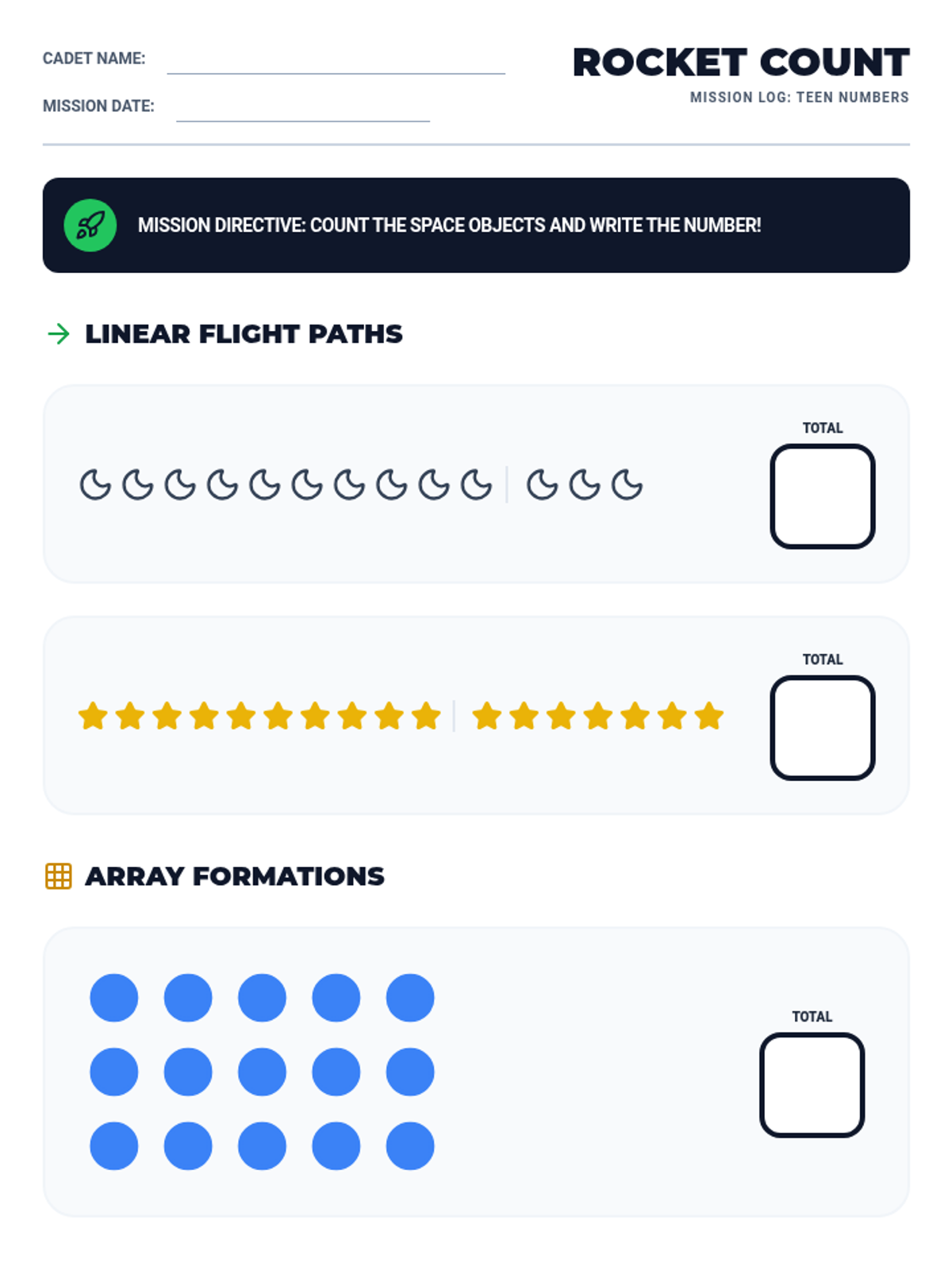
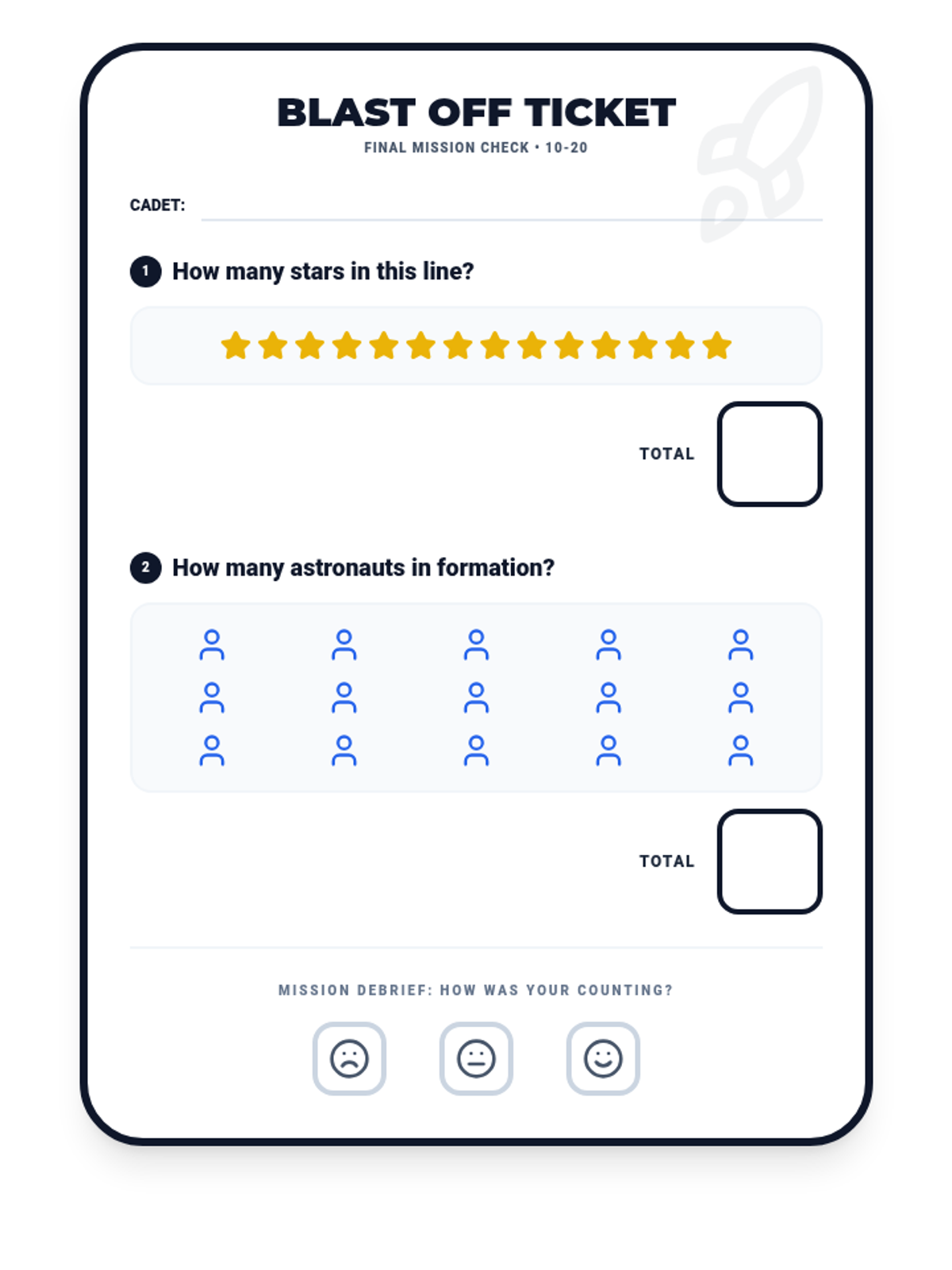
Students will master counting teen numbers (10-20) in both linear and array configurations, focusing on the '10 and some more' strategy. This lesson uses a high-energy space mission theme to engage Kindergarteners in writing and representing numbers.
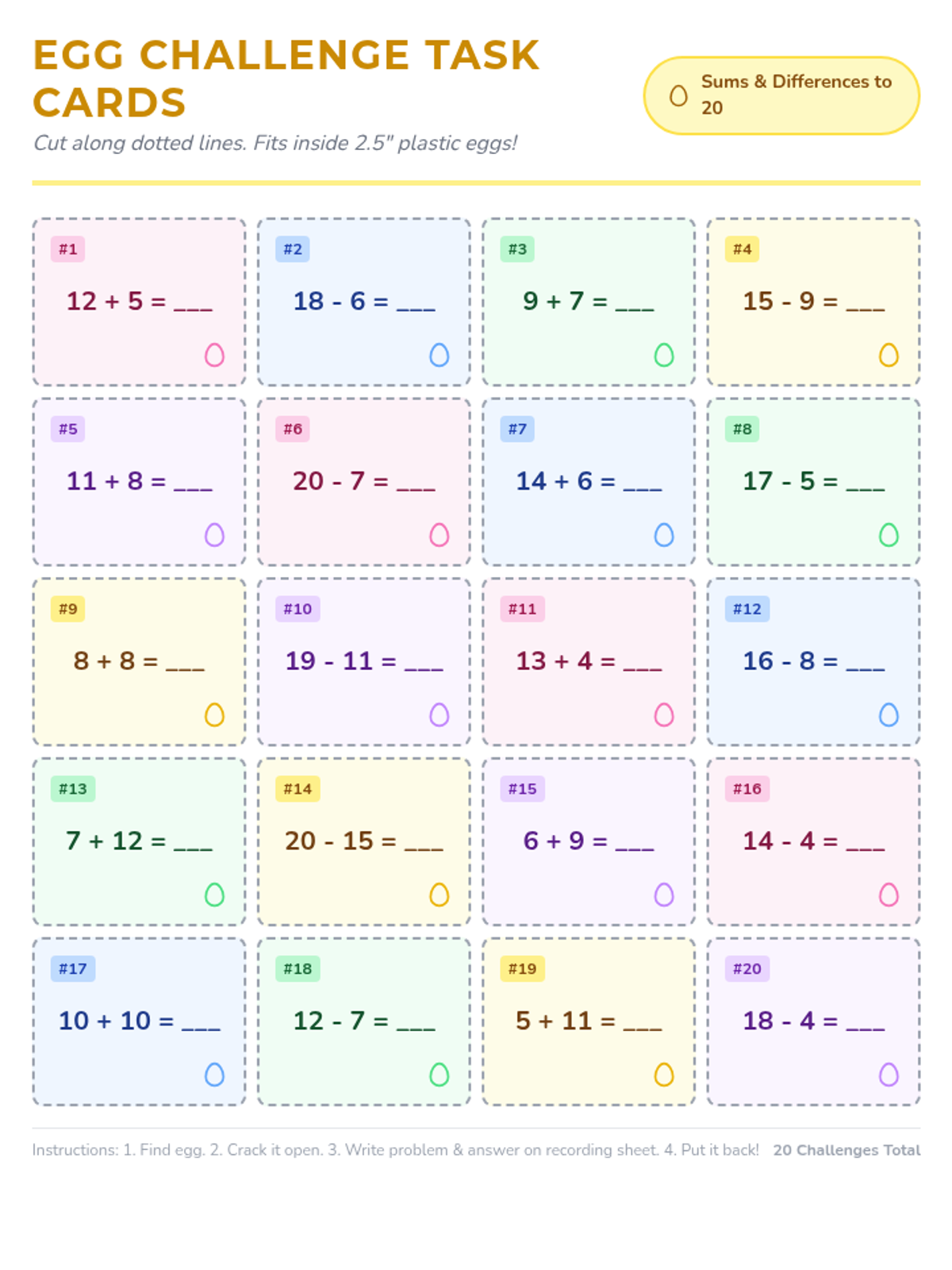
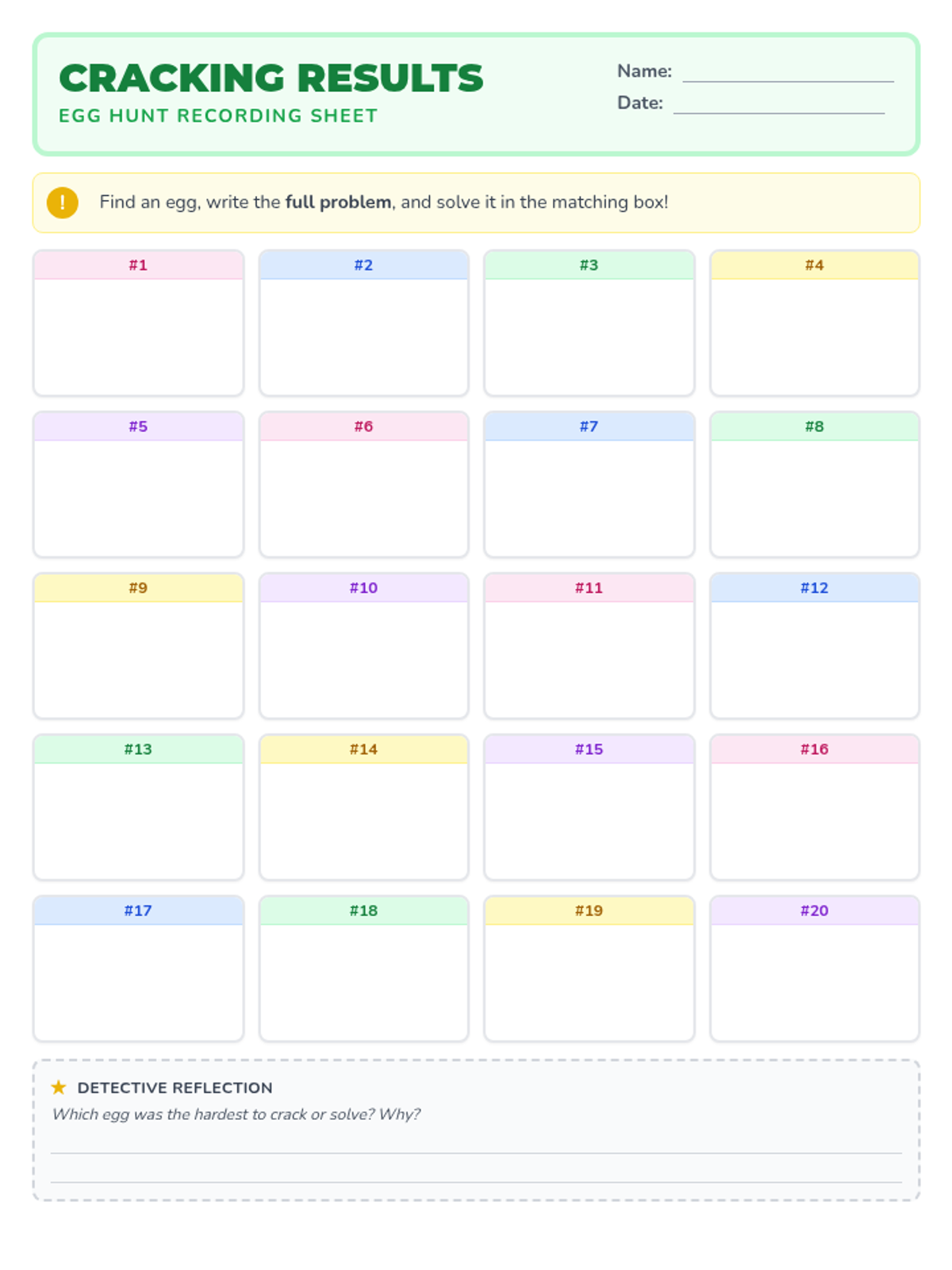
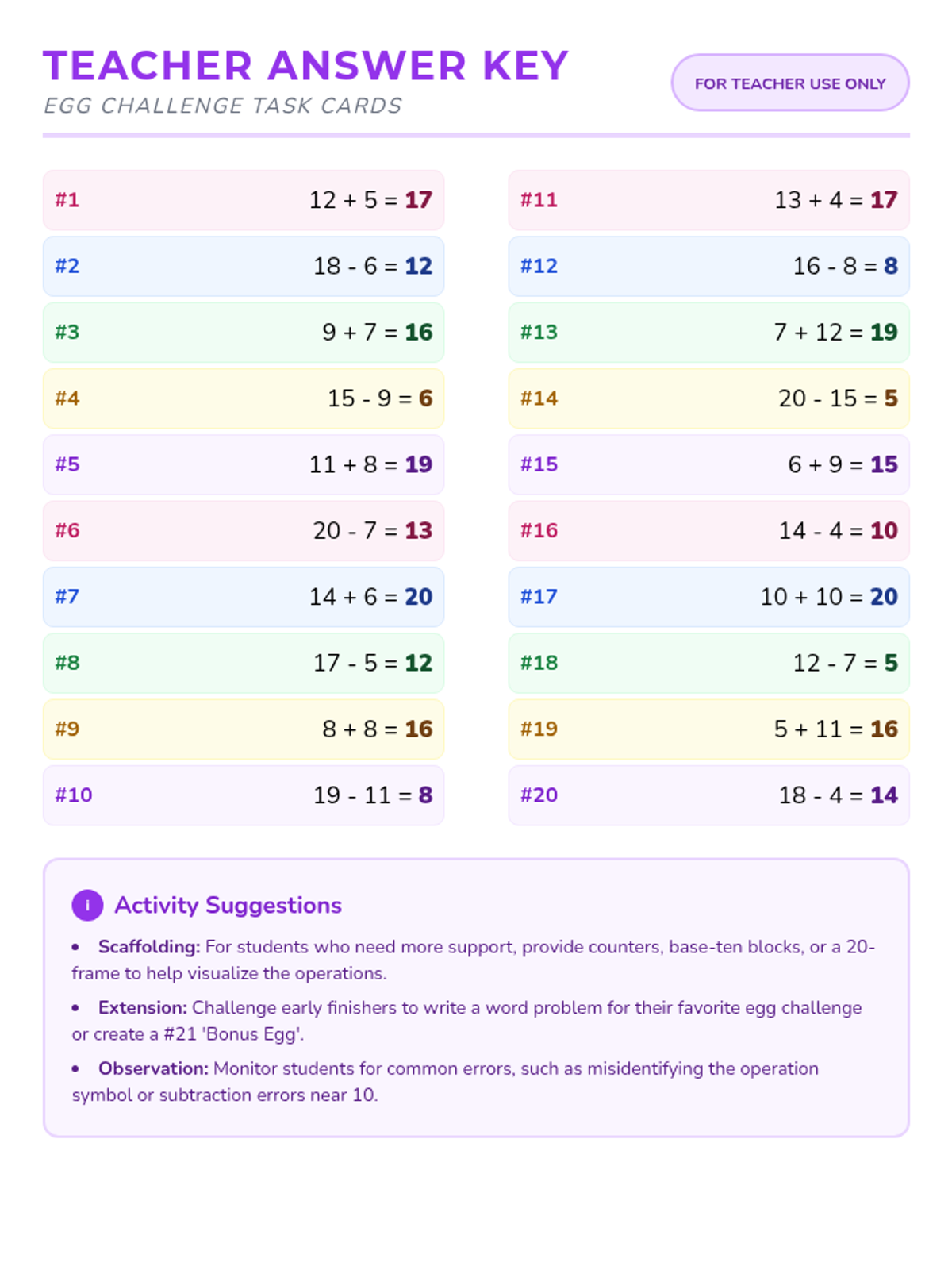
Students find and solve math problems hidden inside plastic eggs, reinforcing addition and subtraction fluency up to 20.
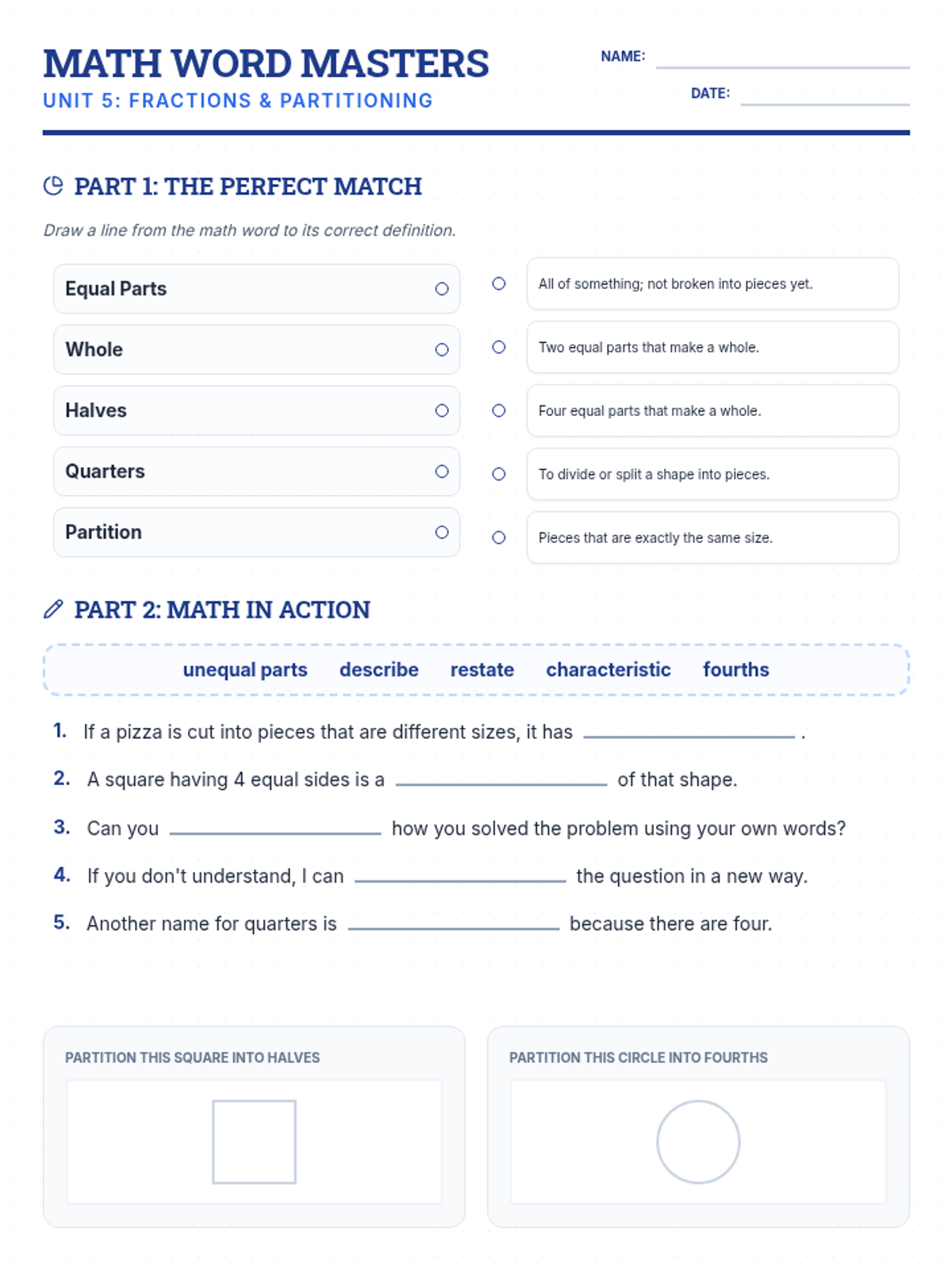
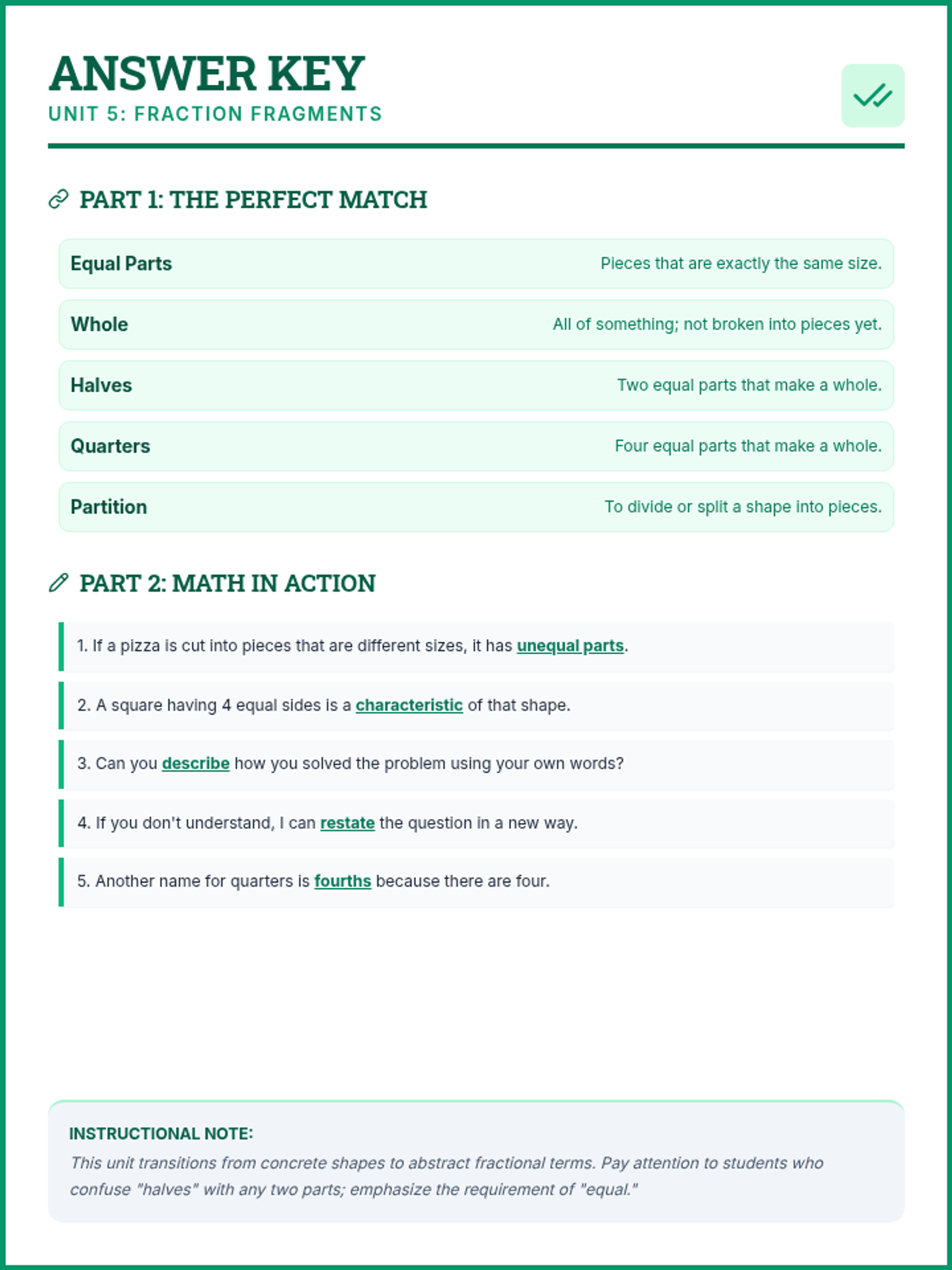
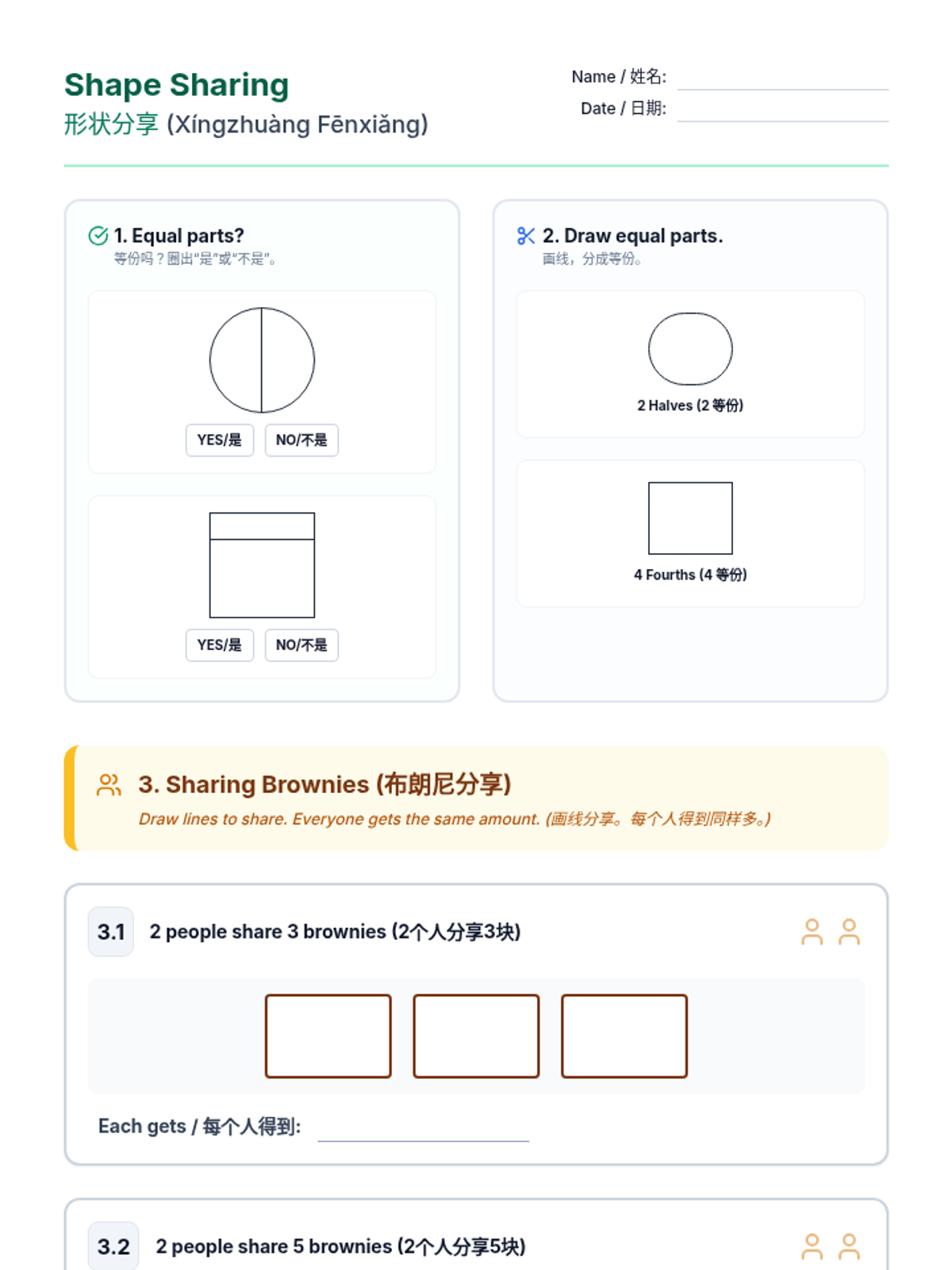
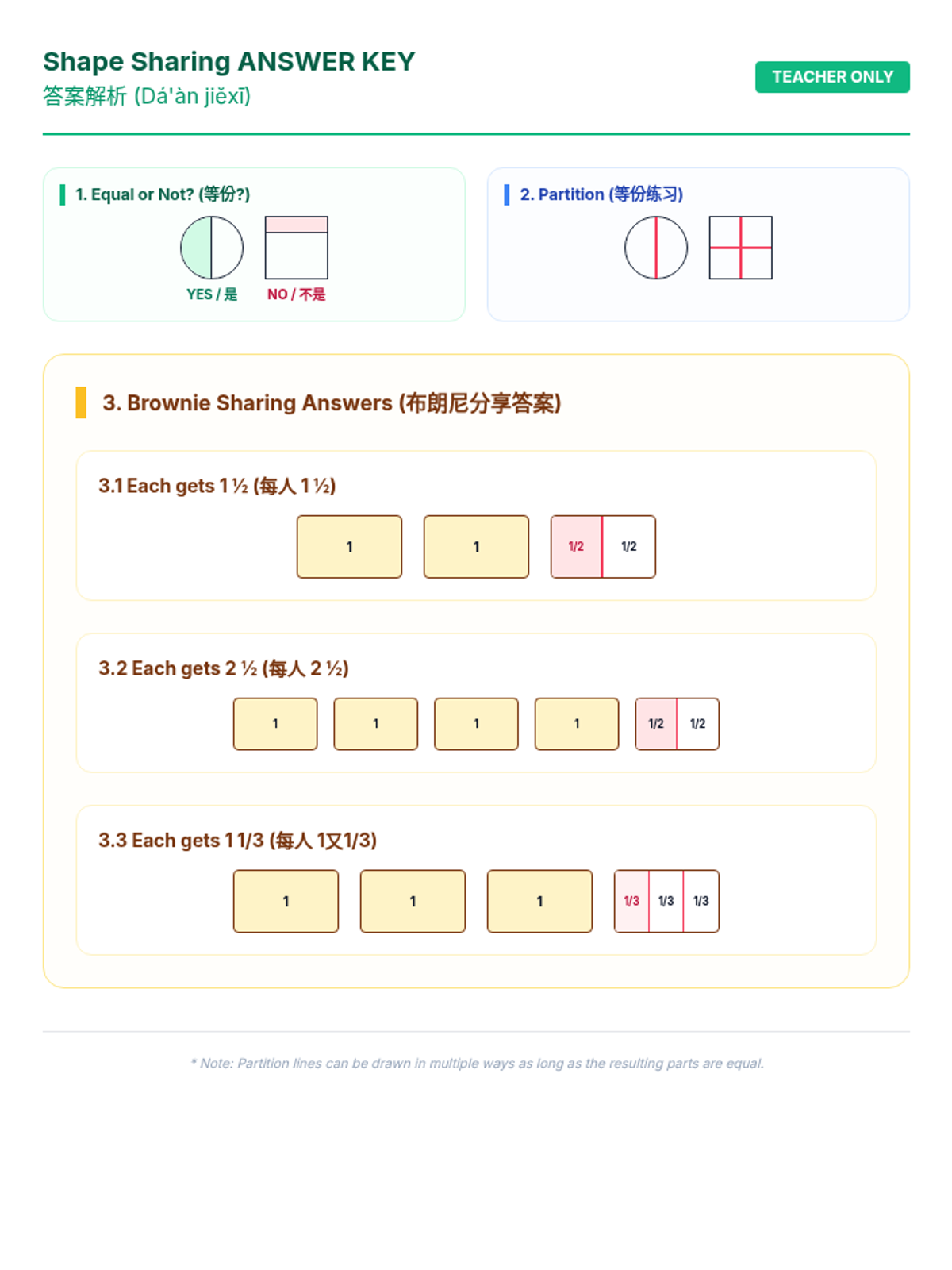
A bilingual (English/Simplified Chinese) lesson on partitioning shapes into equal shares (halves and fourths) for Level 1 ELL students. The lesson focuses on visual understanding and basic vocabulary like 'equal', 'half', and 'fourth'.
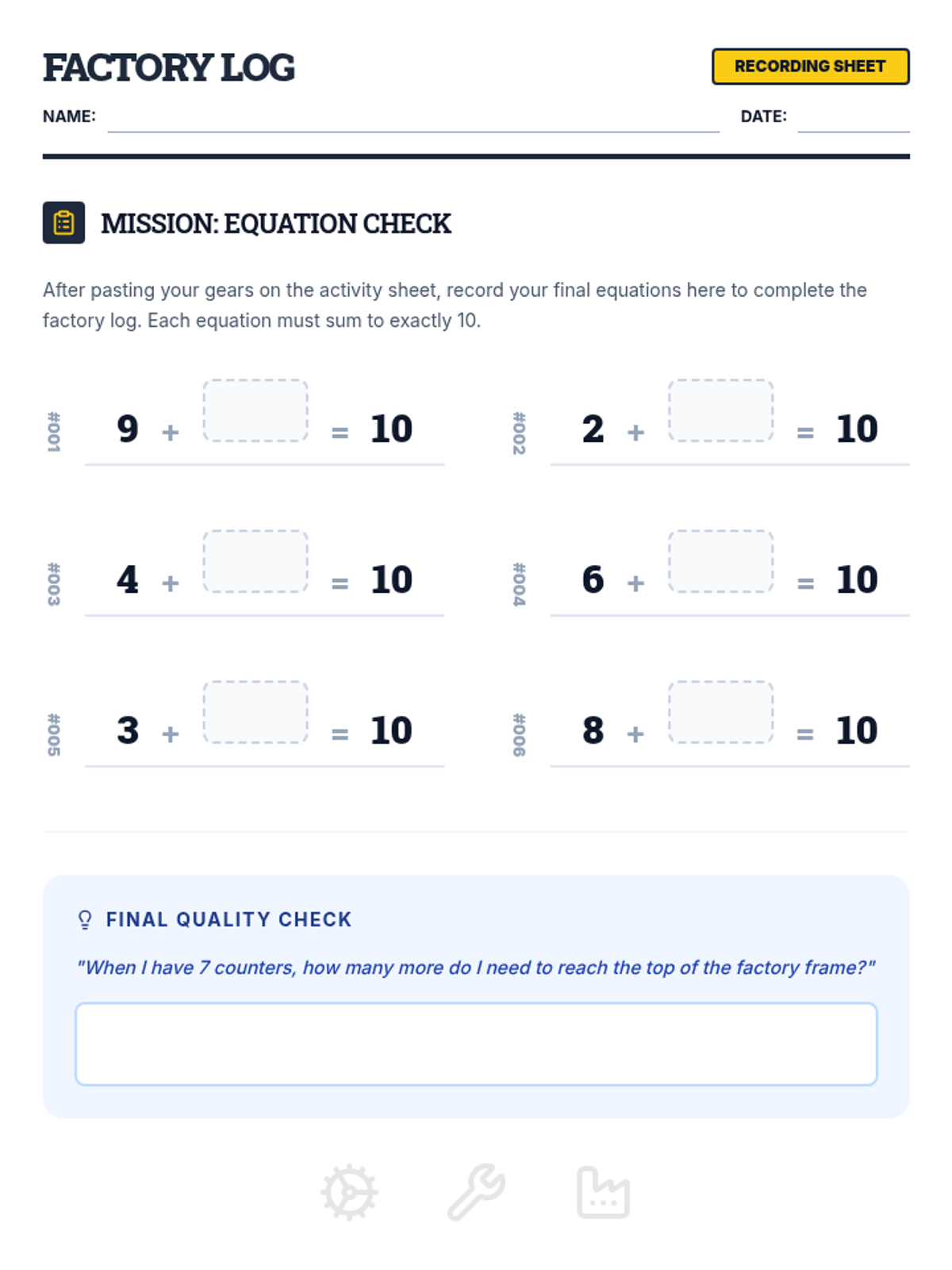
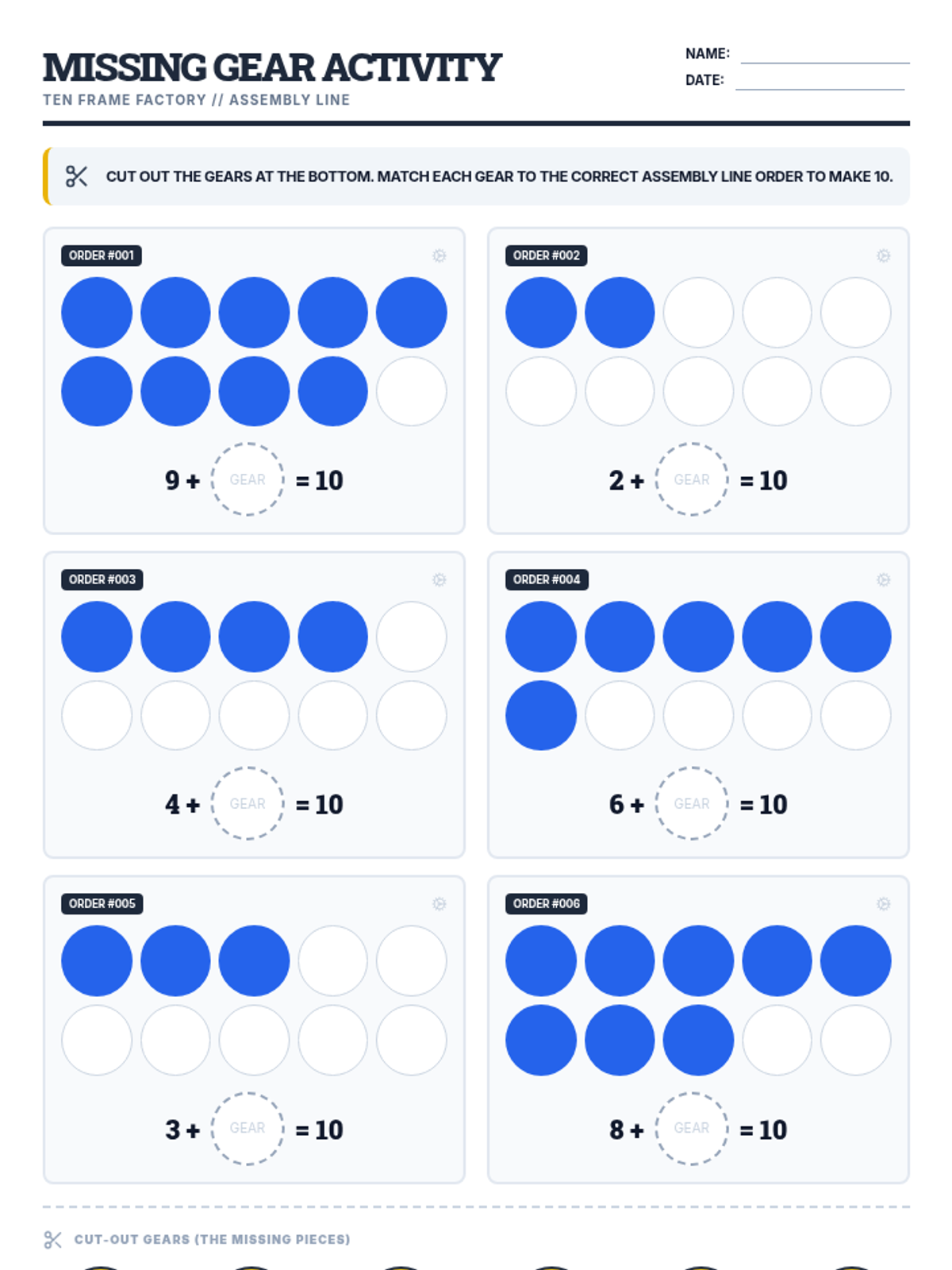
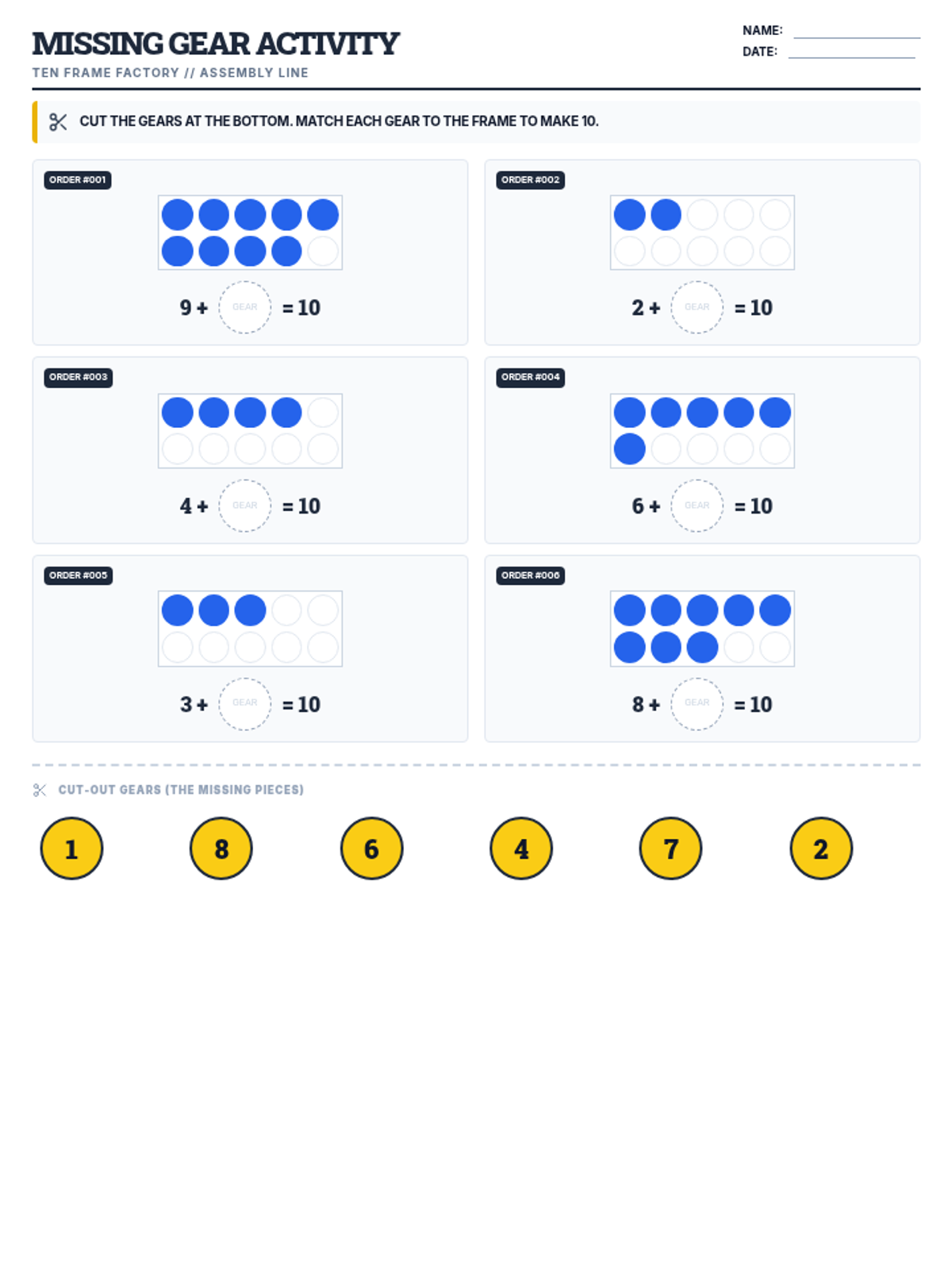
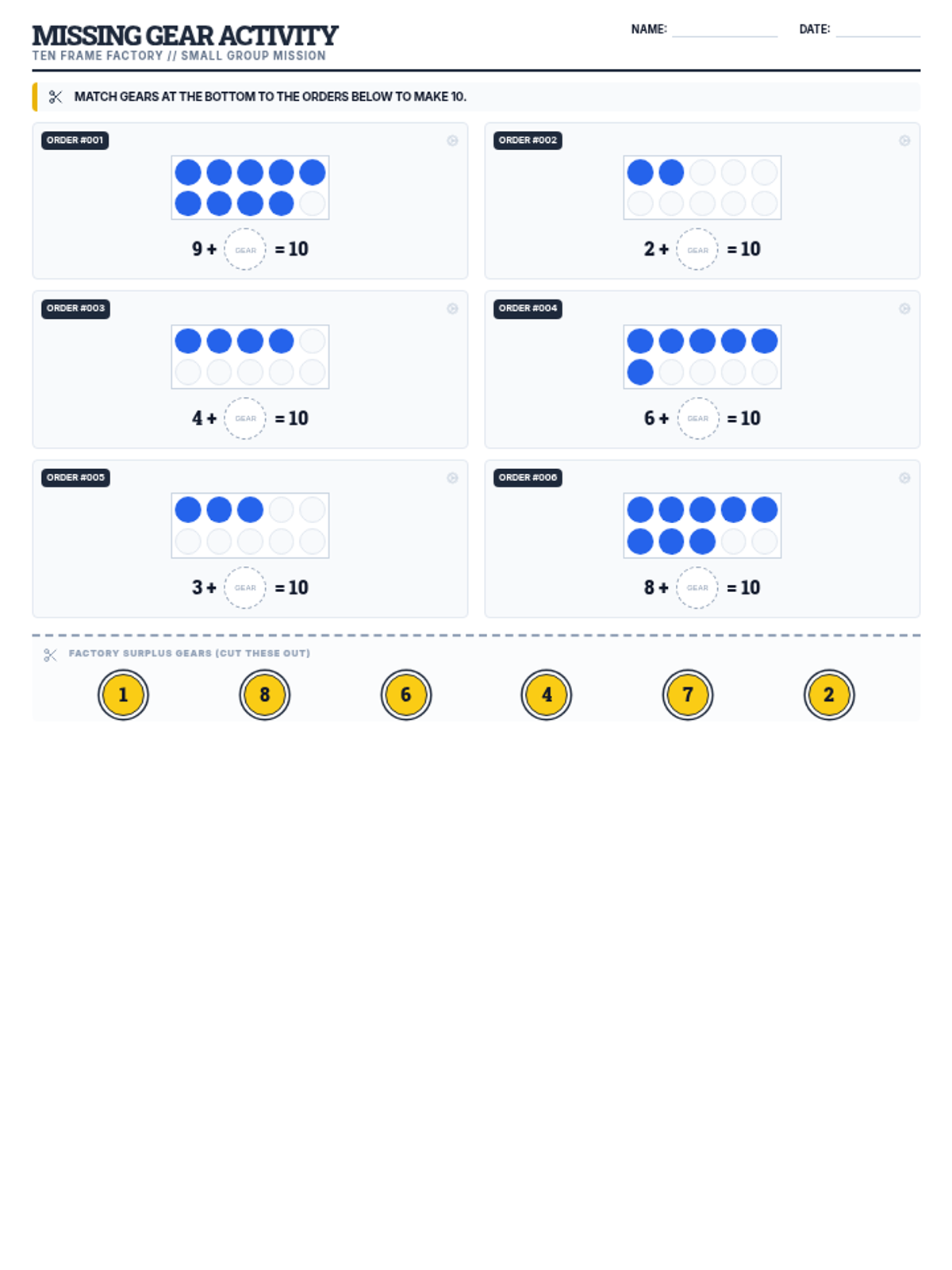
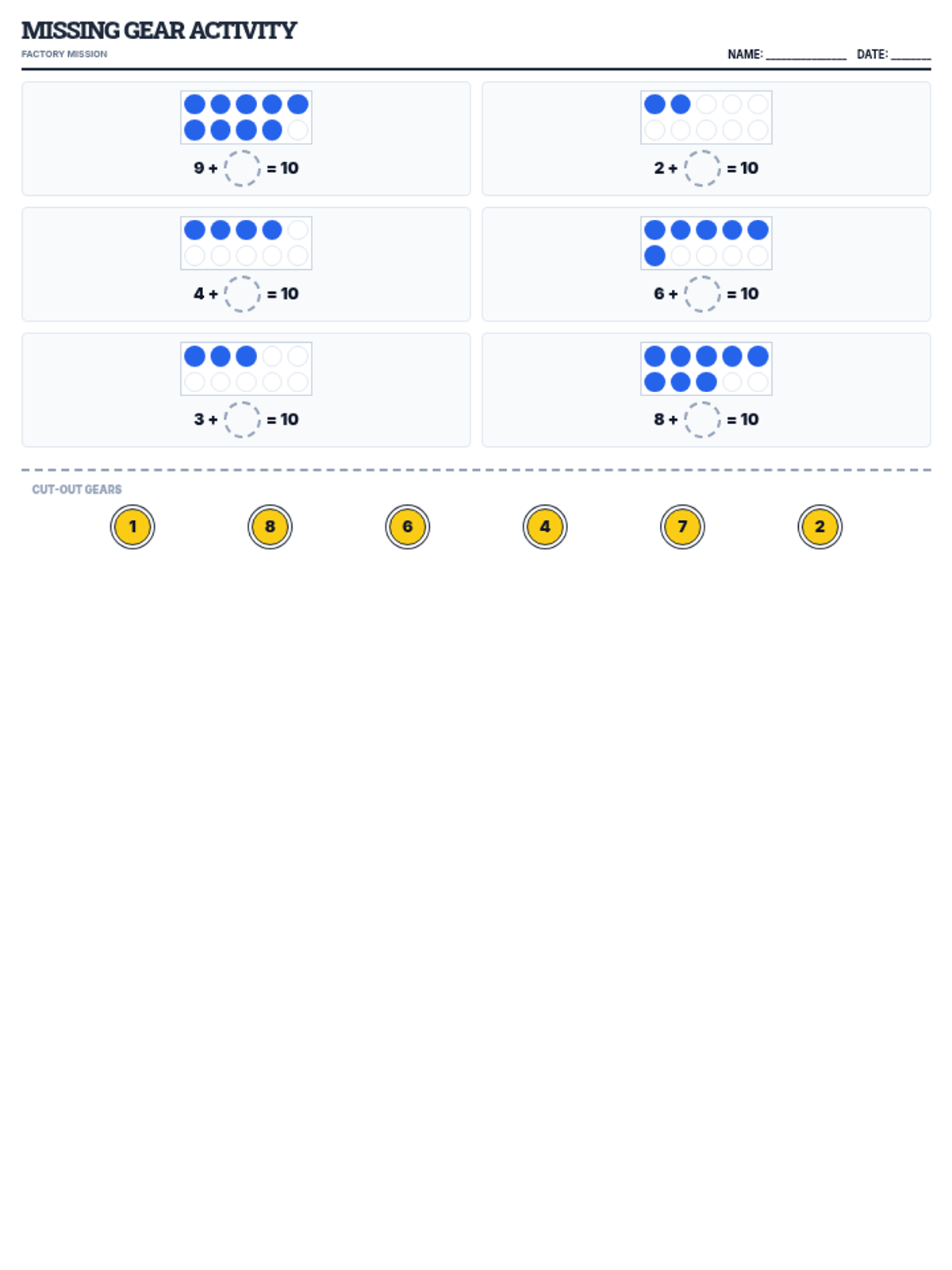
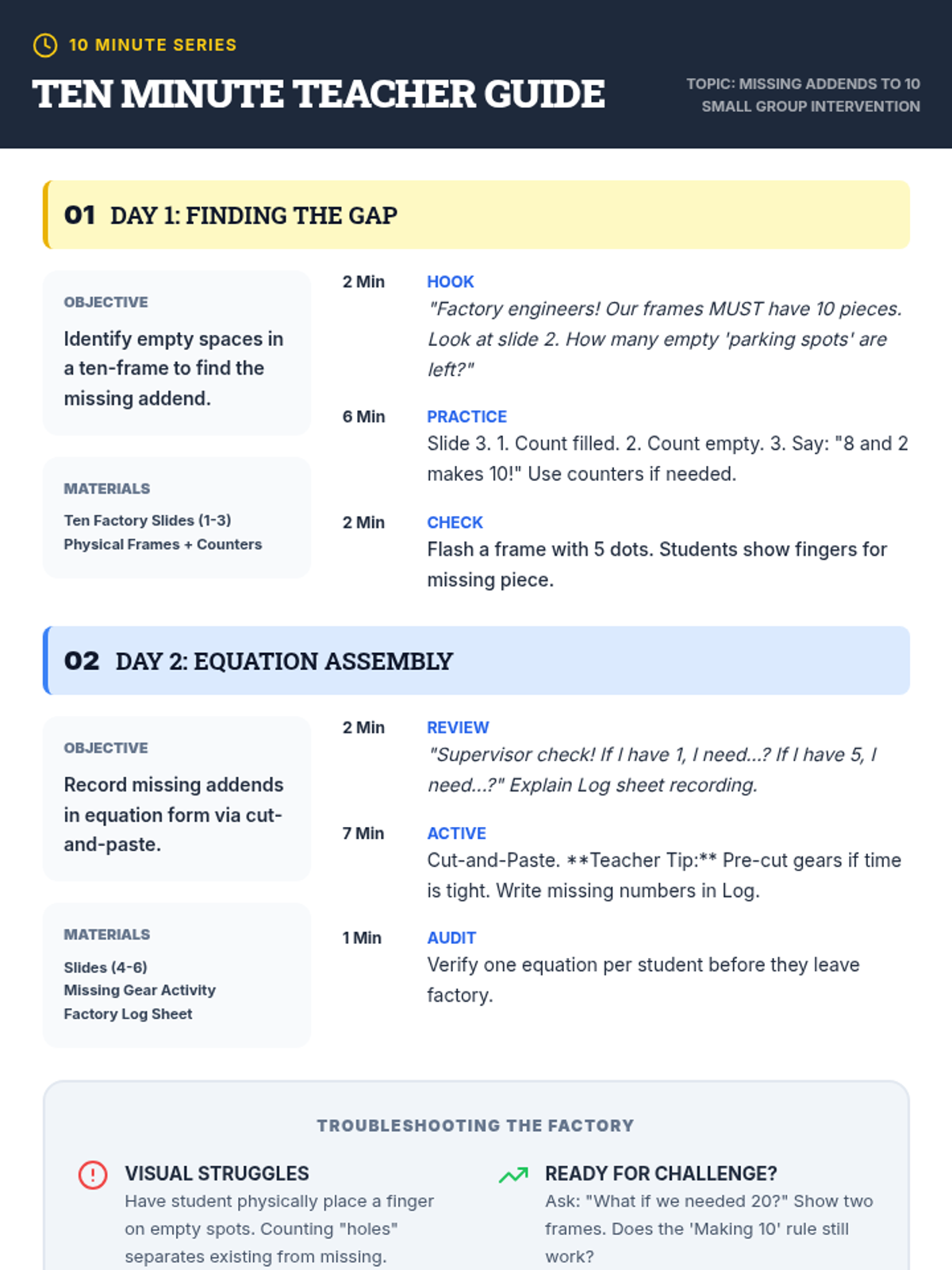
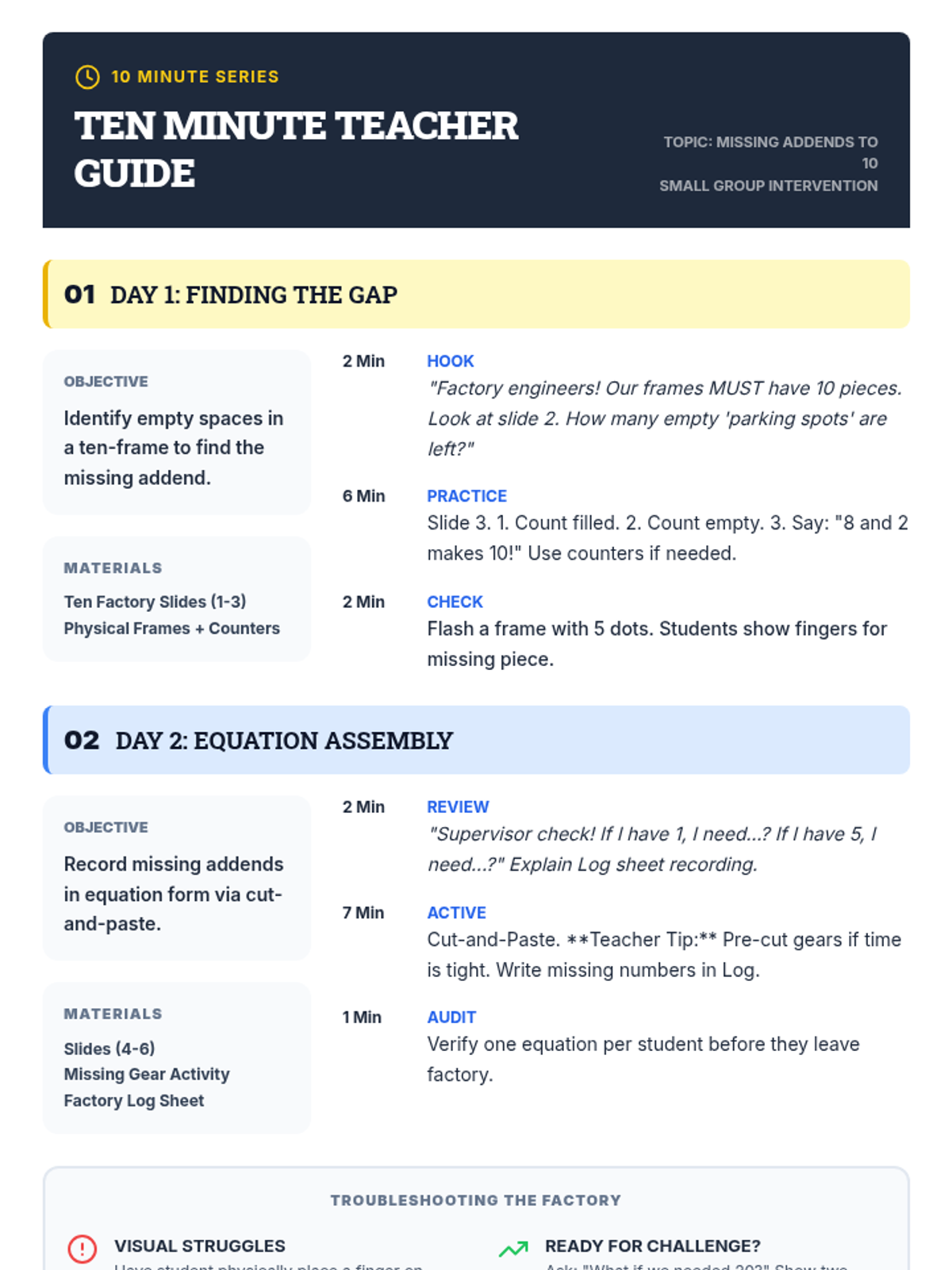
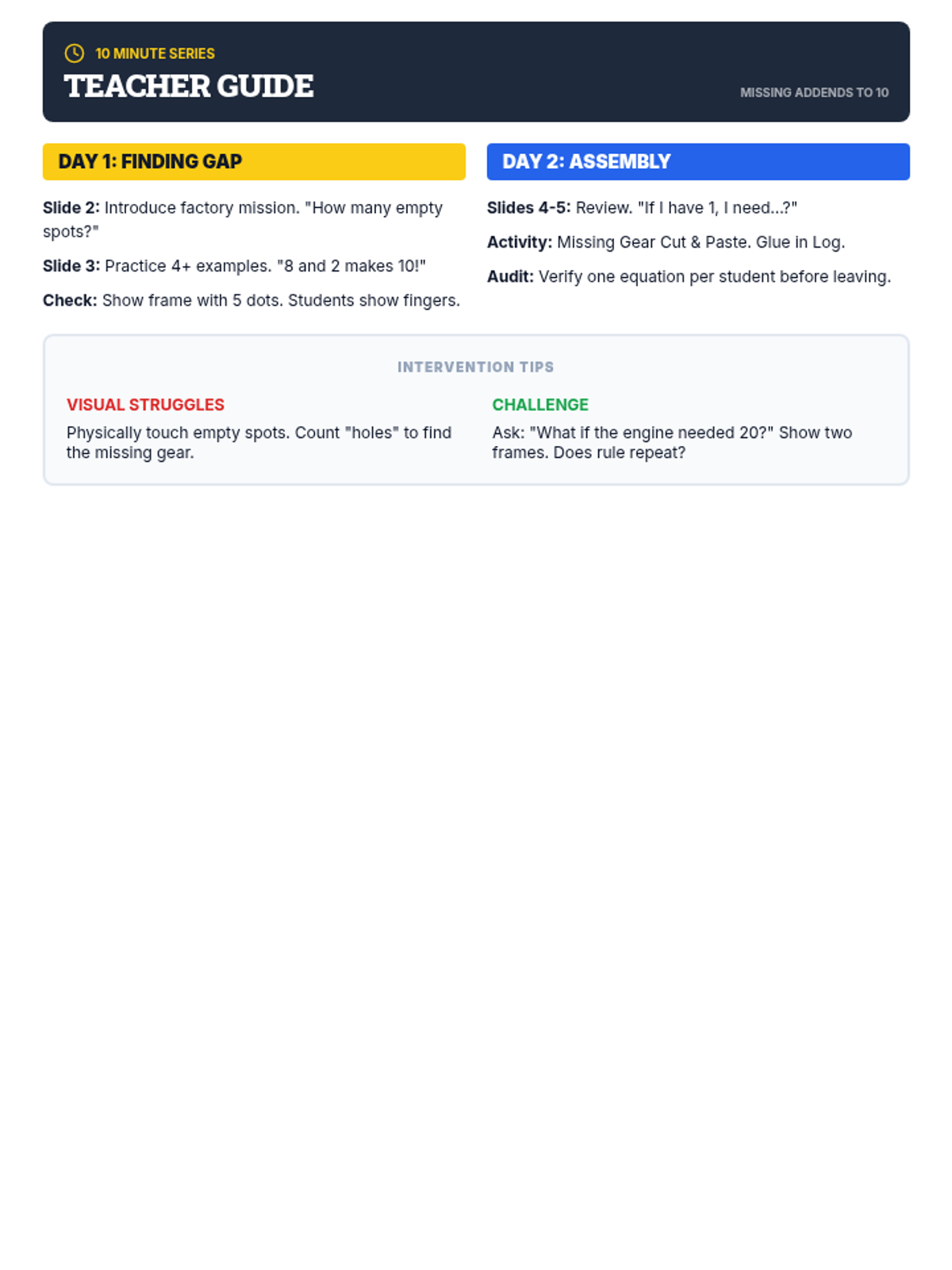
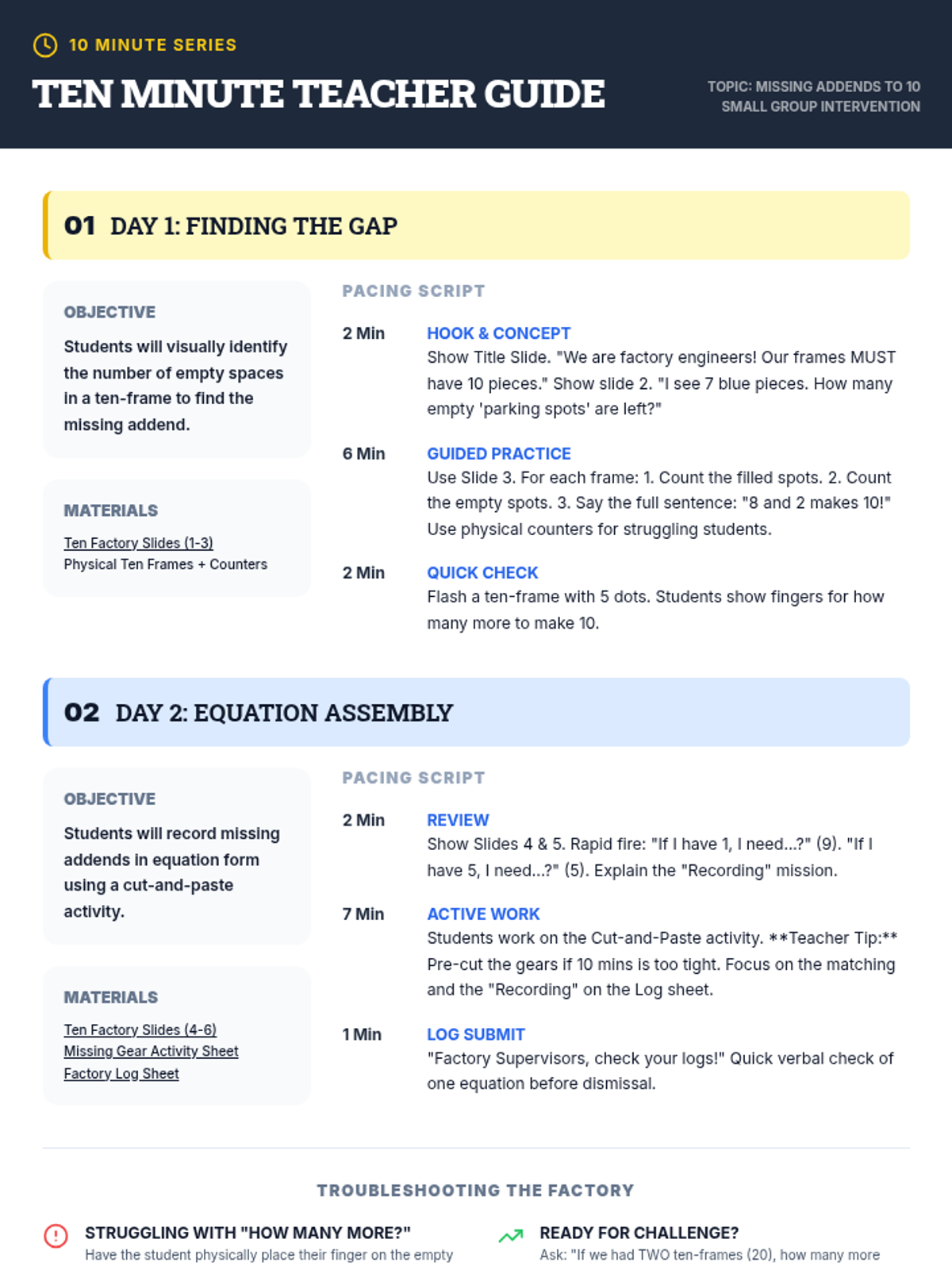
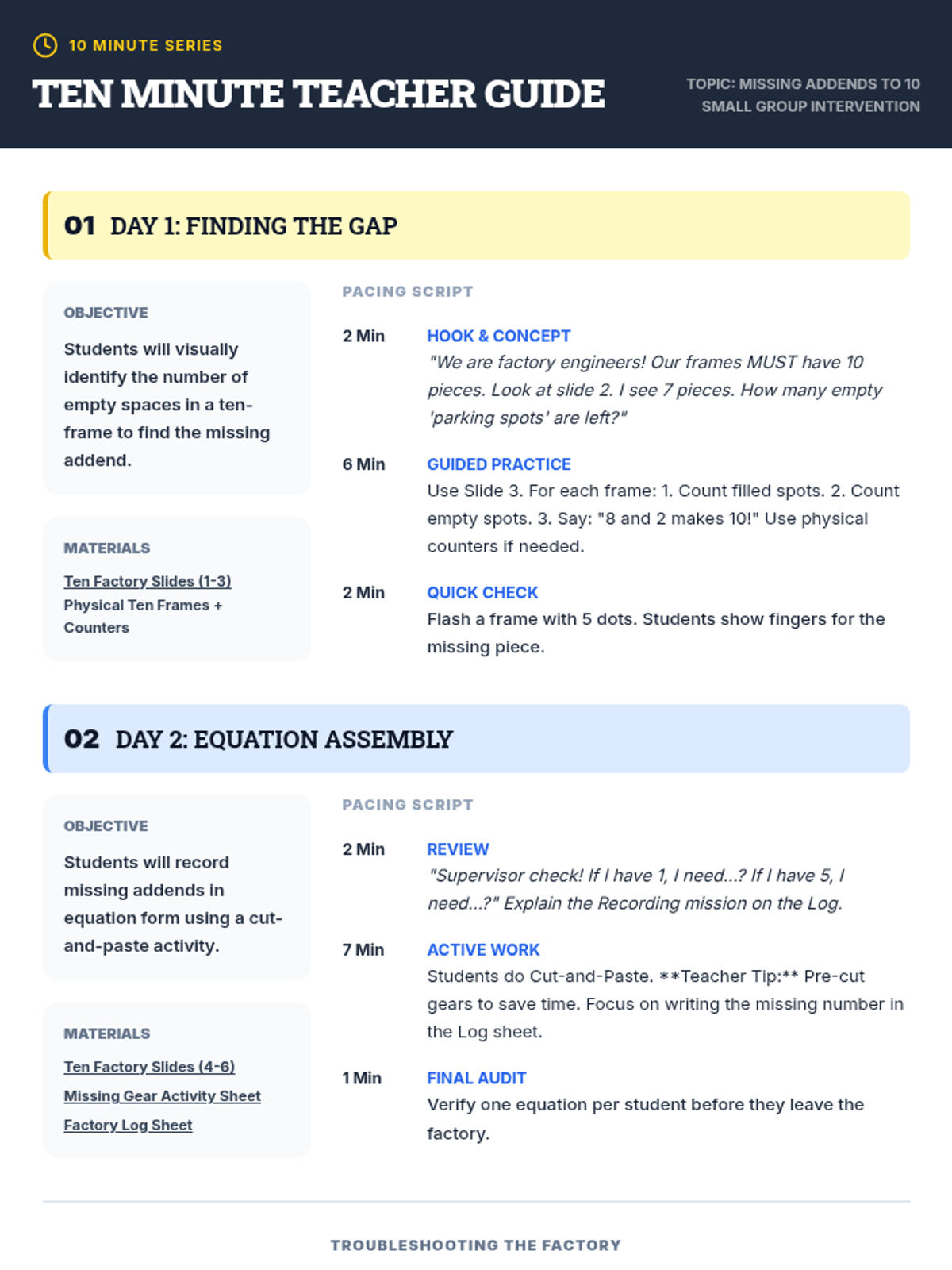
Transitions from visual ten-frames to writing equations through a hands-on cut-and-paste activity.
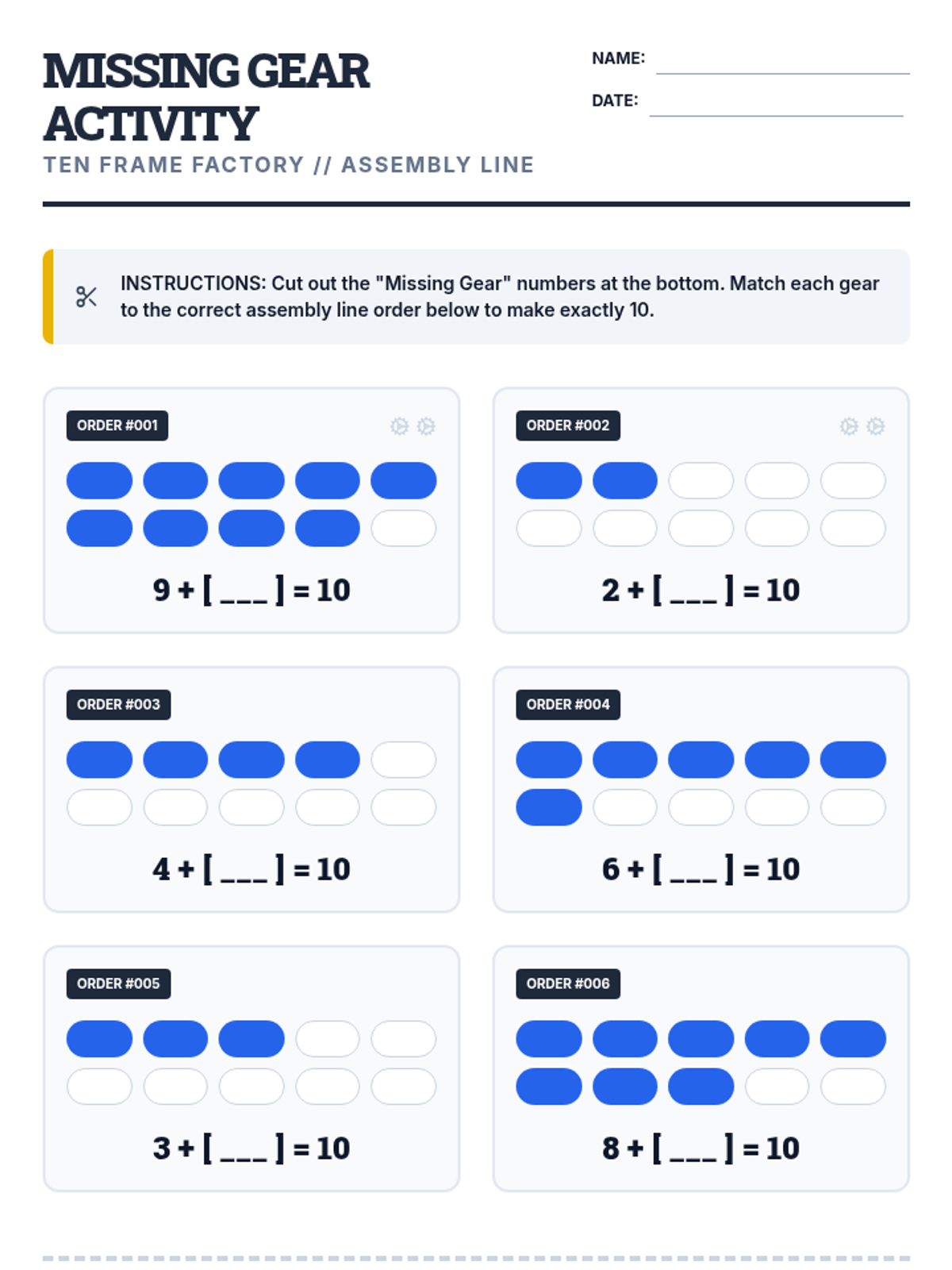
Focuses on visual identification of missing addends using ten-frames in a factory setting.
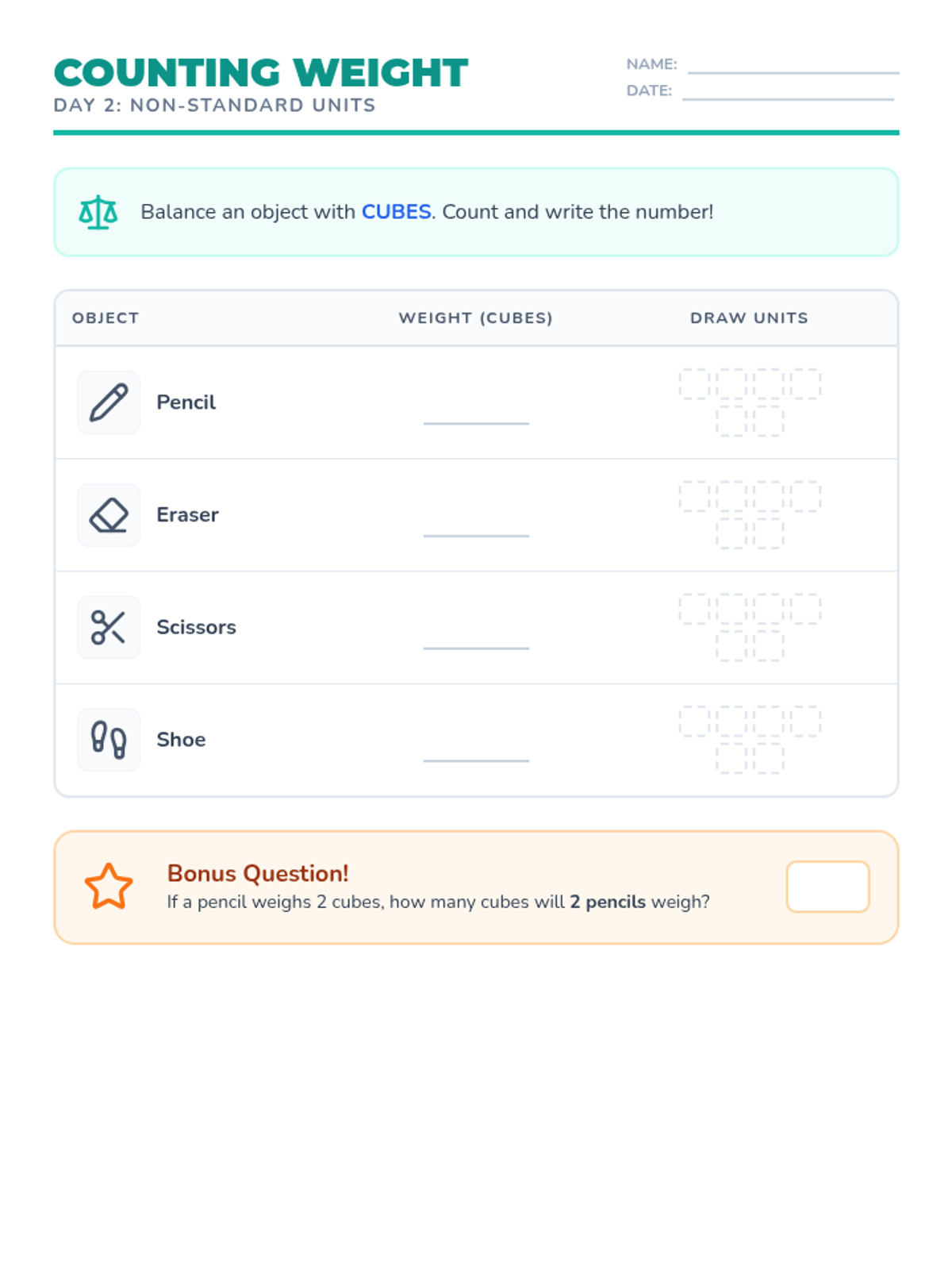
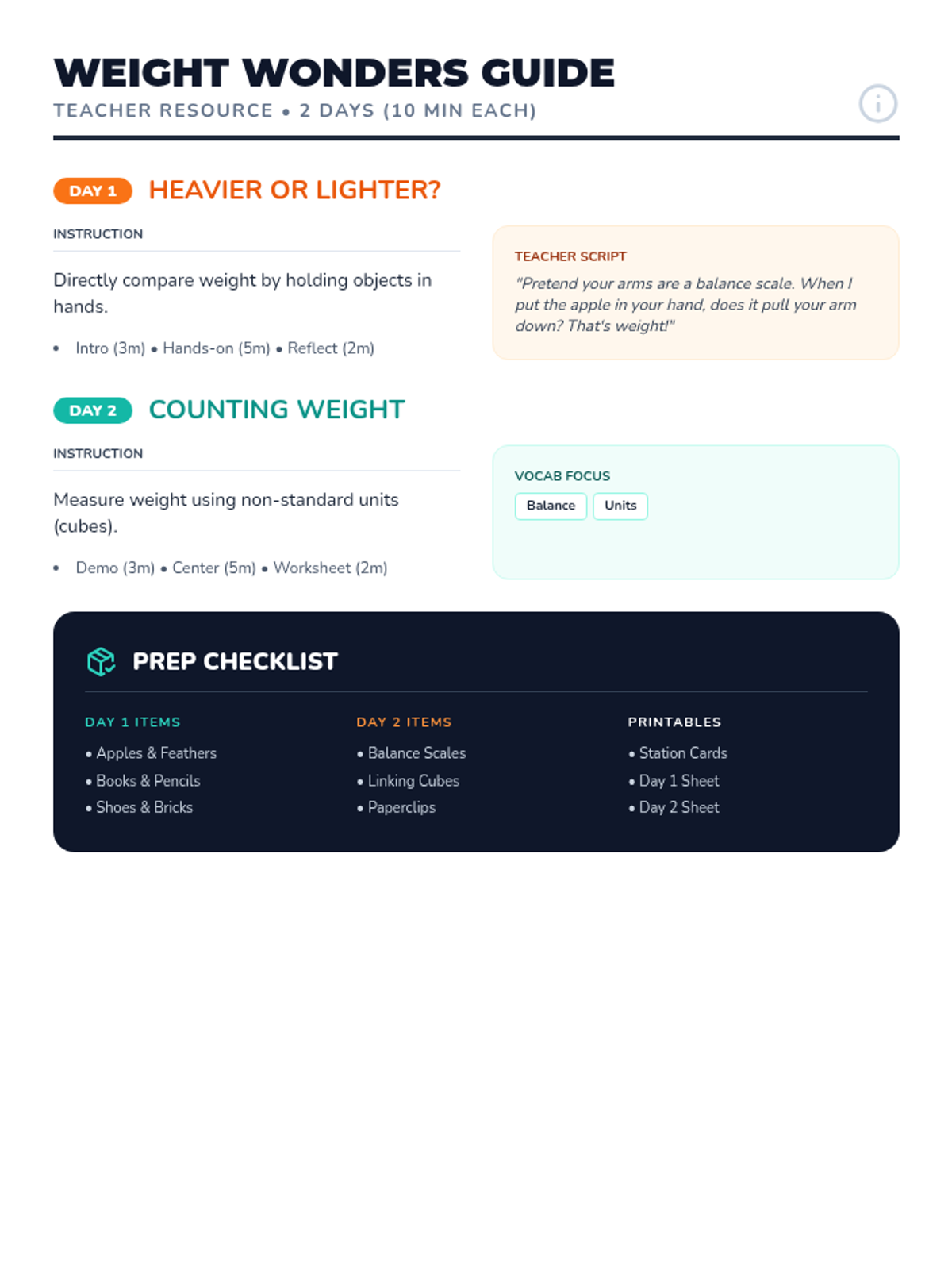
Students measure the weight of objects using non-standard units like cubes and paperclips with a balance scale.
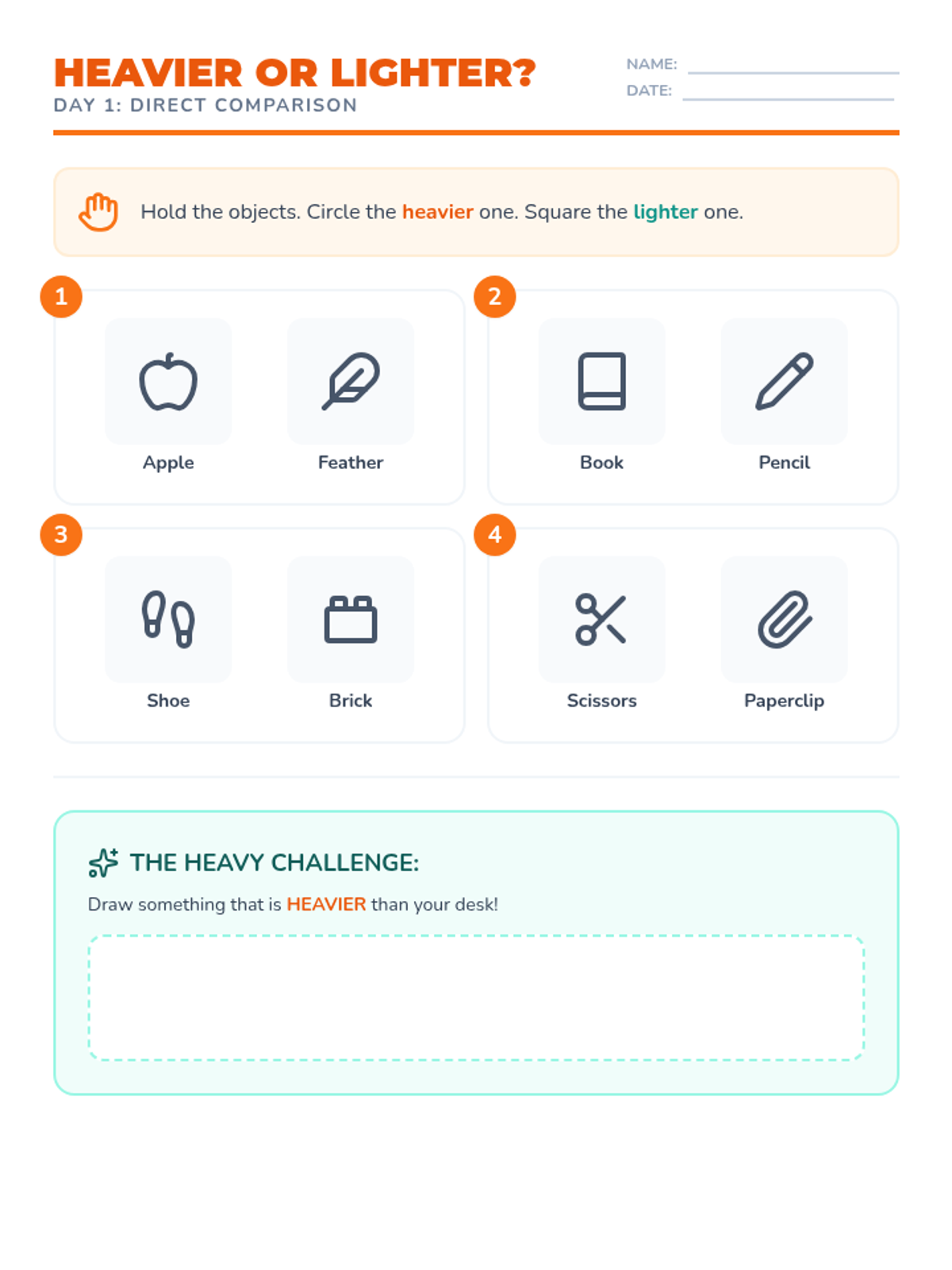
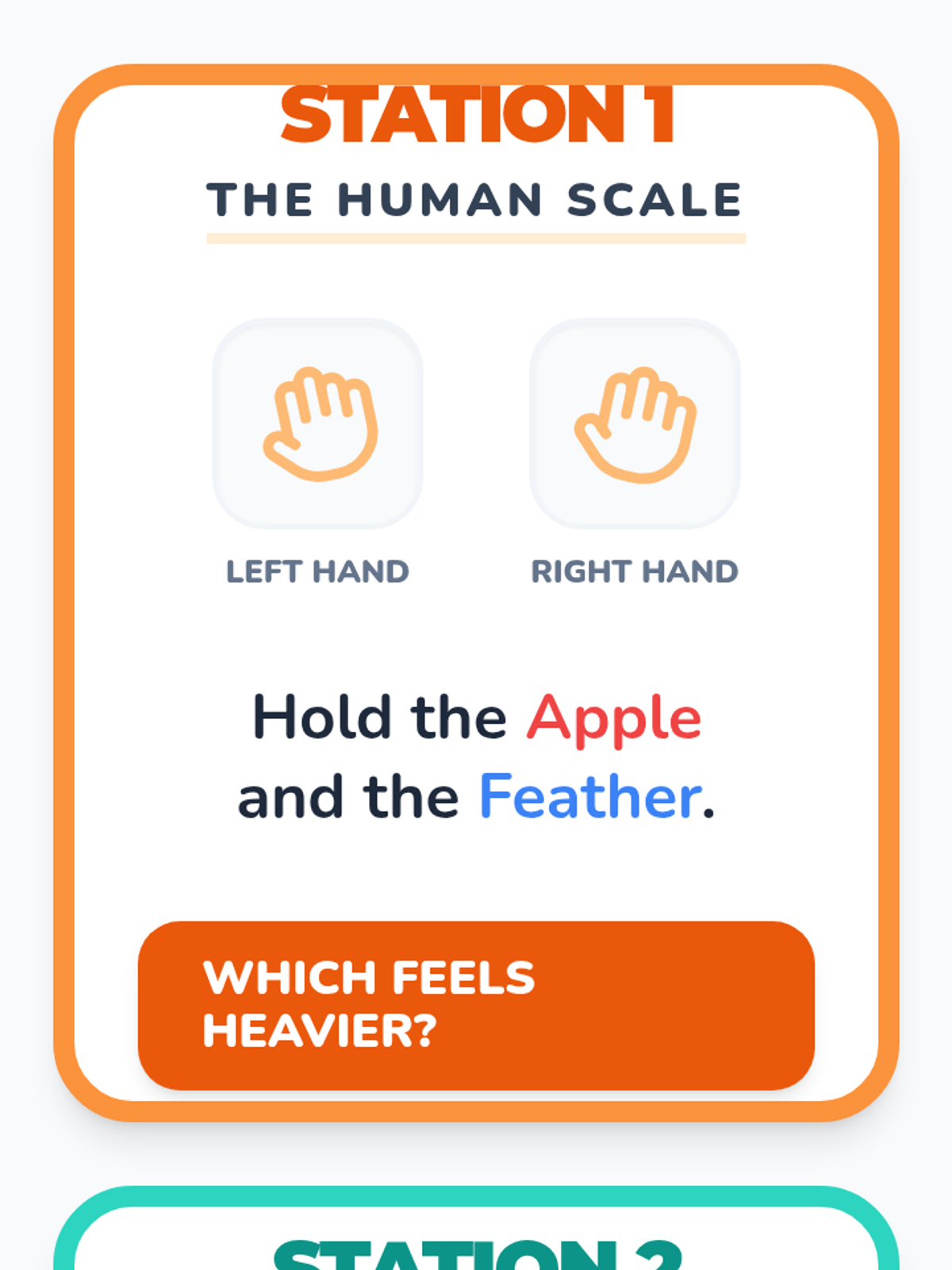
Students learn to compare the weight of two objects directly by holding them and using the terms 'heavier' and 'lighter'.
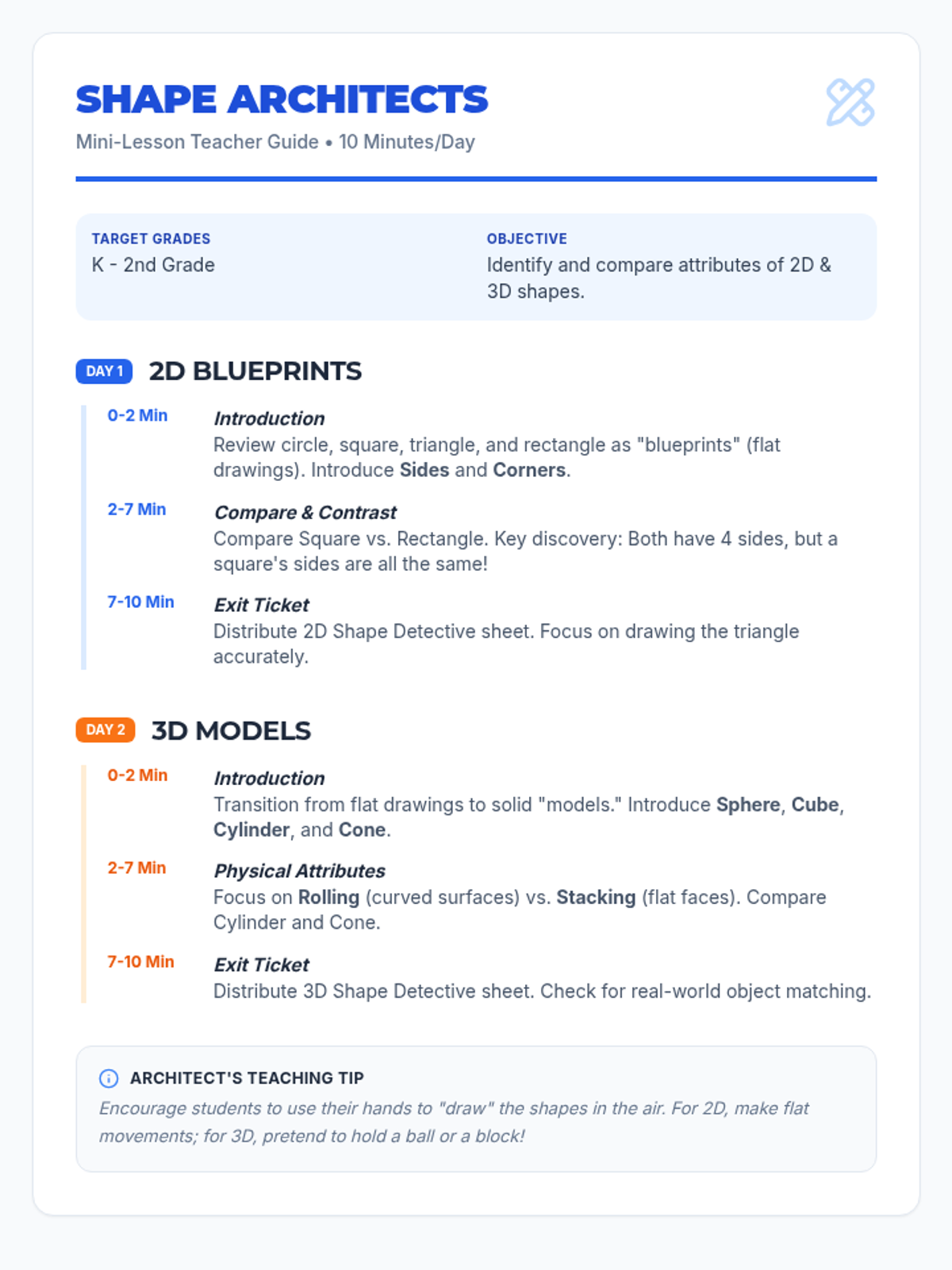
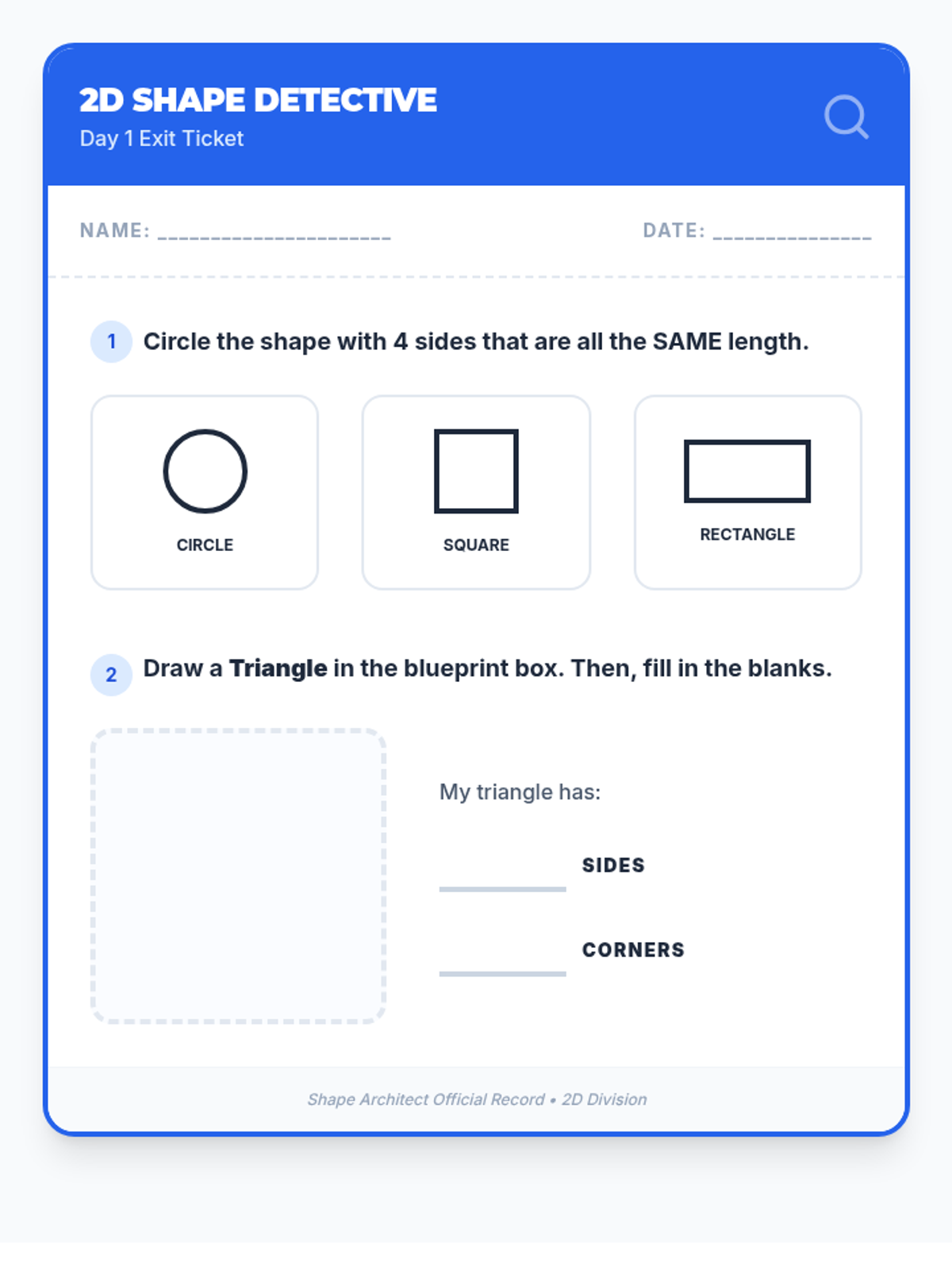
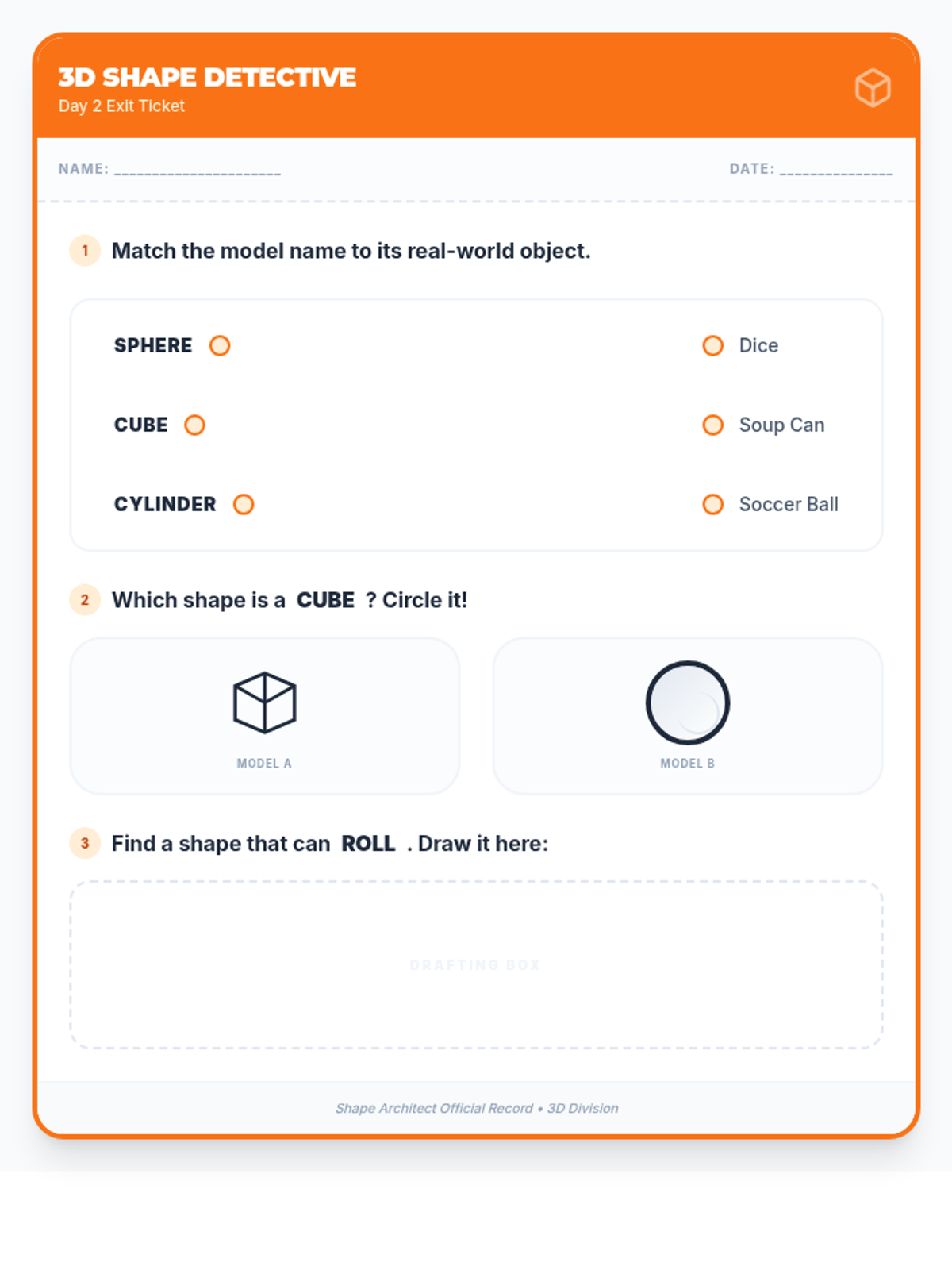
A two-day mini-lesson sequence focused on identifying, describing, and comparing 2D and 3D shapes through the lens of a "Shape Architect". Day 1 covers flat shapes (circles, squares, triangles, rectangles), while Day 2 explores solid shapes (spheres, cubes, cylinders, cones).
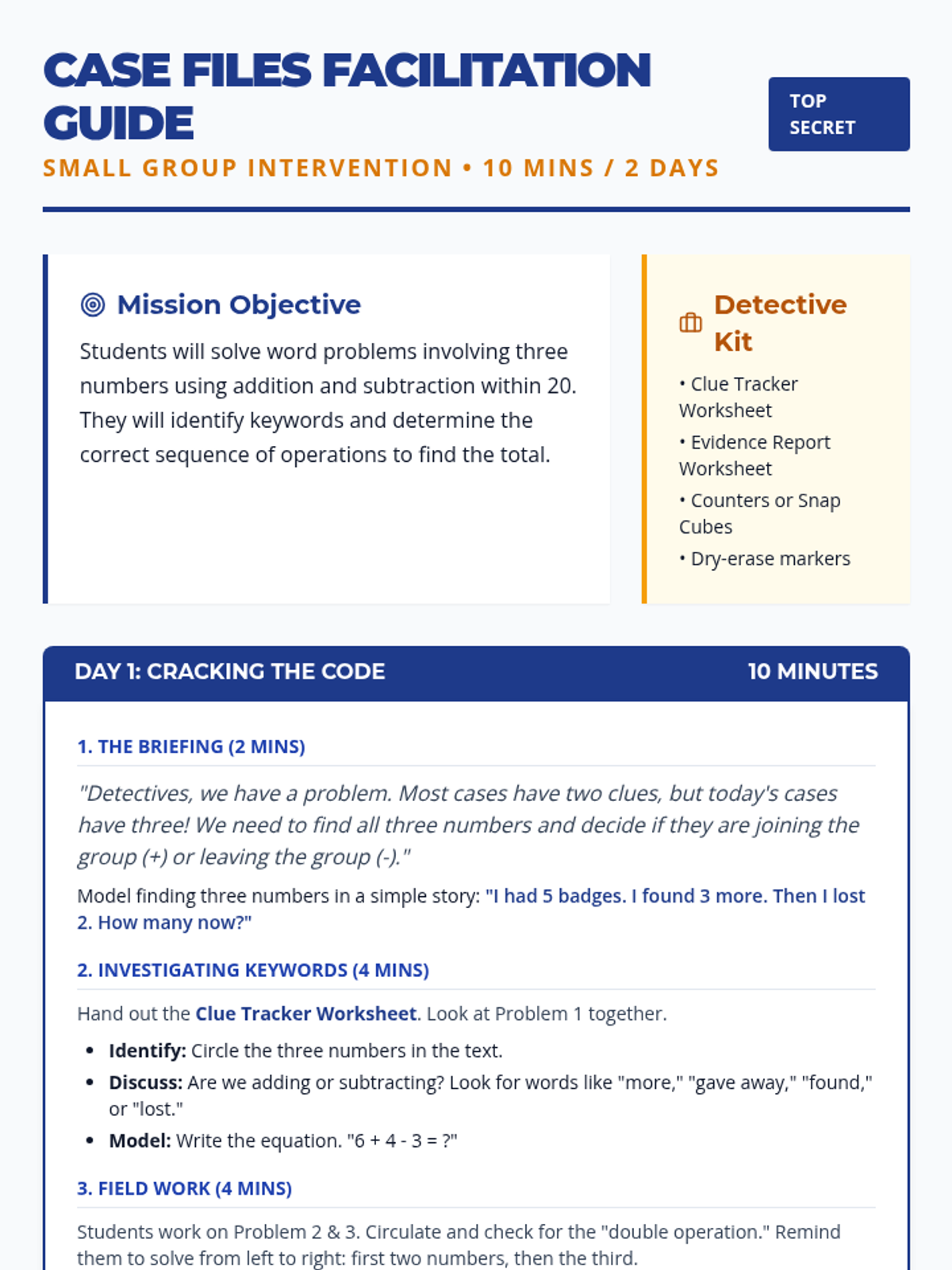
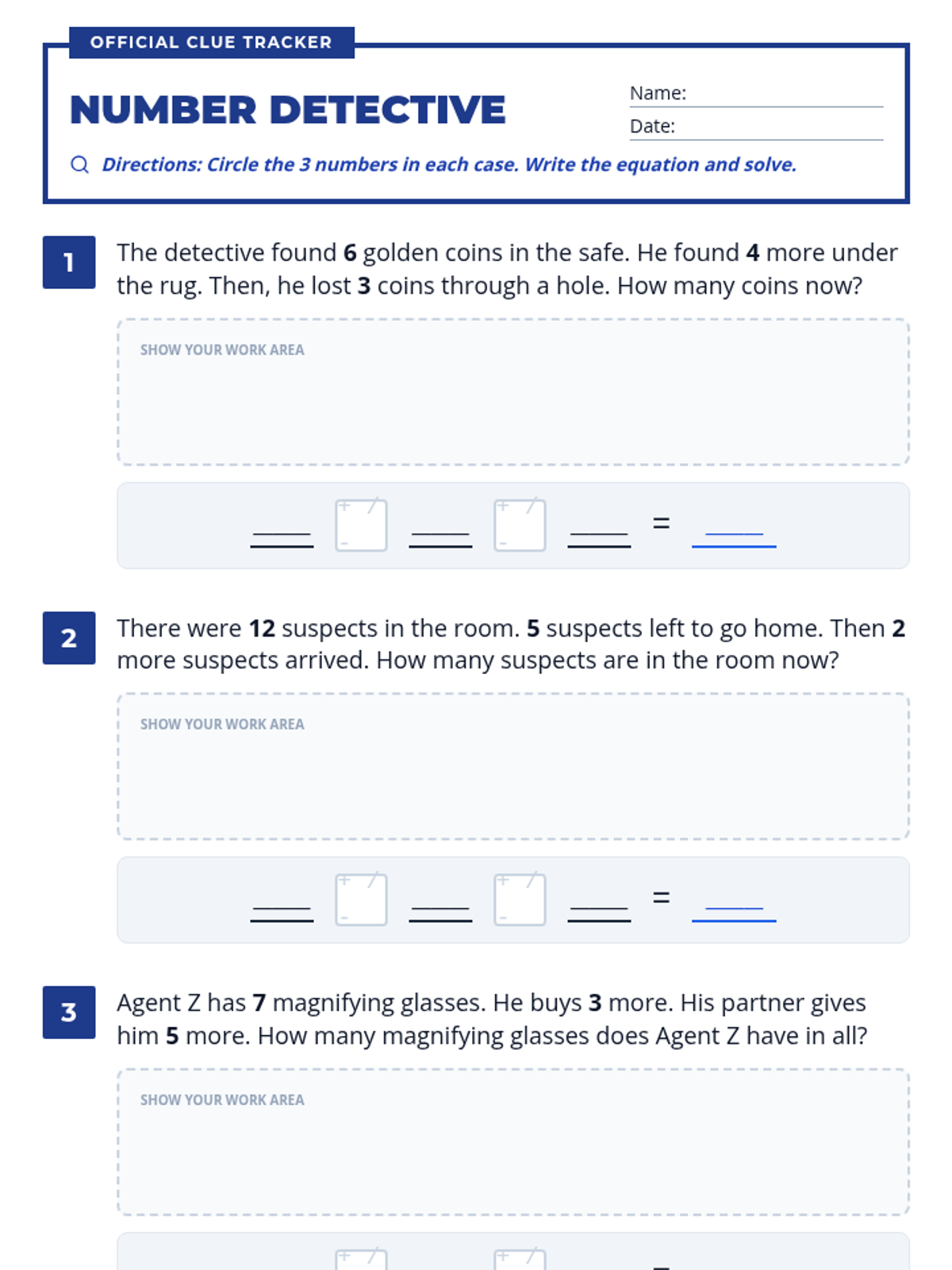
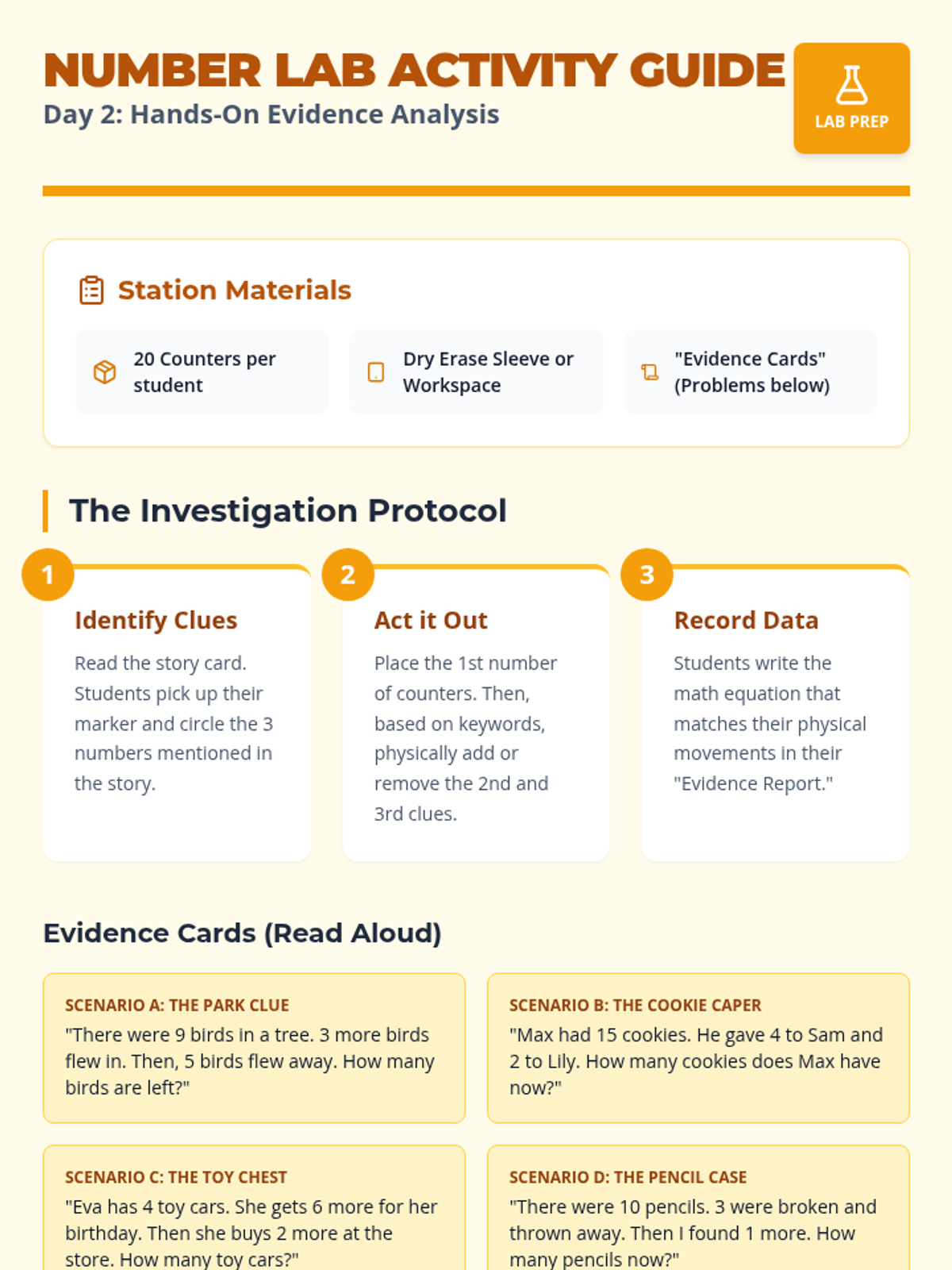
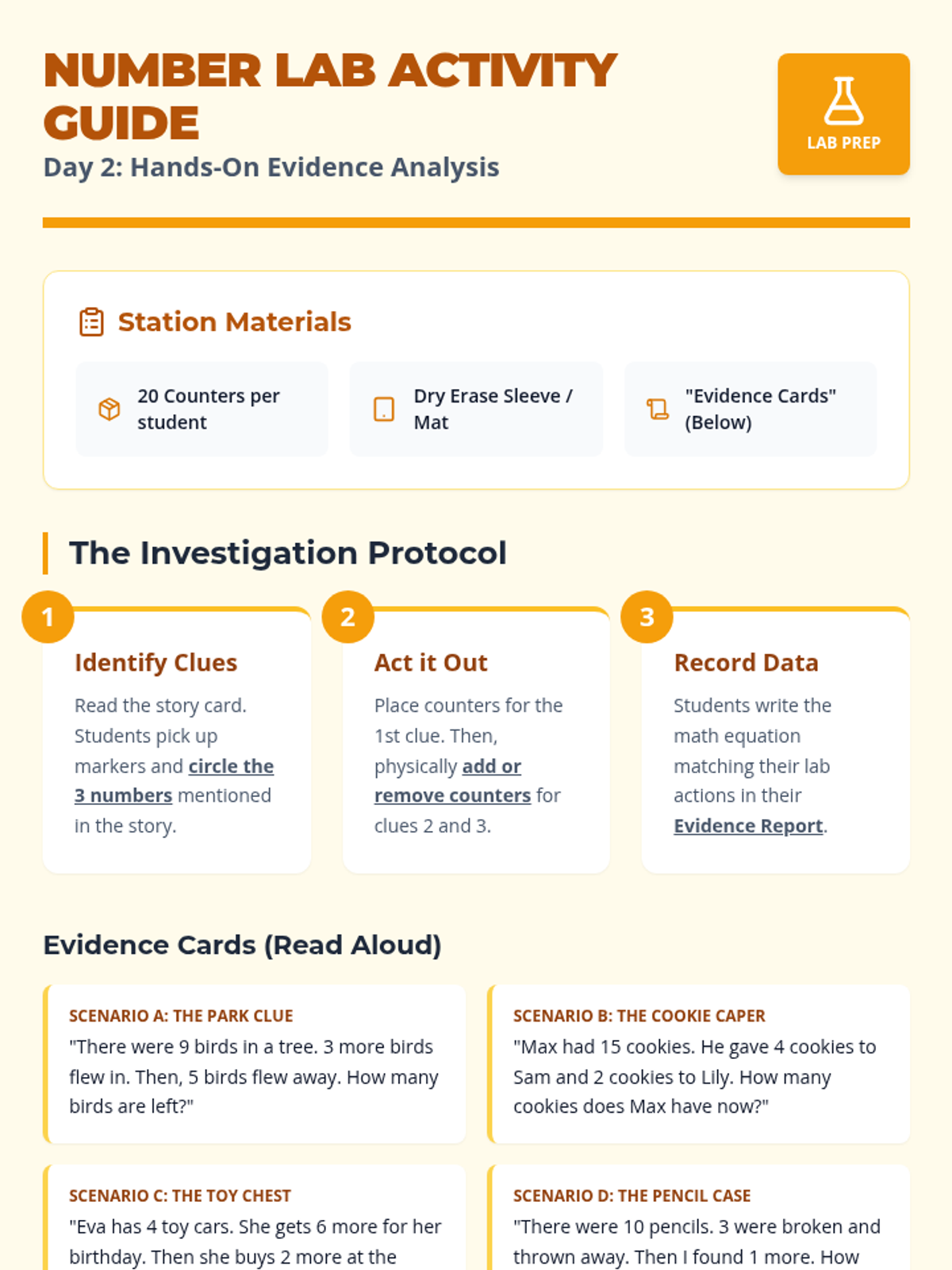
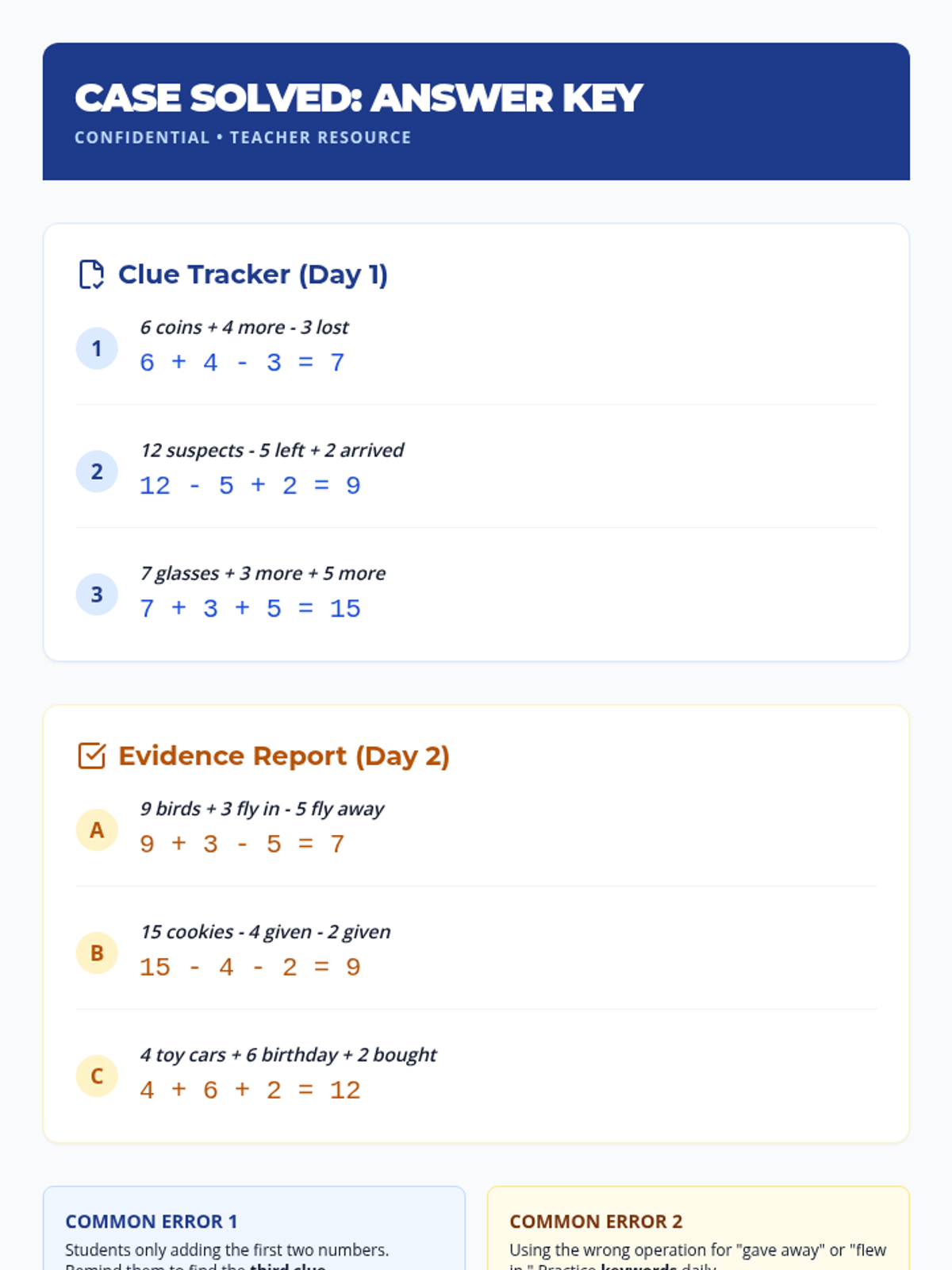
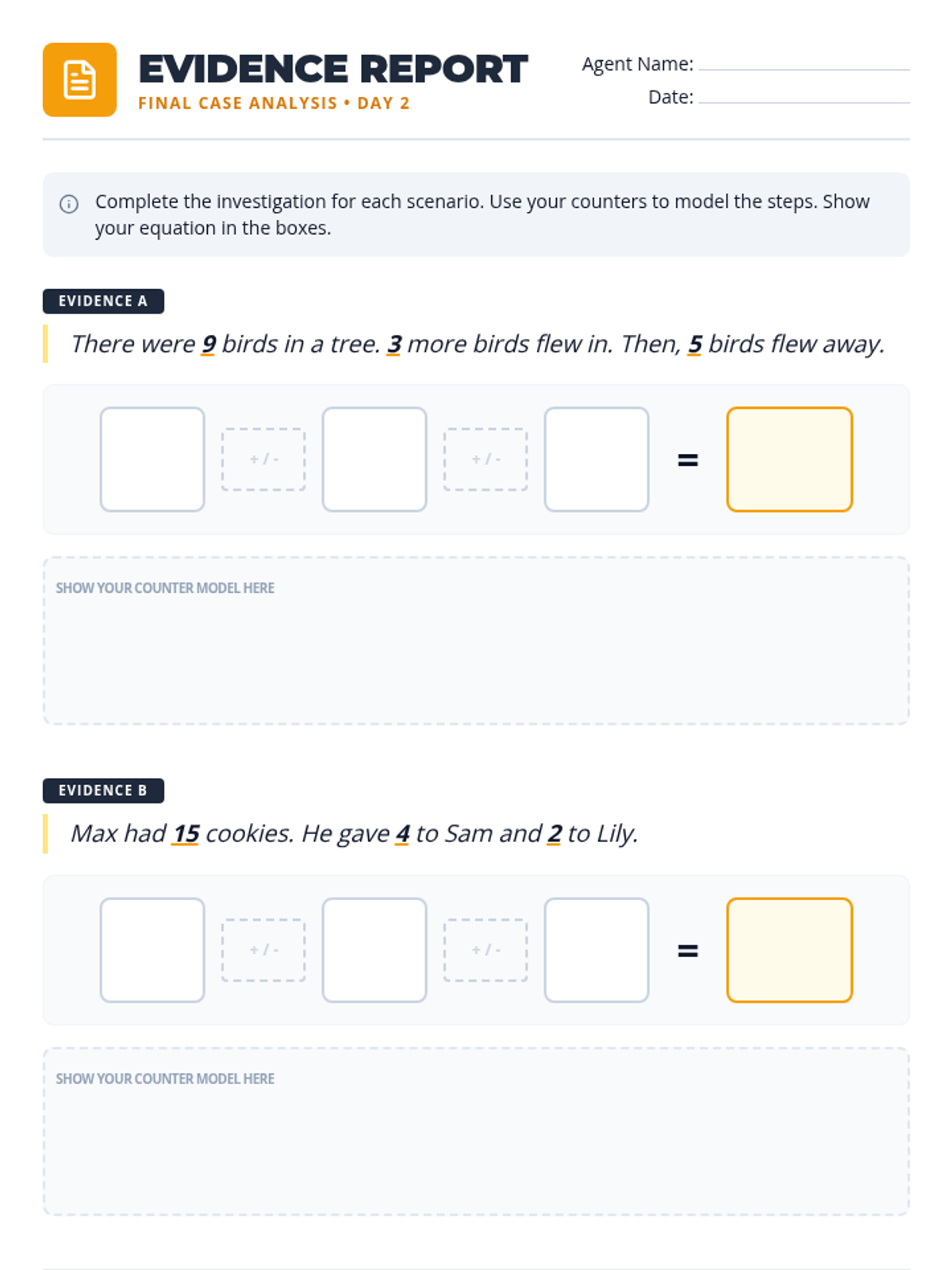
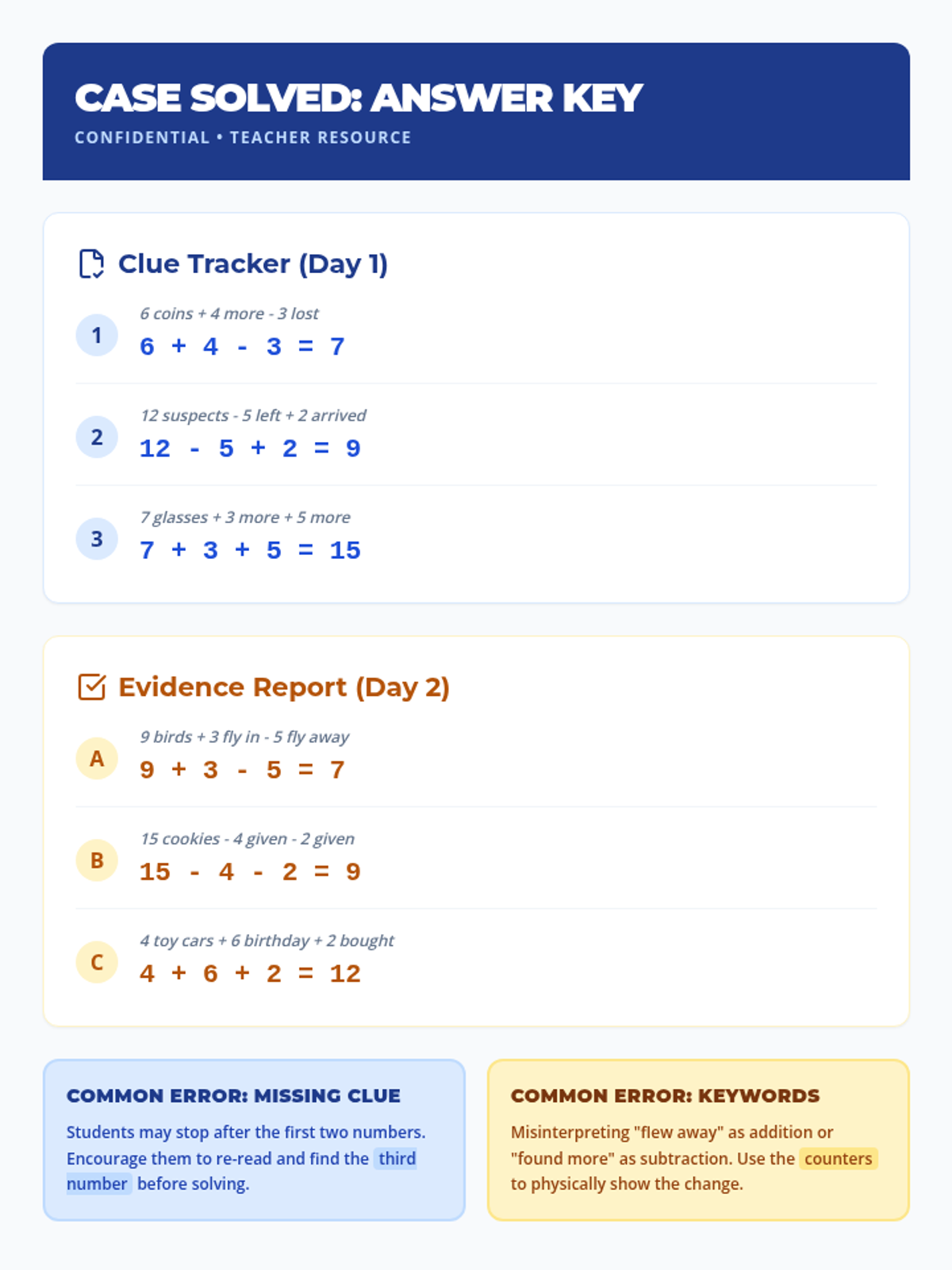
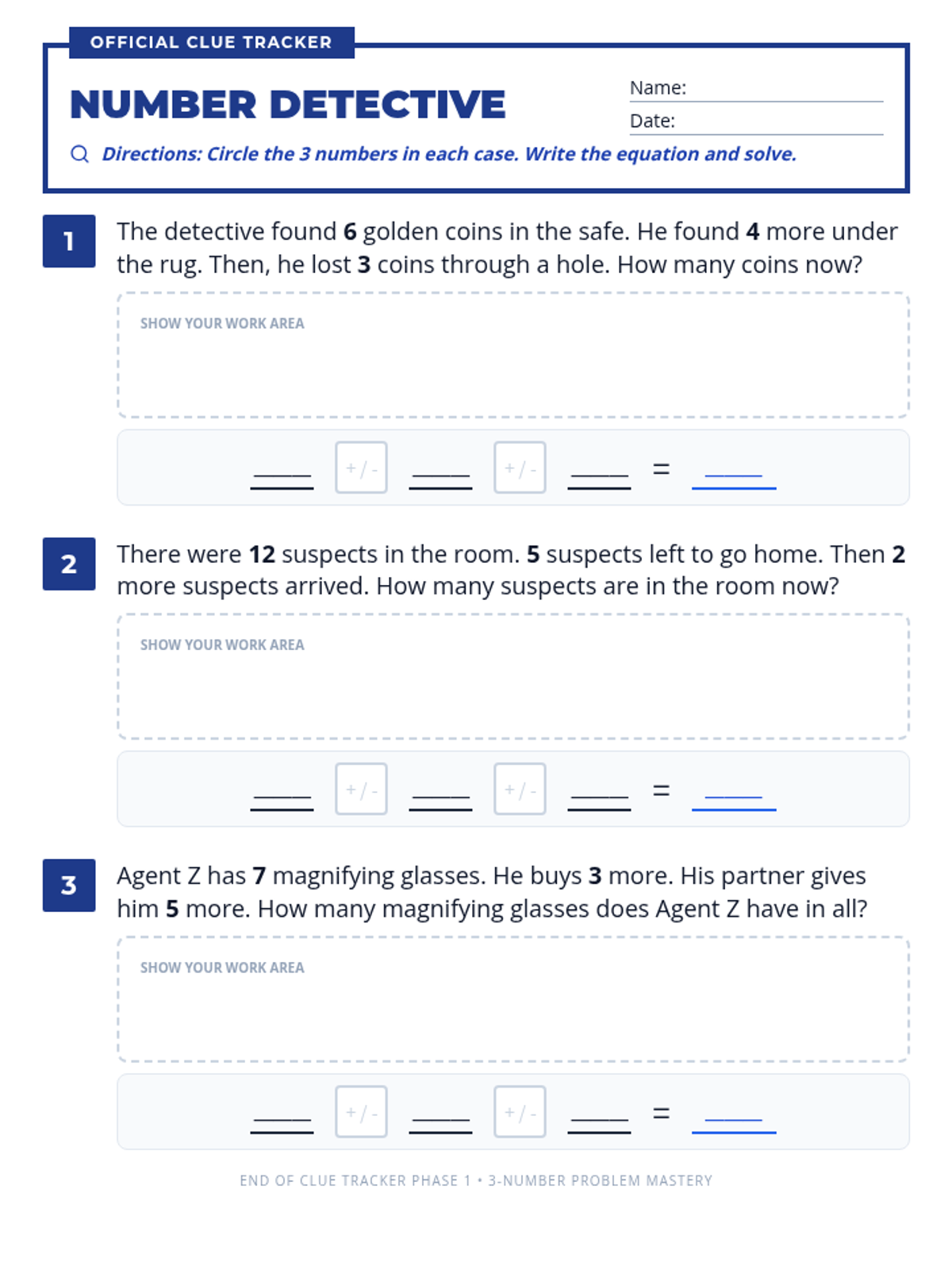
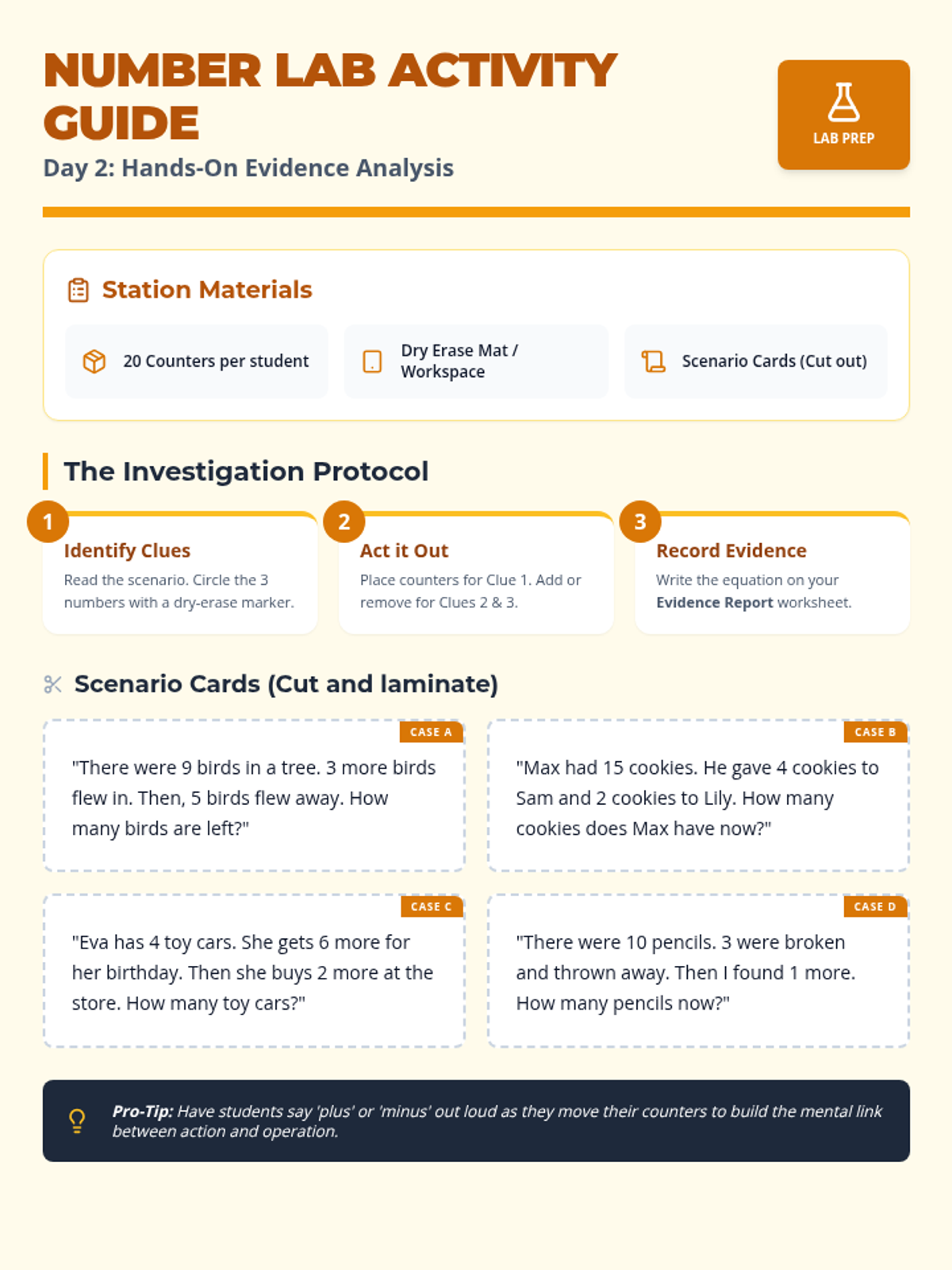
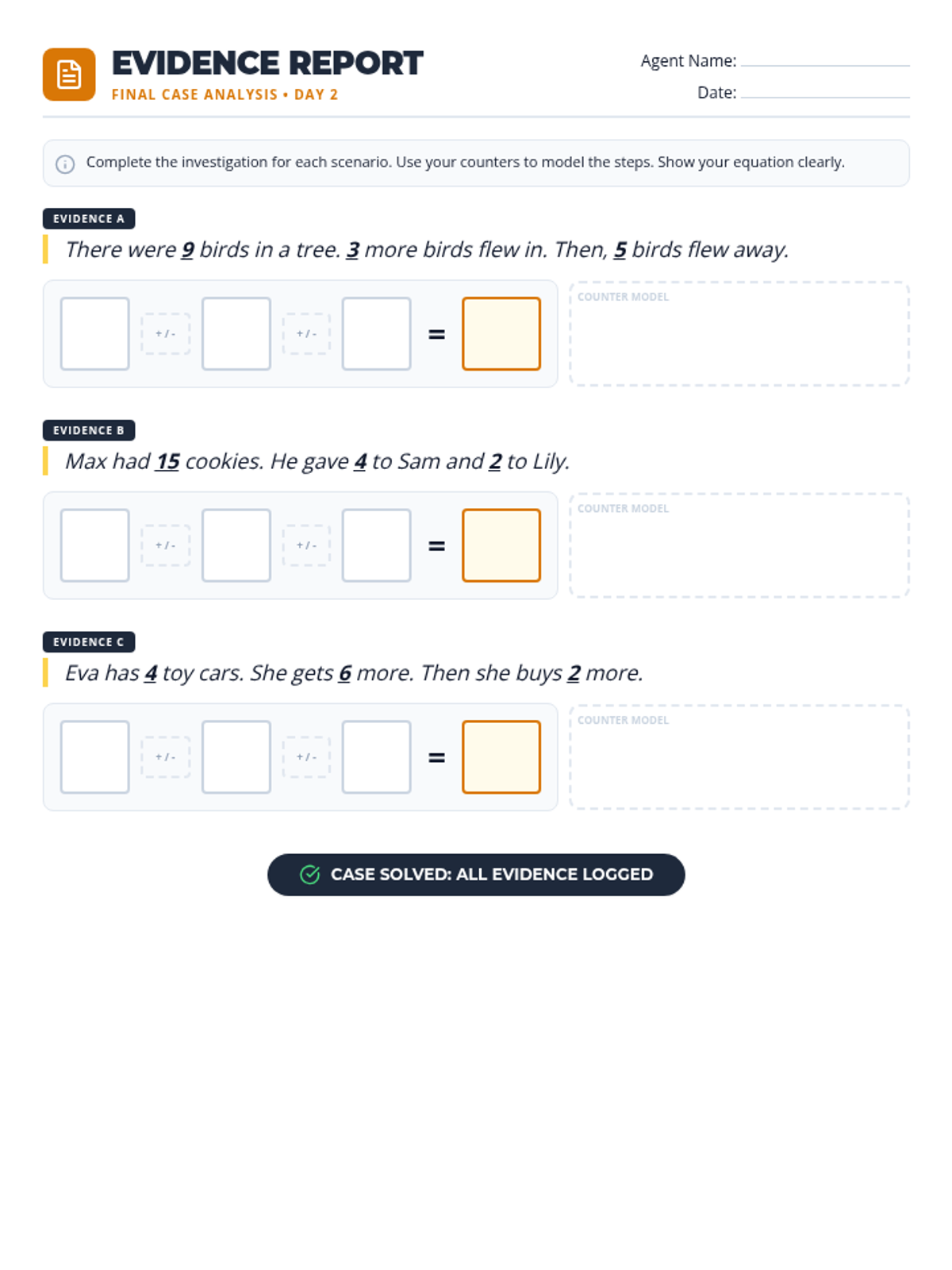
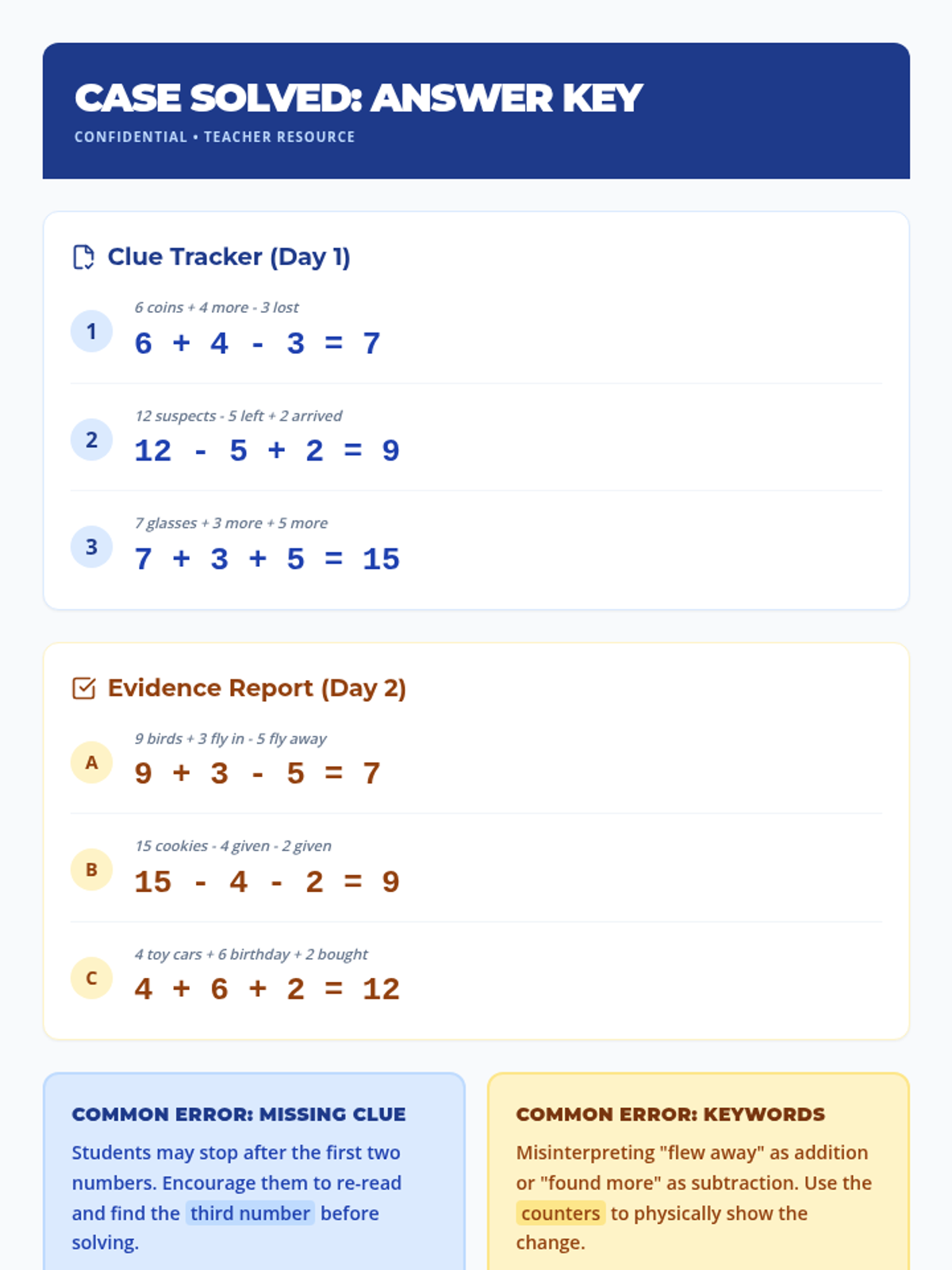
A 10-minute small group lesson split over two days focusing on decoding and solving three-number word problems using addition and subtraction.
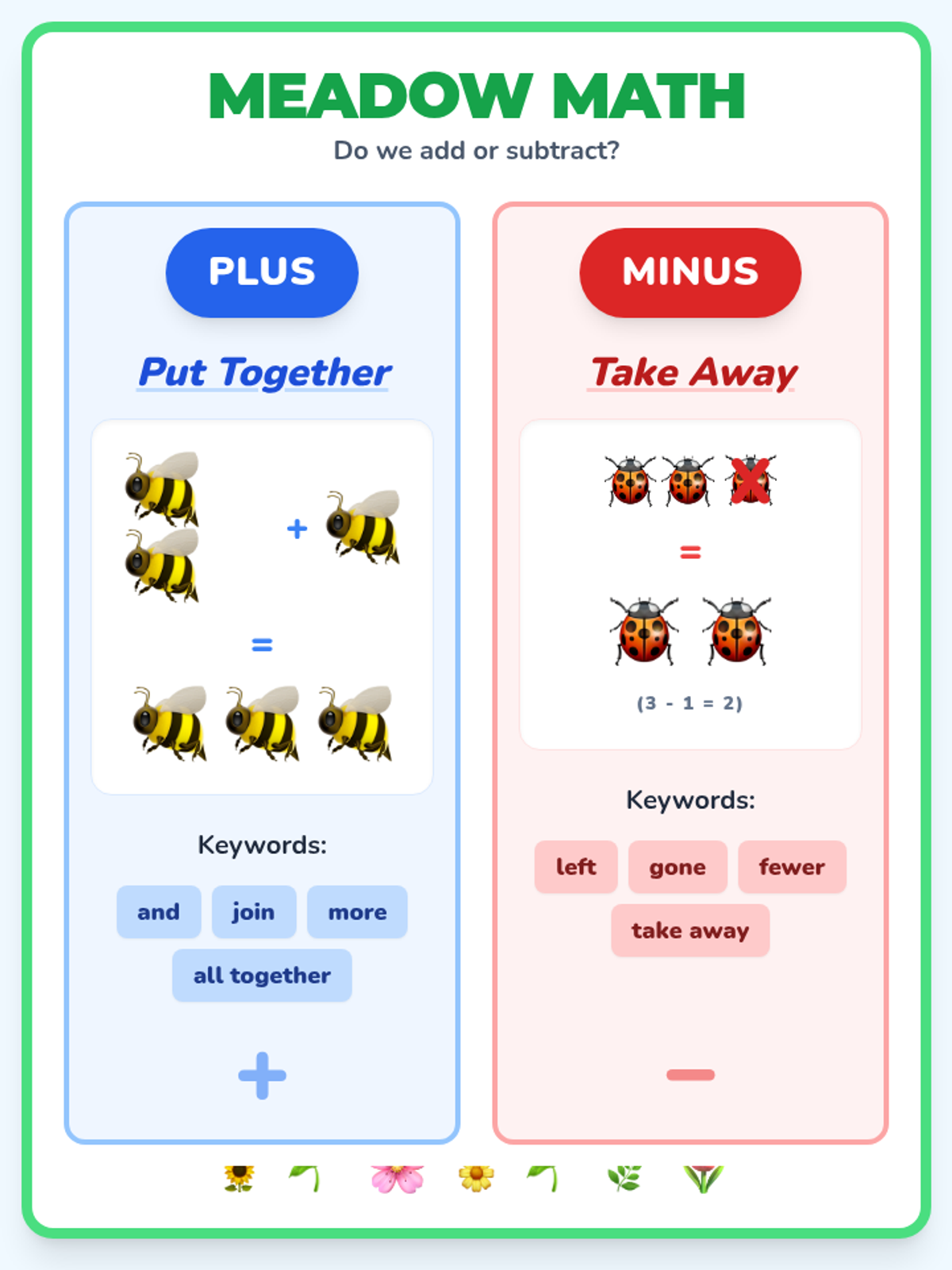
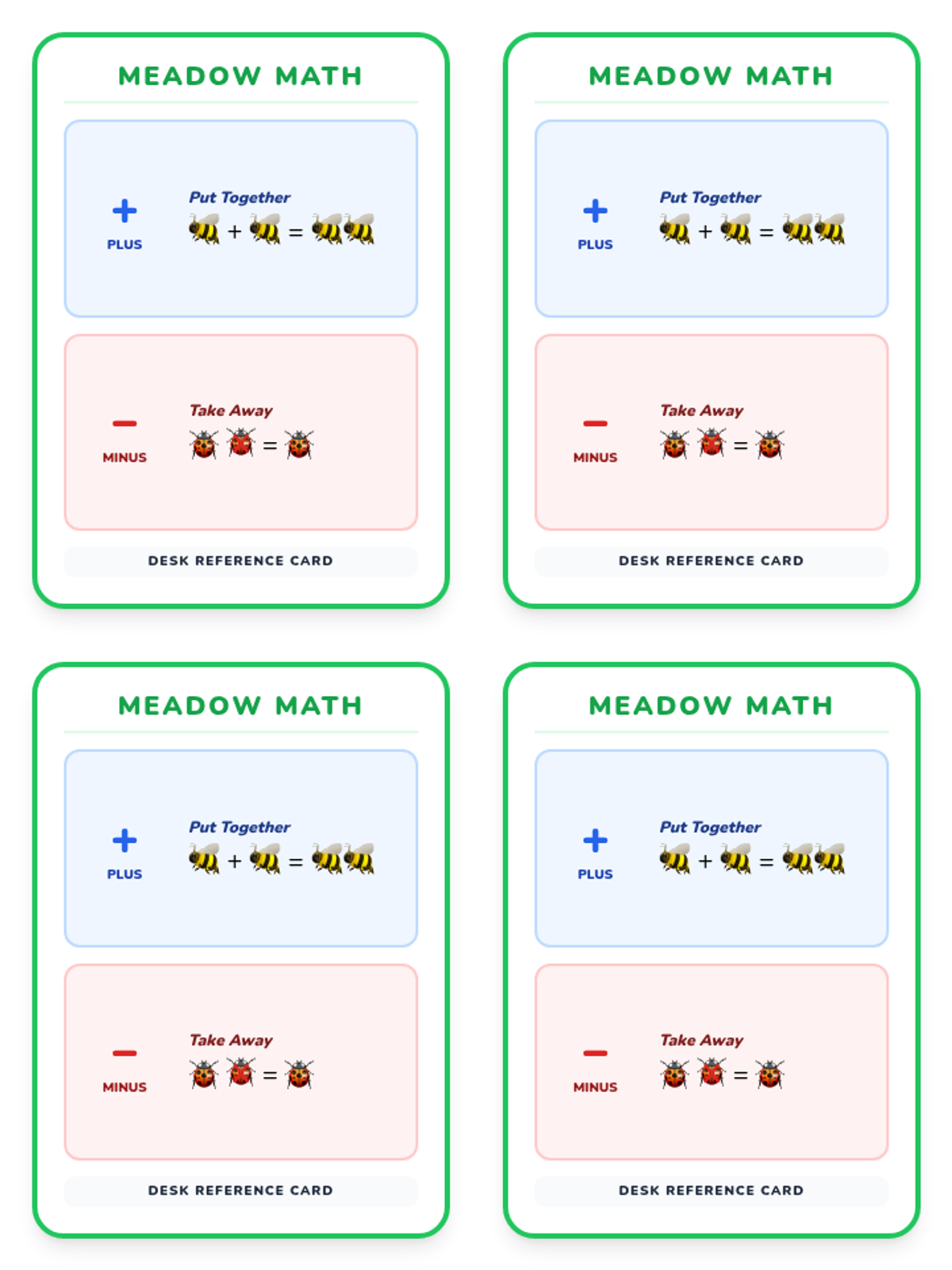
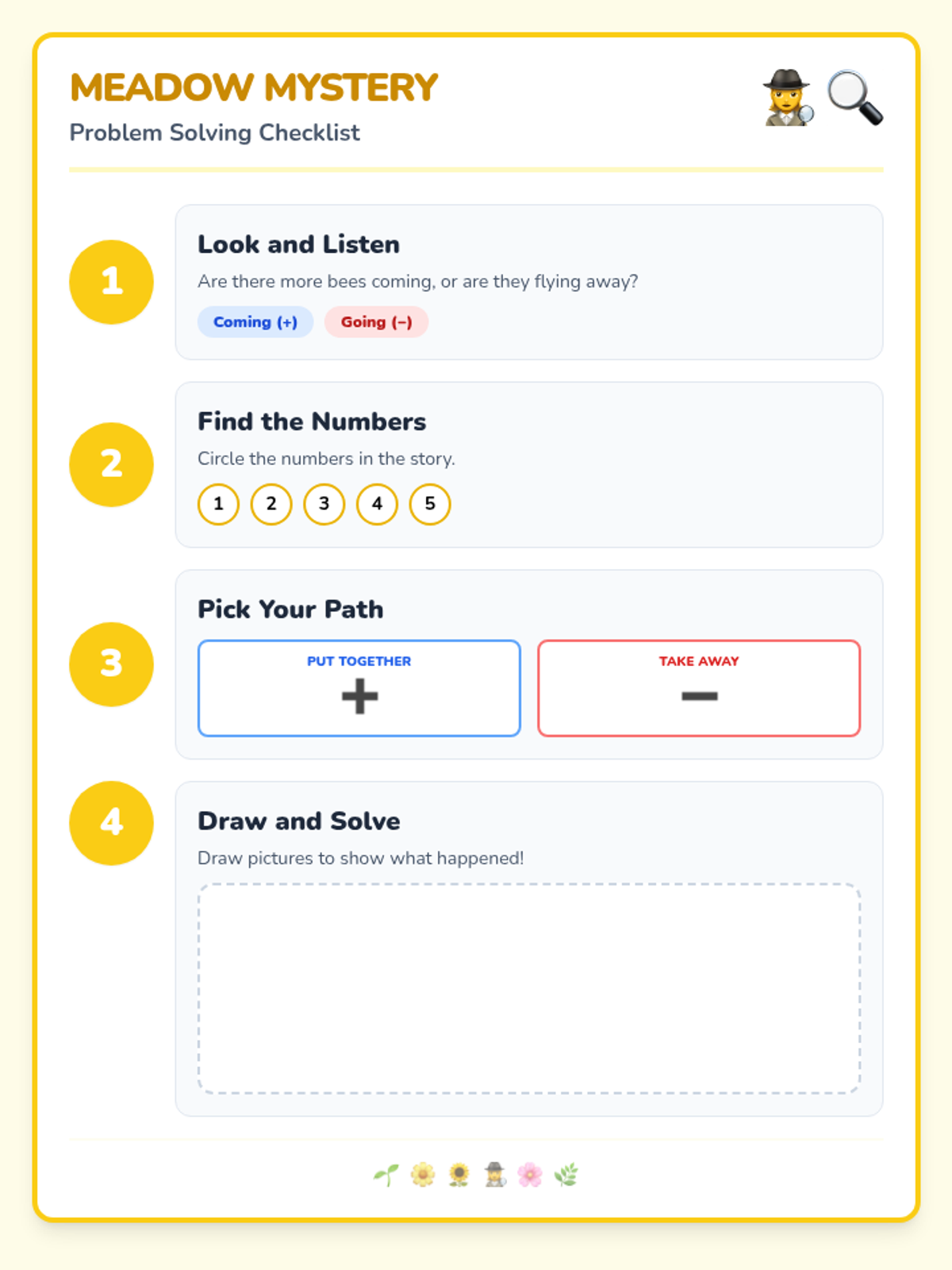
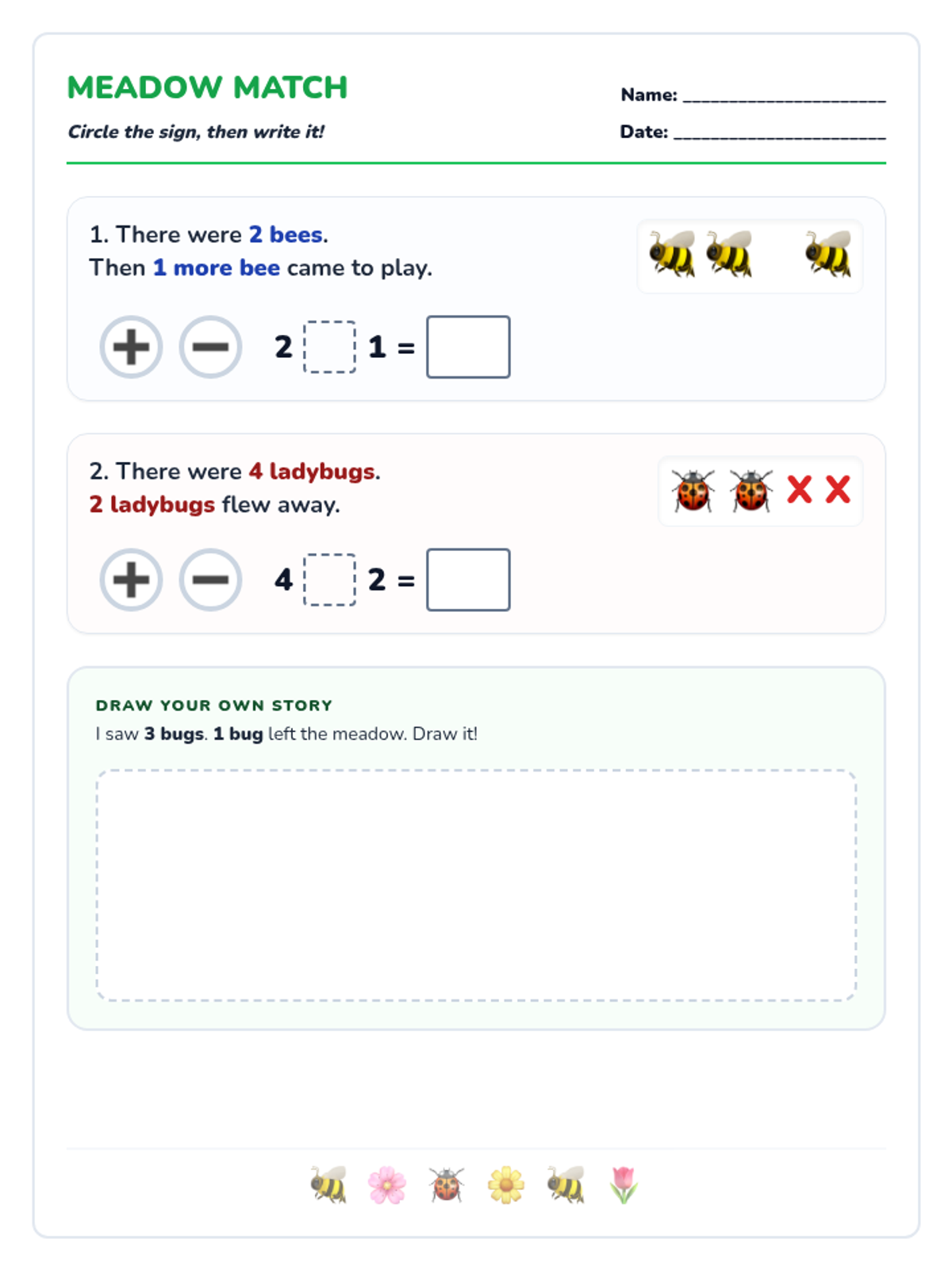
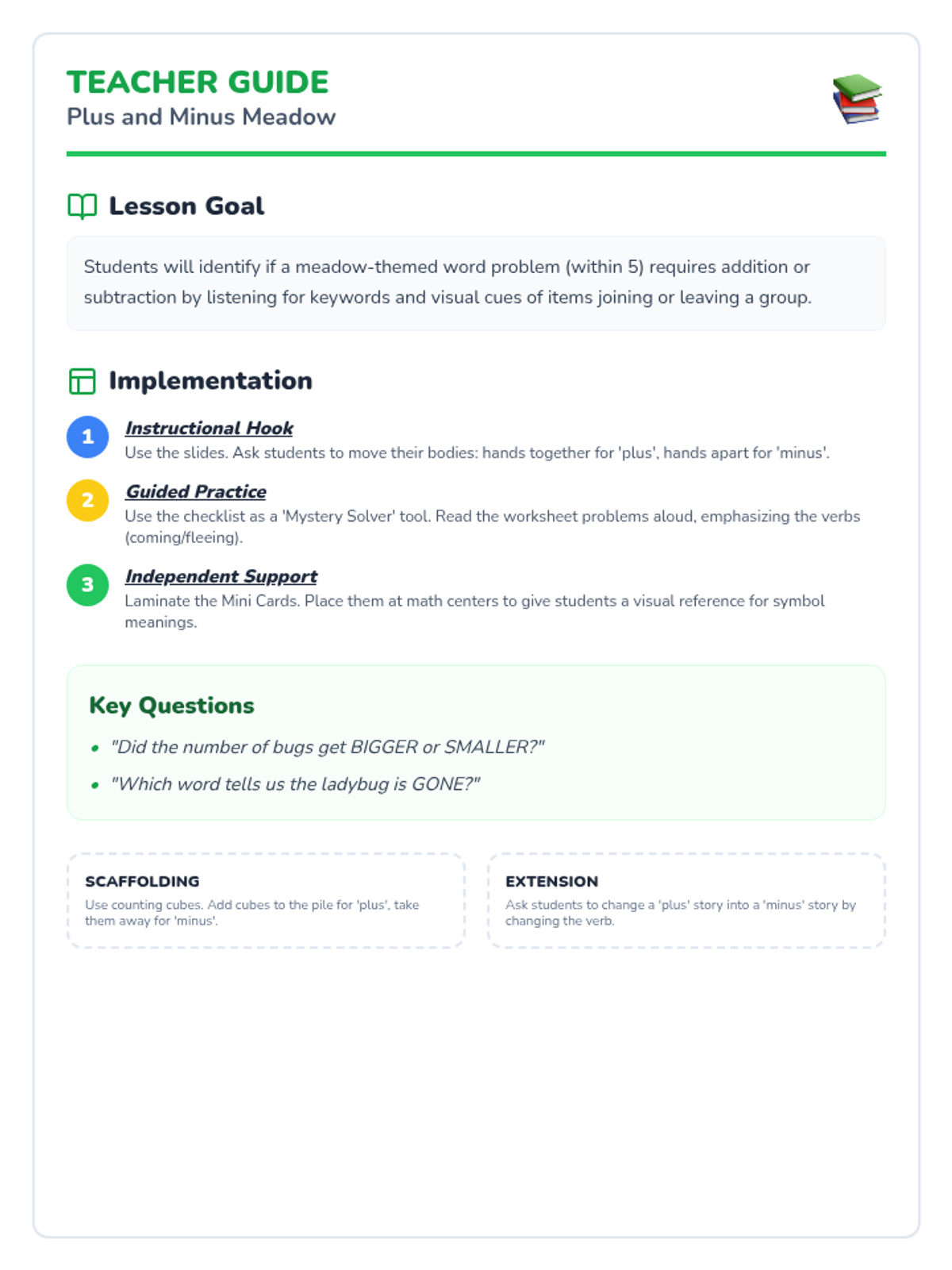
A comprehensive set of visual tools and practice materials to help kindergarteners distinguish between addition and subtraction within 5 using a friendly meadow theme.
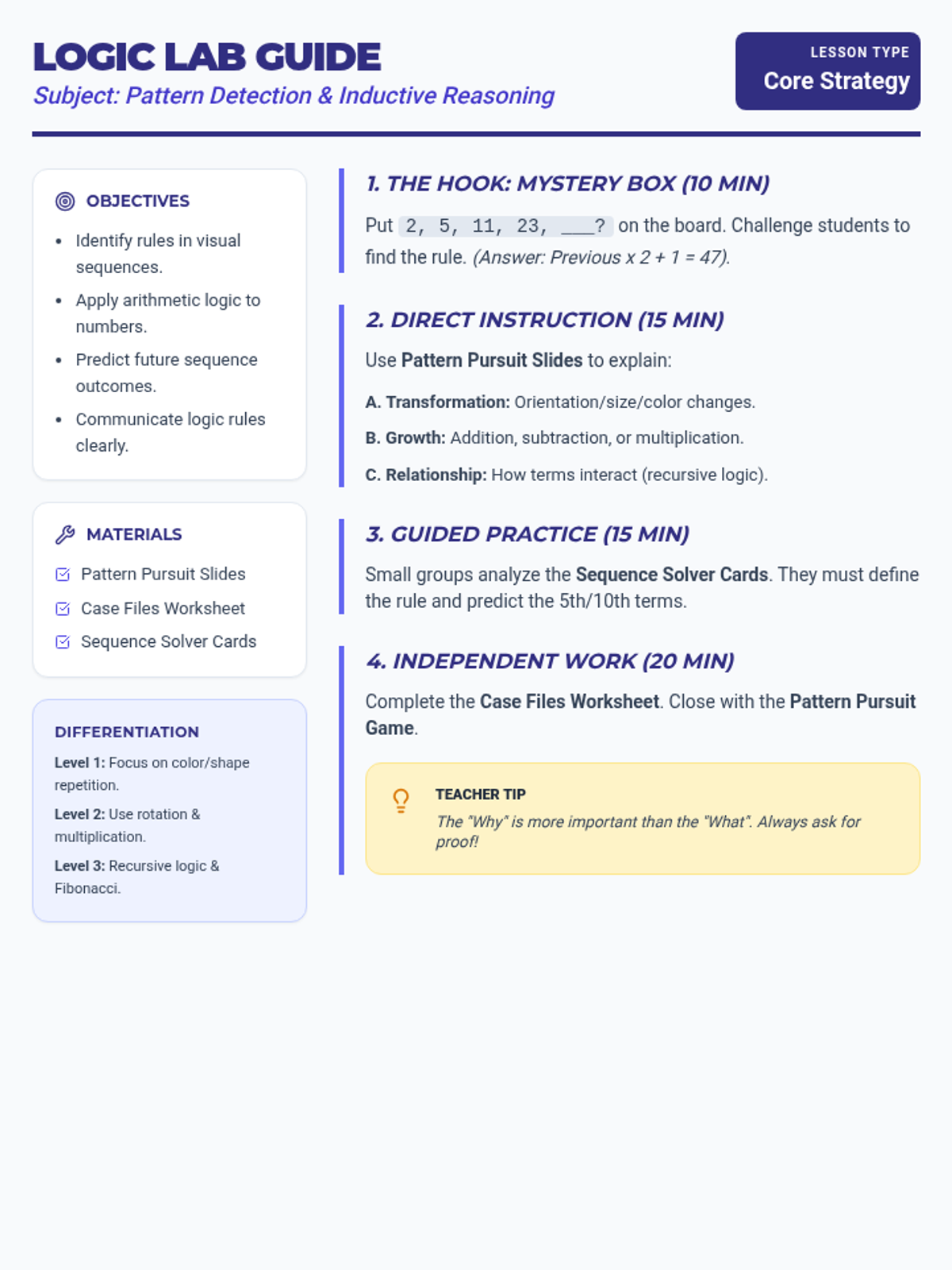
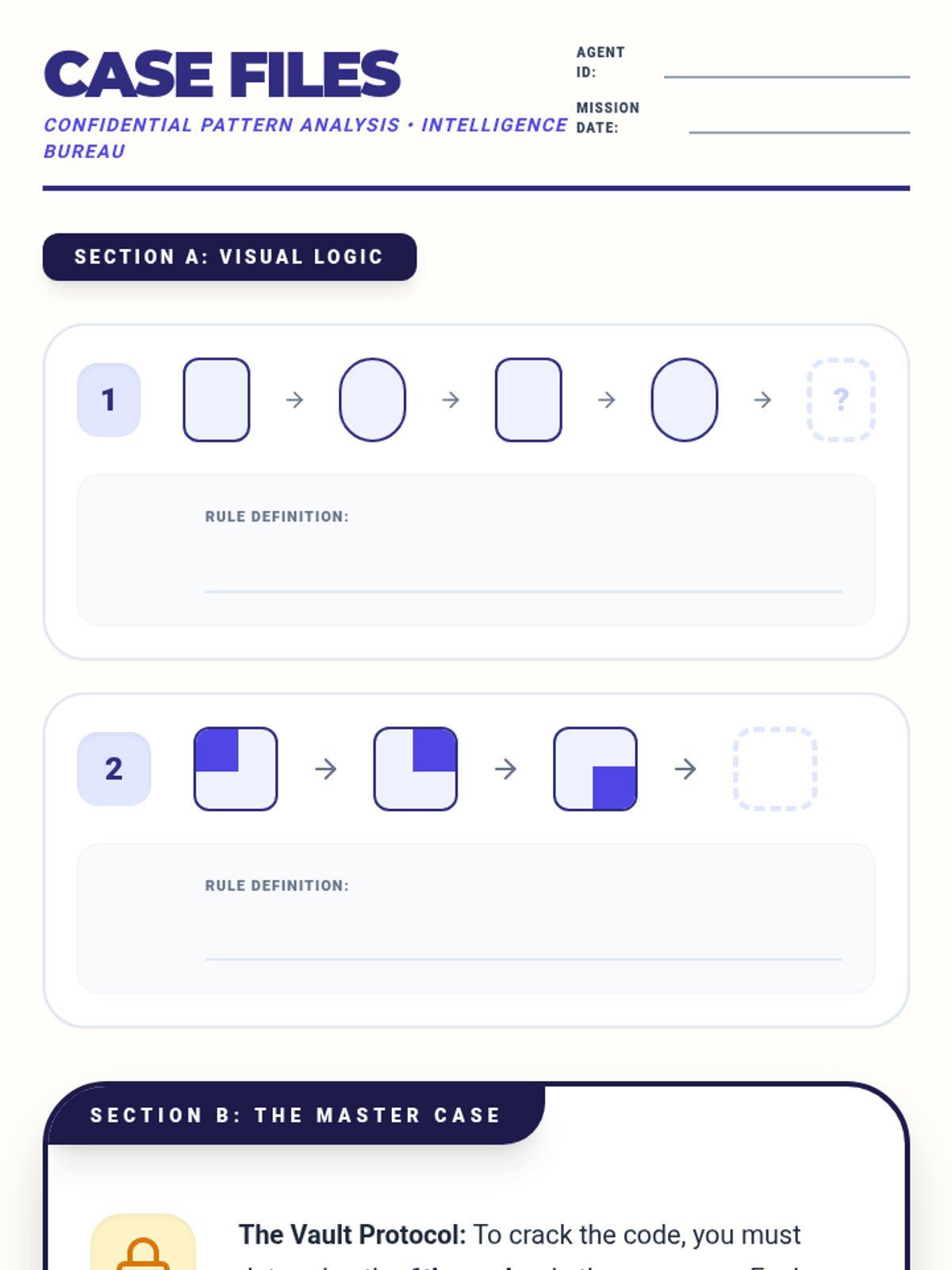
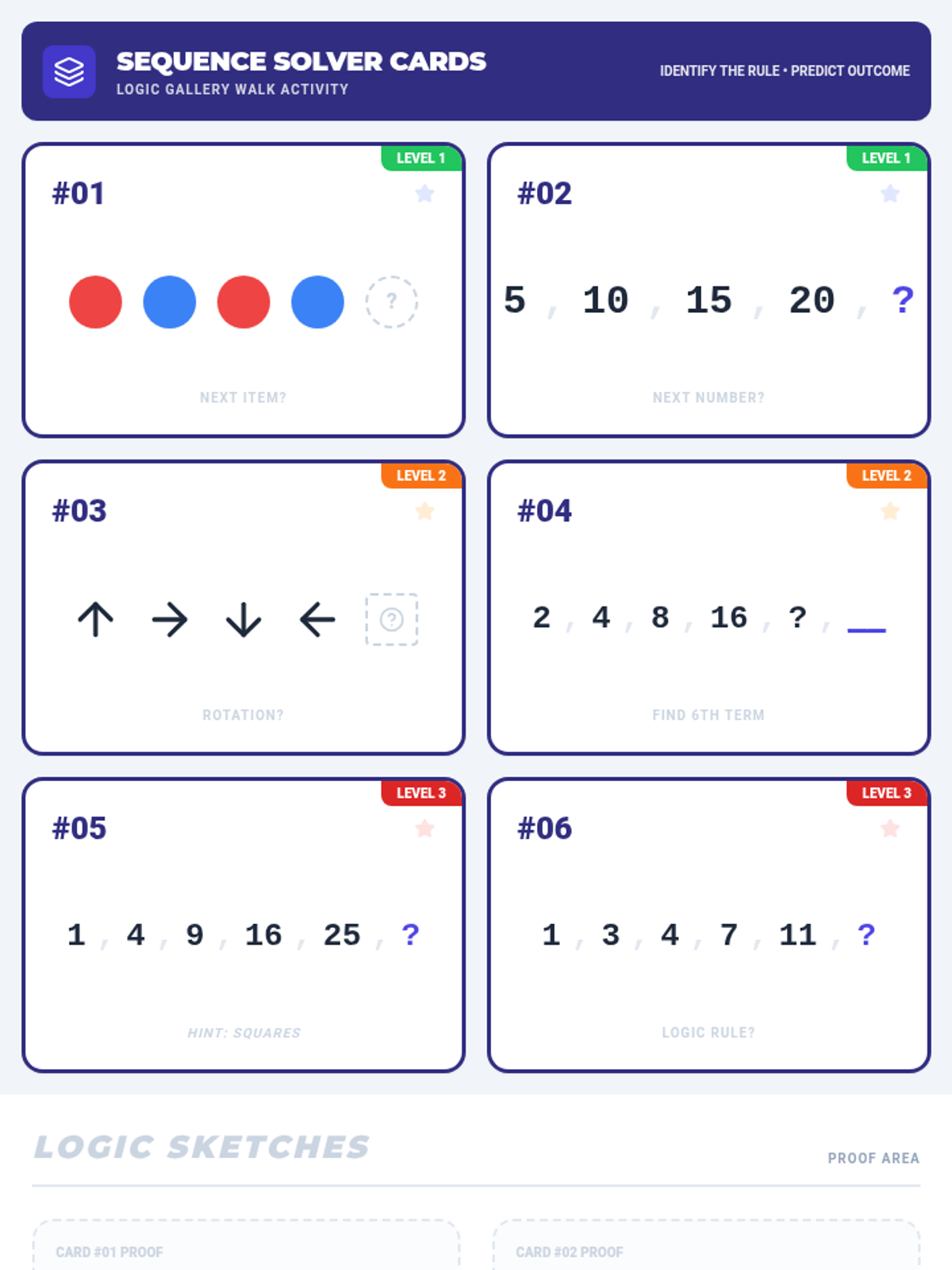
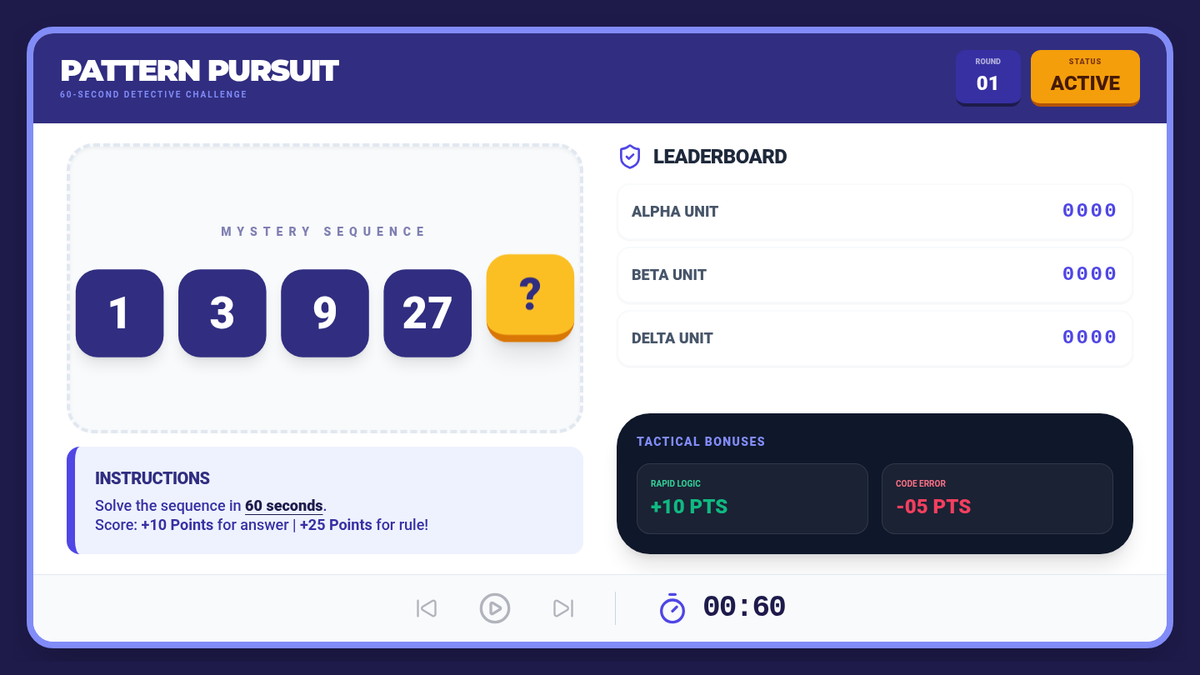
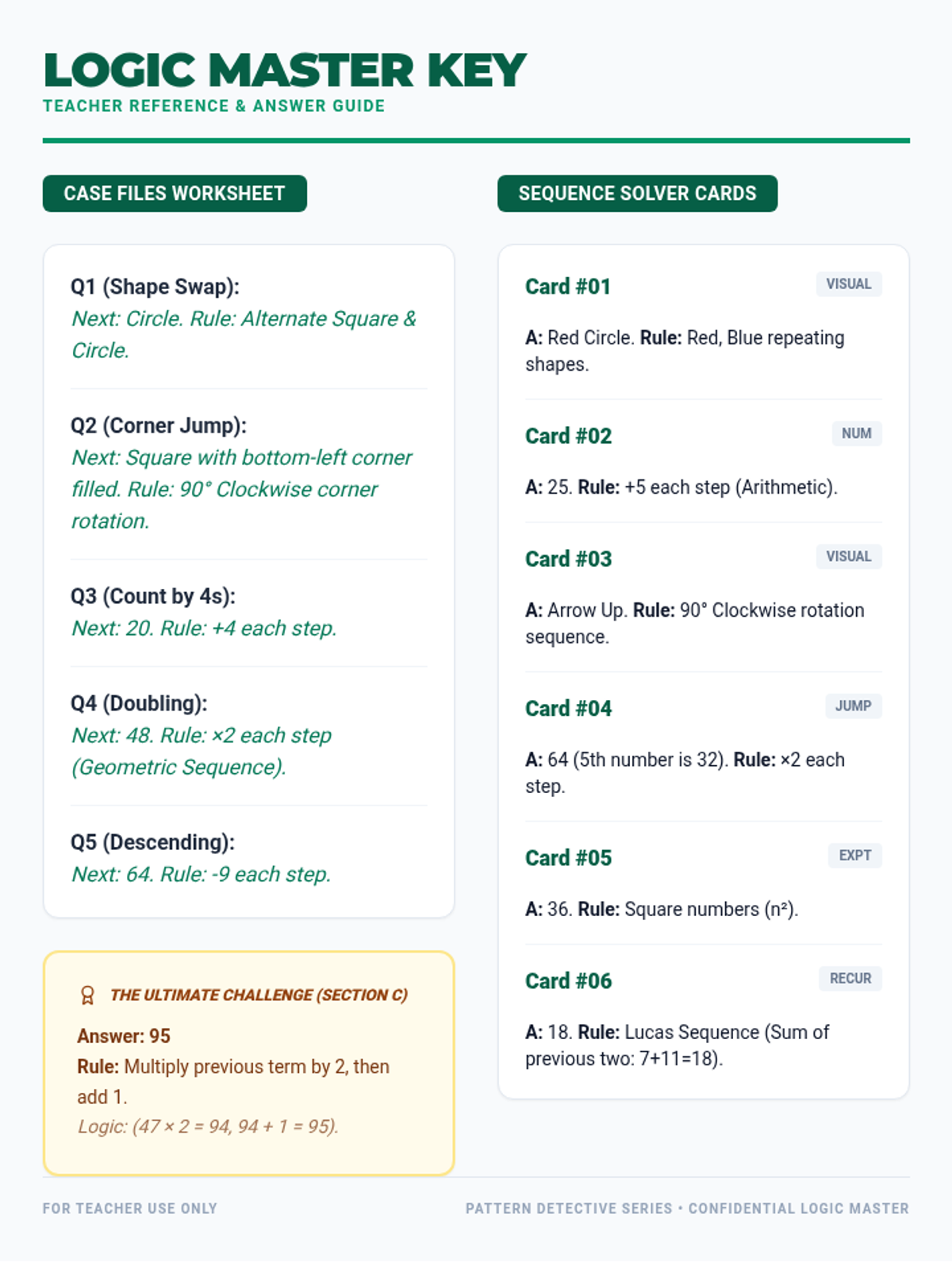
A comprehensive logic lesson where students act as detectives to identify rules in visual and numerical sequences, building inductive reasoning and prediction skills.
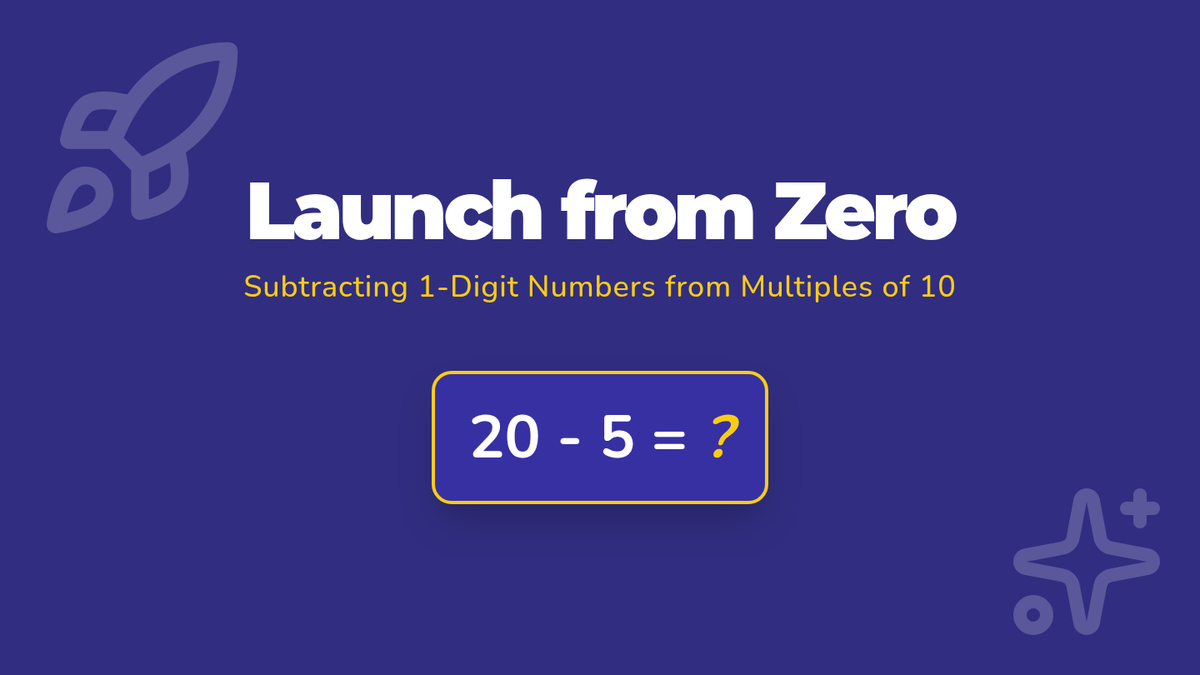
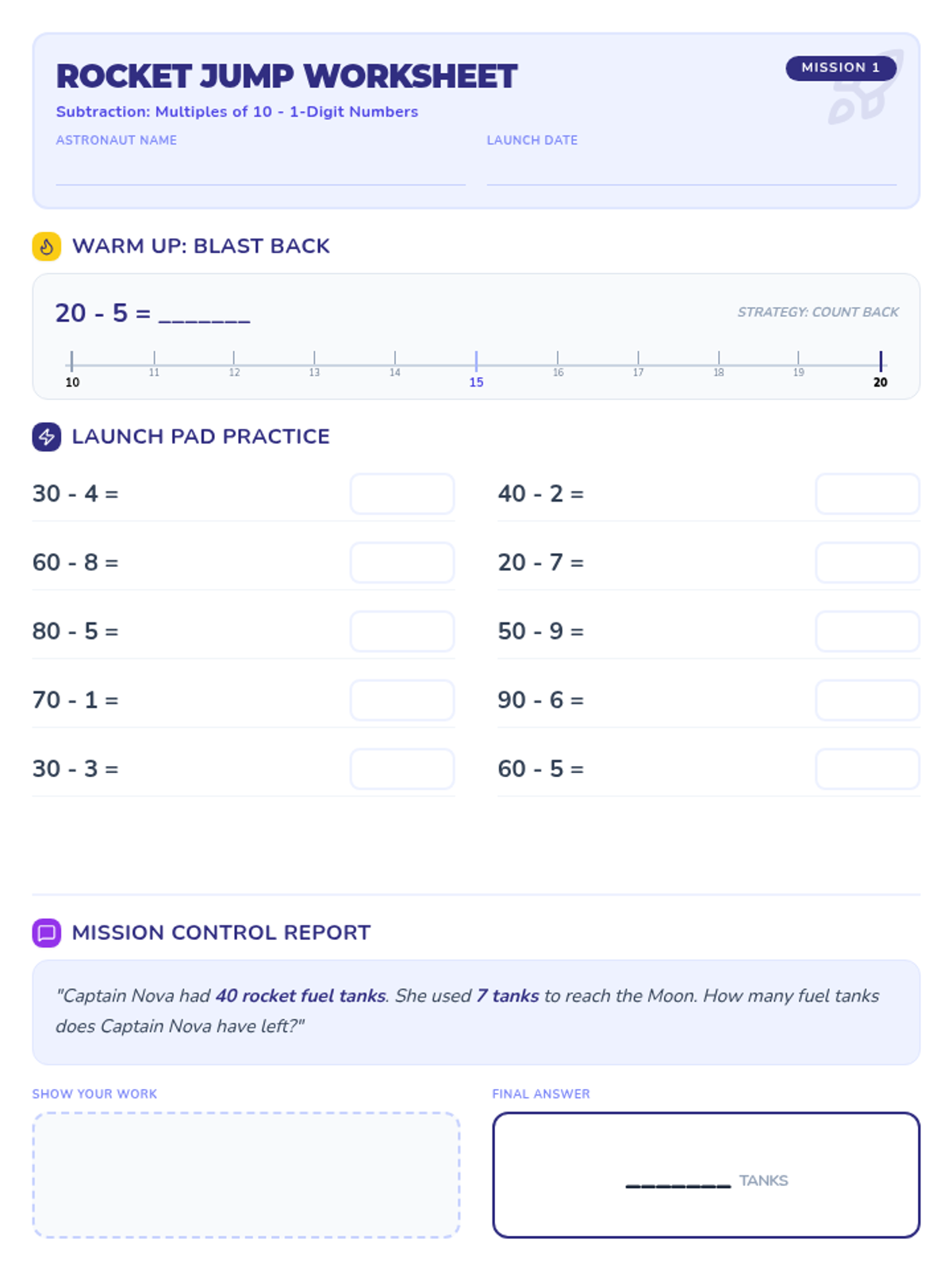
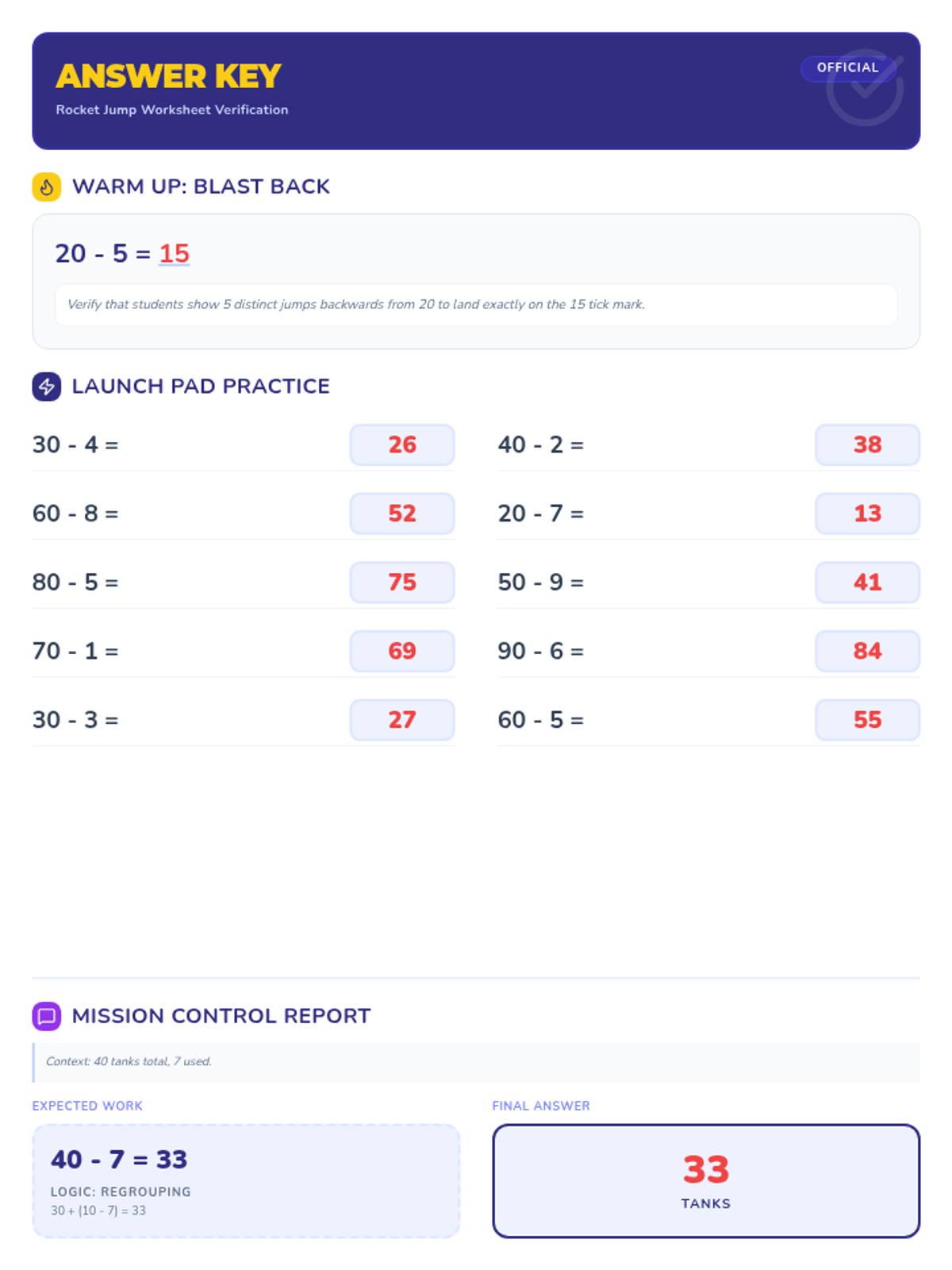
A lesson focused on subtracting 1-digit numbers from multiples of ten (20, 30, 40, etc.) using counting back and regrouping strategies. Includes a visual slide deck and a themed practice worksheet.
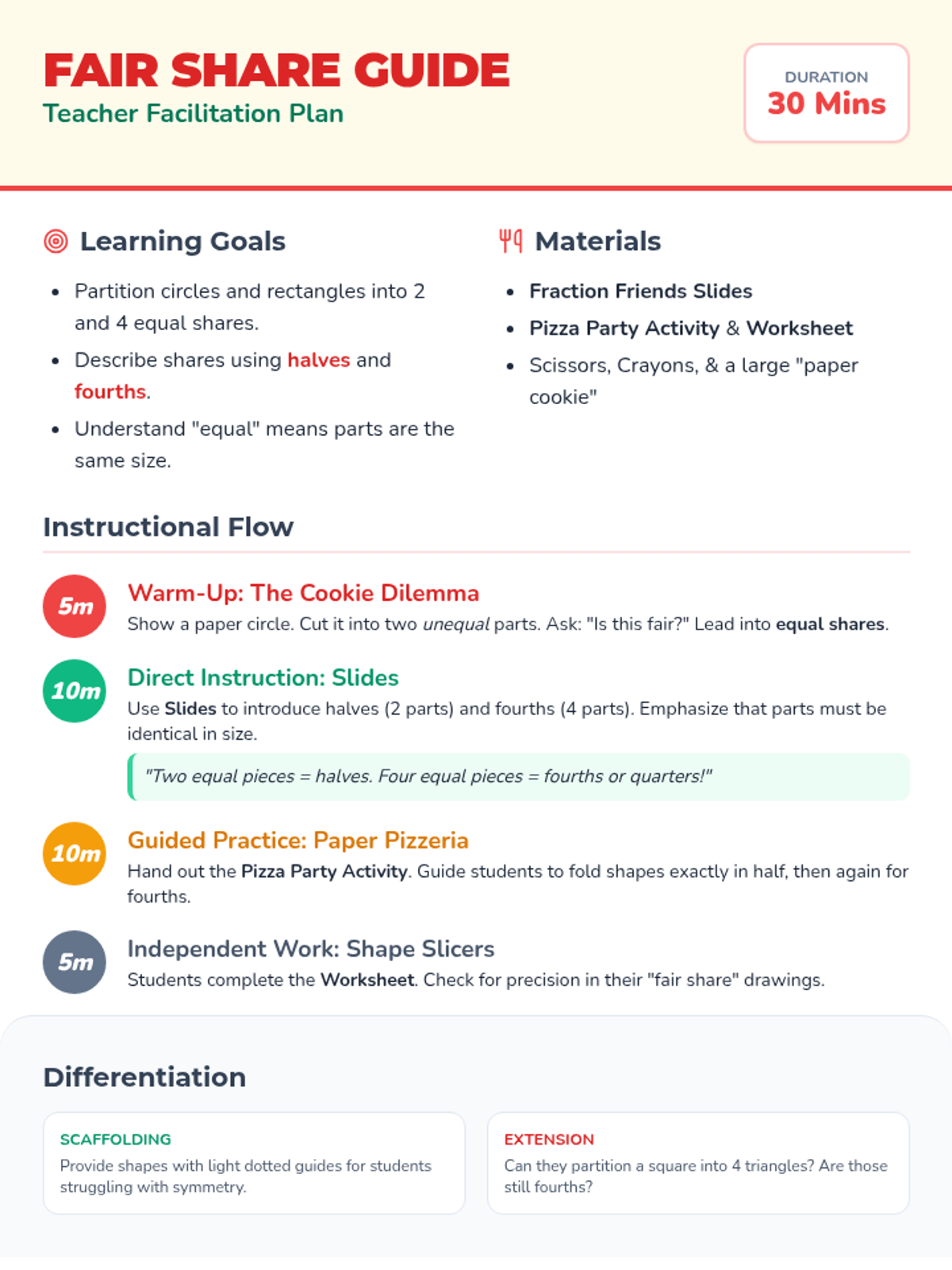
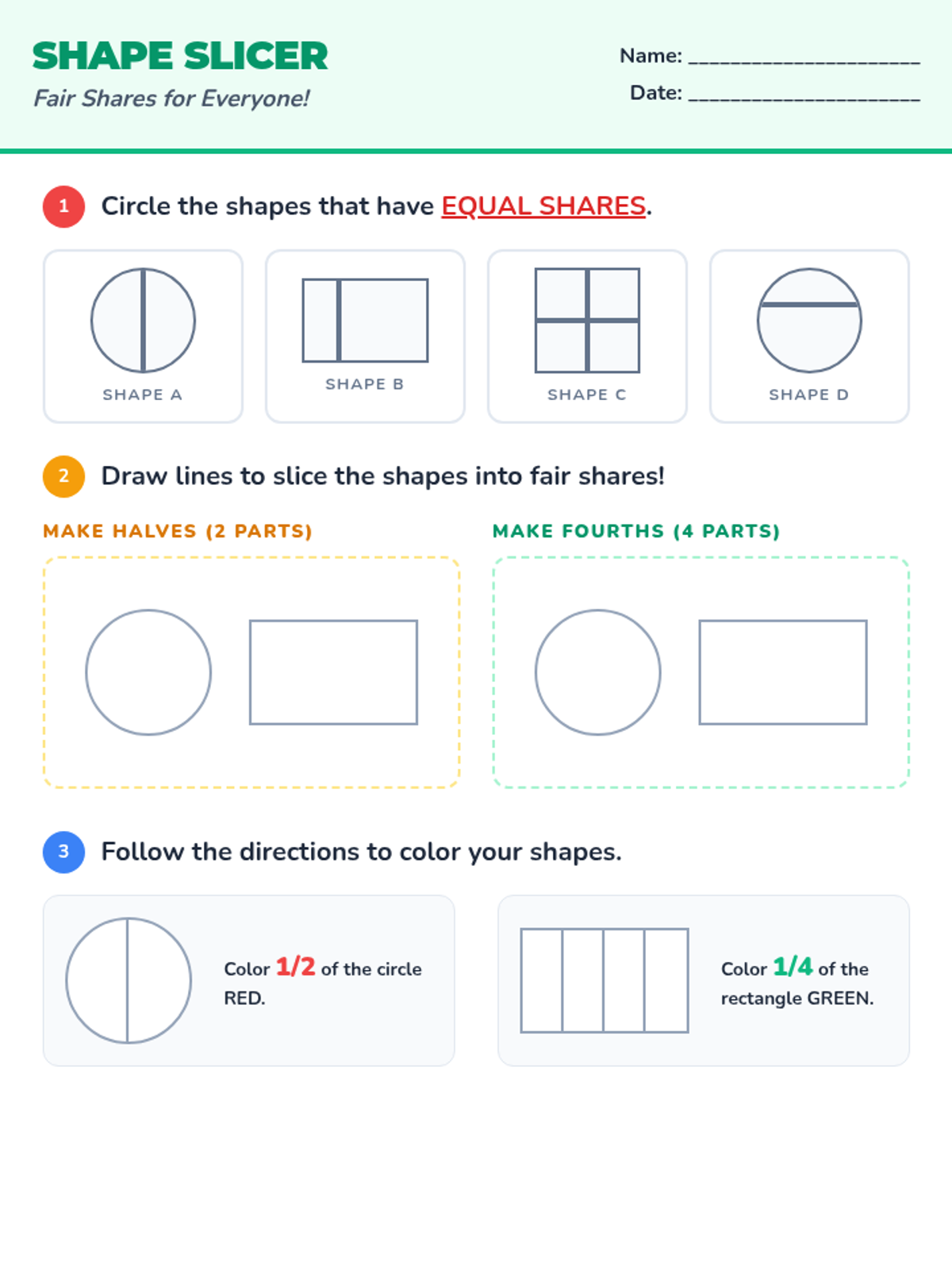
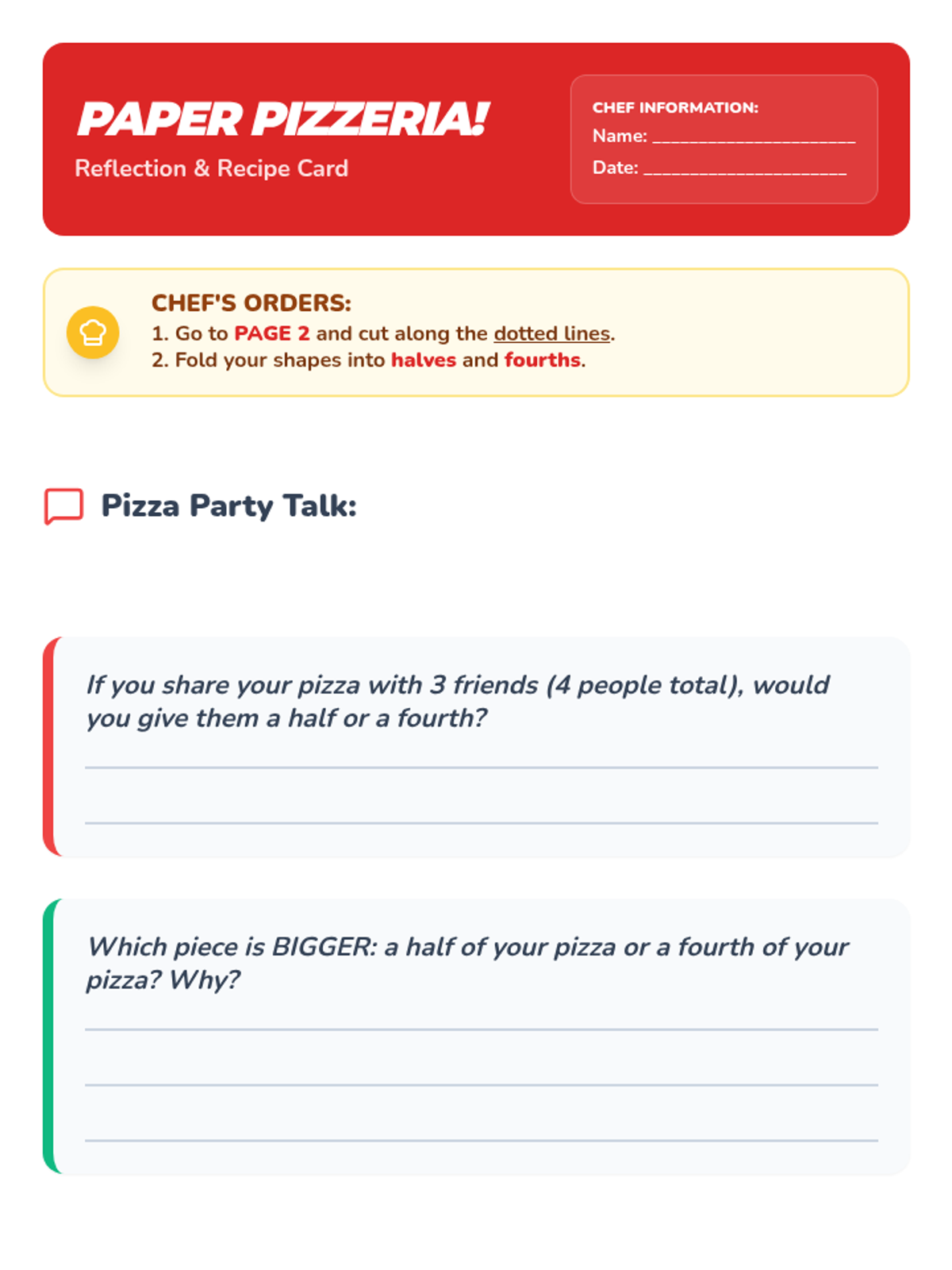
An introductory lesson for first graders on partitioning circles and rectangles into two and four equal shares, using the language of halves and fourths.
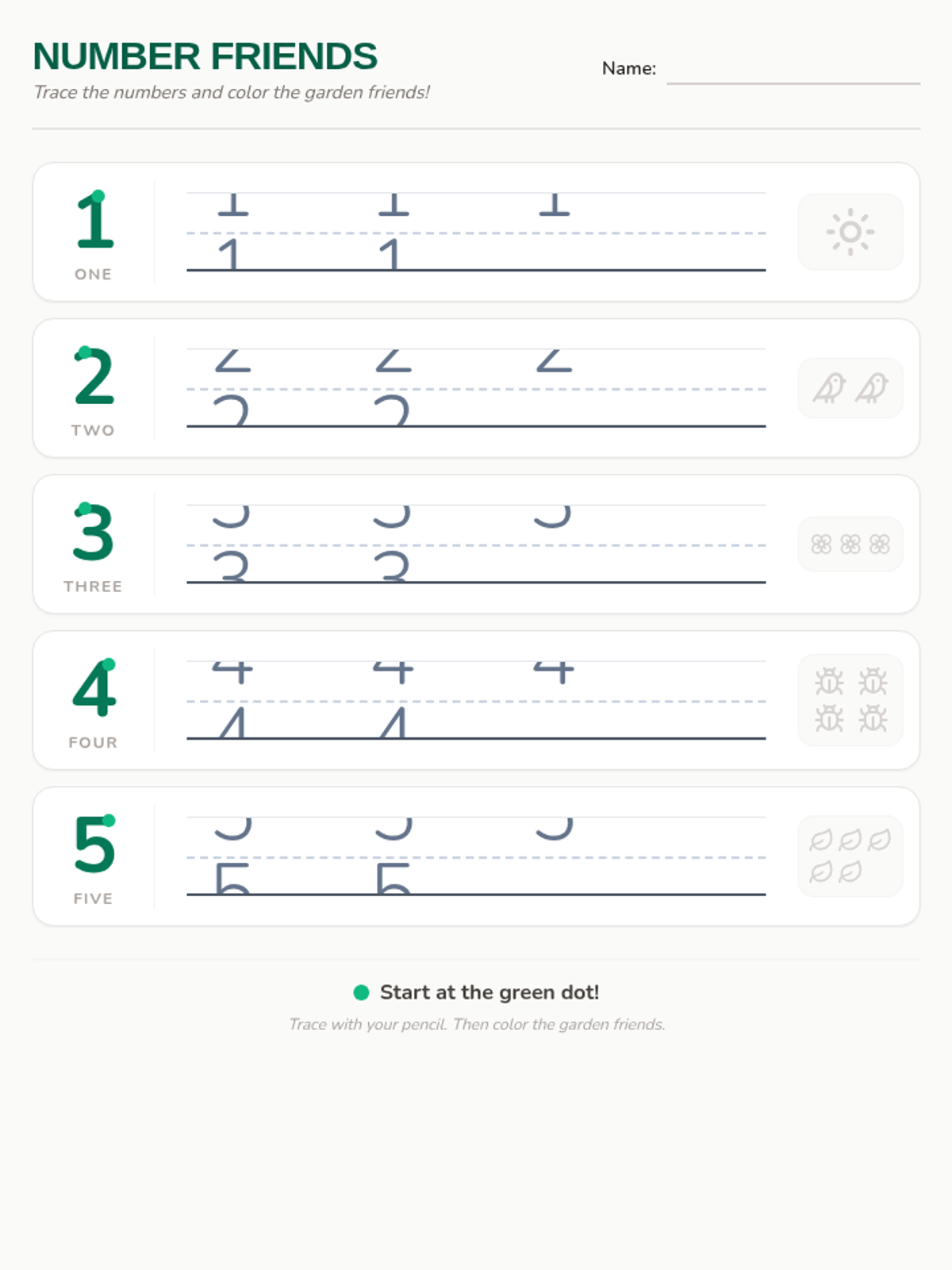
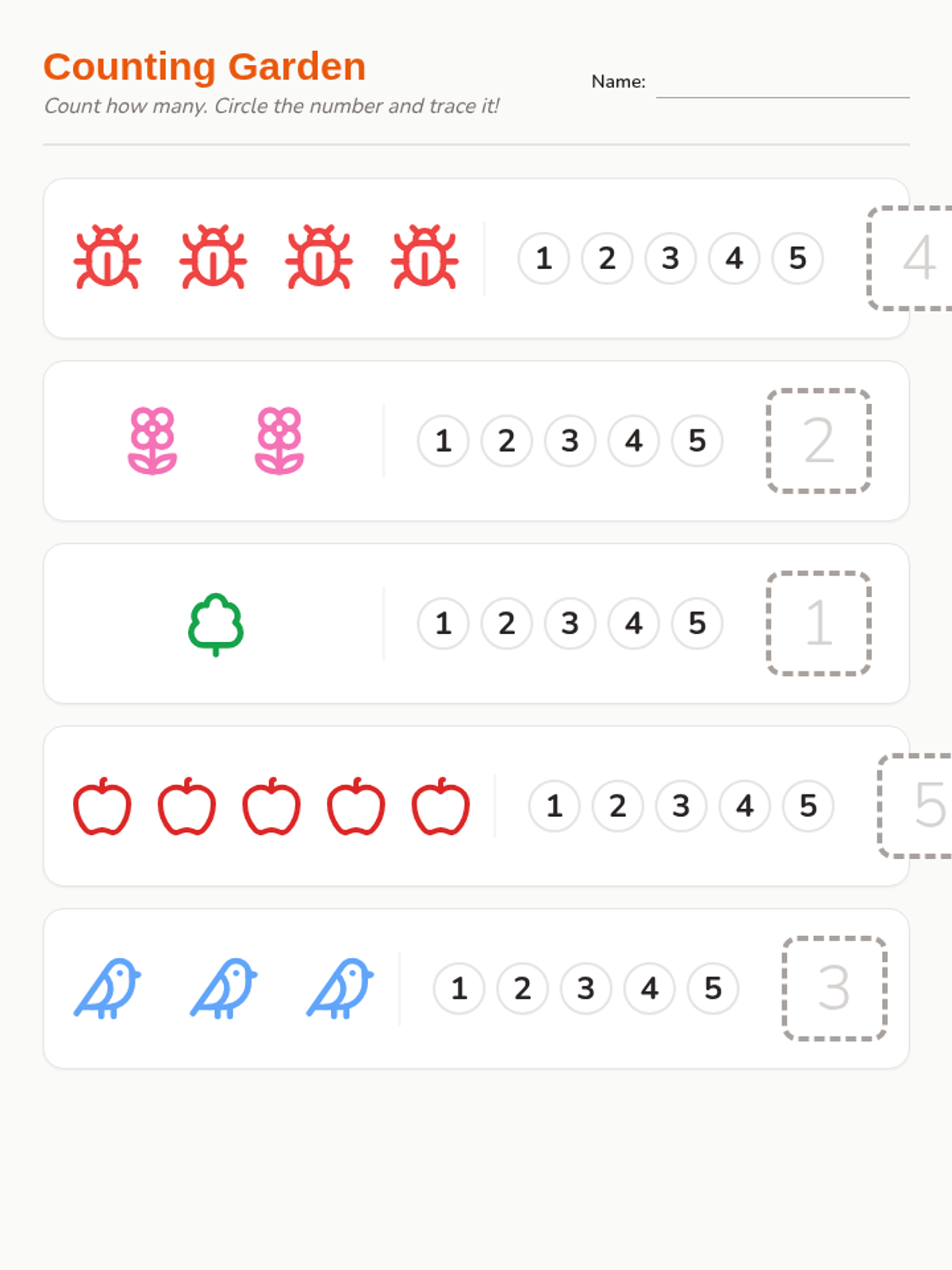
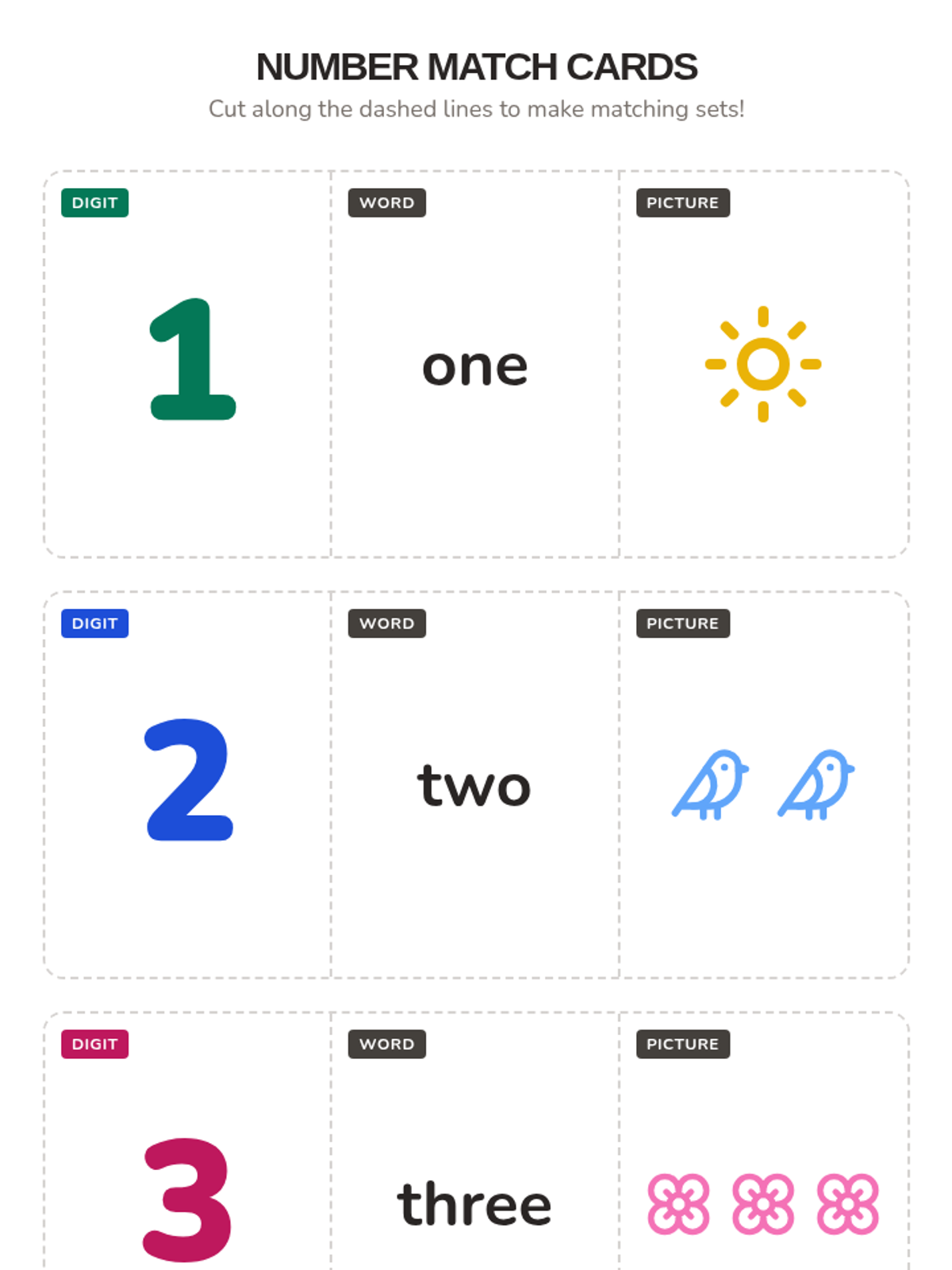
A foundational numeracy lesson for Kindergarten MLL students focusing on numbers 1-5 through tracing, counting, and one-to-one correspondence using a friendly garden theme.
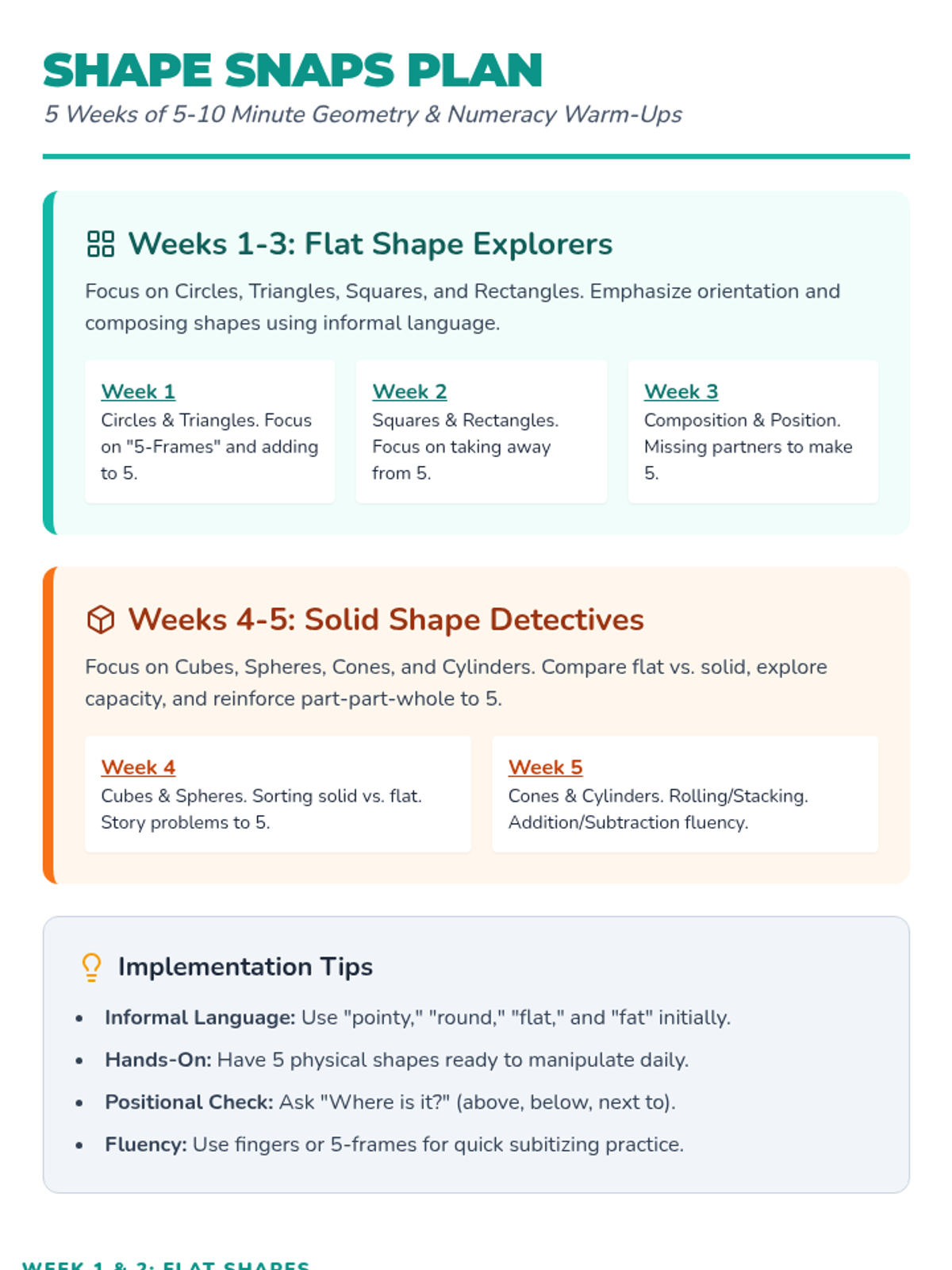
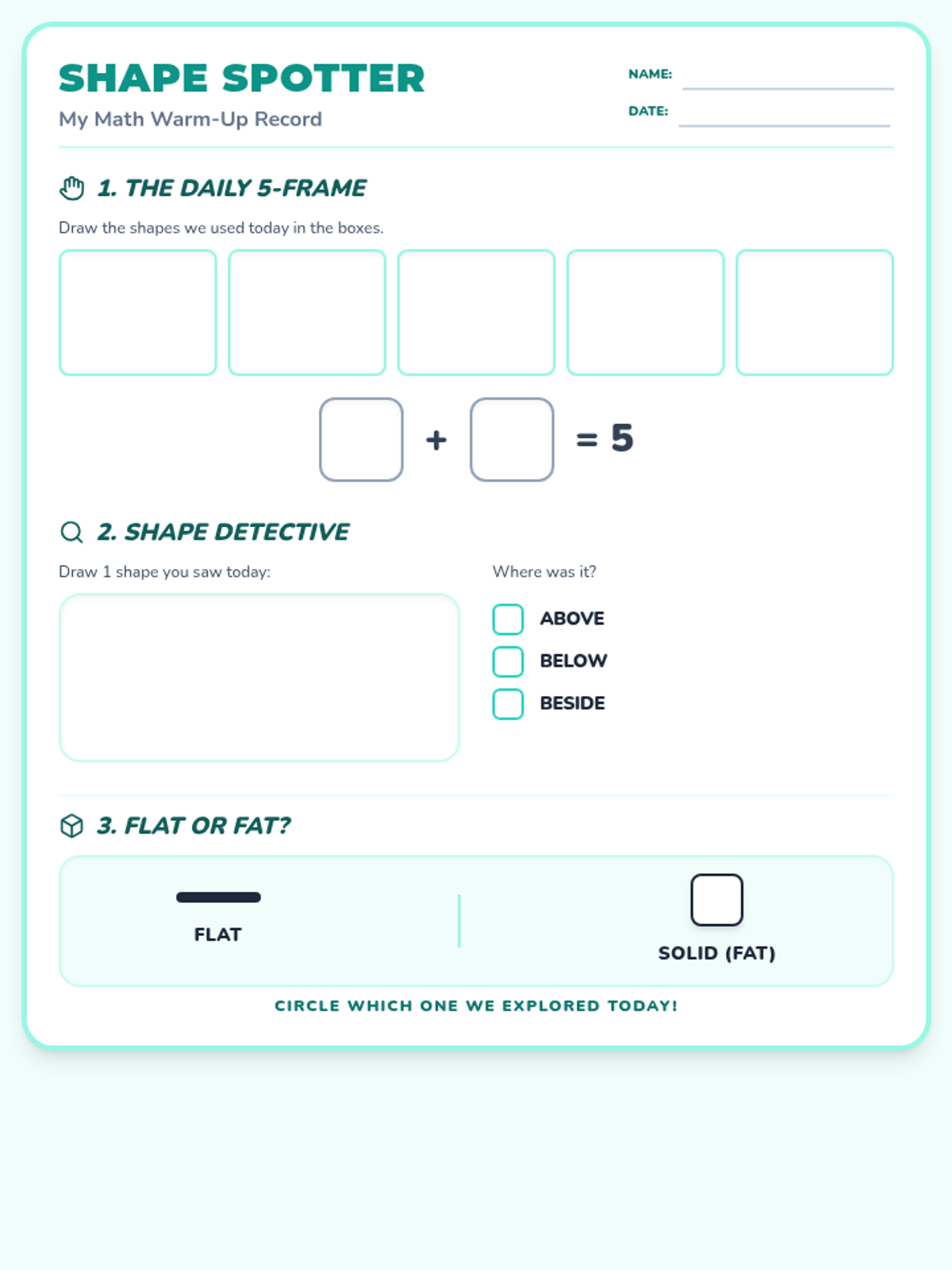
A 5-week instructional plan and a set of 25 activity cards that combine Kindergarten geometry standards with daily numeracy fluency exercises.
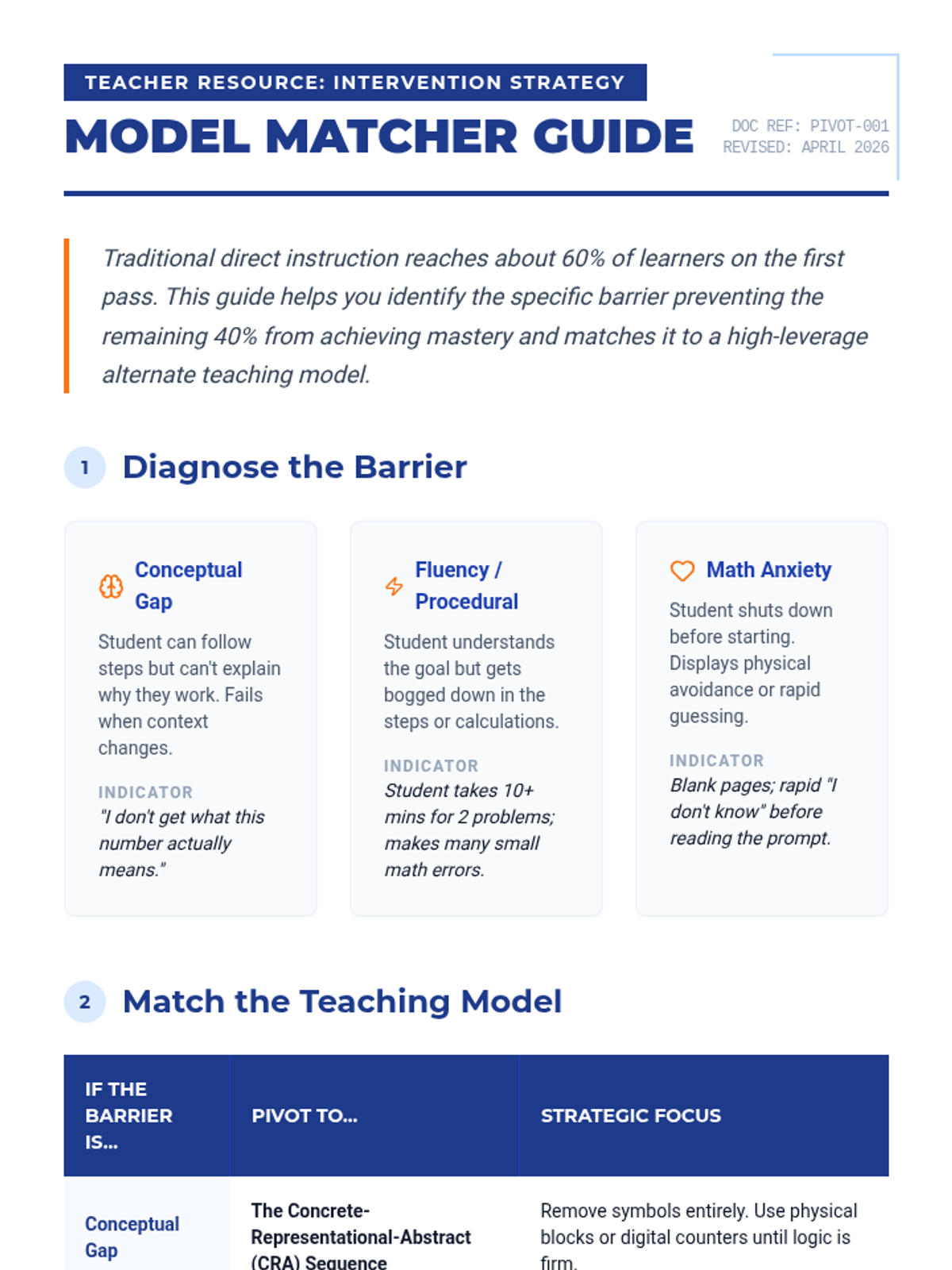
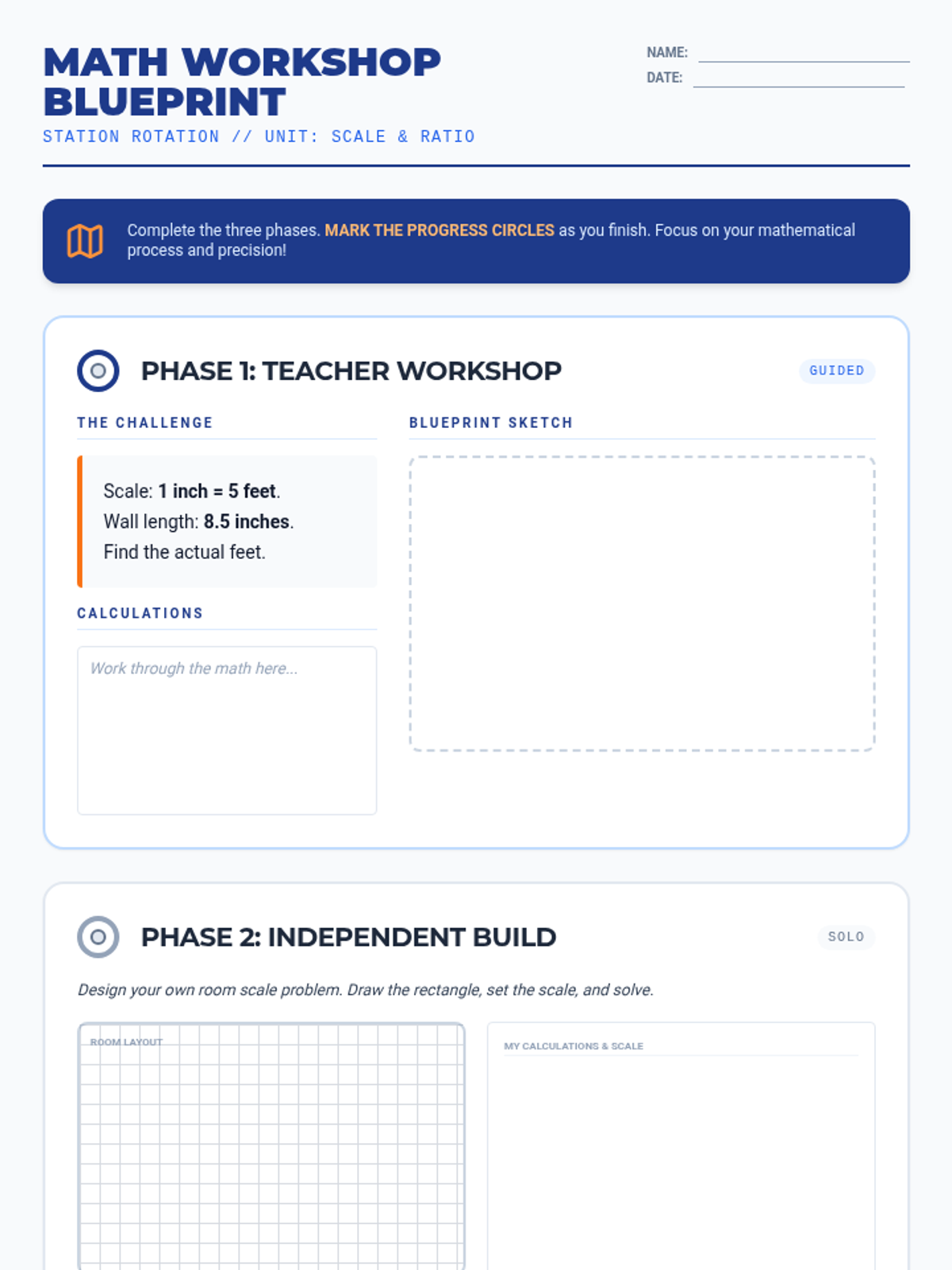
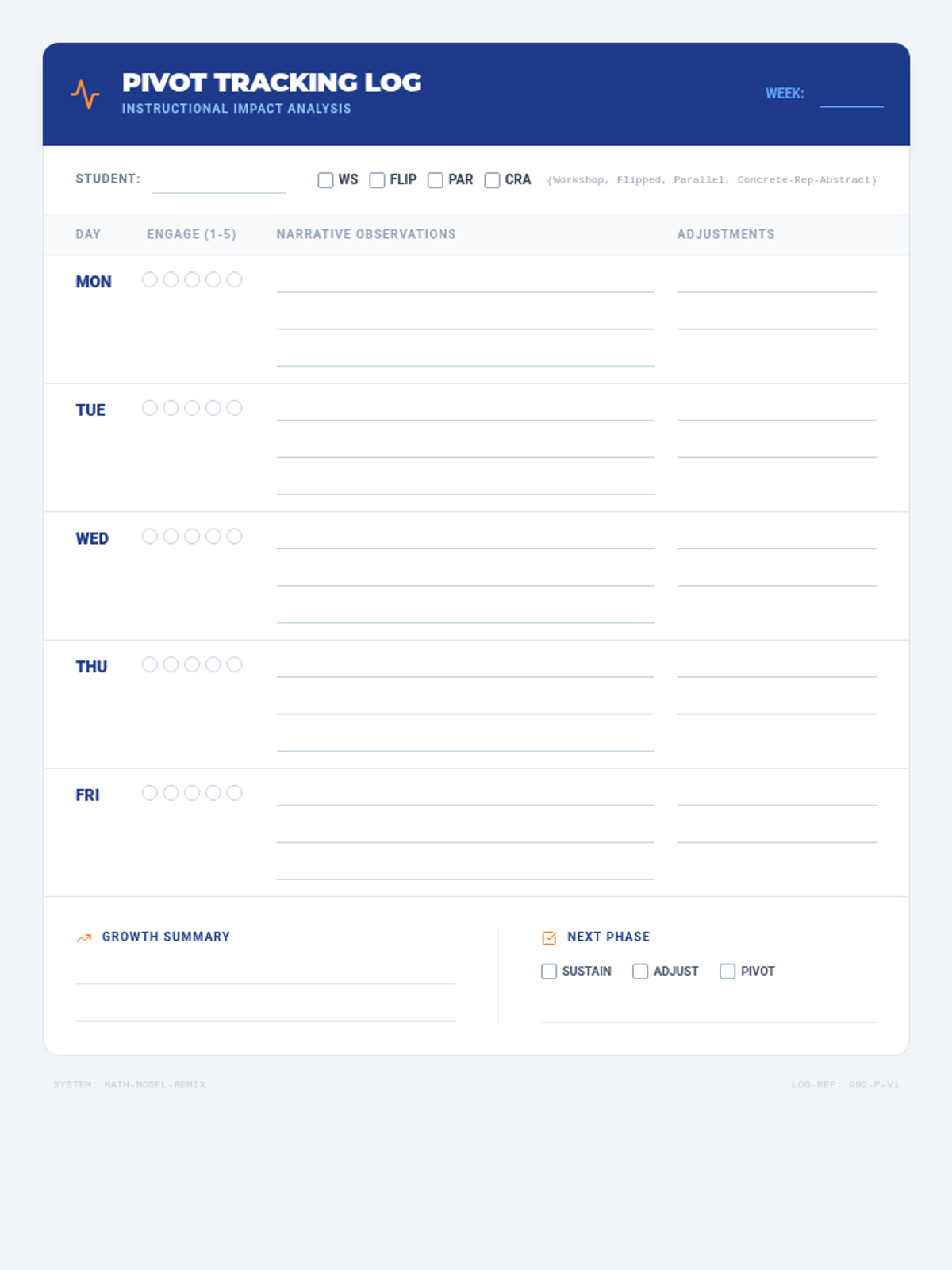
A professional development resource for educators to explore and implement alternative teaching models when traditional math instruction isn't reaching every student. This lesson provides frameworks for co-teaching, math workshops, and targeted interventions.
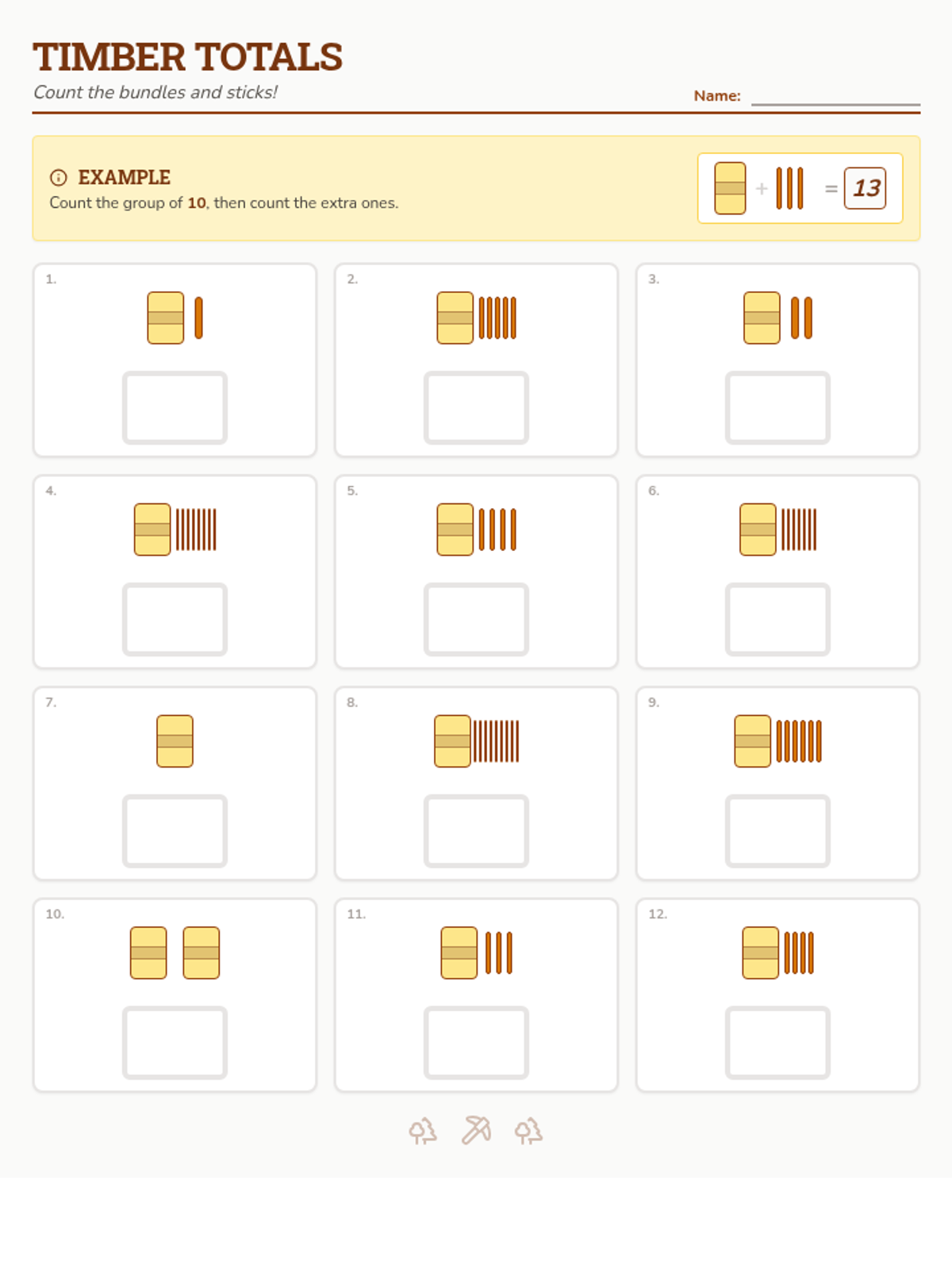
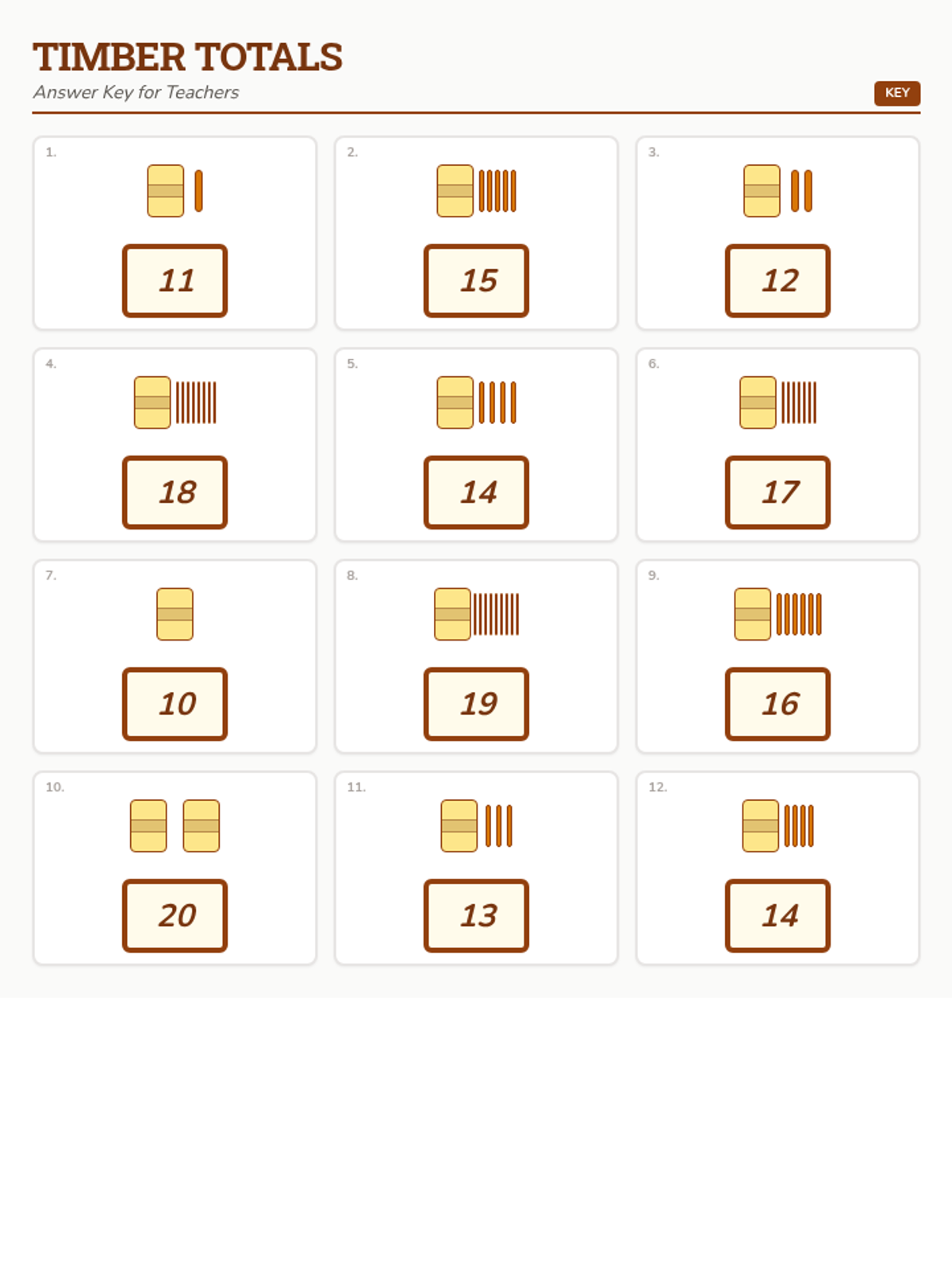
This lesson focuses on understanding teen numbers as a group of ten and some extra ones using craft stick bundles as a visual model. Students will practice counting and writing numbers from 10 to 20.
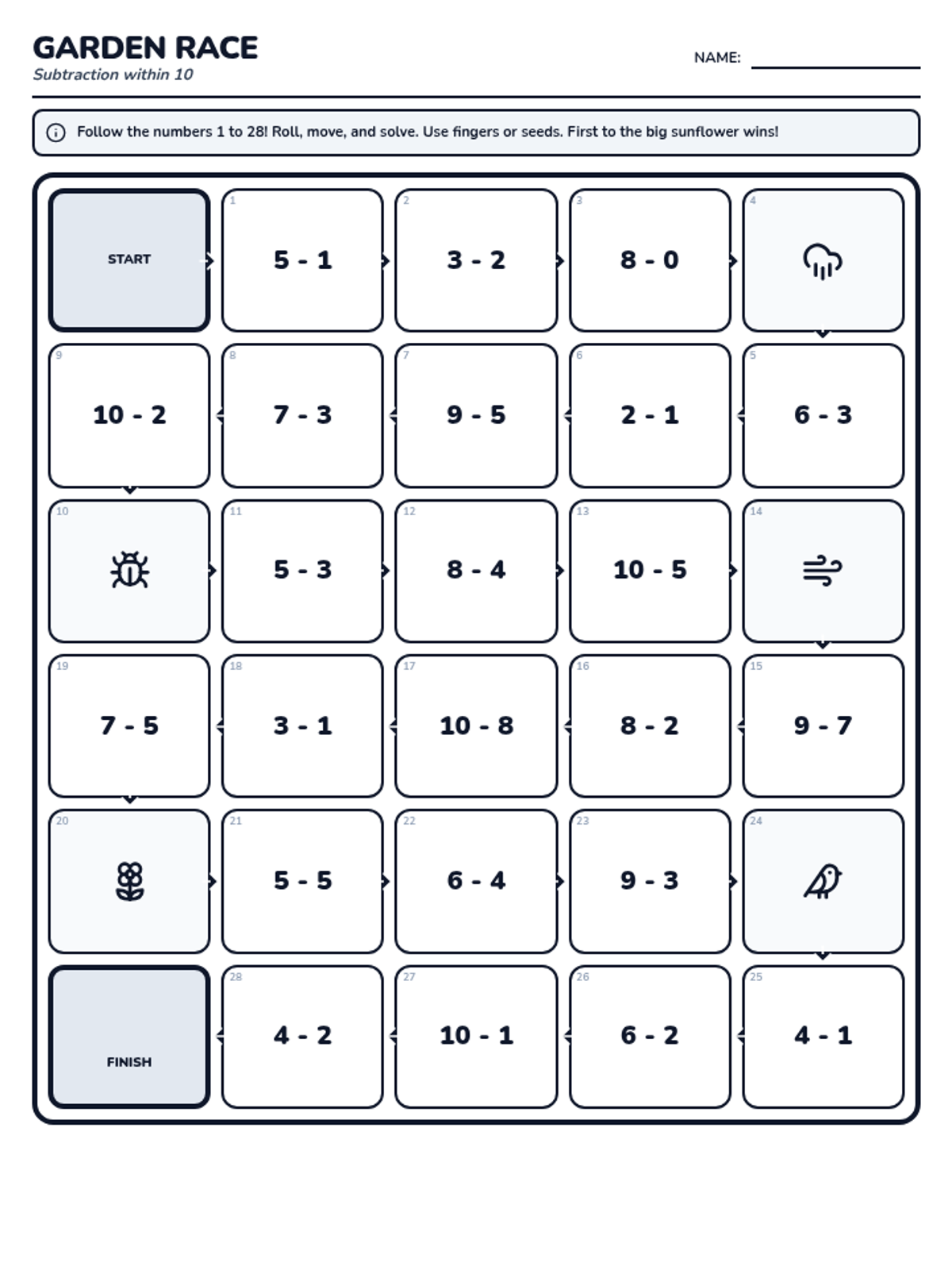
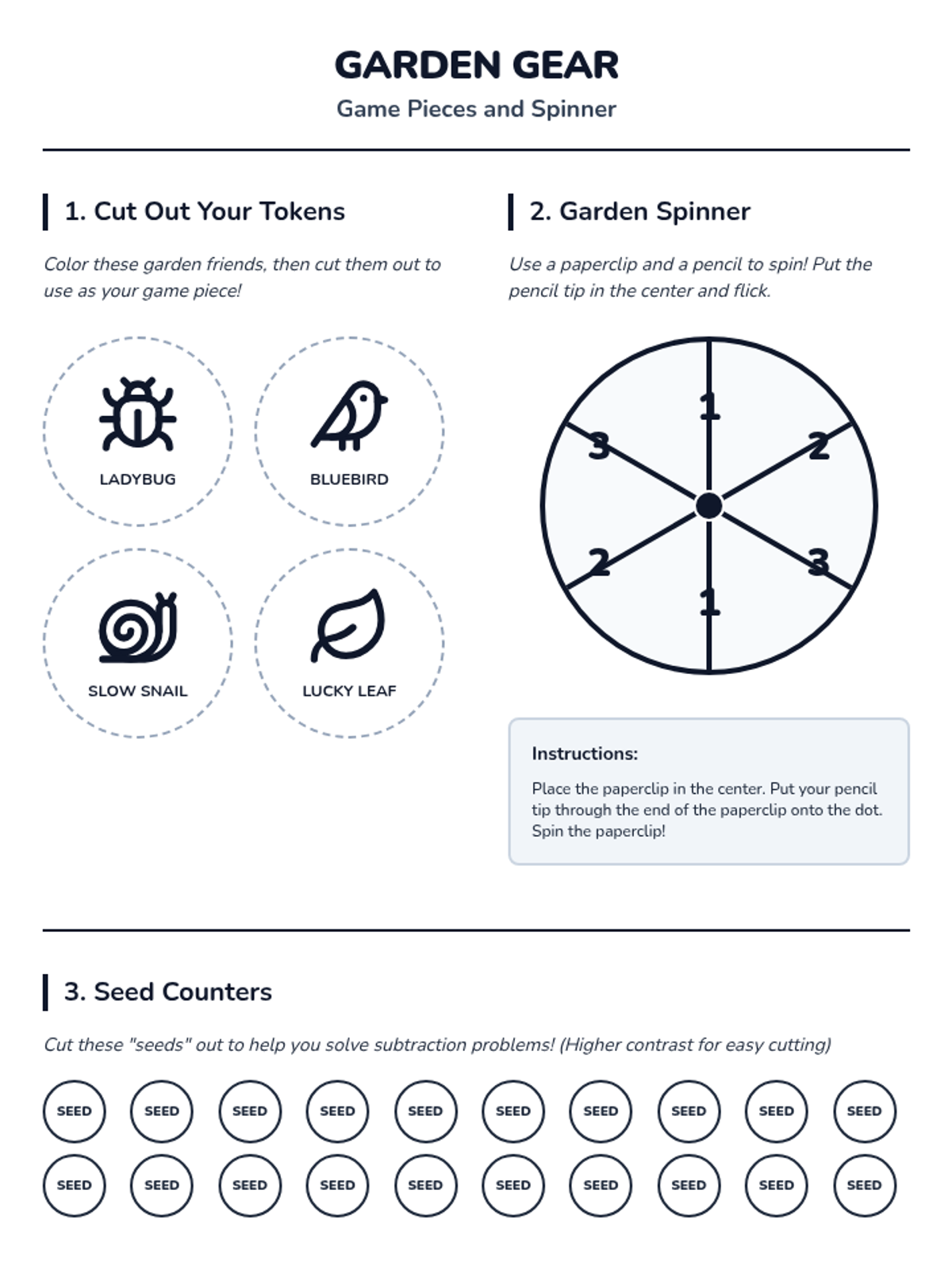
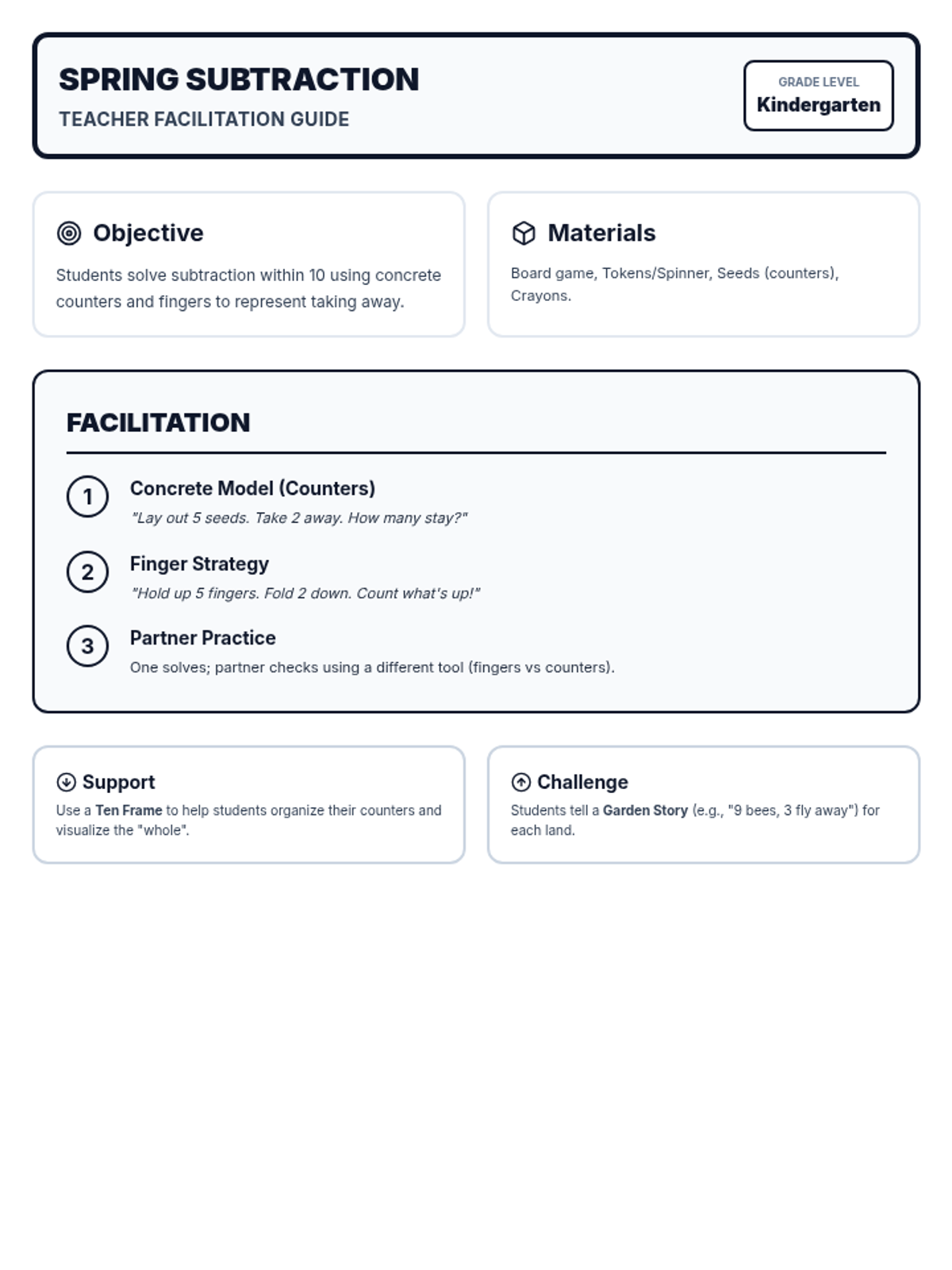
A fun, spring-themed board game and supporting materials designed to help kindergarteners practice subtraction within 10 using fingers and counters. Students navigate a garden path by solving subtraction problems to reach the finish line.
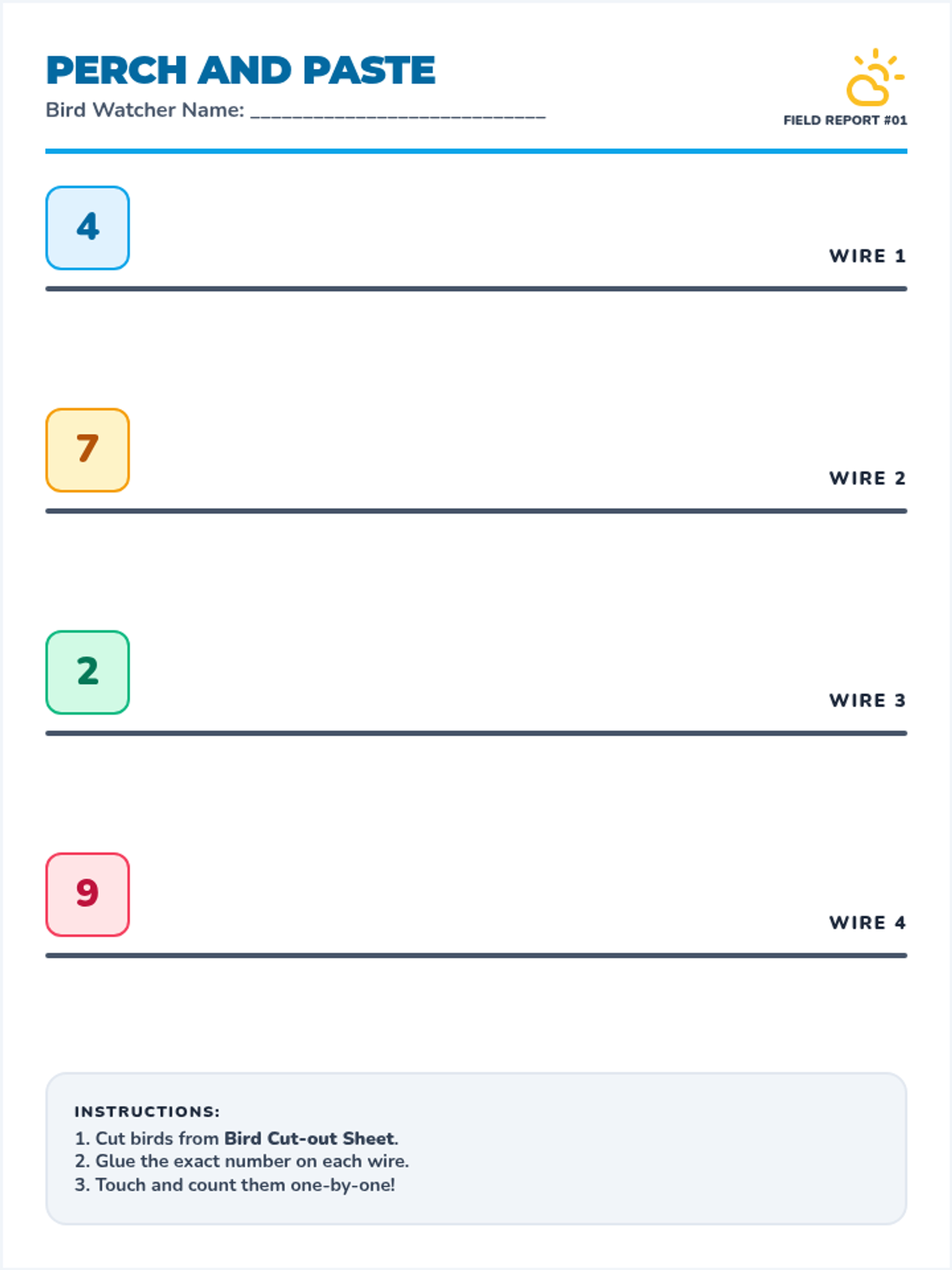
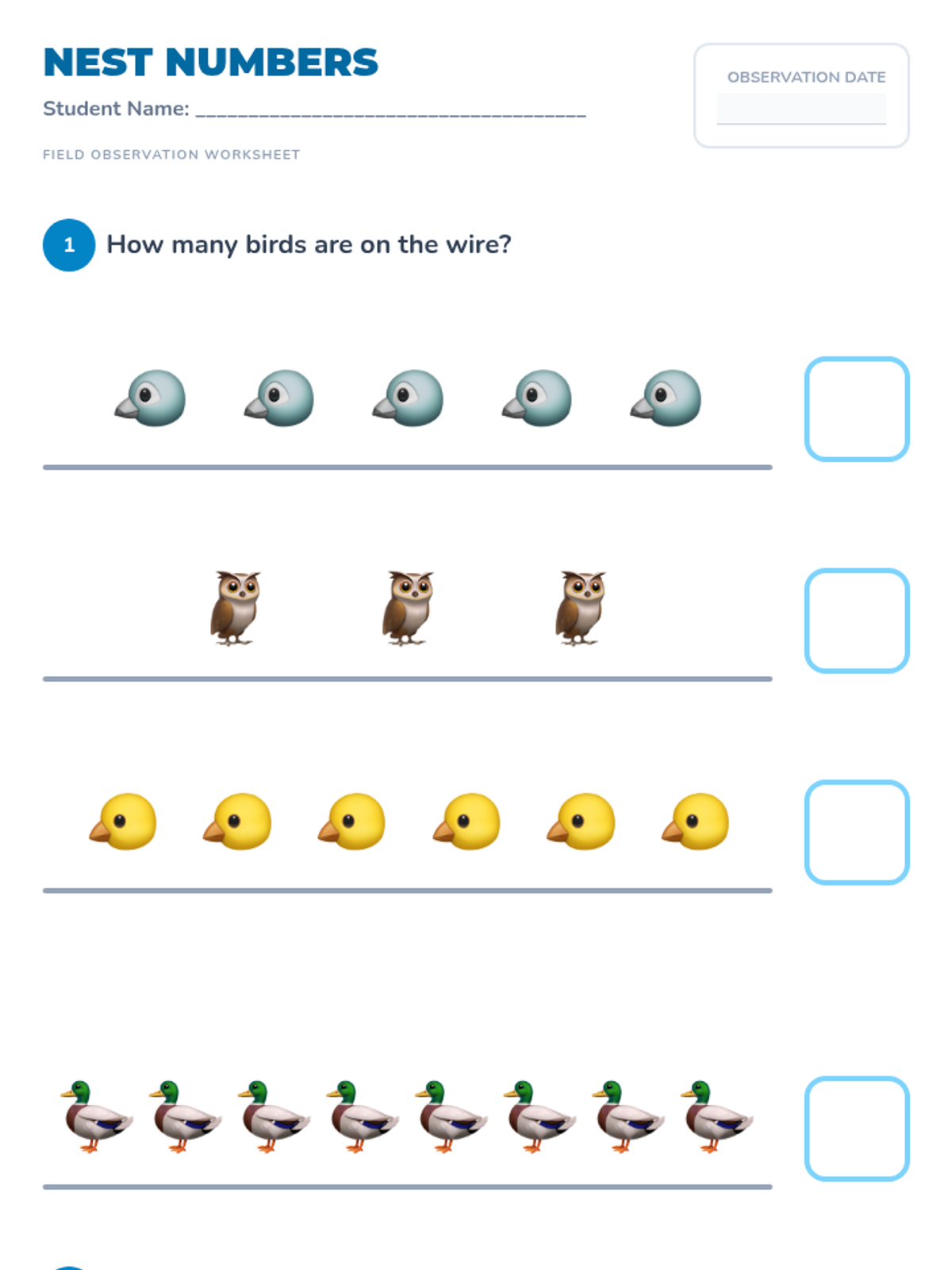
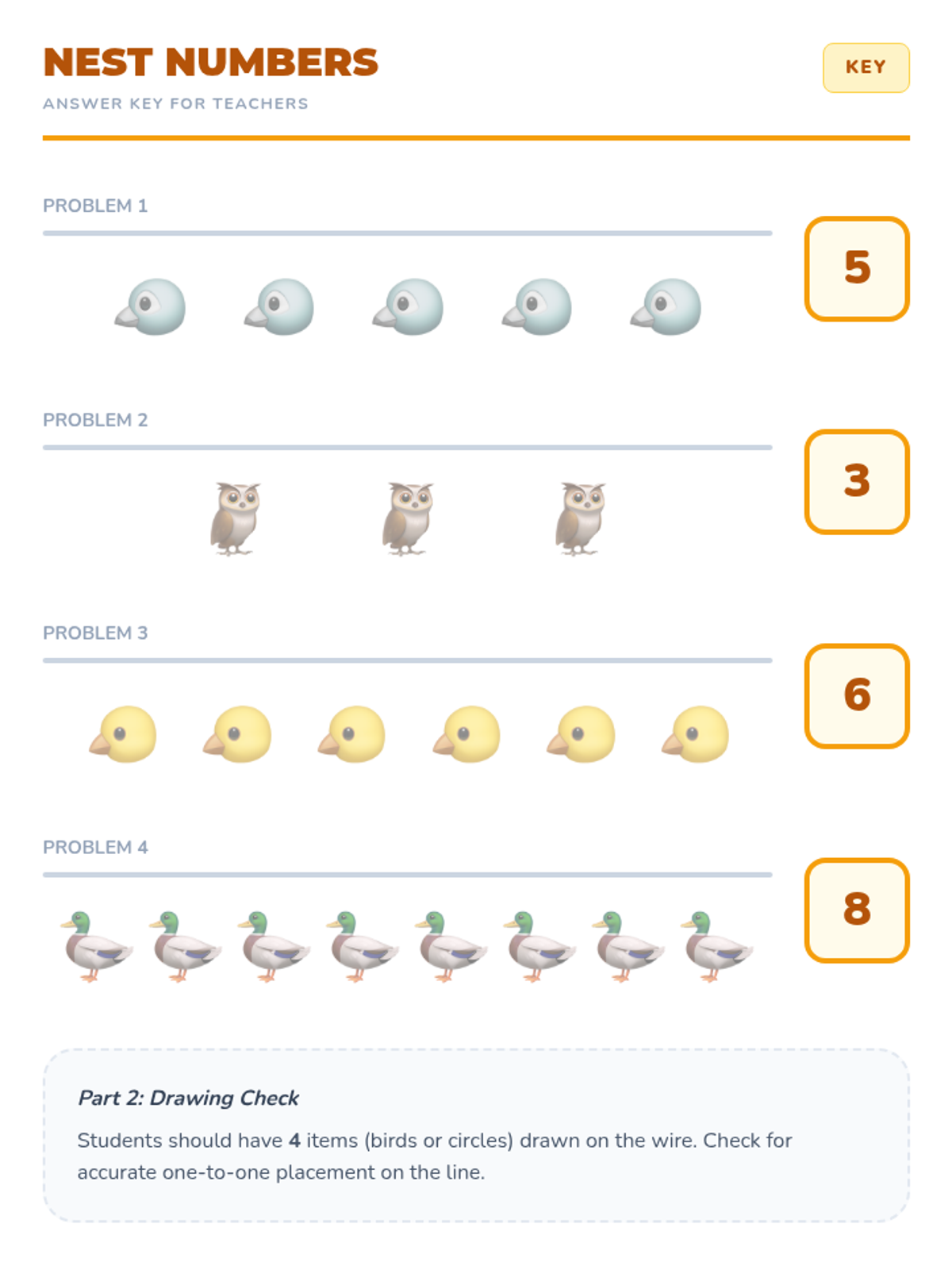
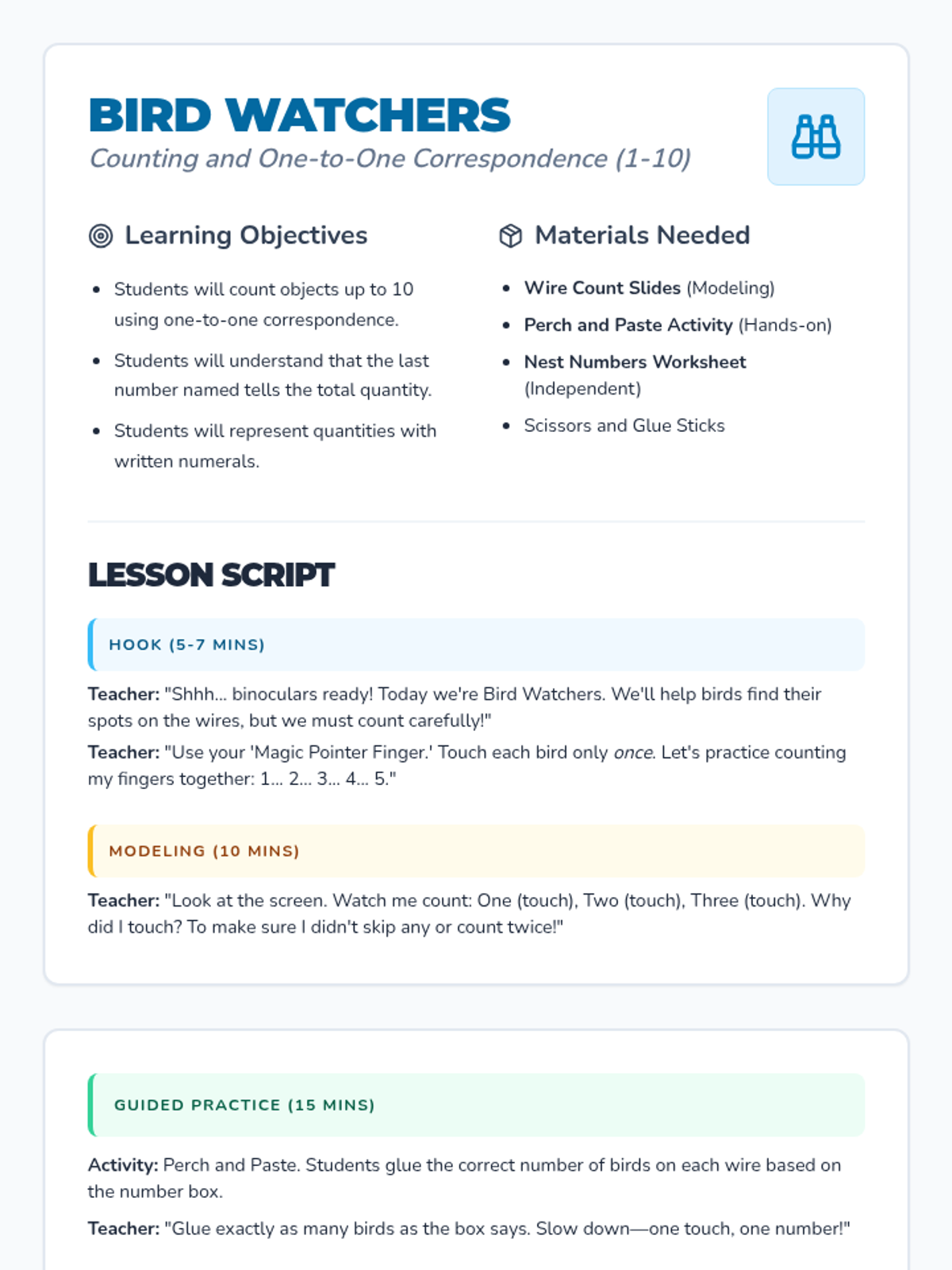
An interactive math lesson for early learners focusing on counting up to 10 and one-to-one correspondence using a charming bird-themed field notebook aesthetic. Students will practice counting birds as they land on wires through modeling, hands-on activities, and independent practice.
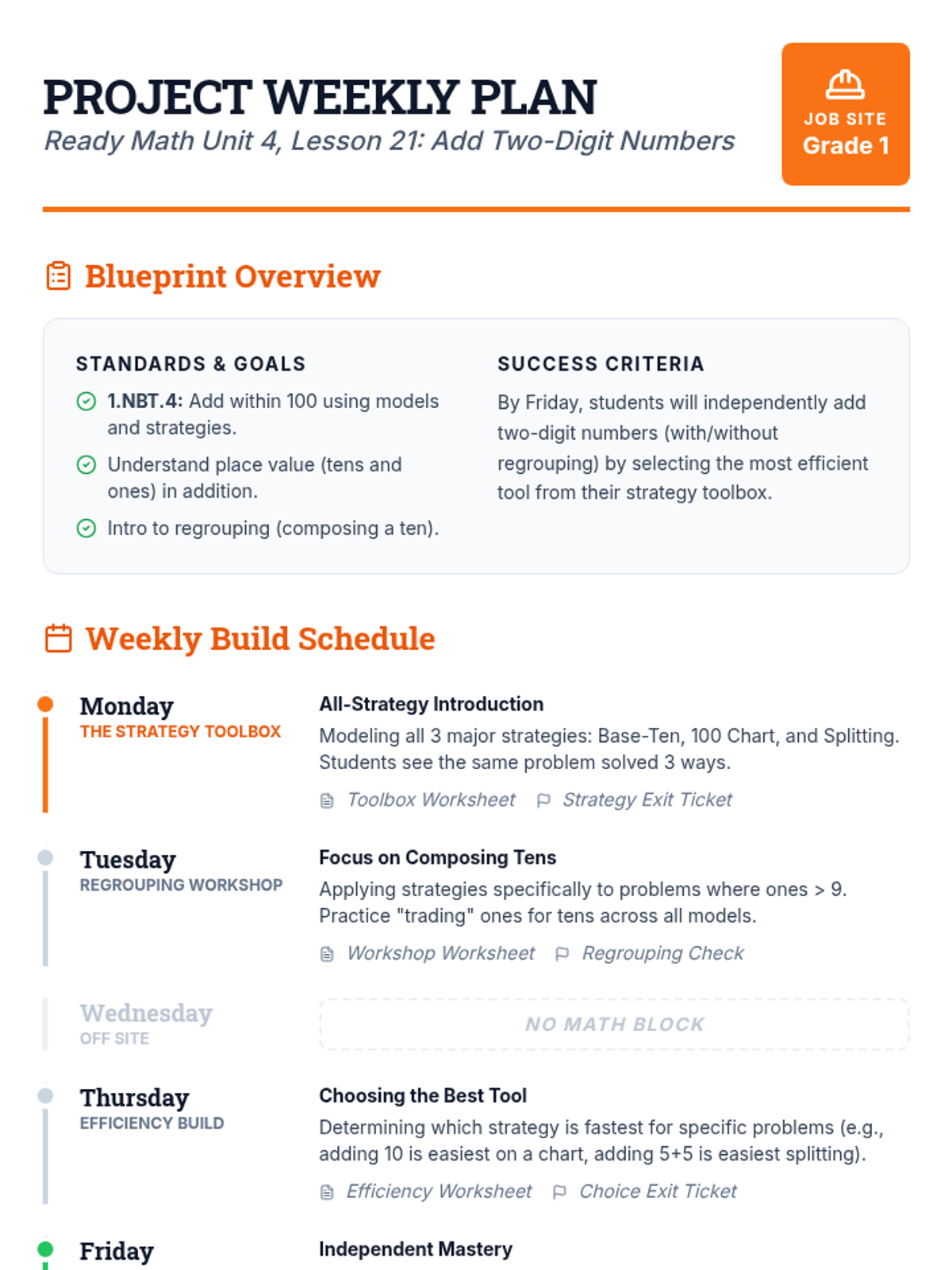
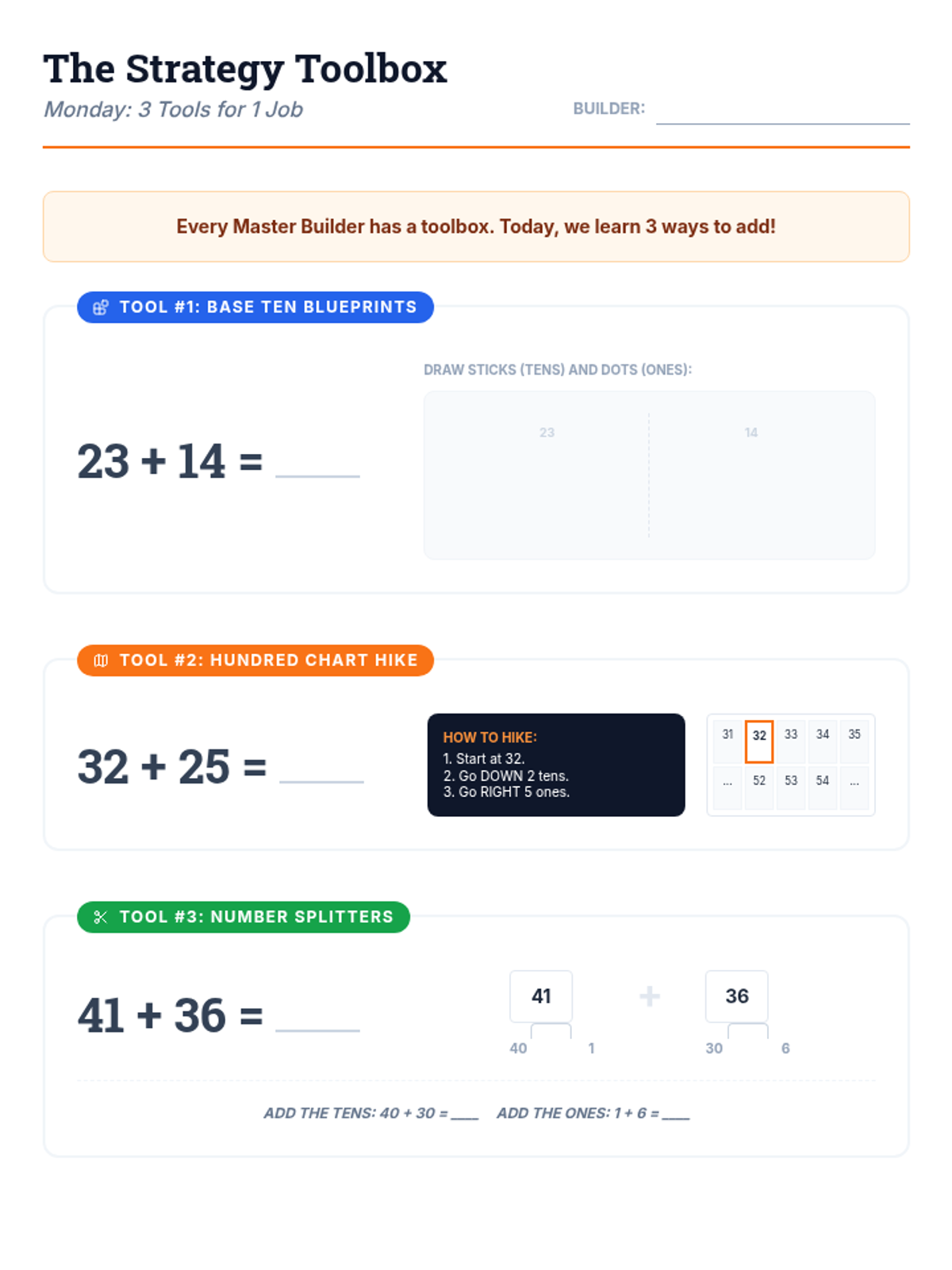
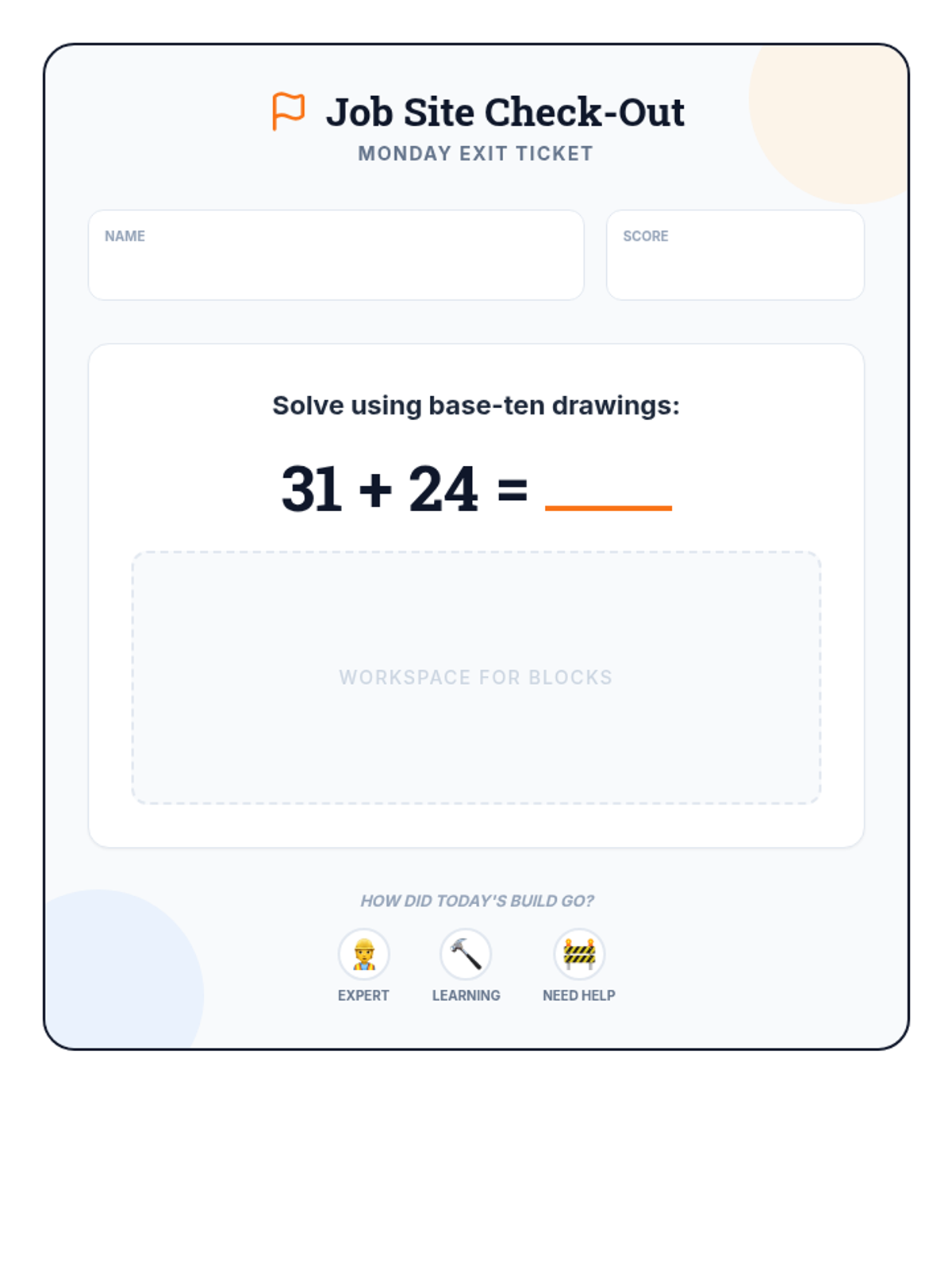
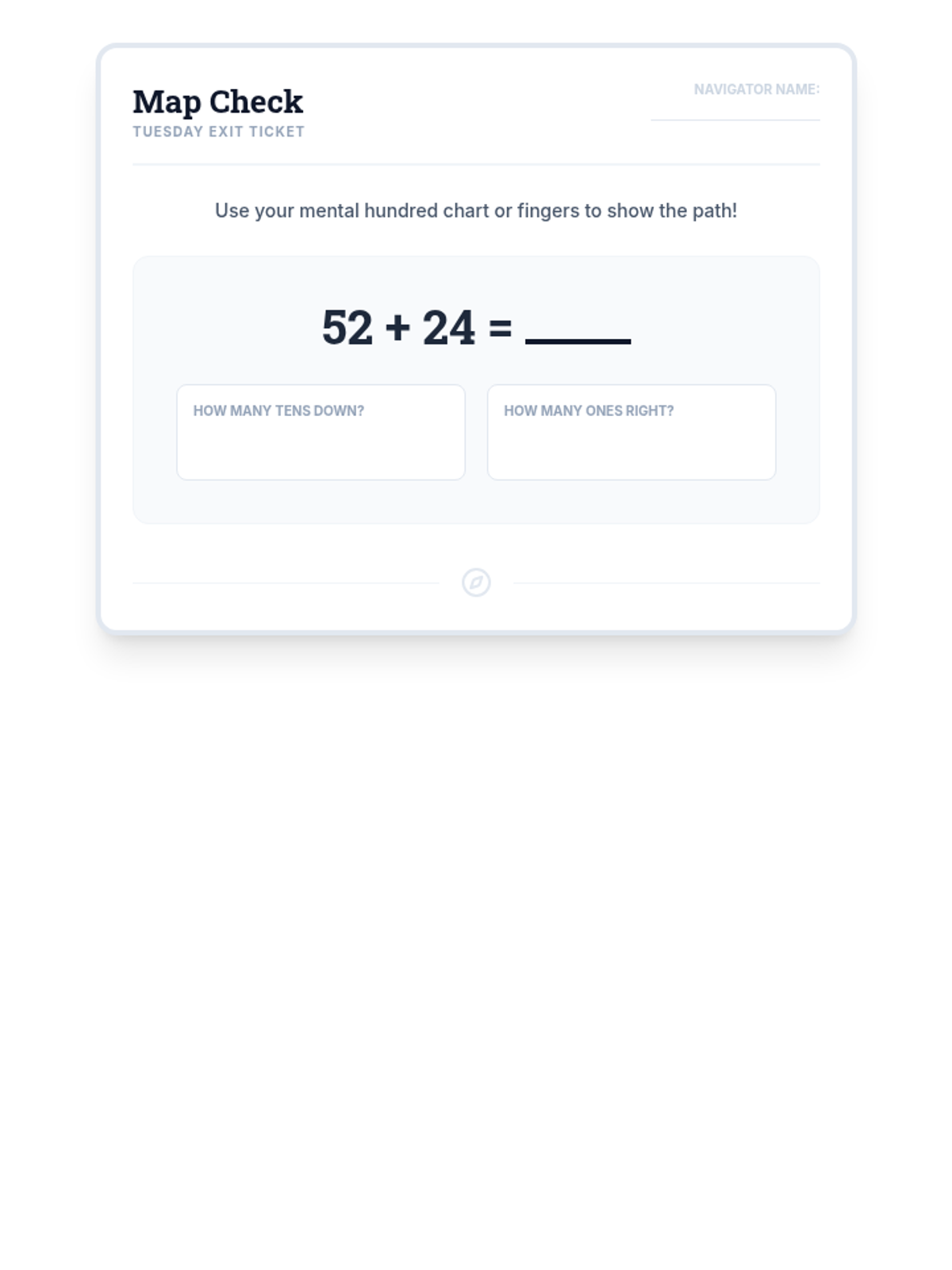
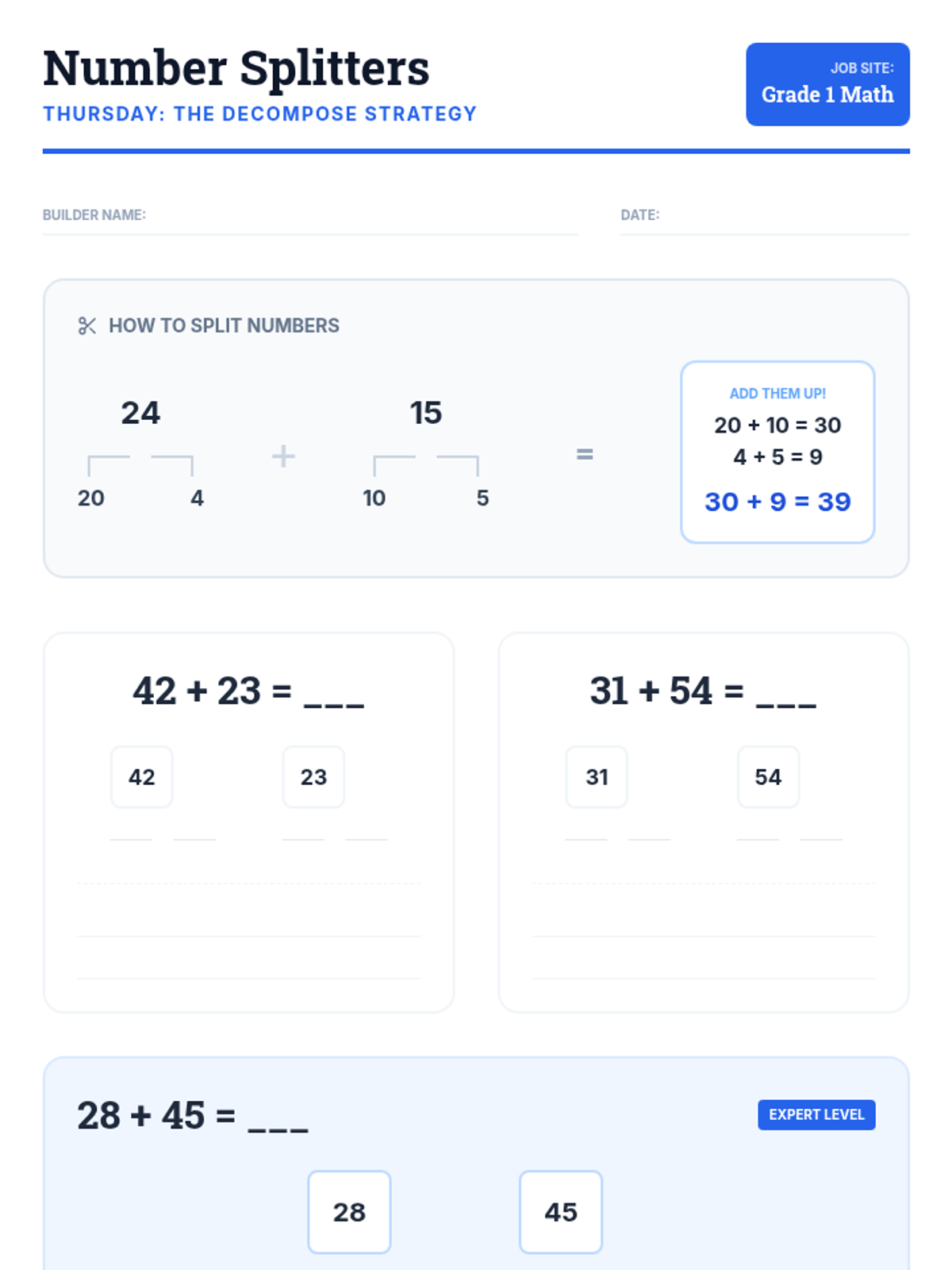
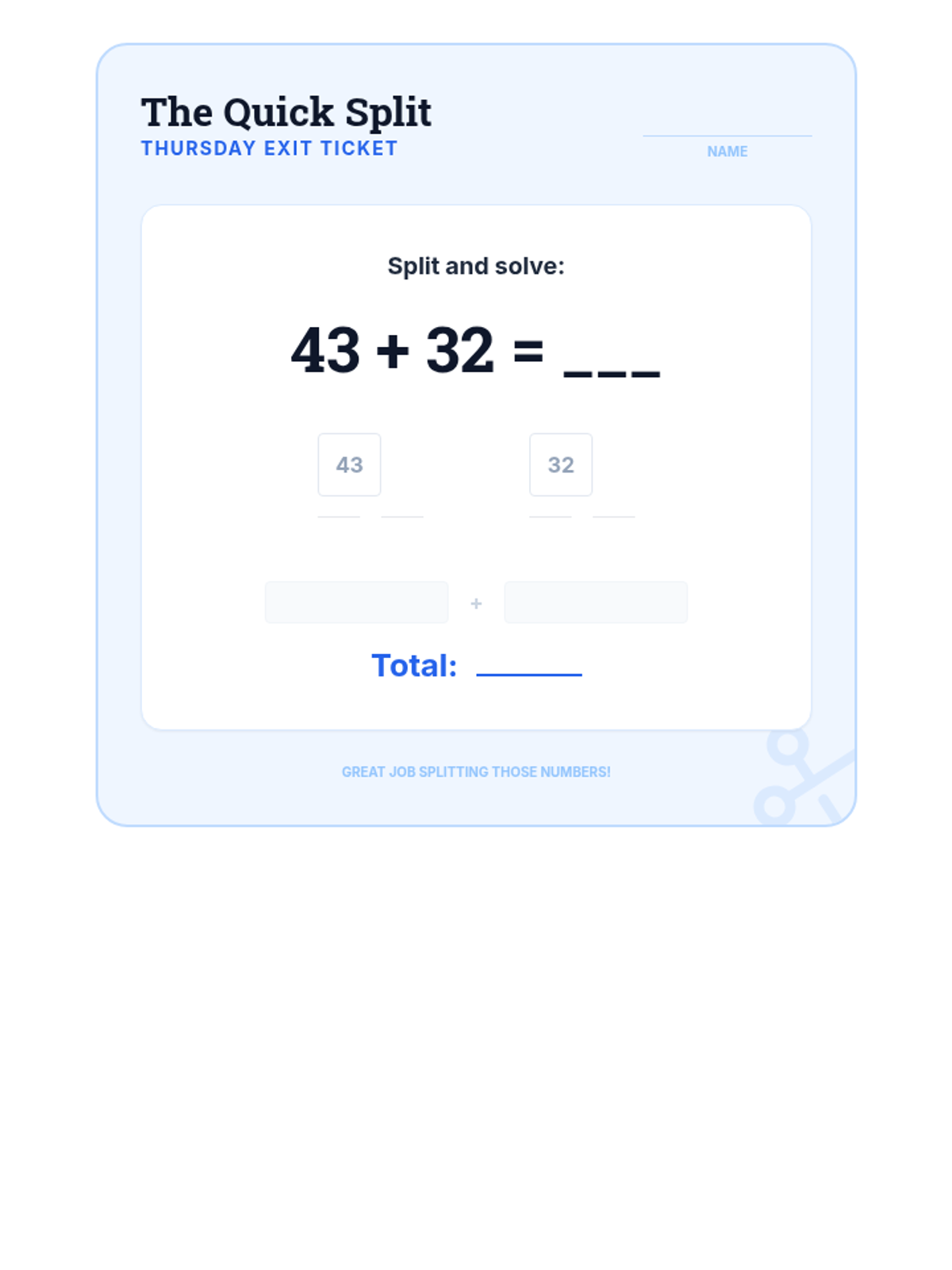
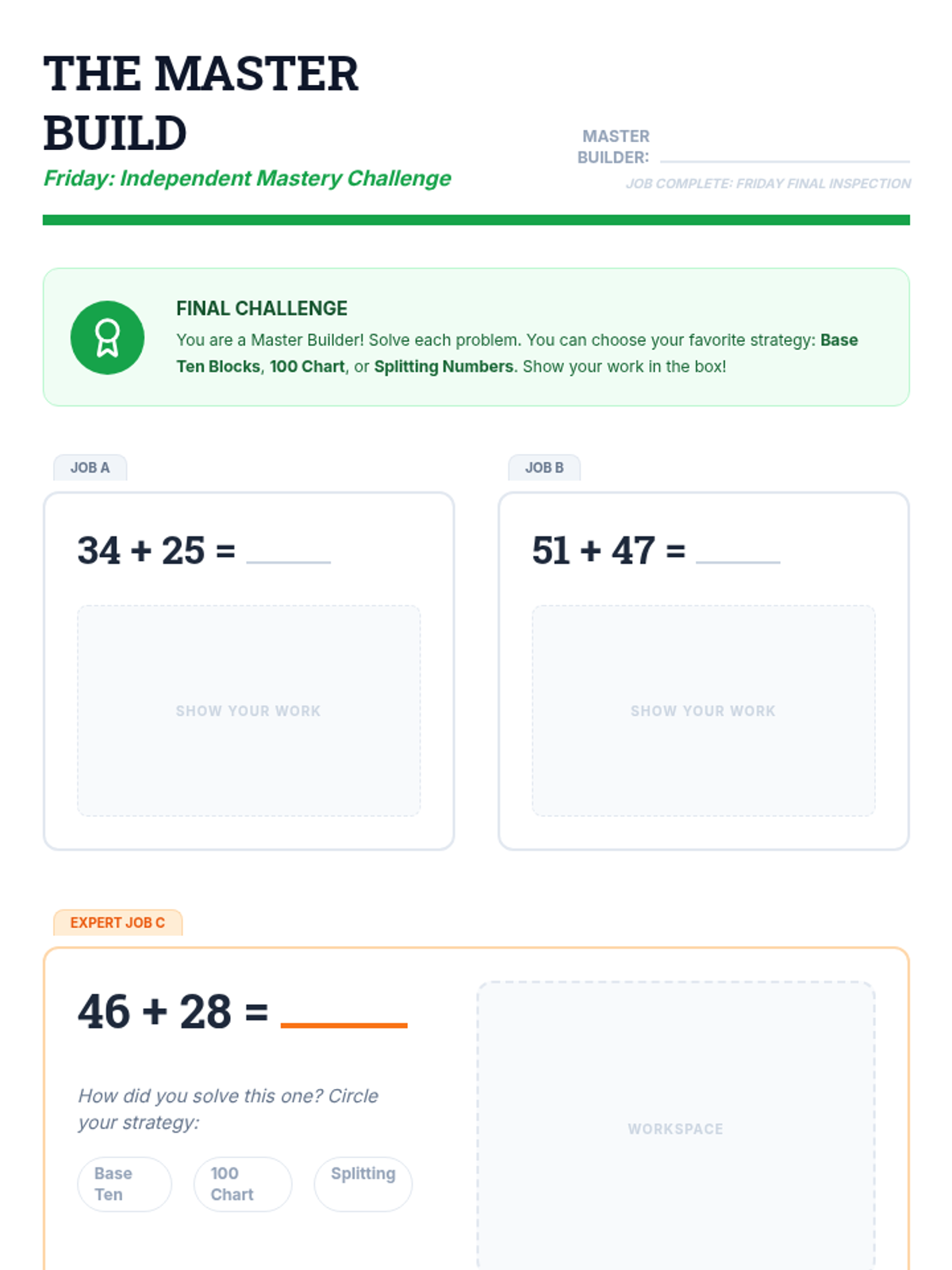
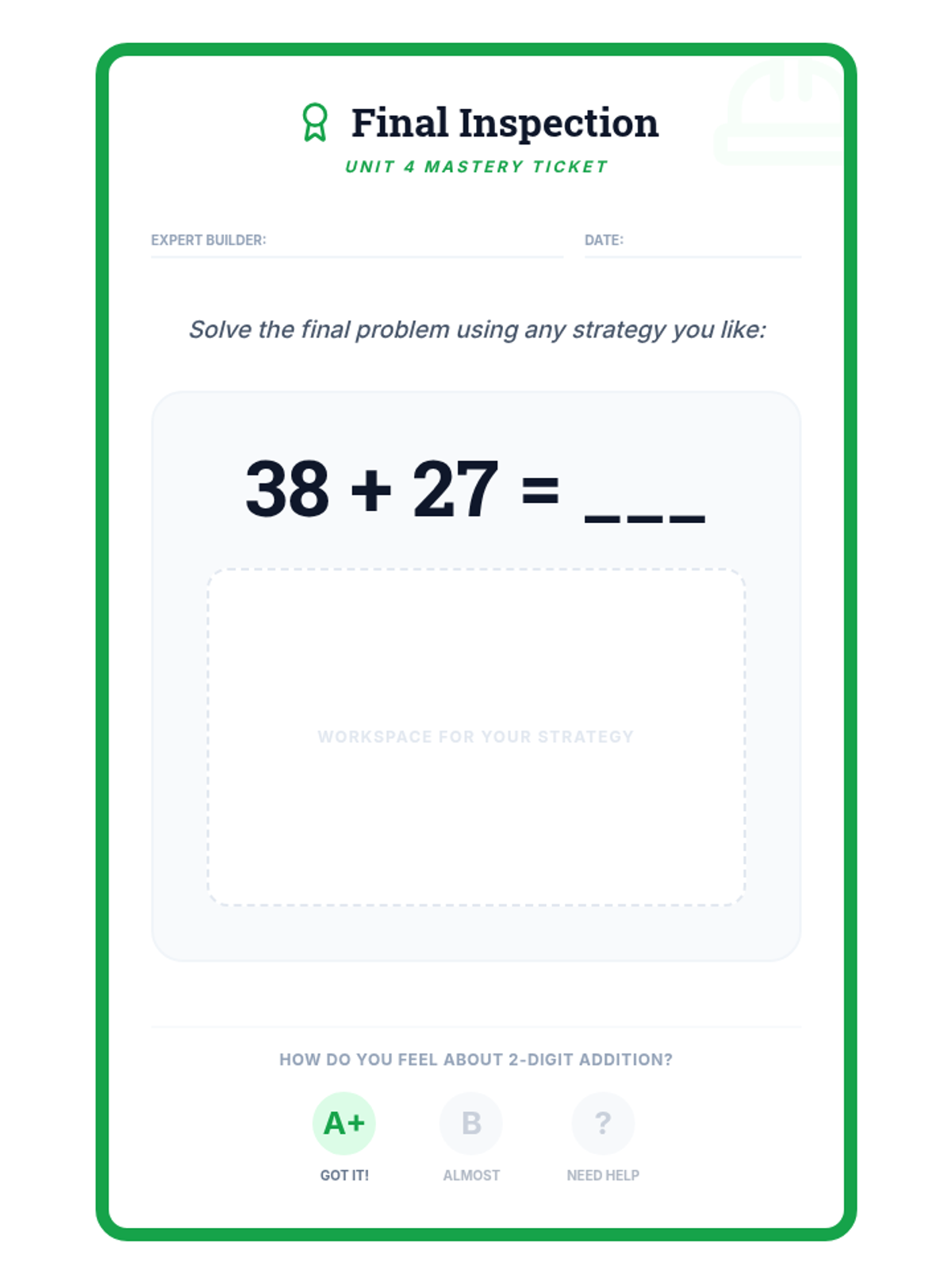
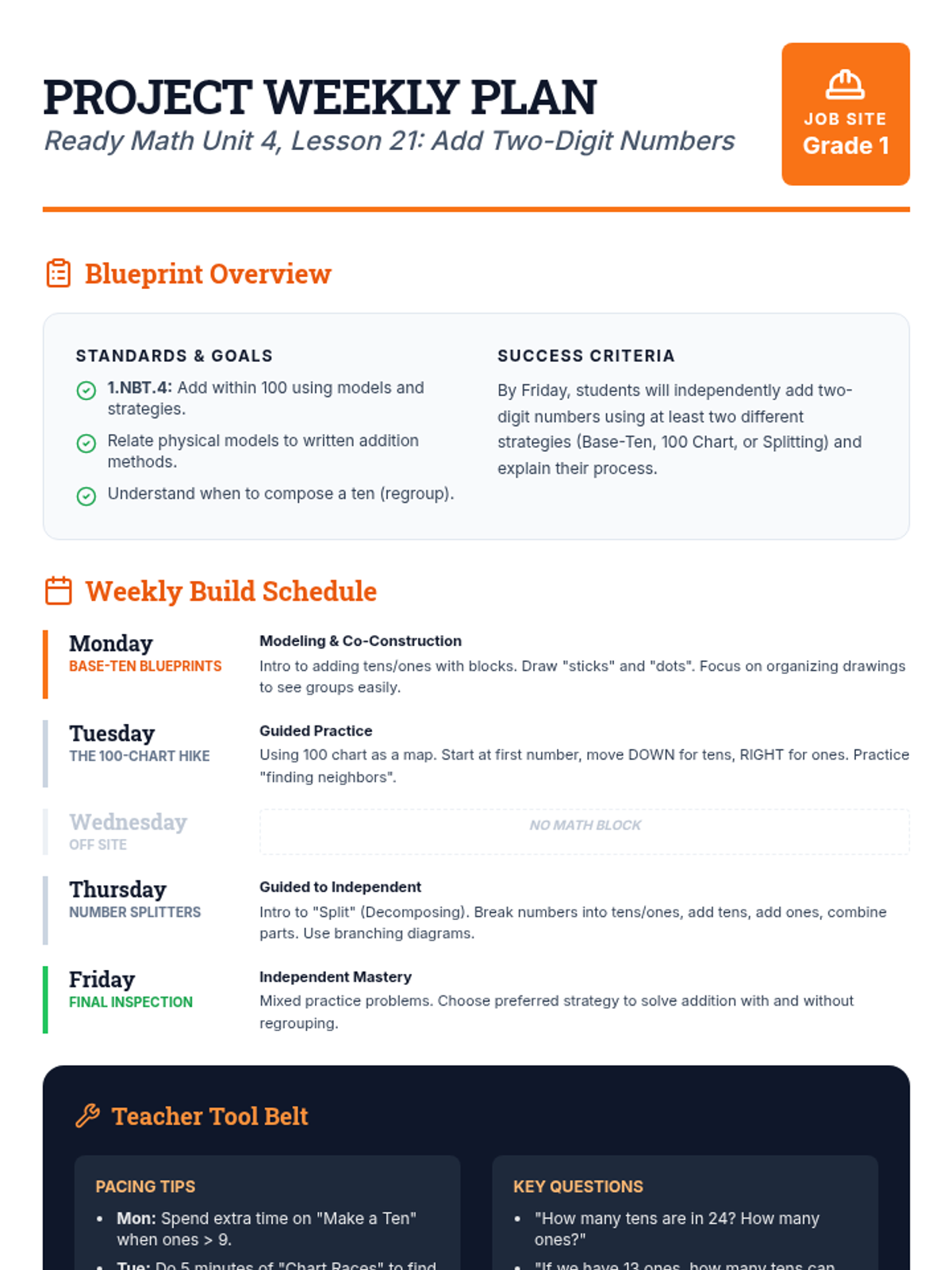
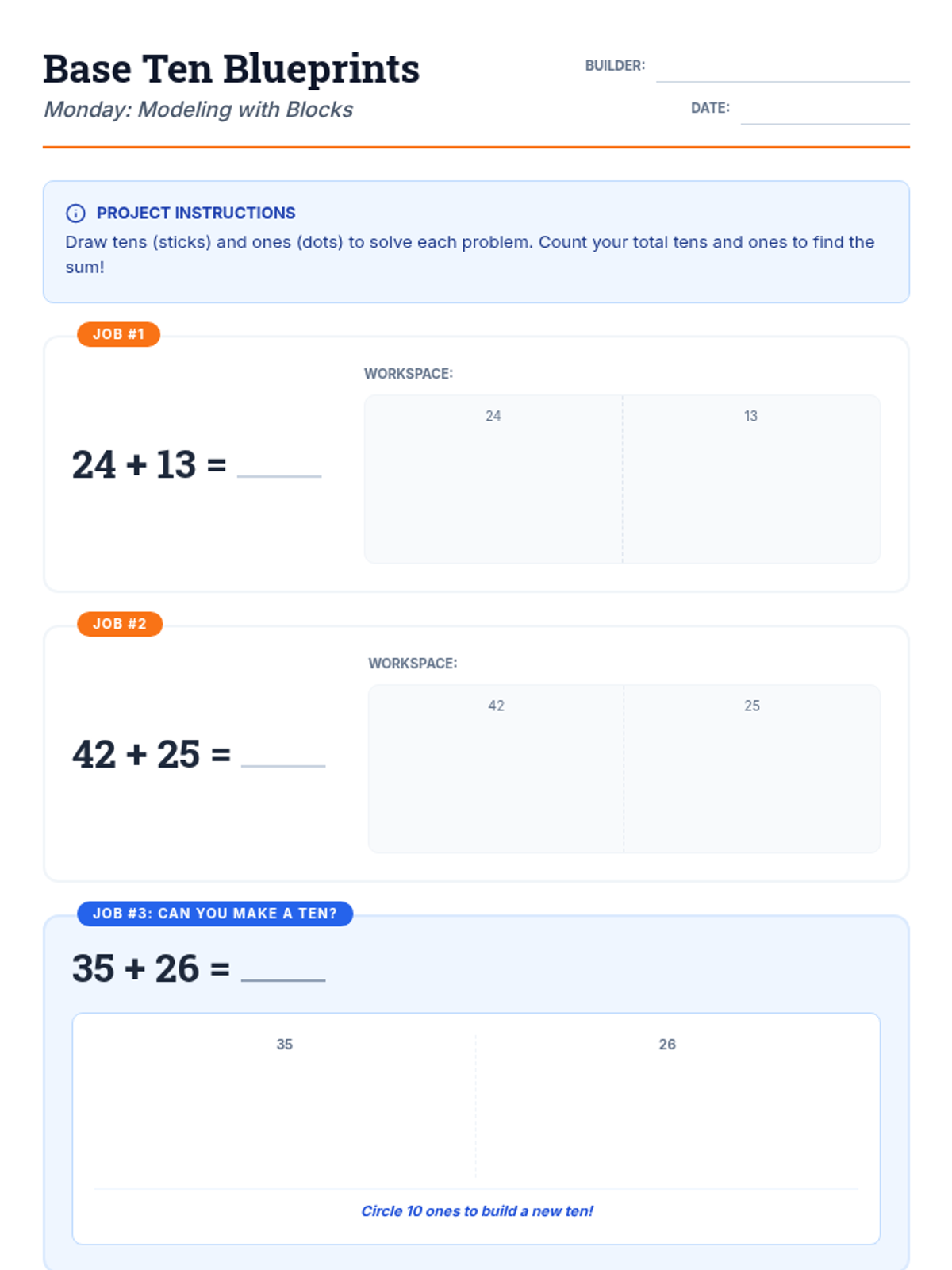
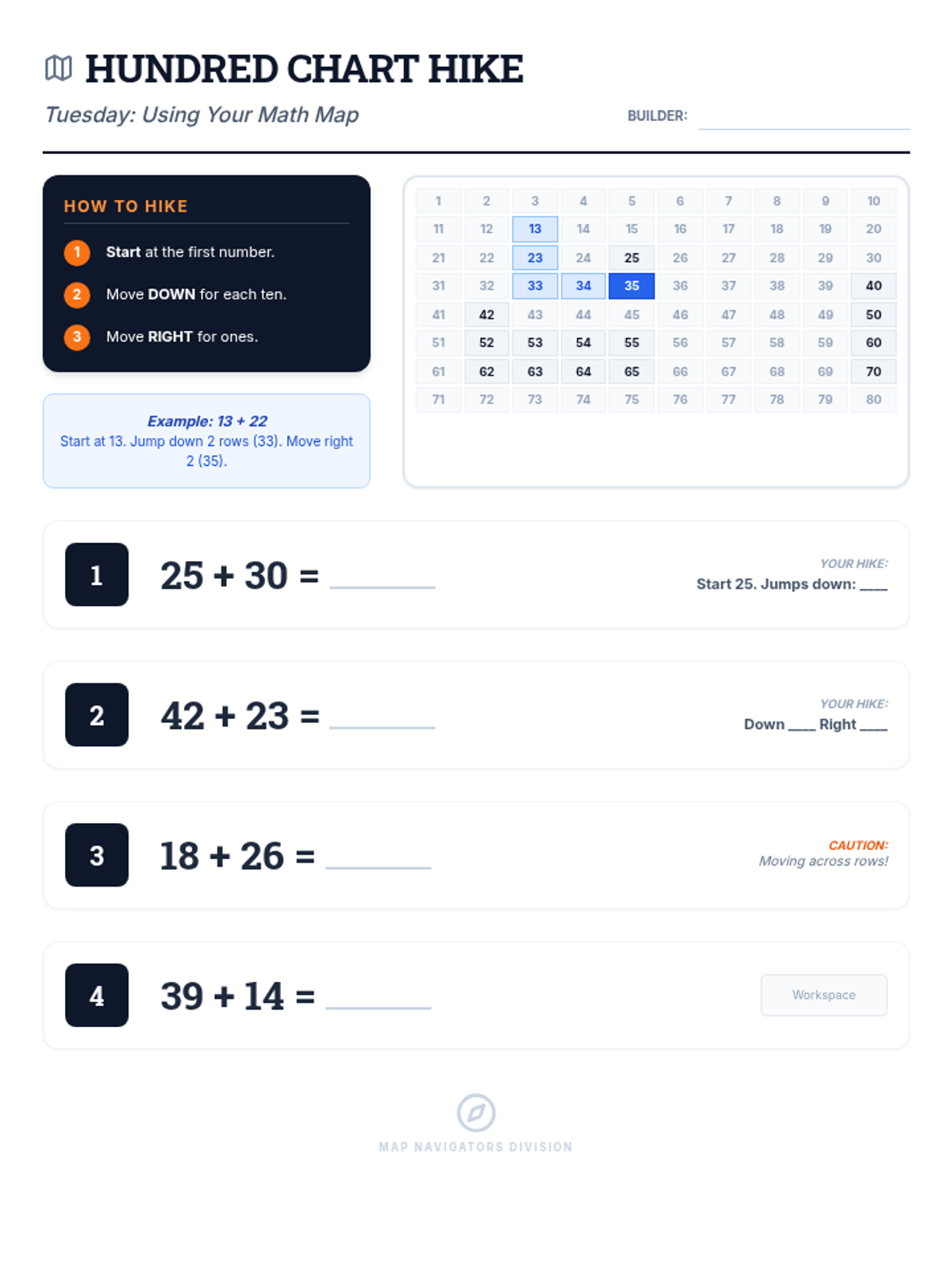
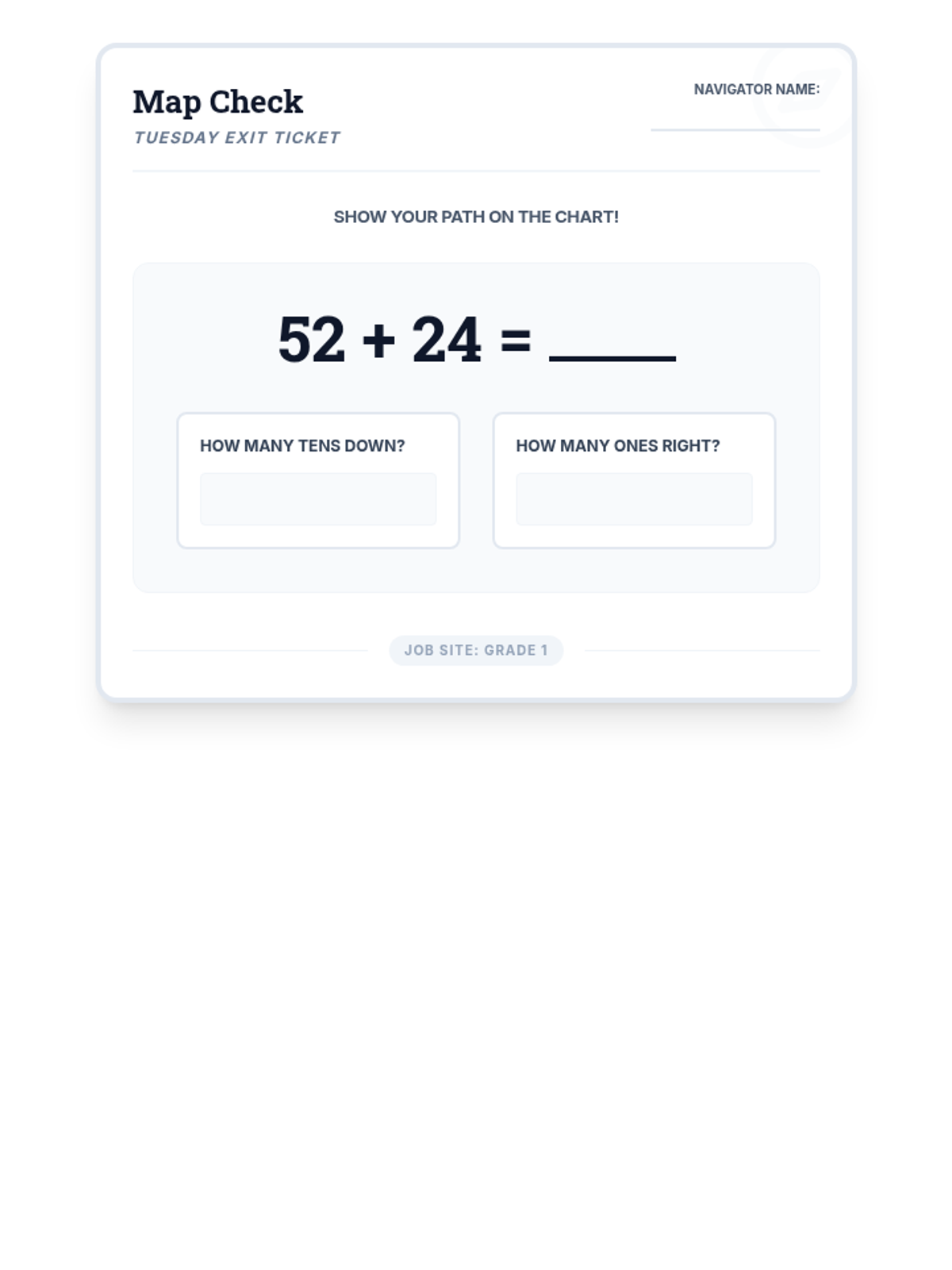
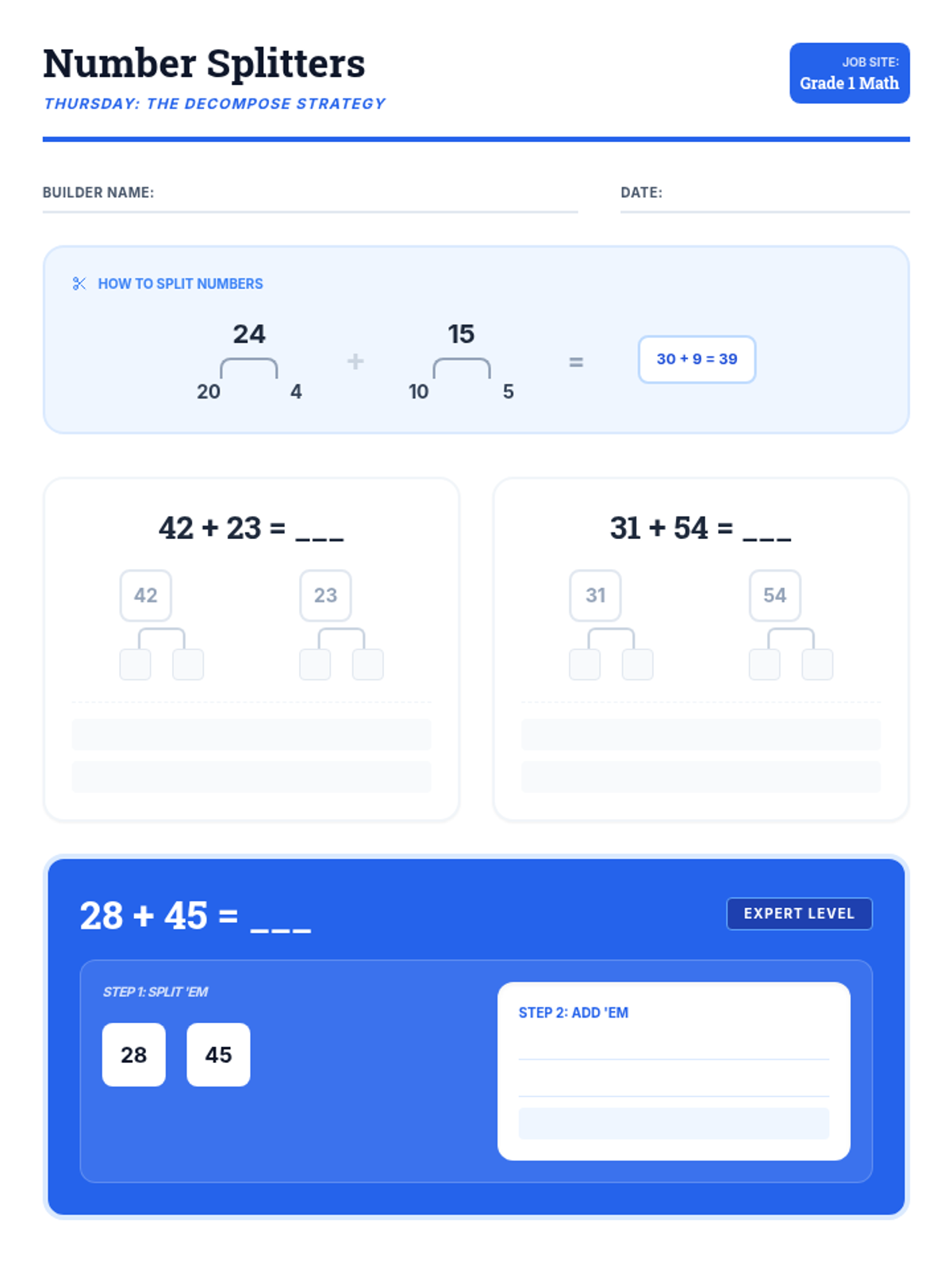
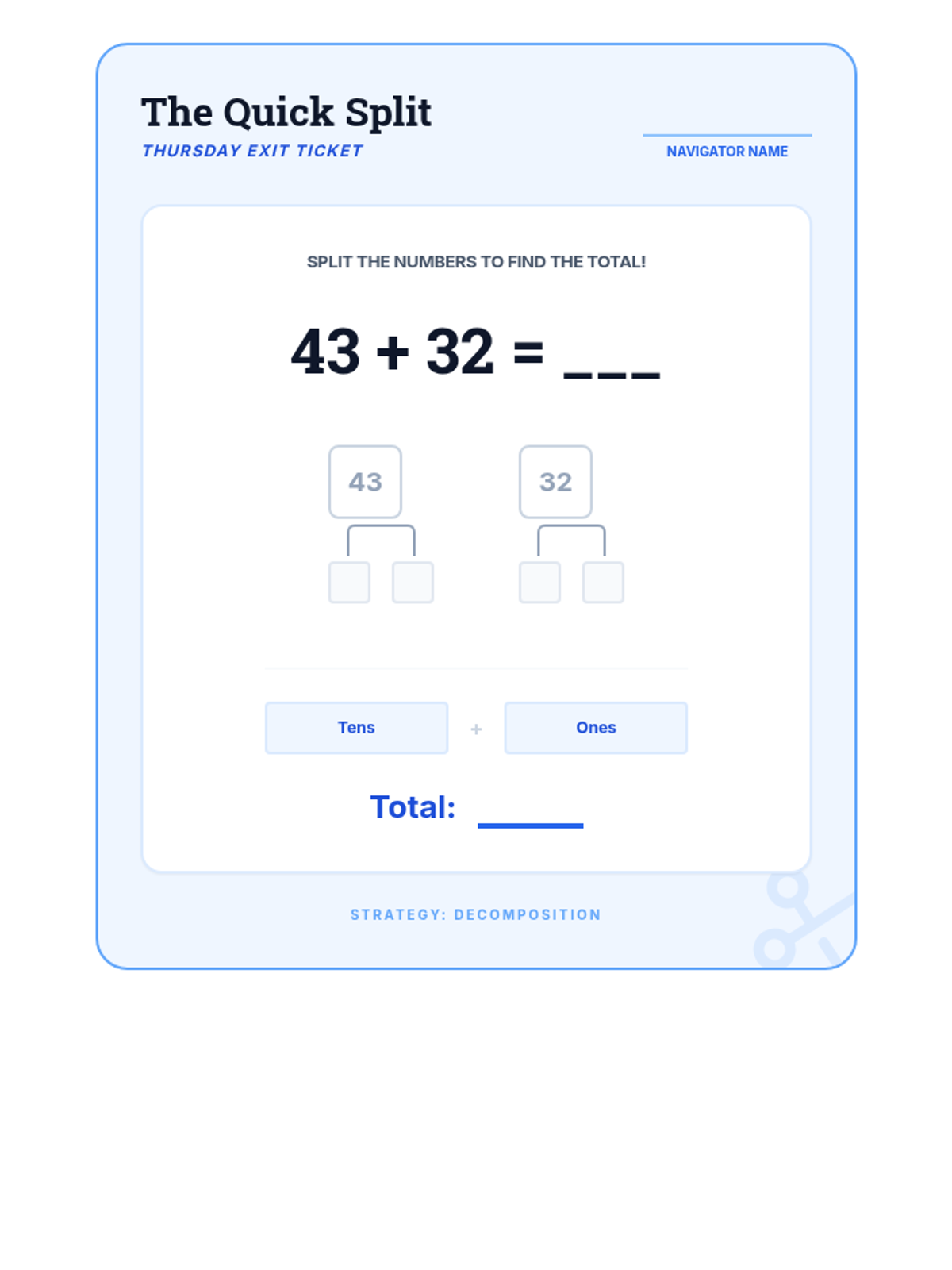
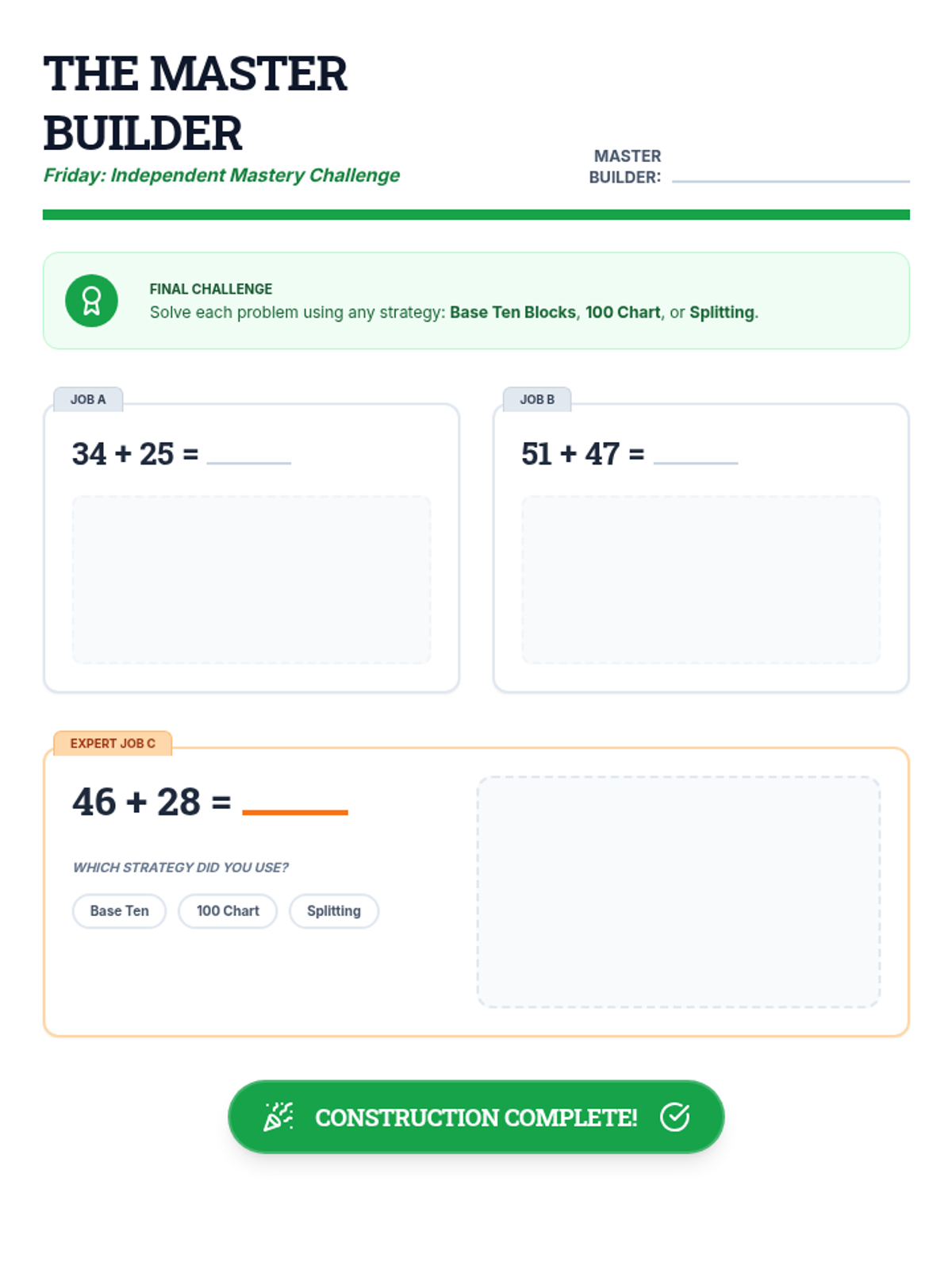
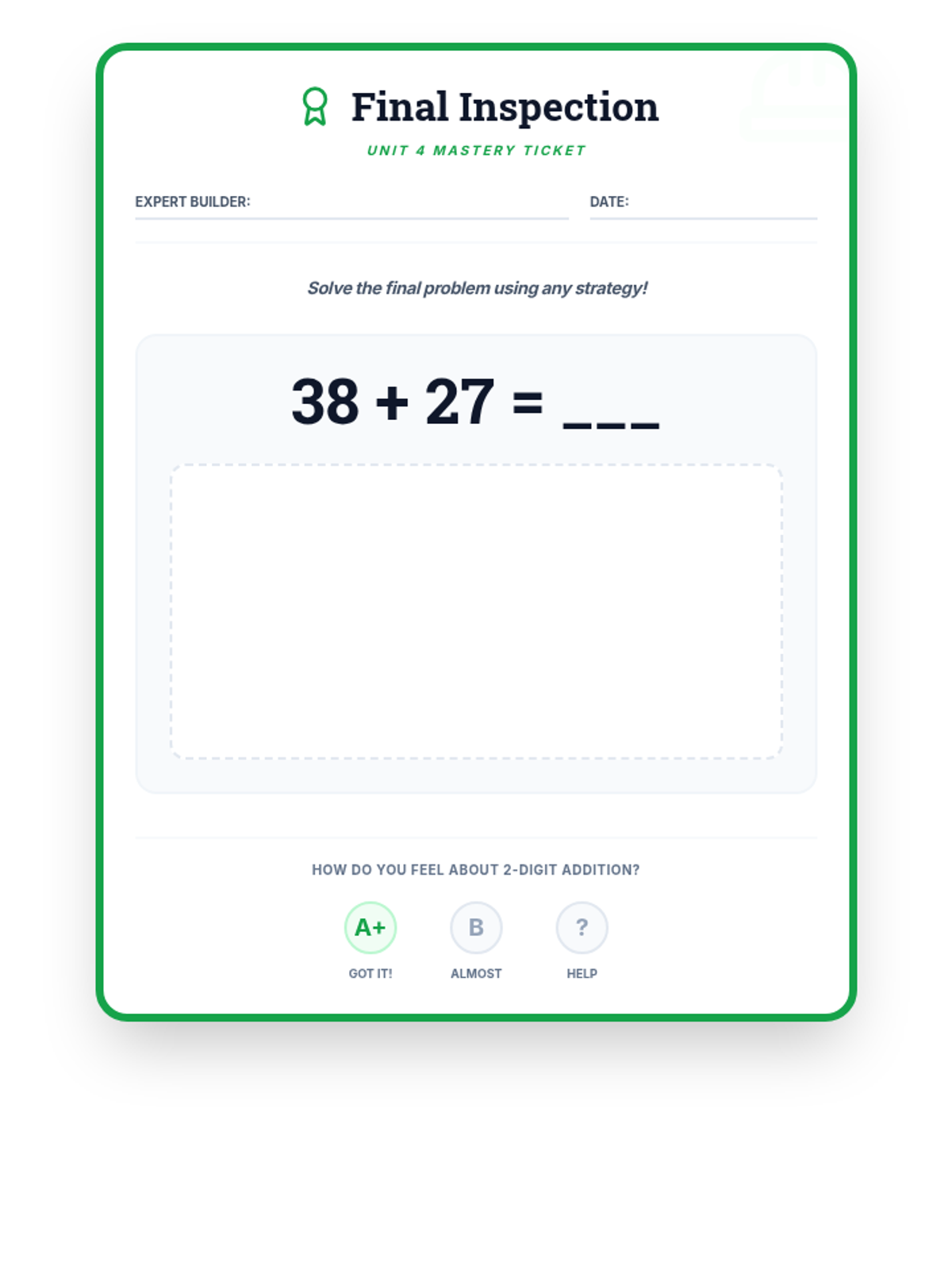
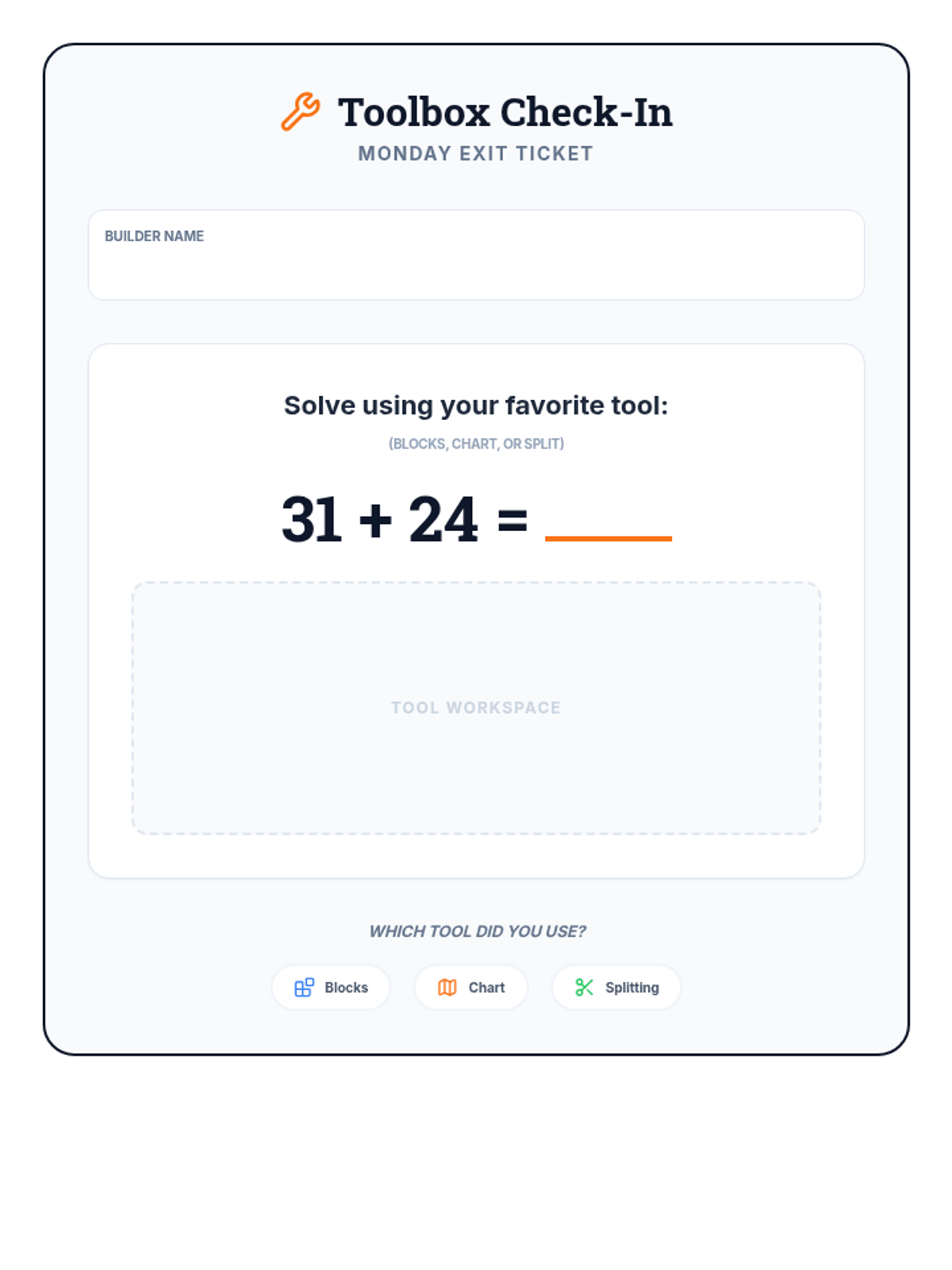
This lesson covers adding two-digit numbers using multiple strategies: base-ten models, hundred charts, and splitting tens and ones. It spans a full school week (excluding Wednesday) with a progression from modeling to independent work.
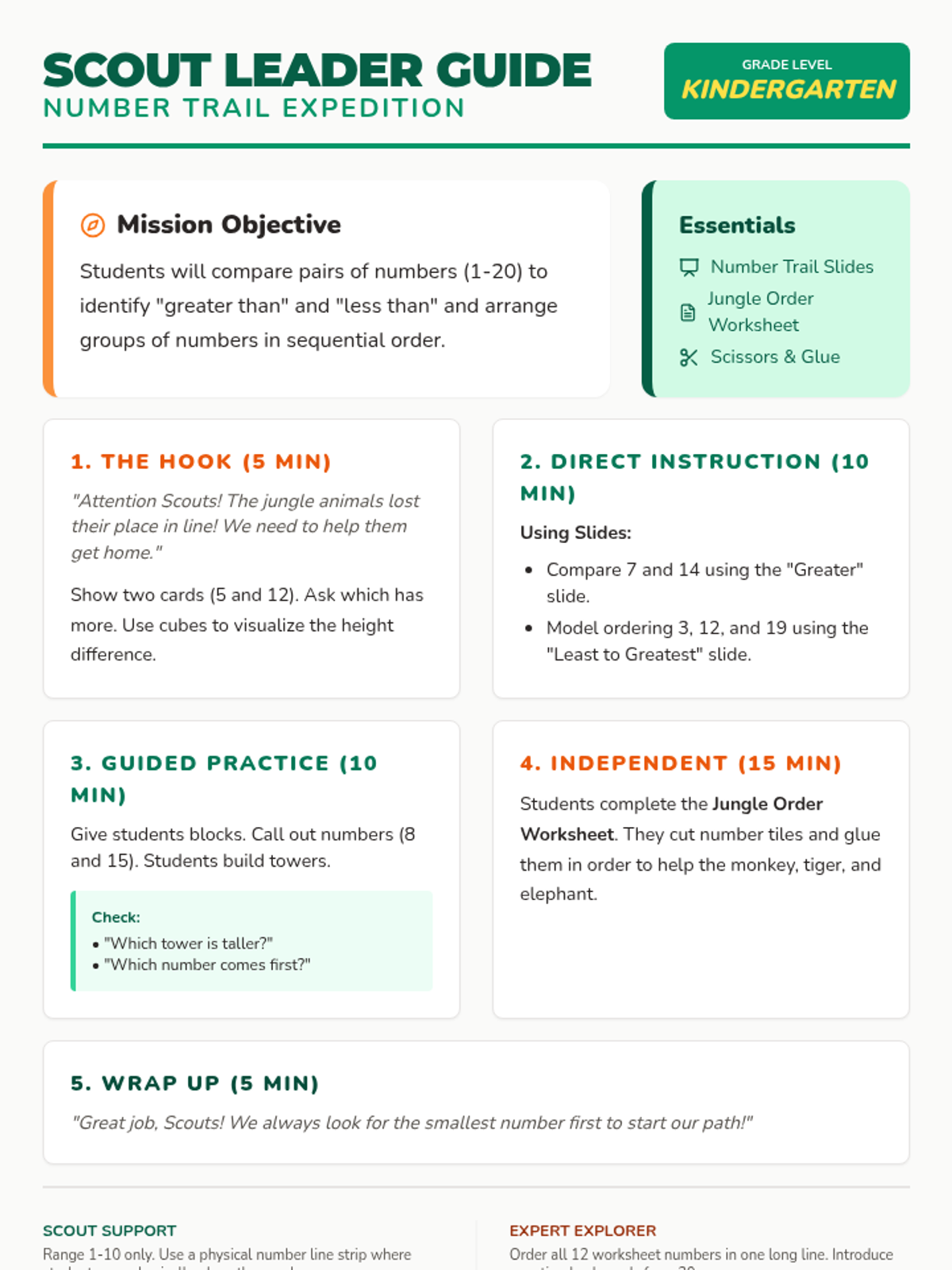
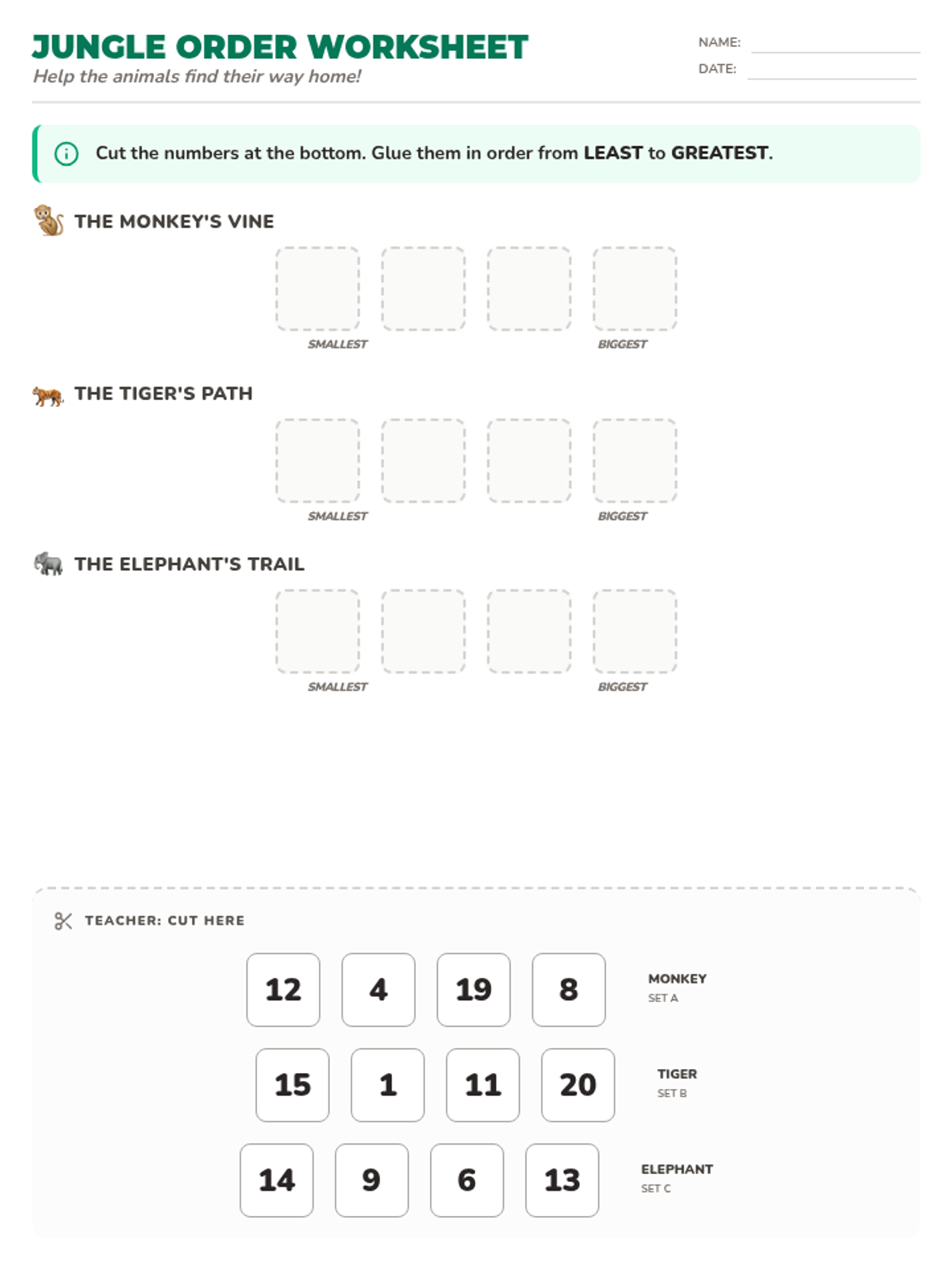
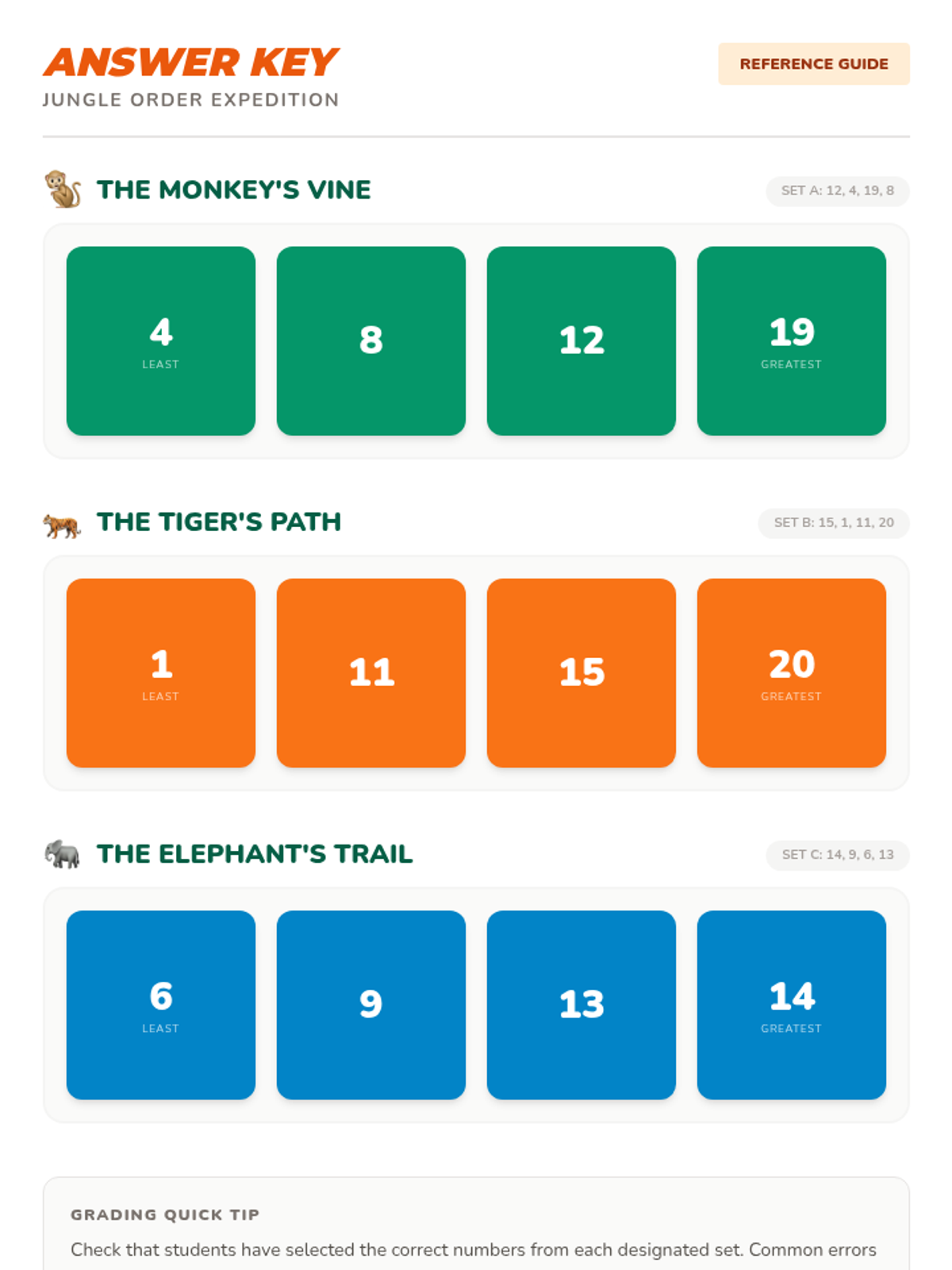
A comprehensive kindergarten lesson on comparing and ordering numbers 1-20 using a fun jungle exploration theme. Students will learn to identify which number is greater or less and arrange numbers in sequential order.
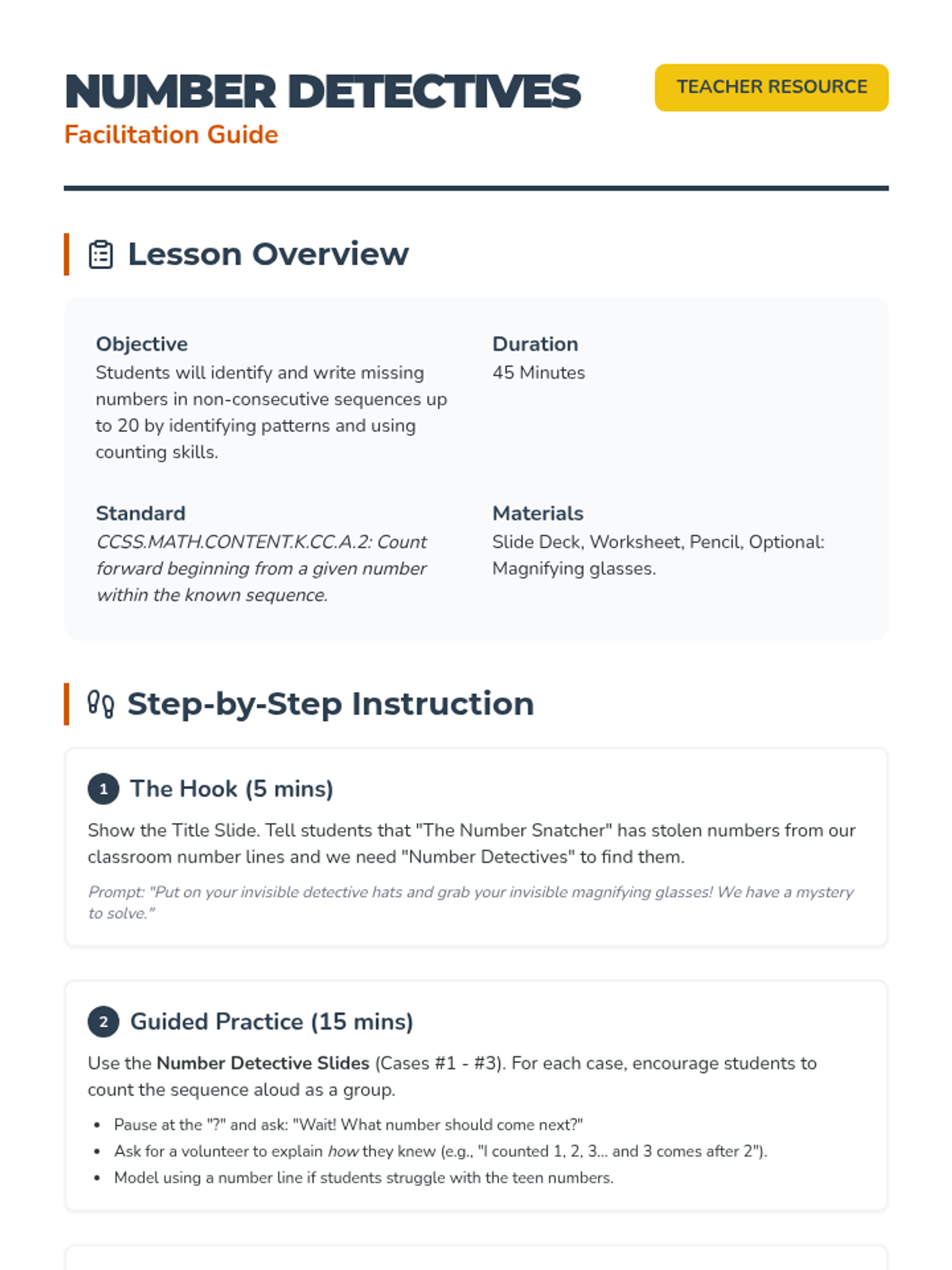
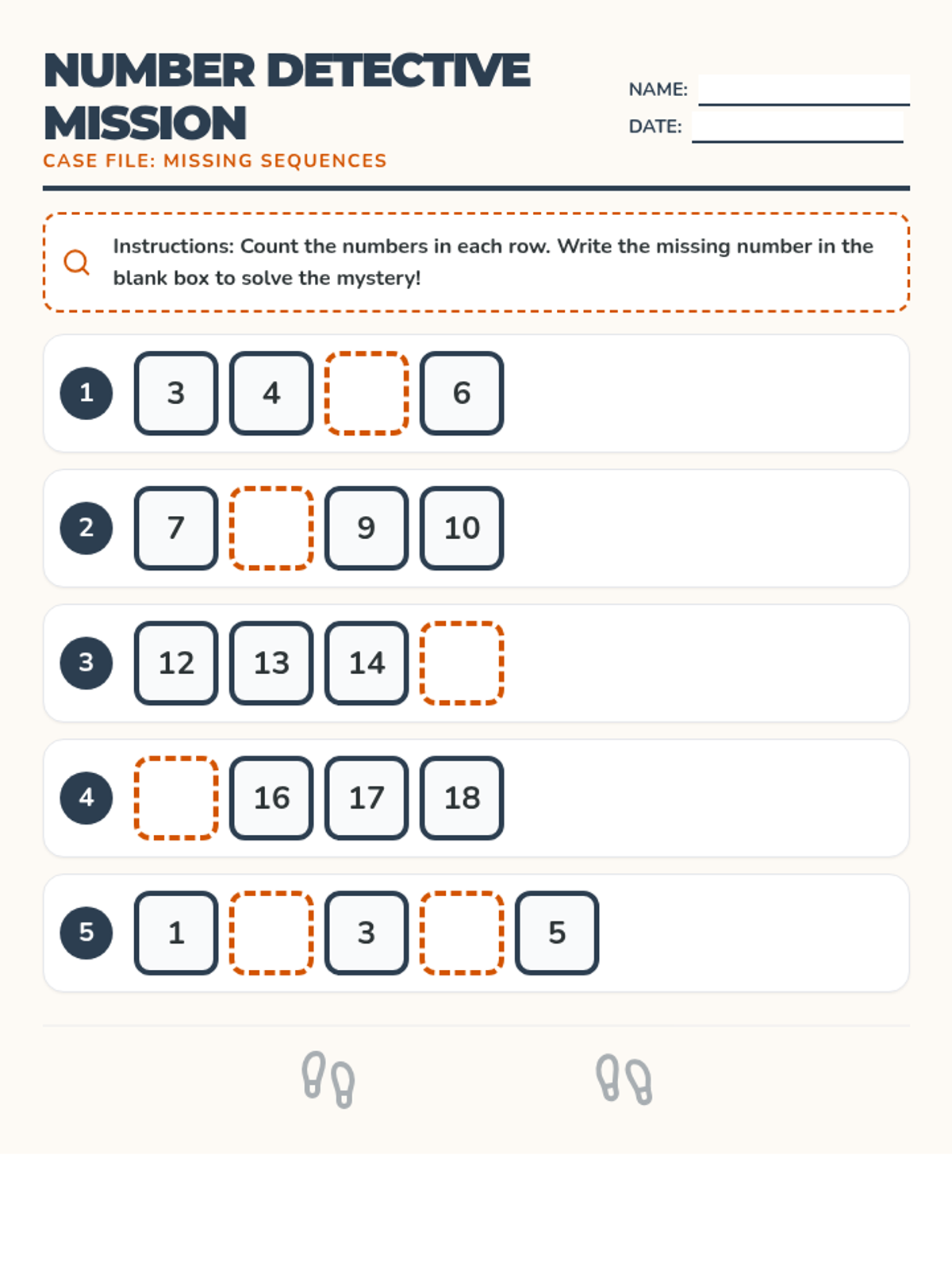
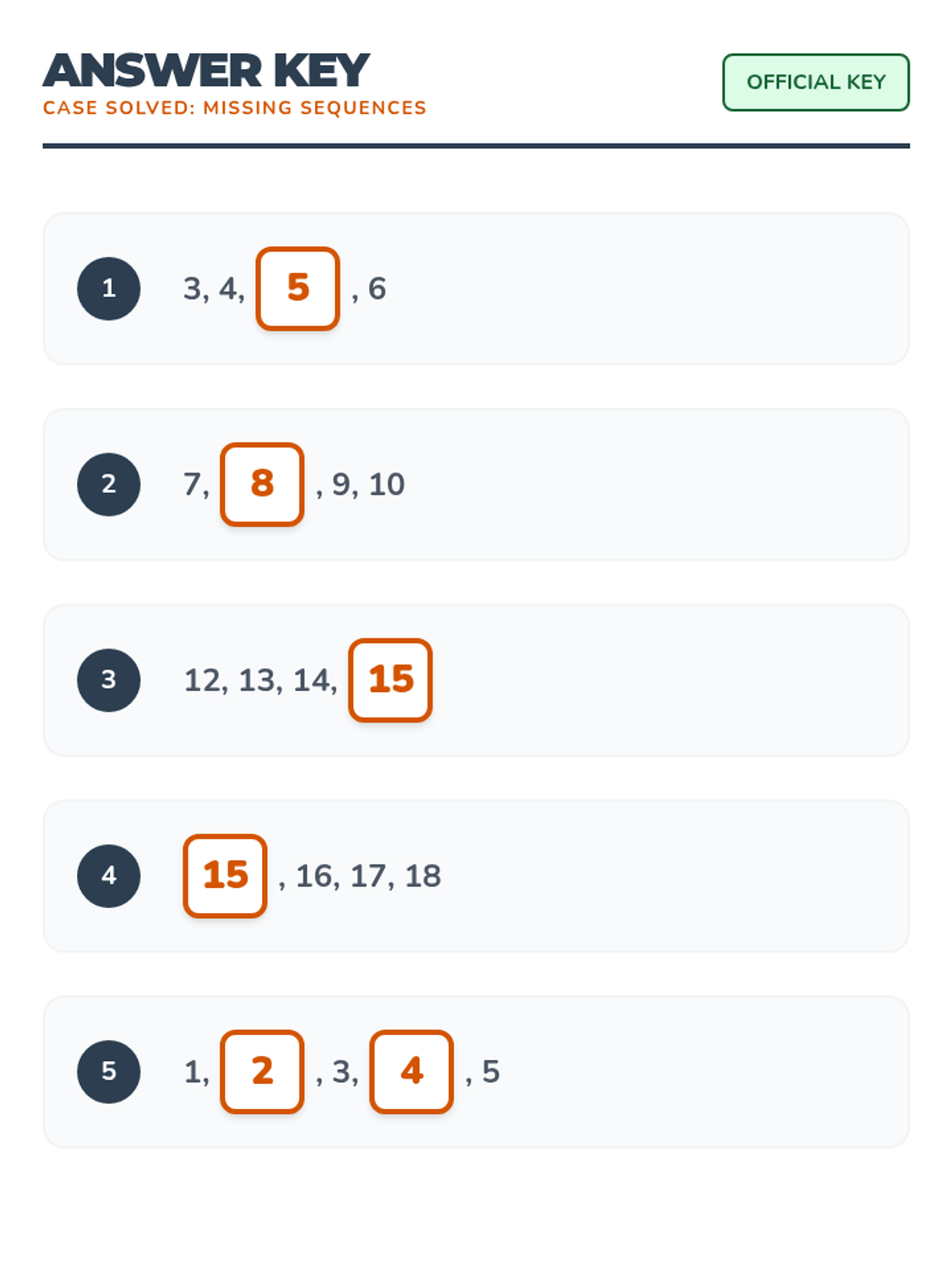
A mysterious kindergarten math lesson where students become 'Number Detectives' to identify missing numbers in sequences up to 10 and 20.
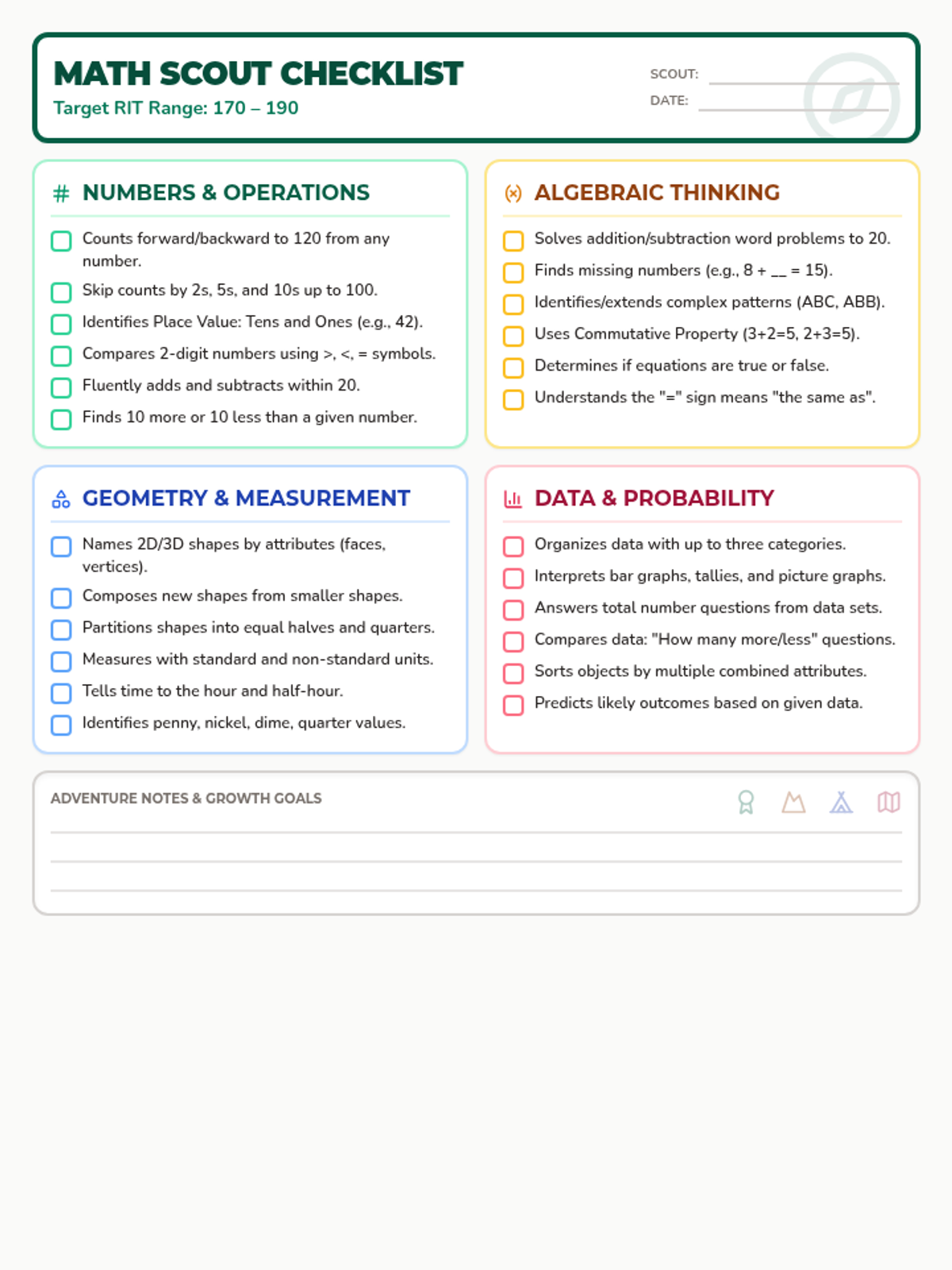
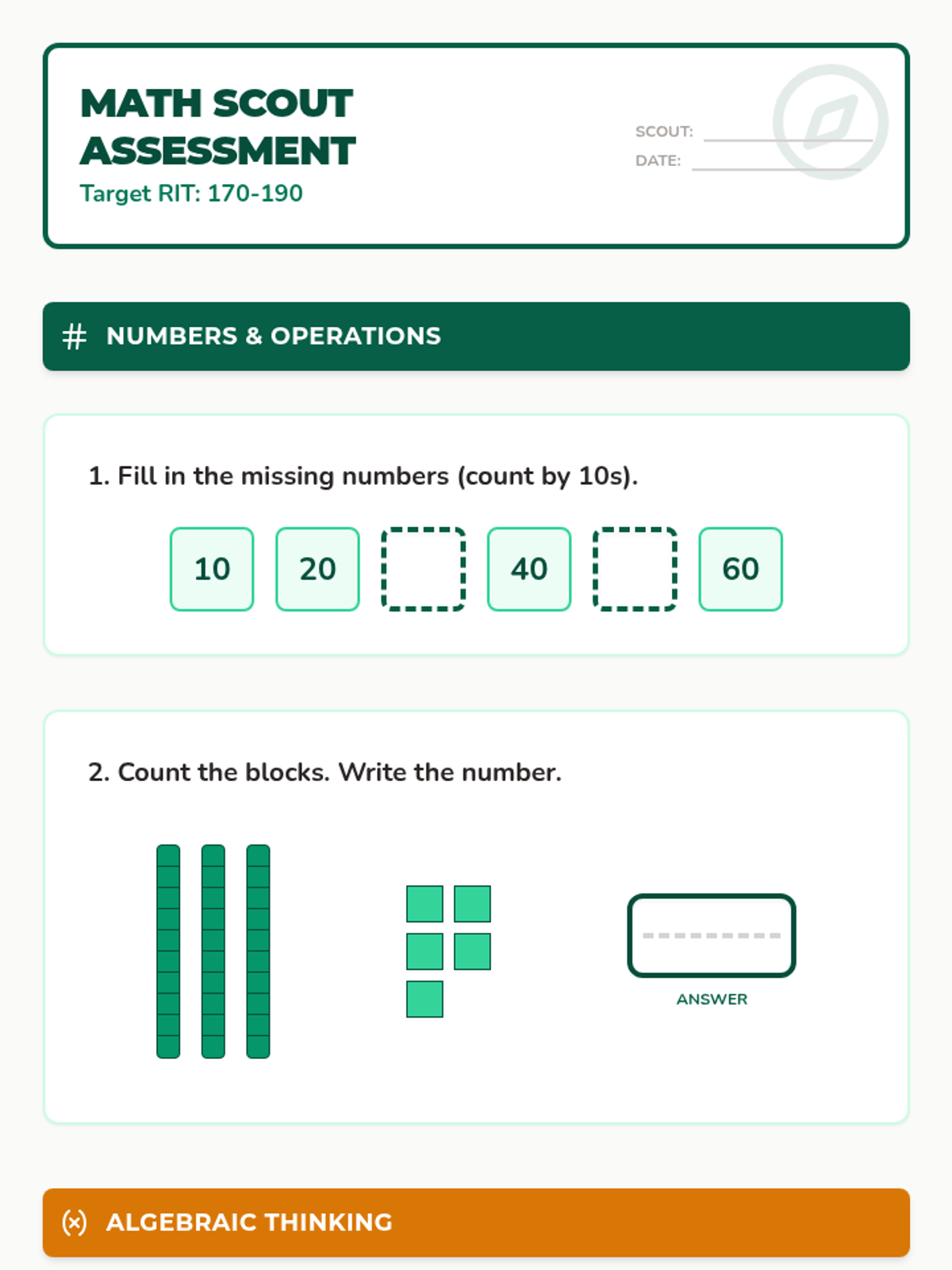
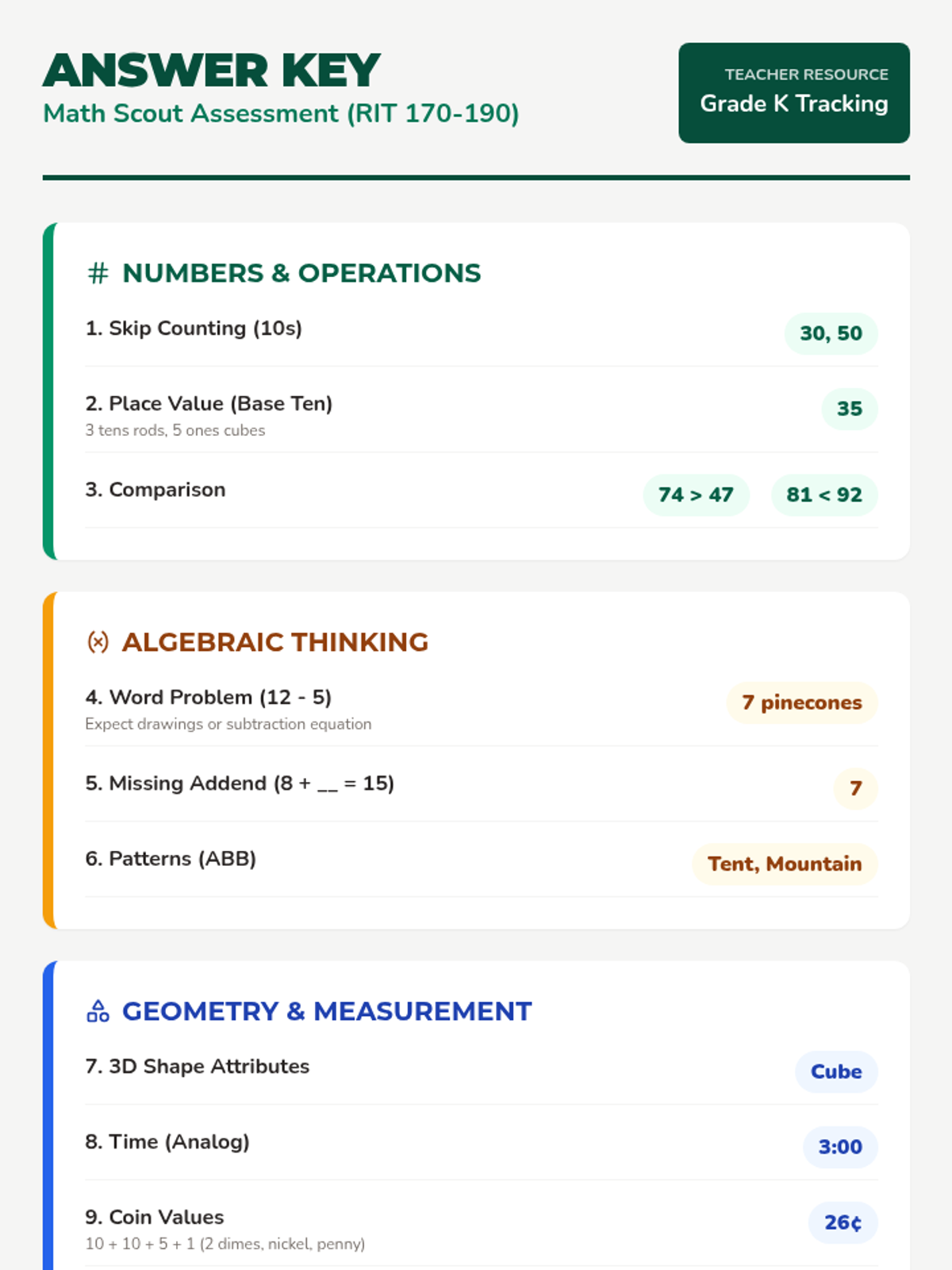
A comprehensive tracking resource for Kindergarten students aiming for advanced NWEA MAP RIT scores in mathematics, covering all key domains.
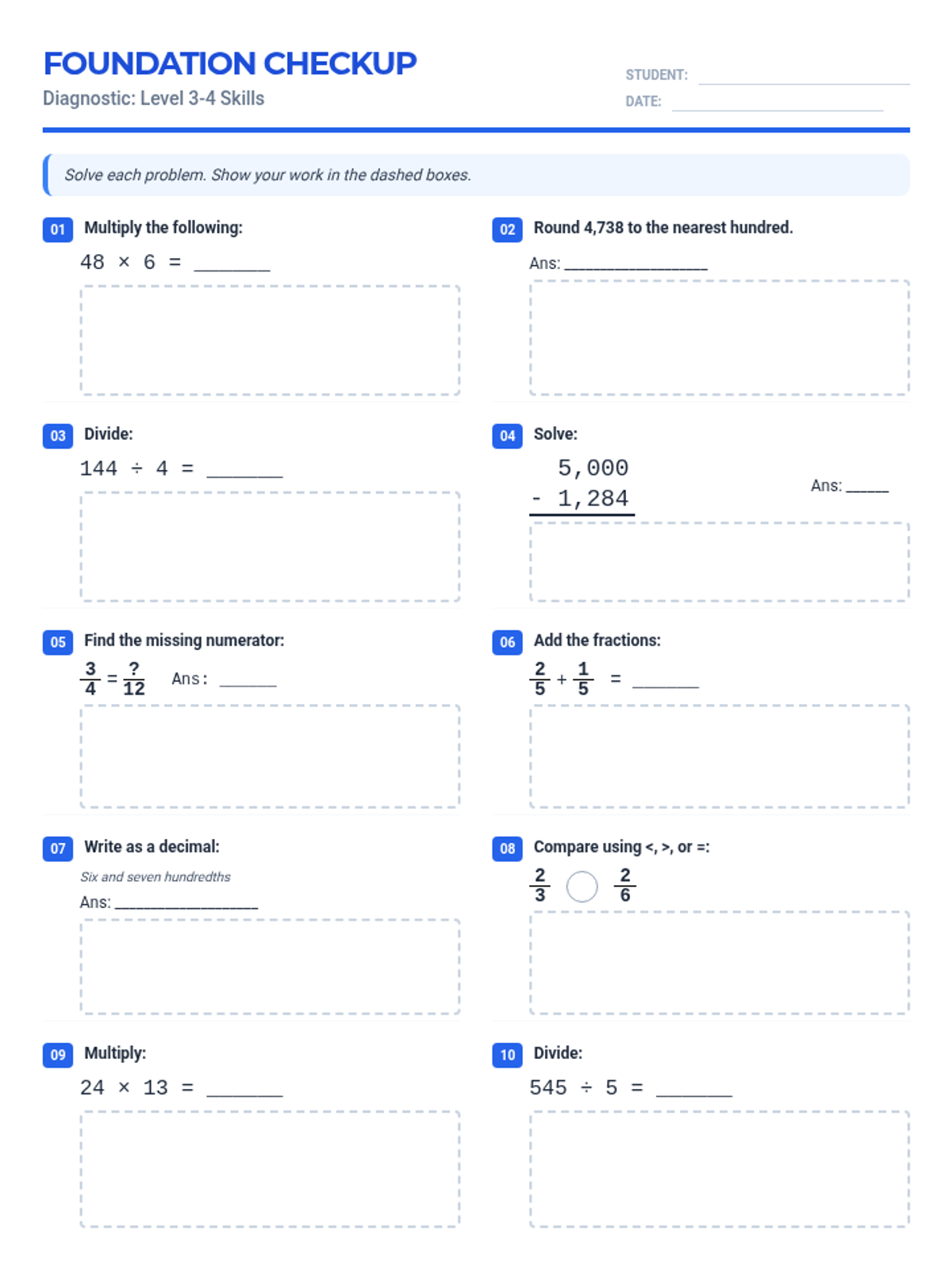
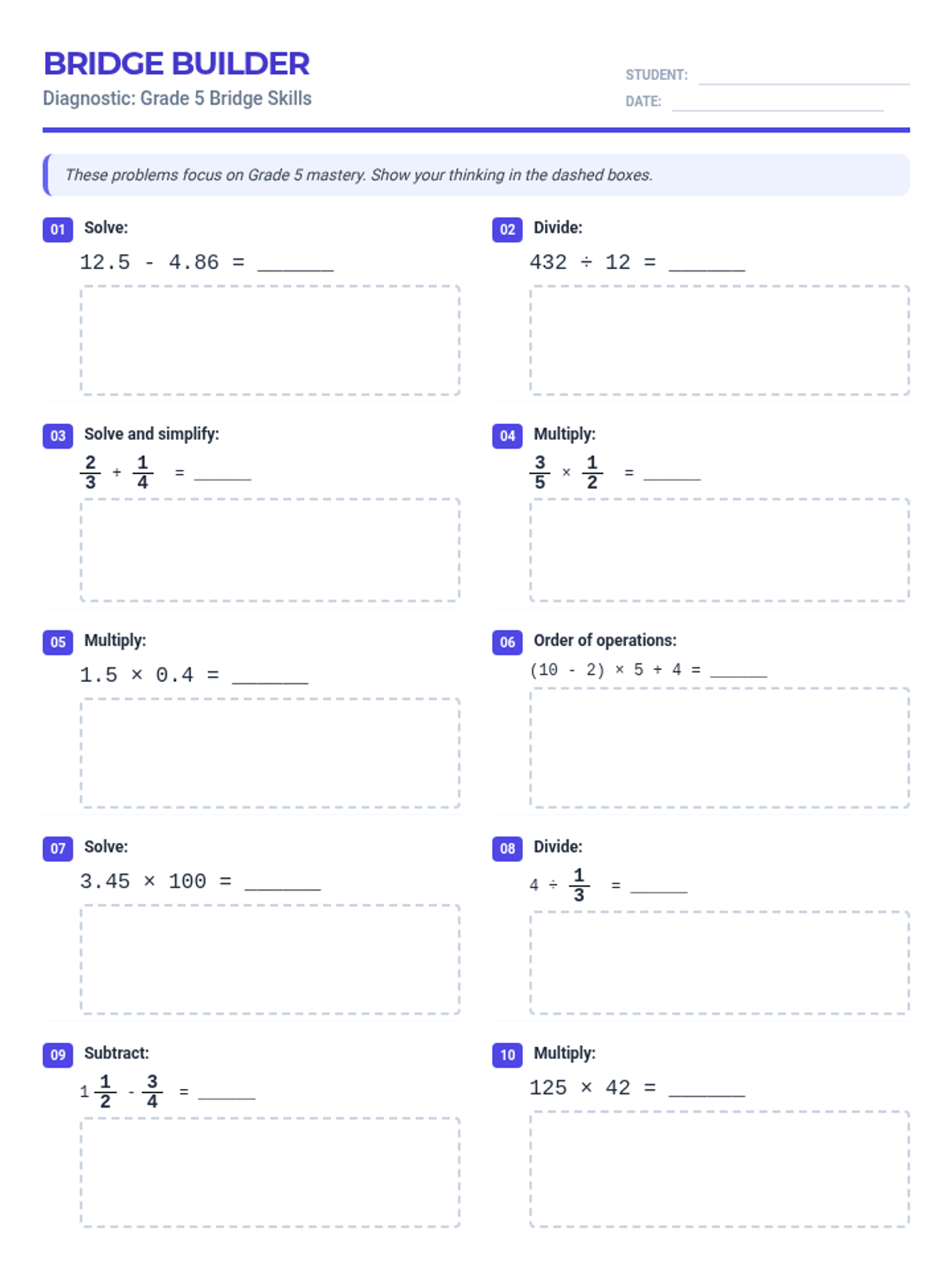
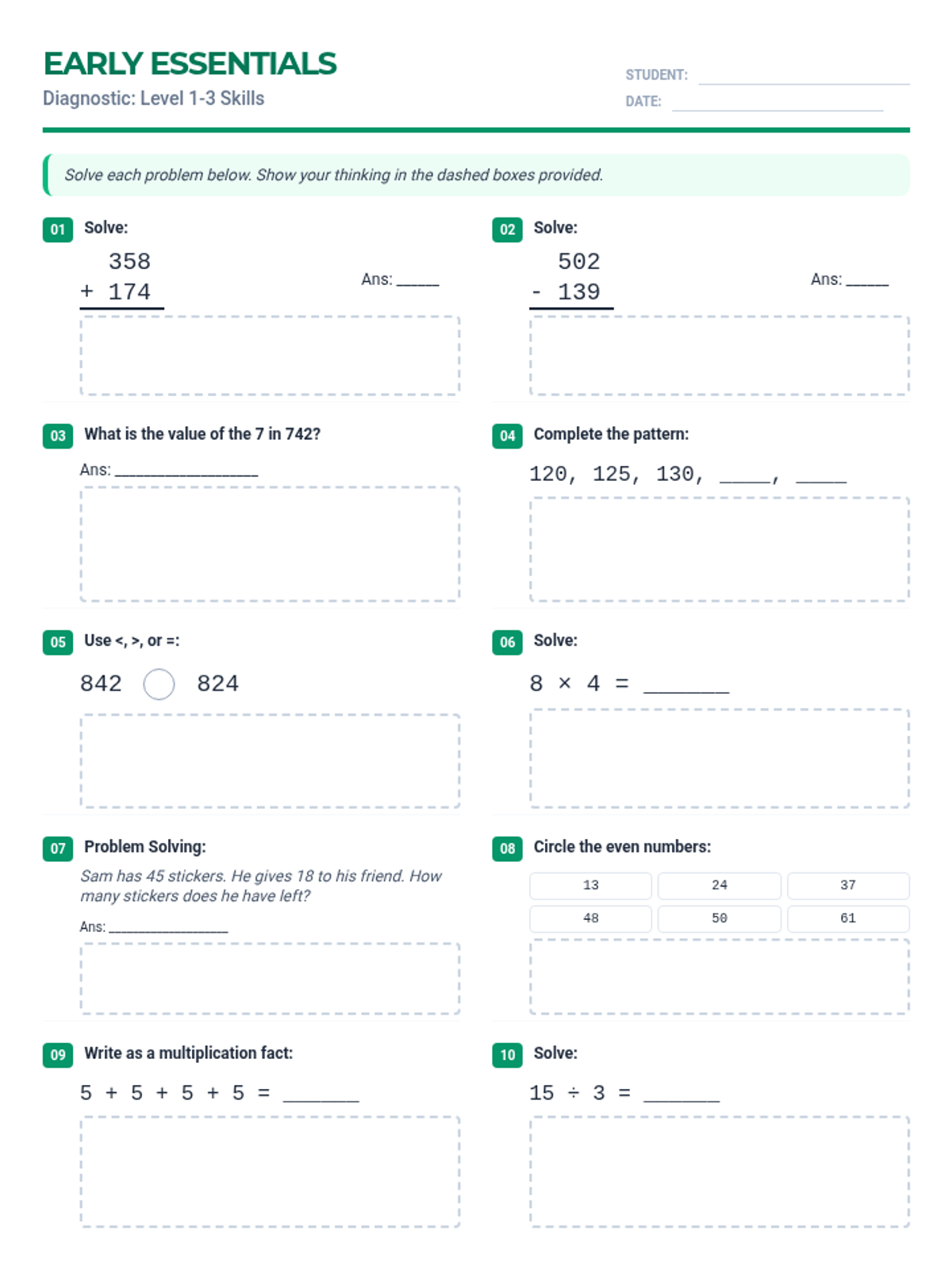
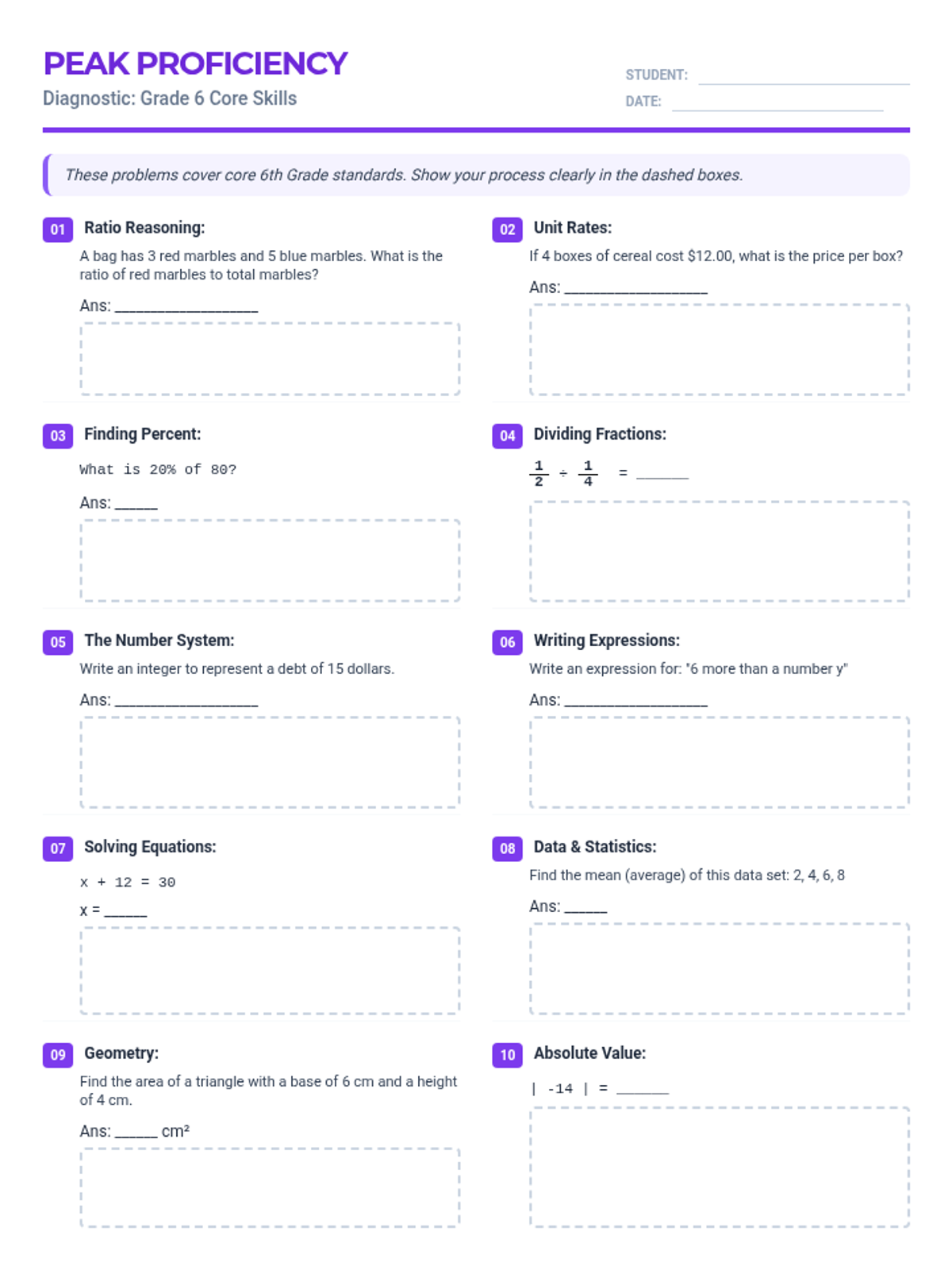
A pair of diagnostic assessments designed to pinpoint gaps in foundational number sense, fractions, and decimals, bridging 3rd-4th grade concepts to 5th grade mastery in preparation for 6th grade math.
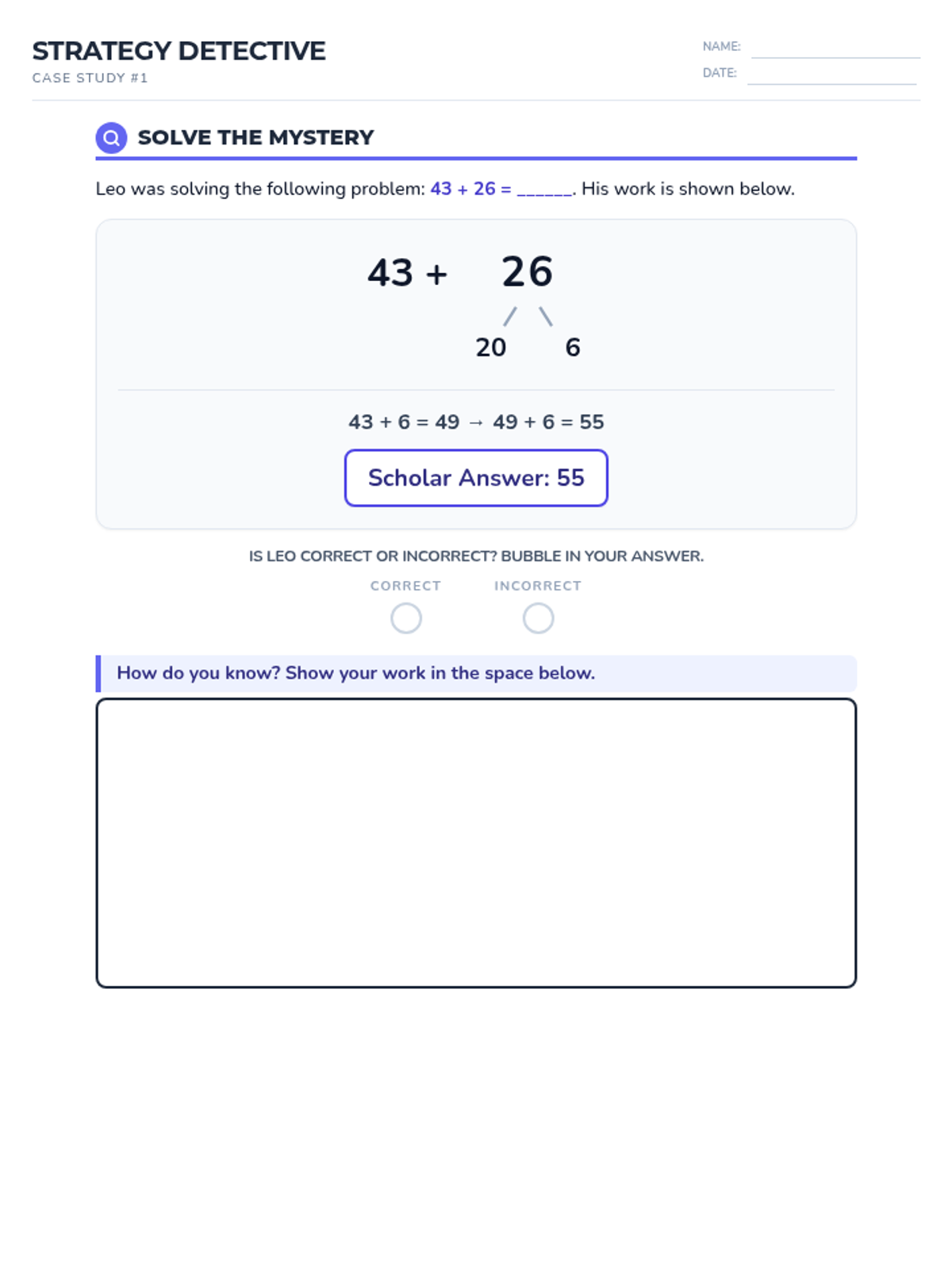
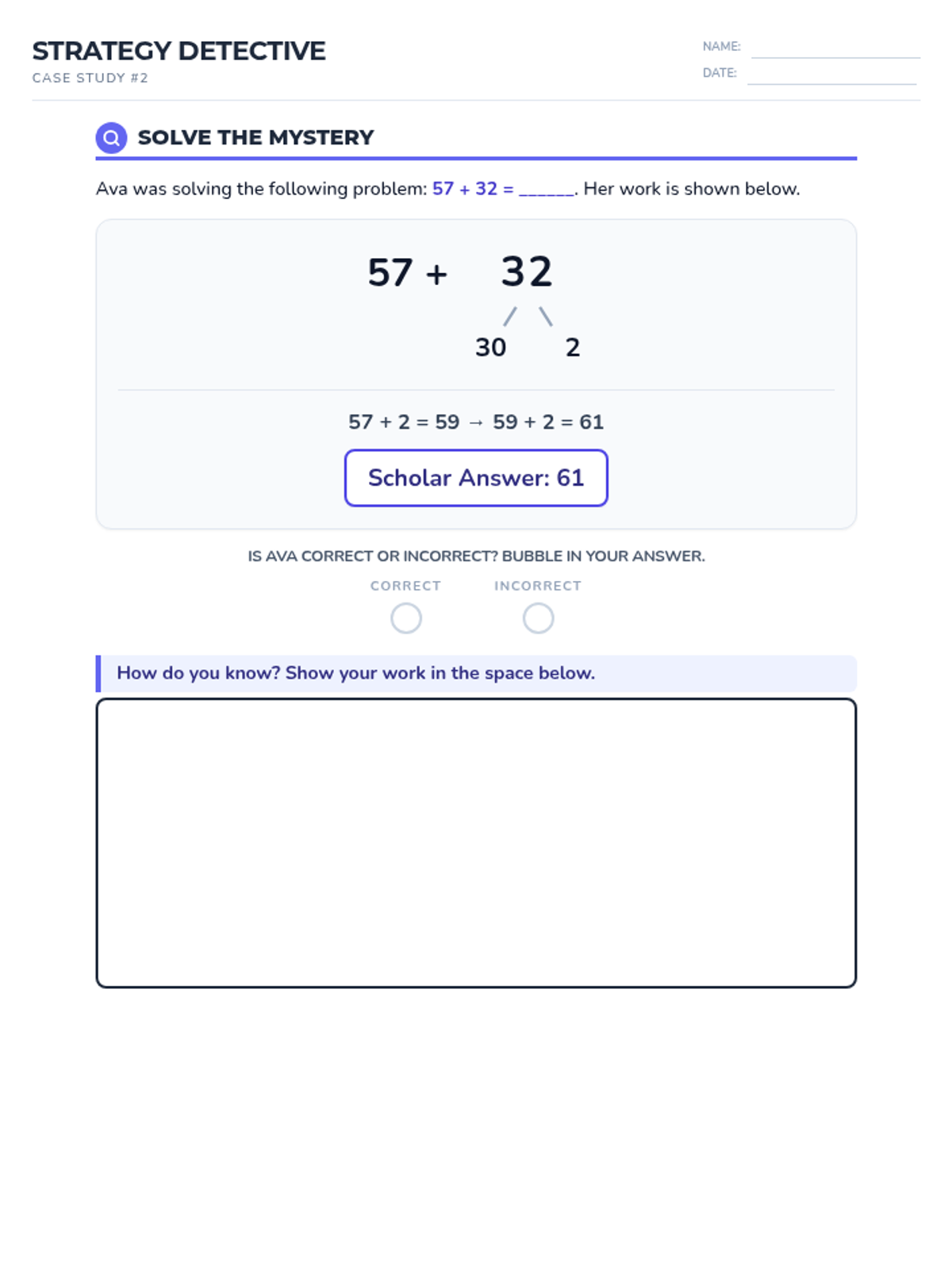
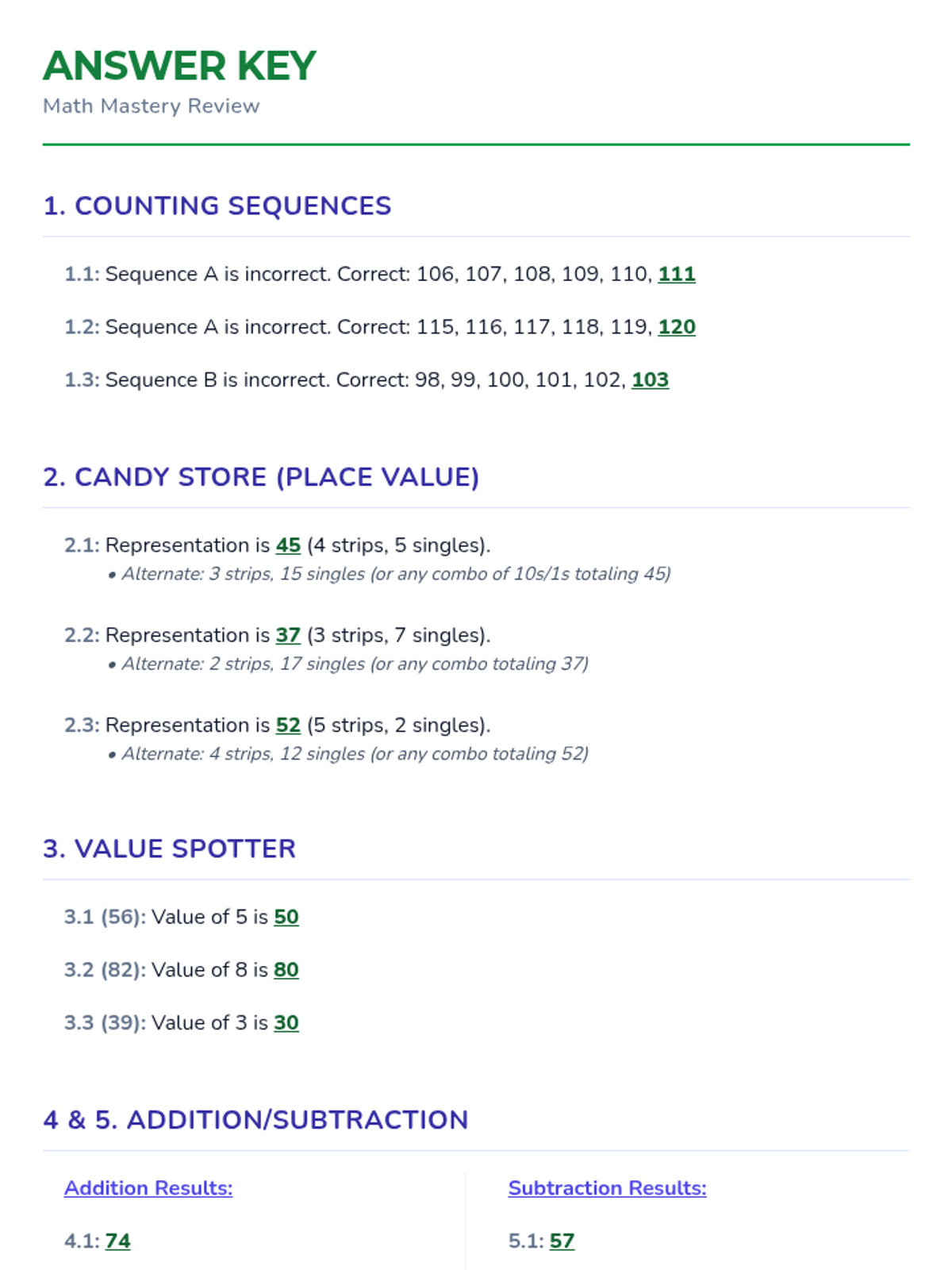
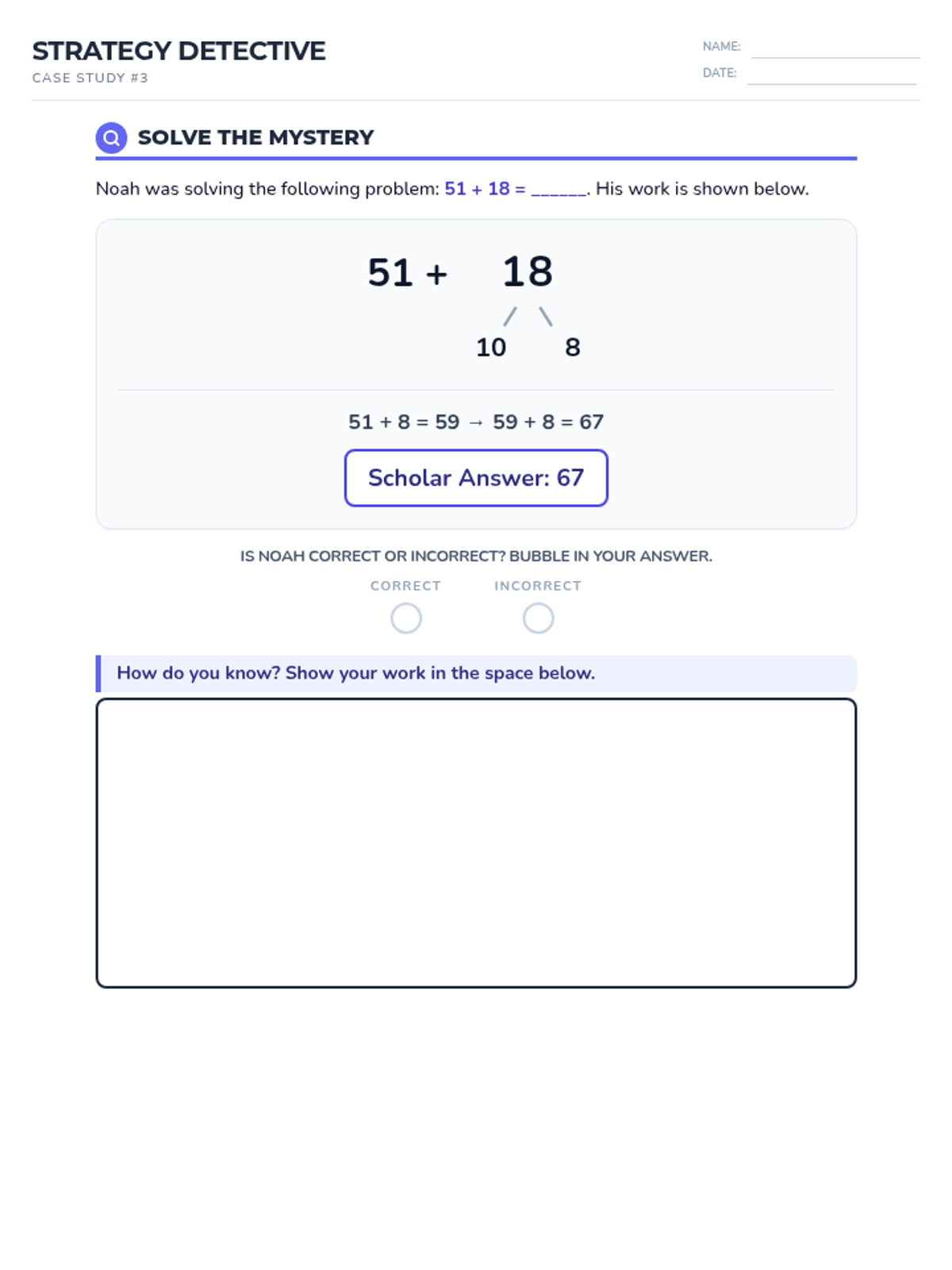
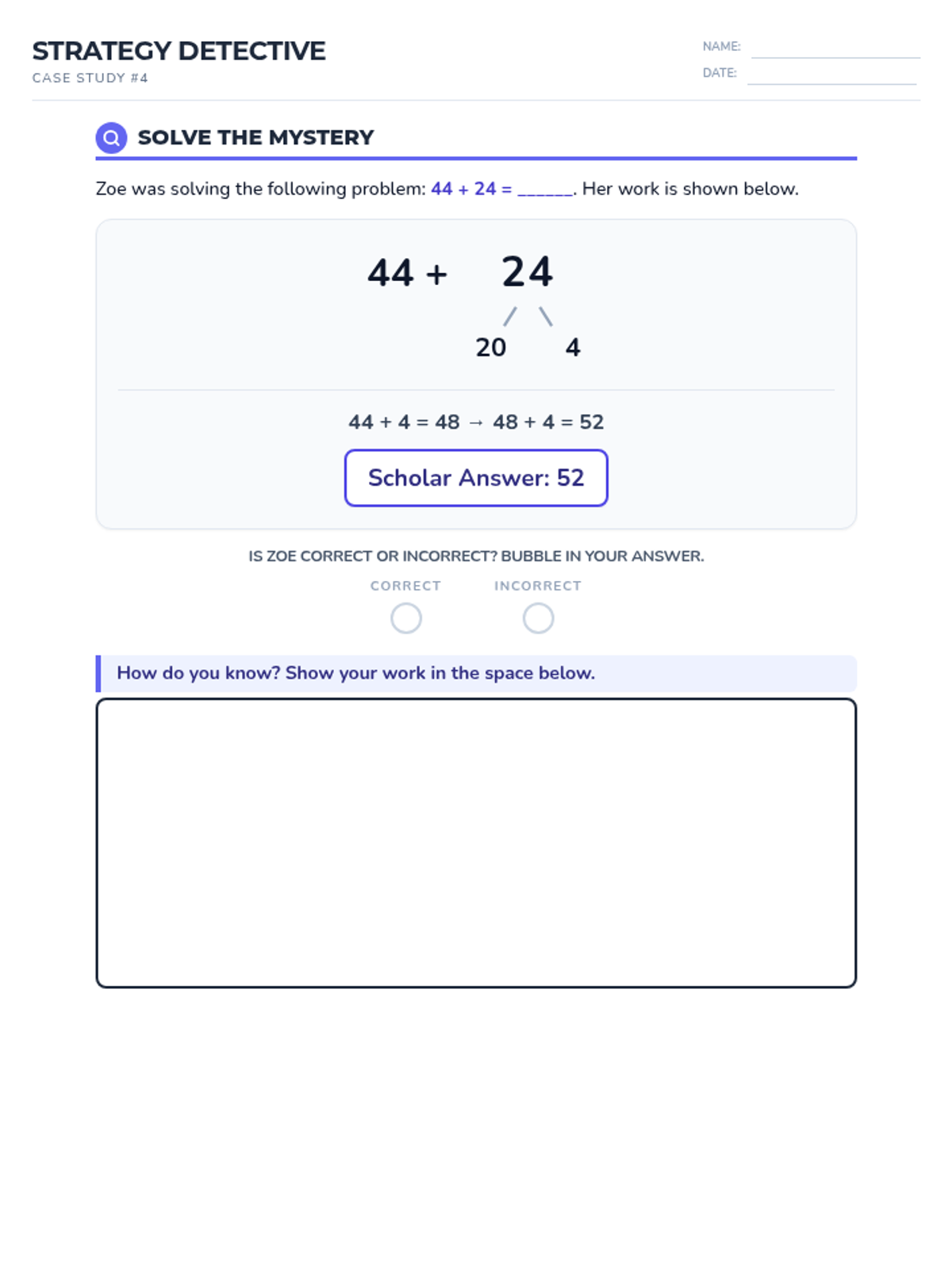
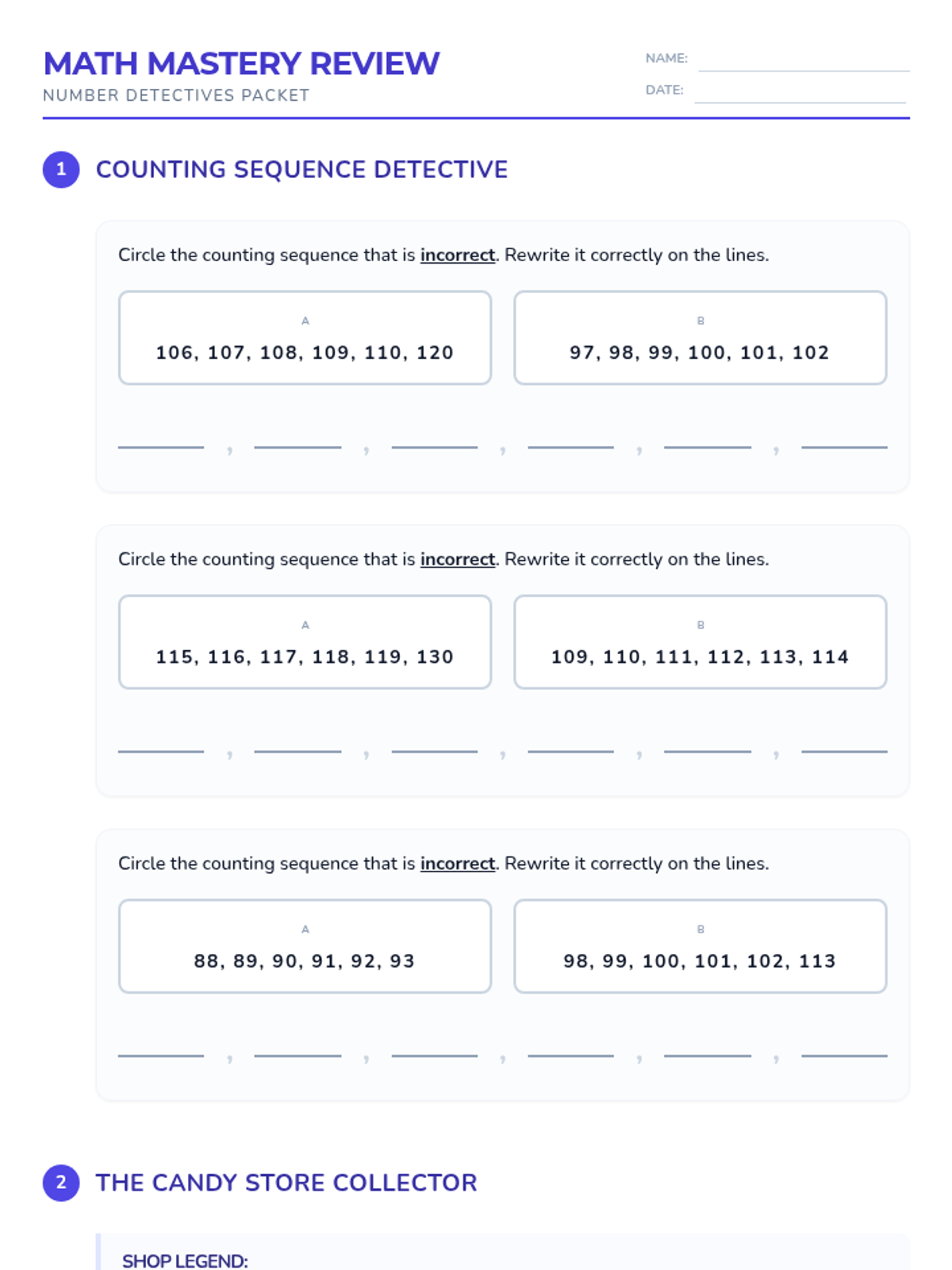
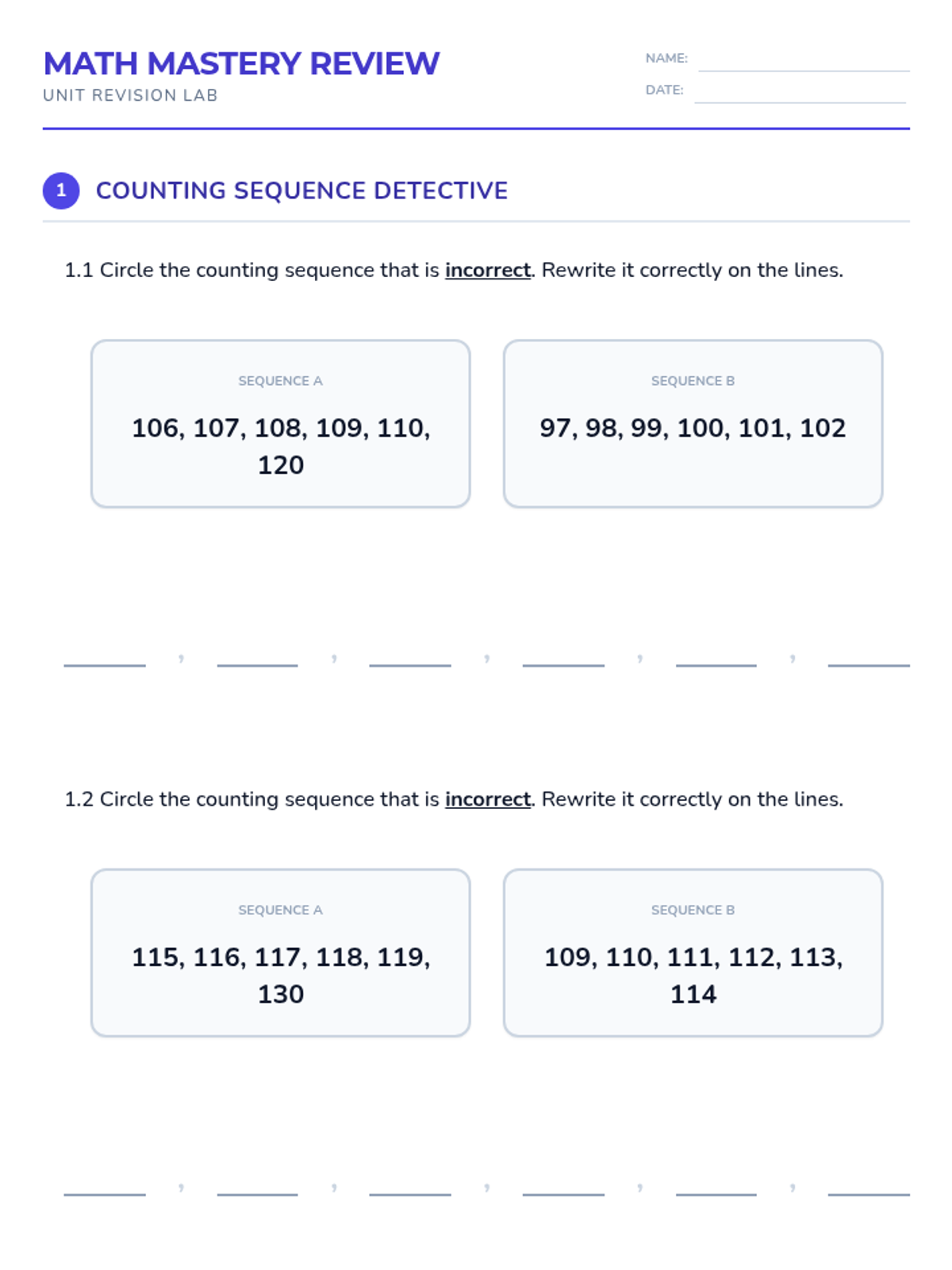
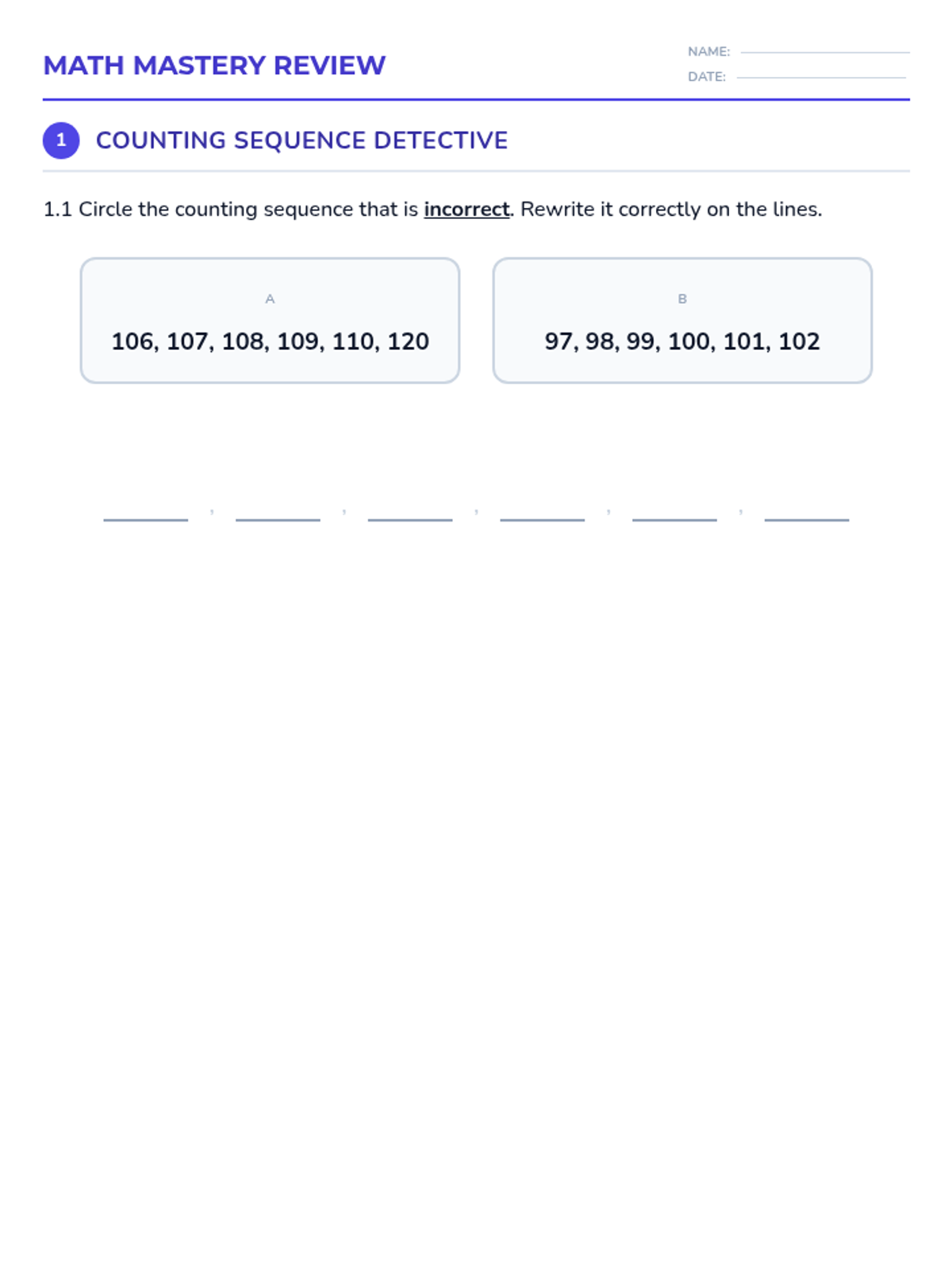
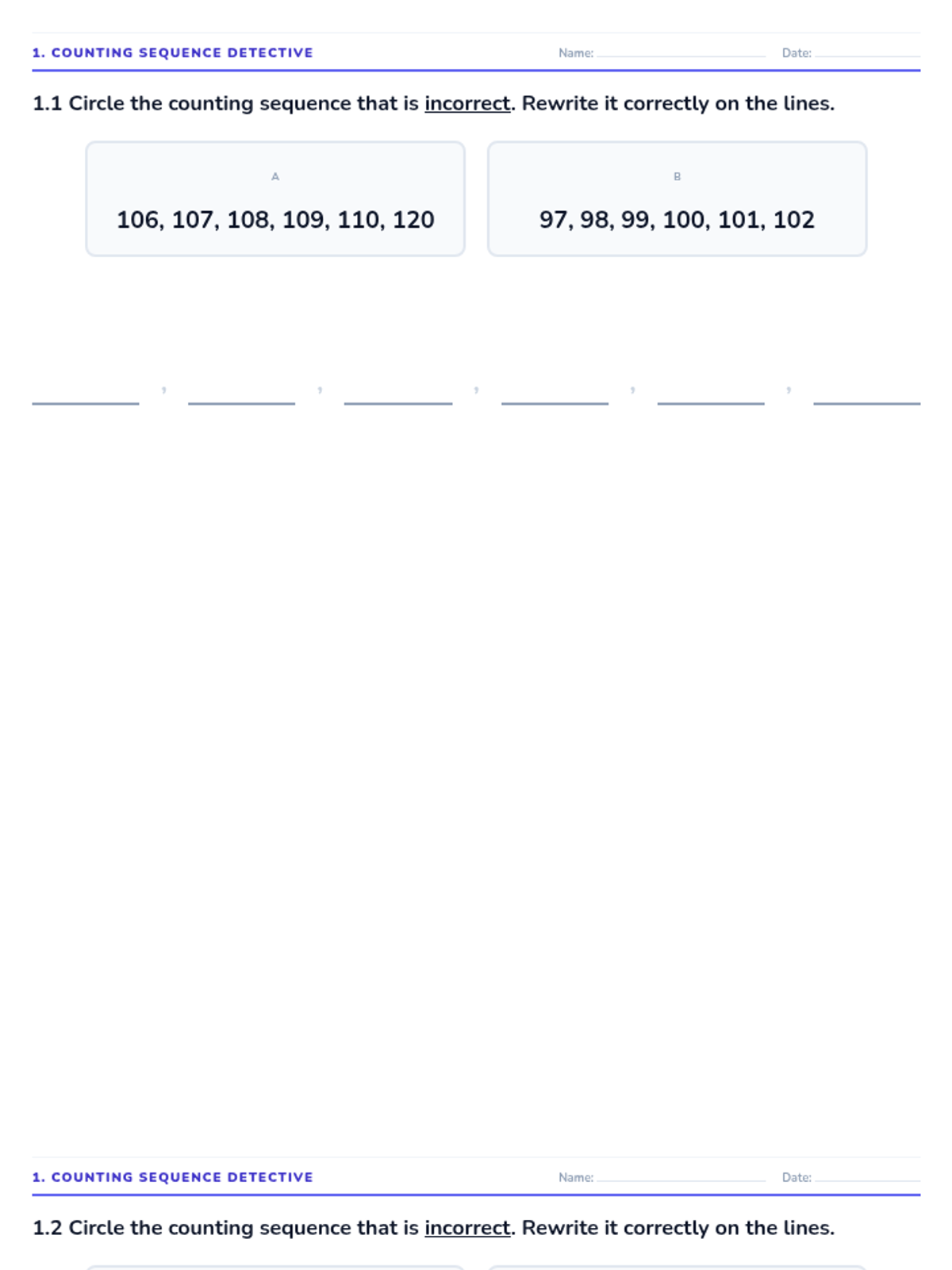
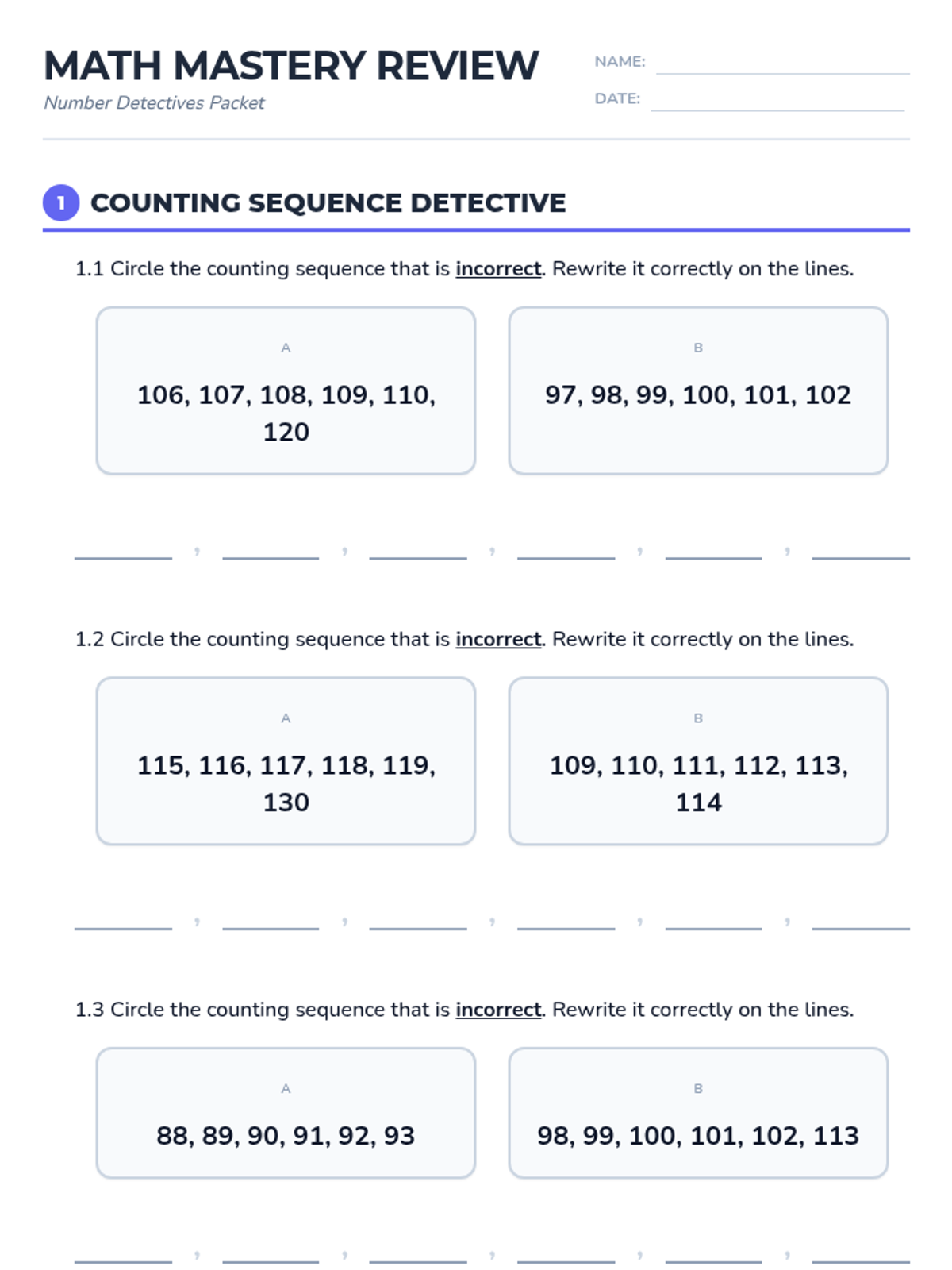
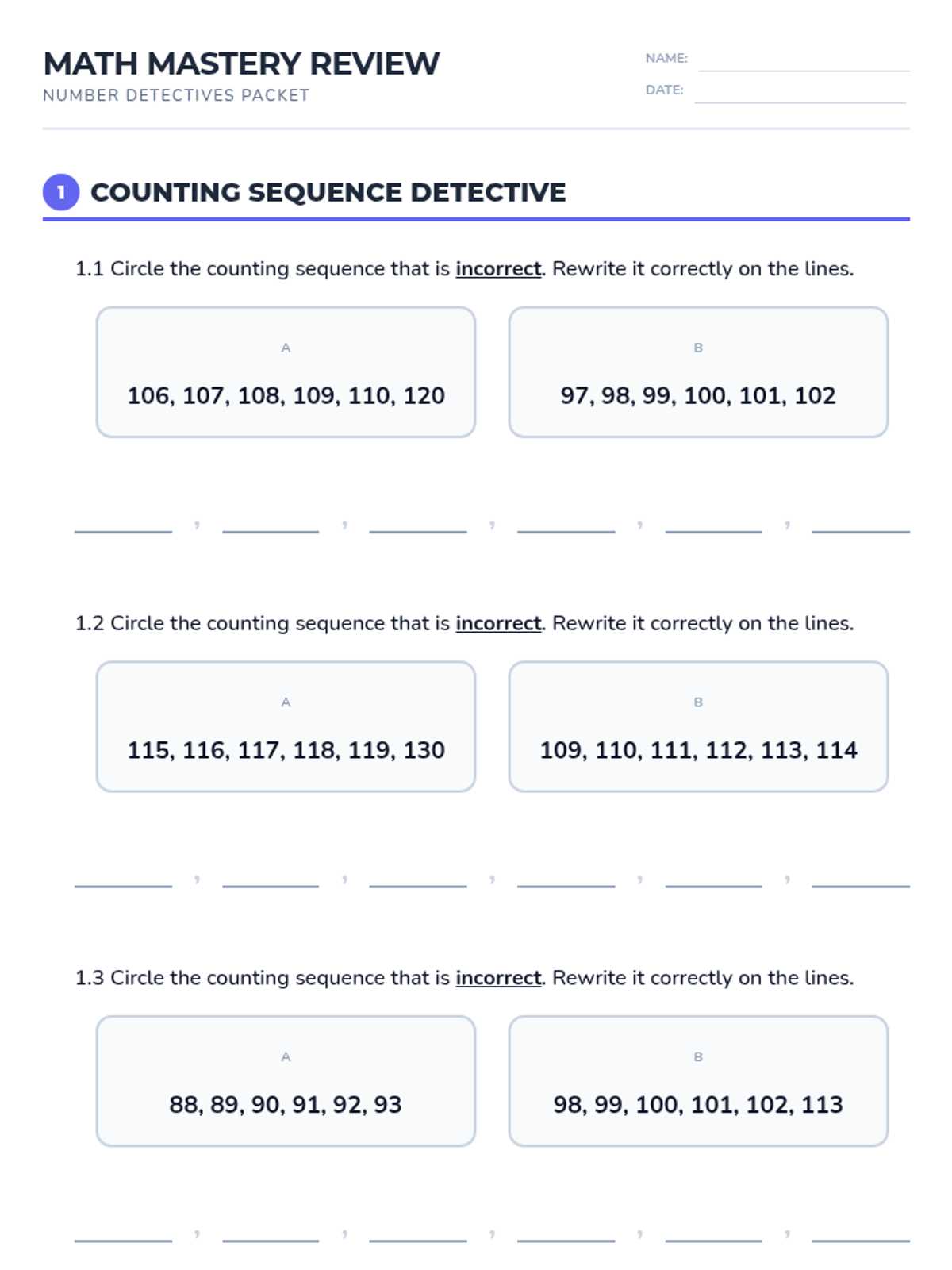
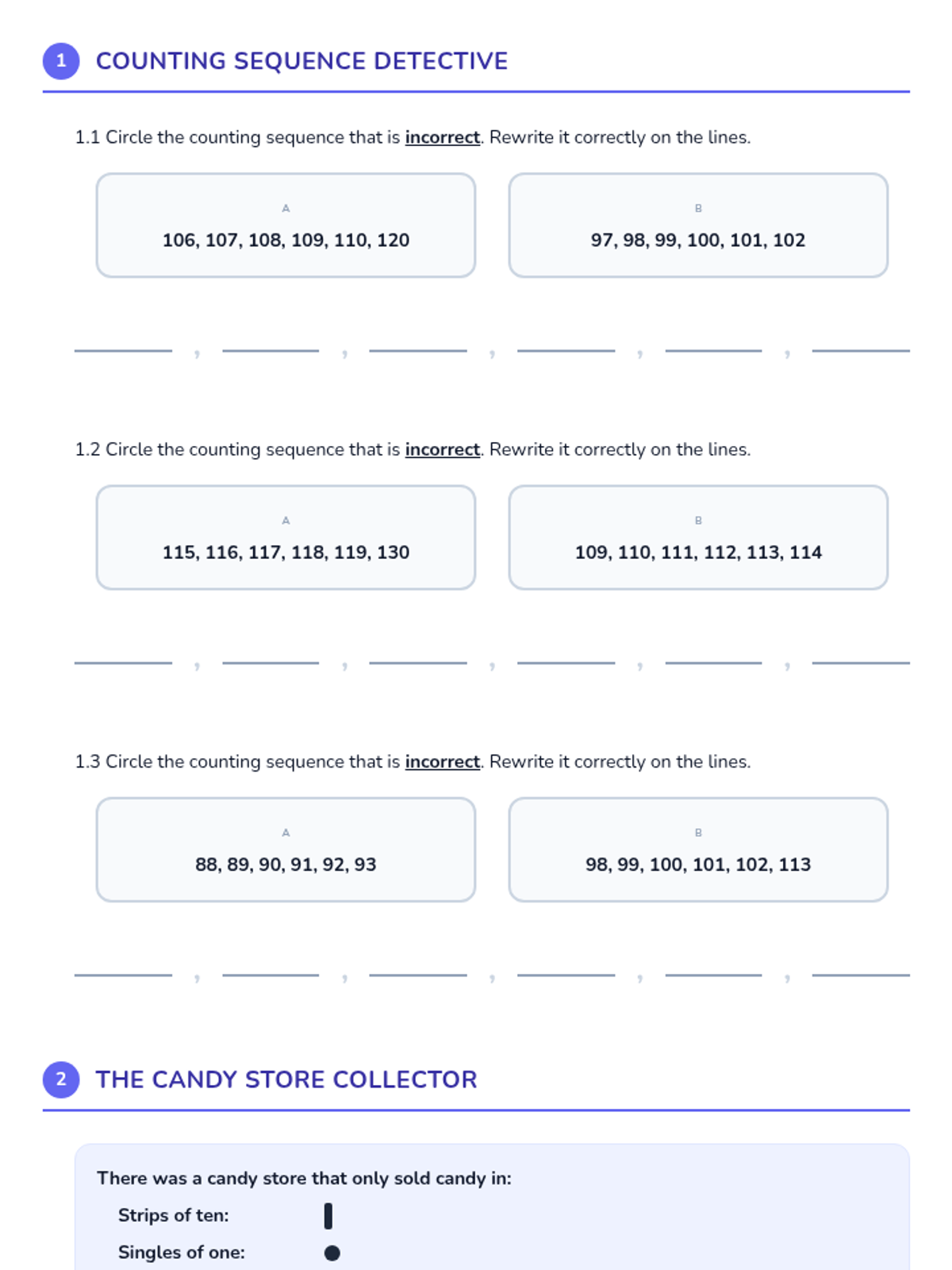
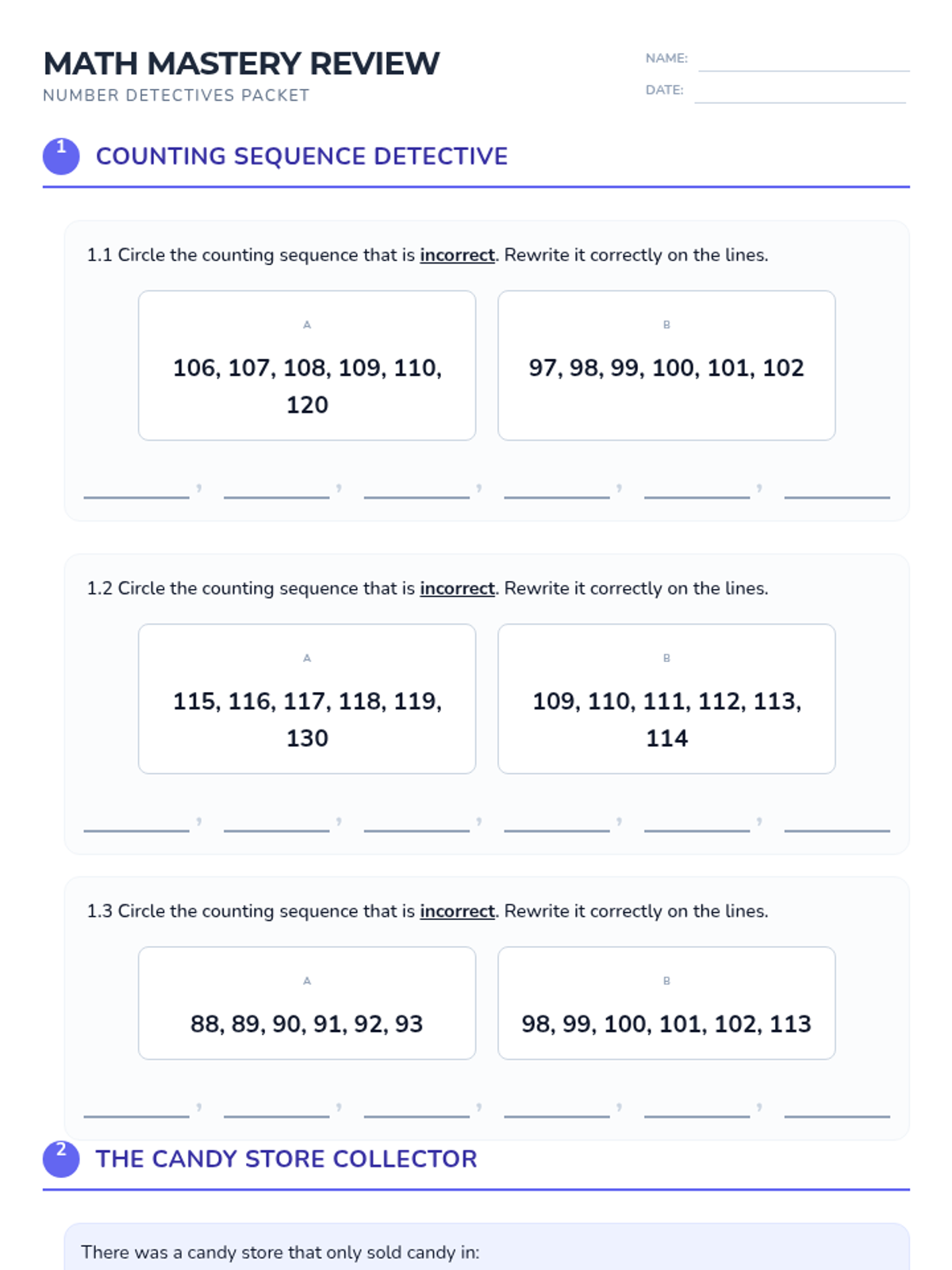
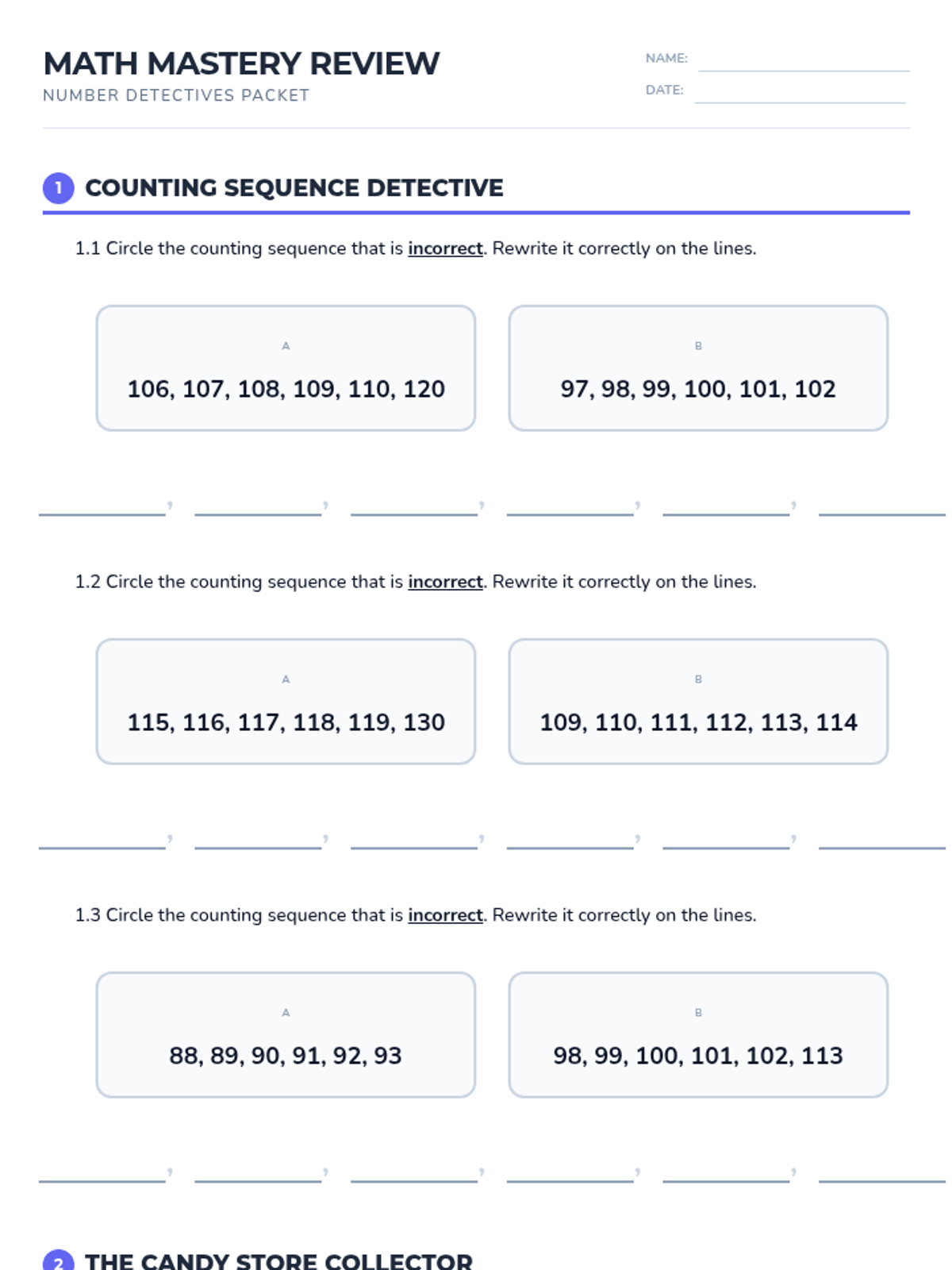
A comprehensive review packet covering counting sequences, place value, double-digit addition/subtraction with multiples of ten, and error analysis of addition strategies. Each core question type is practiced three times to ensure mastery.