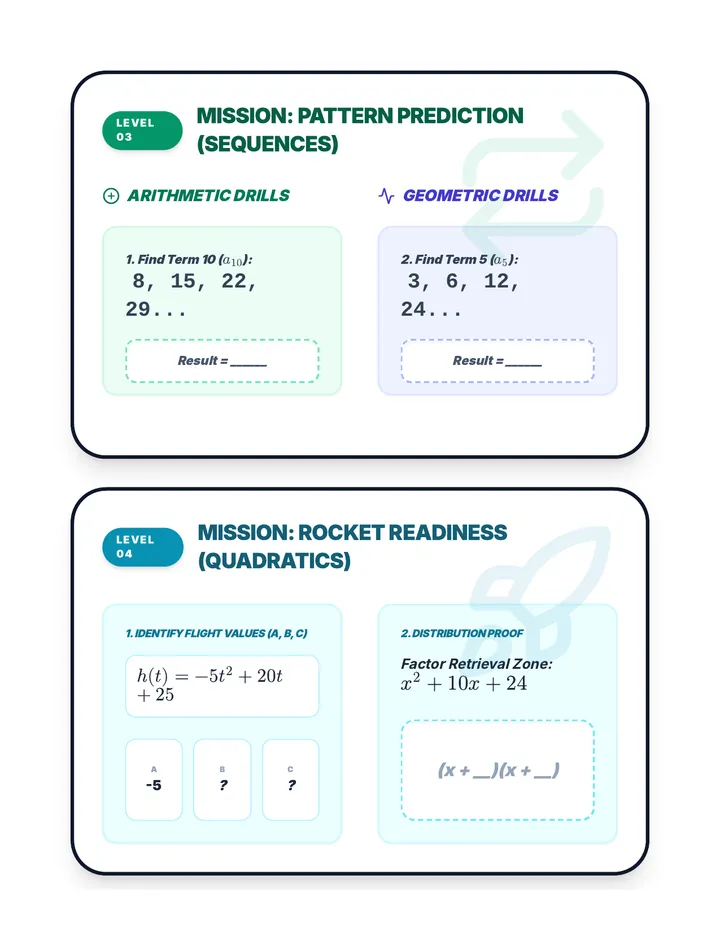
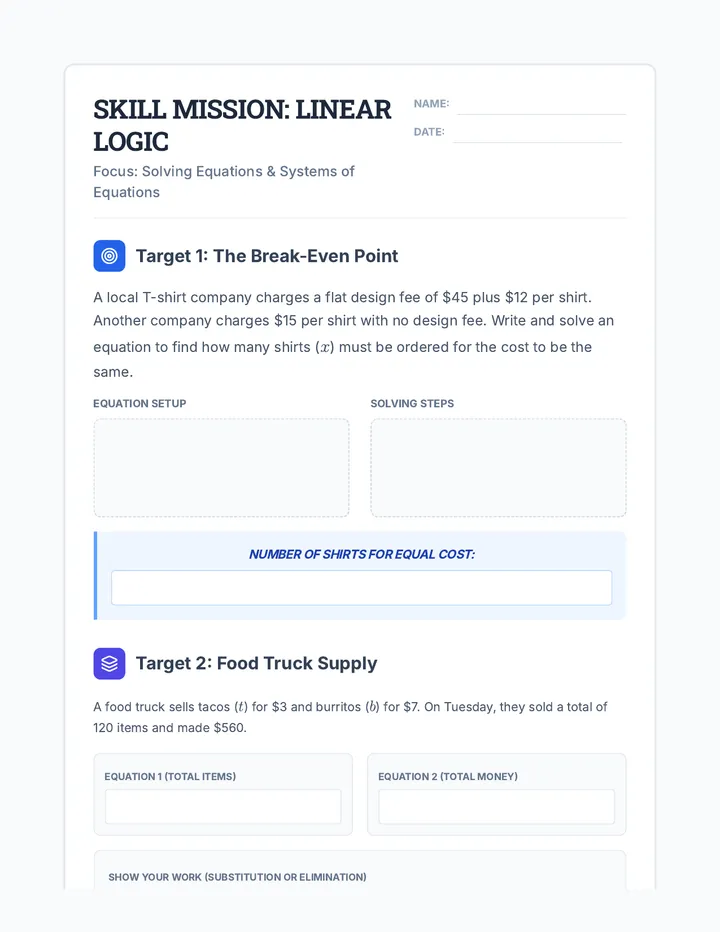
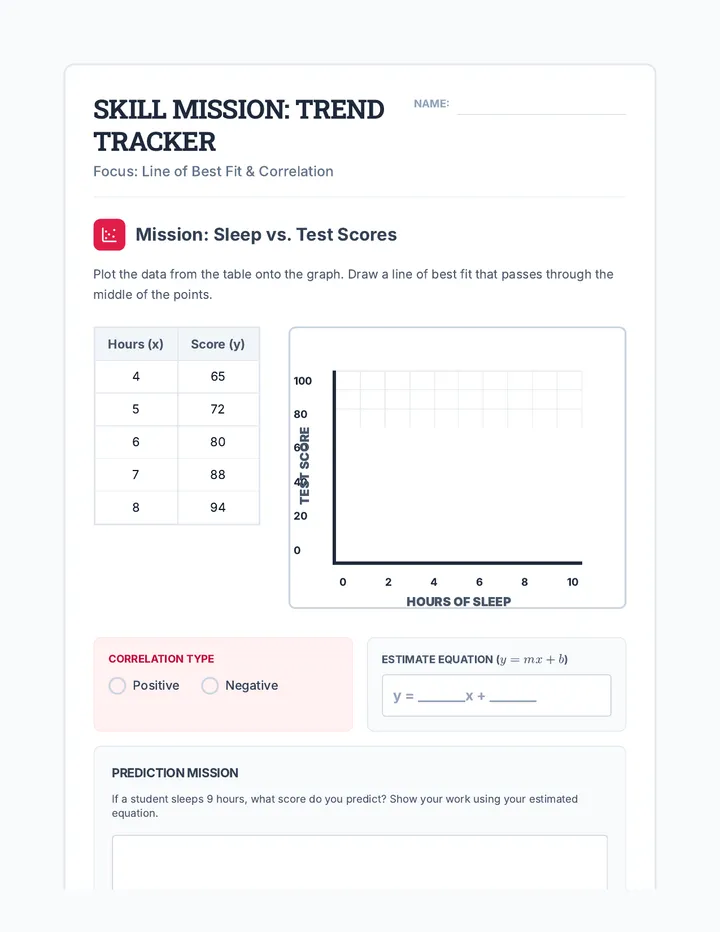
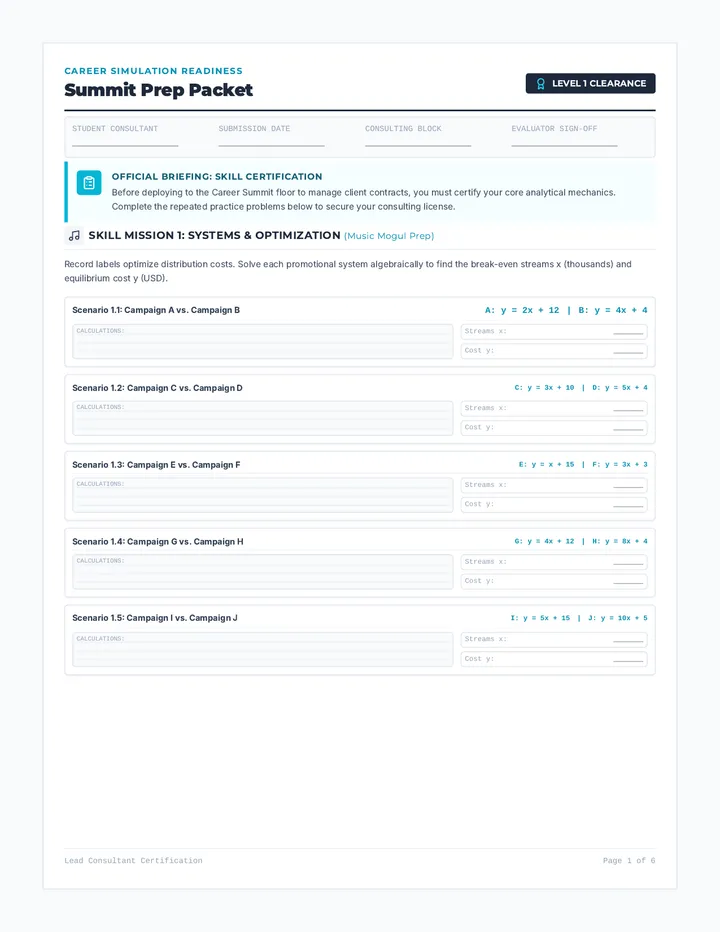
A comprehensive logic lesson where students act as detectives to identify rules in visual and numerical sequences, building inductive reasoning and prediction skills.
A collection of four distinct assessments and their corresponding answer keys focused on solving one and two-step equations.
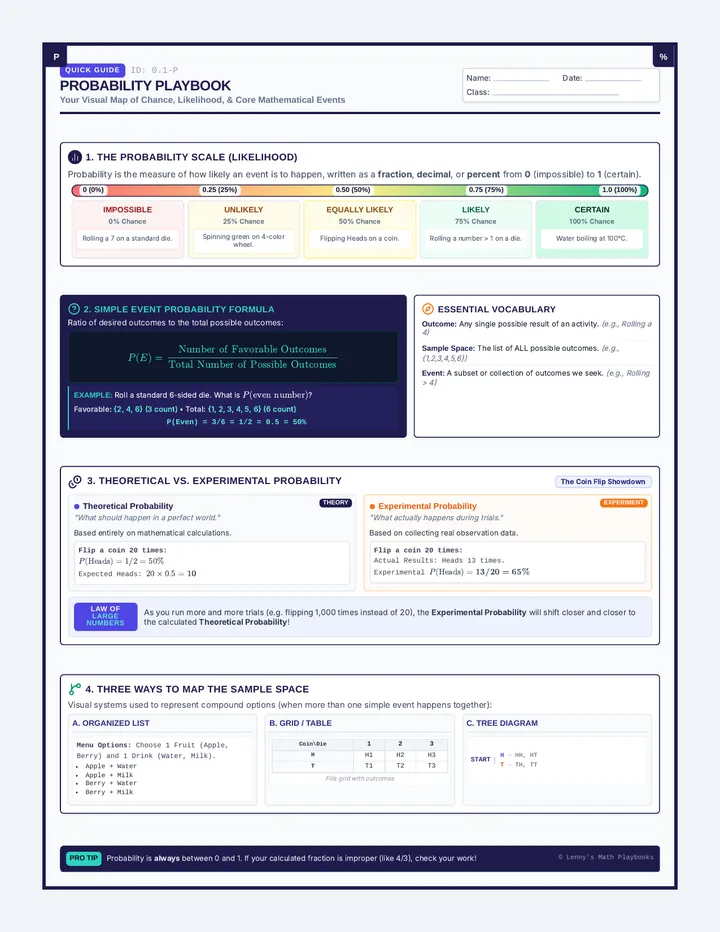
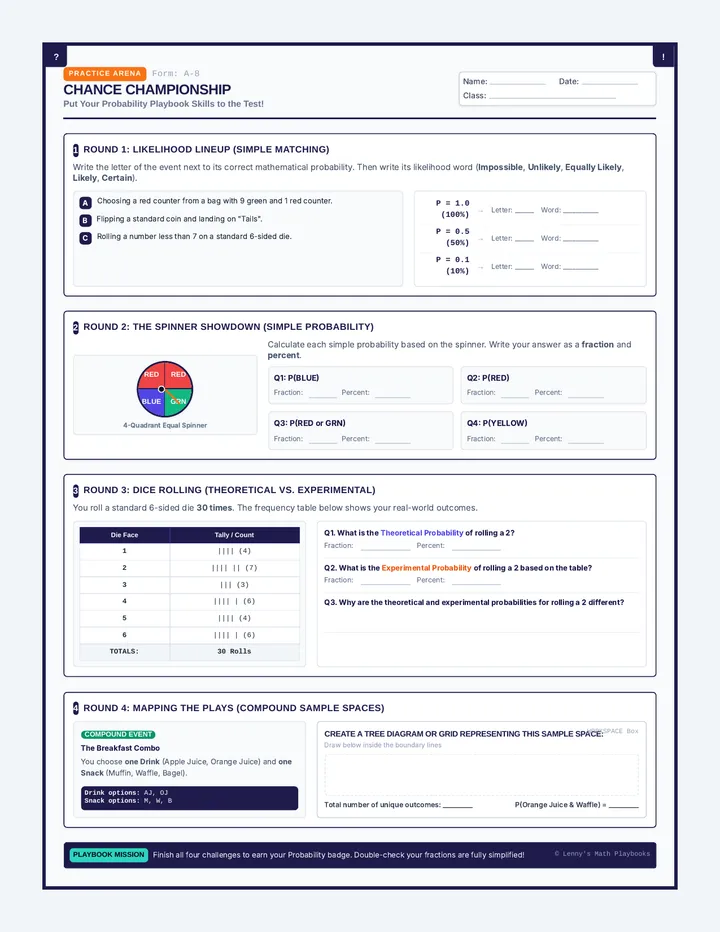
A comprehensive lesson on 7th-grade probability covering likelihood, theoretical and experimental probability, compound events, and making predictions.
A visual lesson on multiplying 2-digit numbers by 2-digit numbers using the box method (area model). Students use a blueprint-themed layout to decompose numbers and calculate partial products.
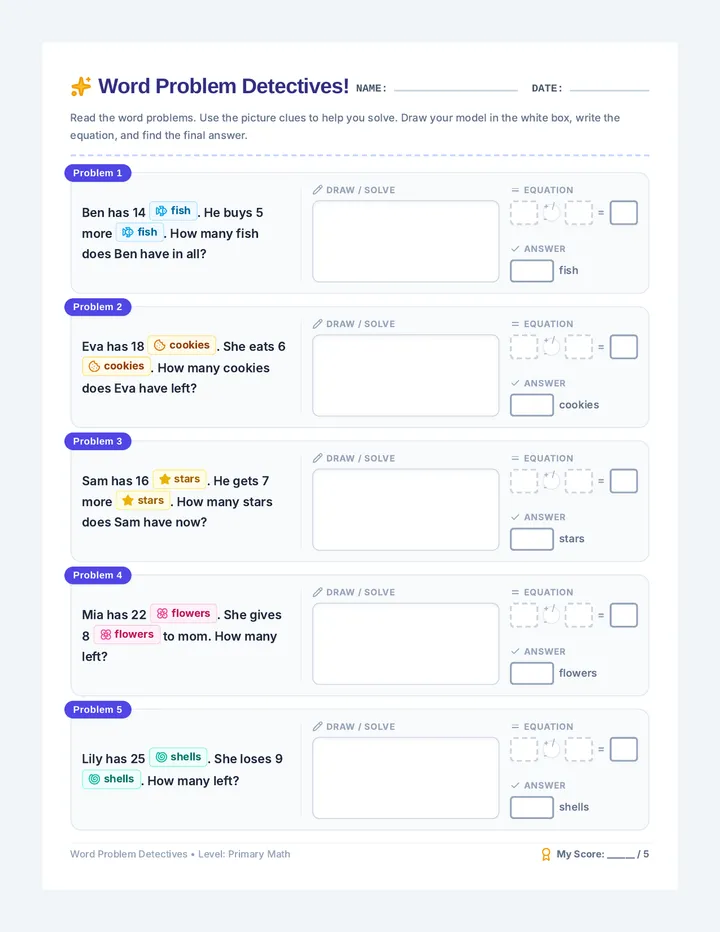
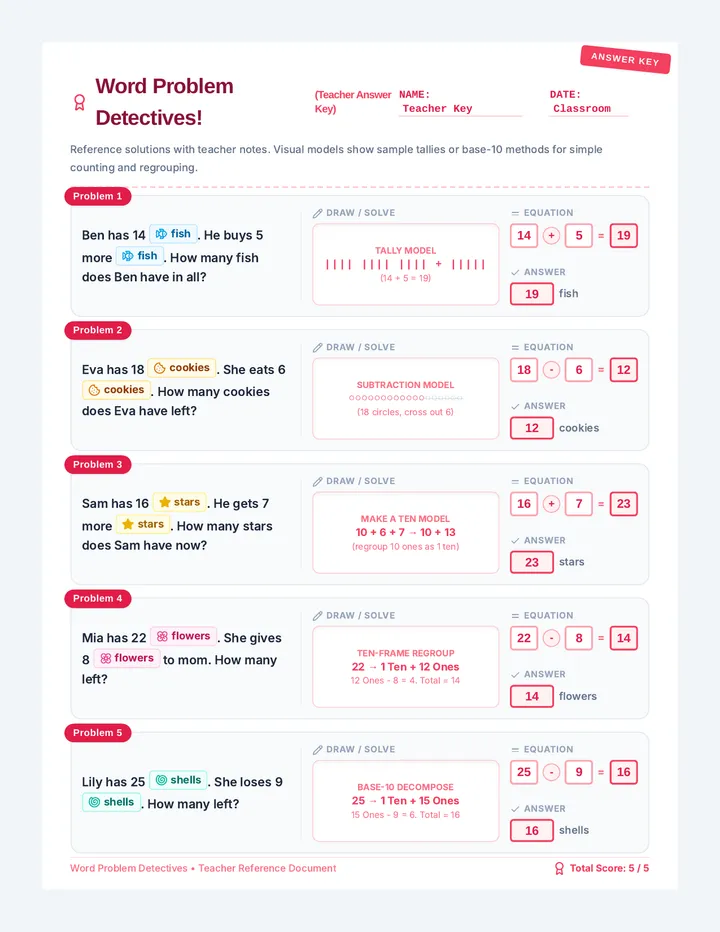
A lesson focused on breaking down and solving multi-step word problems using addition and subtraction through a detective-themed lens.
A lesson focused on adding and subtracting fractions with unlike denominators using a structural 'blueprint' approach. Students use step-by-step assembly guides and visual area models to understand common denominators.
A delicious introduction to fractions where students partition food items into equal shares to understand unit fractions and naming parts of a whole.
A comprehensive math simulation where students master unit fractions and partitioning through the lens of running a pizzeria. Includes instructional slides, a collaborative game, and an independent creative project.
A lesson focused on calculating the area of rectangles with fractional and mixed number side lengths by relating the concept to multiplication. Students will practice converting mixed numbers to improper fractions and applying the area formula.
A foundational lesson on solving one-step equations using inverse operations, featuring a blueprint-inspired design to help students 'build' their algebraic skills.
Students explore compound probability and shuffle algorithms by analyzing song frequencies and streaming data to determine the likelihood of hearing their favorite tracks.
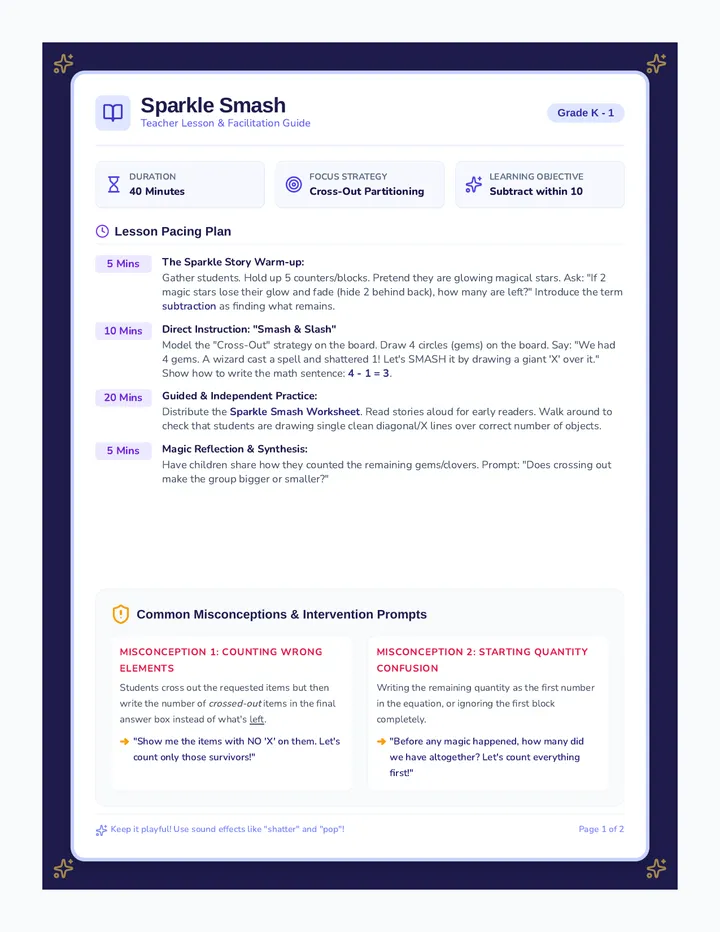
A comprehensive set of visual tools and practice materials to help kindergarteners distinguish between addition and subtraction within 5 using a friendly meadow theme.
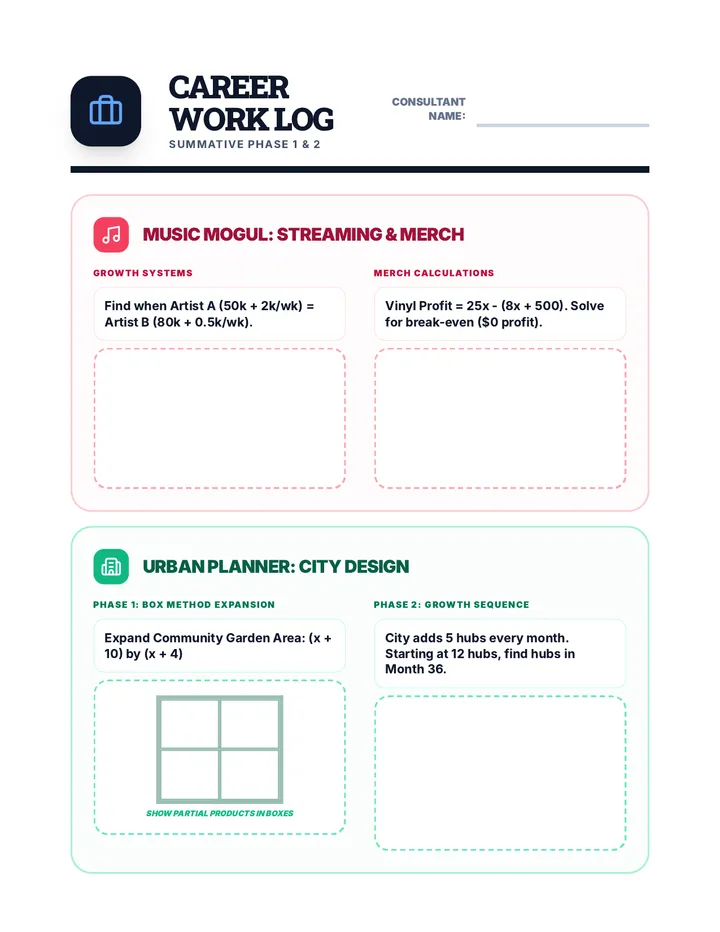
Students learn to identify the necessary operations and sequence of steps required to solve complex, multi-part word problems.

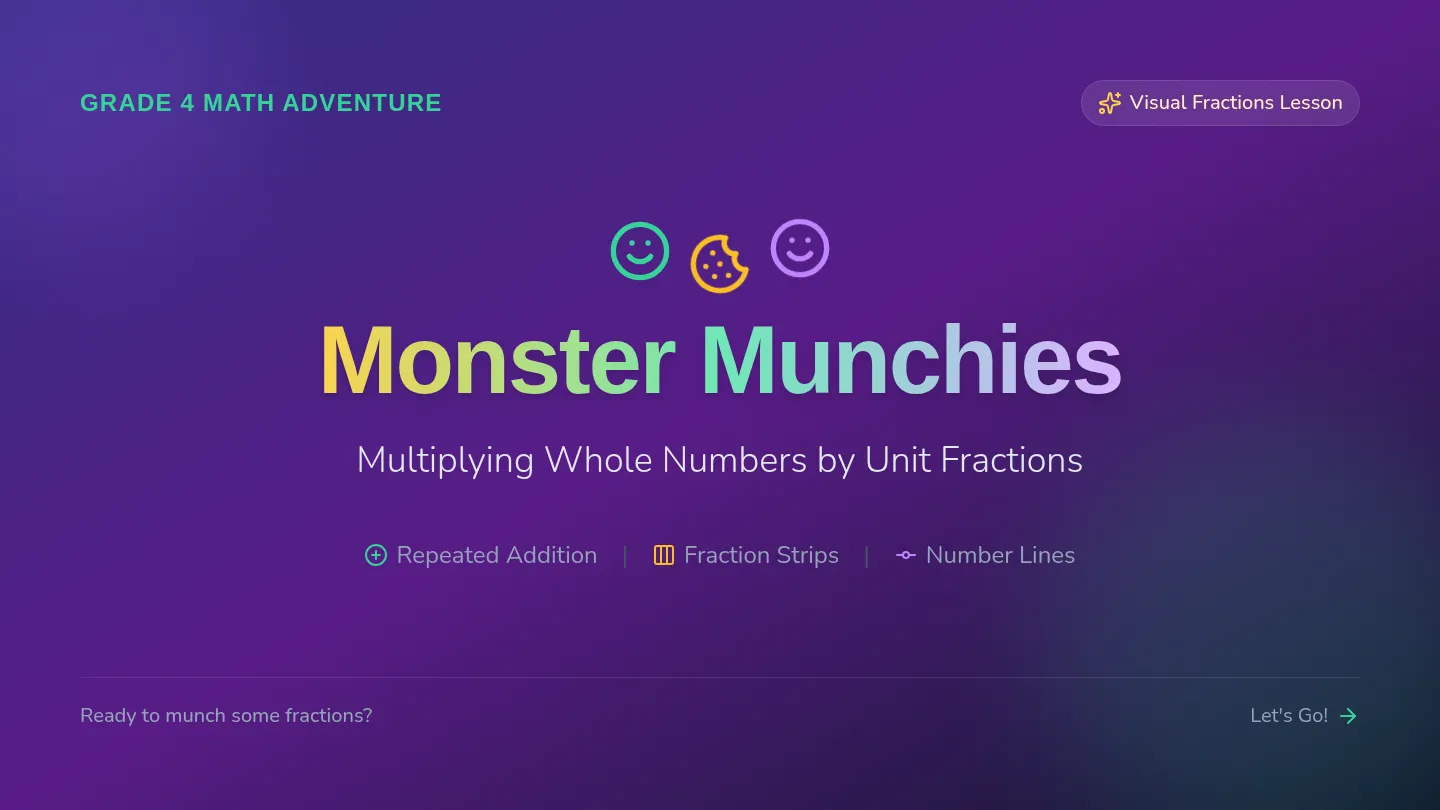
A 4th-grade math lesson focused on solving real-world word problems (number stories) involving the multiplication of mixed numbers by whole numbers using the distributive property and visual models.
This lesson helps students identify and define the parts of a mathematical expression (constant, coefficient, variable) within the context of one-step money word problems. Students will learn to translate real-world financial scenarios into algebraic expressions.
A series of 7 structured worksheets focusing on adding and subtracting fractions with simple denominators (2, 3, 4, 5, 6, 8) using a blueprint-inspired design. Includes step-by-step examples and visual scaffolds for students to master finding common denominators.
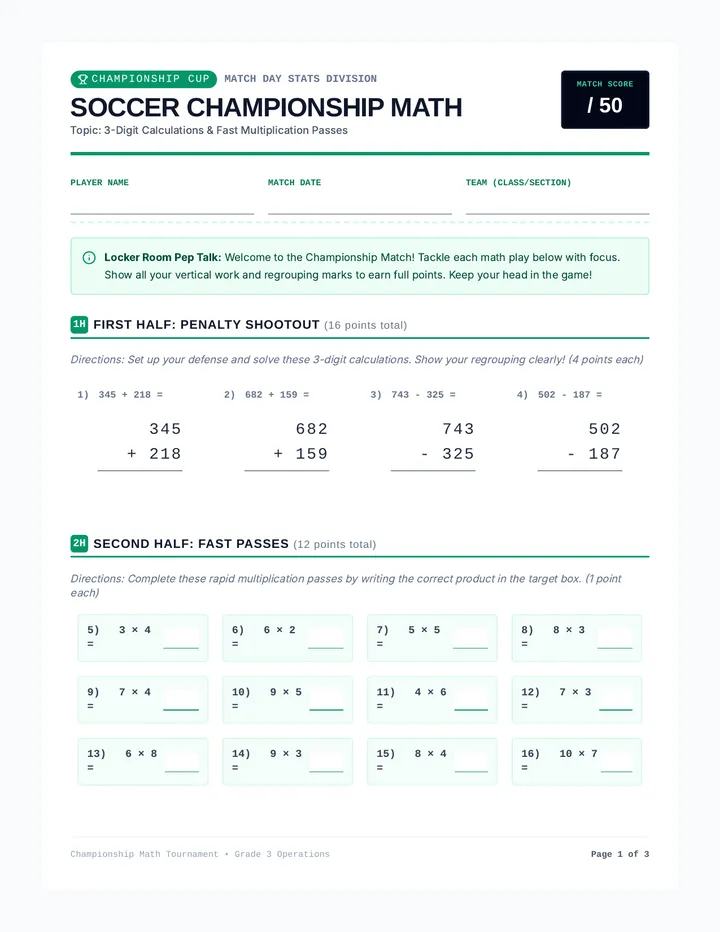
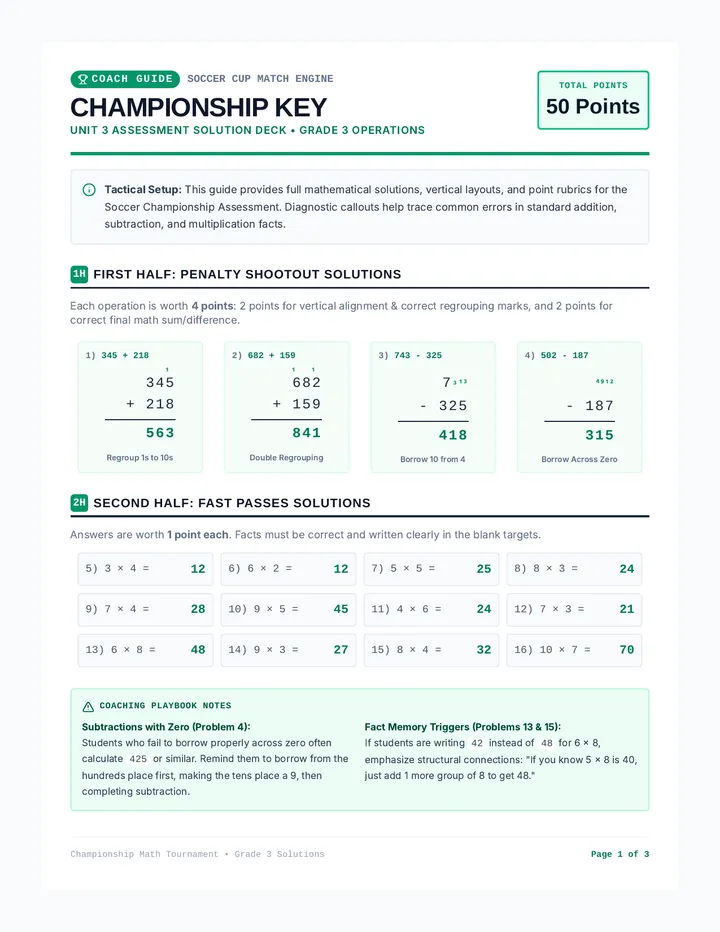
A lesson focused on solving one-step word problems using three-digit addition, both with and without regrouping. Includes a bakery-themed worksheet and a corresponding teacher answer key.
A focused math mini-lesson designed for 8th-grade special education students to review substitution across three levels: expressions, 2-step equations, and systems of equations. The lesson uses a 'Code Breaker' theme to make the abstract concepts more concrete and engaging.
A comprehensive review session for 3rd-grade students to master comparing fractions, improper fractions, and whole numbers as fractions through a 60-question interactive-style slideshow.
A lesson focused on adding and subtracting proper and improper fractions by identifying the least common denominator. Includes a progress monitoring worksheet and a detailed teacher answer key.
A 90-minute investigative math lesson where 6th grade students analyze independent and dependent variables through science experiment data. Students connect tables, graphs, and equations using real-world laboratory scenarios.
A hands-on activity where students use circle models and fraction strips to discover that the denominator represents the total number of equal parts in a whole.
A hands-on math simulation where students practice addition and estimation by planning a party within a budget, developing real-world financial literacy skills.
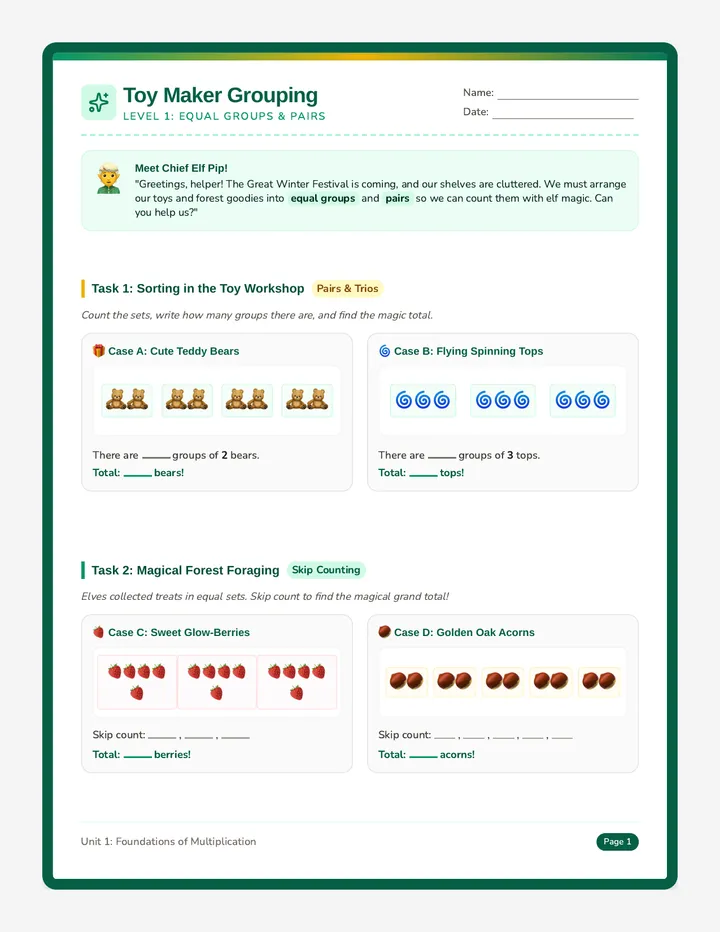
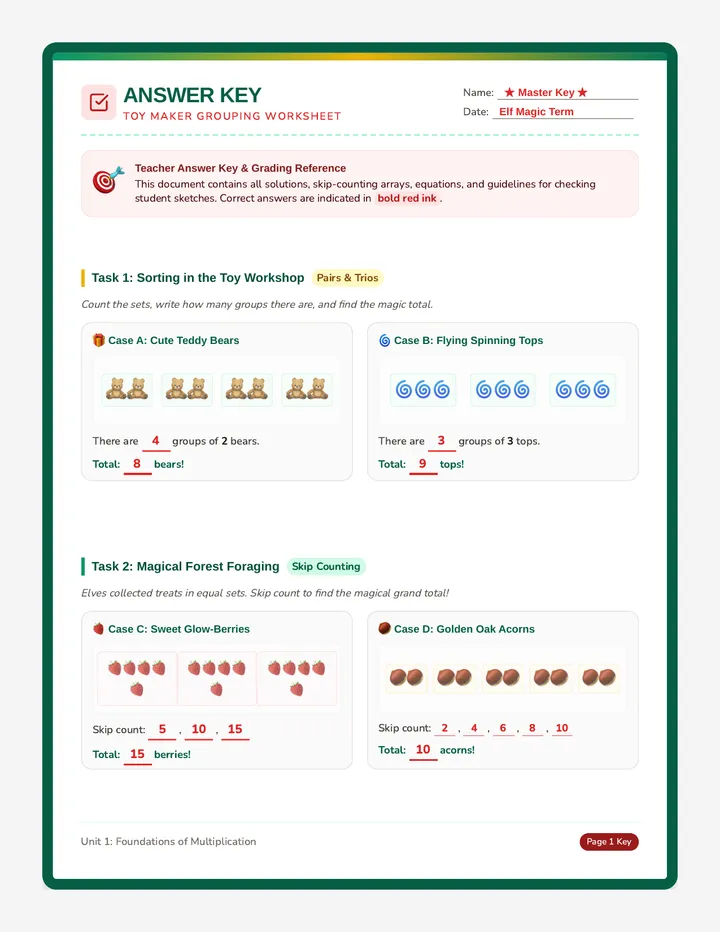
A foundational multiplication lesson for 6th grade special education students, focusing on facts 0-5 using number lines as visual scaffolding to support conceptual understanding and skip counting.
An exploration of geometric growth and the power of incremental habits for grades 7-12, combining mathematical modeling with behavioral science.