A comprehensive set of visual tools and practice materials to help kindergarteners distinguish between addition and subtraction within 5 using a friendly meadow theme.
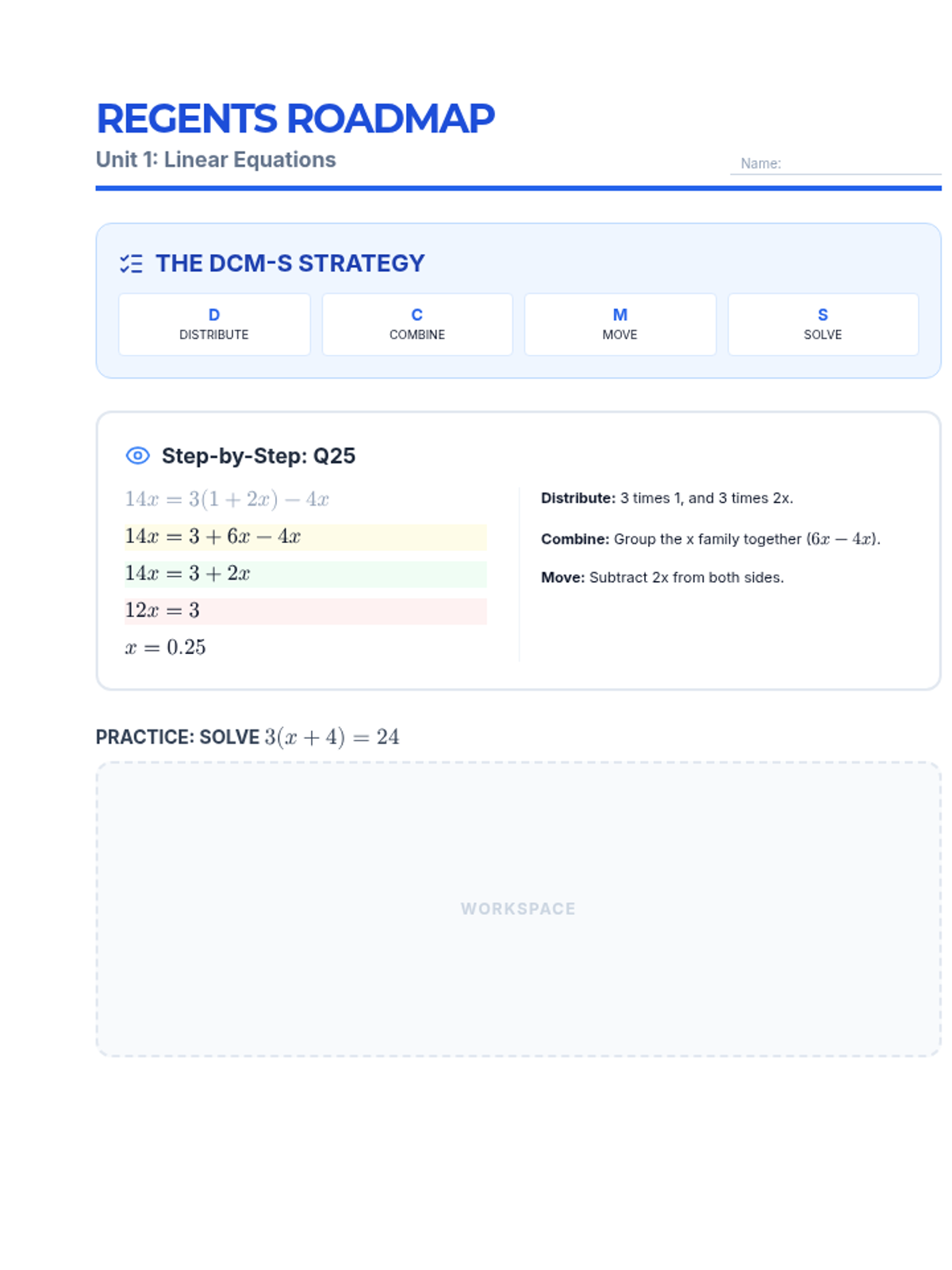
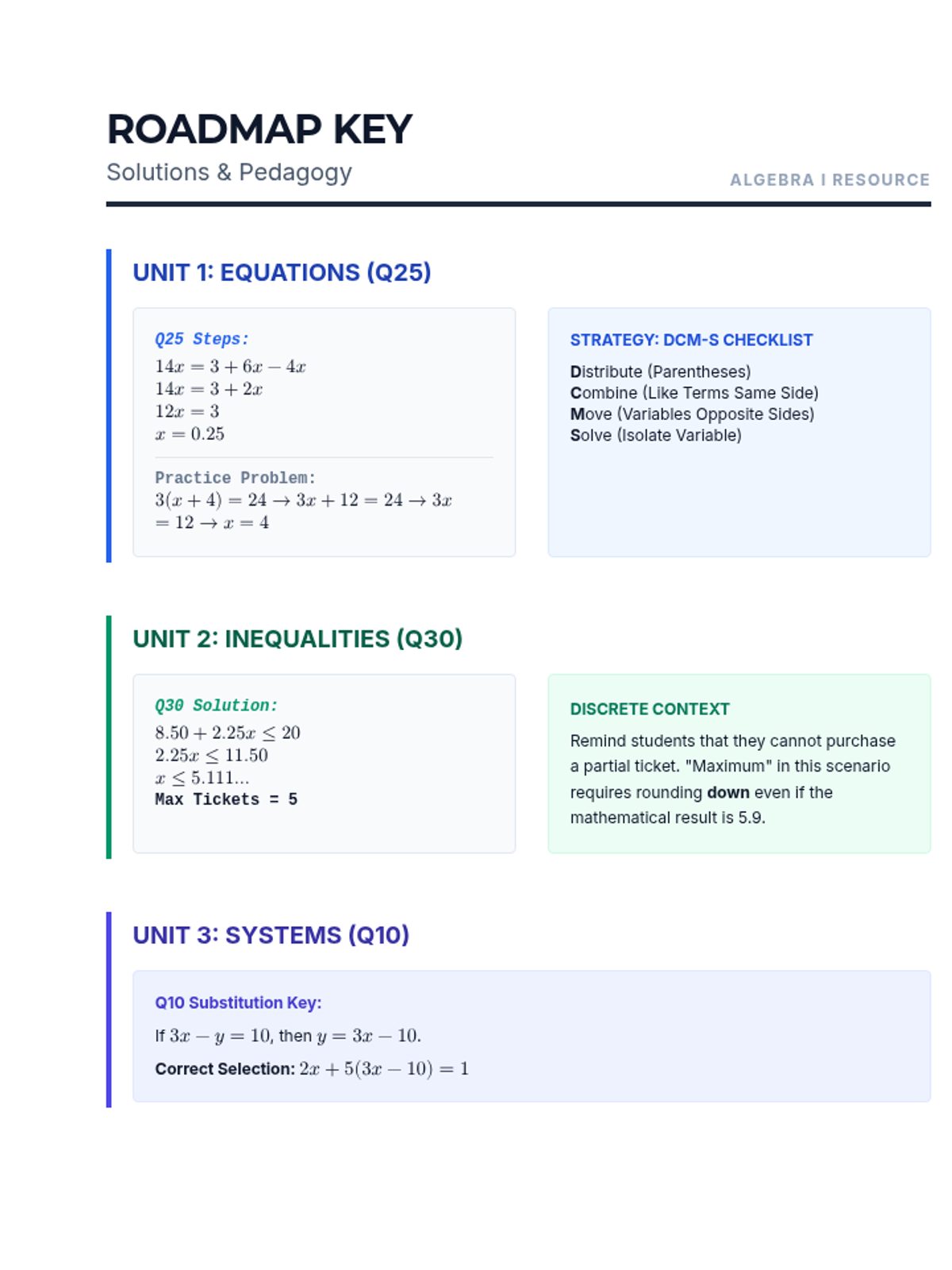
A comprehensive study guide designed for 9th-grade Special Education students, focusing on Algebra Regents concepts with visual scaffolds, simplified vocabulary, and step-by-step guides.
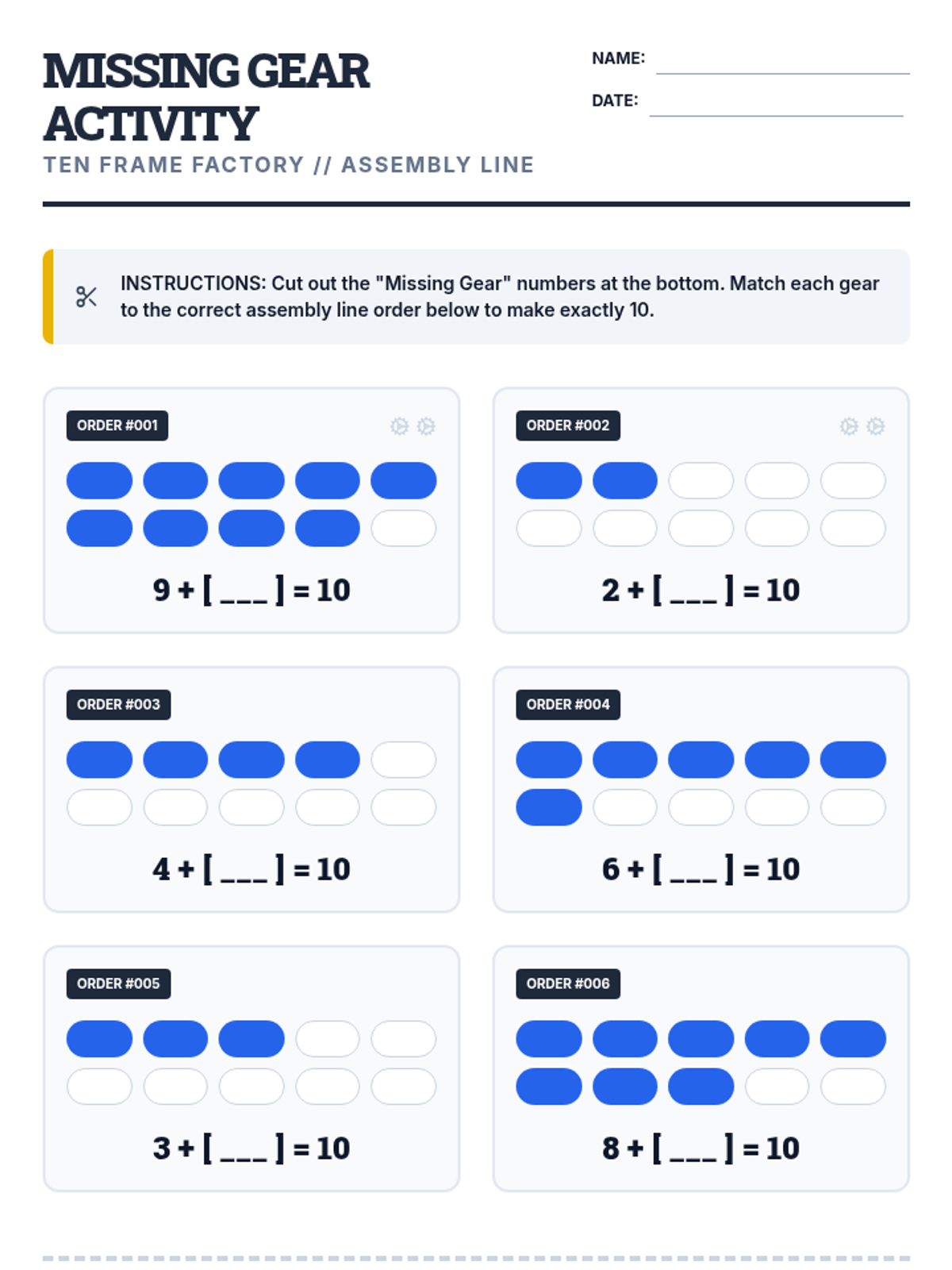
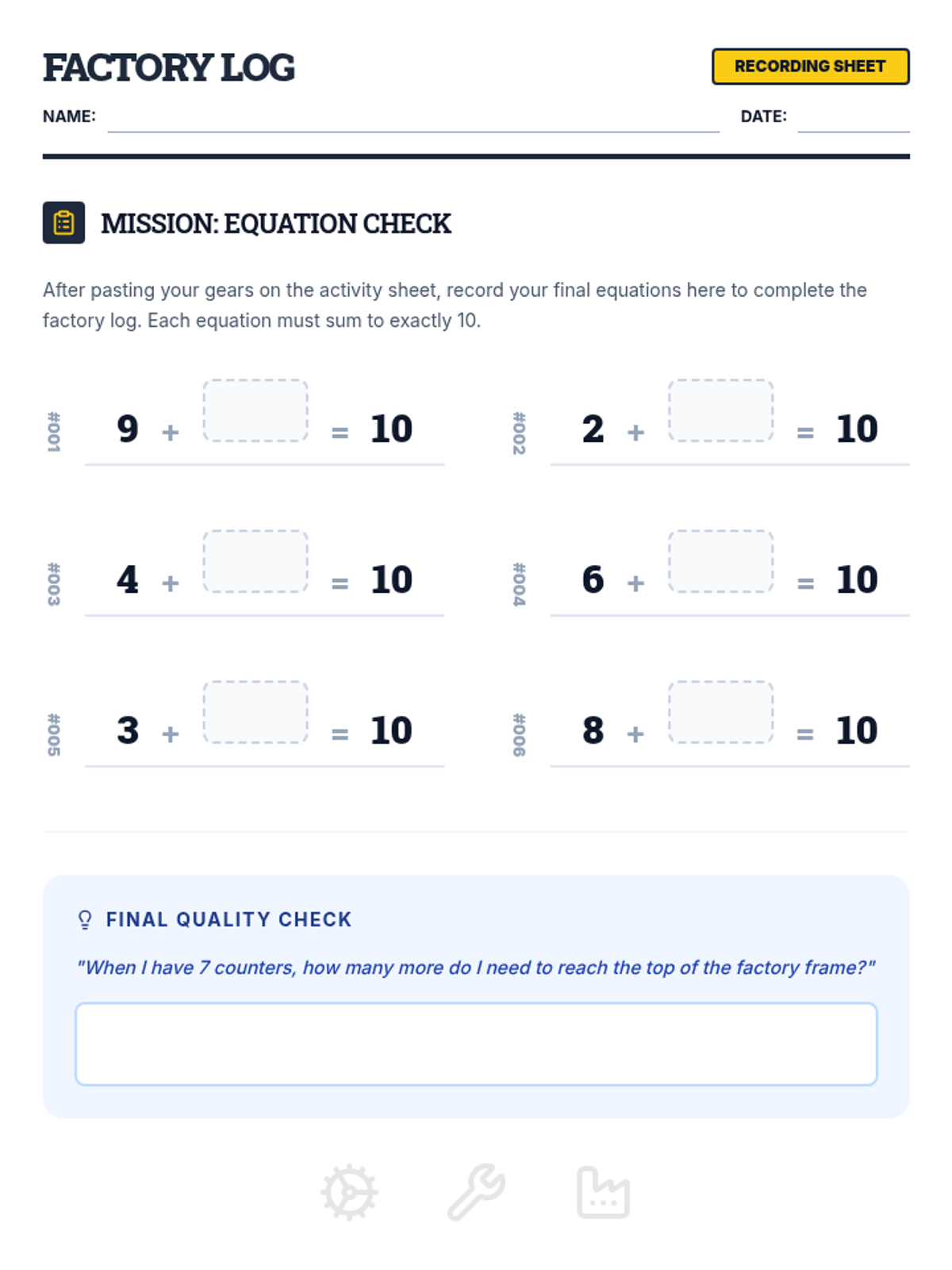
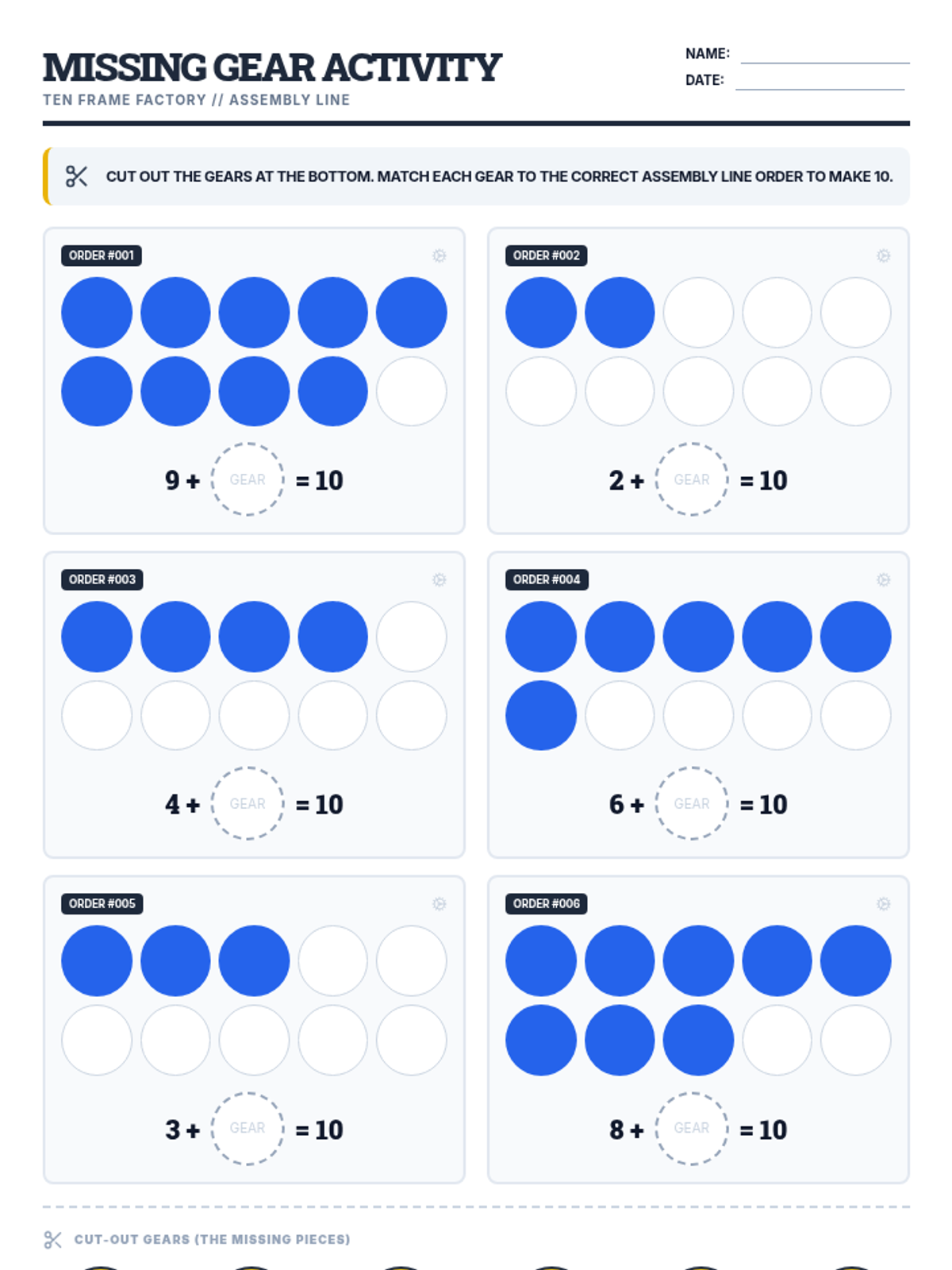
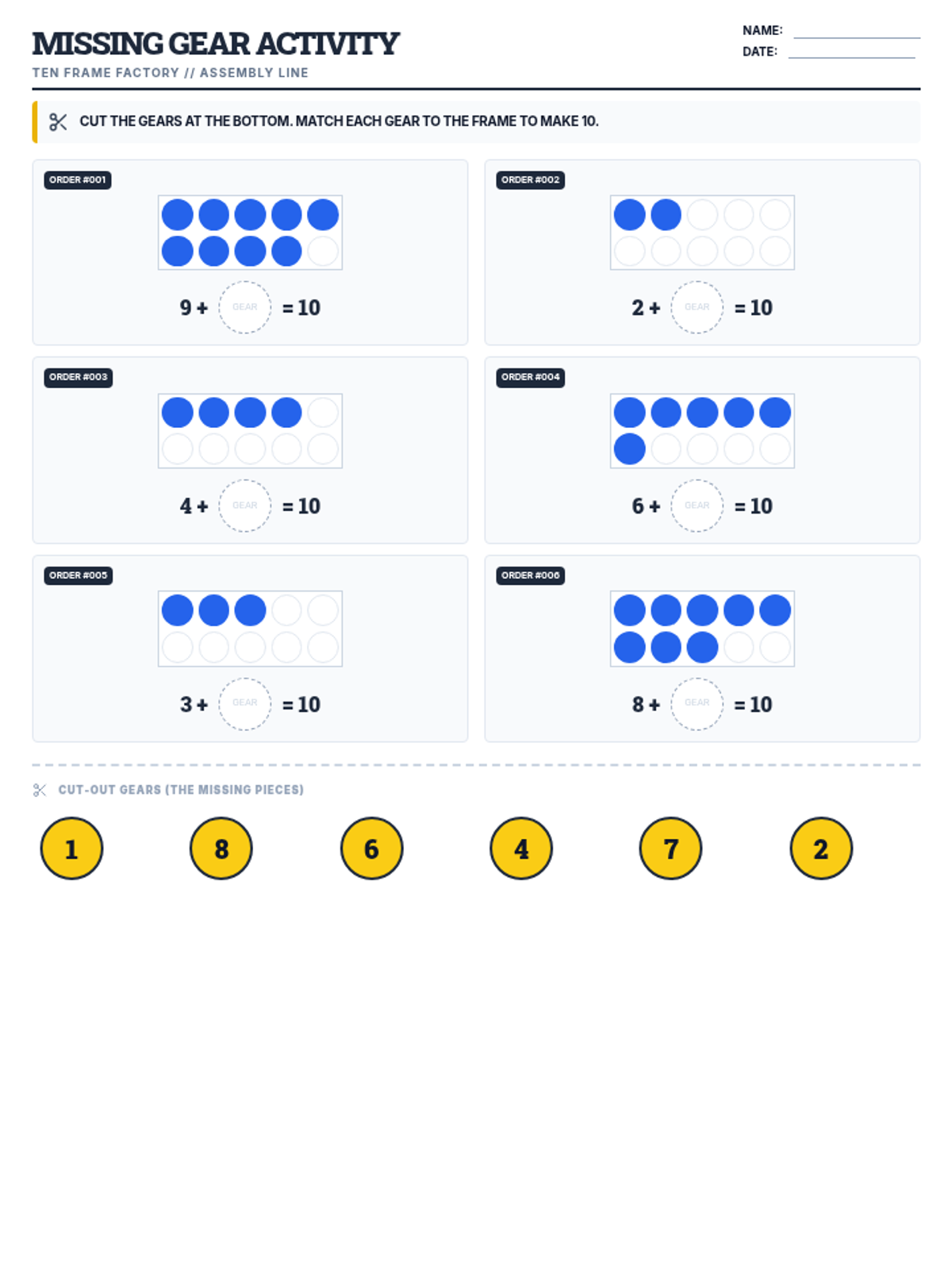
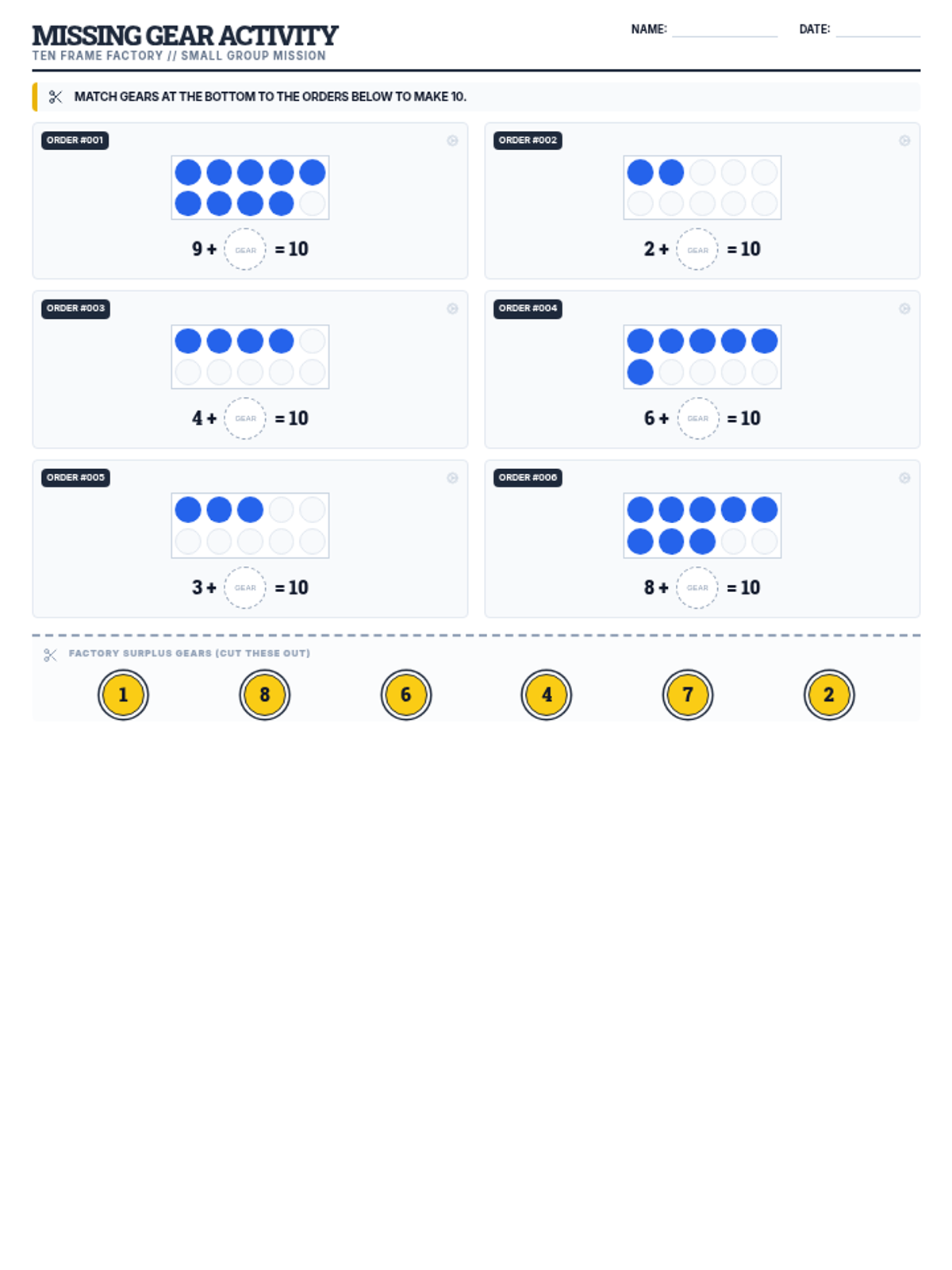
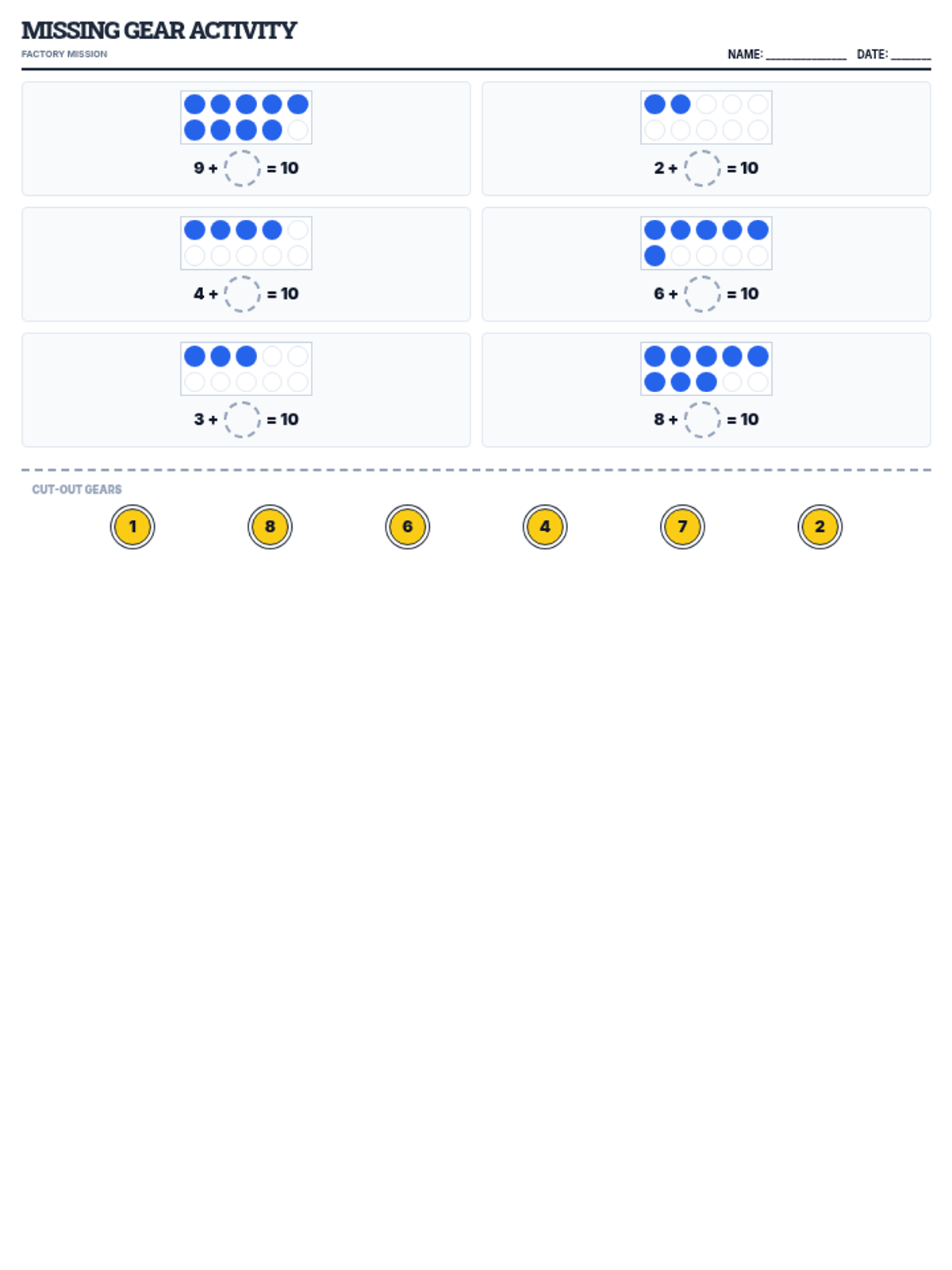
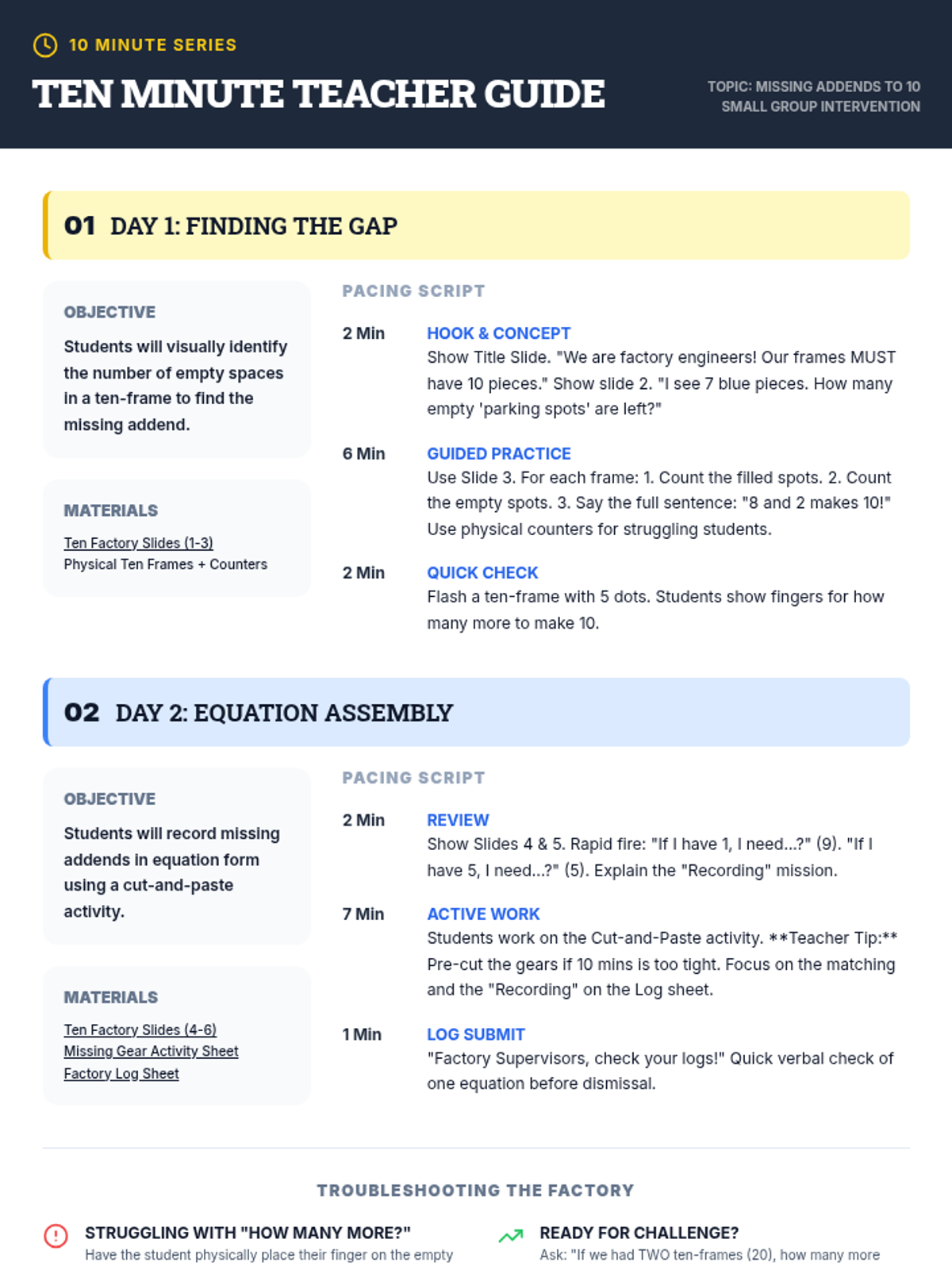
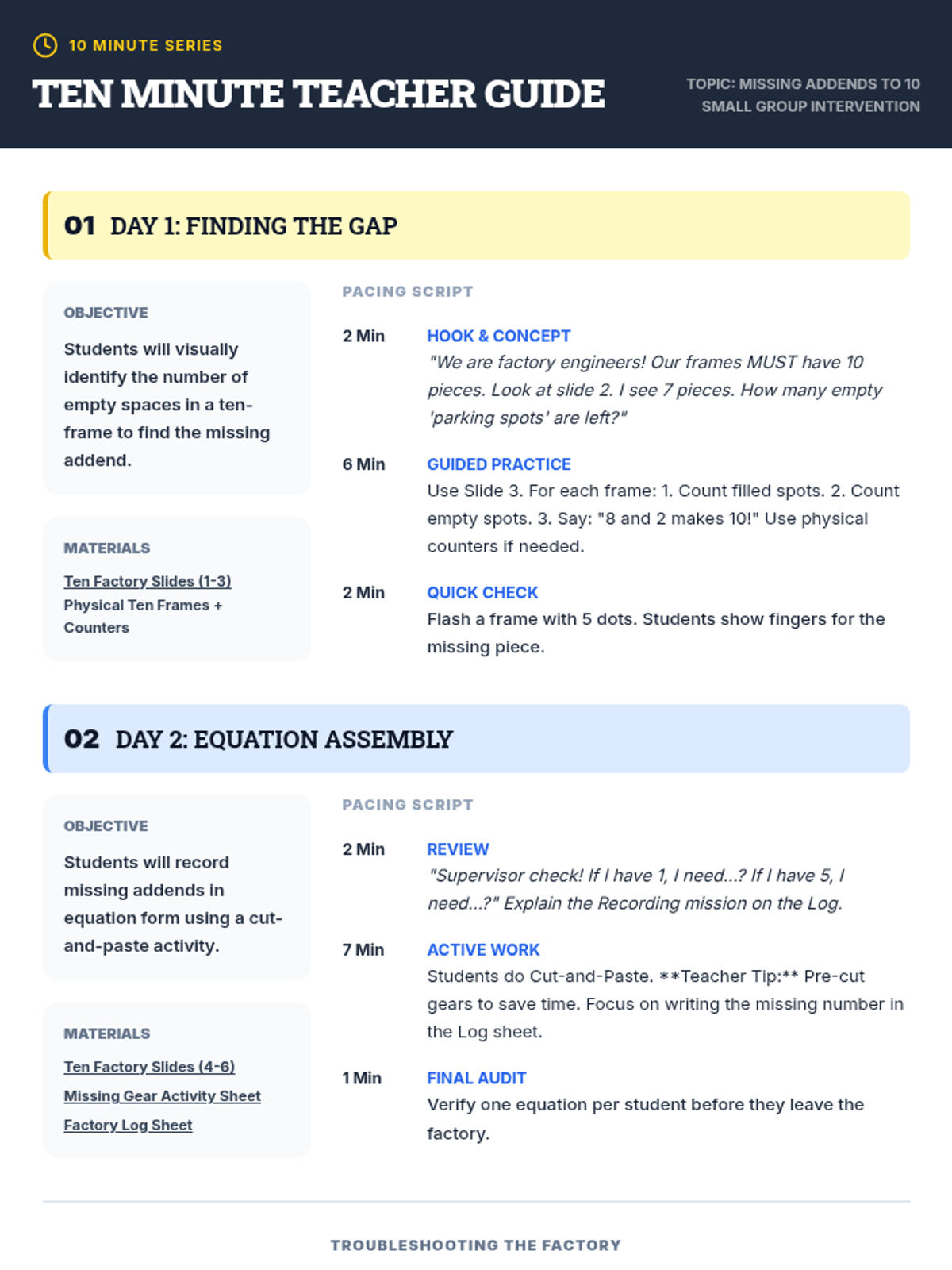
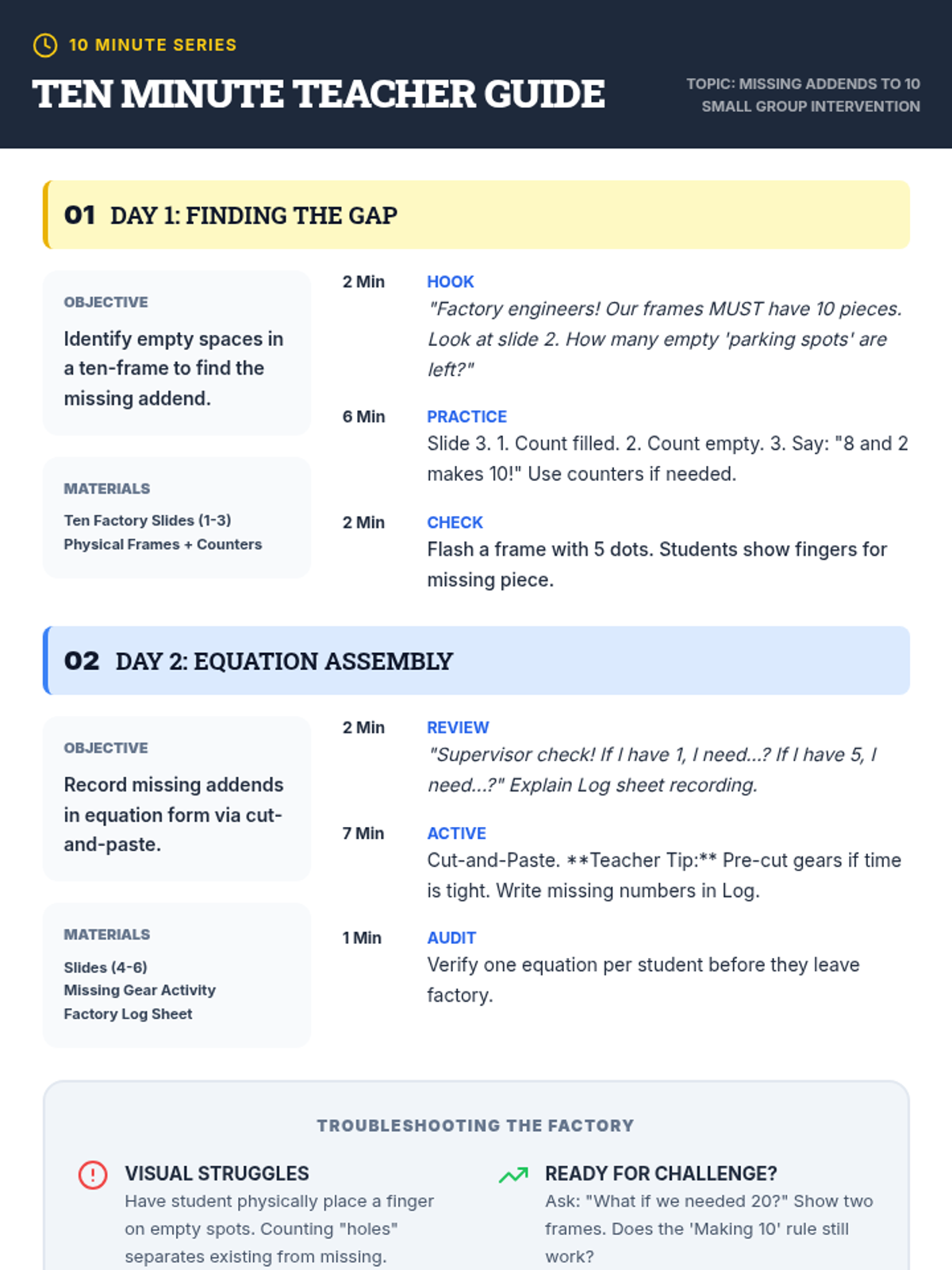
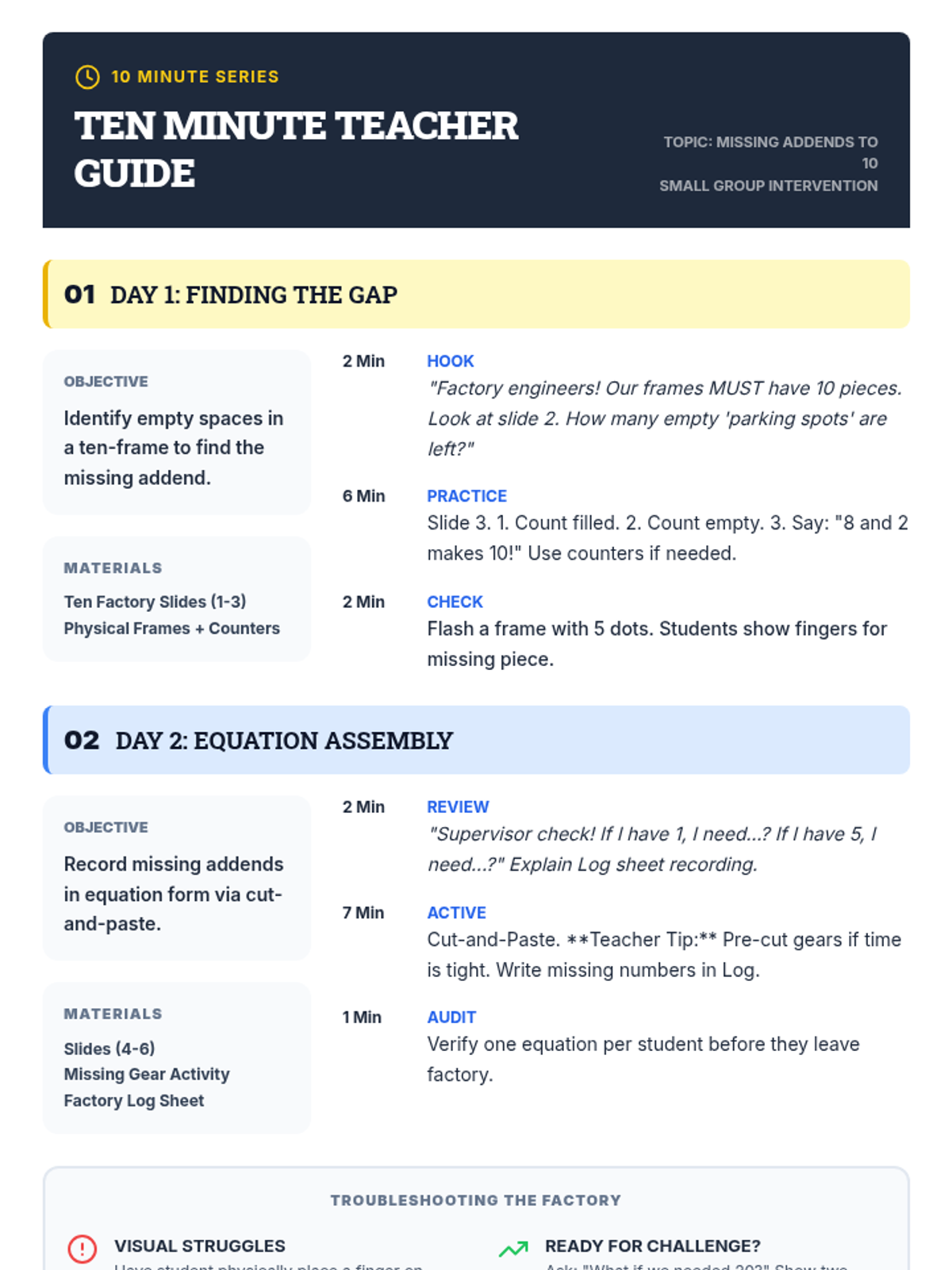
Transitions from visual ten-frames to writing equations through a hands-on cut-and-paste activity.
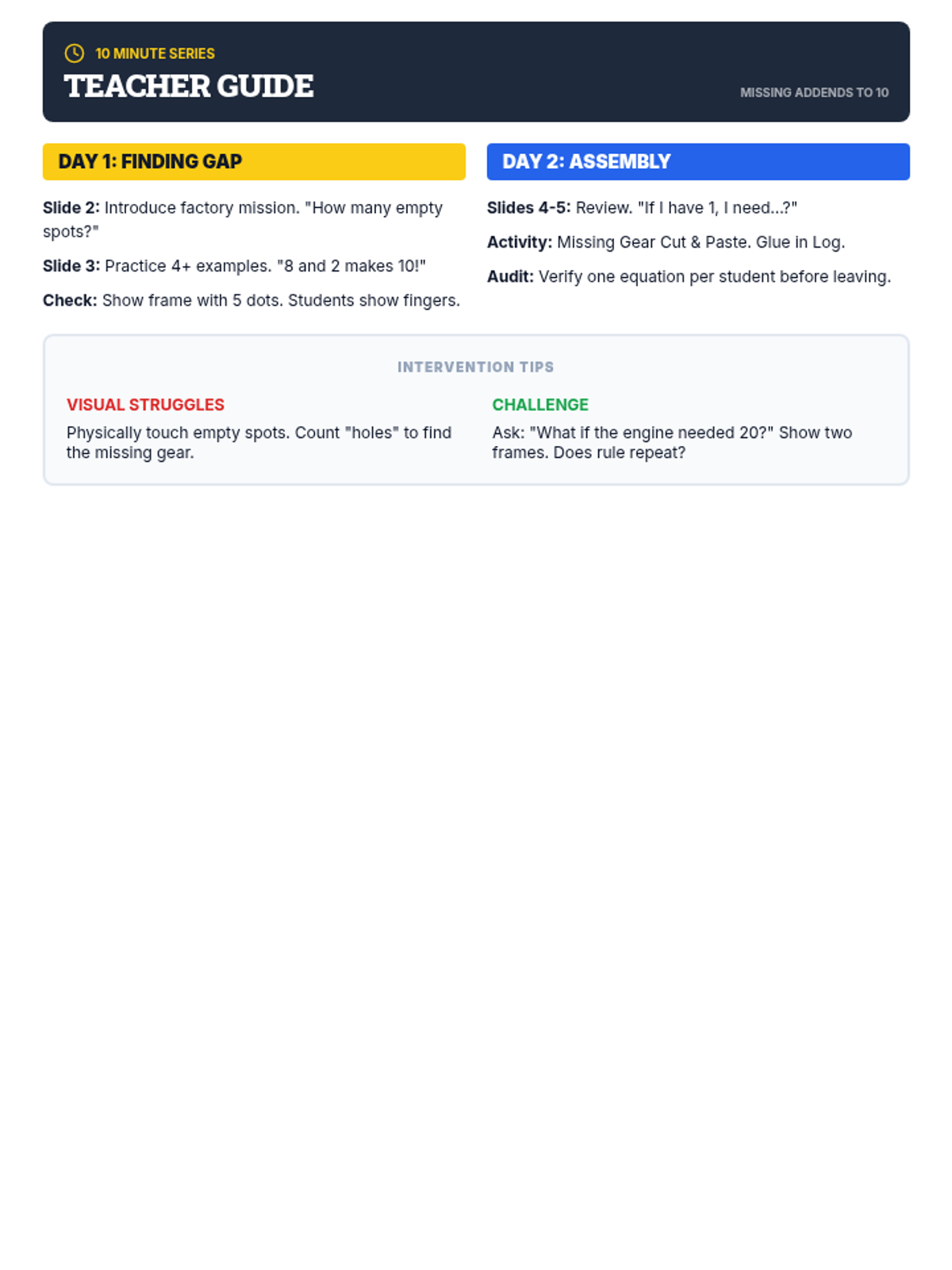
Focuses on visual identification of missing addends using ten-frames in a factory setting.
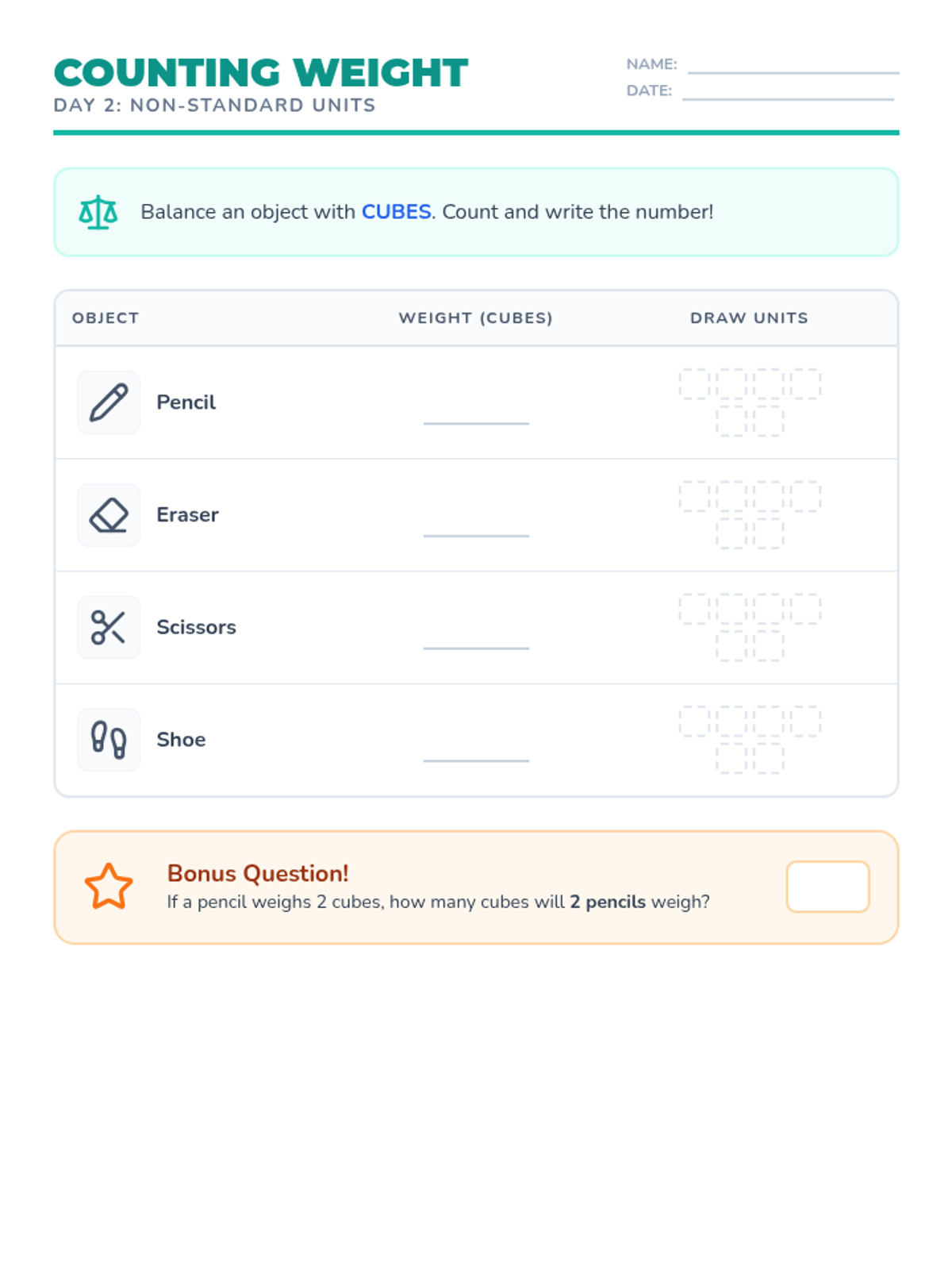
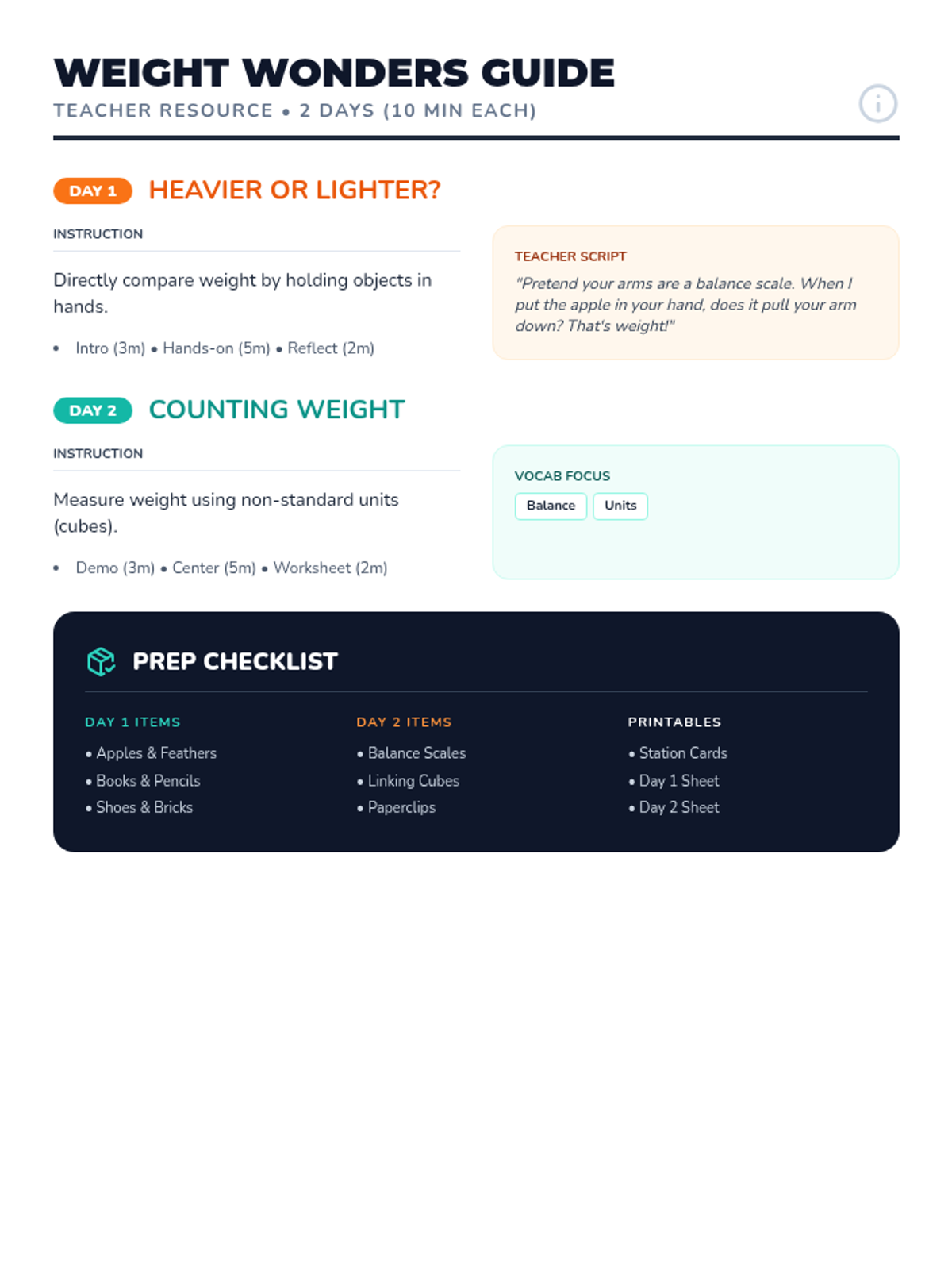
Students measure the weight of objects using non-standard units like cubes and paperclips with a balance scale.
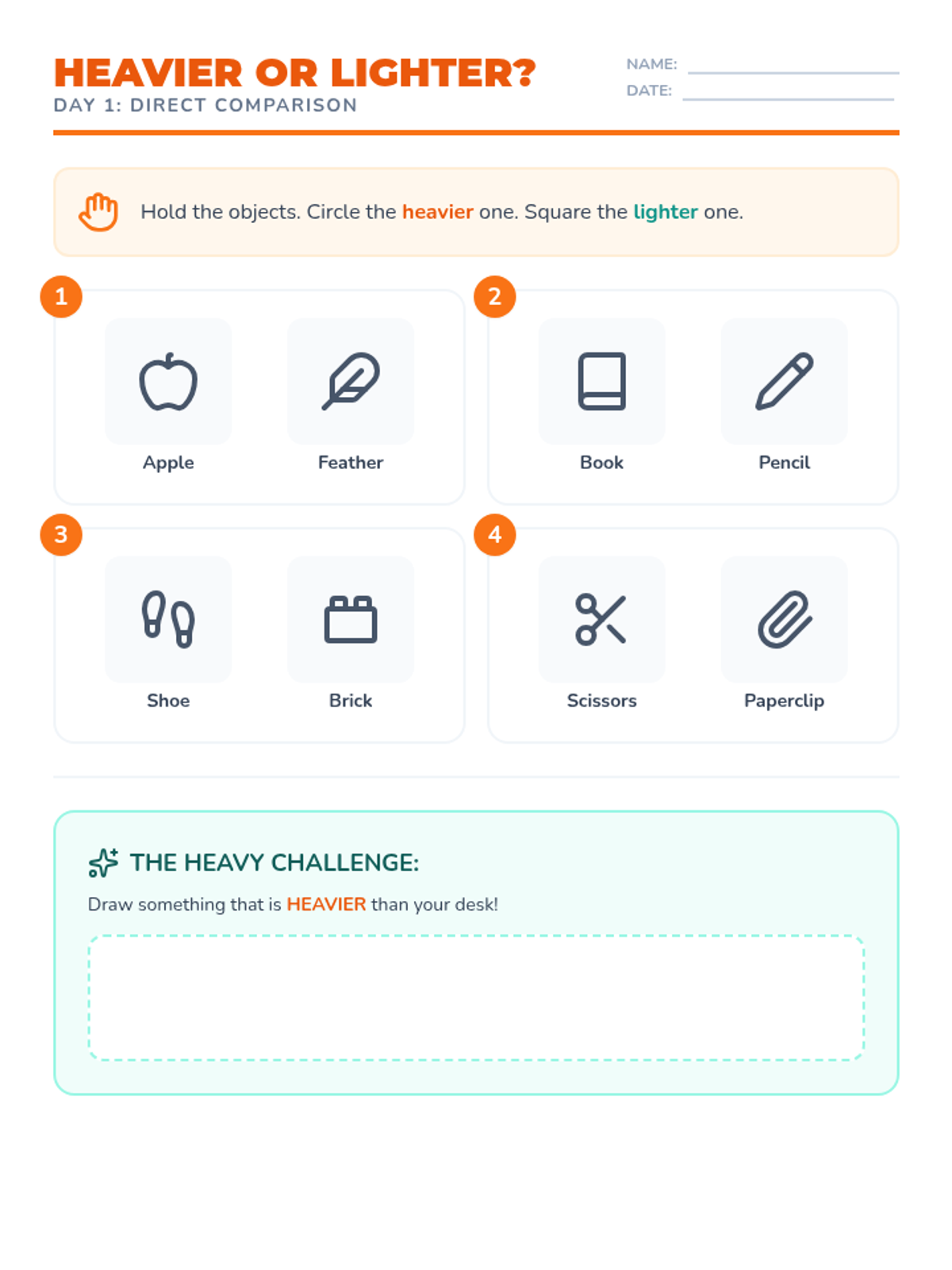
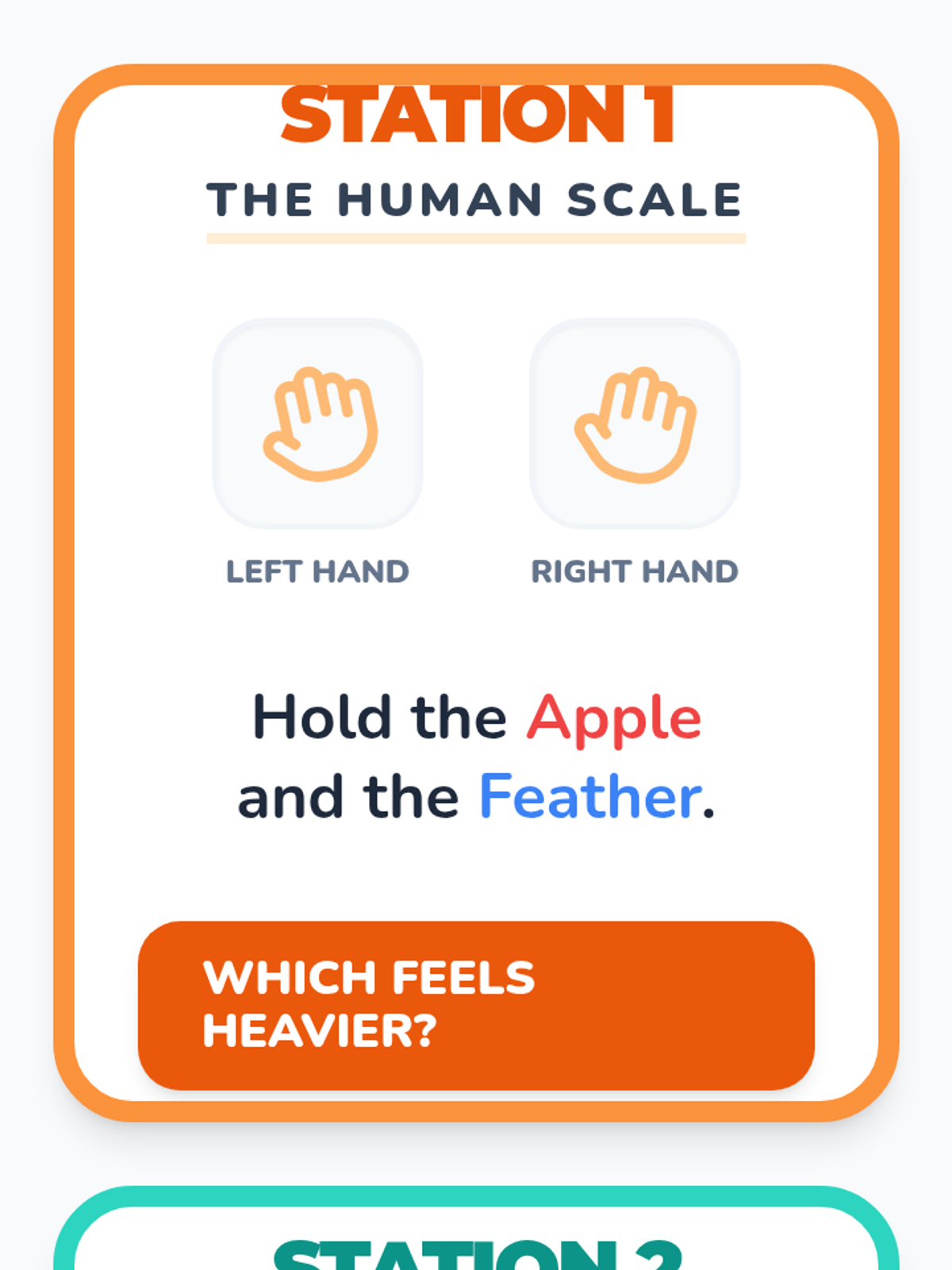
Students learn to compare the weight of two objects directly by holding them and using the terms 'heavier' and 'lighter'.
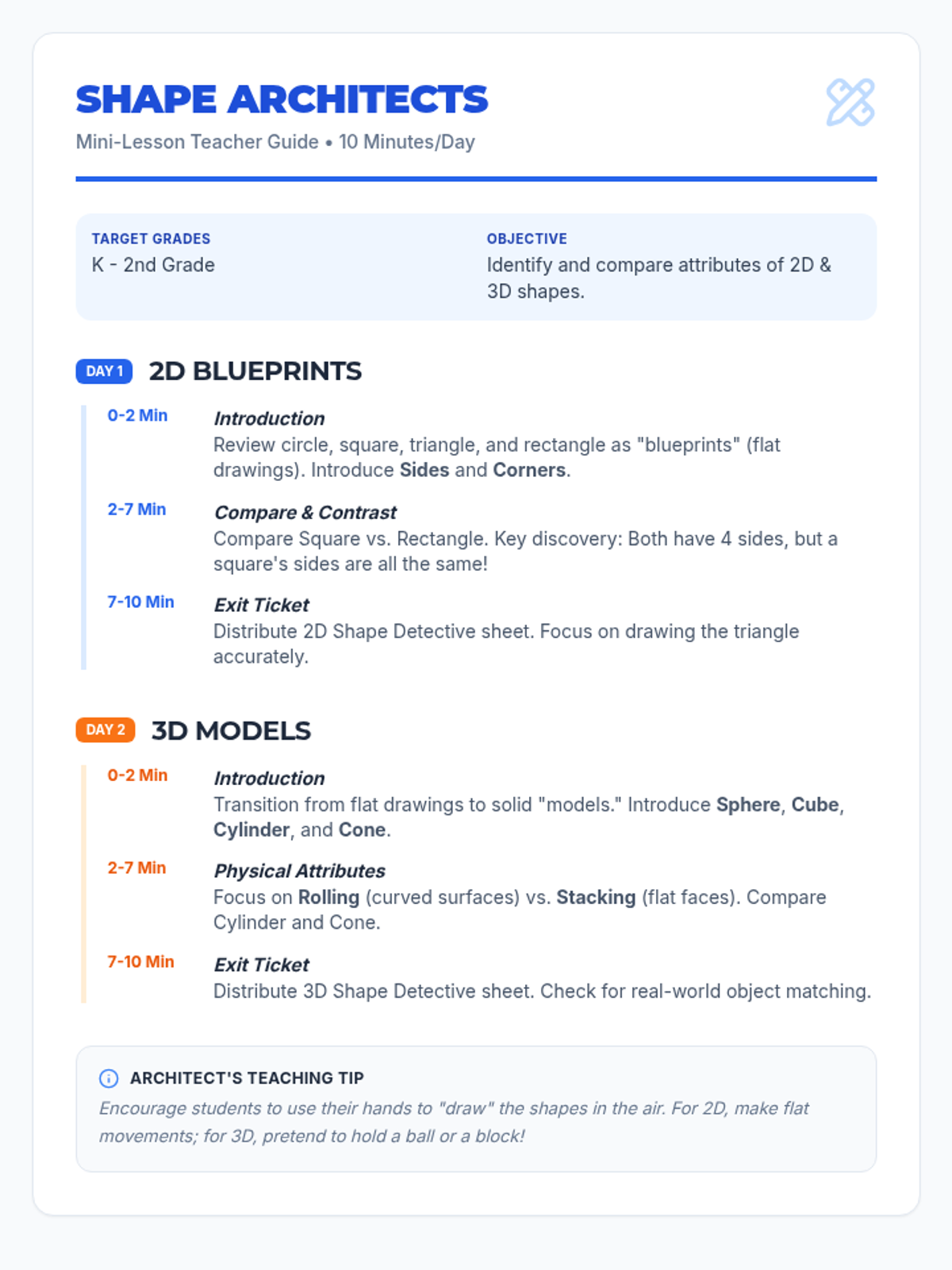
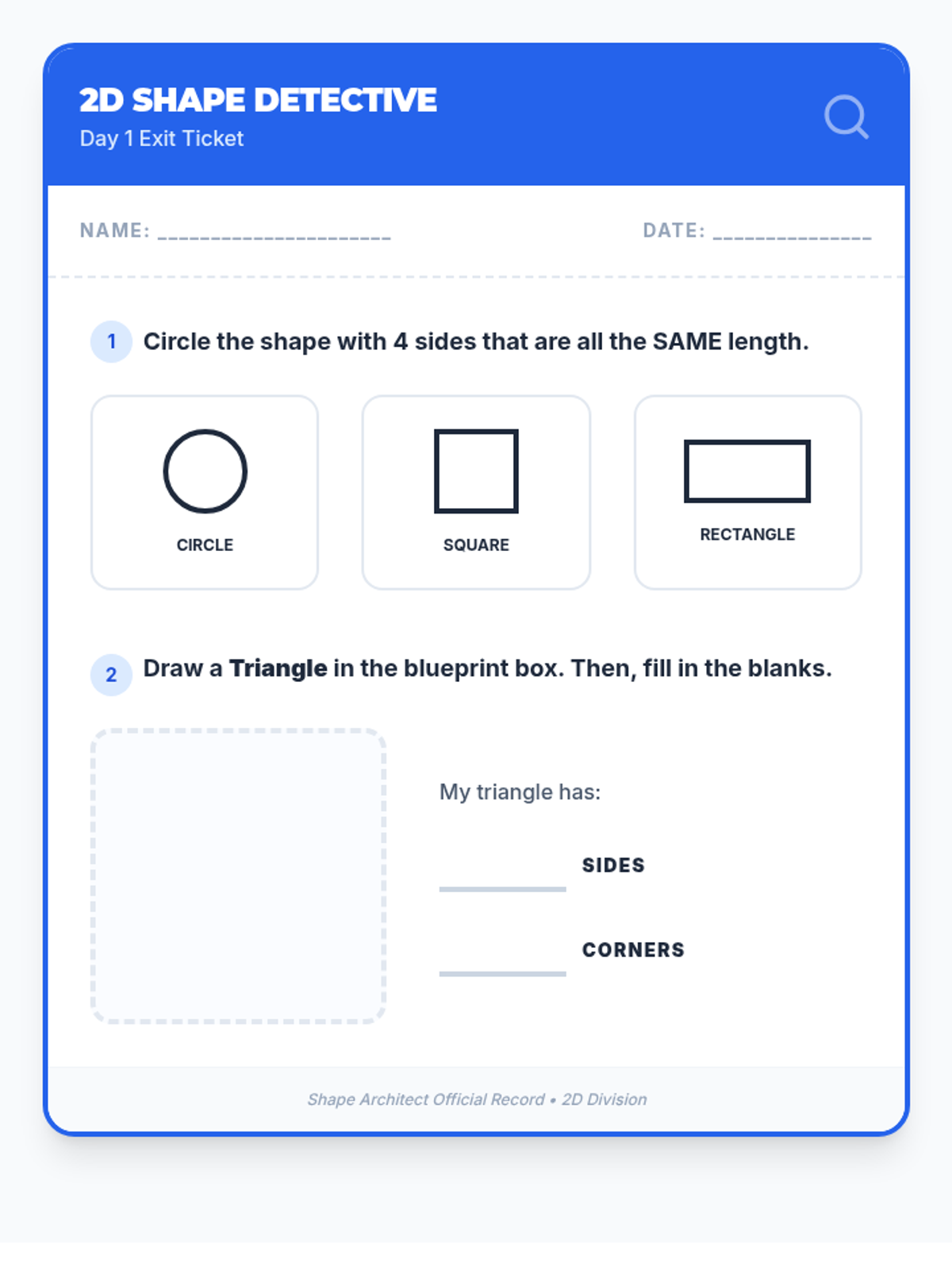
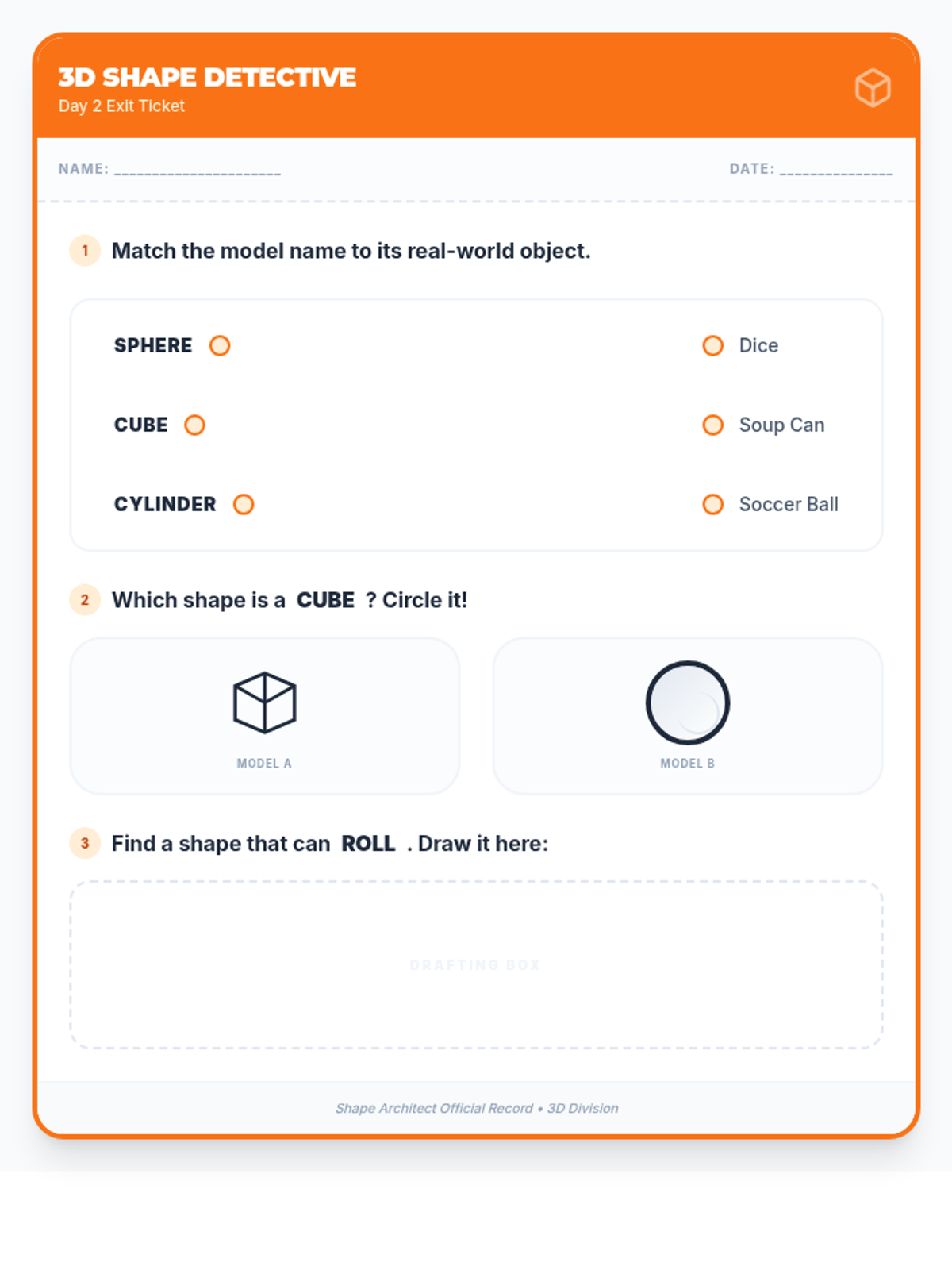
A two-day mini-lesson sequence focused on identifying, describing, and comparing 2D and 3D shapes through the lens of a "Shape Architect". Day 1 covers flat shapes (circles, squares, triangles, rectangles), while Day 2 explores solid shapes (spheres, cubes, cylinders, cones).
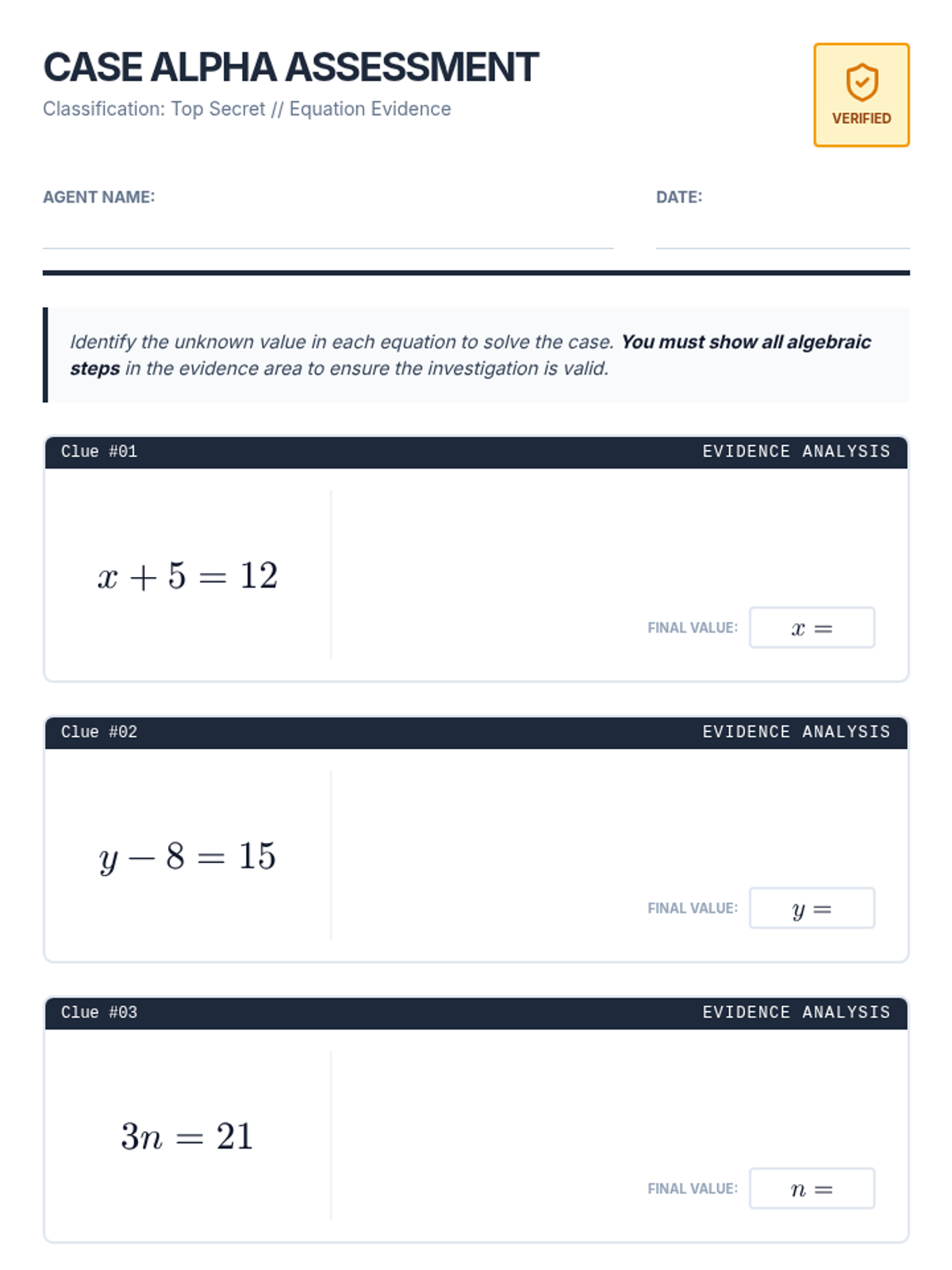
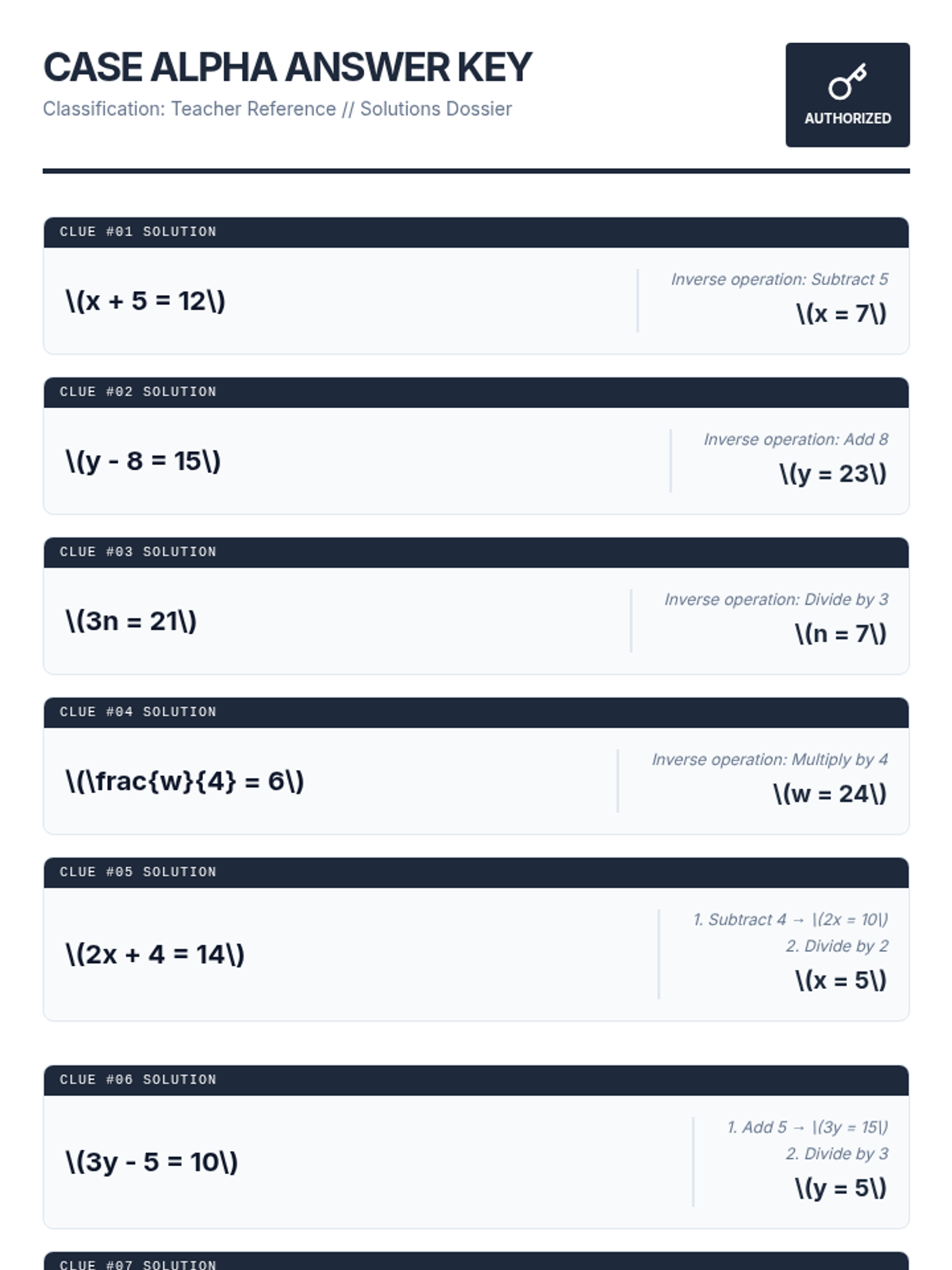
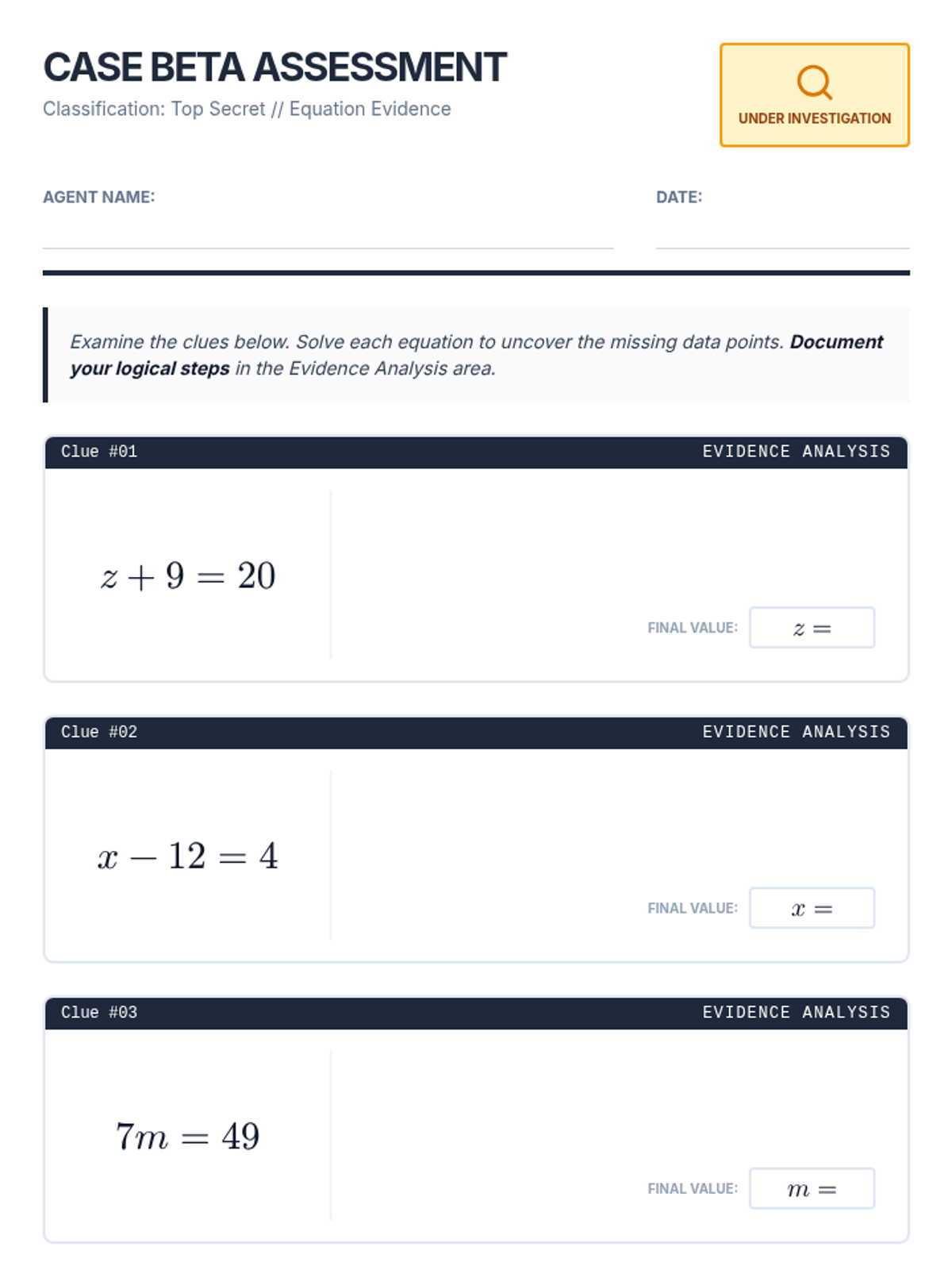
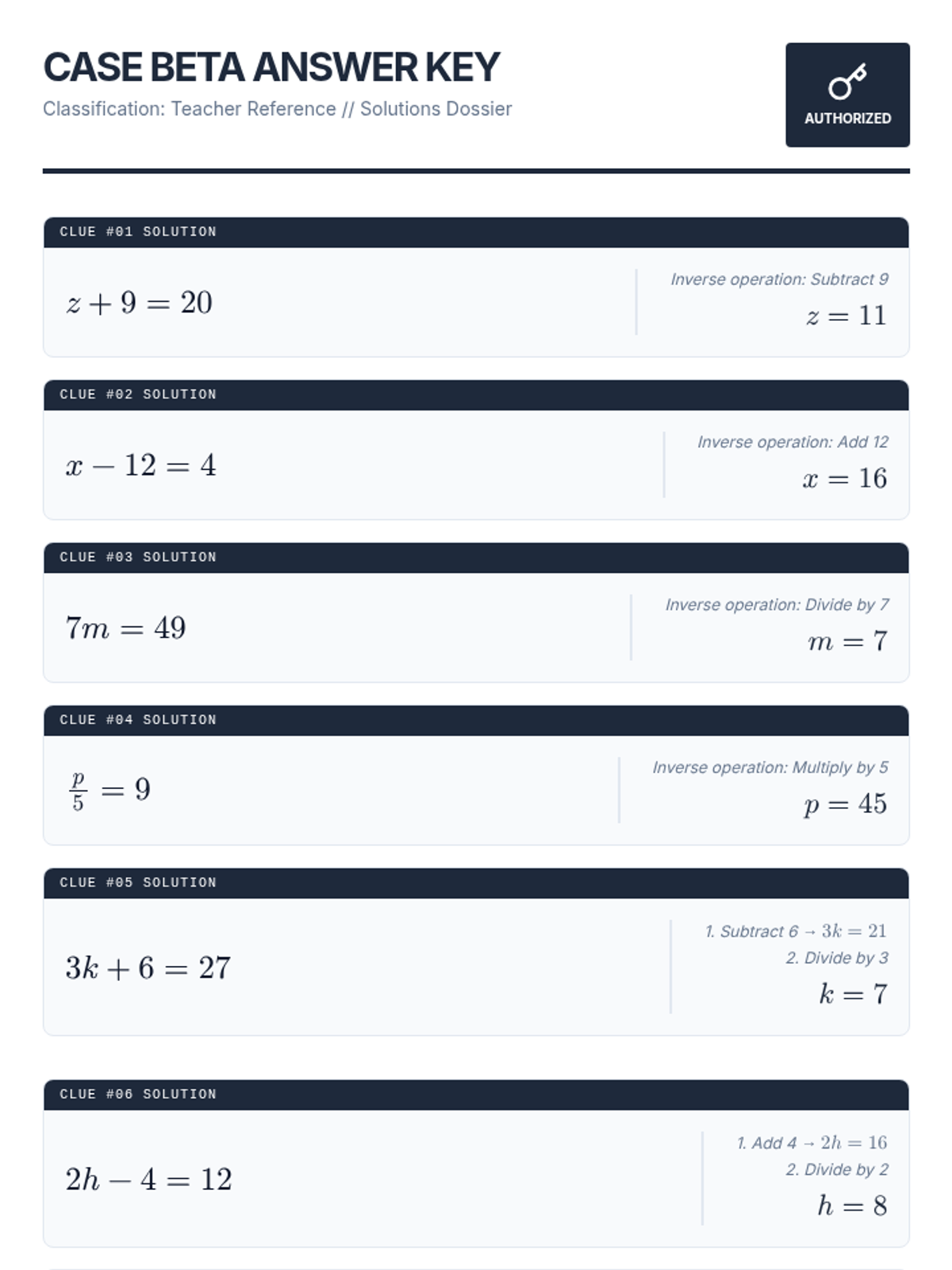
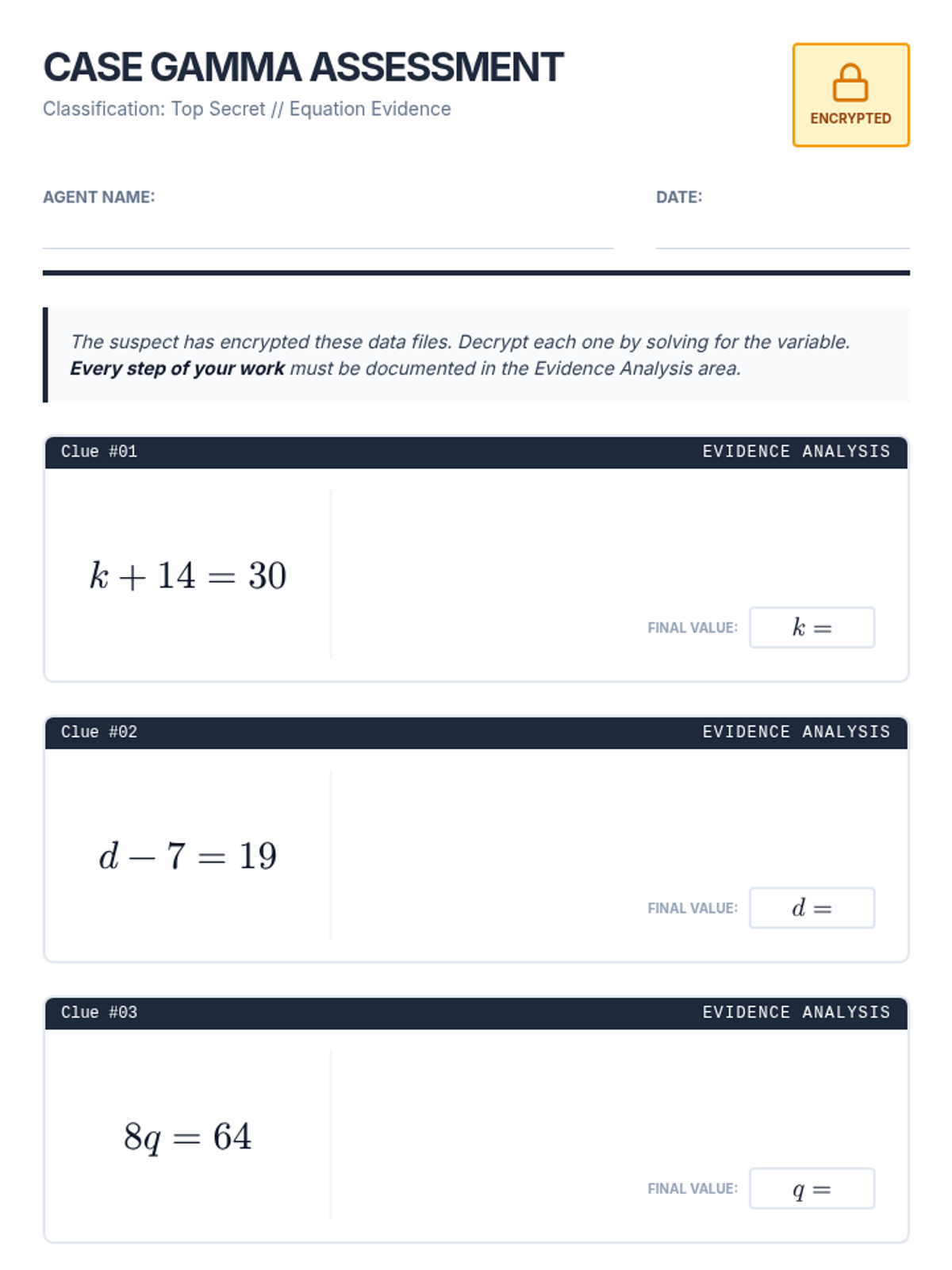
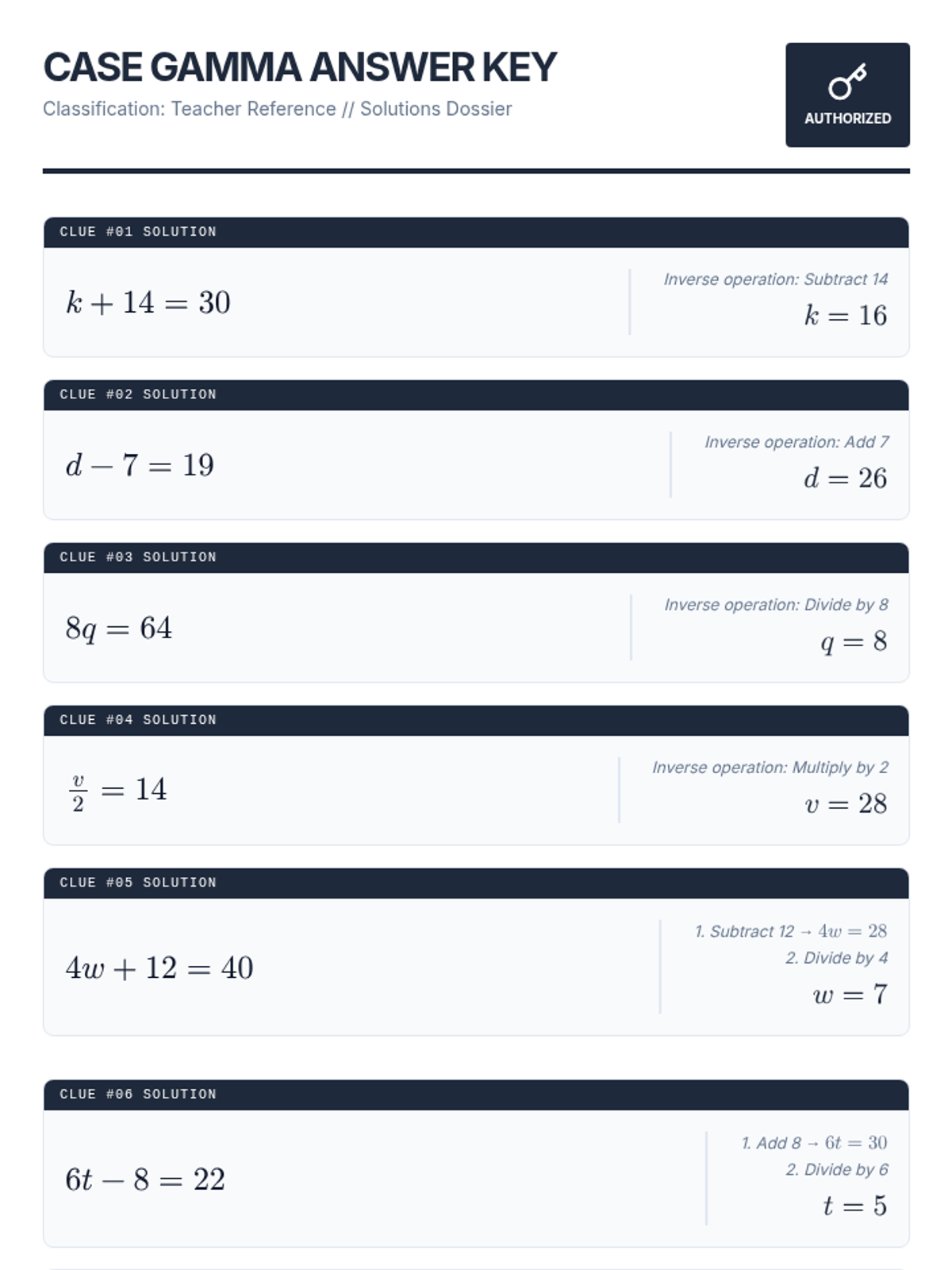
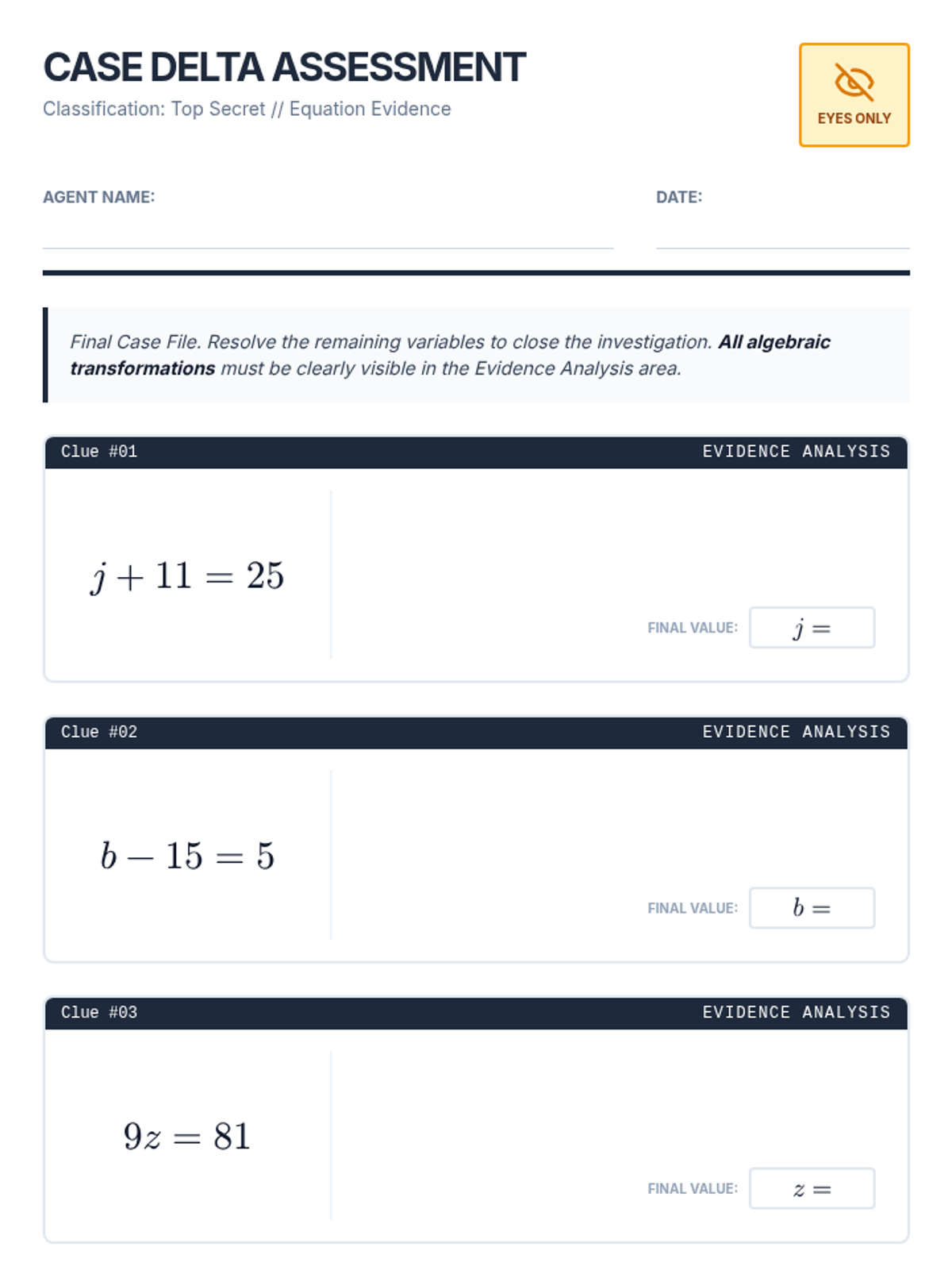
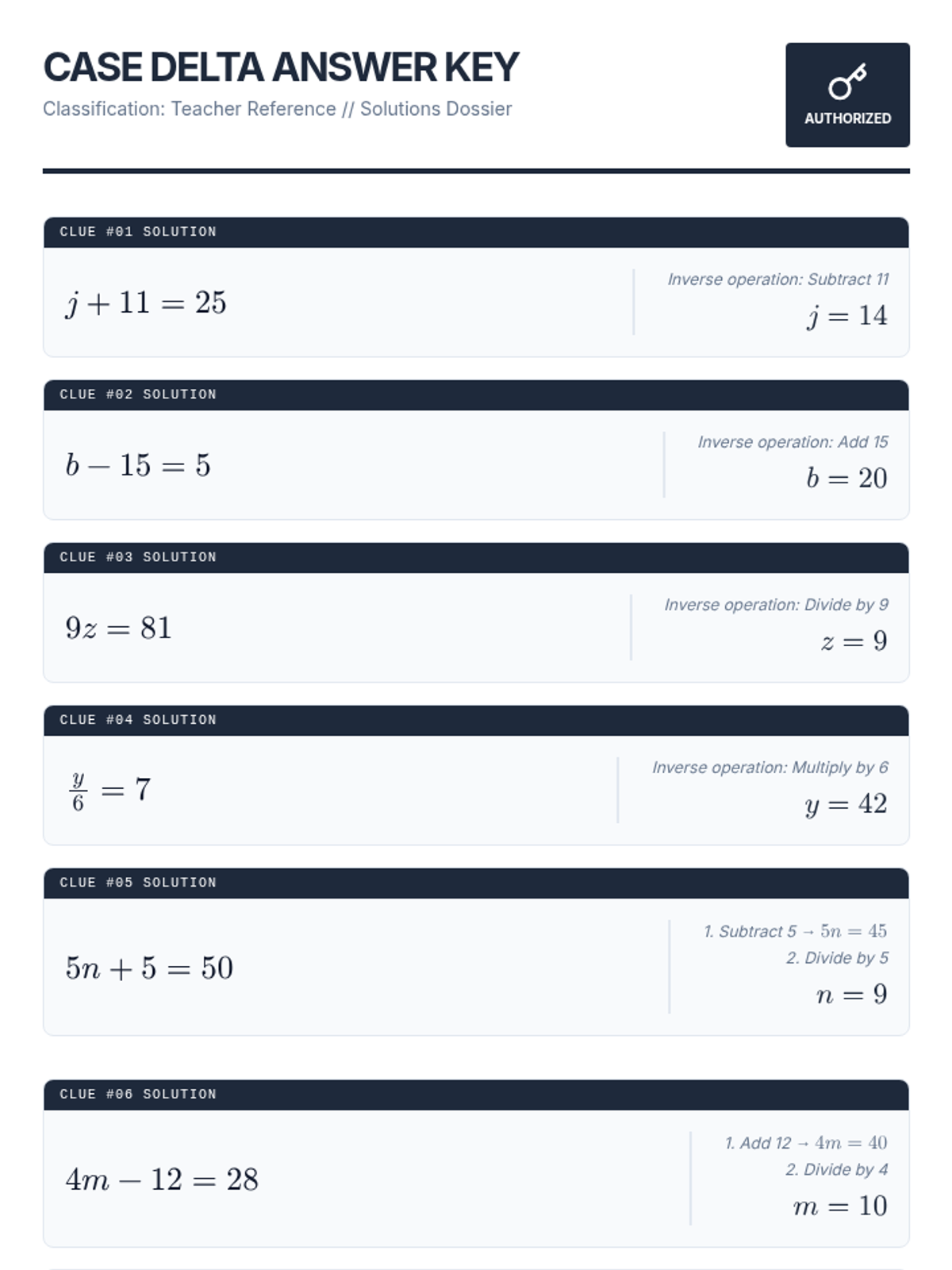
A collection of four distinct assessments and their corresponding answer keys focused on solving one and two-step equations.
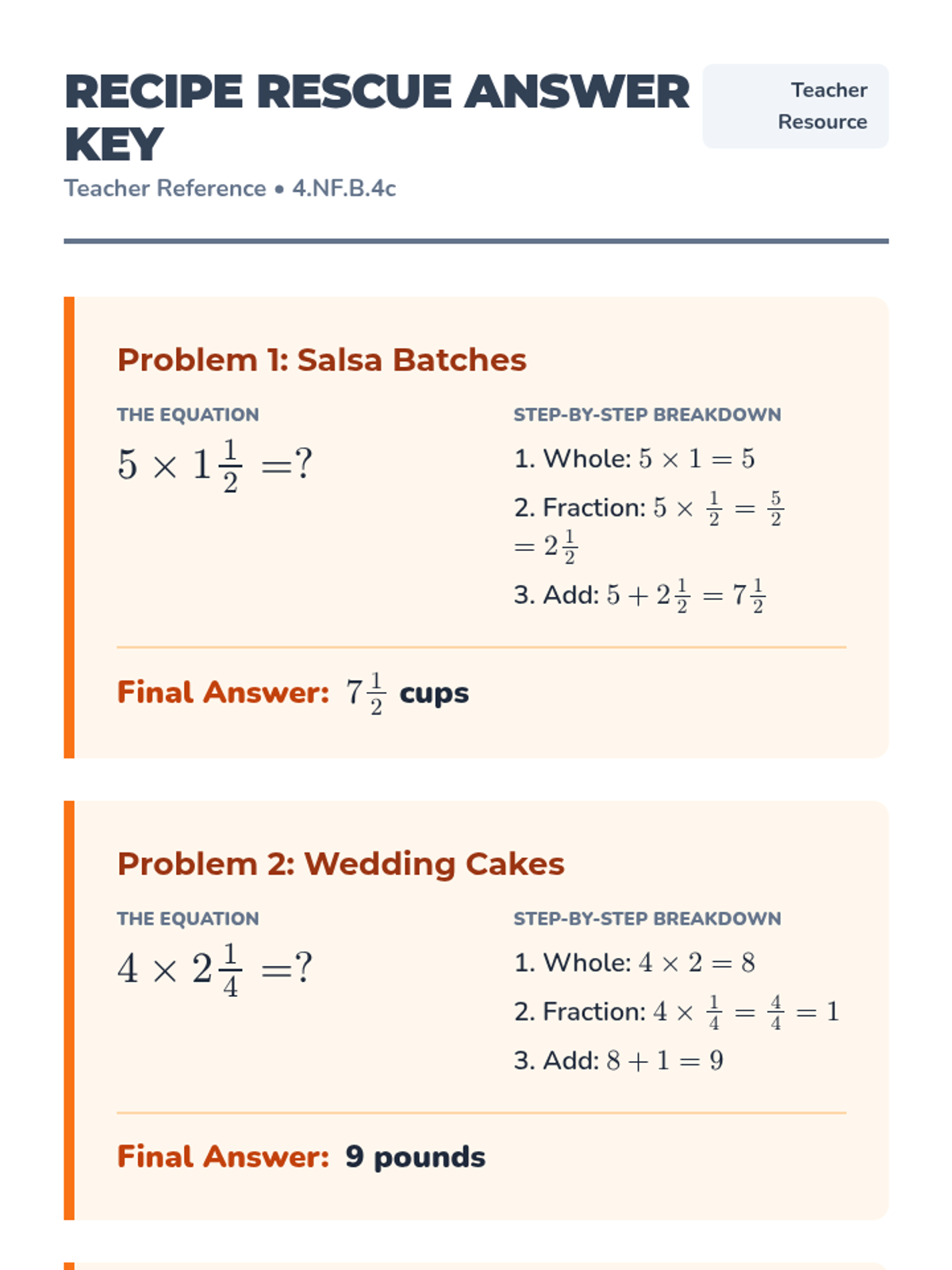
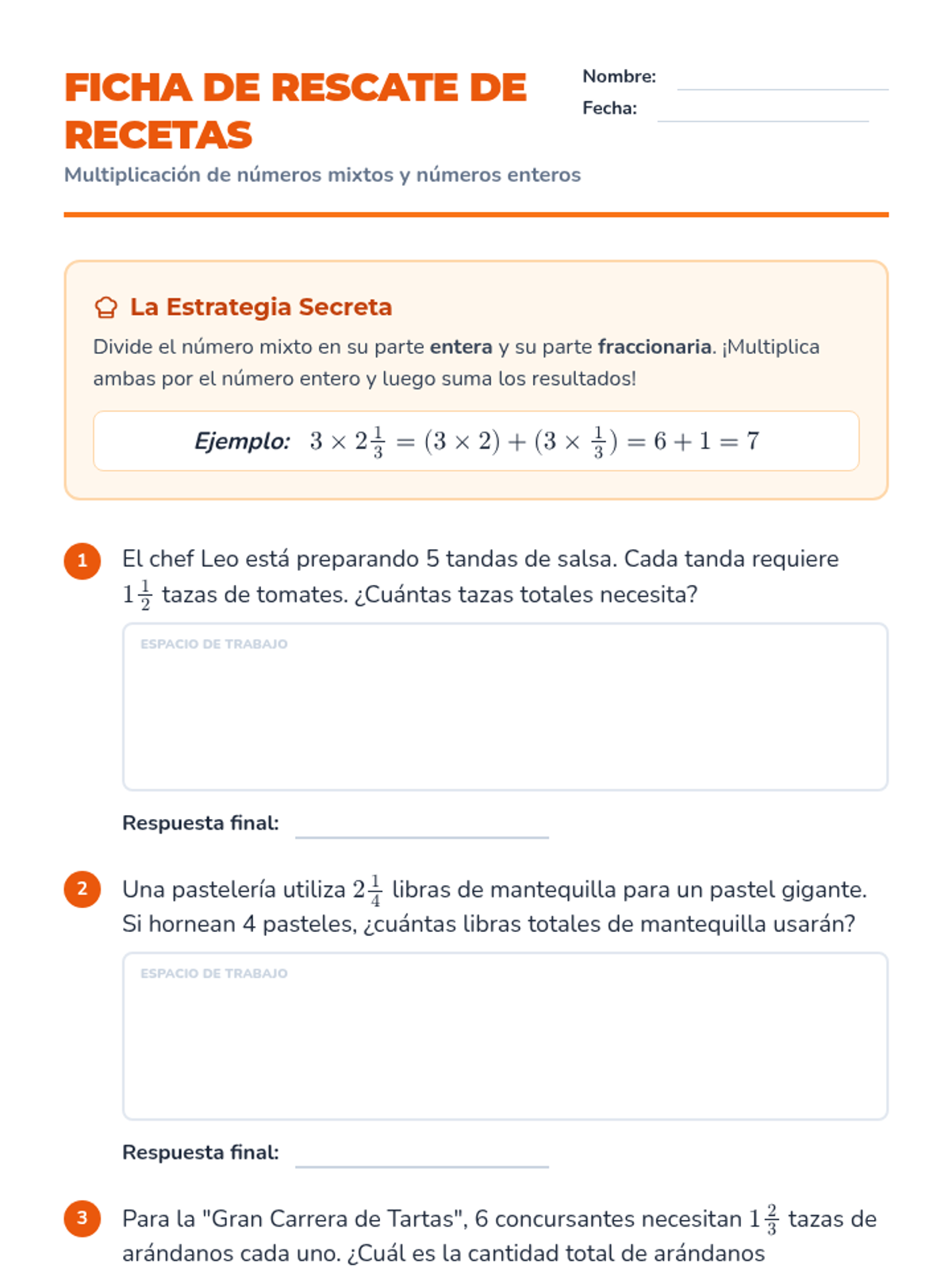
A 4th-grade math lesson focused on solving real-world word problems (number stories) involving the multiplication of mixed numbers by whole numbers using the distributive property and visual models.
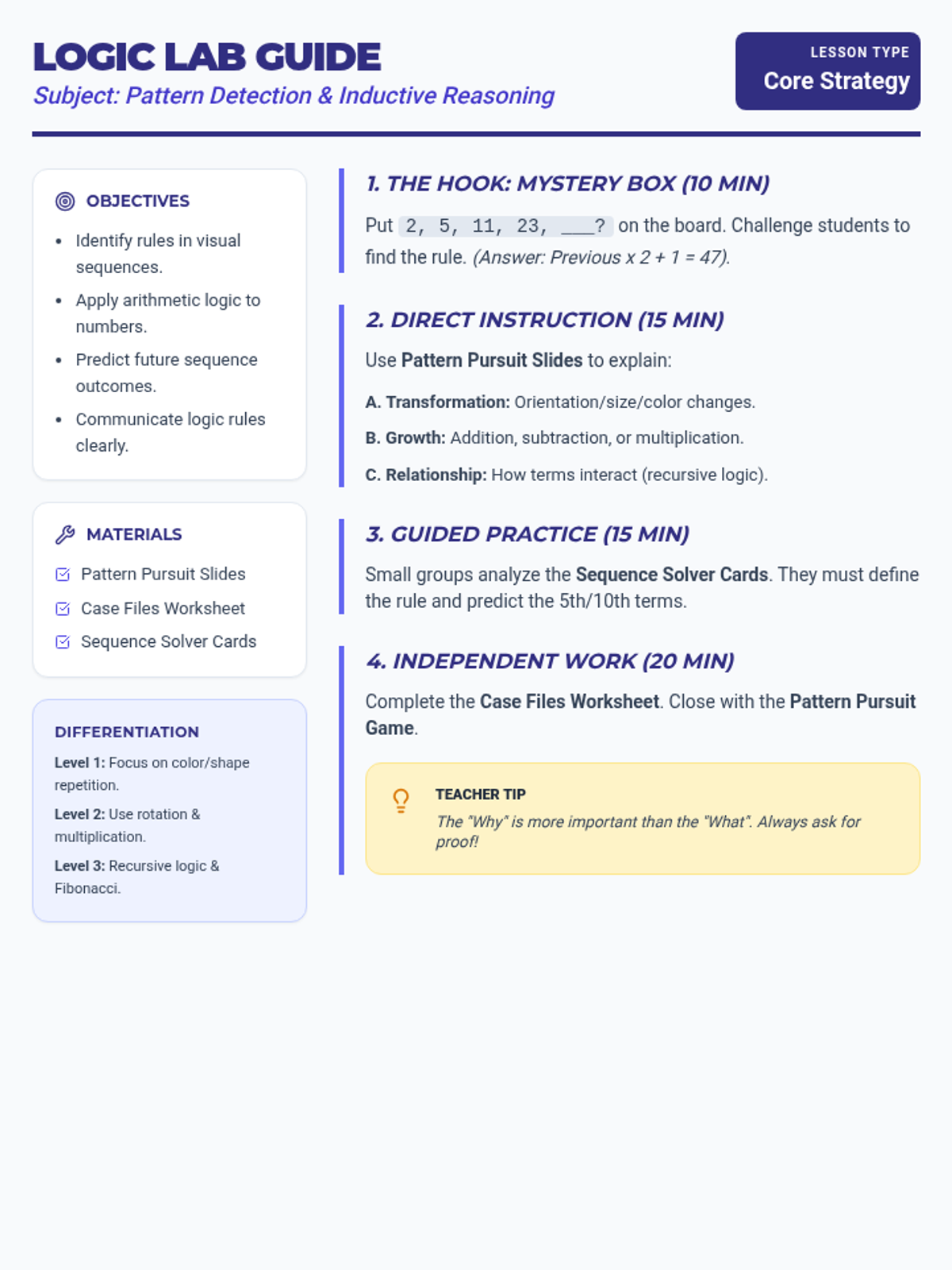
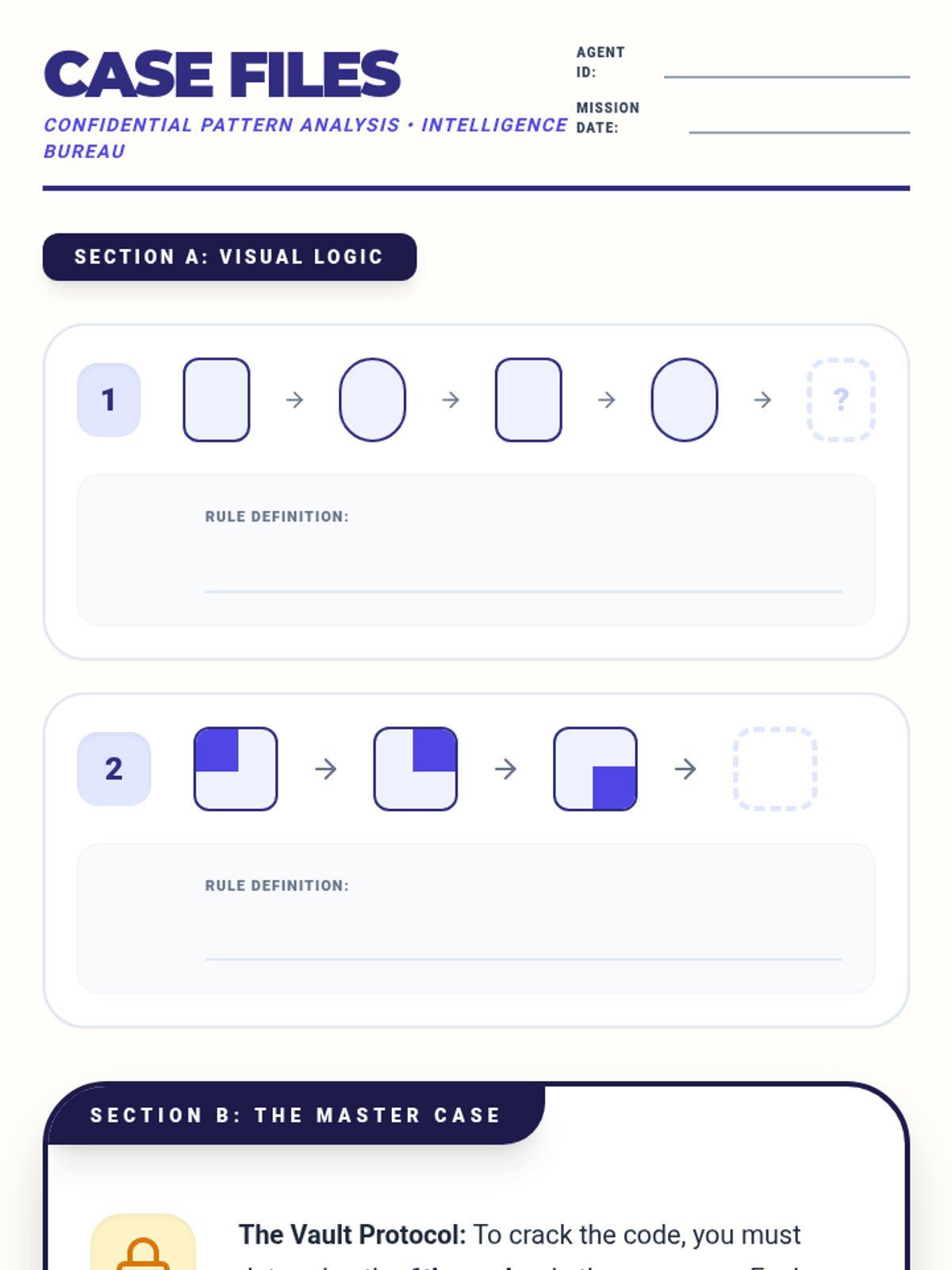
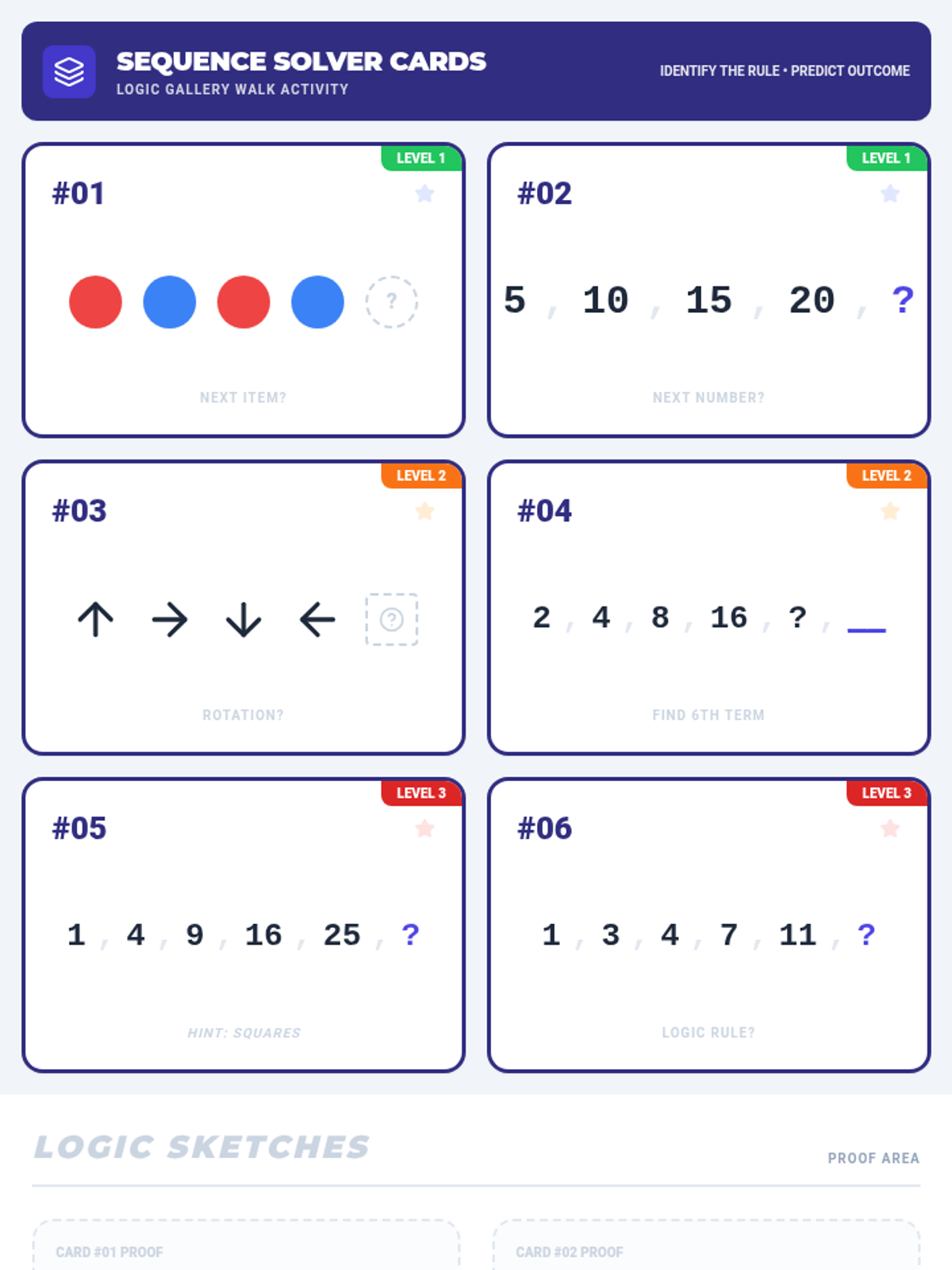
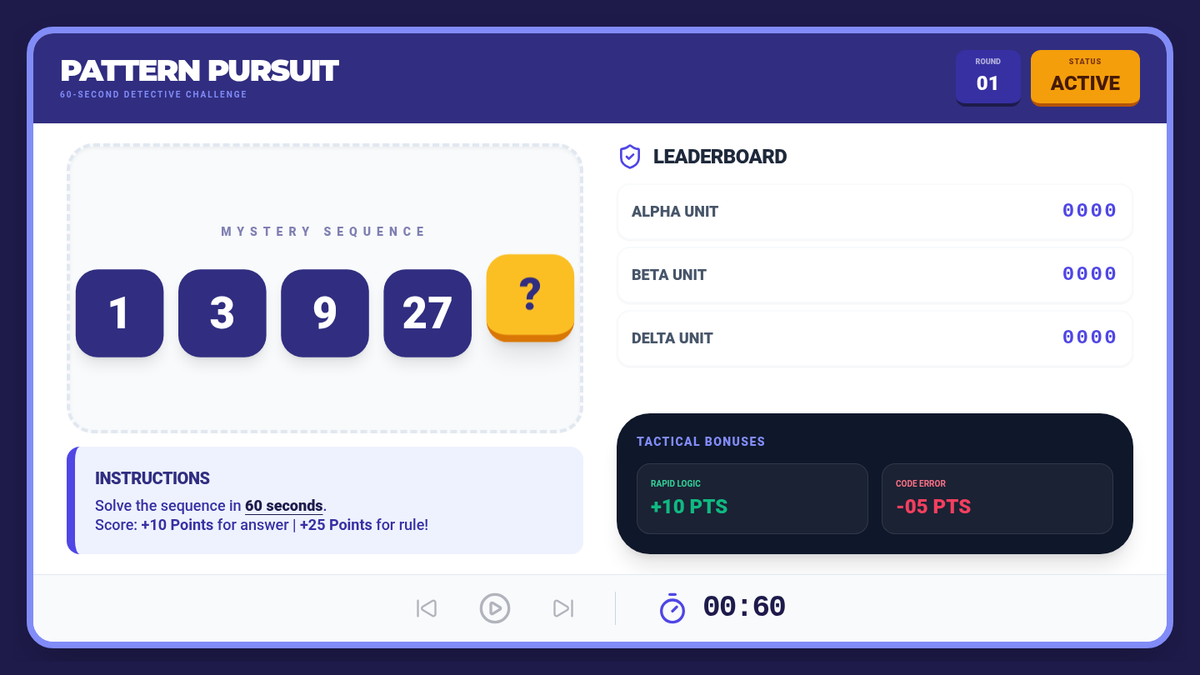
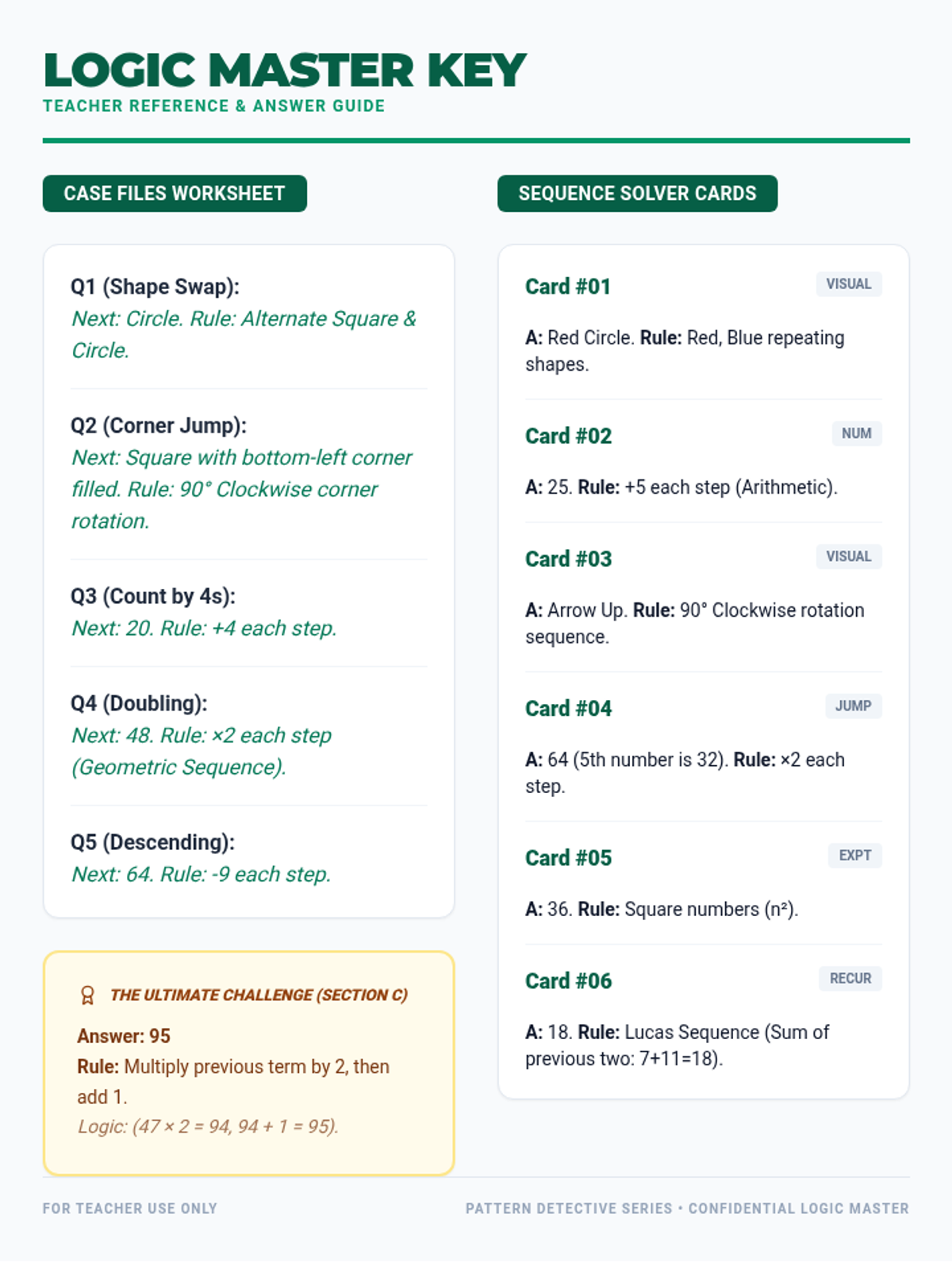
A comprehensive logic lesson where students act as detectives to identify rules in visual and numerical sequences, building inductive reasoning and prediction skills.
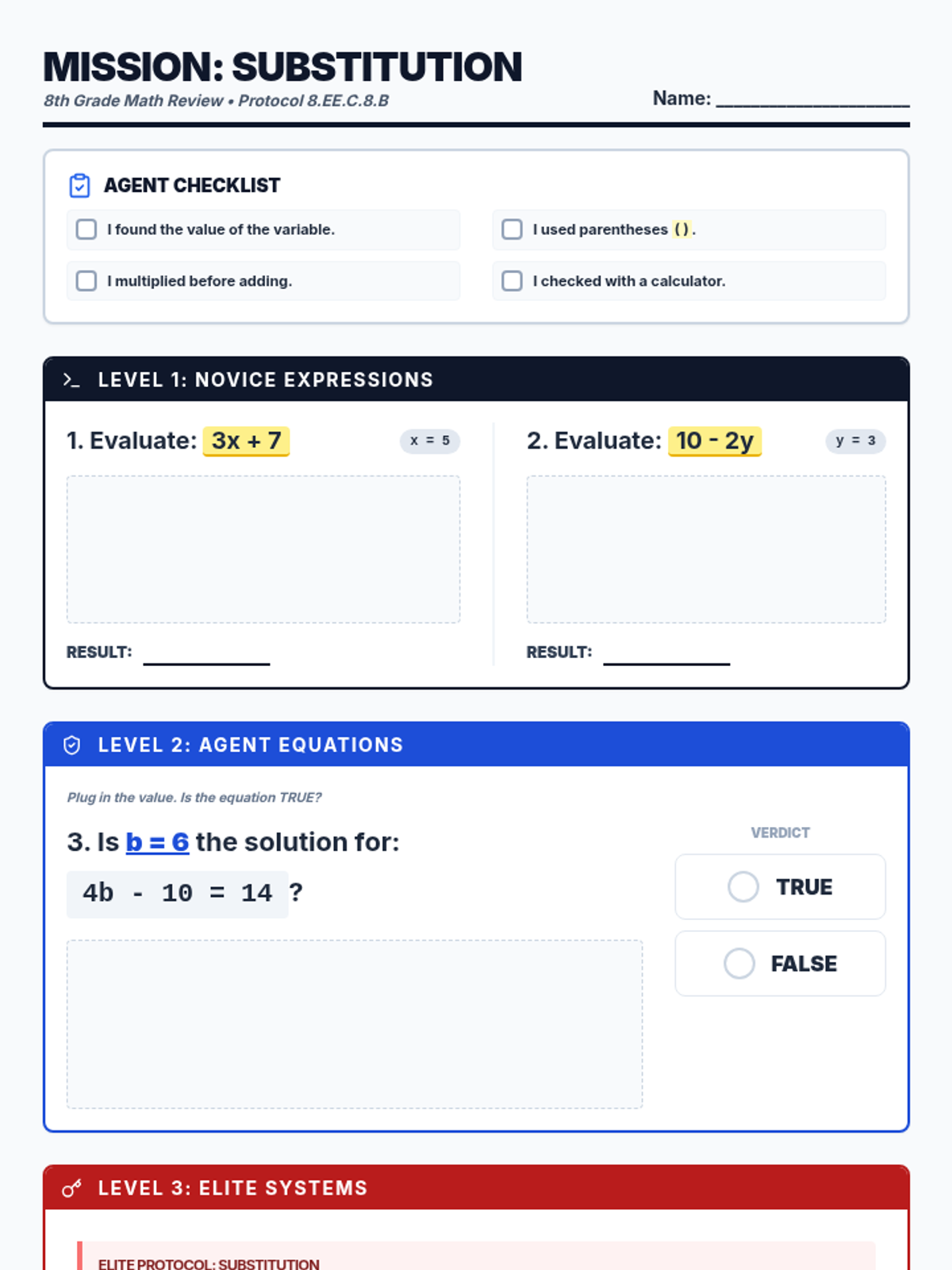
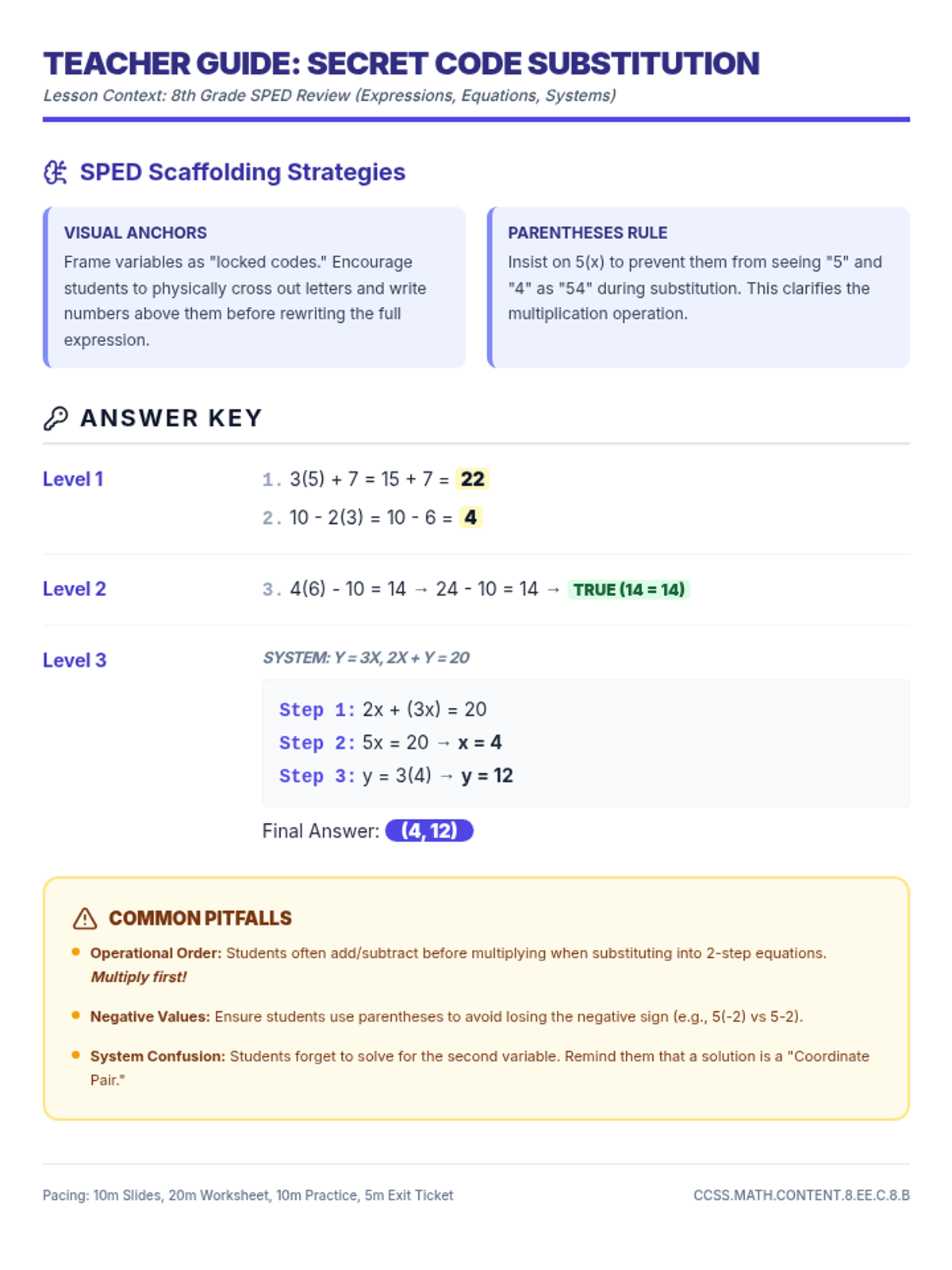
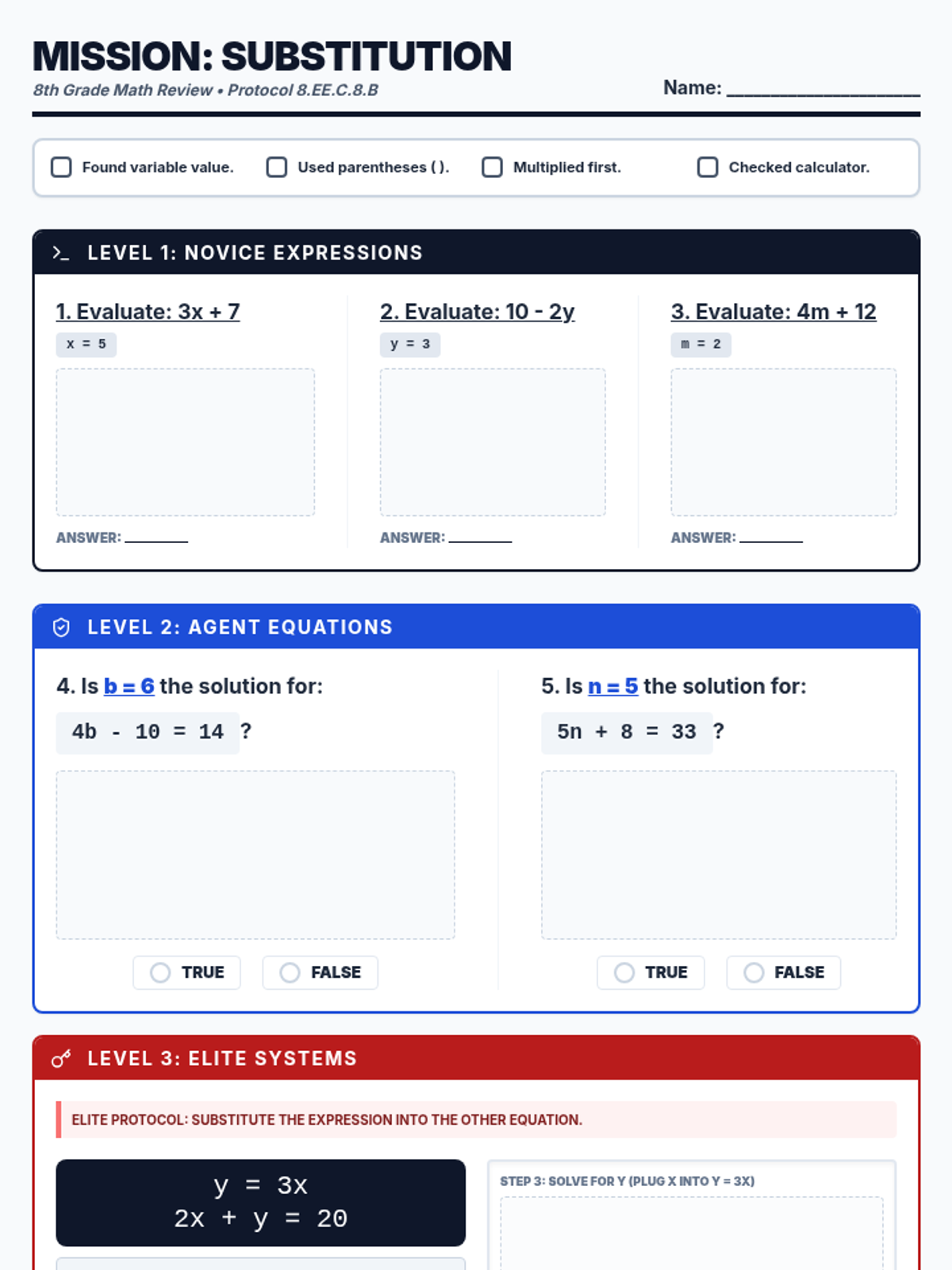
A focused math mini-lesson designed for 8th-grade special education students to review substitution across three levels: expressions, 2-step equations, and systems of equations. The lesson uses a 'Code Breaker' theme to make the abstract concepts more concrete and engaging.
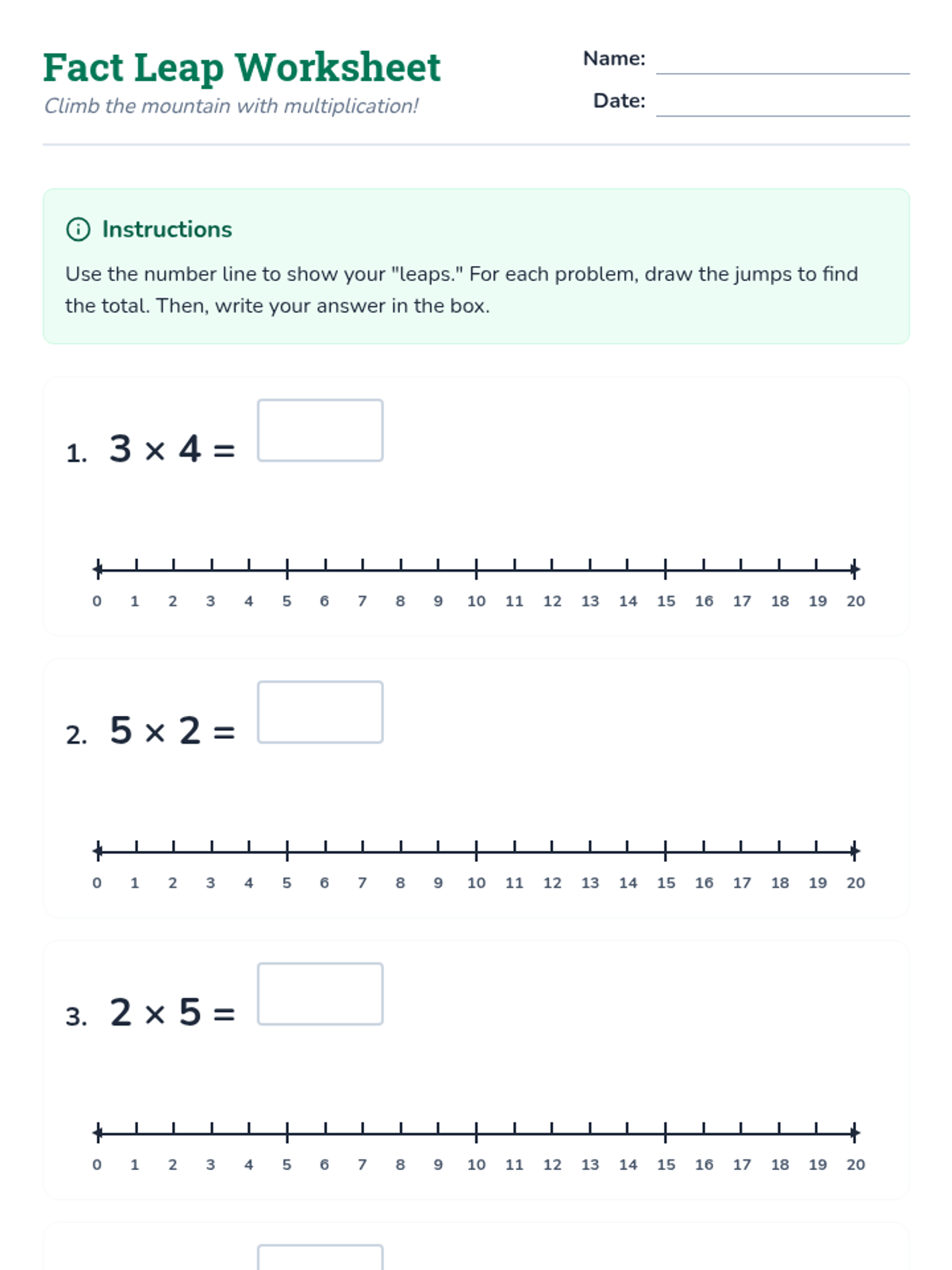
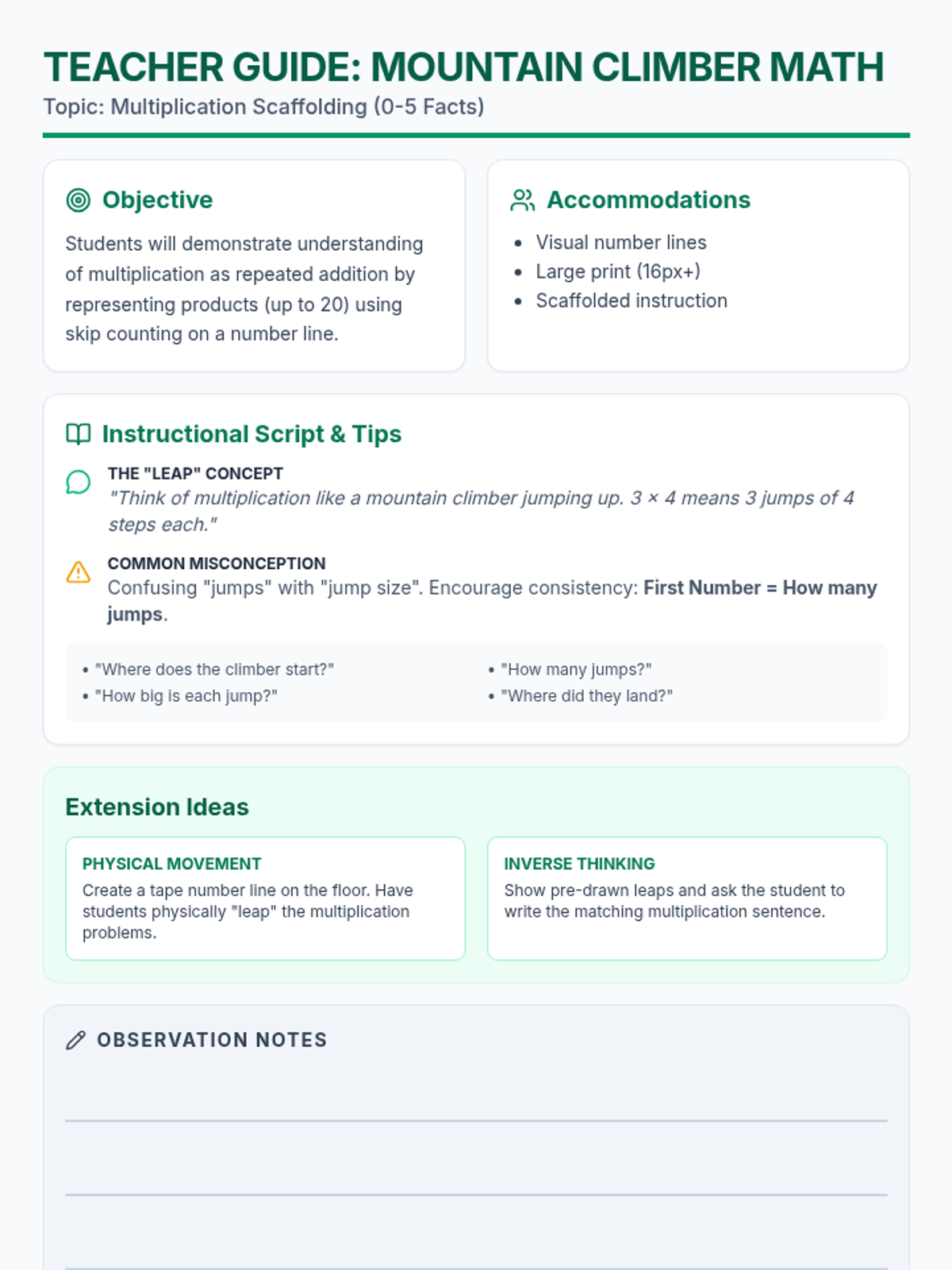
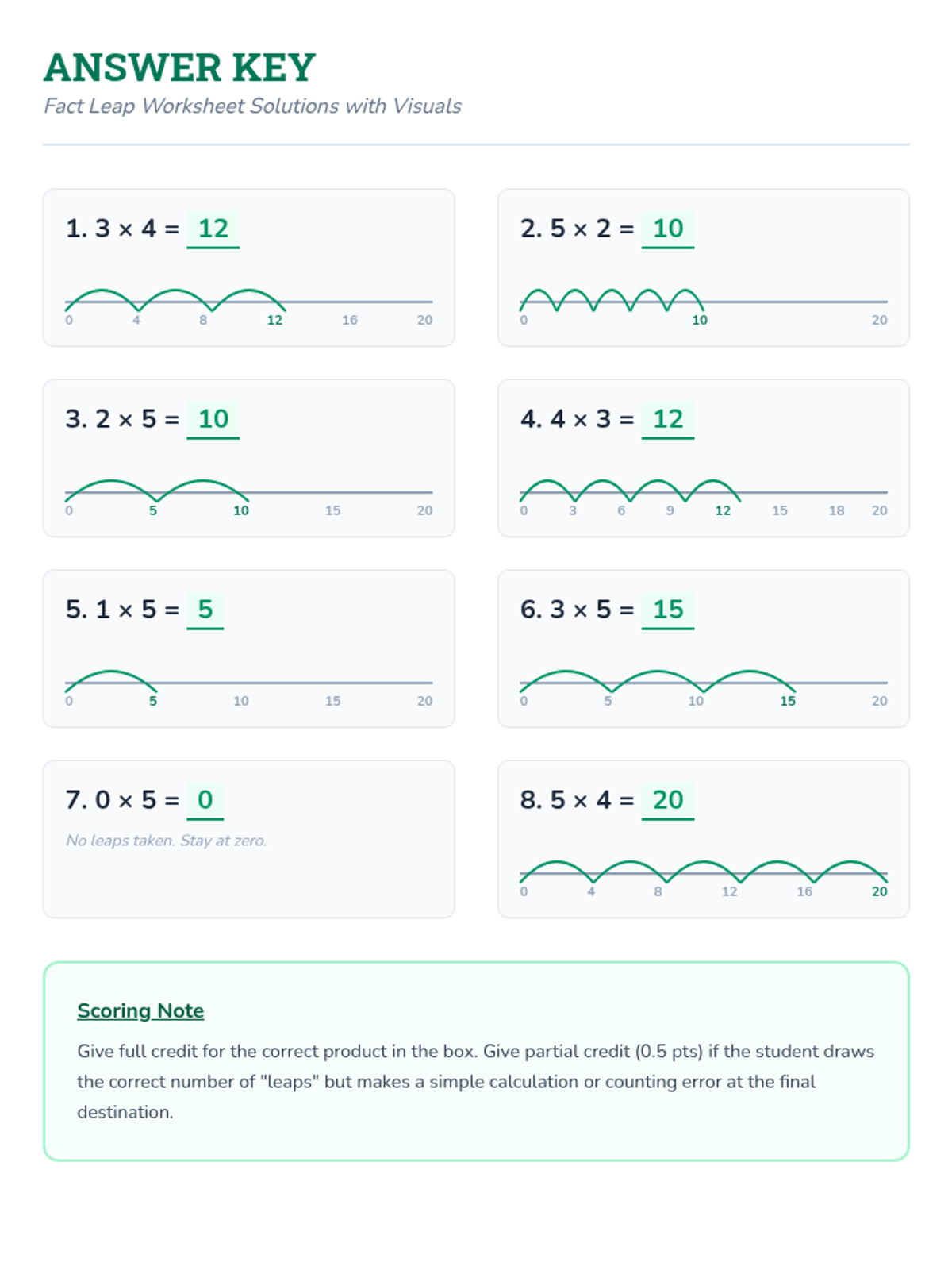
A foundational multiplication lesson for 6th grade special education students, focusing on facts 0-5 using number lines as visual scaffolding to support conceptual understanding and skip counting.
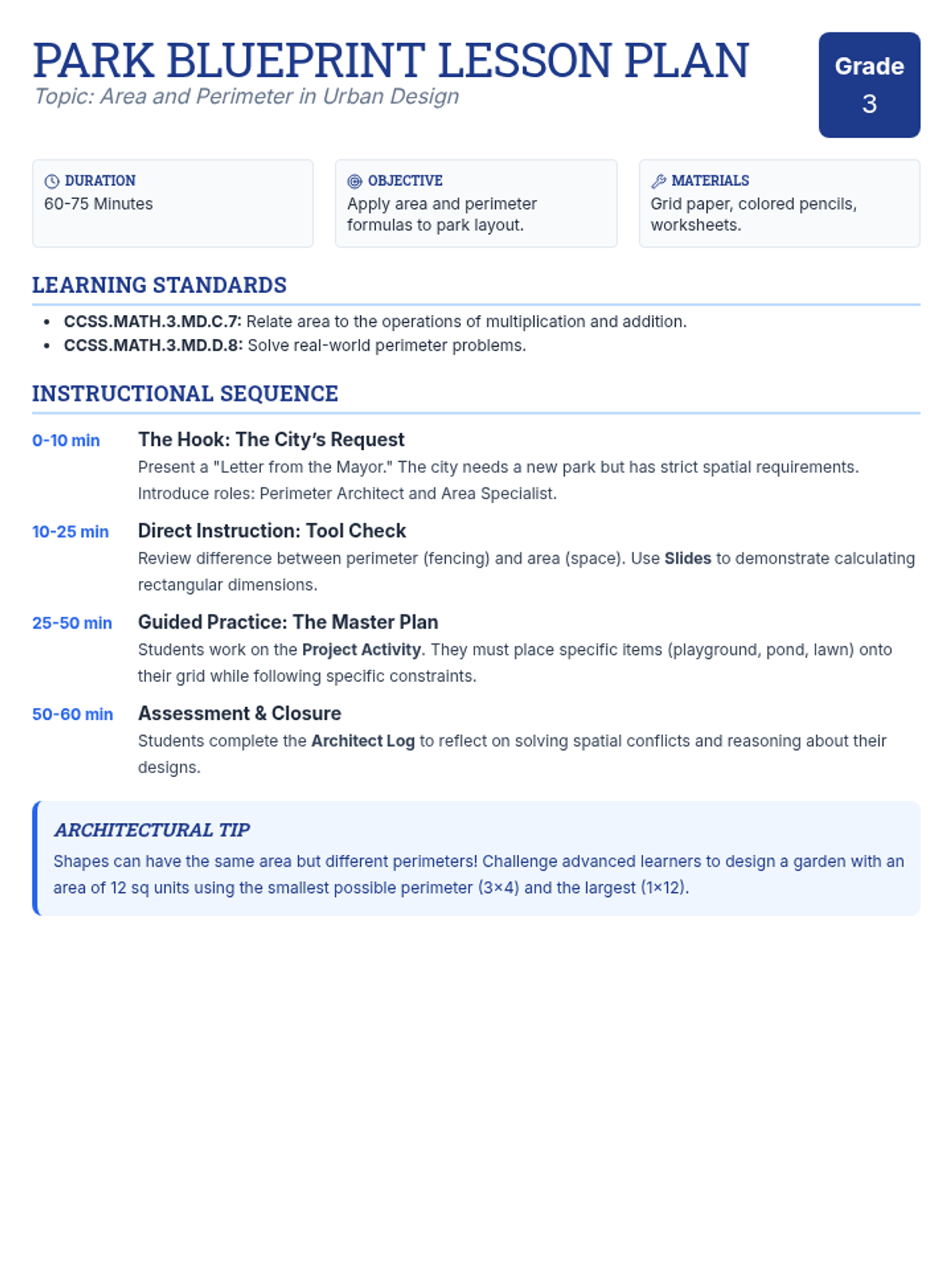
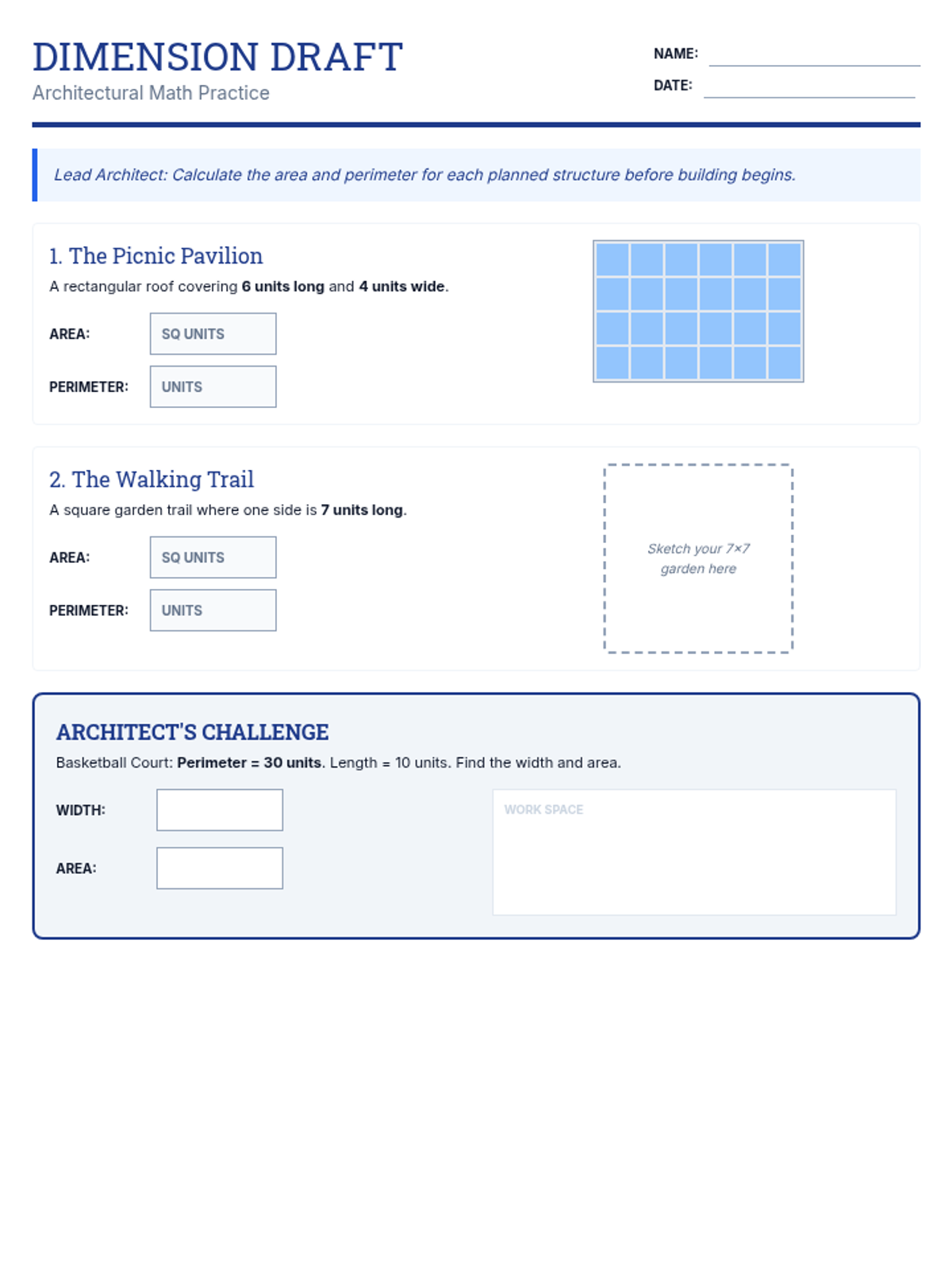
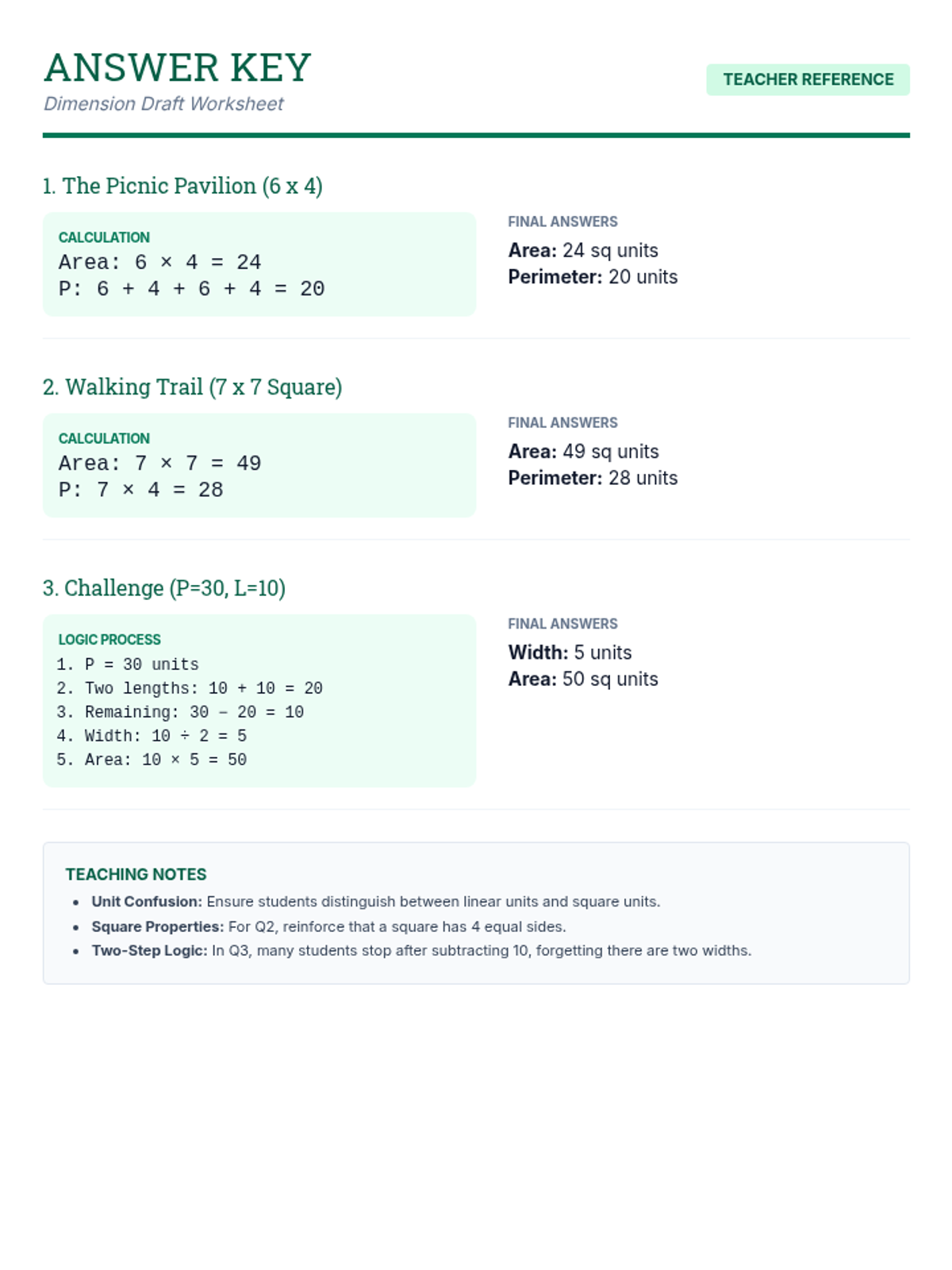
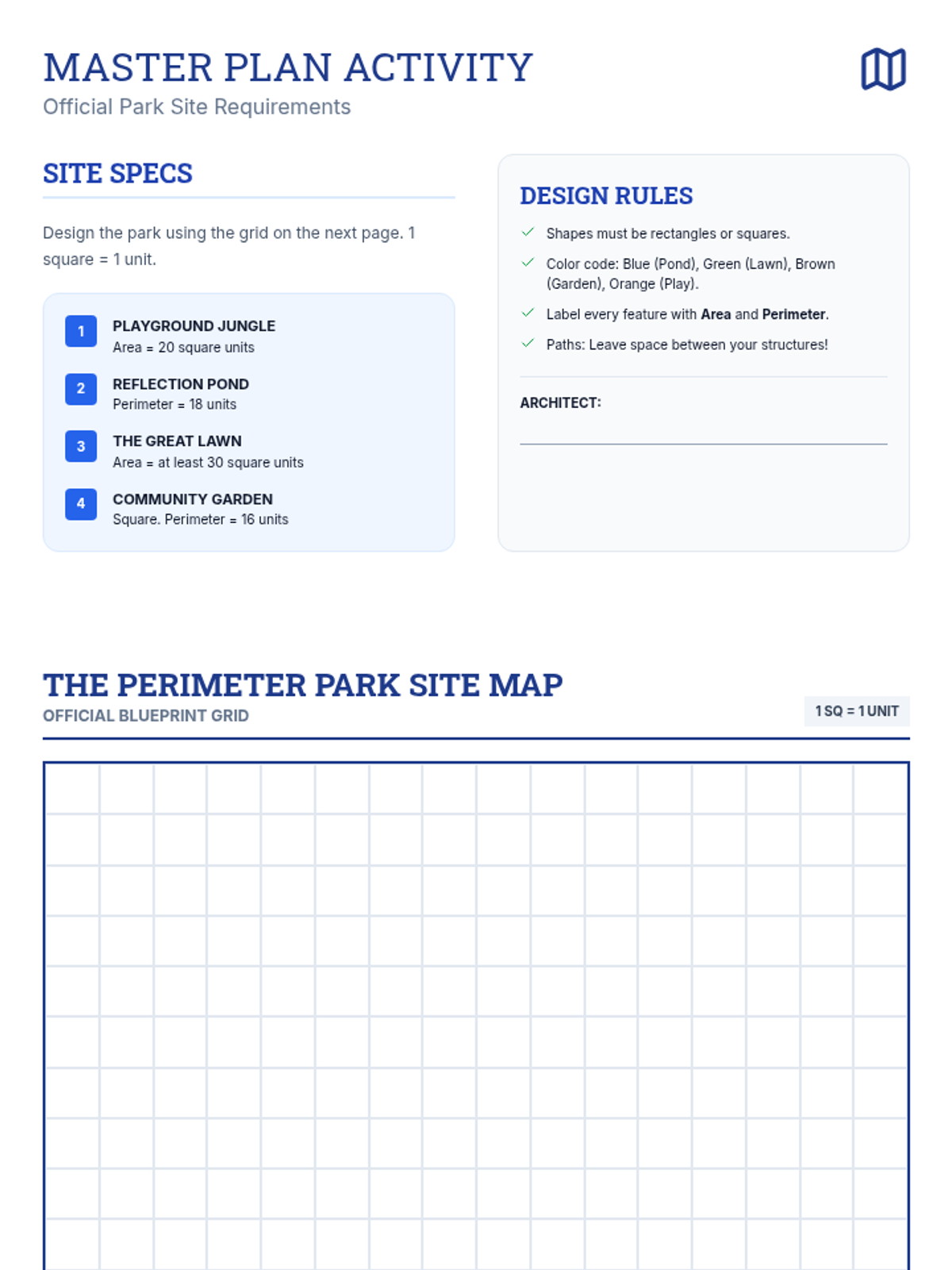
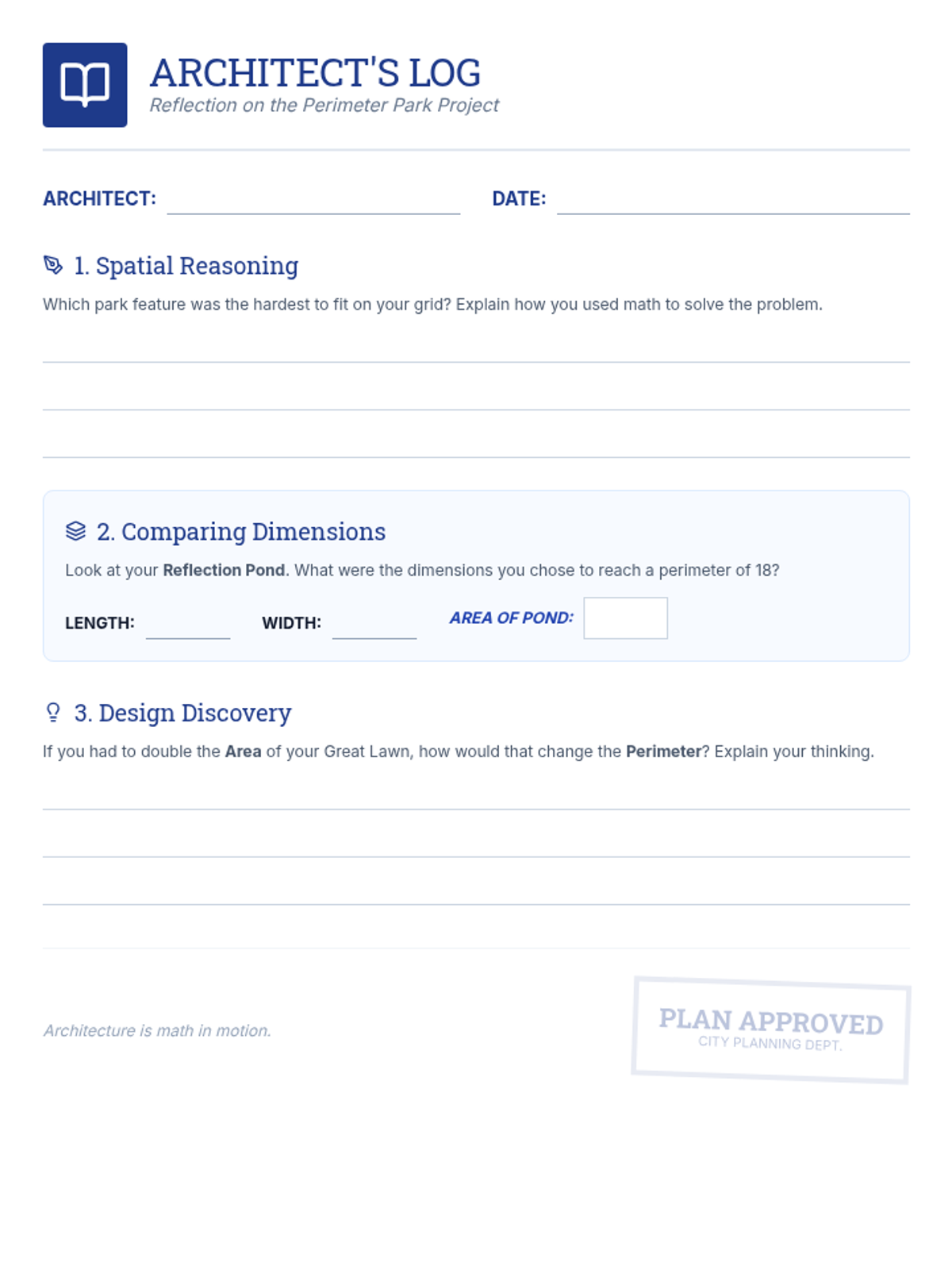
Students step into the role of urban planners to design a community park, applying their knowledge of area and perimeter to meet specific architectural requirements using square units. This lesson bridges geometric concepts with real-world spatial reasoning and creative design.
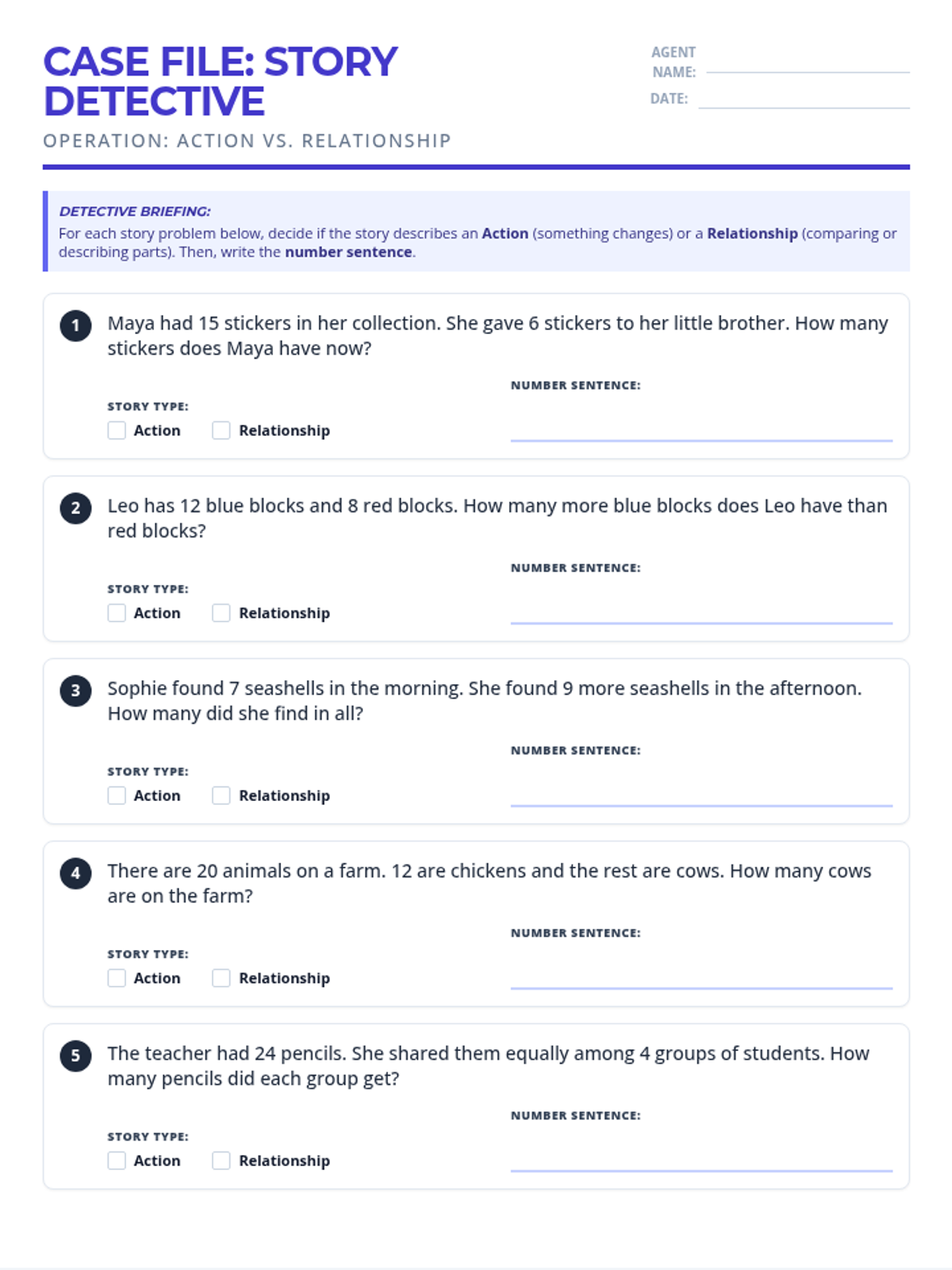
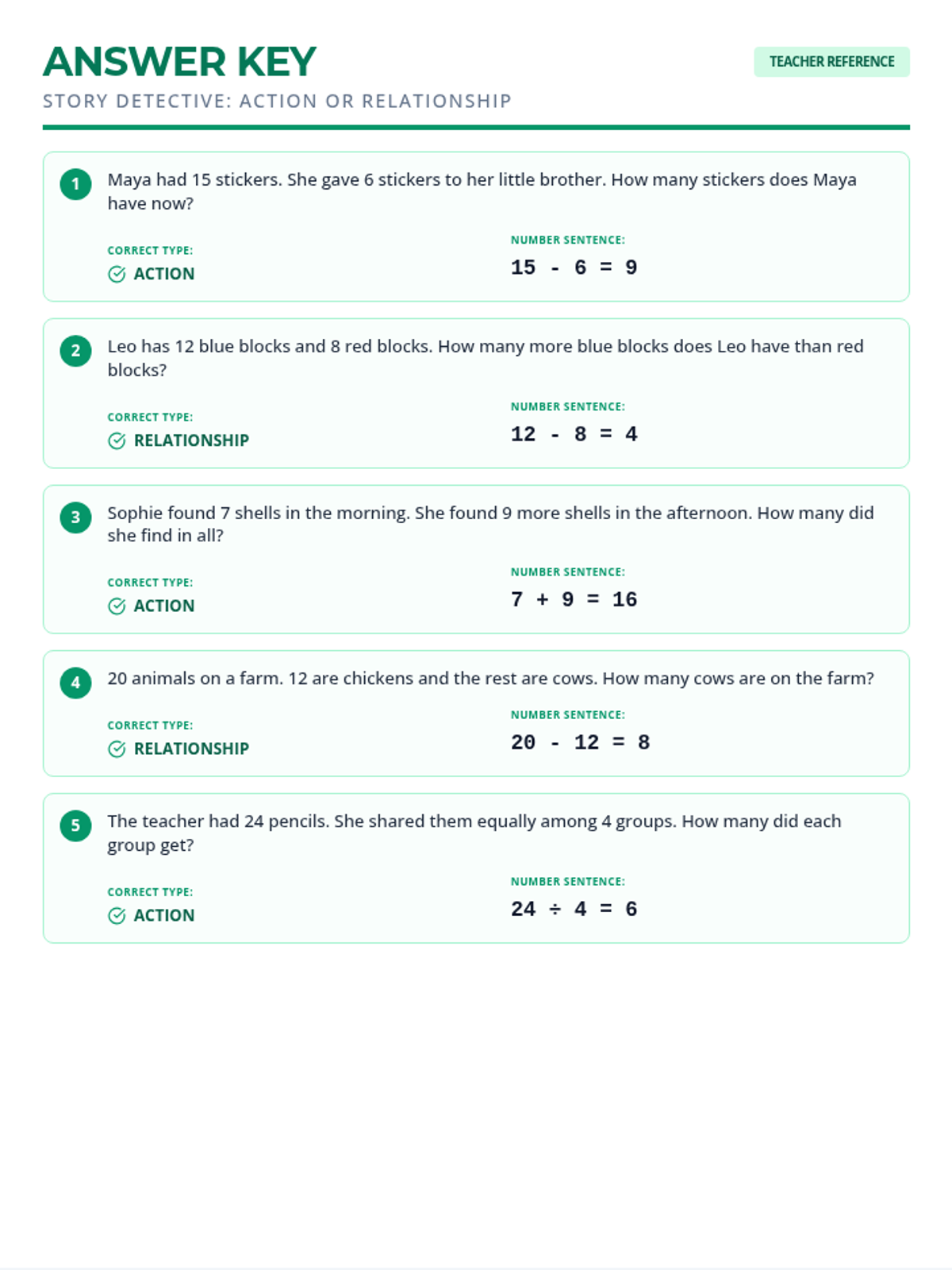
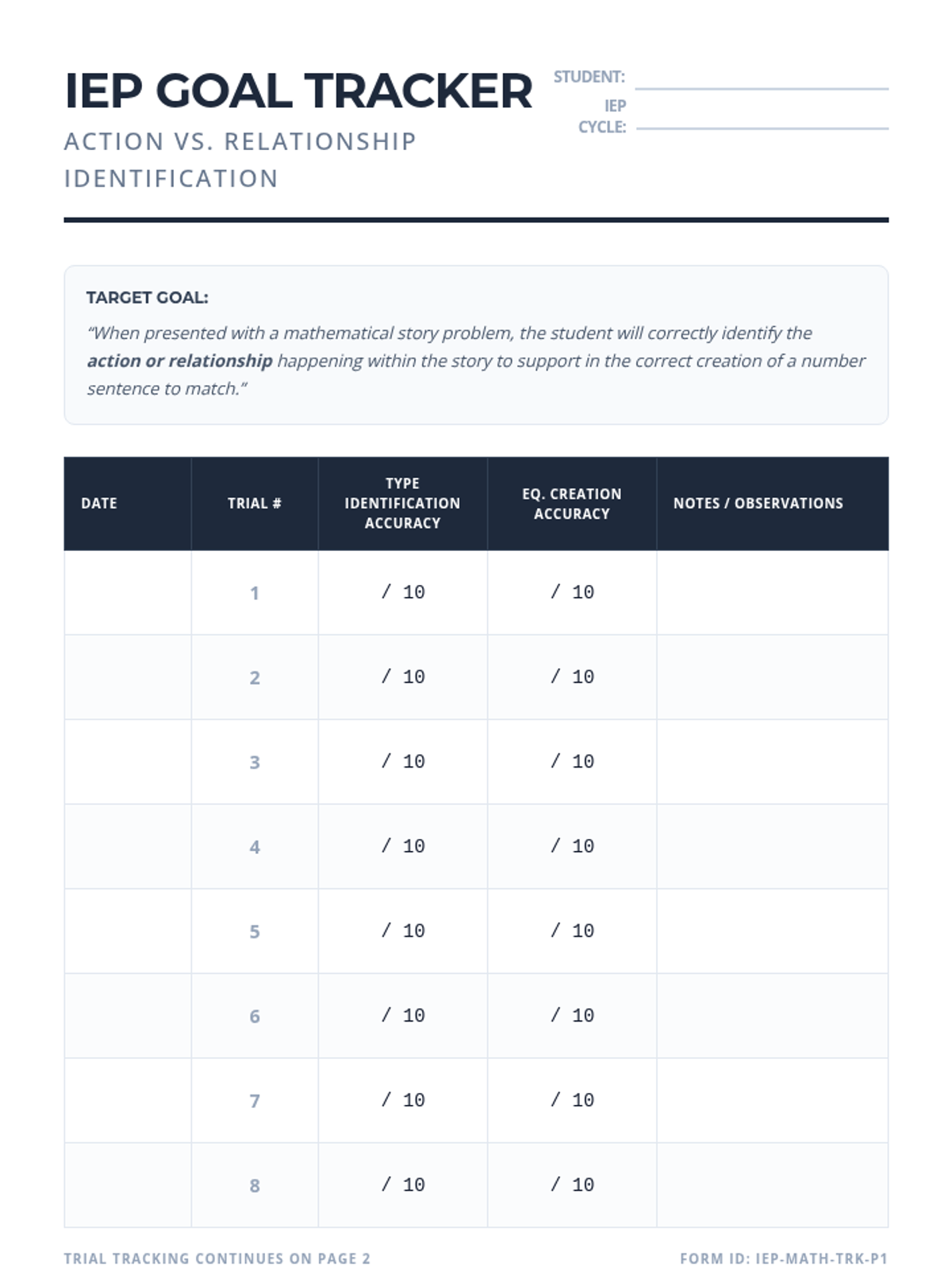
An assessment and data tracking bundle designed to evaluate a student's ability to identify mathematical relationships (joining, separating, and equal groups) within word problems and translate them into number sentences.
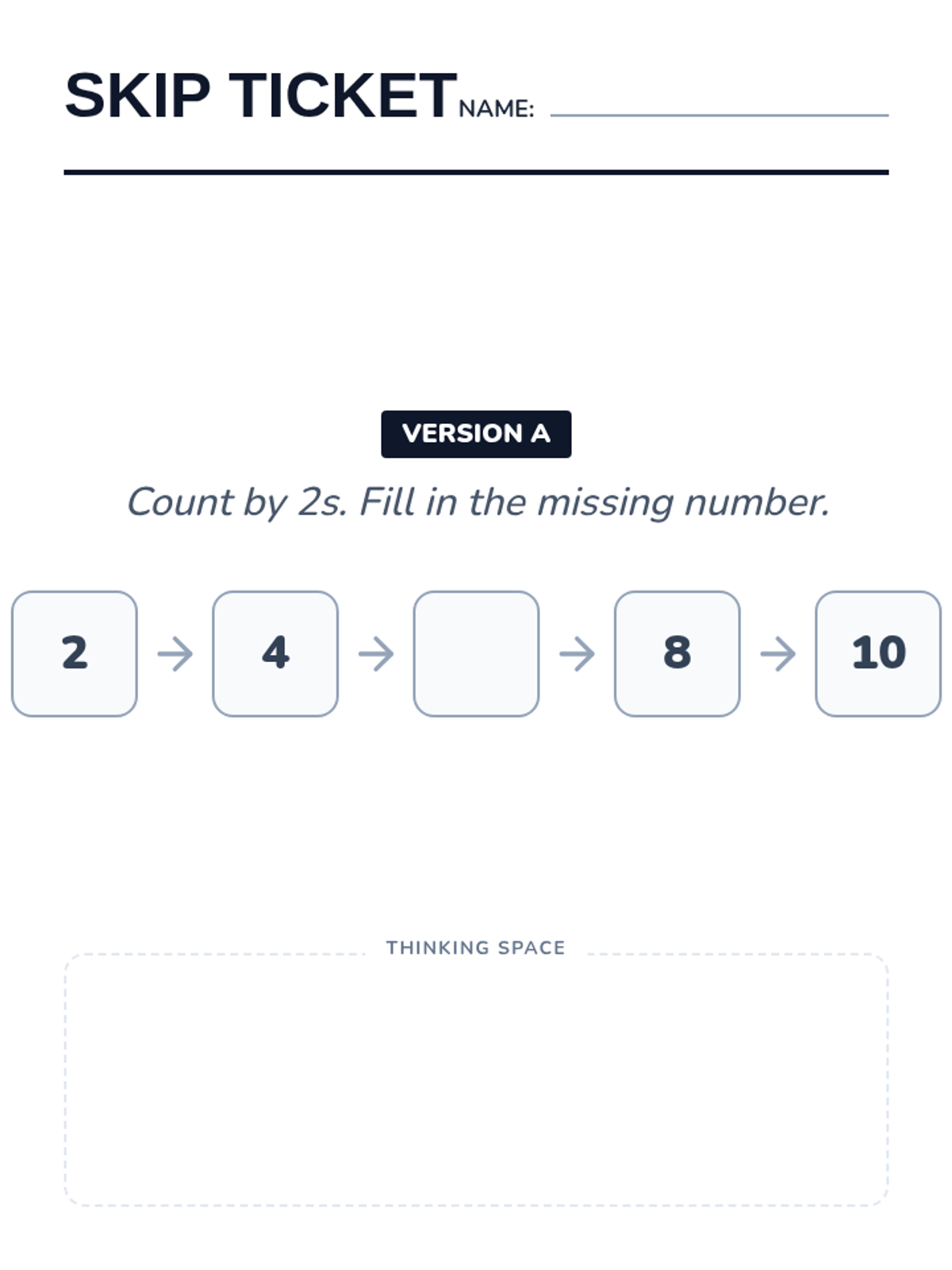
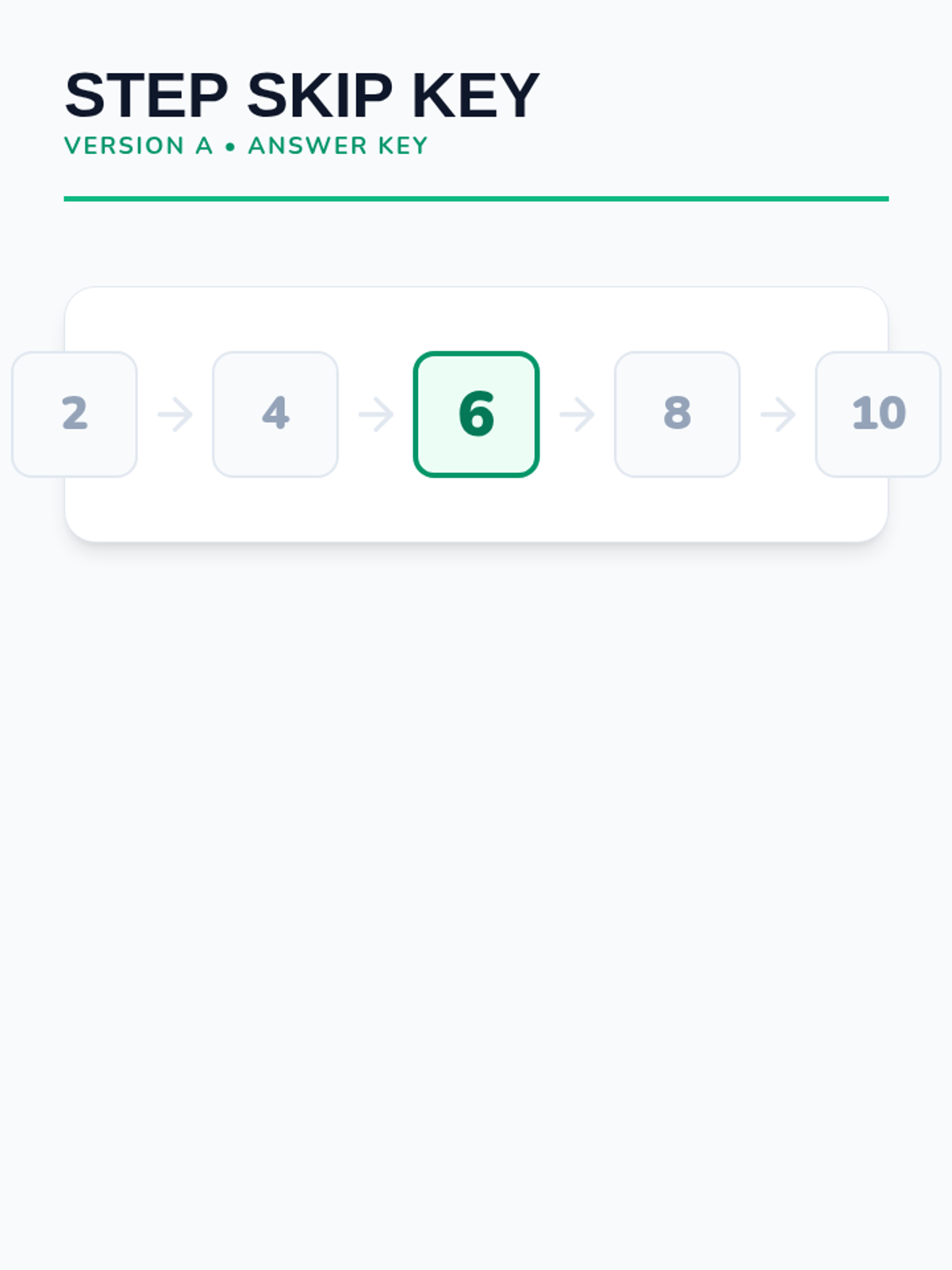
A focused assessment on skip counting by 2s within the range of 2-10. Students identify the missing number in a single sequence to demonstrate mastery of the pattern.
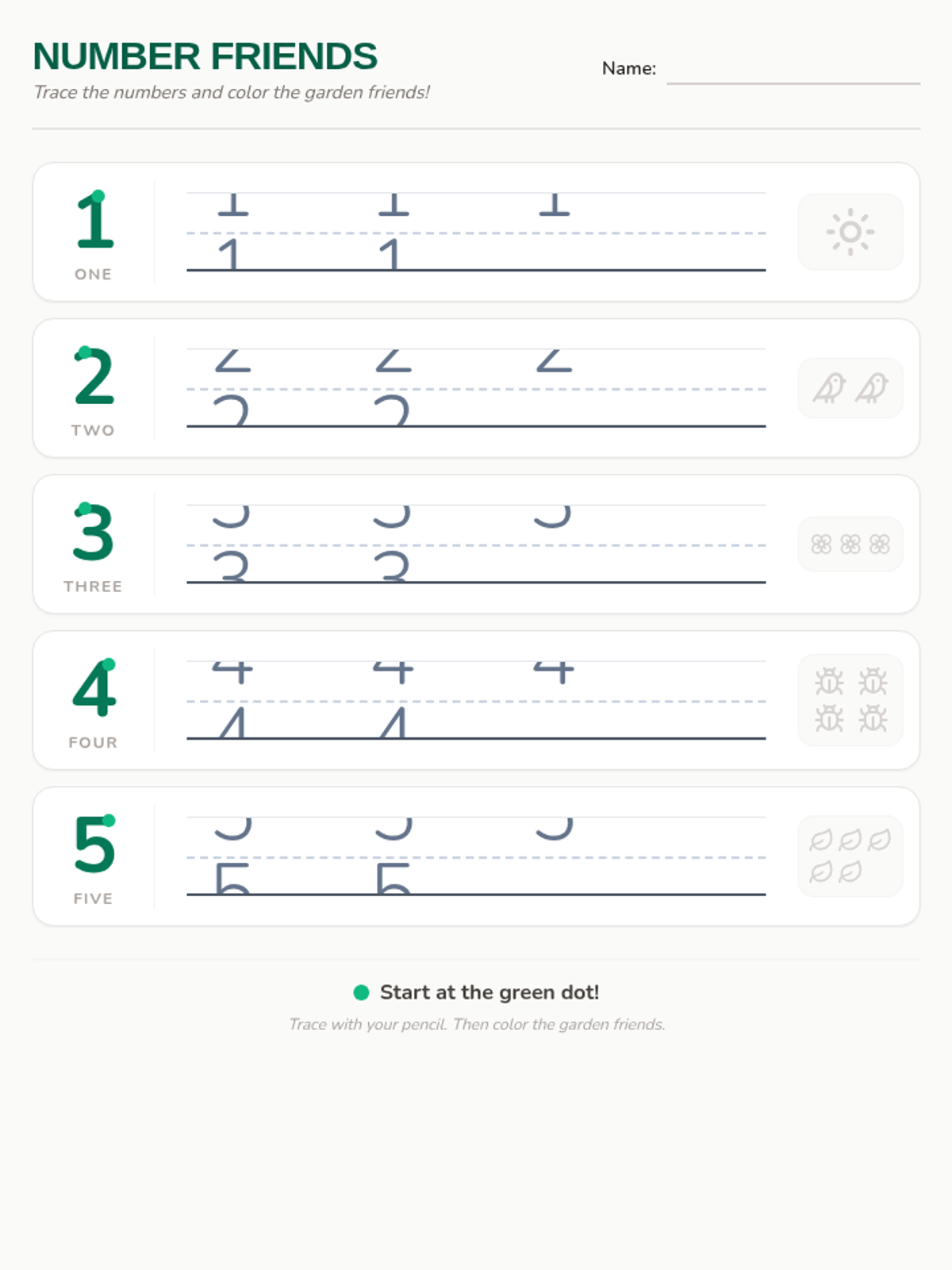
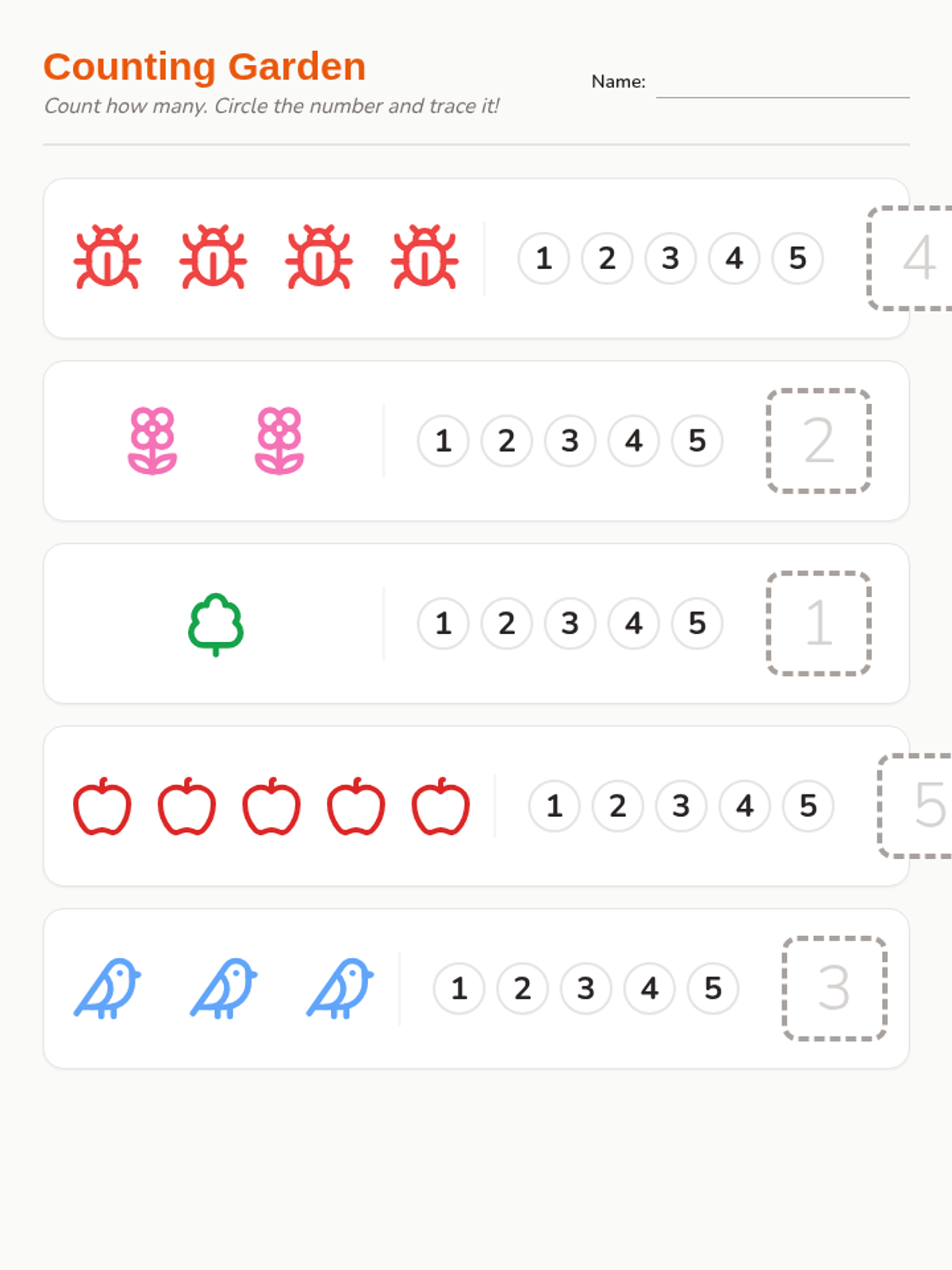
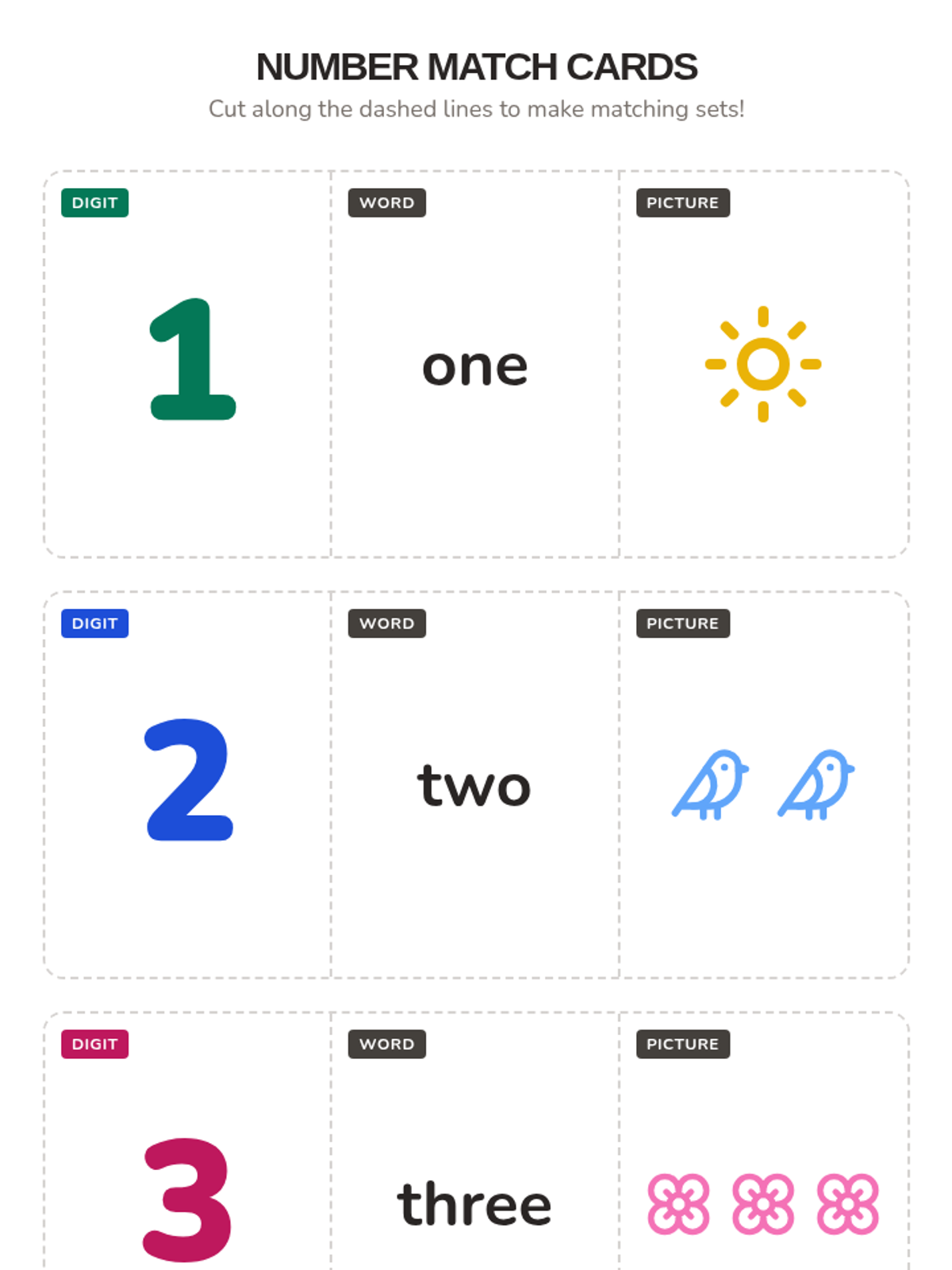
A foundational numeracy lesson for Kindergarten MLL students focusing on numbers 1-5 through tracing, counting, and one-to-one correspondence using a friendly garden theme.
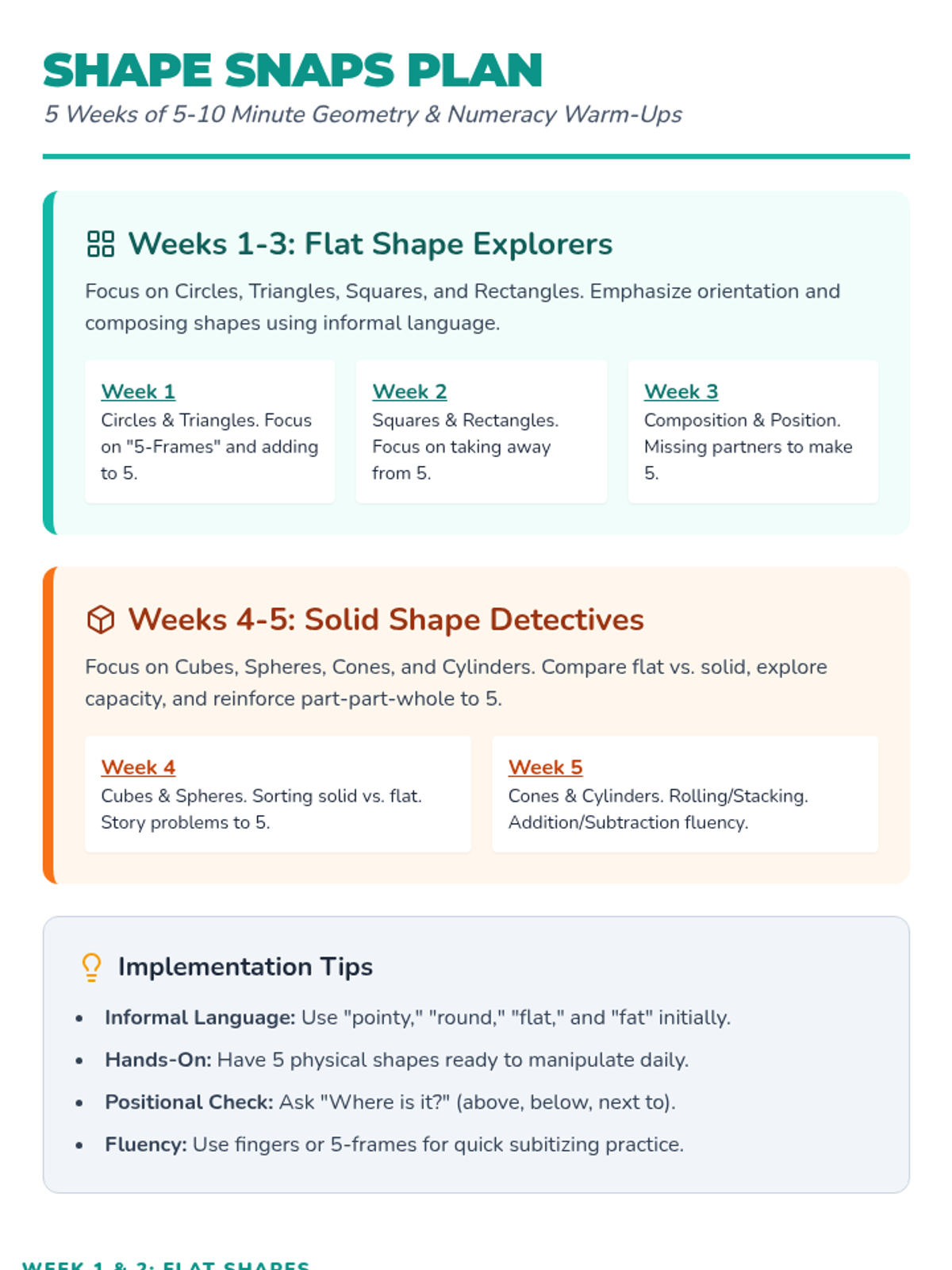
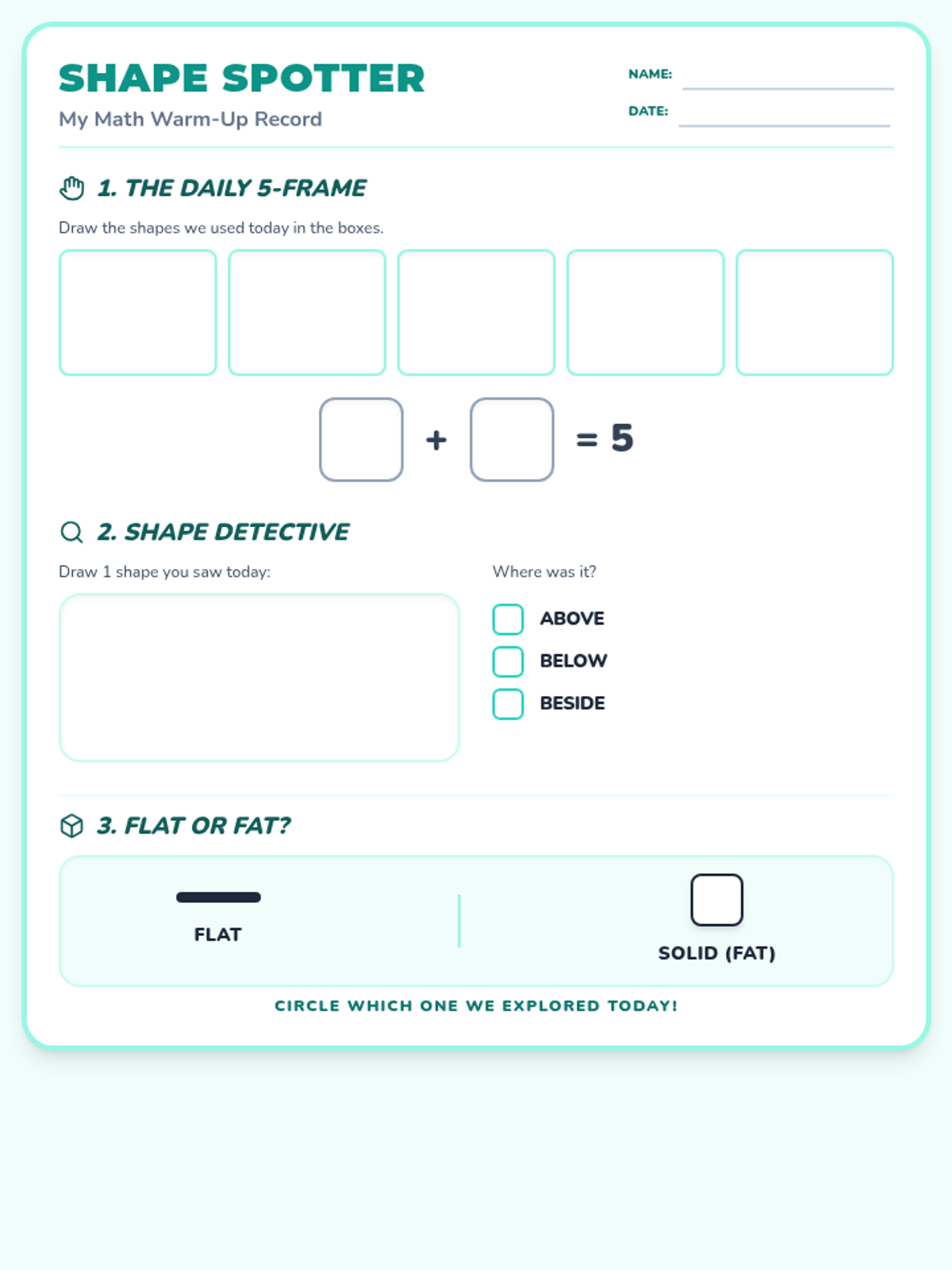
A 5-week instructional plan and a set of 25 activity cards that combine Kindergarten geometry standards with daily numeracy fluency exercises.