Students find and solve math problems hidden inside plastic eggs, reinforcing addition and subtraction fluency up to 20.
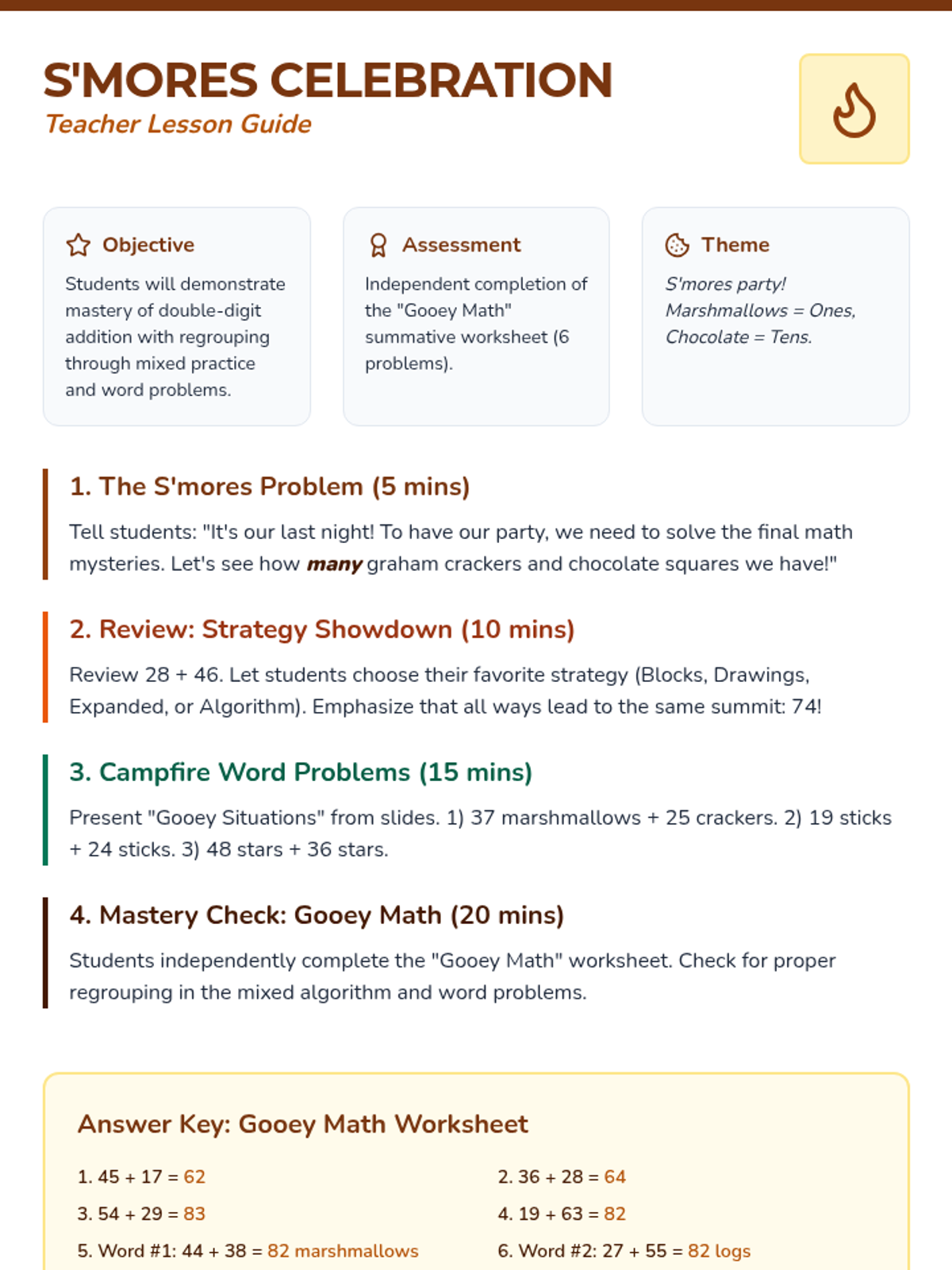
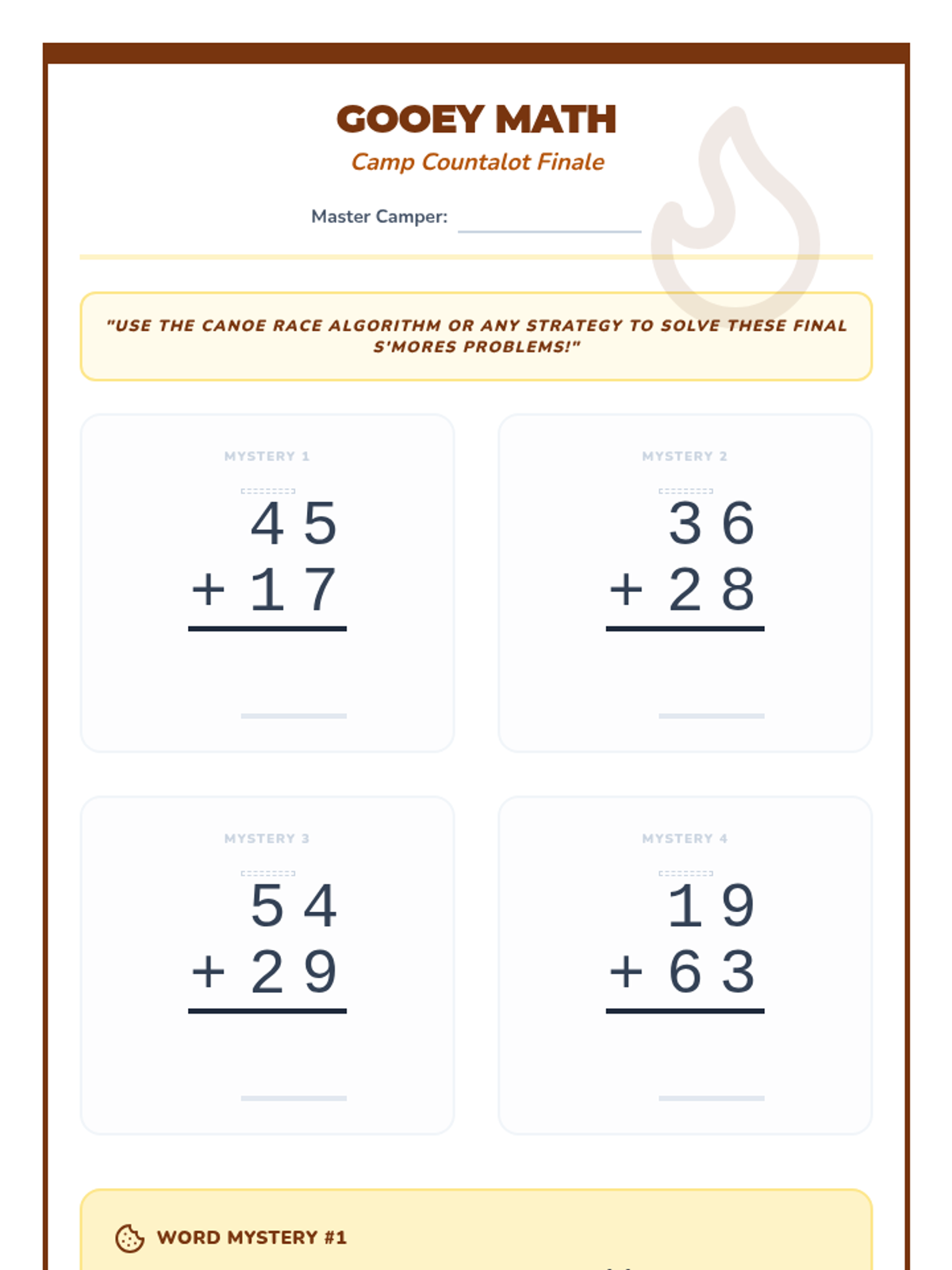
A culminating lesson where students apply their addition skills to solve summer camp word problems and mixed practice.
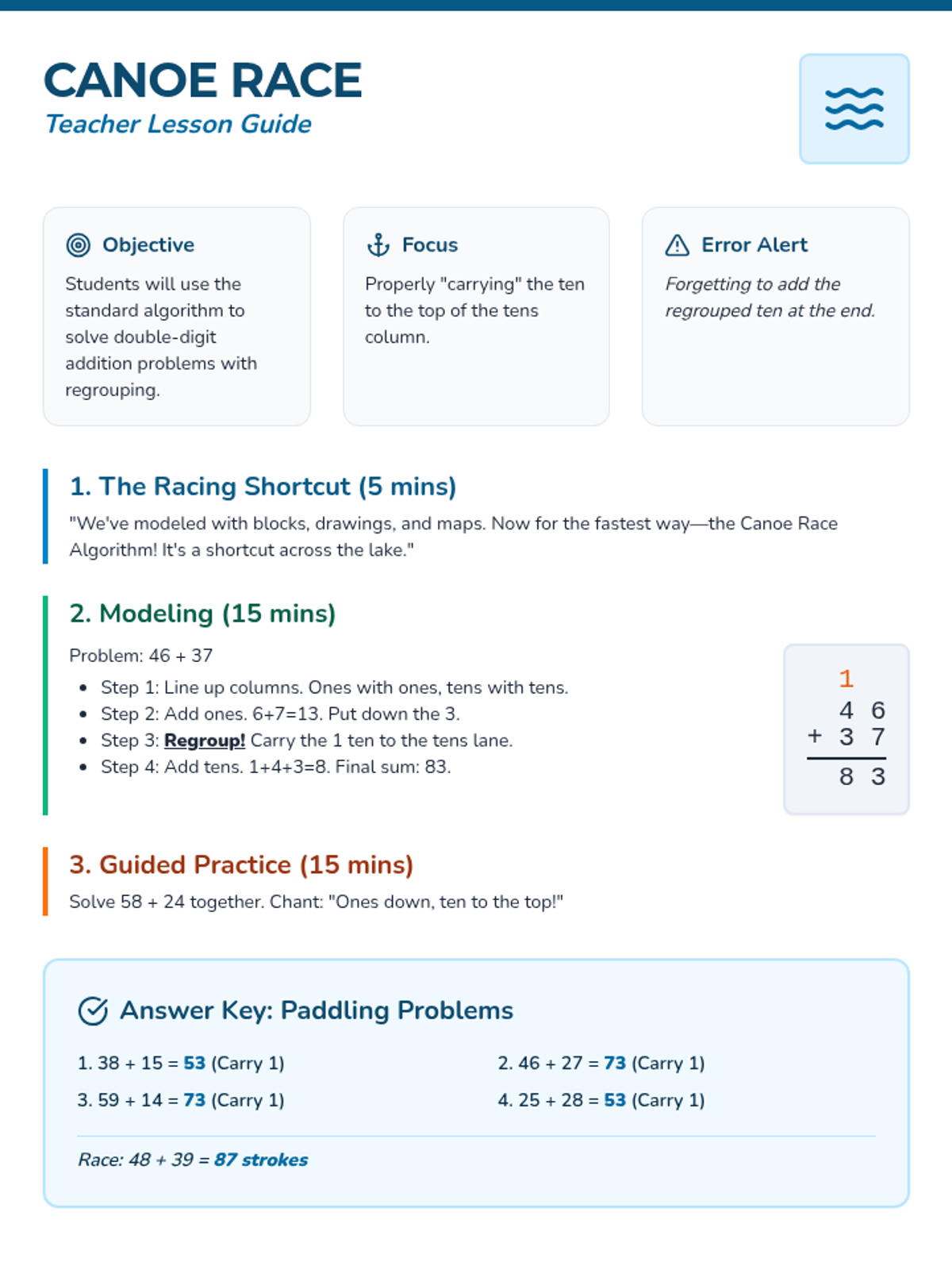
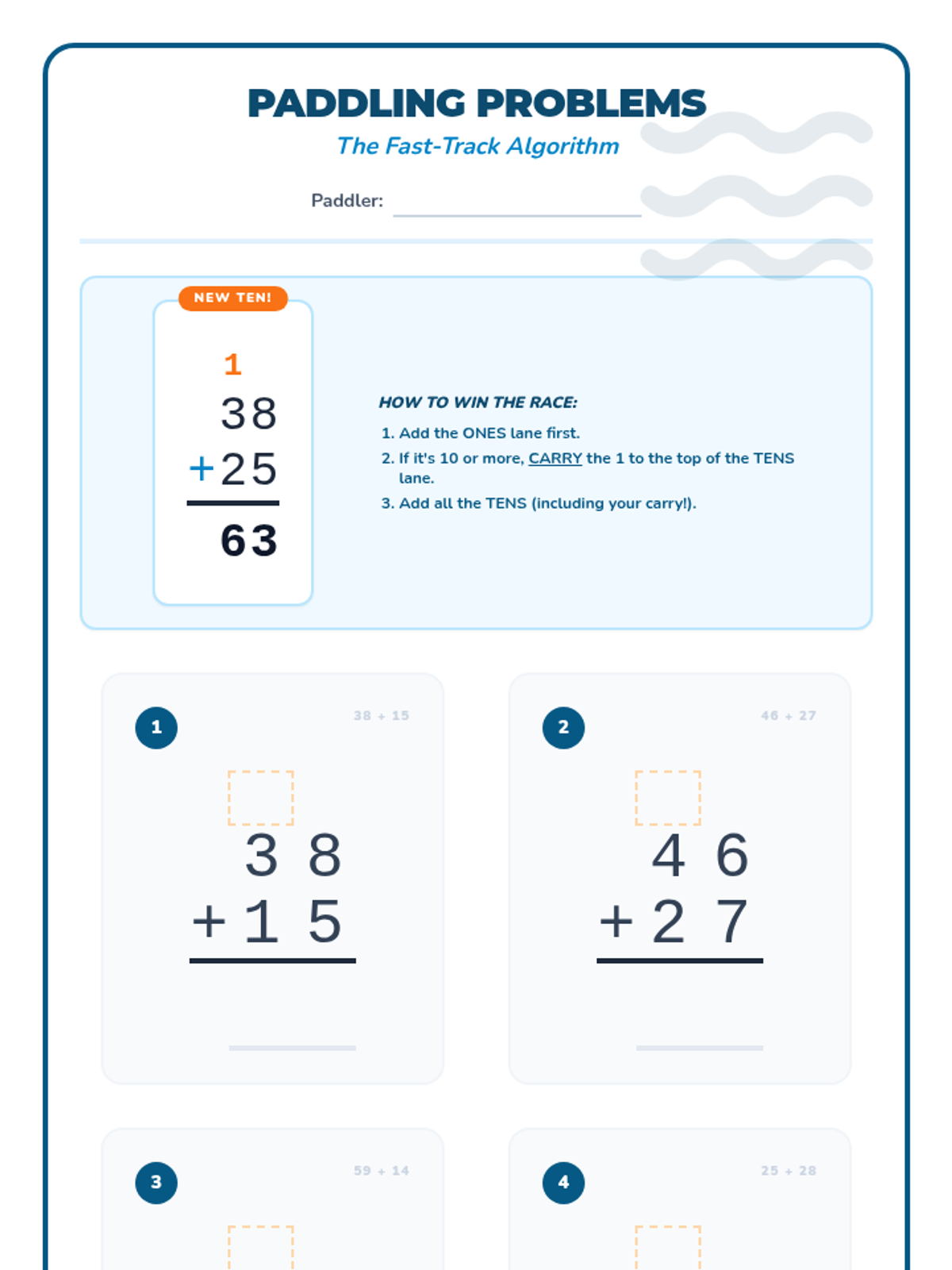
Students learn the standard algorithm for double-digit addition, focusing on correctly placing the 'carried' ten.
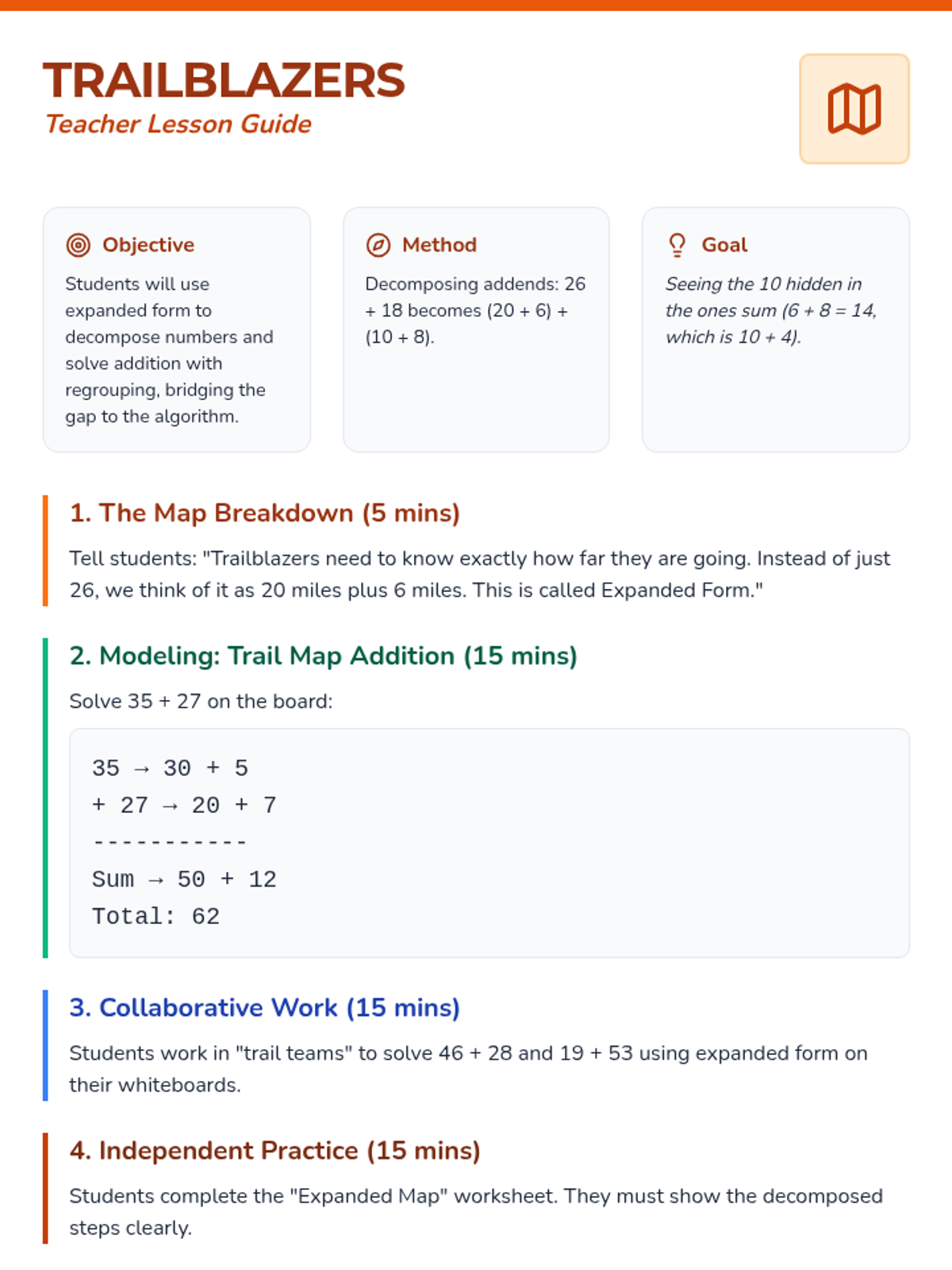
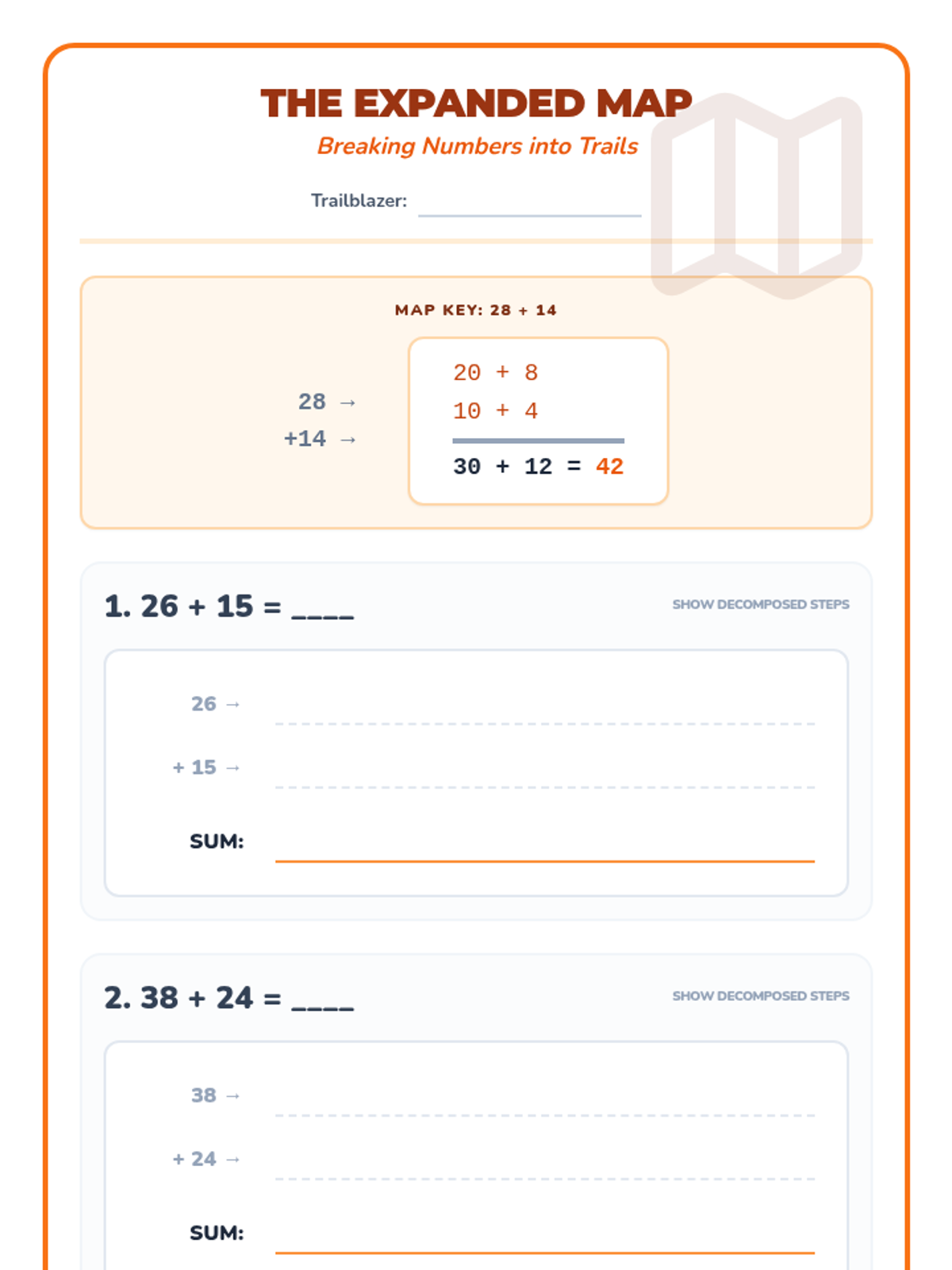
Students use expanded form to break down numbers and regroup sums, bridging the gap between drawings and the standard algorithm.
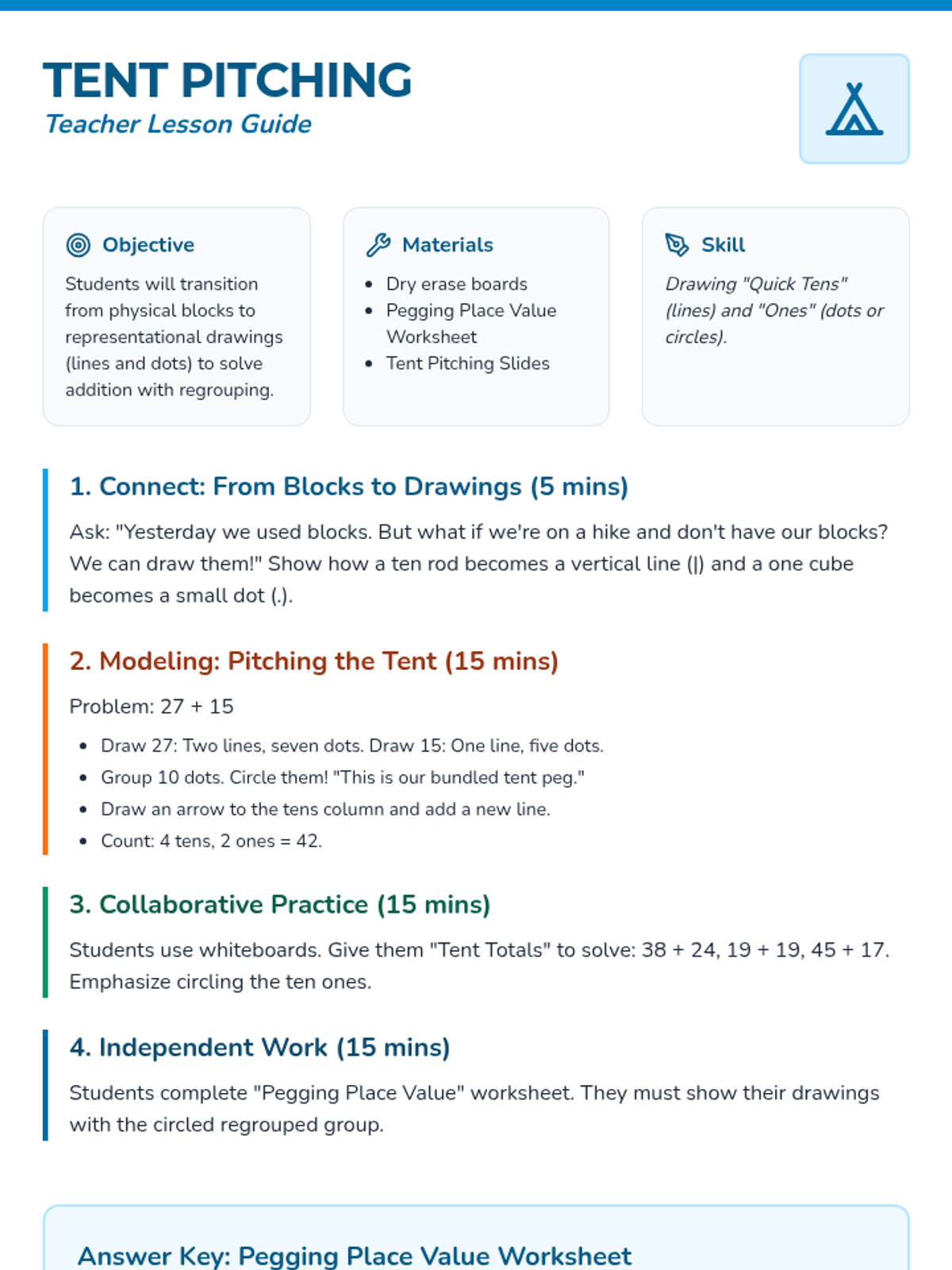
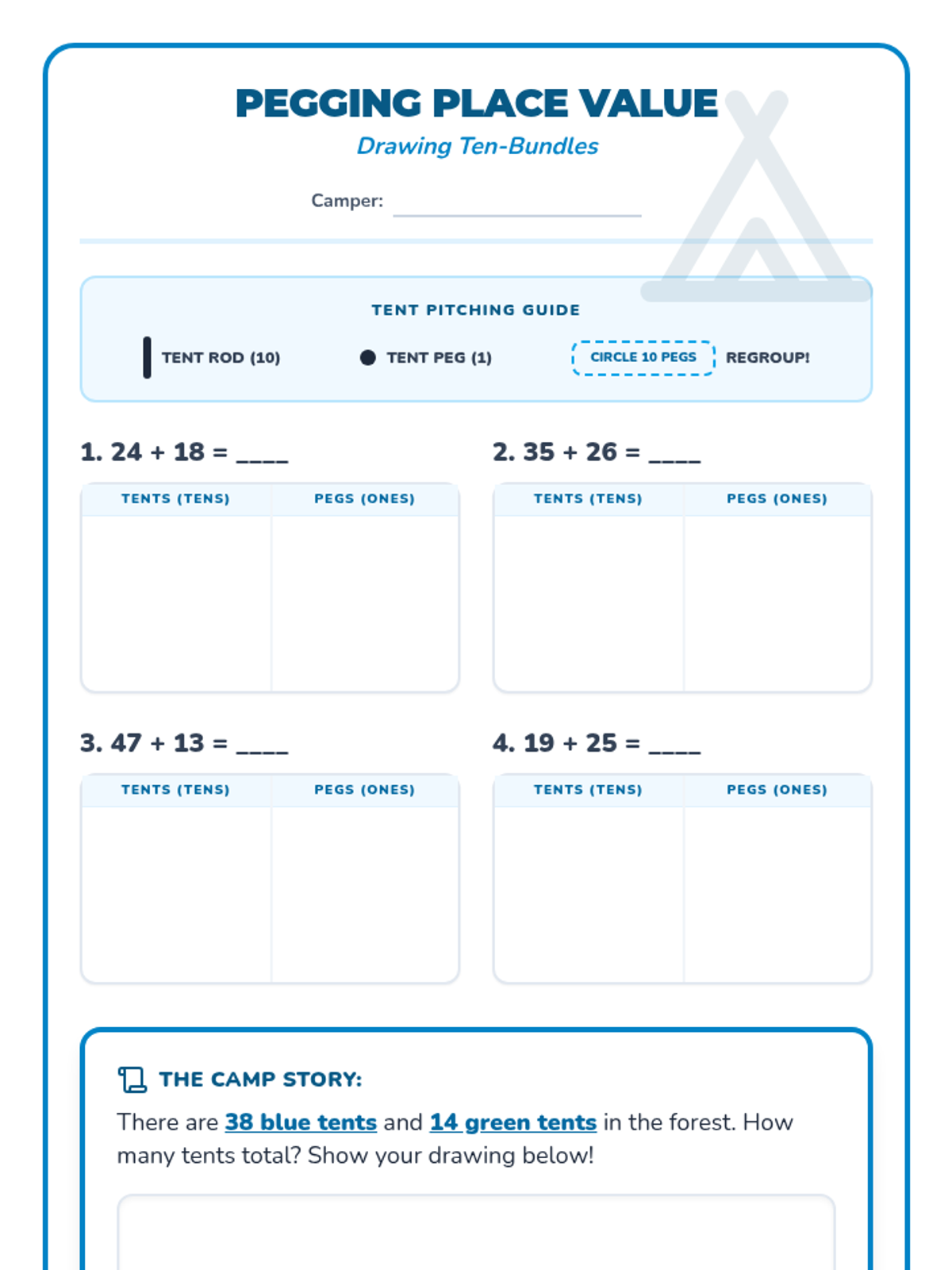
Students transition from physical blocks to drawing place value representations to solve addition problems with regrouping.
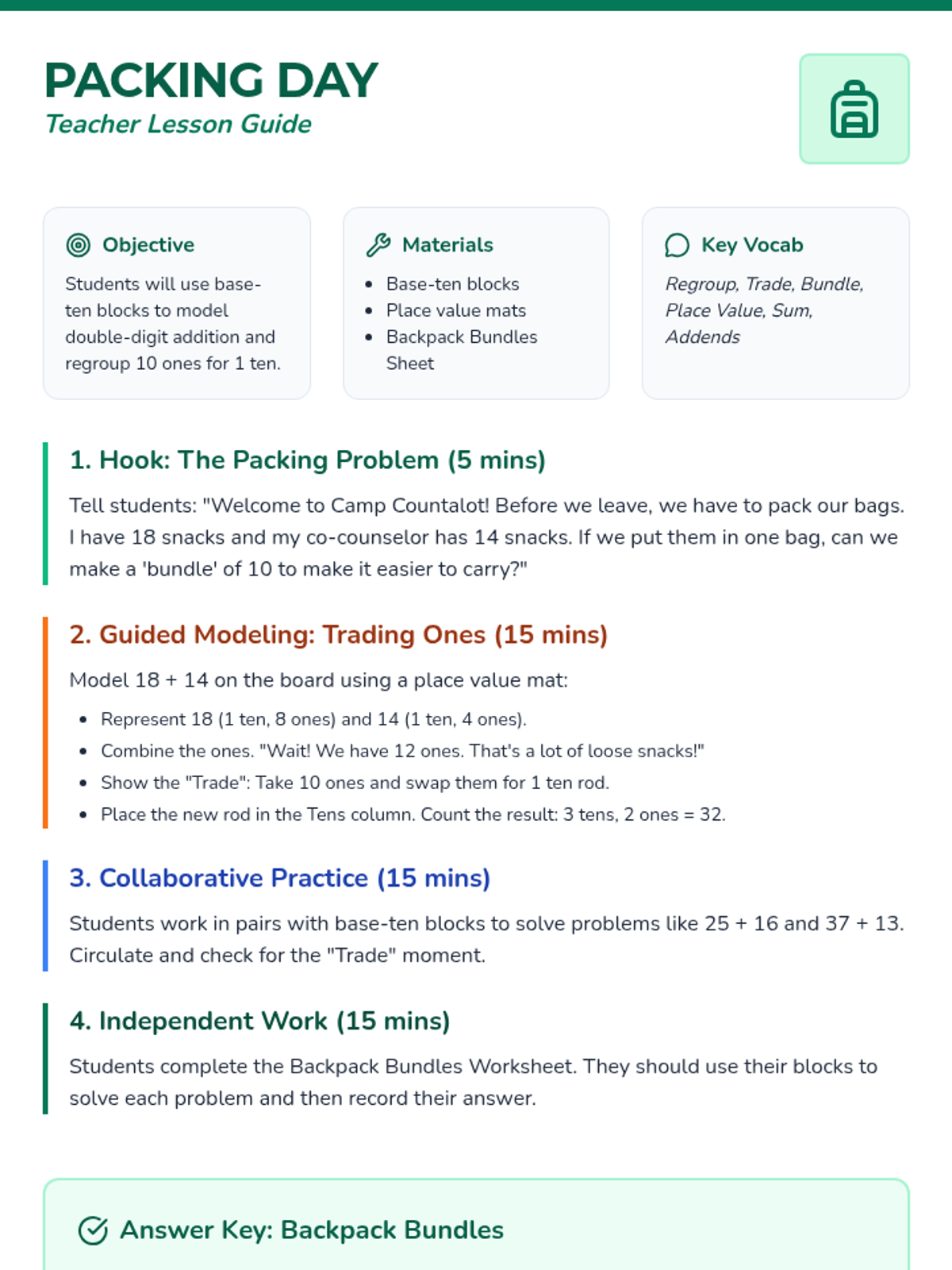
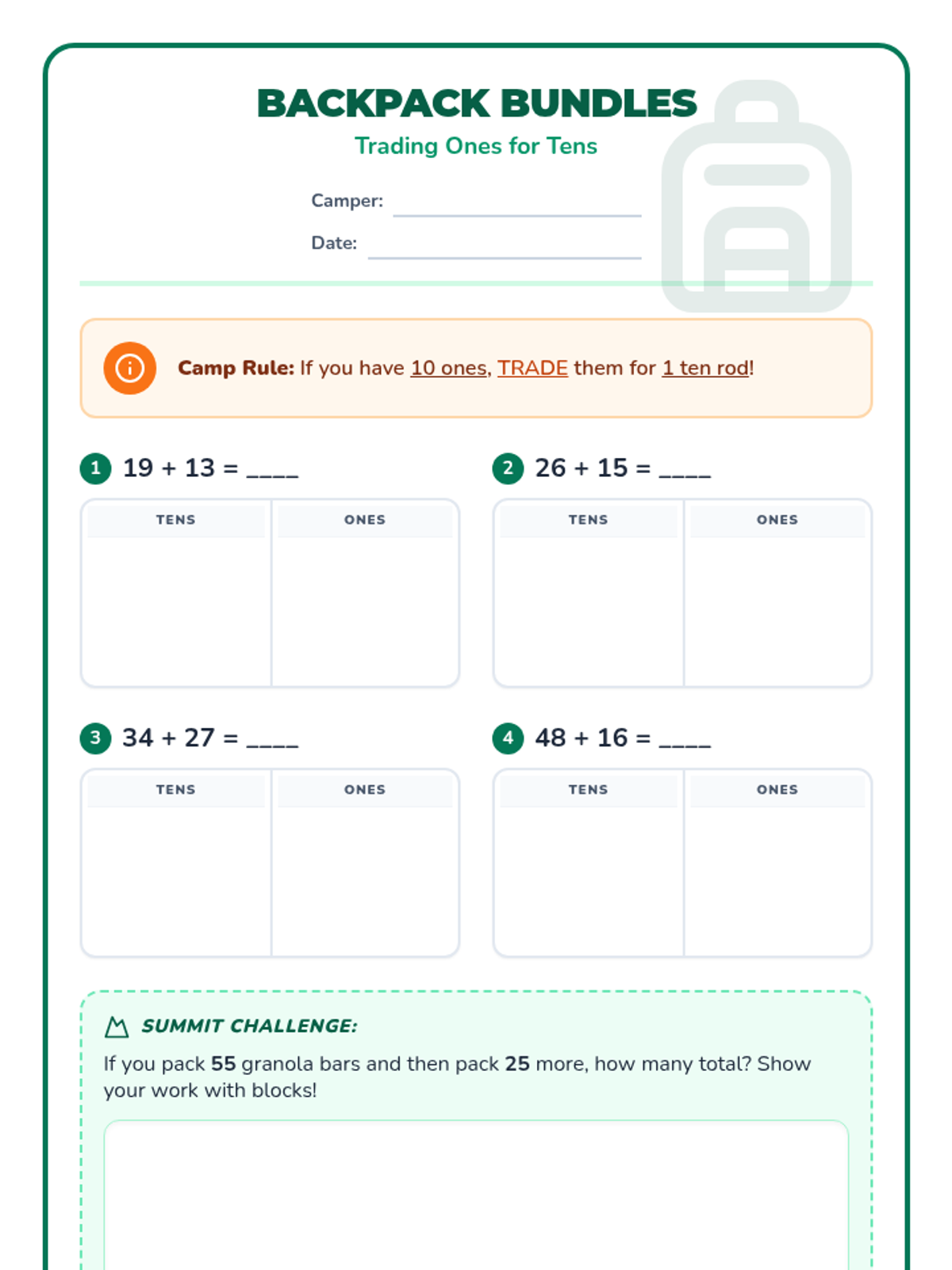
Students use base-ten blocks to model addition and practice 'trading' 10 ones for 1 ten to understand the foundation of regrouping.
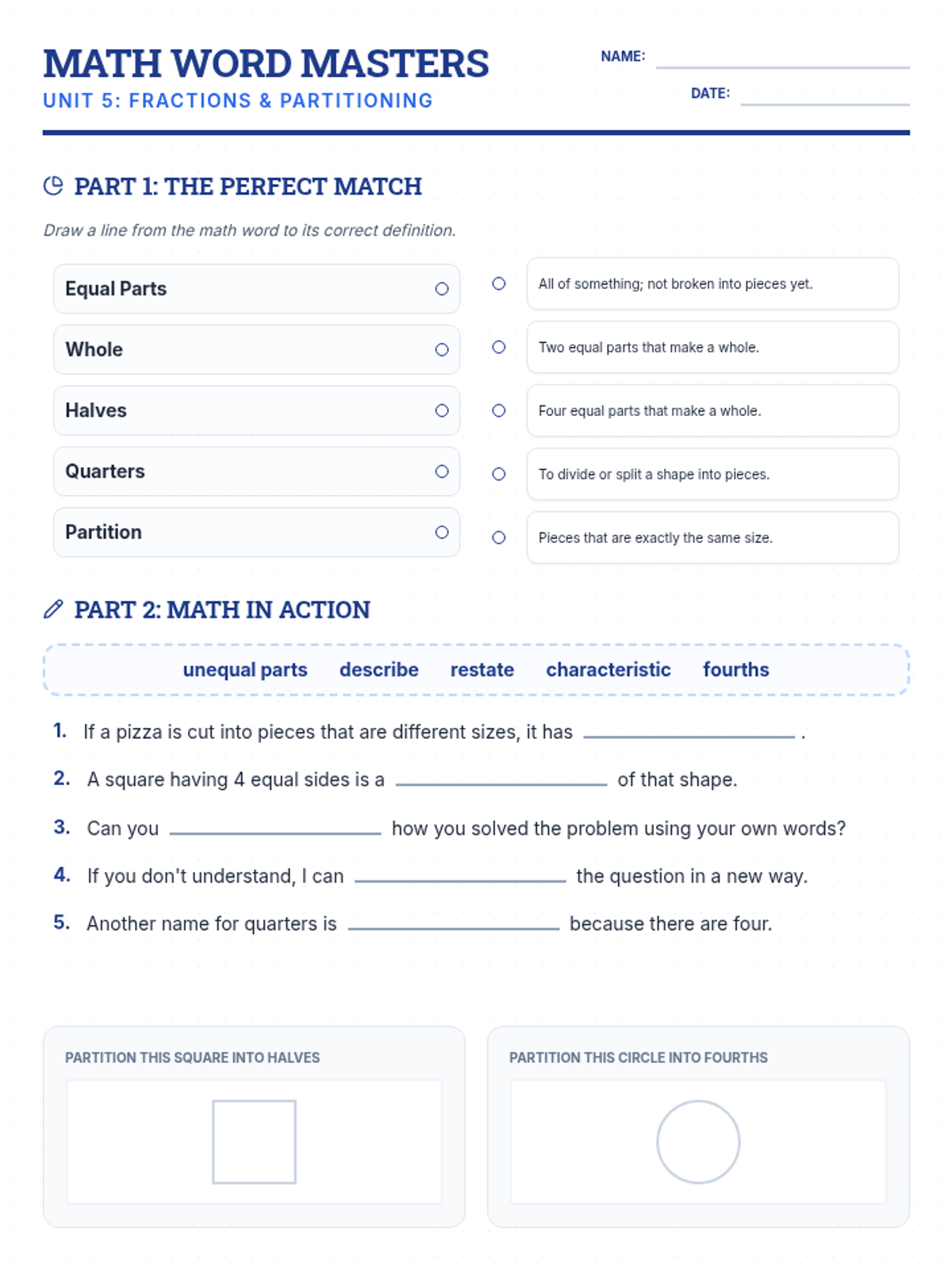
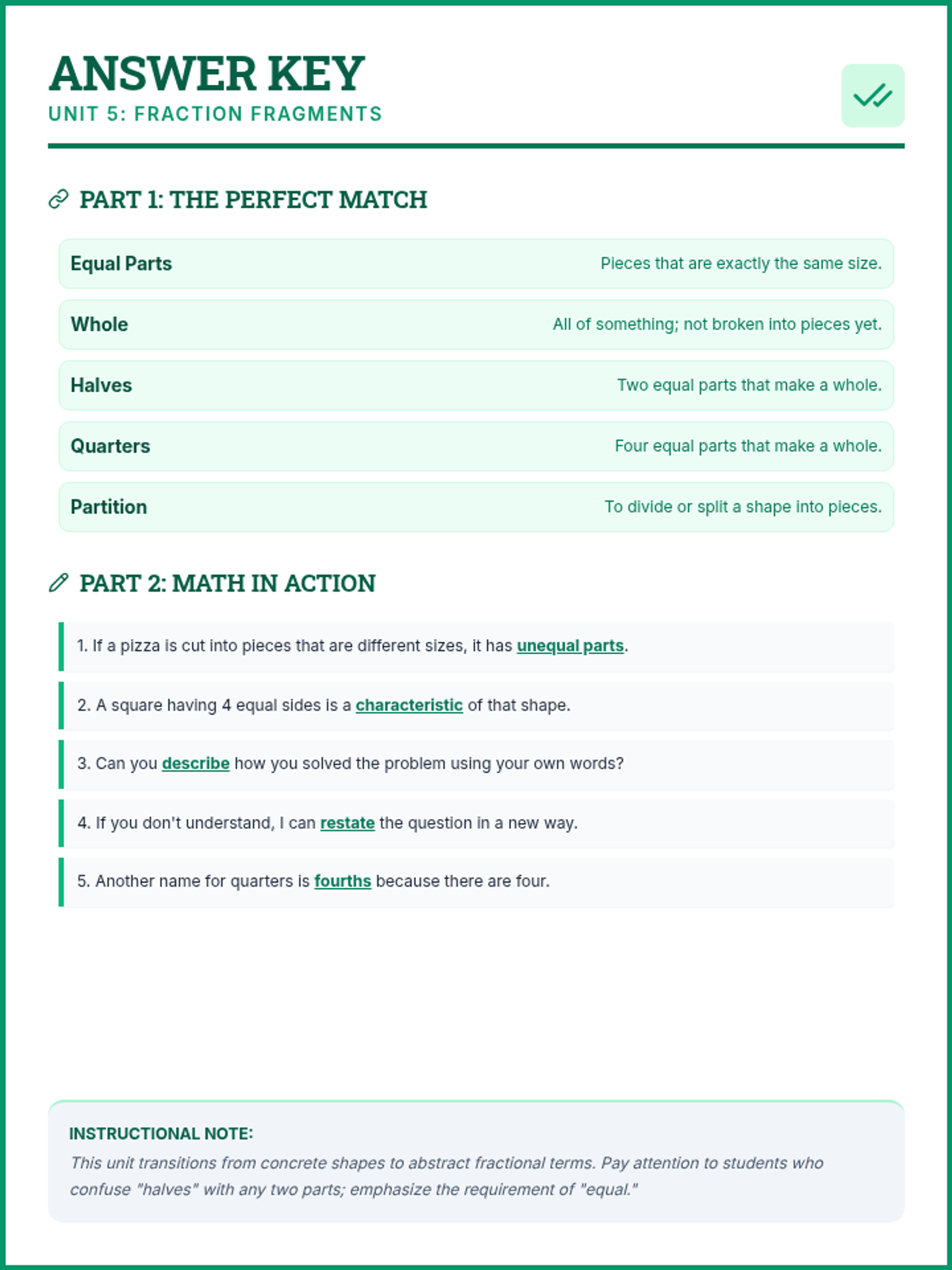
Identifying shapes, their attributes, and partitioning rectangles and circles into equal shares.
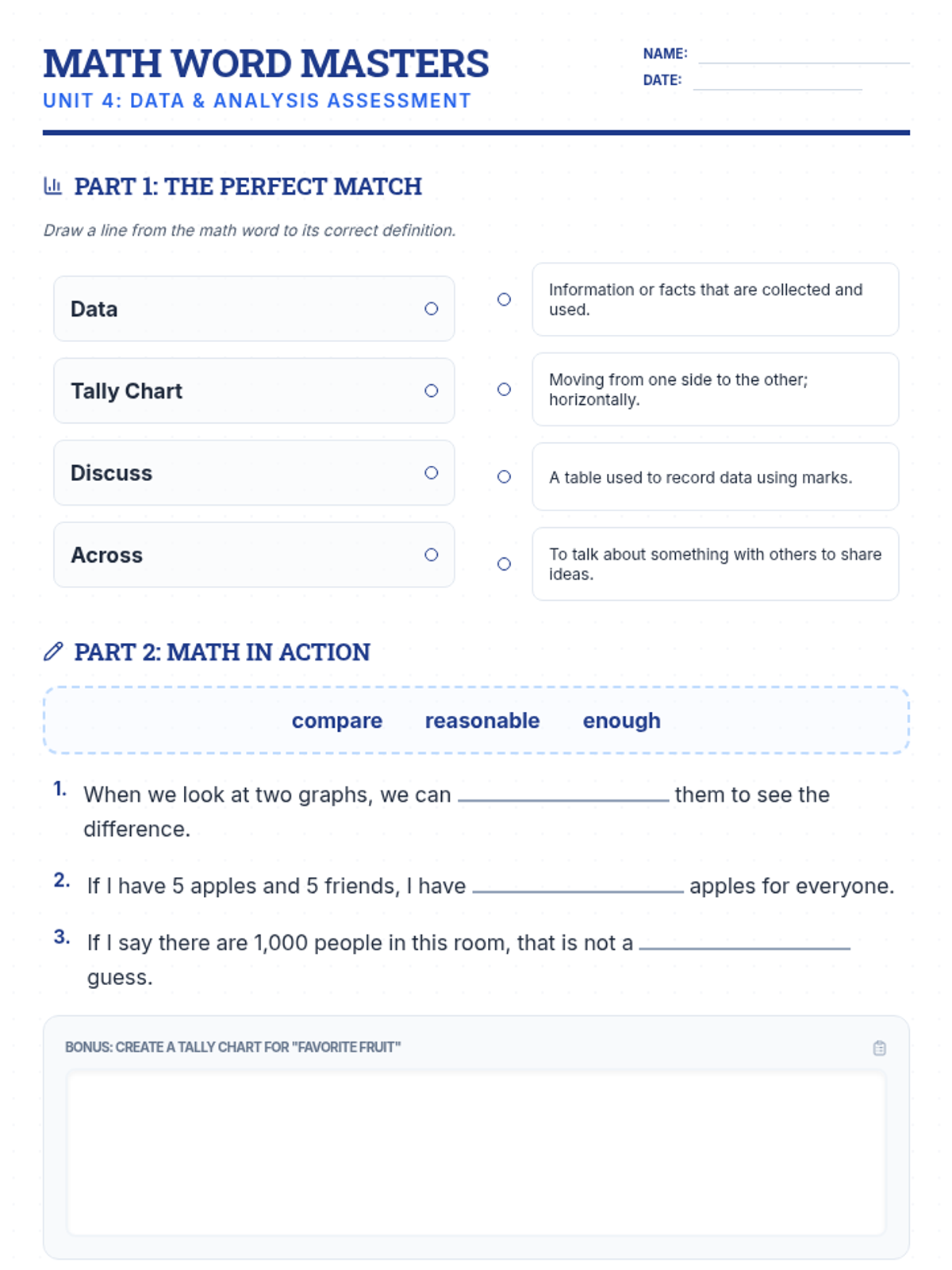
Exploring standard and non-standard measurement, focusing on comparing lengths and interpreting data.
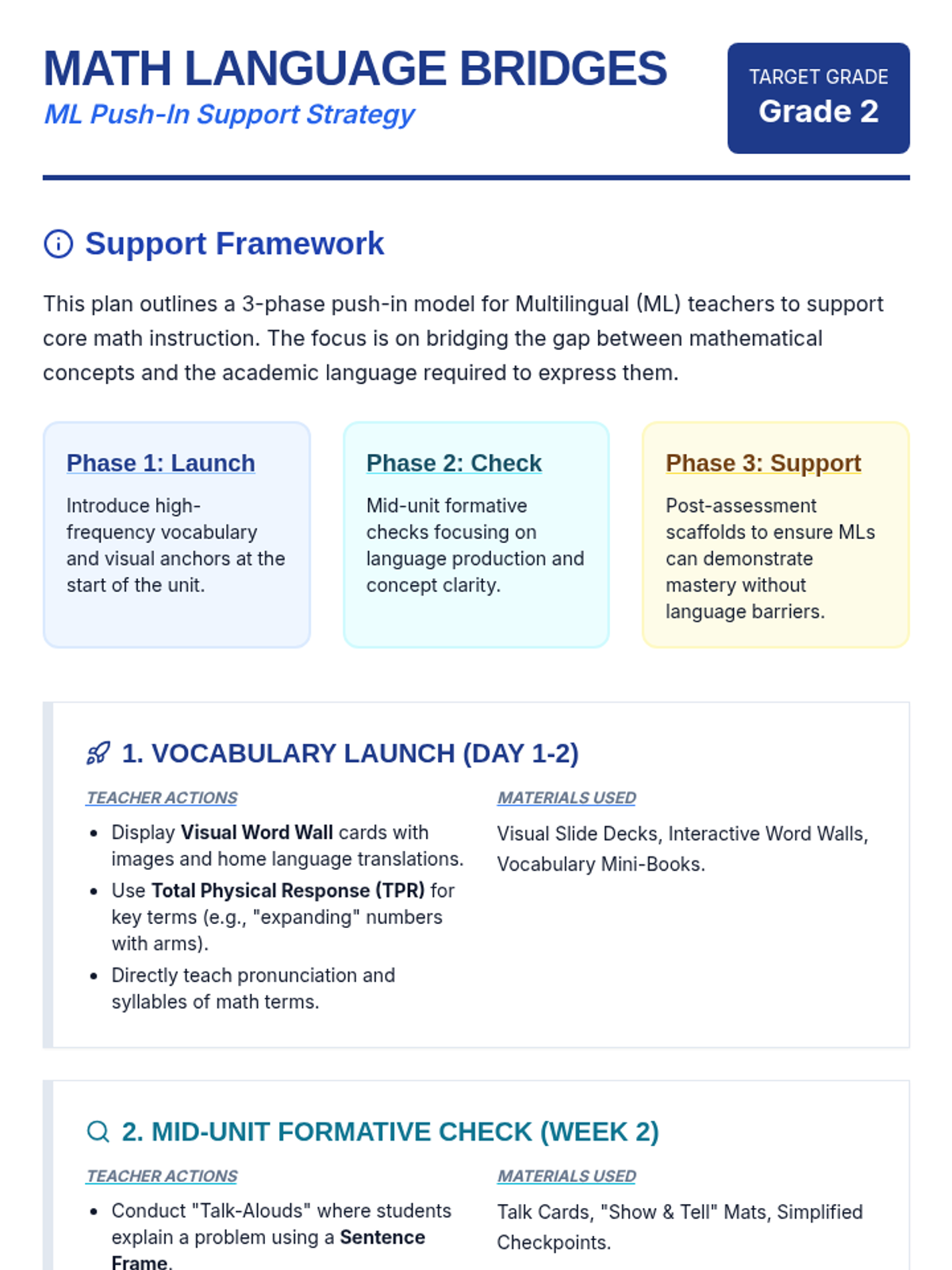
Focusing on addition and subtraction within 100, emphasizing word problems and mathematical language for operations.
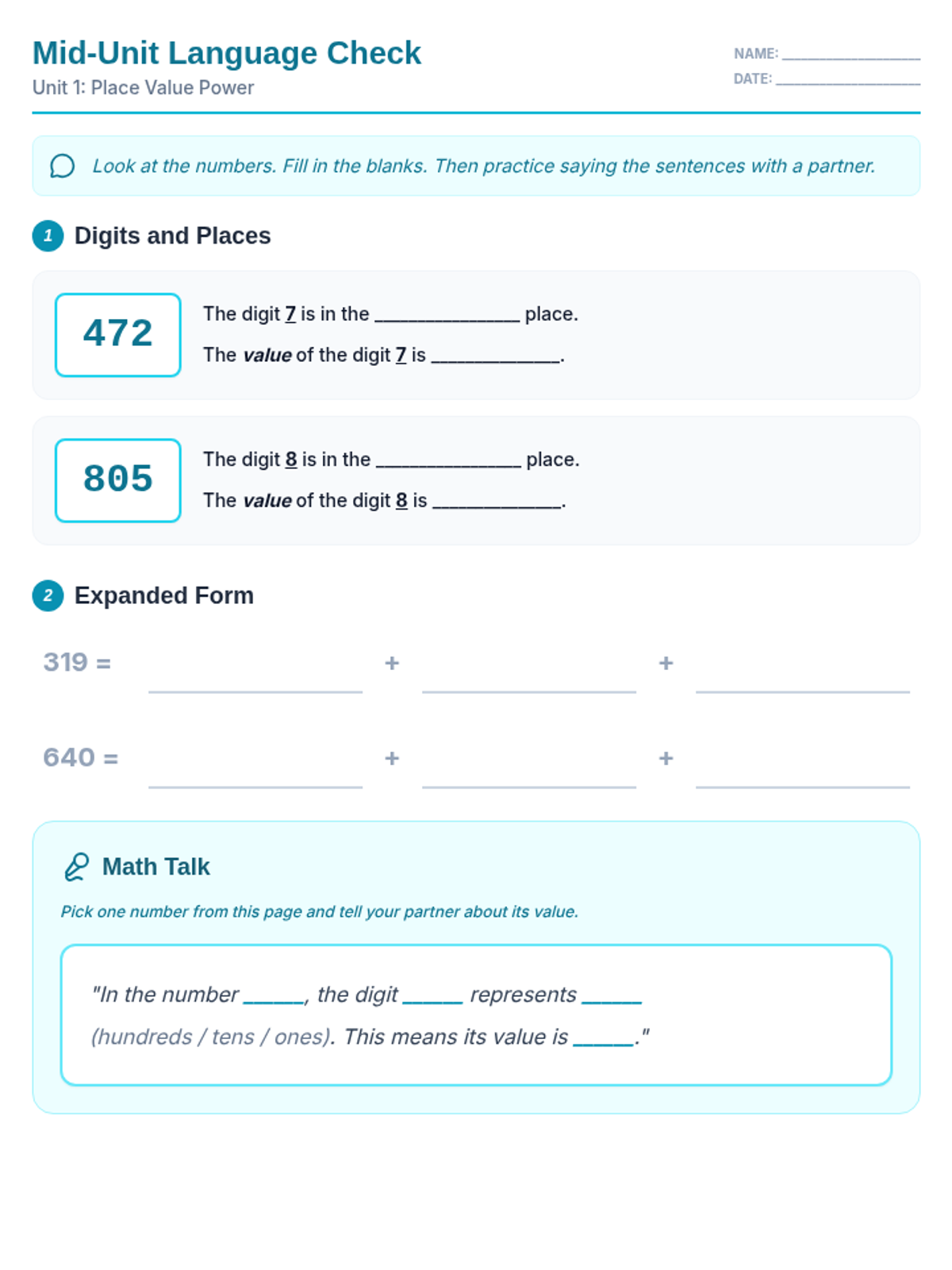
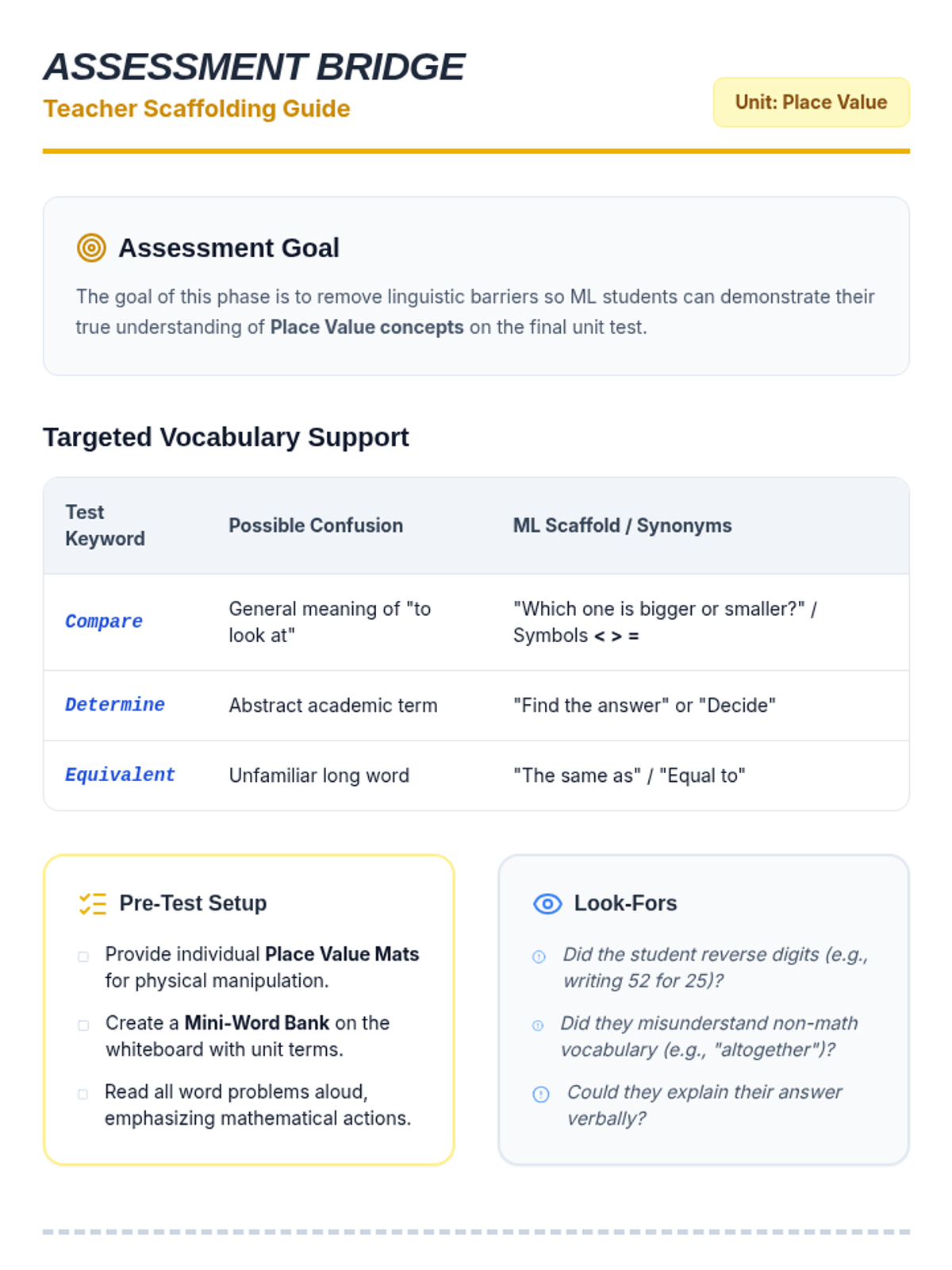
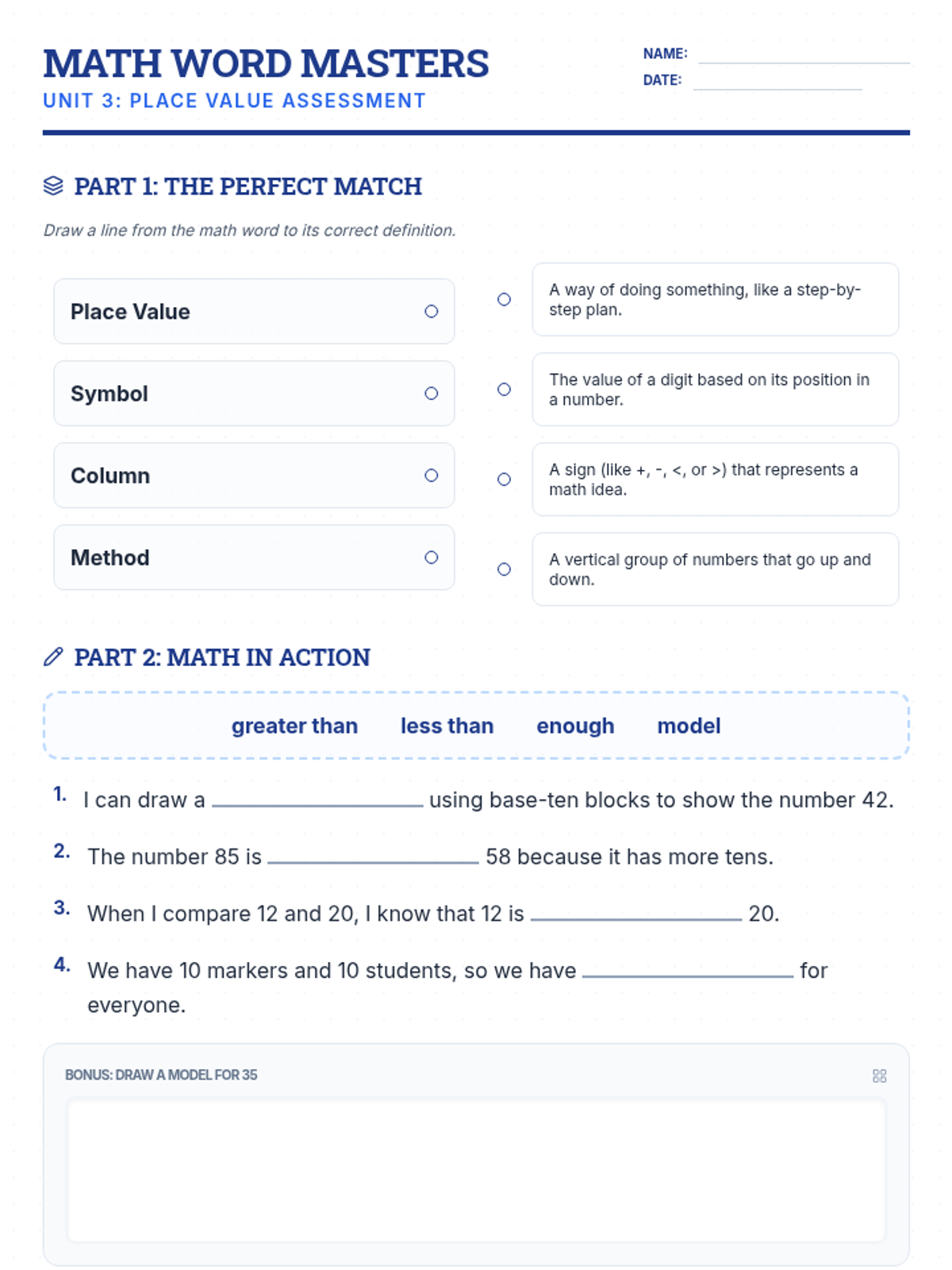
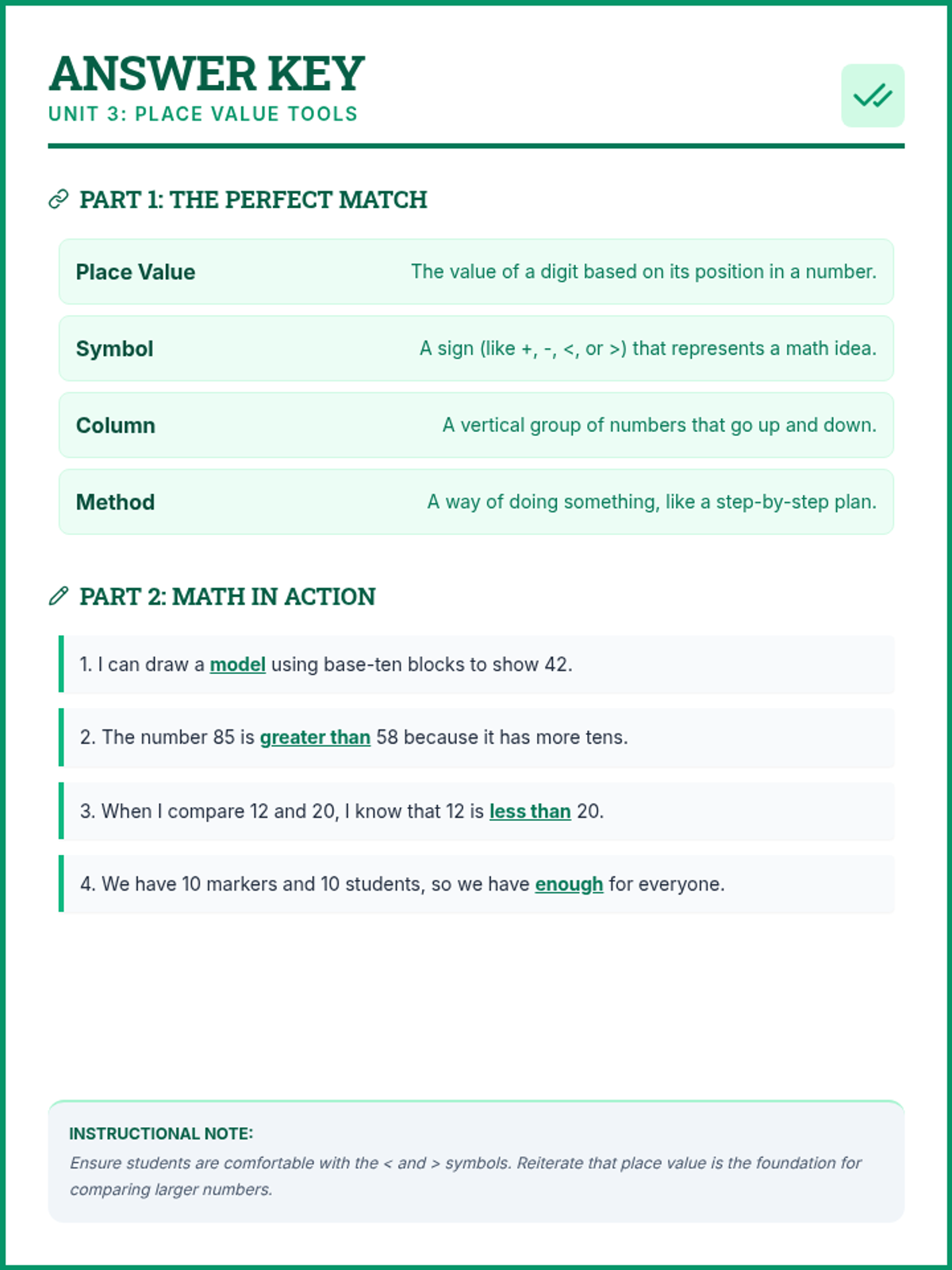
A comprehensive unit focusing on understanding digits, place values up to 1,000, and comparing numbers using language-rich scaffolds for ML students.
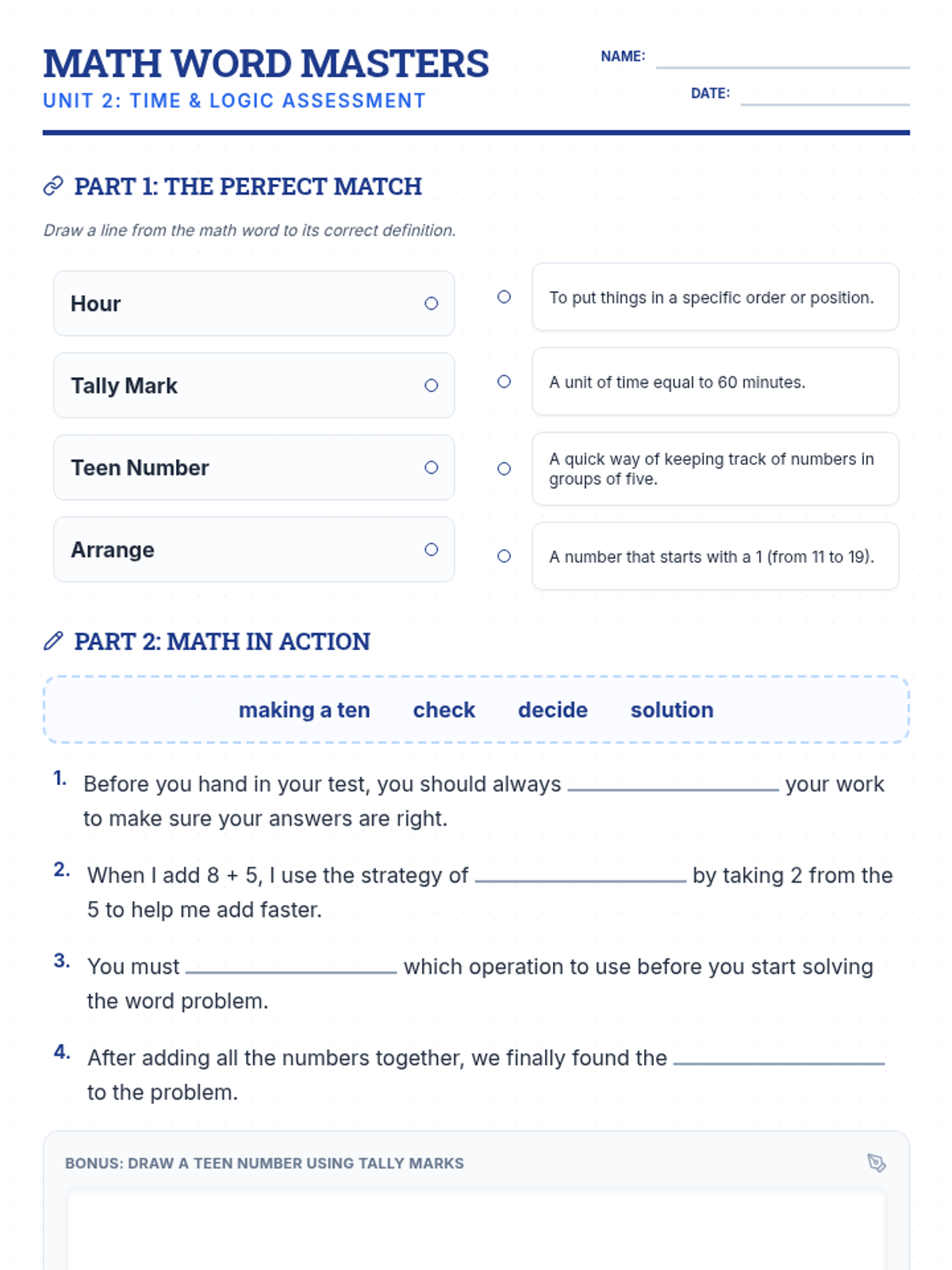
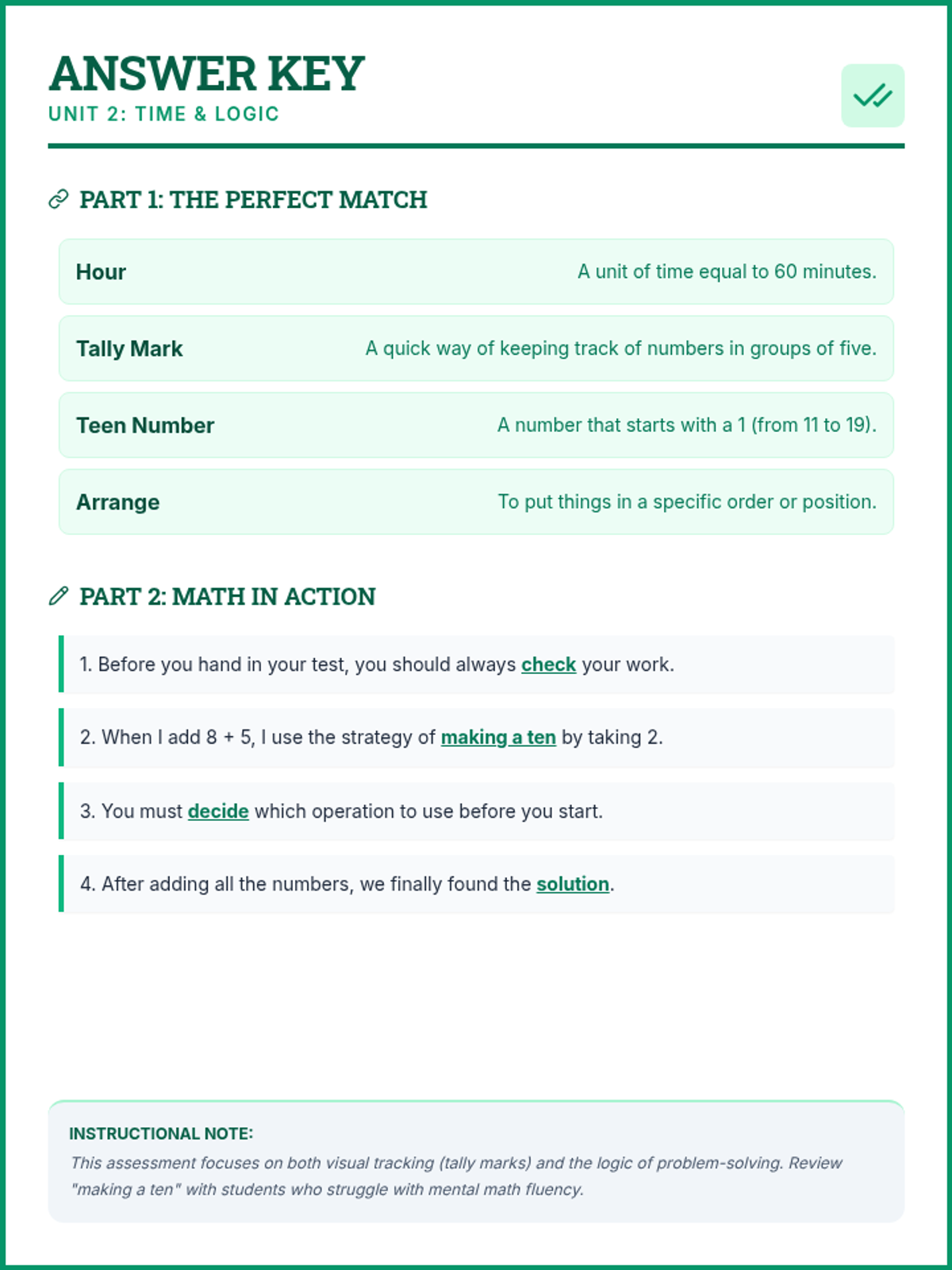
Vocabulary assessment for Unit 2 covering time, counting, and problem-solving strategies.
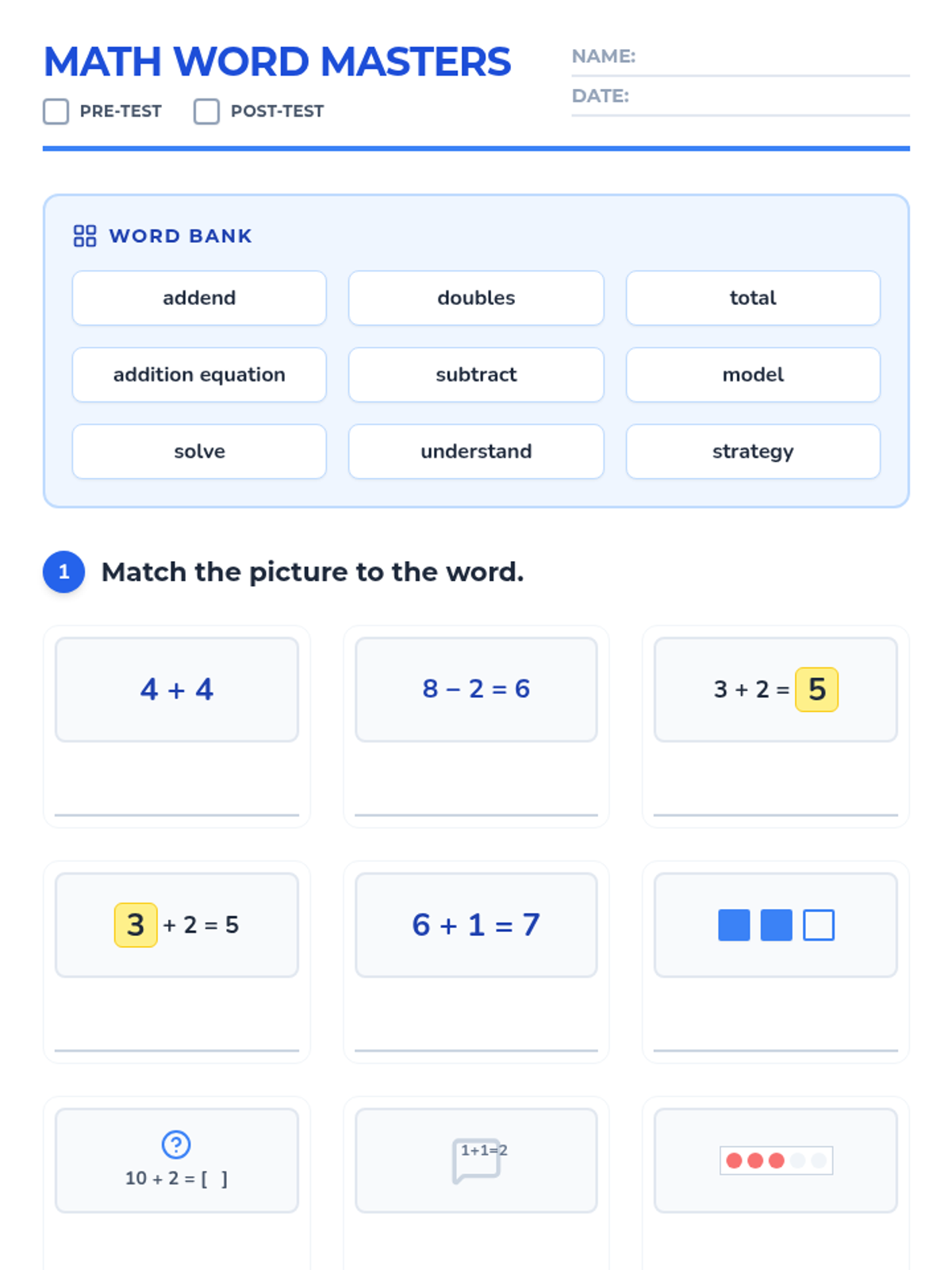
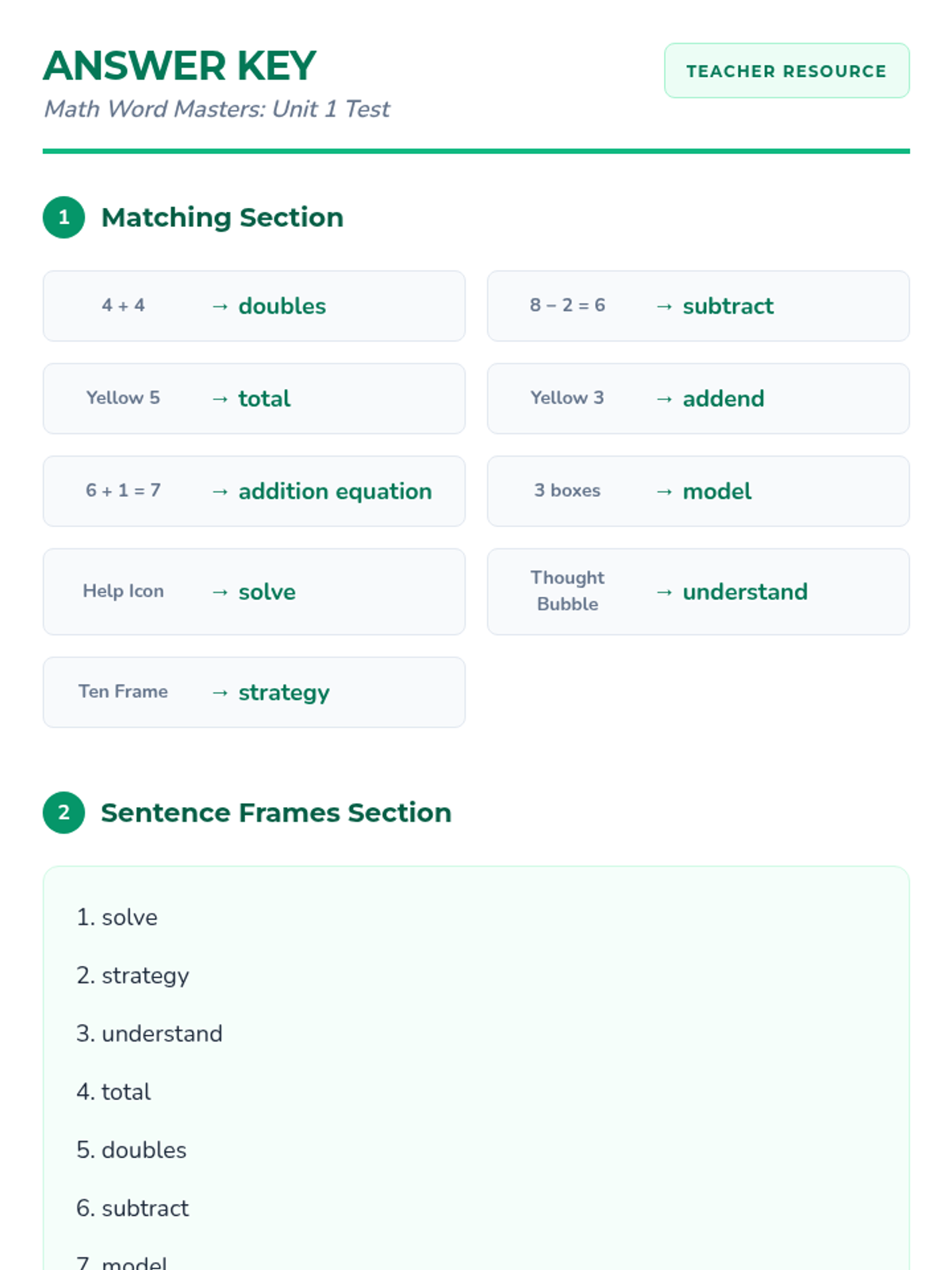
A foundational vocabulary assessment designed for Grade 2 Multilingual Learners to measure understanding of essential addition and subtraction terms through visual matching and contextual sentence frames.
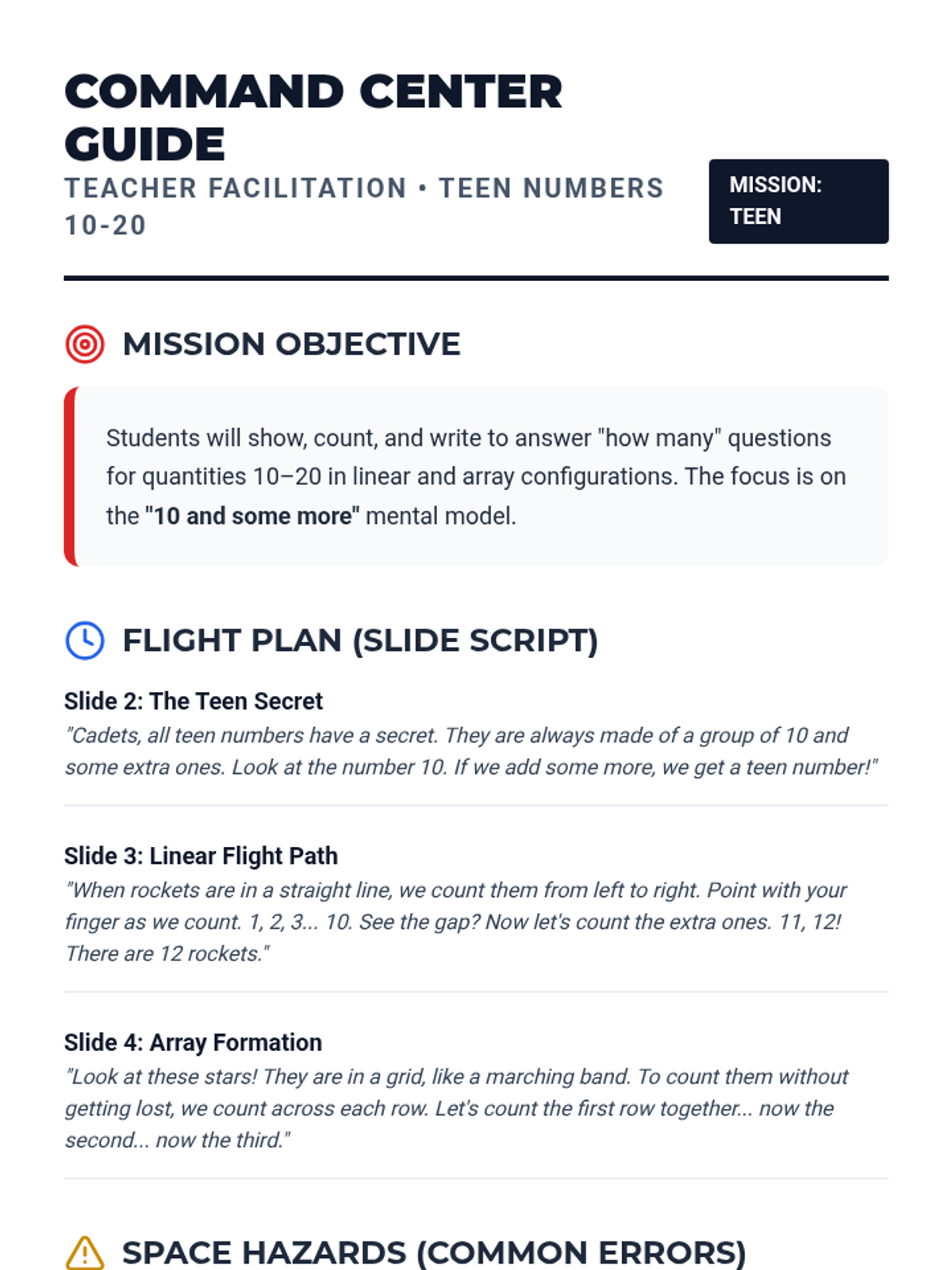
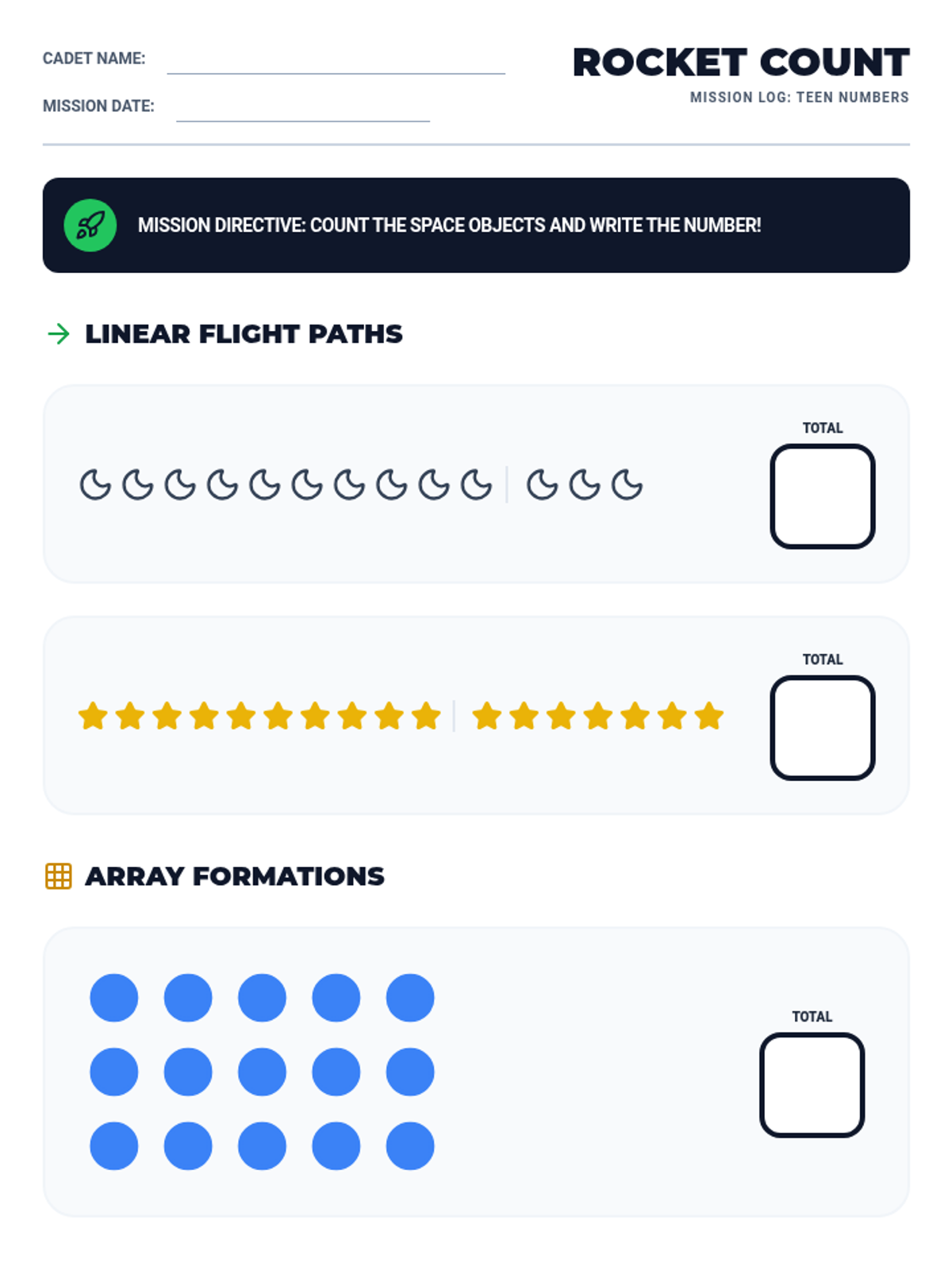
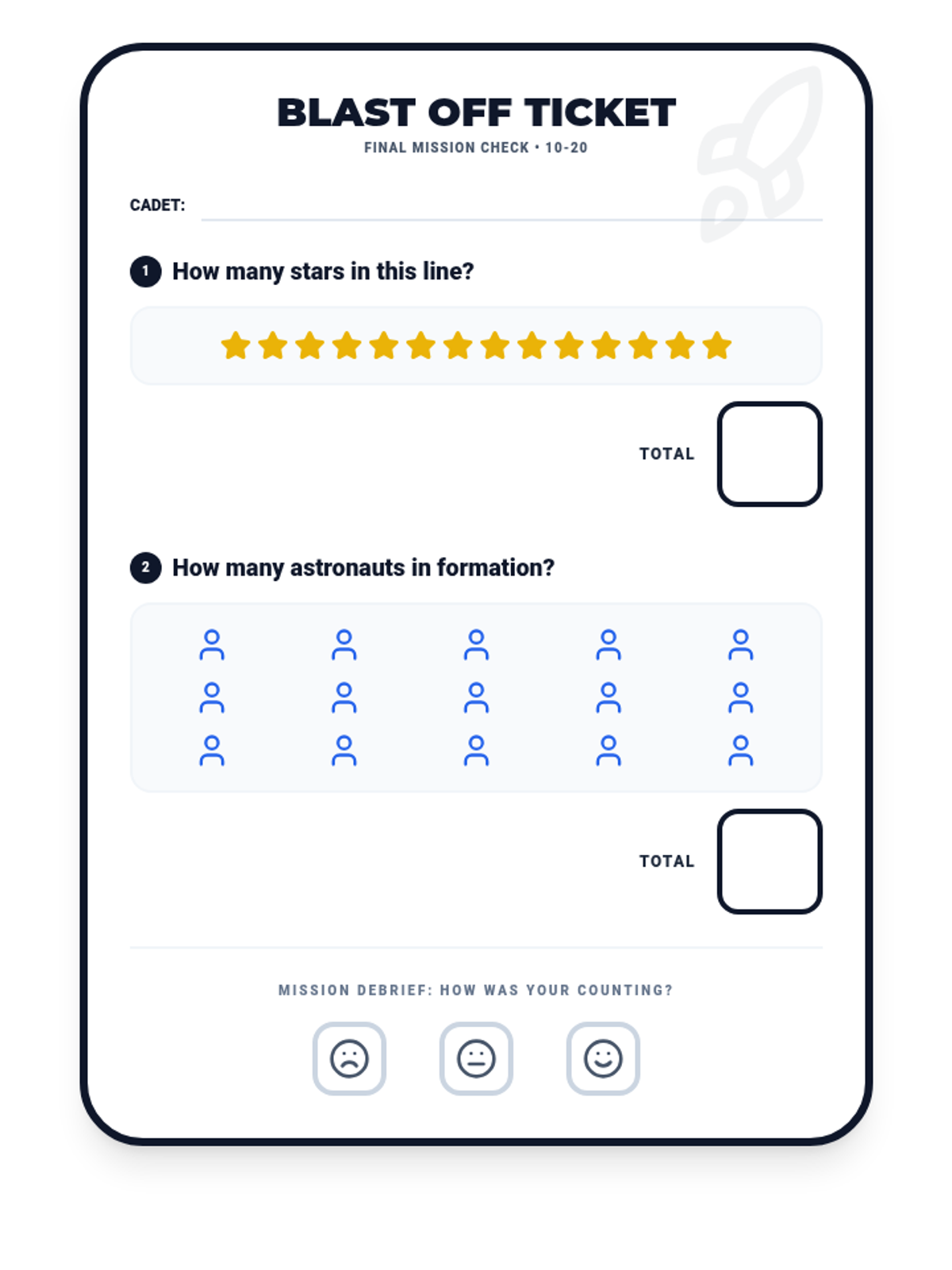
Students will master counting teen numbers (10-20) in both linear and array configurations, focusing on the '10 and some more' strategy. This lesson uses a high-energy space mission theme to engage Kindergarteners in writing and representing numbers.
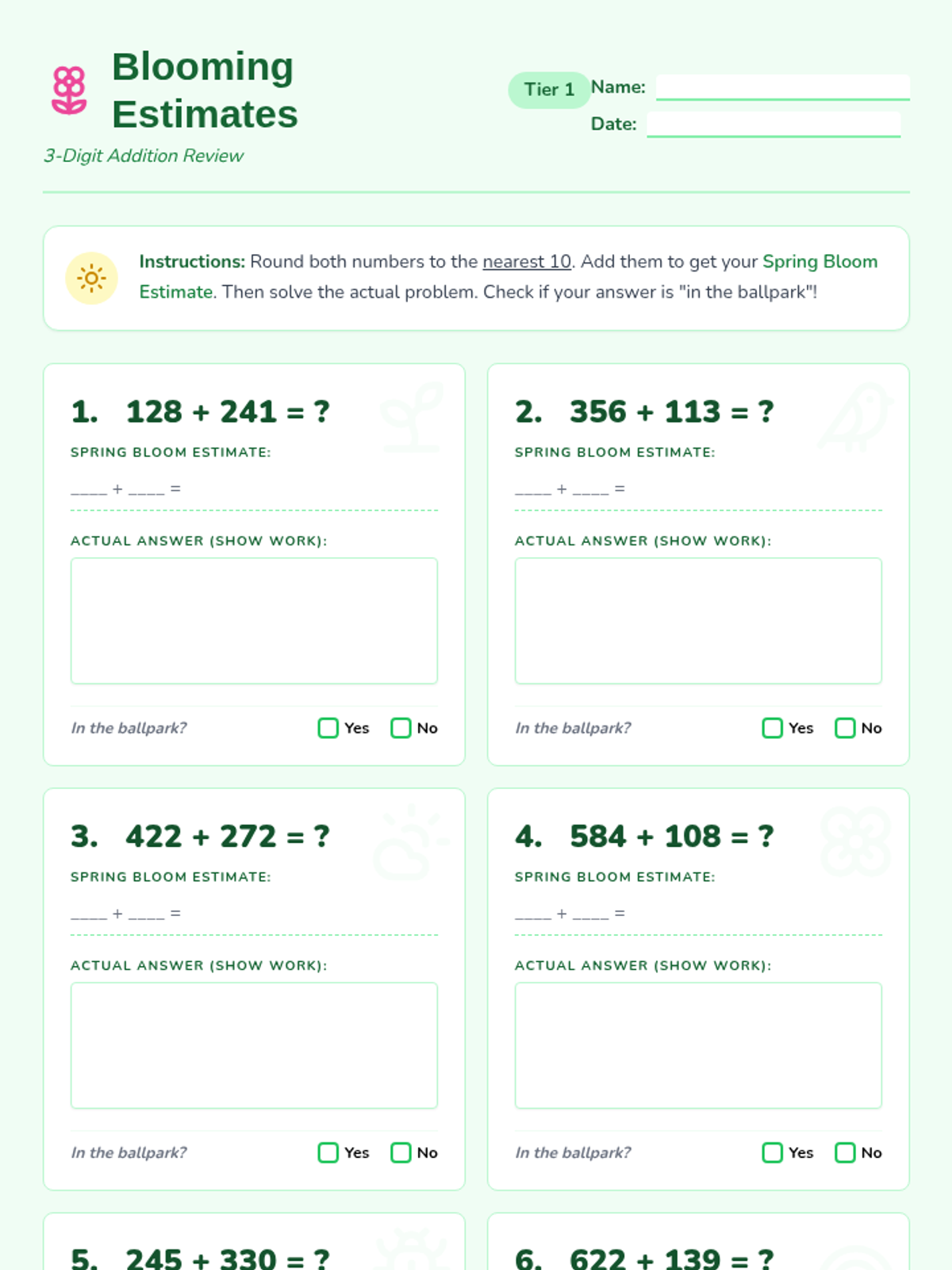
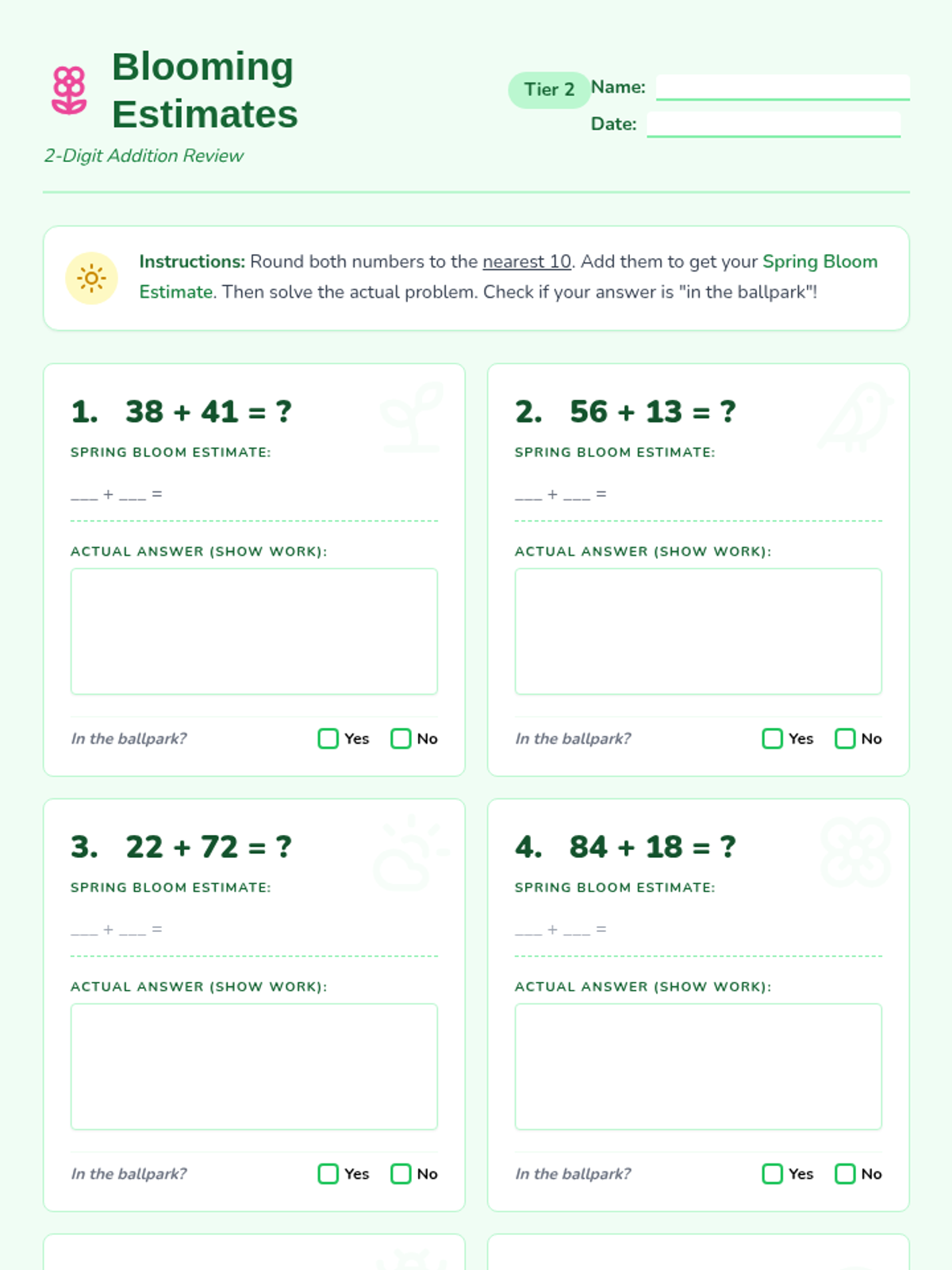
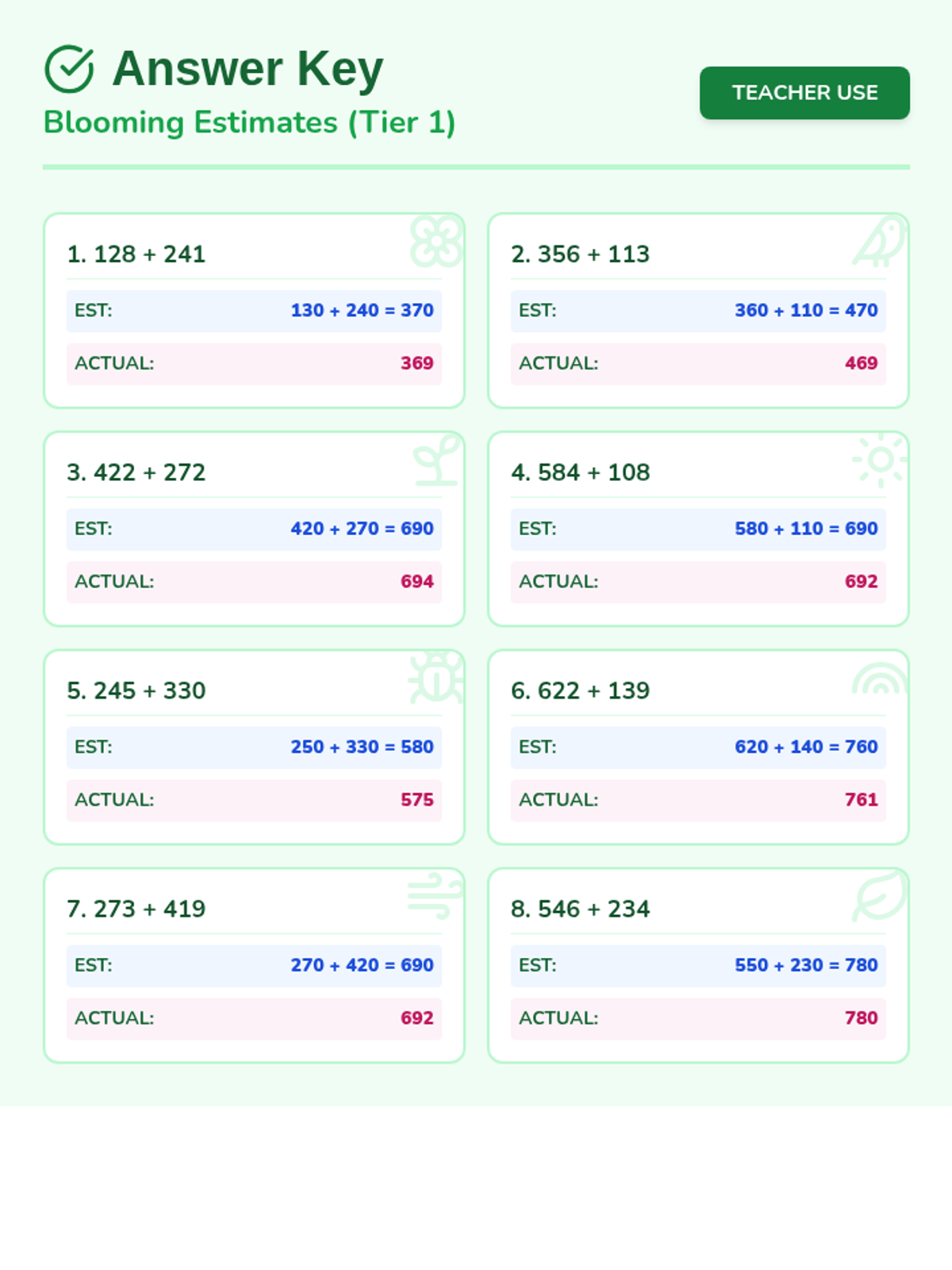
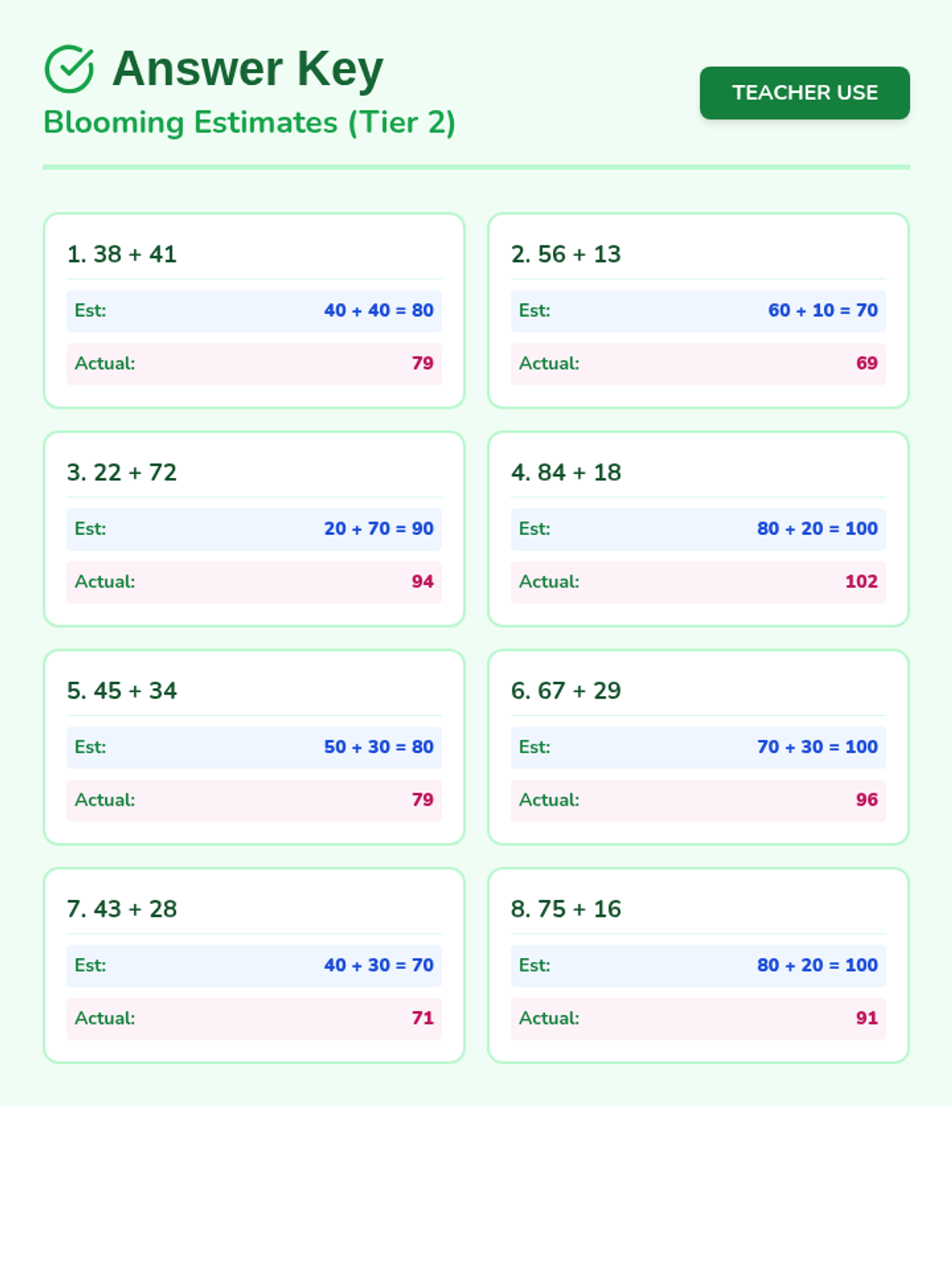
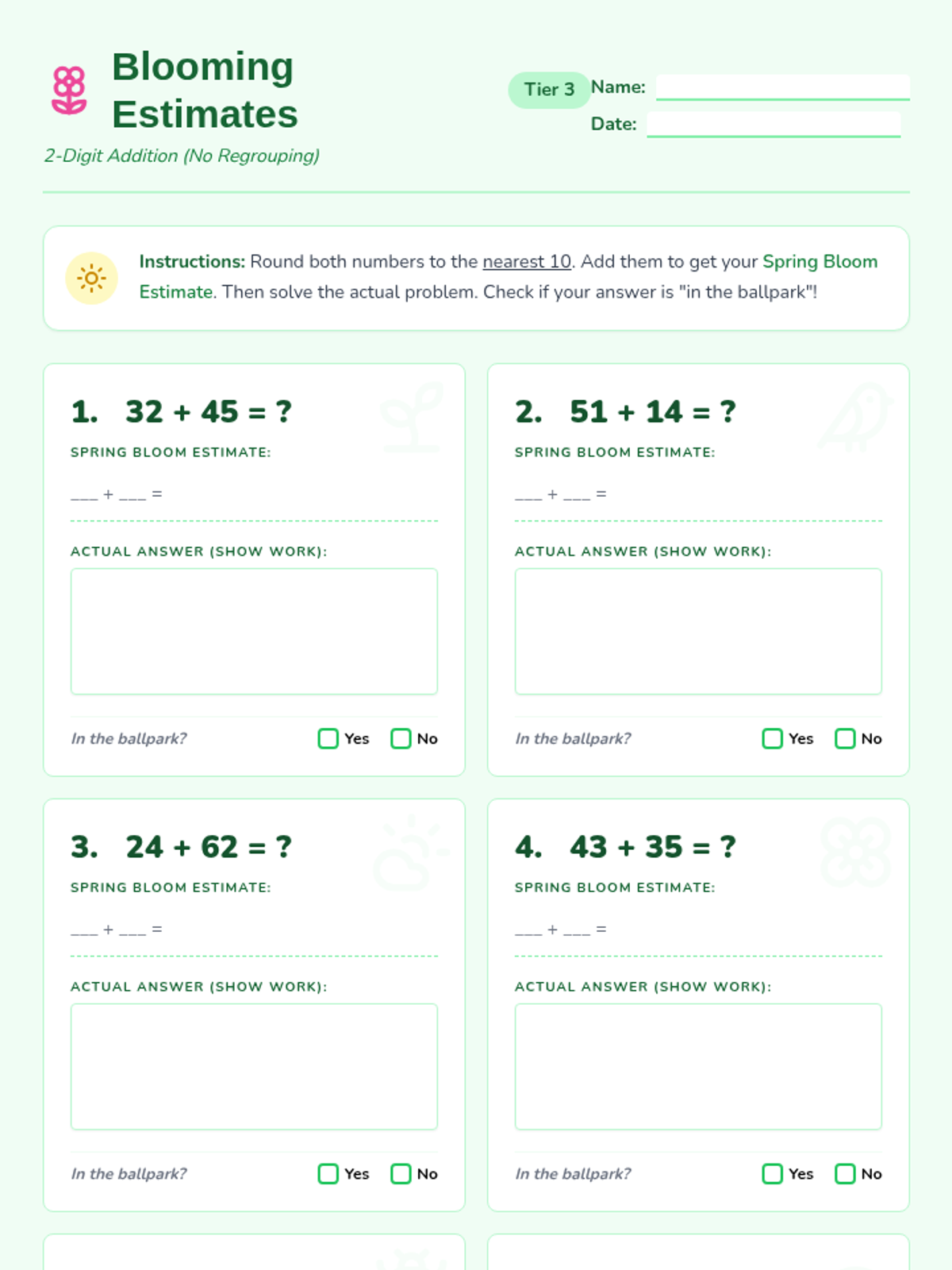
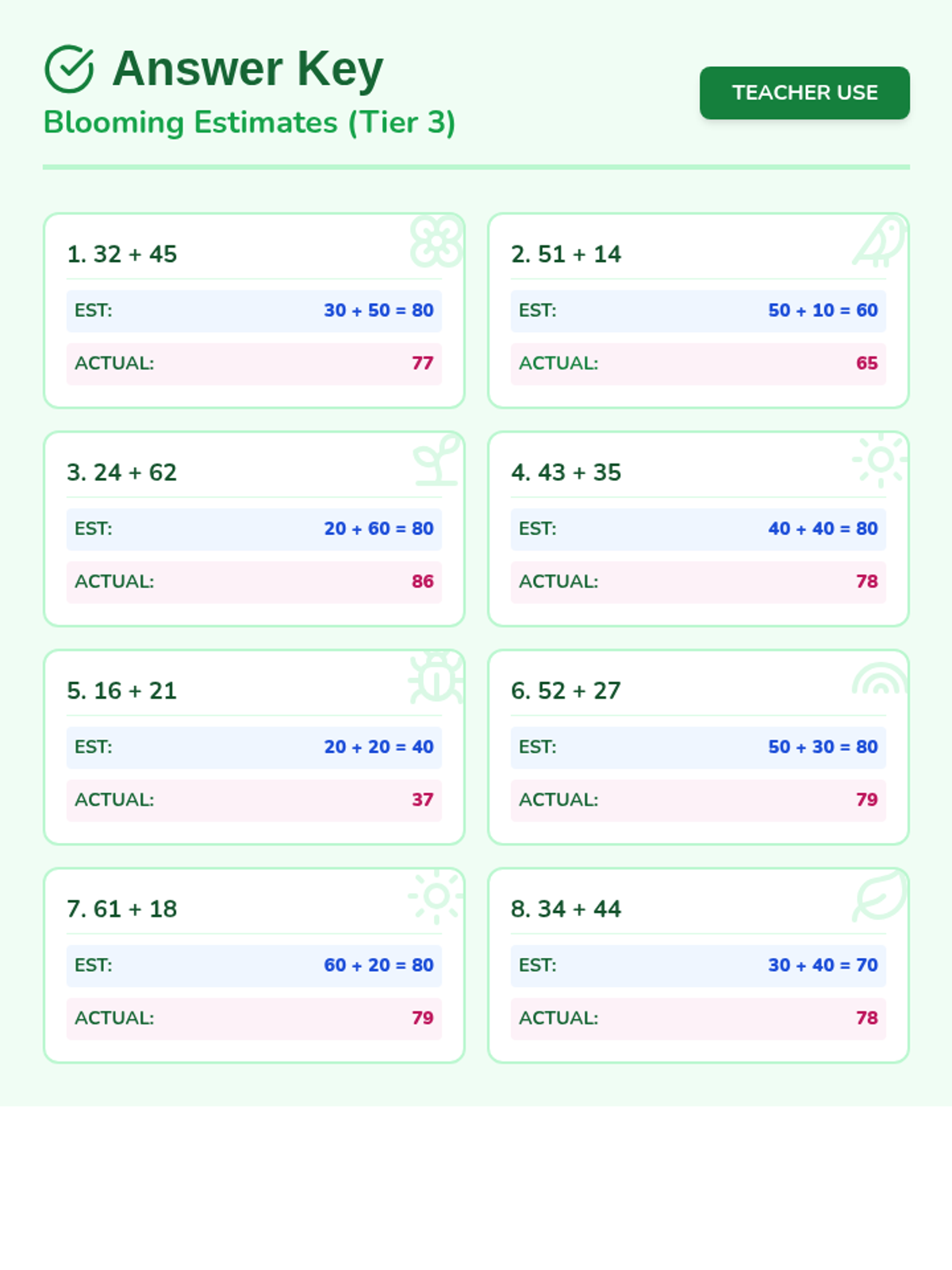
A math review focused on making 'ballpark' estimates by rounding numbers to the nearest ten before adding. Includes differentiated tiers for 2-digit and 3-digit addition with a fresh spring theme.
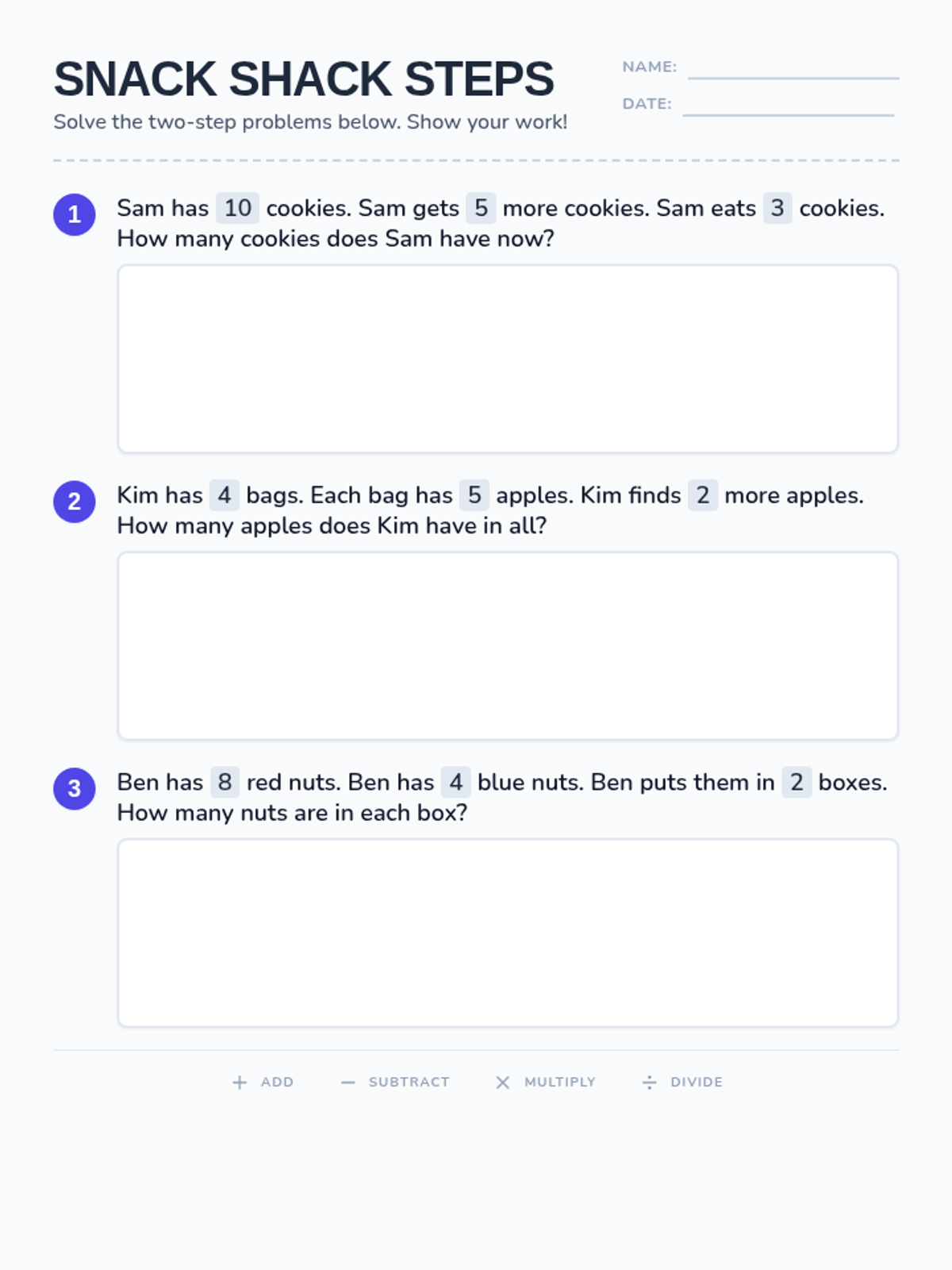
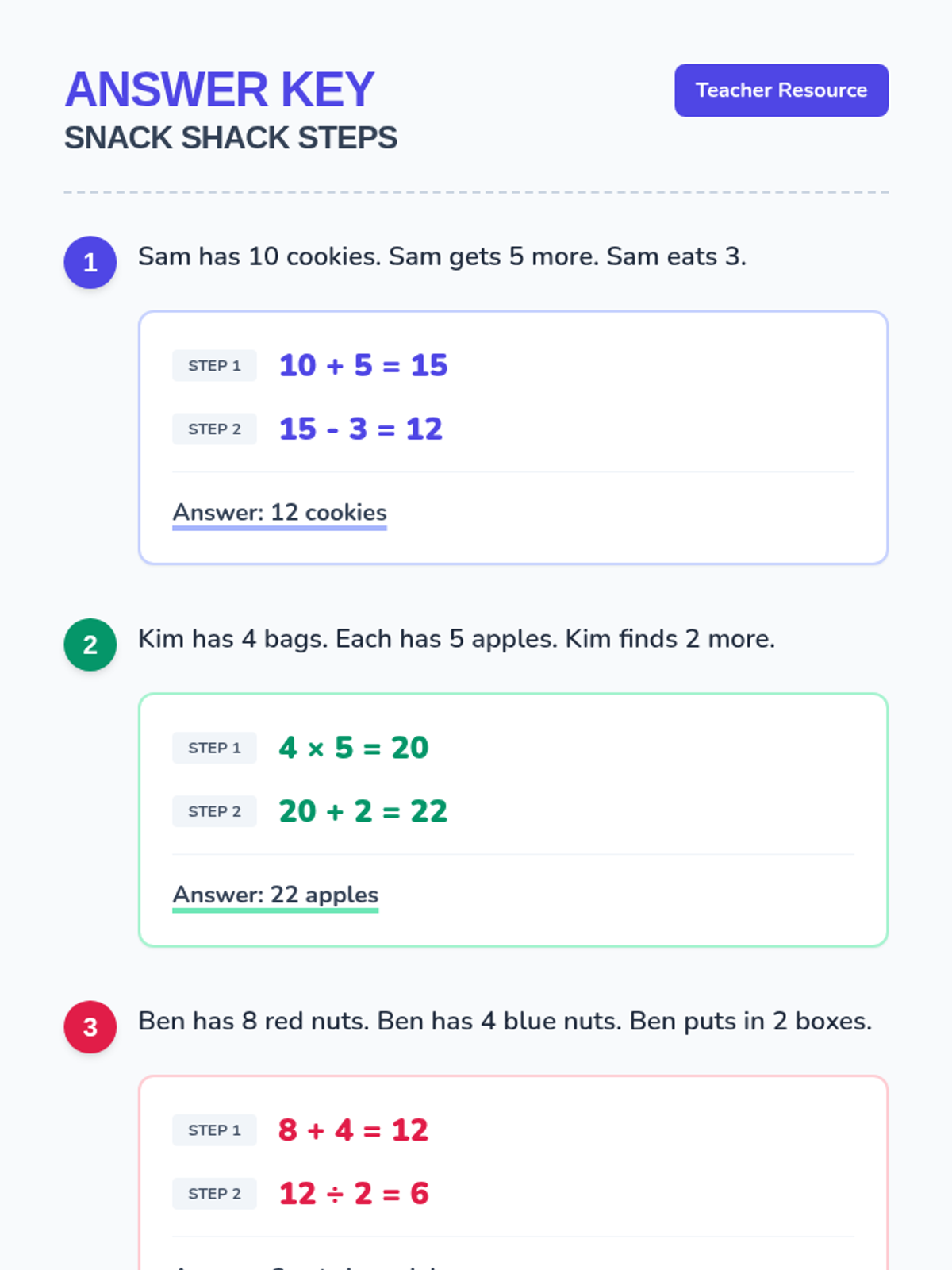
A lesson focused on solving two-step word problems with mixed operations using simple, repetitive language for low-lexile learners.
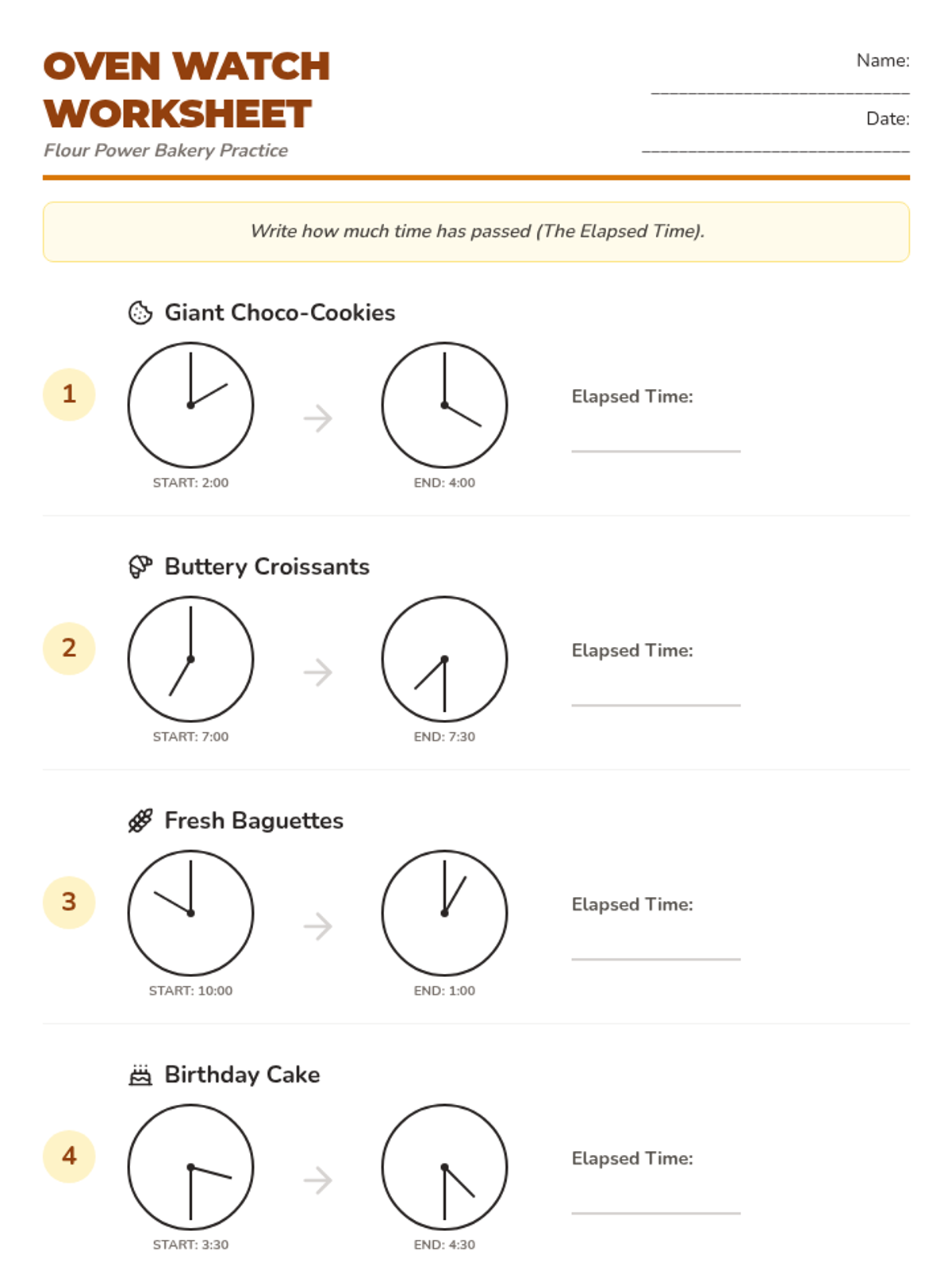
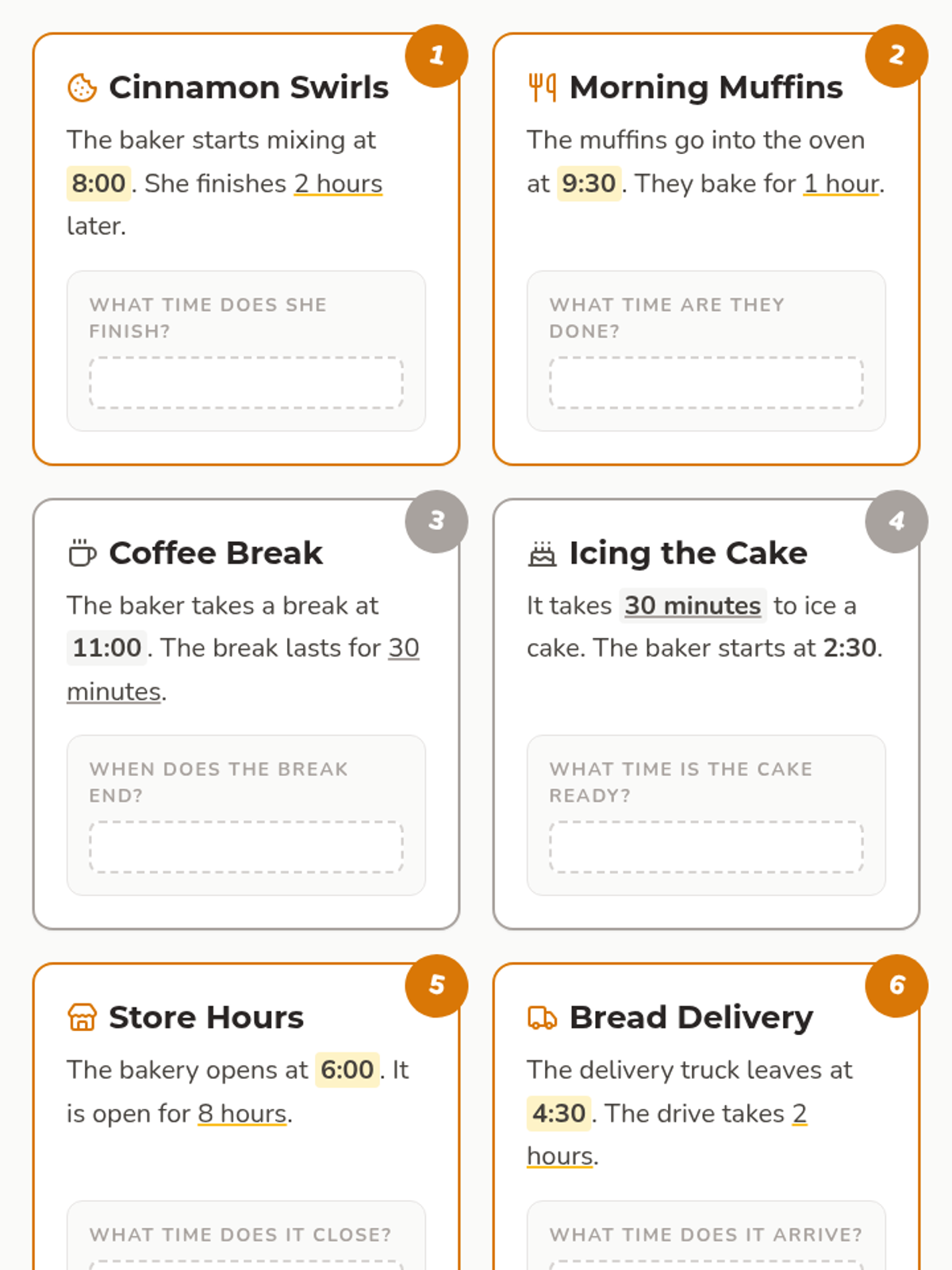
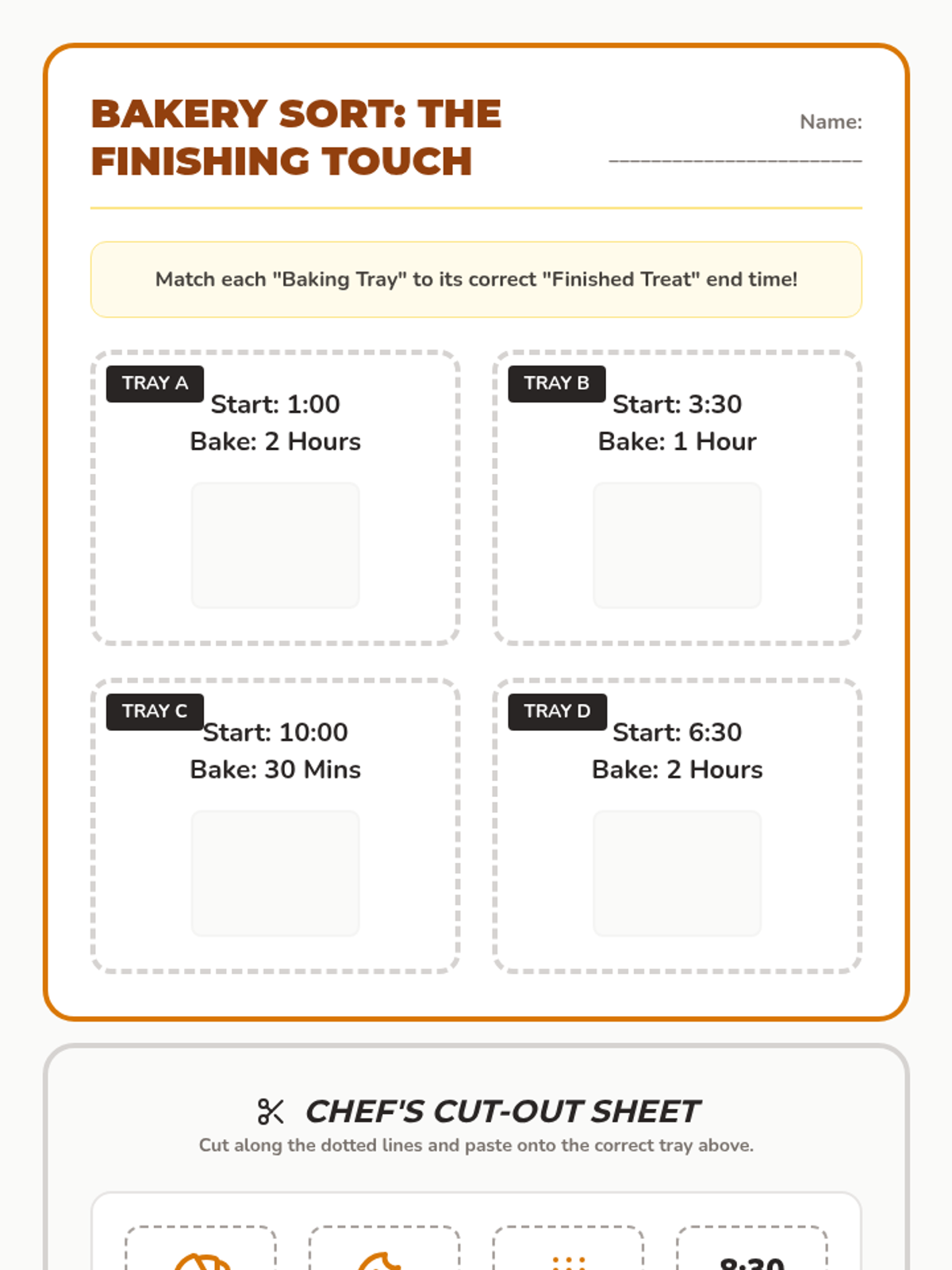
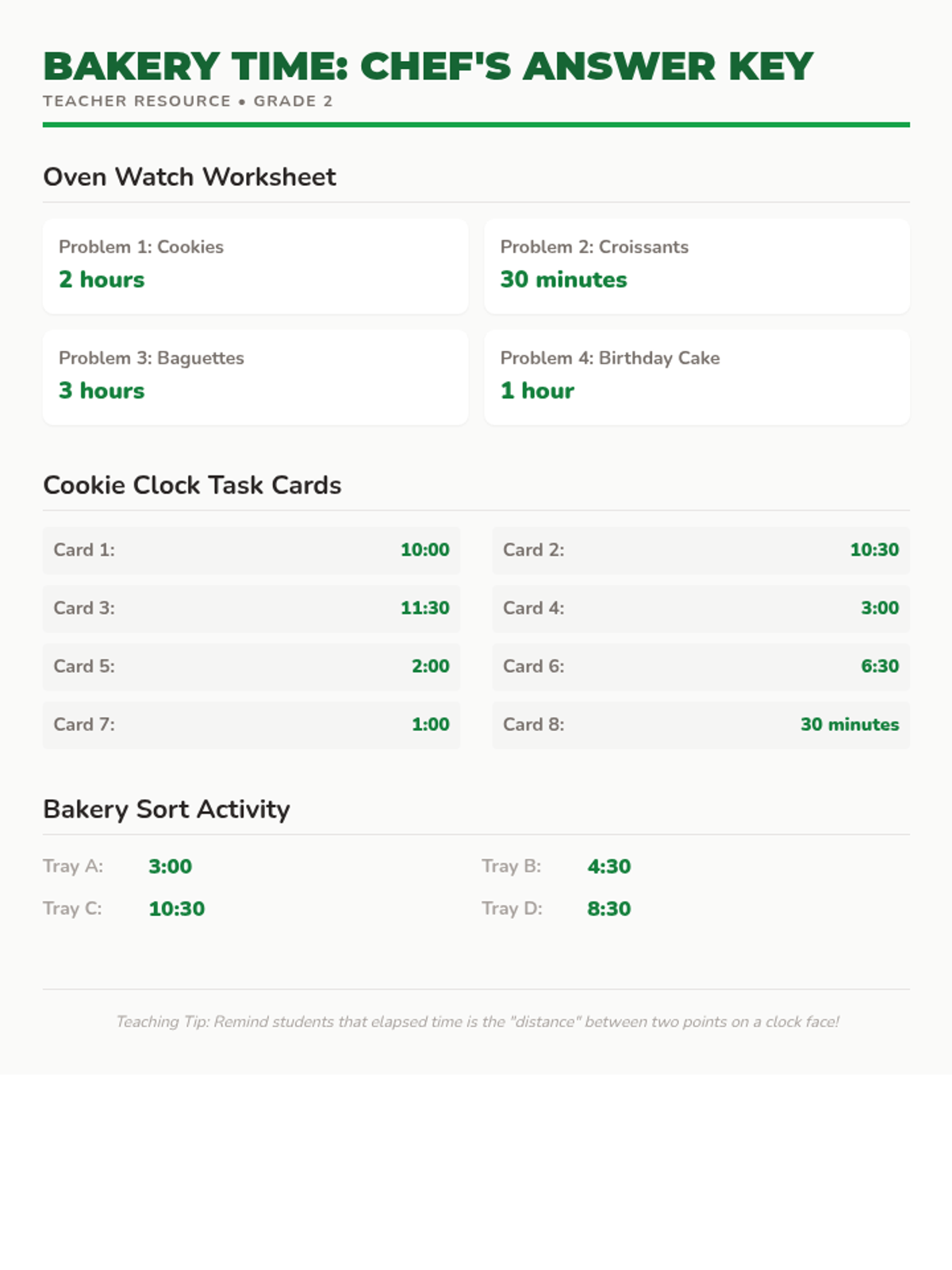
Students learn to calculate elapsed time using whole and half-hour intervals through the lens of a busy bakery.
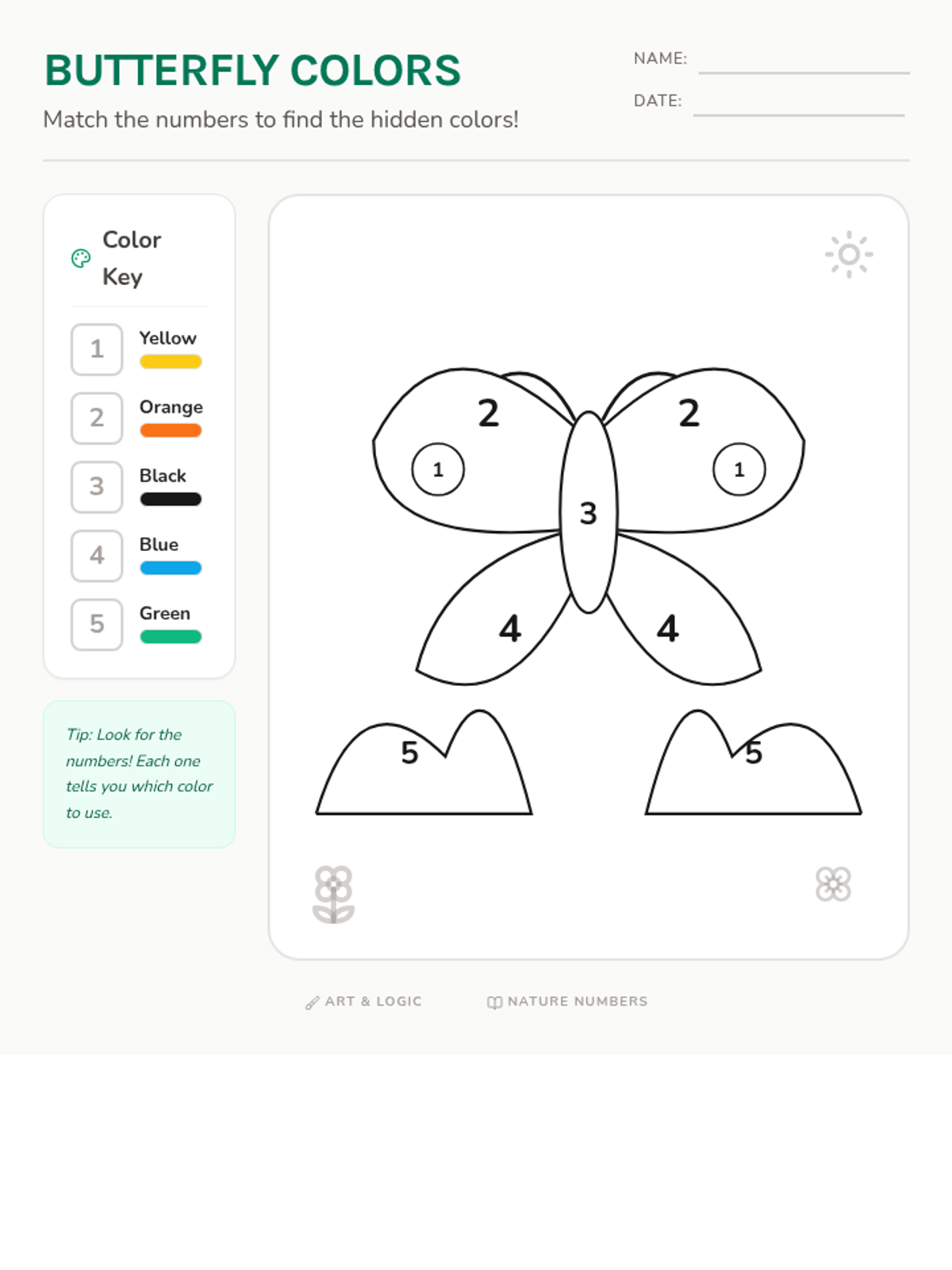
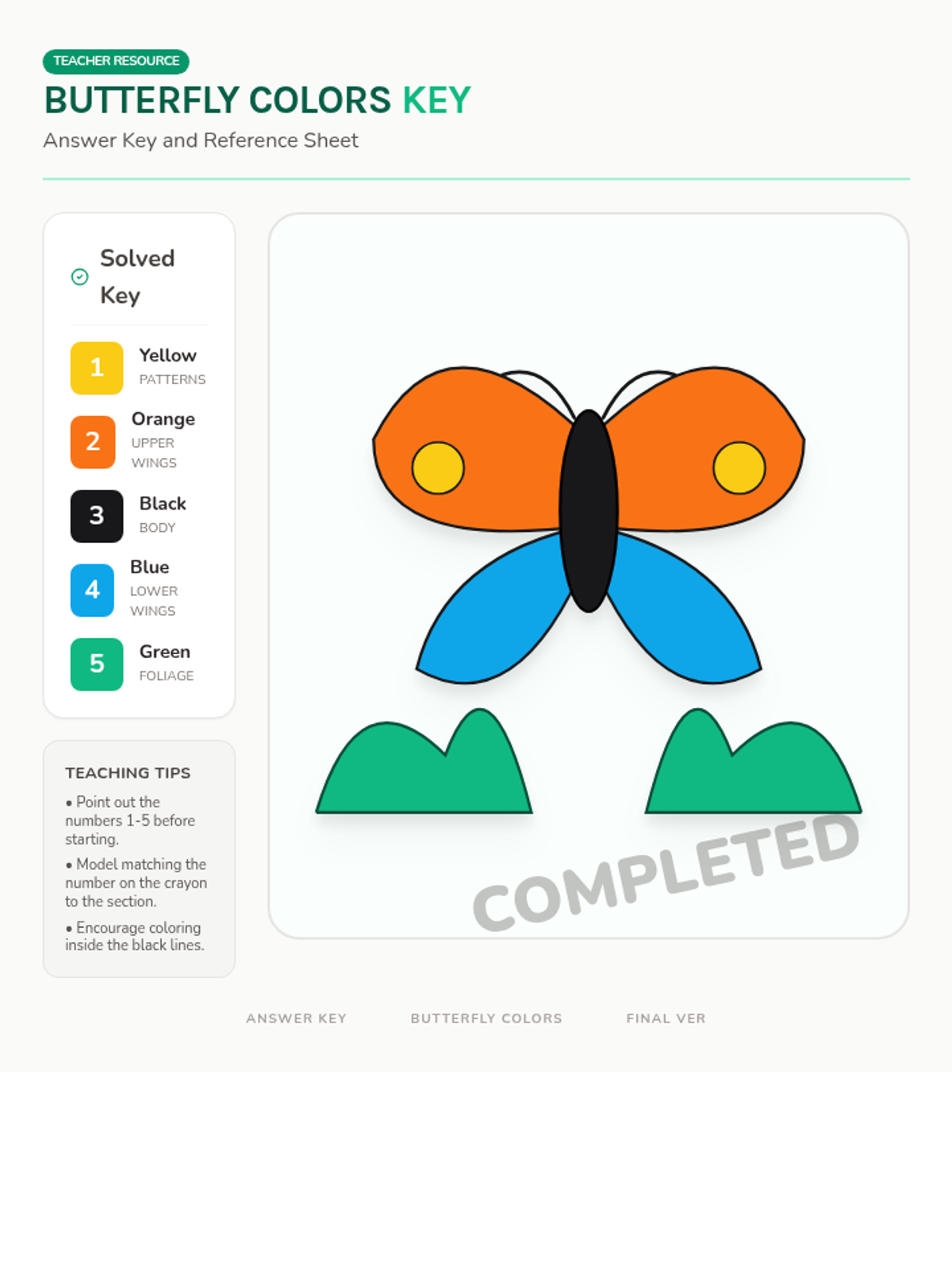
A foundational lesson on number recognition through a creative butterfly coloring activity. Students identify numbers 1-5 to reveal a vibrantly colored monarch-style butterfly.
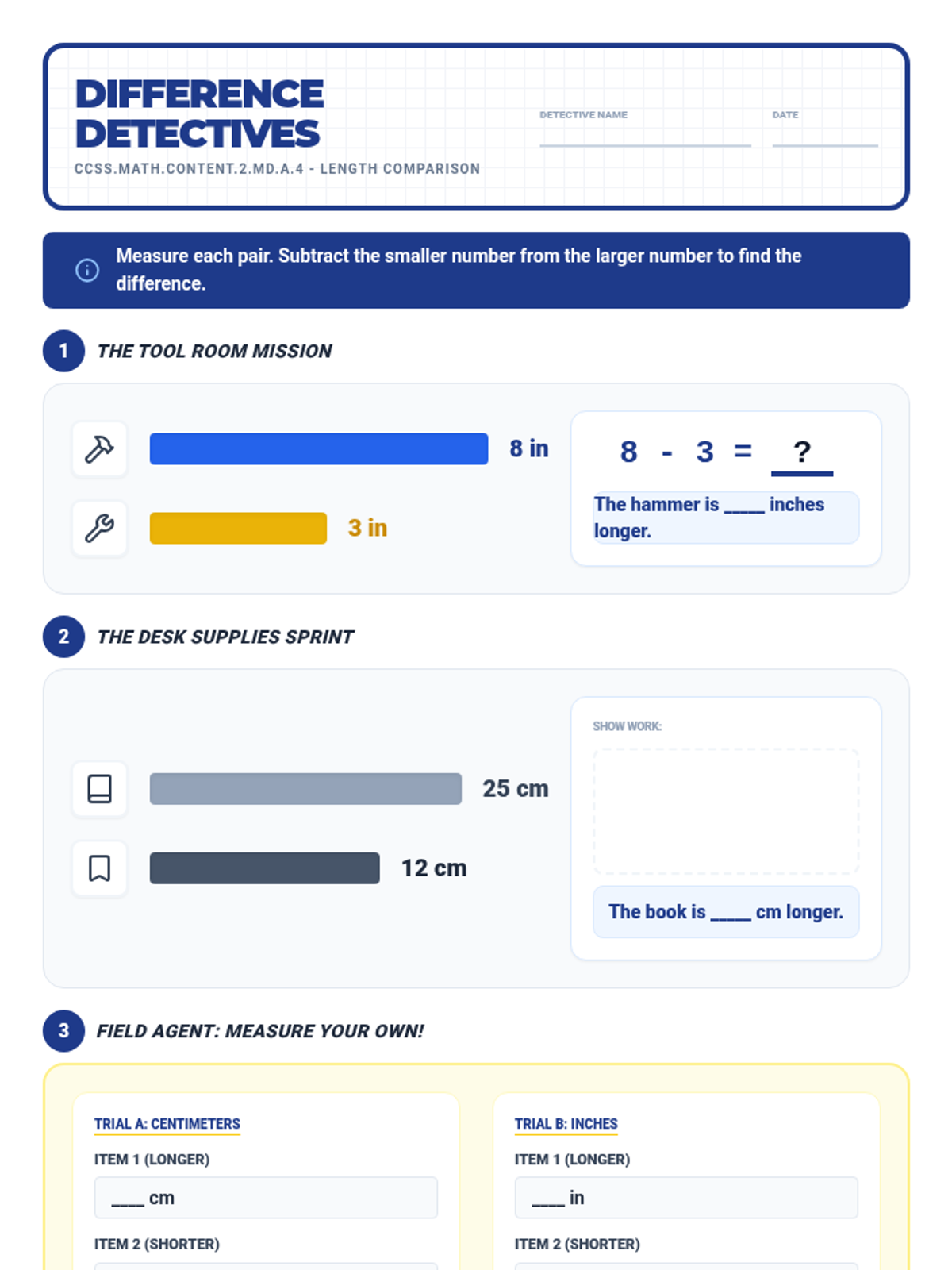
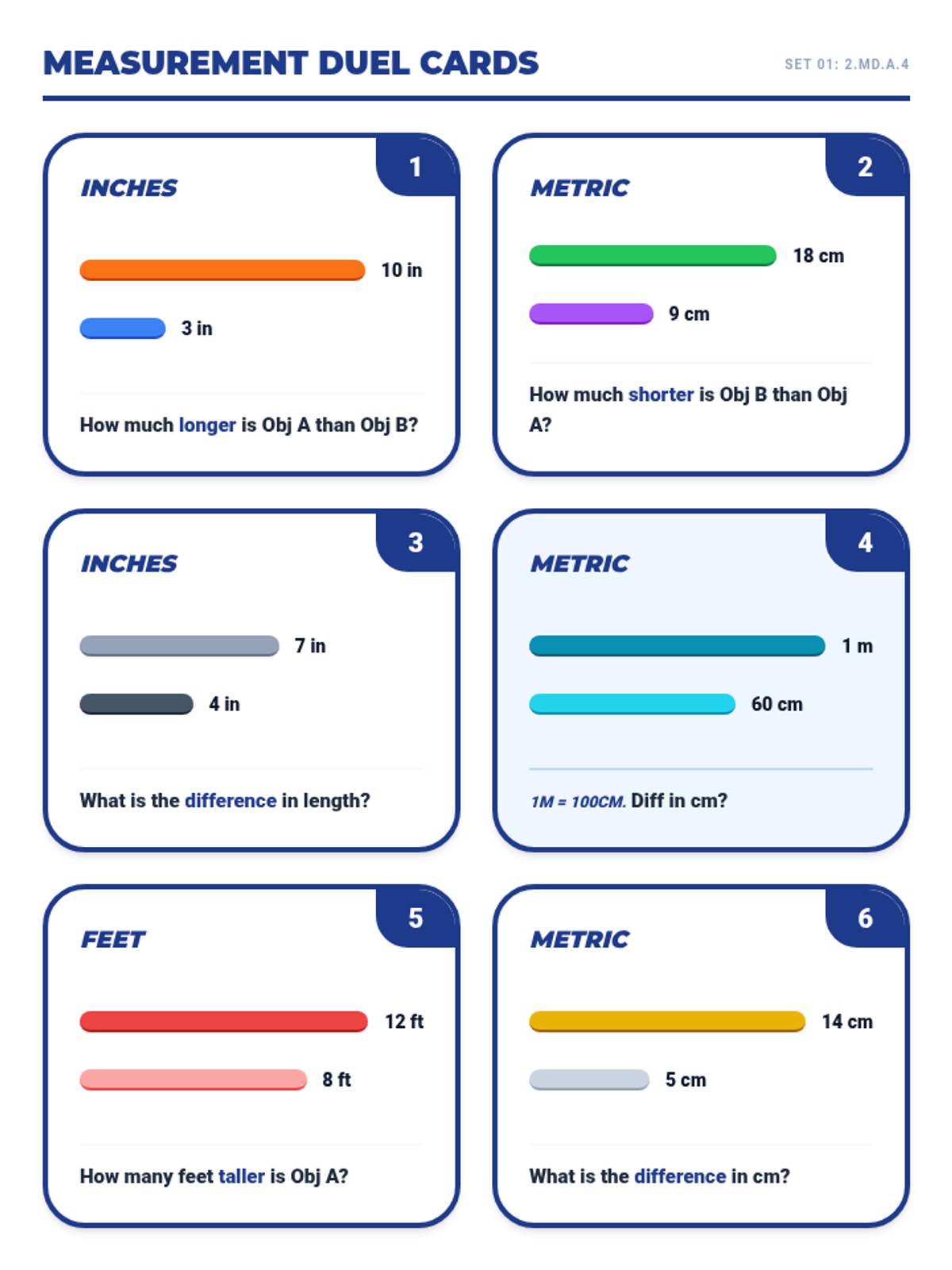
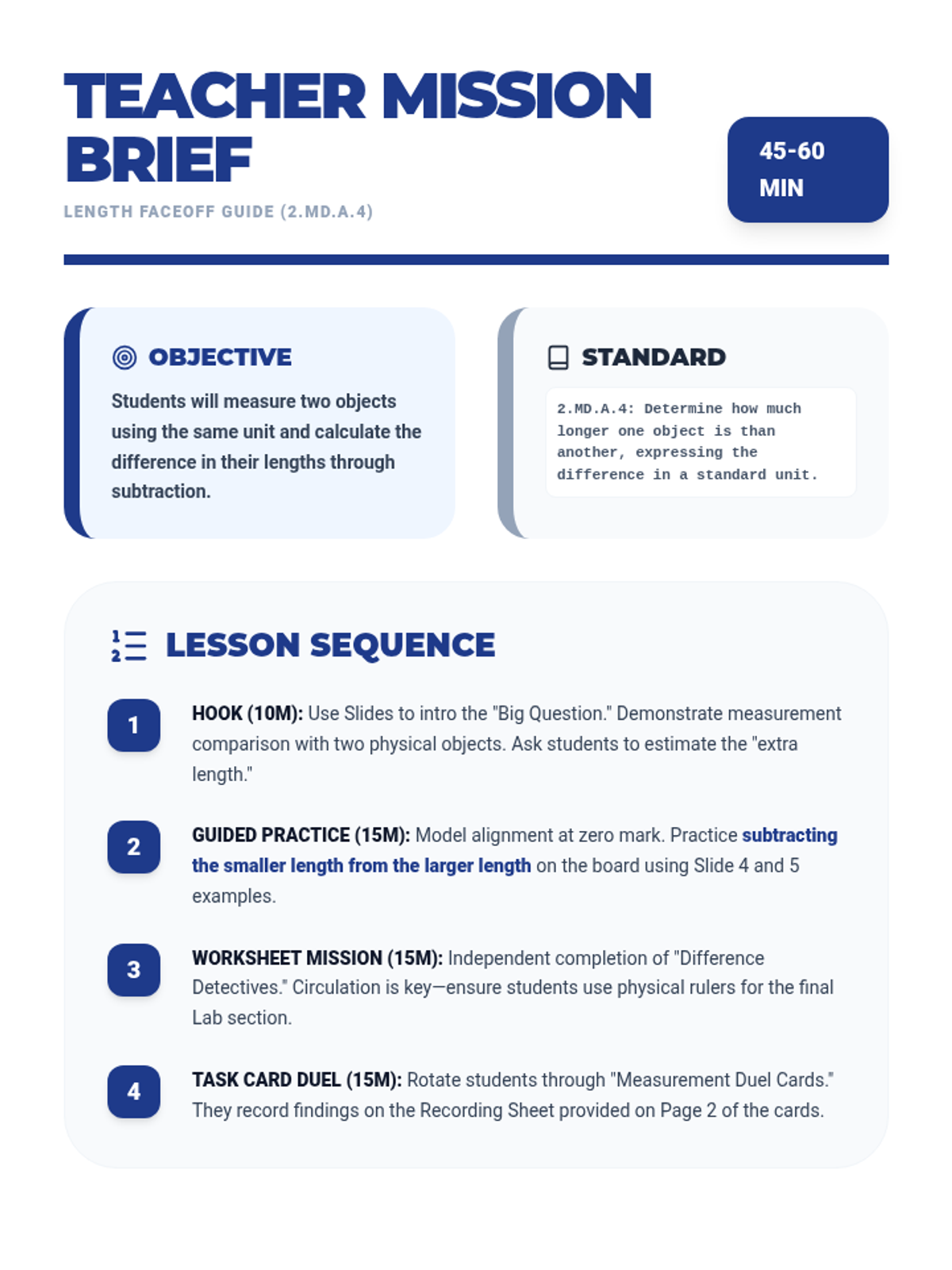
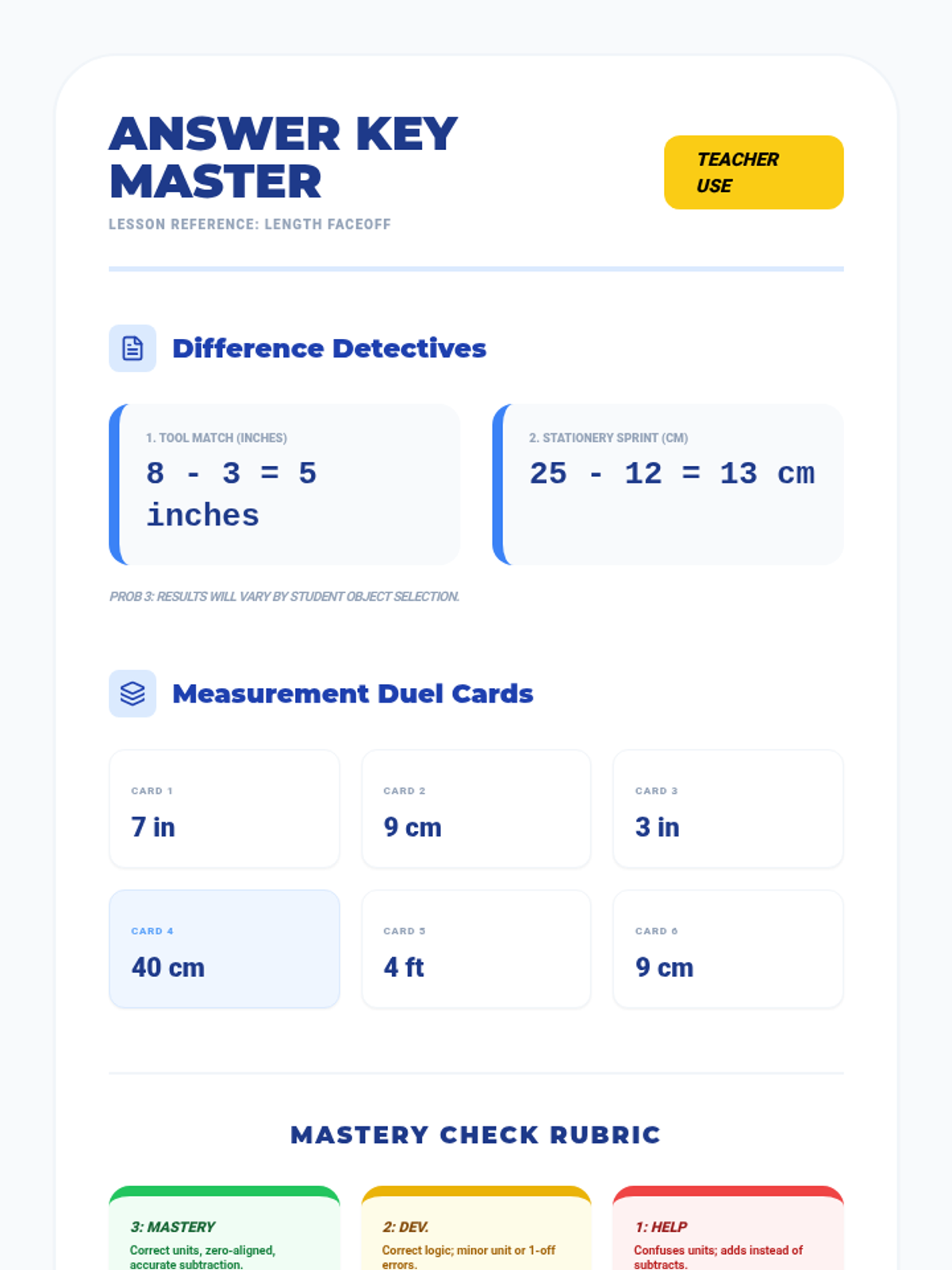
Students learn to measure two objects and determine the difference in their lengths using both standard and metric units. The lesson focuses on the 'how much longer' concept through hands-on measurement and subtraction.
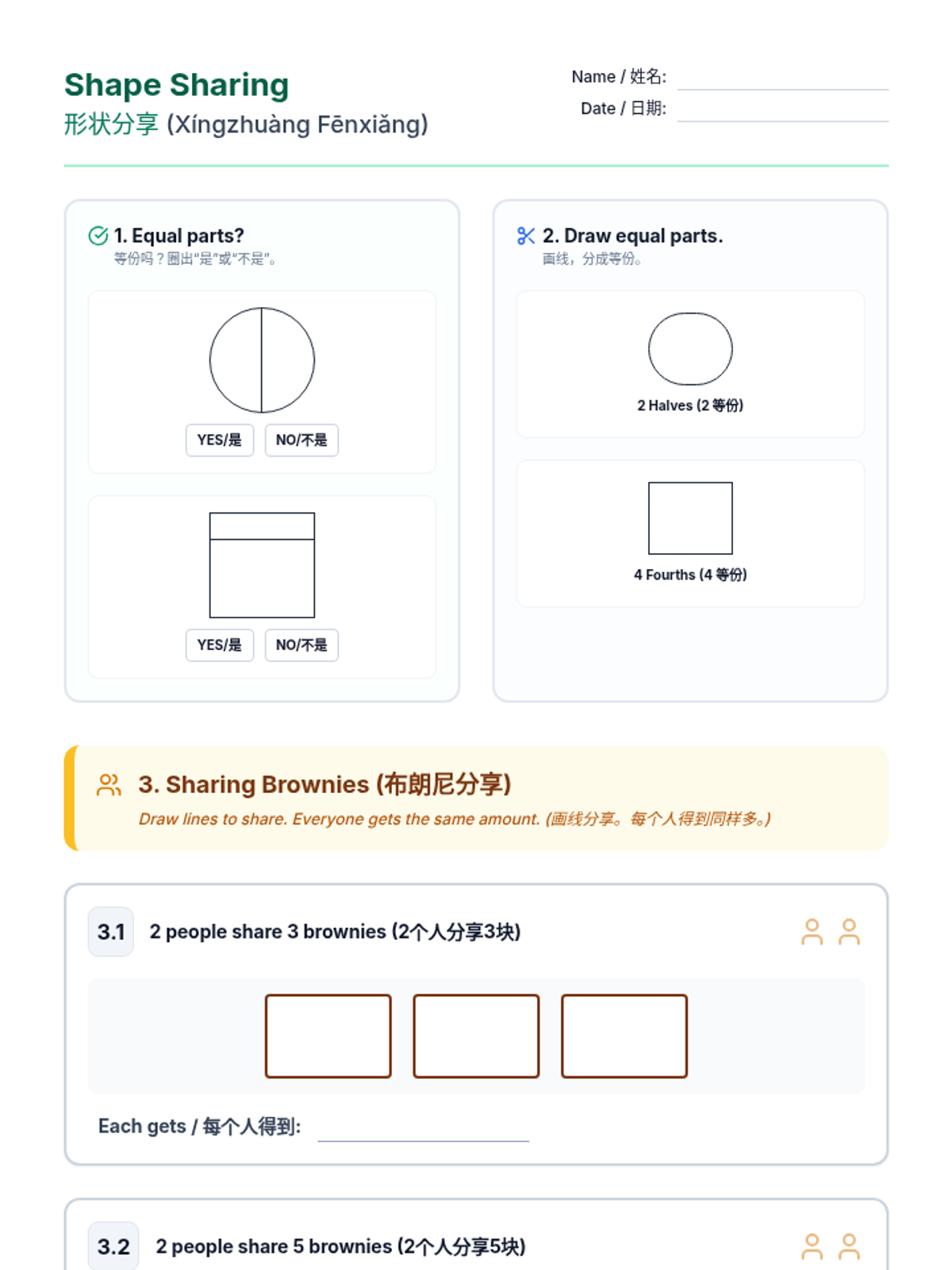
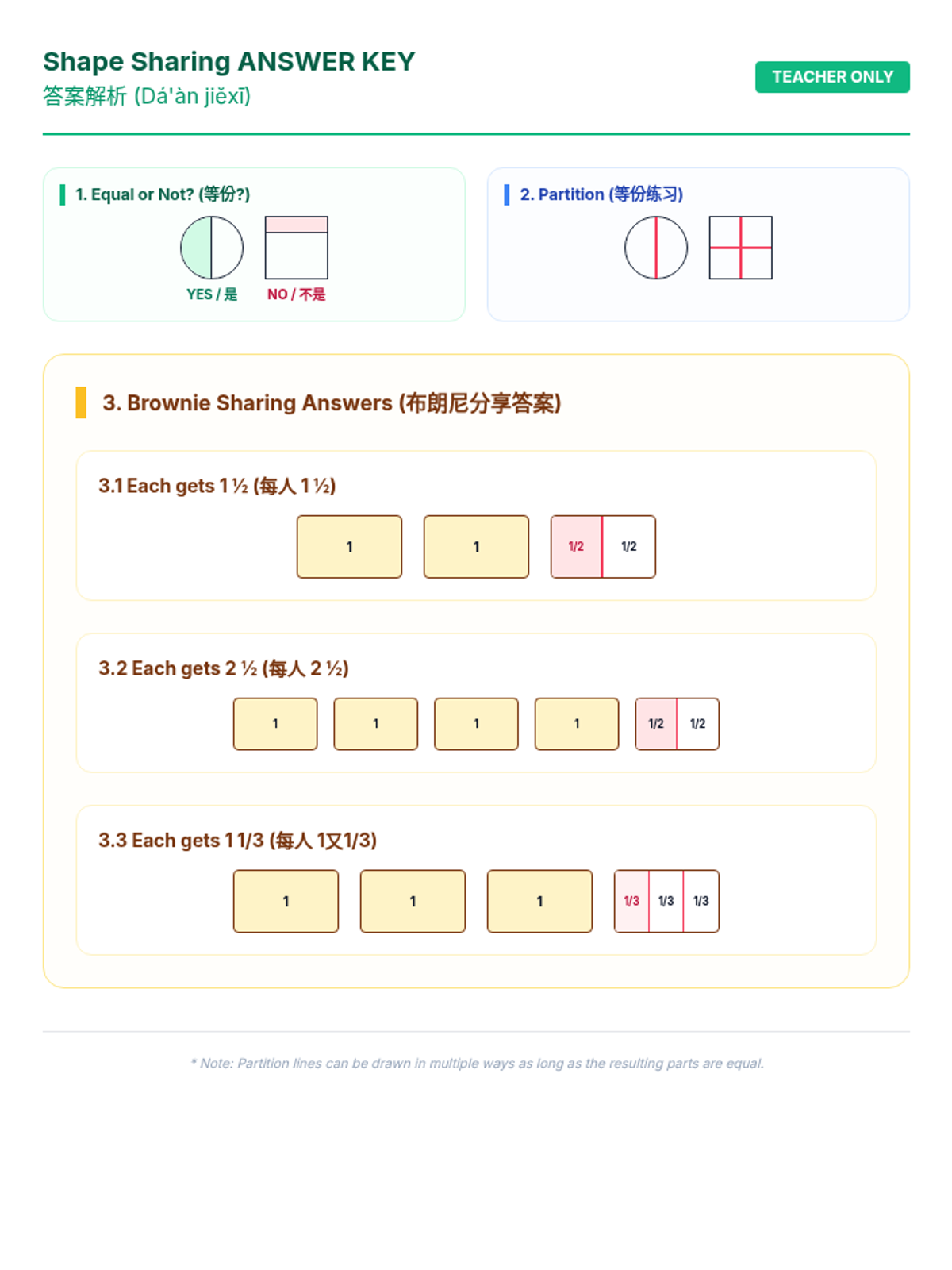
A bilingual (English/Simplified Chinese) lesson on partitioning shapes into equal shares (halves and fourths) for Level 1 ELL students. The lesson focuses on visual understanding and basic vocabulary like 'equal', 'half', and 'fourth'.
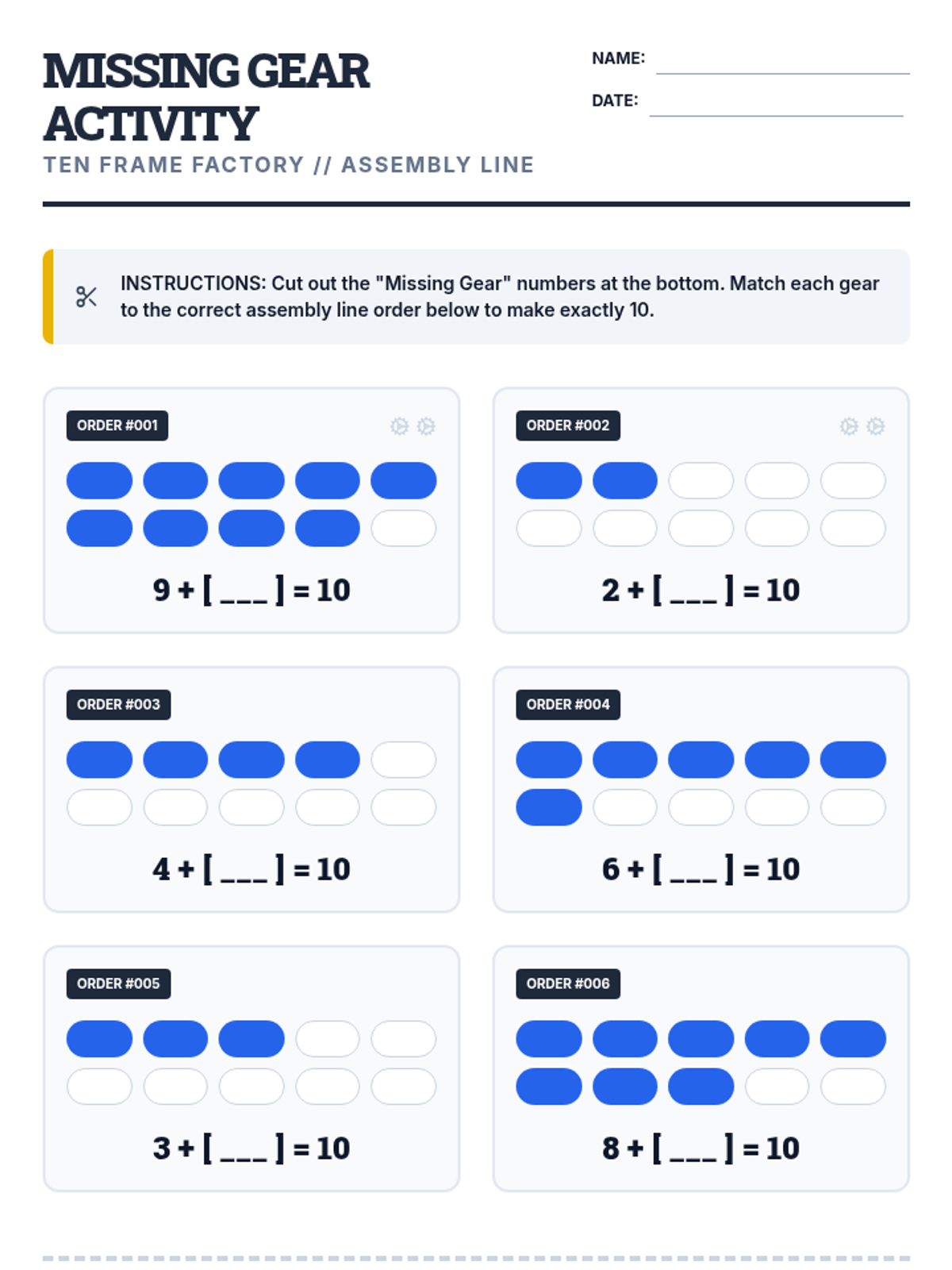
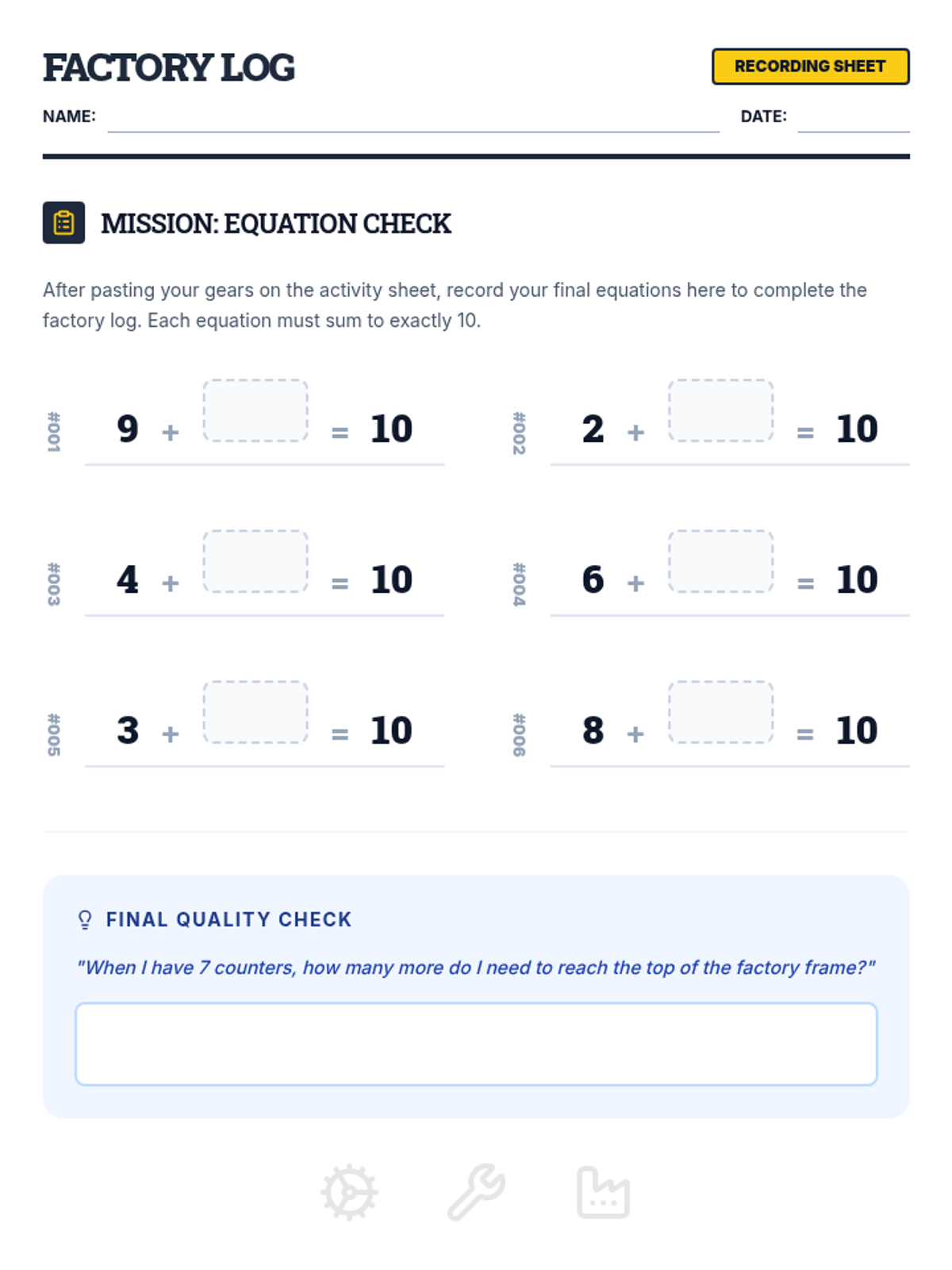
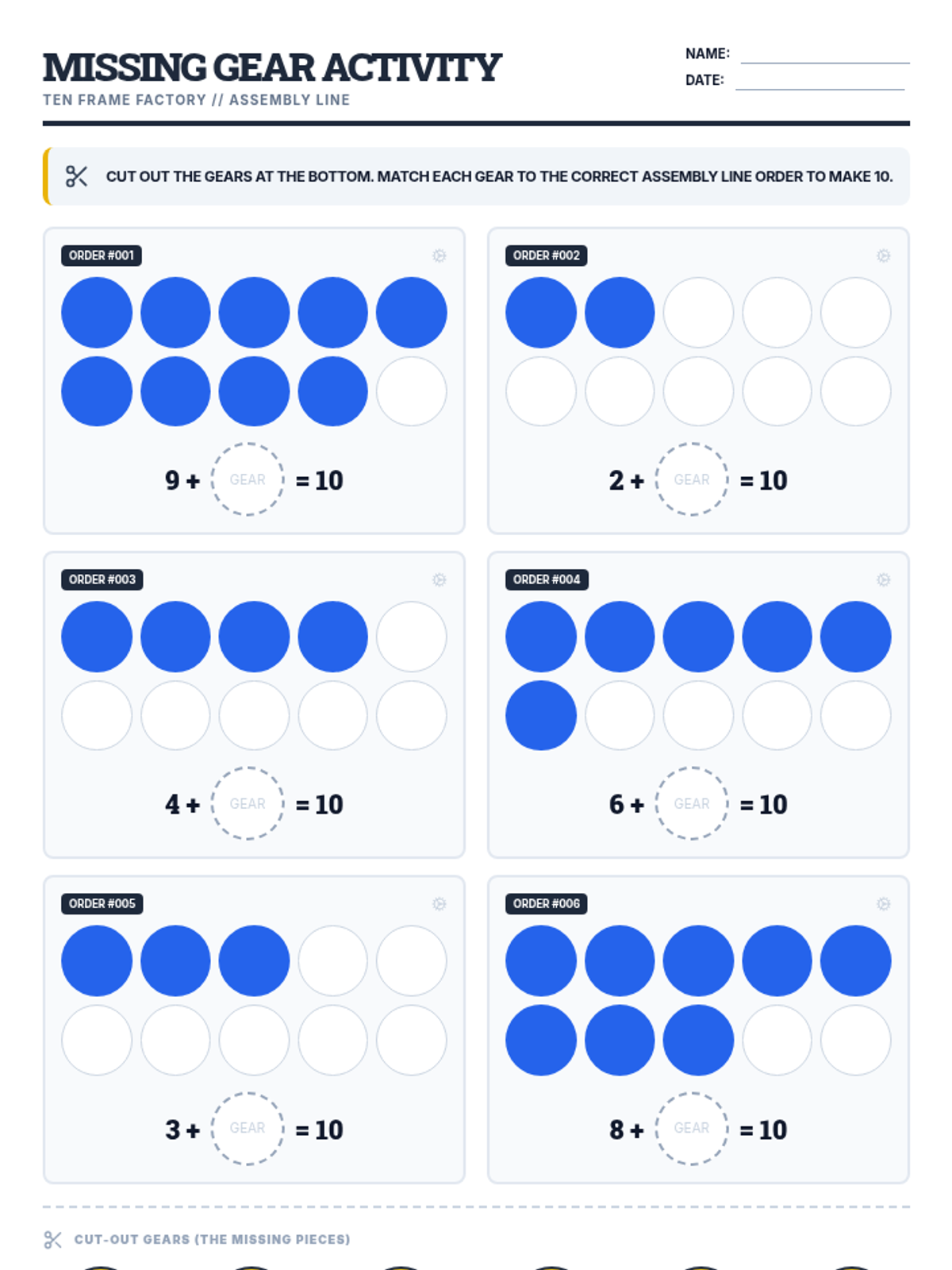
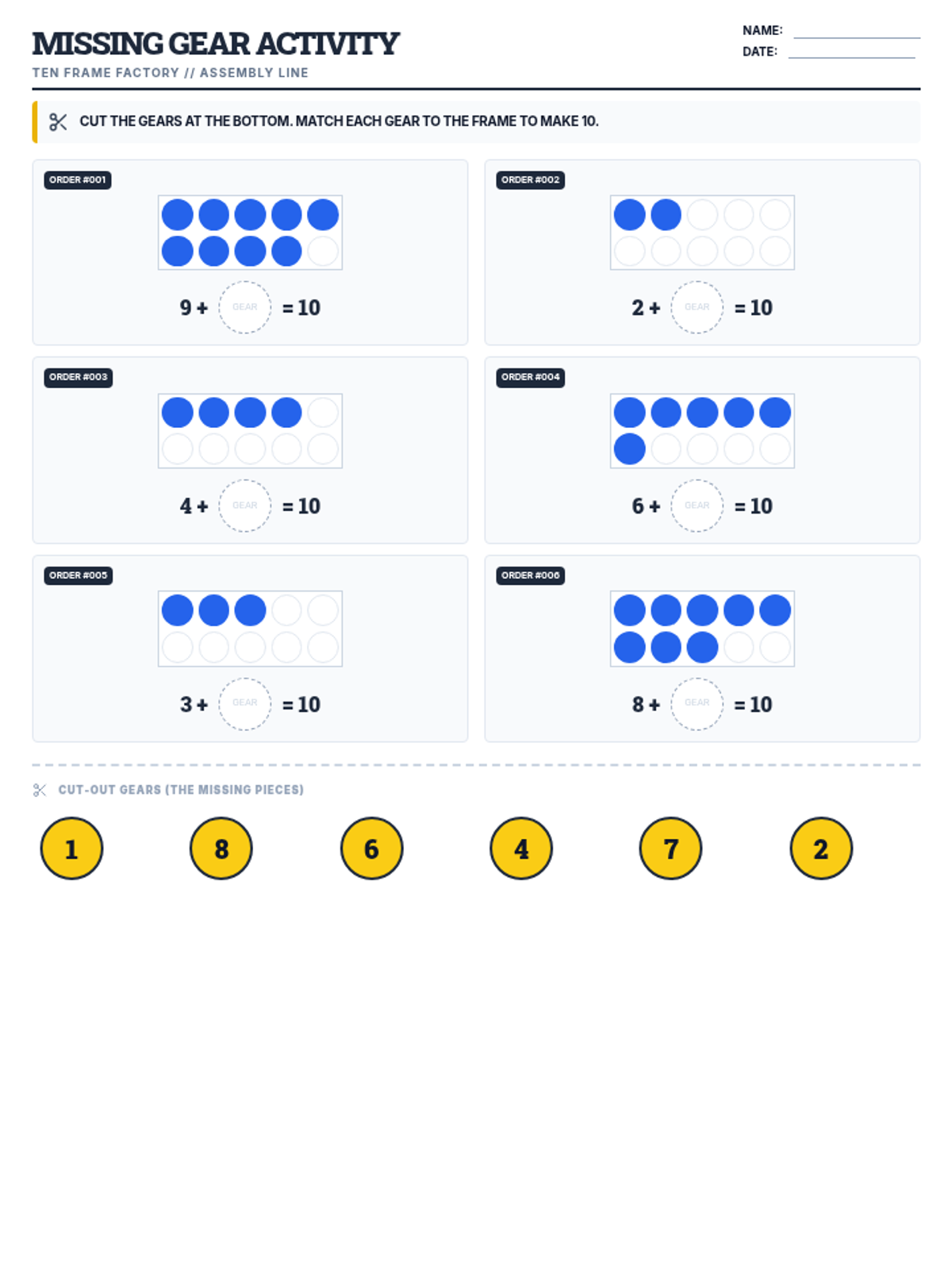
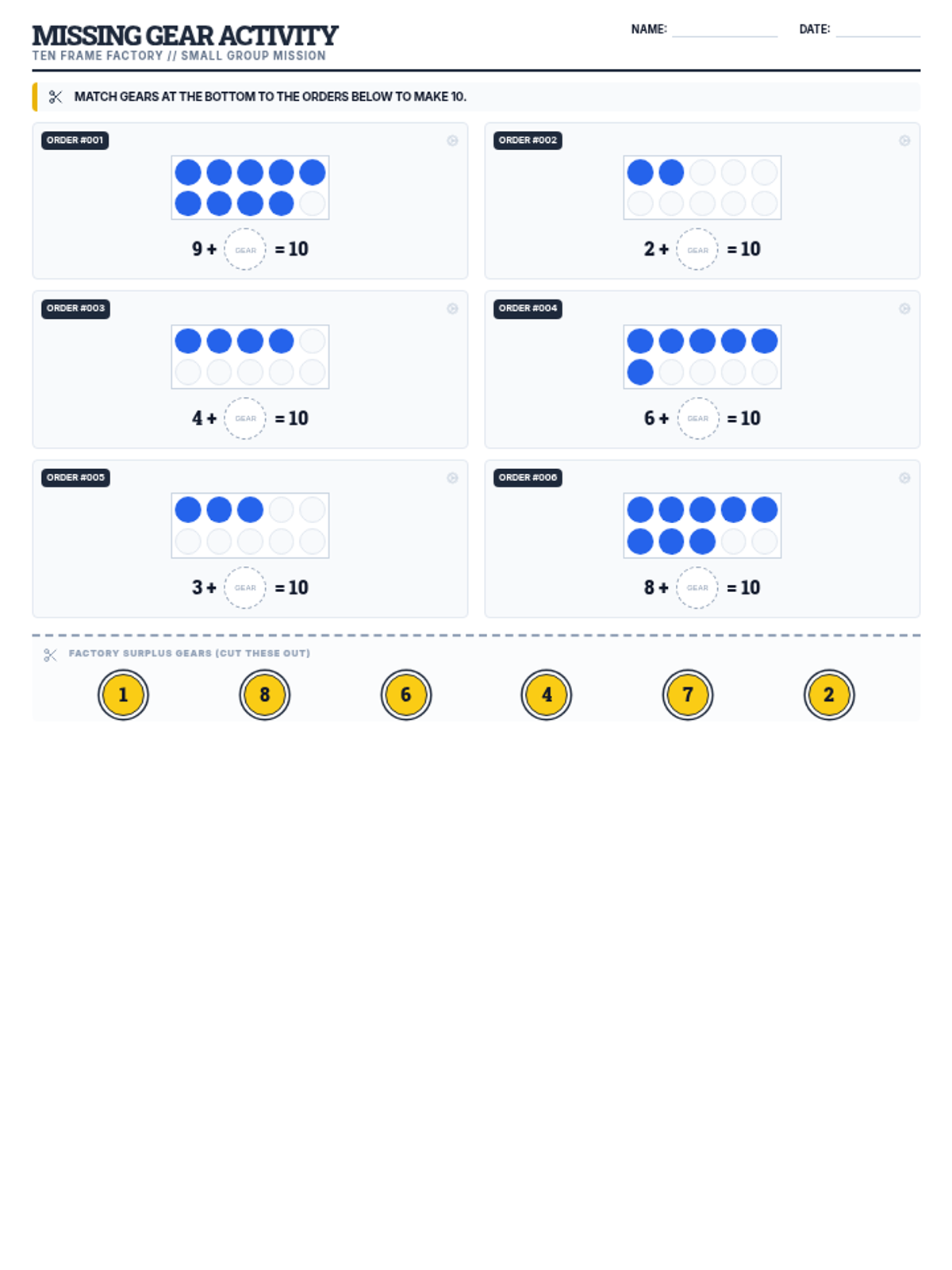
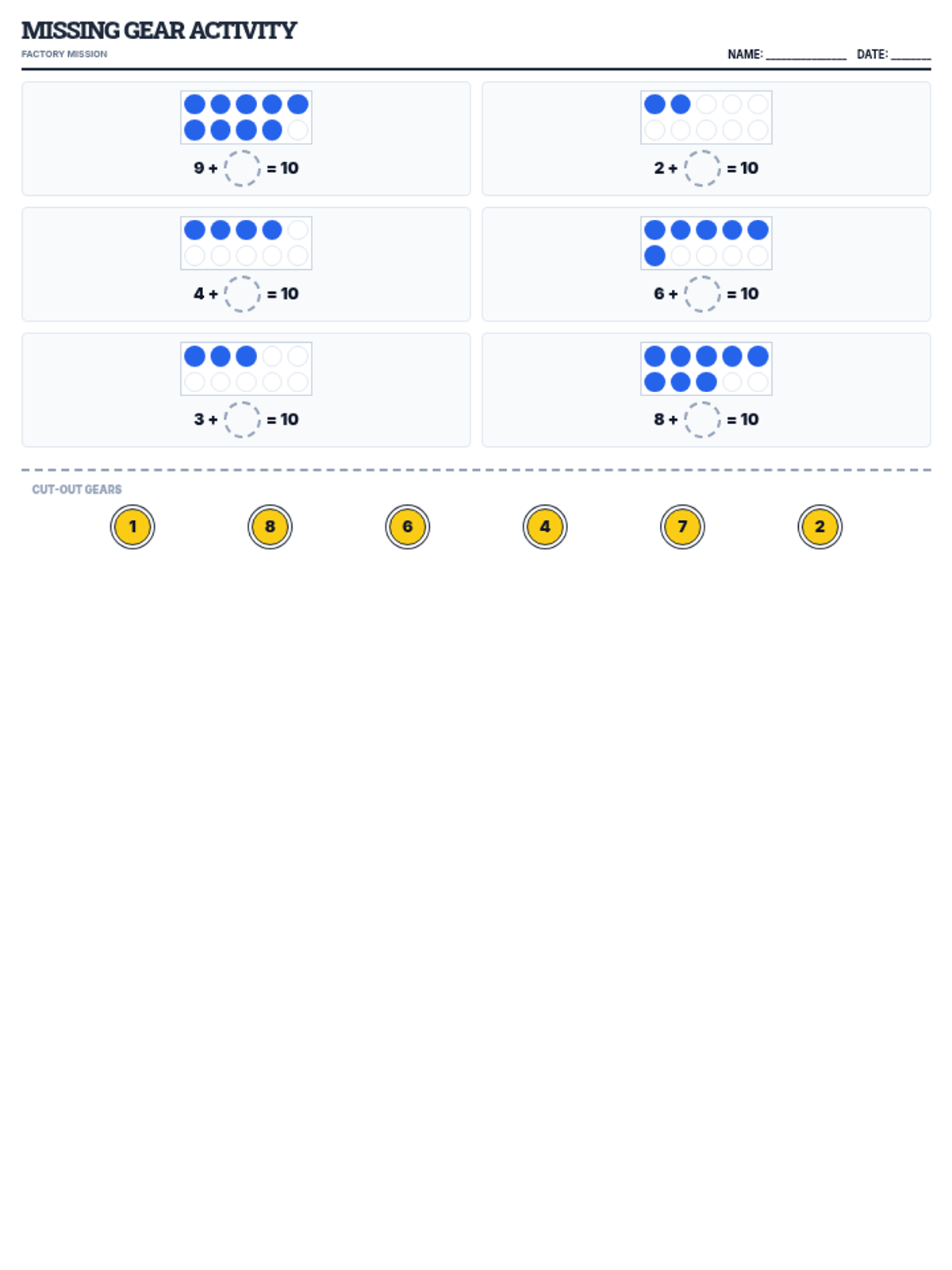
Transitions from visual ten-frames to writing equations through a hands-on cut-and-paste activity.