Students analyze the pros and cons of running a 5-1 versus a 6-2 offense regarding setter capability and hitter availability. The lesson involves walking through rotations without a ball to understand overlap rules and setter release points.
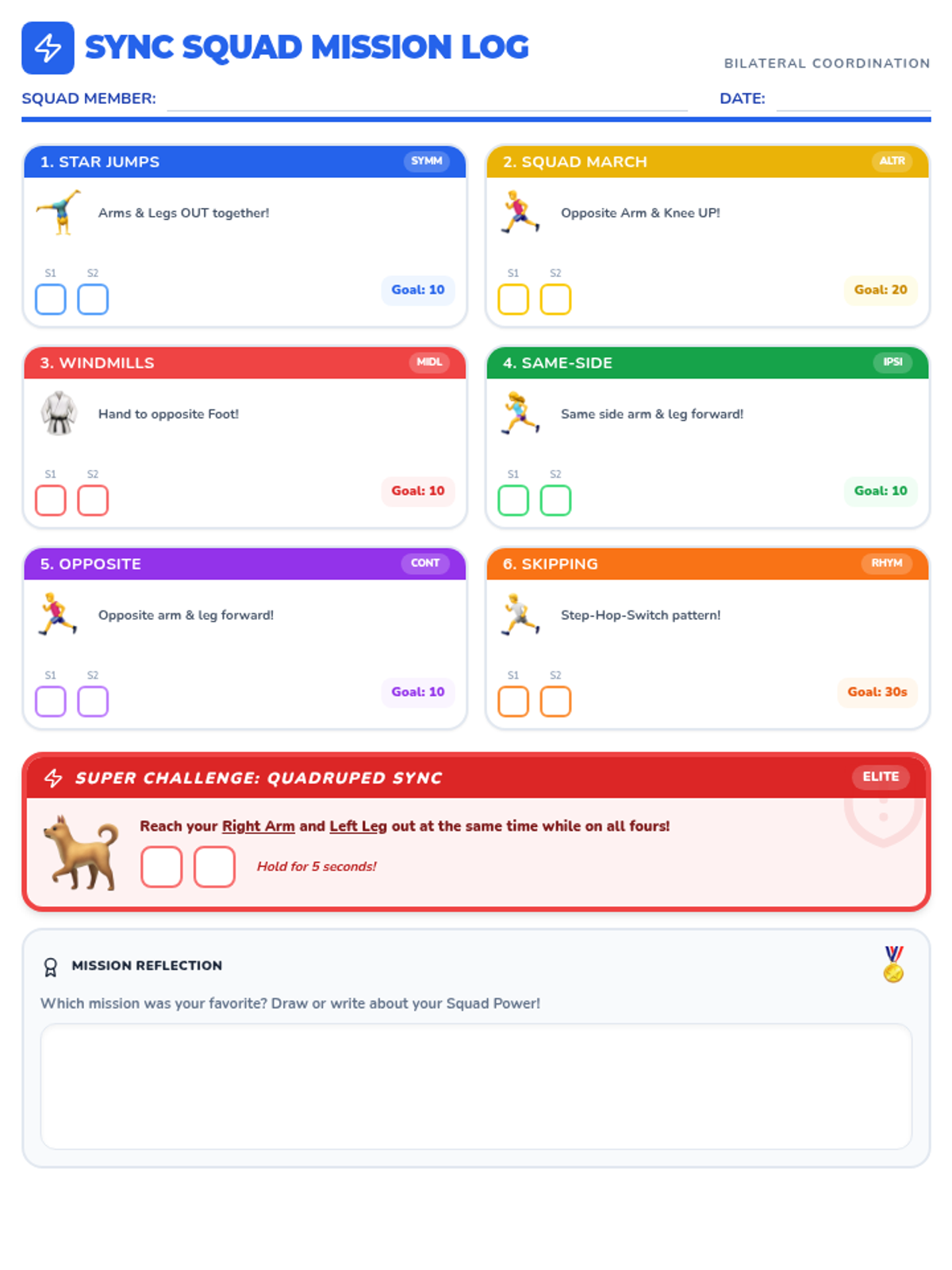
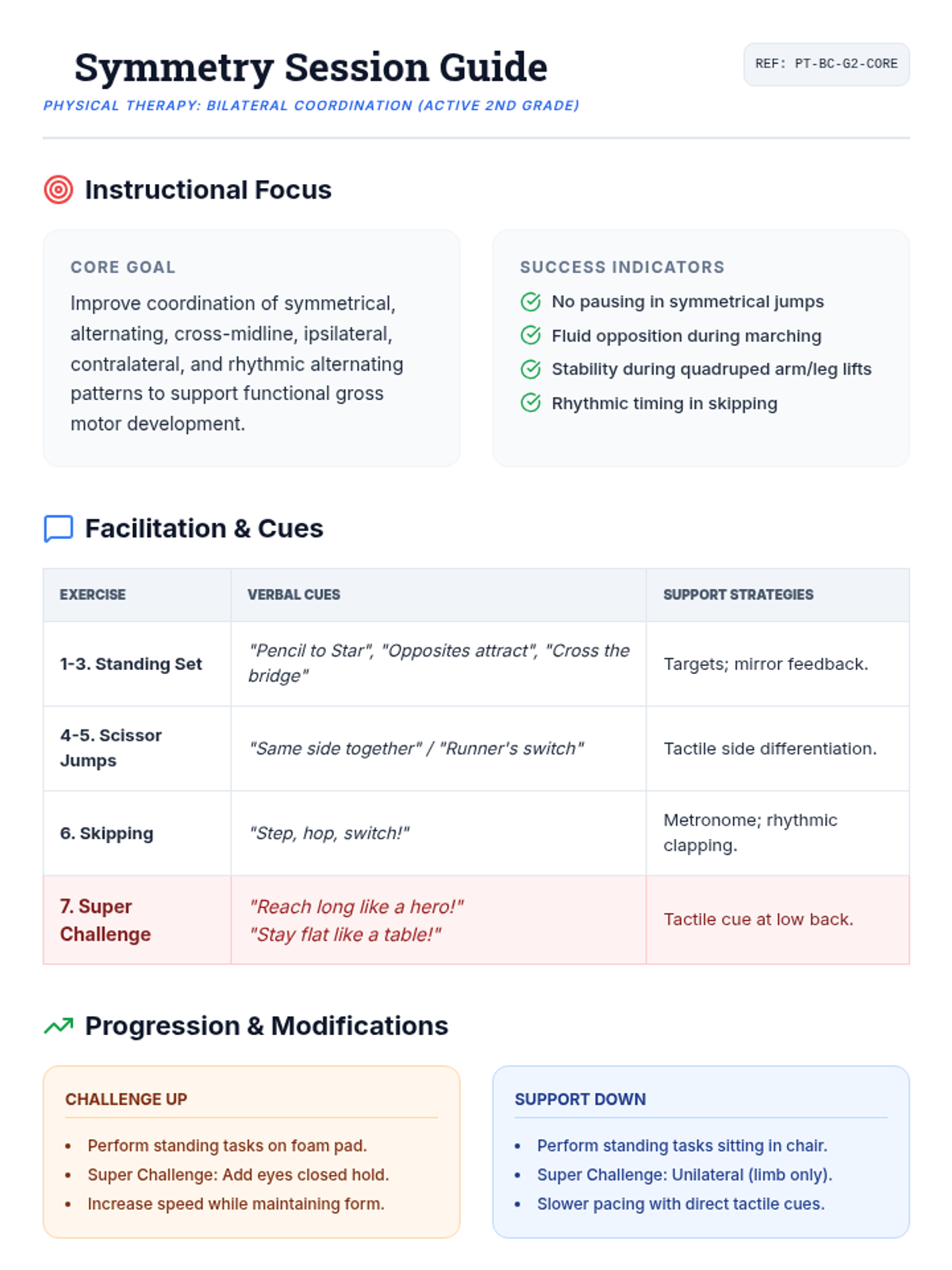
A physical therapy lesson focused on bilateral coordination for active 2nd graders, featuring the 'Sync Squad' theme to make symmetrical and alternating movements engaging and fun.
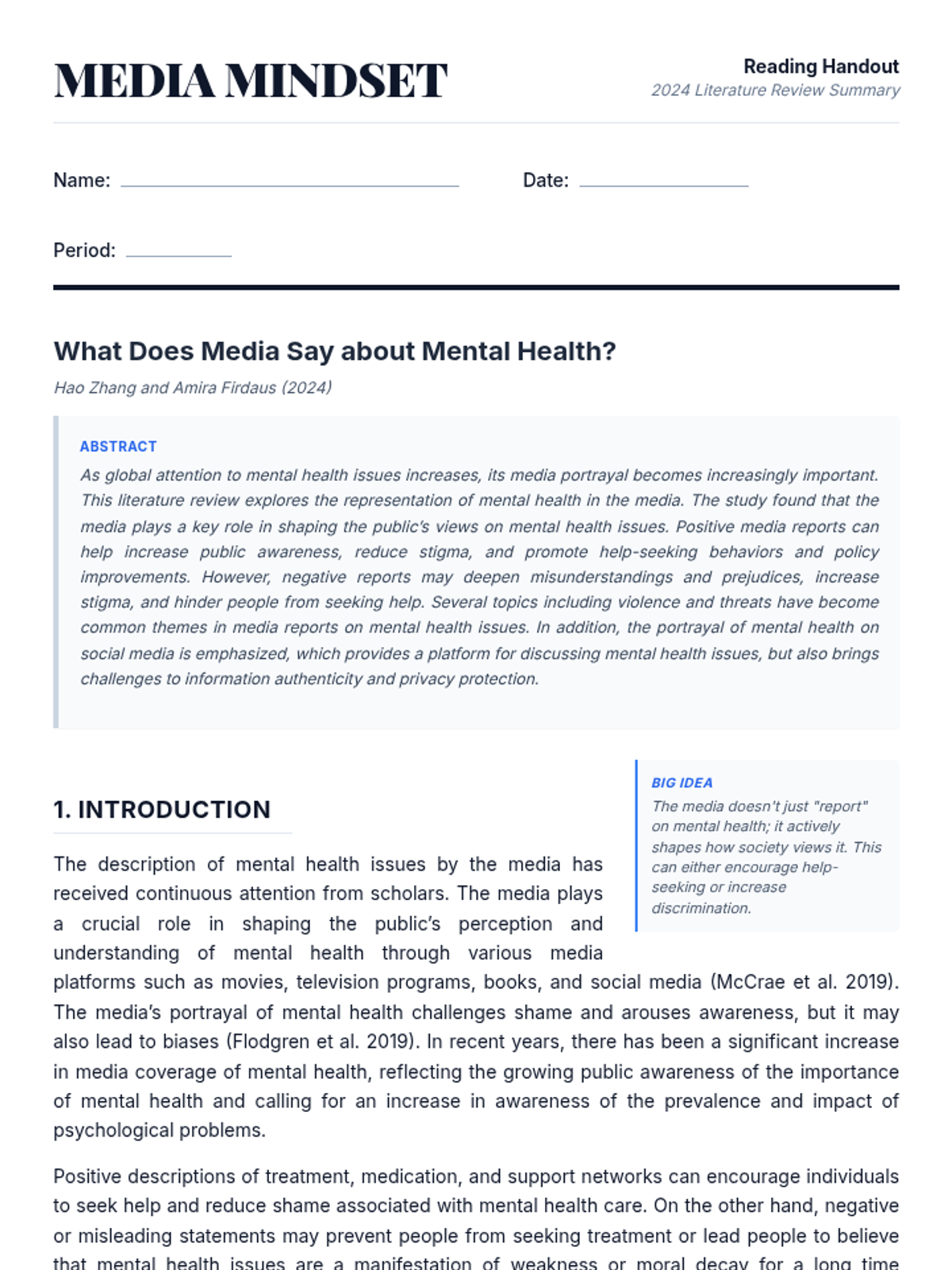
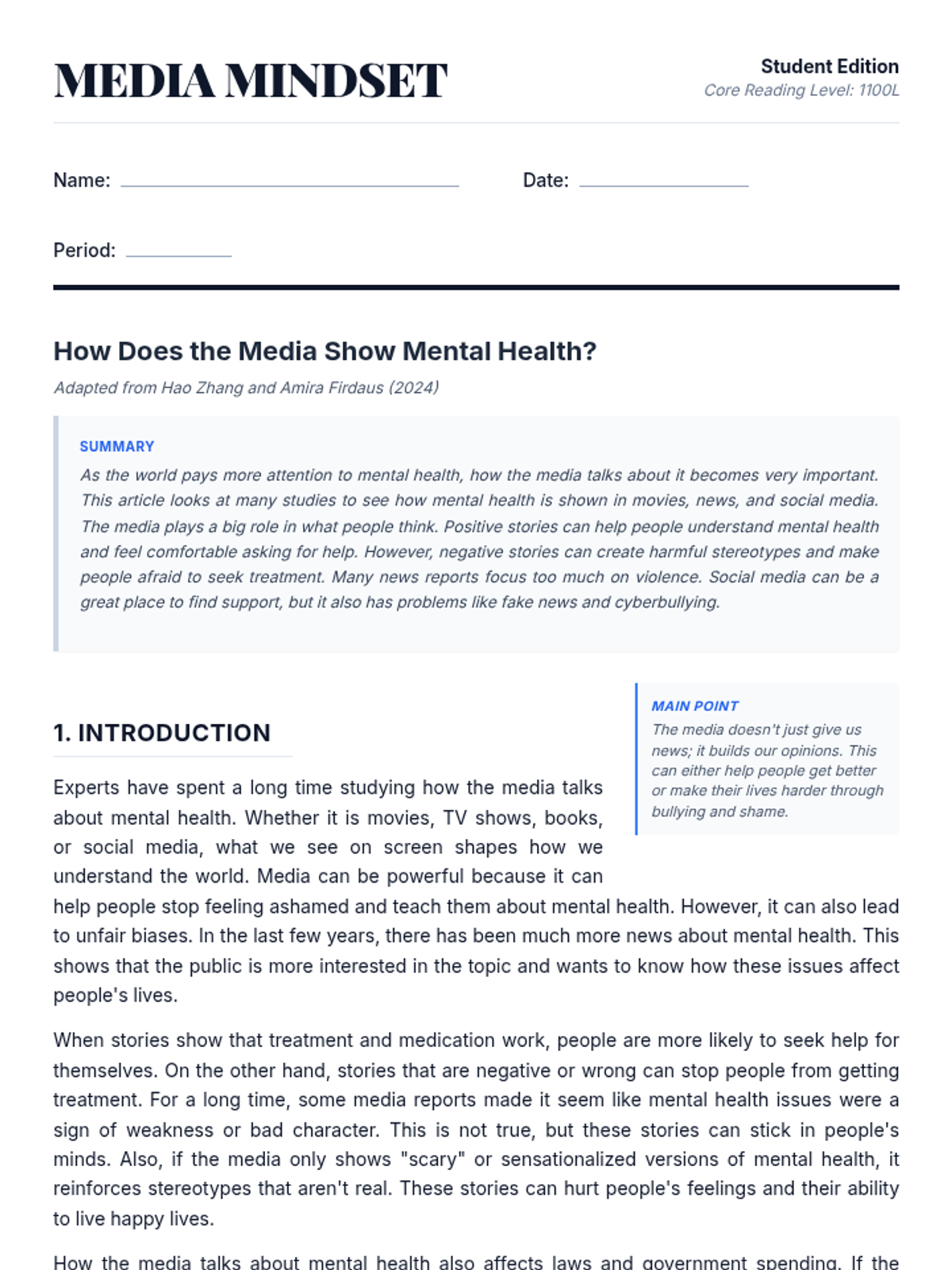
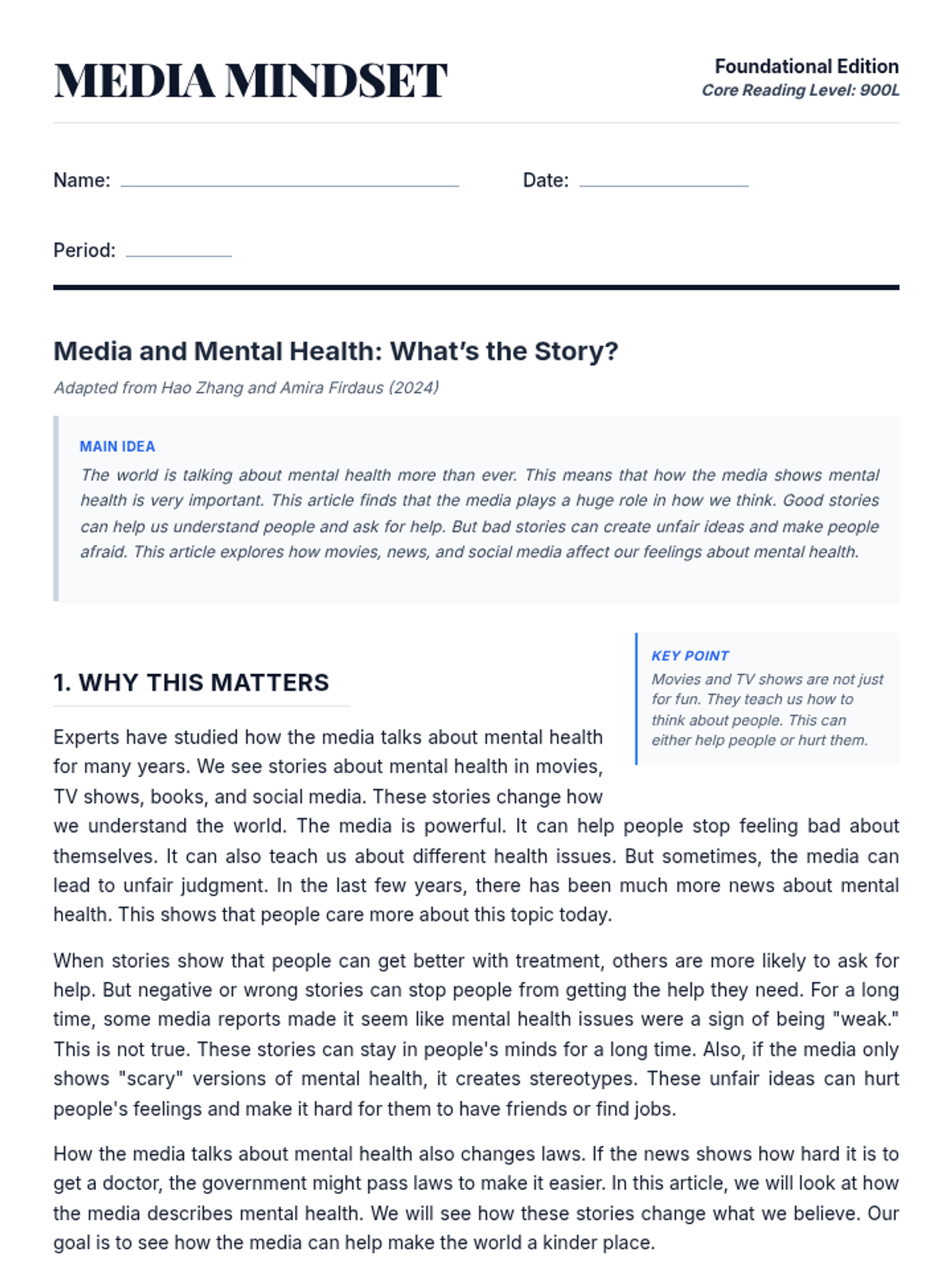
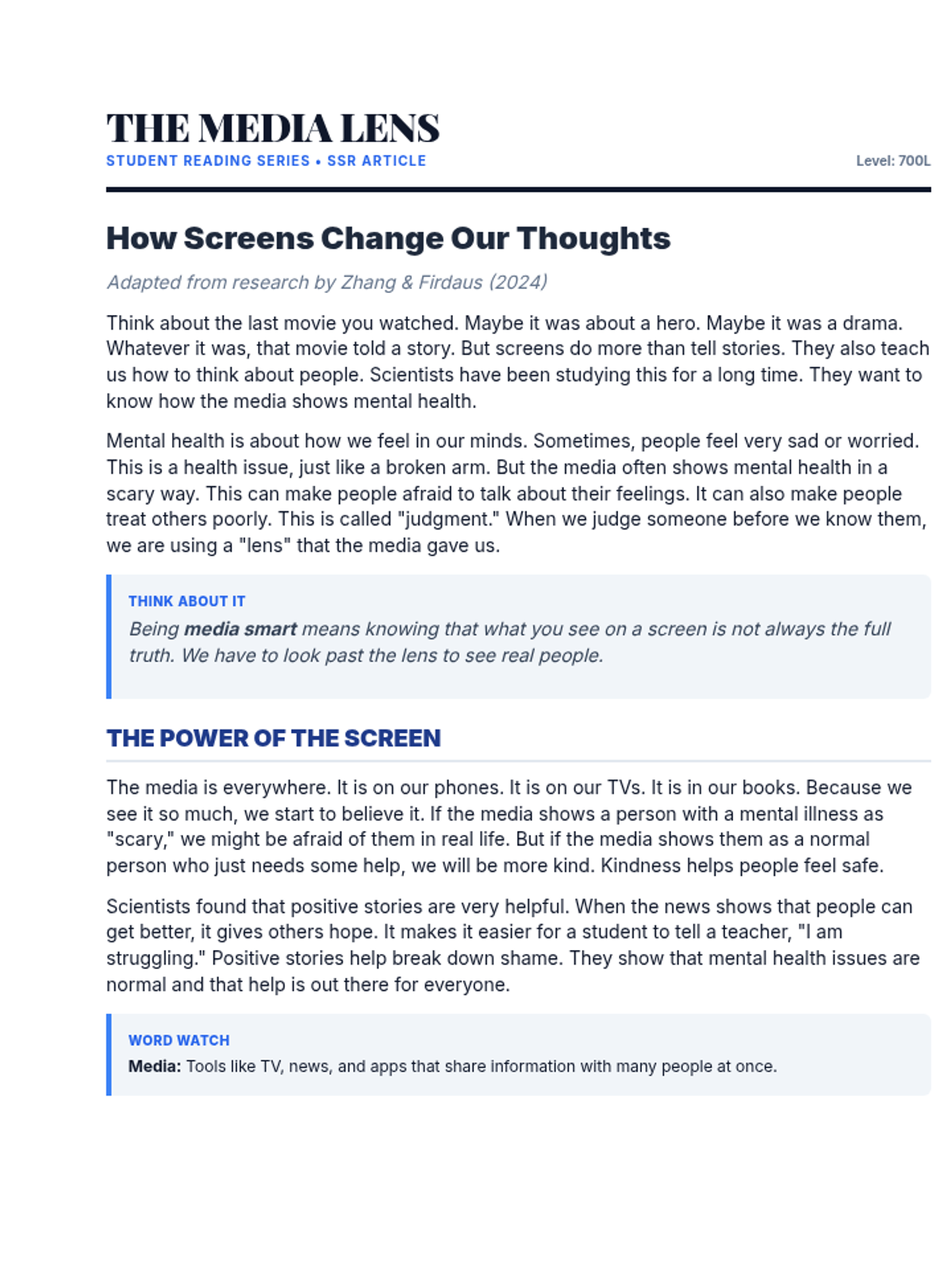
This lesson explores how various media platforms shape public perception of mental health, focusing on a 2024 literature review. Students will analyze the impact of media portrayals on stigma, policy, and help-seeking behaviors across news and social media.
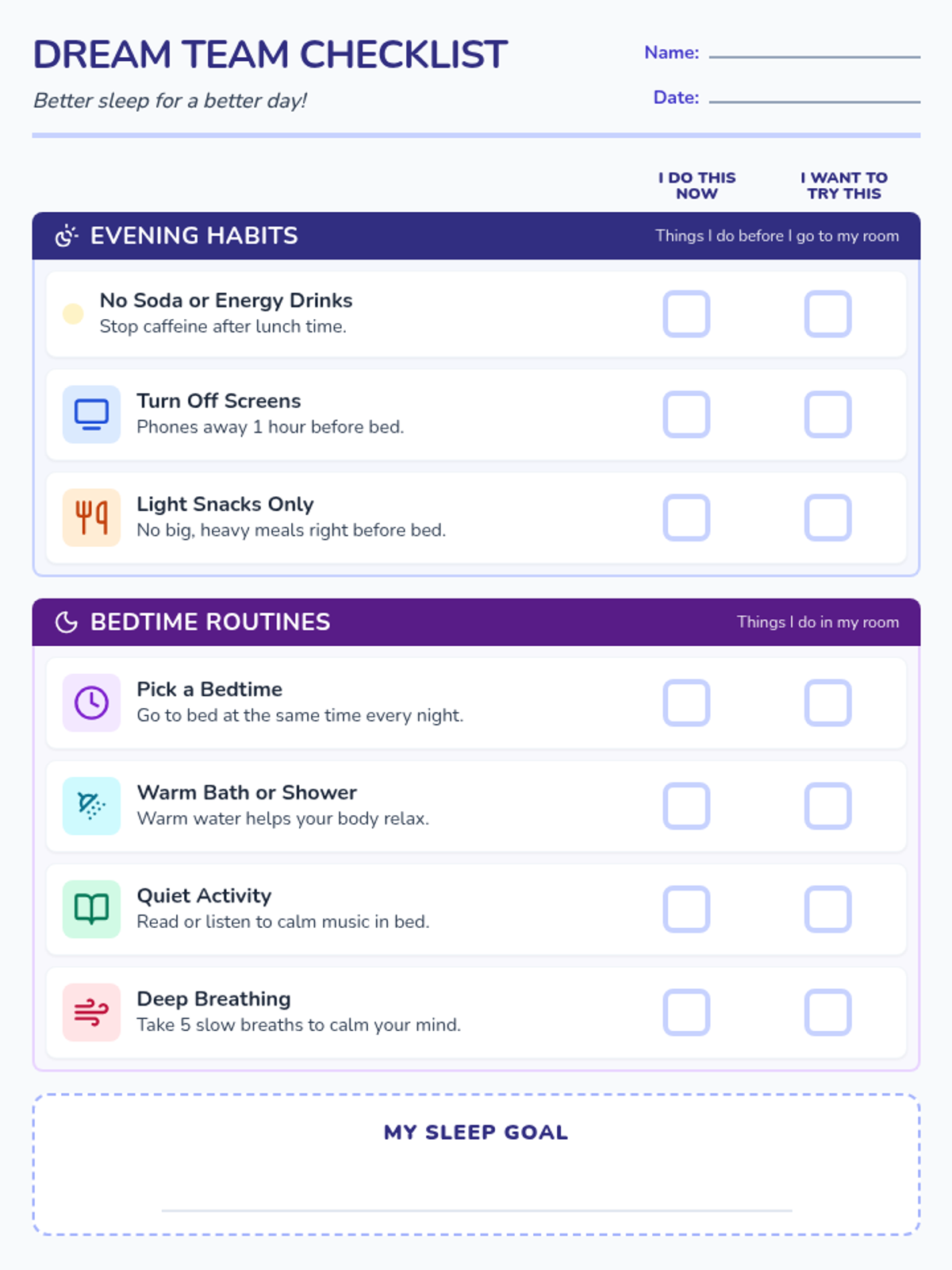
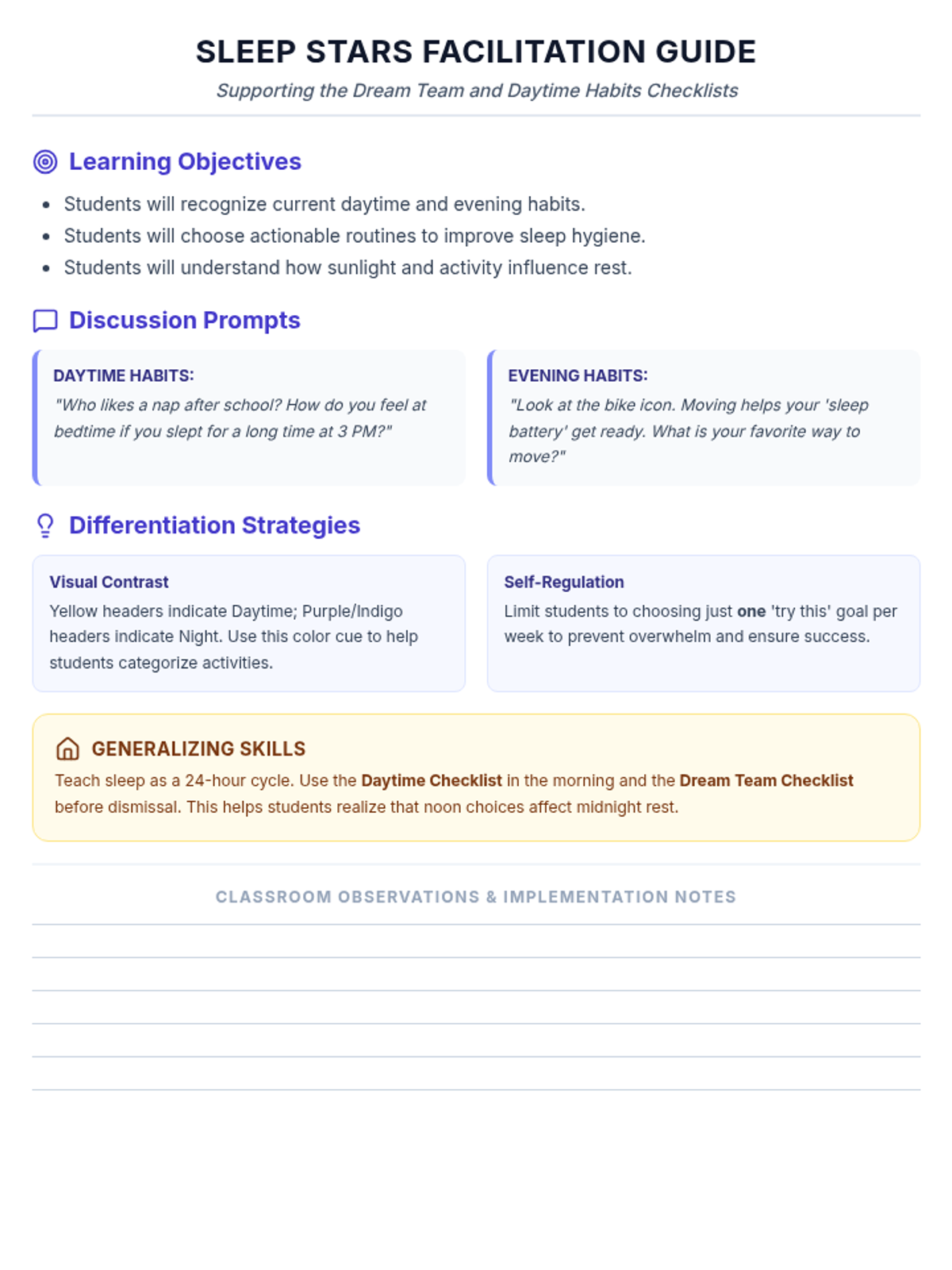
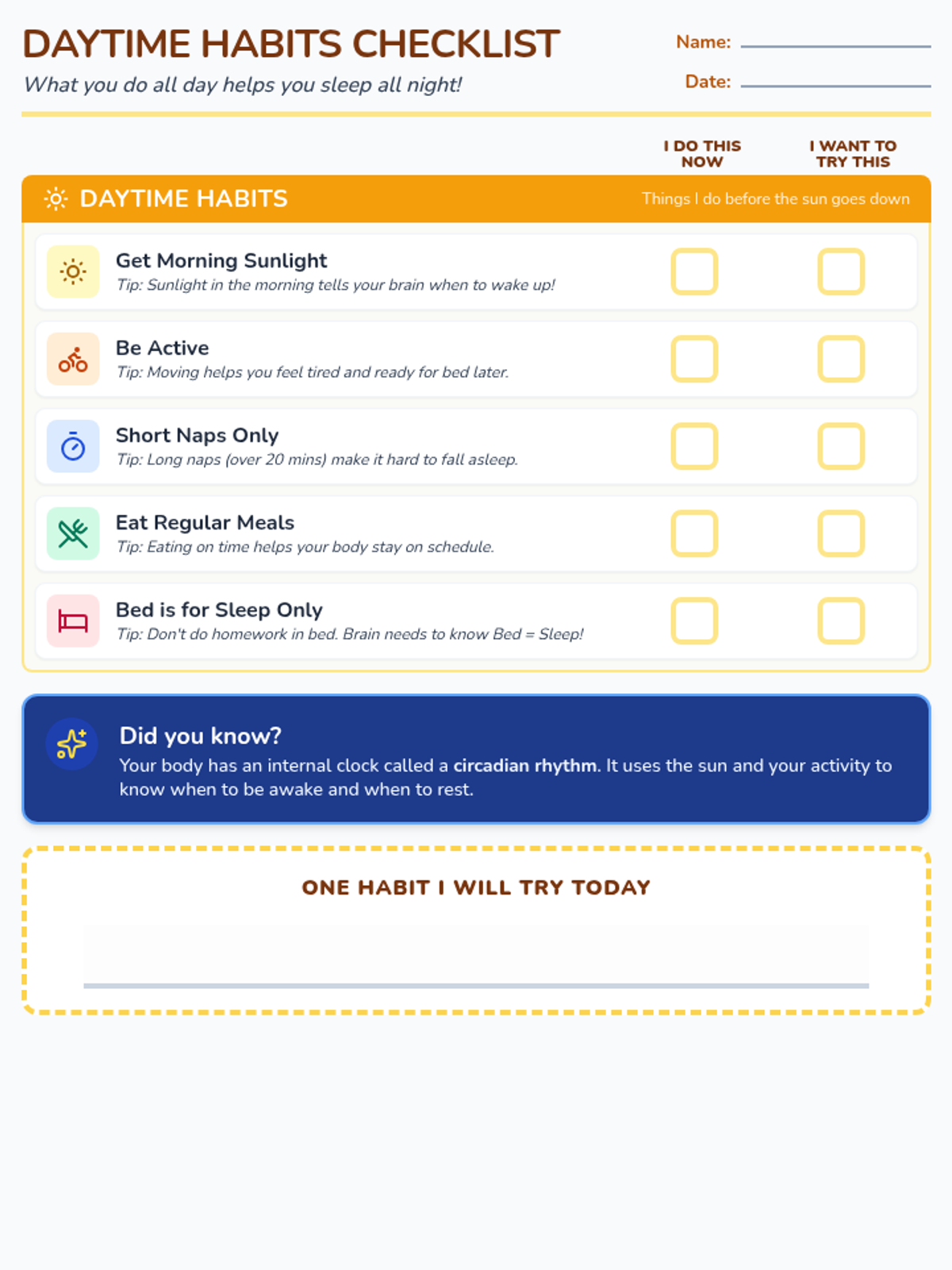
This lesson introduces students to healthy sleep hygiene habits through a personalized self-assessment checklist and teacher-led discussion. It focuses on concrete, actionable steps for improving evening and bedtime routines.
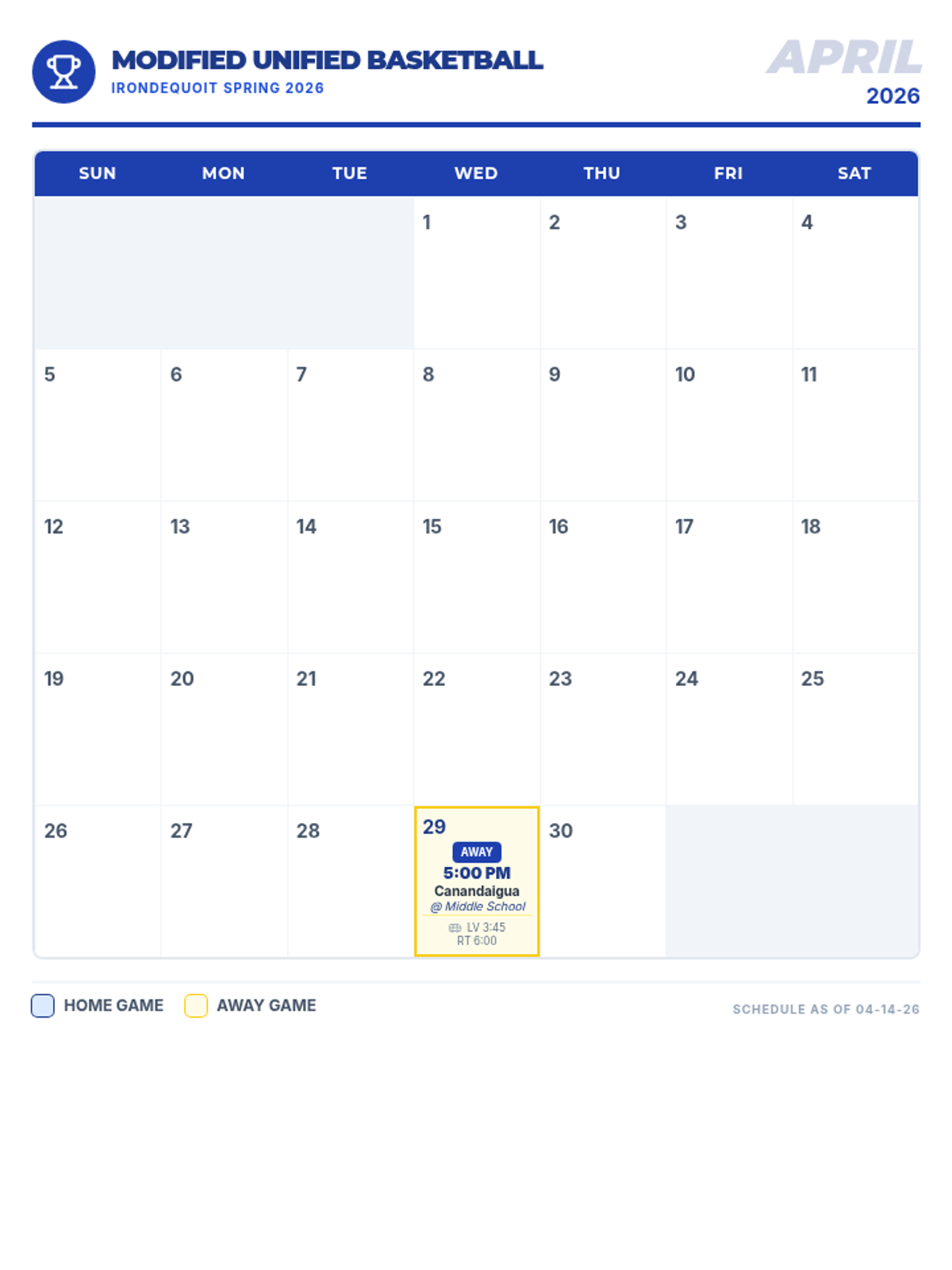
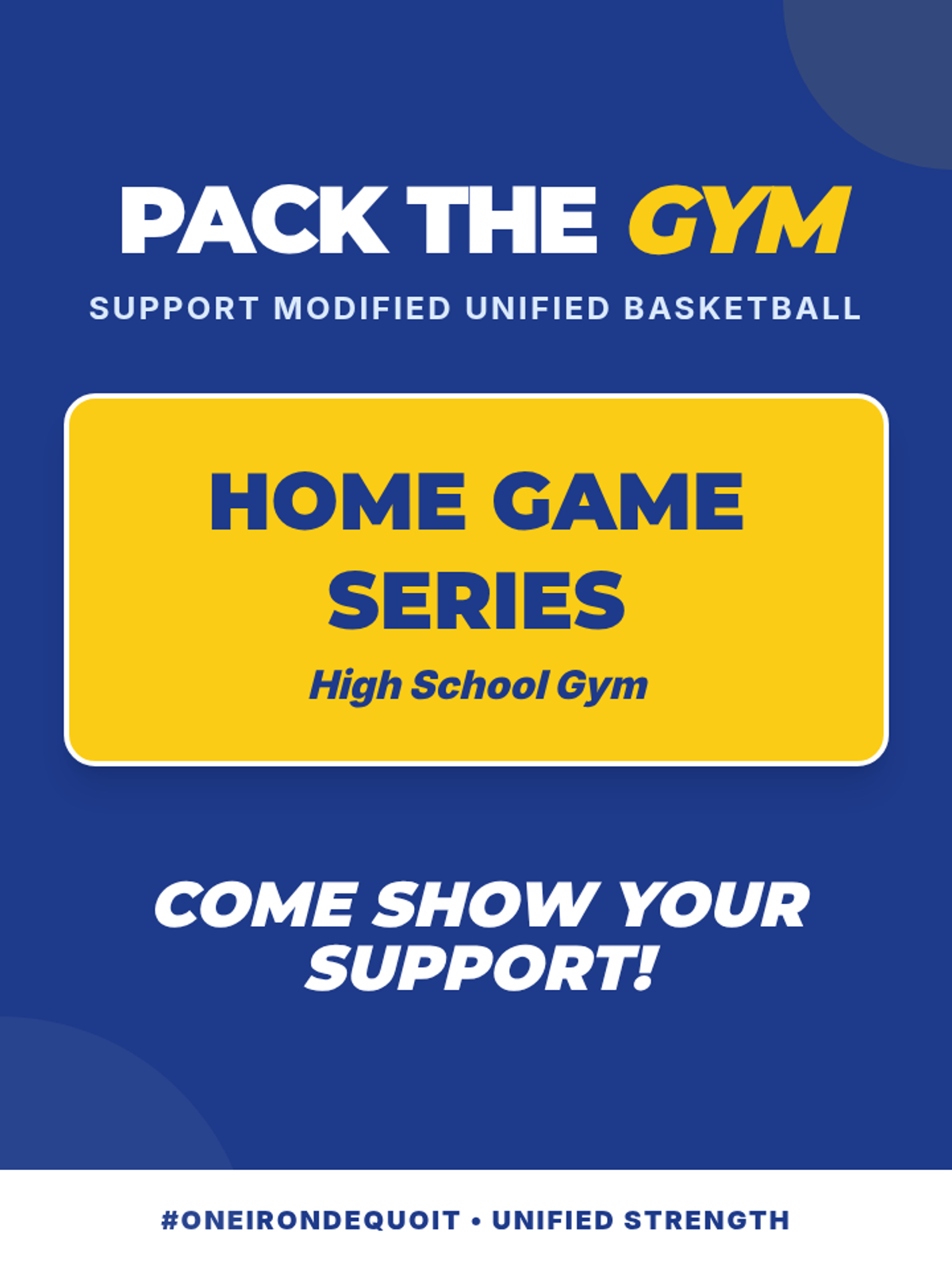
A collection of materials for the Irondequoit Modified Unified Basketball Spring 2026 season, including schedules and promotional resources.
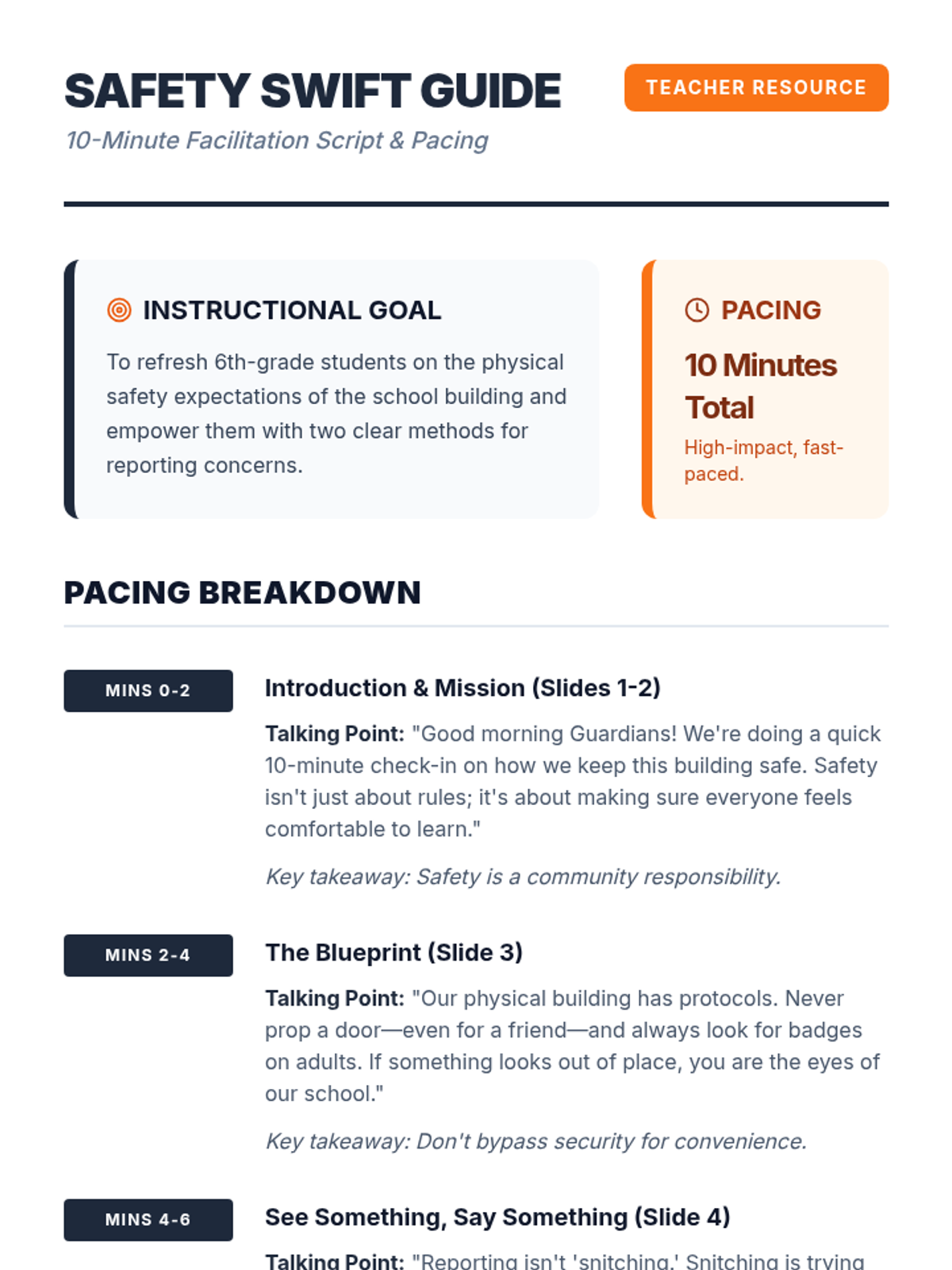
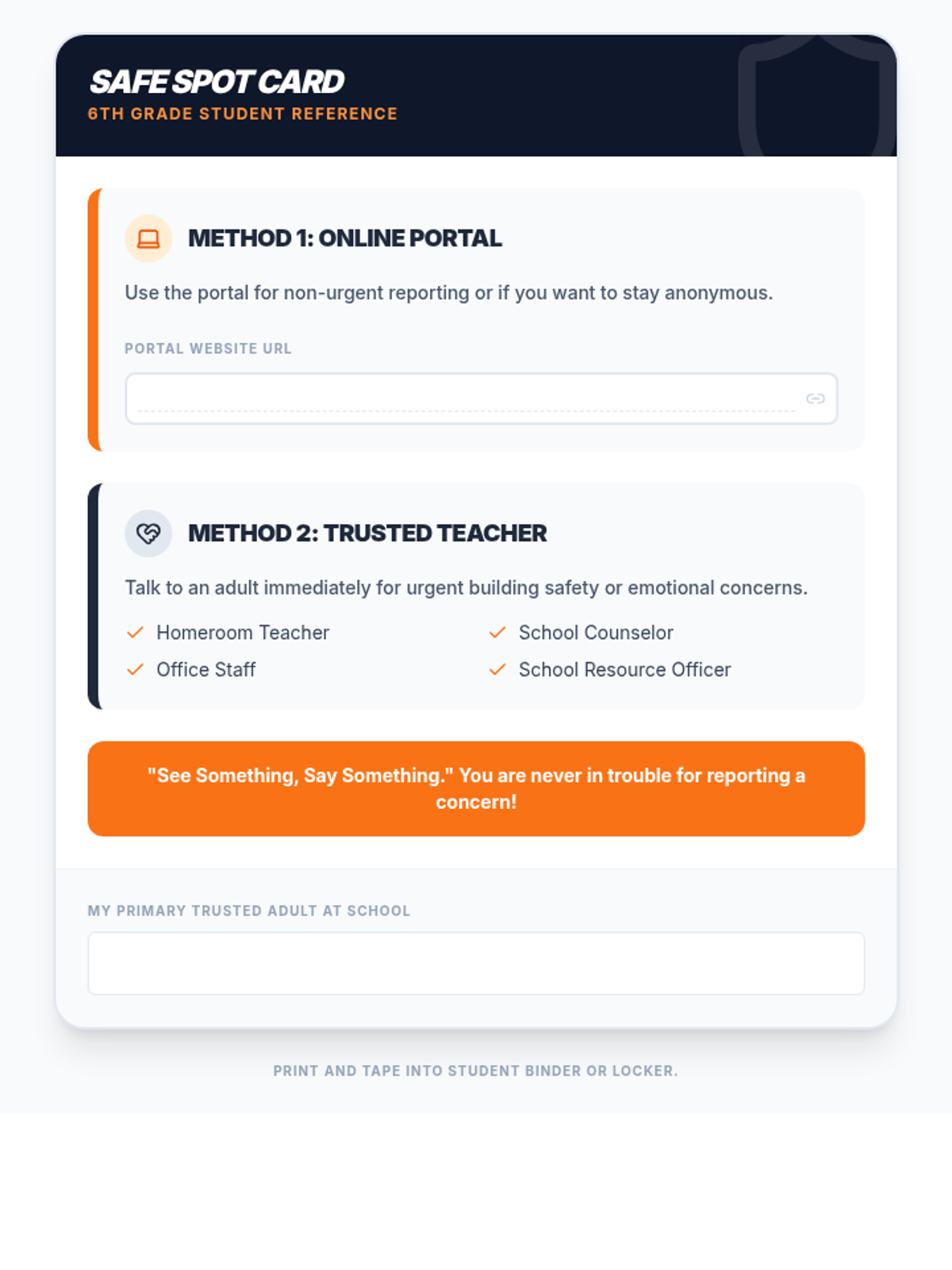
A concise 10-minute review of physical school safety expectations for 6th graders, focusing on 'See Something, Say Something' and reporting methods.
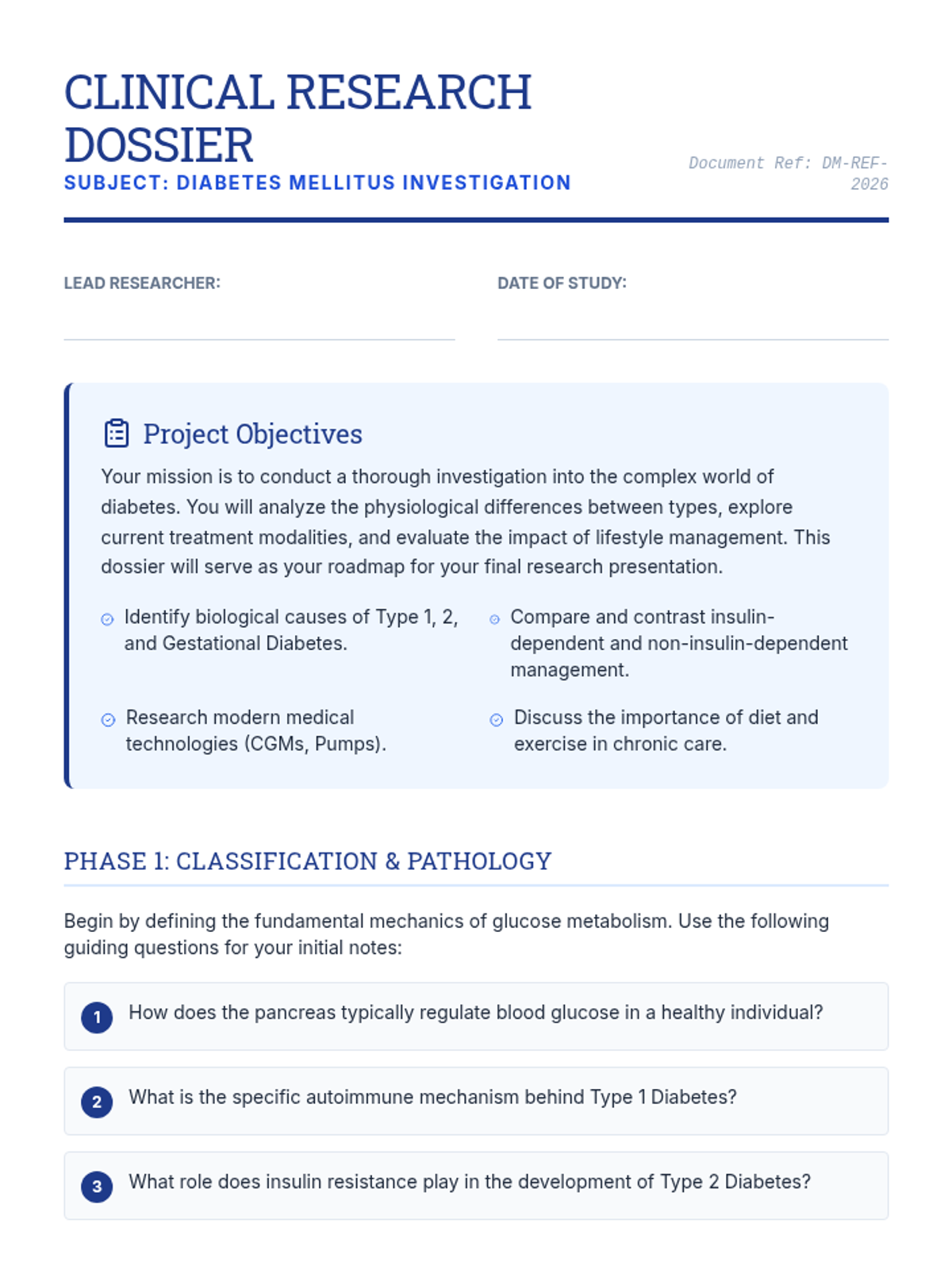
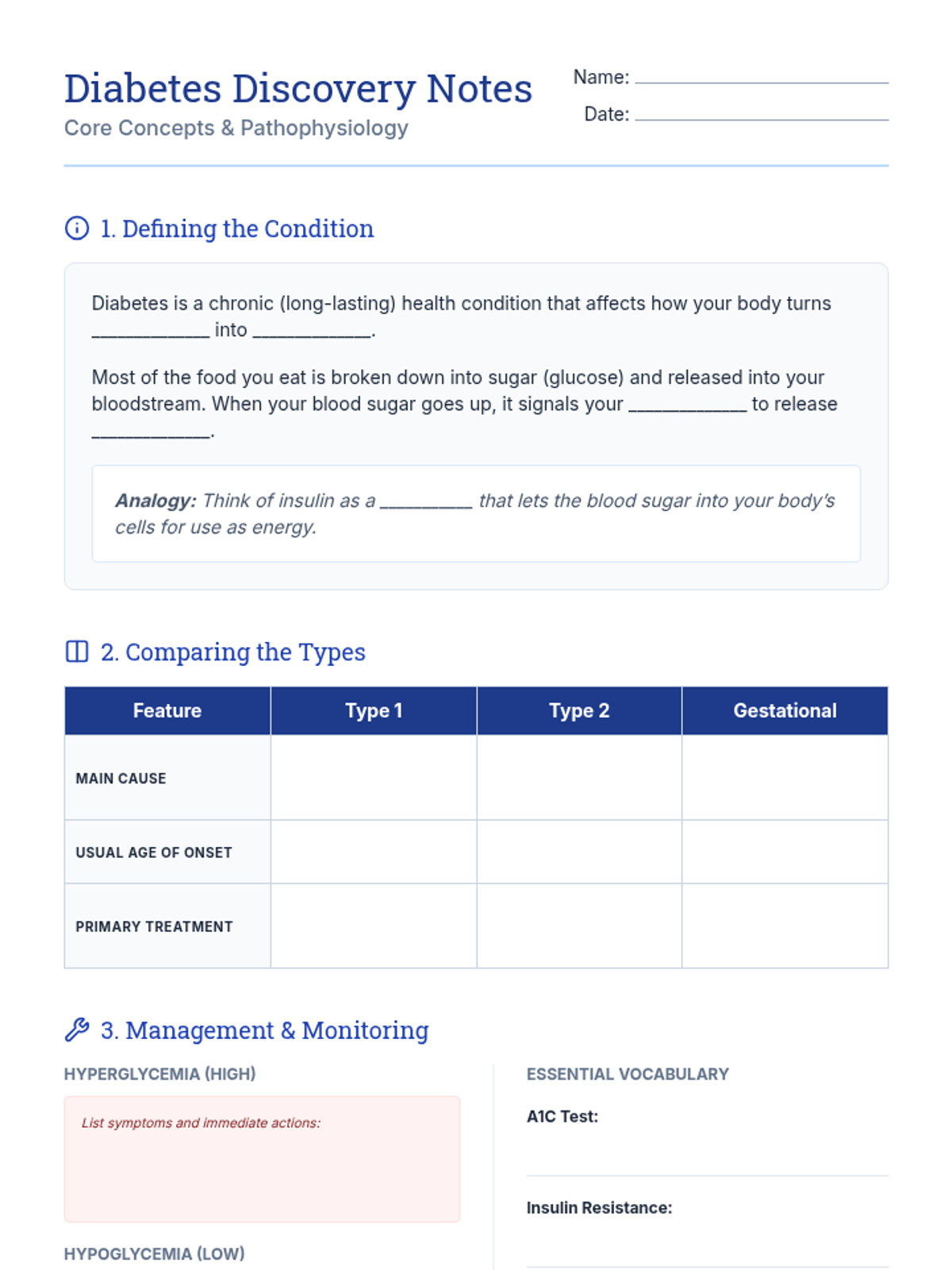
A comprehensive research unit where students investigate the biological mechanisms, classifications, and modern management strategies for diabetes.
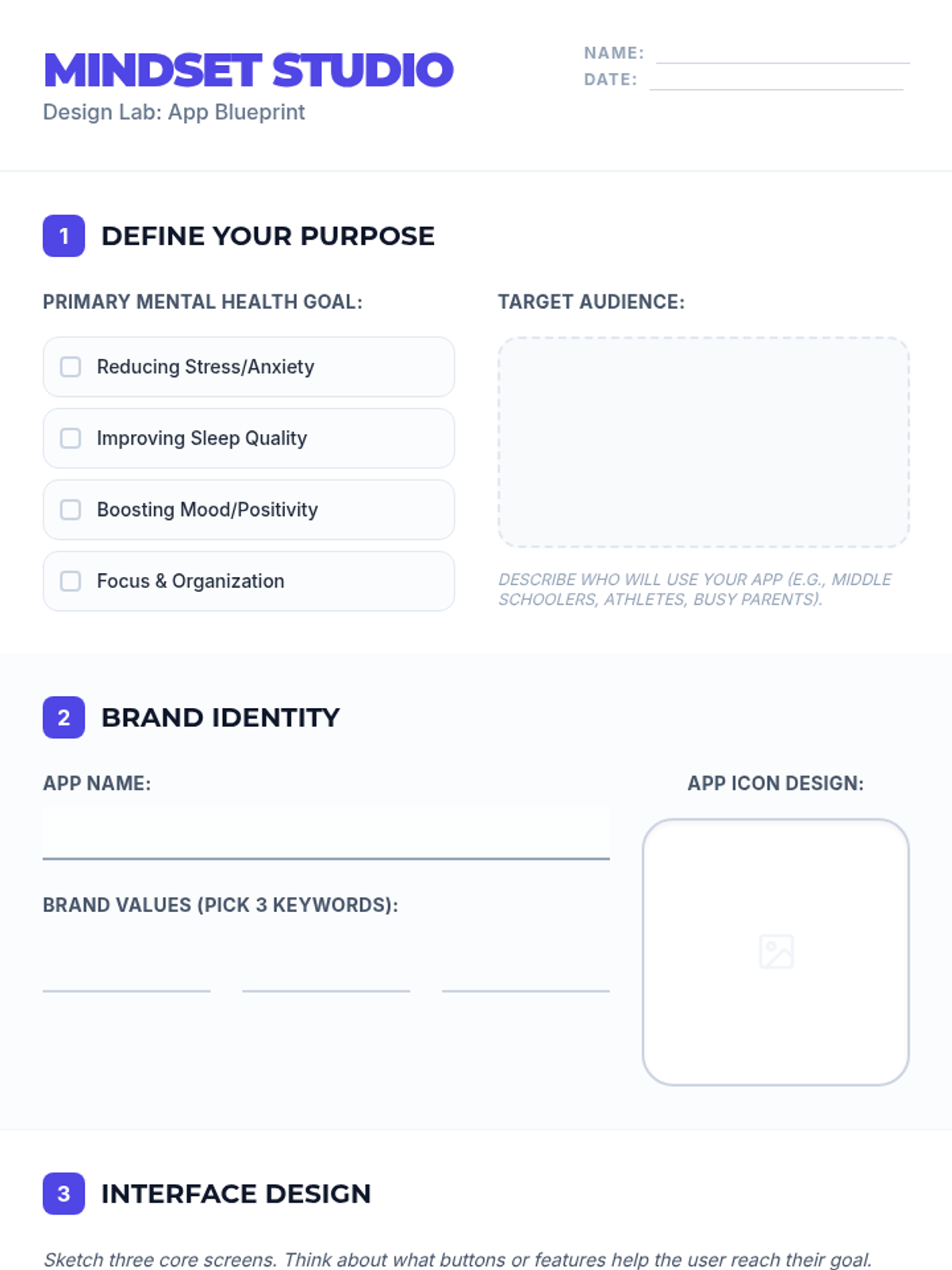
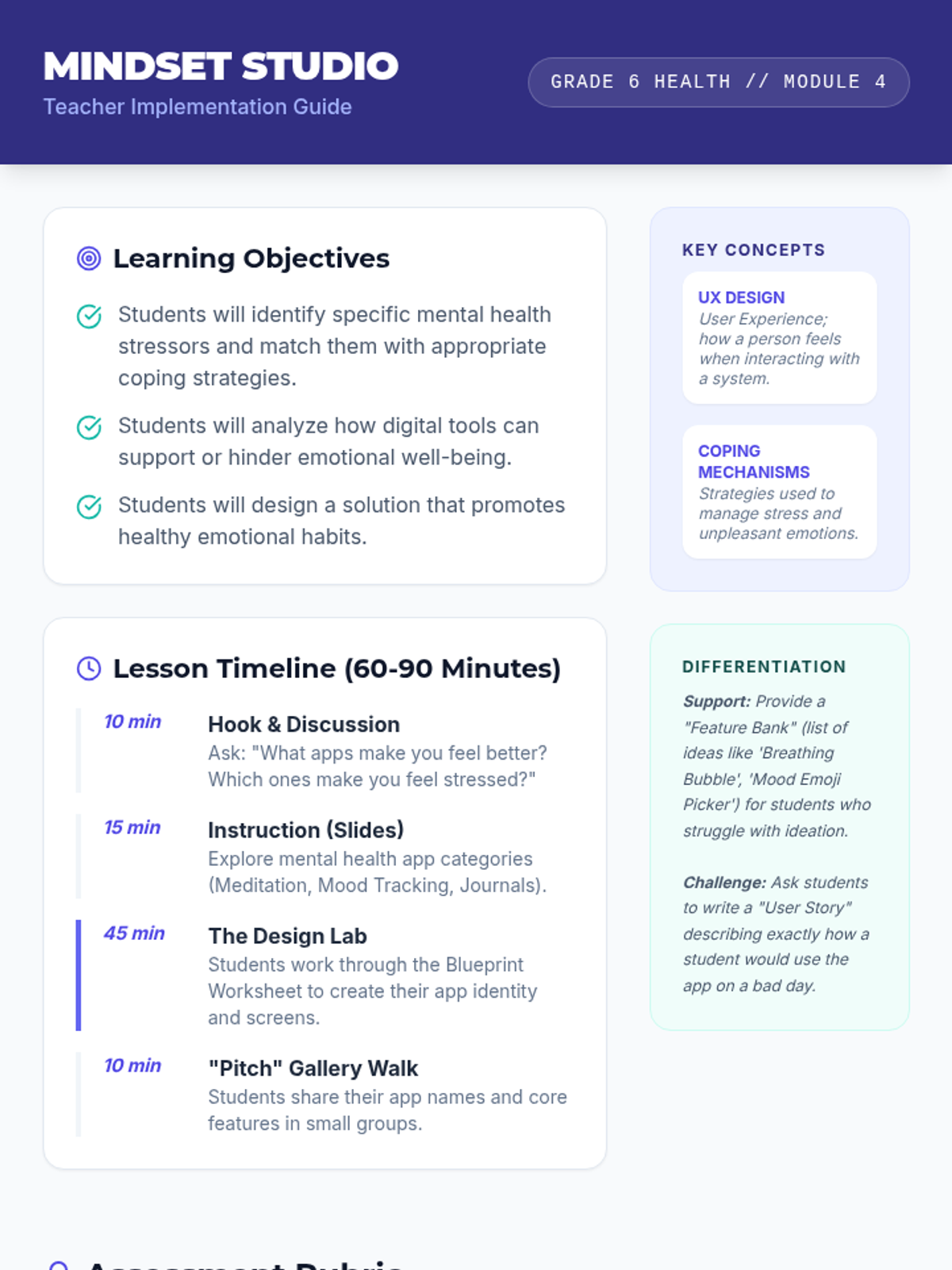
Students step into the role of app developers to design a digital tool that supports mental health. They will identify a specific mental health challenge (stress, sleep, focus, or gratitude) and create a functional blueprint for their unique solution.
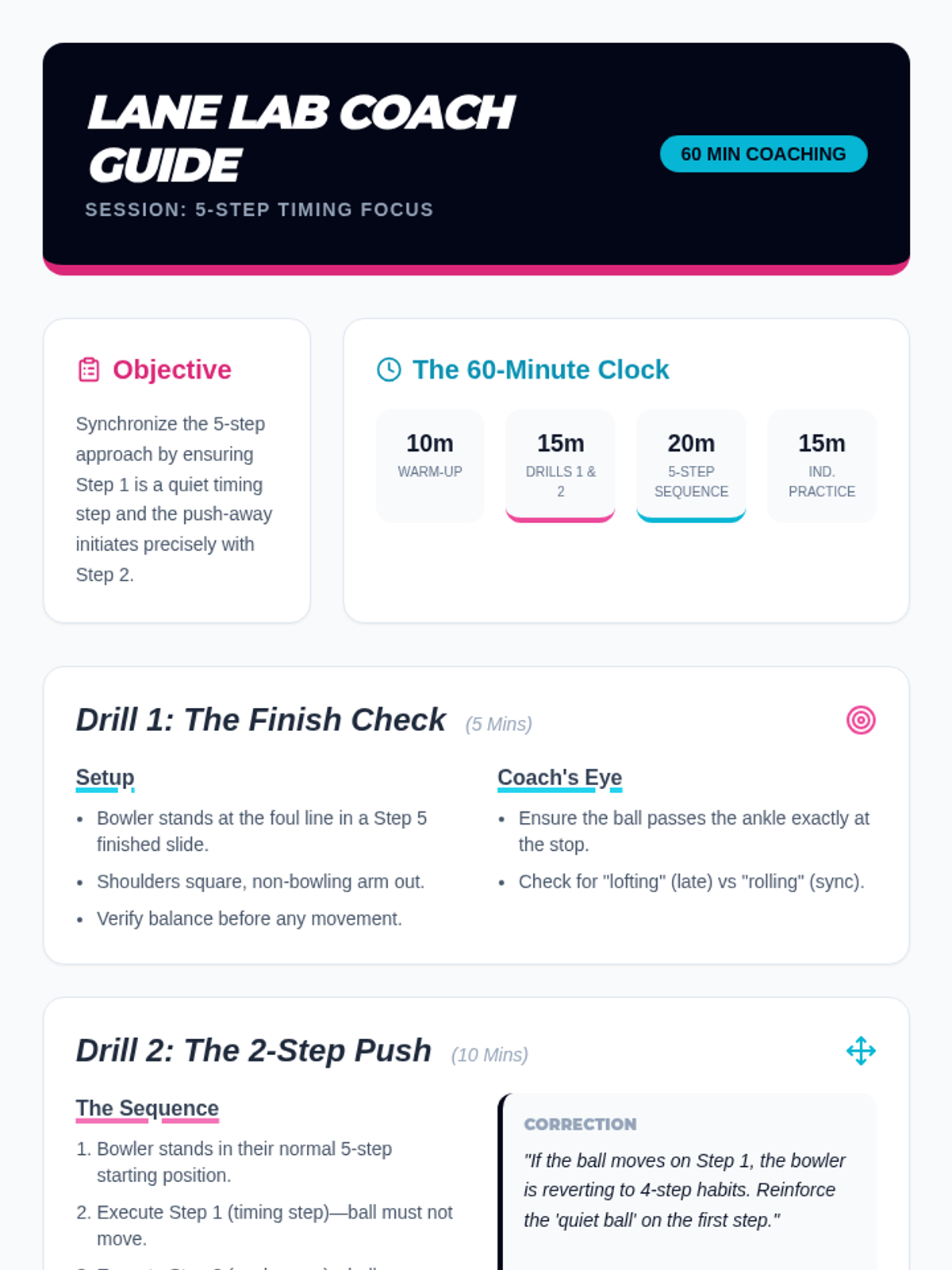
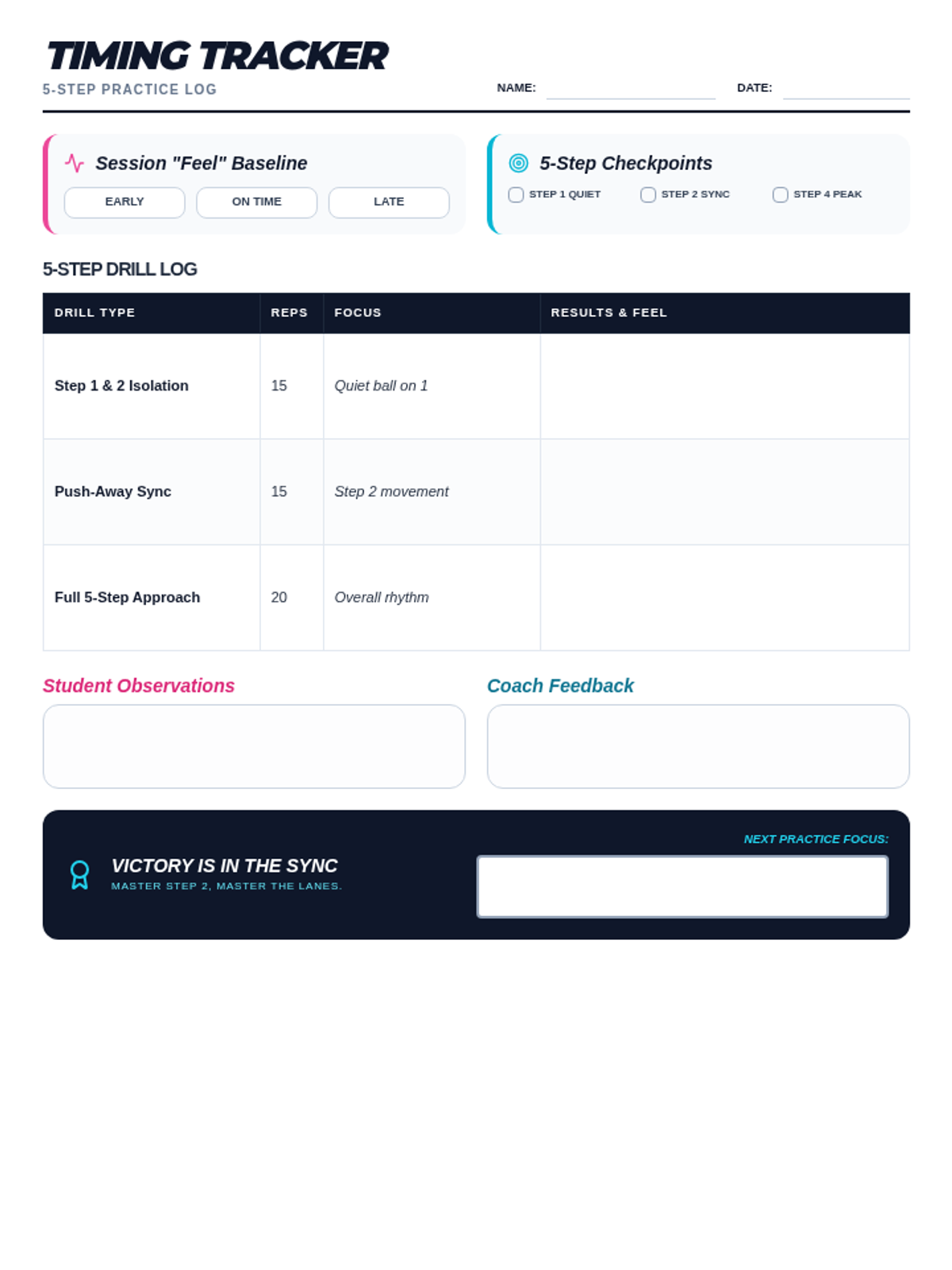
A comprehensive one-hour coaching framework designed to synchronize a bowler's footwork with their arm swing. This lesson covers key timing drills from stationary releases to full approach mechanics.
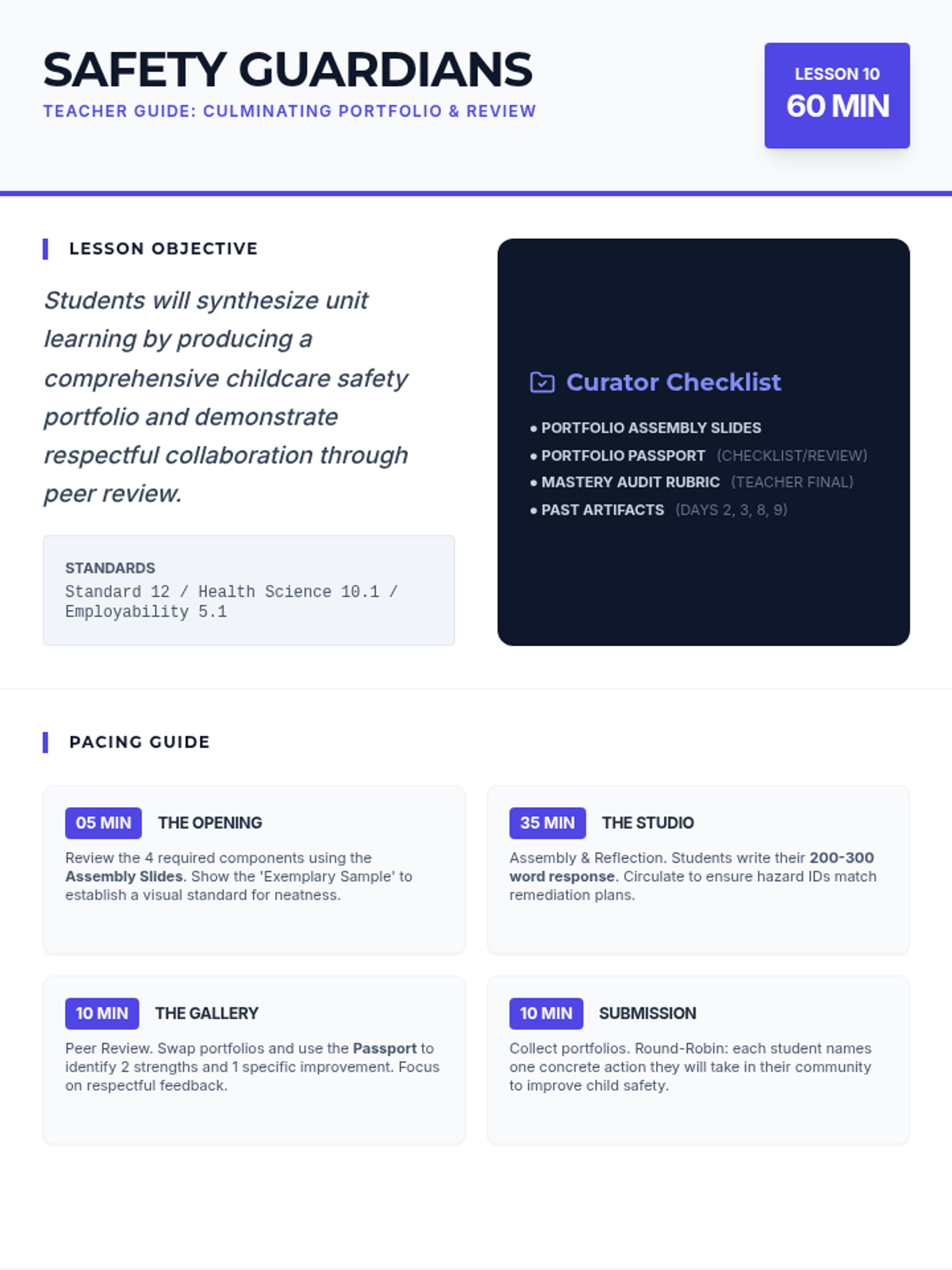
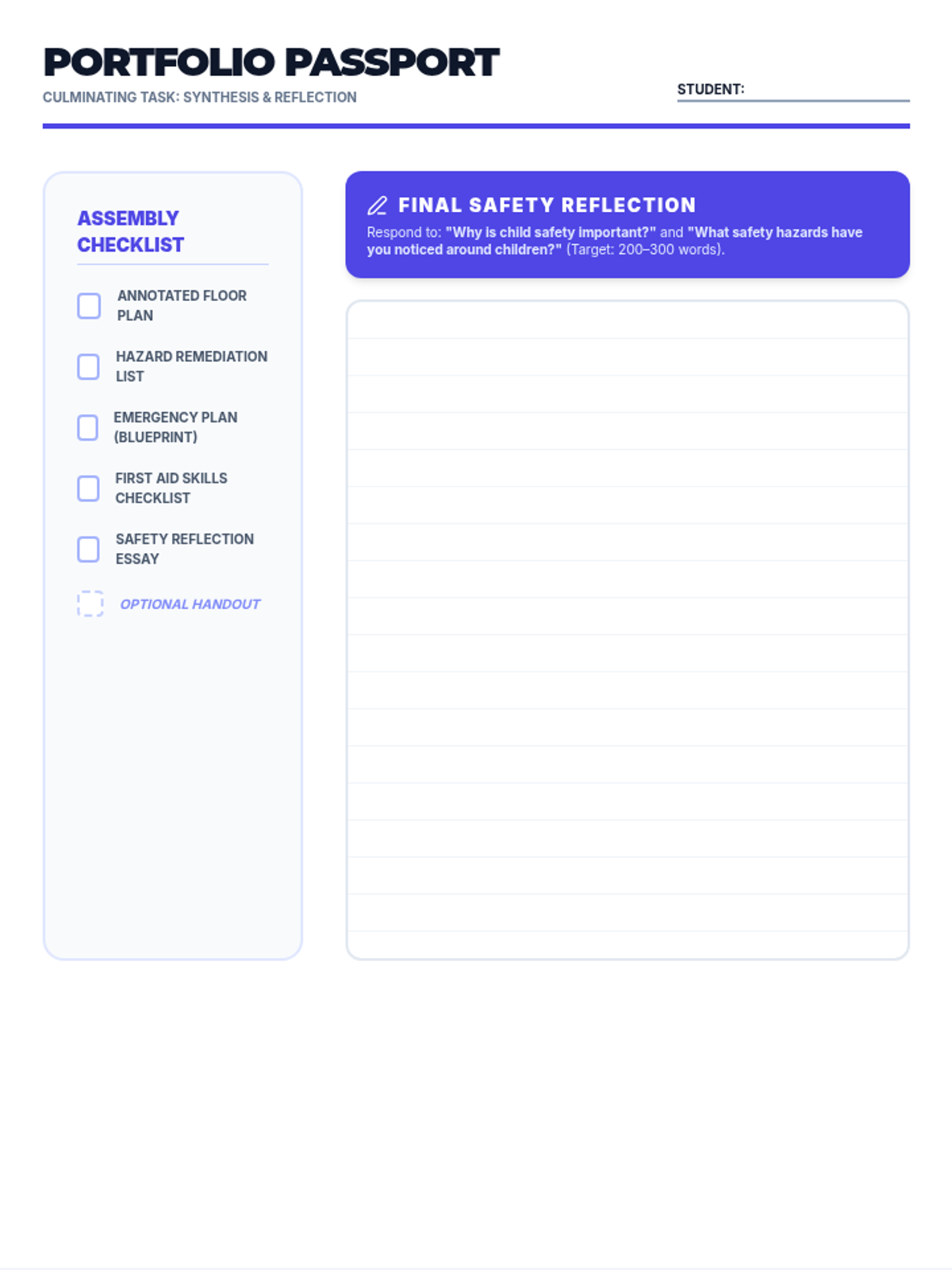
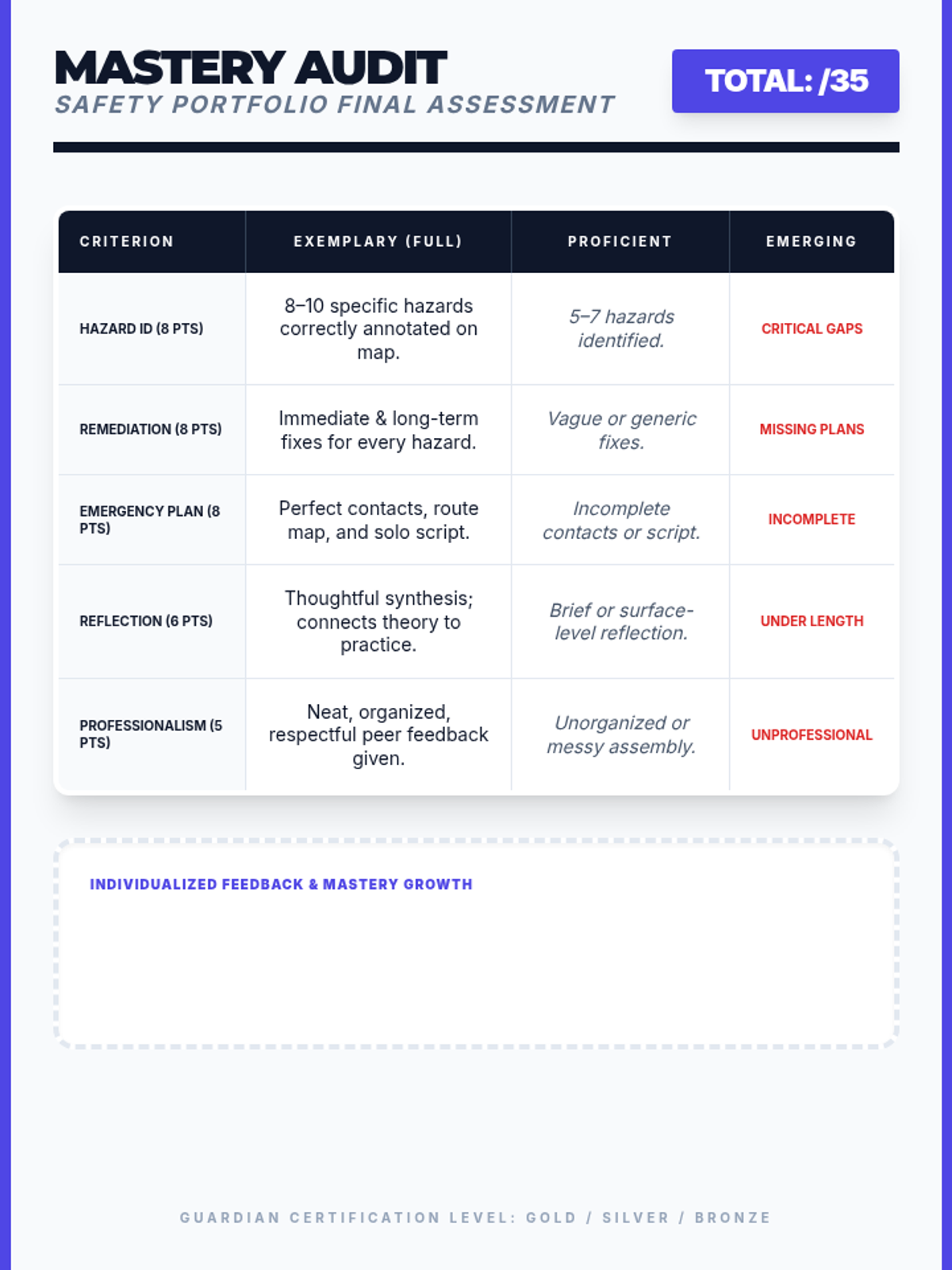
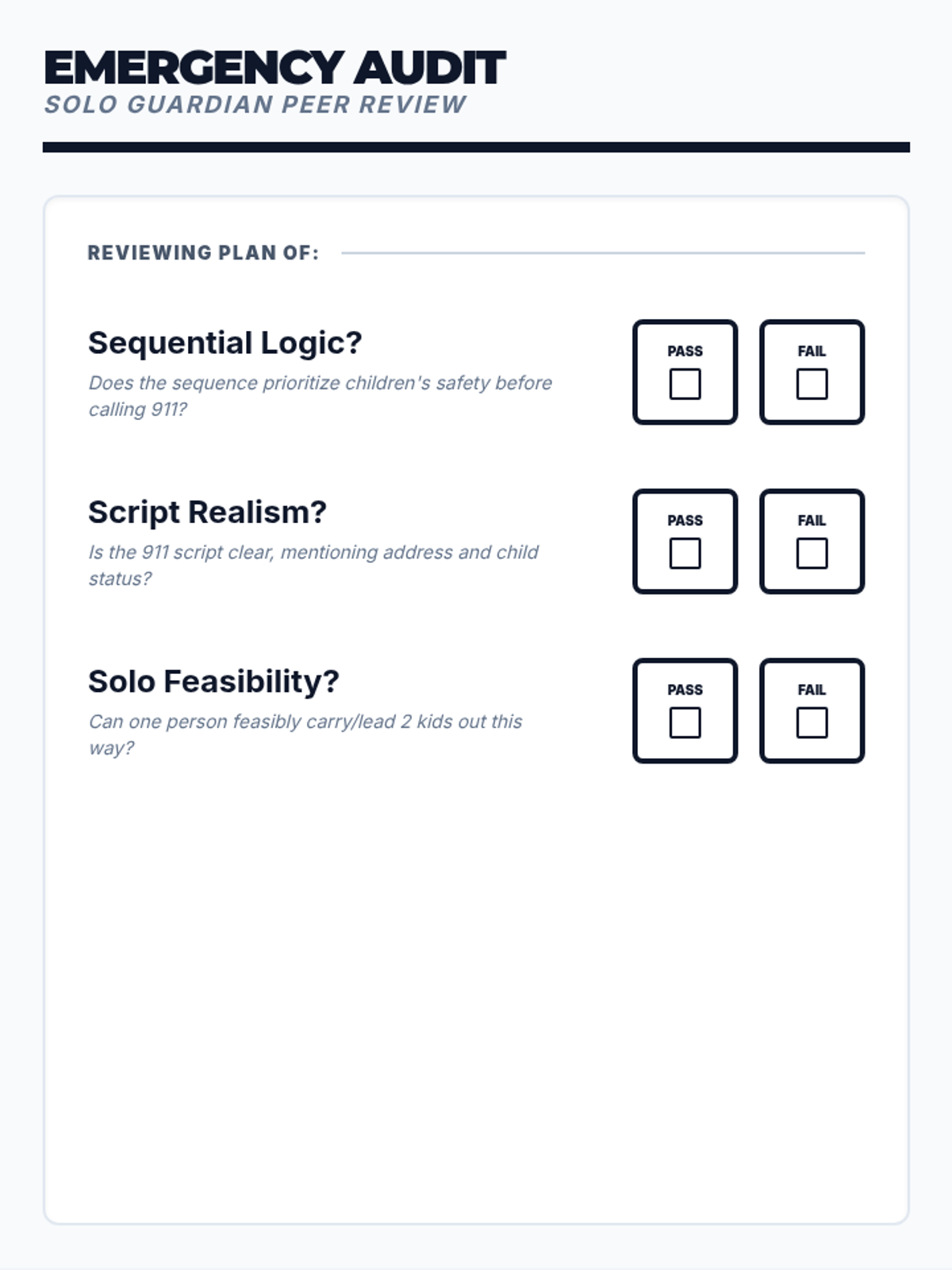
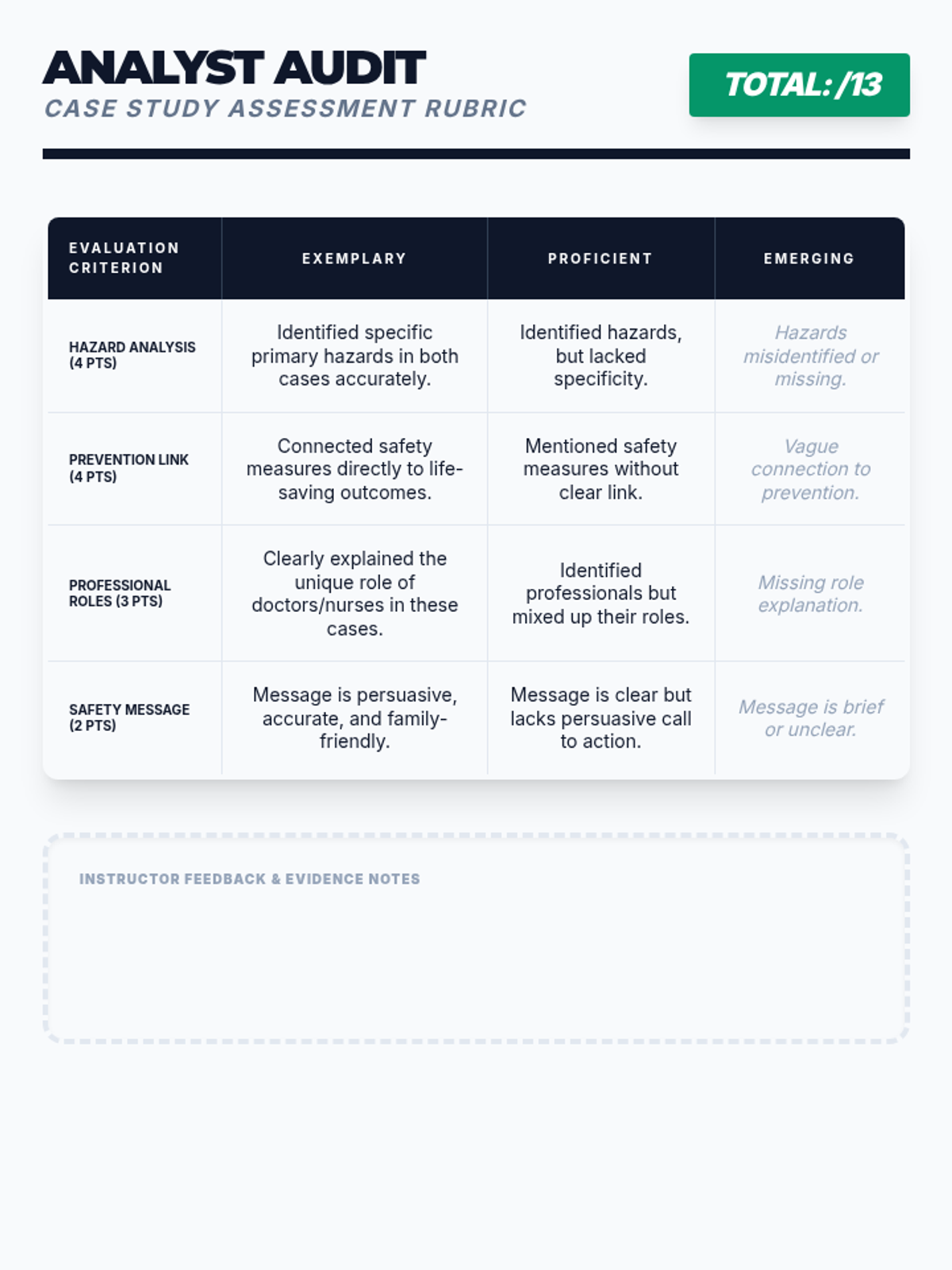
Students synthesize their learning from the unit by assembling a professional safety portfolio. They include hazard analyses, emergency plans, and reflective writing, followed by a peer review session to provide respectful feedback on their colleagues' work.
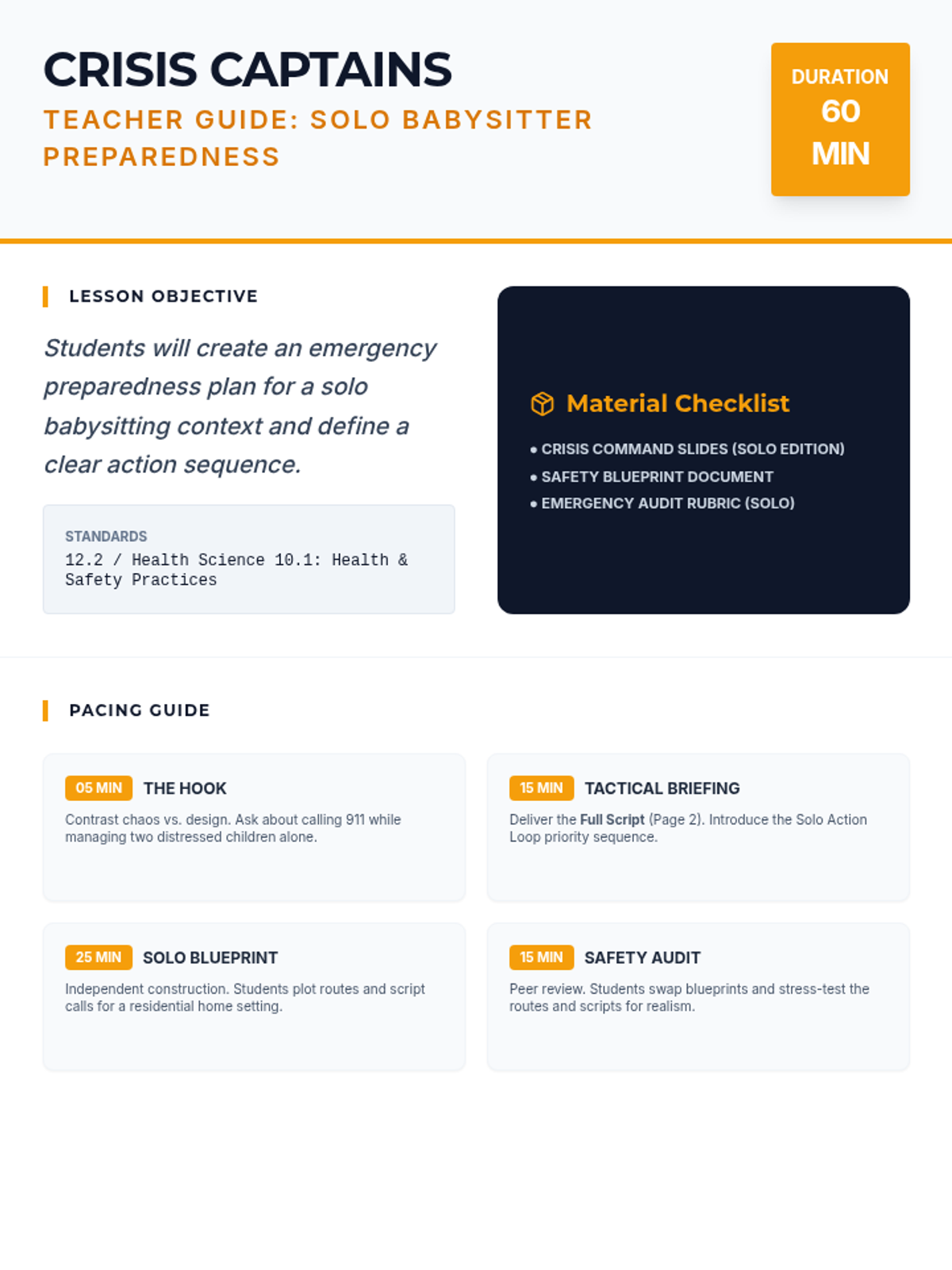
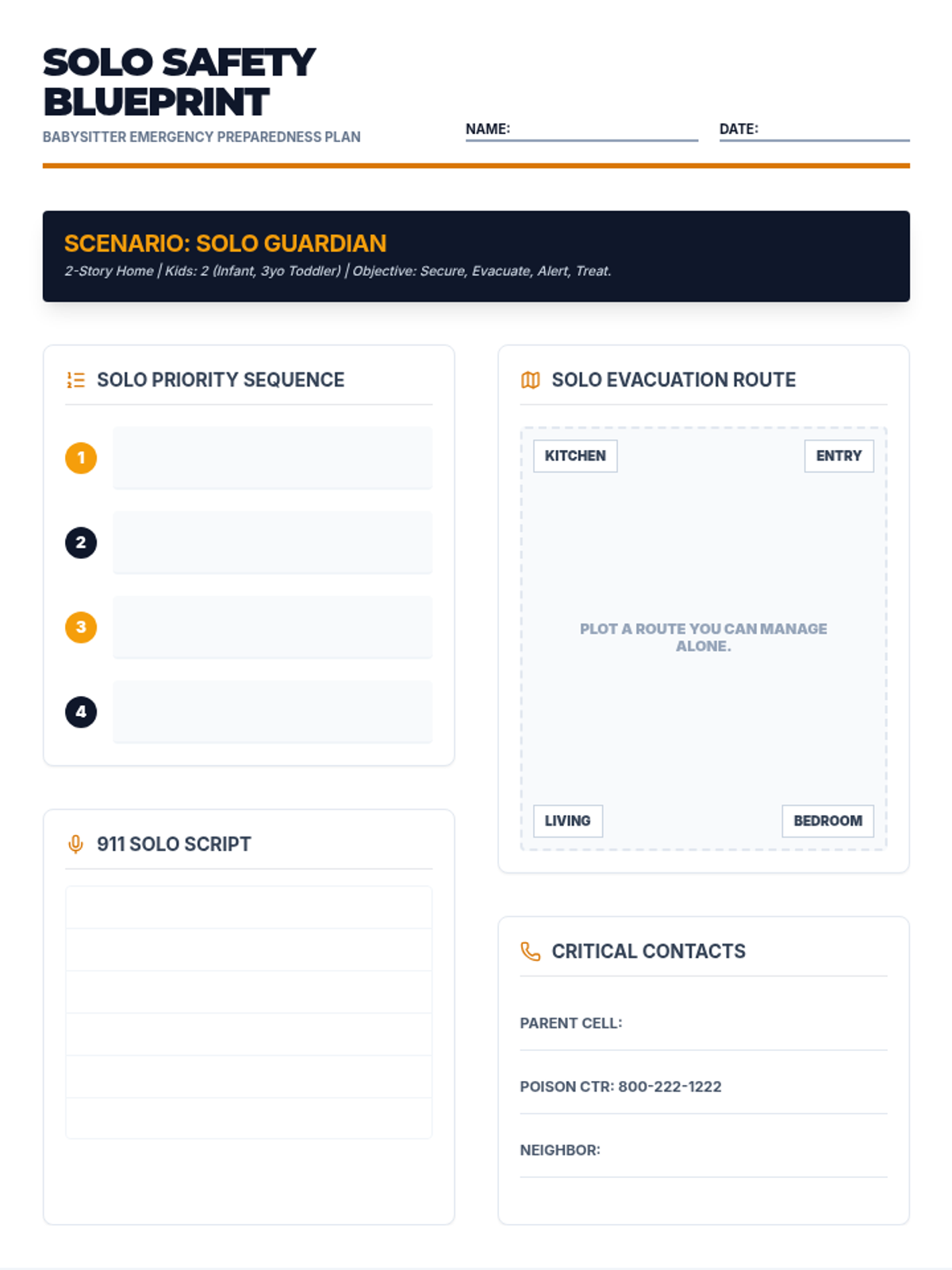
Students learn to design comprehensive emergency preparedness plans for a solo babysitting context. The lesson focuses on creating sequential action plans, evacuation strategies, and communication protocols for a babysitter working alone in a residential home.
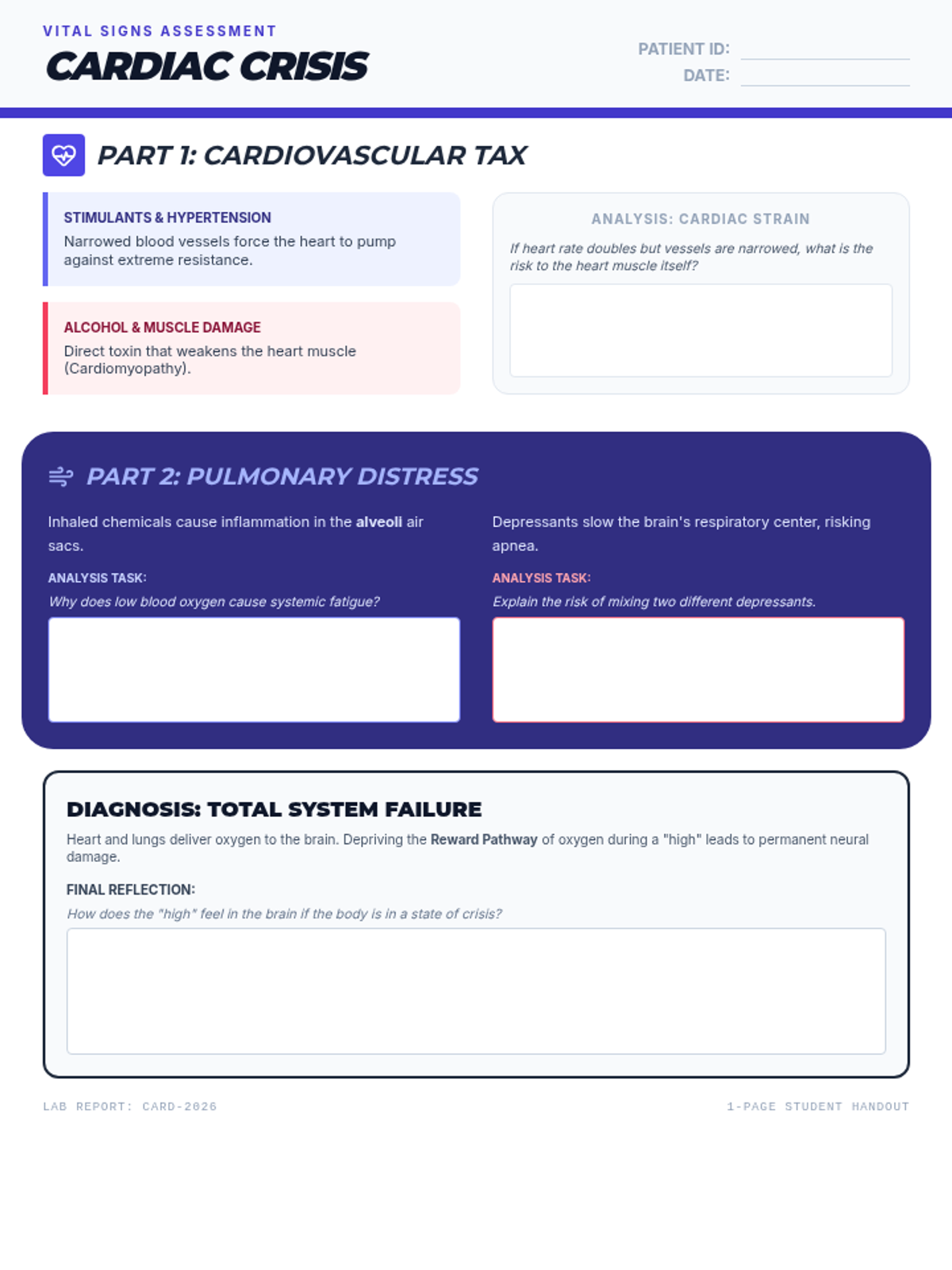
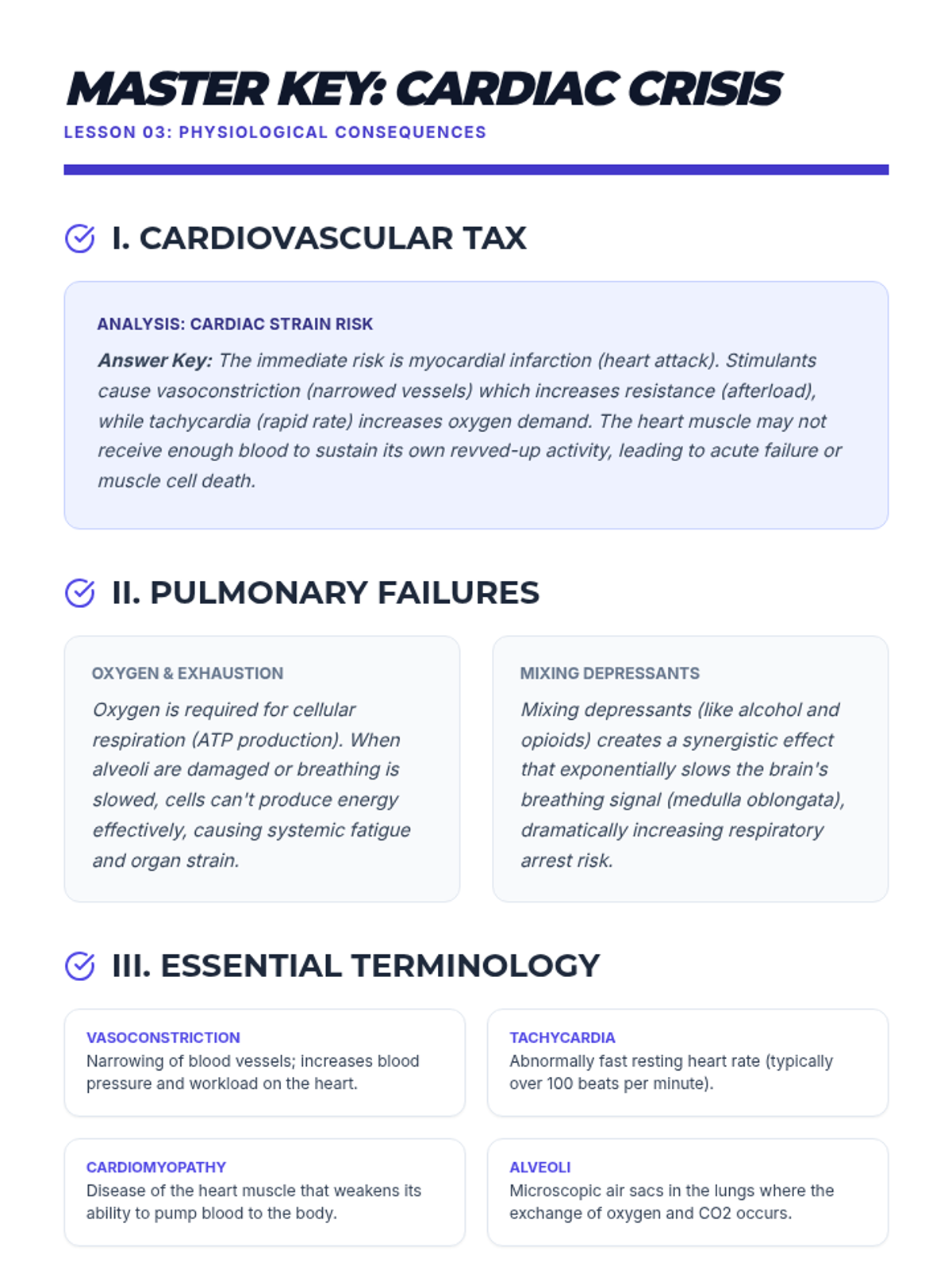
This lesson examines the cardiovascular and pulmonary consequences of substance use, focusing on how stimulants and alcohol alter heart rhythm, blood pressure, and lung tissue integrity.
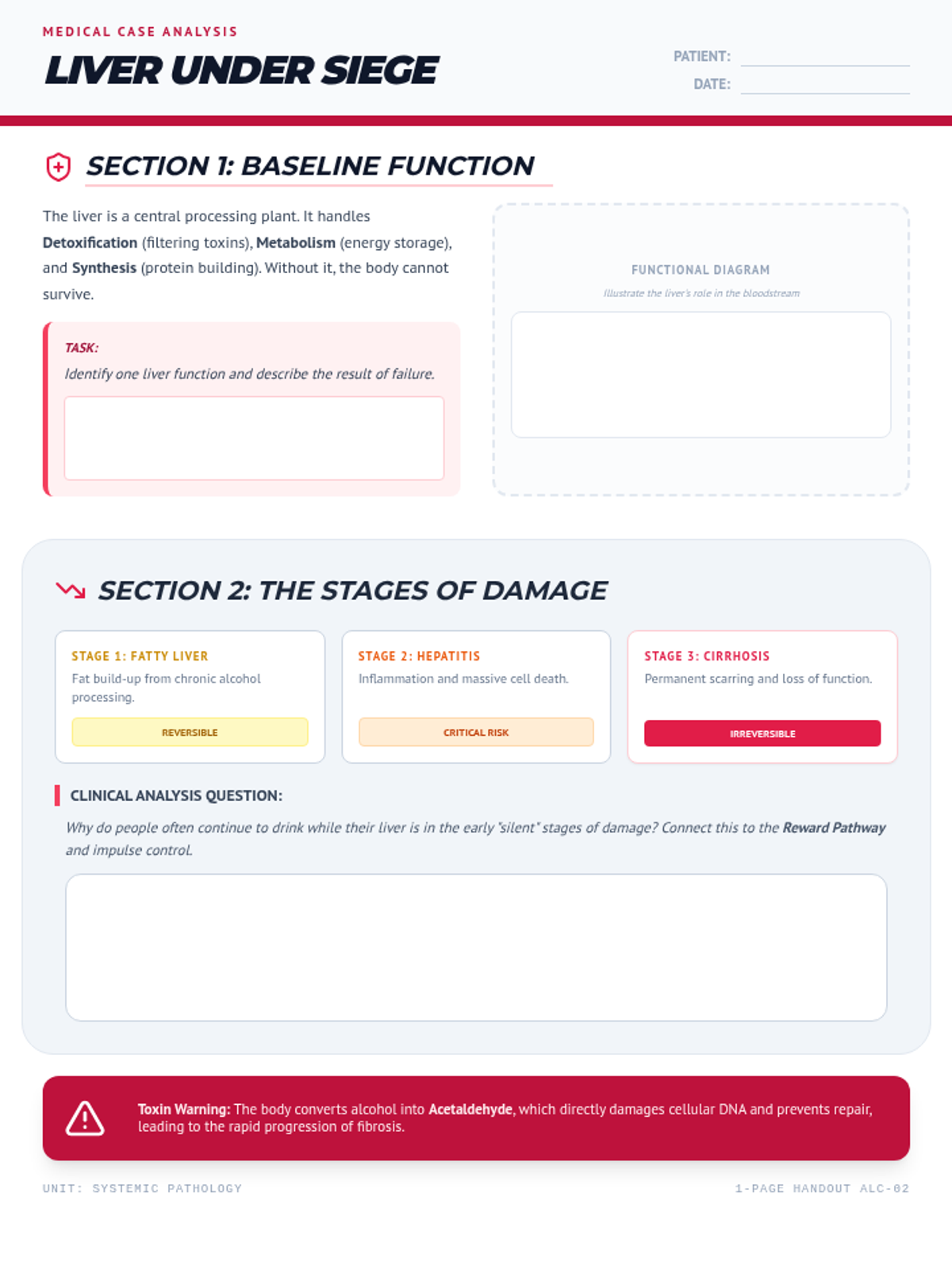
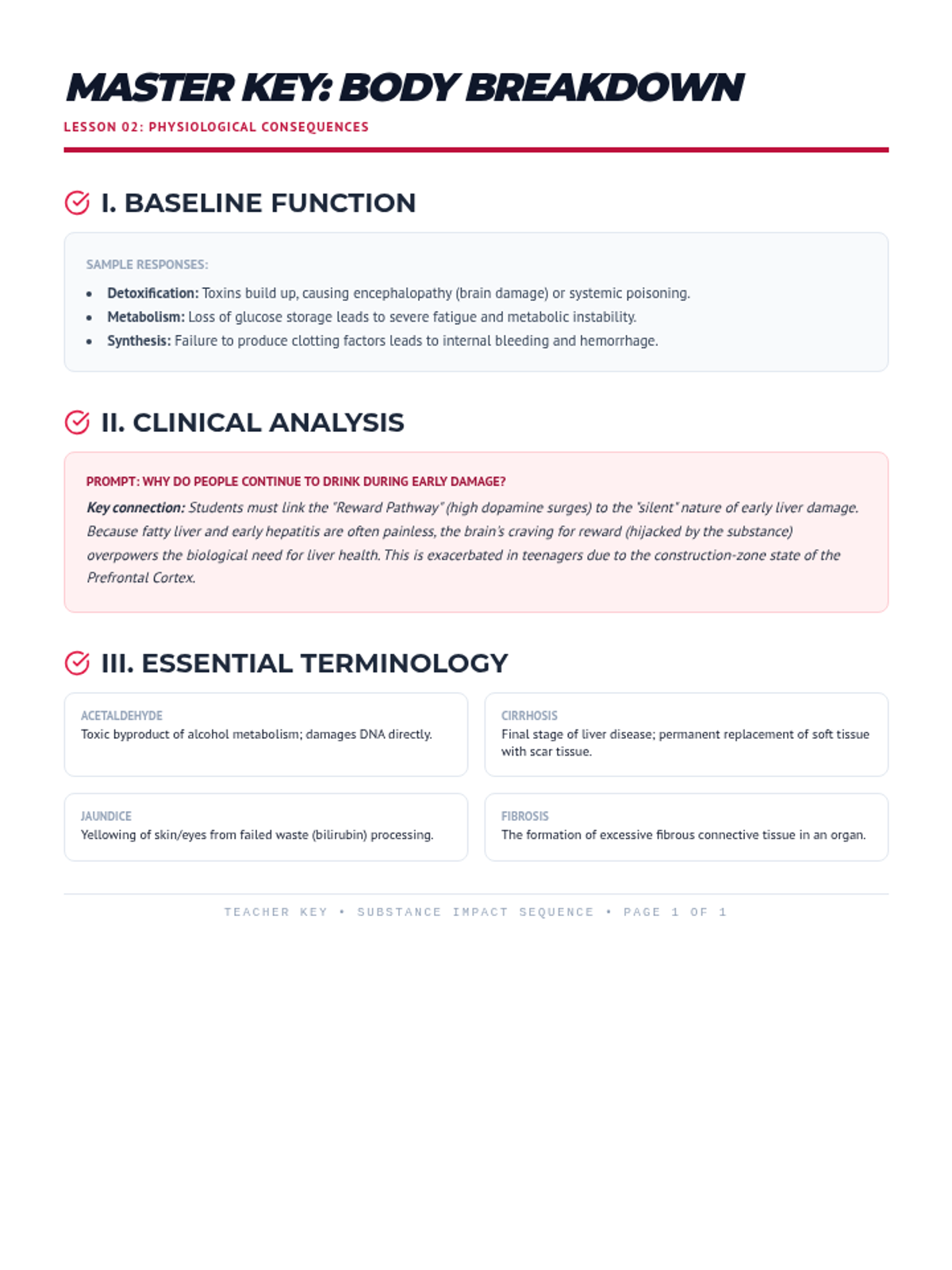
This lesson explores the chronic physical effects of alcohol use, specifically focusing on the progression of liver disease from fatty liver to cirrhosis and the overall impact of alcoholism on body systems.
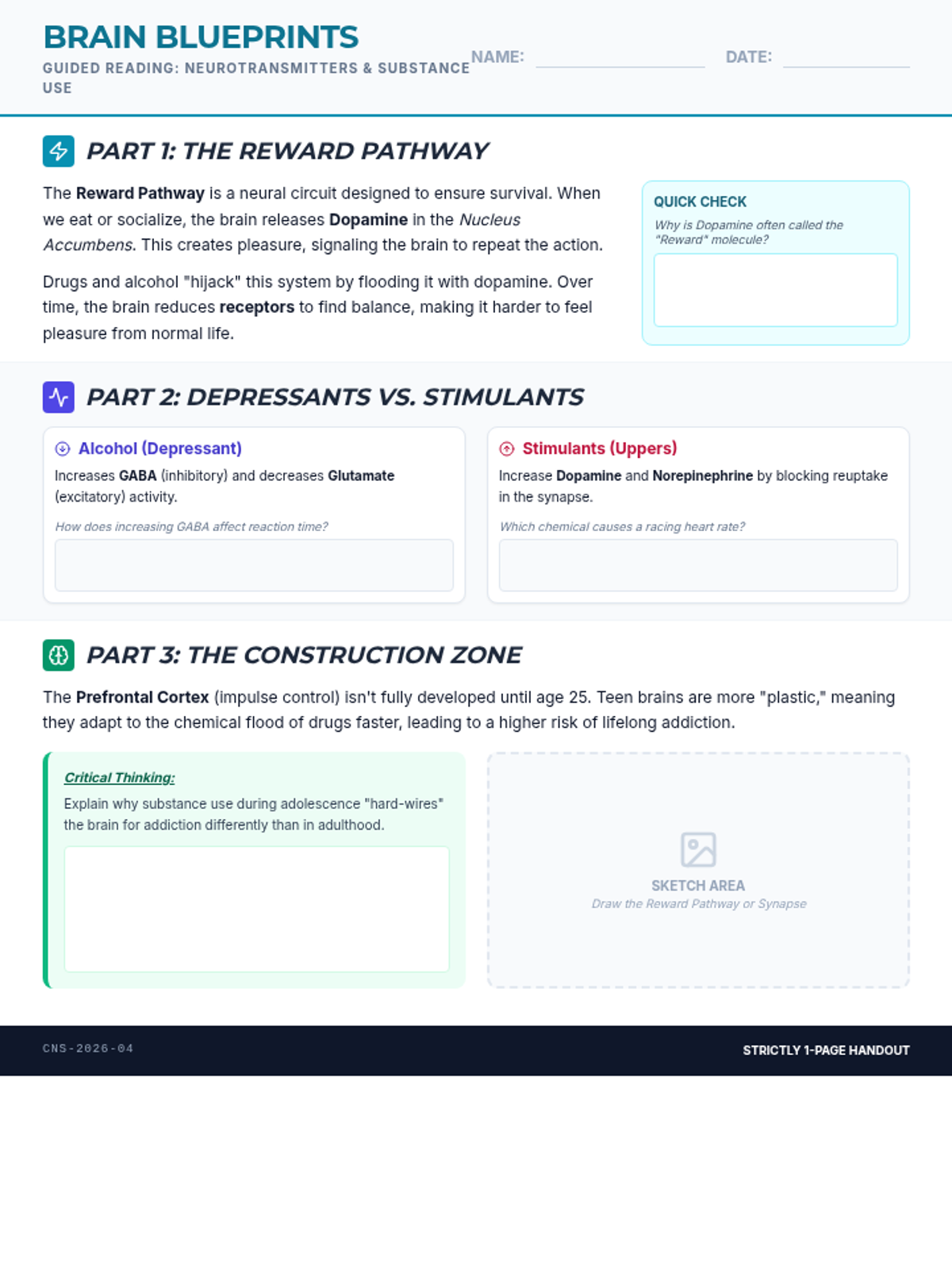
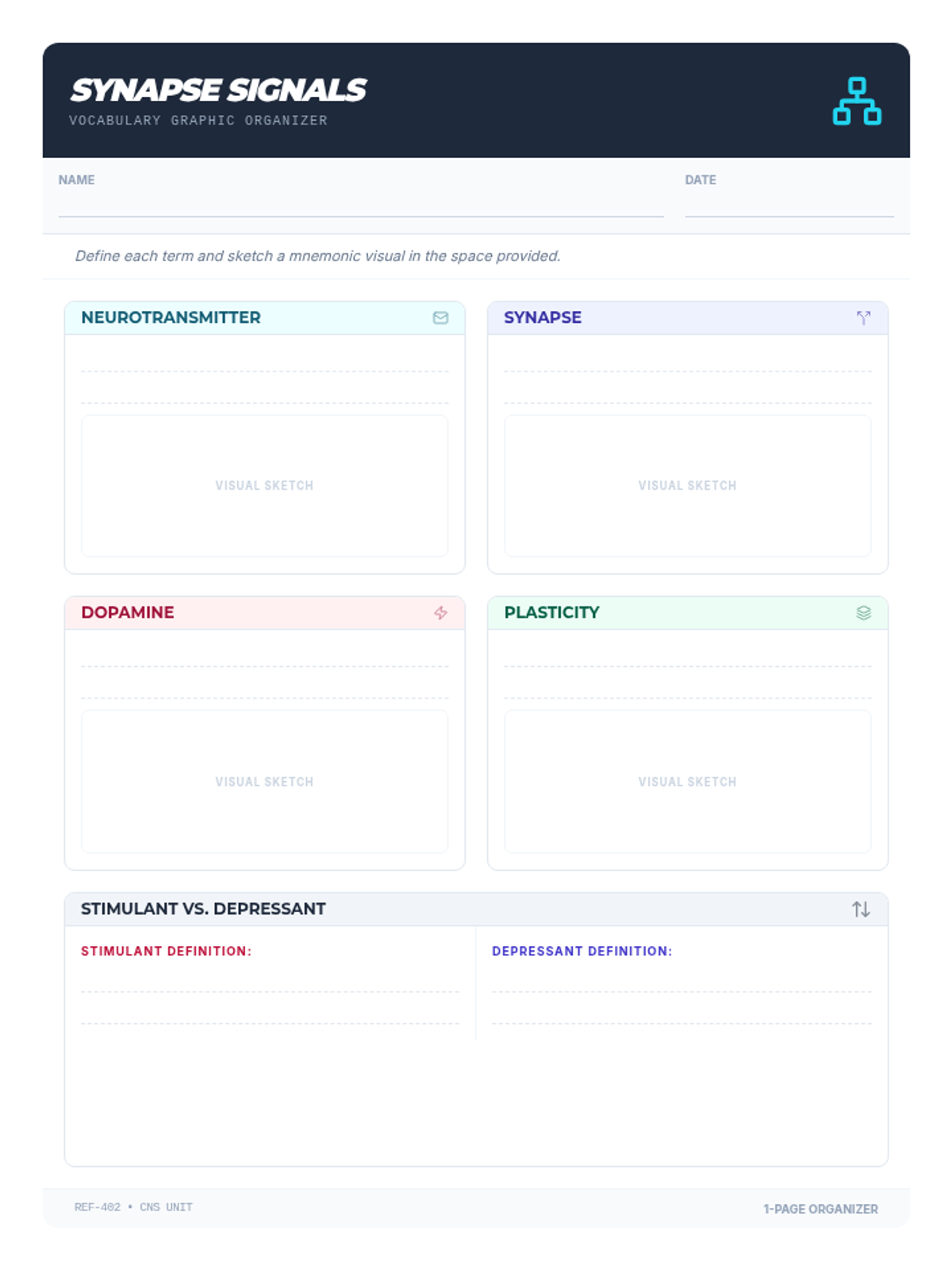
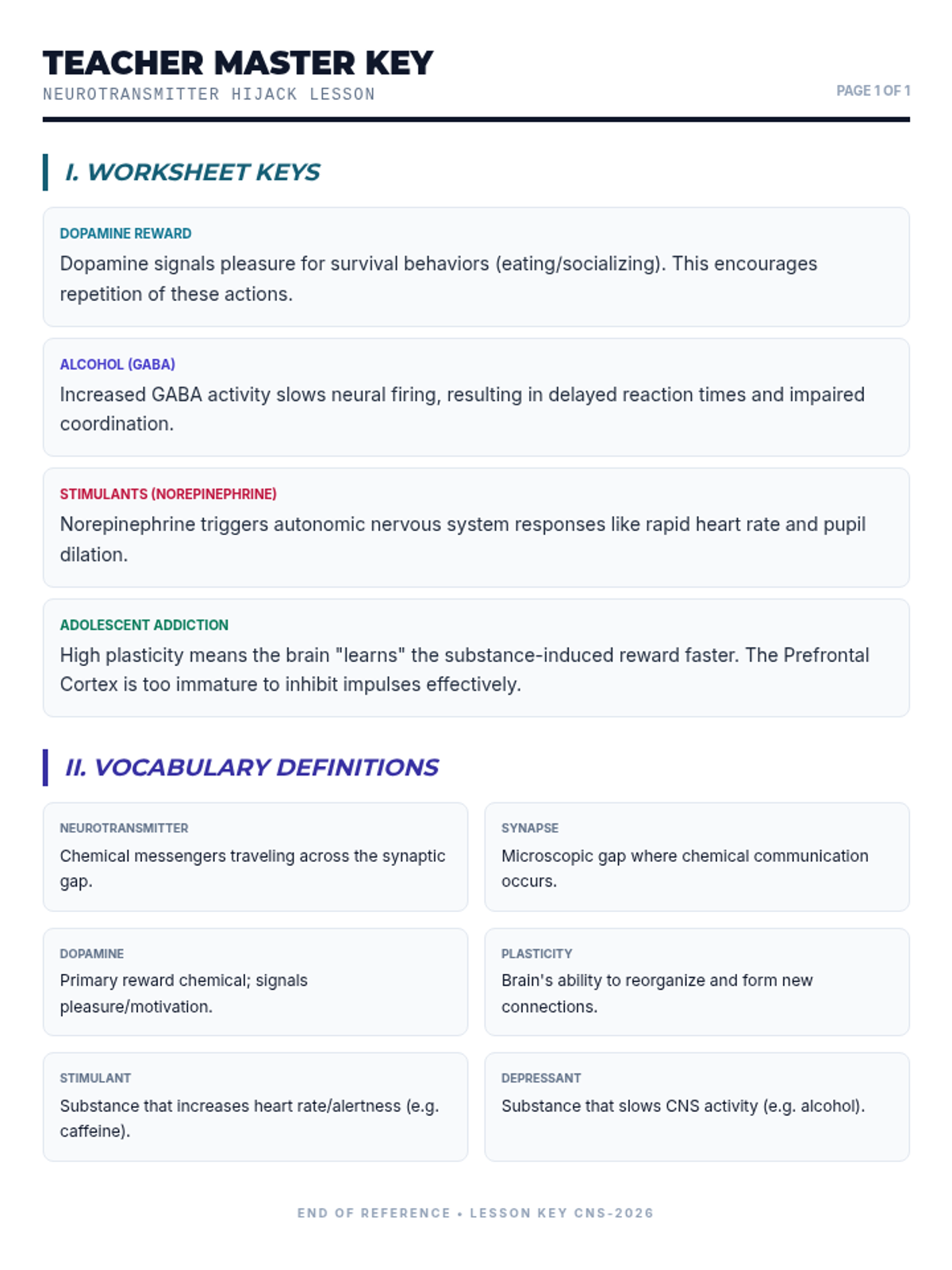
This lesson explores the neurobiology of substance use, focusing on how alcohol and stimulants manipulate neurotransmitters in the Reward Pathway and the long-term consequences for the developing adolescent brain.
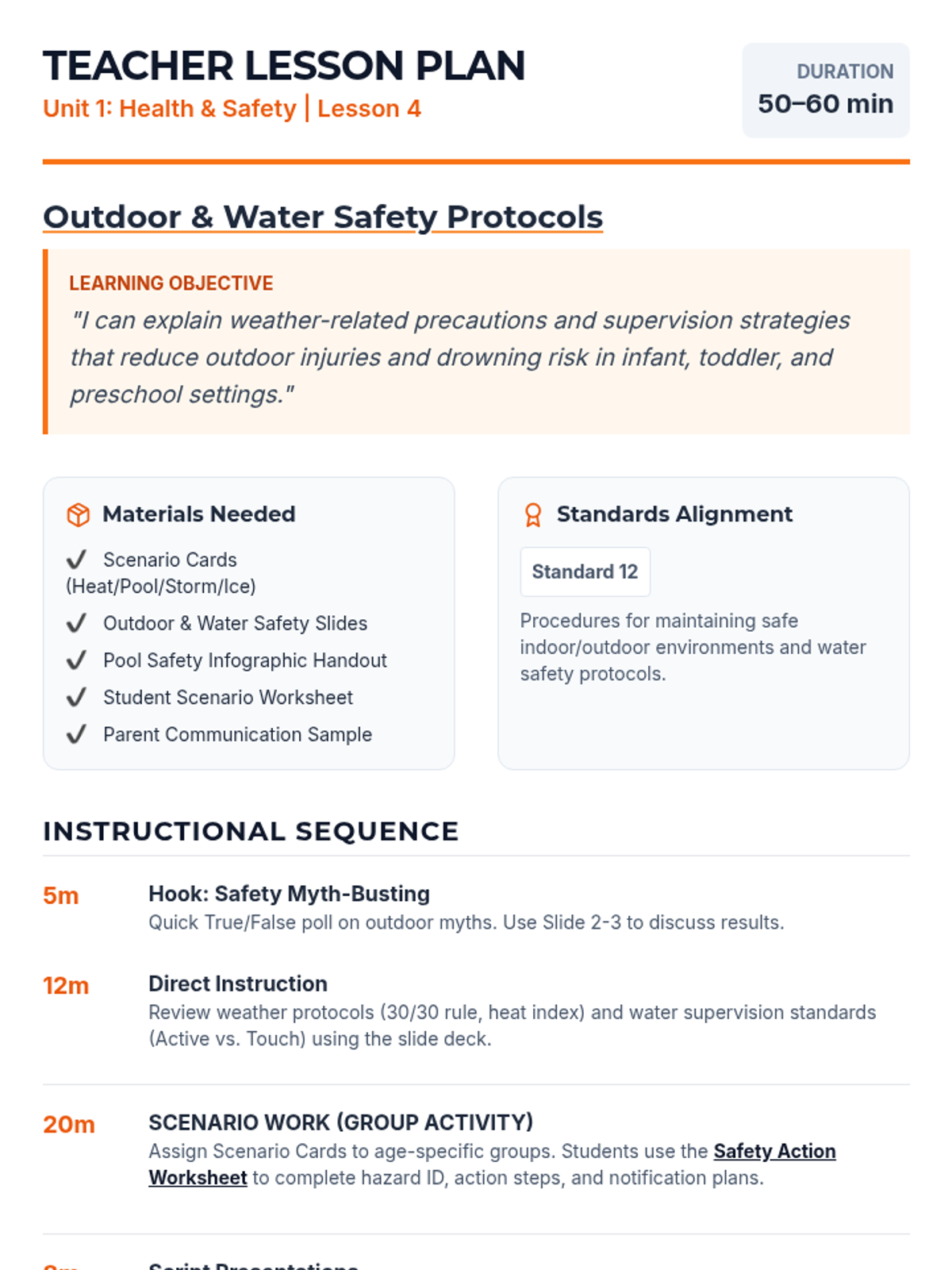
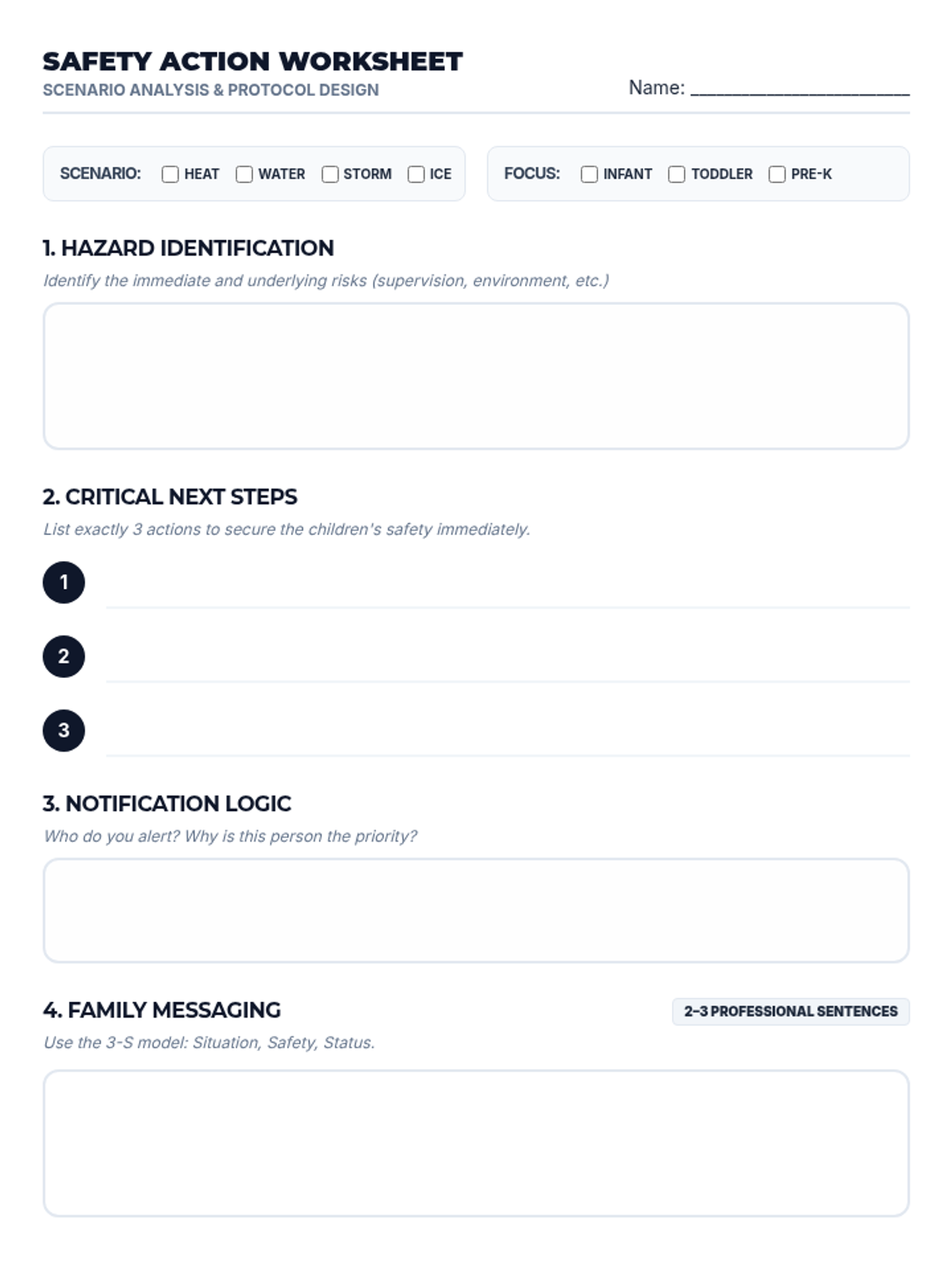
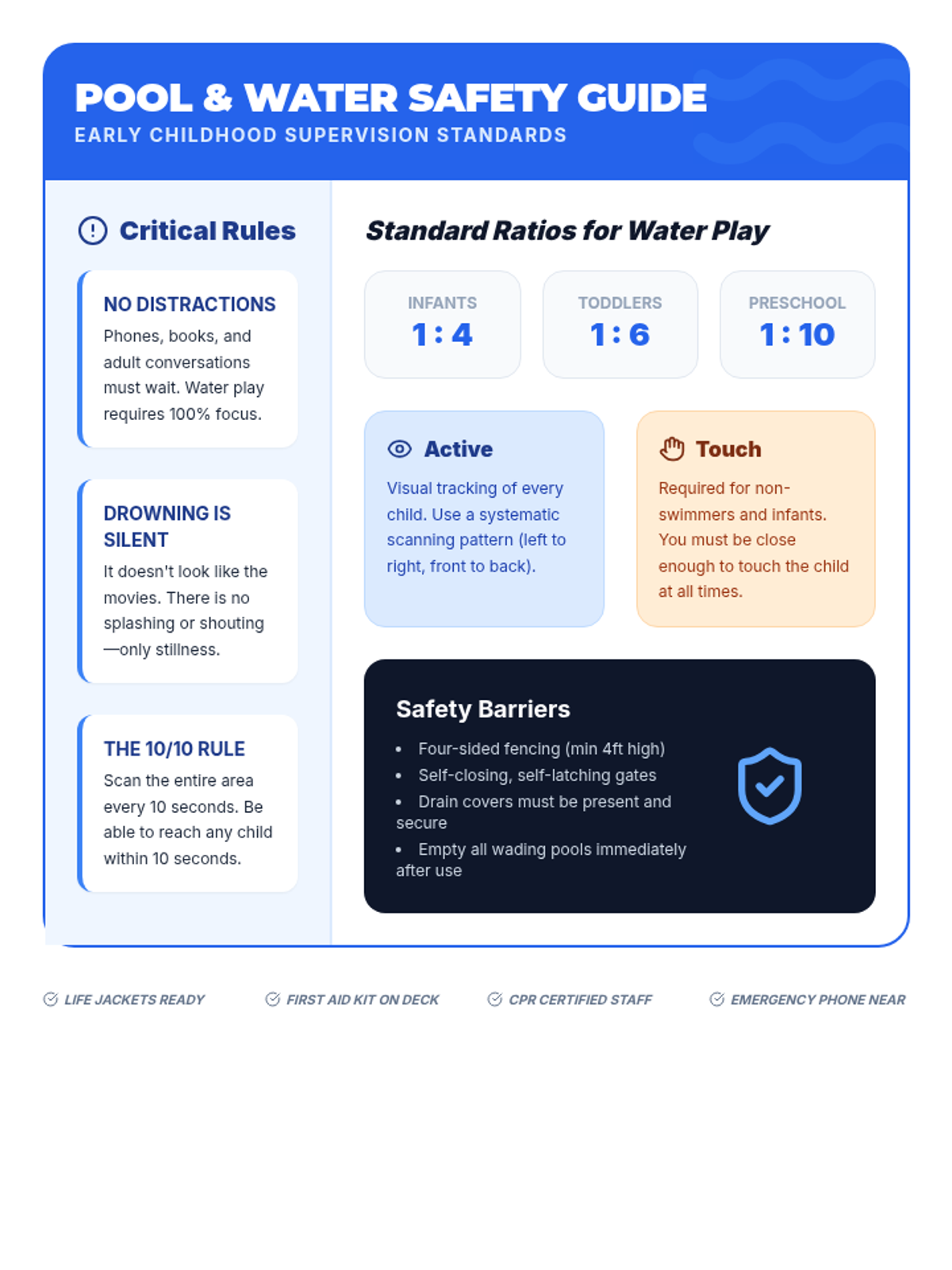
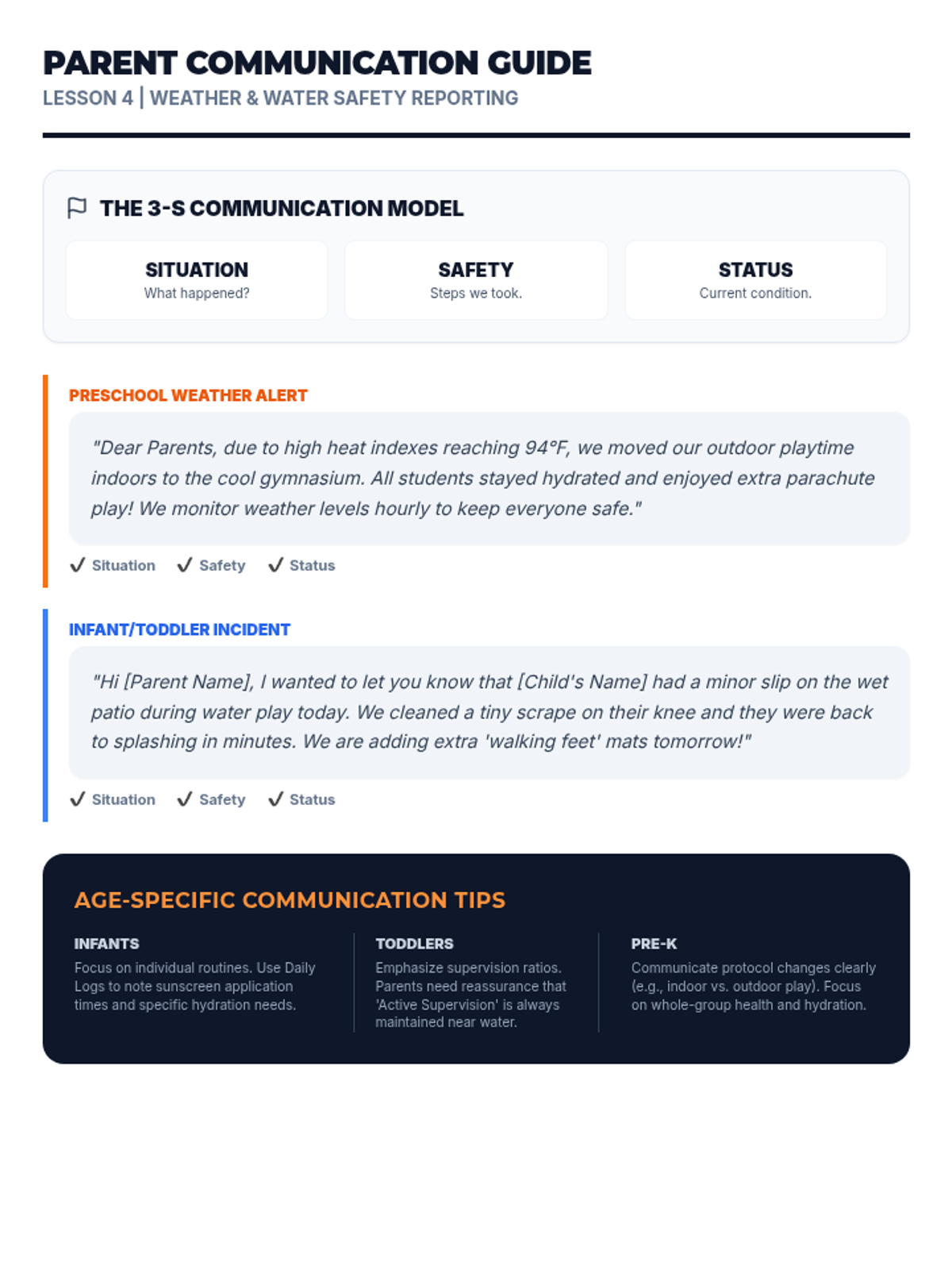
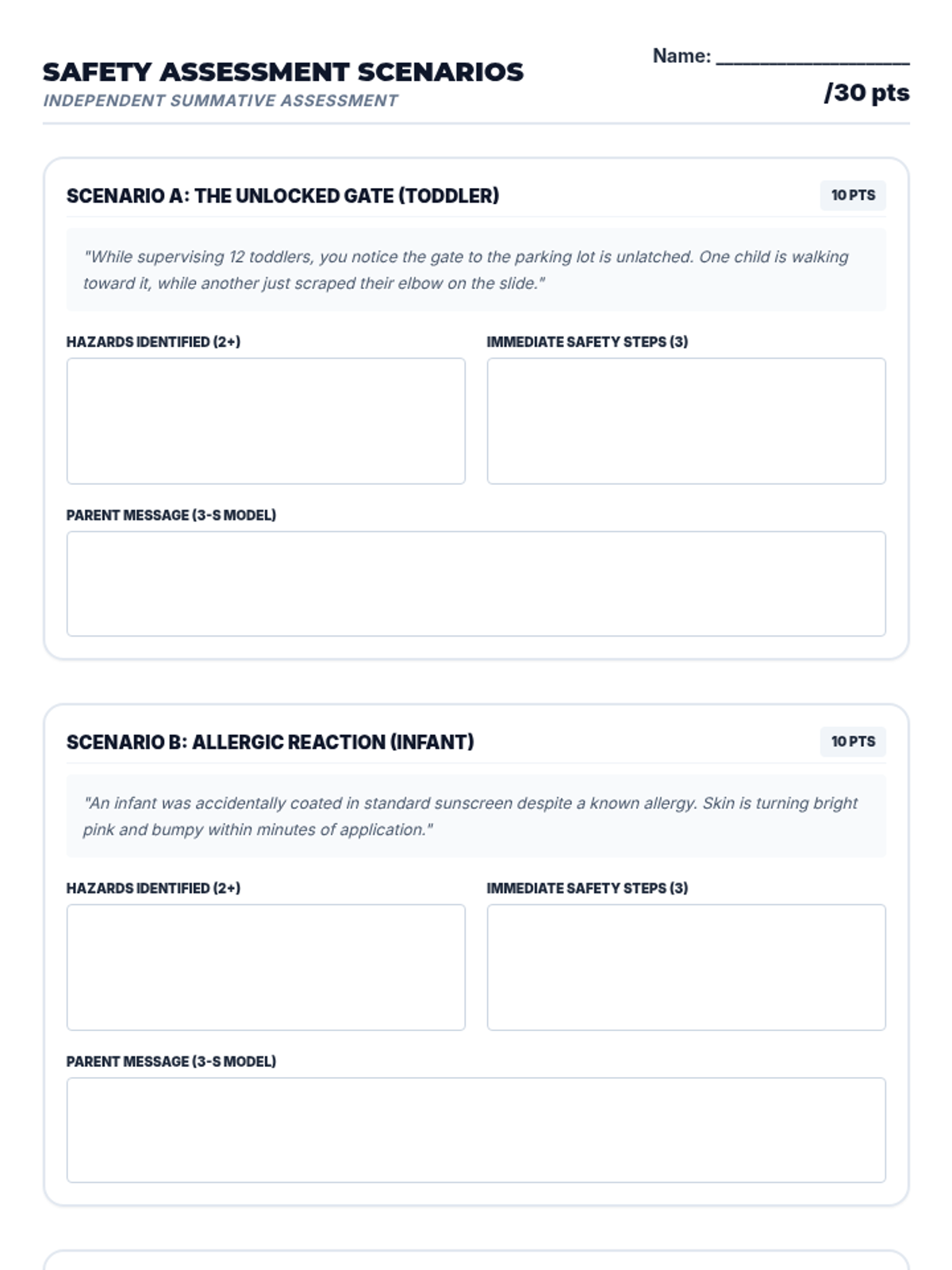
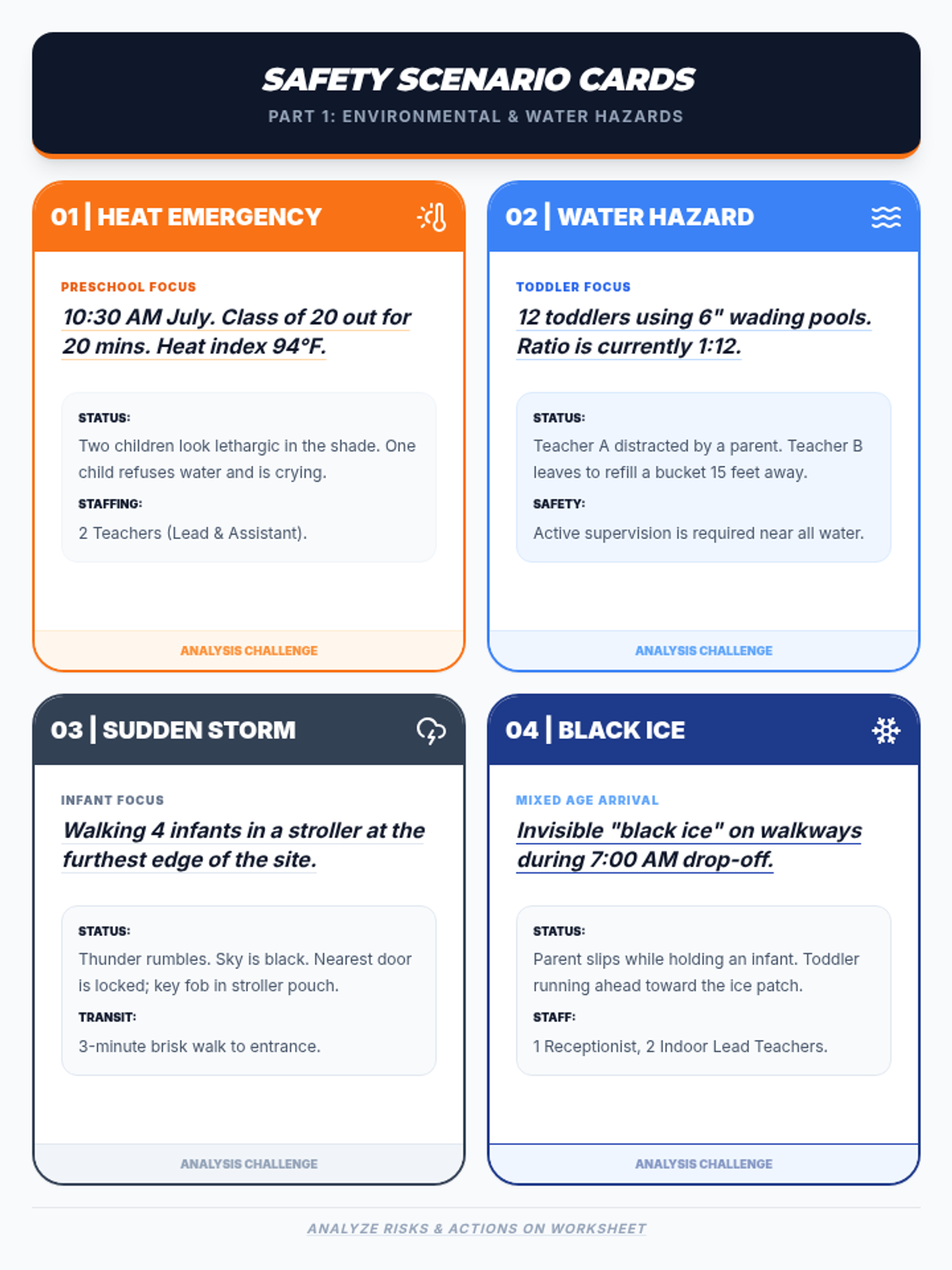
This lesson focuses on weather-related precautions and water safety strategies specifically for infant, toddler, and preschool environments, covering active supervision and emergency protocols.
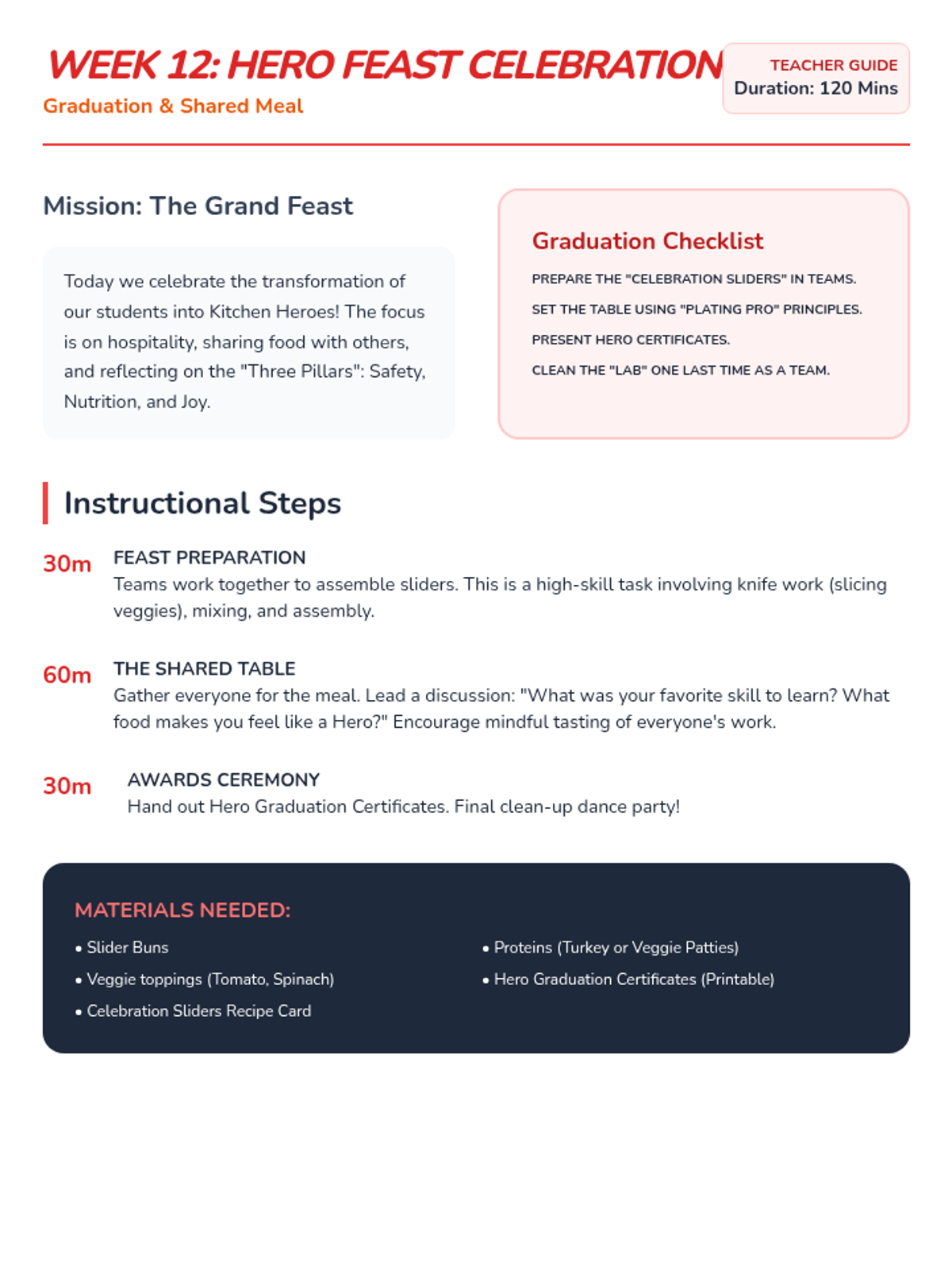
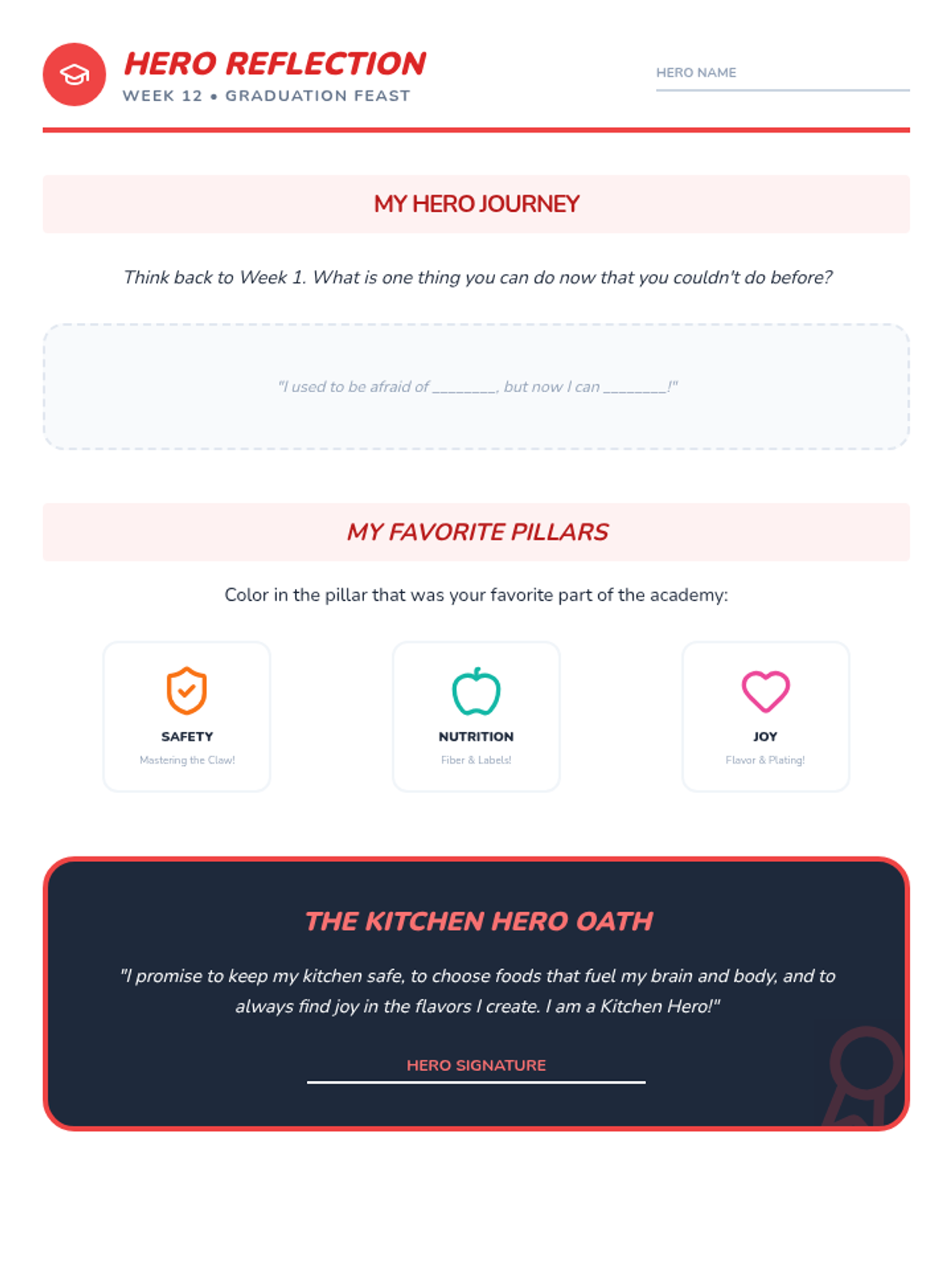
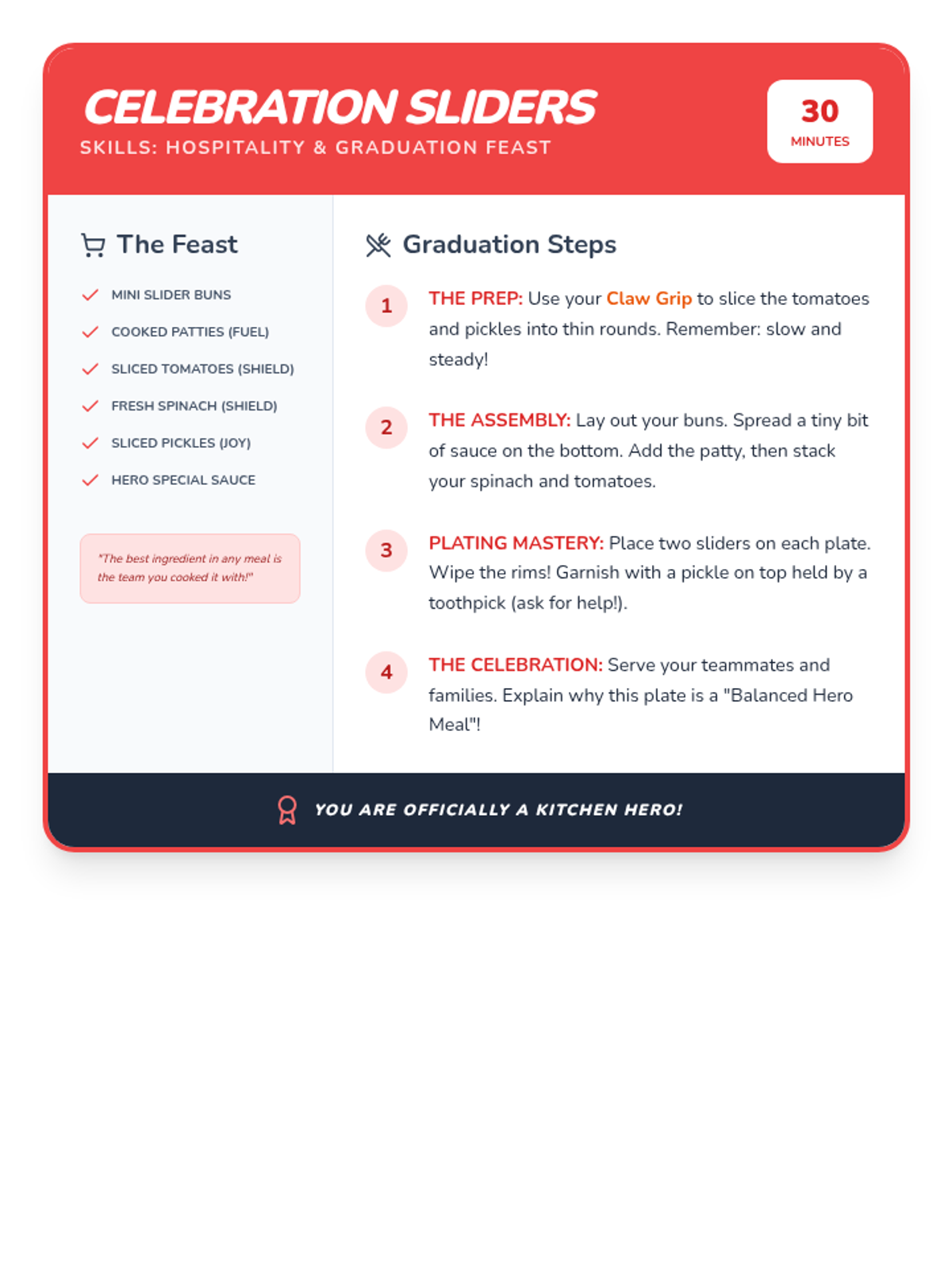
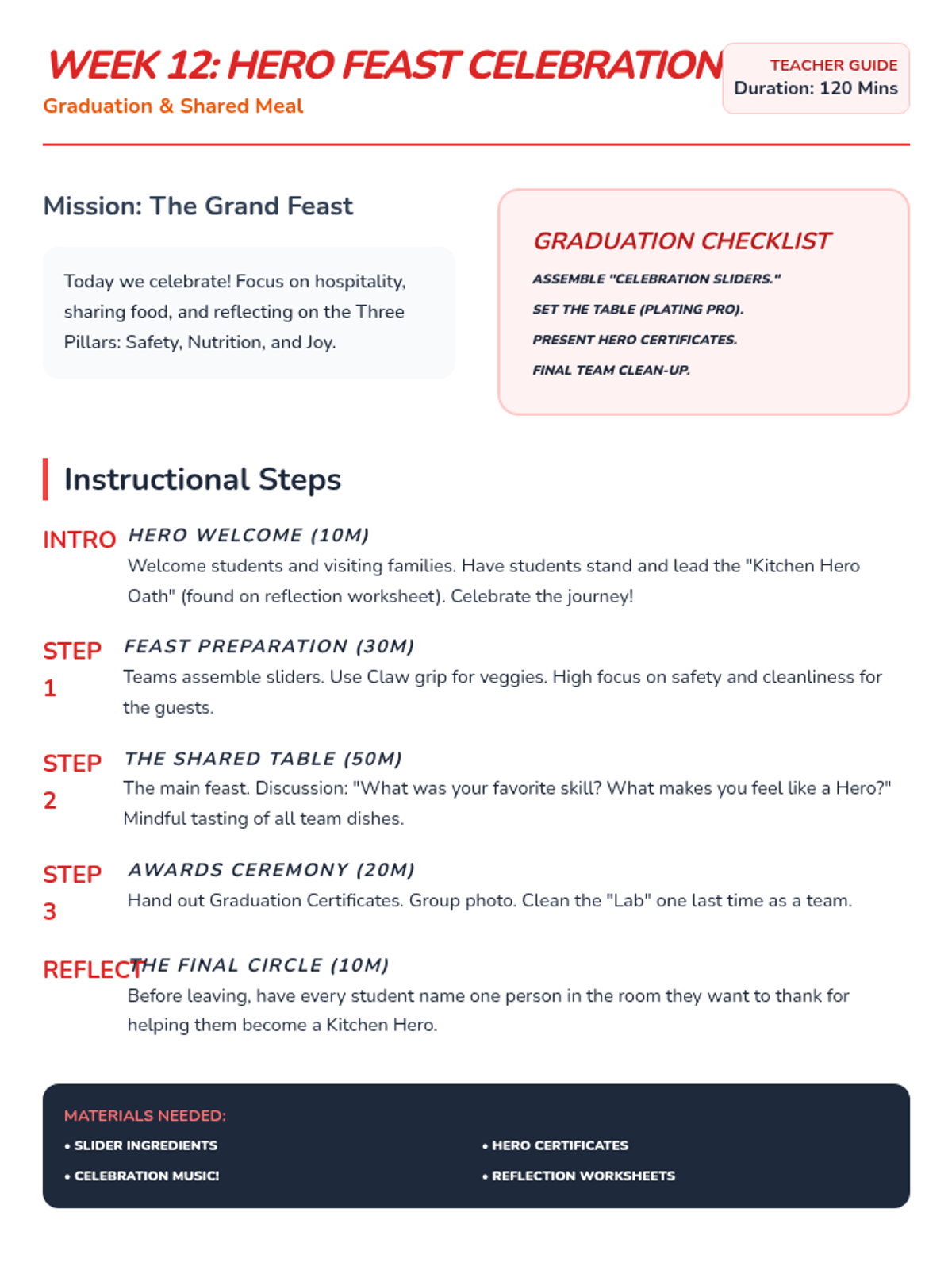
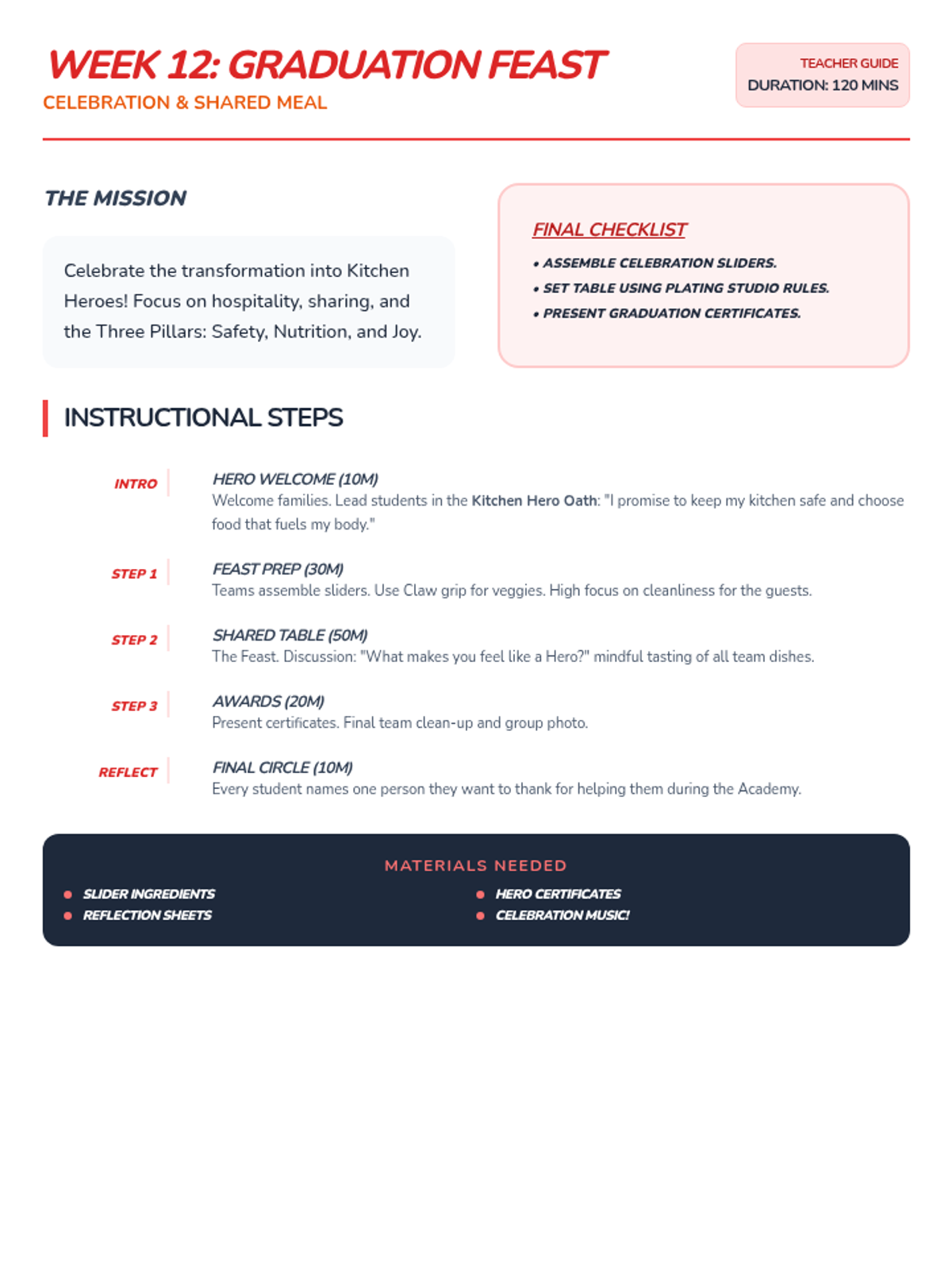
A final celebration showcase of skills learned throughout the course.
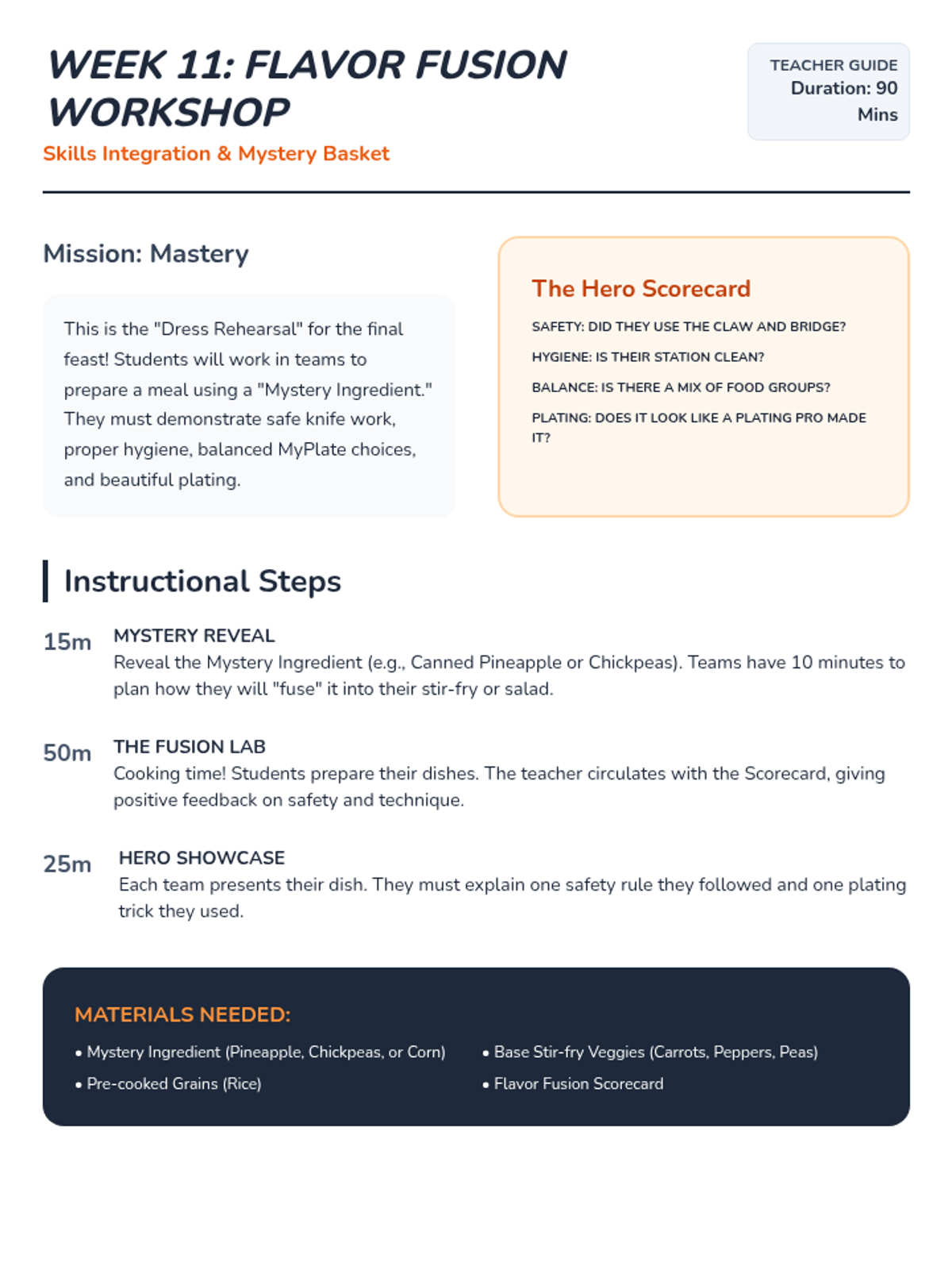
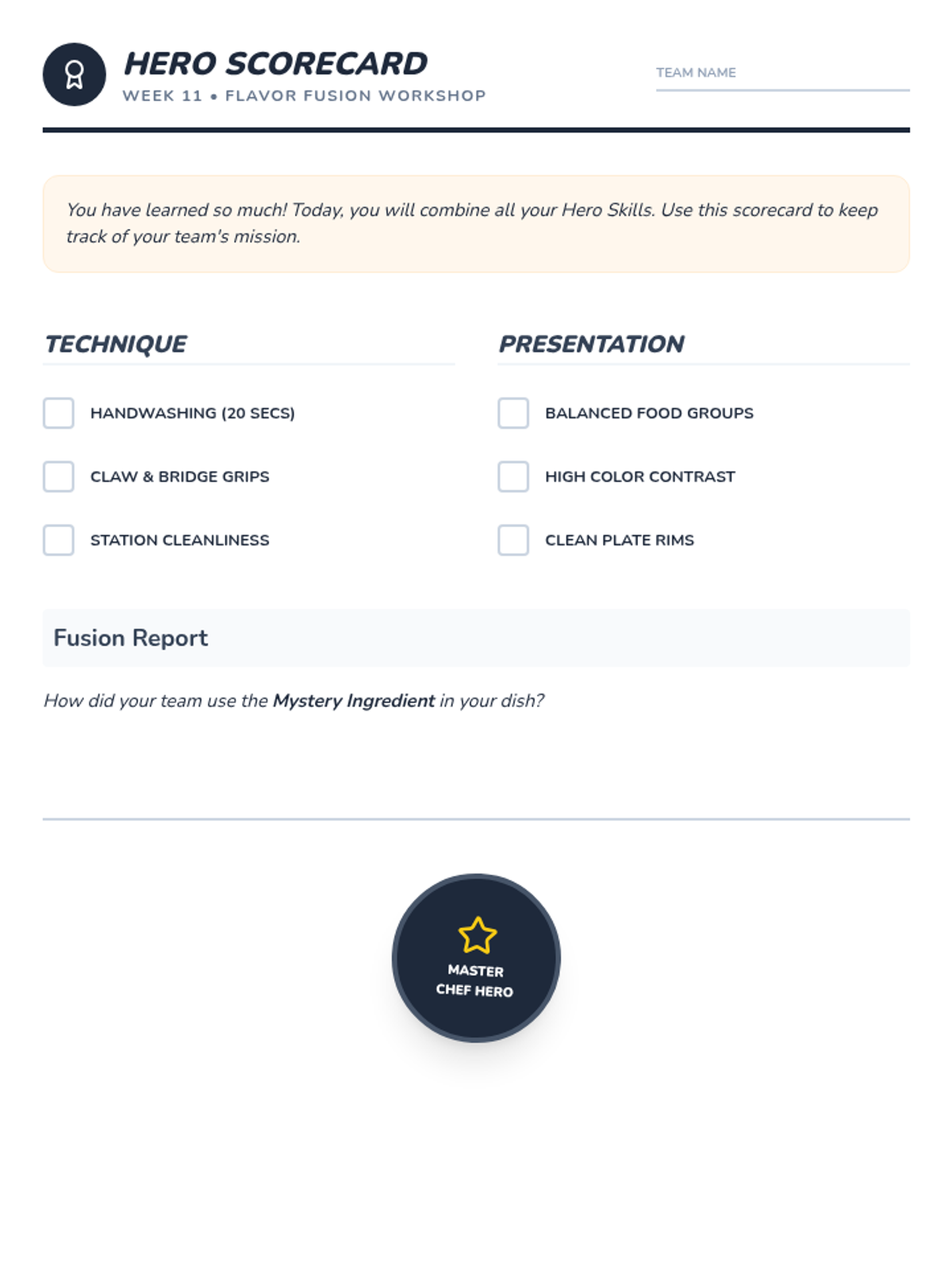
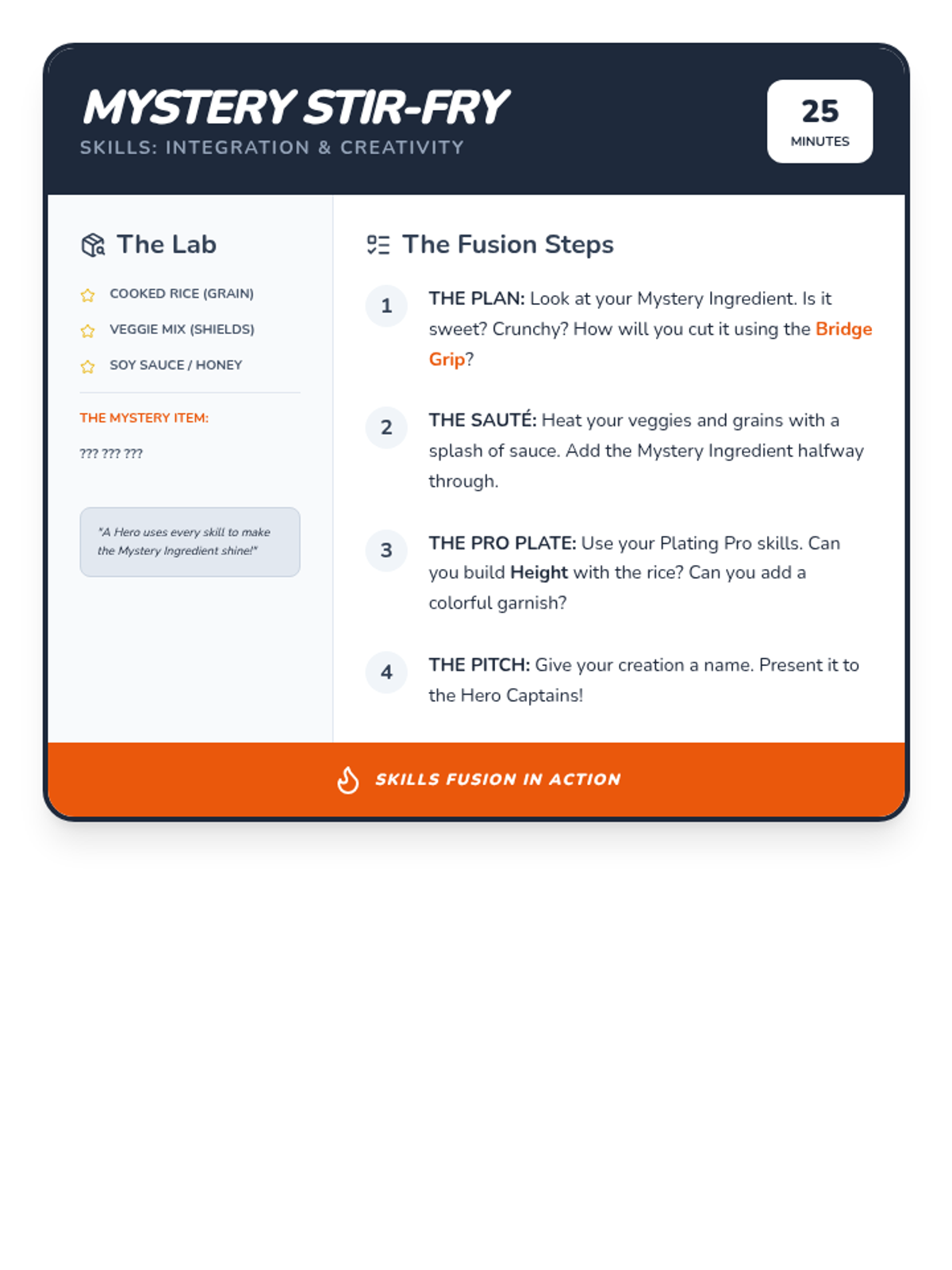
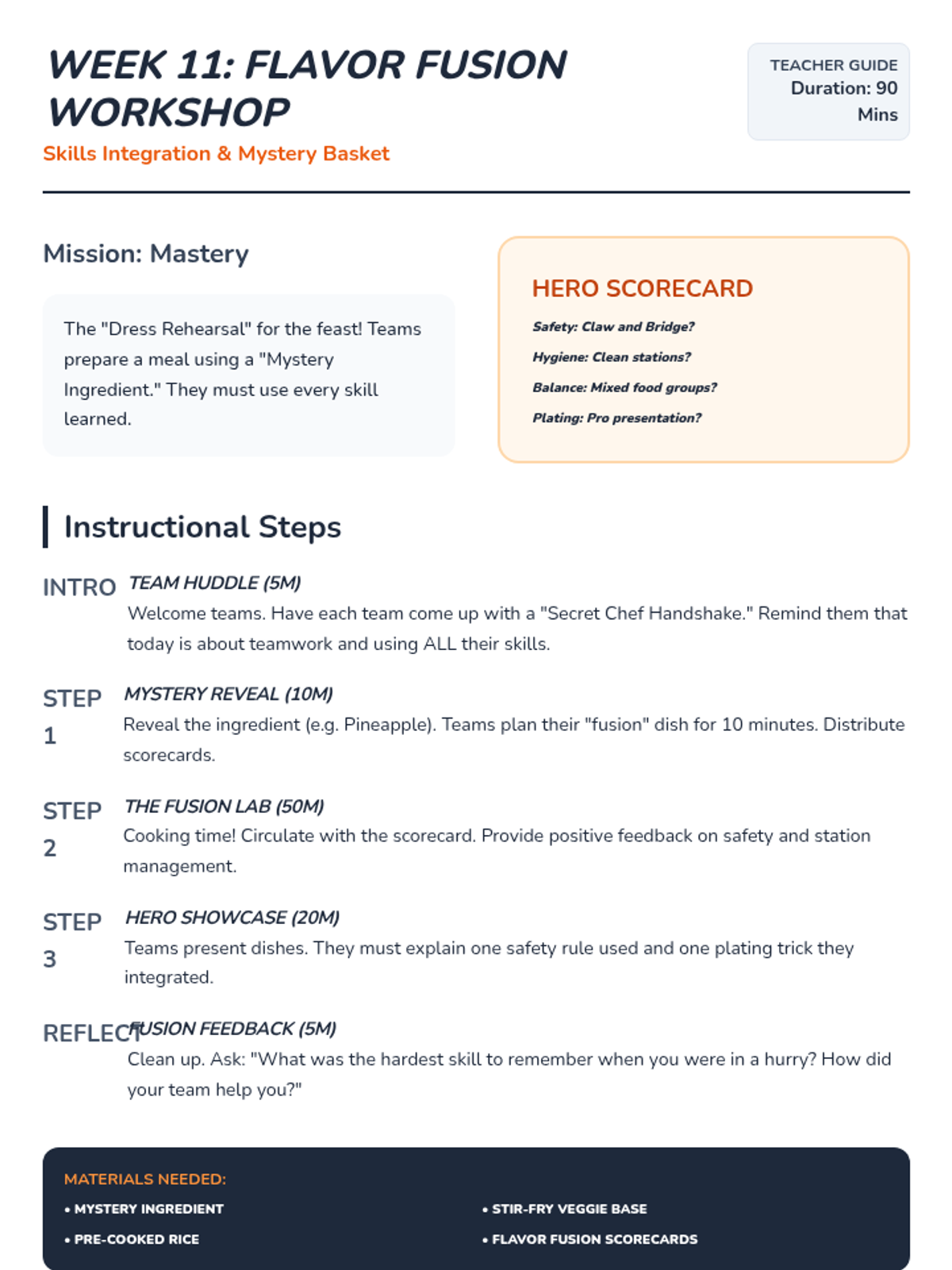
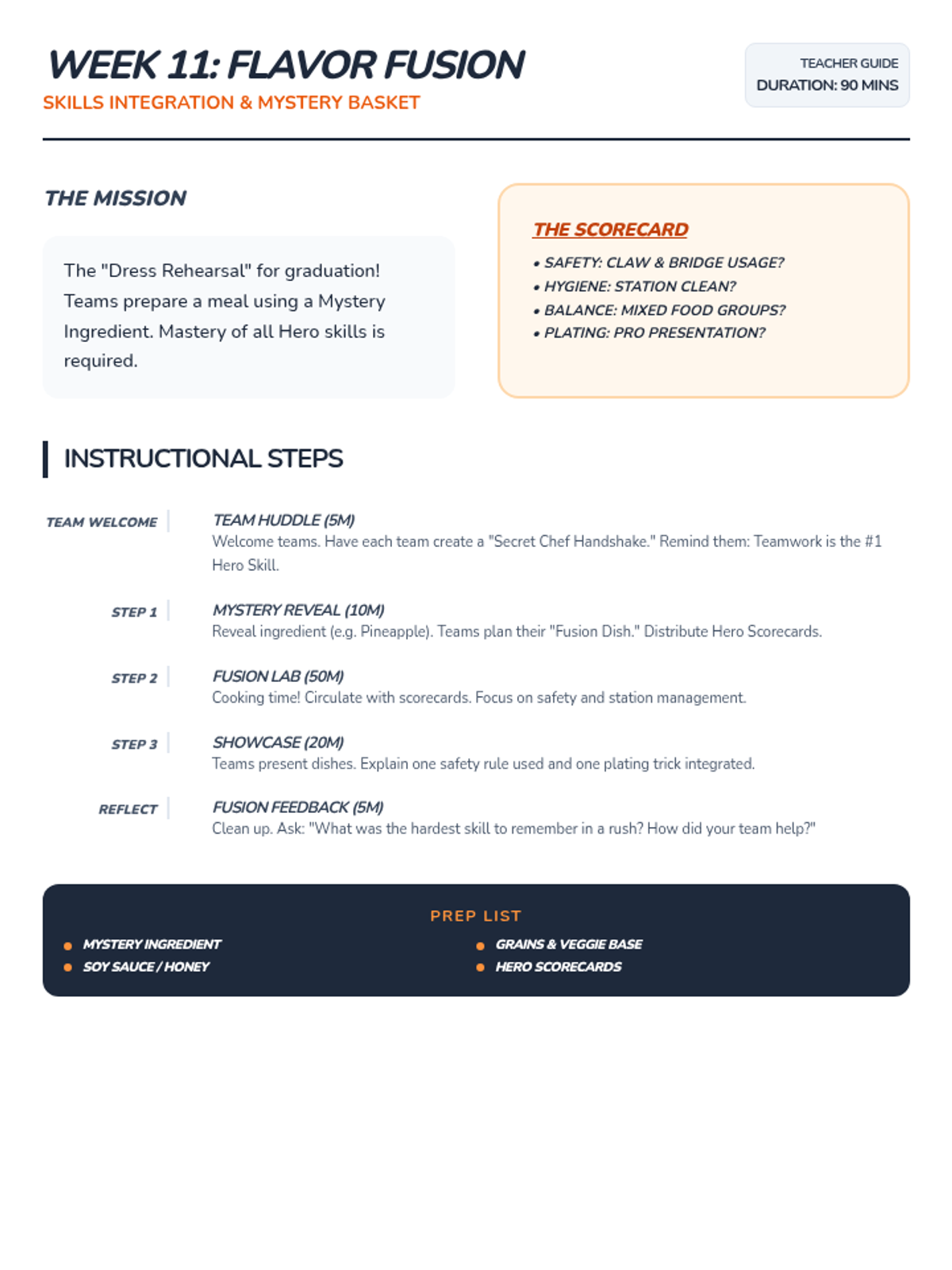
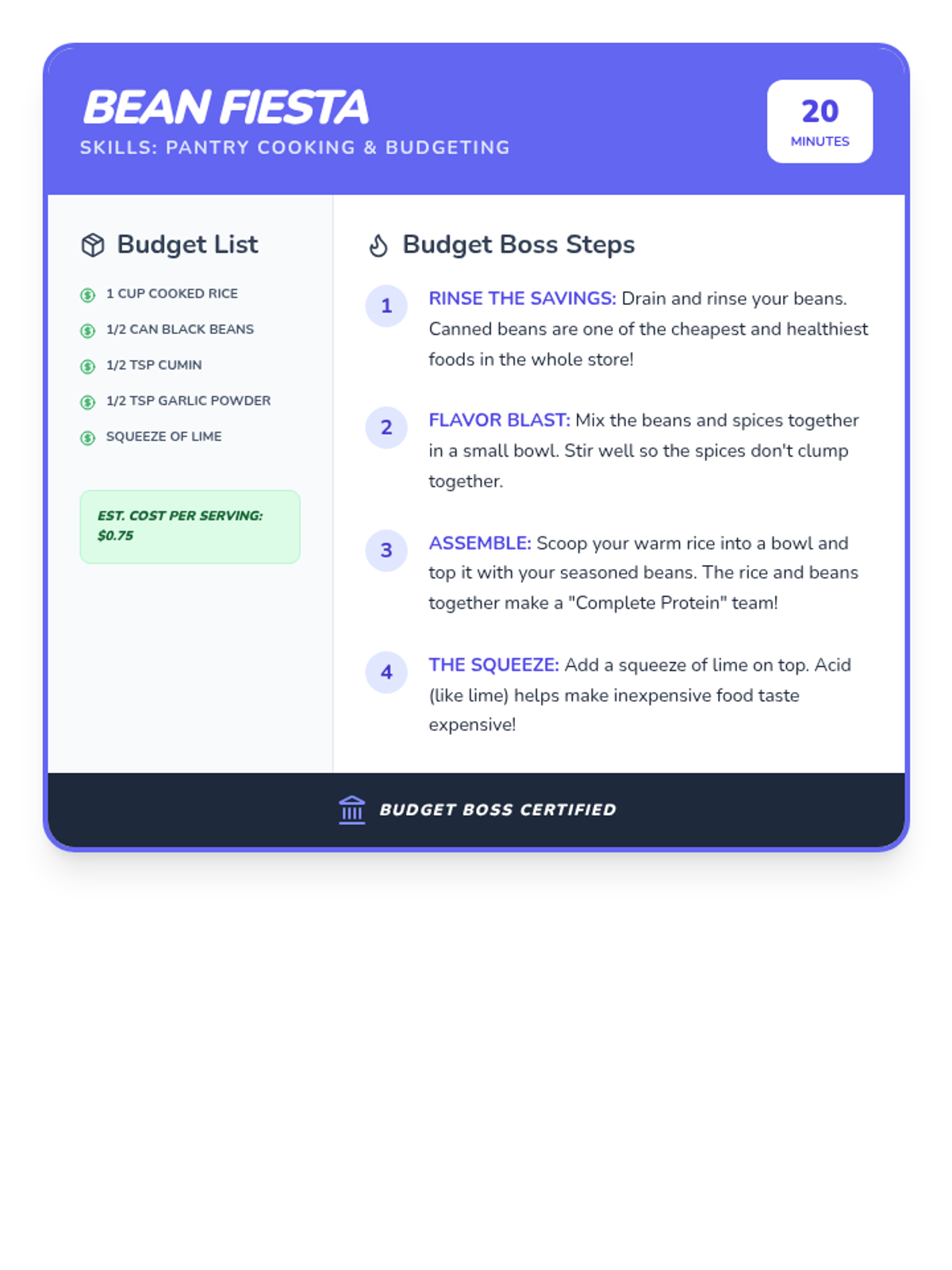
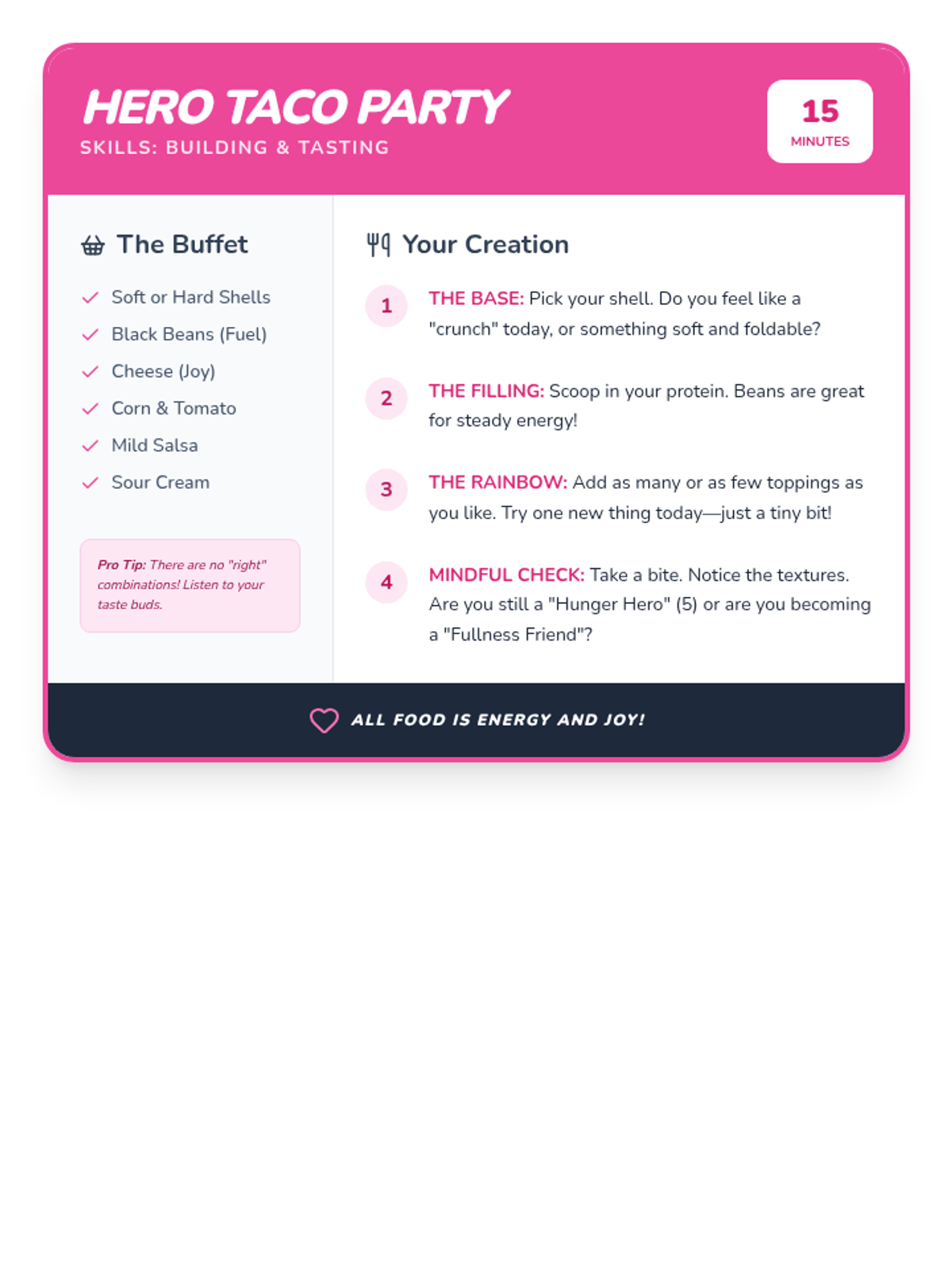
Applying skills to create a cohesive meal with limited ingredients.
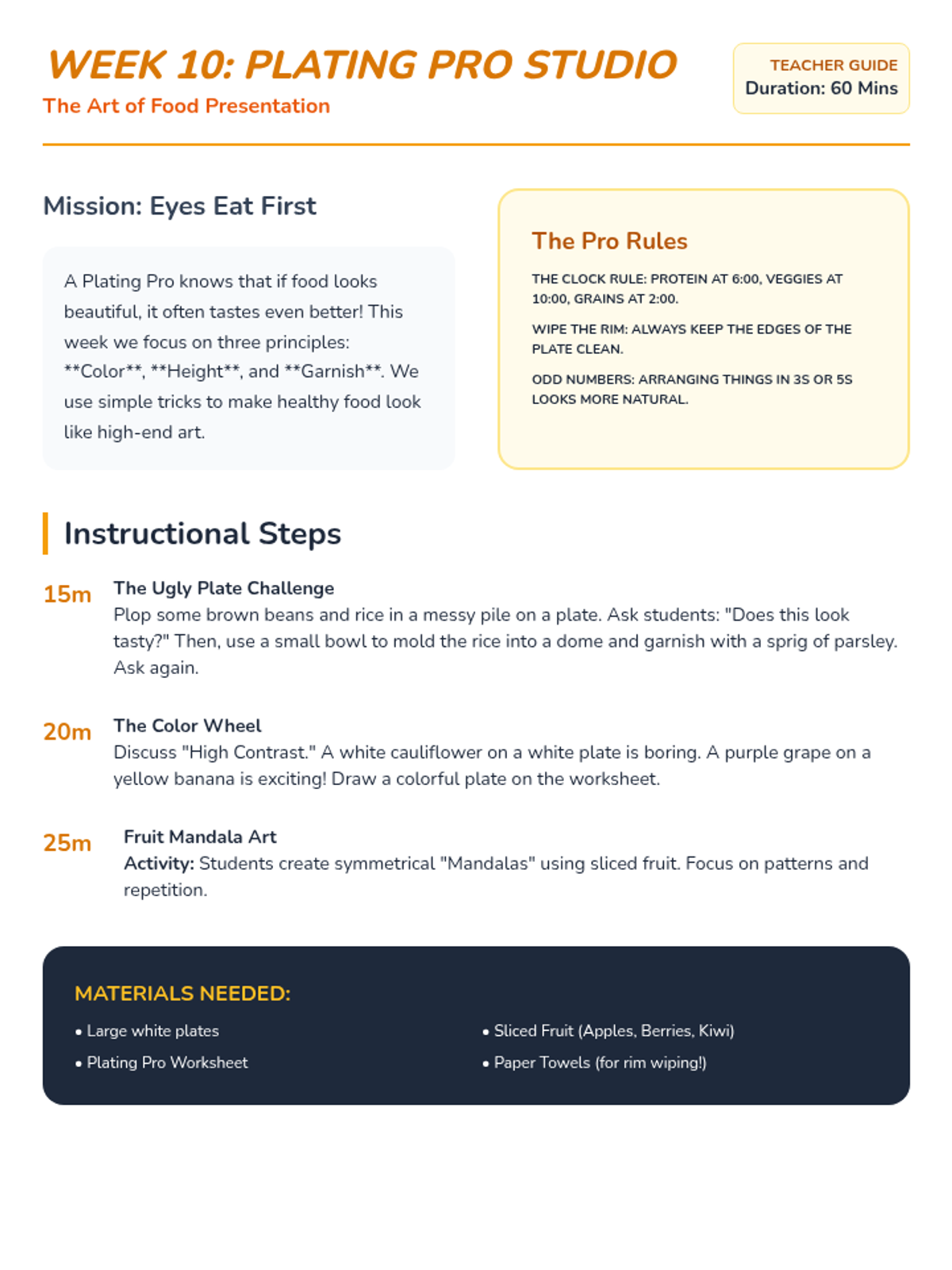
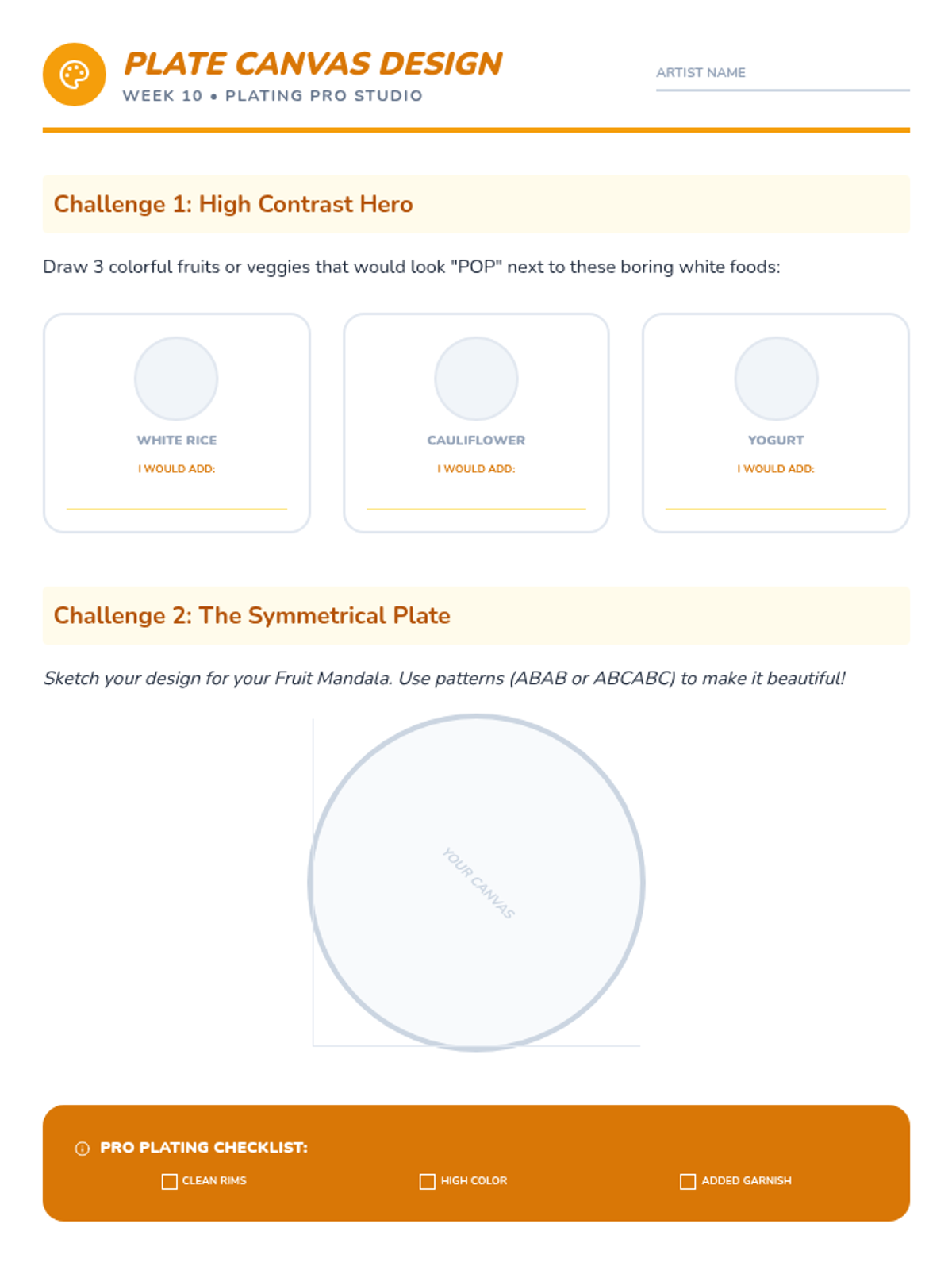
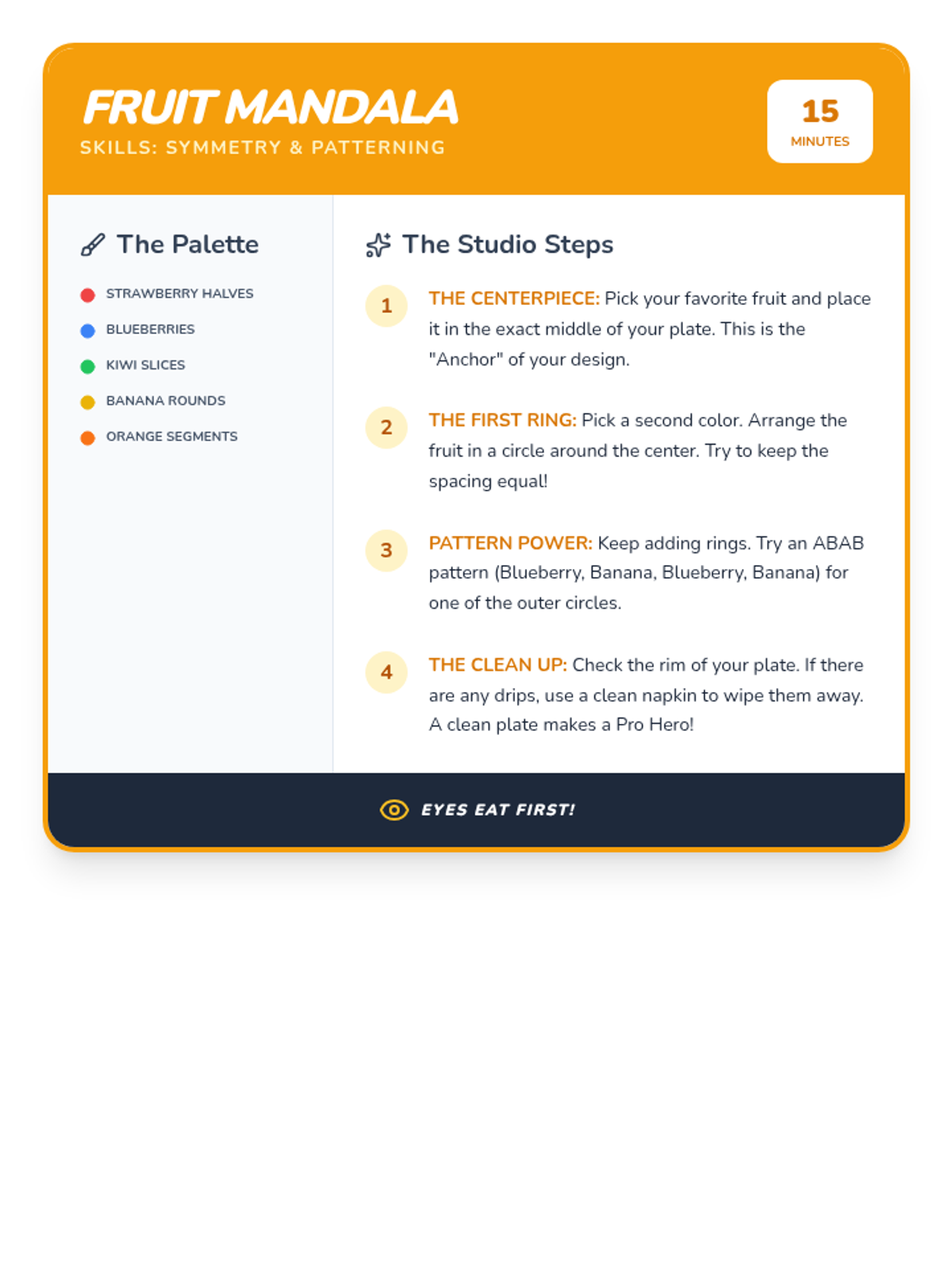
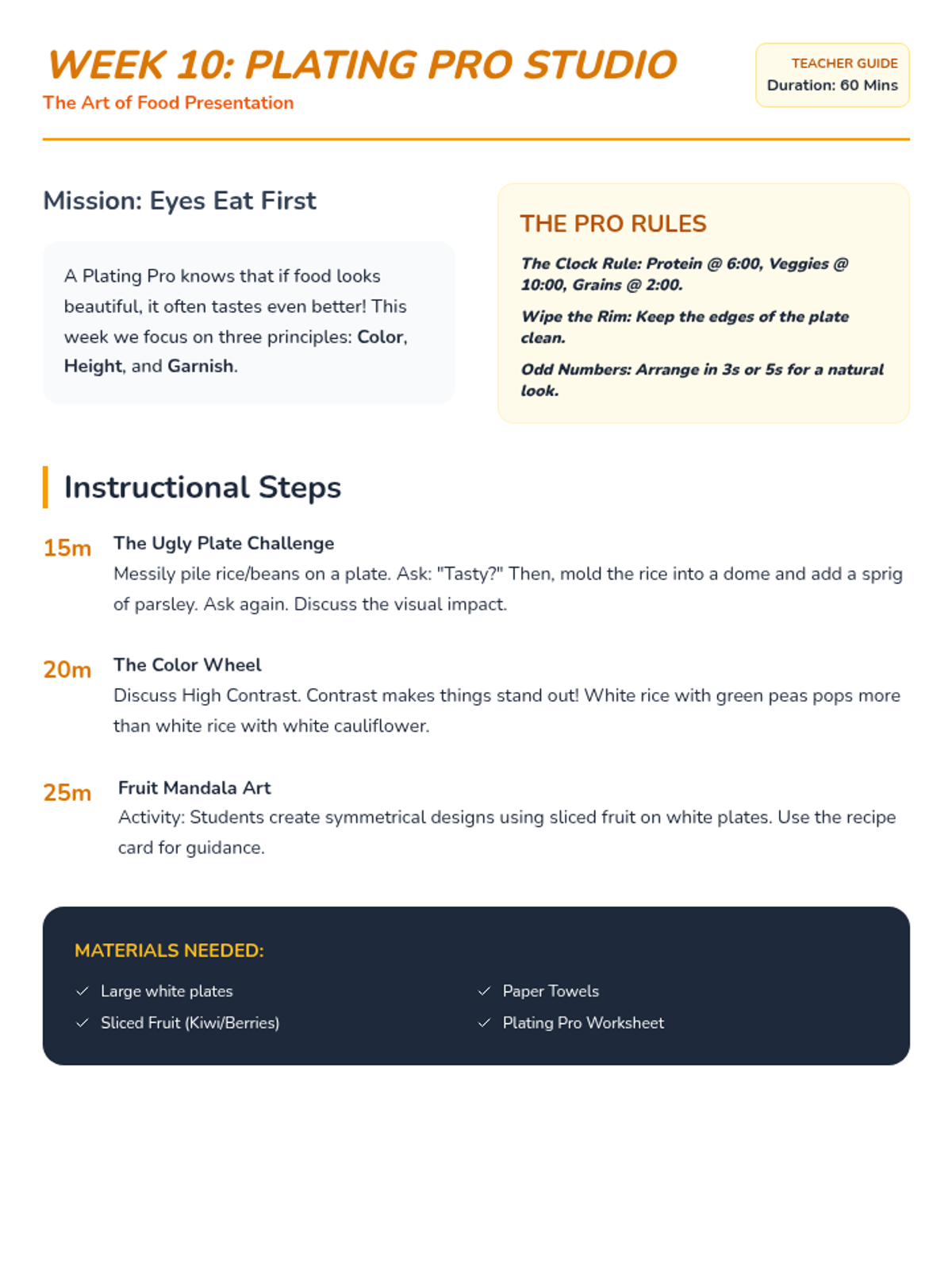
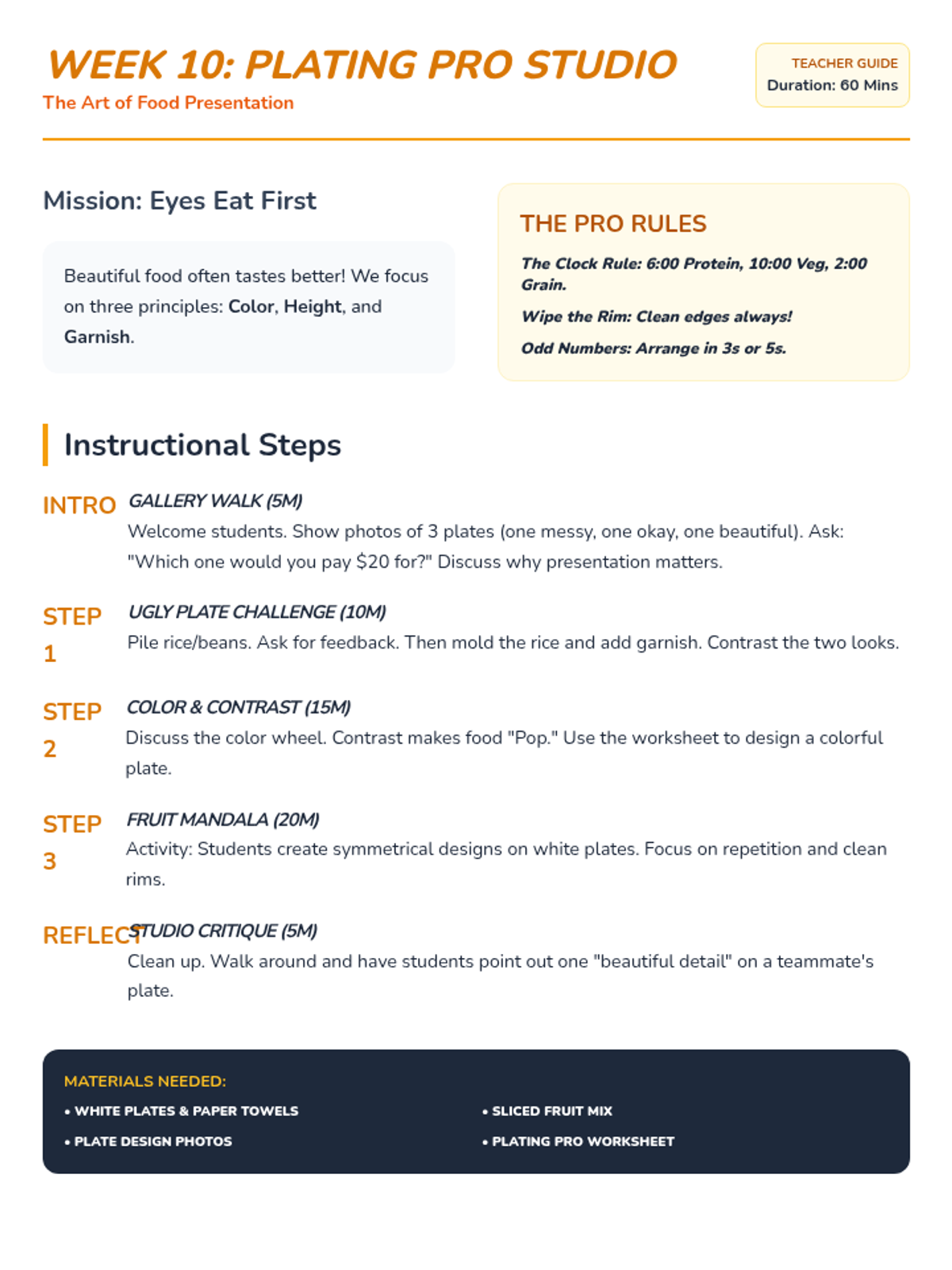
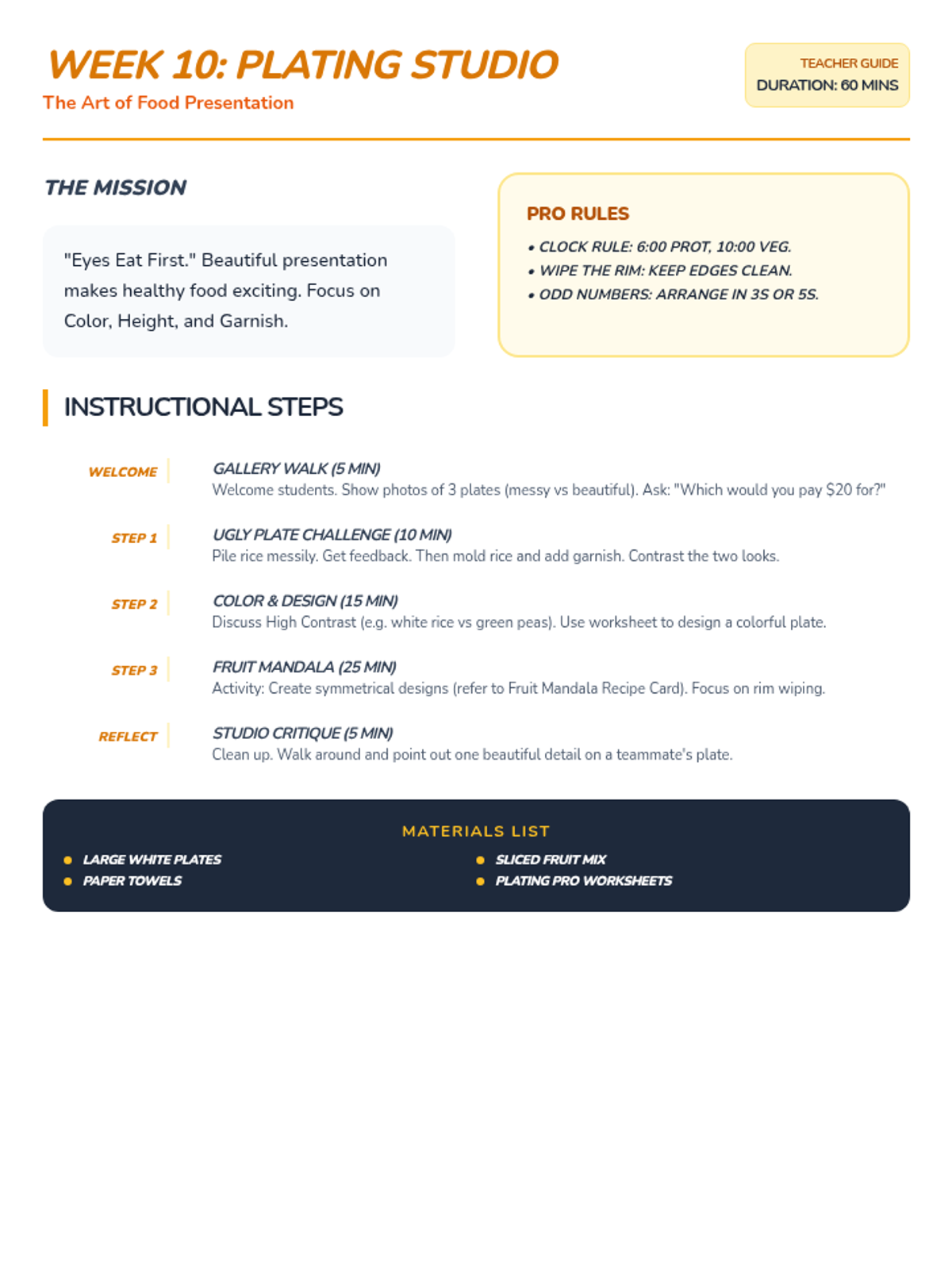
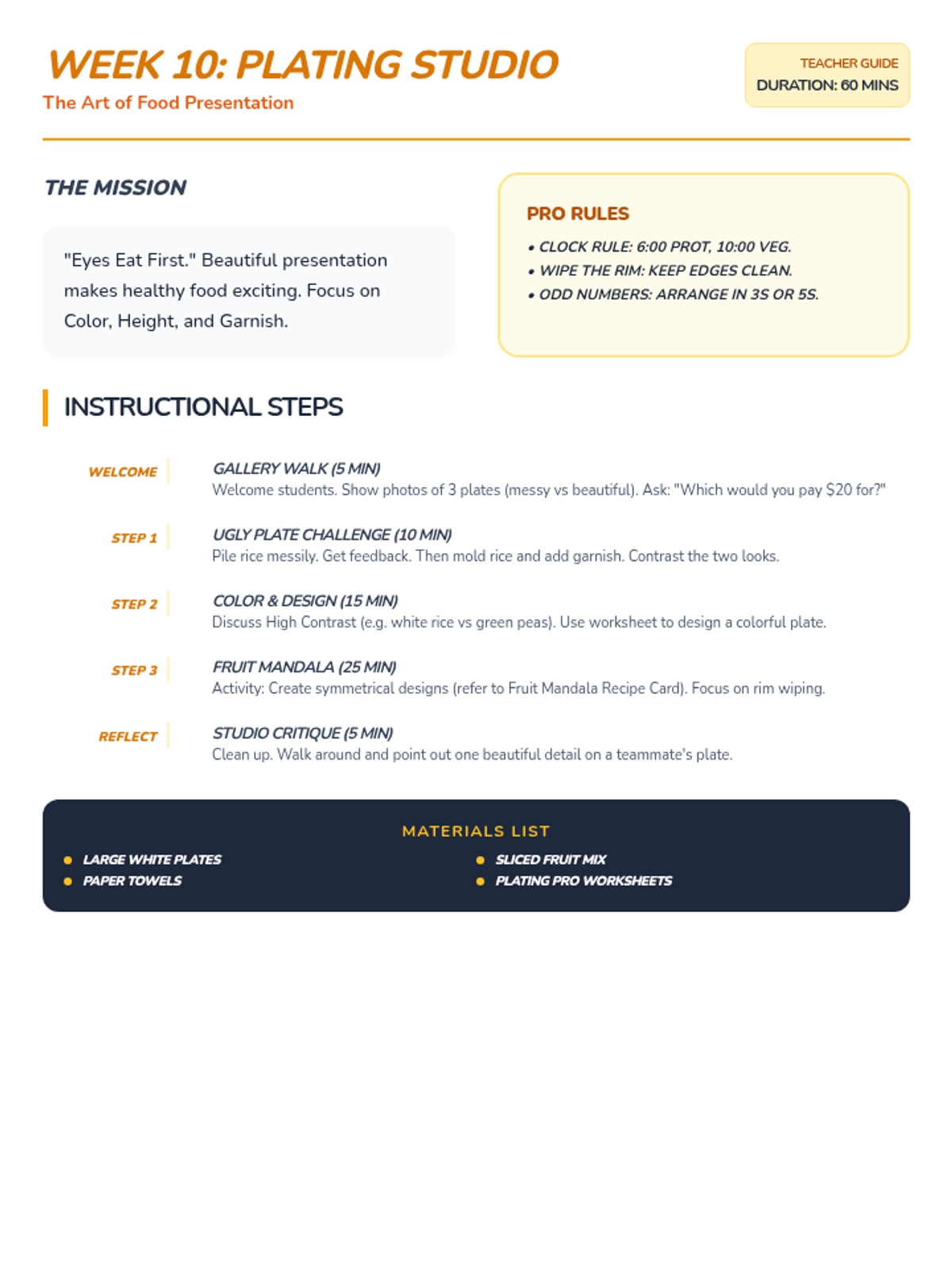
Elevating simple dishes through creative arrangement and garnishes.
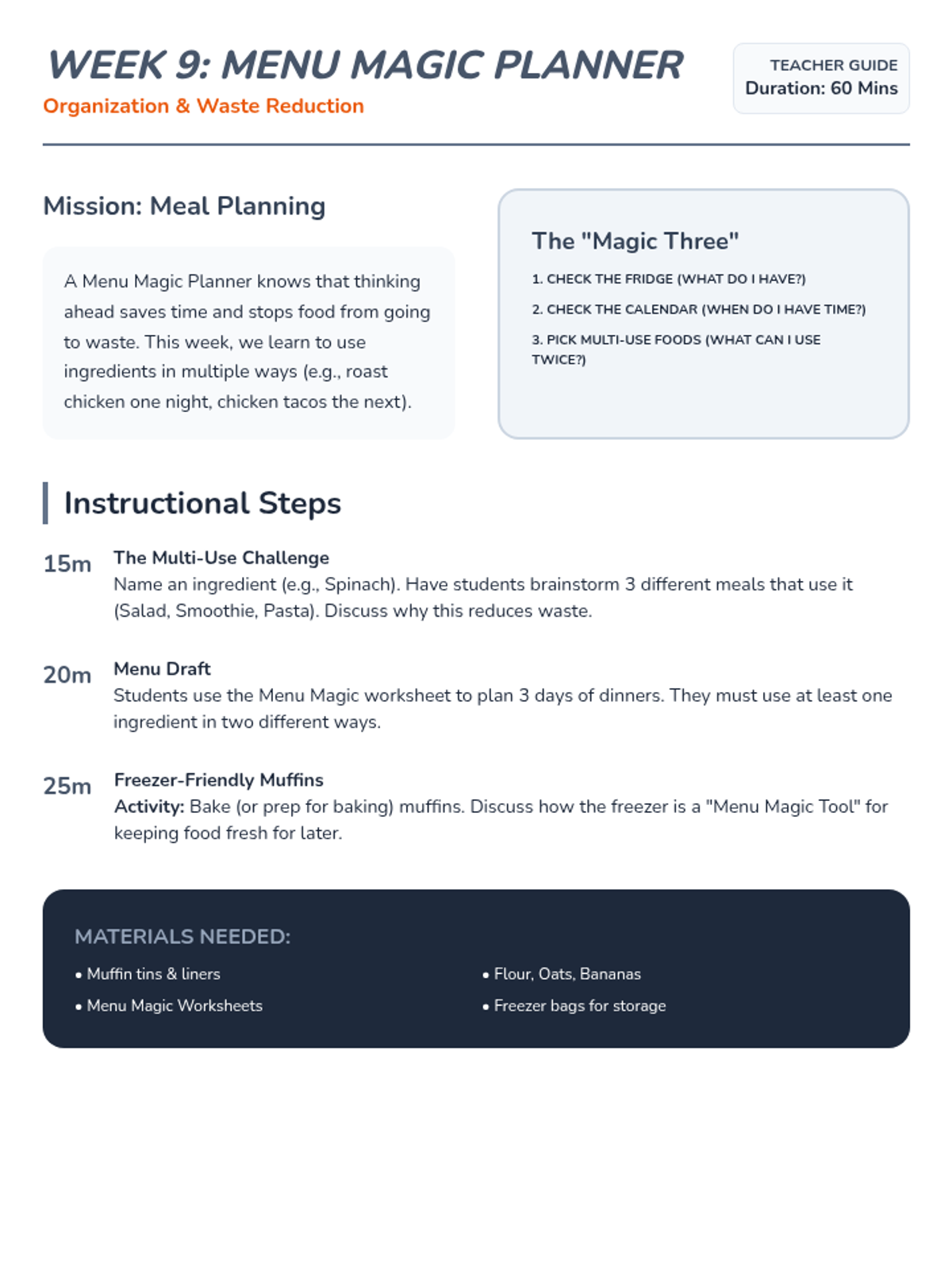
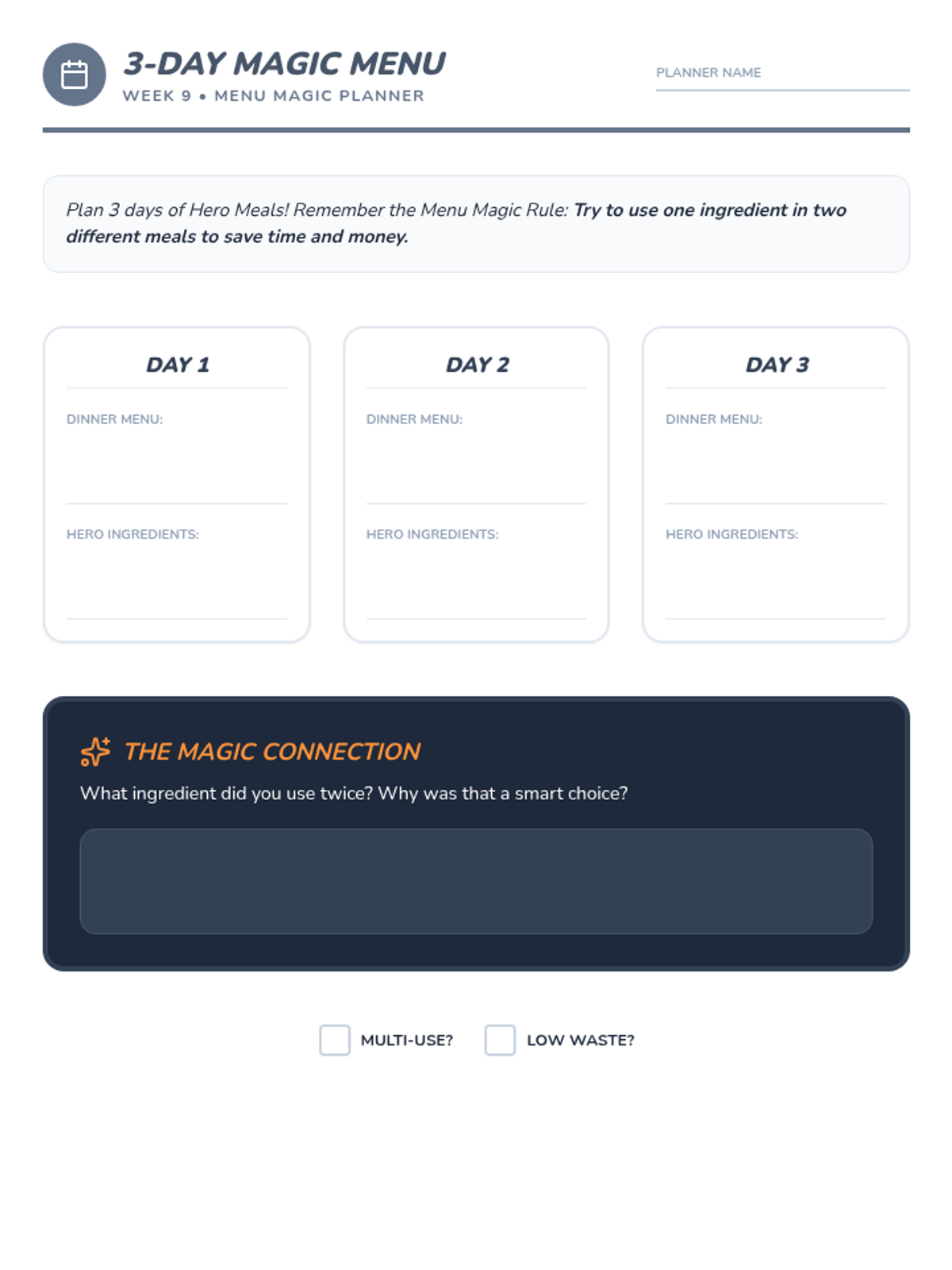
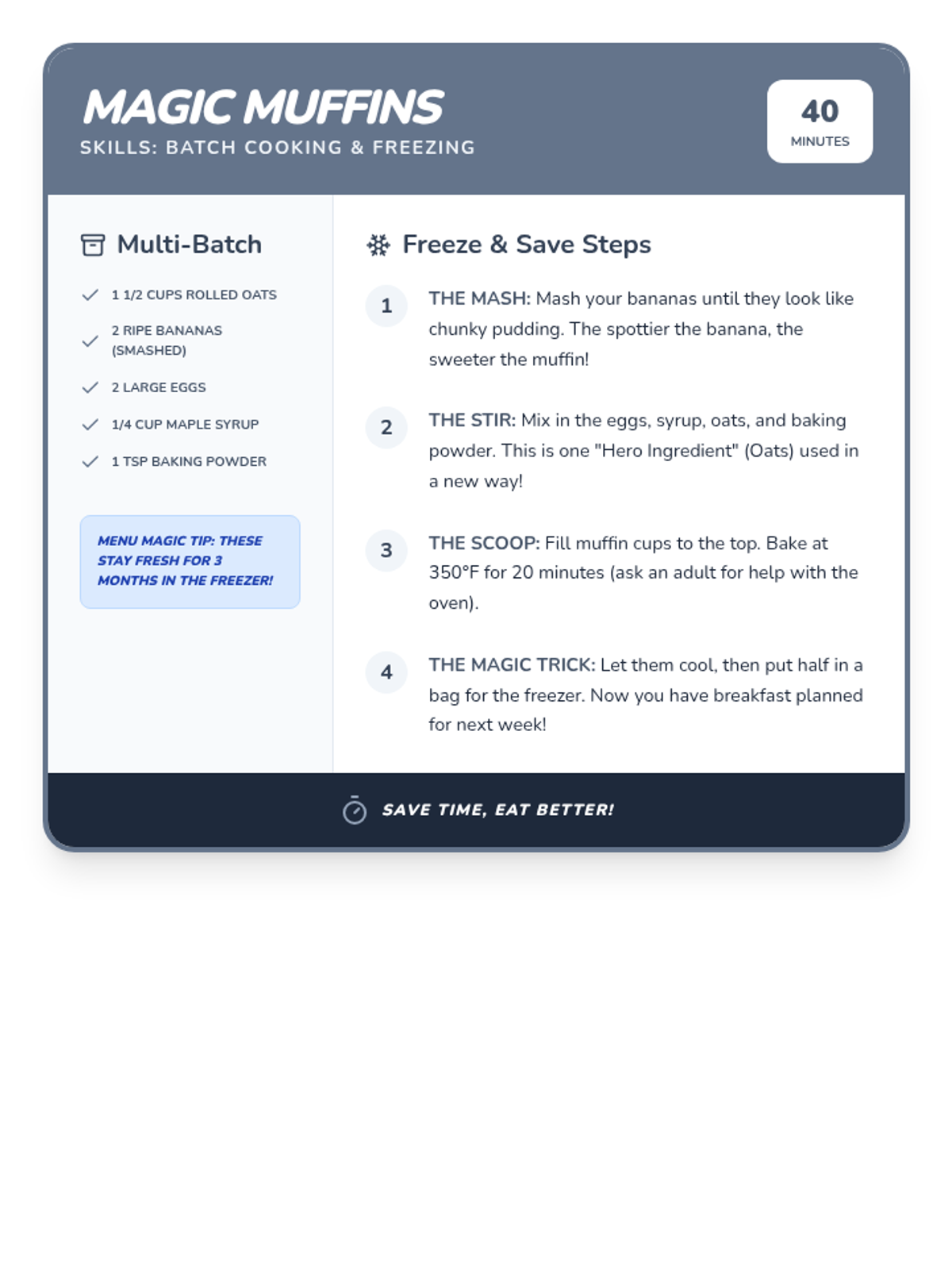
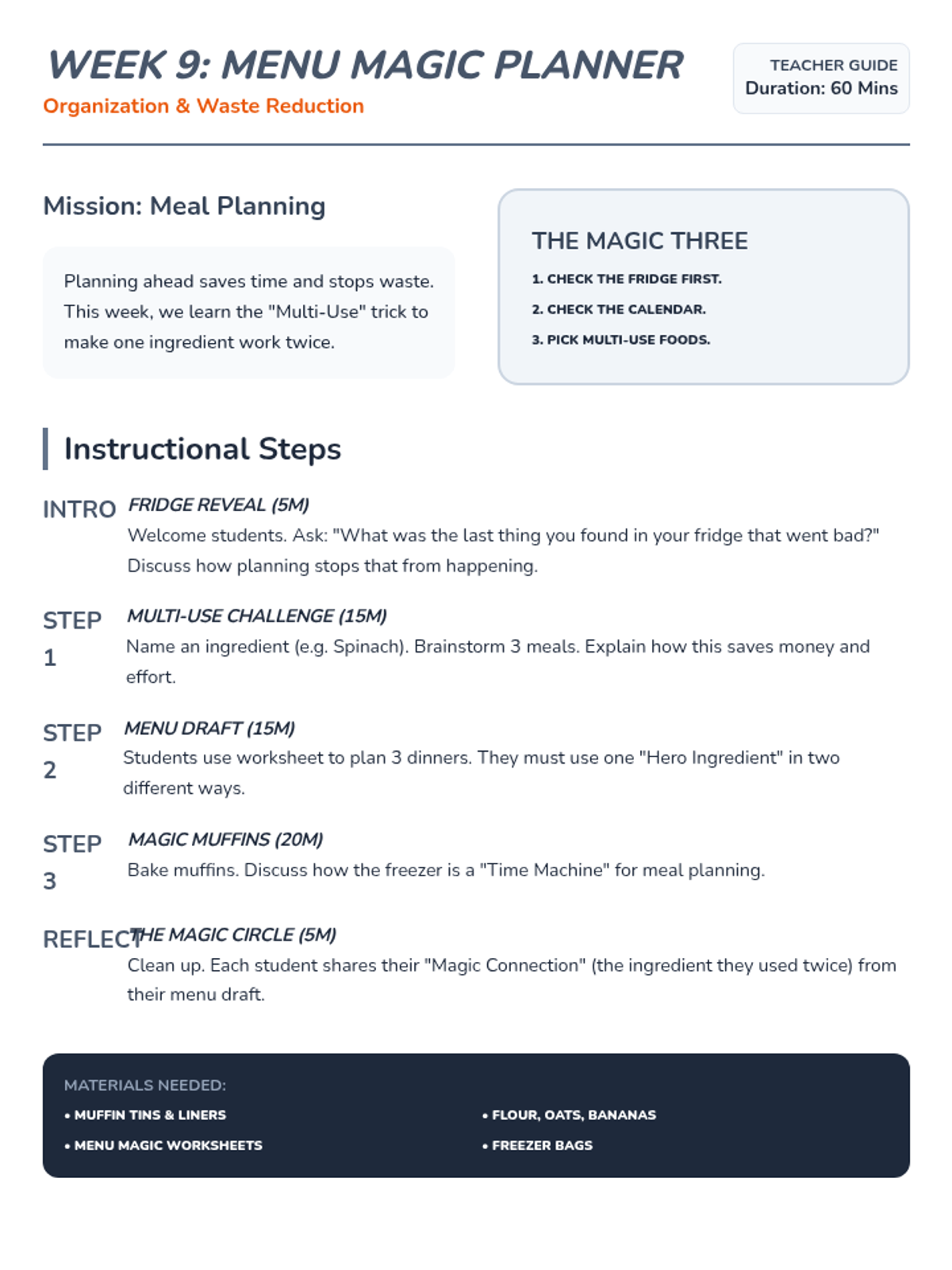
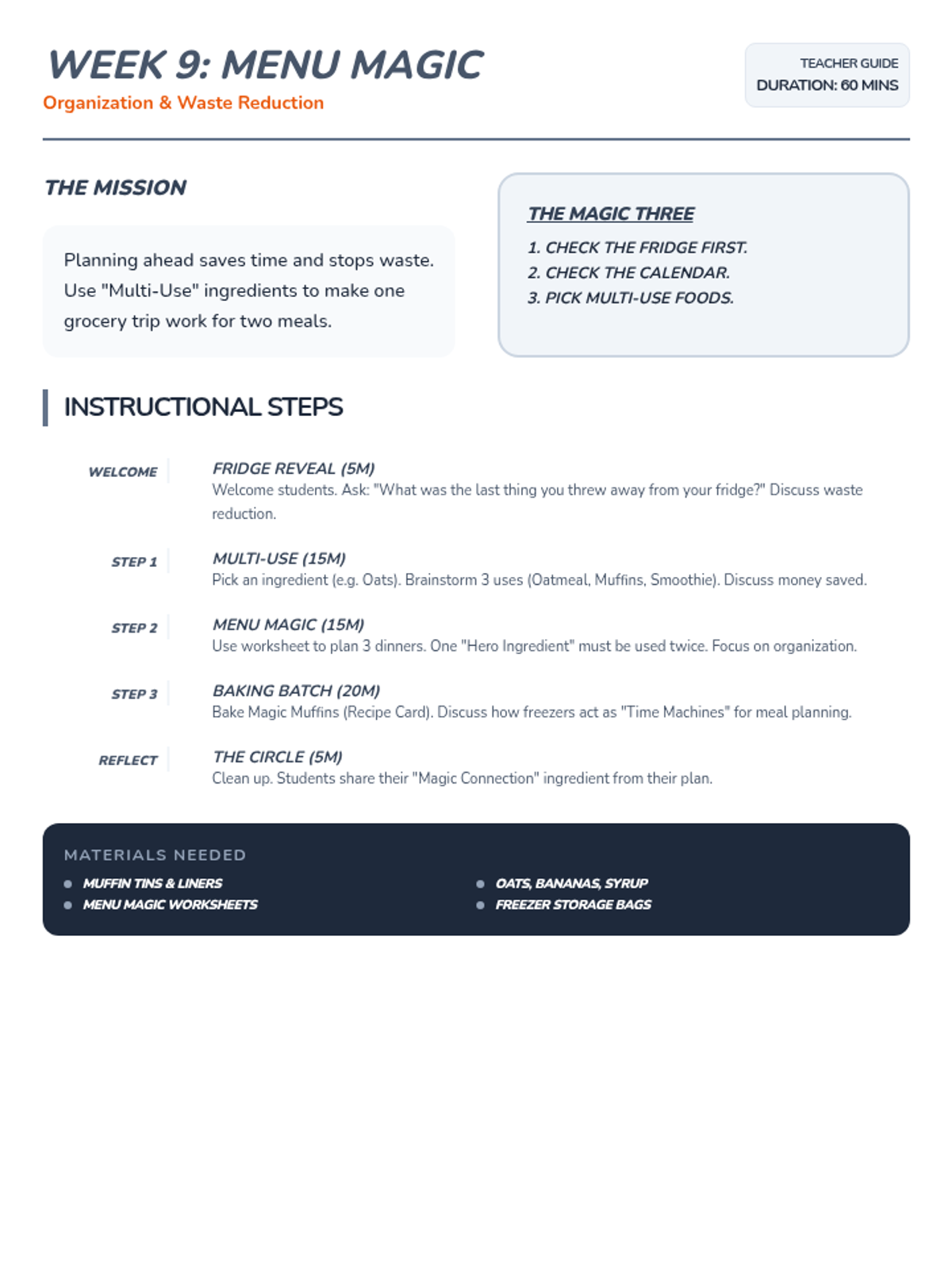
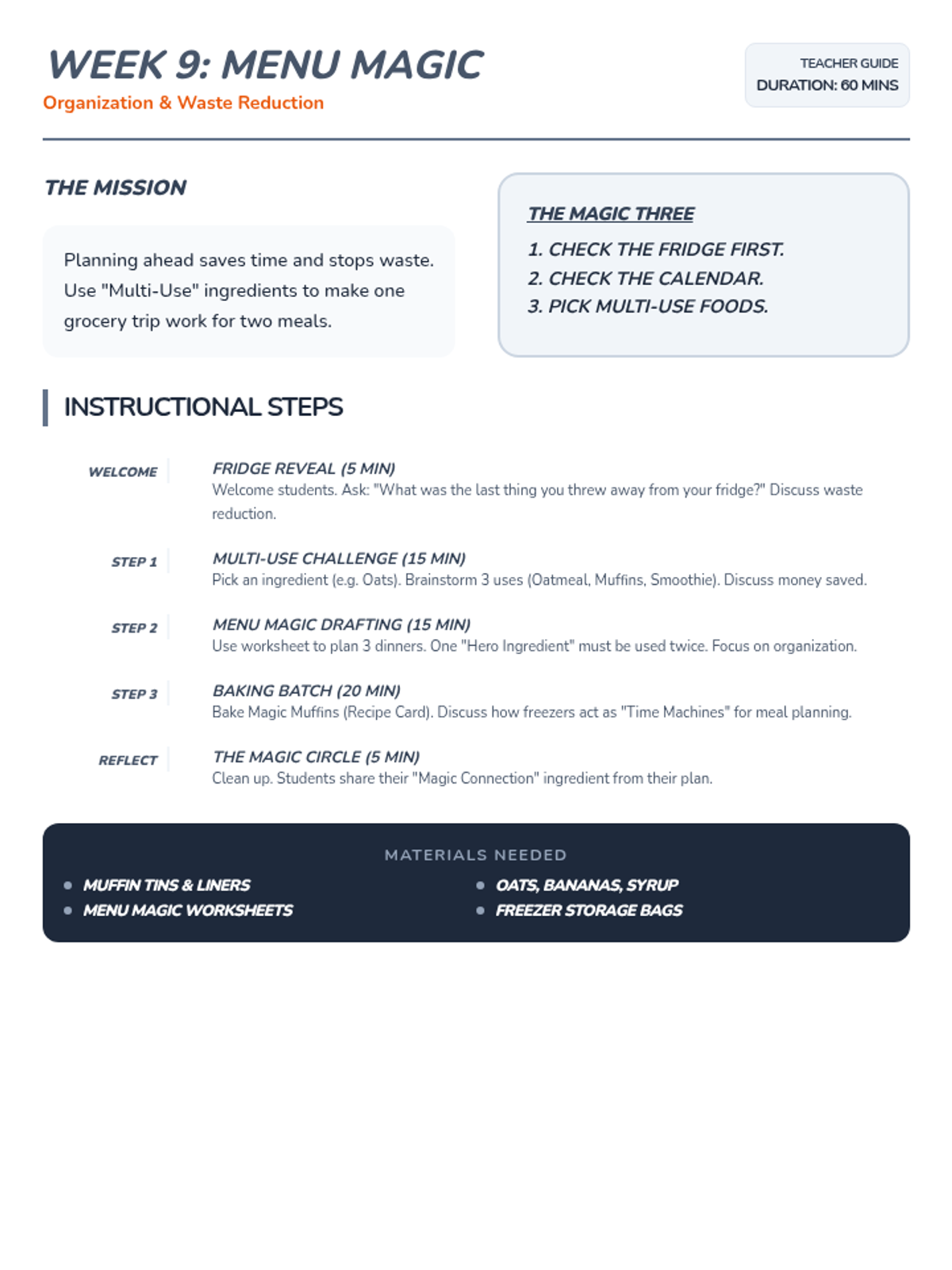
Strategies for organizing weekly meals to reduce waste and stress.
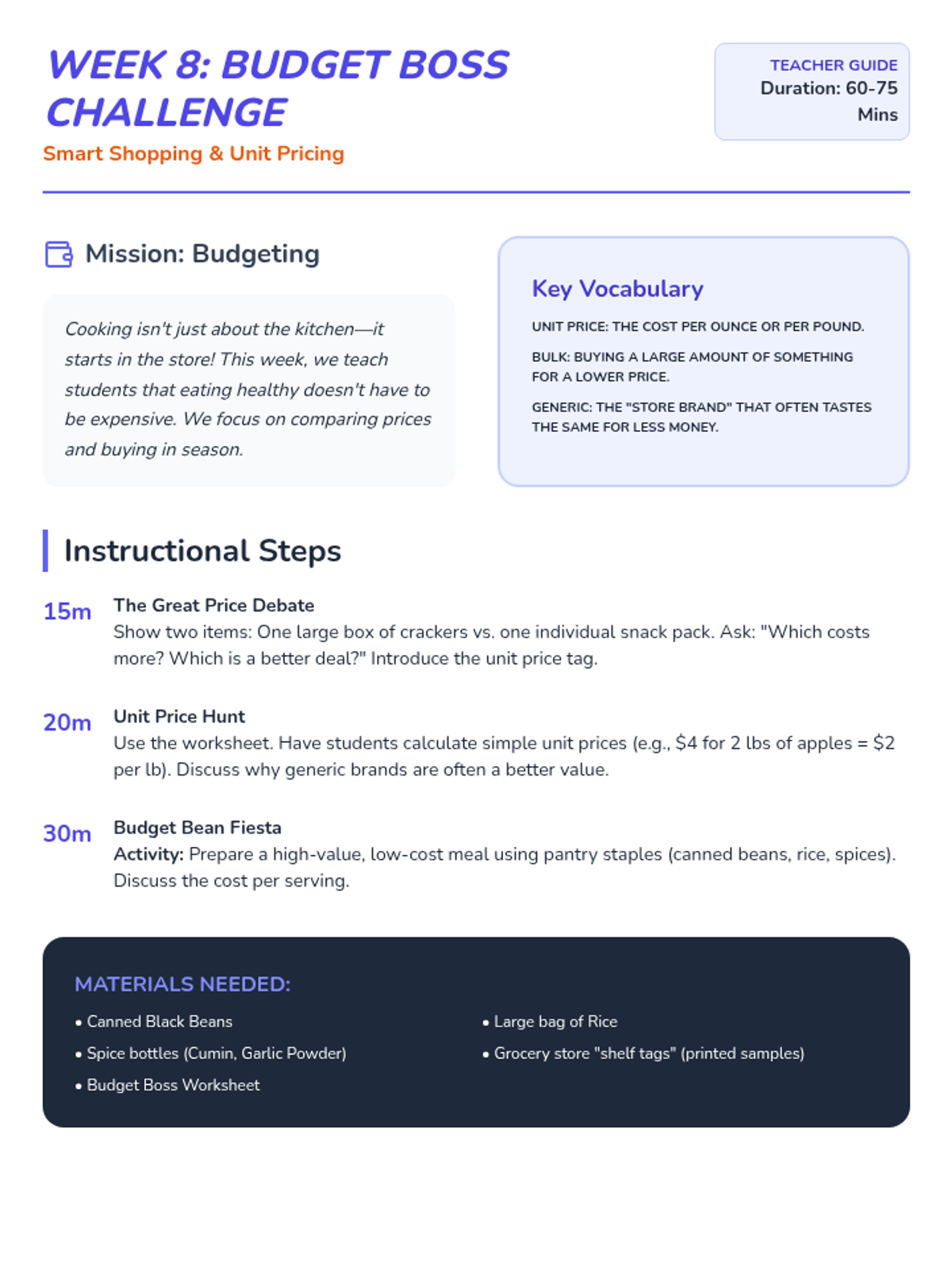
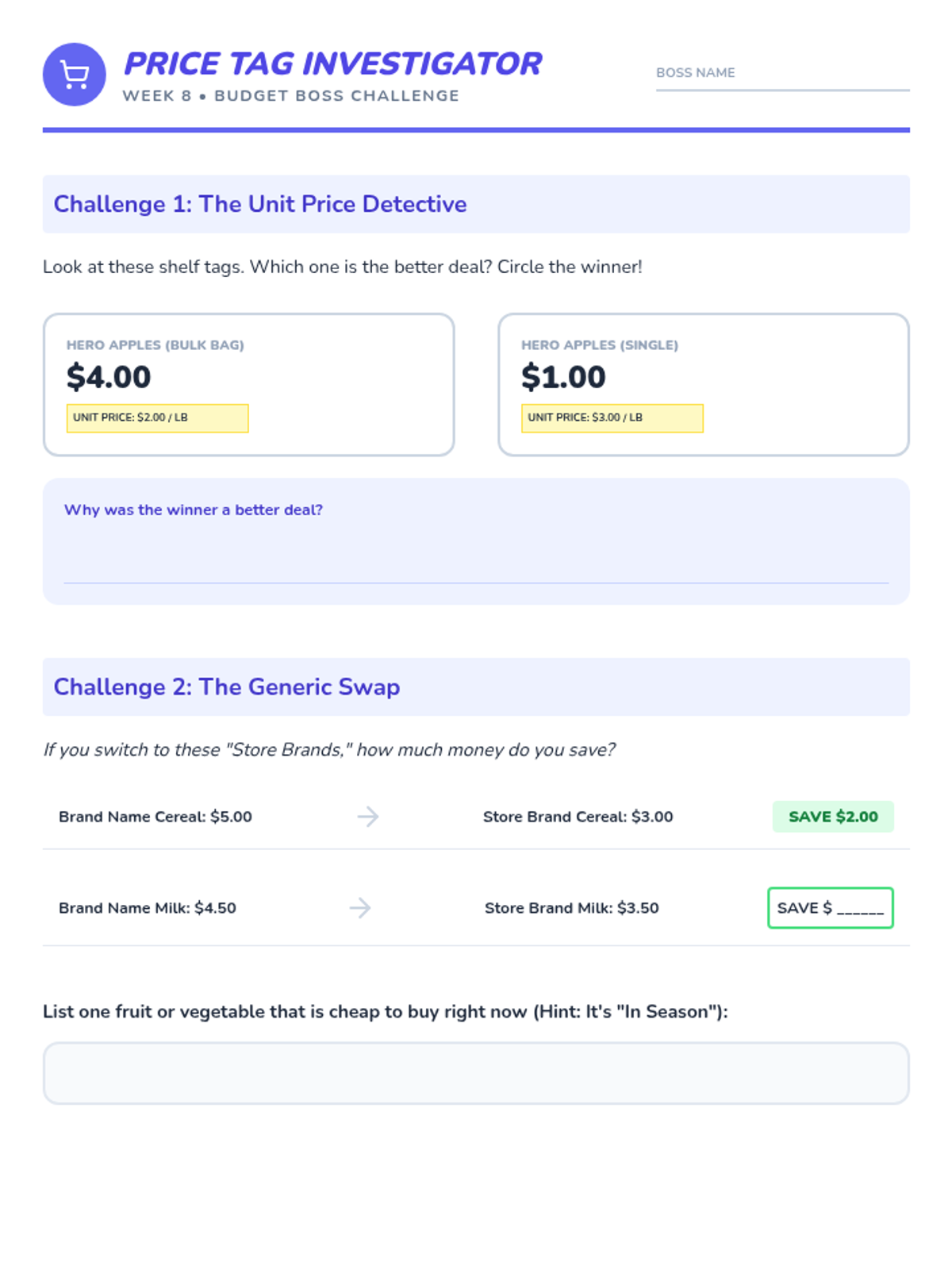
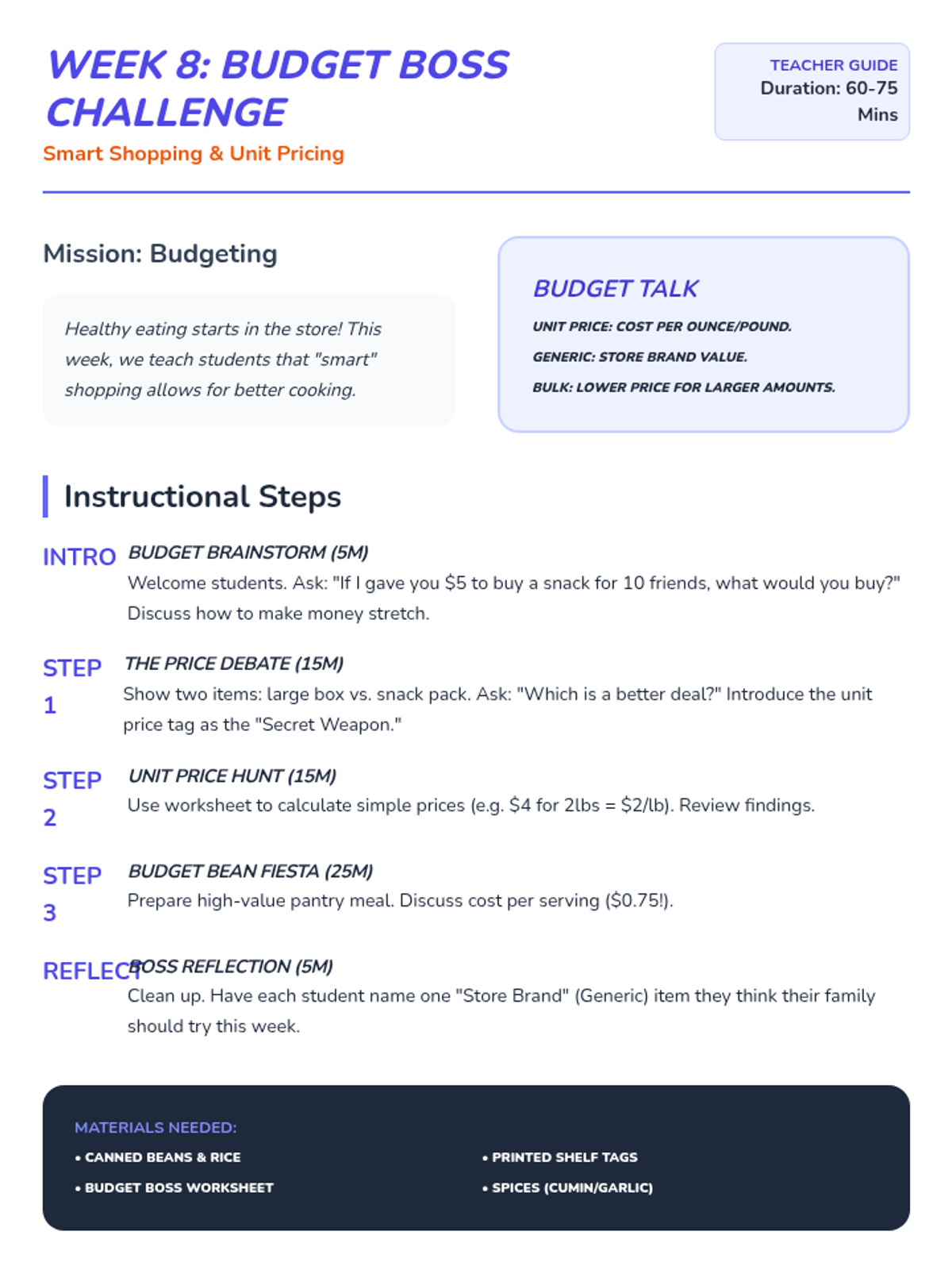
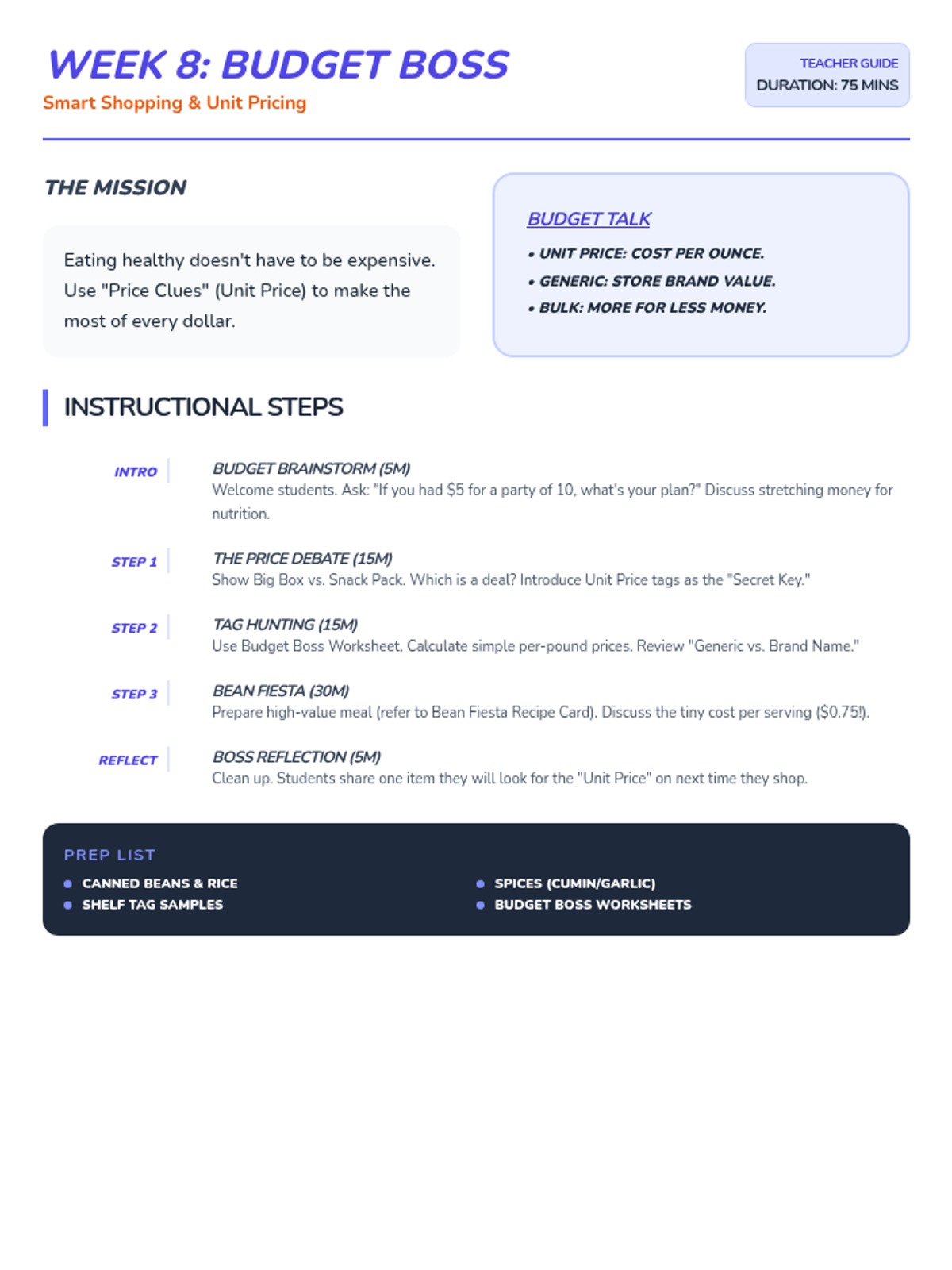
Learning to shop smart and make the most of every dollar.
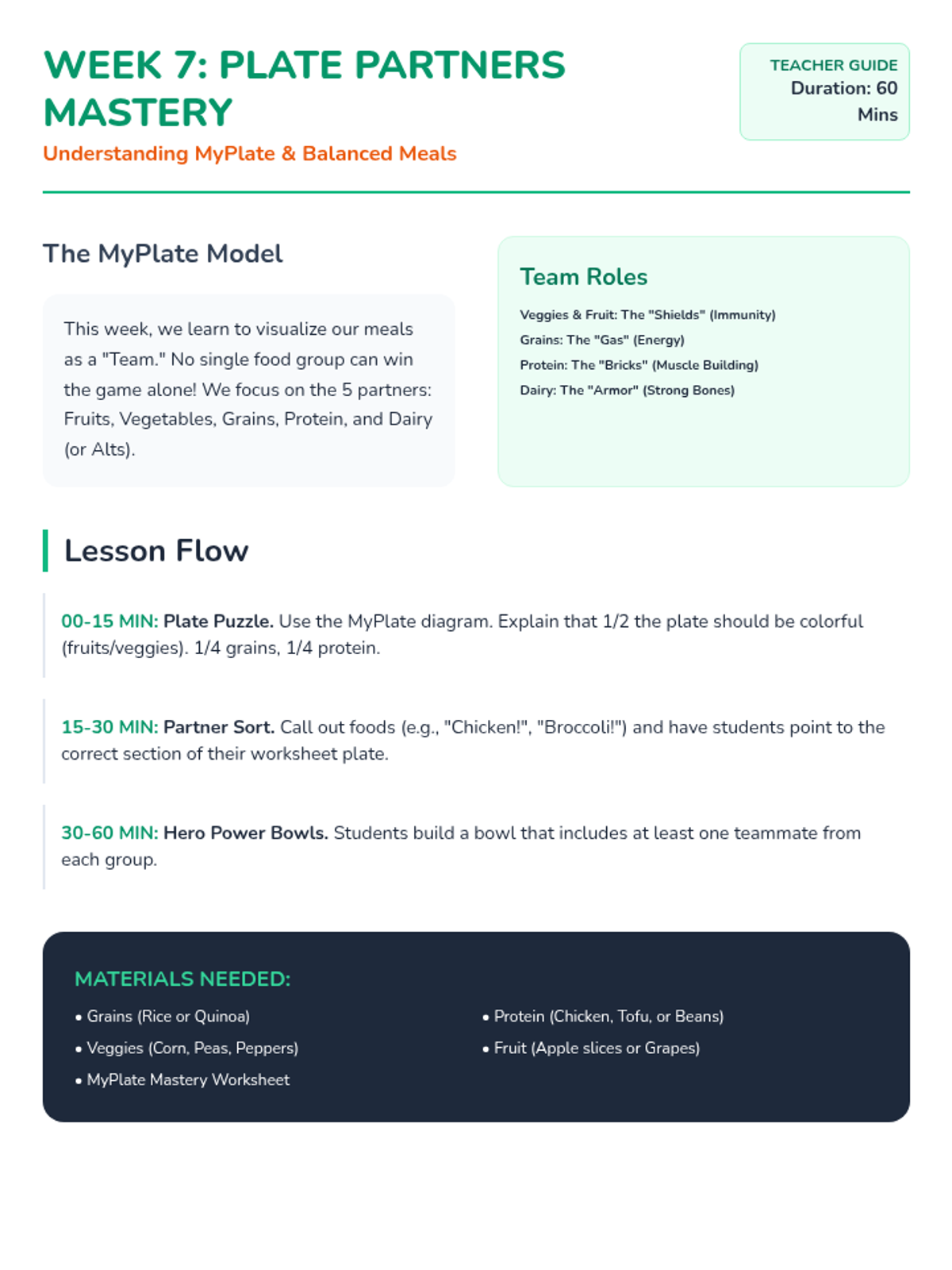
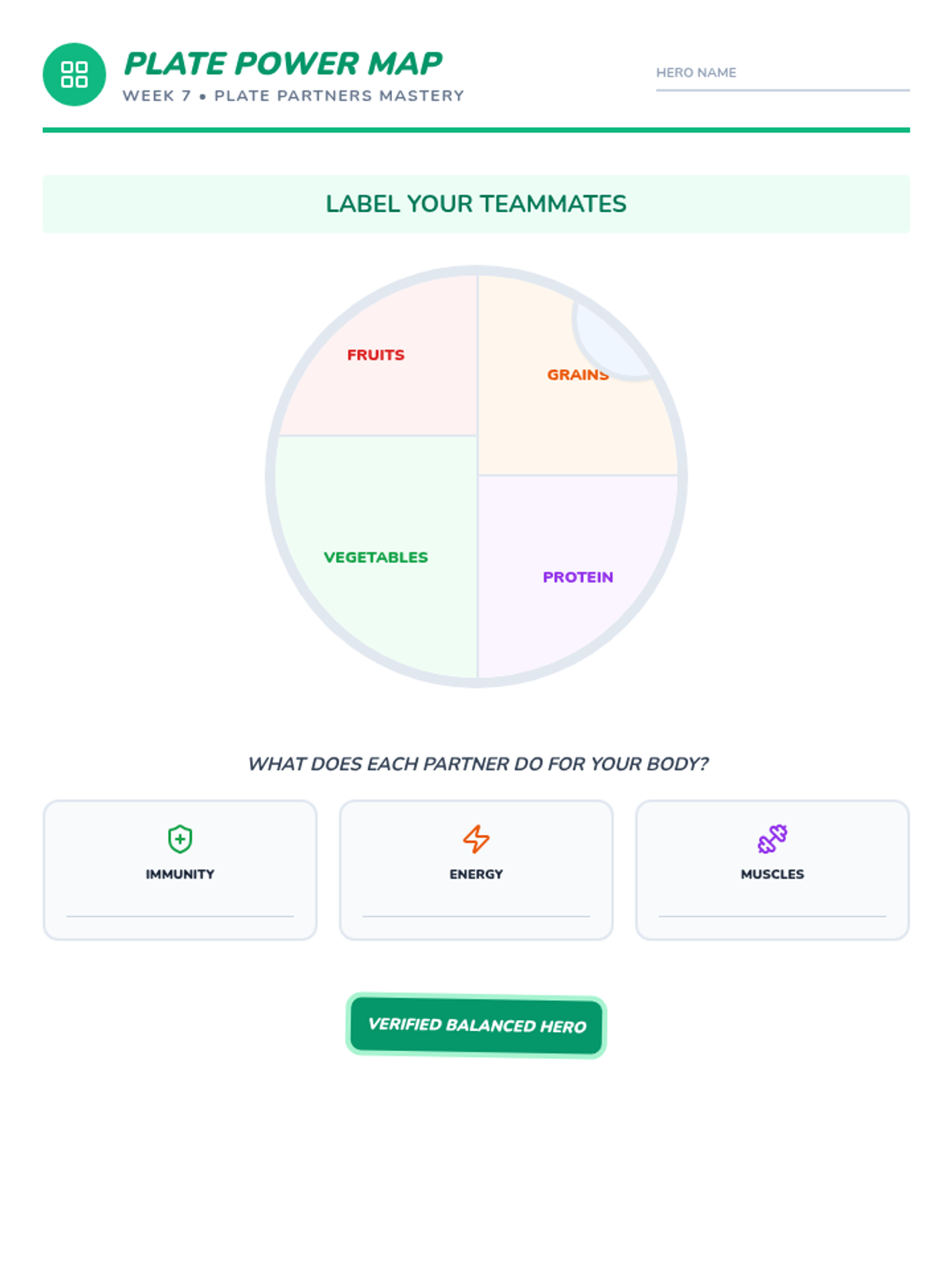
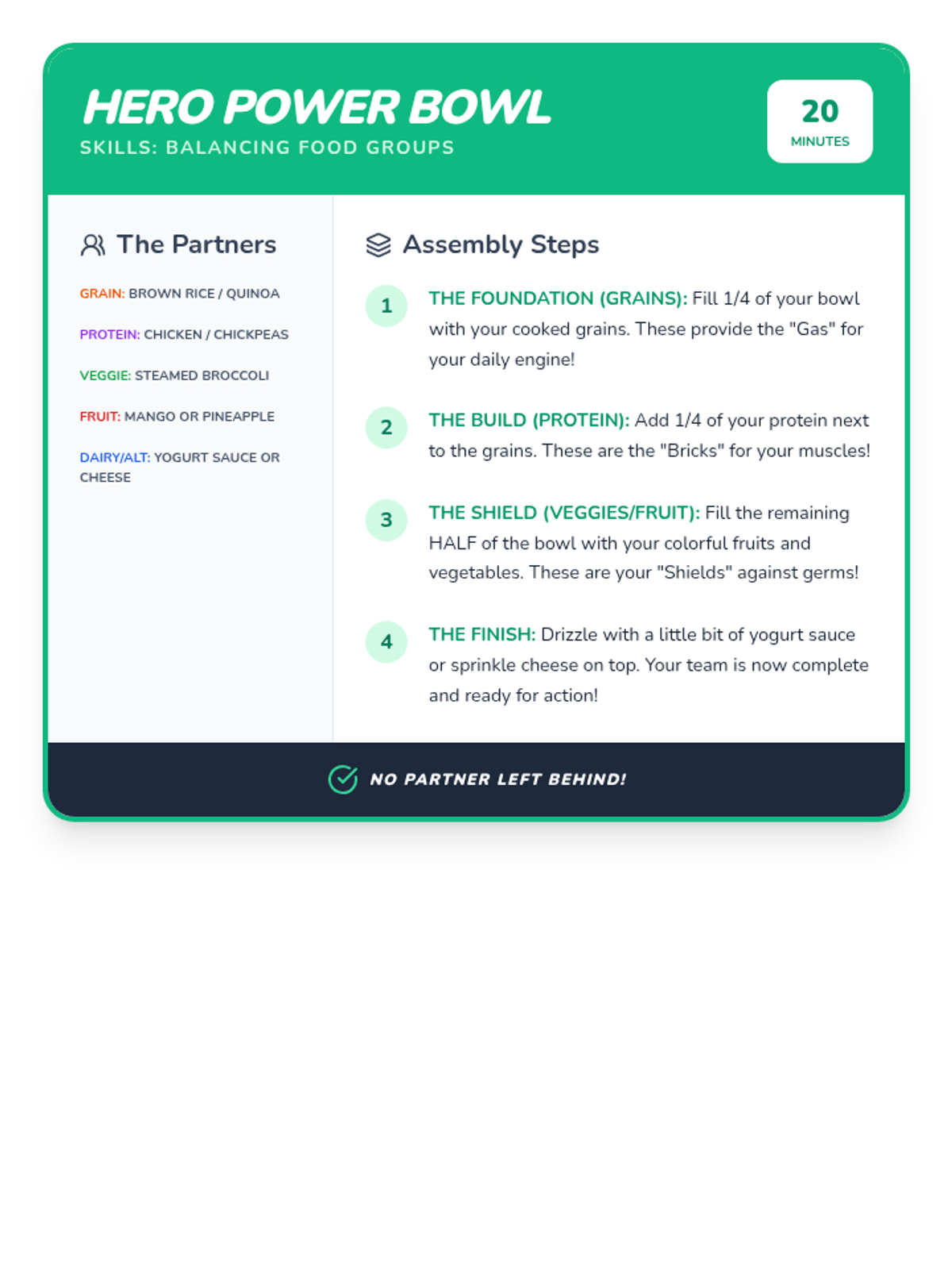
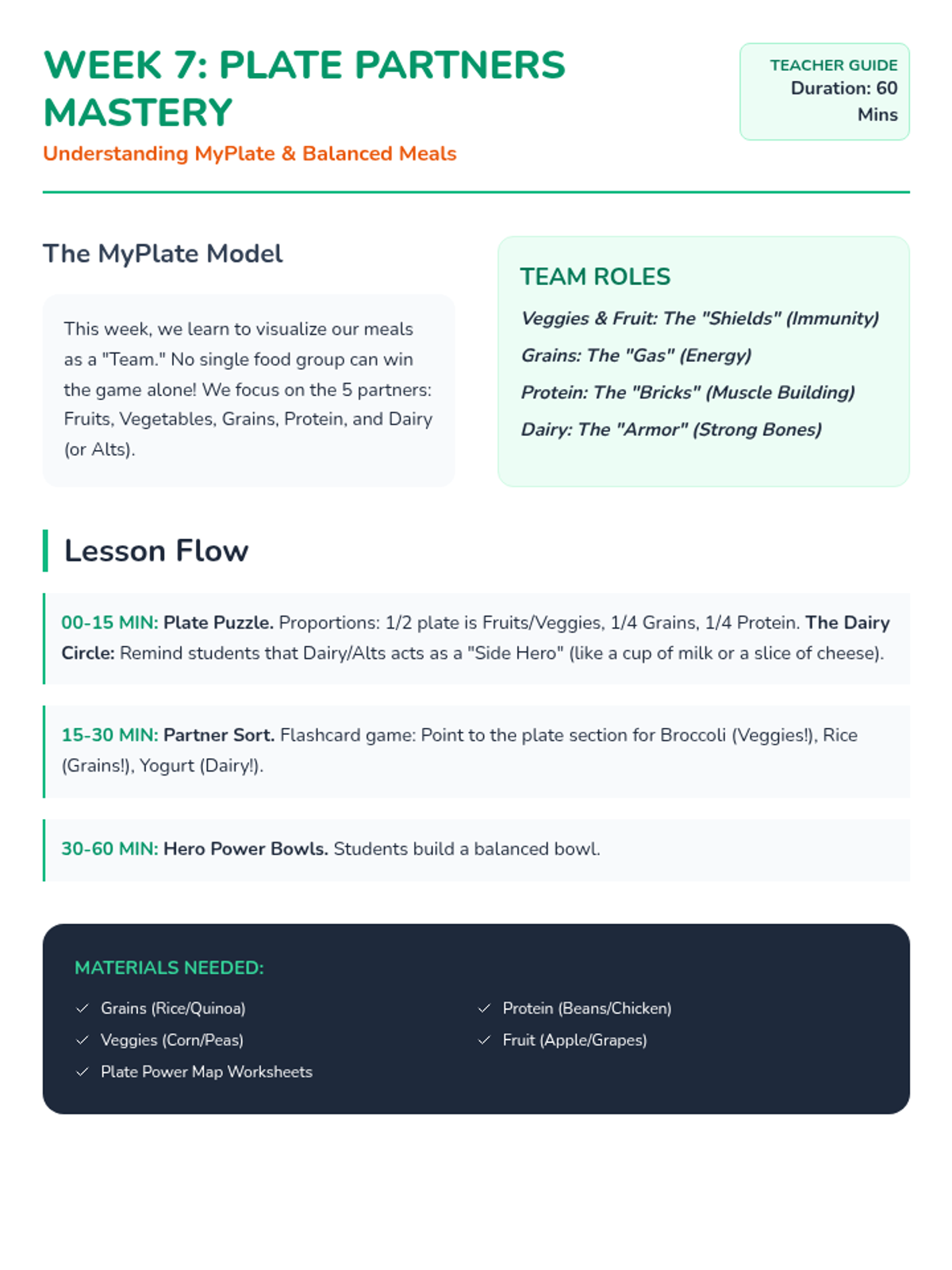
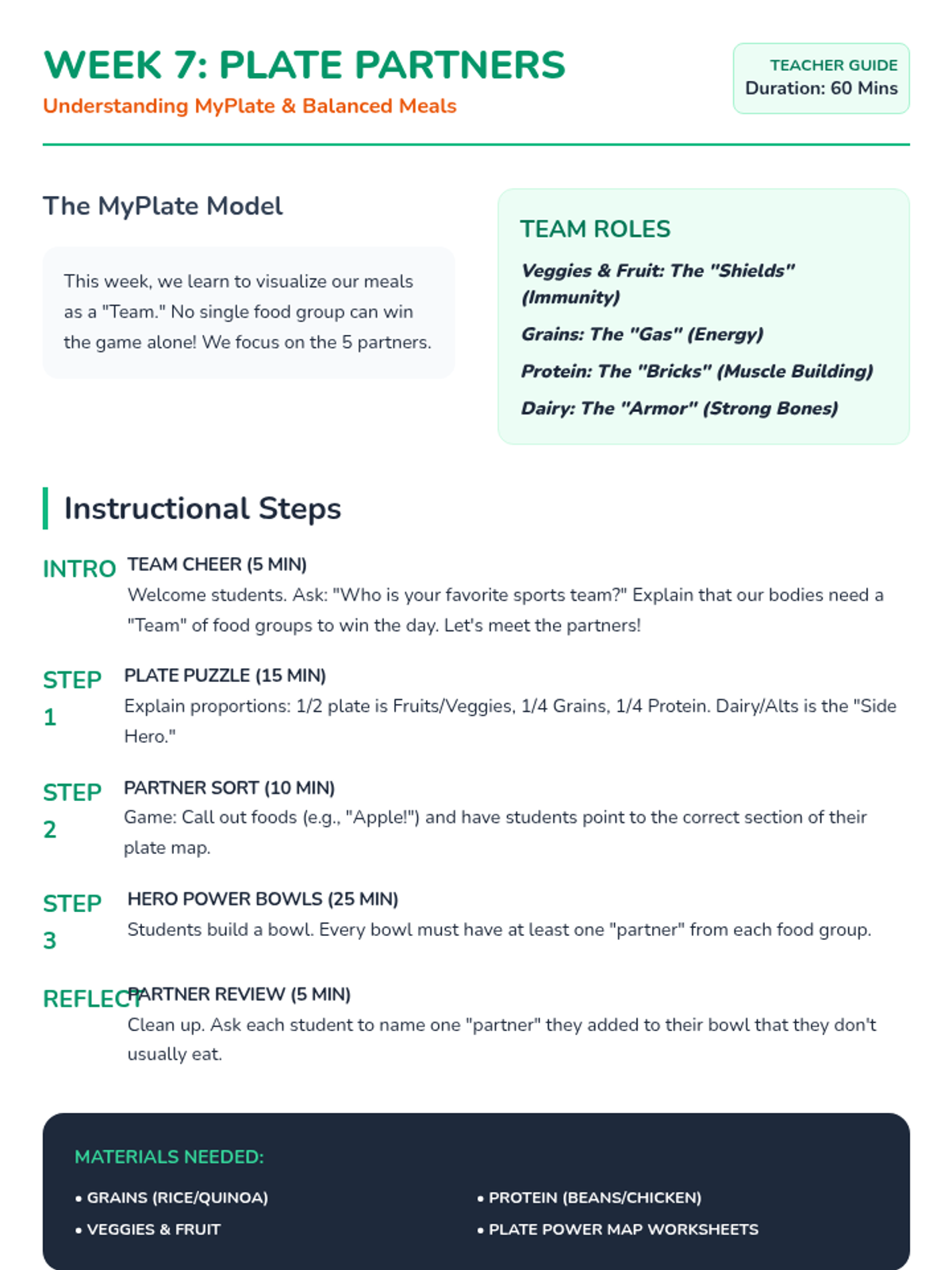
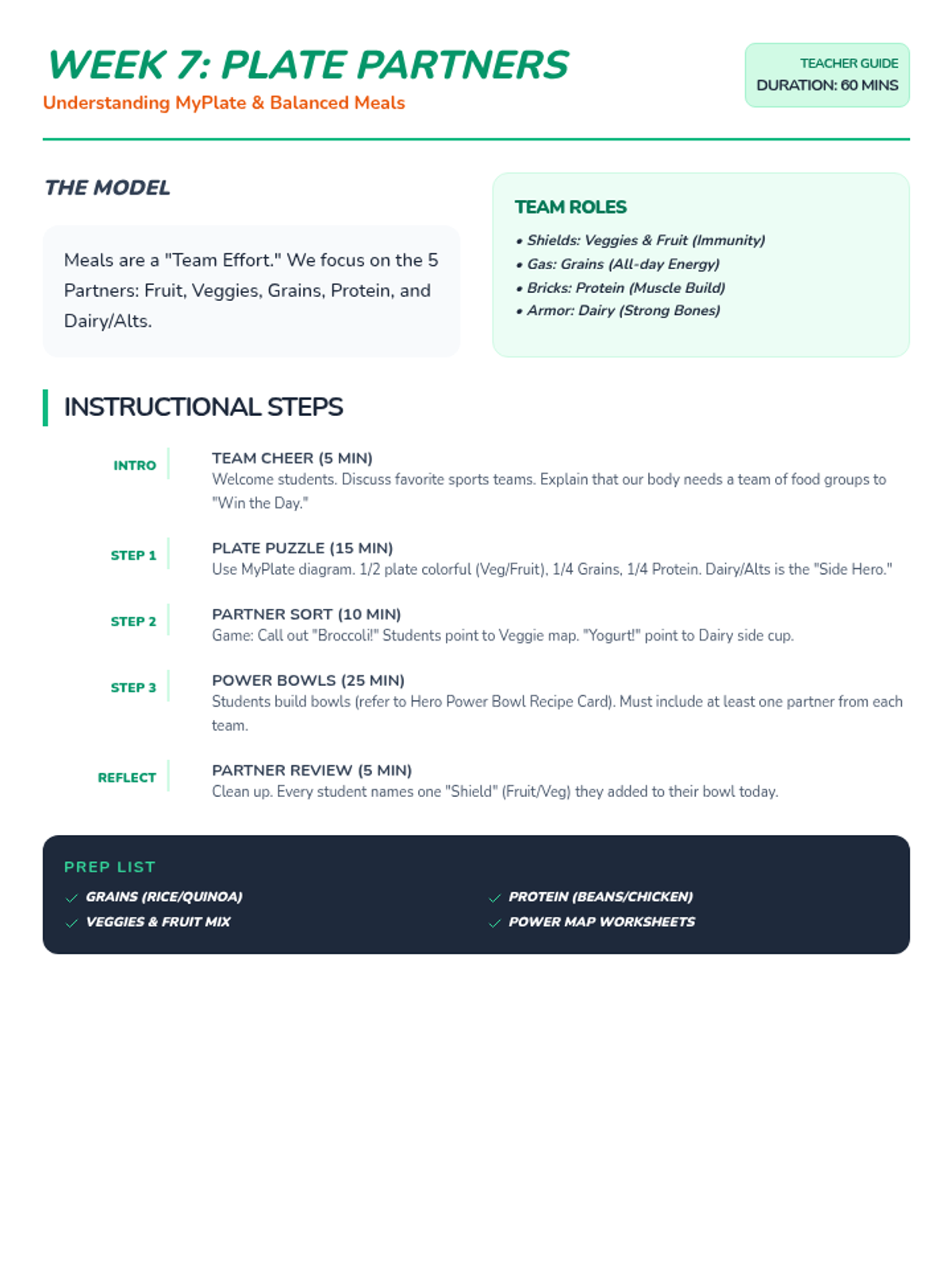
Visualizing food groups and balanced meals using the MyPlate model.
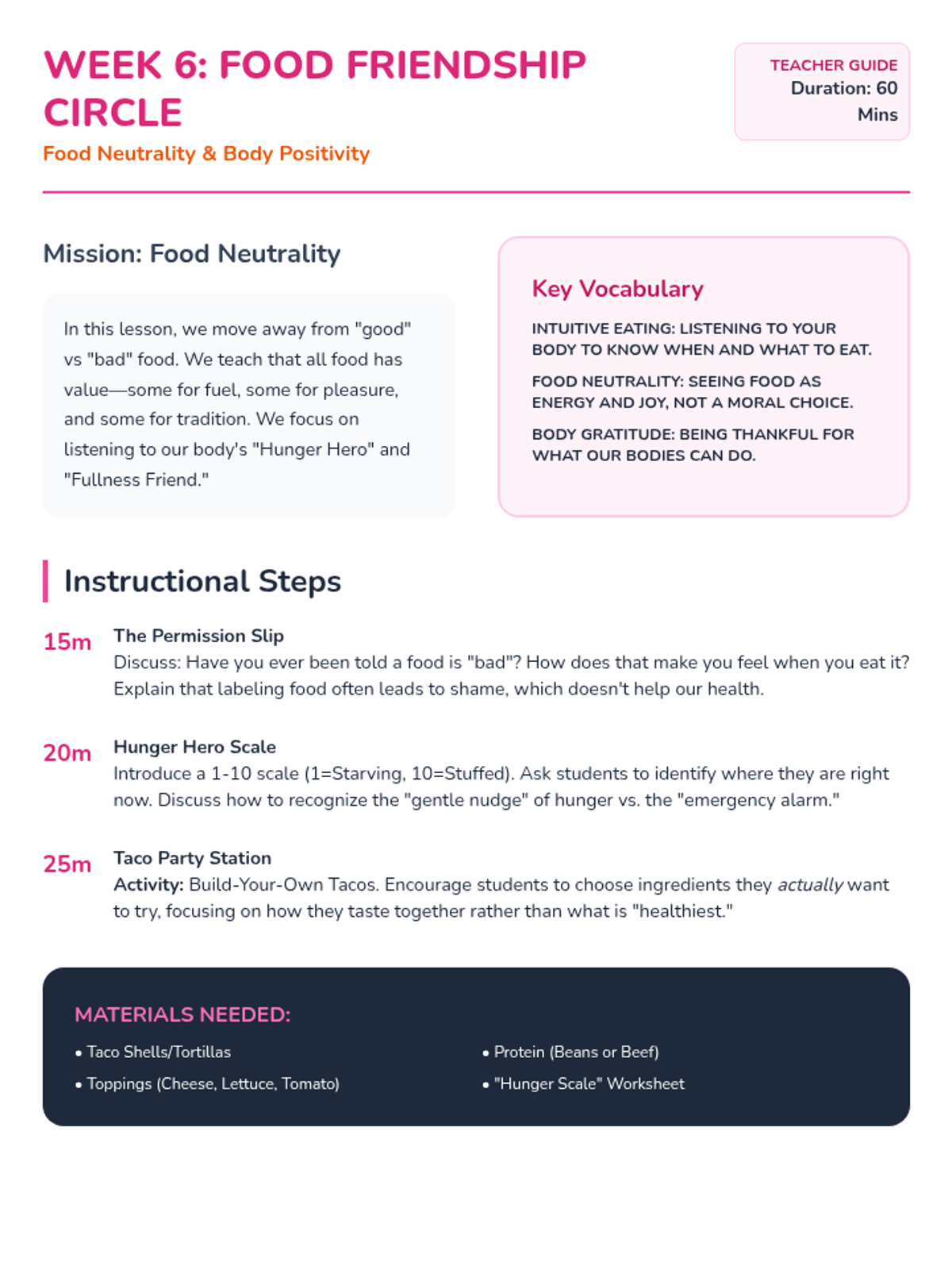
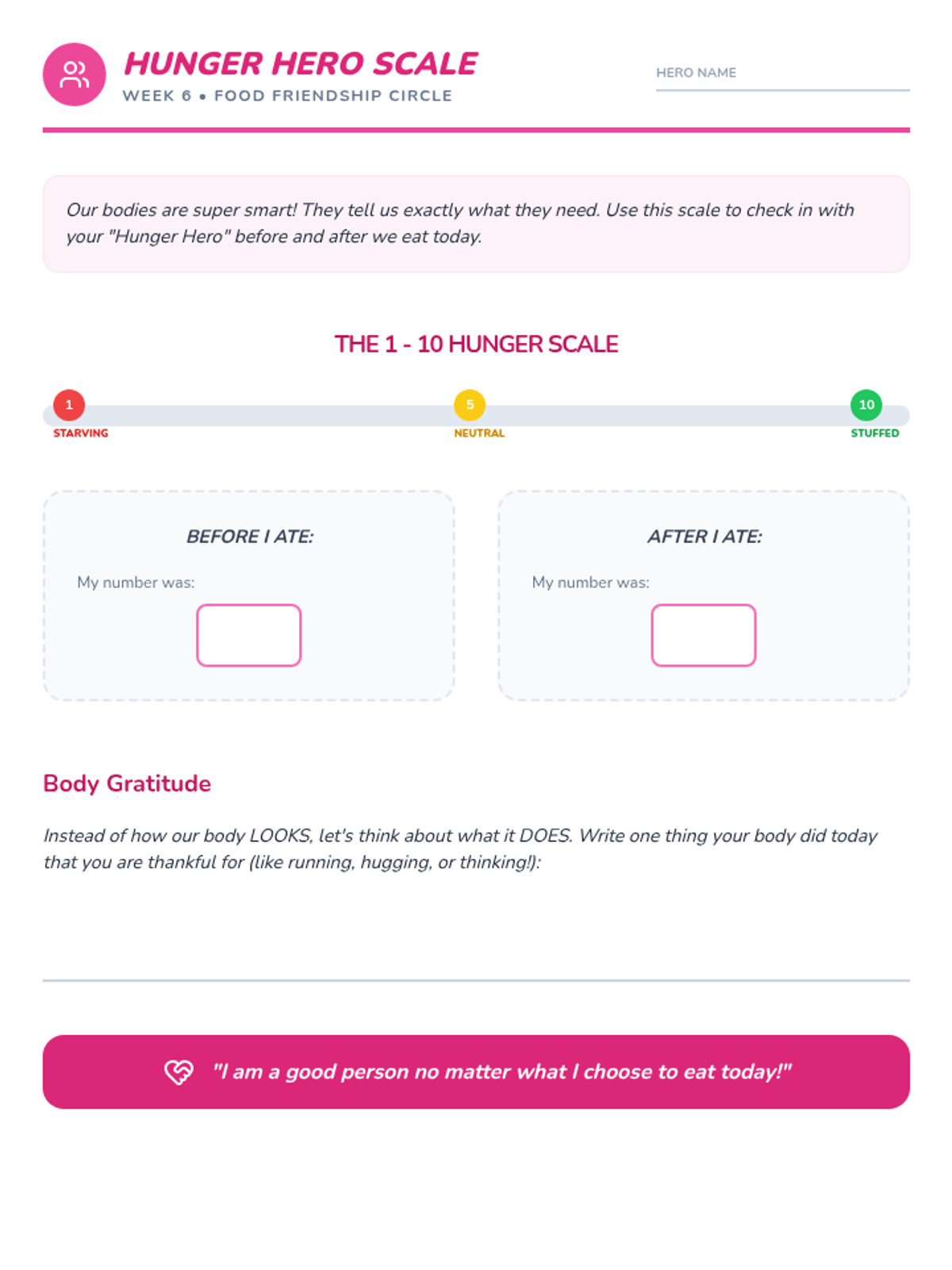
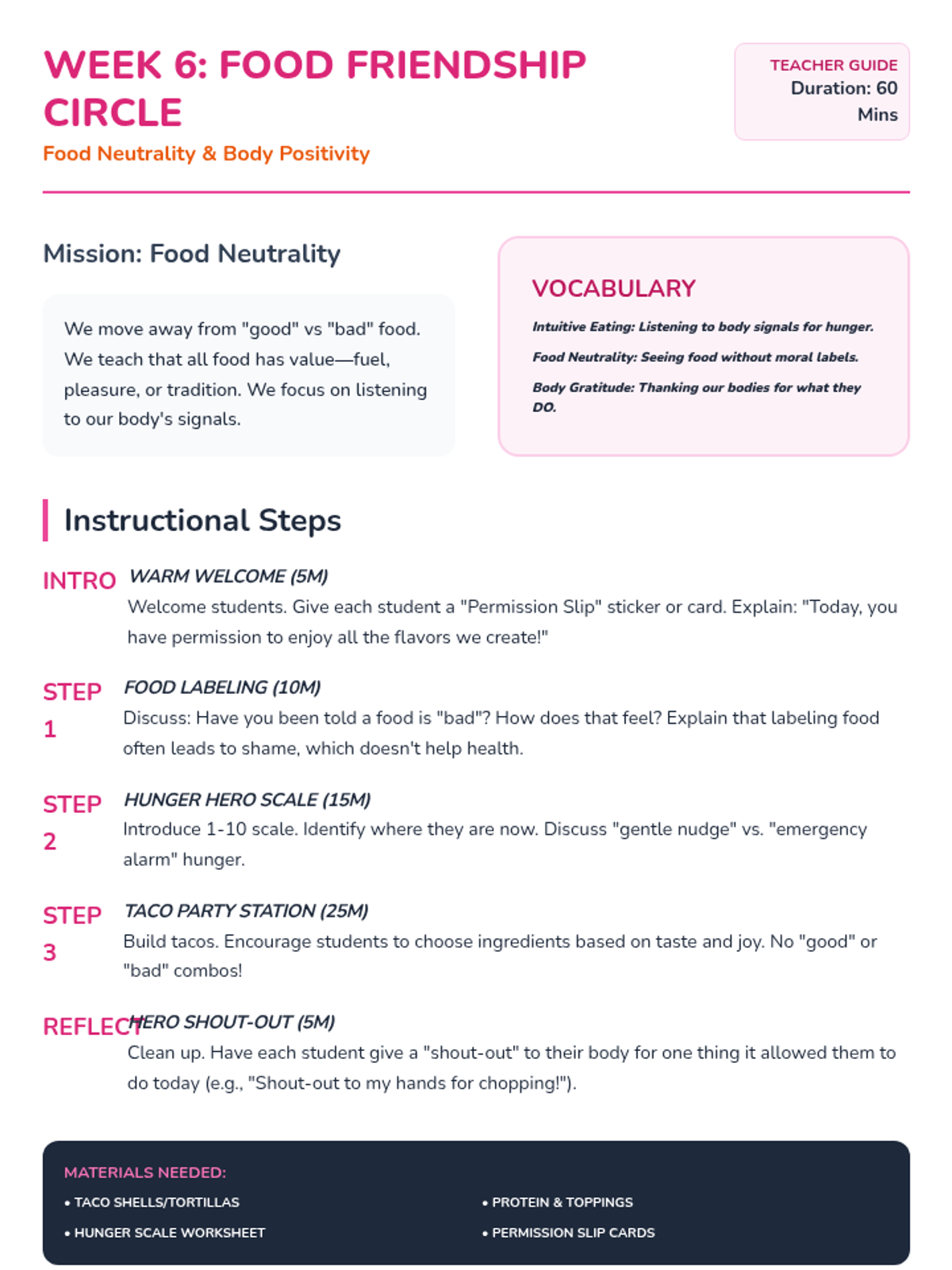
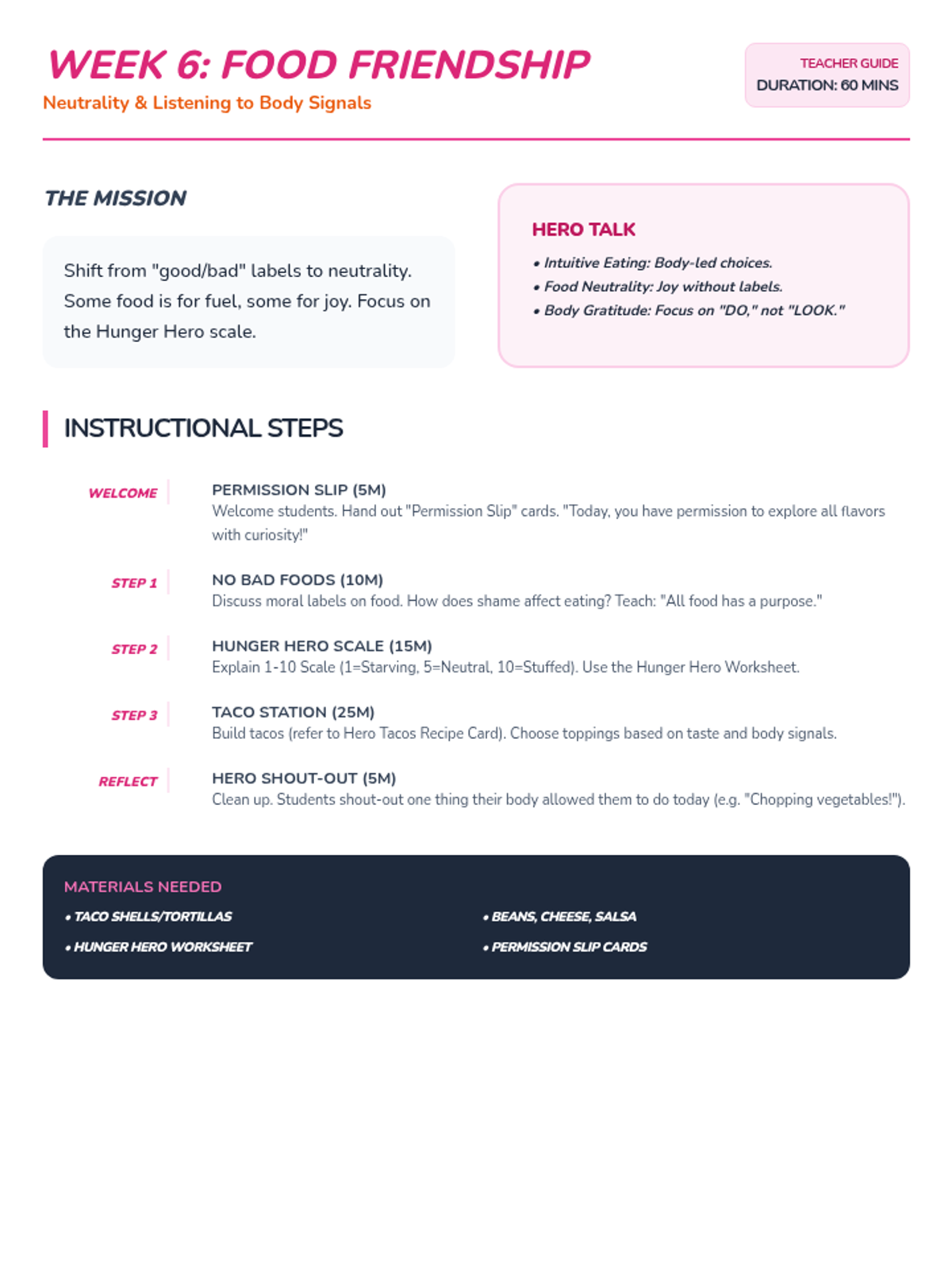
Building a positive relationship with all types of food.
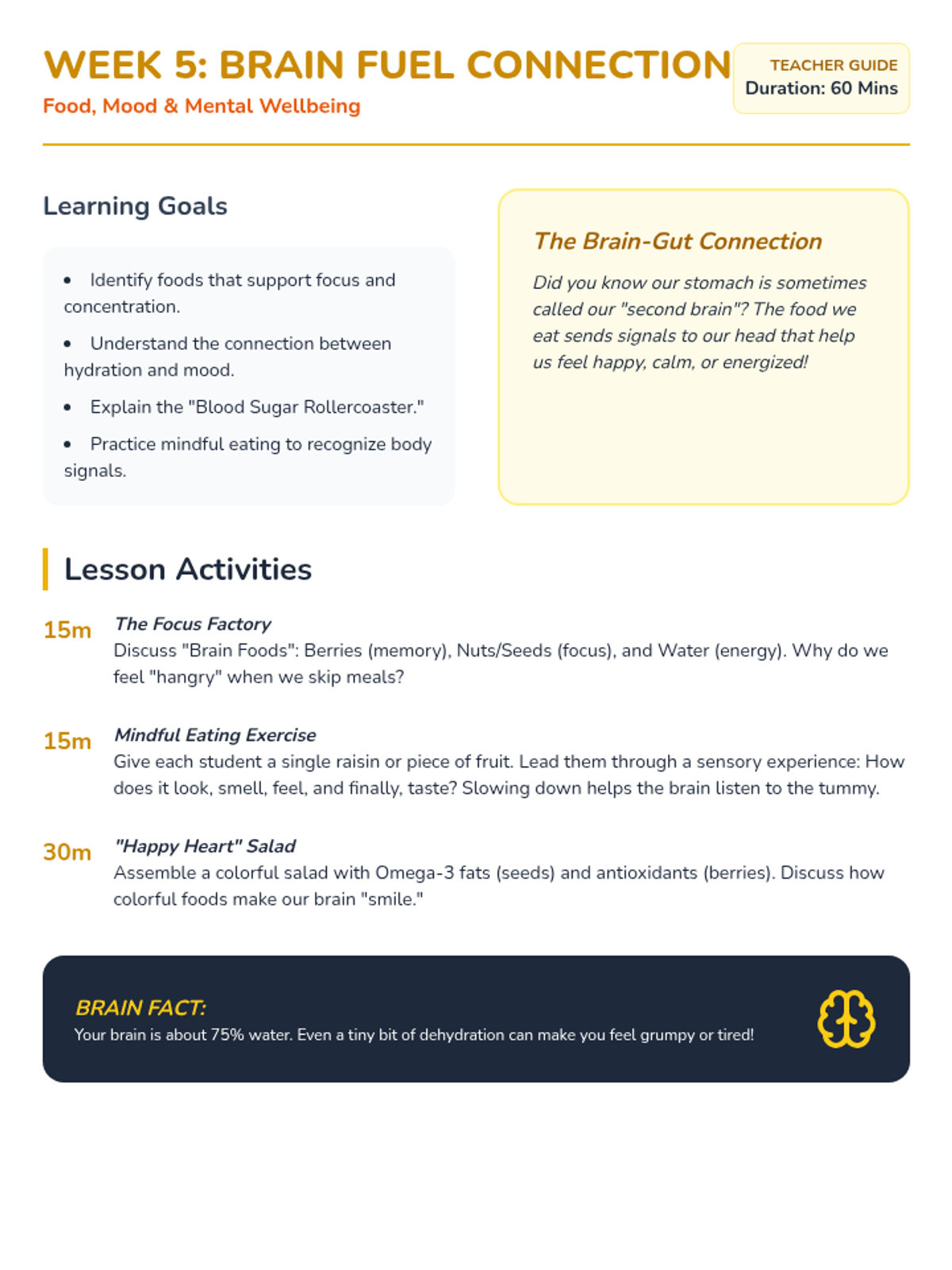
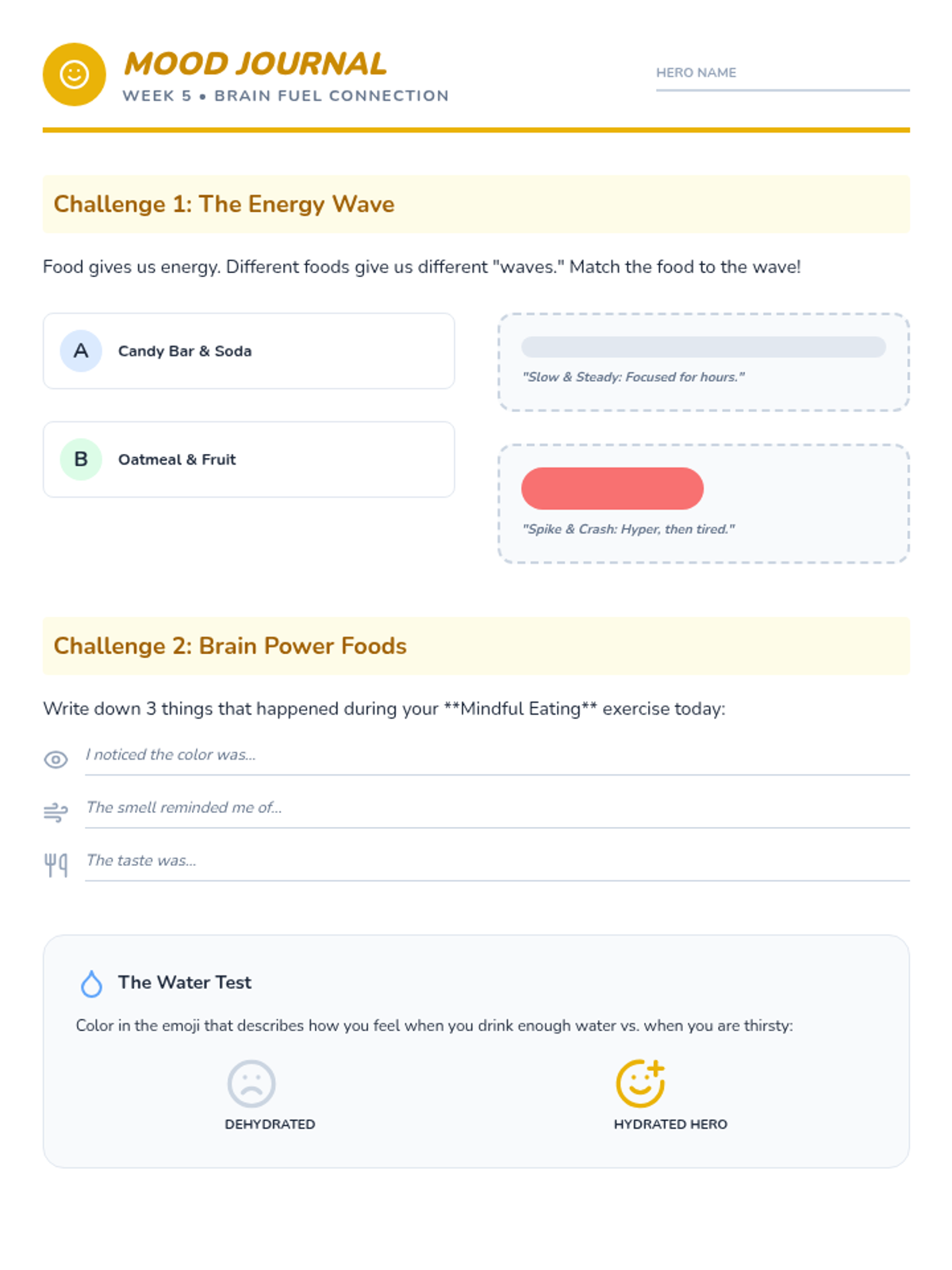
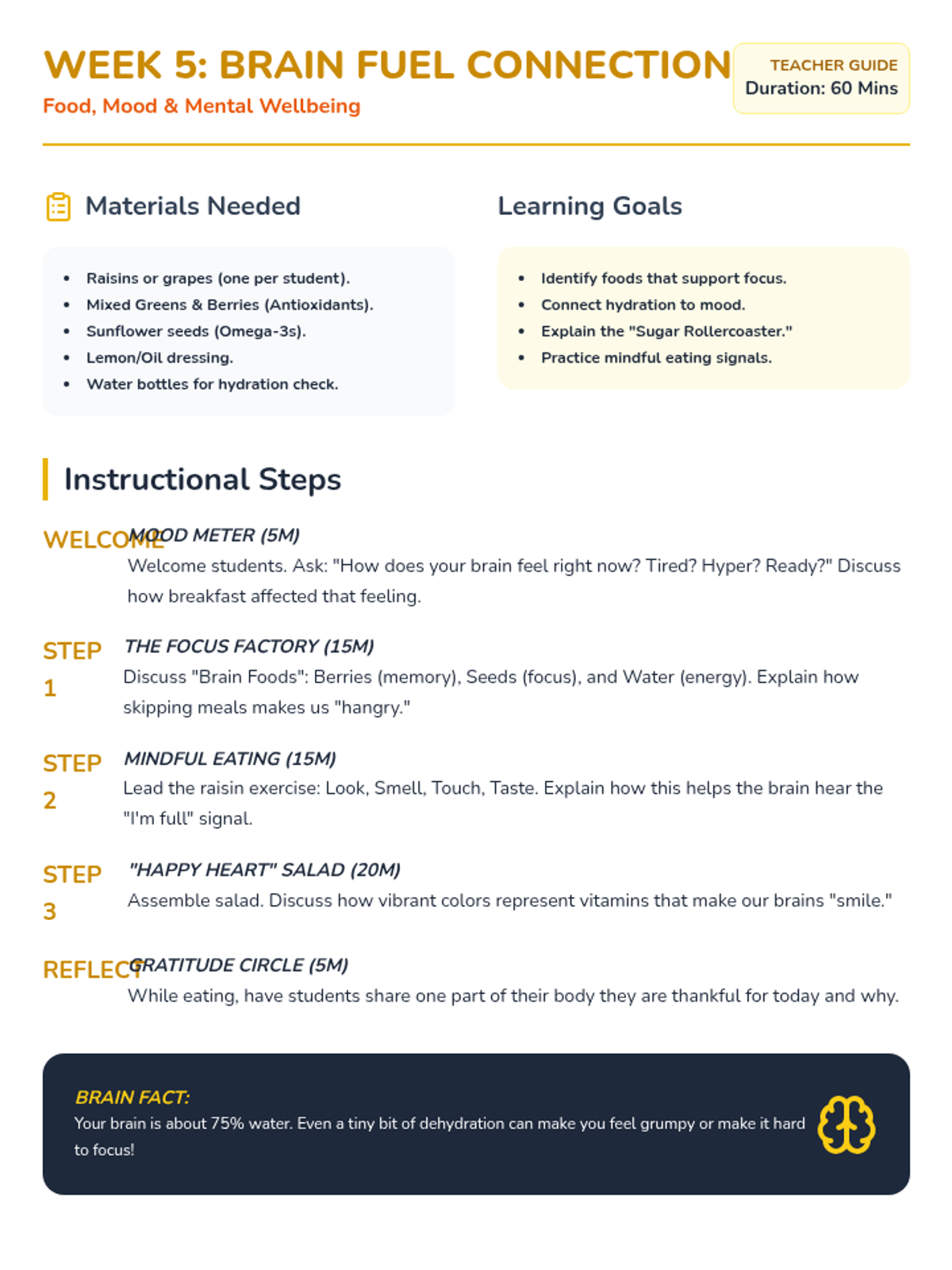
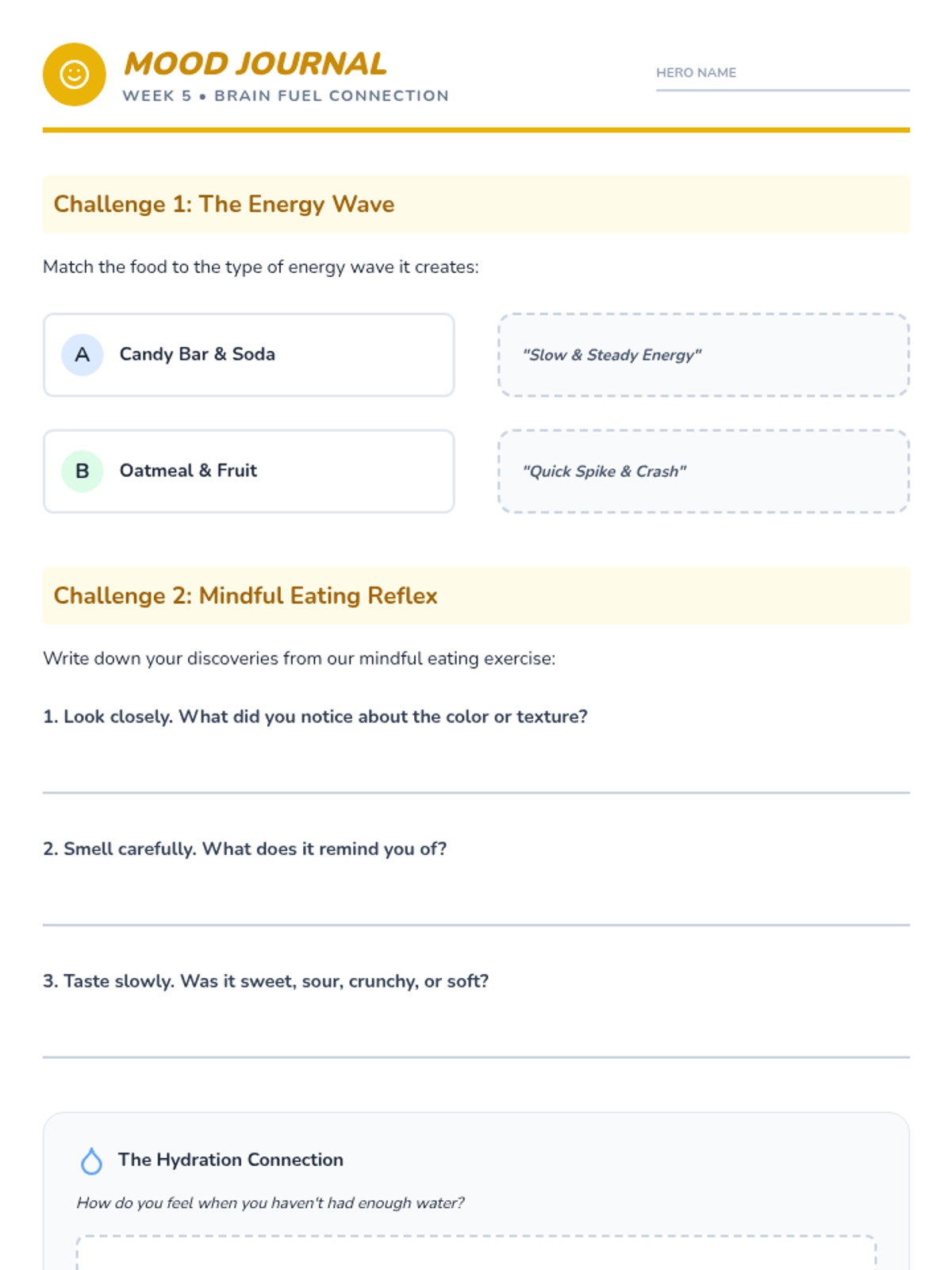
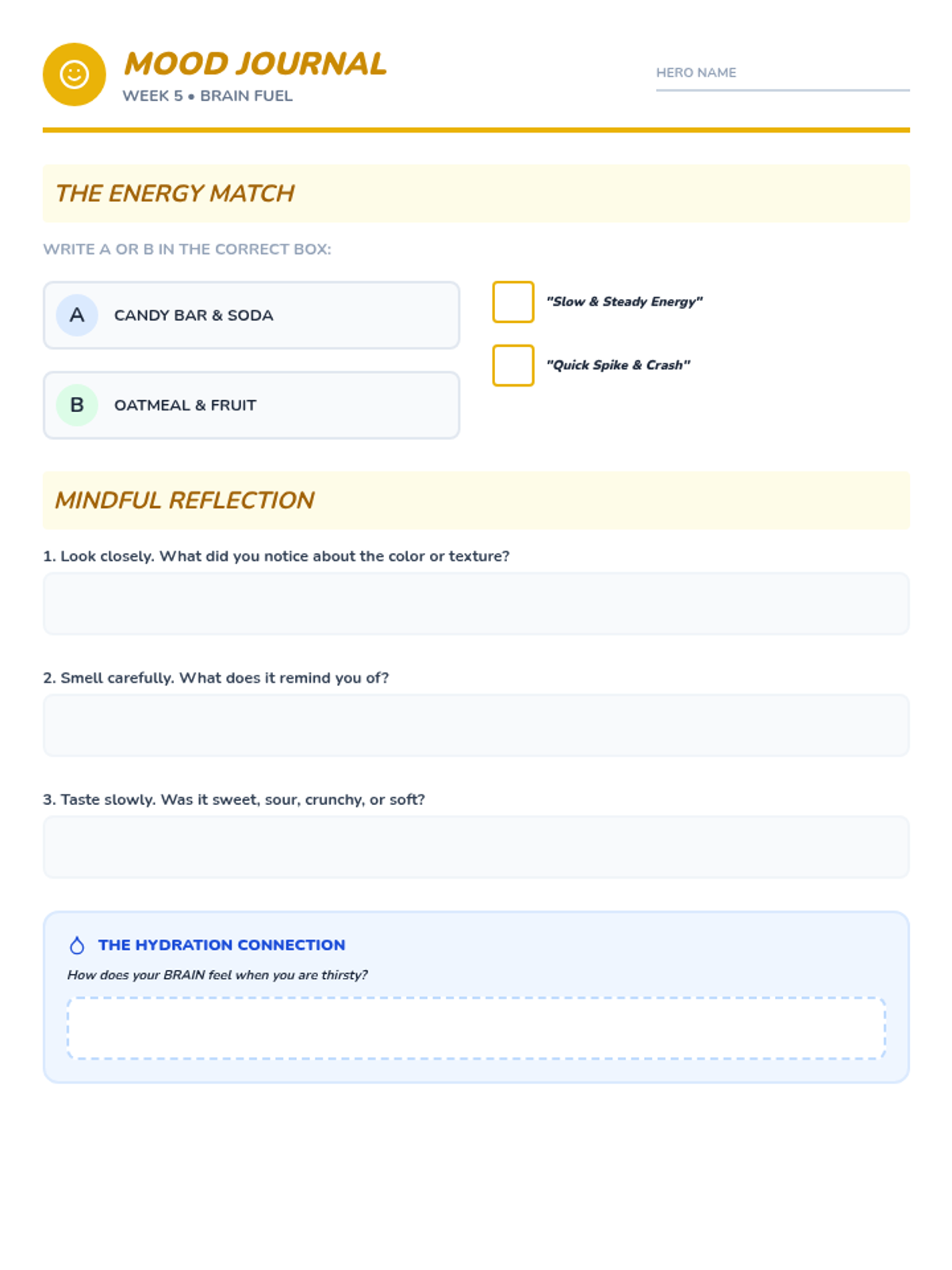
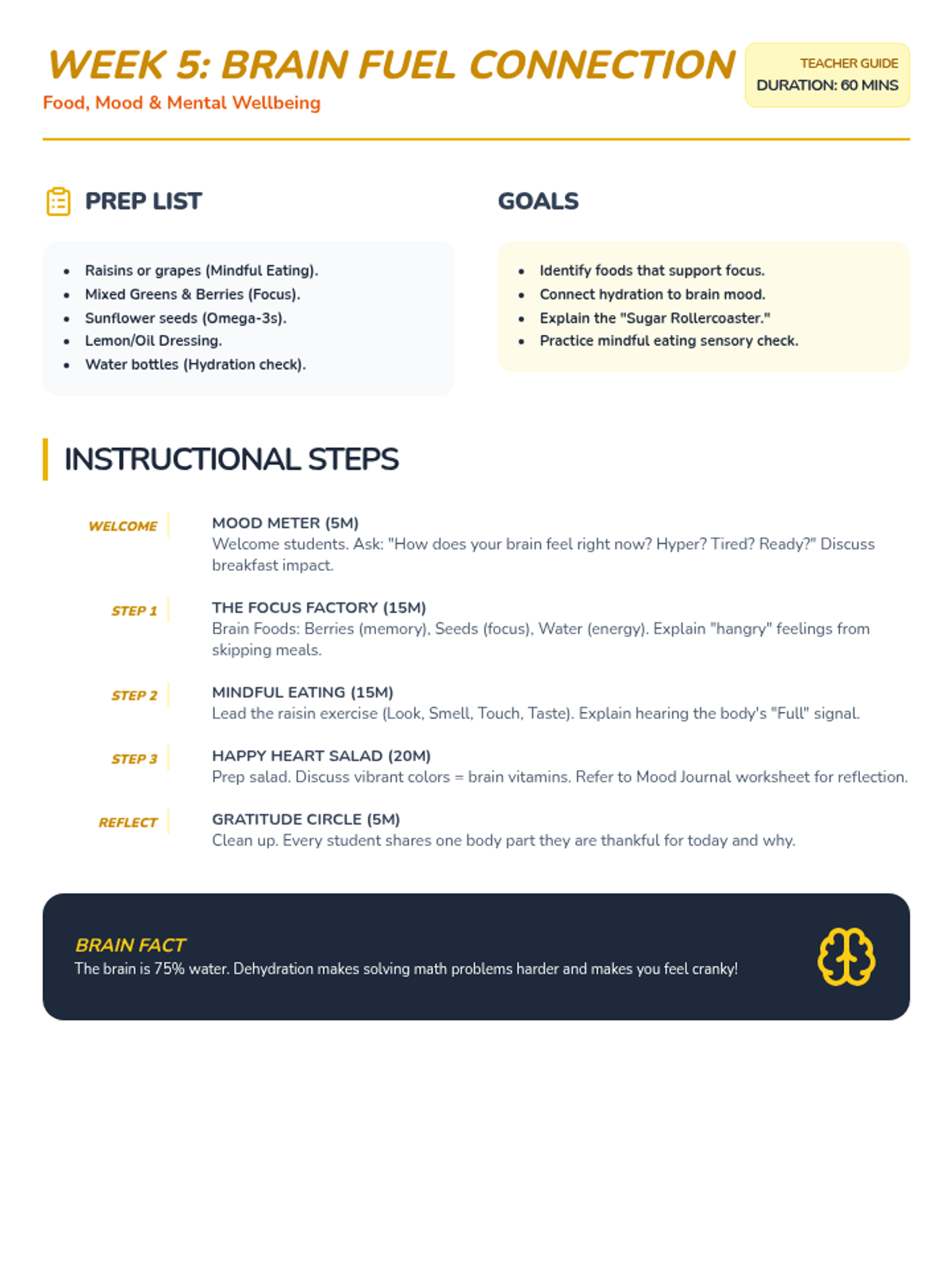
Exploring the link between what we eat and how we feel.
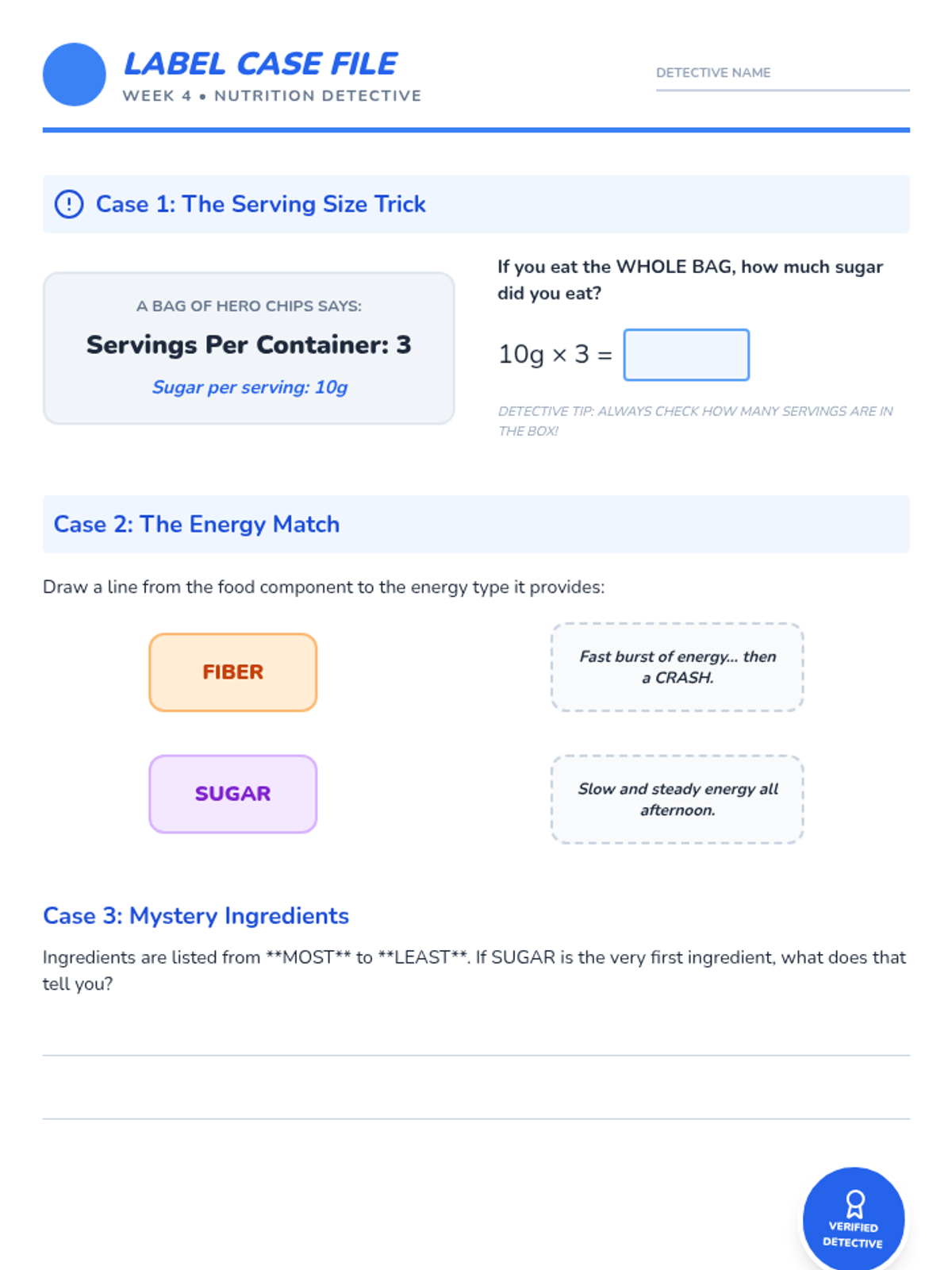
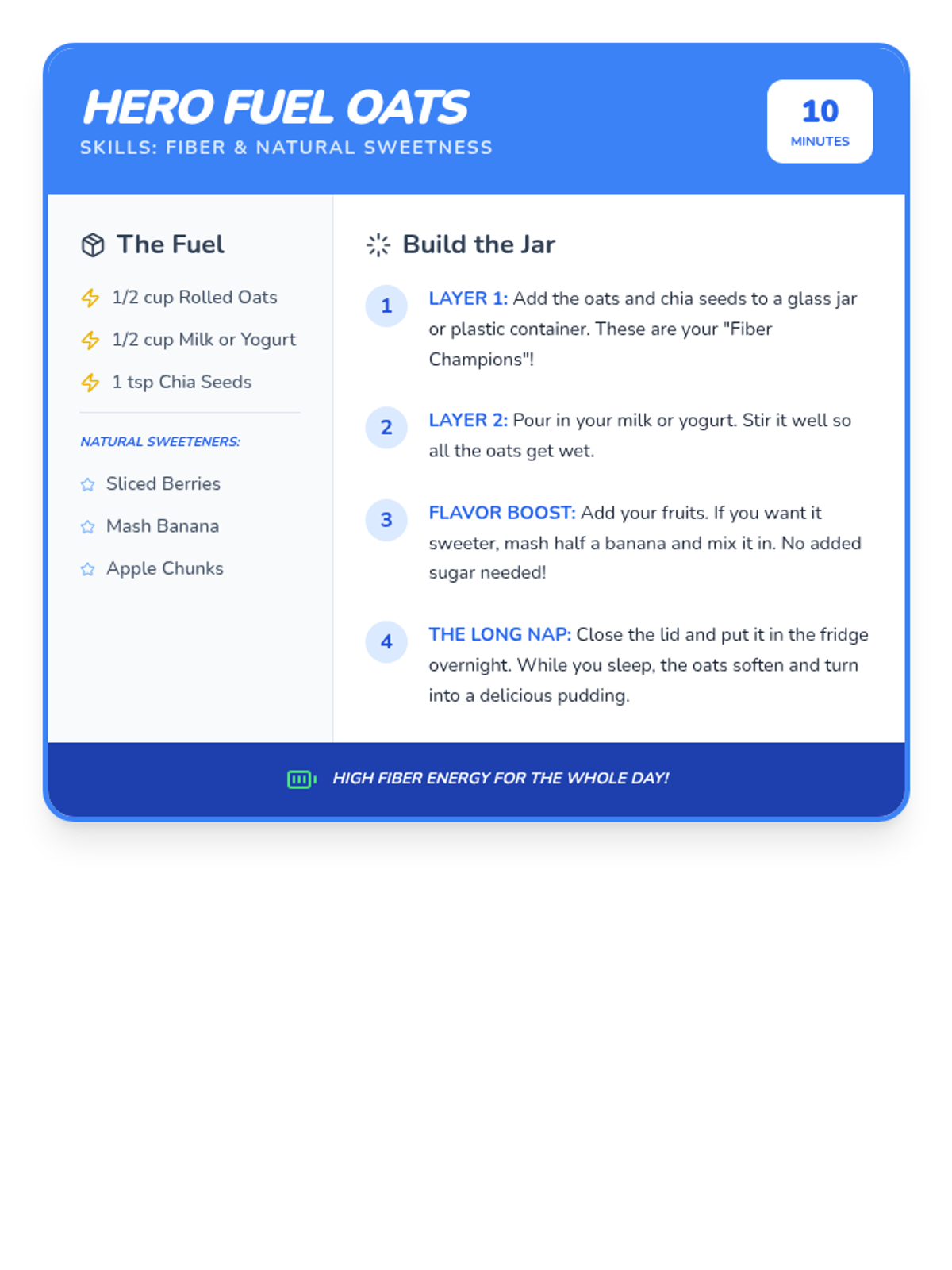
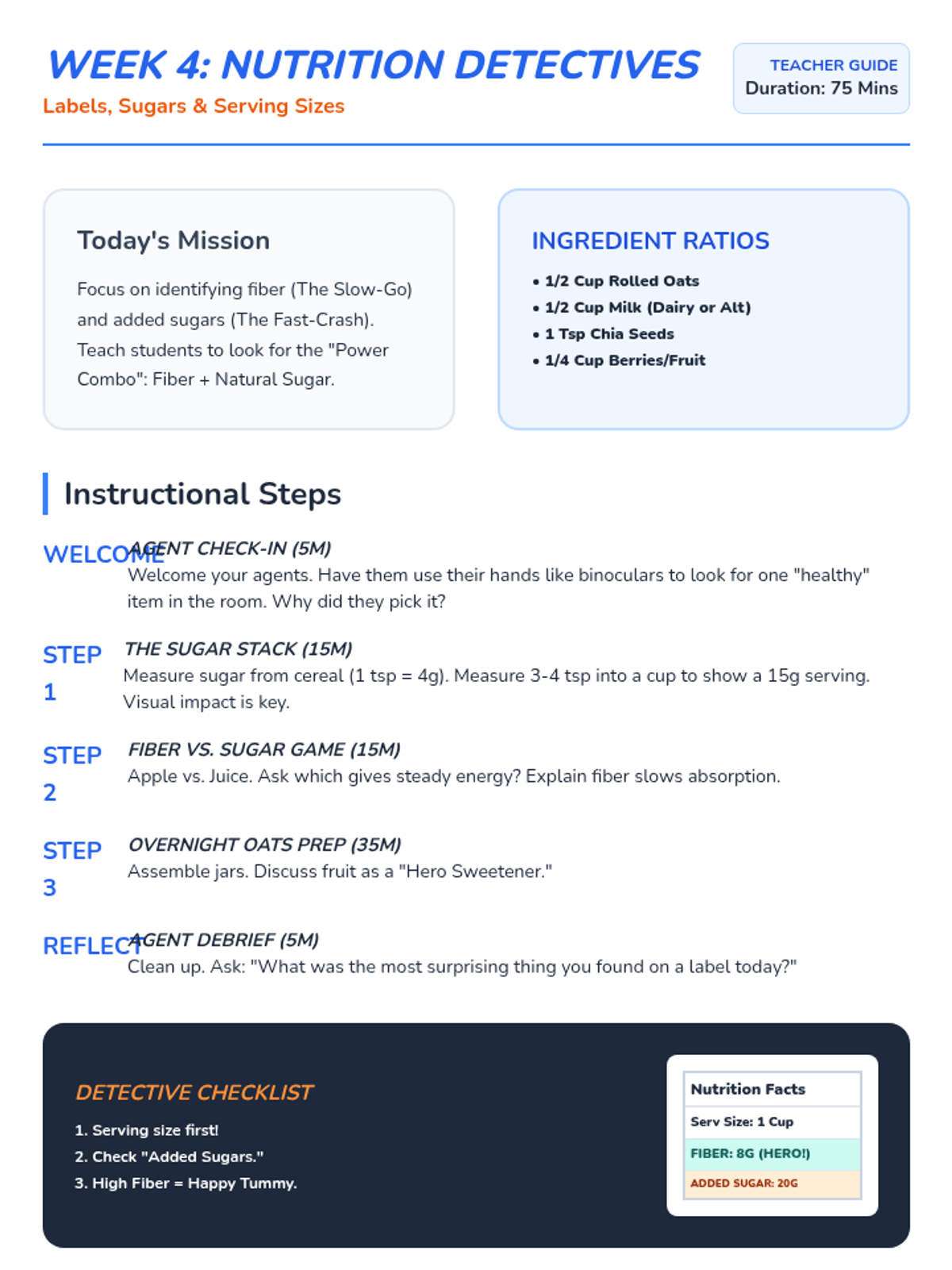
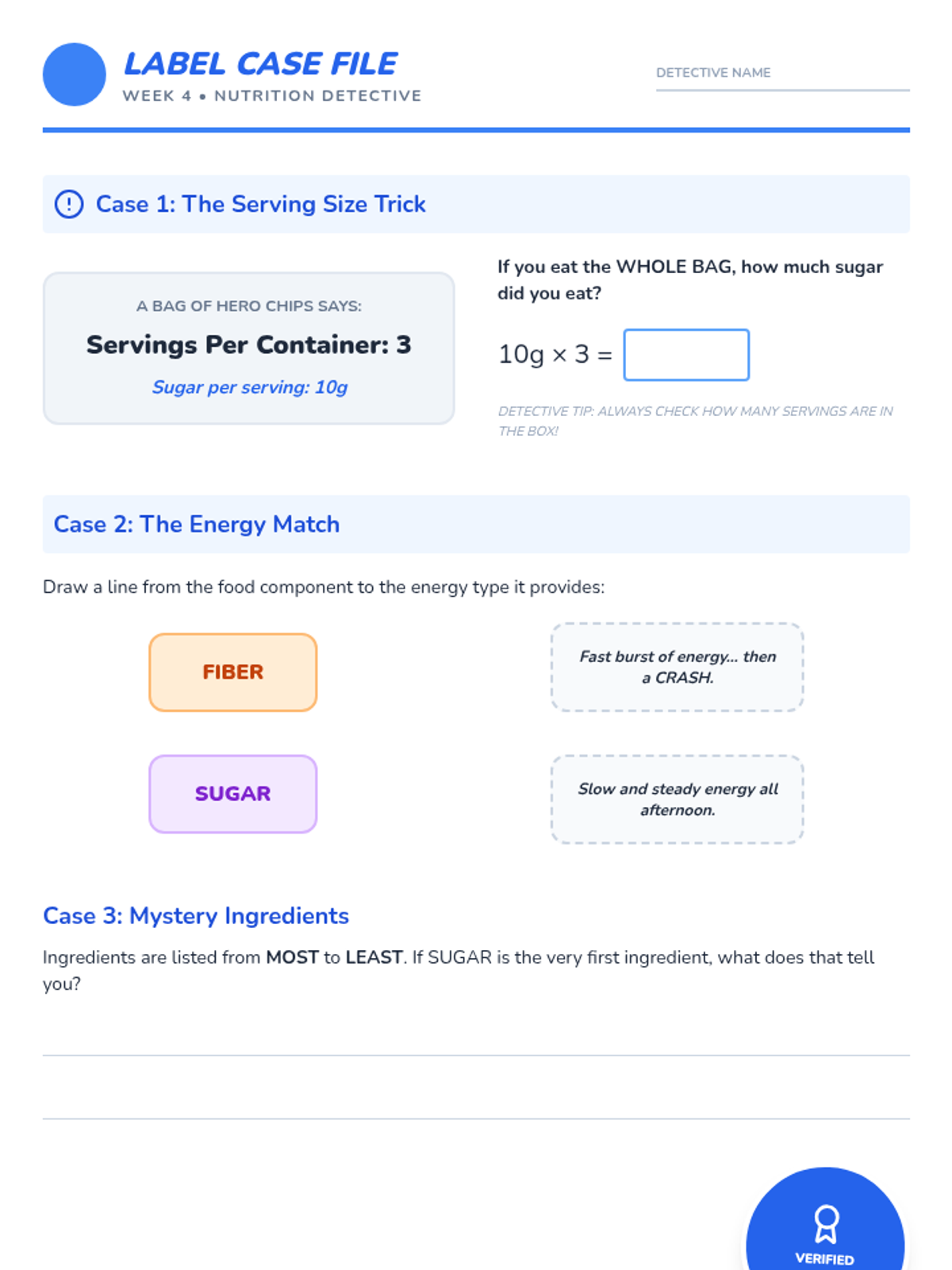
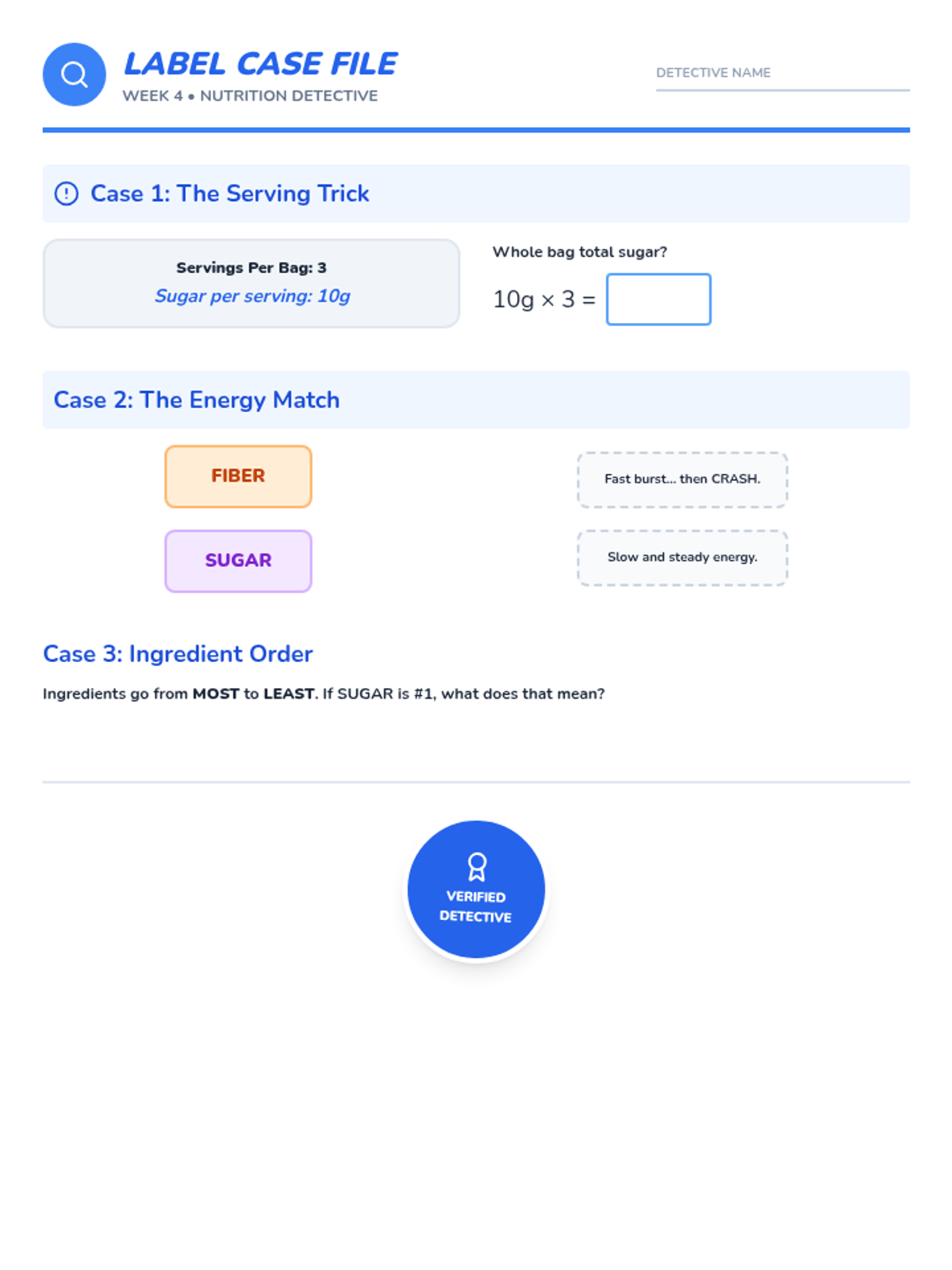
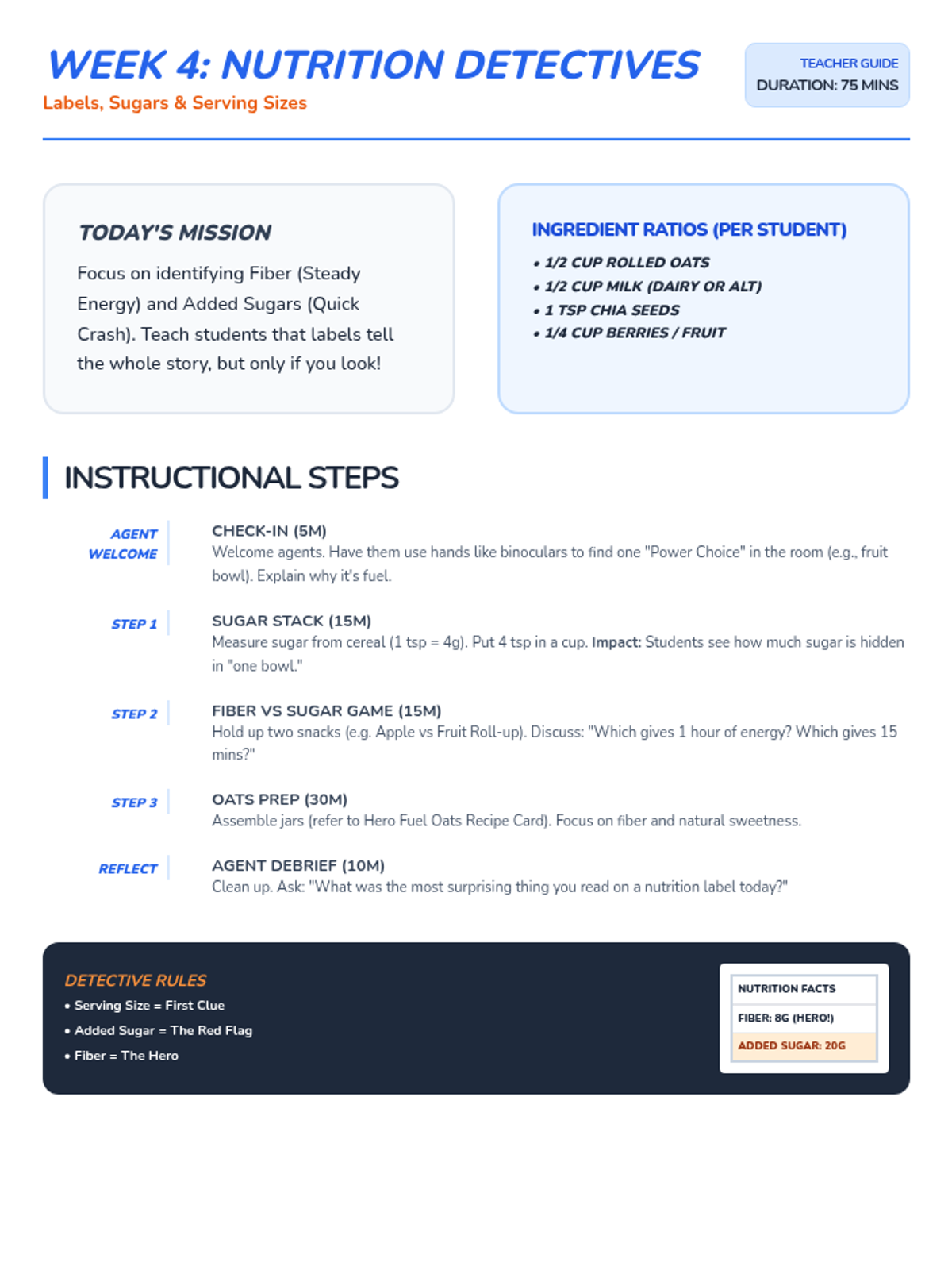
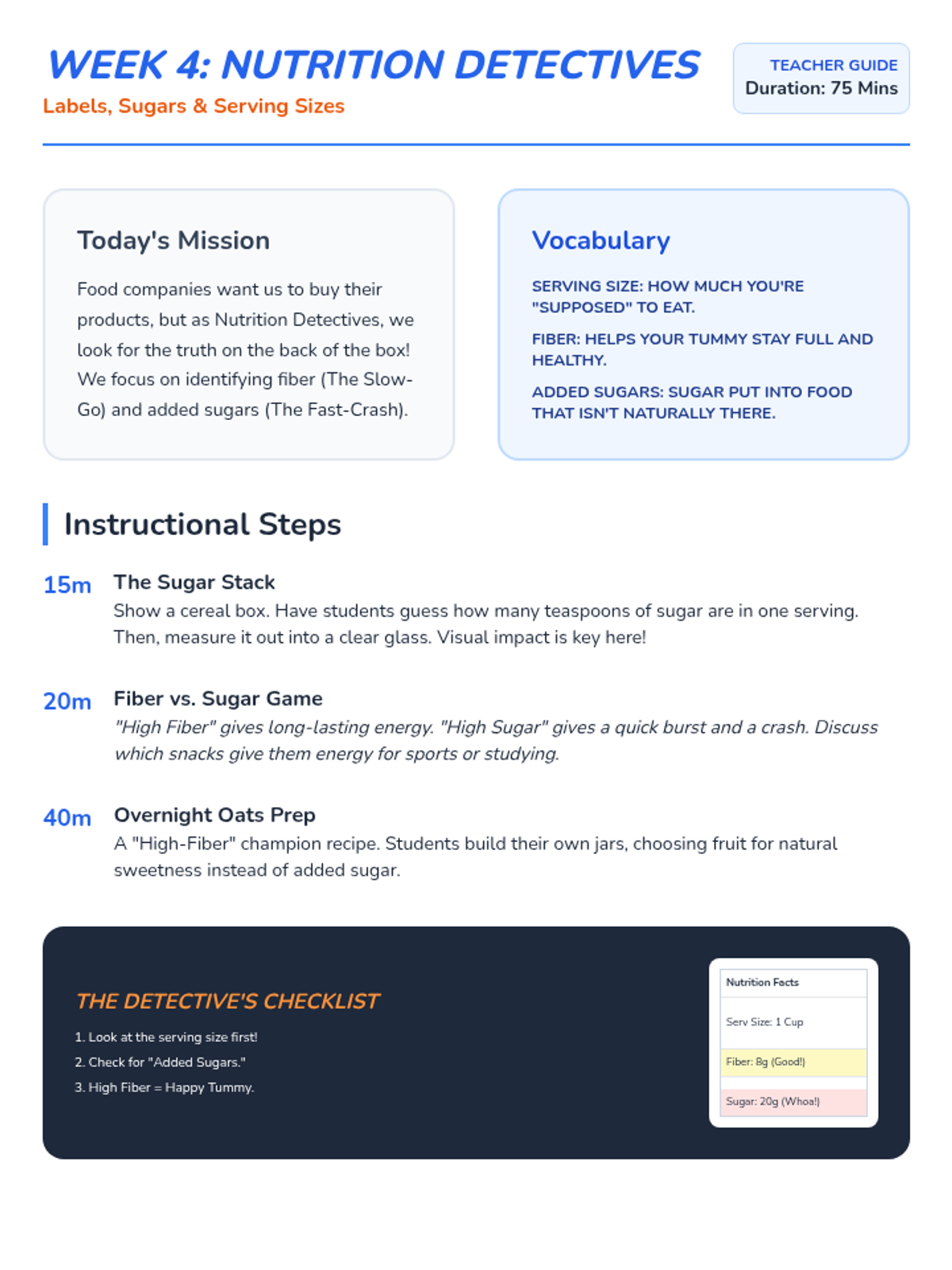
Decoding nutrition labels and making empowered choices for the body.
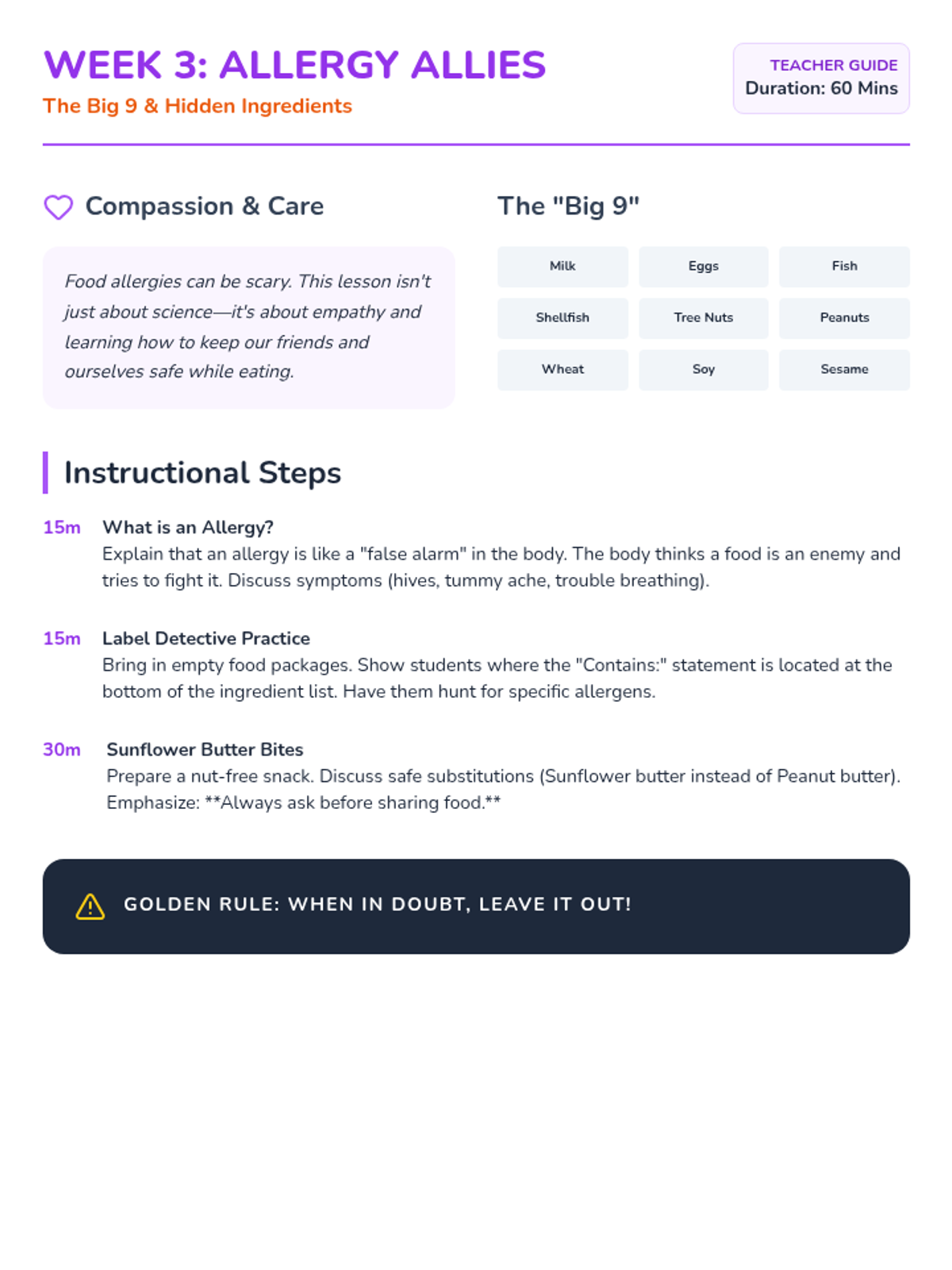
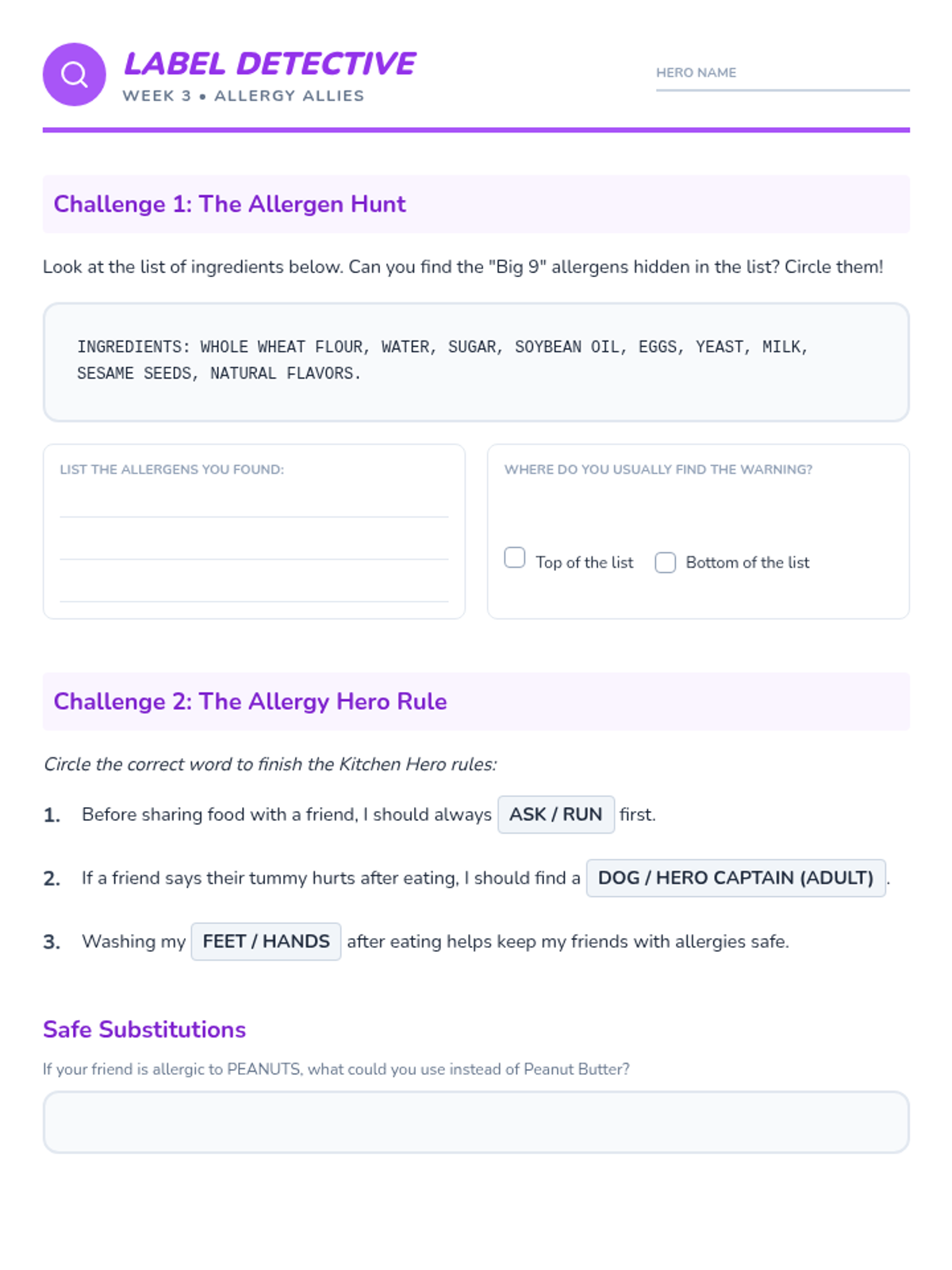
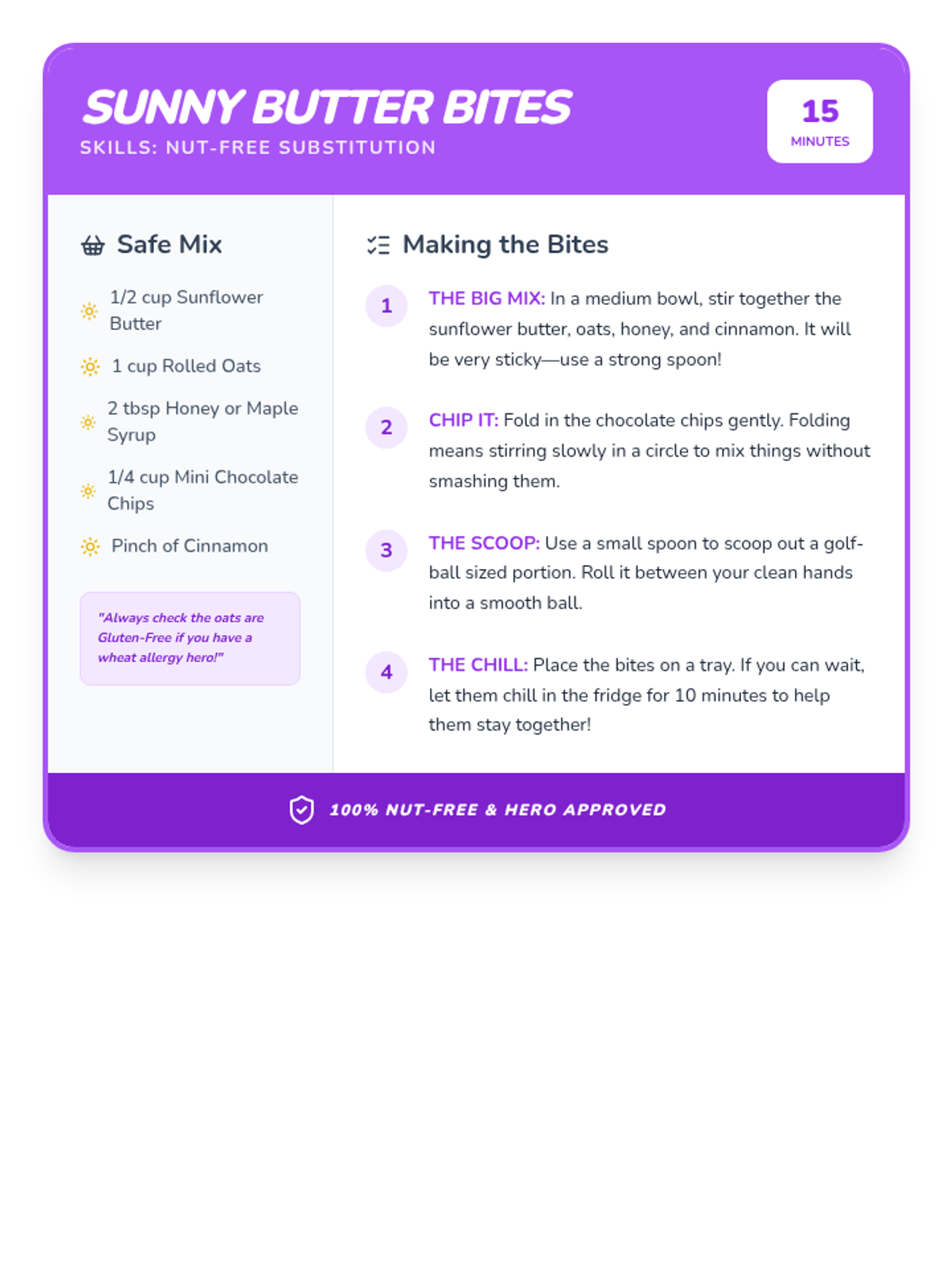
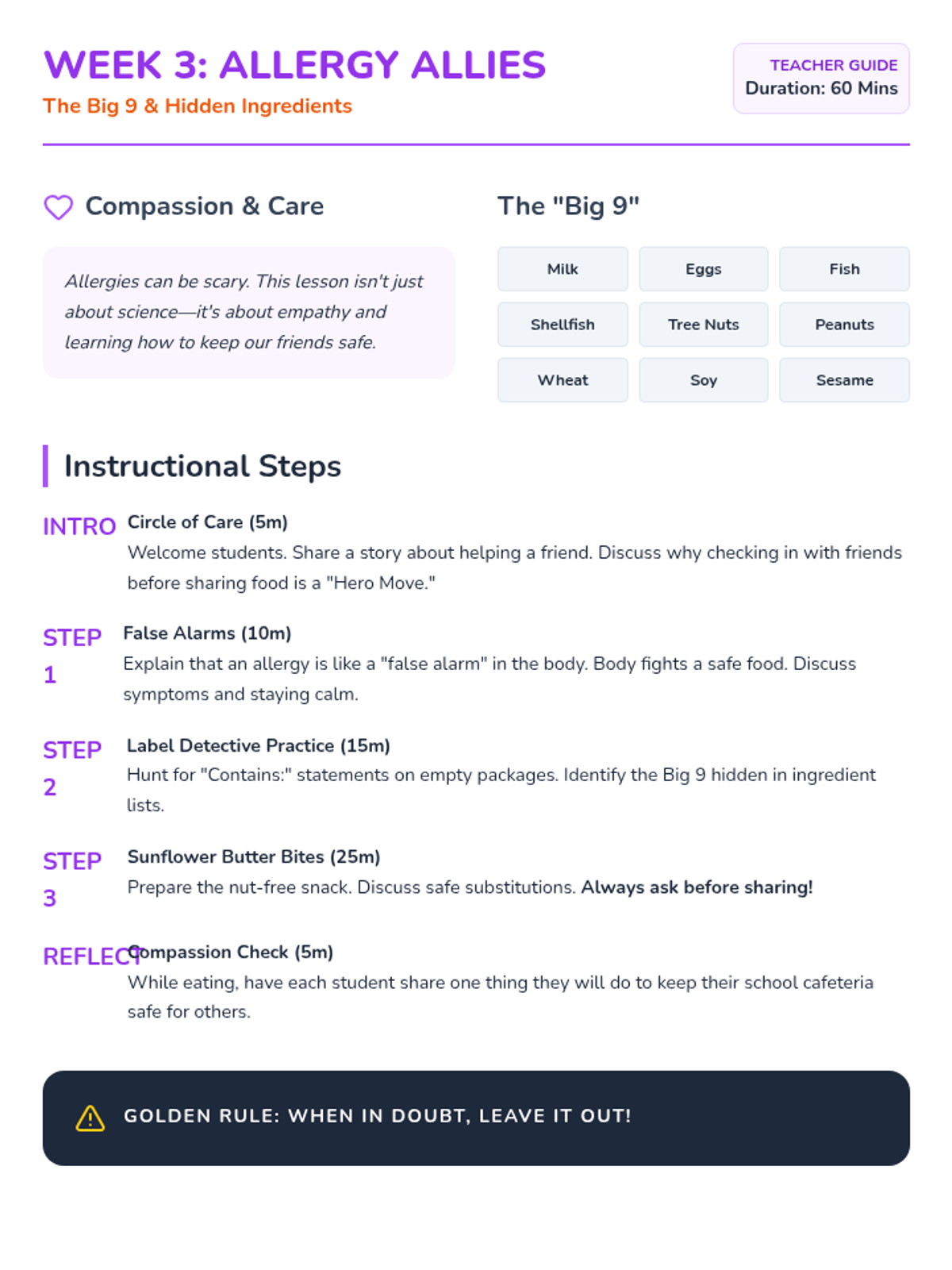
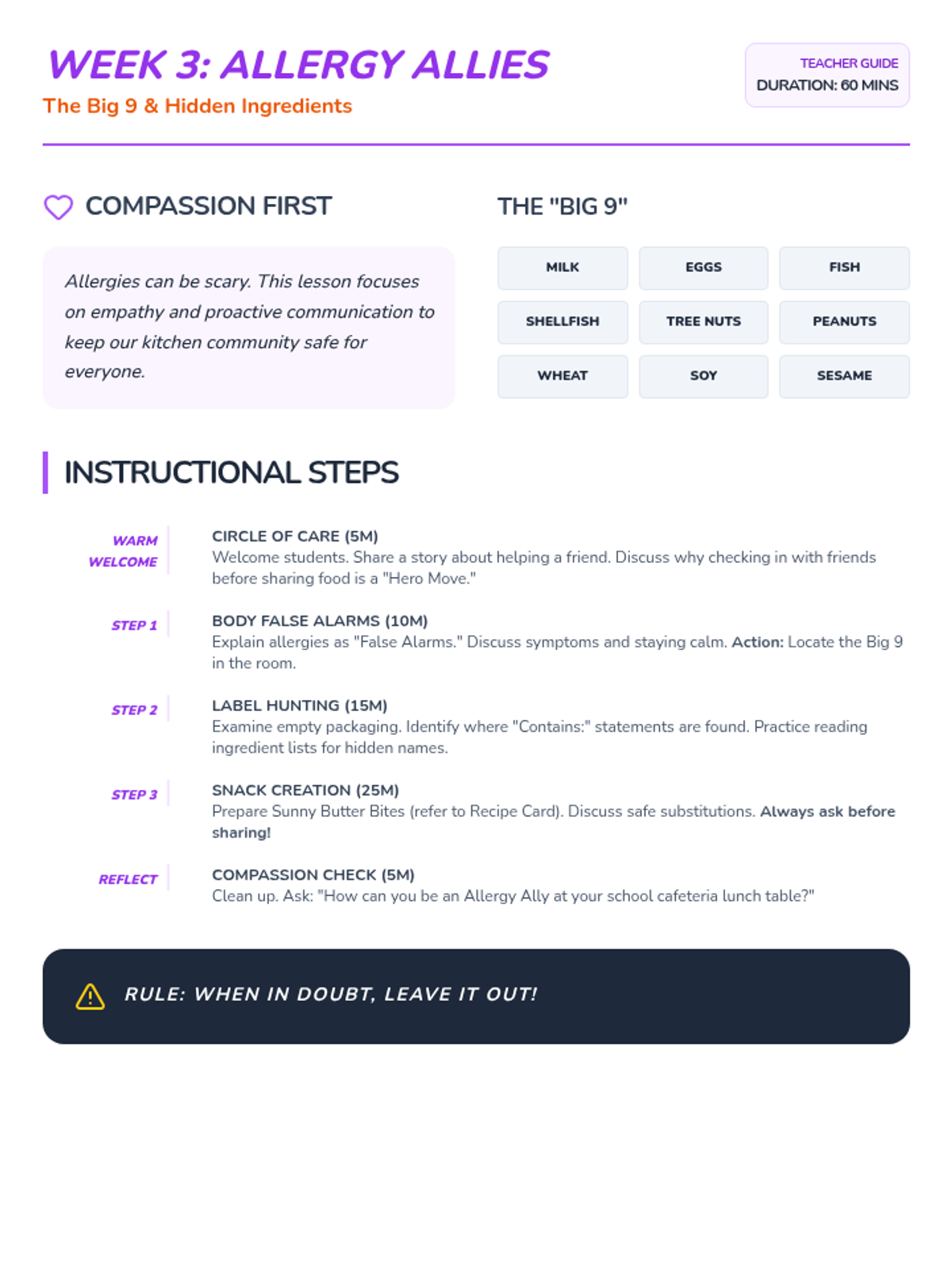
Learning about common food allergies and how to keep everyone safe at the table.
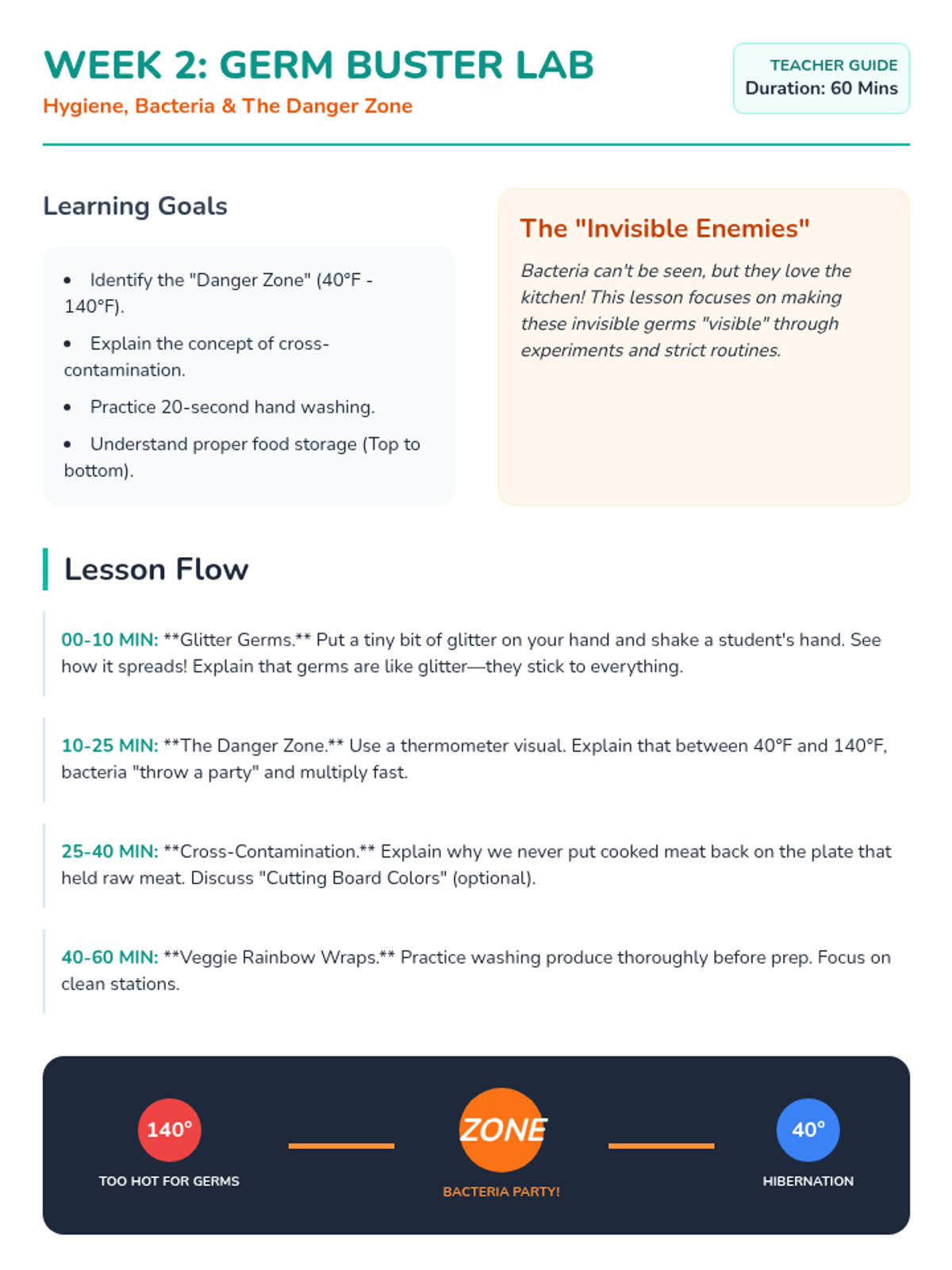
Understanding food-borne illnesses and the importance of a clean workspace.
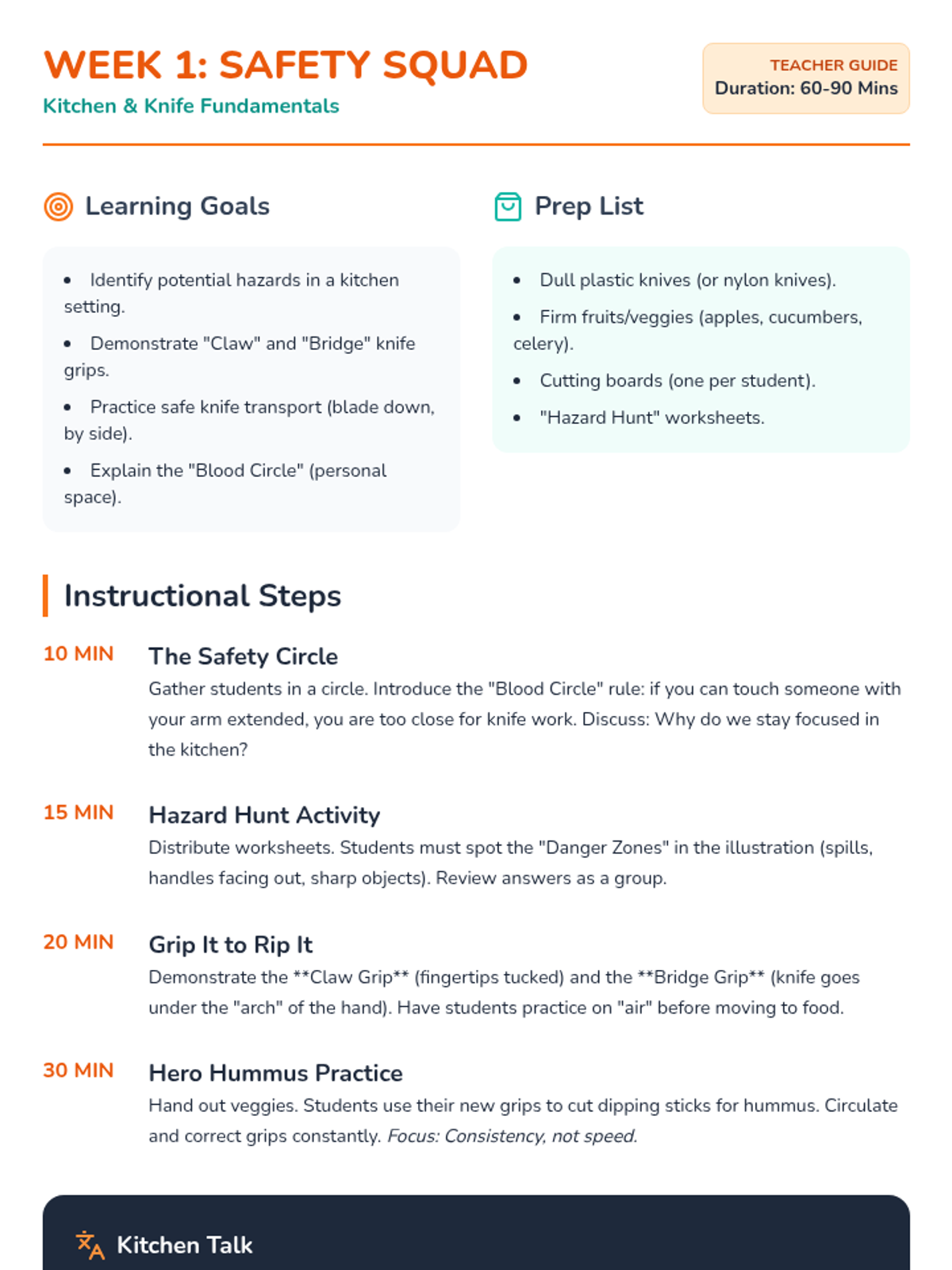
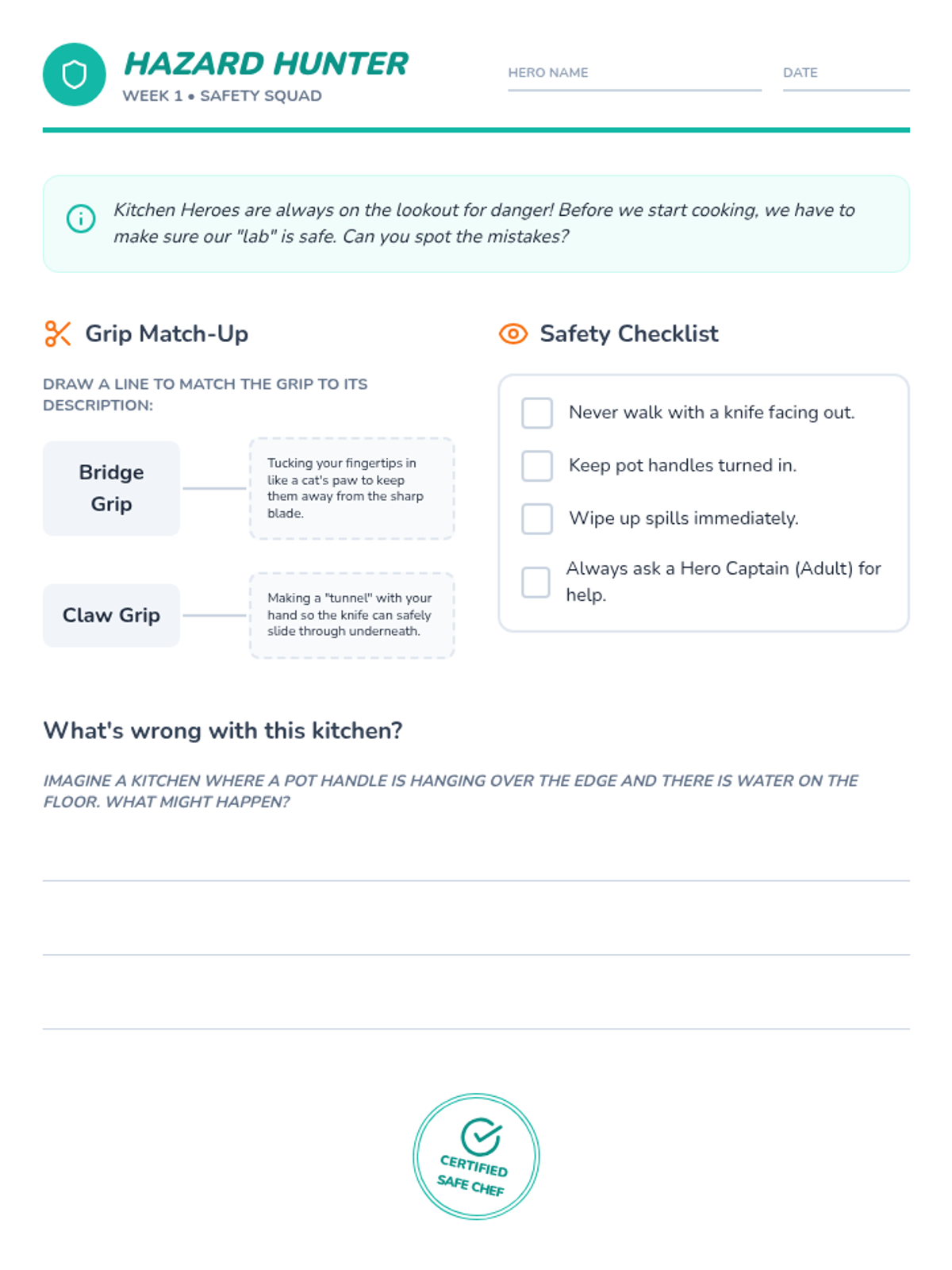
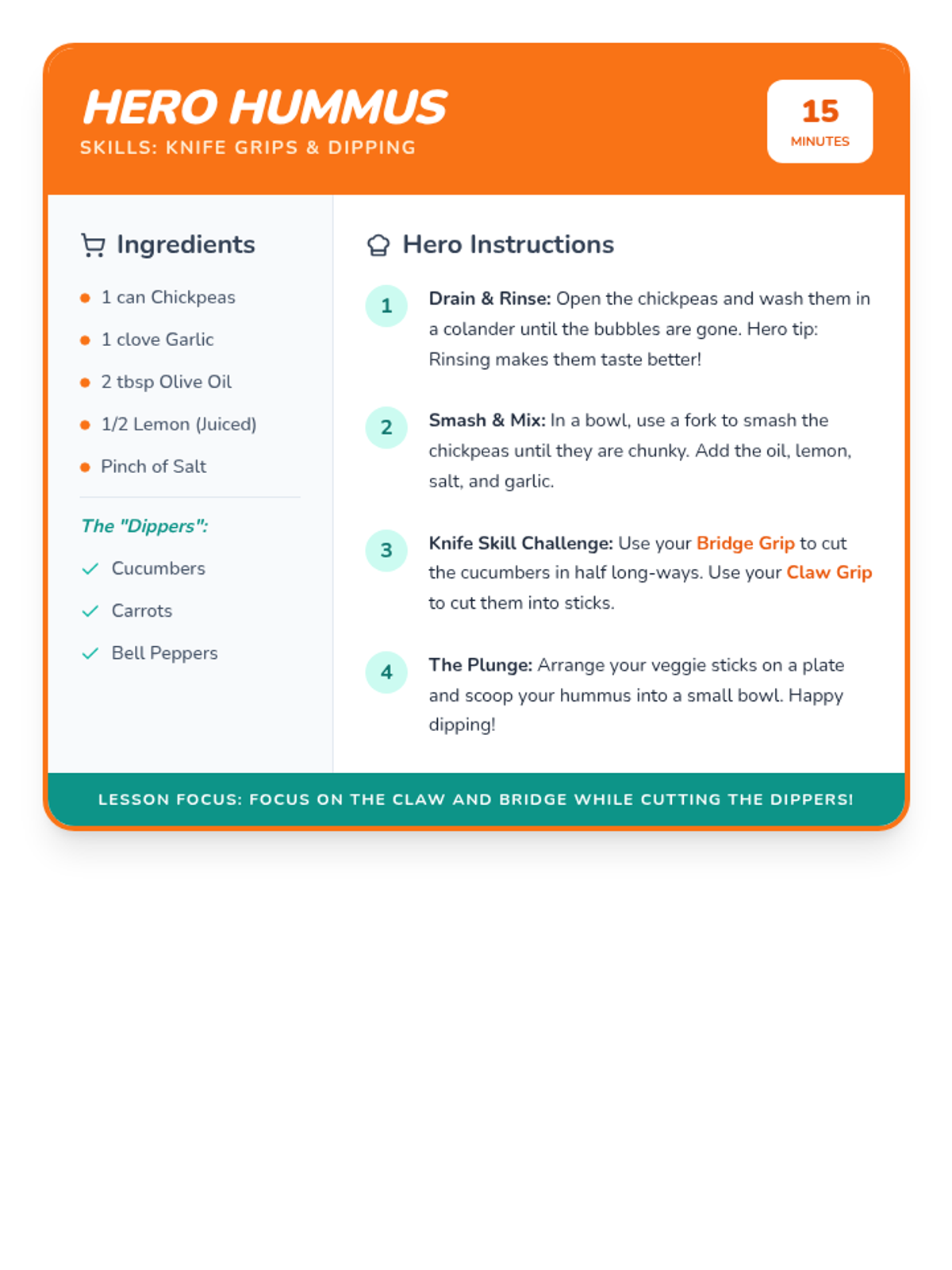
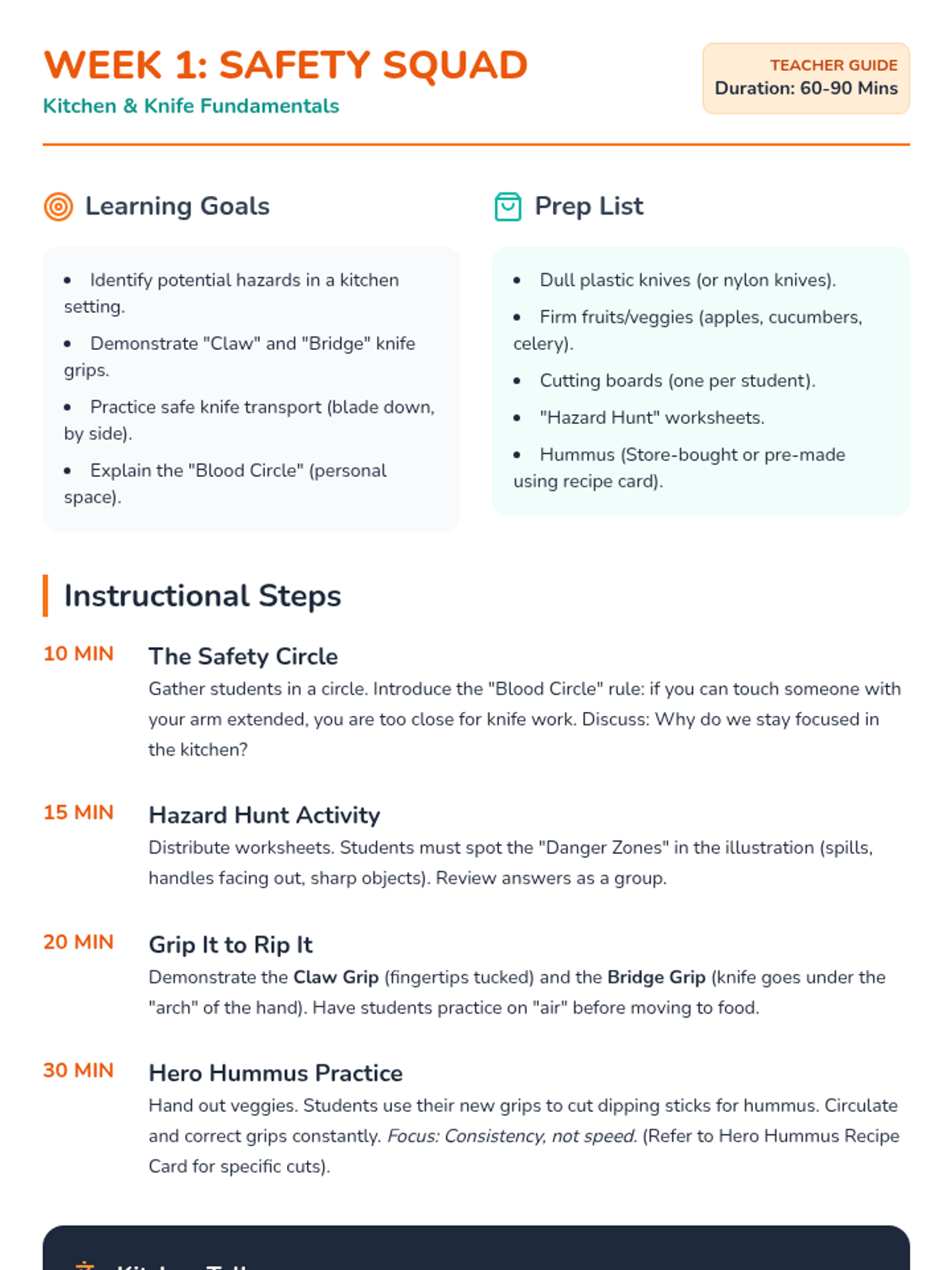
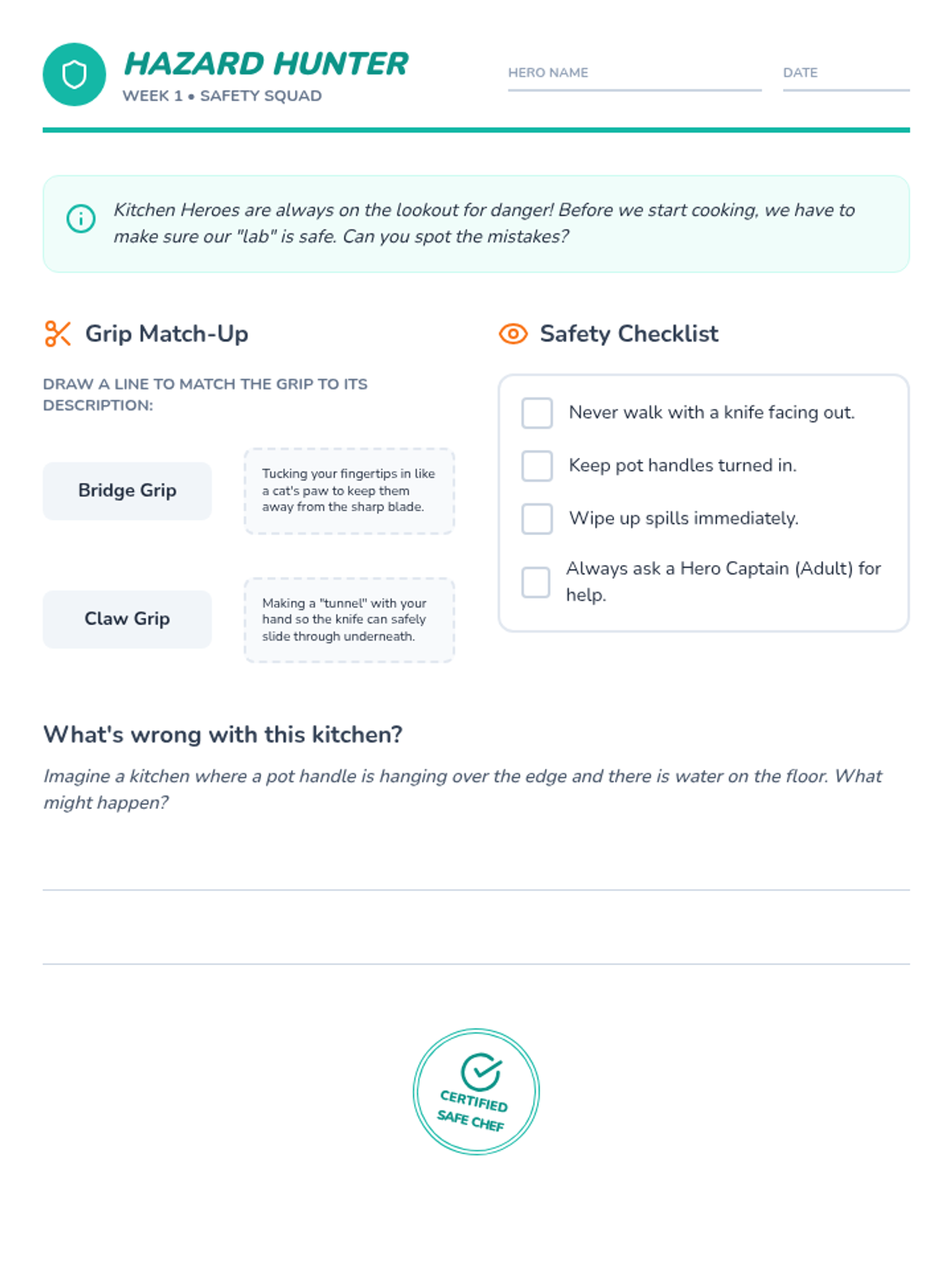
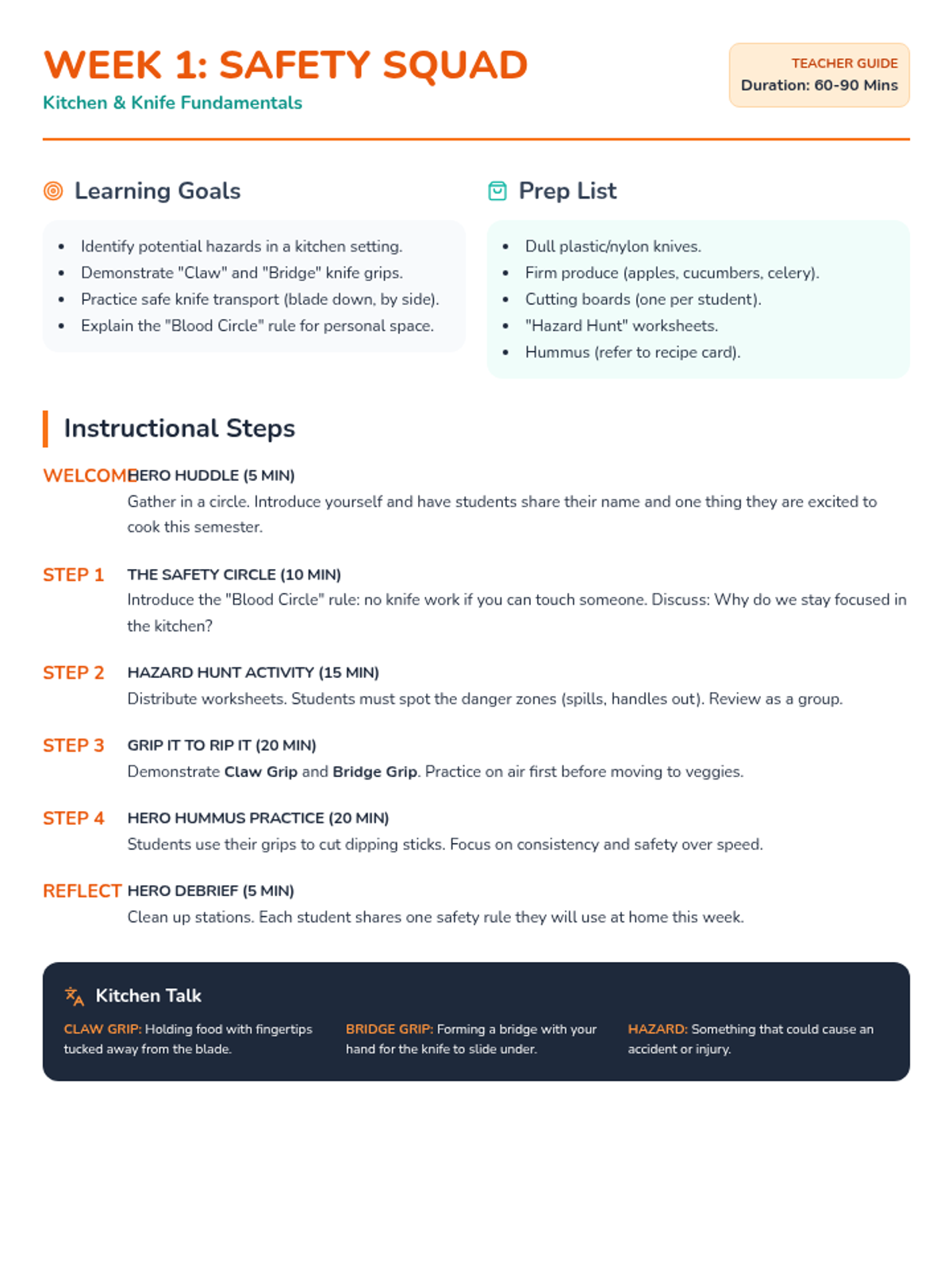
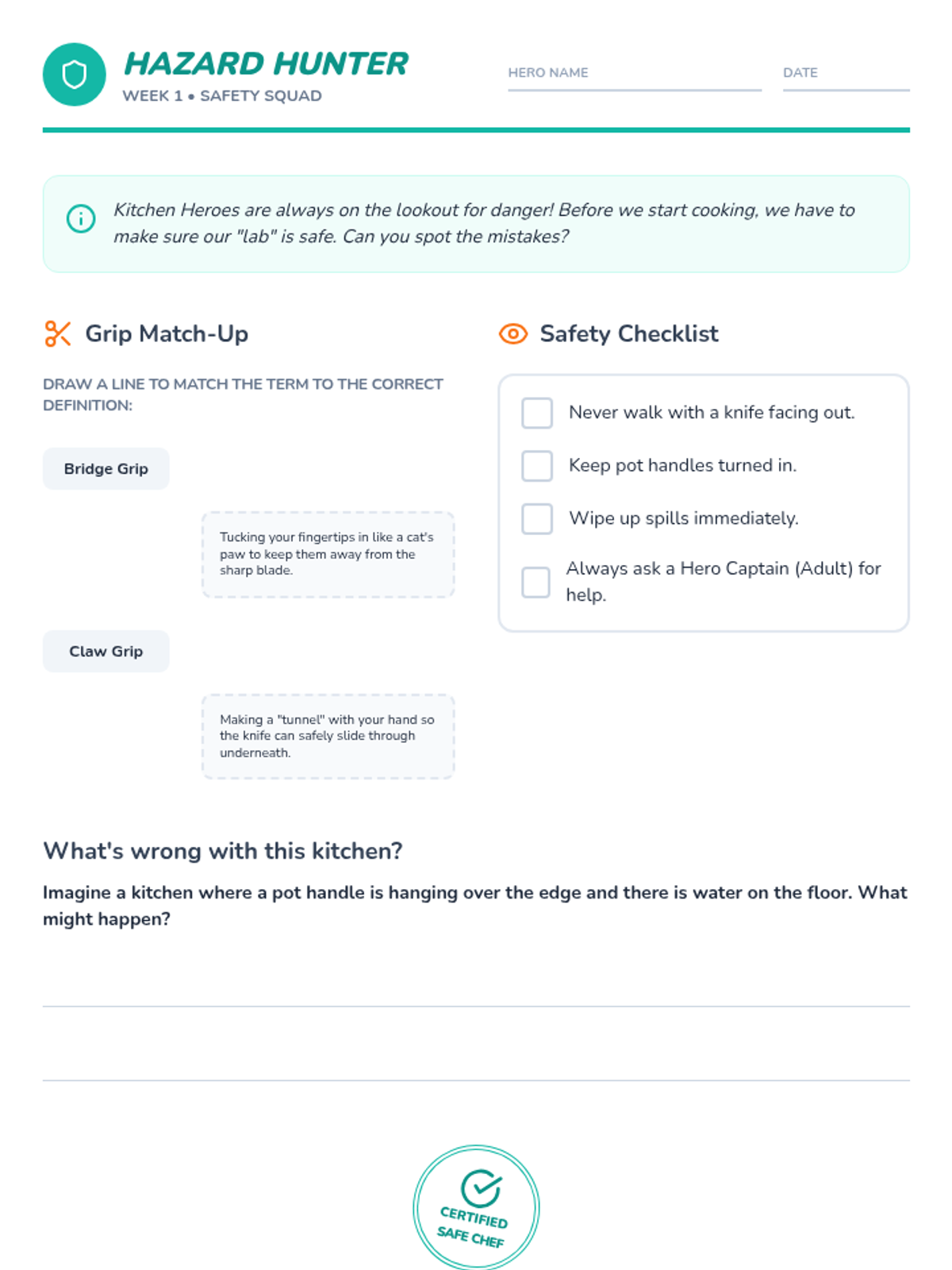
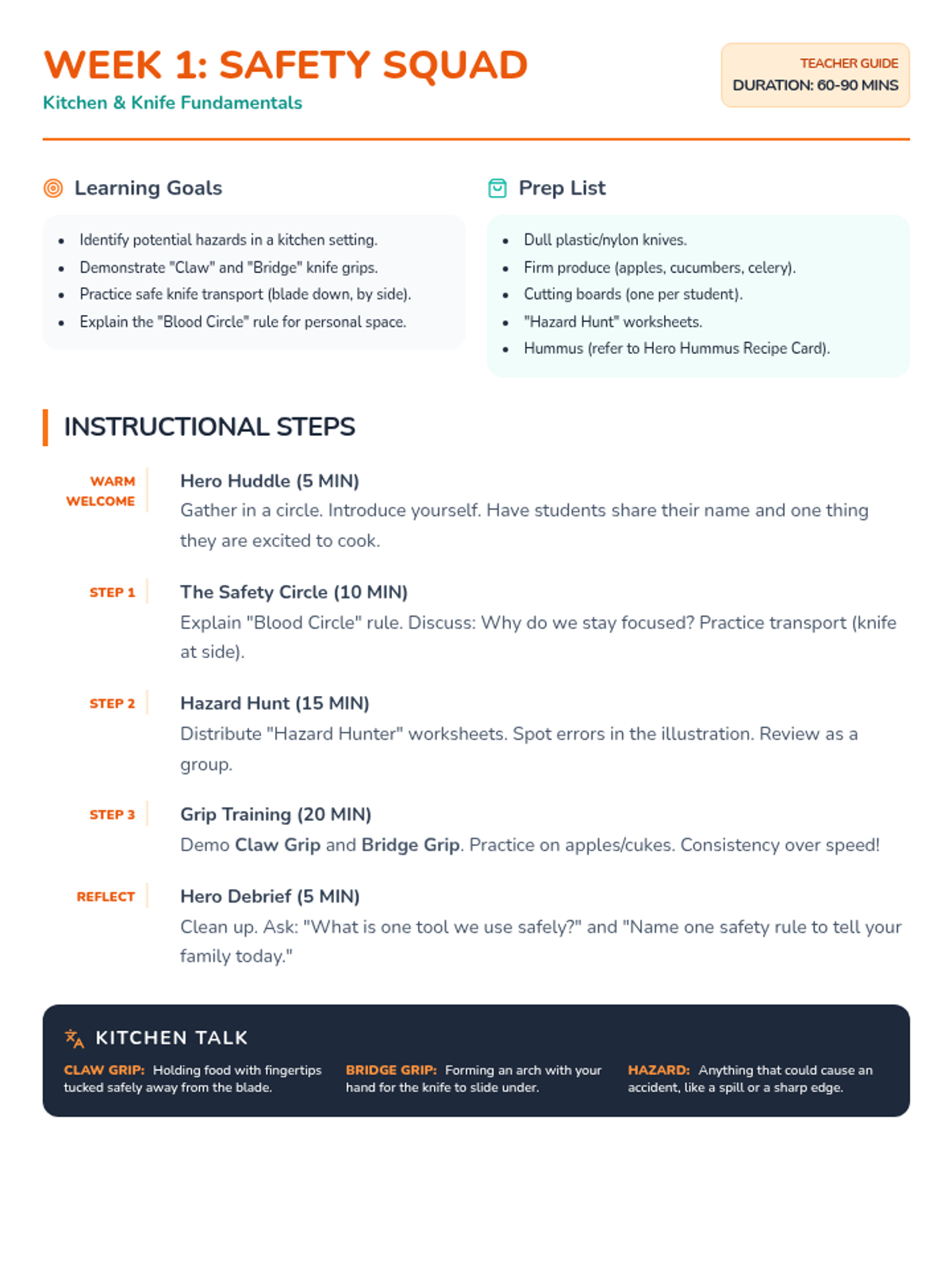
Mastering the basics of kitchen safety and proper knife handling techniques.
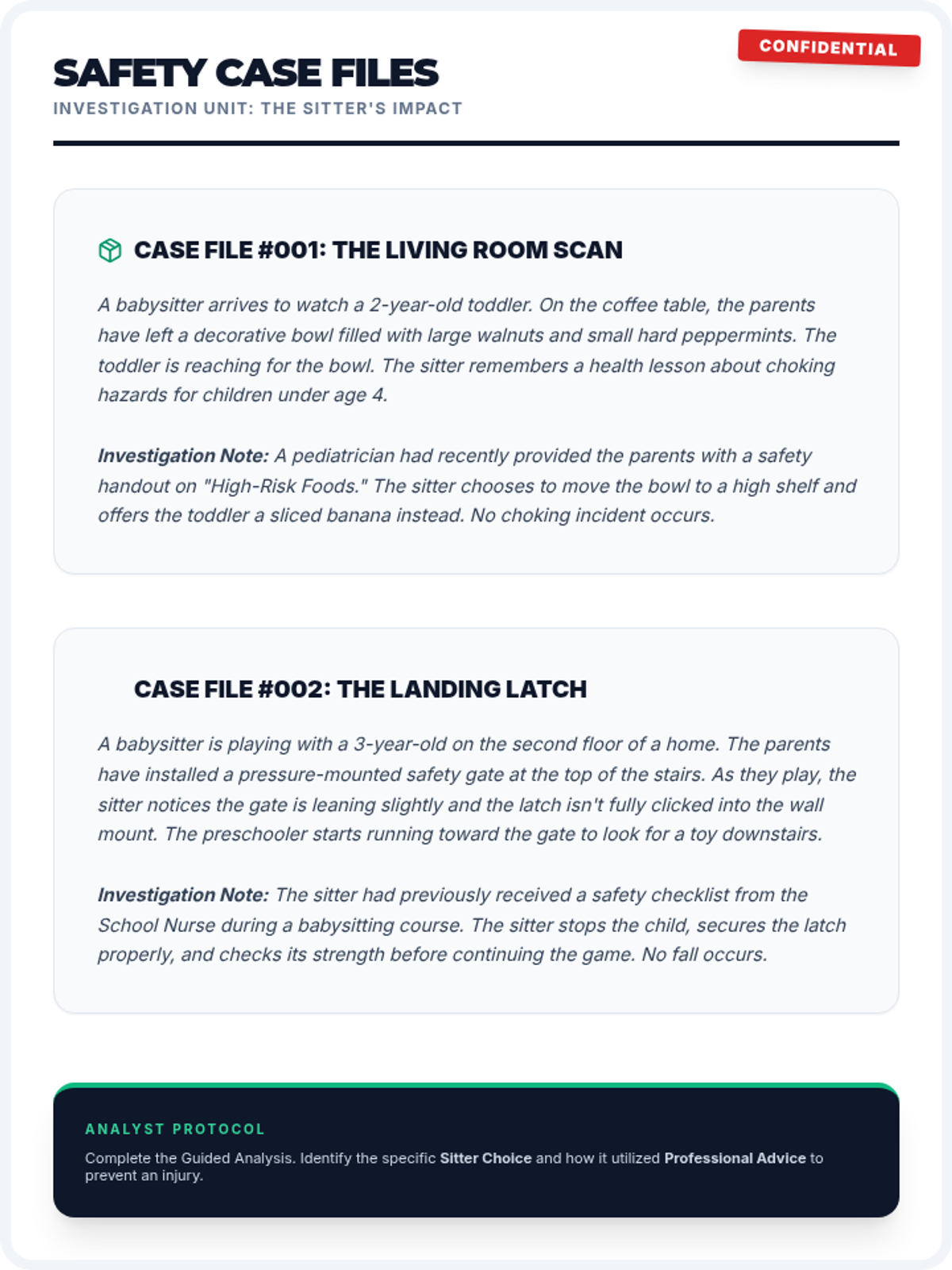
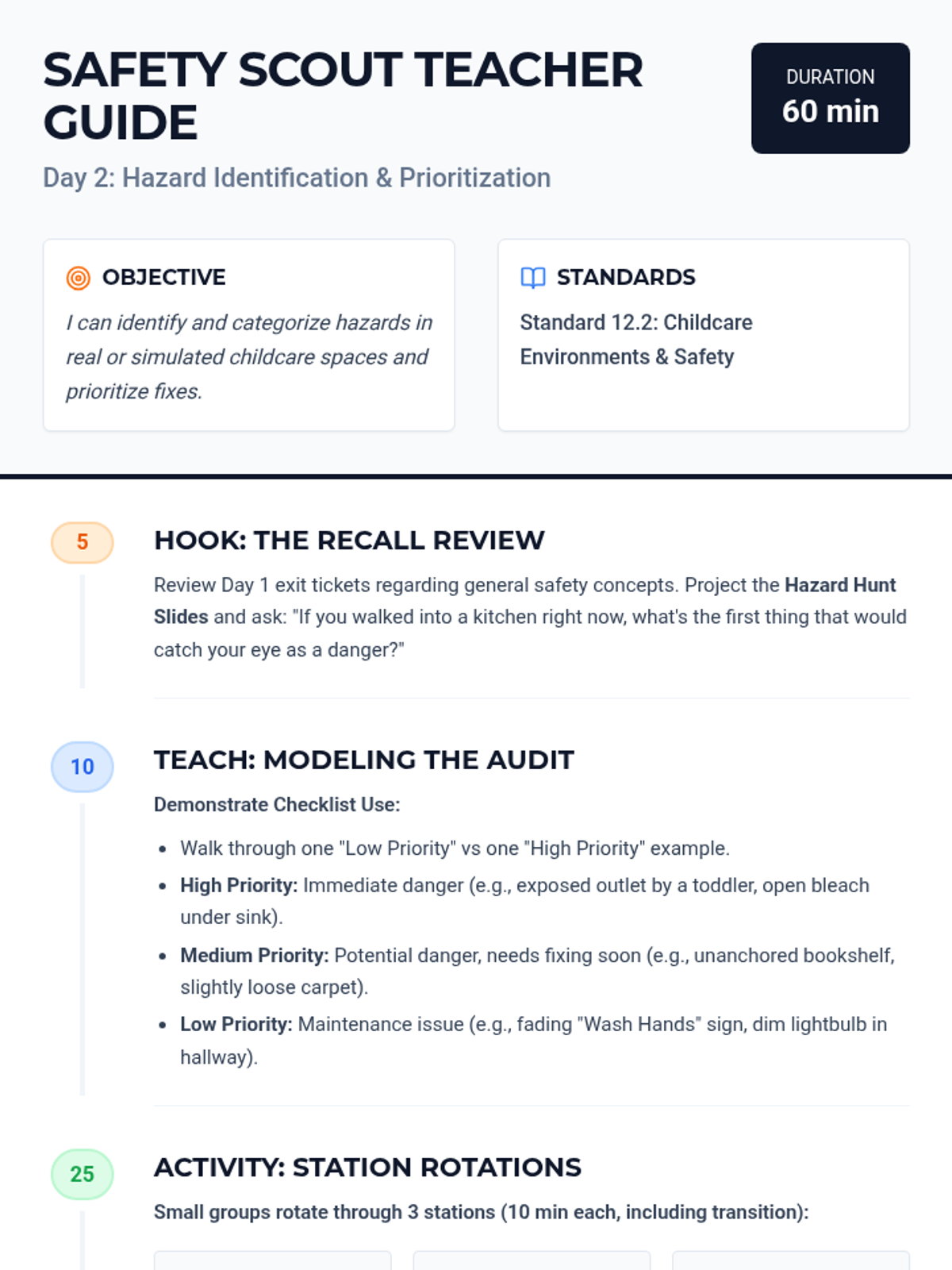
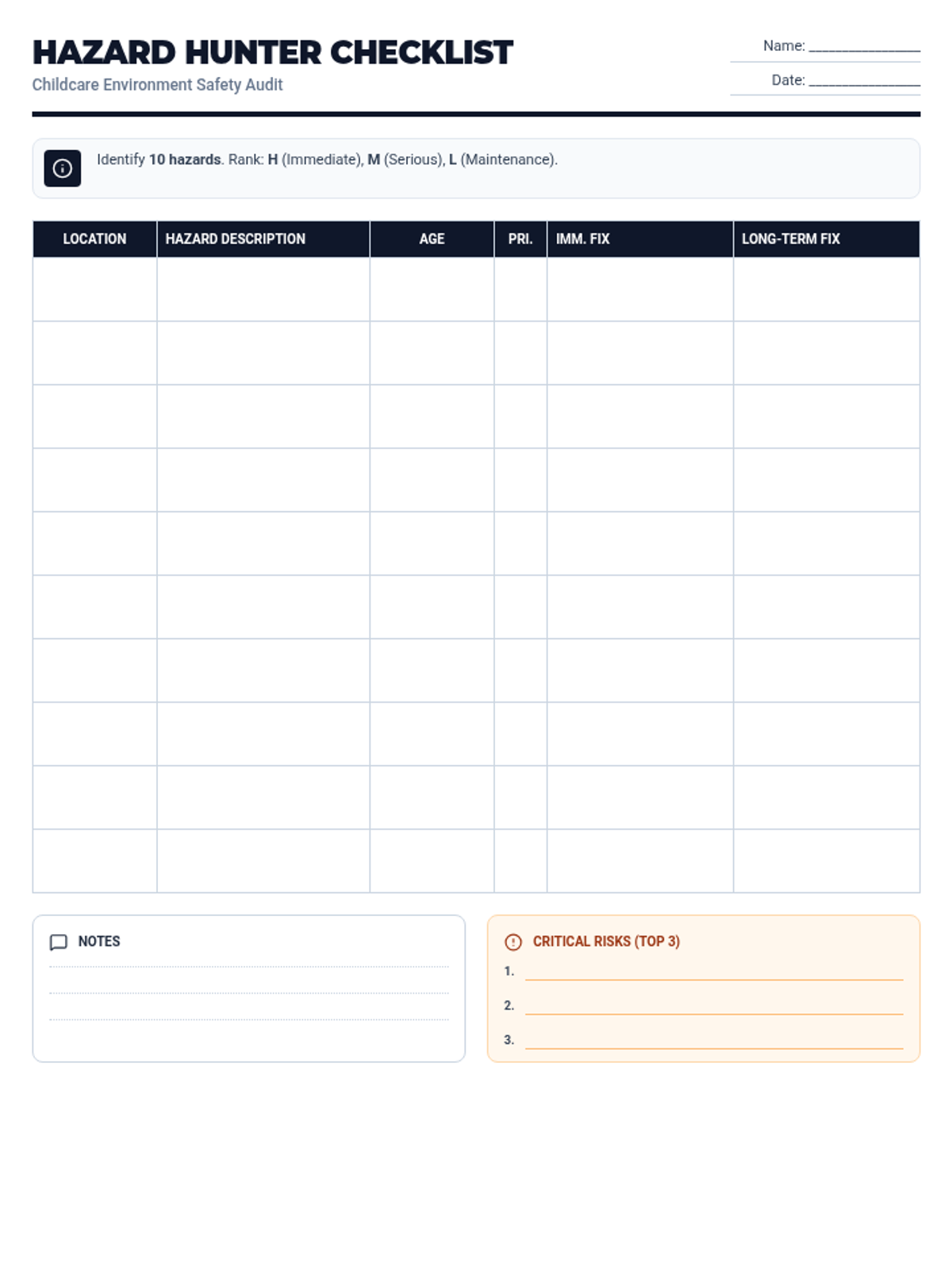
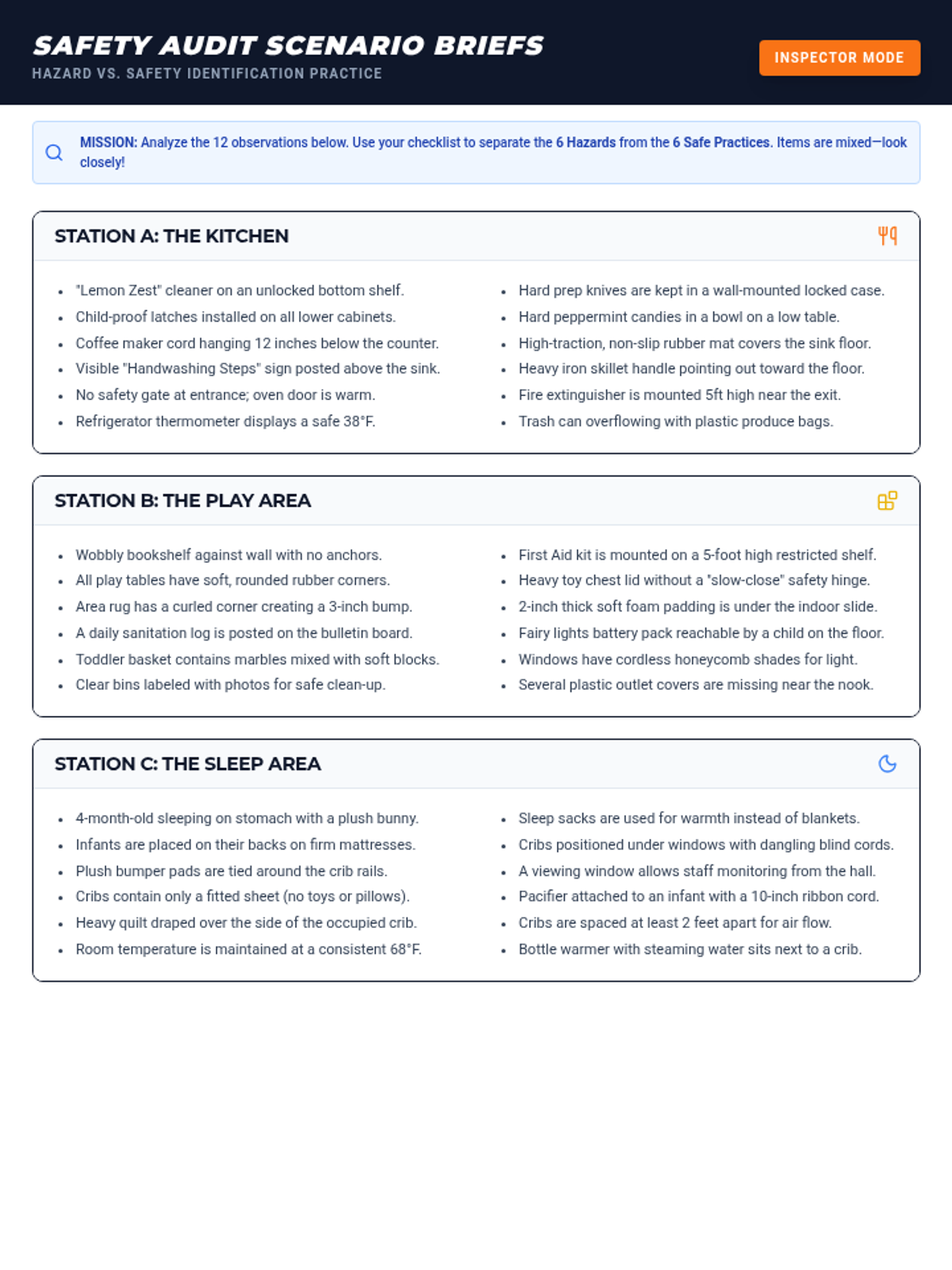
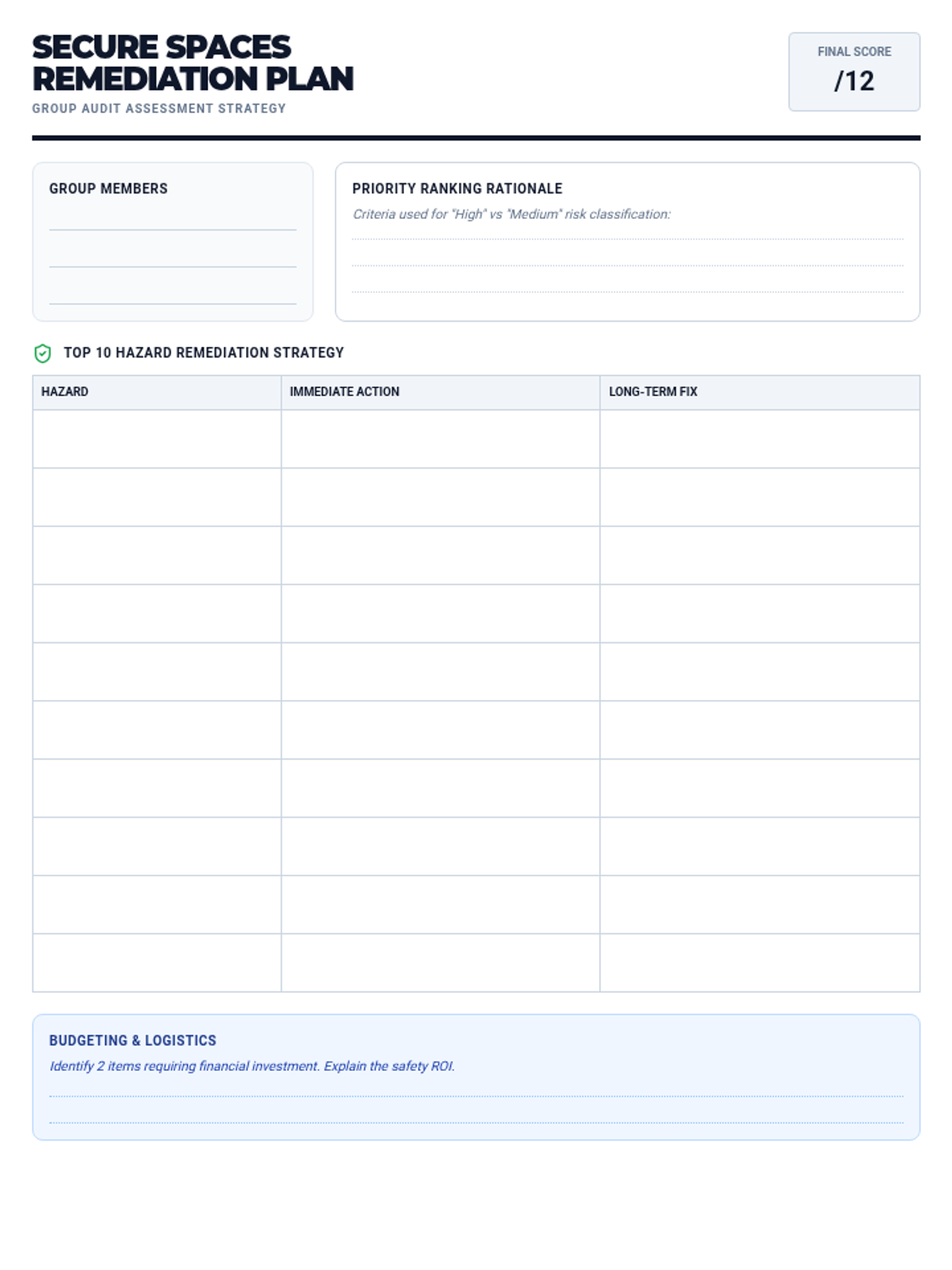
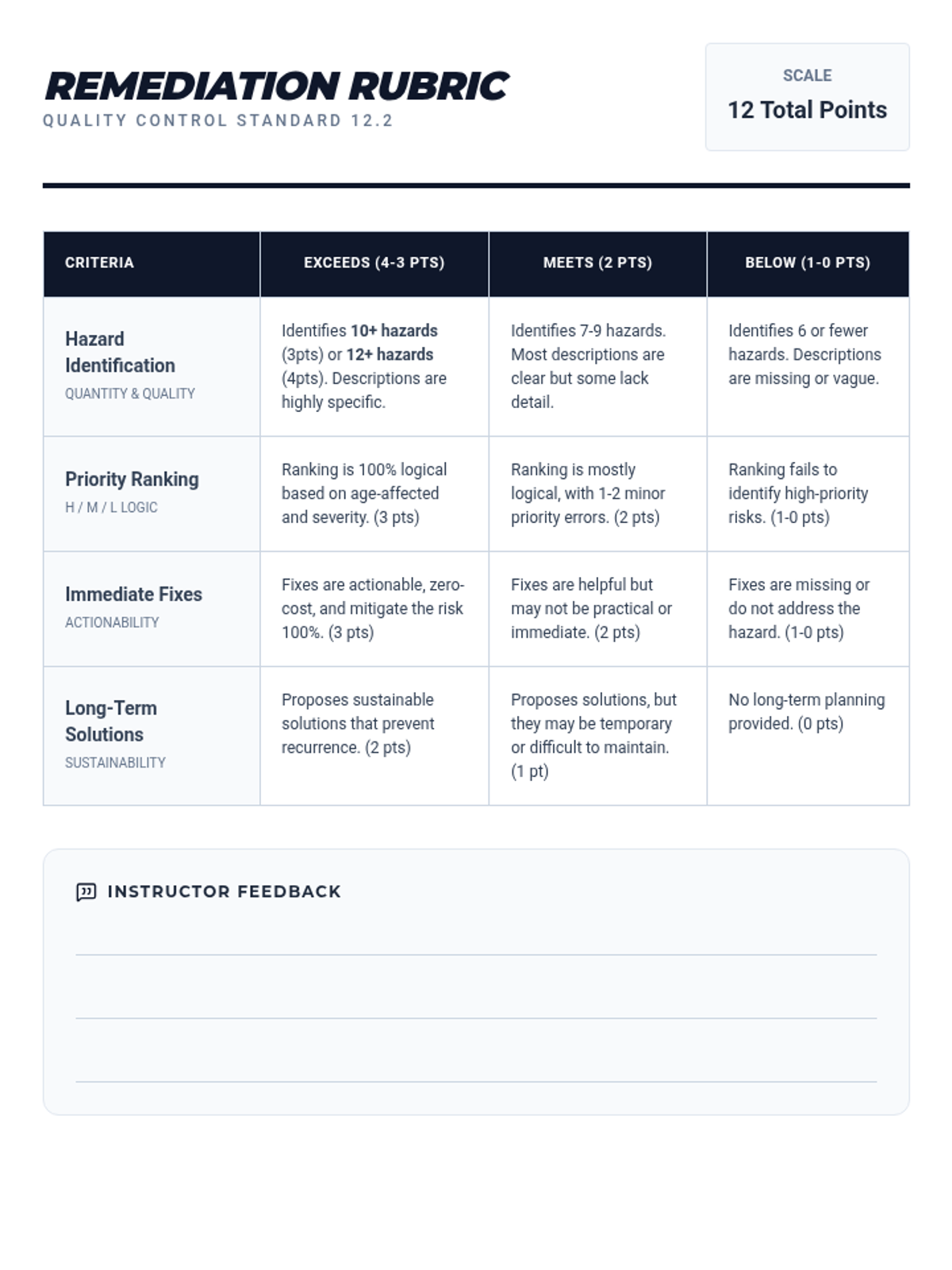
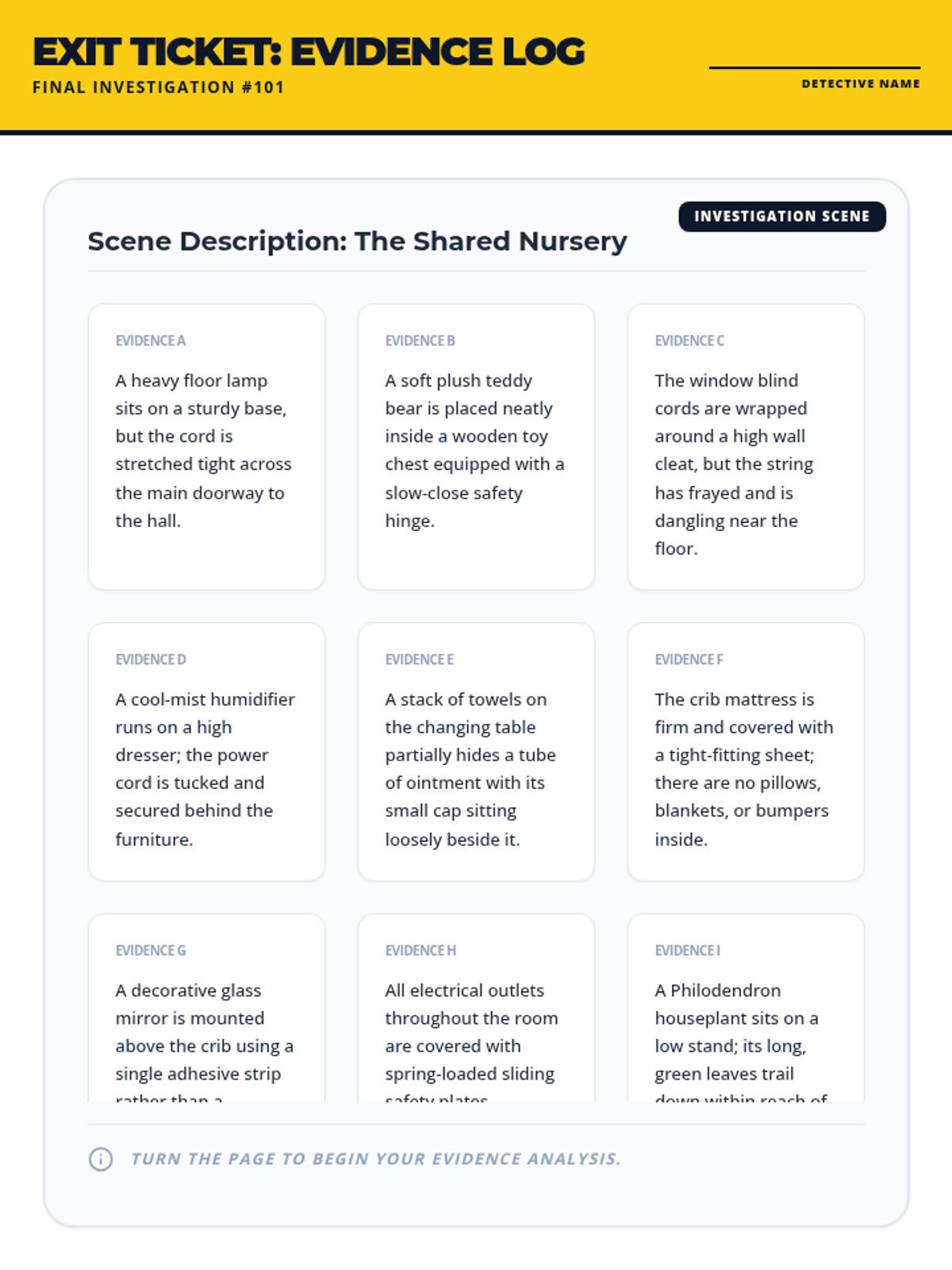
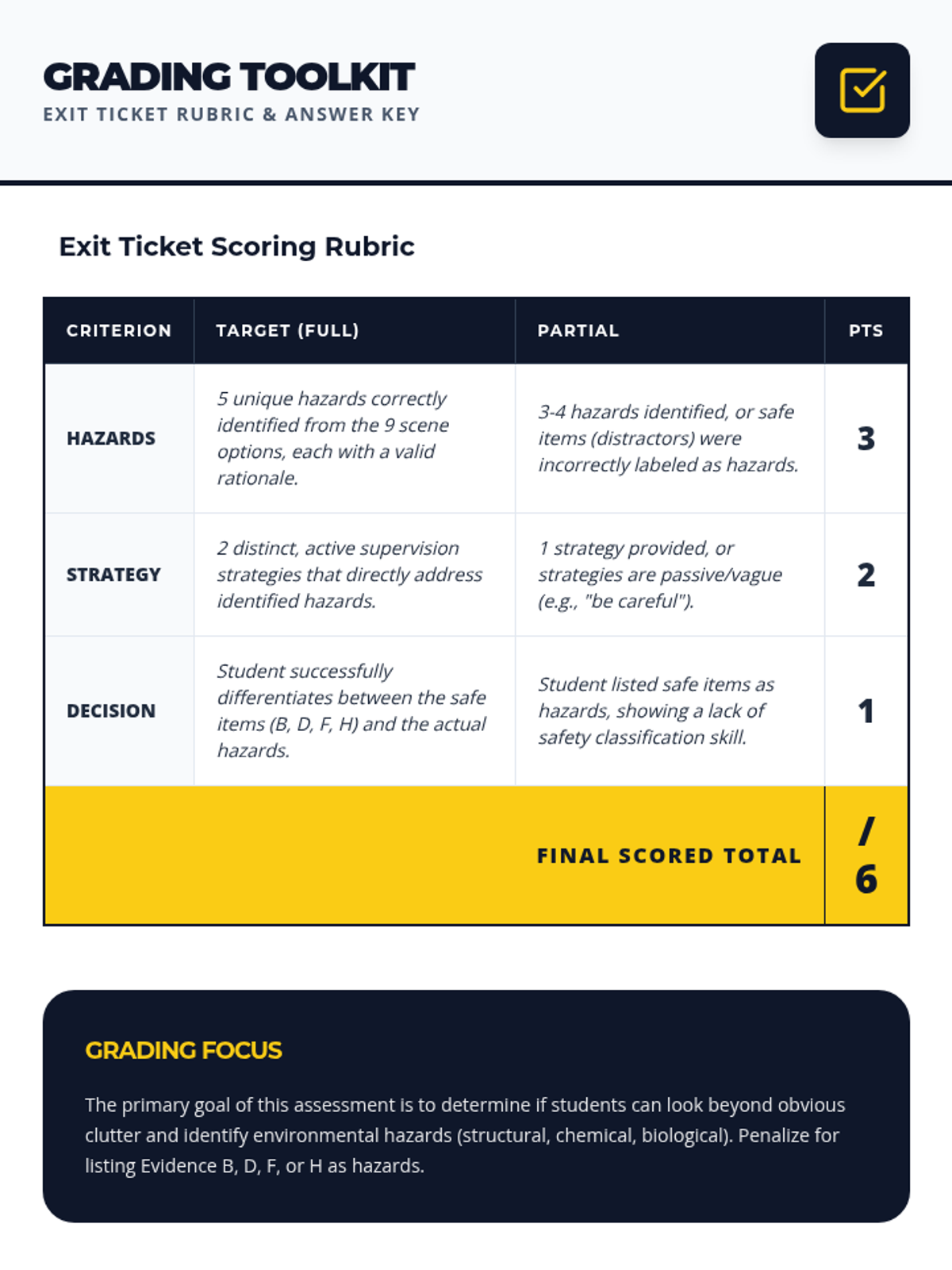
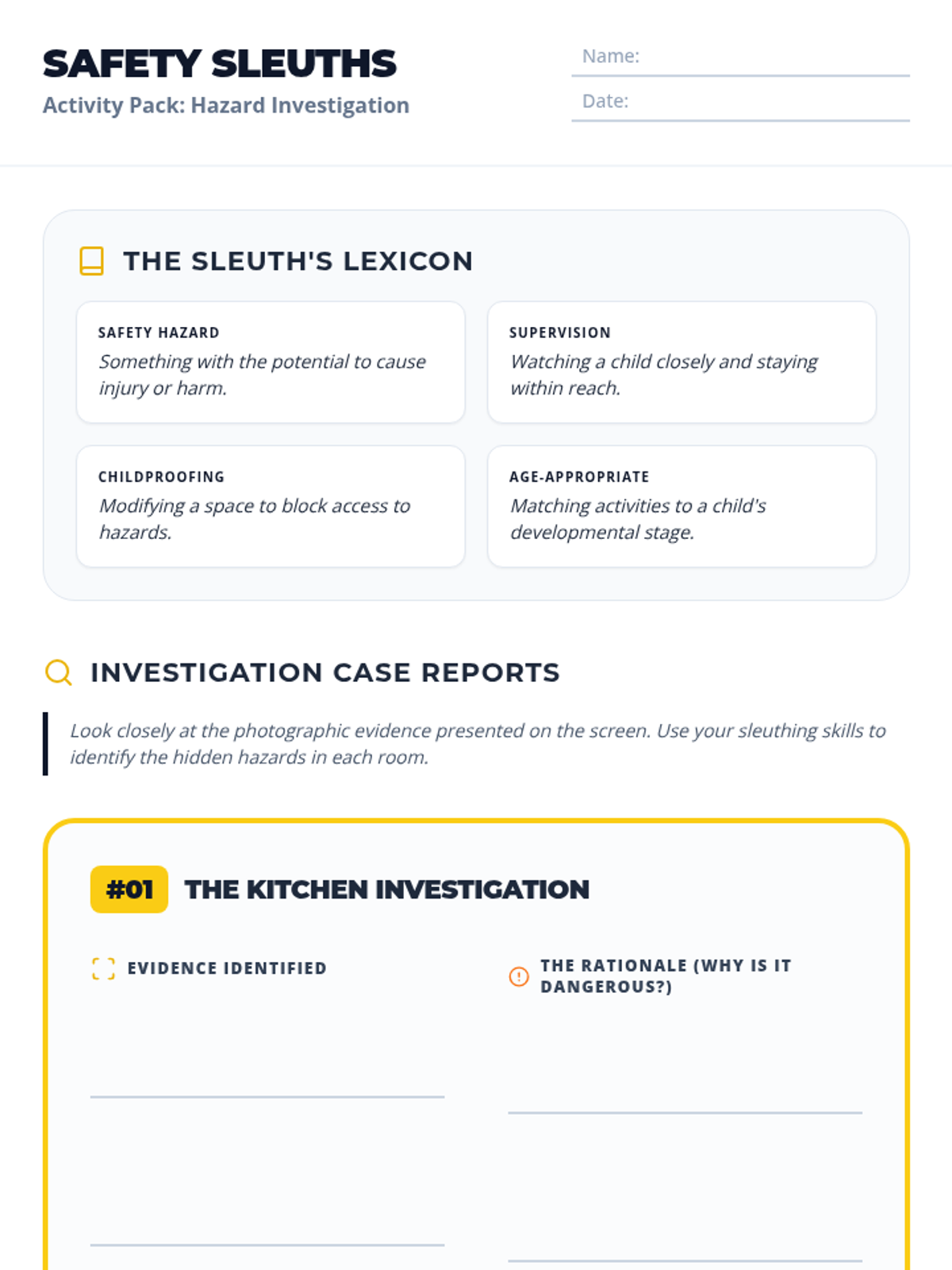
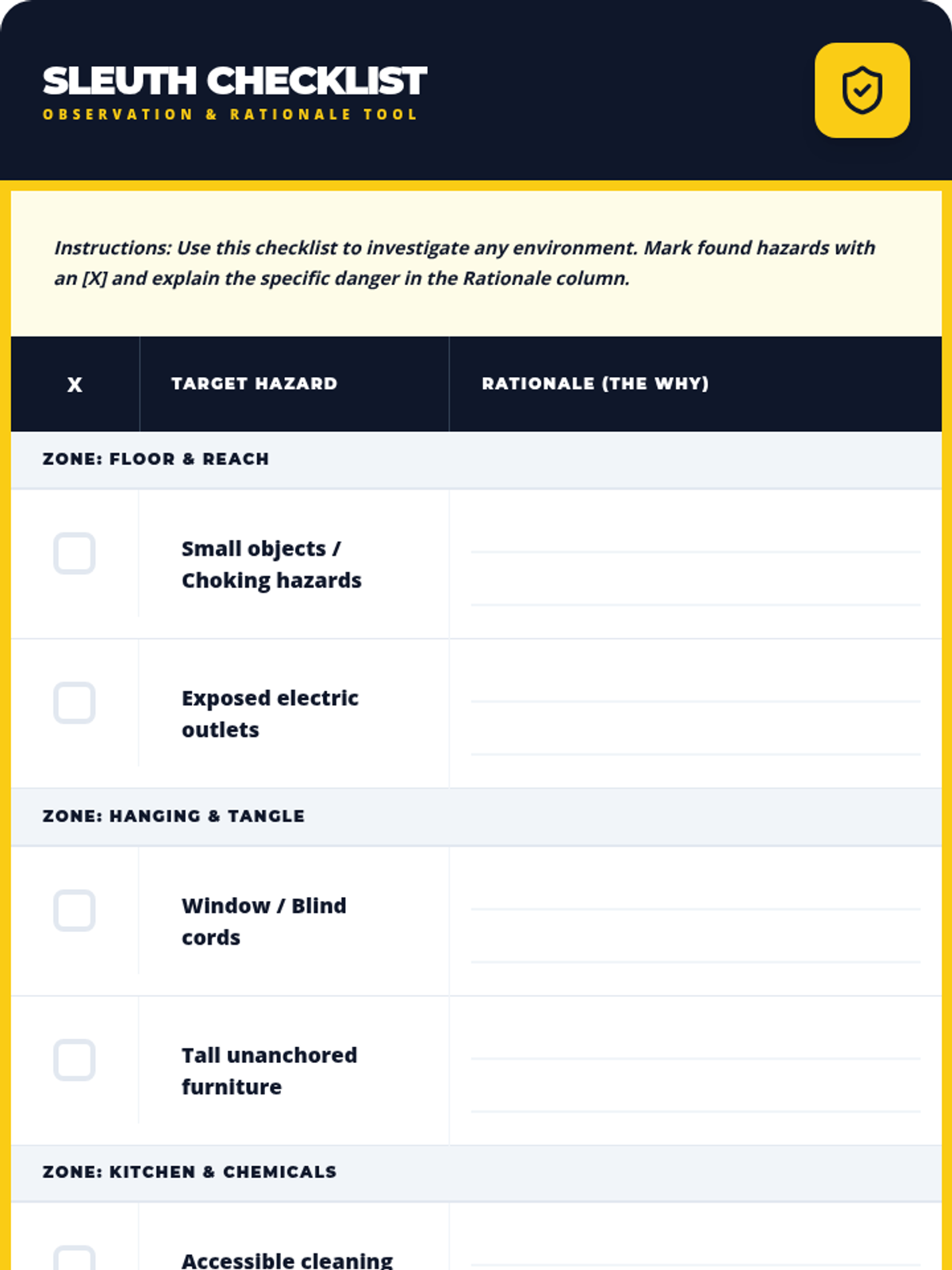
A hands-on lesson where students act as safety inspectors, identifying hazards in various childcare settings and developing prioritized remediation plans.
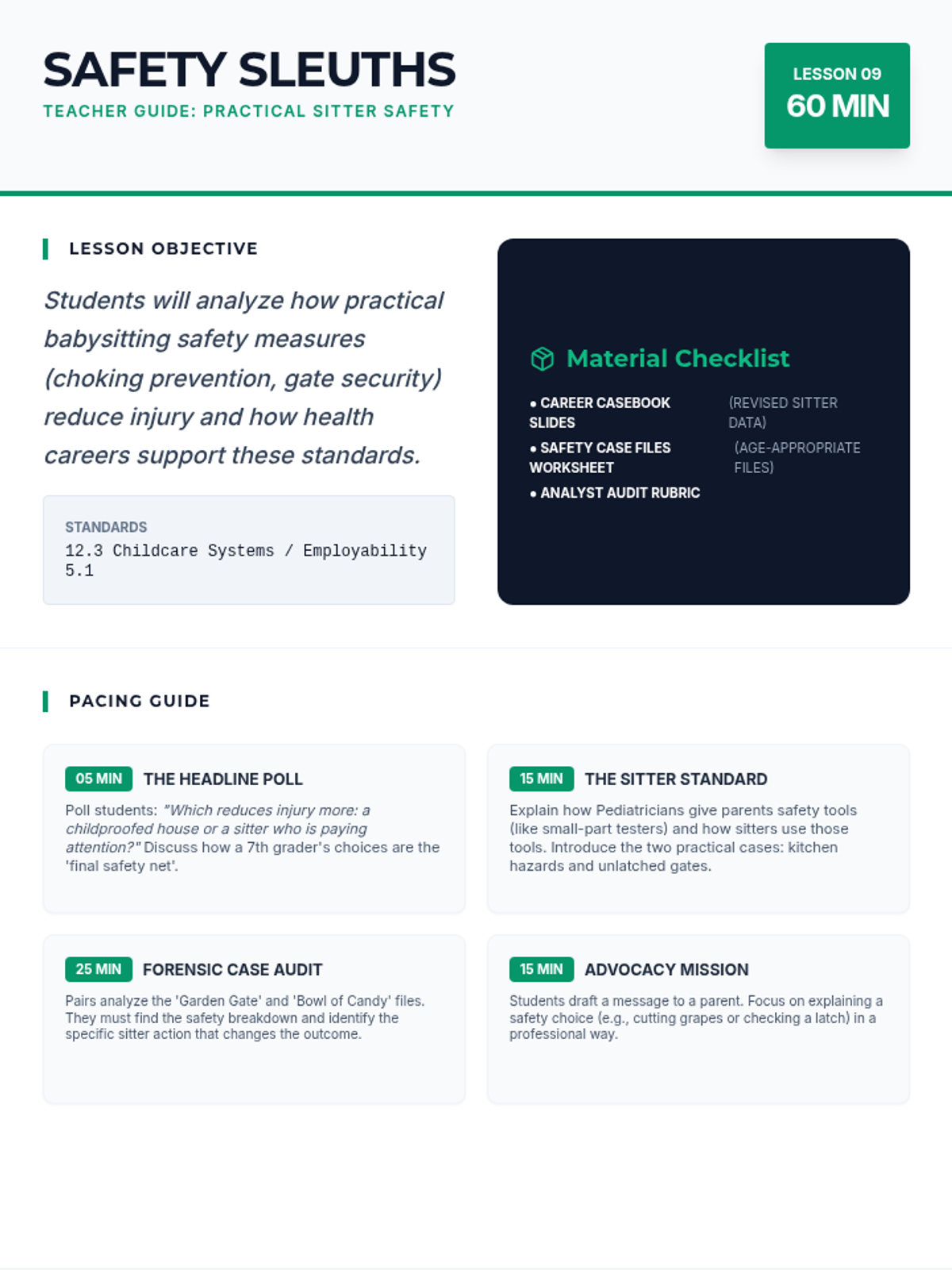
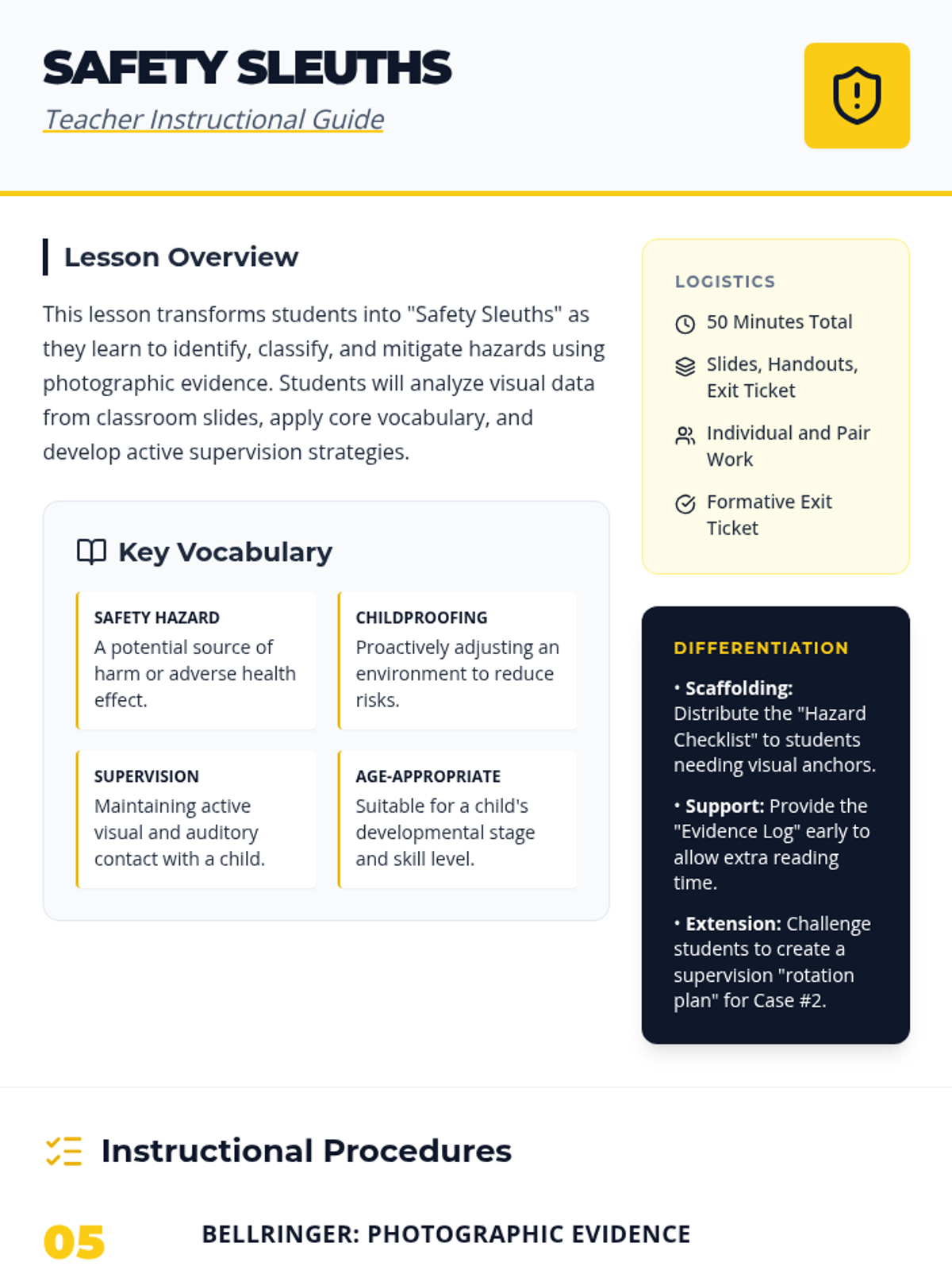
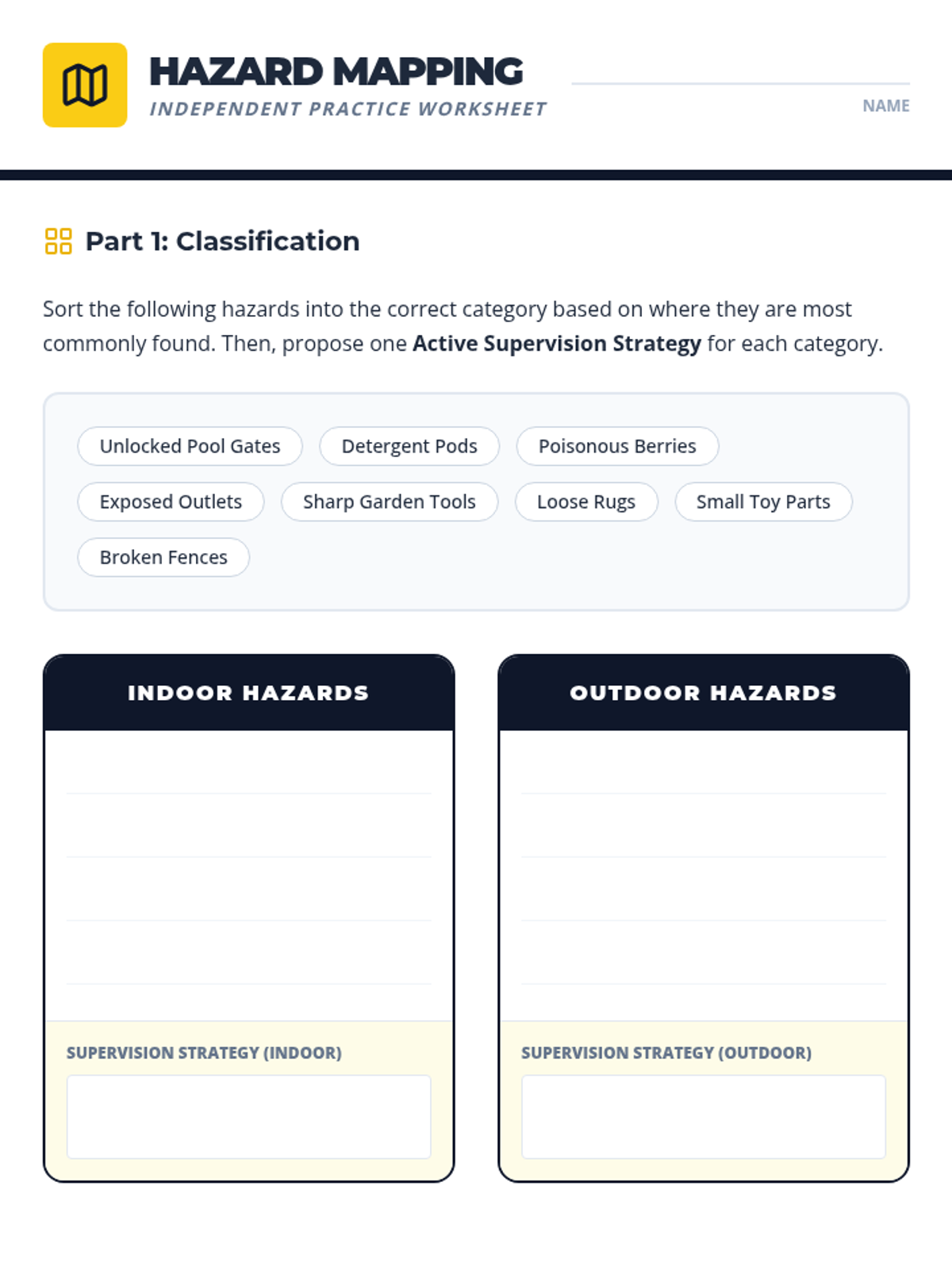
A comprehensive lesson on child safety hazards, teaching students how to identify risks, classify hazards, and implement supervision strategies to create safe environments for children.
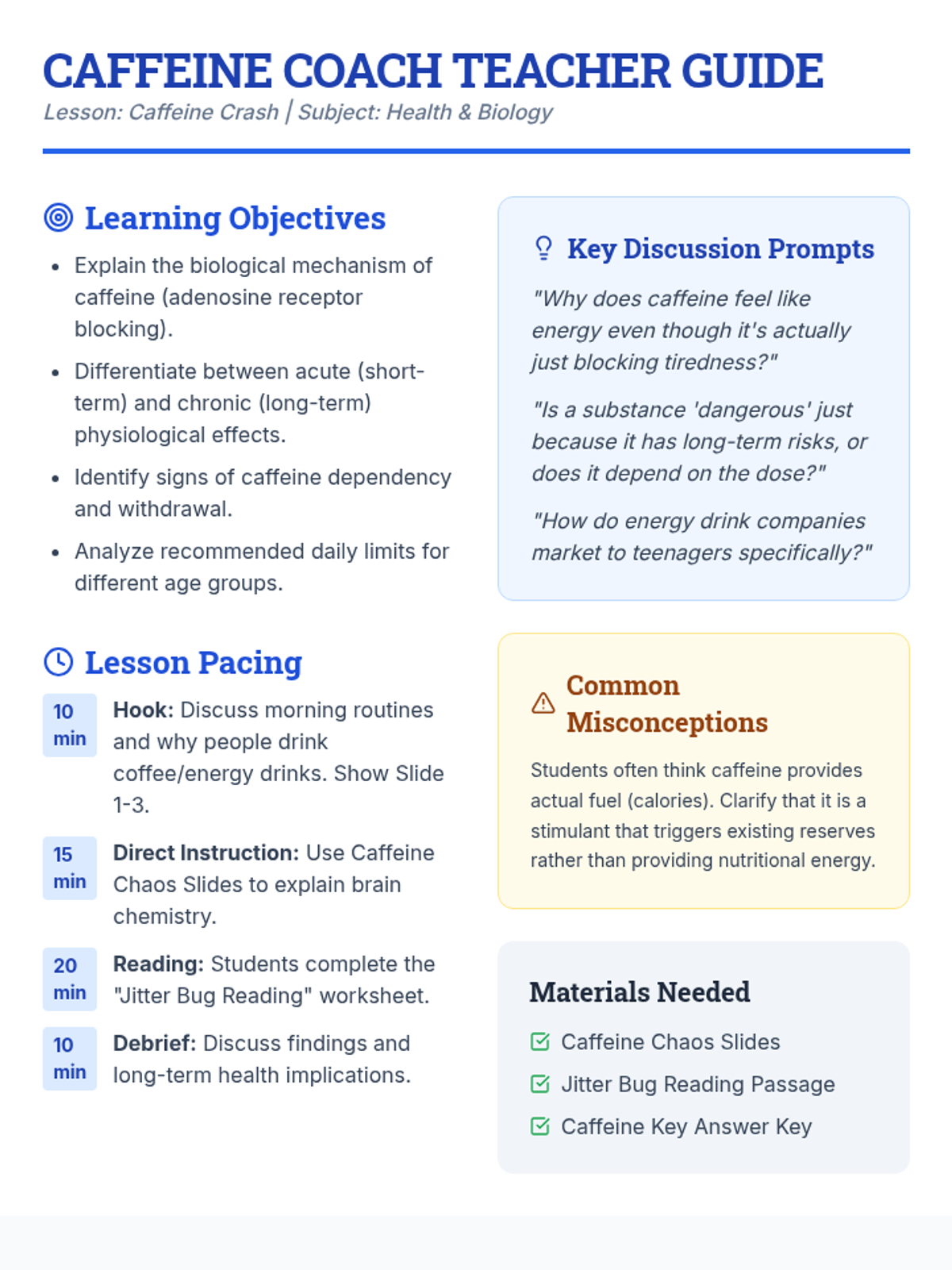
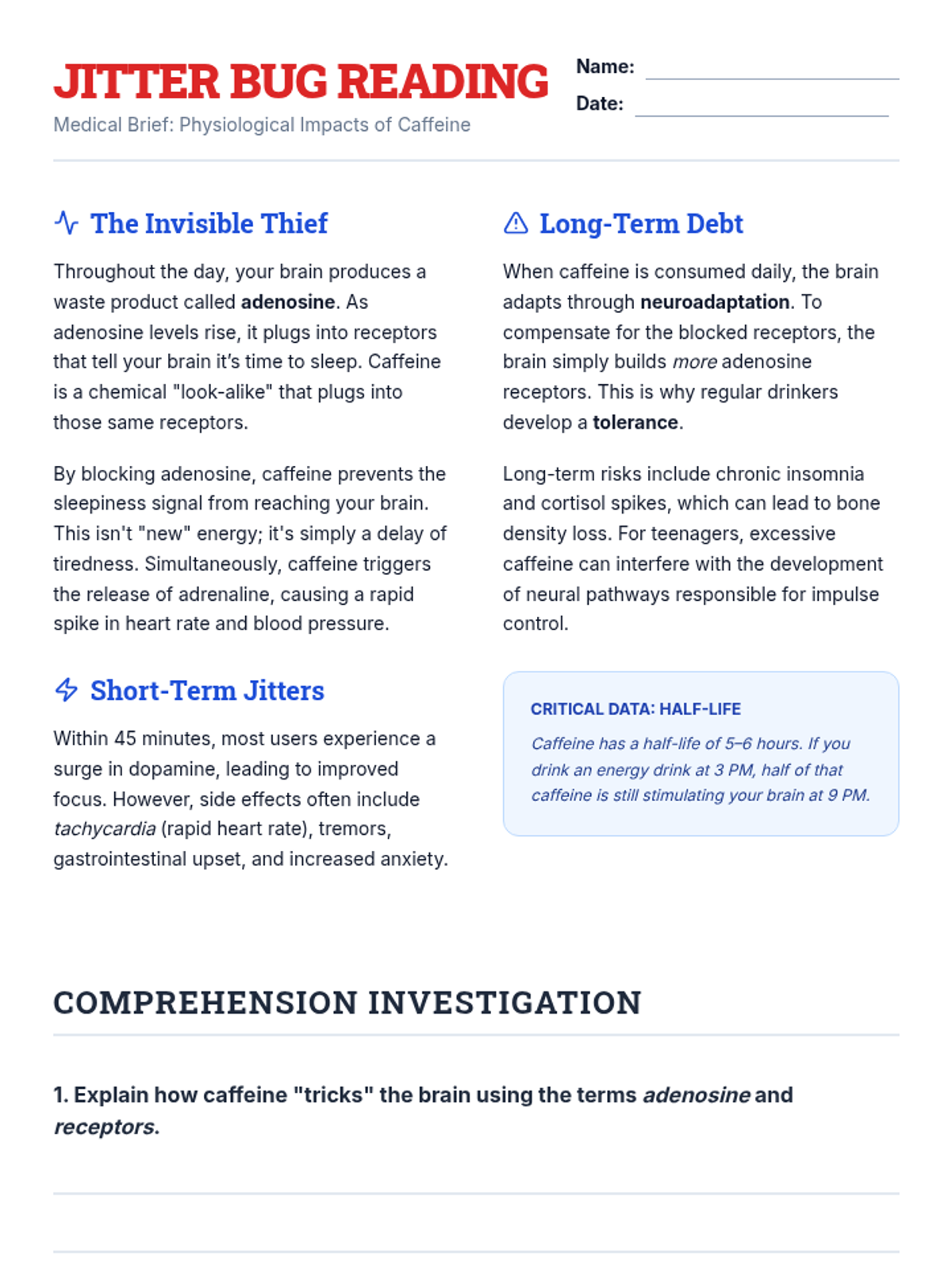
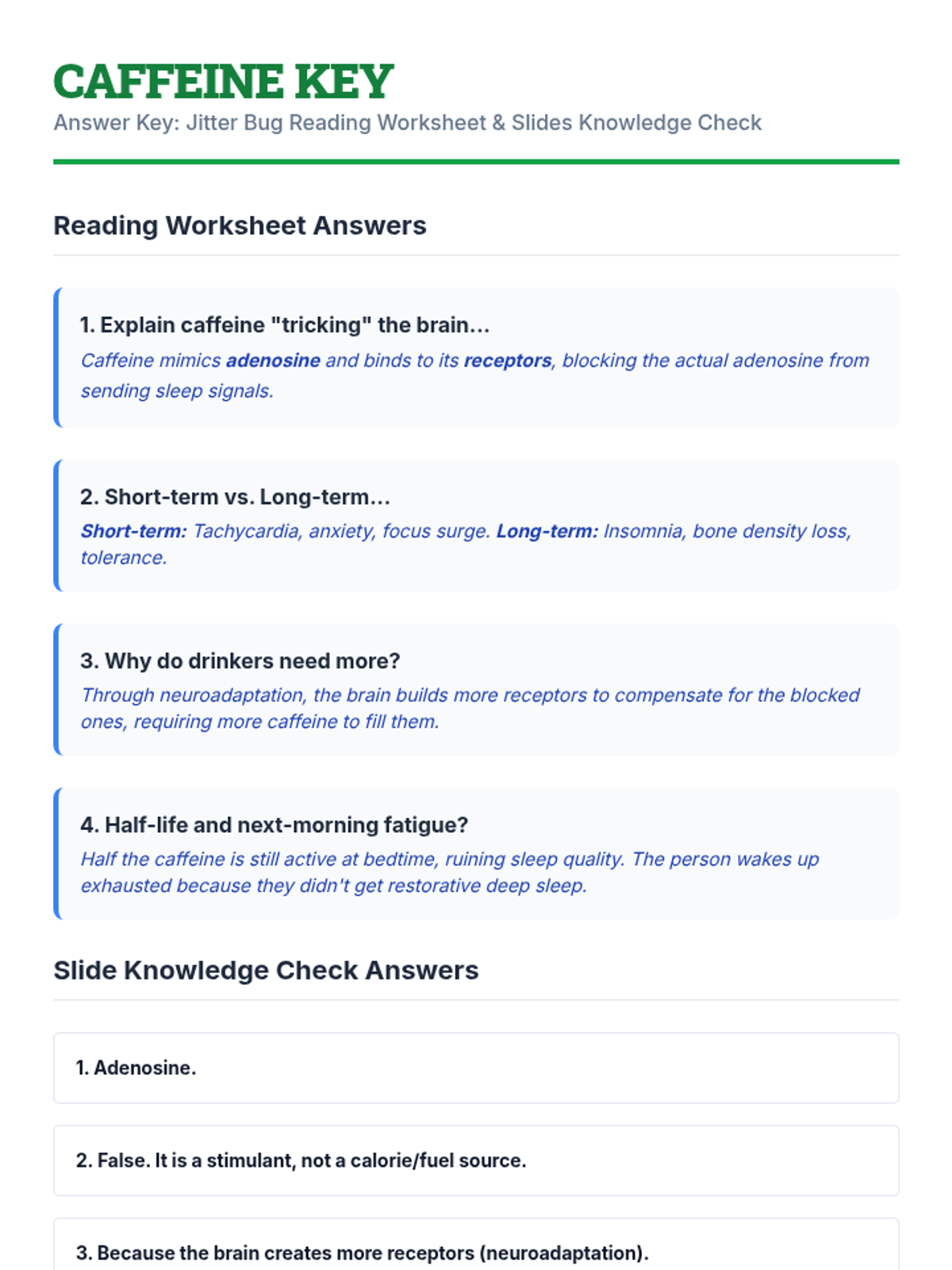
A comprehensive look at the biological impact of caffeine on the human body, exploring how it interferes with brain chemistry and the distinction between temporary energy boosts and long-term health risks.
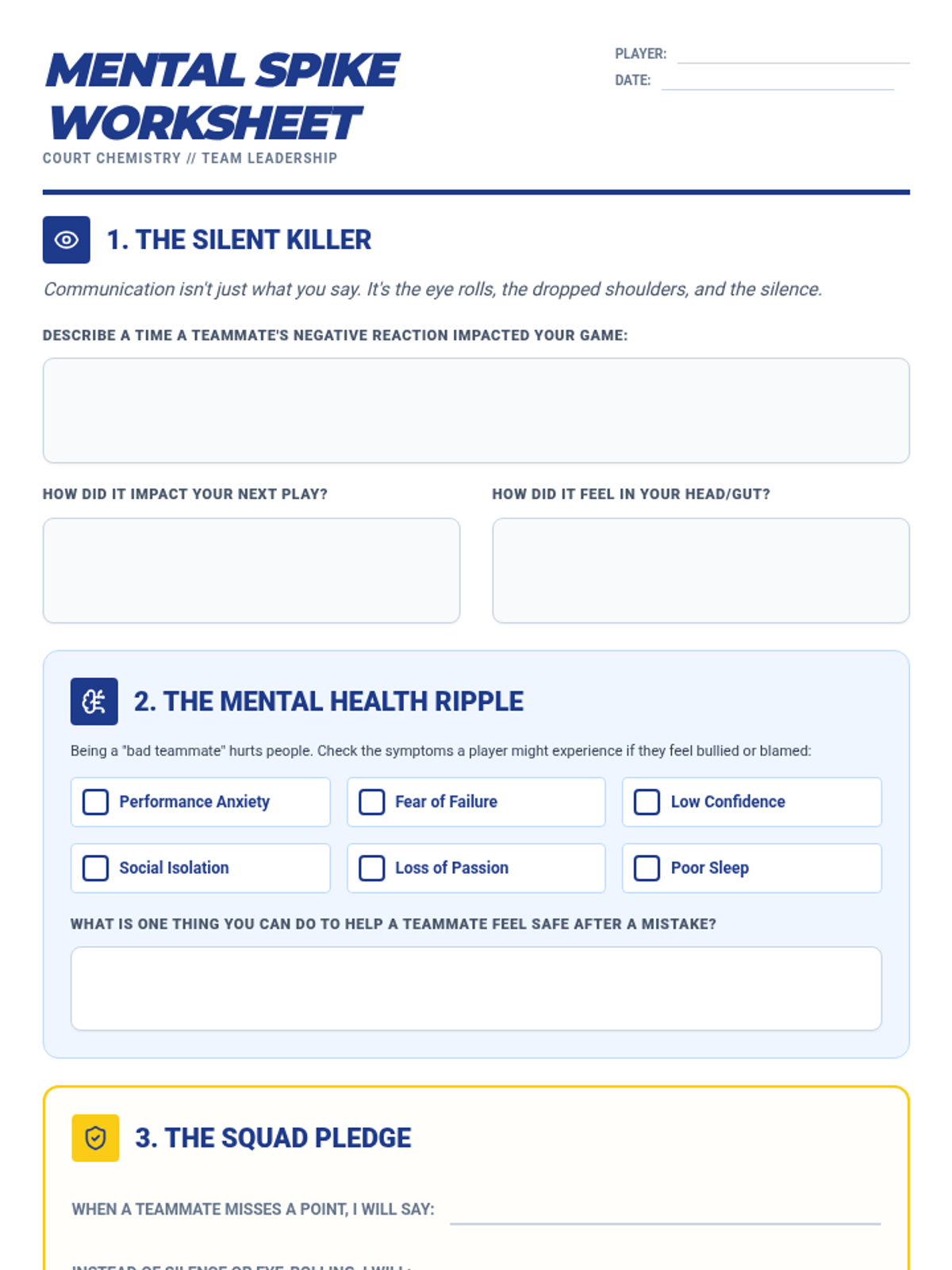
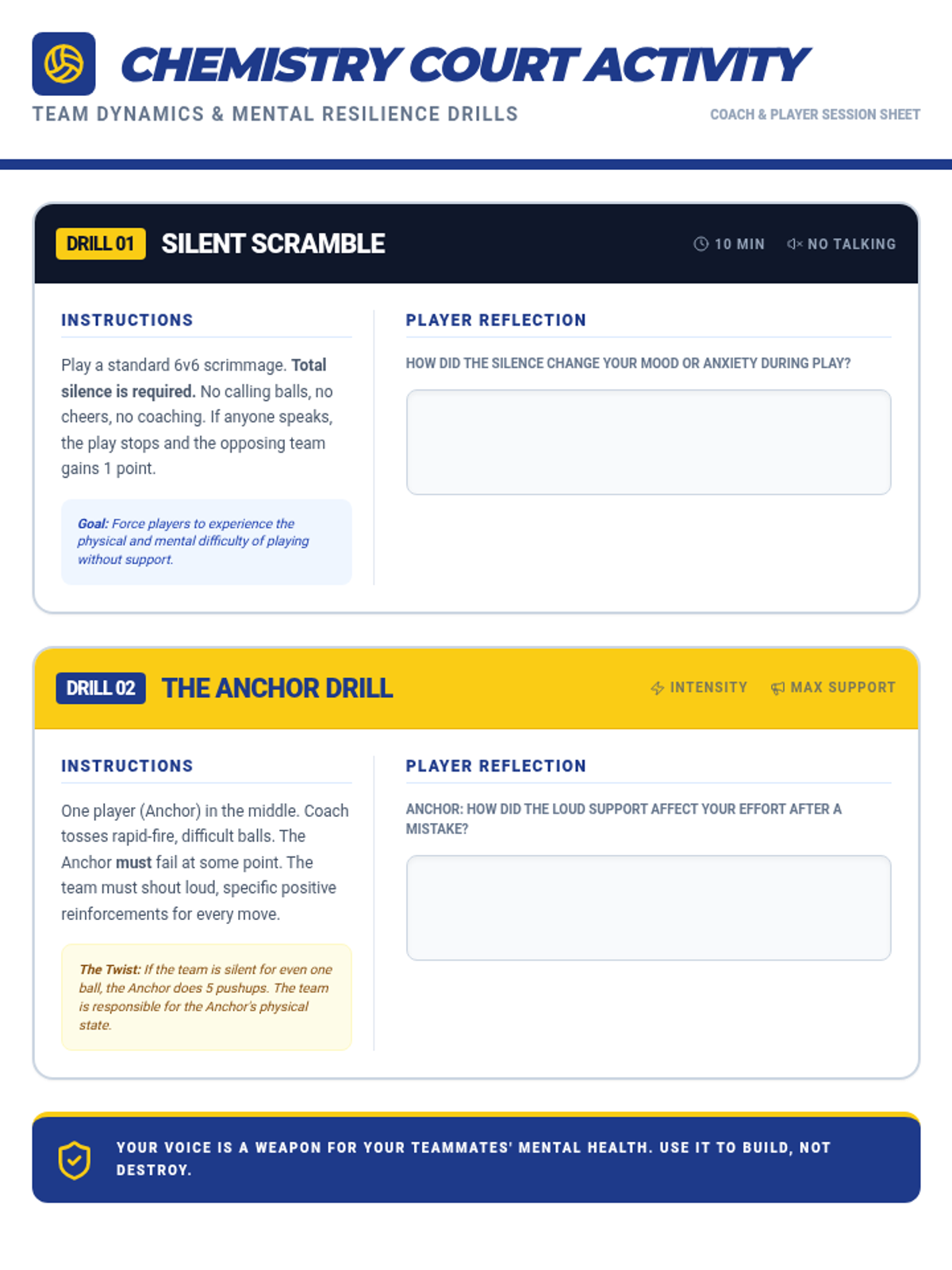
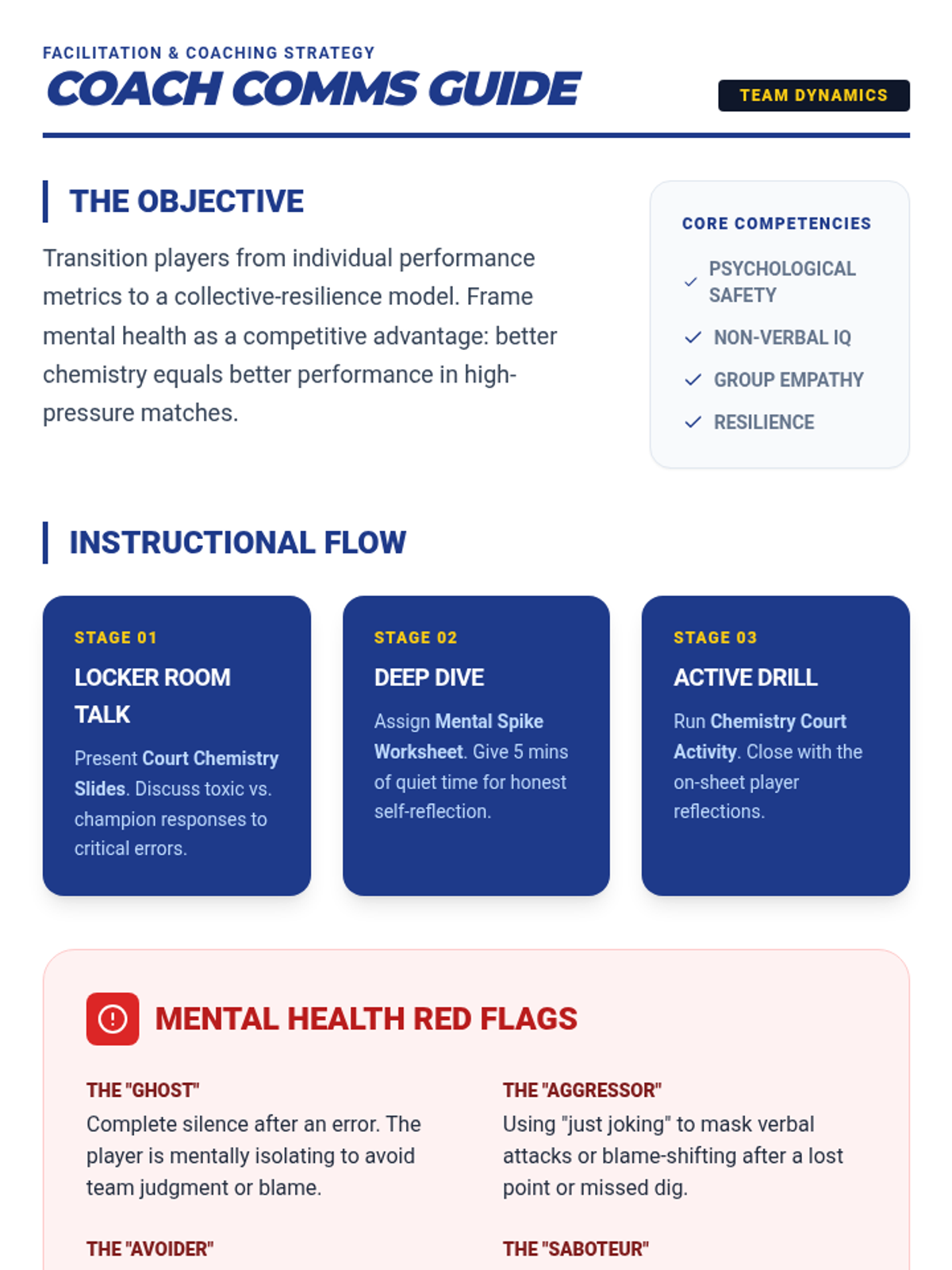
A lesson for boys' volleyball teams focused on building positive team dynamics, understanding the mental health impact of sportsmanship, and practicing supportive communication on the court.
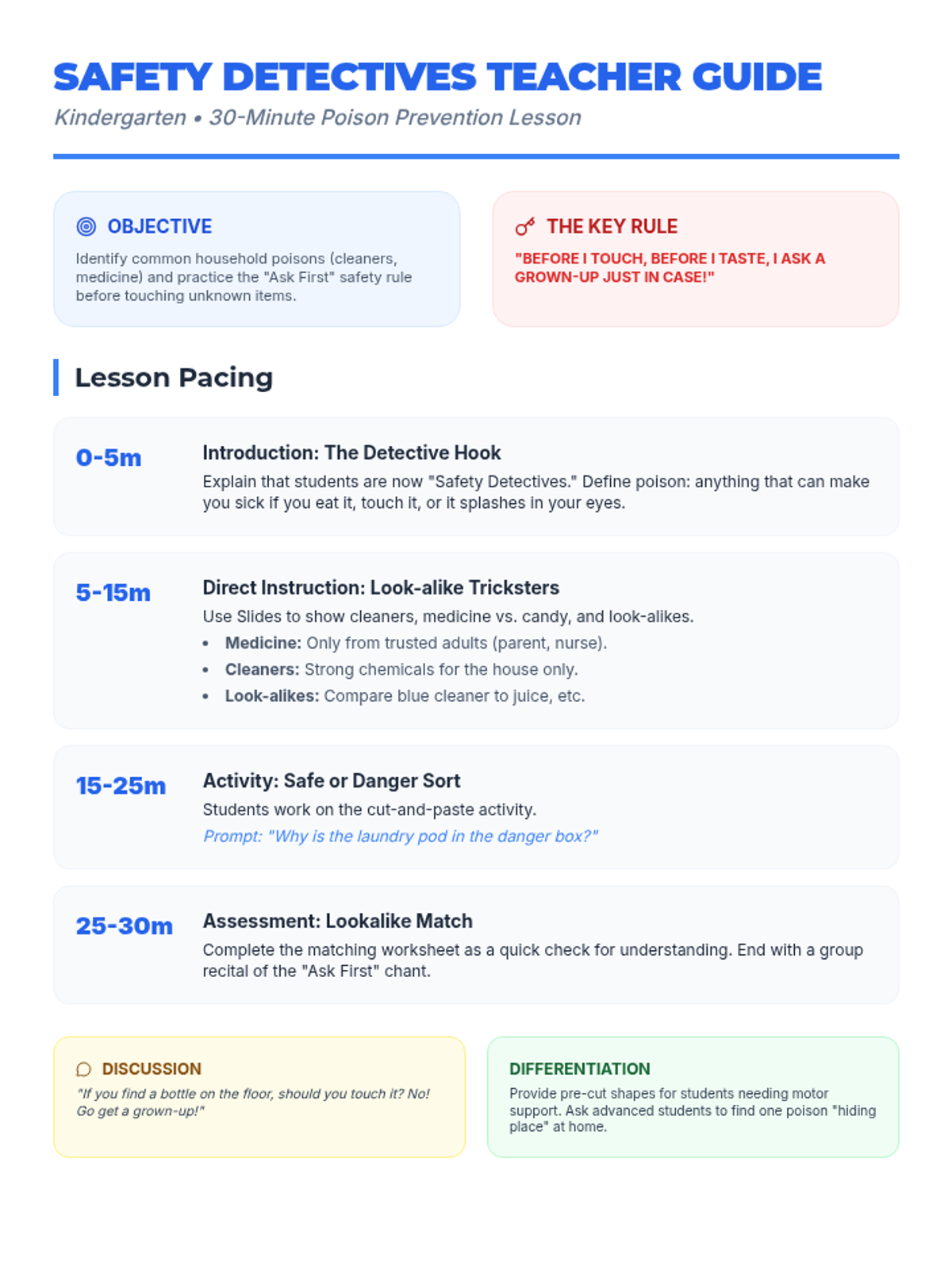
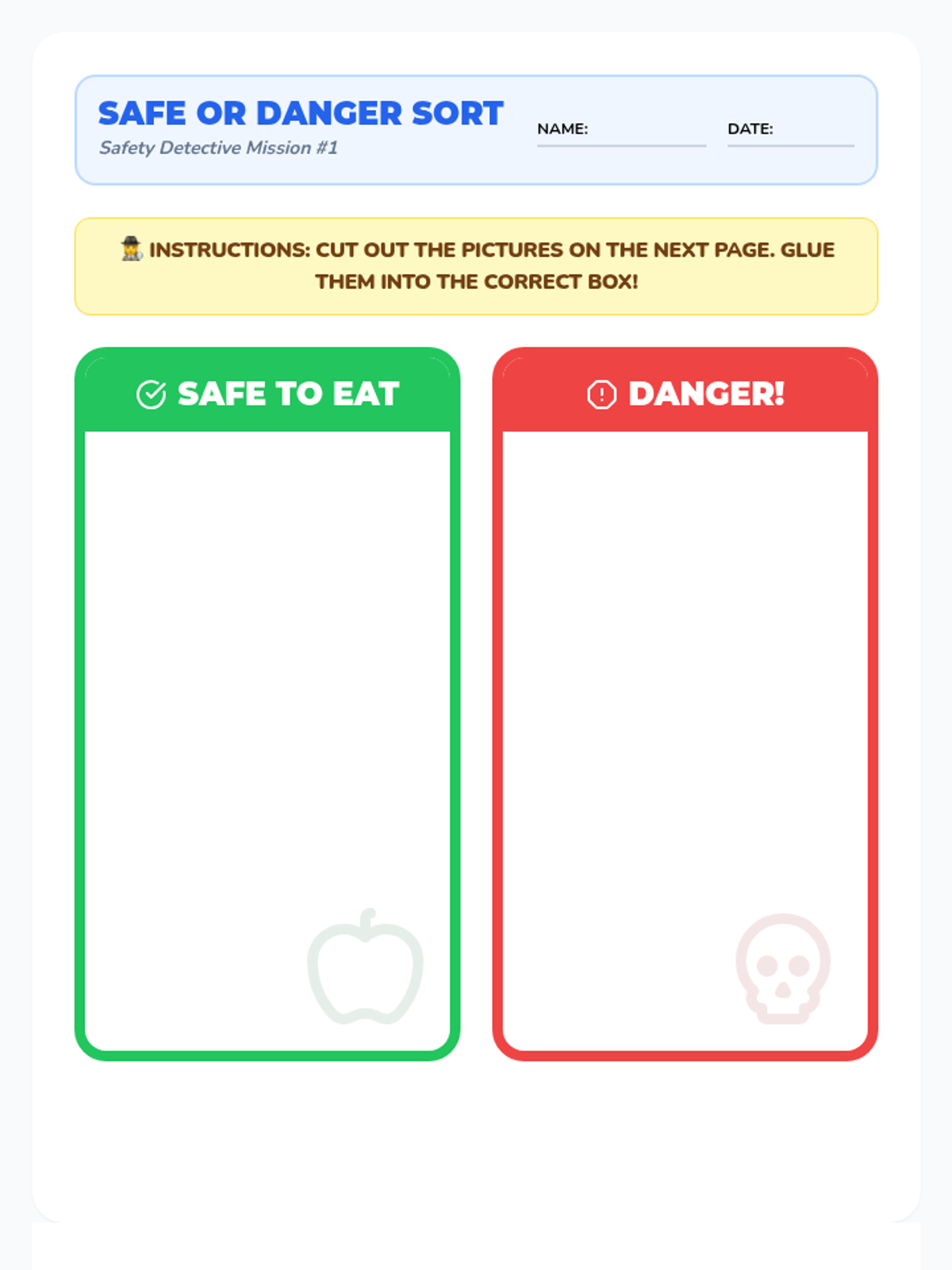
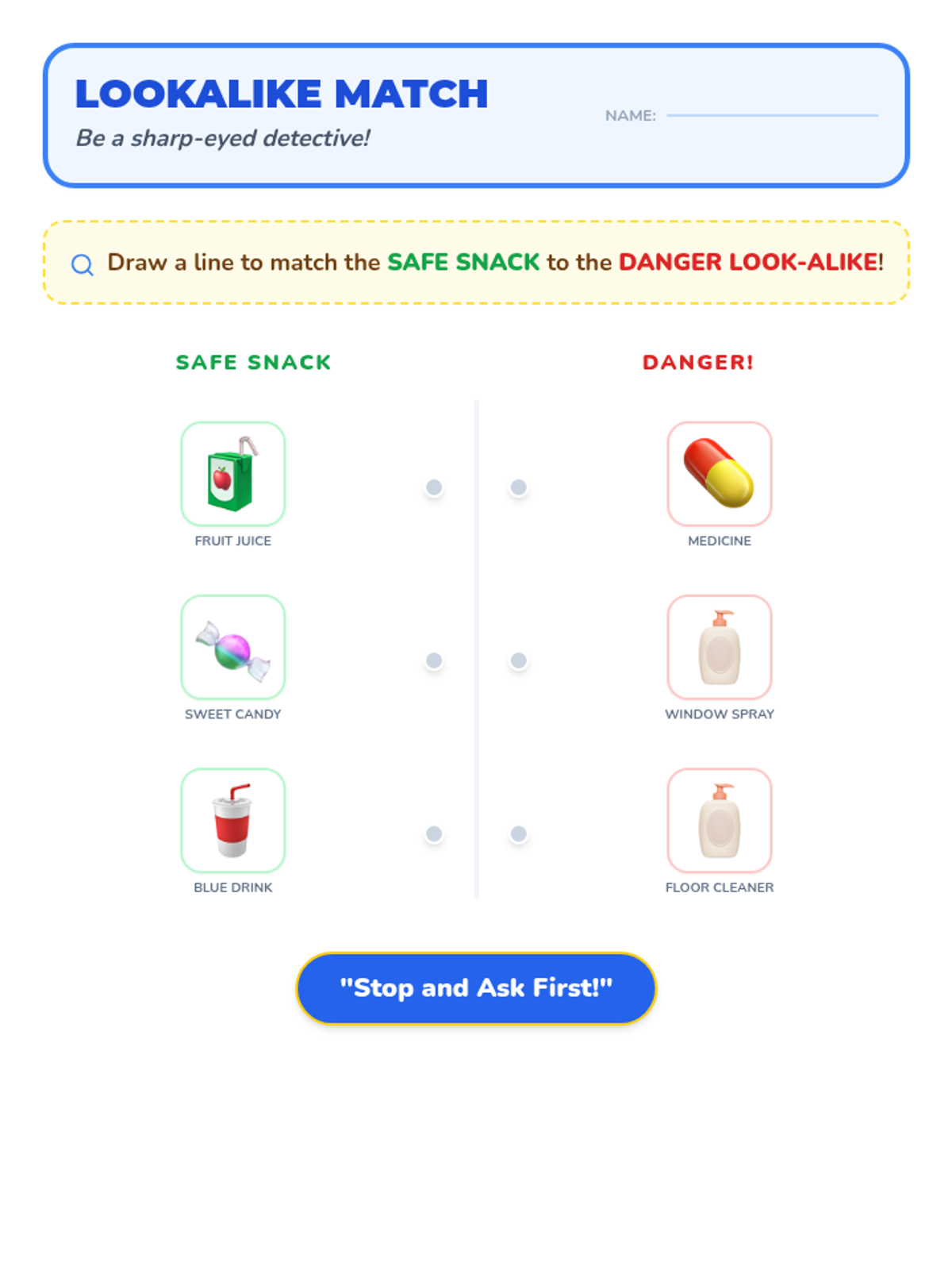
A 30-minute lesson teaching kindergarteners how to identify and avoid common household poisons by being 'Safety Detectives.' The lesson covers cleaner safety, medicine vs. candy, and look-alike liquids.
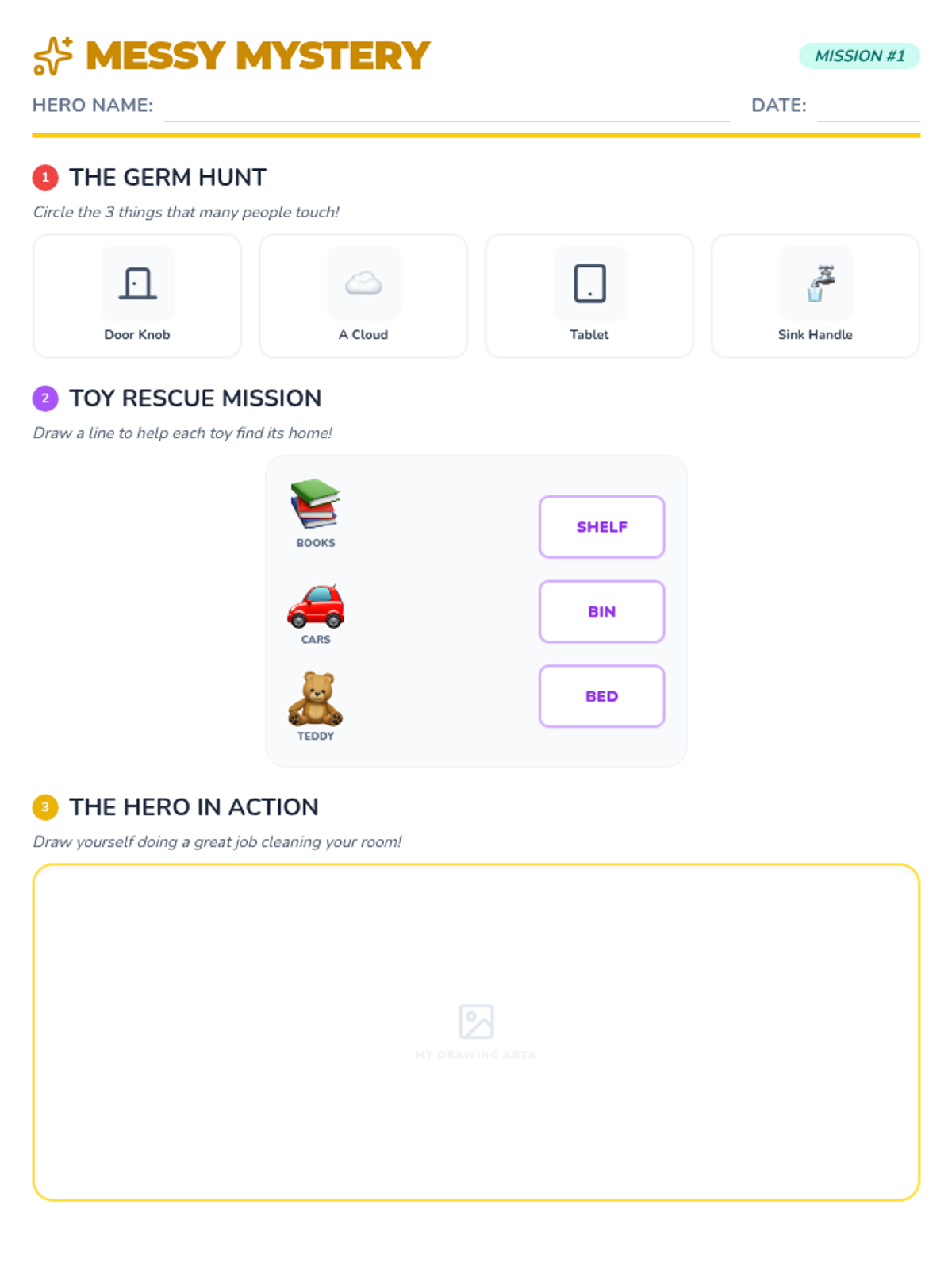
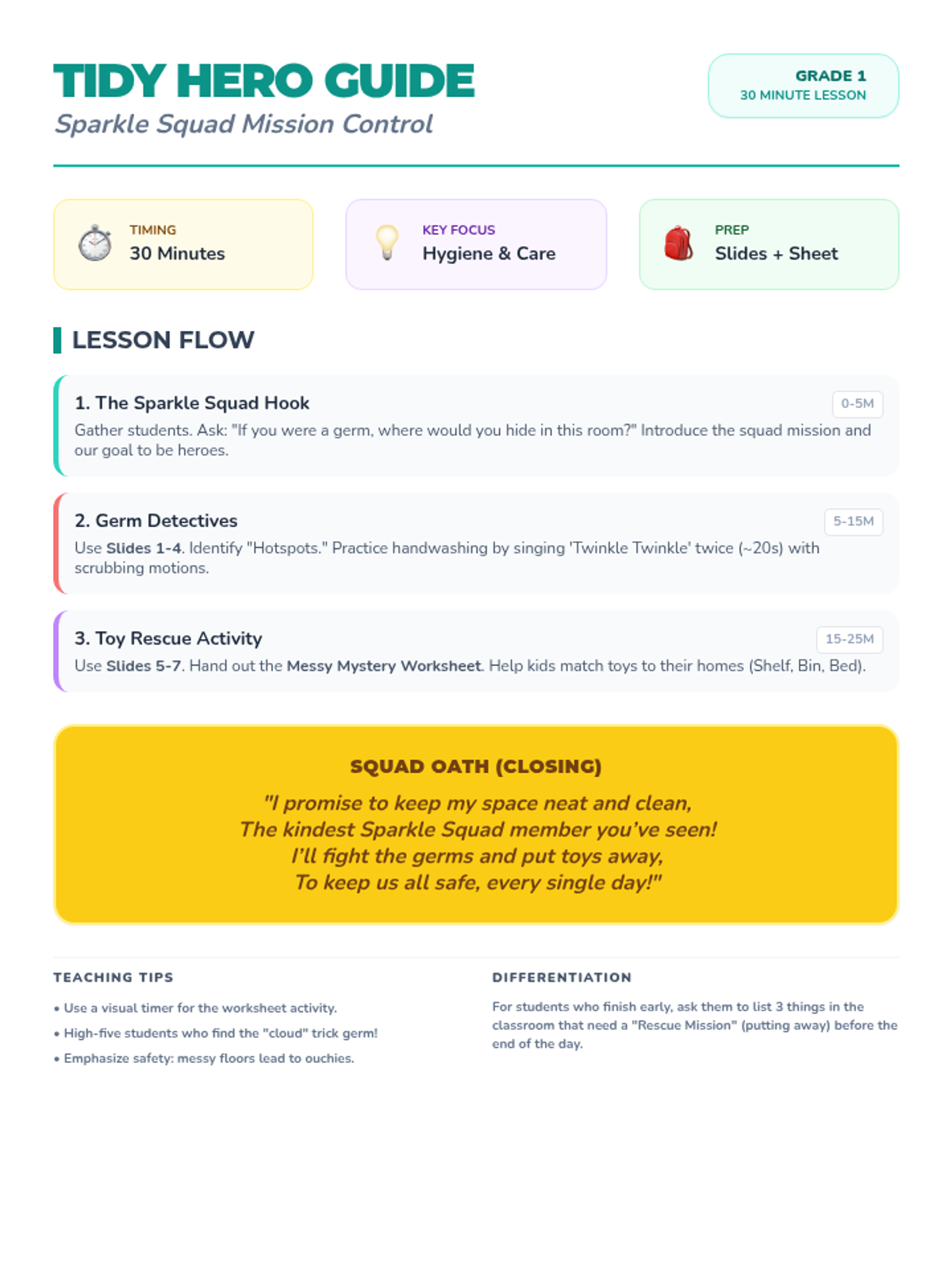
A high-energy lesson for 1st graders on the importance of cleanliness, focusing on germ prevention in shared spaces and organized toy management. Students learn to identify 'germ hotspots' and master the 'Tidy Hero' method for cleaning their rooms.
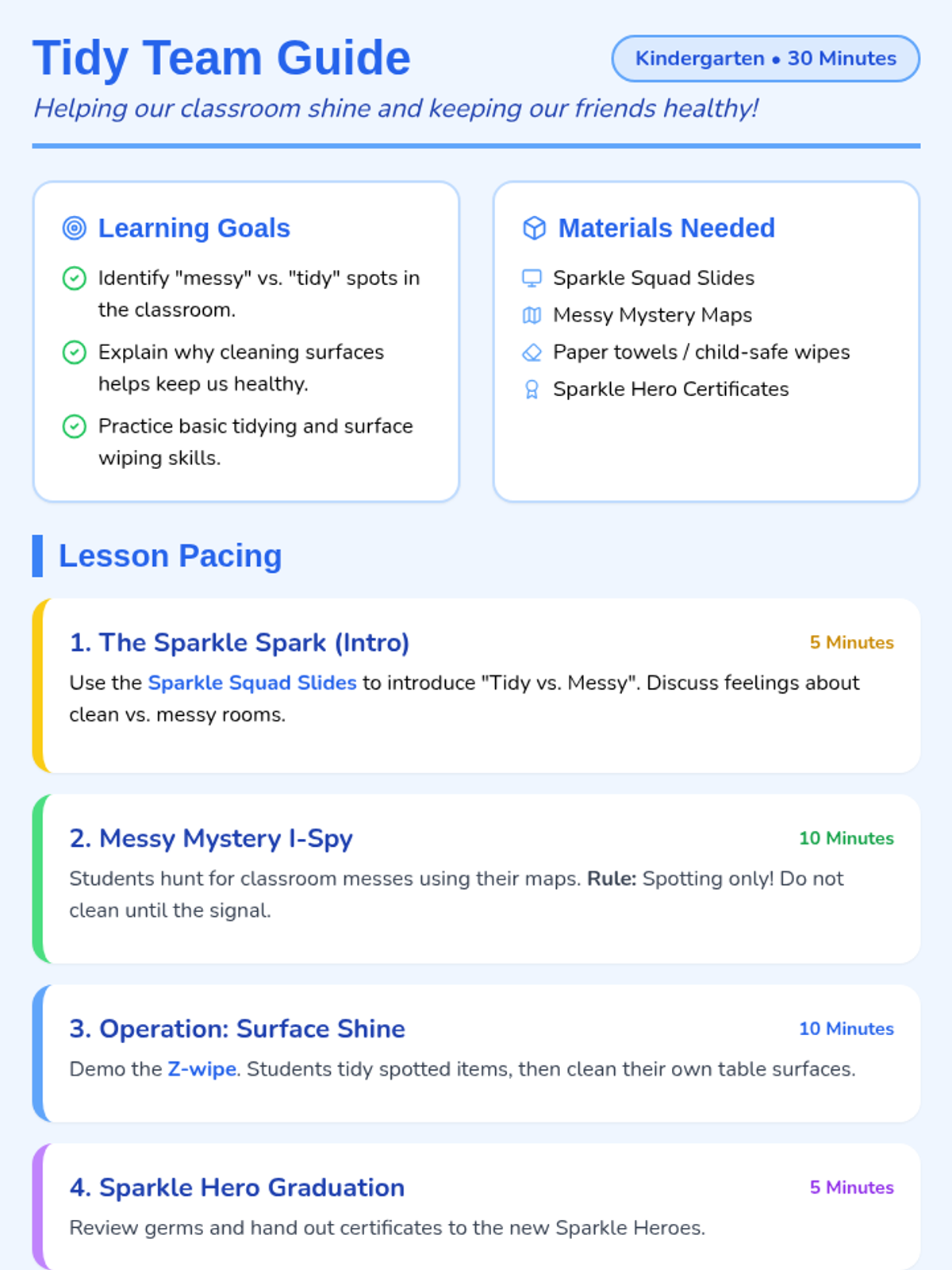
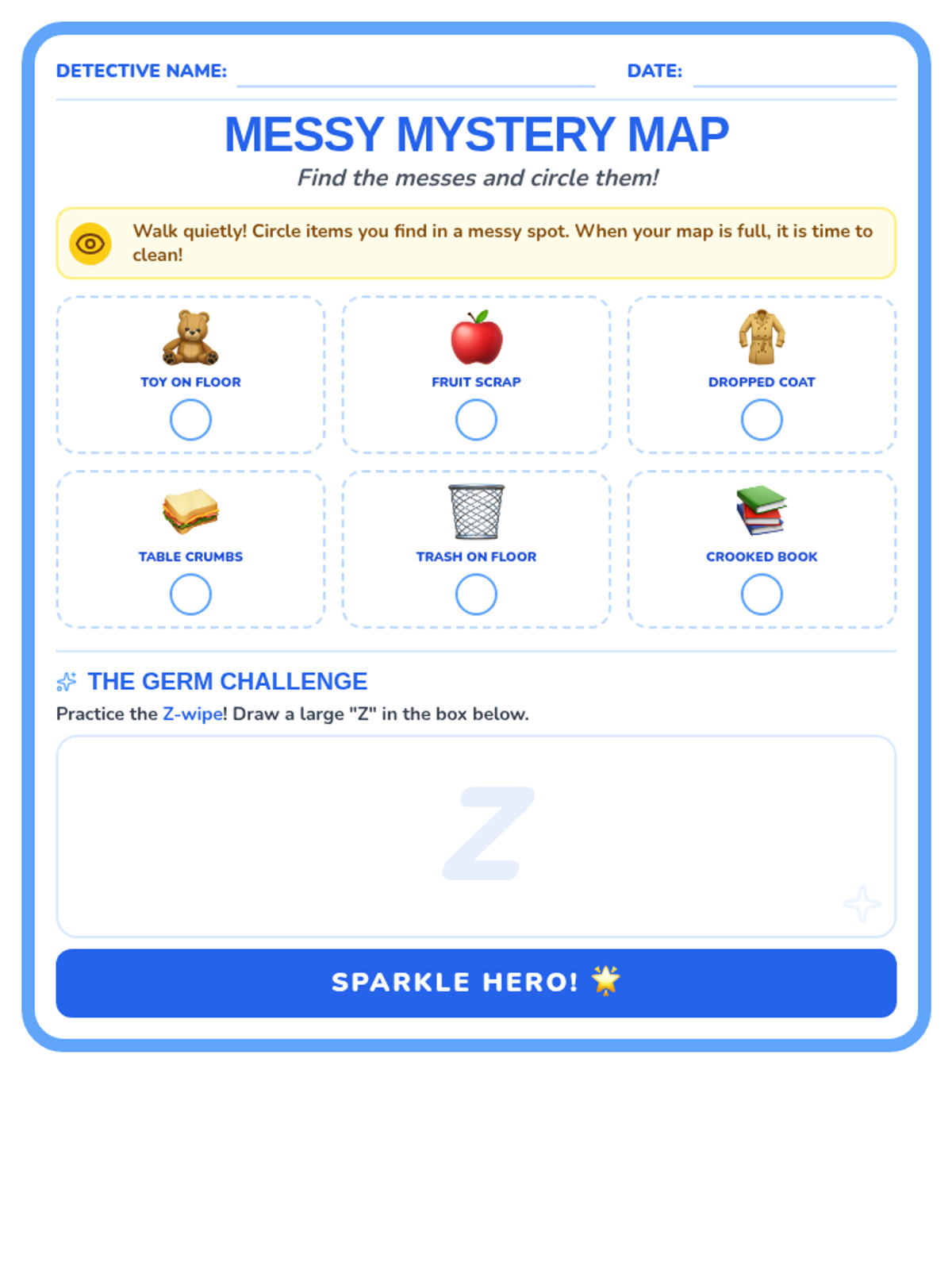
A 30-minute introductory lesson for kindergarten students on the importance of tidying up and cleaning surfaces to stay healthy and happy. Students will participate in a 'Messy Mystery' I-Spy game and learn basic surface cleaning habits.
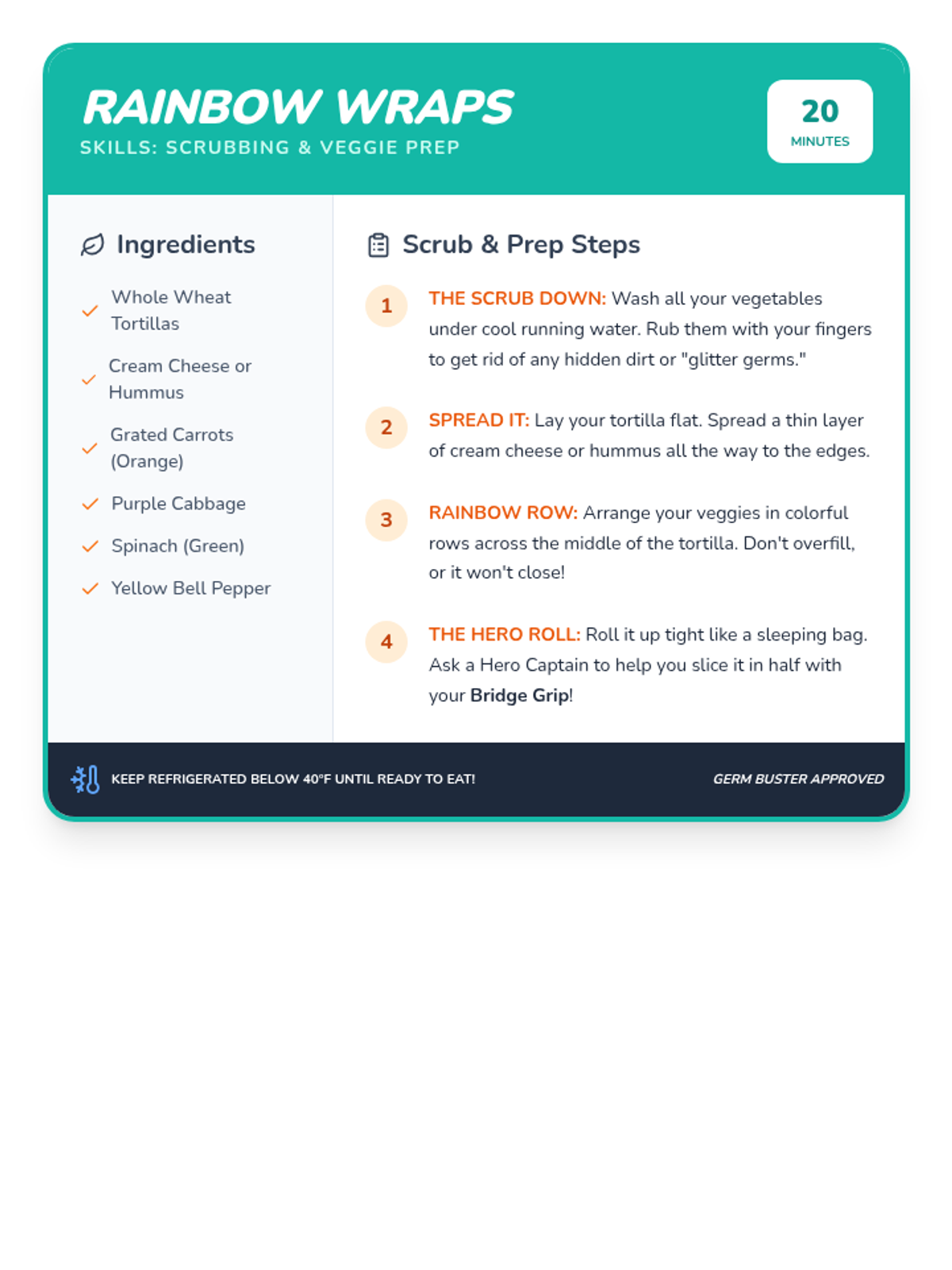
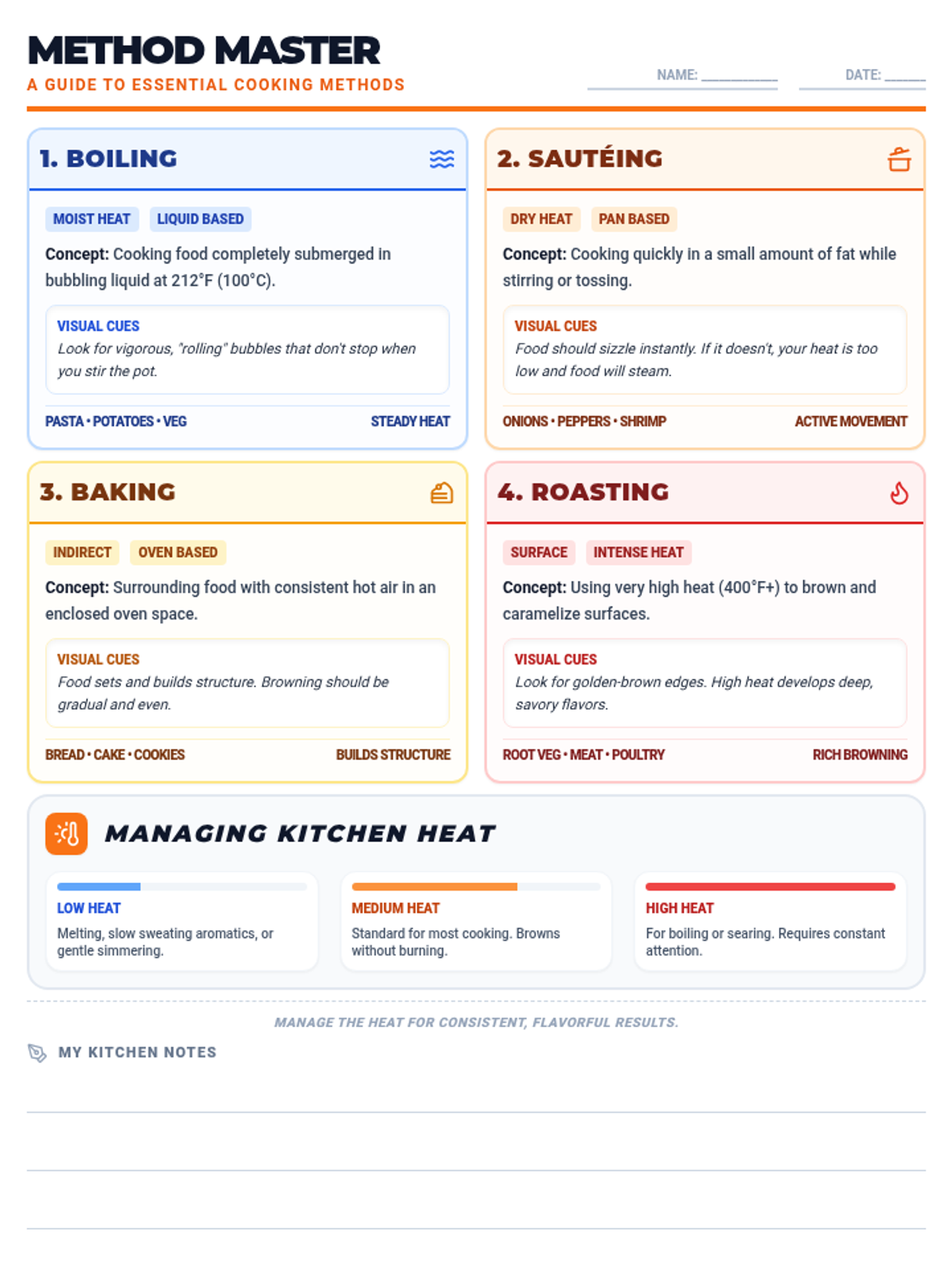
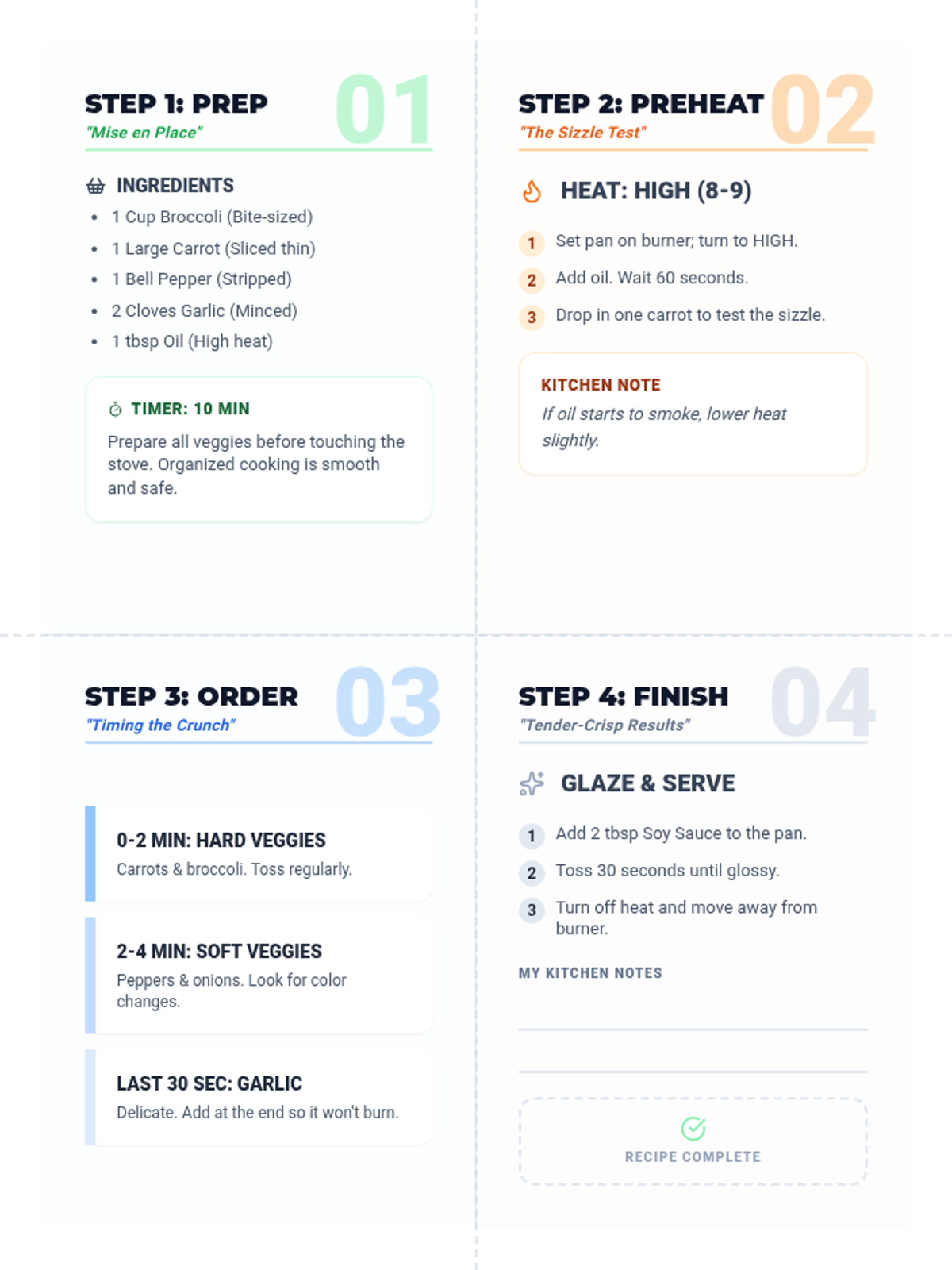
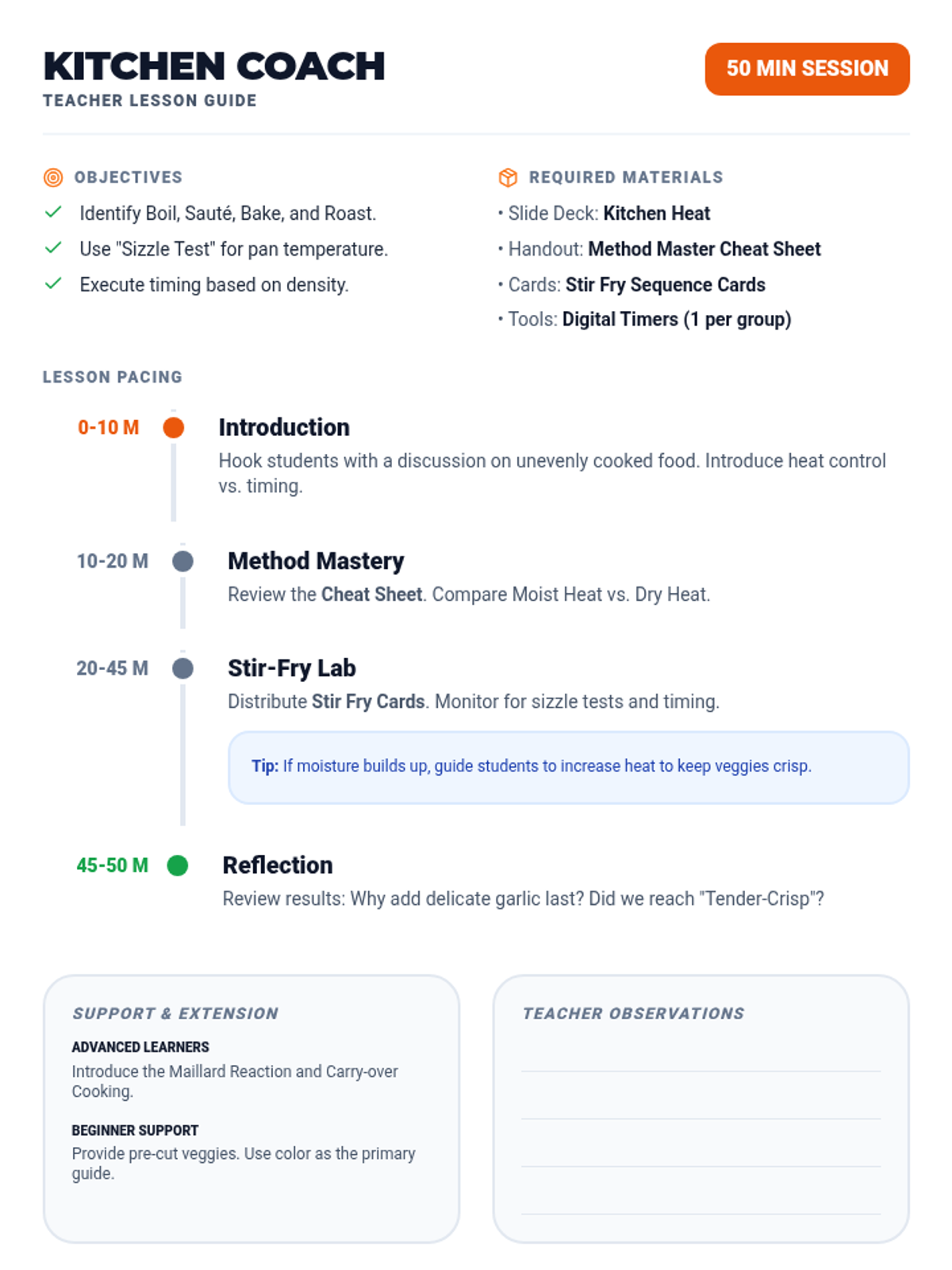
A 50-minute introduction to fundamental cooking techniques, focusing on heat management and timing through the lens of a vegetable stir-fry.
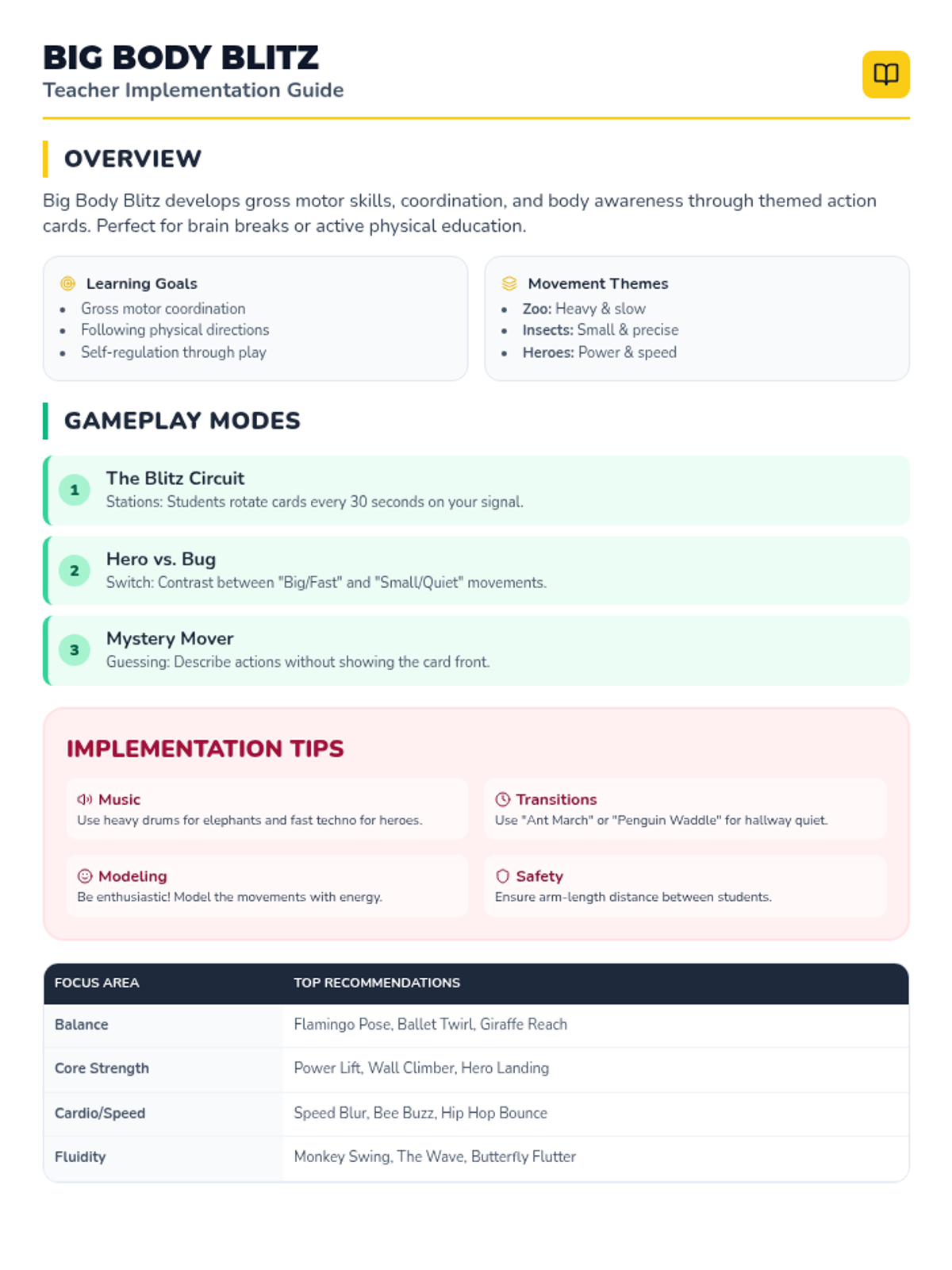
A high-energy lesson focused on gross motor skills through themed movement cards. Students mimic zoo animals and superheroes to develop coordination and body awareness.
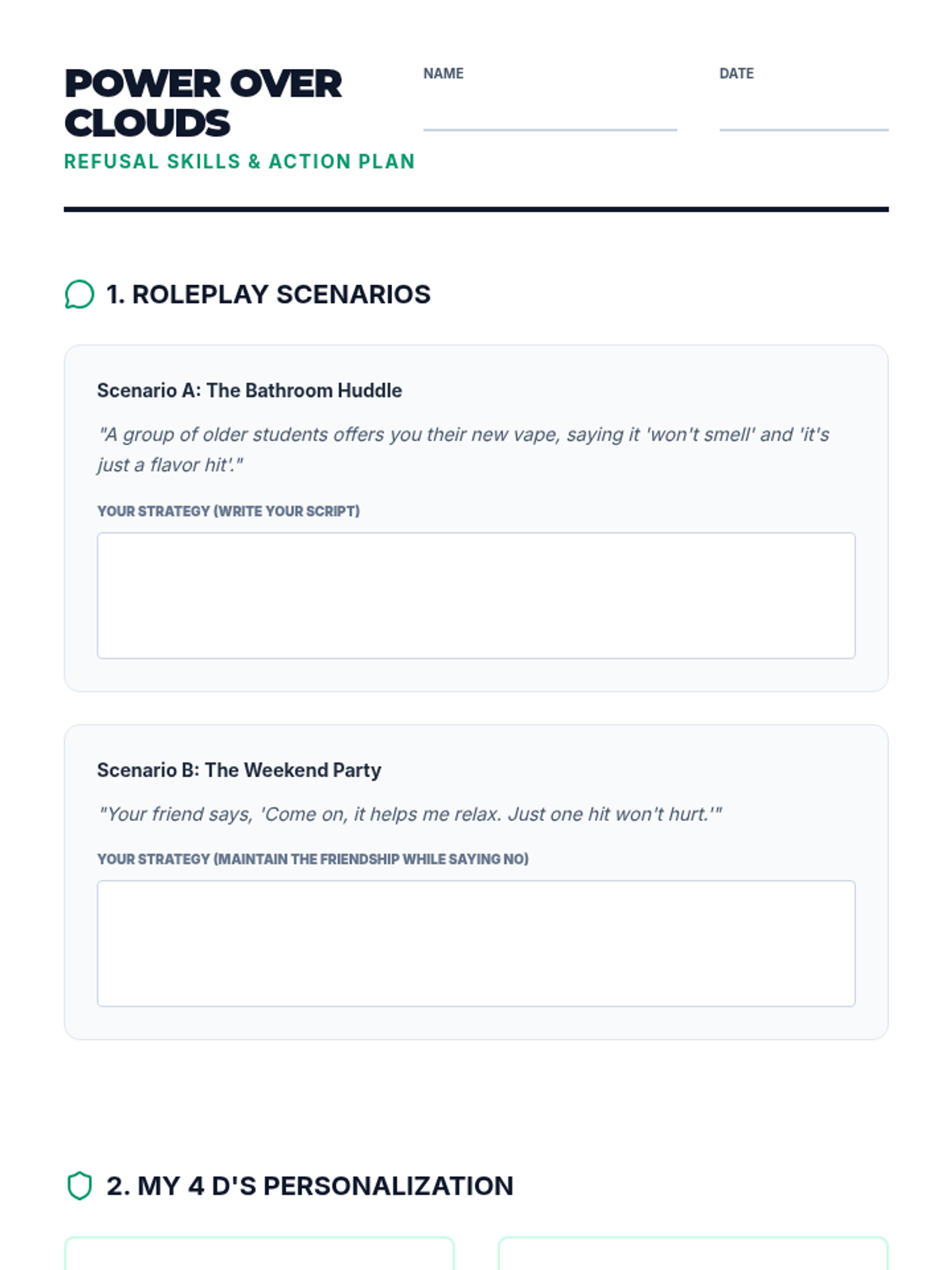
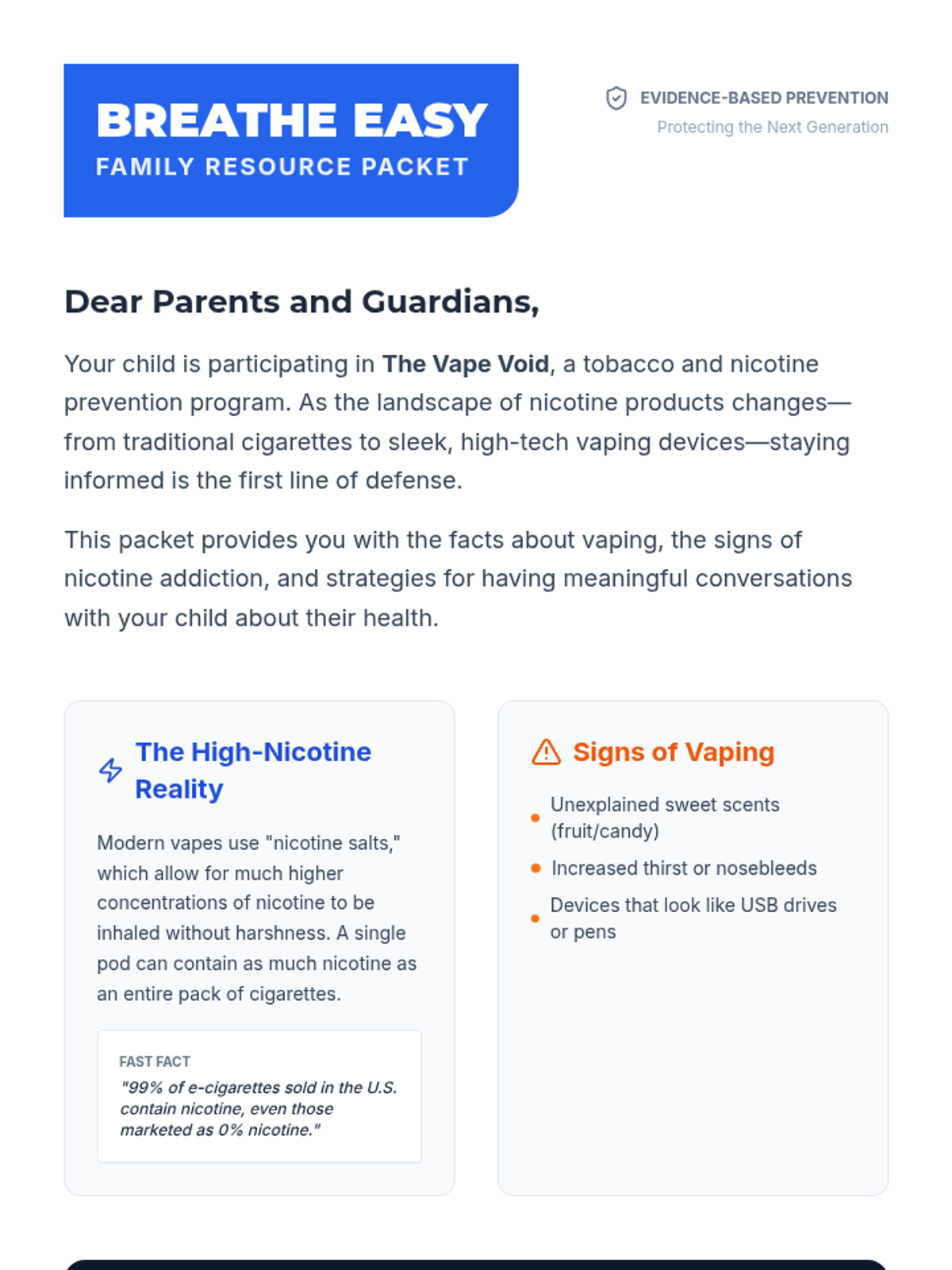
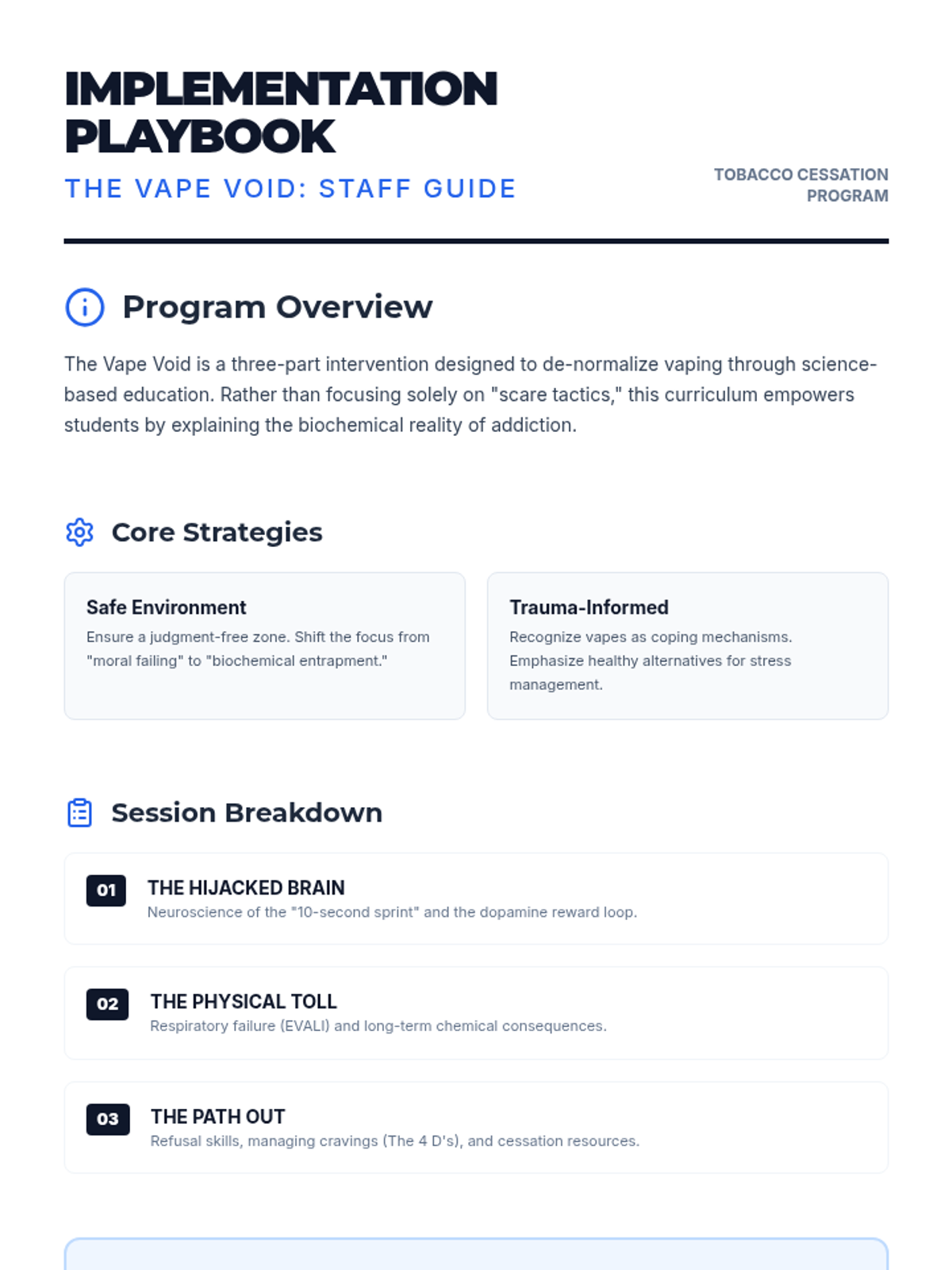
Equips students with refusal skills and provides a step-by-step framework for cessation and supporting peers.
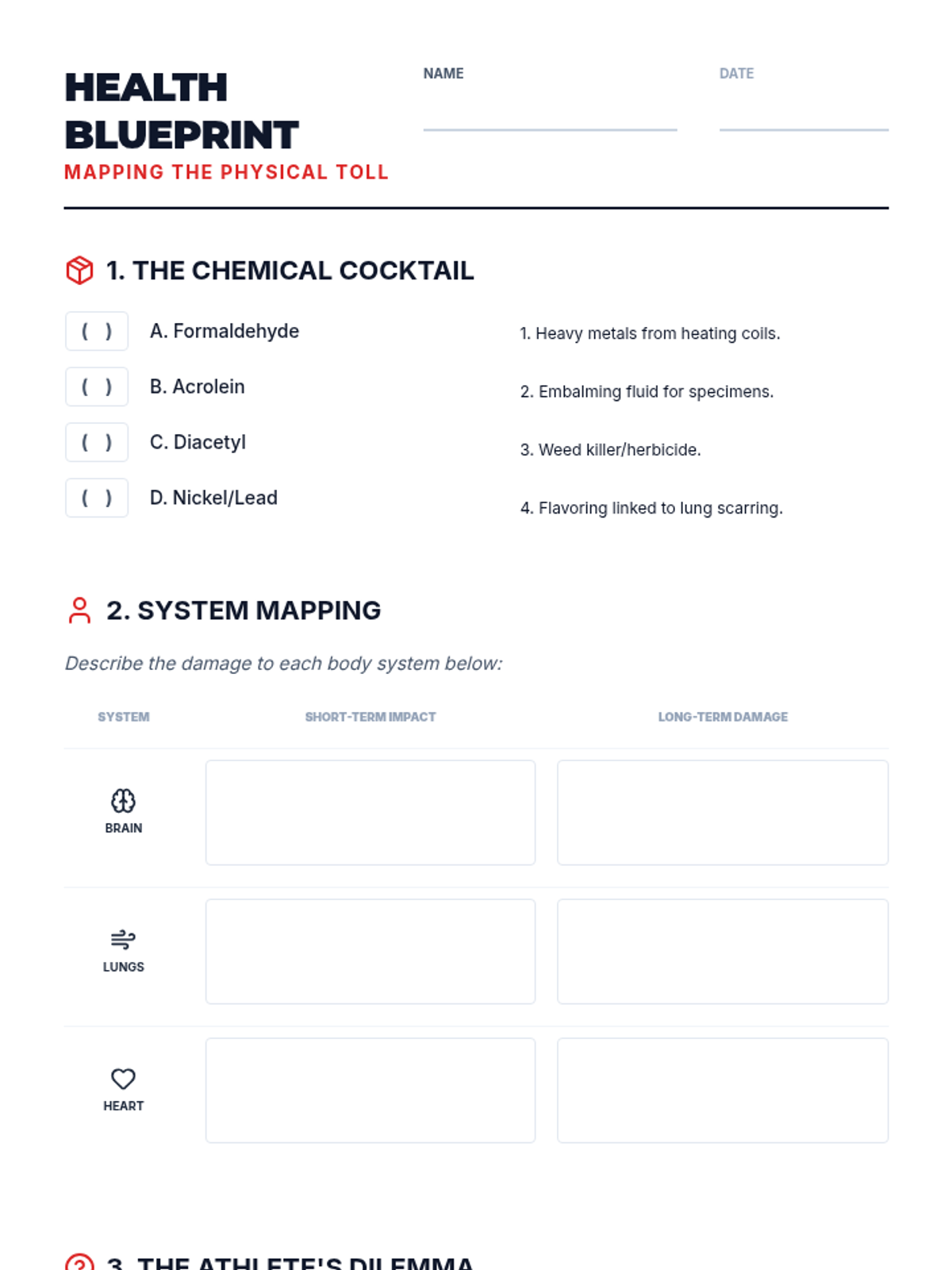
Examines the multi-system physical consequences of long-term vaping and tobacco use, from respiratory damage to cardiovascular risks.
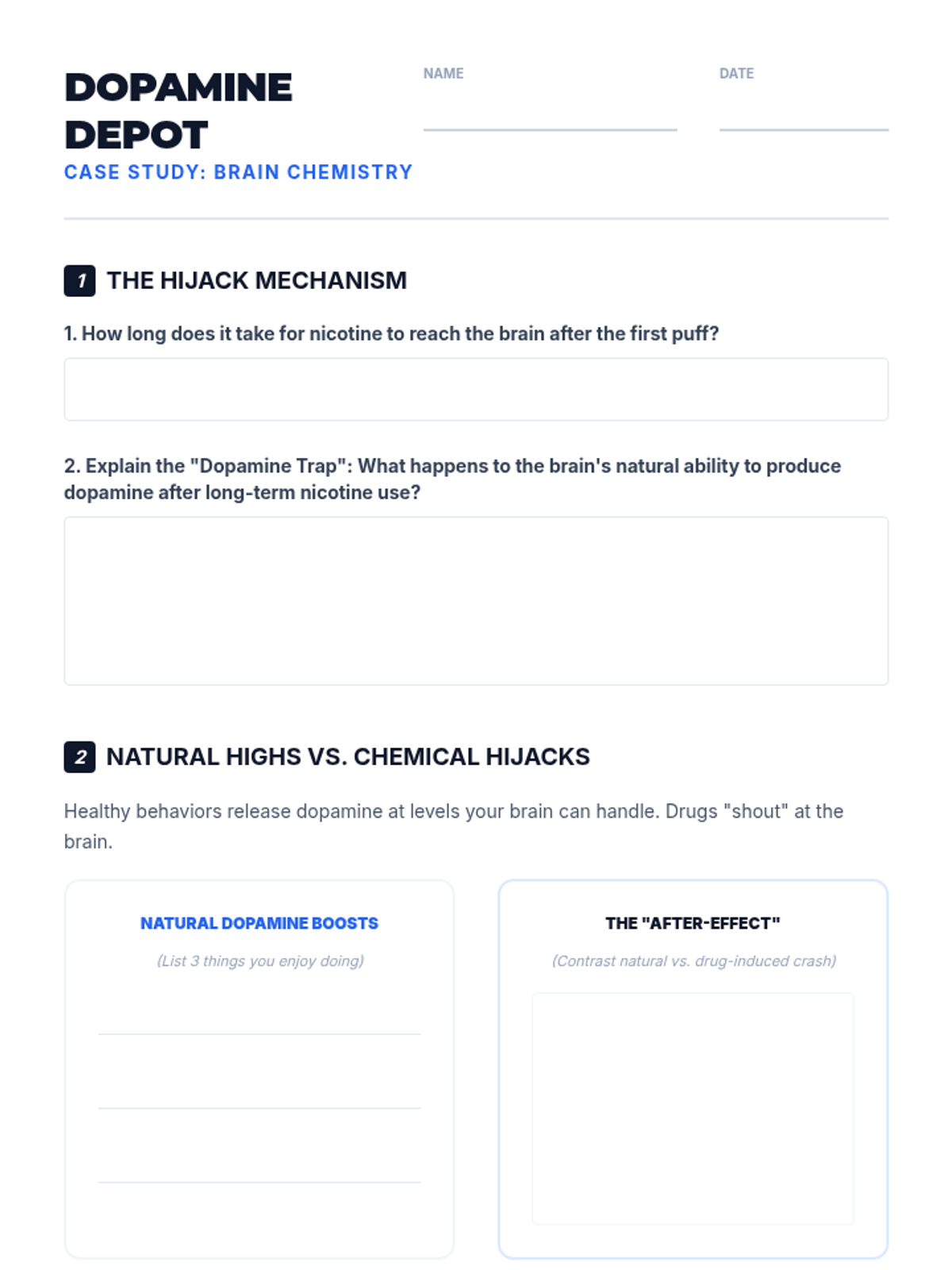
Explores the neuroscience of nicotine addiction, focusing on how vaping chemicals hijack the brain's reward system.
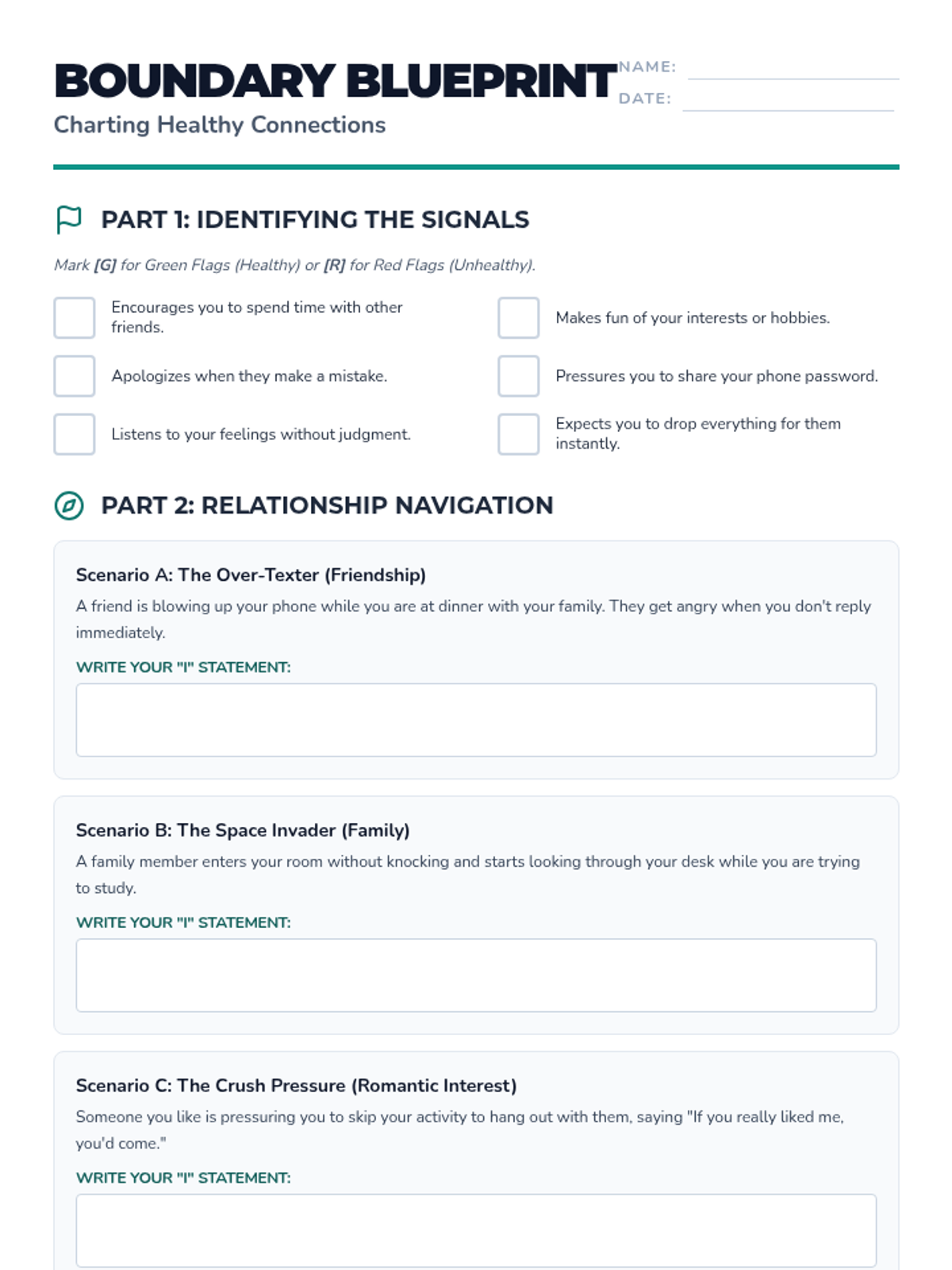
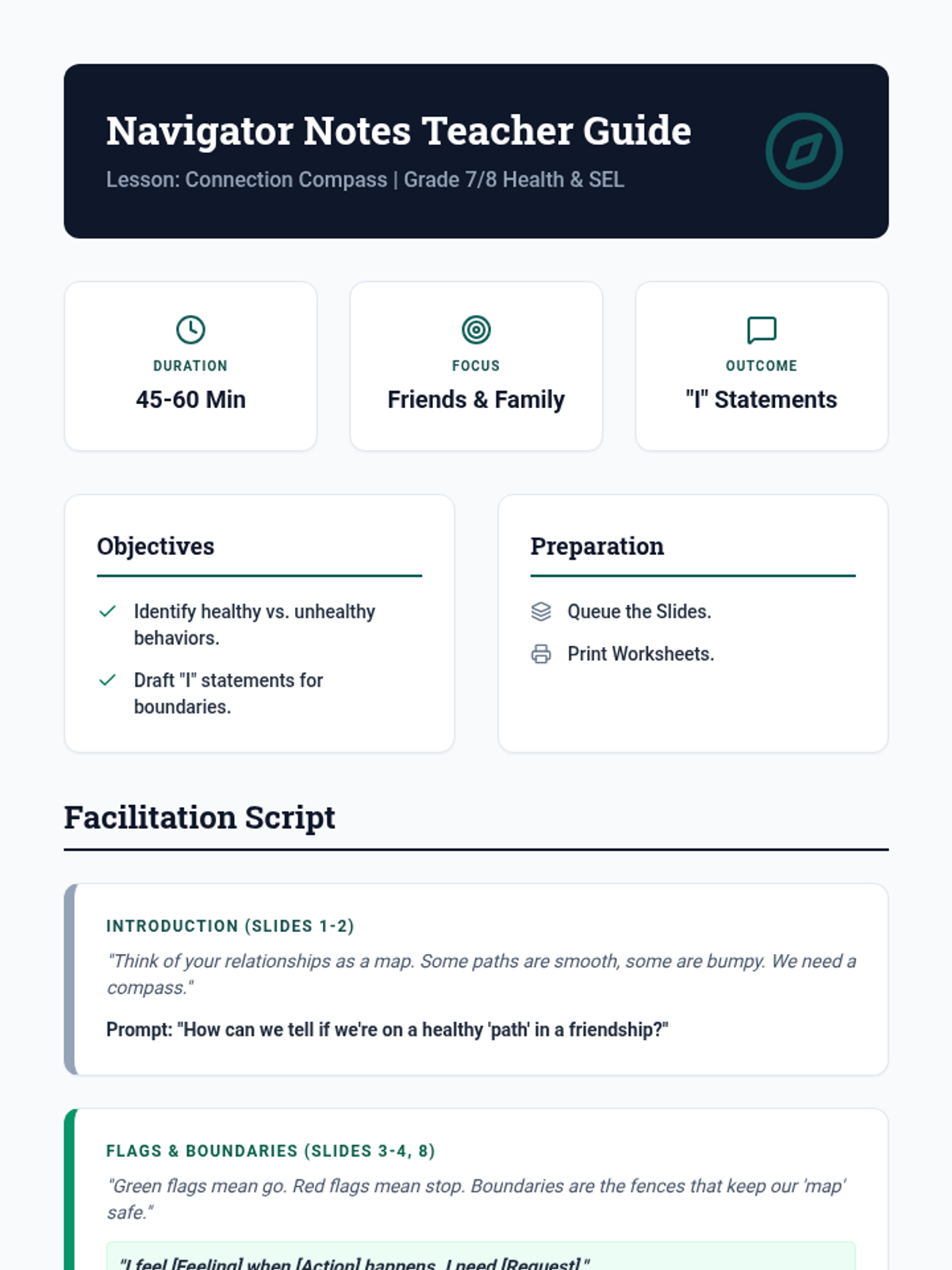
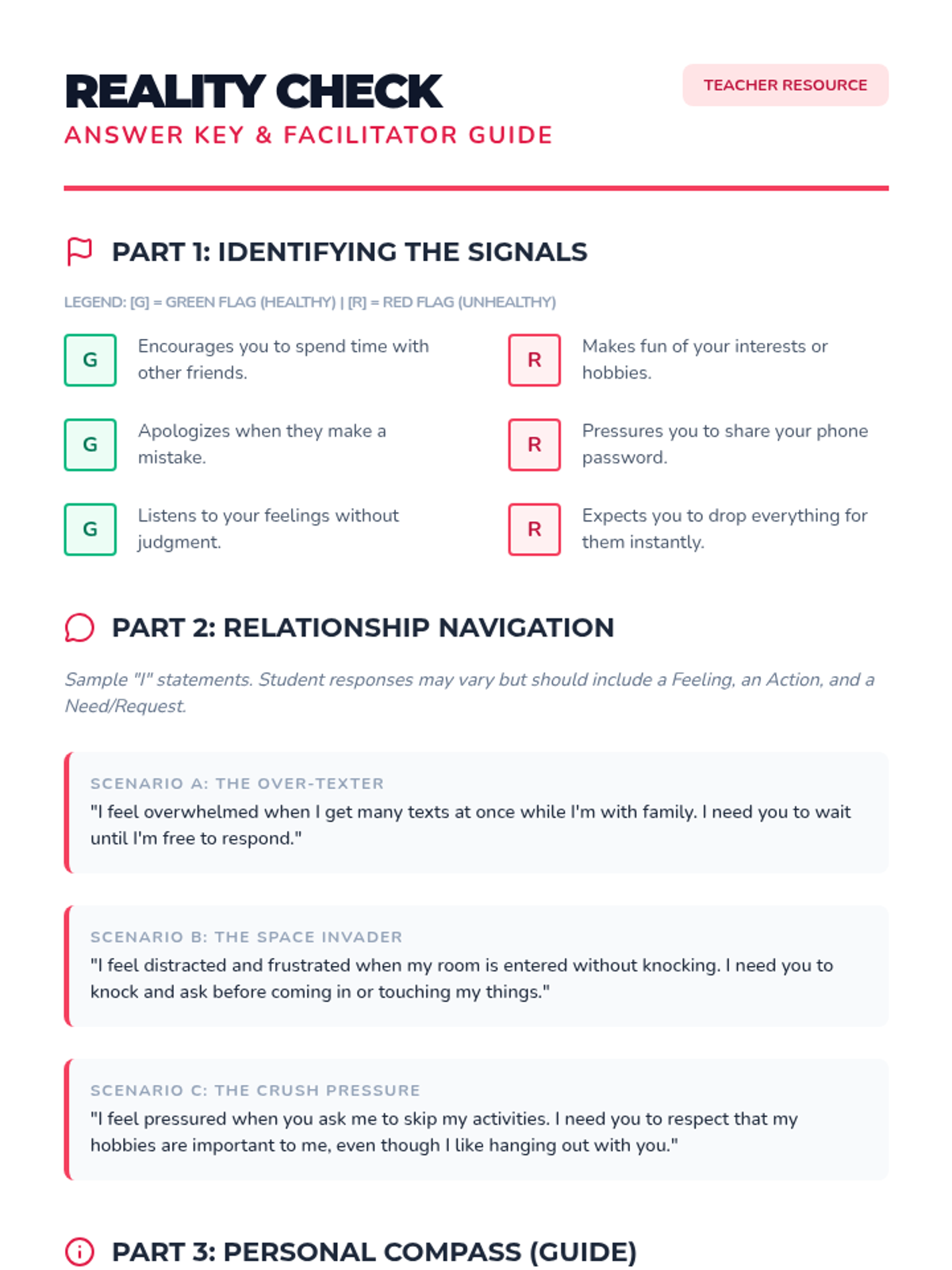
This lesson helps grade 7/8 students navigate the complexities of healthy relationships with friends, family, and early romantic interests through communication and boundary-setting.
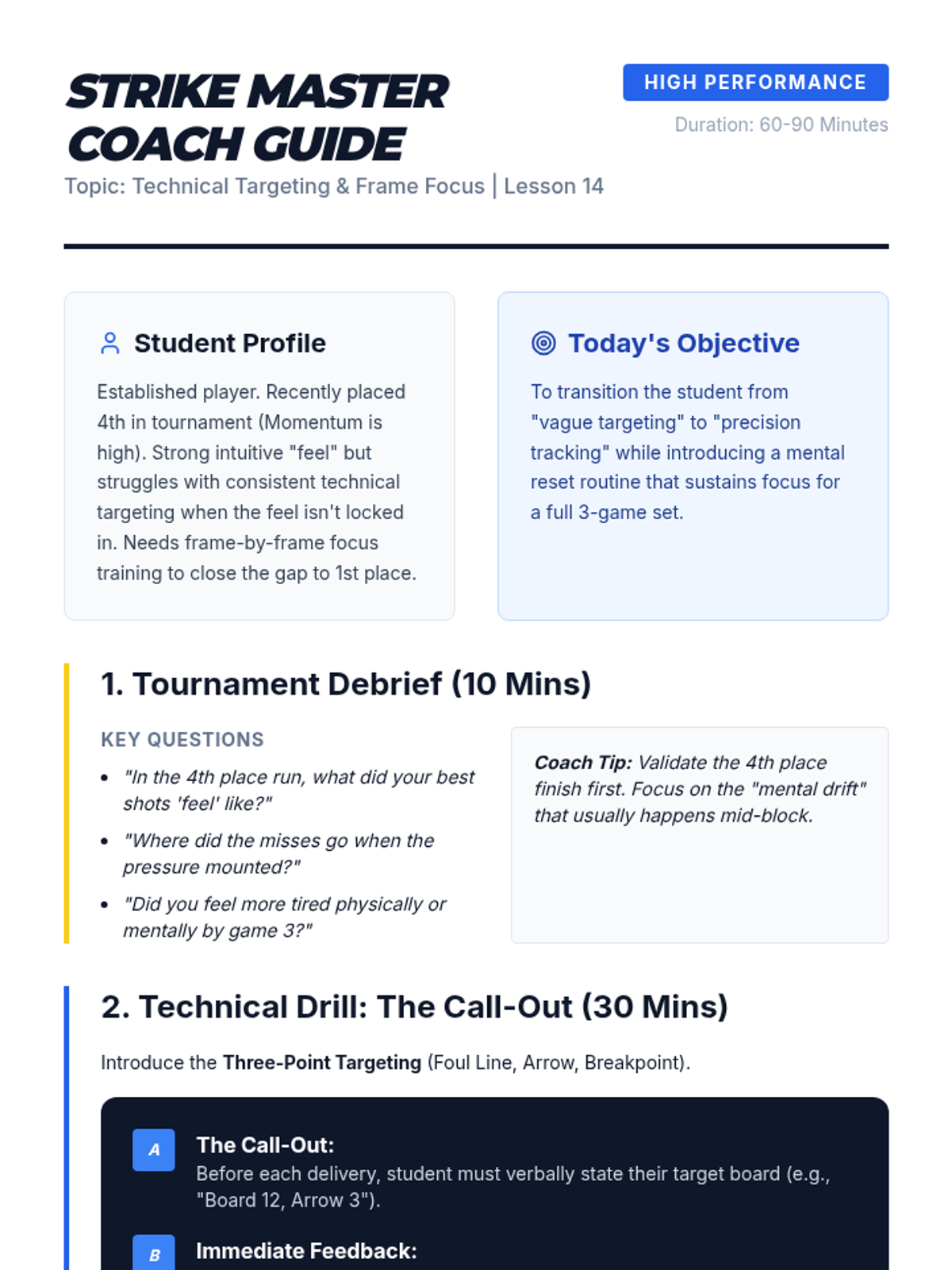
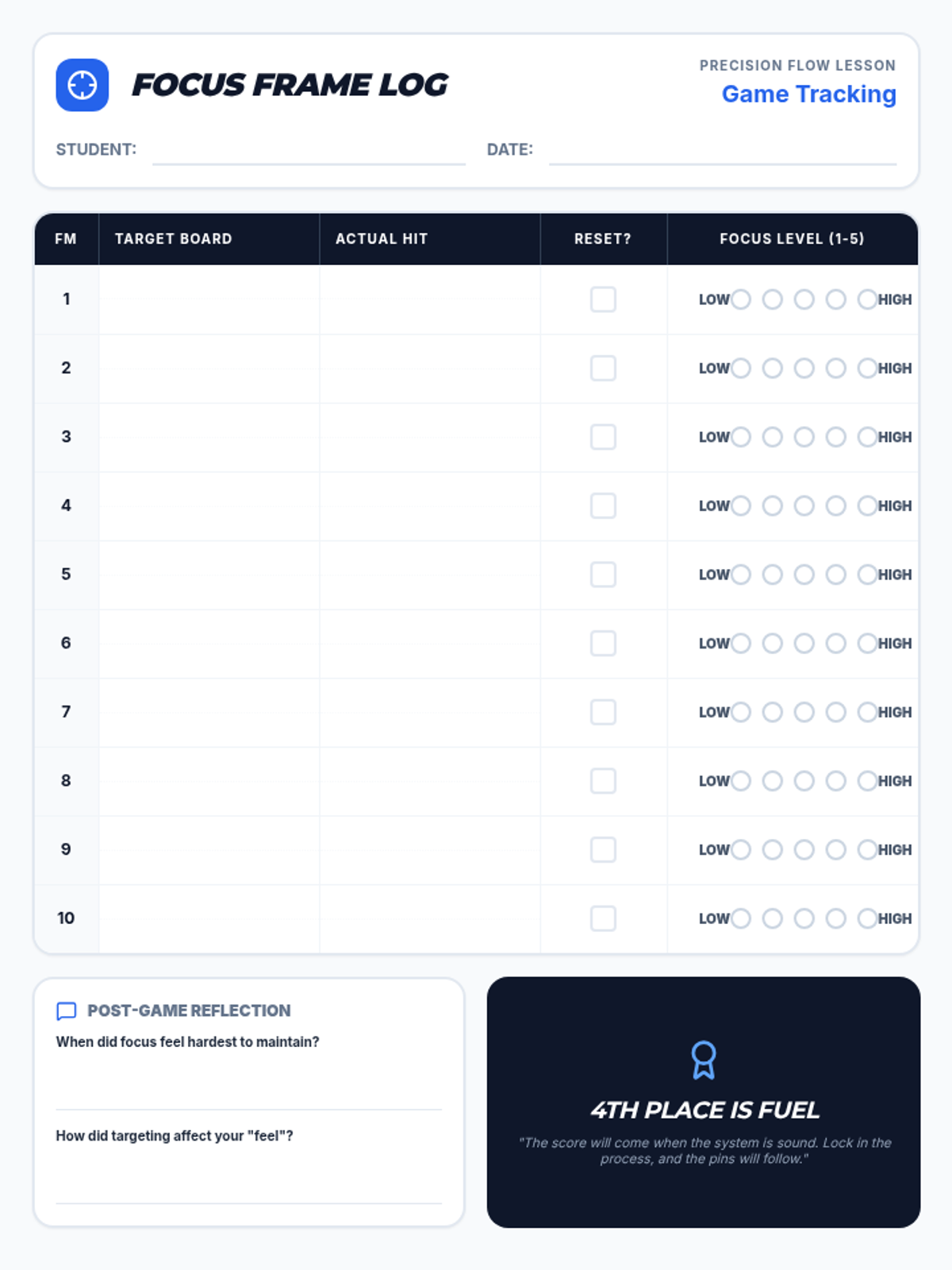
A high-performance bowling lesson designed to bridge the gap between intuitive 'feel' and technical precision targeting. Focused on maintaining mental stamina and frame-by-frame consistency for competitive athletes.
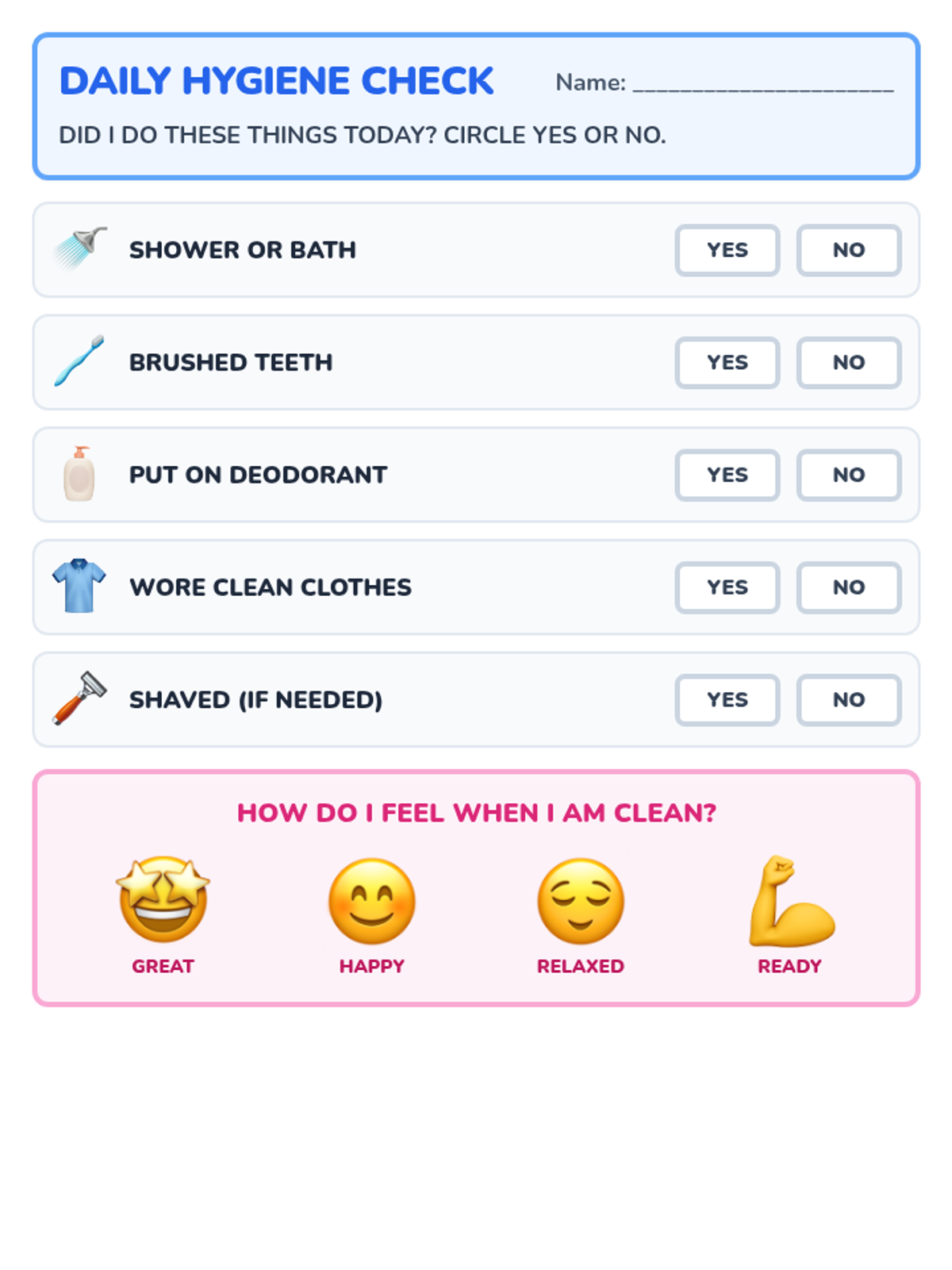
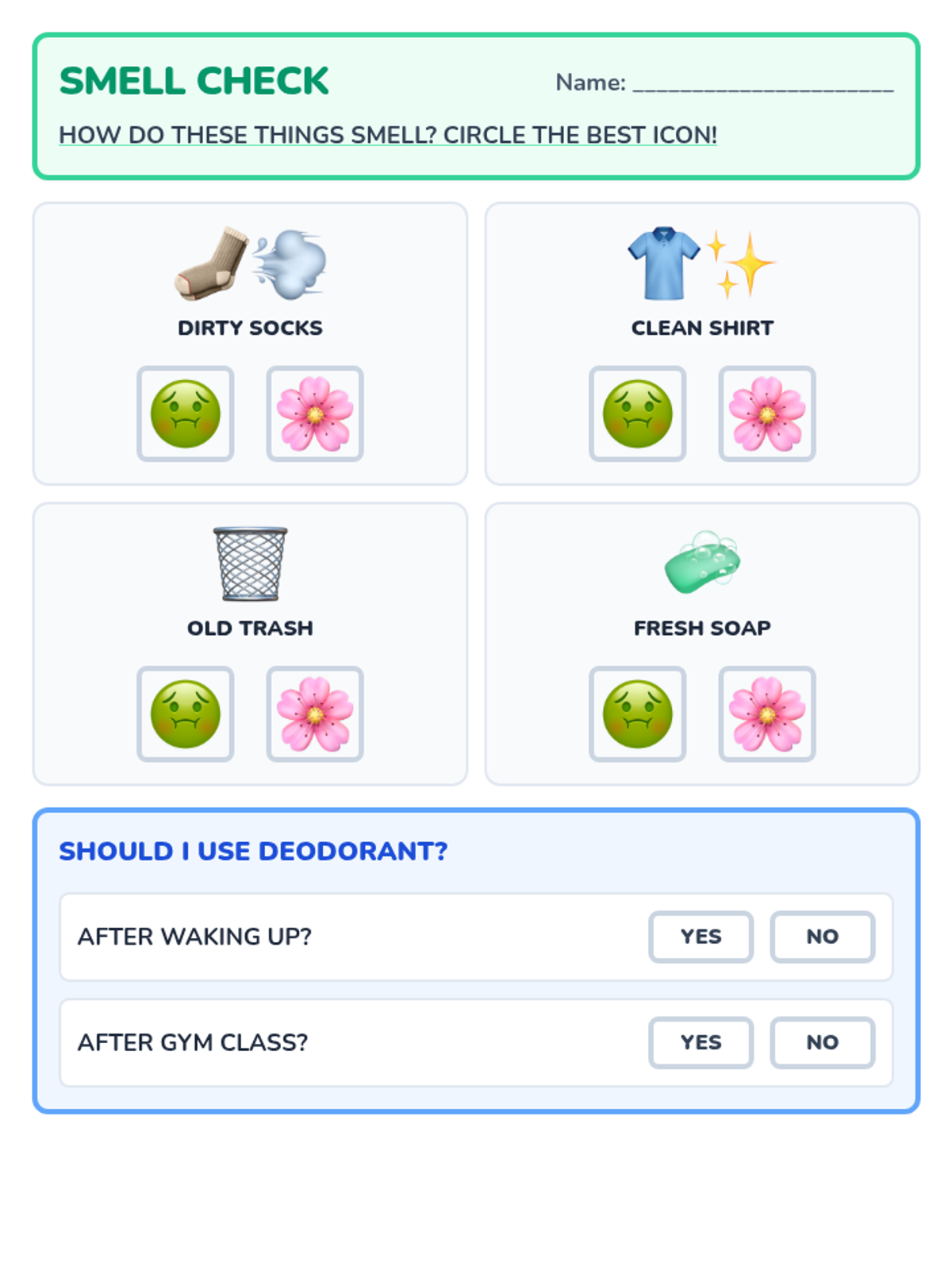
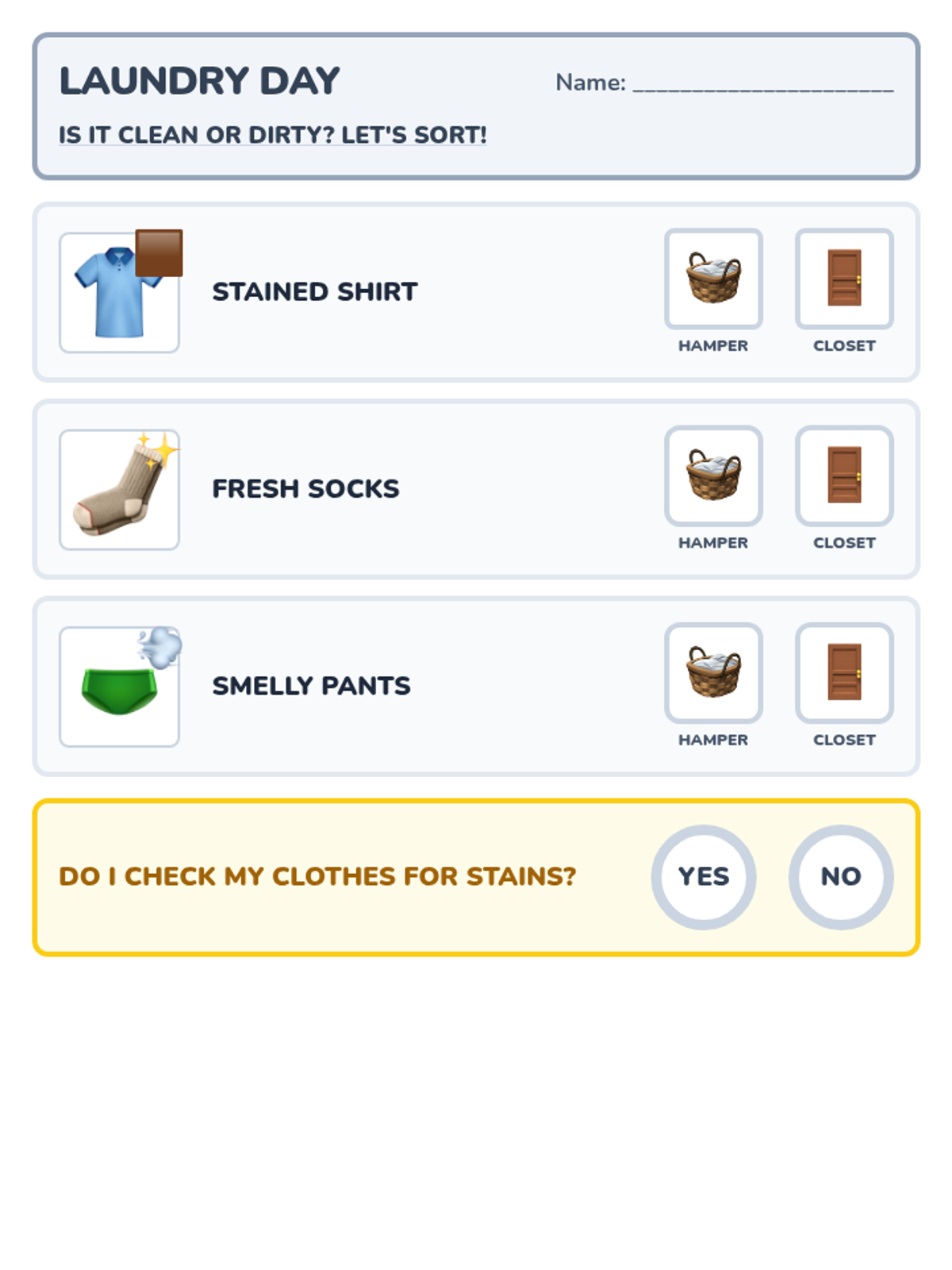
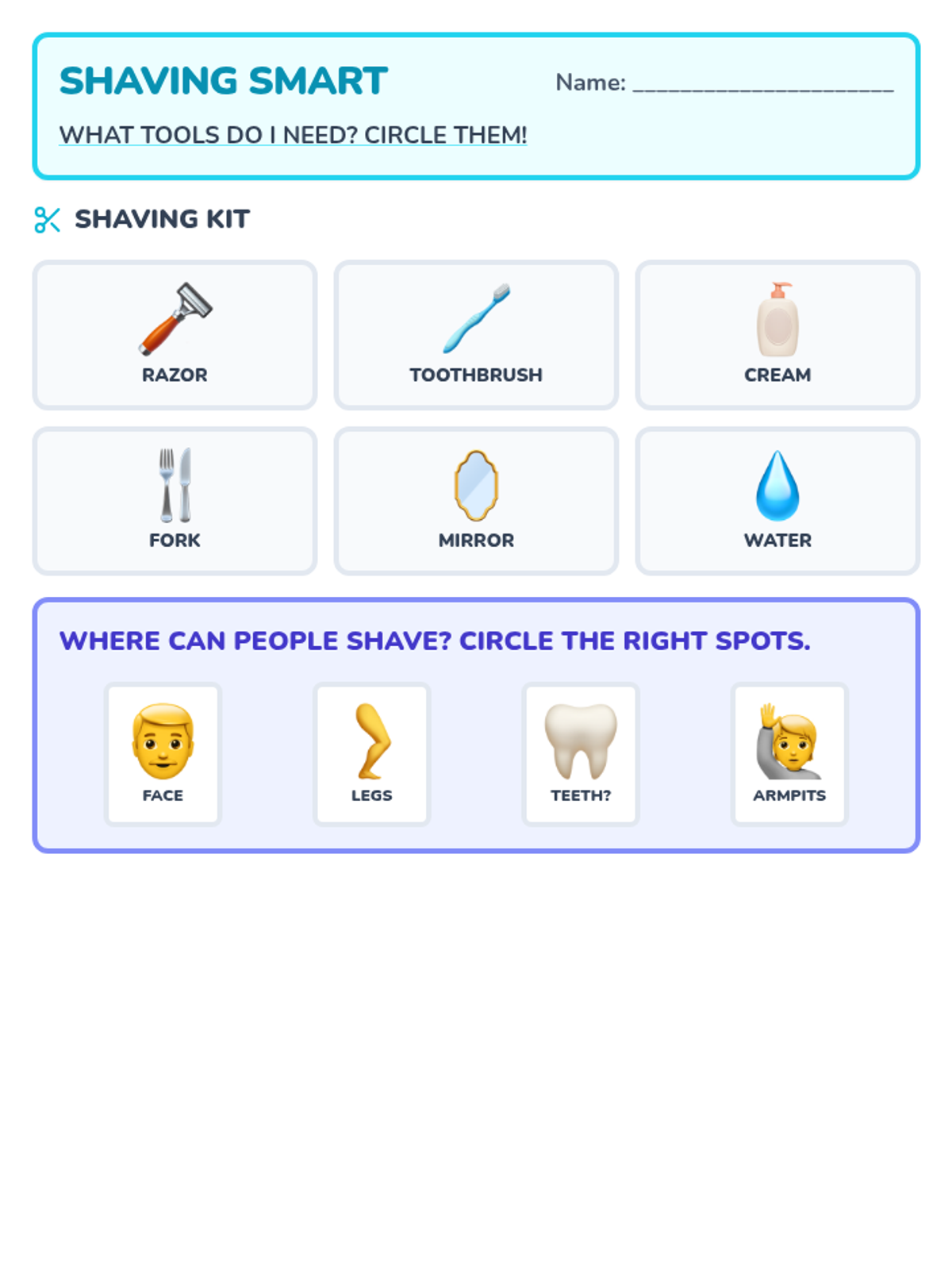
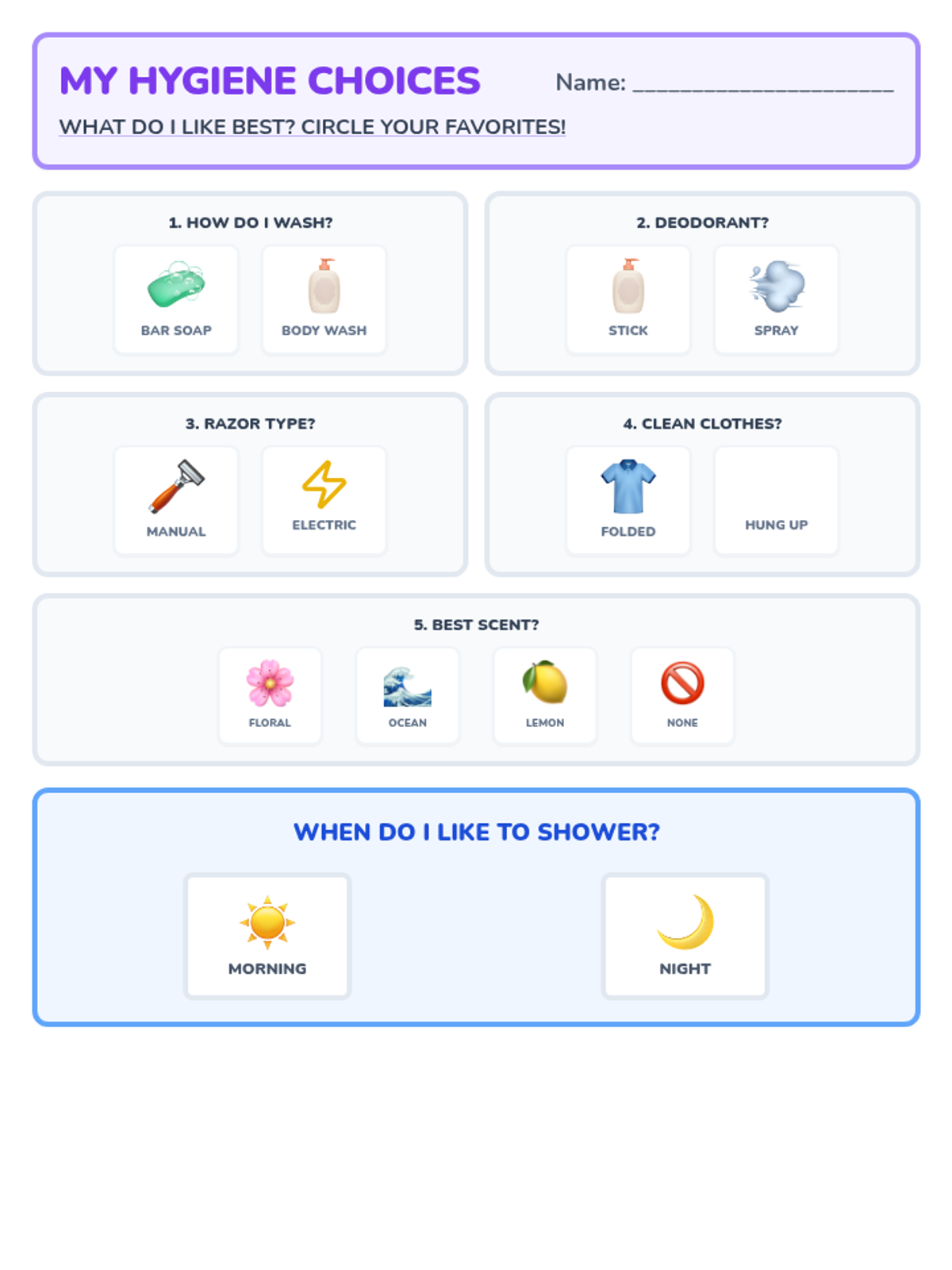
A comprehensive hygiene and personal care unit designed for high school life skills students, focusing on daily routines, odor management, laundry, and shaving with high-visual, low-writing activities.
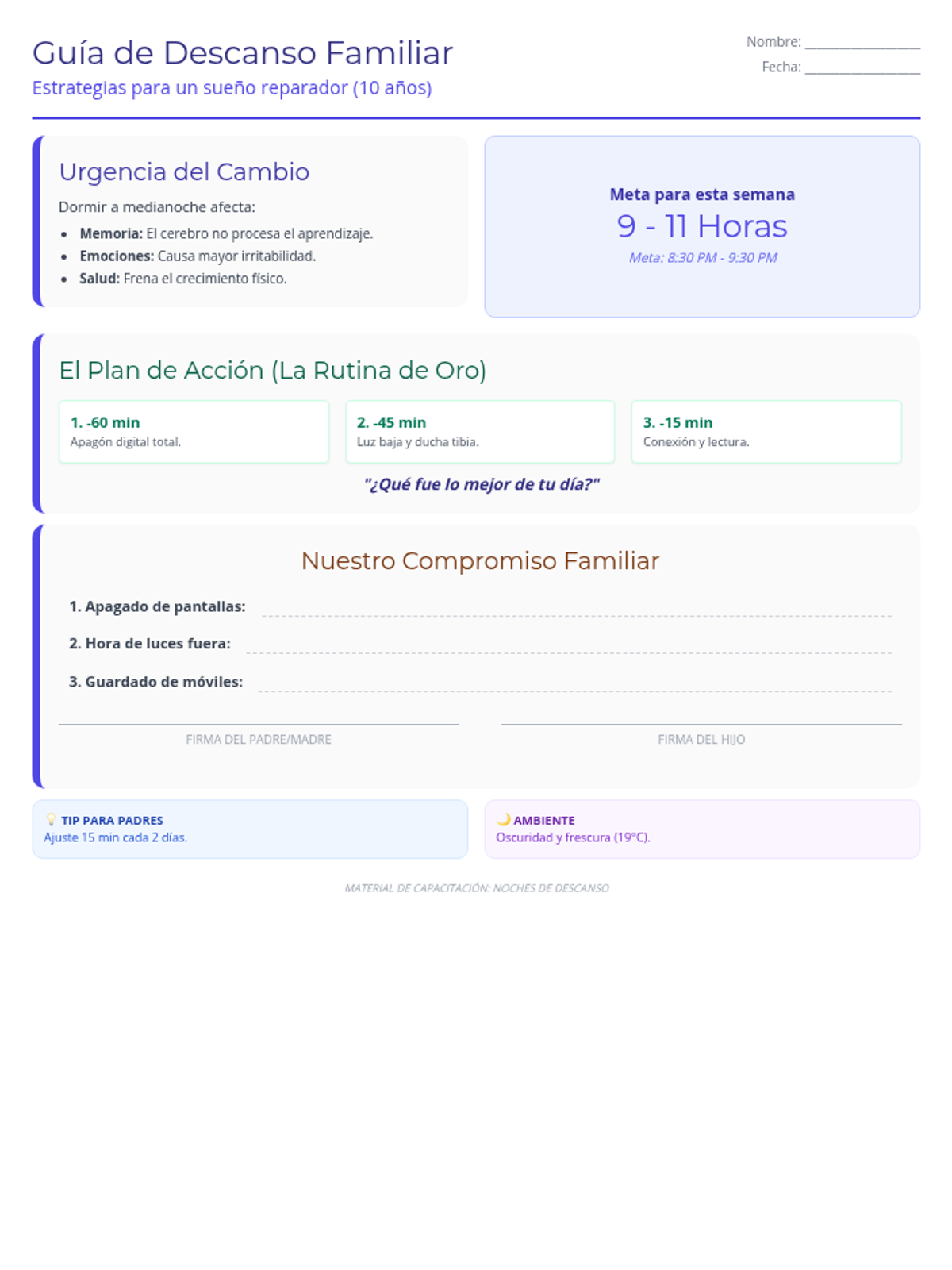
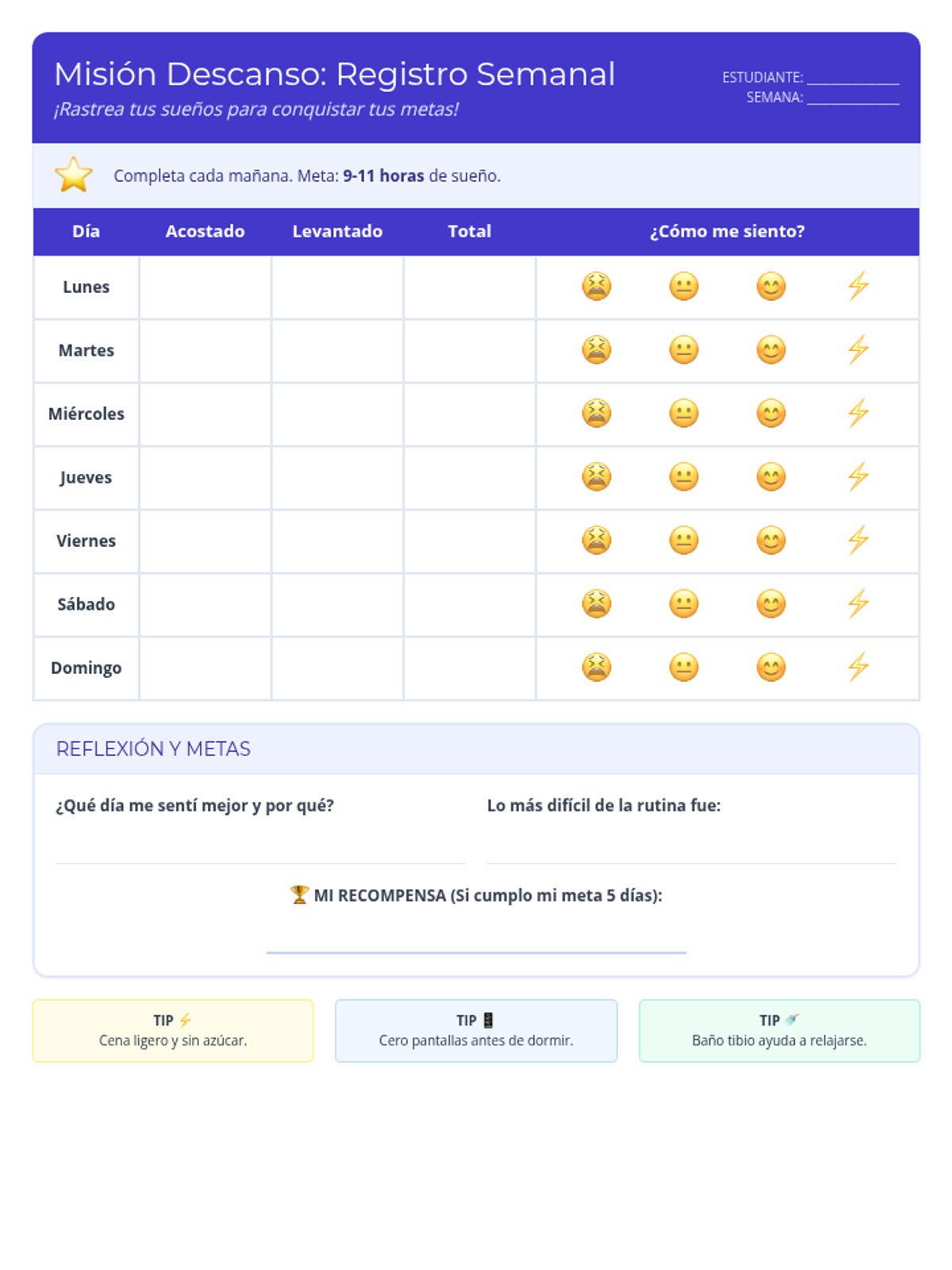
Una lección diseñada para padres sobre la importancia del sueño en niños de 10 años, enfocándose en el desarrollo cerebral, el rendimiento escolar y la creación de rutinas saludables.
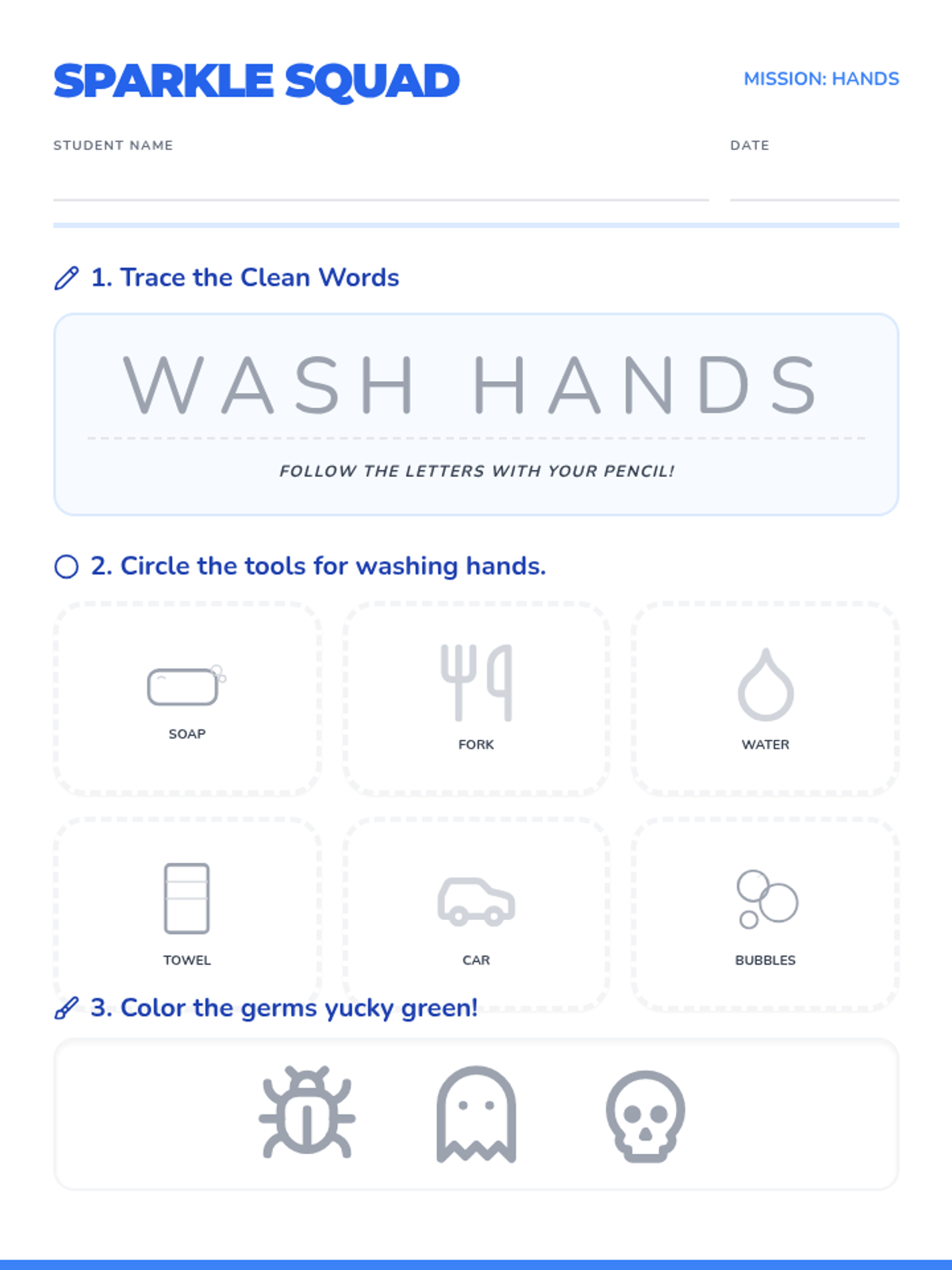
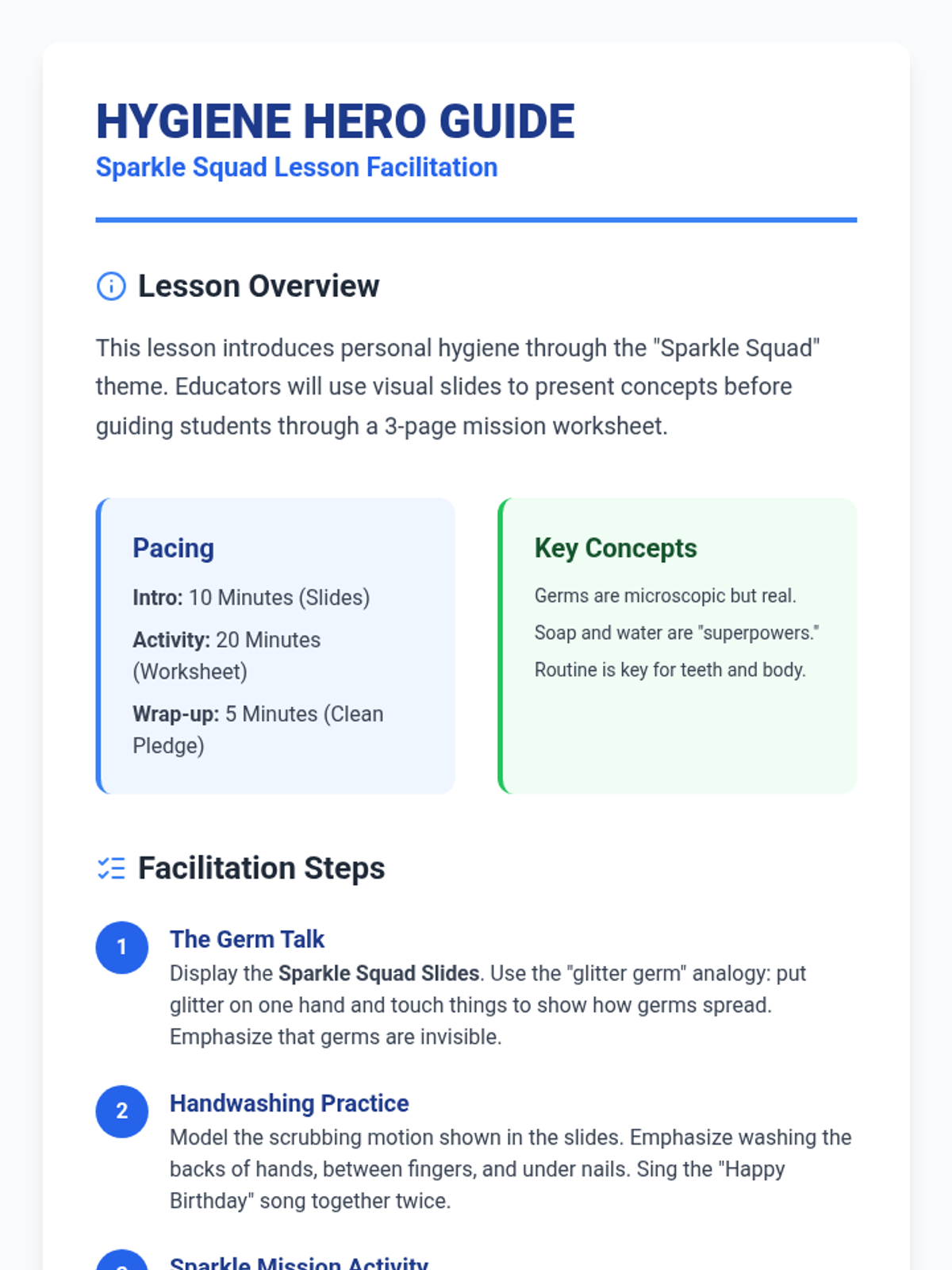
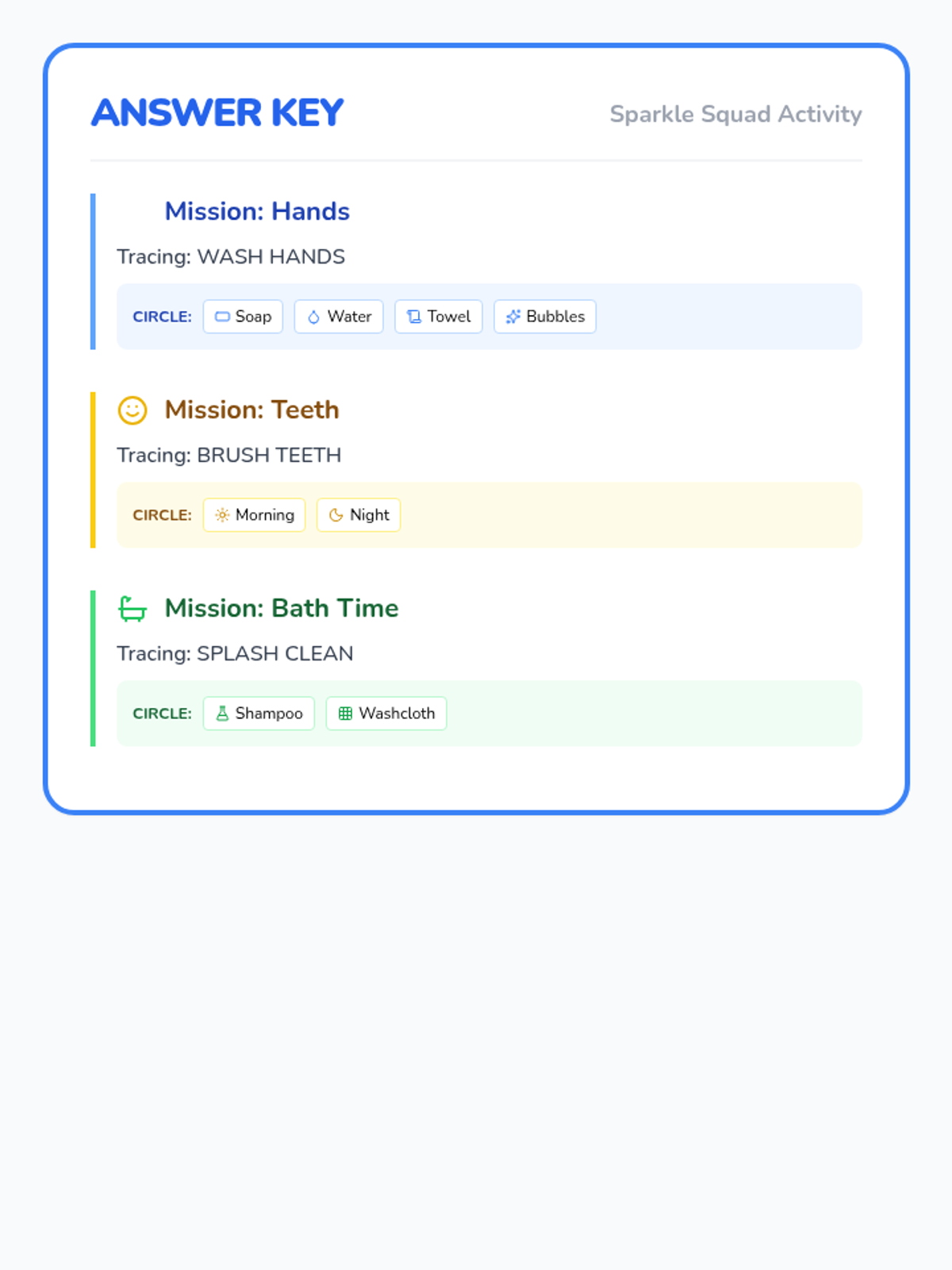
A fun and engaging introduction to personal hygiene for kindergarten students, focusing on handwashing, dental care, and bathing. Students join the Sparkle Squad to learn how to keep their bodies healthy and clean through interactive activities.
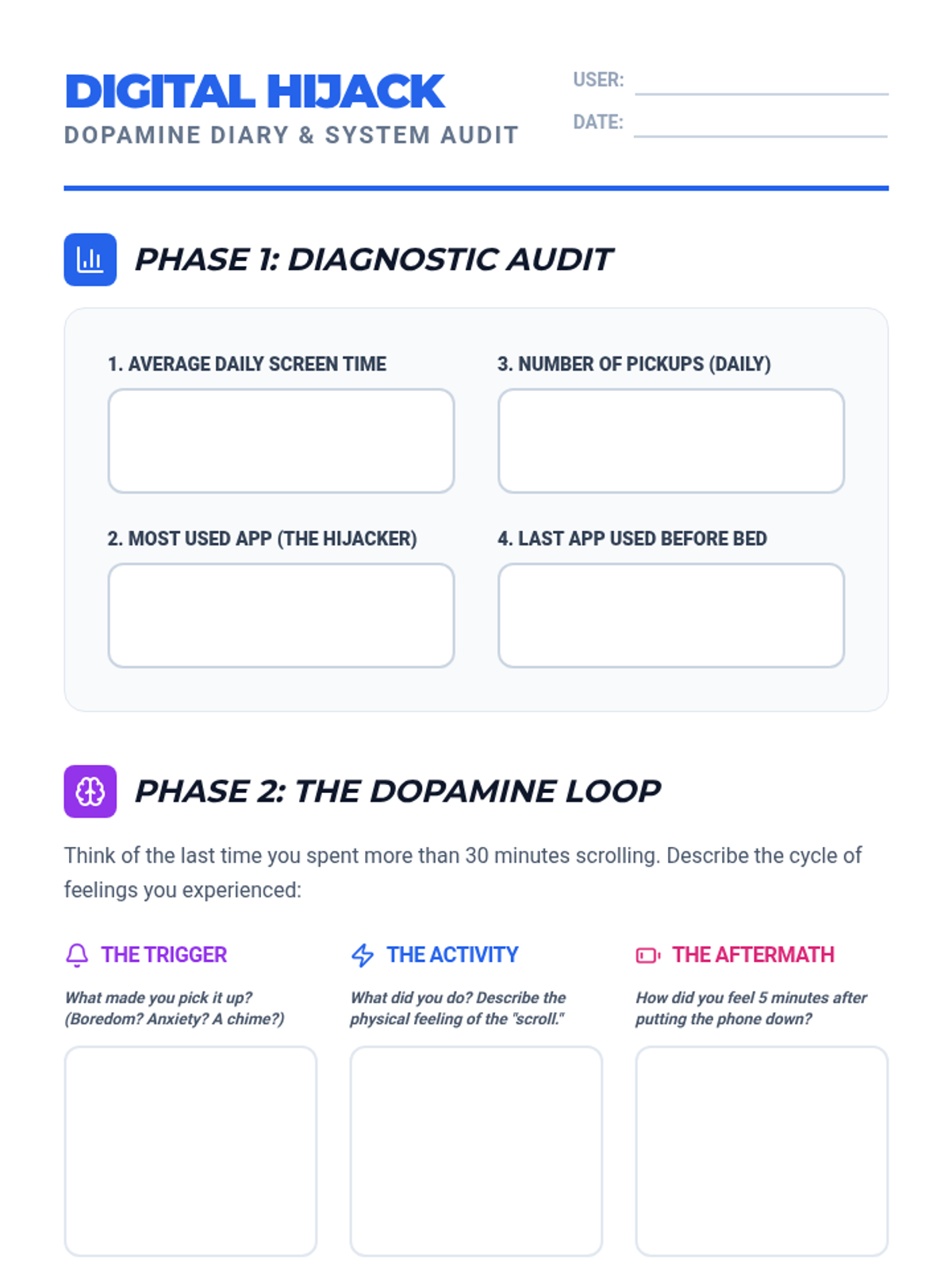
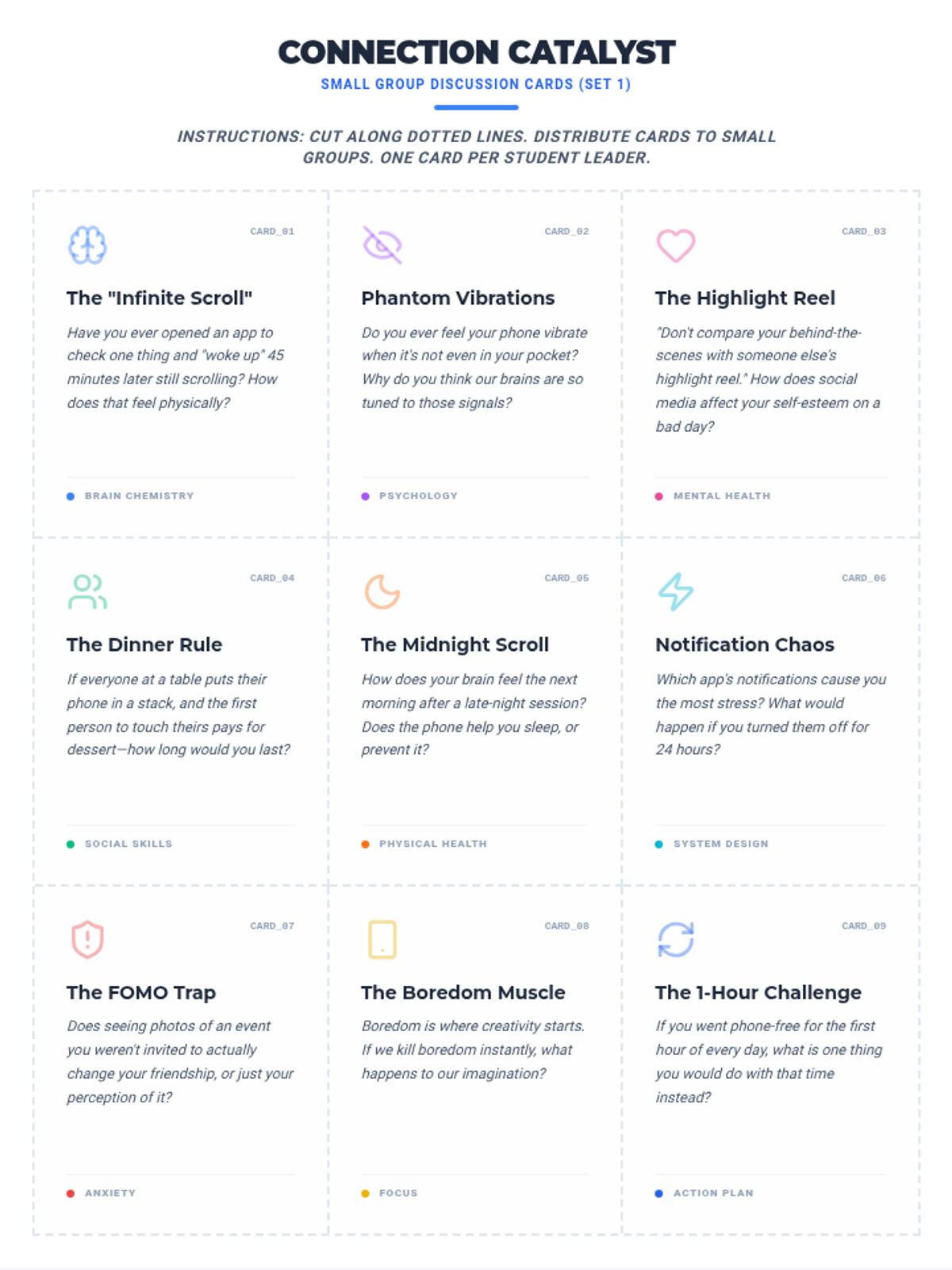
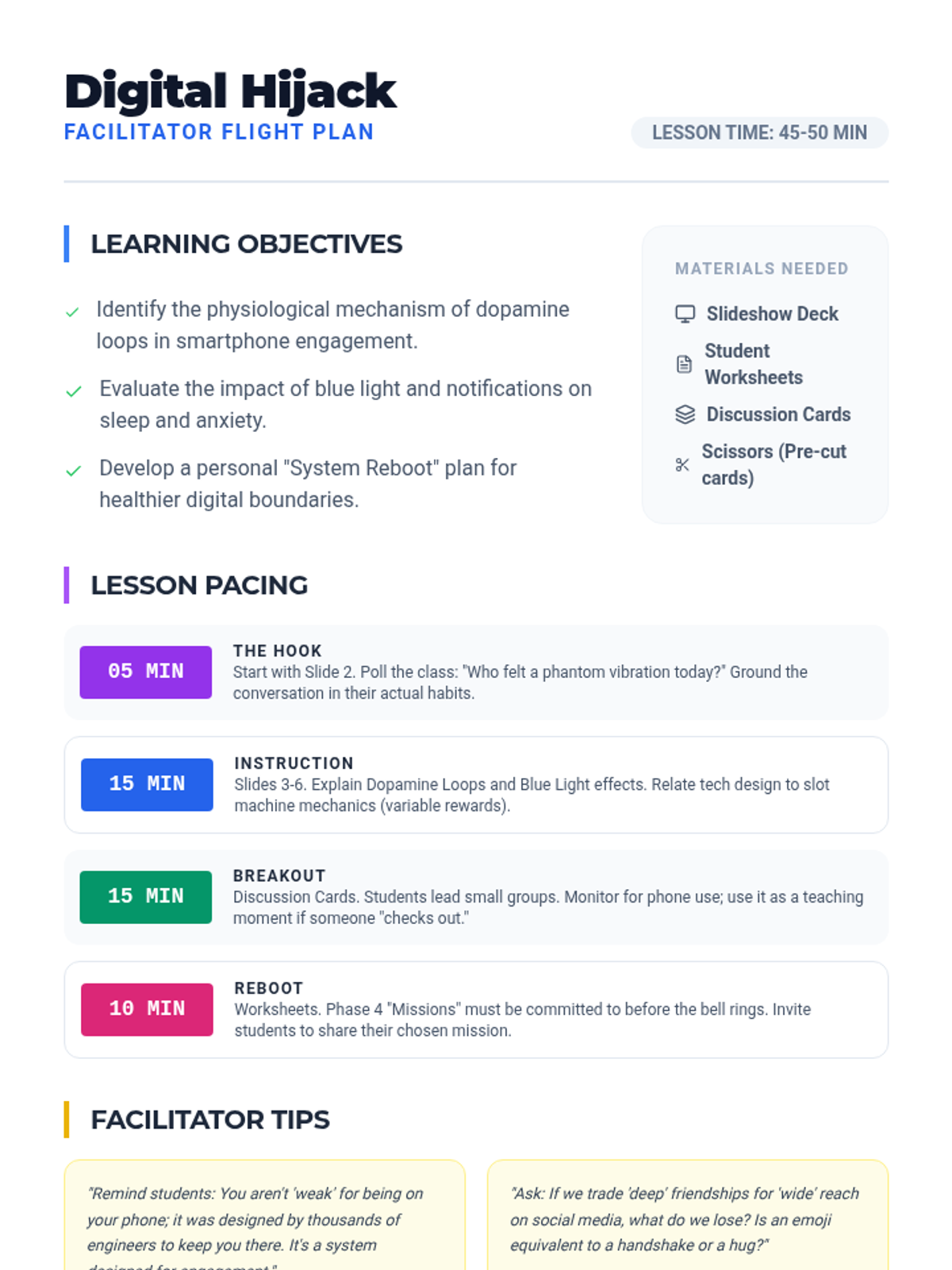
A comprehensive lesson for teenagers exploring the physiological and psychological impacts of smartphone addiction, covering dopamine loops, sleep disruption, anxiety, and social isolation.
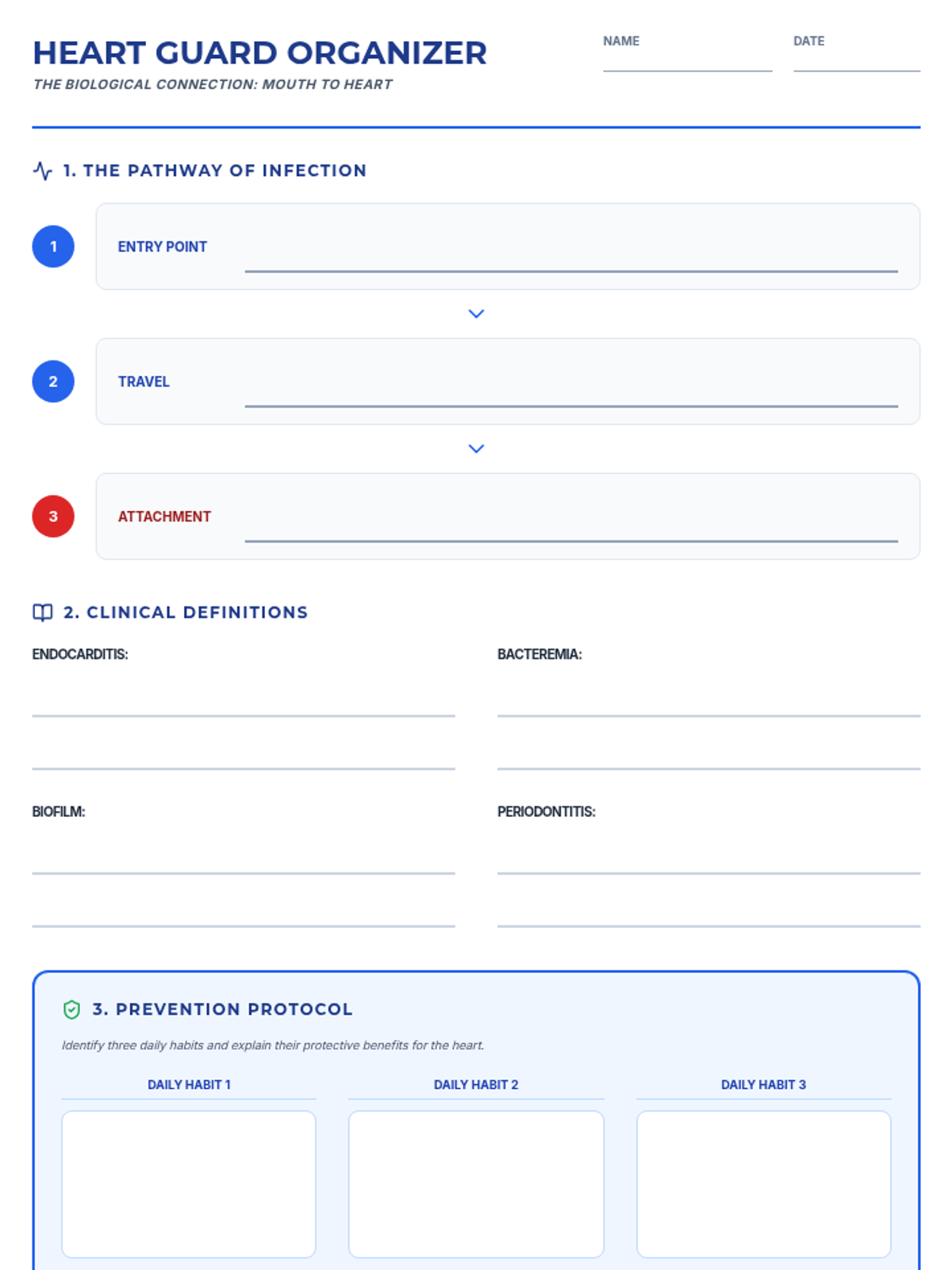
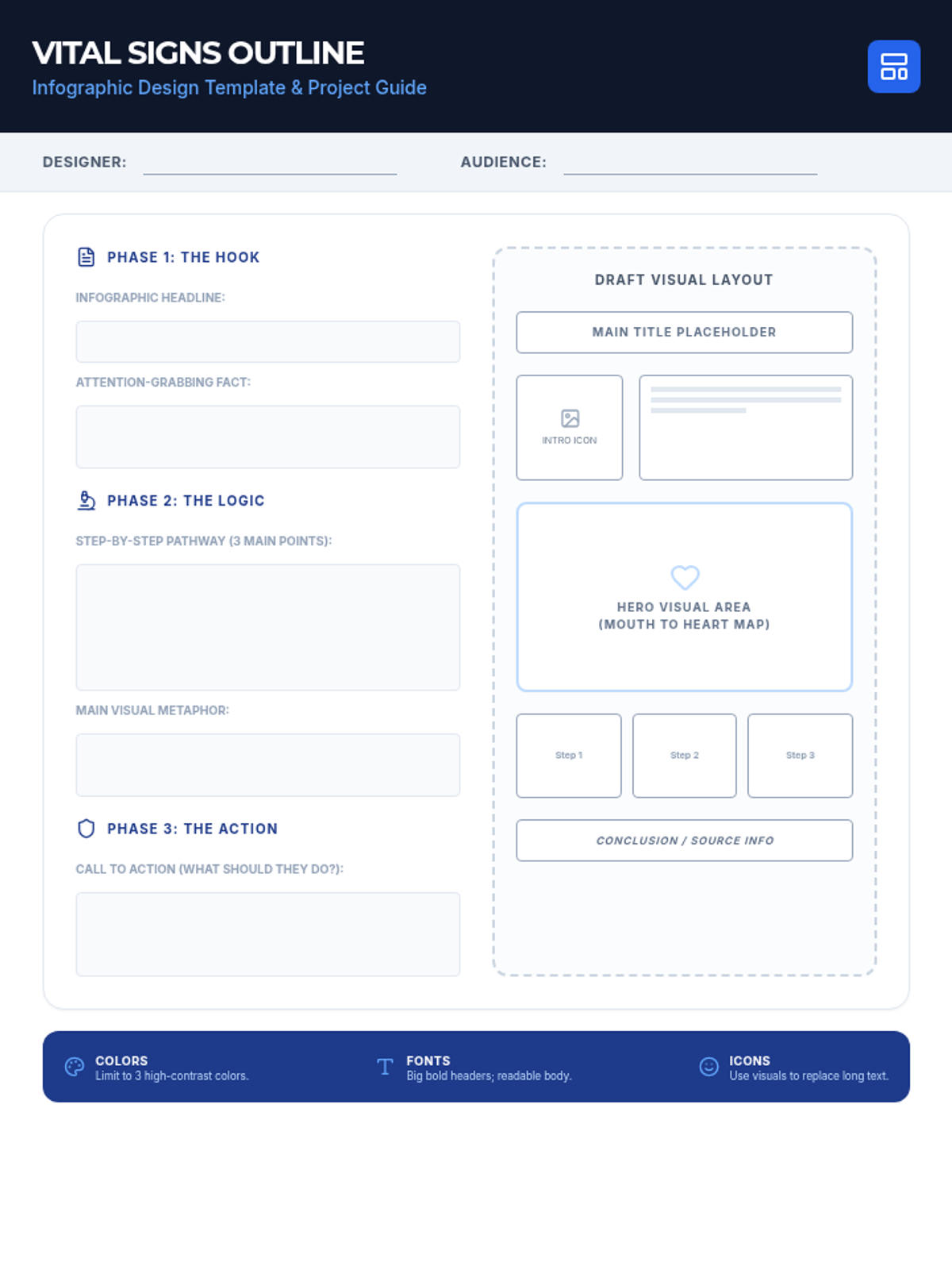
A health-focused lesson exploring the critical biological link between oral hygiene and infective endocarditis, emphasizing how daily habits protect heart health.
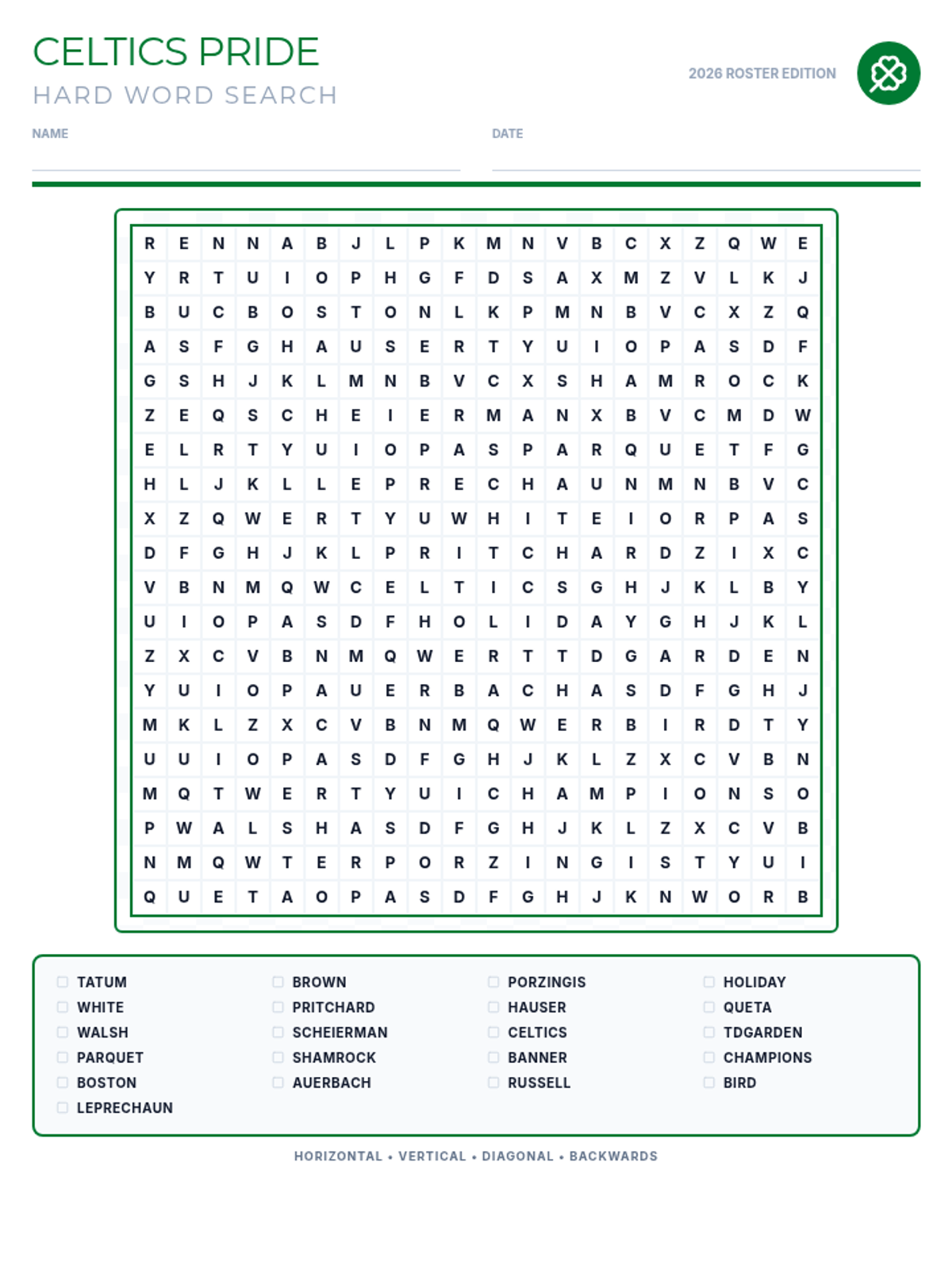
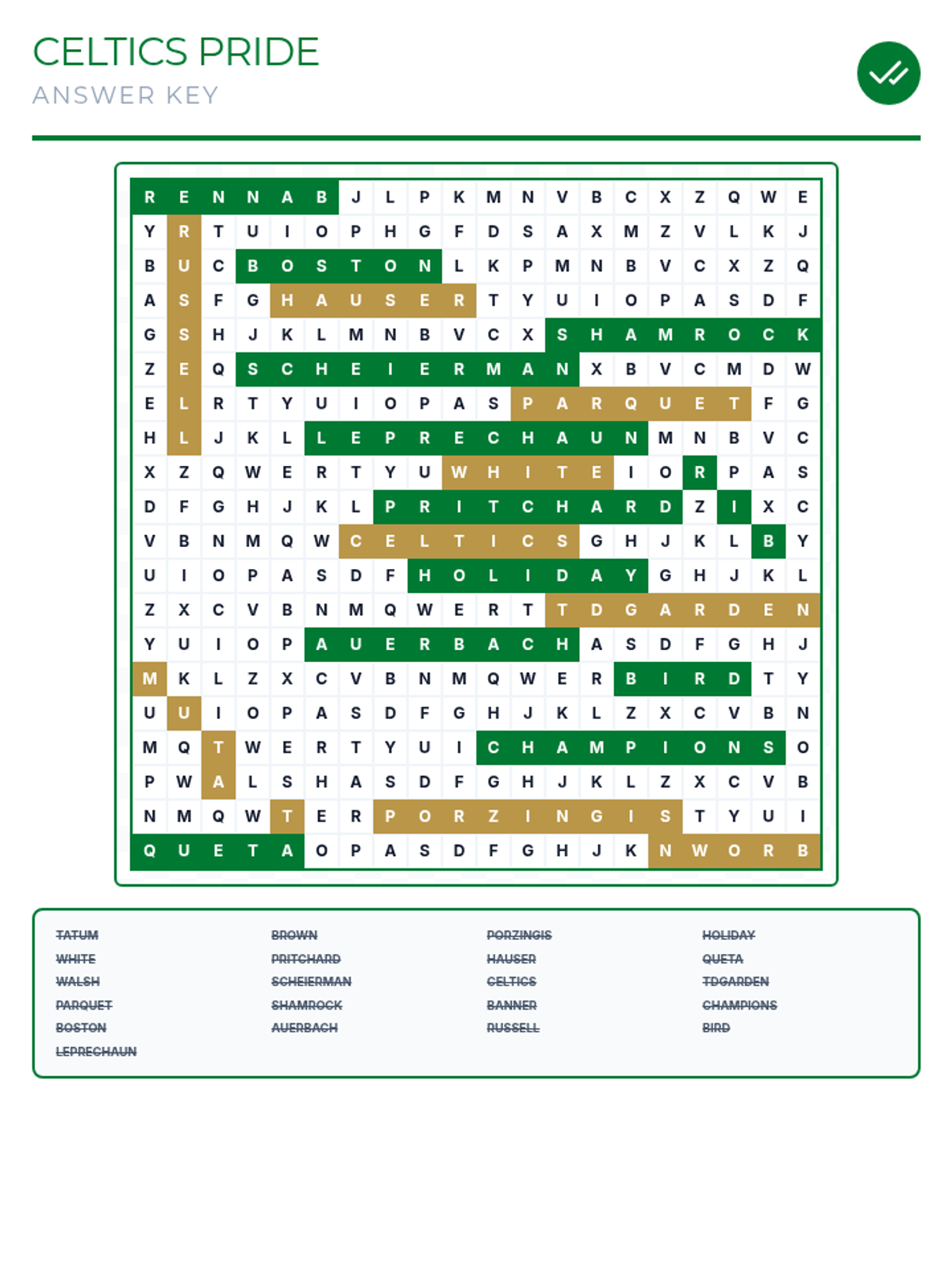
A challenging word search activity focused on the Boston Celtics, featuring 2026 roster players and franchise terminology.