A collaborative writing session where students and teacher create alliterative, silly sentences using digraphs.
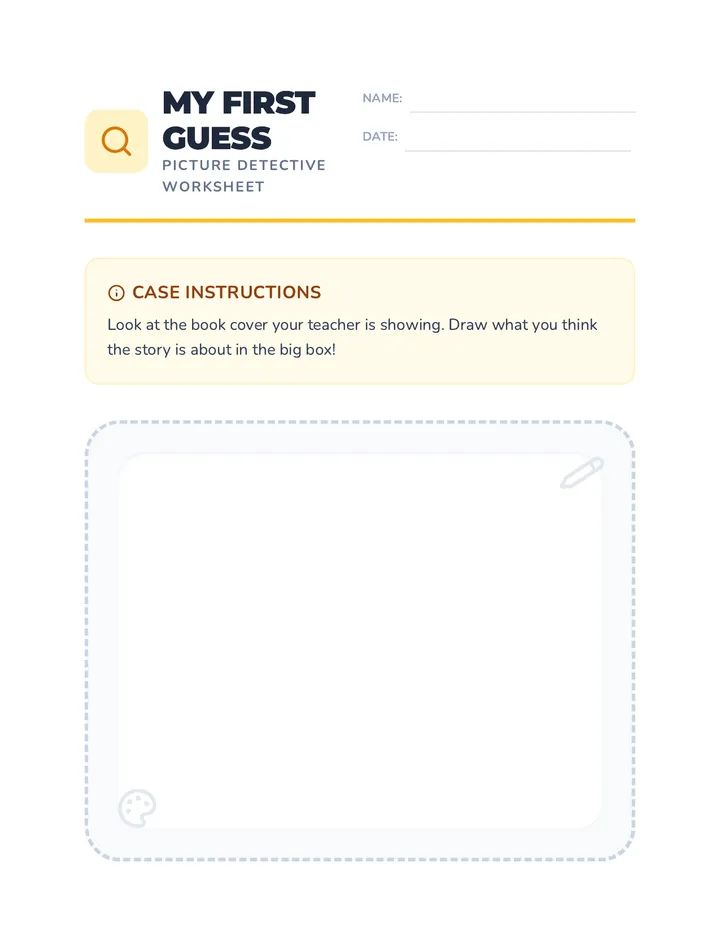
A Kindergarten sequence focused on visual literacy to teach prediction and inference. Students use picture clues from book covers and wordless stories to anticipate what happens next, developing critical thinking and observation skills through a 'Picture Detective' theme.
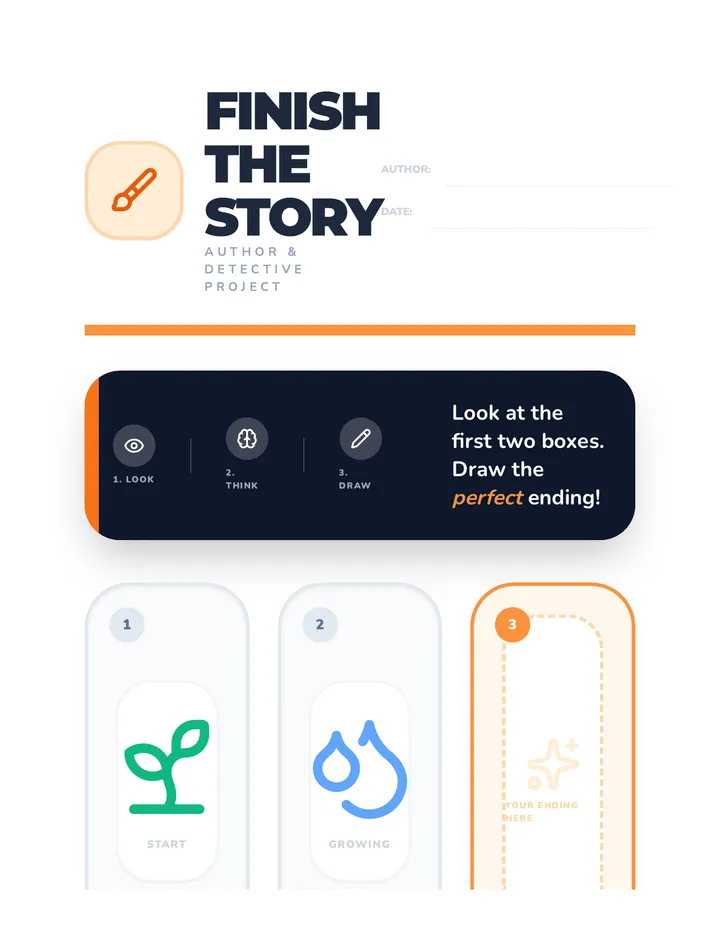
Students complete a 3-panel visual sequence by drawing their own predicted ending and explaining the visual clues that informed their artistic choice.
The final project worksheet for Lesson 5. Students observe a 2-panel sequence of a sprouting seed being watered and must draw the logical ending in the third panel, plus explain their reasoning.
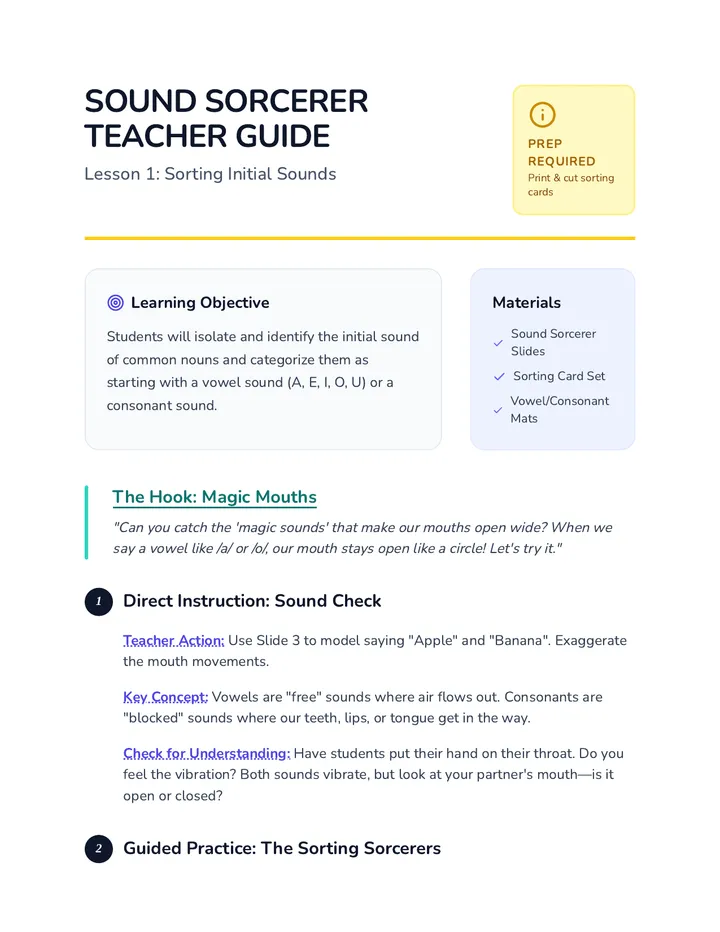
A Kindergarten sequence focused on the phonological rules for using indefinite articles 'a' and 'an' through phonemic awareness, sorting games, and oral practice.
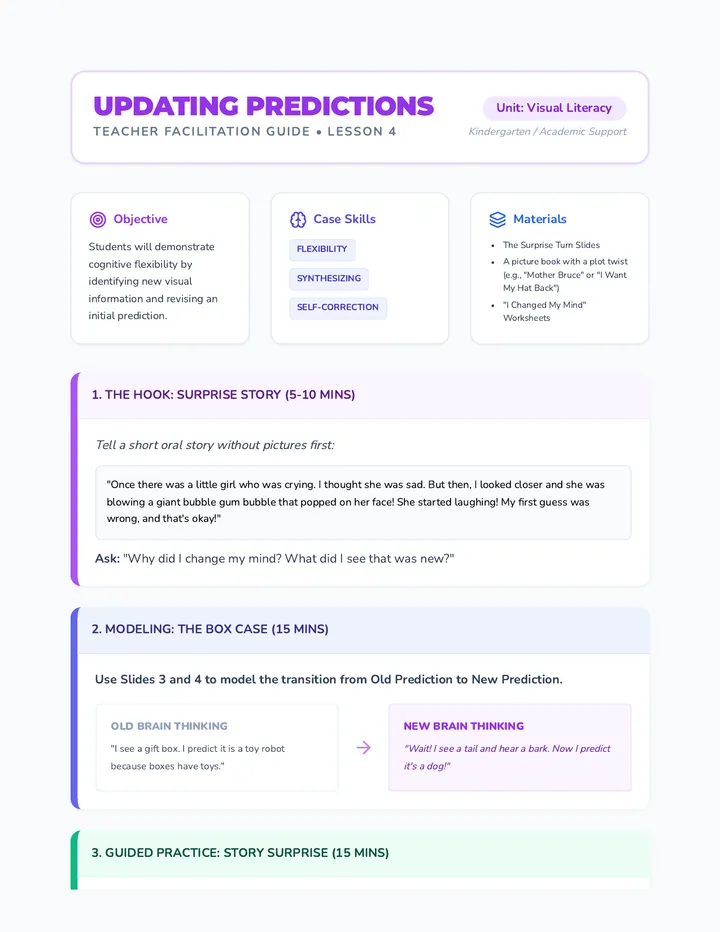
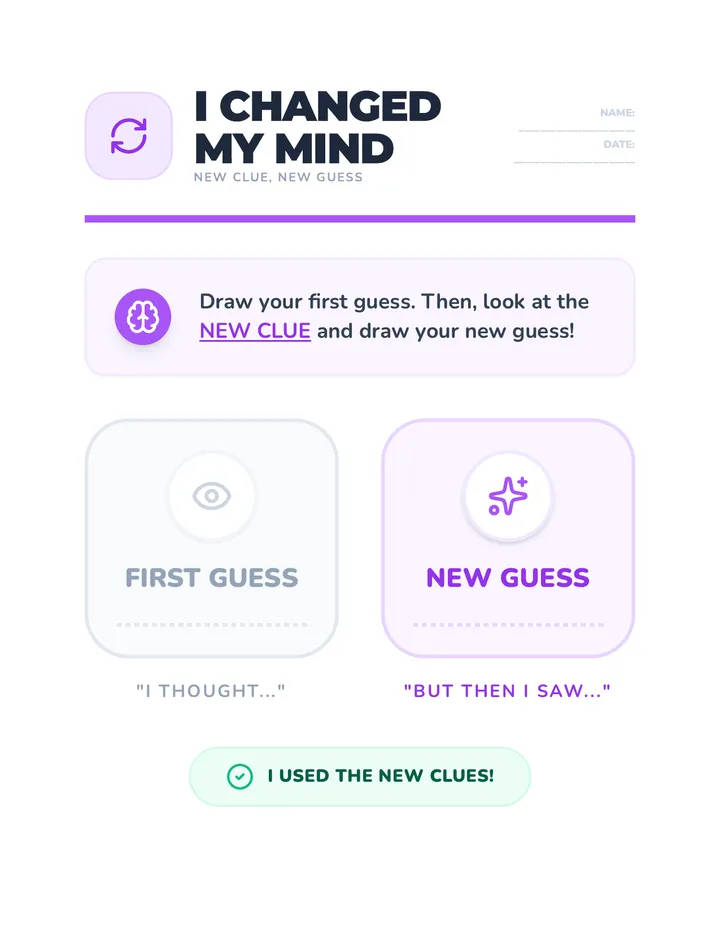
Students practice cognitive flexibility by revising their initial predictions when presented with surprising new visual information in a narrative.
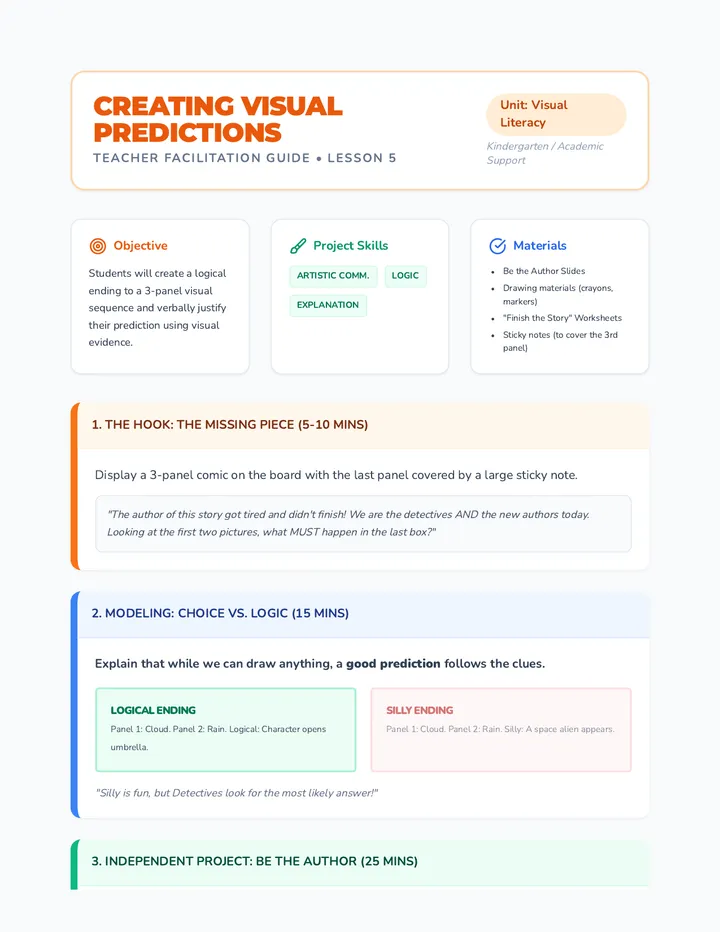
Teacher guide for Lesson 5, the final project. Focuses on helping students distinguish between 'silly' and 'logical' endings, and provides prompts for teacher conferences during independent work.
A Kindergarten ELA sequence exploring the semantic difference between definite ('the') and indefinite ('a/an') articles through inquiry-based scenarios and storytelling.
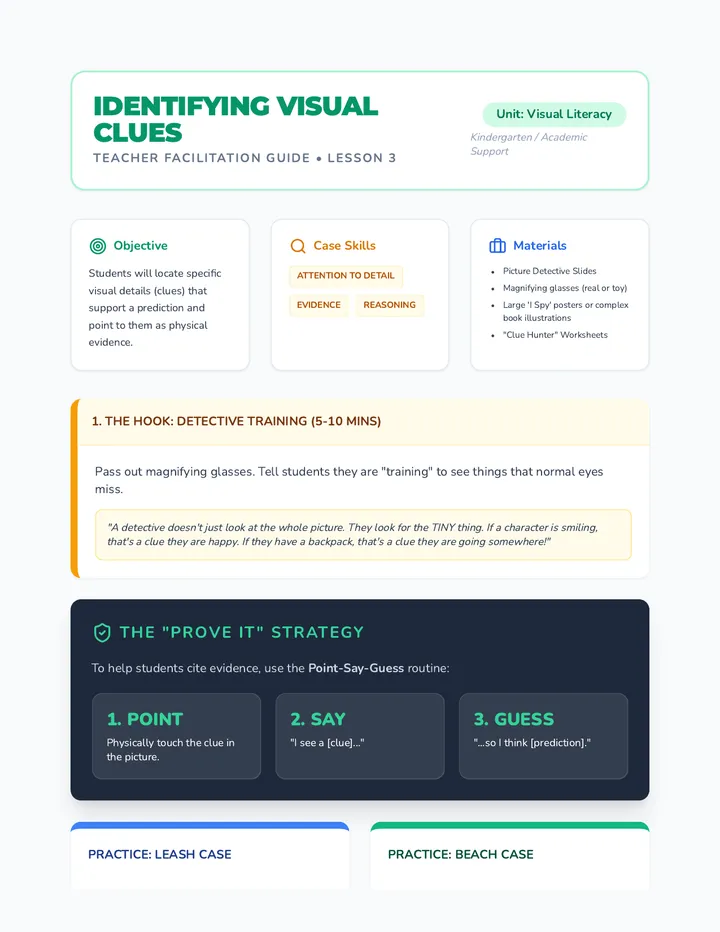
Students act as 'Picture Detectives' using magnifying glasses to find small visual details that hint at future events, citing specific evidence for their predictions.
A slide deck for Lesson 5 where students apply everything they've learned to finish a 3-panel visual story. They practice looking for clues, thinking logically, and sharing their reasoning with others.