Investigation into how flavors and packaging are used to mask the dangers of nicotine and target youth audiences.
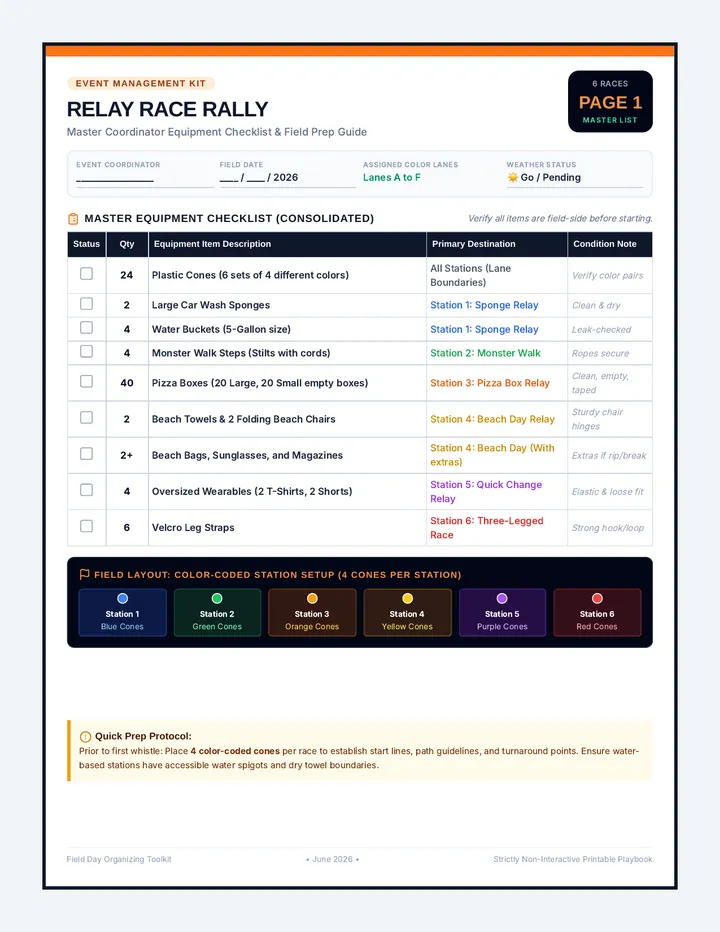
A comprehensive coordination and volunteer guide for organizing six classic Field Day relay races. This resource provides parent volunteers with clear setup diagrams, simplified rules, and a master clipboard inventory to ensure a smooth, high-energy event.
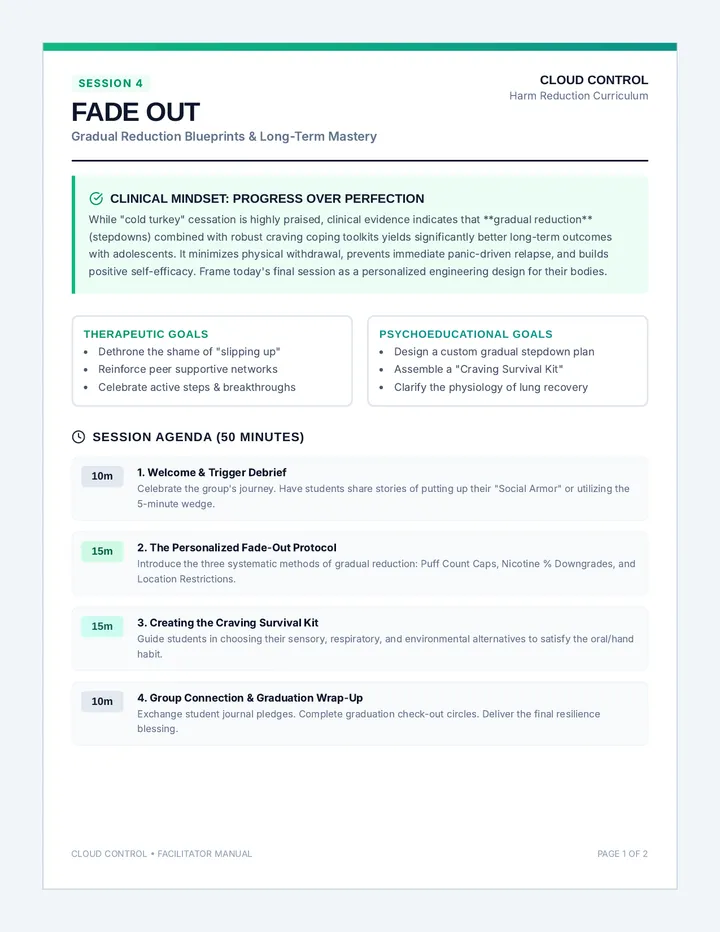
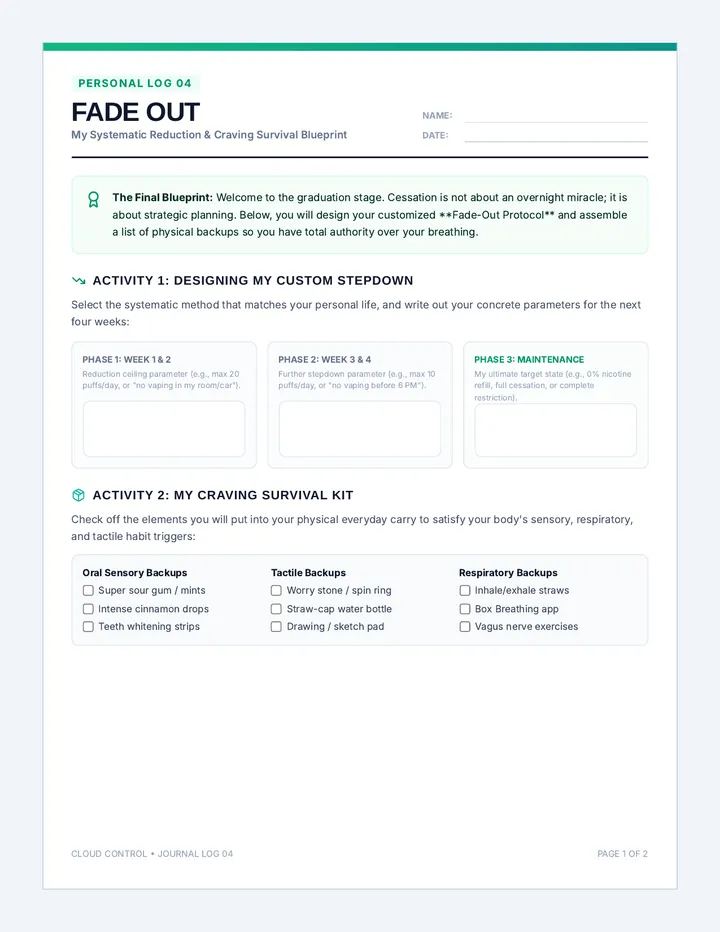
Session 4 equips students with personalized, gradual-reduction plans, craving-management toolkits, and peer support systems for sustained progress.
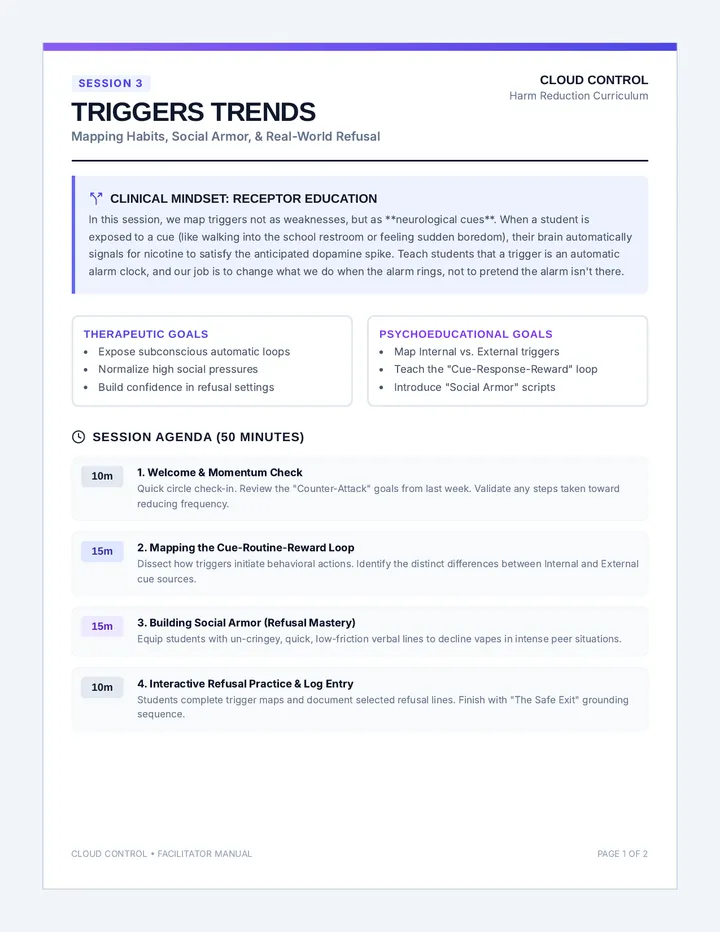
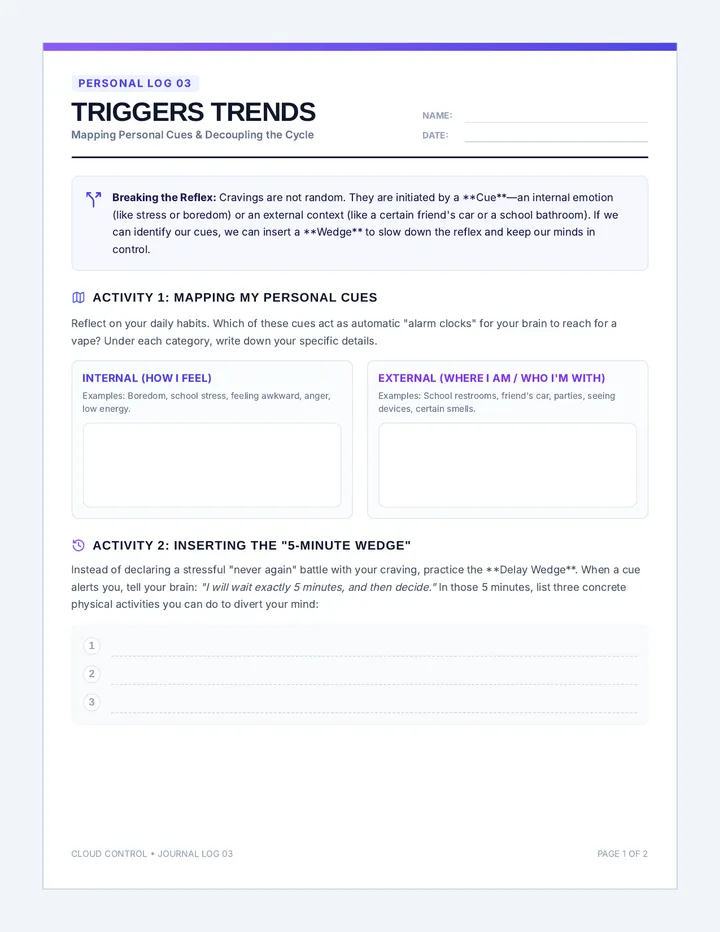
Session 3 focuses on identifying situational and emotional triggers, navigating social pressure, and practicing refusal skills in real-world scenarios.
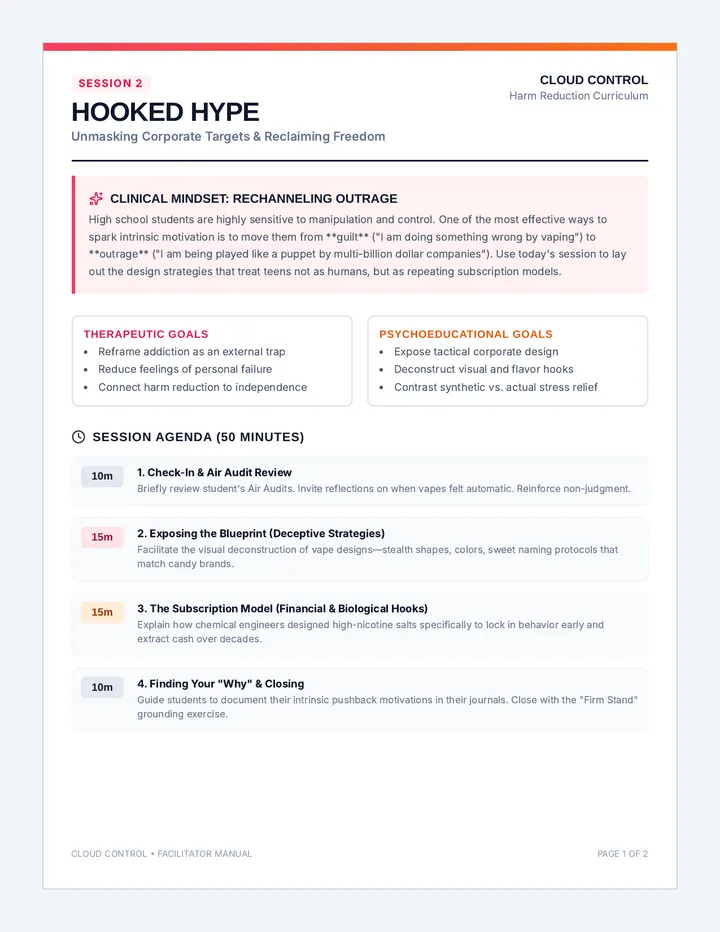
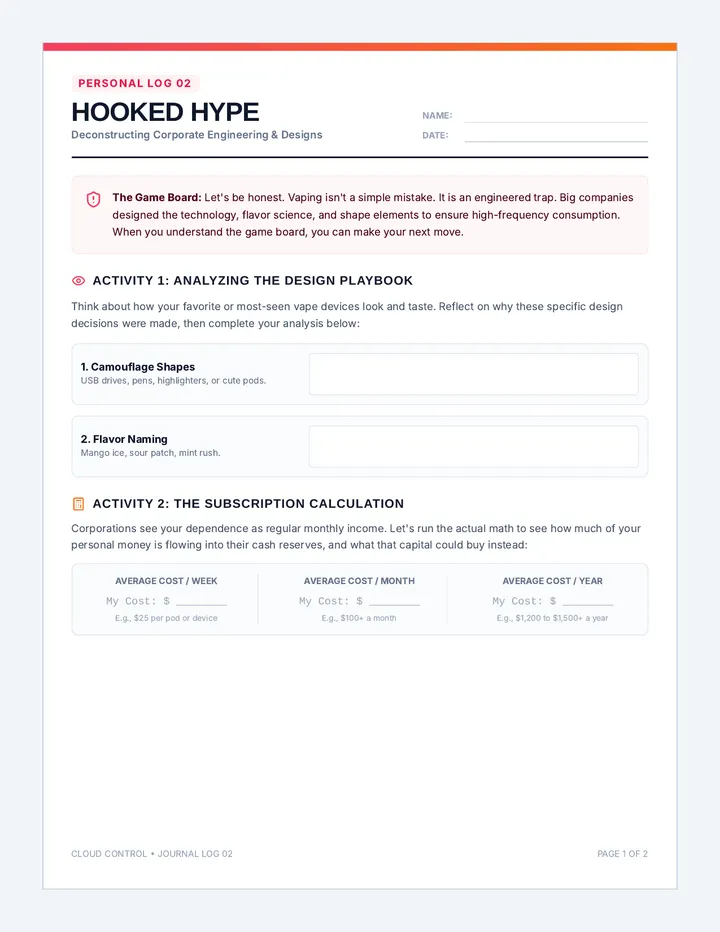
Session 2 exposes the targeted marketing tactics used by e-cigarette corporations and helps students identify their own intrinsic motivators to reclaim control.
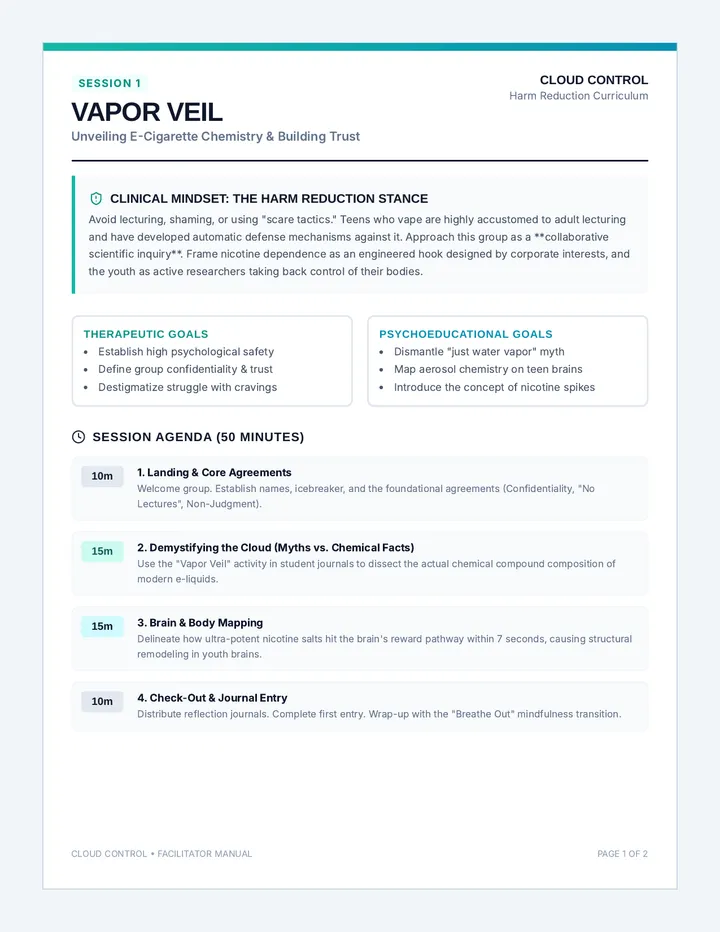
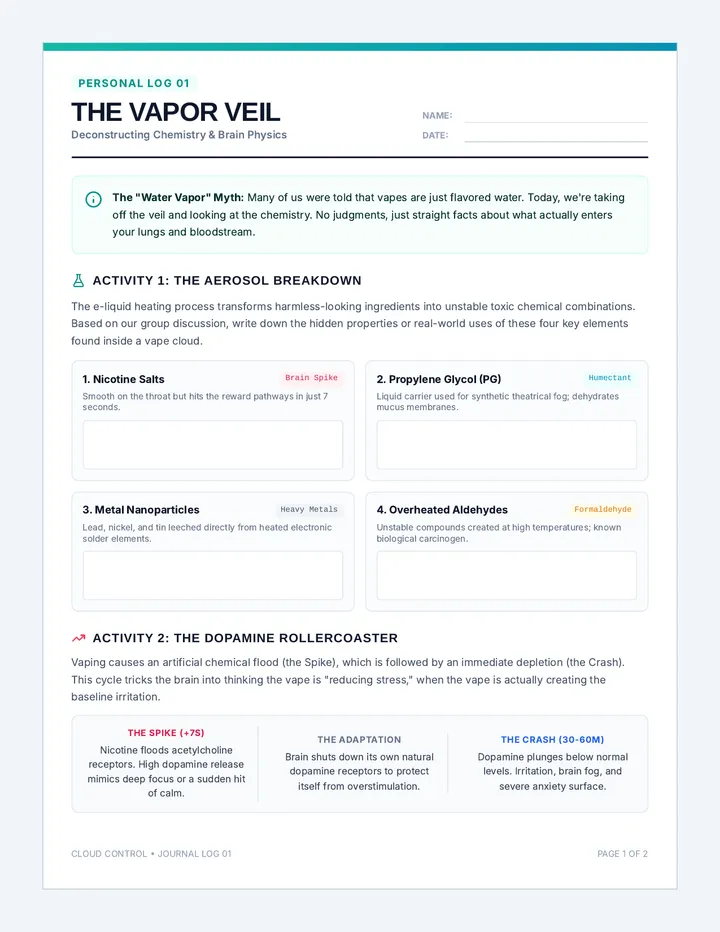
Session 1 introduces the group, establishes trust, and dismantles misconceptions around vape chemistry and its physical impact on the teen brain and body.
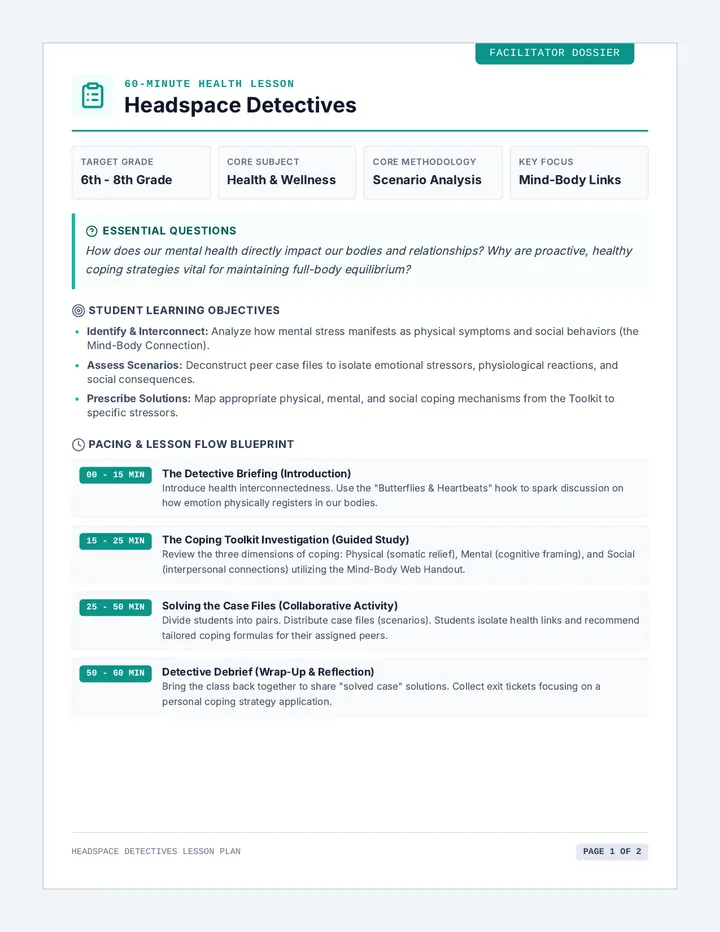
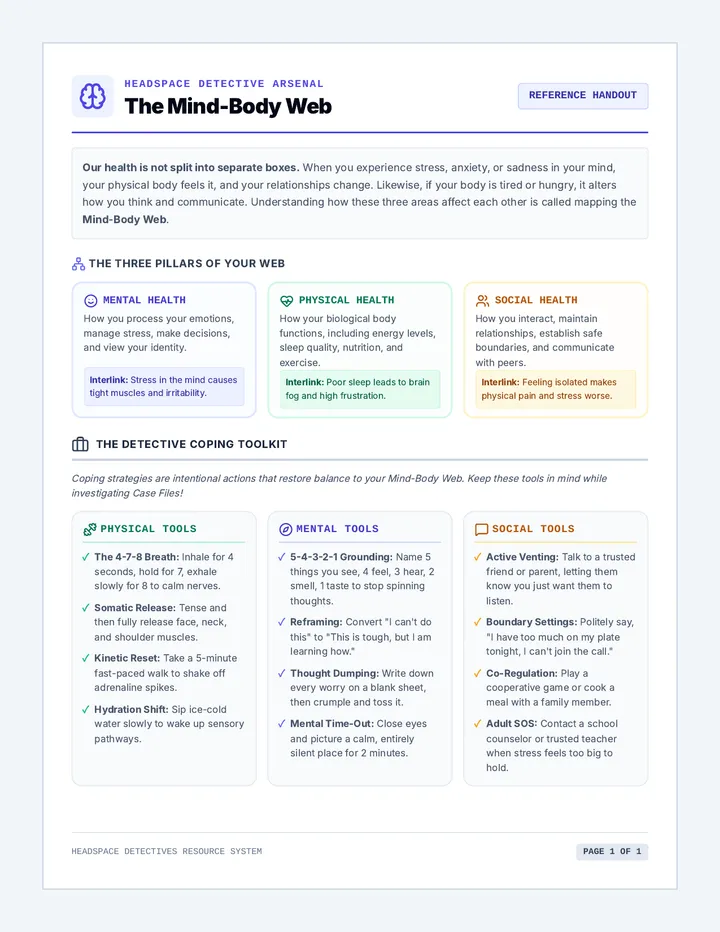
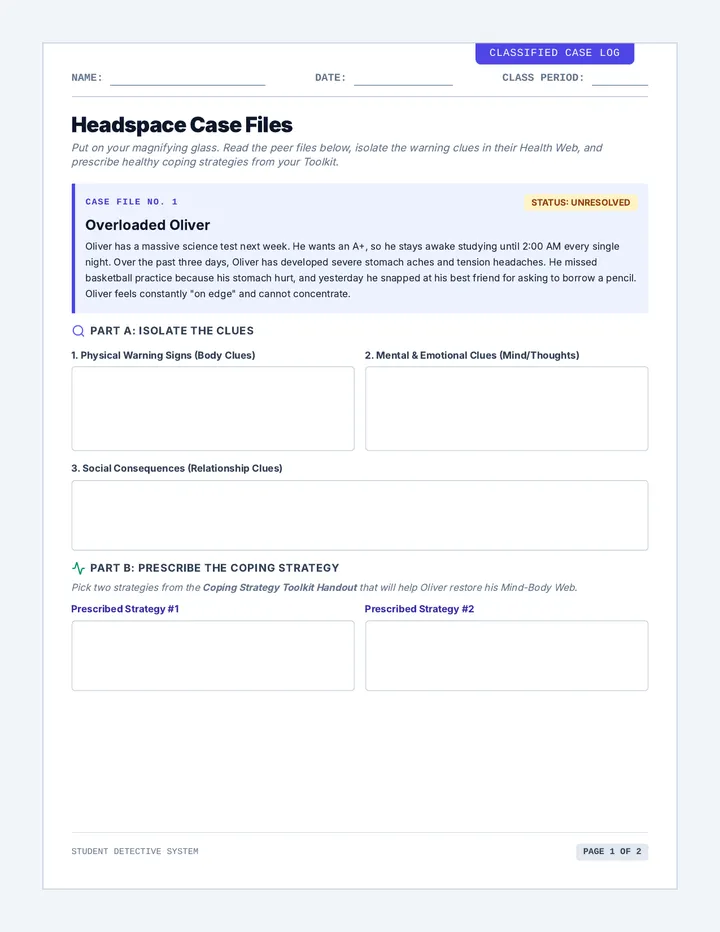
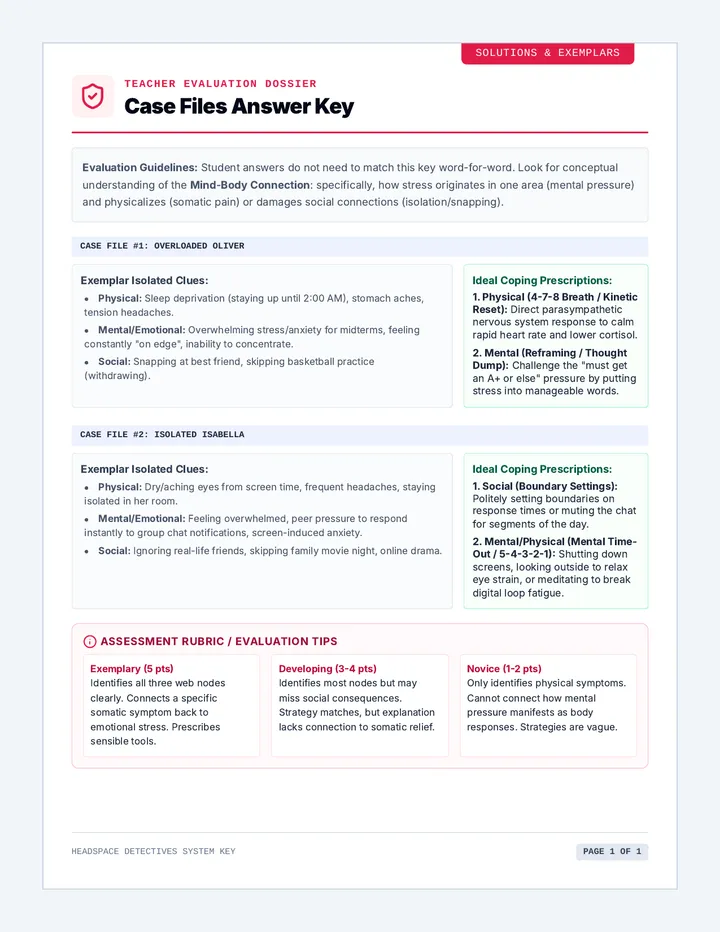
A comprehensive 60-minute lesson designed to teach students how mental health connects to physical and social well-being. Students act as 'Headspace Detectives' to analyze real-world peer scenarios, identify underlying mind-body links, and recommend healthy coping strategies from a toolkit.
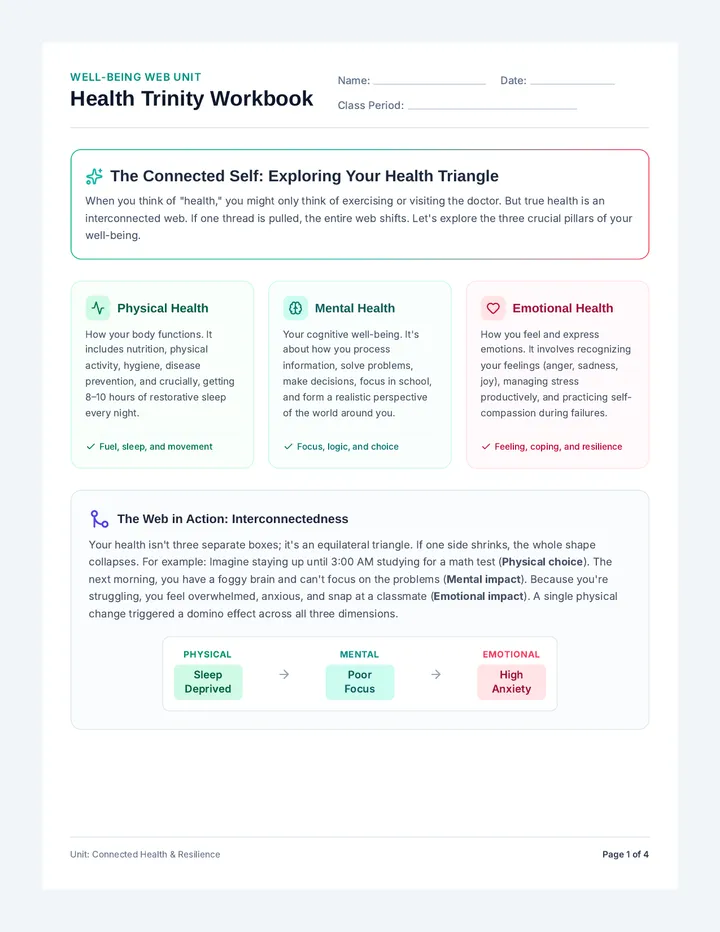
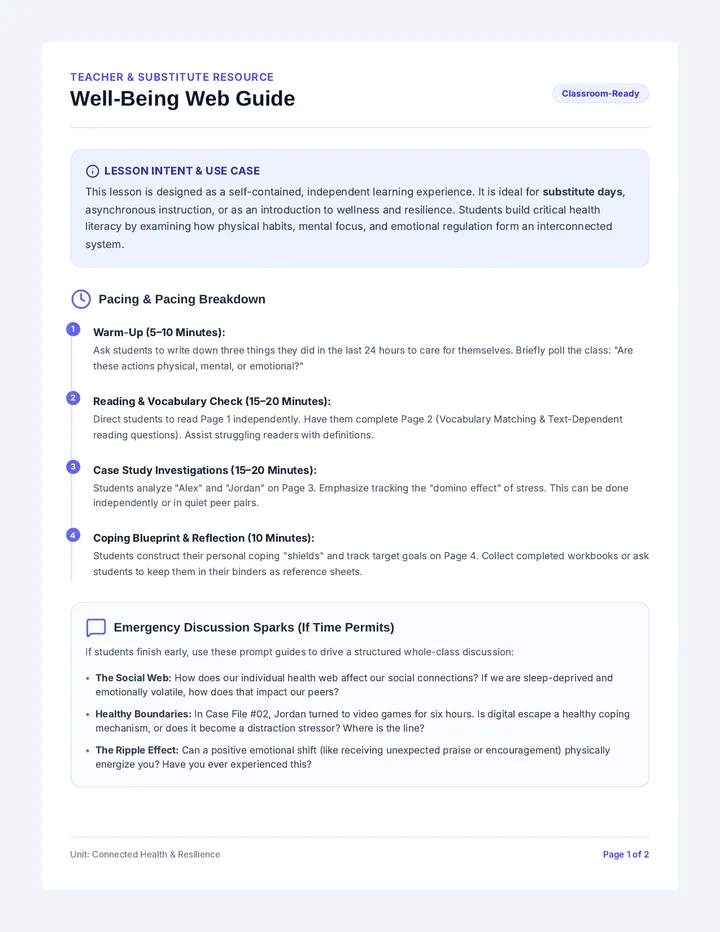
An independent substitute packet focusing on the interconnectedness of physical, mental, and emotional health. Students analyze real-world scenarios, complete guided readings, and practice stress-management and coping strategies.
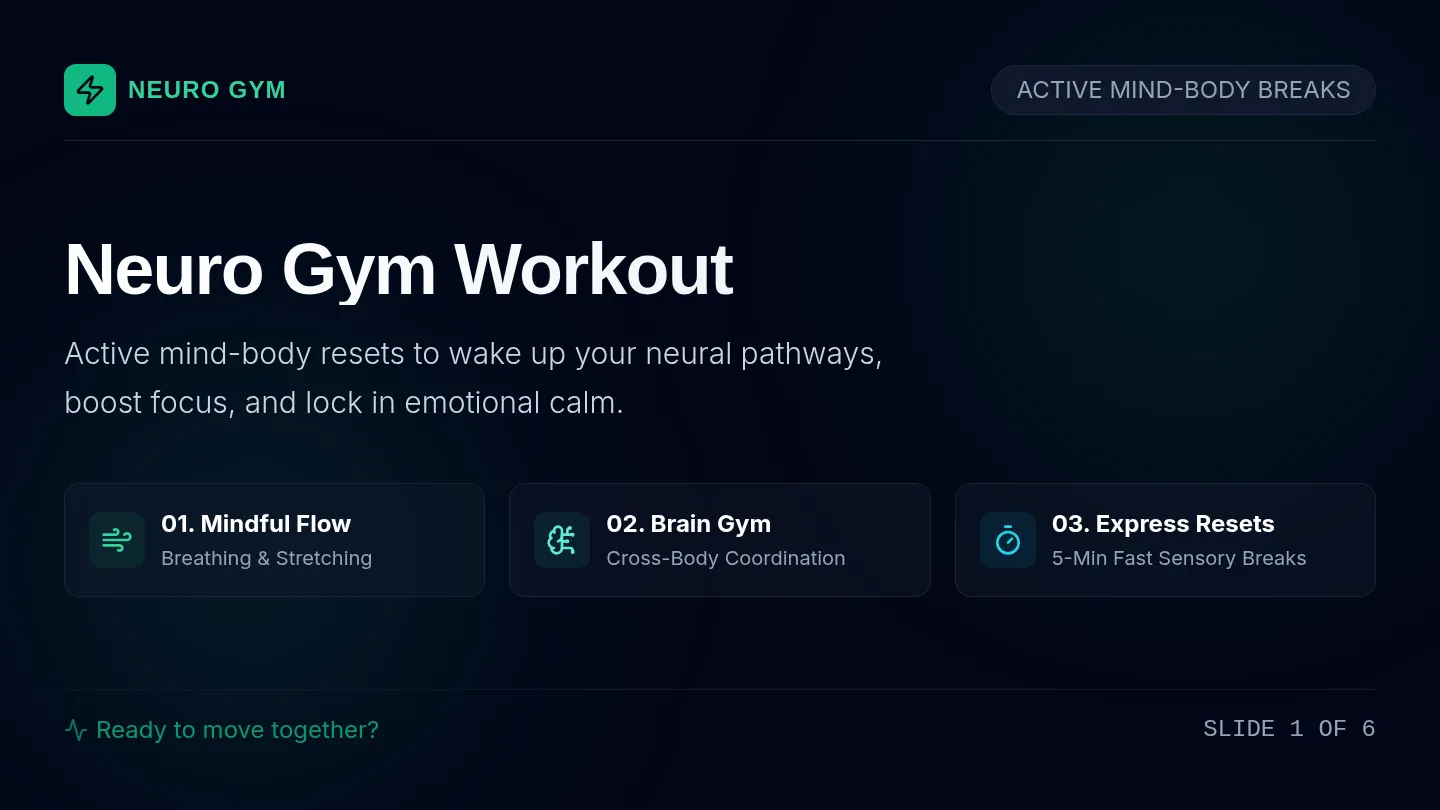
An active mindfulness and coordination lesson that combines low-impact yoga, cross-body brain gym exercises, and express sensory resets to optimize student focus and well-being.
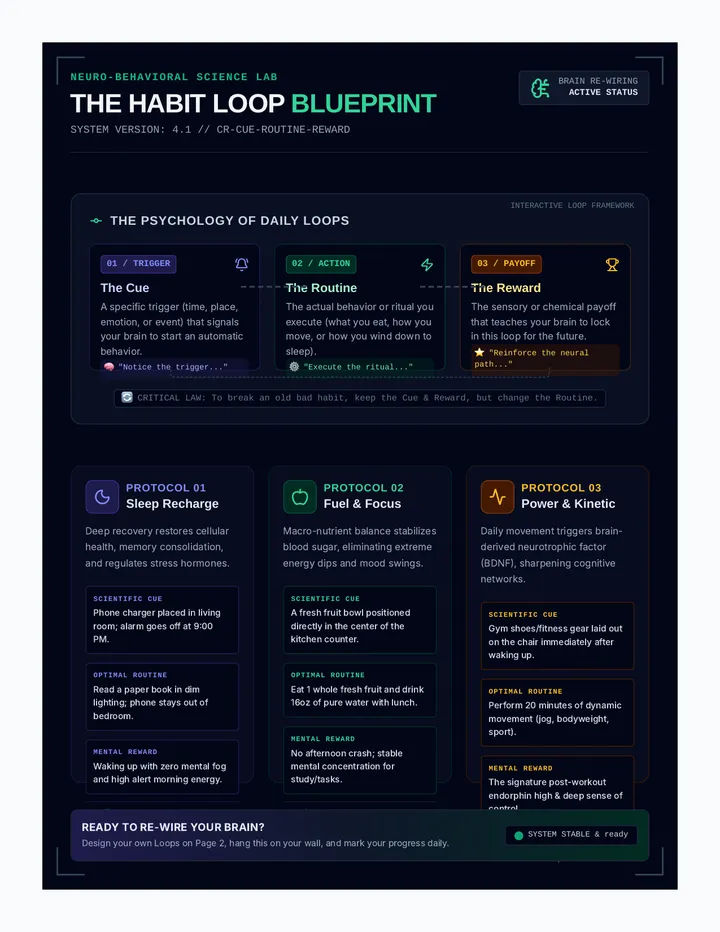
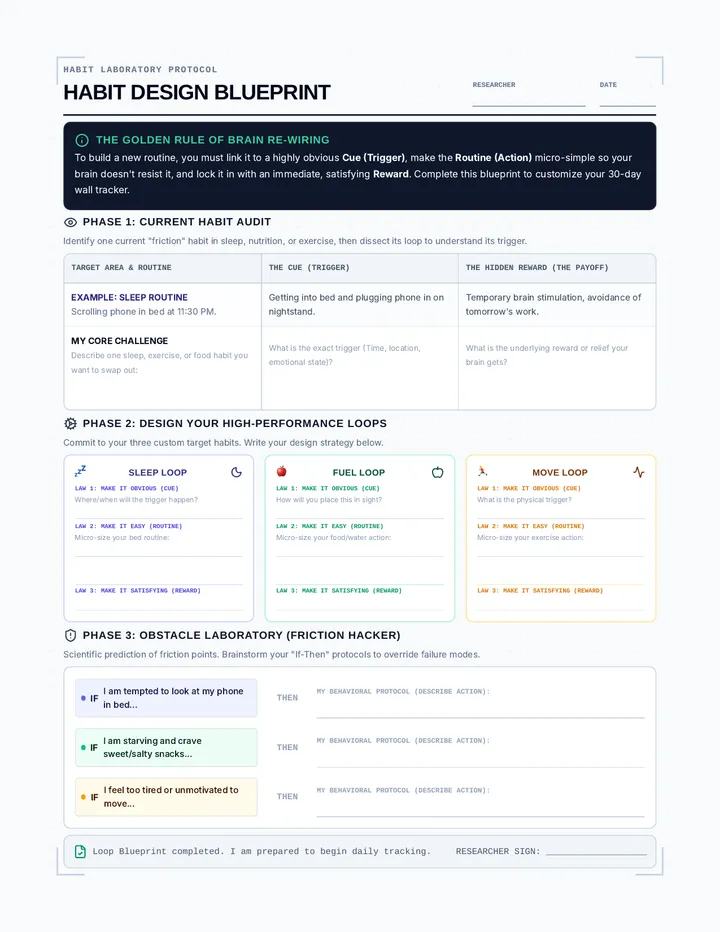
A hands-on guide and tracking system grounded in behavioral science to help students build lasting sleep, exercise, and nutrition habits. Students explore the psychology of cues, routines, and rewards to design and stick to their personal health goals.
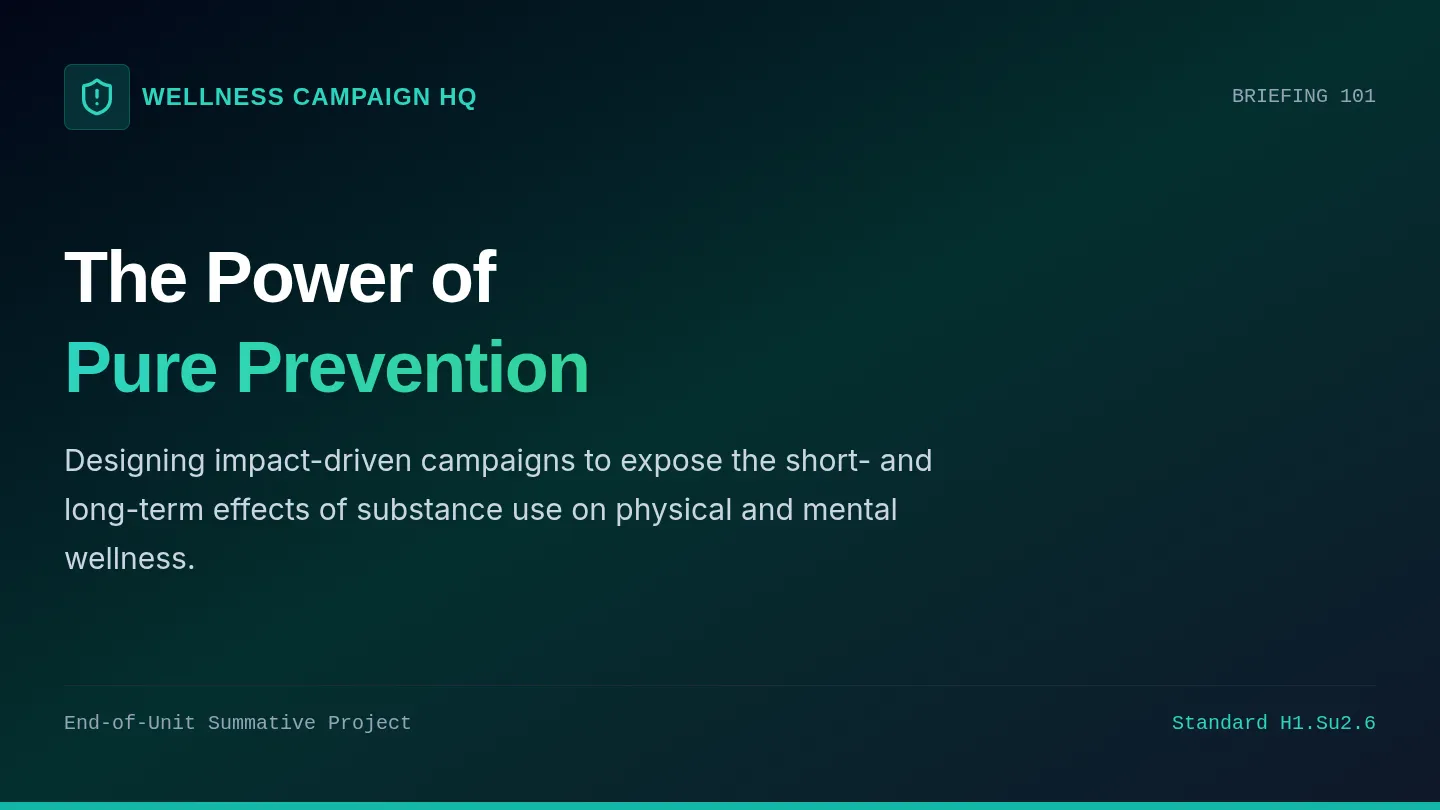
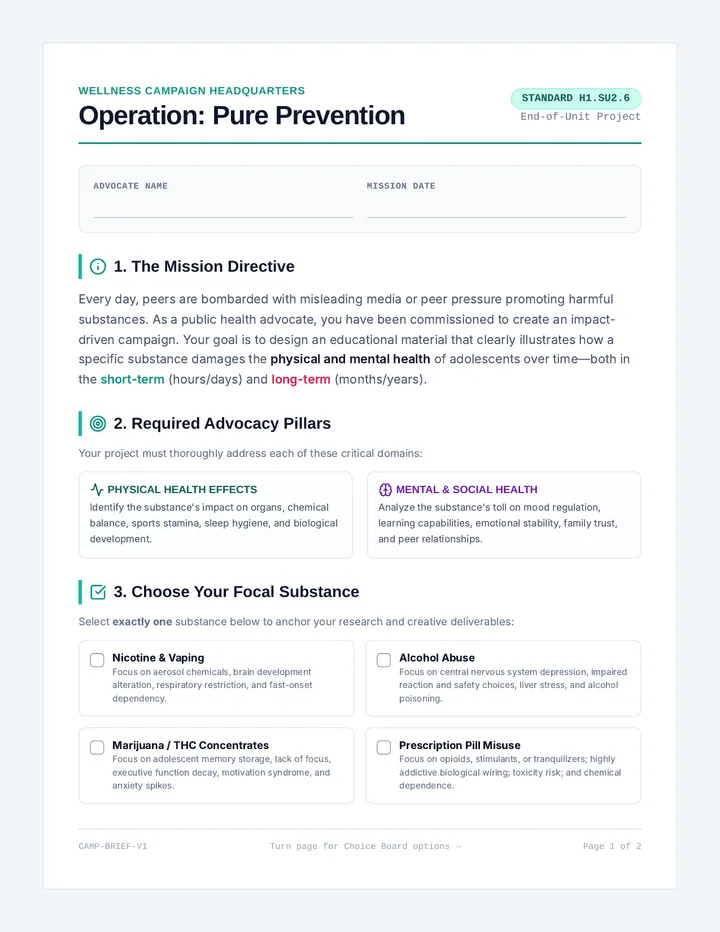
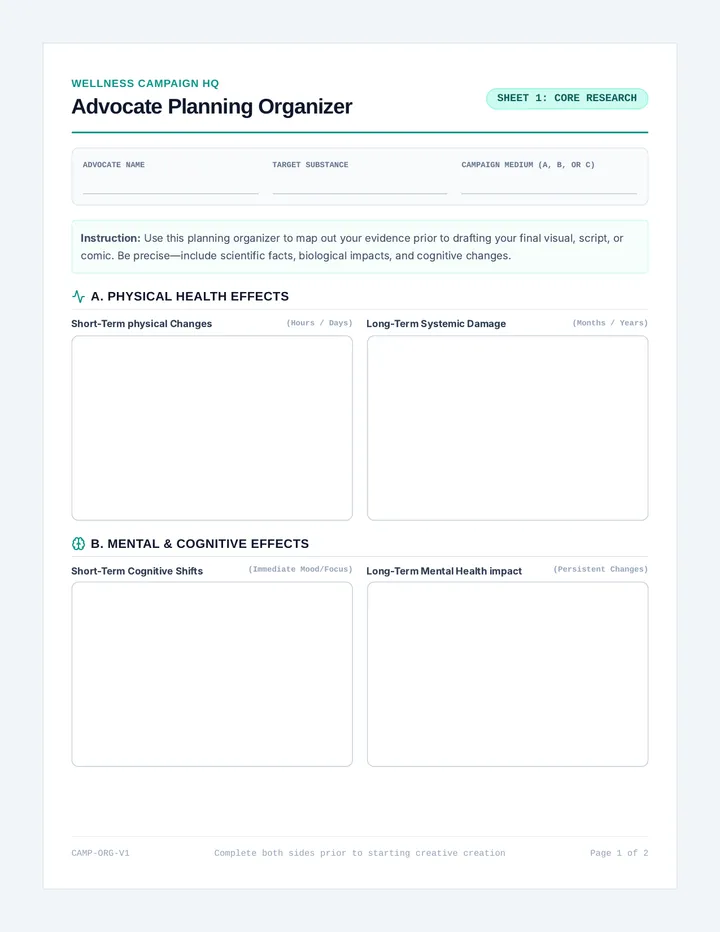
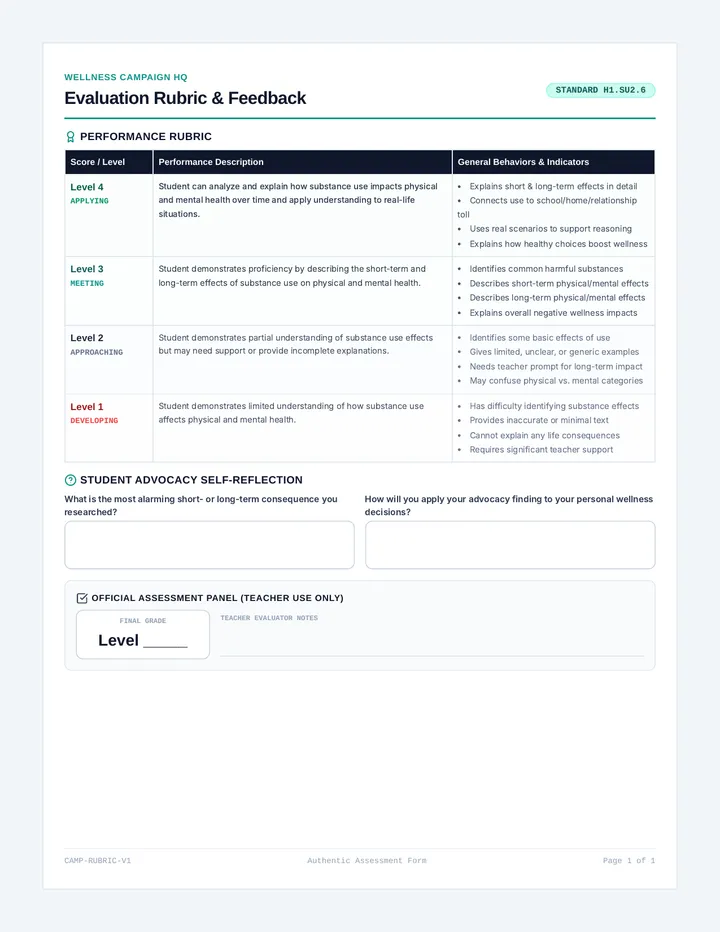
An end-of-unit project bundle where students act as public health advocates to design a PSA or select from a creative choice board, analyzing the short- and long-term physical and mental health effects of substance use.
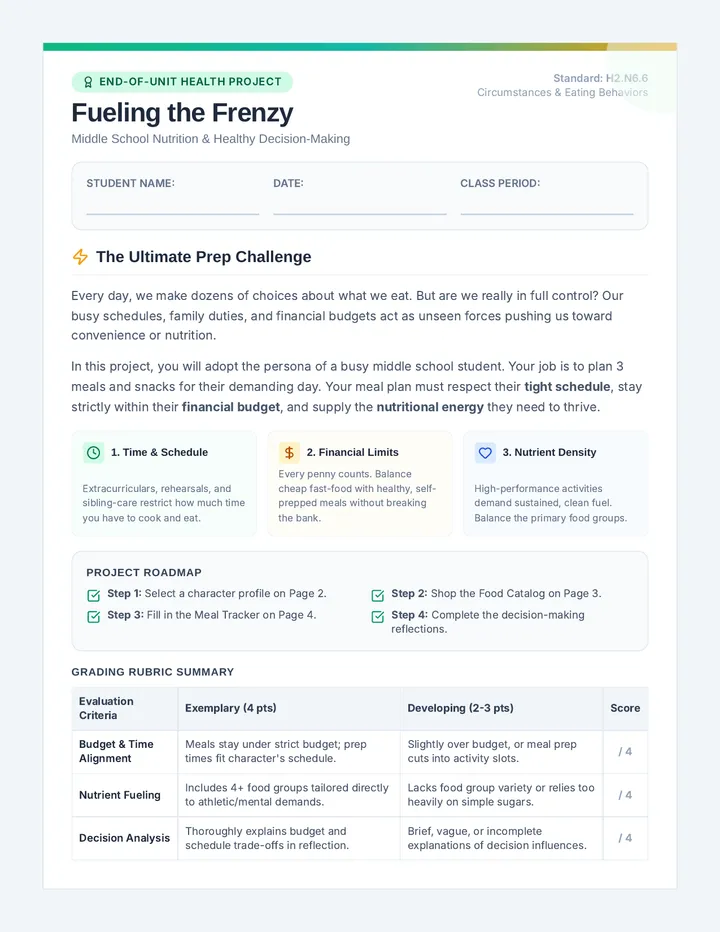
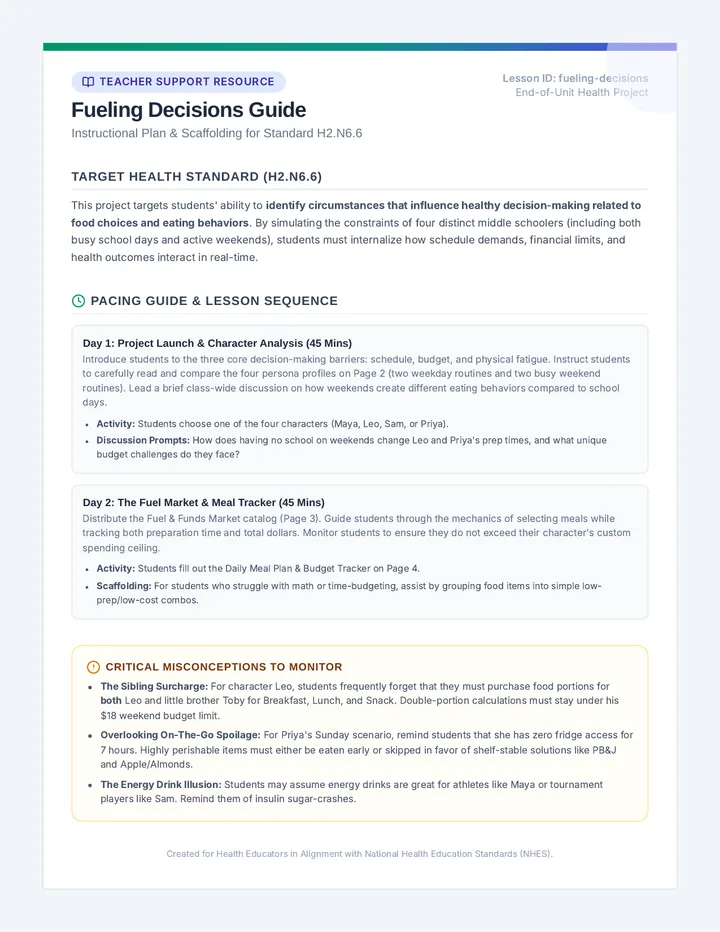
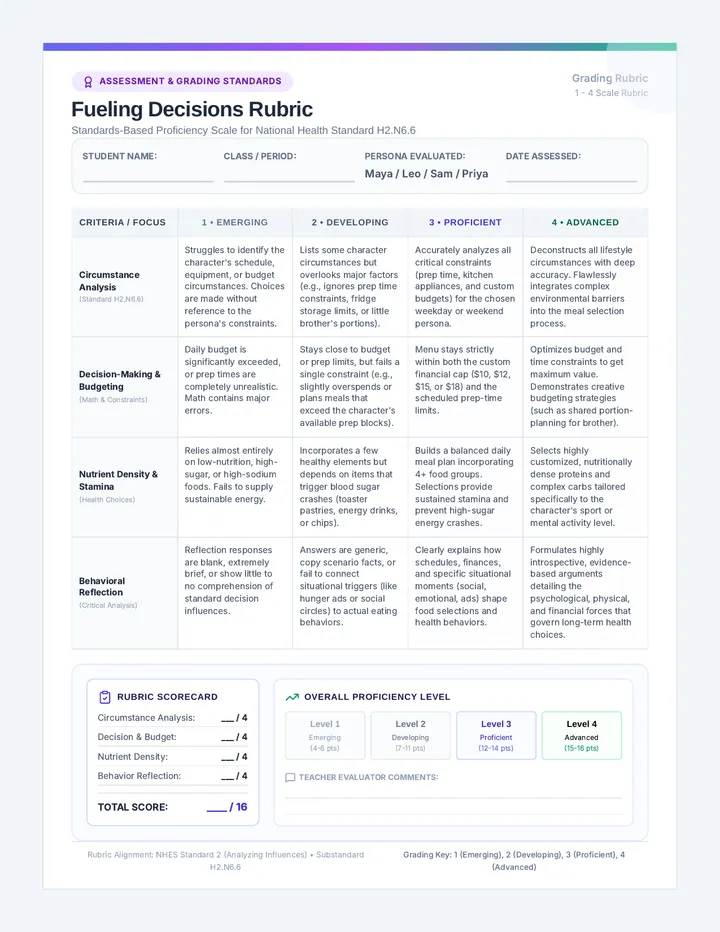
This lesson centers on standard H2.N6.6, helping students explore real-life circumstances like budget, schedule, and nutritional needs that influence food choices and eating behaviors. Through a hands-on project packet, students analyze middle school personas, budget their food, plan balanced meals, and reflect on decision-making influences.
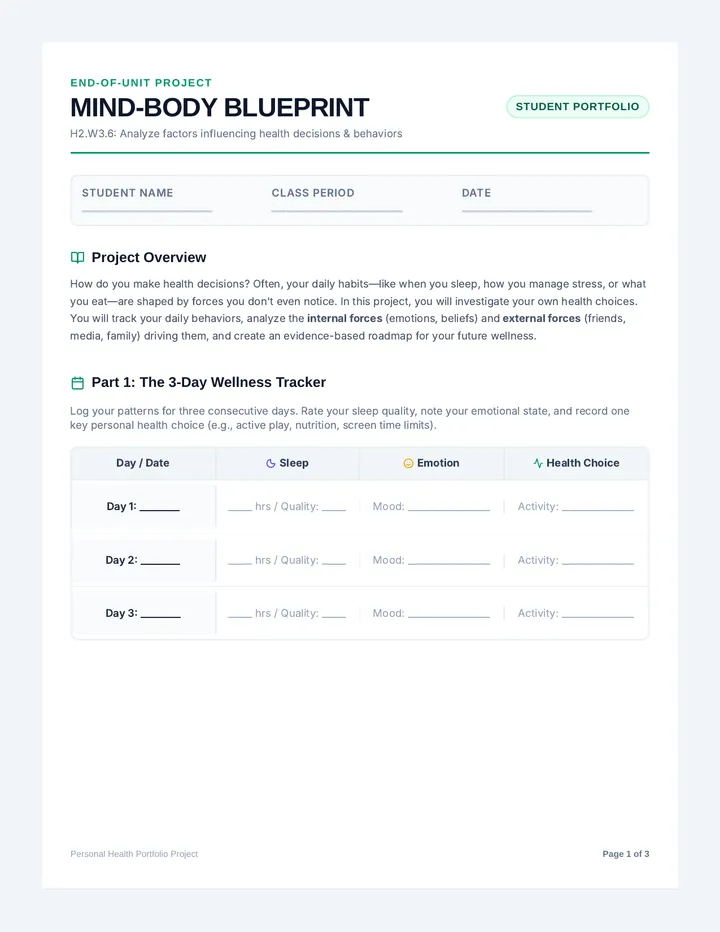
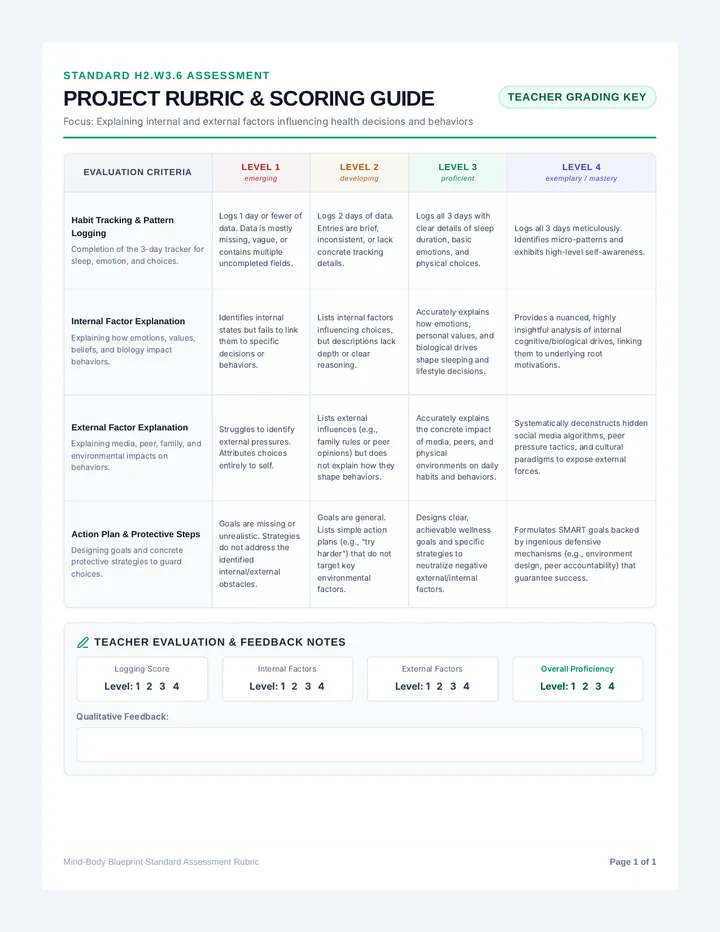
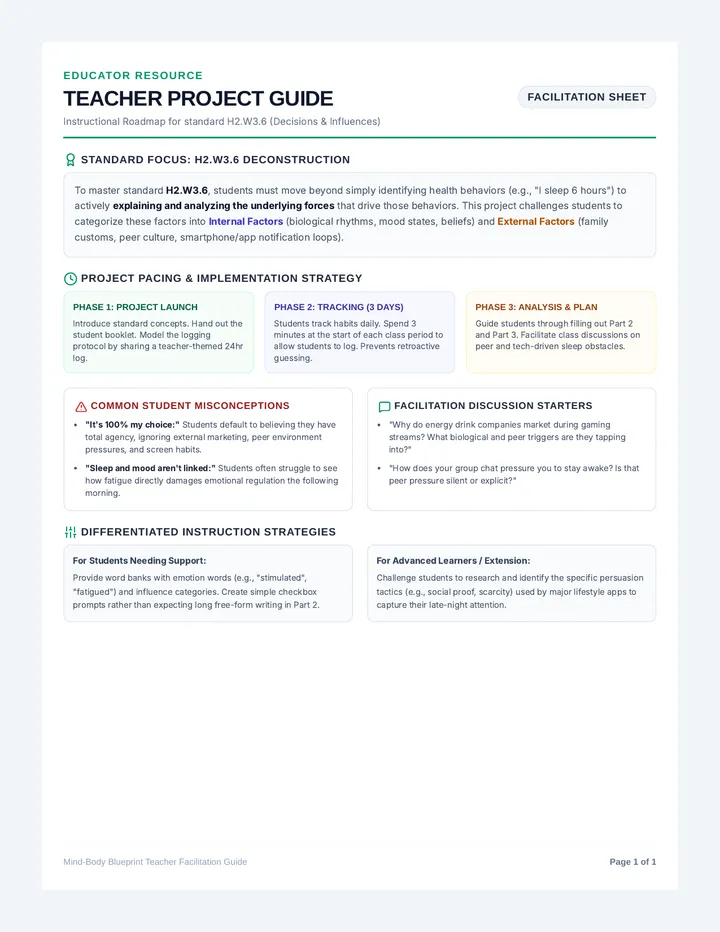
A comprehensive health portfolio project where students log their sleep, emotional regulation, and personal choices, analyze the internal and external factors influencing their behaviors, and design a personalized action plan. Includes student logs, an analytical rubric, and a teacher facilitation guide.
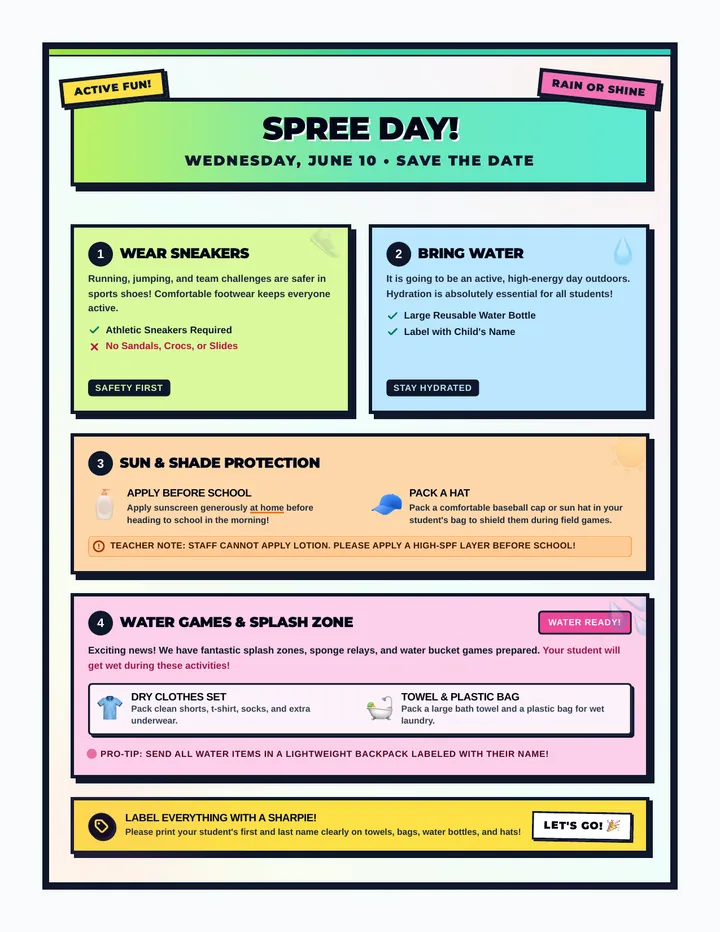
Resources and materials to help students, families, and teachers prepare for Spree Day, an energetic, outdoor, action-packed school field day.
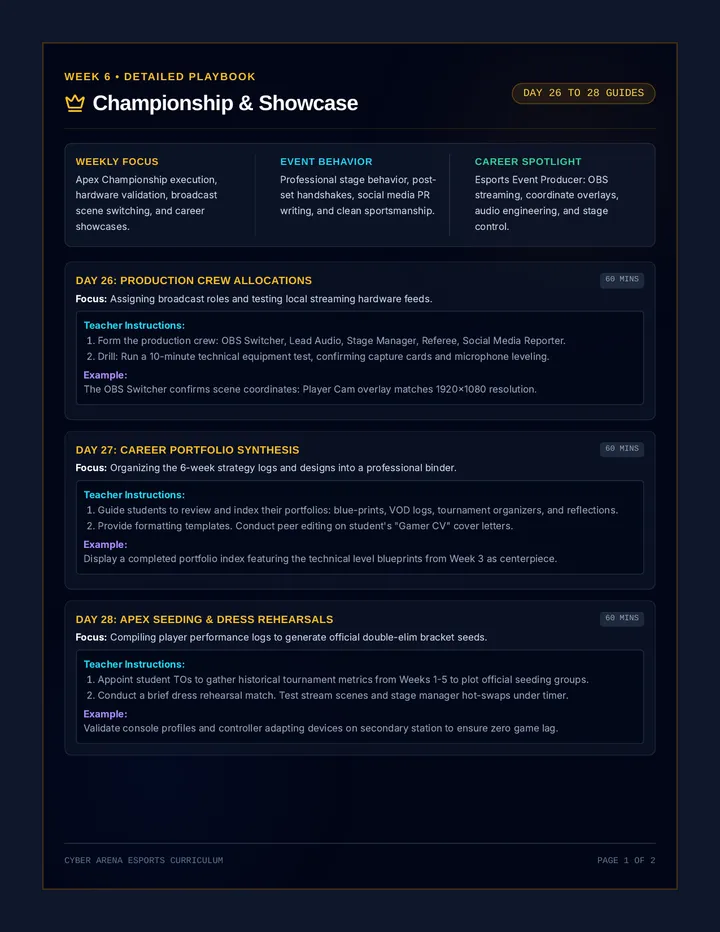
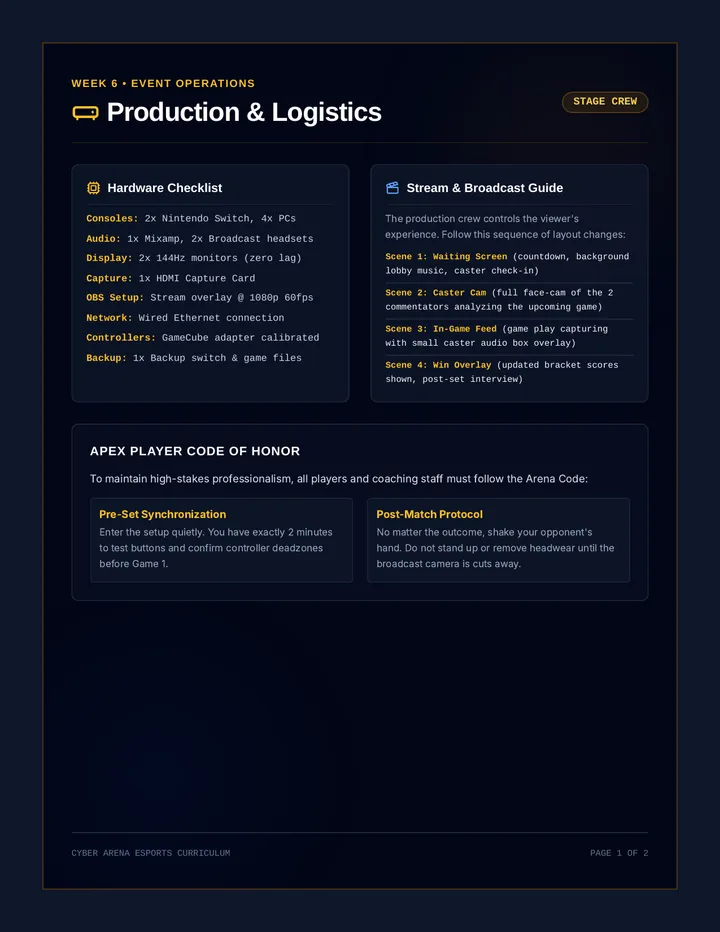
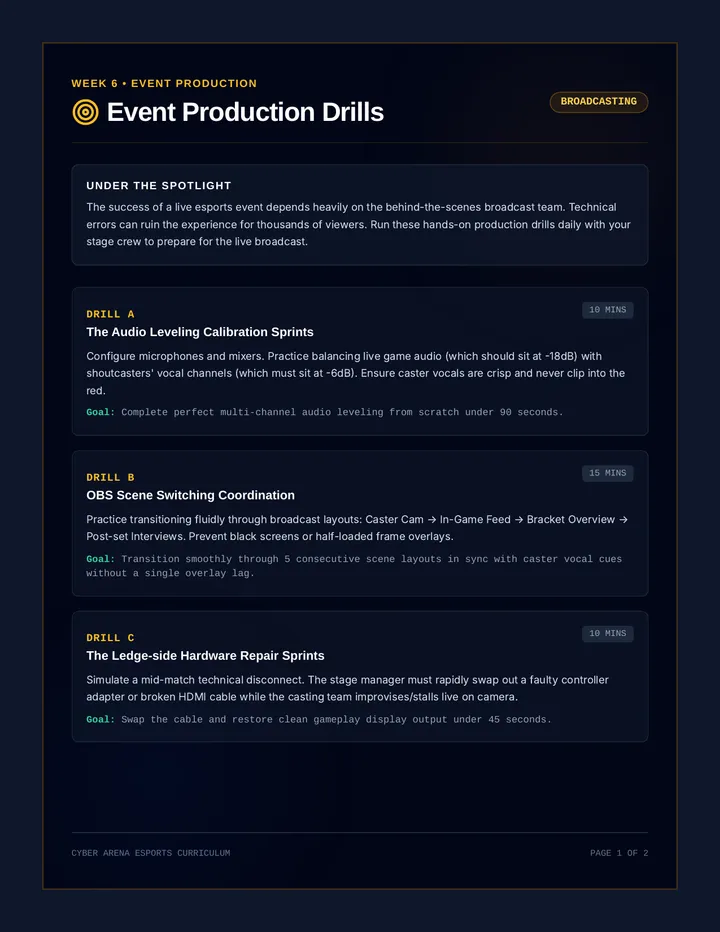
The grand finale week of the curriculum. Students execute a massive live bracket tournament and showcase their esports career portfolios.
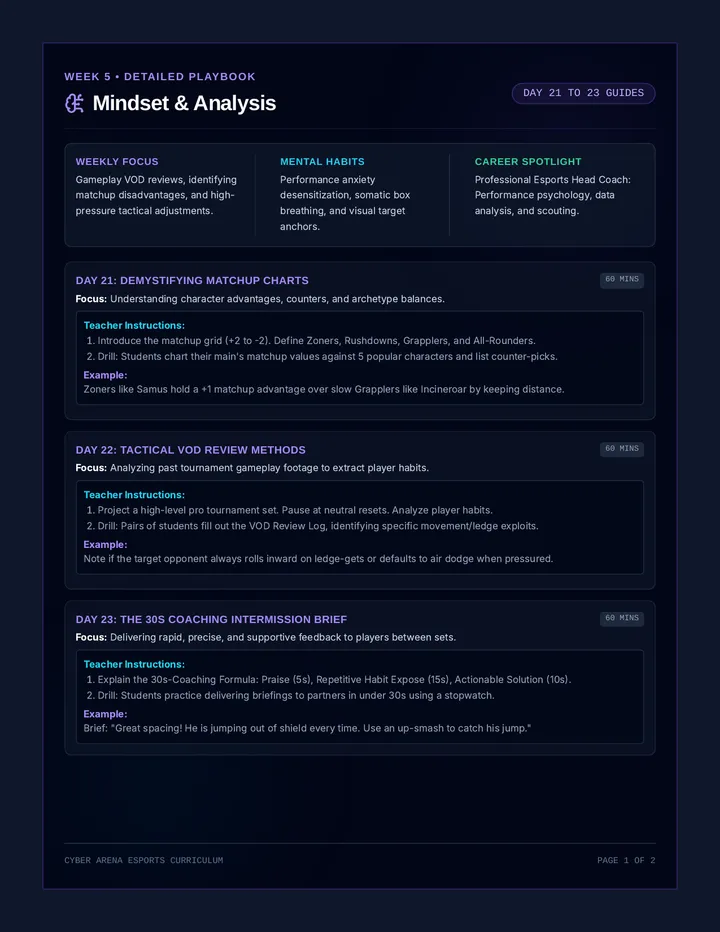
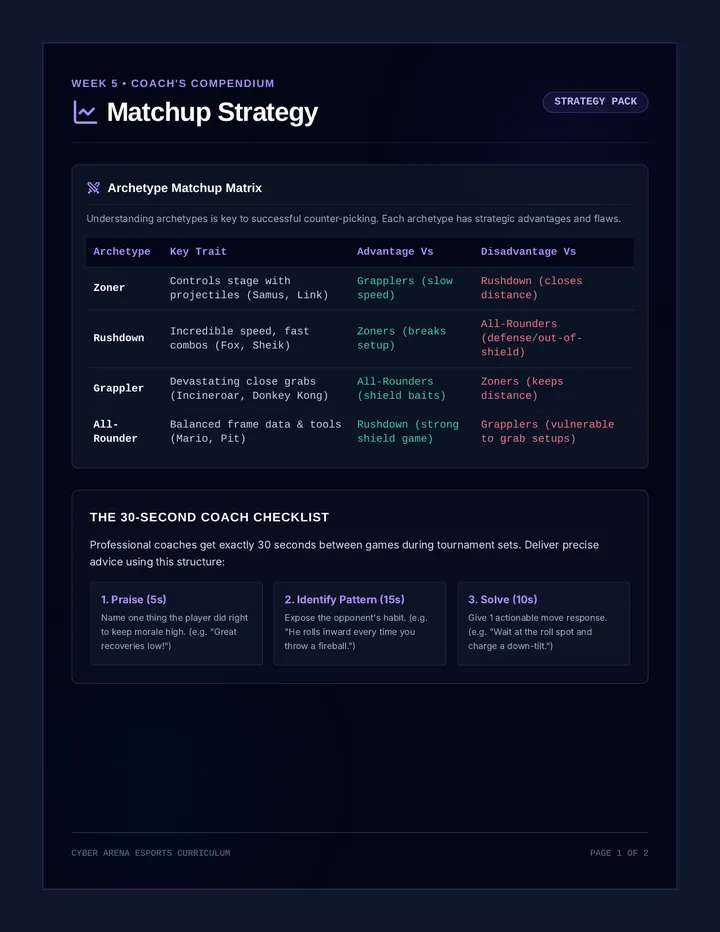
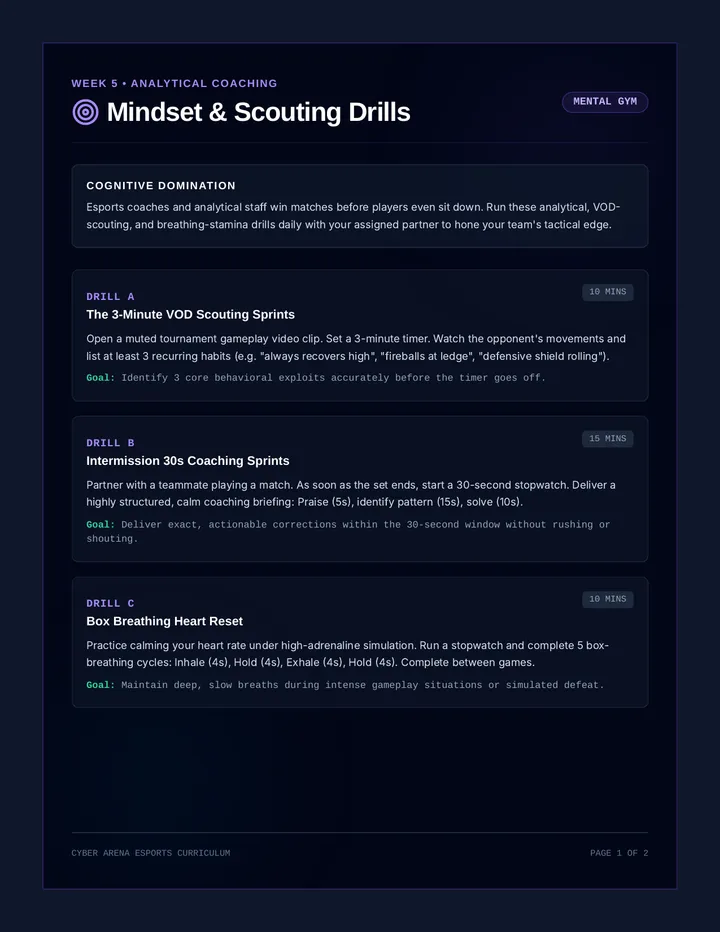
Covers mental stamina, character matchup analysis, and competitive coaching roles. Students learn how to analyze gameplay video (VOD review) and support team members mentally.
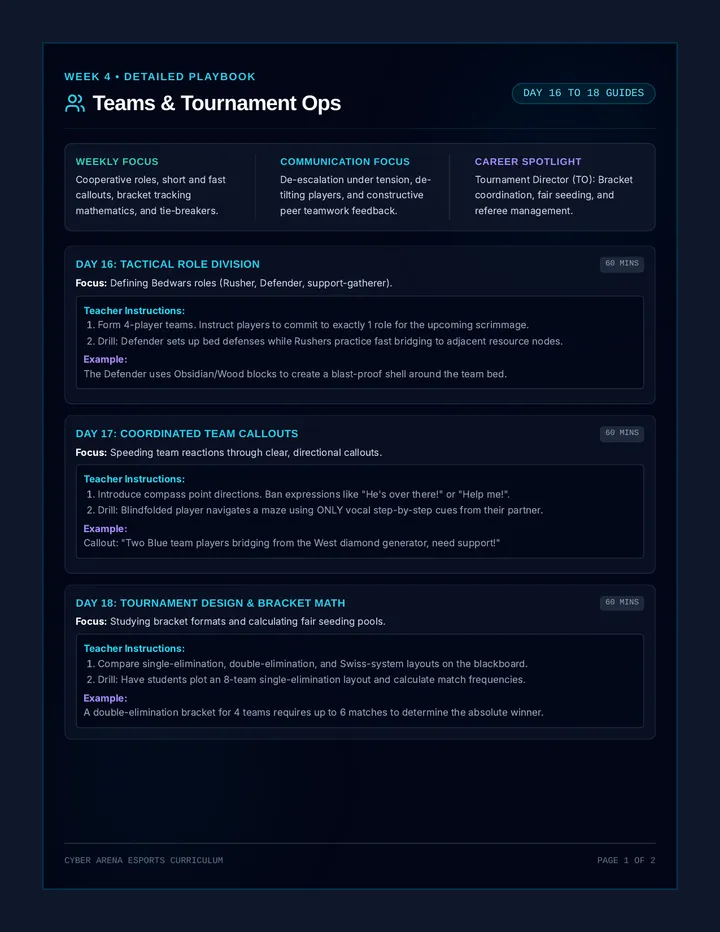
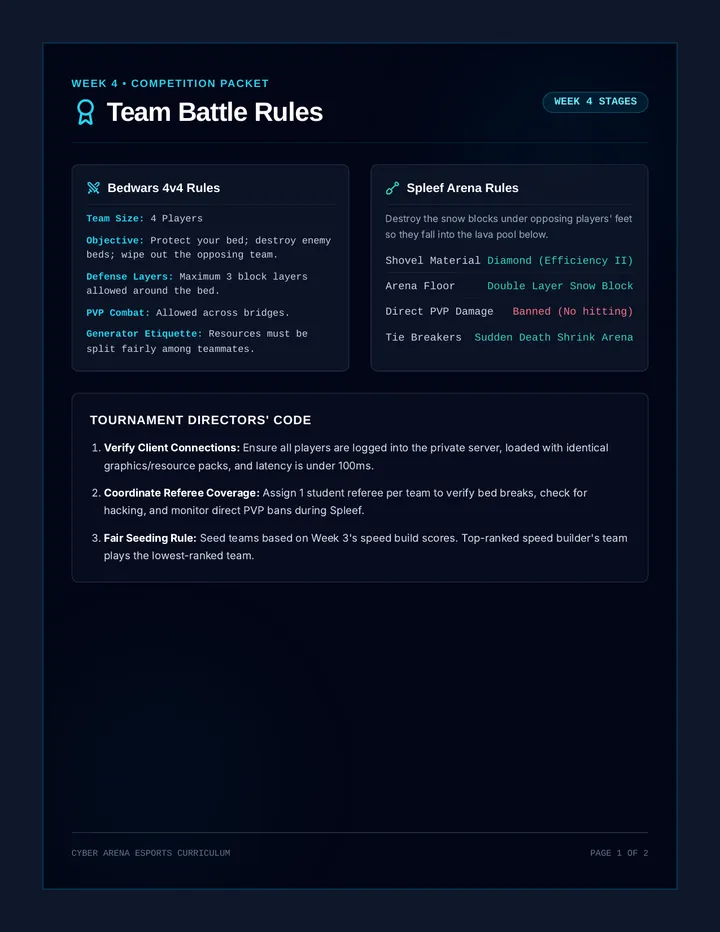
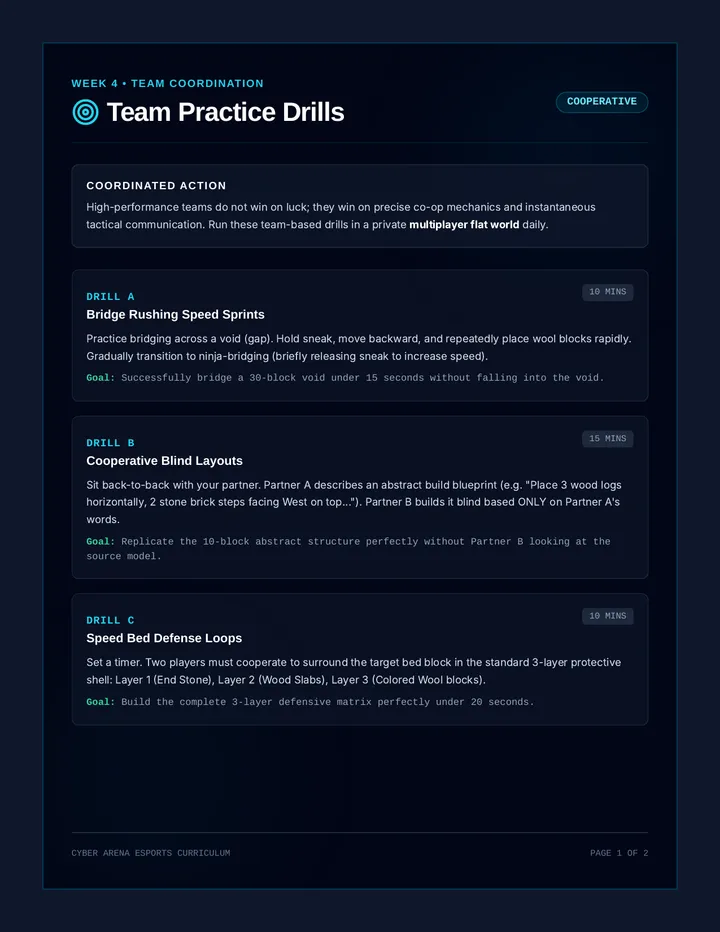
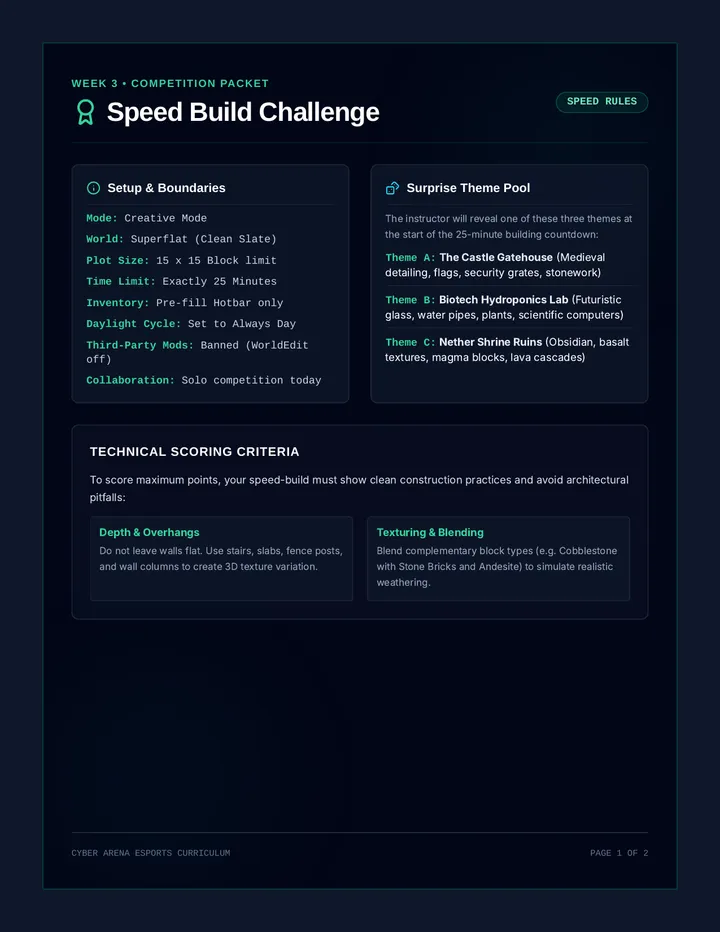
Team-based competitive Minecraft gameplay including Bedwars, Spleef, and build-offs. Teaches communication, tournament coordination, brackets, and conflict resolution.
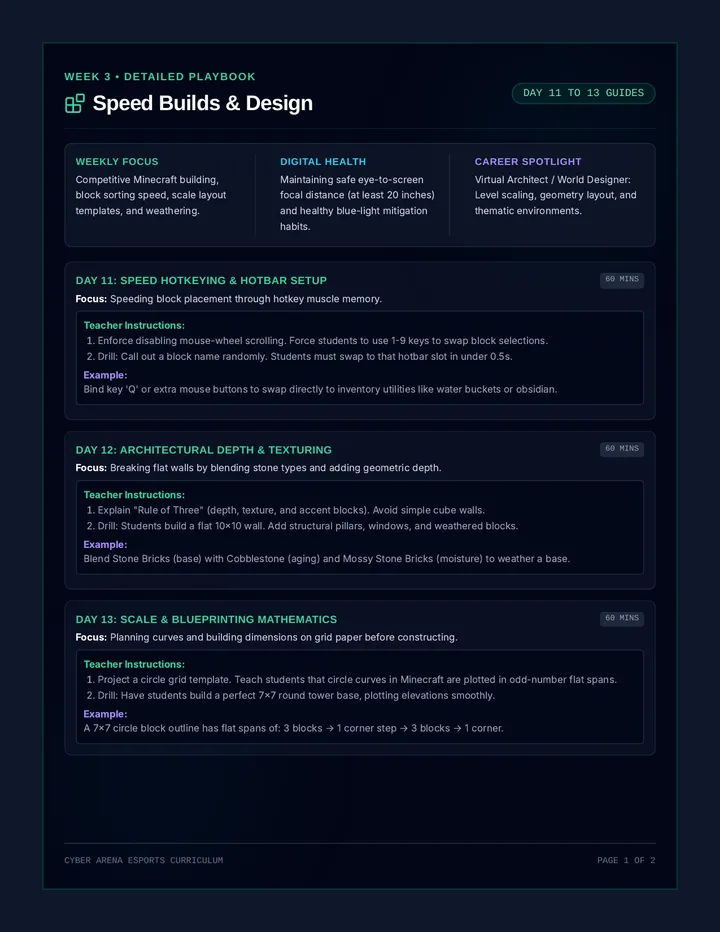
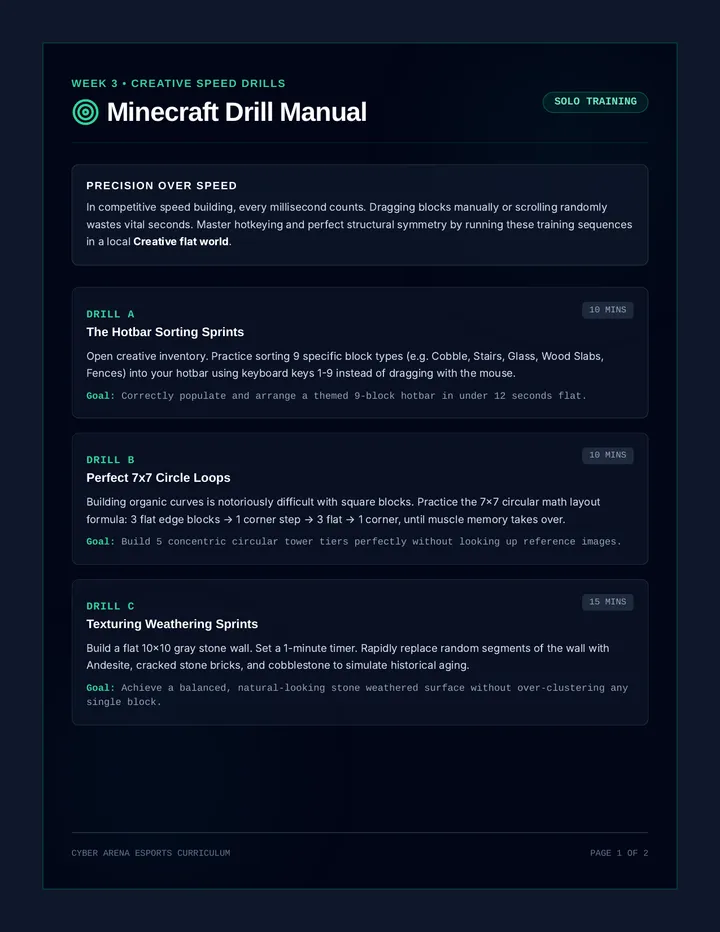
Introduction to competitive Minecraft building and speed builds. Explores the career of game design, map making, and spatial visualization.
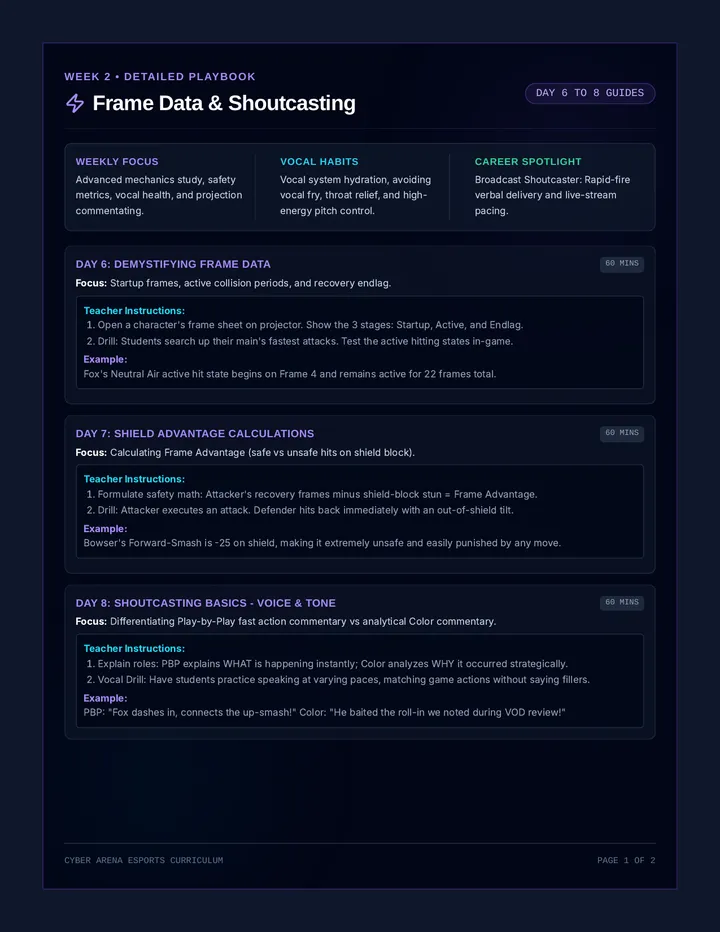
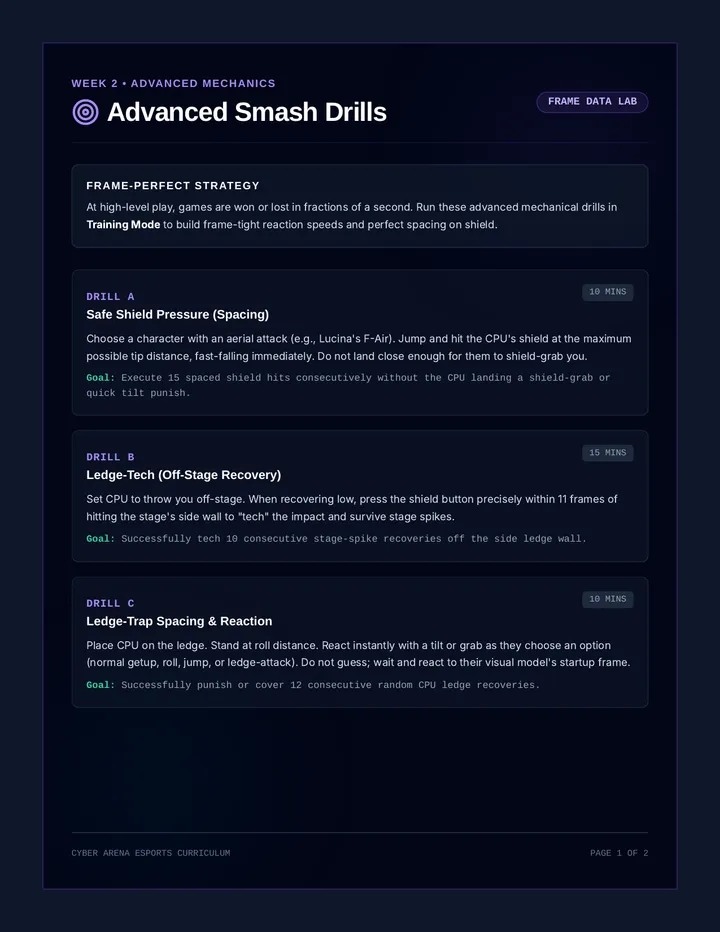
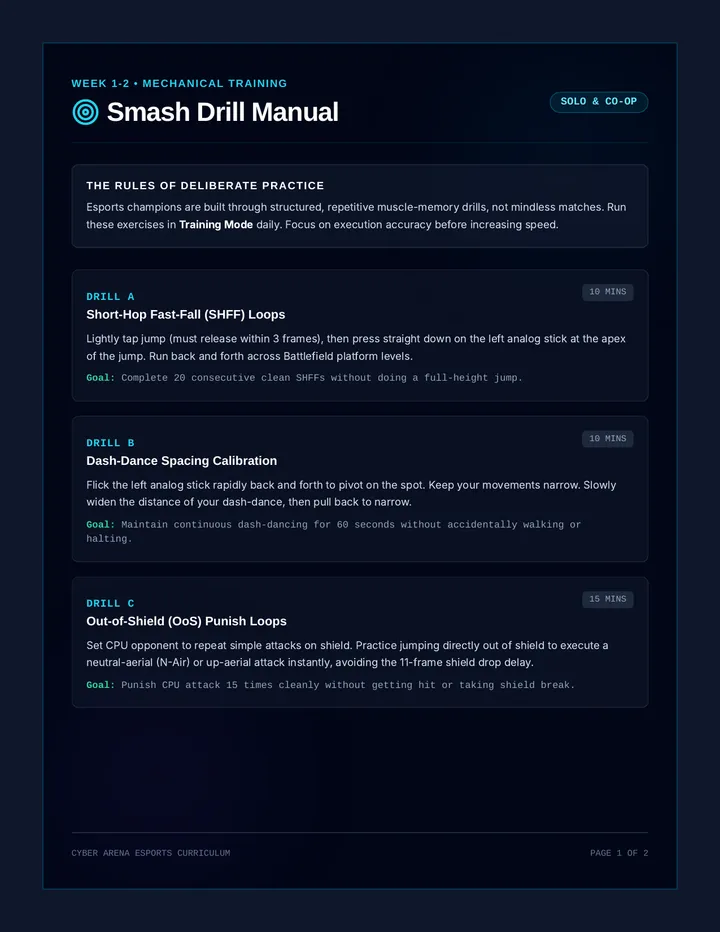
Advanced mechanical study of Smash Ultimate focusing on frame data, hitboxes, and stage control. Integrates shoutcasting, live commentary skills, and vocal health.
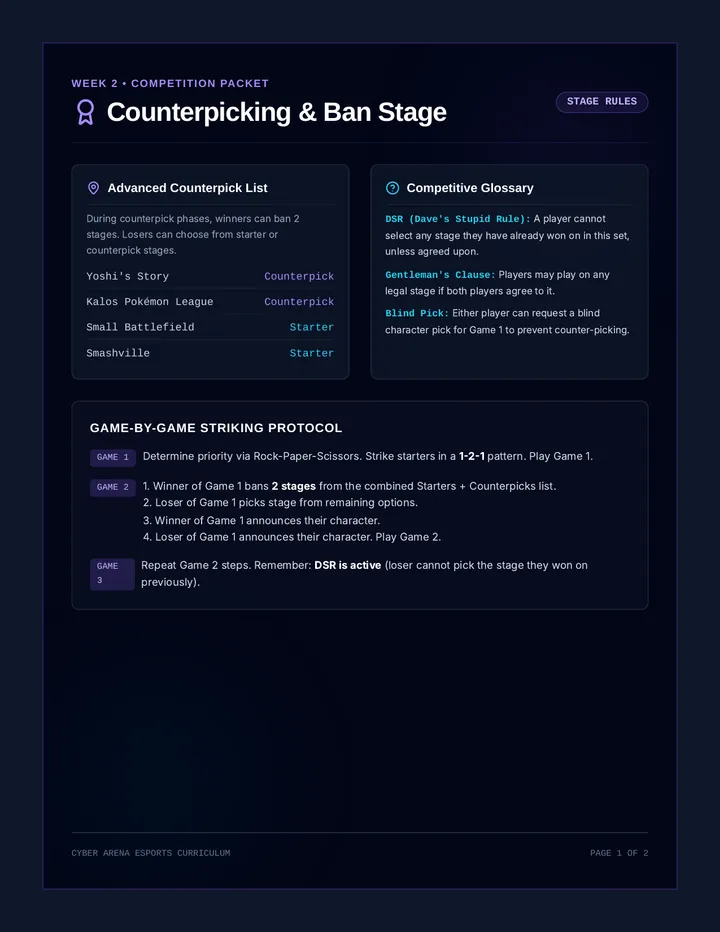
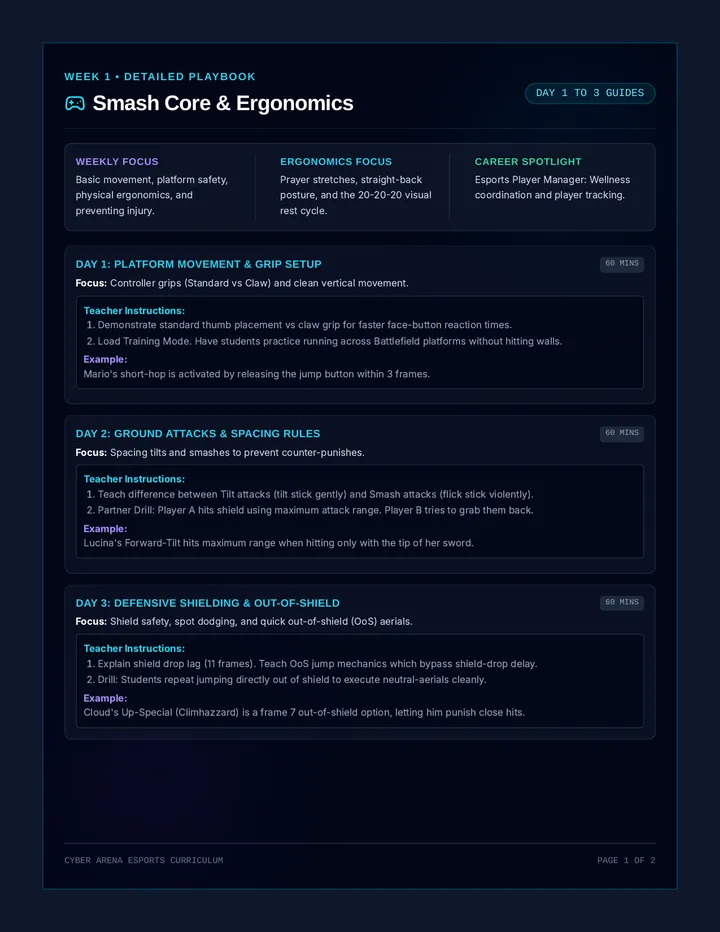
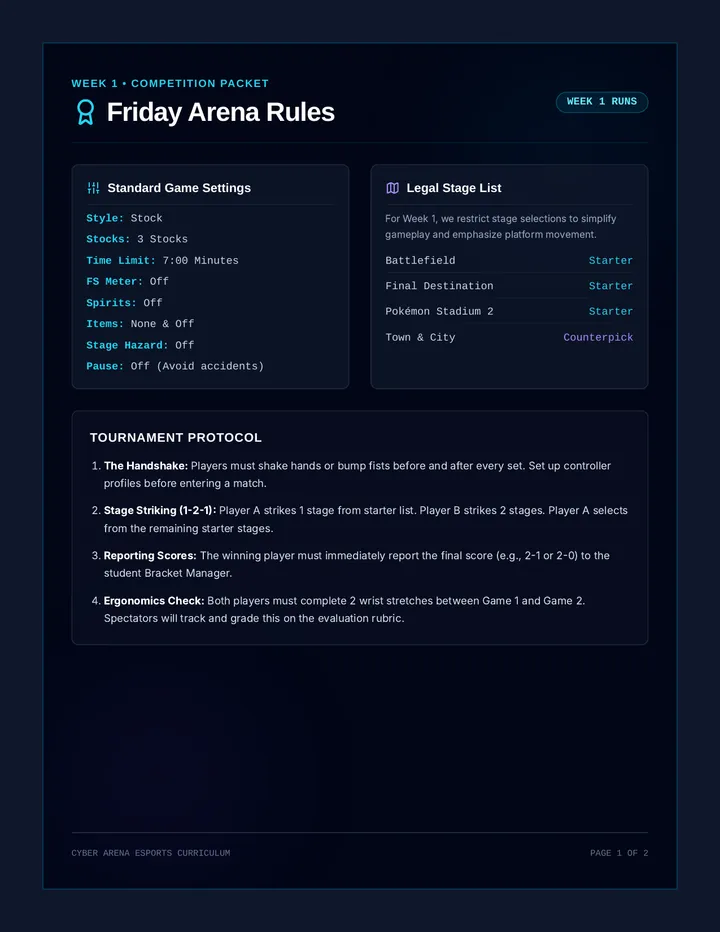
Introduction to competitive Super Smash Bros. Ultimate and basic movement options. Focuses on healthy physical habits (ergonomics, stretches) and team management careers.
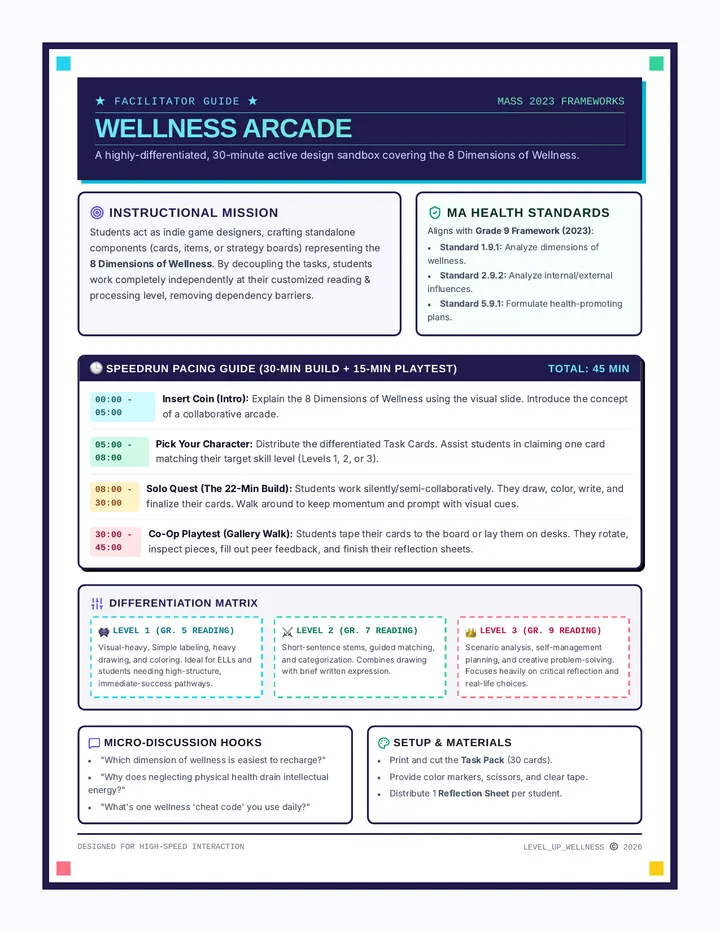
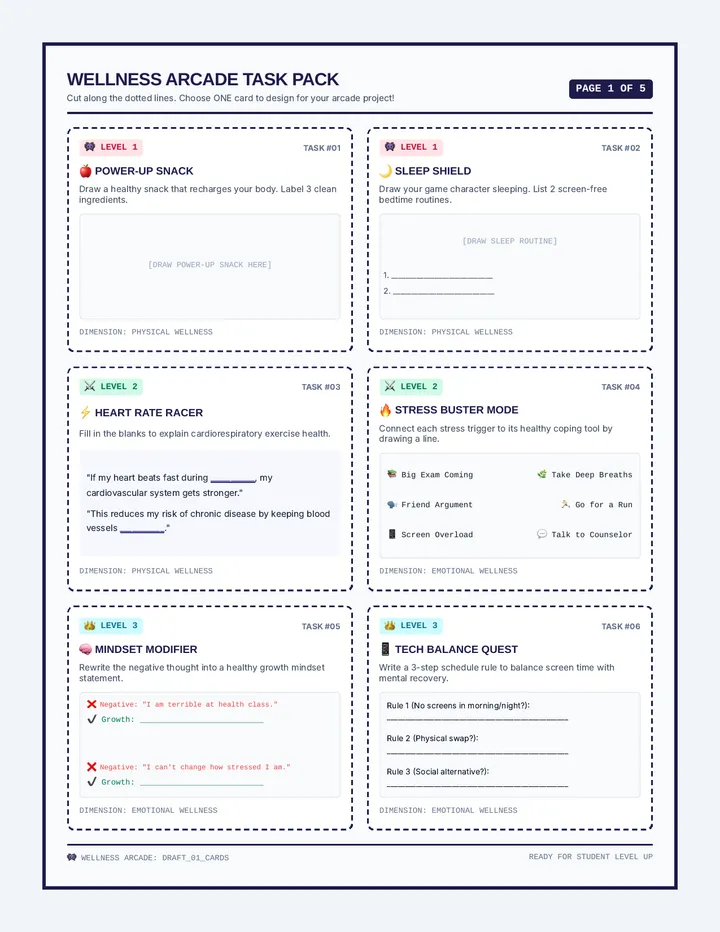
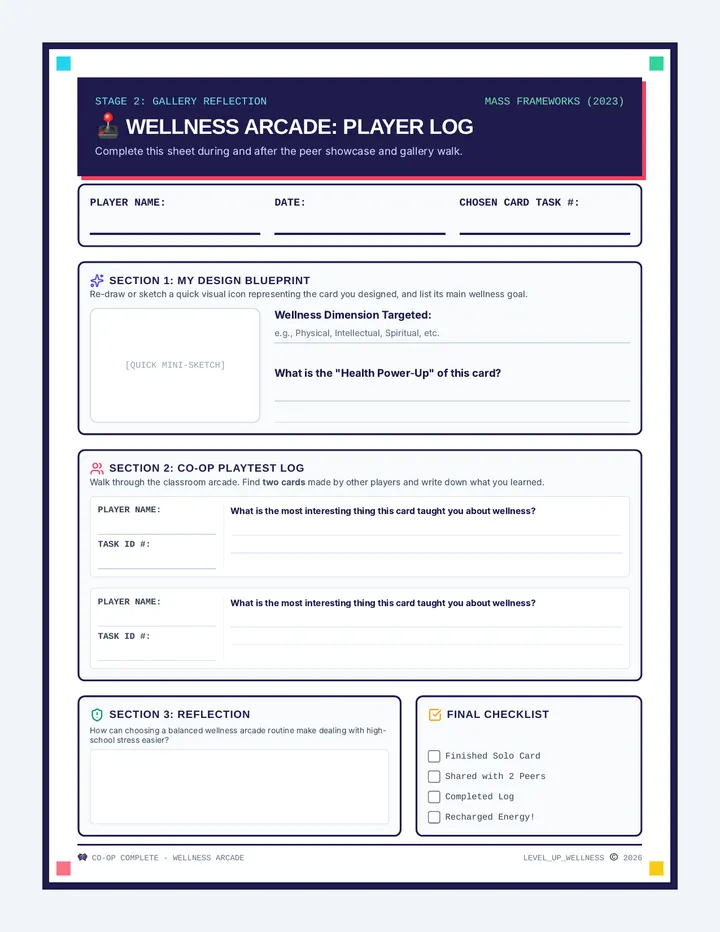
An active, highly differentiated lesson where Grade 9 students design individual game components (cards, tokens, challenges) representing the 8 dimensions of wellness. Built for a fast-paced 30-minute workspace session followed by a 15-minute collaborative gallery walk and peer reflection.
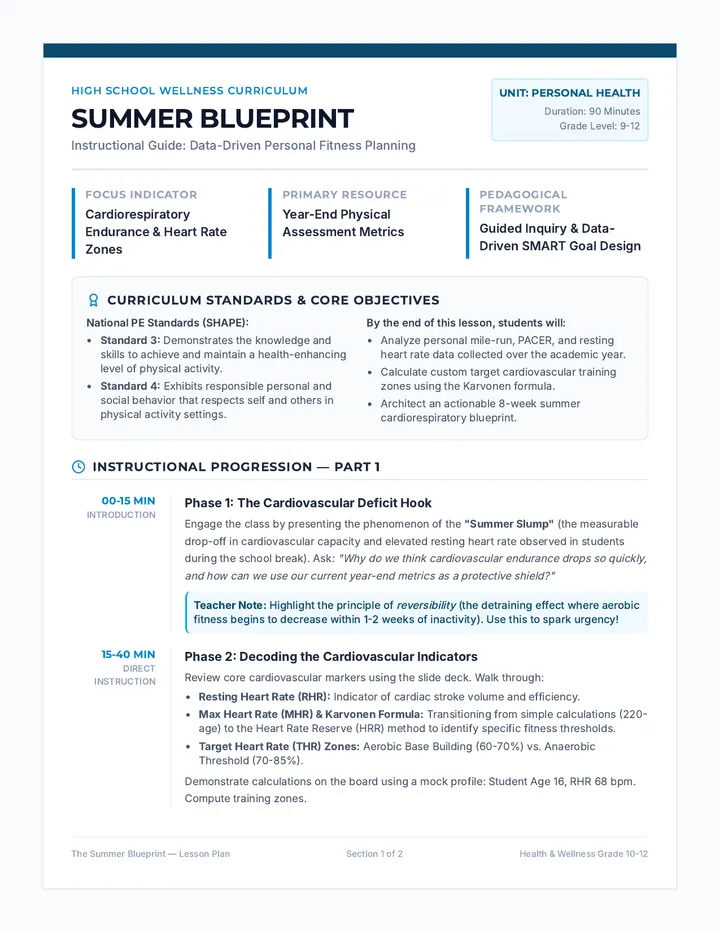
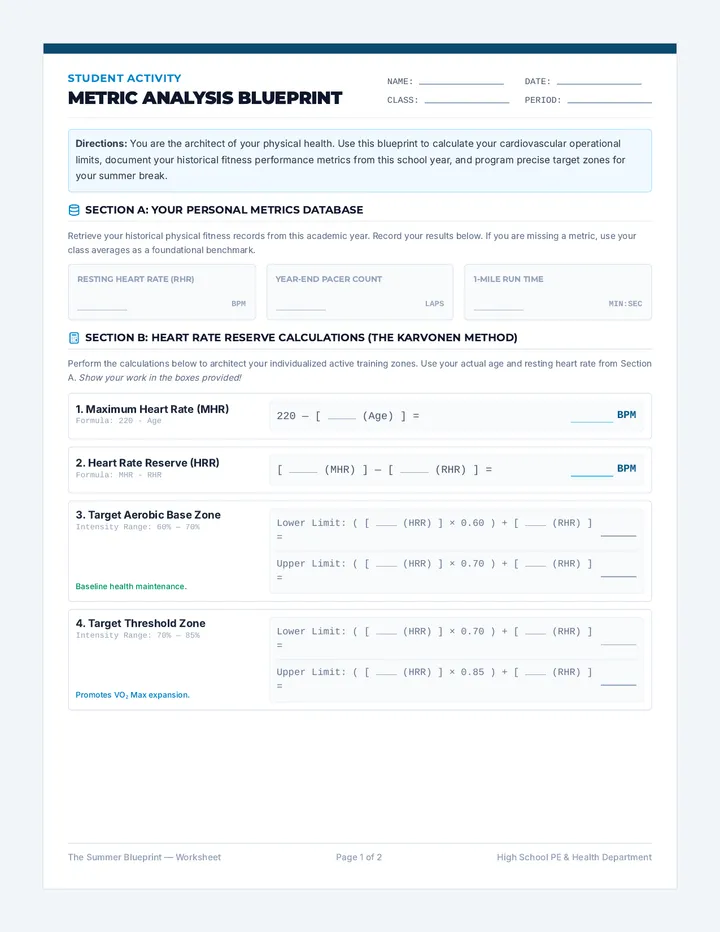
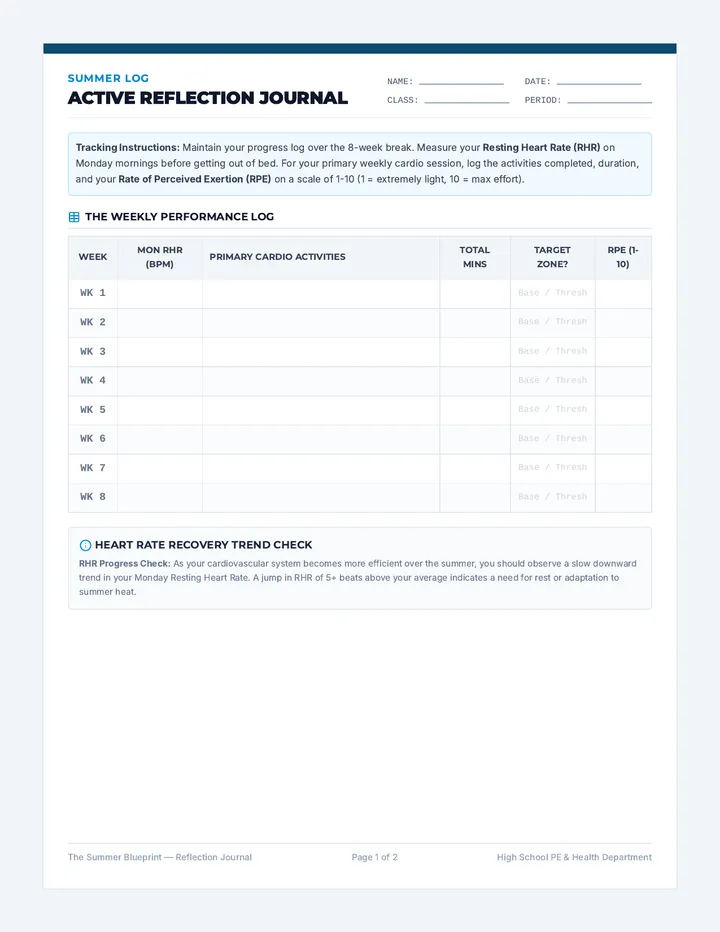
A data-driven wellness lesson where high school students analyze their year-long fitness metrics to architect a personalized, cardiovascular-focused summer health plan.
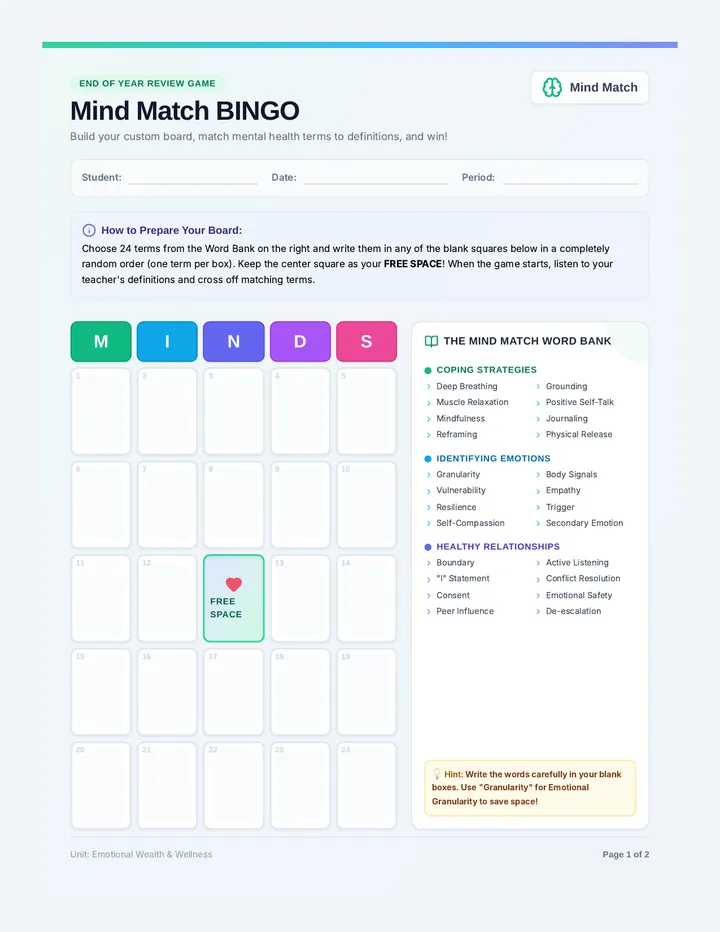
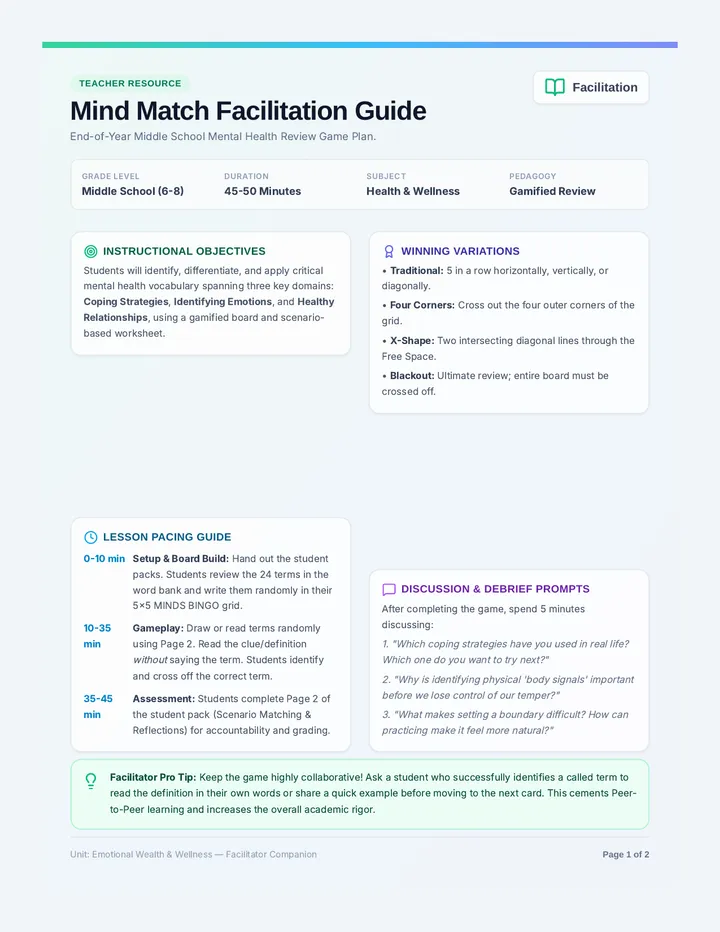
An end-of-year review game designed for middle school students to master critical mental health concepts. The game covers coping strategies, identifying emotions, and healthy relationships in an interactive, randomized BINGO format that builds academic accountability through reflection and scenario matching.
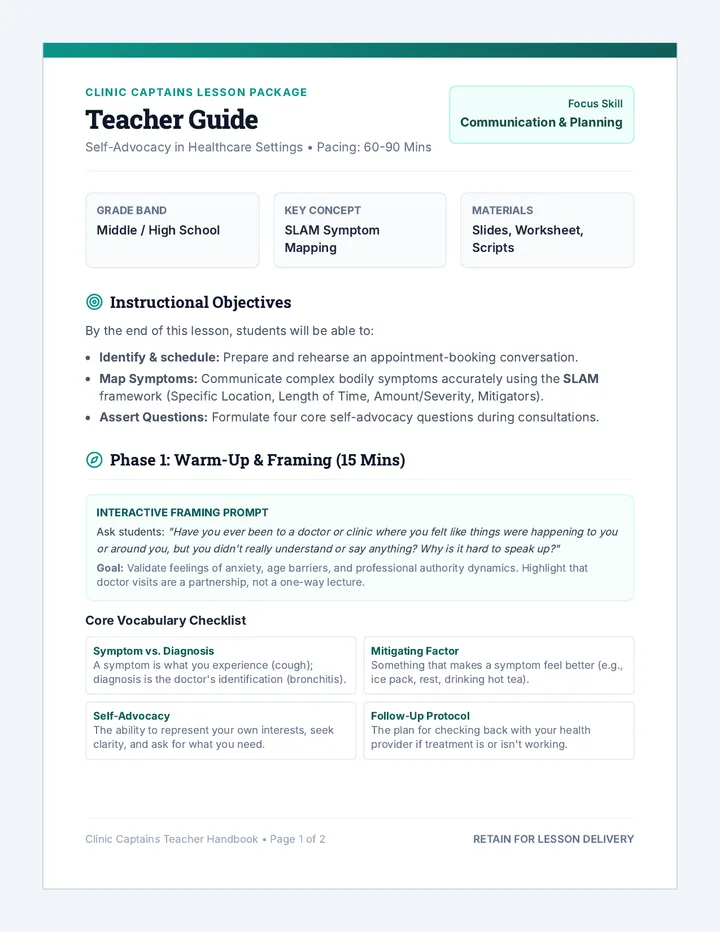
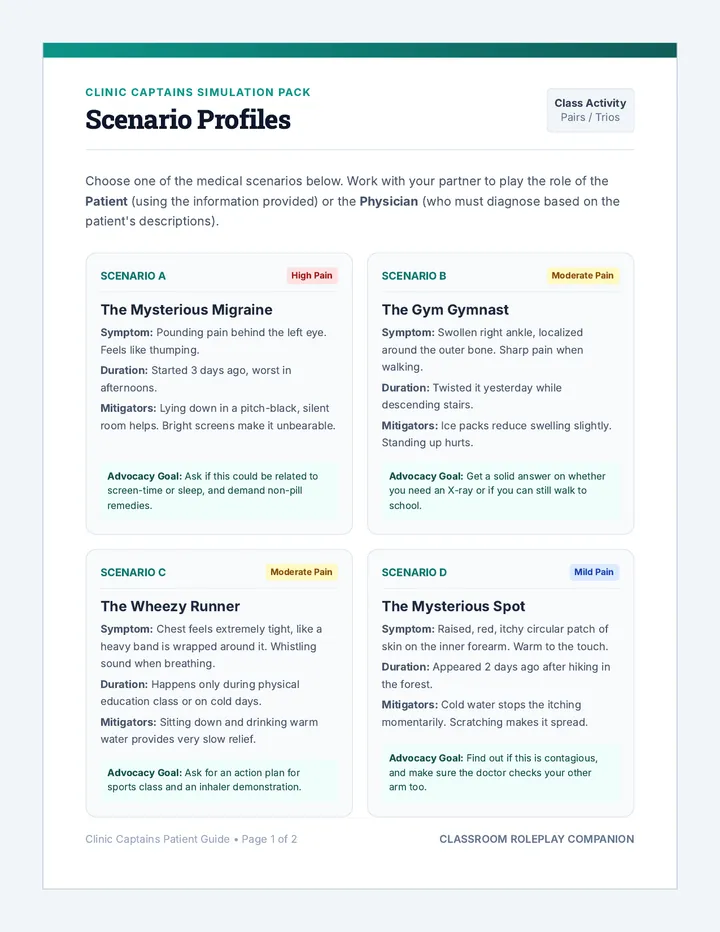
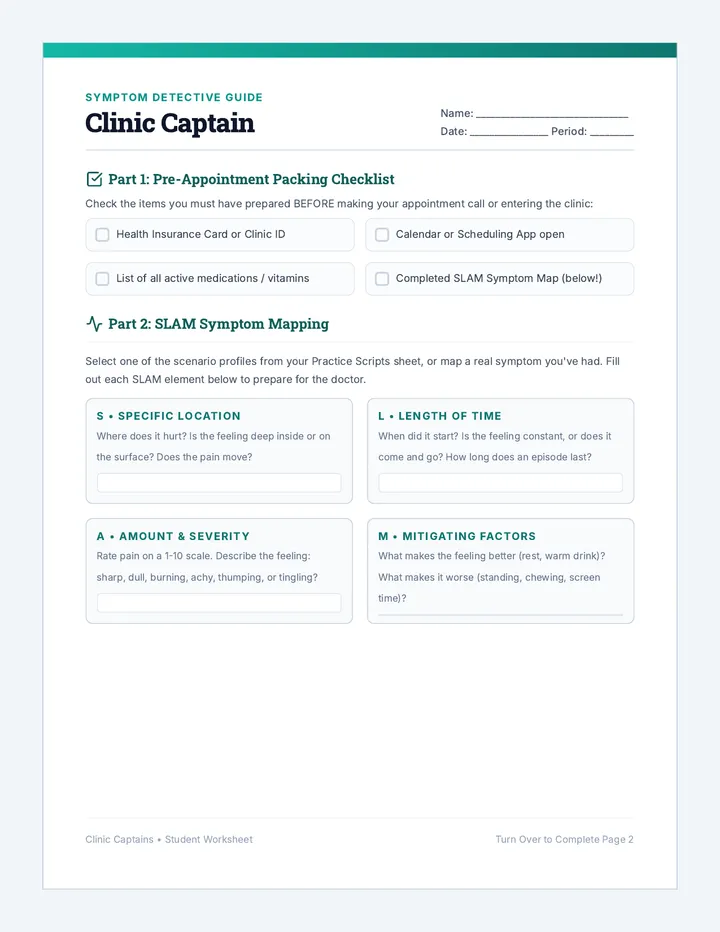
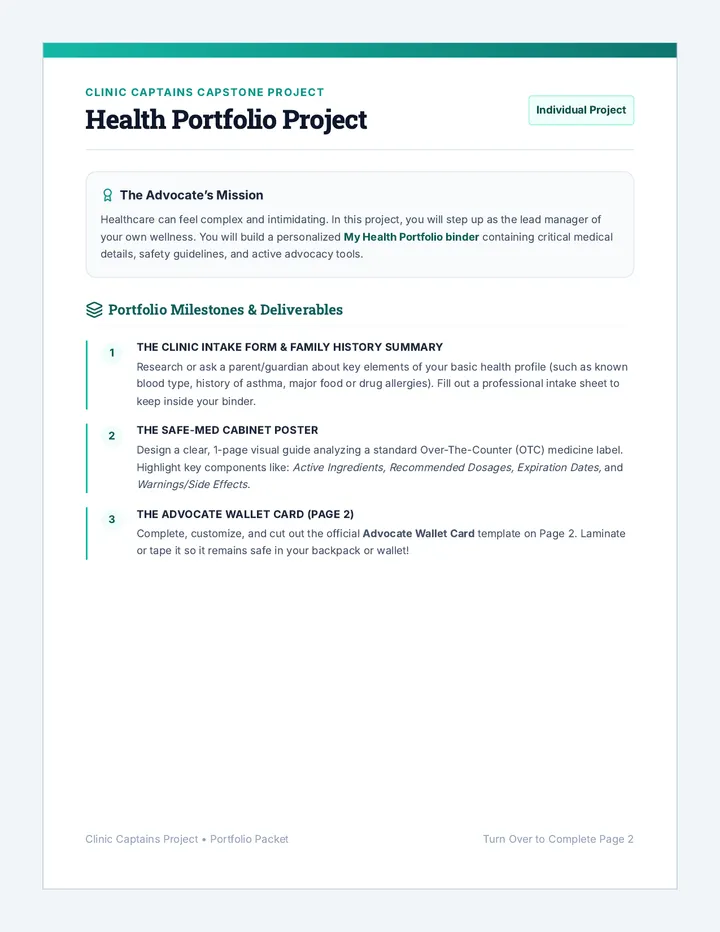
A practical, hands-on lesson designed to empower students with self-advocacy skills in medical settings. Students learn how to book appointments, describe physical symptoms accurately using precise vocabulary, and prepare targeted questions for healthcare providers through collaborative role-play scenarios.
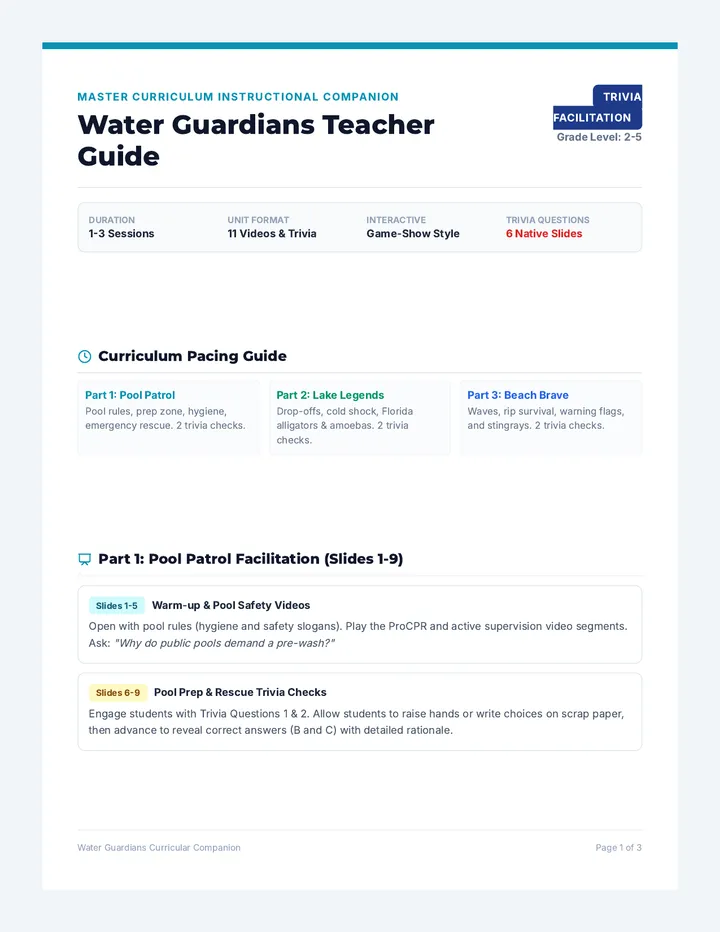
A comprehensive water safety master lesson covering pool protocols, open water lake dangers, and ocean beach safety practices. Designed to fit visual presentations, student practice sheets, and teacher scripting guides.
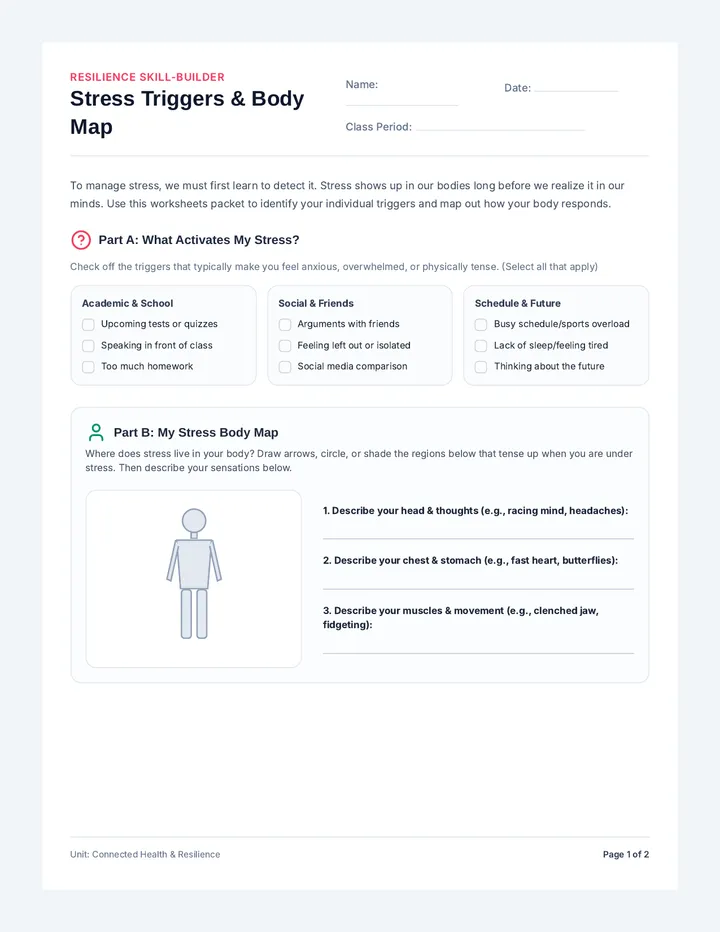
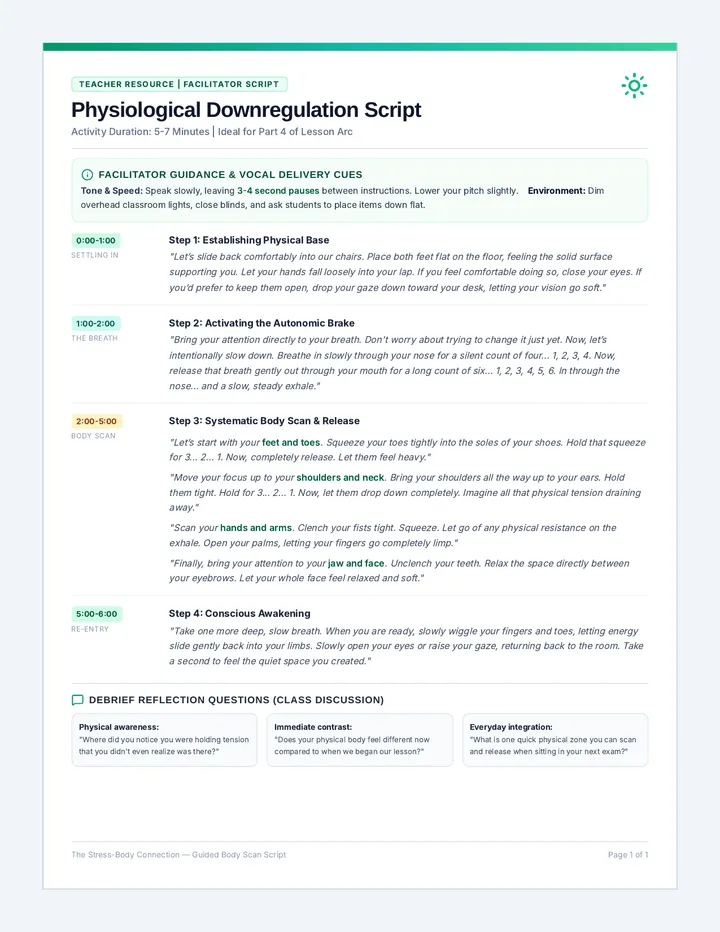
A high school science and wellness lesson exploring the physiological pathways of stress and the mind-body connection. Students learn to trace physical symptoms of stress and practice the Guided Body Scan technique for self-regulation.
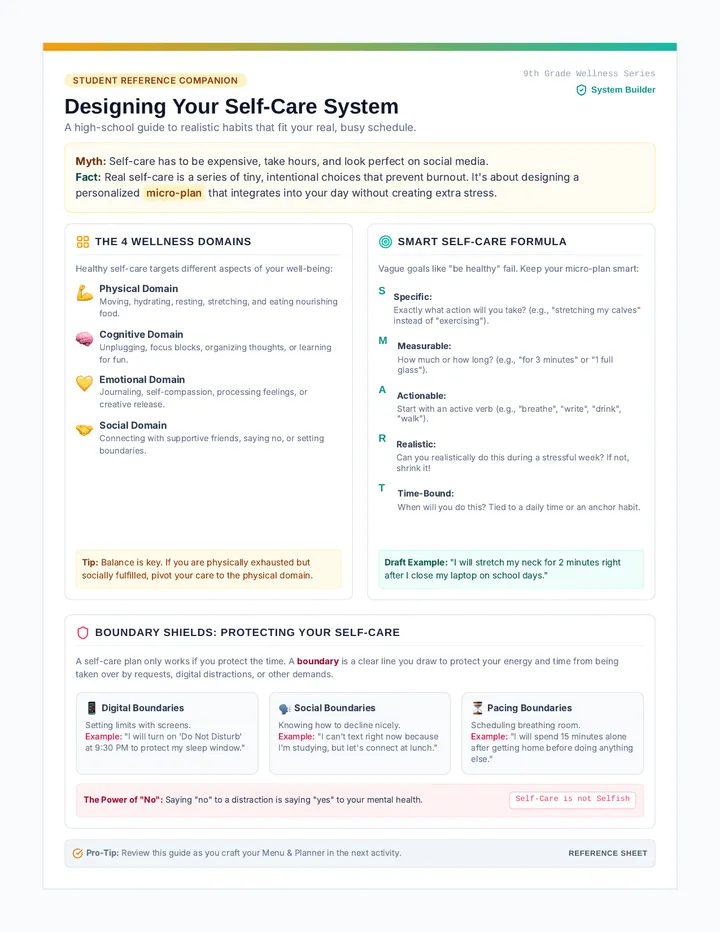
A 45-minute wellness lesson for 9th graders where they design a customized, realistic self-care micro-plan. Students explore self-care domains, master habit stacking, establish boundaries to protect their time, and map personal barriers and support systems.
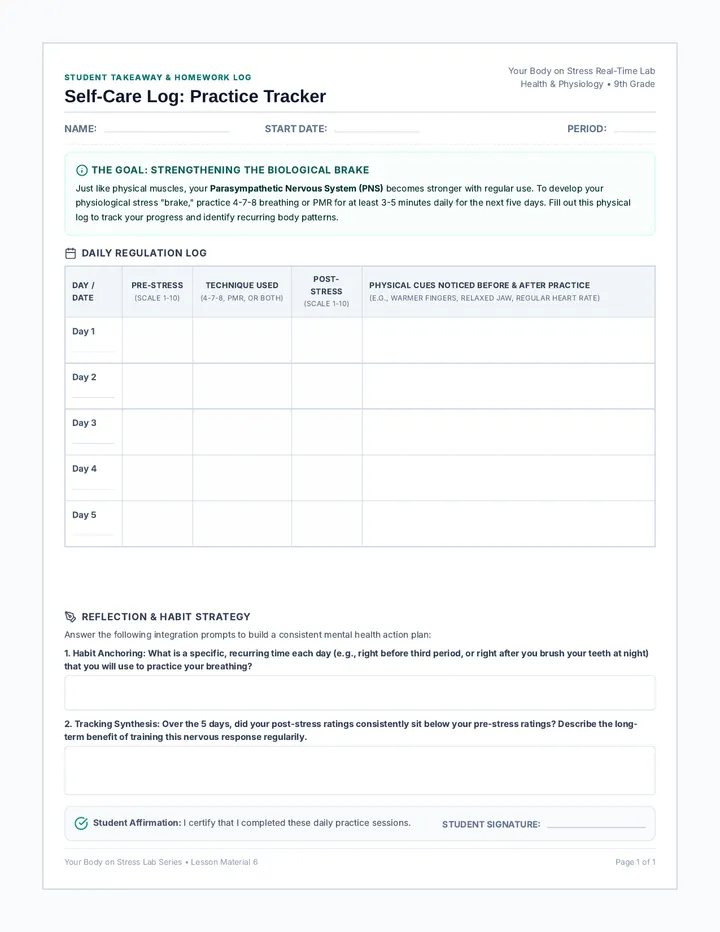
An interactive 9th-grade health and science lesson where students explore the physiological impacts of stress, track their personal stress symptoms, and practice evidence-based calming techniques like 4-7-8 breathing and Progressive Muscle Relaxation (PMR).
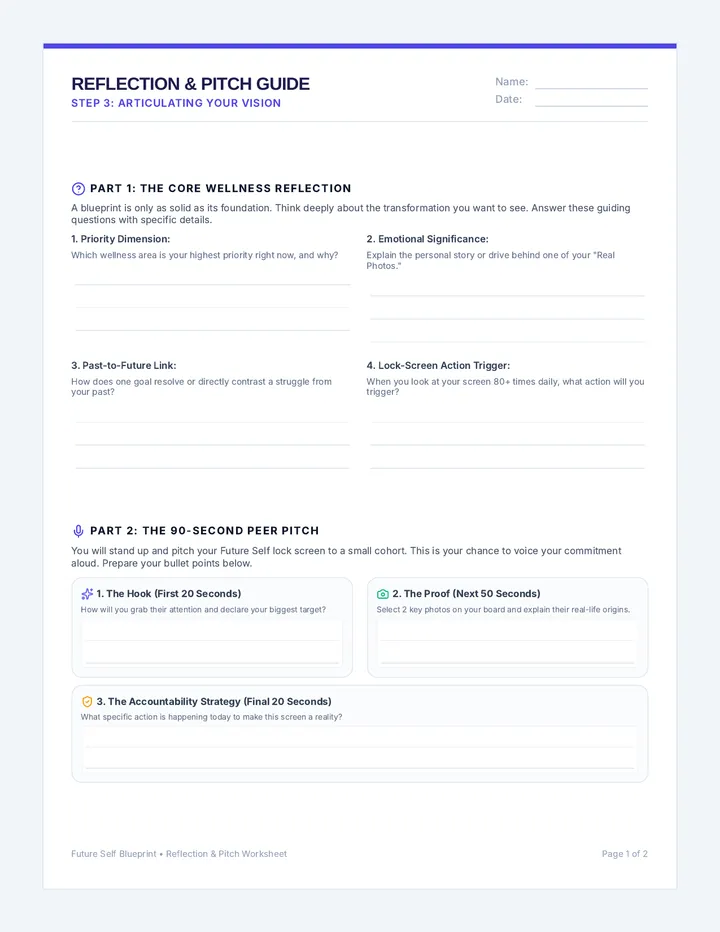
A final project lesson where students design a phone screen-saver vision board using authentic, non-stock photography to document their growth across eight dimensions of wellness. Includes introduction slides, planning worksheets, brainstorming organizers, and evaluation rubrics.
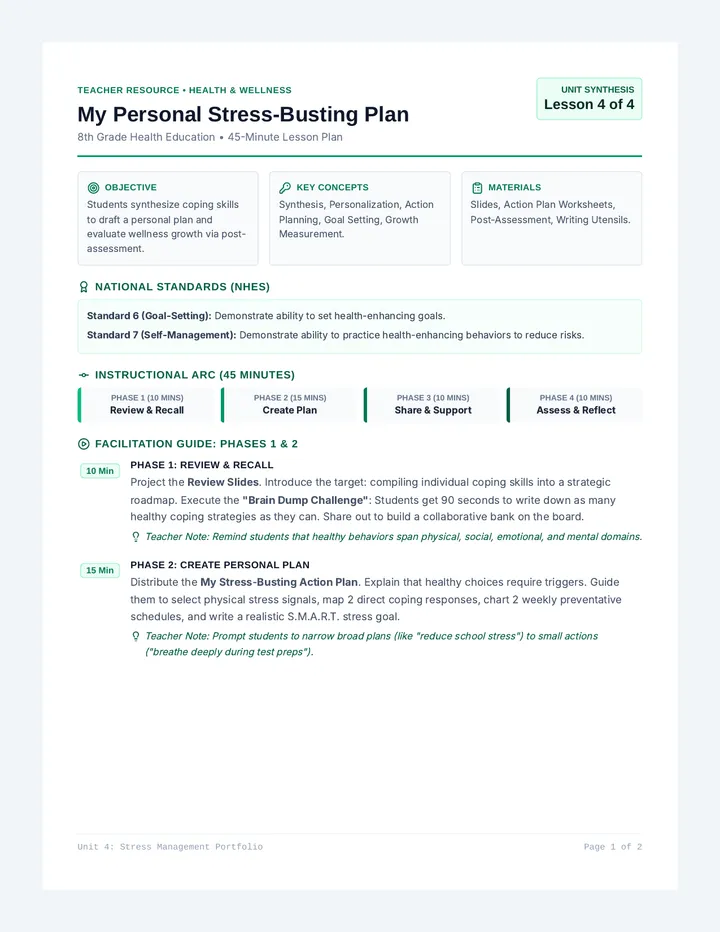
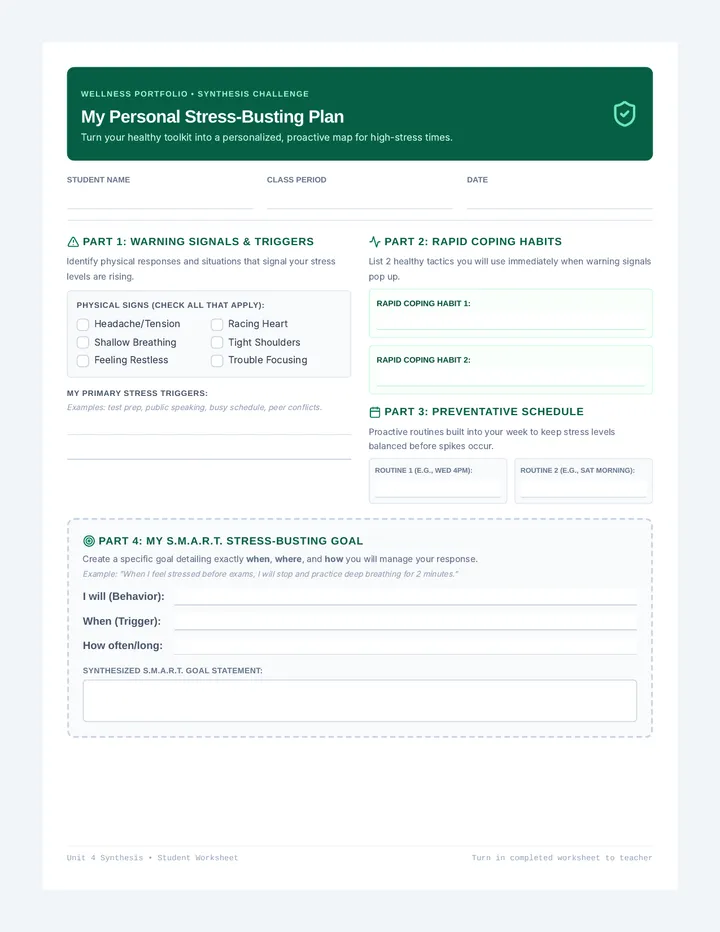
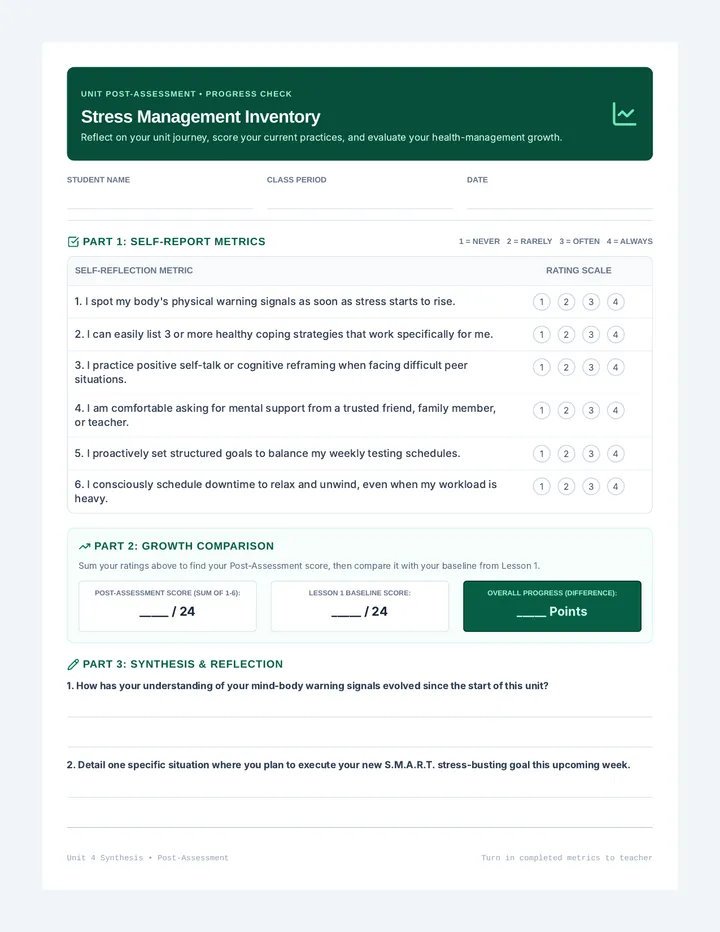
An 8th-grade health and wellness lesson where students synthesize stress-management techniques into a personalized, actionable "Stress-Busting Plan" and complete a post-assessment to measure growth.
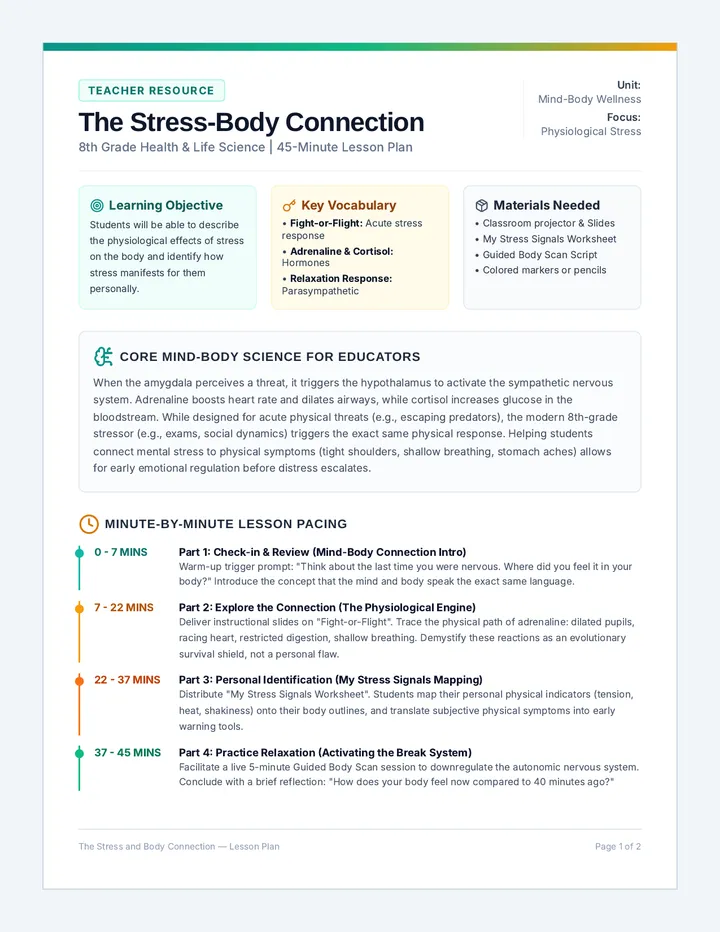
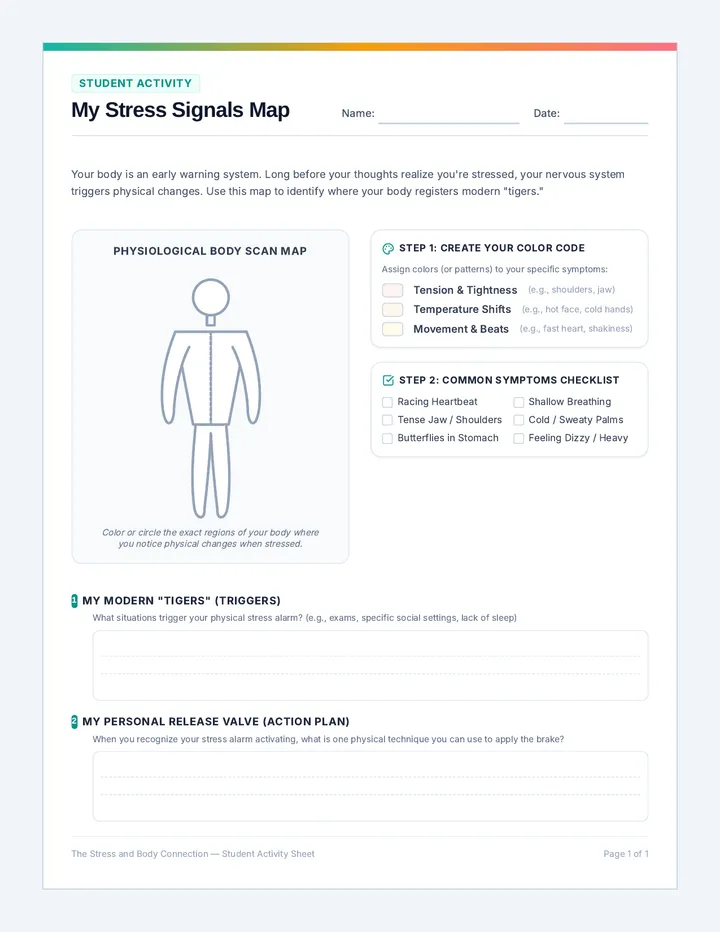
A 45-minute health and science lesson for 8th grade that explores how stress impacts the physical body, introducing fight-or-flight biology, personal symptoms identification, and relaxation techniques.
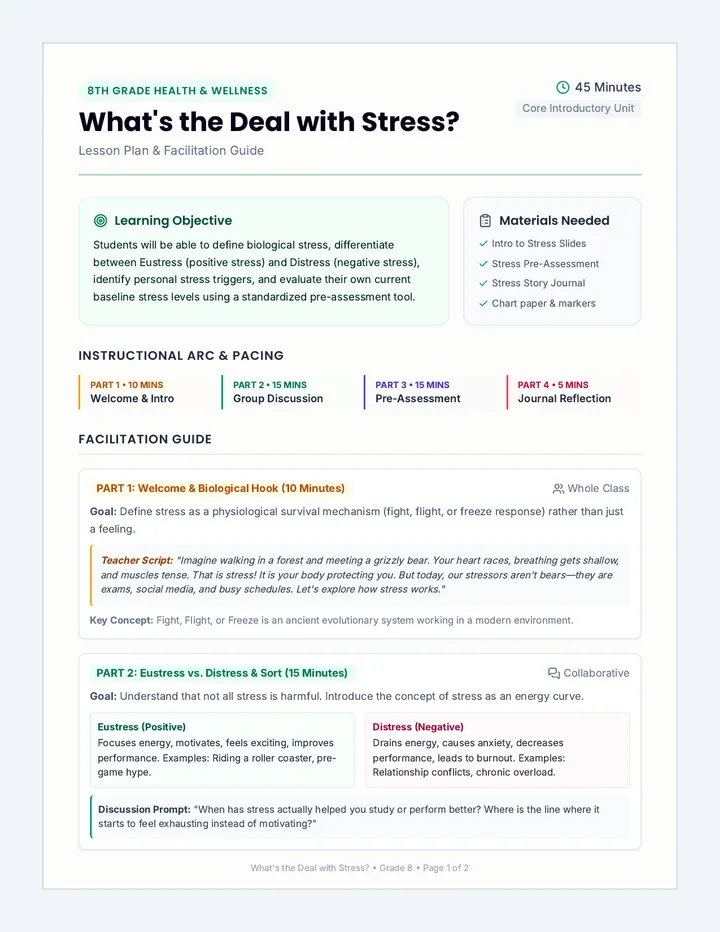
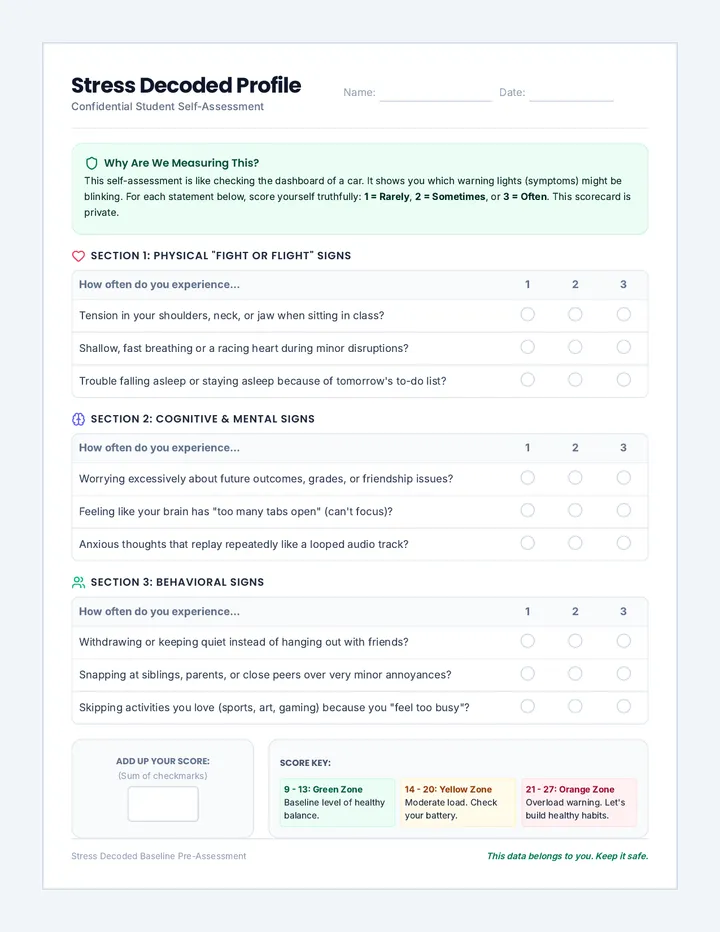
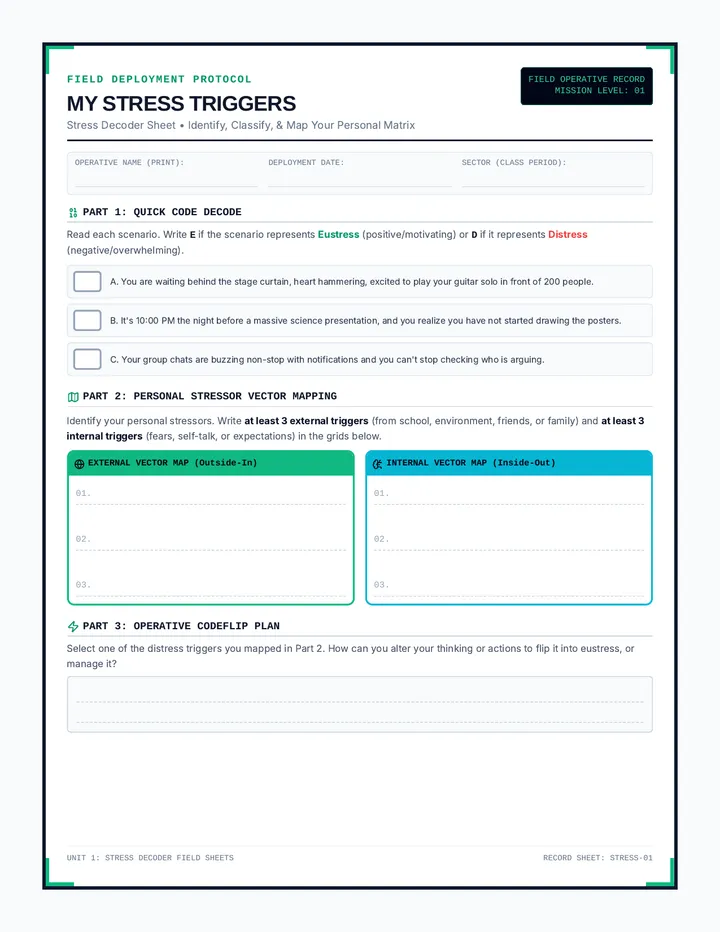
An 8th-grade introductory lesson on understanding stress, distinguishing eustress from distress, identifying personal stressors, and using a pre-assessment inventory to gauge current coping mechanisms and self-awareness.
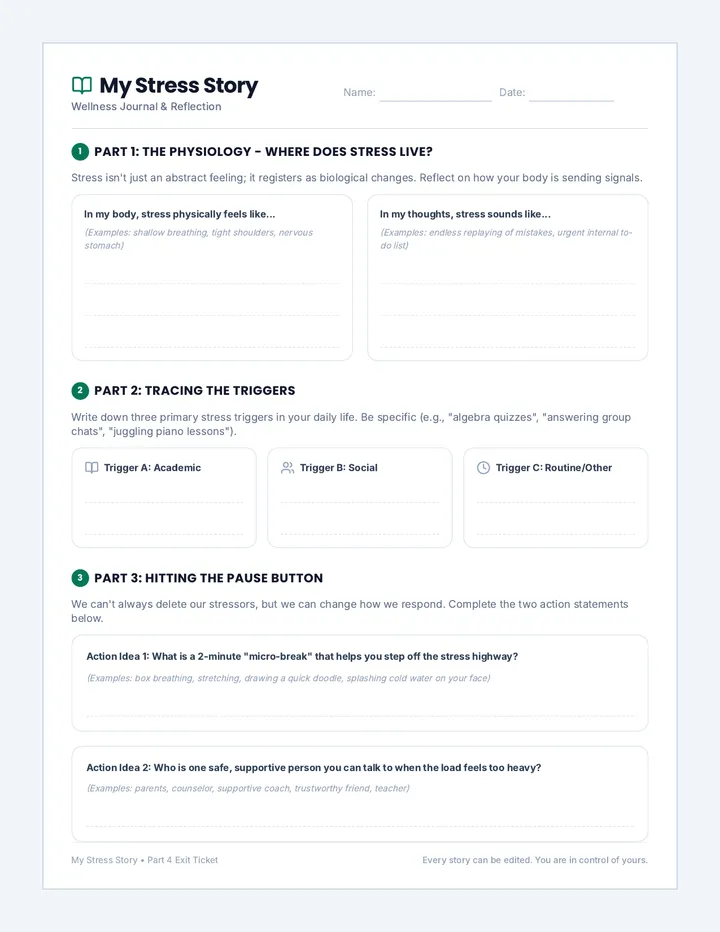
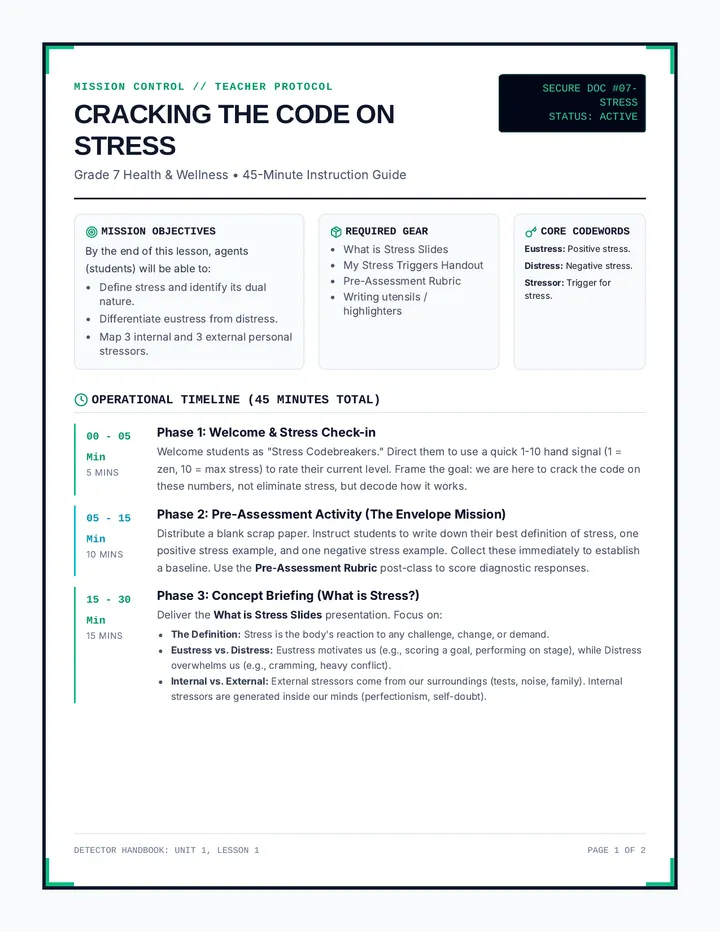
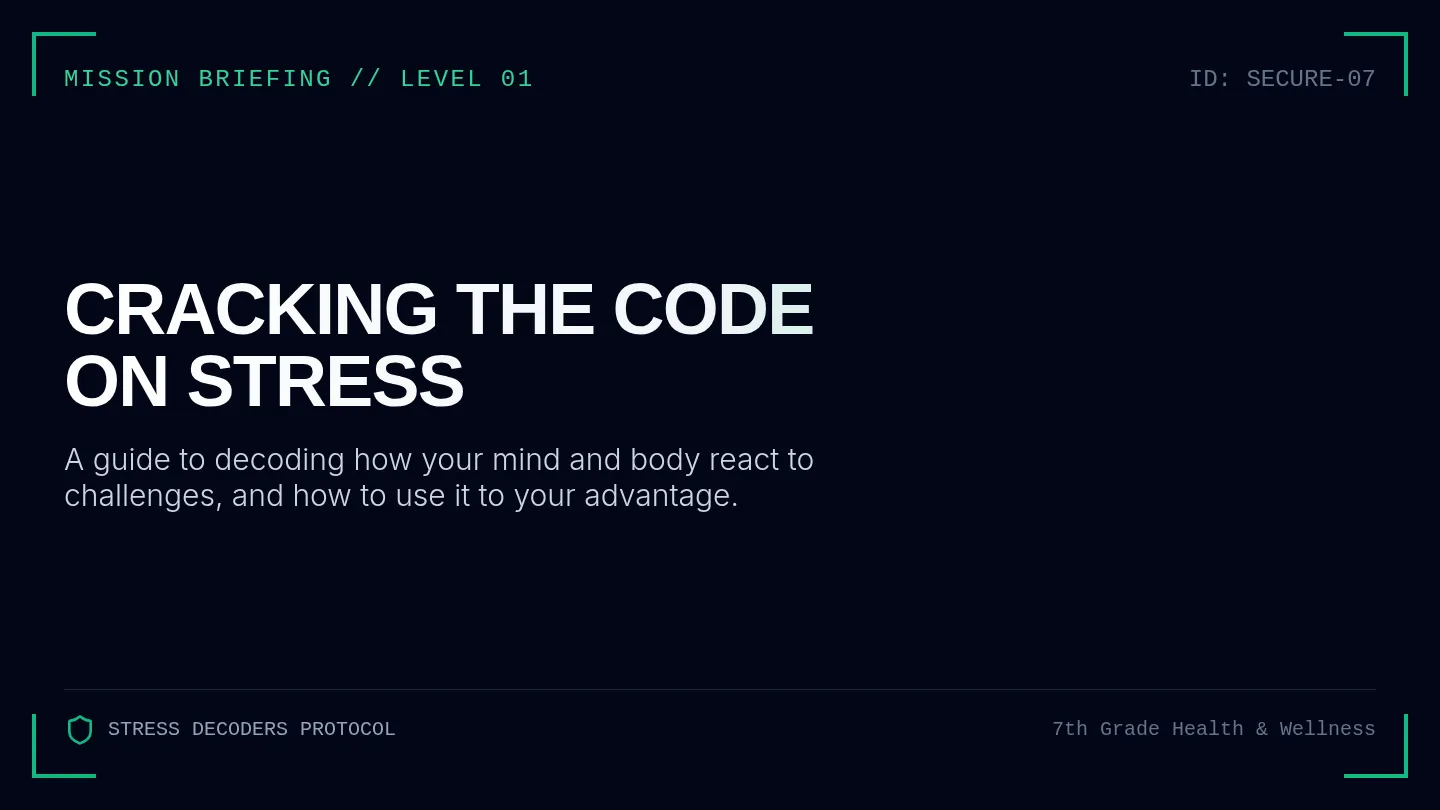
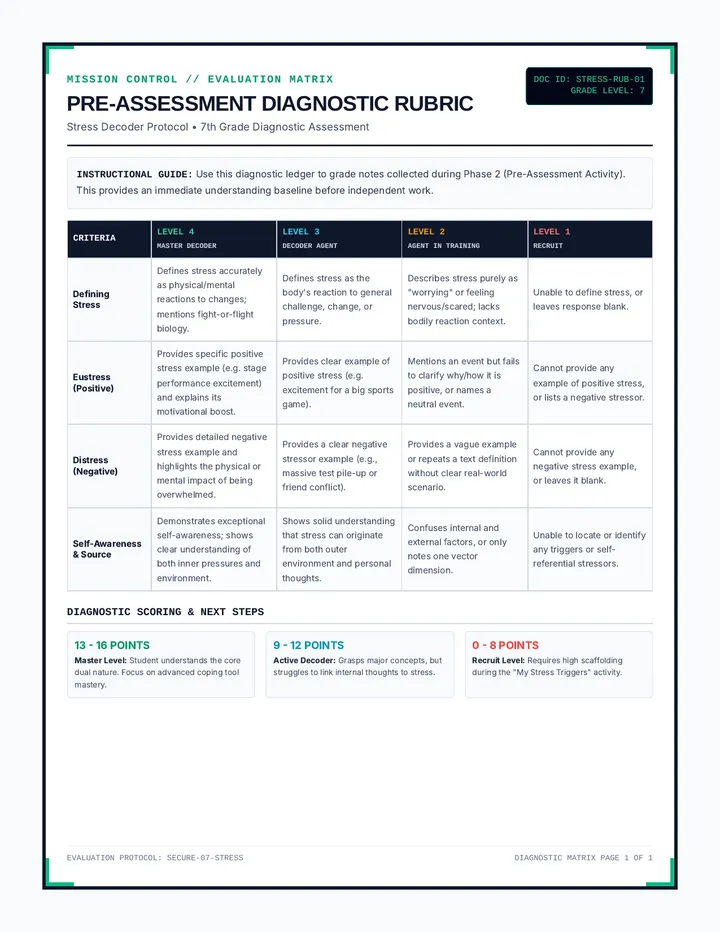
A comprehensive 45-minute health and wellness lesson plan for 7th grade students. Students learn to decode stress by defining it, distinguishing between eustress (positive stress) and distress (negative stress), and mapping their personal internal and external stressors.
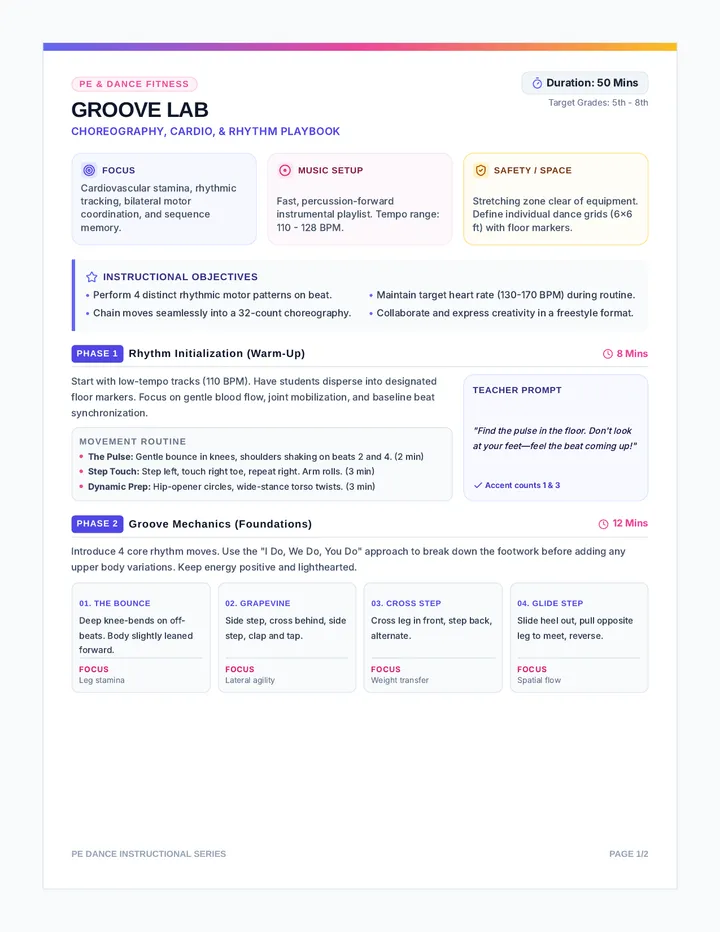
An energetic, dance-infused physical education lesson plan focusing on cardiovascular endurance, rhythm tracking, and motor coordination through structured choreography and creative movement.
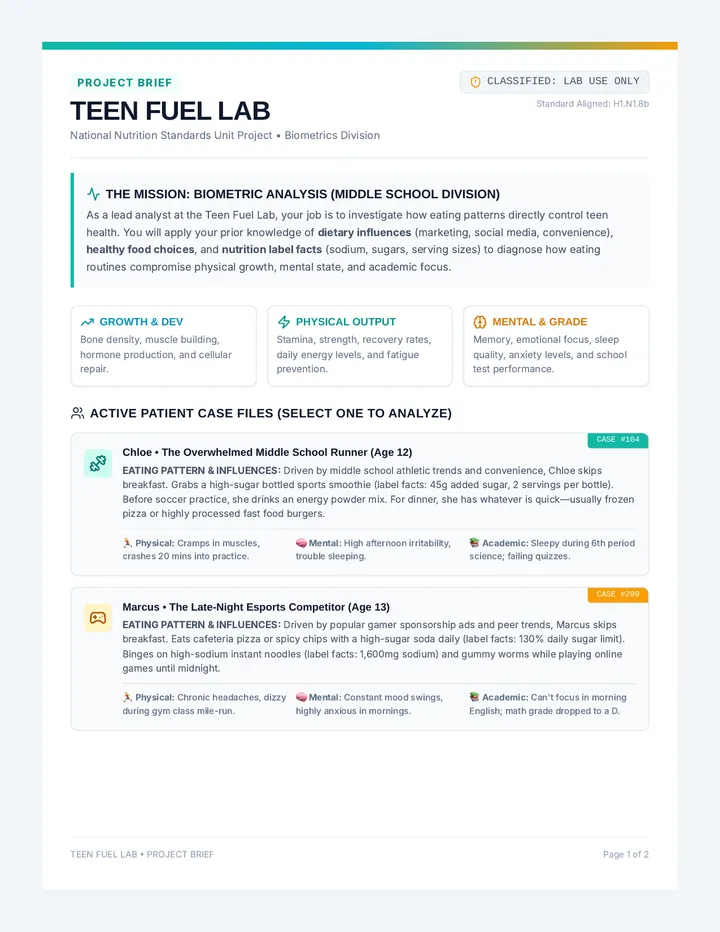
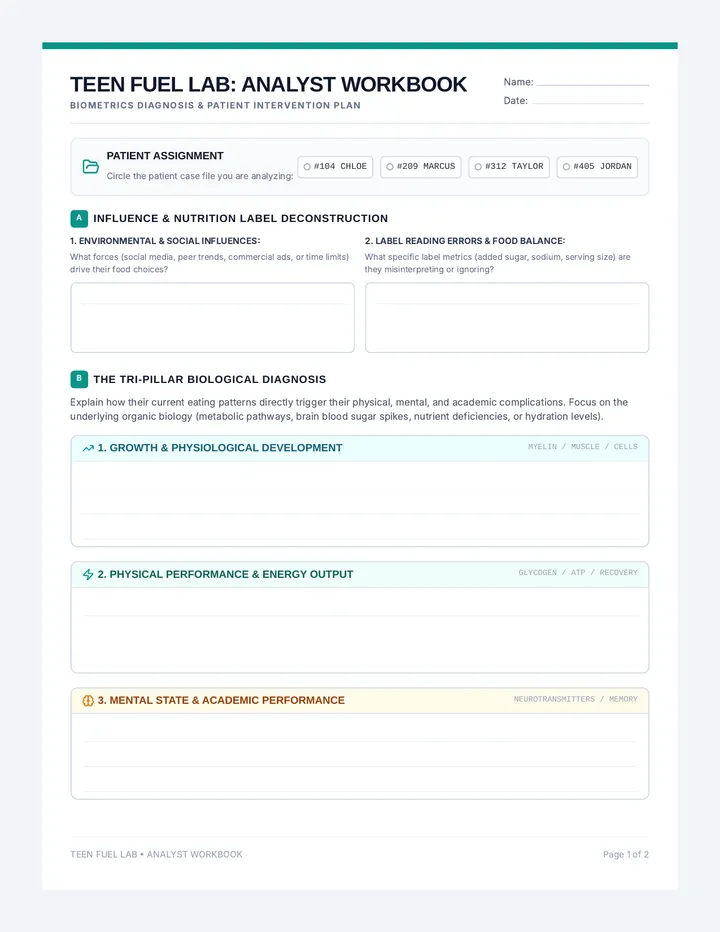
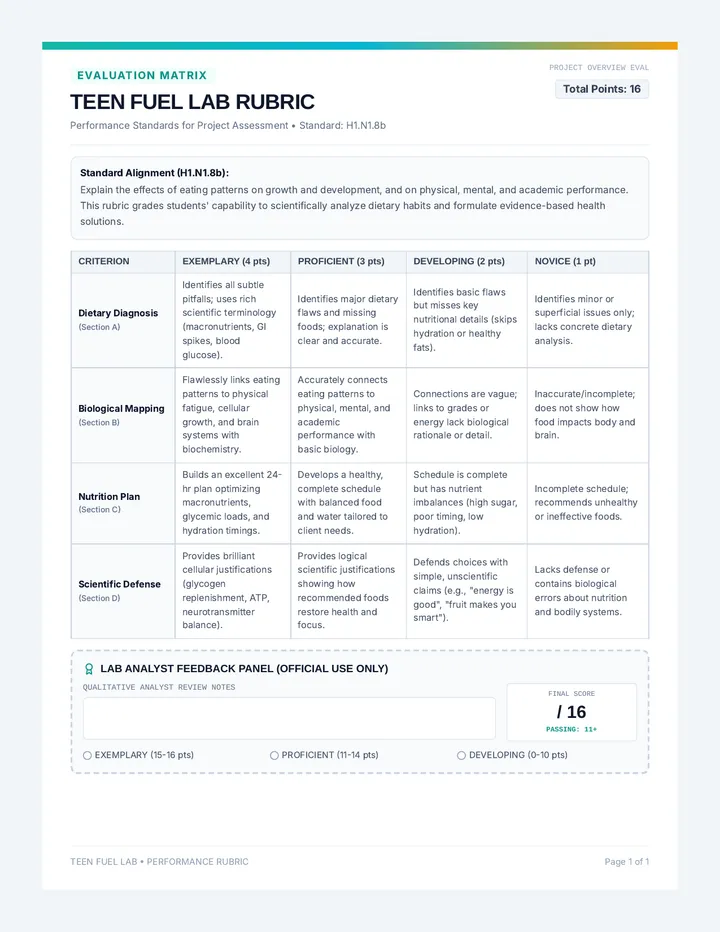
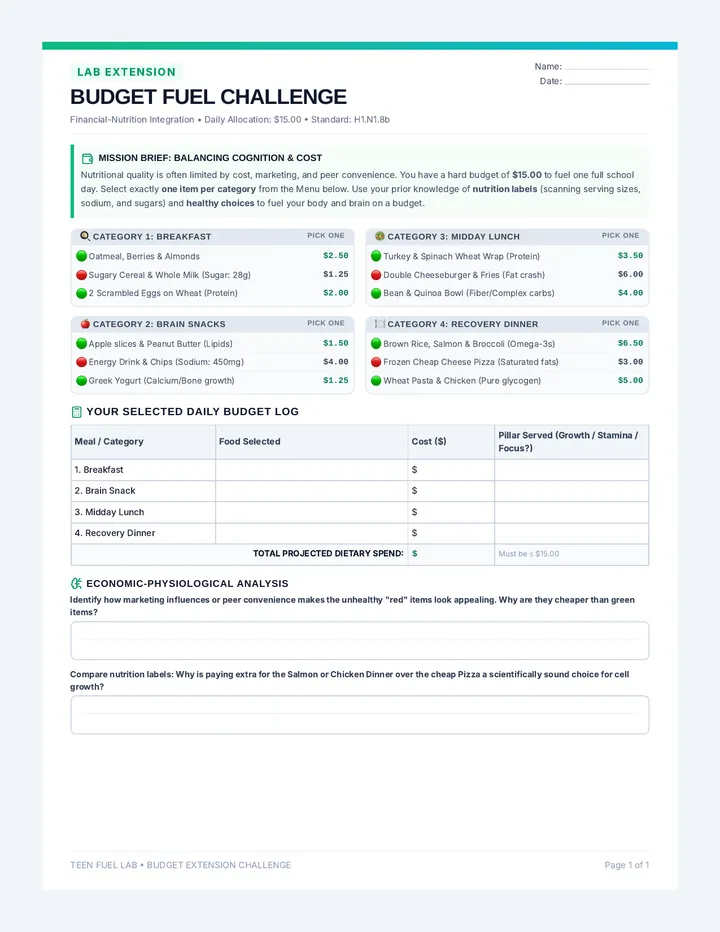
An end-of-unit project kit where students act as nutritional biometrics analysts. They evaluate fictional teen profiles, diagnose the physiological and cognitive impacts of their eating patterns, and design optimized intervention plans.
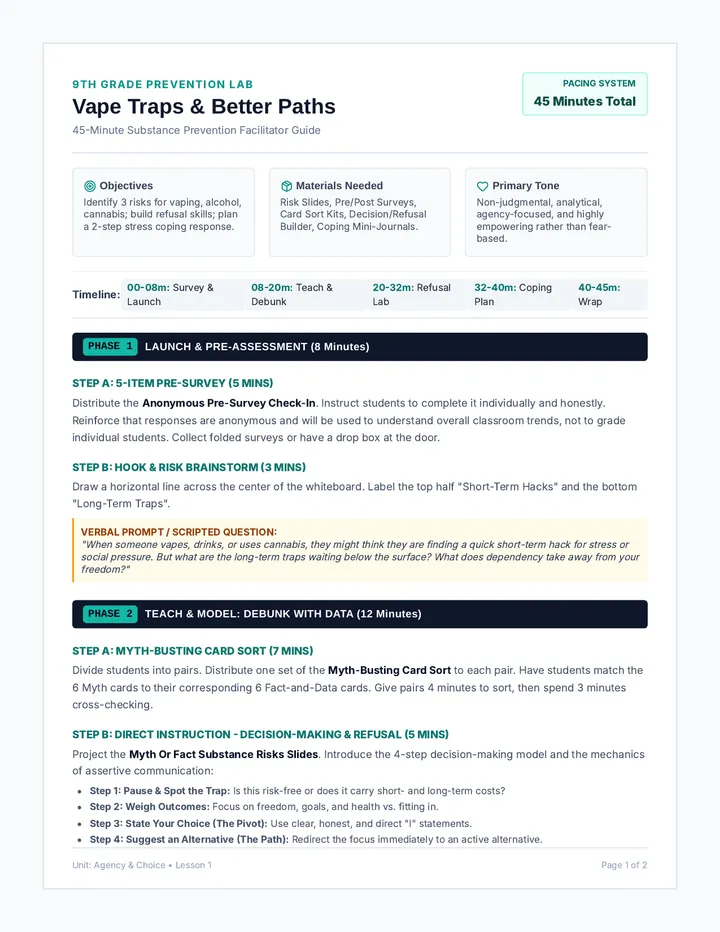
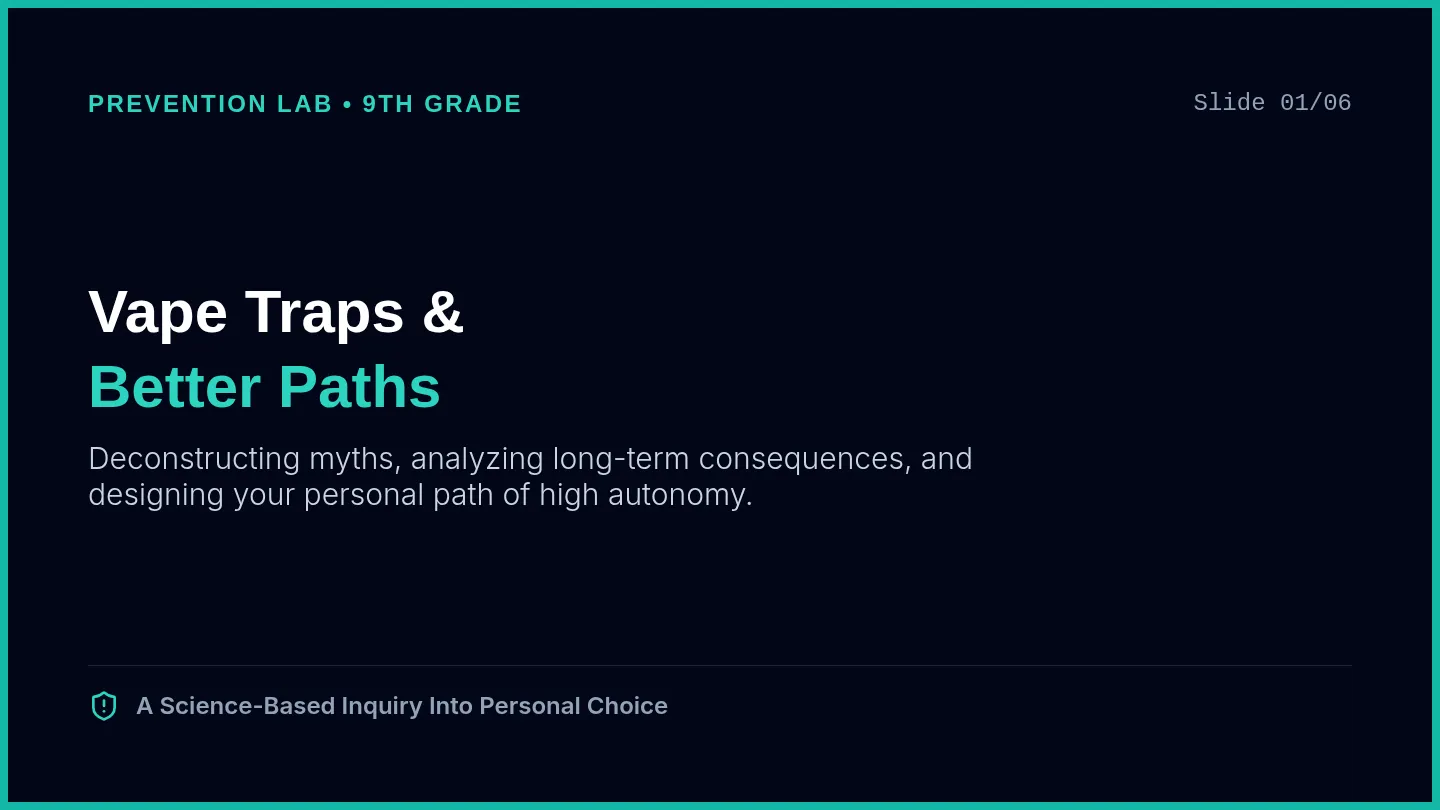
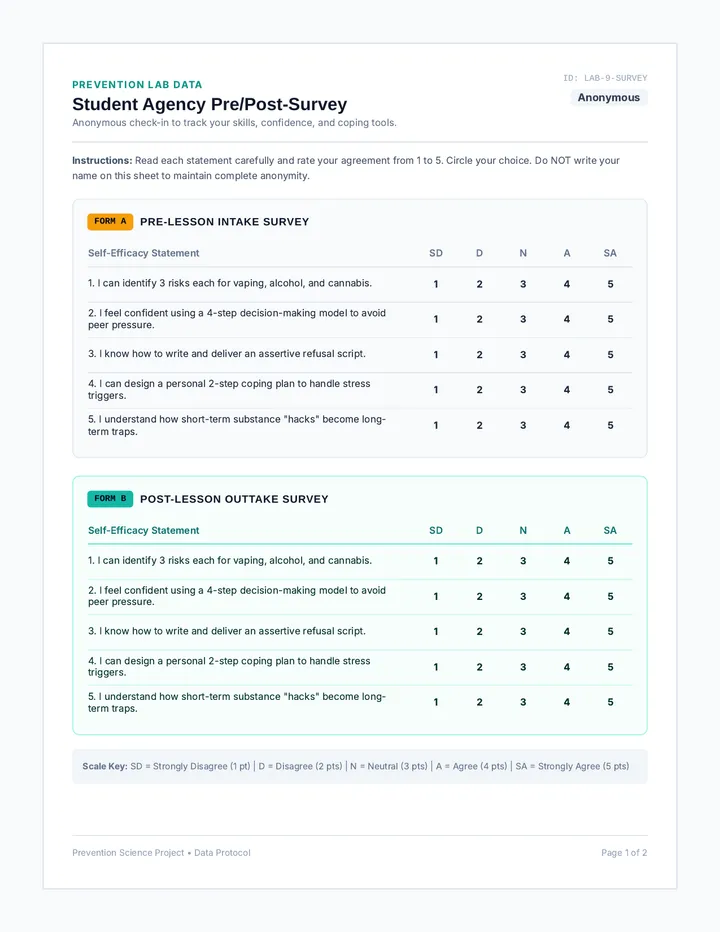
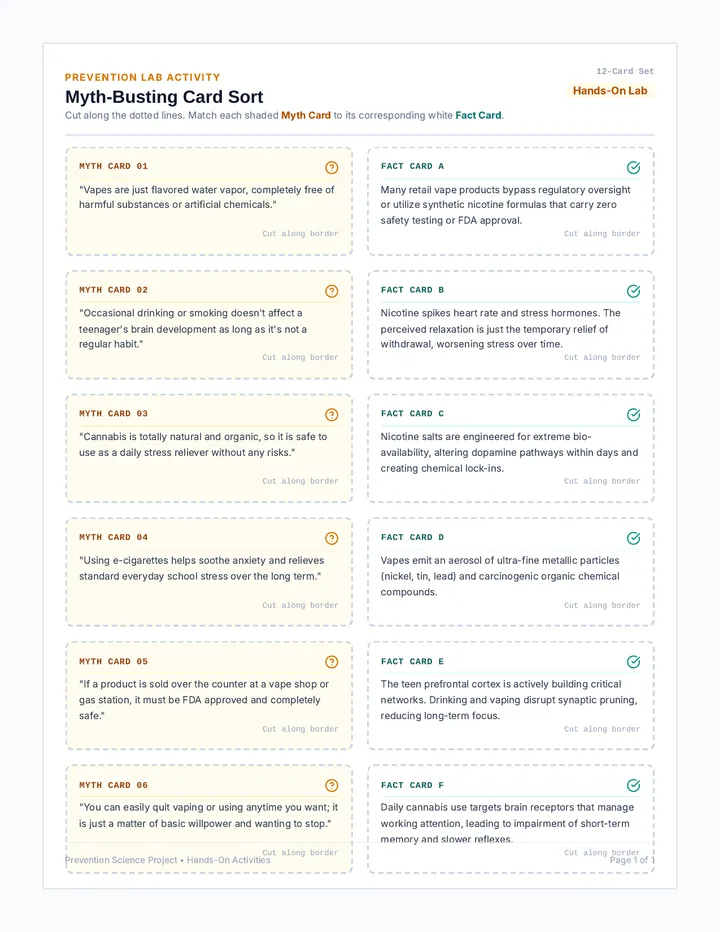
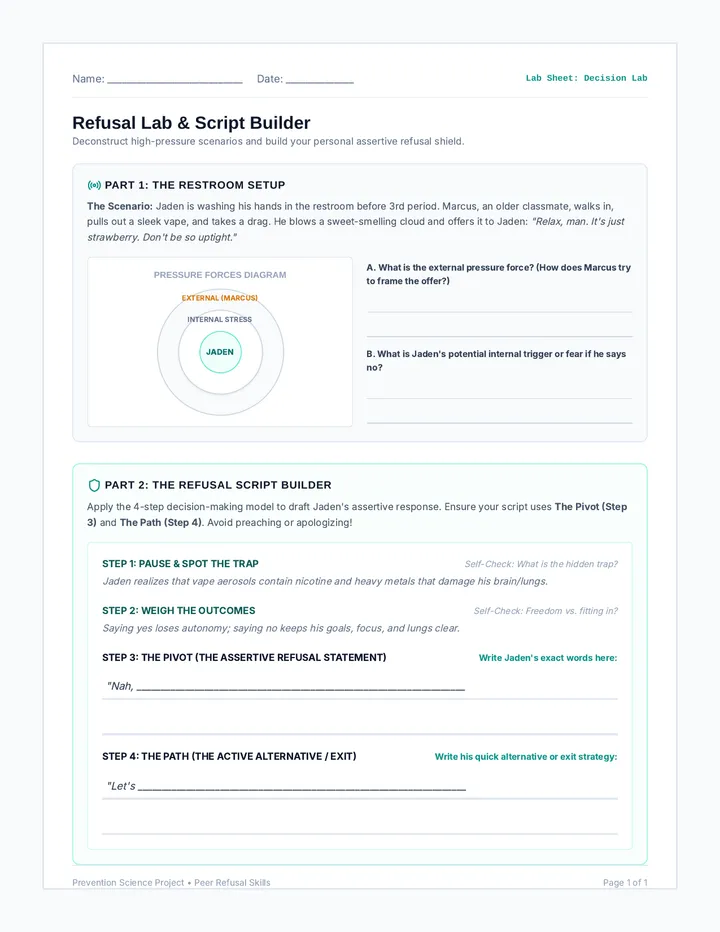
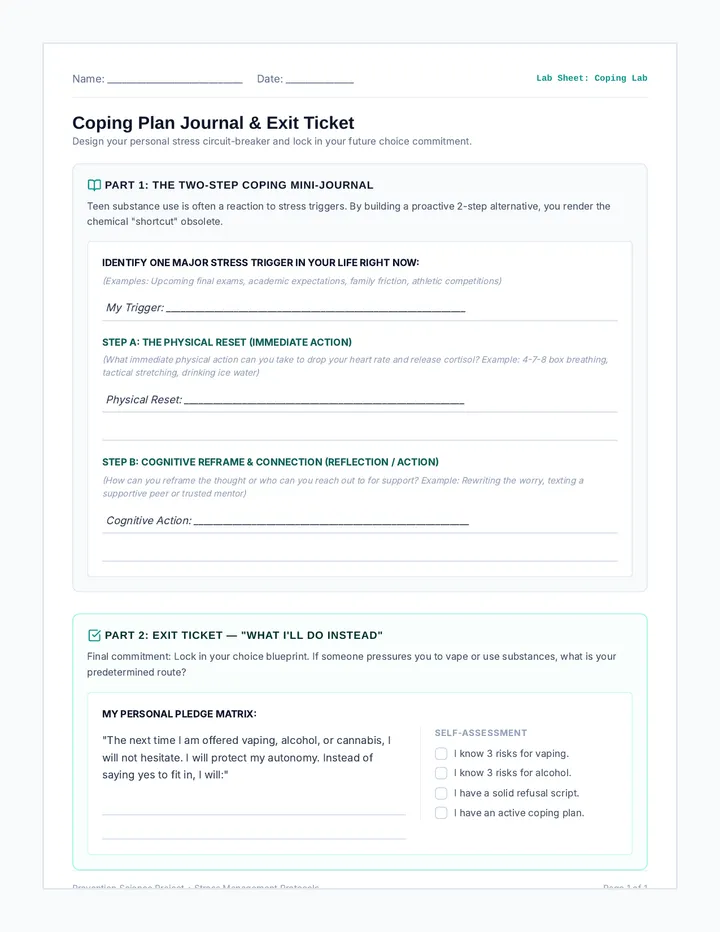
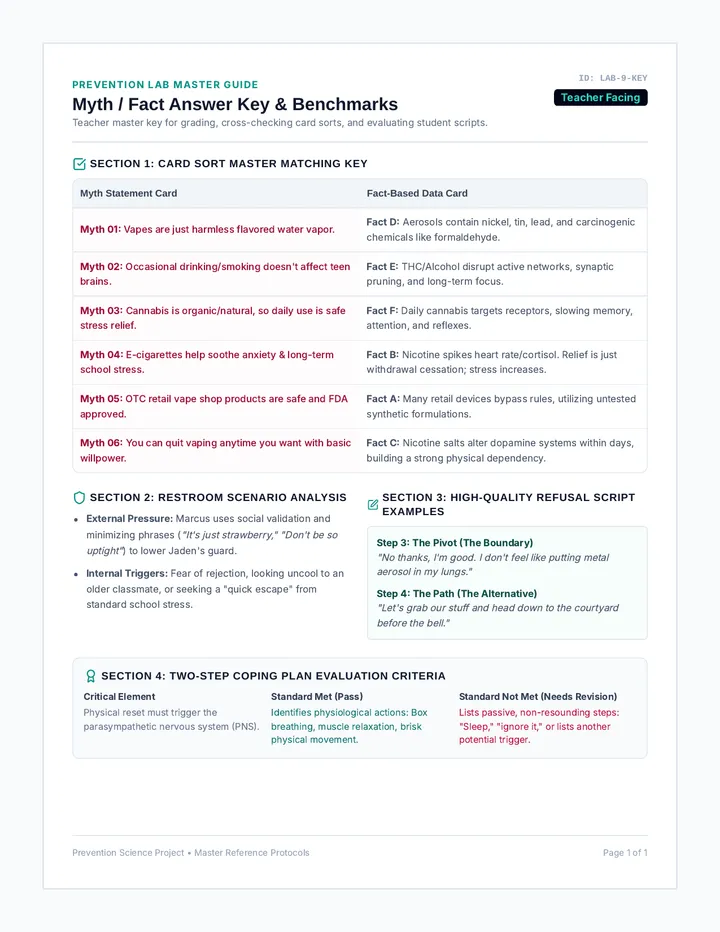
A comprehensive 45-minute substance prevention lesson for 9th-grade students. It builds critical awareness of vaping, alcohol, and cannabis risks while equipping students with a four-step decision-making model, assertive refusal scripts, and a personal stress-coping plan.