The class collaborates on a 'Classroom Identity Quilt' project, celebrating how each individual contributes to the whole group.
Students will learn to navigate their local community by mastering map keys and symbols. This lesson includes instructional slides, a reading passage, and a hands-on mapping activity.
A collection of resources for an educational information booth about Peru at a cultural fair, including a fact sheet and interactive trivia cards.
A collection of reflective and creative activities for Memorial Day, including a poppy craft writing activity, a gratitude letter template, and acrostic poems to honor fallen heroes.
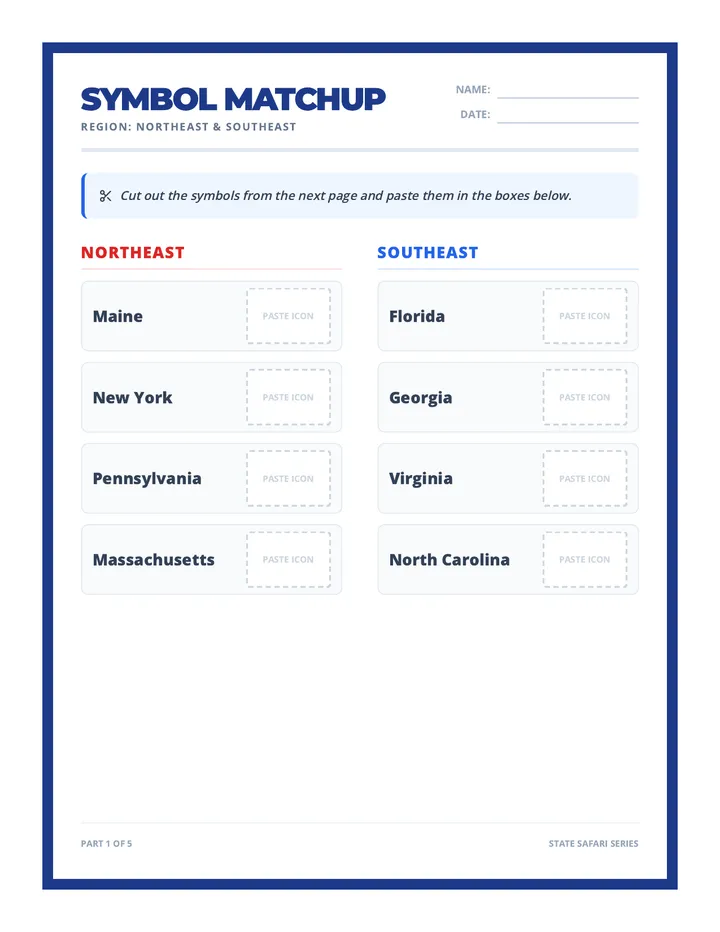
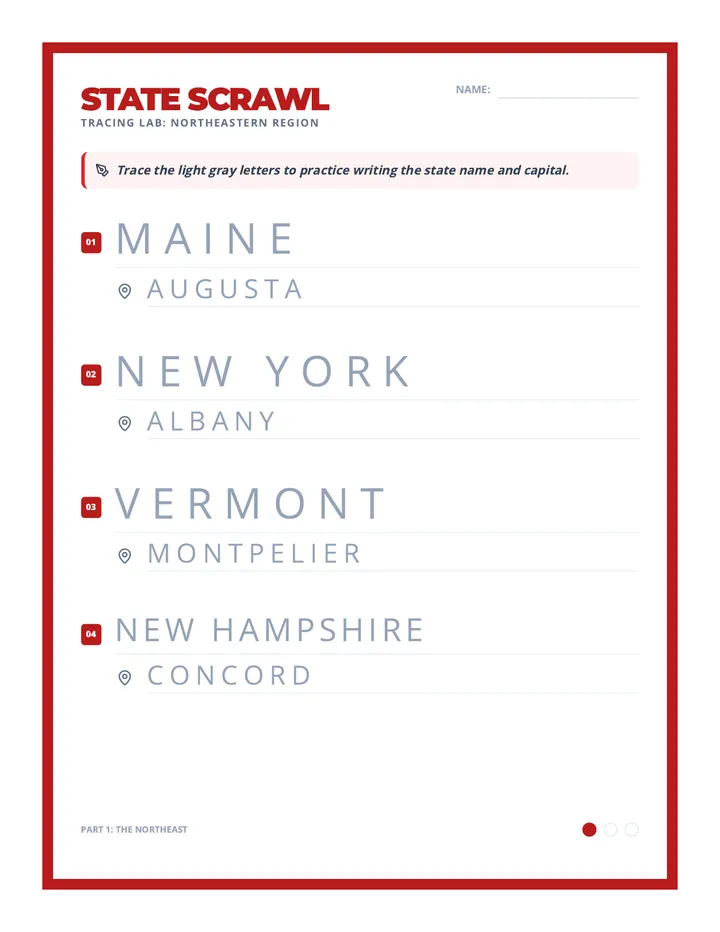
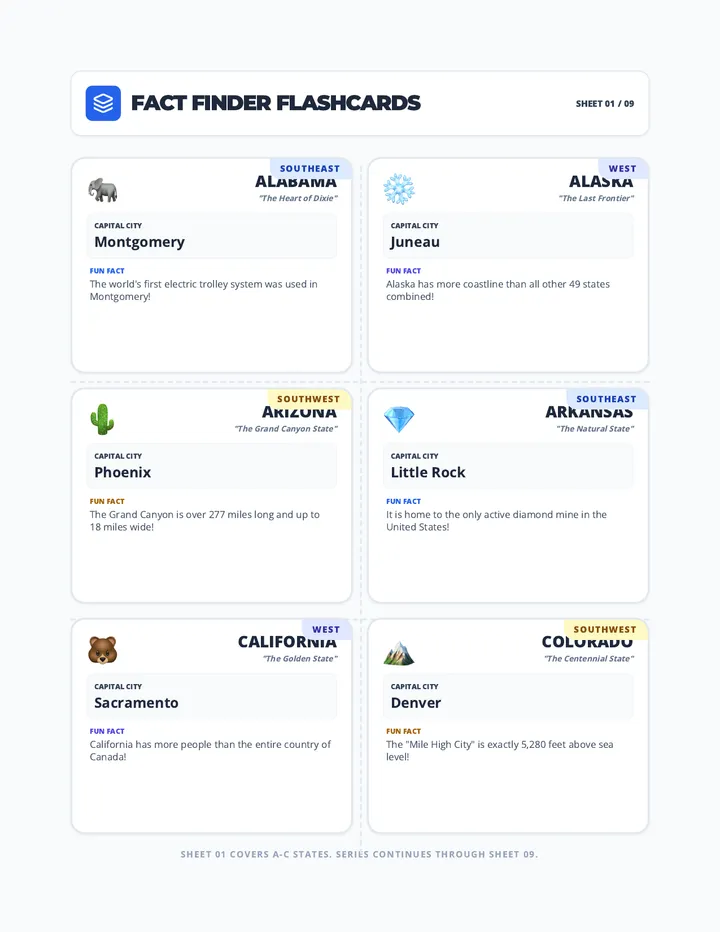
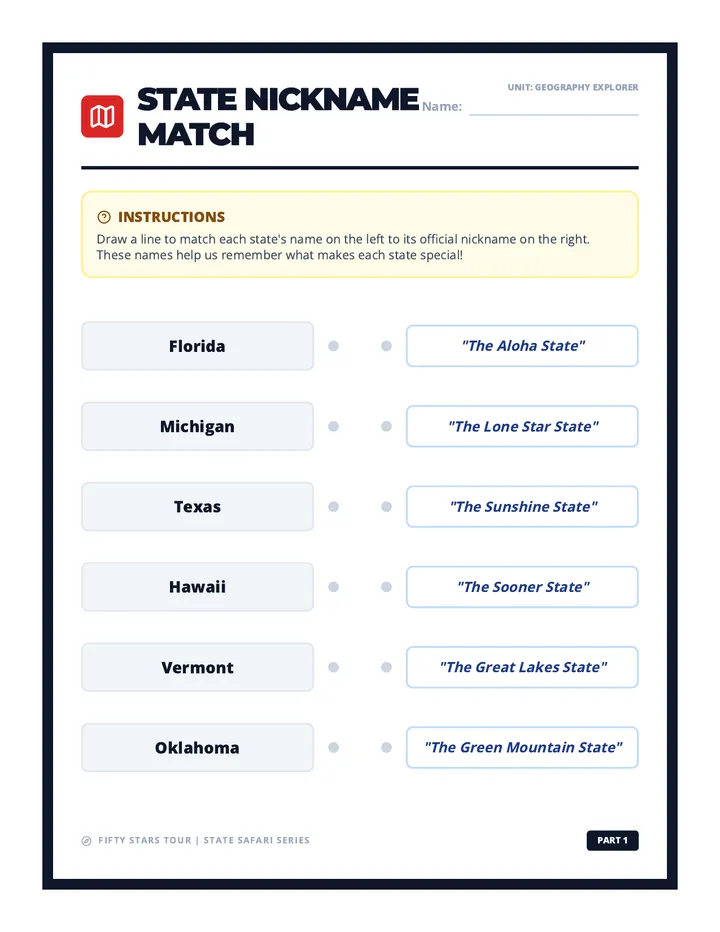
An introductory overview of all 50 states, focusing on visual identification, nomenclature, and basic facts.
A 1st-grade lesson exploring the discovery of King Tutankhamun's tomb, focusing on reading decodable text and identifying key historical details.
A substitute-ready lesson focusing on the emotional and practical aspects of immigration, where students decide what five essential items they would pack in a single suitcase.
A lesson introducing King Tutankhamun, focusing on his life as a young pharaoh and the discovery of his hidden tomb in the Valley of the Kings.
A foundational geography lesson designed for early emergent learners to distinguish between their state (Texas) and their country (USA) using visual nesting and simple categorization.
In this lesson, students will learn about Hatshepsut, one of the few female pharaohs in ancient Egypt, her accomplishments, and how she challenged traditional rules.
Students will learn about the construction of the pyramids and the significance of the Great Sphinx through a decodable reader and guided discussion.
A 1st-grade lesson introducing the Great Pyramid of Giza through a decodable reader, focusing on its history, construction, and significance in ancient Egyptian culture.
Exploring how people with disabilities contribute to and lead our school community with unique strengths.
Celebrating the diverse cultural backgrounds and global stories that enrich our school's leadership.
Highlighting the impact and leadership of women of color within the school and local community.
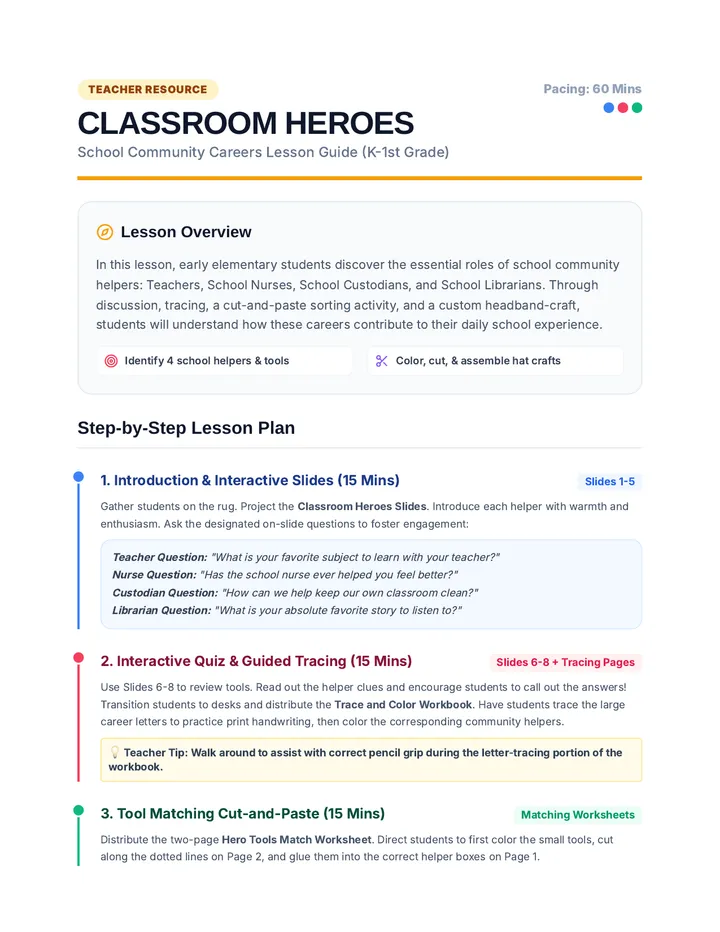
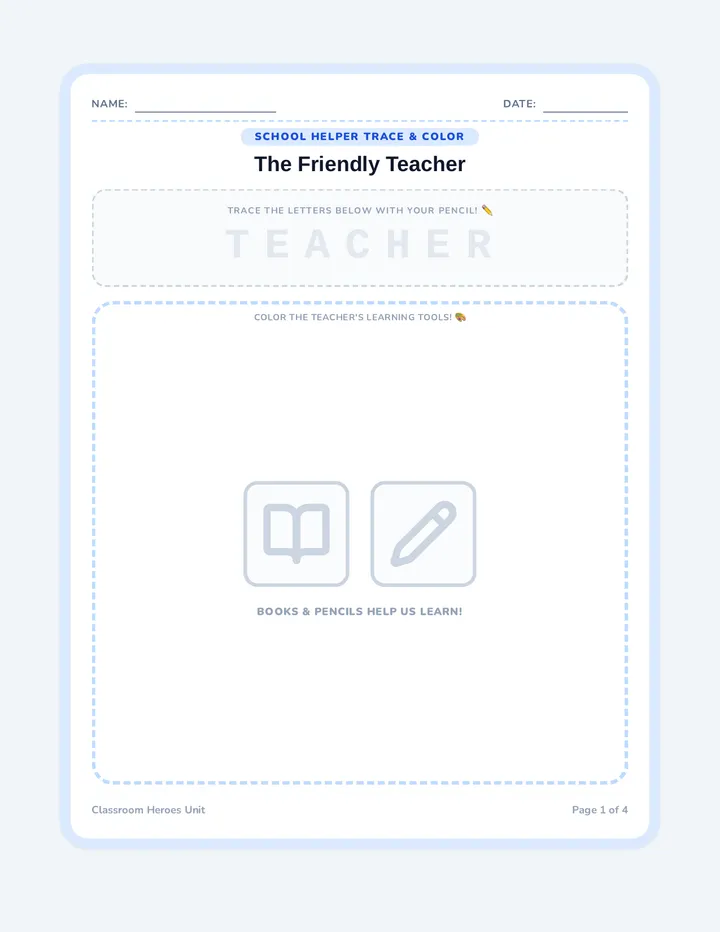
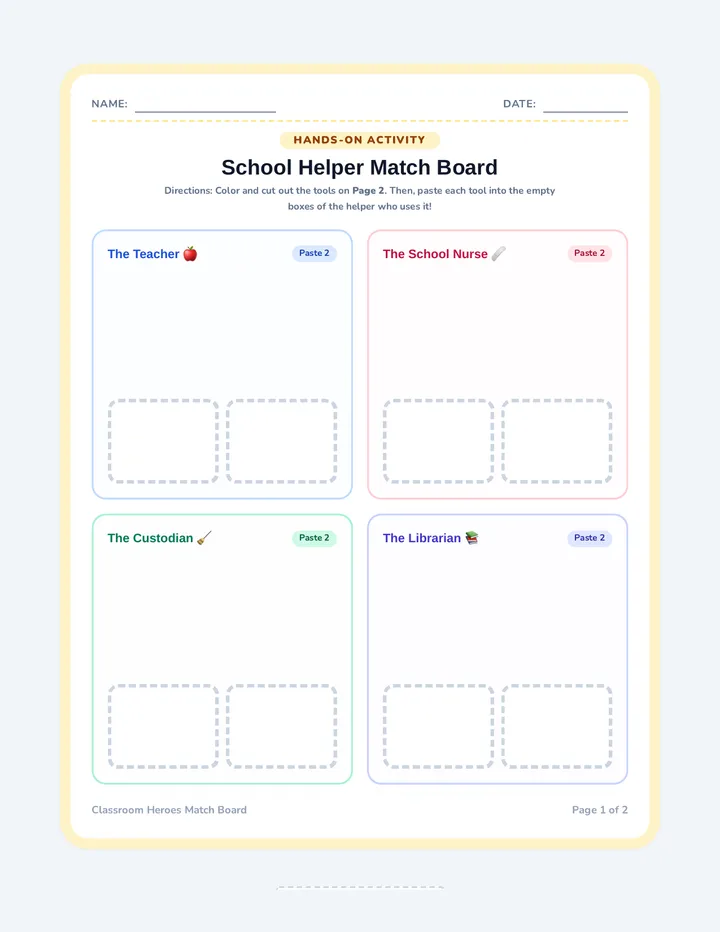
Identifying the immediate circle of people who make the school run every day and understanding their diverse roles.
A hands-on history project inspired by 'Born on the Water', focusing on ancestry, resilience, and the power of storytelling. Students create a visual legacy map that traces the journey of a people or family from their roots to the present day.
This lesson introduces the importance of the Nile River to the ancient Egyptians, focusing on its role in farming, fishing, and transportation. Students will explore how the river's annual flooding provided fertile soil and how the Egyptians managed water using canals.
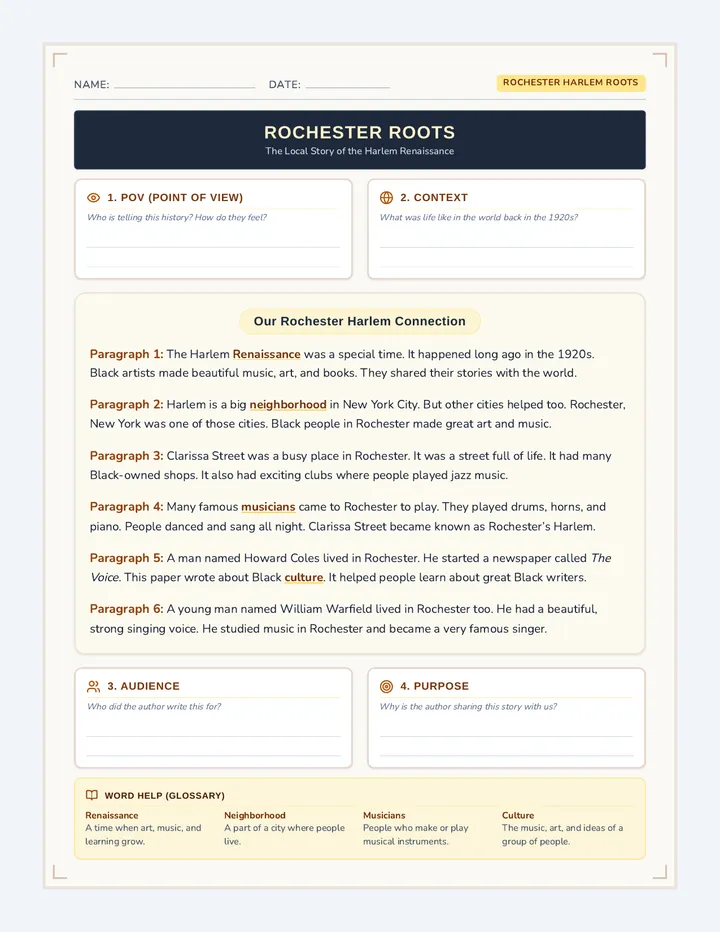
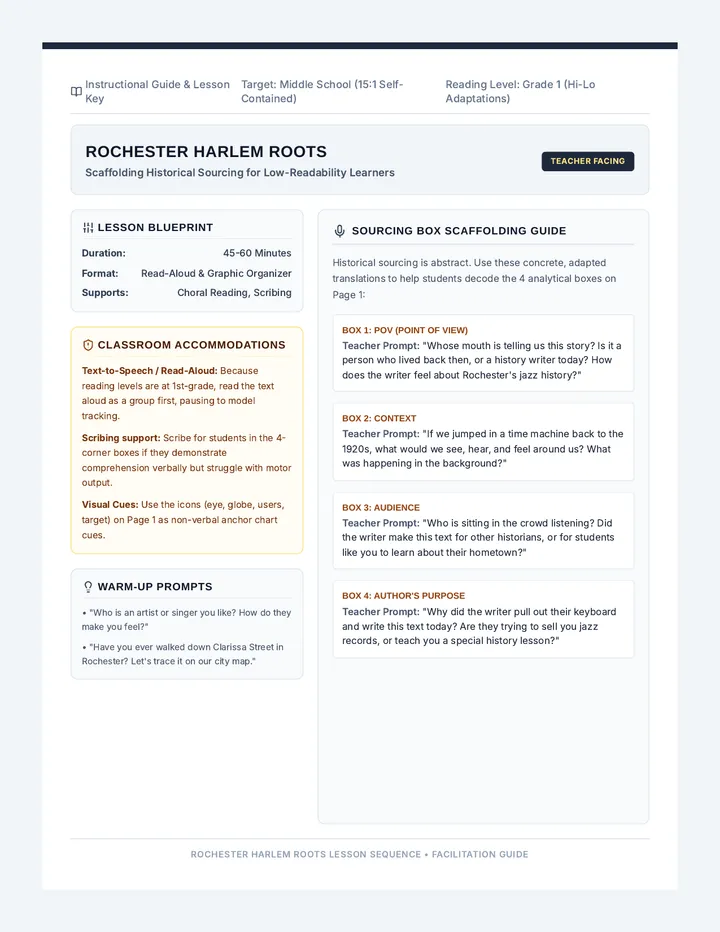
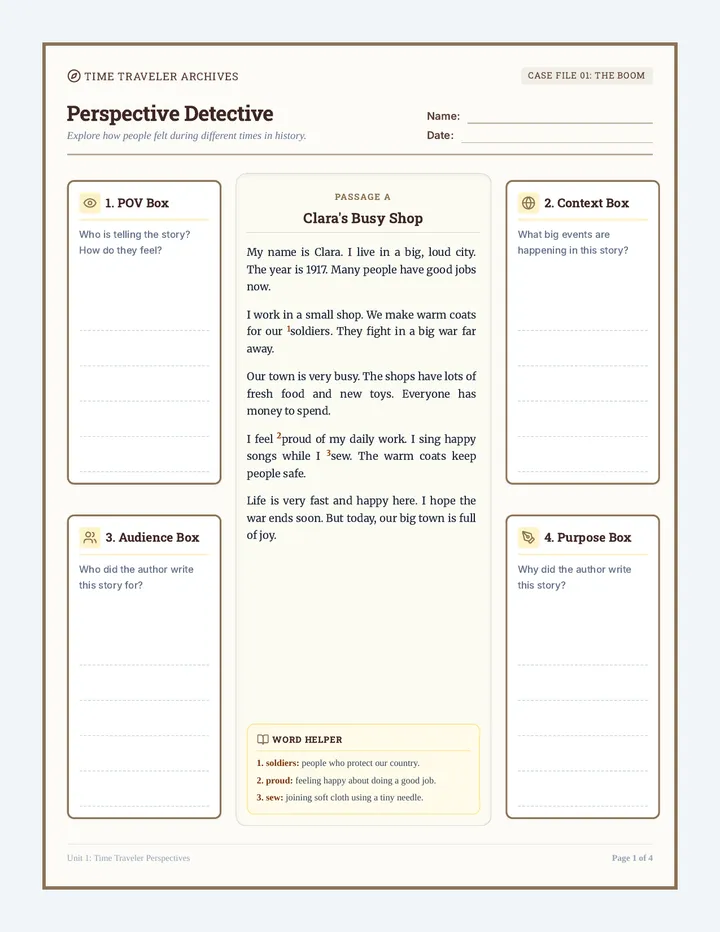
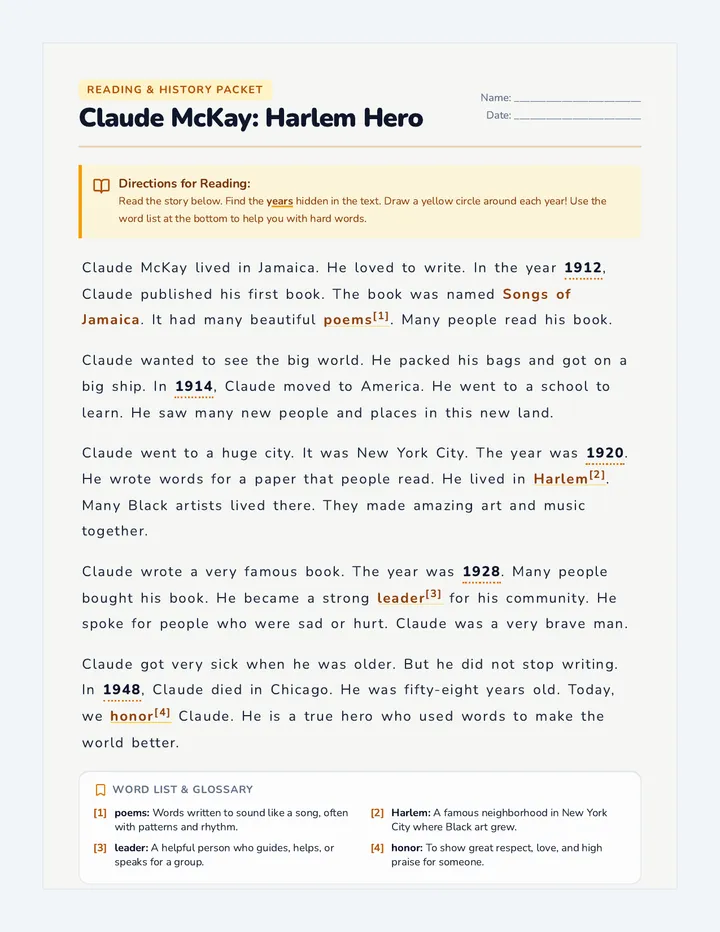
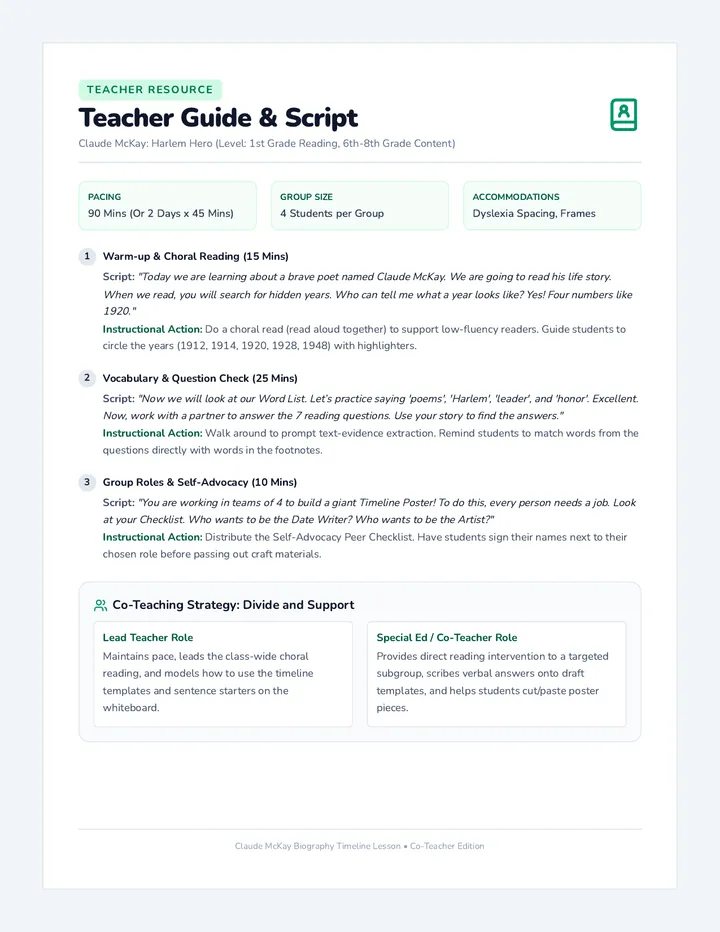
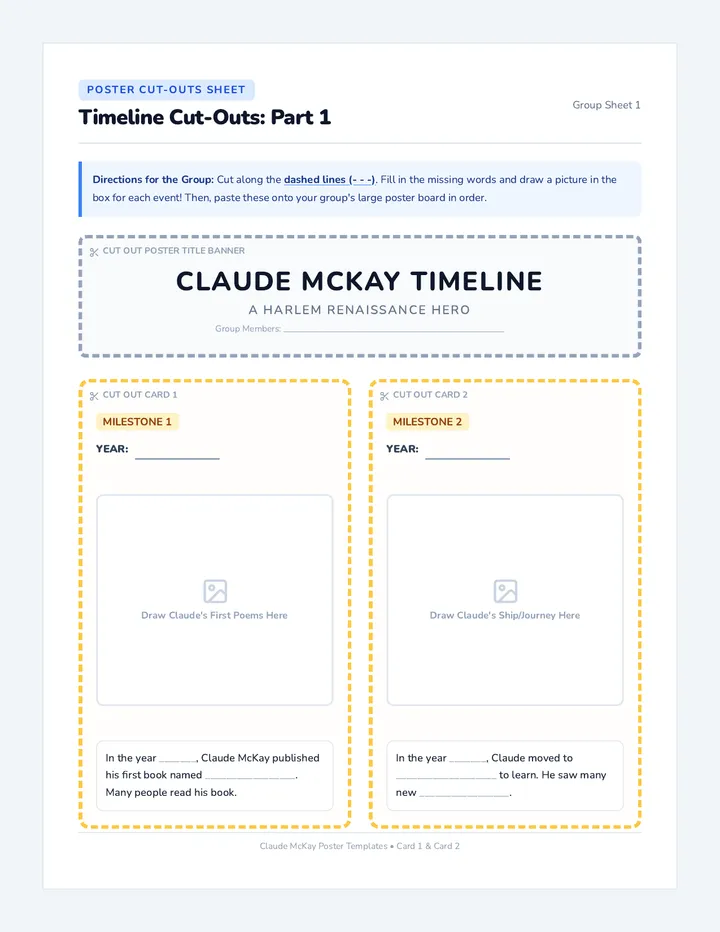
A highly accessible lesson on the Roaring Twenties designed for middle school students reading at a 1st-grade level, focusing on cultural shifts, jazz, and the Harlem Renaissance with scaffolded multiple-choice practice.
A lesson exploring the development and importance of writing in ancient Mesopotamia, specifically cuneiform and the role of scribes.
A lesson focused on the introduction of writing in Mesopotamia, specifically cuneiform and its importance for records and laws.
Master the essential terminology of Ancient Rome through visual and descriptive flashcards.
Solve complex multiplication word problems using multiple strategies including arrays and area models.
Track and reflect on daily reading progress with differentiated logs for various ability levels.
Analyze the key figures, events, and documents of the American Civil Rights Movement.
Explore how plants transform sunlight into energy through the process of photosynthesis.
A 30-45 minute lesson exploring both the religious origins and secular traditions of Easter, including a social story for behavioral expectations and a symbol-matching activity.
Discover the shape of our nation through the US Map and review all symbols with a sorting challenge.
Explore the history and meaning of the Liberty Bell and the White House as symbols of independence and leadership.
Introduce the concept of national symbols and focus on the American Flag and the Bald Eagle as symbols of freedom and strength.
A lesson investigating the political instability that led to the Fall of Rome, featuring differentiated evidence files for diverse reading levels. Students work collaboratively to diagnose the empire's 'political sickness.'
A comprehensive lesson on the colonial bread-making process, featuring the roles of millers and bakers, bartering practices, and sequencing the steps from grain to loaf.
A quick visual identification activity where students recognize the seven continents by their silhouettes alone.
A collection of coloring pages featuring influential women from history and modern times, designed to inspire students through art and reflection.
An entirely unplugged introduction to logic and algorithms. Students explore step-by-step traditions and secret codes using physical patterns and movement games.
Celebrating cultural heritage through physical artifacts and oral histories. Students learn to analyze primary sources and explore informational text features like Table of Contents and Glossaries.
Reflecting on a year of learning, reviewing library organization (Dewey Decimal), and preparing for summer reading adventures.
Honoring Women's History Month by exploring female inventors and engineers, featuring hands-on 'She-gineering' challenges.
Celebrating Black History Month through the lens of Afrofuturism, blending history with visionary STEM challenges and science fiction.
Focusing on biographies and the legacy of Dr. Martin Luther King Jr., while practicing research and note-taking skills.
A focus on informational texts and non-fiction research skills, centered around Native American Heritage Month and the concept of 'Giving Thanks.'
Exploring the mystery and suspense genres through 'Spooky Stories' and engineering 'Maker Monsters' in the STEM lab.
Welcome back to the library! This unit focuses on library orientation, procedures, the 'Heart of the School' concept, and establishing a collaborative Maker Mindset.
A week-long exploration of poetry and nature, focusing on sensory language and observational skills in the library and media center. Includes differentiated worksheets and slides.
An intensive, highly scaffolded lesson on the Bill of Rights for students requiring Tier 3 support, featuring simplified language, heavy visual prompts, and step-by-step guidance.
A targeted lesson on the Bill of Rights for students requiring Tier 2 support, focusing on academic vocabulary and structured planning for a poster project.
A beginner-friendly introduction to Ancient Rome for early first graders, focusing on simple geography, clothing, and famous structures.
A festive collection of St. Patrick's Day activities focusing on vocabulary and Irish folklore.
A series of visual retelling supports and comprehension tools for Harriet Tubman's early life, covering her childhood responsibilities and her mother's story of their family's origins.