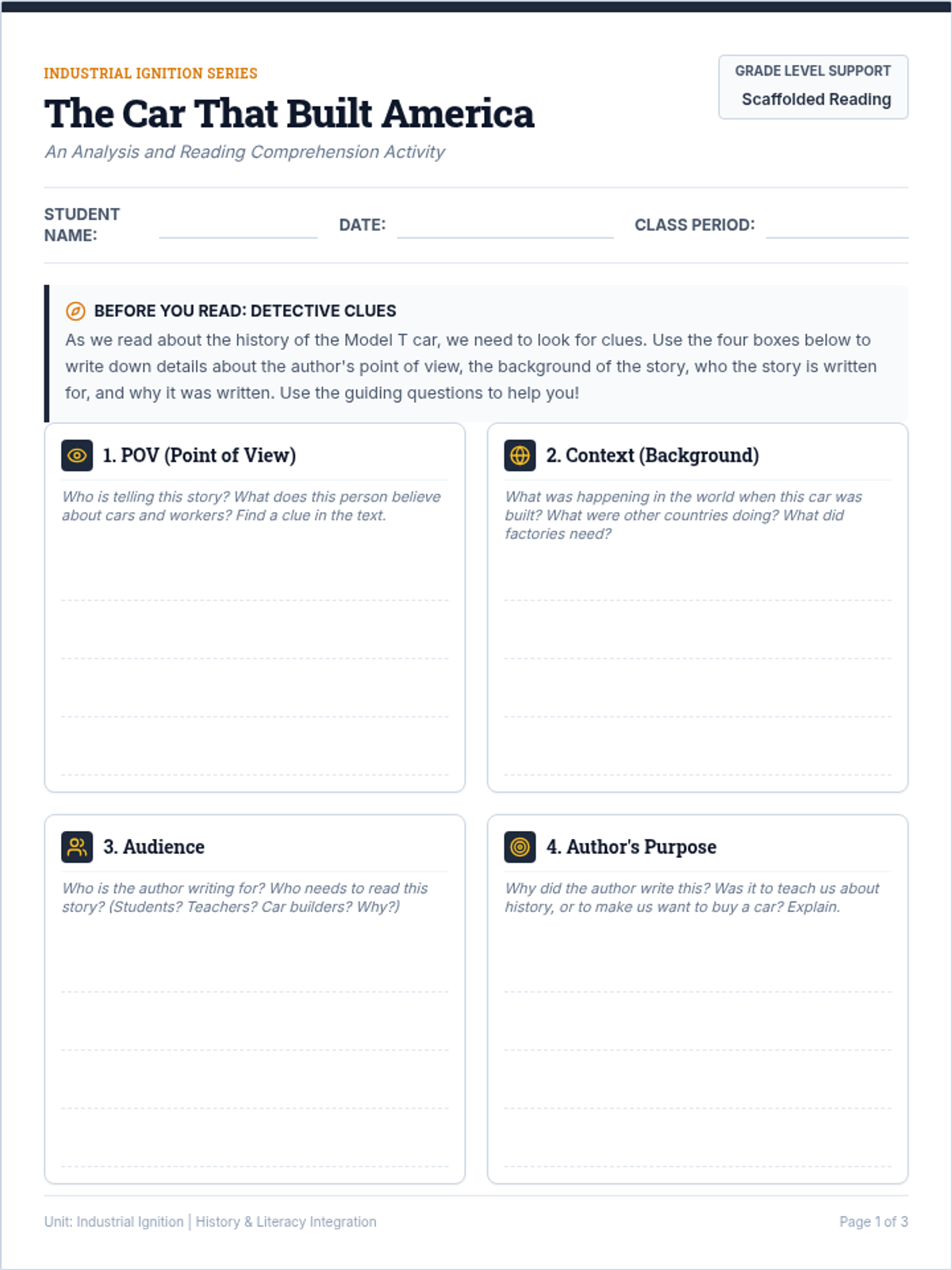
A lesson on the Gilded Age, the Industrial Revolution, robber barons, and their symbolic representation in L. Frank Baum's 'The Wizard of Oz'. Designed with high-support scaffolding for middle schoolers reading at a first-grade level.
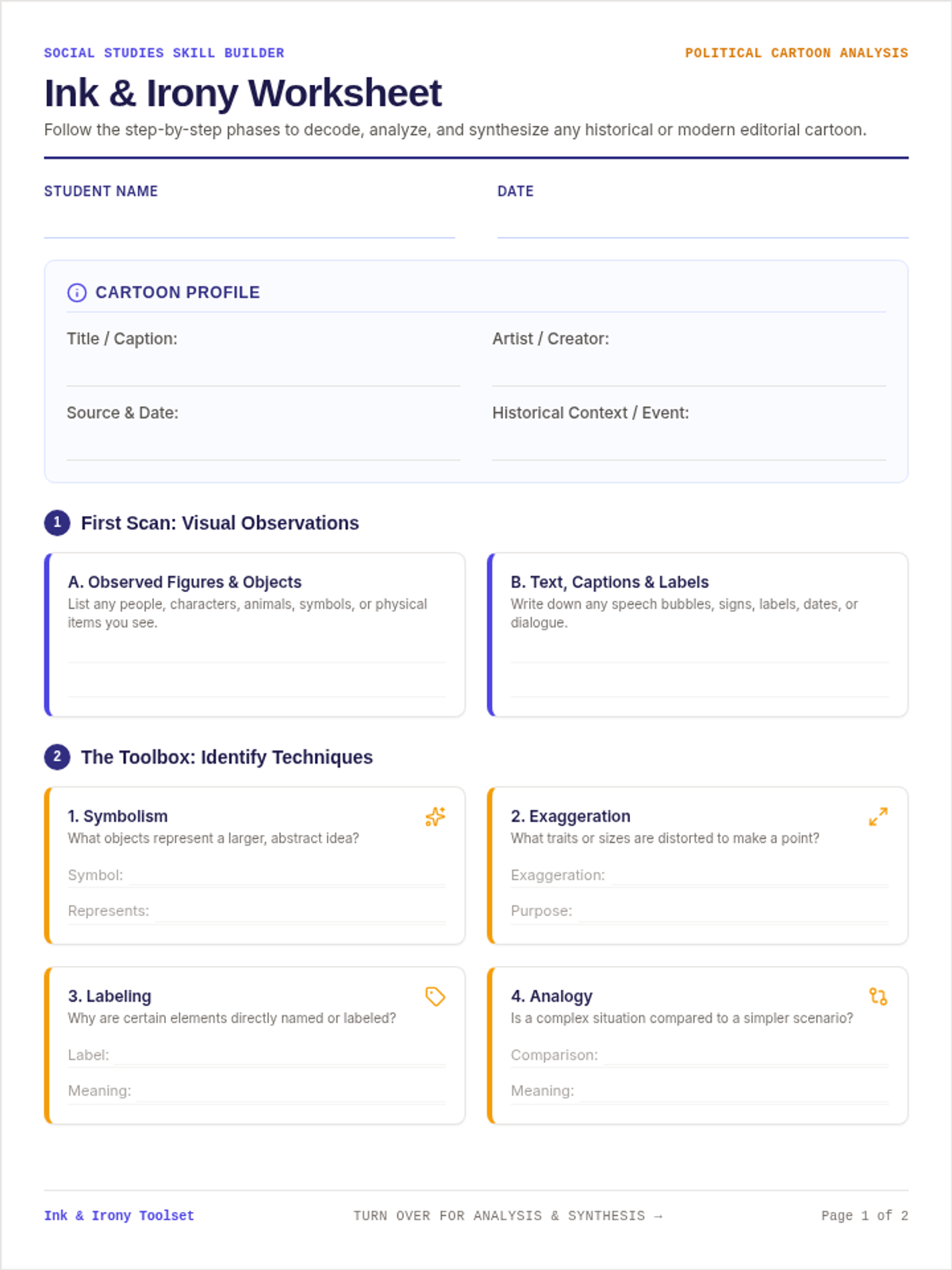
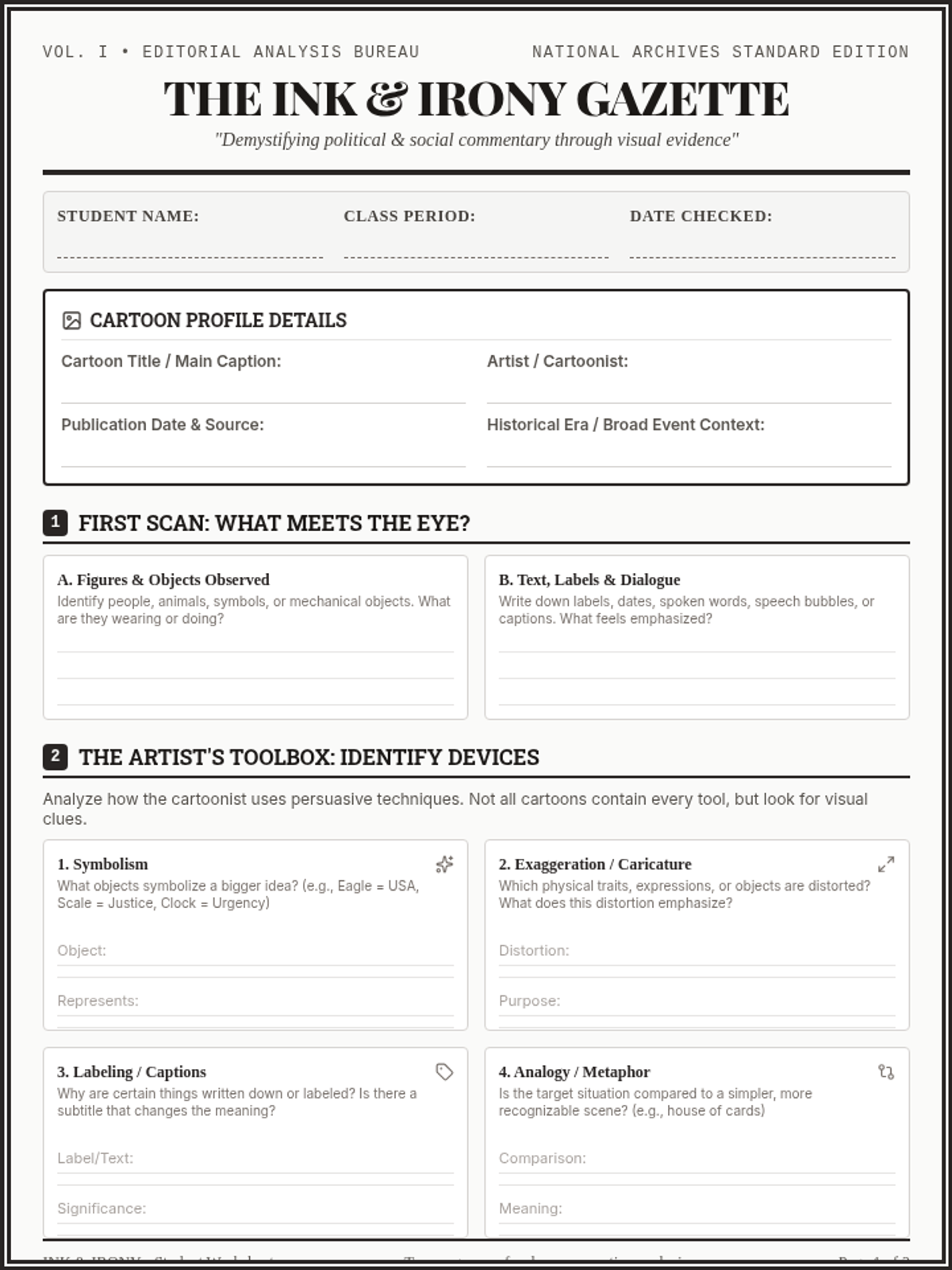
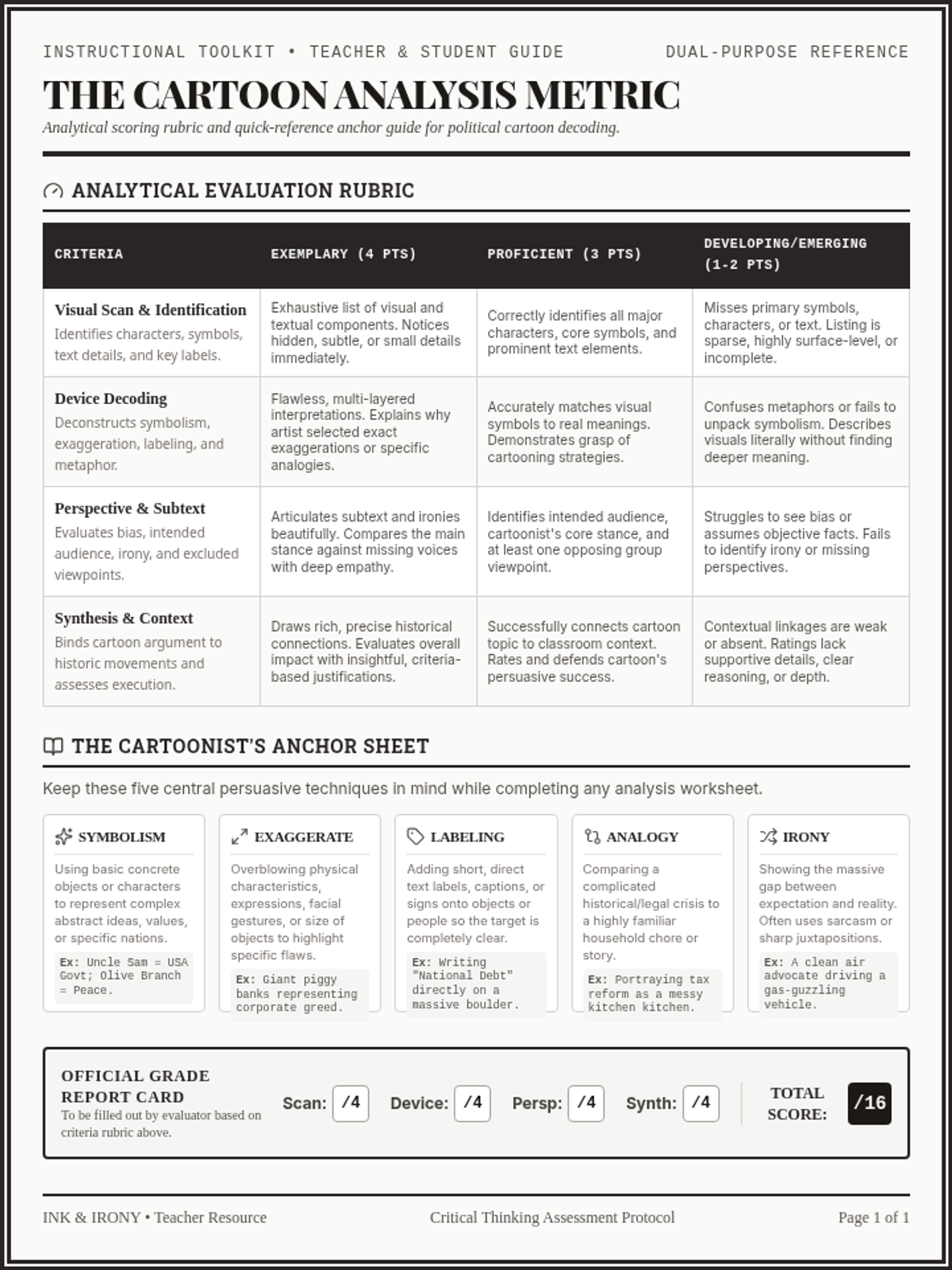
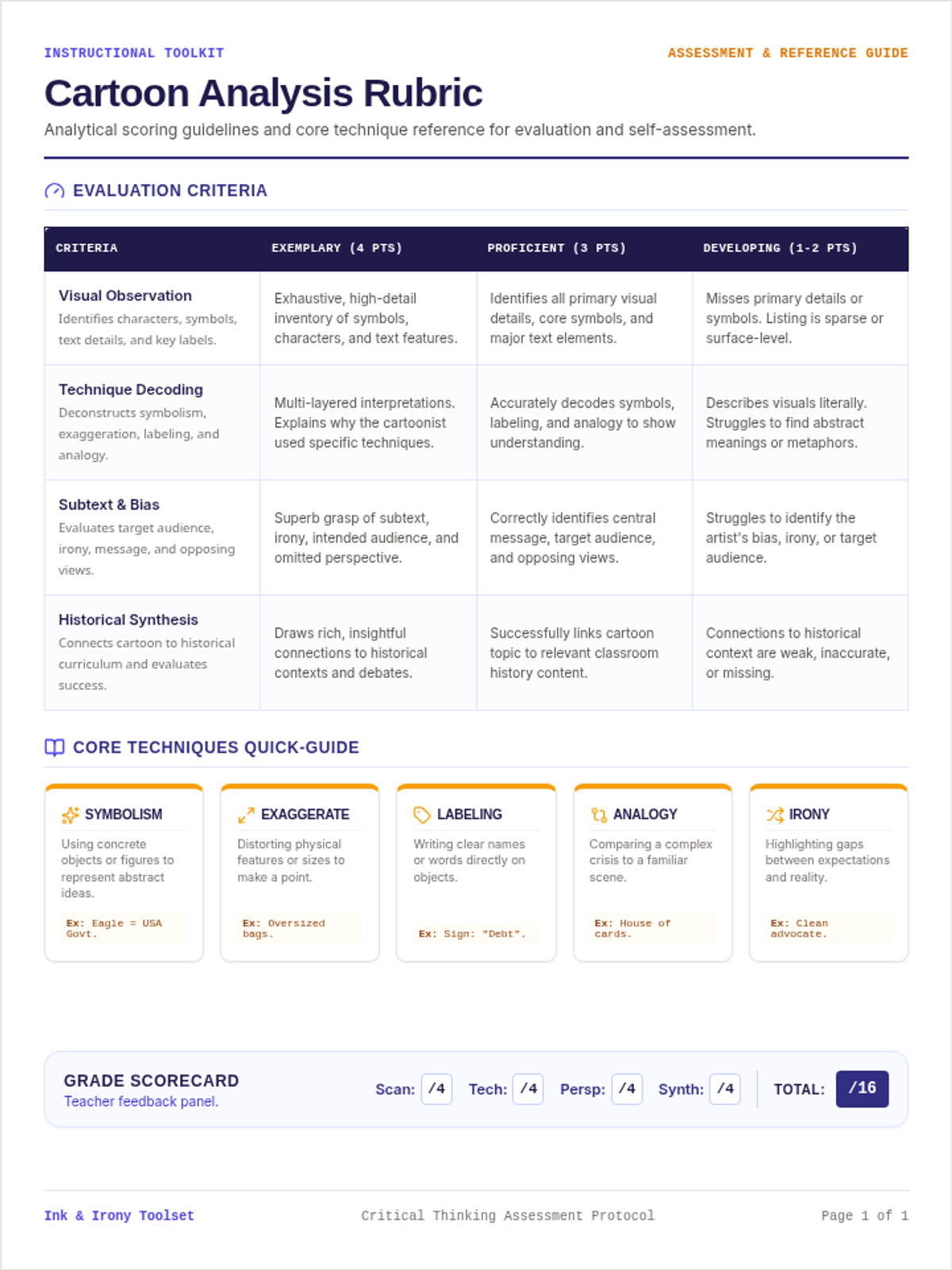
A comprehensive instructional toolkit for analyzing editorial and political cartoons. Features a versatile double-page graphic organizer and a structured assessment rubric adaptable to any historical era.
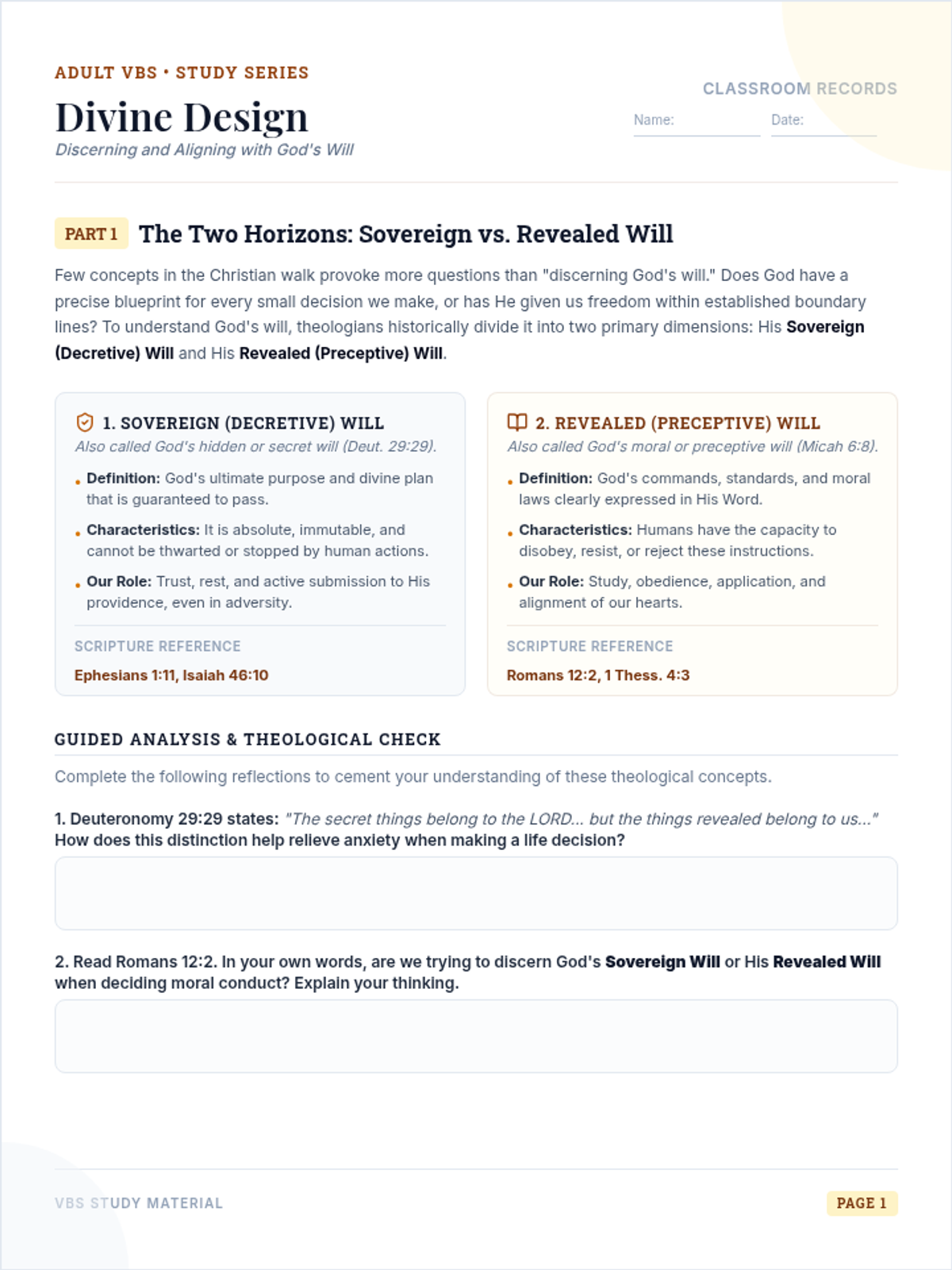
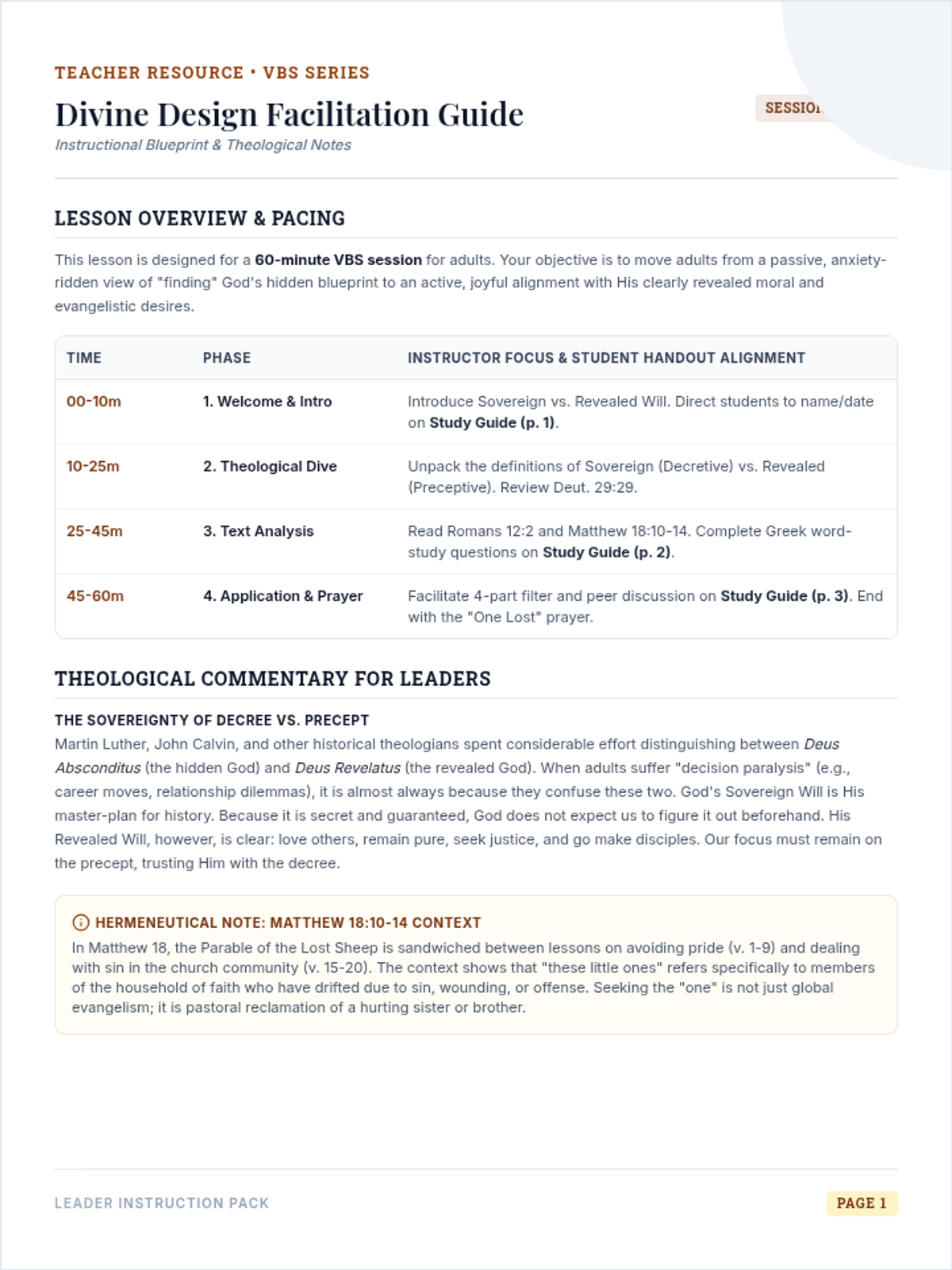
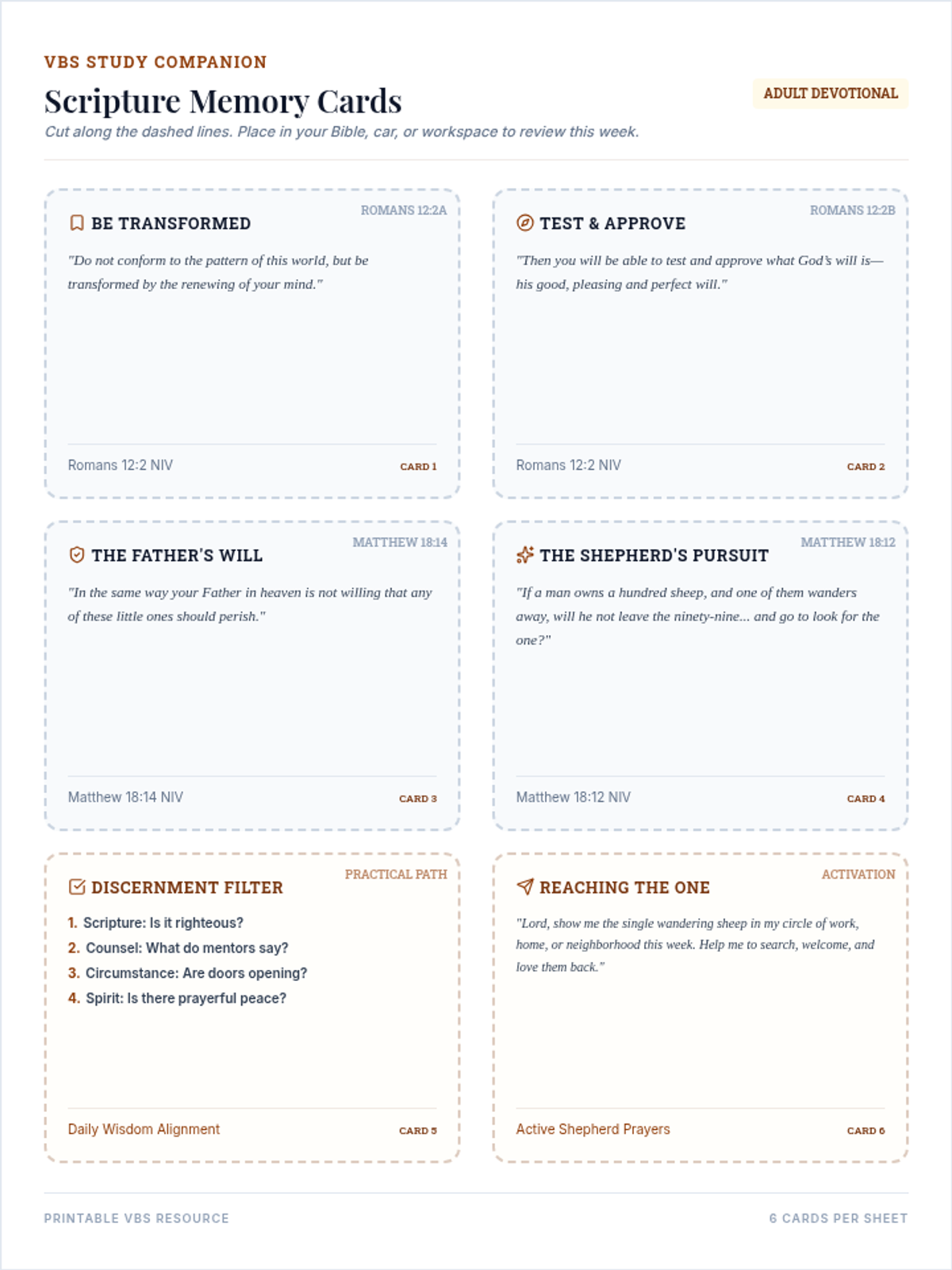
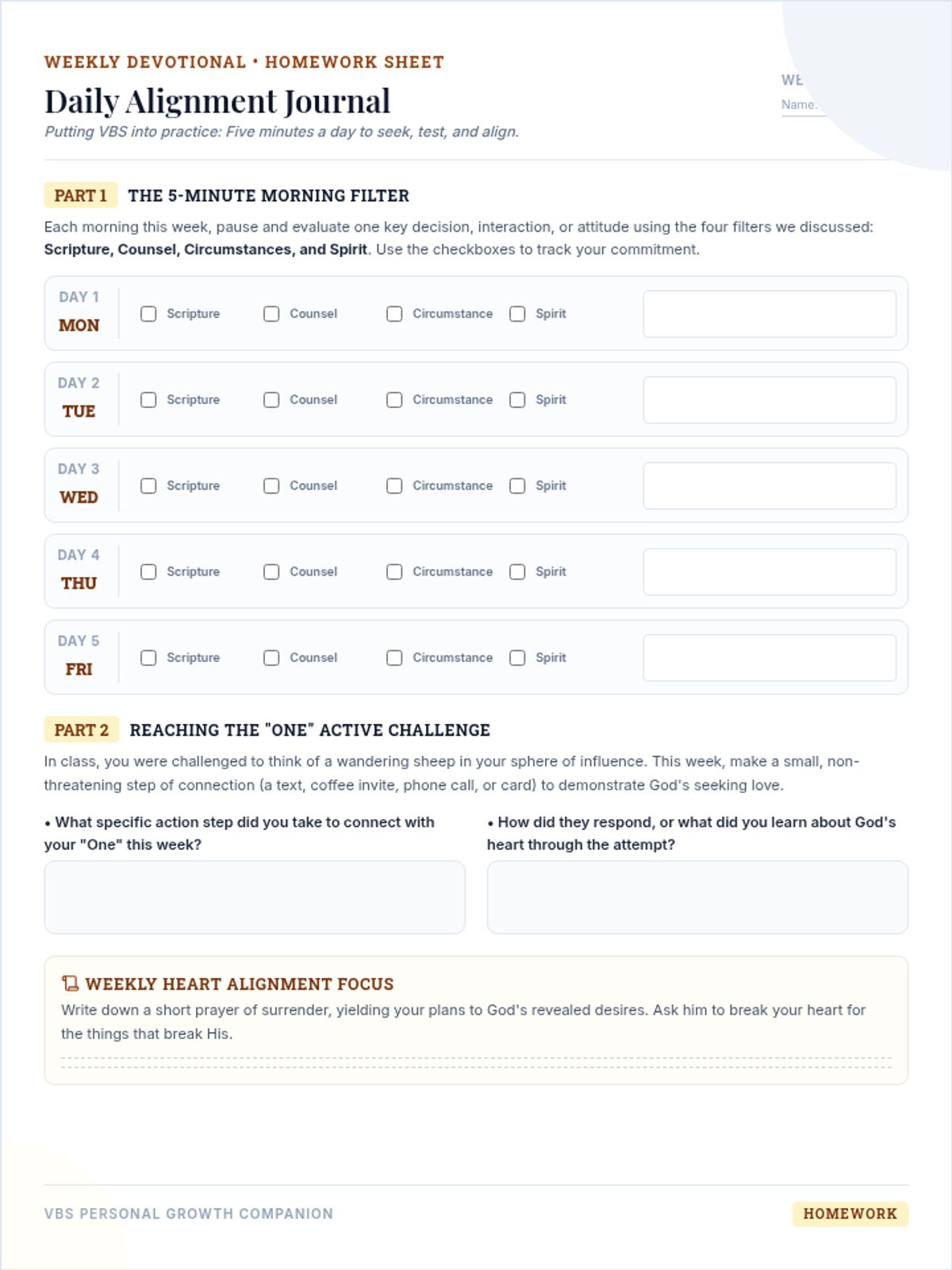
An adult Vacation Bible School (VBS) lesson focusing on discerning and aligning with God's will. Through Romans 12:2 and Matthew 18:10-14, adults will define God's will (Sovereign vs. Revealed), understand His design that none should be lost, and discover practical paths to daily discernment and evangelism.
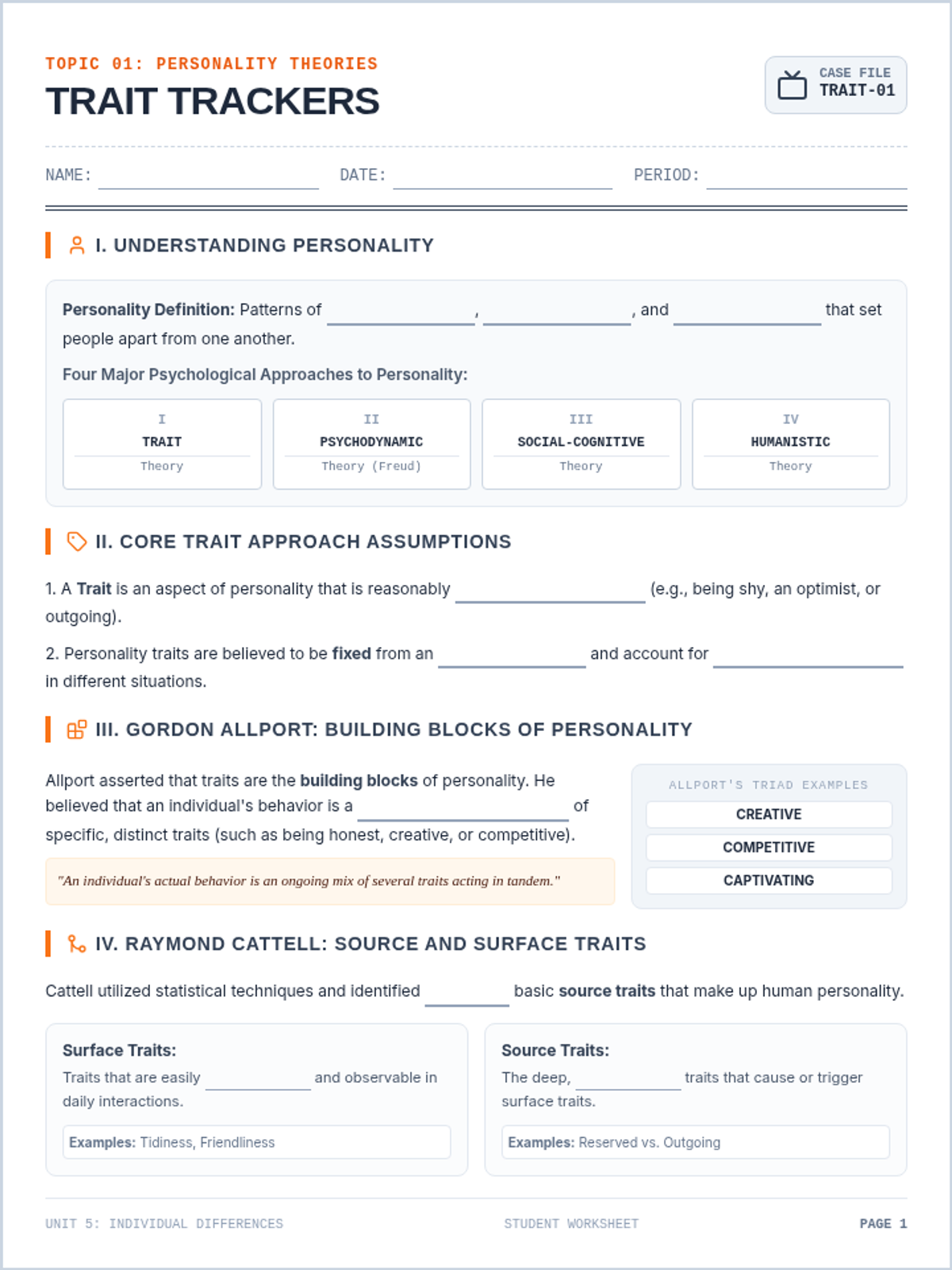
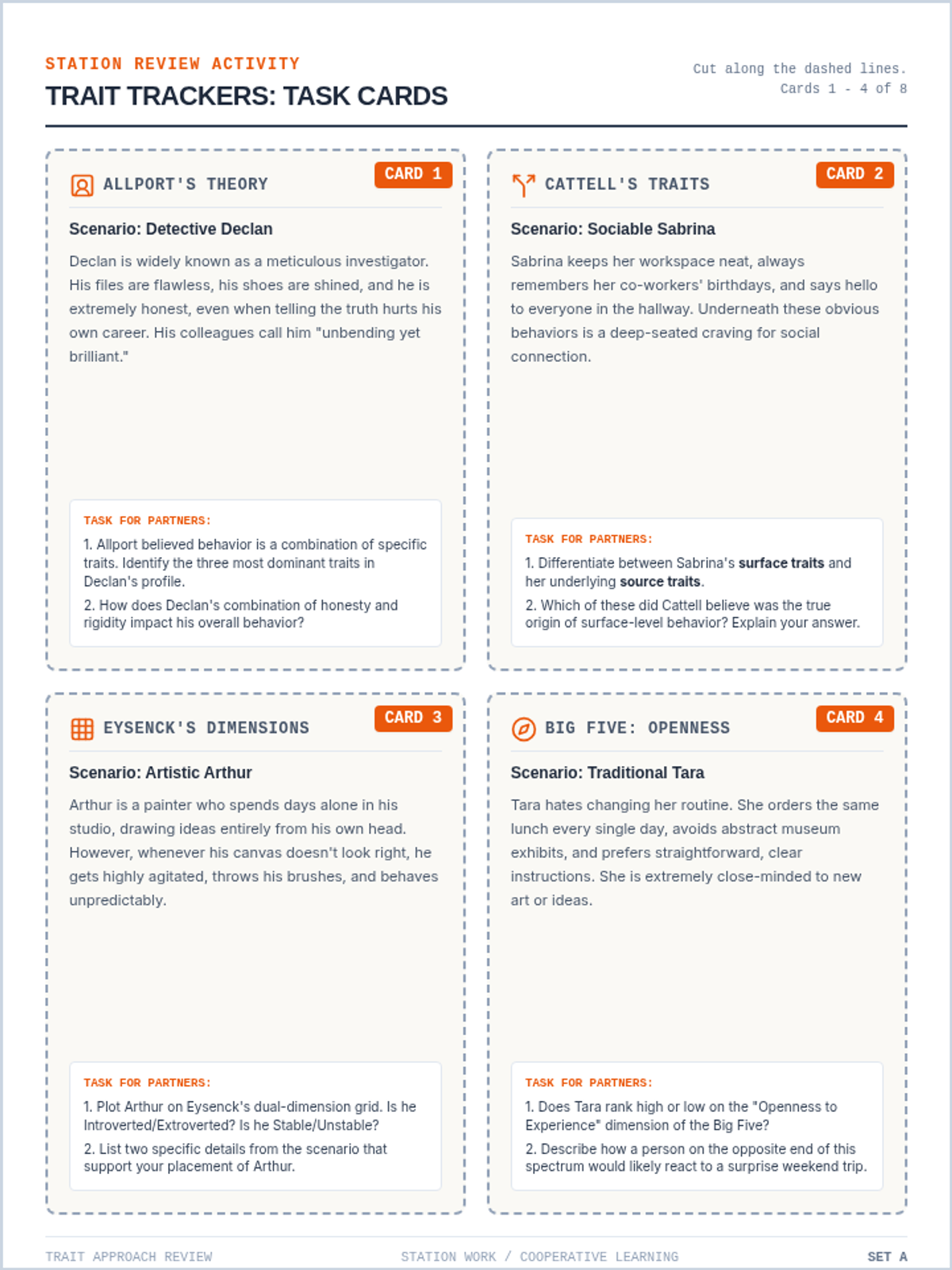
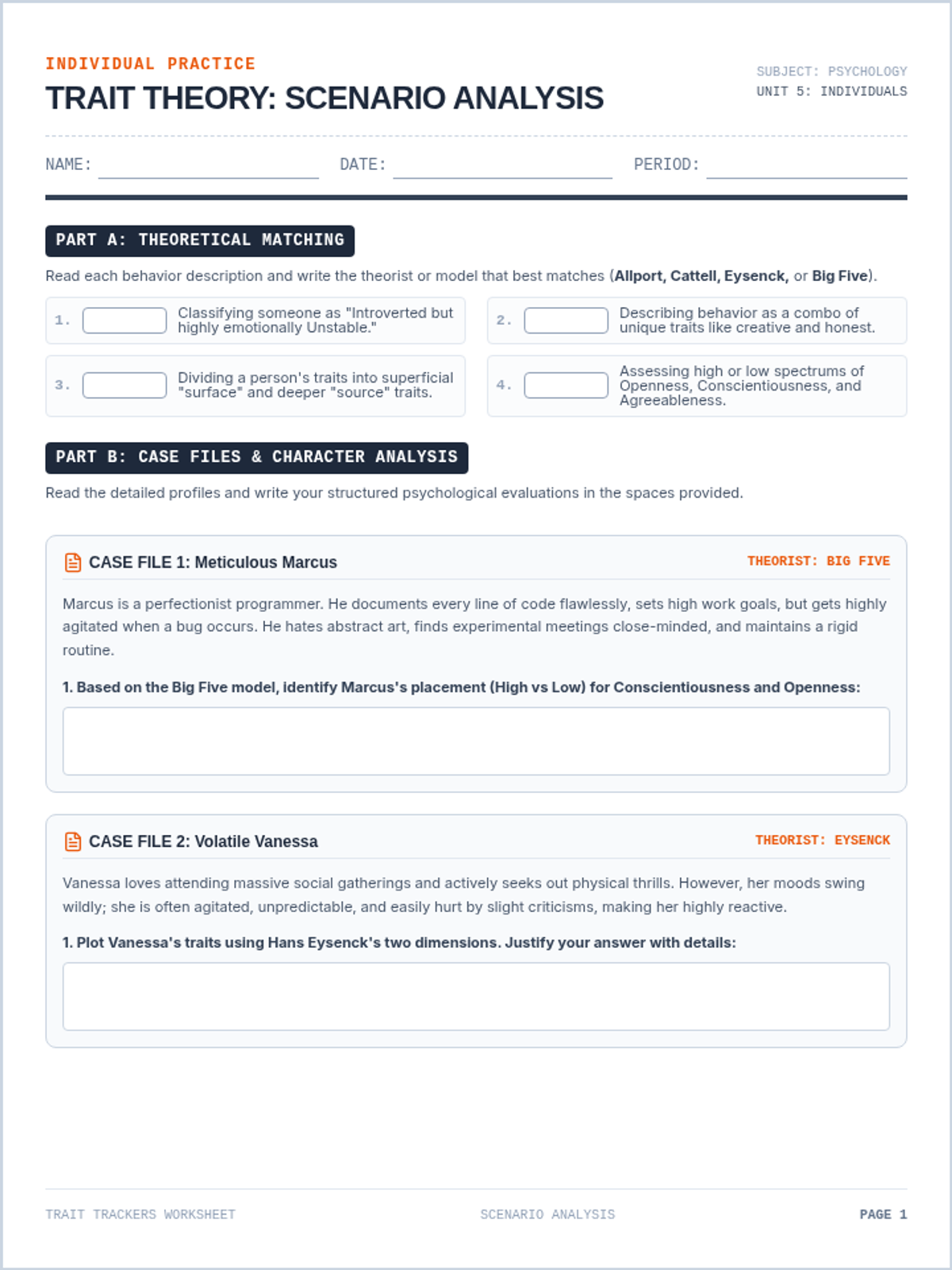
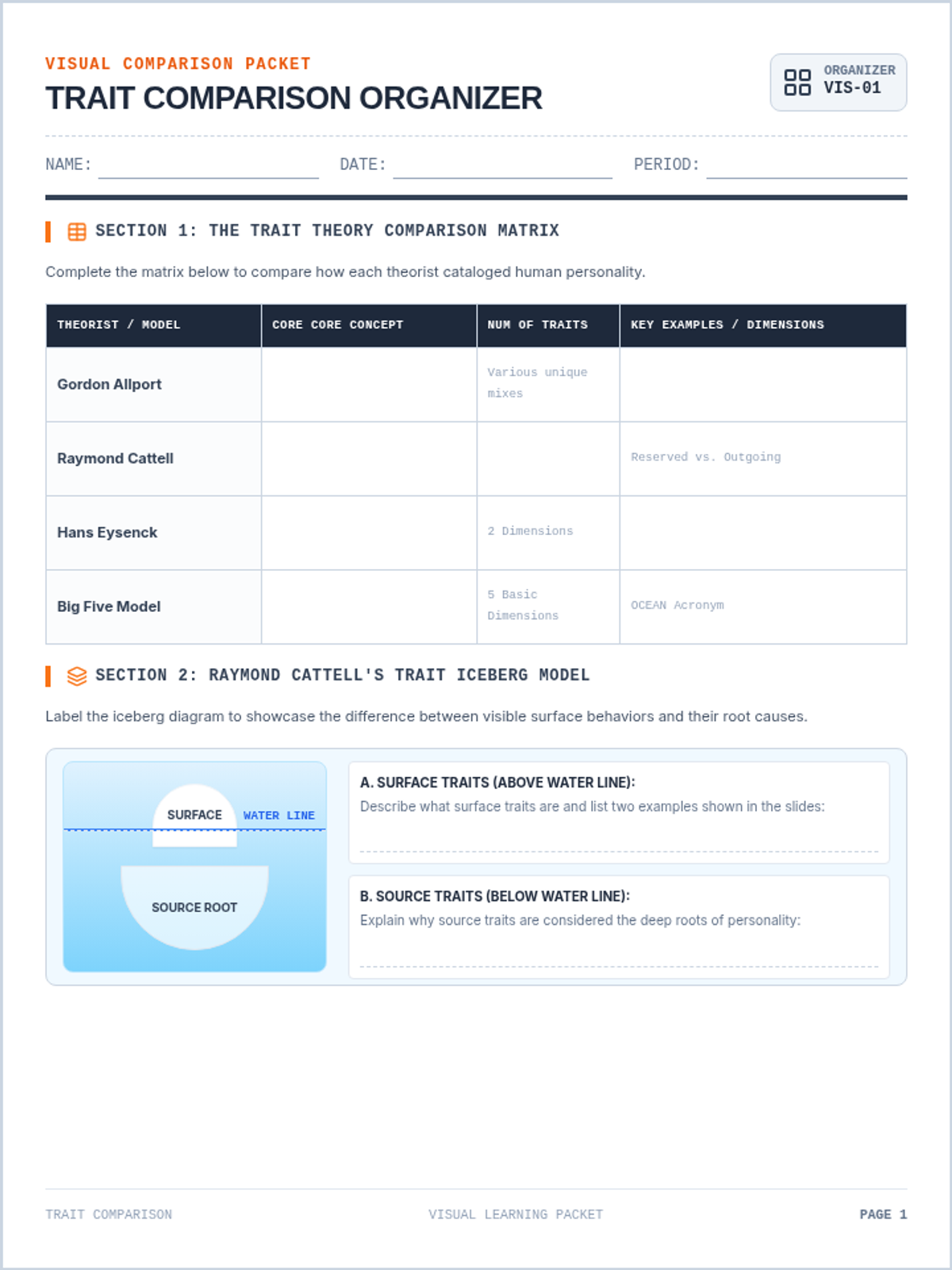
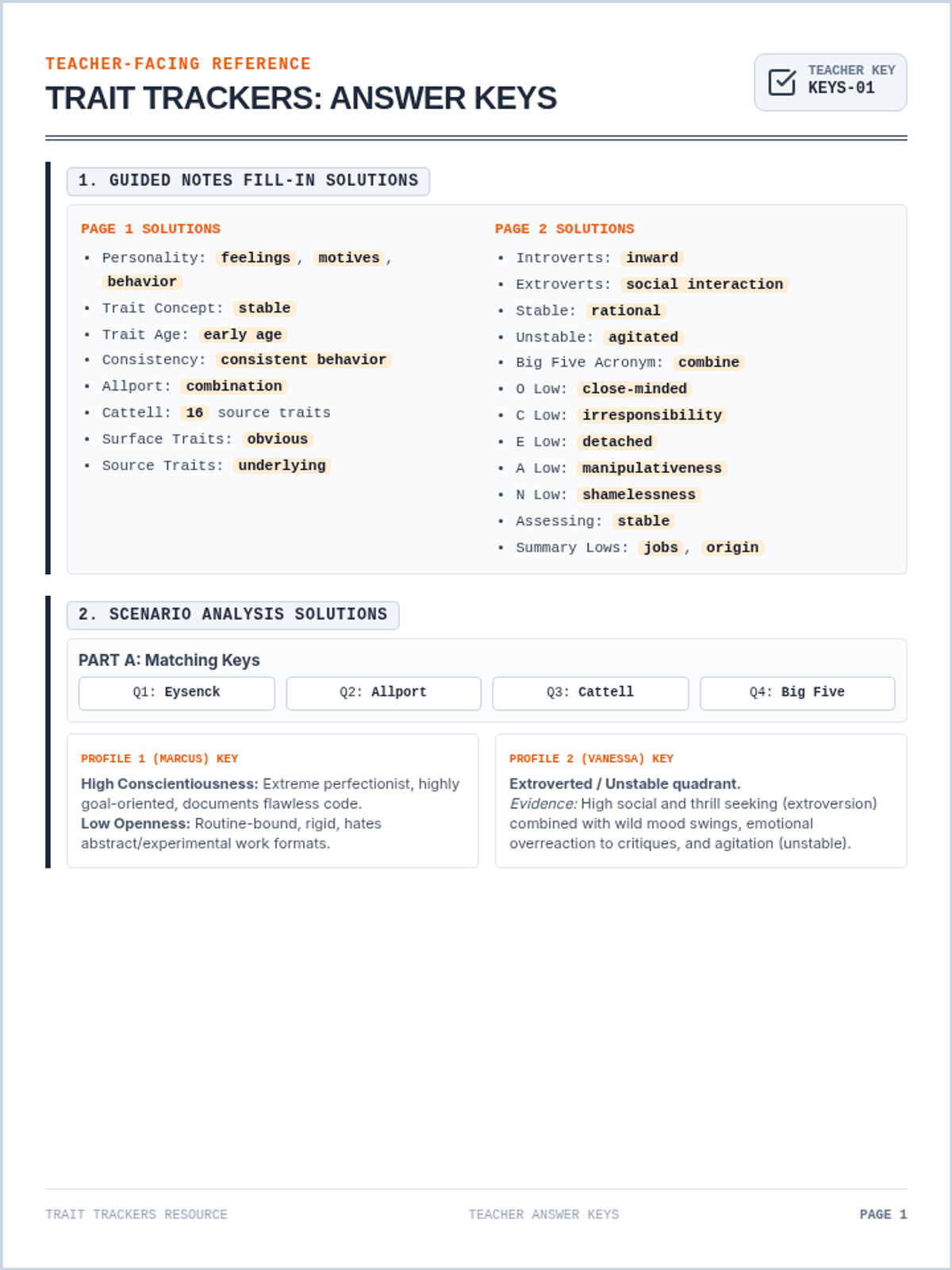
An introductory lesson on the Trait Approach to personality, guiding students through key definitions, major theorists (Allport, Cattell, Eysenck), the Big Five model, and the real-world applications and limitations of trait theory.
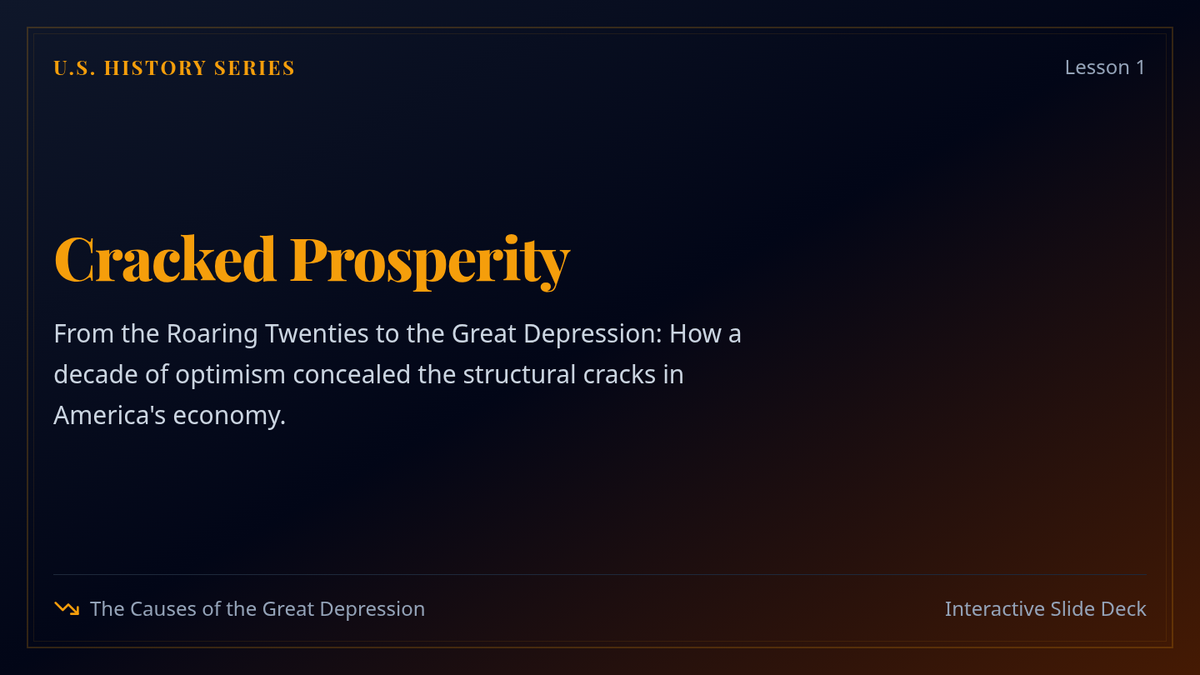
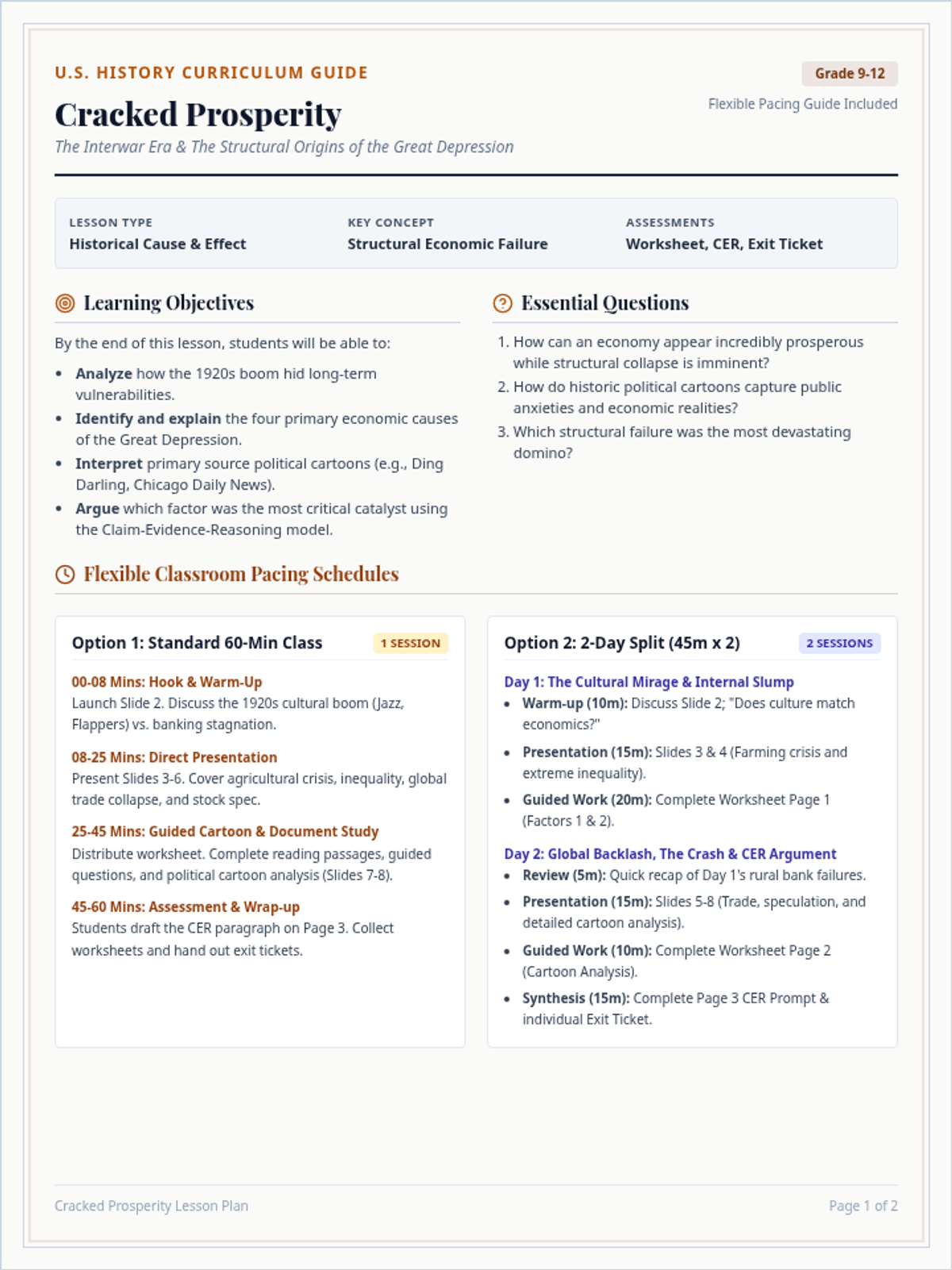
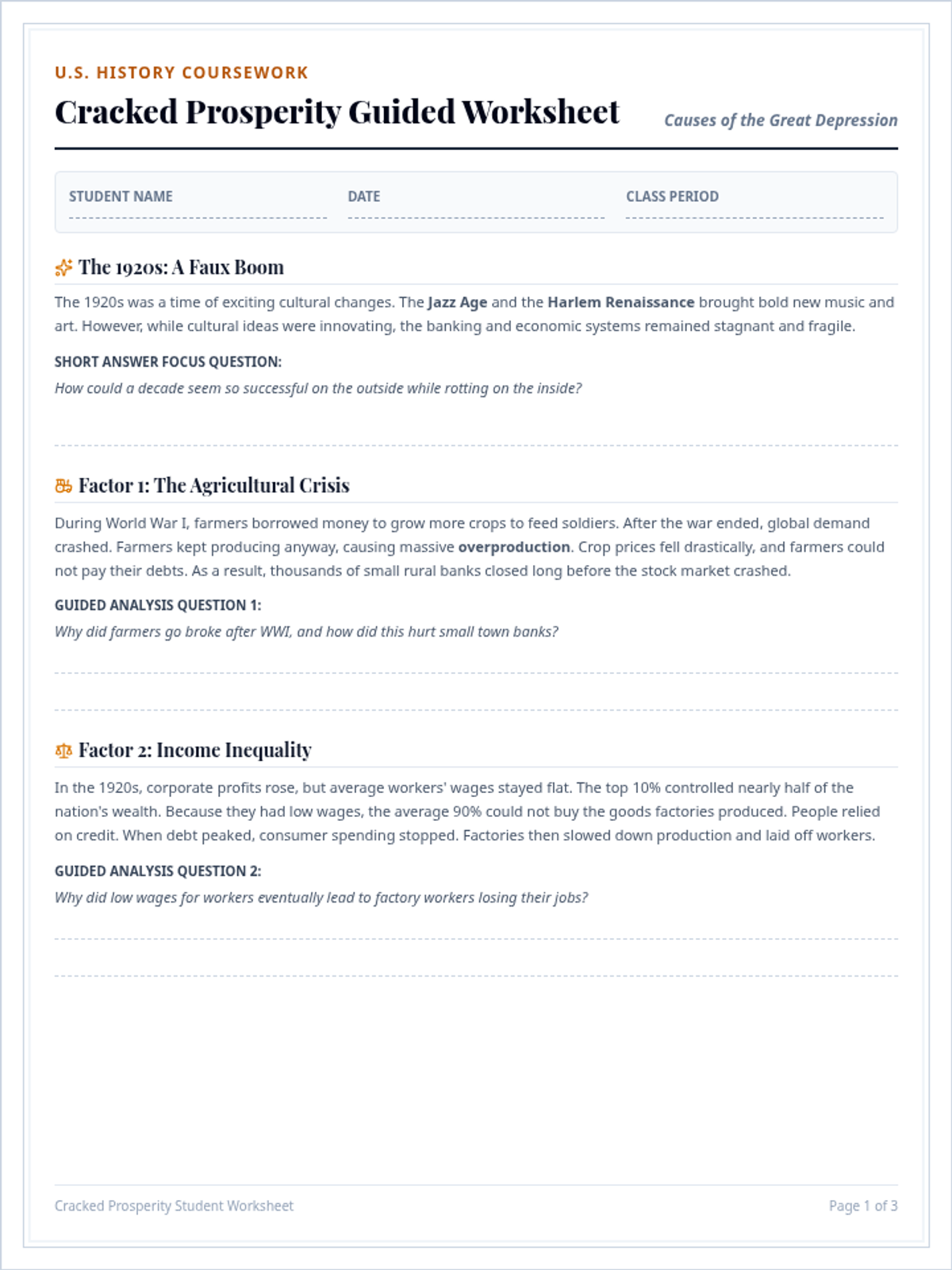
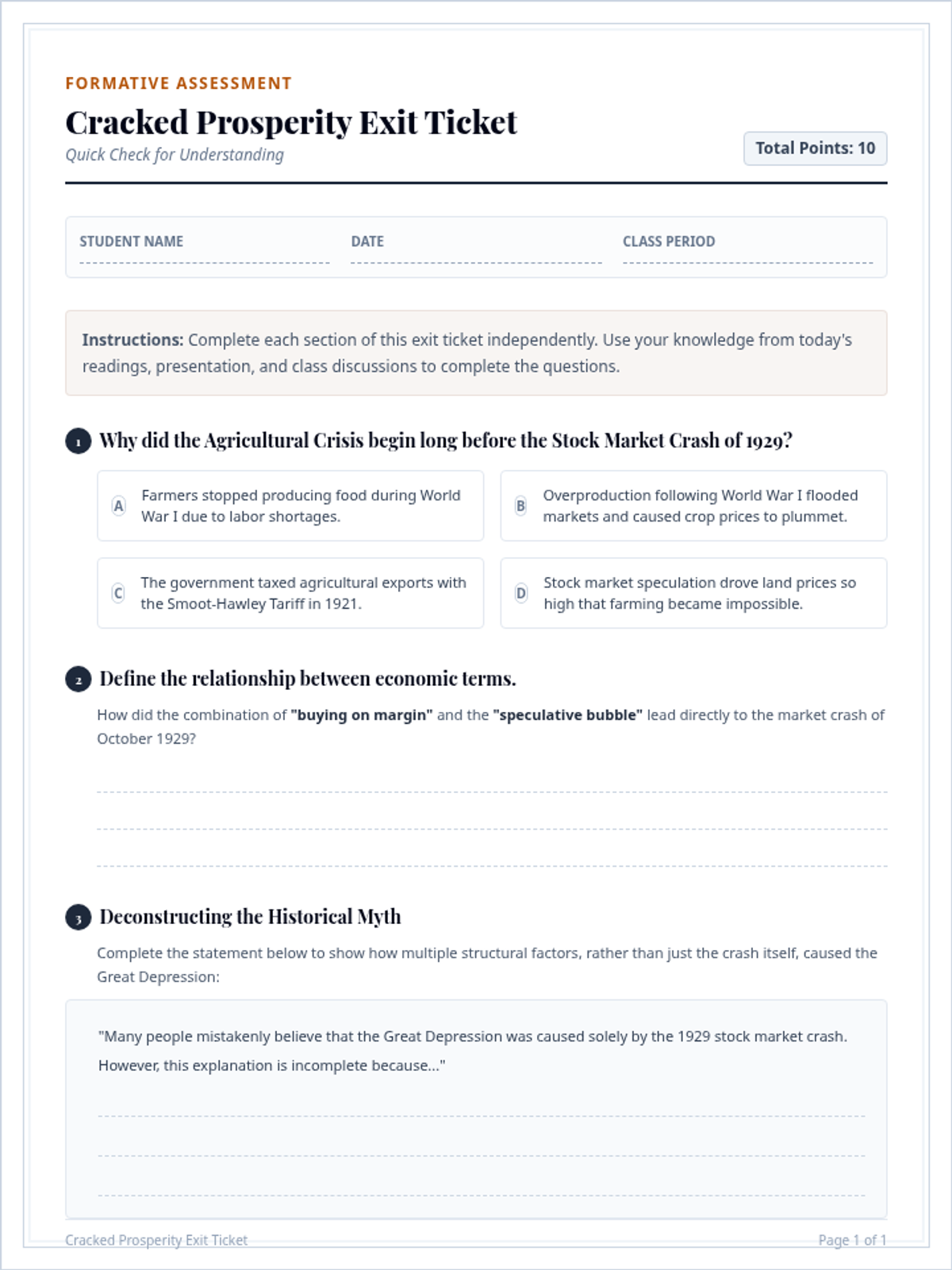
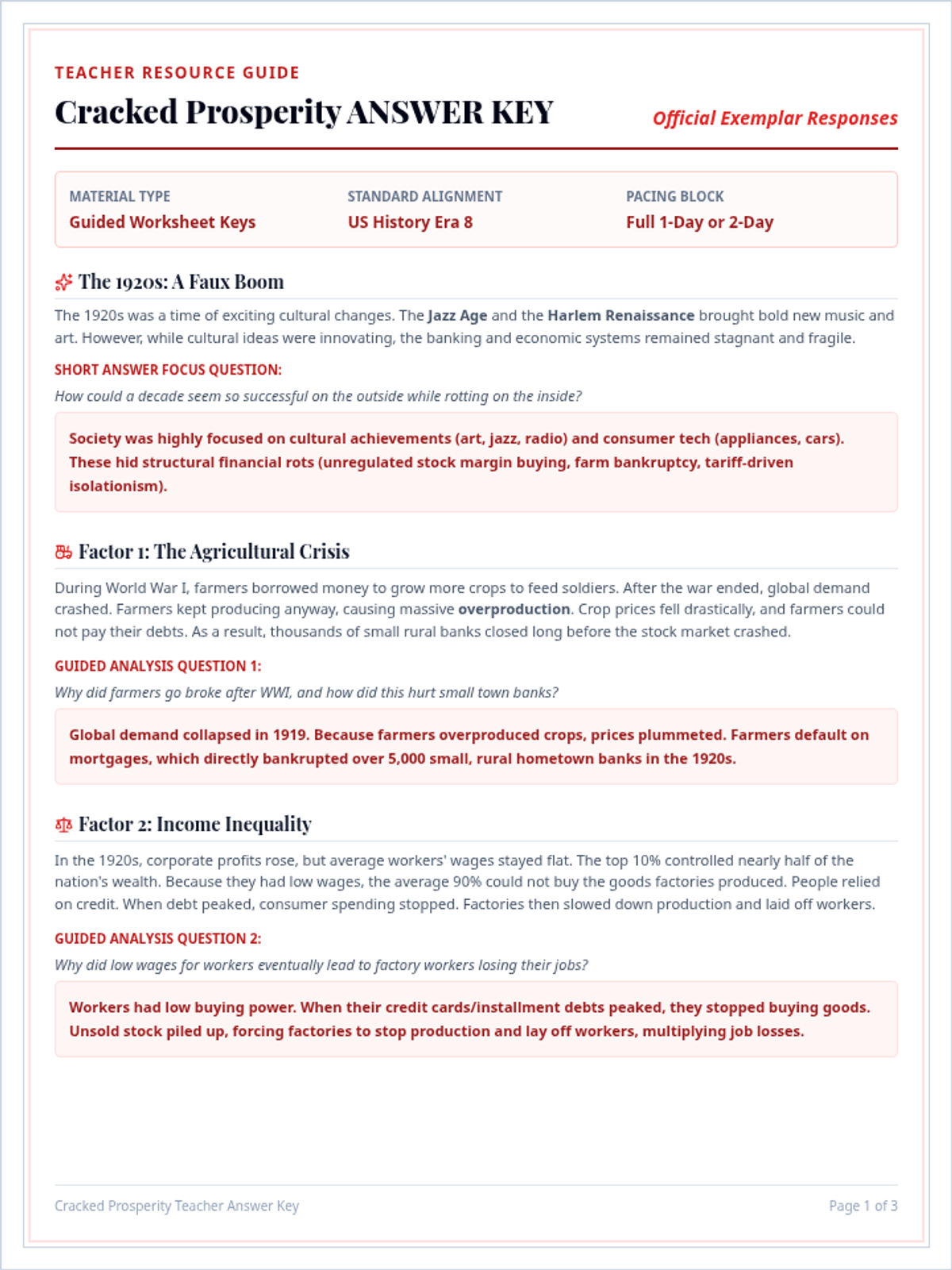
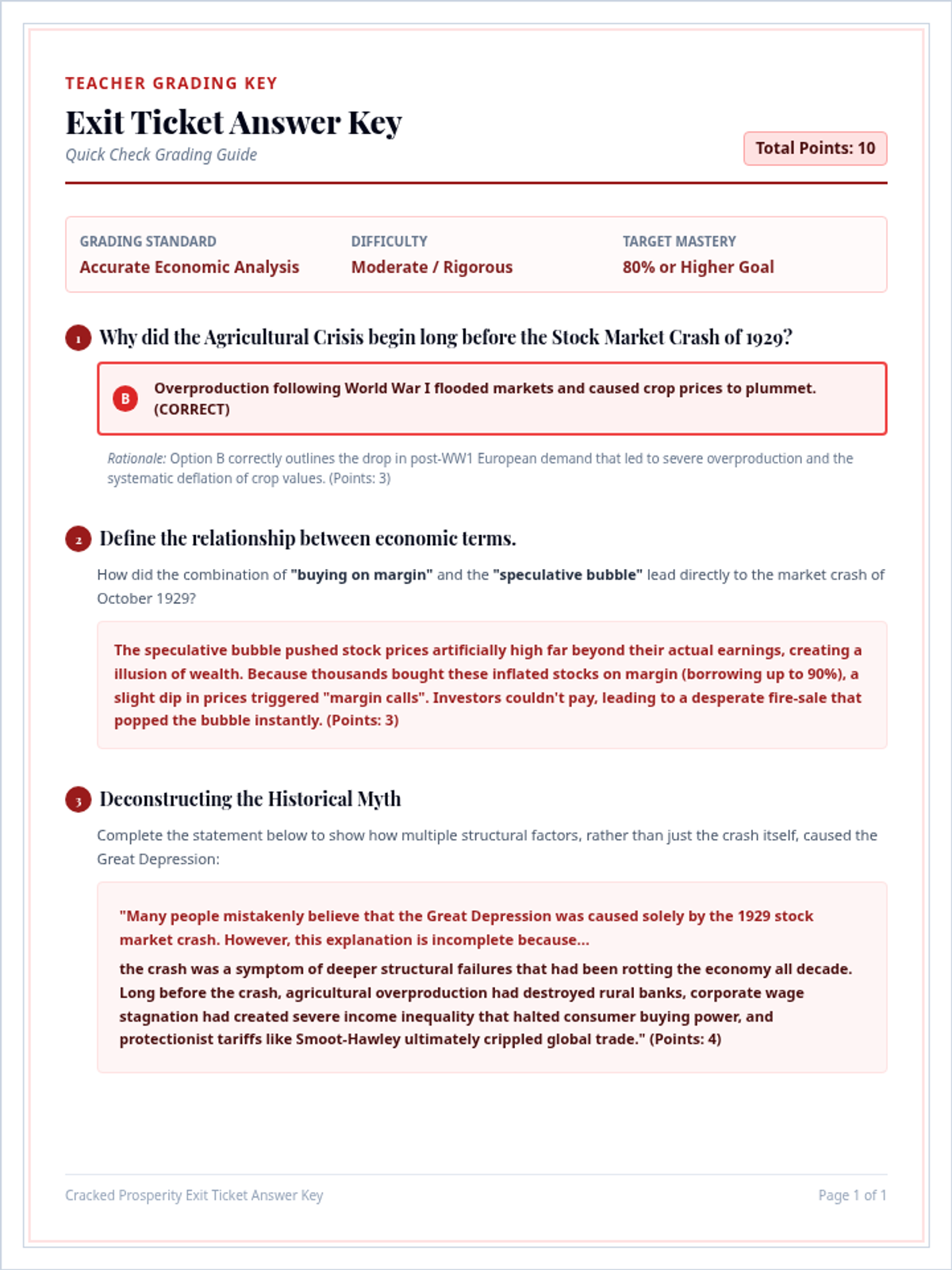
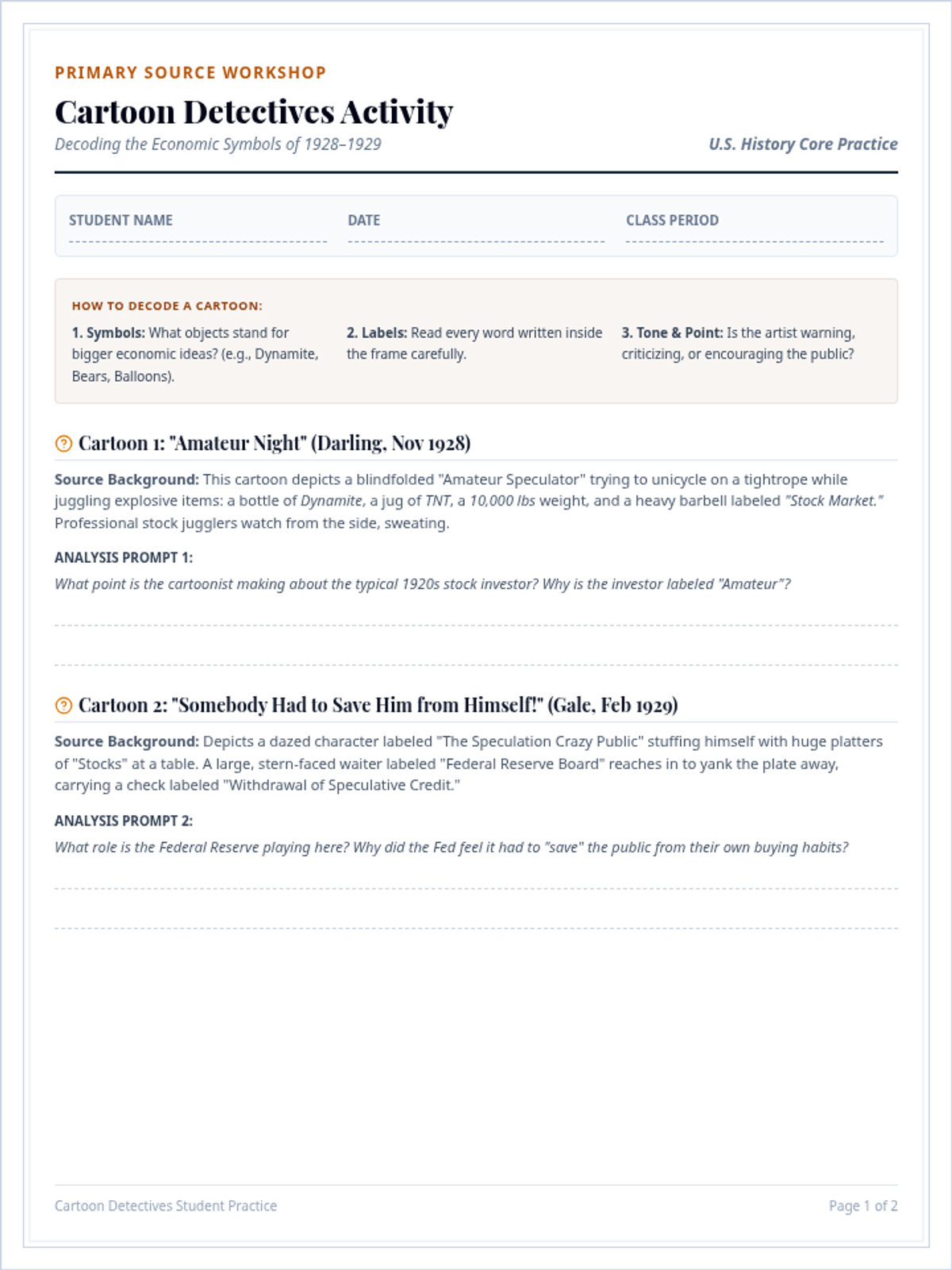
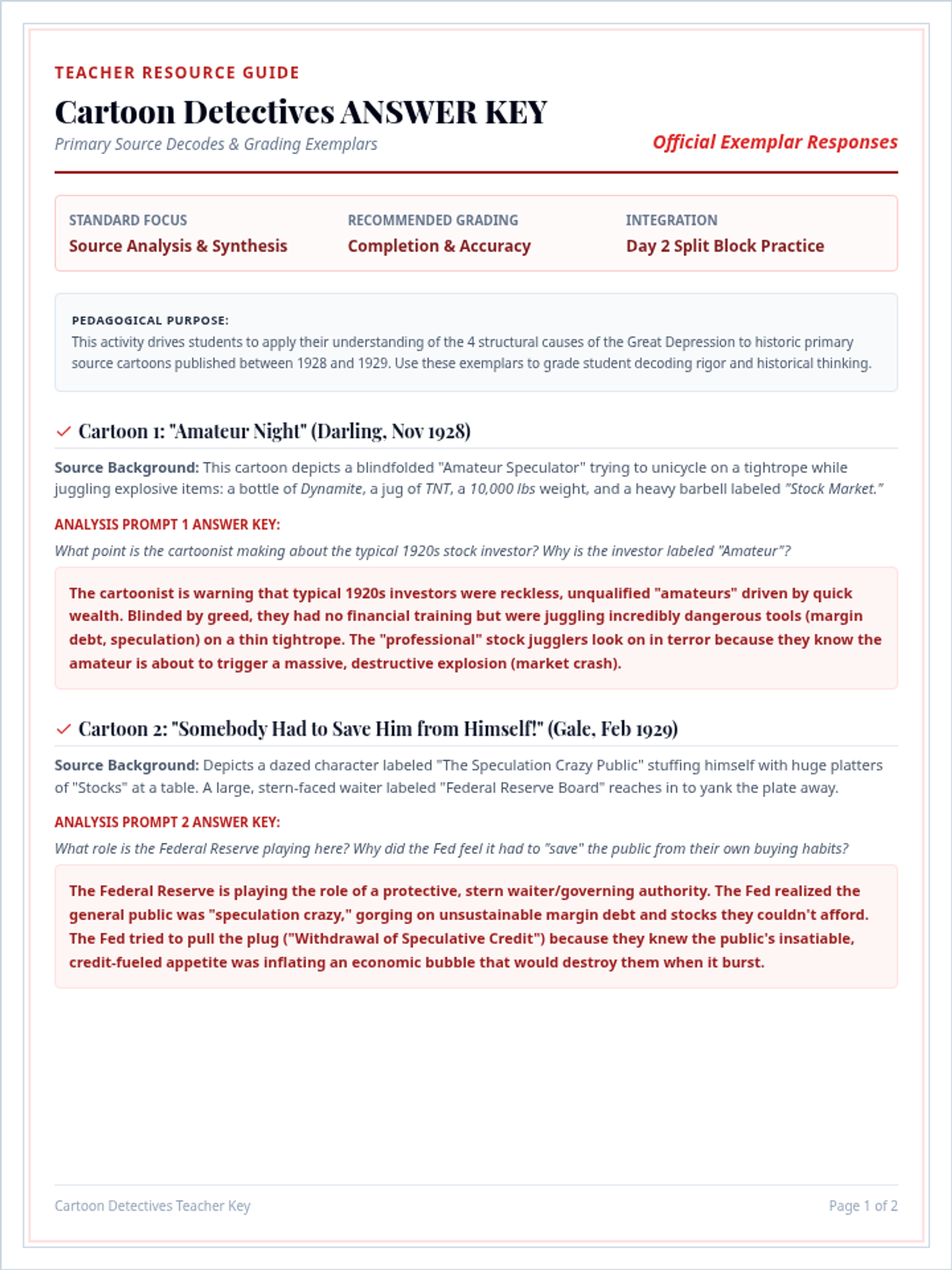
A comprehensive lesson exploring the transition from the roaring optimism of the 1920s to the structural causes of the Great Depression, including the agricultural crisis, income inequality, global trade collapse, and the 1929 stock market crash.
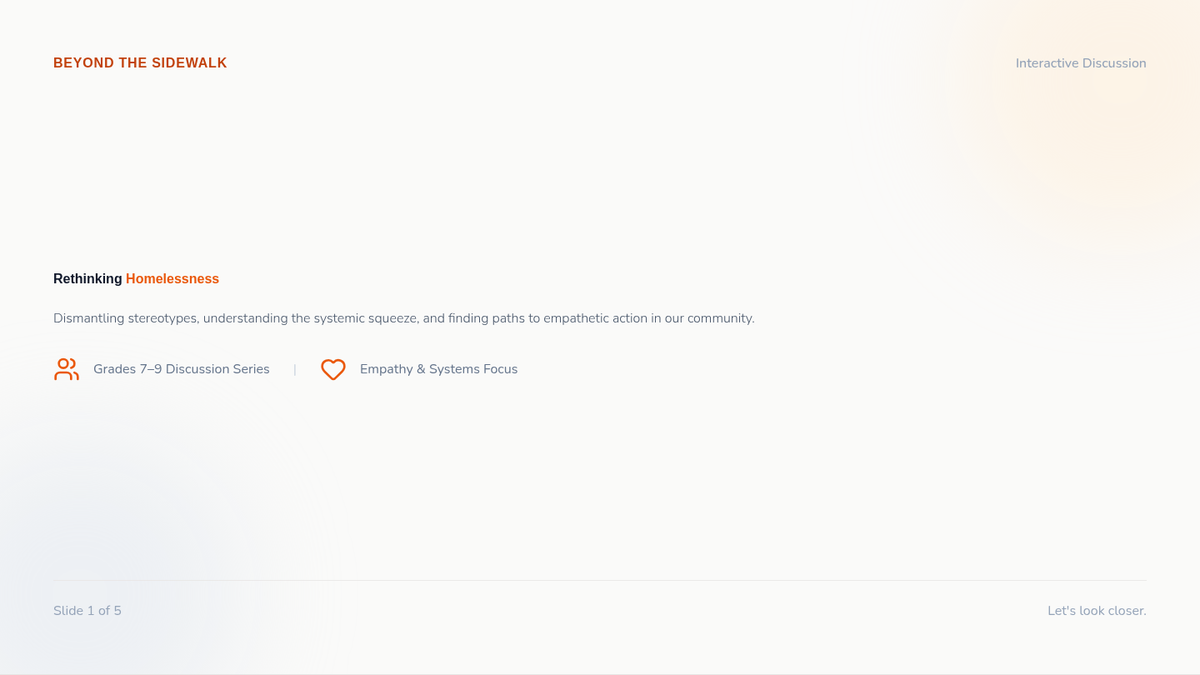
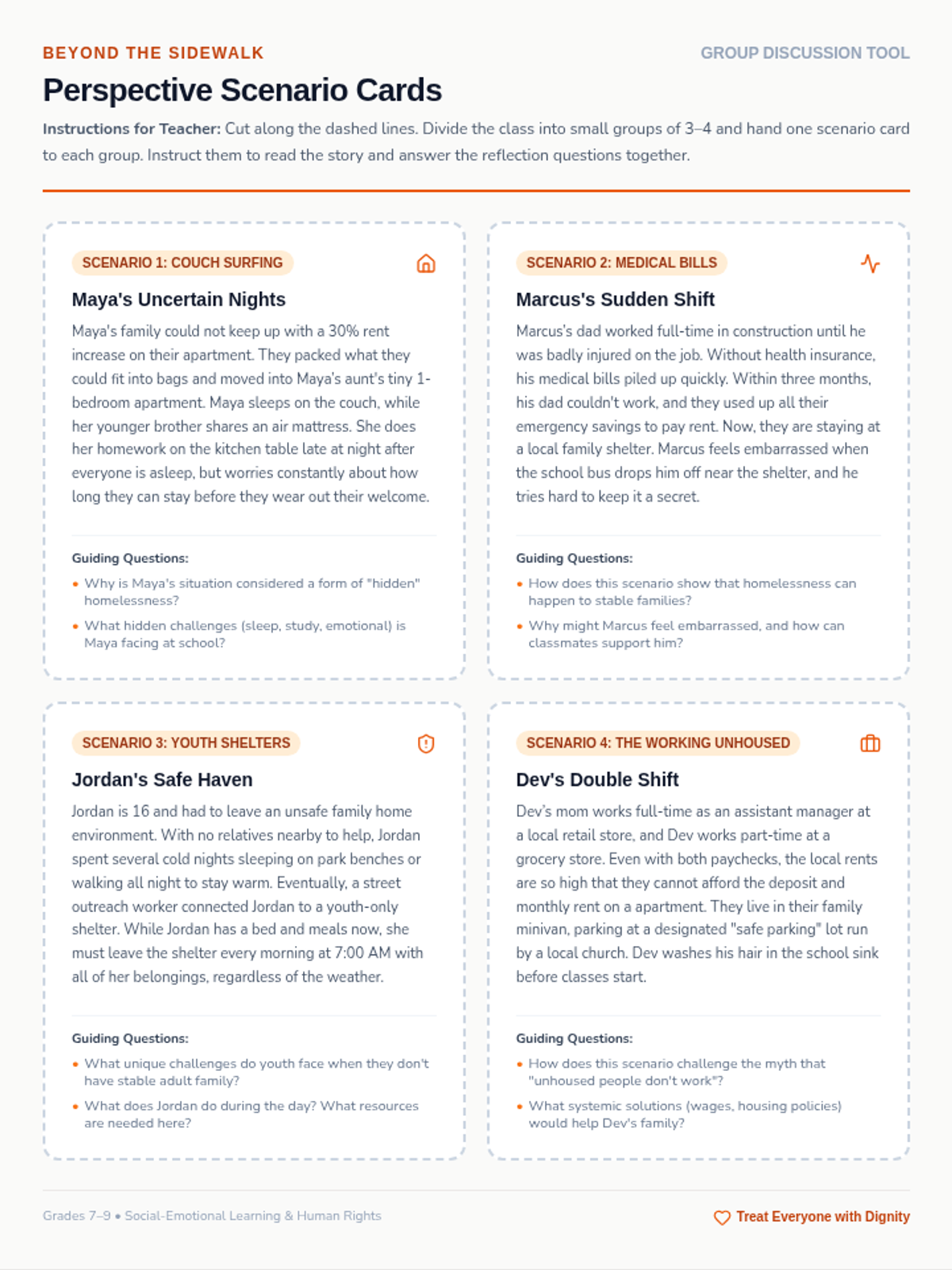
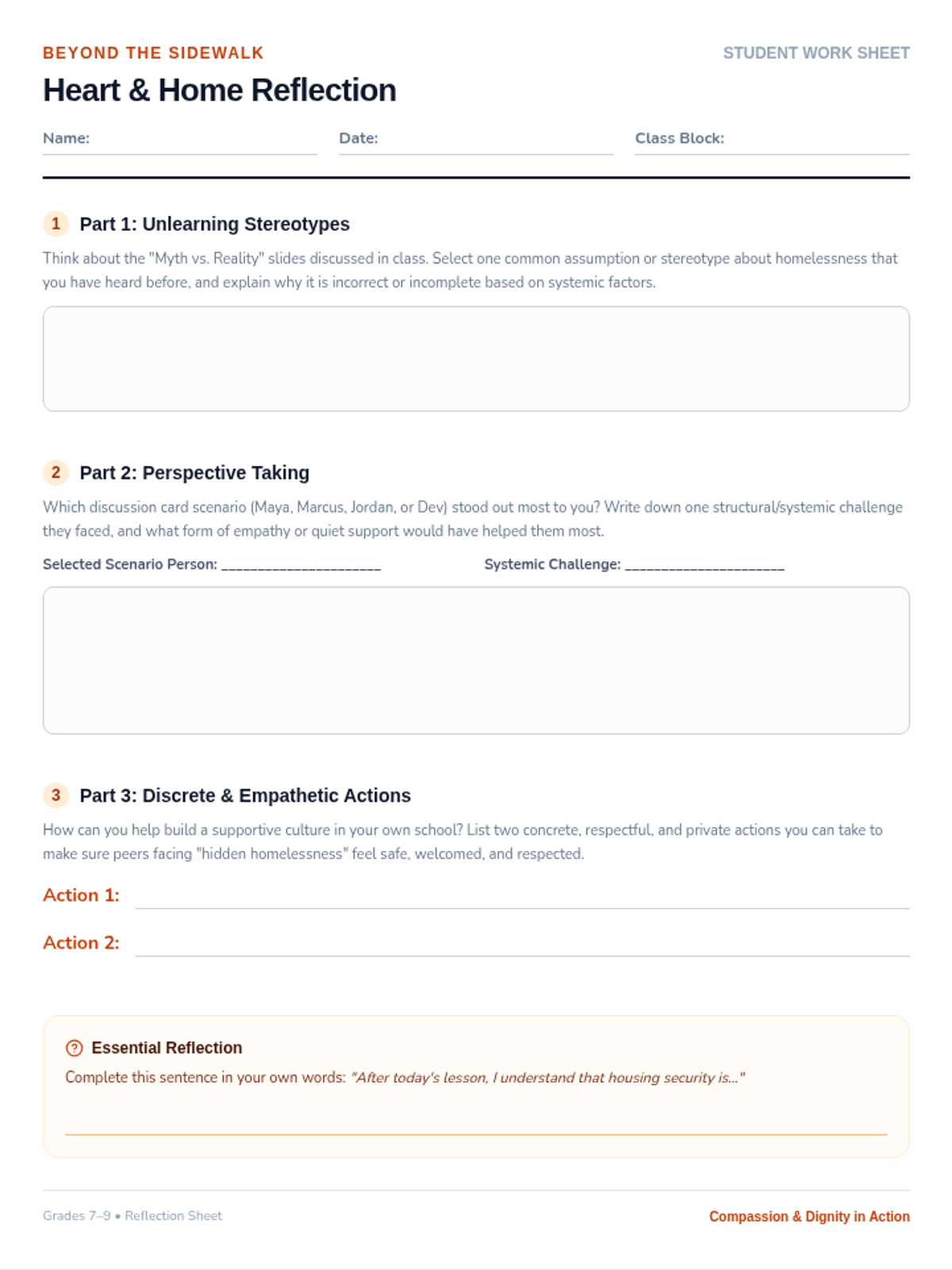
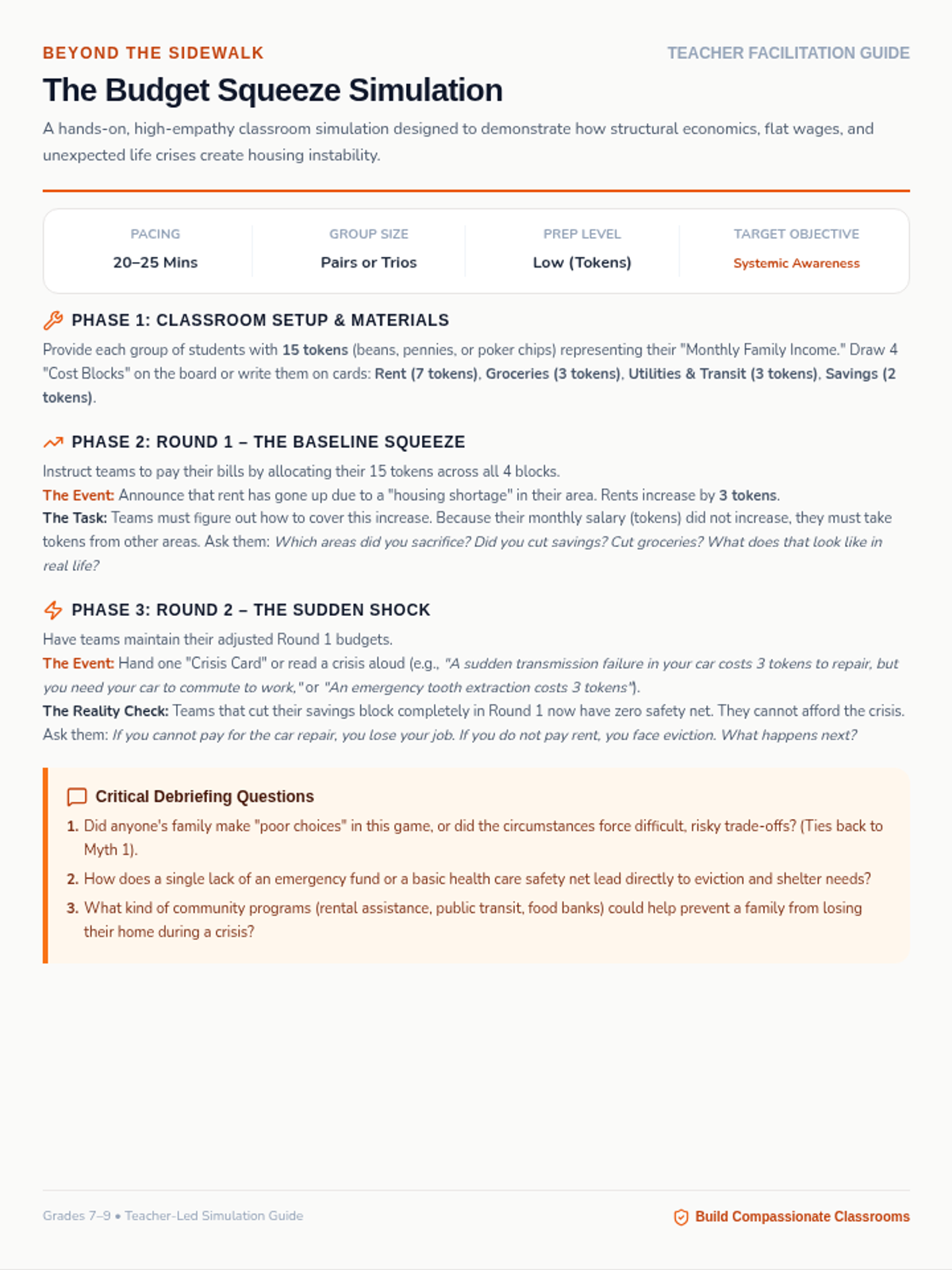
An empathy-driven, systemic lesson for young teens (grades 7-9) exploring the realities of homelessness. Students dismantle stereotypes, examine structural causes of housing insecurity, learn to support peers discretely, and identify concrete avenues for local service and advocacy.
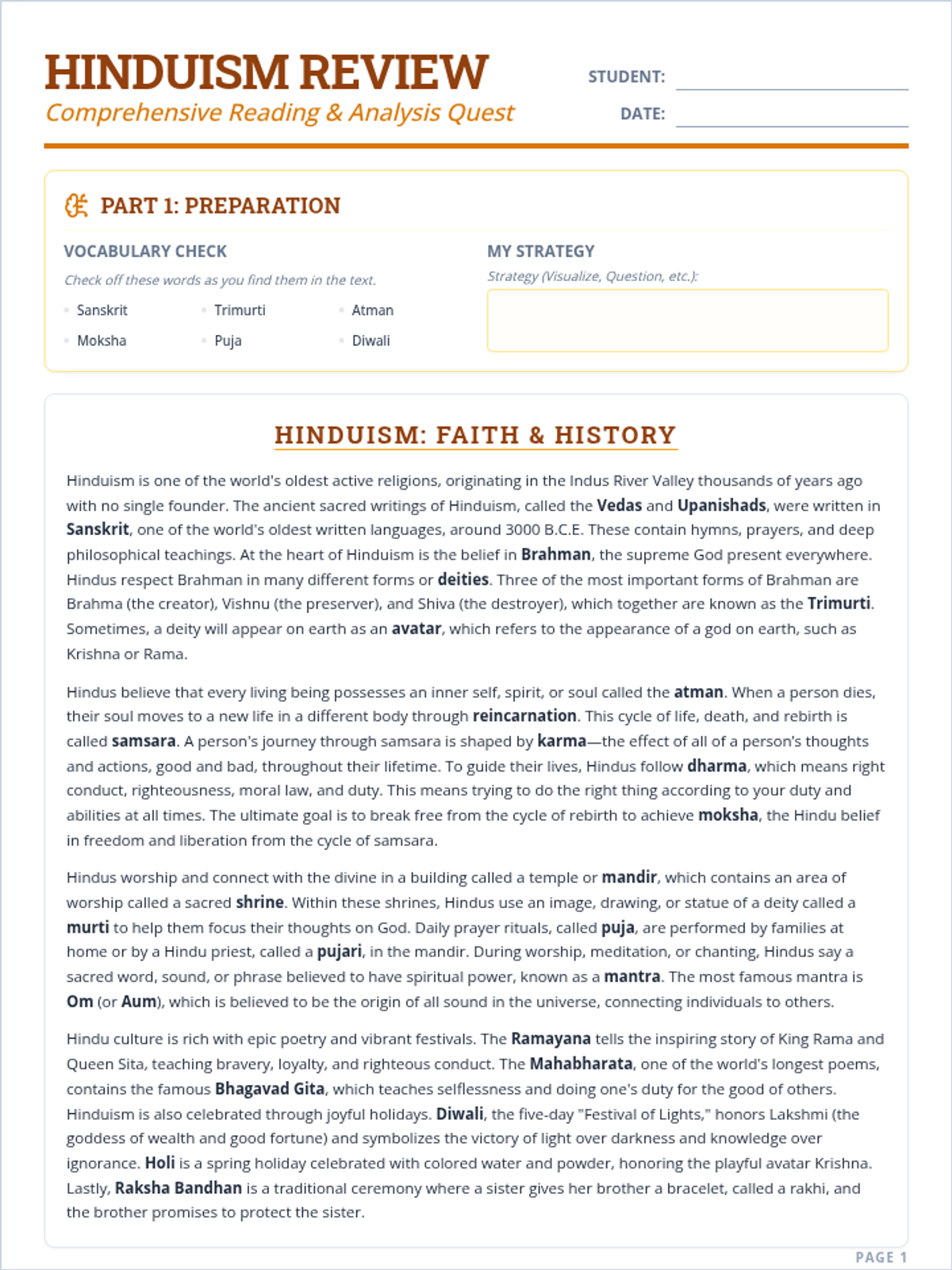
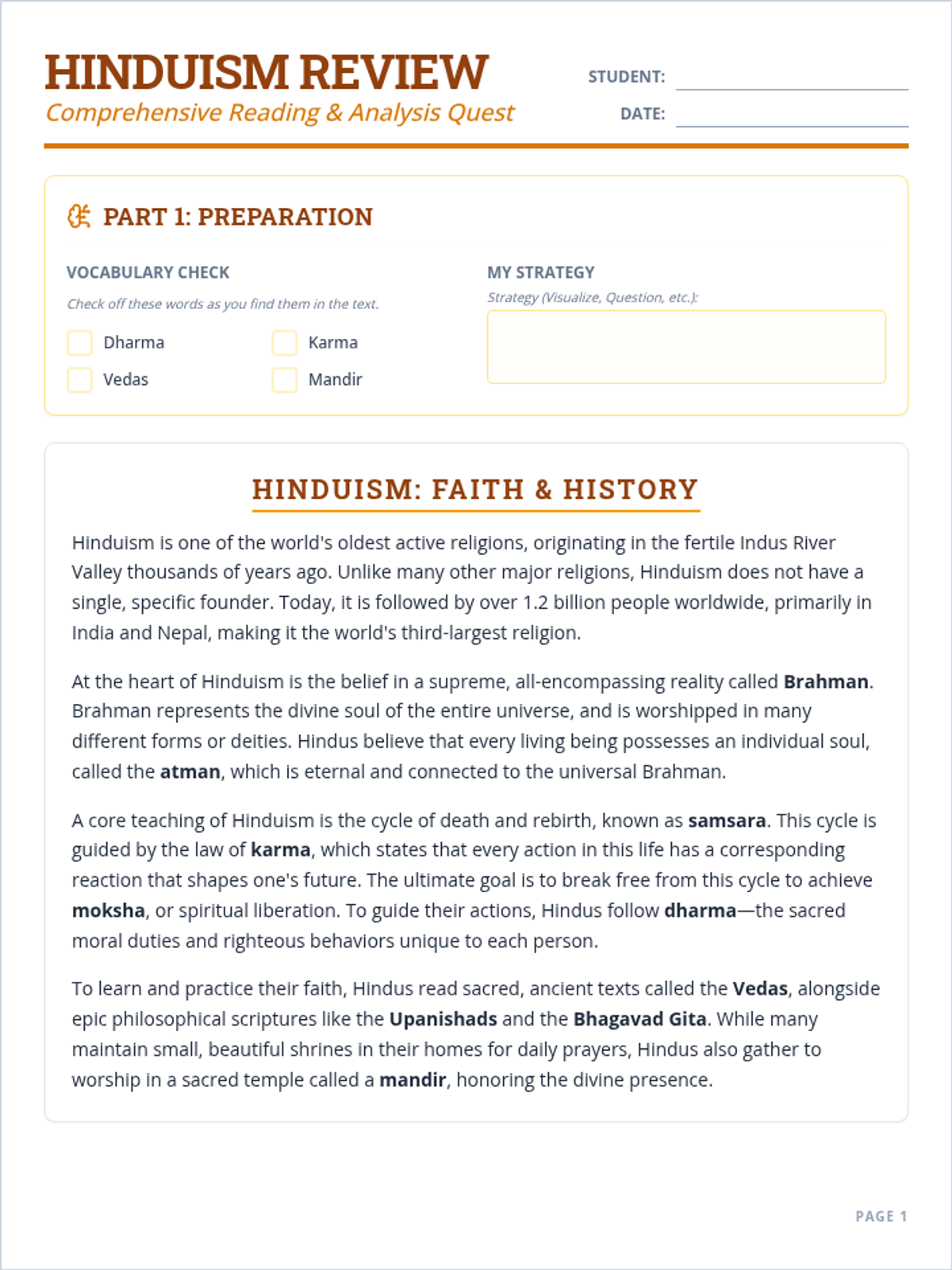
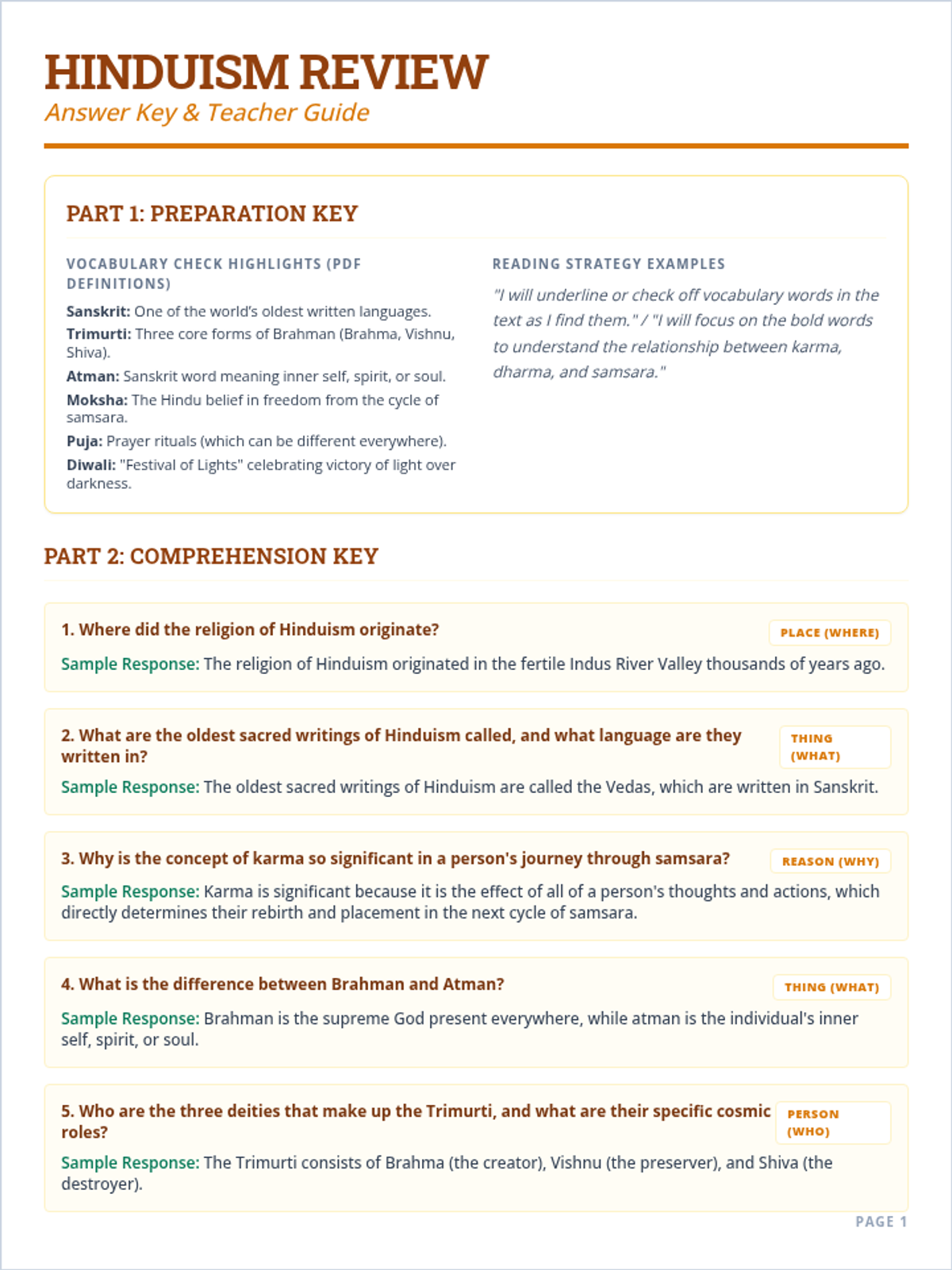
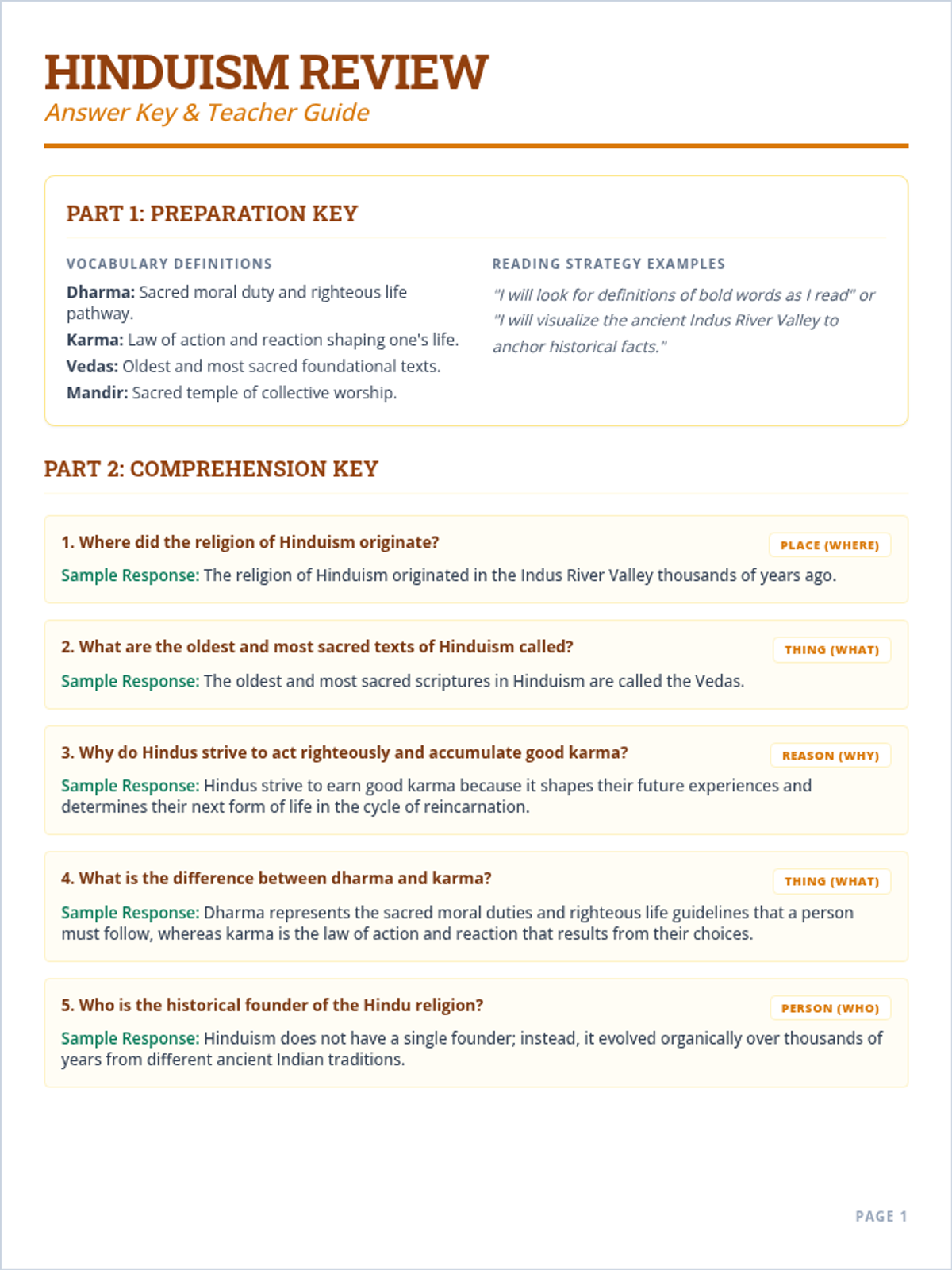
A comprehensive review lesson focused on the foundational teachings, sacred texts, and practices of Hinduism, emphasizing active reading and question type identification.
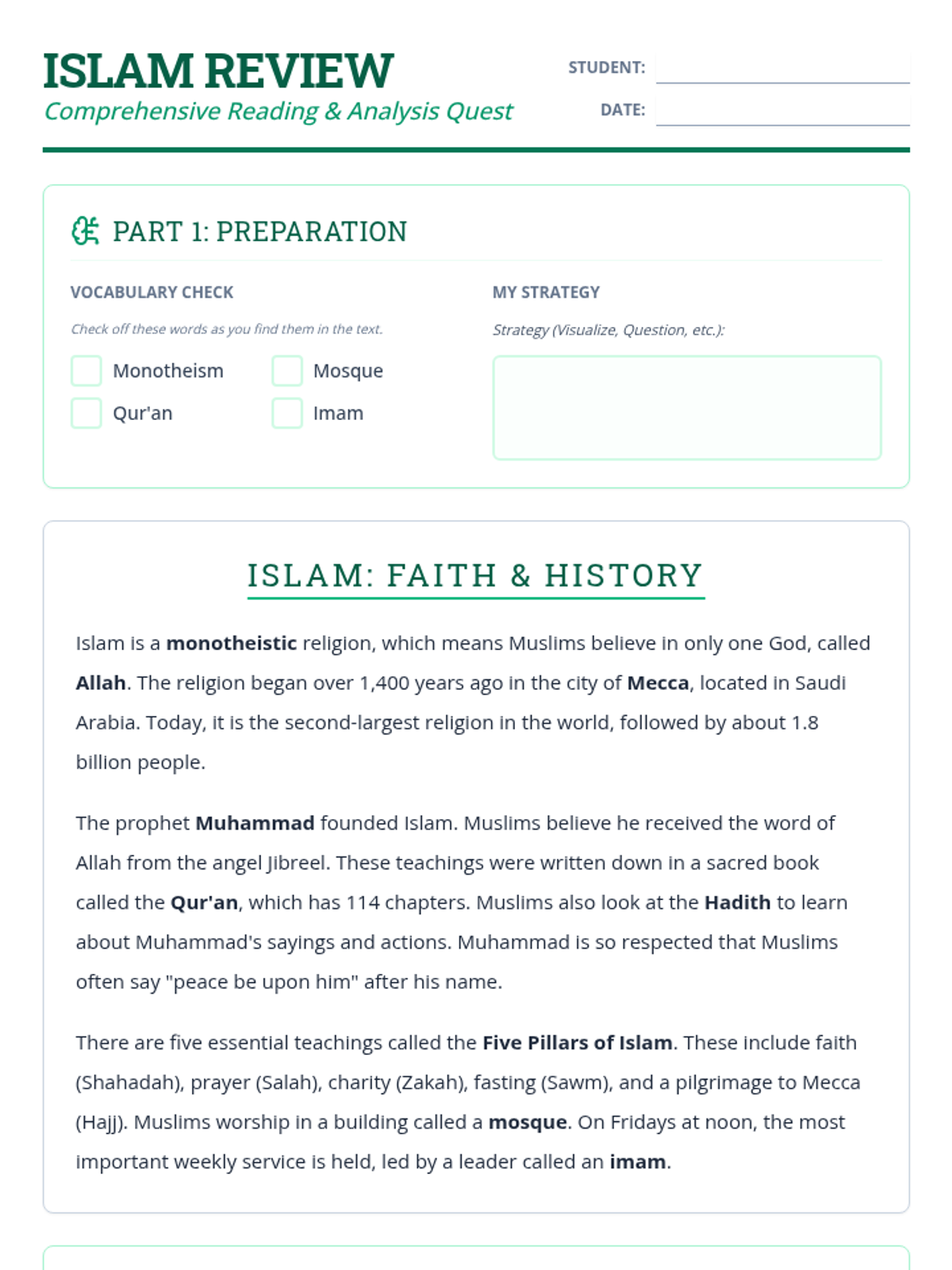
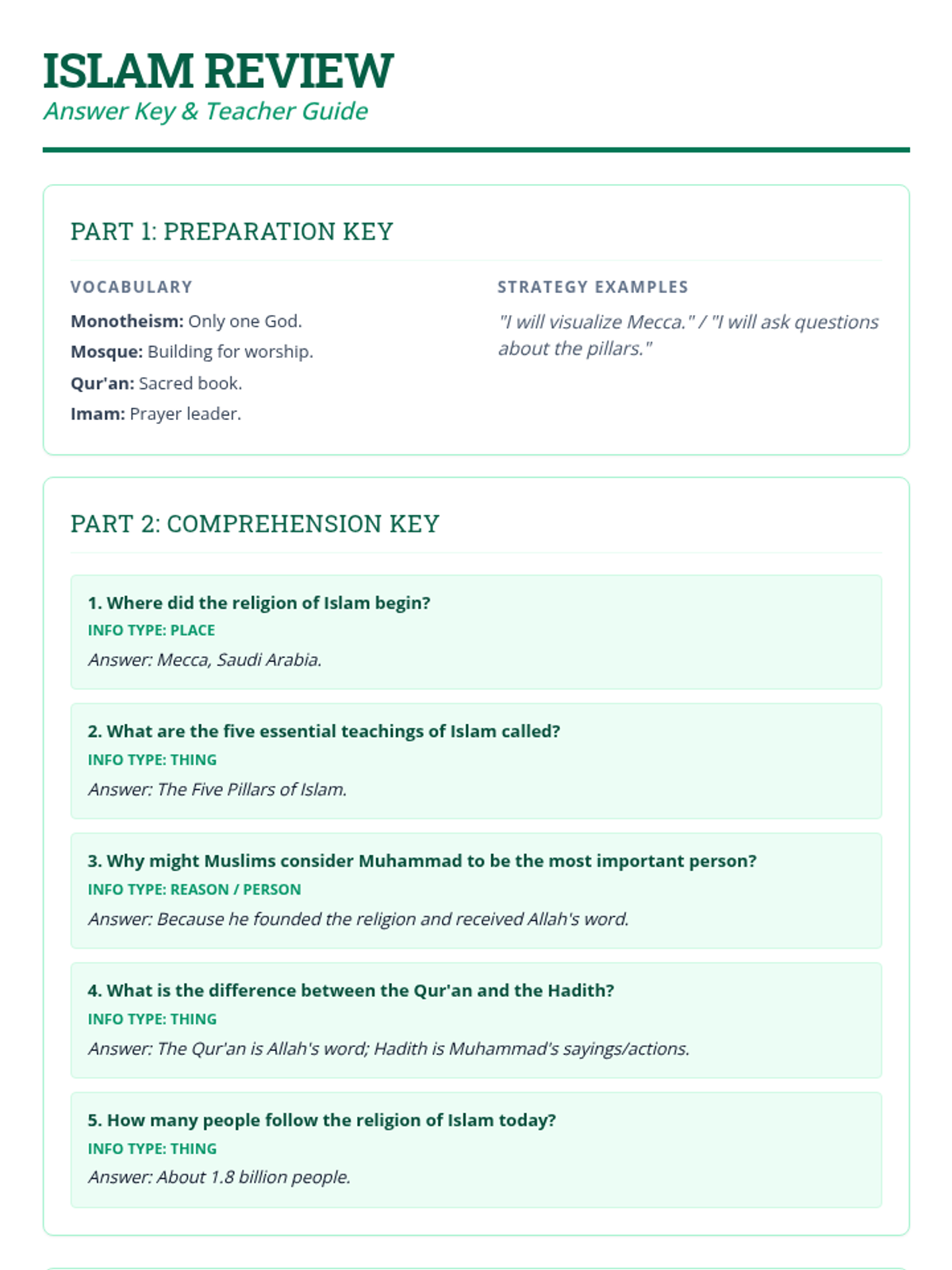
A comprehensive review lesson focused on the foundational teachings, sacred texts, and practices of Islam, emphasizing active reading and question type identification.
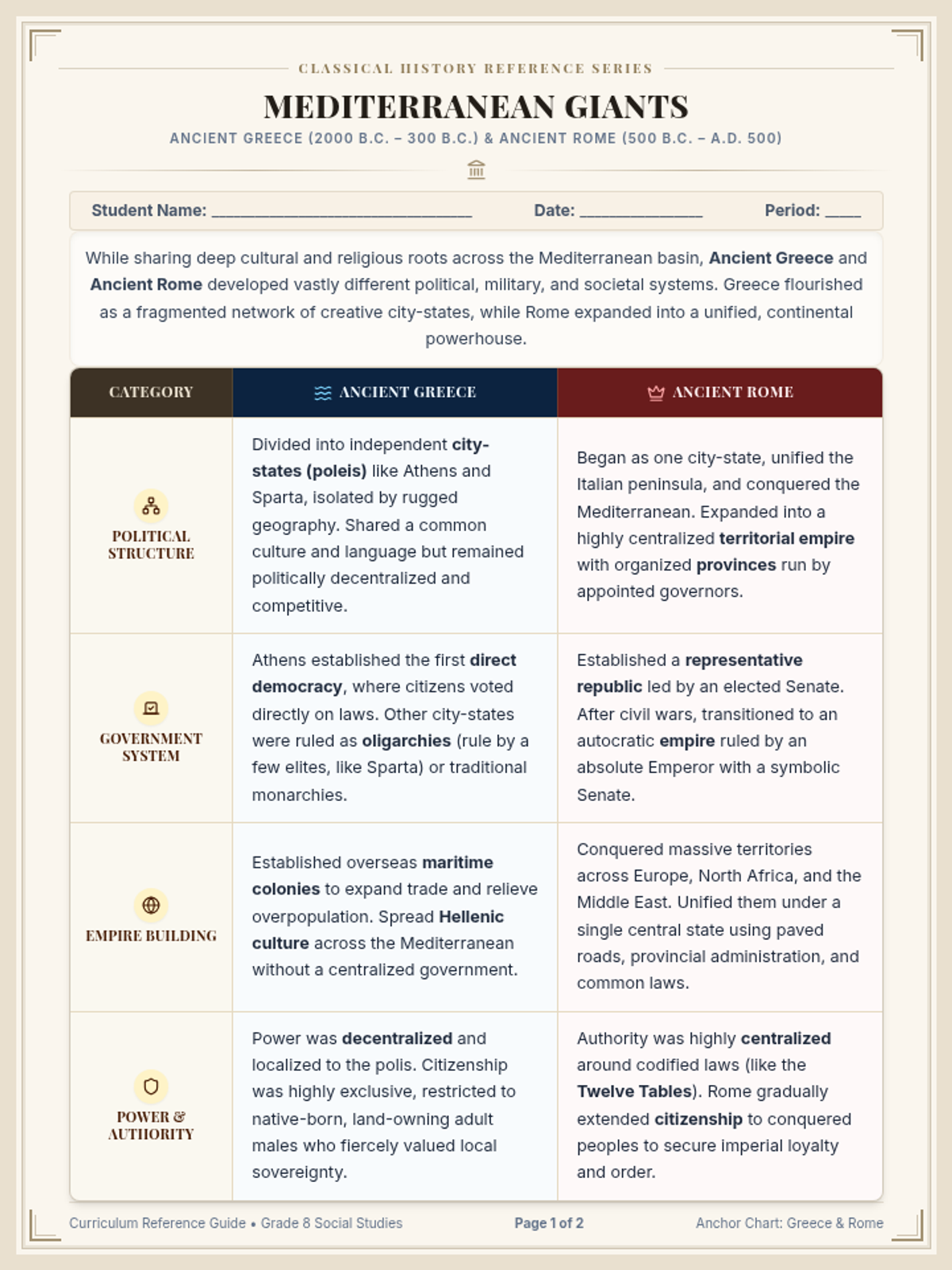
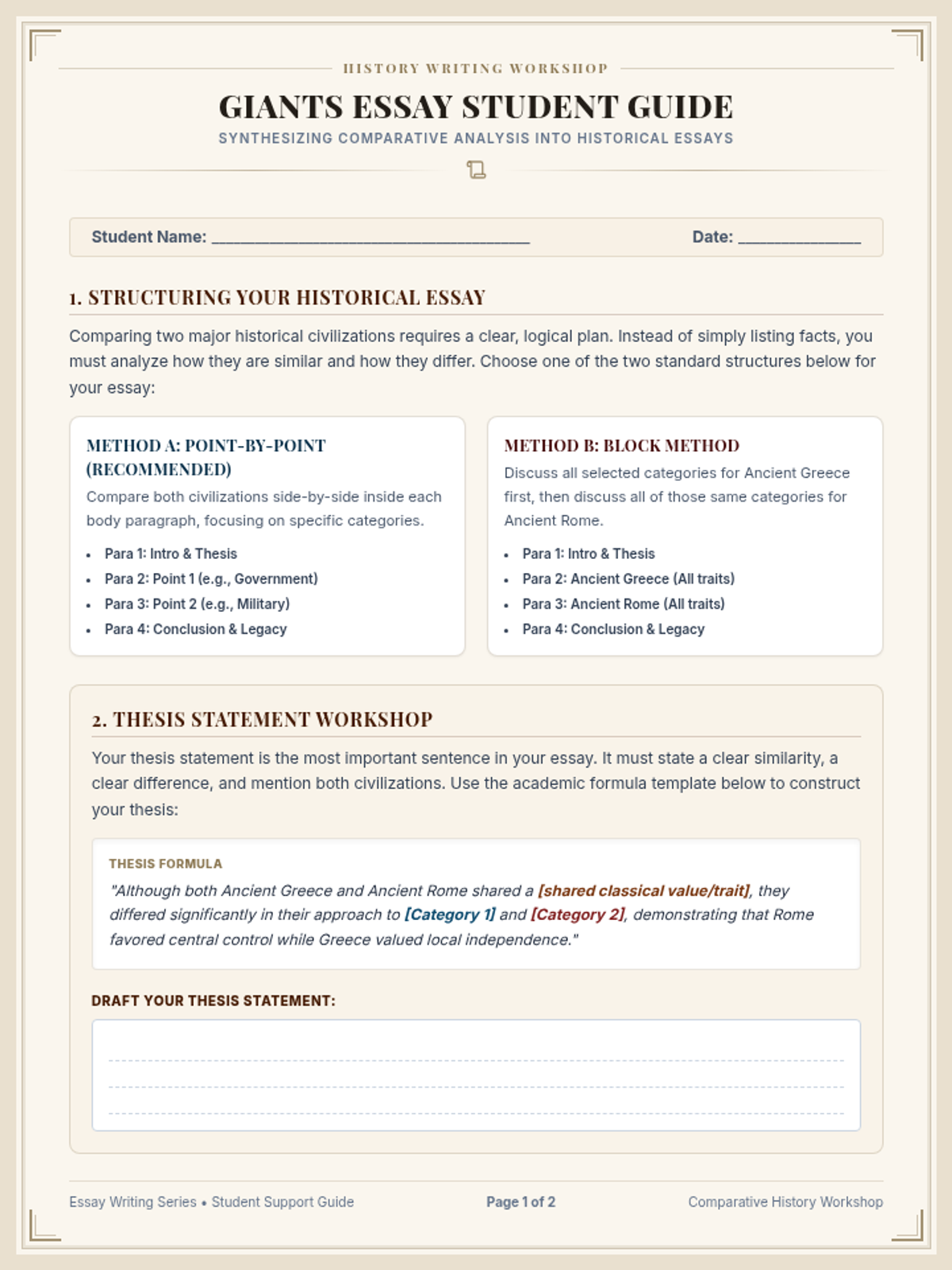
An exploration of the core differences and connections between Ancient Greece and Ancient Rome. This lesson focuses on comparative analysis across political, economic, geographic, and cultural structures, helping students understand how these two titans shaped Western Civilization.
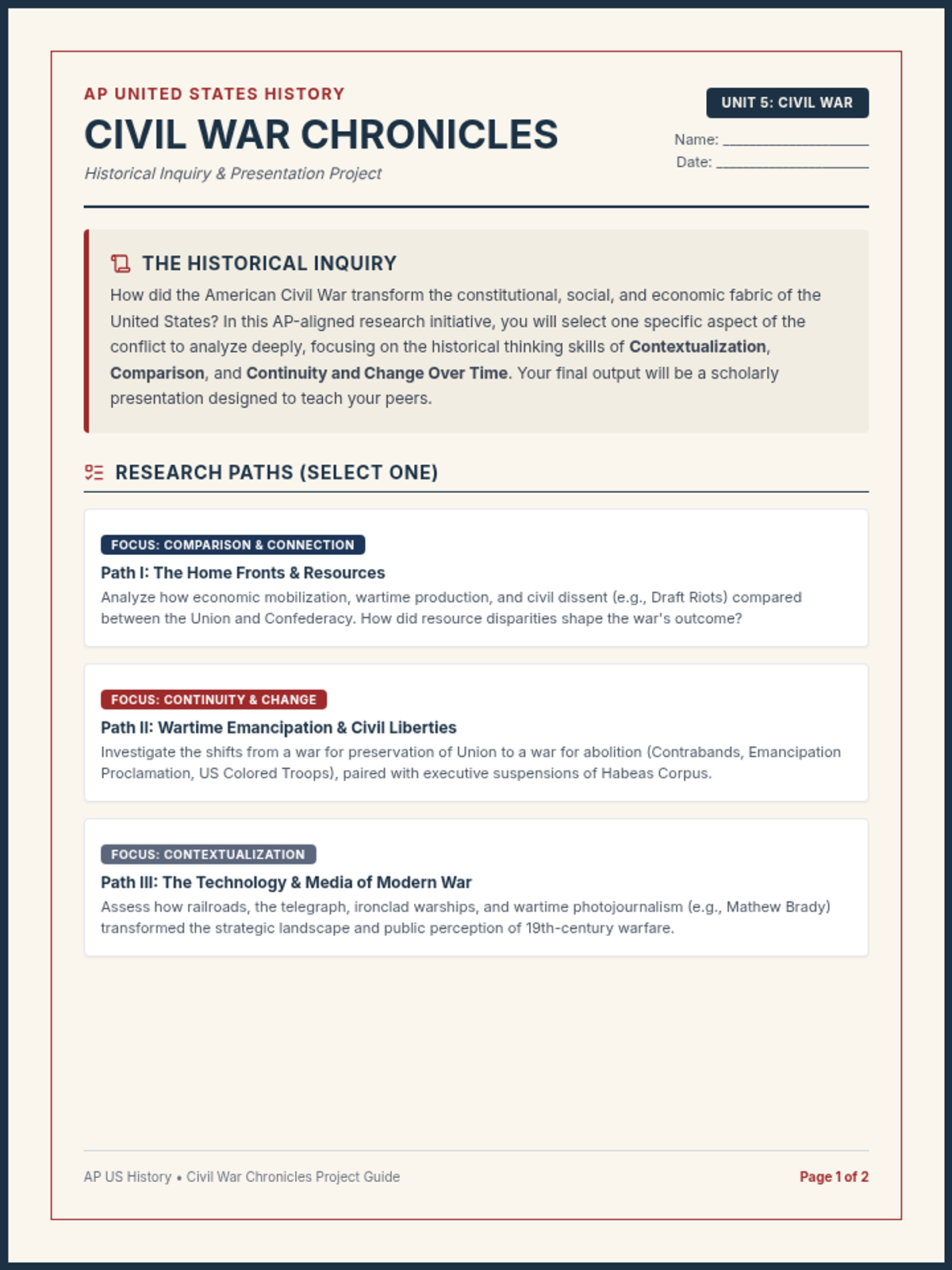
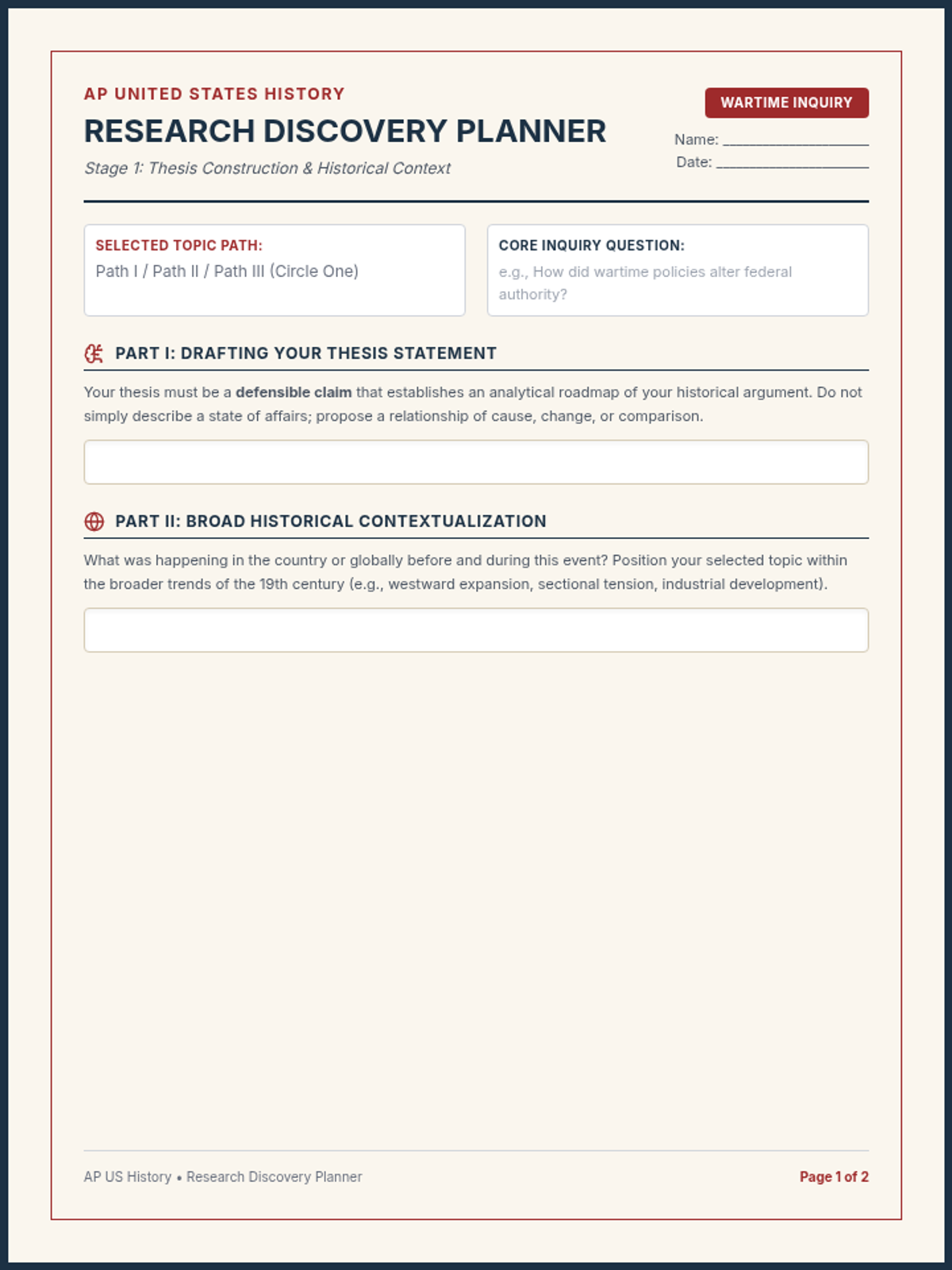
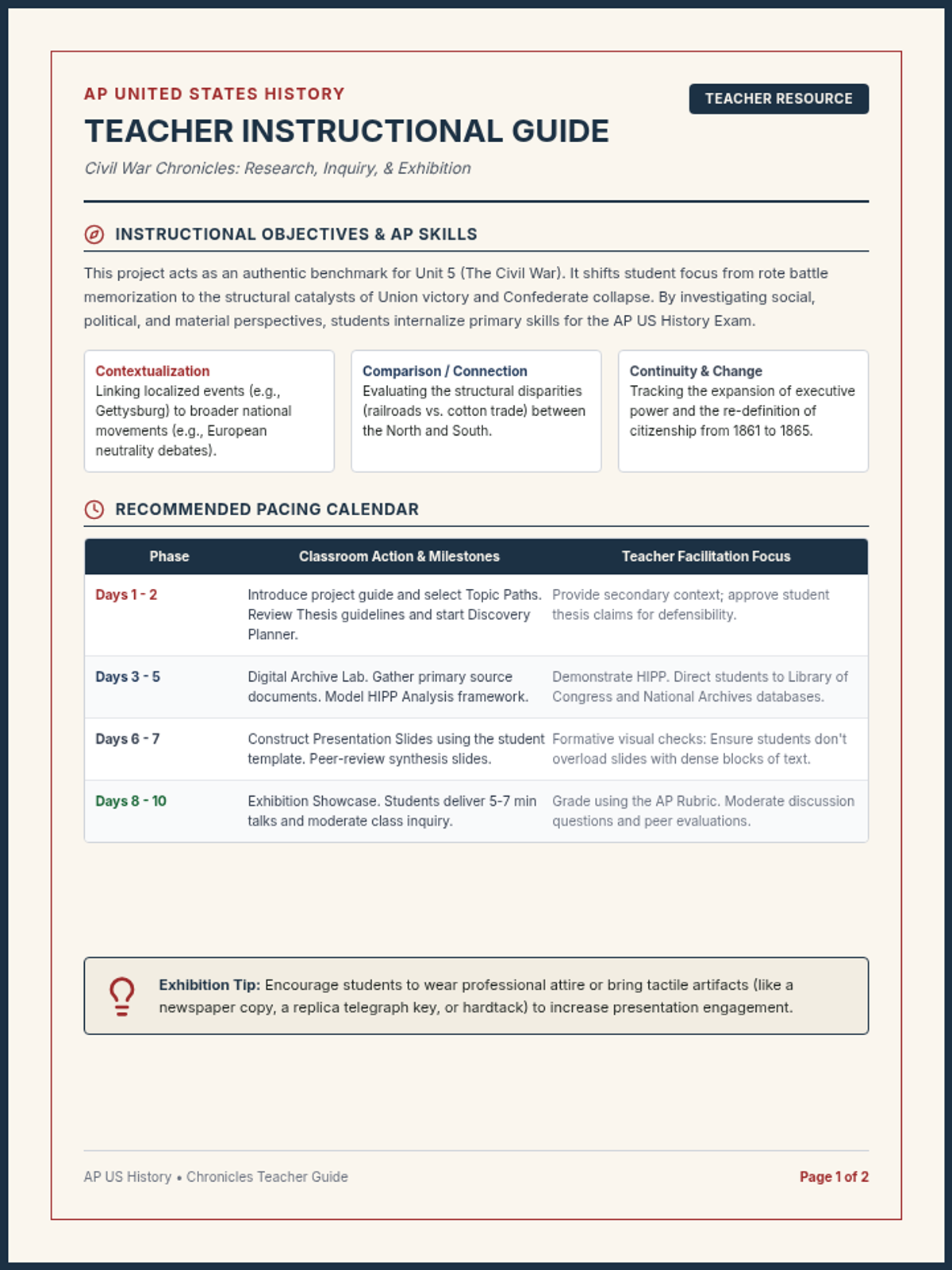
A comprehensive AP US History research and presentation project exploring the Civil War. Students engage in deep historical inquiry using AP-aligned skills including contextualization, comparative analysis, and continuity and change over time.
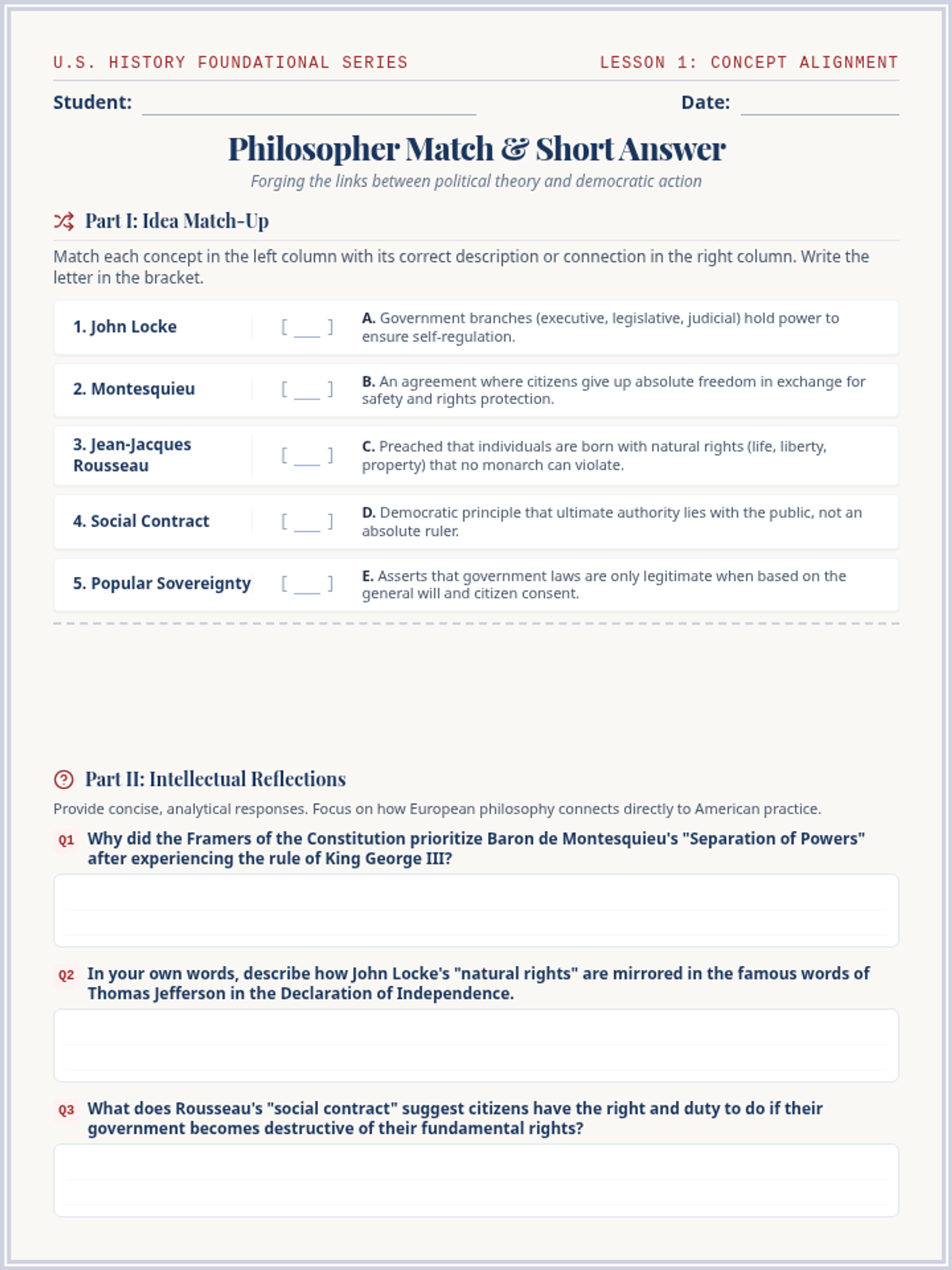
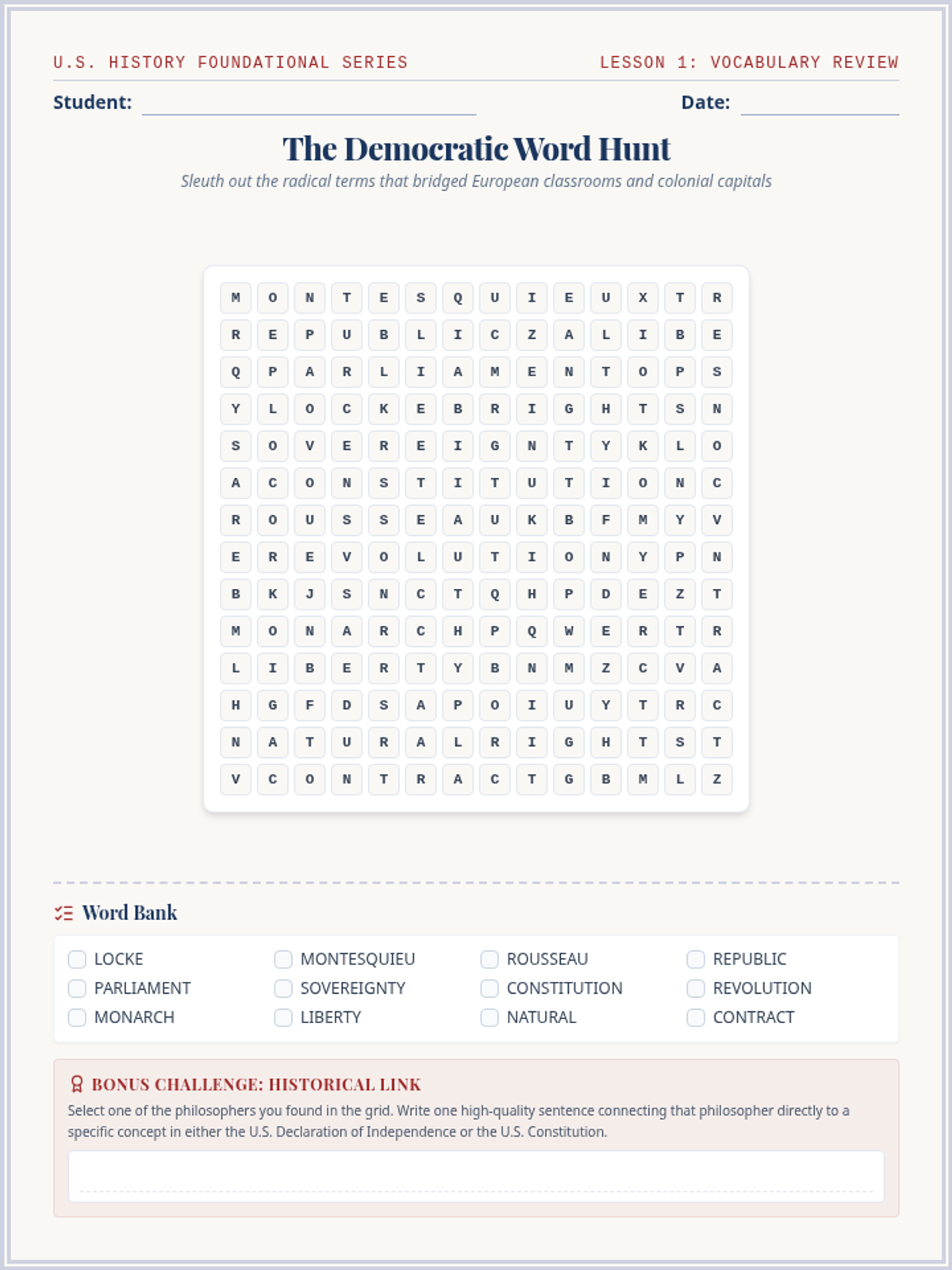
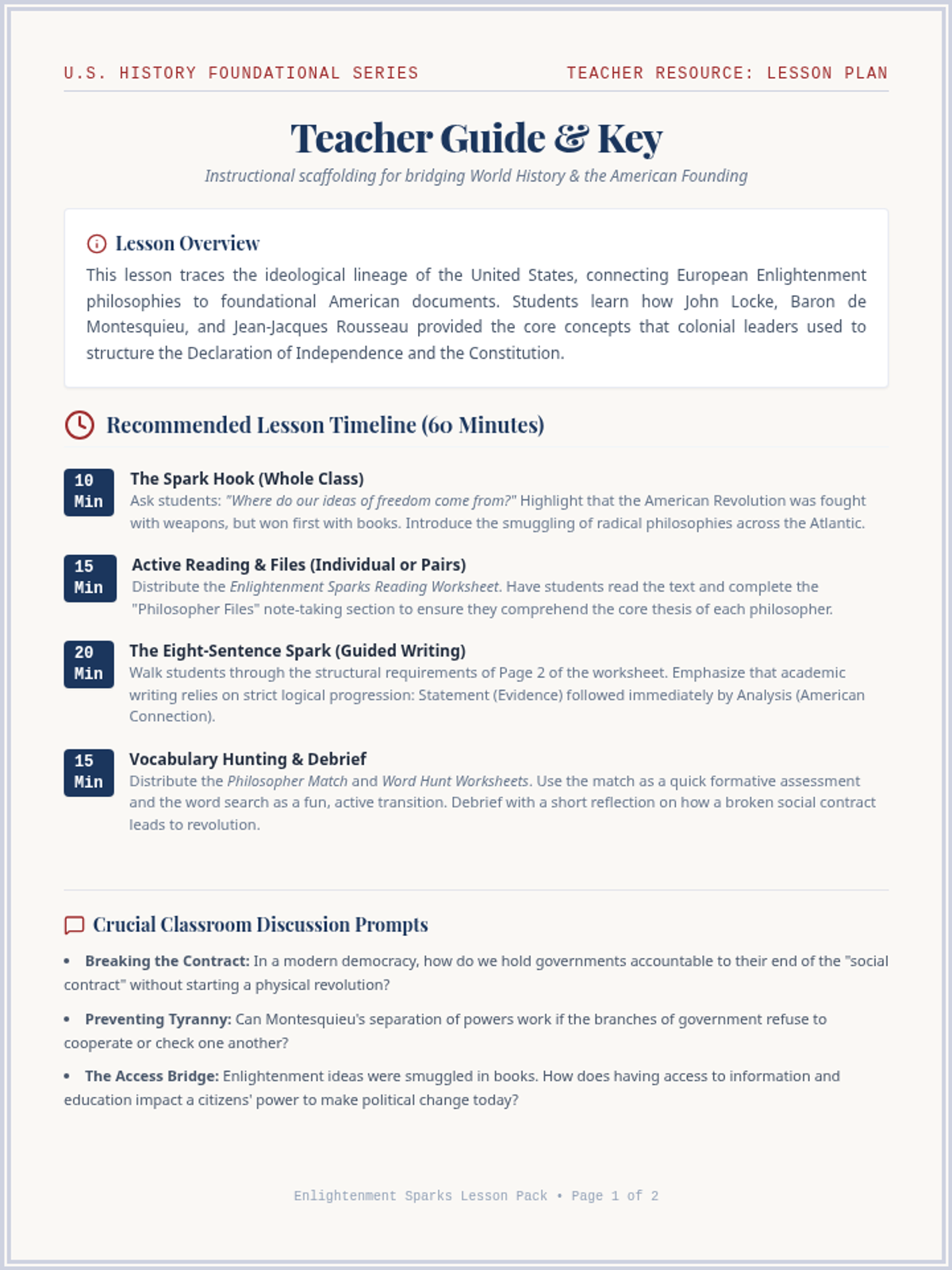
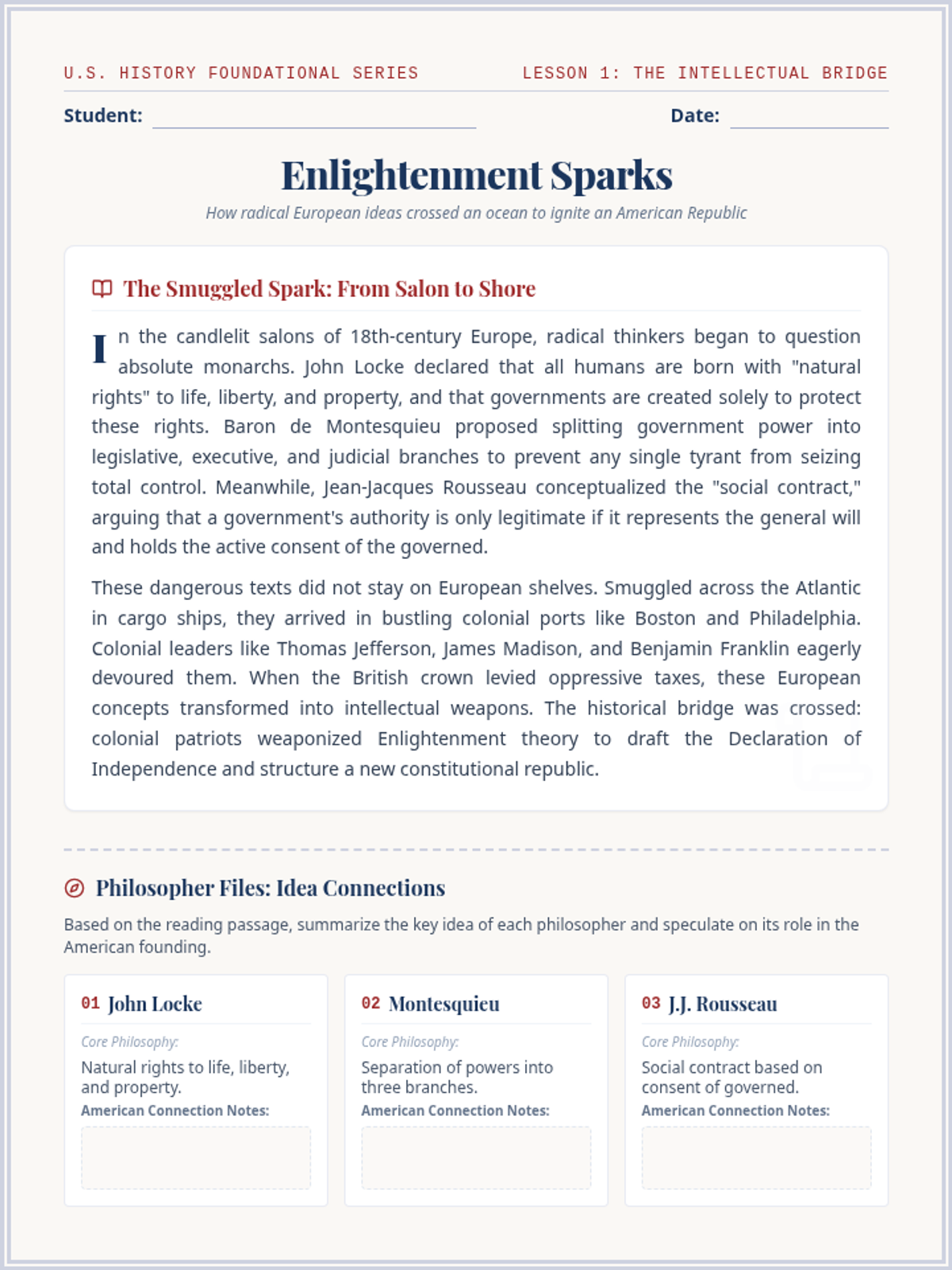
An introductory US History lesson bridging the World History Age of Enlightenment with the founding of the United States. Students explore how radical European ideas crossed the Atlantic to spark a constitutional republic through a historical narrative, text-based writing, matching, short-answer questions, and a thematic word hunt.
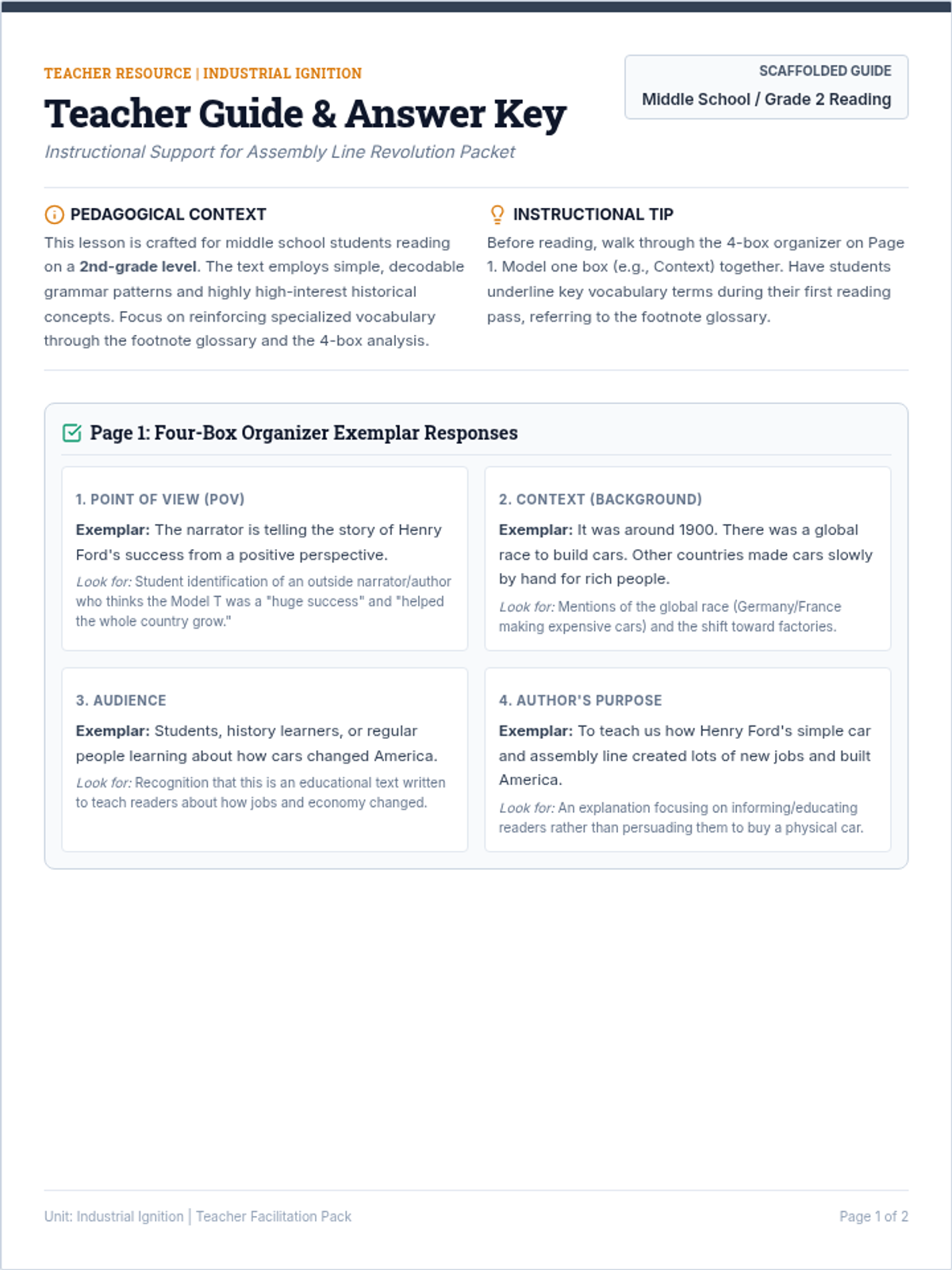
A history and reading comprehension lesson centered on how Henry Ford's Model T and industrial innovations transformed the American economy and labor market.
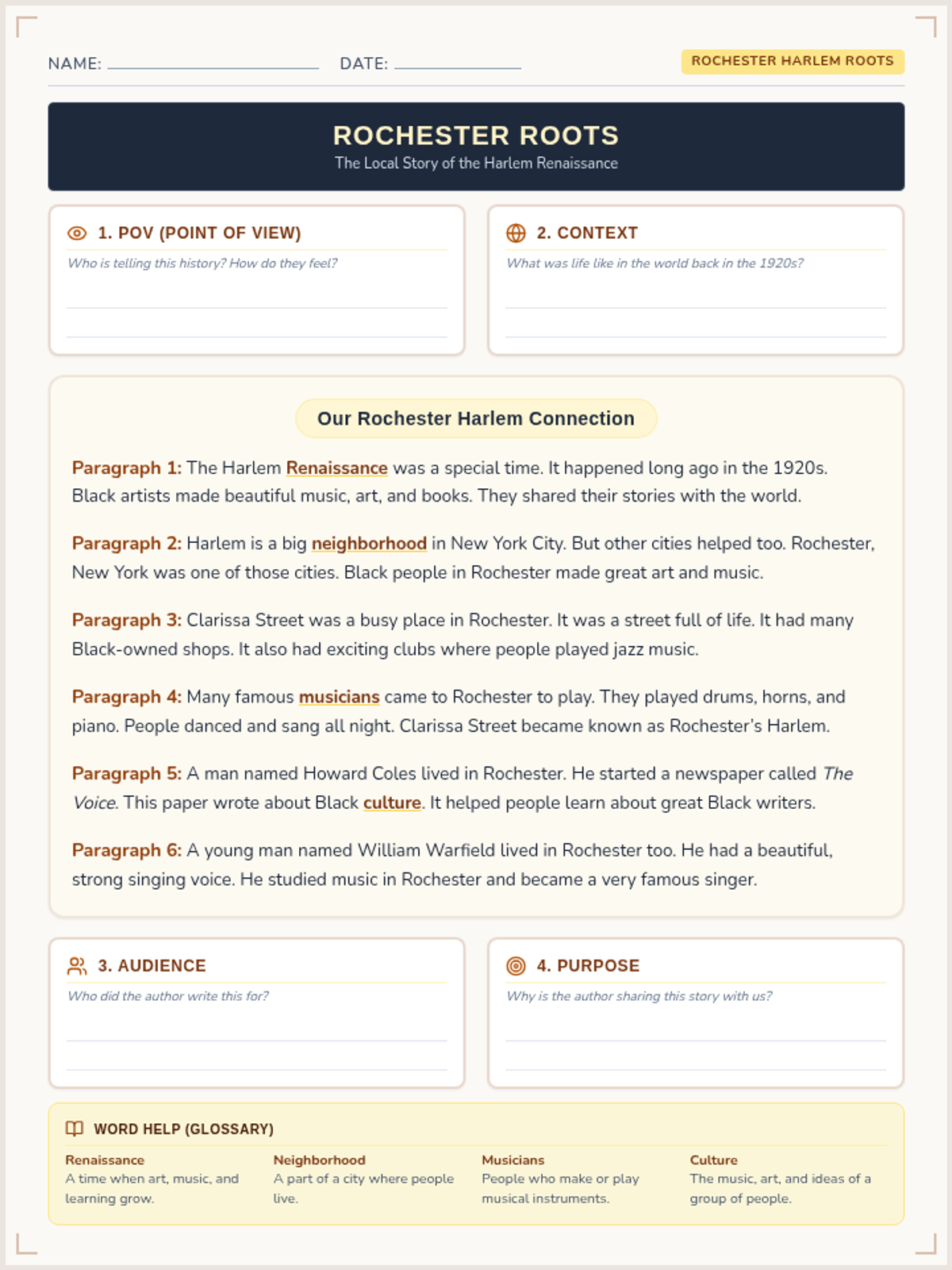
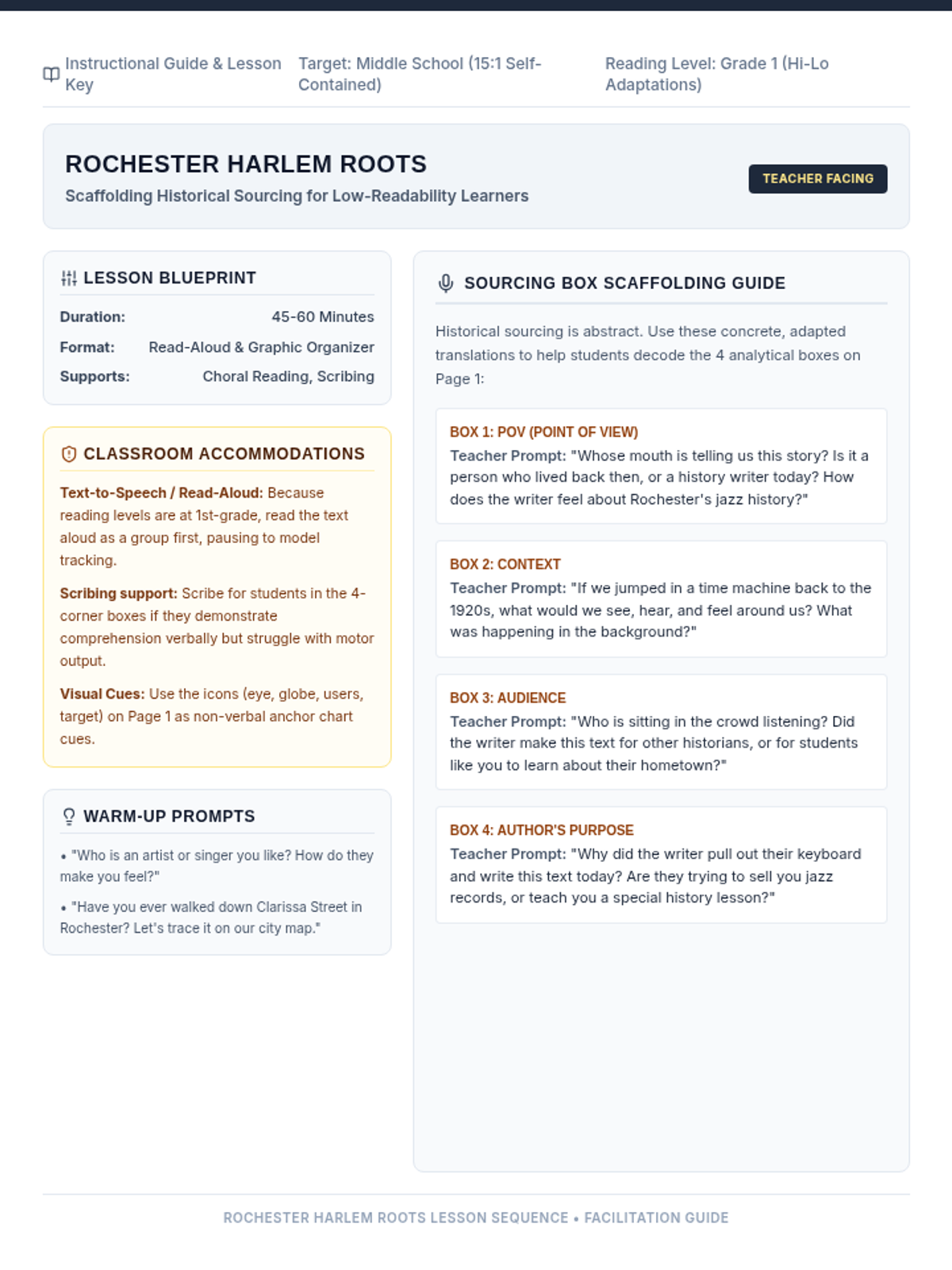
A specialized history and reading comprehension lesson focused on Rochester's local contributions to the Harlem Renaissance, designed with low-readability, high-interest content for middle schoolers reading at a first-grade level.
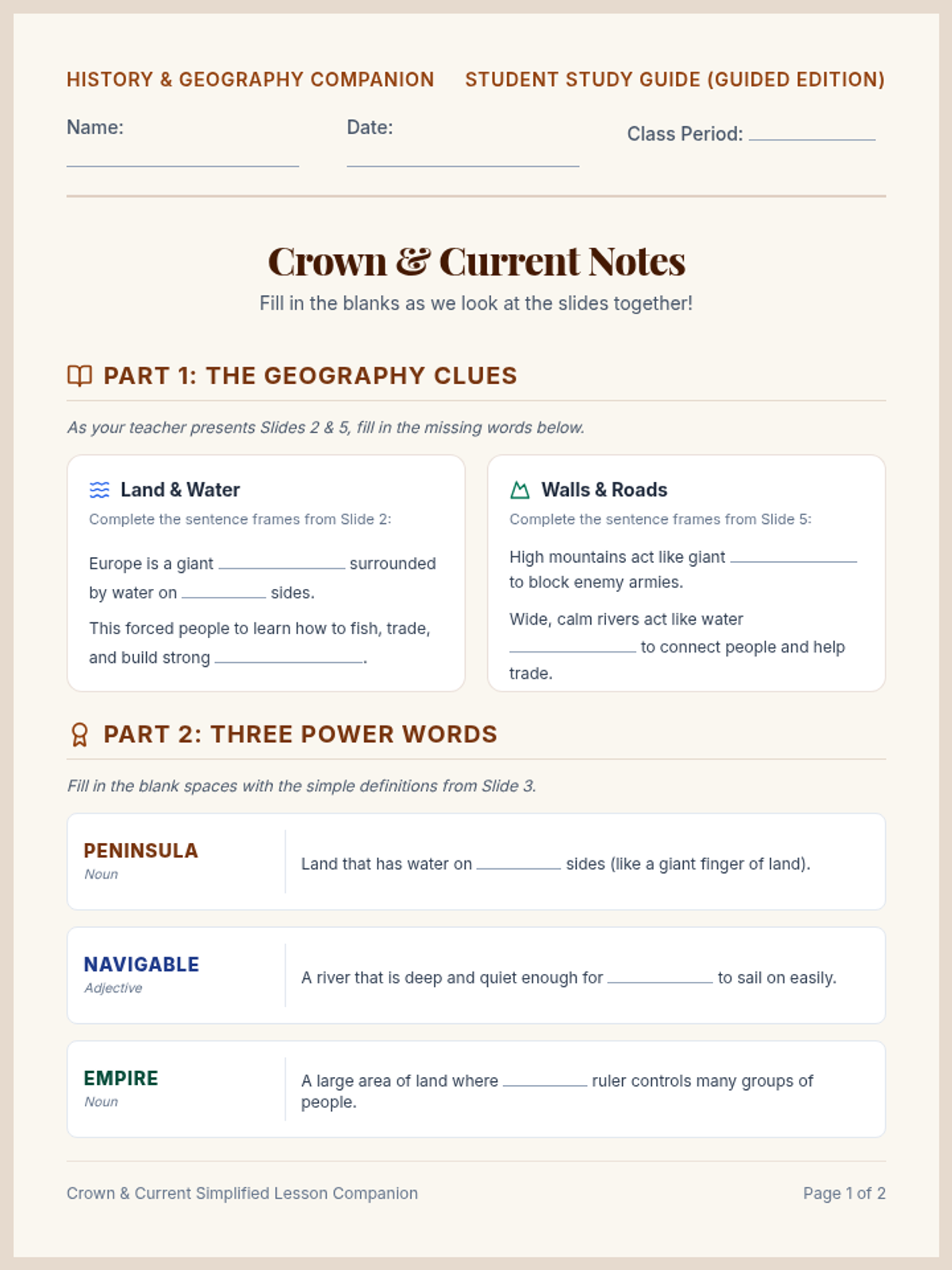
A lesson exploring the intersection of Europe's unique physical geography and its dramatic history, focusing on how barriers and natural highways shaped civilizations.
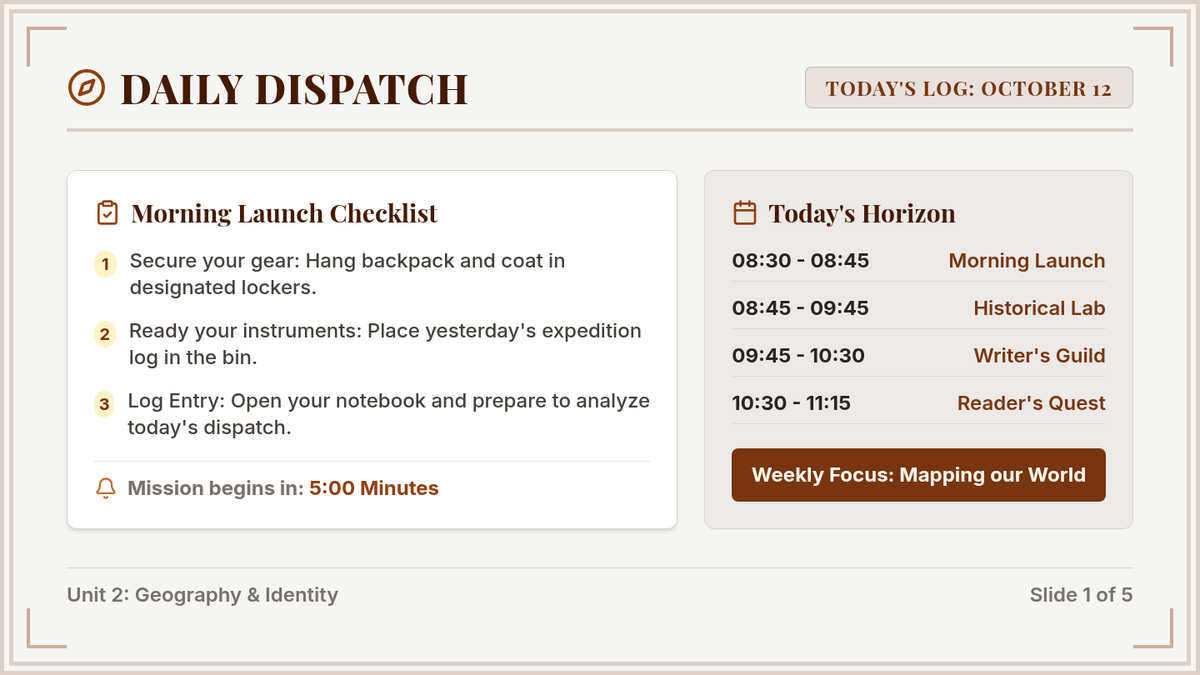
A cohesive morning routine framework designed to engage students immediately upon entering the classroom. This lesson integrates daily administrative templates with historical quote analysis, map literacy, and current events discussions to prime students' minds for social studies learning.
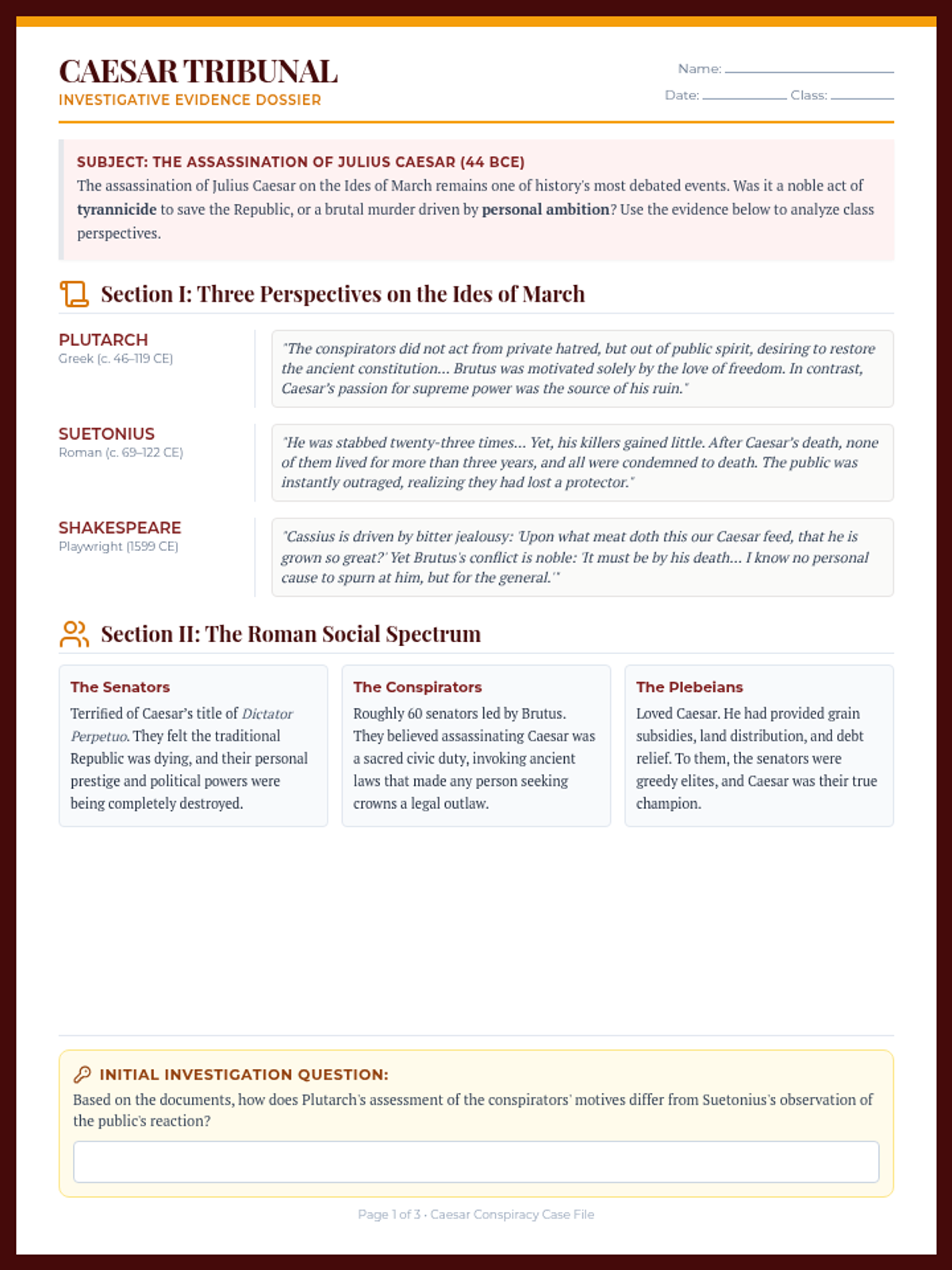
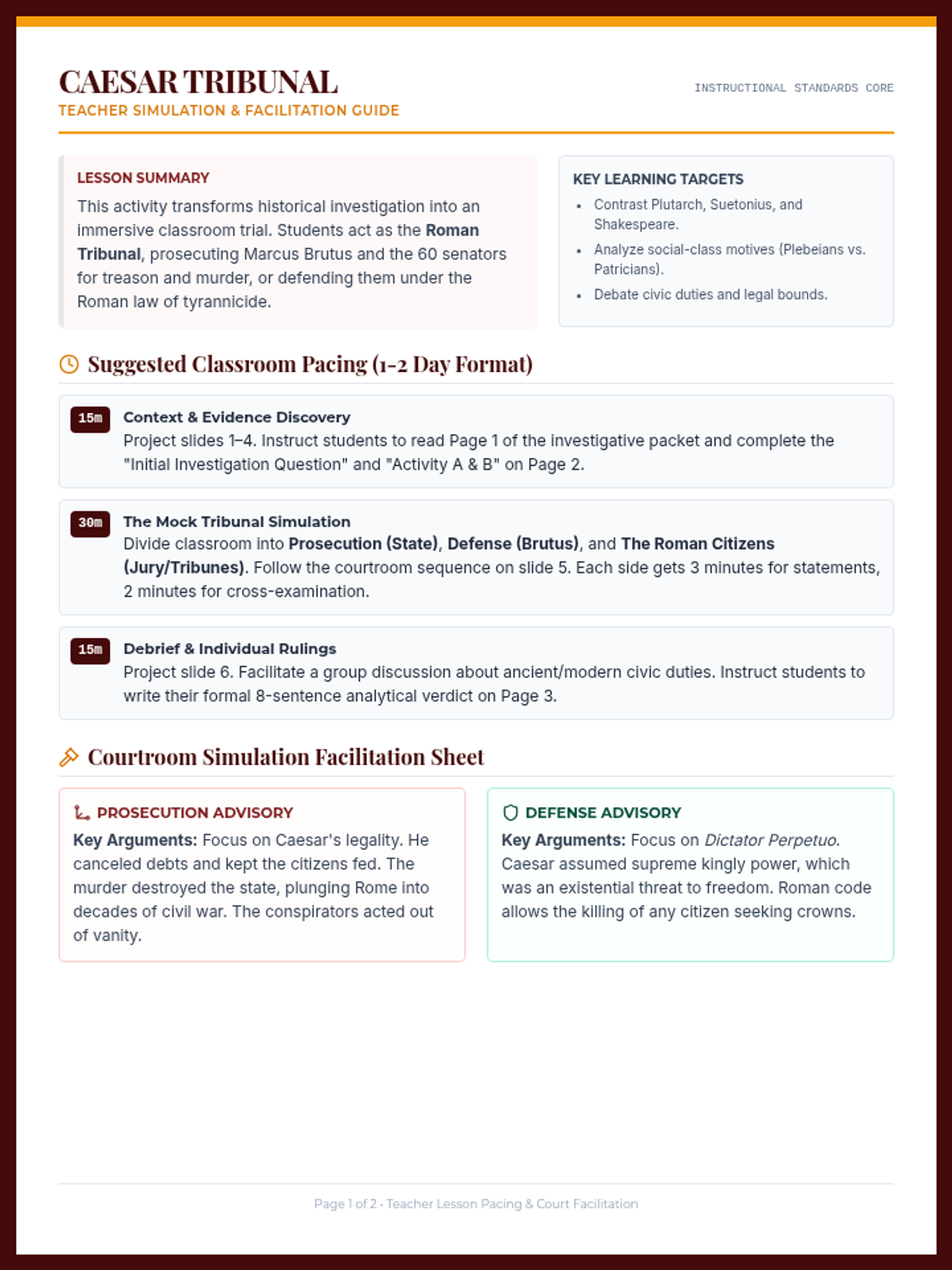
A comprehensive classroom simulation and analysis lesson about the assassination of Julius Caesar. Students examine historical perspectives, engage with primary sources, and debate civic duty through a mock trial and a three-page investigative document.
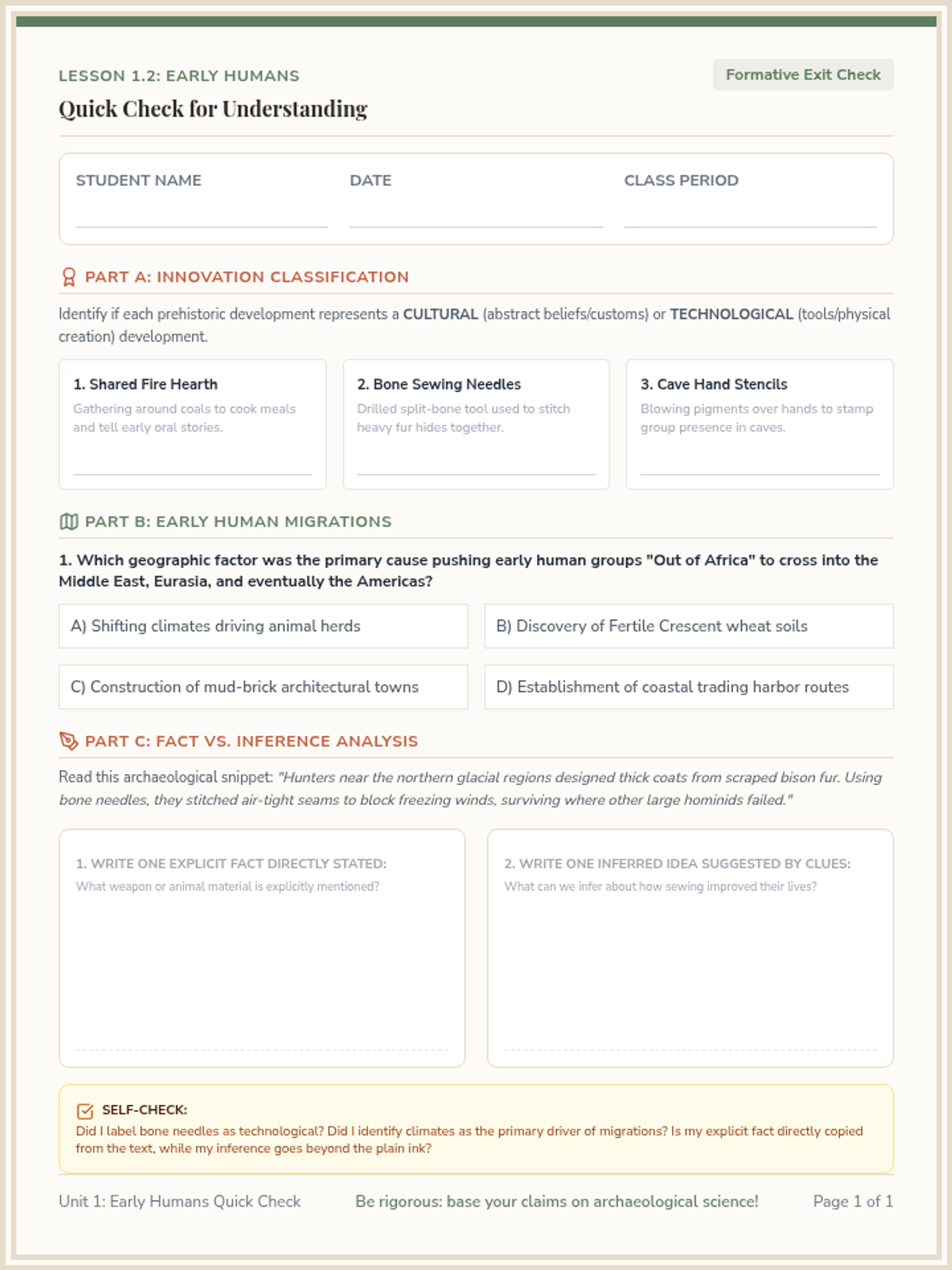
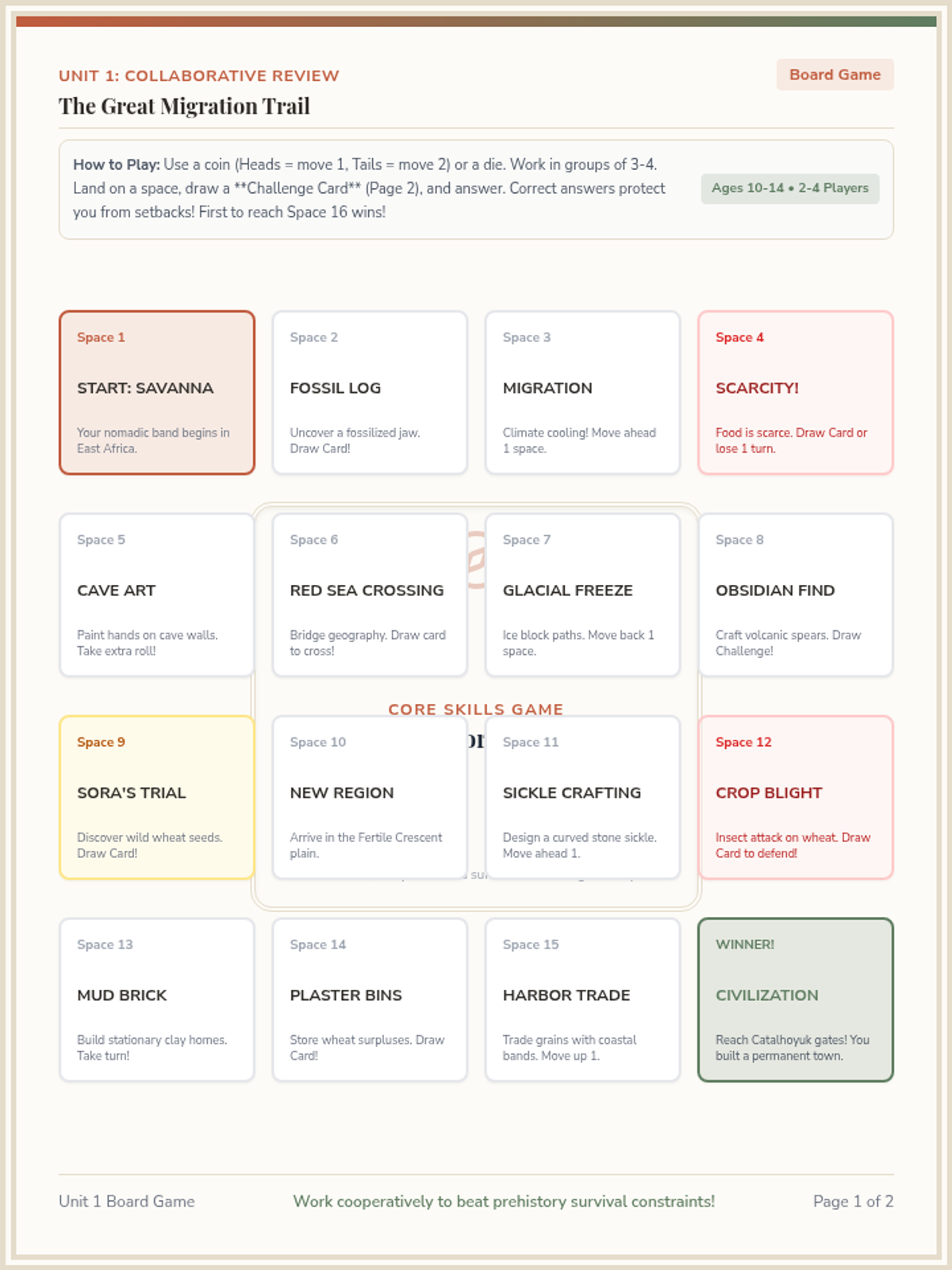
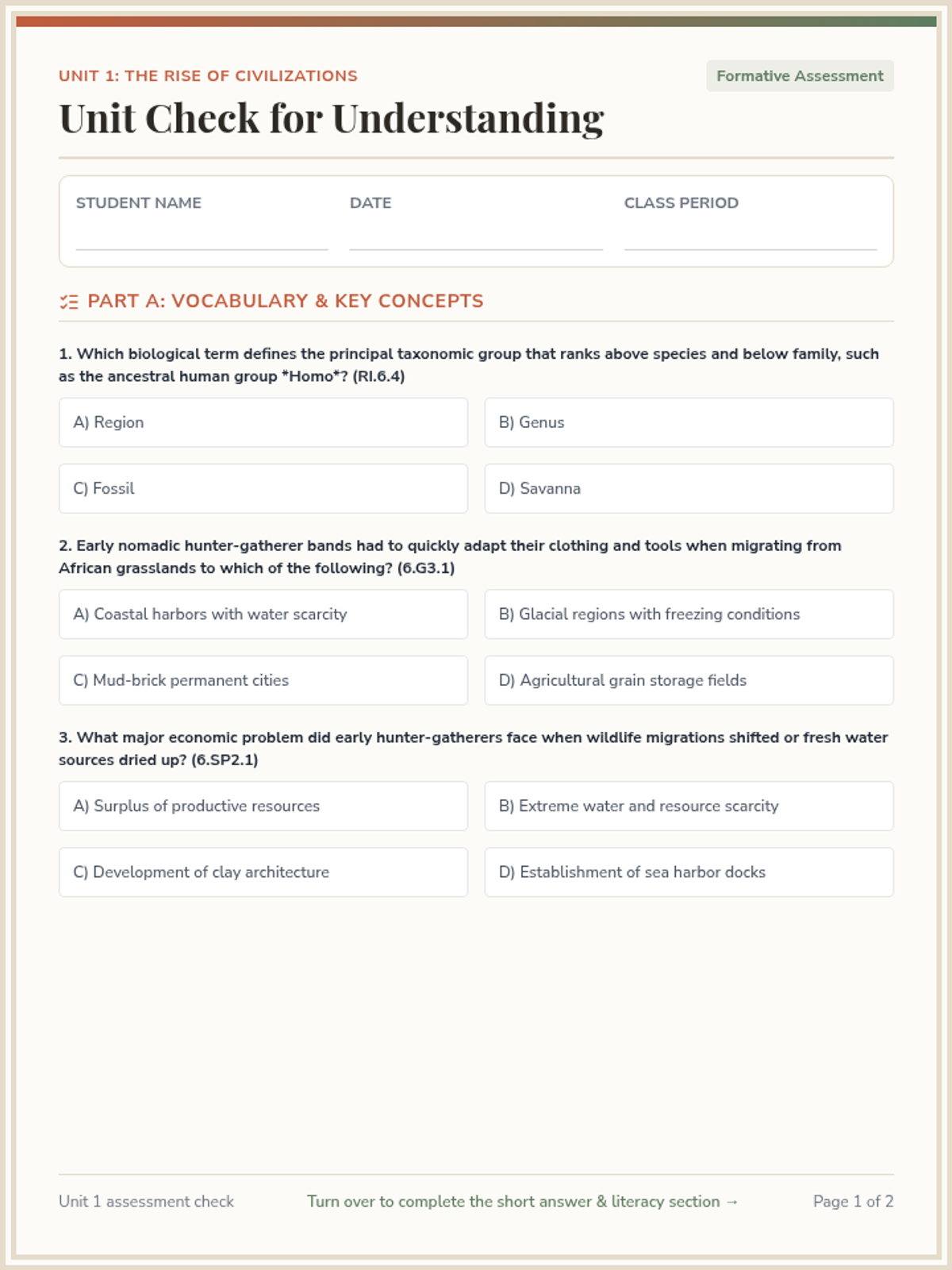
An intermediate lesson examining how early humans migrated out of Africa, adapted to different global climates, and used cultural and technological innovations to improve their lives.
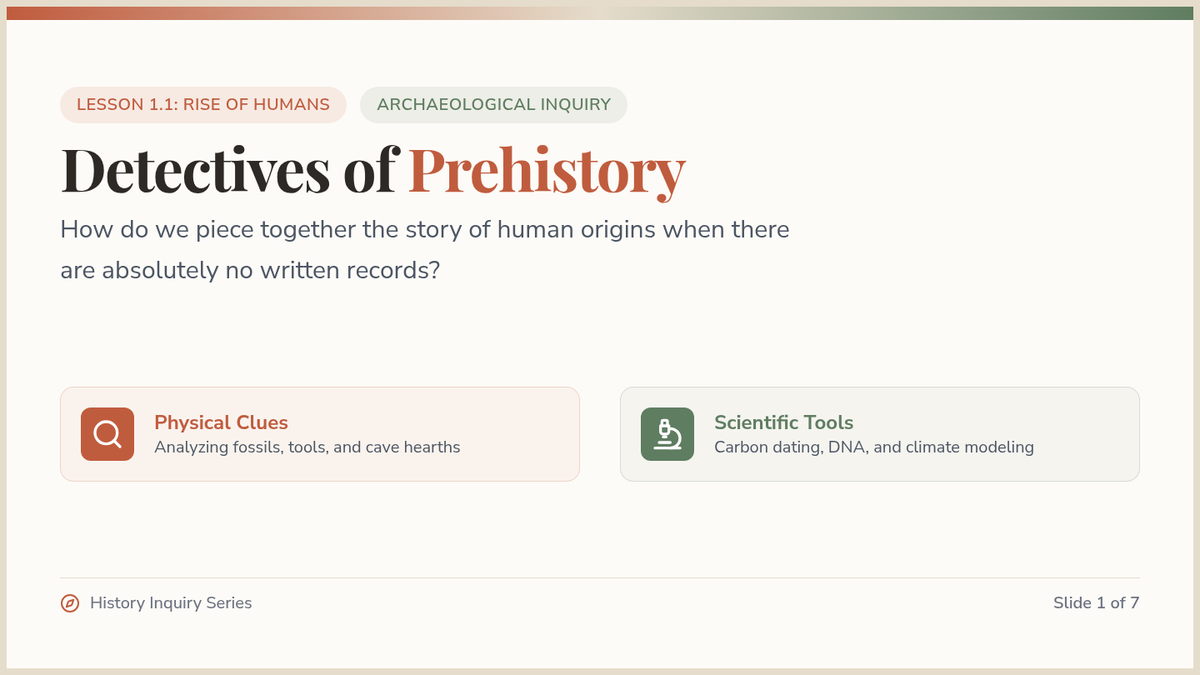
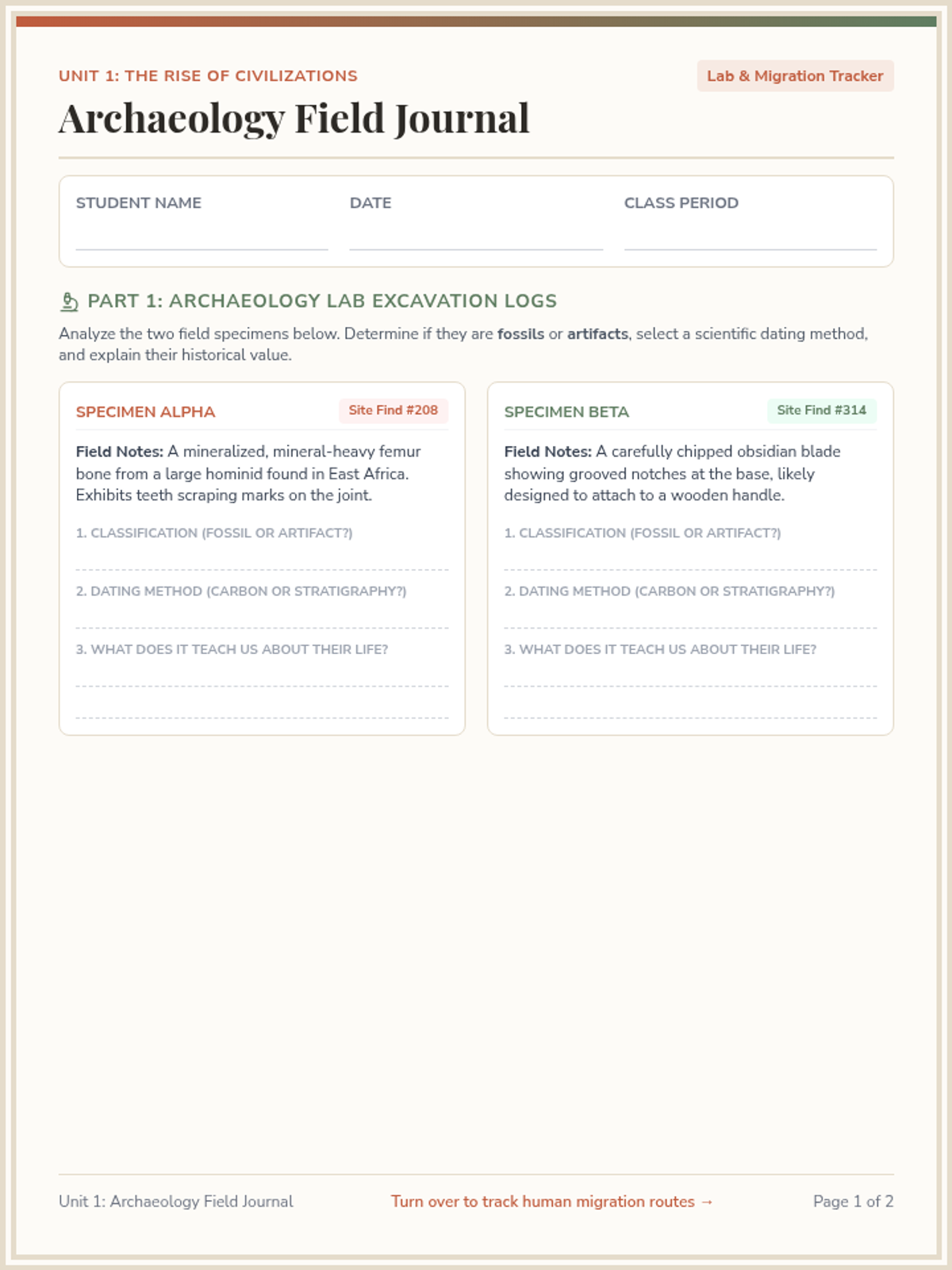
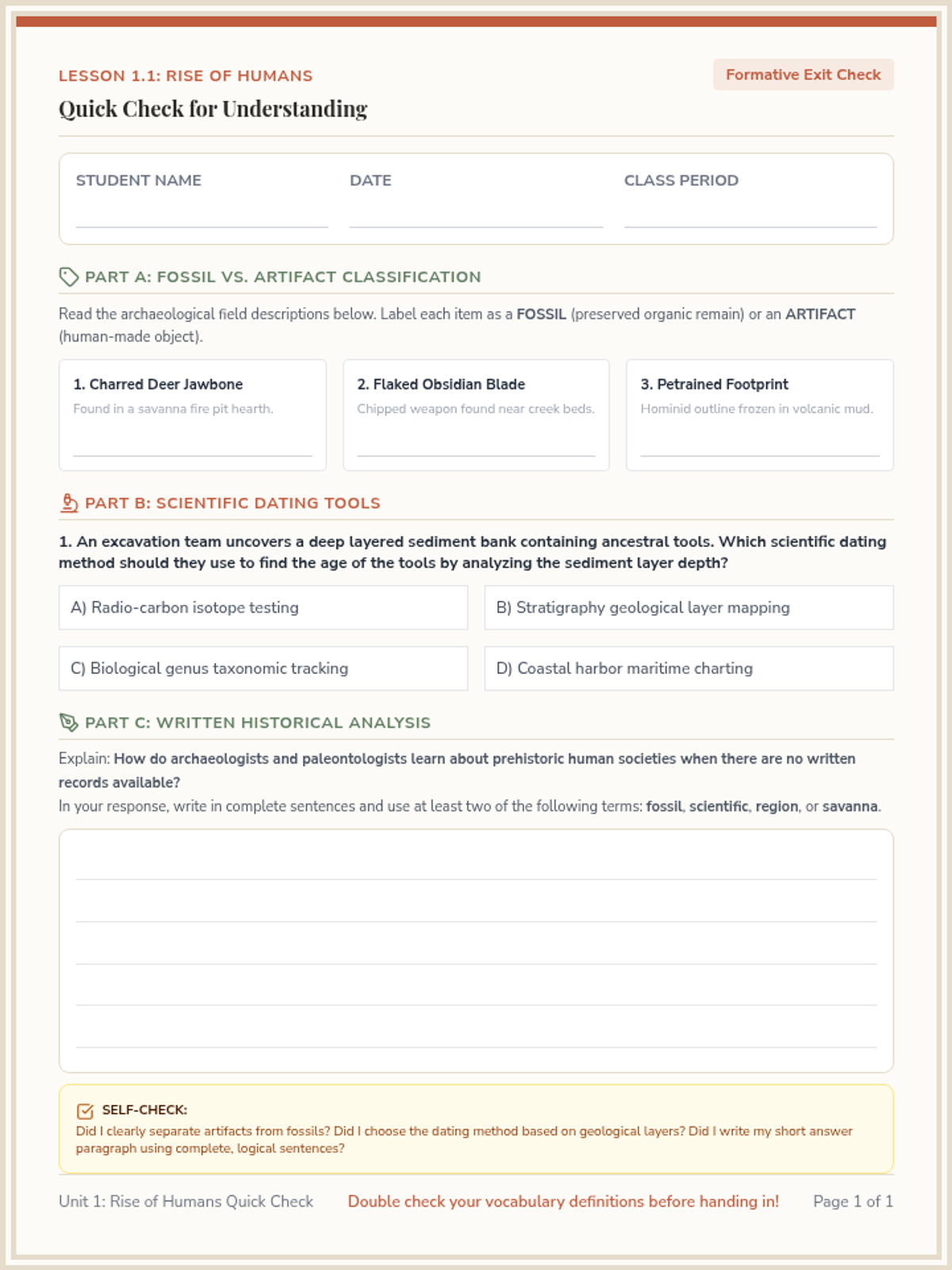
An introductory lesson exploring how archaeologists, paleontologists, and scientists reconstruct prehistoric human society using fossils, scientific testing, and geographical migration tracks.
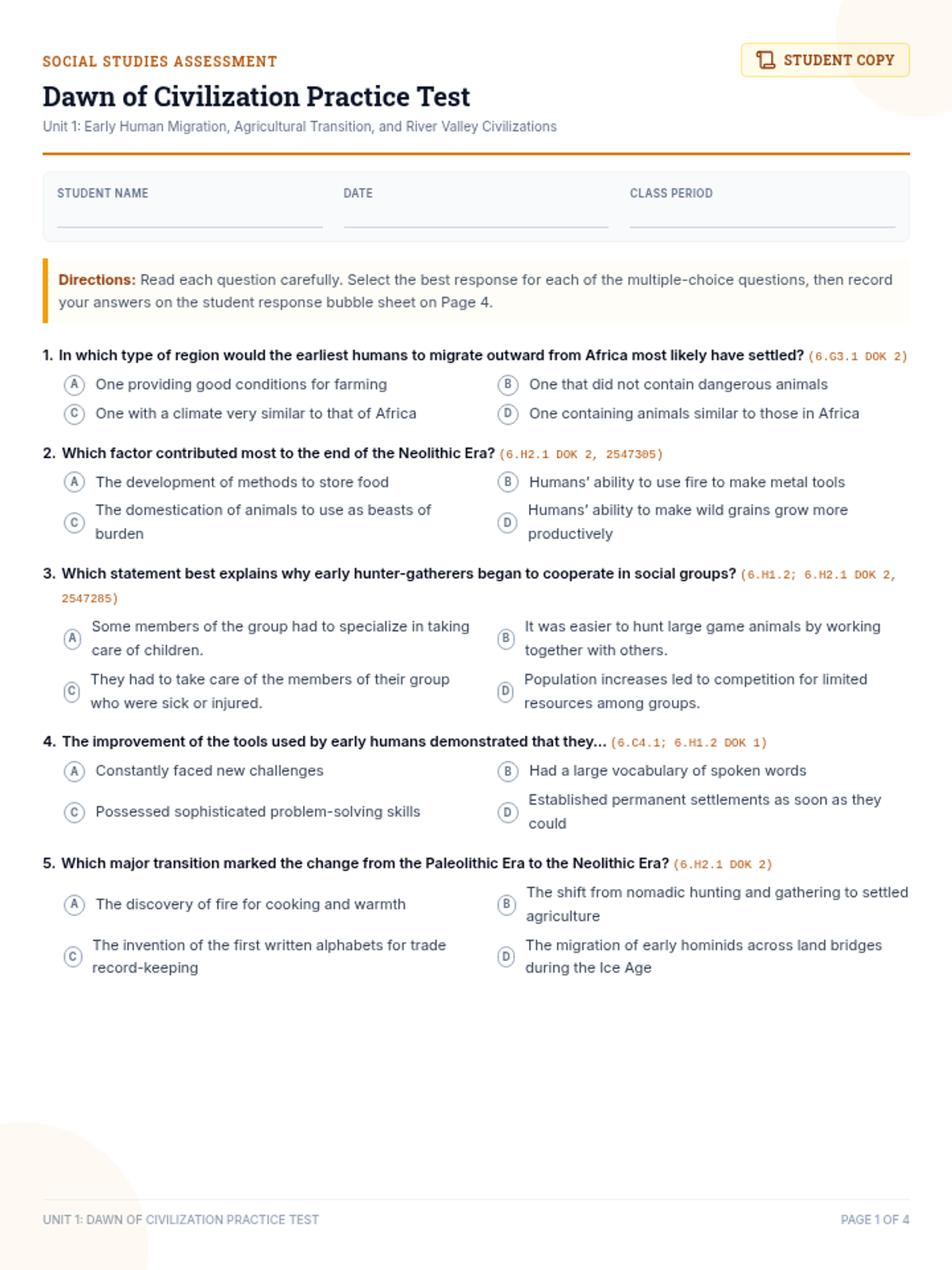
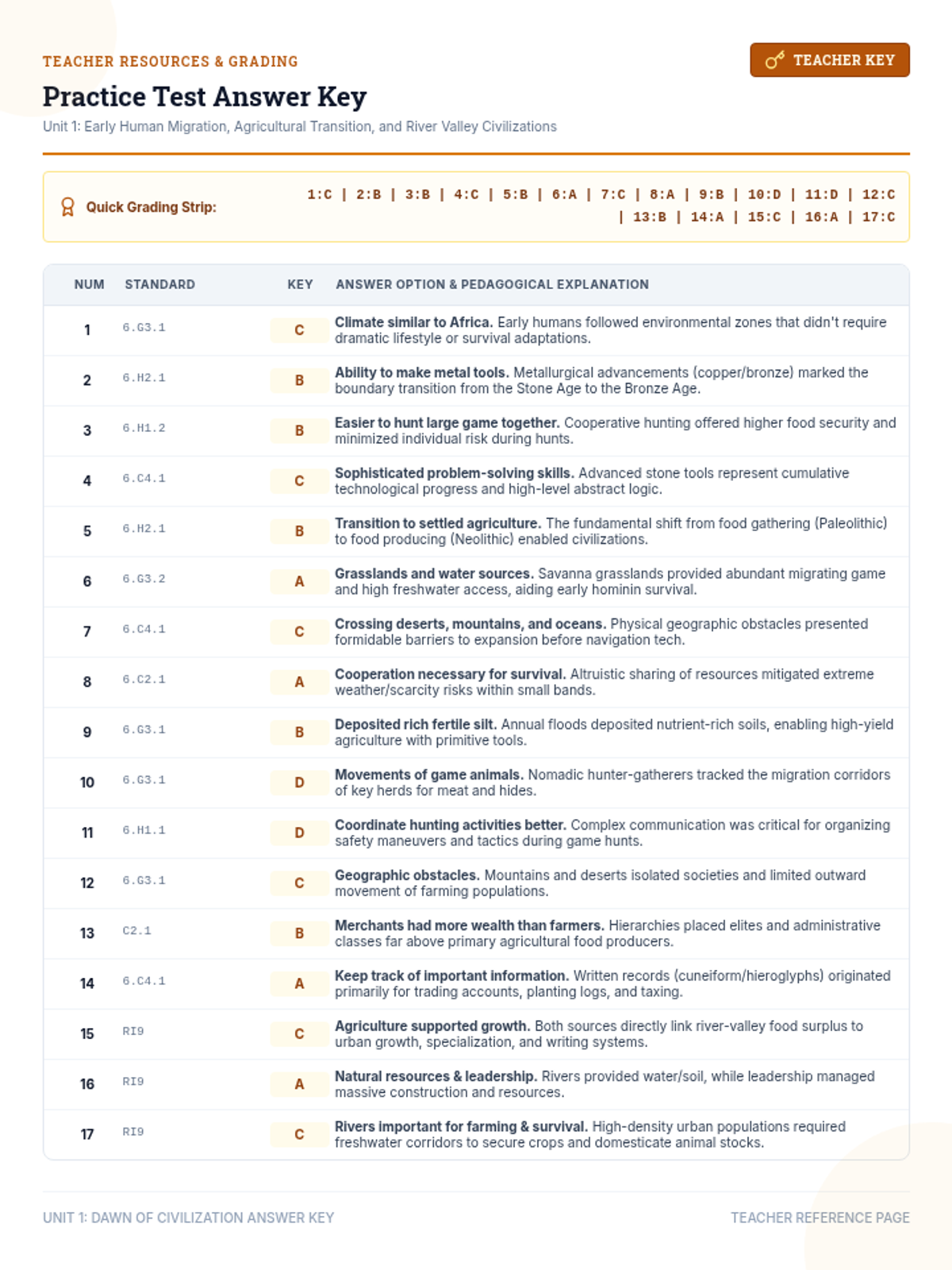
An exploration of early human migration, the transition from hunter-gatherers to agrarian societies, and the rise of the first river valley civilizations in Mesopotamia and ancient Egypt.
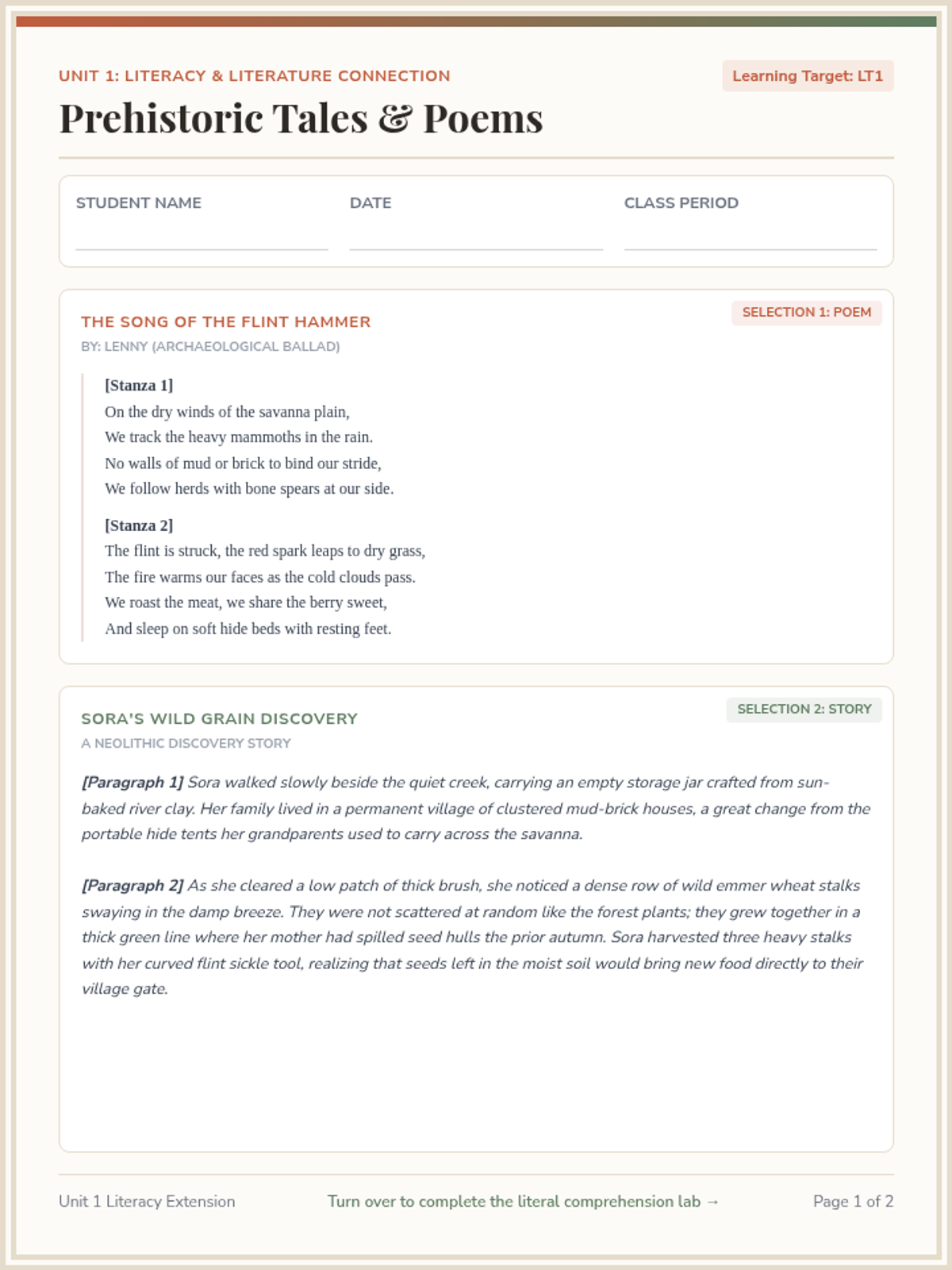
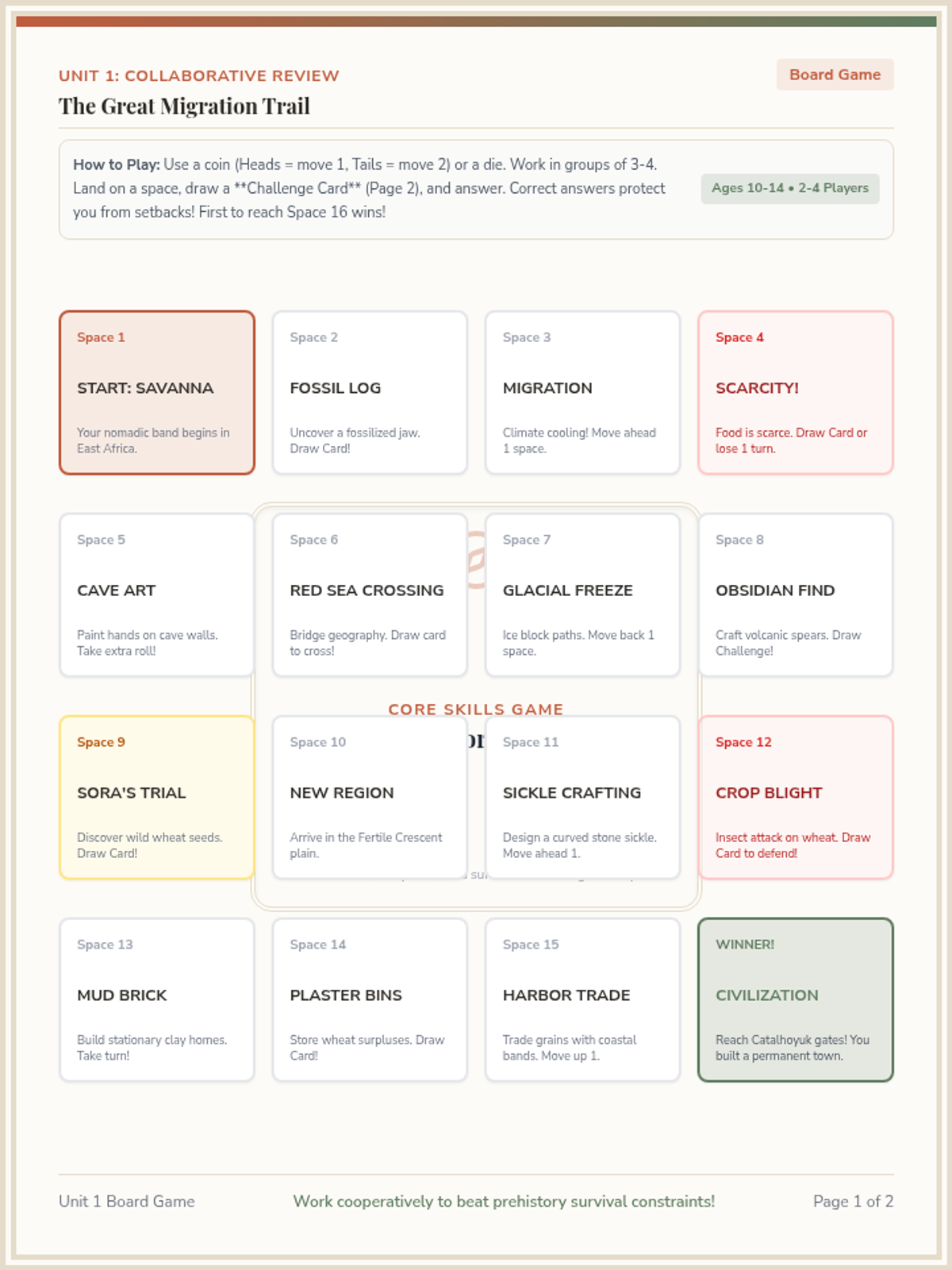
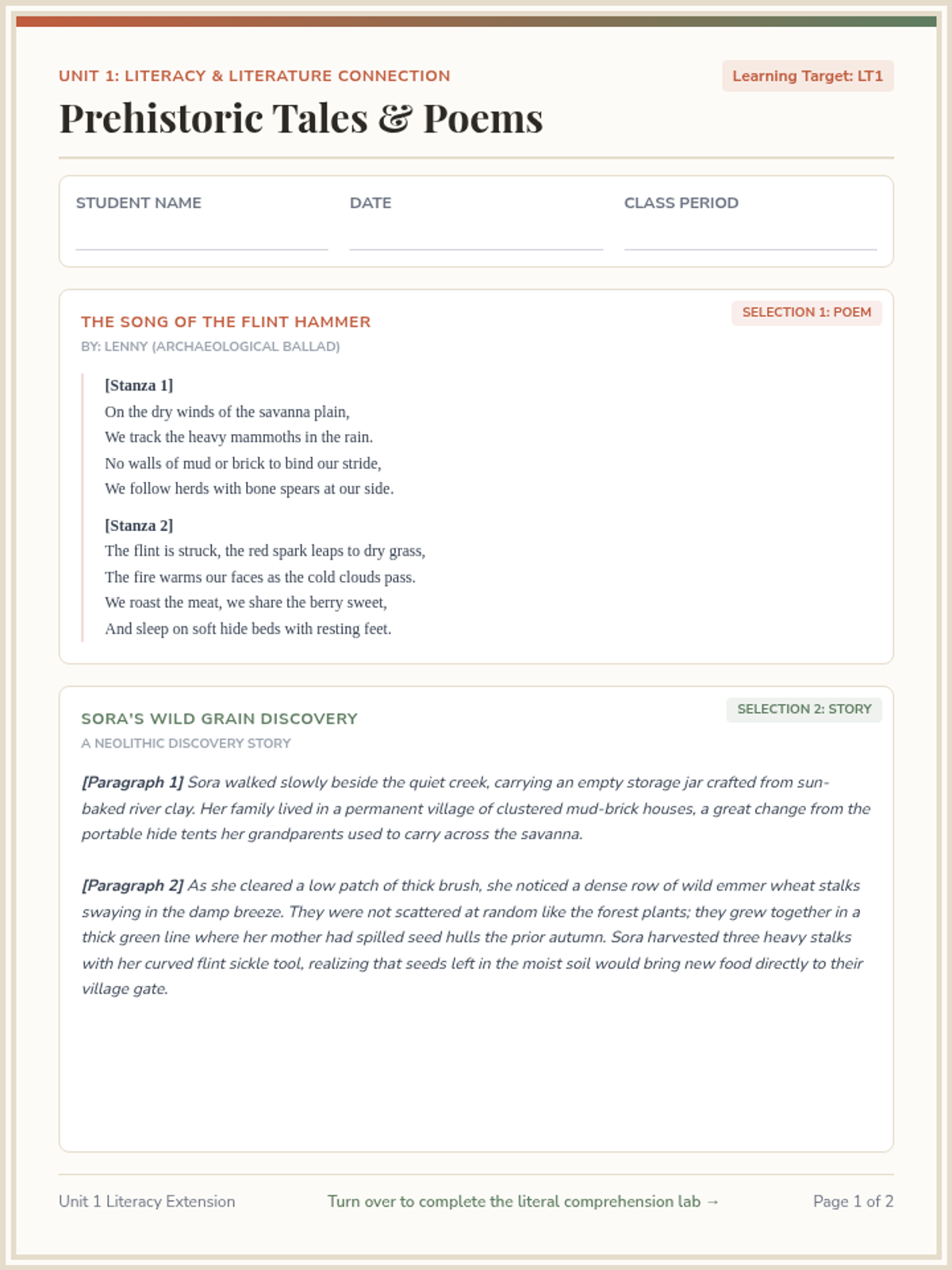
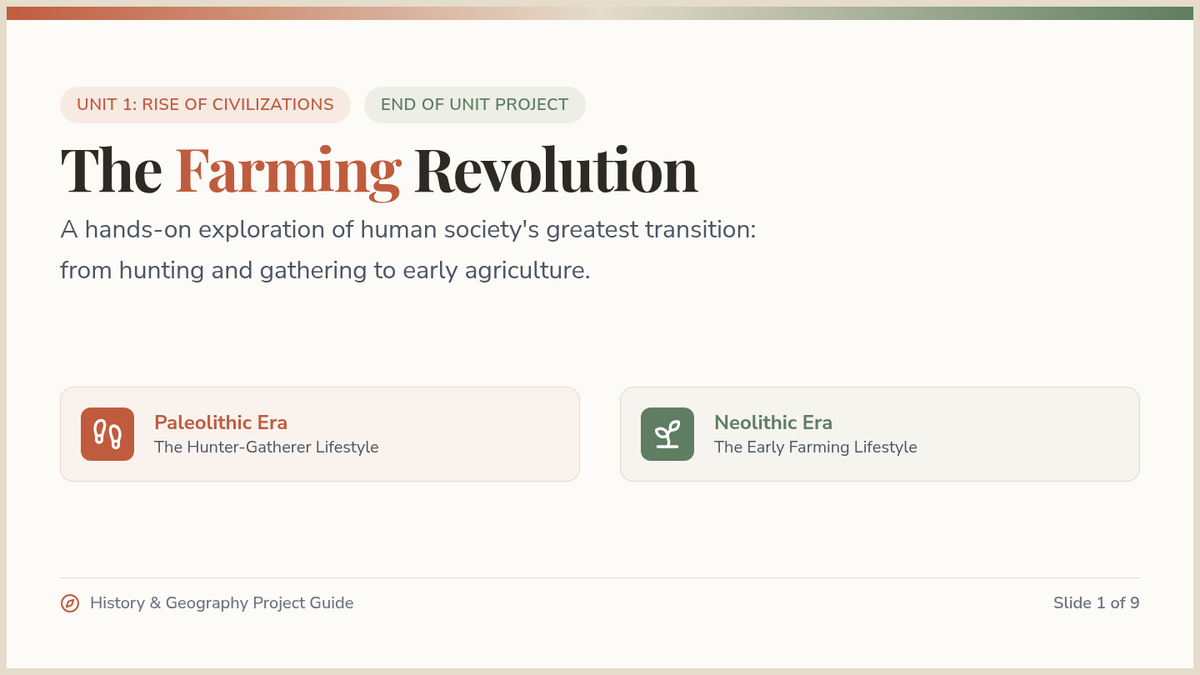
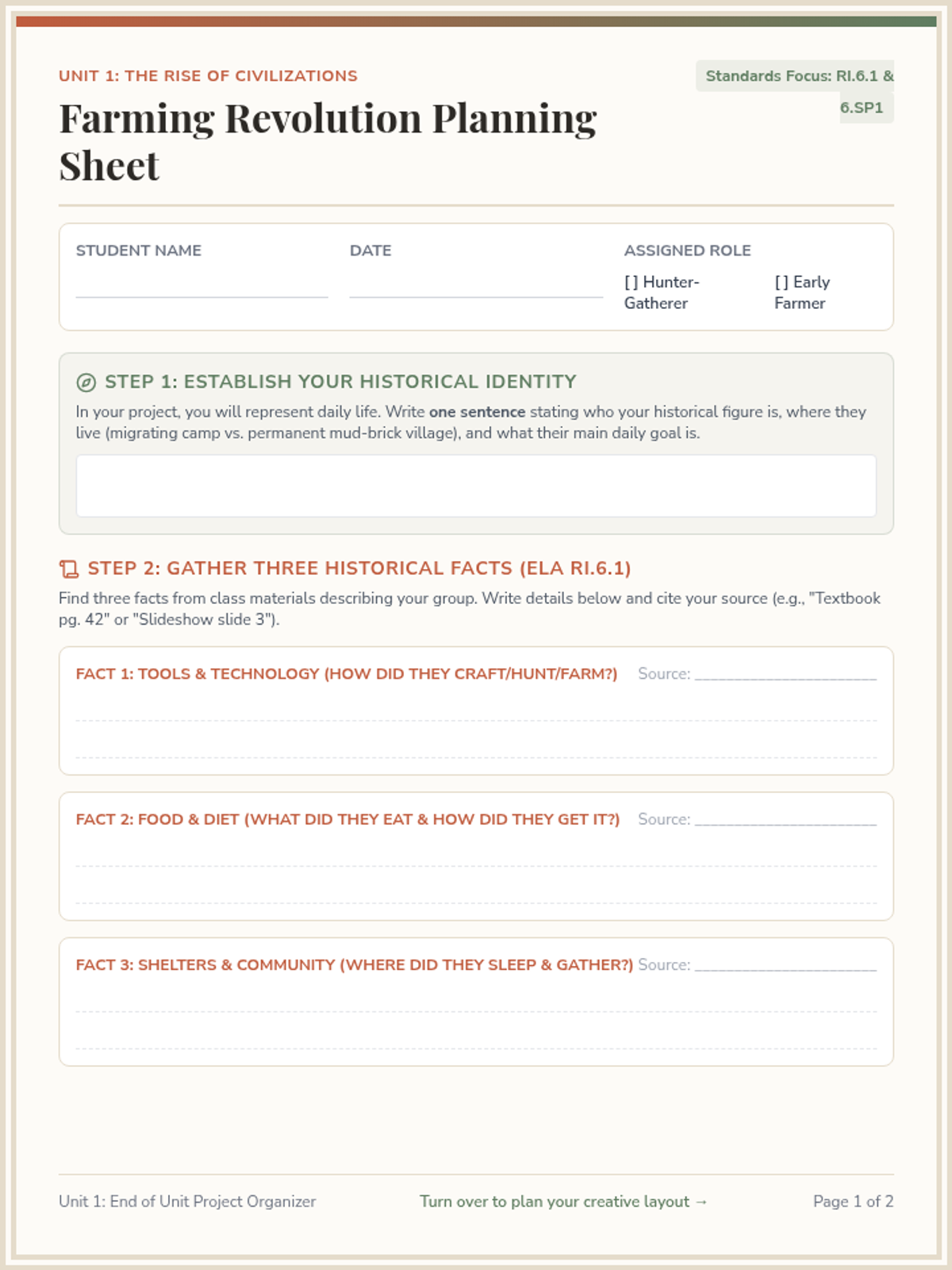
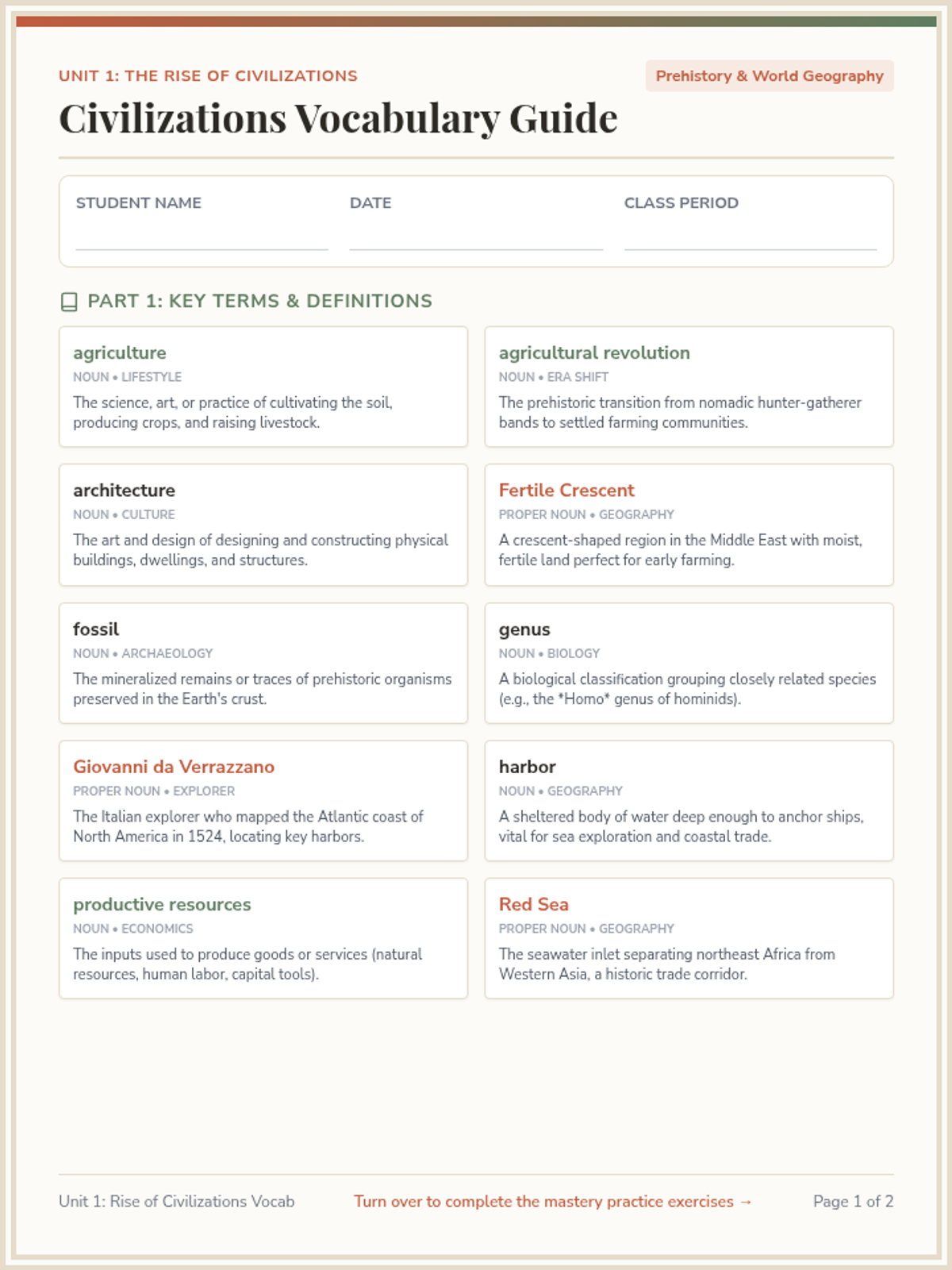
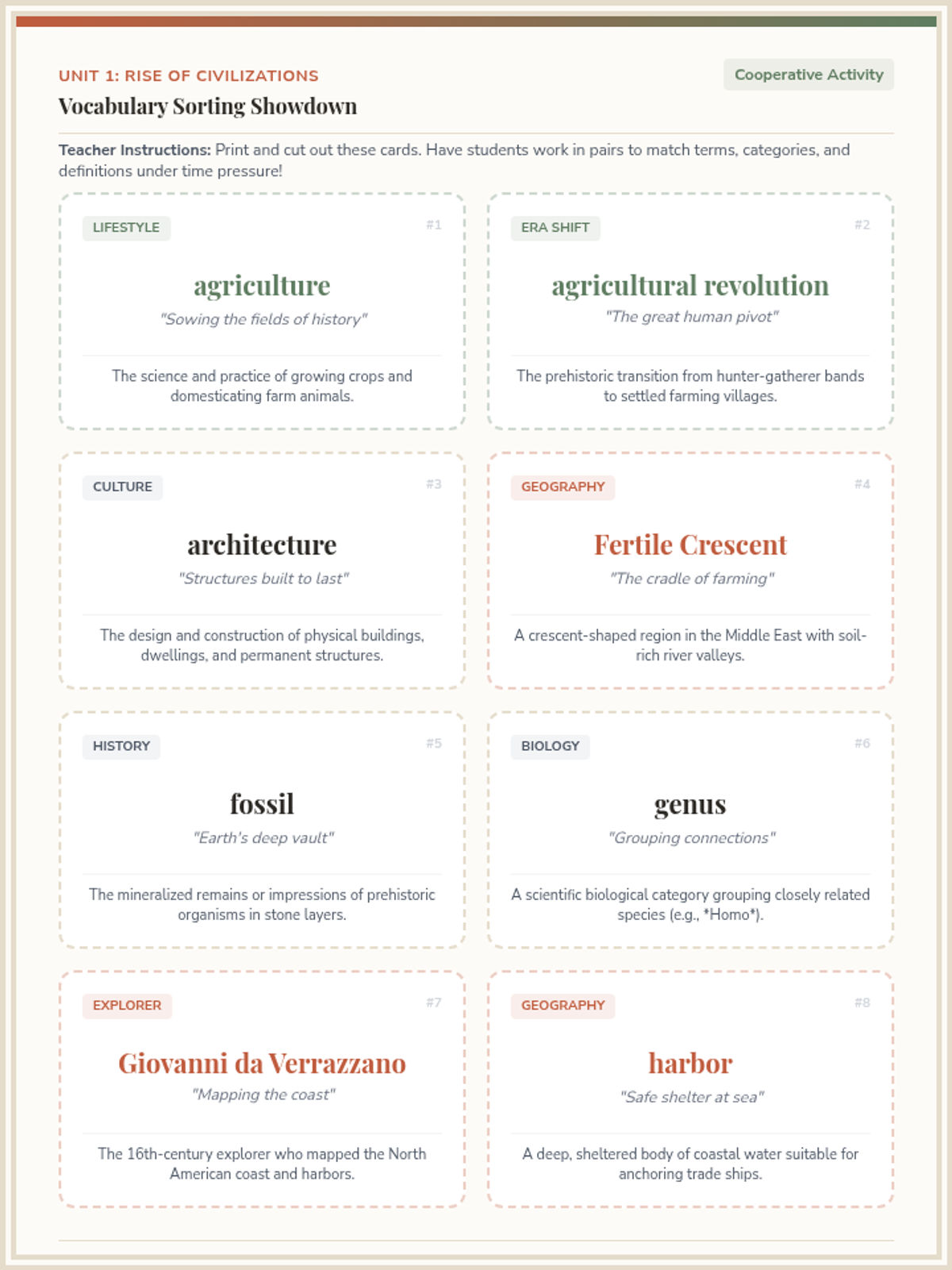
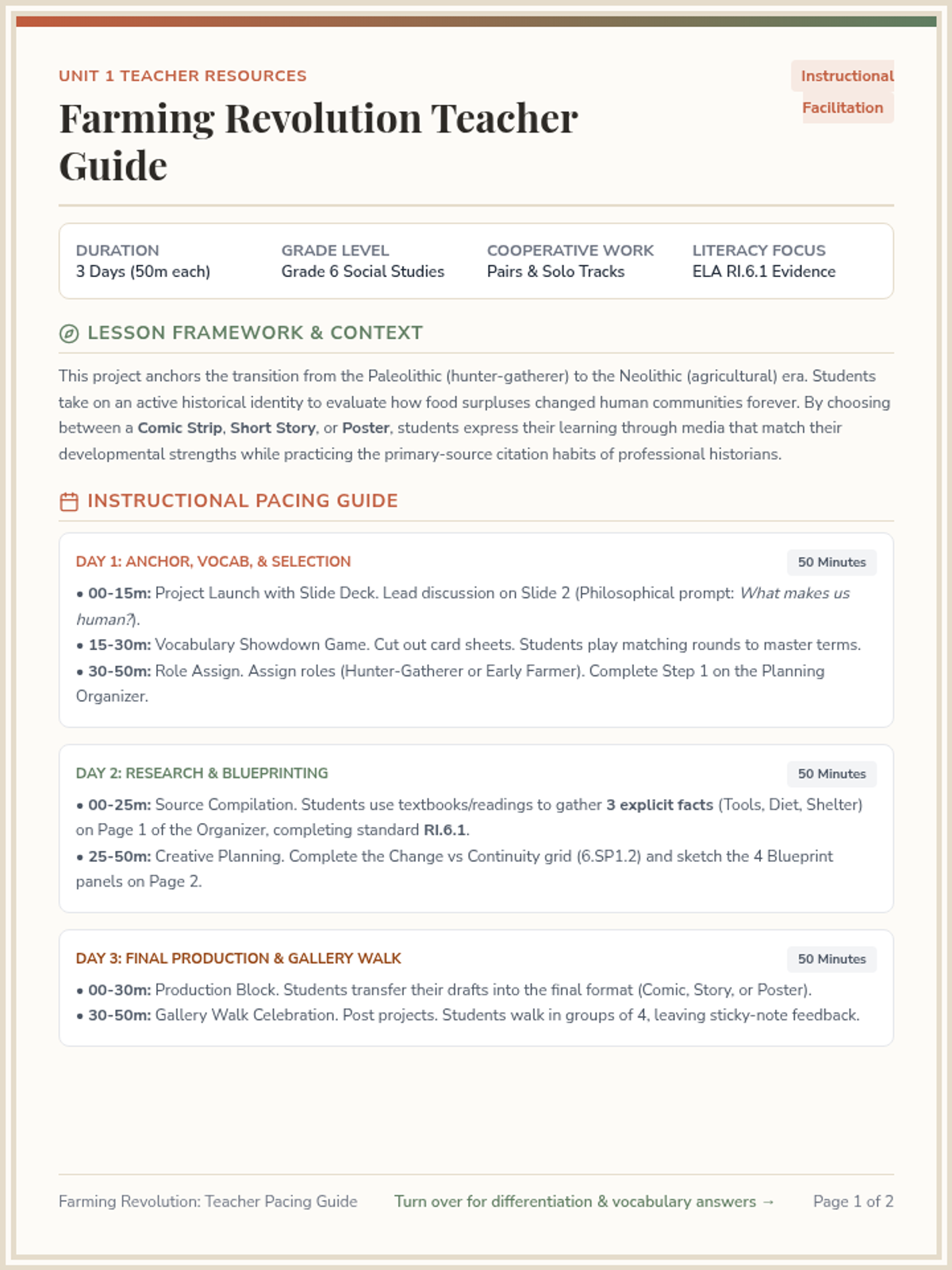
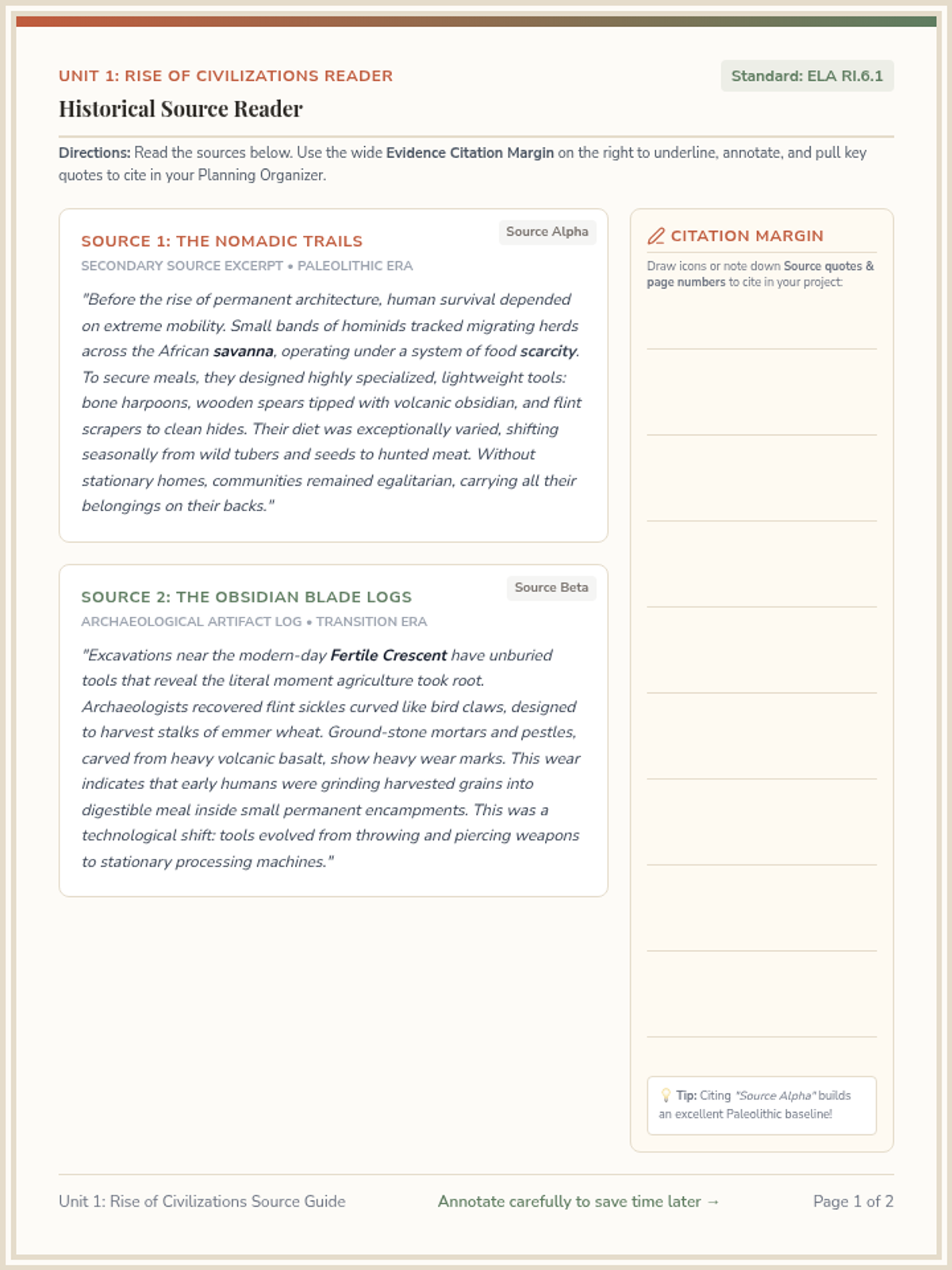
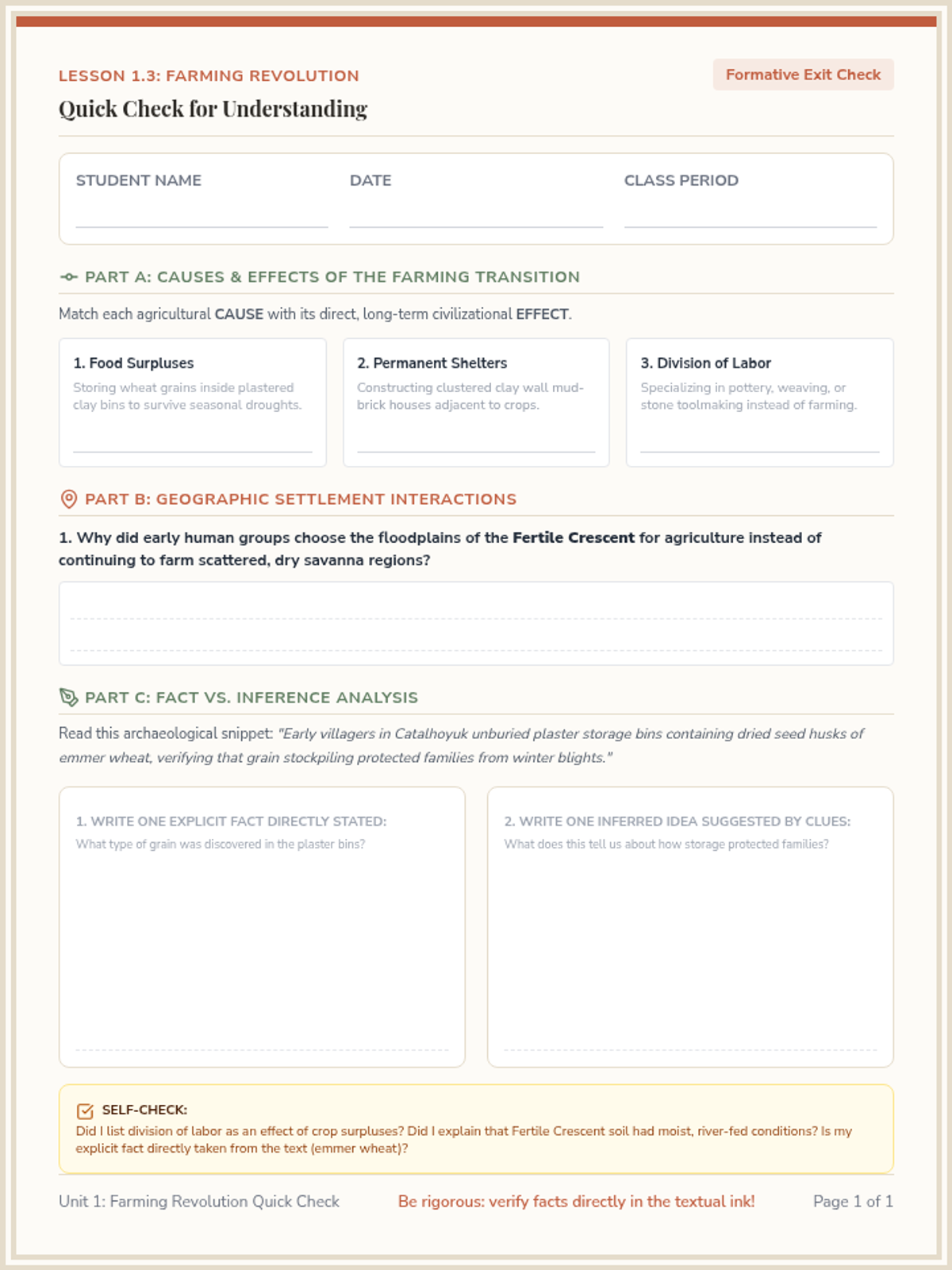
A project-based lesson where students explore the dramatic transition from hunter-gatherer societies to early agricultural communities. Students analyze historical evidence to create a comic, short story, or poster detailing daily life in their assigned era.
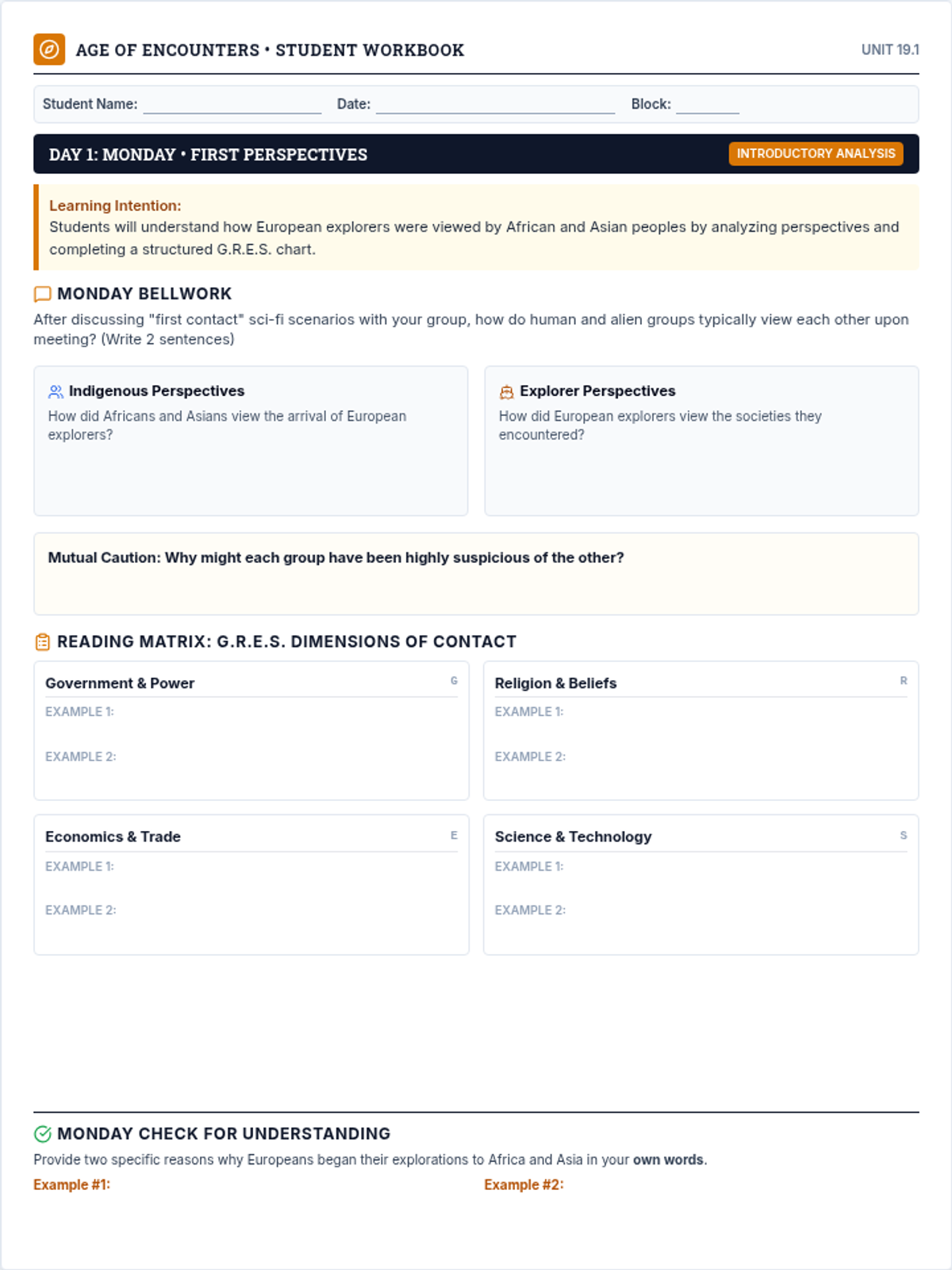
A comprehensive 5-day history unit exploring the Age of Exploration, cultural exchanges, technological innovations in navigation, the Transatlantic Slave Trade, and encounters with East Asian empires.
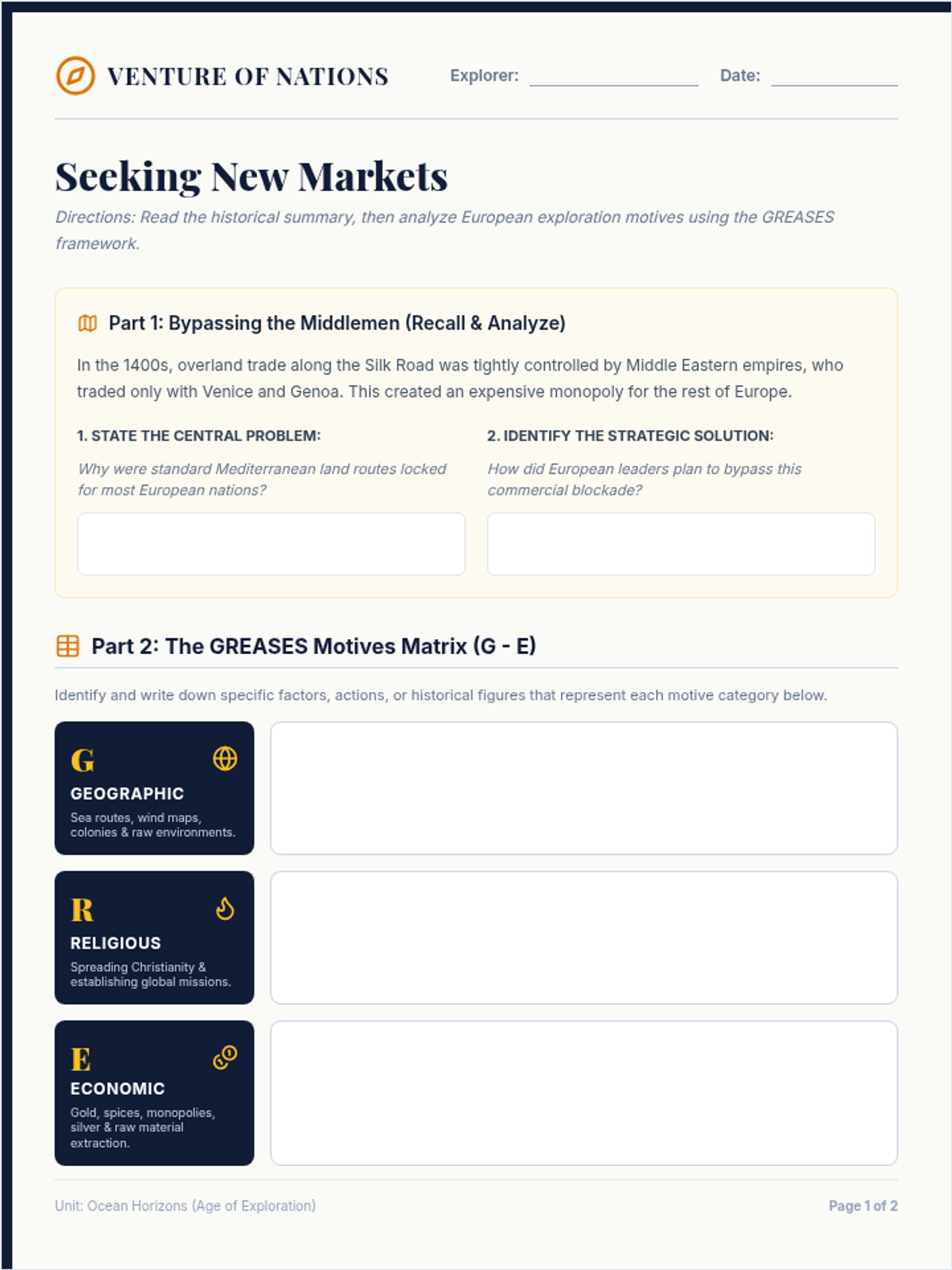
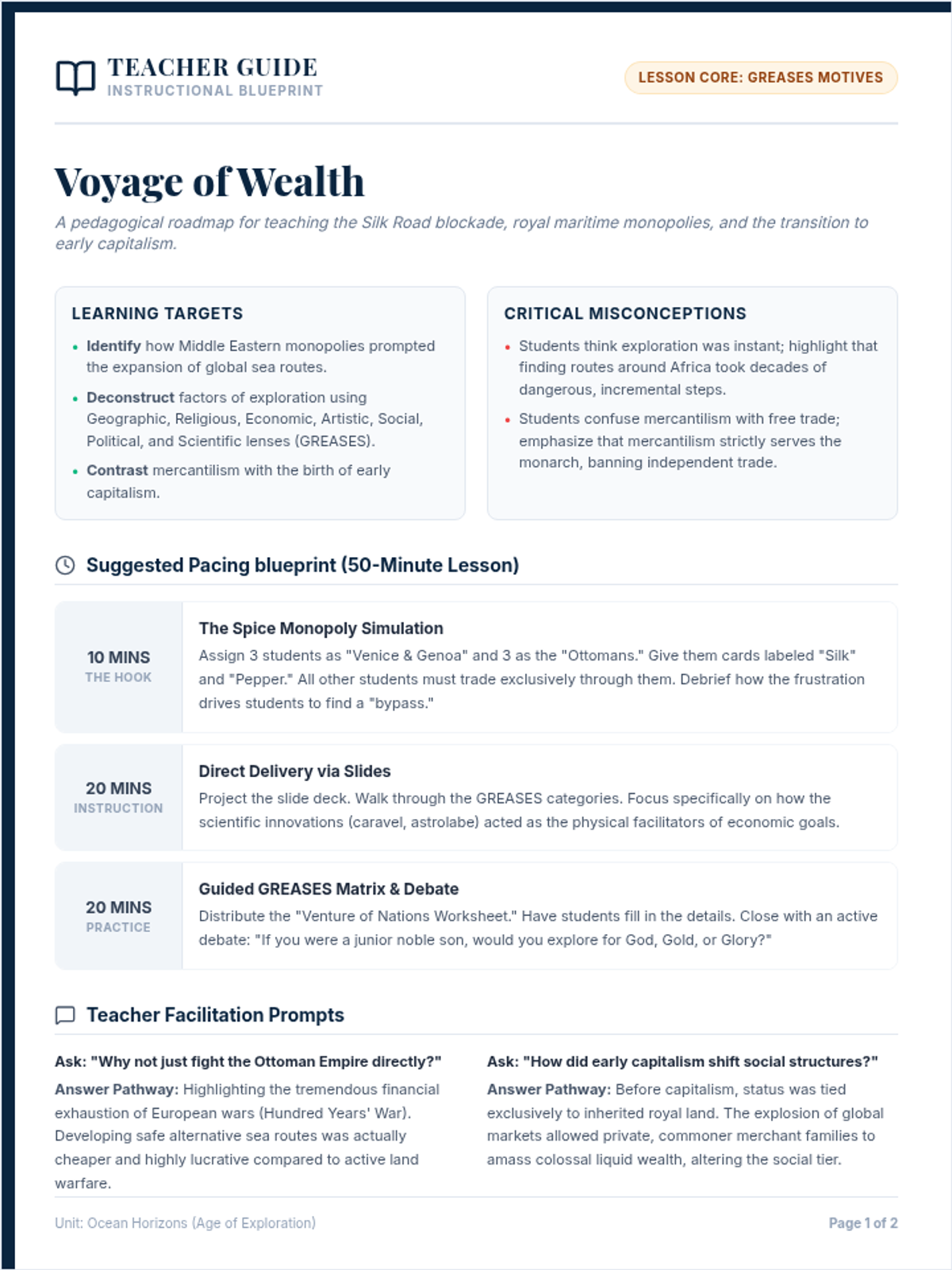
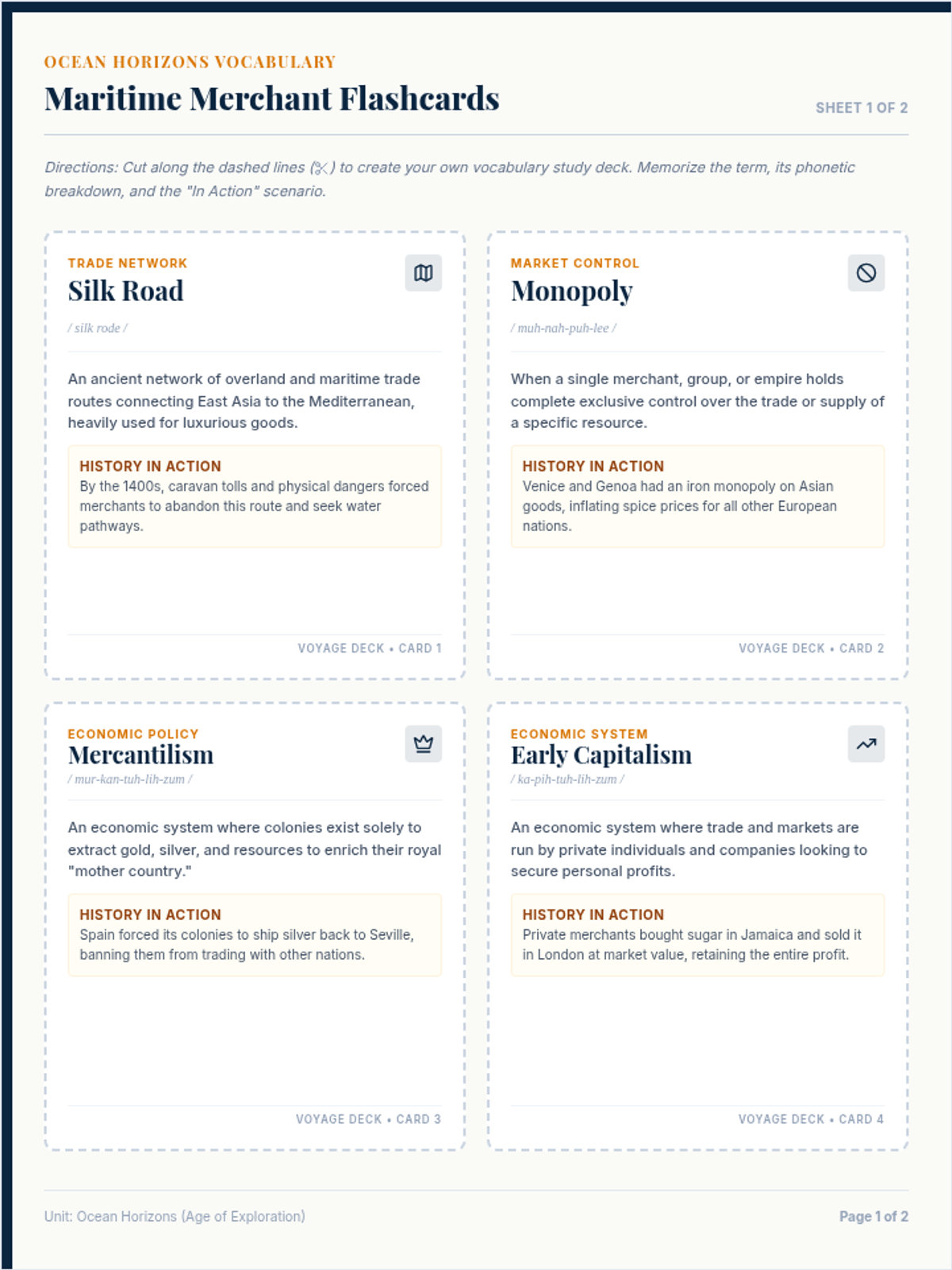
An in-depth exploration of the factors that drove European powers to seek new trade routes, introducing the GREASES framework for historical analysis of global expansion.