An analytical psychology sequence for 11th-grade students exploring B.F. Skinner's operant conditioning, reinforcement schedules, and the ethical implications of behavioral modification.
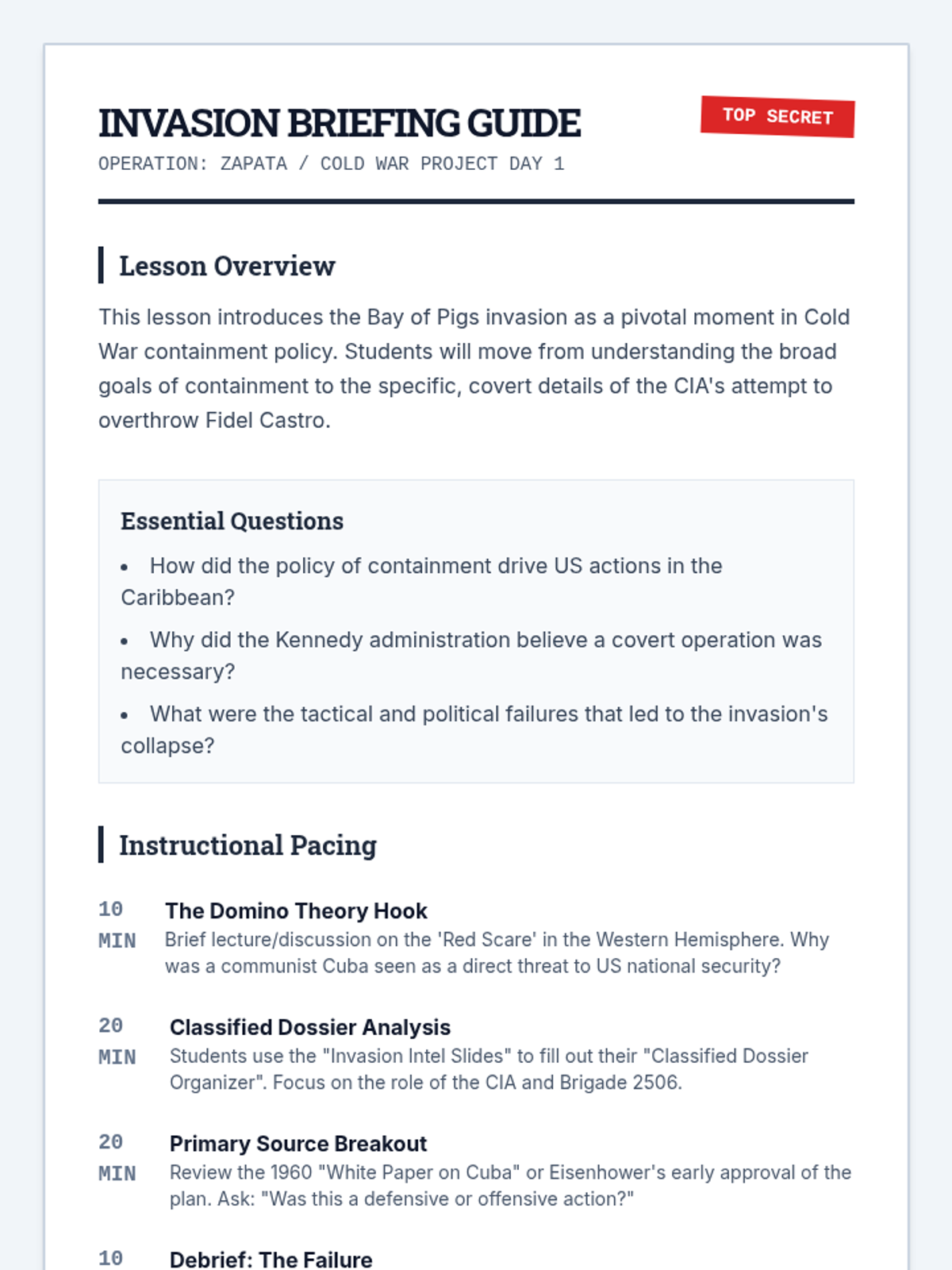
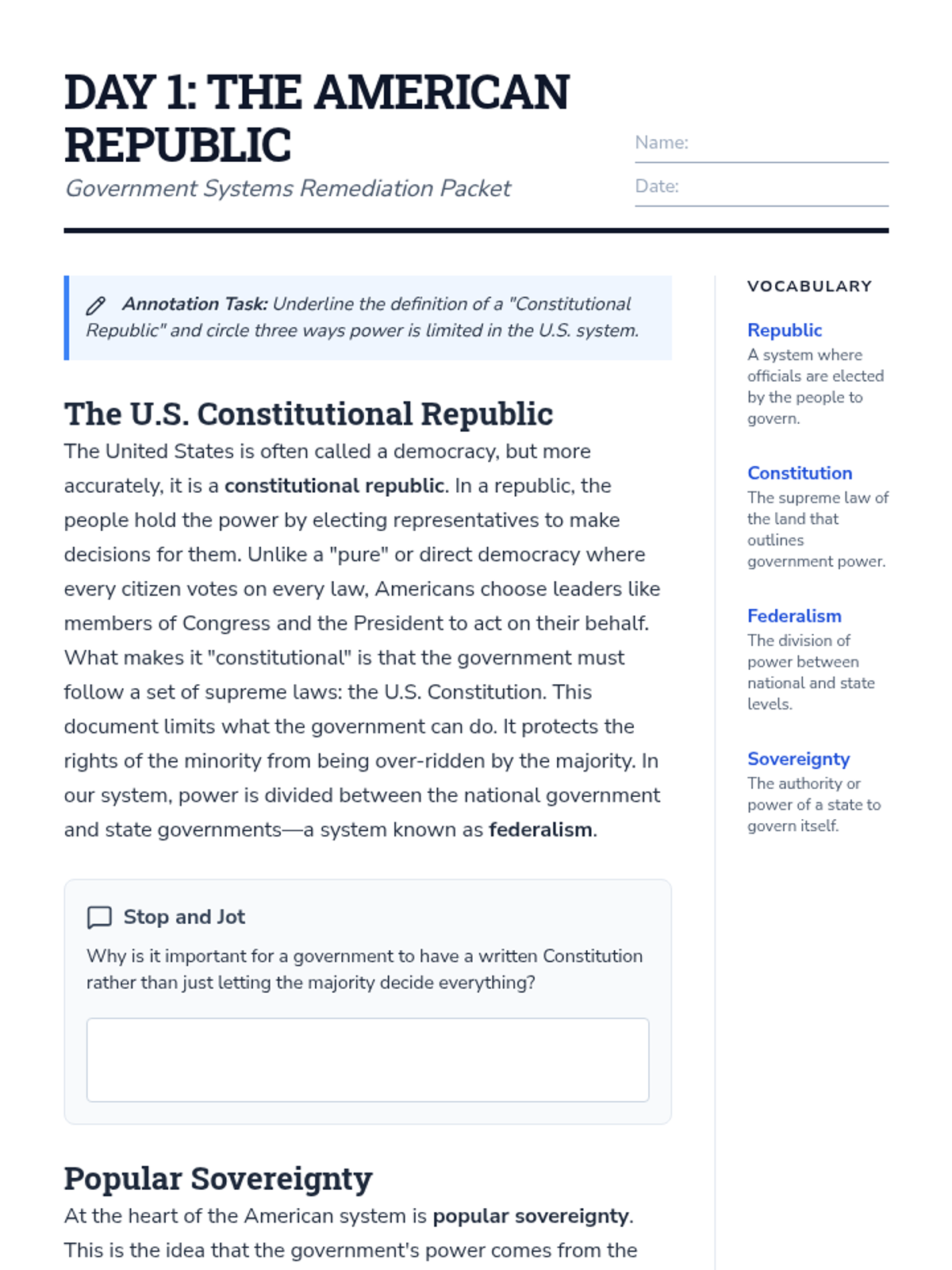
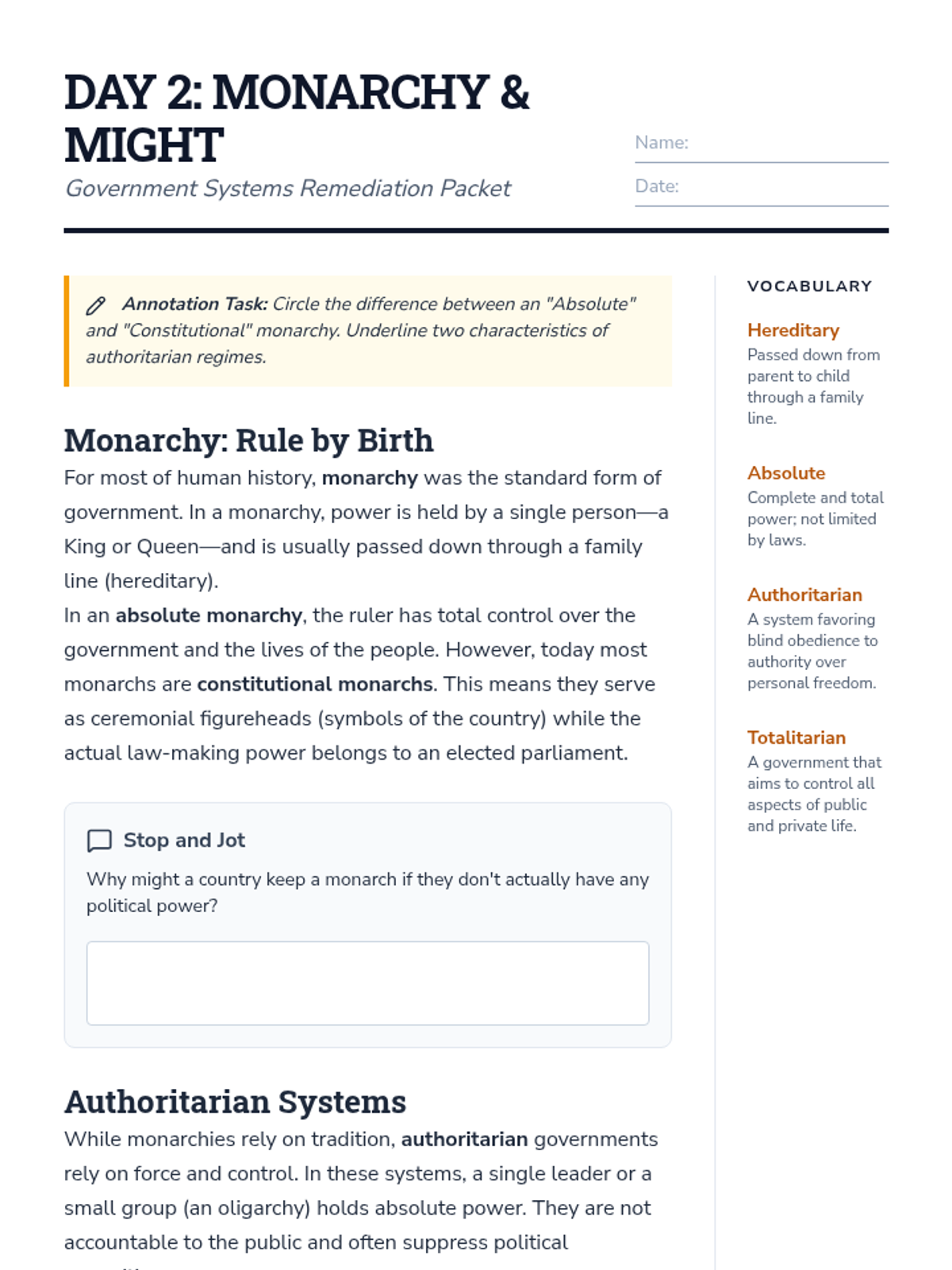
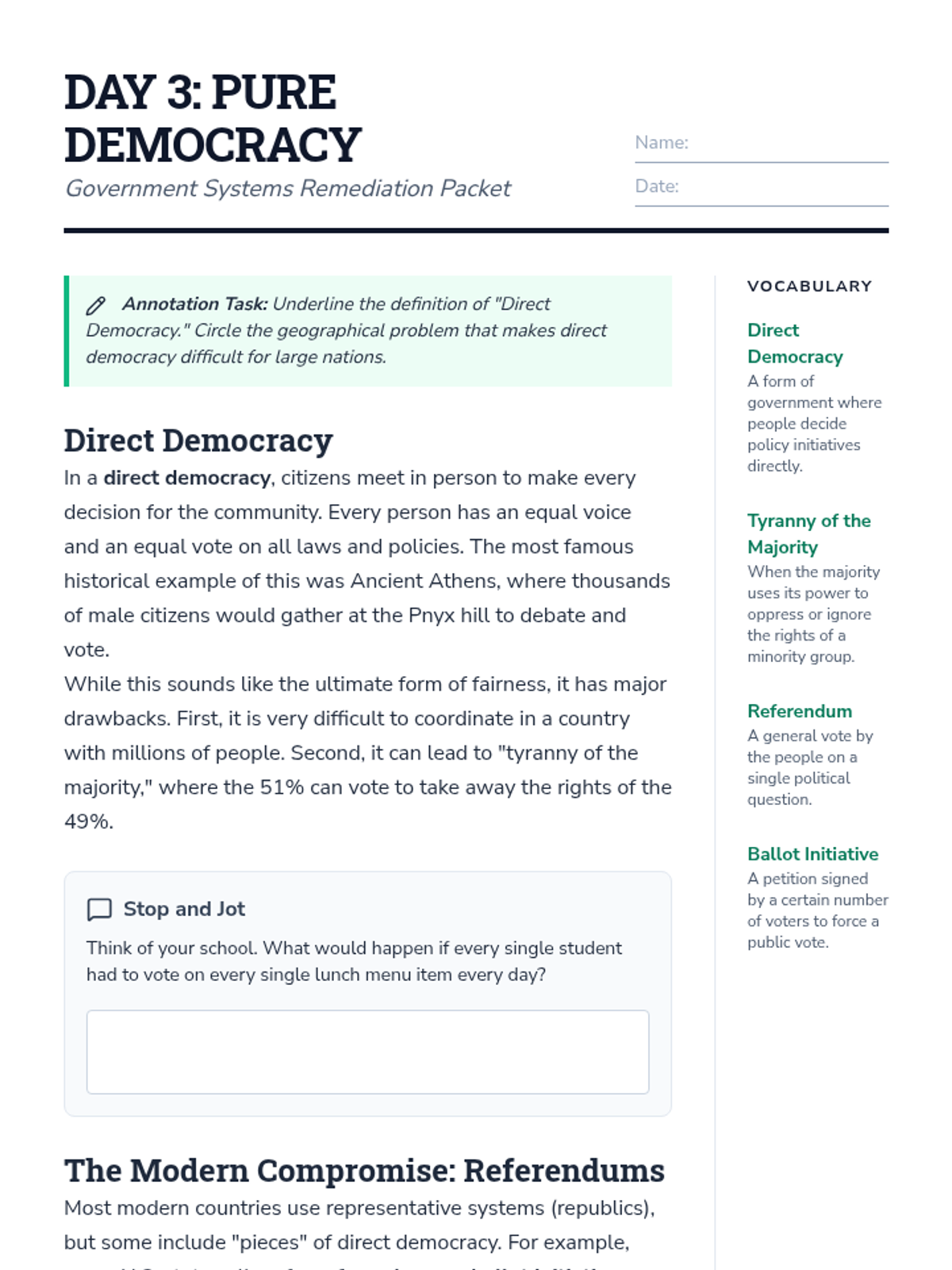
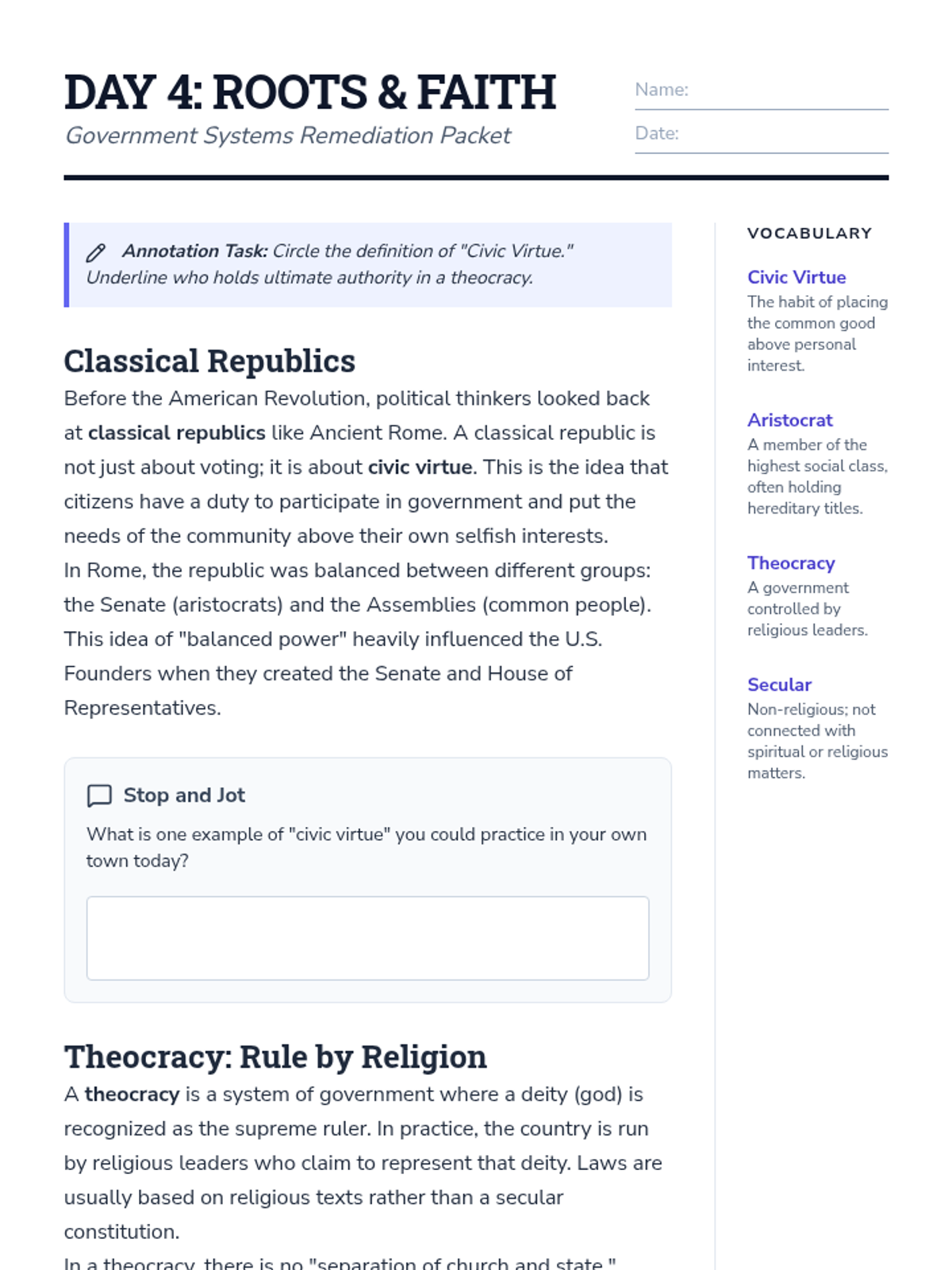
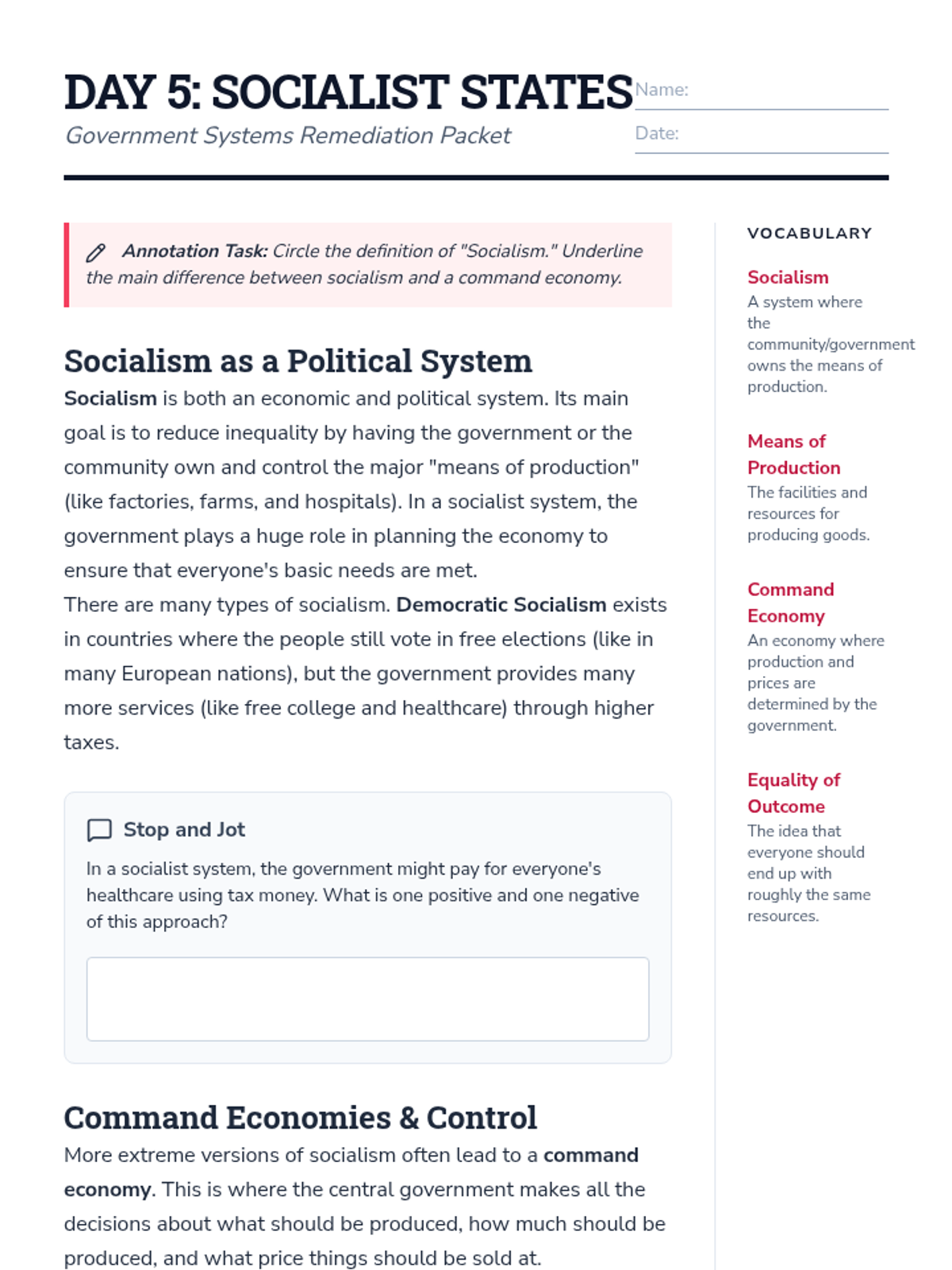
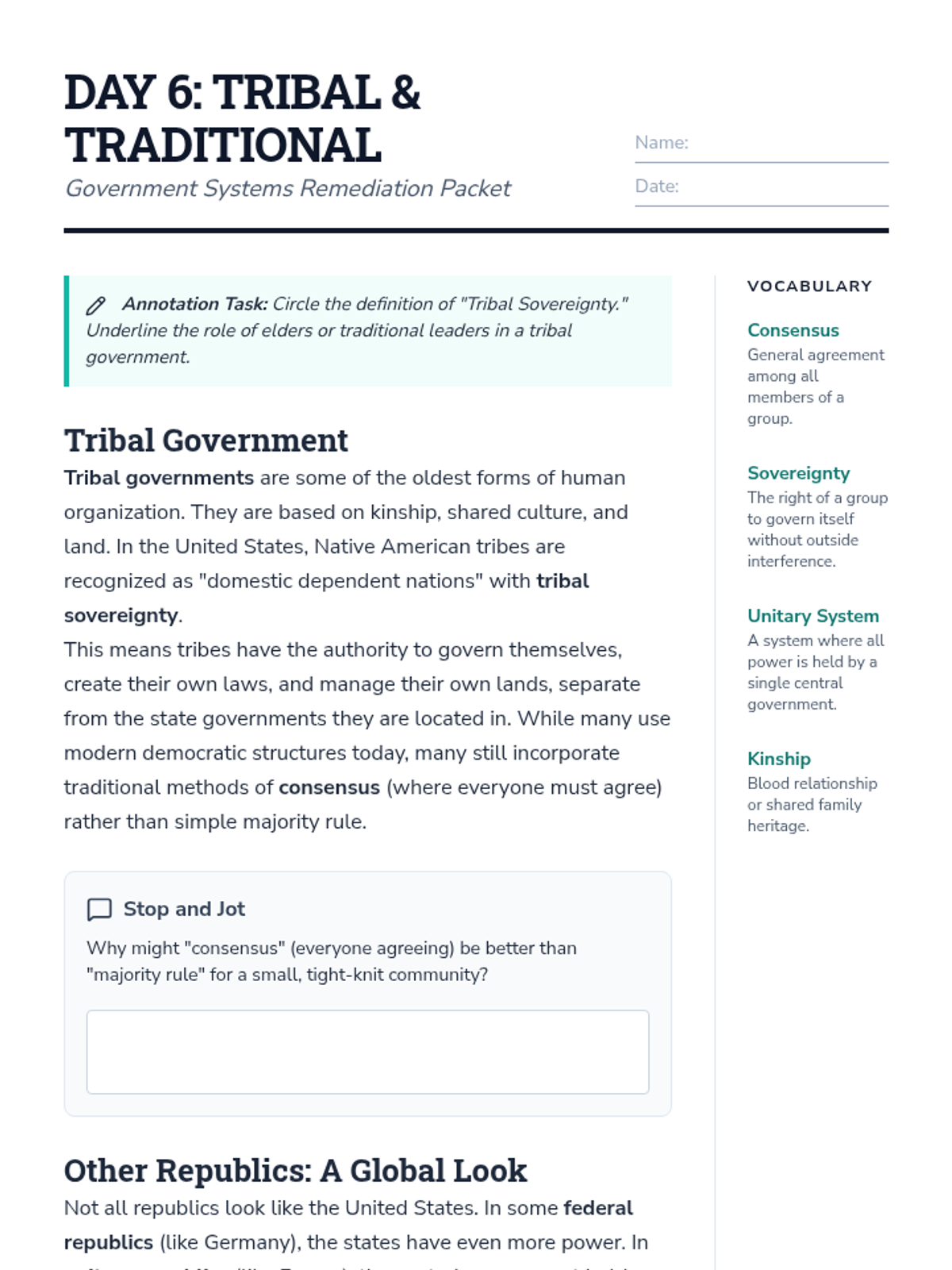
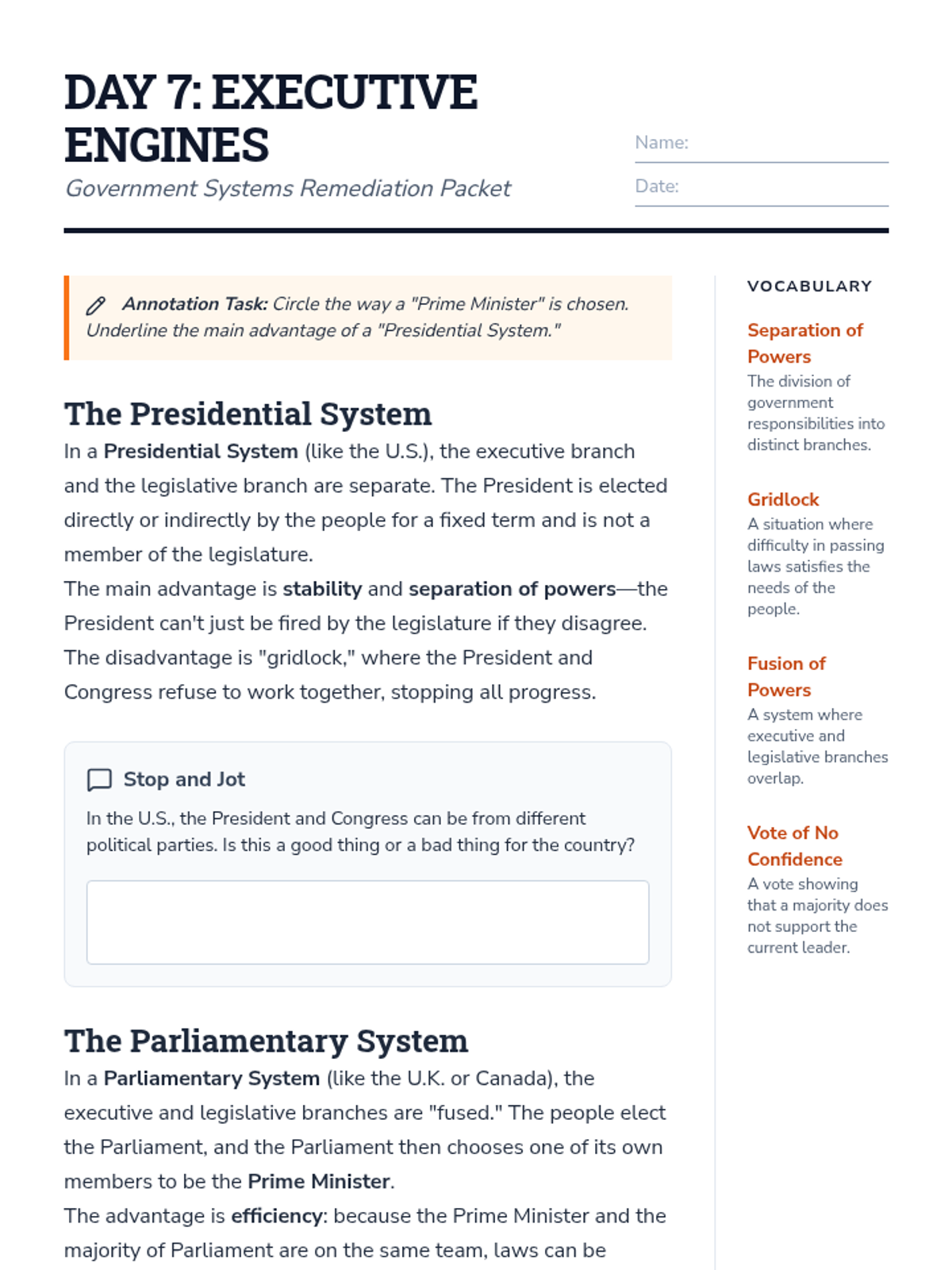
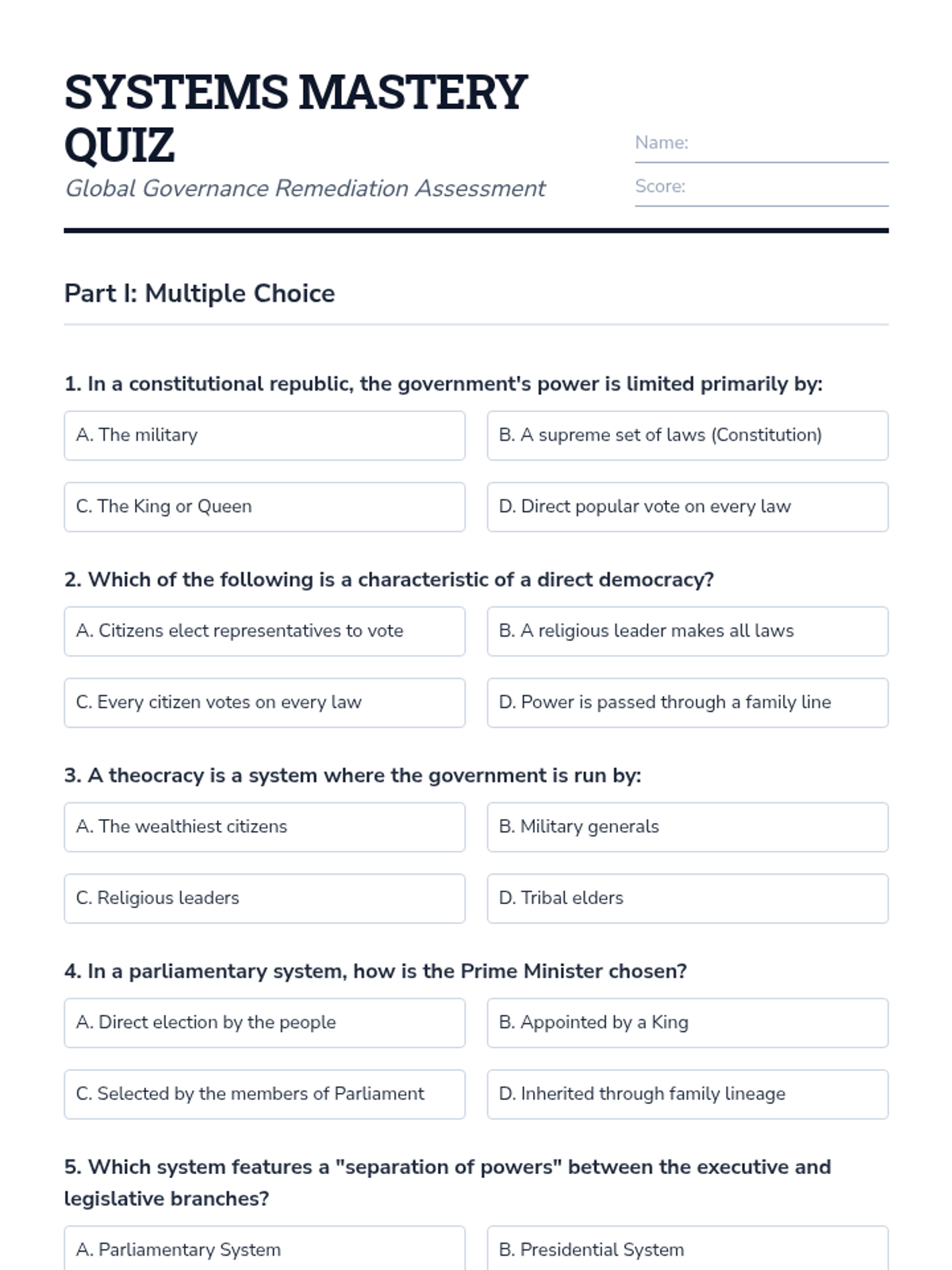
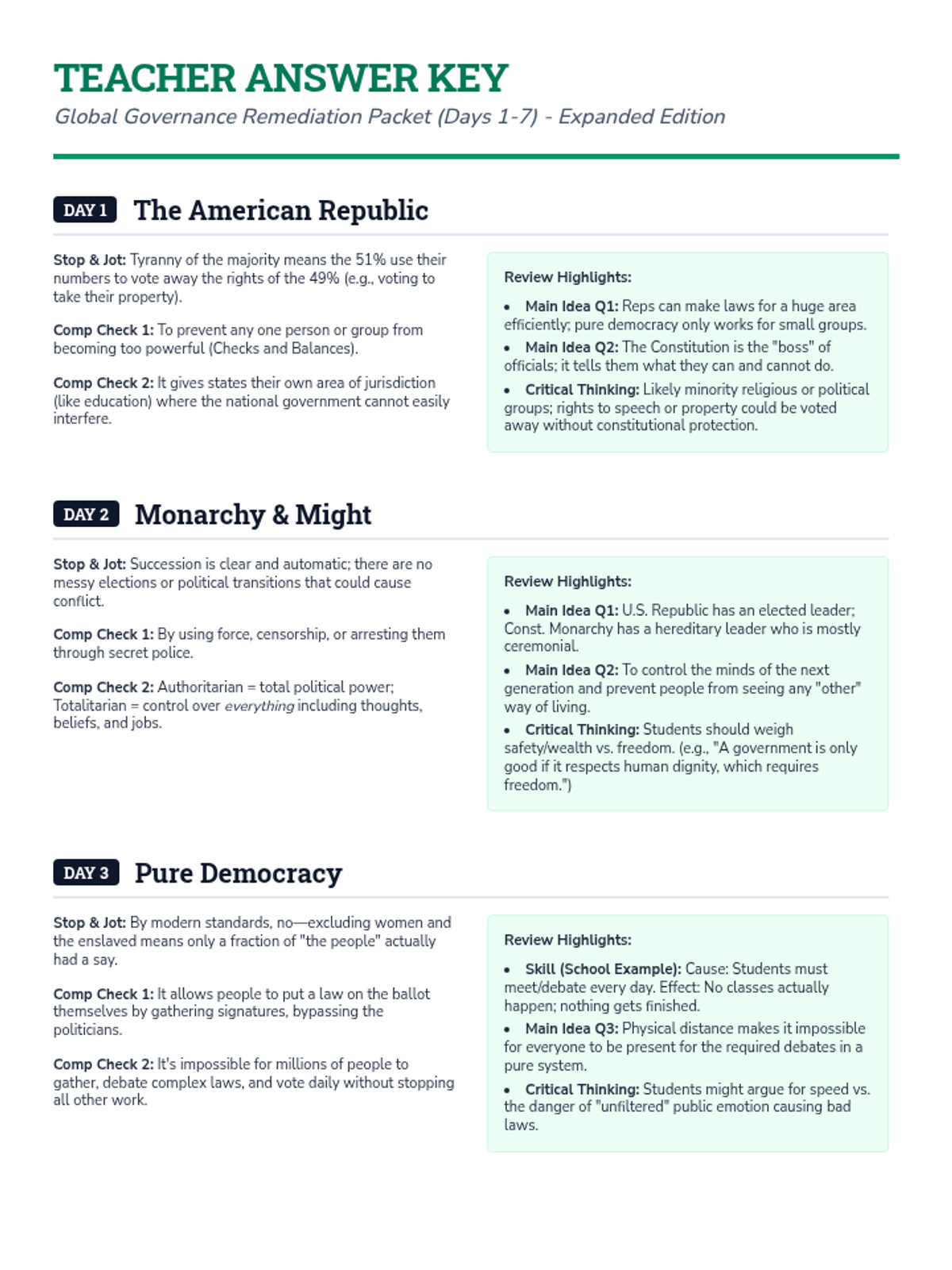
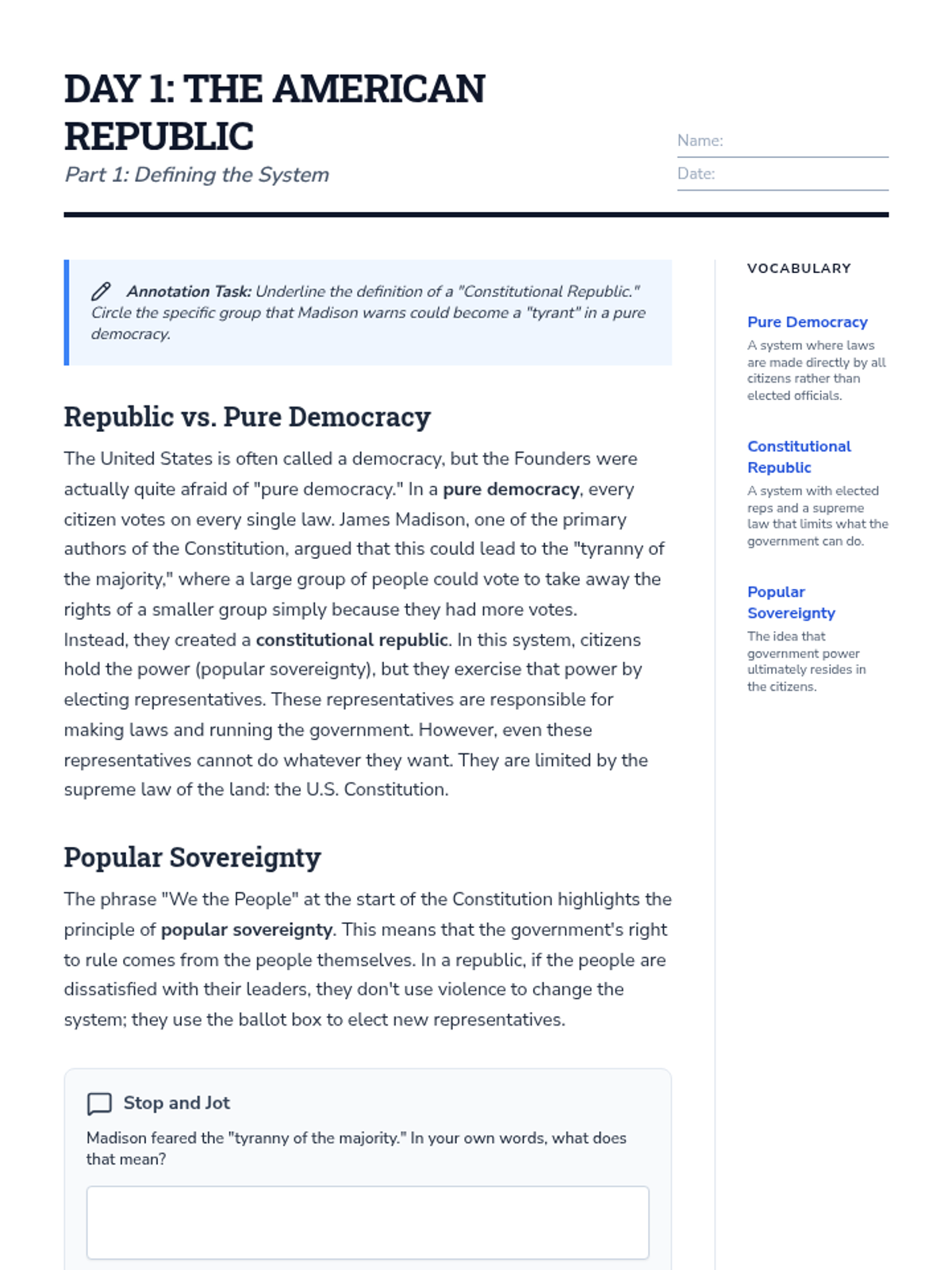
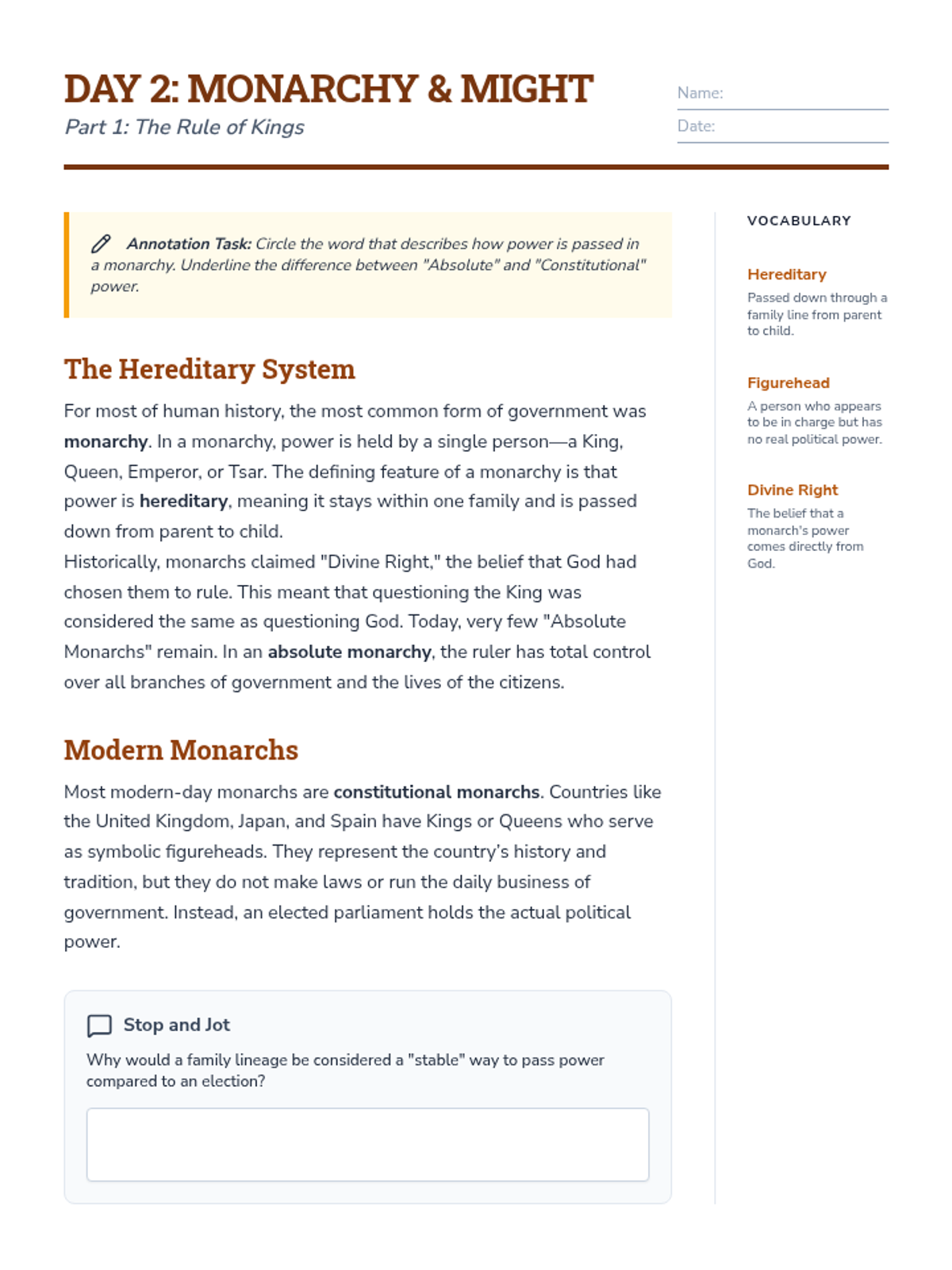
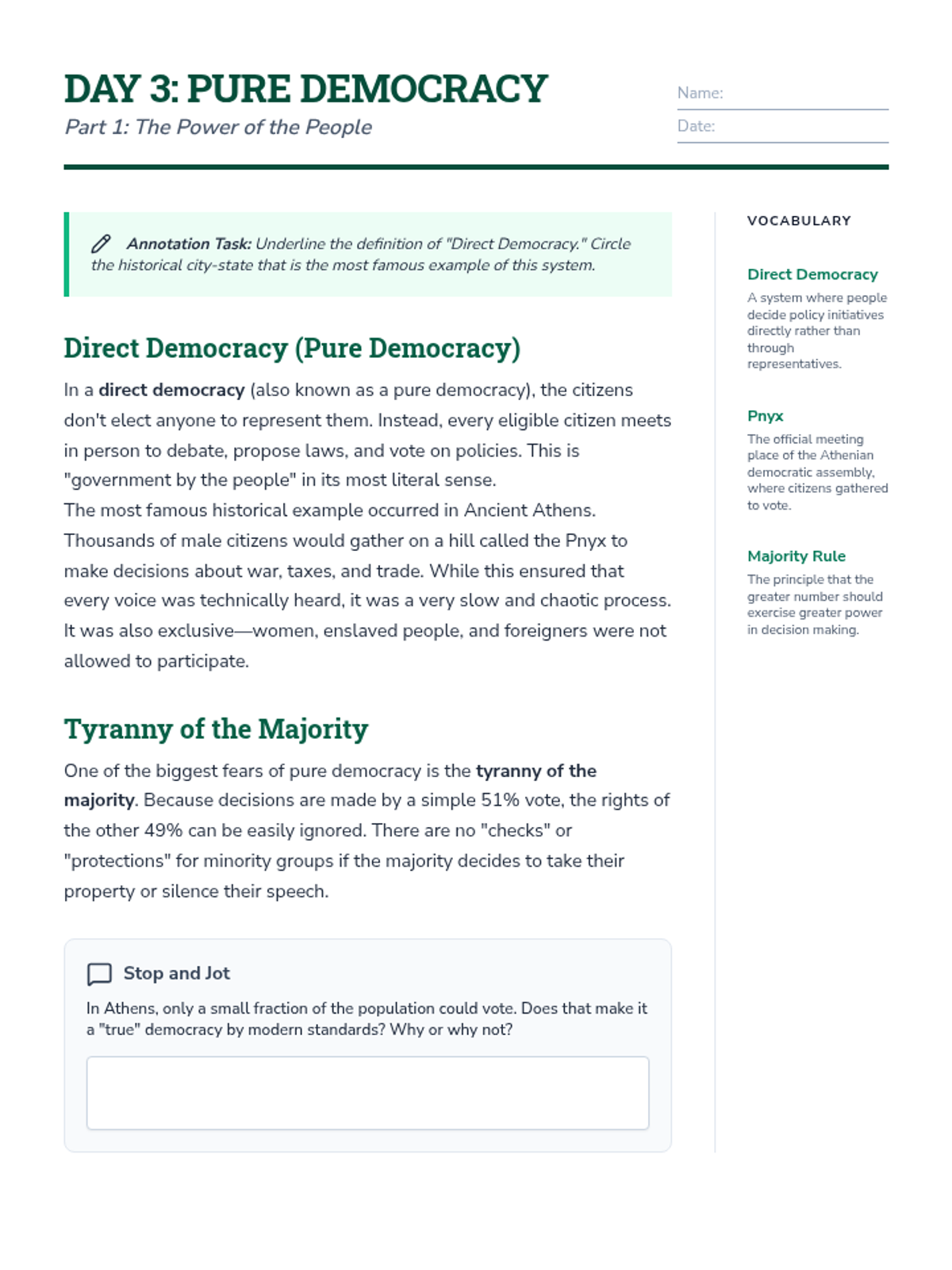
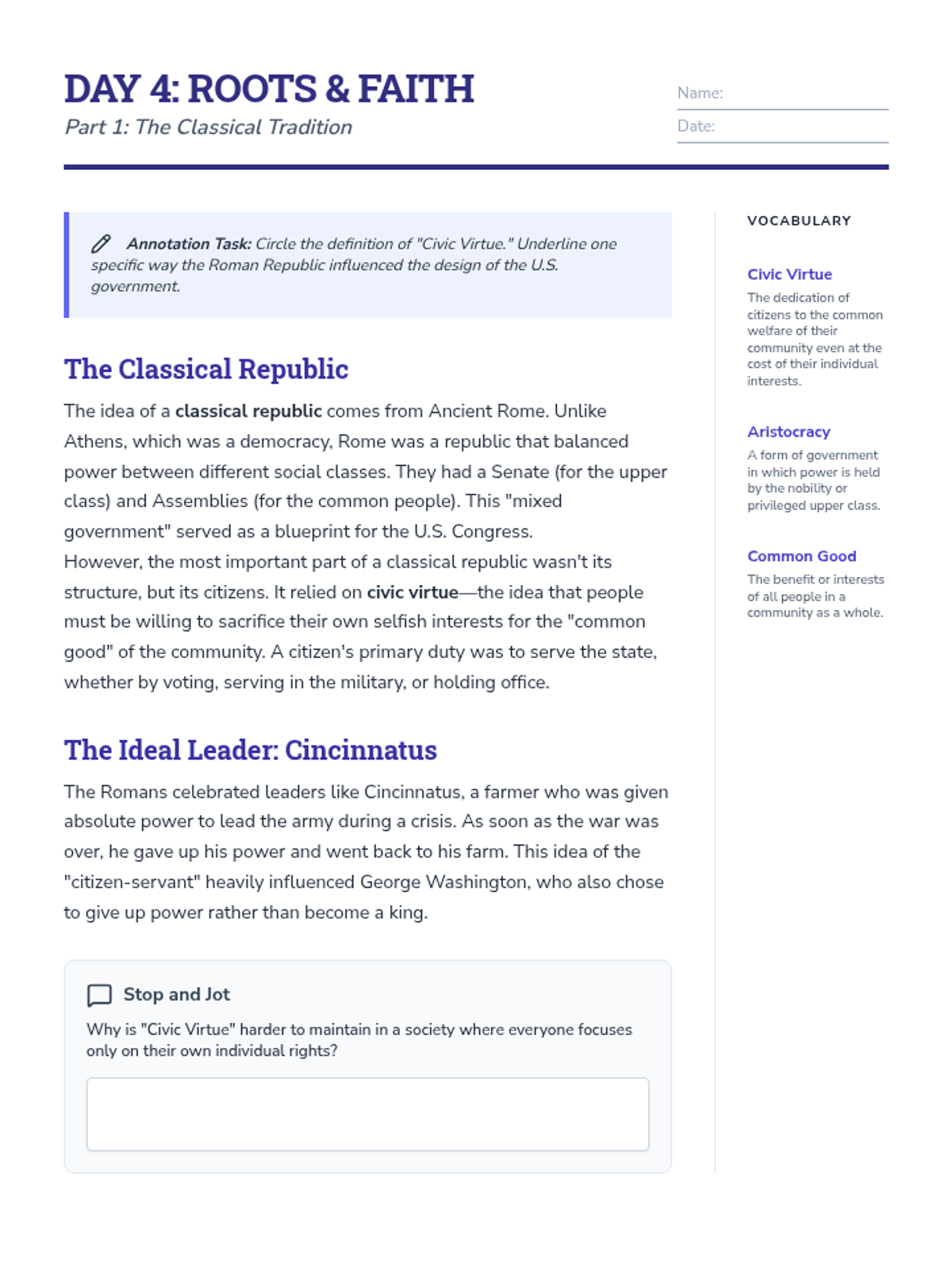
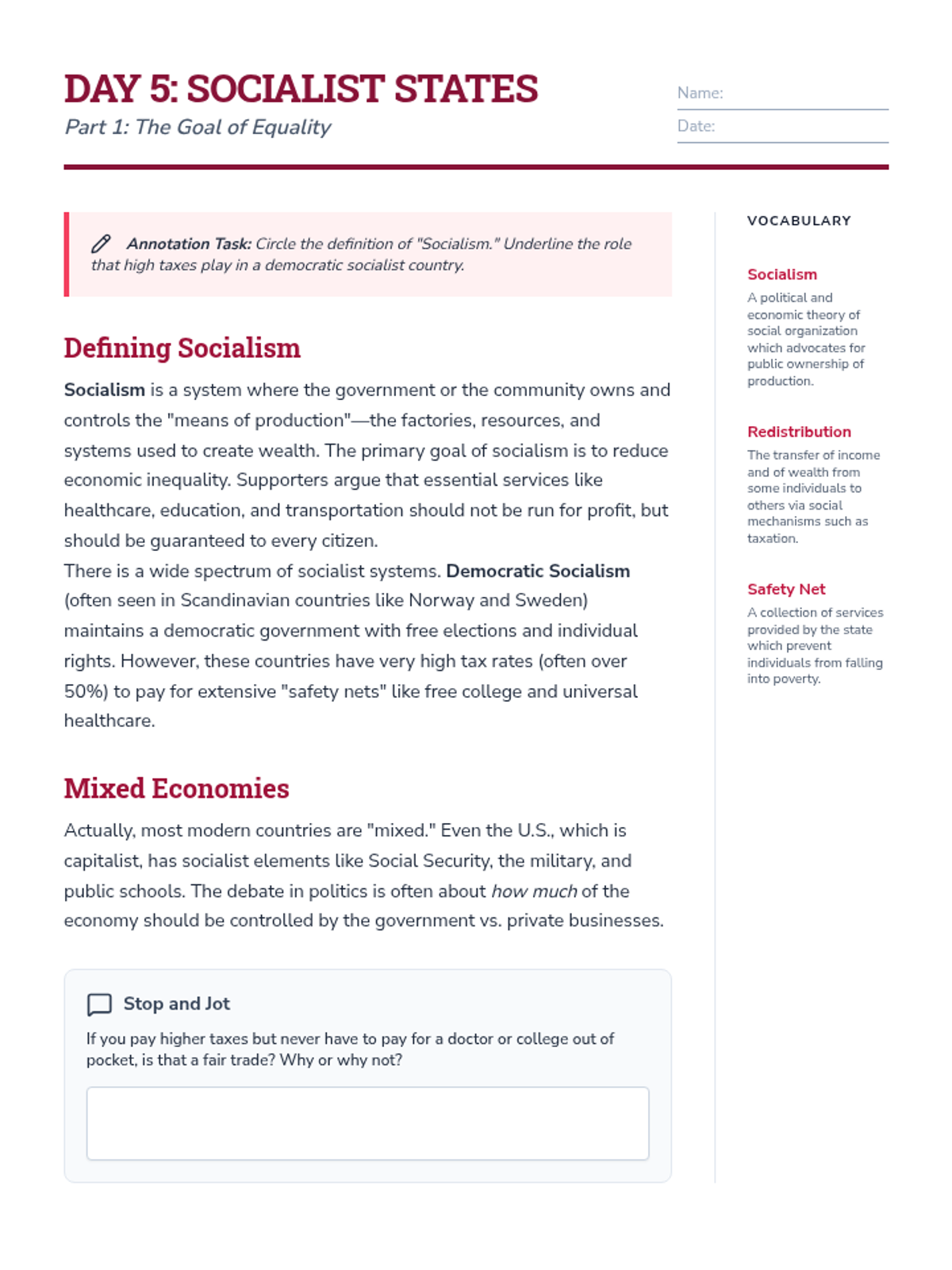
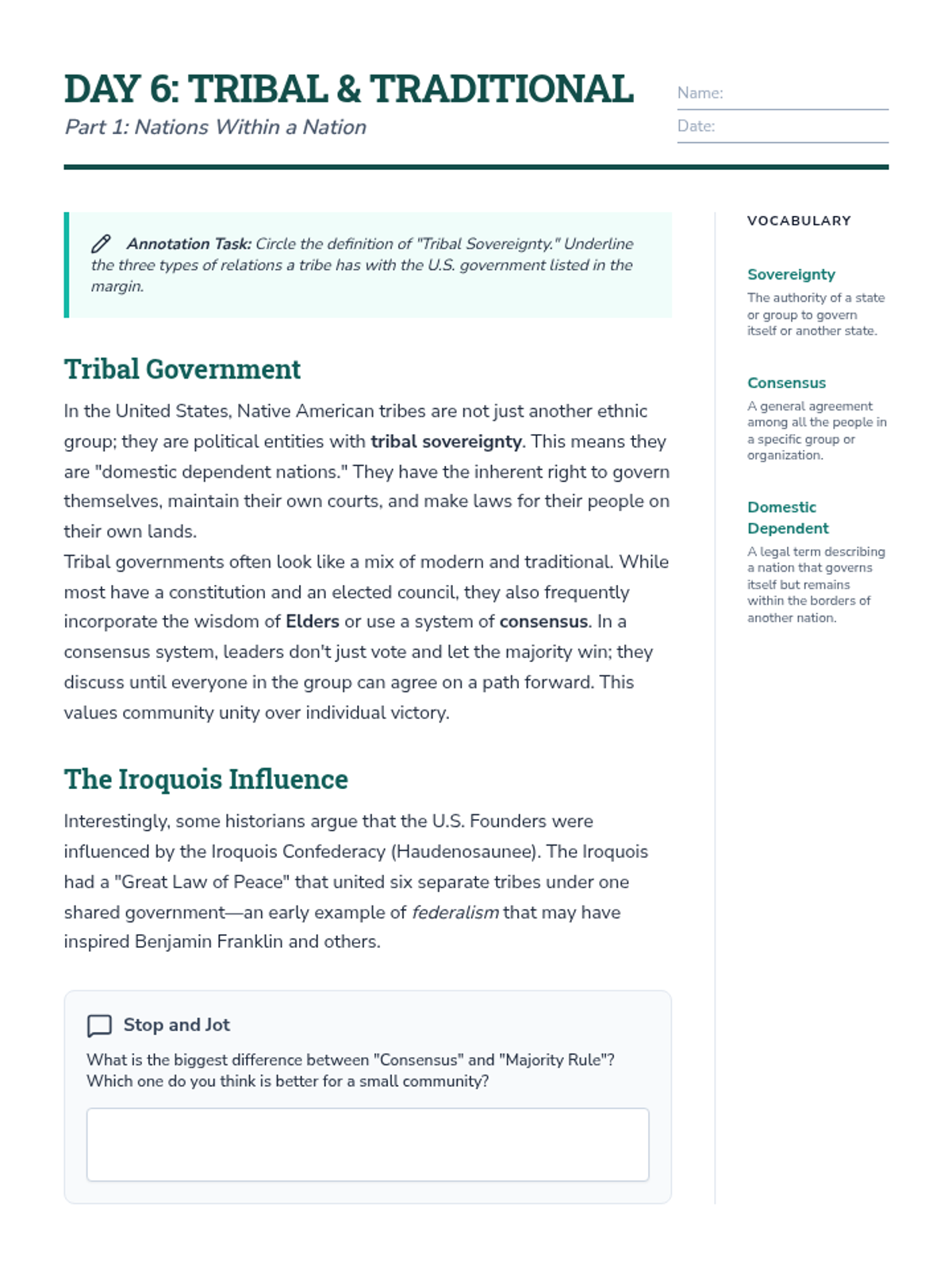
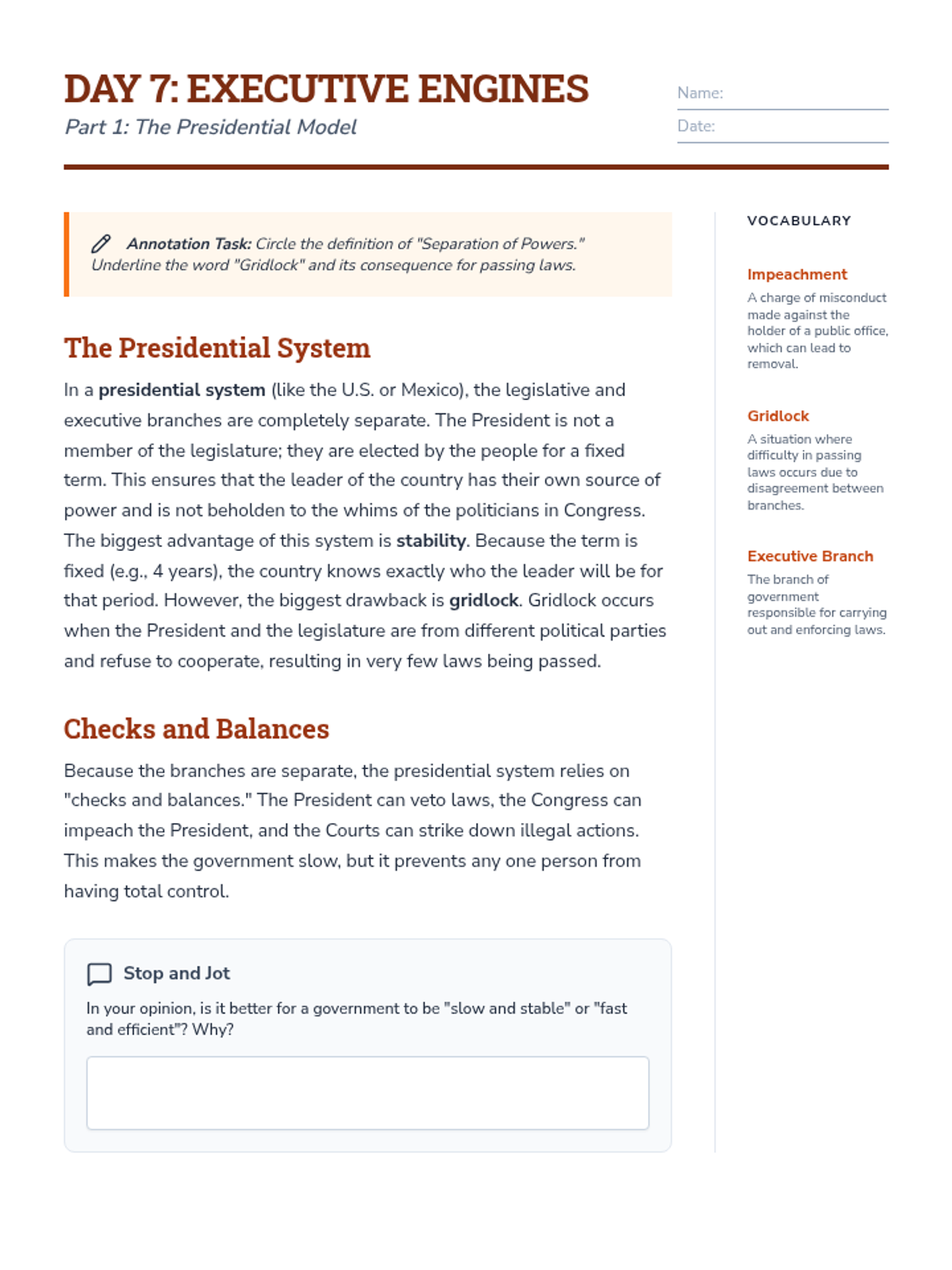
A comprehensive dual-course sequence covering all units for both AP Comparative Government and AP US Government & Politics. The sequence bridges domestic and international political concepts, from foundational structures to civil liberties and participation.
A high school psychology unit exploring the biological and environmental underpinnings of addiction, focusing on the nature vs. nurture debate and the brain's capacity for adaptation.
A comprehensive psychology lesson for high schoolers analyzing the biological and psychosocial components of depression, focusing on clinical definitions, the medical model of mental health, and providing supportive communication.
A High School Civics lesson focused on neurodiversity as a civil rights and workforce inclusion issue, featuring a design-thinking activity to create inclusive environments.
A comprehensive unit focused on the psychological debate of Nature vs. Nurture, culminating in a major literature review research paper. Students will explore theoretical frameworks and synthesize existing research.
An undergraduate psychology lesson centered on critiquing the Biopsychosocial Model of depression through video analysis and gap identification. Students categorize clinical findings and propose expanded educational content to address systemic and environmental complexities.
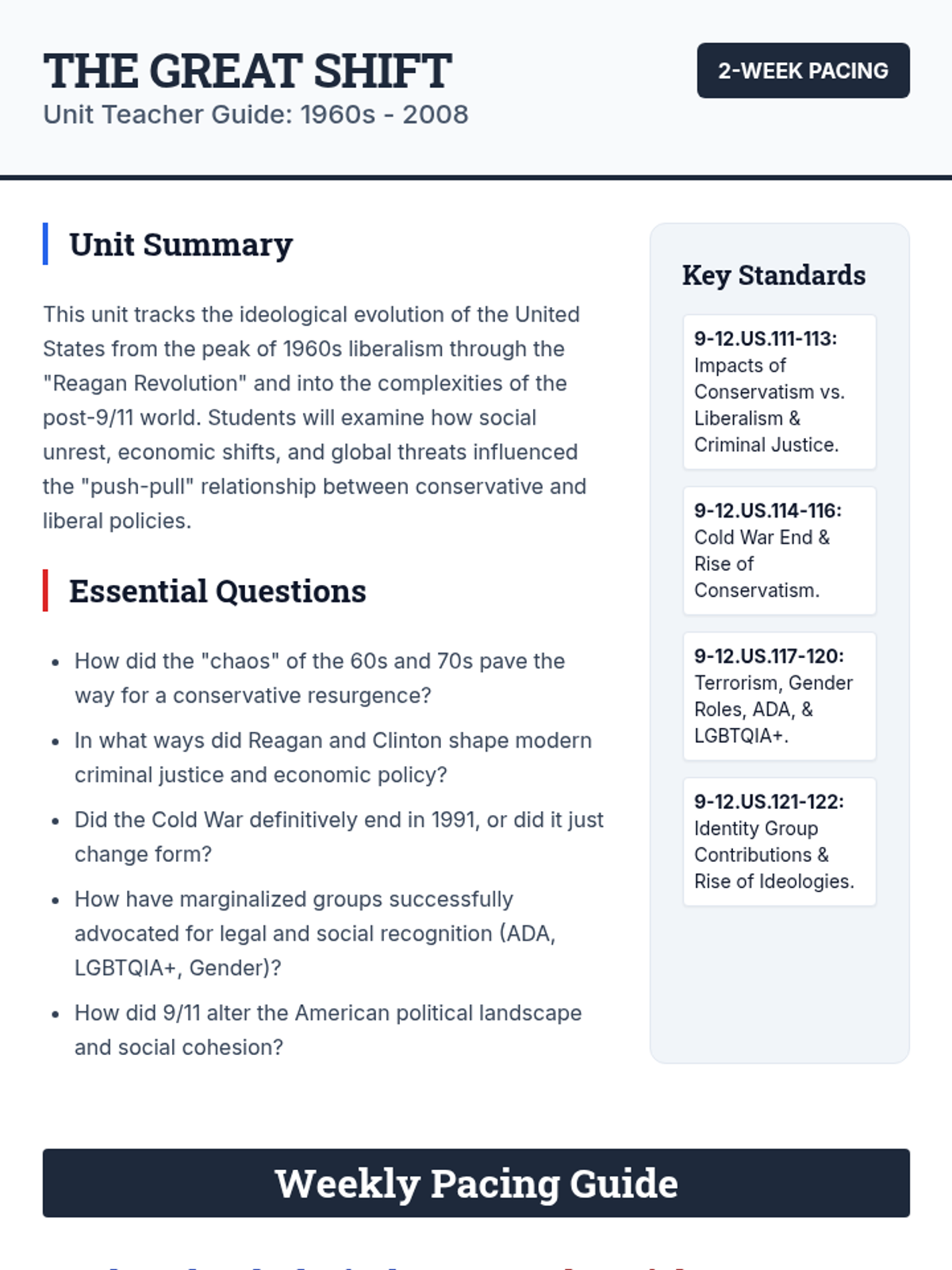
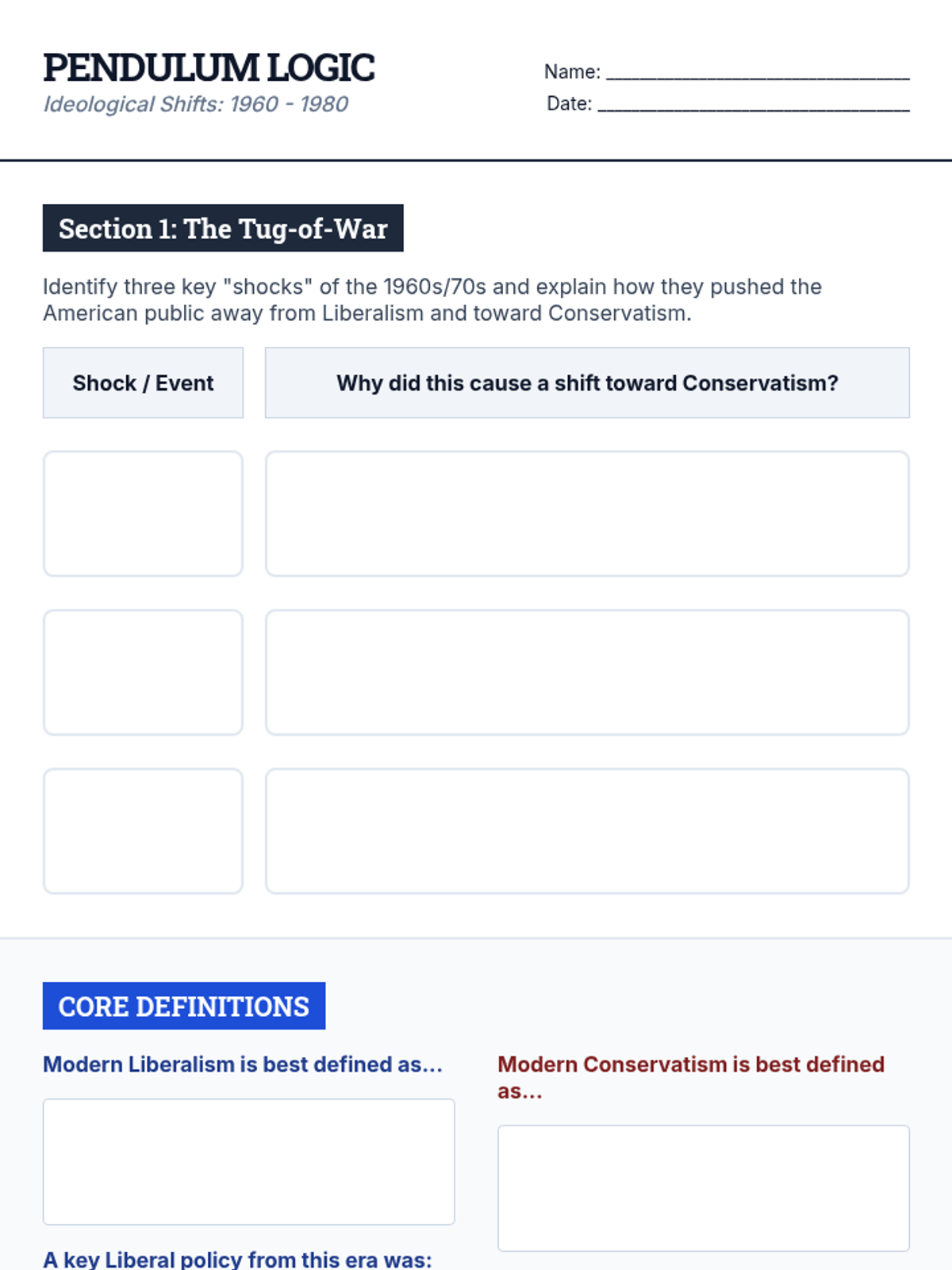
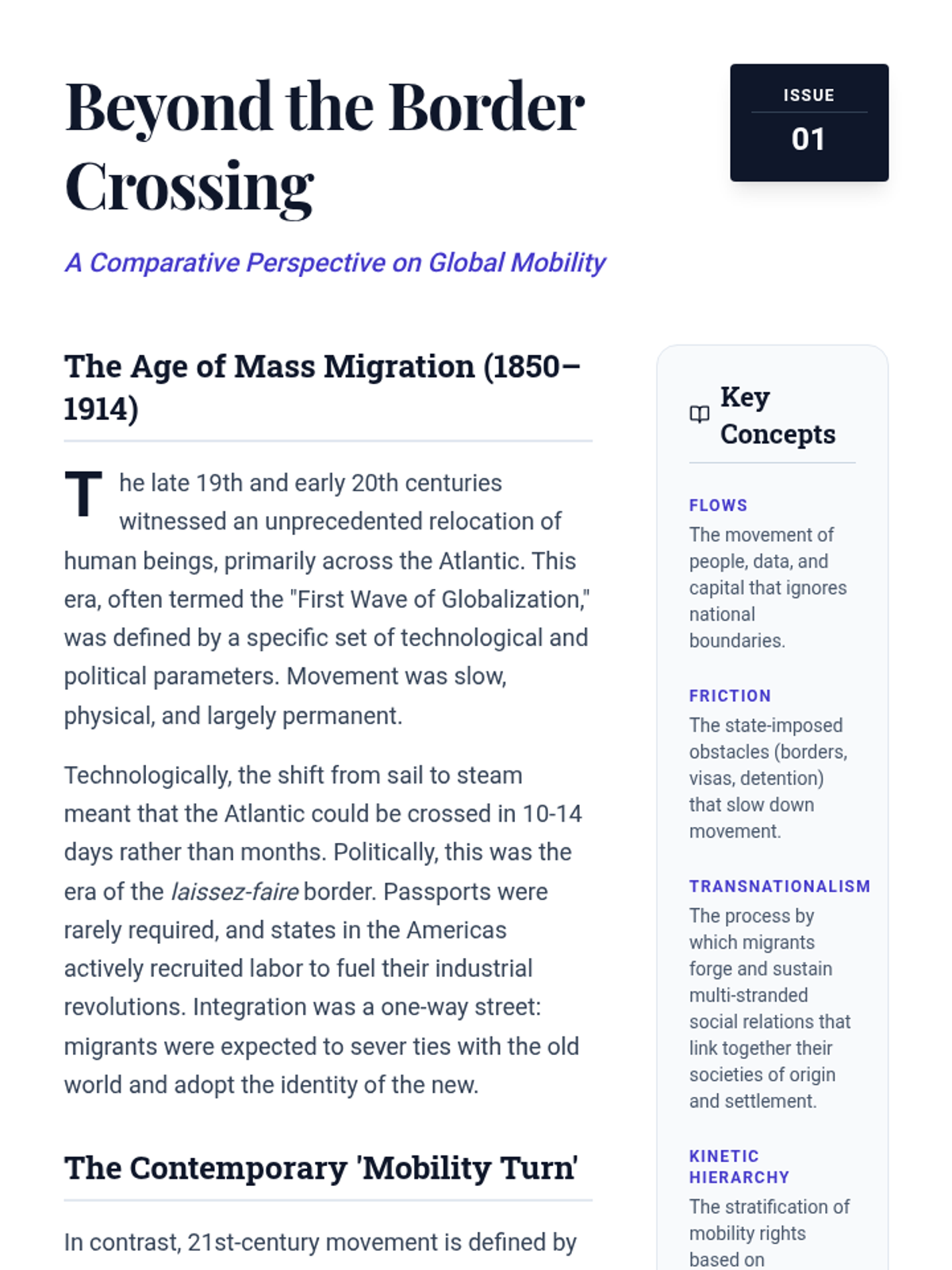
A comprehensive 4-day station rotation covering US history from the 1970s to the 2000s, aligned with TEKS 10 and 11. Students explore major political, economic, and social shifts through primary sources, data analysis, and interactive tasks.
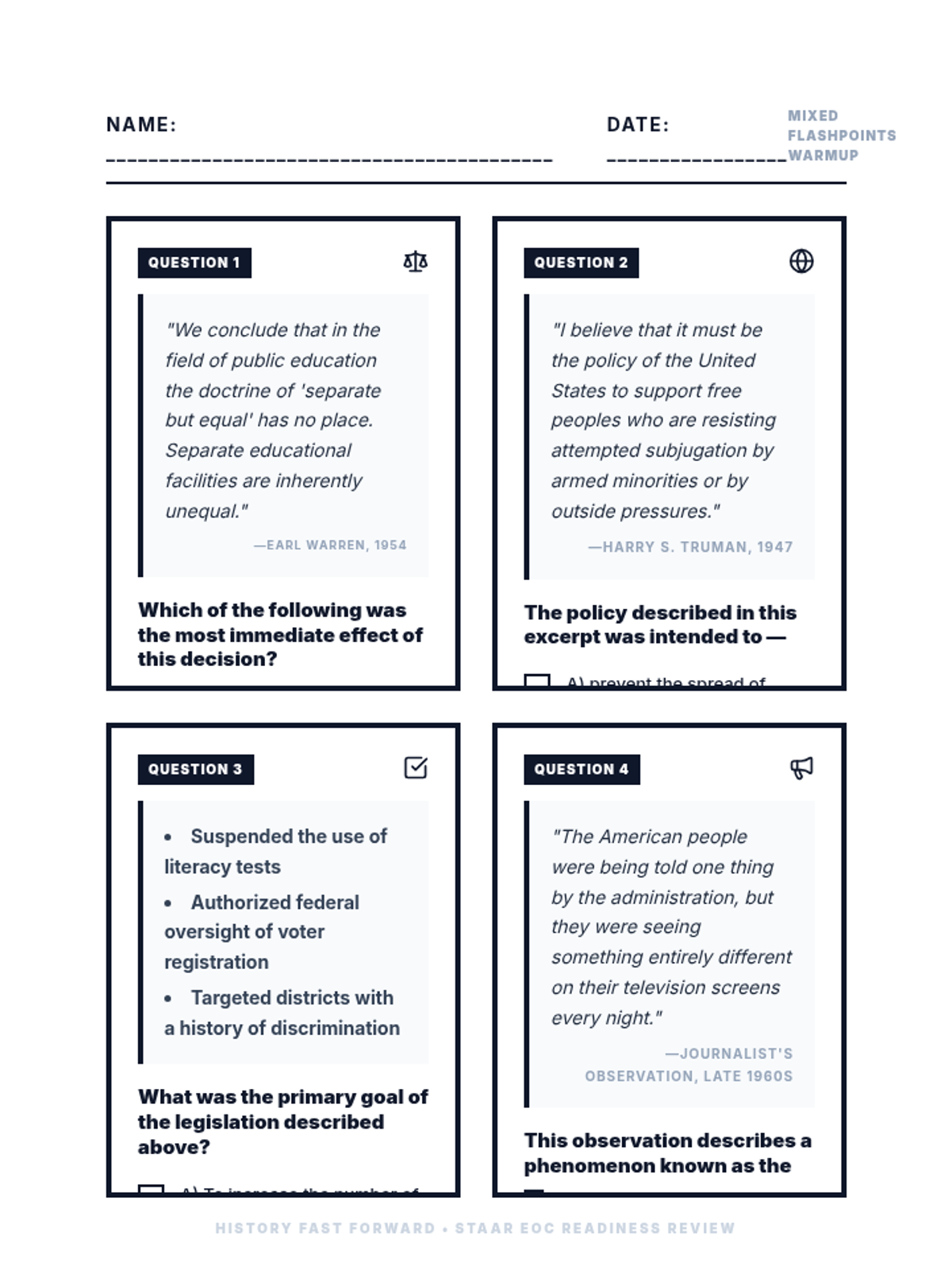
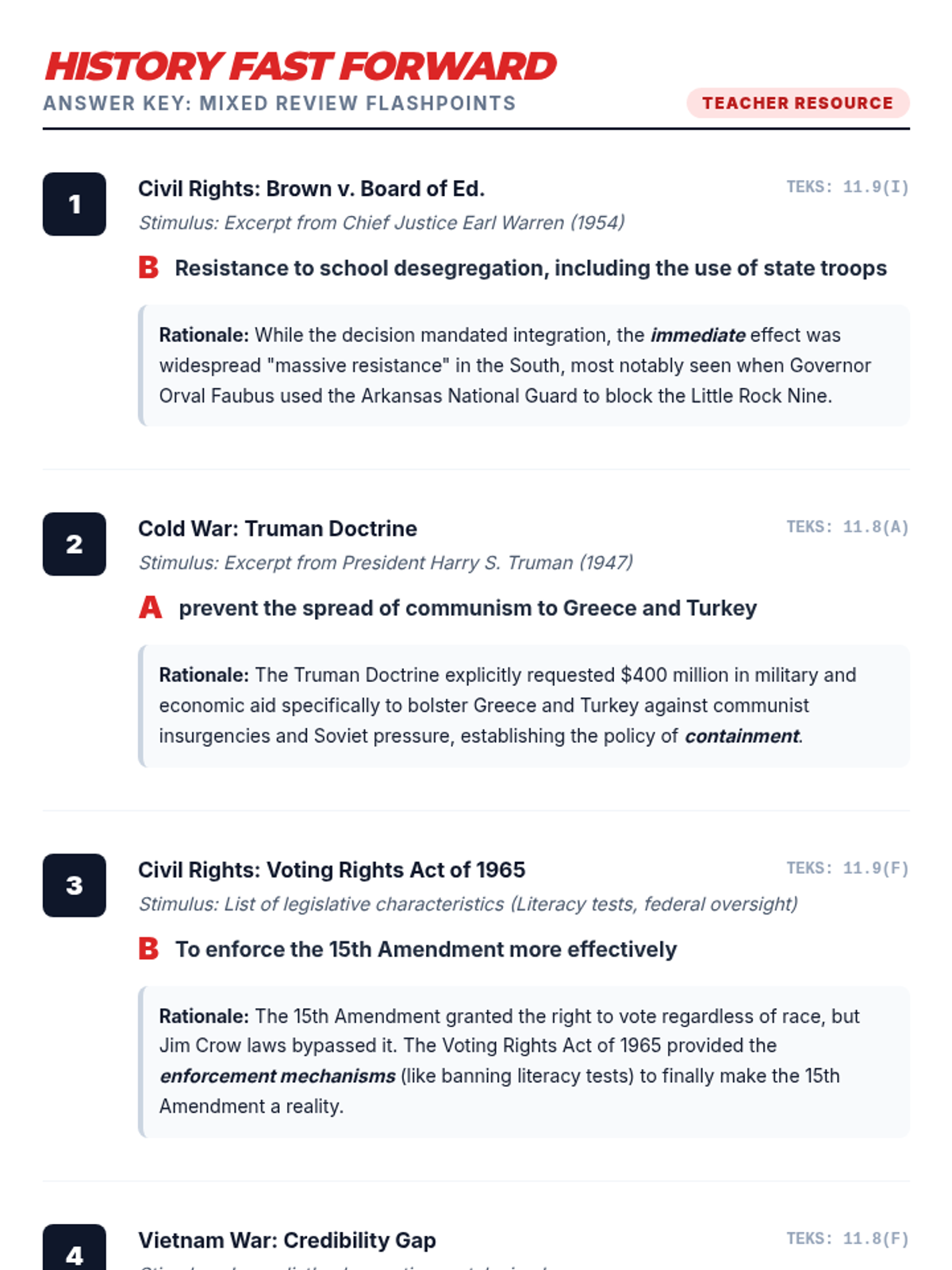
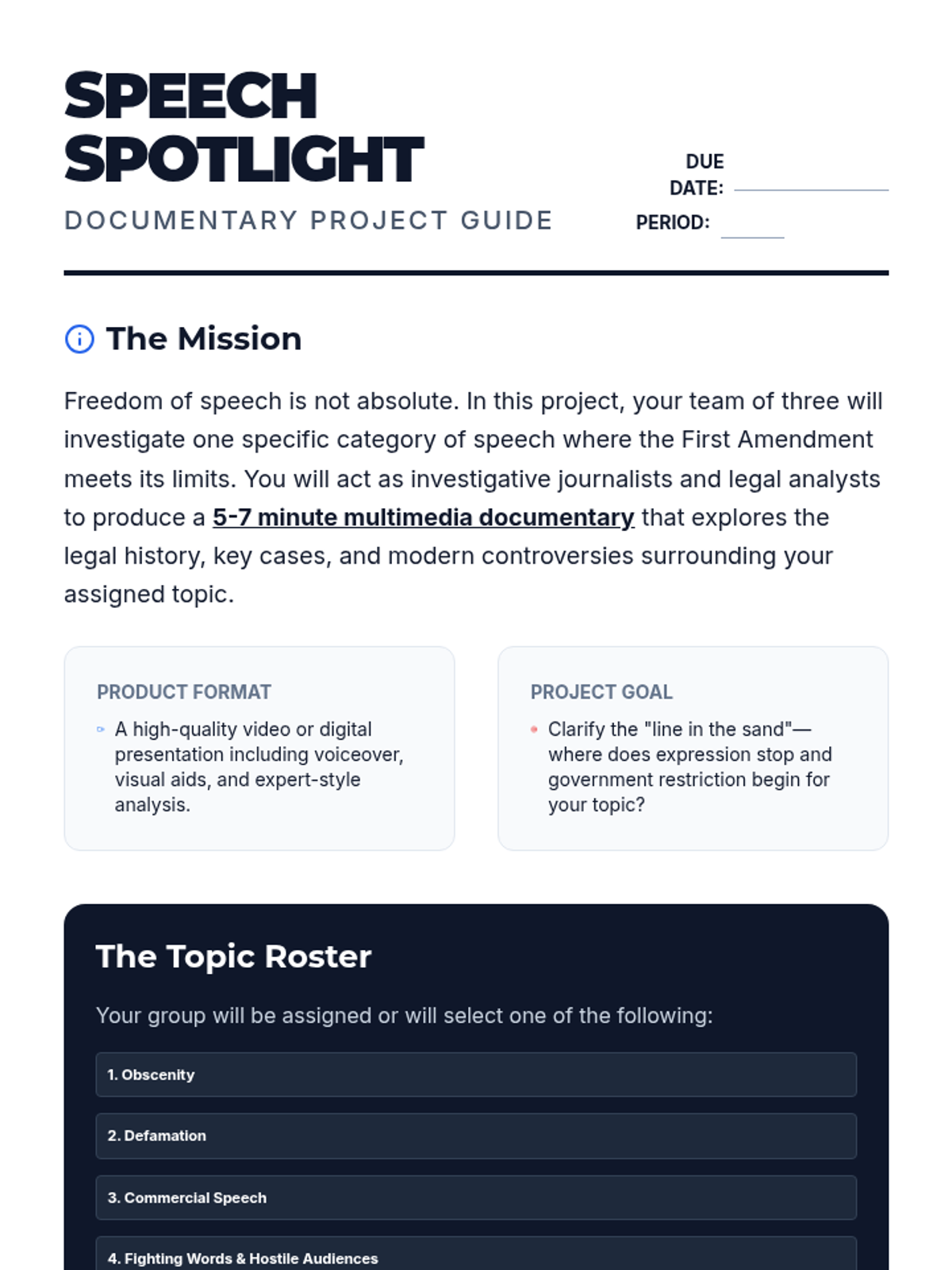
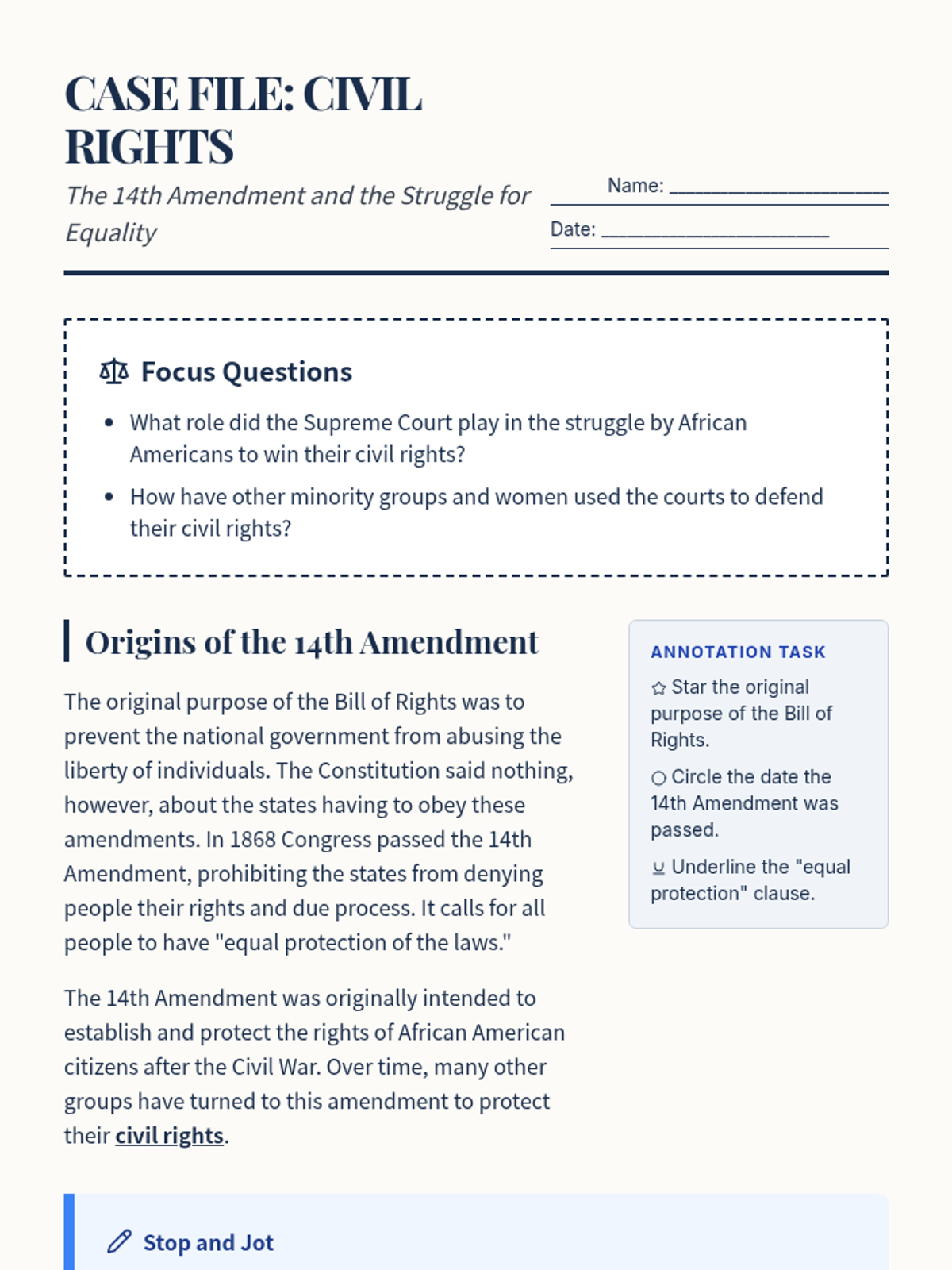
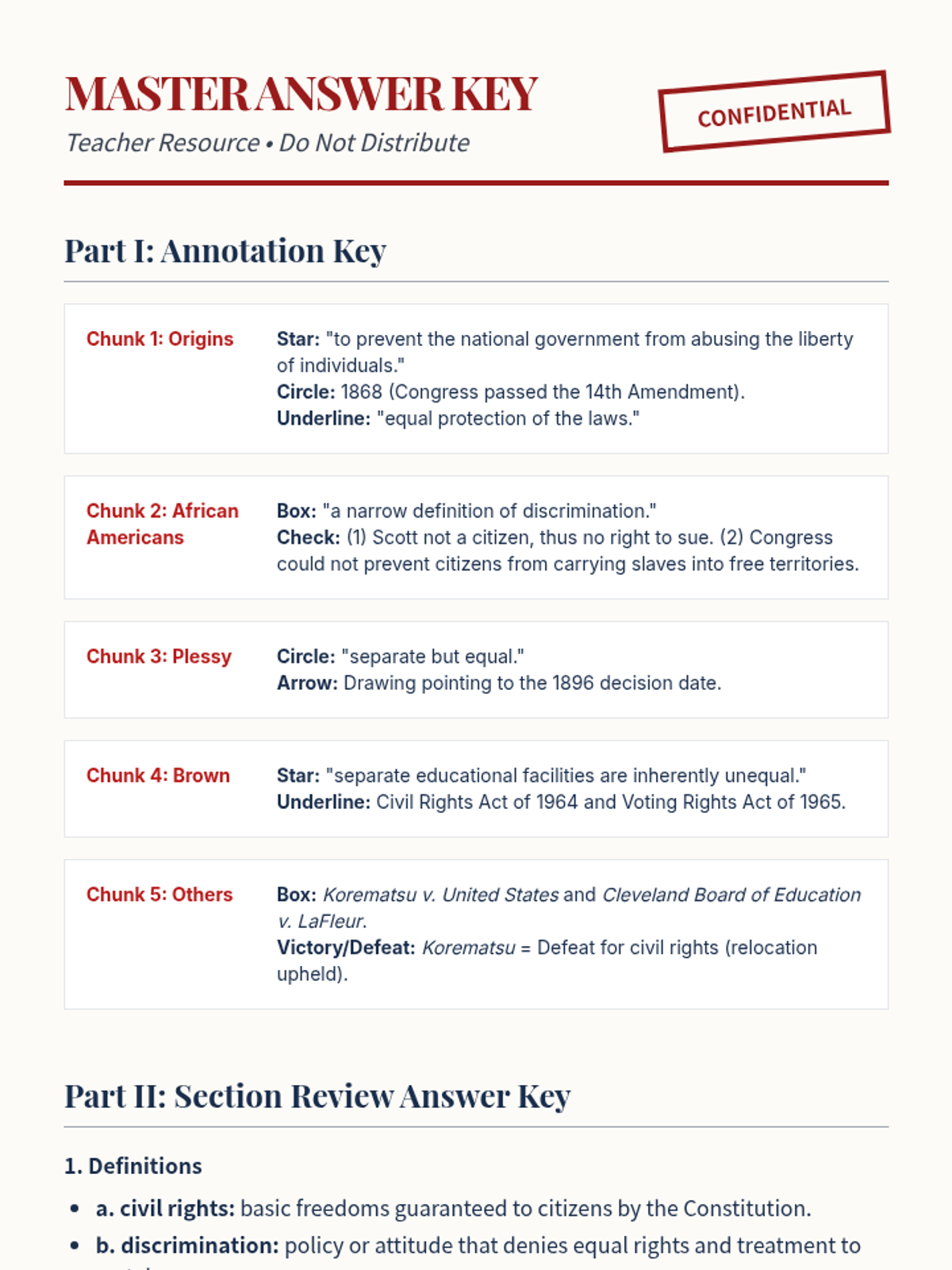
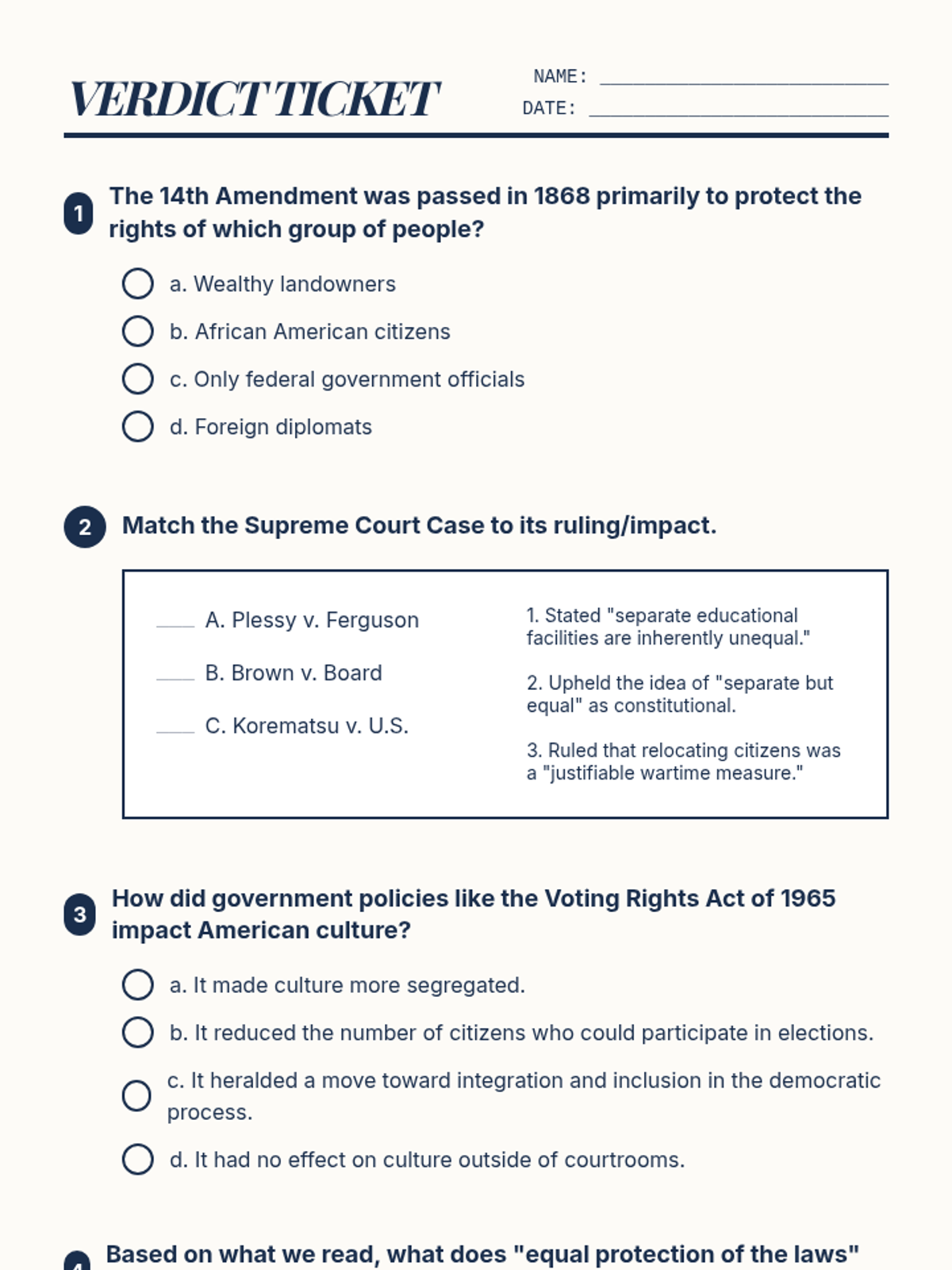
A comprehensive 5-lesson unit on the American Civil Rights Movement, covering the legal battles, non-violent protests, key legislation, and the evolving strategies for racial justice.
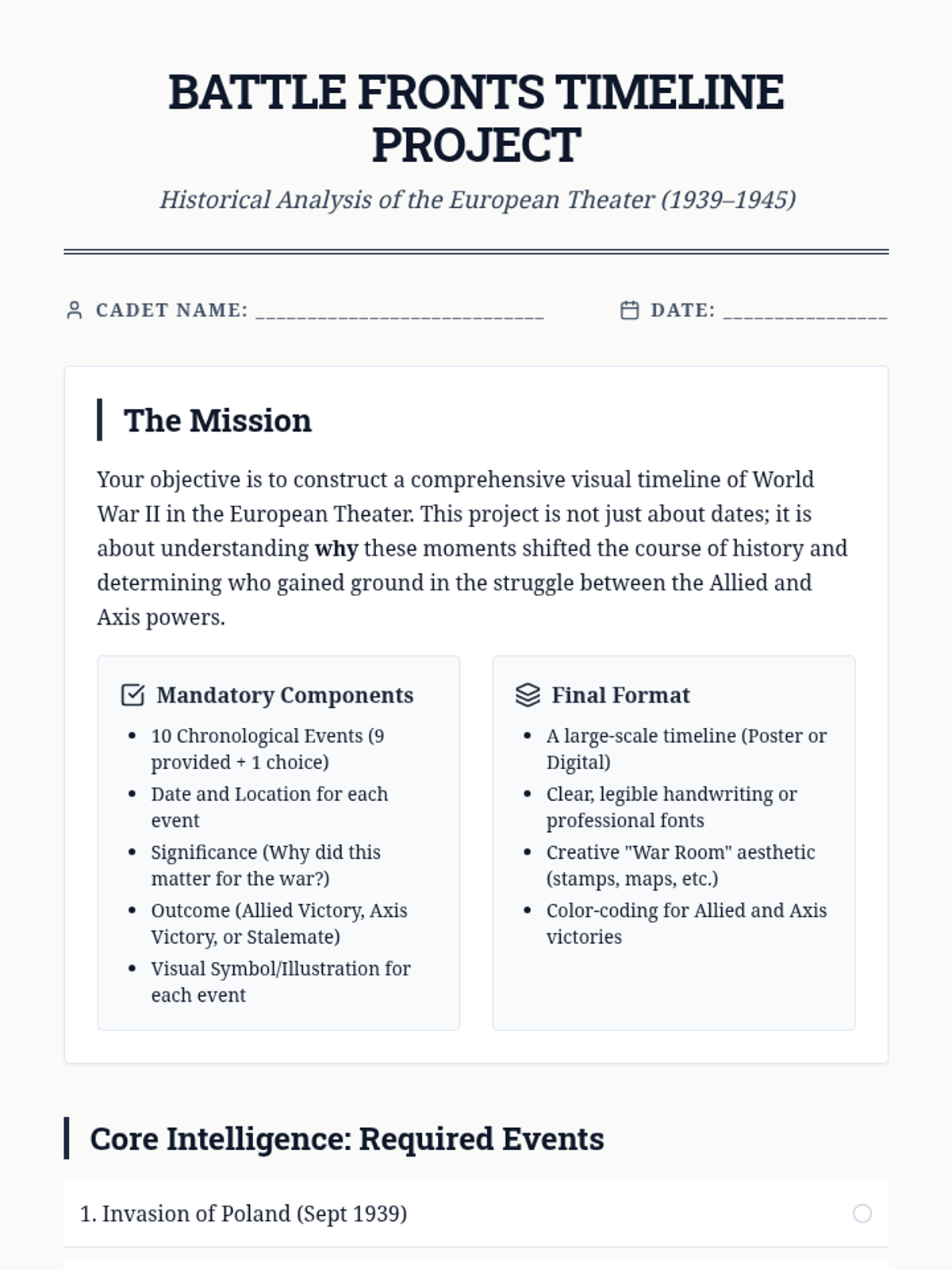
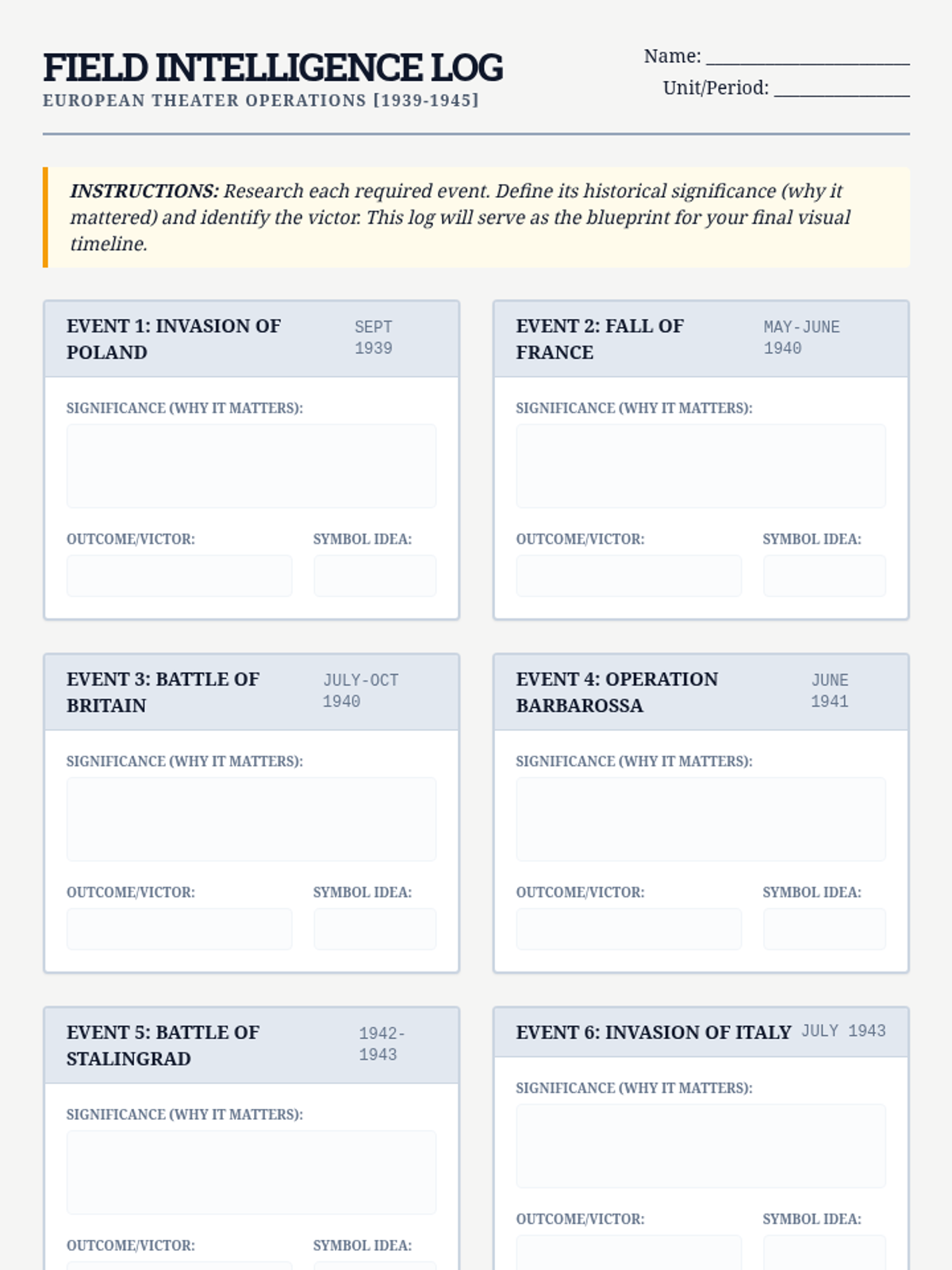
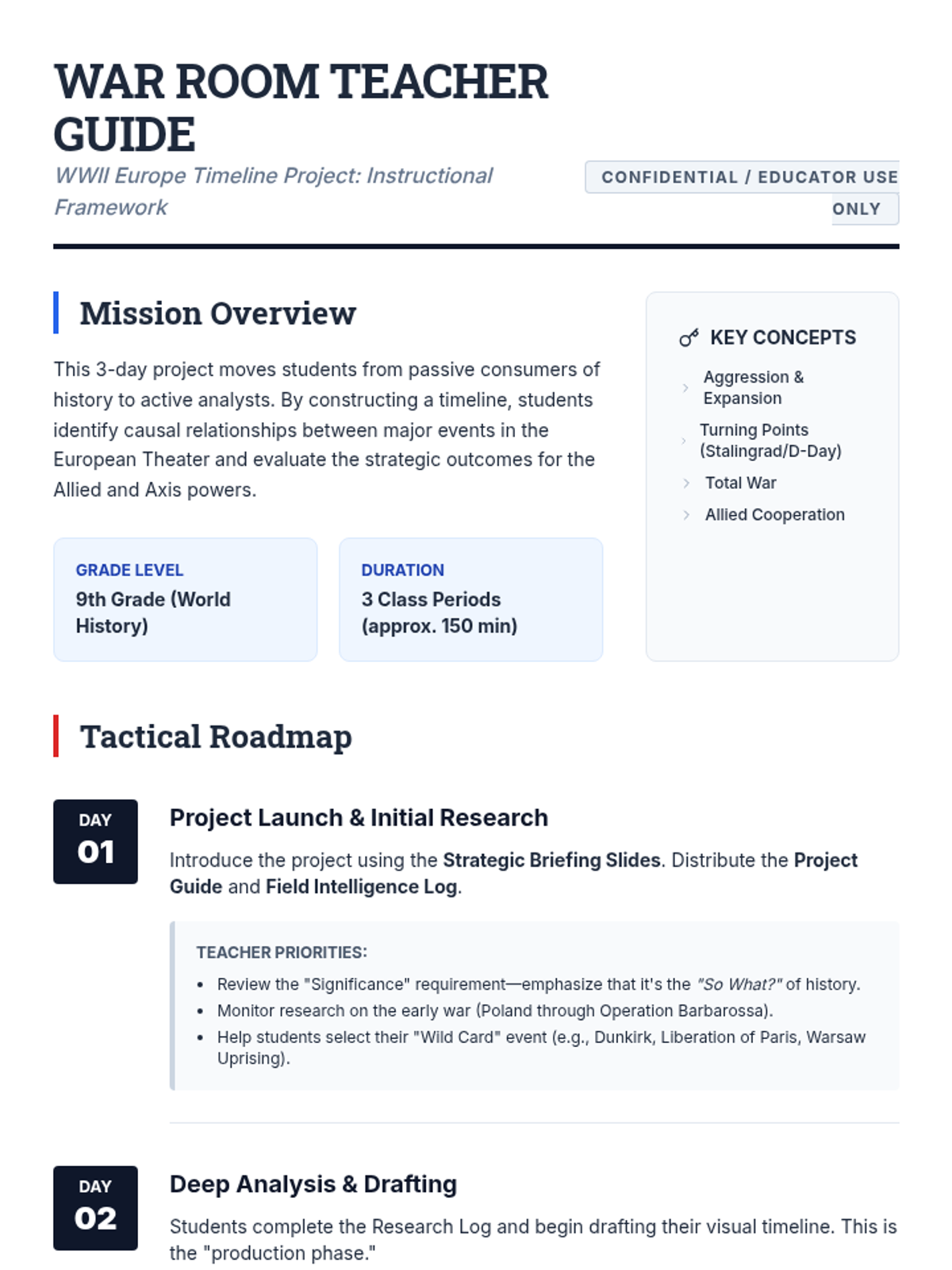
A comprehensive 2-day unit covering World War II for 11th Grade US History, aligned with TEKS. It focuses on the transition from isolationism to total war, the home front experience, major turning points in both the European and Pacific theaters, and the strategic decisions that ended the conflict.
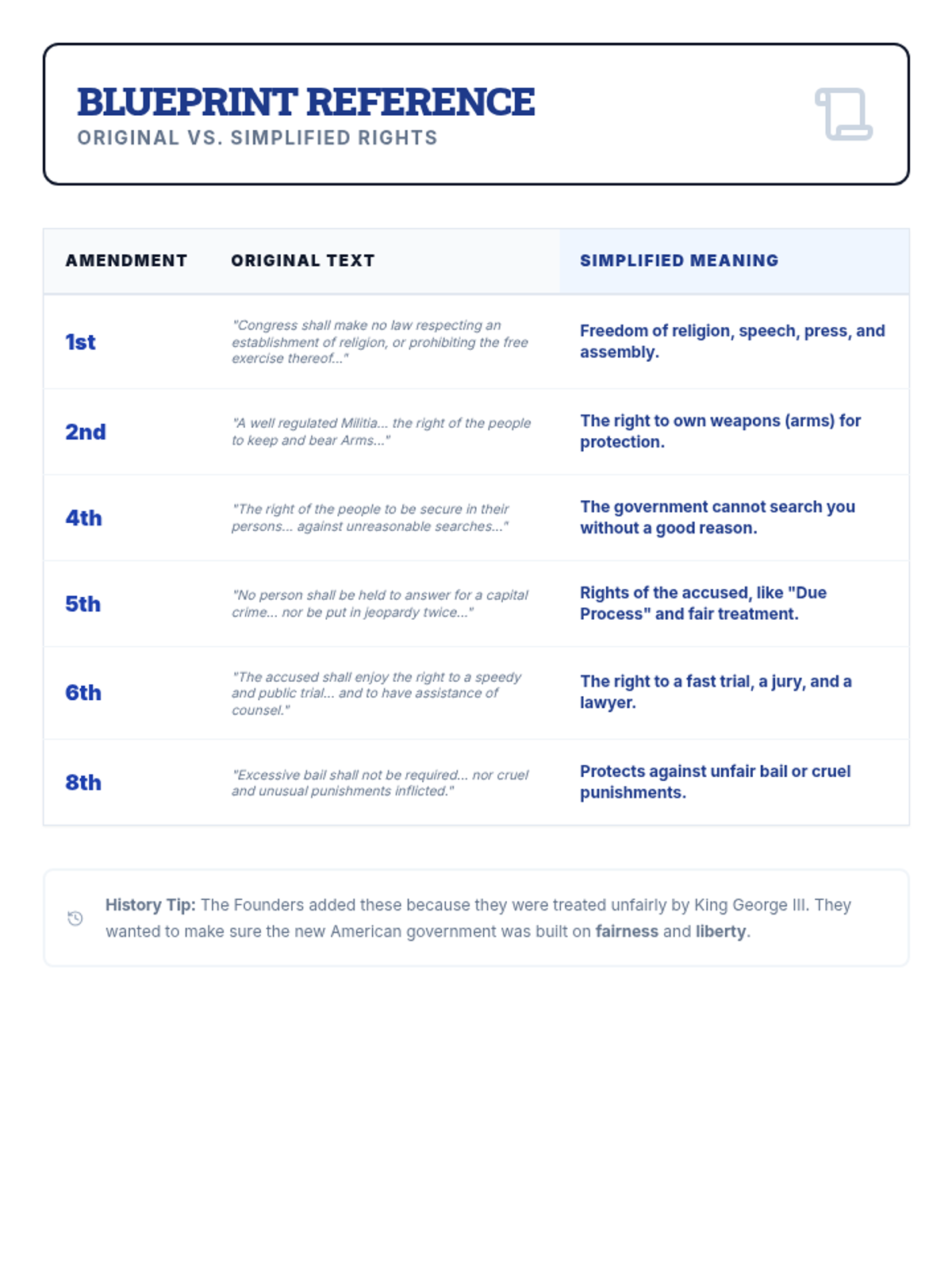
A 4th-grade unit focused on kindness, fairness, and understanding how our words can make everyone feel like they belong, regardless of their background or skin color.
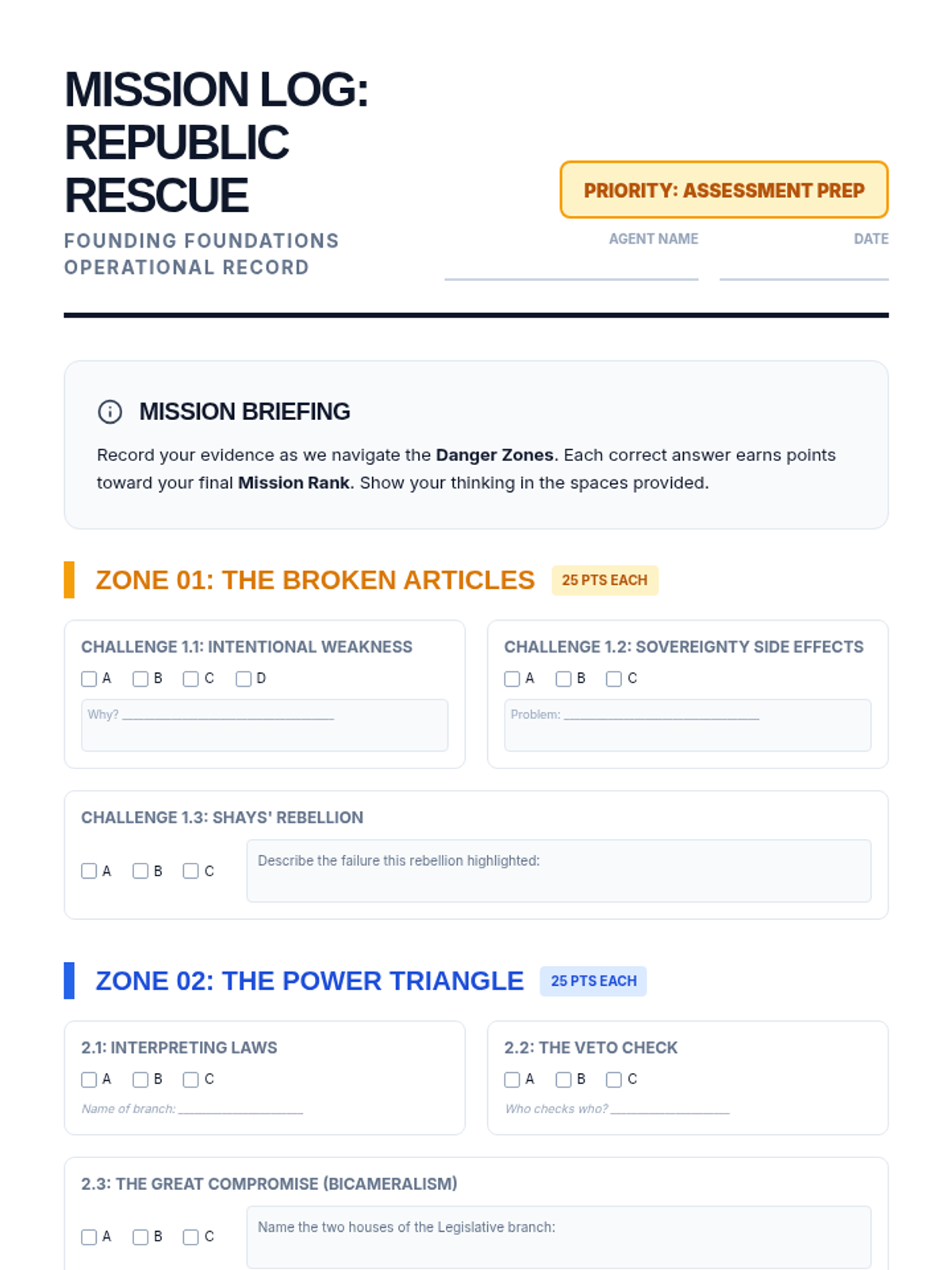
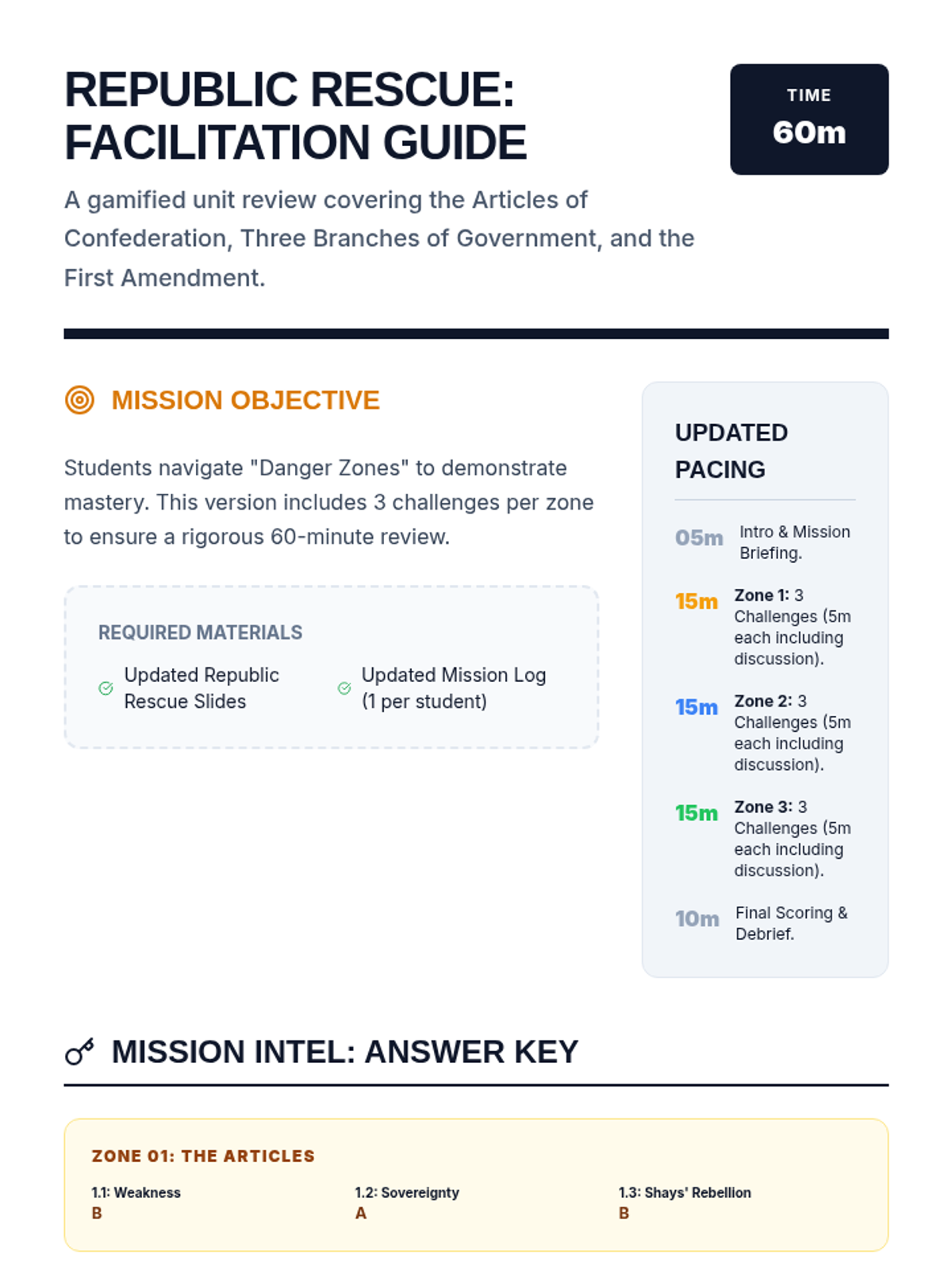
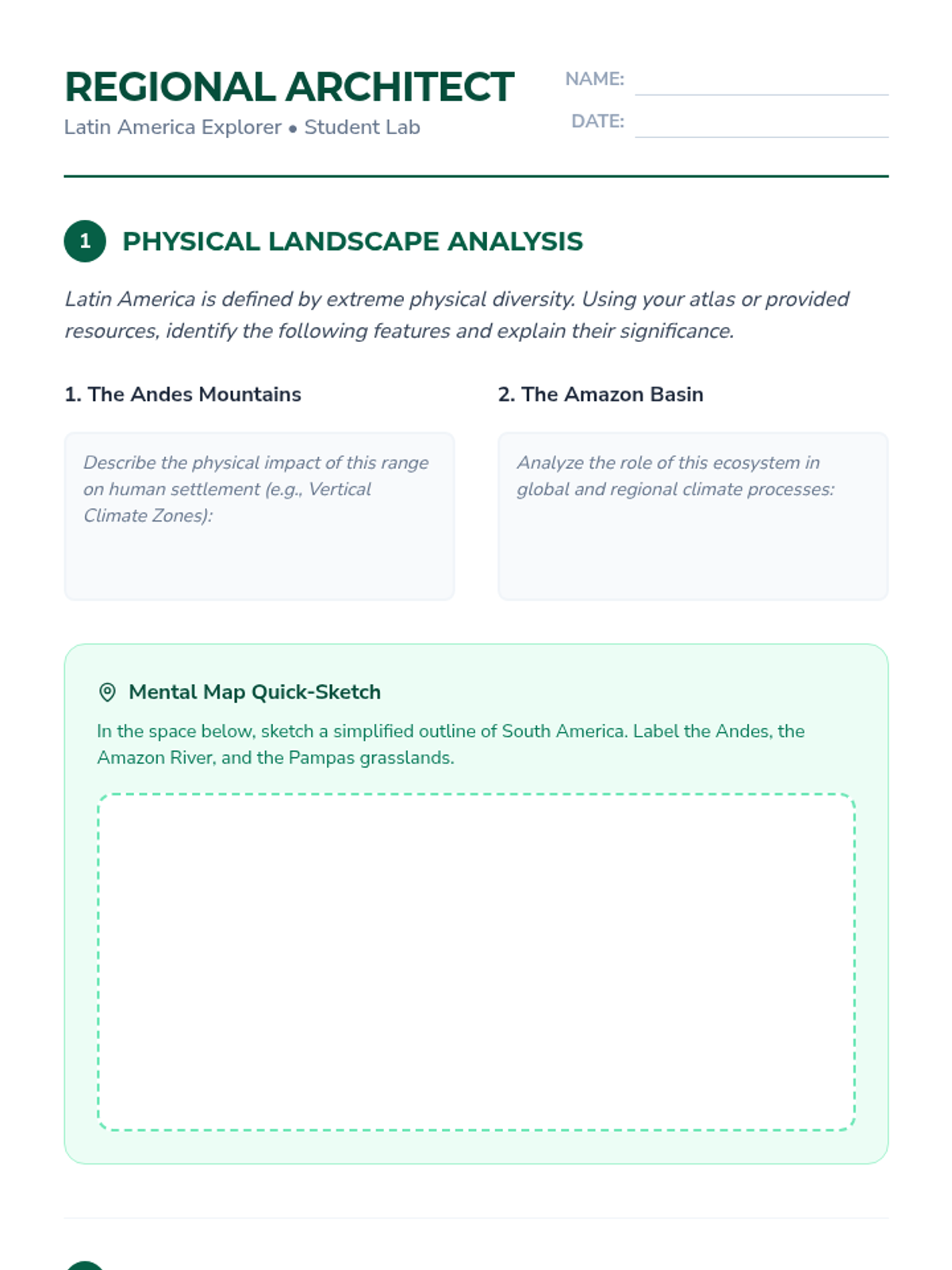
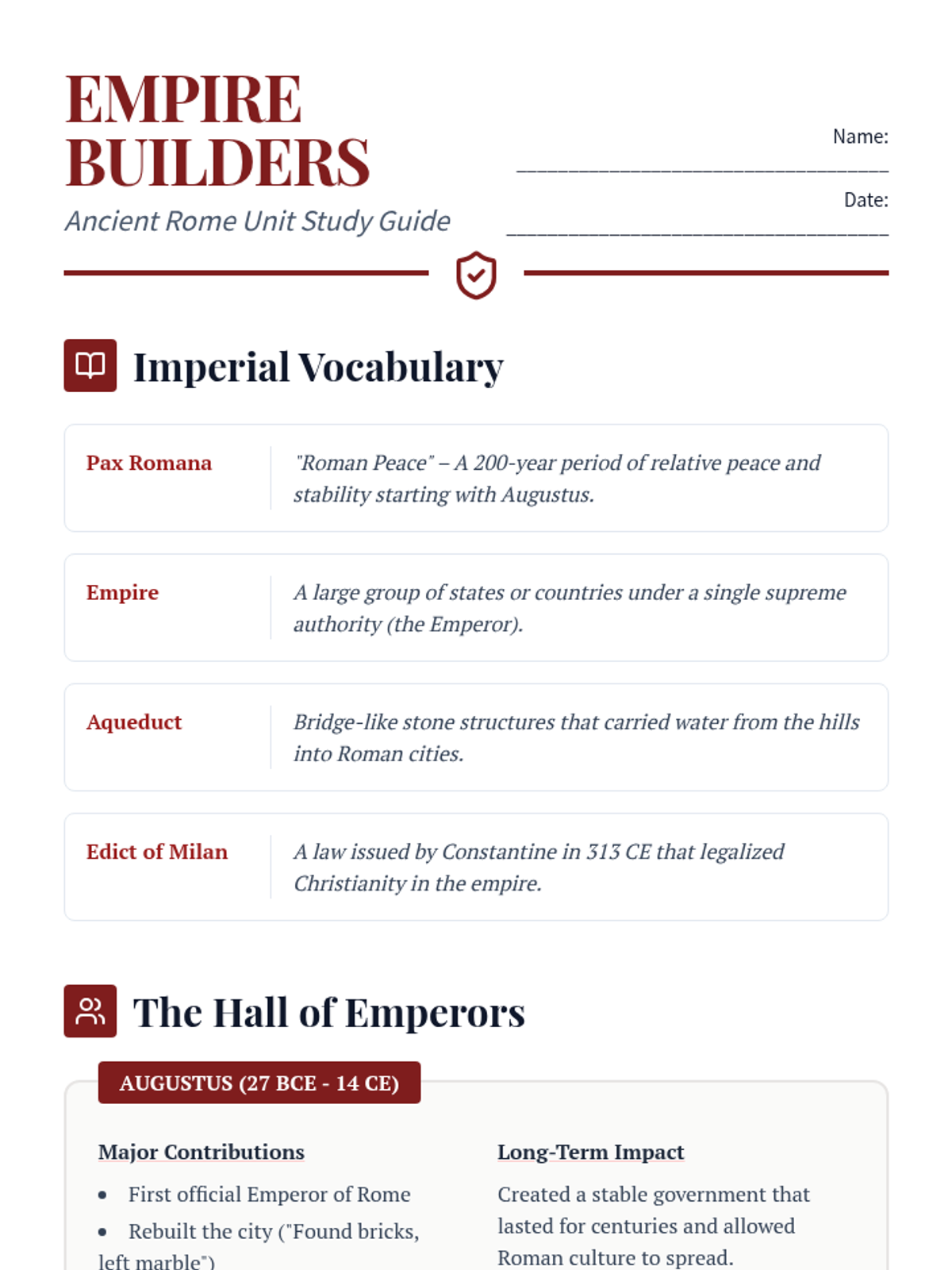
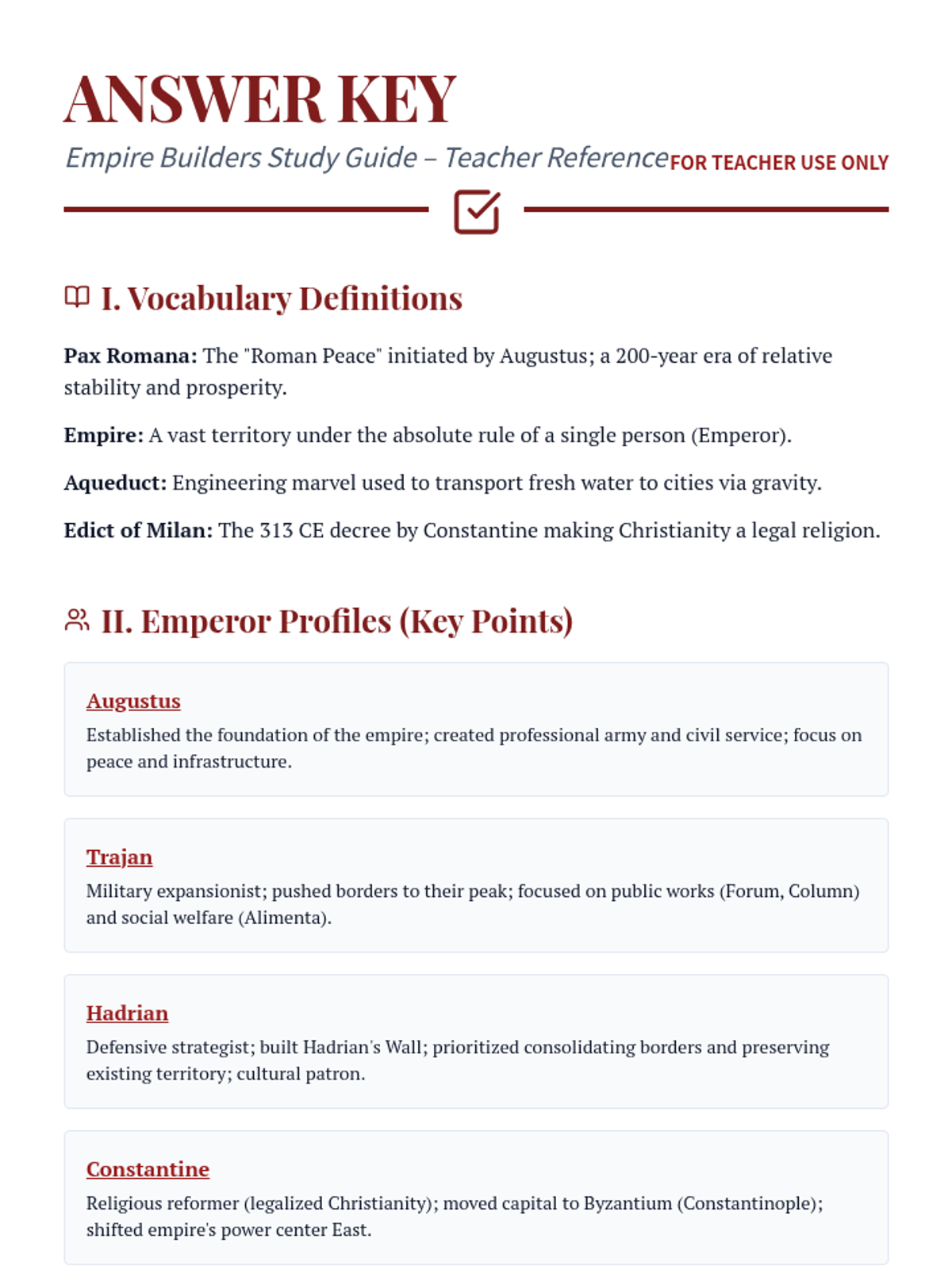
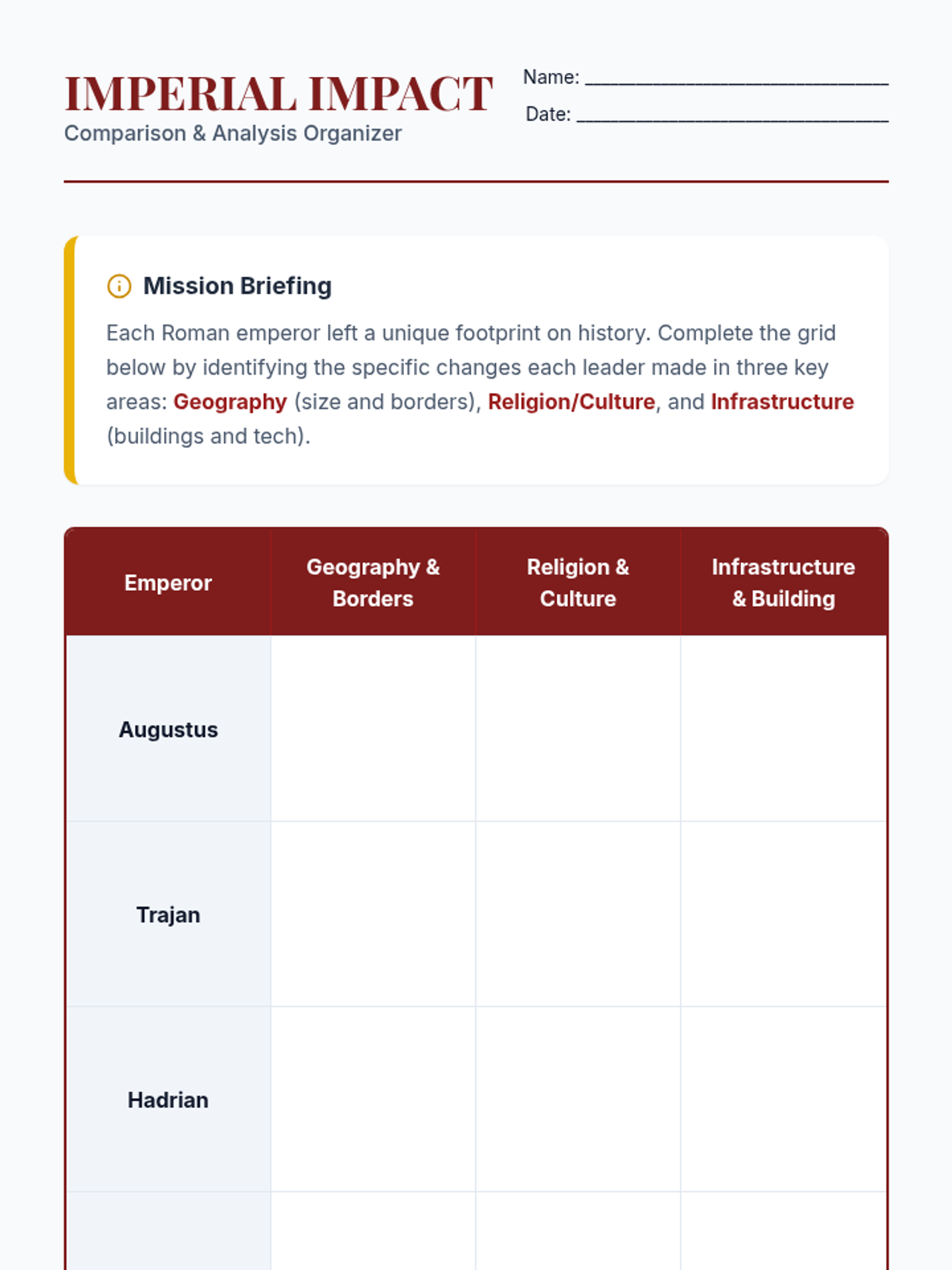
A high-stakes review series for the U.S. History STAAR exam, focusing on major eras, turning points, and key figures using a 'Mission-Based' archival theme.
A comprehensive unit on the American Abolitionist movement, examining the rhetorical strategies, diverse perspectives, and historical impact of leading abolitionist voices through primary source analysis.
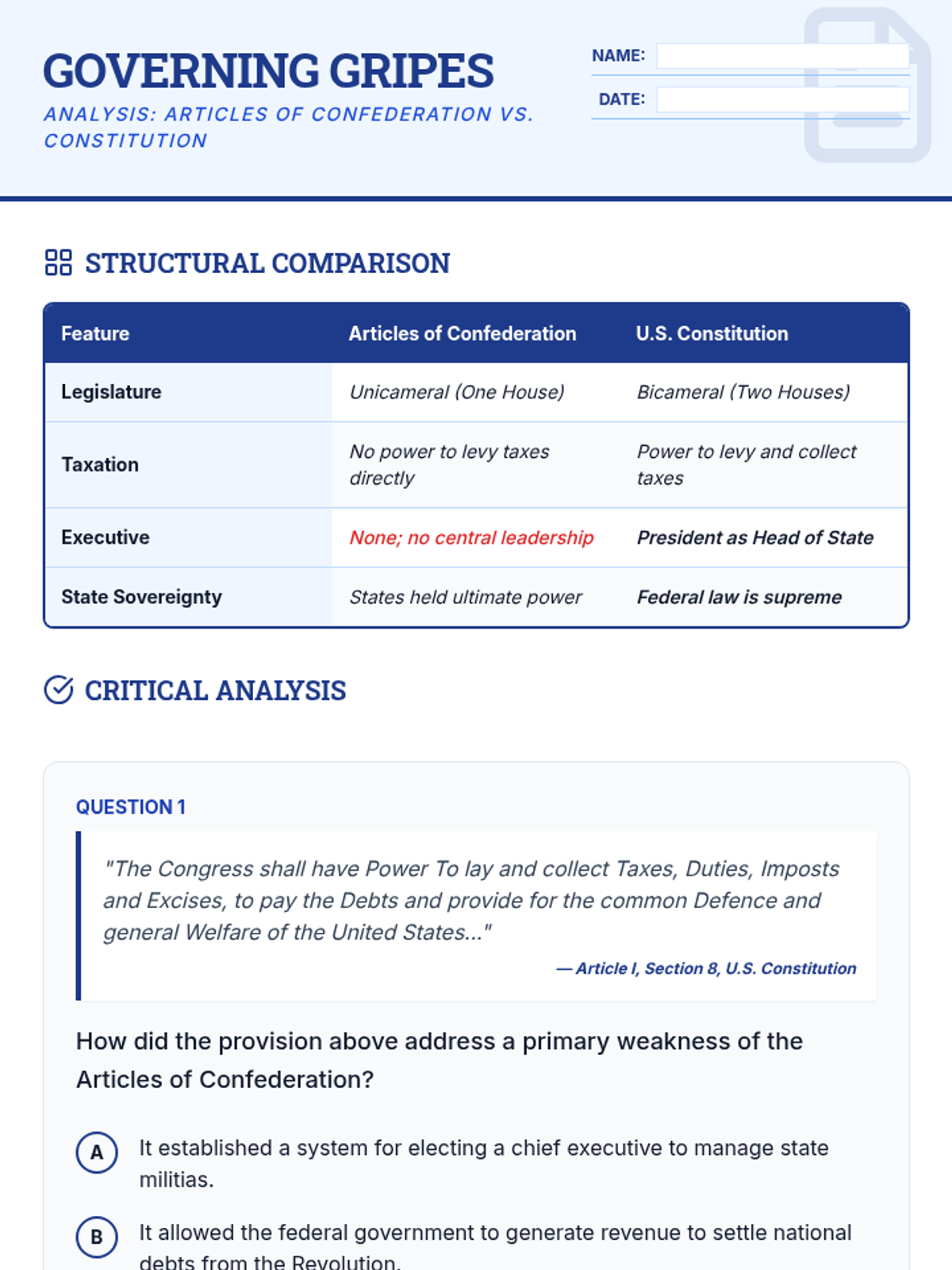
A lesson sequence exploring the early American debate over federal vs. state power, focusing on the Alien and Sedition Acts and the Kentucky Resolutions.
This Economics lesson investigates the causes and consequences of hyperinflation in Weimar Germany following World War I. Students will analyze historical data to understand how printing money led to one of the most famous economic collapses in history.
A high school social studies sequence focused on the dynamics of domestic policy, federalism, and the 'tug-of-war' between state and federal jurisdictions. Students explore how policy is created, categorized, and contested in the American system.
A lesson examining the symbiotic relationship between Venice and the Ottoman Empire, focusing on how geography shaped their economic and political power. Students analyze trade networks, resource interdependence, and the eventual shift in global exploration.
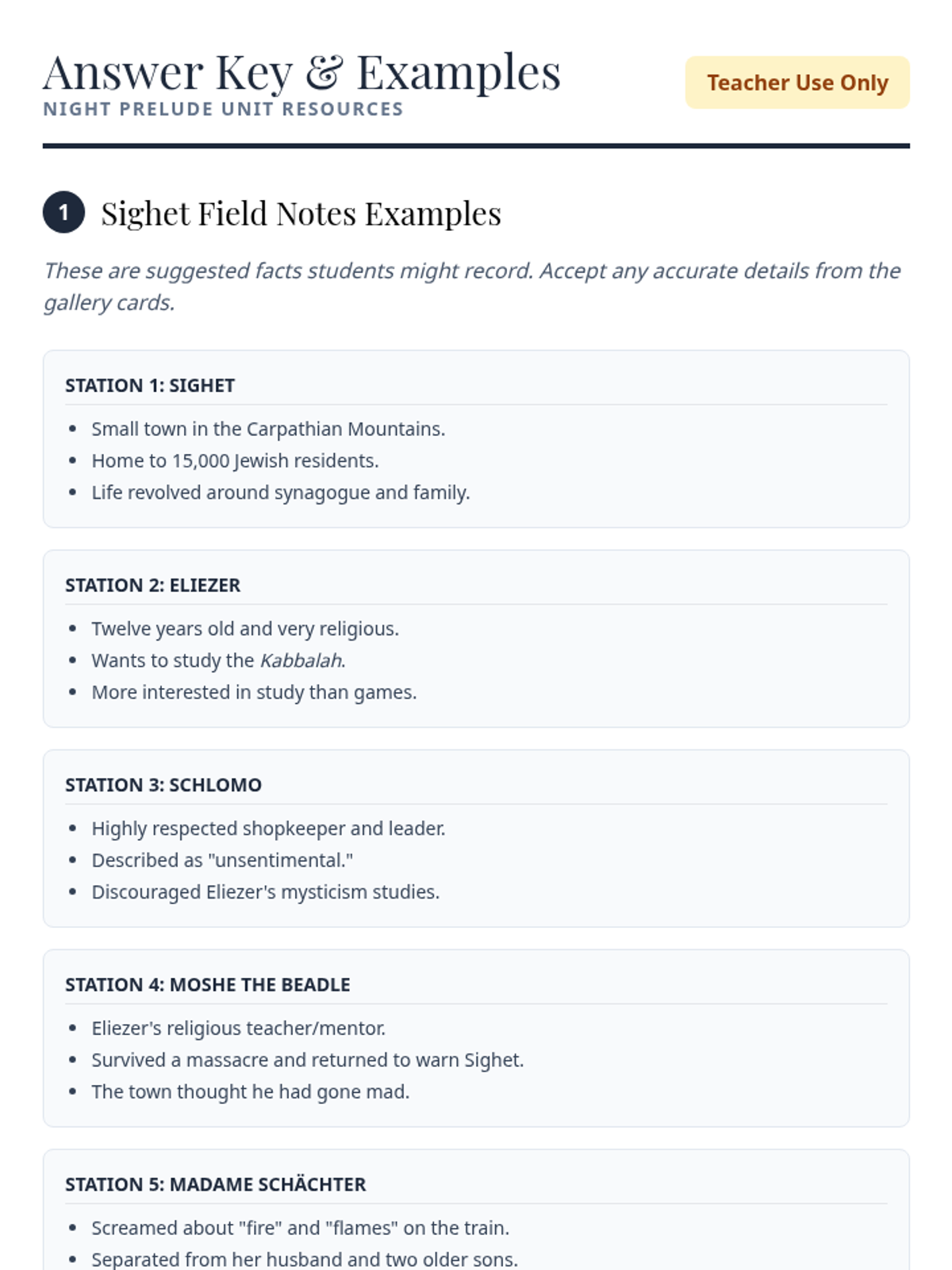
A lesson examining the Populist Party's Omaha Platform of 1892, its agrarian roots, and its long-term impact on American political and economic policy through the Progressive Era.
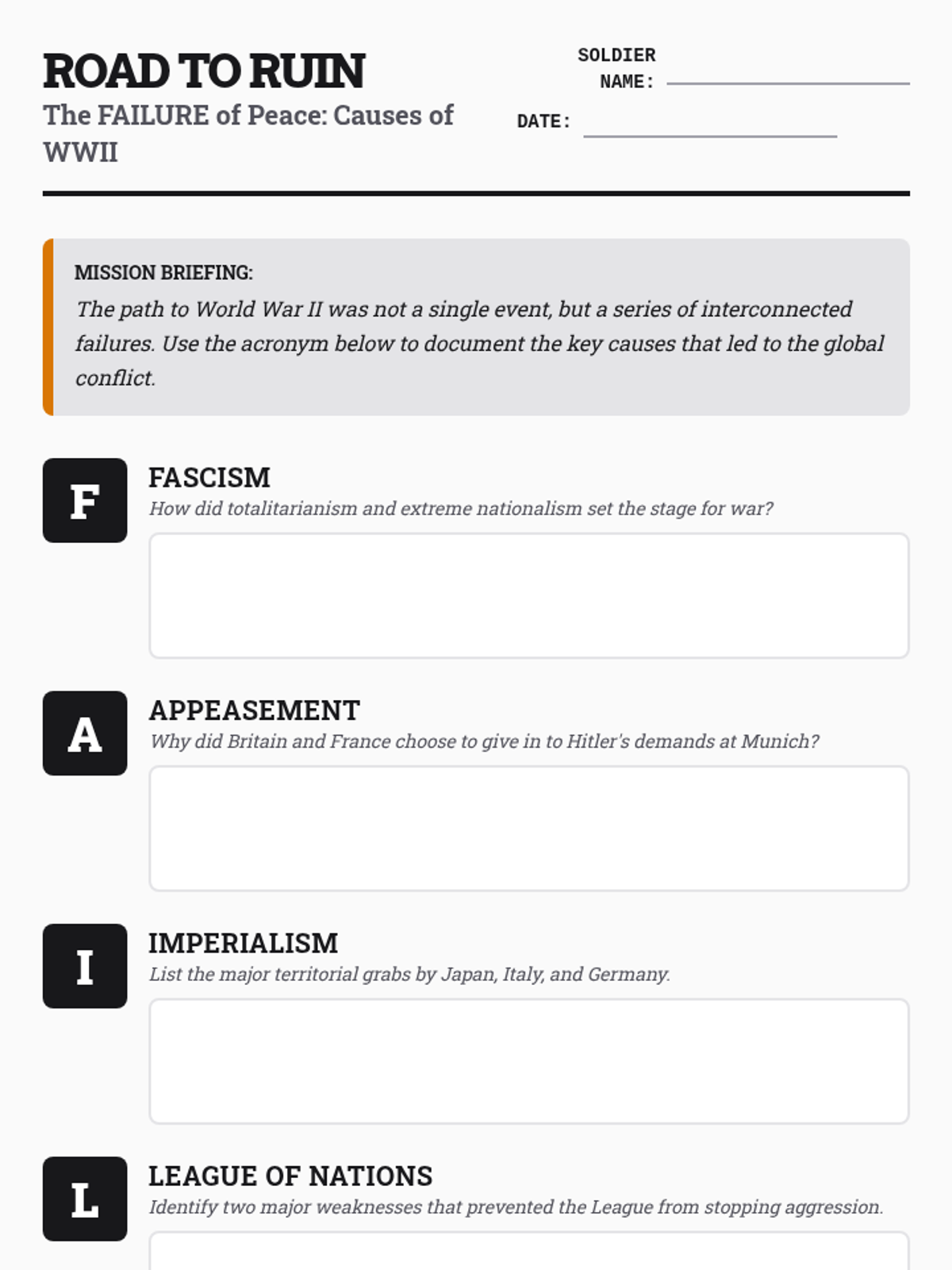
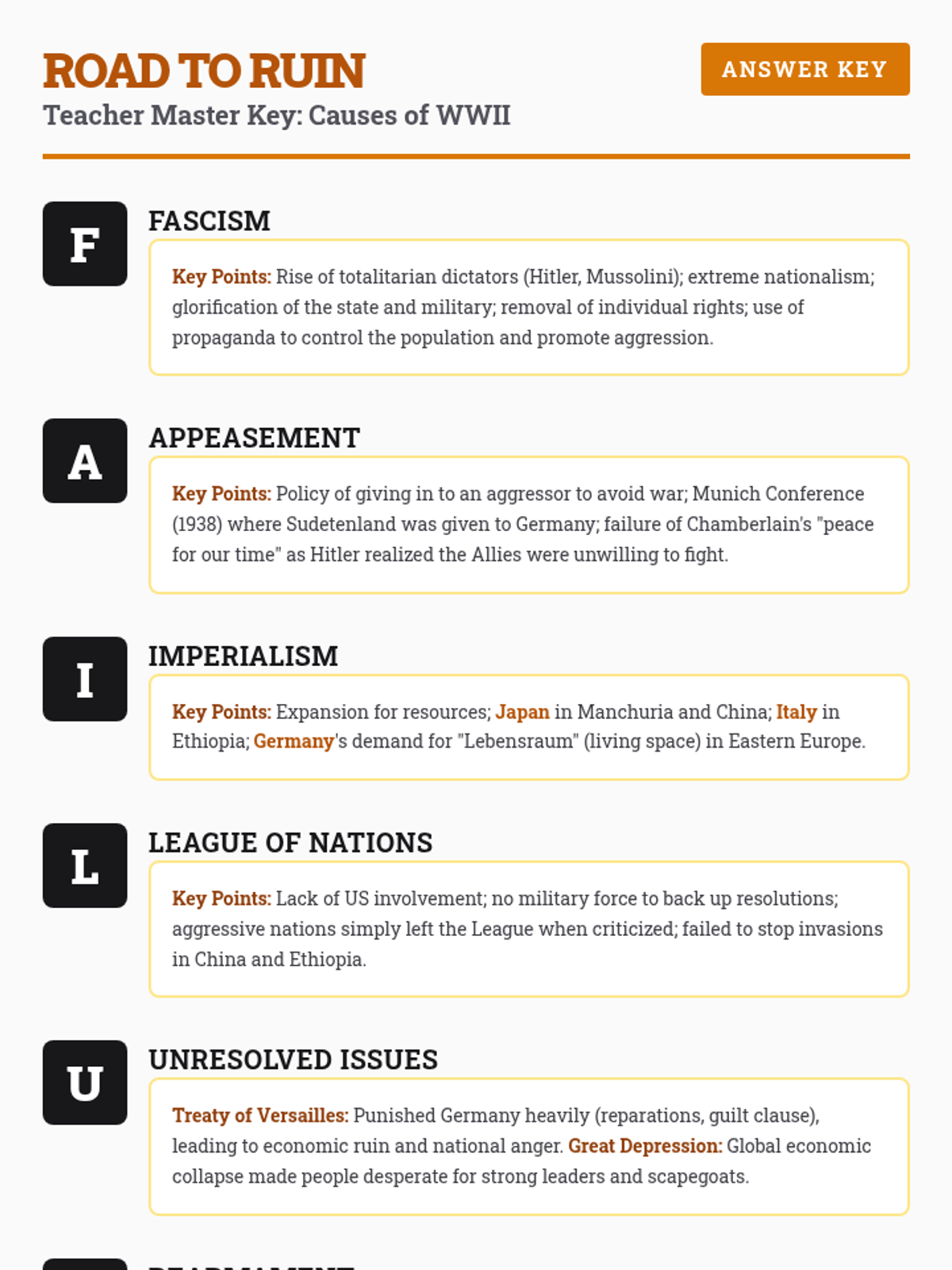
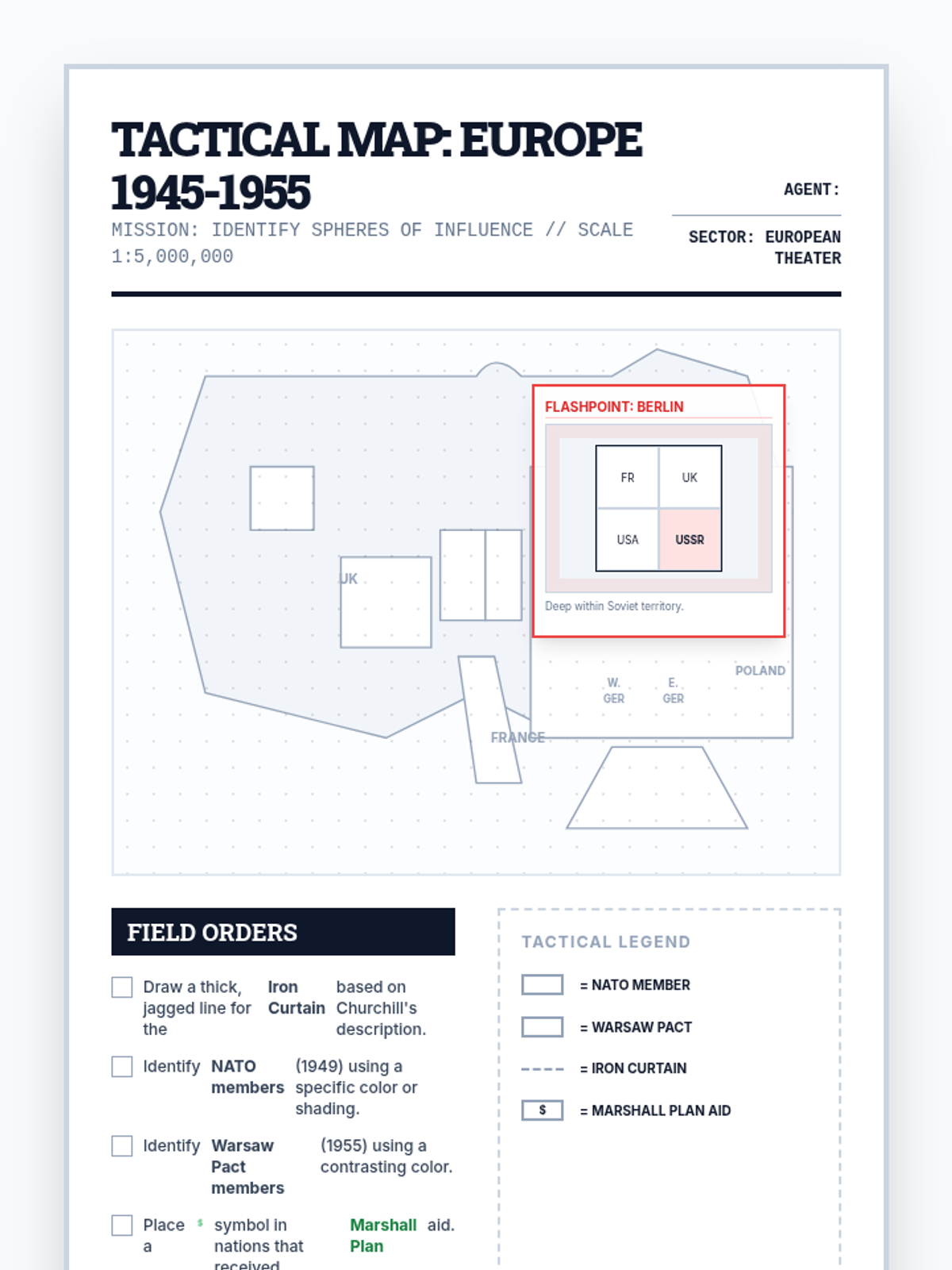
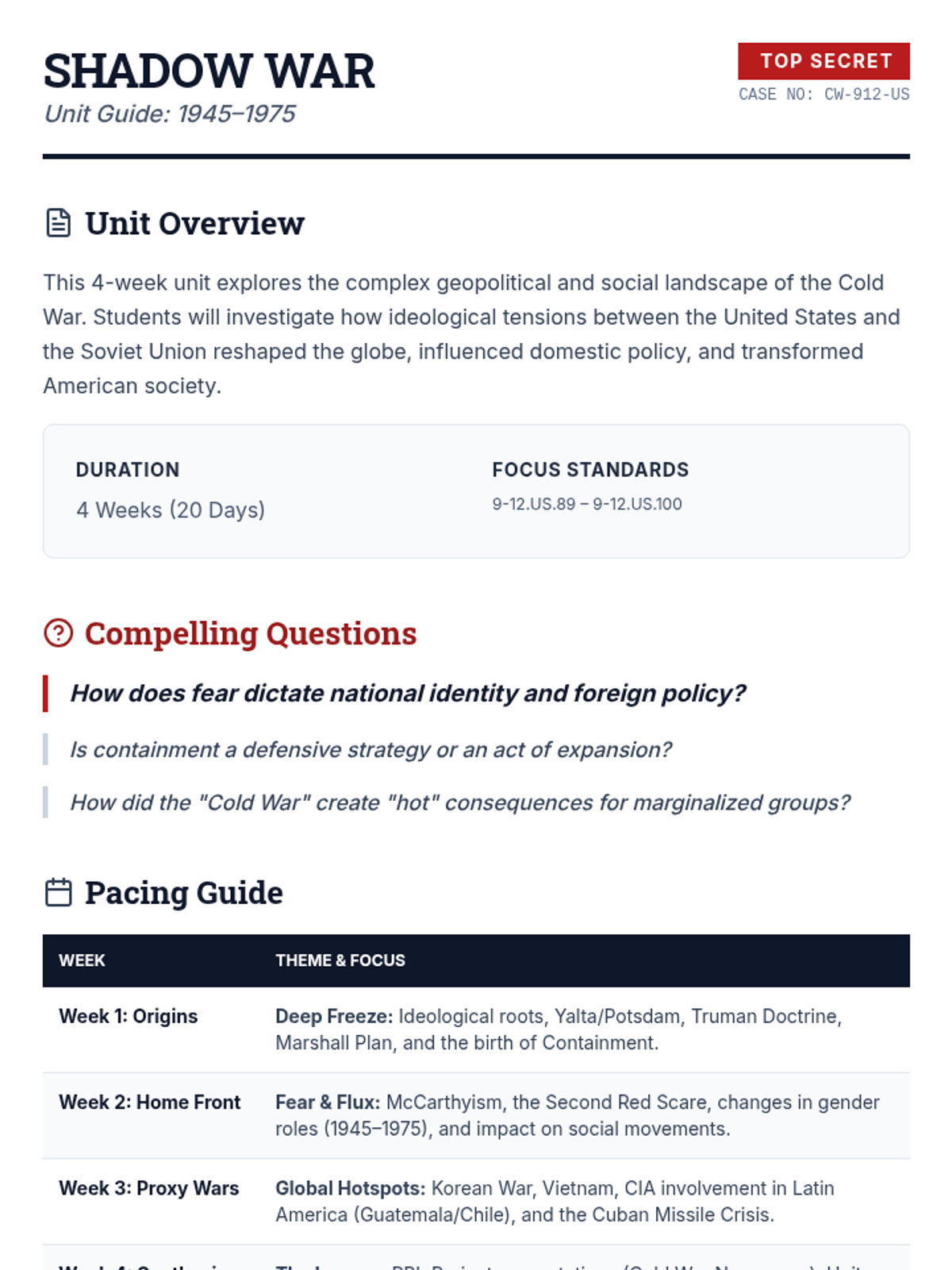
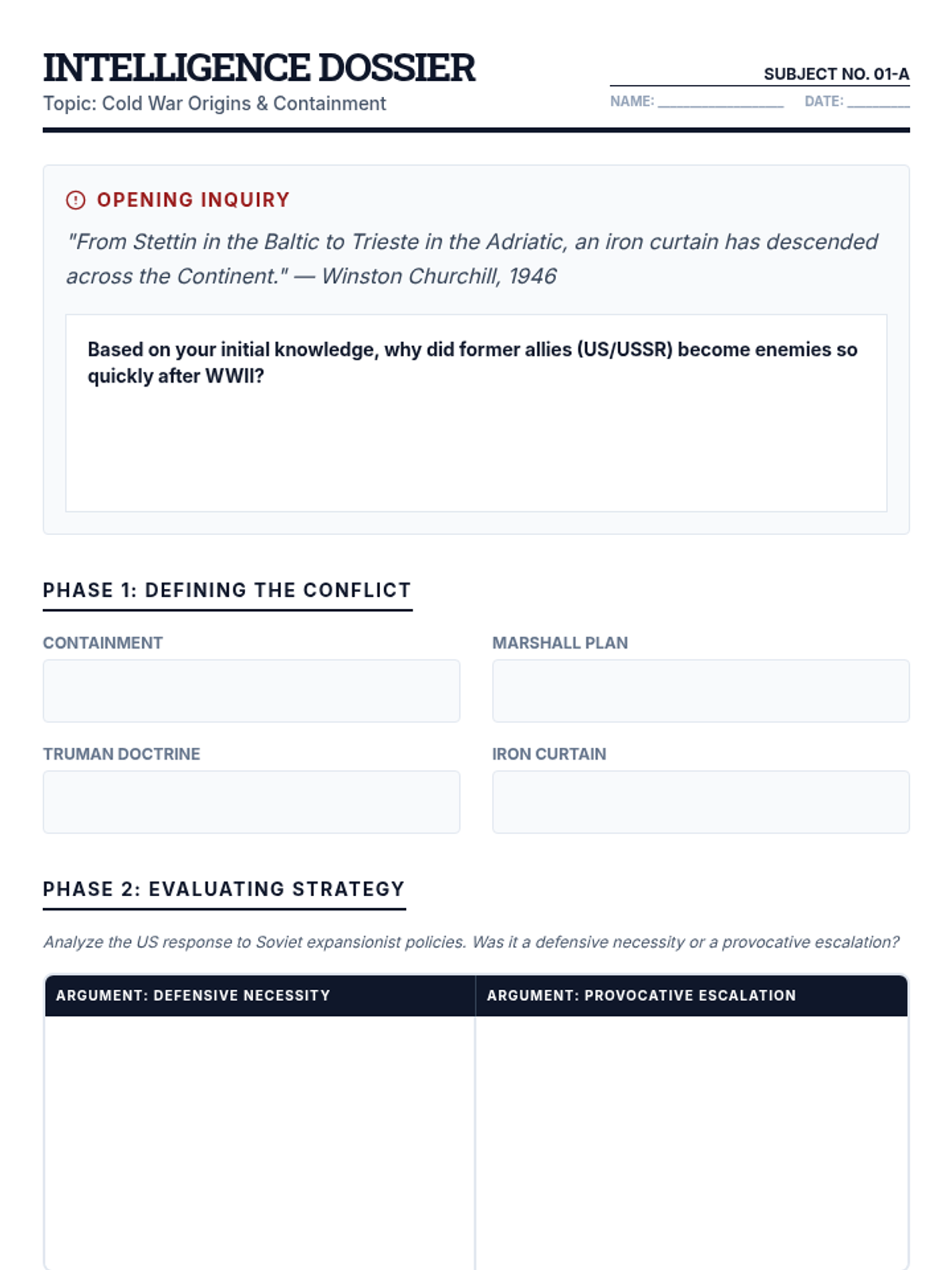
A comprehensive unit exploring the geopolitical shifts, ideological conflicts, and strategic failures that led the world into the Second World War.
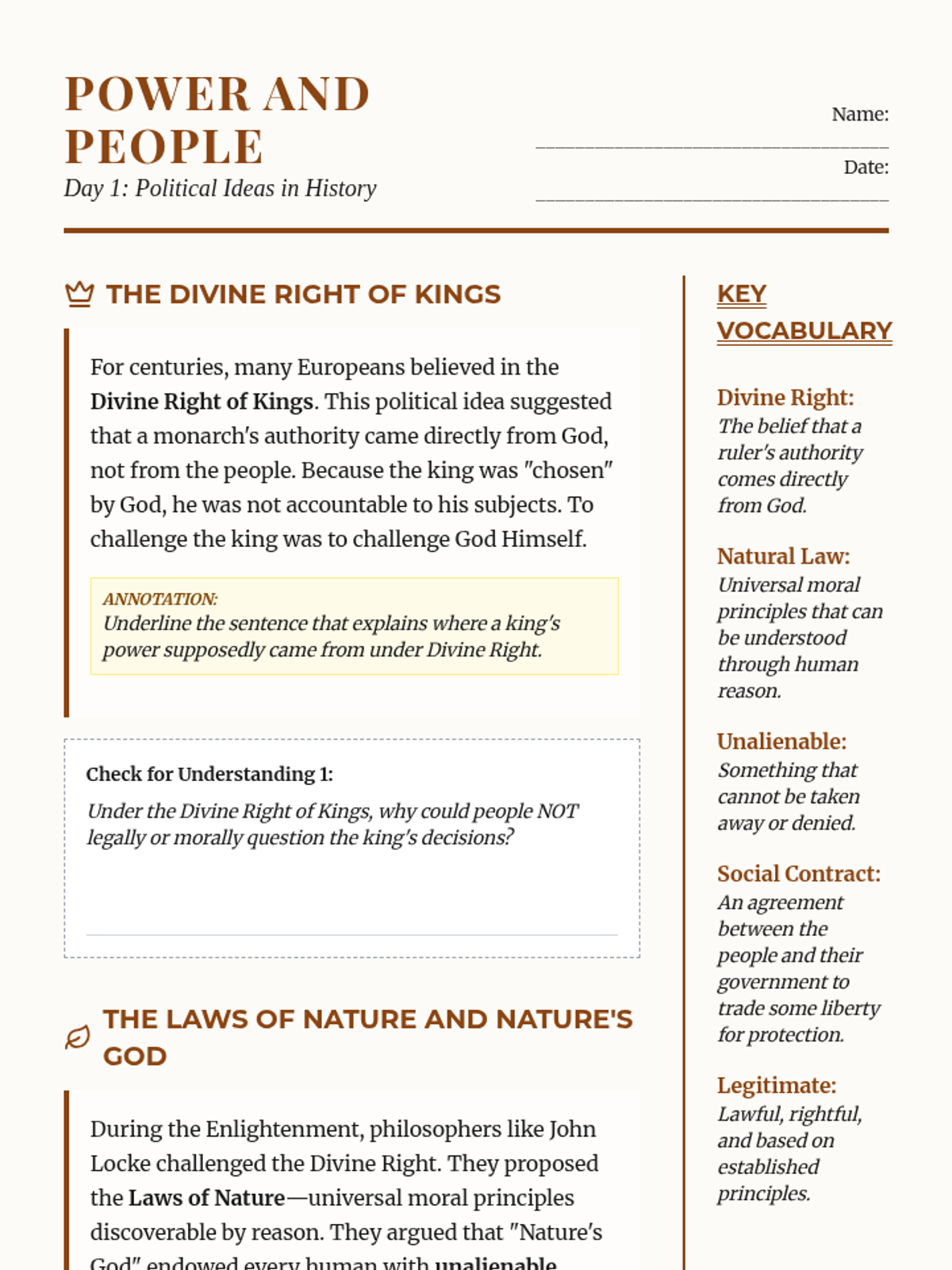
A deep dive into the tensions between classical philosophy and modern democratic practice, focusing on Plato's critiques and contemporary responses.
A high school history unit exploring the underlying economic and resource-driven motivations of World War II, moving beyond purely ideological narratives to understand the role of scarcity and expansionism.
A unit exploring the modern challenges and historical legacy of Eastern Europe, focusing on the intersection of geography, economy, and culture.
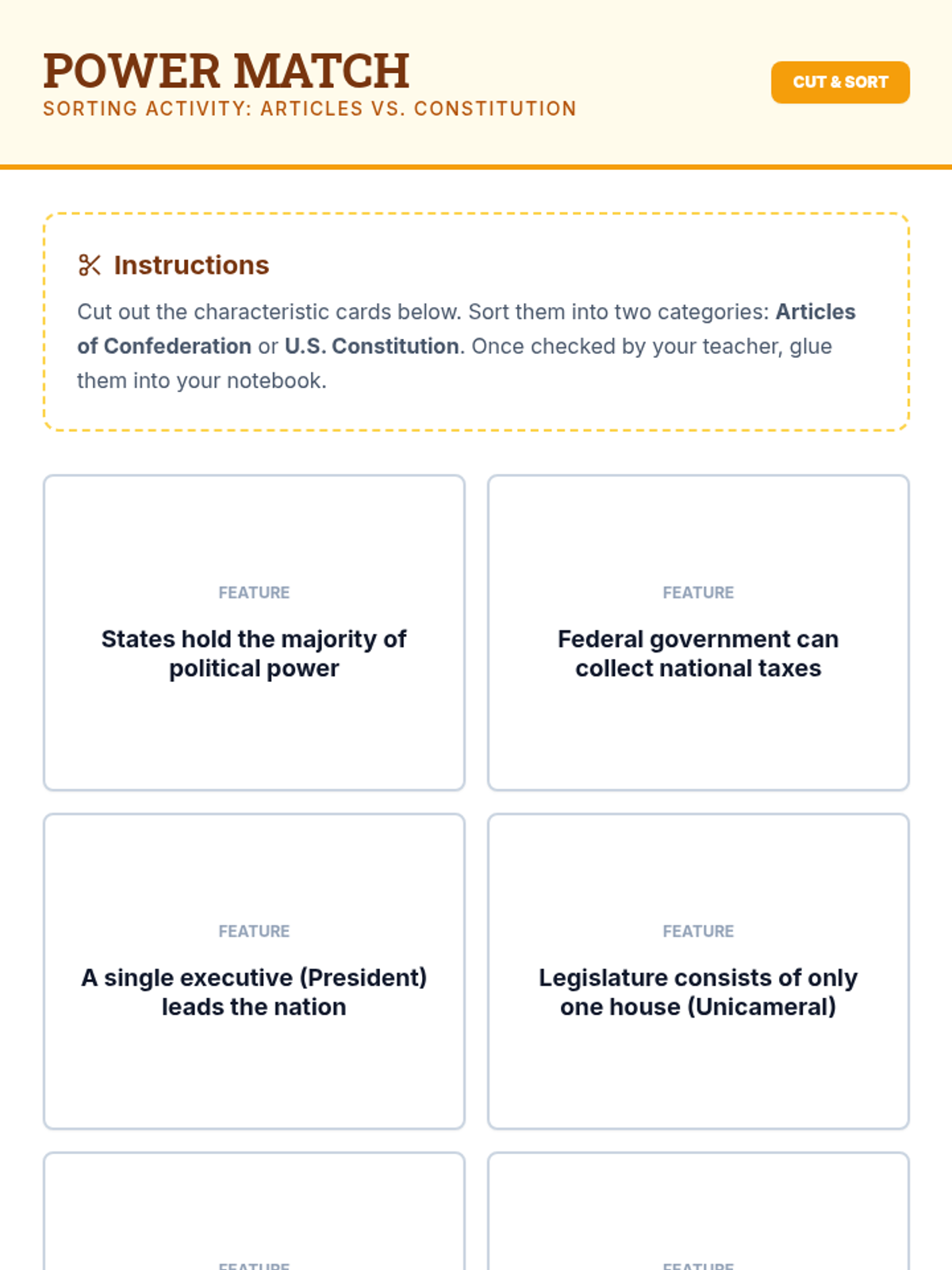
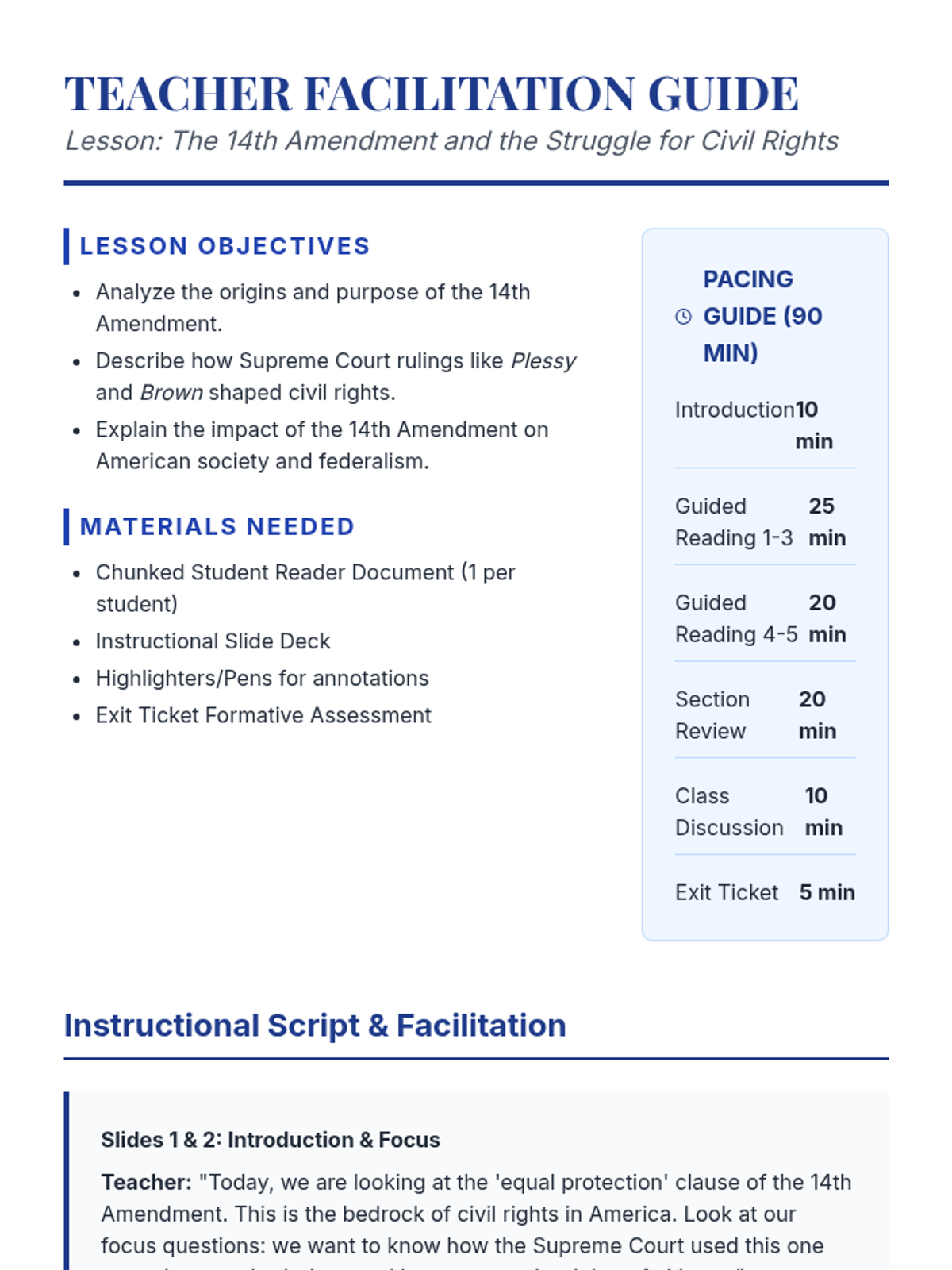
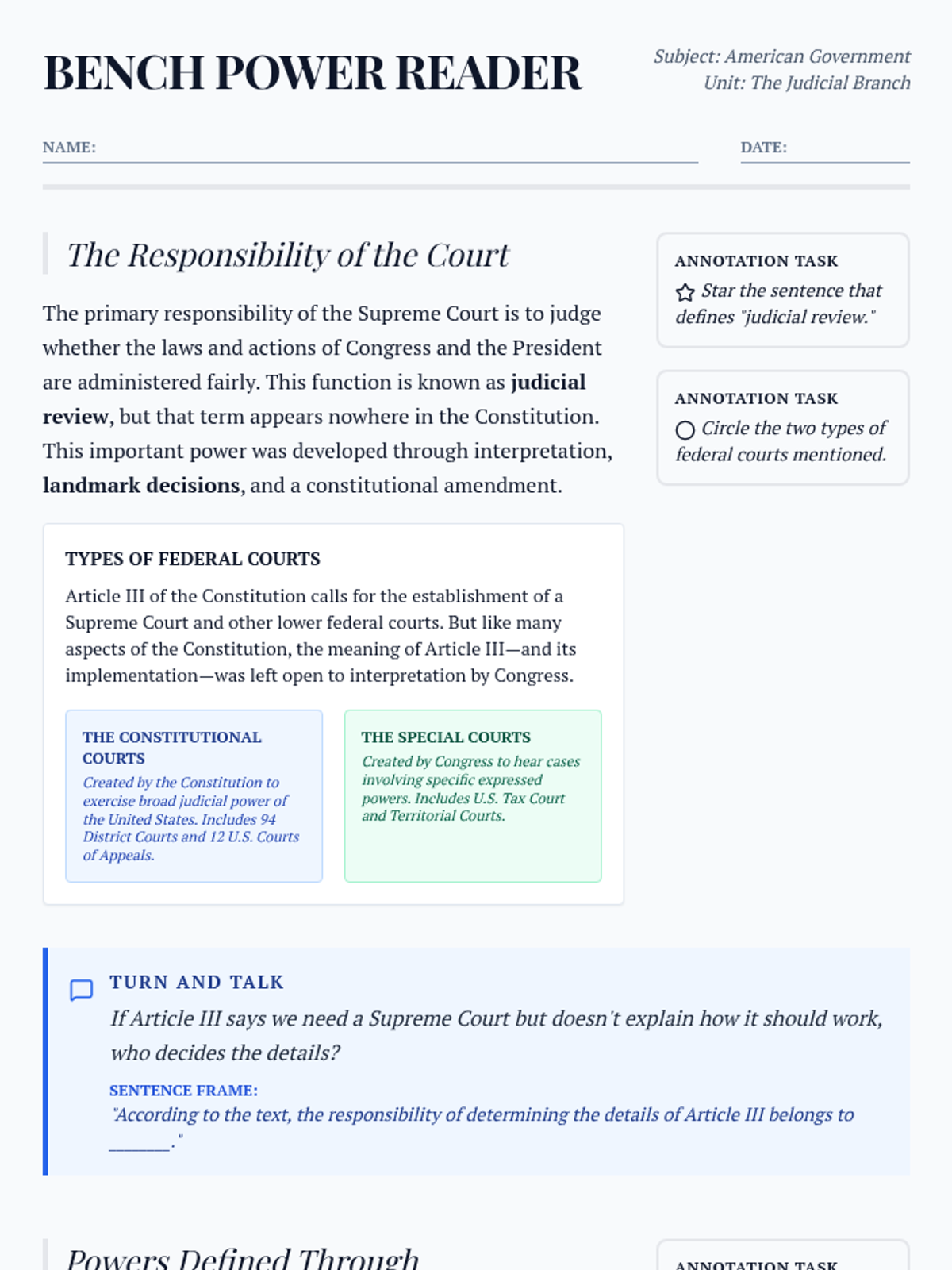
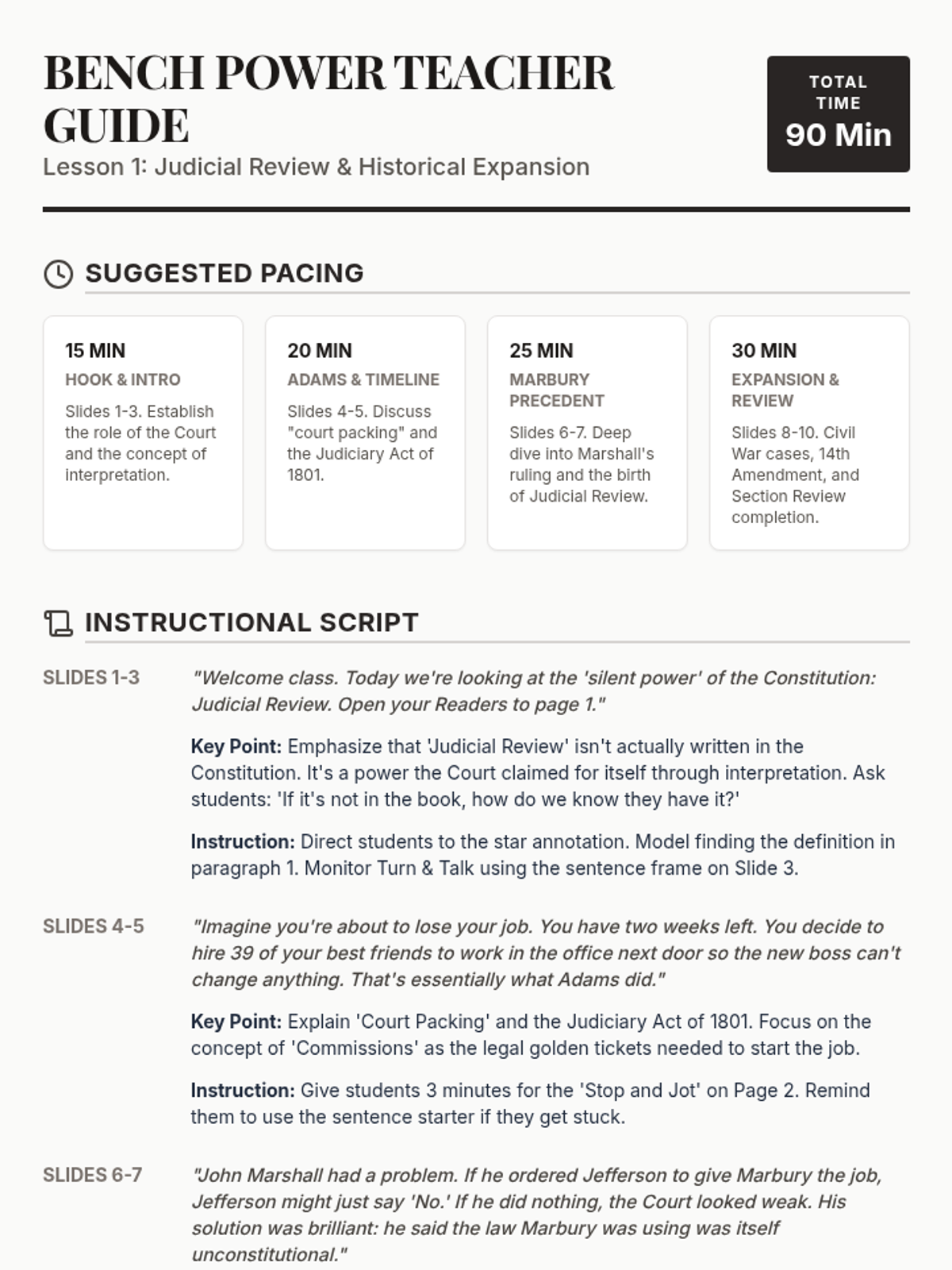
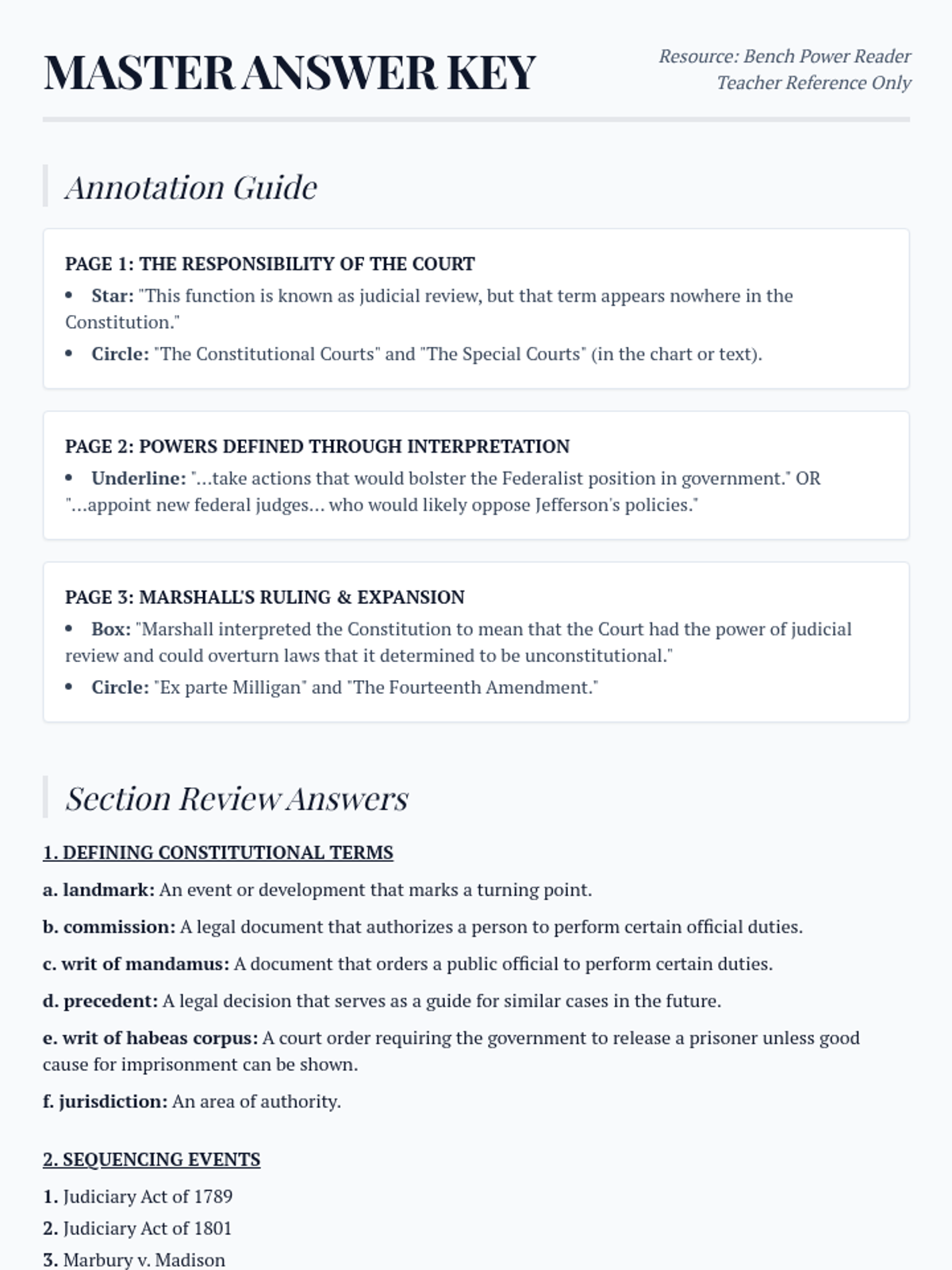
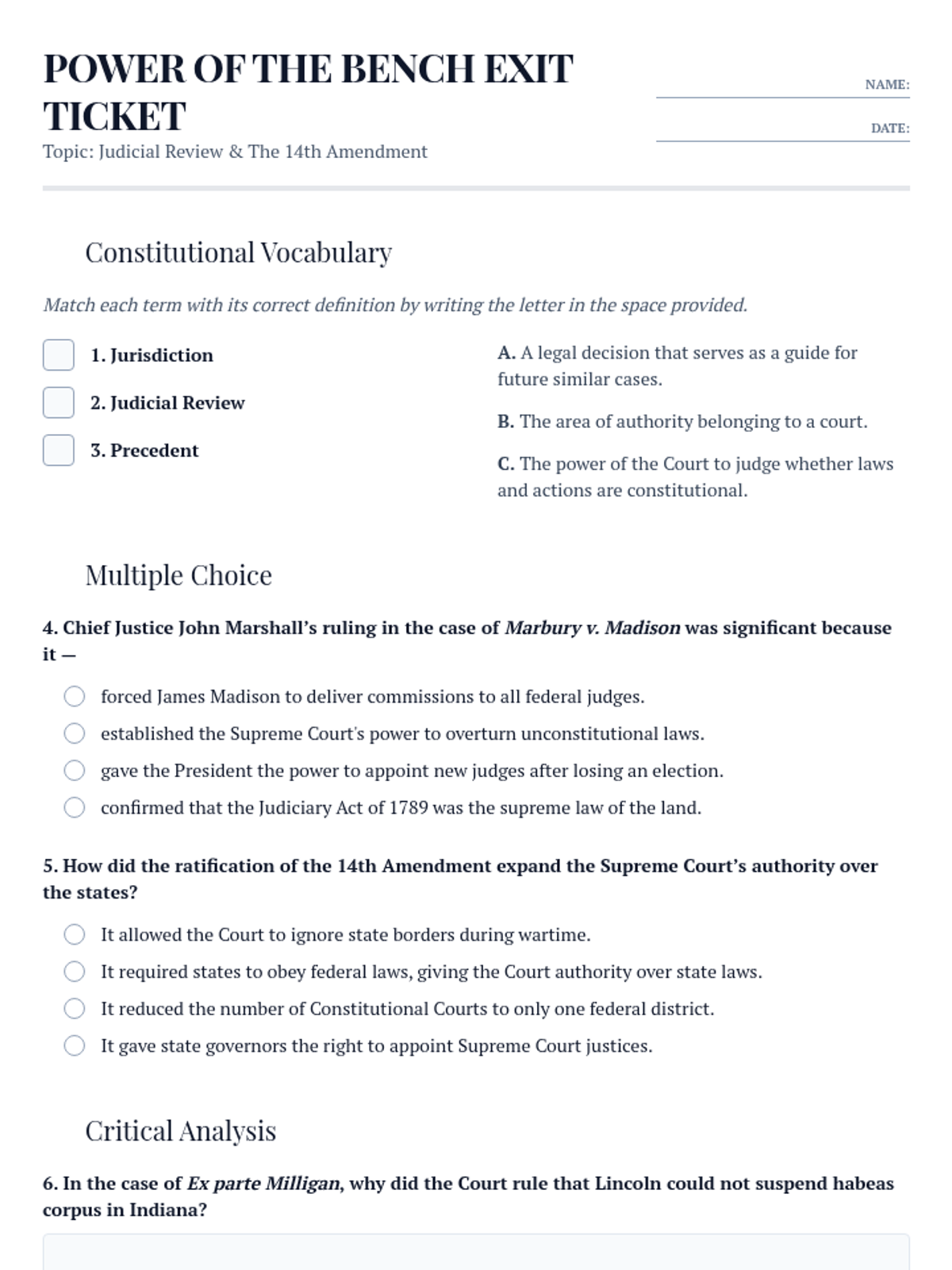
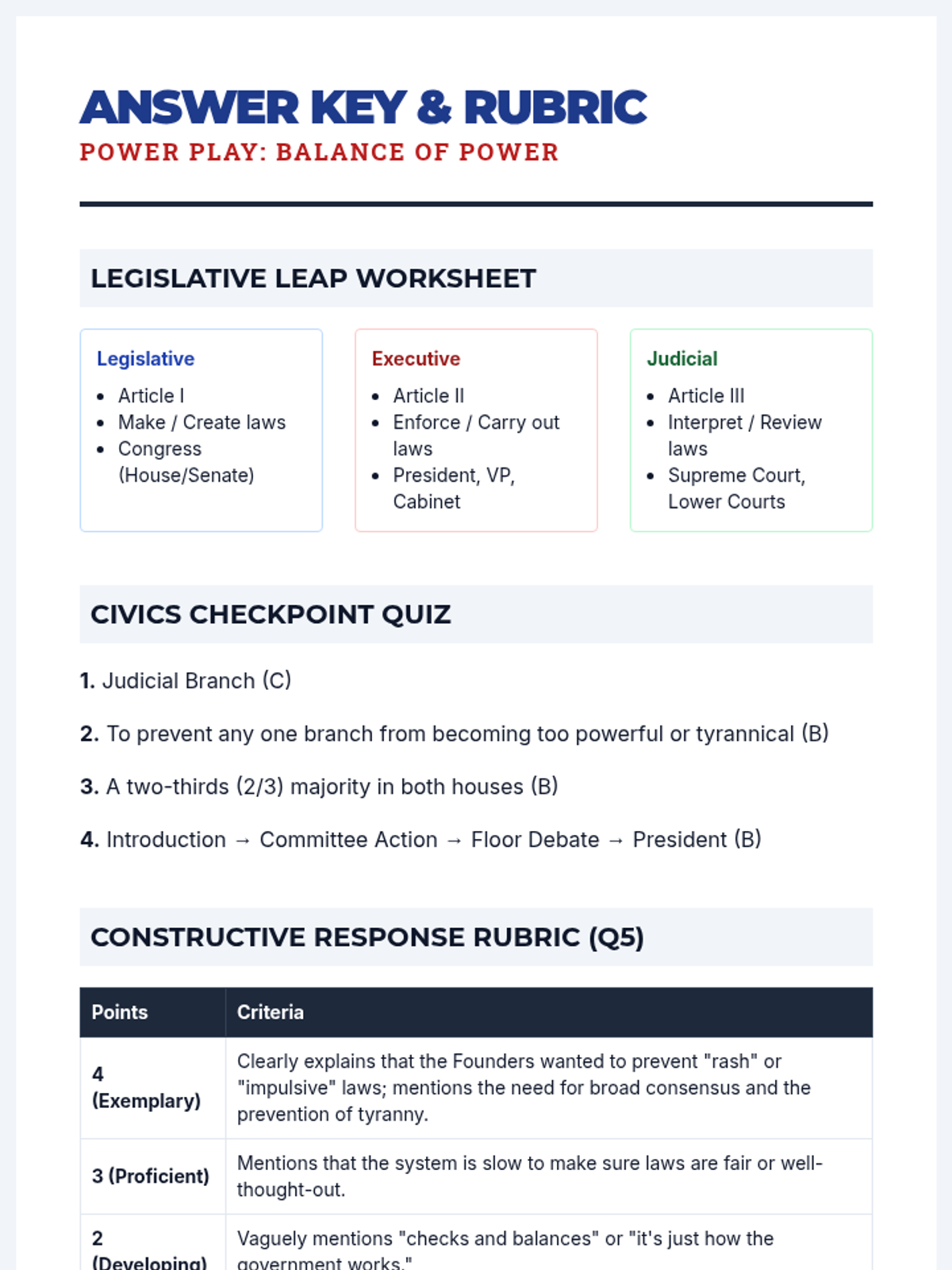
A comprehensive lesson sequence for AP Government students exploring the constitutional tension between the Supremacy Clause and State Rights through the lens of Judicial Review, featuring case studies and video analysis.
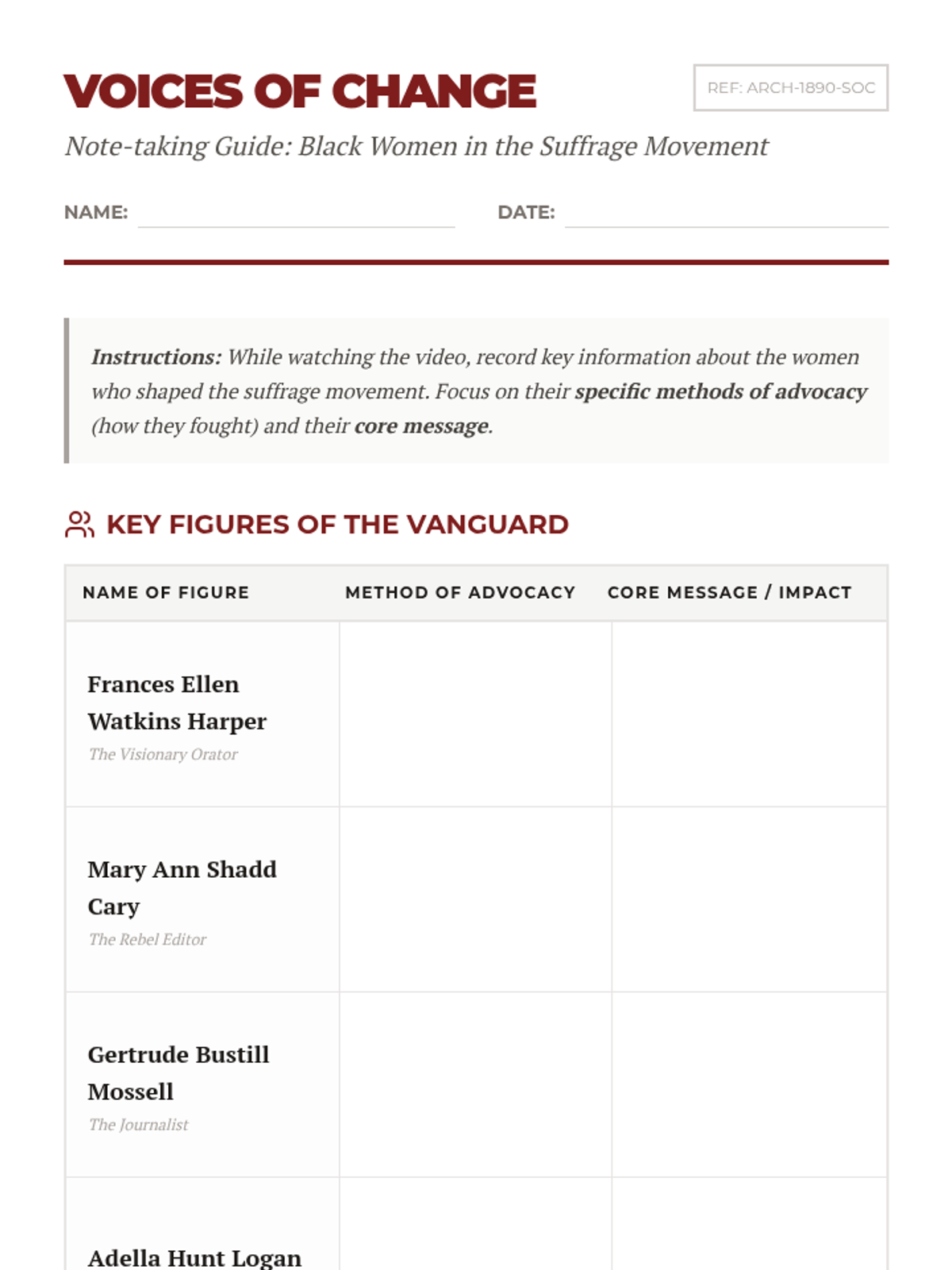
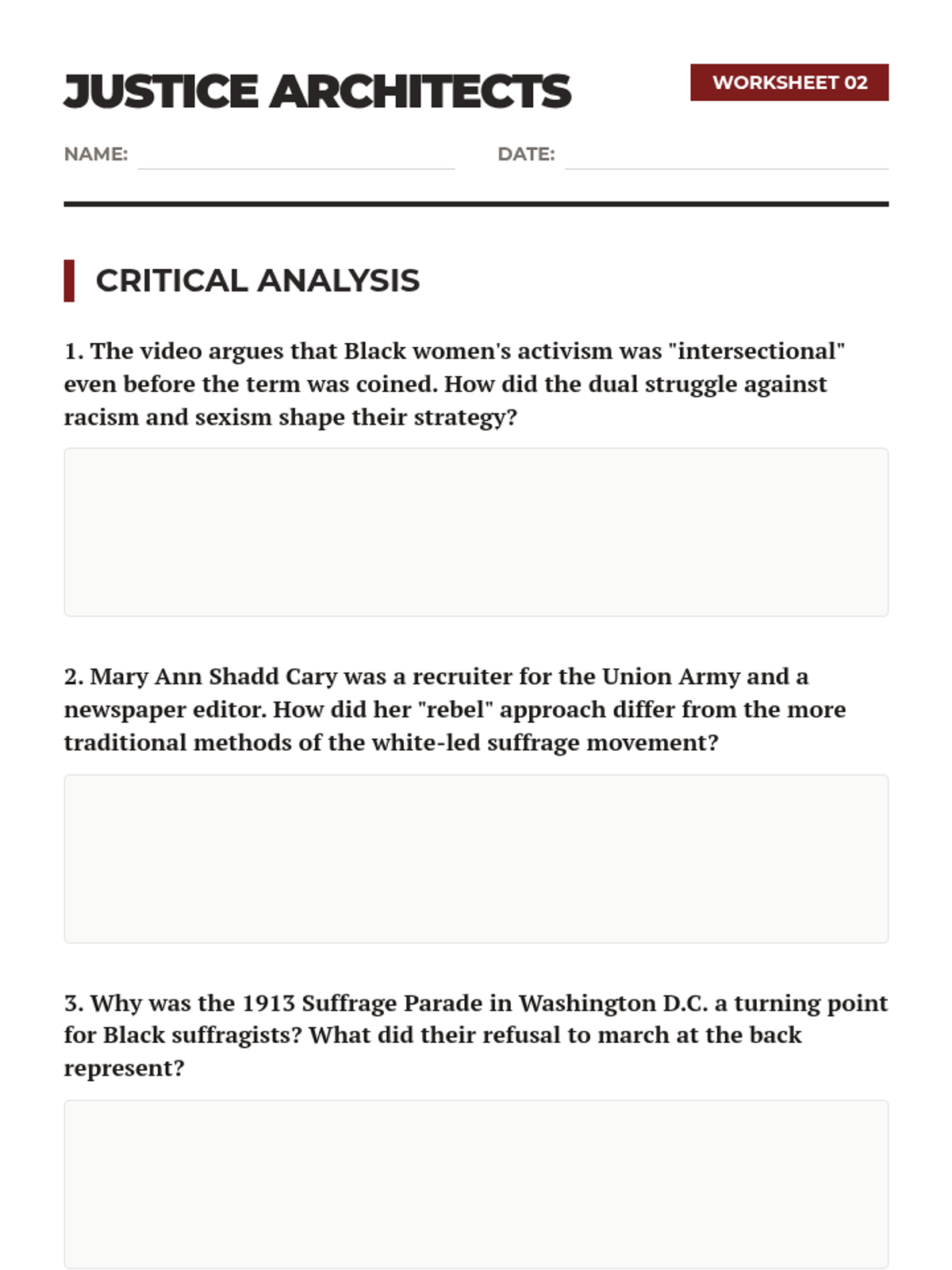
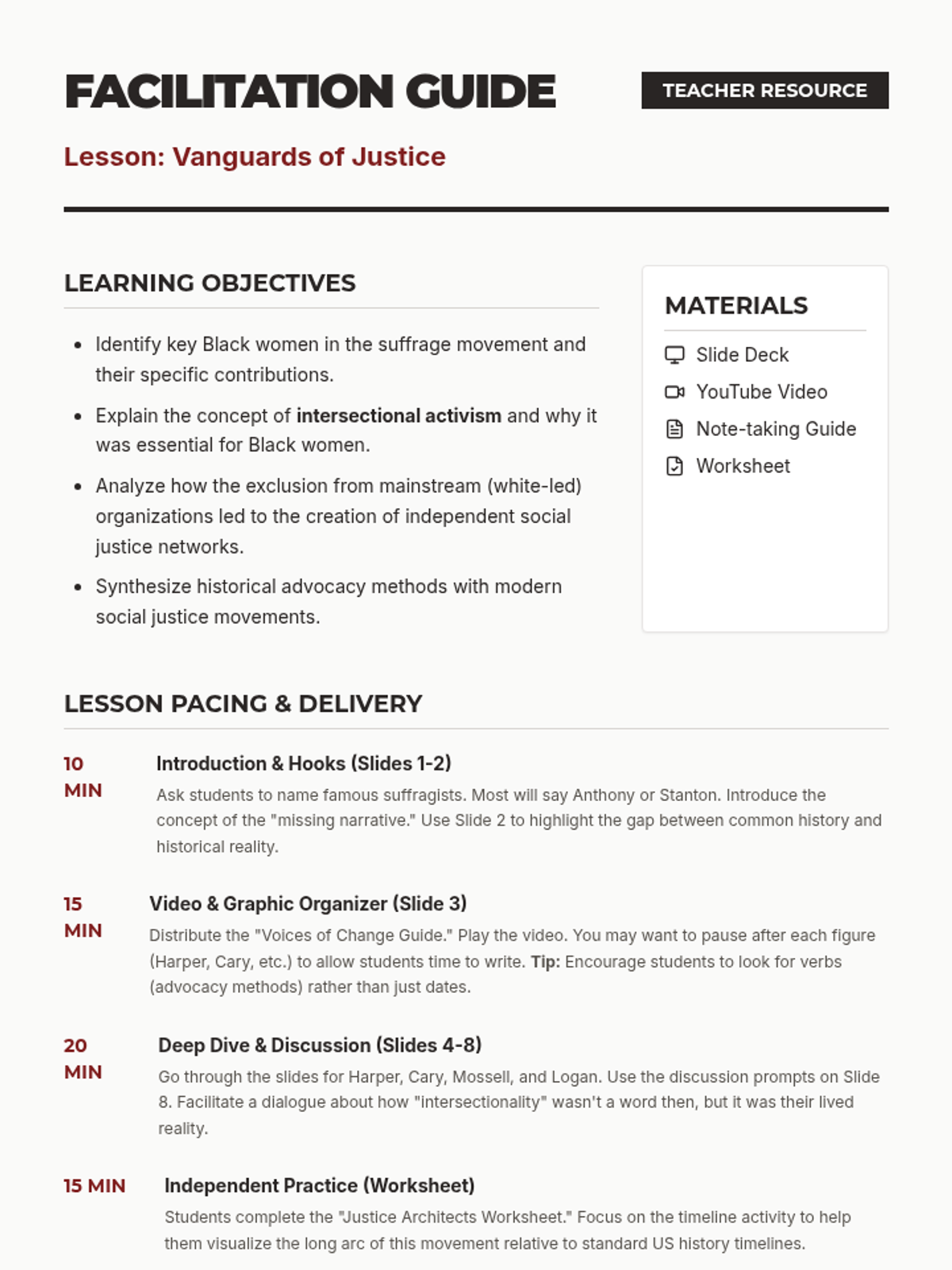
A series of lessons exploring the intersectional history of the Black Power movement, focusing on the leadership of women and the cultural impact of Black activism.
A series of lessons exploring the intersection of primary source documents and modern historical memory, starting with the origins of American Independence.
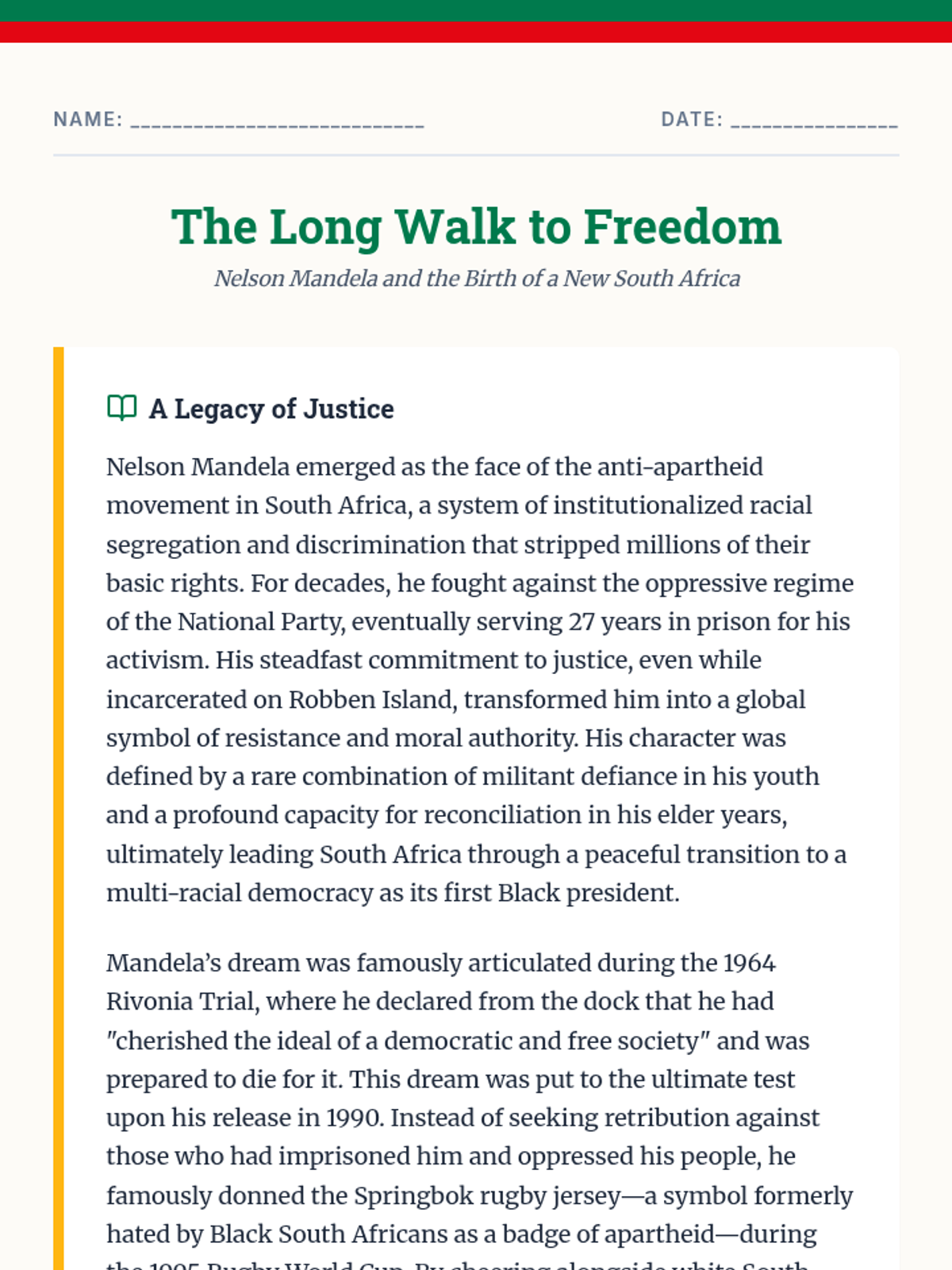
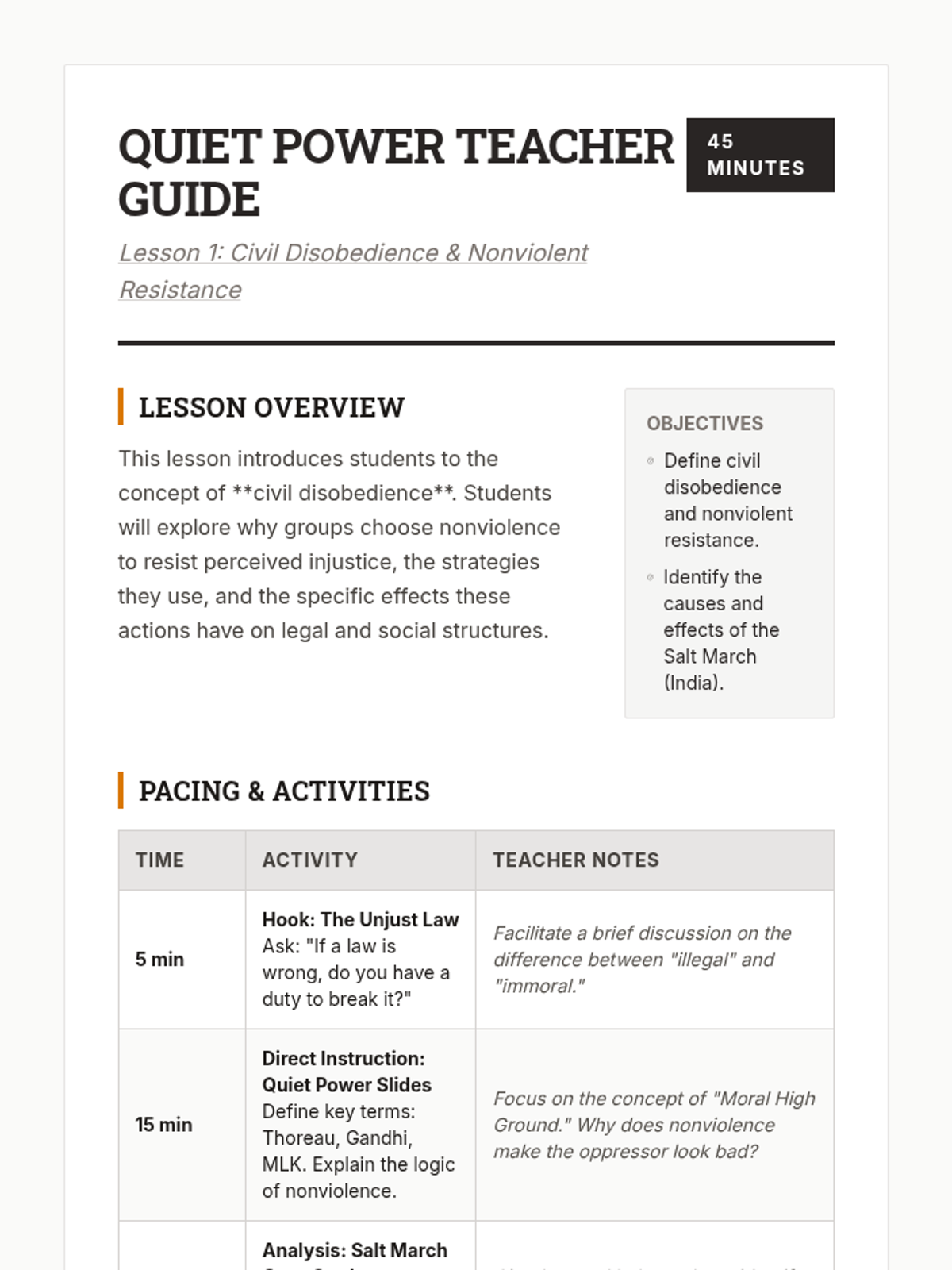
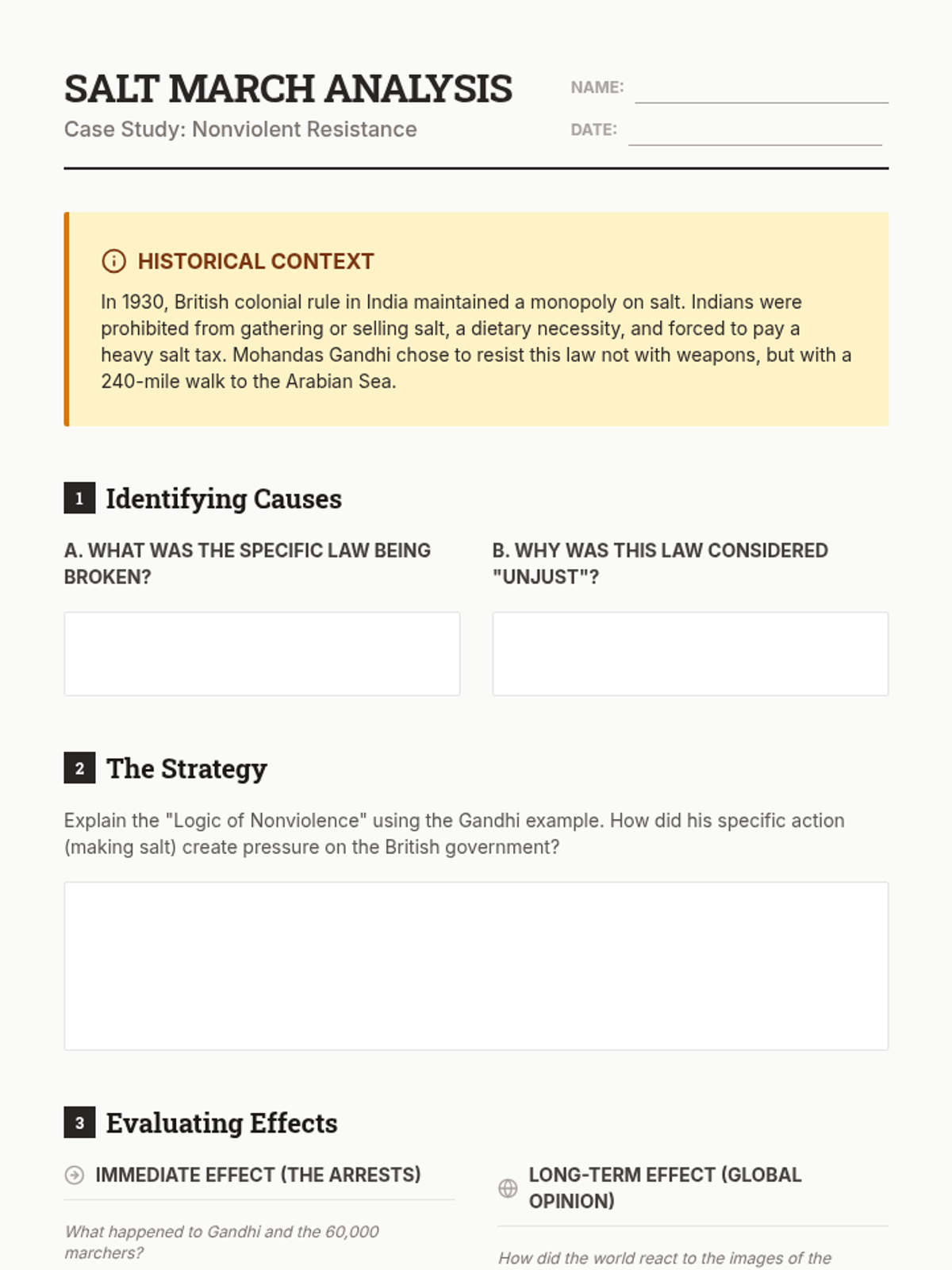
A series of lessons examining the power and philosophy of non-violence in the 20th century, from intellectual roots to global applications.
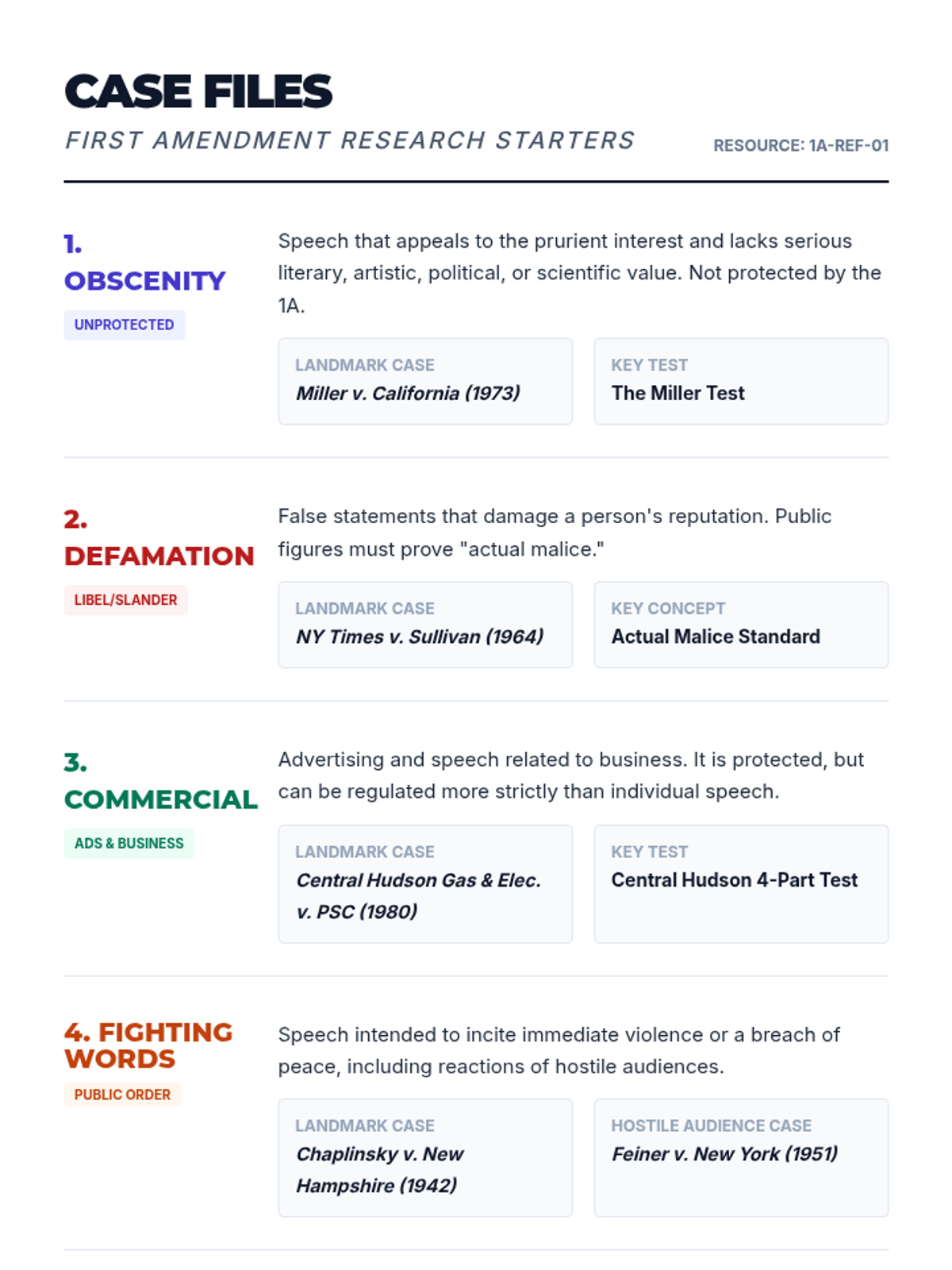
A civics sequence focused on the mechanics of American democracy, the two-party system, and the nuance of political identity.
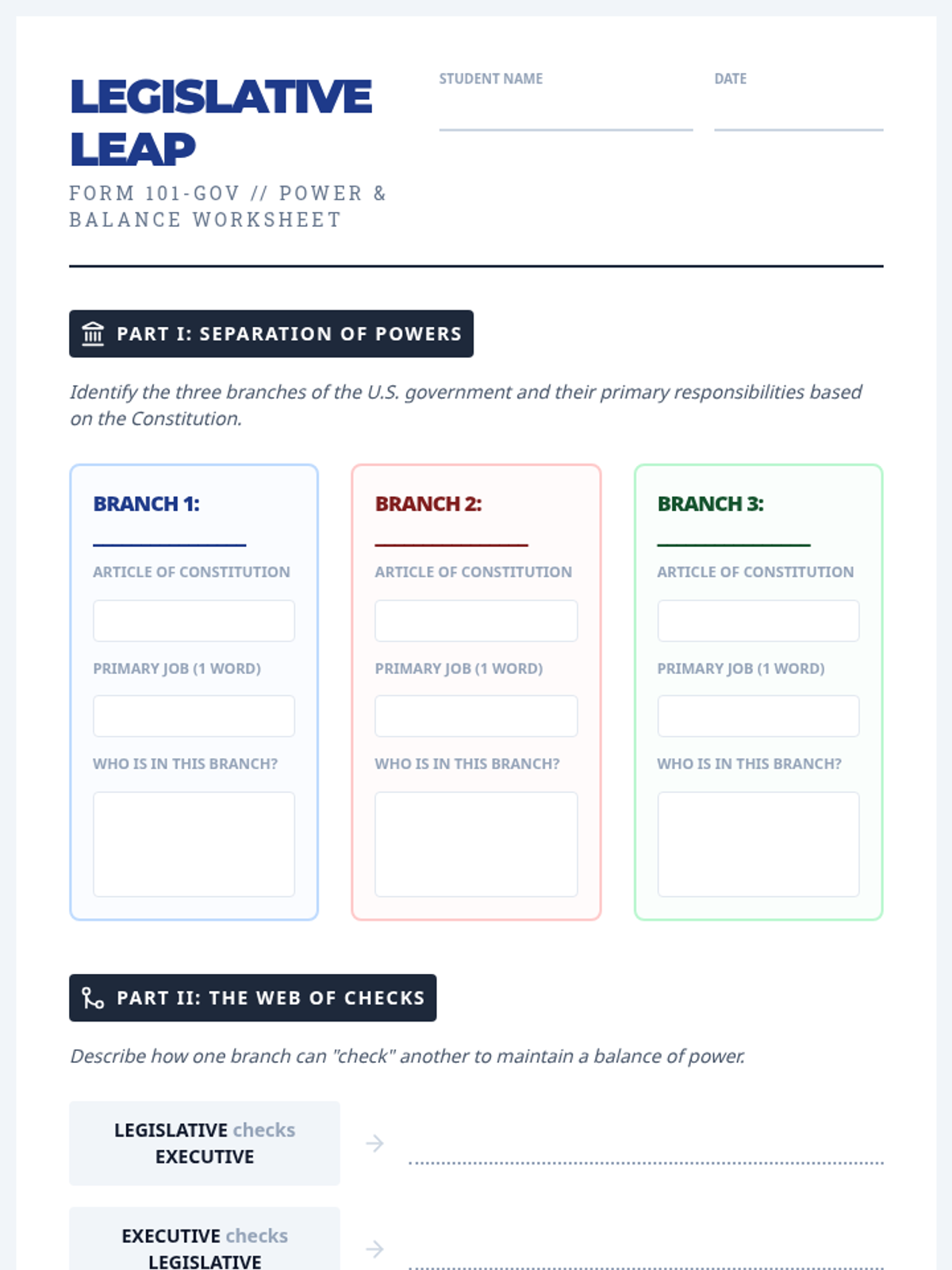
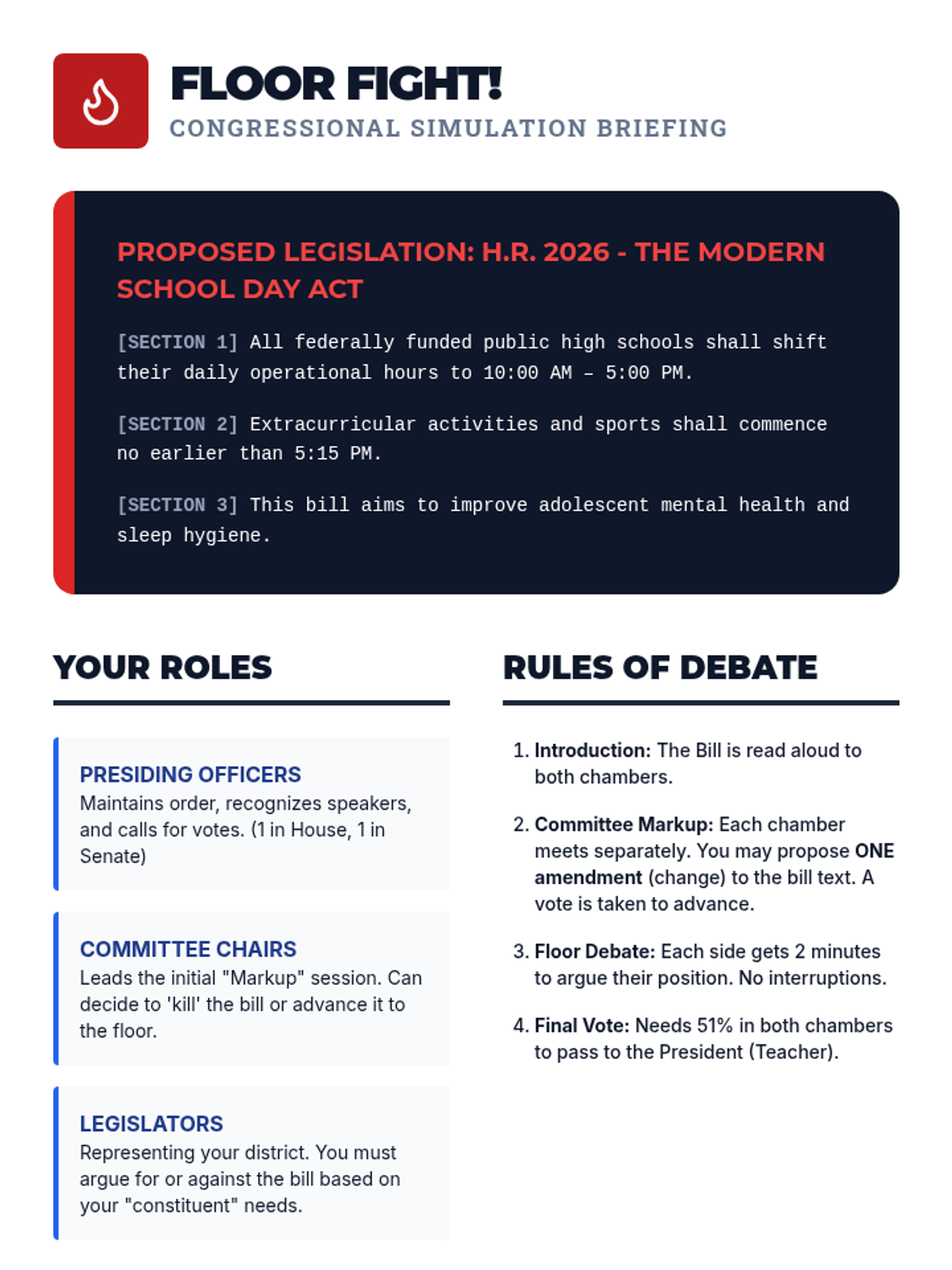
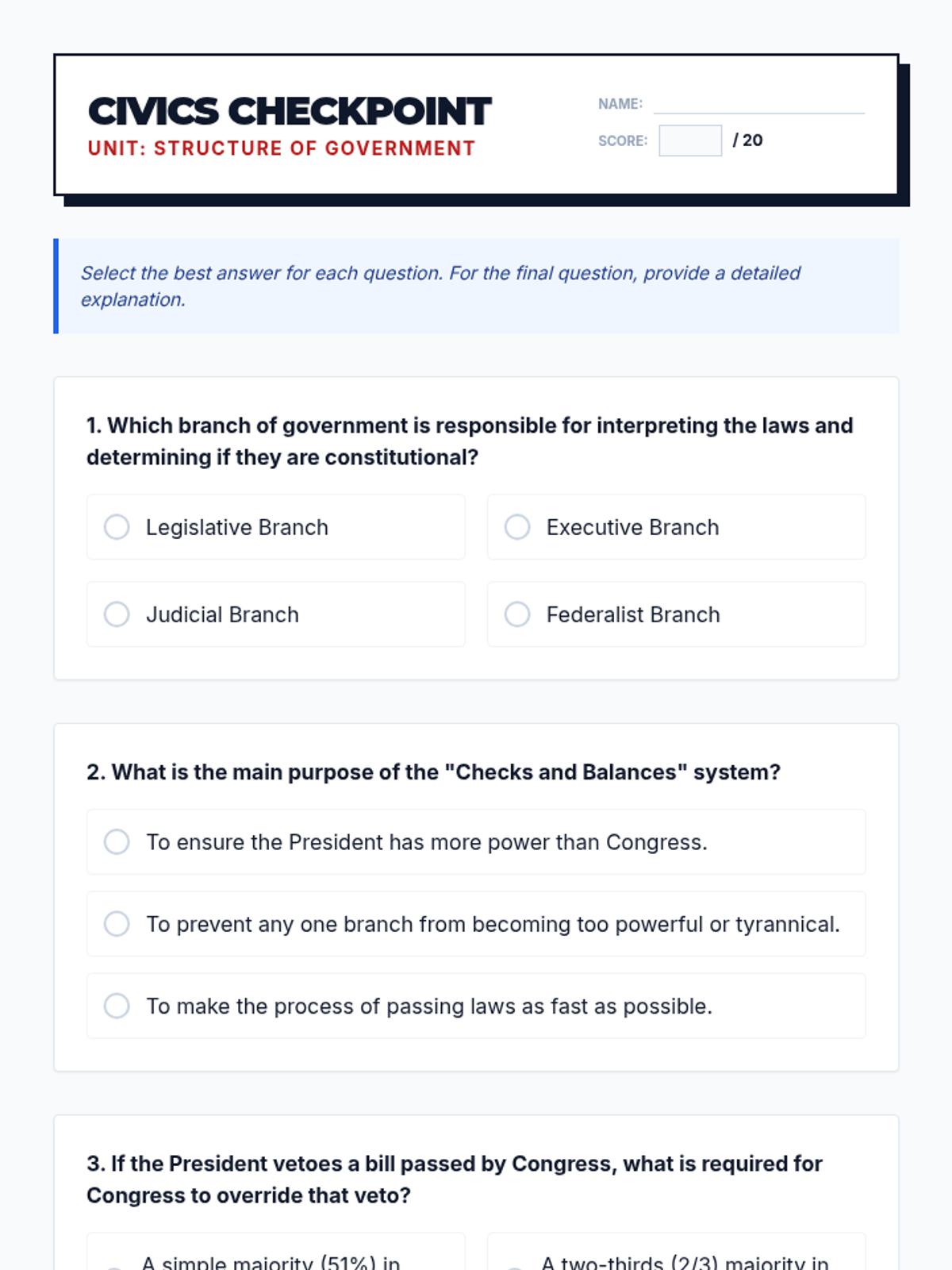
A unit covering the structure, requirements, and controversial debates within the Federal Legislative Branch, focusing on representation and the balance of power.
A sequence exploring the intersection of medical history, racial narratives, and public health, focusing on how diseases like tuberculosis have been used to justify social hierarchies.
A high school economics and history sequence exploring how the Black Death fundamentally reshaped European labor markets, social hierarchies, and economic structures through the lens of supply and demand.
A sequence exploring the Gilded Age, focusing on industrial growth, the rise of labor unions, and the struggle for workers' rights in the late 19th century.
A high school economics unit exploring why markets sometimes fail to provide essential services, focusing on the characteristics of public vs. private goods and the free rider problem.
An advanced graduate seminar sequence exploring the social, political, and ideological forces that shape Western Art Music history. Students move from deconstructing 19th-century canon-building to proposing new, inclusive curricular frameworks.
A comprehensive graduate-level exploration of federal anti-discrimination laws, focusing on Title VII, ADA, ADEA, and retaliation. Students analyze landmark cases, calculate disparate impact, and navigate the complexities of reasonable accommodation and workforce restructuring.
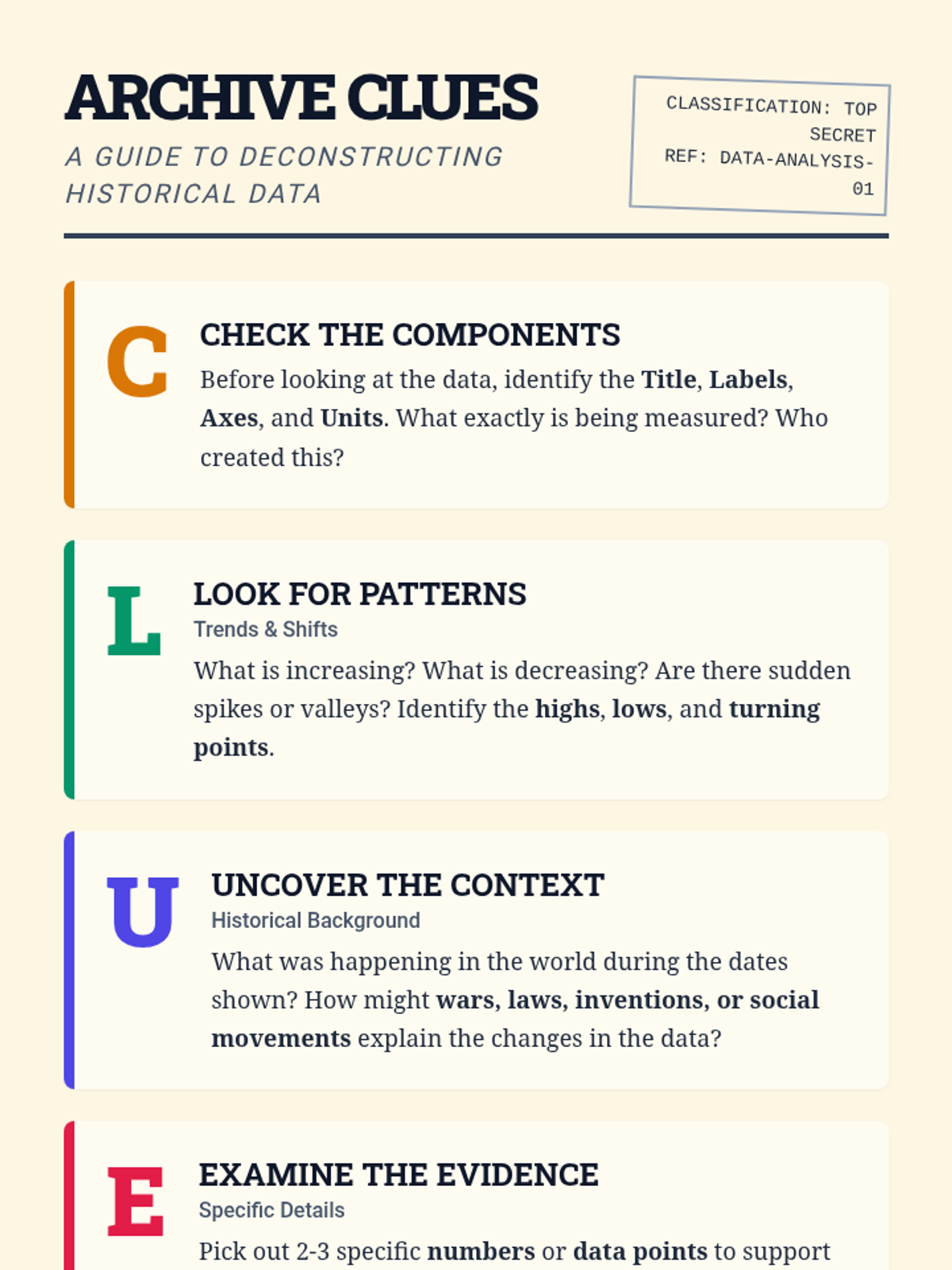
This advanced undergraduate sequence explores the neuromuscular mechanics of facial expressions using the Facial Action Coding System (FACS). Students learn to identify Action Units, distinguish between universal emotions, detect micro-expressions, and apply these skills to clinical social communication interventions.
A comprehensive introduction to objective behavioral assessment for undergraduate students, focusing on operationalizing behavior, ABC recording, quantitative measurement, setting events, and data visualization.
This sequence engages undergraduate students in a critical examination of mental health literacy and the sociological mechanisms of stigma. Students will progress from theoretical frameworks to practical application, culminating in the design of a targeted educational intervention for their community.
A critical exploration of behavioral psychology, focusing on the tension between intrinsic and extrinsic motivation. Students analyze the ethical implications of reward systems in education, technology, and society.
This sequence provides a rigorous introduction to operant conditioning for undergraduate students, focusing on the technical application of positive reinforcement. It covers the Three-Term Contingency, discrimination between consequences, operational definitions, motivational operations, and theoretical critiques.