A project-based learning unit for 12th-grade Economics where students manage a touring band to master microeconomic concepts like scarcity, supply and demand, and market structures.

A bundle of essential resources for middle and high school, covering cellular biology and American history.
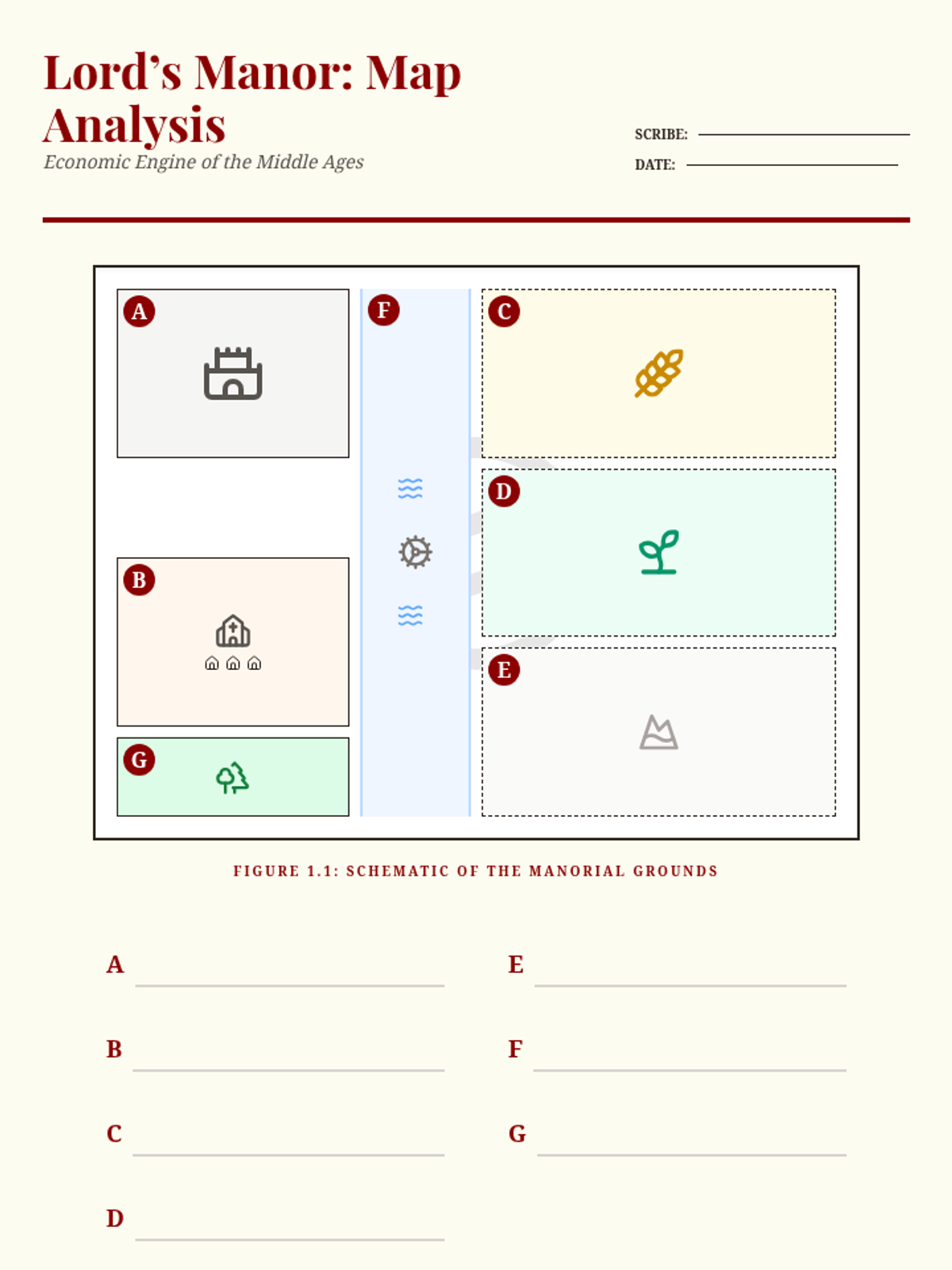
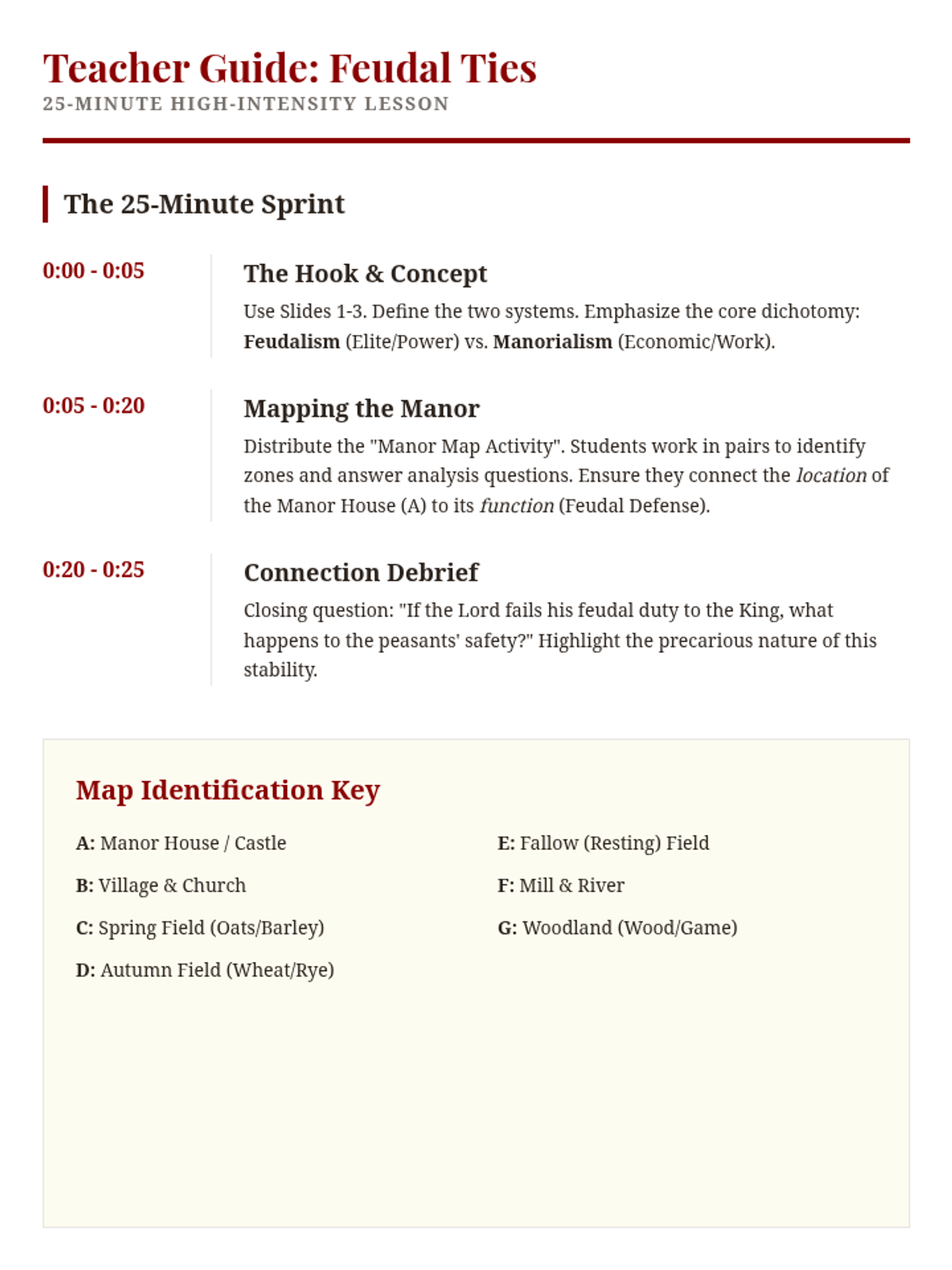
A focused exploration of medieval social and economic structures, specifically contrasting the political hierarchy of feudalism with the agricultural economy of manorialism.
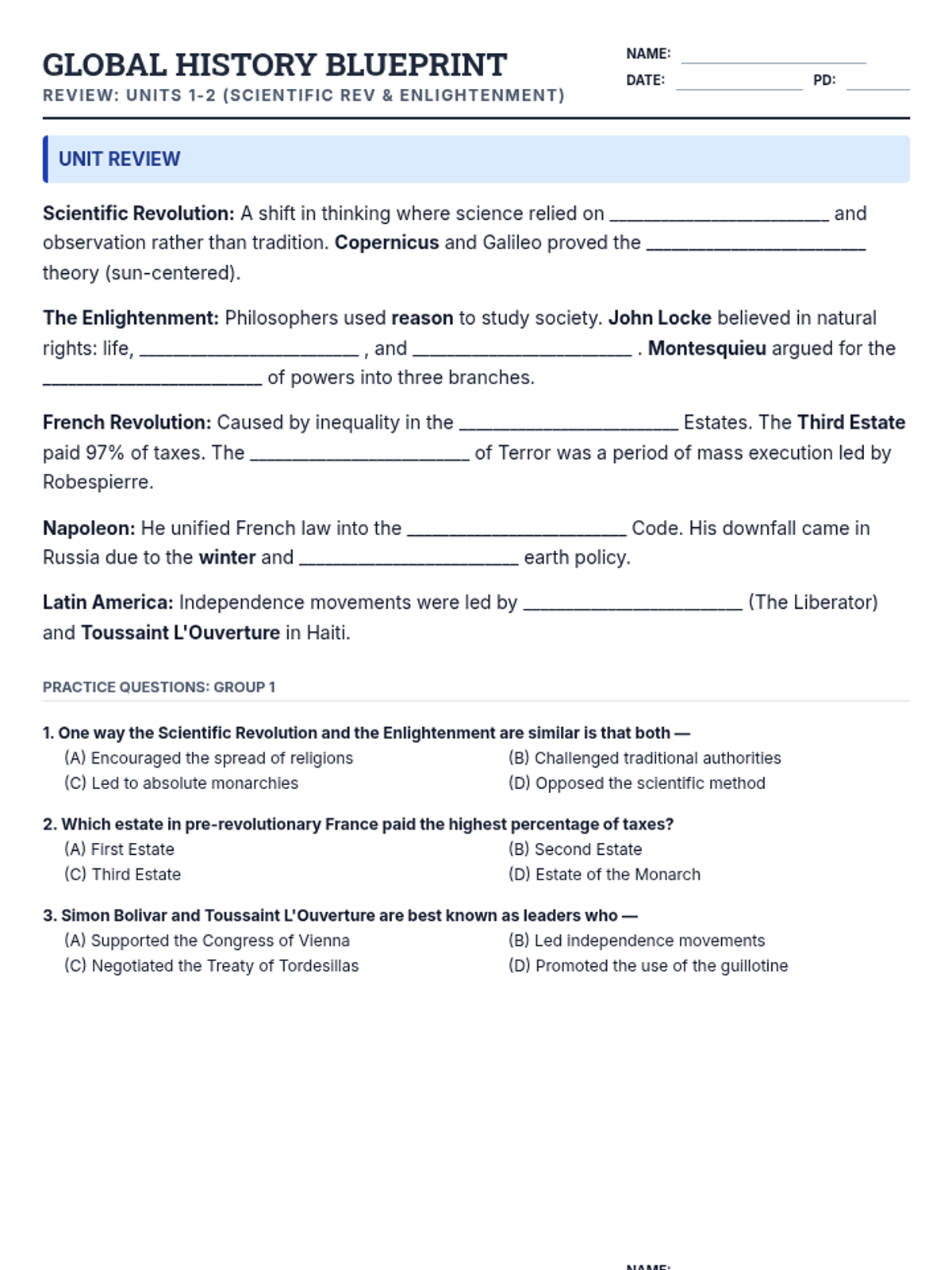
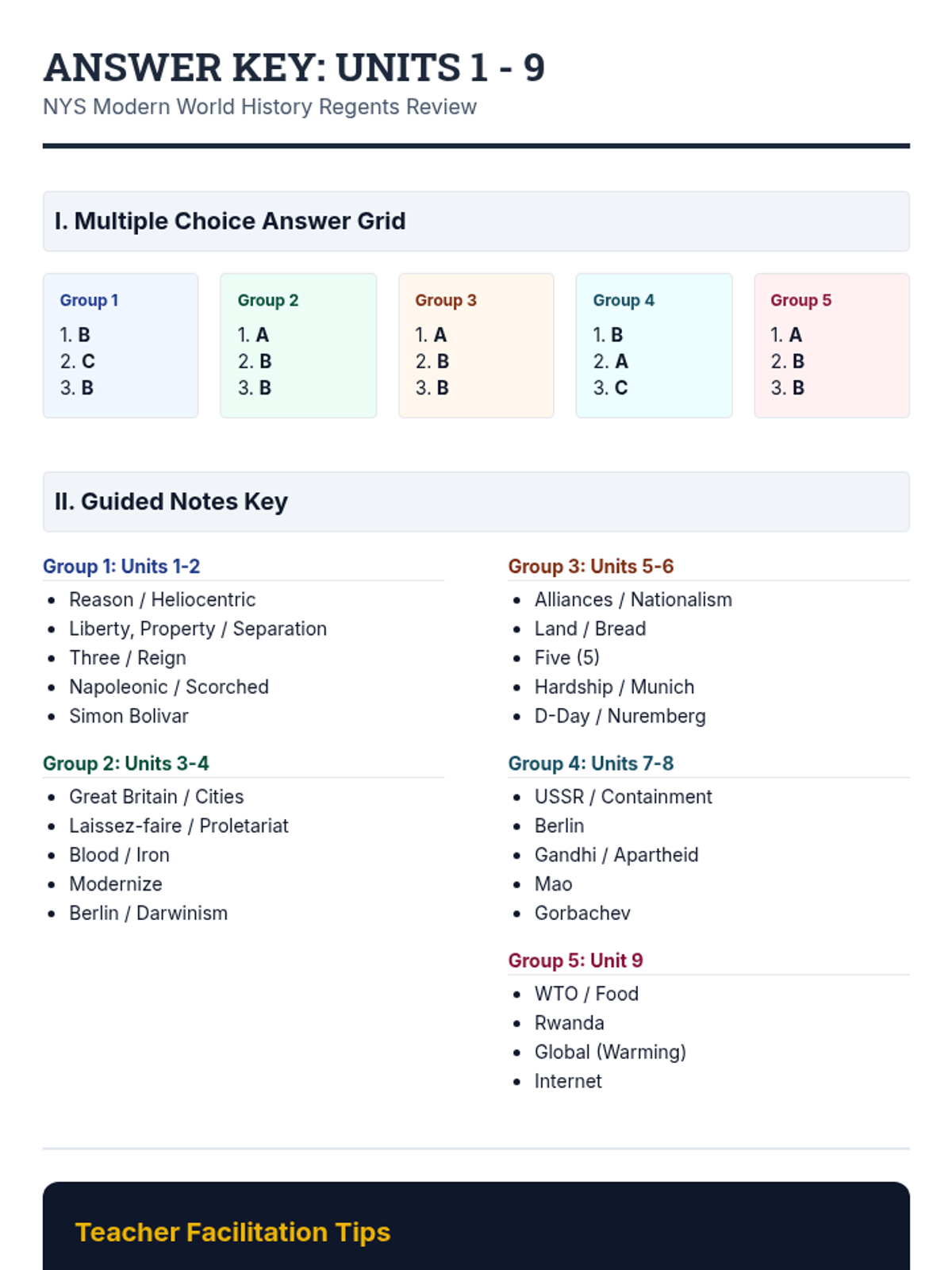
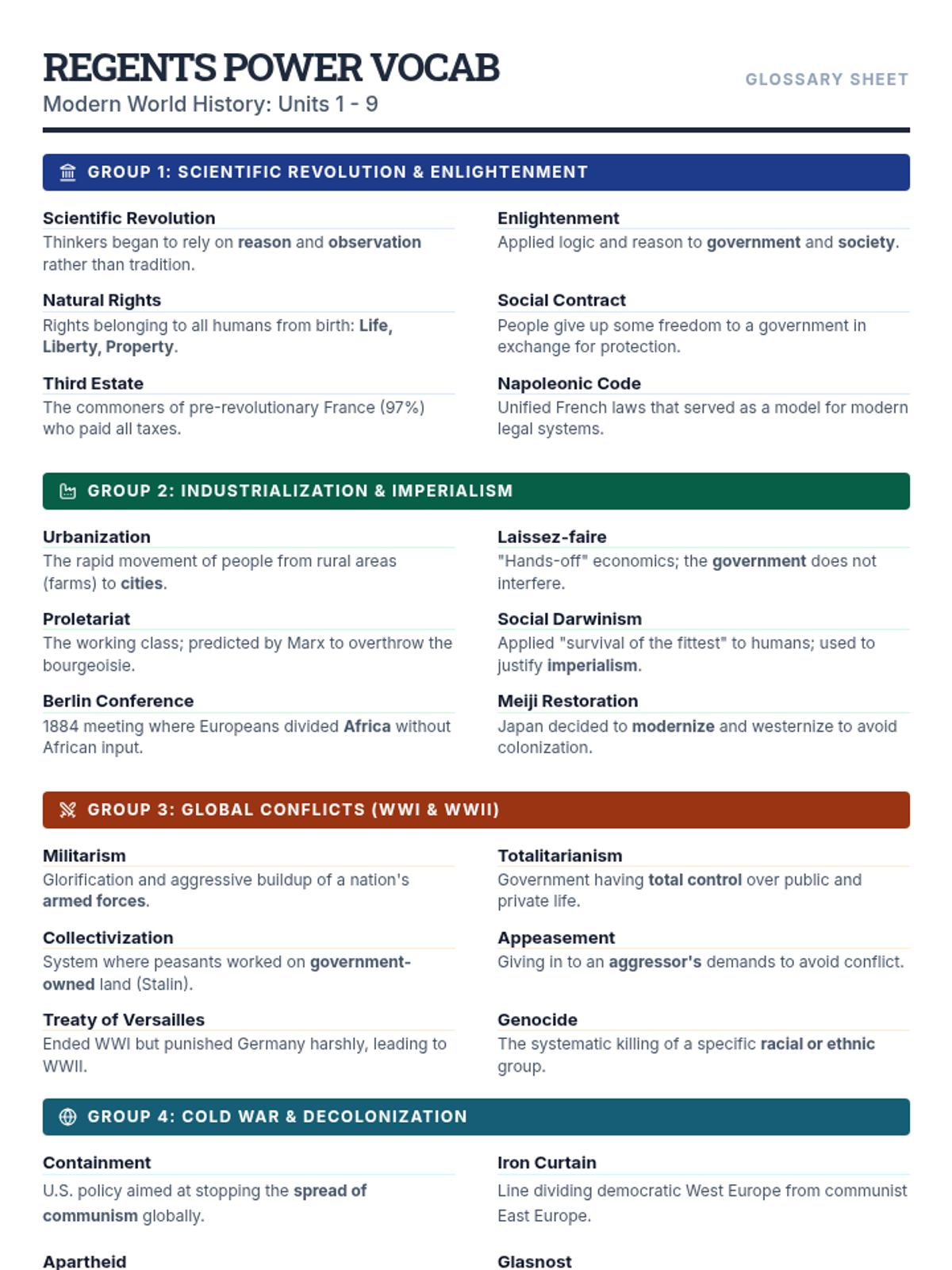
A comprehensive review series covering the New York State Modern World History Regents curriculum, focusing on Units 1 through 9.
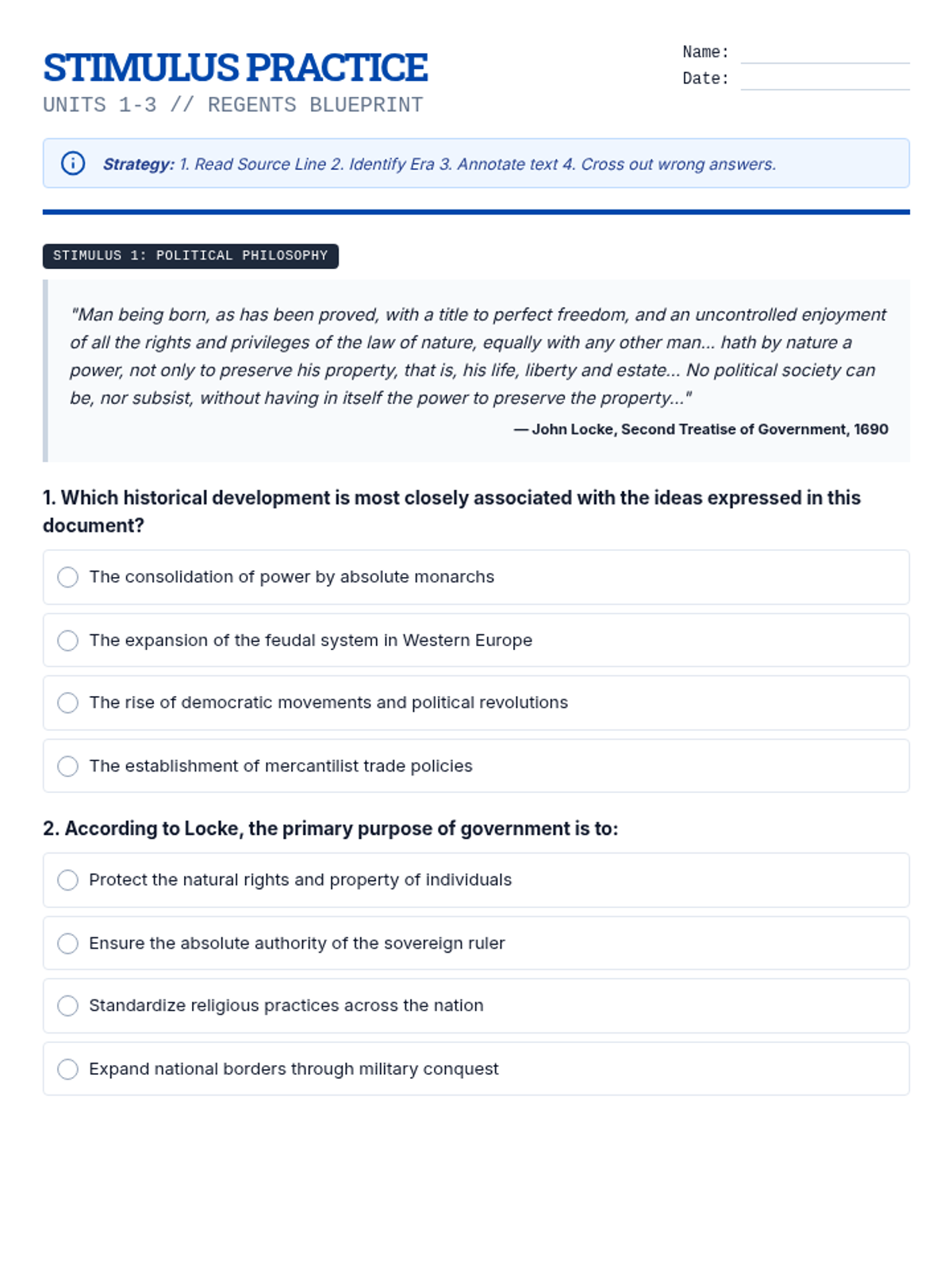
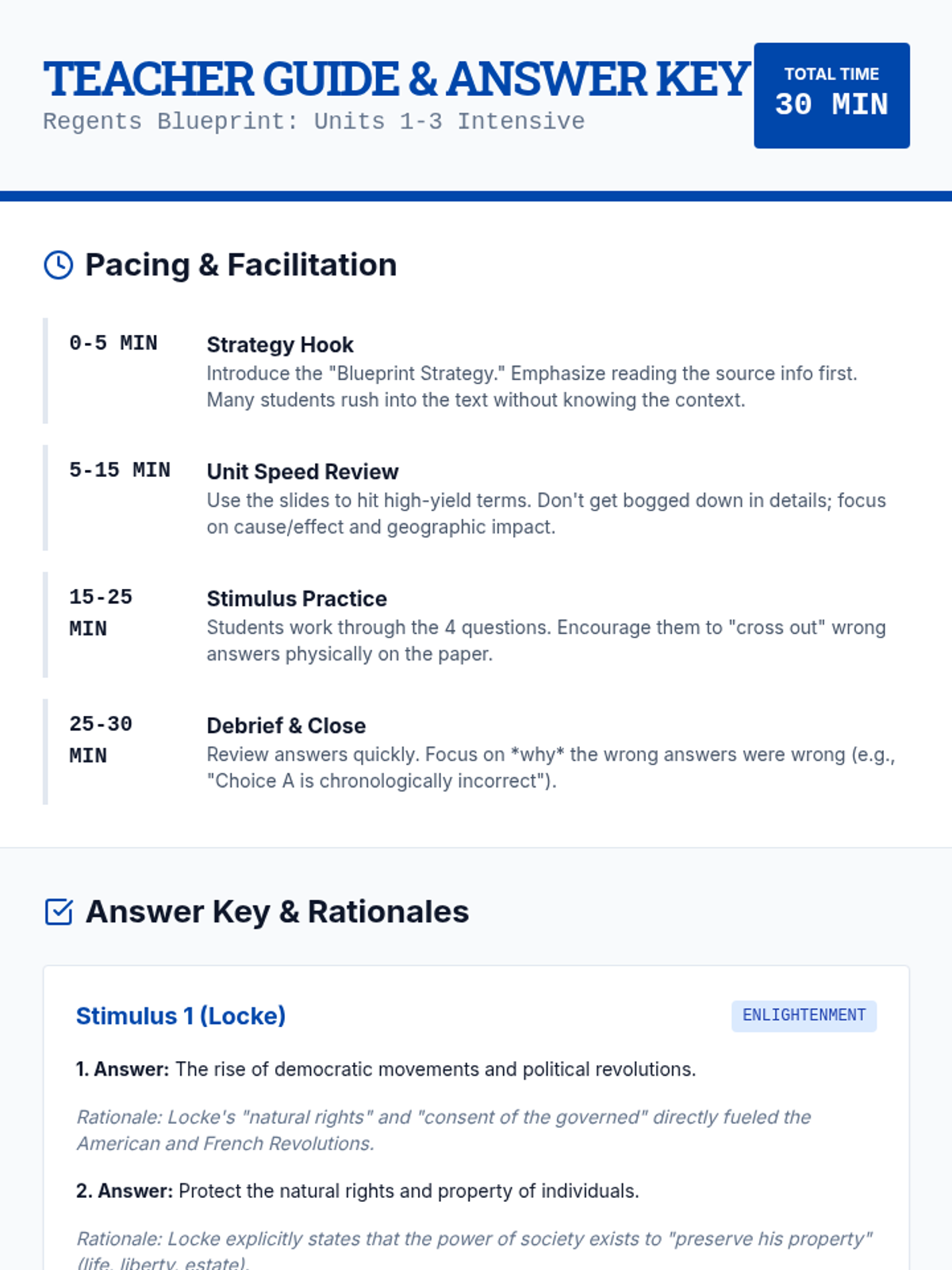
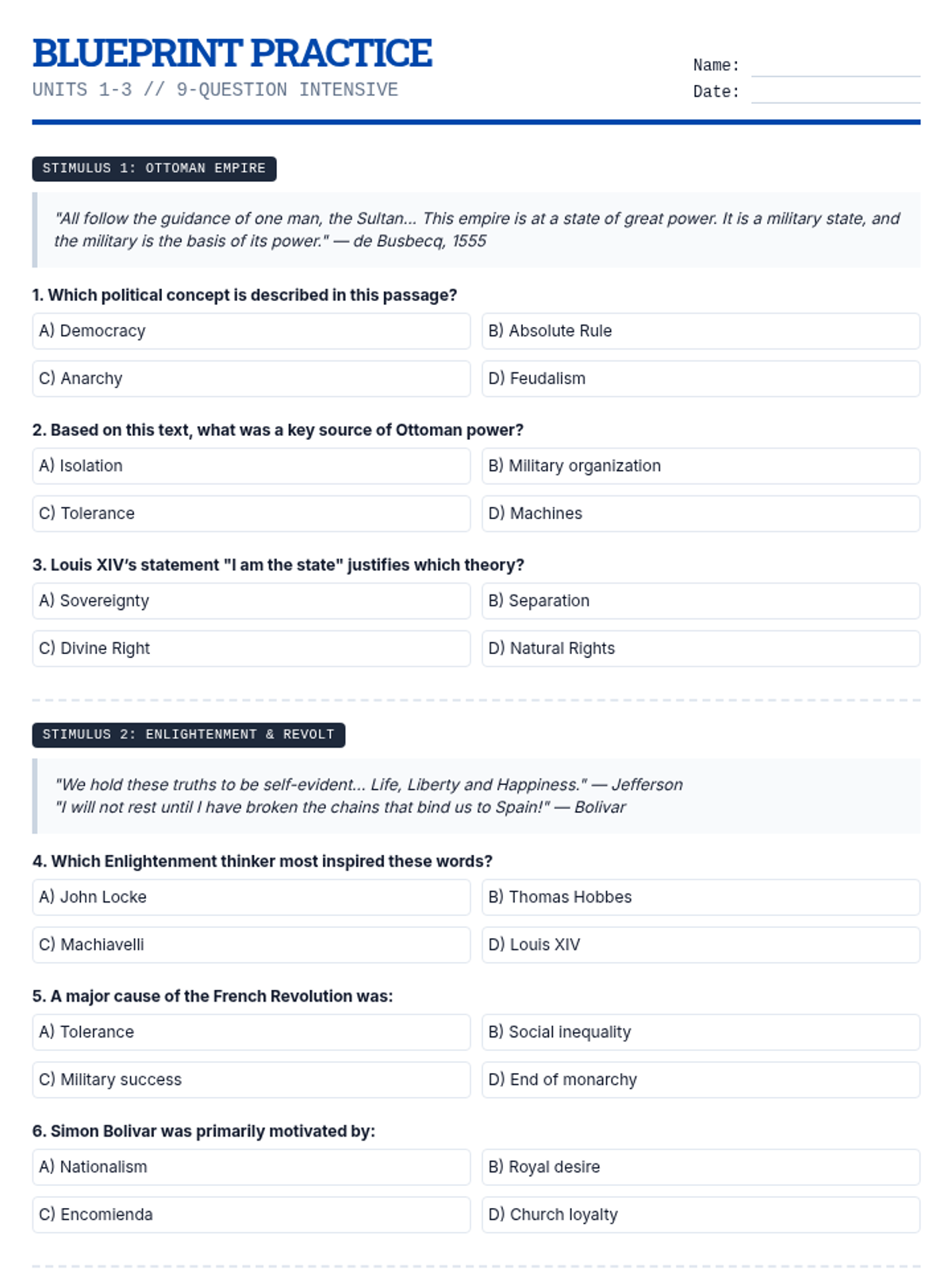
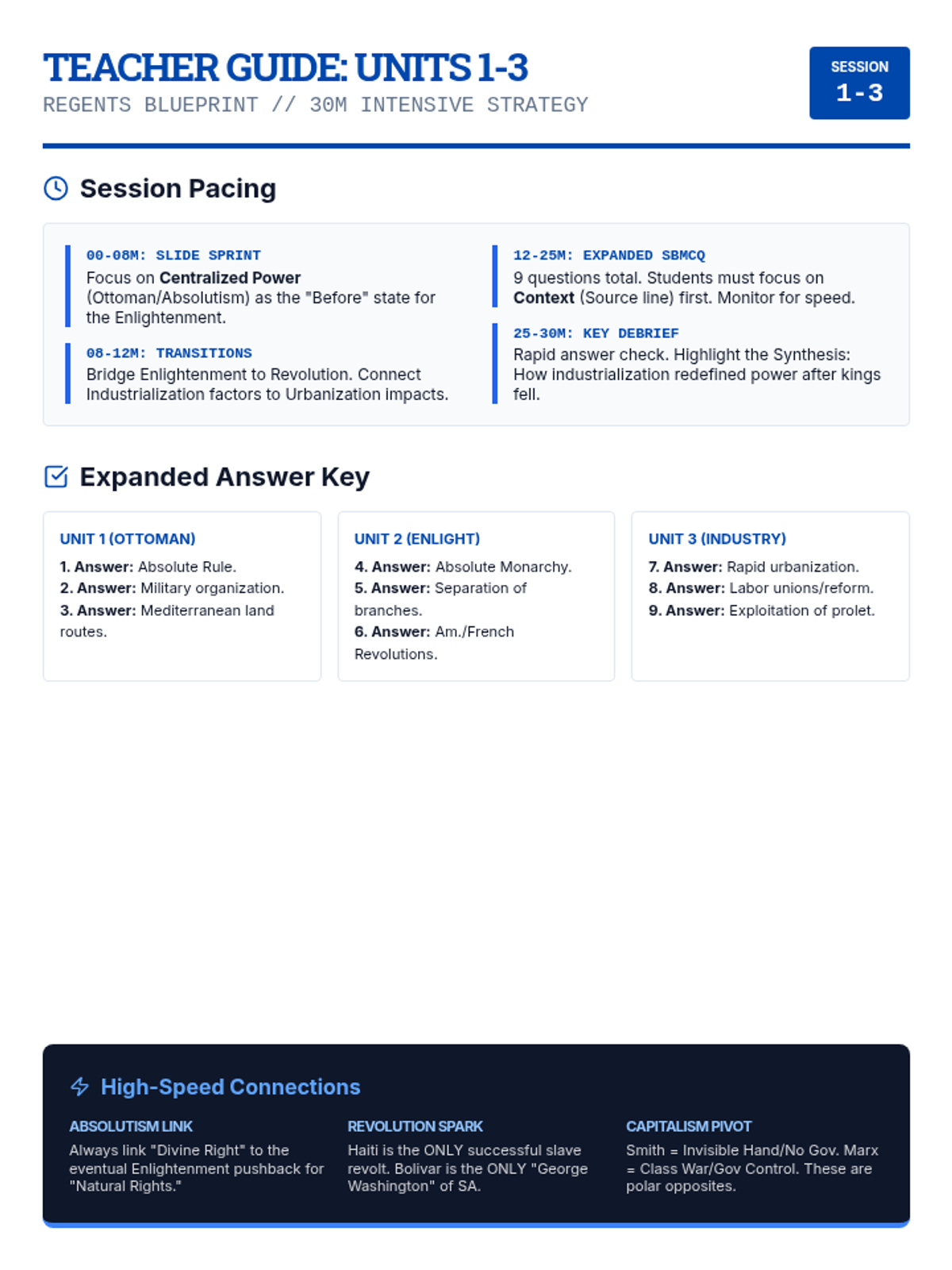
An intensive review series for the Modern World History NYS Regents exam, structured as high-speed 30-minute 'blueprint' sessions focusing on key units and test-taking strategies.
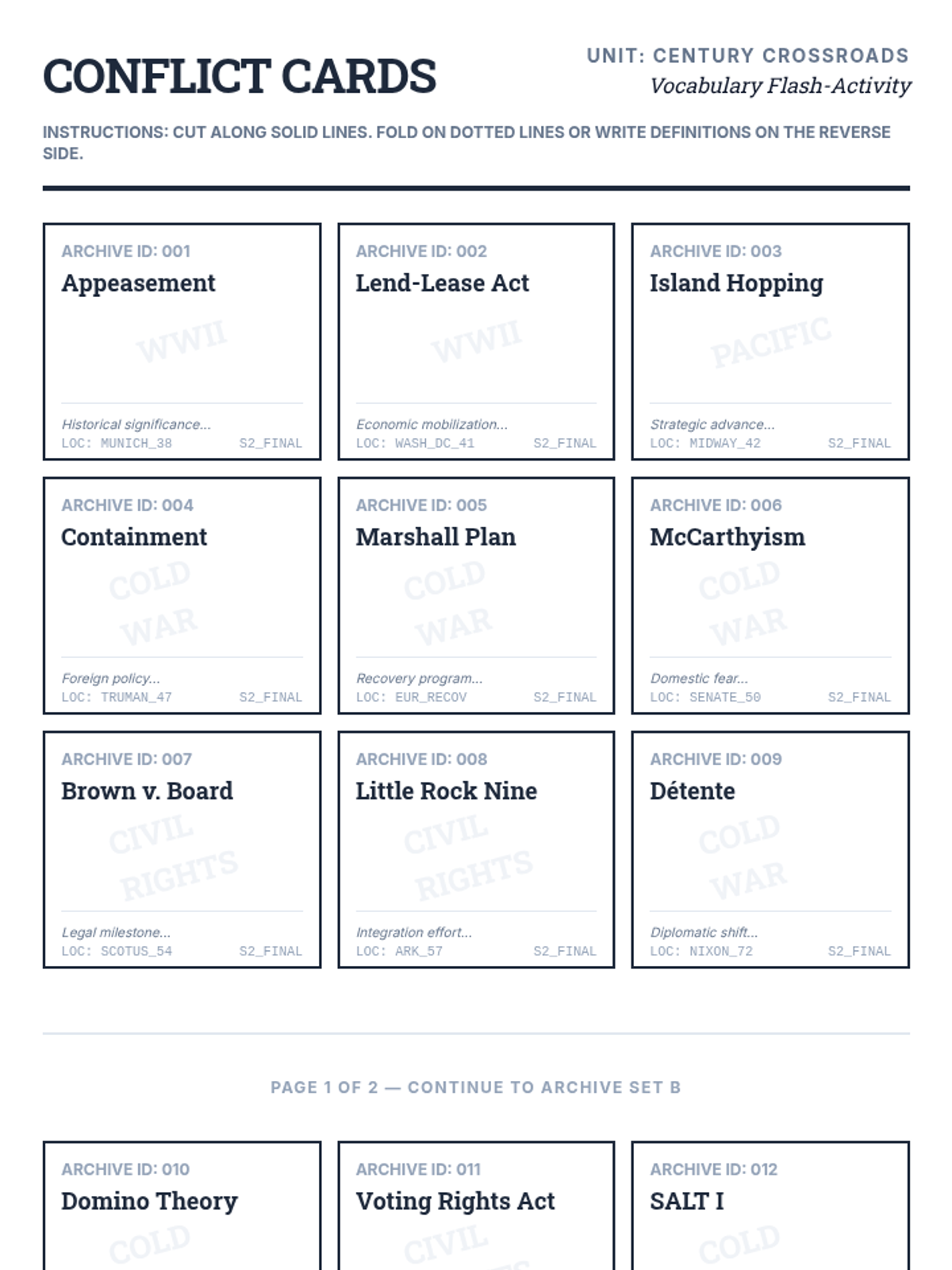
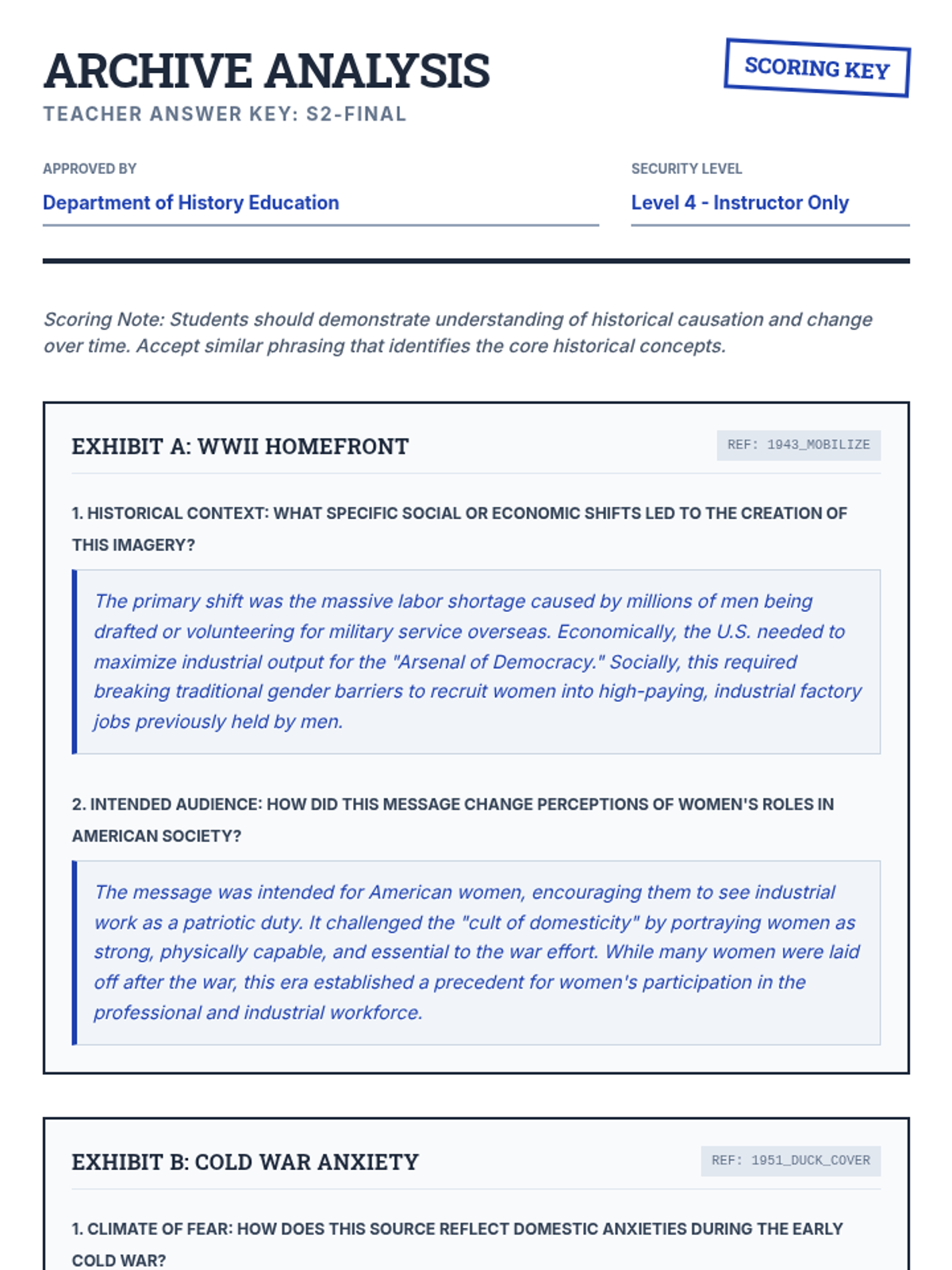
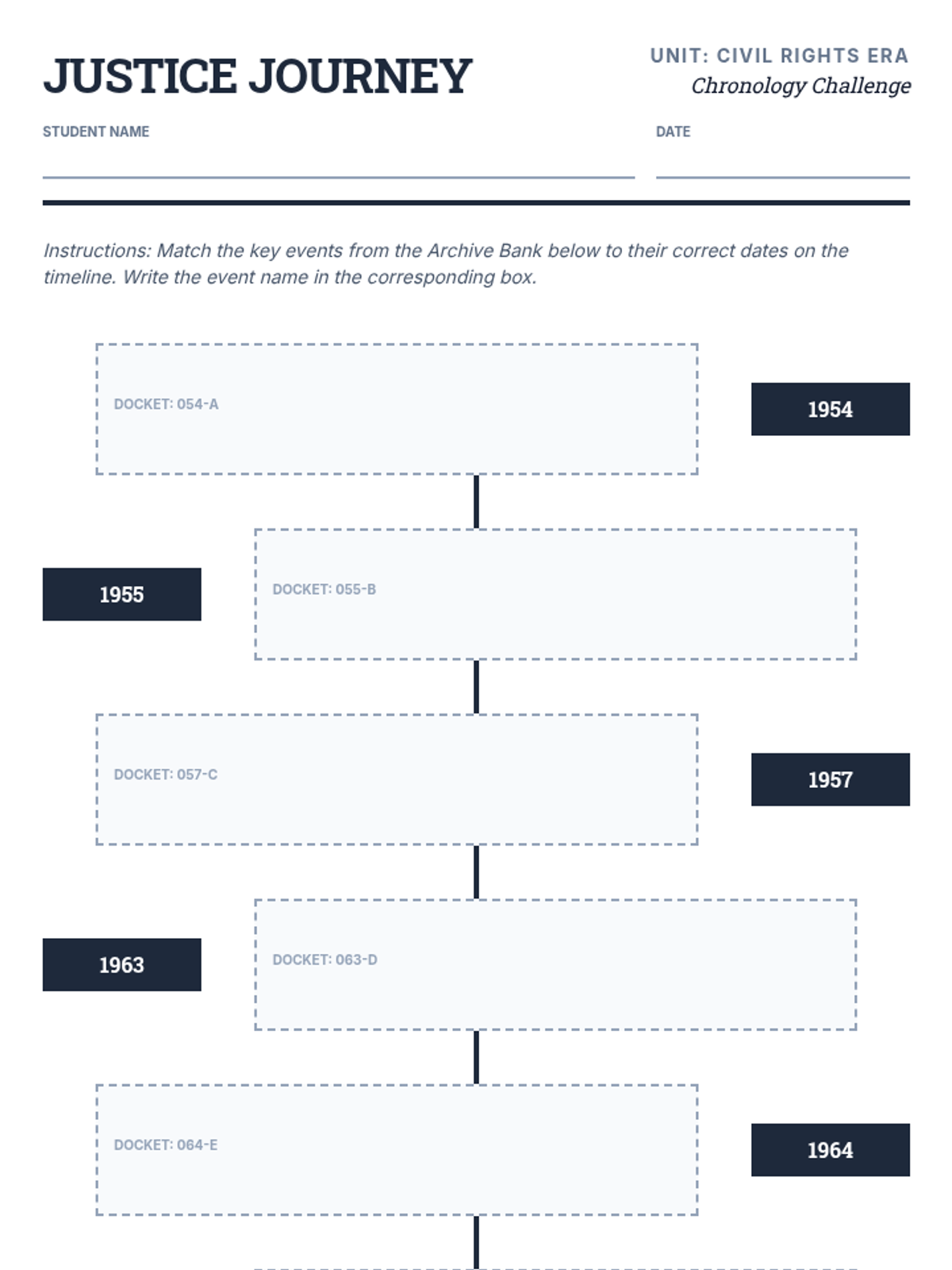
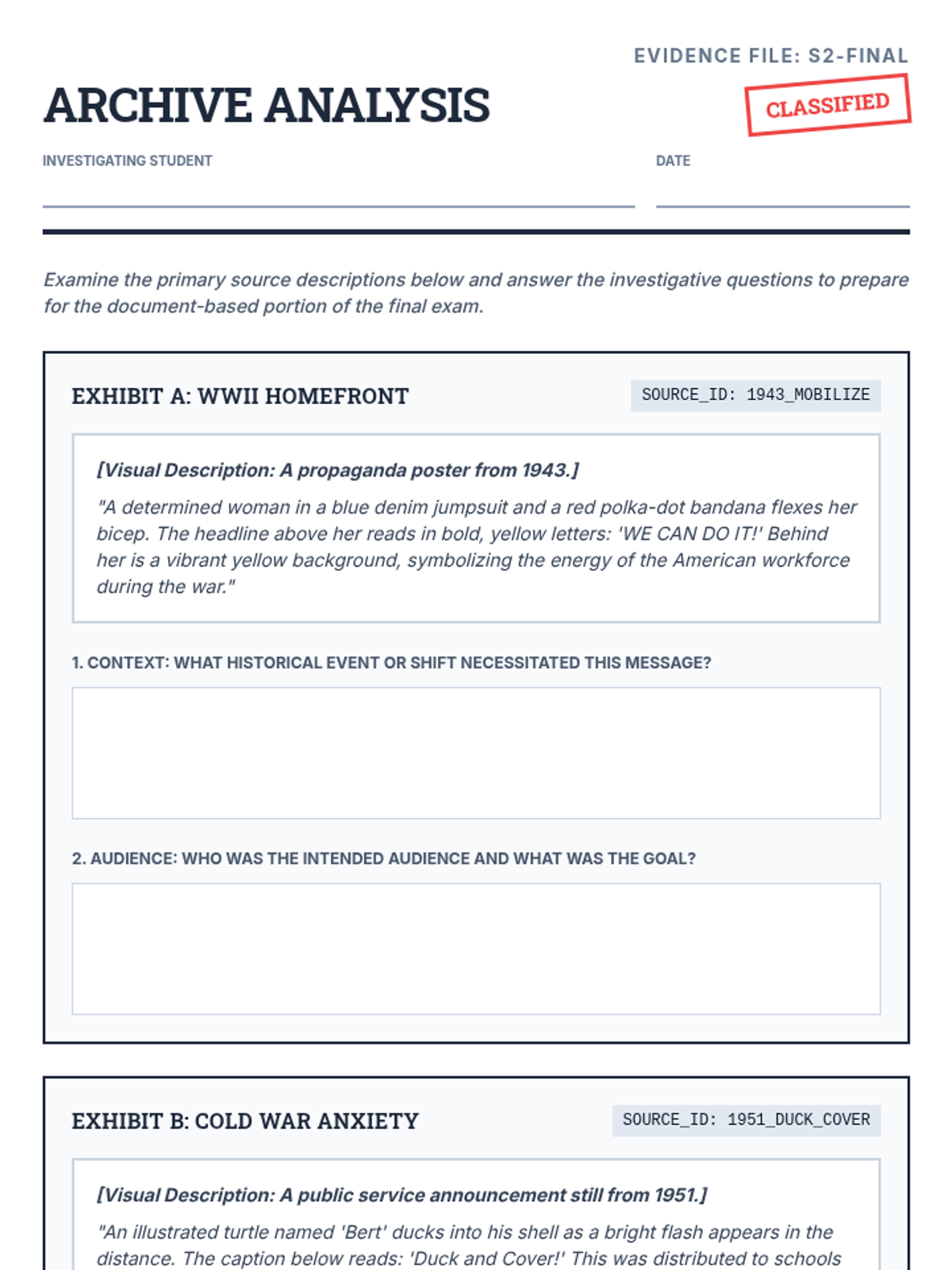
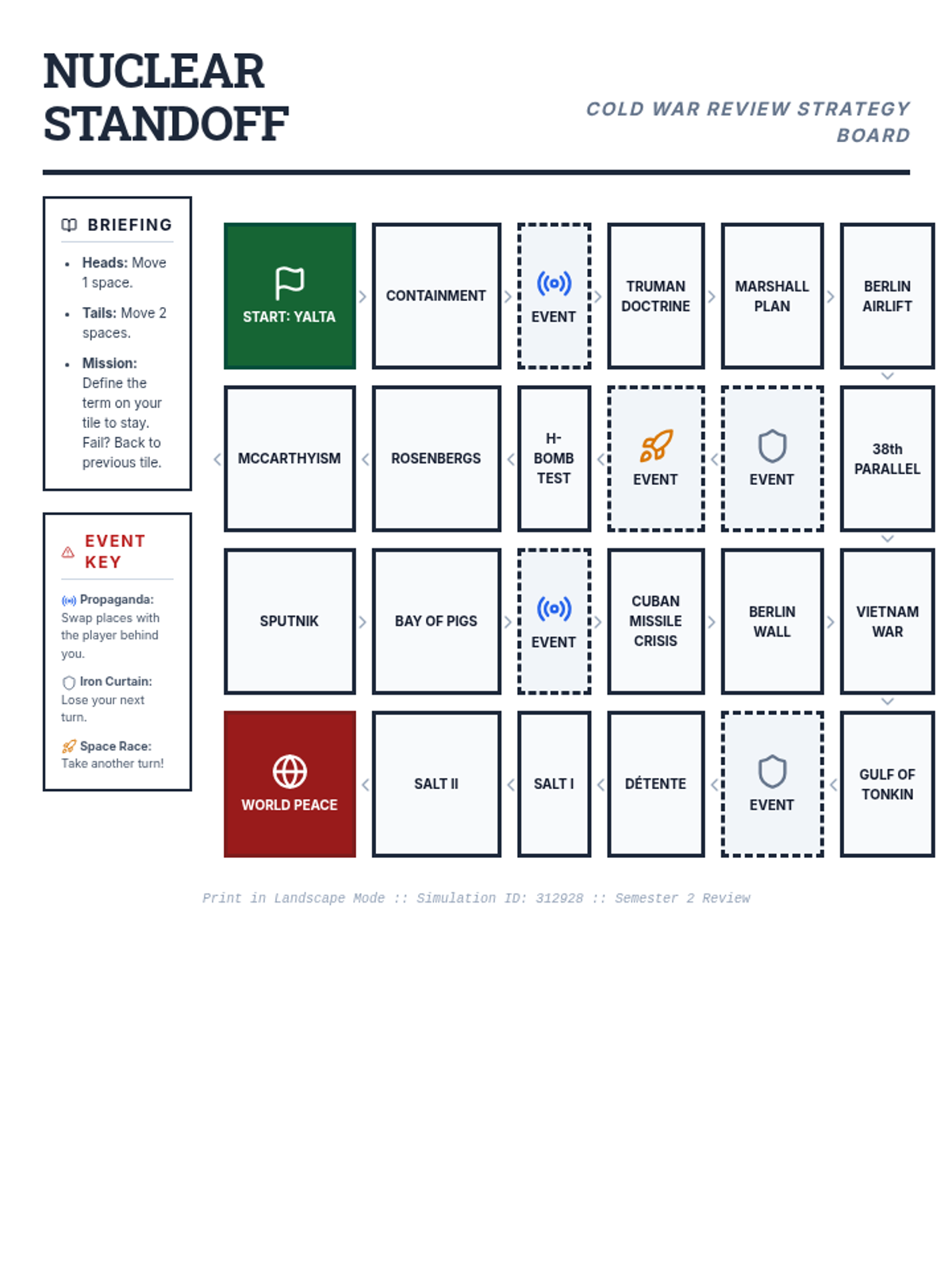
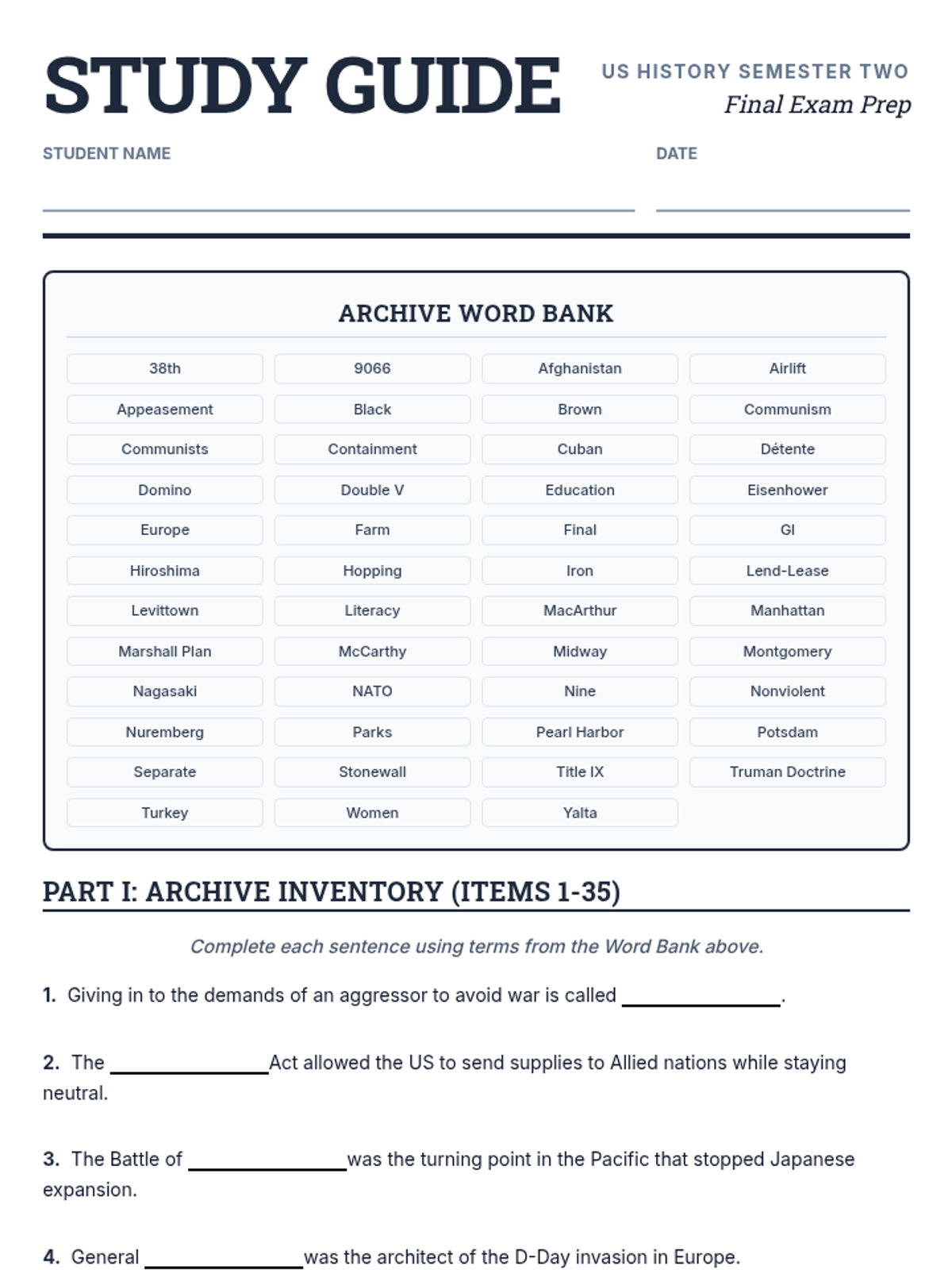
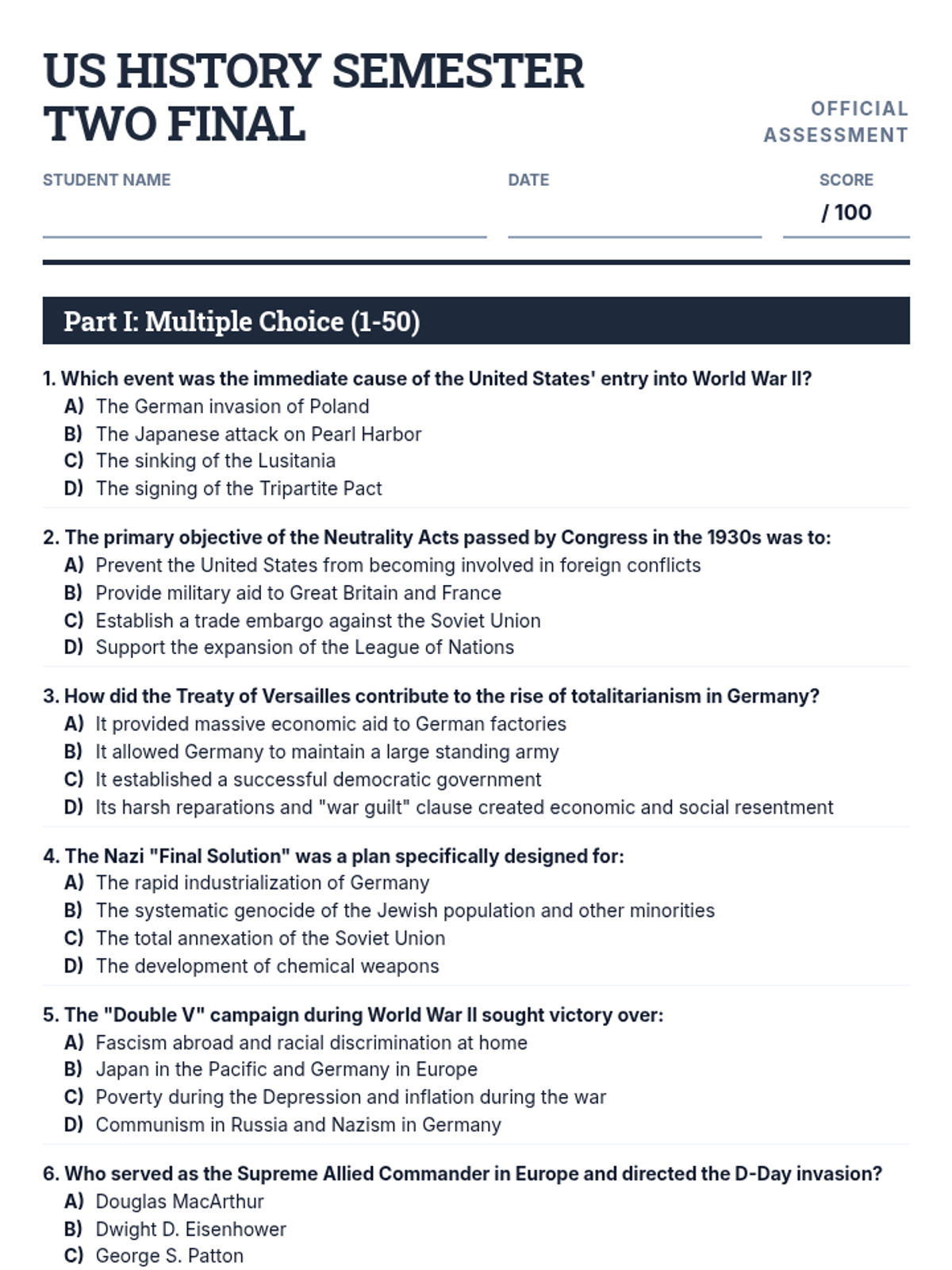
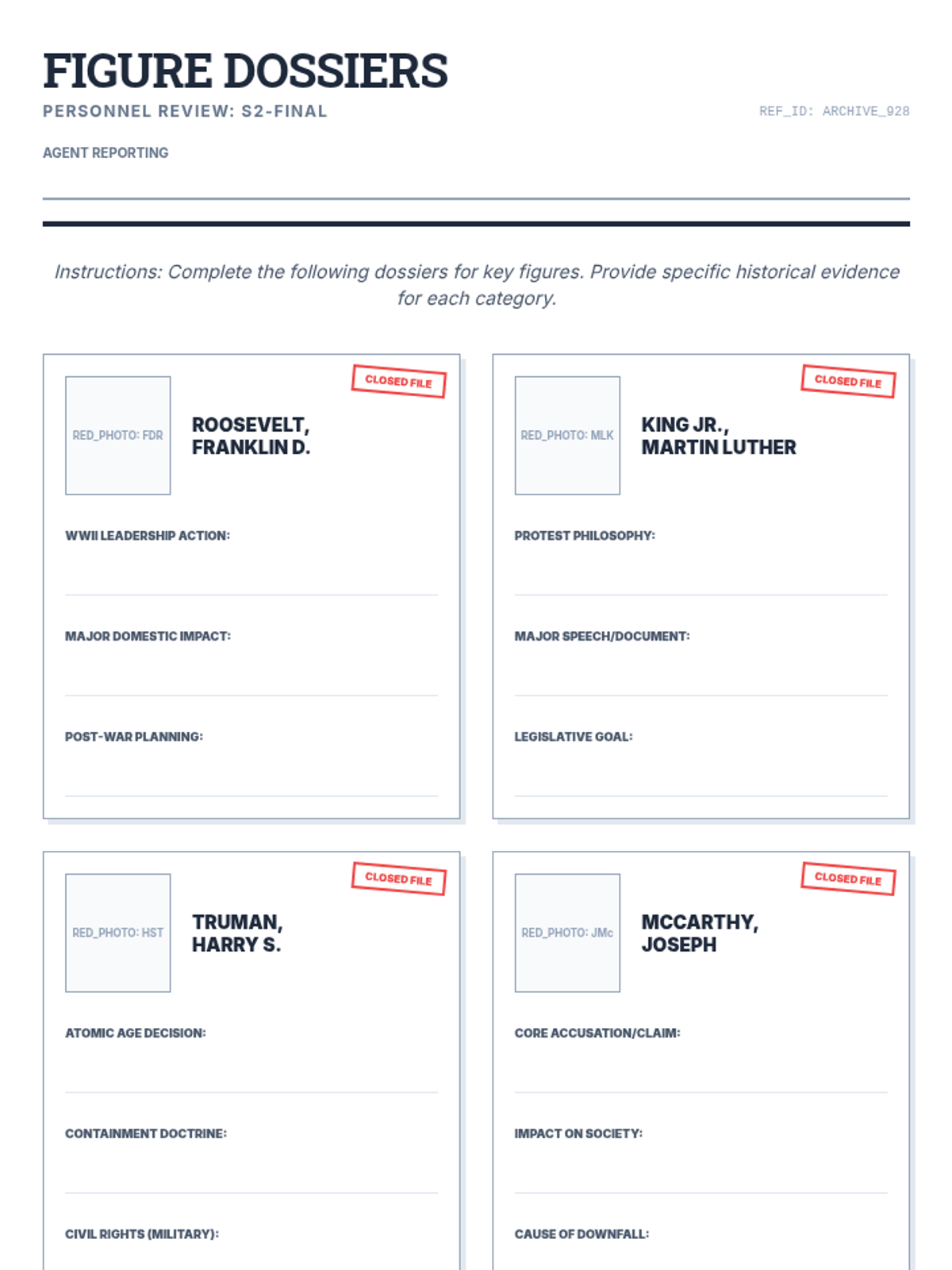
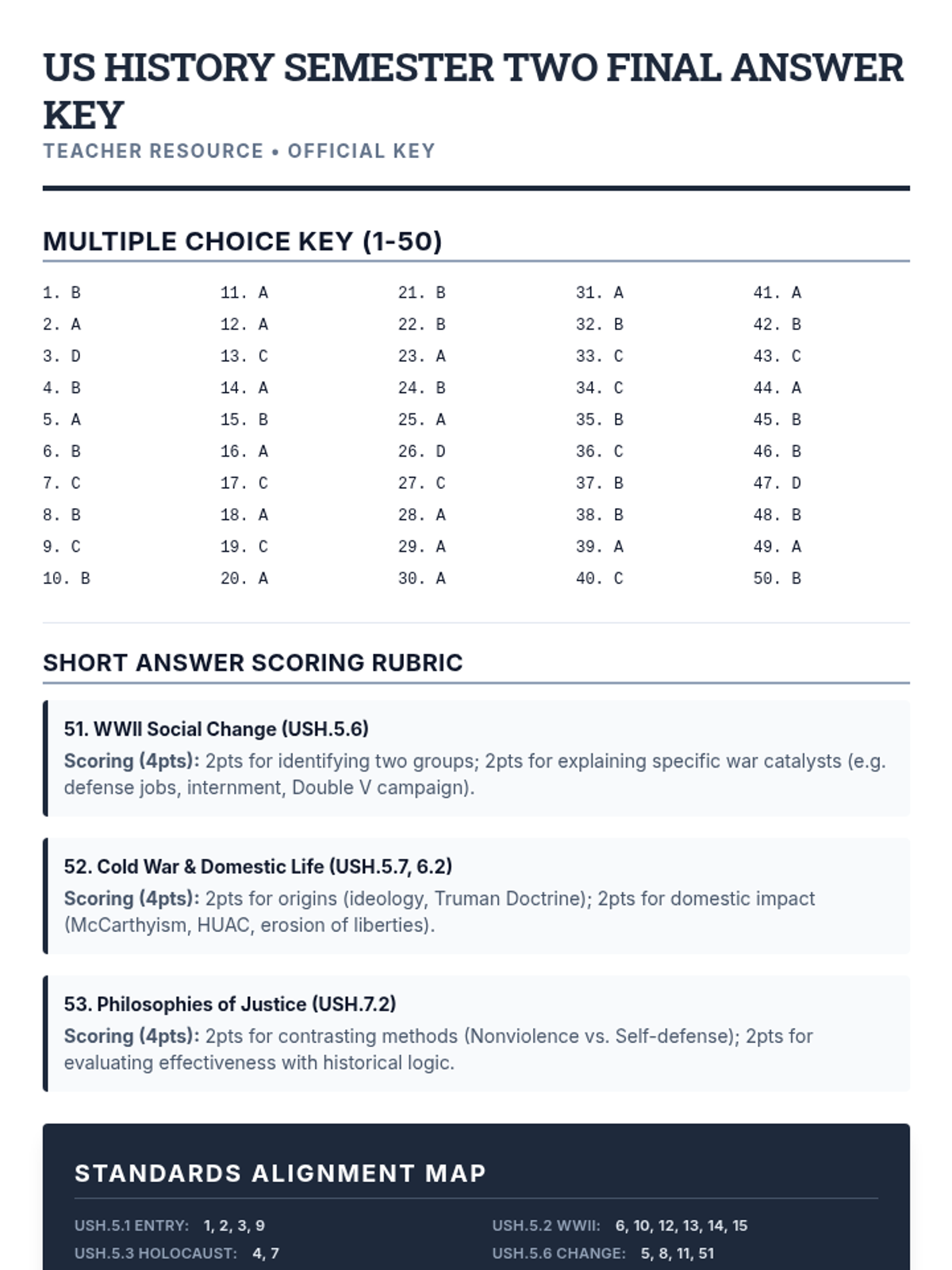
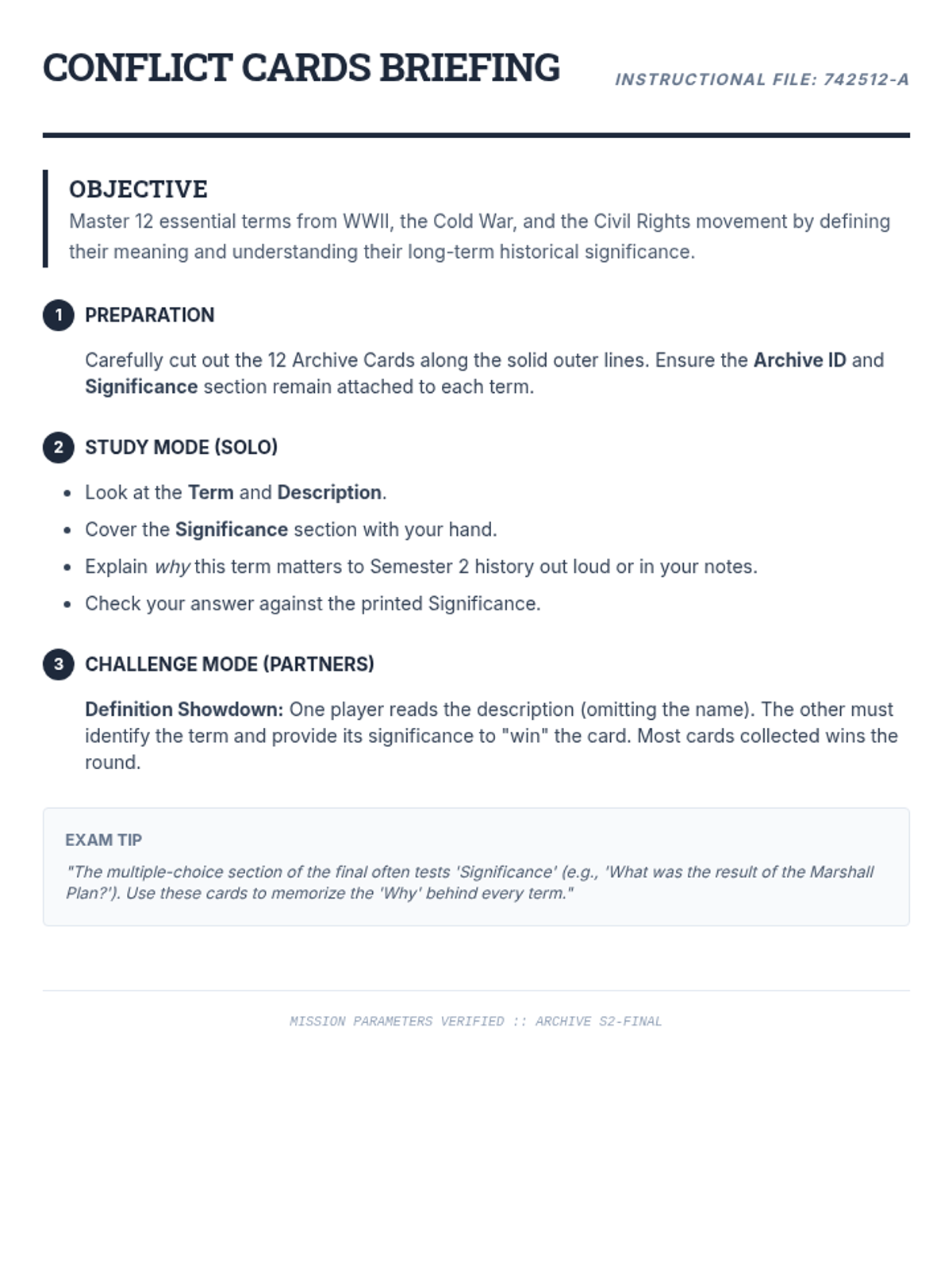
A comprehensive assessment sequence covering the pivotal moments of 20th-century US history, from the build-up to World War II through the height of the Cold War and the diverse Civil Rights movements.
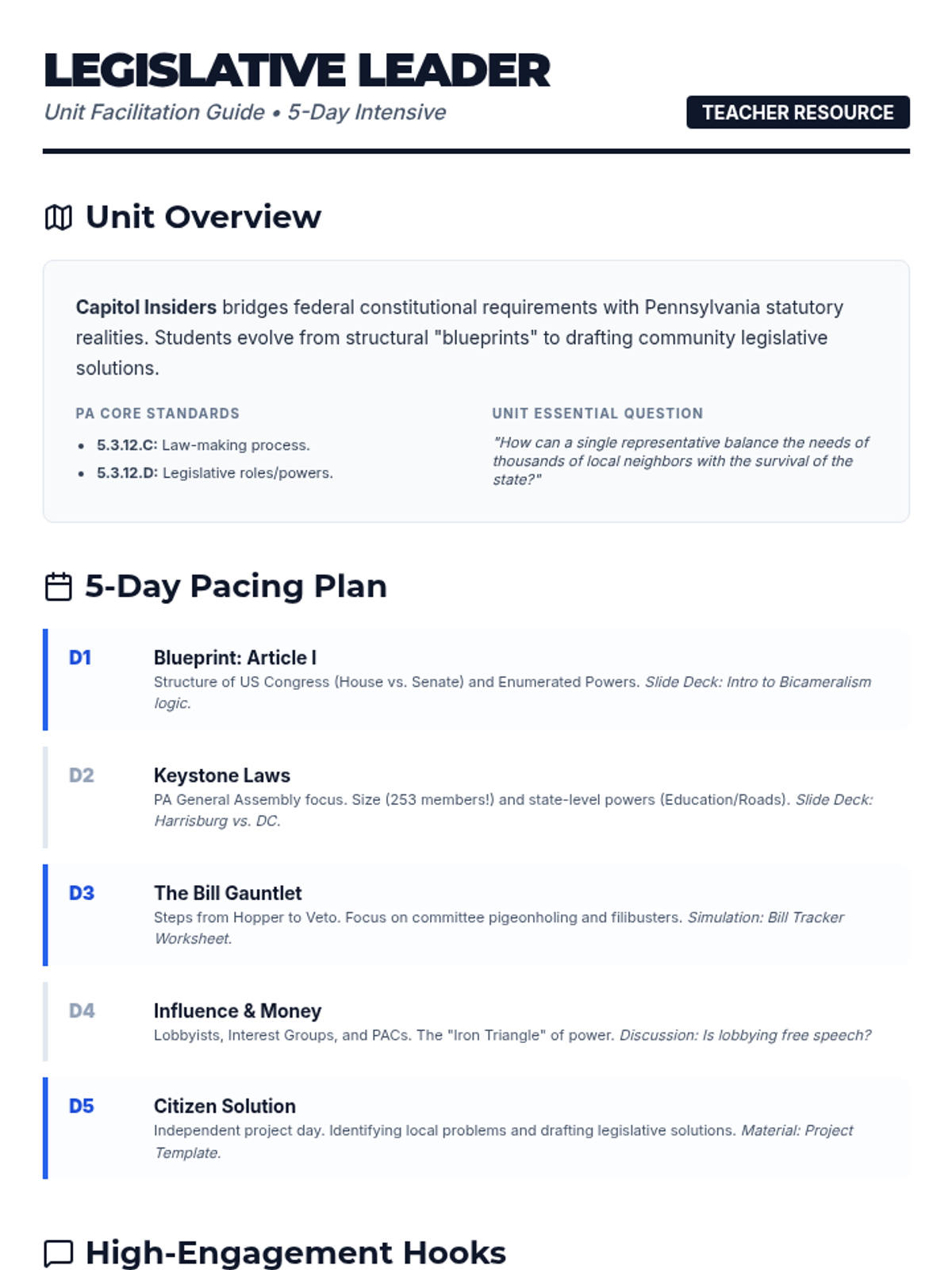
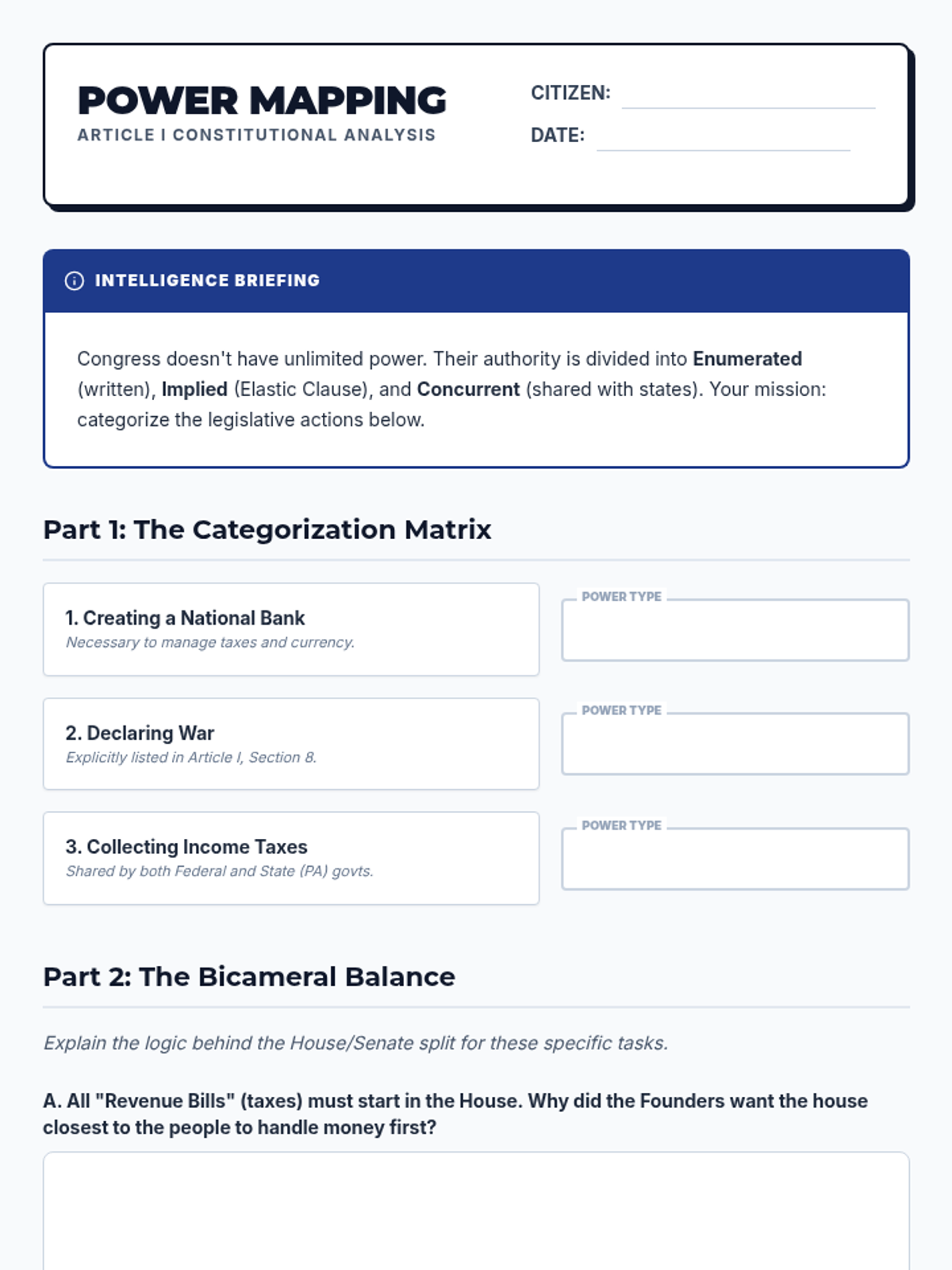
A comprehensive one-week unit on the Legislative Branch tailored for Pennsylvania high school students. The unit covers the structure of the US Congress and the PA General Assembly, the law-making process, and the influence of interest groups, culminating in a simple, independent legislative proposal project.
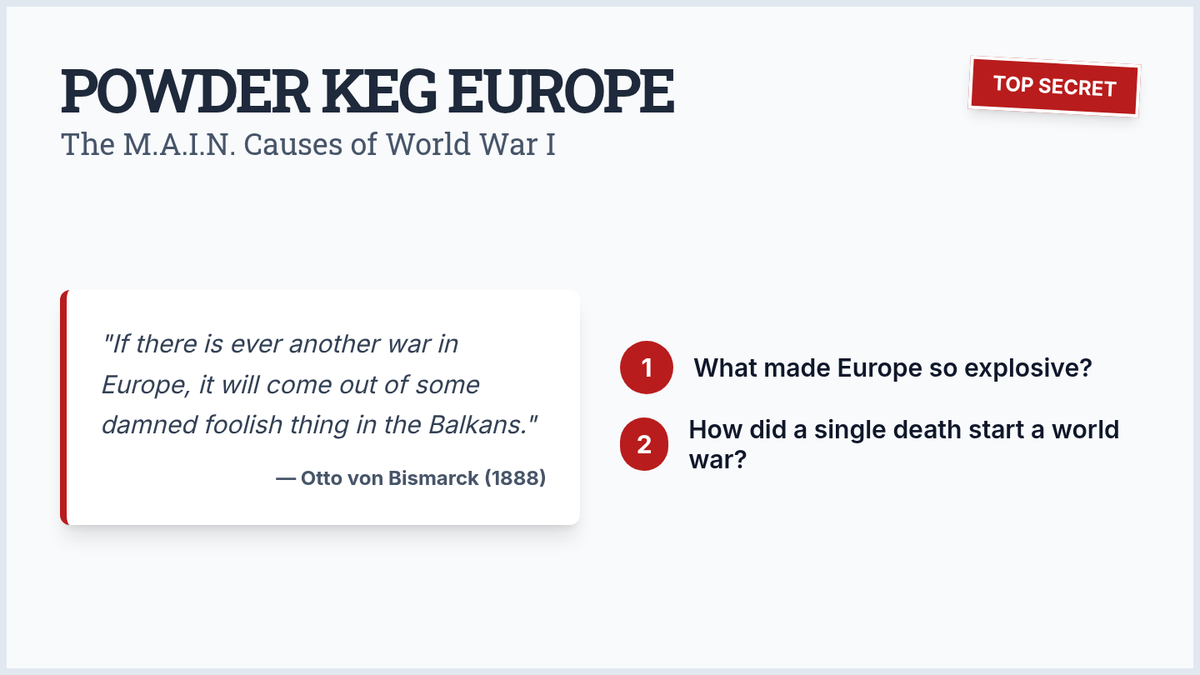
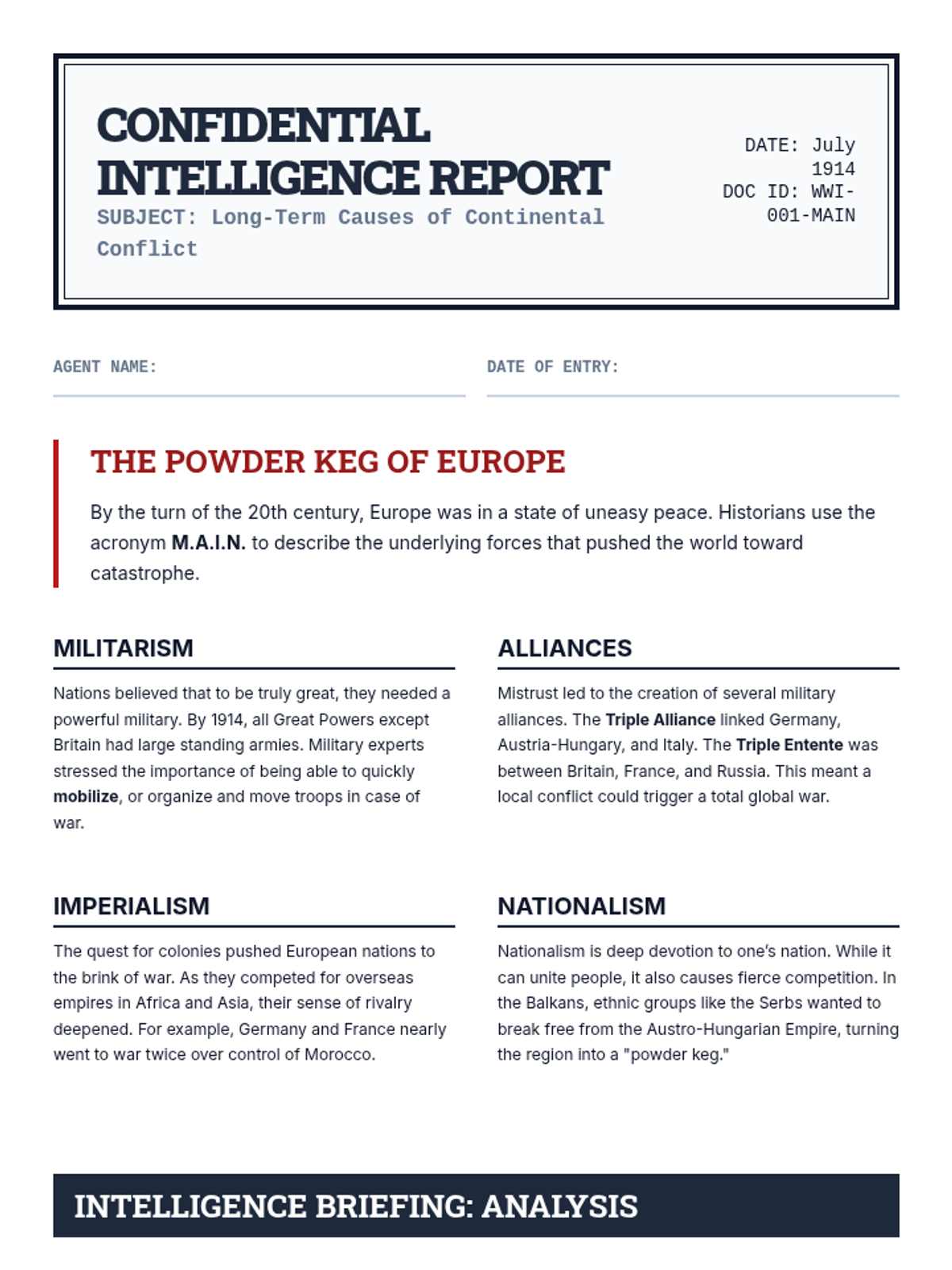
A 4-day unit exploring the long-term M.A.I.N. causes of World War I, the immediate spark of the conflict, the power of propaganda, and the diplomatic shifts that brought the United States into the war.
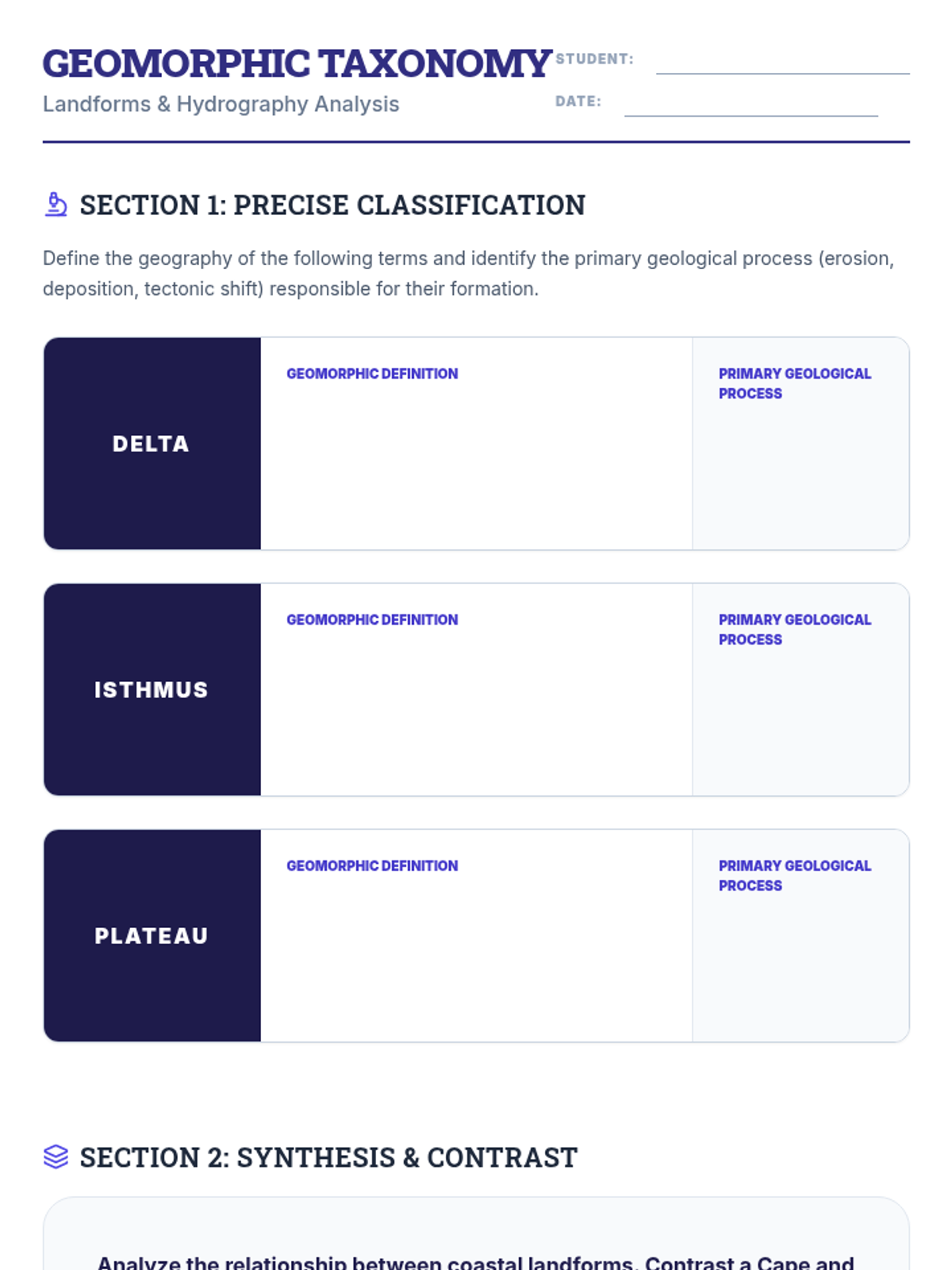
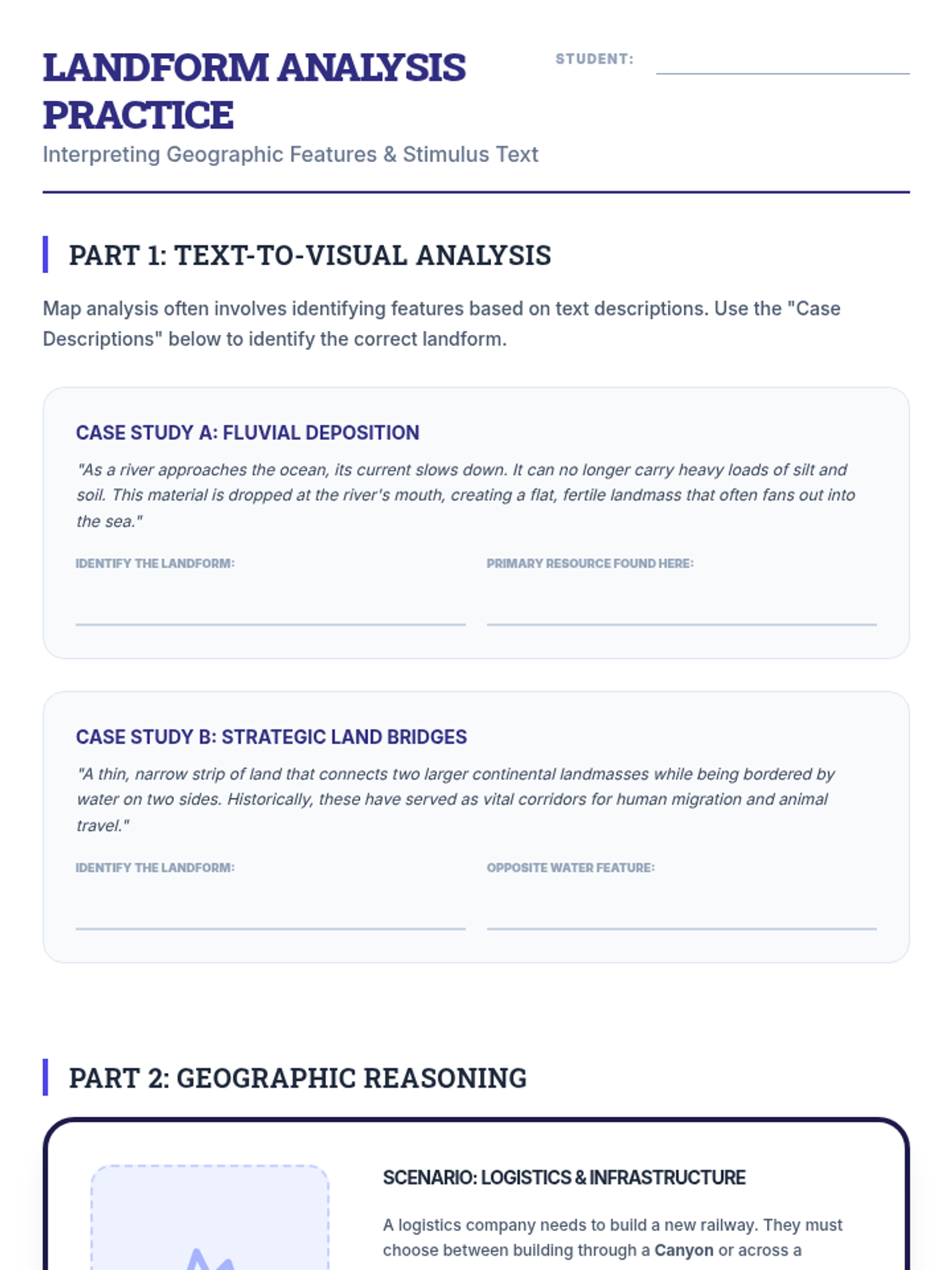
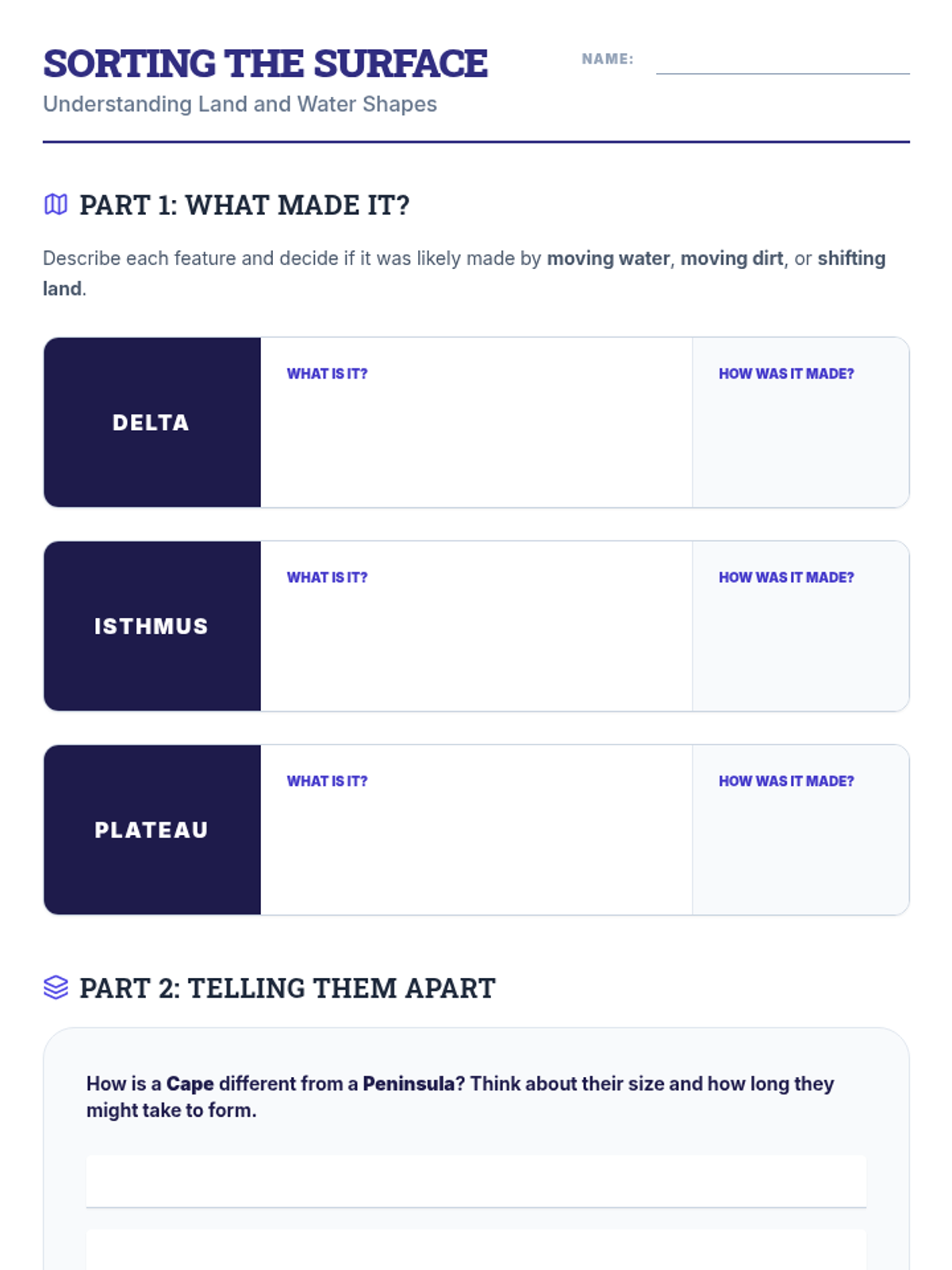
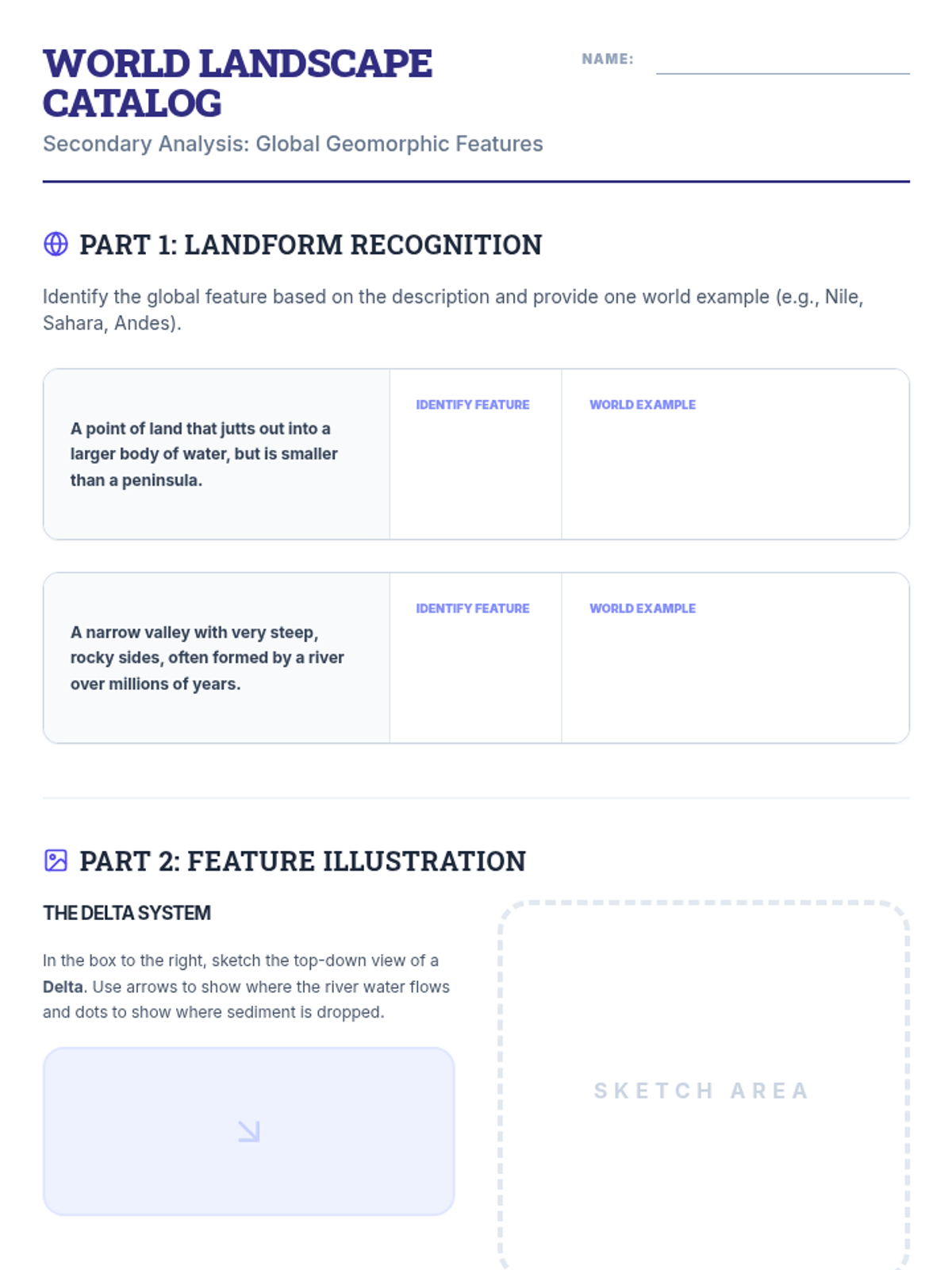
A global geography unit focusing on the identification and analysis of the Earth's diverse landscapes. Students will master map-reading skills including elevation, contour lines, and global physical regions to understand how geography shapes our world.
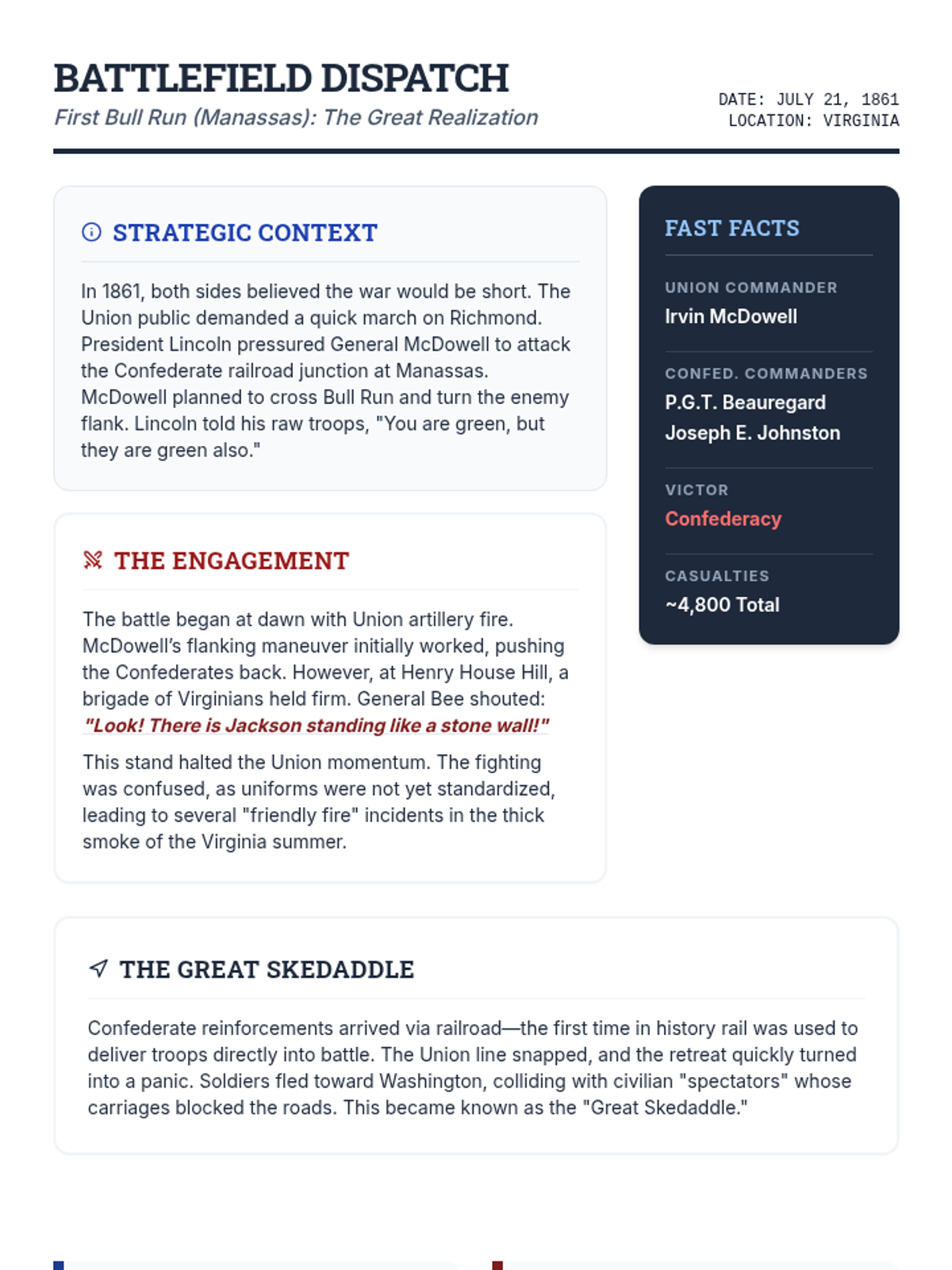
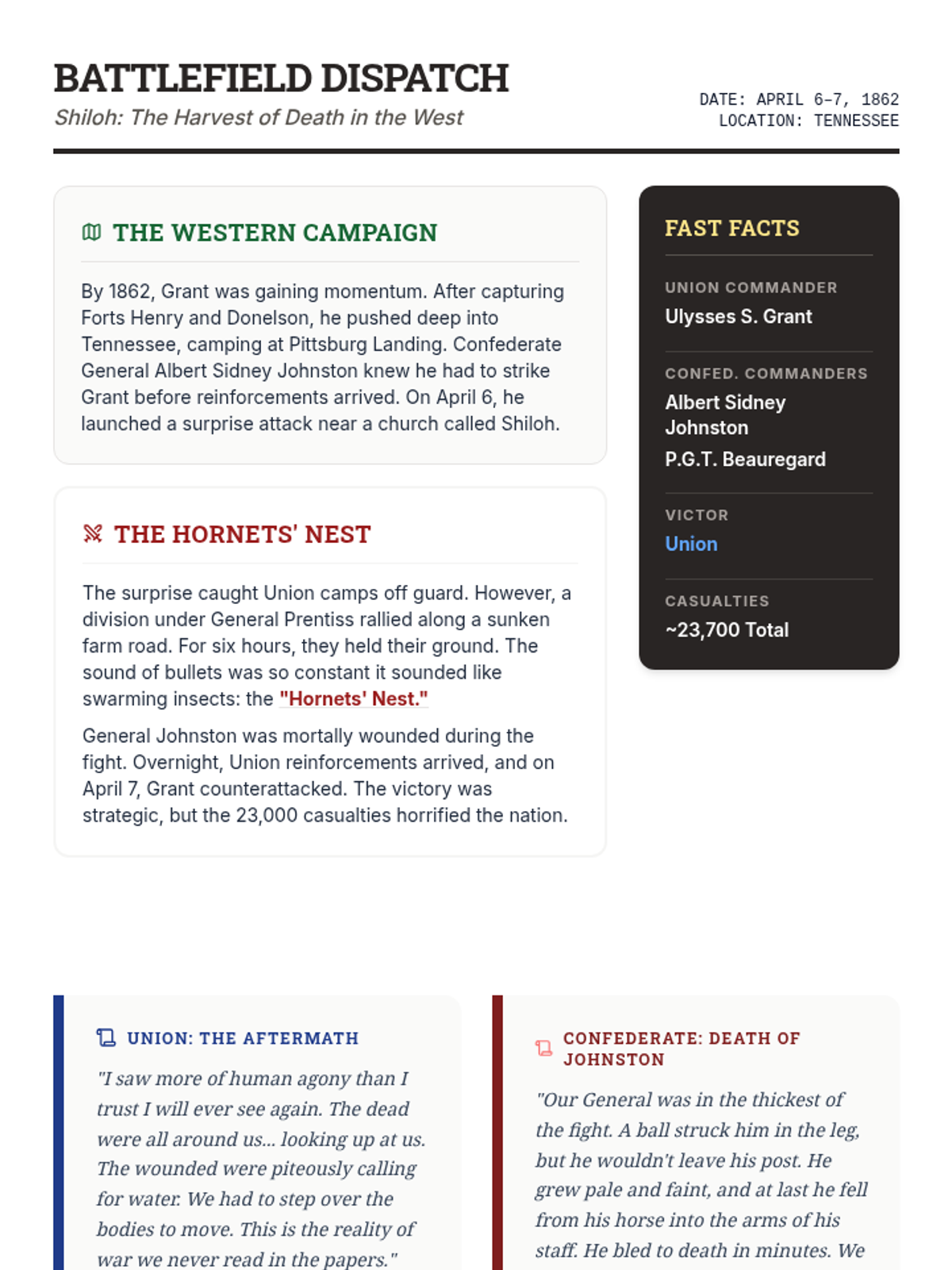
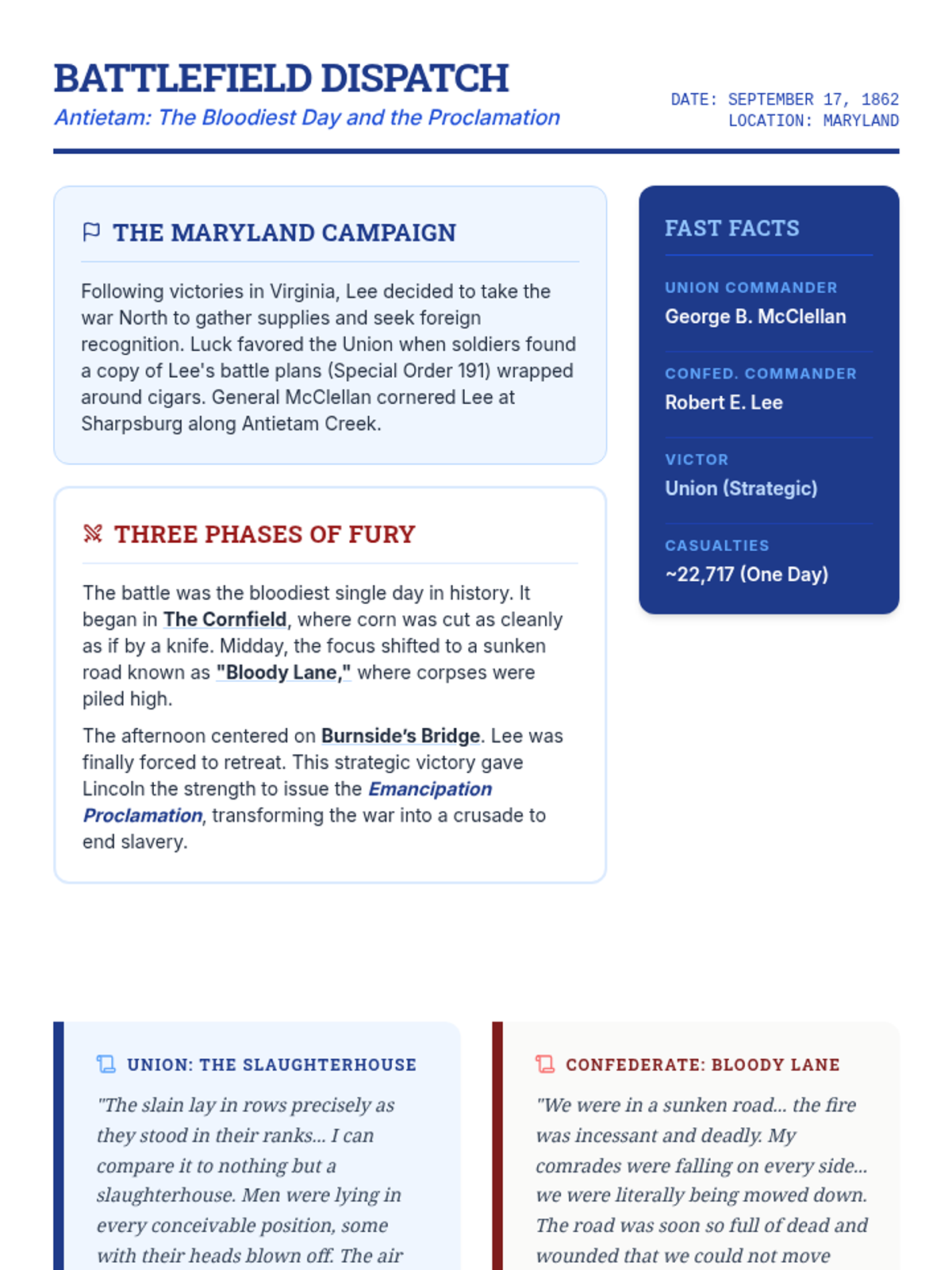
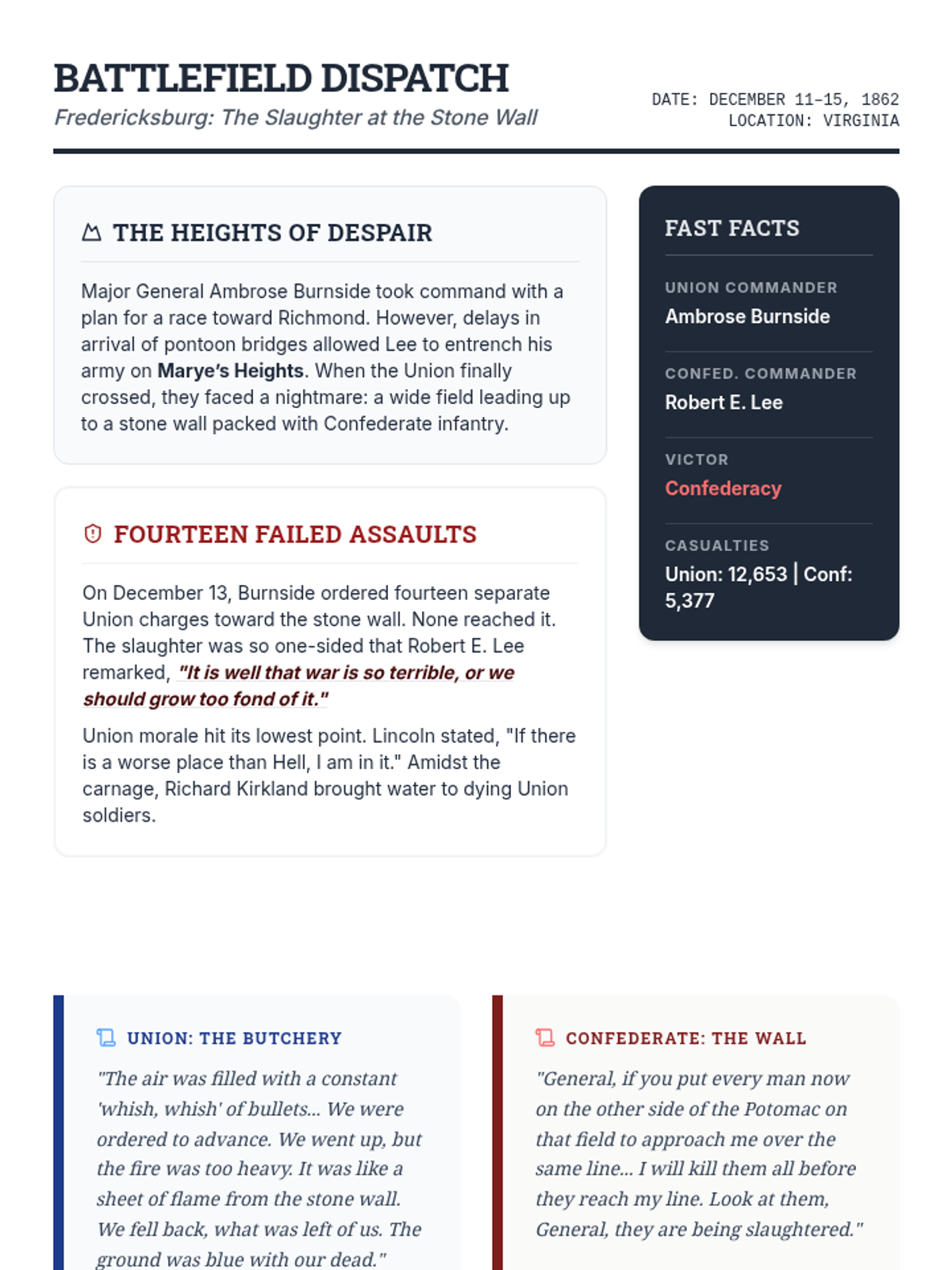
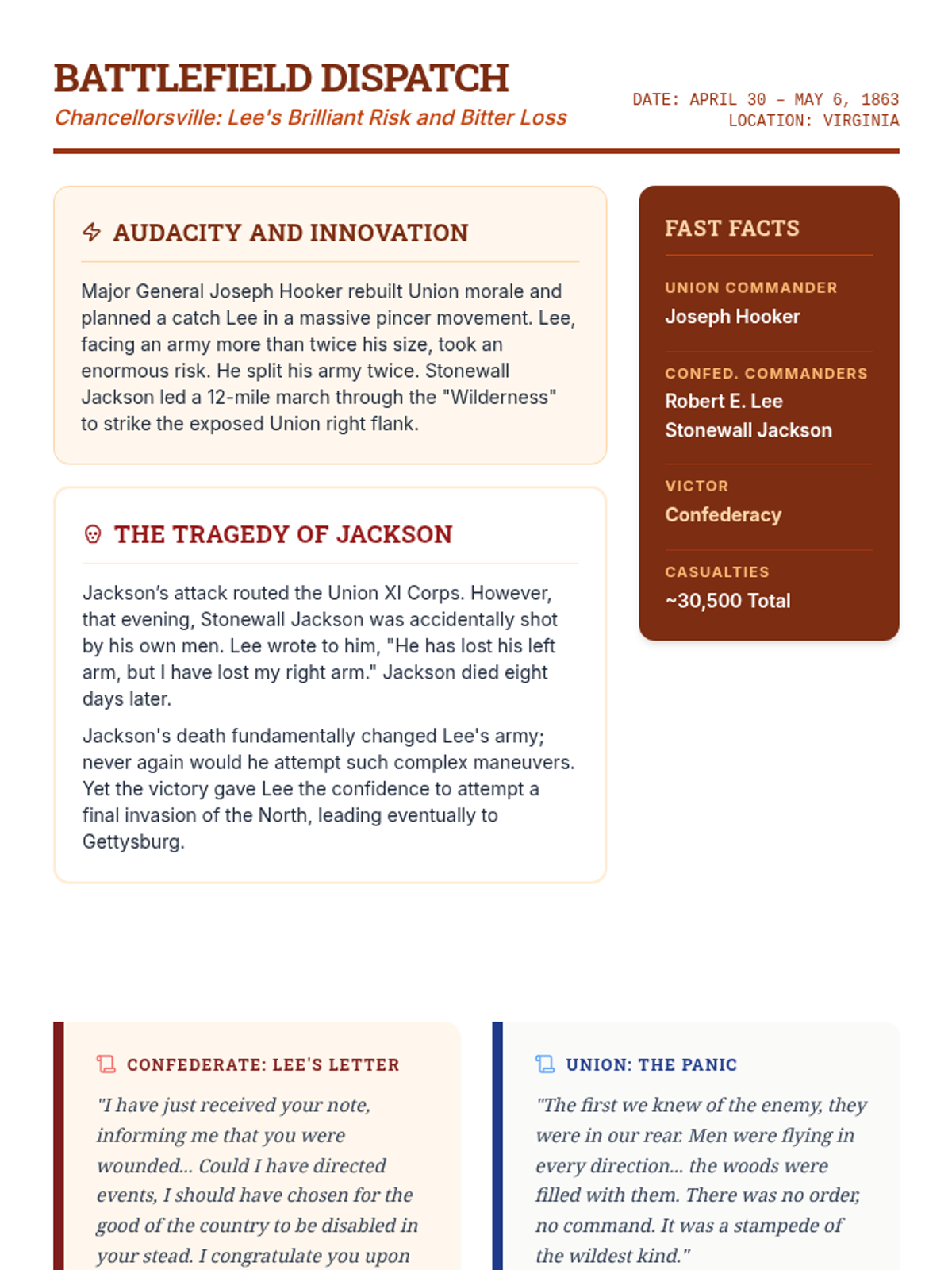
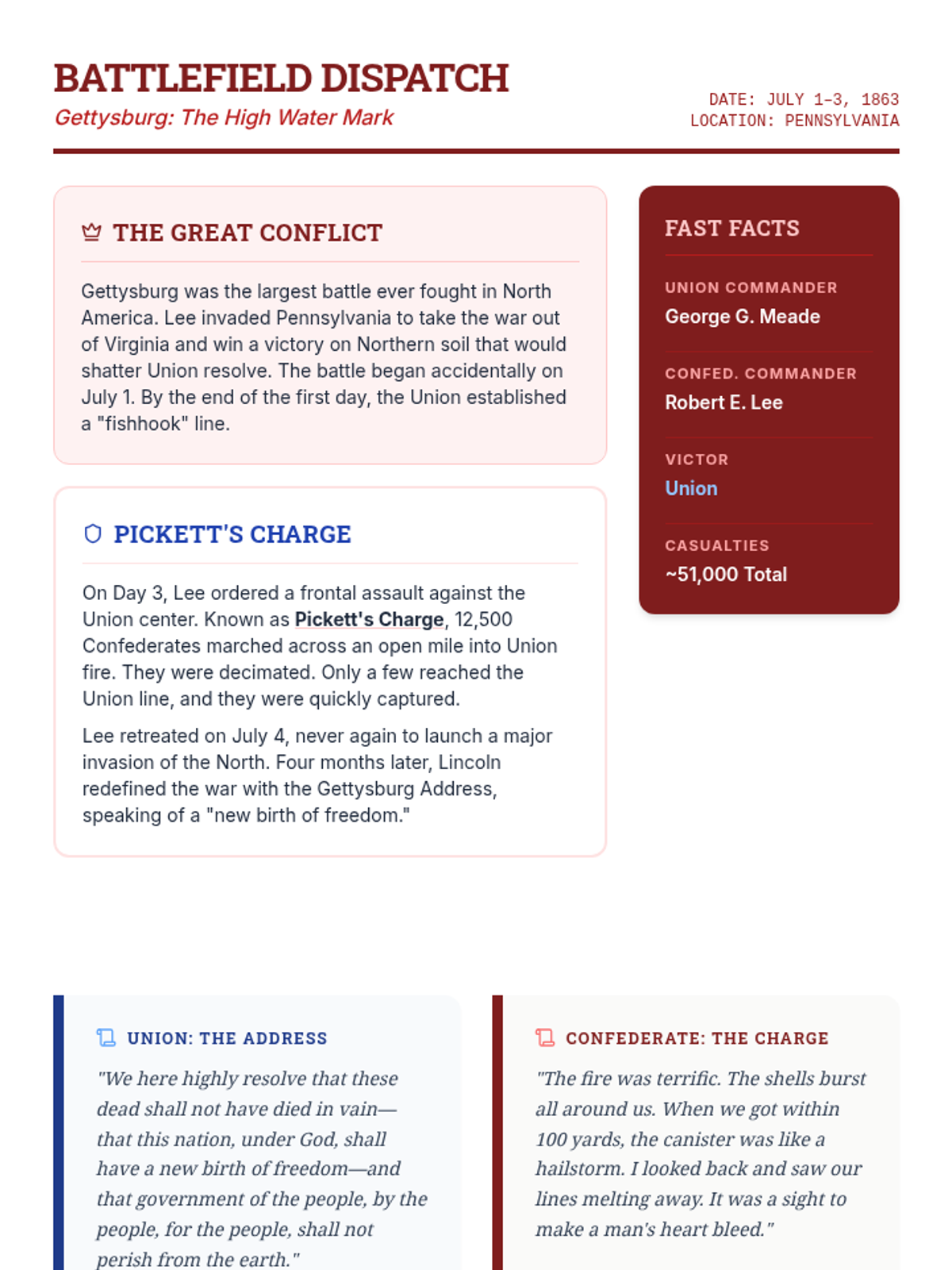
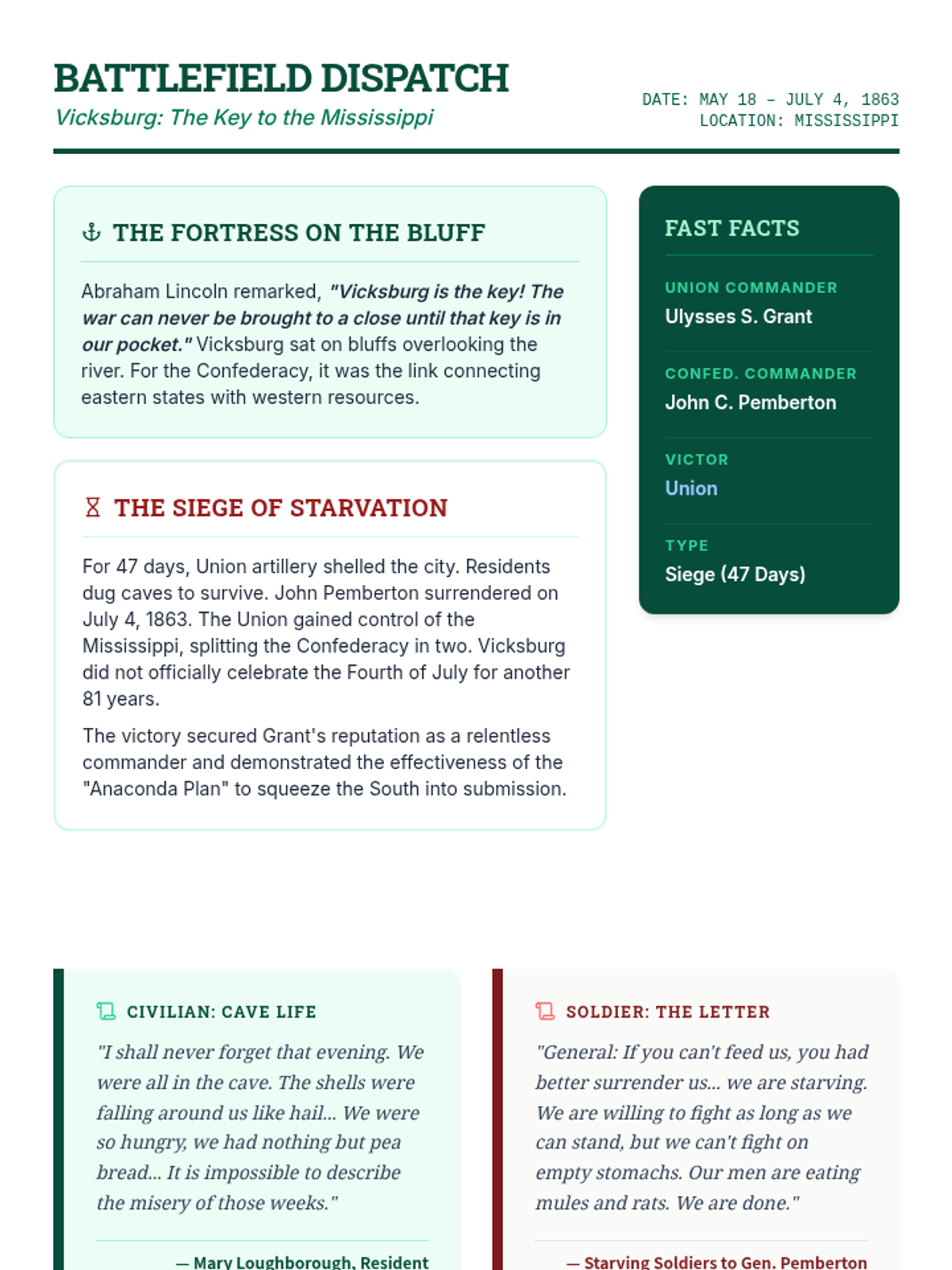
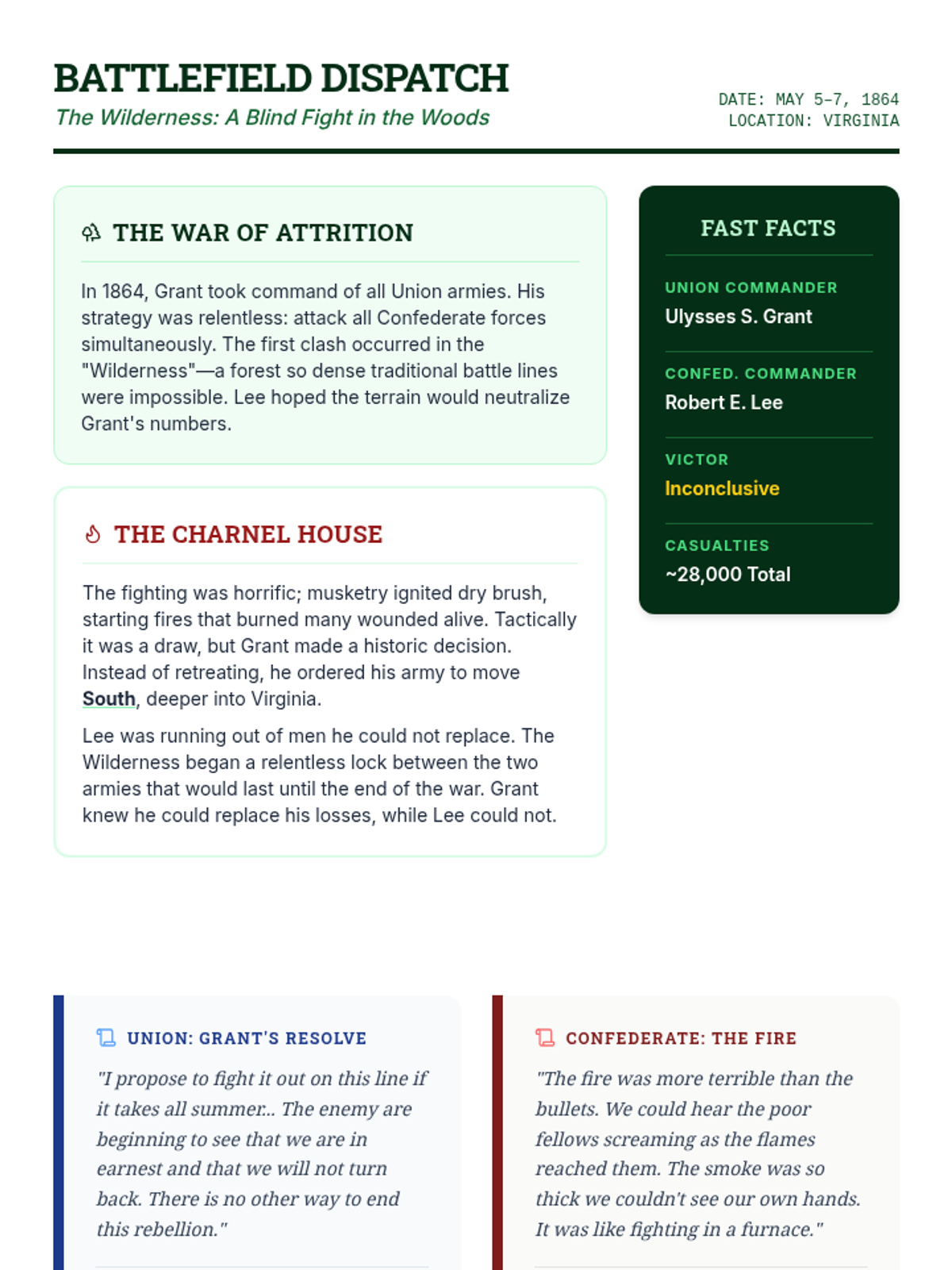
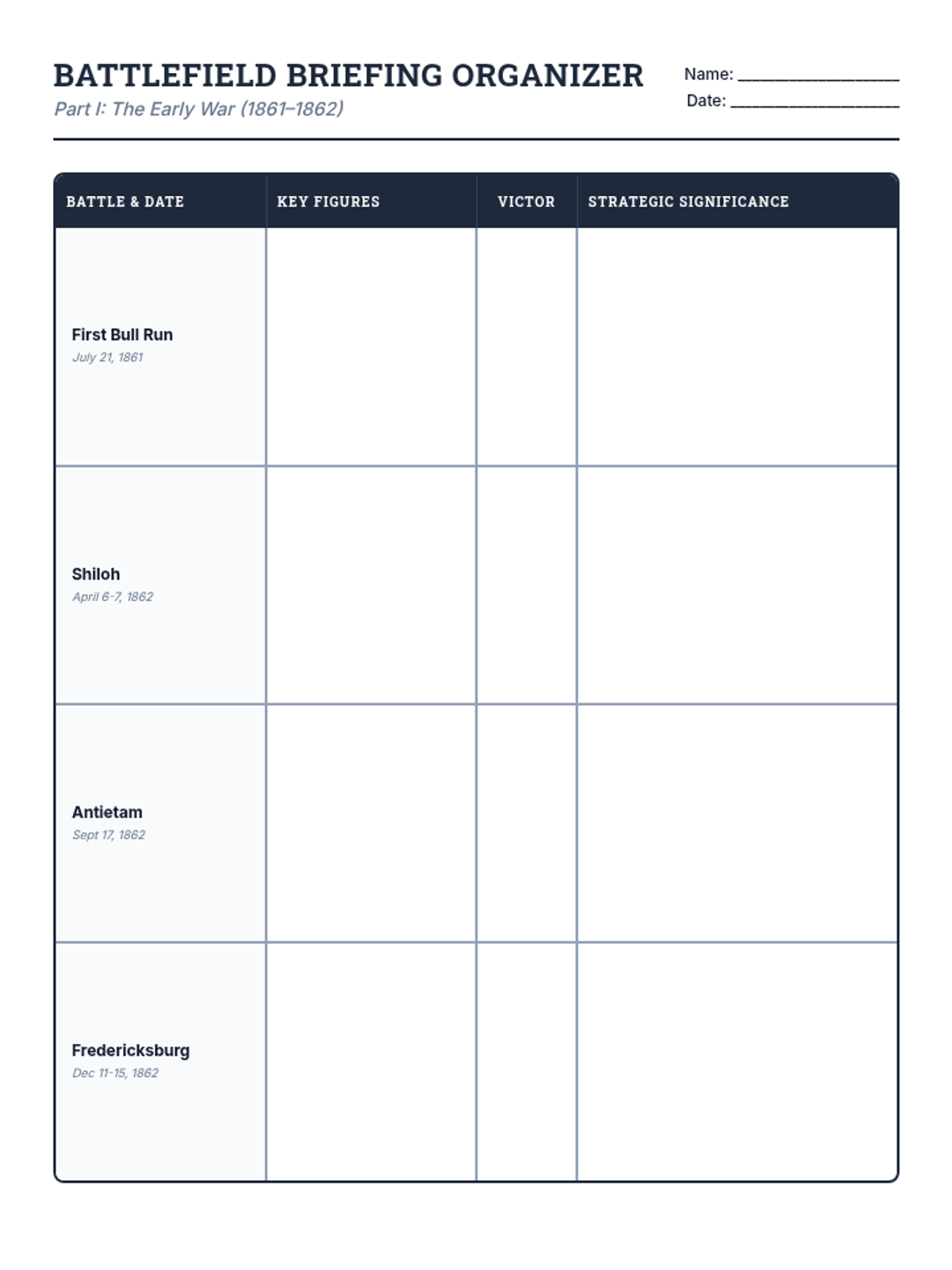
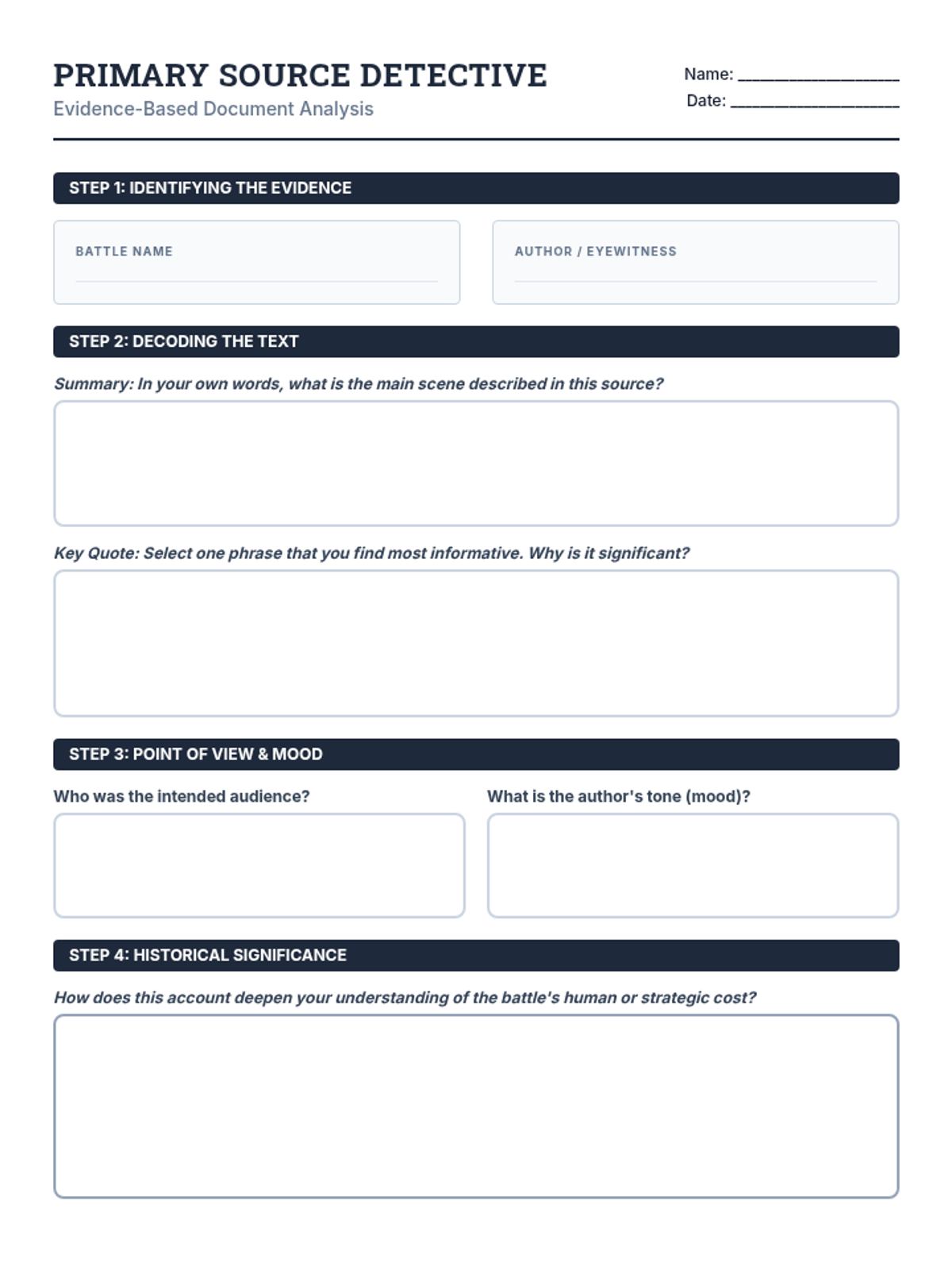
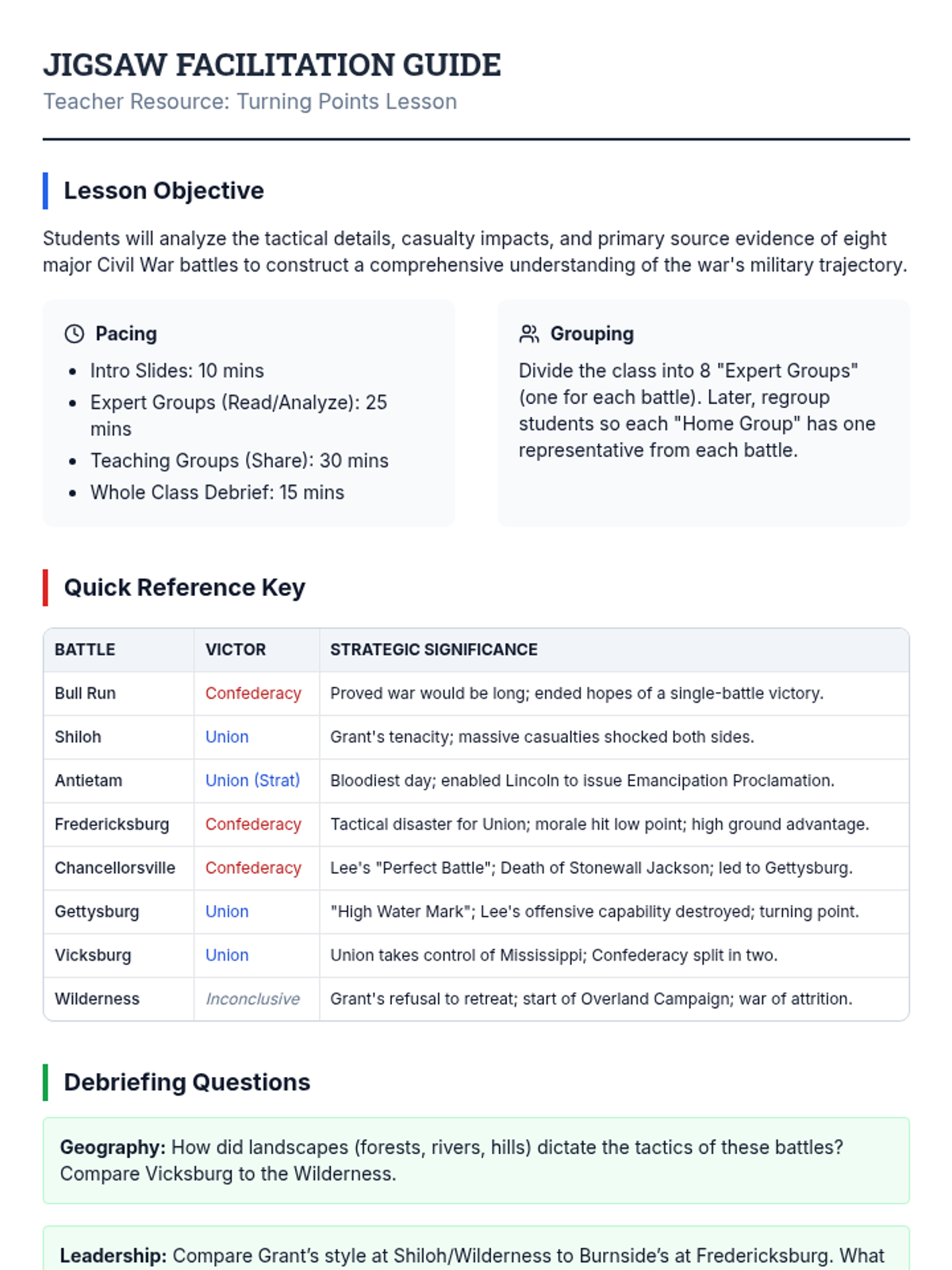
A comprehensive study of the American Civil War's most pivotal military engagements through collaborative jigsaw reading and primary source analysis.
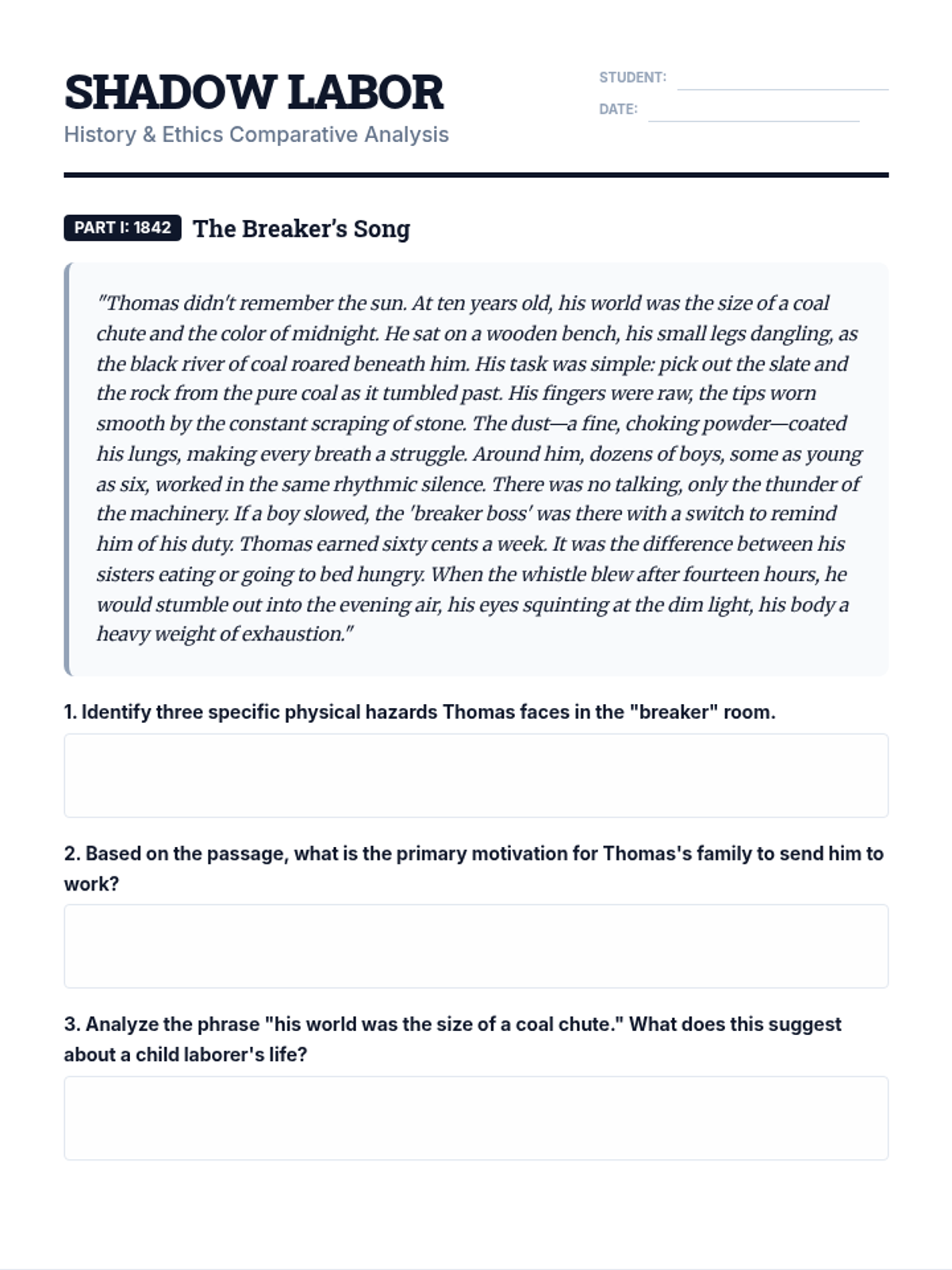
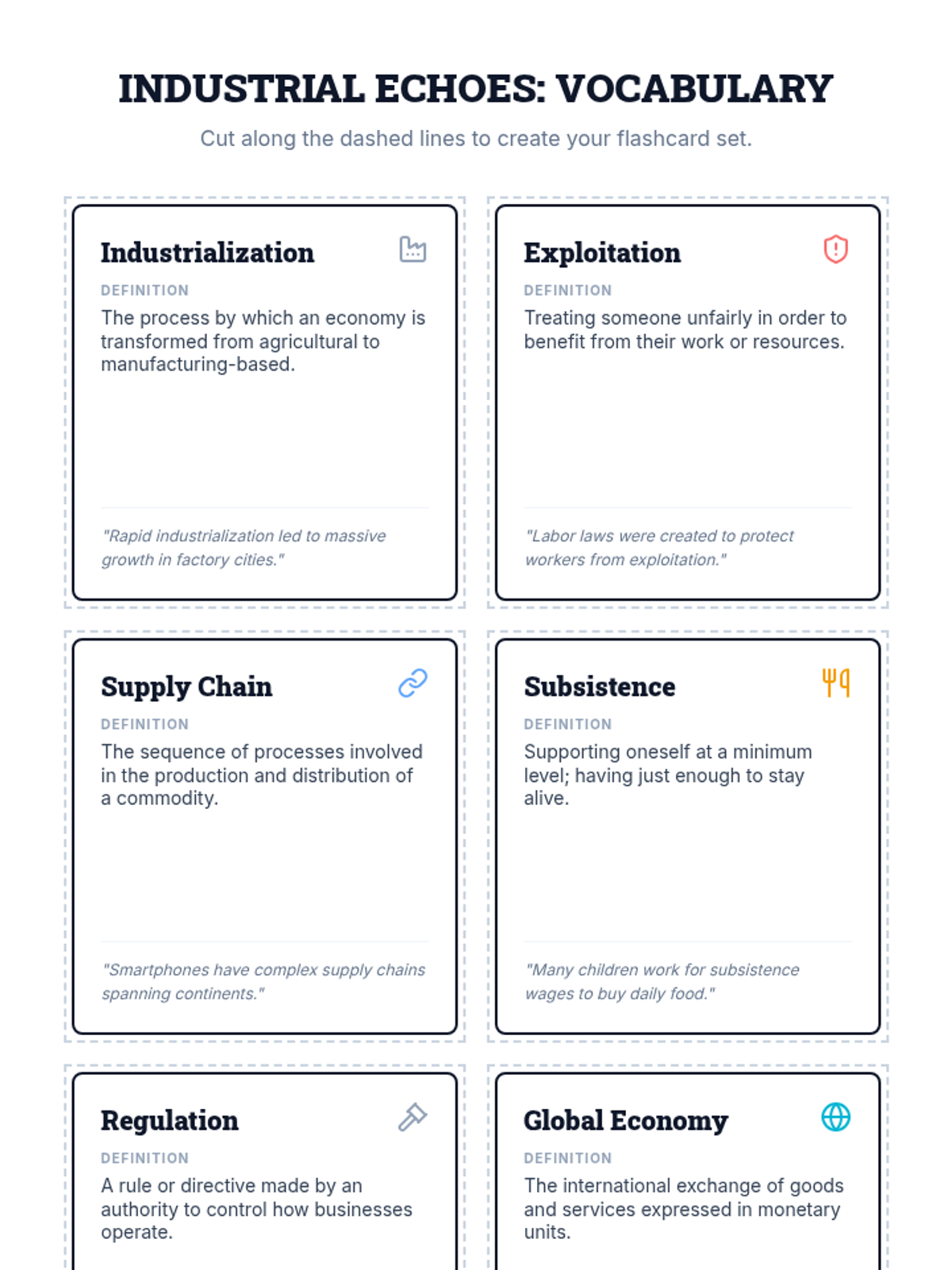
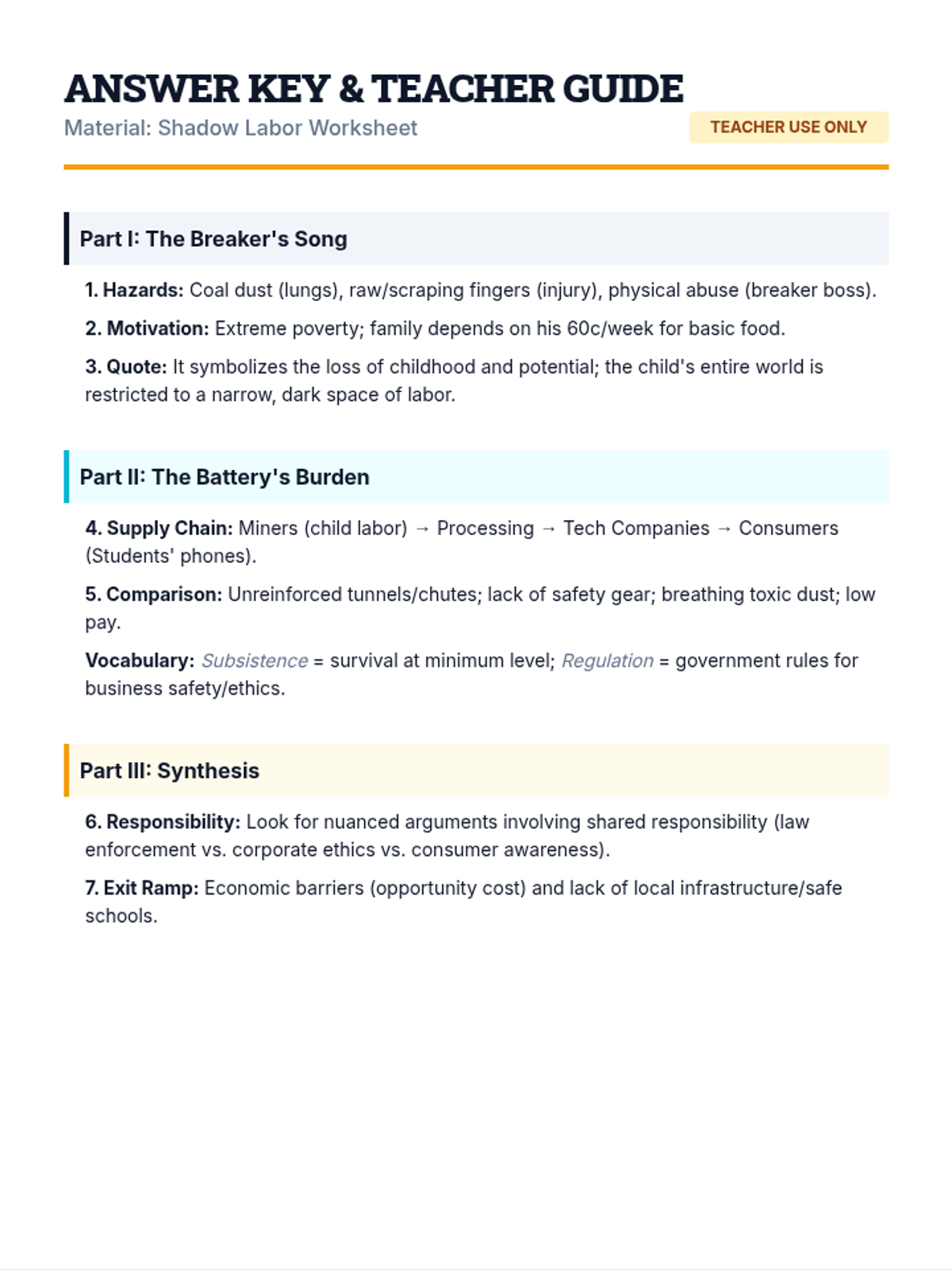
A deep dive into the history and contemporary reality of child labor, comparing the Industrial Revolution to modern global supply chains. Students analyze primary-source-inspired fiction and modern reporting to understand systemic drivers and ethical implications.
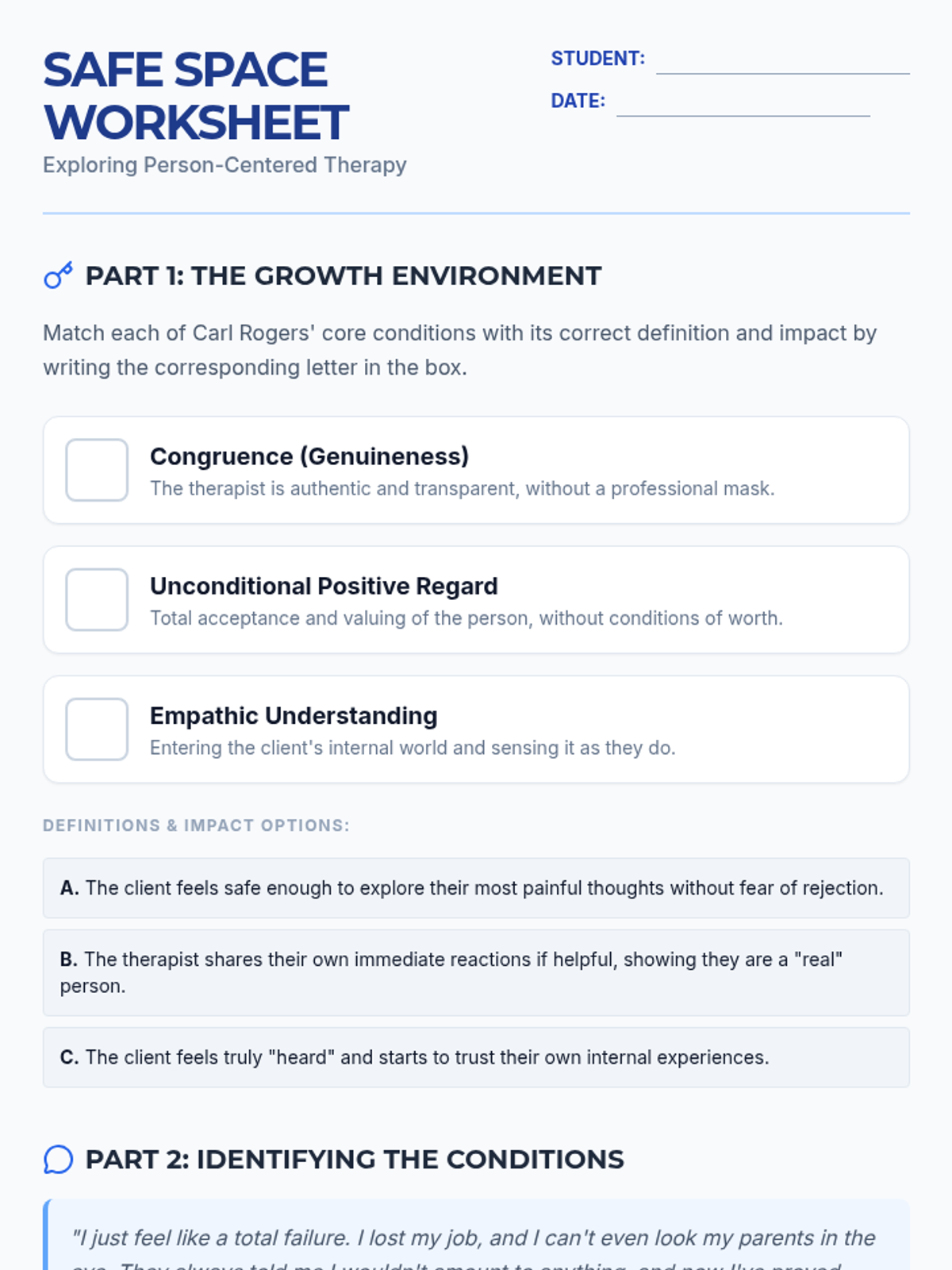
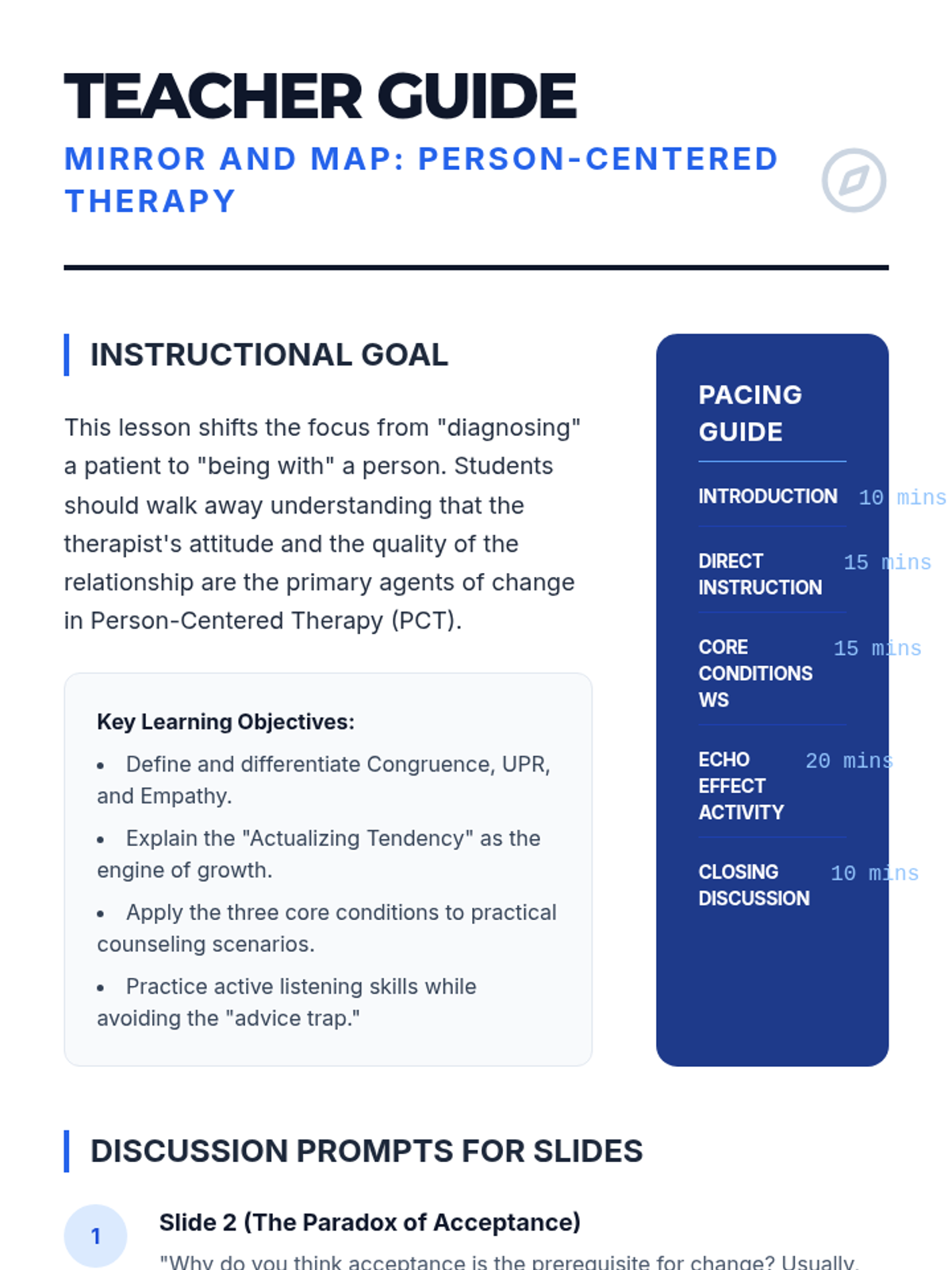
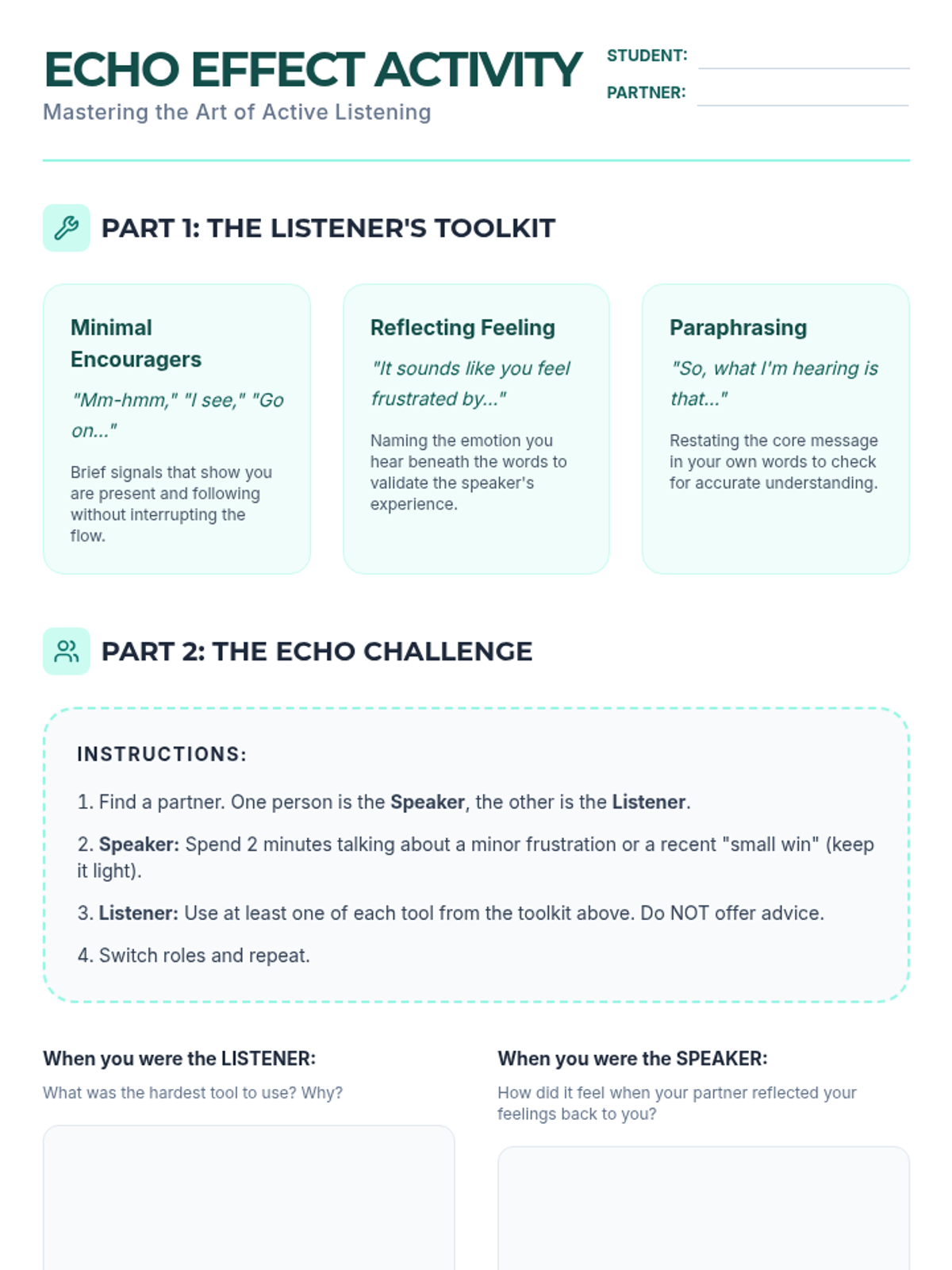
A unit exploring the foundations of humanistic psychology, focusing on person-centered approaches, therapeutic relationships, and the drive toward self-actualization.
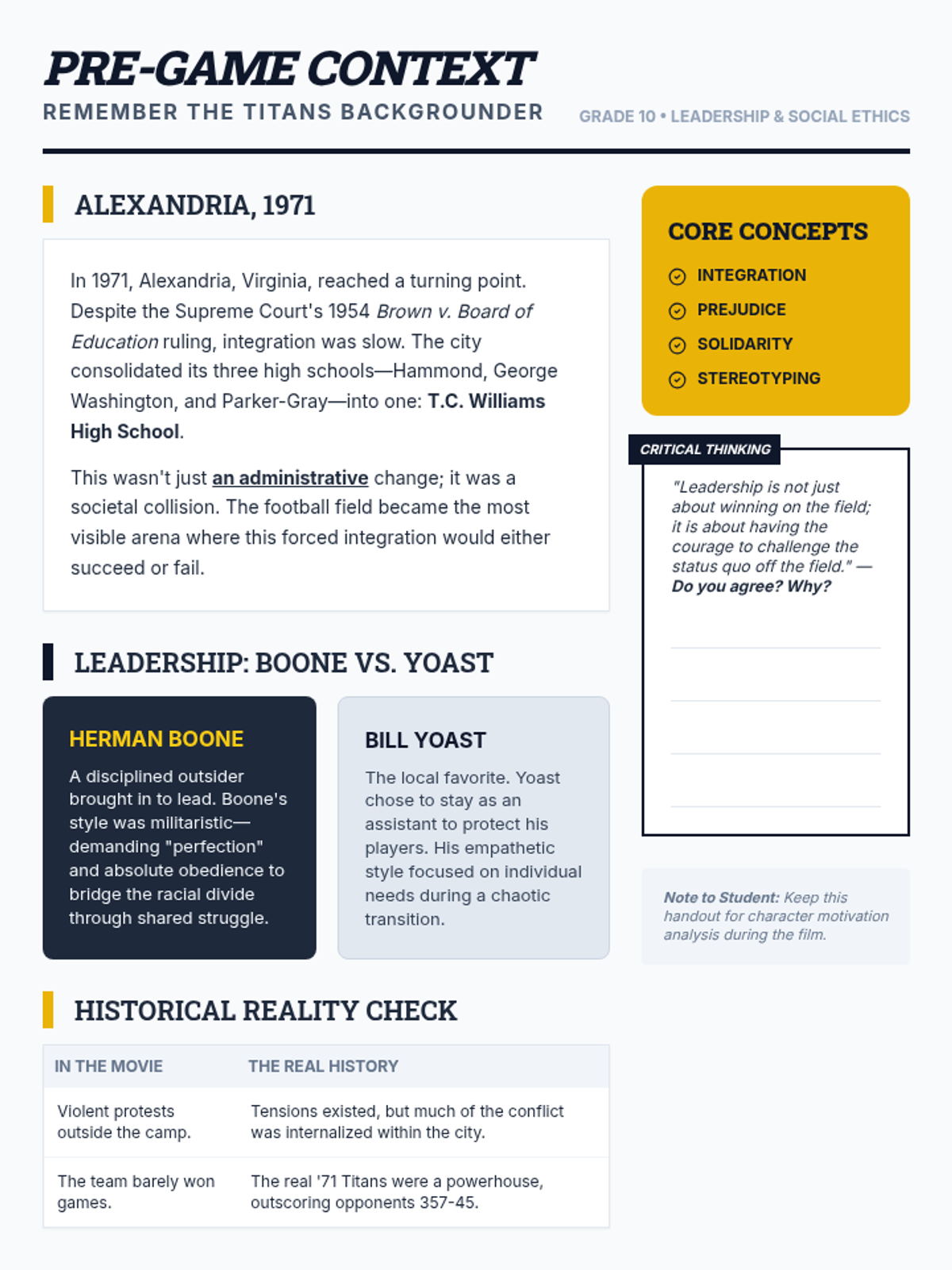
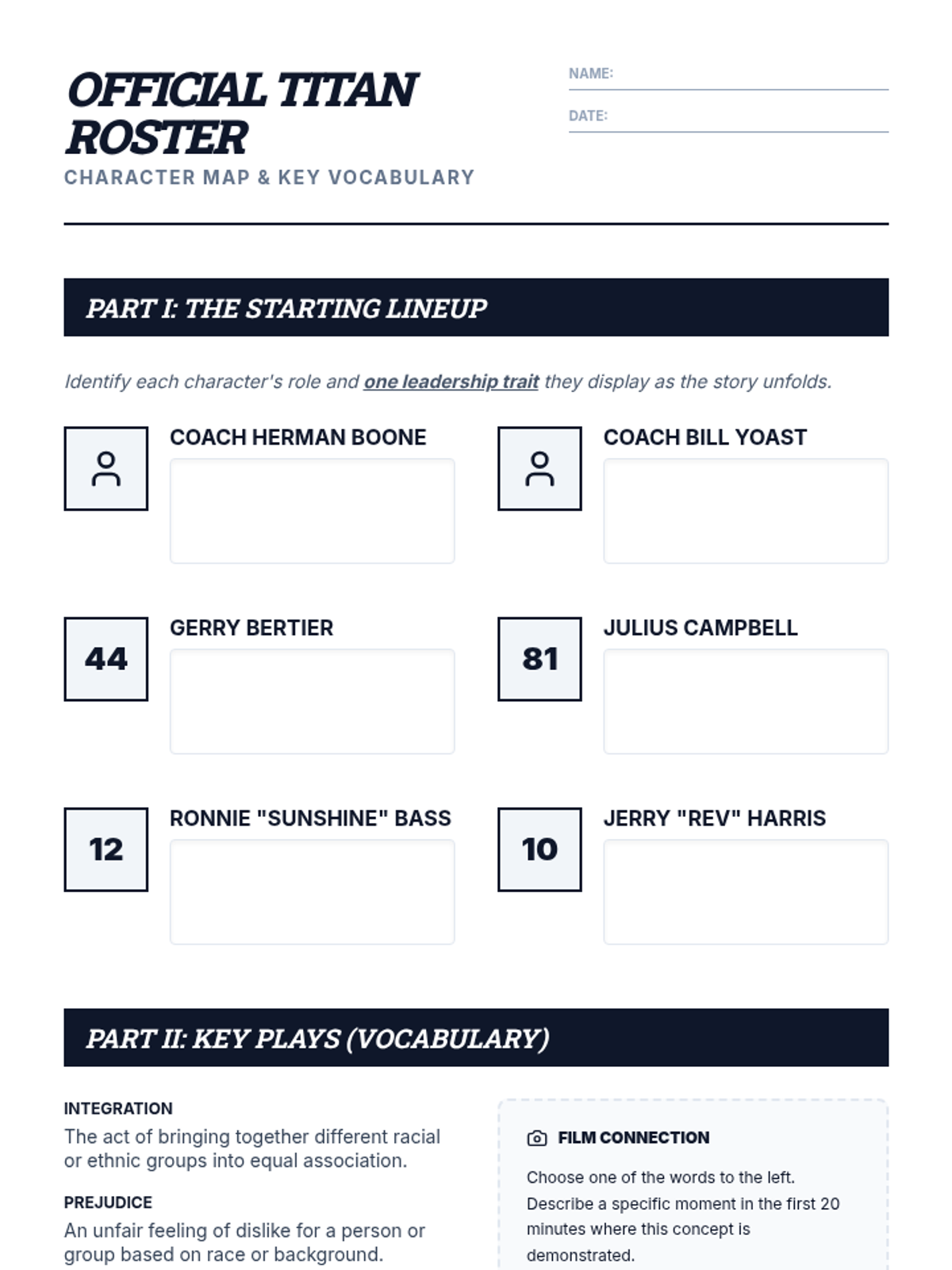
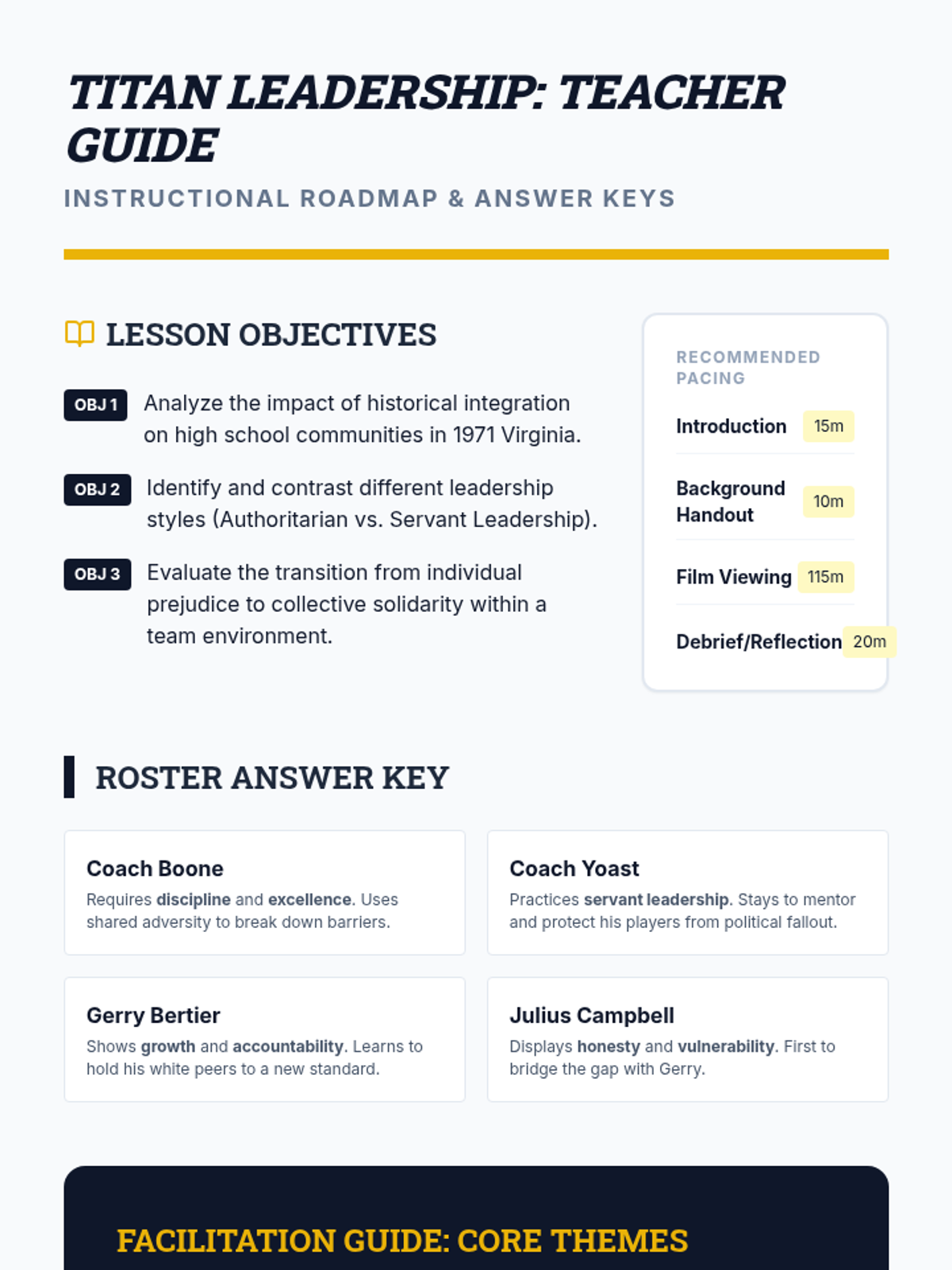
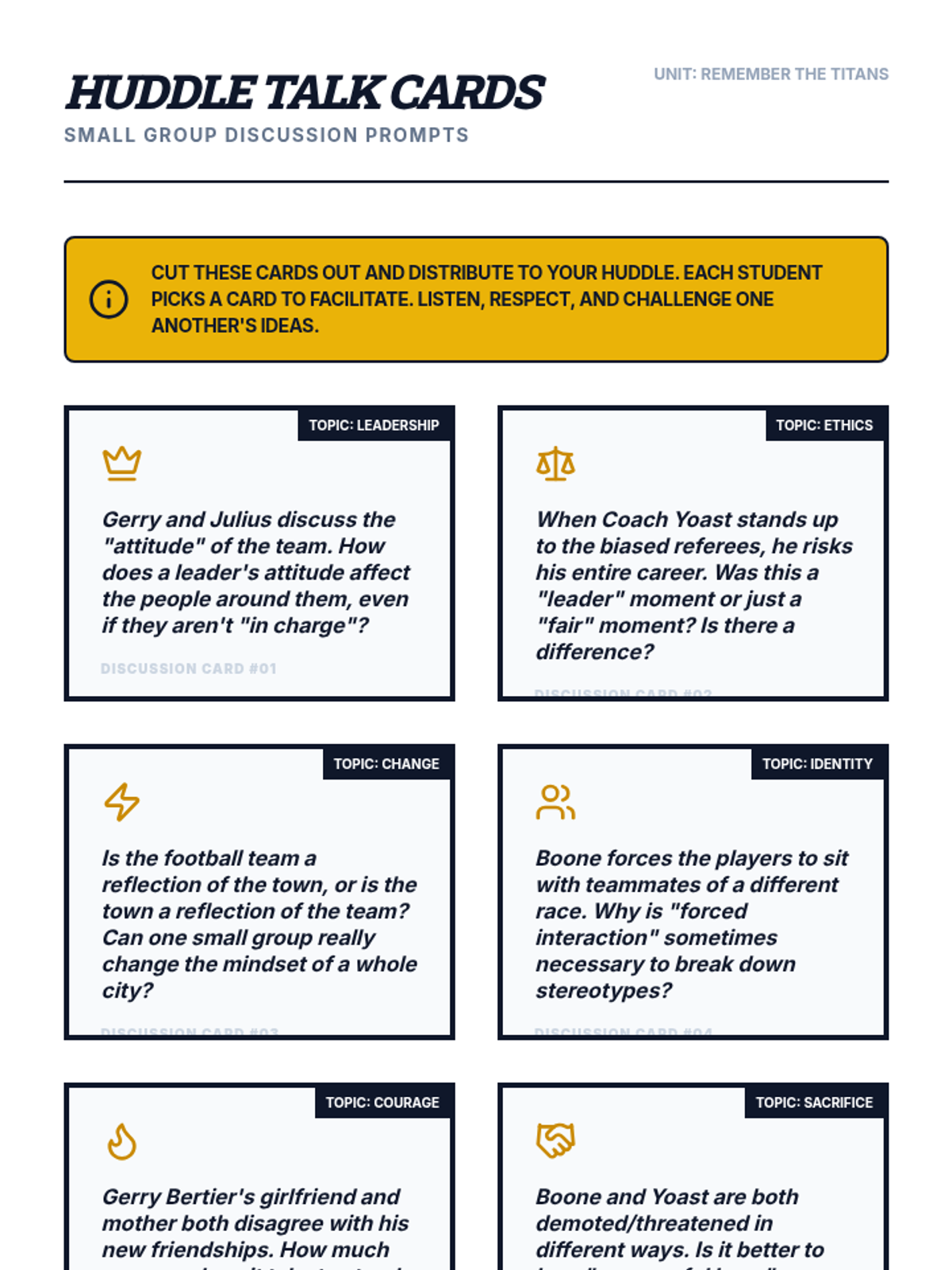
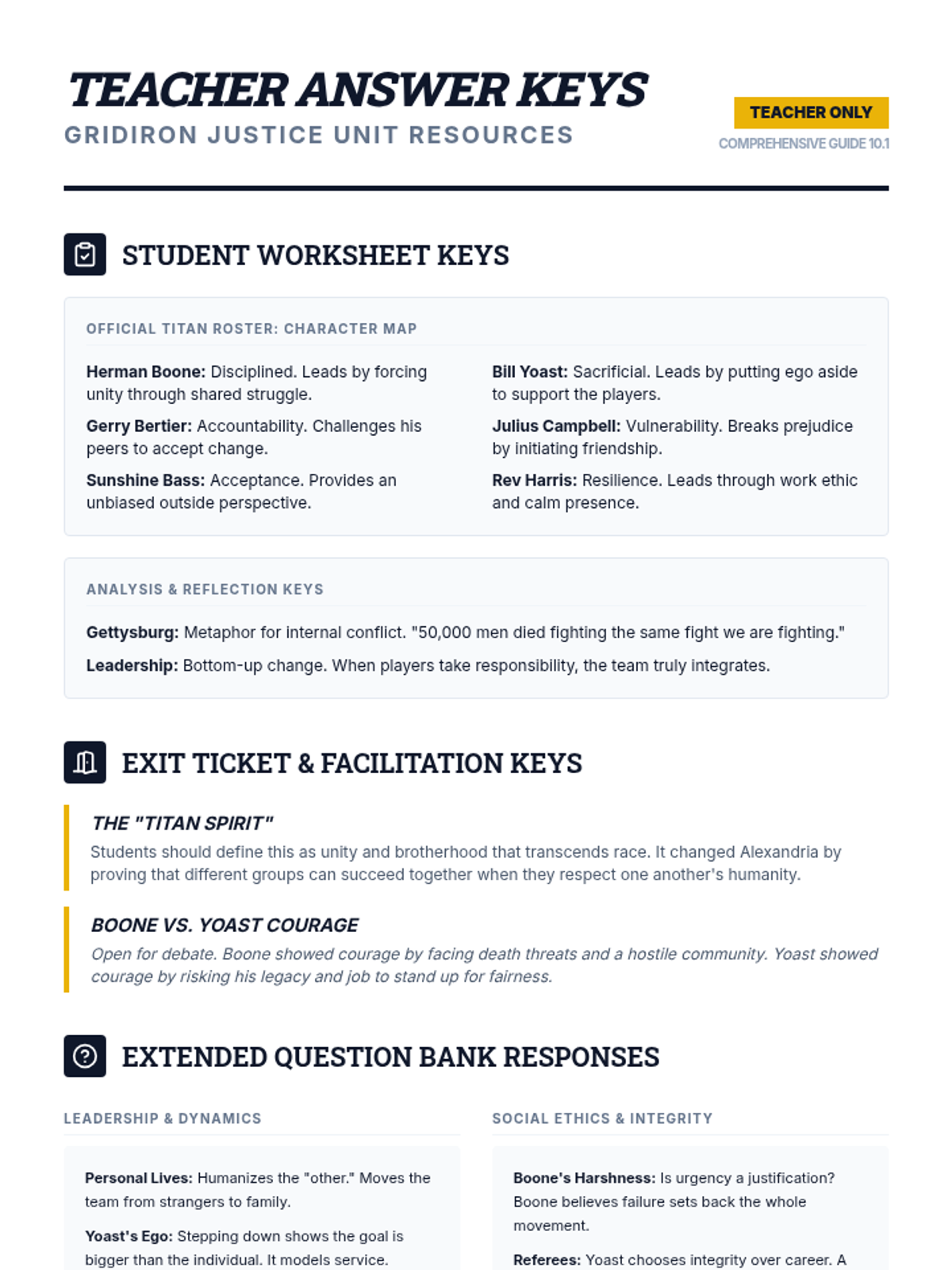
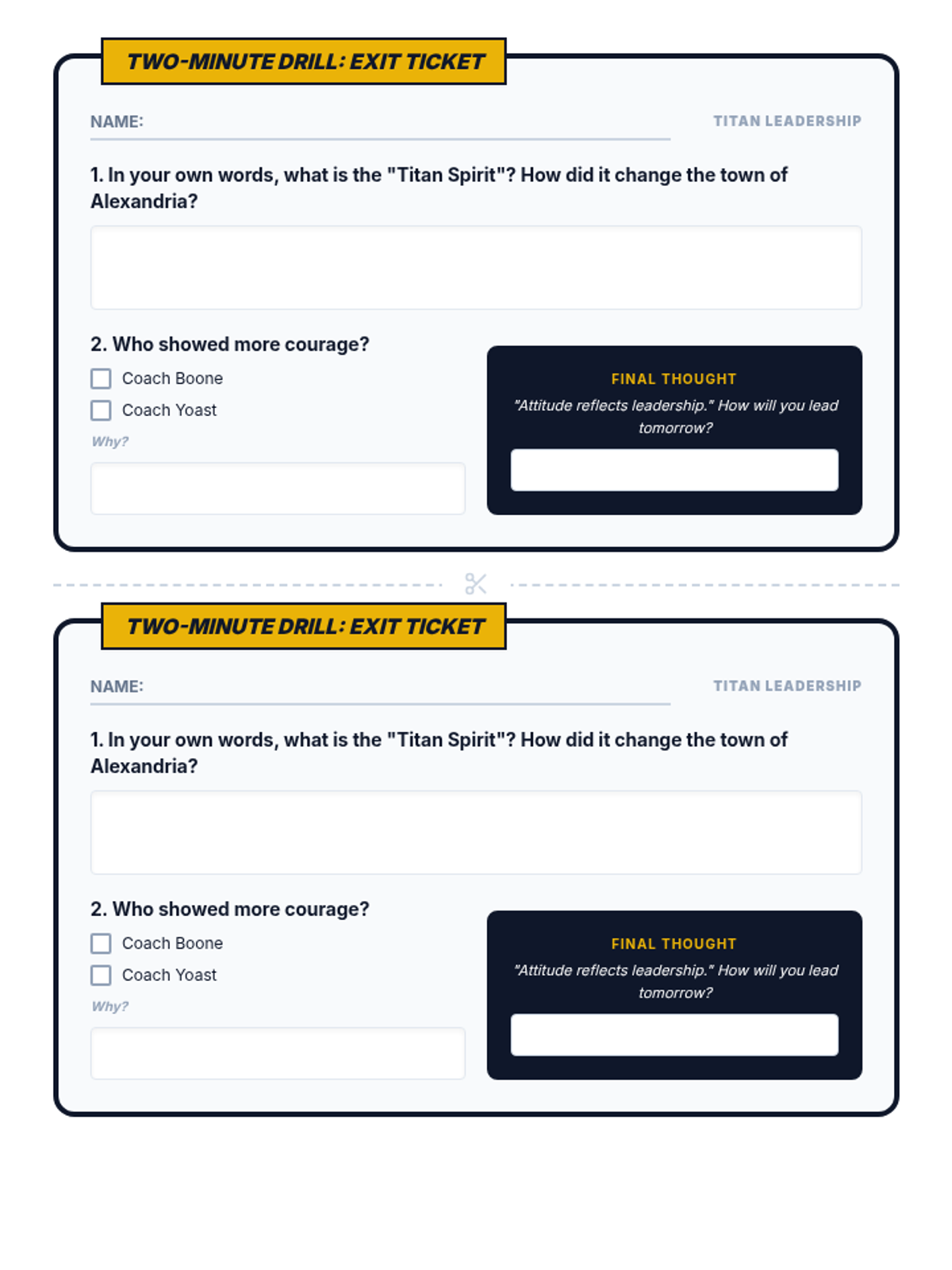
A comprehensive study of leadership, civil rights, and social ethics through the lens of the film Remember the Titans.
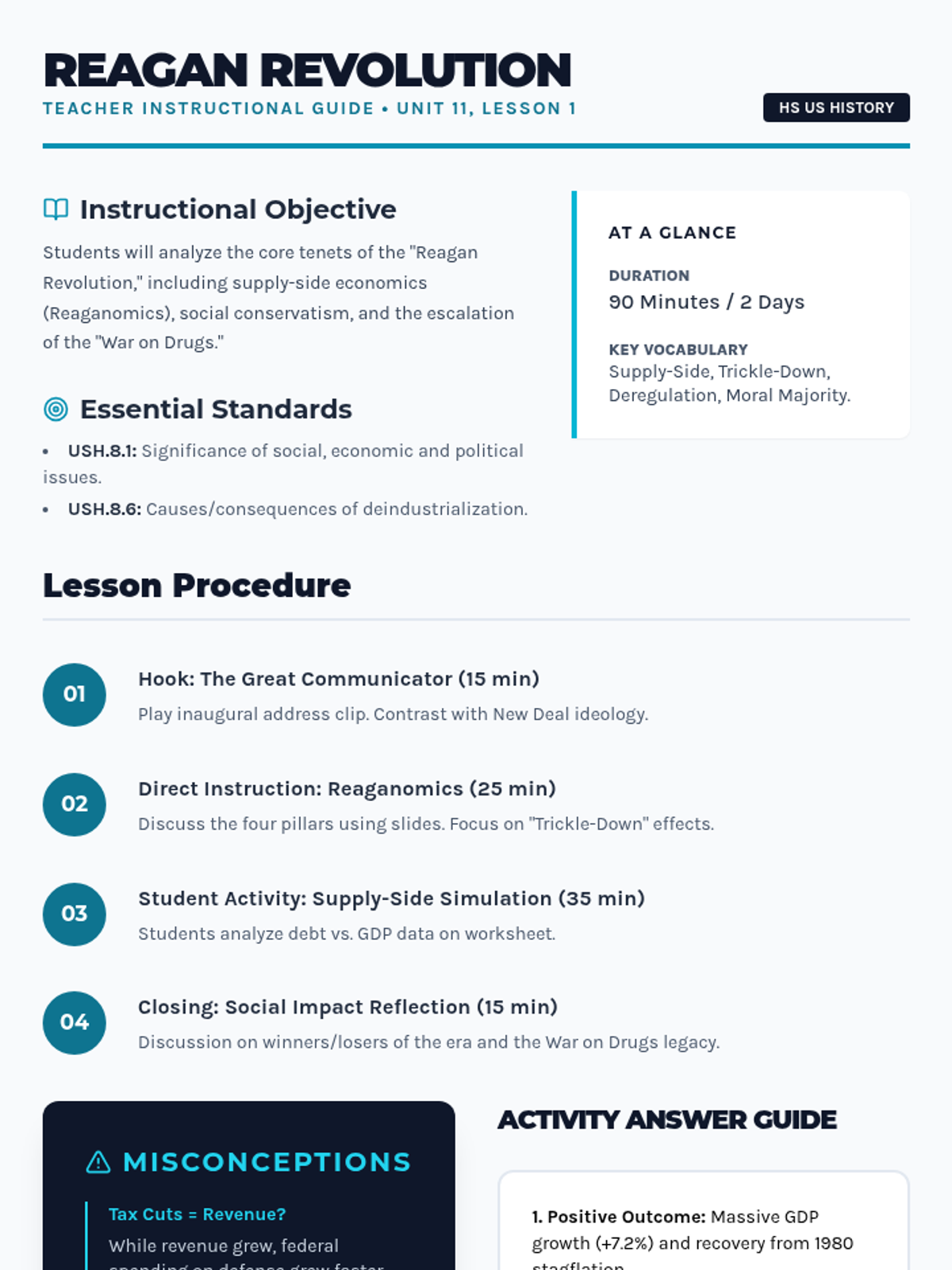
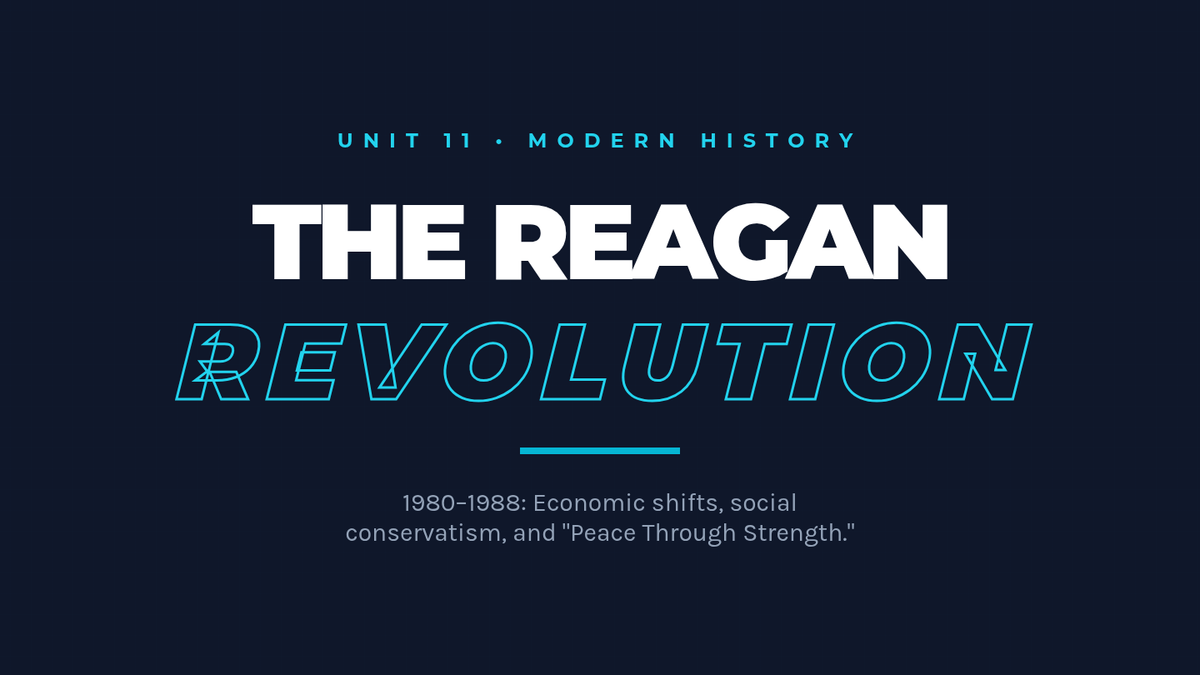
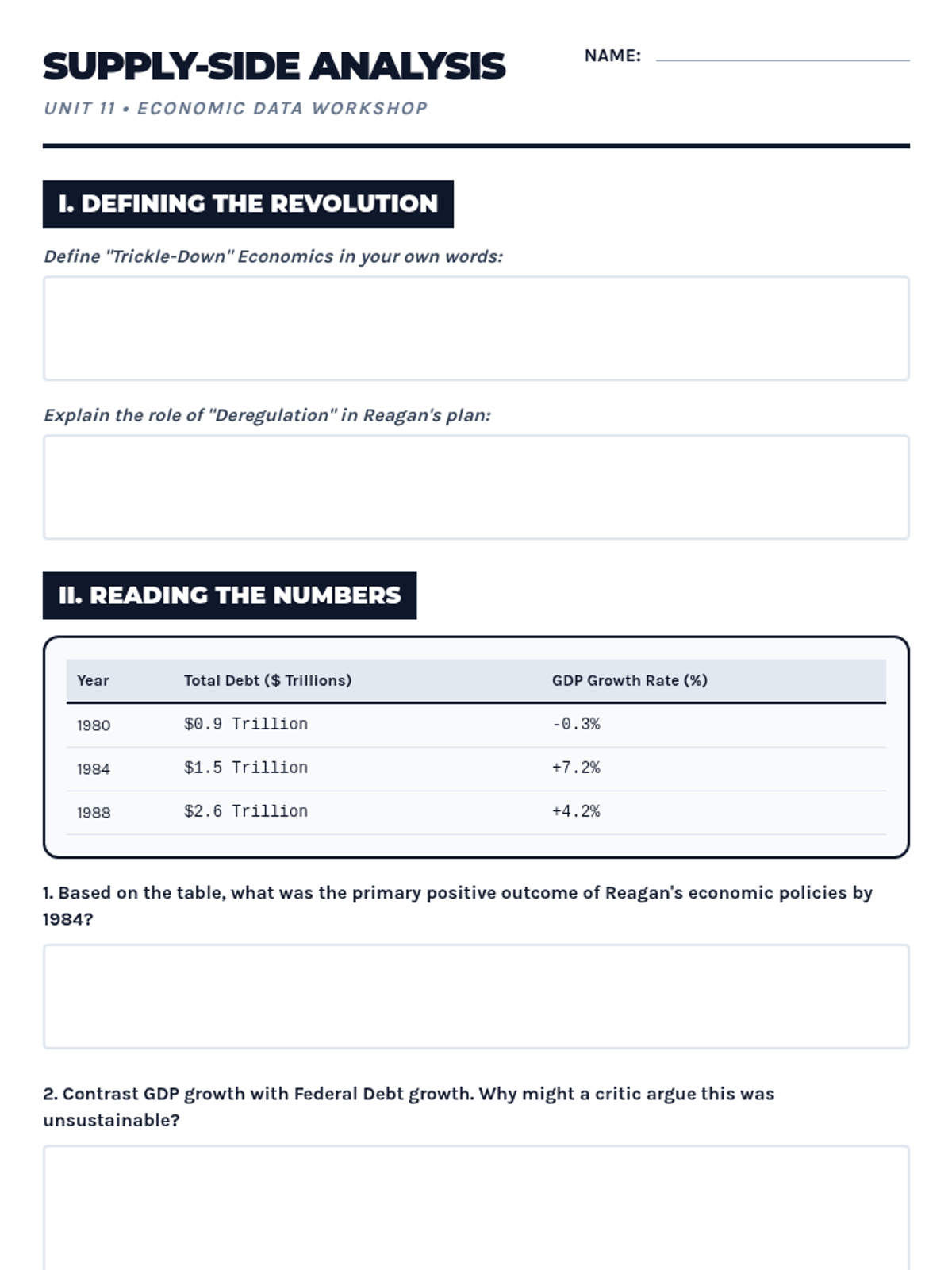
A comprehensive two-week unit covering the social, economic, and political transformations of the 1980s and 1990s, from the Reagan Revolution to the dawn of the Digital Age and the roots of 21st-century security challenges.
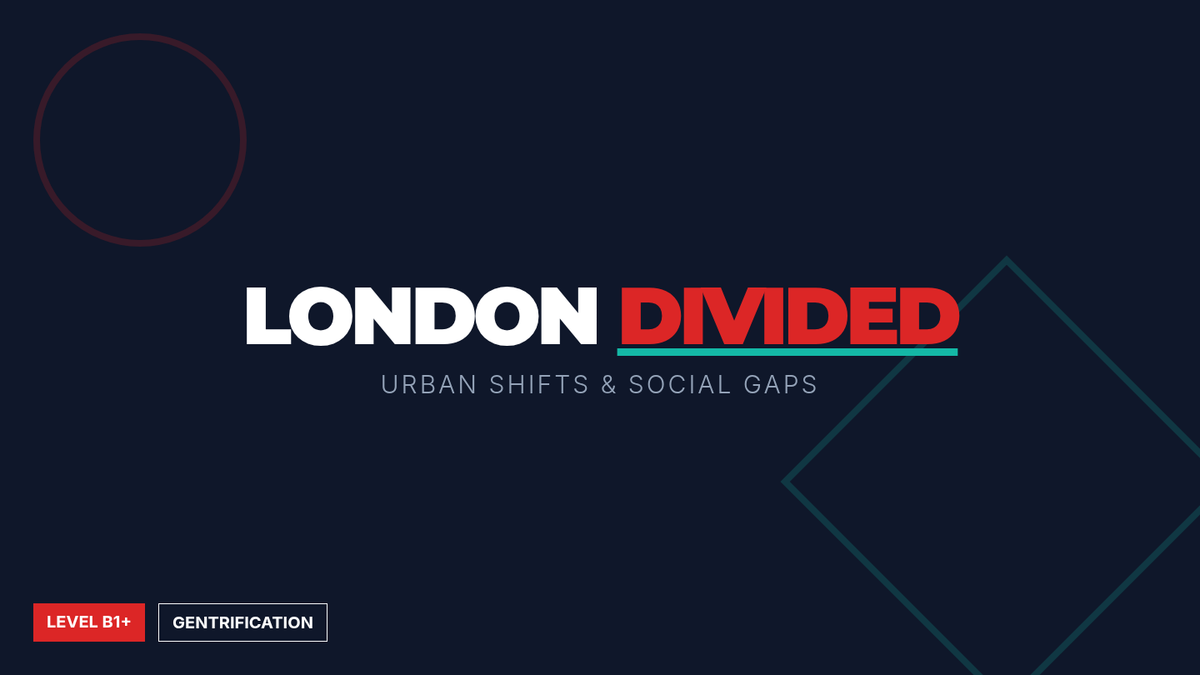
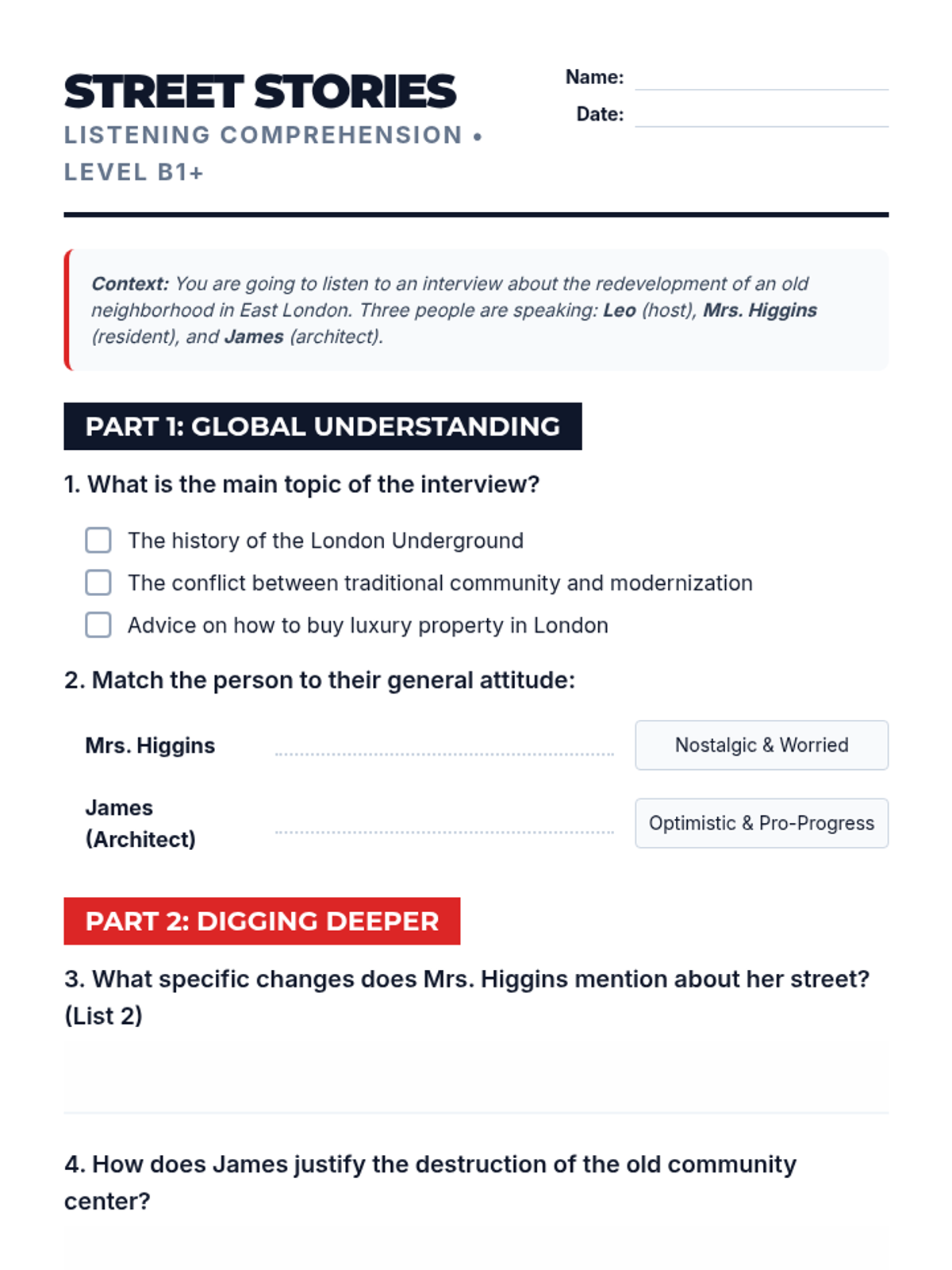
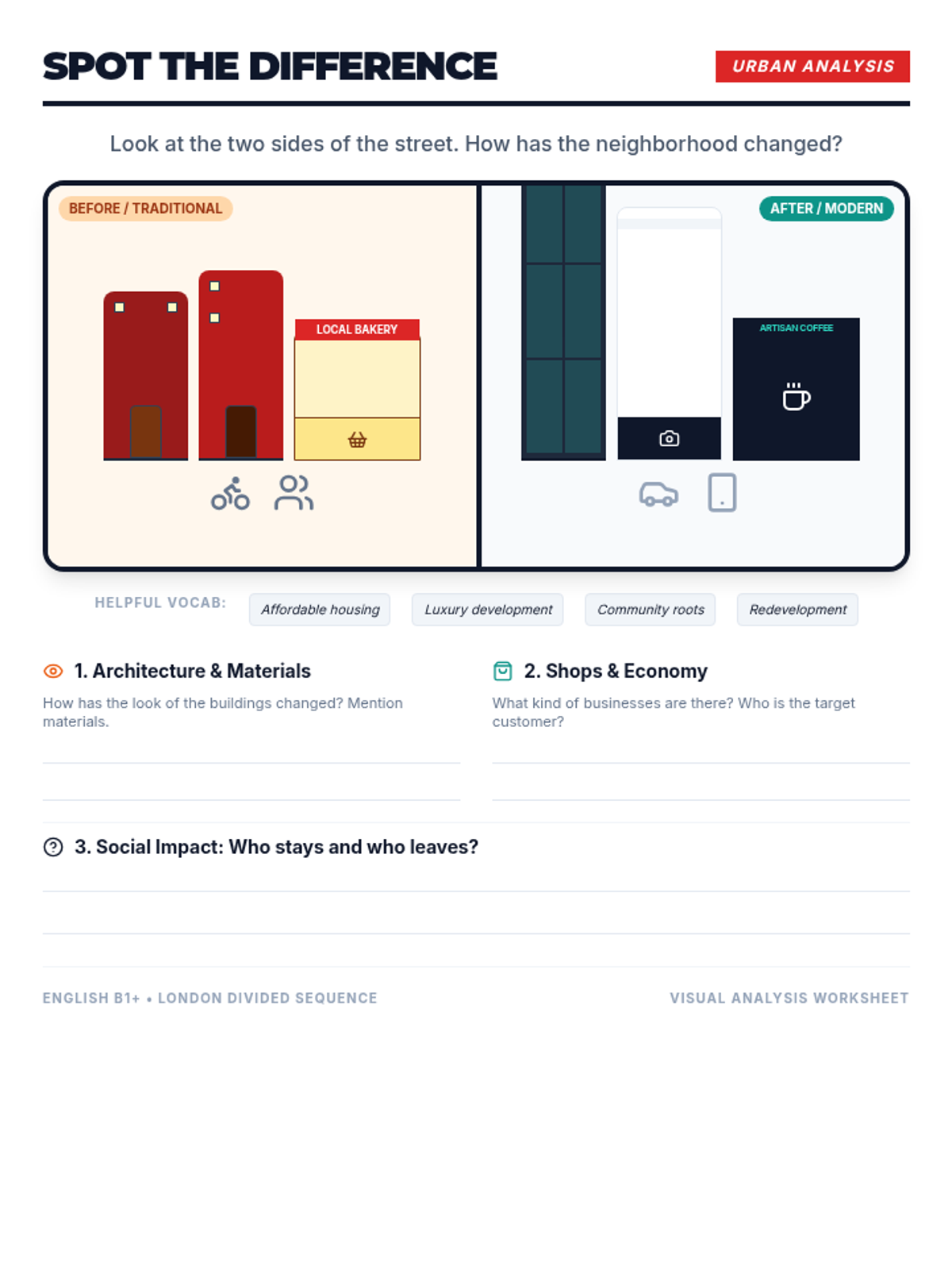
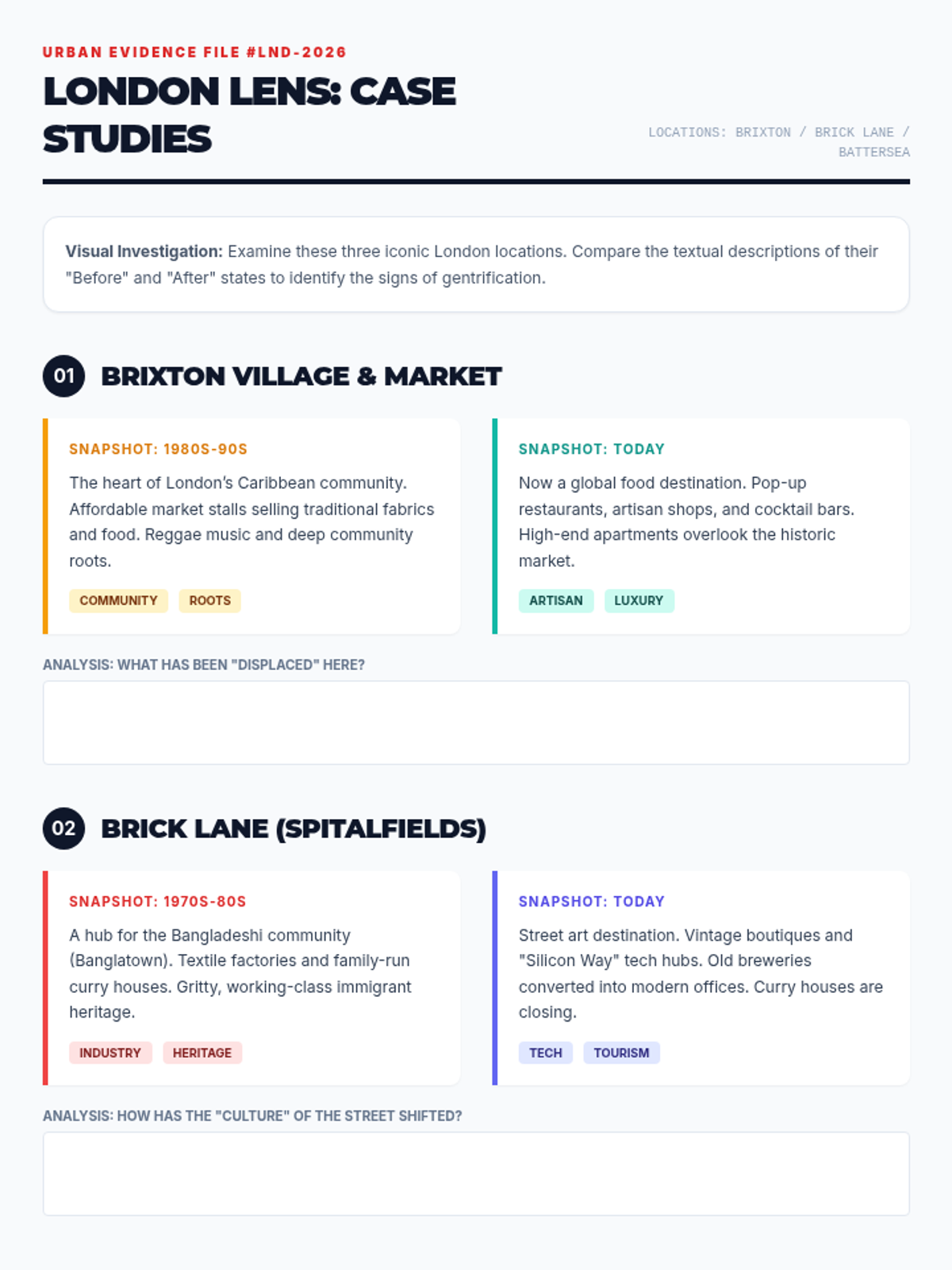
A sequence for high school students (B1+ level) exploring the social and cultural impacts of gentrification in London, focusing on the tension between urban development and local community identity.
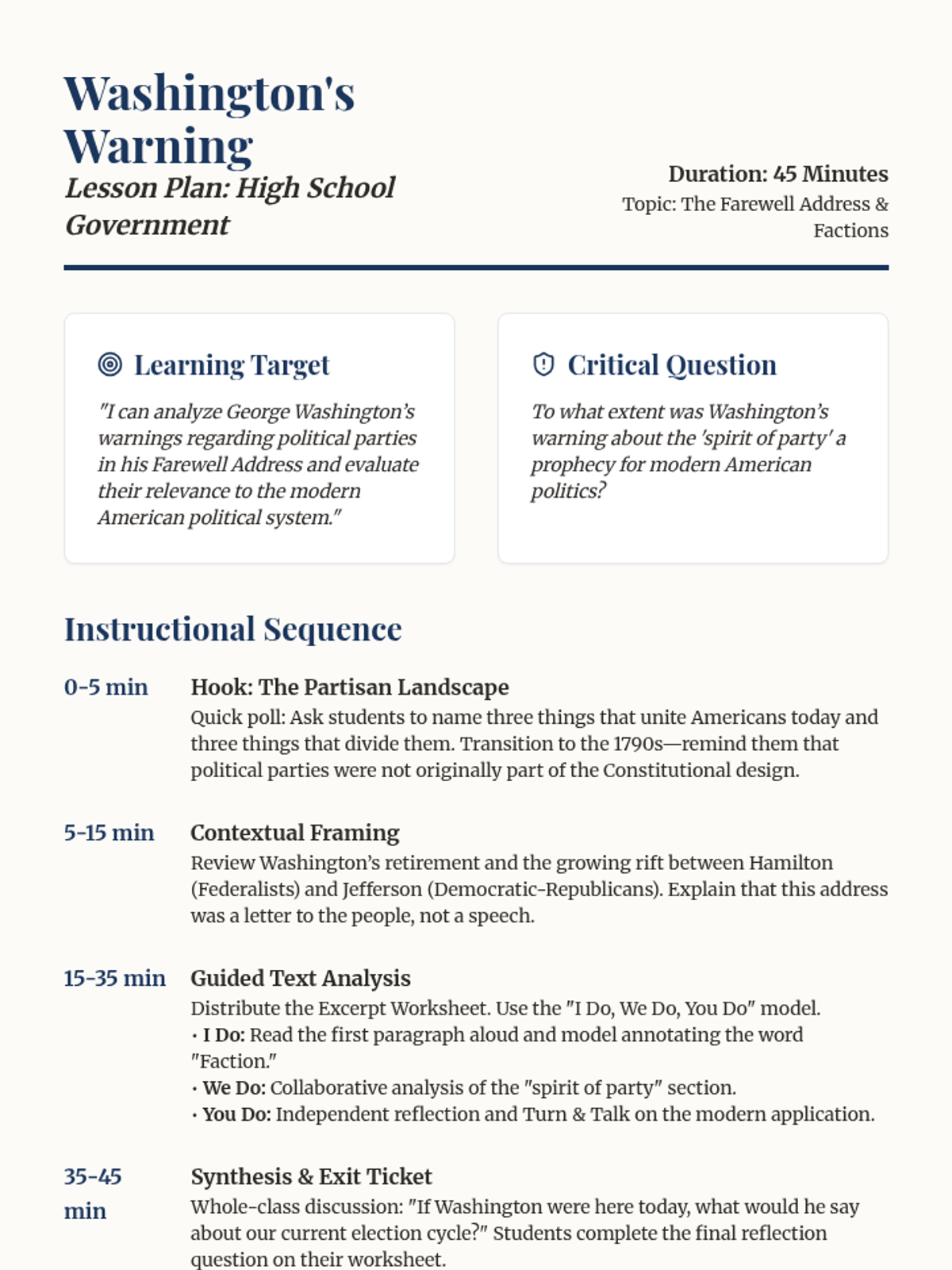
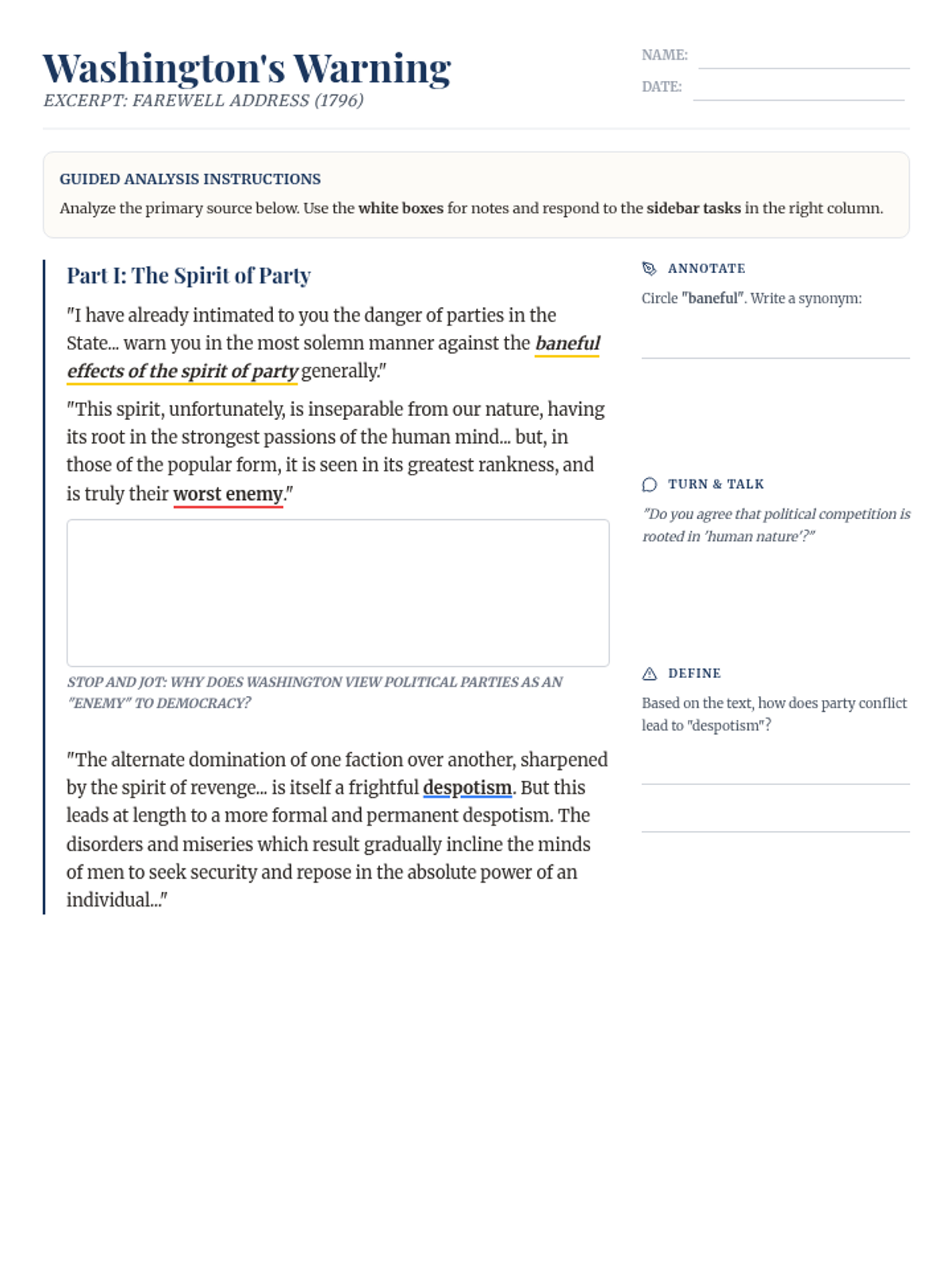
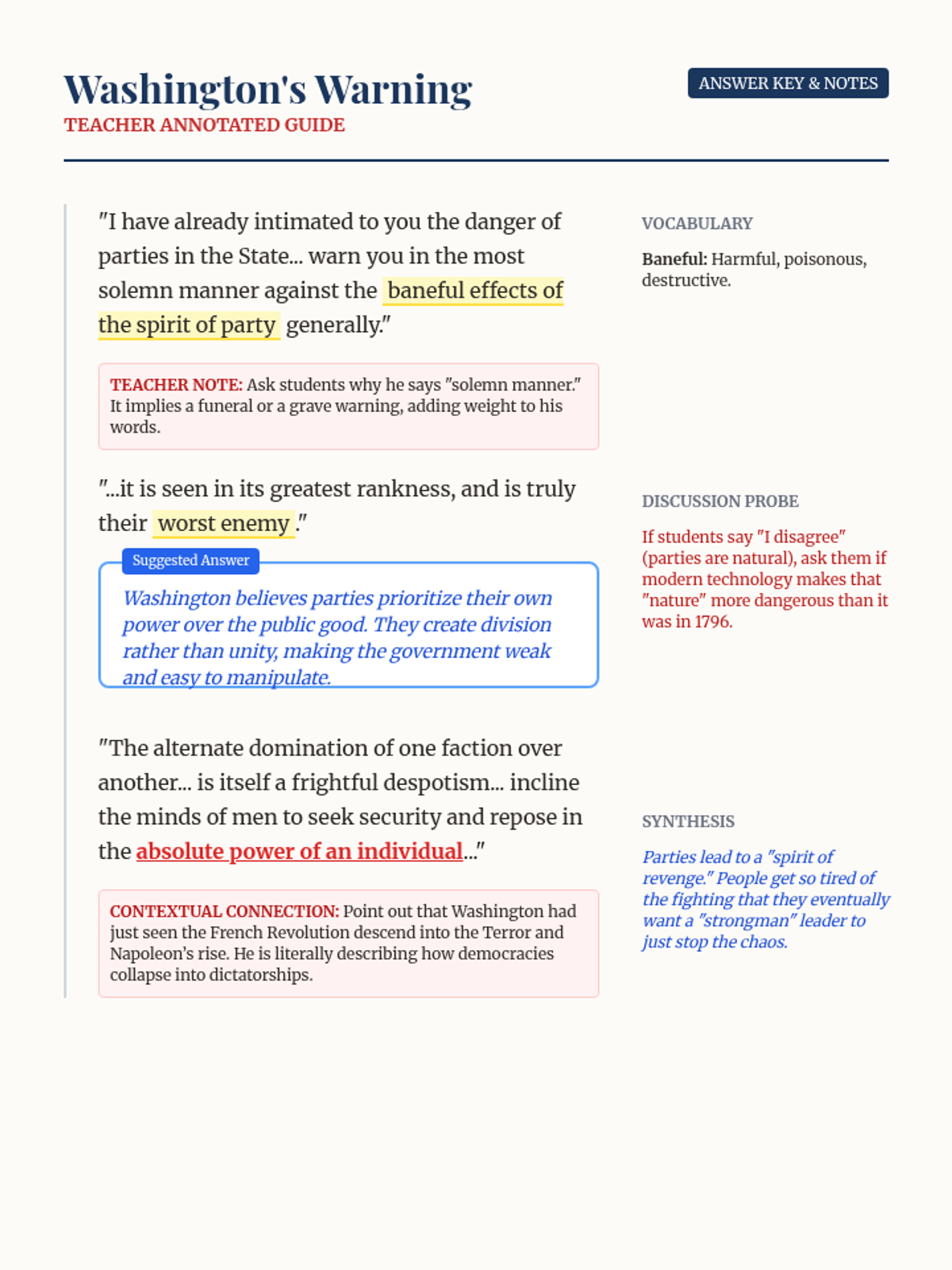
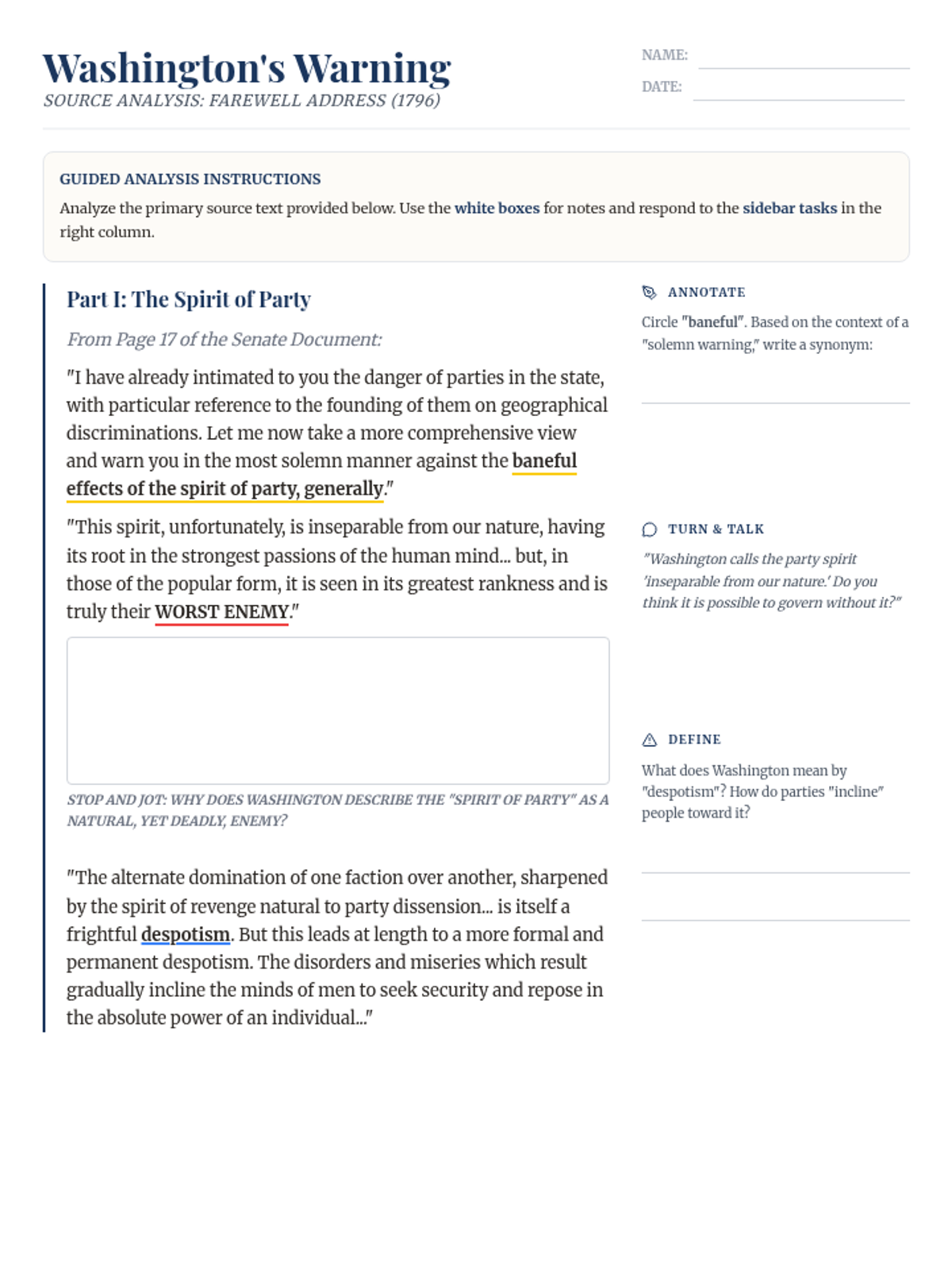
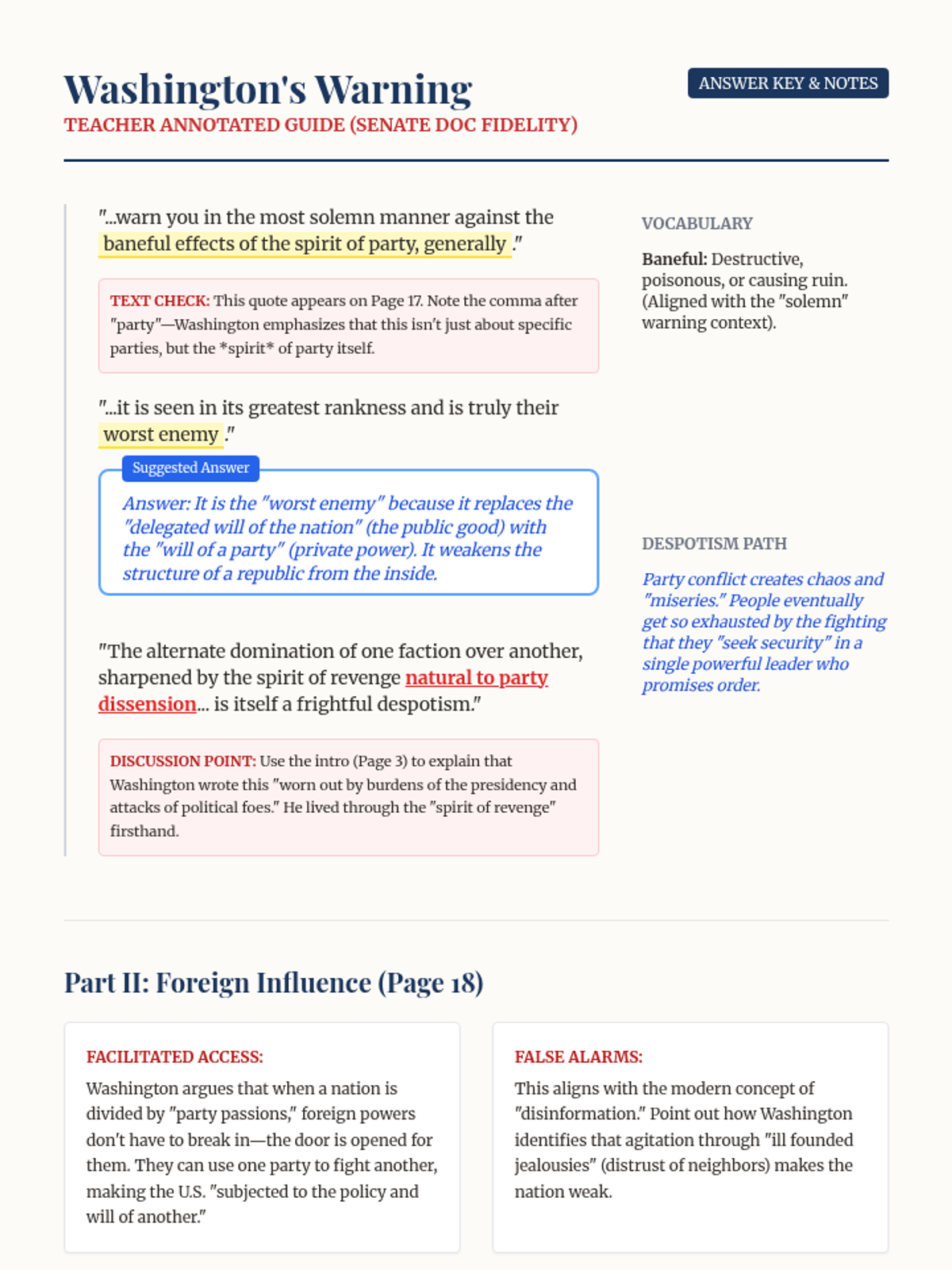
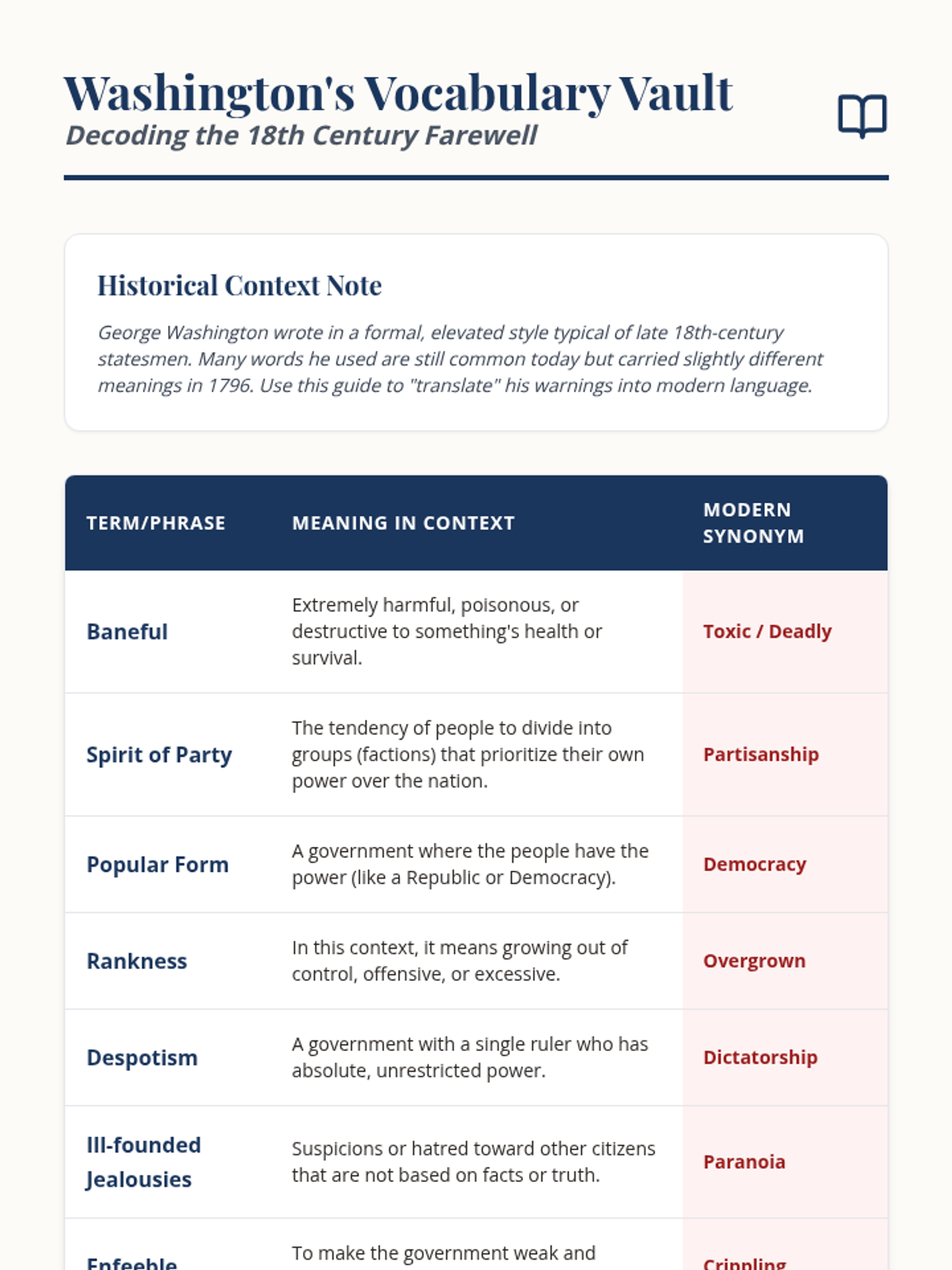
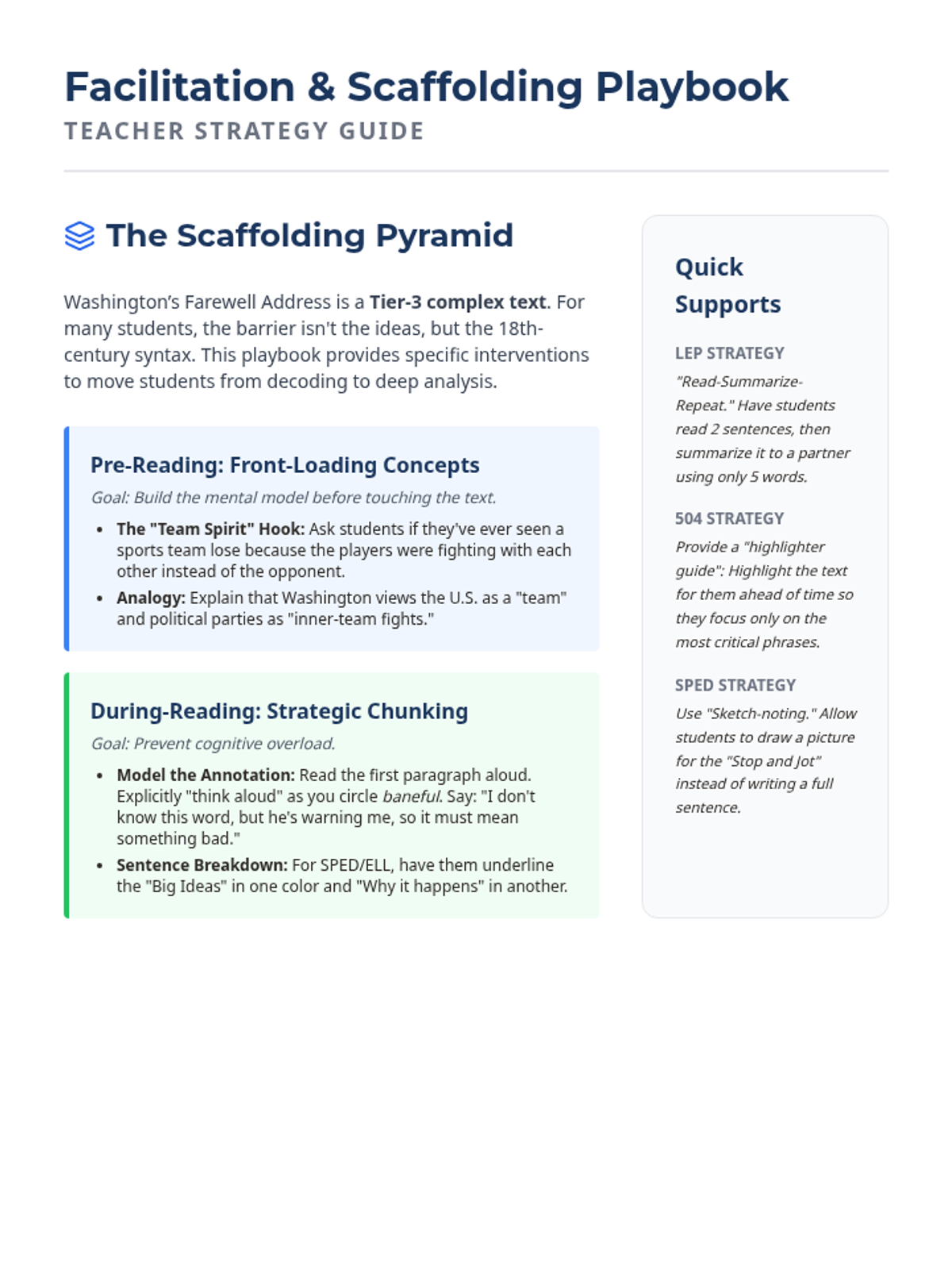
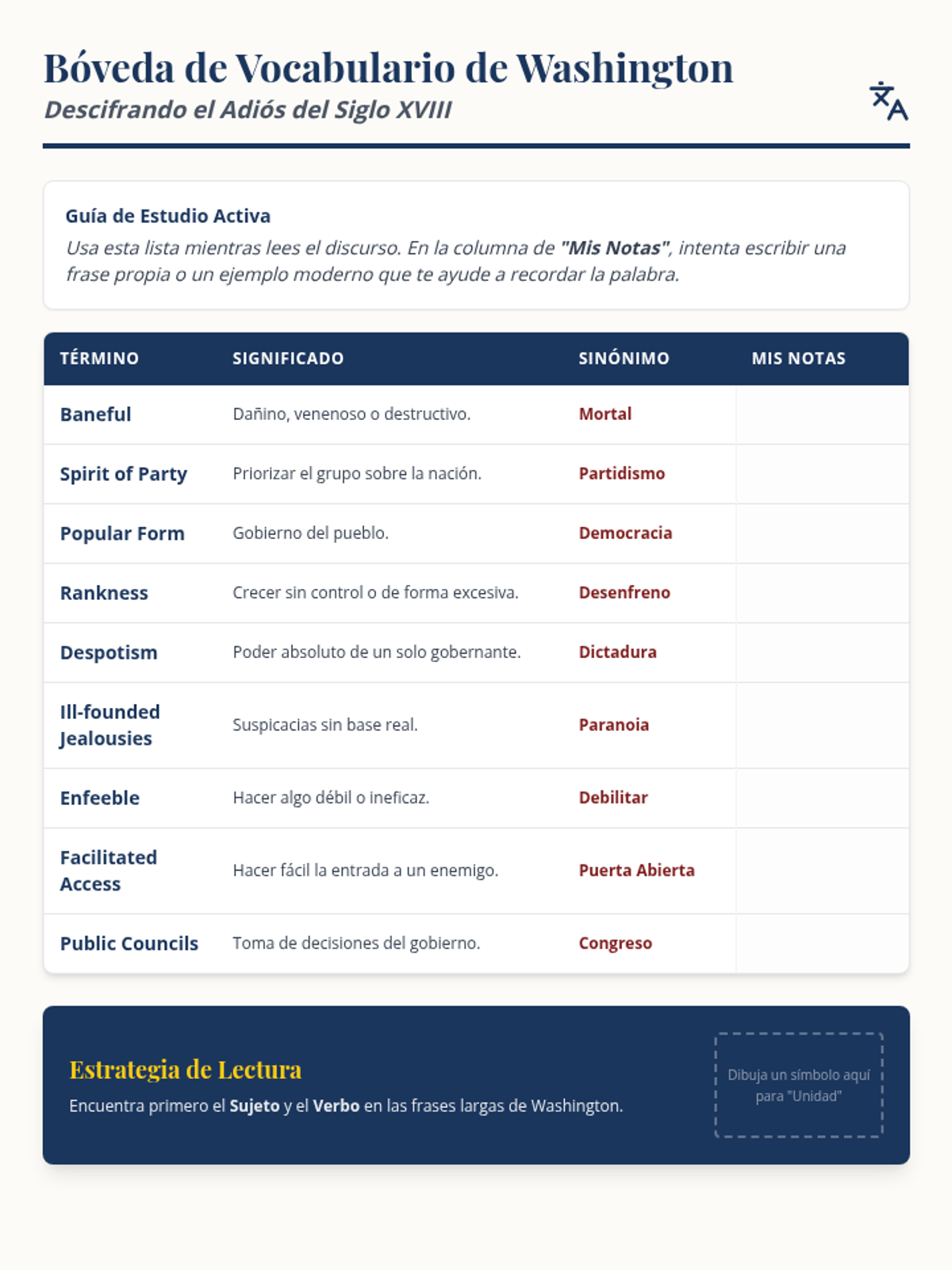
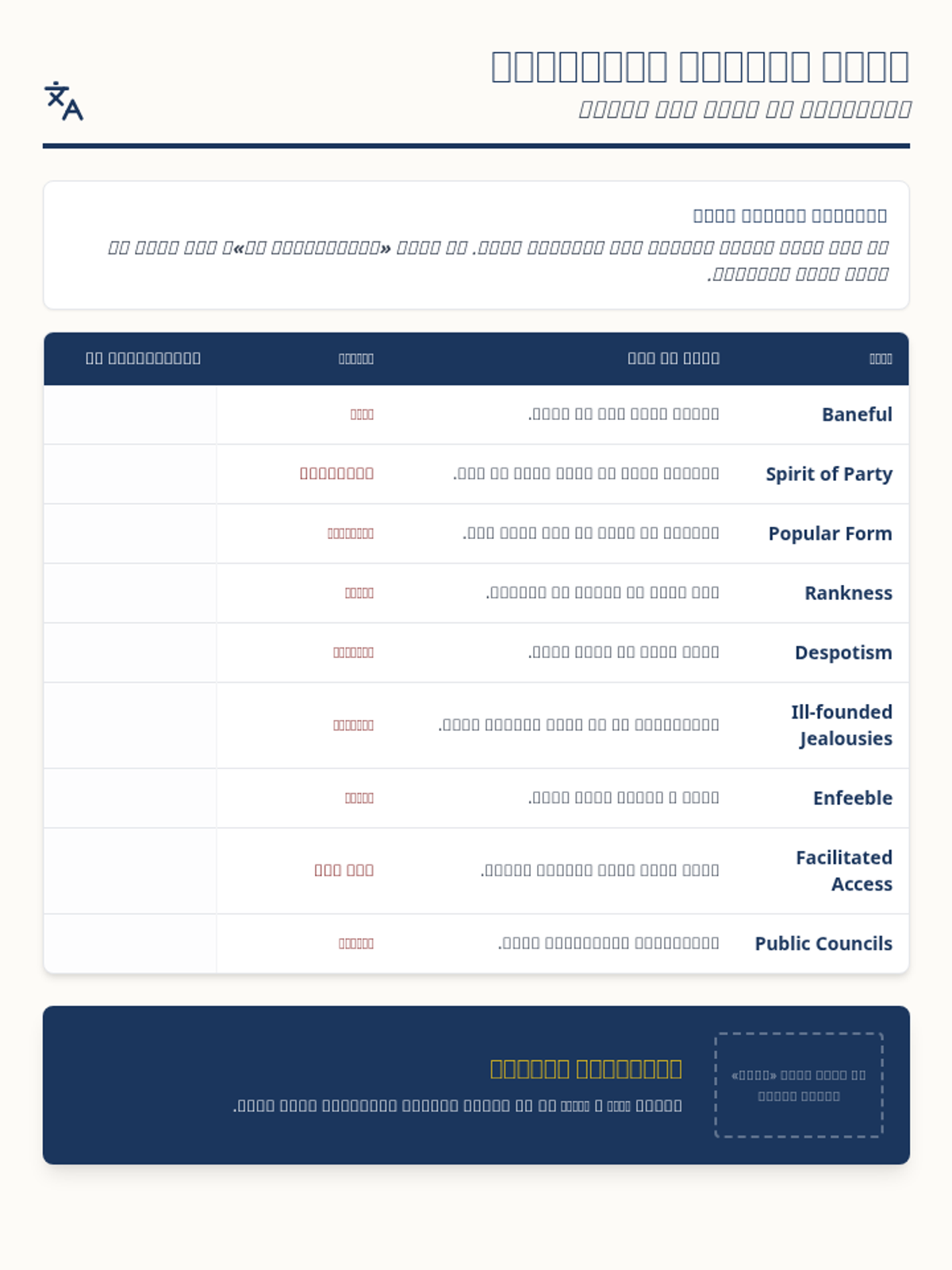
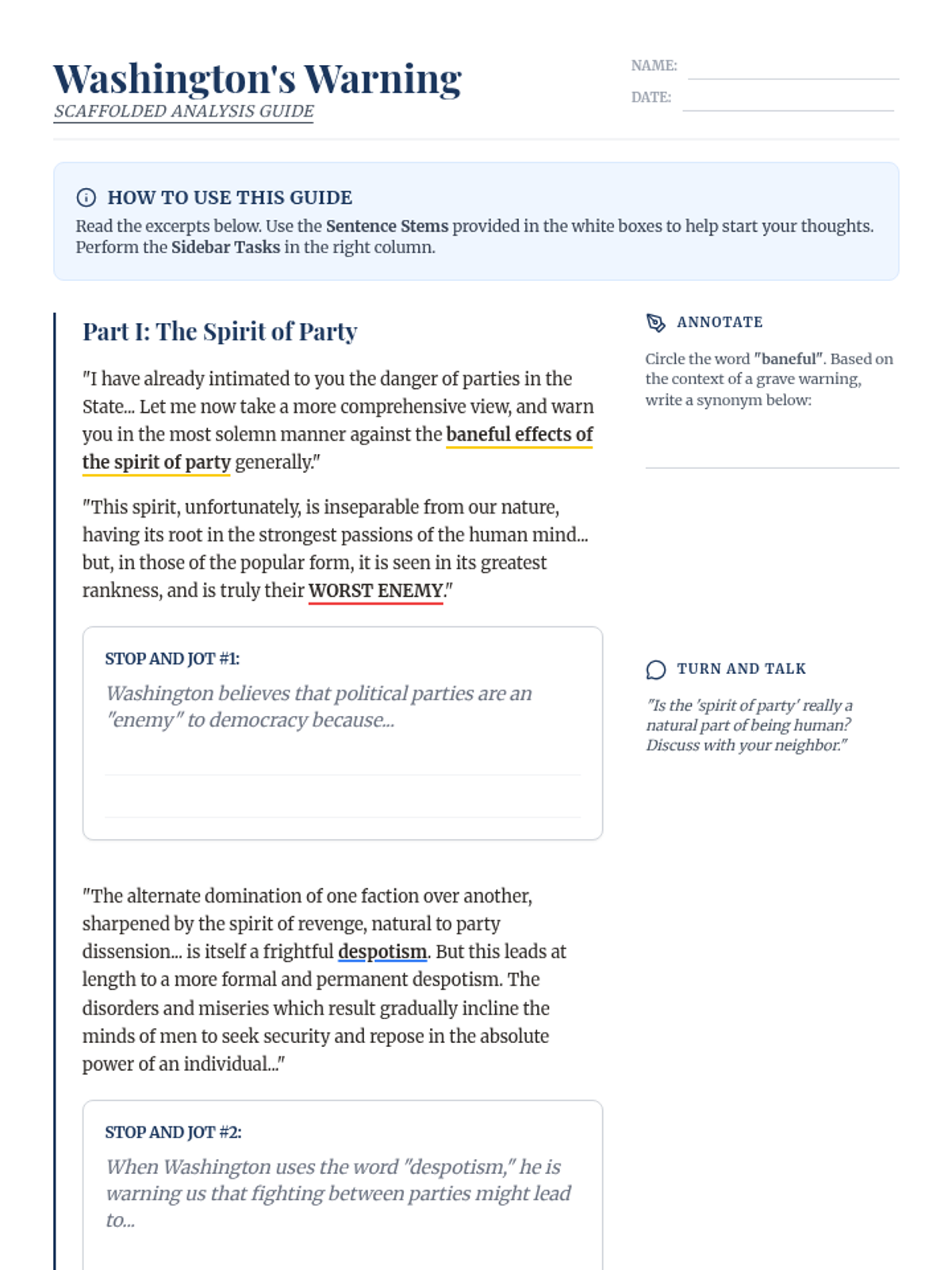
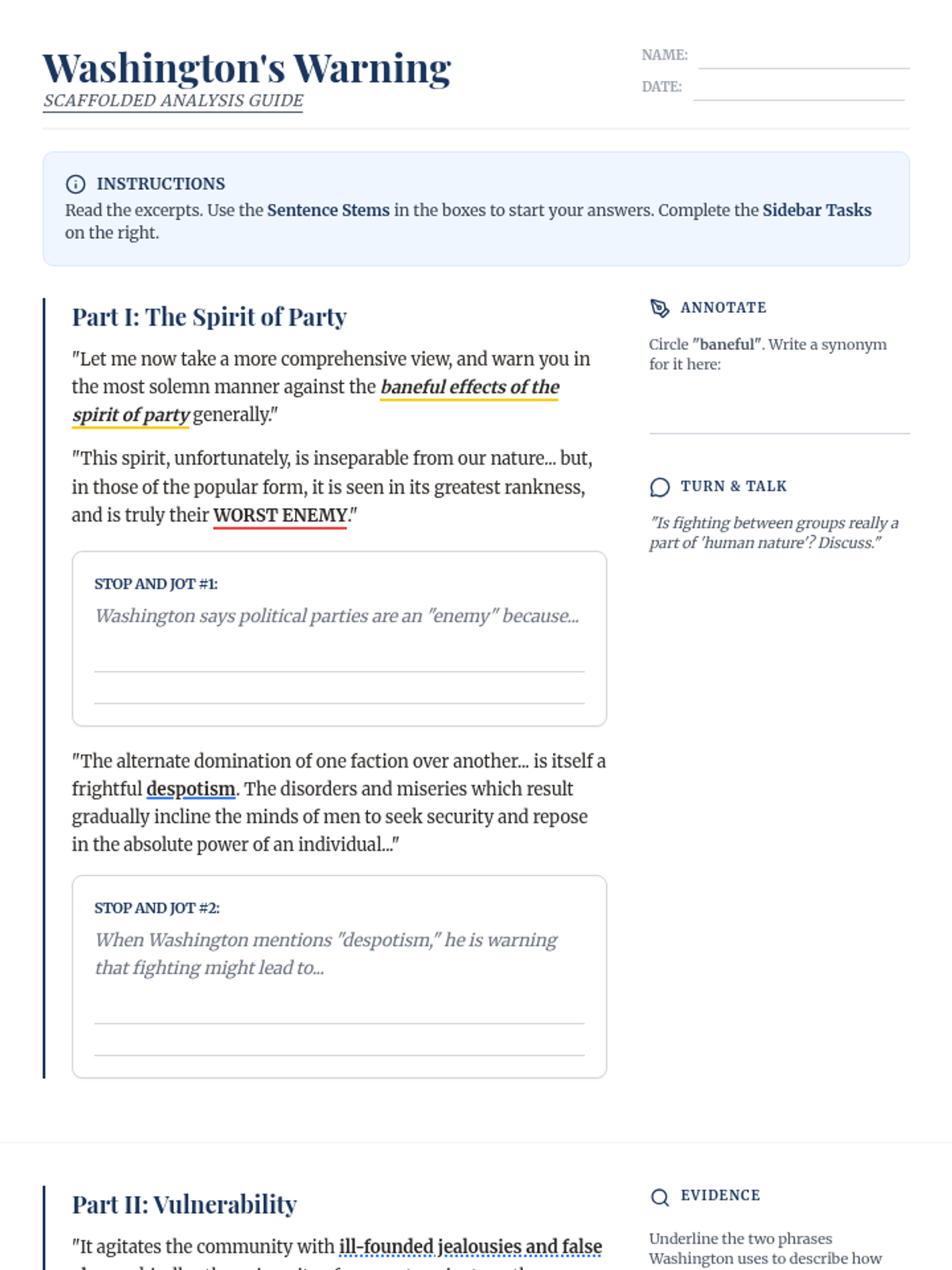
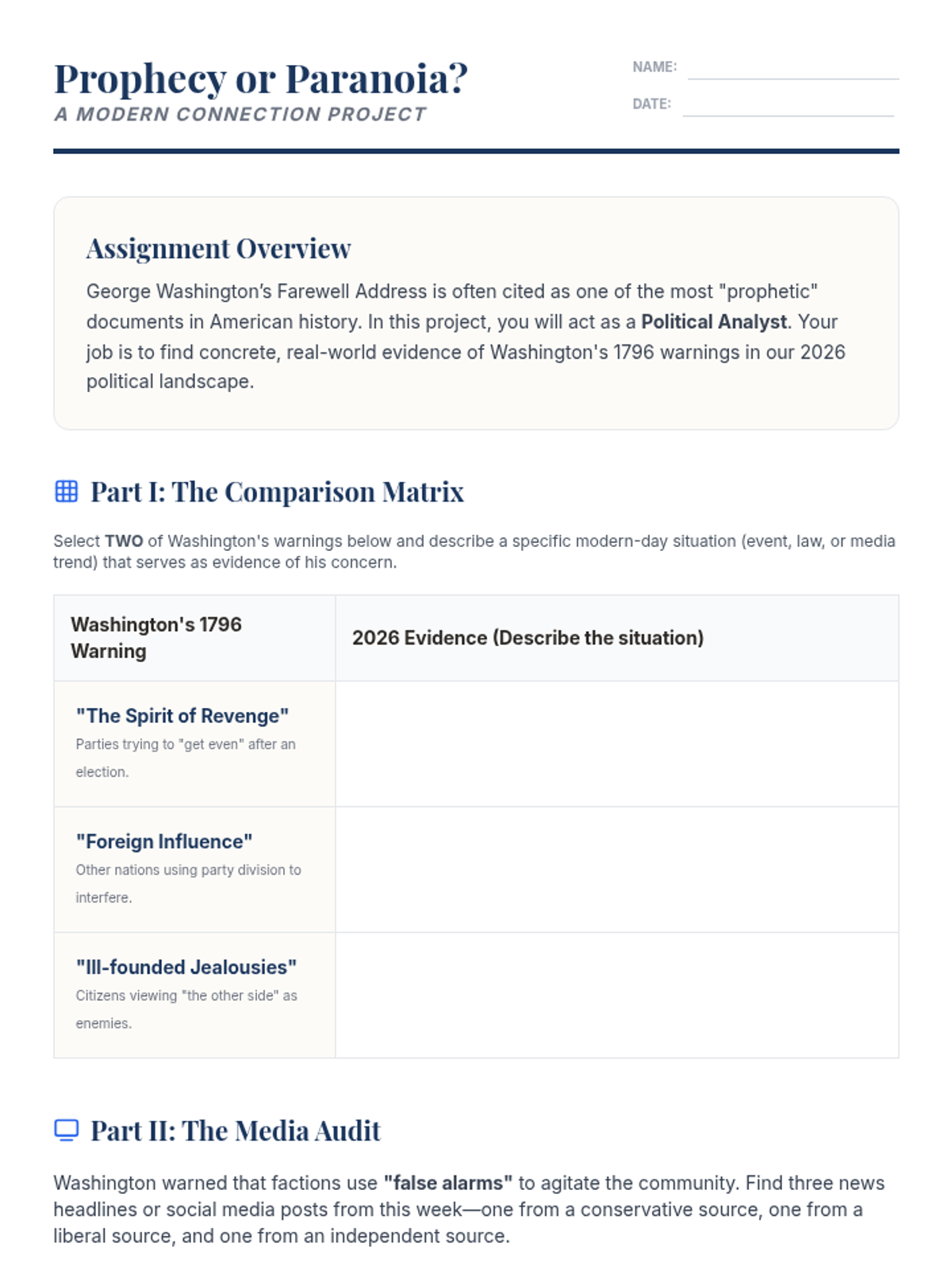
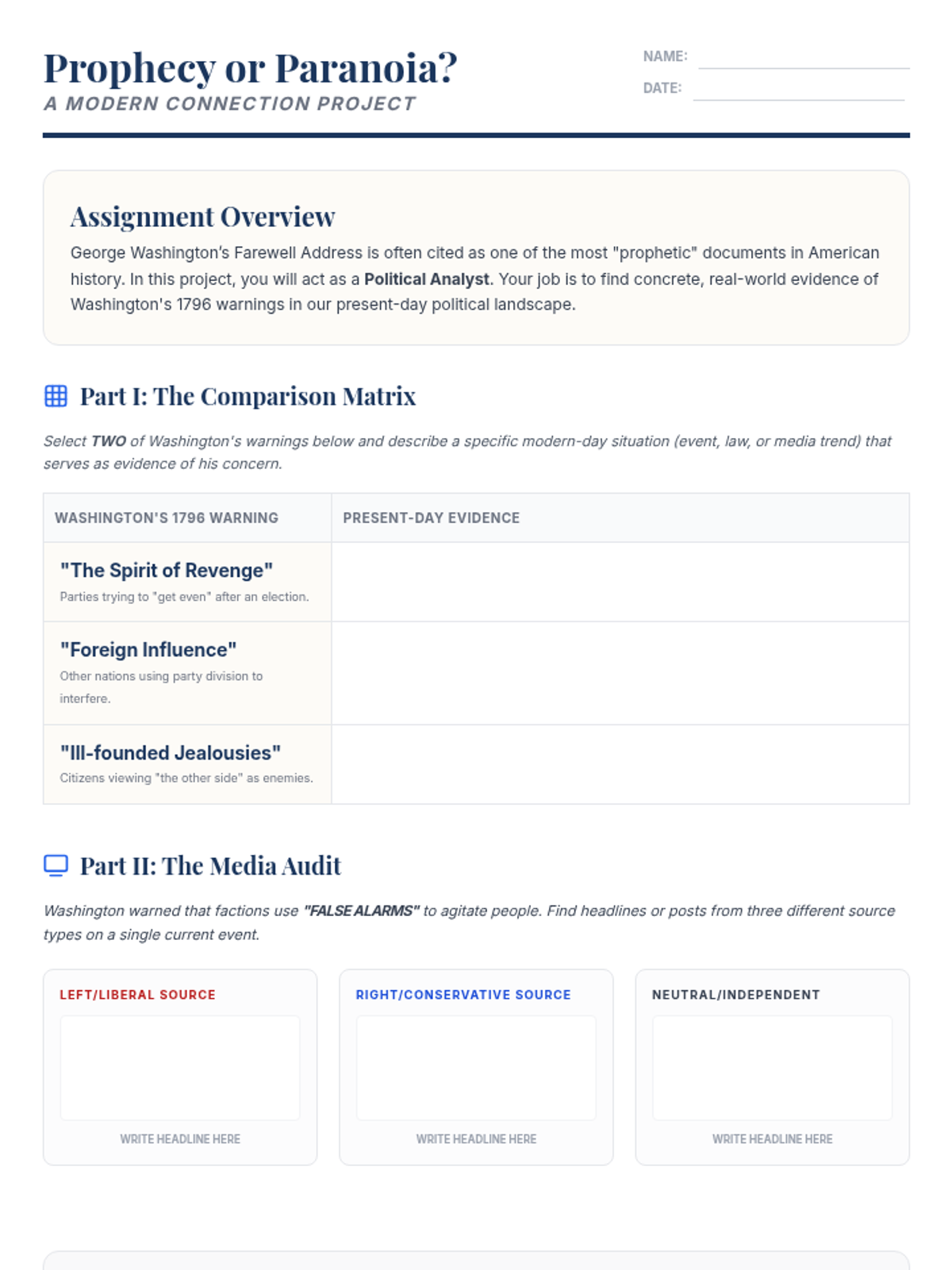
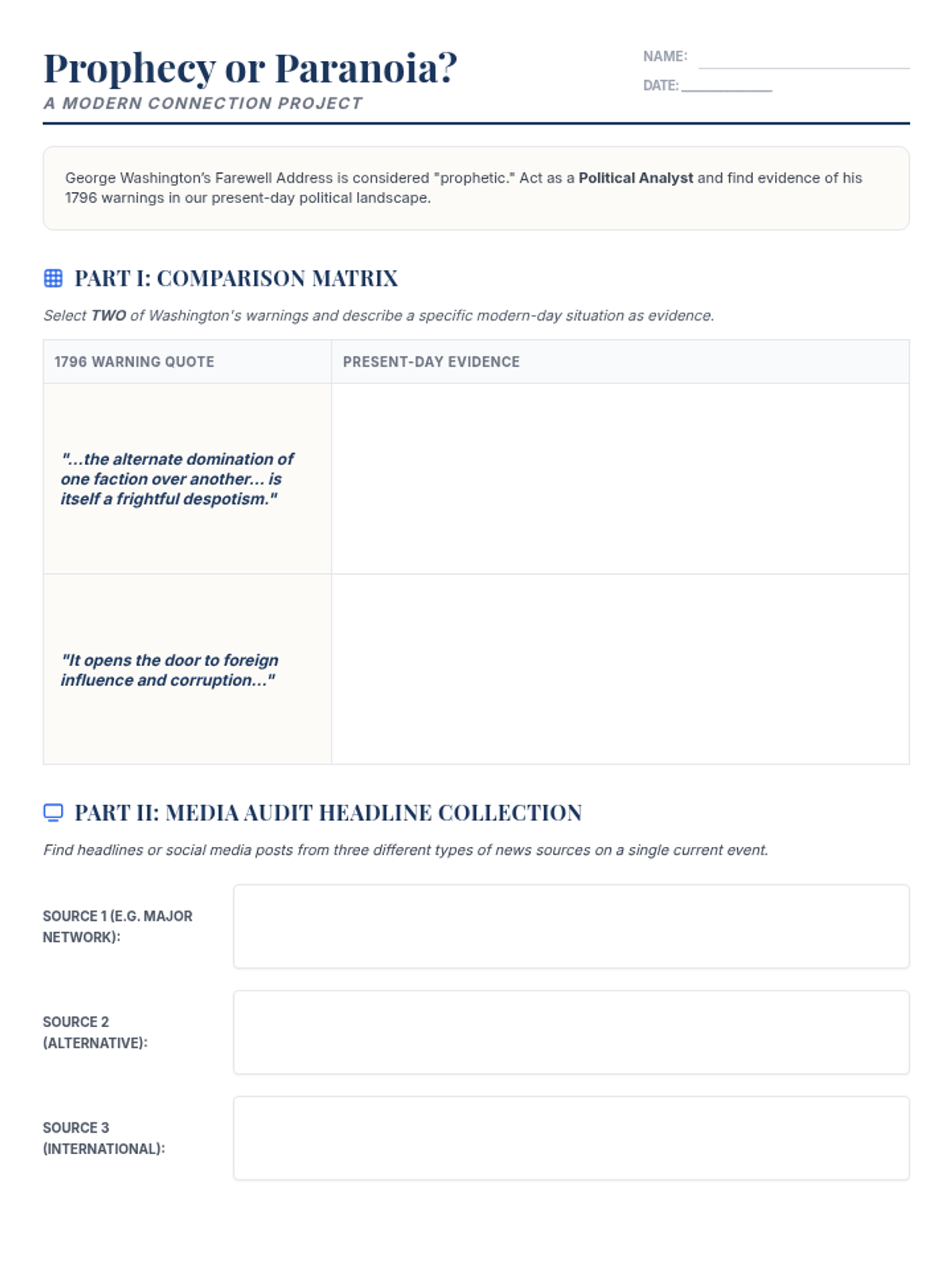
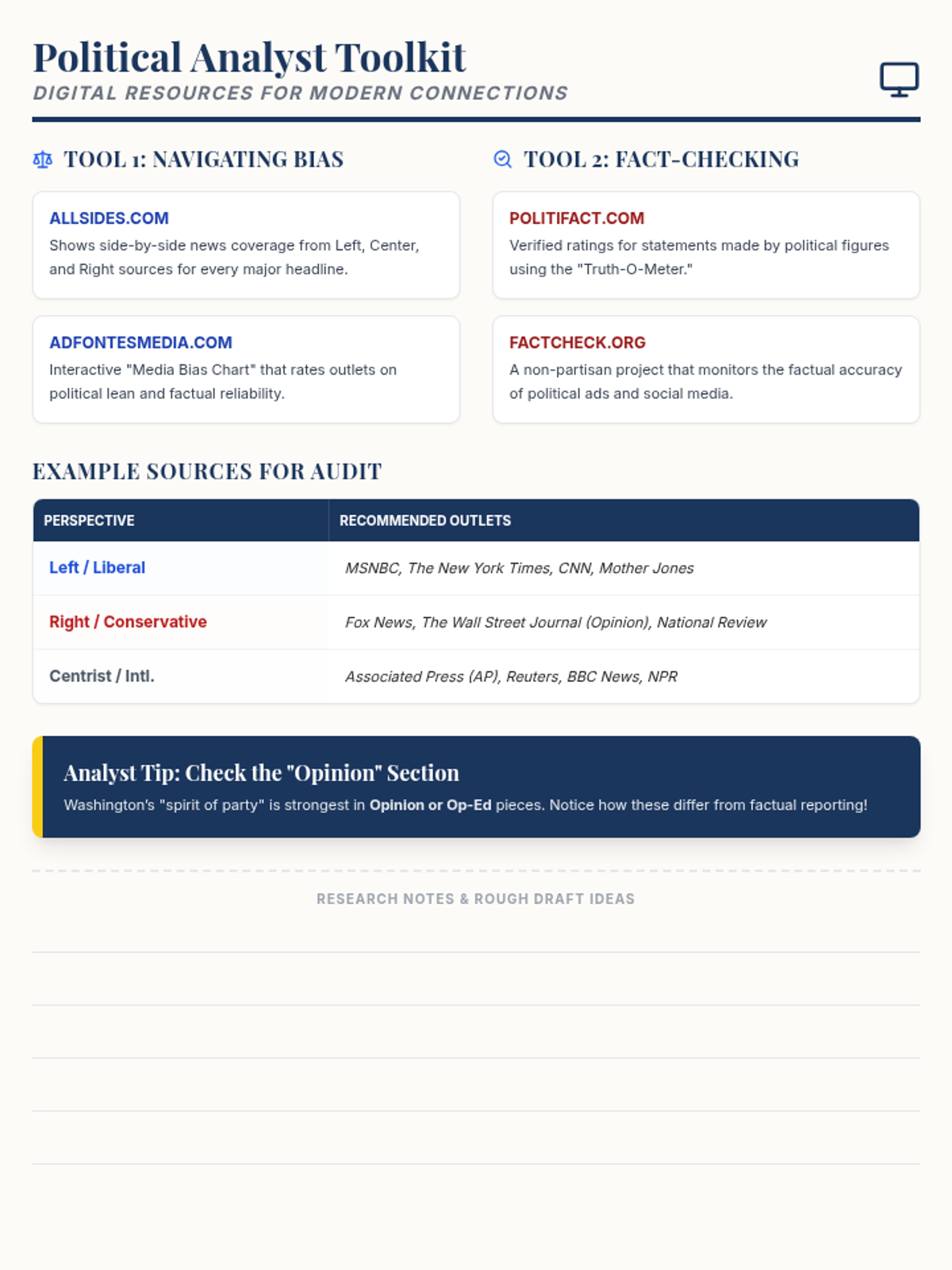
A two-part sequence that takes students from a deep-dive analysis of George Washington's Farewell Address to a modern-day evaluation of his warnings regarding political parties, media bias, and national unity.
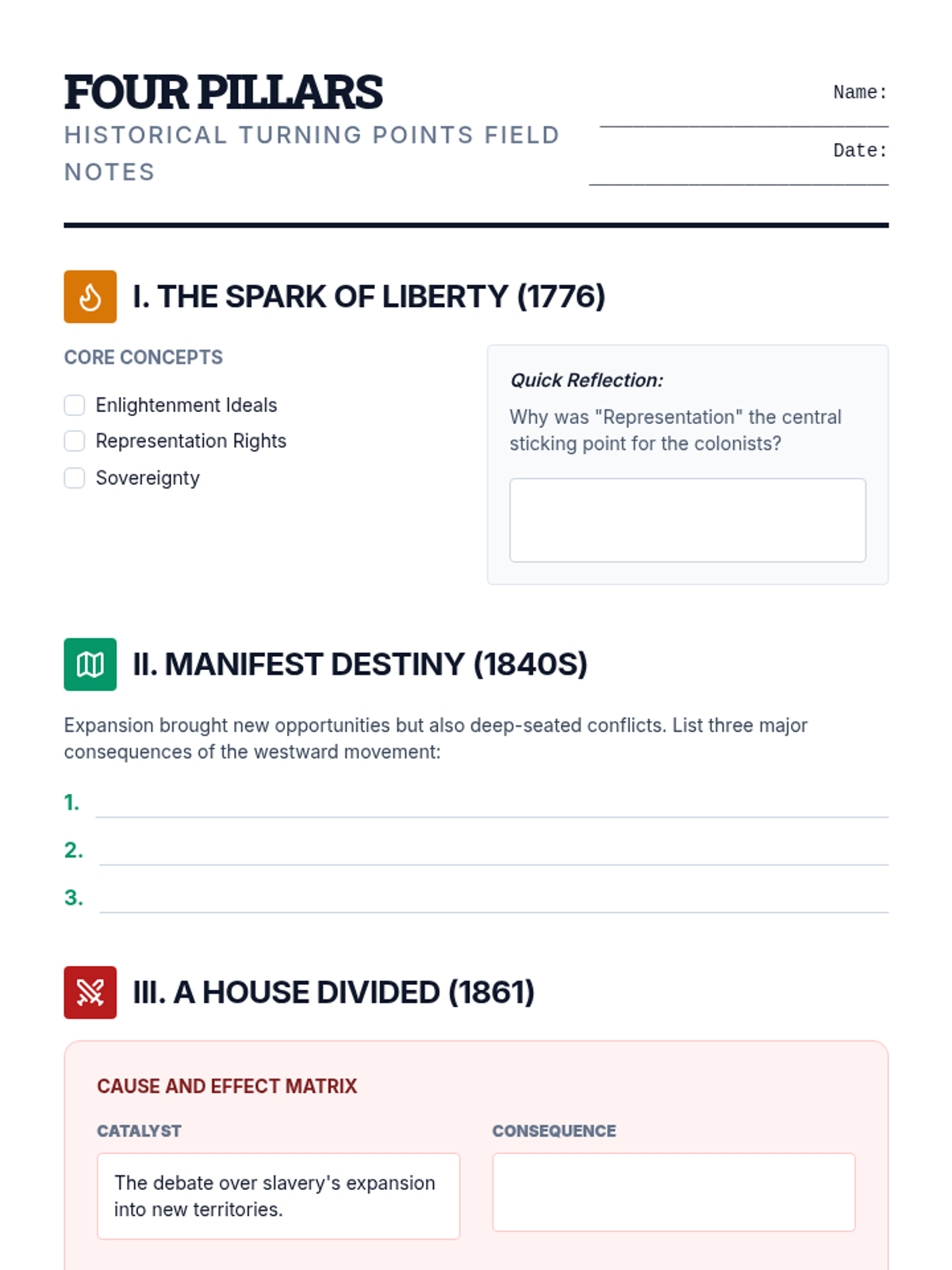
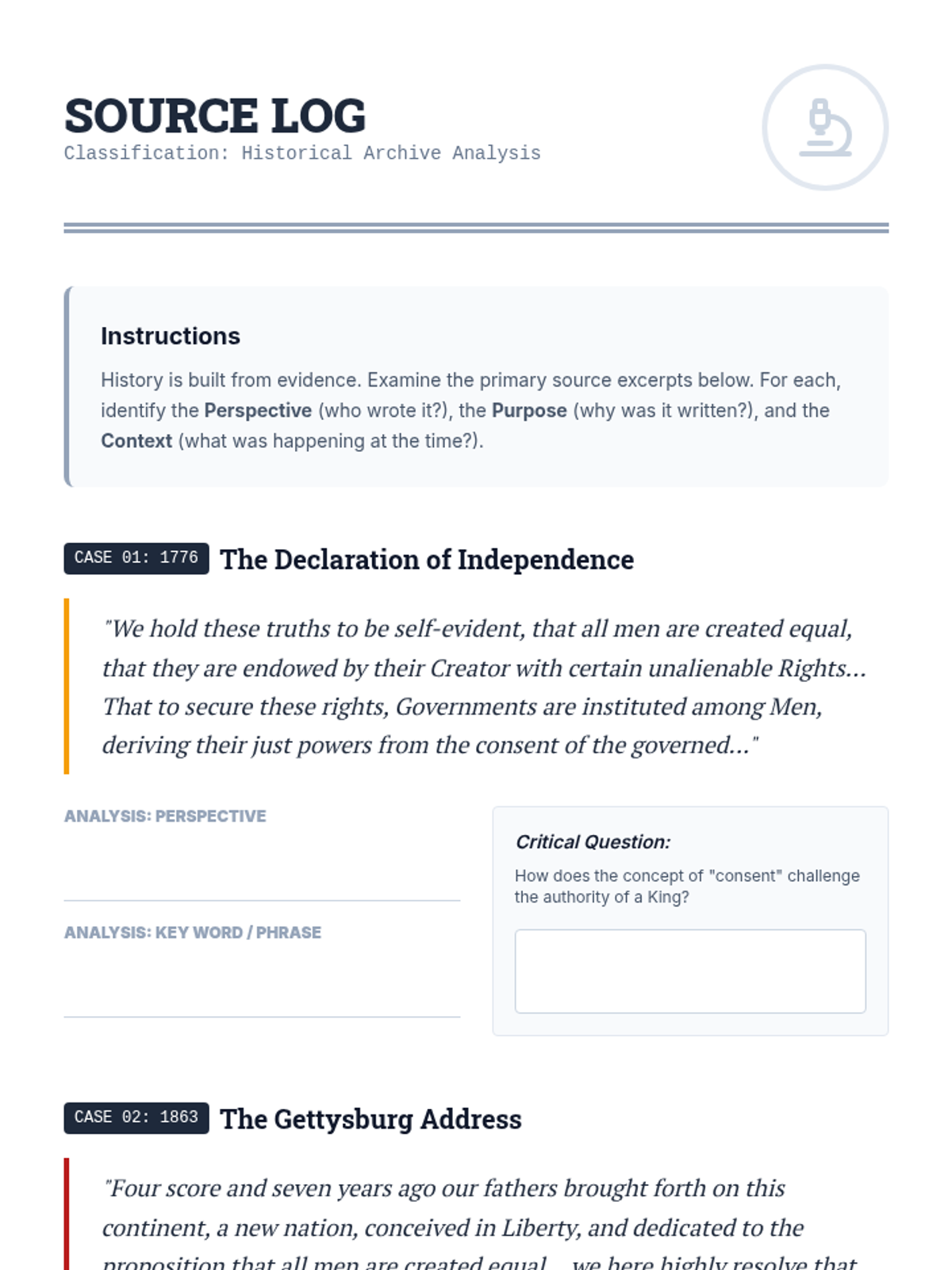
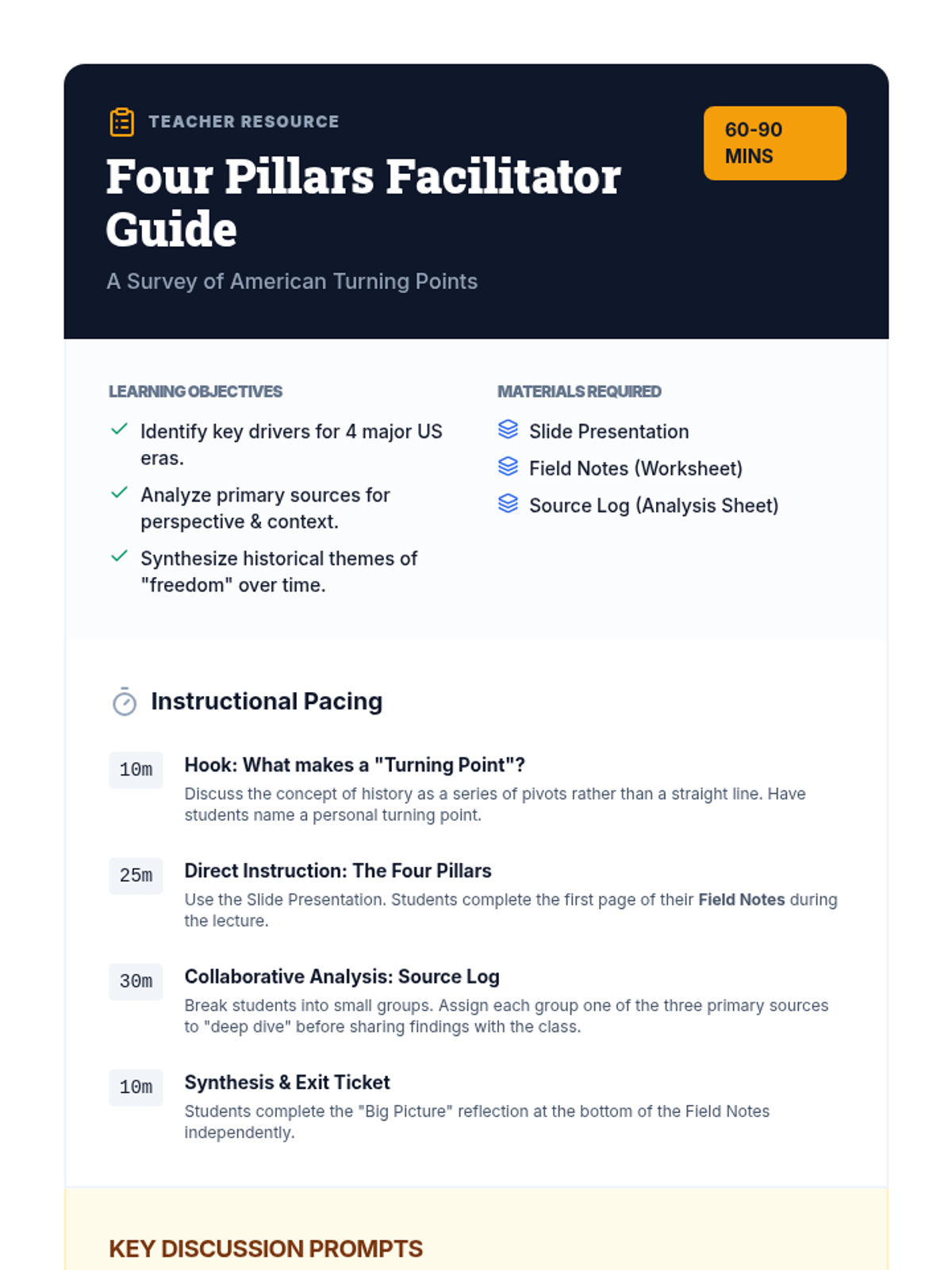
A comprehensive overview of four major turning points in United States history: the American Revolution, Westward Expansion, the Civil War, and World War II. This sequence explores how each era redefined the American identity and shifted the nation's trajectory.
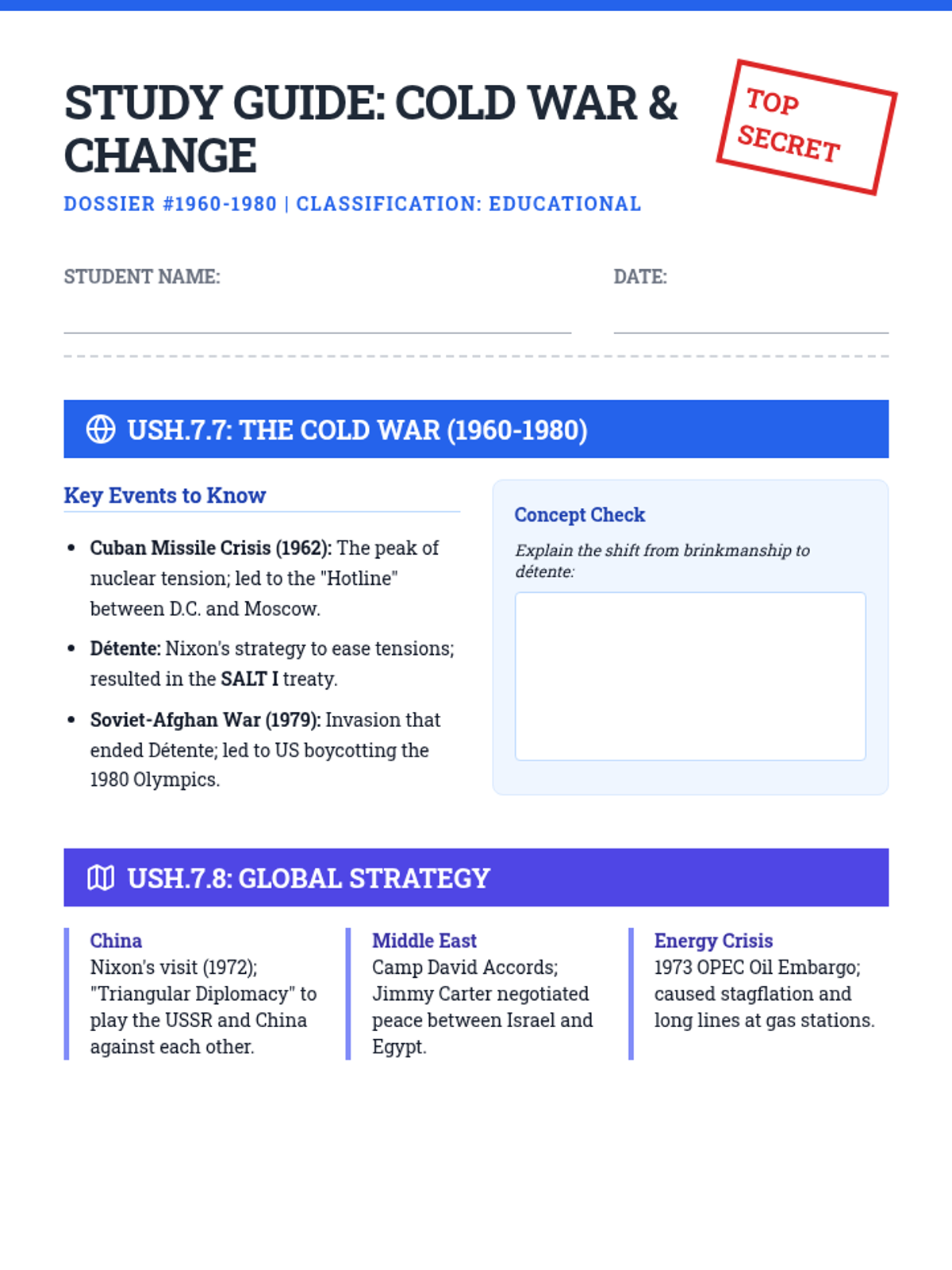
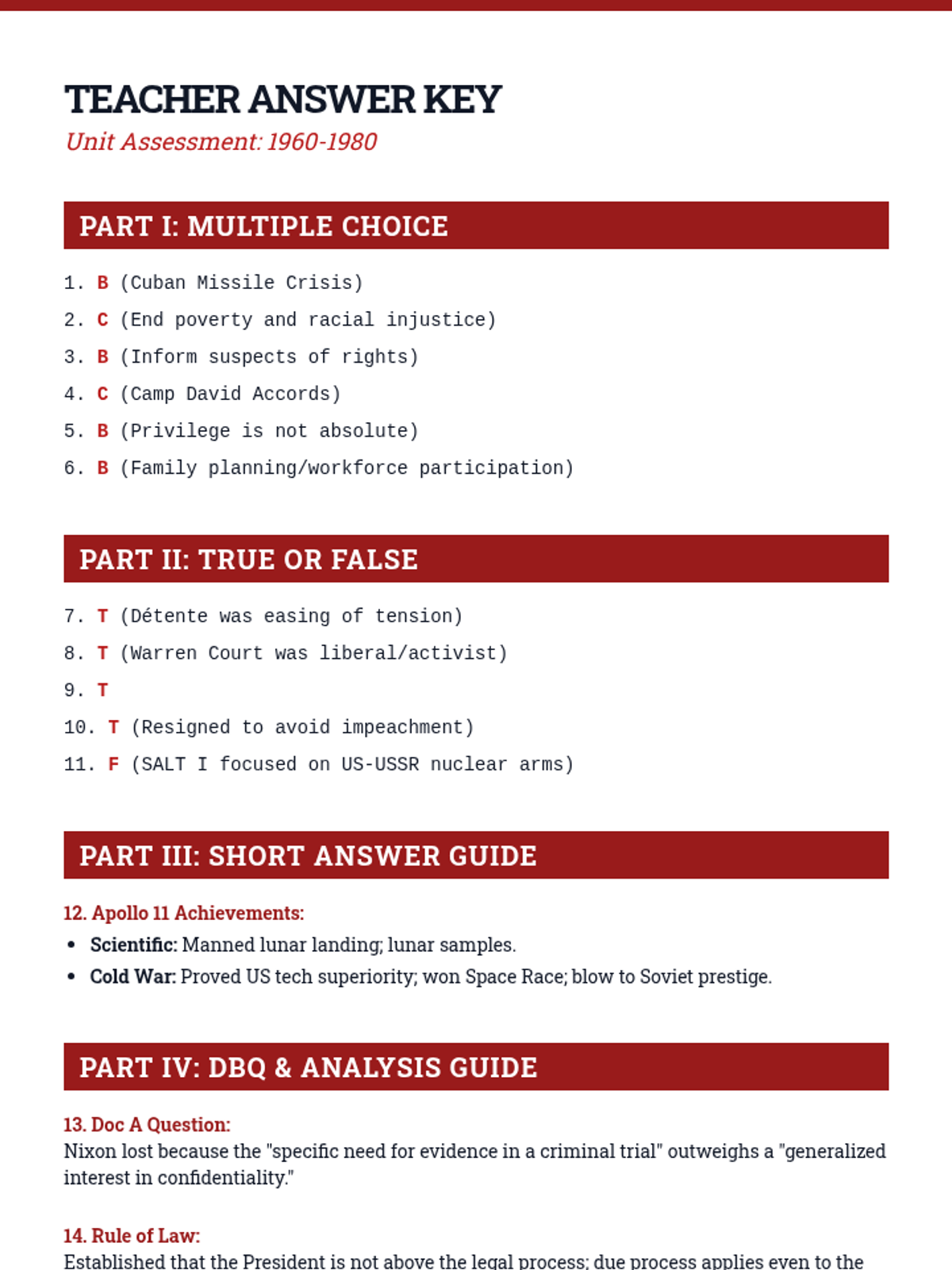
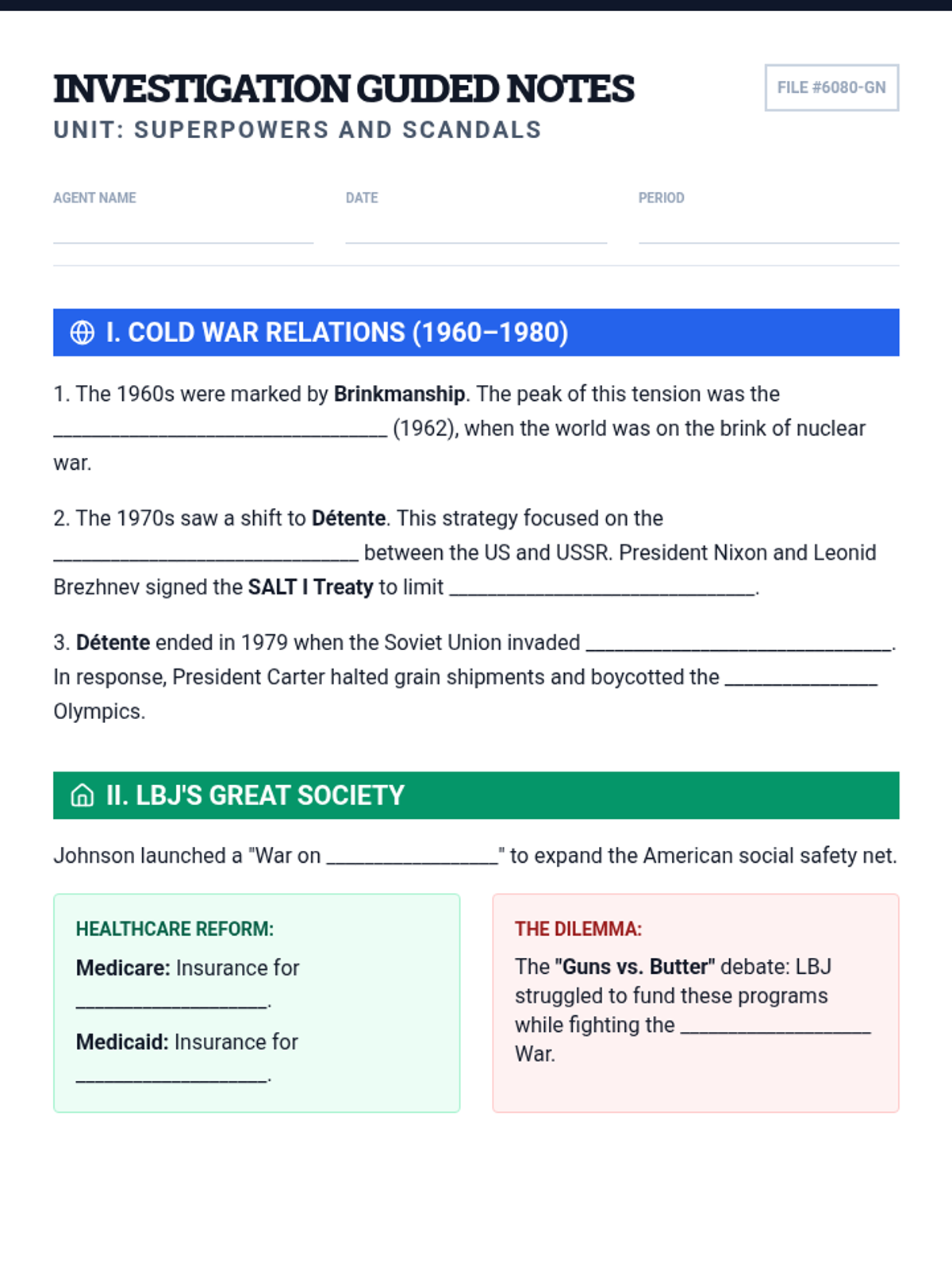
A comprehensive unit covering United States history from 1960 to 1980, focusing on the Cold War, domestic policy, and political scandals.
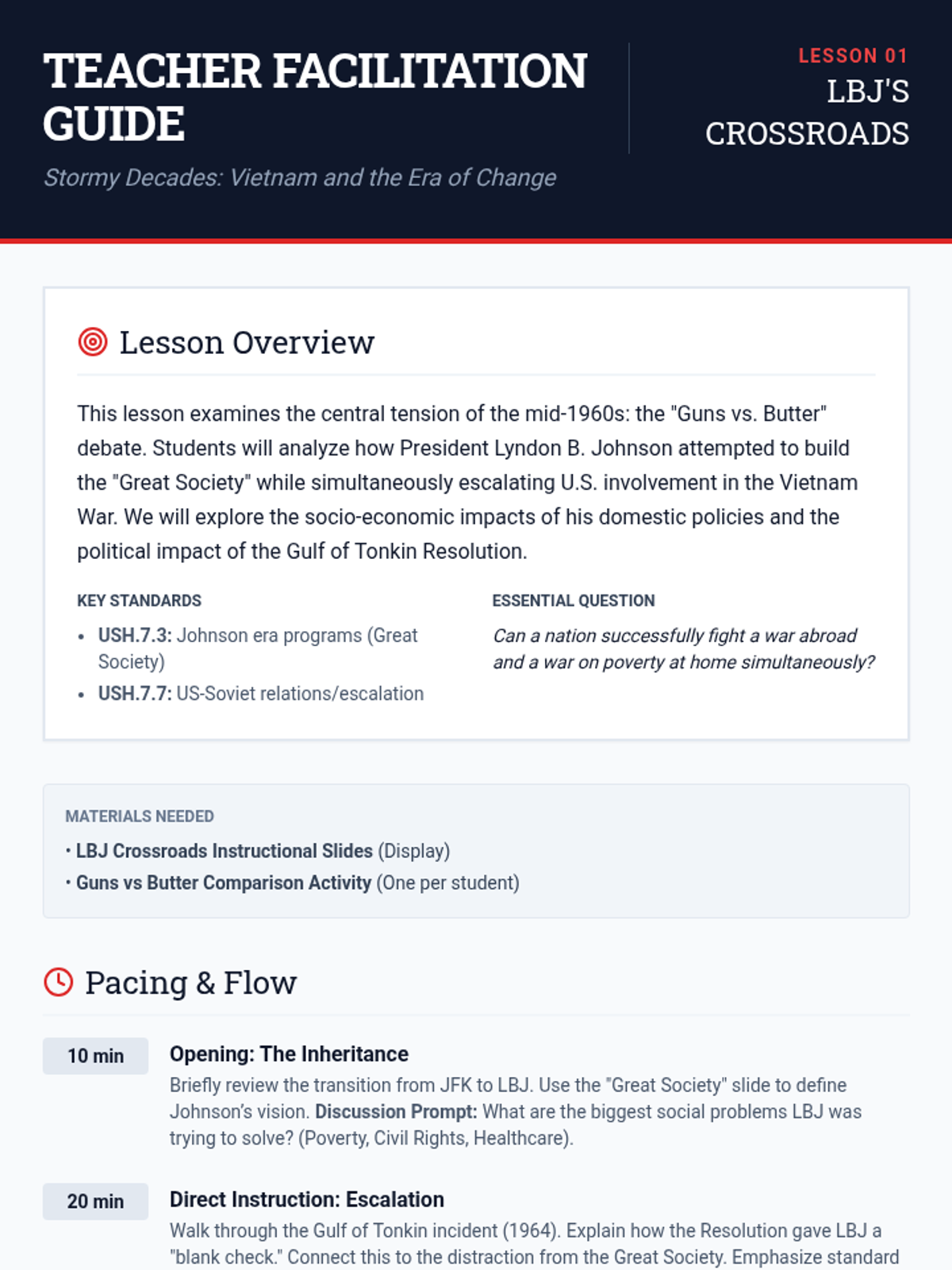
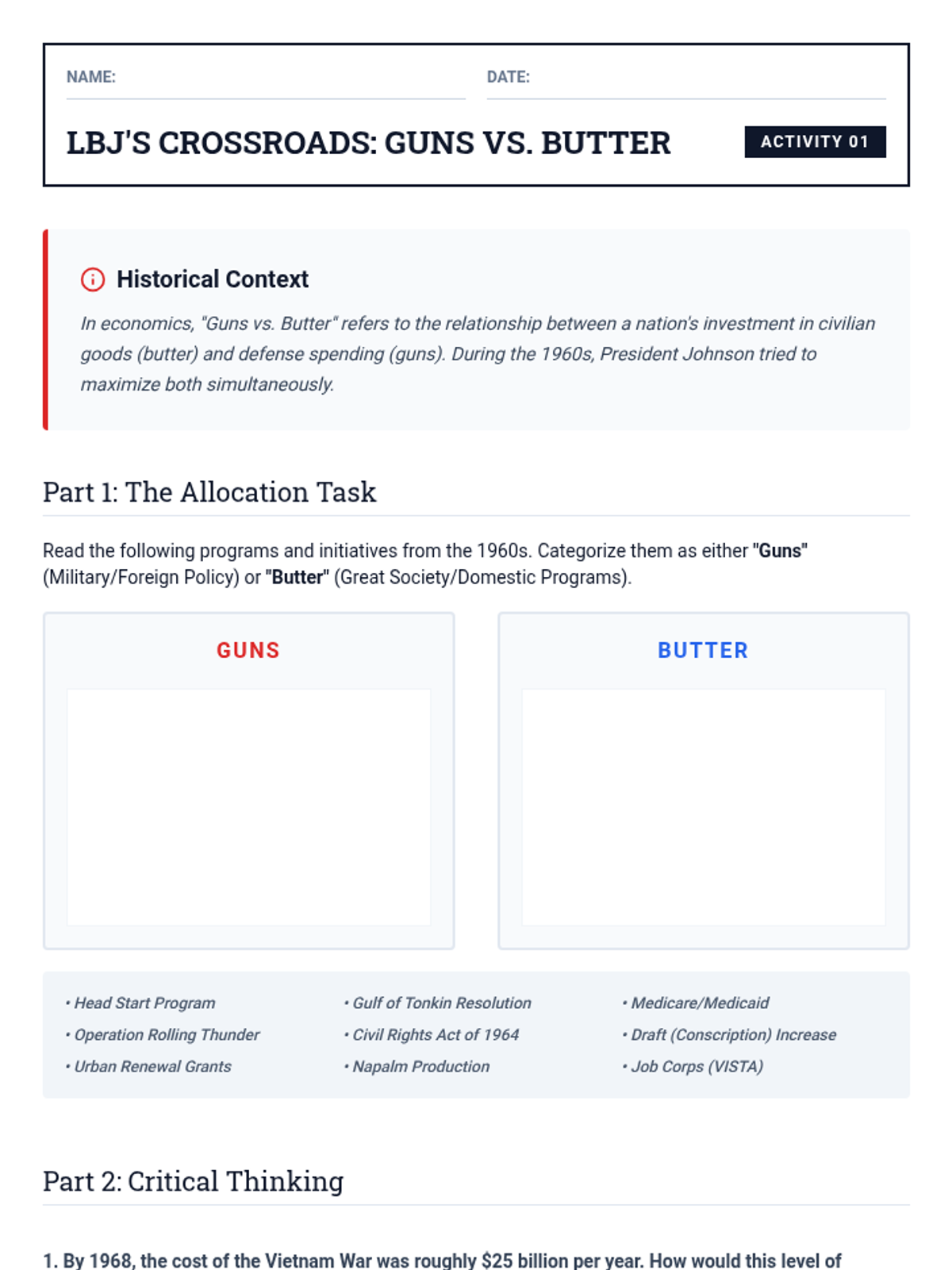
A comprehensive 5-day unit covering the United States from 1960 to 1980, focusing on the Vietnam War's impact on foreign policy, domestic programs, and constitutional crises. Students analyze the tension between the Great Society and war spending, the role of technology in warfare, and the legacy of the Watergate scandal.
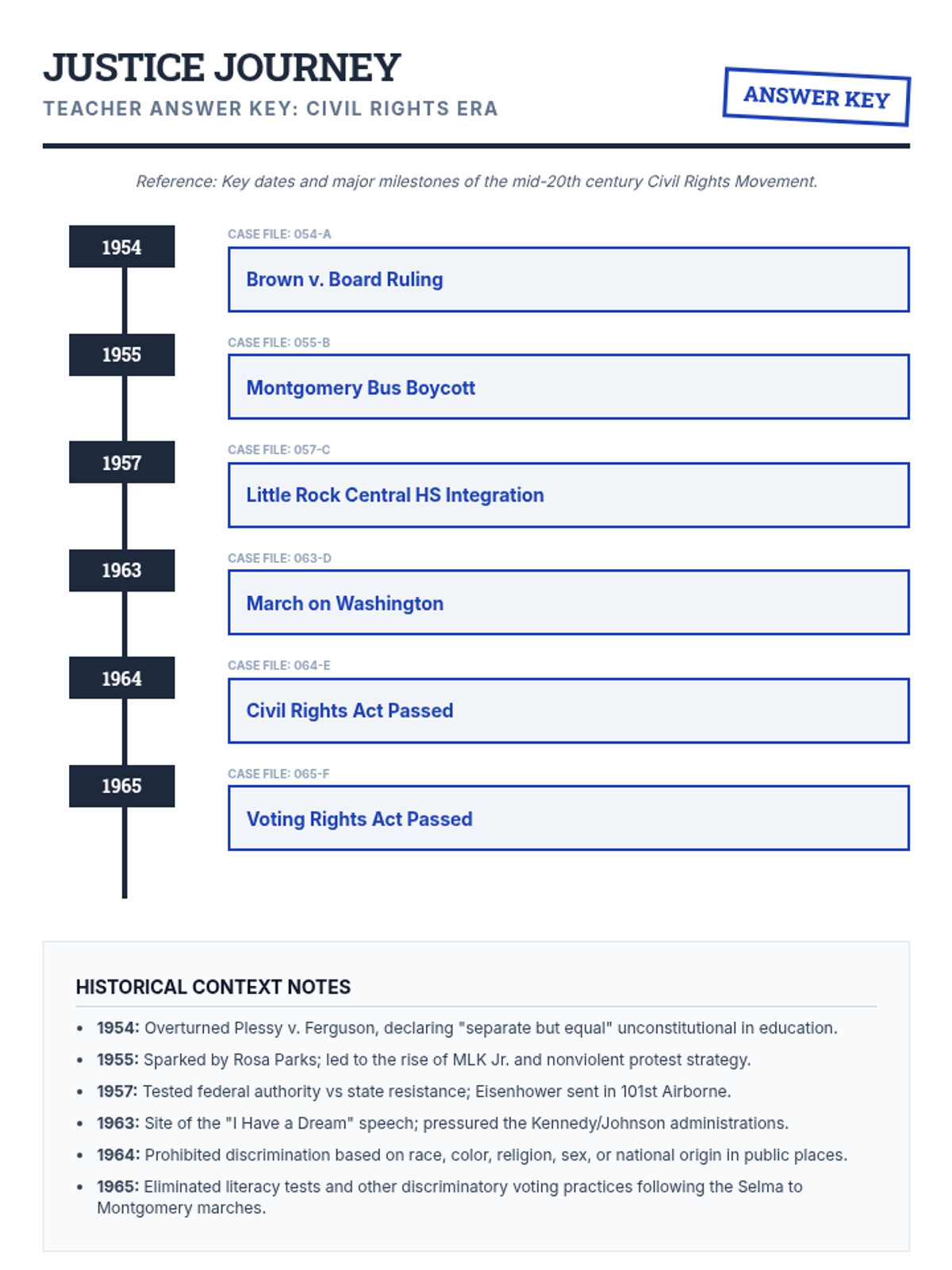
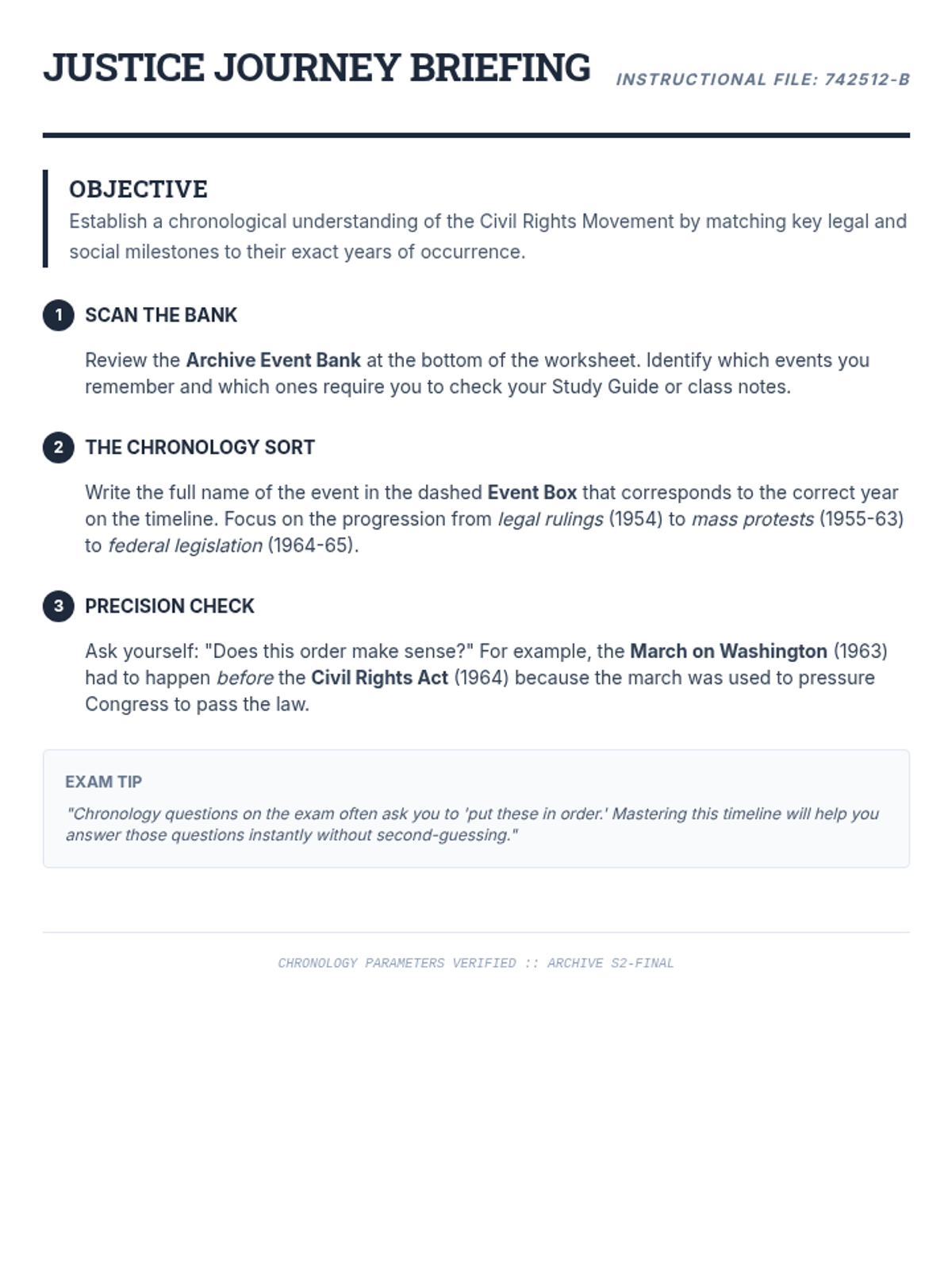
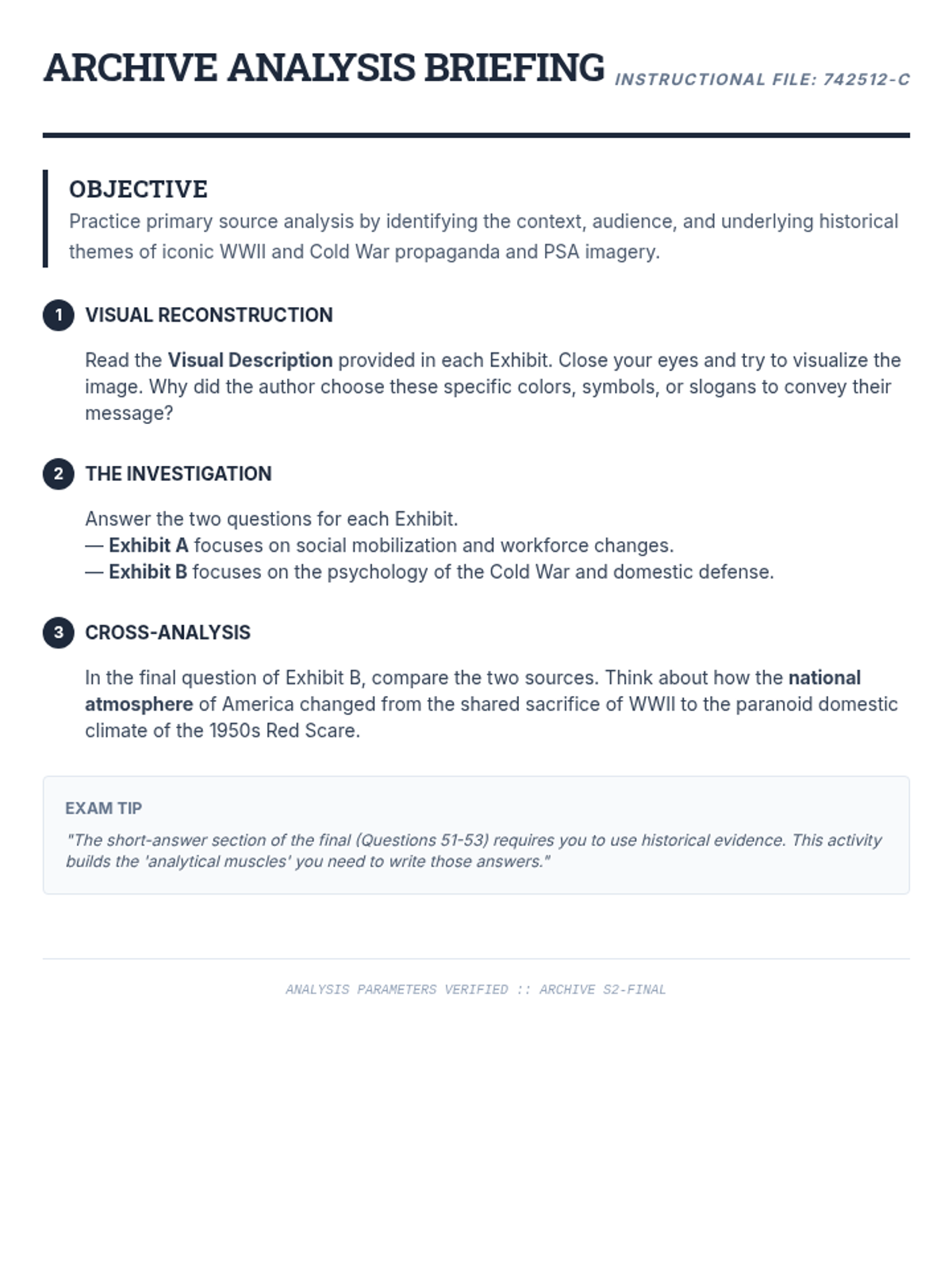
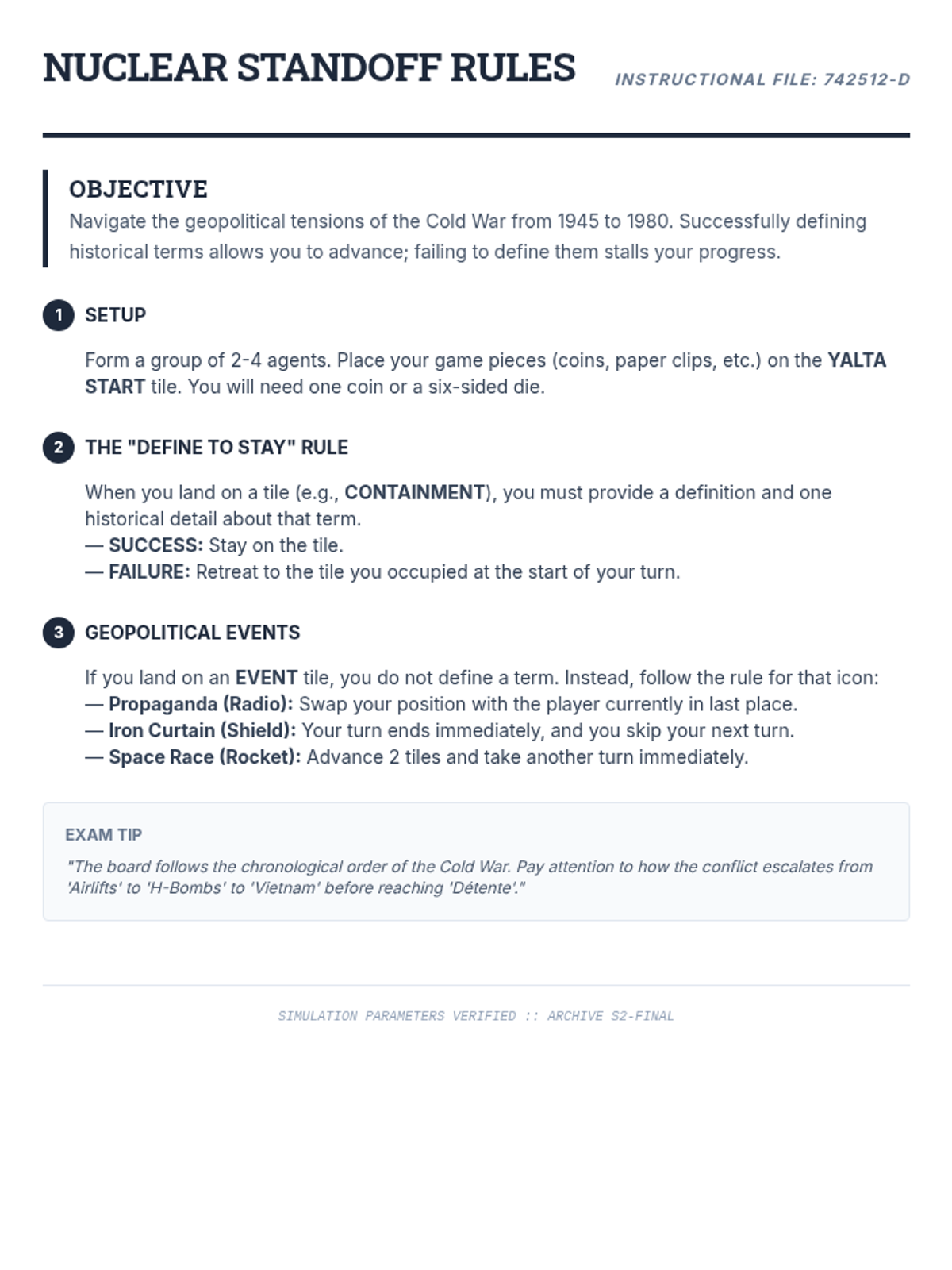
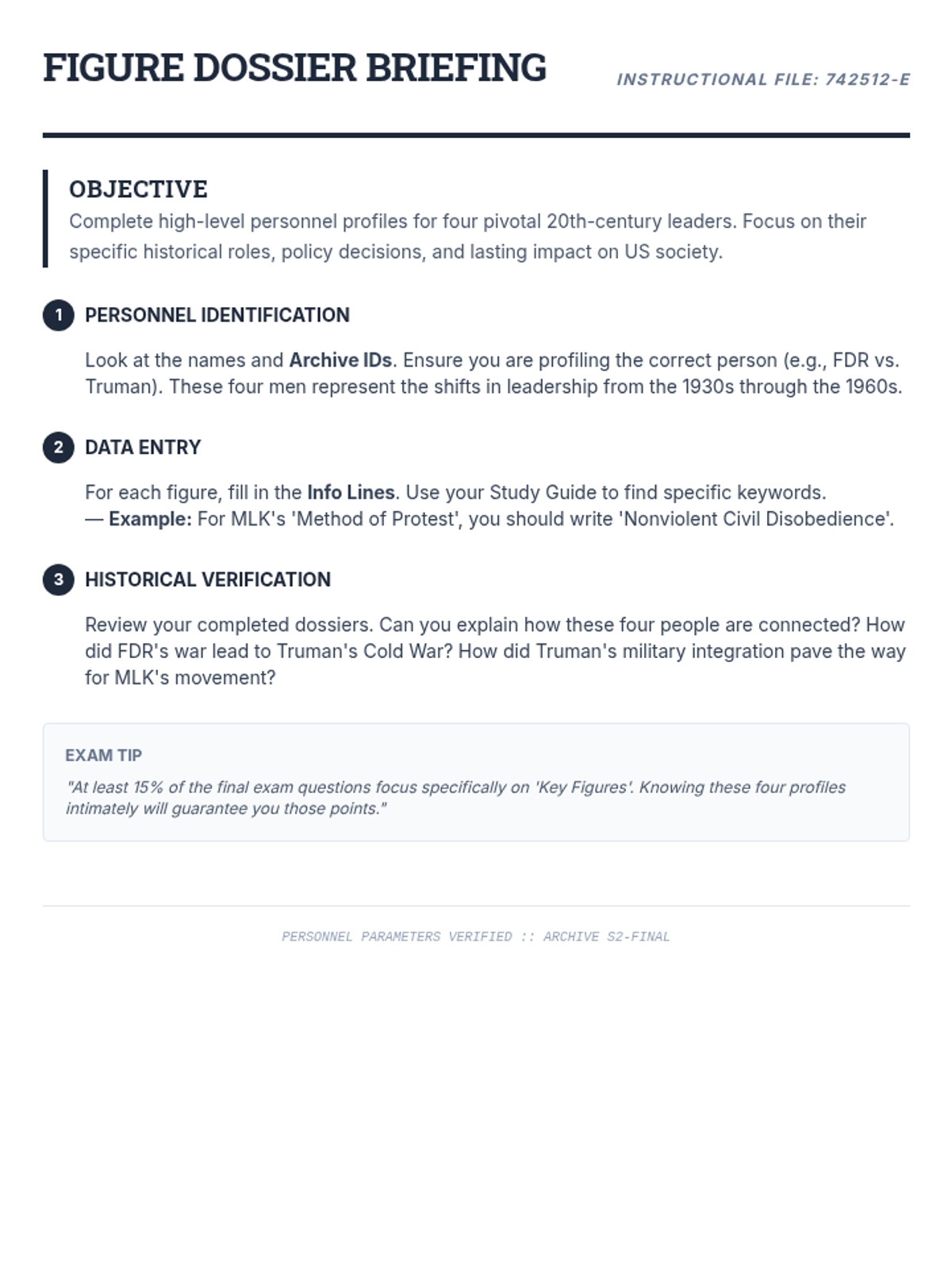
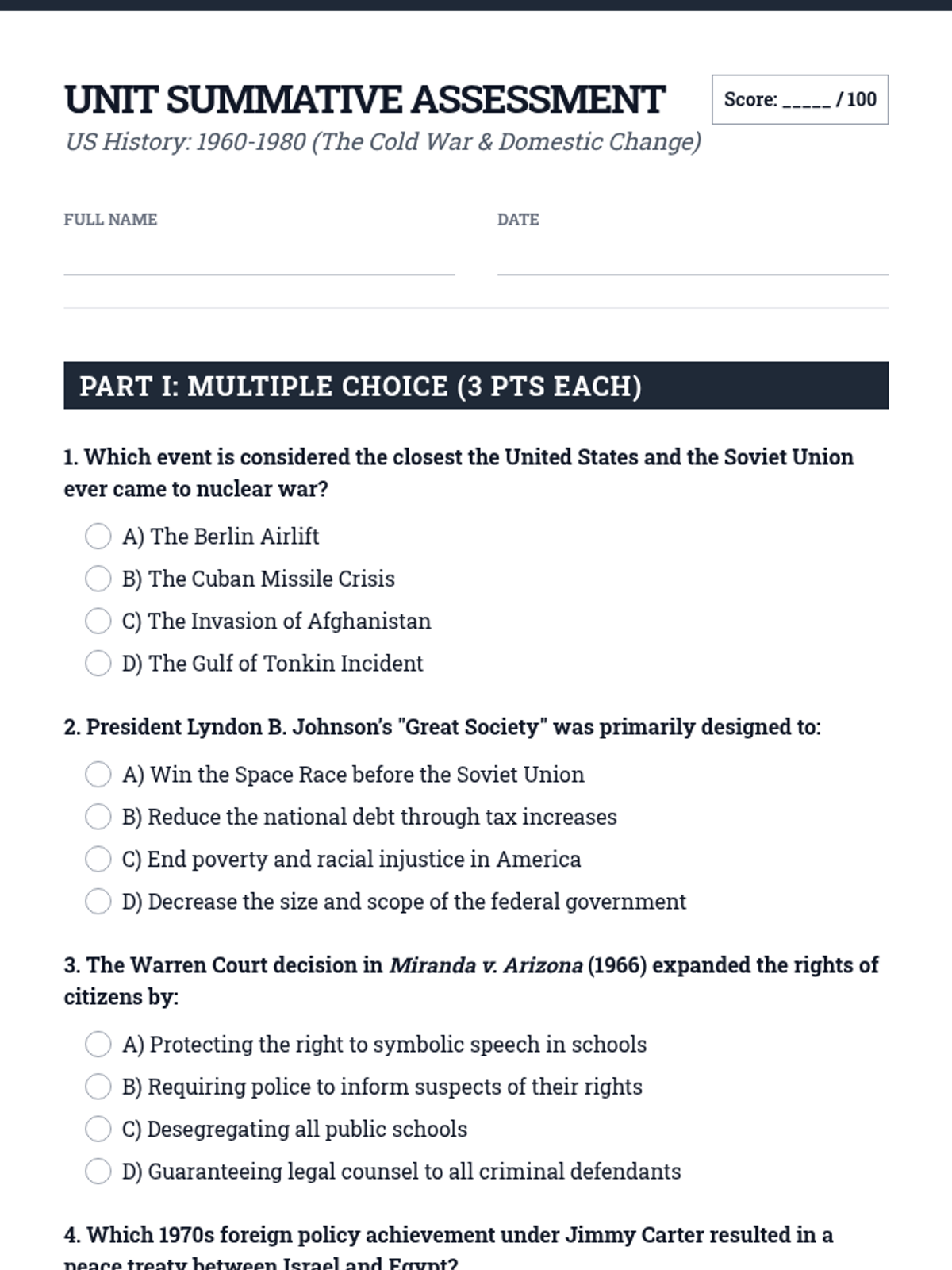
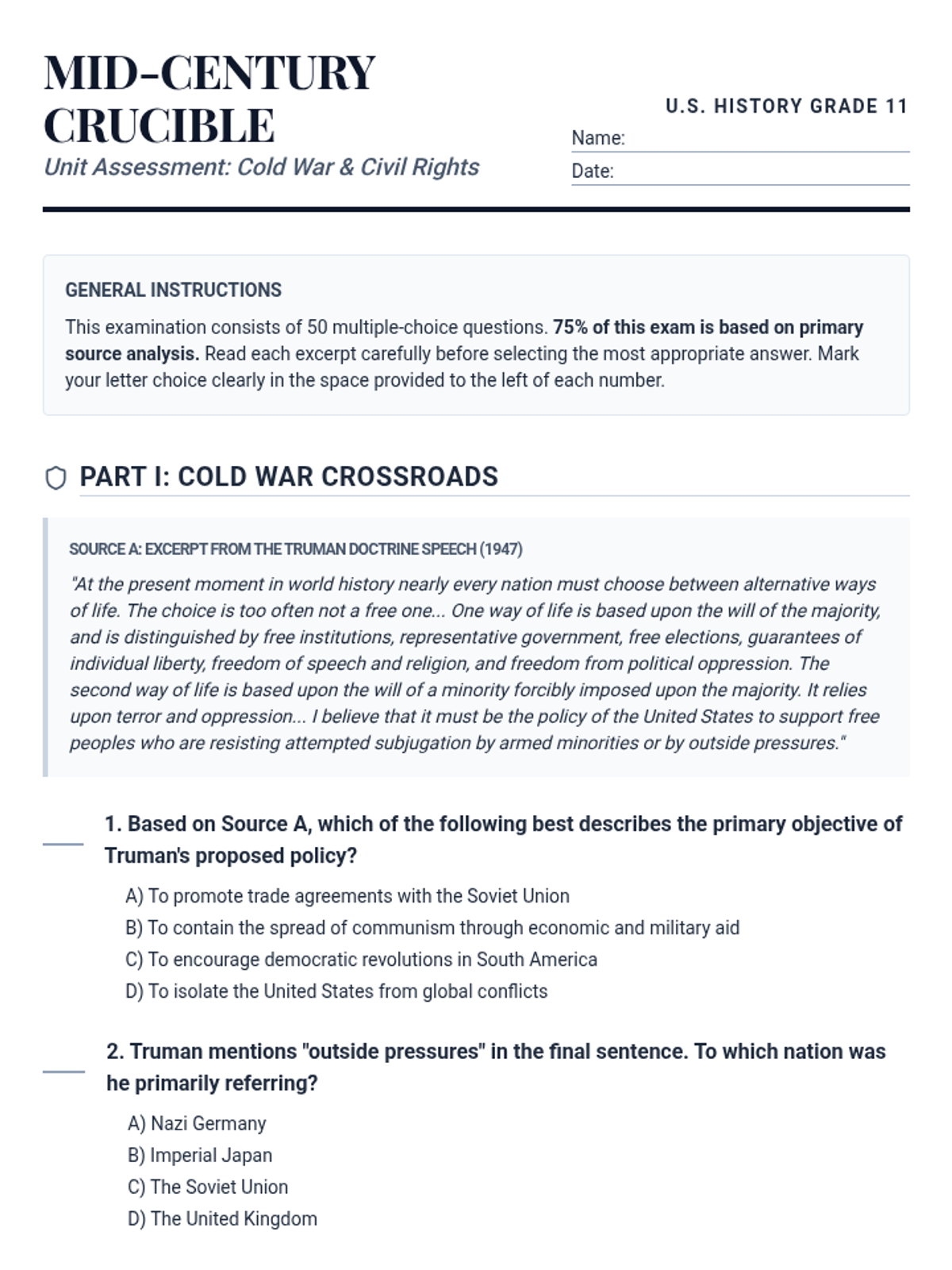
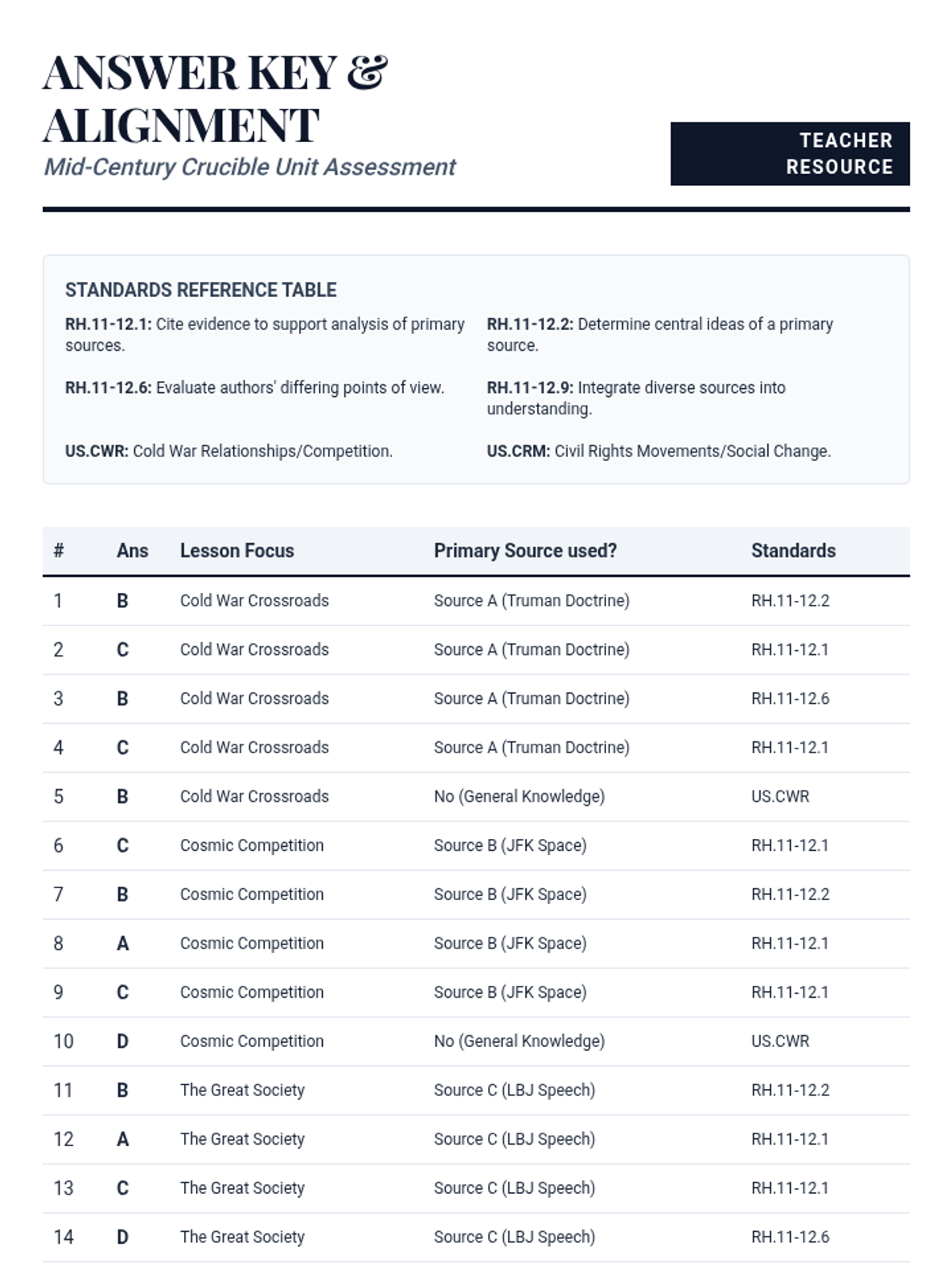
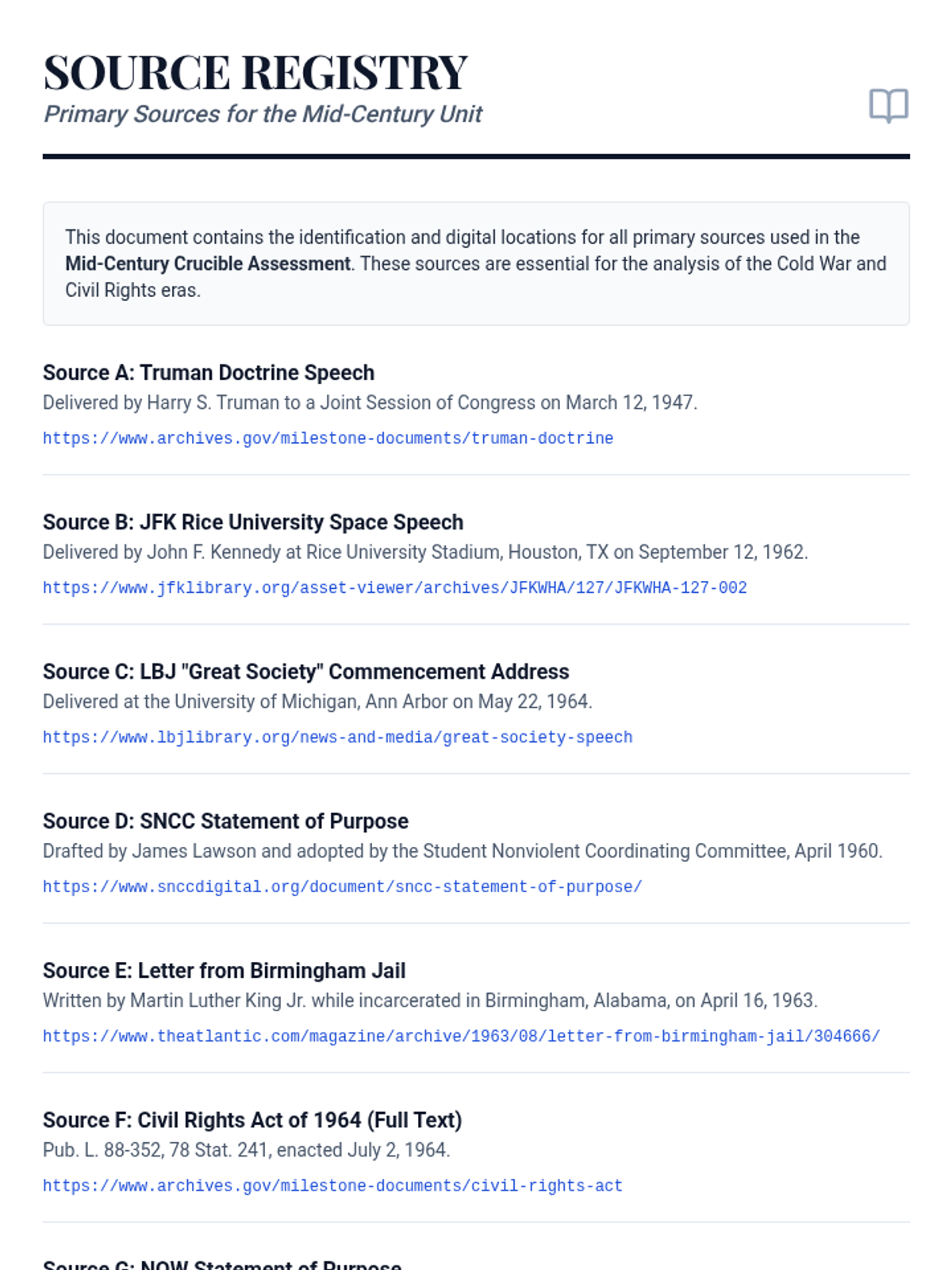
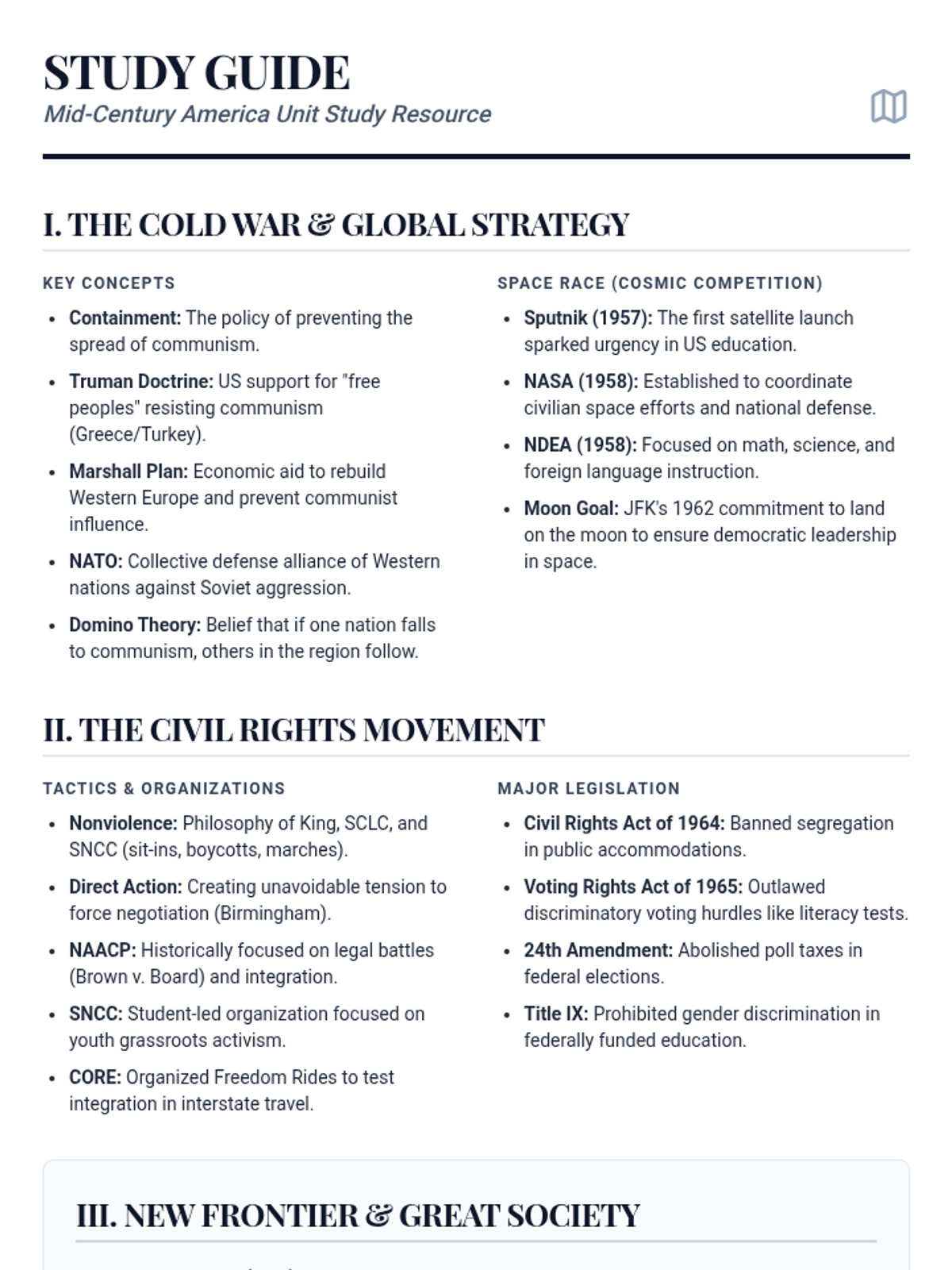
A comprehensive assessment sequence covering mid-century American history, focusing on the Cold War and the Civil Rights Movement. It includes a unit test, answer key, source registry, and study guide.
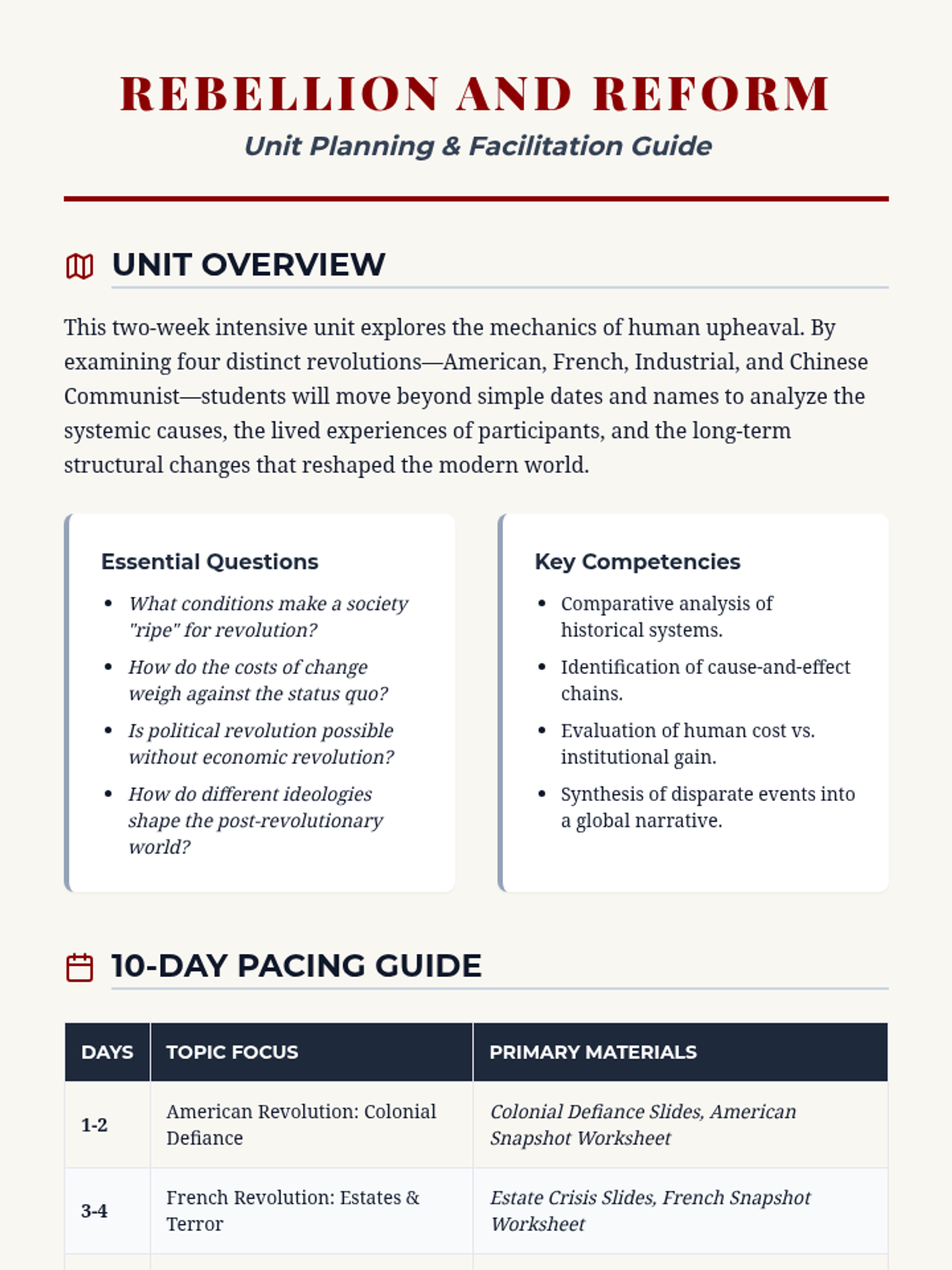
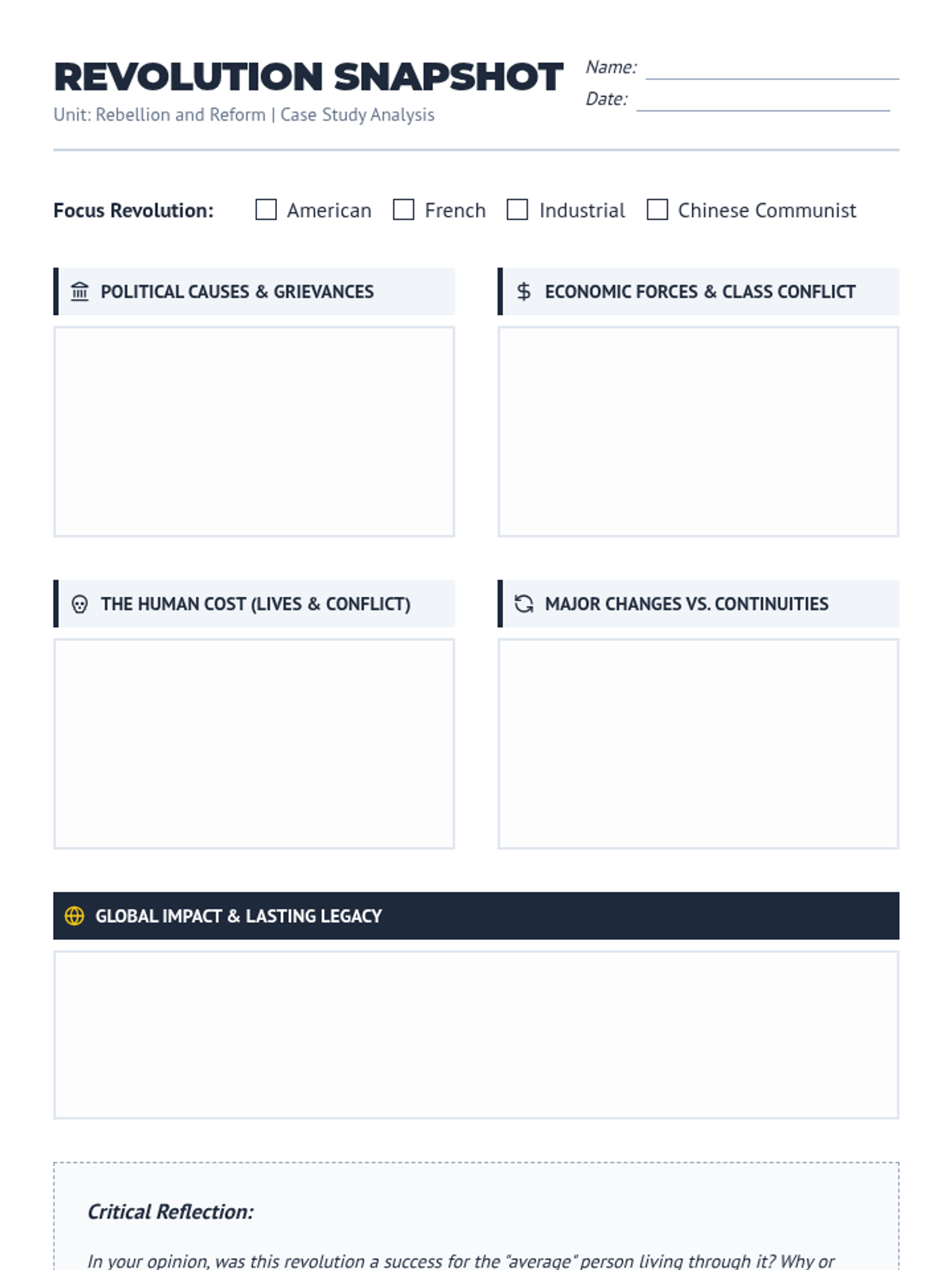
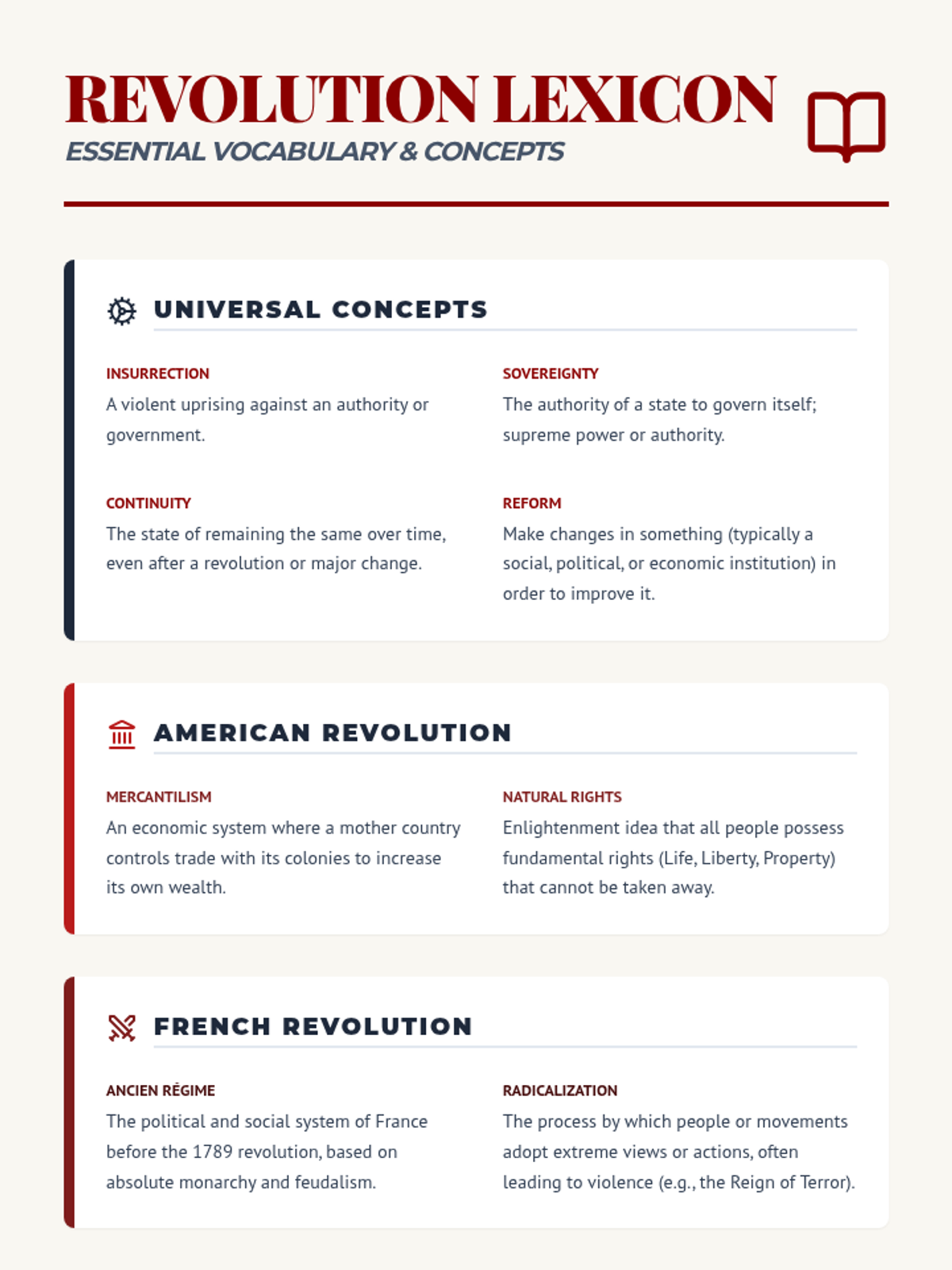
A comprehensive 10-day unit exploring the causes, courses, and consequences of four major world-altering revolutions: American, French, Industrial, and China's Communist Revolution. Students will analyze political and economic drivers, human costs, and lasting global impacts through comparative study.