A foundational gymnastics sequence for 7th grade, focusing on safety, core engagement, and body mechanics across floor exercises from landings to handstands and cartwheels.
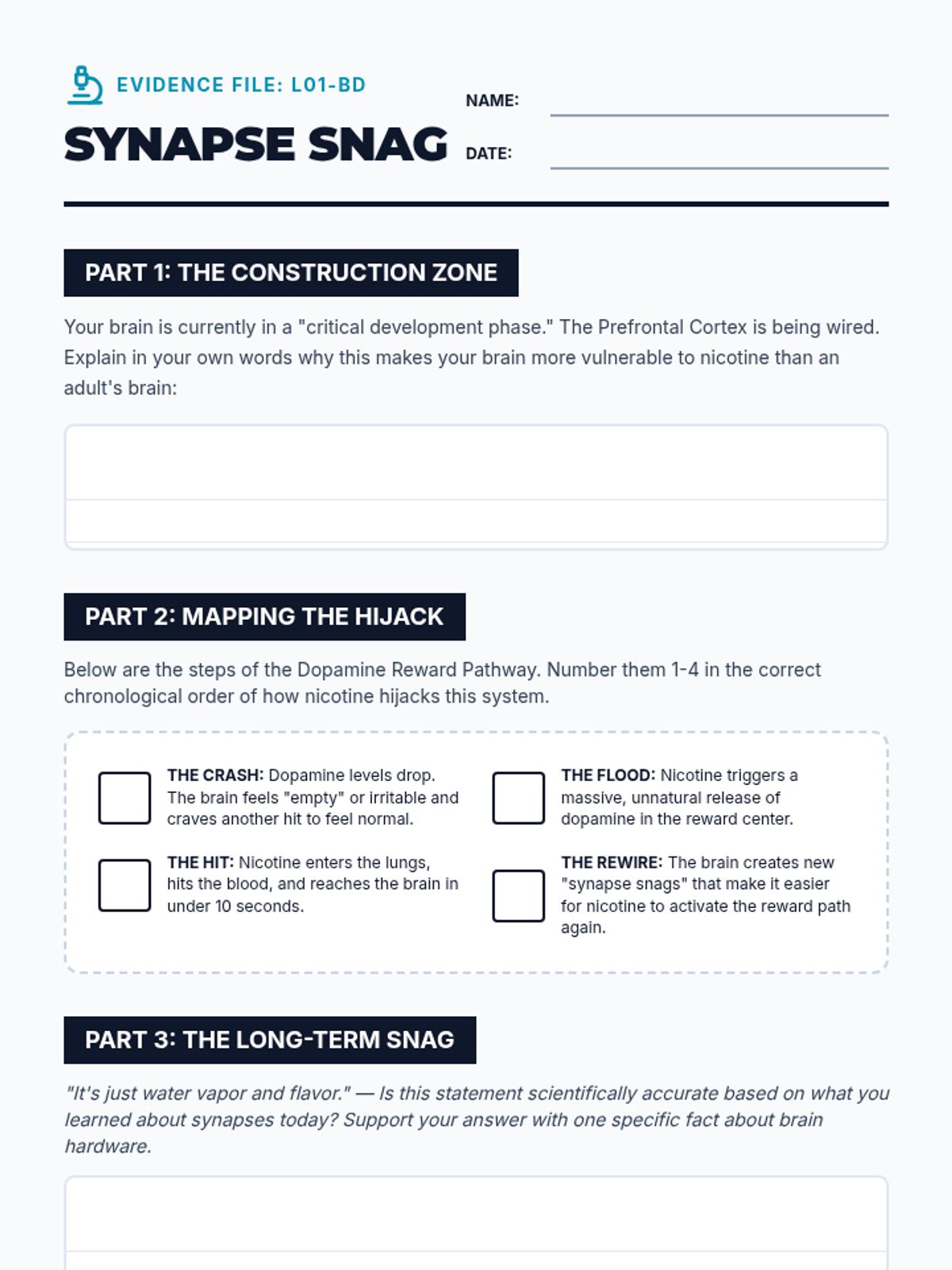
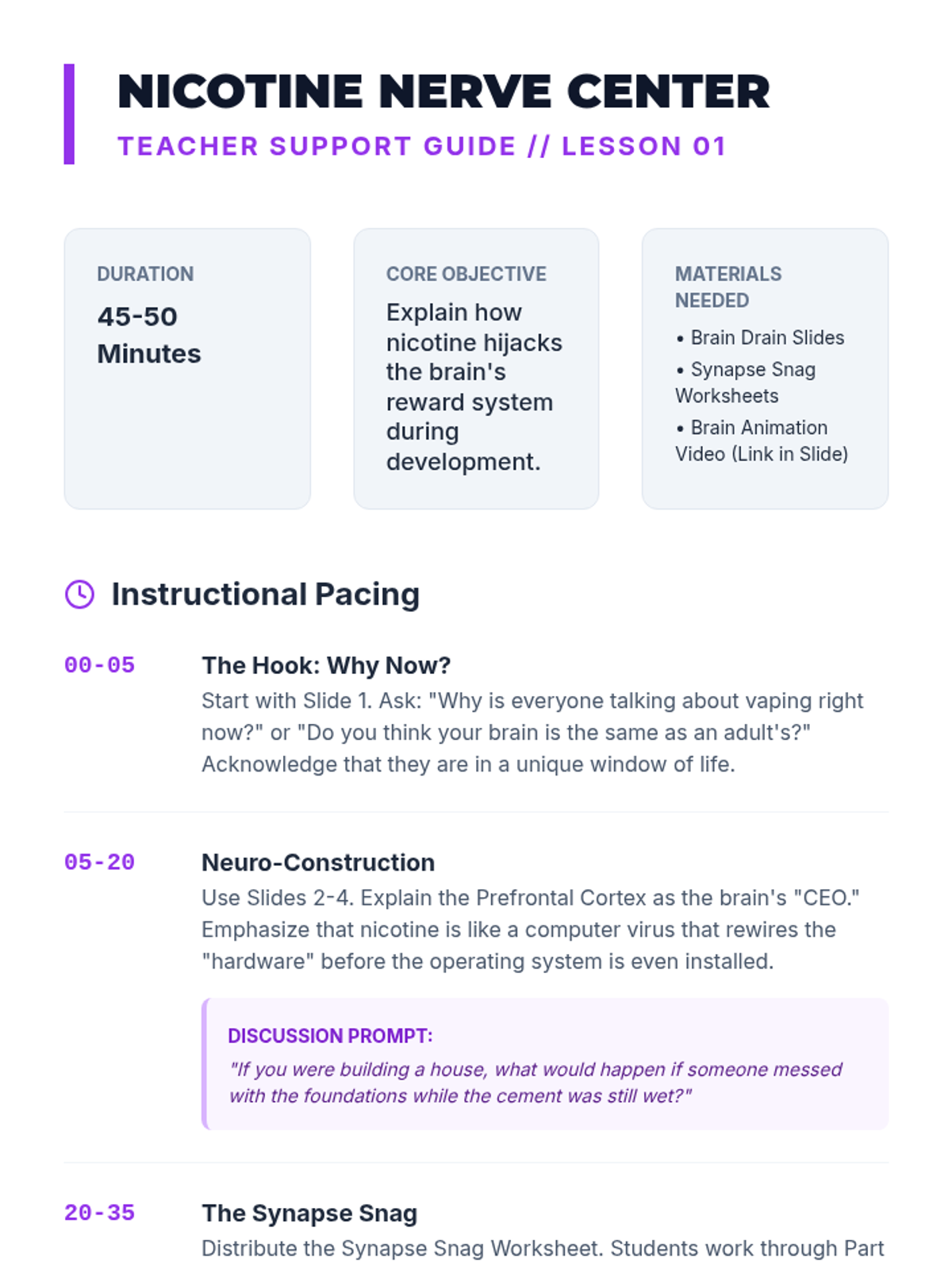
A comprehensive vaping prevention unit that covers health risks, the science of nicotine addiction, and social refusal strategies for middle and high school students.
A sequence designed for 10-12 year olds to explore the psychological and social factors that influence decision-making, specifically regarding substance use. Students will learn to distinguish between internal emotions and external social pressures.
A comprehensive equestrian curriculum designed for students from elementary to high school, covering horse care, riding fundamentals, and advanced arena maneuvers. The program balances ground safety with progressive riding skills.
A multi-lesson unit designed to build mental health literacy, identify internal system alerts (Anxiety, Depression, Anger), and develop a sustainable toolkit of coping strategies. Students explore the 'Wellness Spectrum', 'Neuroplasticity', and the deceptive nature of 'System Bypasses' like substances.
A multi-level curriculum designed to teach kitchen measurement skills from basic tool identification to complex recipe scaling and conversions. Includes visual anchor charts, practice worksheets, and applied math recipes for three distinct skill levels.
A series of health lessons focused on the intersection of brain development, citizenship, and responsible decision-making for middle school students.
A comprehensive unit designed to help students understand the science of sleep, identify personal sleep barriers, and implement effective sleep hygiene habits for better physical and mental well-being.
A comprehensive 3-week pickleball unit covering fundamental rules, essential skills like dinking and serving, and advanced singles and doubles strategies. Students progress from basic court positioning to competitive tournament play.
A comprehensive 4-week introductory sprinting program focused on mechanics, power, and injury prevention for outdoor track athletes.
A high-energy exploration of cardiovascular health, focusing on heart rate, the effects of exercise, and how to maintain a healthy pump.
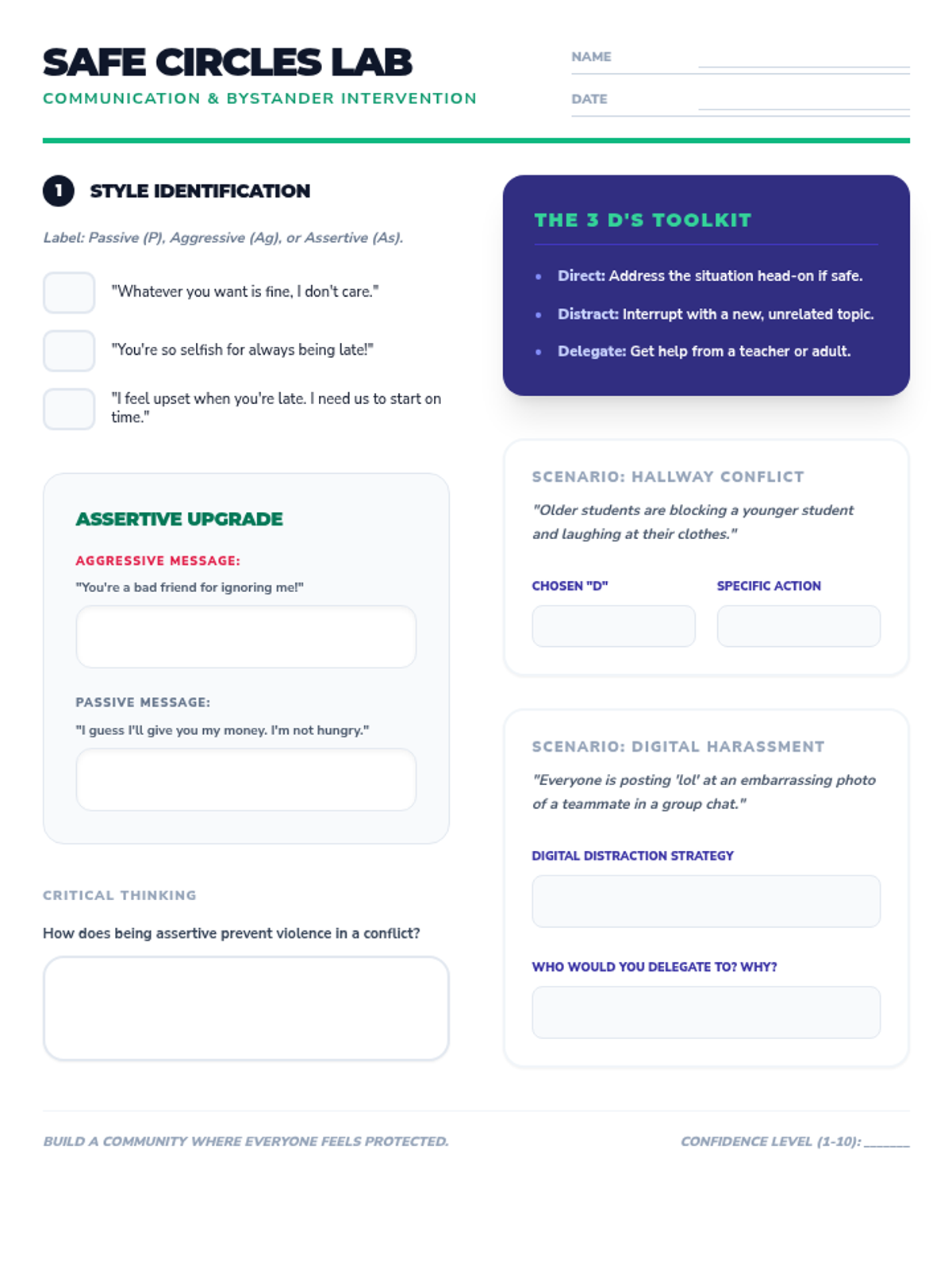
A comprehensive two-part unit focused on identifying violent behavior, understanding the mechanics of bullying and cyberbullying, and empowering students to become active upstanders.
An exploration of personal health and wellness, moving from defining health to implementing sustainable healthy habits.
A functional biology curriculum designed for life skills students, focusing on practical knowledge of nutrition, personal hygiene, and environmental stewardship through hands-on activities and visual aids.
A comprehensive 5-day unit designed to educate students on the physiological effects of vaping and provide actionable, healthy coping mechanisms like deep breathing and mindfulness.
A short sequence of lessons exploring the intersection of physical health and mental wellbeing, focusing on the neurochemistry of exercise and healthy habits.
A comprehensive mental health lesson sequence focused on helping middle school students distinguish between normal emotional fluctuations and clinical depressive disorders using the Intensity, Duration, and Interference (IDI) criteria.
A comprehensive wellness unit designed to empower students with lifelong healthy habits. Students explore nutrition, exercise, sleep, and emotional regulation through the lens of 'hero training'.
This sequence uses a case study approach to teach 7th-grade students how to recognize suicide warning signs, navigate digital cries for help, map out support networks, and take ethical action as supportive bystanders. Students move from identifying clues to committing to a personal safety protocol.
A comprehensive 5-lesson sequence for 7th-grade students focused on recognizing mental health warning signs and practicing the ACT (Acknowledge, Care, Tell) framework. Students transition from understanding mental health as a spectrum to identifying specific red flags and overcoming barriers to reporting concerns to trusted adults.
This sequence explores the social and emotional complexities of seeking help via crisis hotlines. Students analyze common barriers like stigma and fear, debunk myths about emergency services, and practice supportive communication to help peers access professional resources.
This sequence demystifies the process of accessing crisis support by breaking down the mechanics of hotlines and text lines. Students learn to distinguish between emergency services (911) and crisis hotlines (988), understand the experience of reaching out, and create personal resource tools for future use.
A comprehensive unit for 6th-grade PE focusing on the rules, officiating, and strategy of Track and Field. Students transition from athletes to officials, concluding with a student-led mini-meet.
A comprehensive 5-lesson unit for 7th grade students focusing on the technical skills and officiating rules of field events, specifically the long jump and shot put. Students progress from foundational mechanics to a full-scale competition simulation.