A comprehensive sequence for undergraduate students focusing on the pedagogical and management aspects of basketball coaching, moving from theoretical drill design to practical in-game leadership.
A comprehensive high school health sequence focused on understanding the complex interplay of biological and environmental factors that contribute to mental health and illness.
A high school health and psychology unit exploring neurodiversity, focusing on the diagnostic criteria, support needs, and lived experiences of individuals on the autism spectrum.
A high school health lesson focused on the physiological effects of stress, specifically cortisol's impact on the brain, and practical laboratory testing of stress-reduction techniques. Students explore eustress versus distress and measure their own heart rate and stress levels during guided interventions.
A comprehensive 16-week weight training curriculum divided into two parts: 'Part 1: The Human Engine' (Weeks 1-8) focusing on movement patterns, bodyweight mastery, and anatomy; and 'Part 2: The Iron Forge' (Weeks 9-16) focusing on advanced compound lifts, training science, and independent program design. Includes nutrition for performance and comprehensive classroom activities.
Um programa completo de 30 dias focado em perda de gordura, com orientações de planejamento, receitas nutritivas e ferramentas de acompanhamento de progresso.
A comprehensive 10-month health and wellness curriculum for 3-4 year olds, aligned with NJ Preschool Teaching and Learning Standards. Each month focuses on a core health theme like hygiene, safety, nutrition, and emotional wellness through hands-on activities and visual instruction.
A comprehensive SEL-integrated hygiene curriculum for elementary scholars (K-4), focusing on self-awareness, social impact, and personal responsibility through the lens of a 'Glow Up'.
A professional 6-week certification-style journey into Ayurveda. Each week features a comprehensive 2-hour 'Deep Dive Module' combining academic reading, interactive reflections, and knowledge checks, supported by practical 'Applied Healing' assignments (1-2 hours) for real-world integration.
A series of workshops and resources for elementary school parents focusing on common school-related health concerns, starting with head lice management.
This undergraduate sequence explores the neuroscience and physiology of stress and anxiety, grounding emotional experiences in biological reality. Students will study the HPA axis, evolutionary mismatches, somatic markers, and physiological regulation techniques to move from reactivity to mastery.
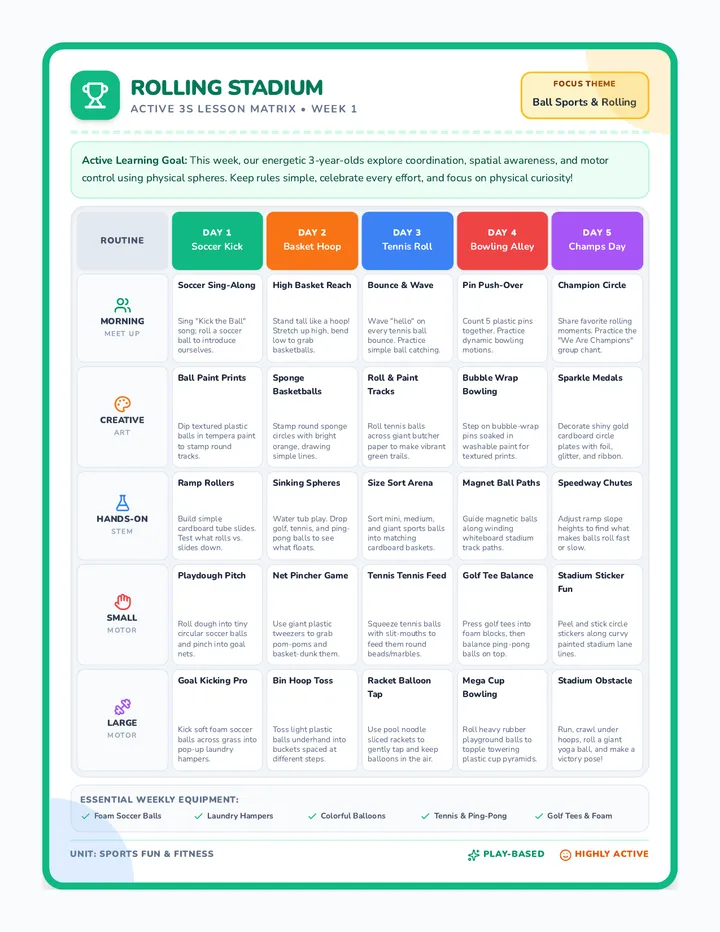
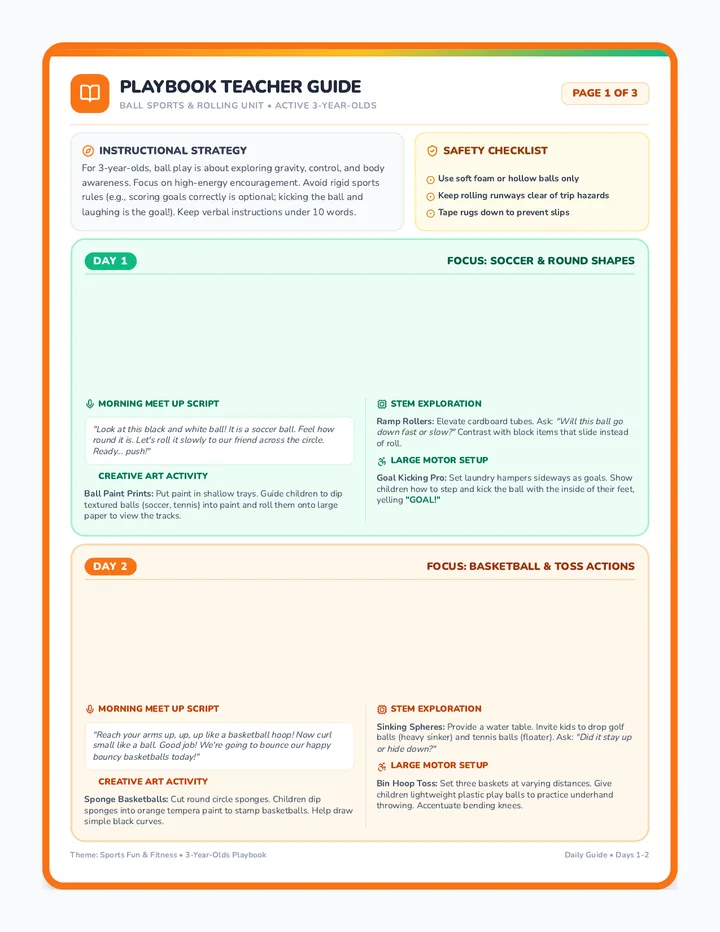
A 5-lesson unit for Pre-K students exploring creative movement through spatial awareness, levels, pathways, tempo, and motor control. Students develop body awareness and safety while having fun with imaginative dance concepts.
A foundational sequence for Pre-K dancers focusing on spatial awareness, levels, and pathways to prepare them for choreography and safe group movement.
This sequence uses a case study approach to teach 7th-grade students how to recognize suicide warning signs, navigate digital cries for help, map out support networks, and take ethical action as supportive bystanders. Students move from identifying clues to committing to a personal safety protocol.
A comprehensive 5-lesson sequence for 7th-grade students focused on recognizing mental health warning signs and practicing the ACT (Acknowledge, Care, Tell) framework. Students transition from understanding mental health as a spectrum to identifying specific red flags and overcoming barriers to reporting concerns to trusted adults.
A research-focused sequence for 9th-grade students to map, evaluate, and access specialized crisis resources. Students learn to distinguish between general and specialized support, evaluate the credibility of services, and develop a personalized safety resource plan.
This sequence demystifies the process of accessing crisis support by breaking down the mechanics of hotlines and text lines. Students learn to distinguish between emergency services (911) and crisis hotlines (988), understand the experience of reaching out, and create personal resource tools for future use.
Students explore the physics and techniques behind track and field events, focusing on long jump and throws. This 5-lesson sequence covers mechanics of force, angle, and body positioning through inquiry and skill-building activities.
This sequence equips 8th-grade students with observational skills to distinguish between typical adolescent stress and mental health crises. Through scenario analysis, behavioral red flags, and empathy building, students learn when and how to seek adult intervention.
A Kindergarten sequence focused on physical education and team building. Students engage in imaginative adventure scenarios to develop problem-solving, communication, and cooperation skills through group challenges.
This sequence immerses 3rd-grade students in physical problem-solving scenarios that require strategic planning and iterative testing. Students move from individual contributions to collective strategizing, learning that failure is a part of the solution process and exploring concepts like resource management and constraints.
A comprehensive unit for 6th-grade PE focusing on the rules, officiating, and strategy of Track and Field. Students transition from athletes to officials, concluding with a student-led mini-meet.
A comprehensive 9th-grade sequence on track and field events, focusing on the mechanics of horizontal jumps and throwing disciplines. Students explore the physics of force, momentum, and release angles through technical practice and a final simulated competition.
A 5-lesson sequence for 1st graders to understand heart rate changes through movement, sensory exploration, and play. Students learn to locate their heartbeat, compare resting vs. active rates, and identify exercise as a way to make their 'heart engine' stronger.
An advanced 11th-grade track and field sequence focusing on the biomechanics of sprinting, the precision of relays, and the physiological strategy of middle-distance running. Students transition from mechanical refinement to competitive application.
An intensive exploration of the physics and biomechanics behind field events, focusing on shot put, discus, long jump, and triple jump. Students apply scientific principles to athletic performance through peer coaching, video analysis, and technical drills.
An advanced undergraduate track and field sequence focusing on the biomechanics of field events and the professional standards of meet officiating and management.
A foundational unit for 7th-grade students focusing on the physical prerequisites of martial arts and self-defense: balance, stability, safe movement, and injury prevention through breakfalls. Students explore how controlling their center of gravity and core can enhance their physical safety and stability.
This sequence approaches gymnastics through the lens of athletic conditioning and applied anatomy. Students investigate specific strength and flexibility requirements needed to perform skills safely while acting as strength and conditioning coaches.
A comprehensive 11th-grade gymnastics sequence focusing on balance beam precision and vaulting power. Students develop technical skills, psychological resilience, and critical safety spotting techniques across five intensive lessons.
This sequence integrates physics concepts with fundamental floor skills to help students understand the mechanics of tumbling. Students explore center of mass, rotational mechanics, leverage, and force absorption through hands-on practice and video analysis.
This sequence integrates gymnastics execution with biomechanical principles. Students explore center of mass, stability, leverage, and angular momentum through various tumbling skills, concluding with a video analysis project to critique their own form.
A 1st Grade gymnastics sequence focused on weight transfer, inversions, and introductory vaulting. Students build strength and confidence through animal-themed movements and stations.
This sequence explores the physics of gymnastics, focusing on biomechanical principles like center of gravity, rotational inertia, and momentum transfer to improve tumbling performance. Students transition from static balance to dynamic rotation, culminating in a frame-by-frame video analysis of their own movement.
A comprehensive 6th-grade gymnastics sequence focusing on the biomechanics, safety, and technical execution of foundational floor skills, including rolls, inversions, and cartwheels.
An 8th-grade gymnastics sequence focusing on biomechanics, body alignment, and the physics of floor skills. Students progress from safety rolls to complex inversions and lateral rotations, emphasizing the relationship between center of gravity and stability.
A 5th-grade gymnastics unit focusing on weight transfer, inverted balances, and vaulting mechanics. Students progress from animal walks to handstands and explosive vaulting take-offs.
A 5-lesson 4th Grade Gymnastics sequence focusing on low balance beam skills and introductory vaulting mechanics. Students develop dynamic balance, explosive power, and safe landing techniques through station-based learning.
A Kindergarten gymnastics sequence focusing on the foundations of static balance, safe 'motorcycle' landings, and navigating narrow paths with control. Students learn to stabilize their bodies and protect their joints during movement.
A Kindergarten gymnastics unit focused on body awareness, fundamental shapes (tuck, pike, straddle), and basic rolling skills like log and forward rolls. Students develop gross motor coordination and spatial awareness through playful movement and skill-building activities.
An undergraduate-level sequence exploring the biomechanical principles of gymnastics floor skills, focusing on rotational mechanics, static stability, and momentum transfer.
This sequence focuses on advanced gymnastics apparatus work, covering balance beam, vaulting mechanics, and artistic routine composition. Students transition from floor skills to technical apparatus navigation while developing performance psychology and movement critique skills suitable for undergraduate study.
A comprehensive fire safety sequence for Pre-K students focused on hazard recognition, distinguishing tools from toys, and identifying emergency exits. Students learn through visual discrimination, role-play, and mapping to build confidence in emergency situations.
A comprehensive fire safety sequence for Pre-K students focusing on movement-based reactions, overcoming fear of emergency gear, and mastering evacuation procedures through play and simulation.
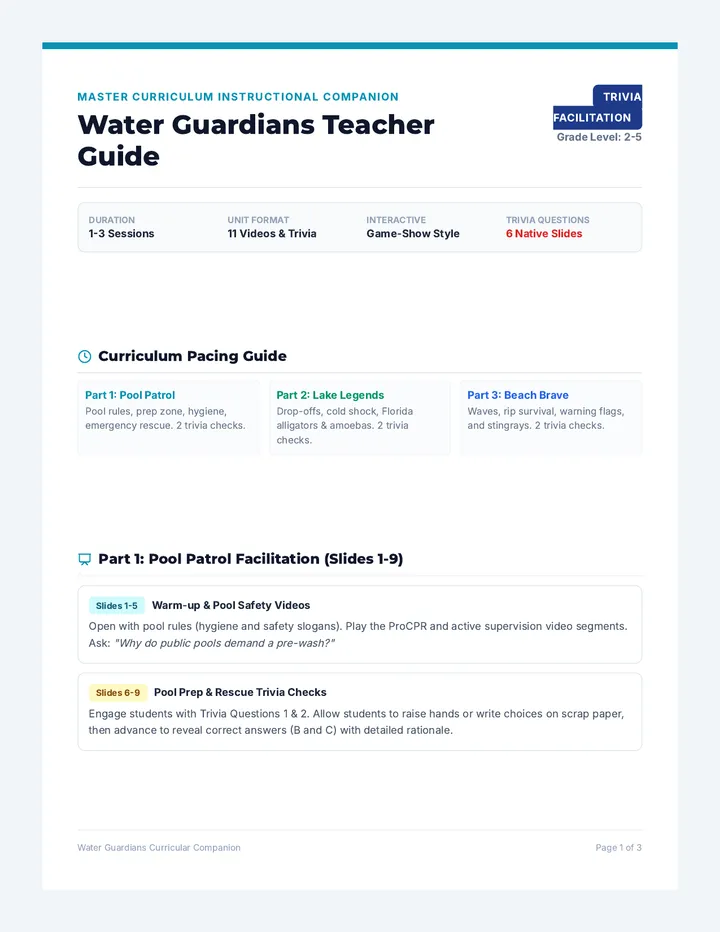
A comprehensive water safety sequence for Pre-K students focusing on supervision, safety gear, behavior, and emergency response through the 'Splash Heroes' theme.
A comprehensive 11th-grade health sequence focused on the intersection of personal safety and digital literacy. Students investigate how traffickers use digital footprints, social media scams, gaming platforms, and sextortion to exploit victims, culminating in the creation of personal digital defense plans.
A 5-lesson sequence for 7th graders focusing on the psychological aspects of human trafficking, specifically grooming, peer recruitment, and boundary setting. Students learn to identify manipulative relationship dynamics and practice refusal skills to protect themselves and their peers.
This sequence explores the critical principles of water safety, from environmental risk assessment and buoyancy science to identifying distress and performing non-entry rescues. Students move from understanding physical risks to becoming advocates for safe practices in their communities.