Slides for Lesson 2: Mood Modes, exploring pitch, stress, and sarcasm. Uses vibrant high-contrast colors and clear visual examples of how intonation changes meaning.
A comprehensive 4th-grade ESL project-based sequence on academic integrity and citation standards. Students transition from understanding the ethics of intellectual property to mastering the technical skills of citing books and websites, culminating in a mini-research project.
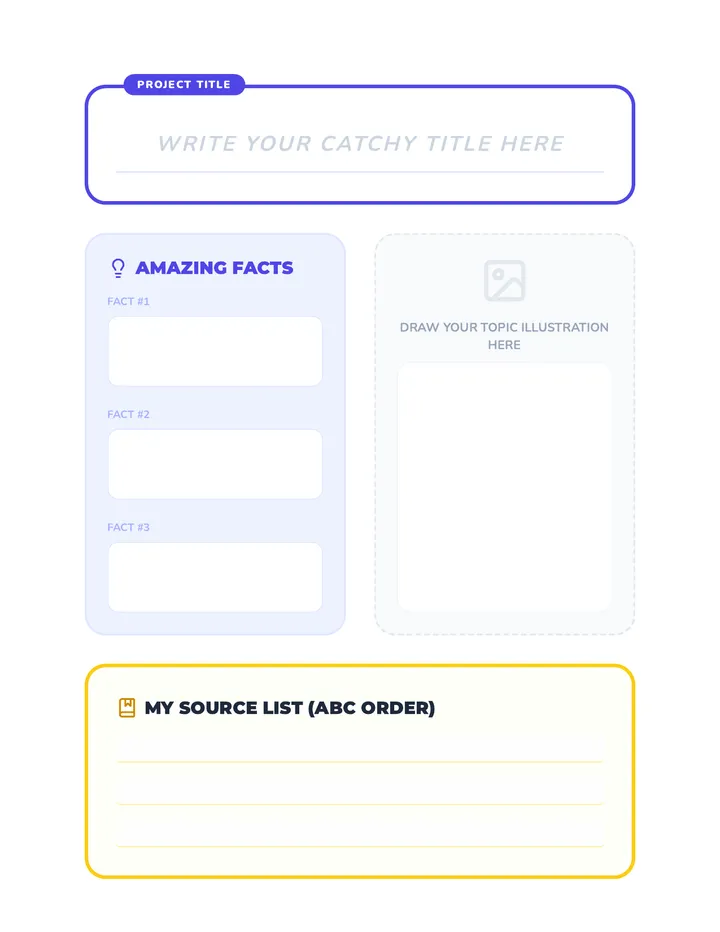
Students create a mini-research poster on a topic of their choice. They apply their knowledge by including three facts and a correctly formatted, alphabetized bibliography with at least three sources. The lesson includes a gallery walk for peer feedback.
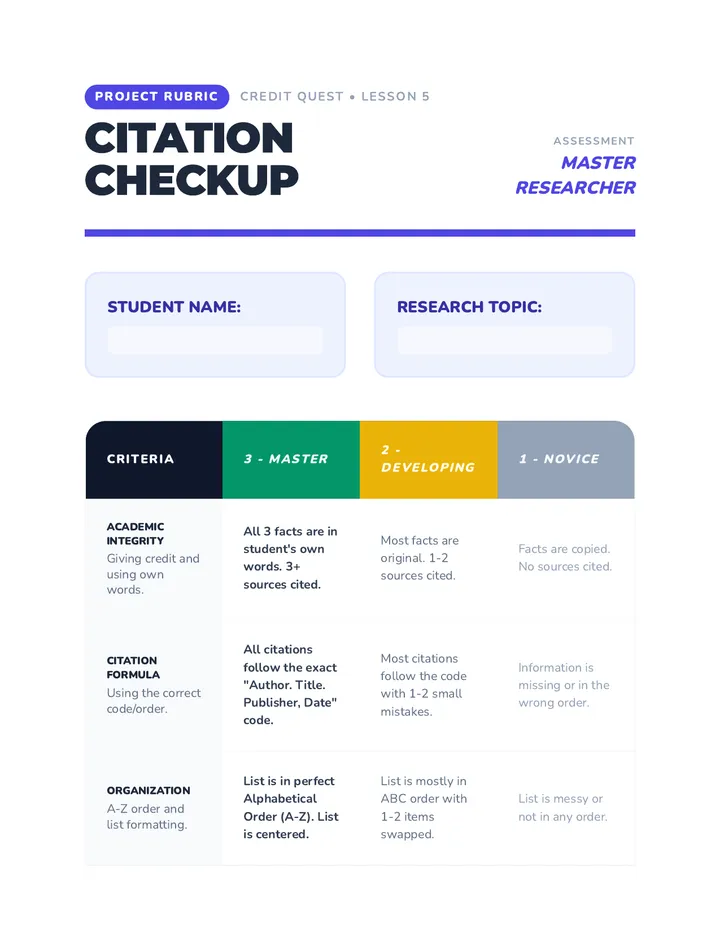
Final project rubric for Lesson 5. Evaluates academic integrity, citation formula accuracy, alphabetical organization, and punctuation. Includes sections for teacher feedback.
A comprehensive workshop-style sequence for 4th Grade ESL students to master academic research skills. Students progress from navigating text features to note-taking, paraphrasing, summarizing, and ultimately synthesizing information from multiple sources while avoiding plagiarism.
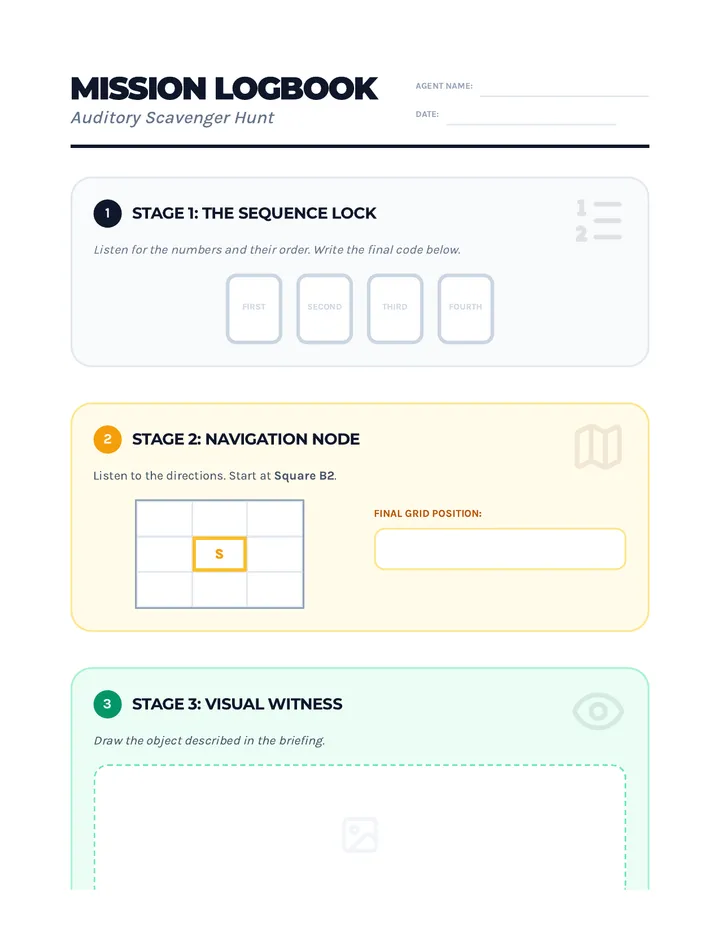
In this culminating activity, students solve a series of puzzles where the clues are delivered via audio recordings. Success depends on synthesizing sequence markers, spatial details, and specific vocabulary.
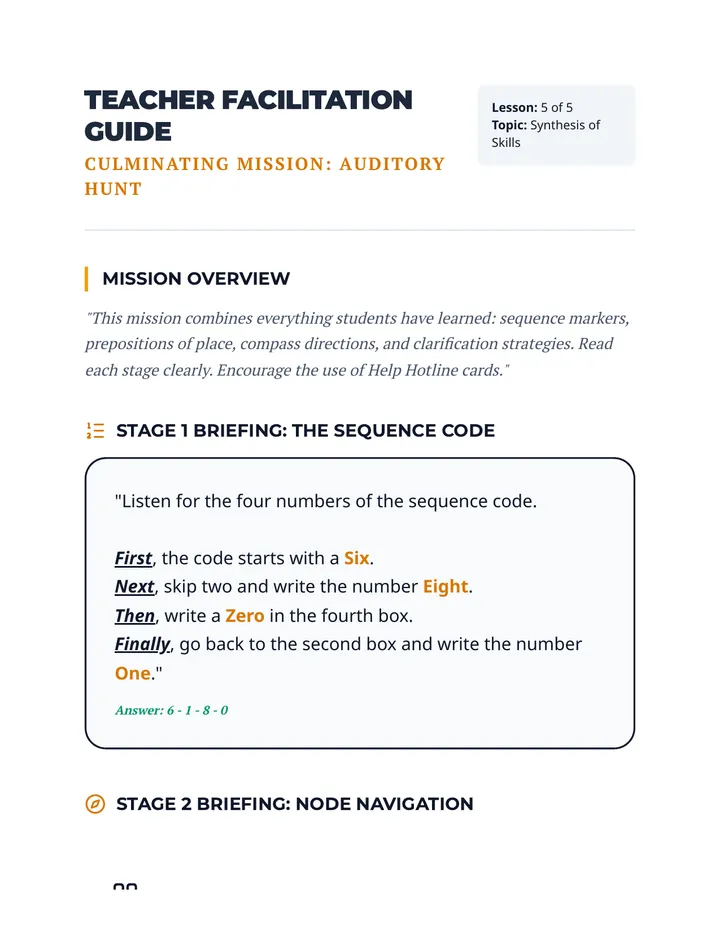
A comprehensive teacher resource containing all scripts for the listening activities, answer keys, and pedagogical tips for the Signal Seekers unit.
A comprehensive digital literacy unit for 4th Grade ESL students, framing research skills as 'Digital Detective' training. Students learn to distinguish fact from opinion, master keyword searching, evaluate website credibility, and verify information through cross-referencing.
A structured research poster template for the final project. Includes sections for a title, three facts, an illustration, and a formatted bibliography.