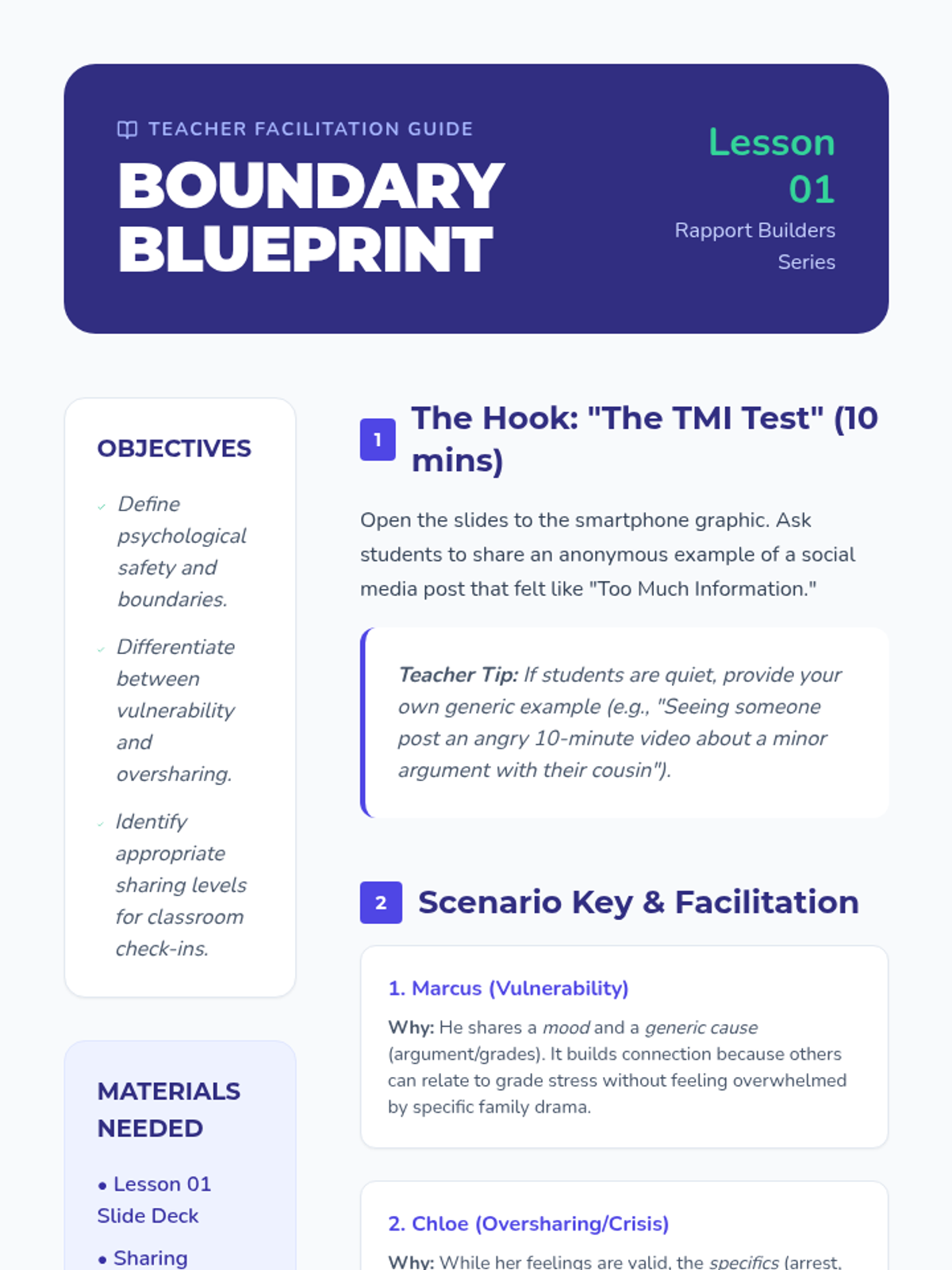
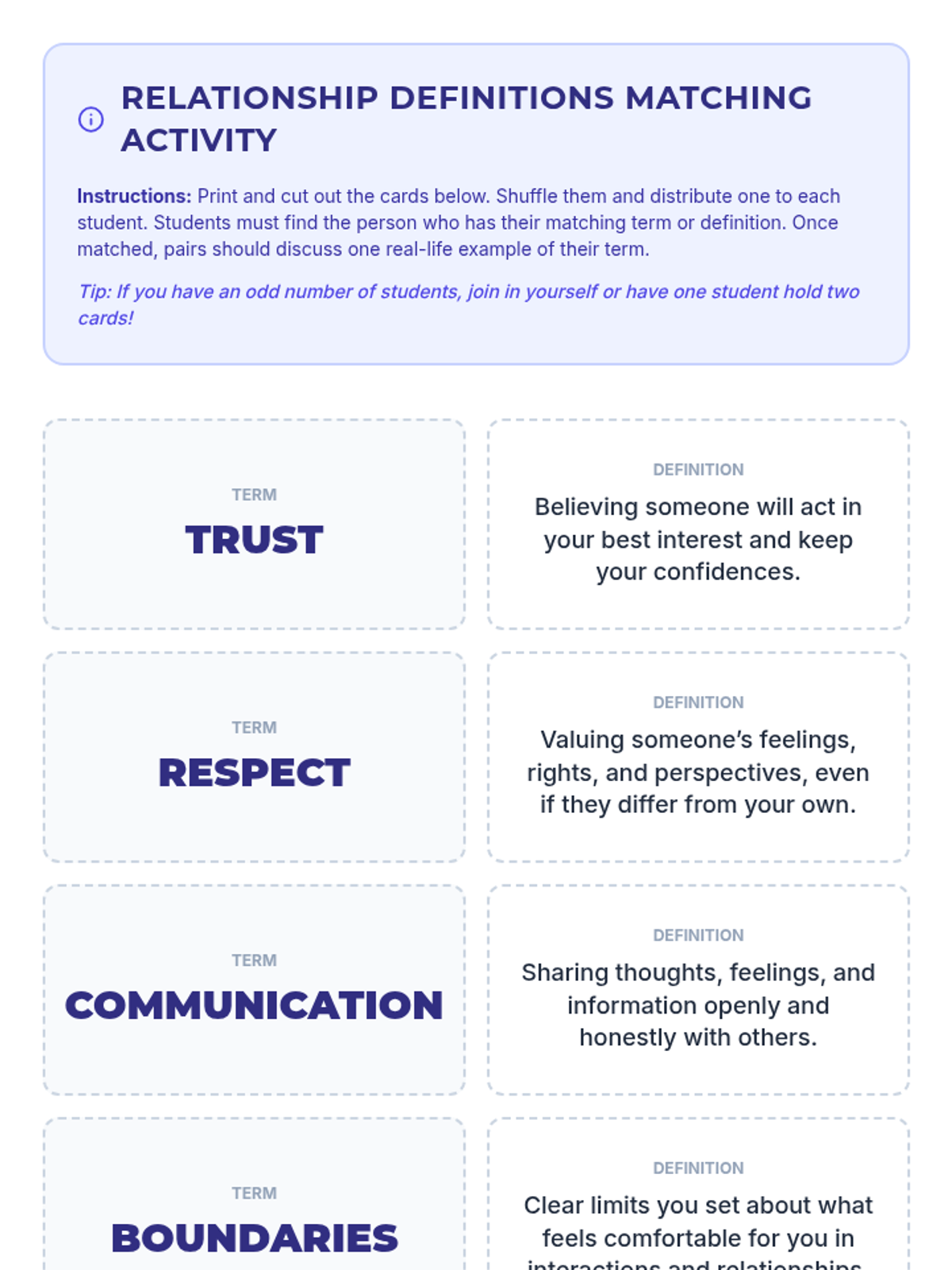
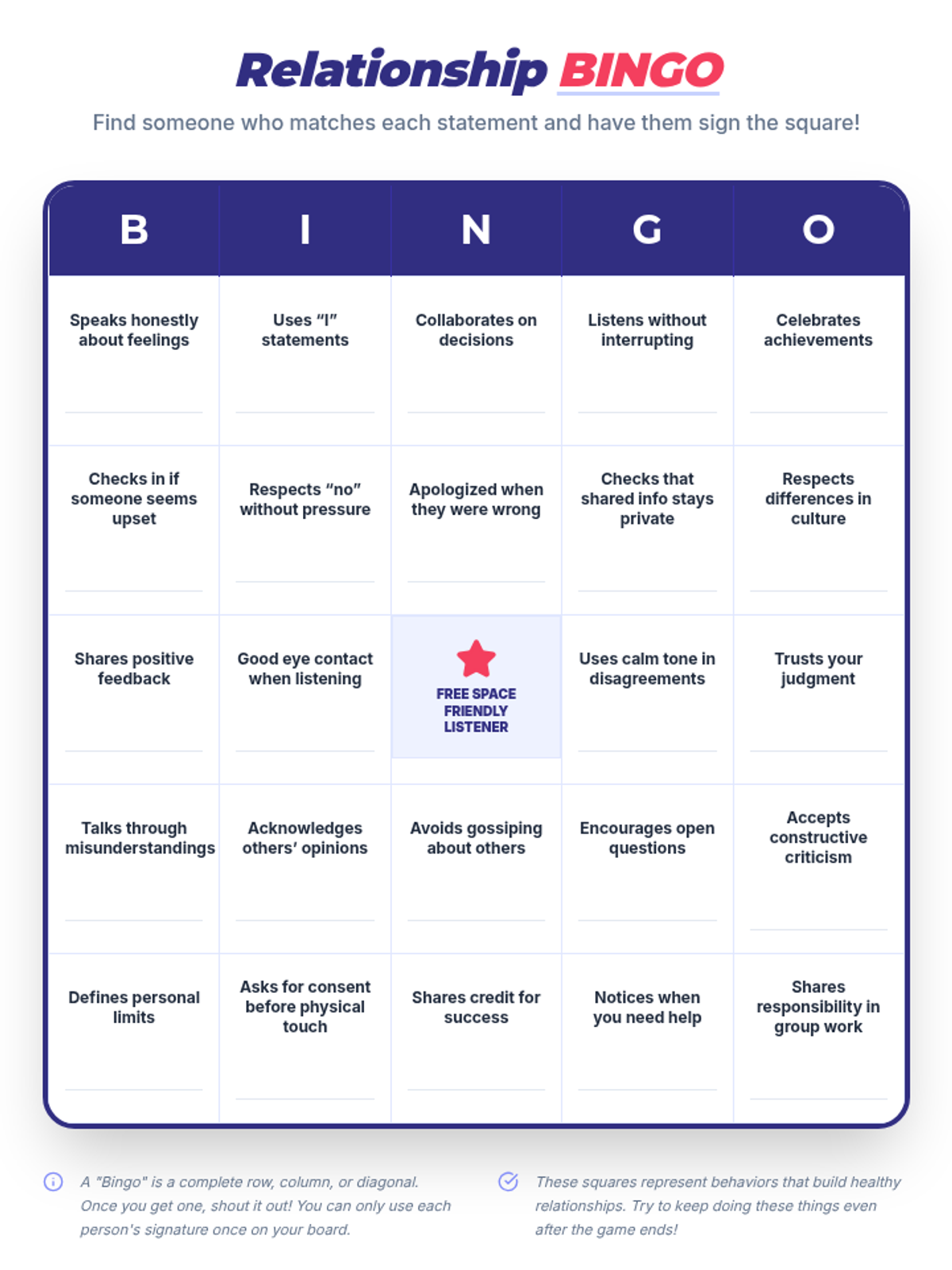
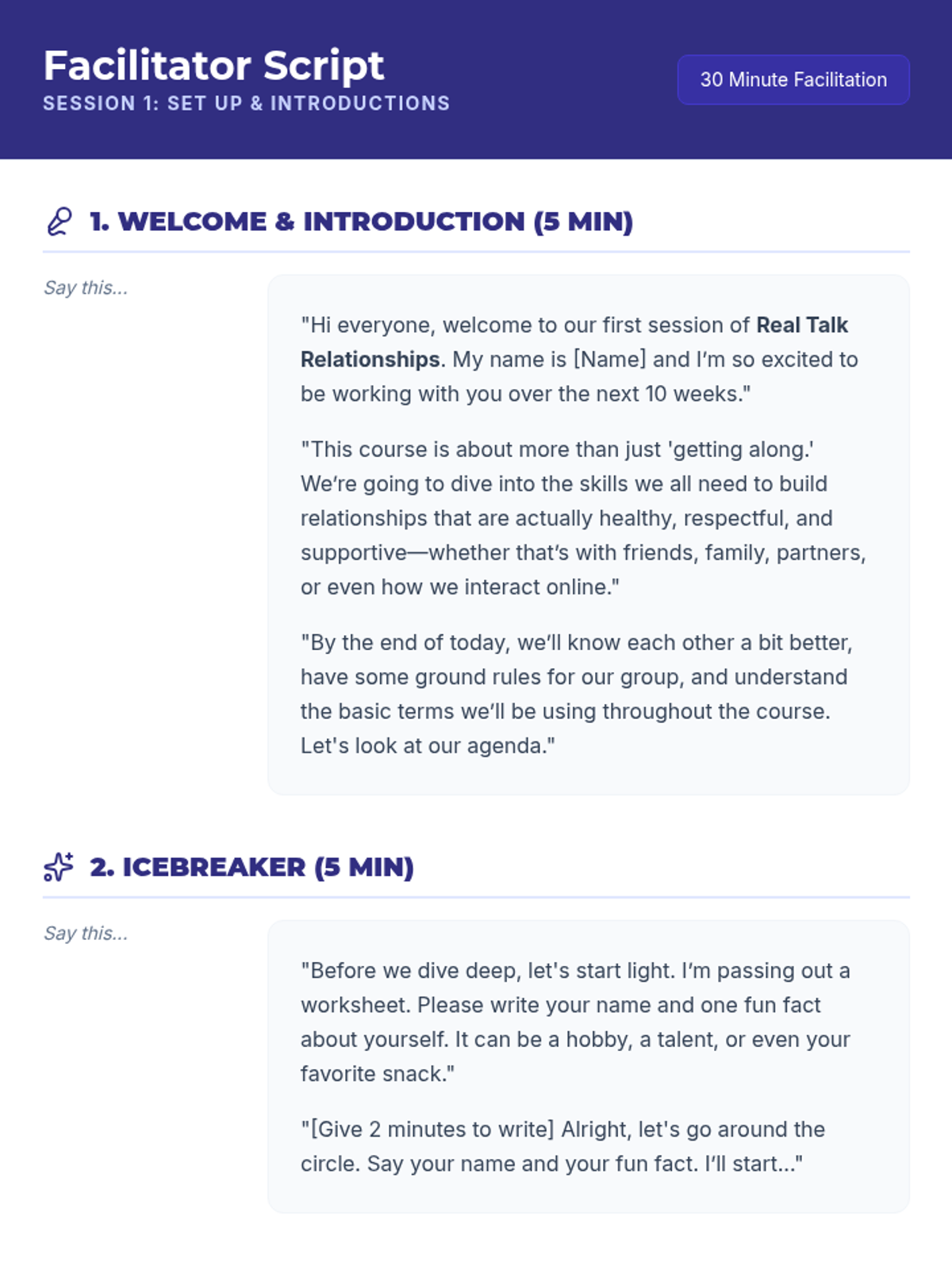
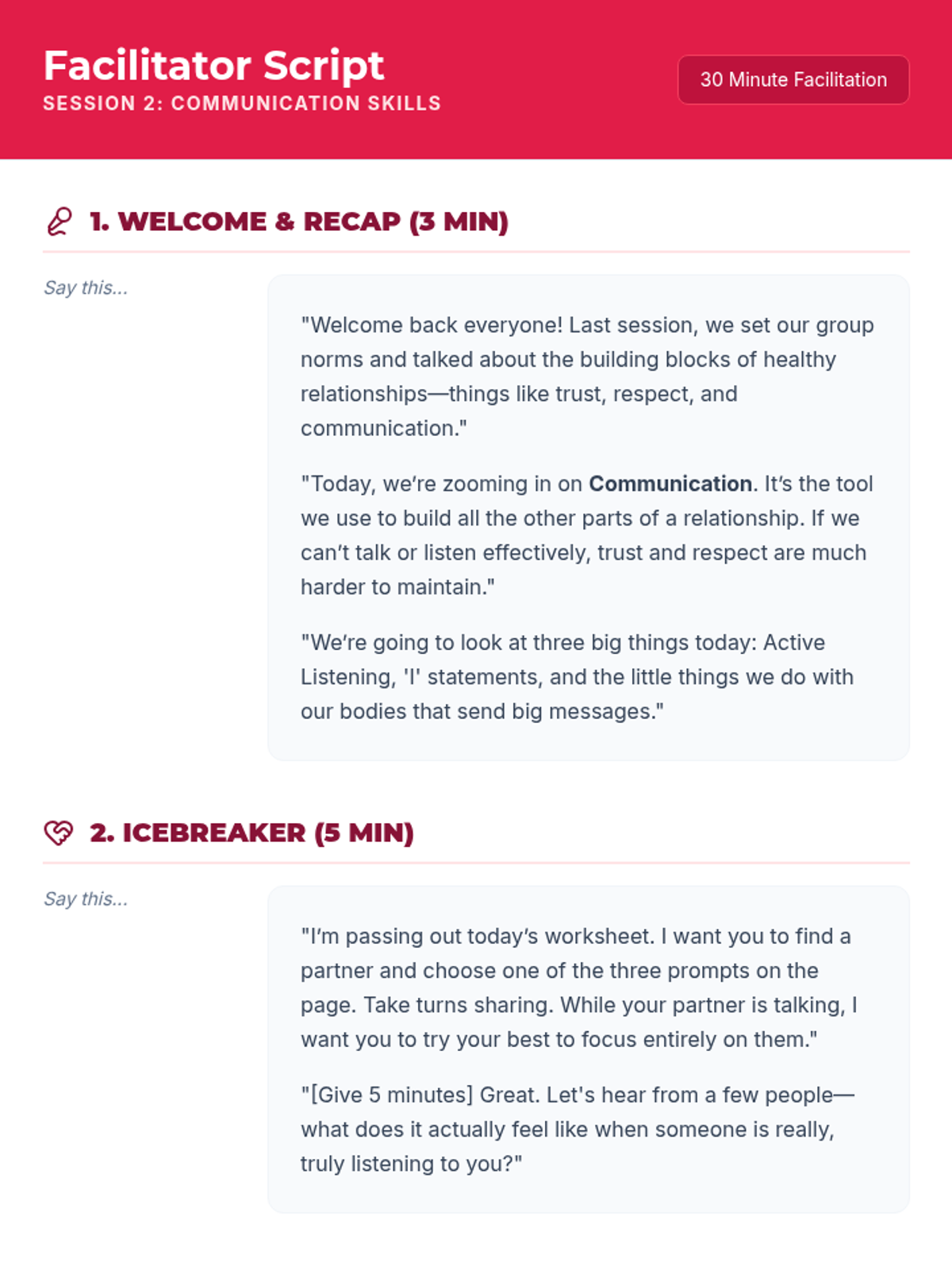
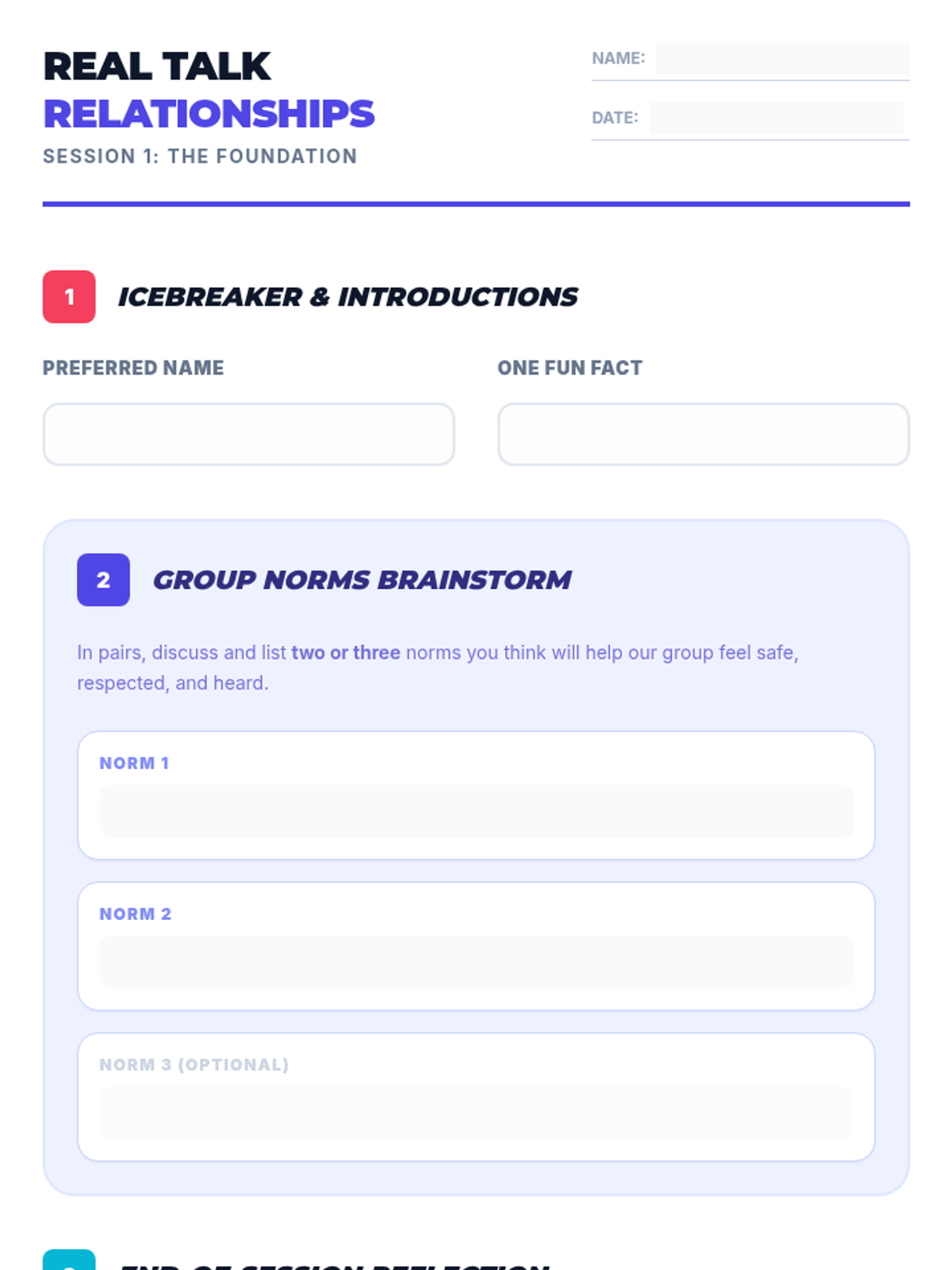
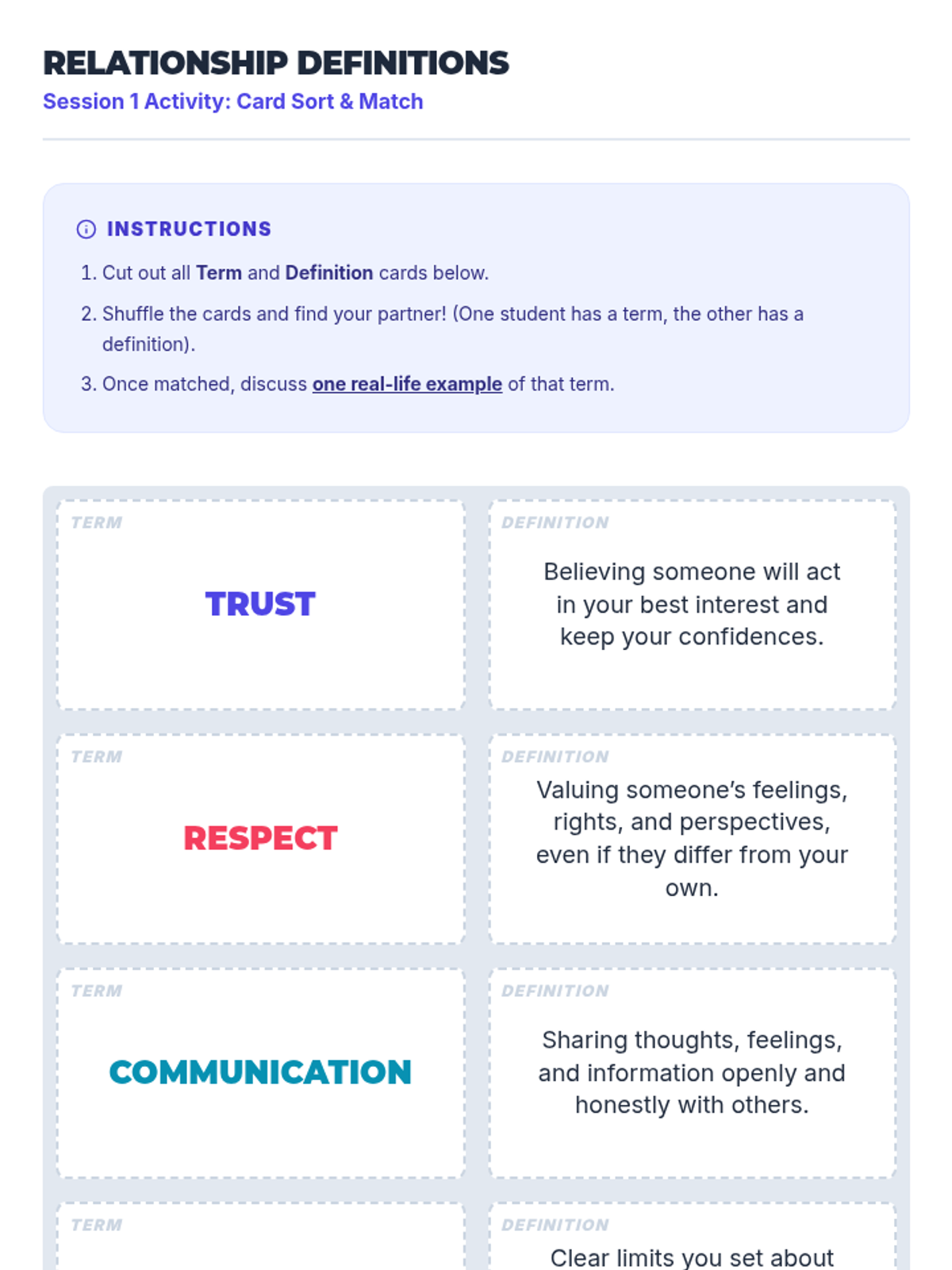
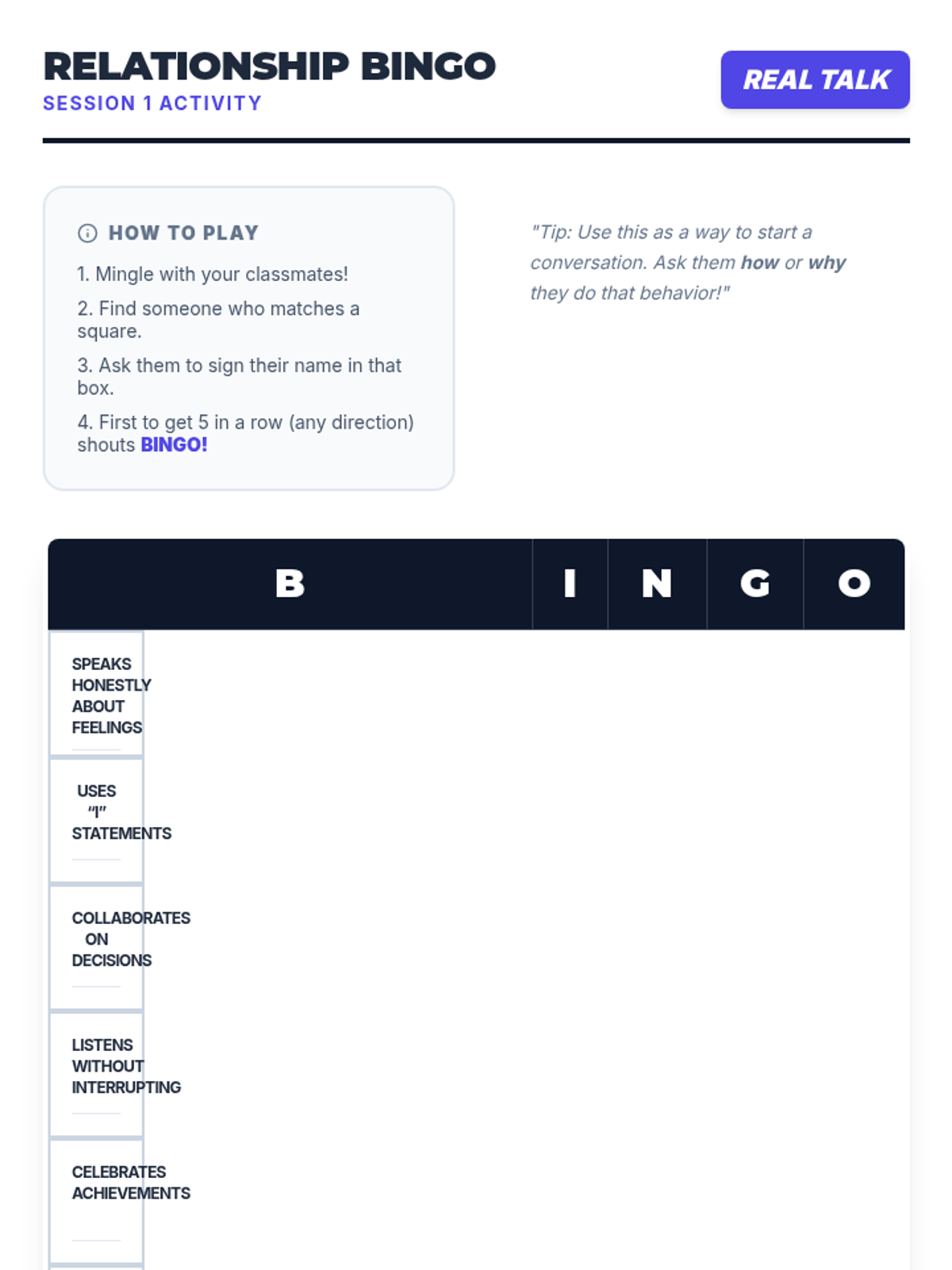
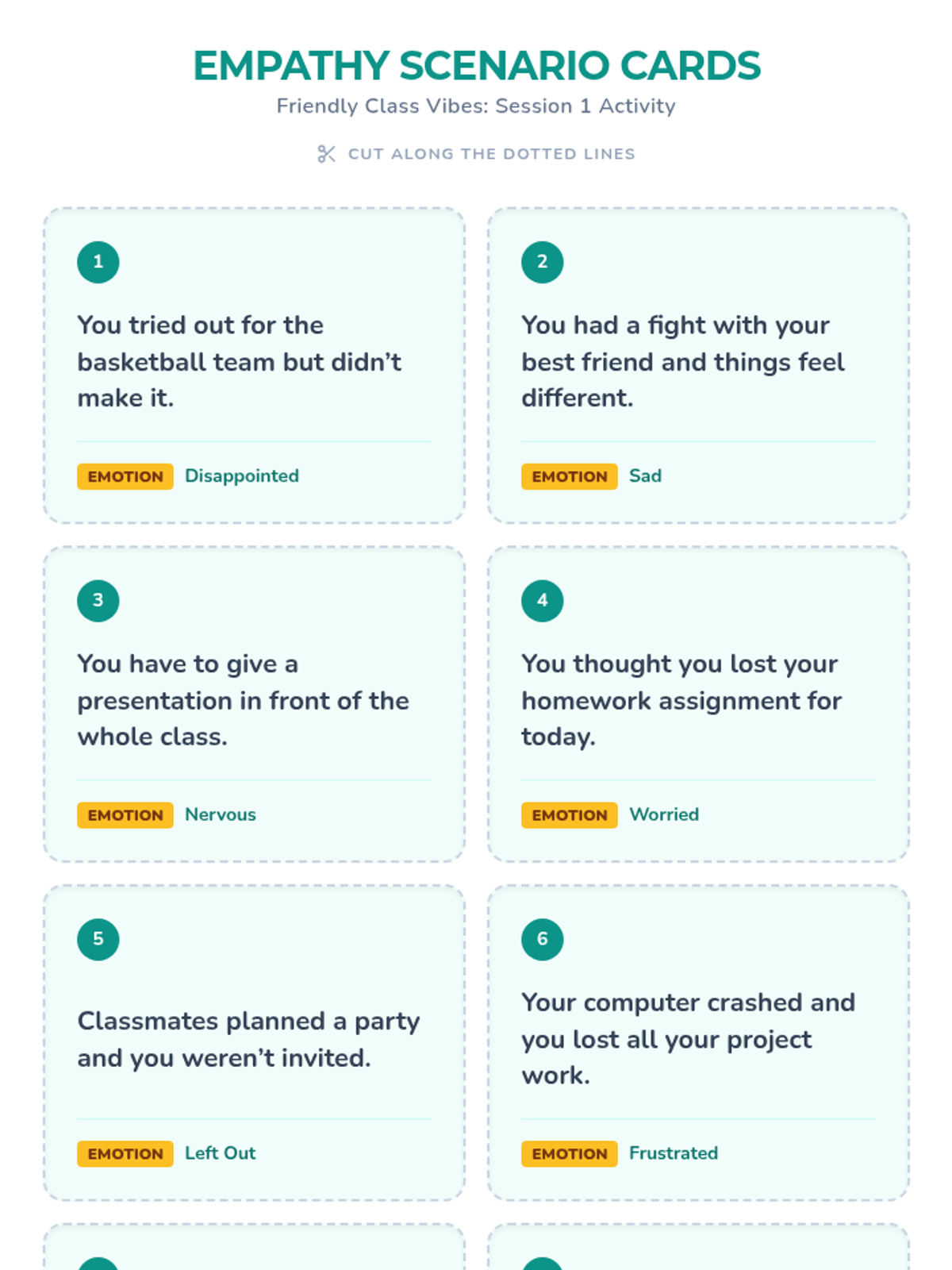
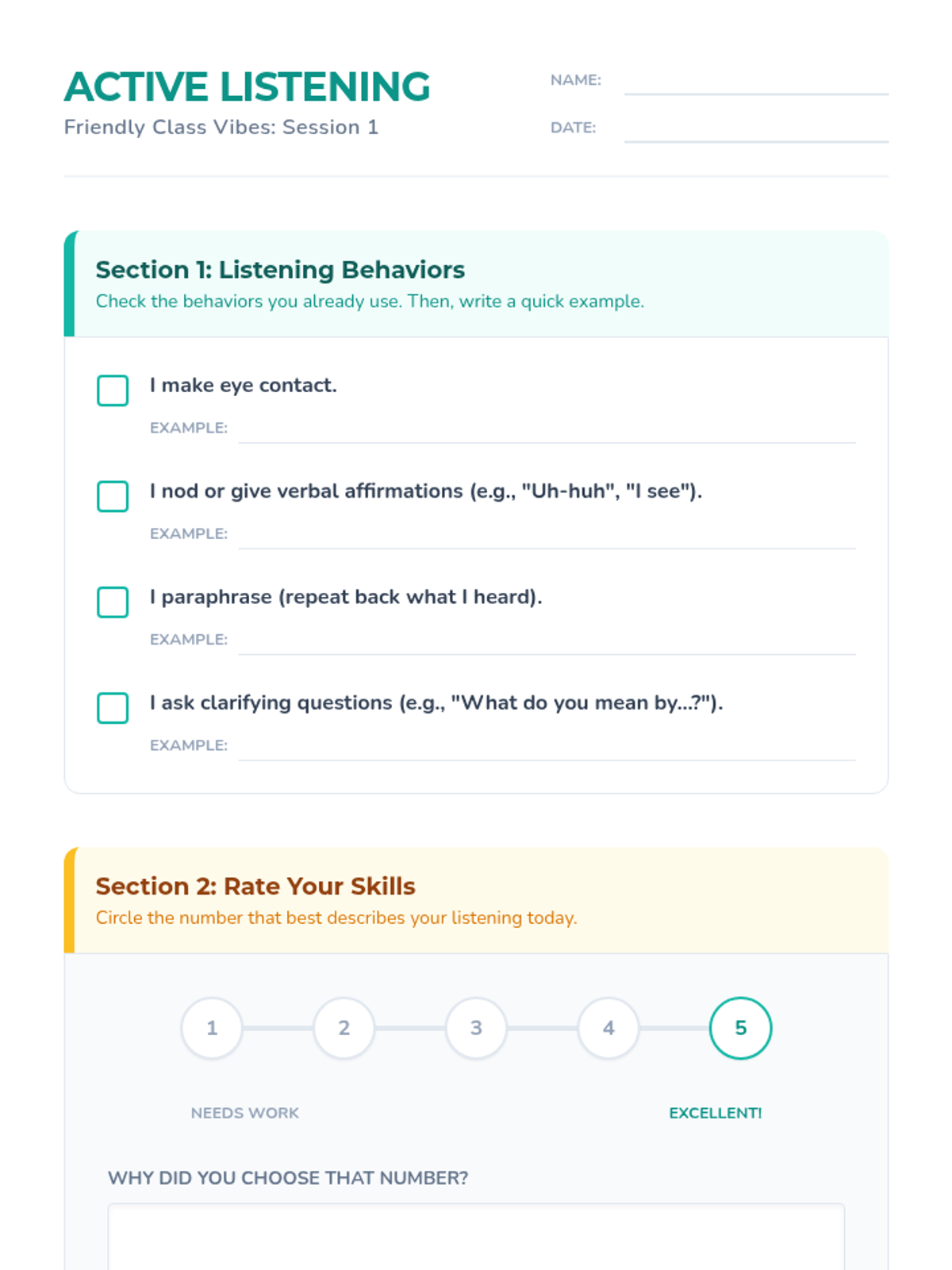
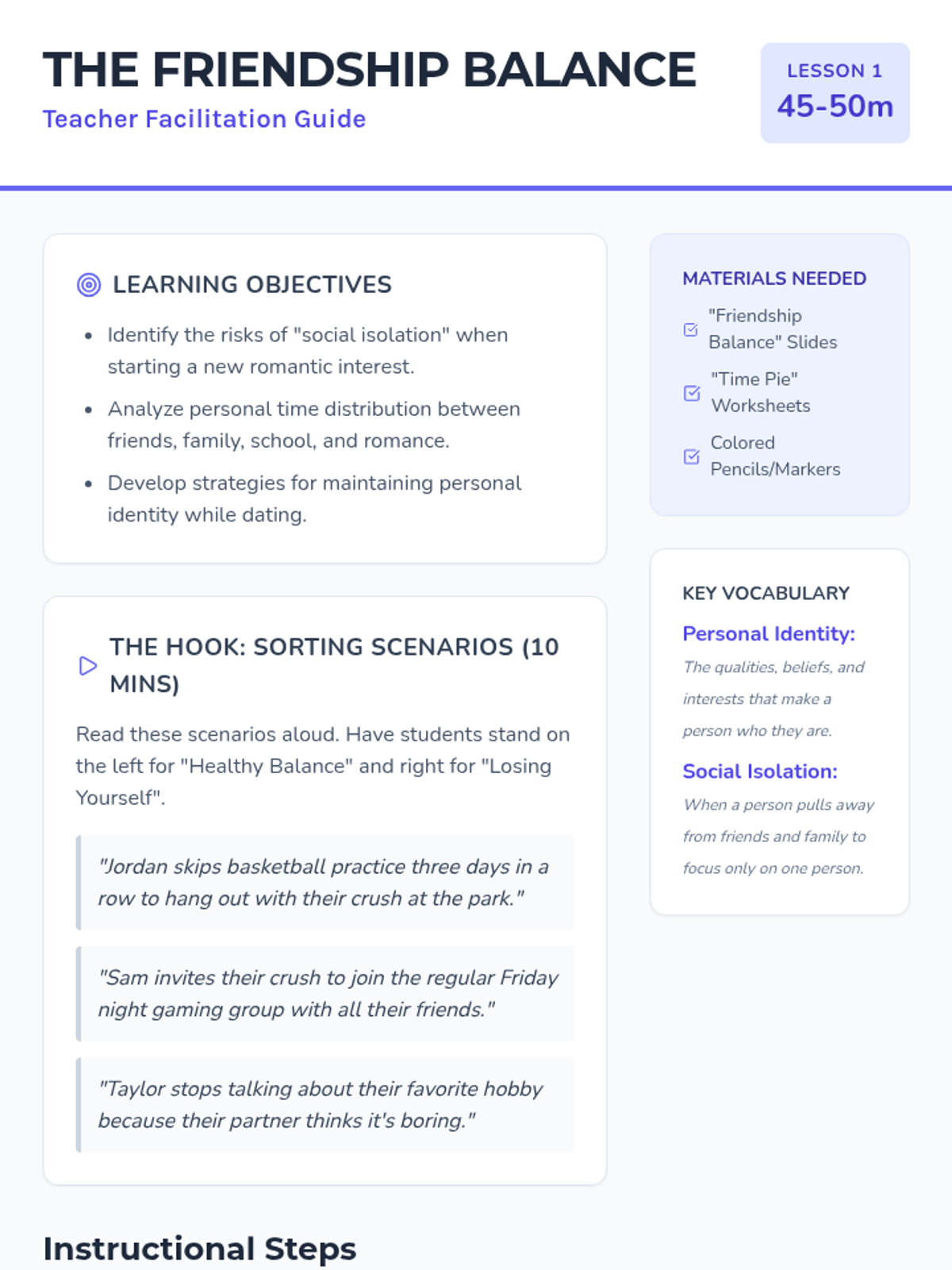
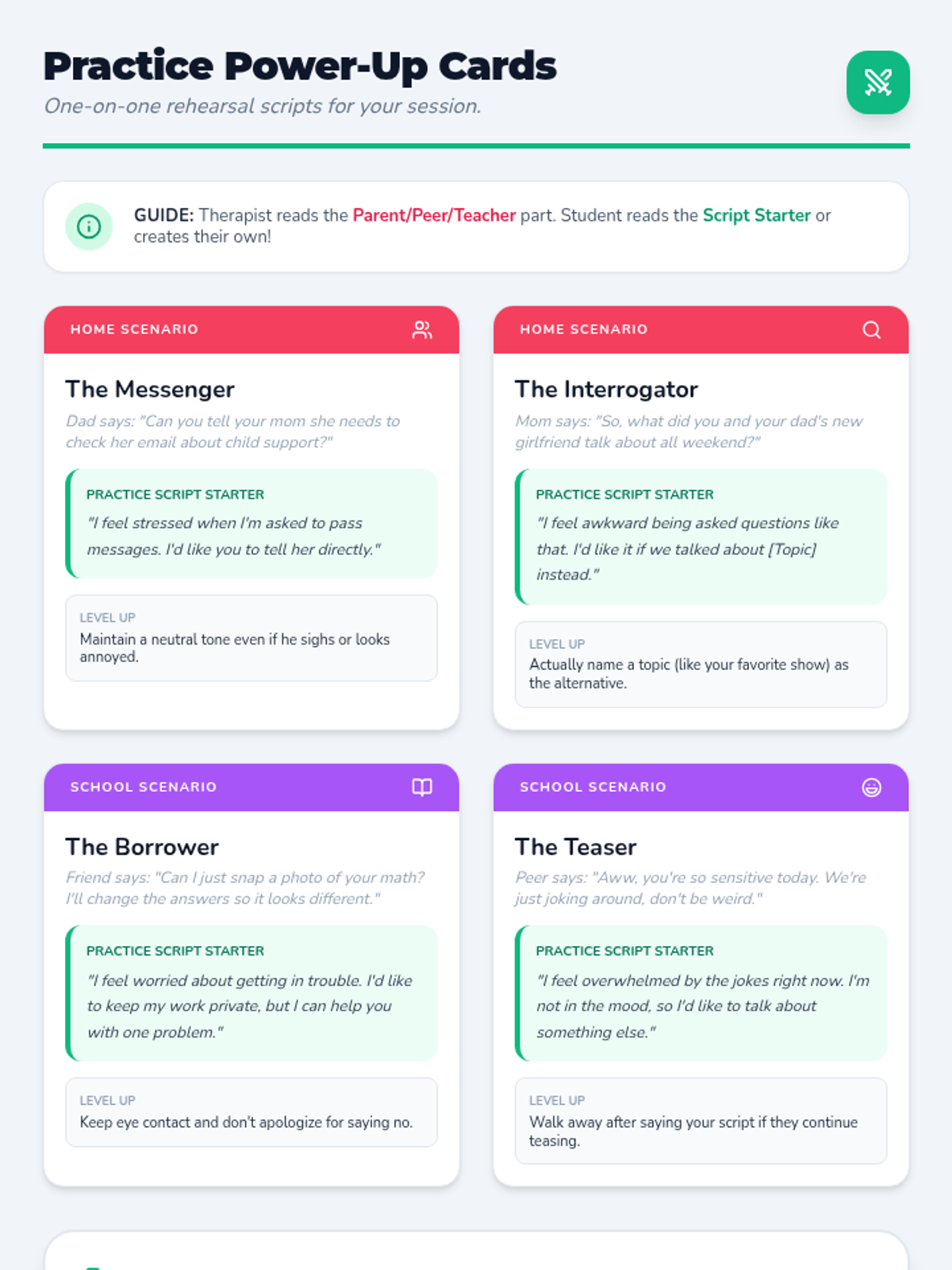
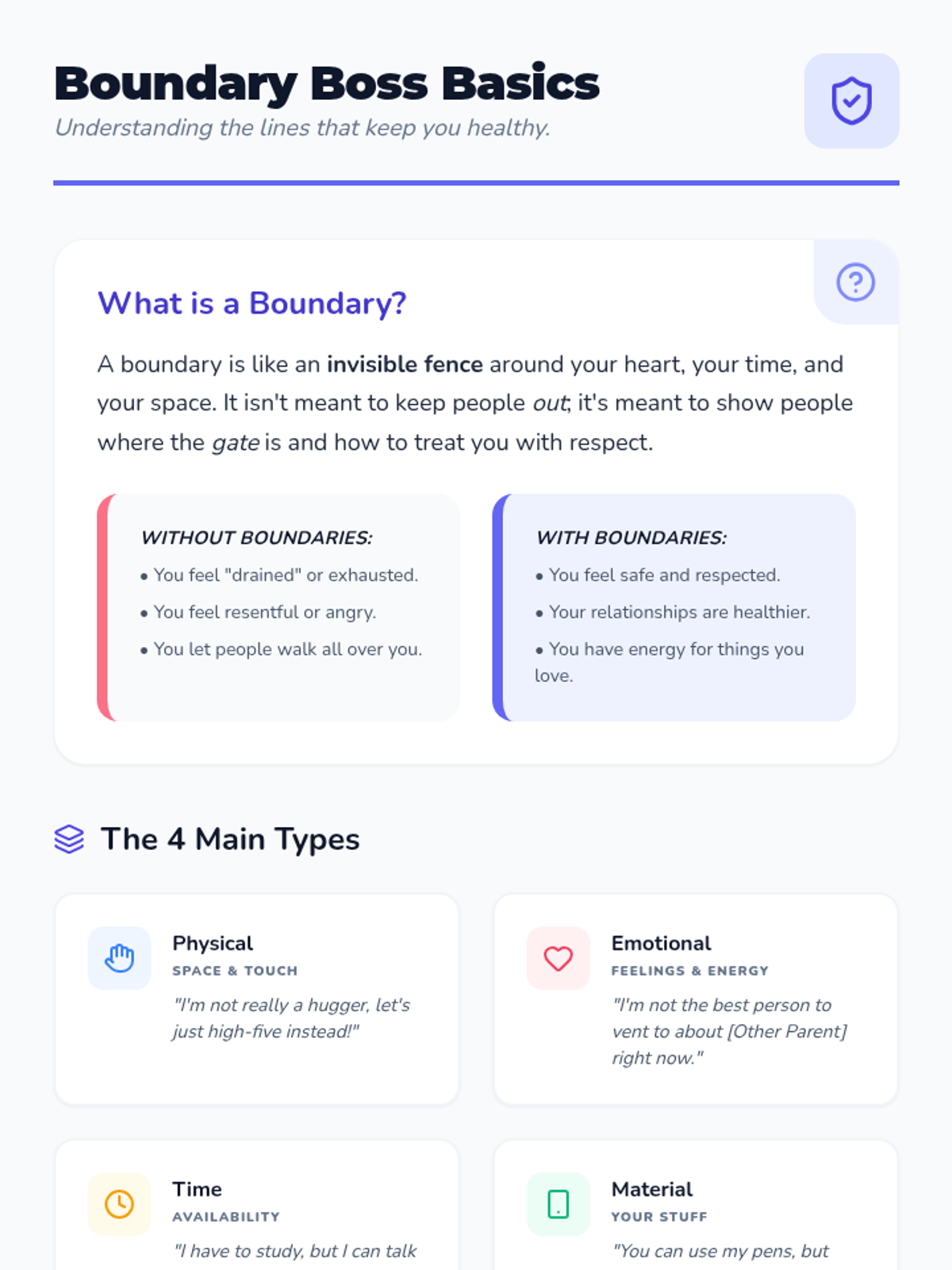
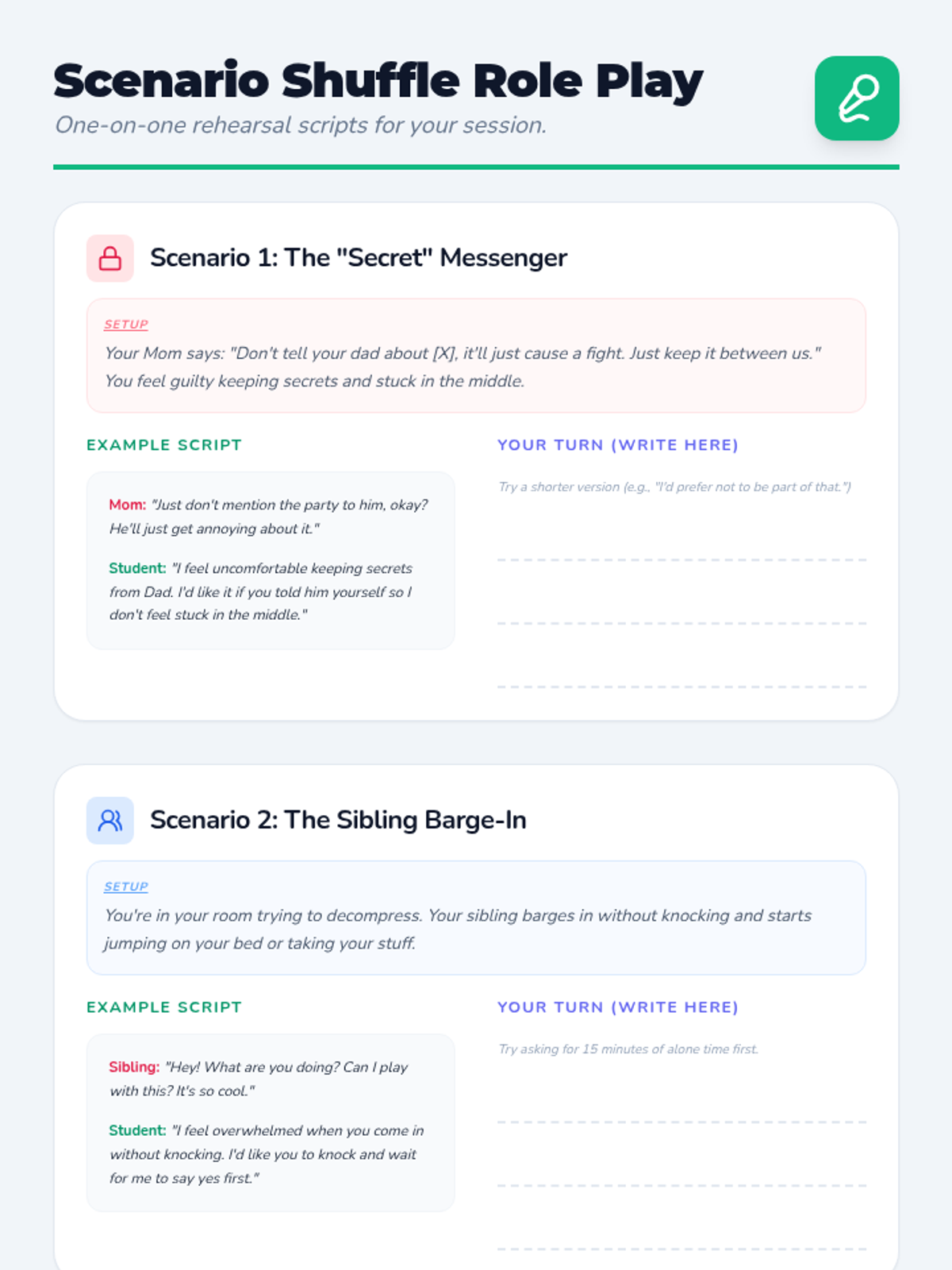
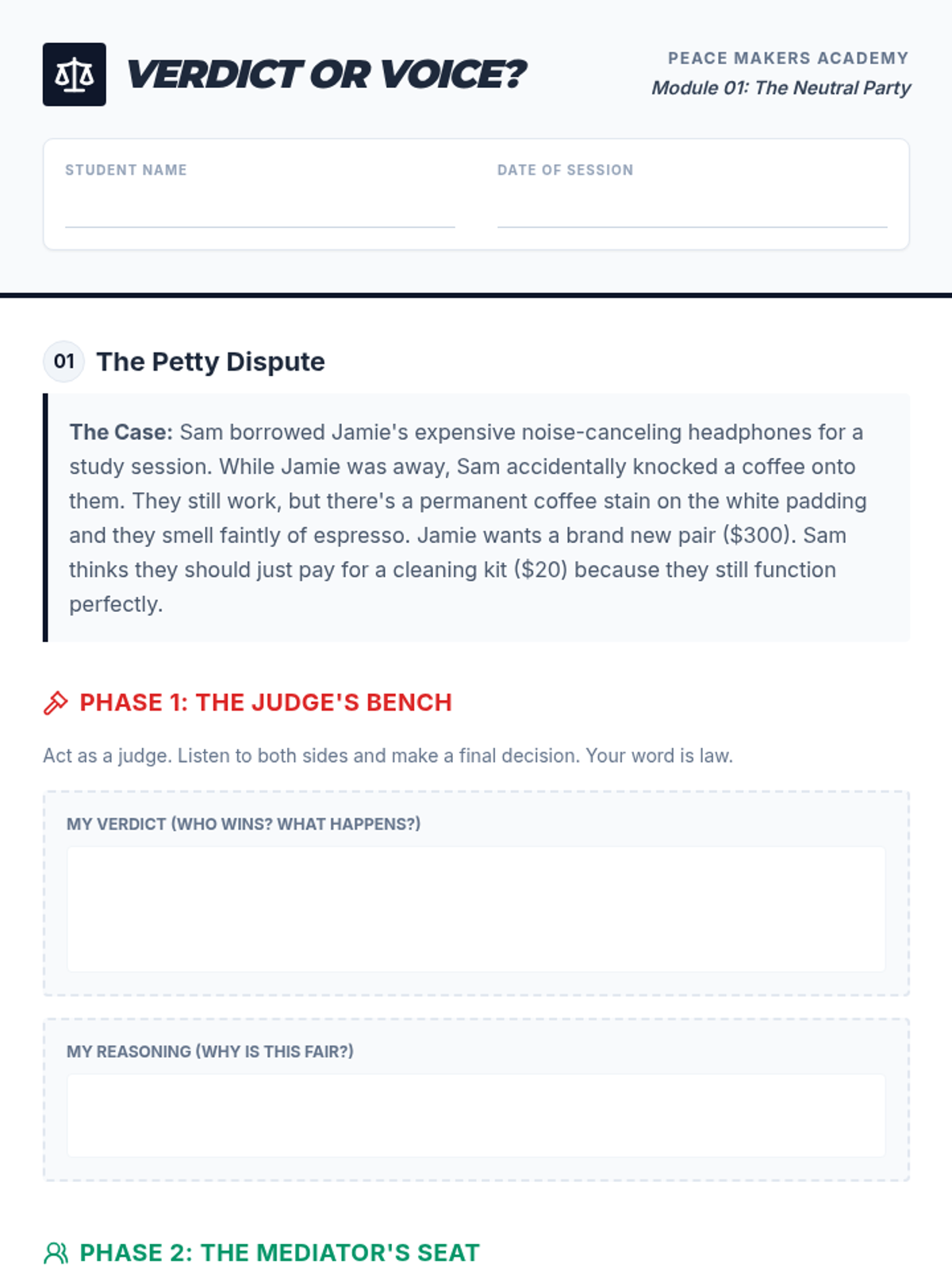
Active listening, assertive expression, and boundary-setting strategies for interpersonal success. Develops proficiency in conflict mediation, cooperative teamwork, and the cultivation of healthy romantic and platonic connections.
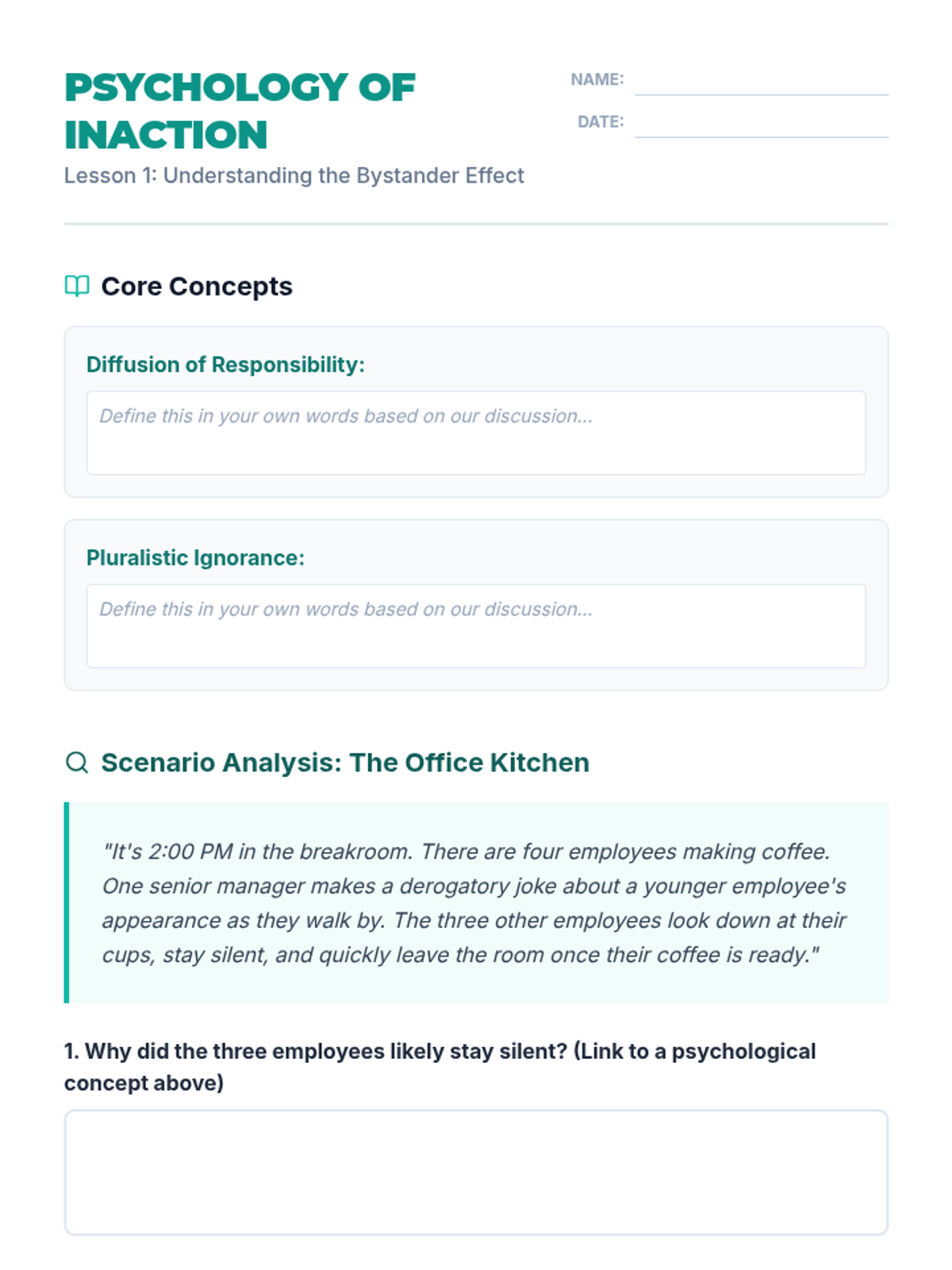
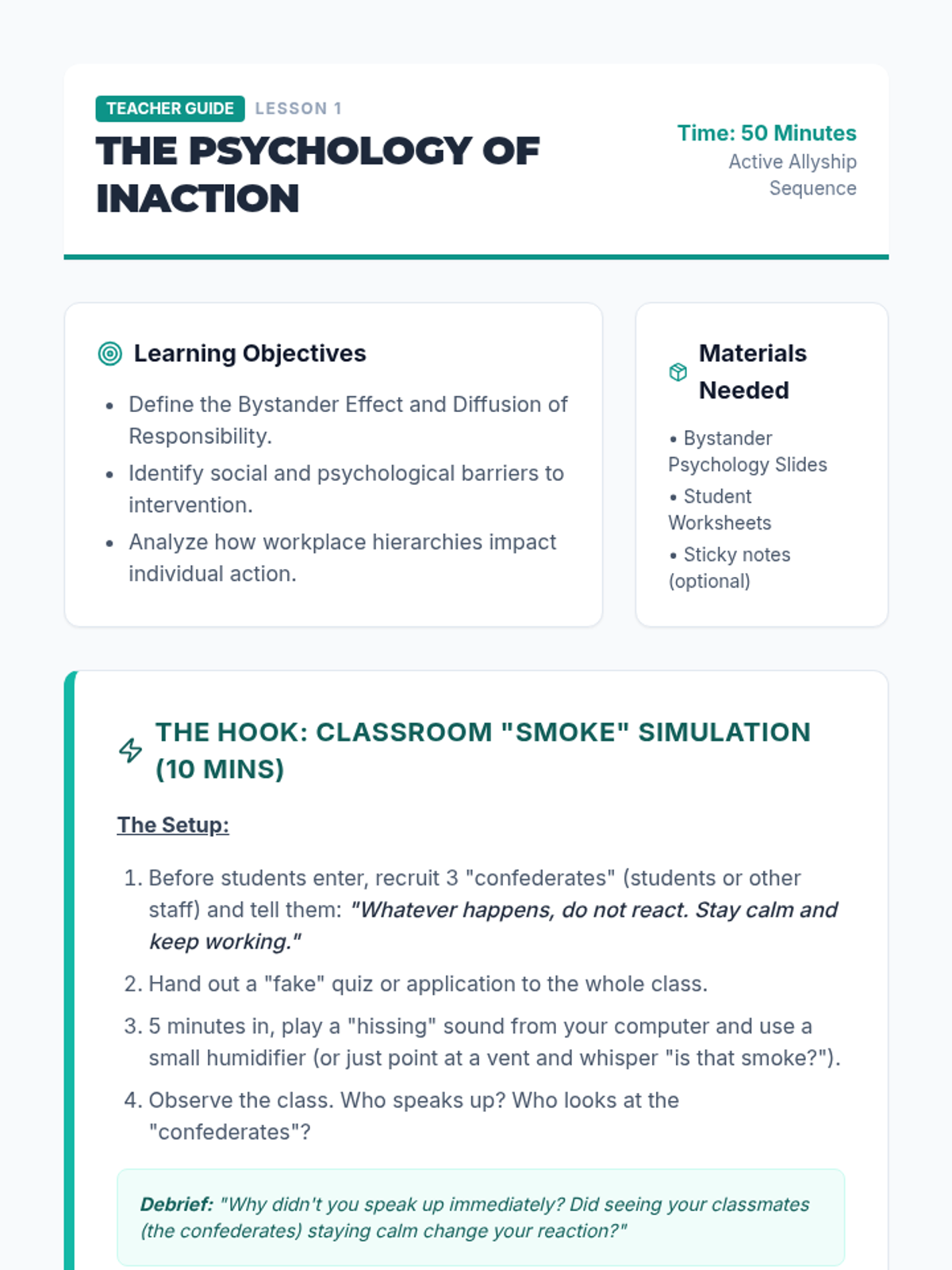
This sequence trains 9th-grade students in bystander intervention techniques and active allyship within a workplace context. Students explore the psychological barriers to action (the bystander effect) and master the '4 Ds'—Direct, Distract, Delegate, and Delay—to safely interrupt harassment and support colleagues.
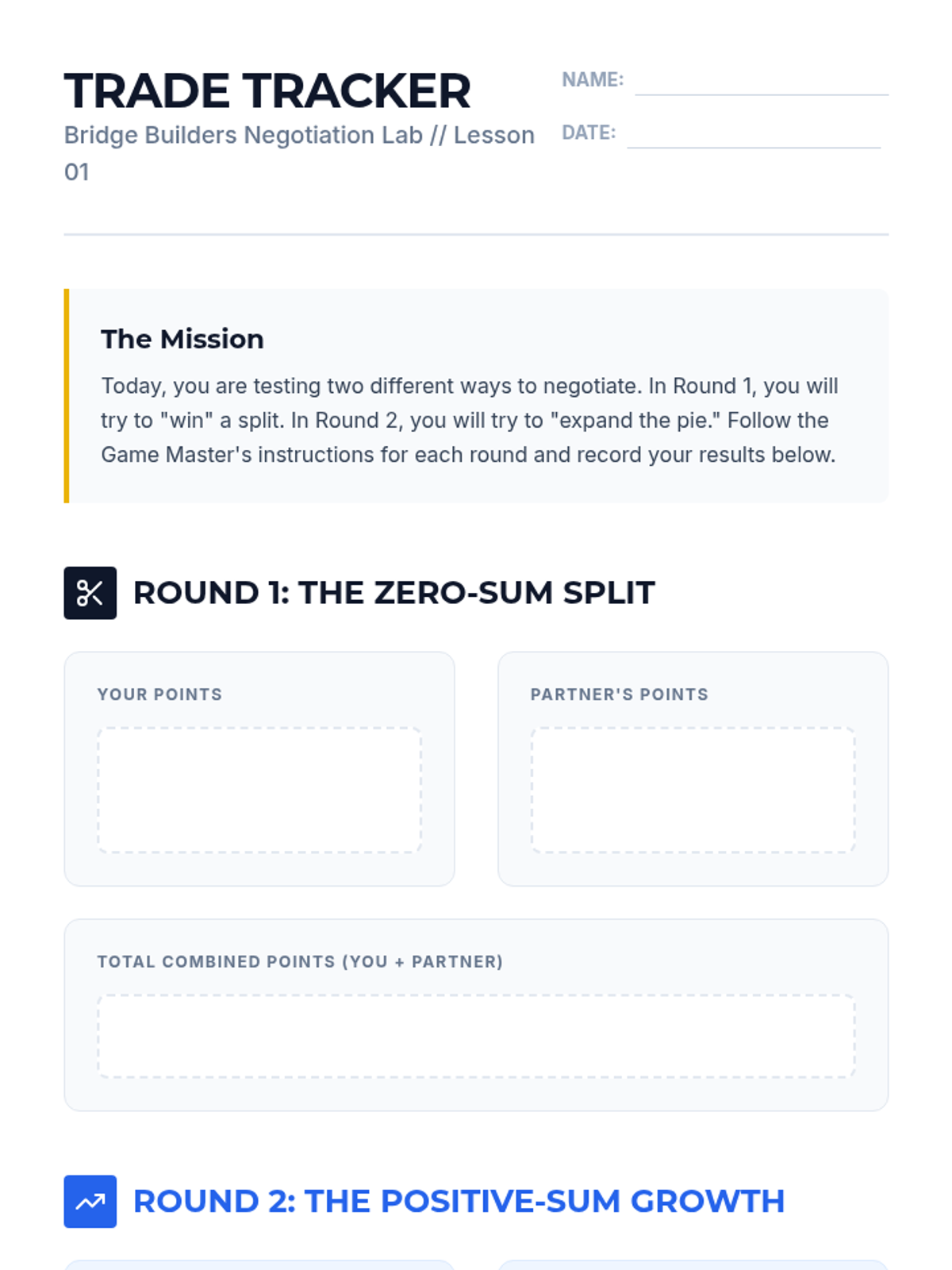
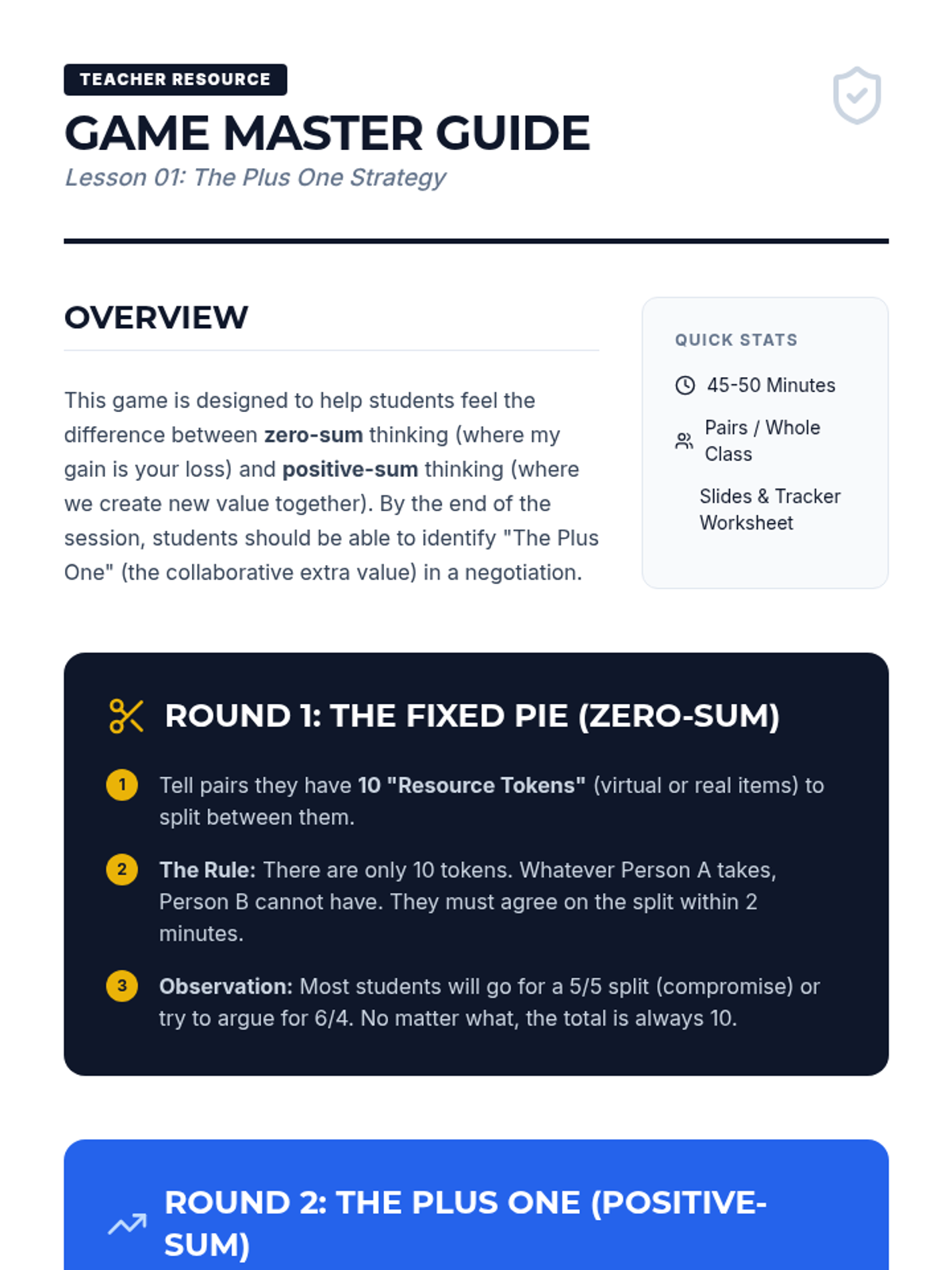
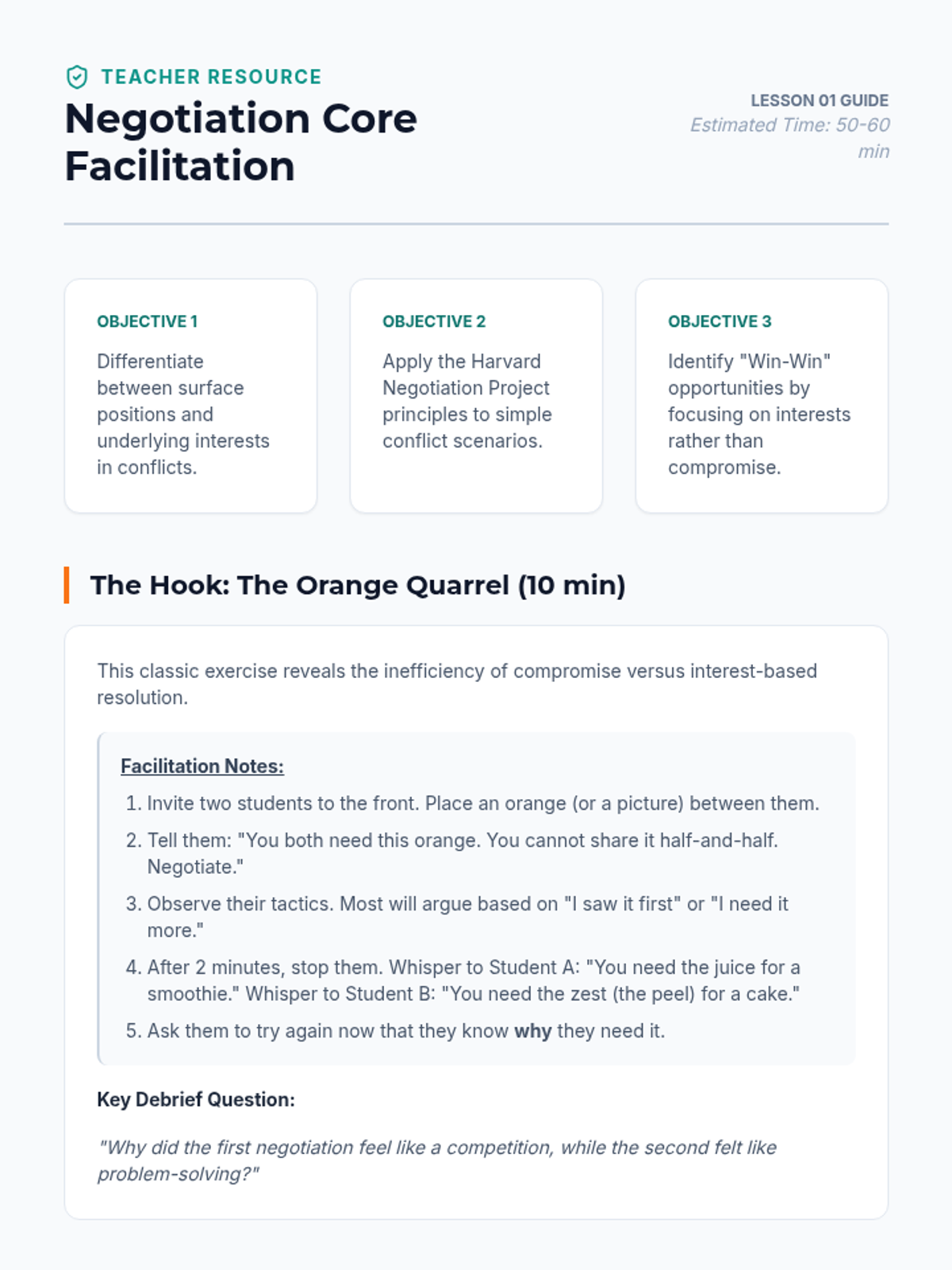
This sequence teaches 7th-grade students how to move beyond simple compromise to collaborative negotiation. Students learn to separate people from problems, brainstorm creative 'win-win' options, use objective criteria for fairness, and develop a BATNA (Best Alternative to a Negotiated Agreement) to handle complex conflicts effectively while preserving relationships.
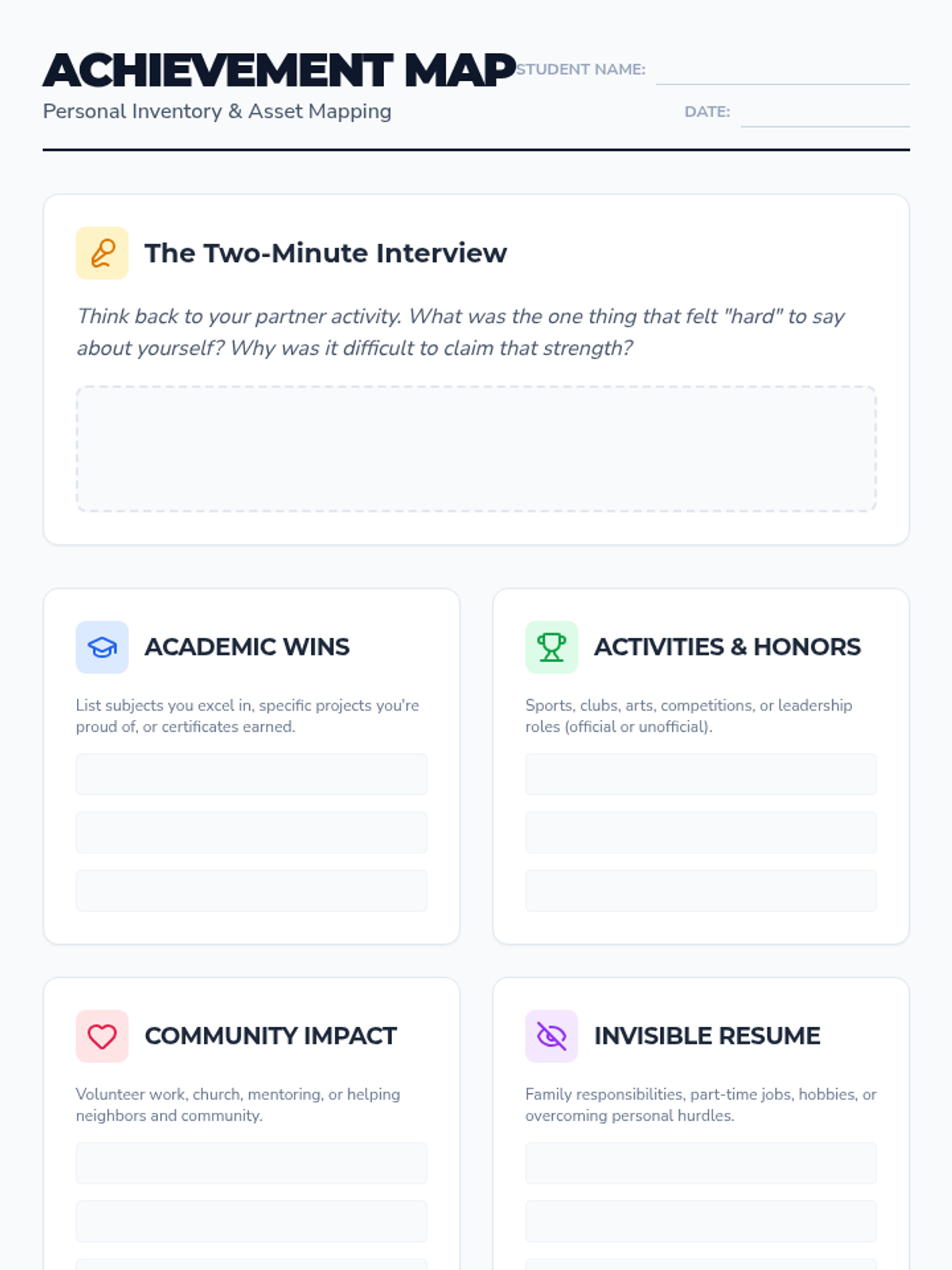
A comprehensive sequence designed to guide 9th-grade students through the process of crafting persuasive personal statements for scholarships. Students move from self-reflection and inventorying their strengths to analyzing mentor texts, mastering the 'Show, Don't Tell' technique, and refining their drafts through peer review.
This sequence explores the psychology of group dynamics and community care. Students learn to recognize burnout, offer effective support, and advocate for cultures where requesting breaks is normalized and valued.
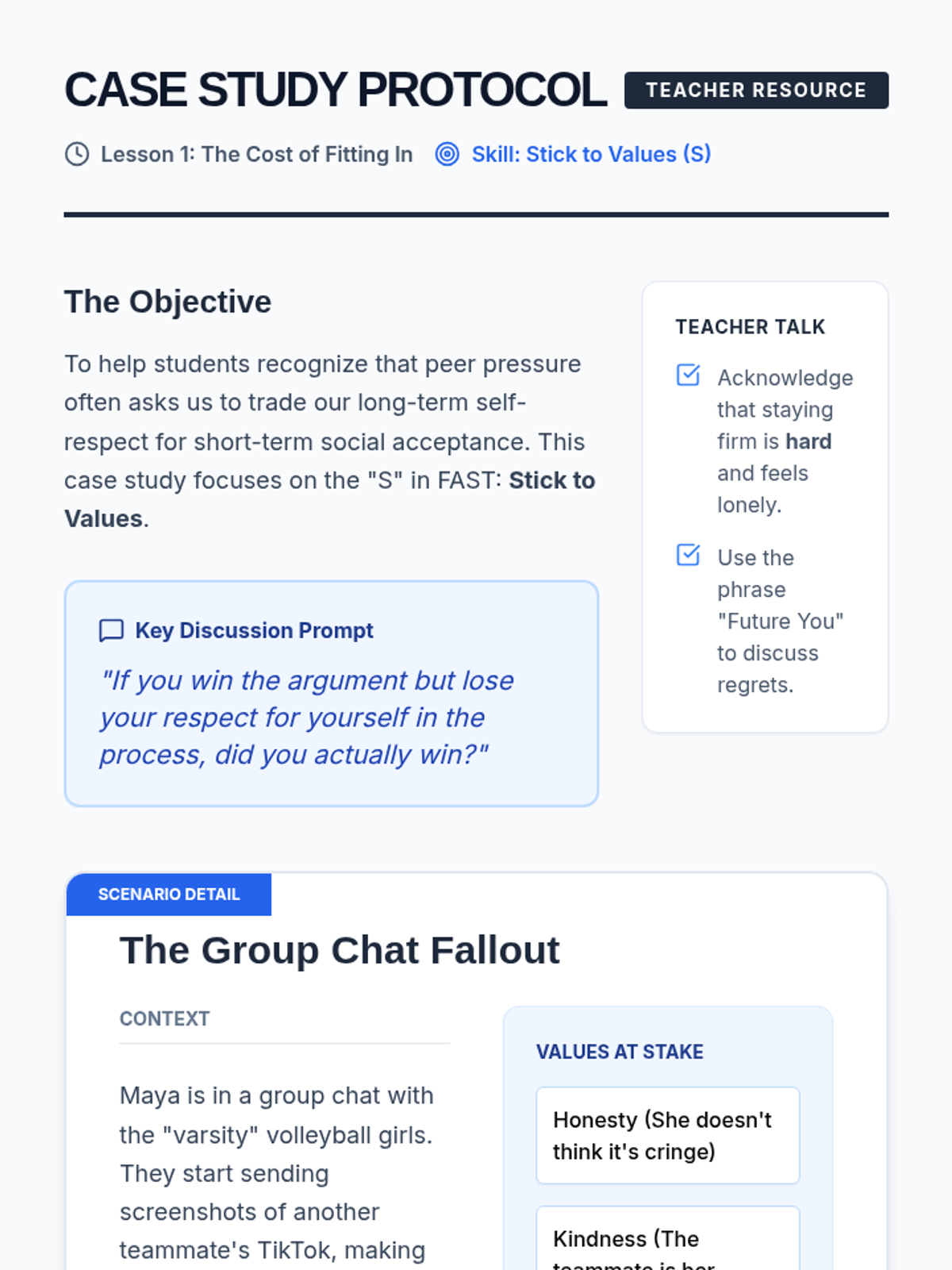
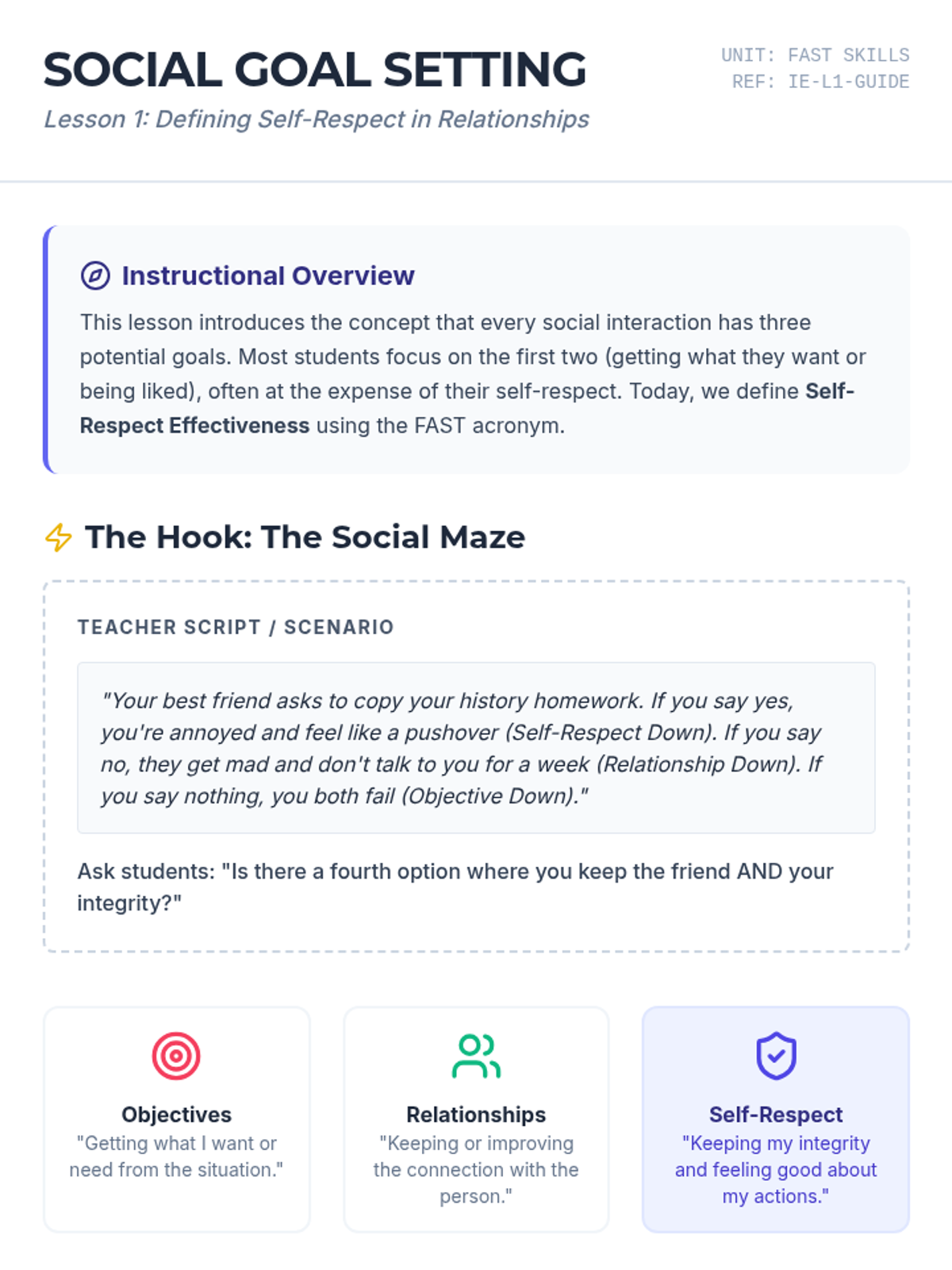
An 8th-grade counseling sequence exploring the FAST skills for self-respect (Fair, No Apologies, Stick to Values, Truthful). Students analyze social pressure, digital authenticity, and conflict resolution through case studies and creative projects.
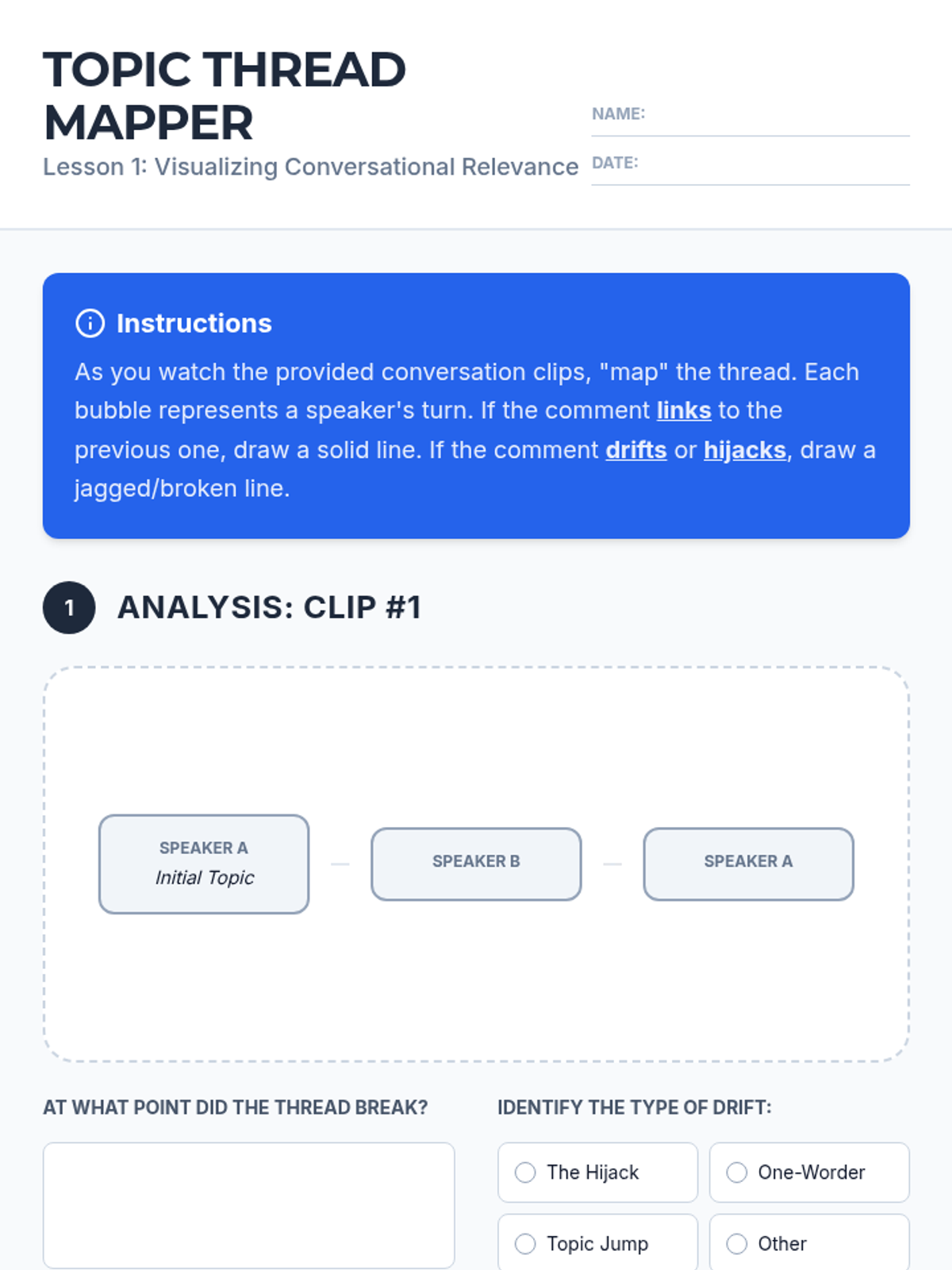
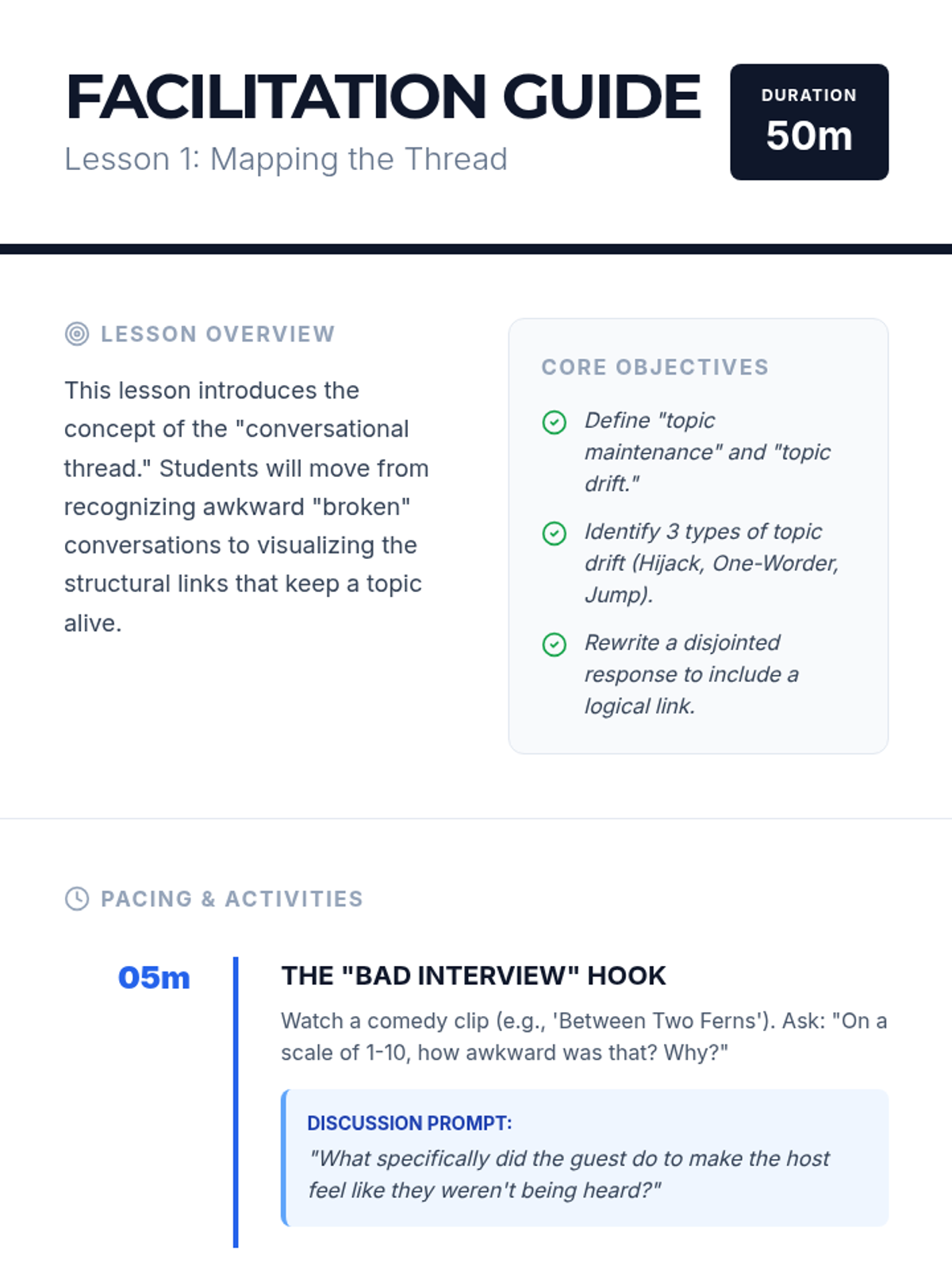
A comprehensive sequence for 9th-grade students focusing on social communication, specifically how to maintain, deepen, and transition conversational topics effectively in social and academic settings.
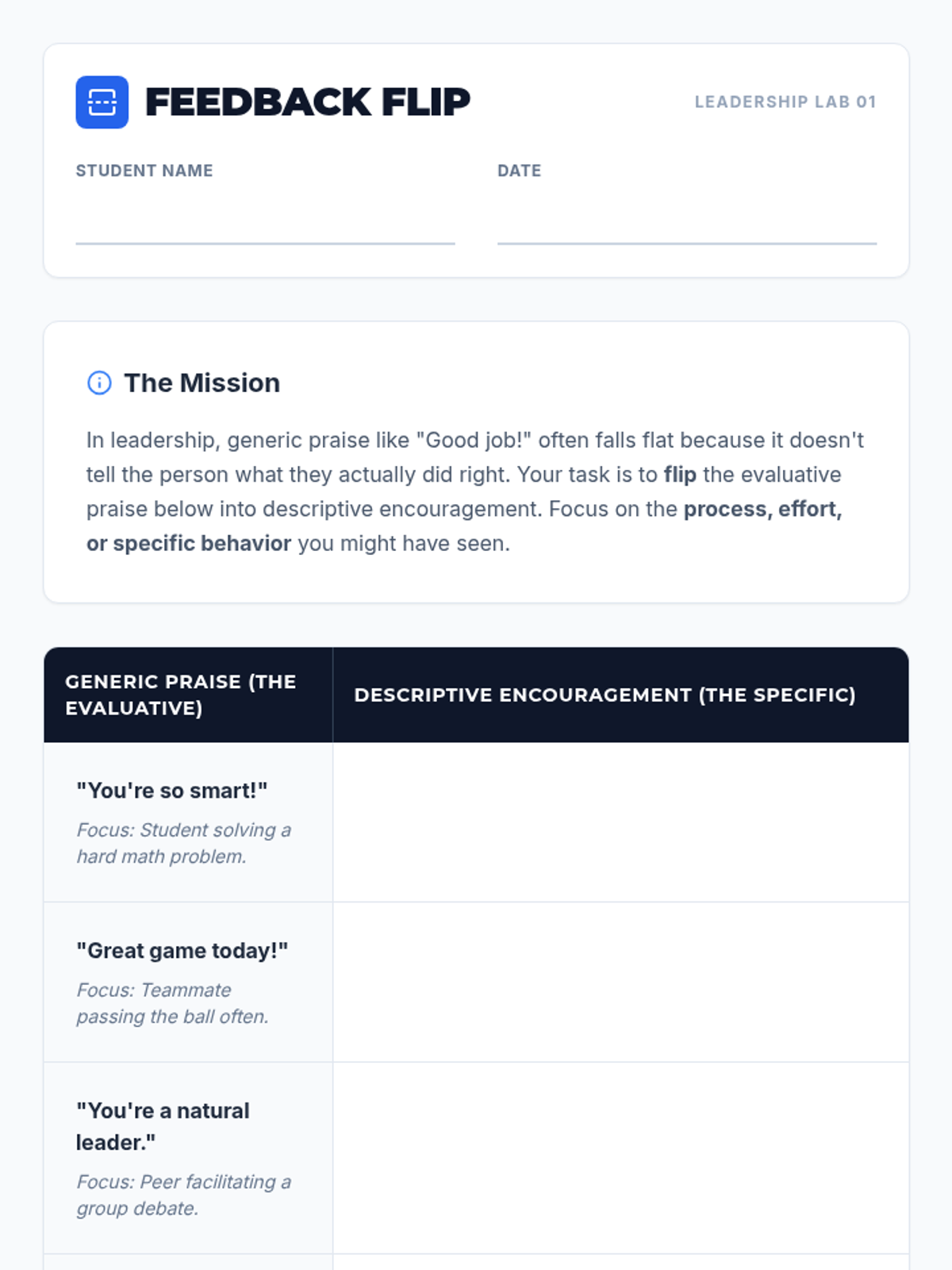
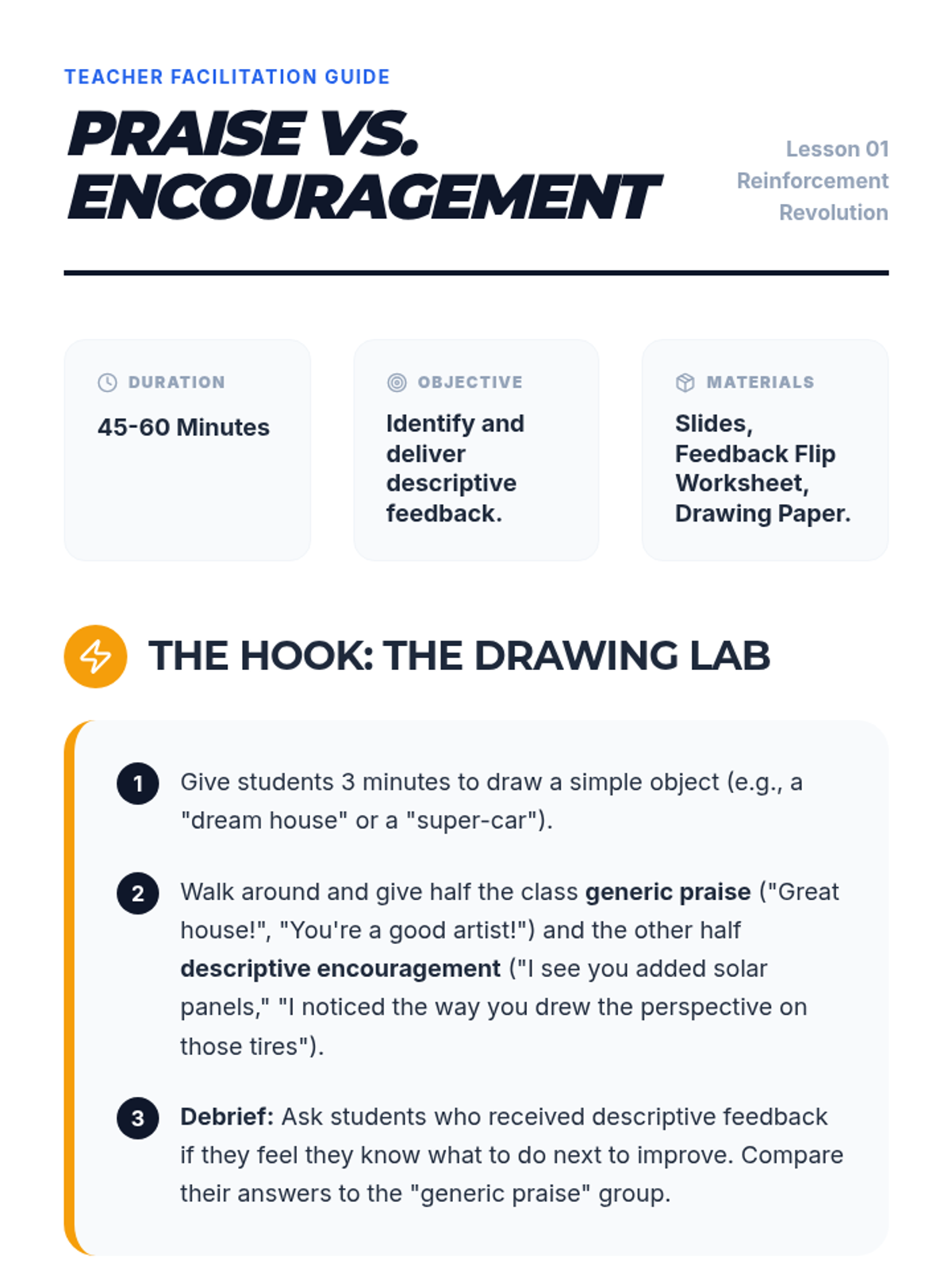
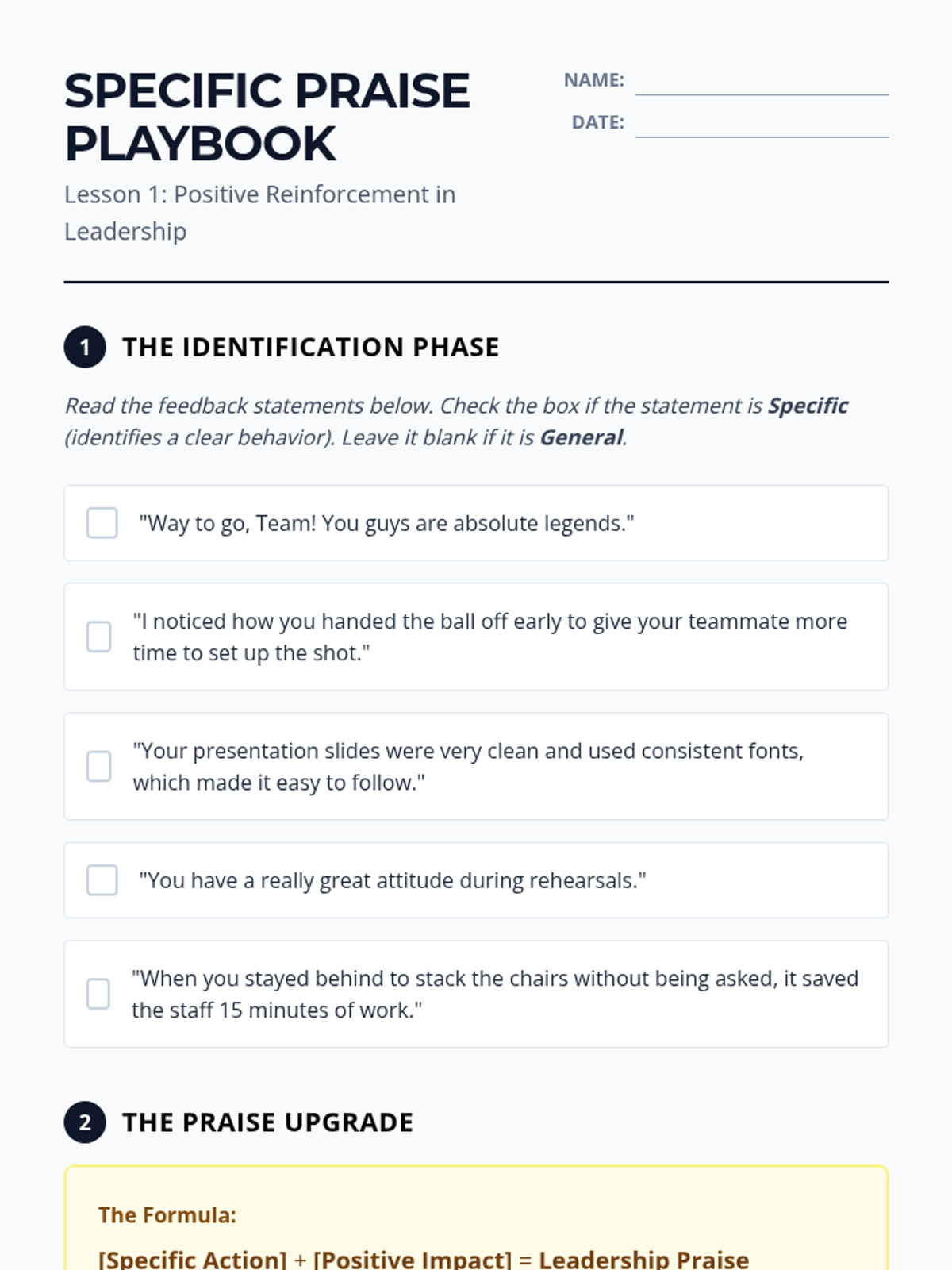
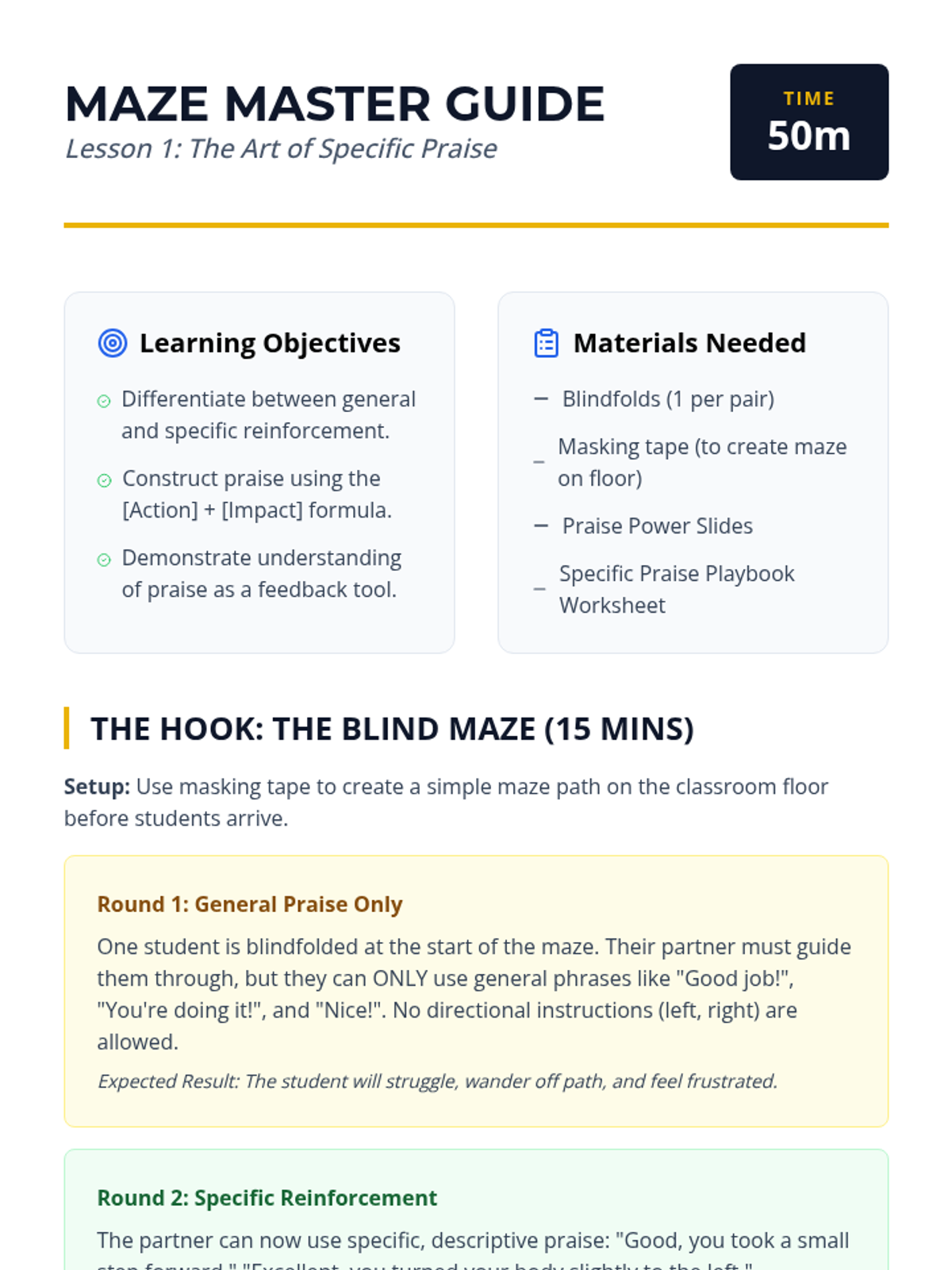
This sequence explores the interpersonal application of positive reinforcement in leadership, coaching, and mentoring contexts. Students examine how leaders influence group culture and individual performance through specific praise and recognition systems.
A 5-lesson sequence for 9th-grade leadership students on using positive reinforcement to improve team morale and performance through specific praise, feedback ratios, and behavioral management.
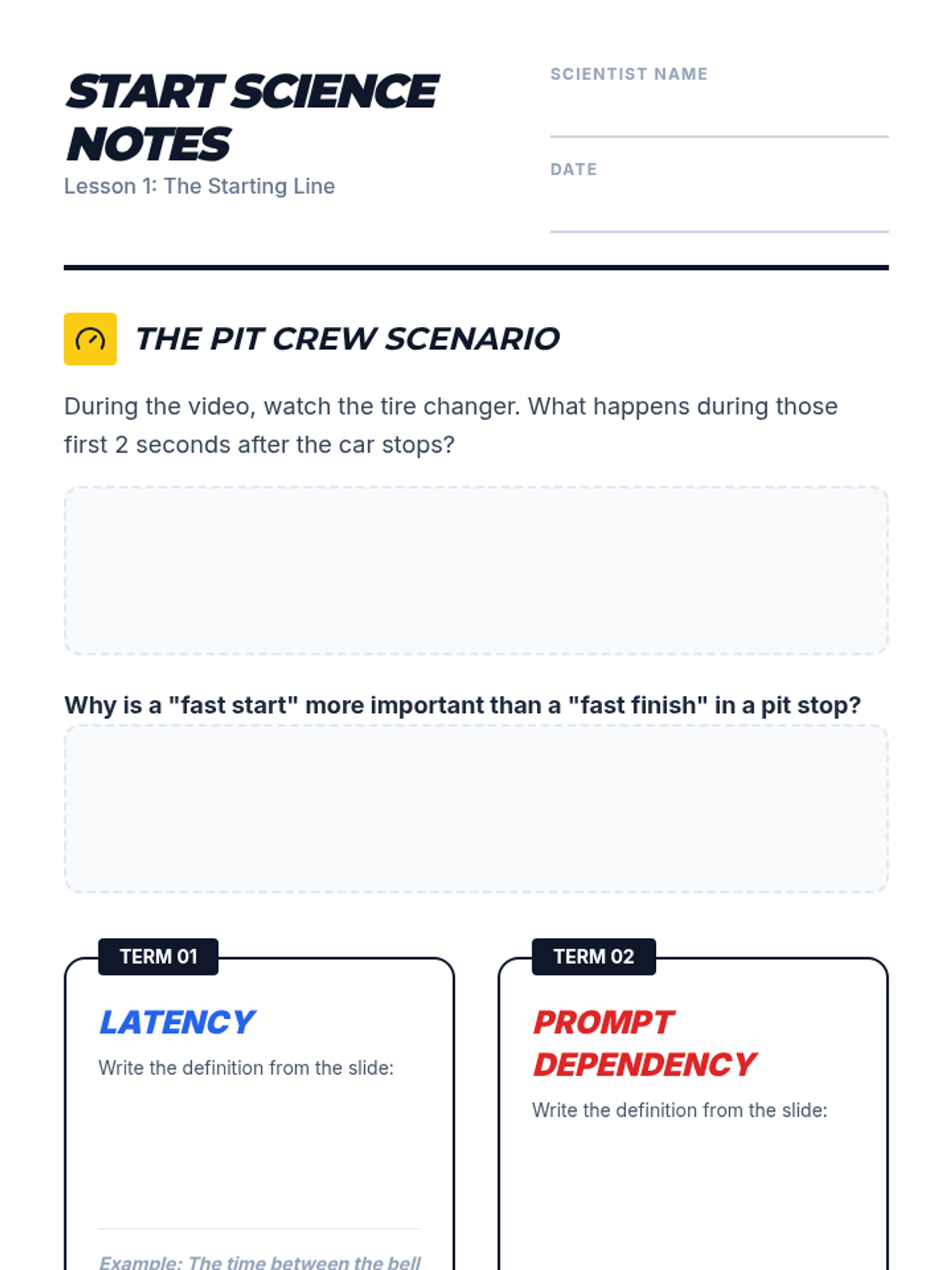
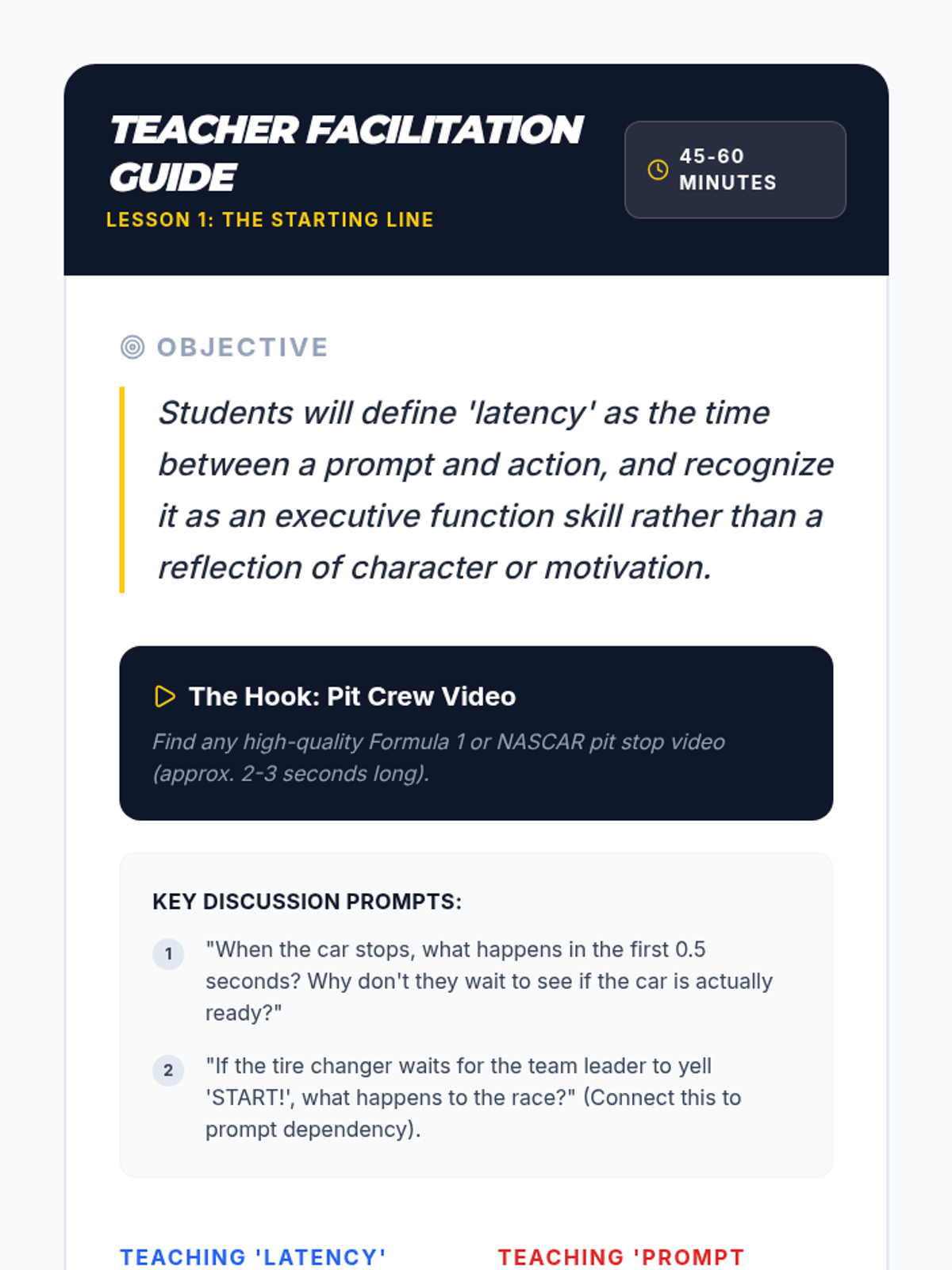
A mastery-based sequence for 9th-grade students focused on reducing task latency through self-monitoring, data tracking, and goal setting. Students learn to frame task initiation as a scientific challenge rather than a behavioral one, empowering them to become independent 'Start Scientists'.
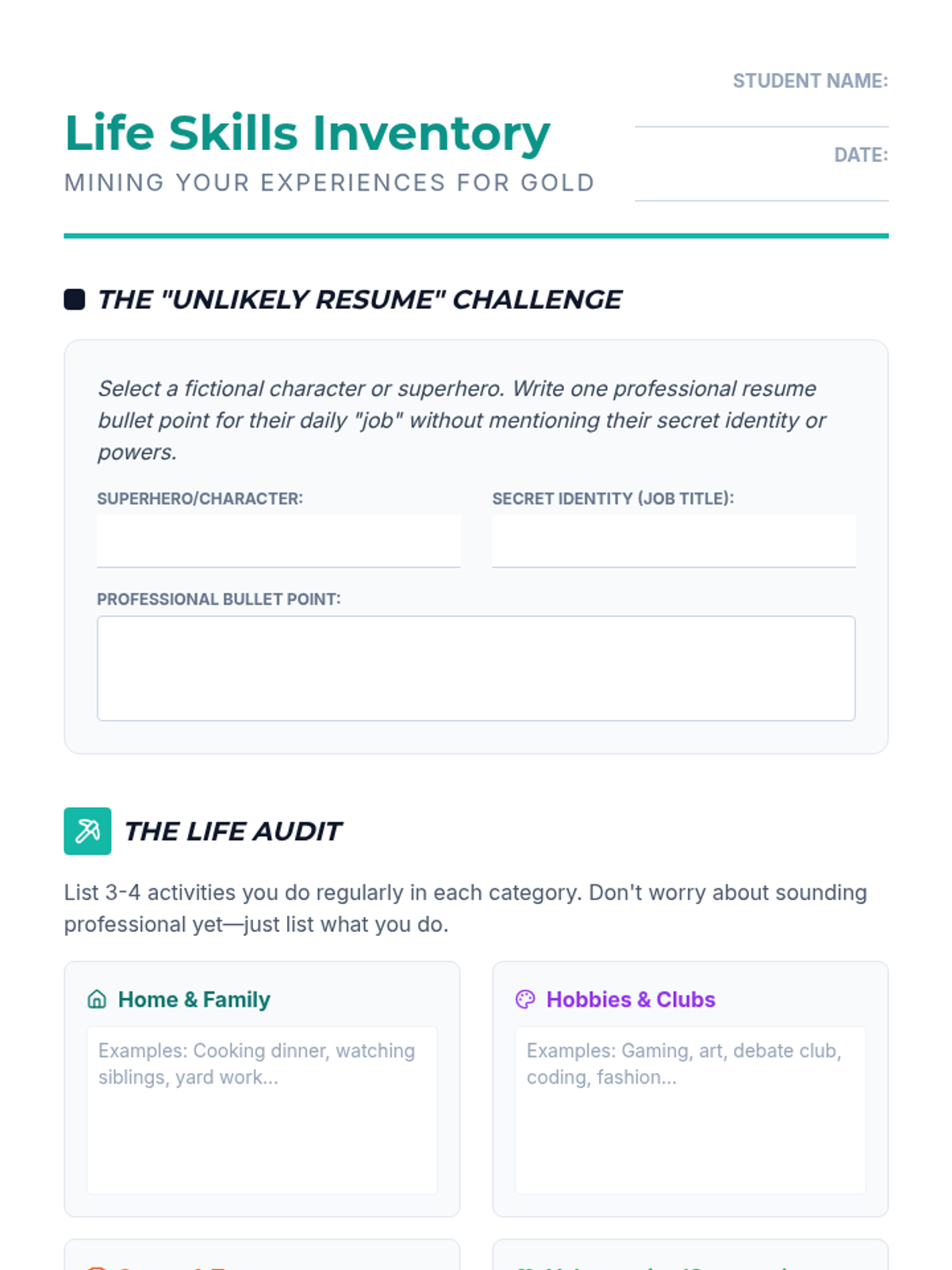
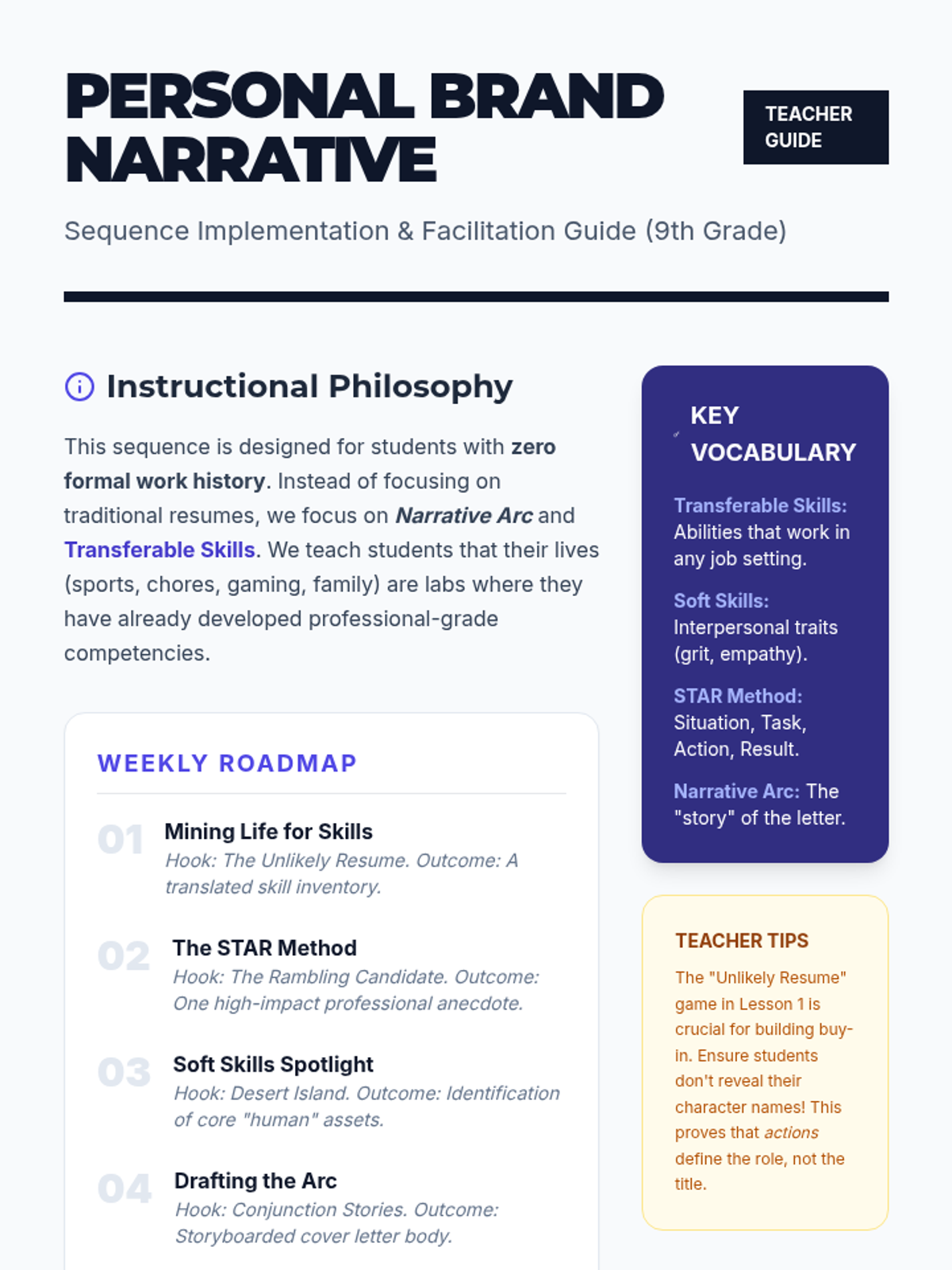
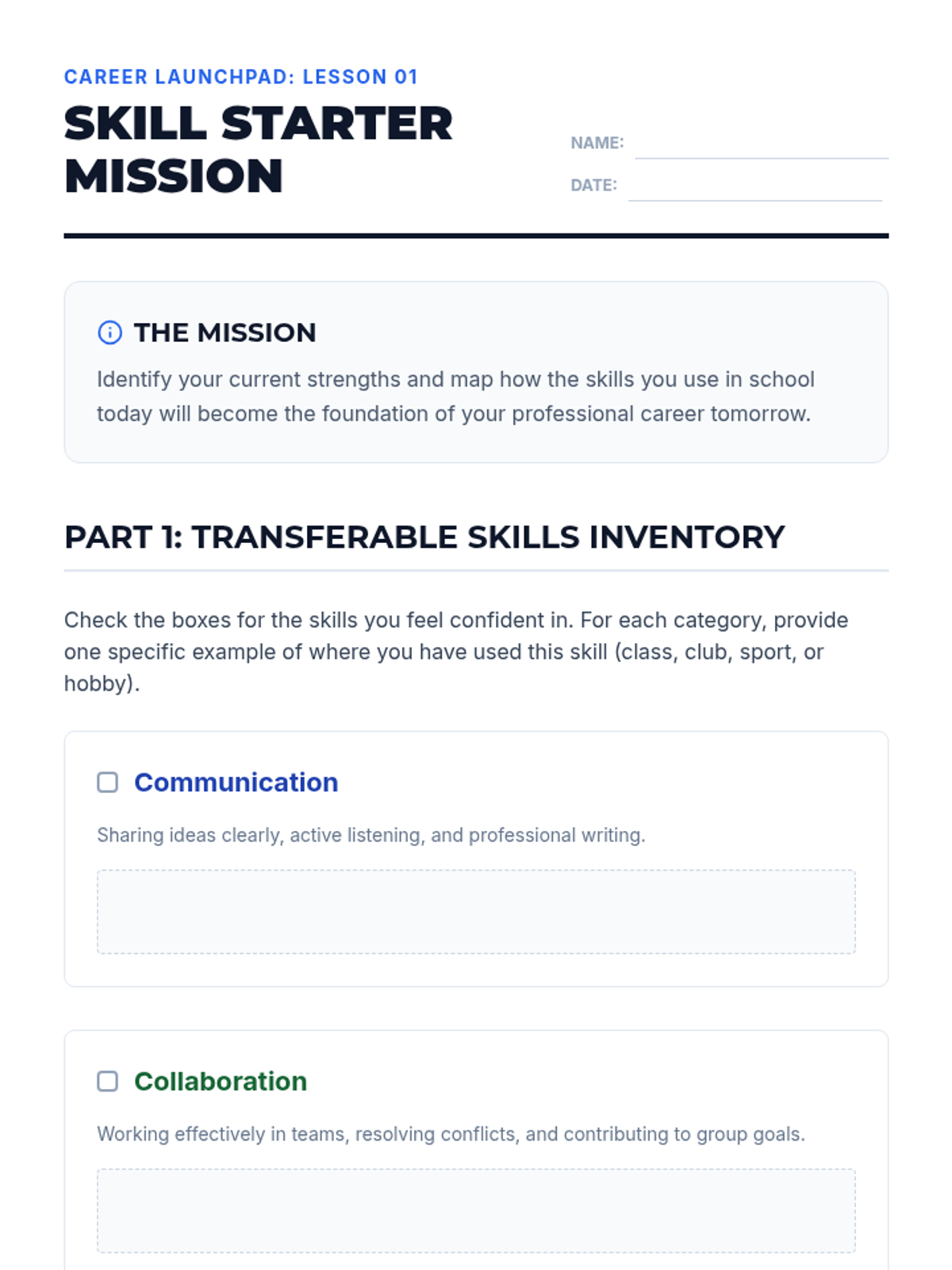
A project-based sequence for 9th graders to identify and articulate transferable skills from everyday life into a professional cover letter narrative, compensating for a lack of formal work history.
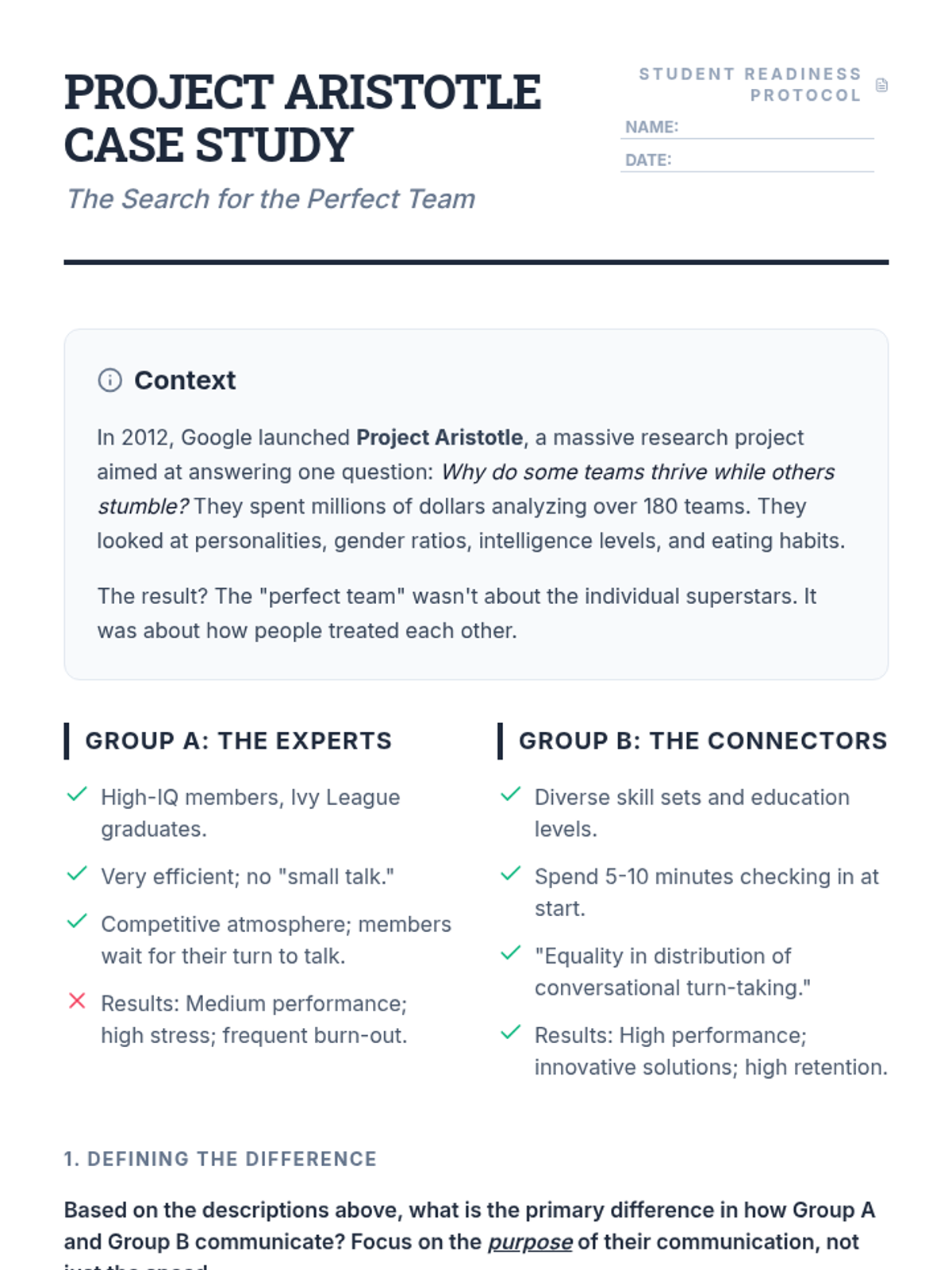
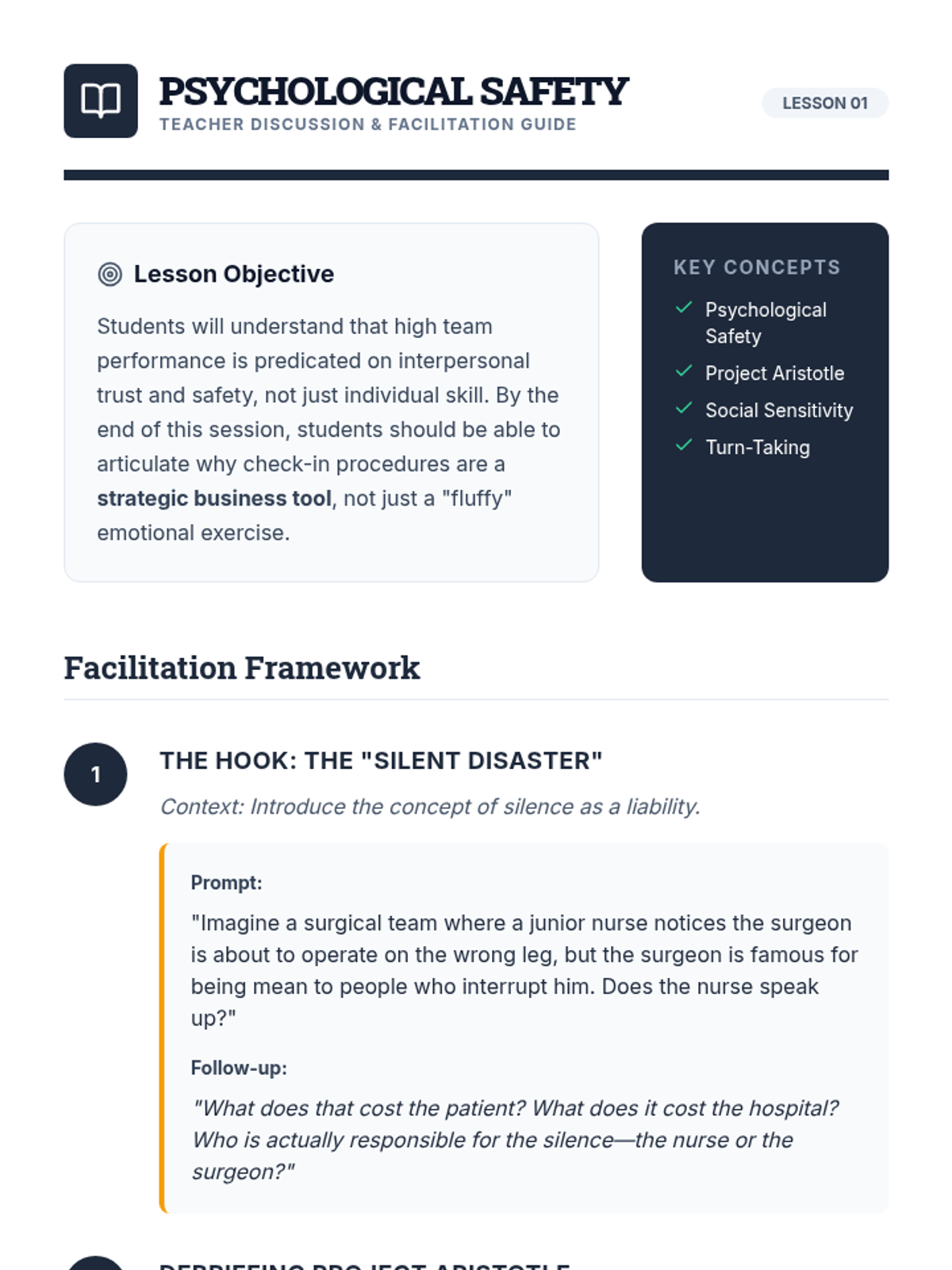
This sequence frames daily check-ins as a professional leadership and team management competency. Students explore psychological safety, real-world professional stand-ups, and facilitation techniques to design their own 'Readiness Protocols' for teams.
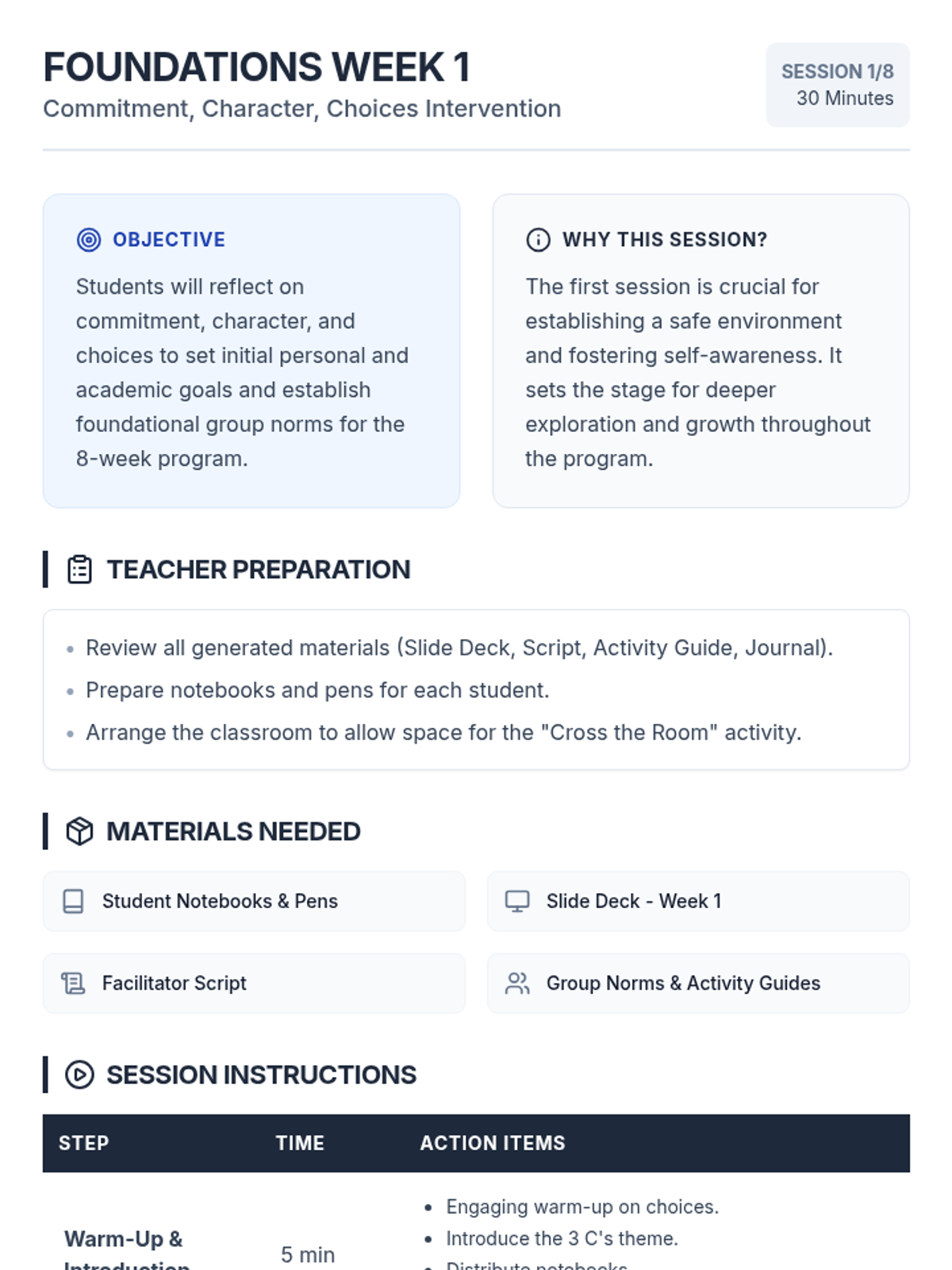
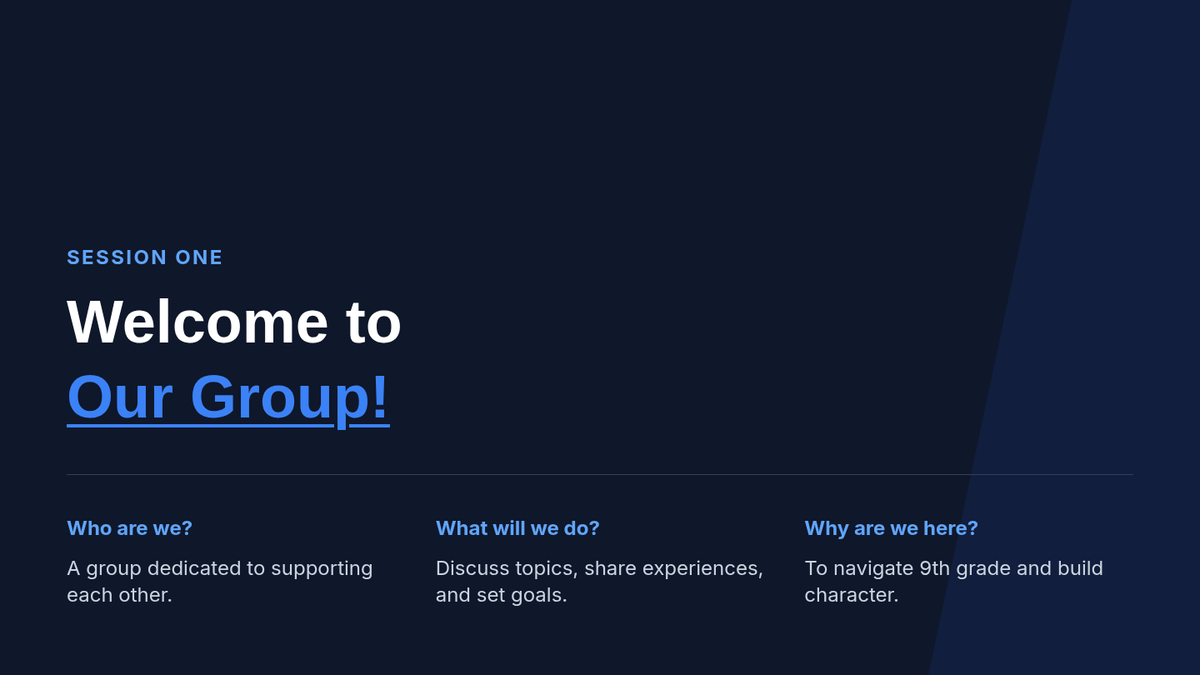
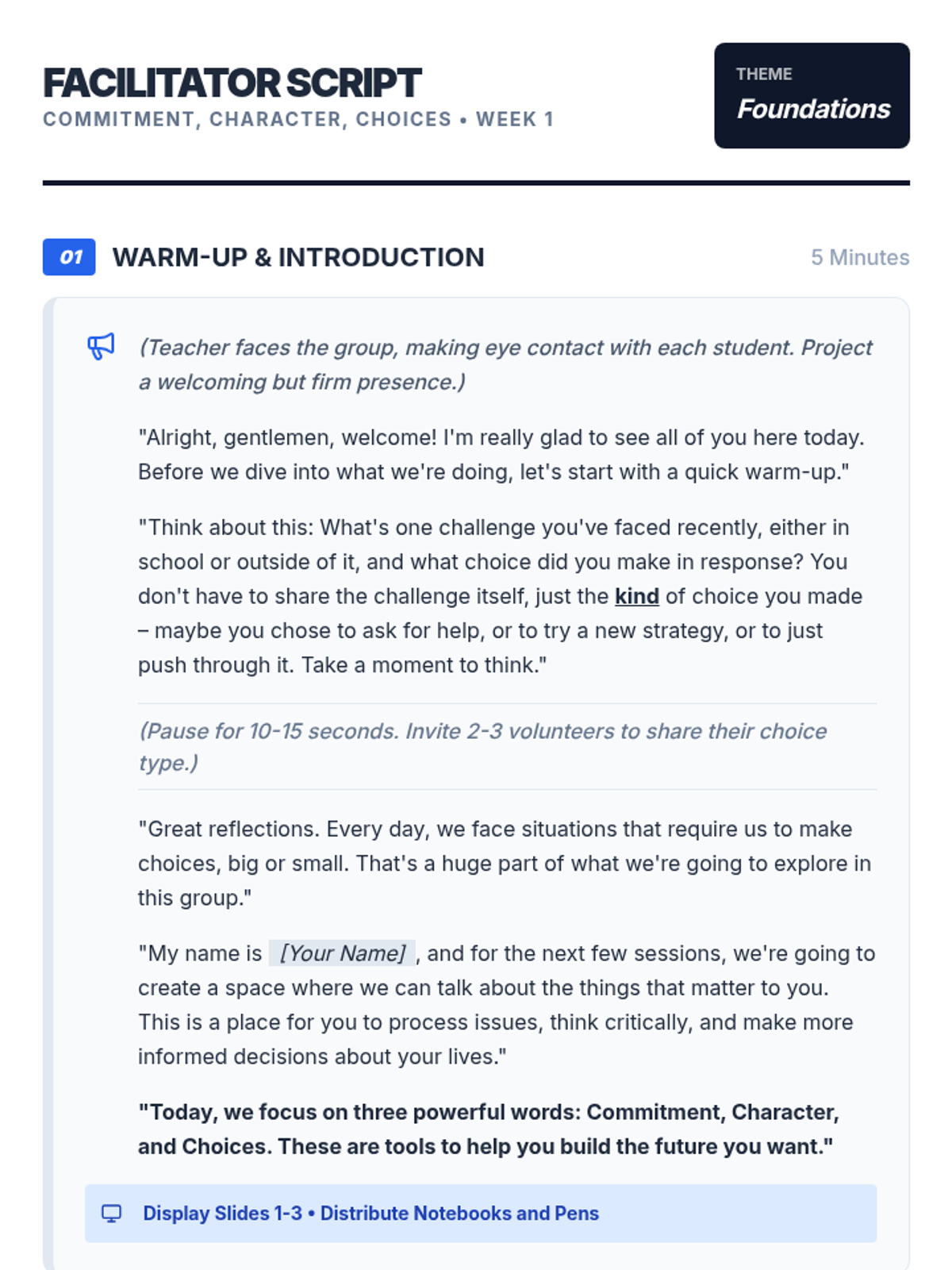
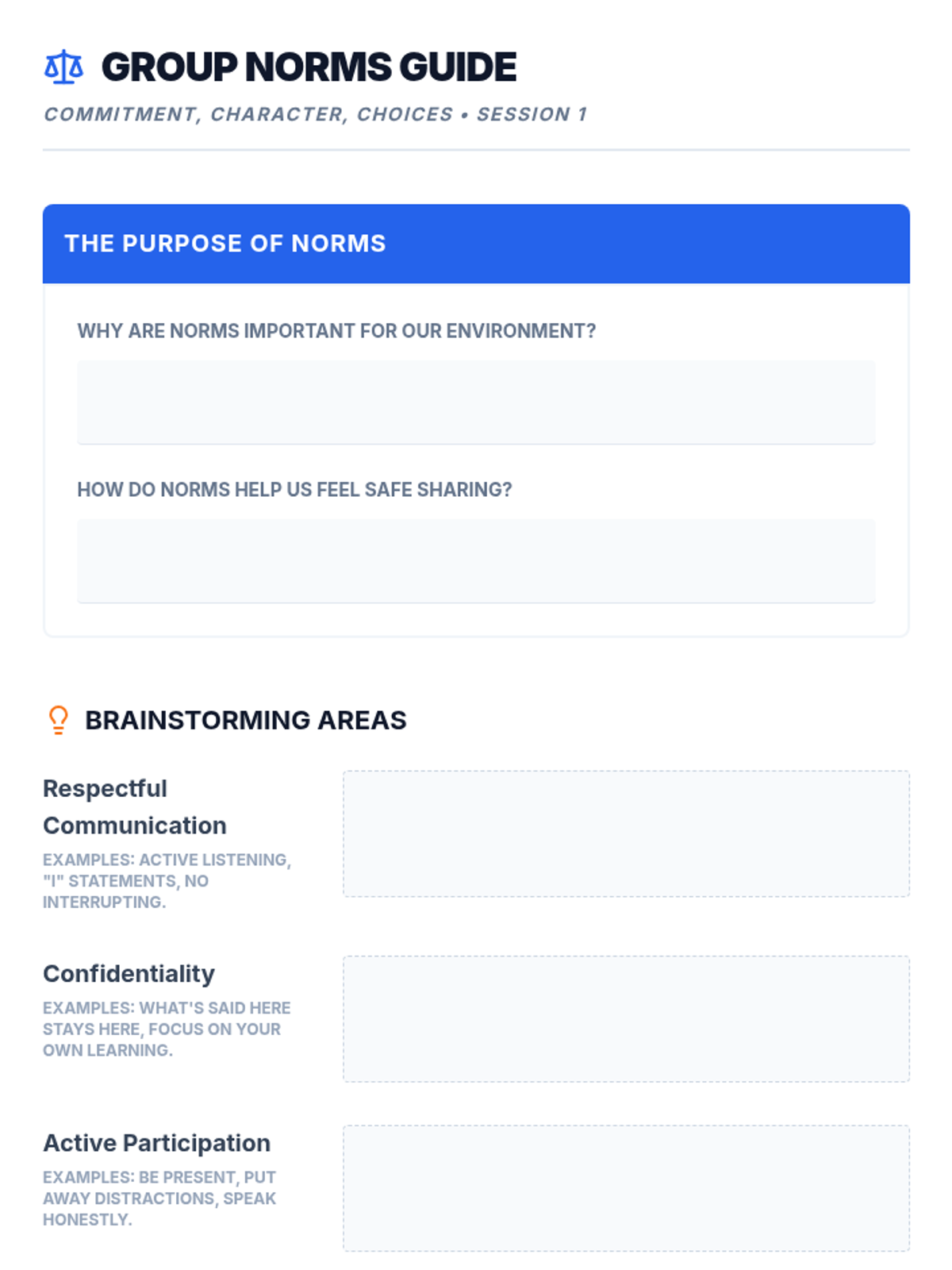
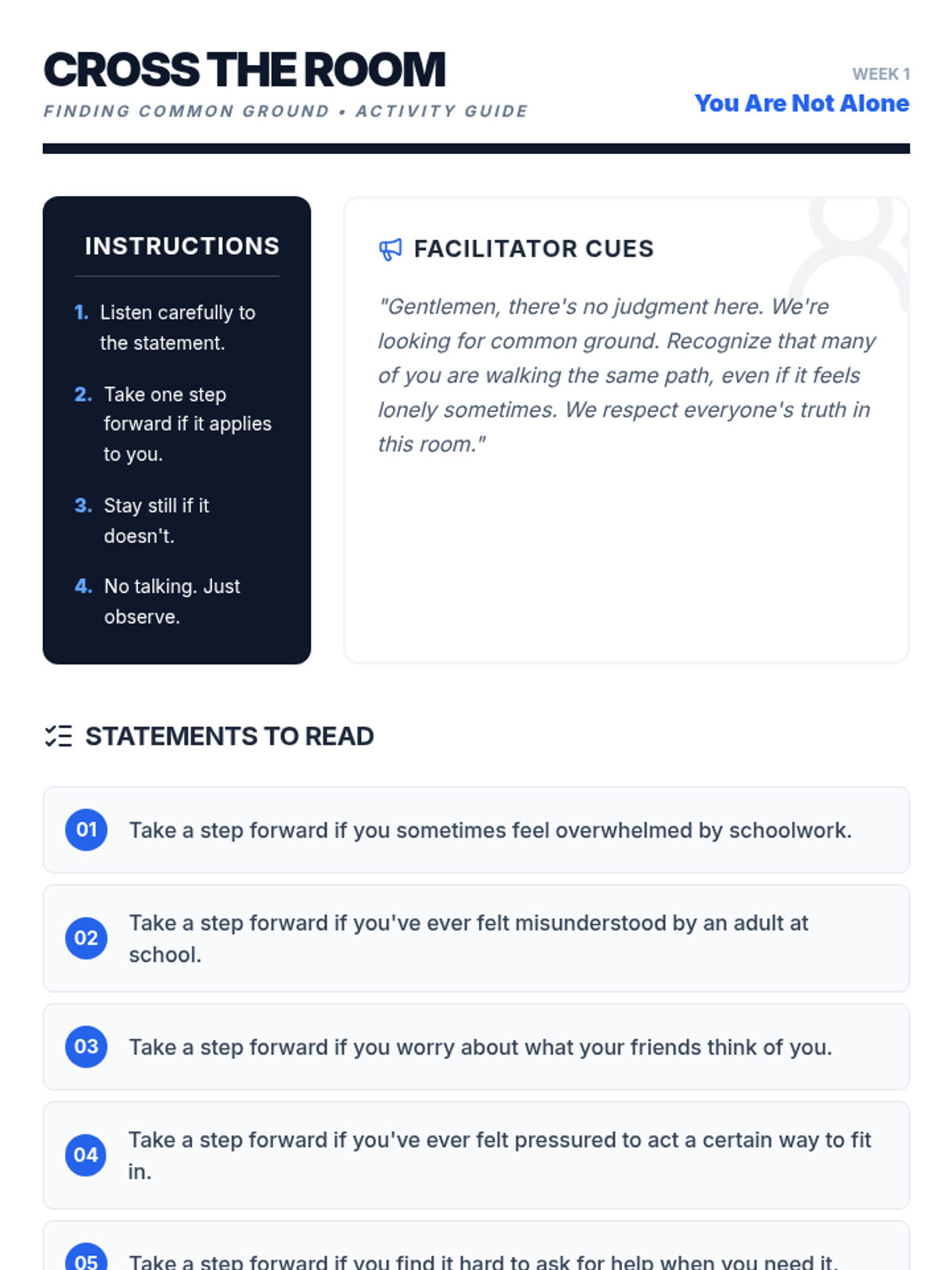
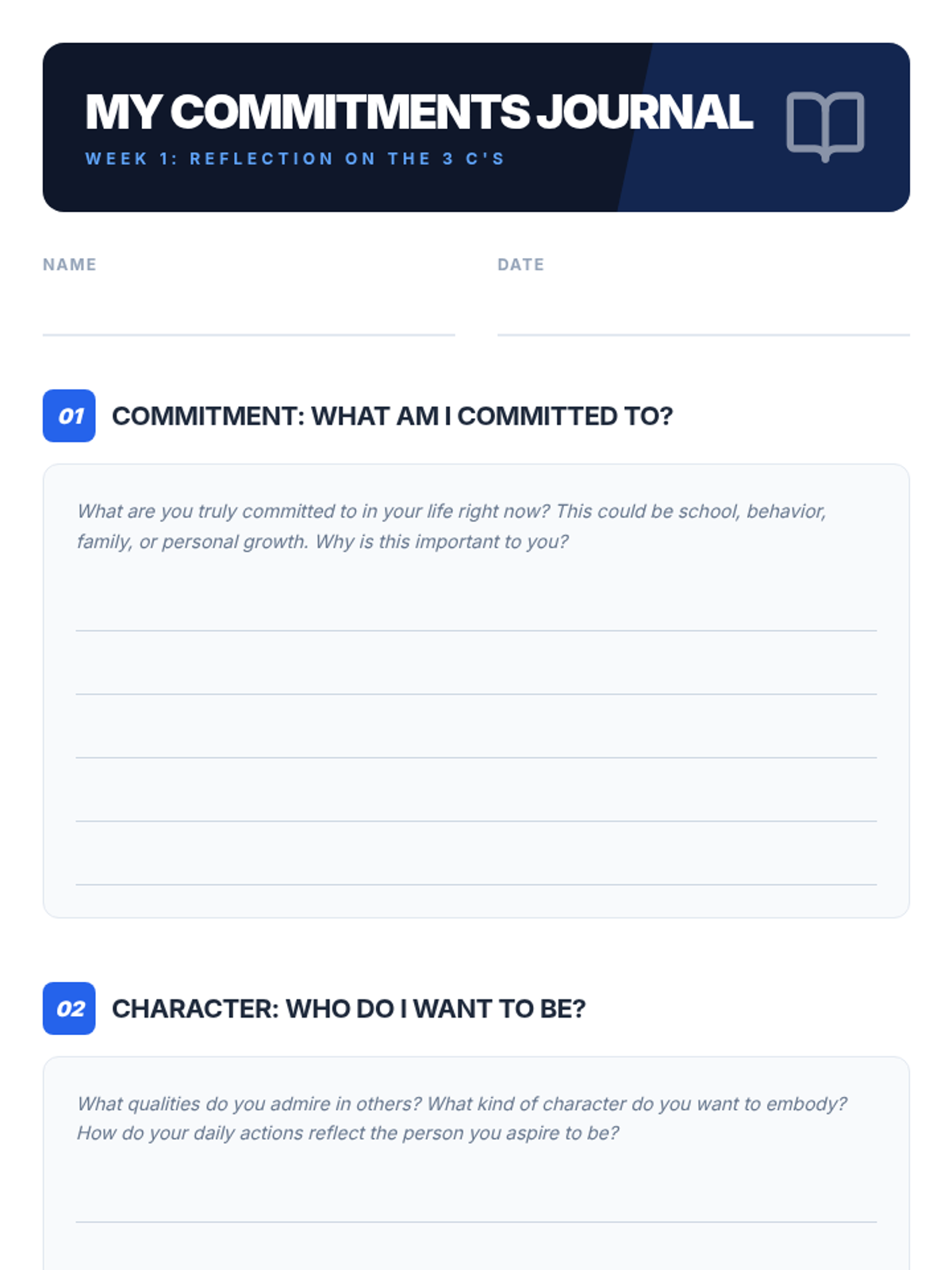
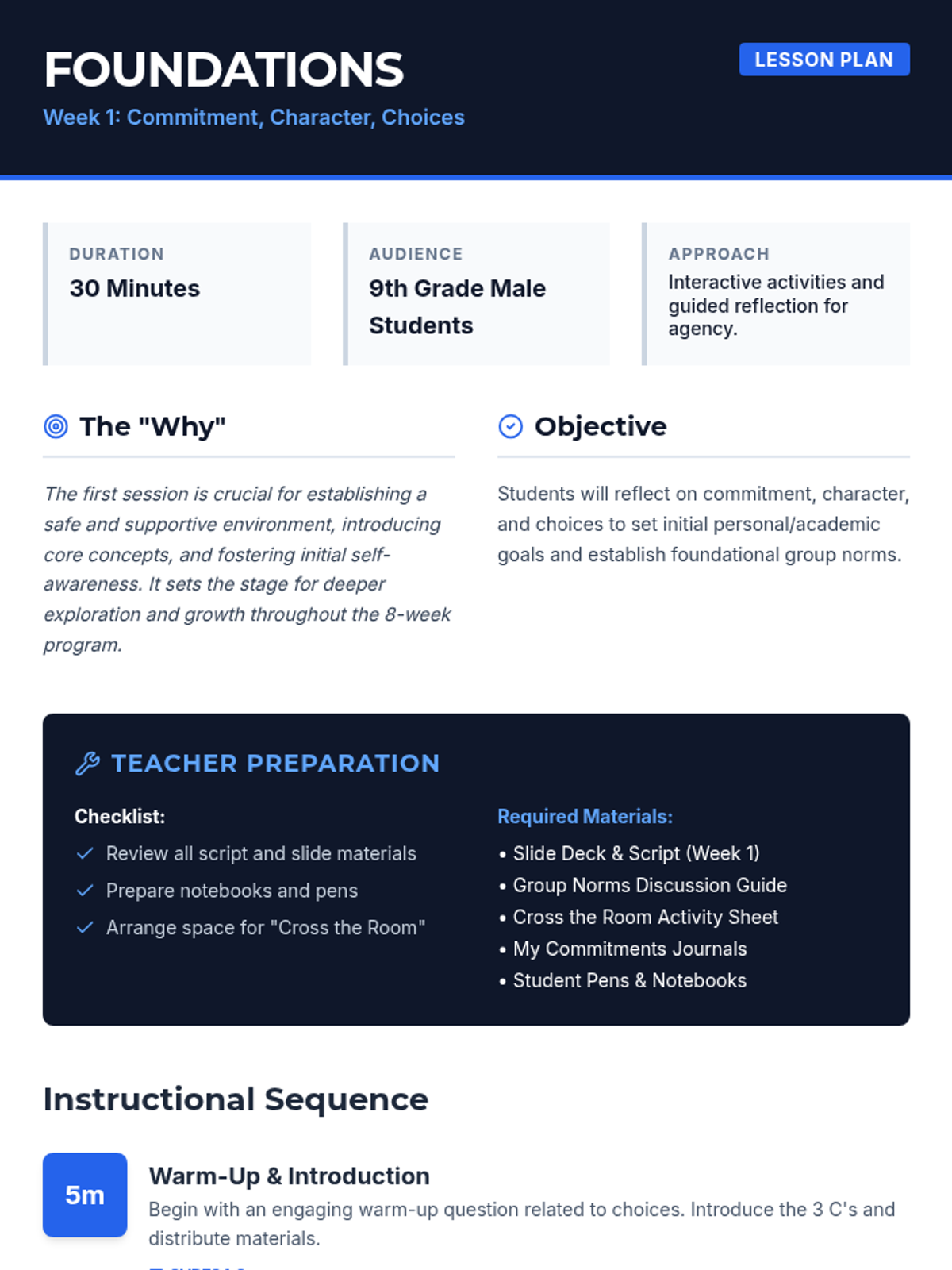
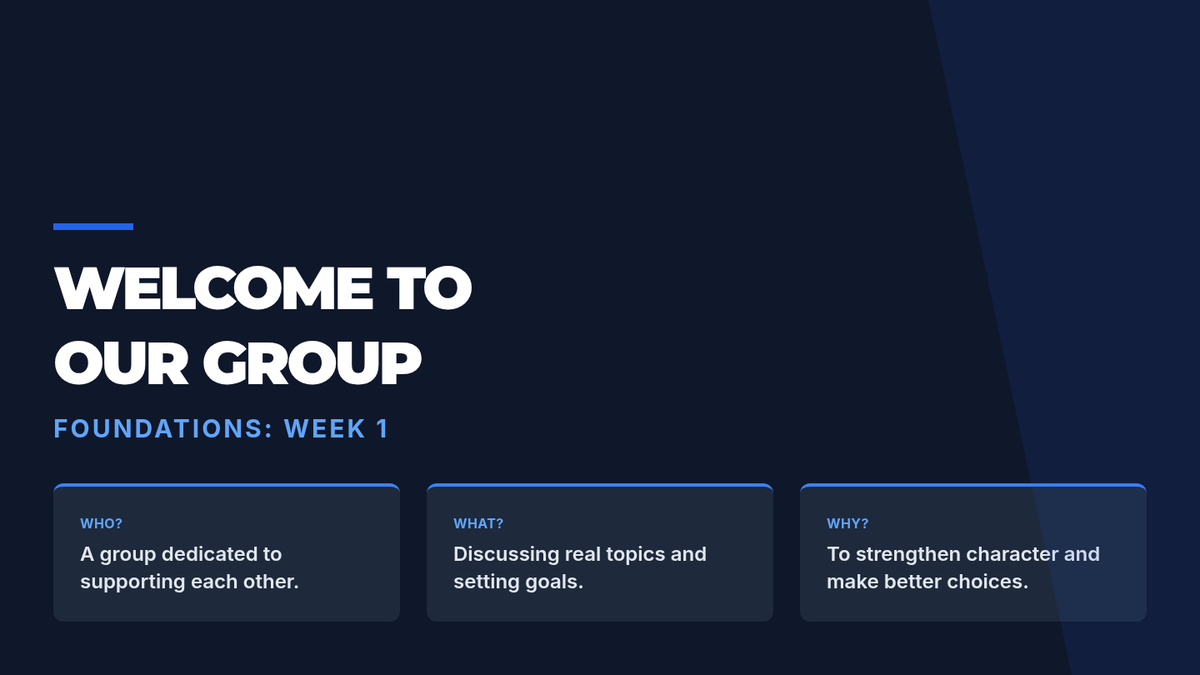
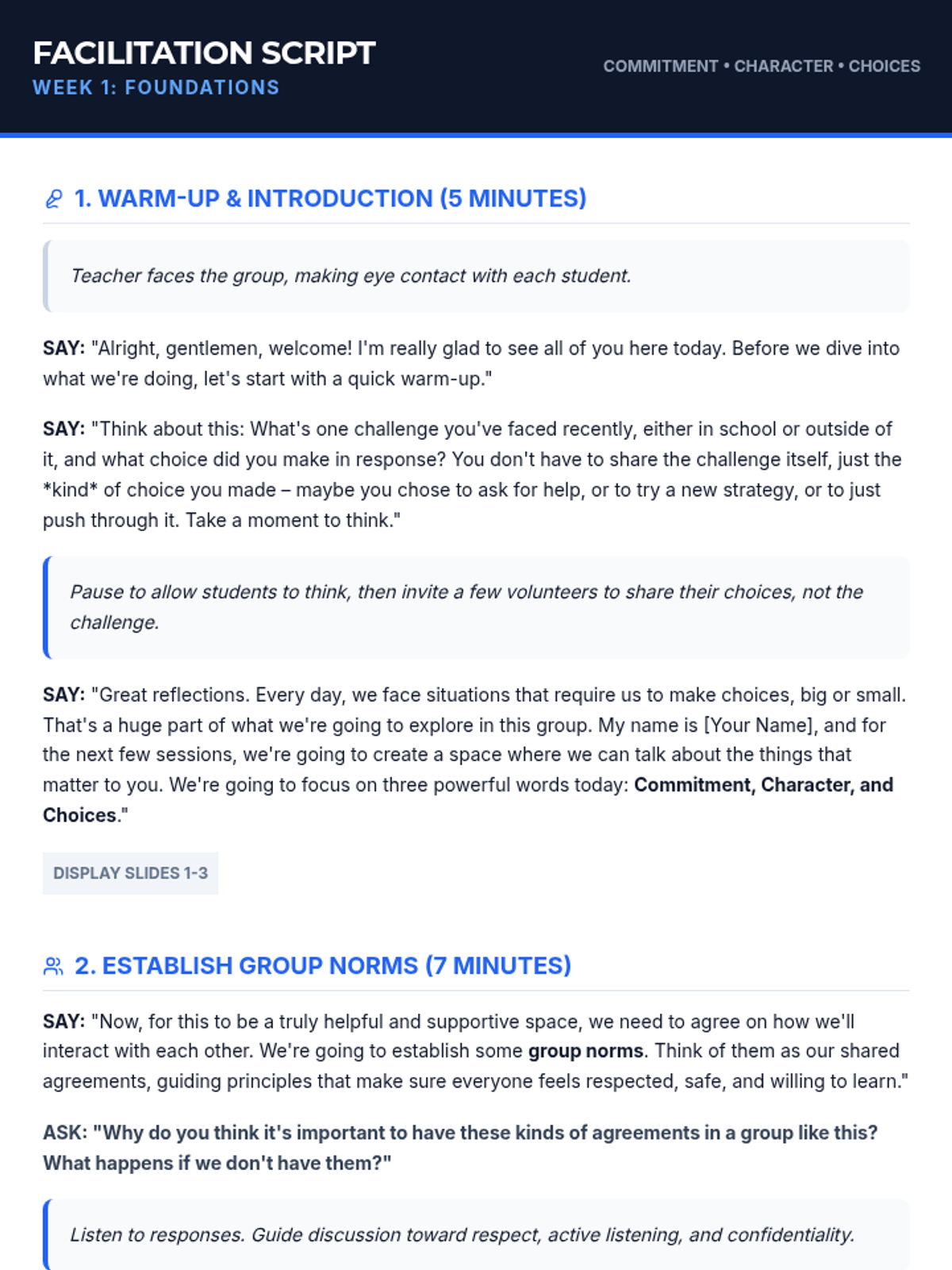
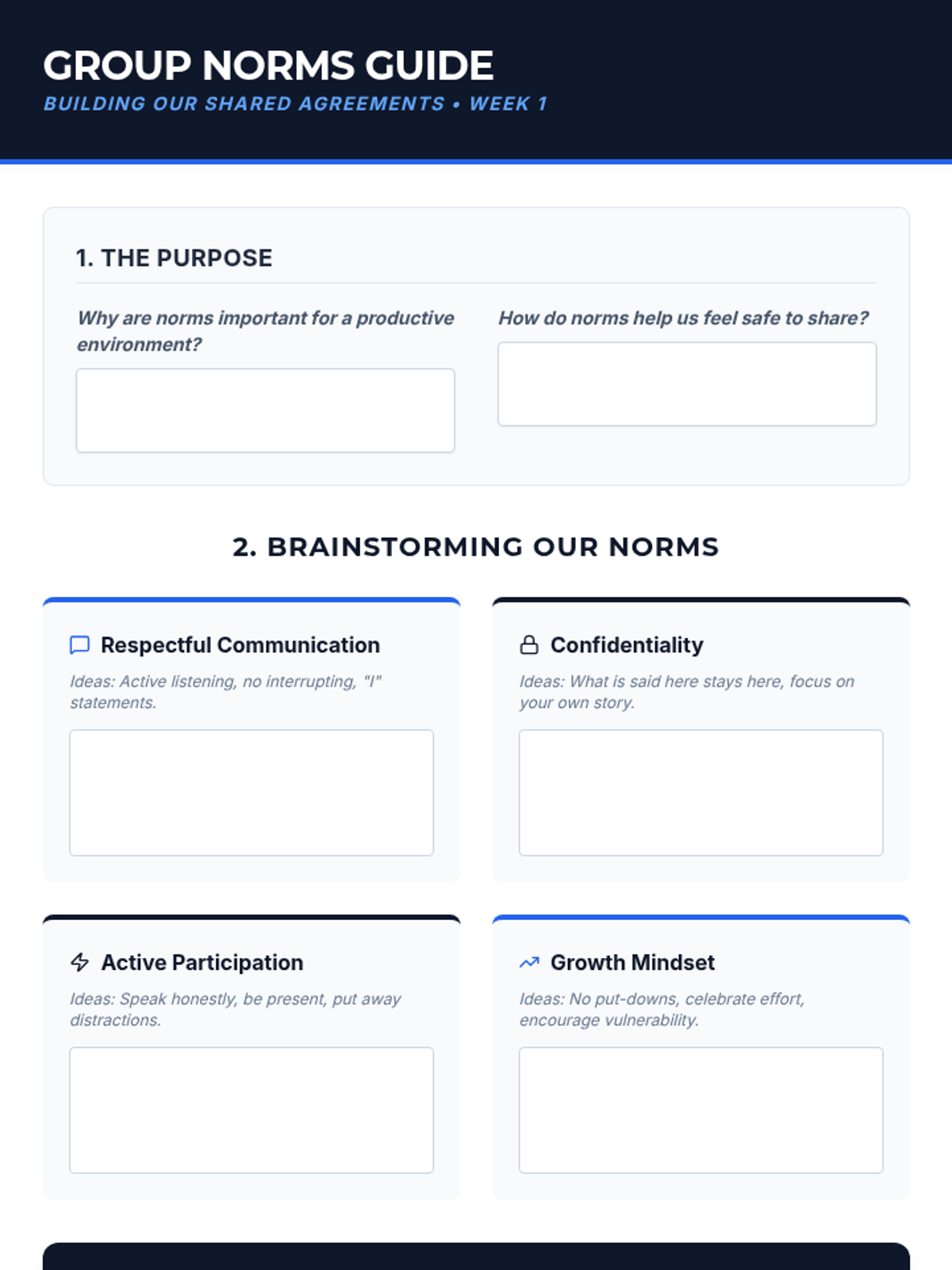
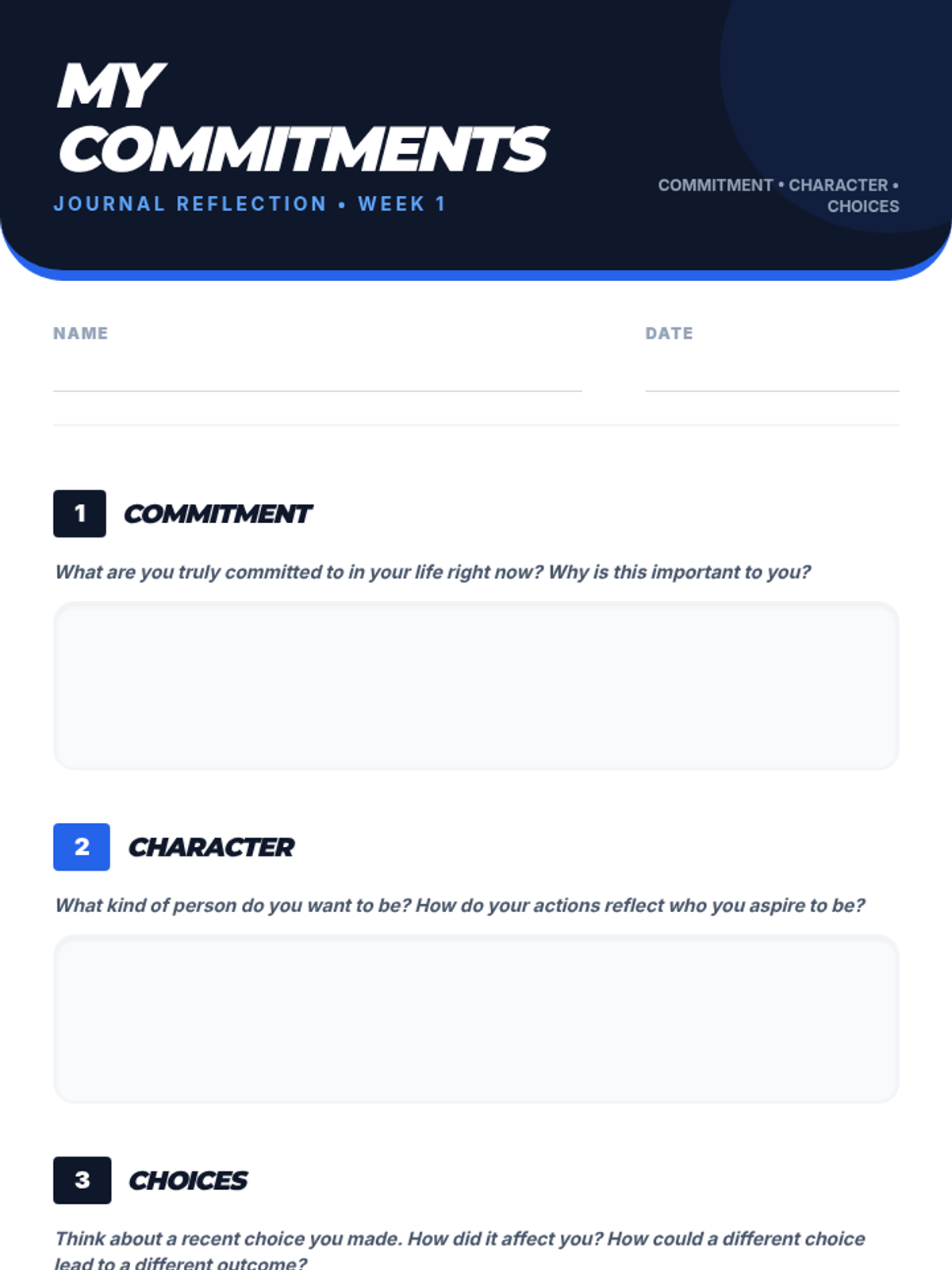
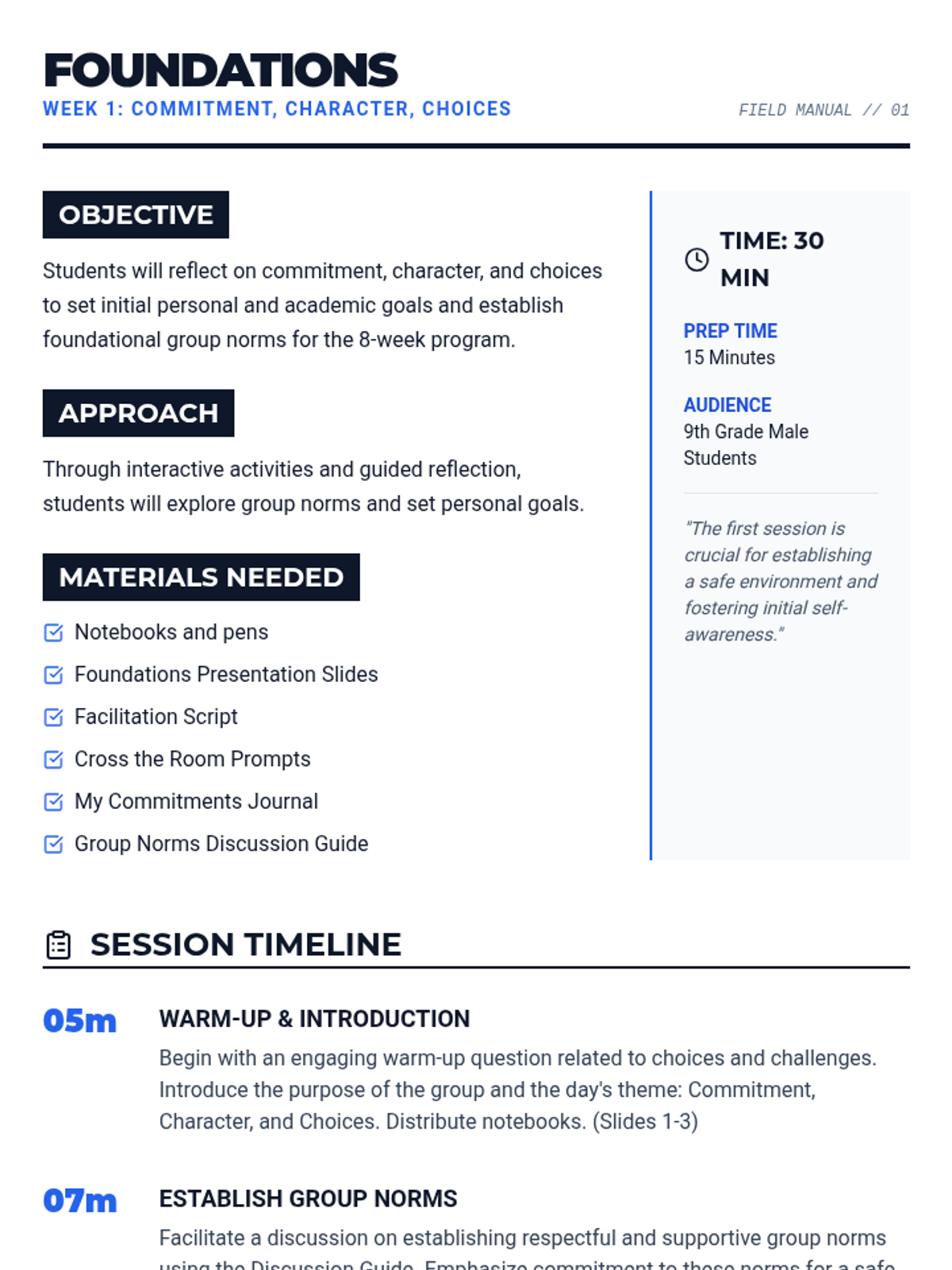
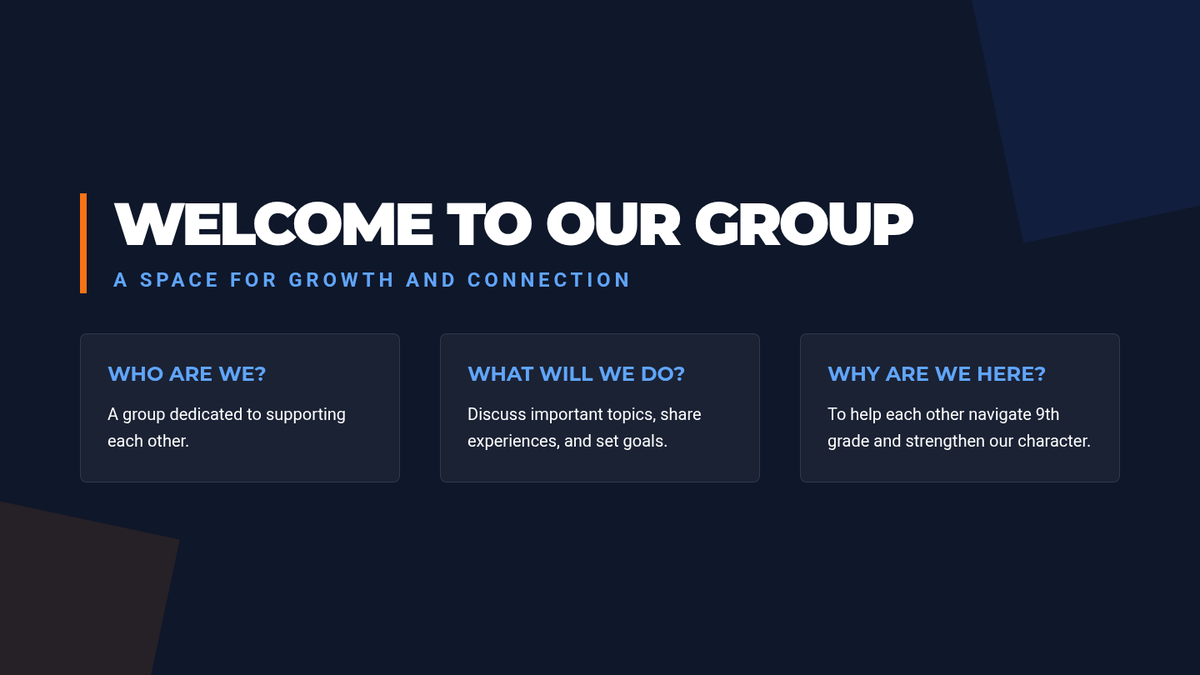
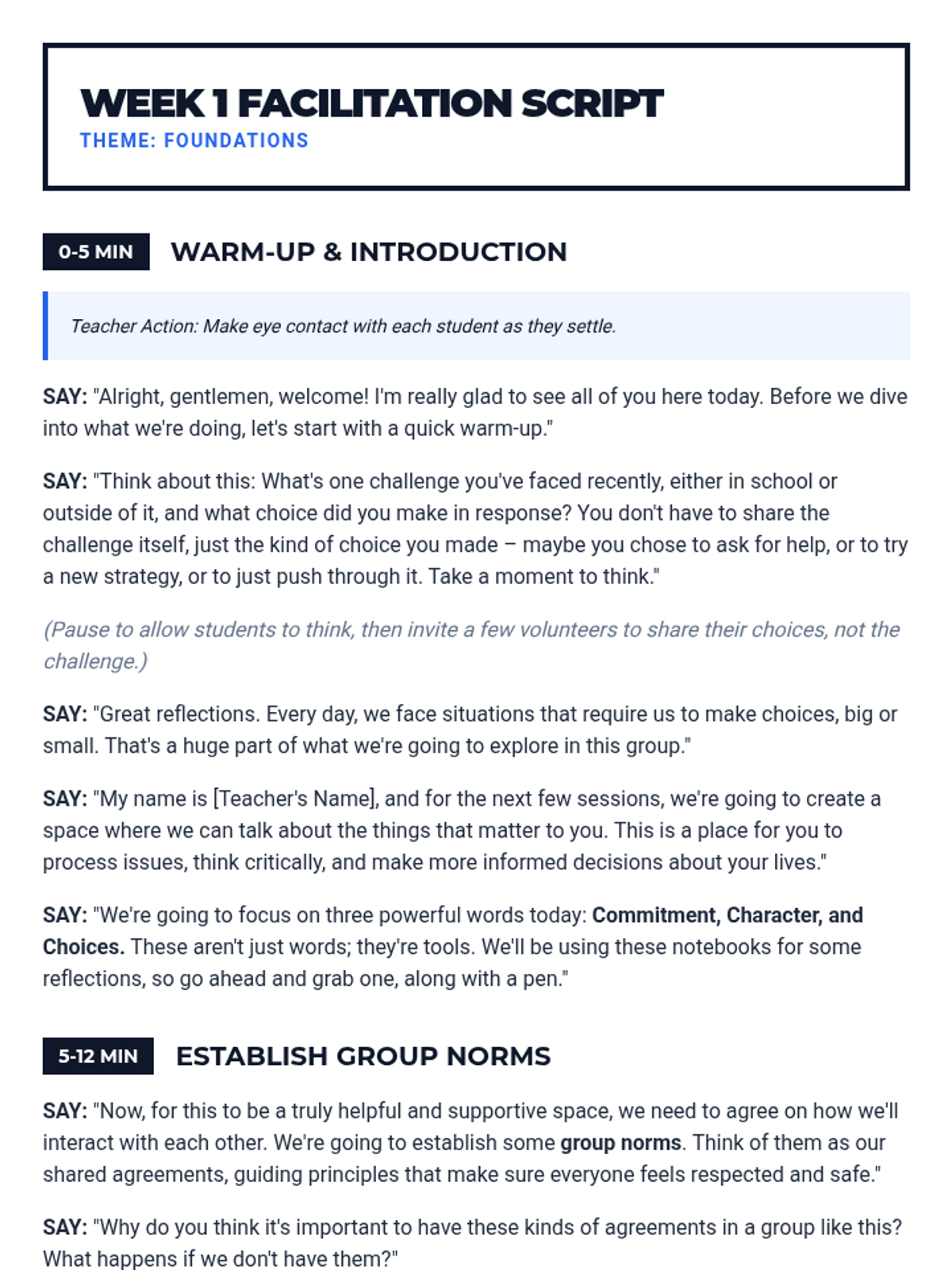
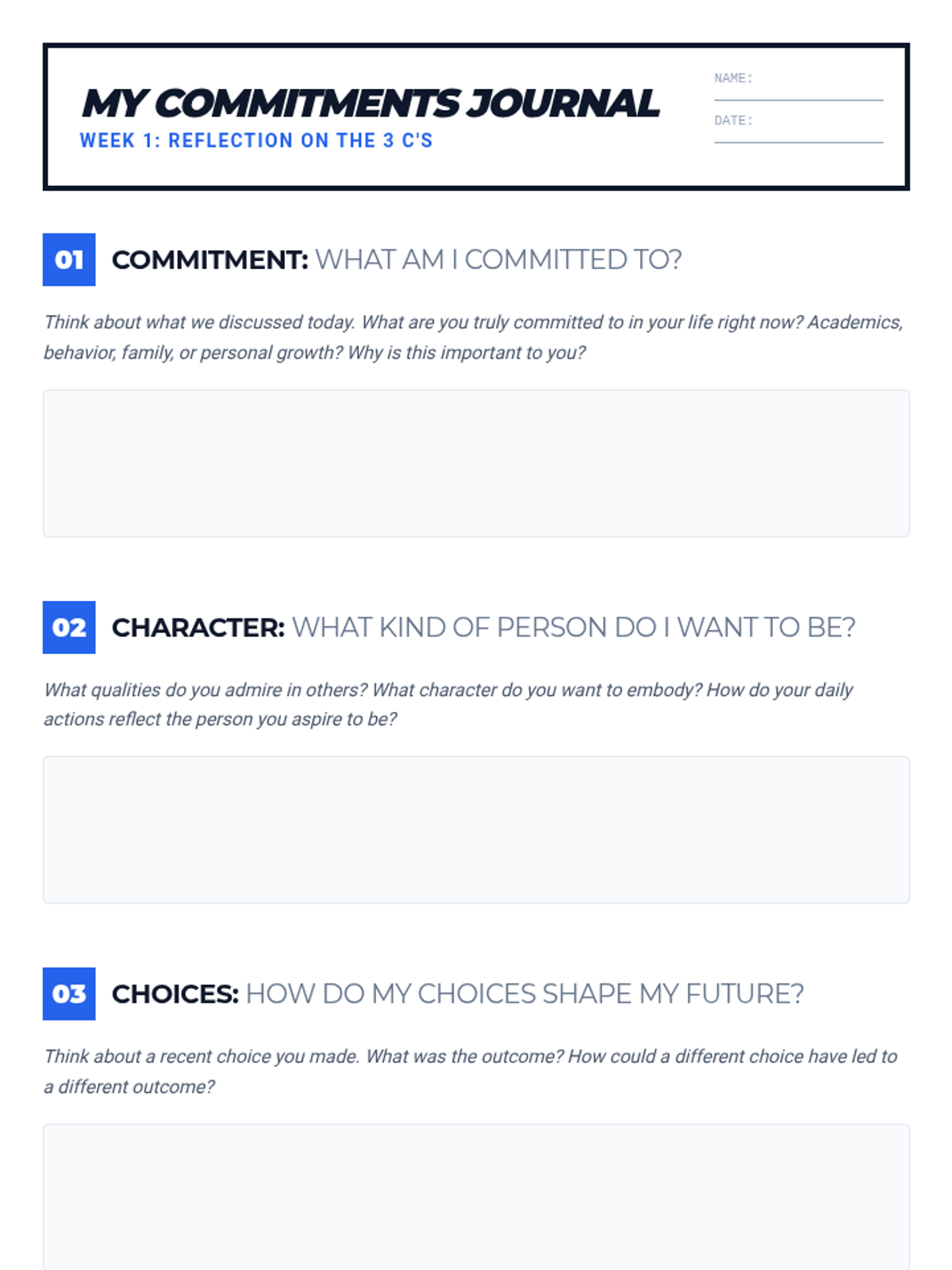
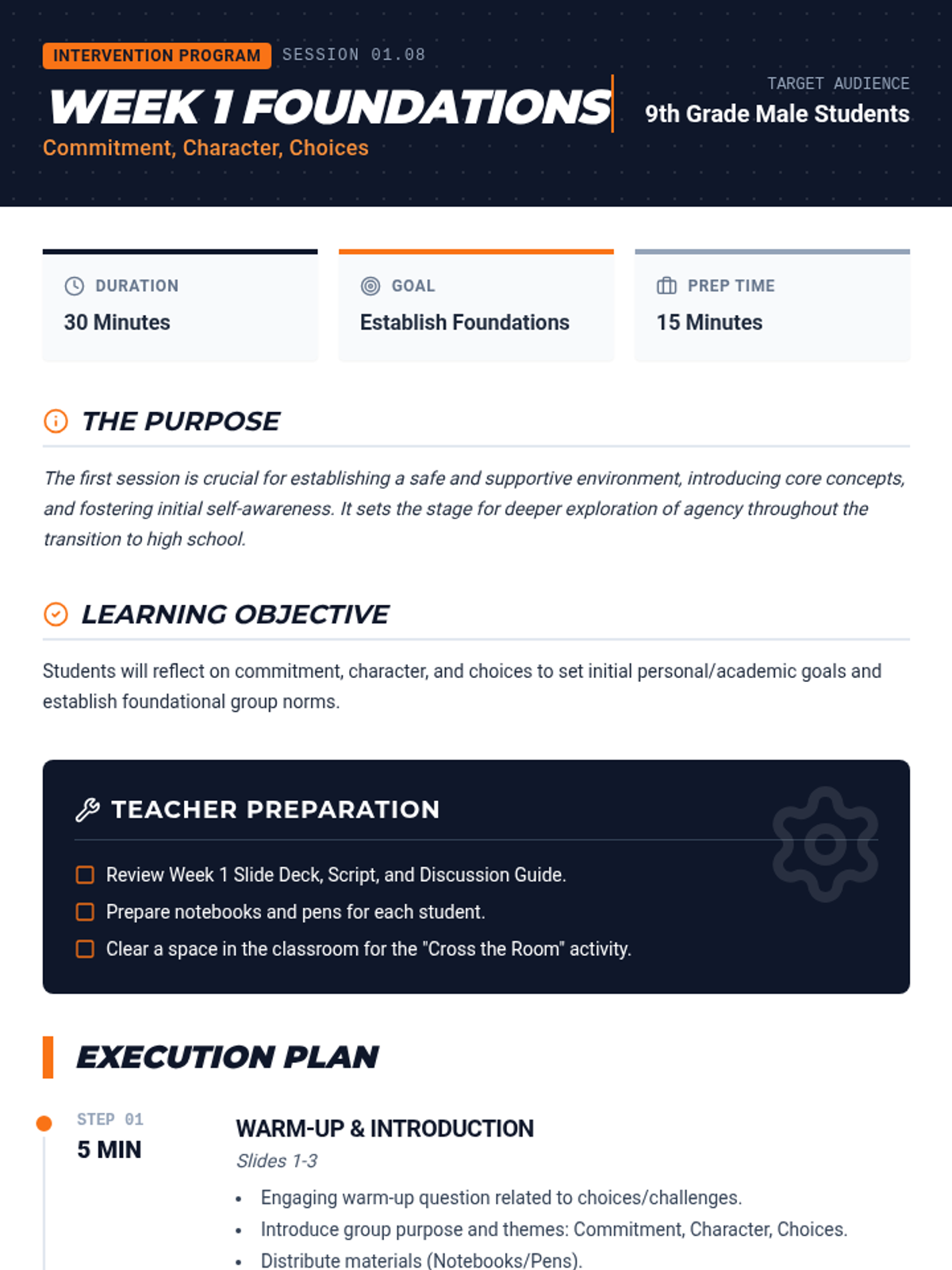
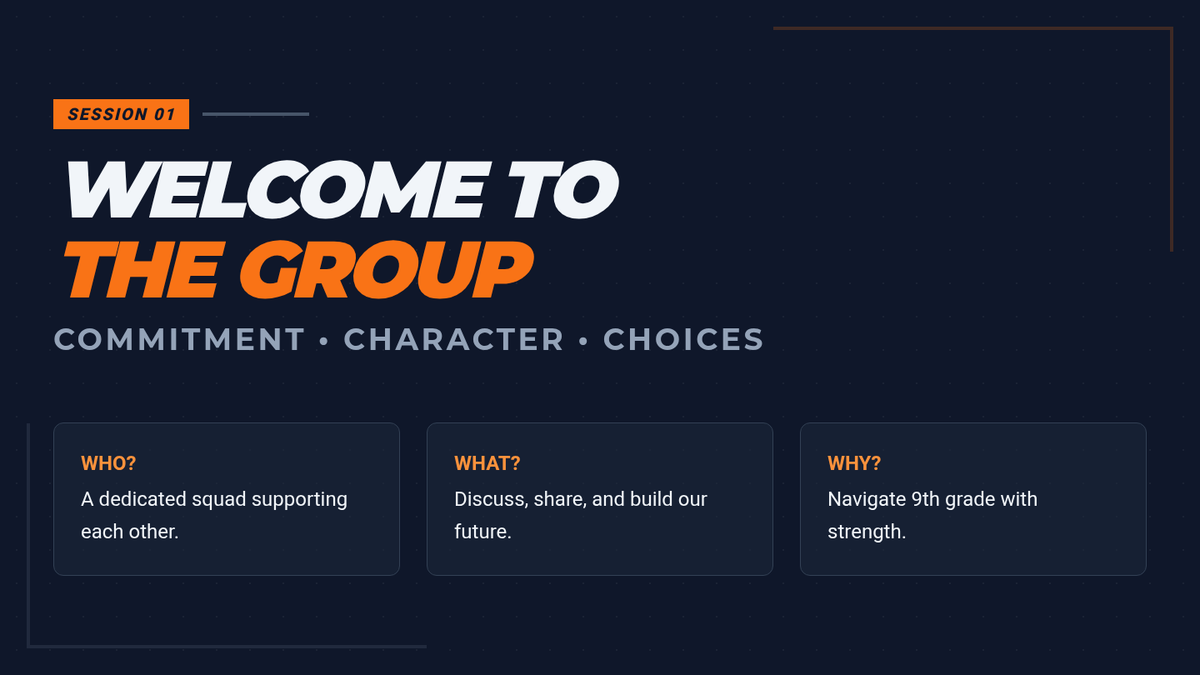
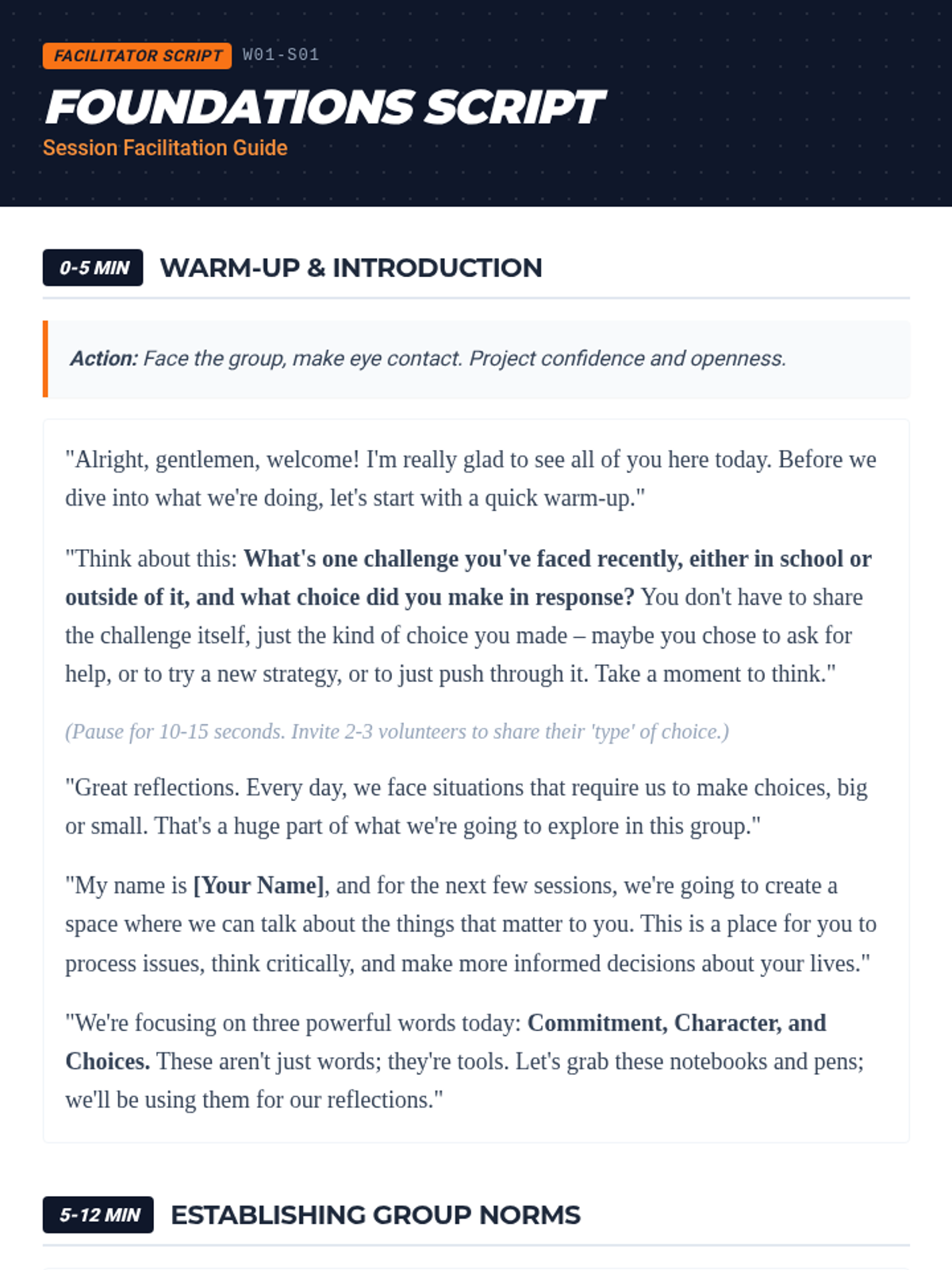
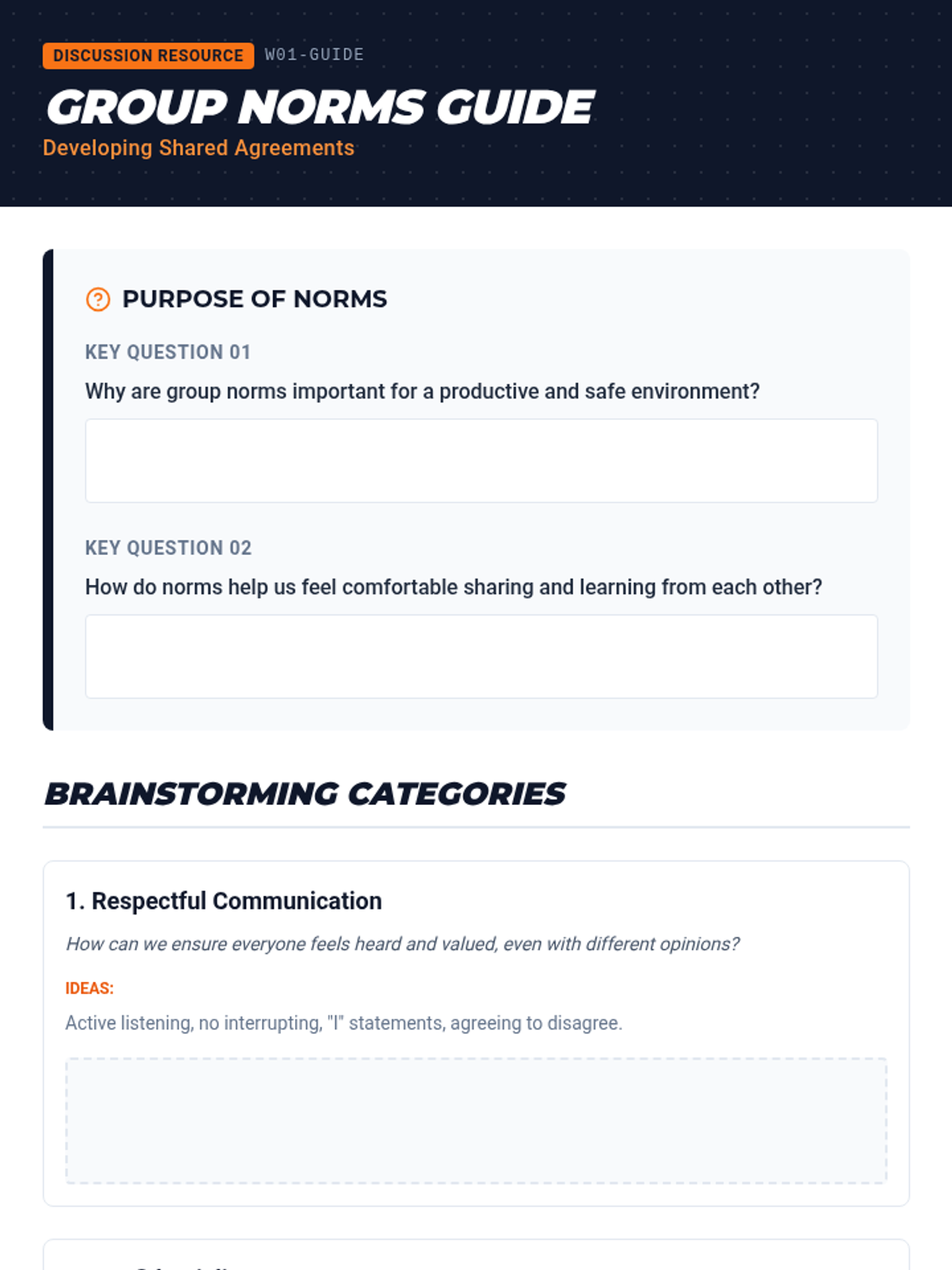
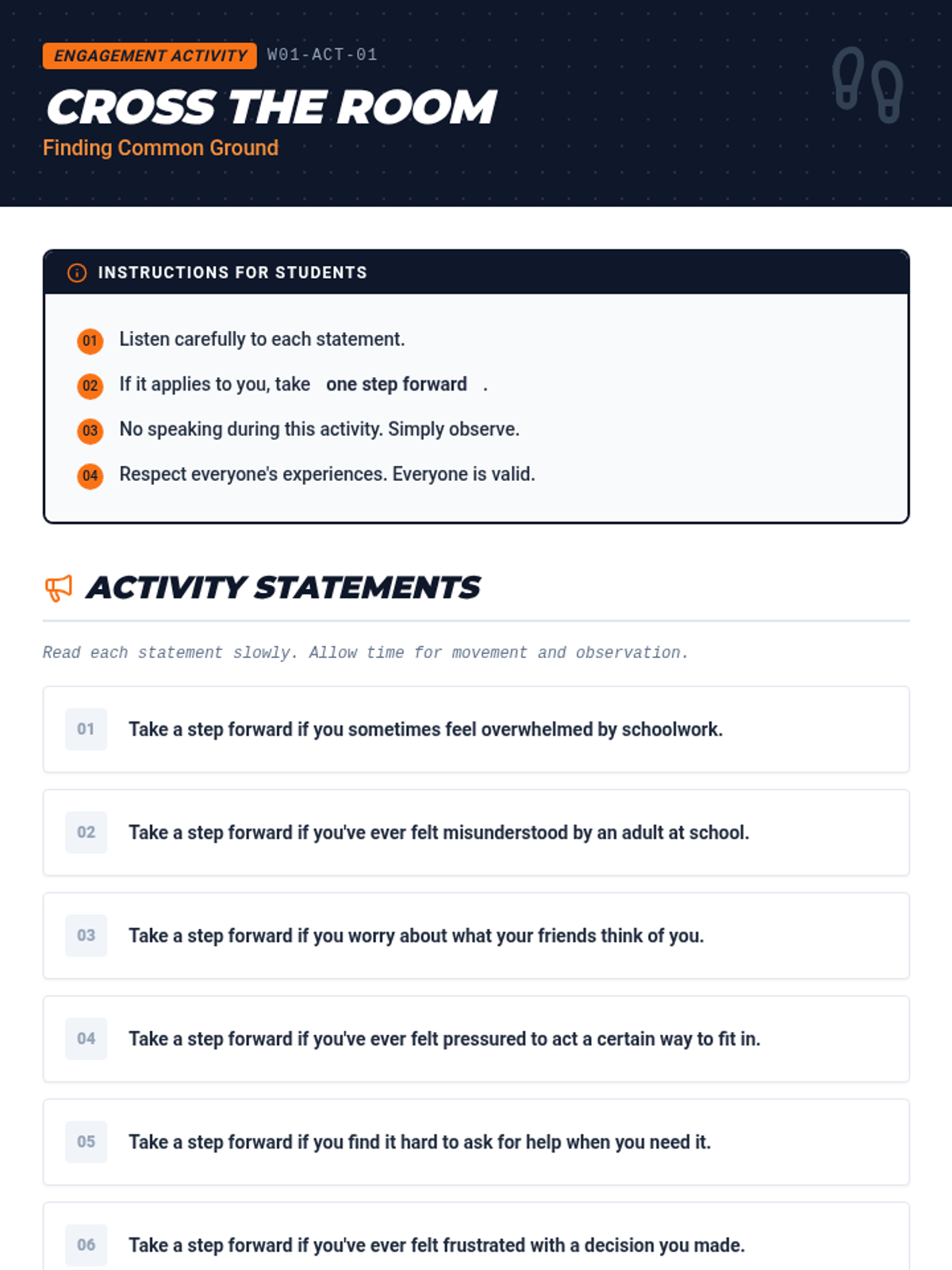
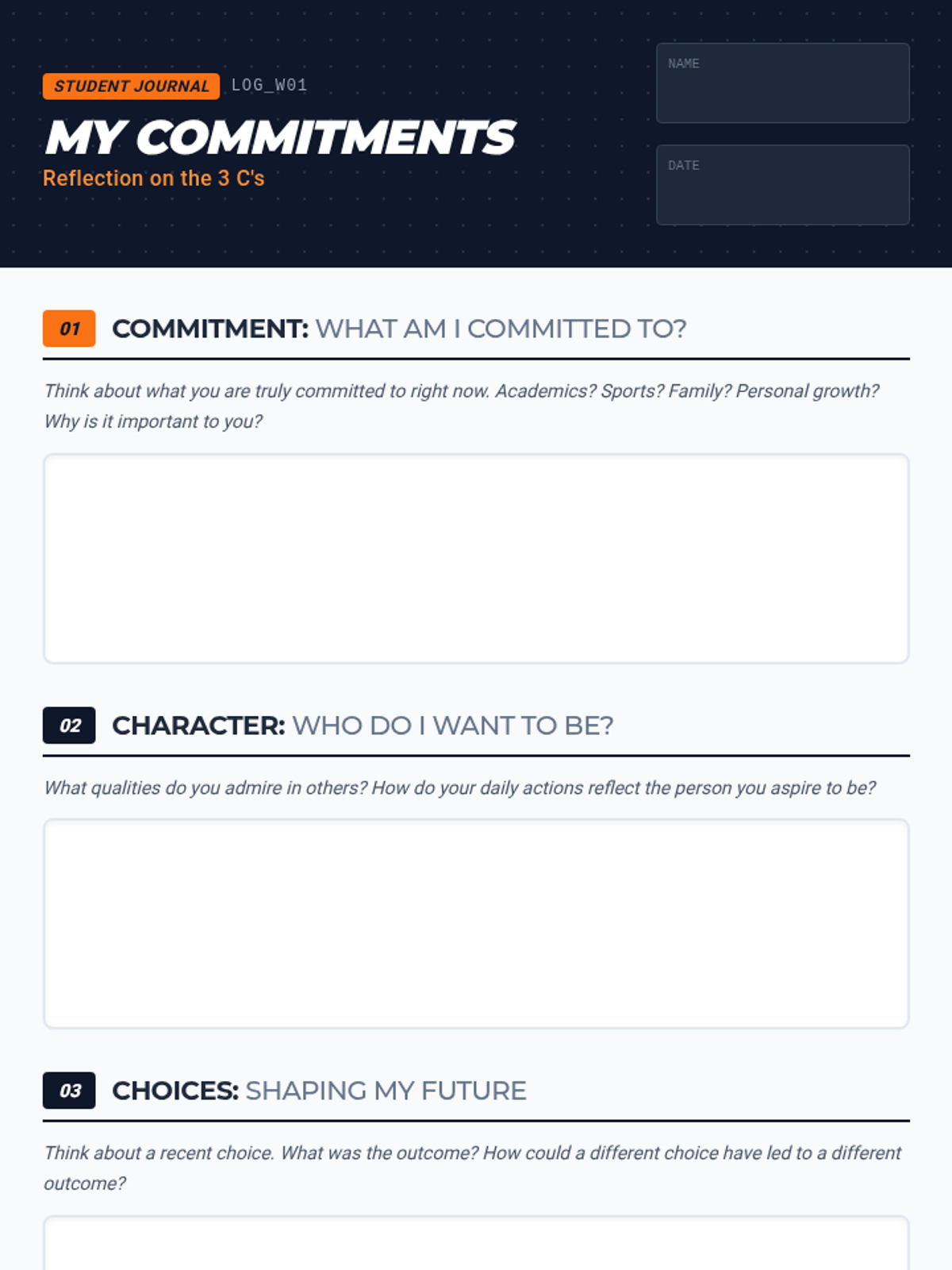
An 8-week intervention program for 9th-grade male students focusing on commitment, character, and choices to improve academic and behavioral outcomes.
An 8-week intervention program for ninth-grade male students struggling academically and behaviorally, focusing on developing agency through the core pillars of commitment, character, and choices.
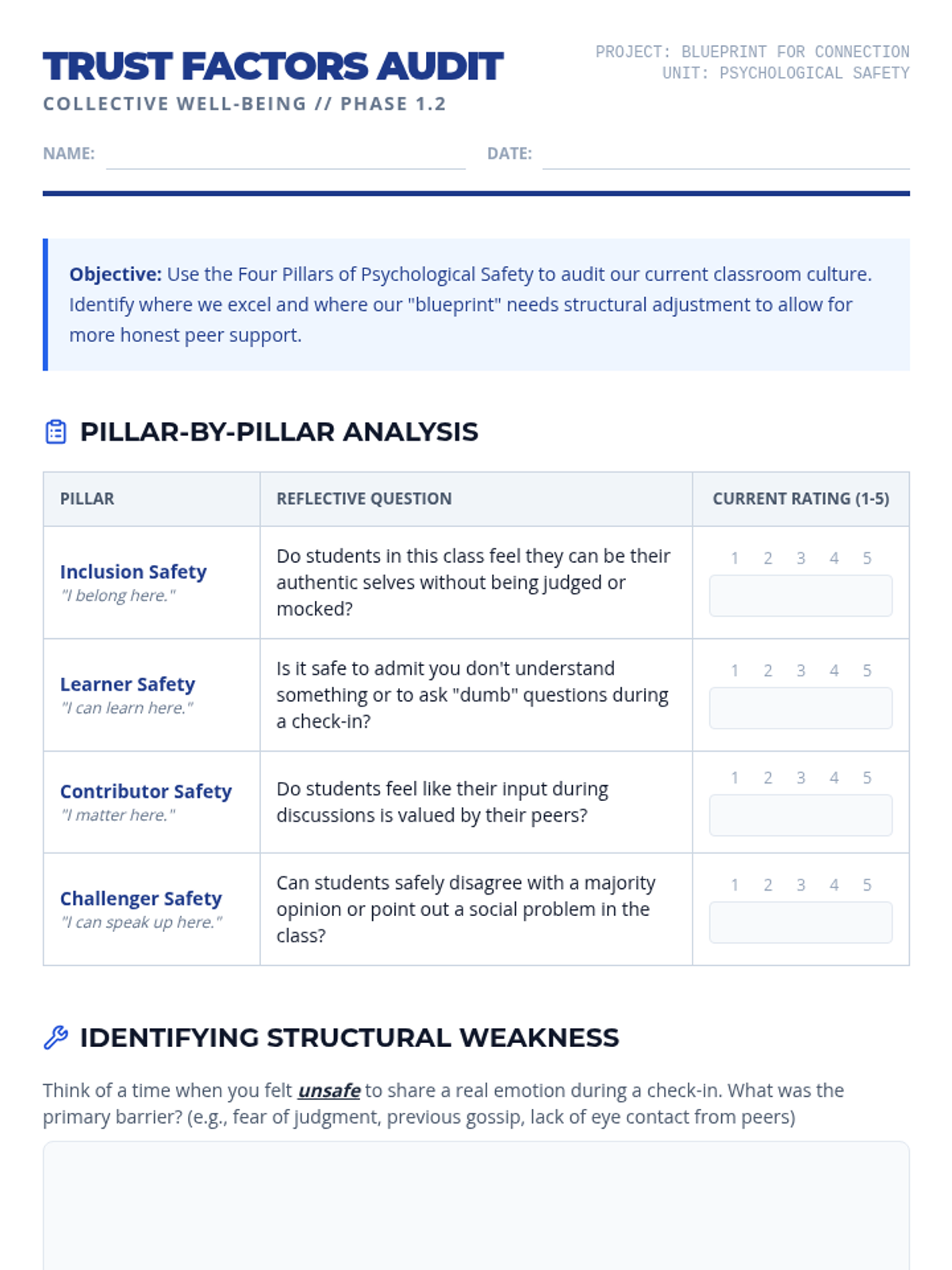
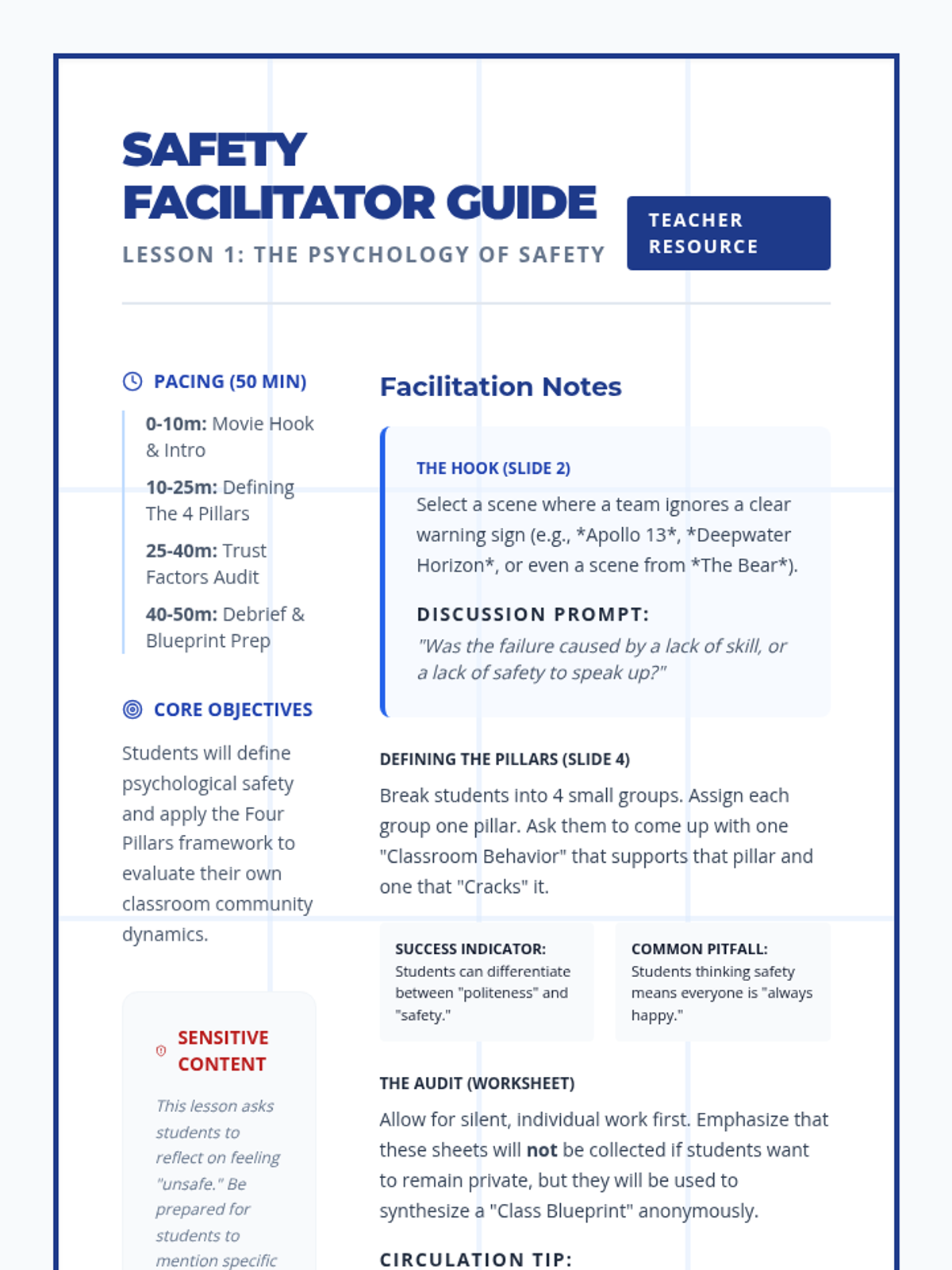
This sequence shifts the focus from individual introspection to collective well-being and leadership. Students learn to facilitate check-ins for others, developing empathy and active listening skills required for leadership roles. The arc explores the psychology of psychological safety, how to spot distress in peers, and how to build a supportive community culture. Students move from participants to facilitators, eventually leading community circles or peer support groups.
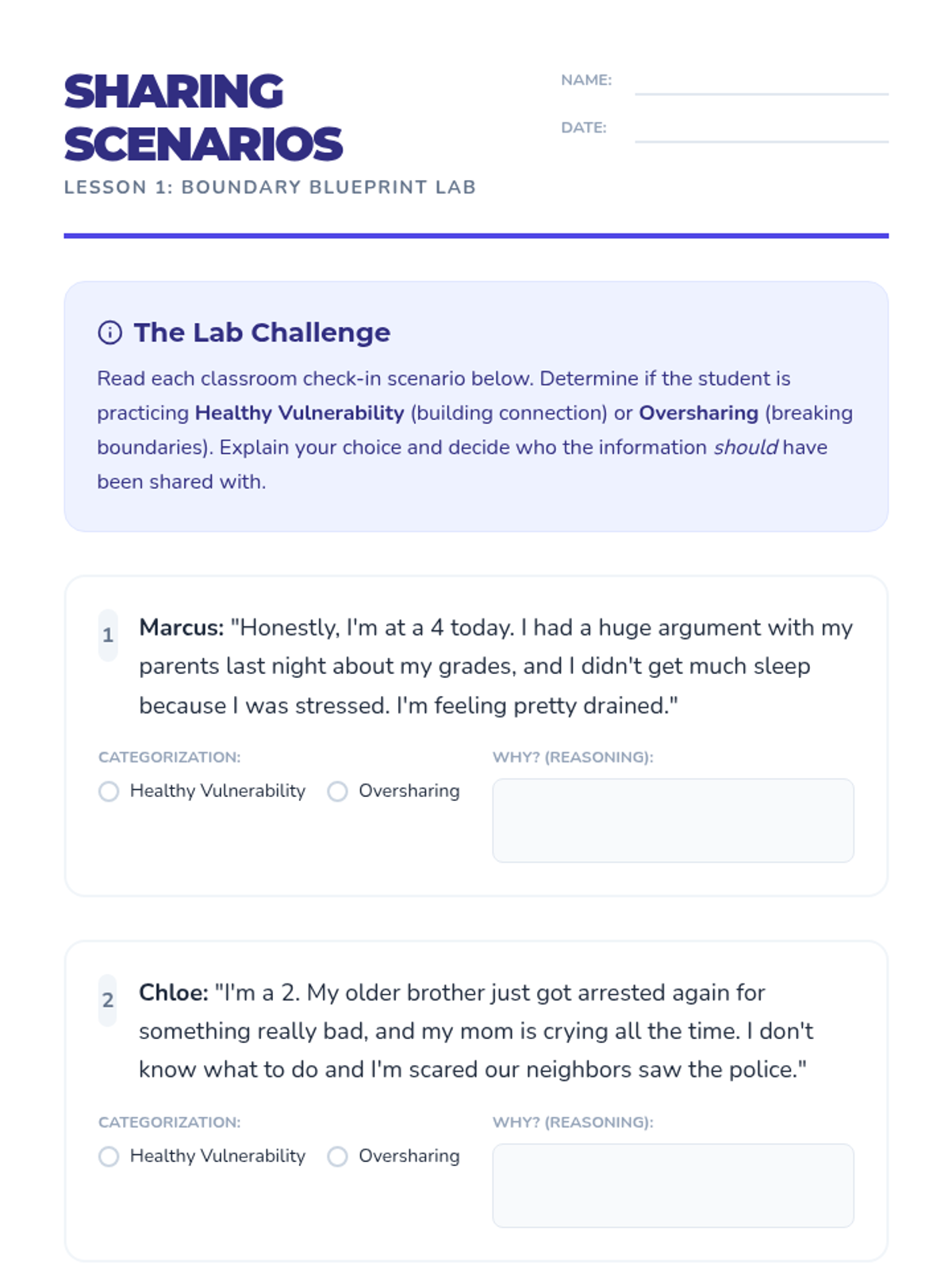
A 5-lesson sequence for 9th graders focusing on social-emotional check-in procedures, boundary setting, active listening, and peer leadership to build a supportive classroom community.
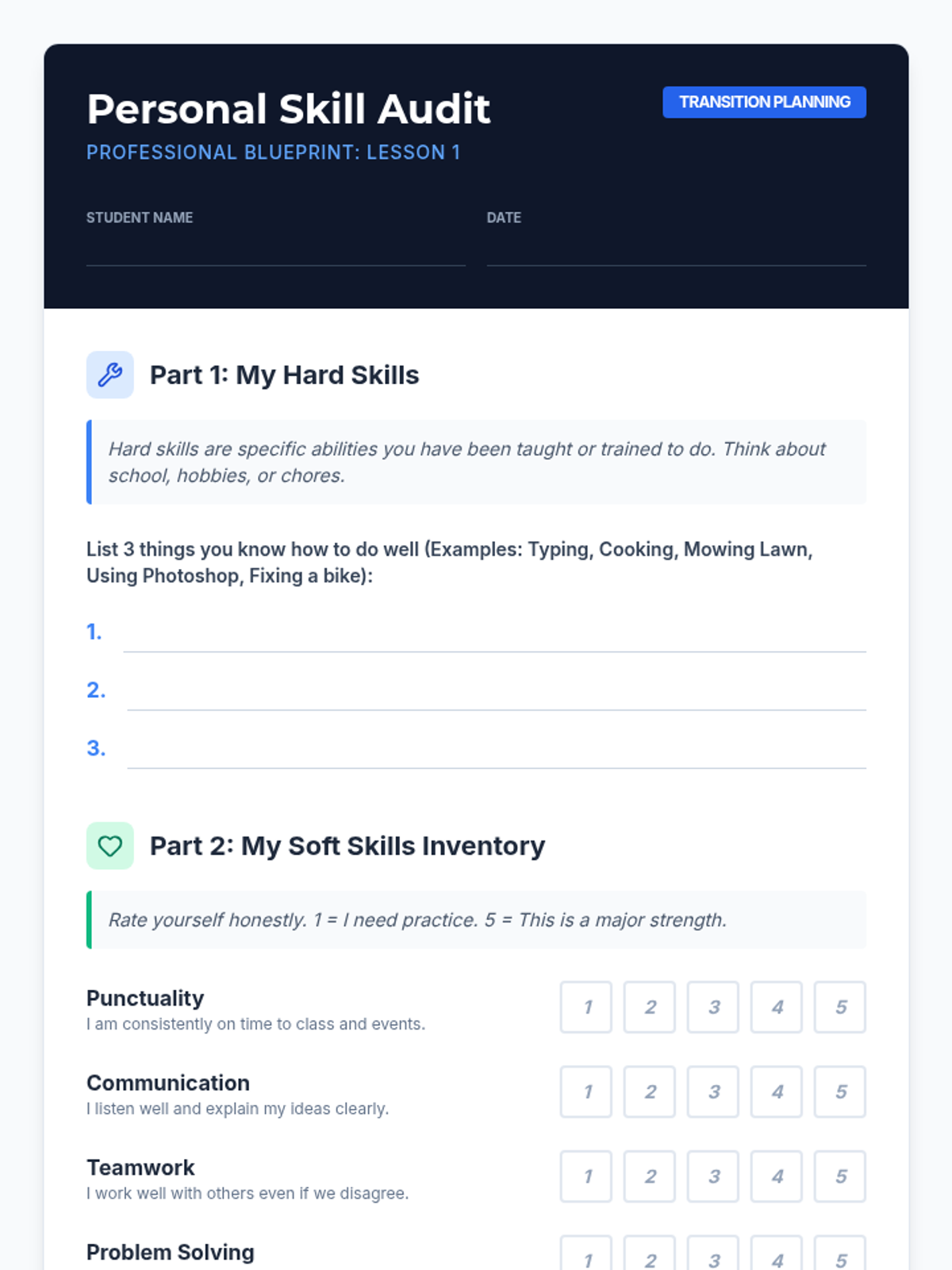
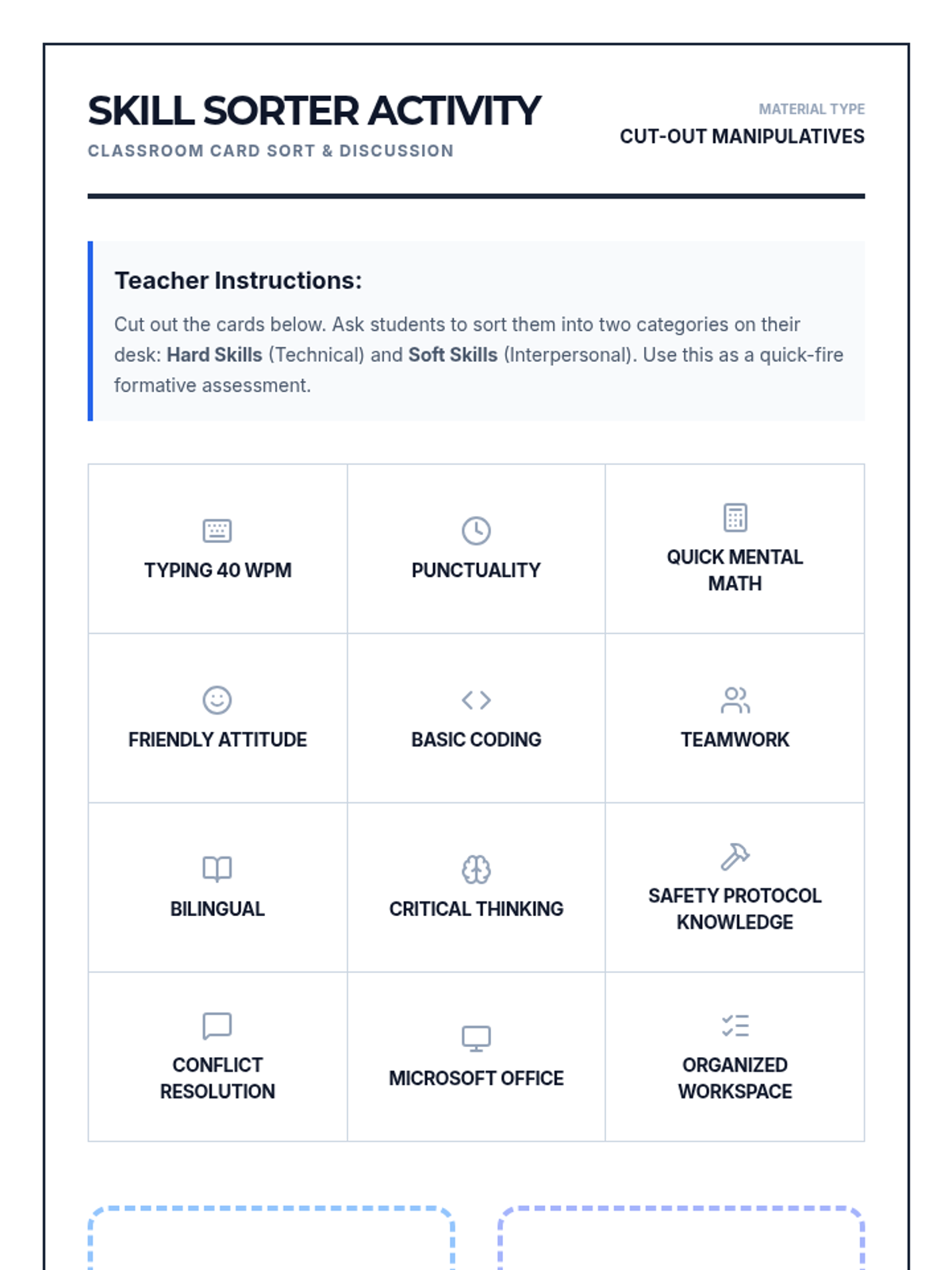
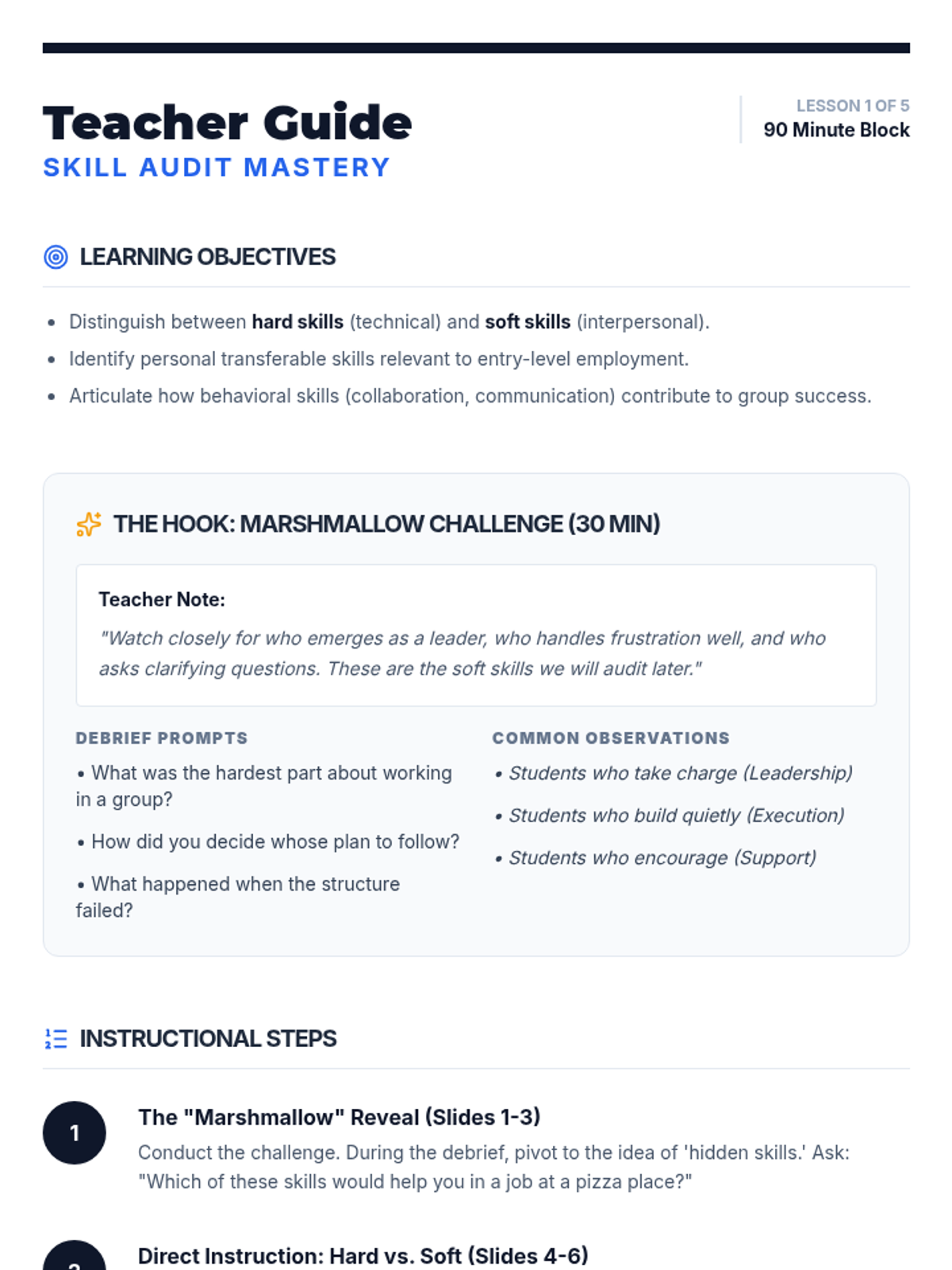
A comprehensive sequence designed for 9th-grade transition students to master the job acquisition cycle. Students progress from identifying soft skills to mastering resumes, applications, and interviews, with a heavy focus on the social 'hidden curriculum' of the workplace.
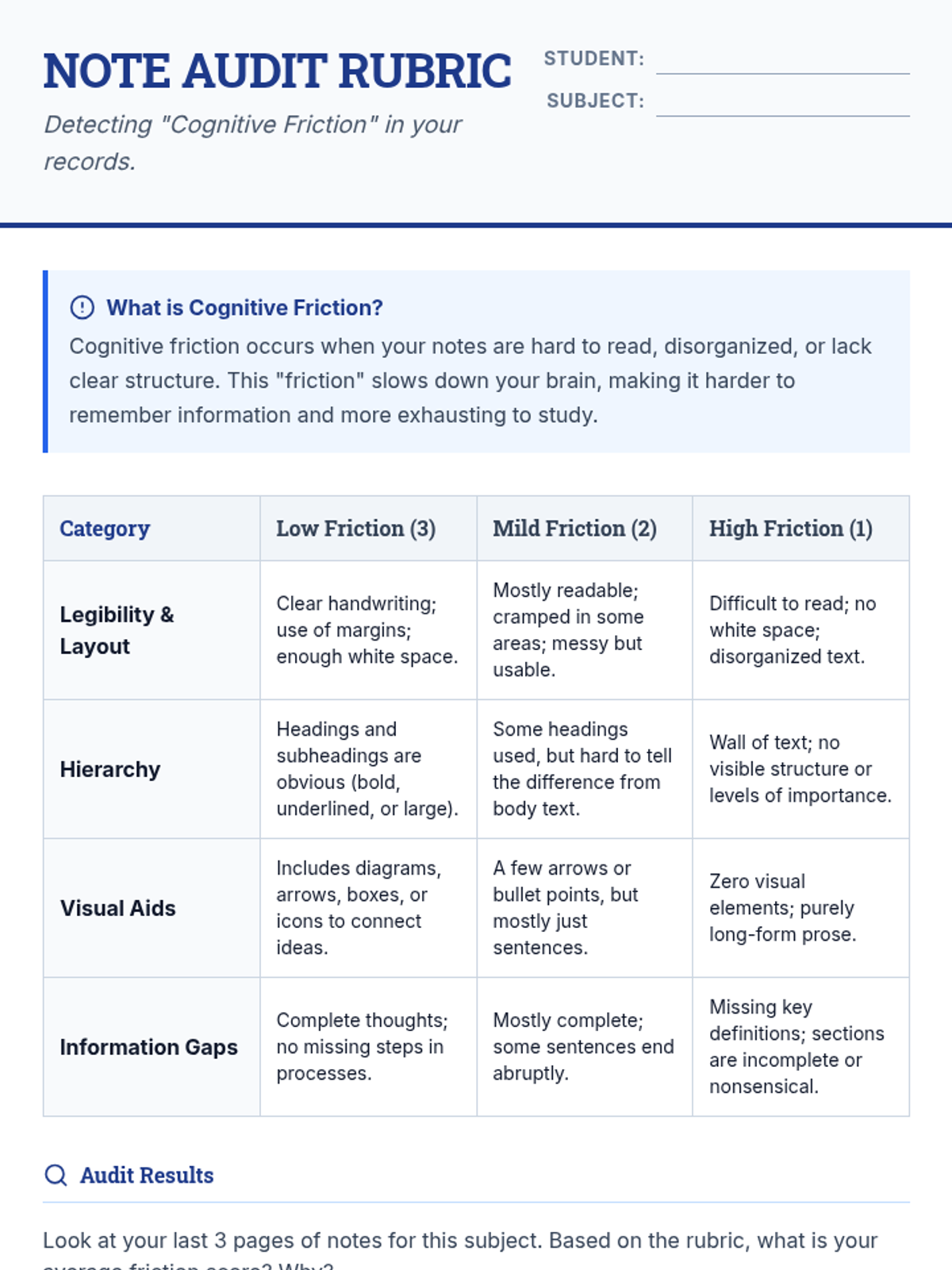
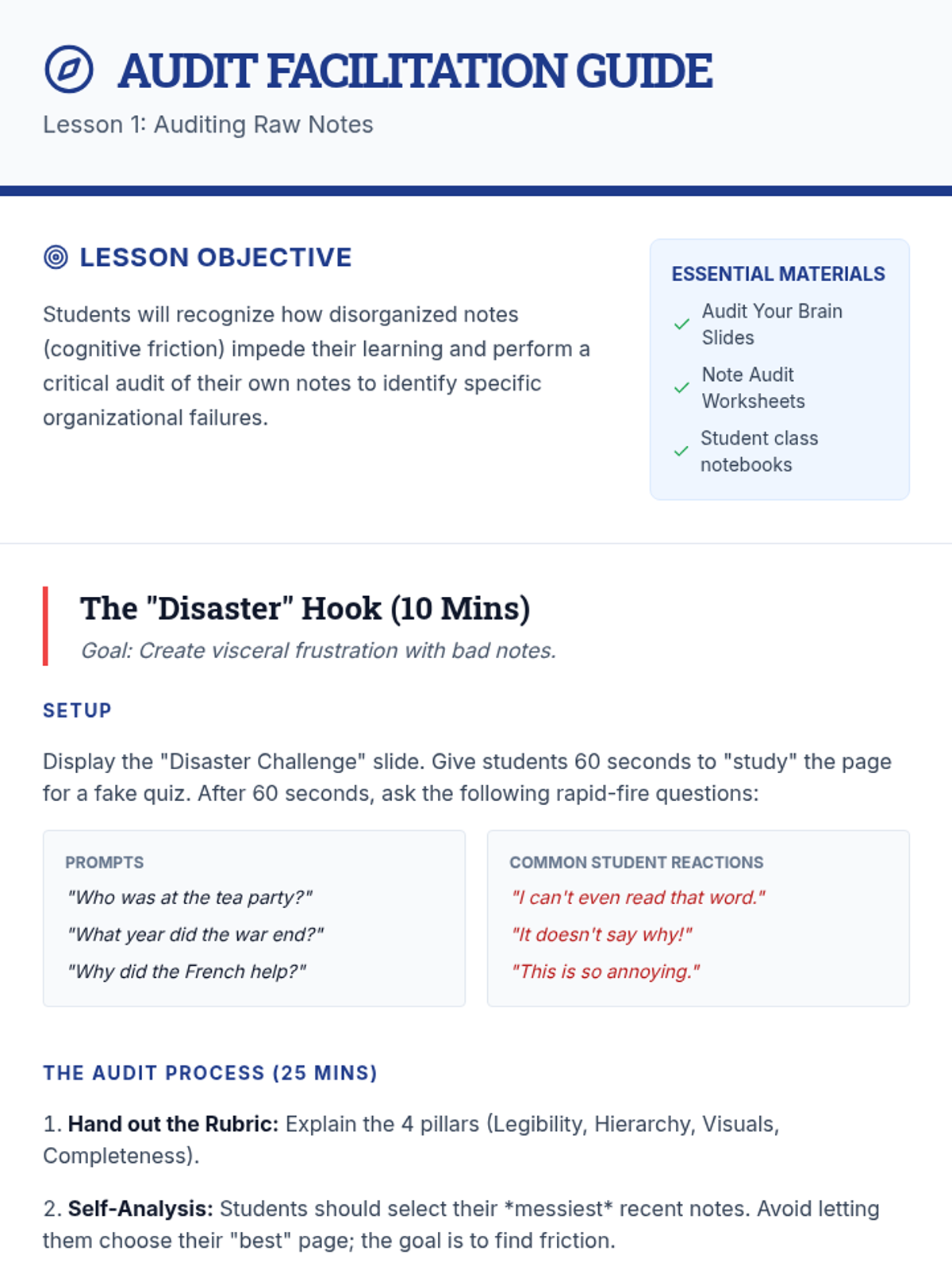
A project-based sequence for 9th-grade students focused on transforming raw class notes into synthesized study artifacts. Students learn to reduce cognitive friction by reformatting information into one-pagers, foldables, and collaborative guides to support working memory.
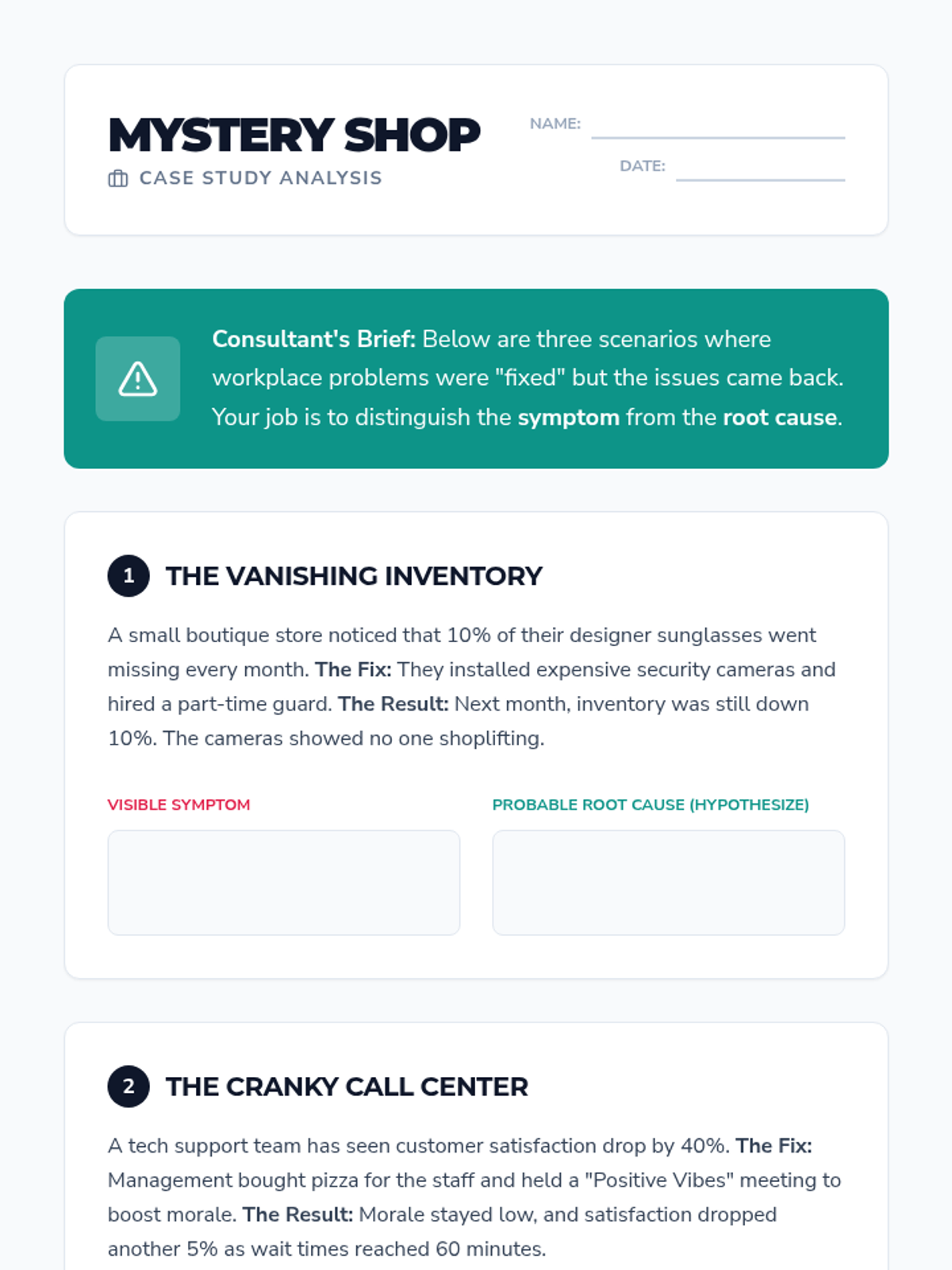
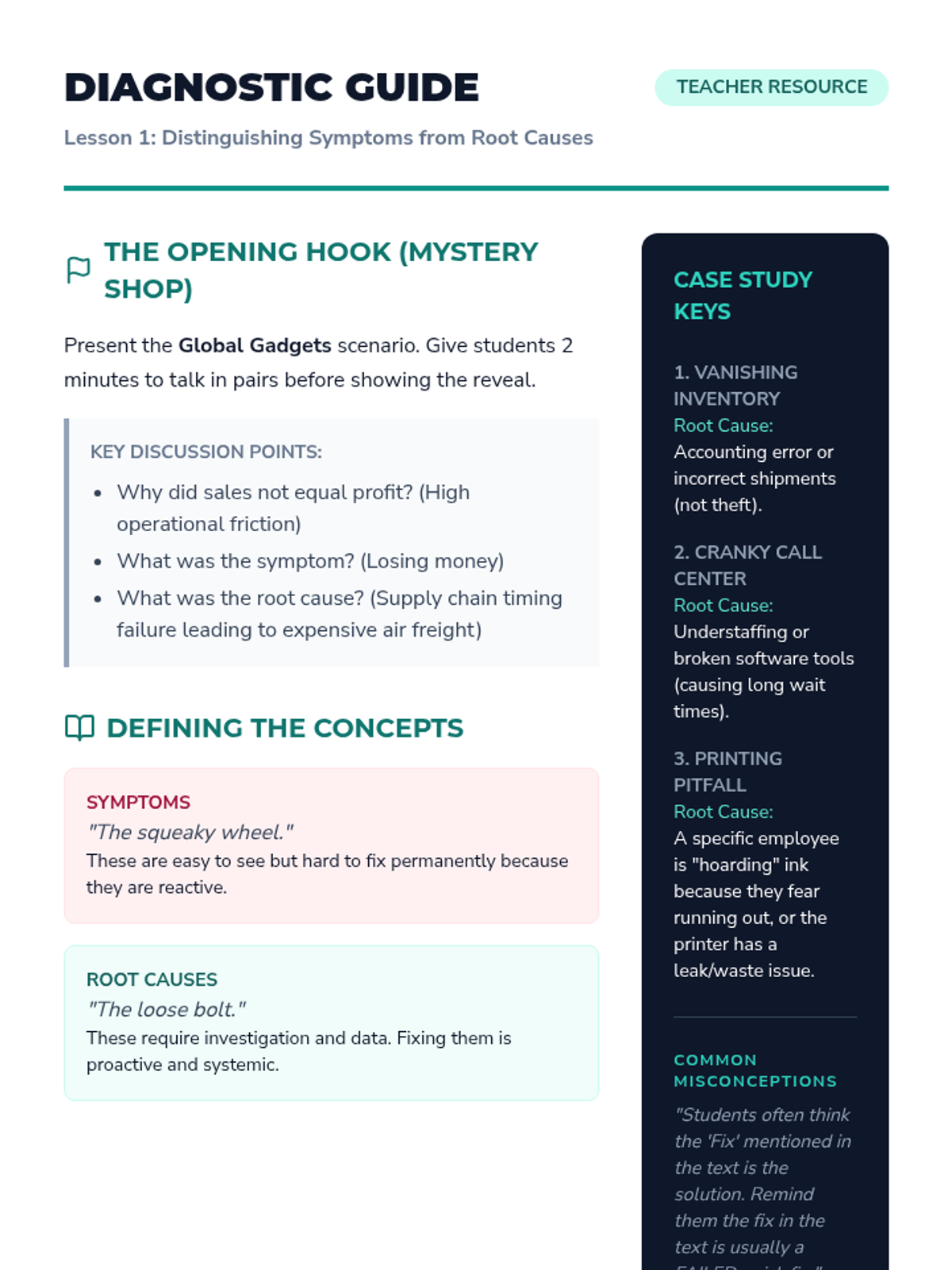
A comprehensive sequence for 9th-grade students on professional problem-solving. Students move from identifying root causes using 5 Whys and Fishbone diagrams to collaborative brainstorming, objective evaluation with decision matrices, and professional proposal presentation.
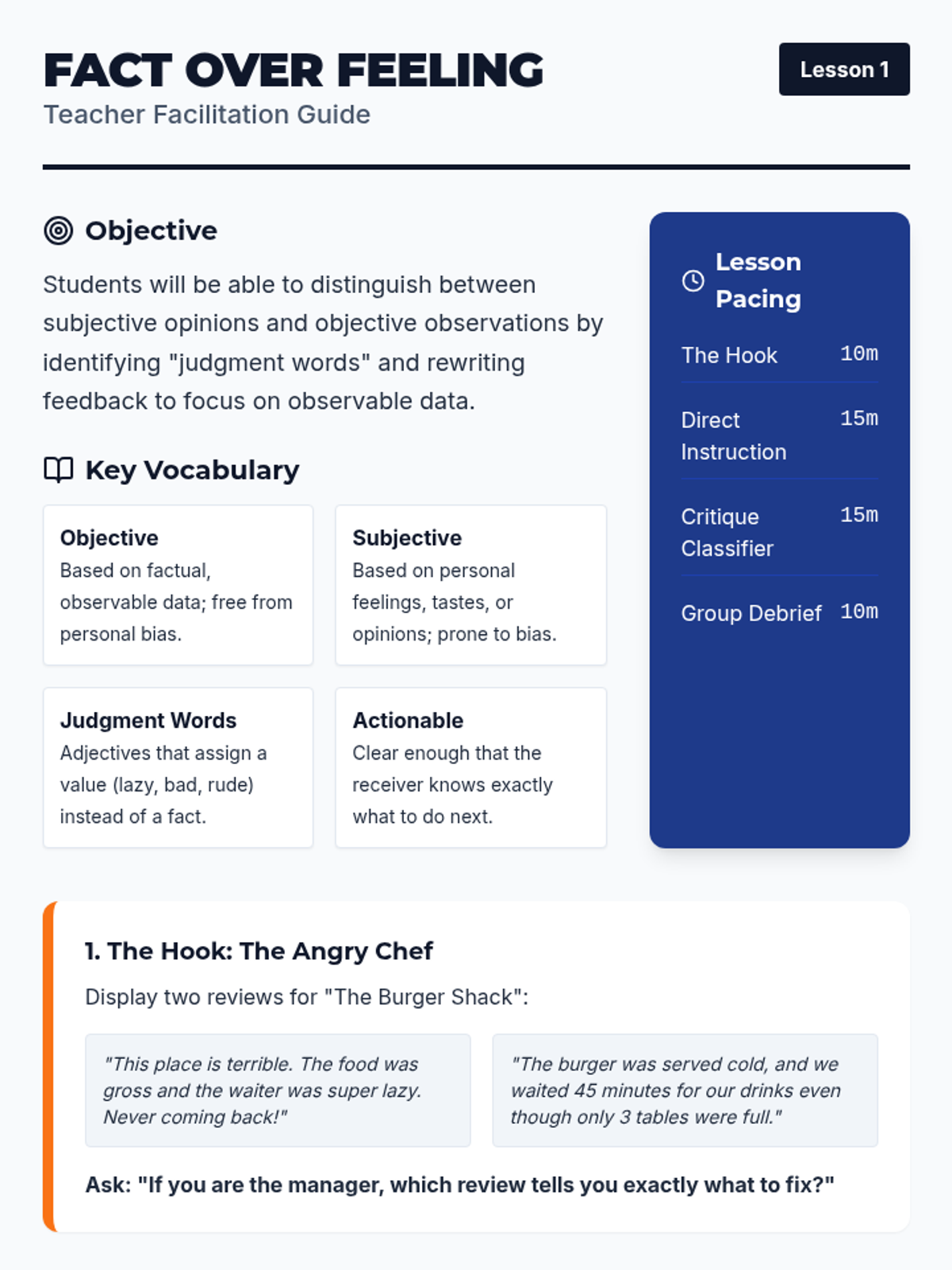
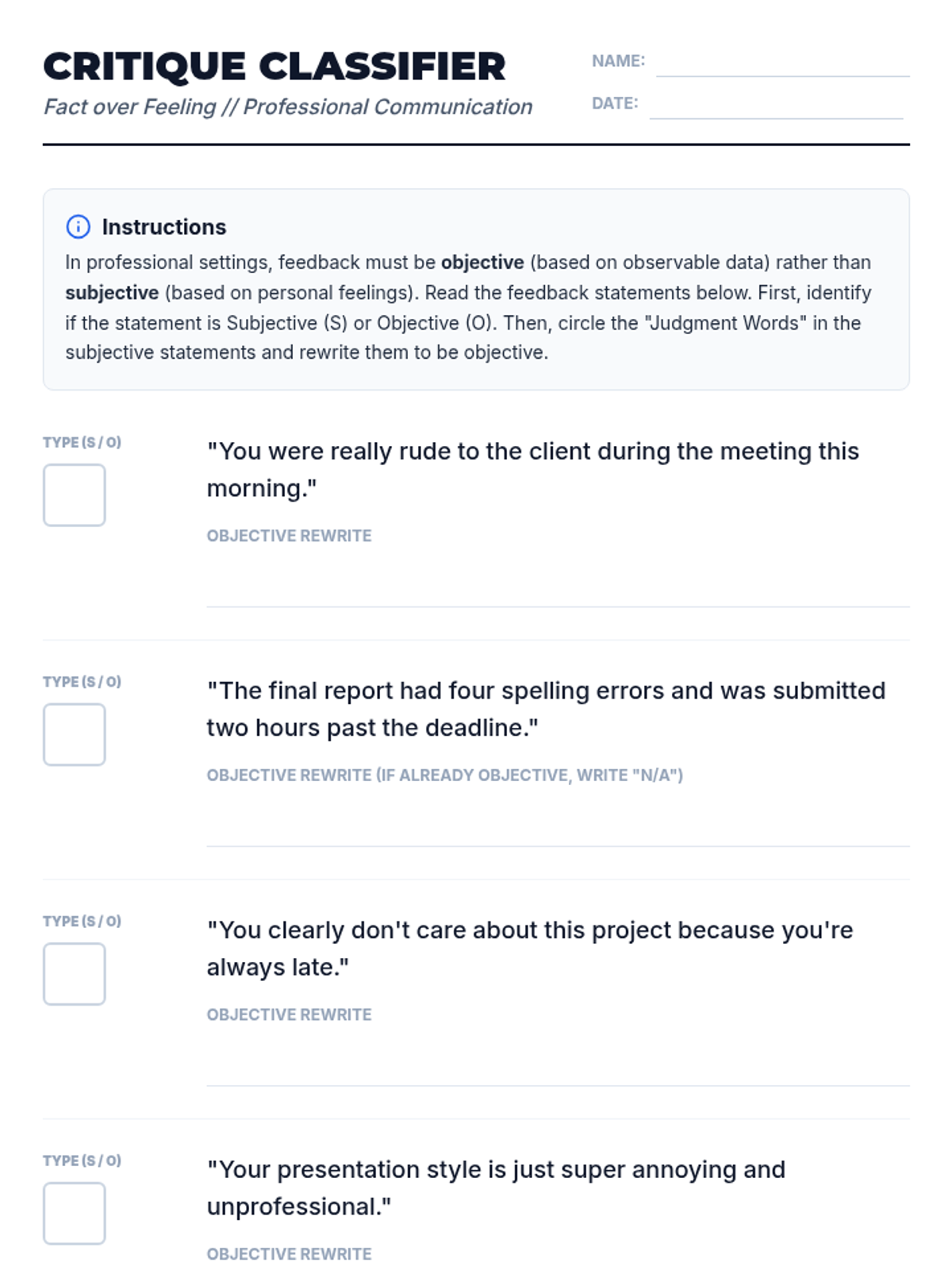
A comprehensive unit on professional communication focusing on the mechanics of constructive feedback. Students learn to move from subjective complaints to objective, actionable observations using the SBI model and refined delivery techniques.
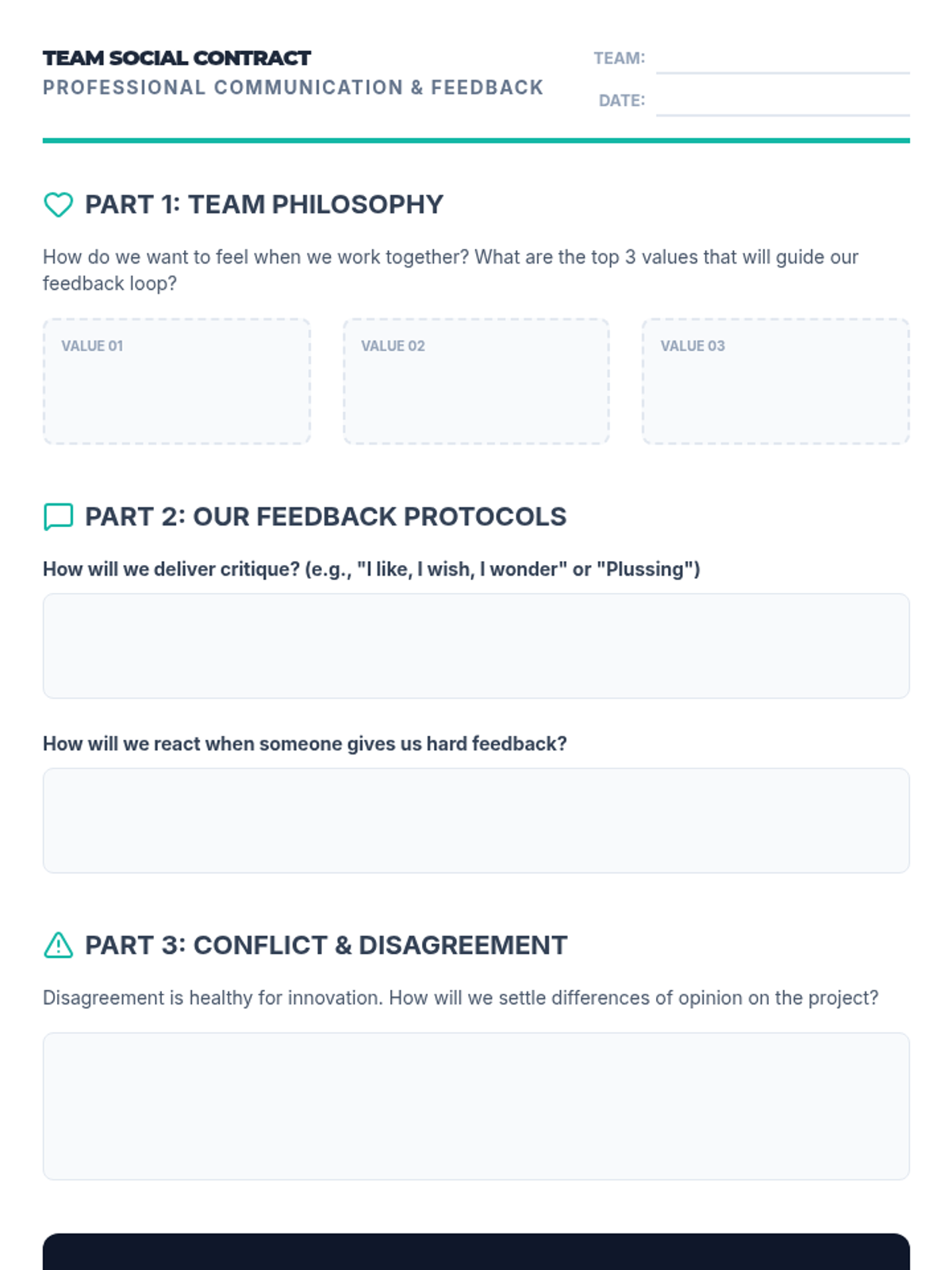
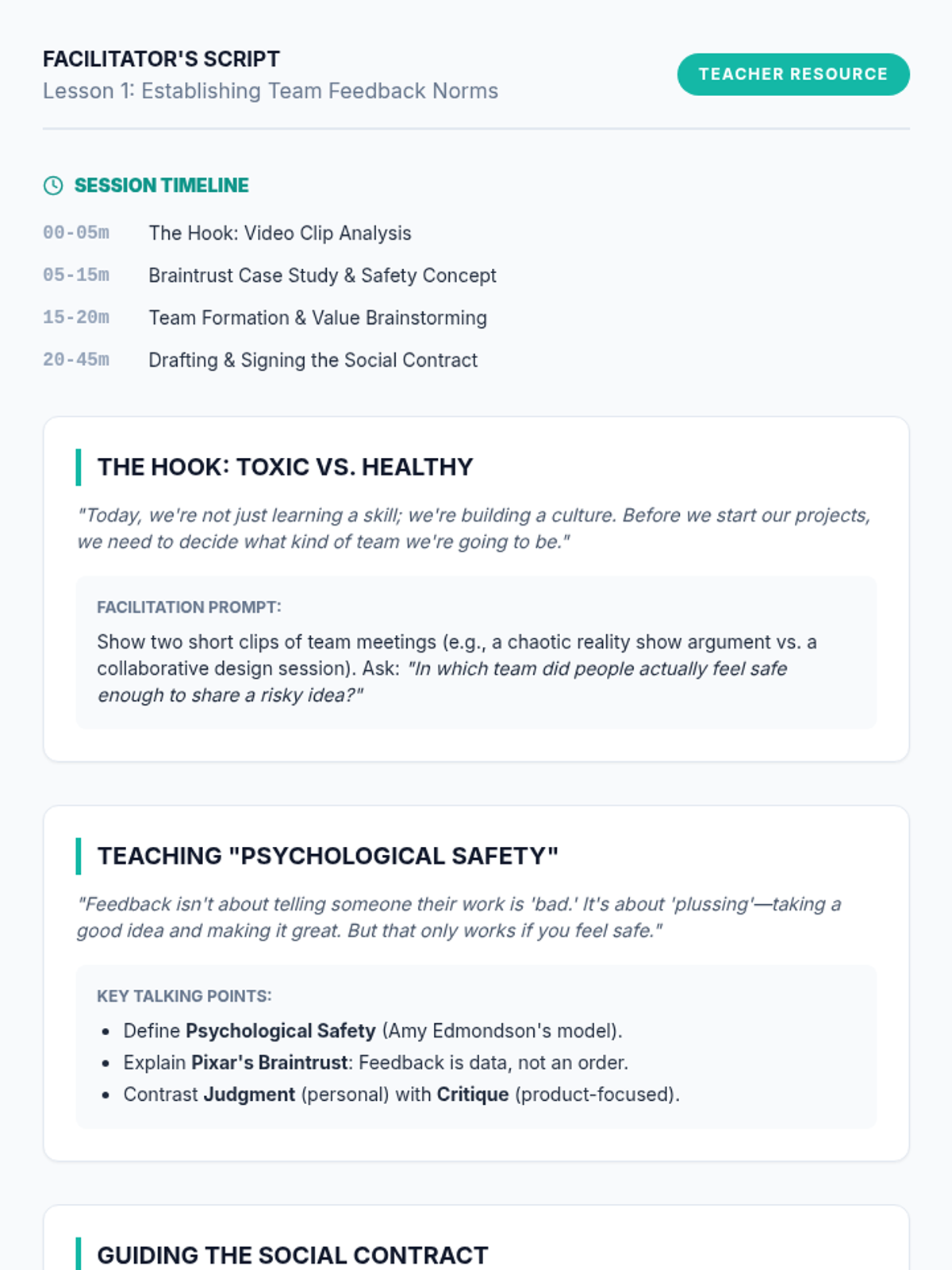
This project-based sequence teaches students the iterative cycle of constructive feedback within a collaborative design environment. Students develop social contracts, engage in rapid prototyping, observe fishbowl critiques, and document their growth through change logs and retrospectives.
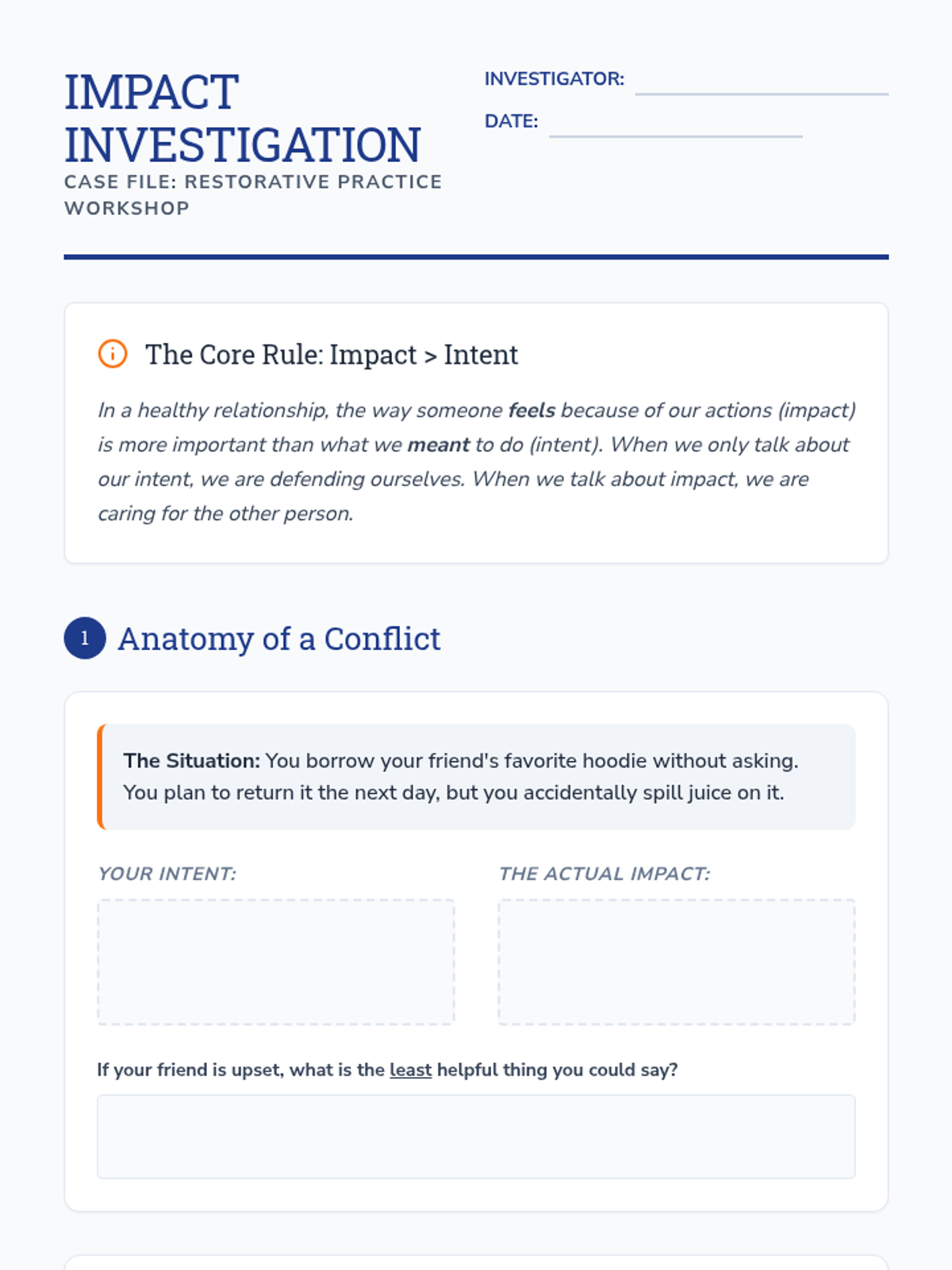
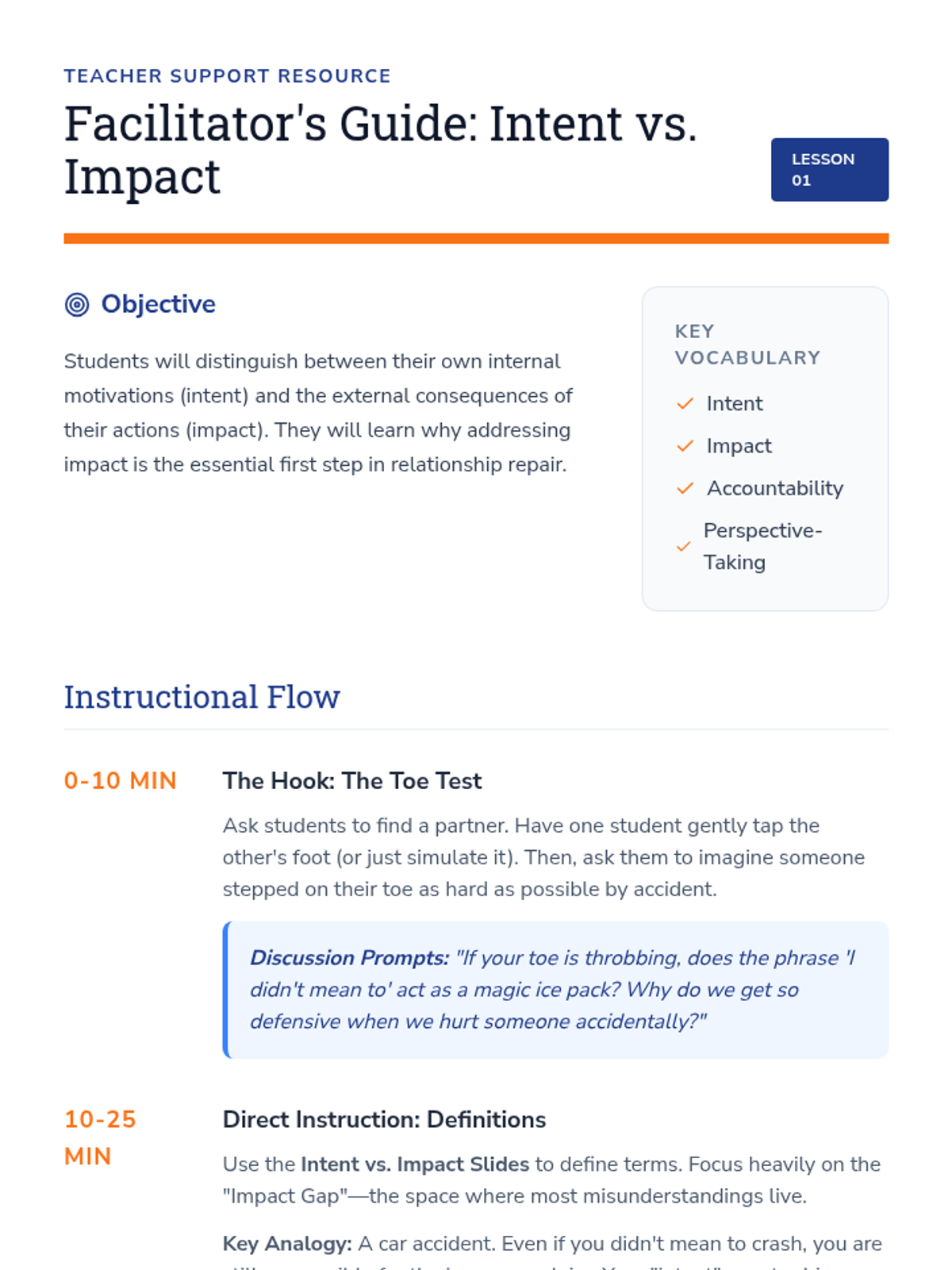
A 5-lesson sequence for 7th grade students focusing on restorative practices, the difference between intent and impact, crafting genuine apologies, and the long-term process of rebuilding trust after conflict.
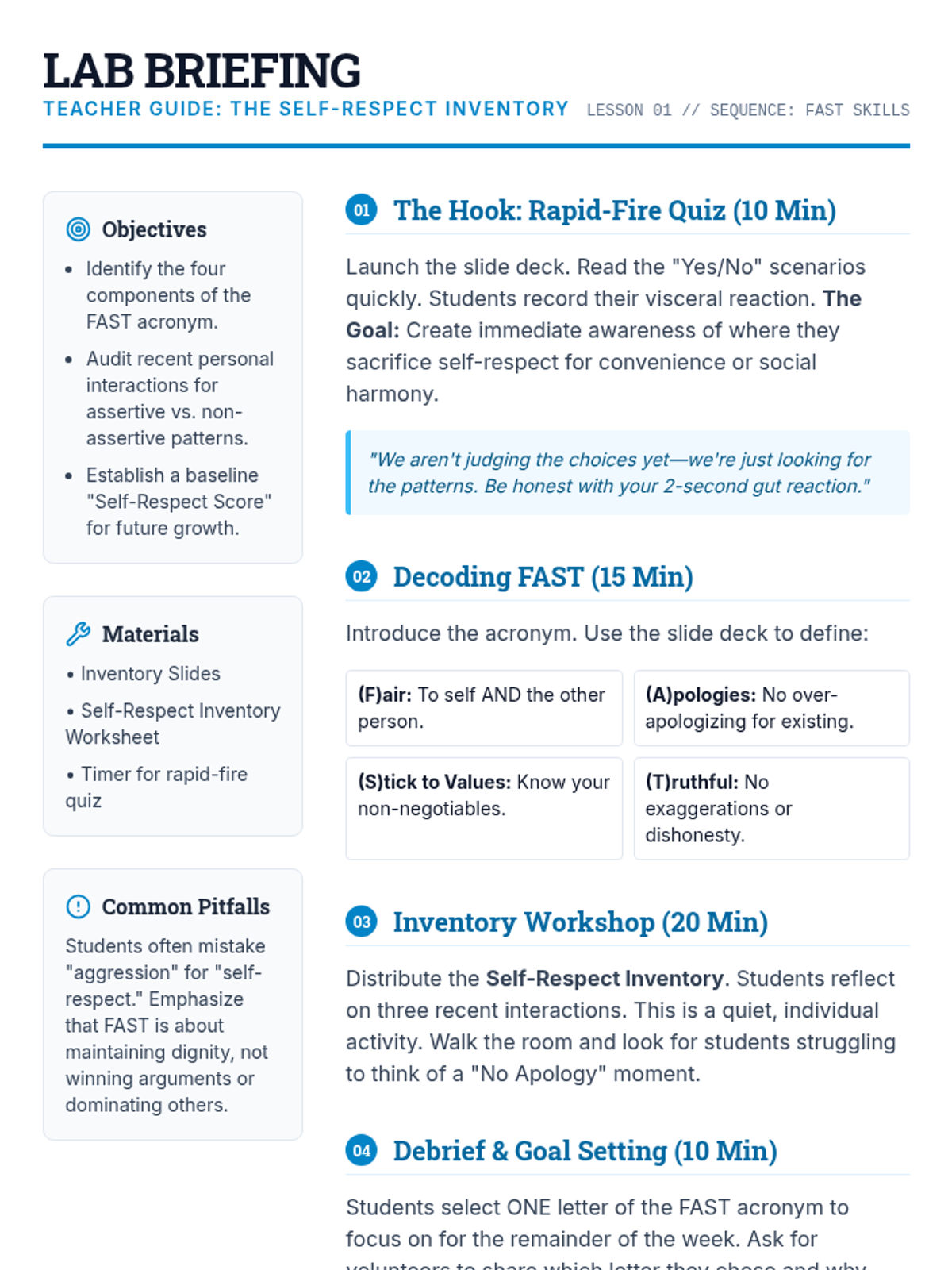
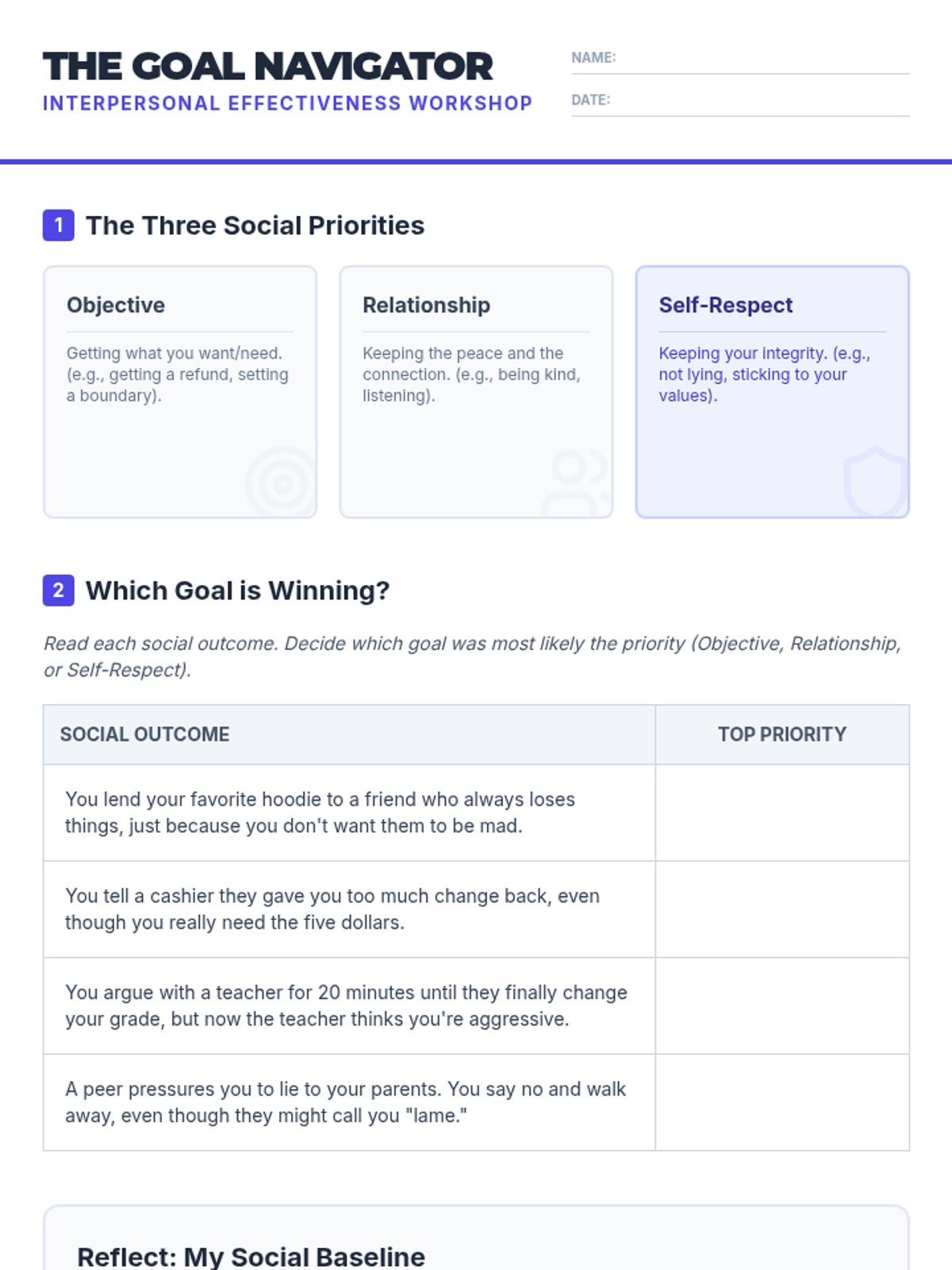
A high-school level interpersonal communications lab focused on the FAST acronym (Fair, No Apologies, Stick to Values, Truthful). Students transition from self-reflection to active behavioral rehearsal to build 'muscle memory' for self-respecting communication.
A comprehensive 9th-grade sequence teaching the DBT FAST acronym (Fair, Apologies, Stick to values, Truthful) to help students maintain self-respect in social interactions. Students progress from conceptual understanding to active dialogue practice and immersive simulation.
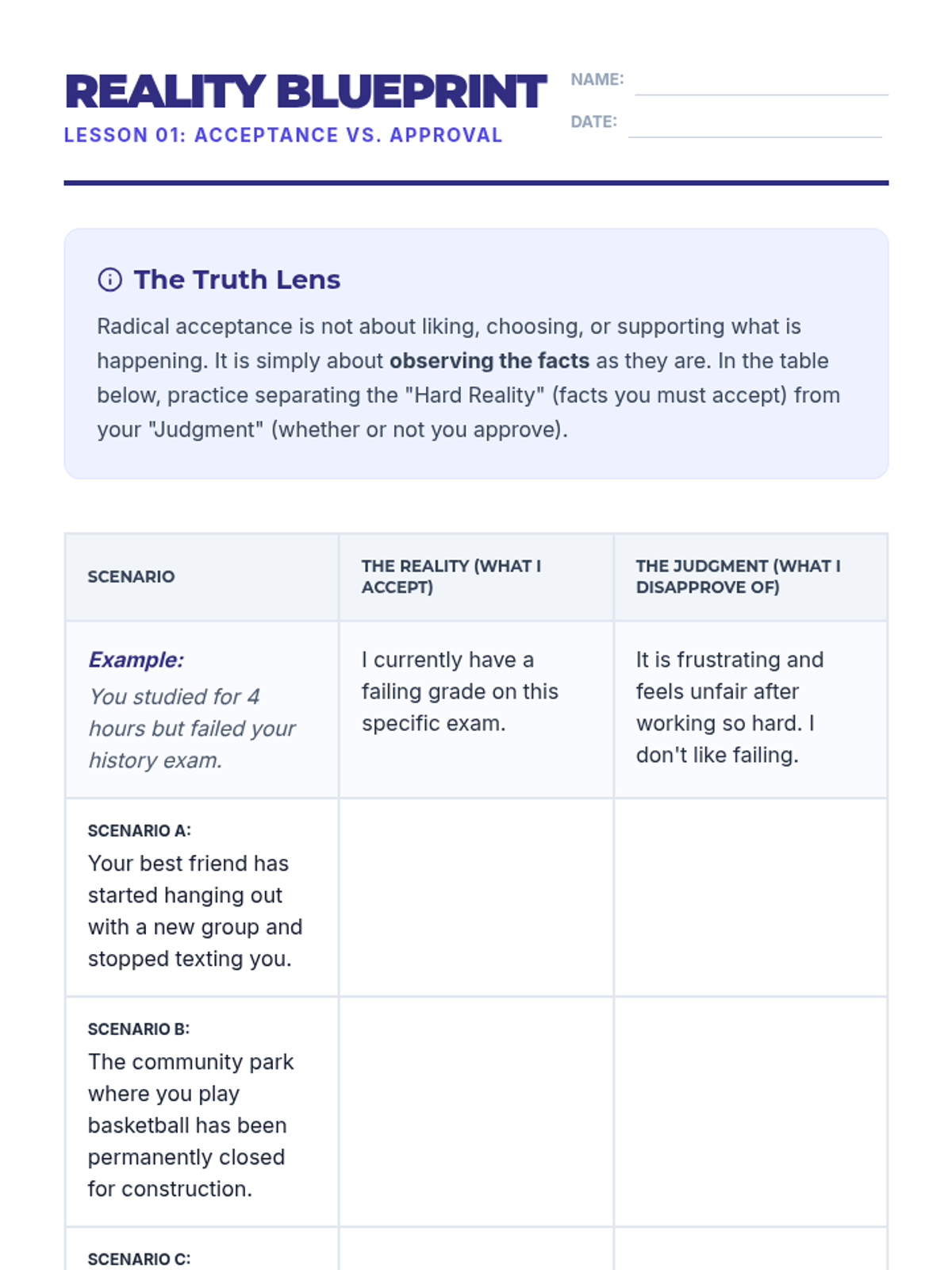
This sequence explores the psychological concept of Radical Acceptance, teaching students to distinguish between acceptance and approval. Students will analyze case studies, relationship dynamics, and civic advocacy to understand how acknowledging reality is the first step toward effective change.
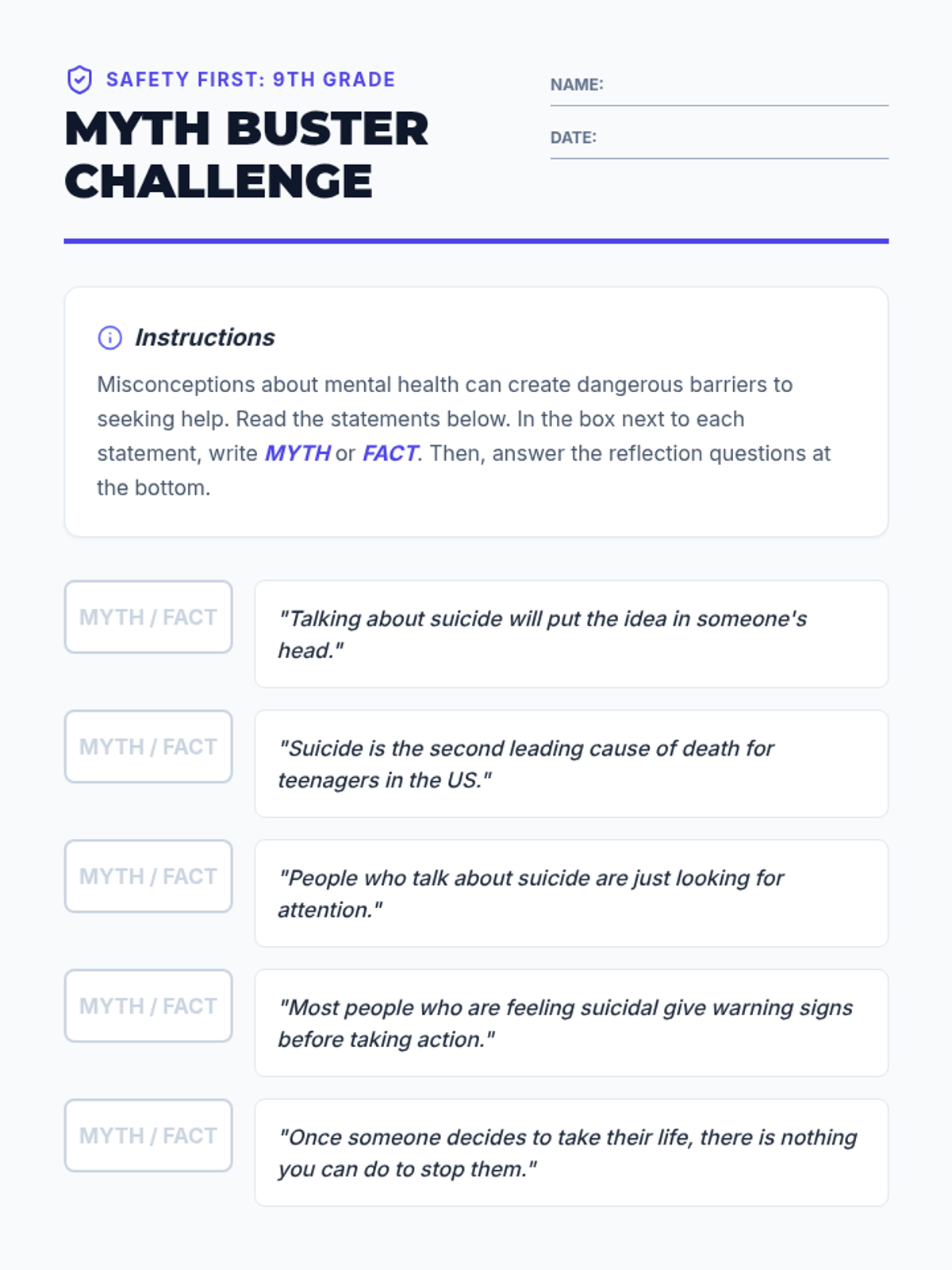
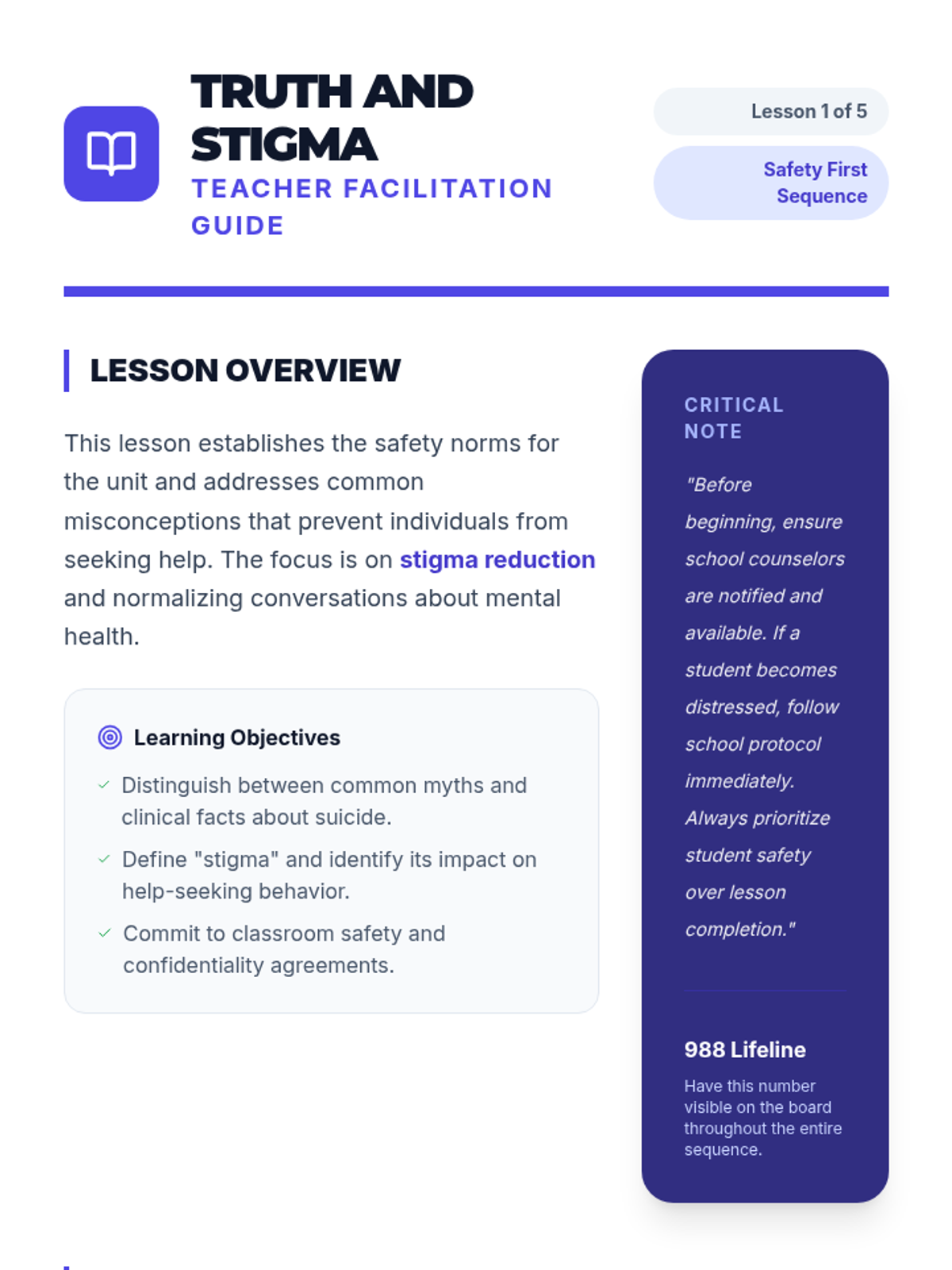
This sequence equips 9th-grade students to recognize signs of emotional distress and suicidal ideation using a safety-first framework. Students progress from debunking myths to identifying warning signs, understanding situational context, practicing the ACT (Acknowledge, Care, Tell) model, and mapping out support resources.
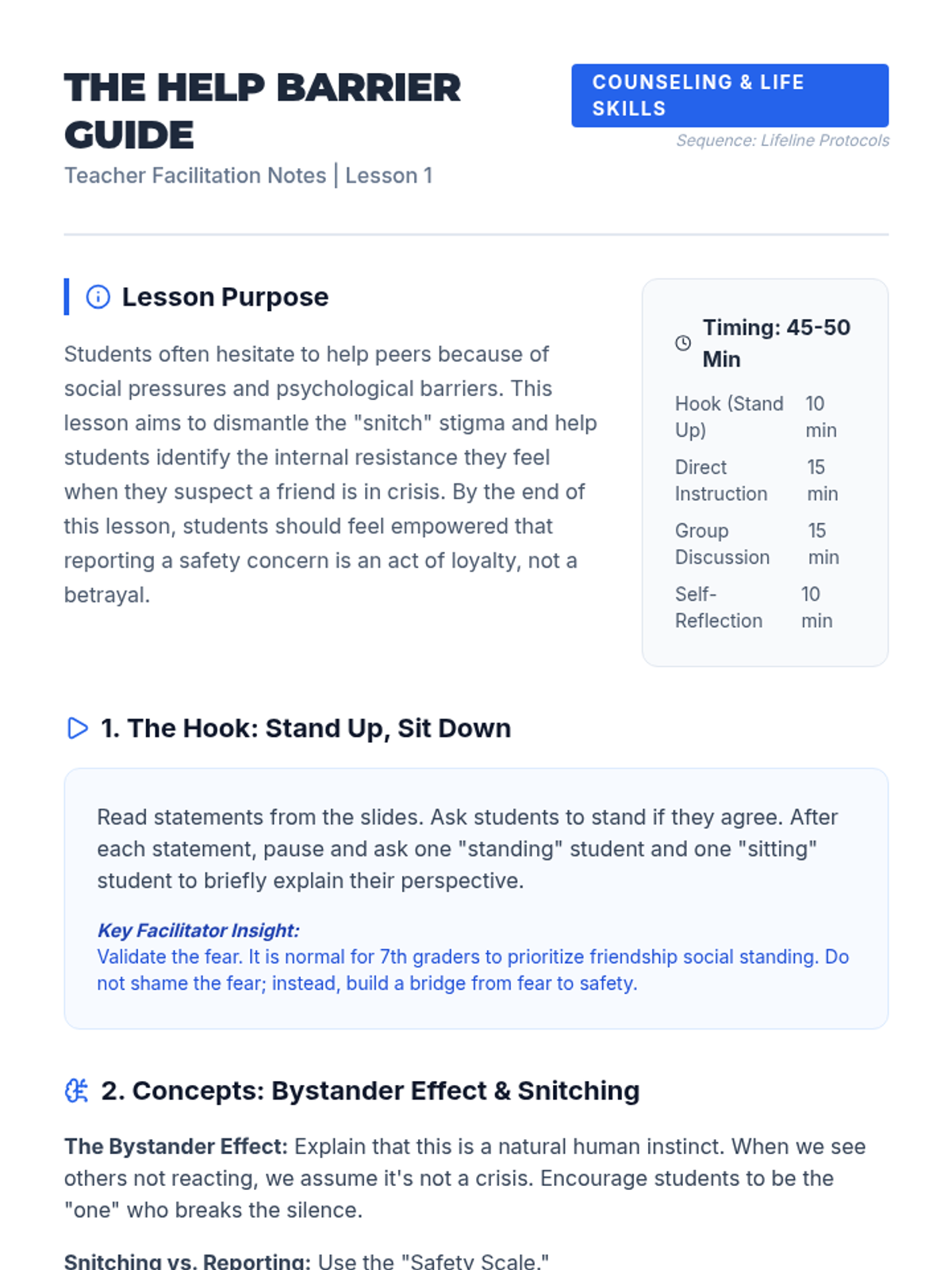
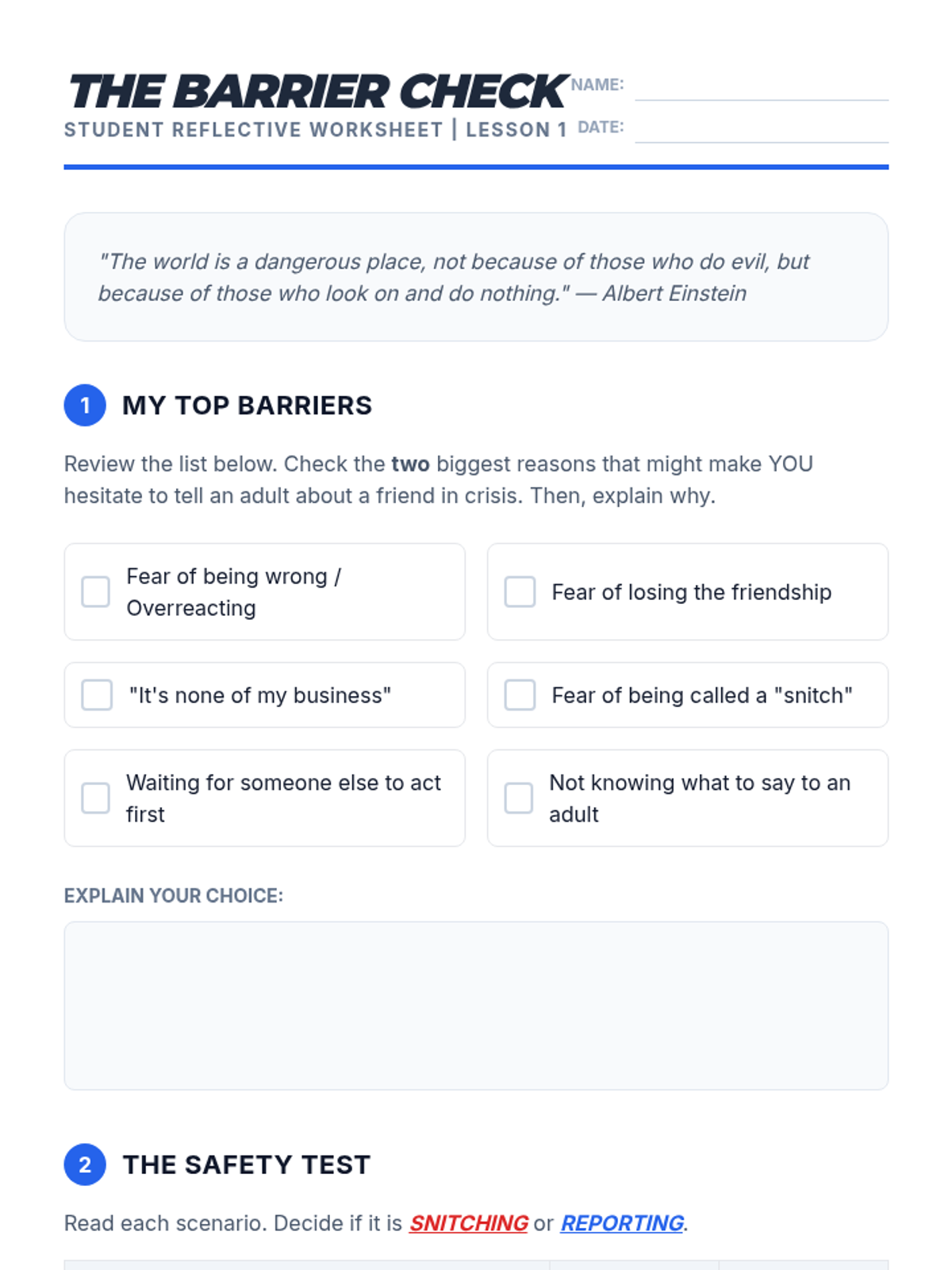
This sequence focuses on teaching 7th-grade students how to safely and effectively help a peer in a mental health crisis using the ACT (Acknowledge, Care, Tell) model. Students move from understanding psychological barriers like the bystander effect to practicing empathetic listening and identifying concrete resources for professional support.
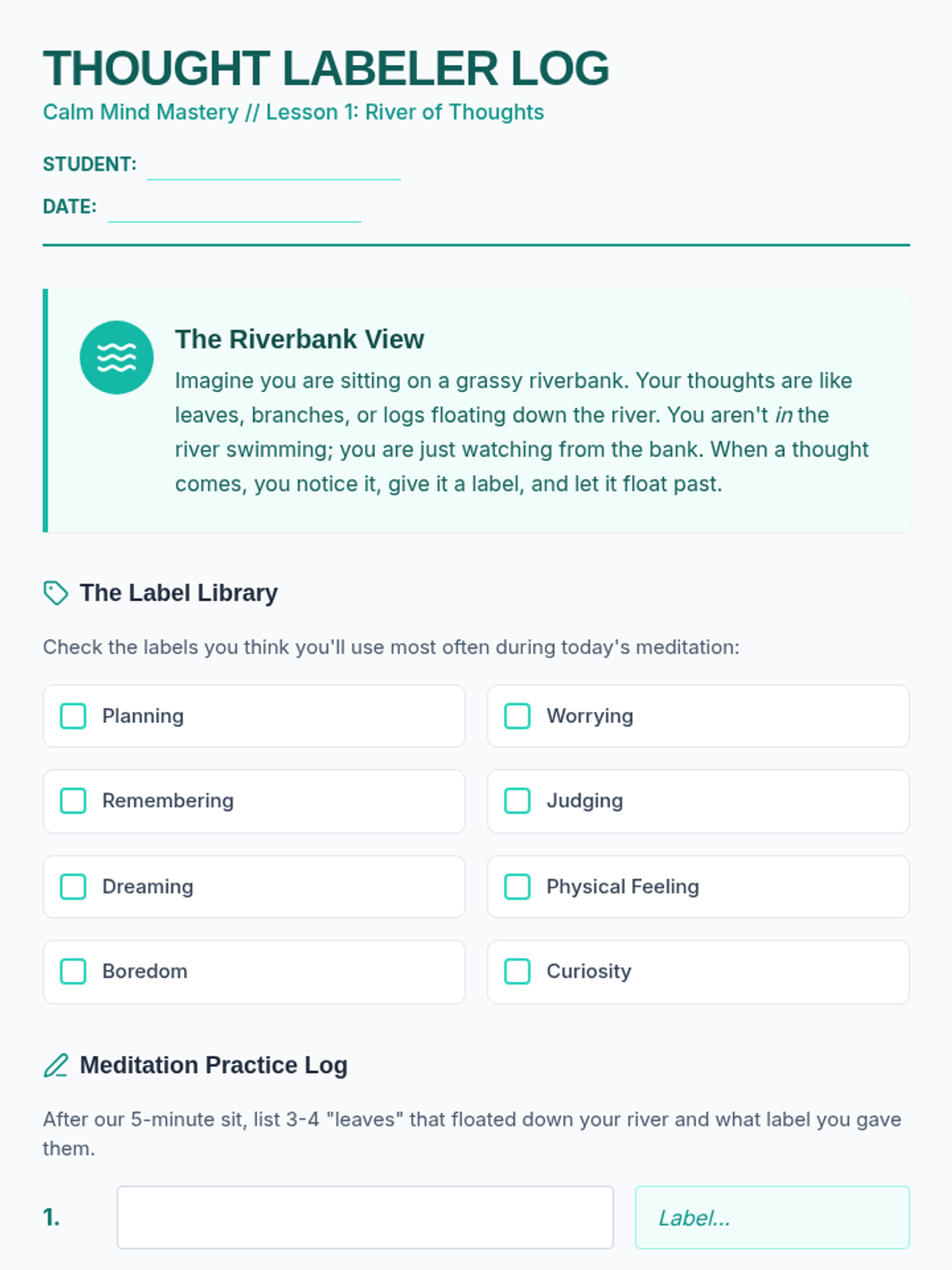
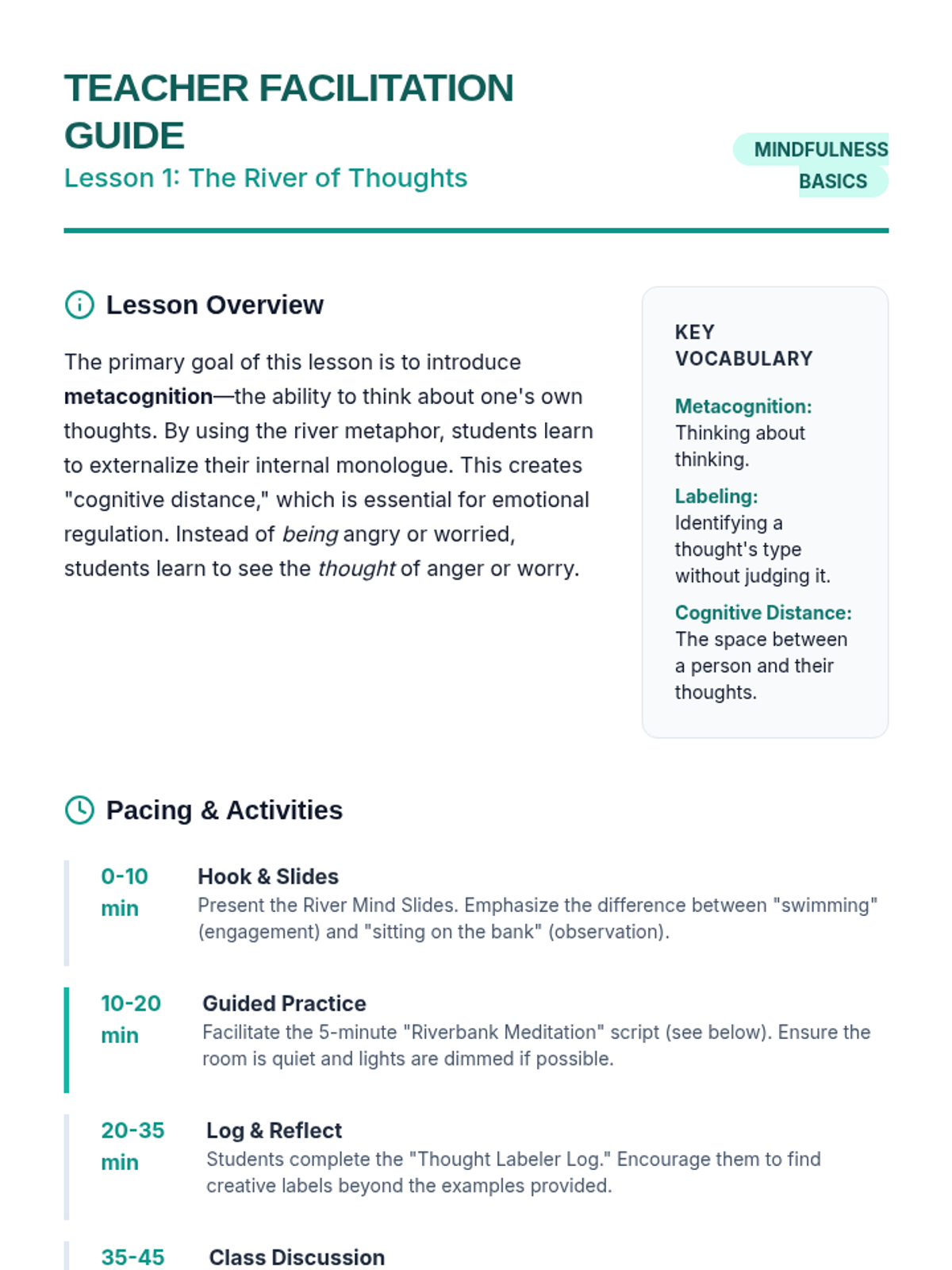
A 5-lesson unit for 7th graders on using meditation for emotional regulation, focus, and interpersonal conflict resolution. Students learn metacognition through metaphors, visualization for performance, empathy through loving-kindness practice, and impulse control via the STOP method.
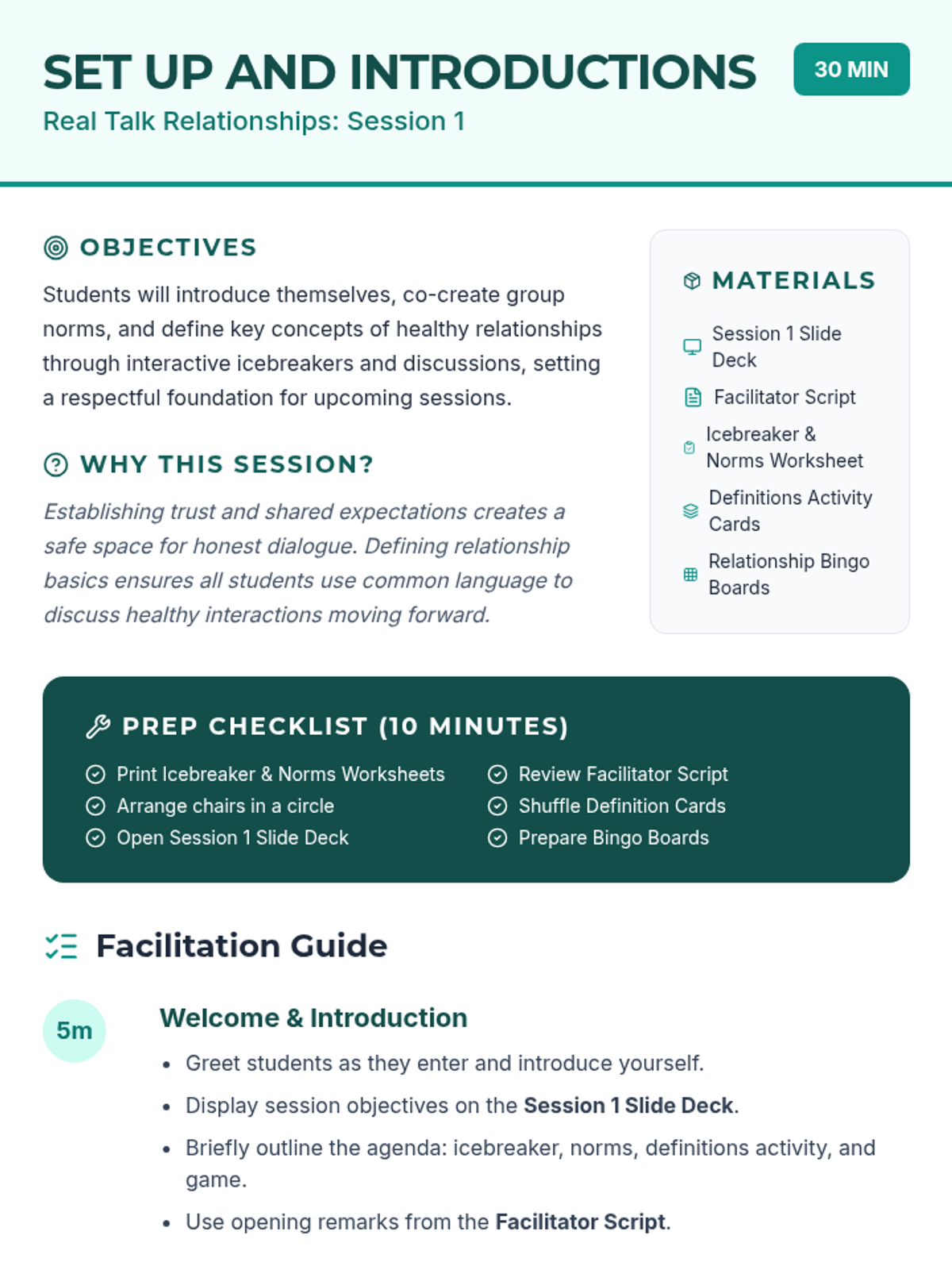
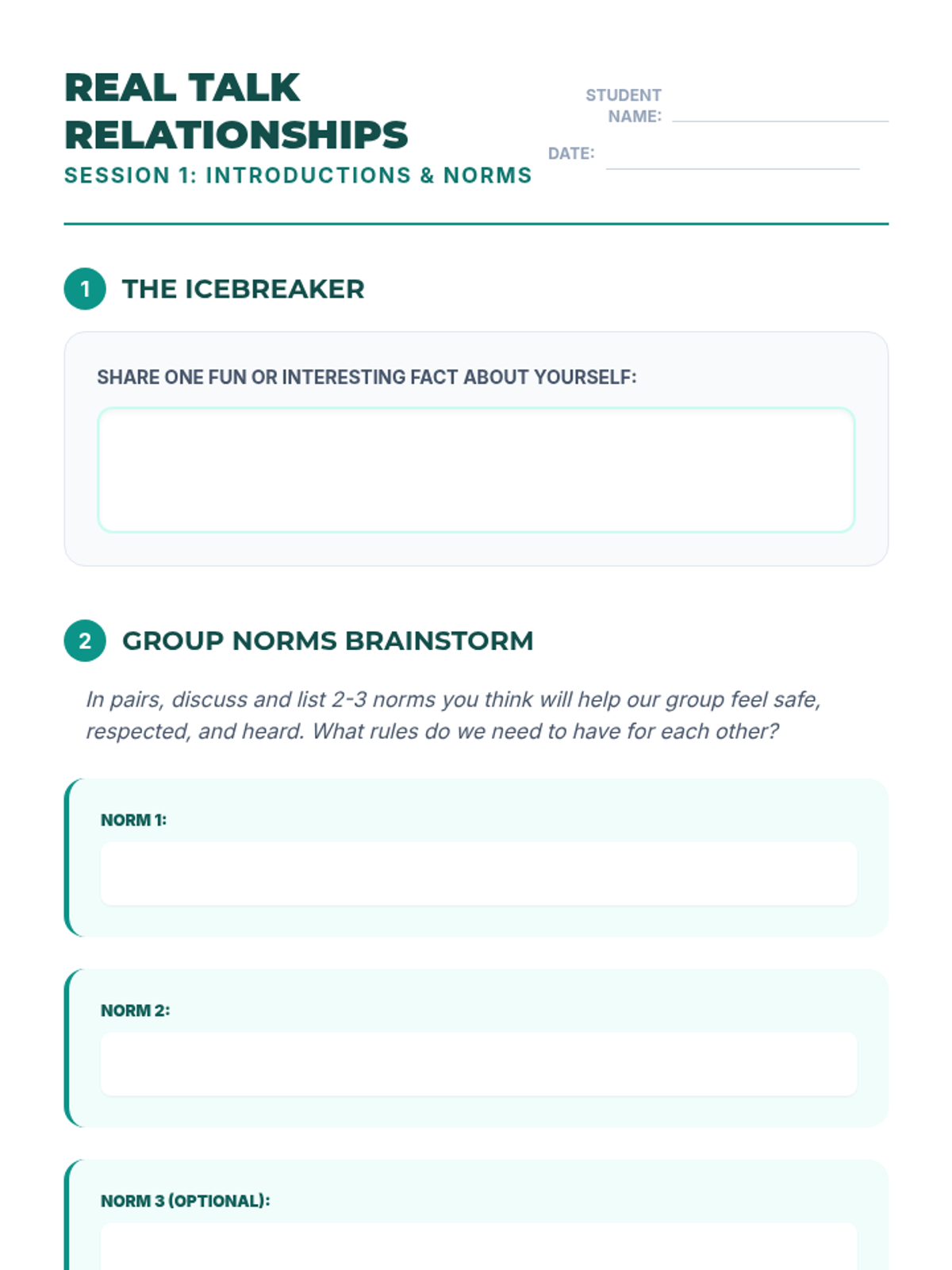
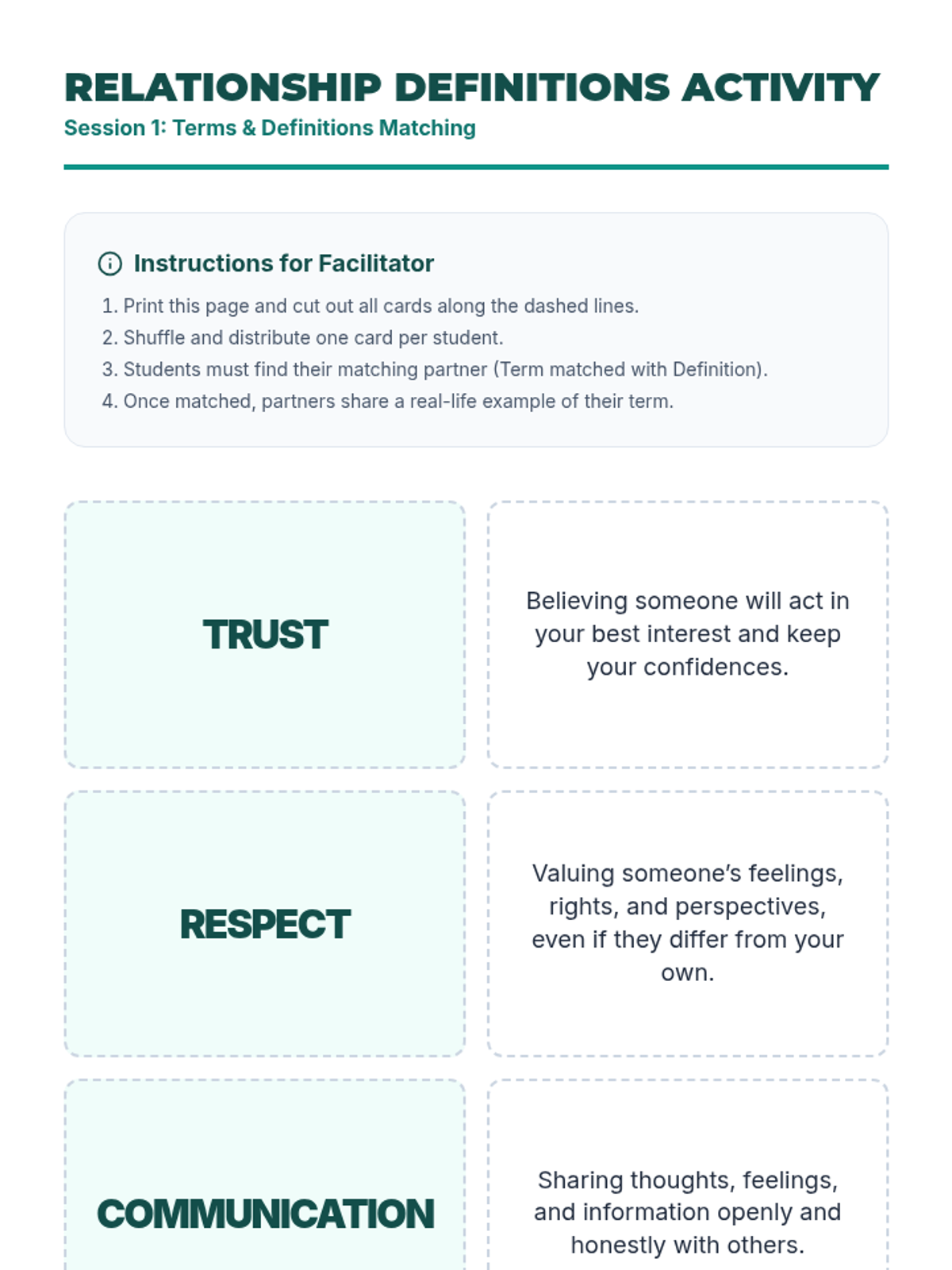
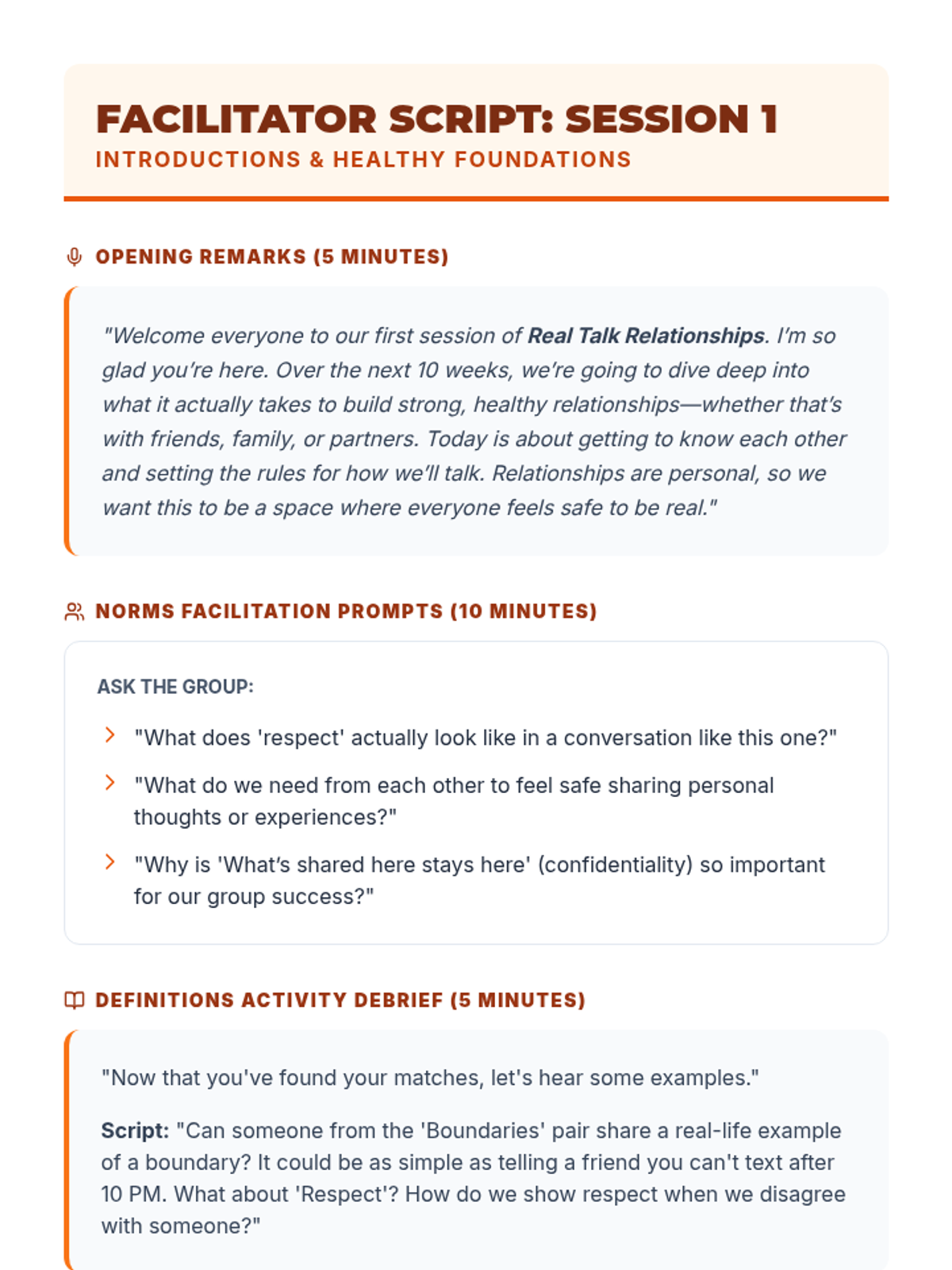
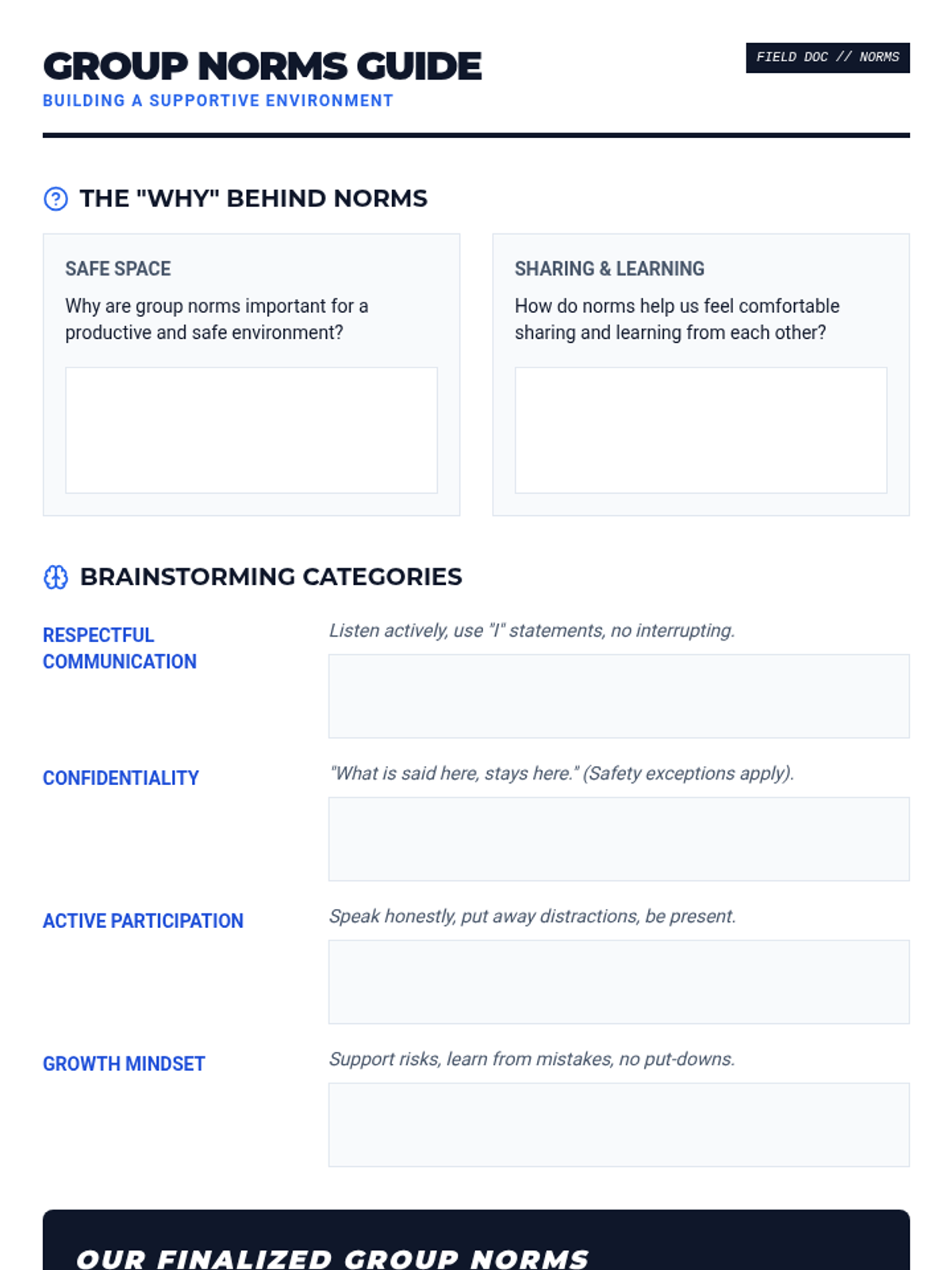
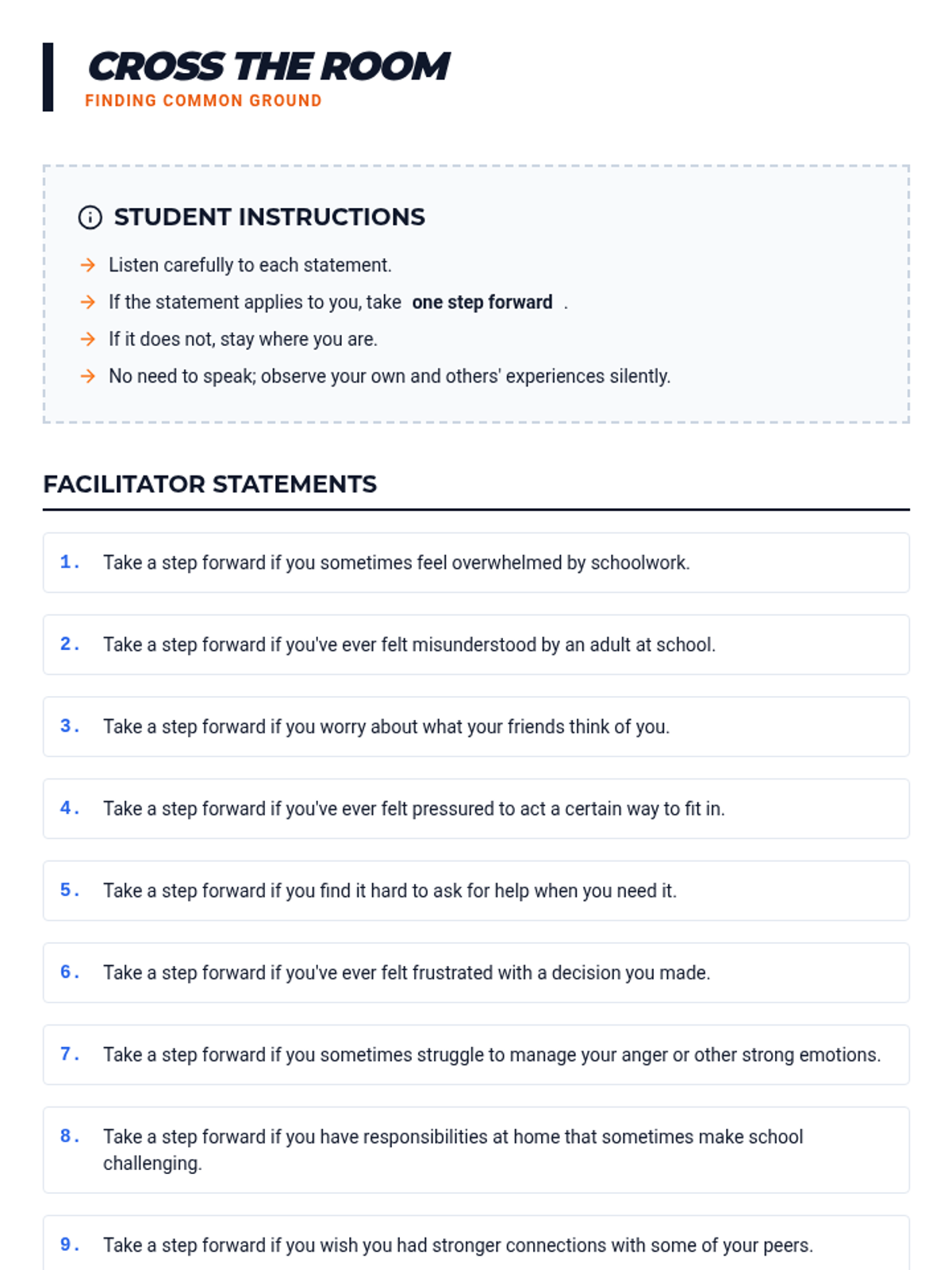
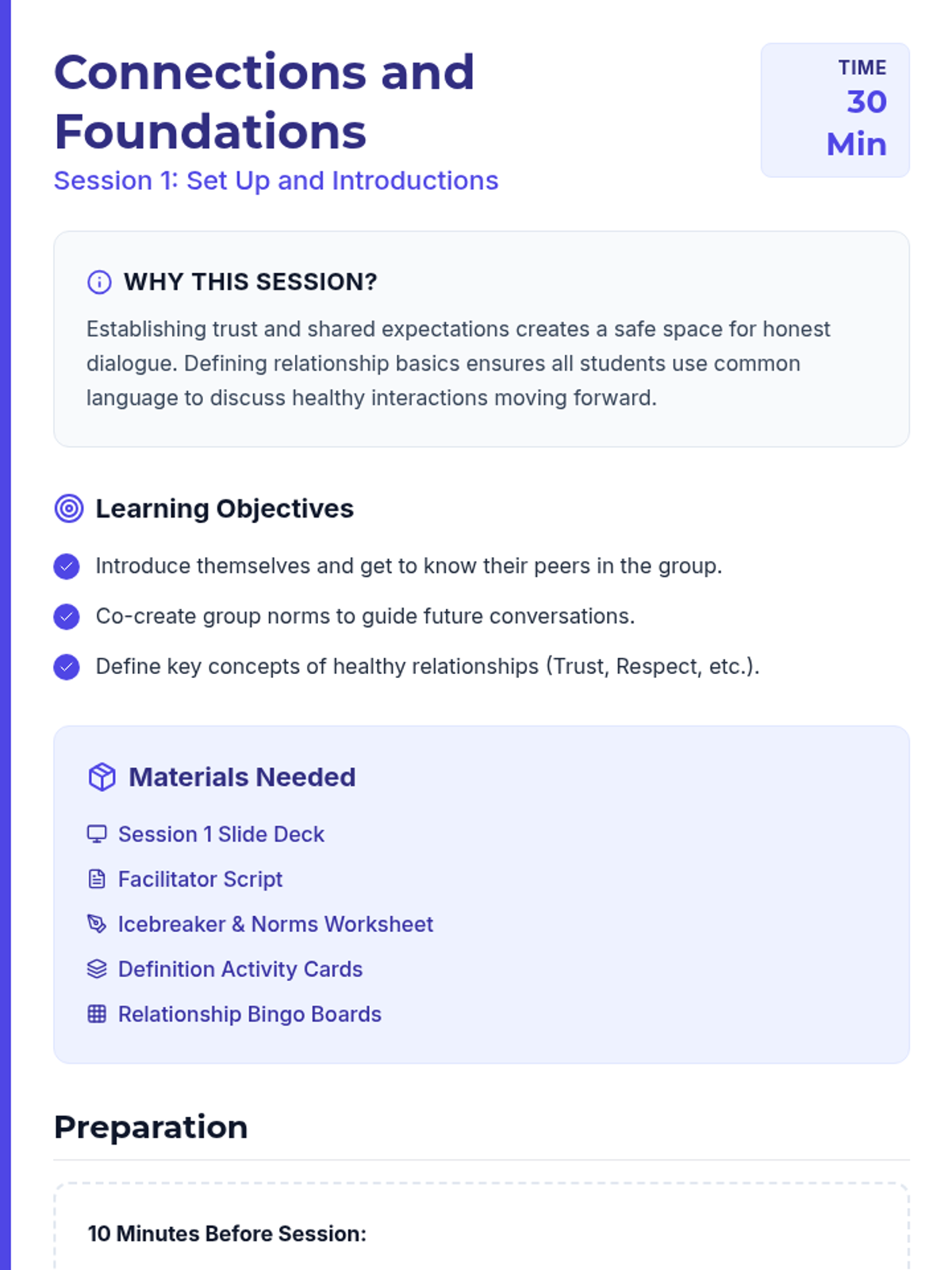
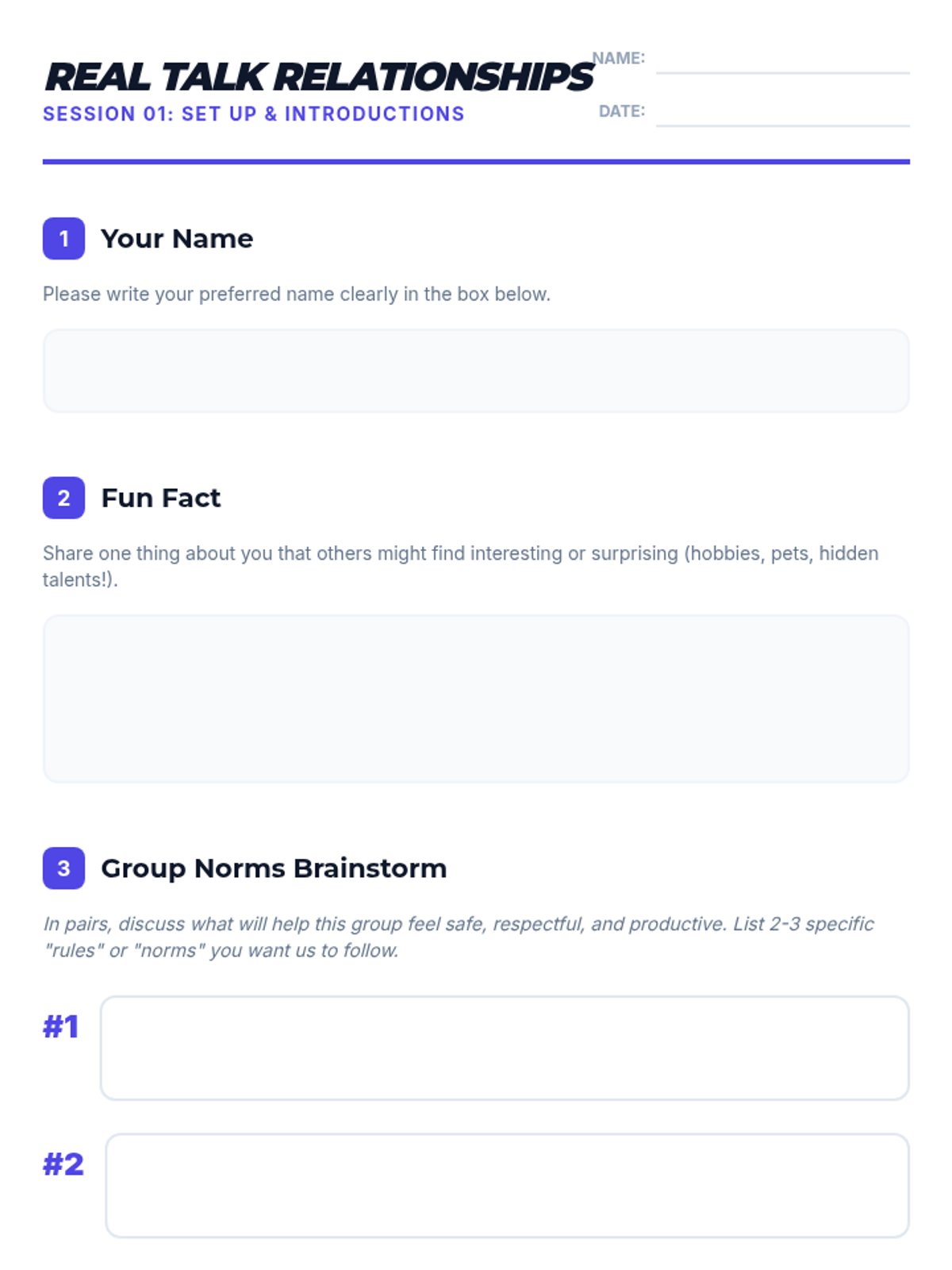
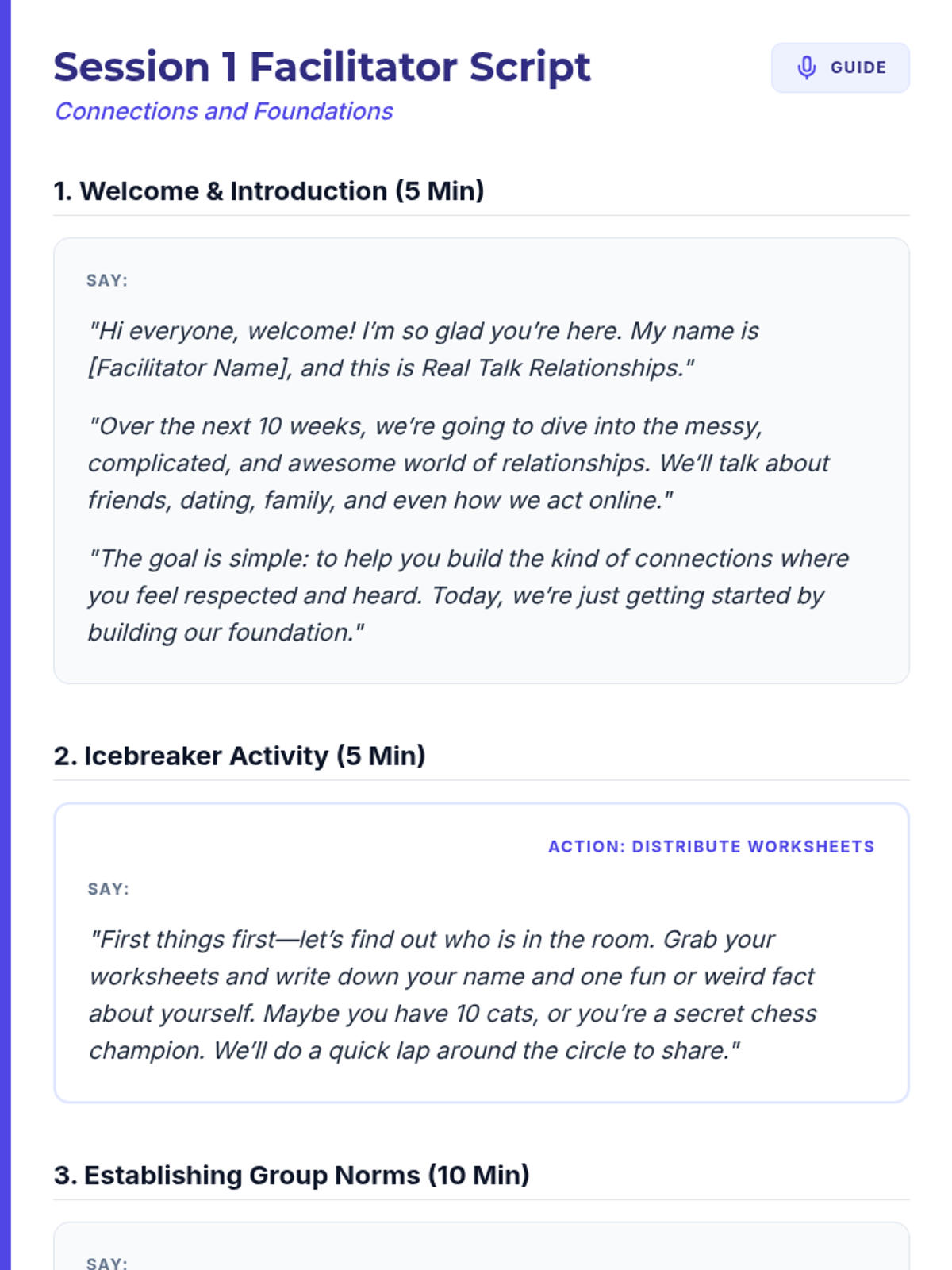
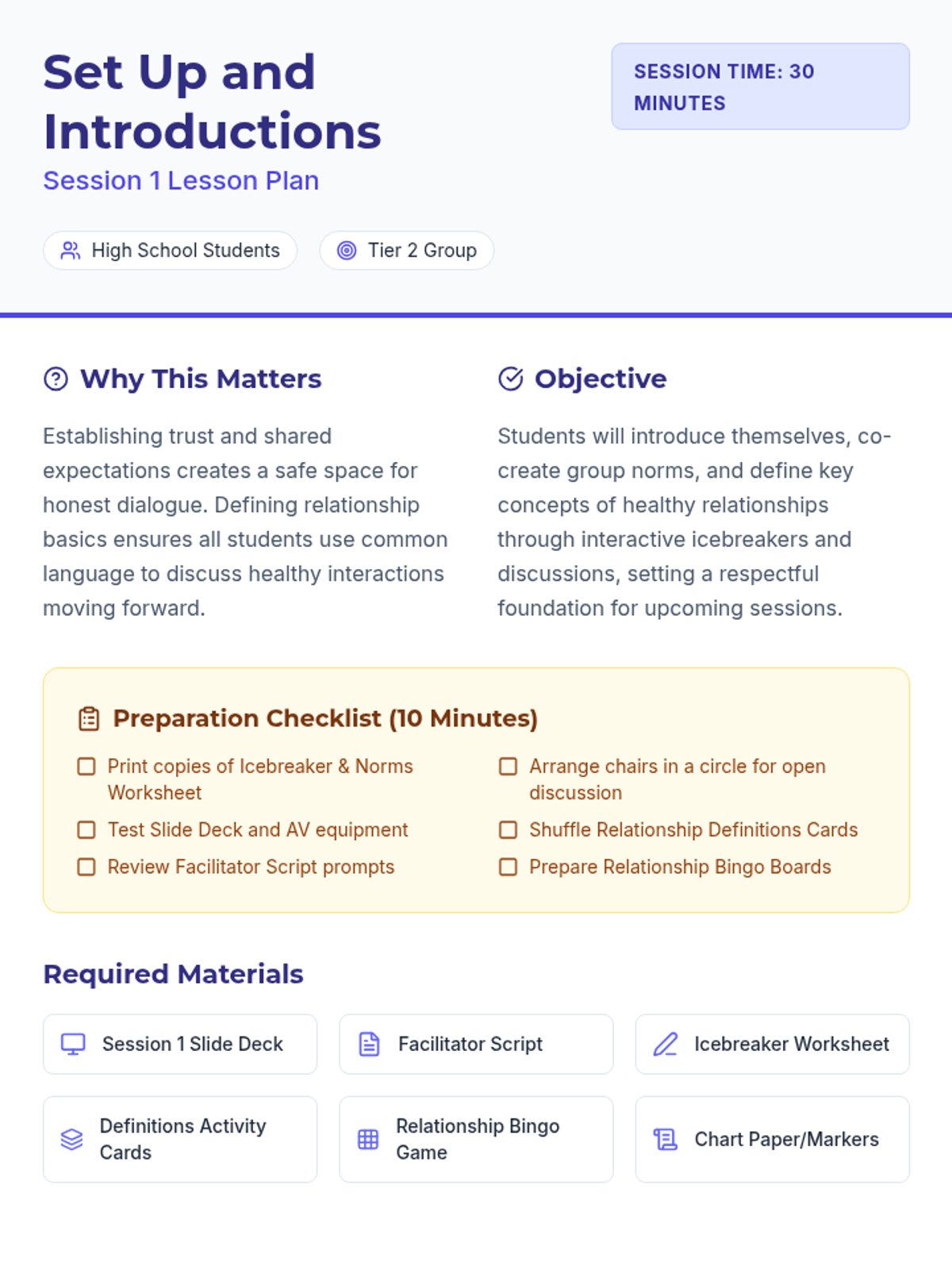
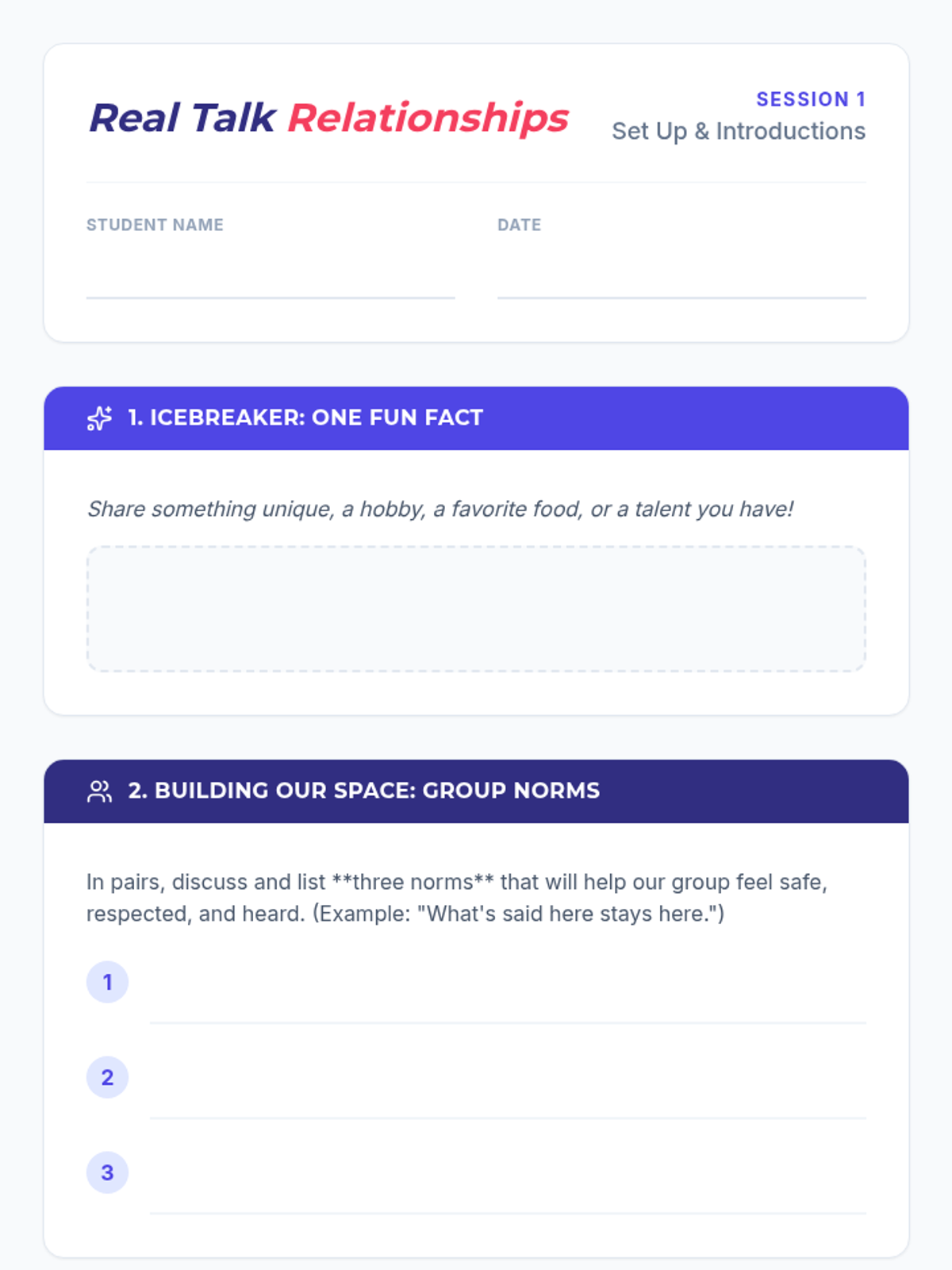
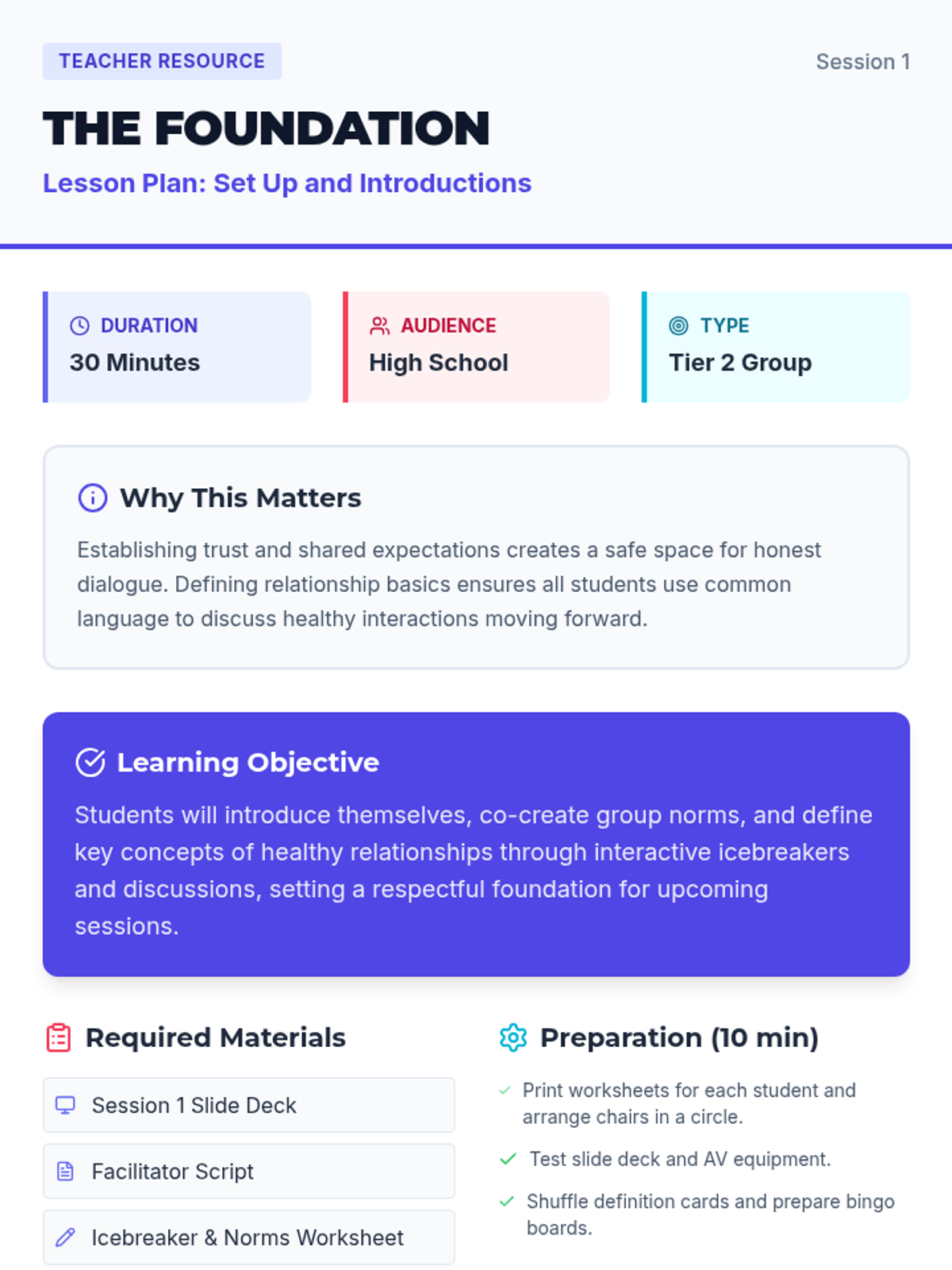
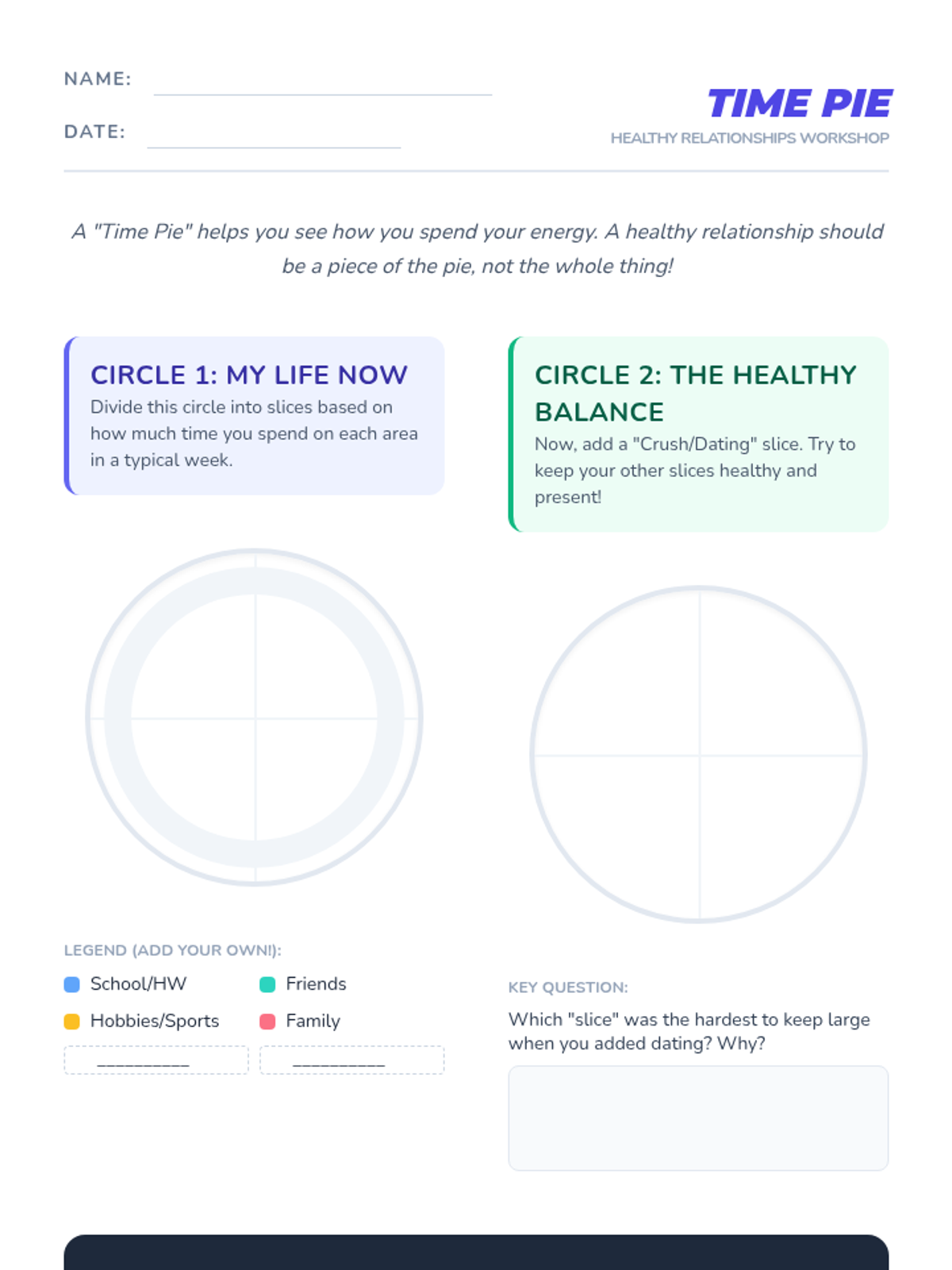
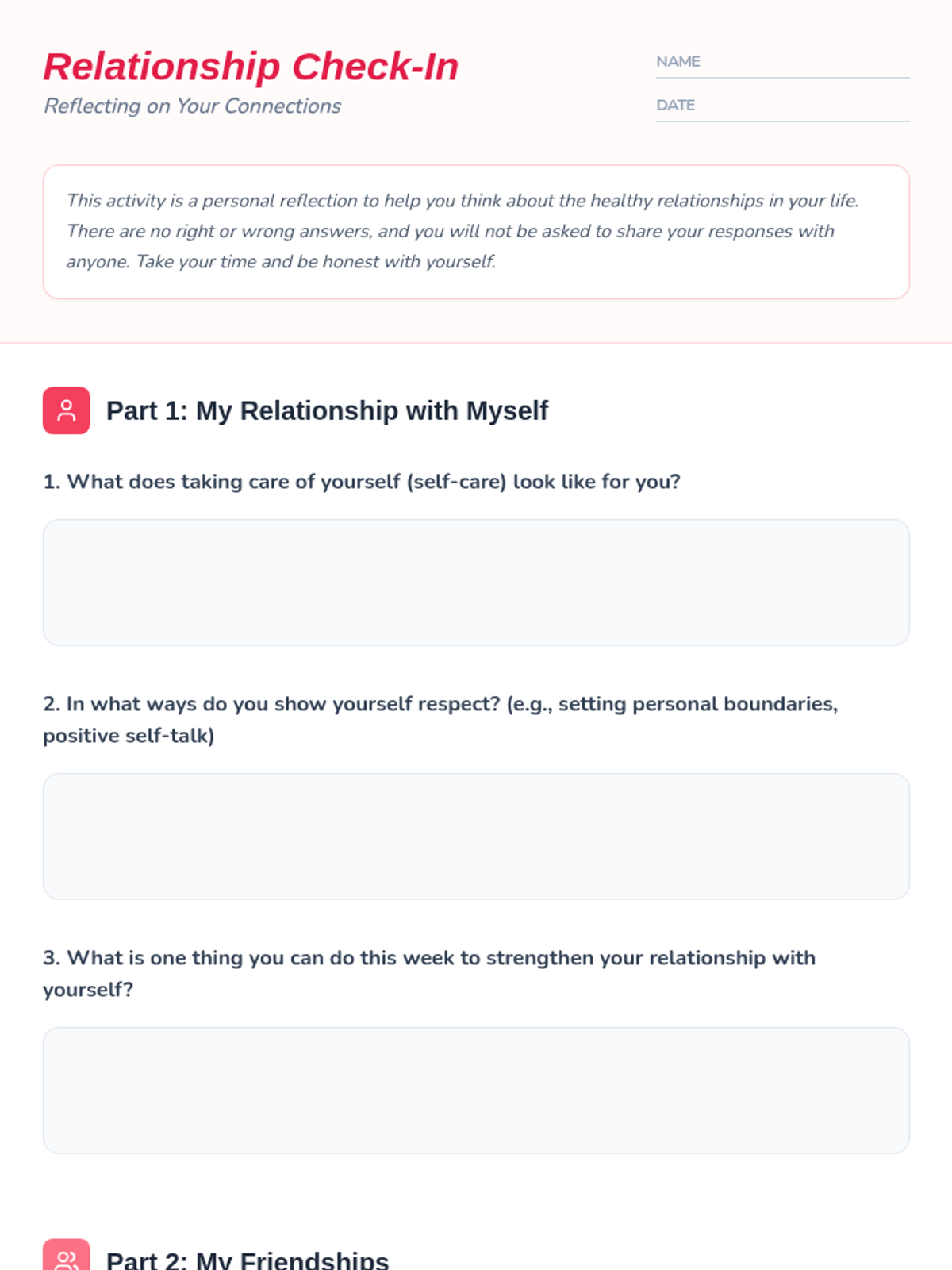
A 10-session course for high school students focused on building and maintaining healthy romantic, platonic, and digital relationships through communication, boundaries, and empathy.
An 8-week intervention program for ninth-grade male students focused on developing commitment, character, and choices through interactive sessions and self-reflection.
A 10-session comprehensive course for high school students focused on building healthy romantic, platonic, and digital relationships through communication, boundaries, and empathy.
A 10-session course for high school students focused on building and maintaining healthy relationships through communication, boundaries, and empathy.
An 8-week intervention program for ninth-grade male students focused on academic and behavioral success through the development of commitment, character, and agency.
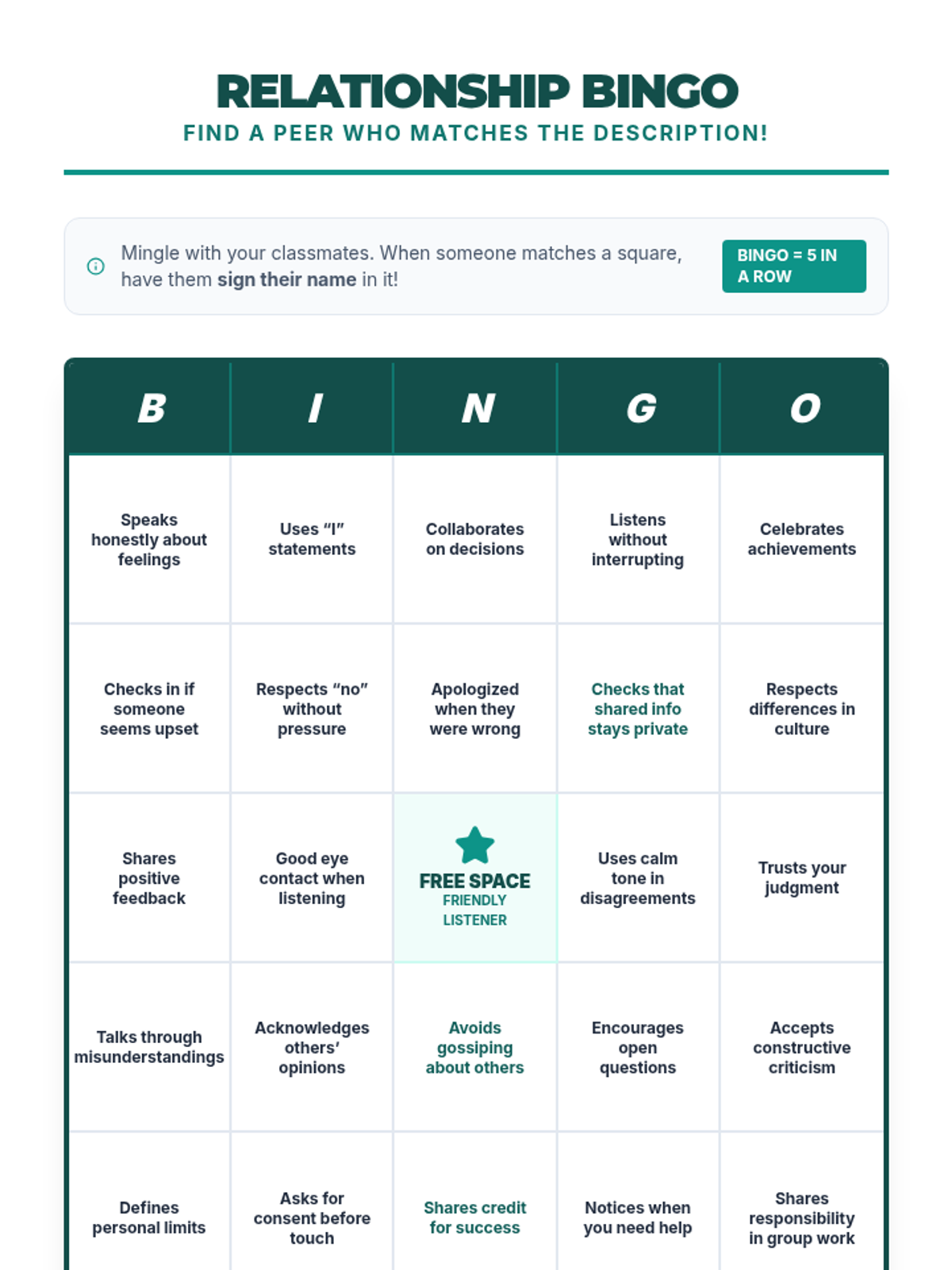
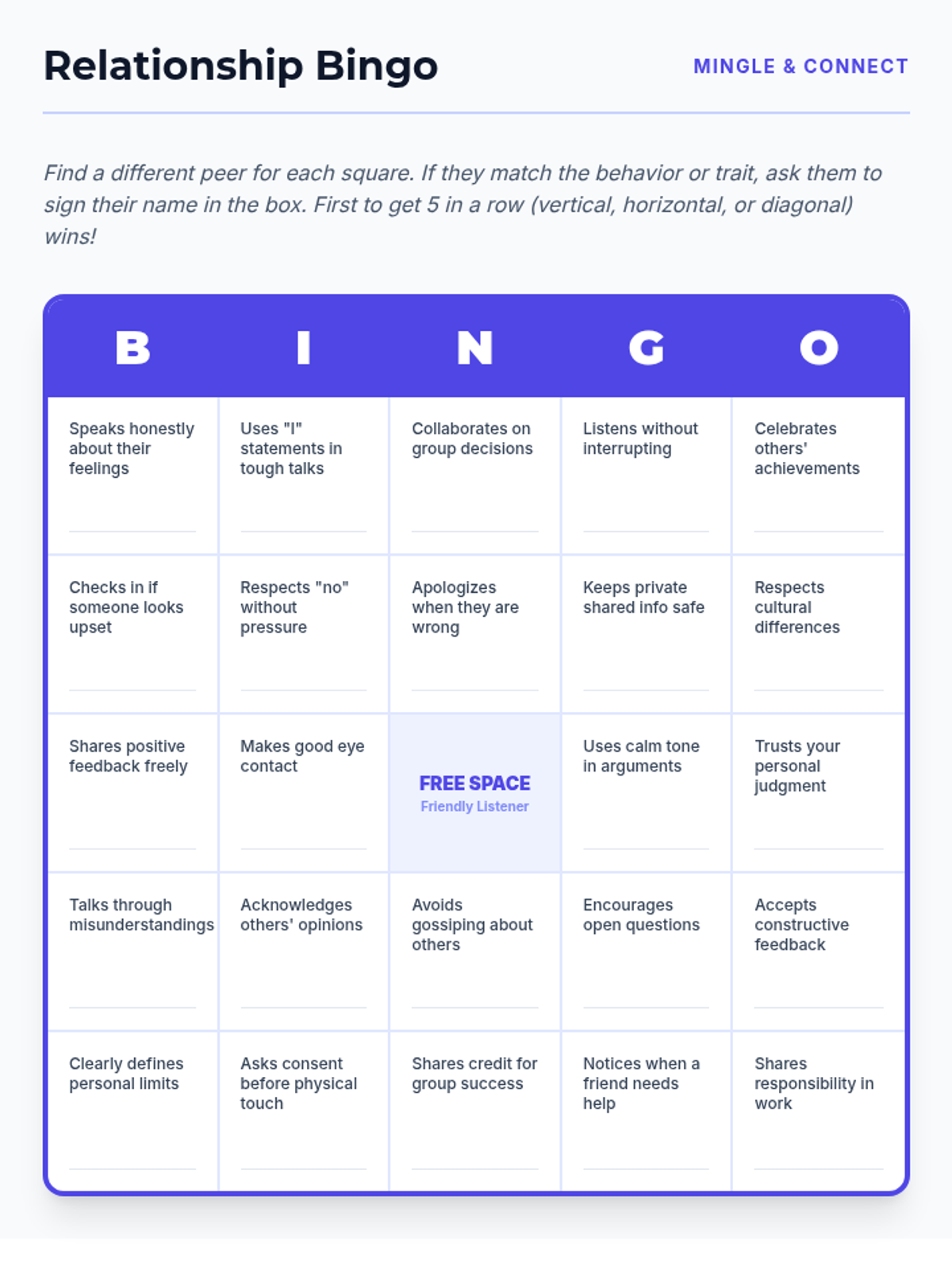
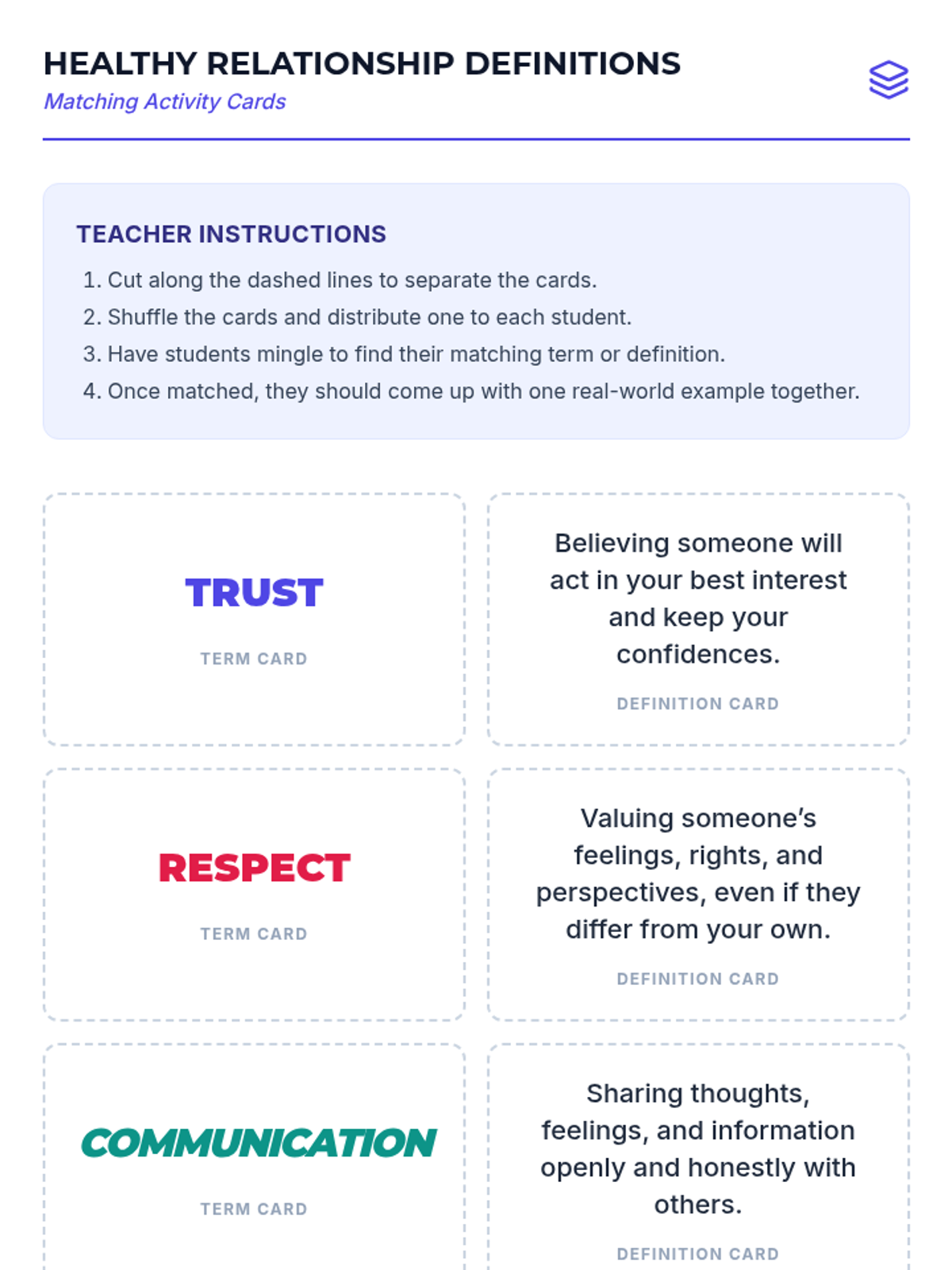
A 10-session course for high school students focused on developing healthy communication, boundaries, and empathy across romantic, platonic, and digital relationships. Students engage in interactive role-plays, games, and reflections to build practical social-emotional skills.
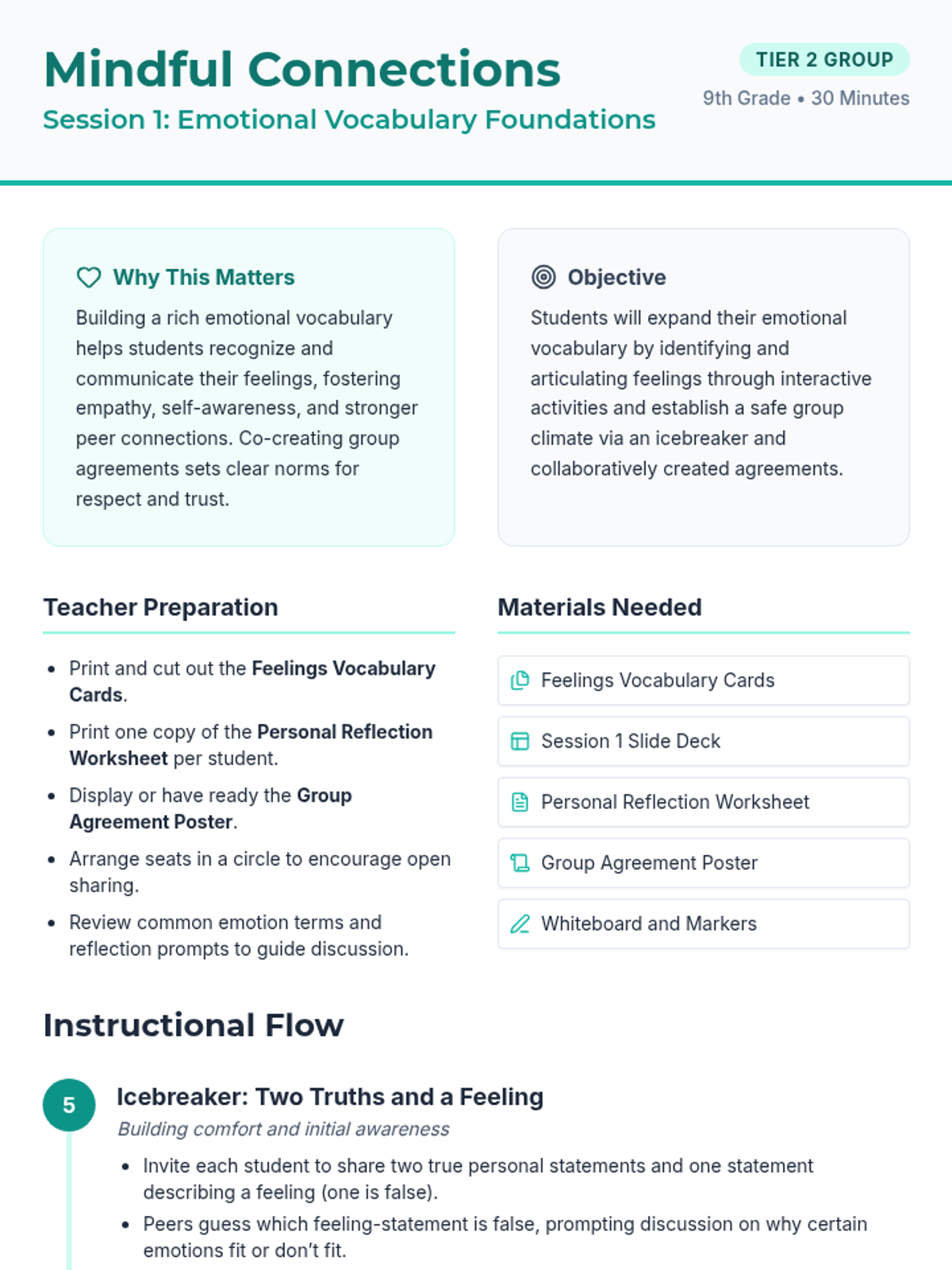
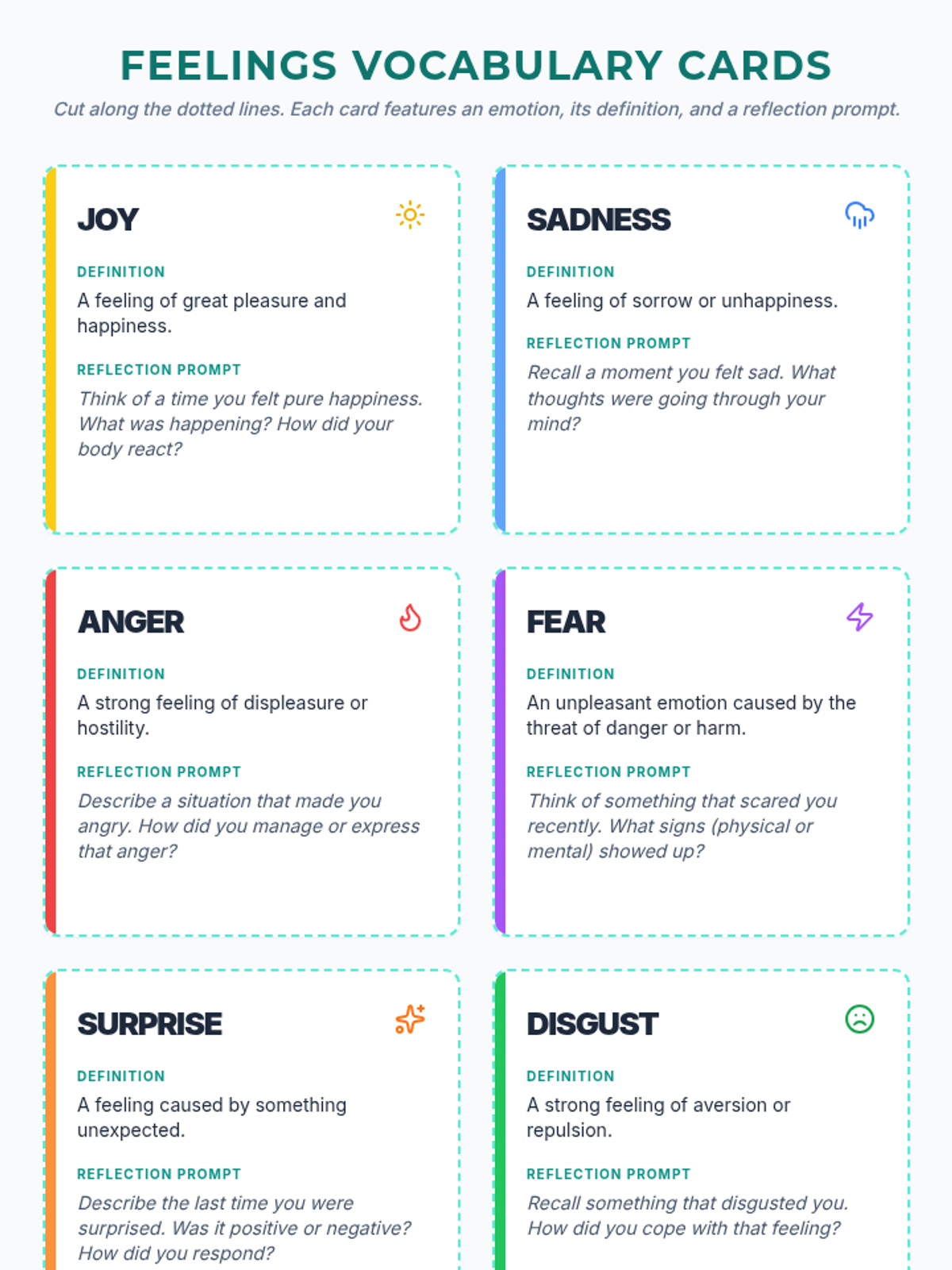
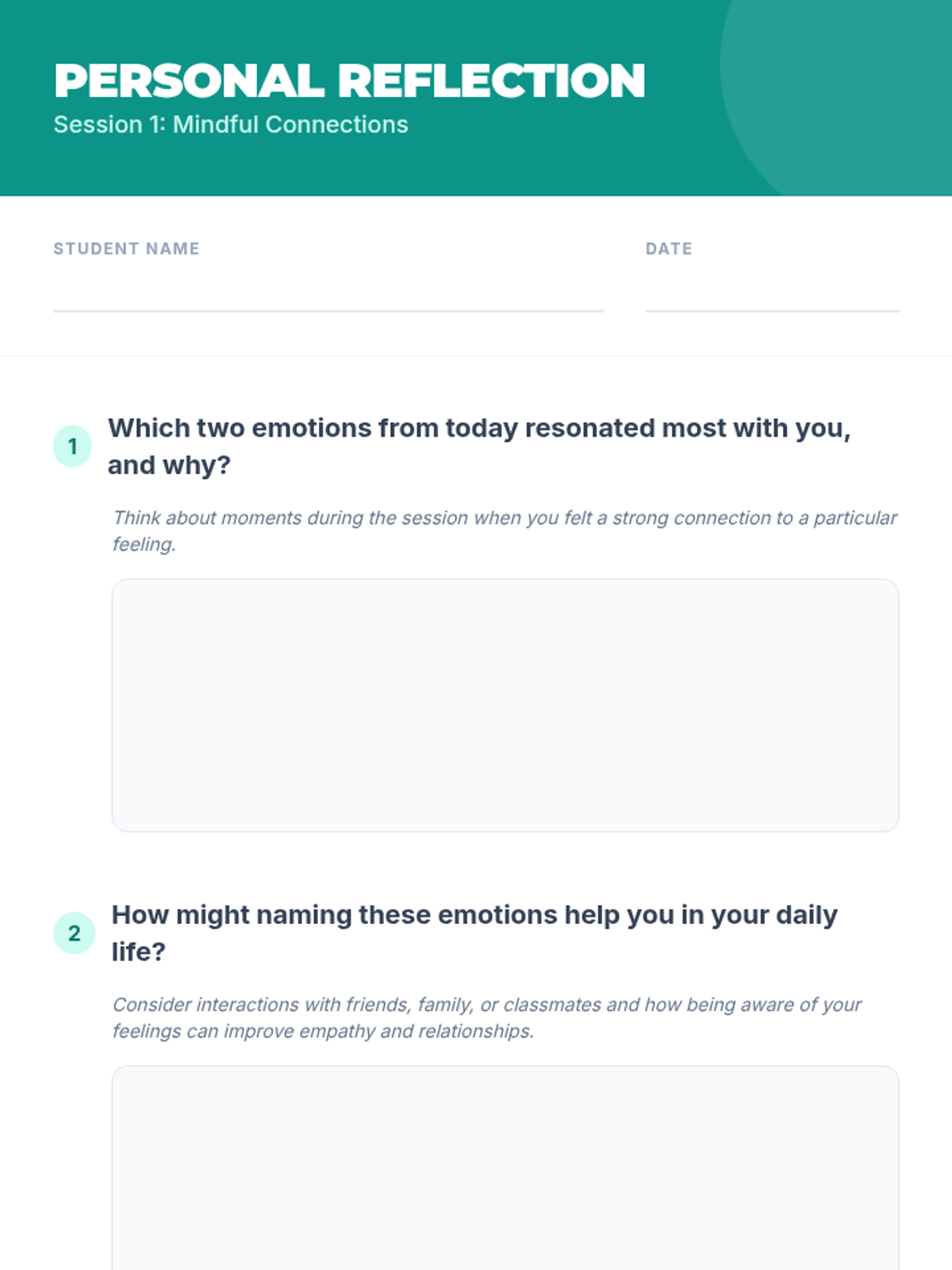
A 5-session Tier 2 small-group program for 9th graders designed to develop emotional intelligence, empathy, active listening, and conflict resolution skills through interactive practice and reflection.
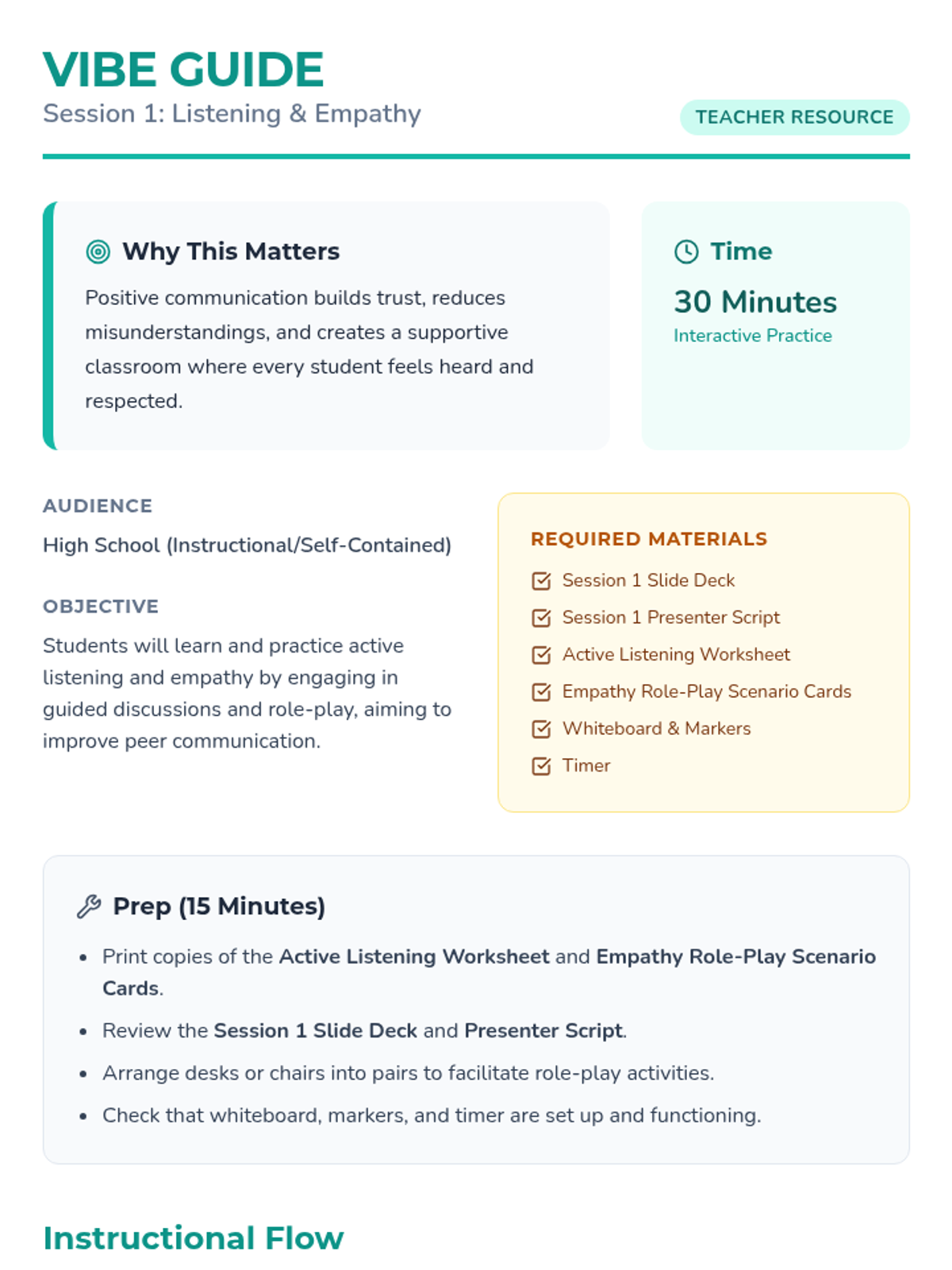
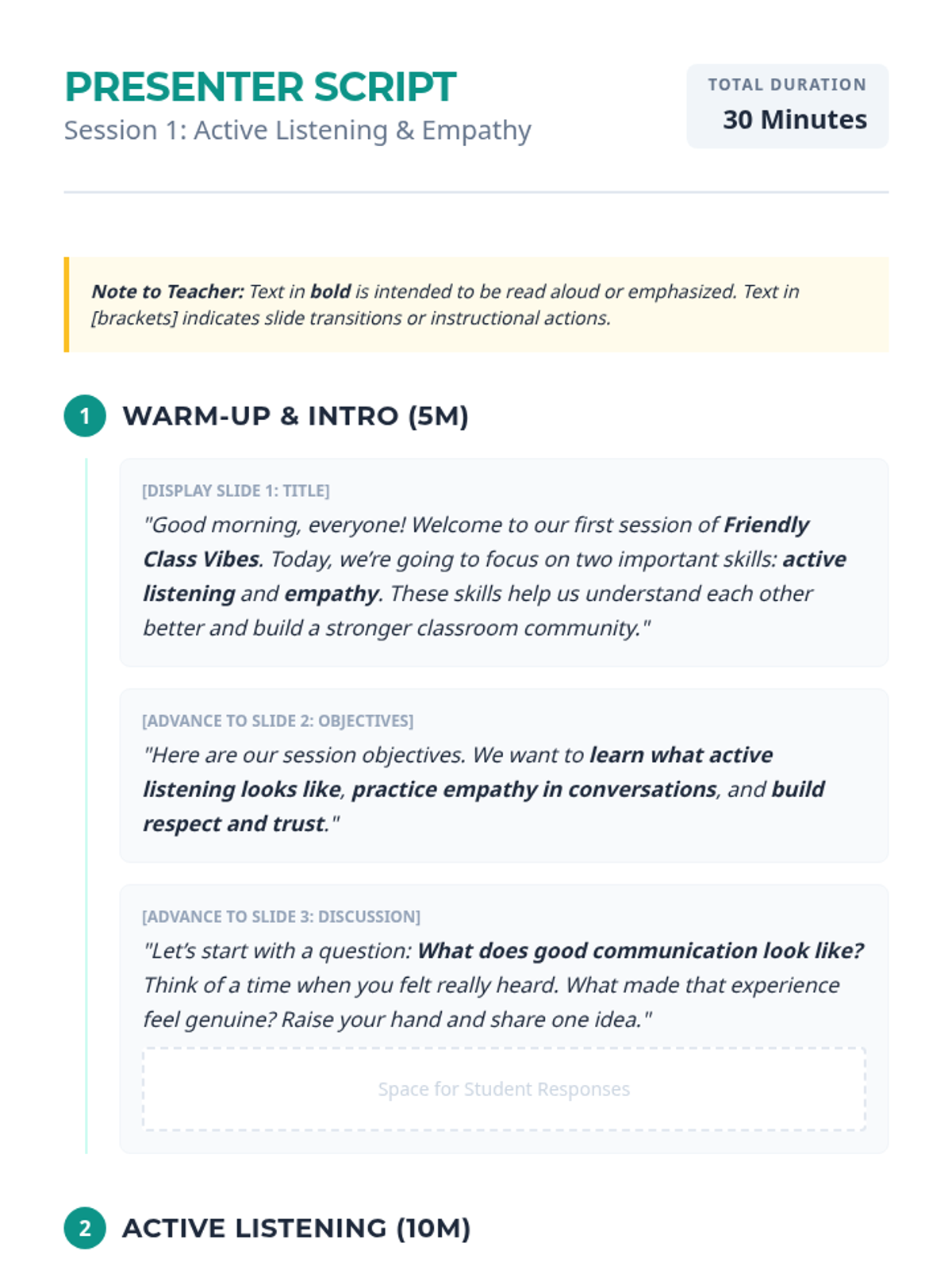
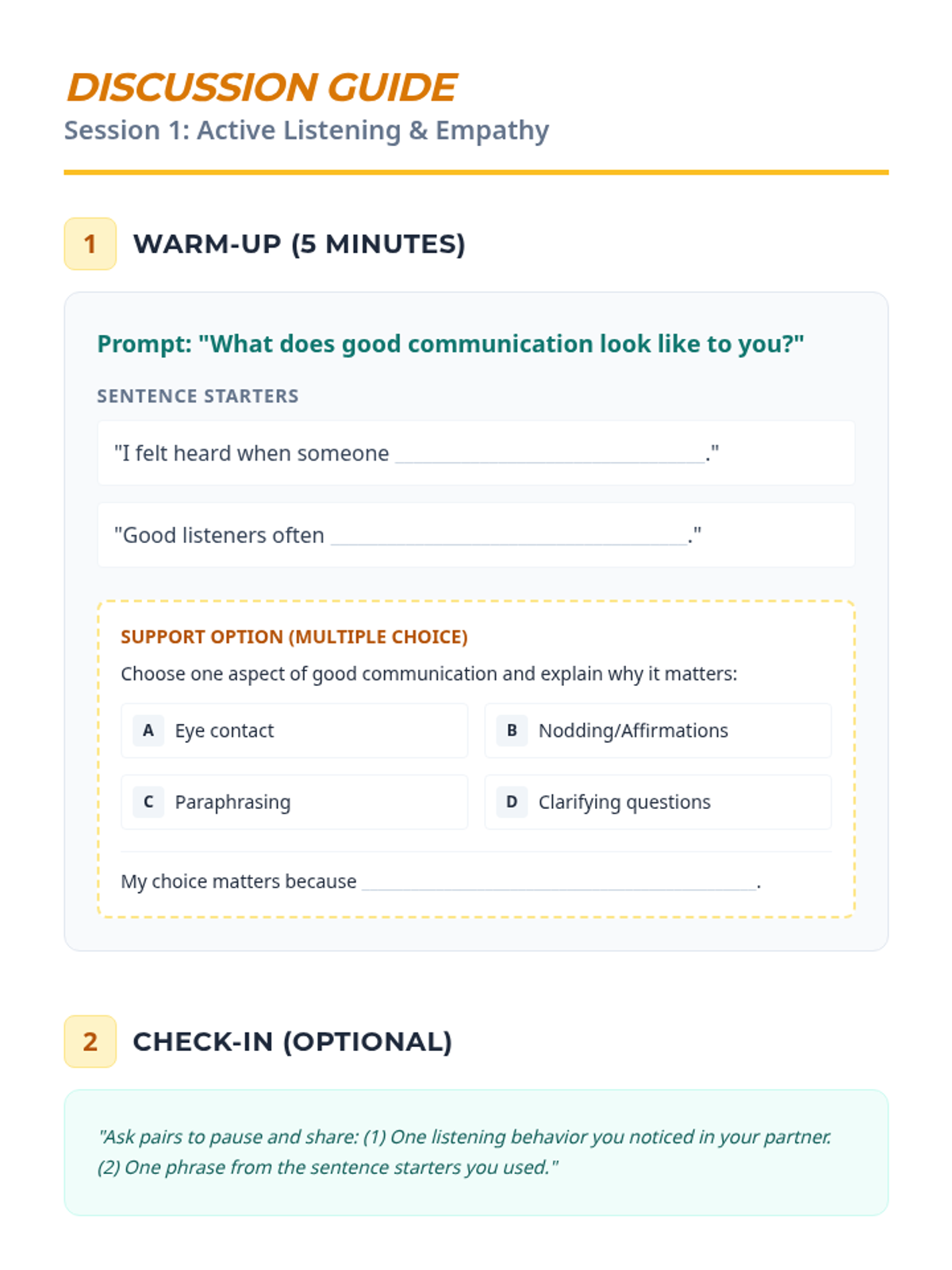
A two-session sequence designed for high school students in instructional settings to develop positive peer engagement strategies. Students practice active listening, empathy, and respectful feedback through interactive activities and role-play.
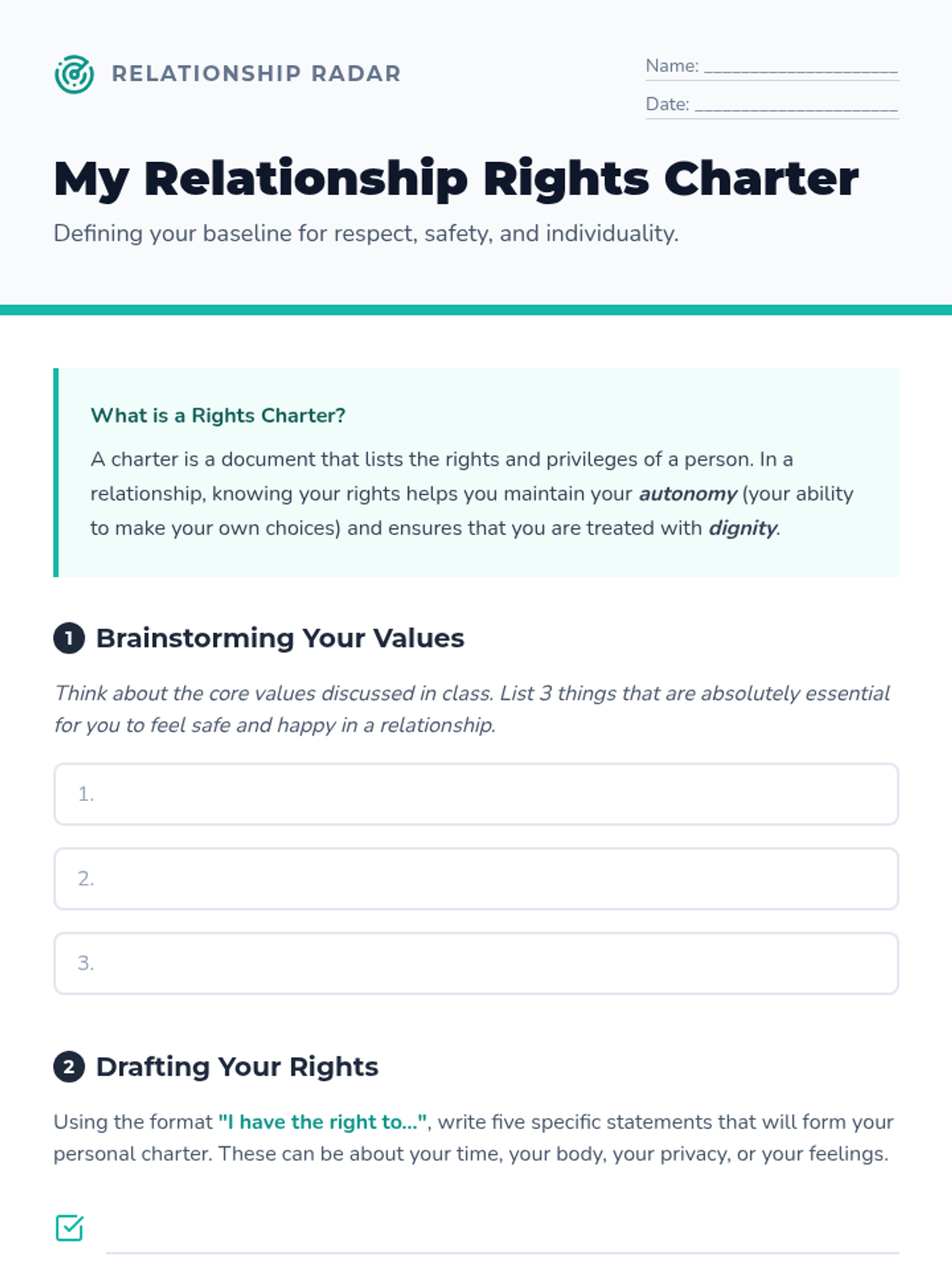
This project-based sequence explores emotional safety and decision-making in relationships. Students learn to balance friendships with romantic interests, trust their intuition, build resilience through rejection, and advocate for equality in their connections, culminating in a personal 'Relationship Rights' zine.
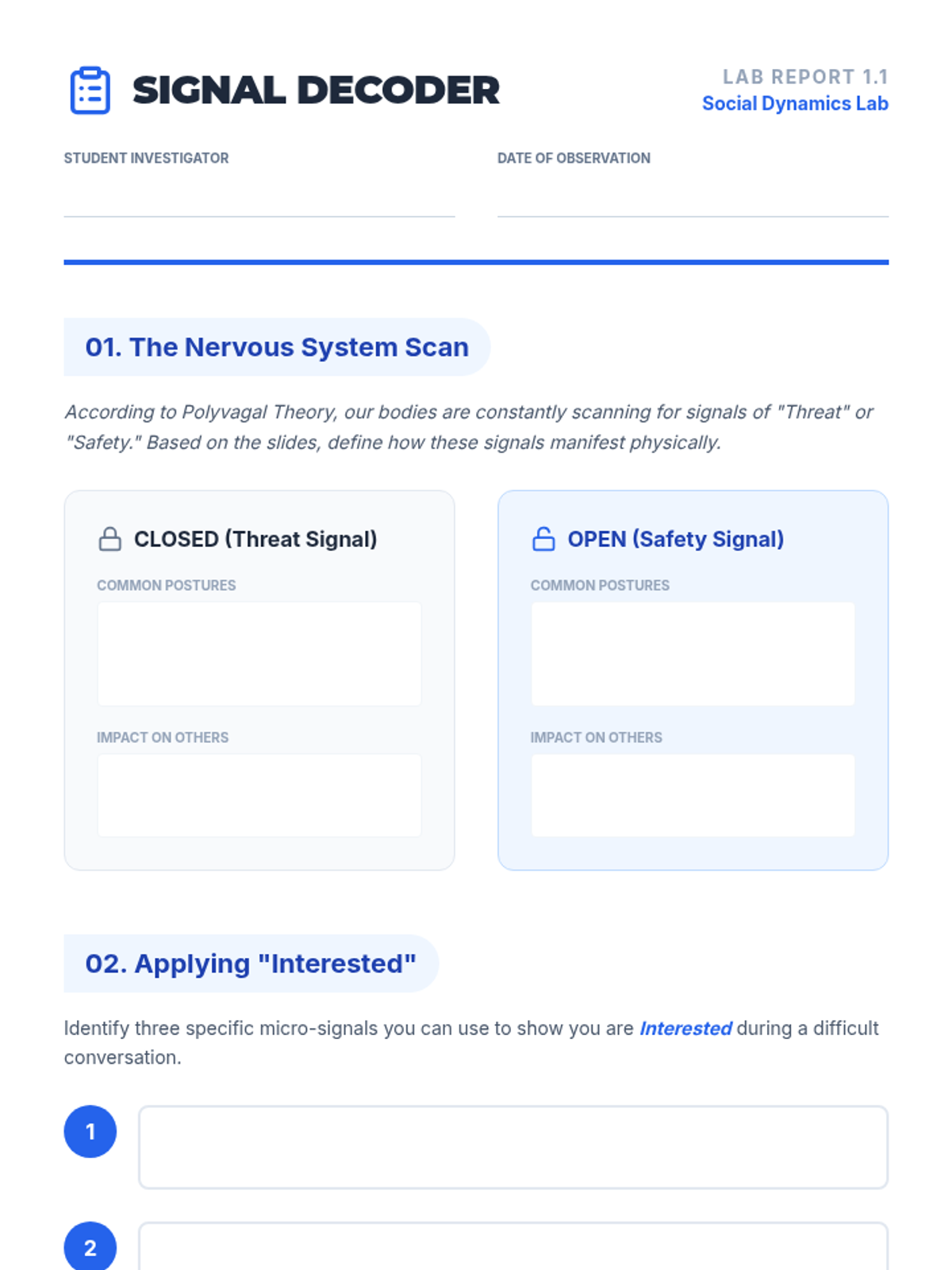
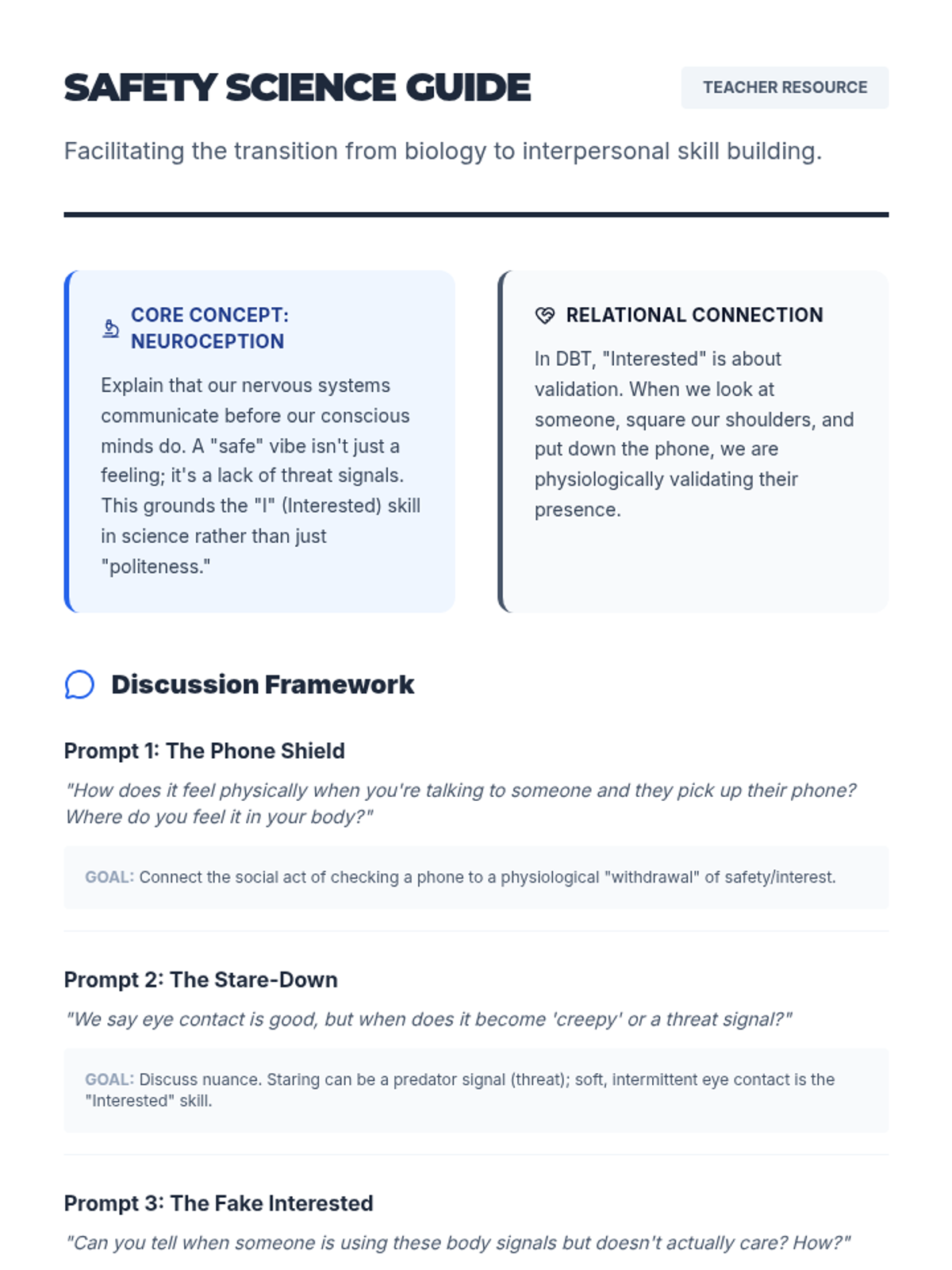
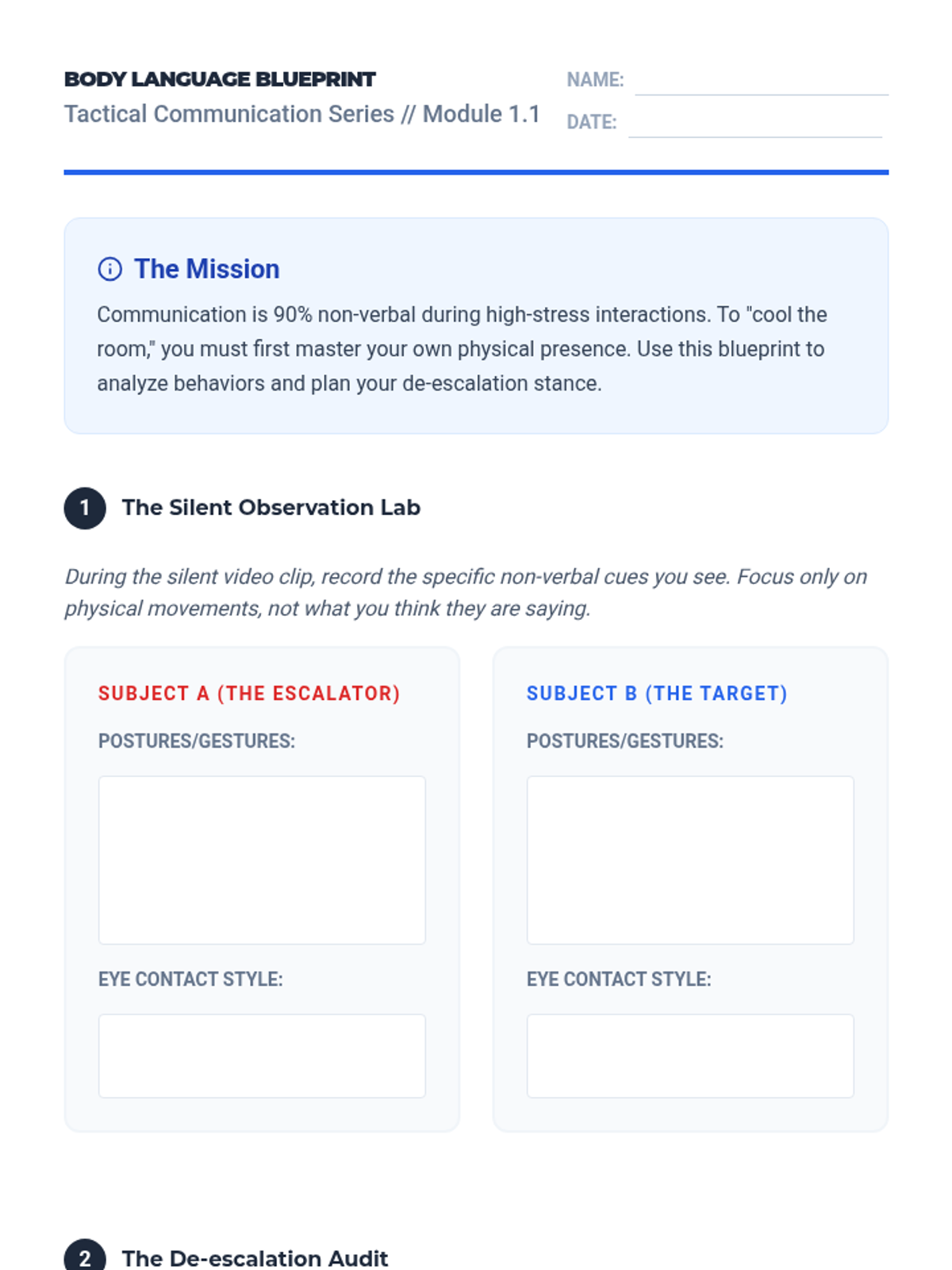
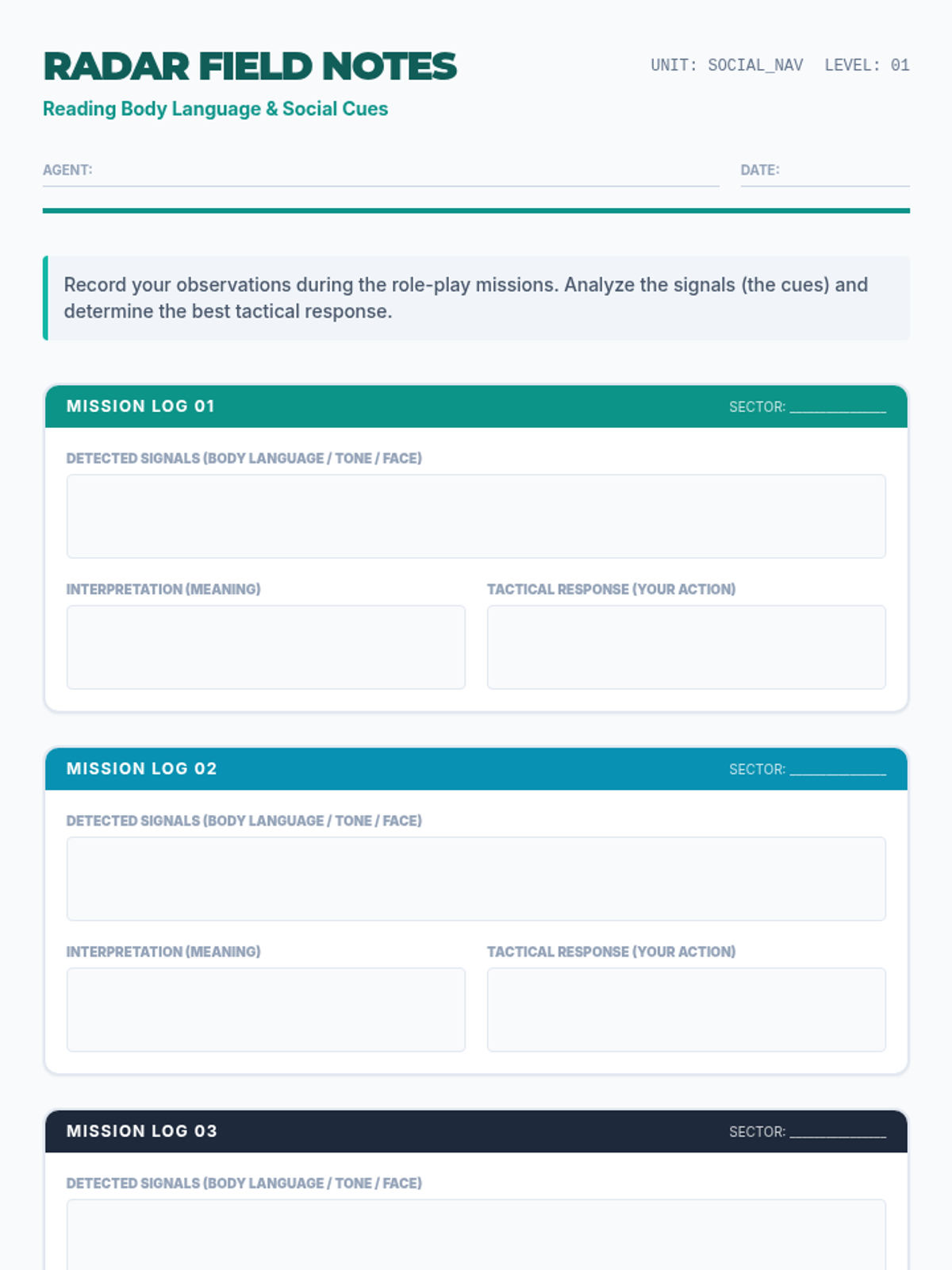
A project-based unit exploring the nonverbal elements of GIVE skills (Gentle, Interested, Validate, Easy manner), moving from biological theory and field observation to performance-based synthesis. Students analyze body language, tone, and micro-expressions to understand how their demeanor impacts social safety.
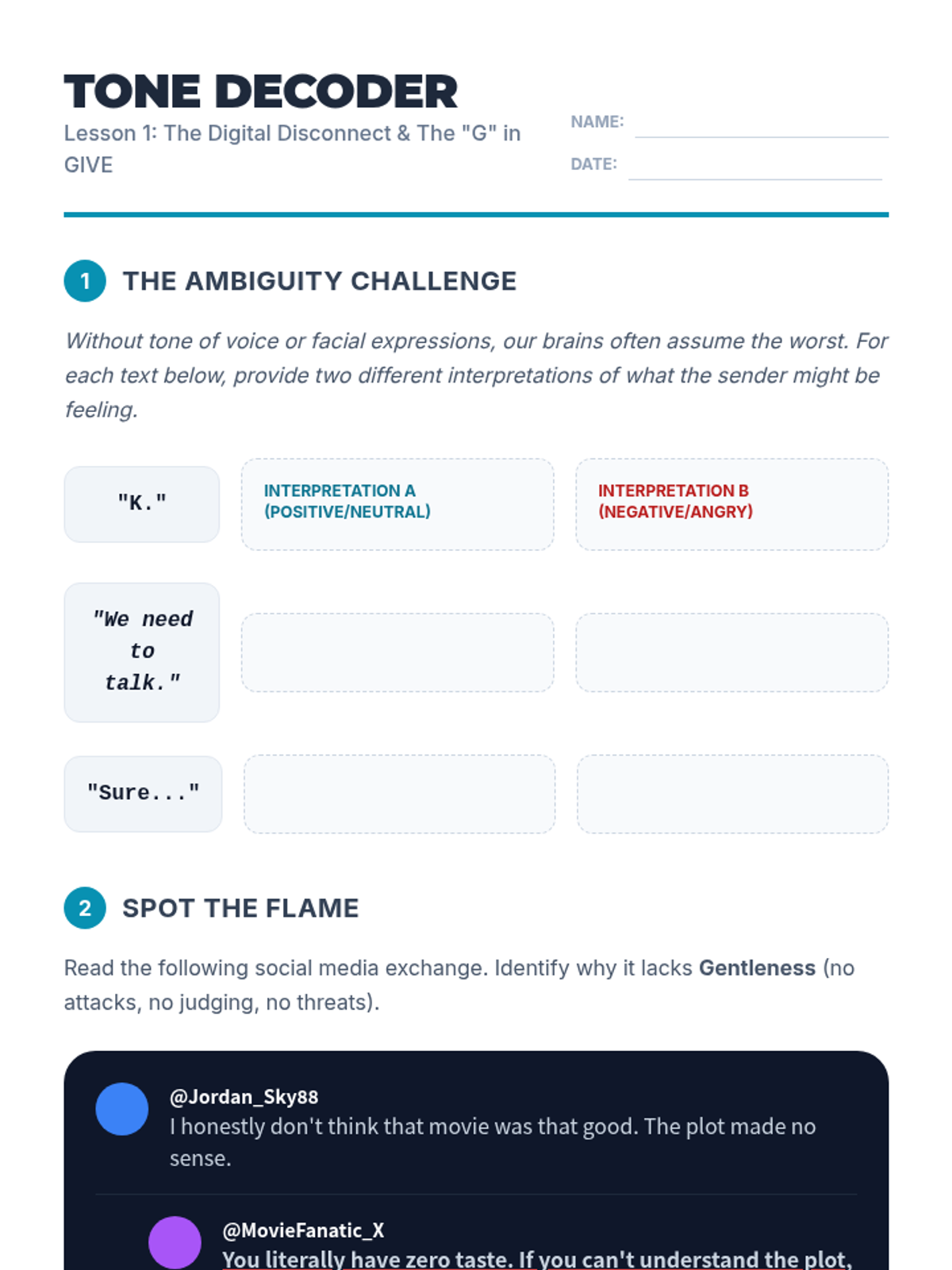
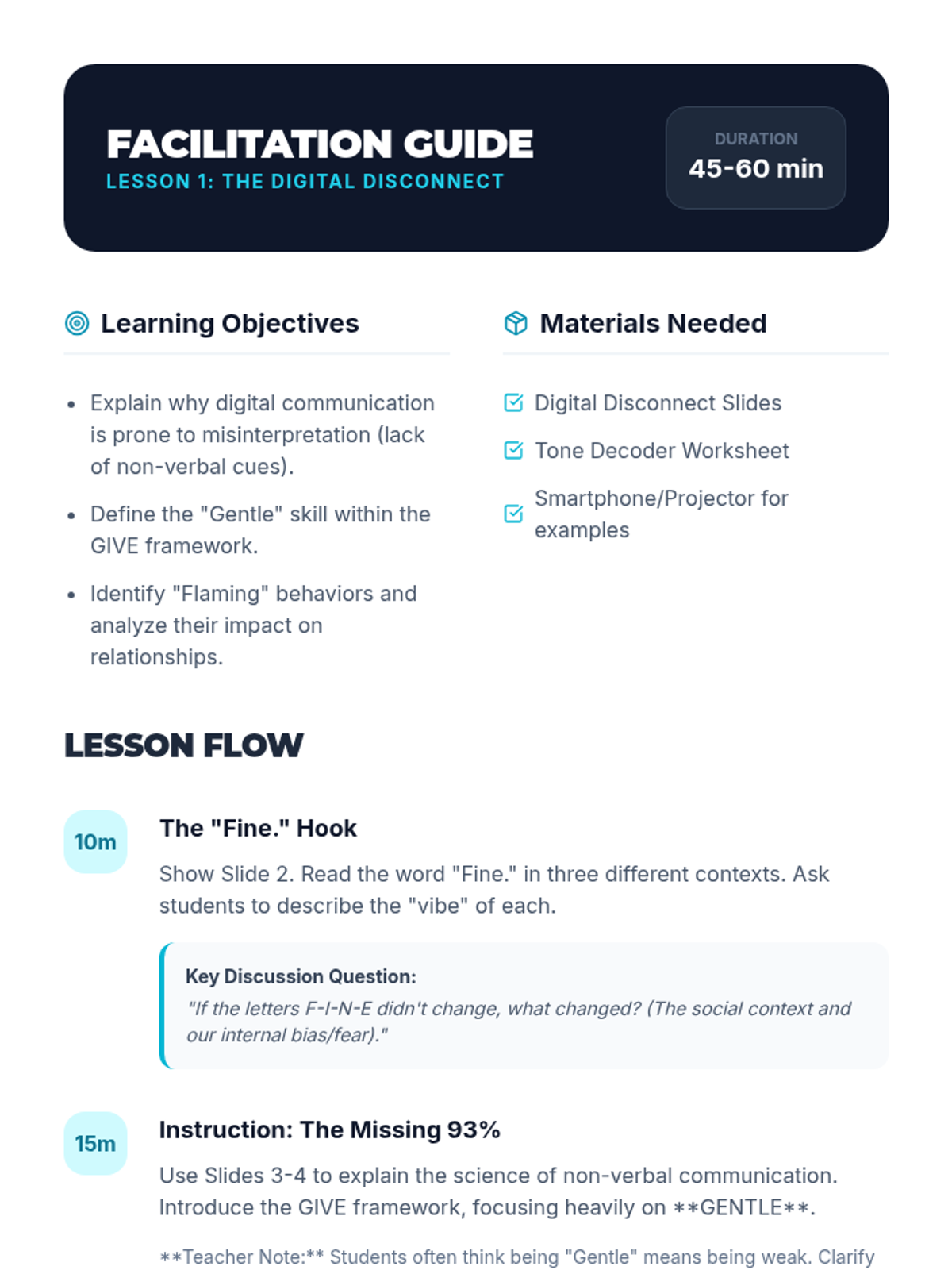
This sequence explores the application of DBT's GIVE skills (Gentle, Interested, Validate, Easy manner) in digital environments. Students will analyze digital miscommunication and learn to translate empathy and validation into text, emojis, and social media interactions.
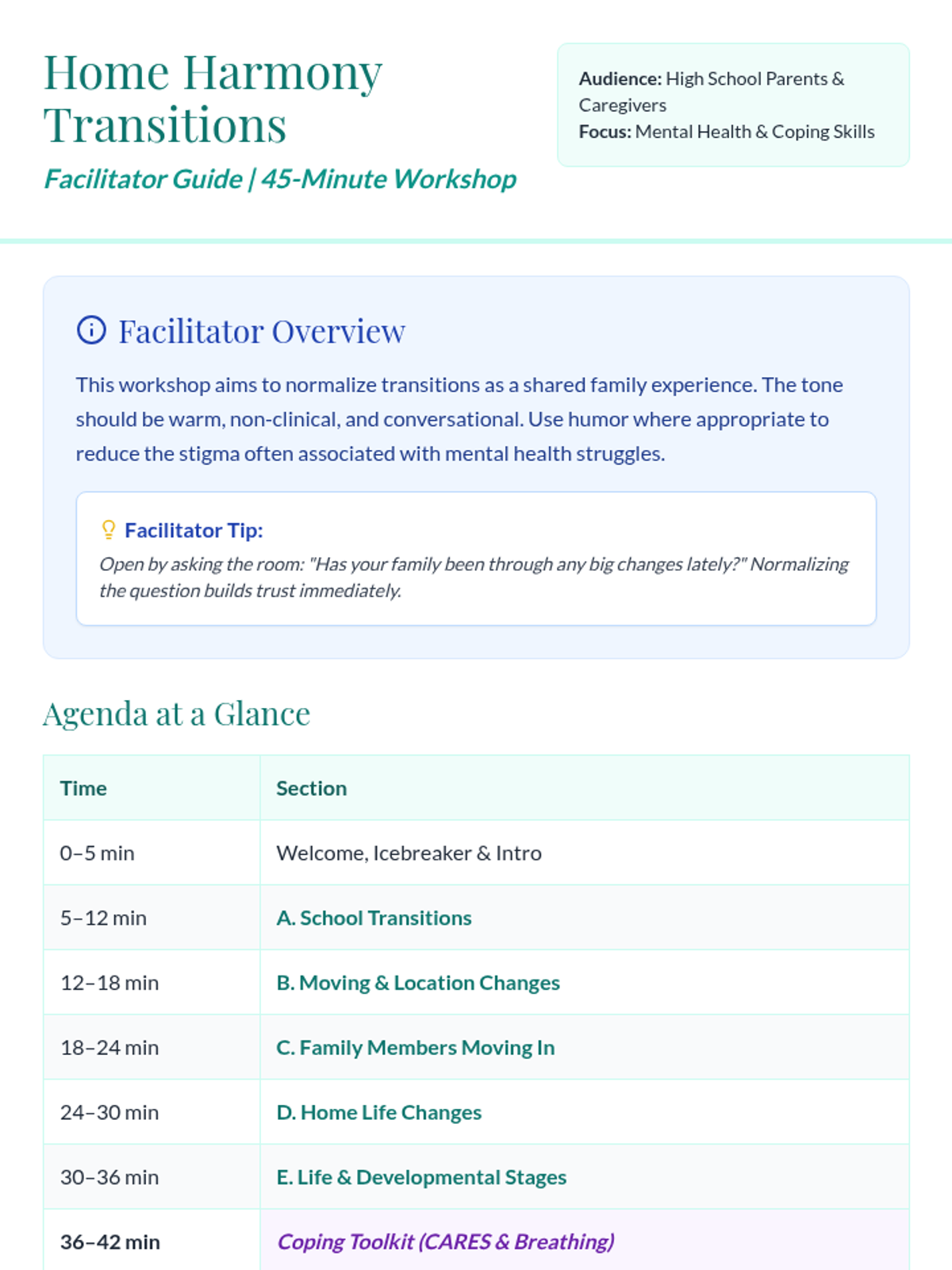
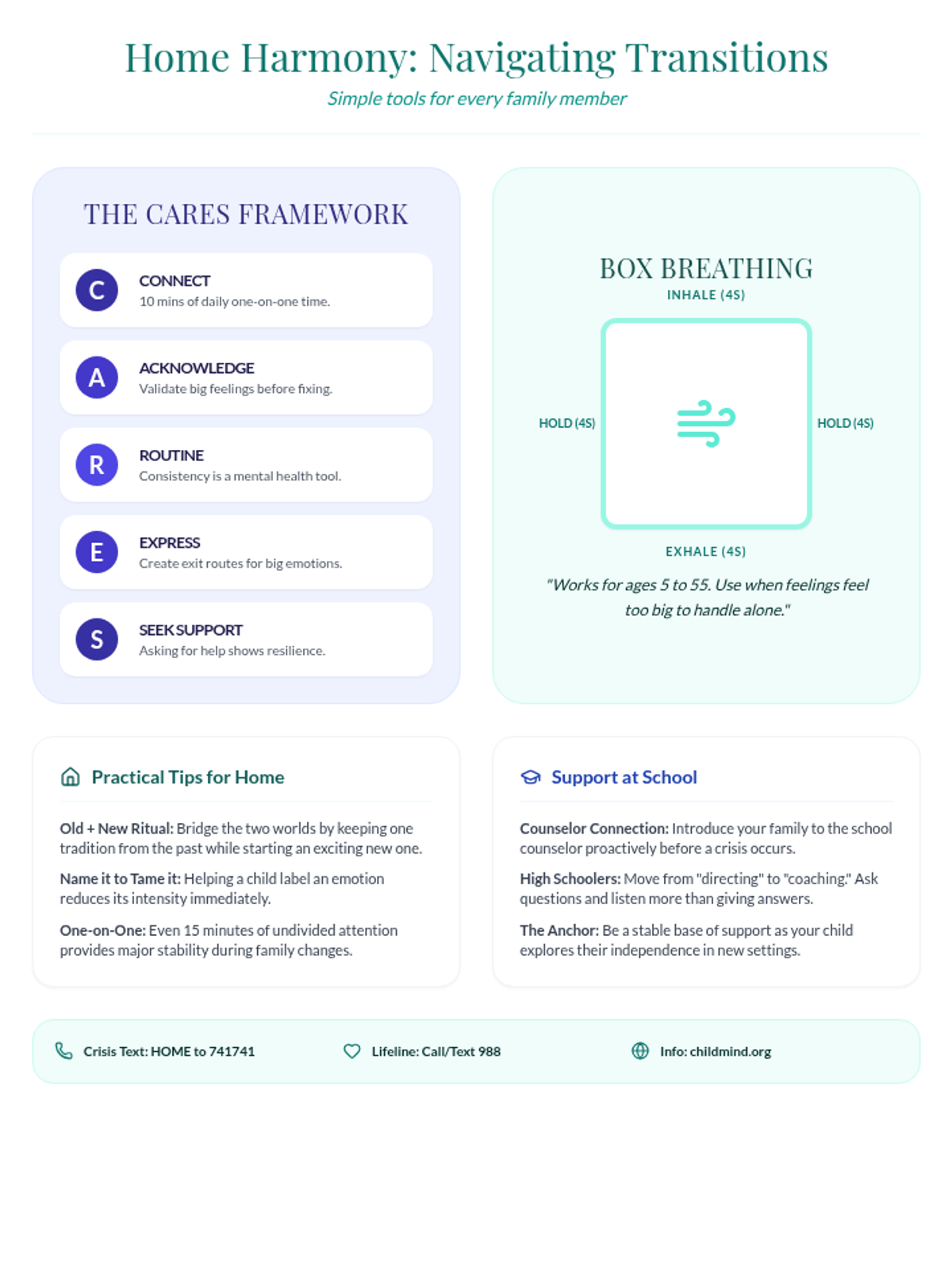
A comprehensive resource kit for parents and caregivers to support their families through major life transitions, focusing on mental health, coping skills, and school-based support.
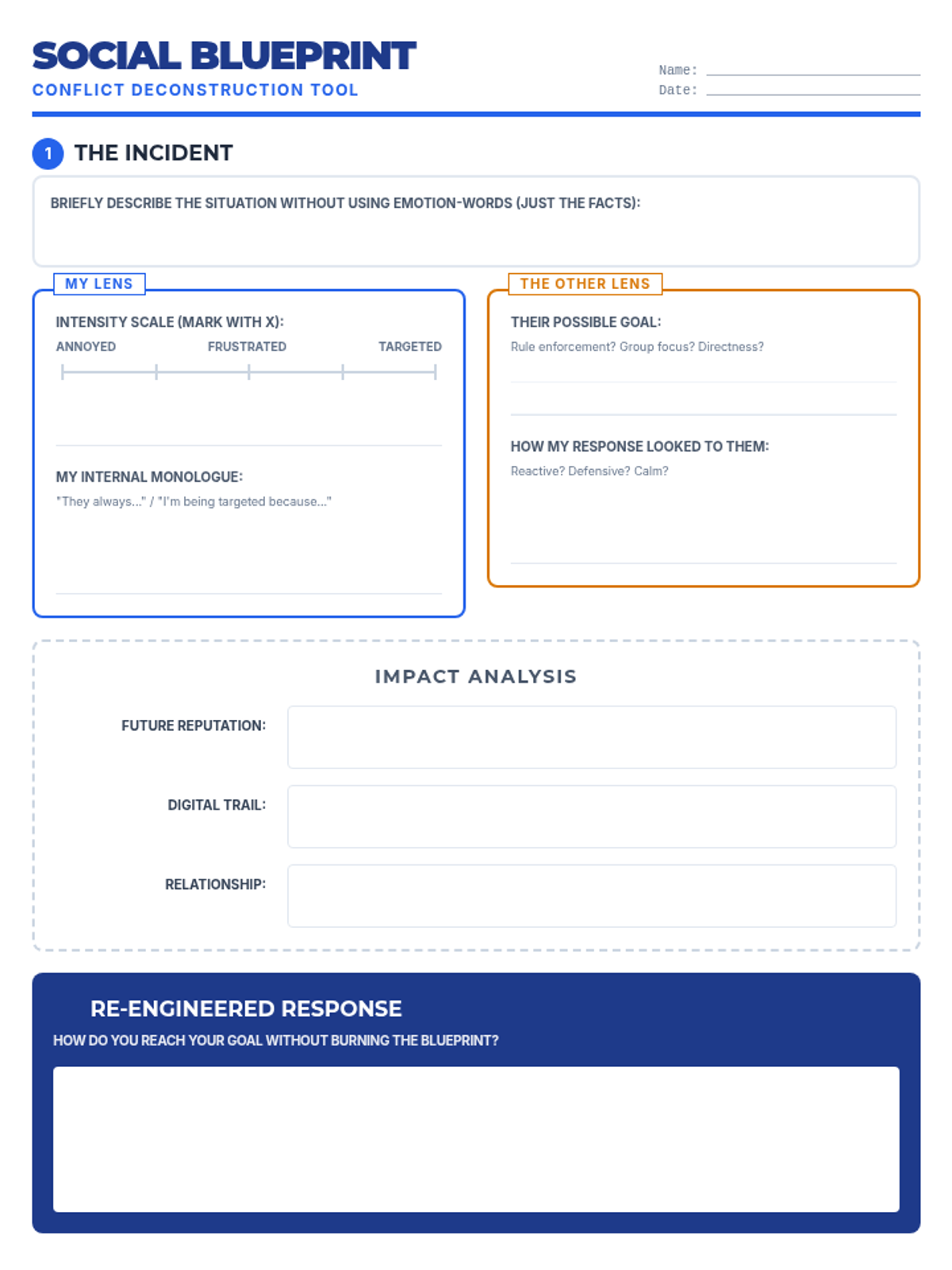
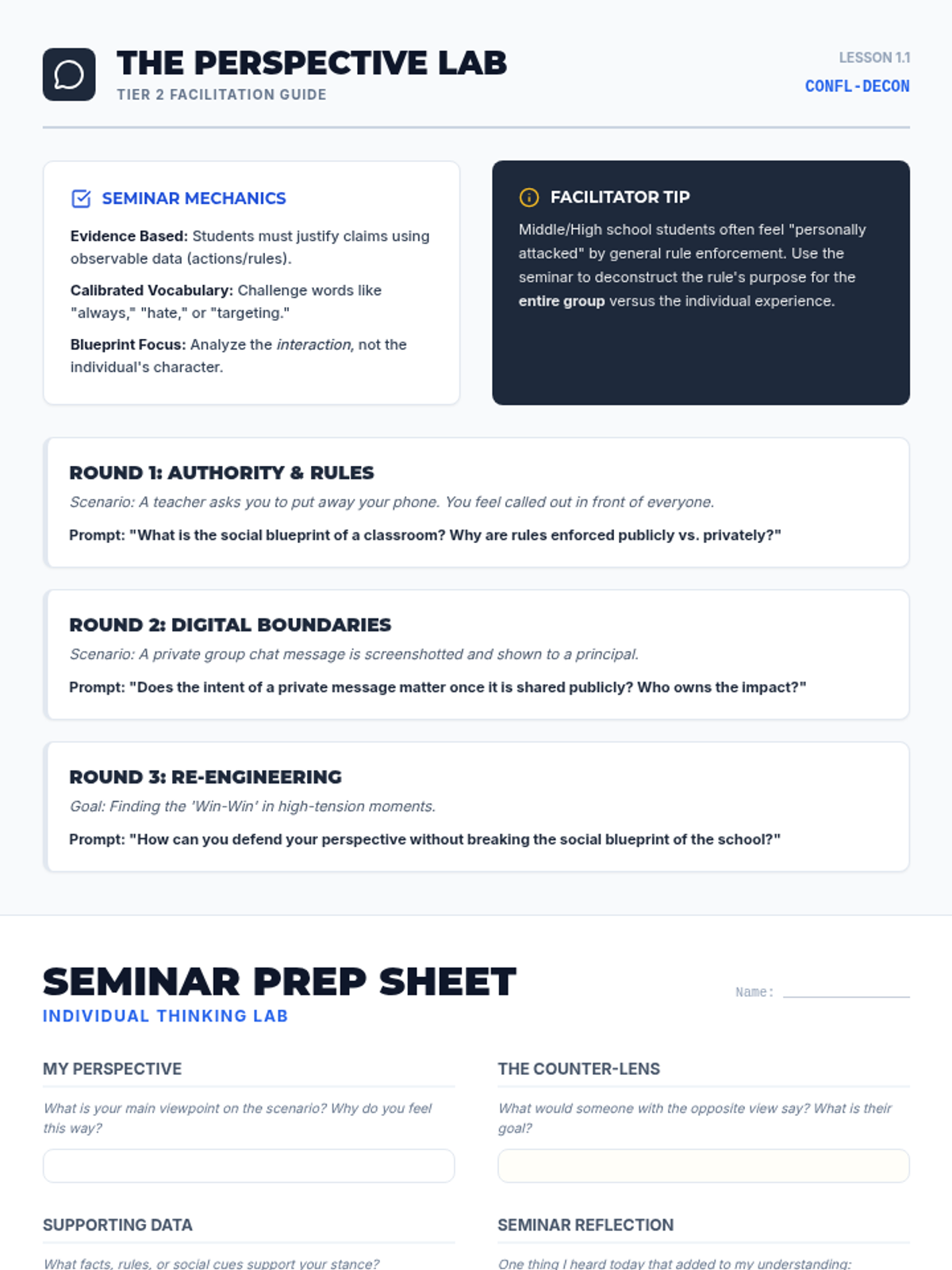
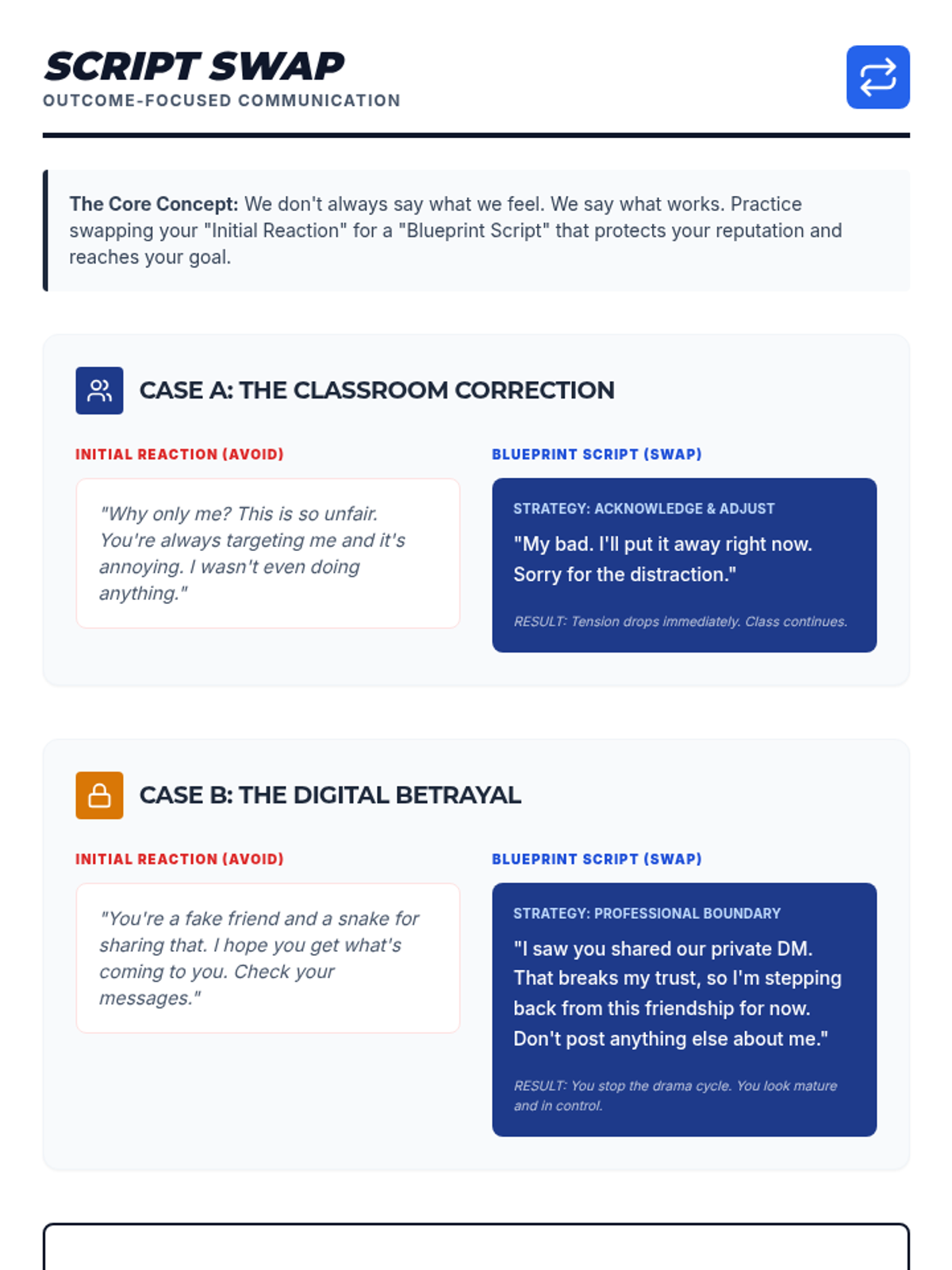
A tier 2 social skills curriculum for middle and high school students focusing on perspective taking, conflict resolution, and the intersection of digital and physical social interactions. It utilizes a 'Social Blueprint' theme to help students deconstruct and rebuild their social responses.
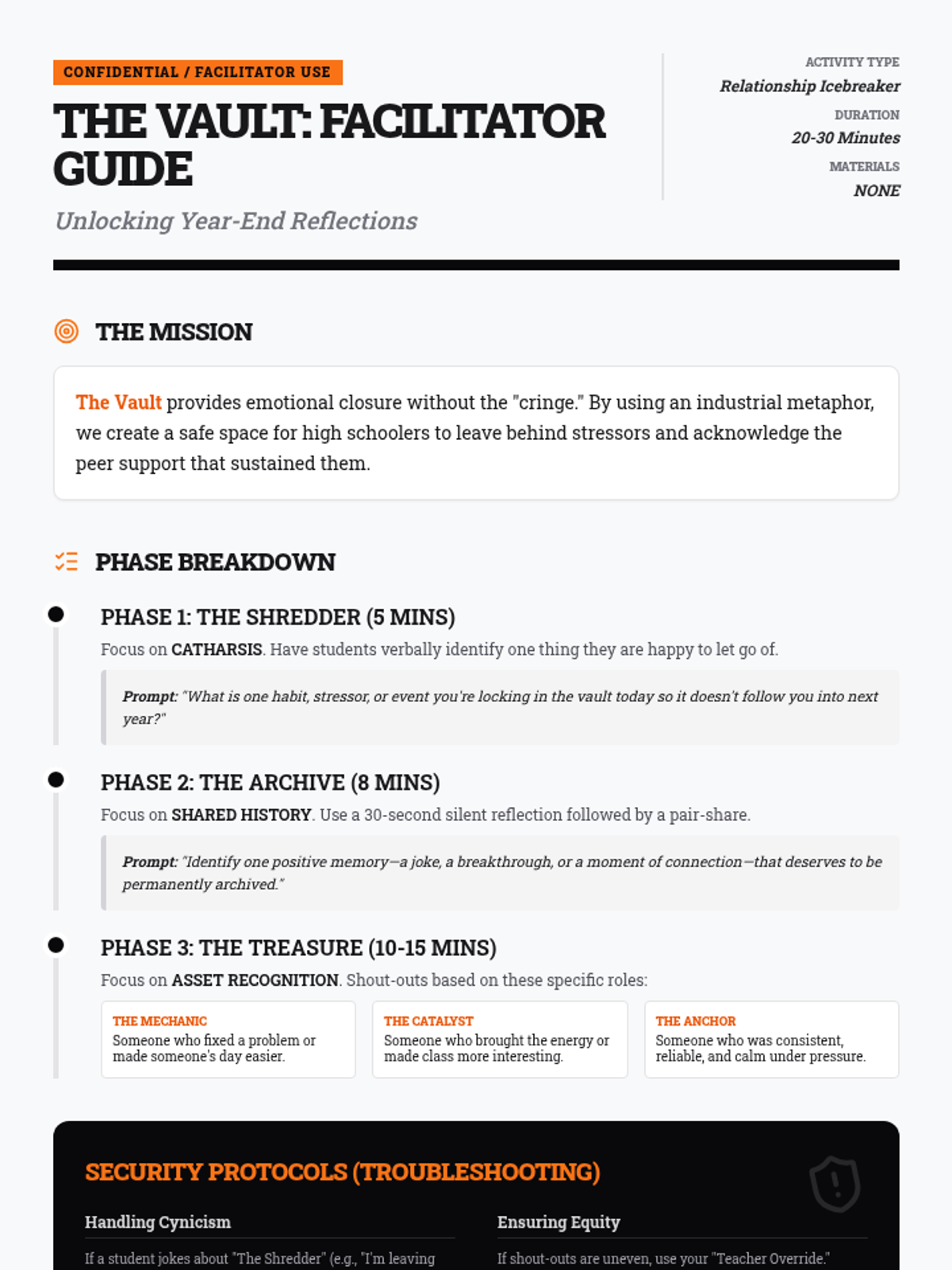
A collection of high-engagement, zero-material icebreakers for high school classrooms focusing on relationship building and reflection.
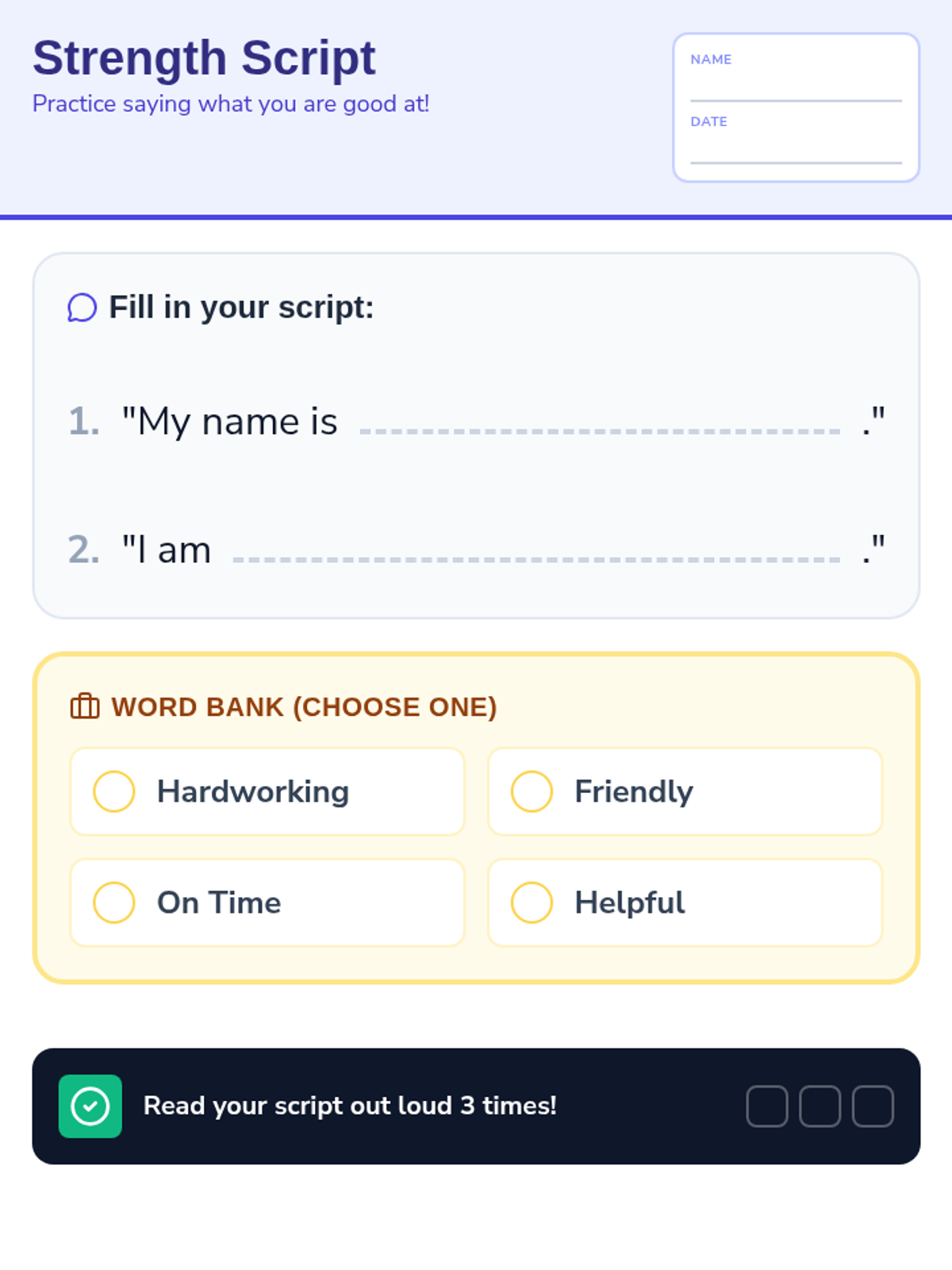
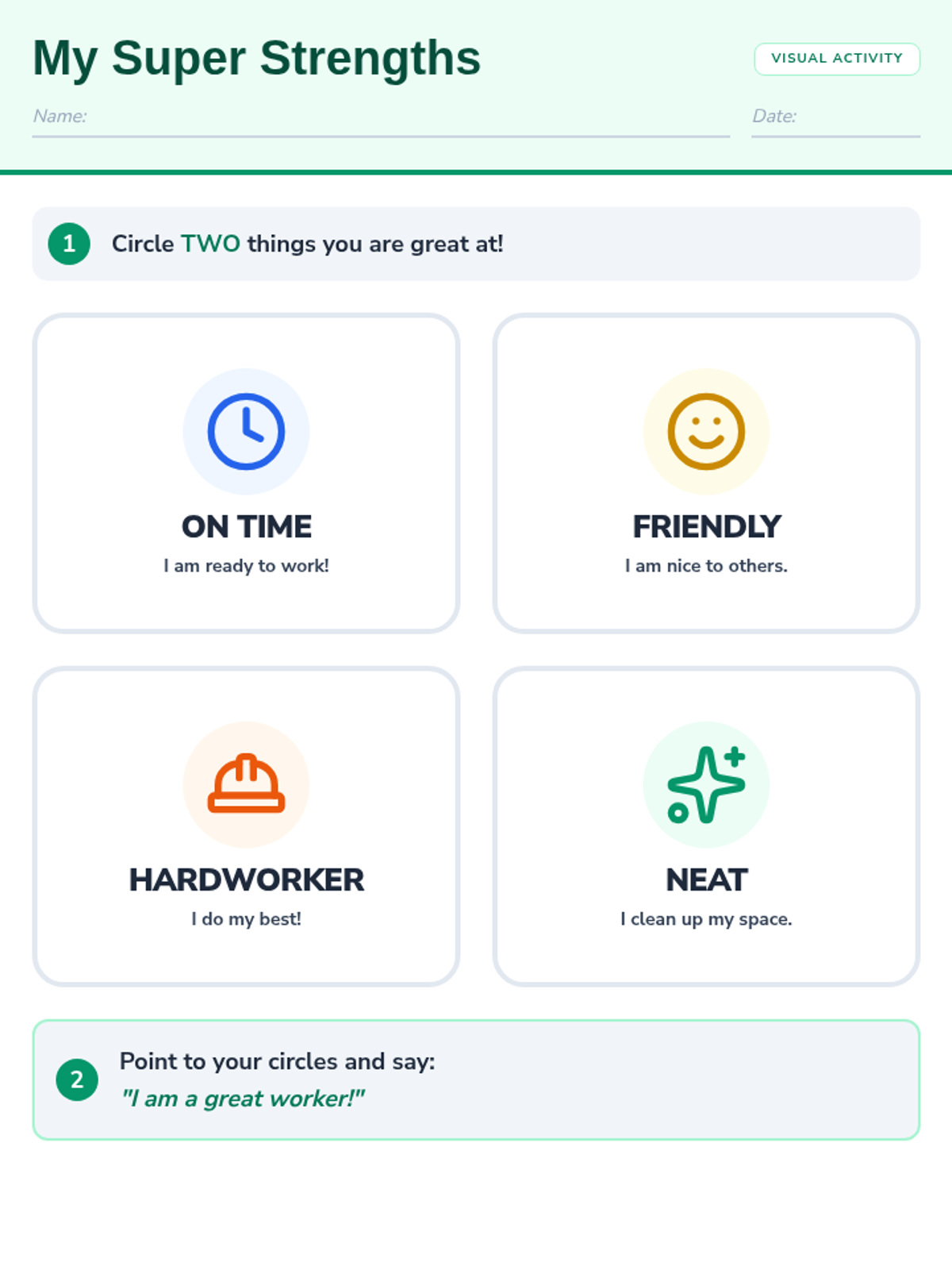
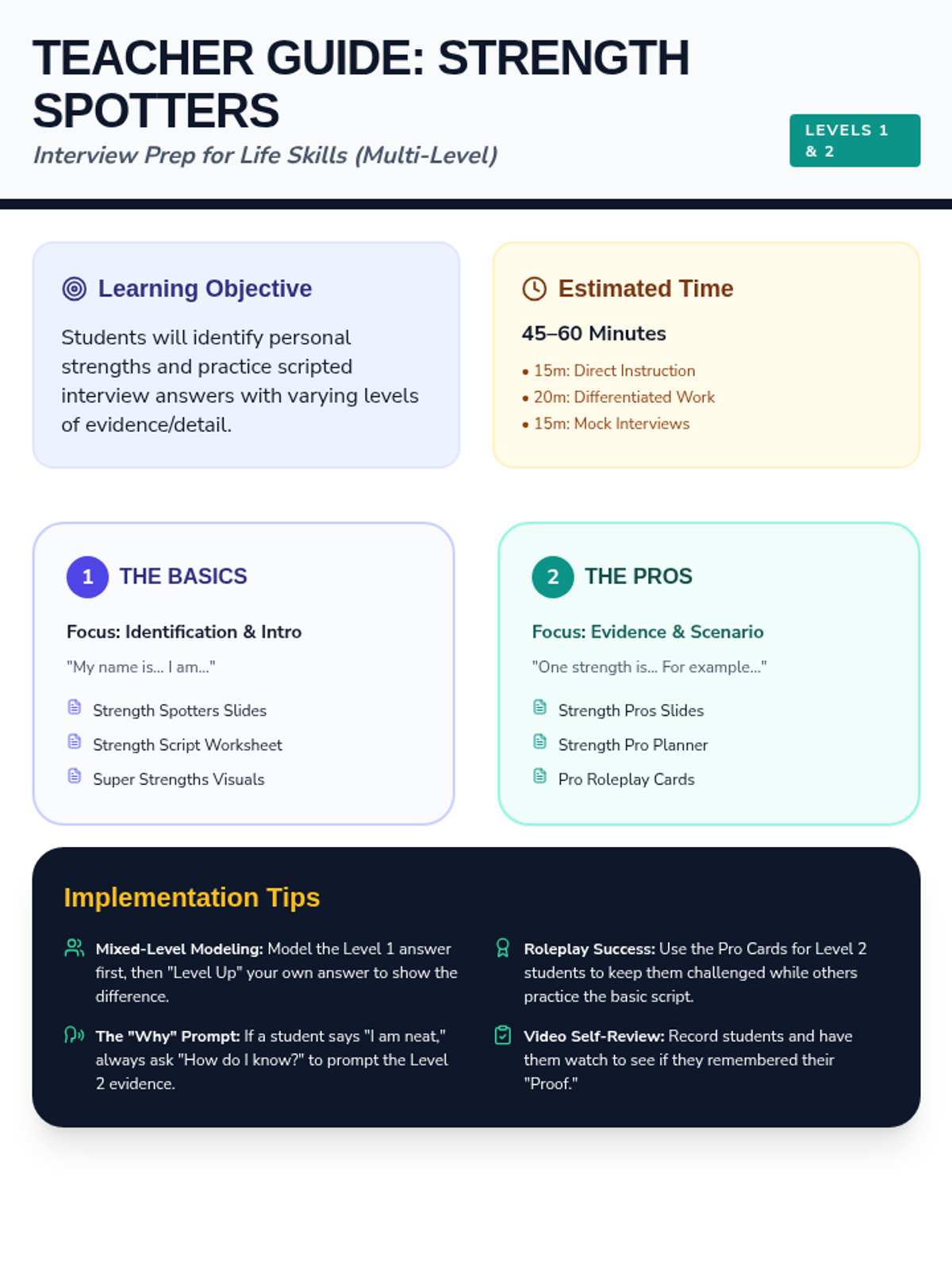
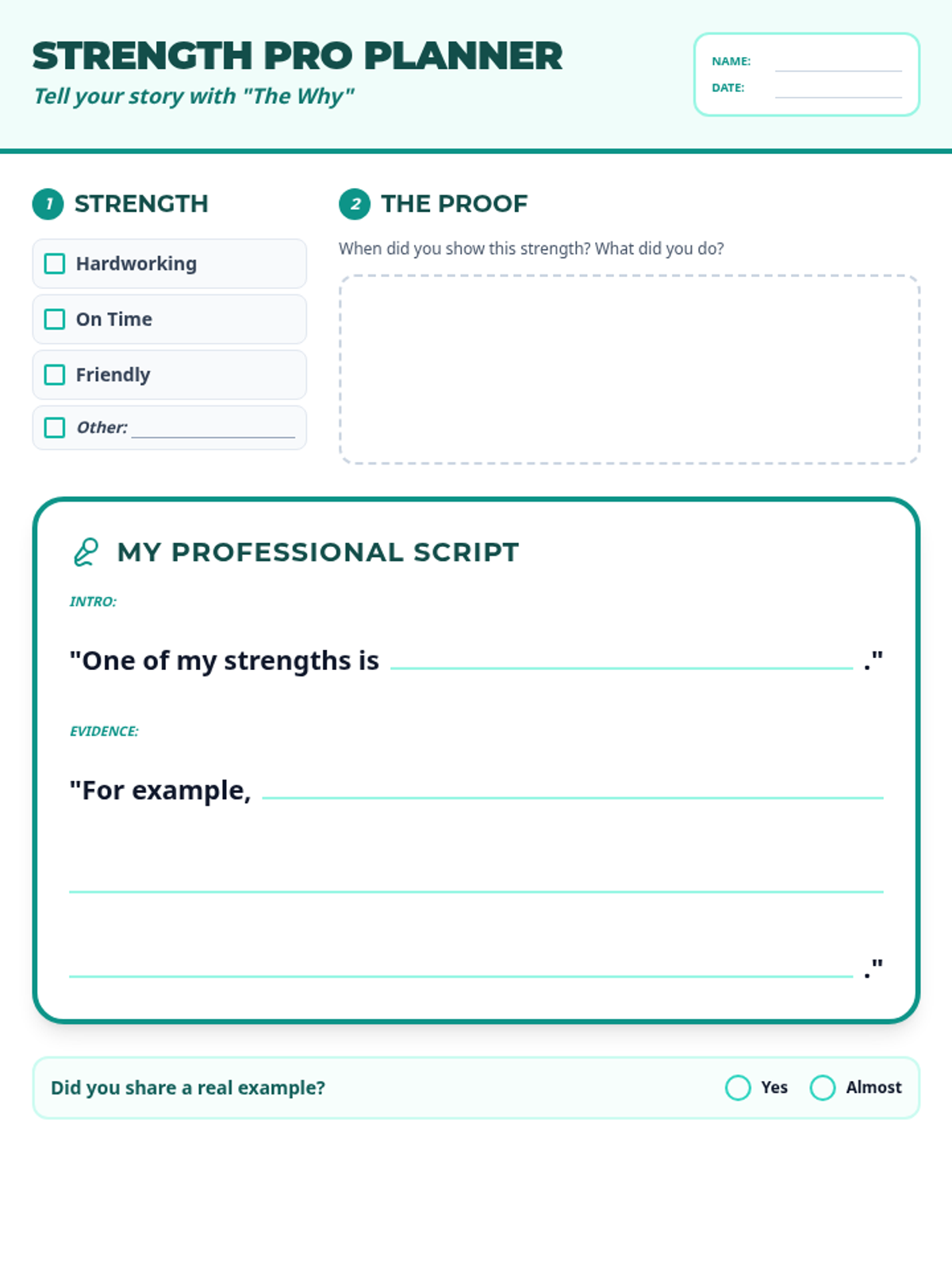
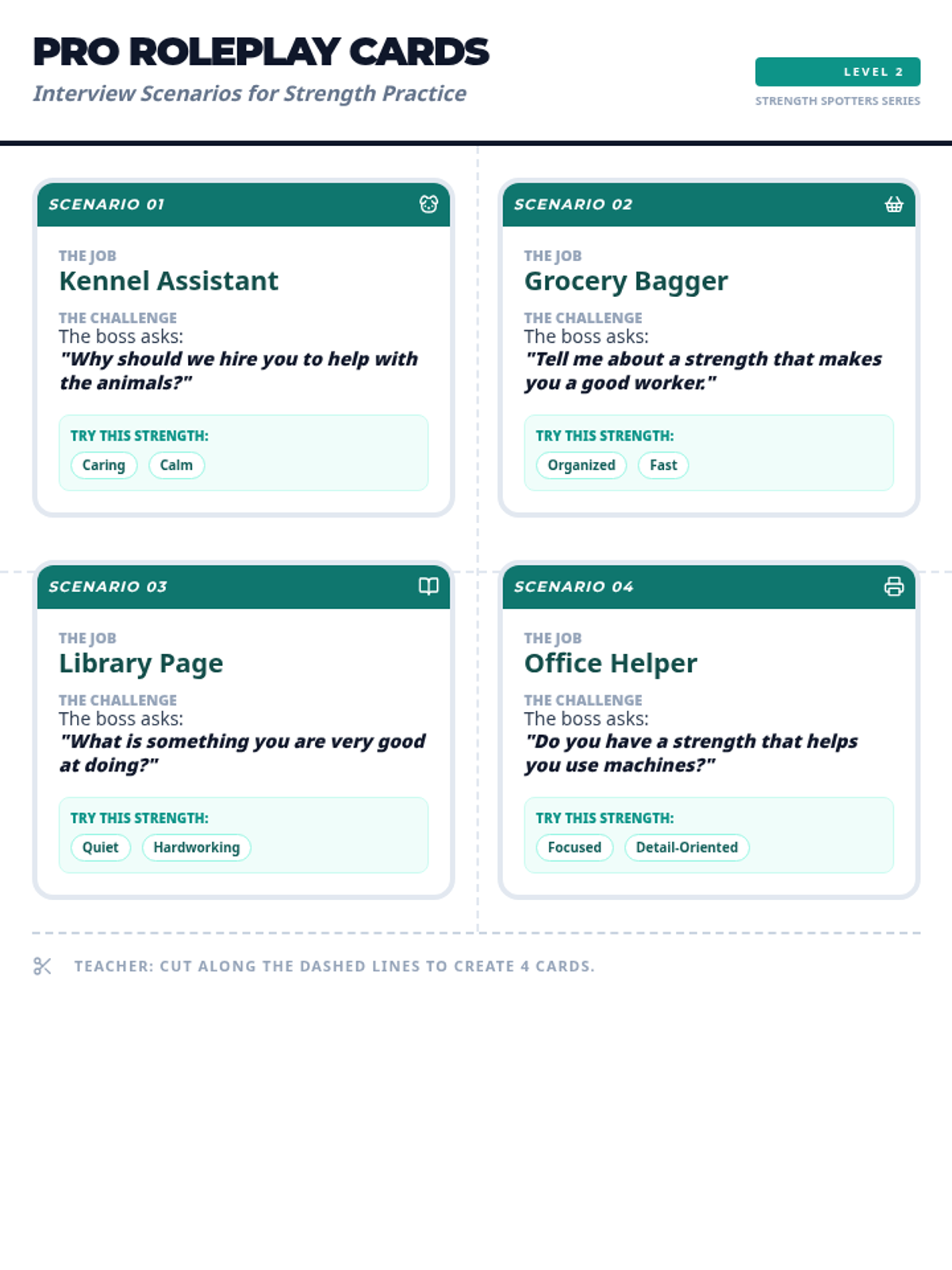
A foundational interview preparation series for life skills students, covering self-identification of strengths, professional greetings, and basic social interaction in a workplace setting.
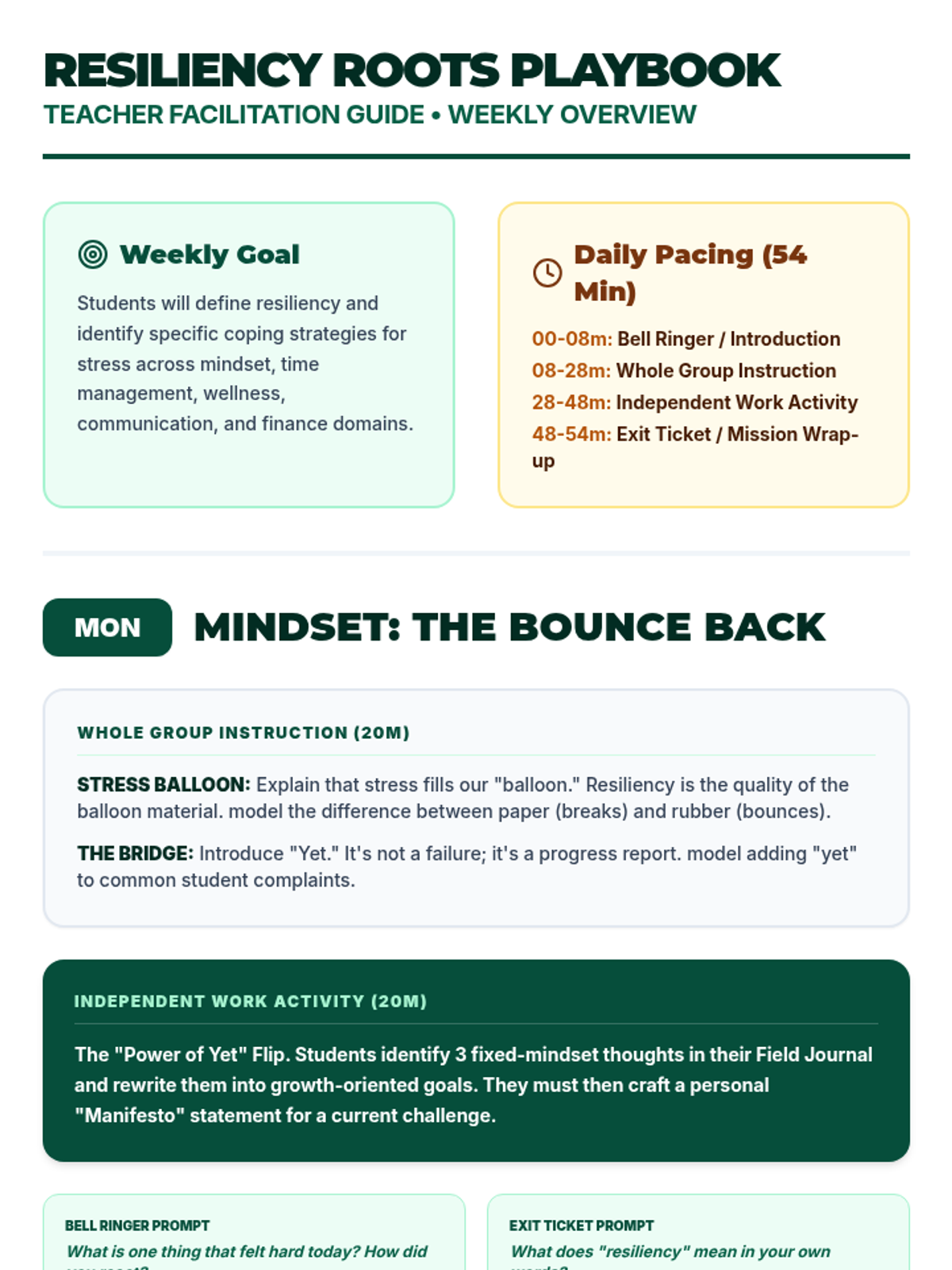
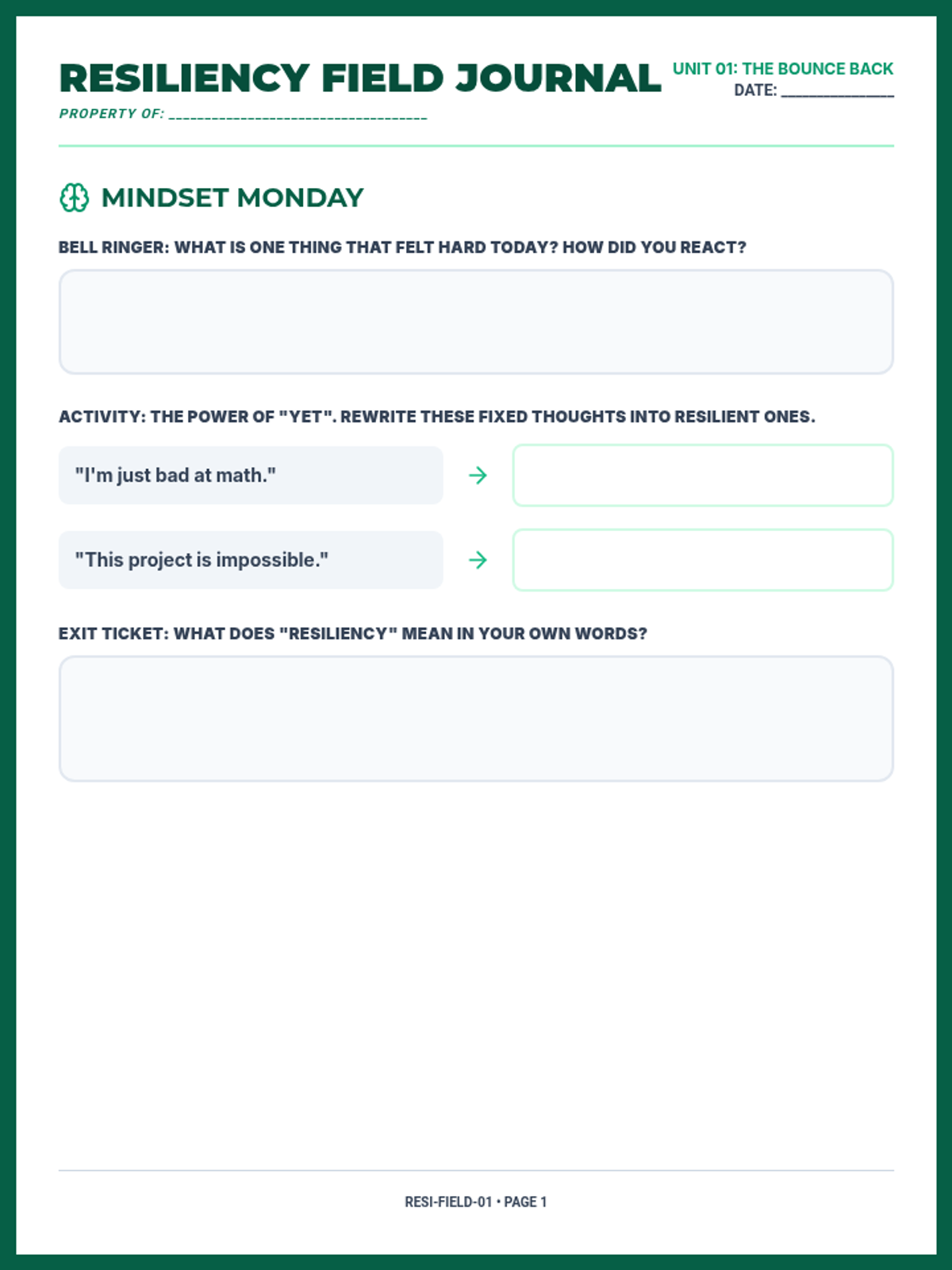
A comprehensive week-long unit focused on building resiliency, stress management, and coping strategies within a life skills context. This sequence follows daily themes to integrate mindset, time management, wellness, communication, and financial literacy into the core focus of bouncing back from challenges.
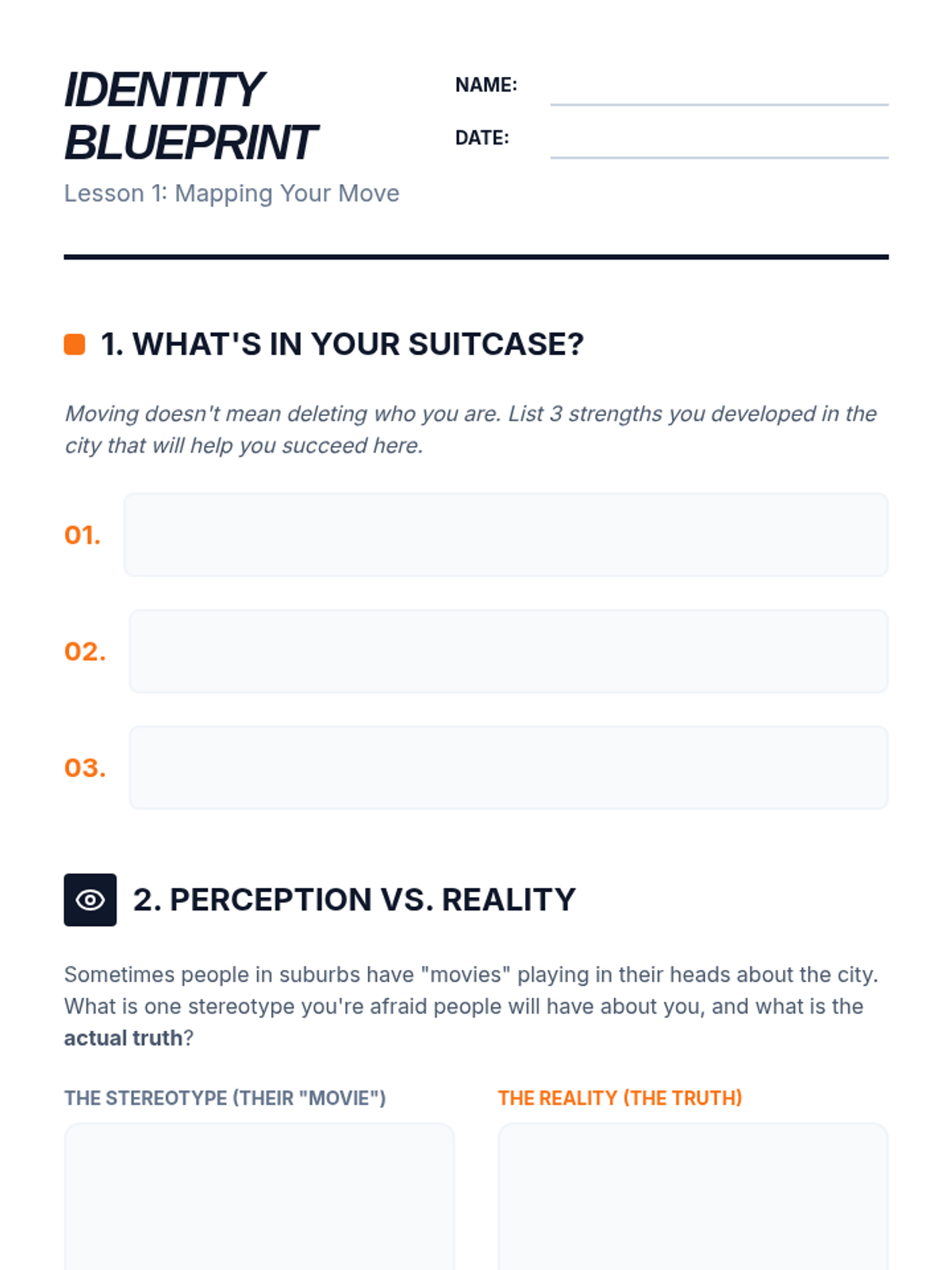
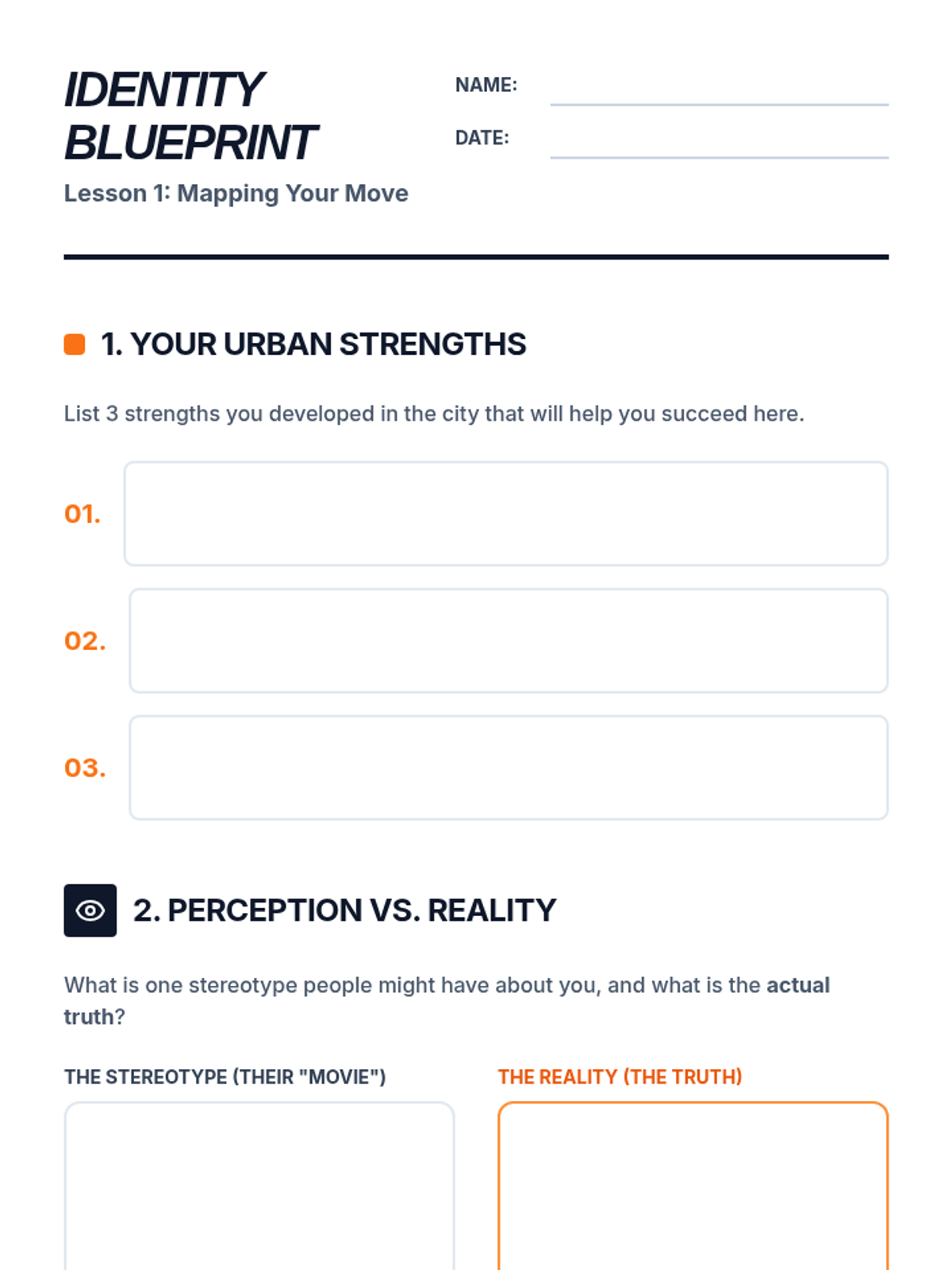
A 10-lesson independent study curriculum designed as an alternative to suspension. The program supports 13-year-old students transitioning from urban to suburban environments, focusing on self-identity, self-regulation, strategic communication, and the serious consequences of drugs, gangs, and weapons.
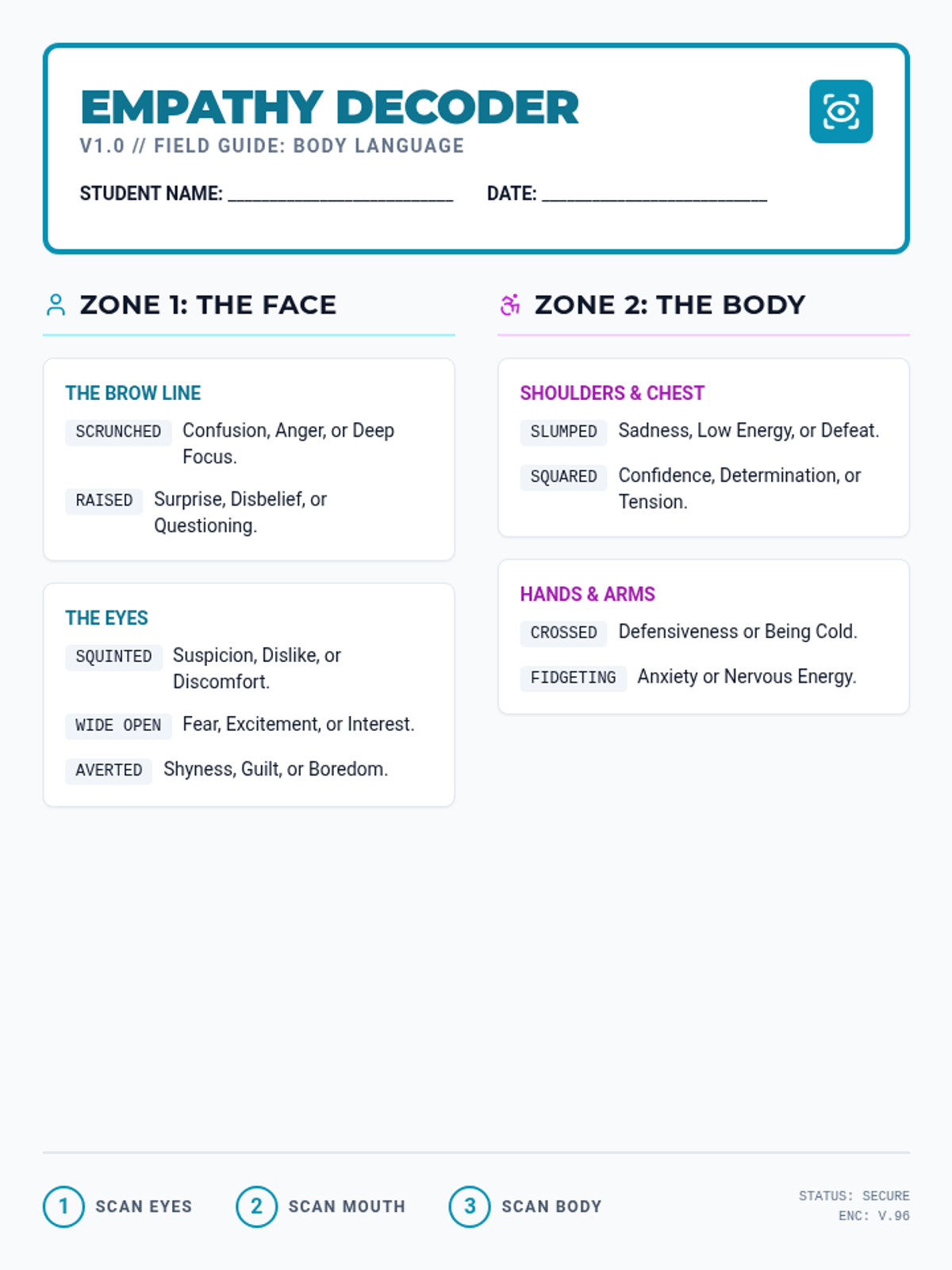
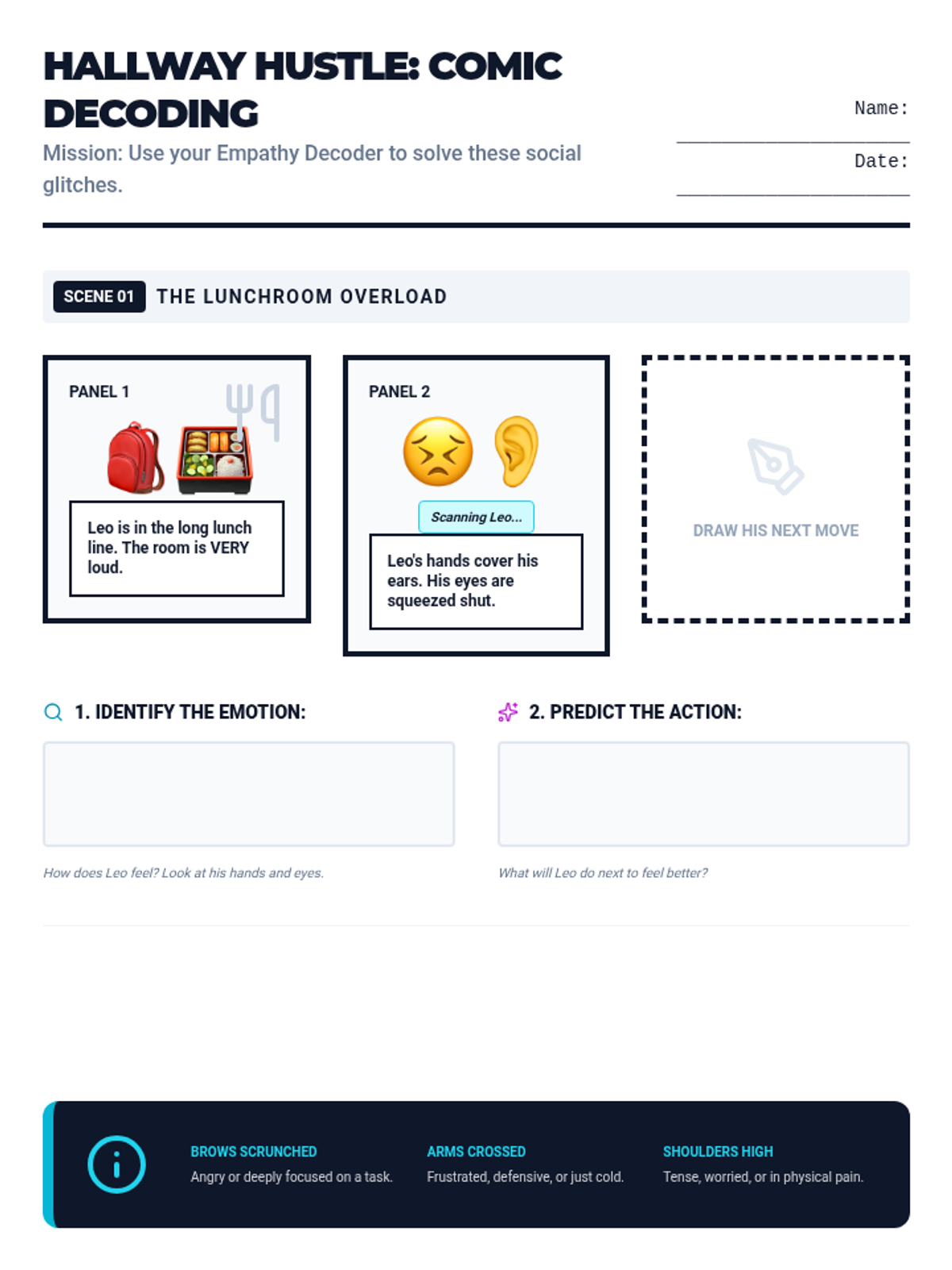
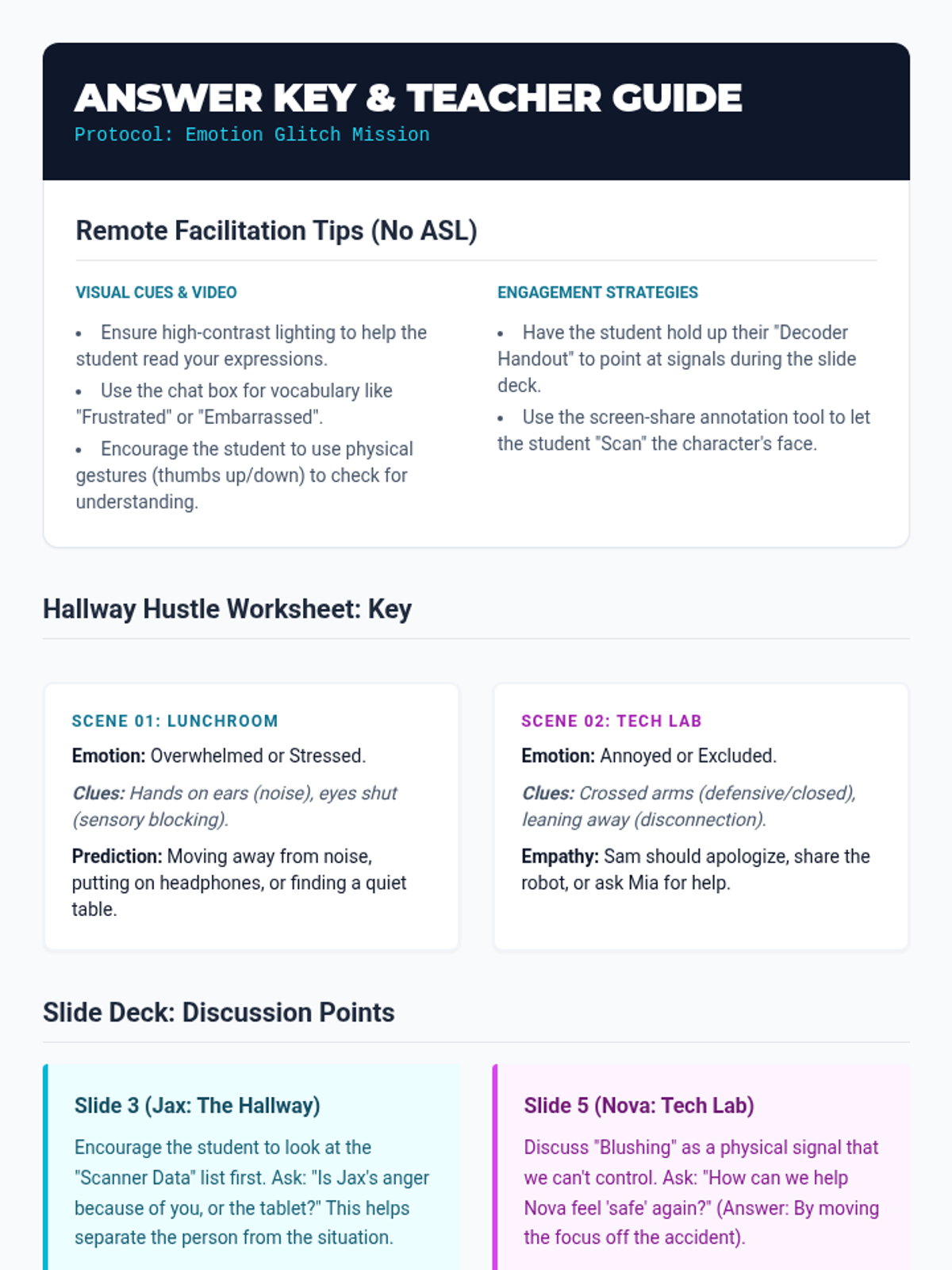
A narrative-driven social work unit for DHH students focusing on non-verbal communication and emotion recognition. Set in a futuristic 'cyber-school' environment to mirror the interactive style of Deafverse.
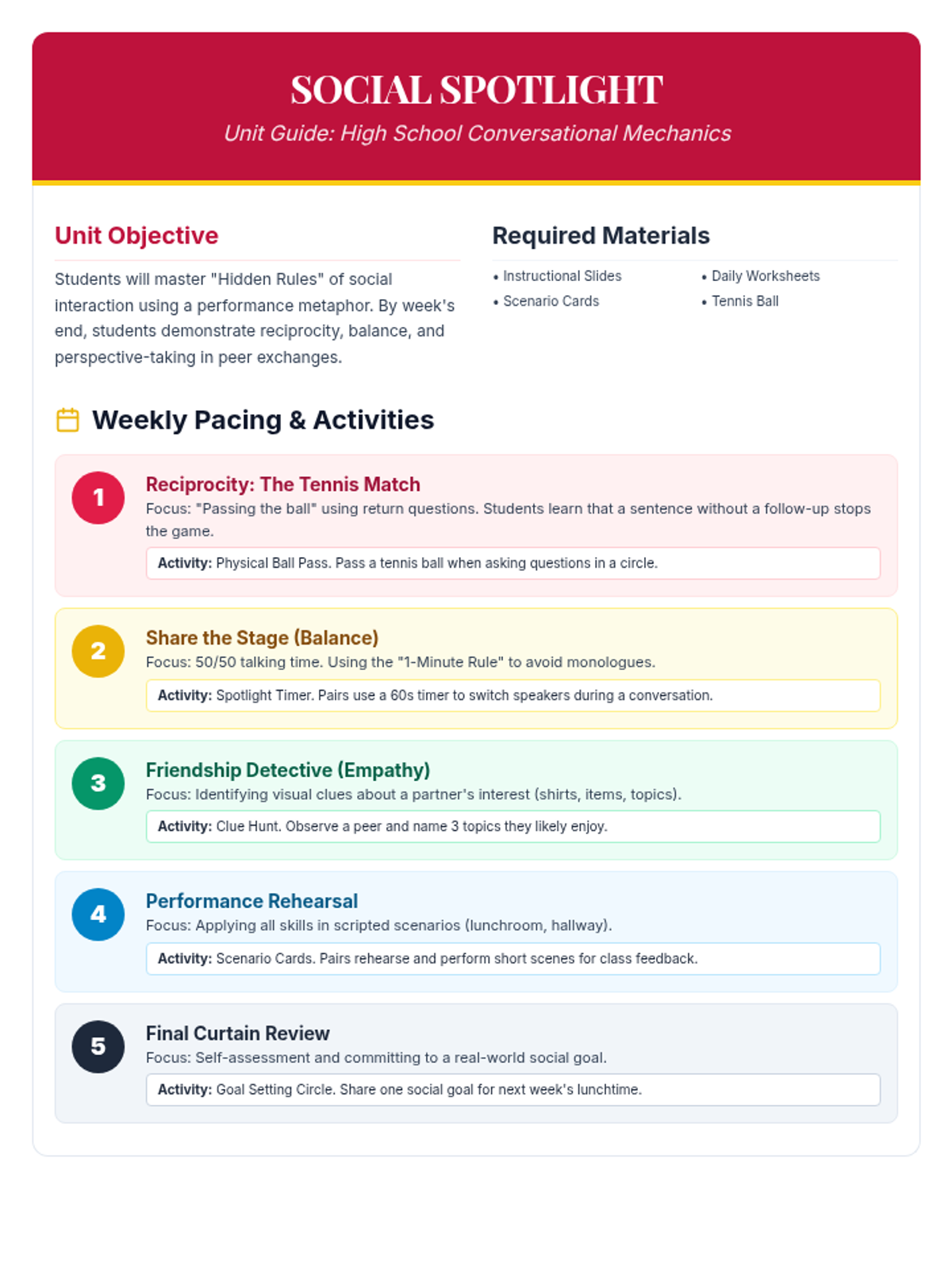
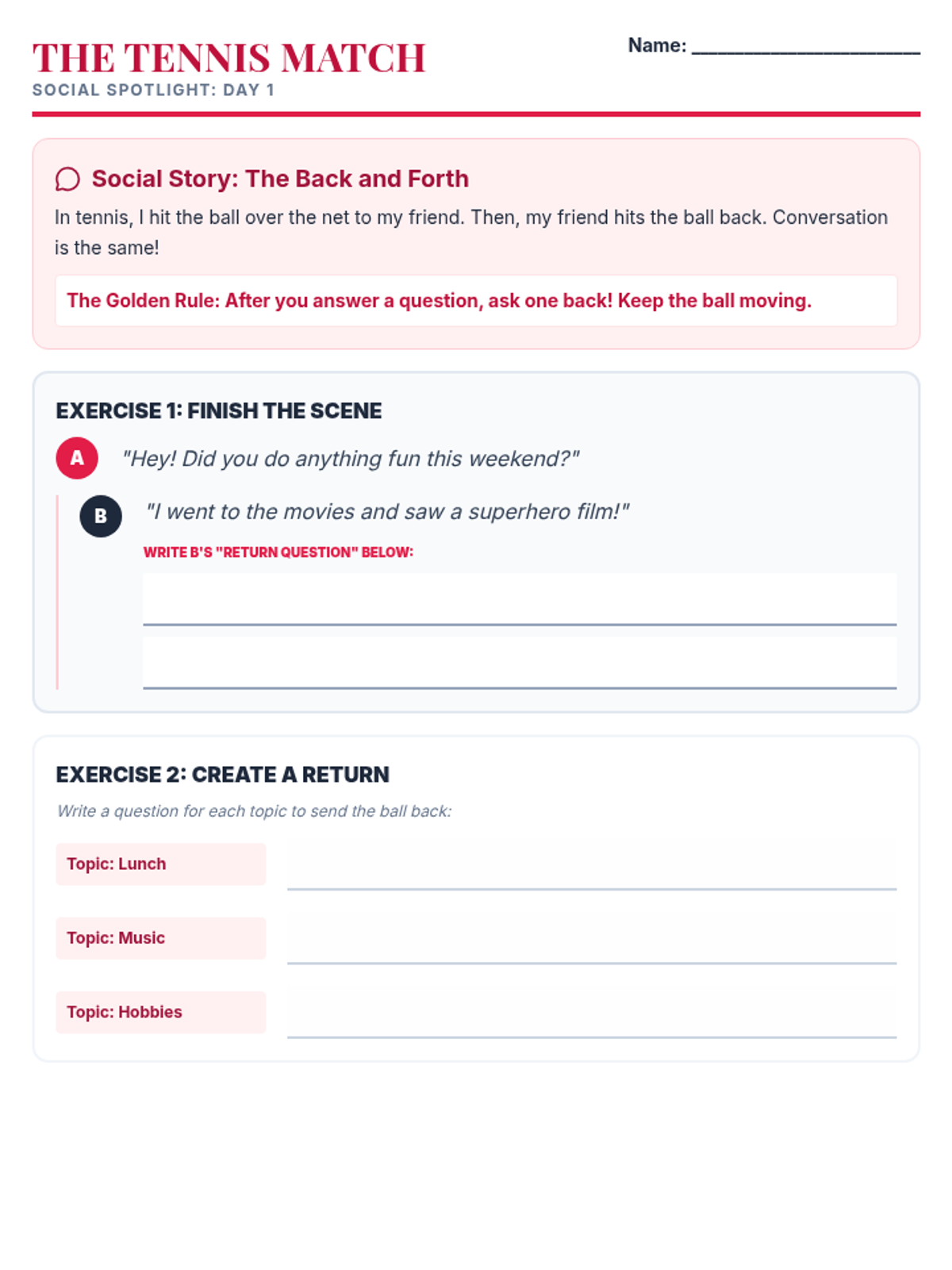
A week-long unit for high school students with special needs focused on mastering the 'theatre' of conversation. Students will learn the mechanics of back-and-forth exchanges, how to balance talking time like a shared stage, and how to use 'social detective' skills to talk about others' interests.
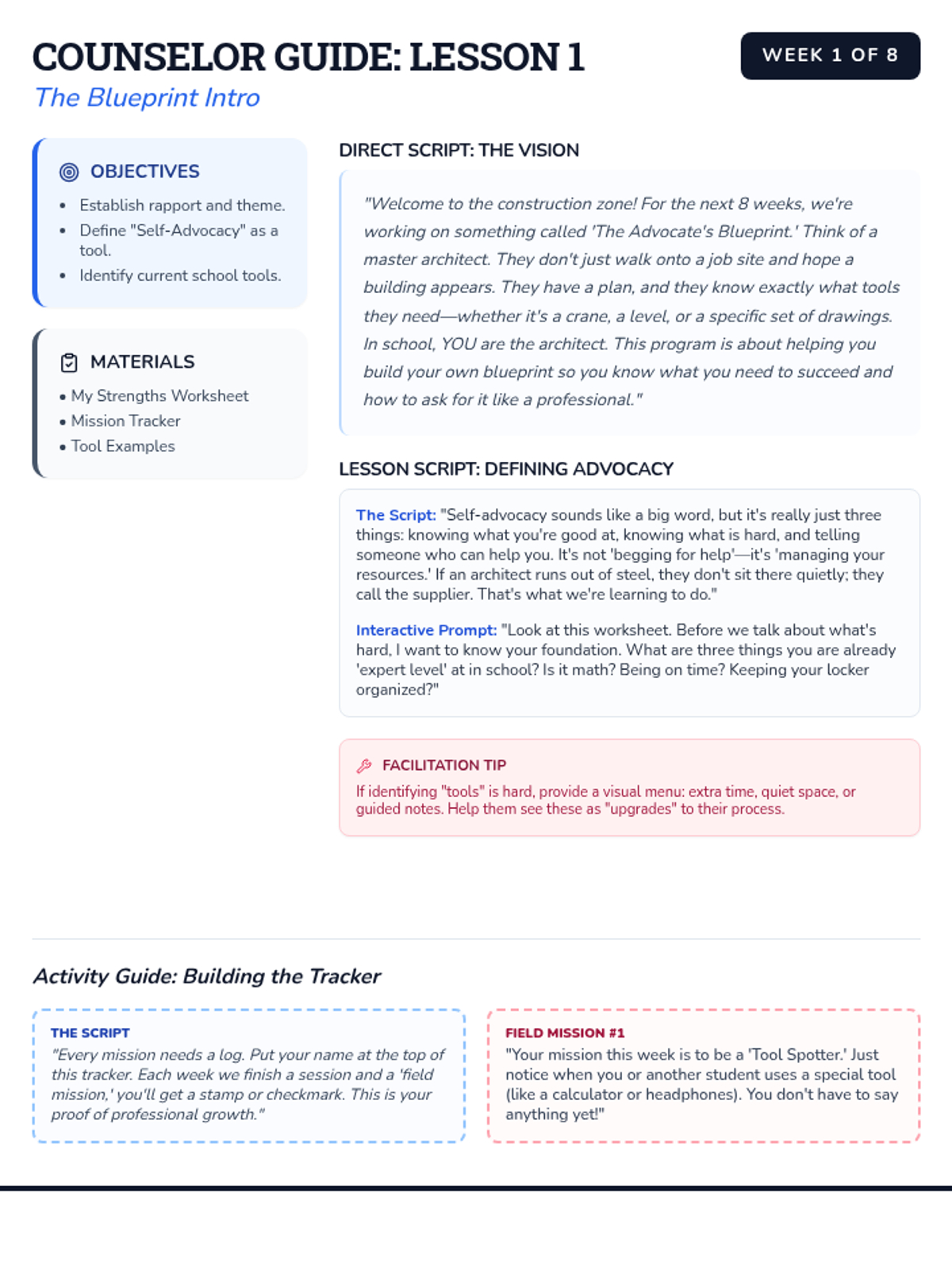
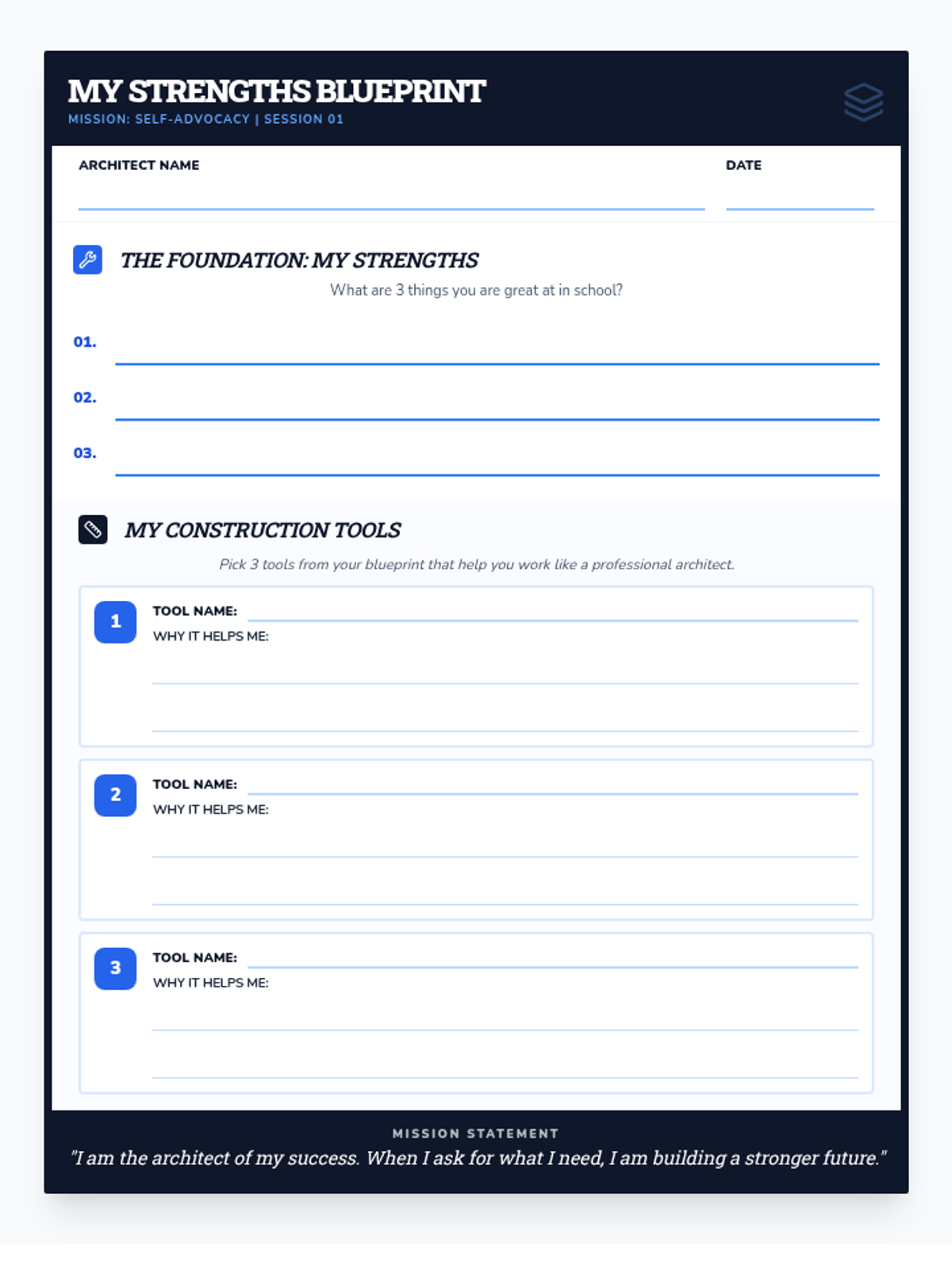
An 8-week individual counseling sequence designed for 8th-grade students with autism to develop self-advocacy skills, focusing on requesting learning tools and clarification. All materials use a professional blueprint aesthetic.
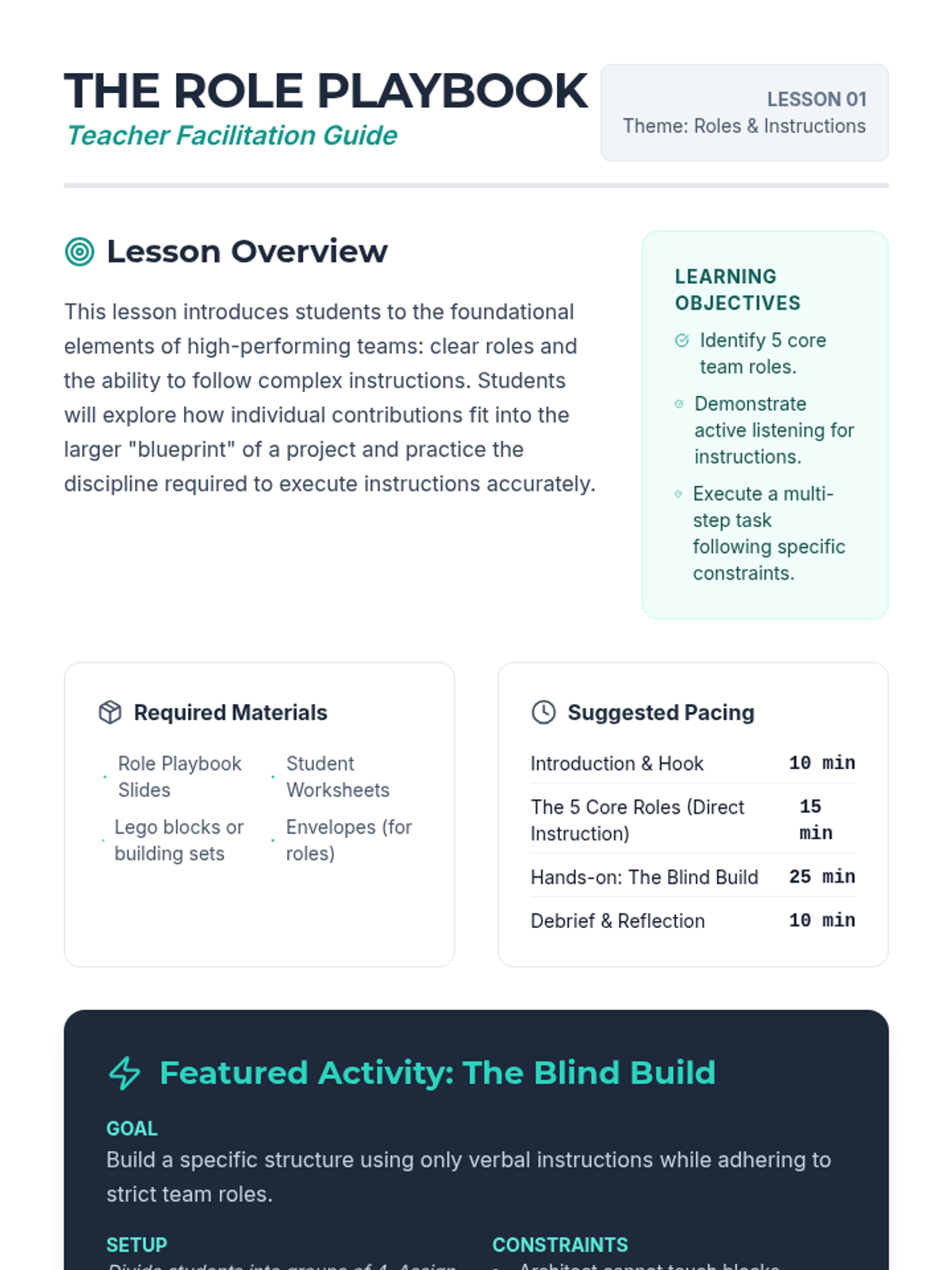
A comprehensive professional development series designed to equip individuals with essential workplace teamwork skills, including role definition, communication, feedback loops, and conflict management.
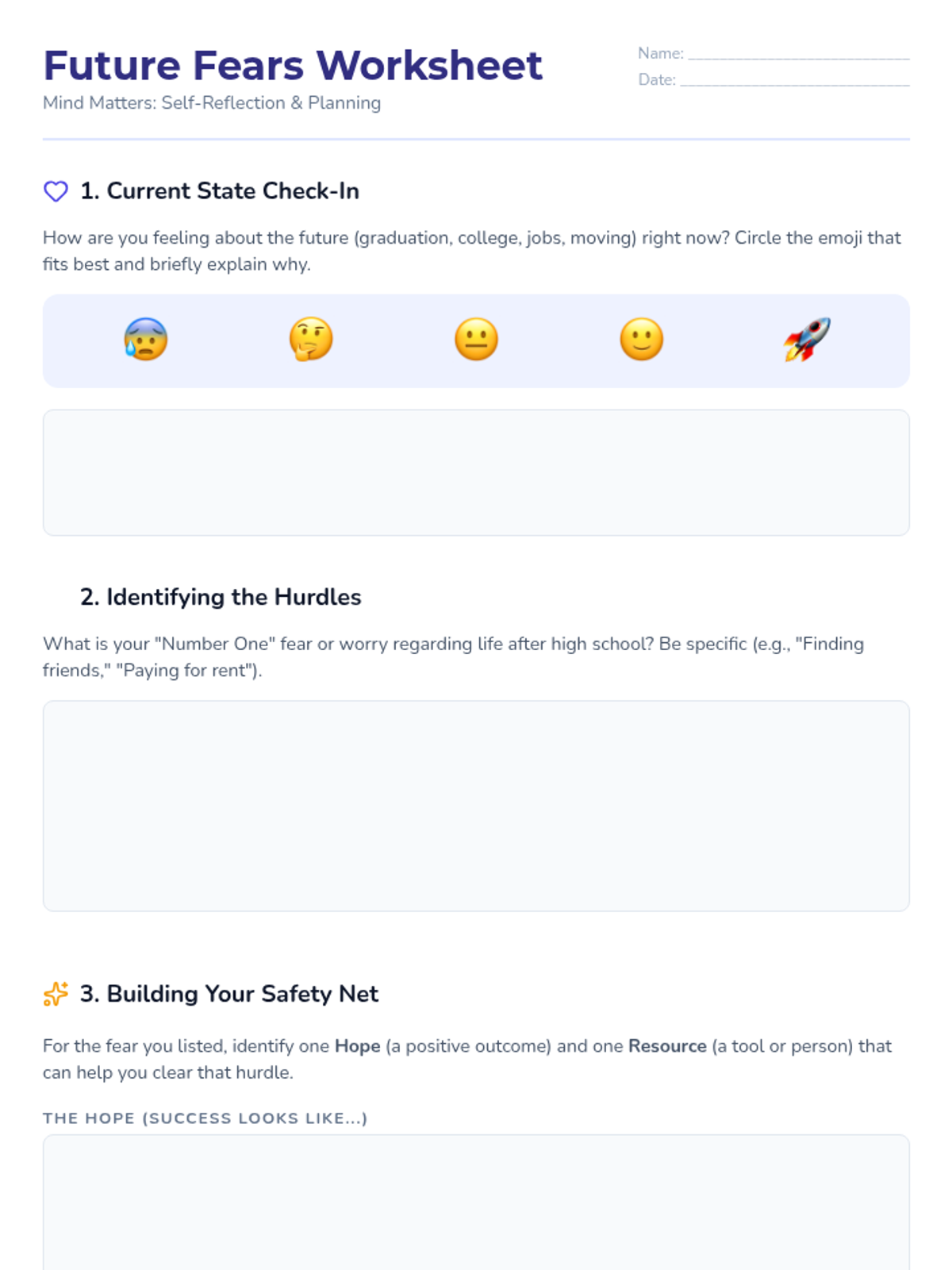
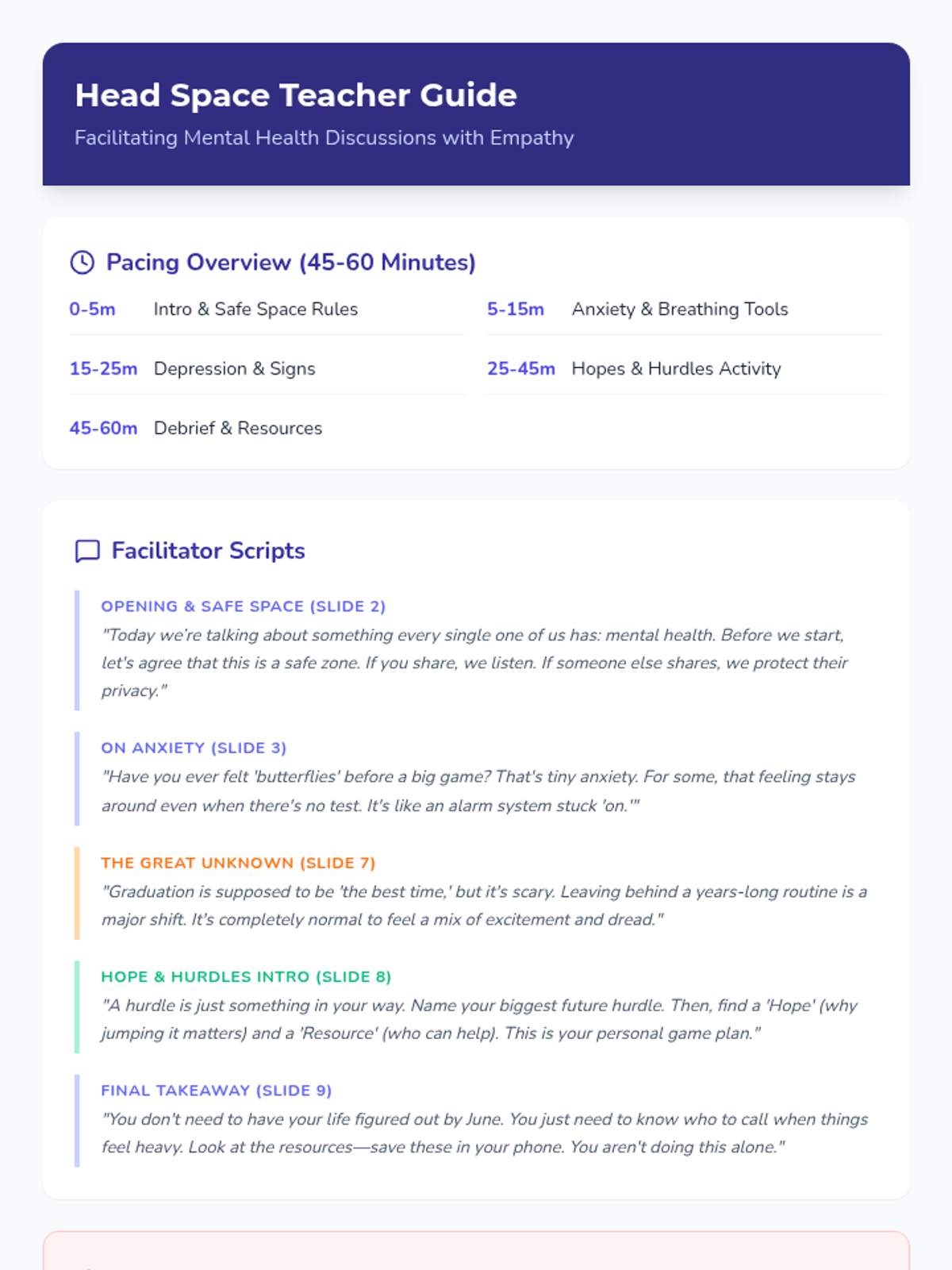
A 5-day mental health curriculum for high schoolers covering anxiety, depression, the transition after graduation, and building a sustainable safety net.
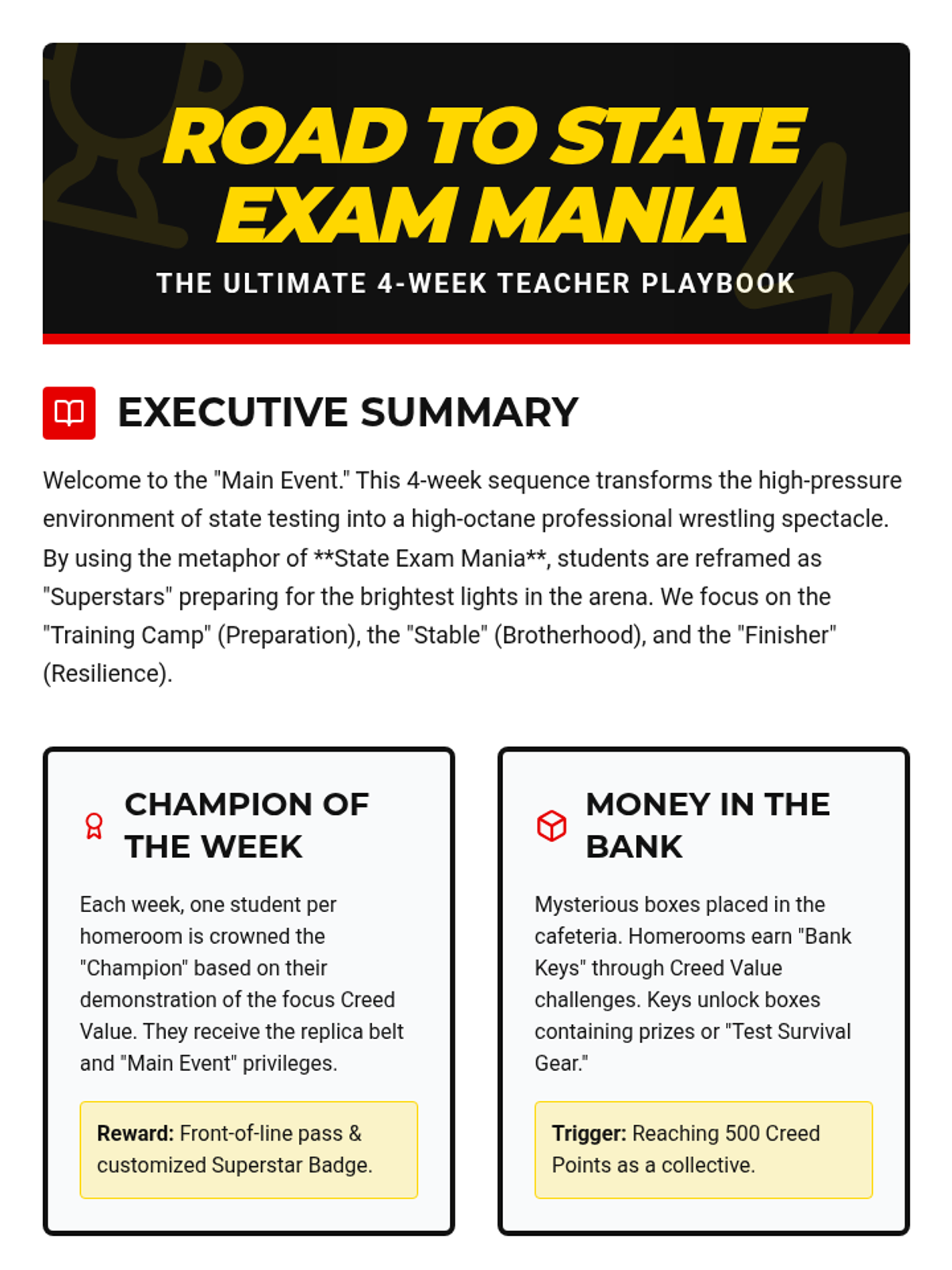
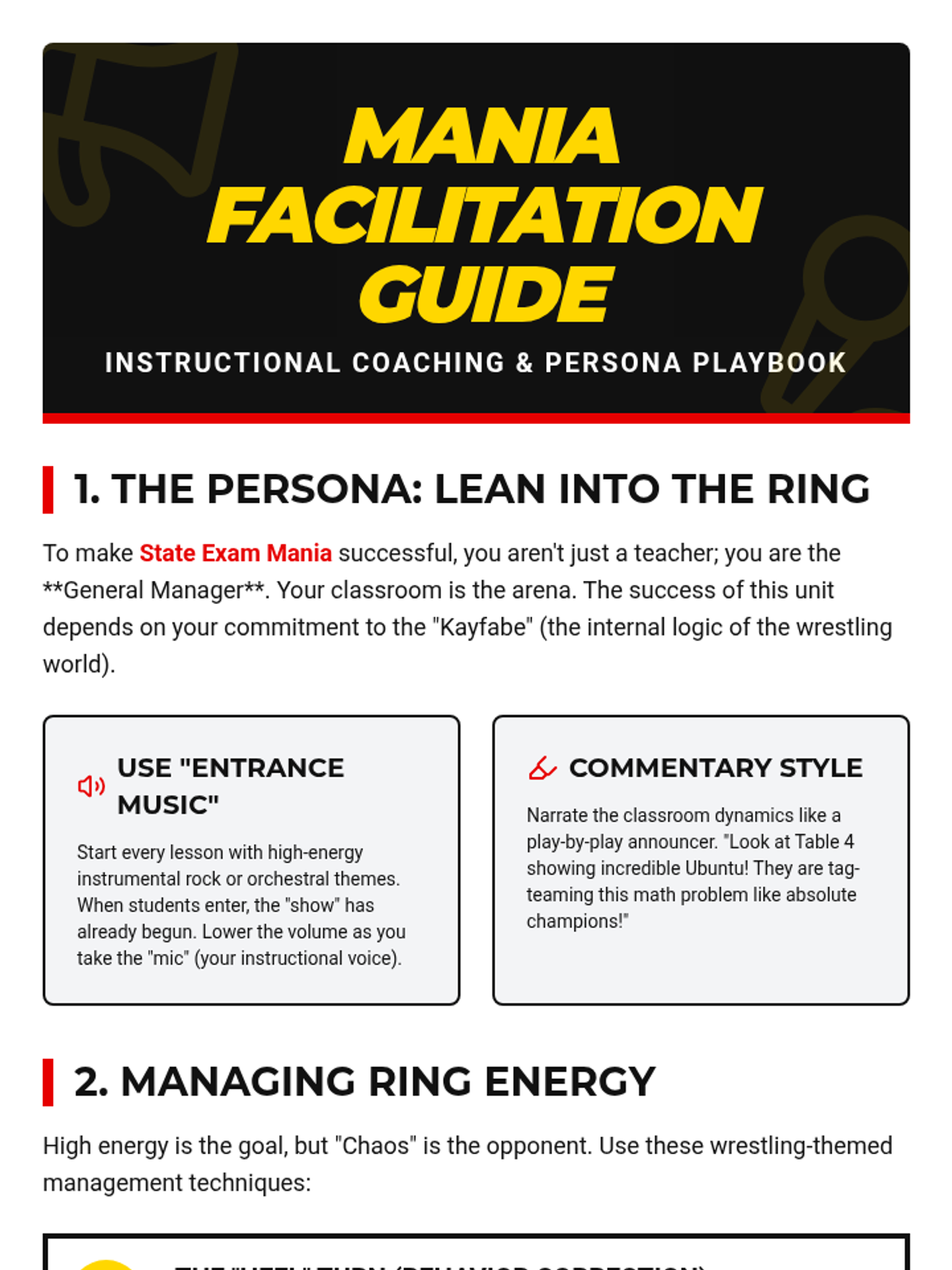
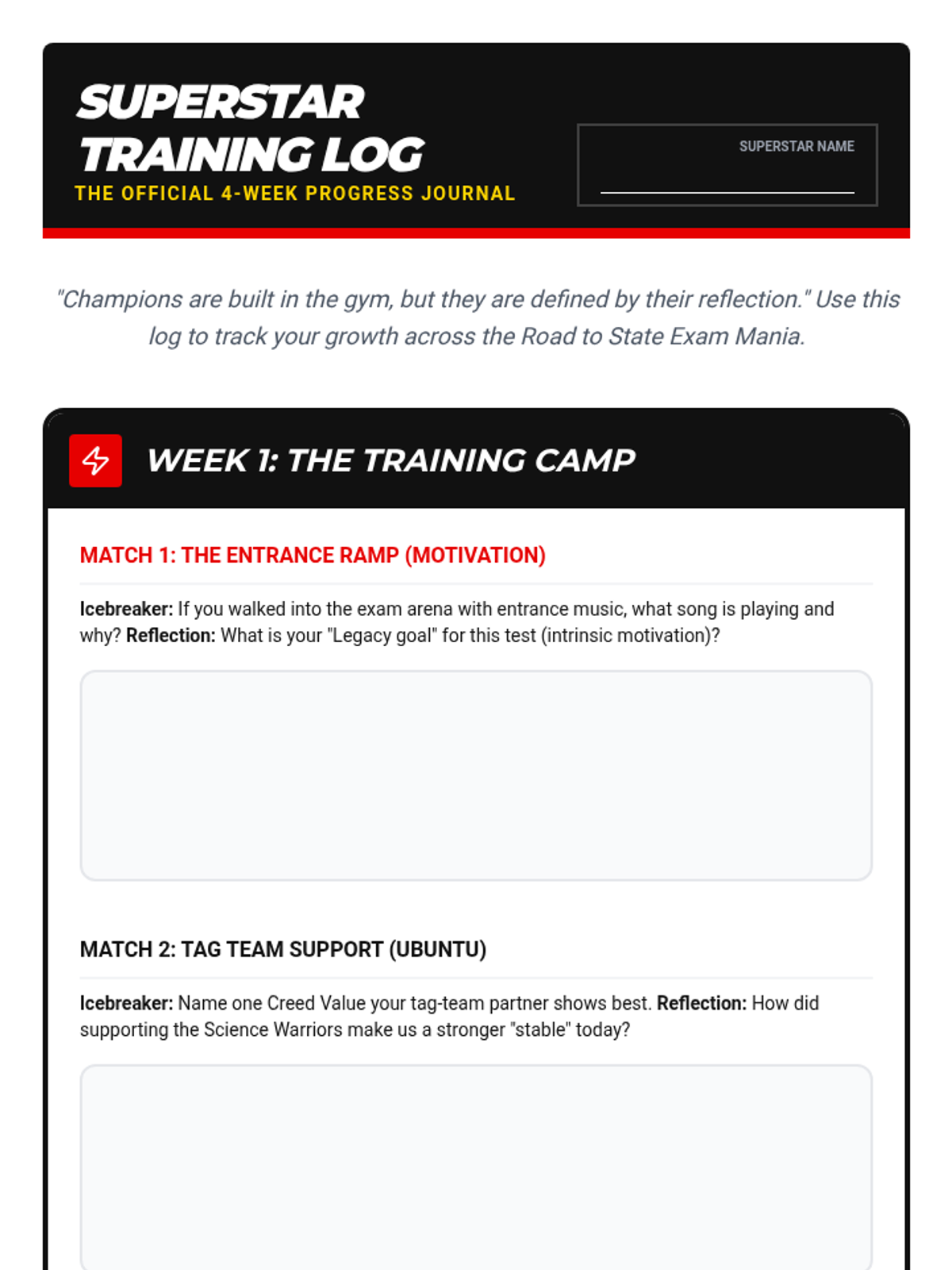
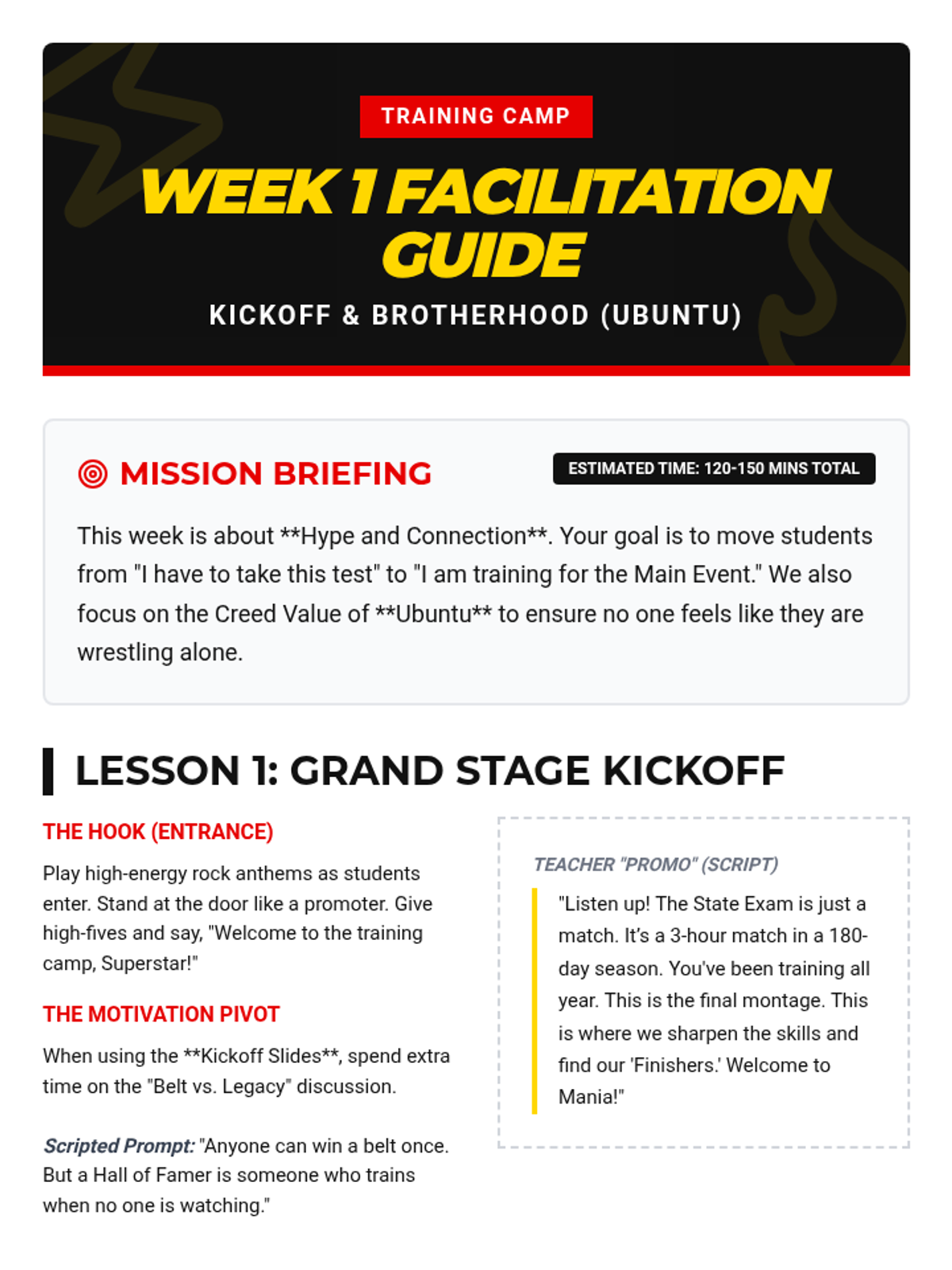
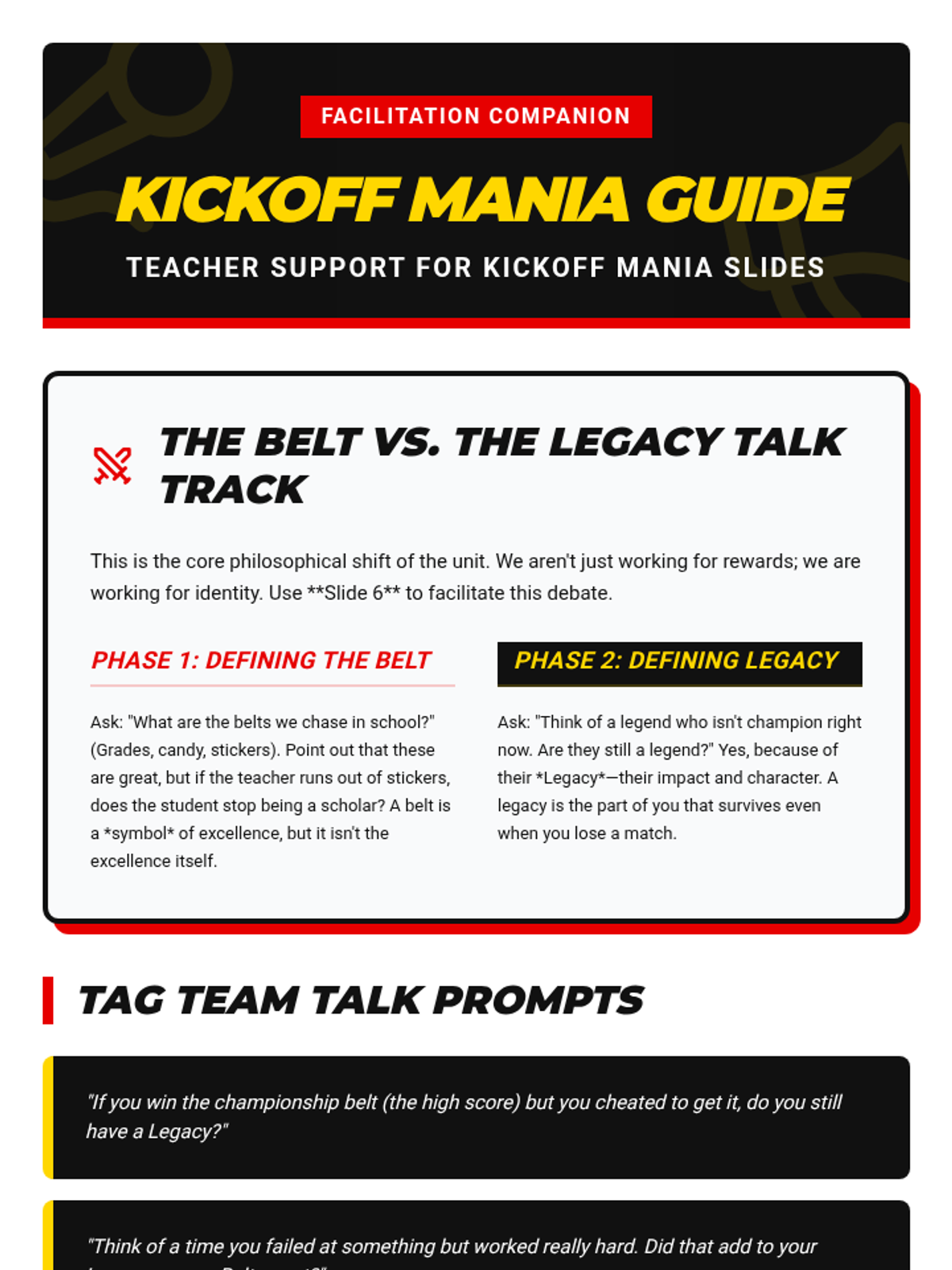
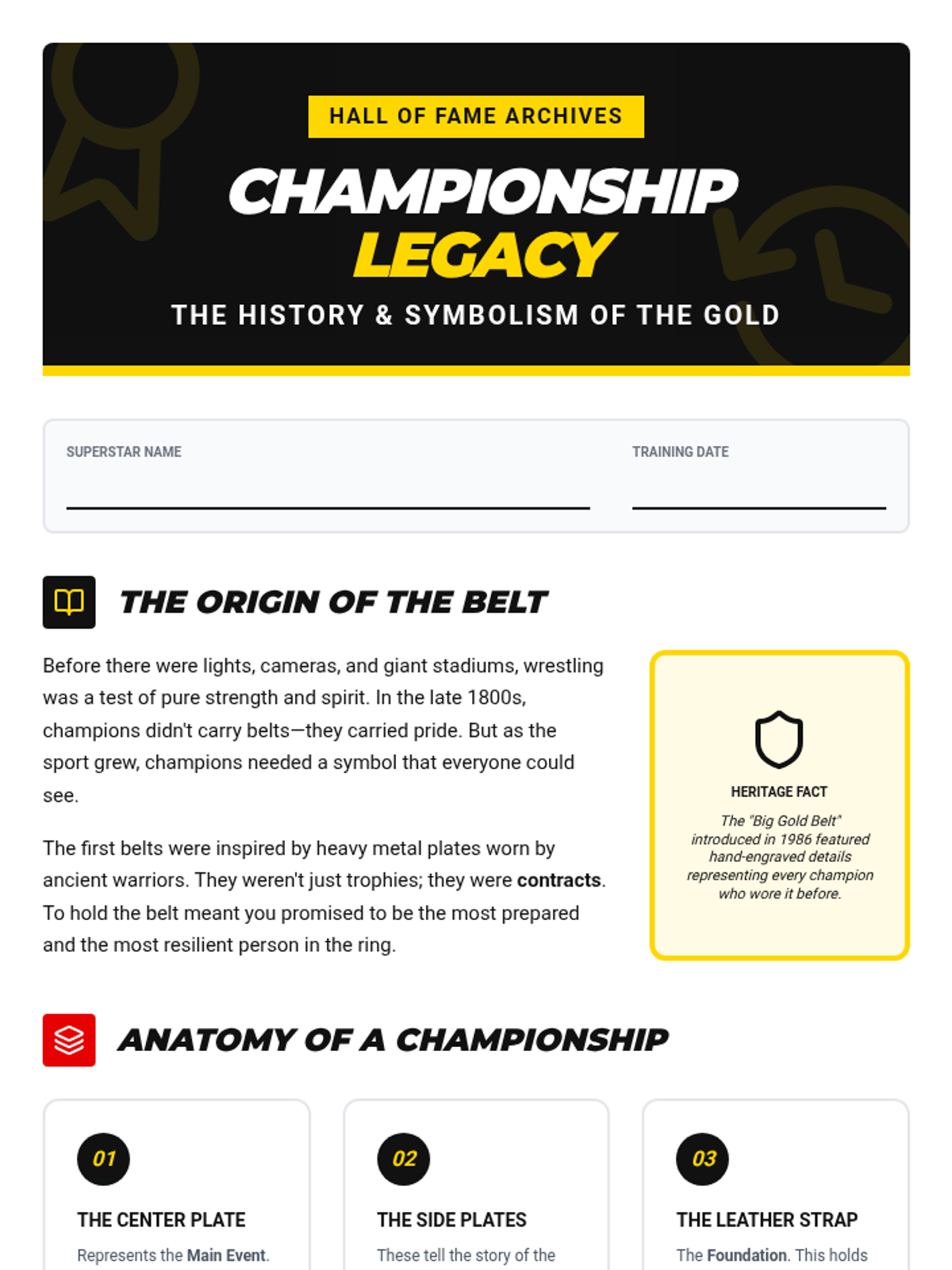
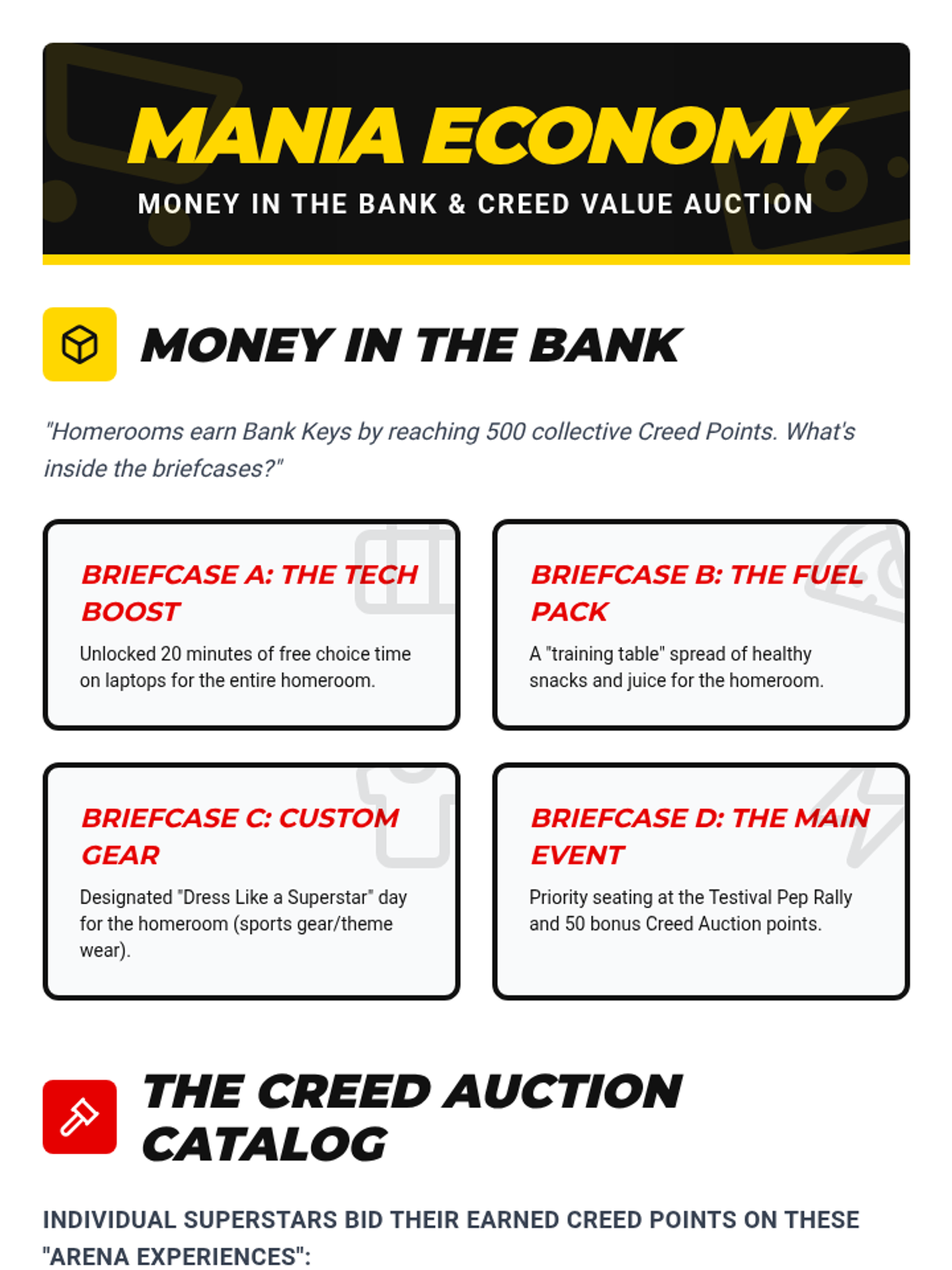
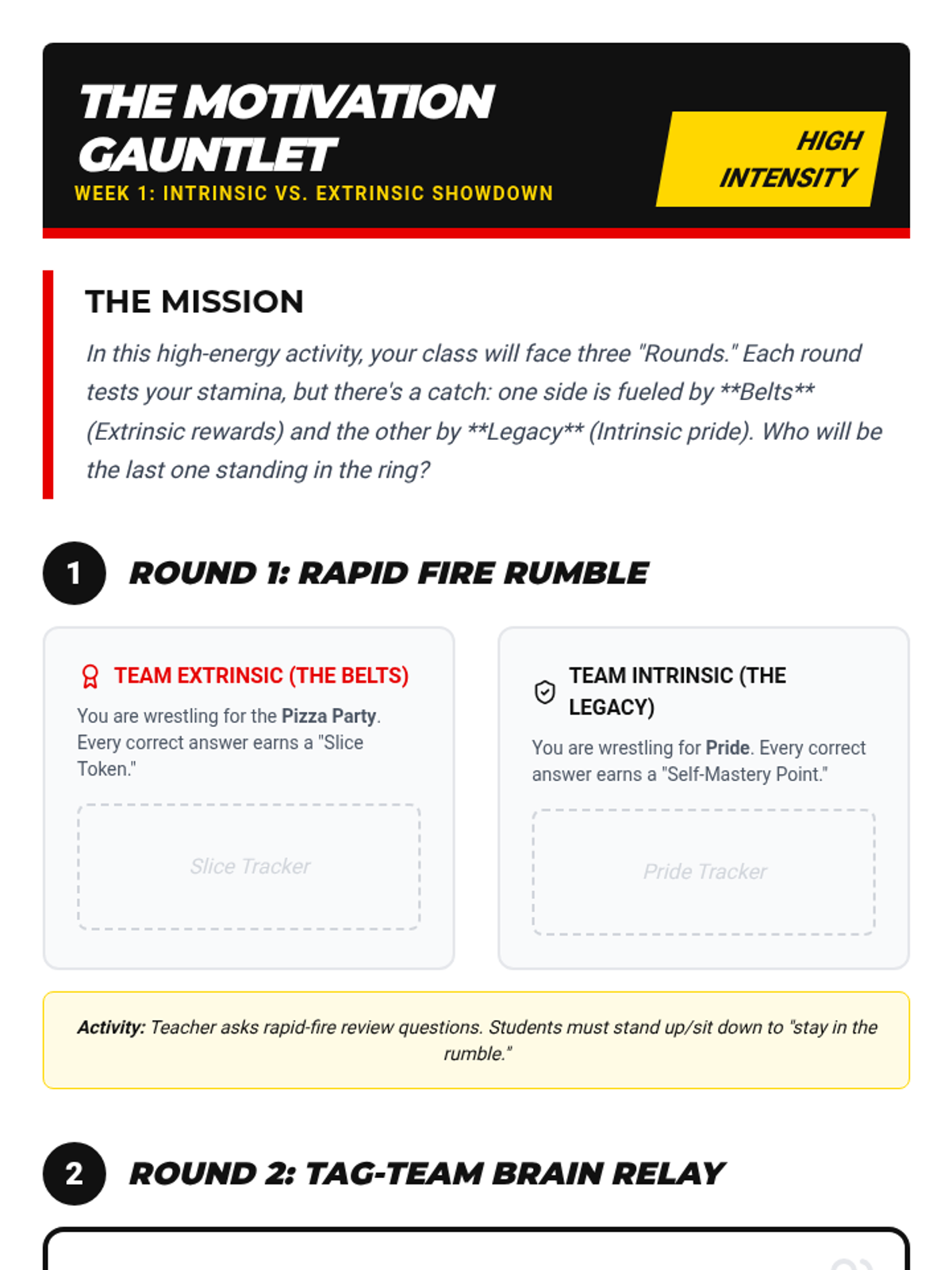
A 4-week socio-emotional learning sequence using professional wrestling as a metaphor for state exam preparation, focusing on motivation, resilience, and brotherhood.
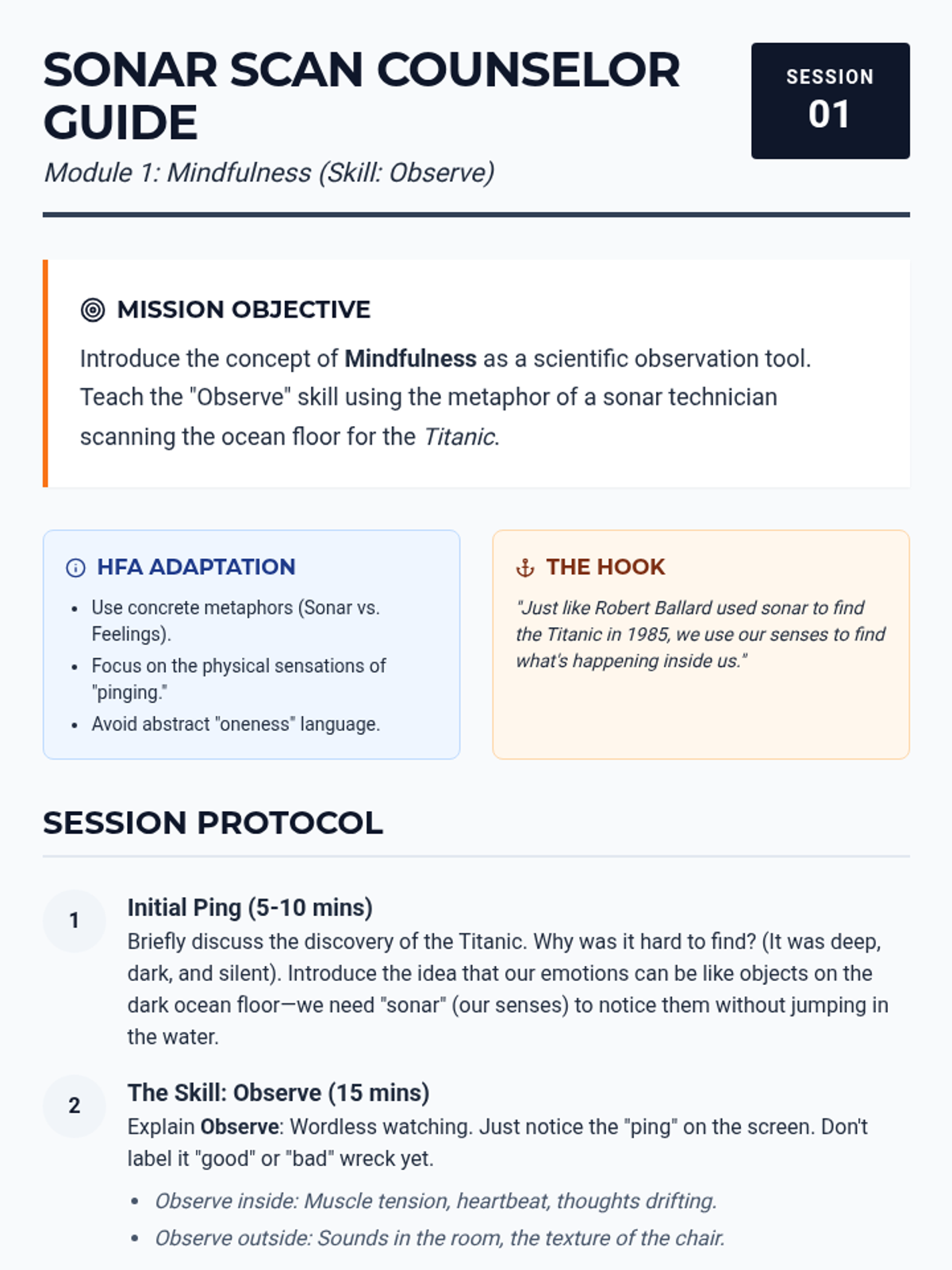
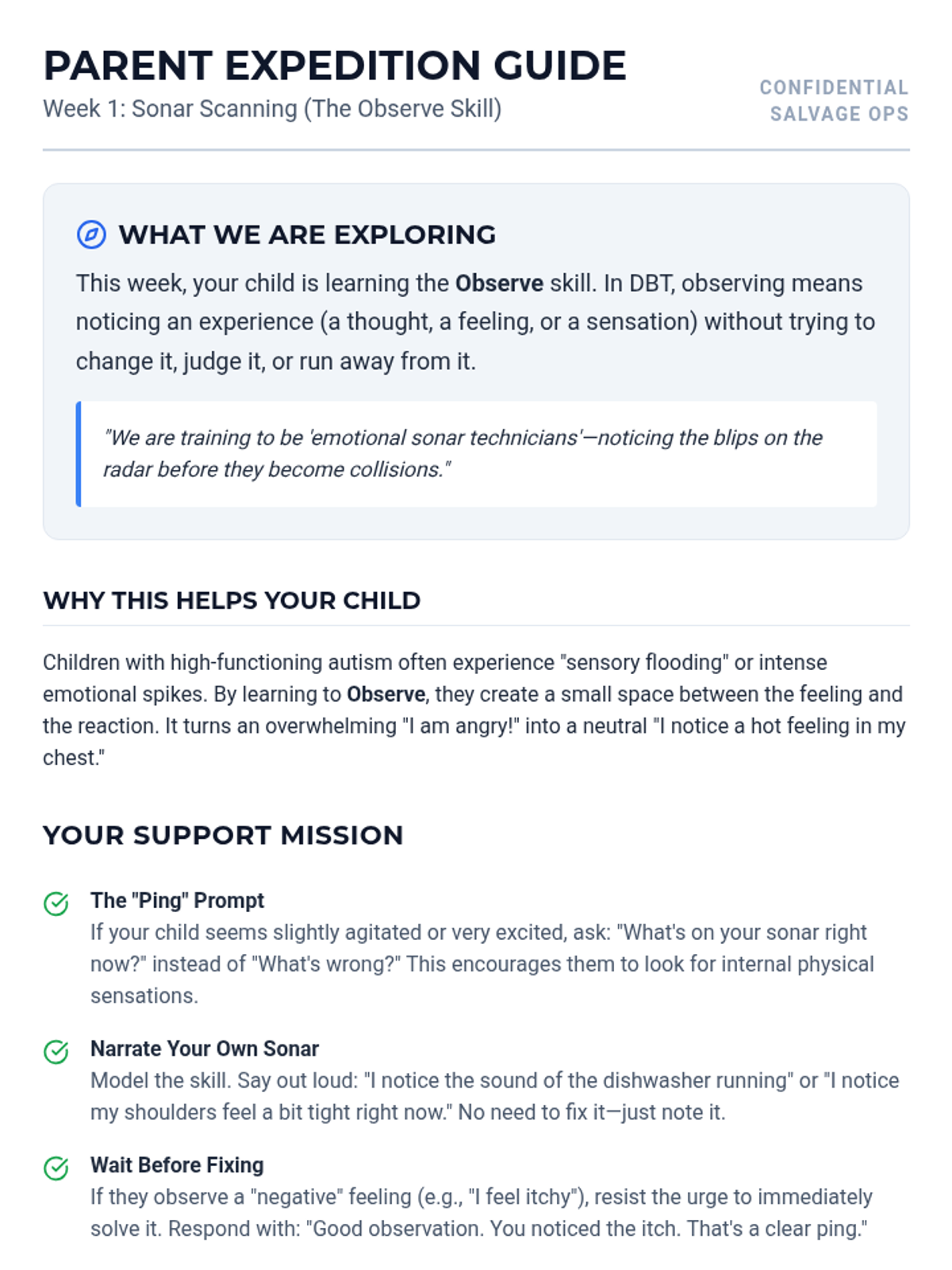
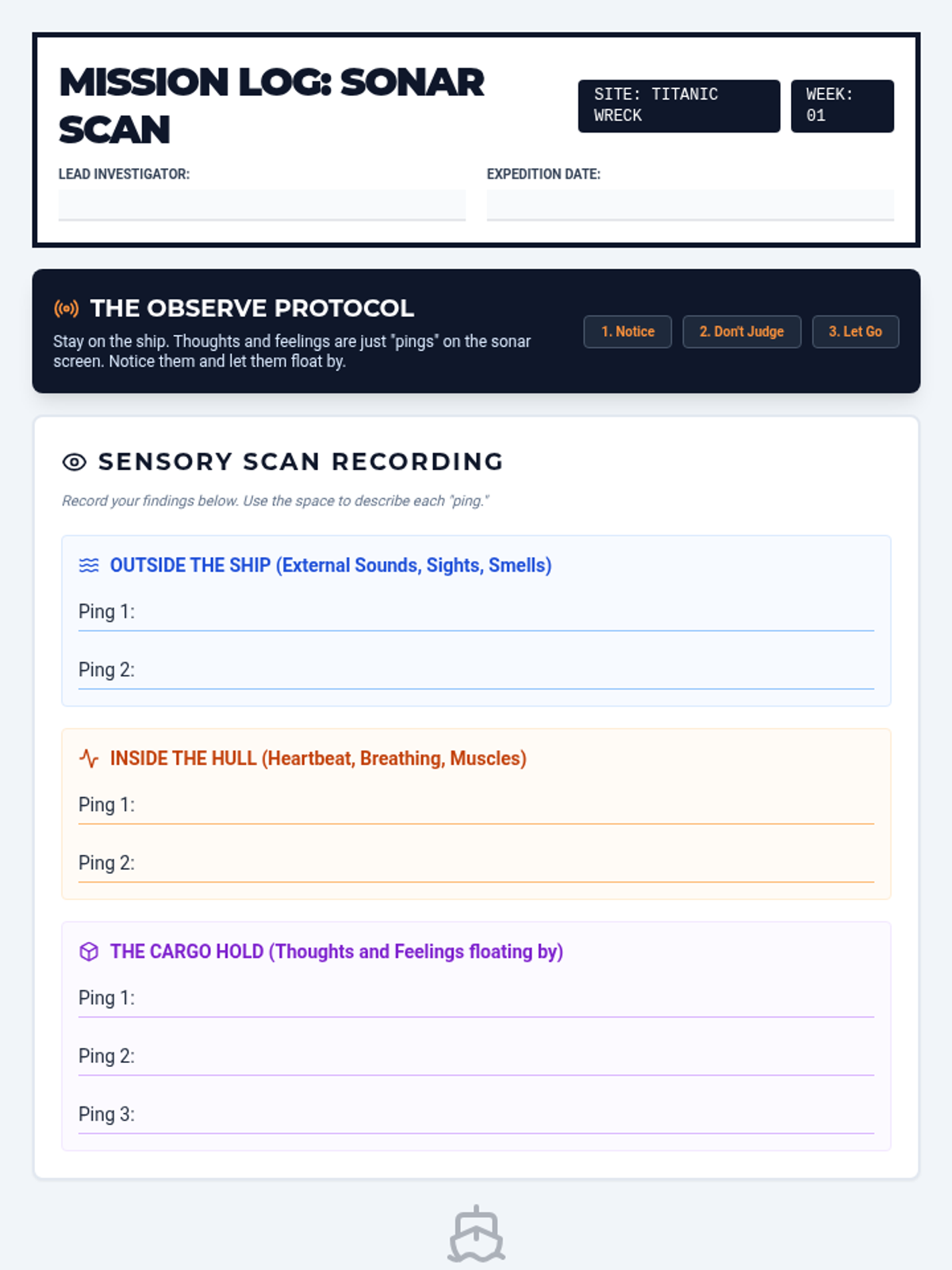
A comprehensive 16-week DBT program adapted for children with high-functioning autism, using shipwrecks and plane crashes as high-interest metaphors for emotional regulation, mindfulness, and distress tolerance. Each week includes a counselor guide, parent guide, and client worksheet themed around historical salvage and survival missions.
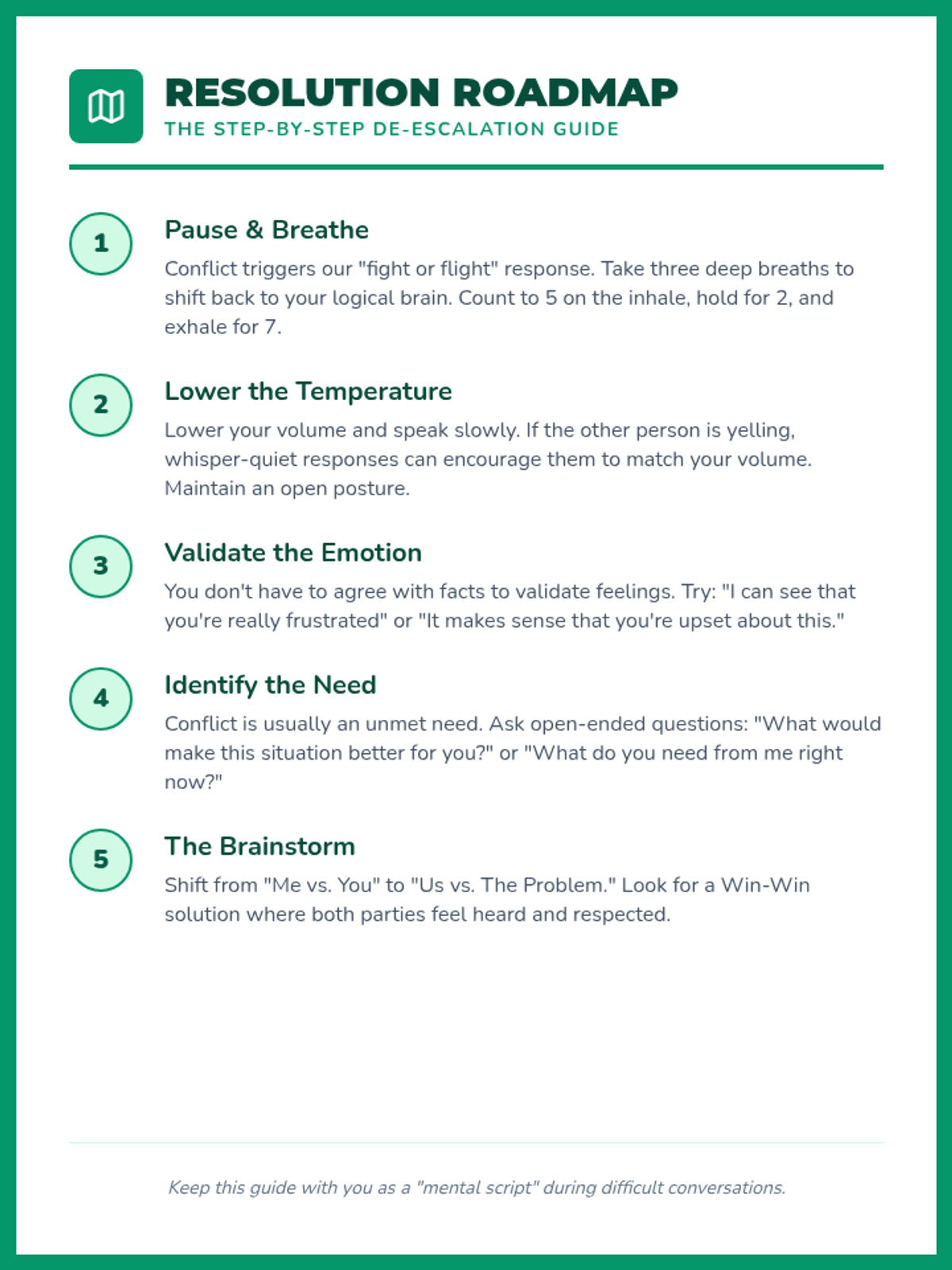
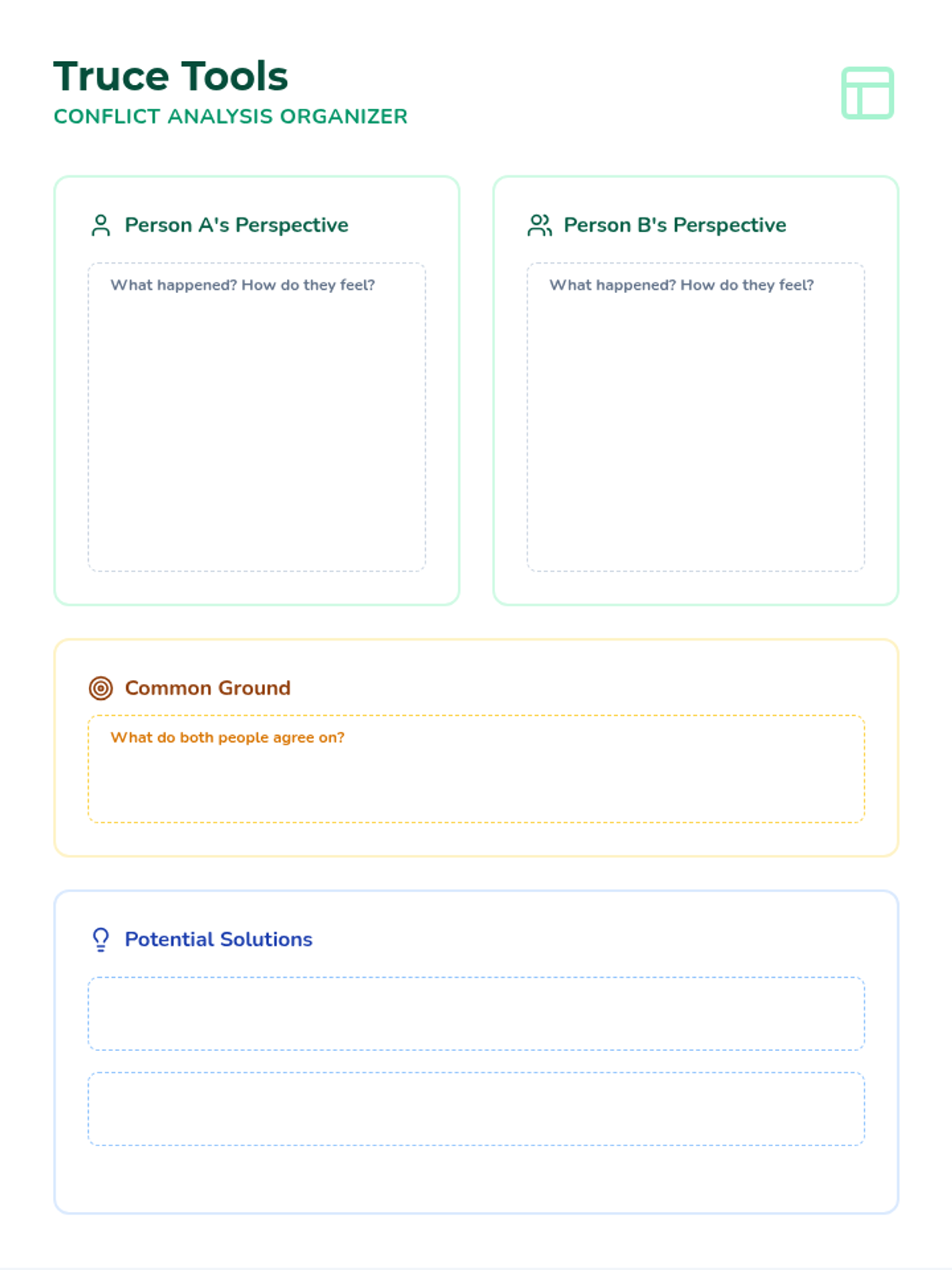
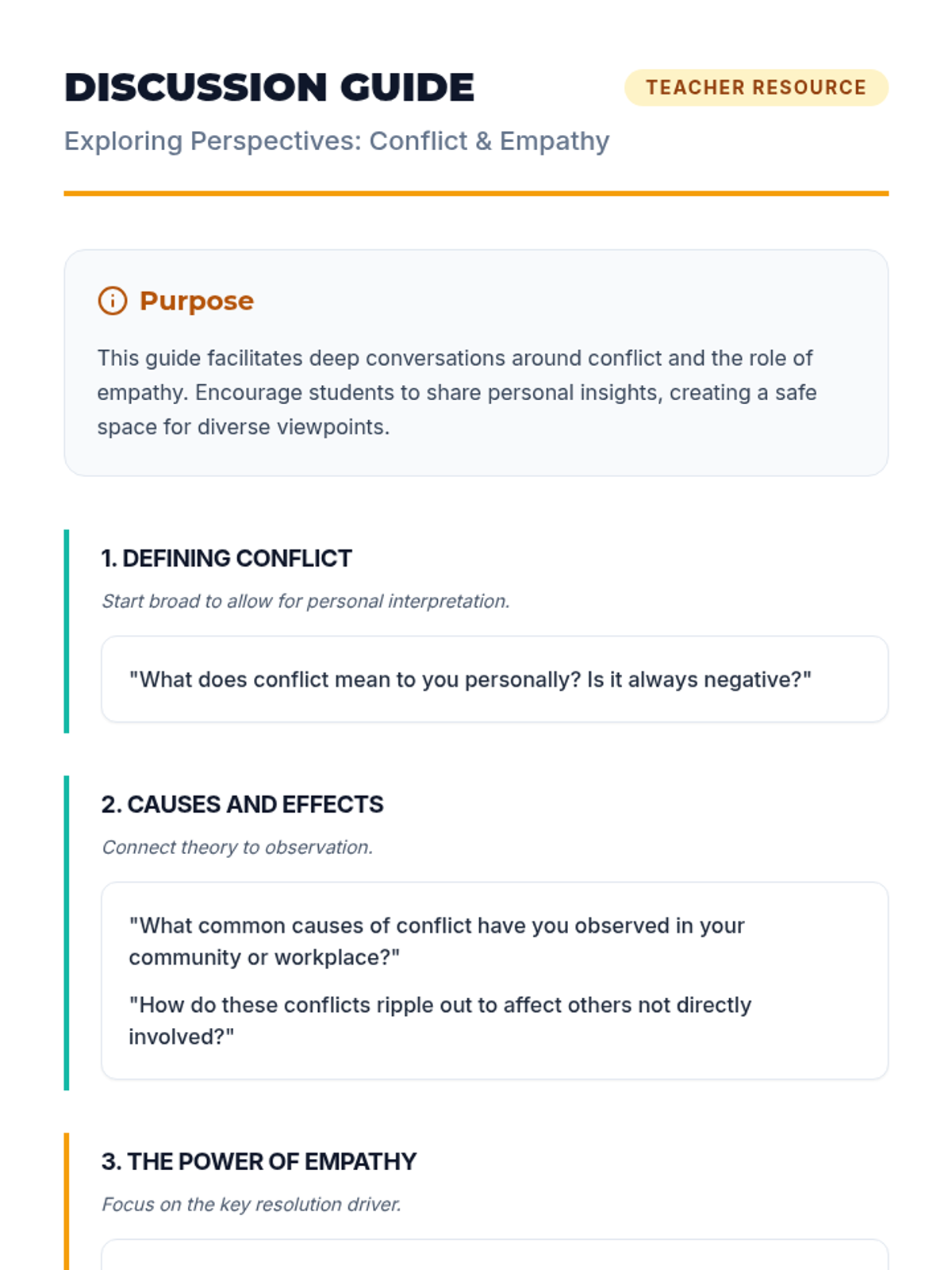
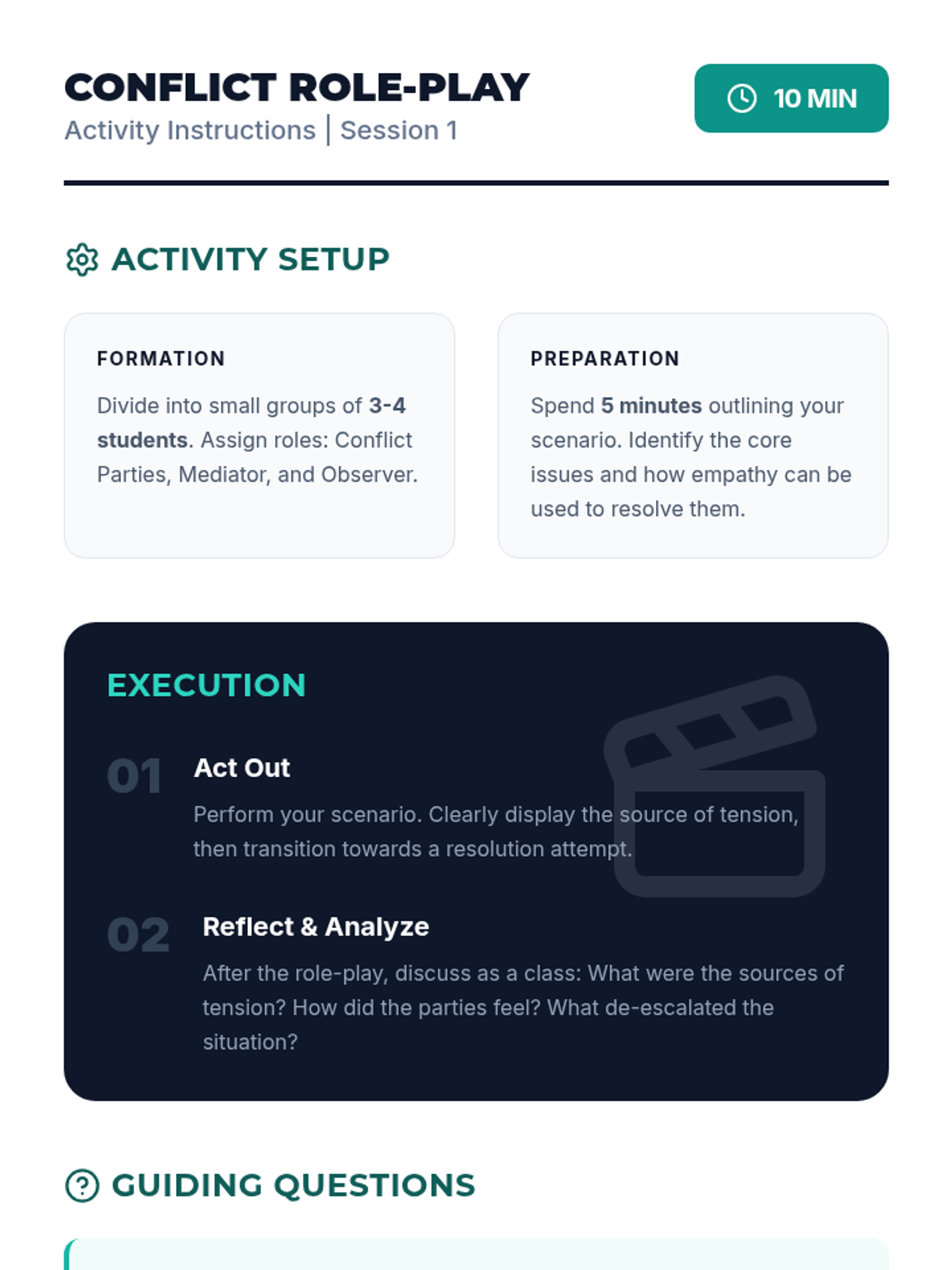
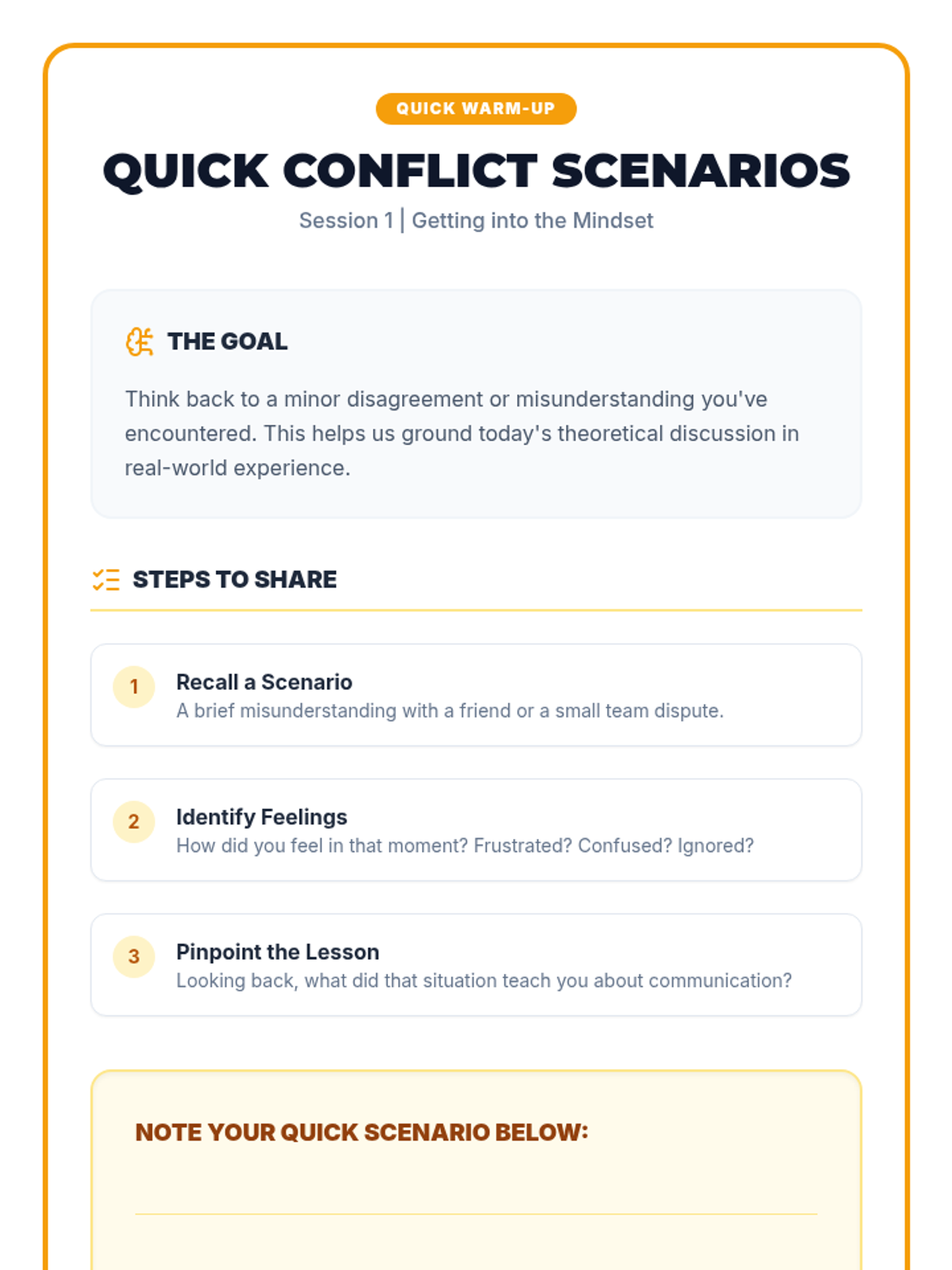
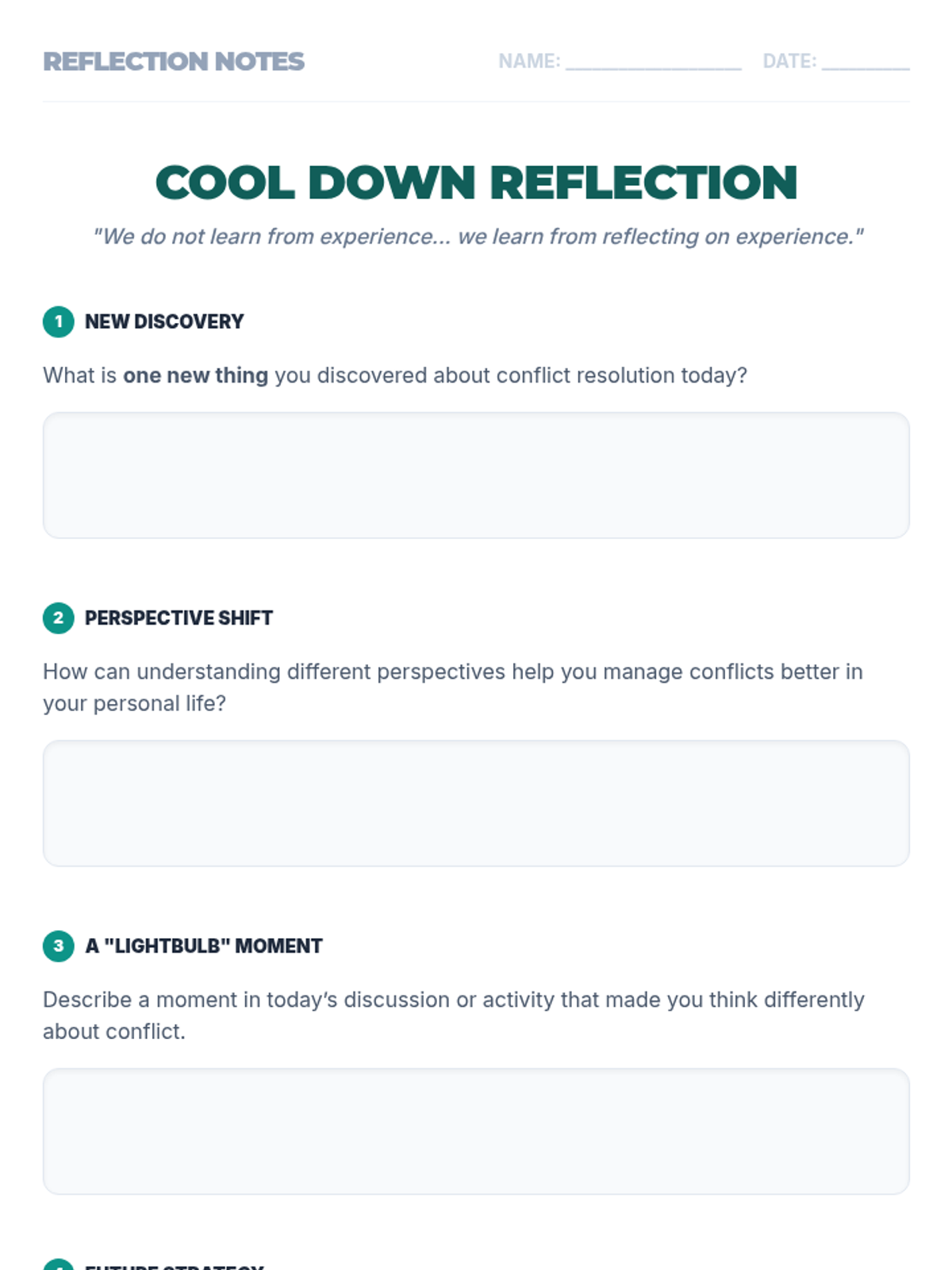
A comprehensive curriculum designed to teach students the essential skills of conflict resolution, de-escalation, and empathetic communication through hands-on tasks and self-reflection.
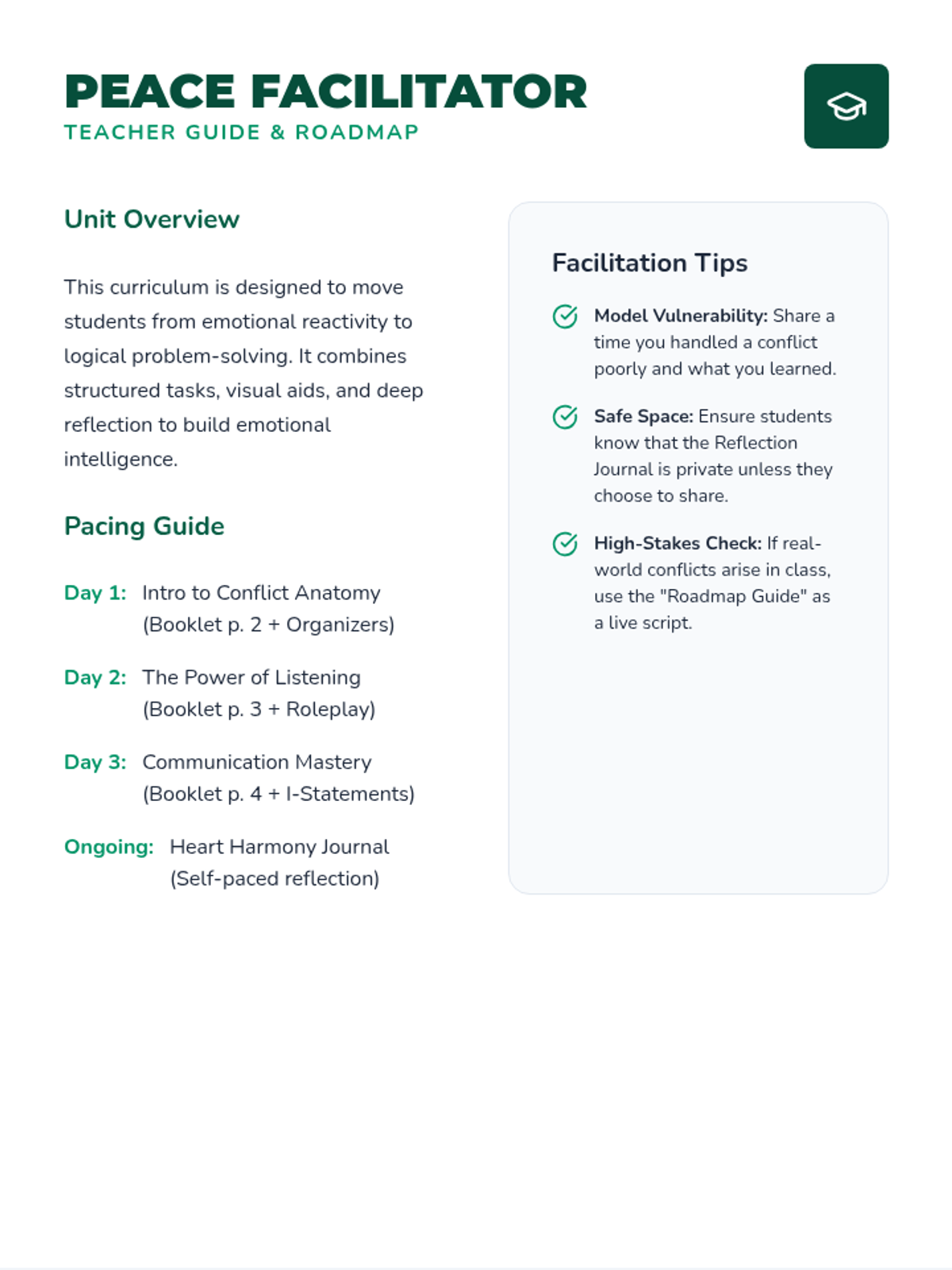
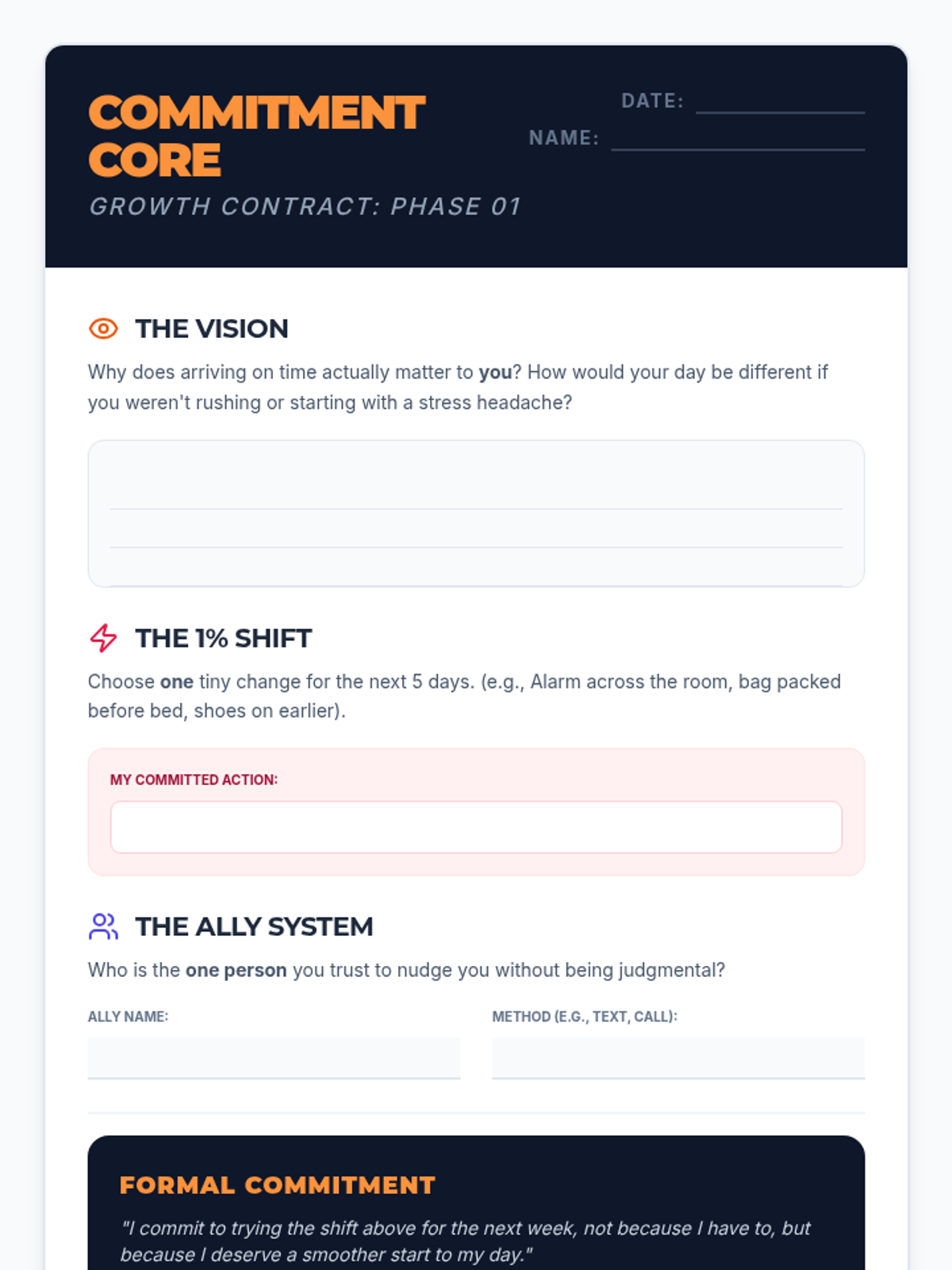
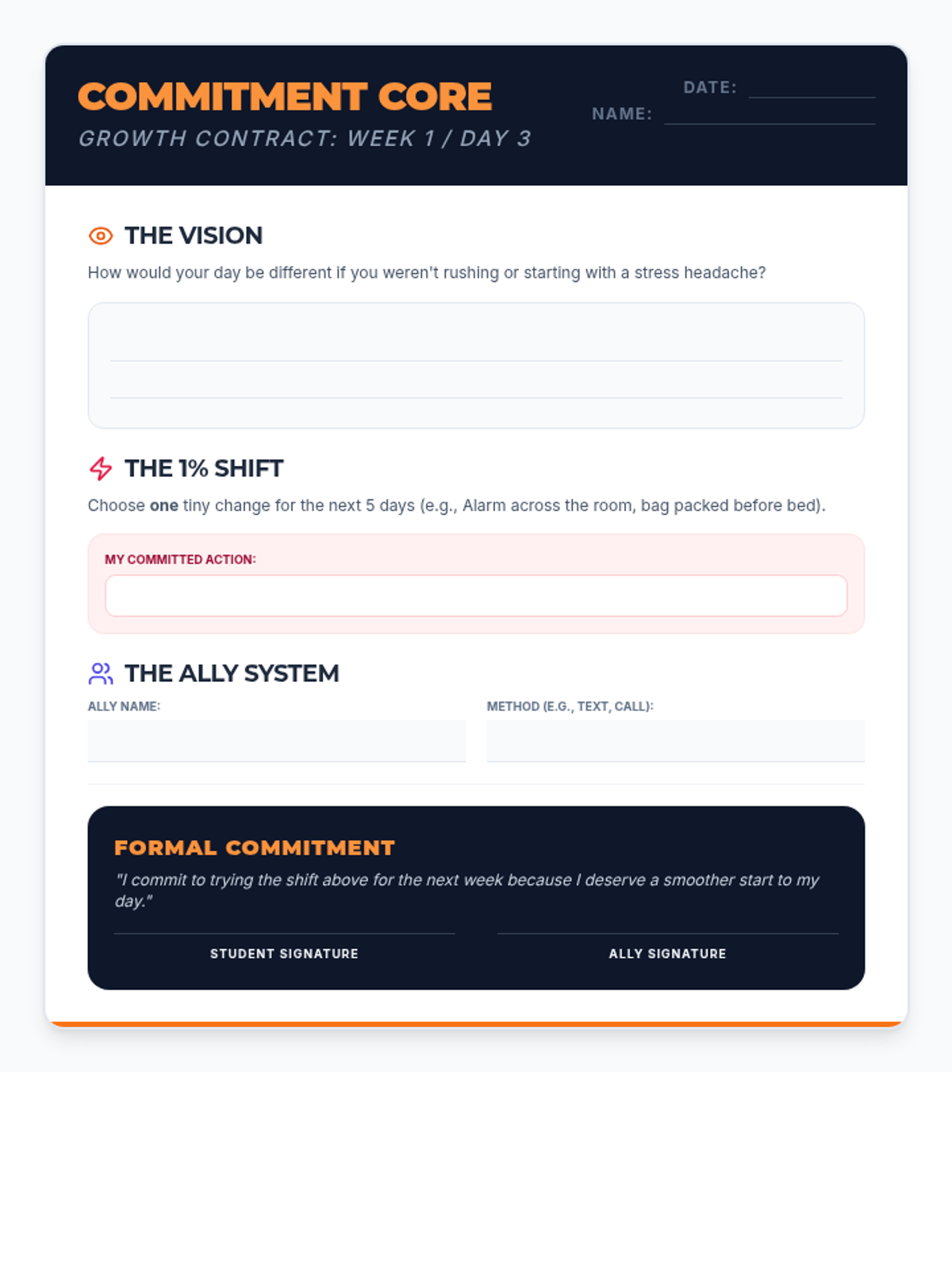
A comprehensive 5-week restorative intervention (3 sessions per week) for high school students struggling with chronic tardiness. The sequence progresses from root cause discovery and routine design to building resilient habits, navigating social/school barriers, and long-term sustainability.
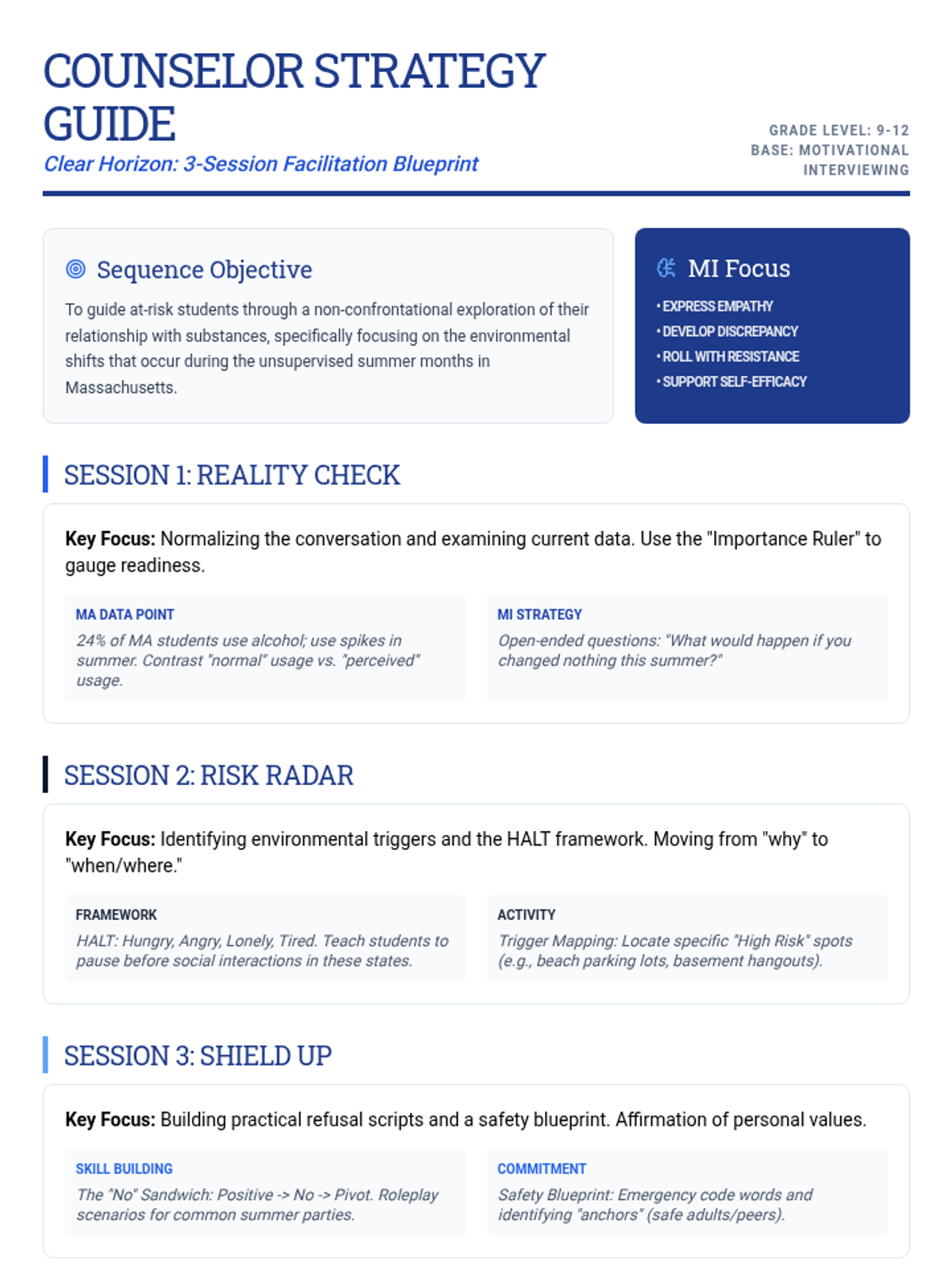
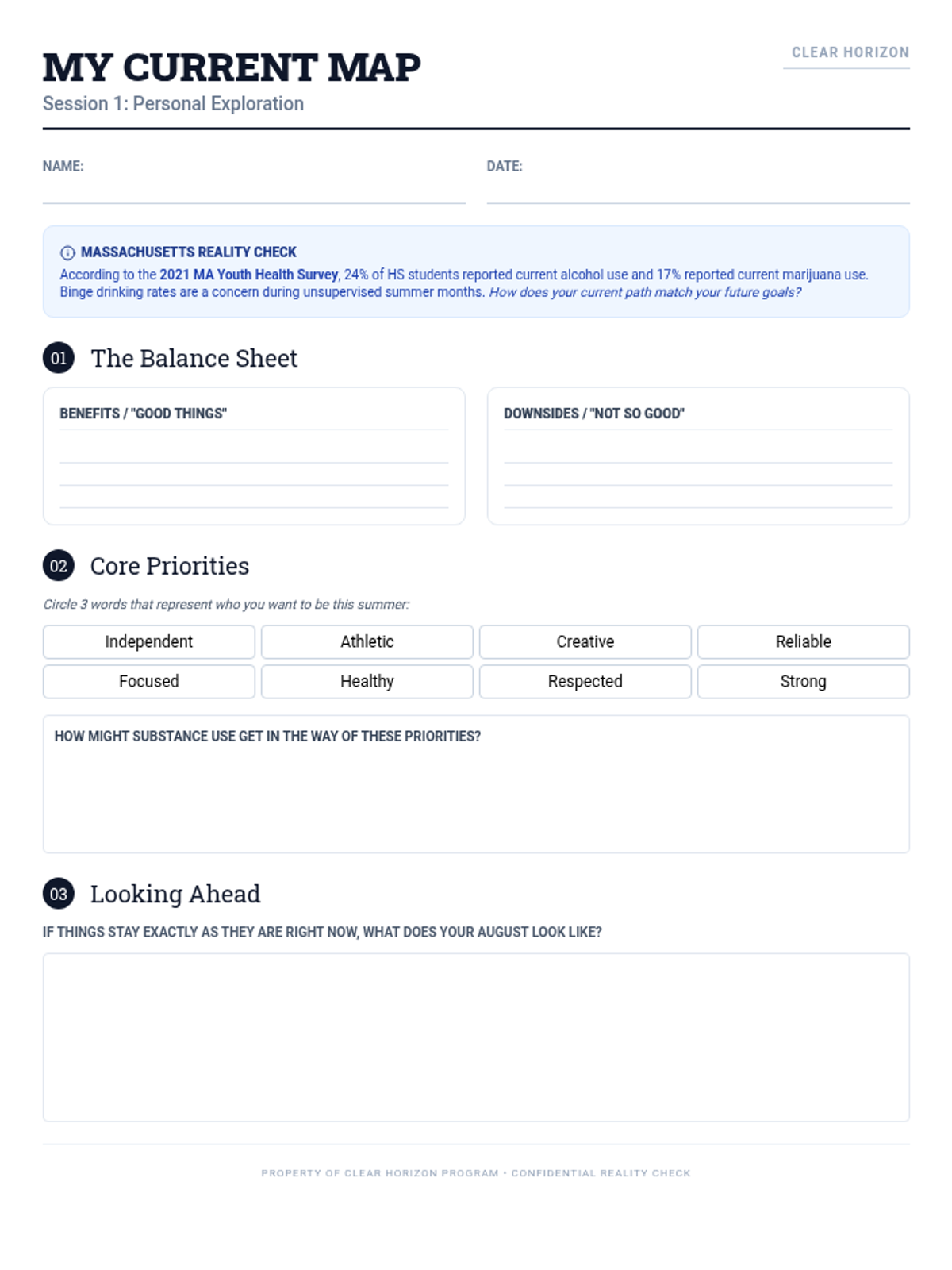
A 3-session small-group counseling sequence designed for high school students at-risk for substance use. It focuses on motivational interviewing, Massachusetts-specific data, and practical decision-making frameworks for navigating unsupervised summer social contexts.
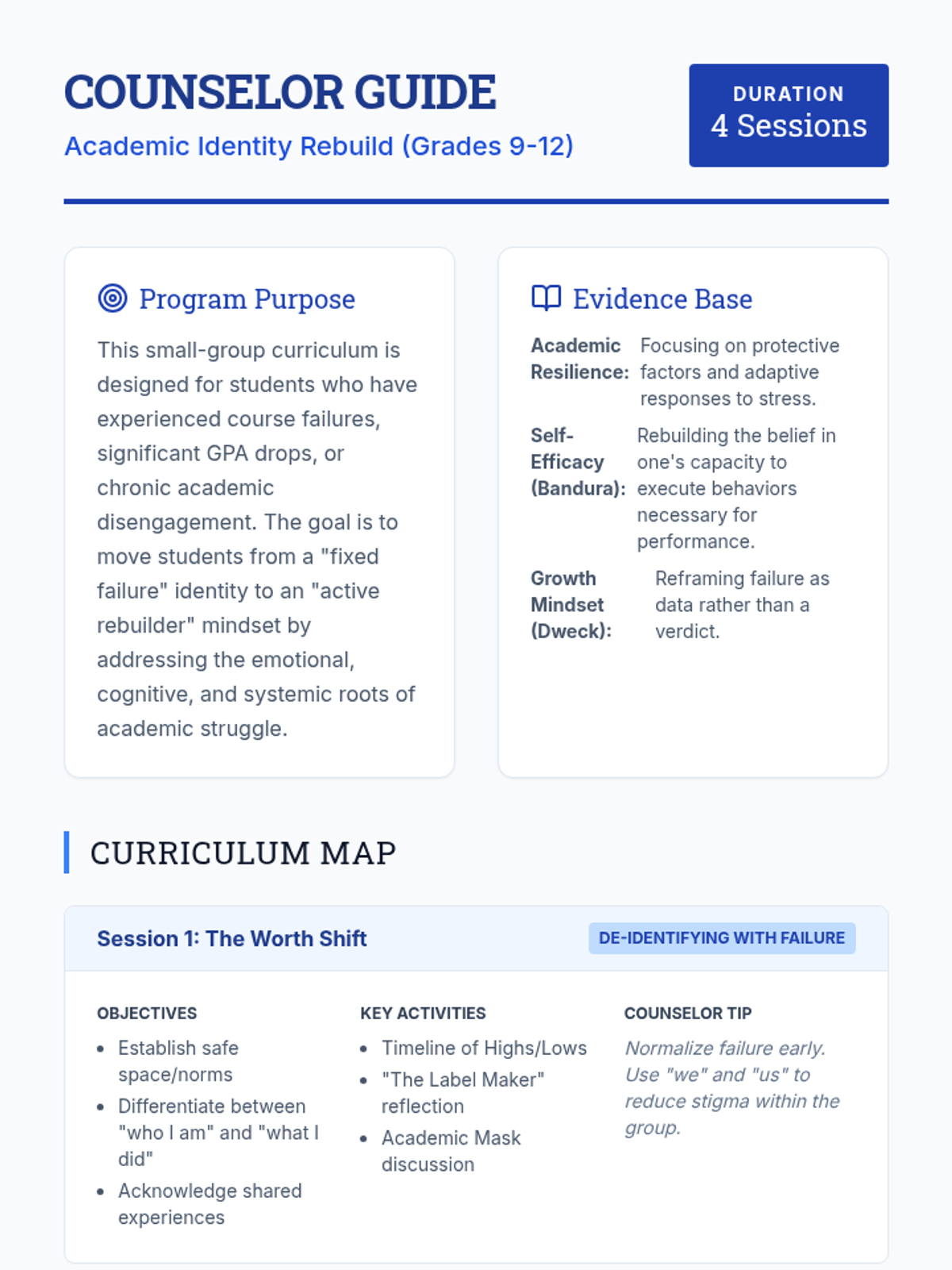
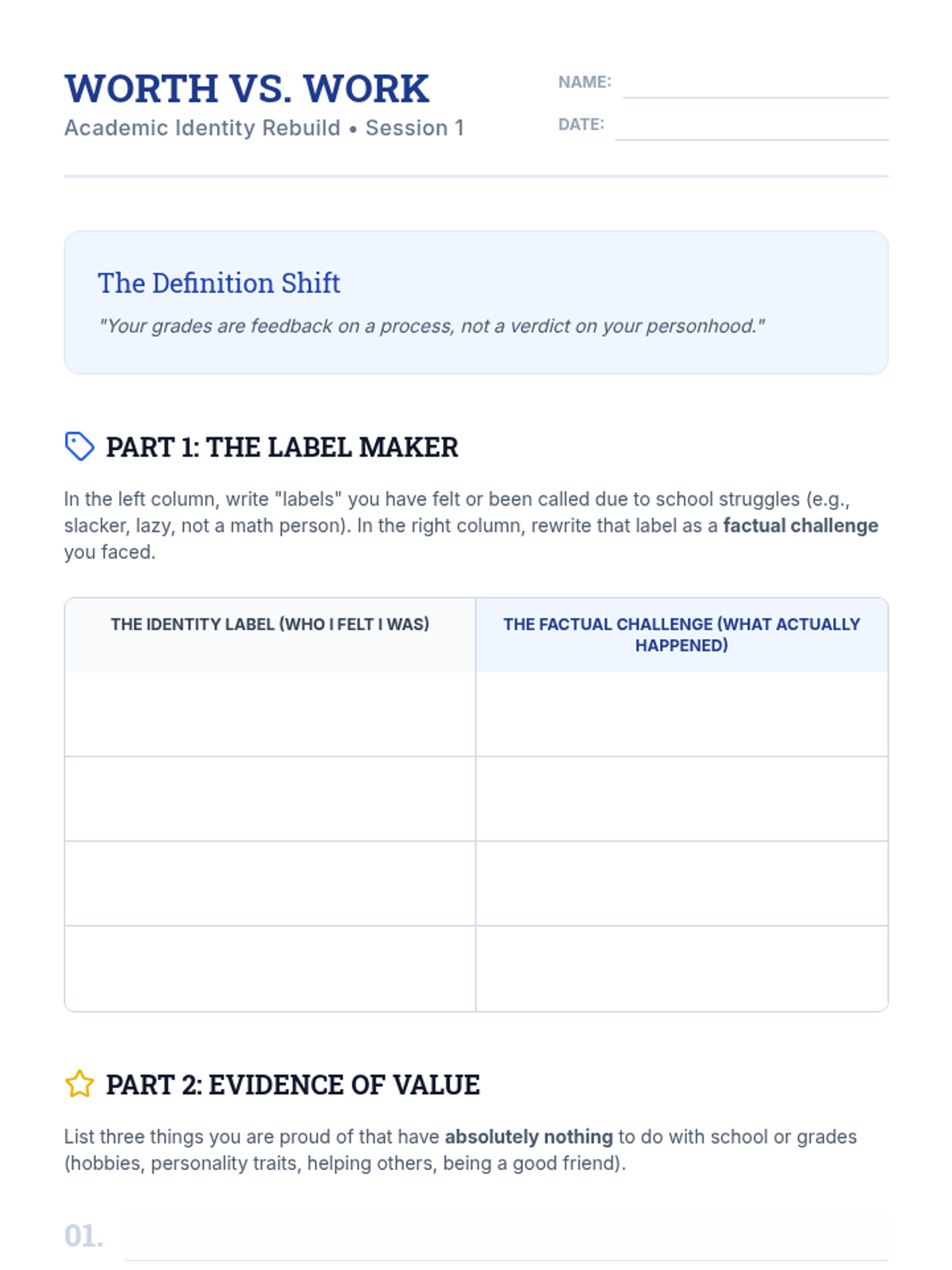
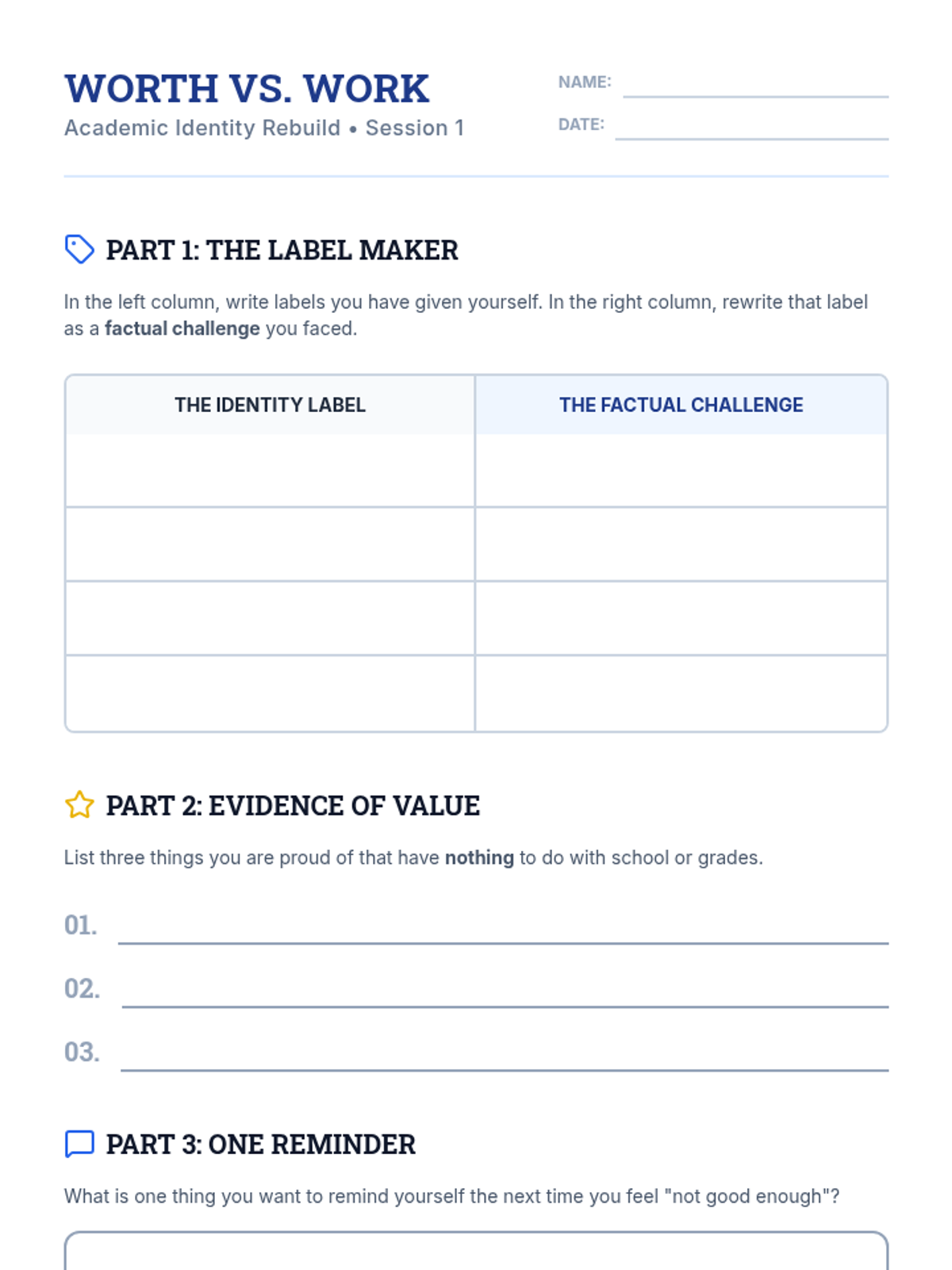
A 4-session small-group counseling intervention for high school students who have faced academic setbacks. The curriculum focuses on separating self-worth from grades, identifying personal and systemic barriers, and developing concrete resilience strategies for future success.
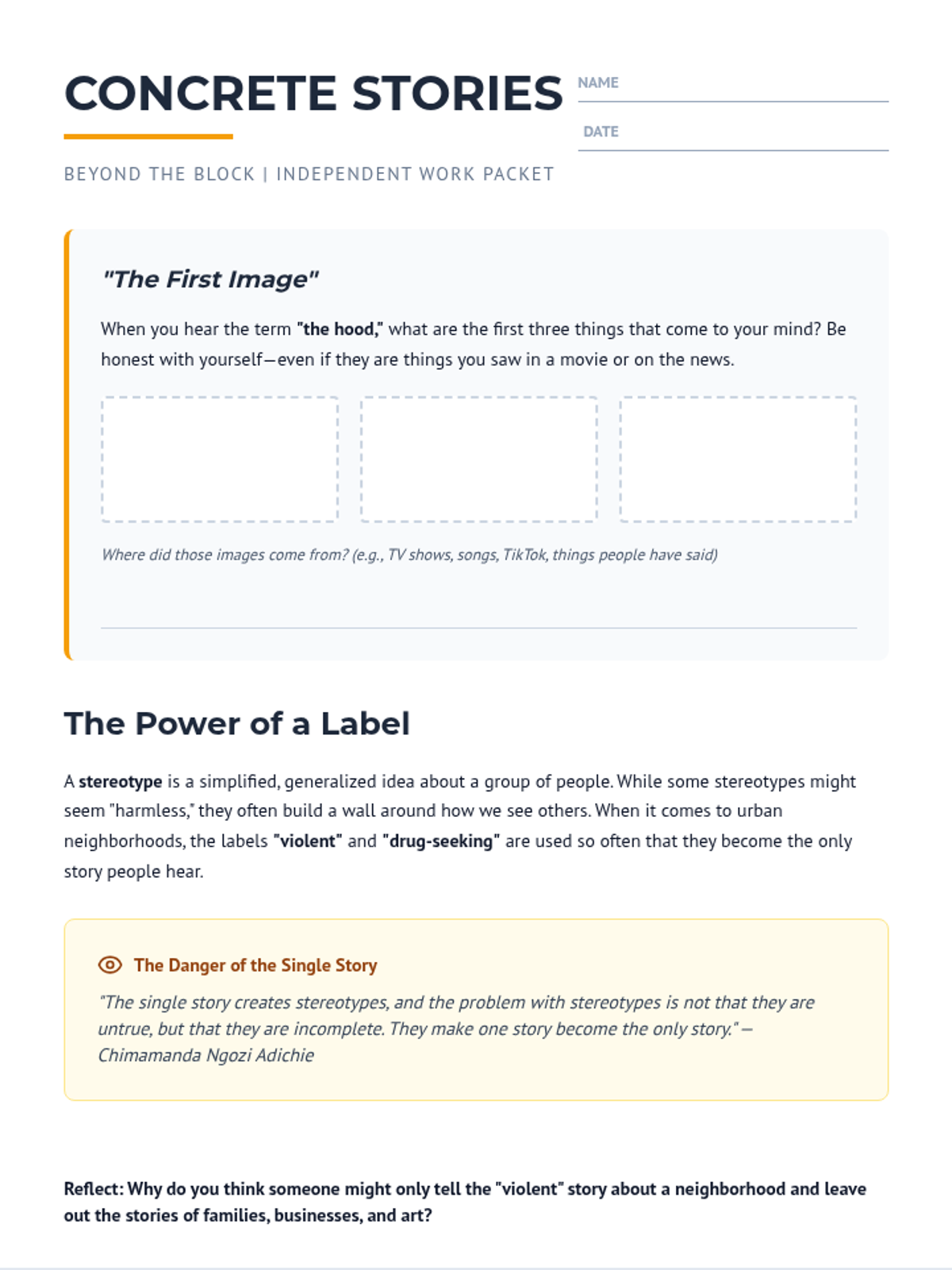
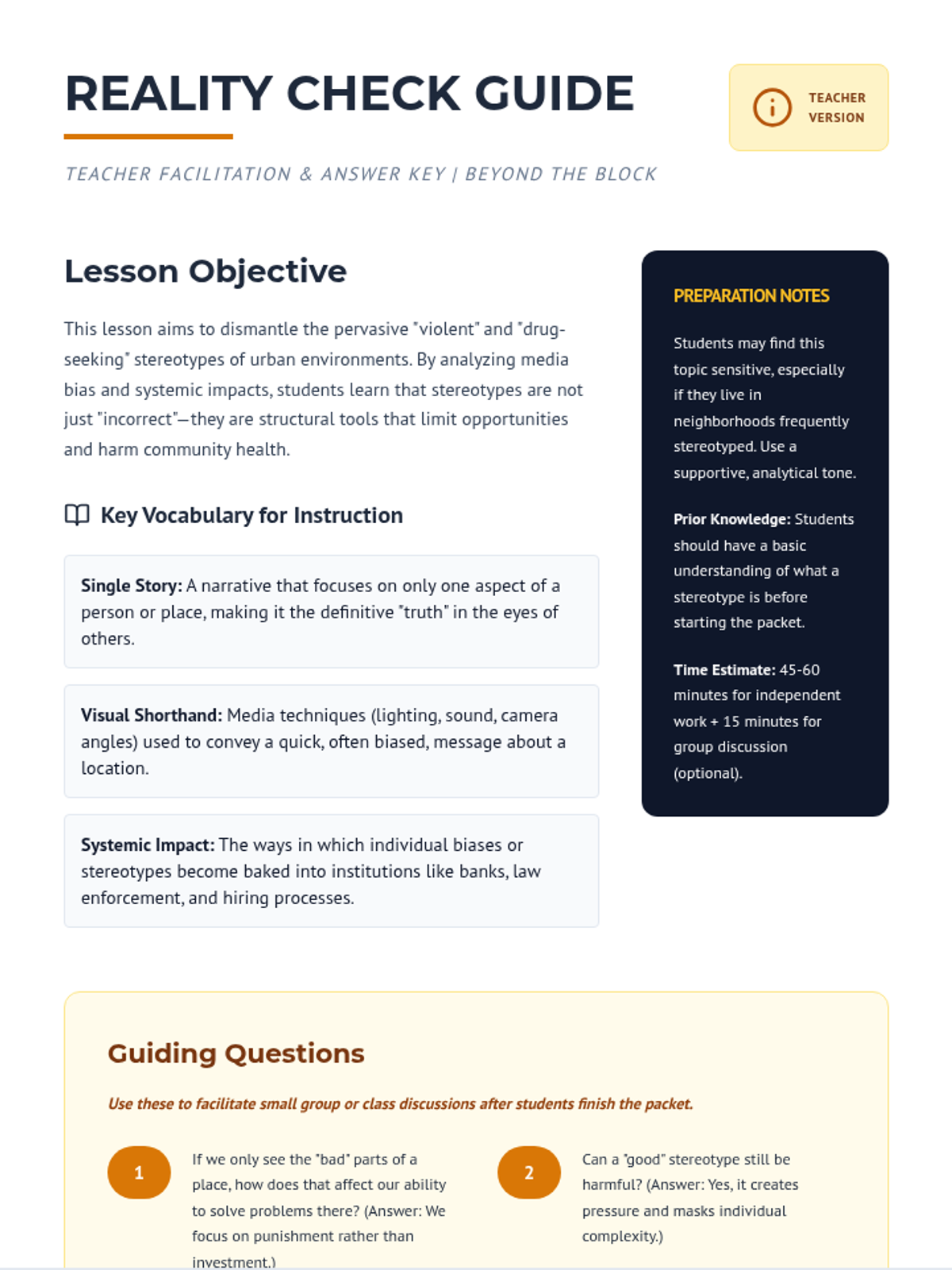
This unit explores how stories, stereotypes, and communication shape our perception of communities and each other, moving from external media narratives to personal responsibility in social interactions.
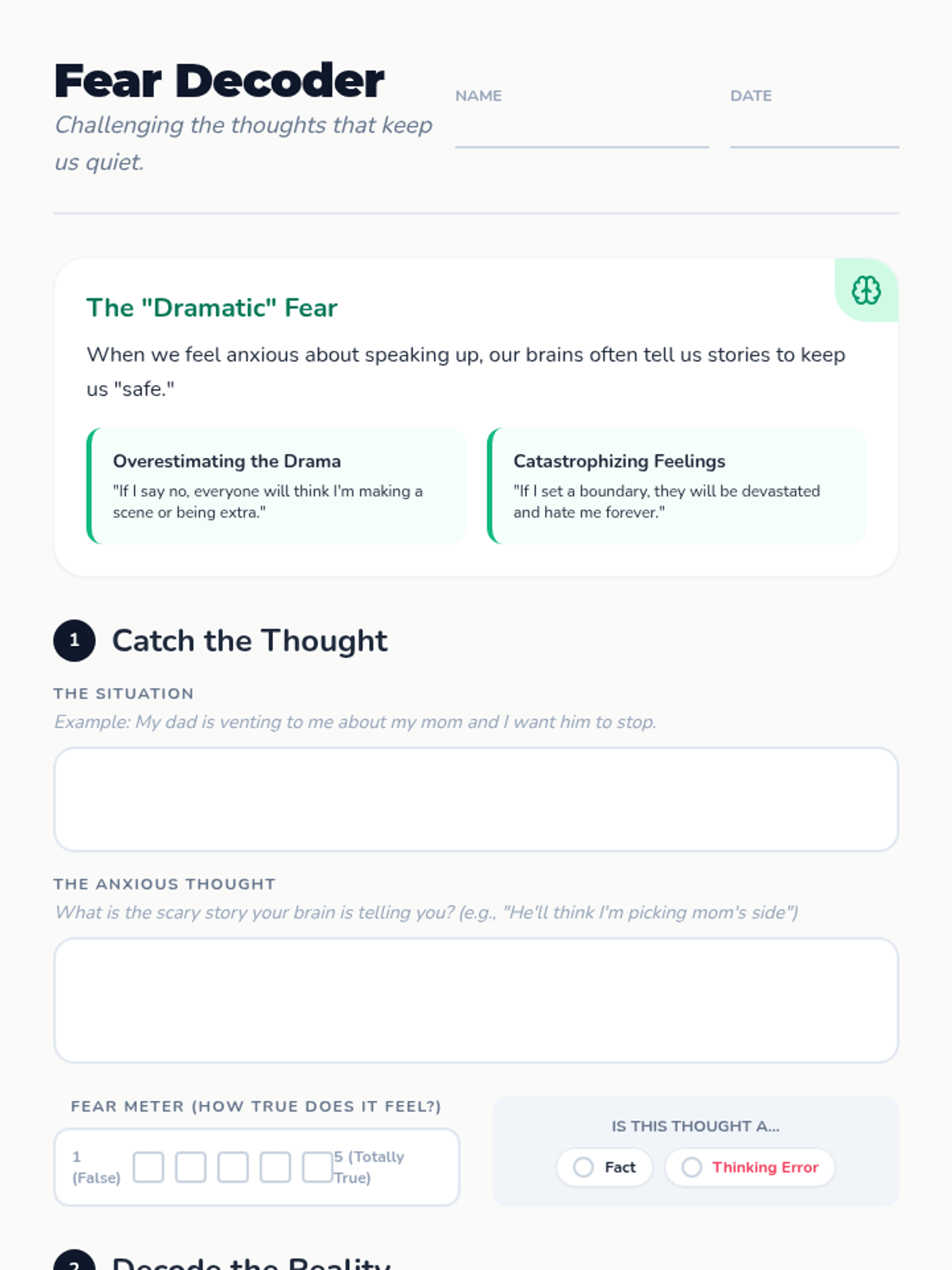
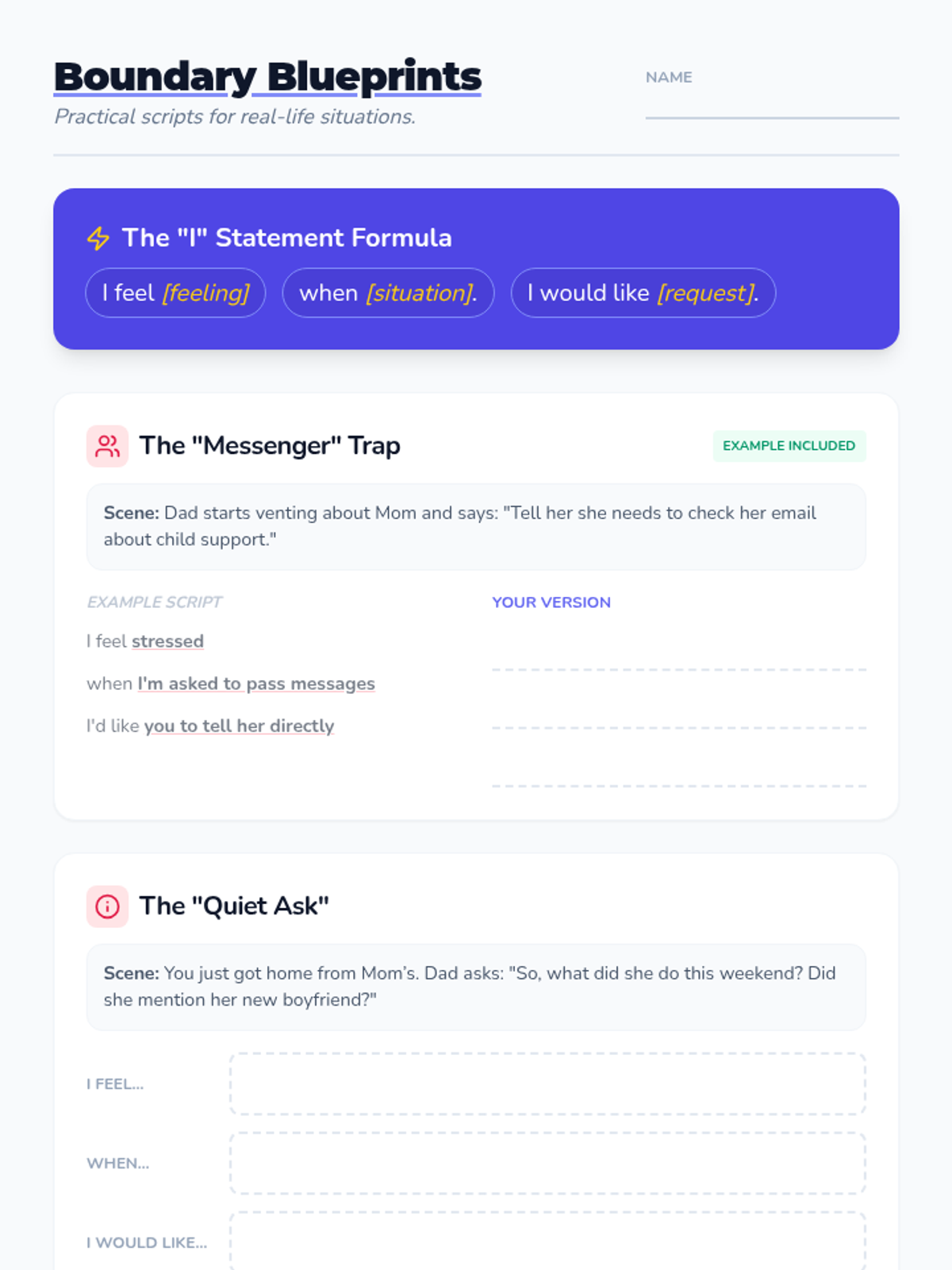
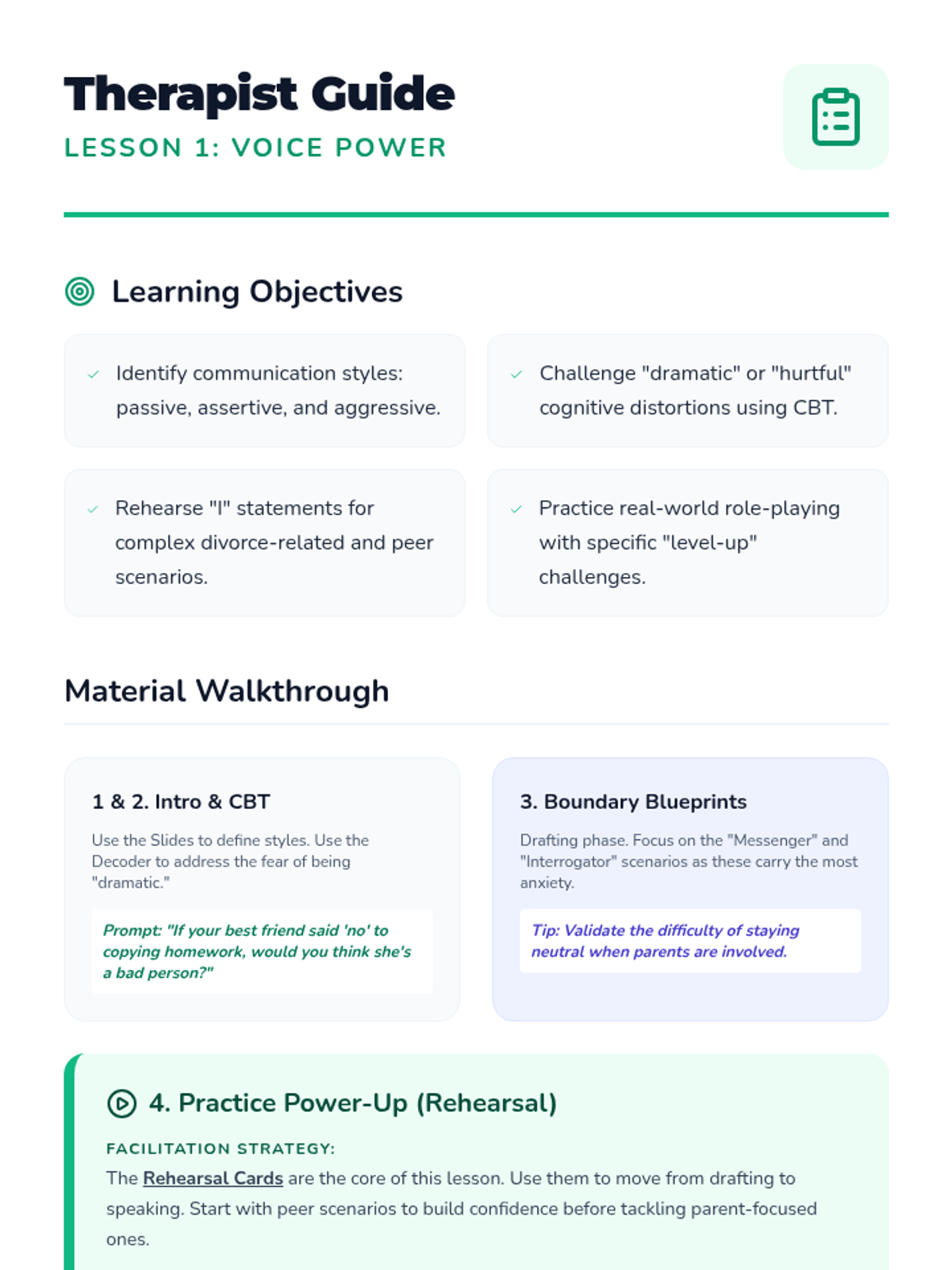
A therapeutic sequence focused on building assertiveness skills for adolescents struggling with anxiety and interpersonal conflict. This unit uses CBT principles to challenge social fears and provides practical tools for handling parents, peers, and authority figures.
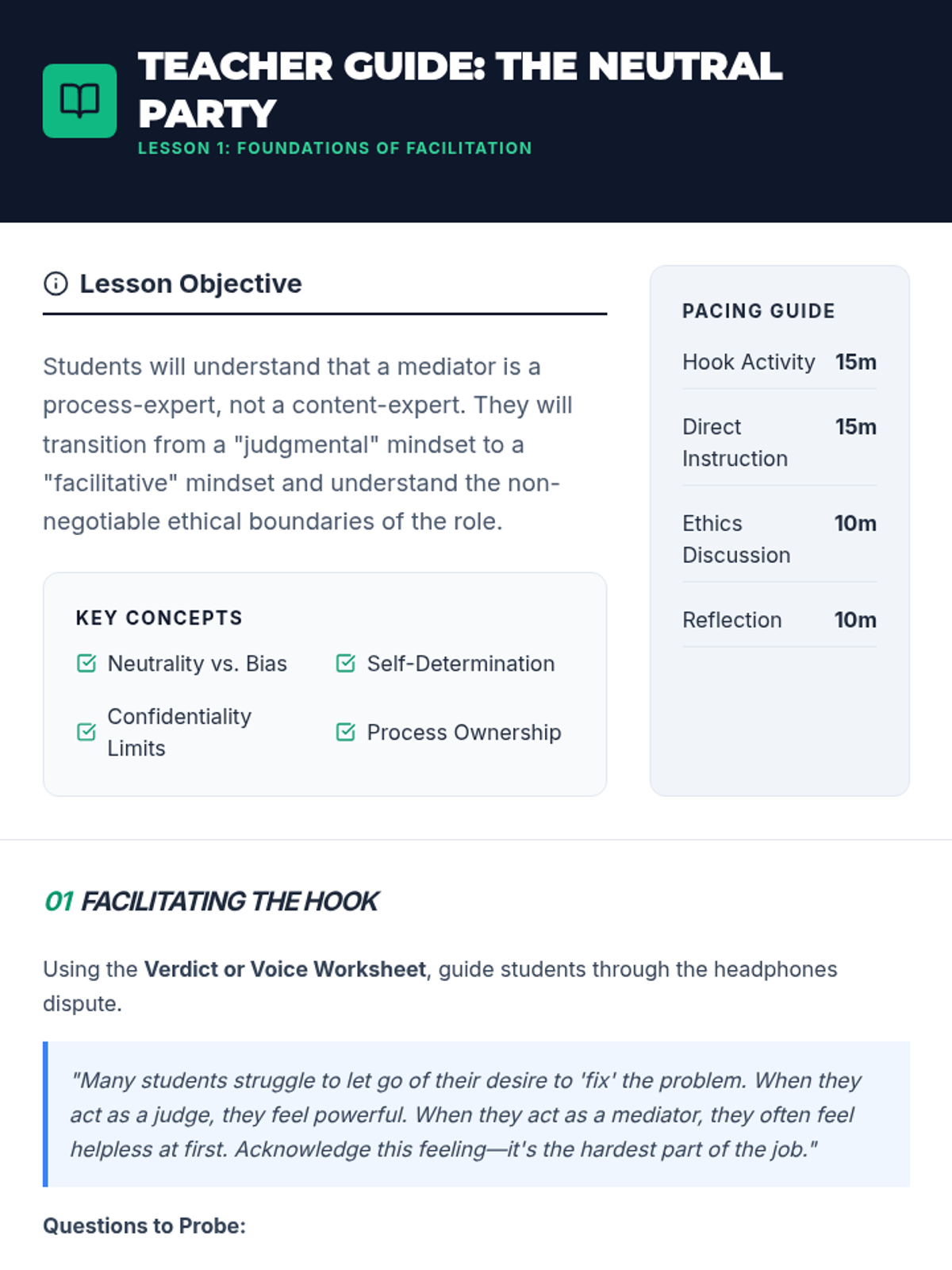
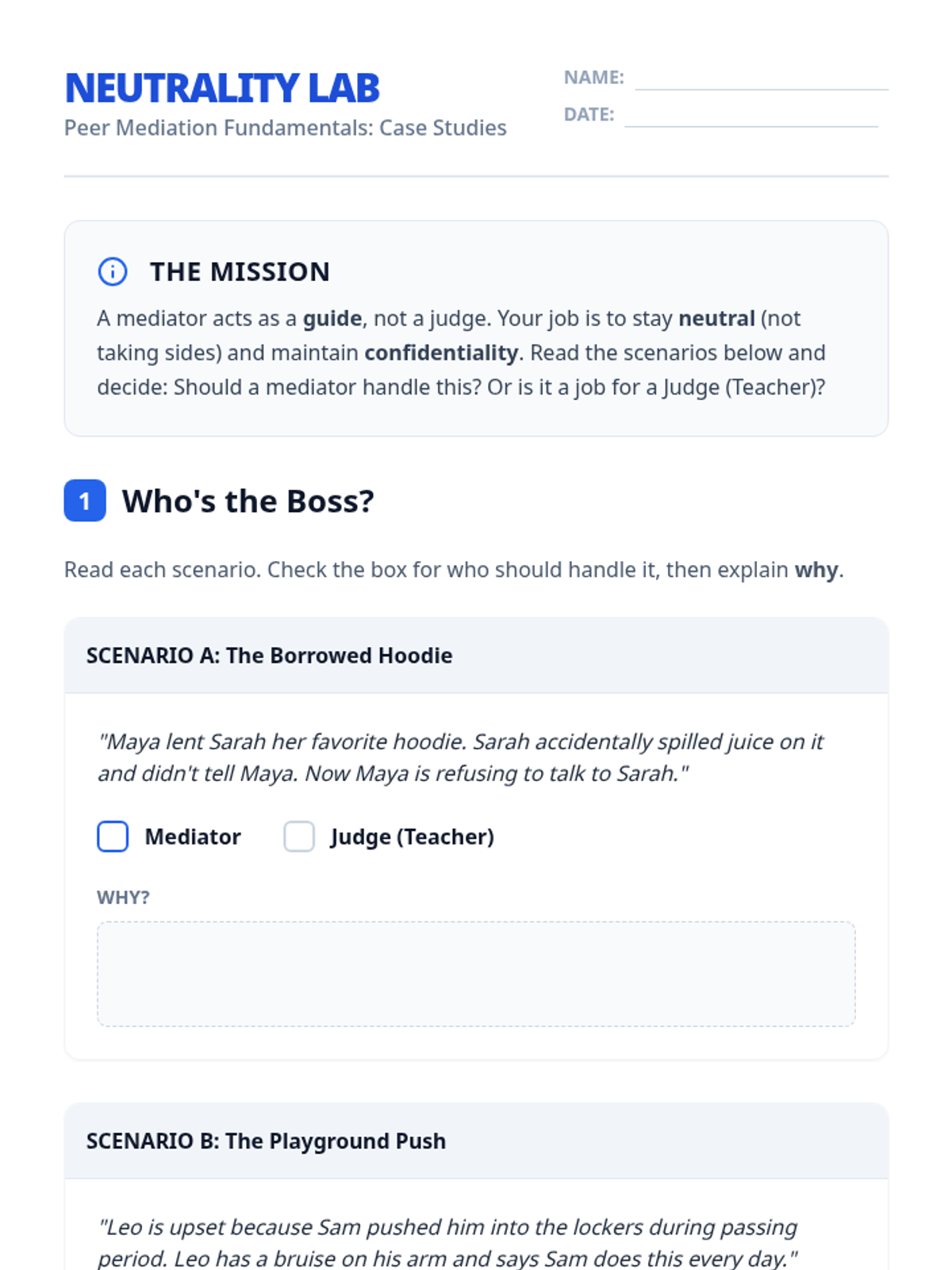
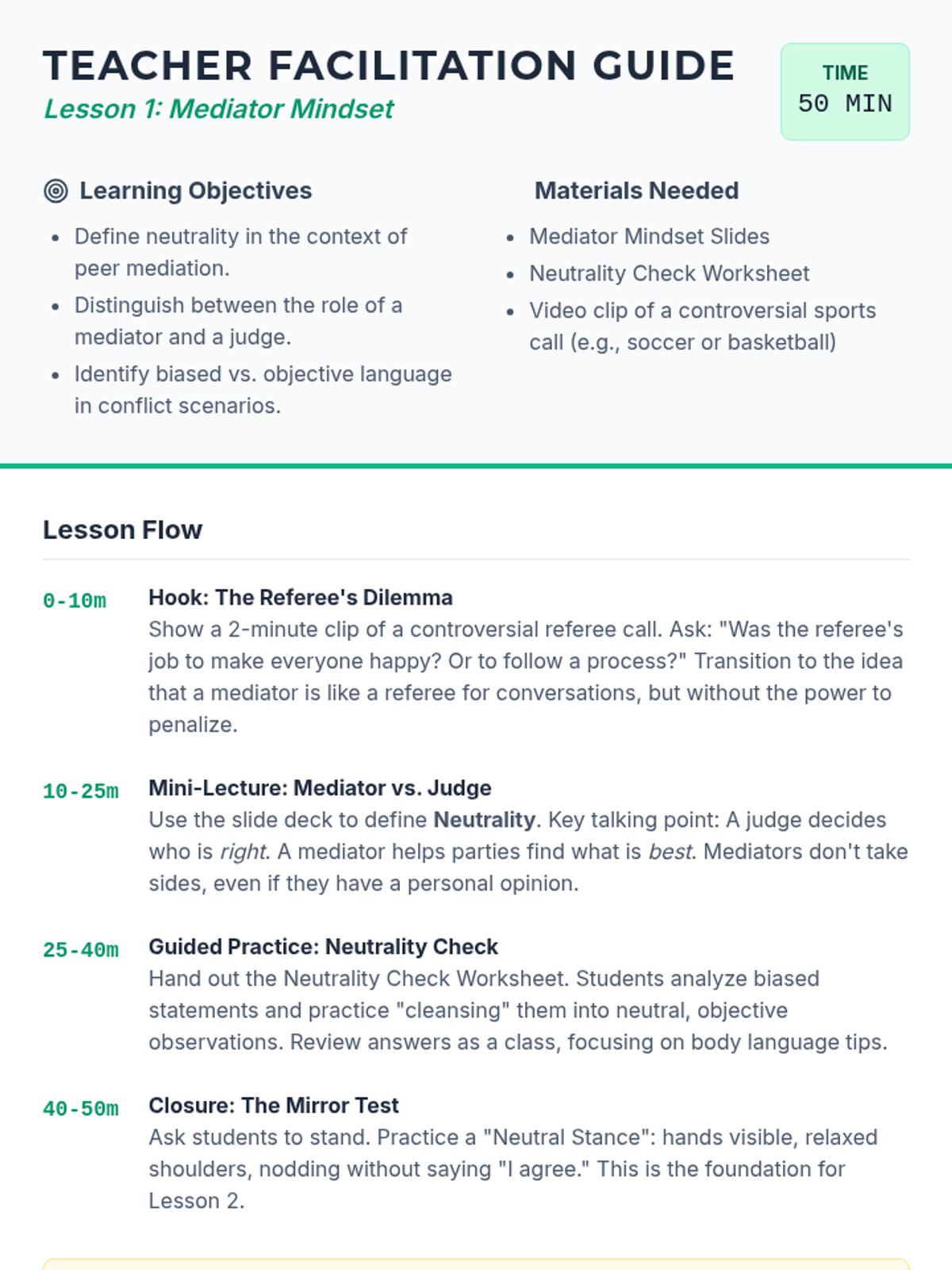
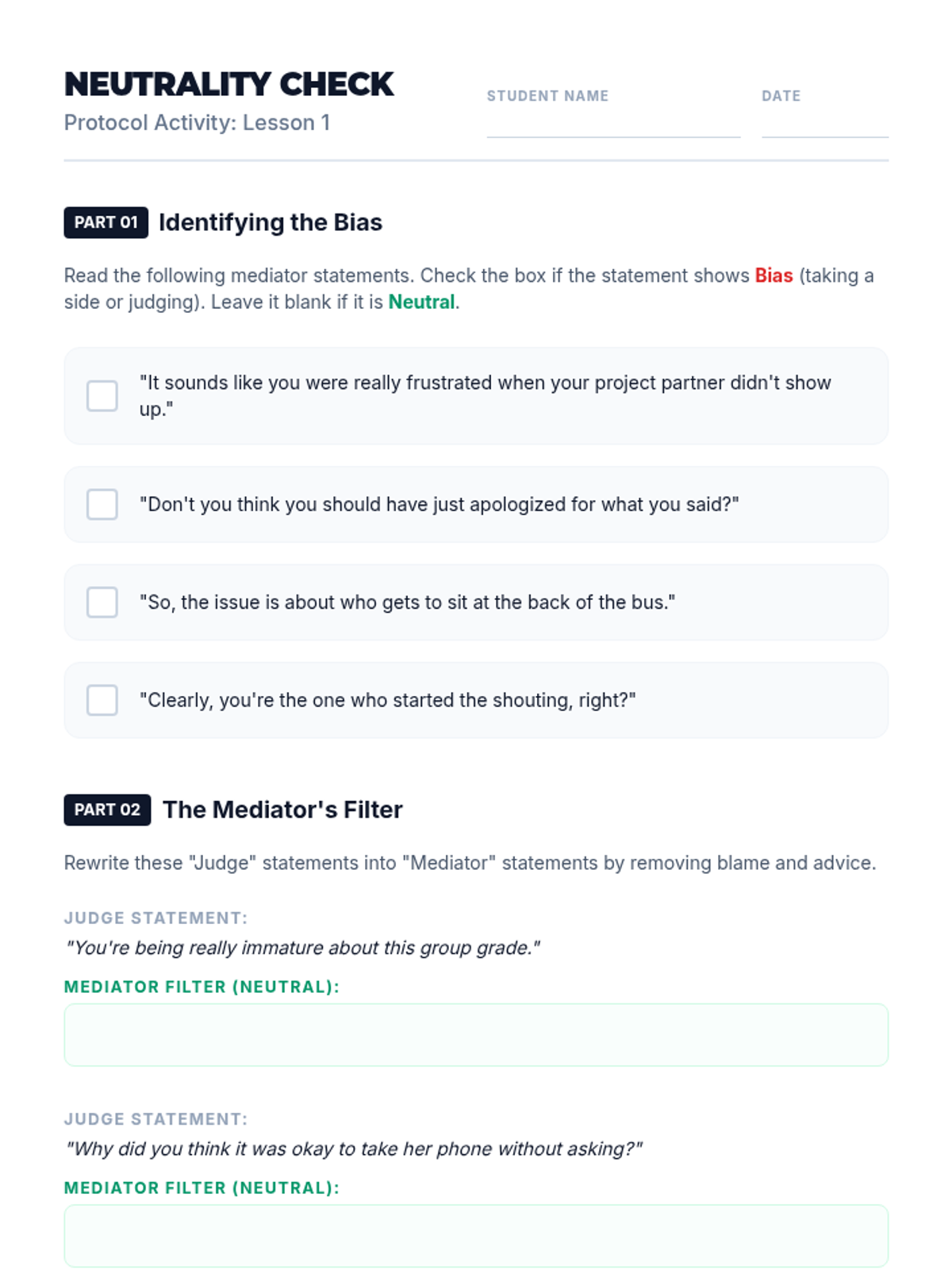
This sequence trains 9th-grade students to facilitate peer mediation. It covers the ethics of neutrality, the structural stages of a mediation session, summarizing complex issues into actionable agendas, and drafting sustainable, SMART agreements, culminating in a mock mediation certification.
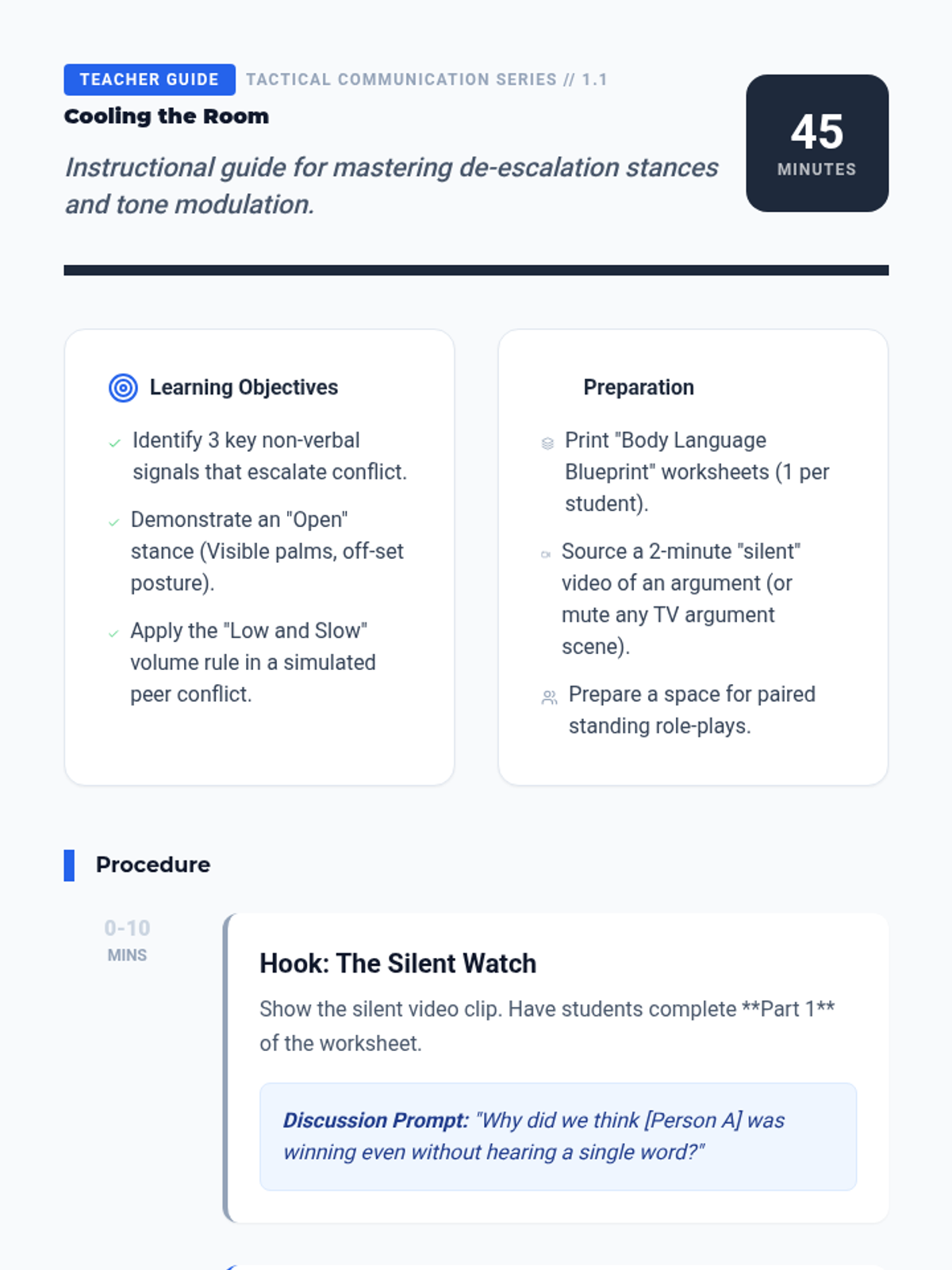
A comprehensive 9th-grade sequence on de-escalation, active listening, and assertive communication to navigate complex conflicts effectively. Students move from understanding non-verbal cues to mastering the 'XYZ' formula and reframing toxic language.
This sequence empowers students to act as third-party neutrals, introducing the specific structure and skills of Peer Mediation. Students learn the distinct phases of a mediation session, the importance of neutrality, and how to facilitate dialogue without taking sides.
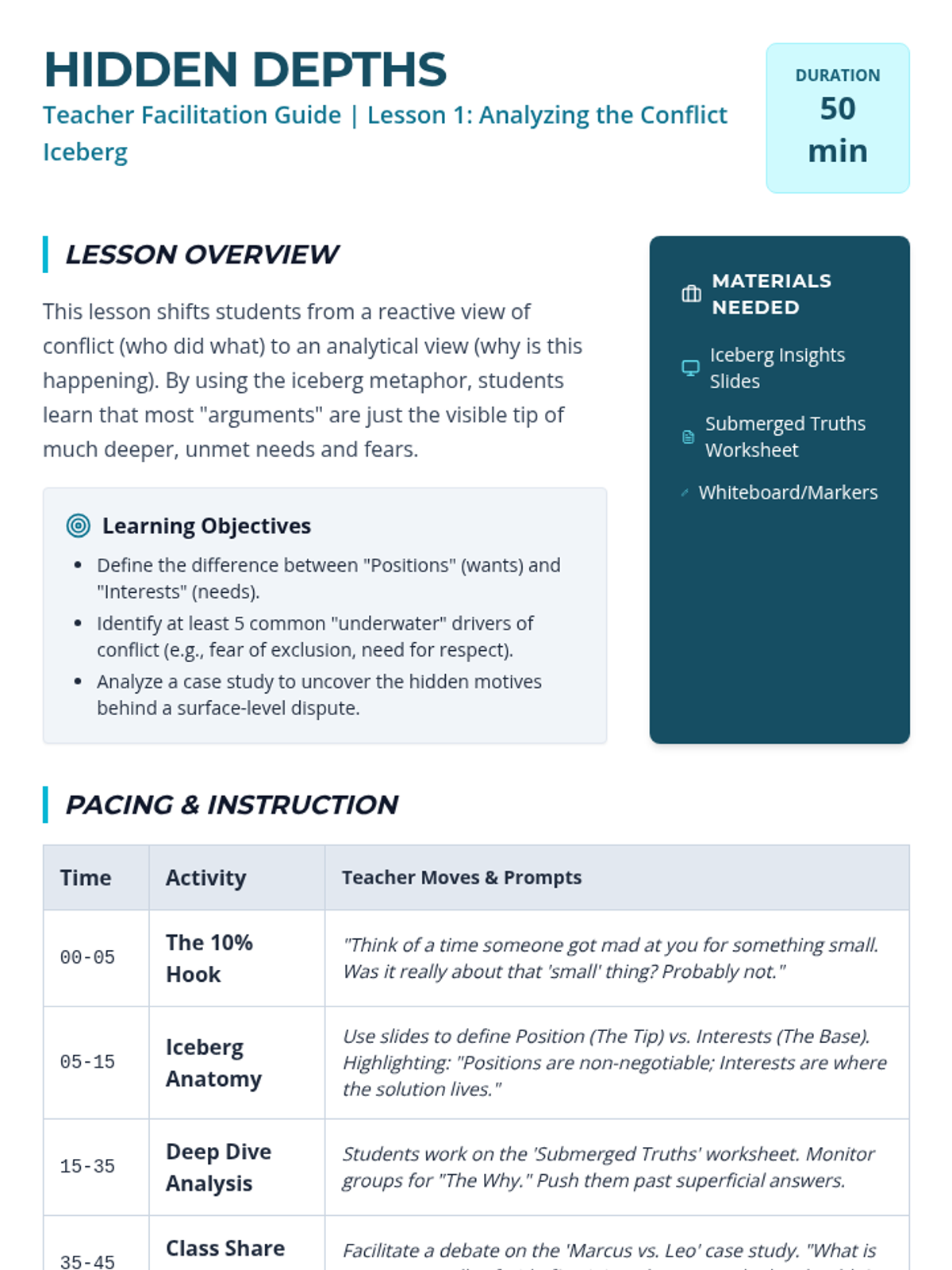
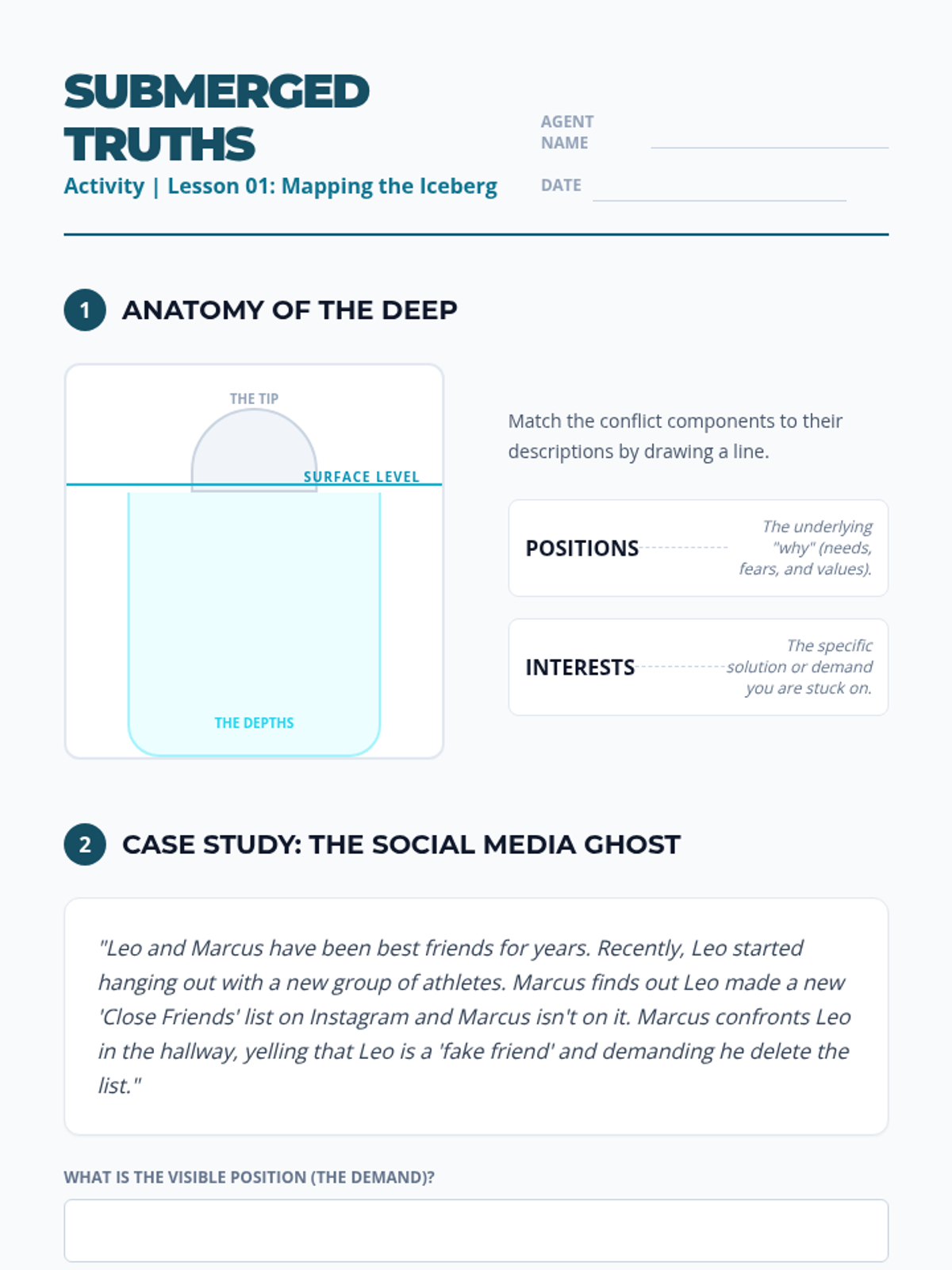
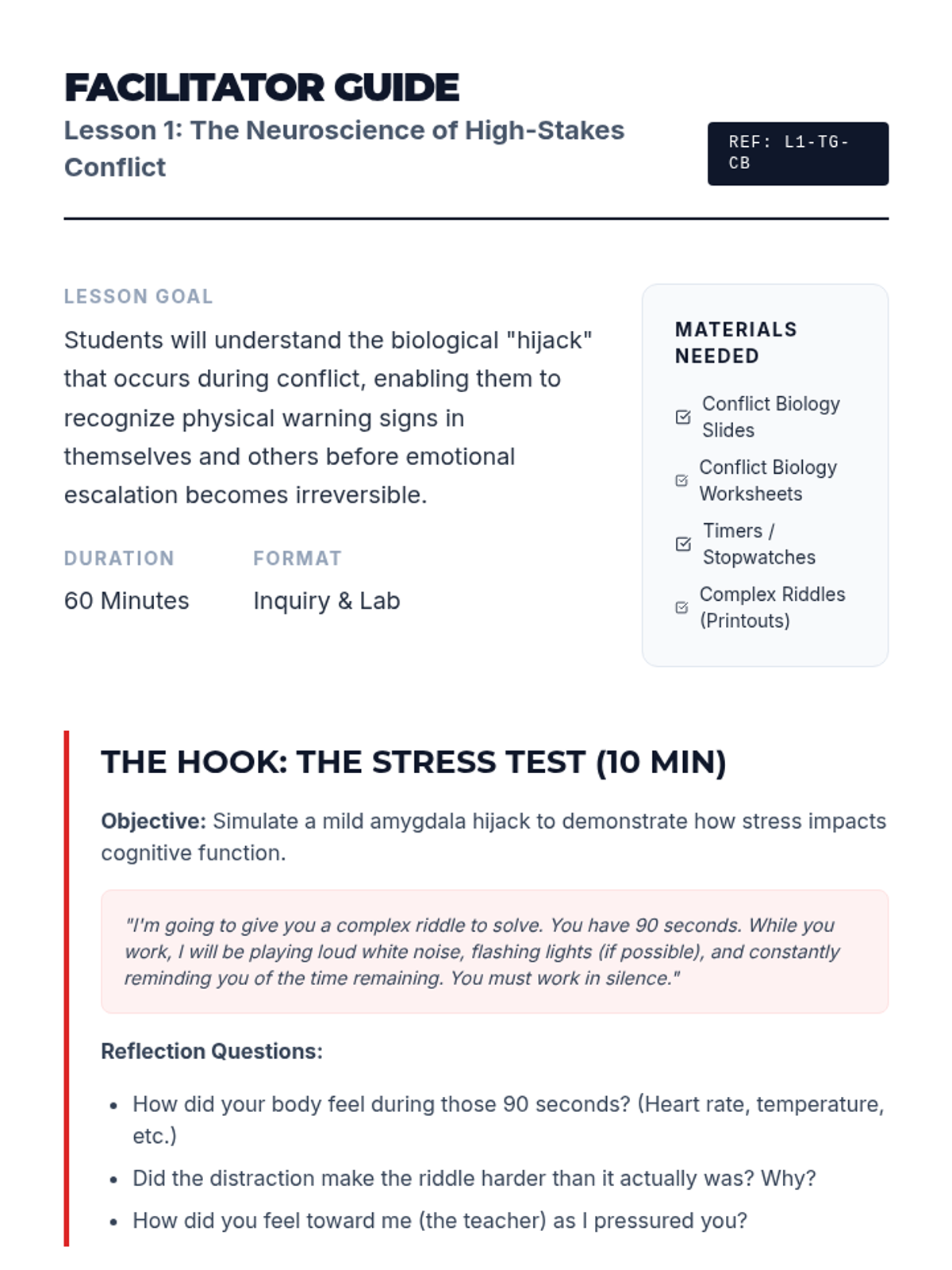
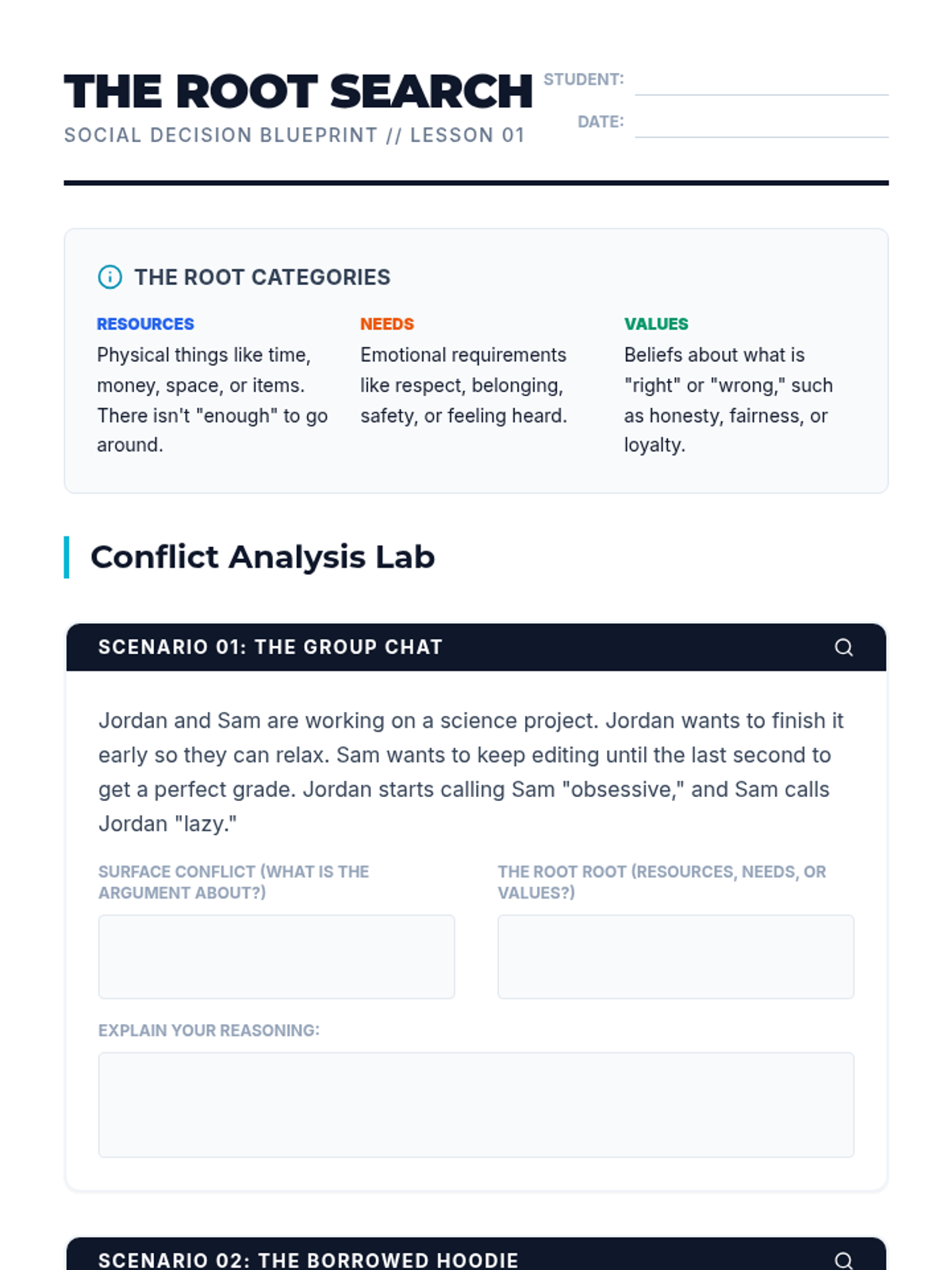
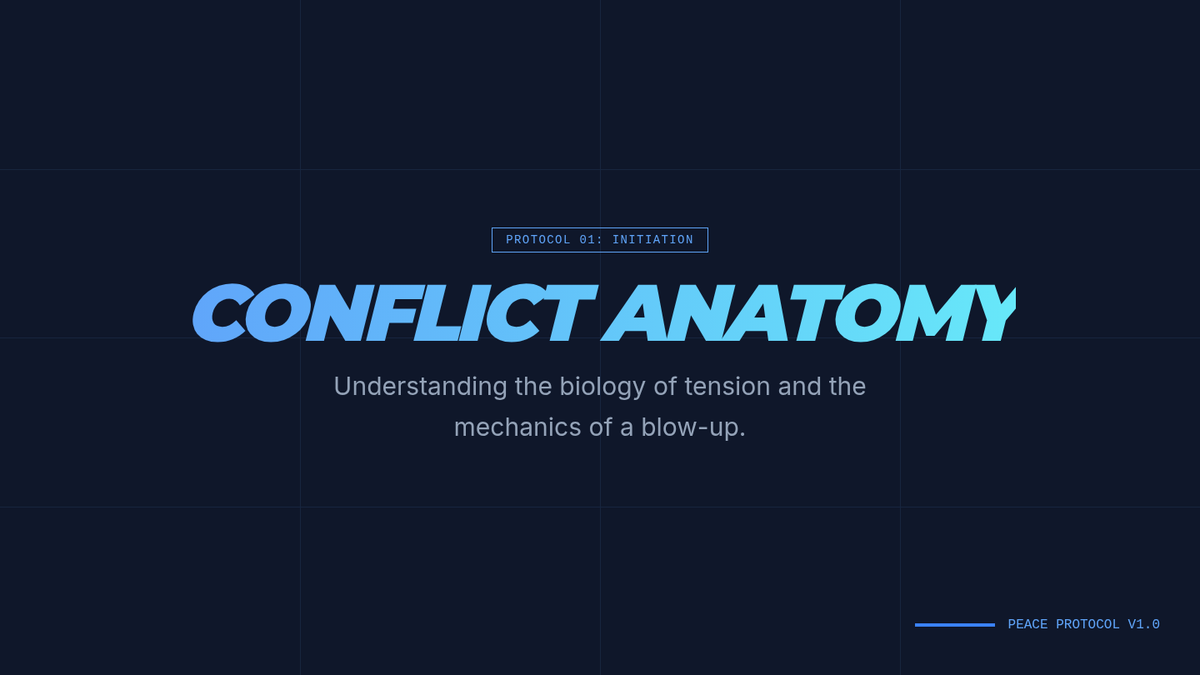
A comprehensive 9th-grade sequence exploring the psychological and biological roots of conflict. Students learn to distinguish visible behaviors from hidden needs, understand the neuroscience of emotional escalation, and develop practical self-regulation strategies to navigate complex interpersonal disputes.
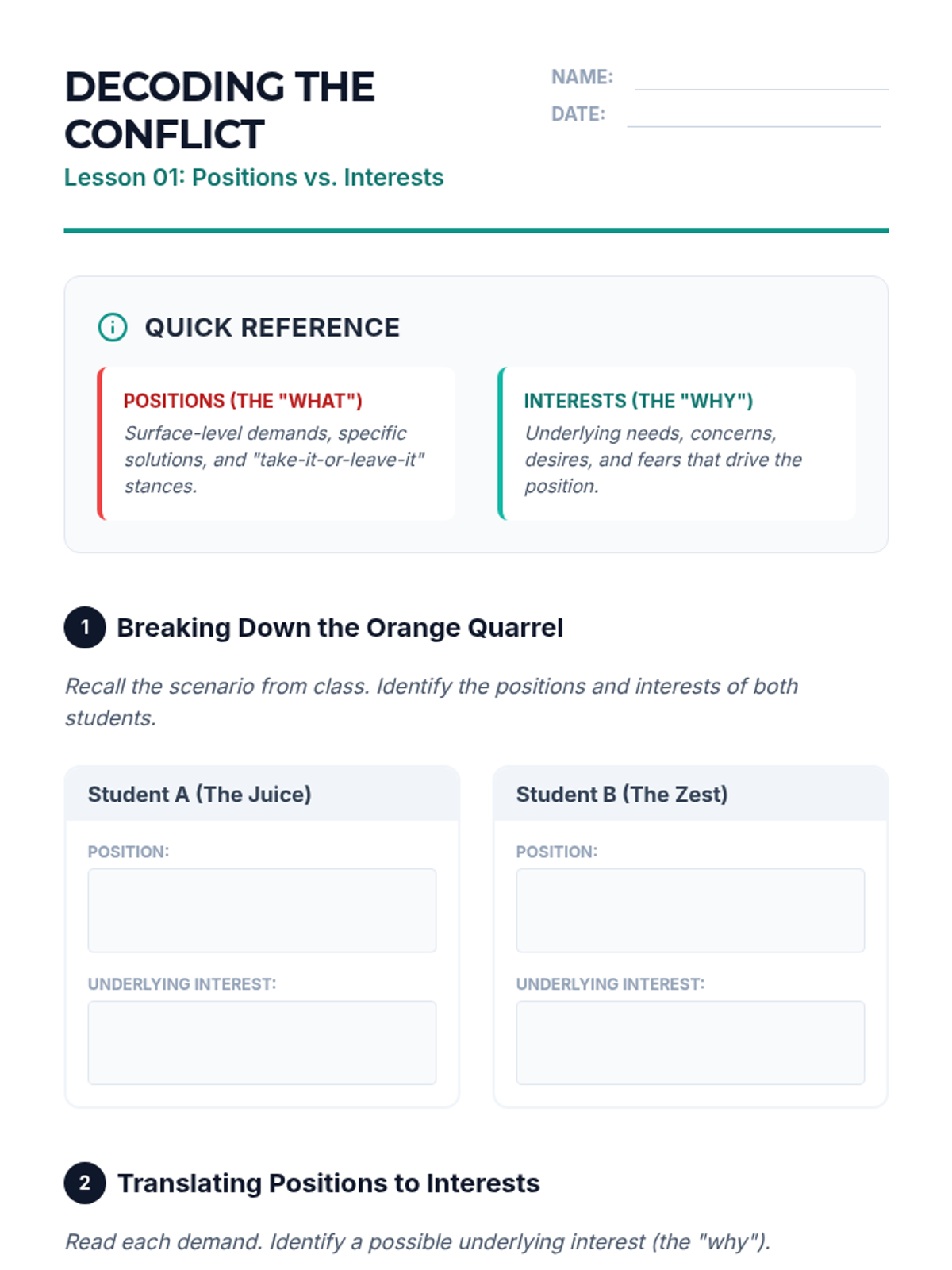
A comprehensive high school unit on interest-based negotiation and formal mediation. Students move from understanding individual interests to facilitating multi-party resolutions using the Harvard Negotiation Project framework and professional mediation stages.
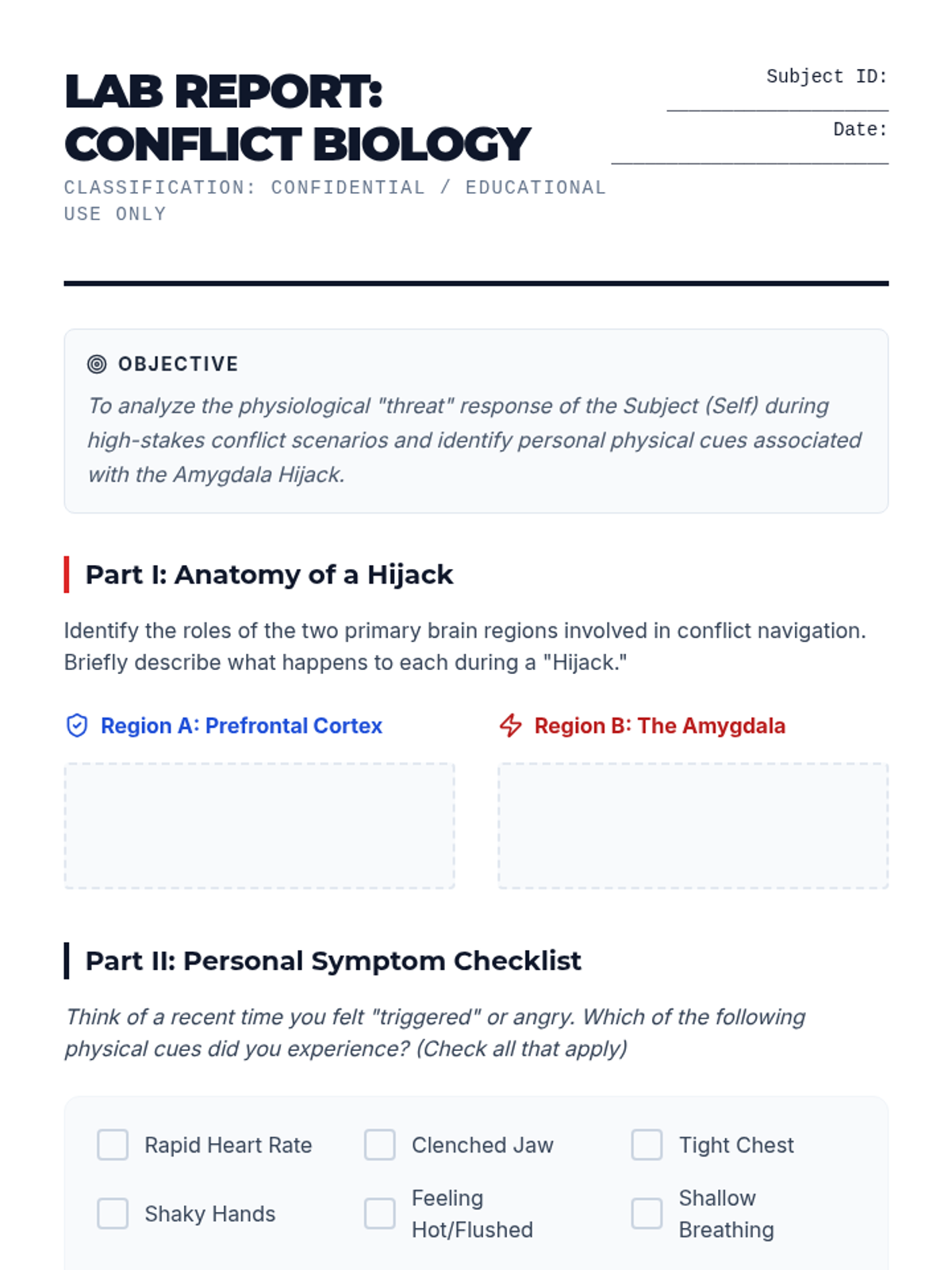
A comprehensive 5-lesson sequence on the psychological and interpersonal mechanics of managing high-conflict situations. Students explore the neuroscience of anger, practice verbal and non-verbal de-escalation, use the Iceberg Model to find root causes, and master assertive communication through simulations.
A four-session individual program for high school students to learn conflict resolution, understand consequences of violence, and practice de-escalation strategies.
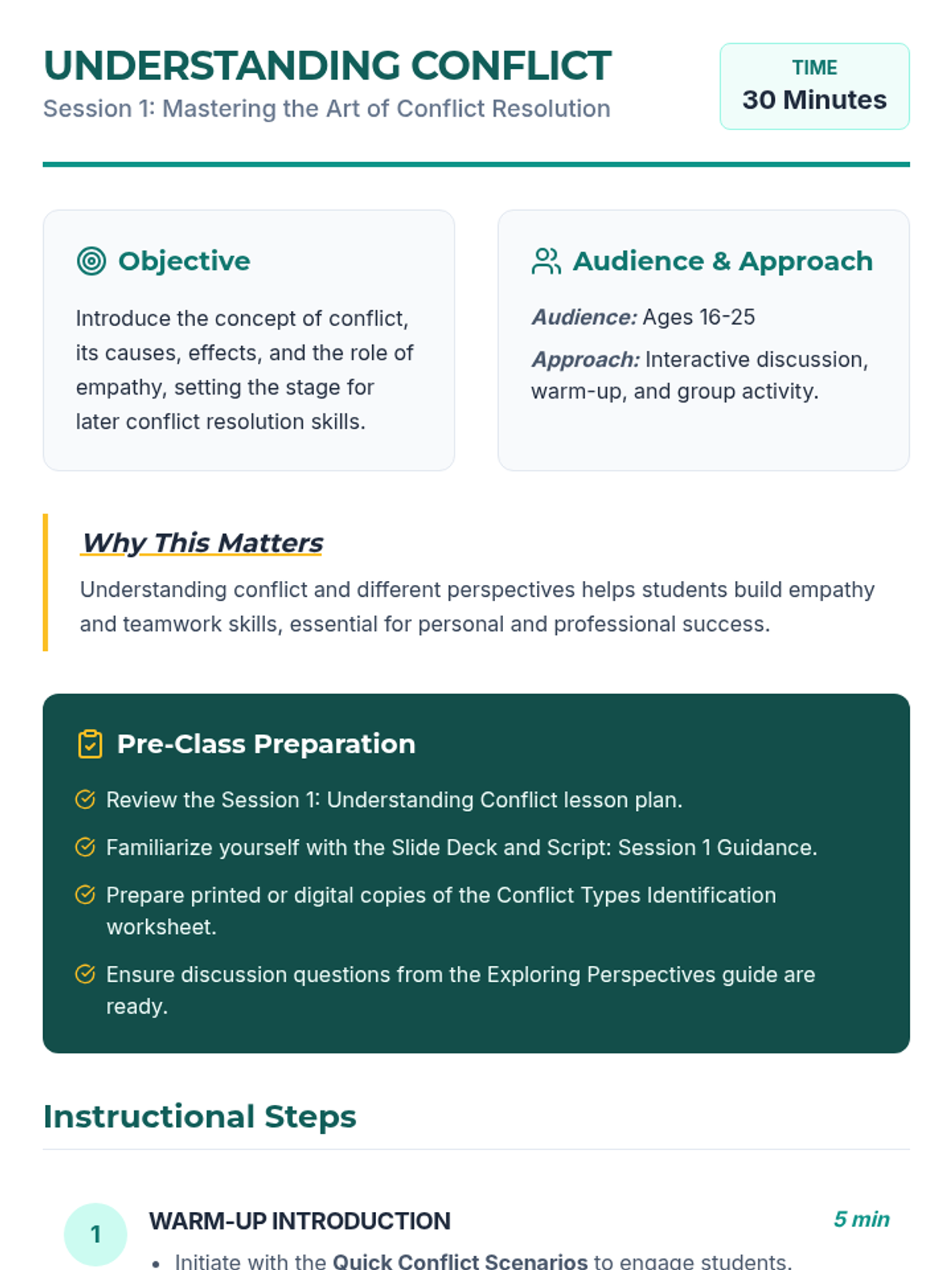
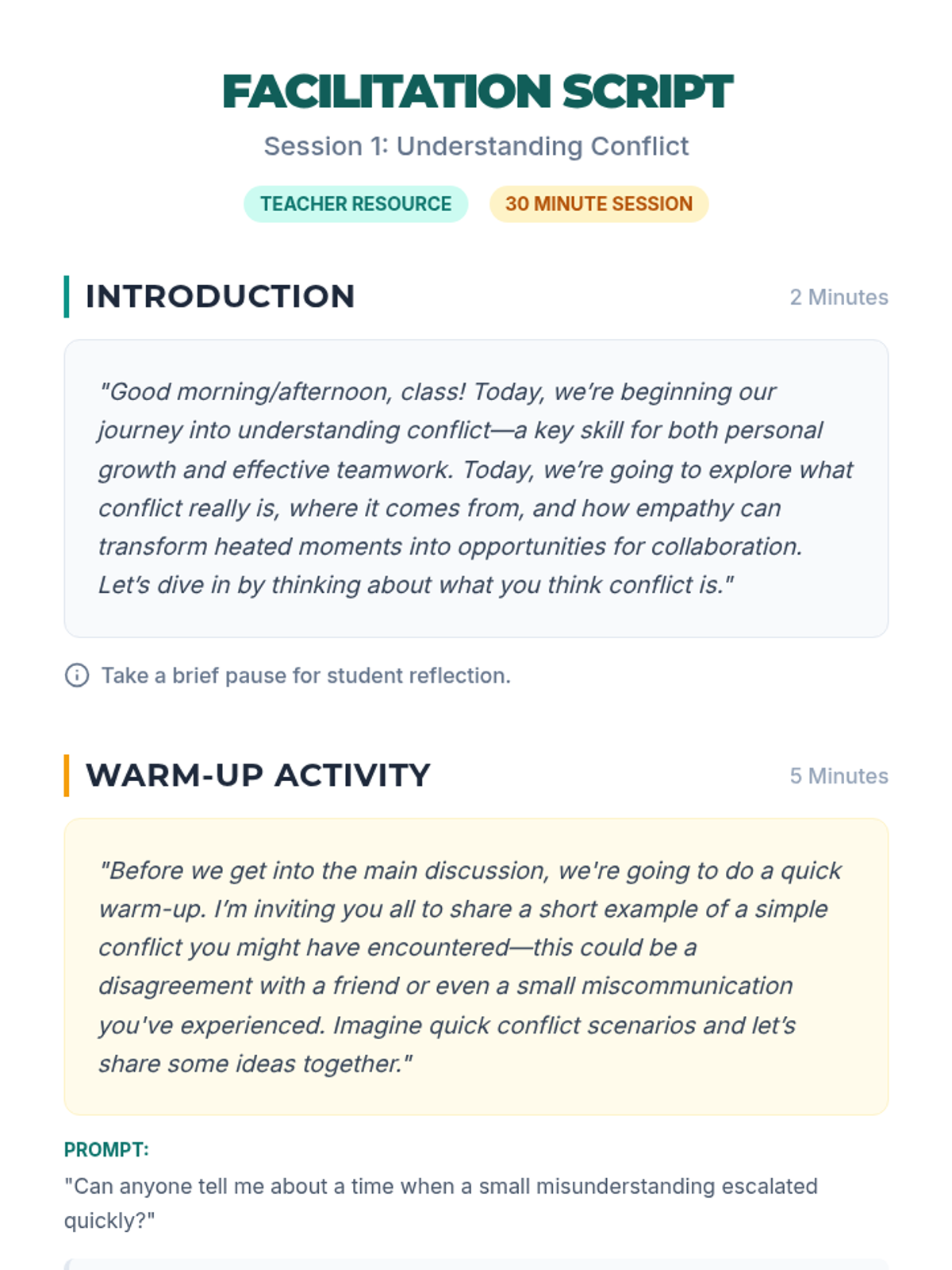
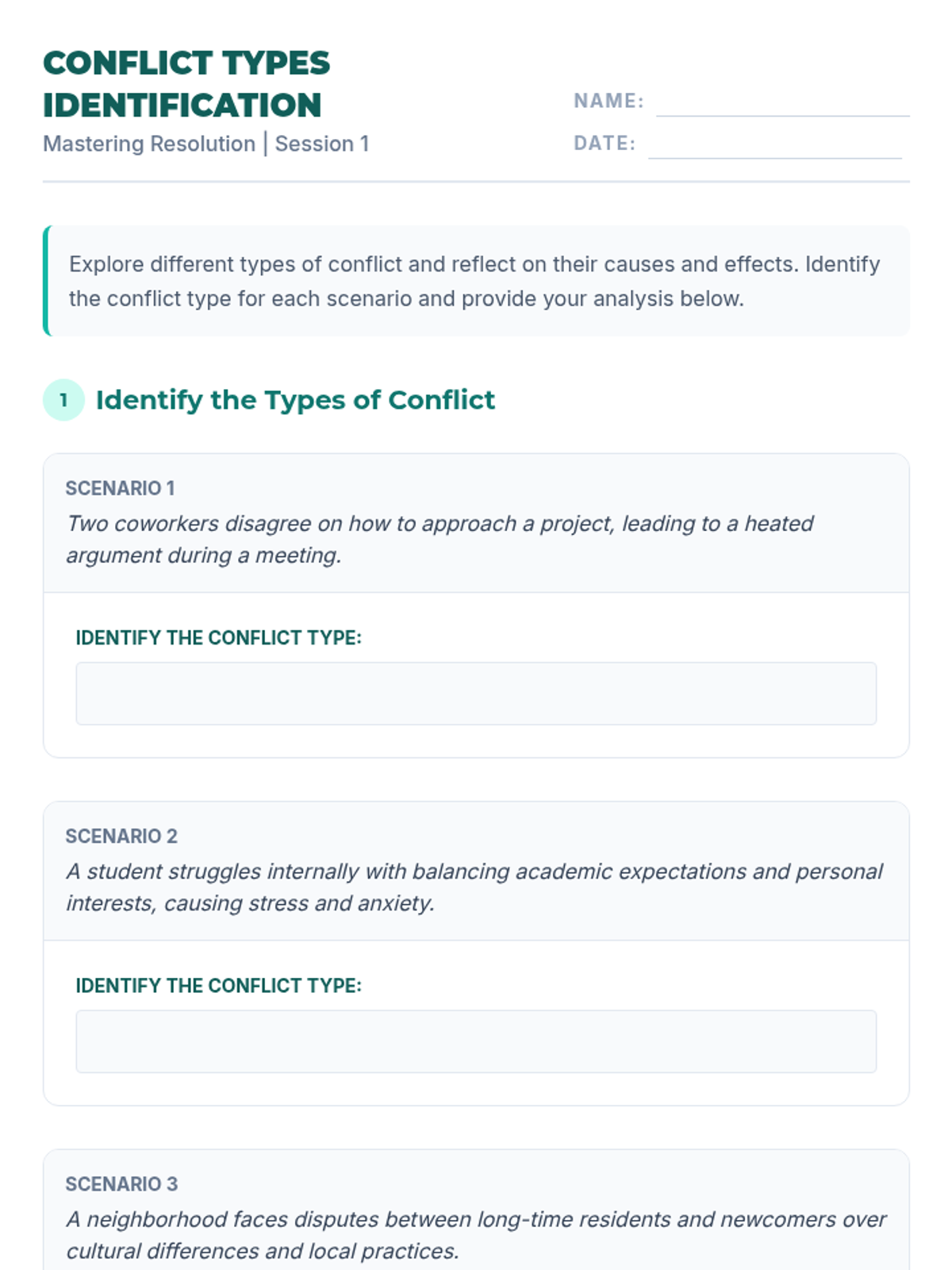
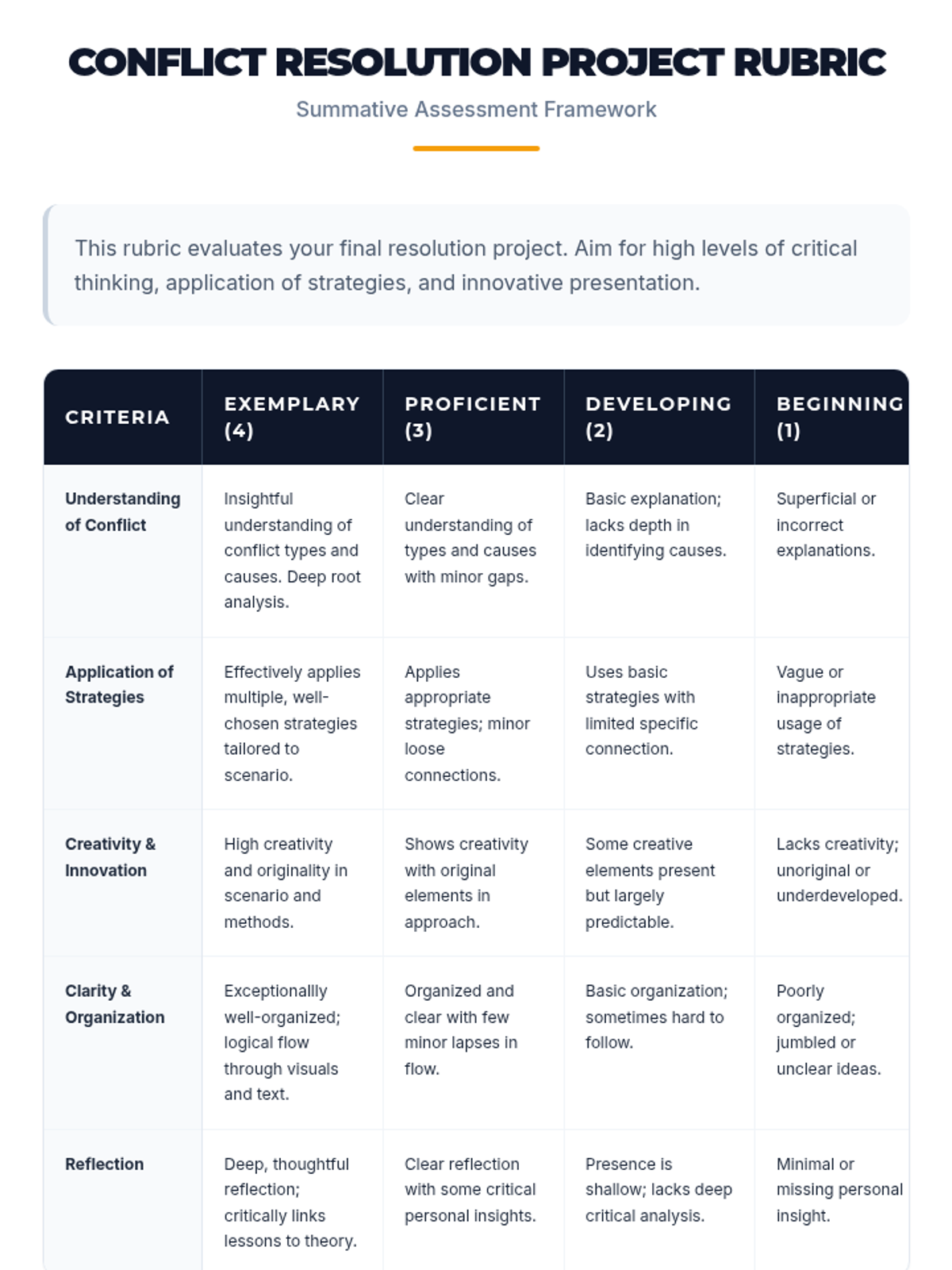
A comprehensive 4-session sequence designed for students aged 16-25 to master conflict resolution. Students will move from understanding the nature of conflict to practicing active listening, negotiation, and collaborative problem-solving, culminating in a final resolution project.
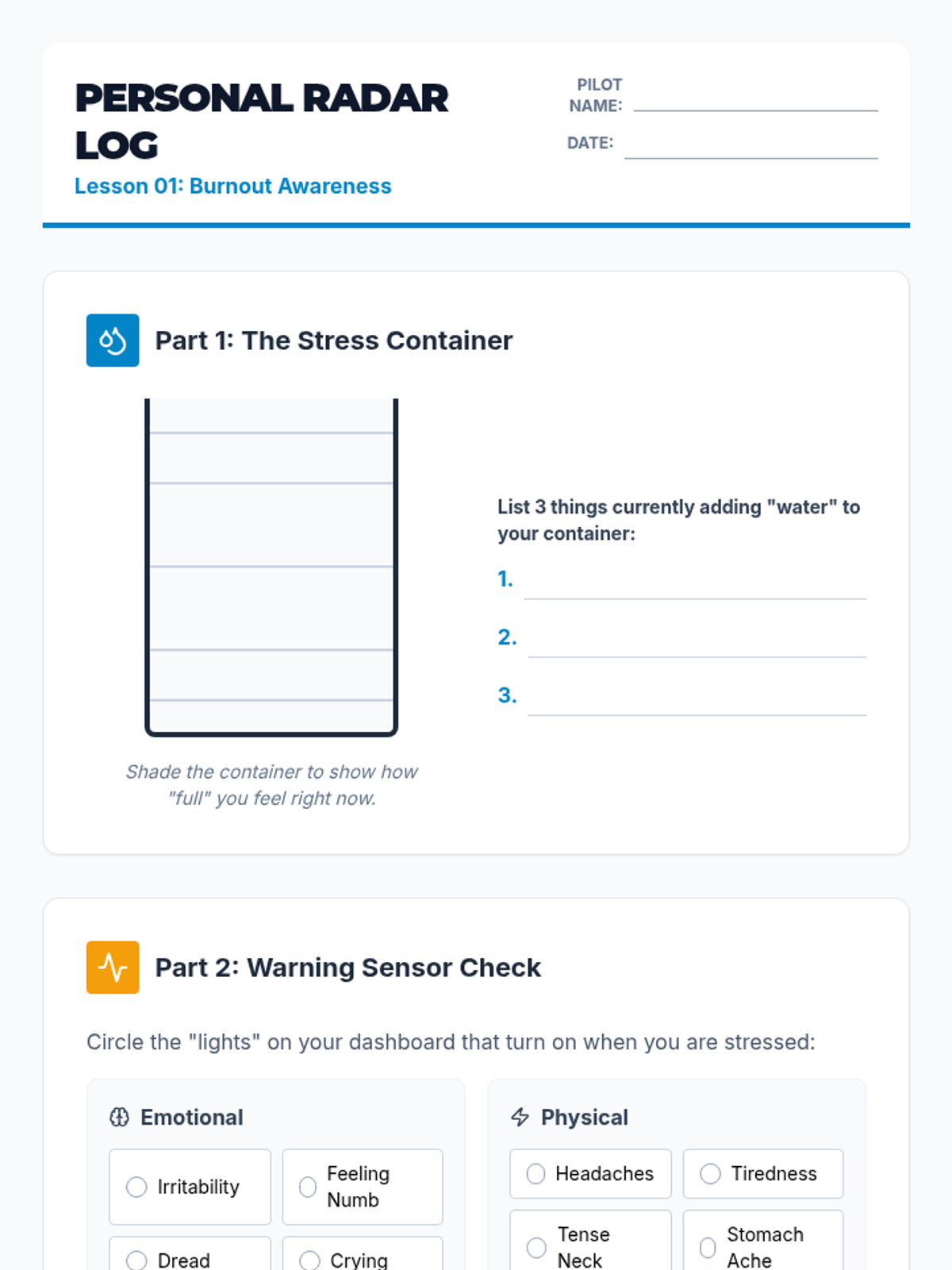
A comprehensive sequence for 9th-grade students focusing on self-advocacy, communication skills, and boundary setting to manage schedule conflicts and prevent burnout. Students learn to recognize stress signals, draft professional requests, negotiate deadlines, and prioritize tasks during crises.
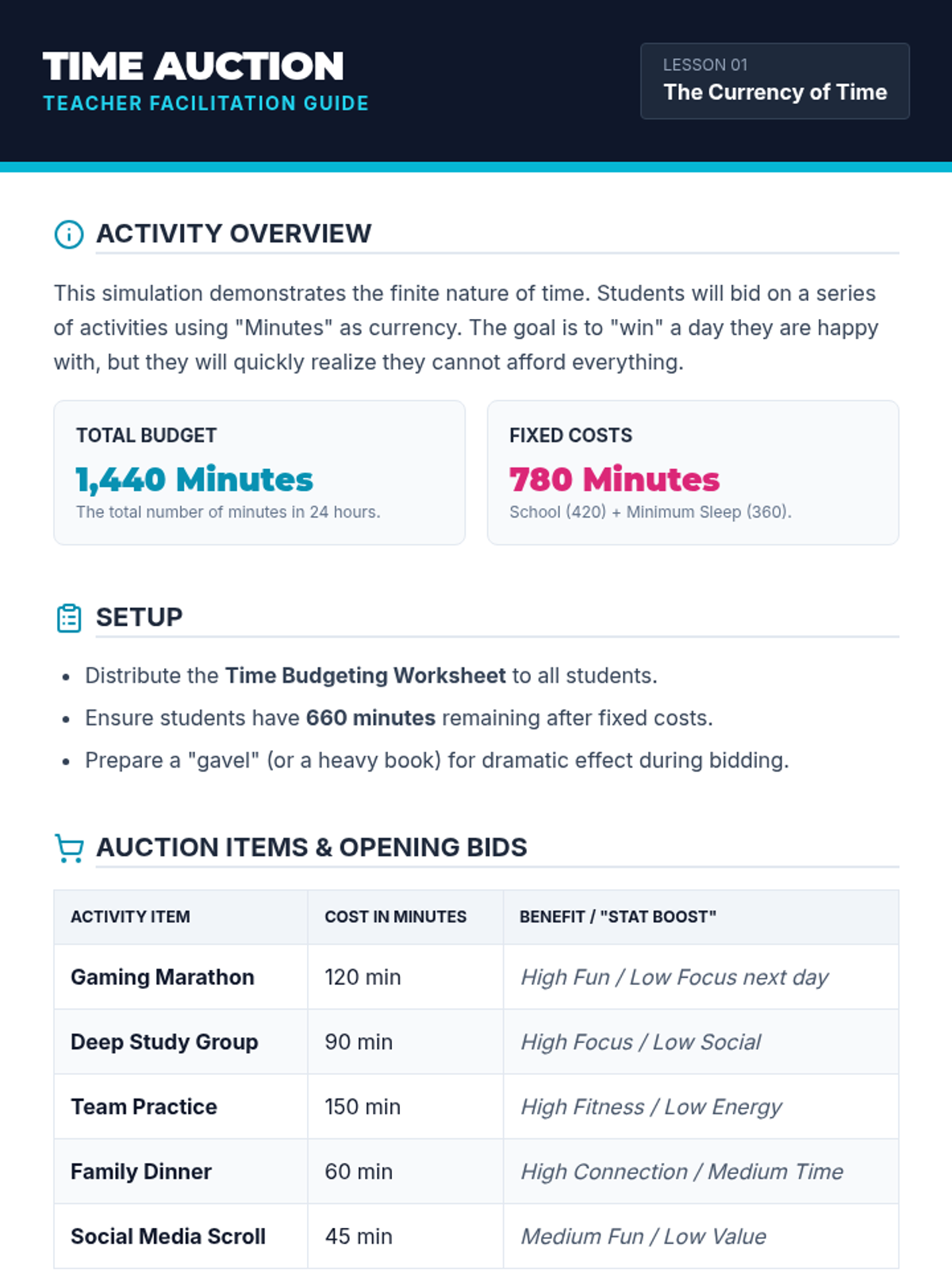
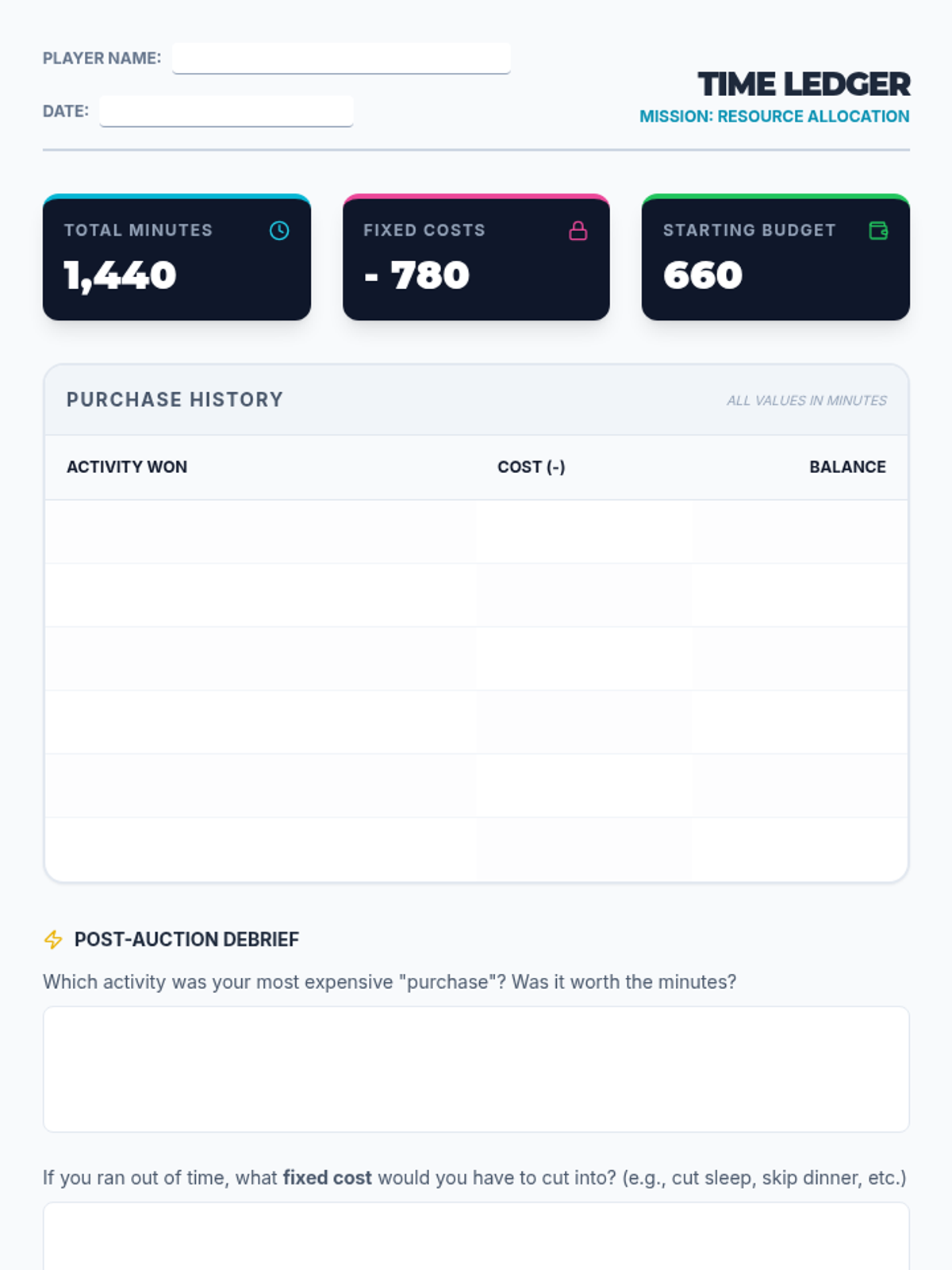
A game-based simulation sequence for 8th-grade students to master time and energy management. Students treat time as a finite currency, navigate trade-offs through opportunity cost simulations, and design a sustainable weekly schedule.
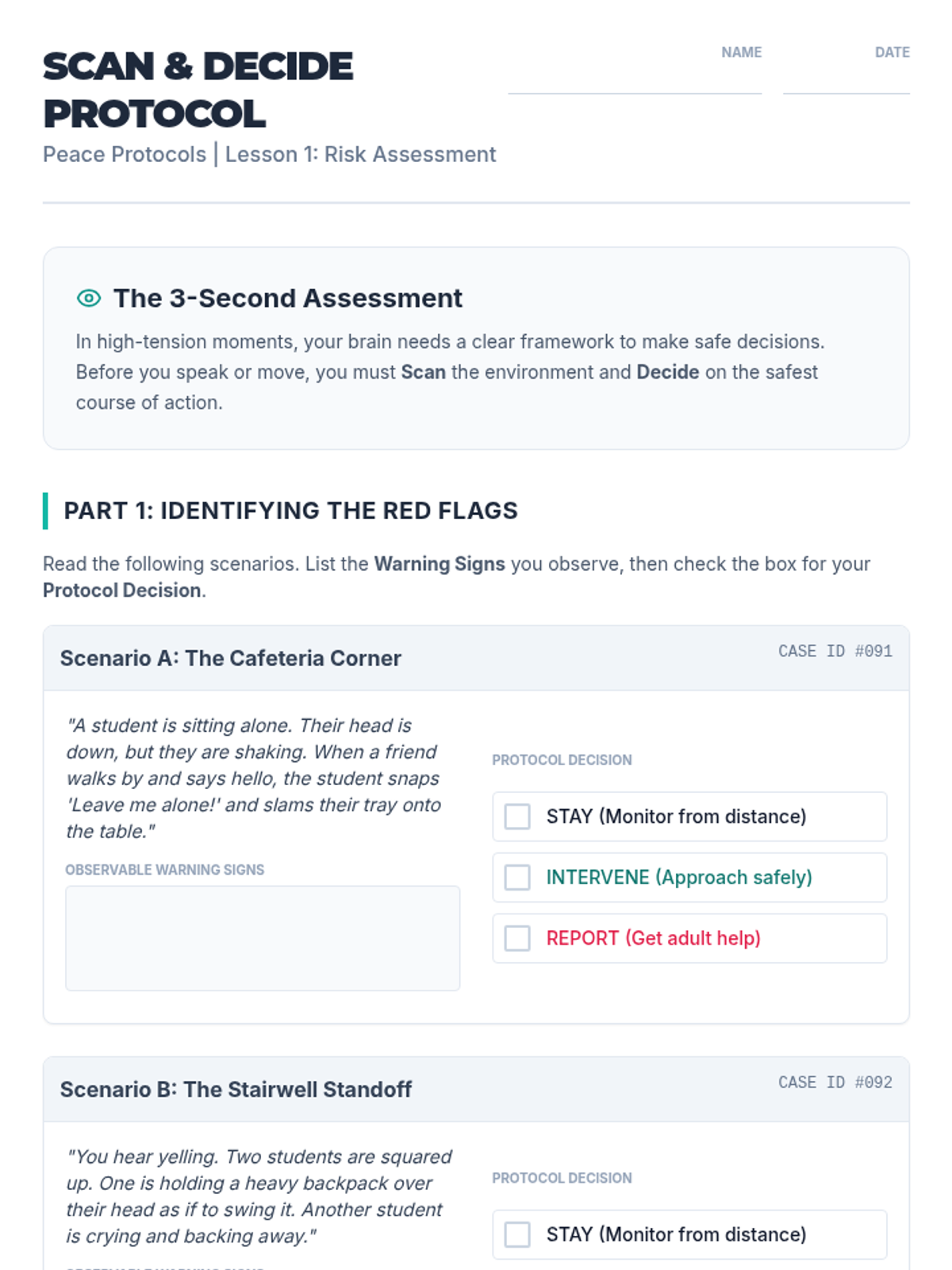
A 5-lesson workshop-style sequence for 9th-grade students on recognizing escalation warning signs and applying de-escalation strategies. Students learn situational assessment, verbal techniques, non-verbal communication, and active listening through simulations and mastery-based role-plays.
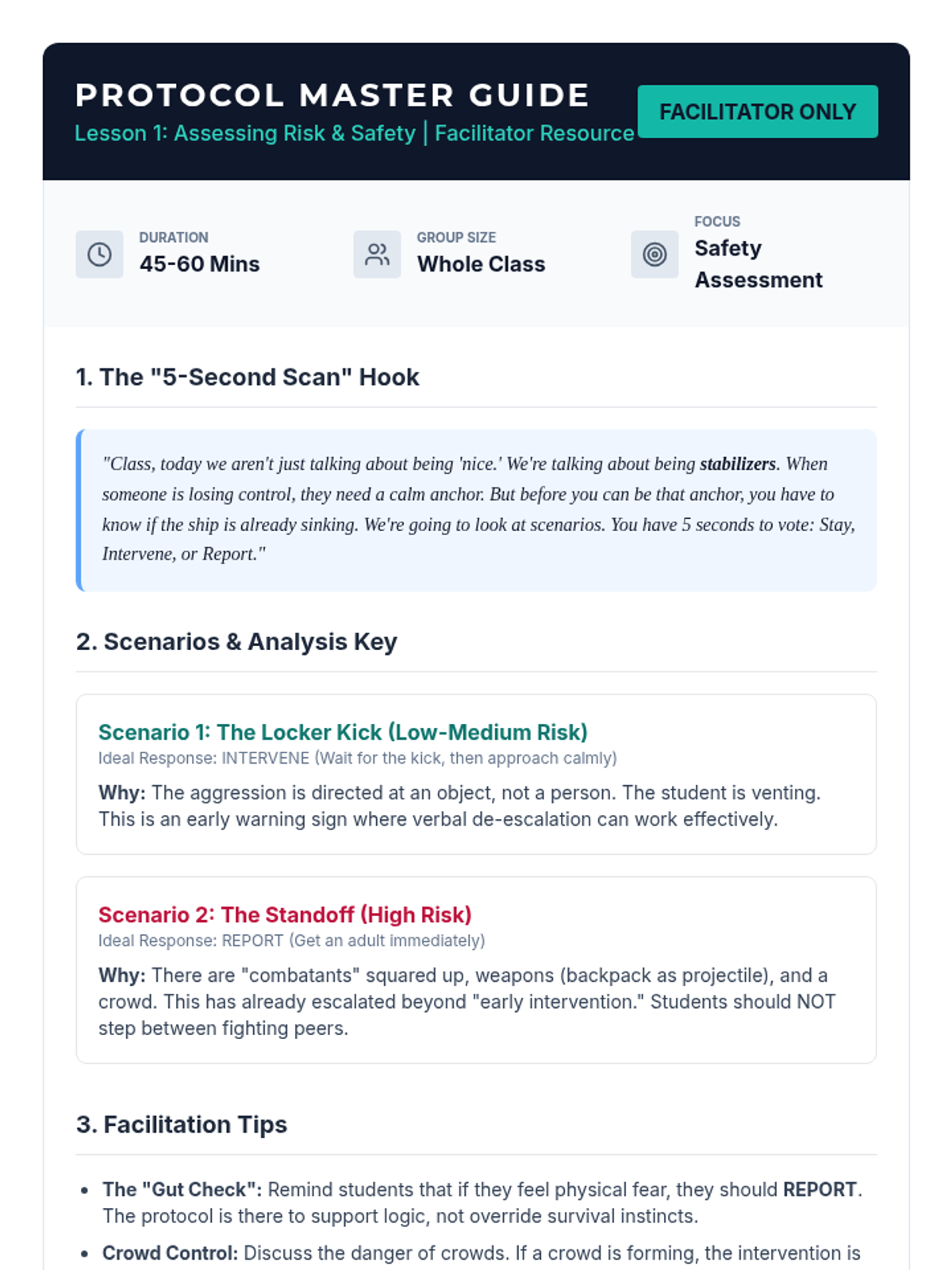
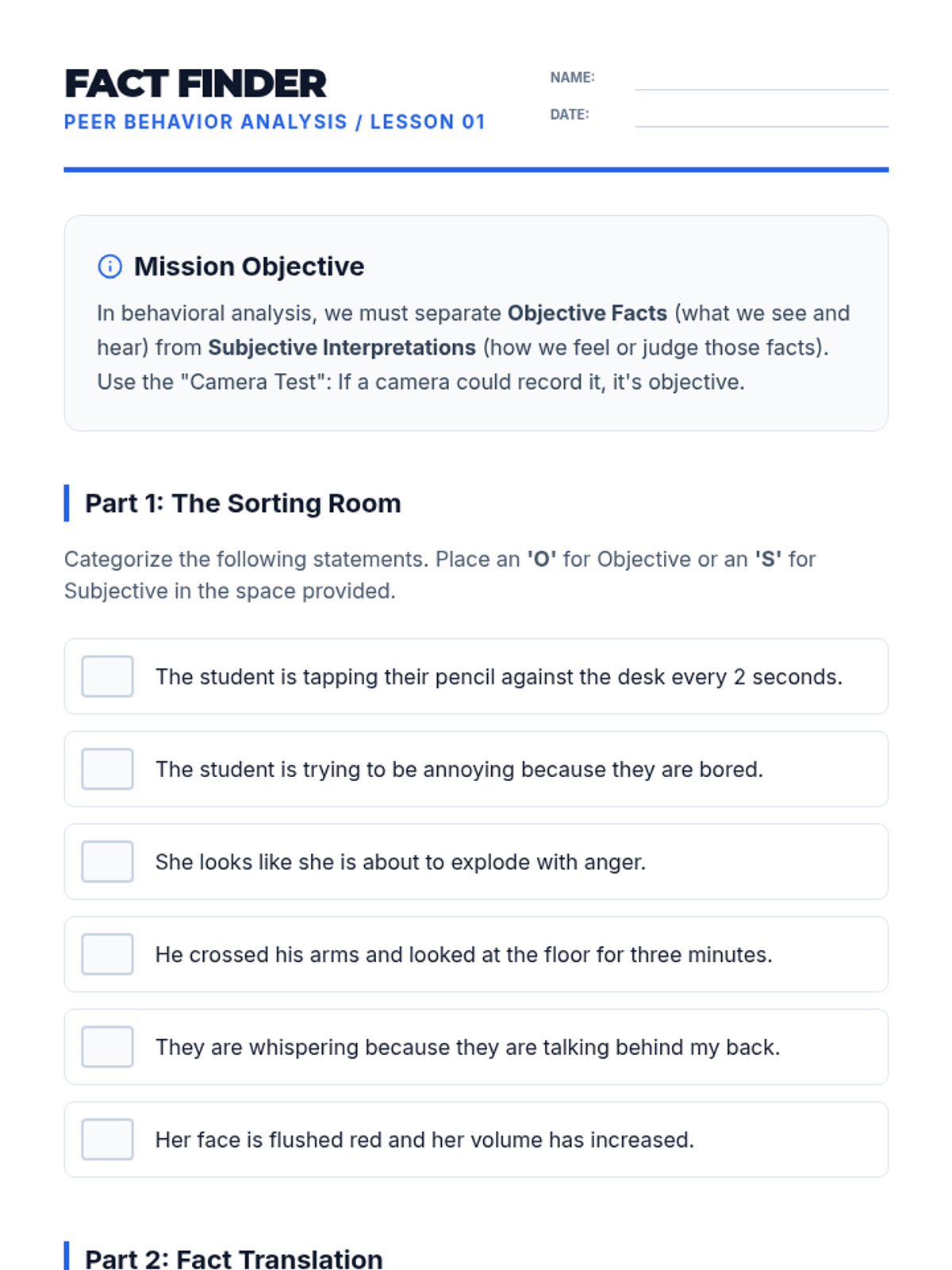
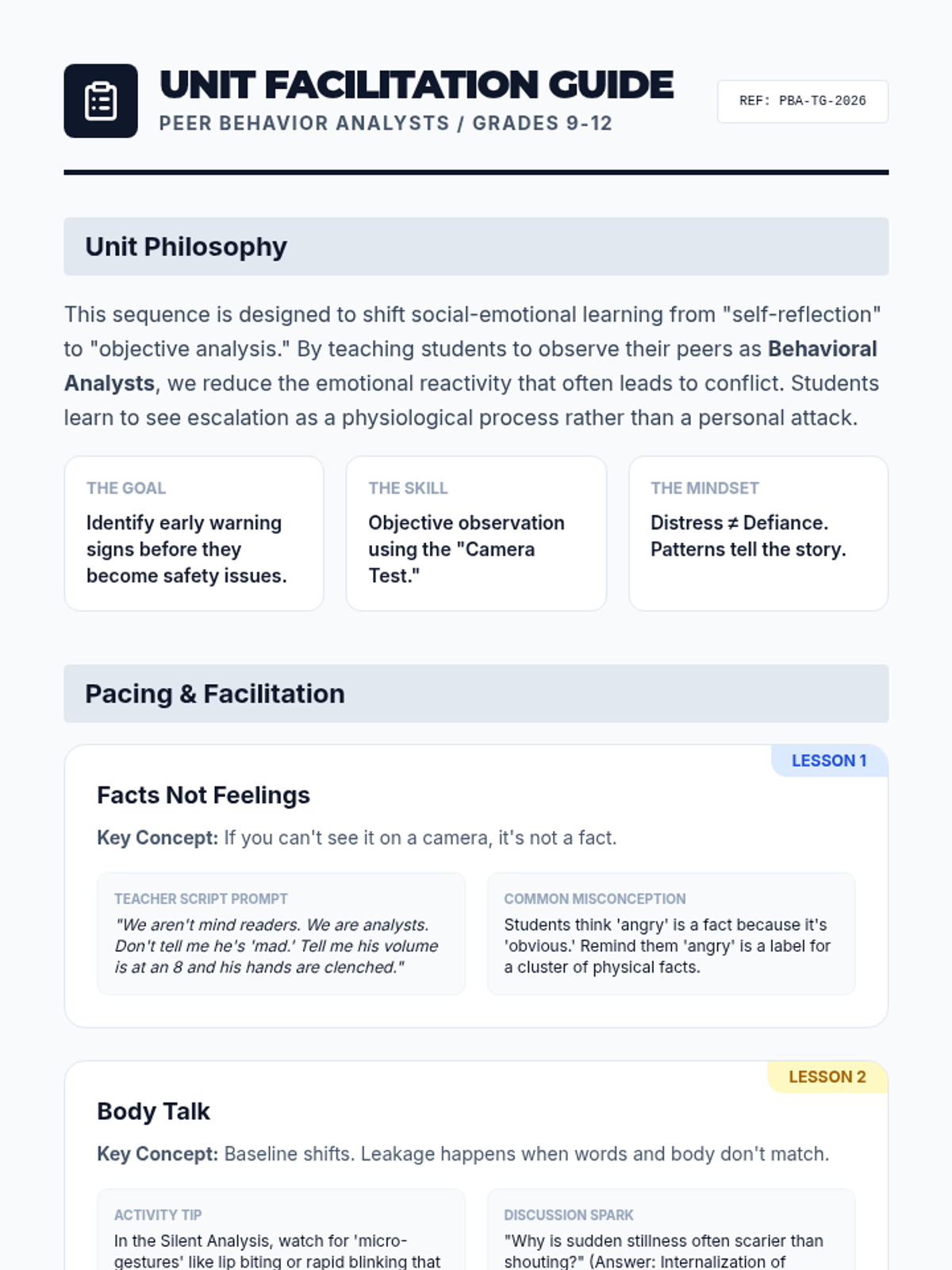
A 5-lesson sequence for 9th-grade students focused on developing social awareness and safety by identifying peer behavioral shifts and escalation warning signs through objective observation and non-verbal analysis.
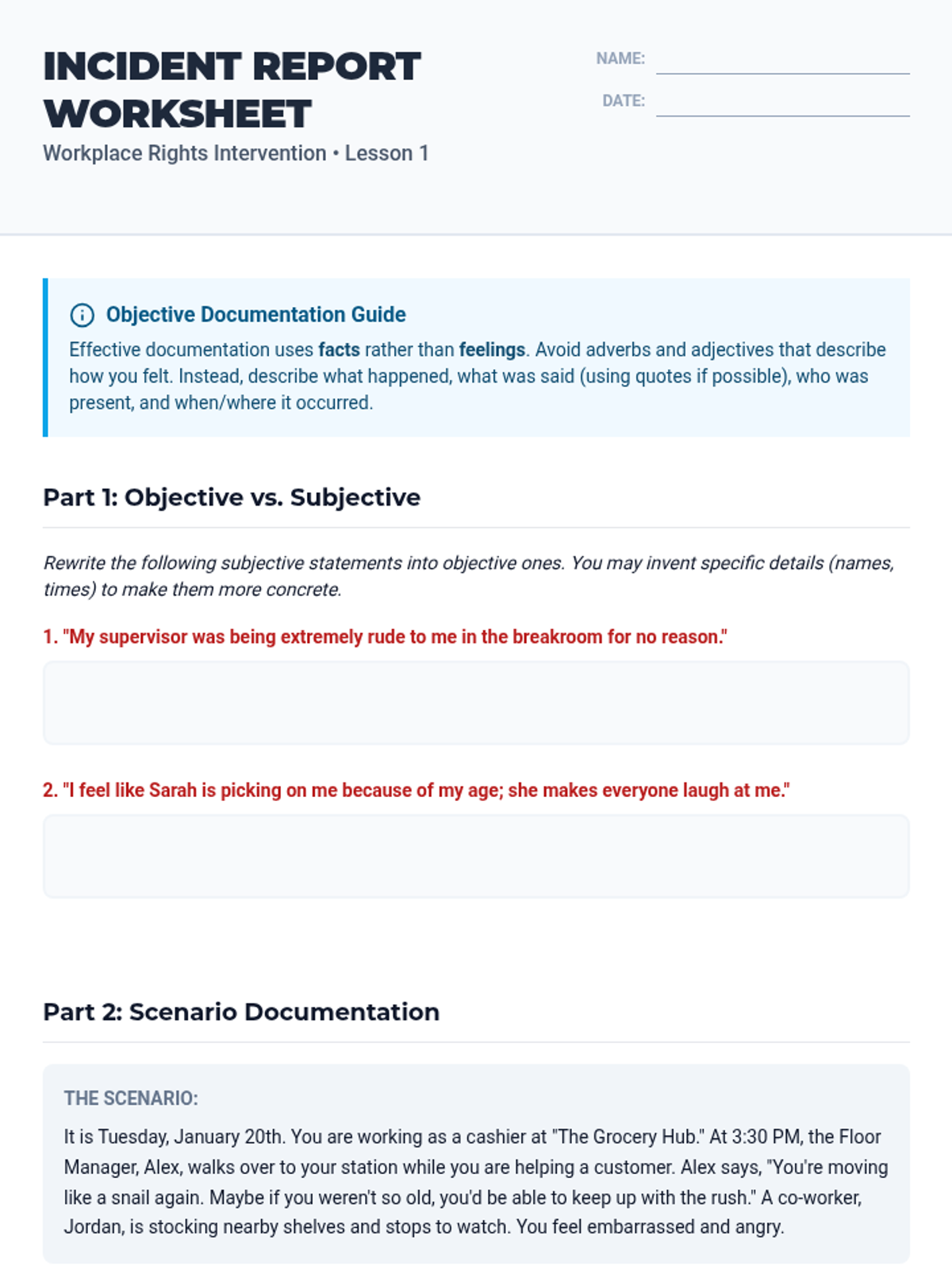
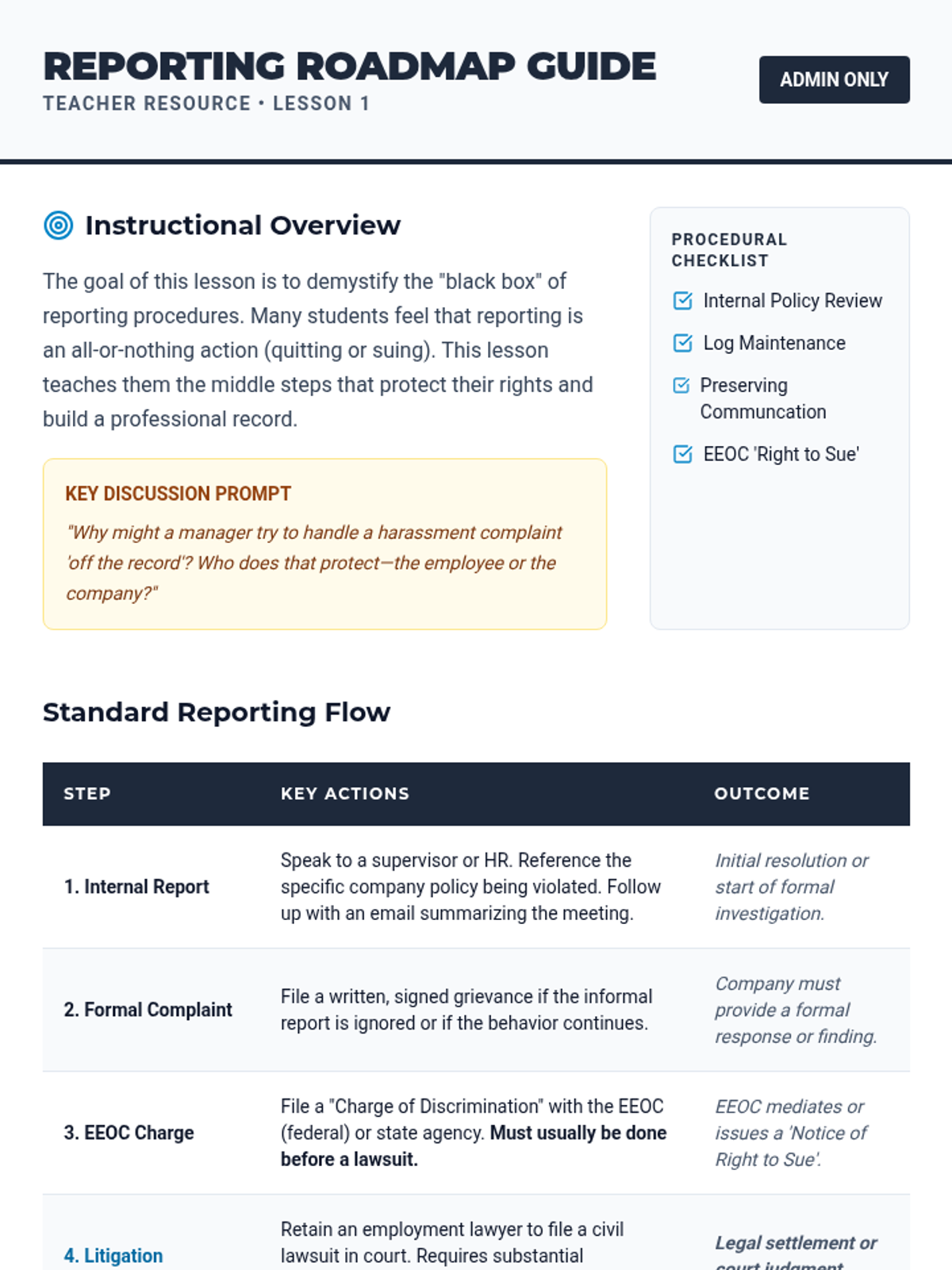
This sequence shifts from identification to action, equipping students with the tools to report misconduct and intervene safely. Students learn the formal mechanisms for reporting discrimination, protections against retaliation, and the '4 Ds' of bystander intervention.
A 5-lesson unit for 7th graders on the formal structure of peer mediation. Students transition from observers to facilitators, learning to maintain neutrality, set ground rules, reframe toxic language, and guide parties toward mutually agreed-upon solutions.
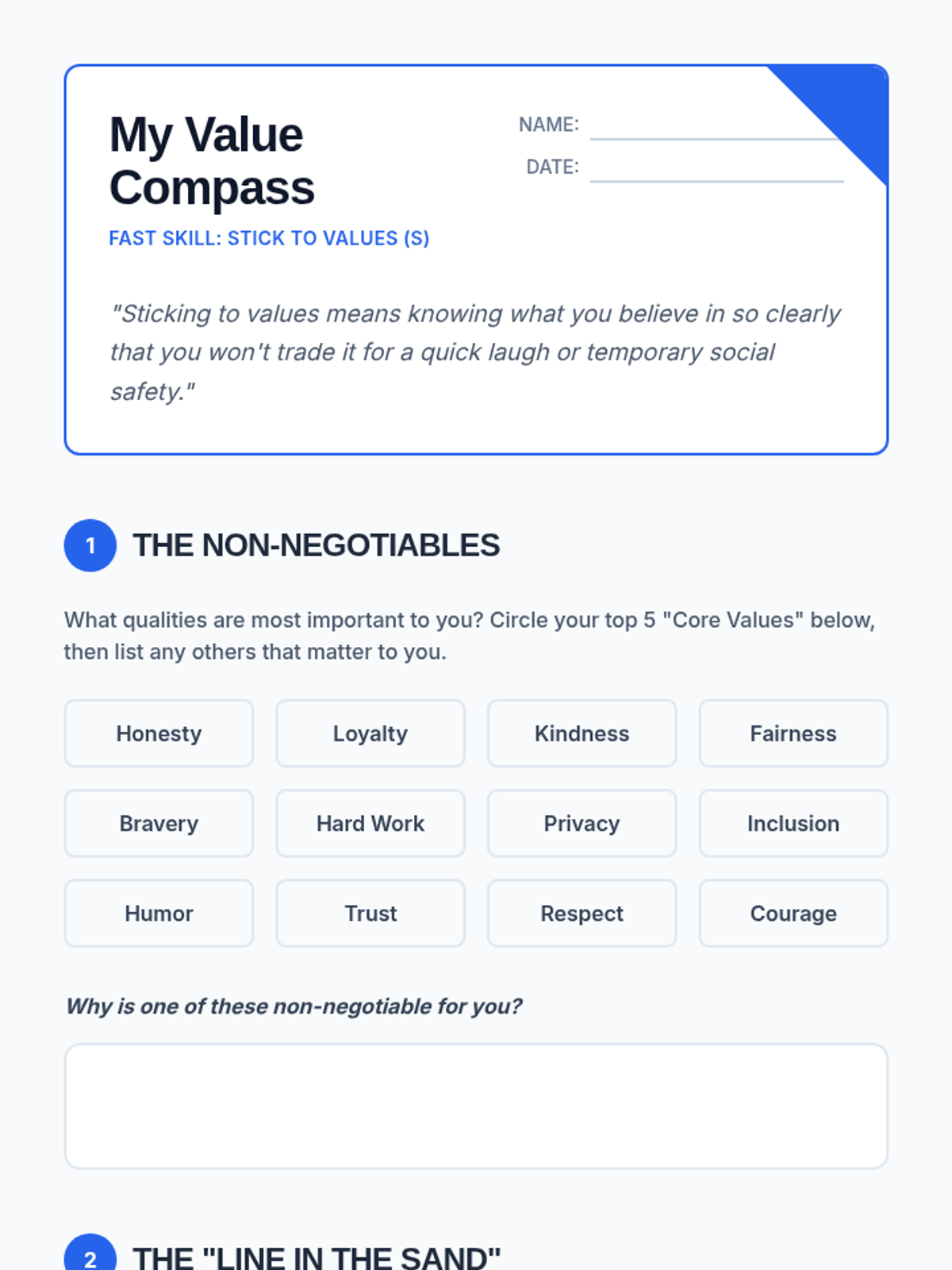
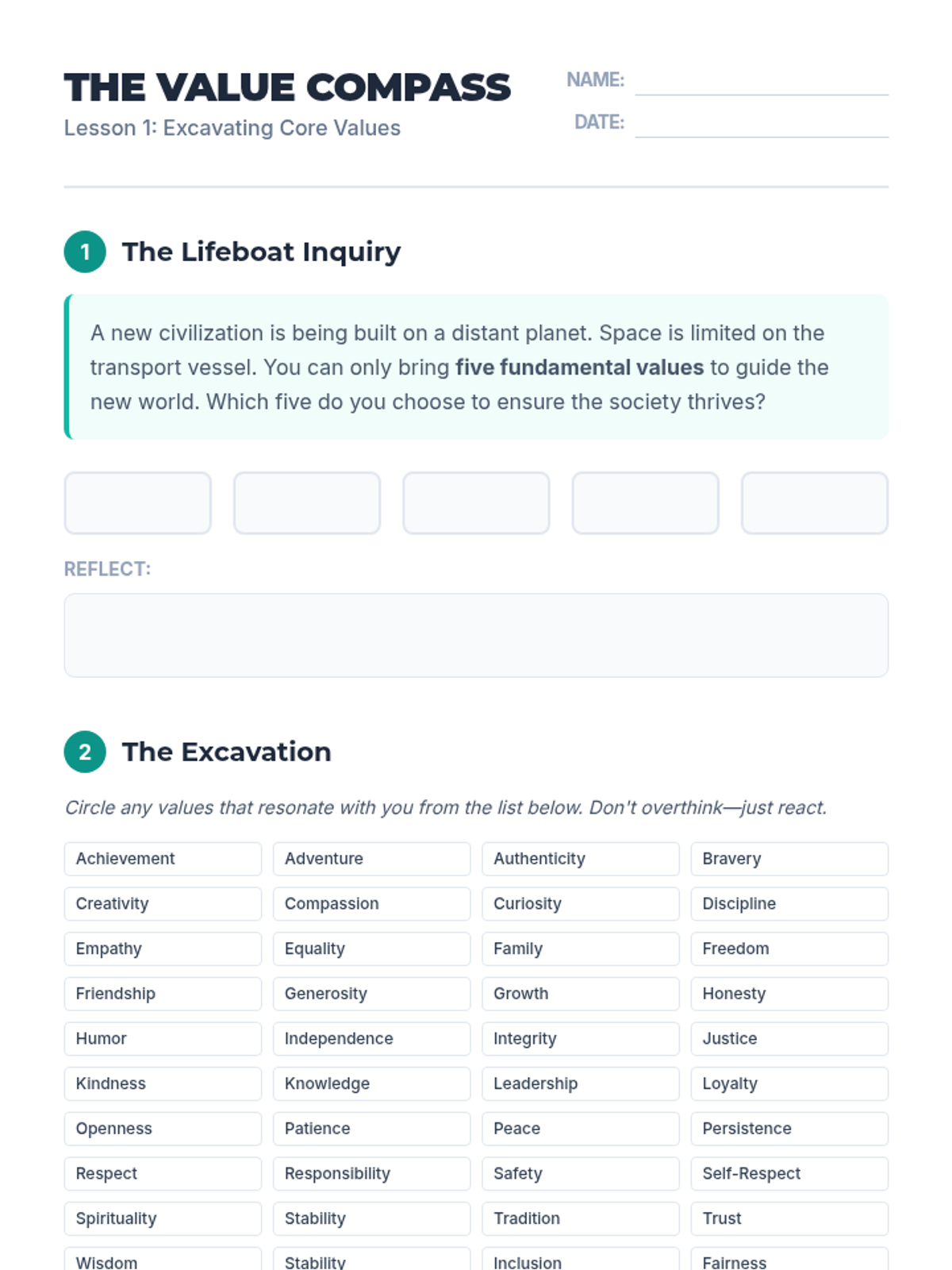
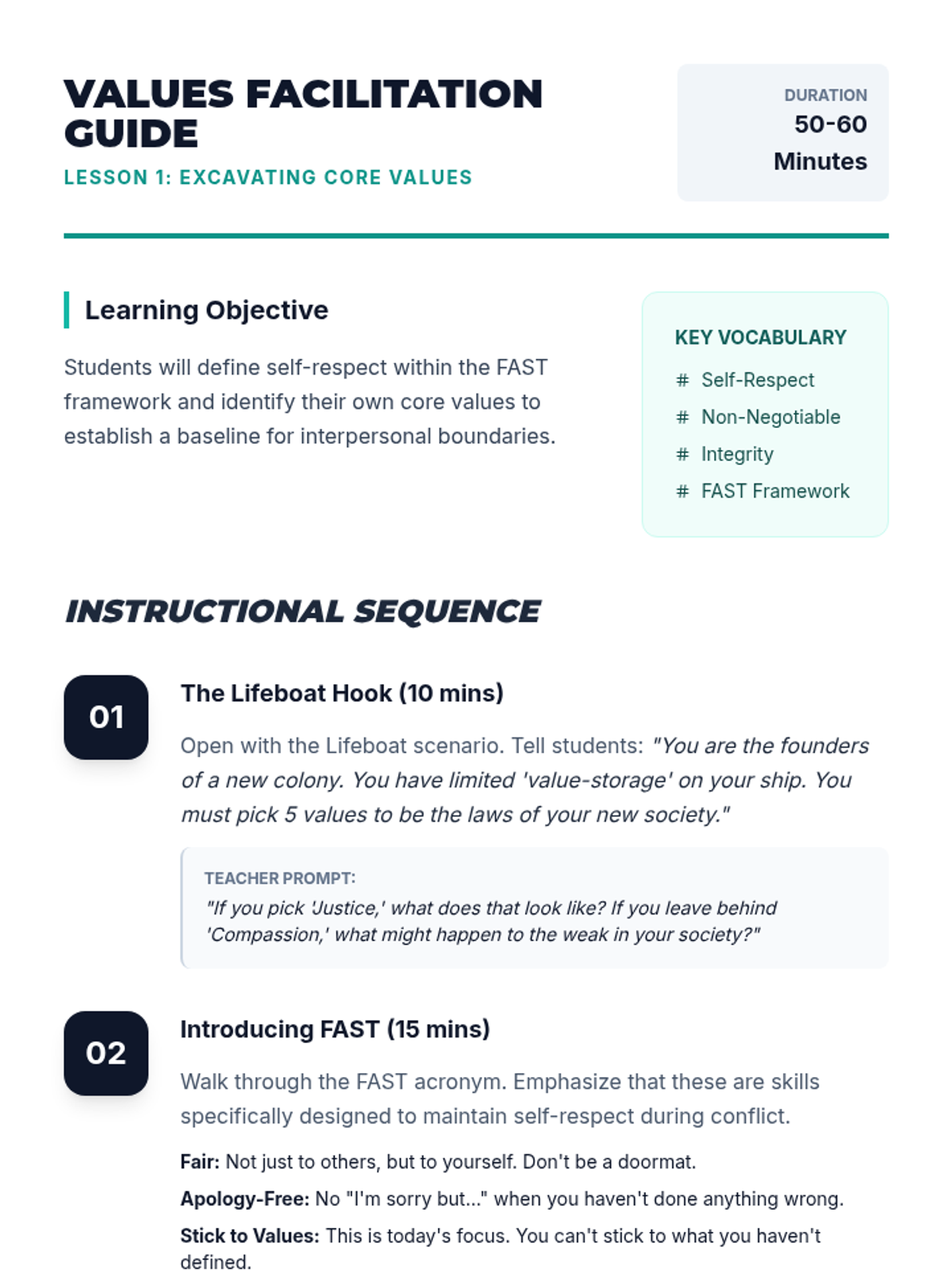
This inquiry and project-based sequence focuses deeply on the 'Stick to Values' aspect of FAST, positing that one cannot defend values they haven't defined. Students bridge abstract values with concrete communication skills, teaching them how to articulate their stances without judgment or apology.
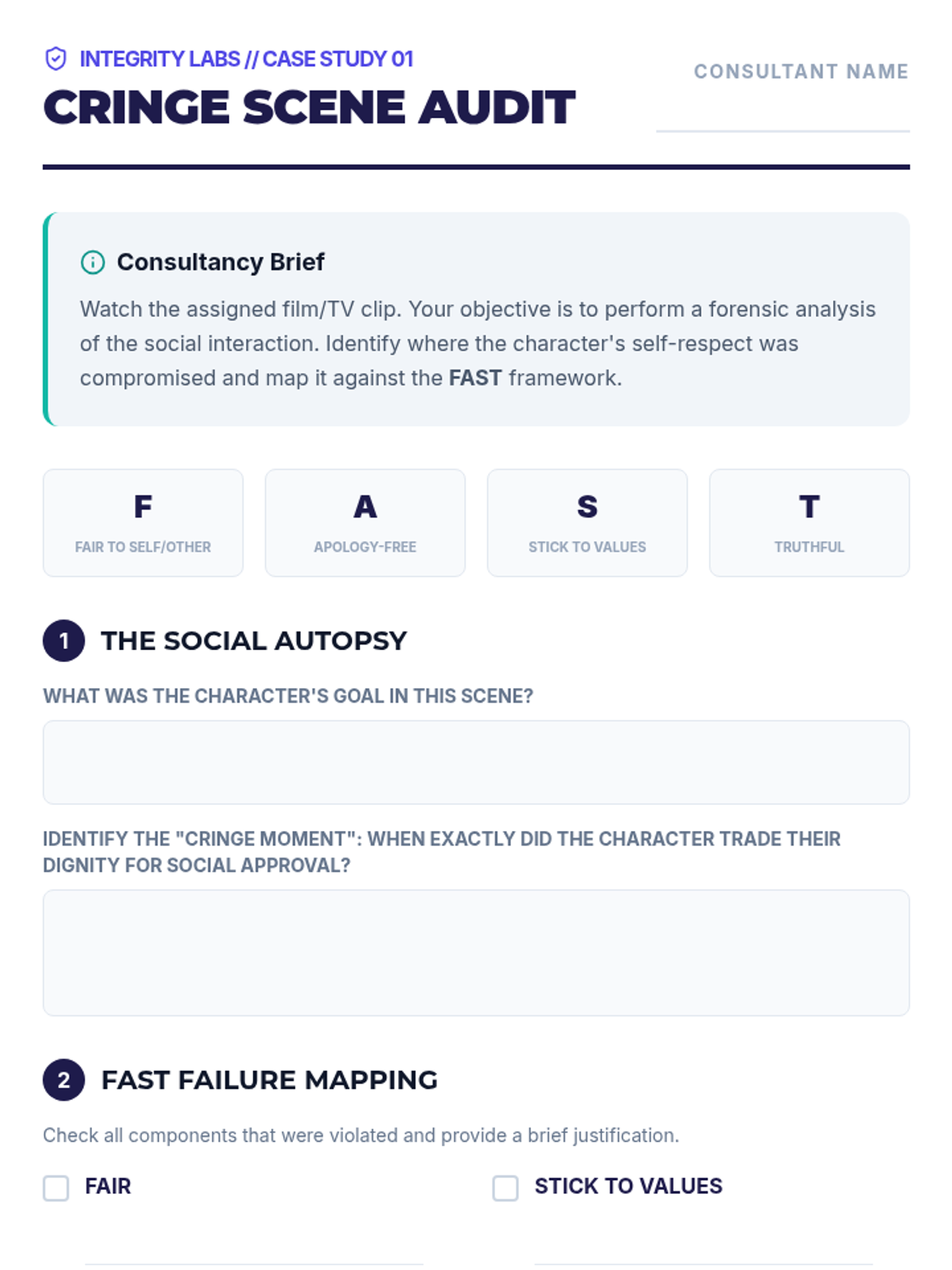
A comprehensive sequence for 9th-grade students to master the FAST skills (Fair, Apology-free, Stick to values, Truthful) through conflict analysis, linguistic evaluation, and personal narrative reconstruction. Students act as 'communication consultants' to evaluate social integrity and self-respect.
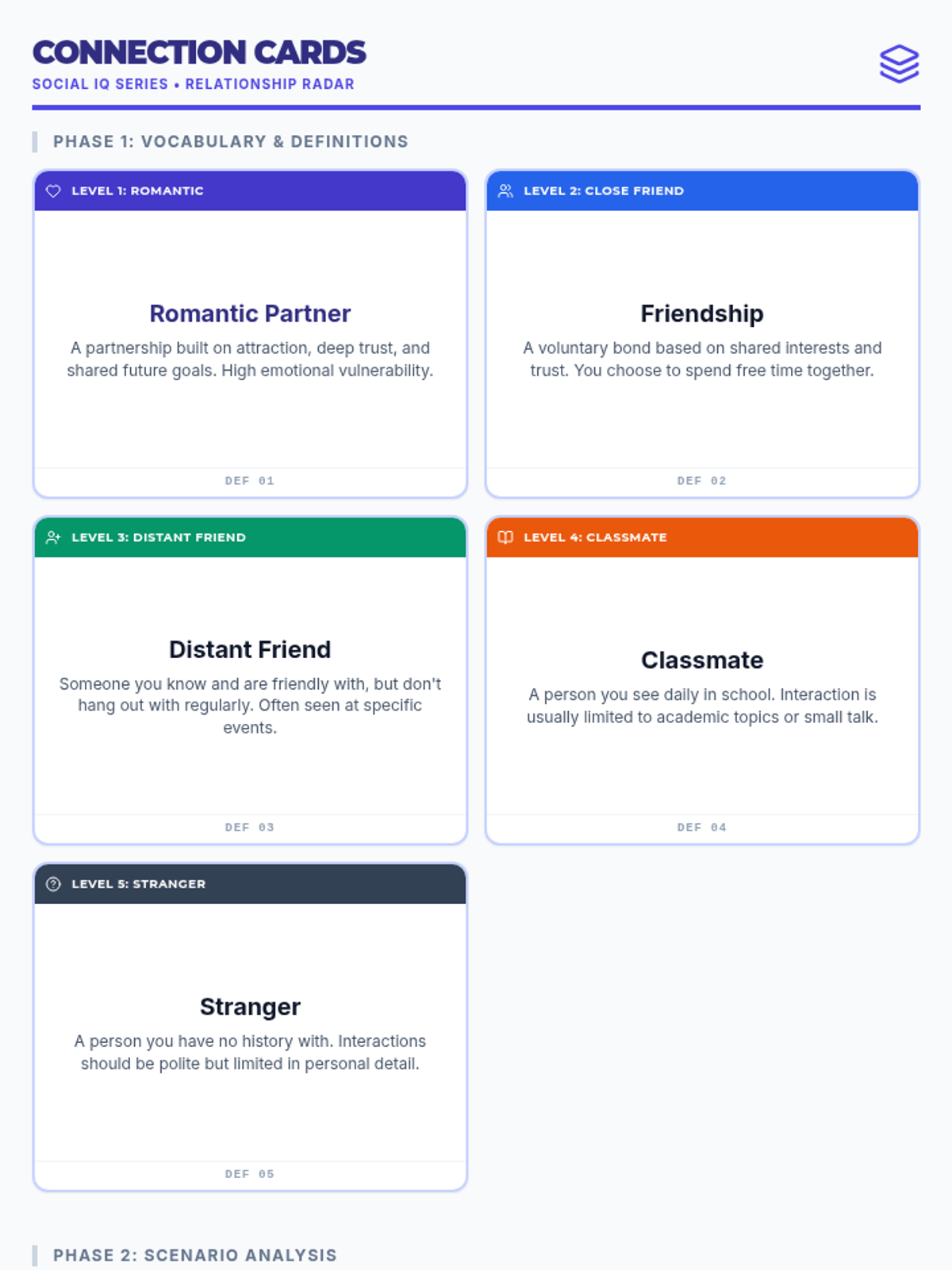
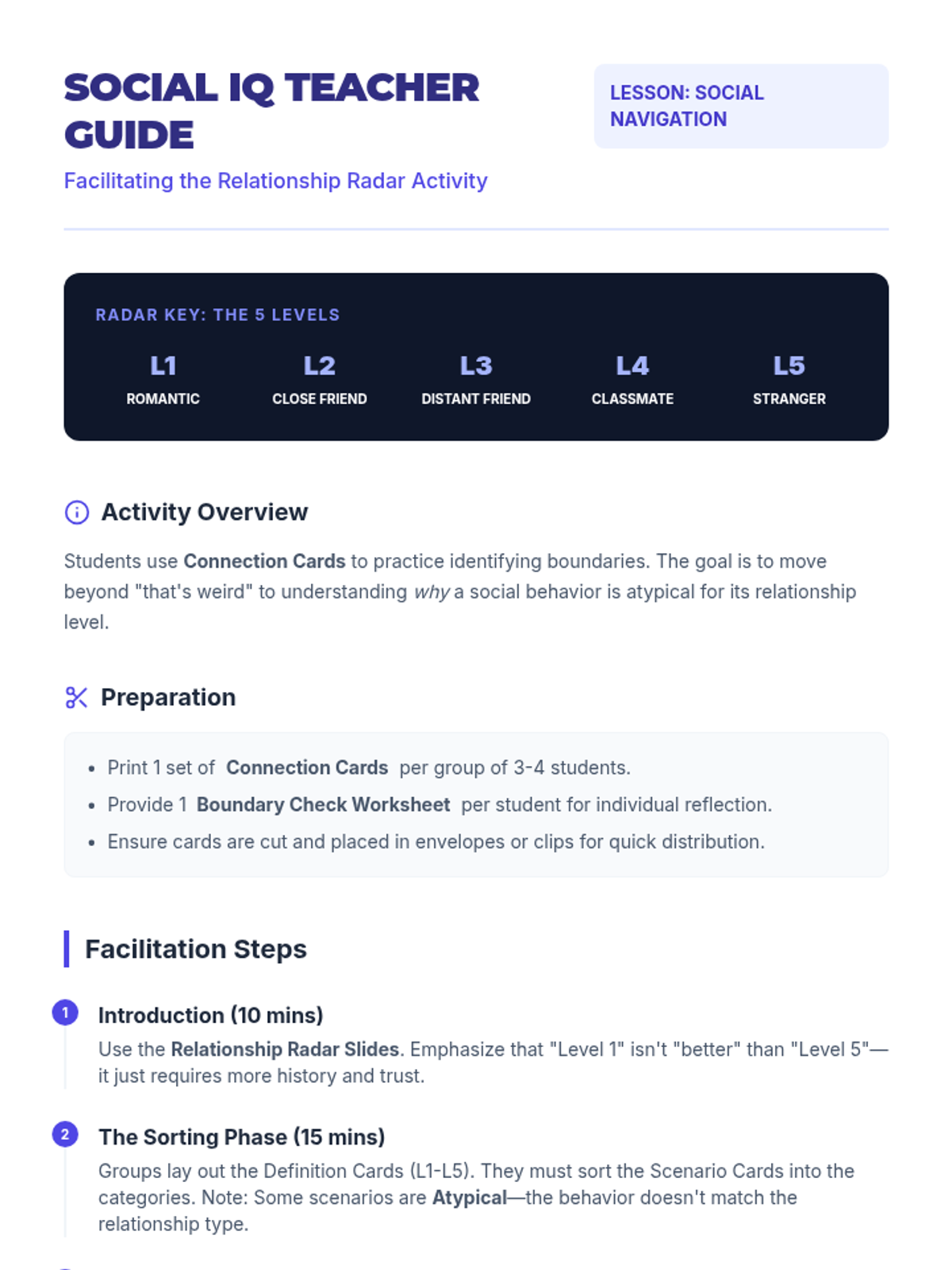
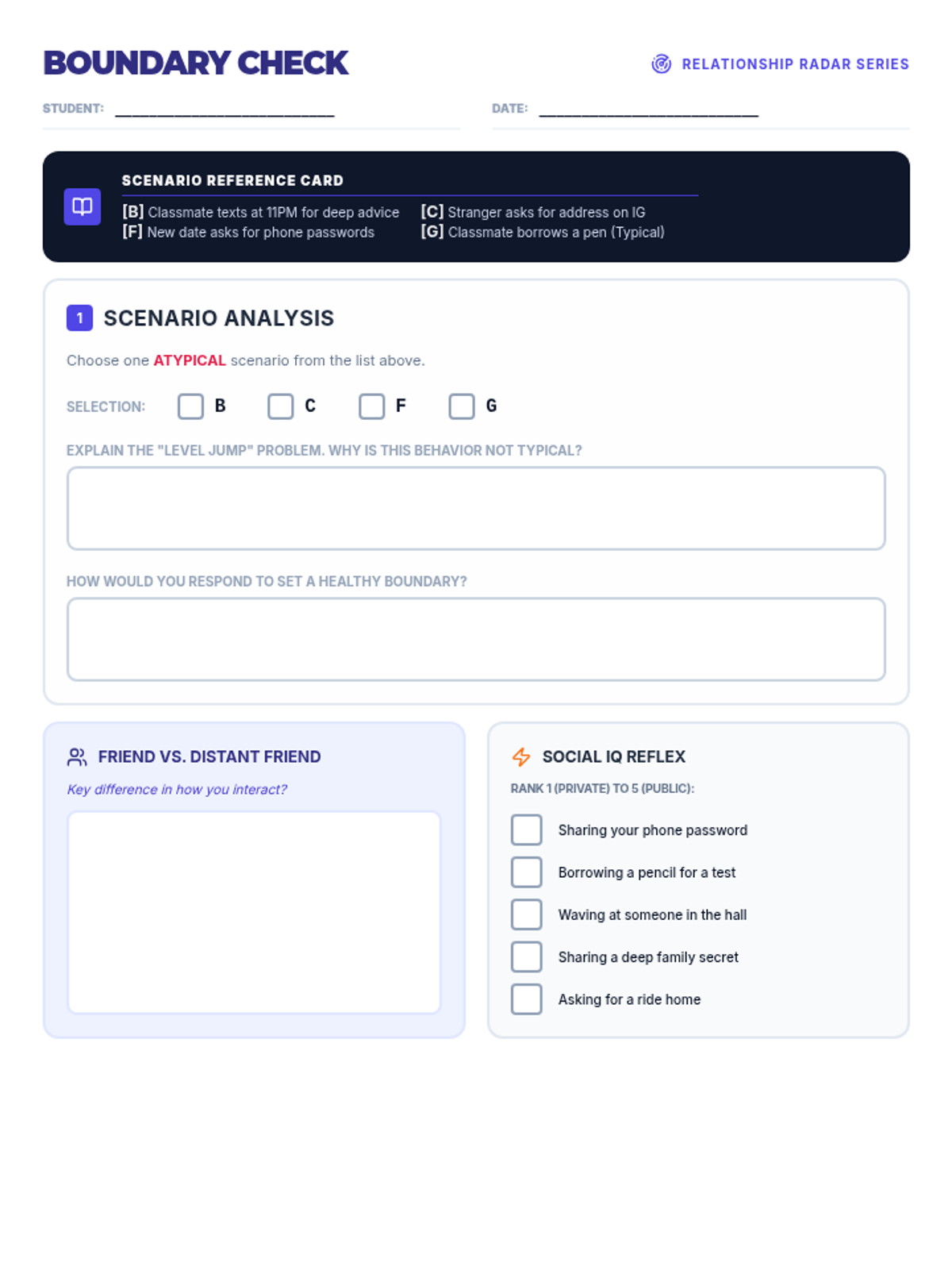
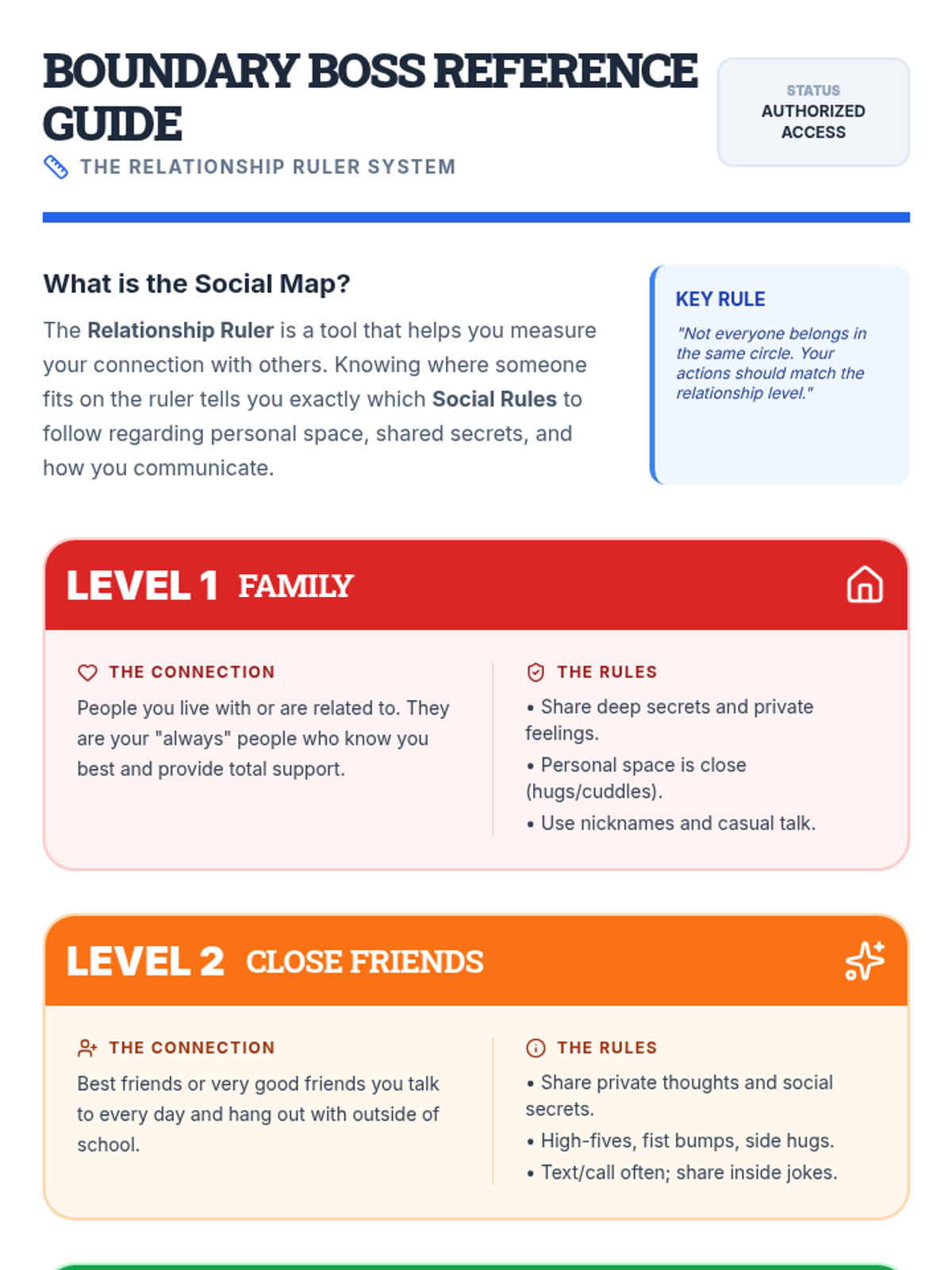
A sequence designed for high schoolers to navigate the complexities of social relationships, distinguishing between friends, classmates, romantic partners, and strangers through scenario-based learning and social IQ exercises.
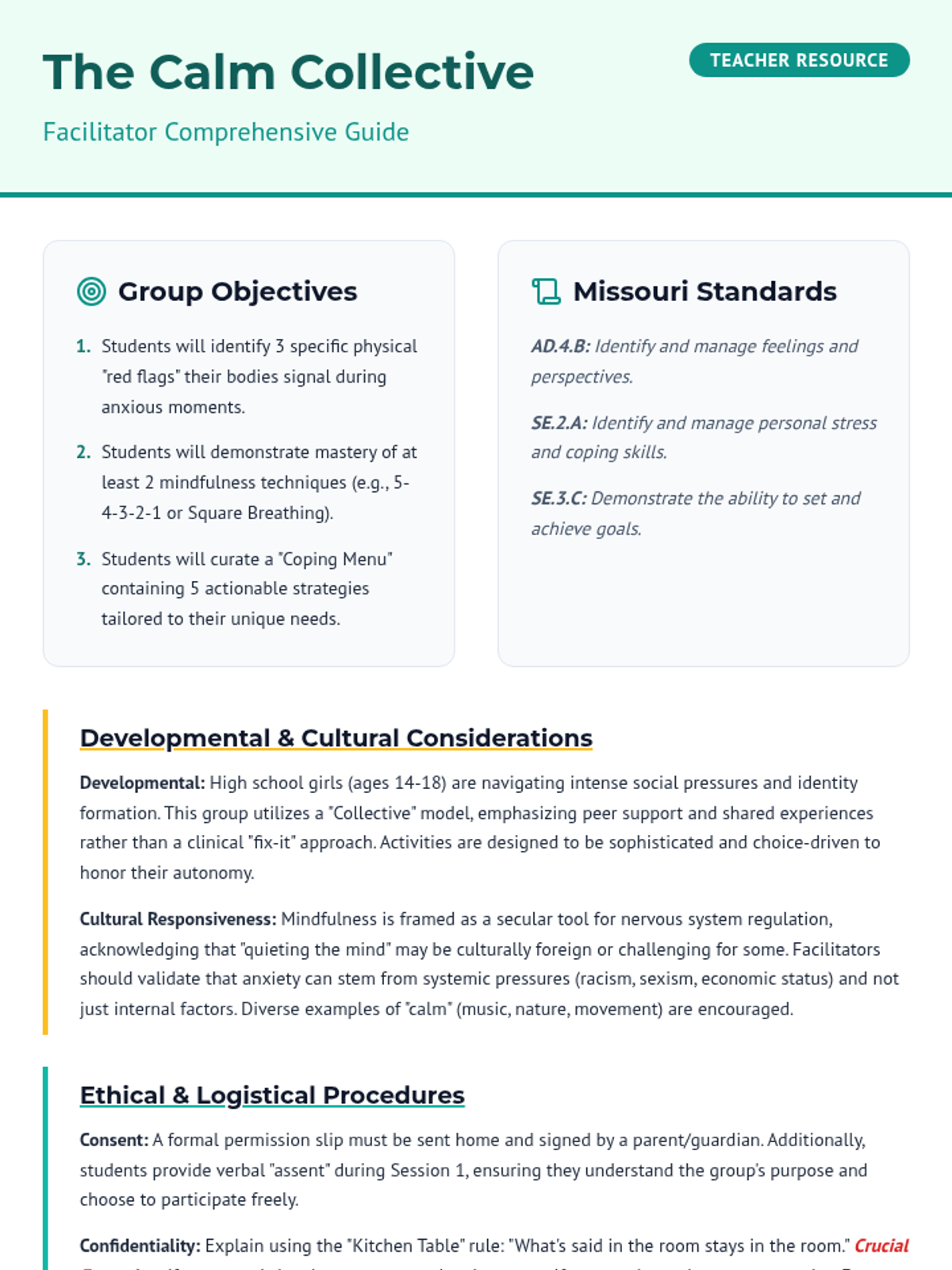
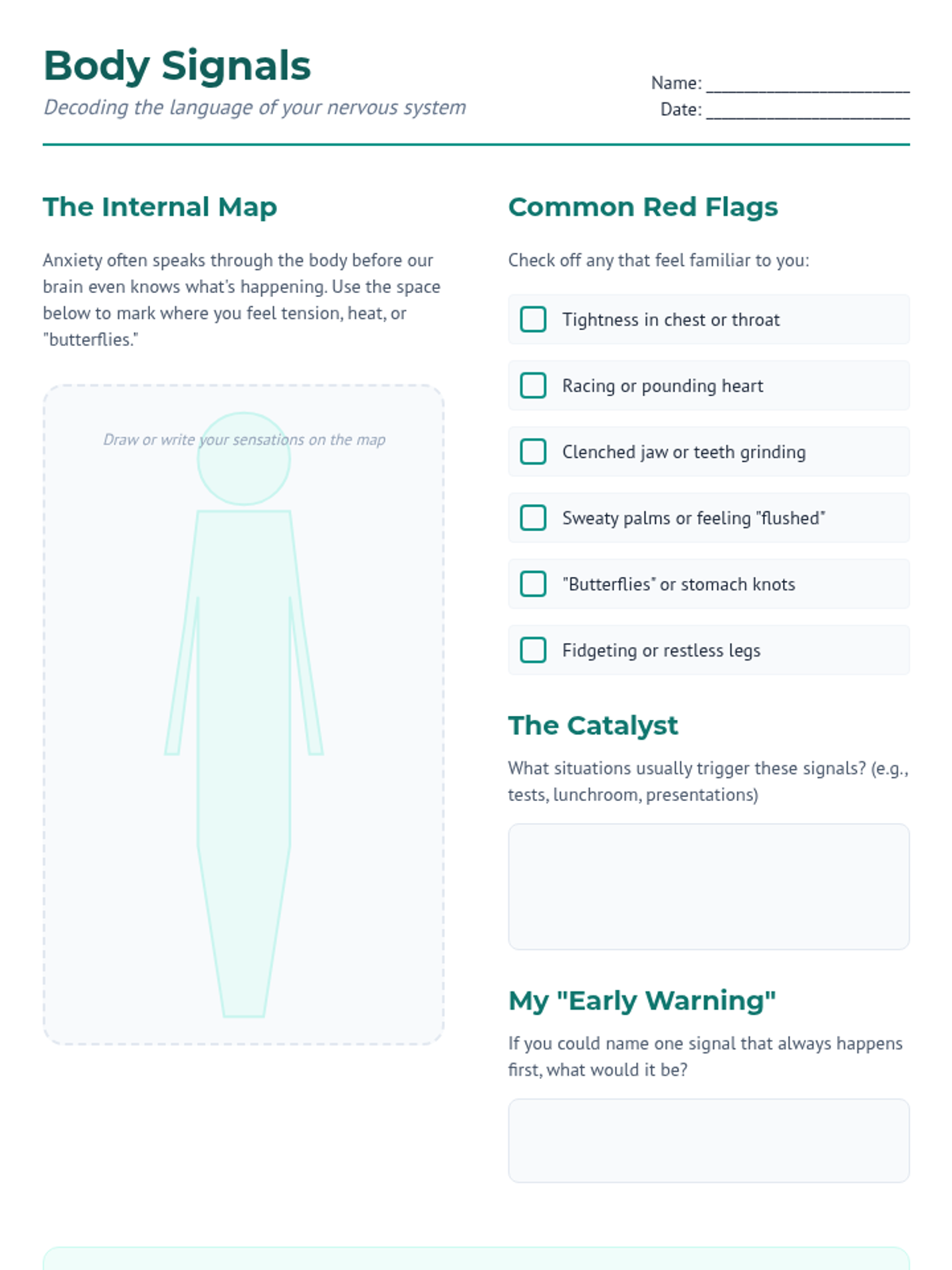
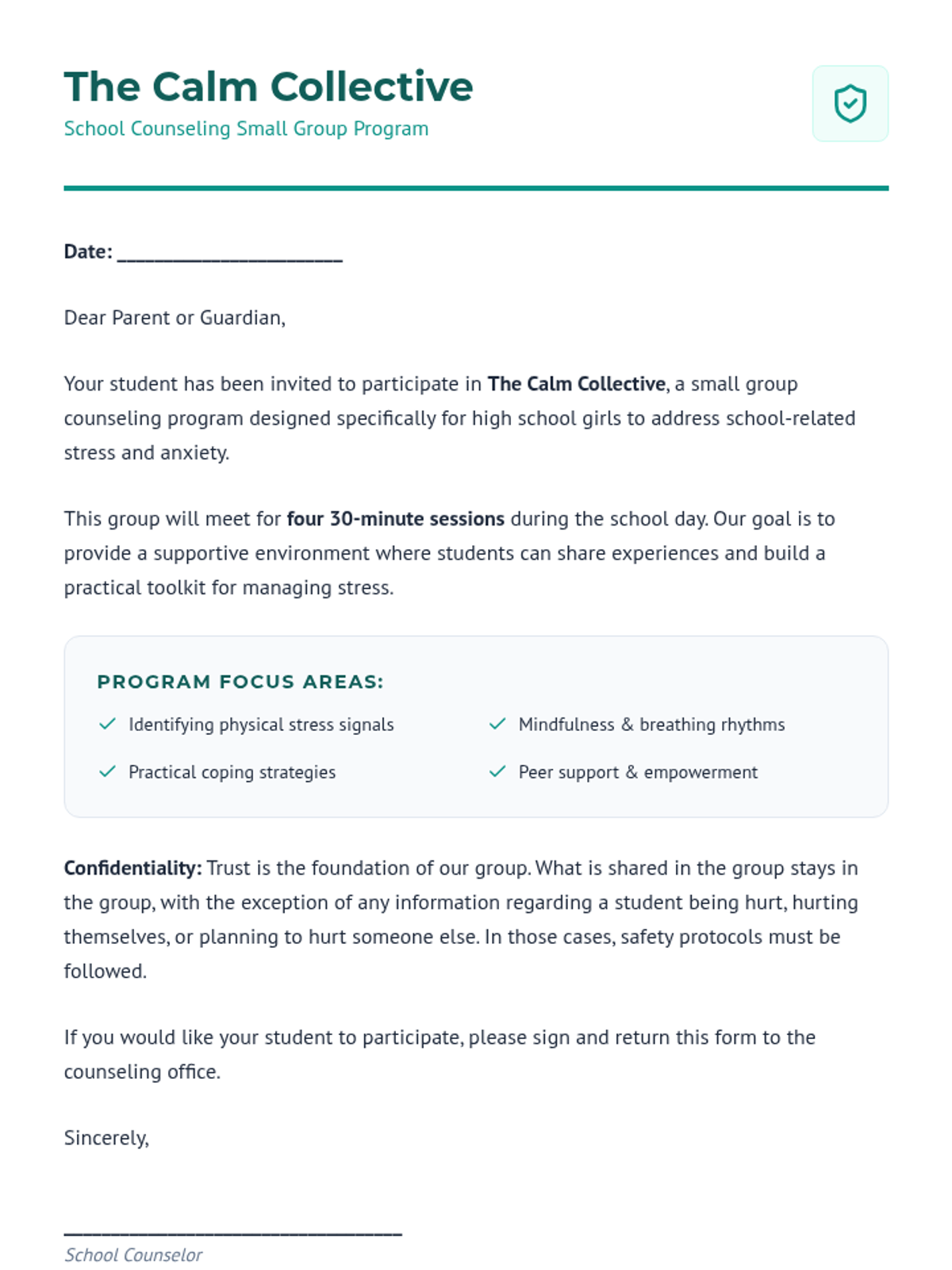
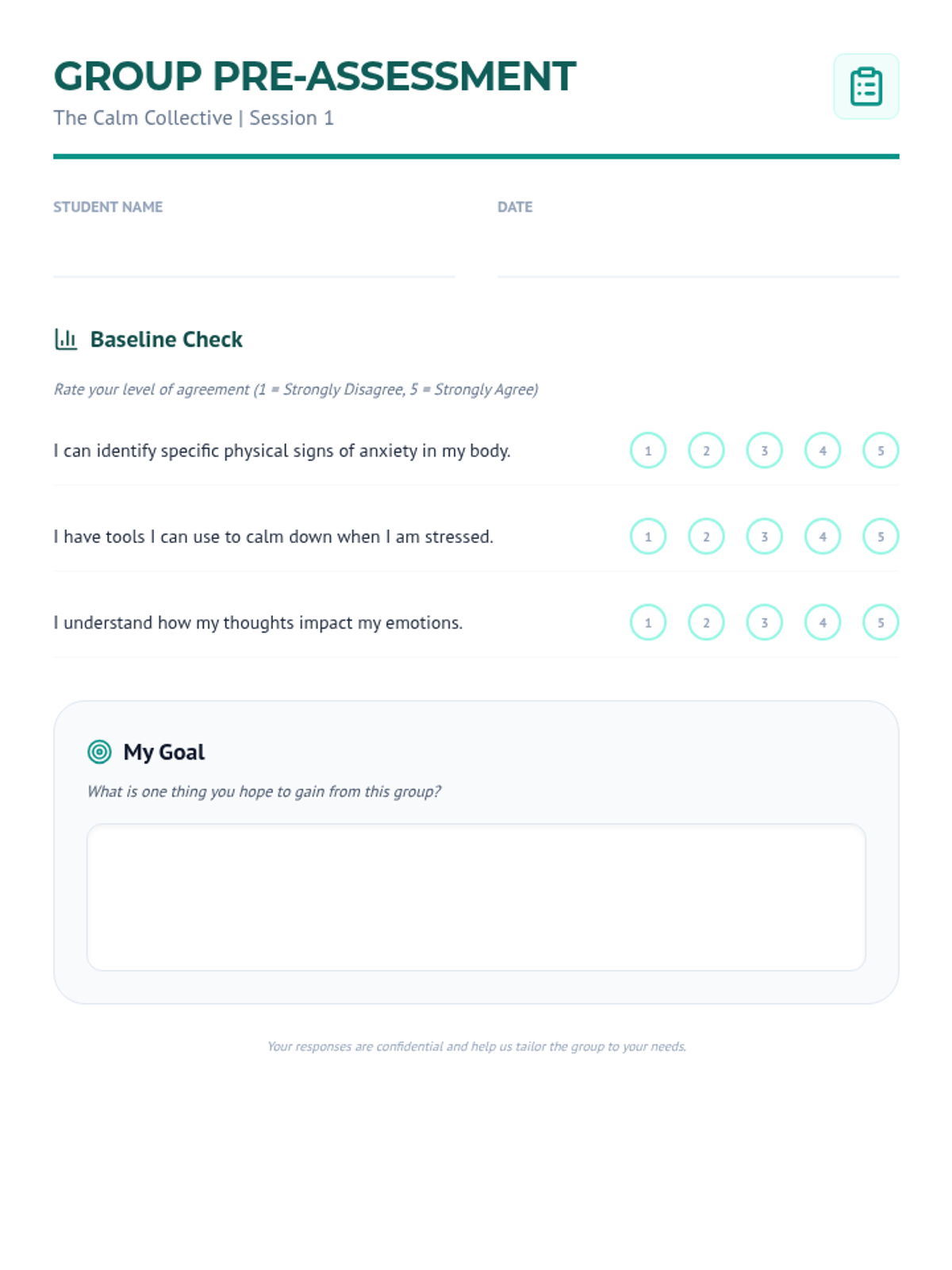
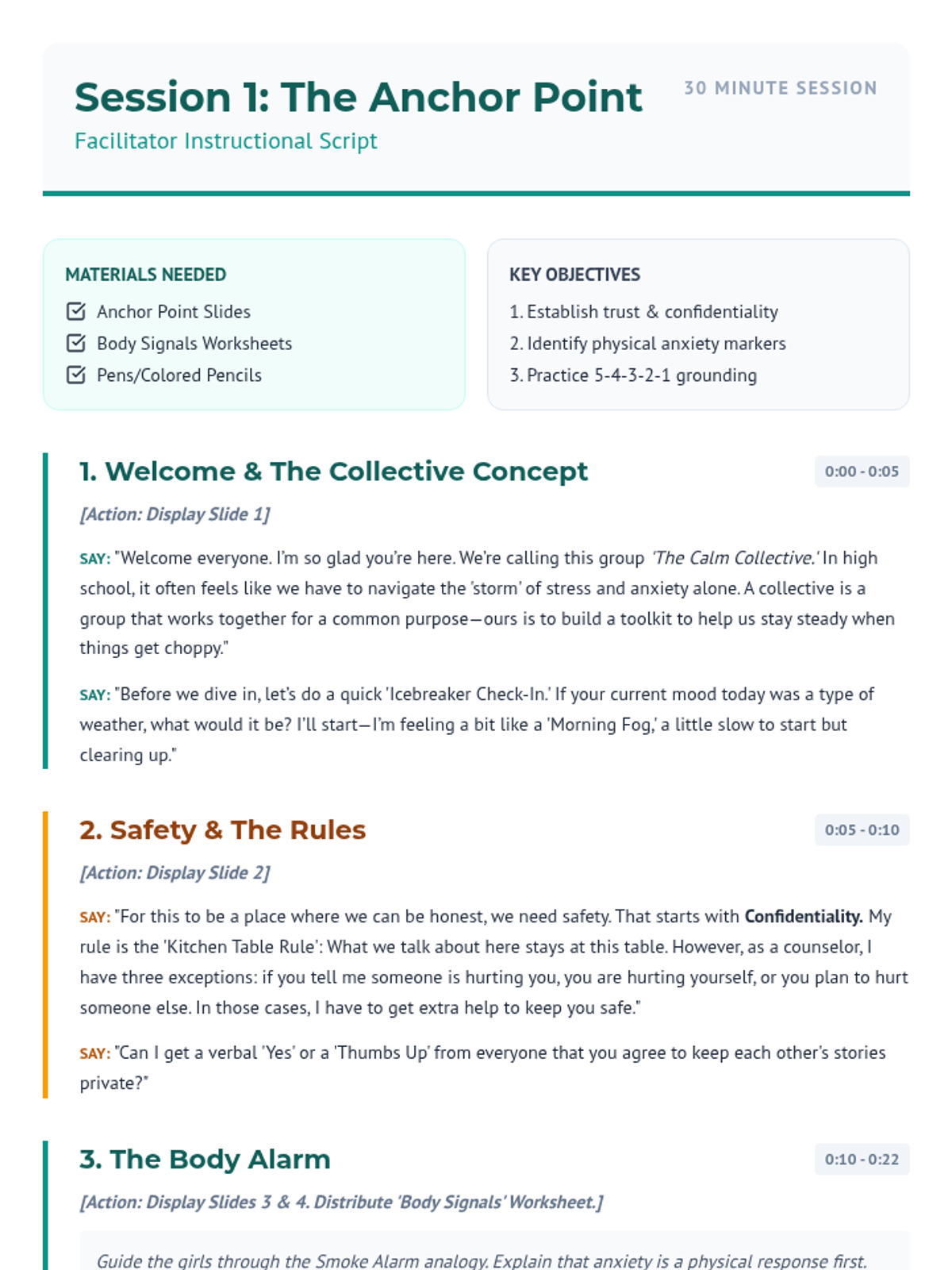
An 8-session small group counseling program for high school girls focused on identifying anxiety triggers, practicing mindfulness, cognitive reframing, and developing a personalized toolkit of coping strategies. The sequence emphasizes peer support, empowerment, and practical application within the school environment.
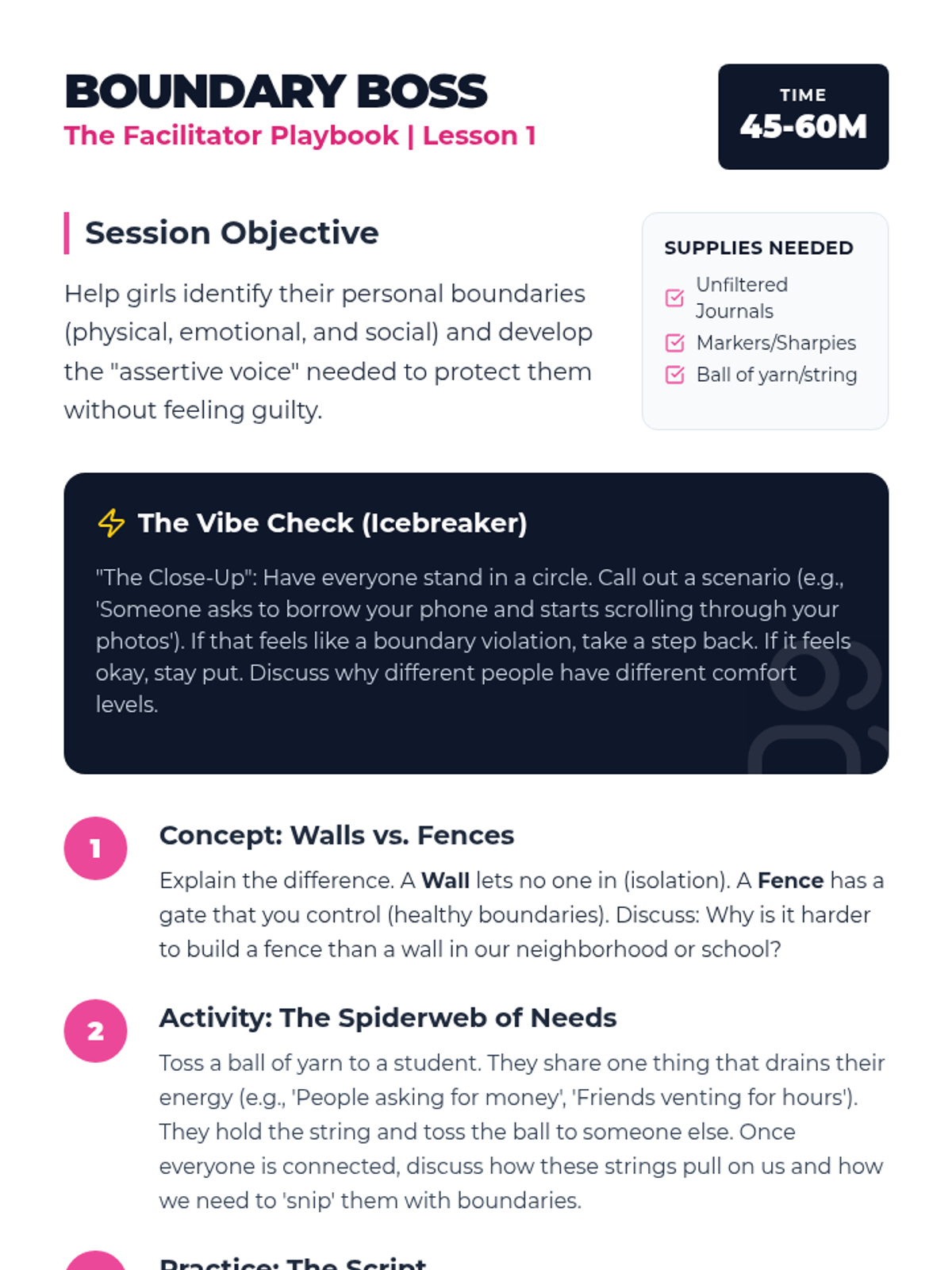
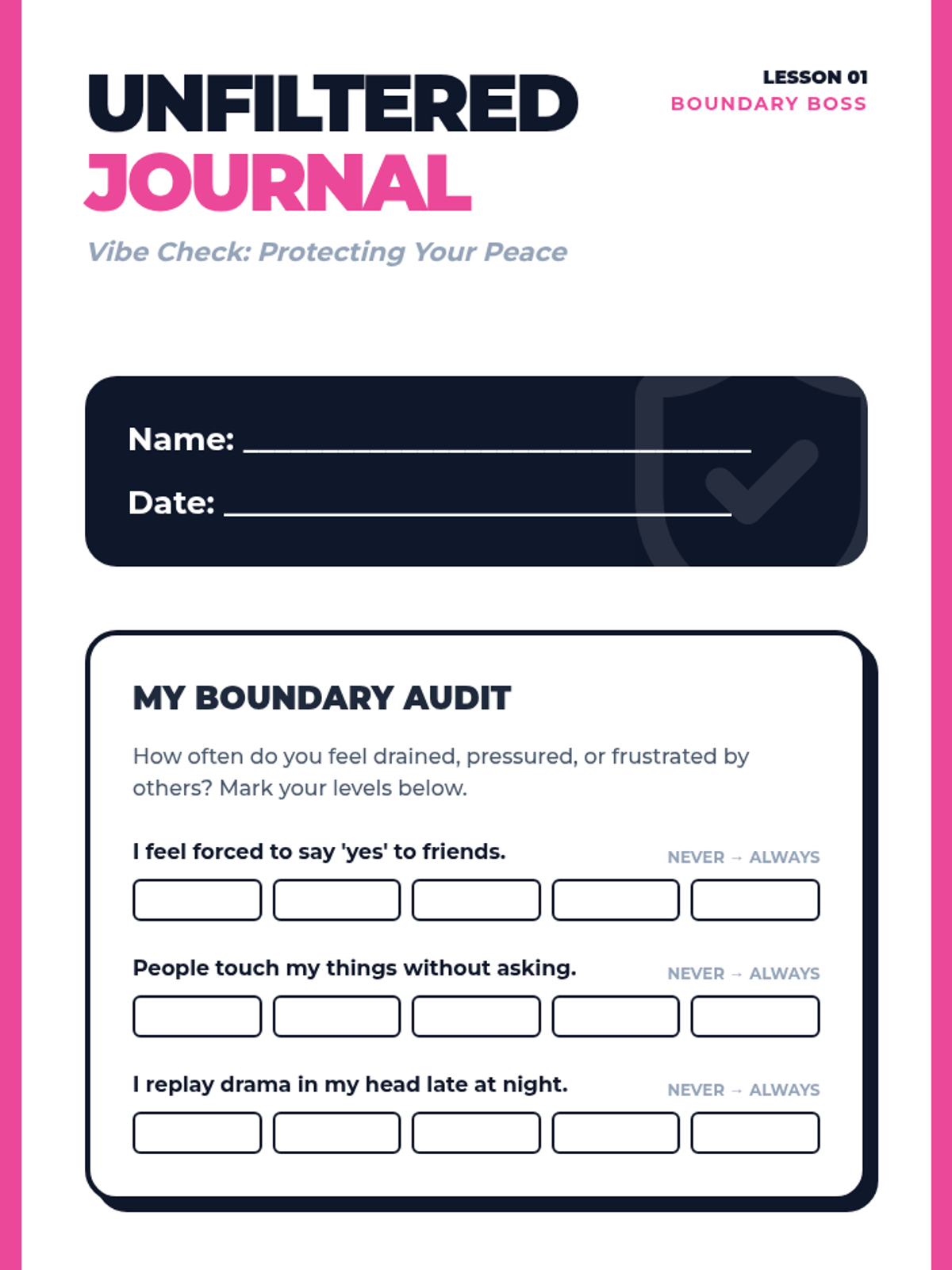
A 3-part small group curriculum designed for high school girls in urban settings to navigate social drama, establish boundaries, and manage social media conflict with confidence and authenticity.
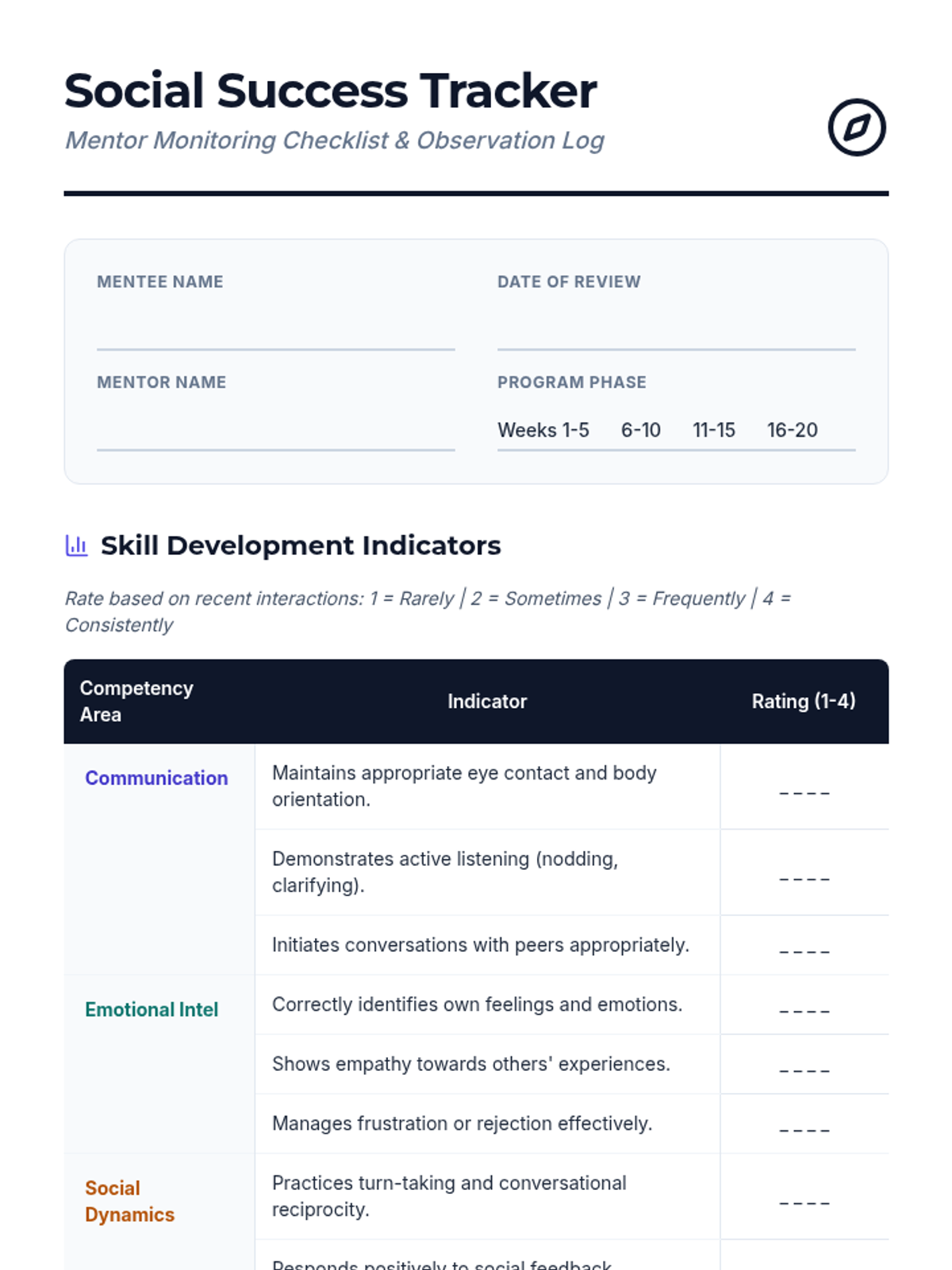
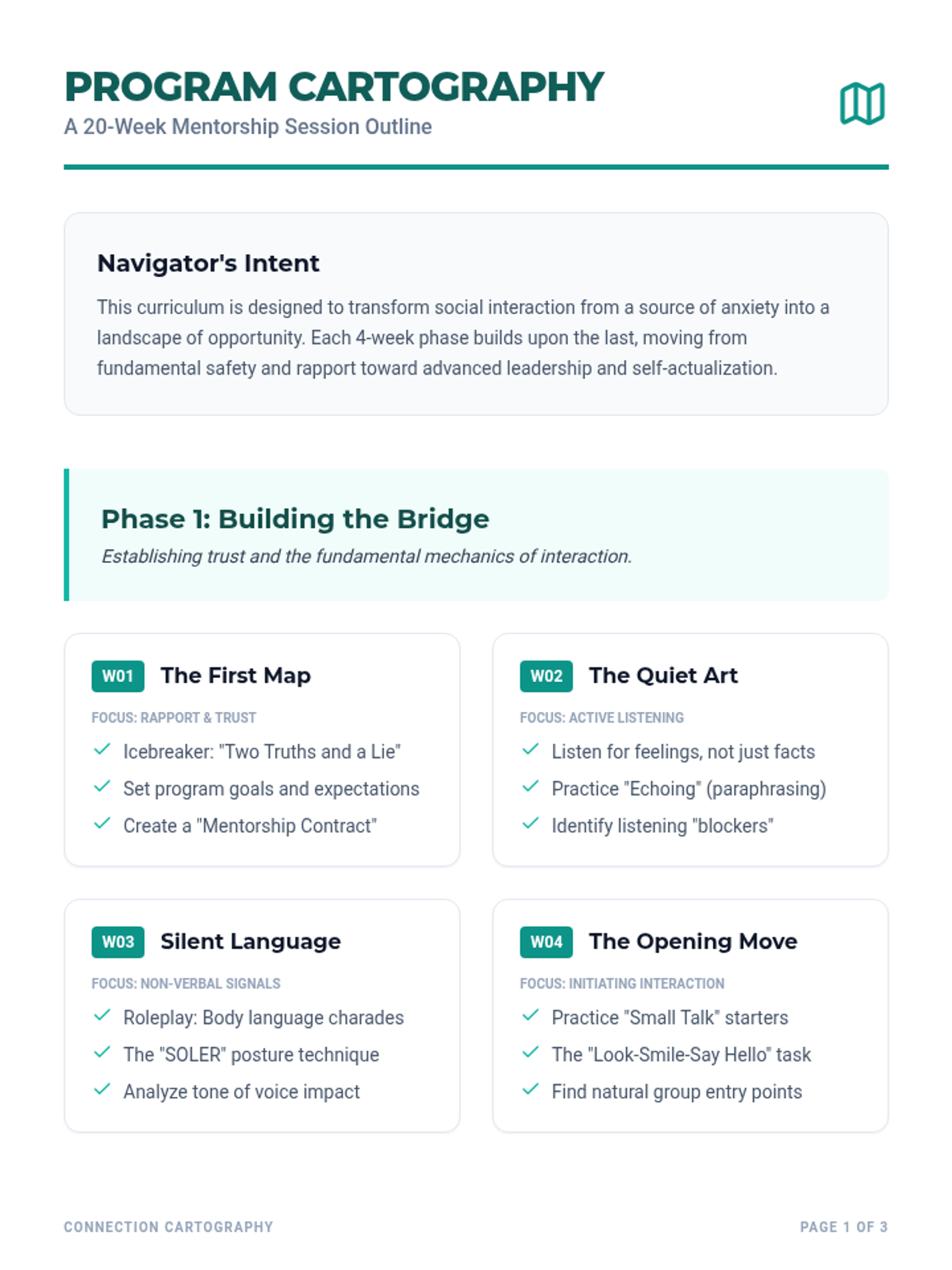
A comprehensive 20-week mentorship program designed to help students navigate social environments, build meaningful friendships, and master communication.
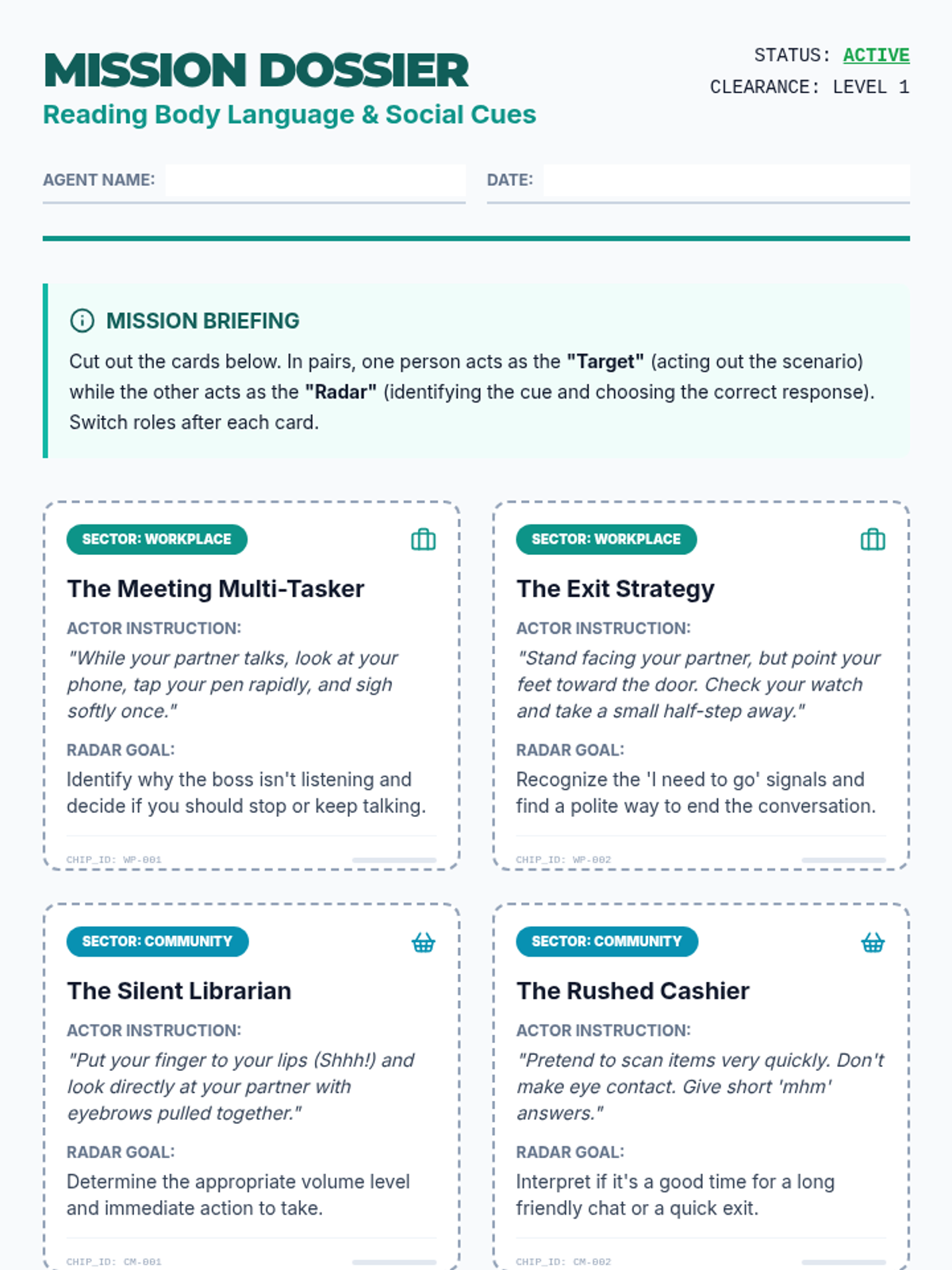
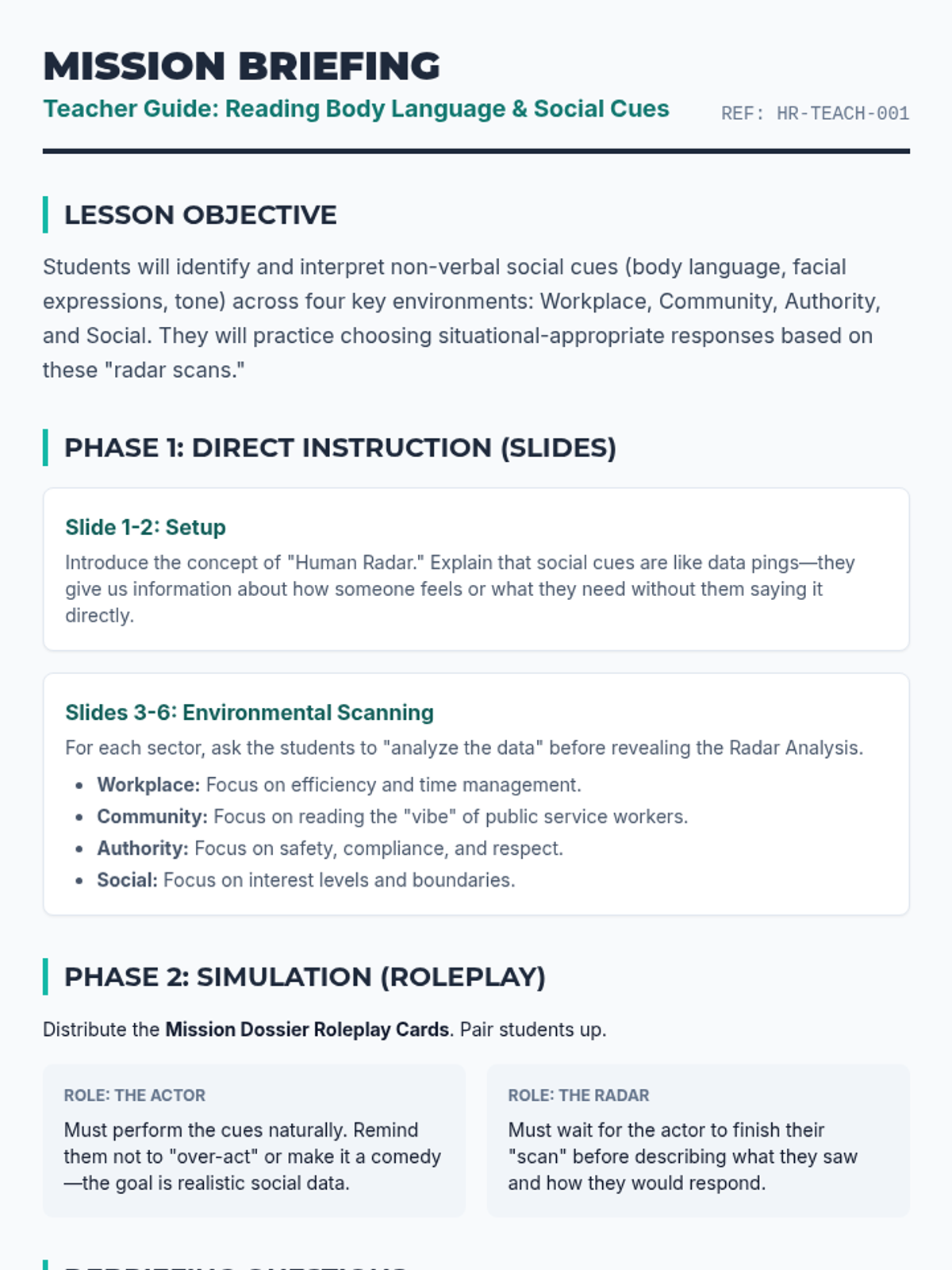
A series of lessons designed to improve social awareness, non-verbal communication, and situational appropriateness in diverse real-world environments.
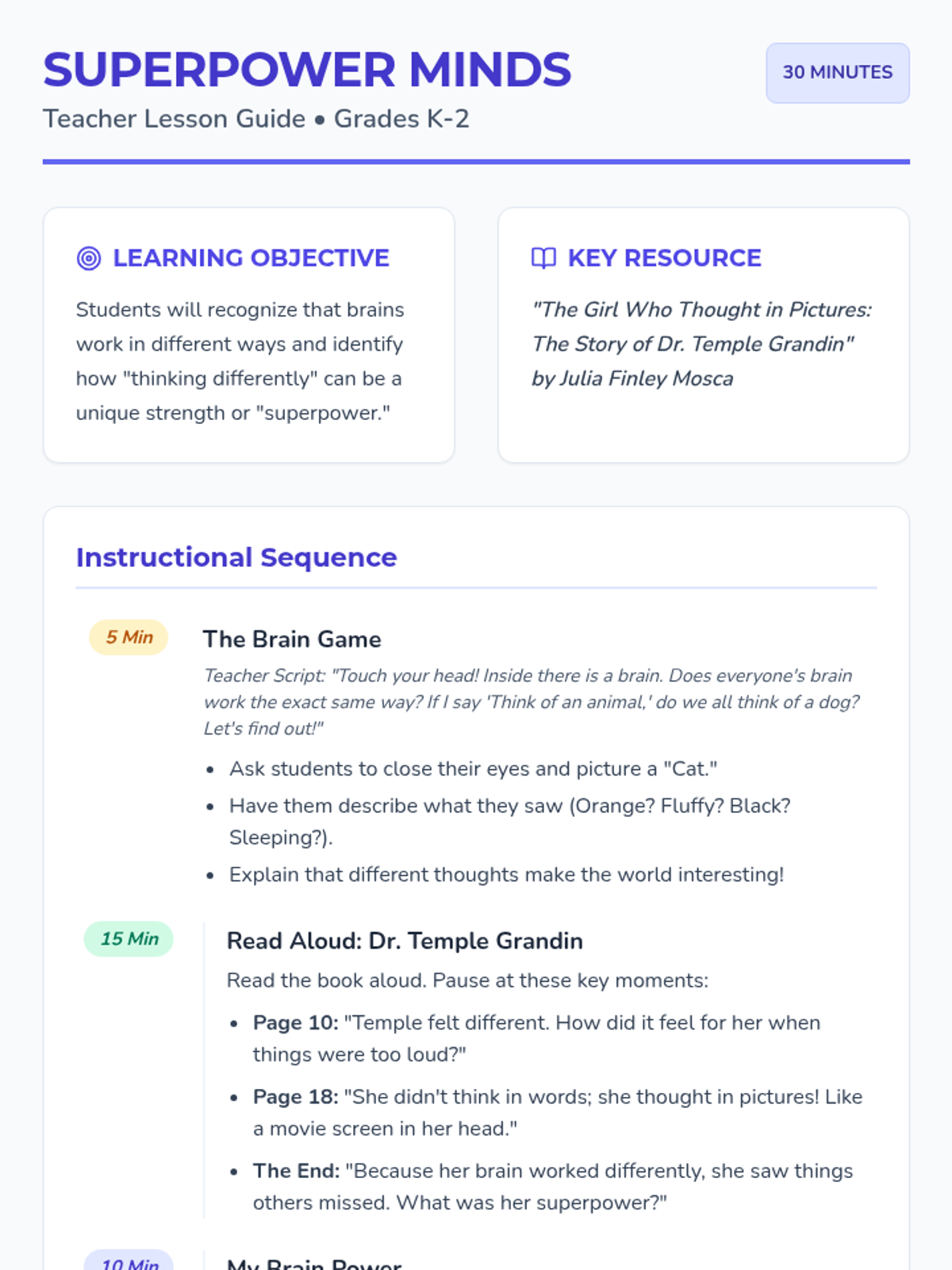
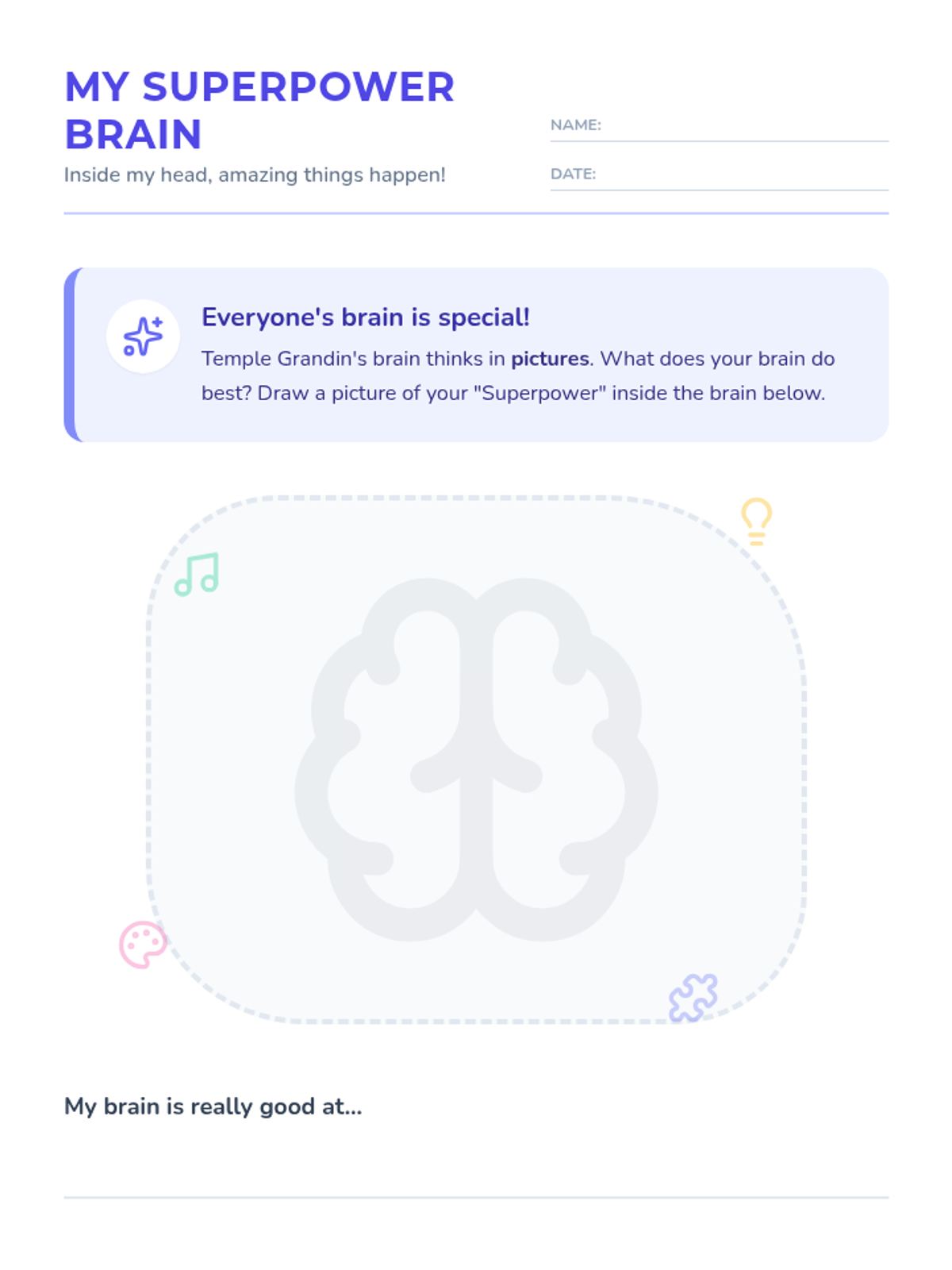
A comprehensive series of 30-minute lessons tailored for different grade levels (K-10) to foster understanding, empathy, and advocacy regarding autism and neurodiversity. Each lesson uses age-appropriate literature to ground the conversation.
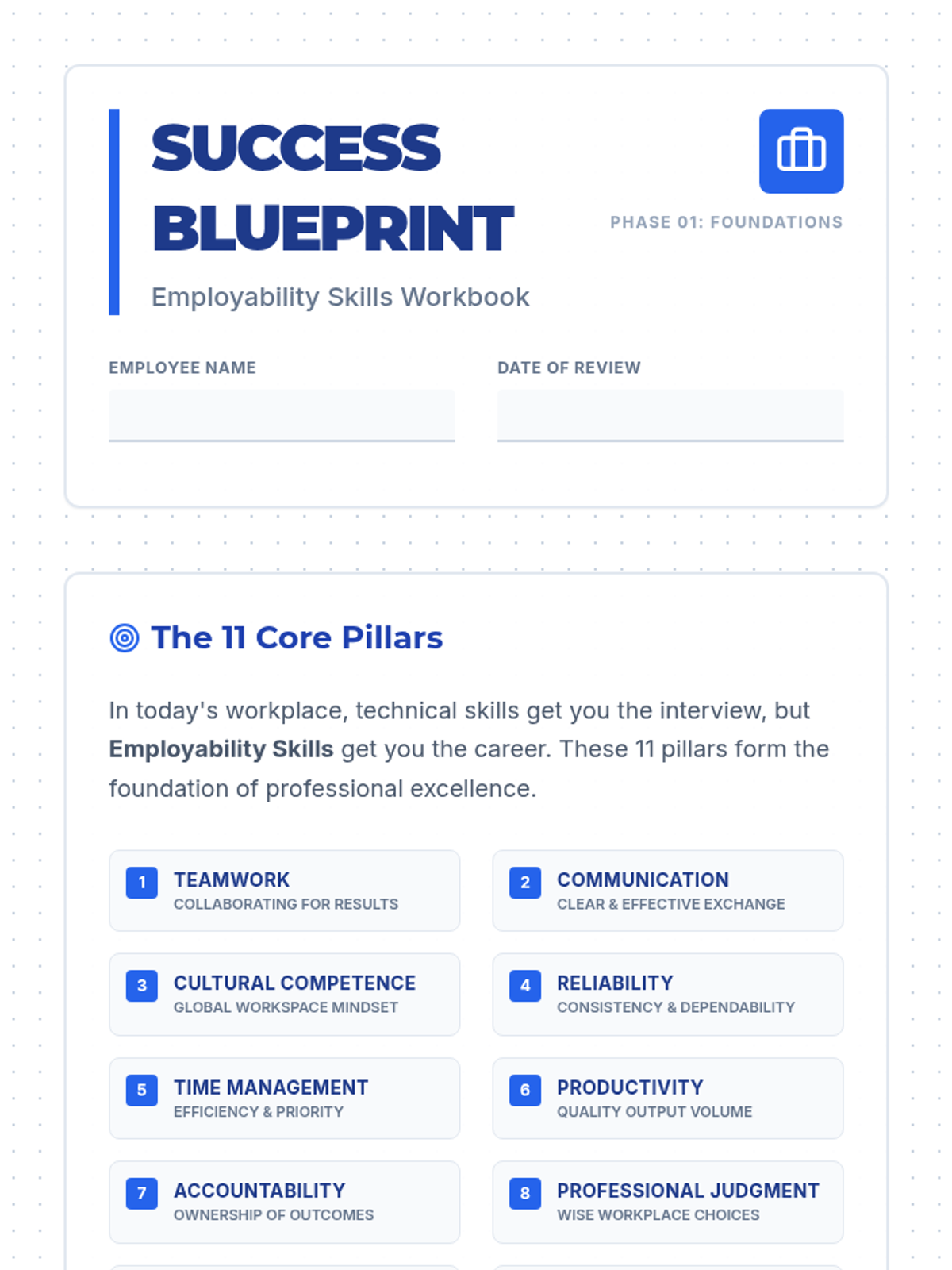
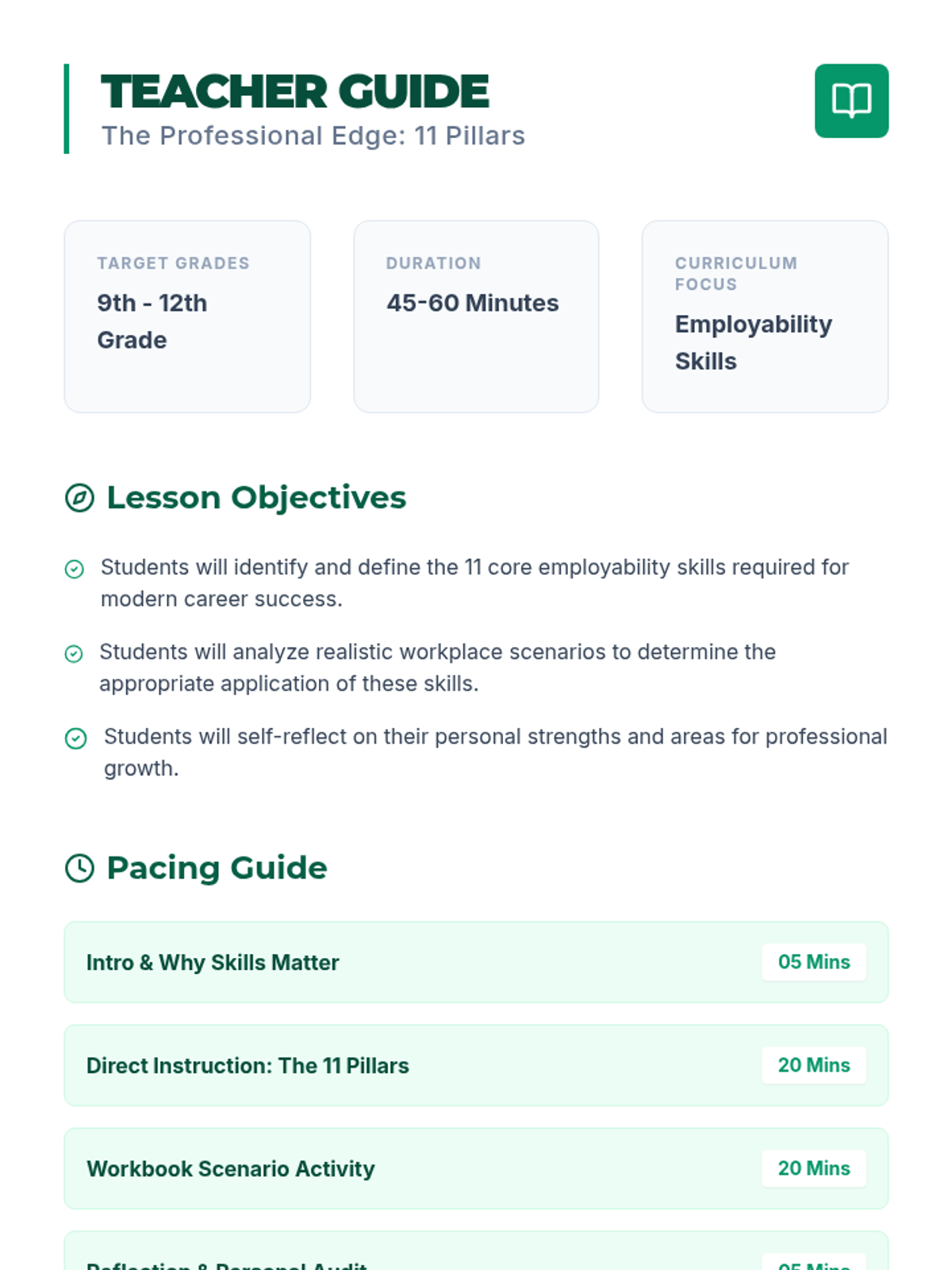
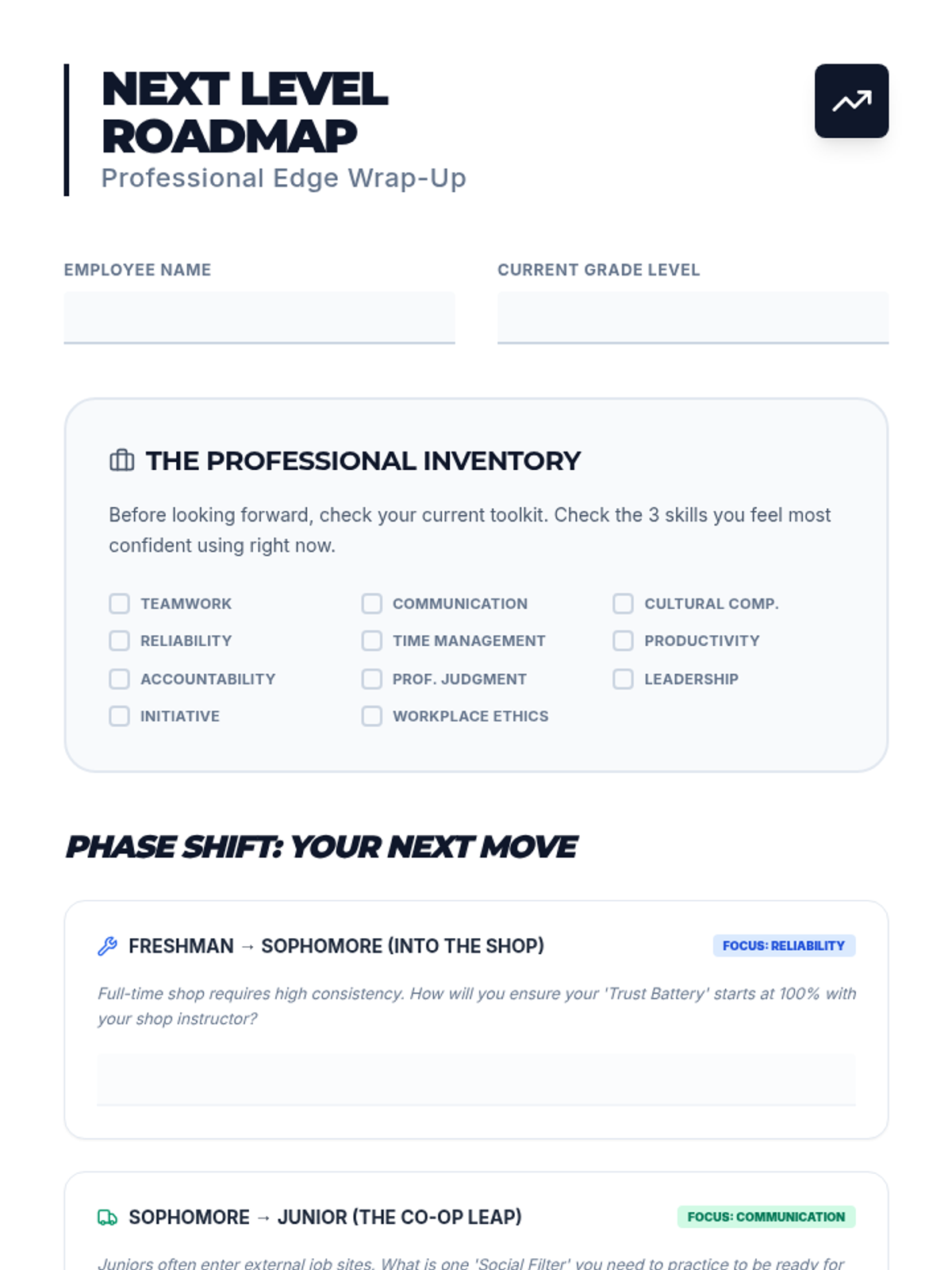
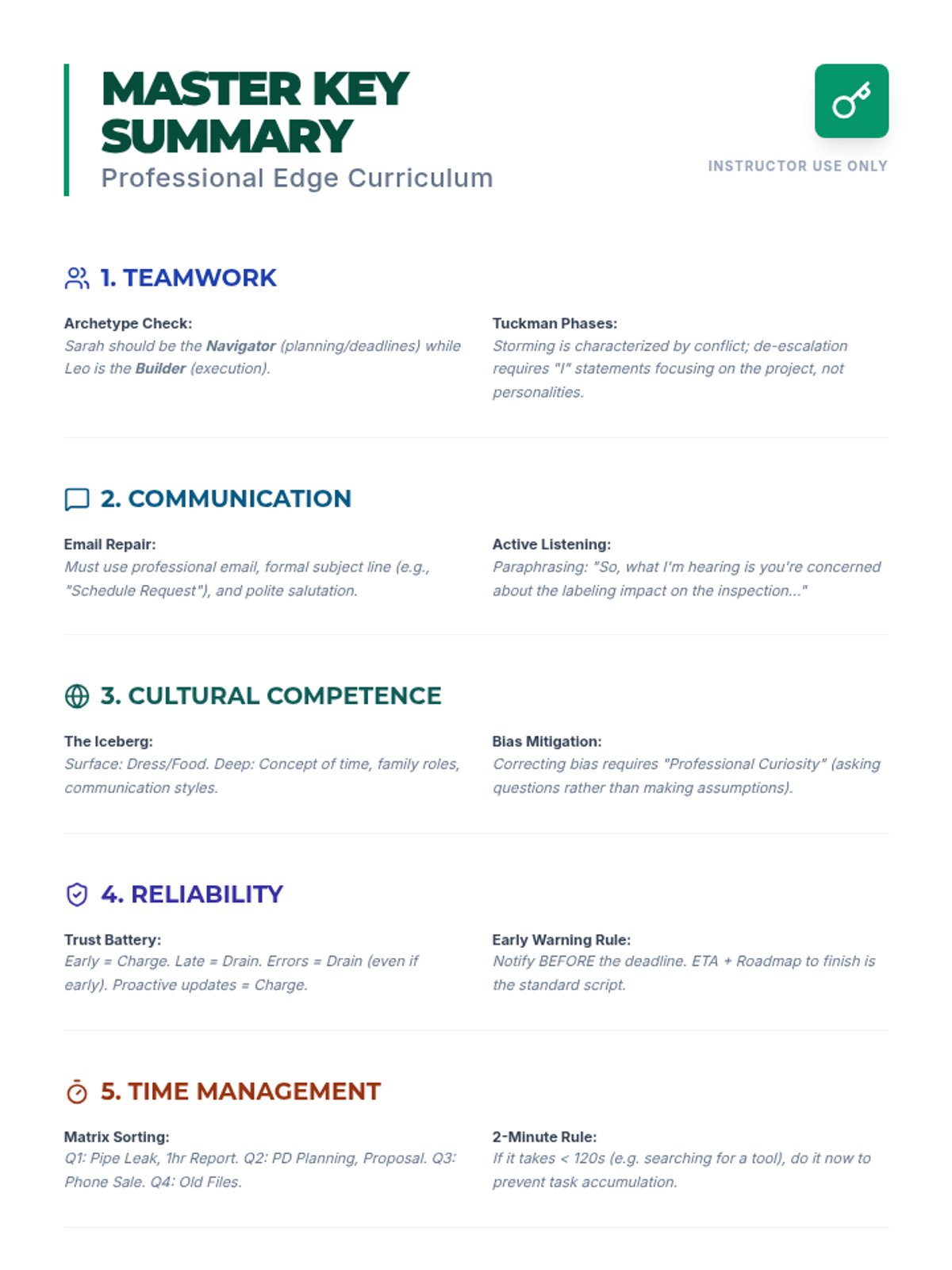
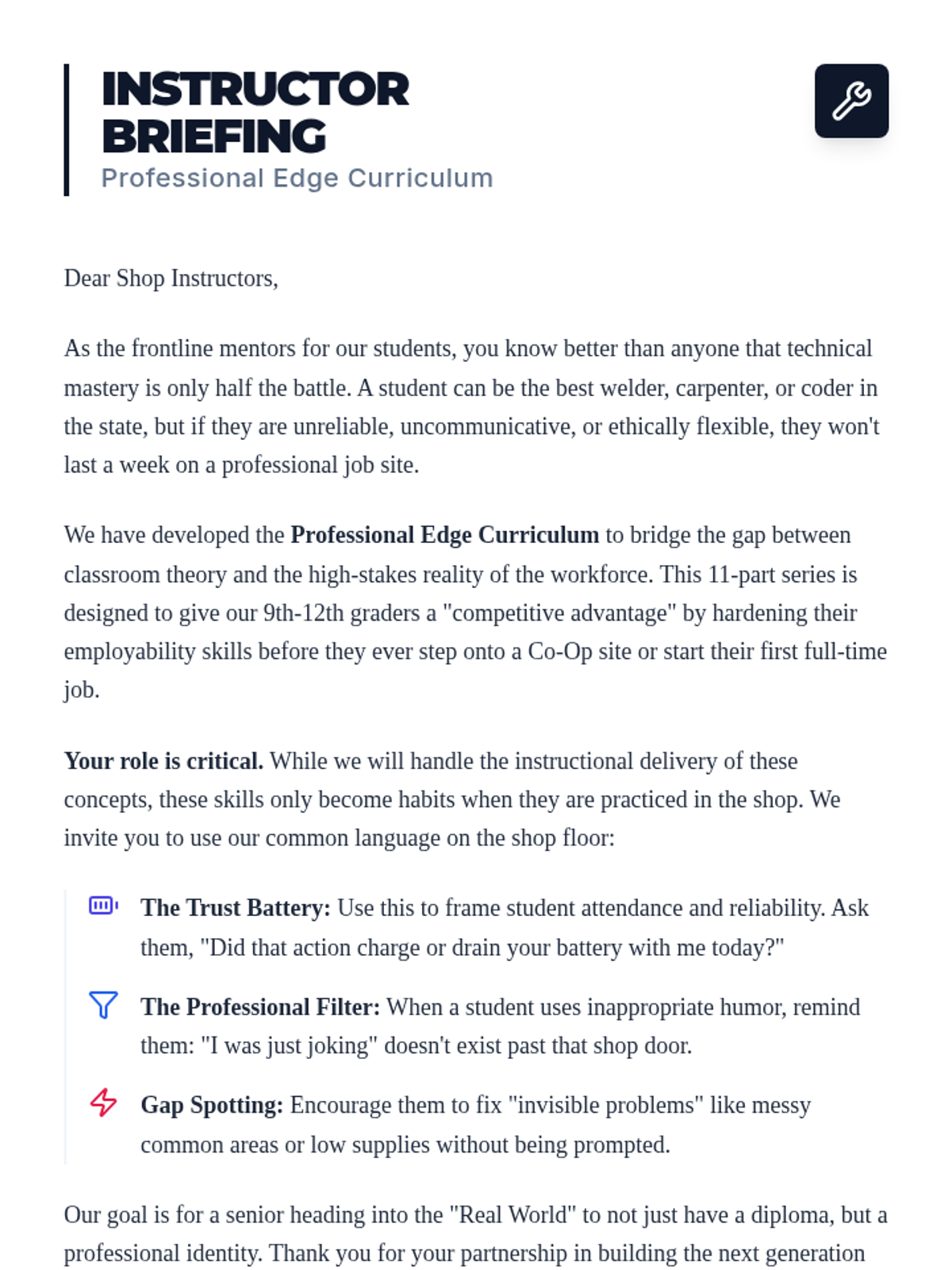
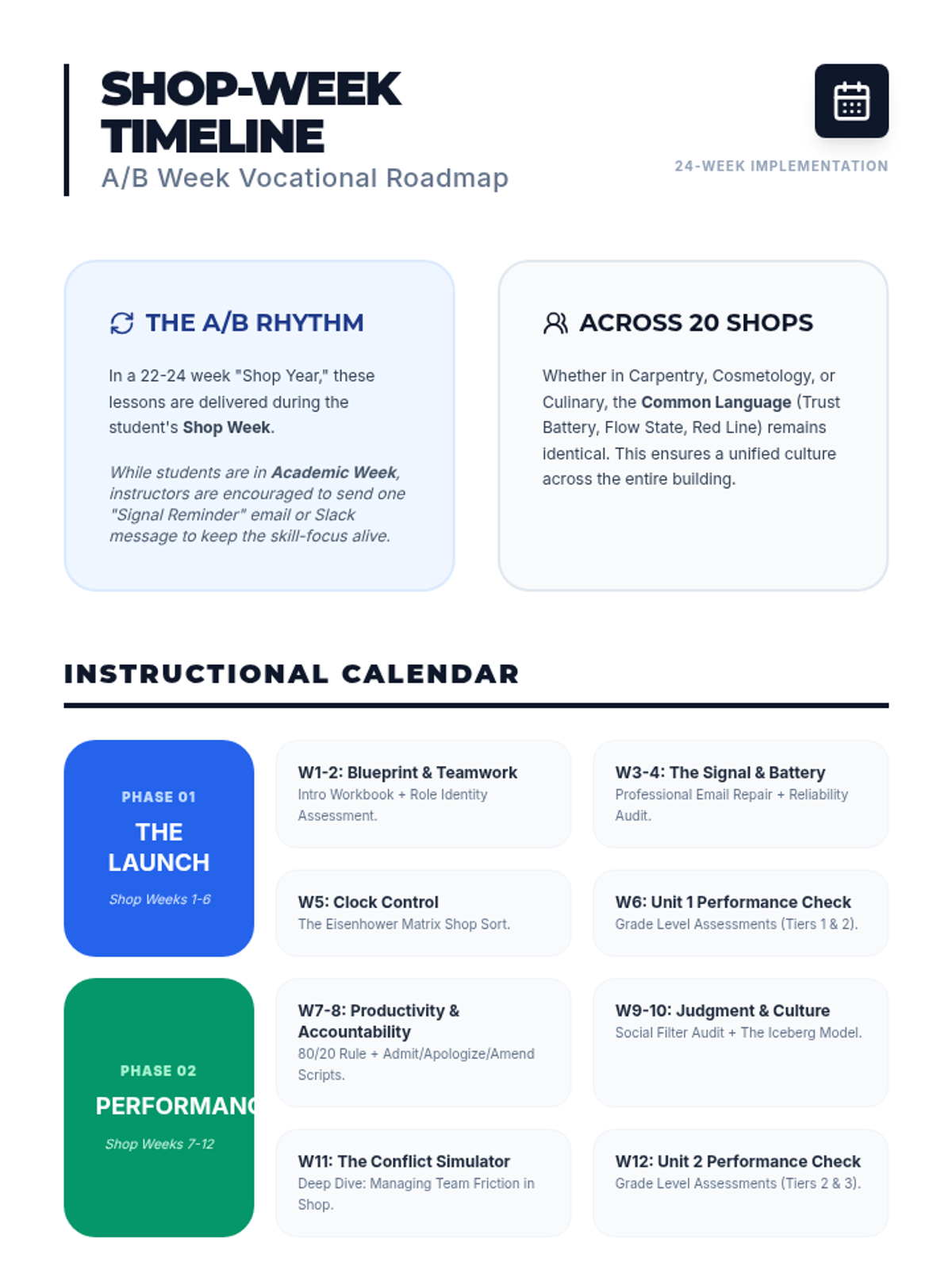
A comprehensive high school curriculum covering 11 essential employability skills, from foundational concepts to advanced application in professional settings. Includes instructional slides, student worksheets, and teacher guides for every skill.
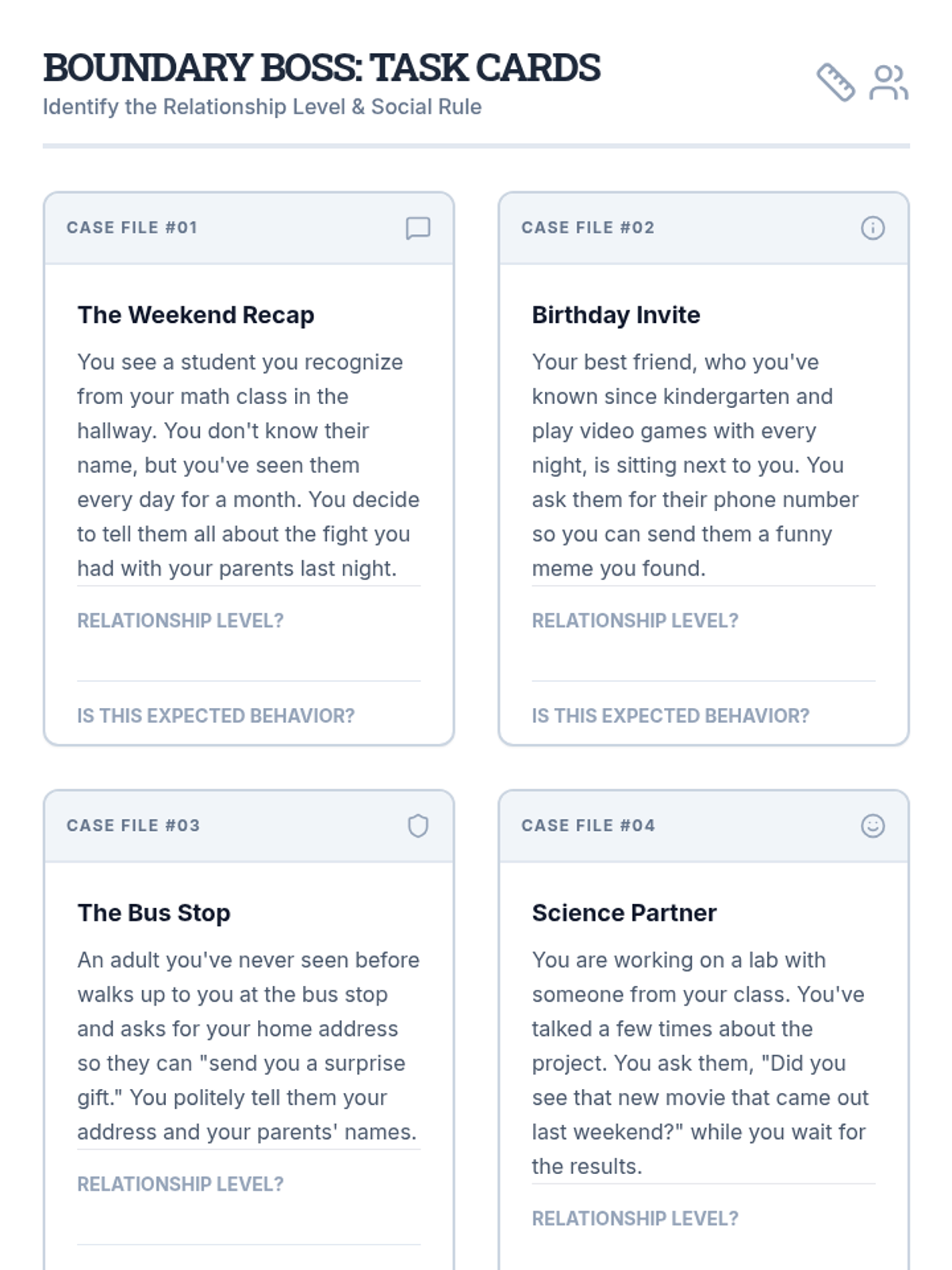
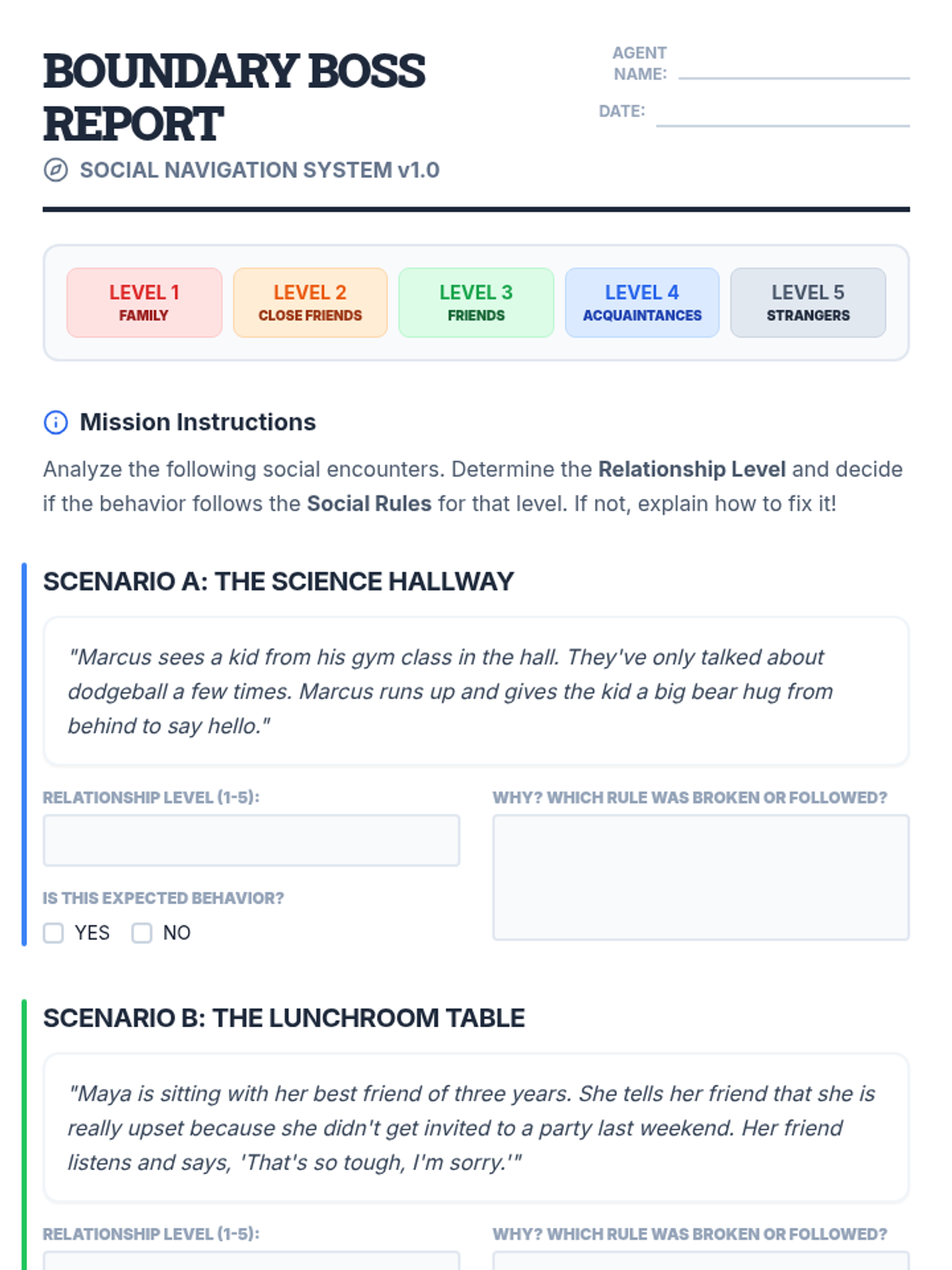
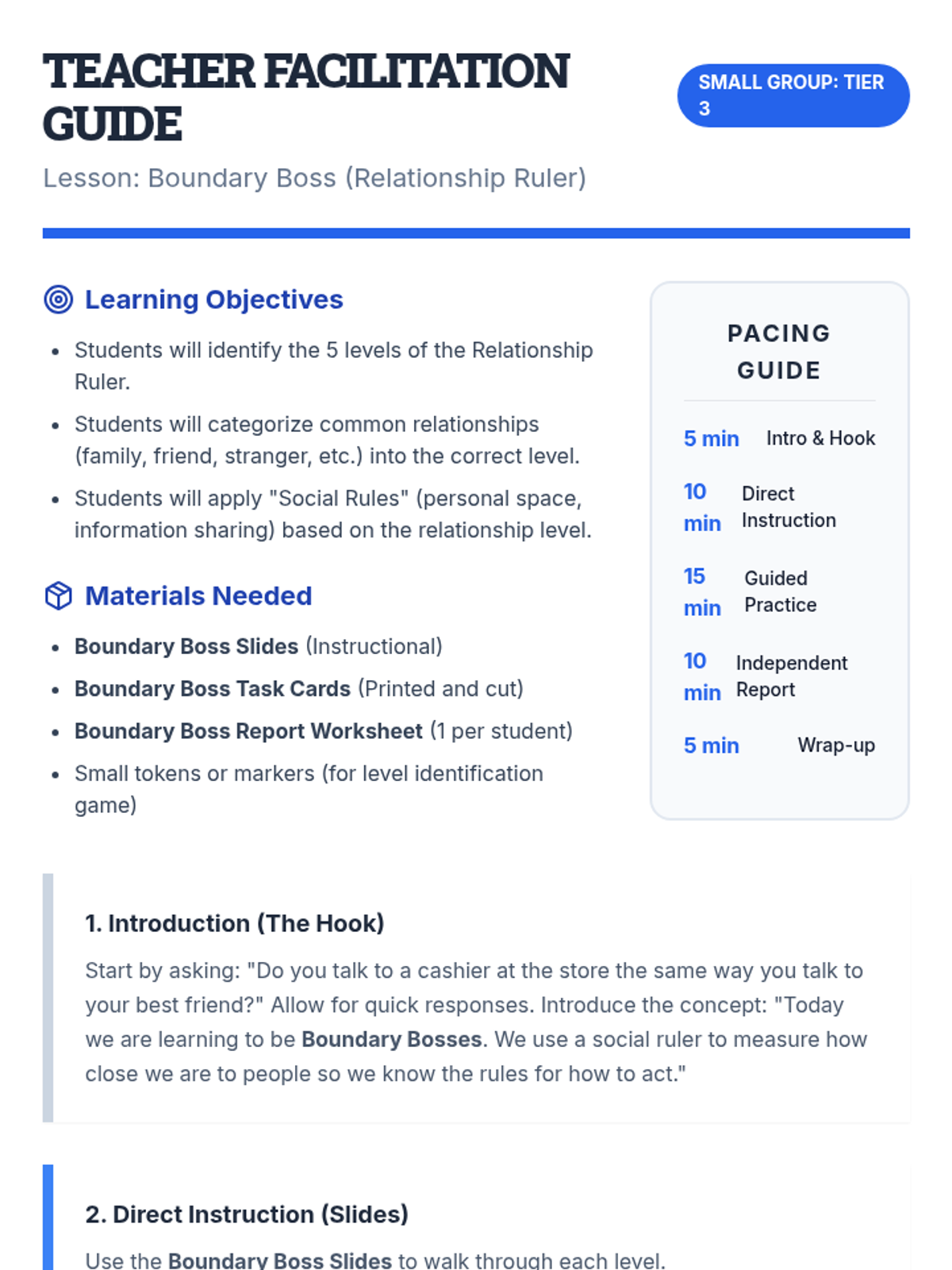
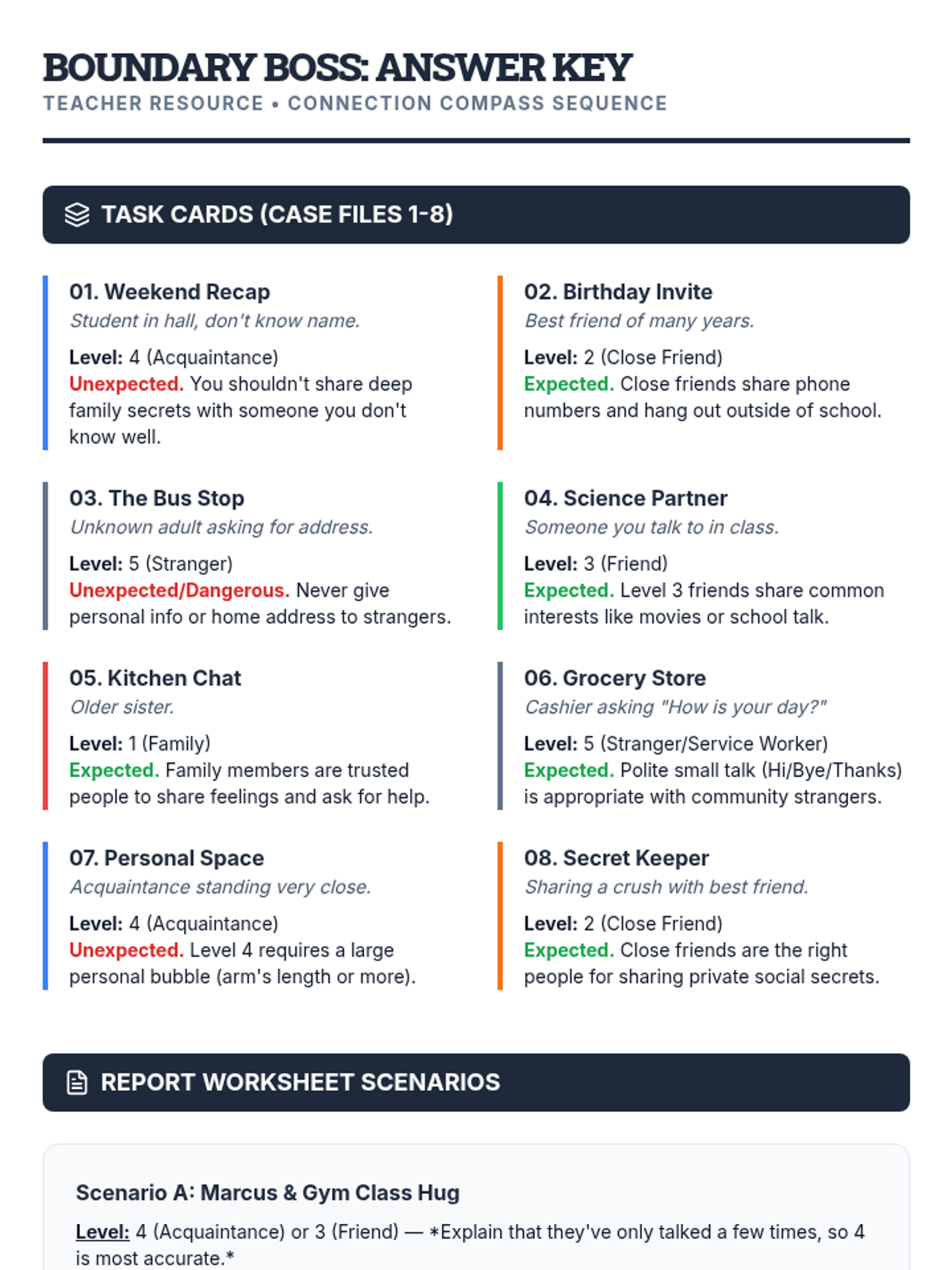
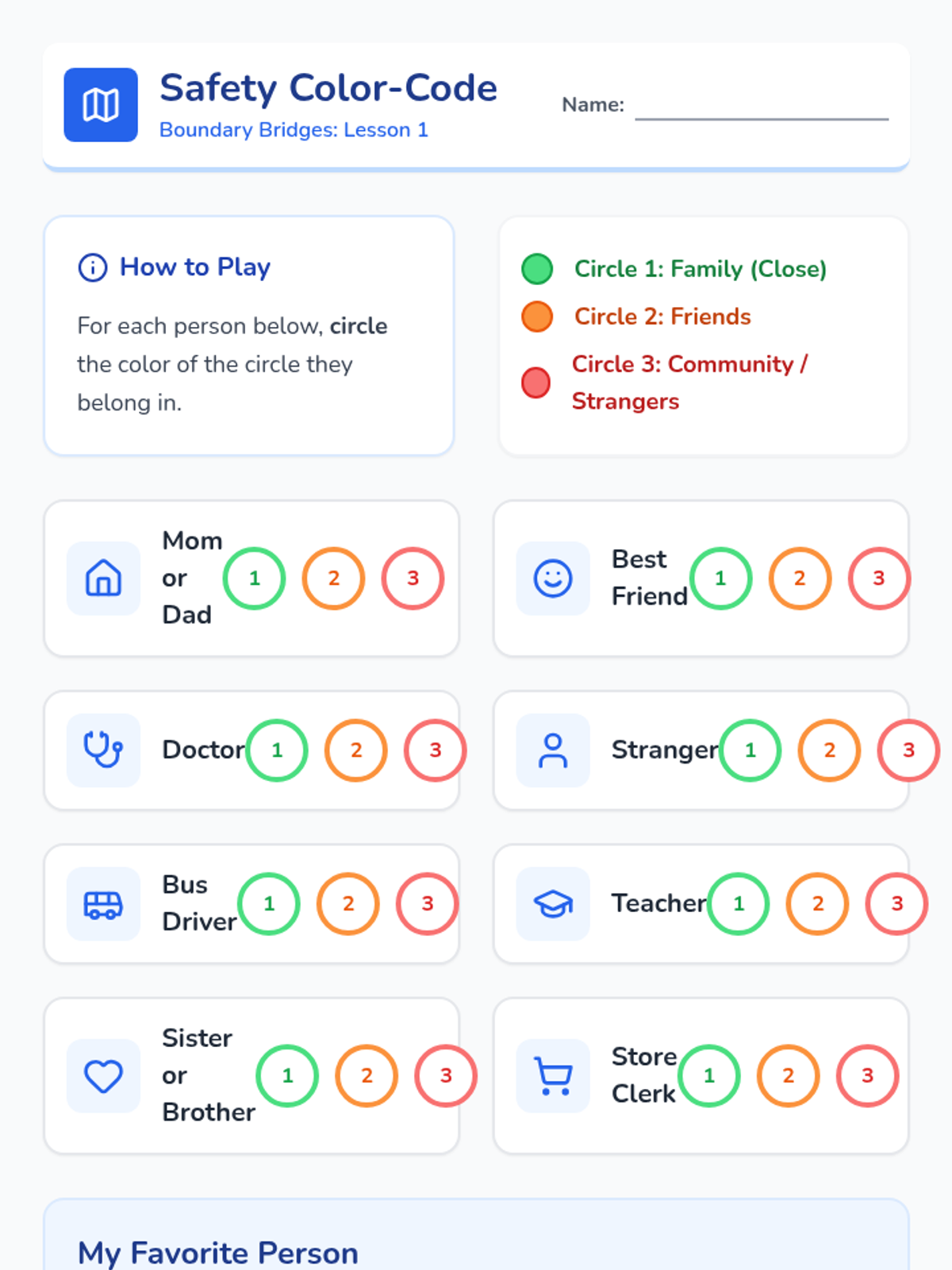
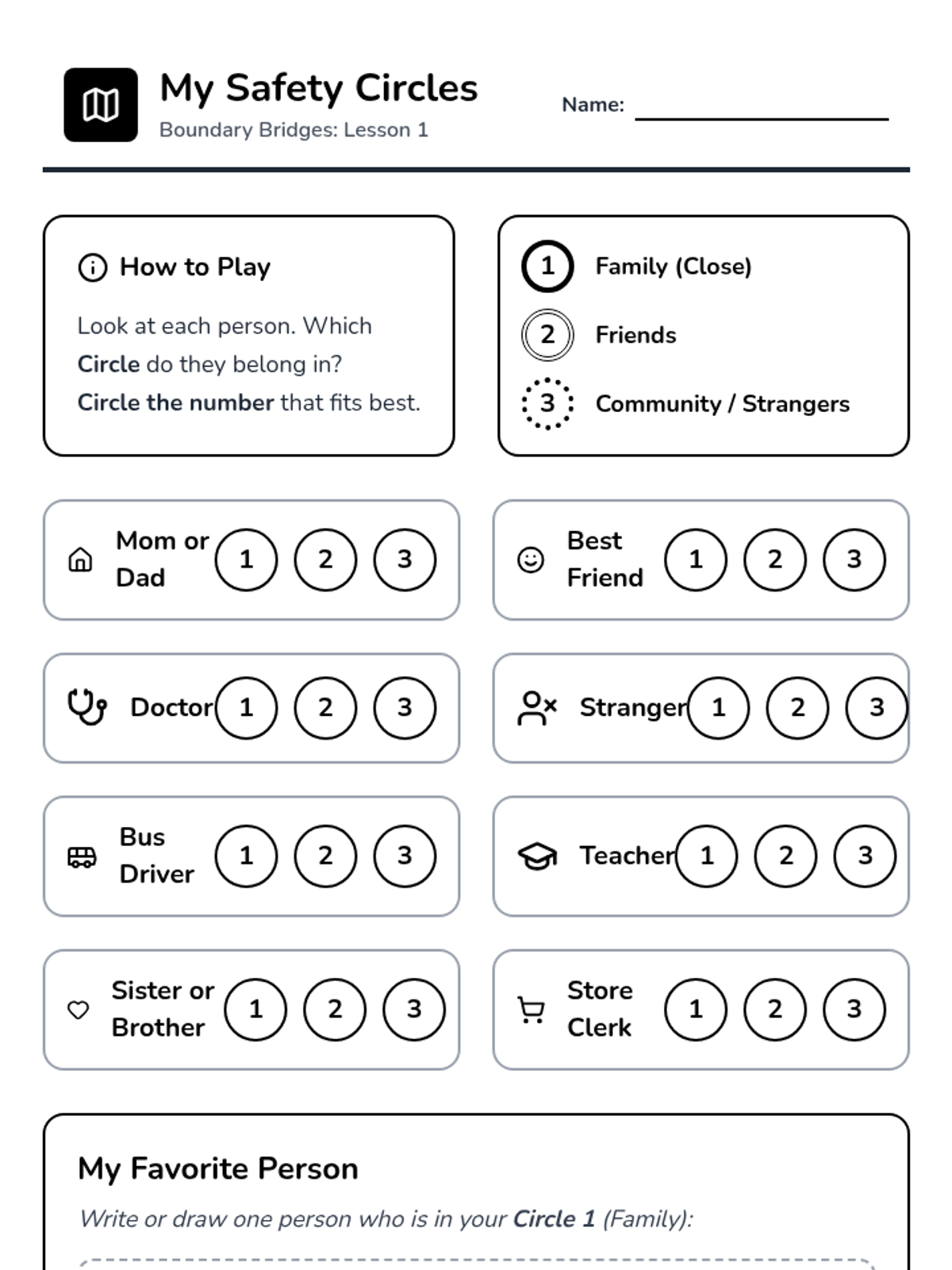
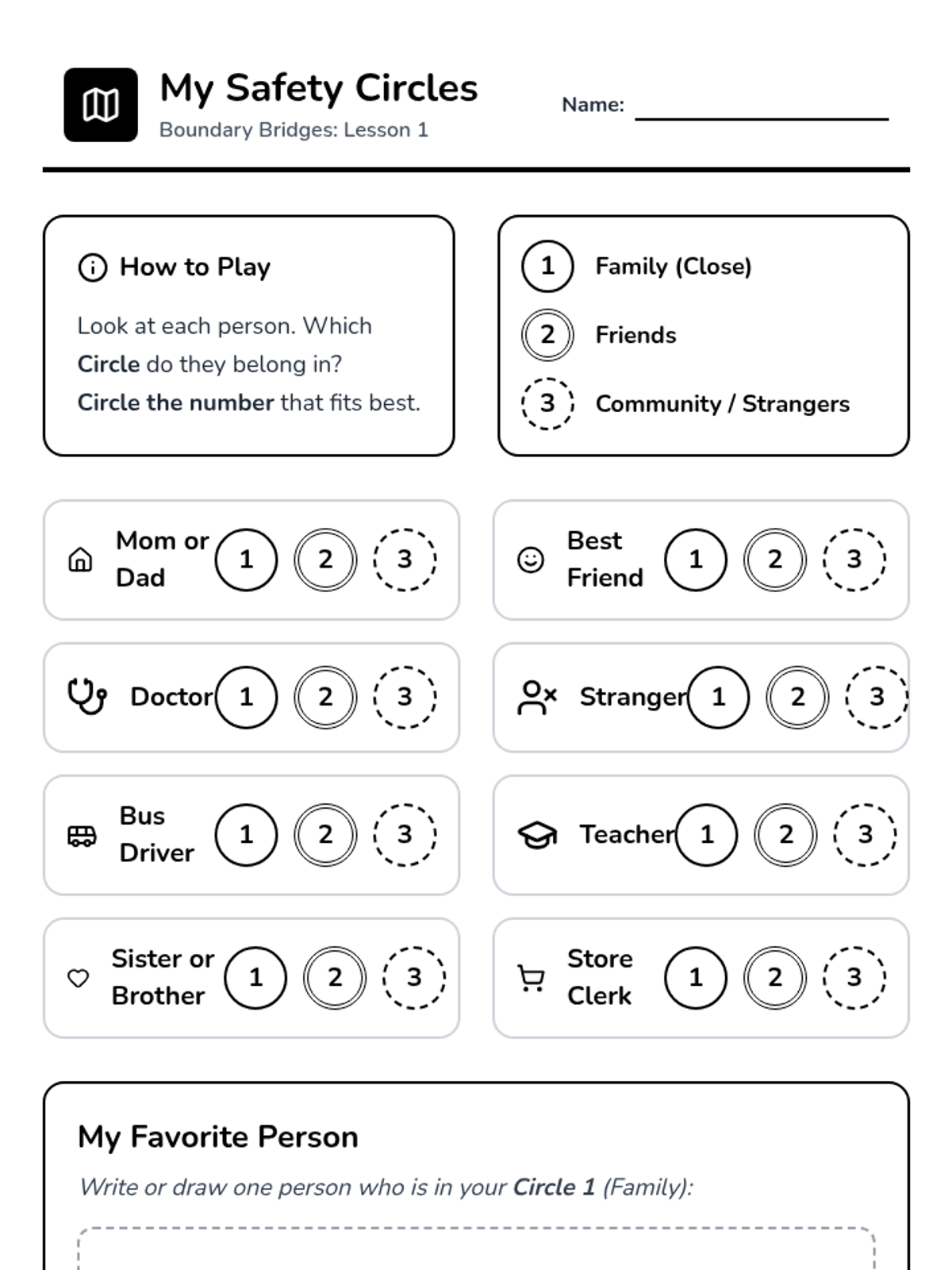
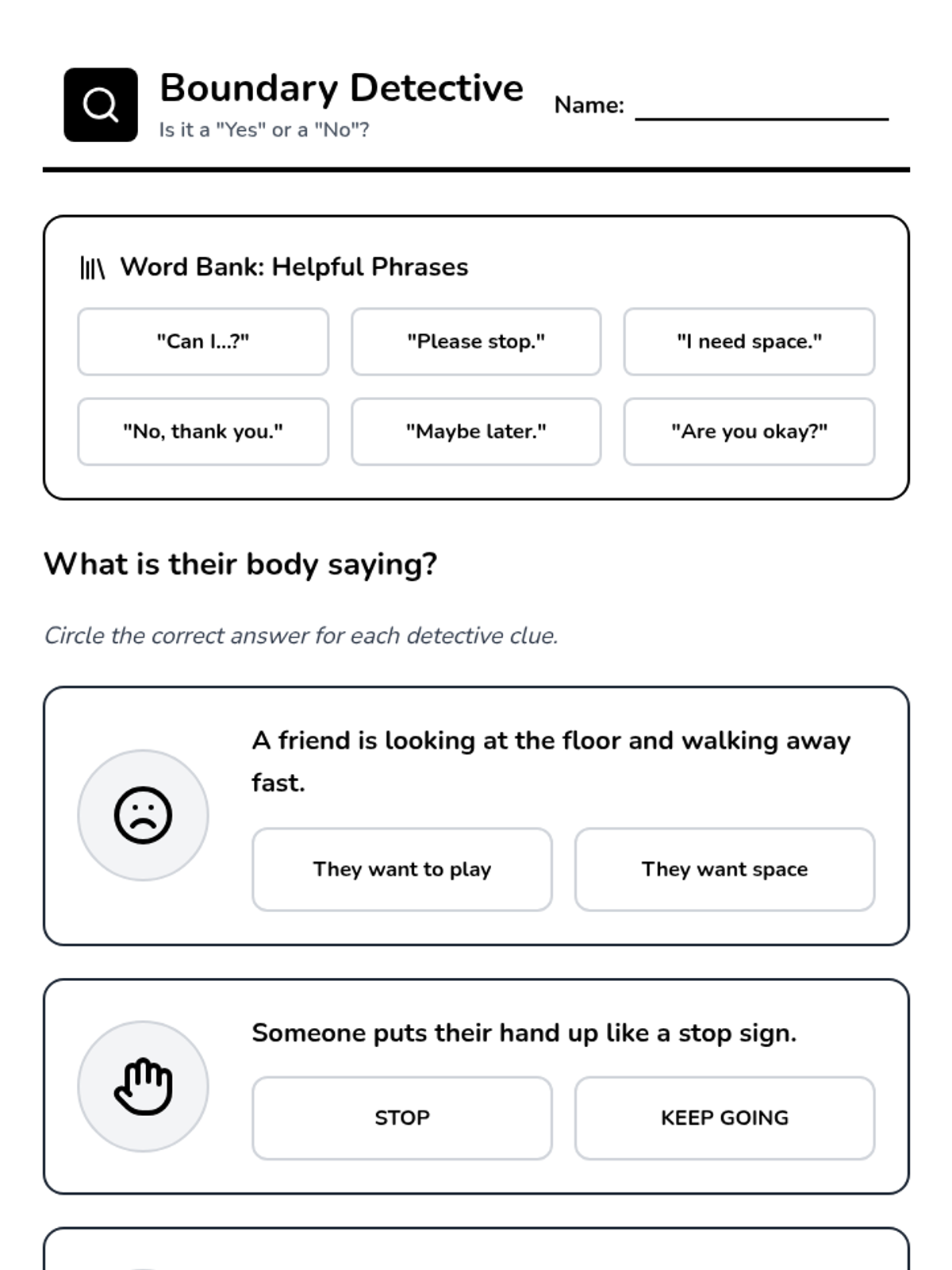
A series of lessons designed to help students navigate the complexities of social interactions, boundaries, and relationship levels.
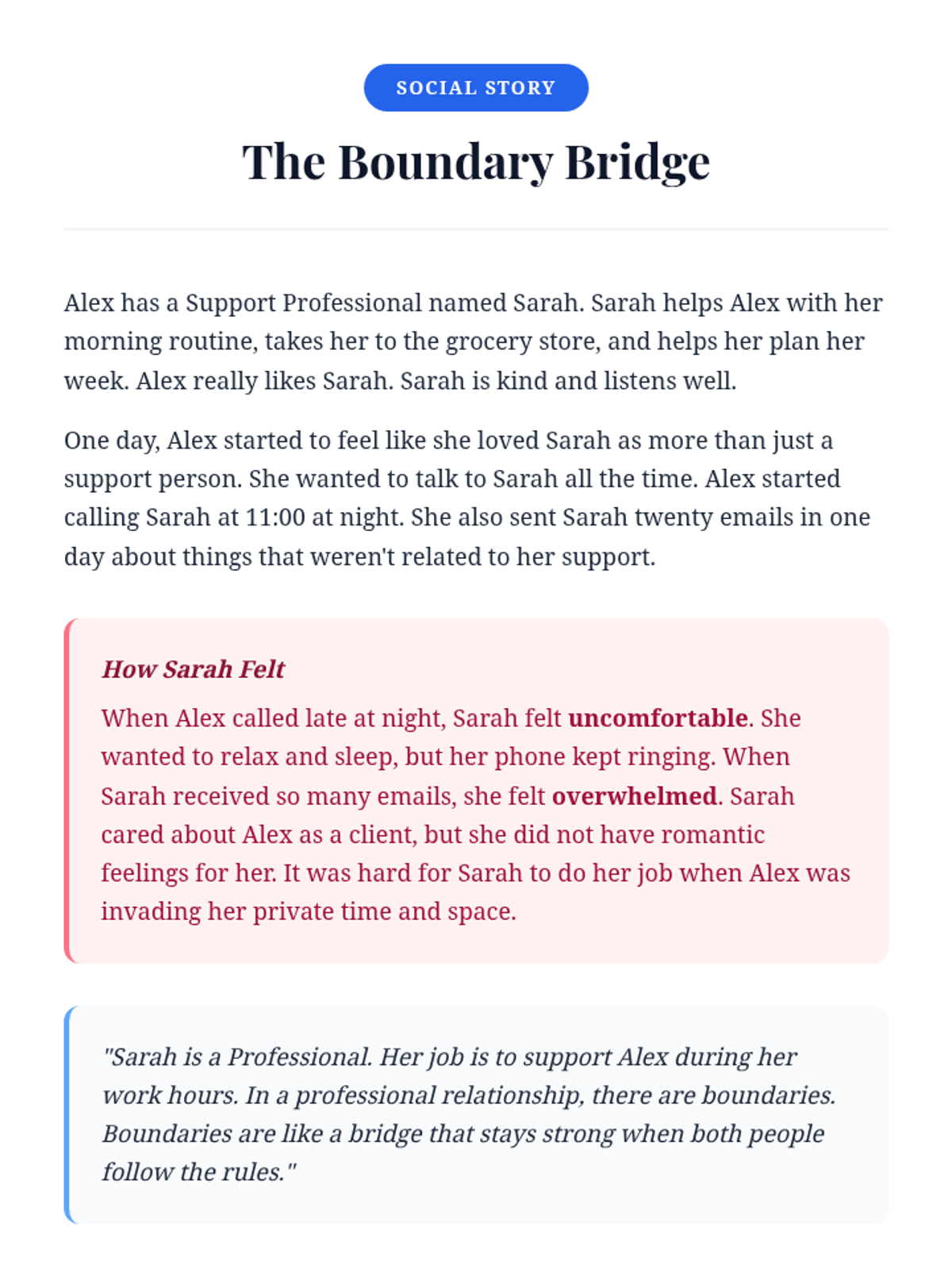
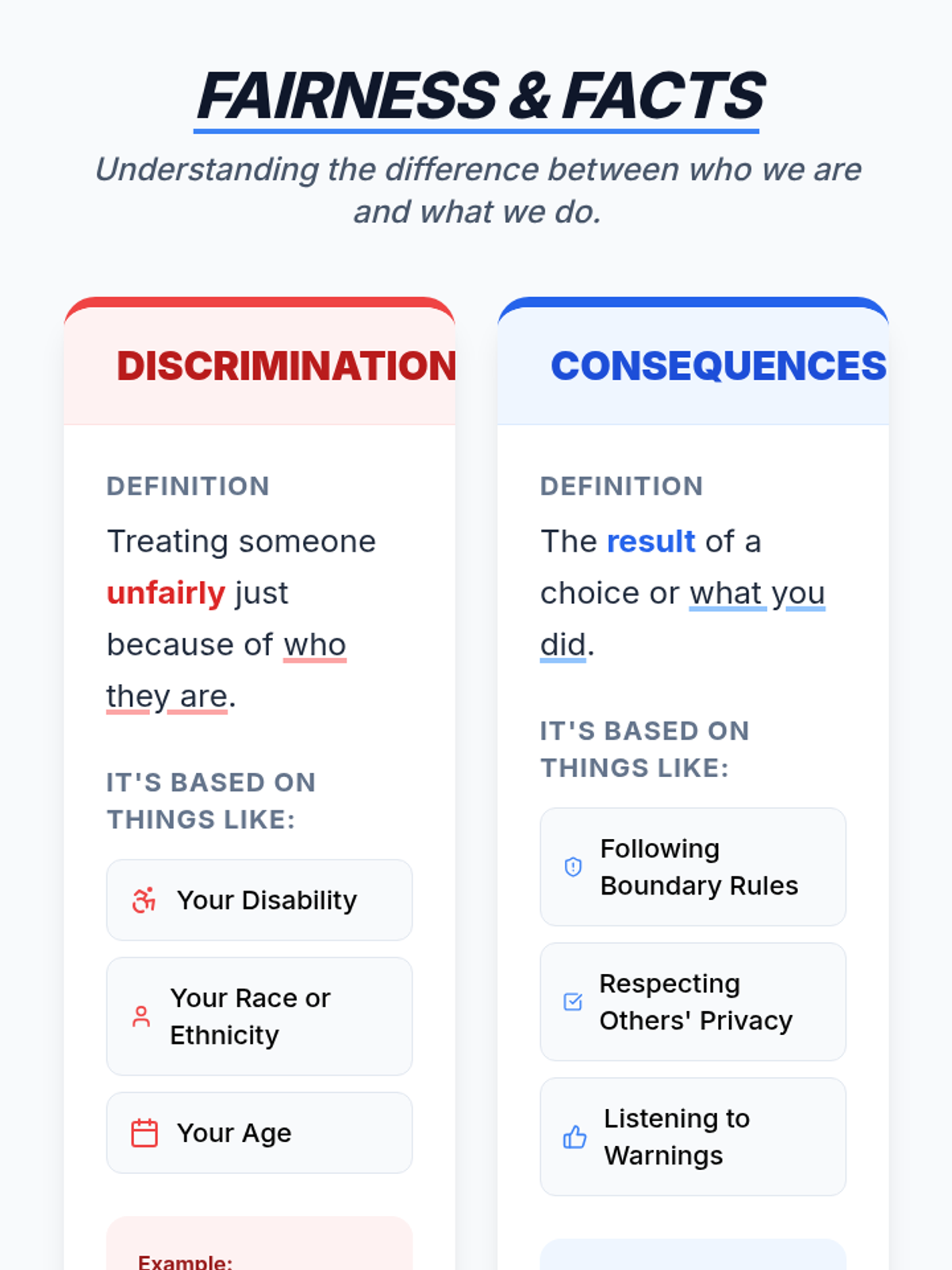
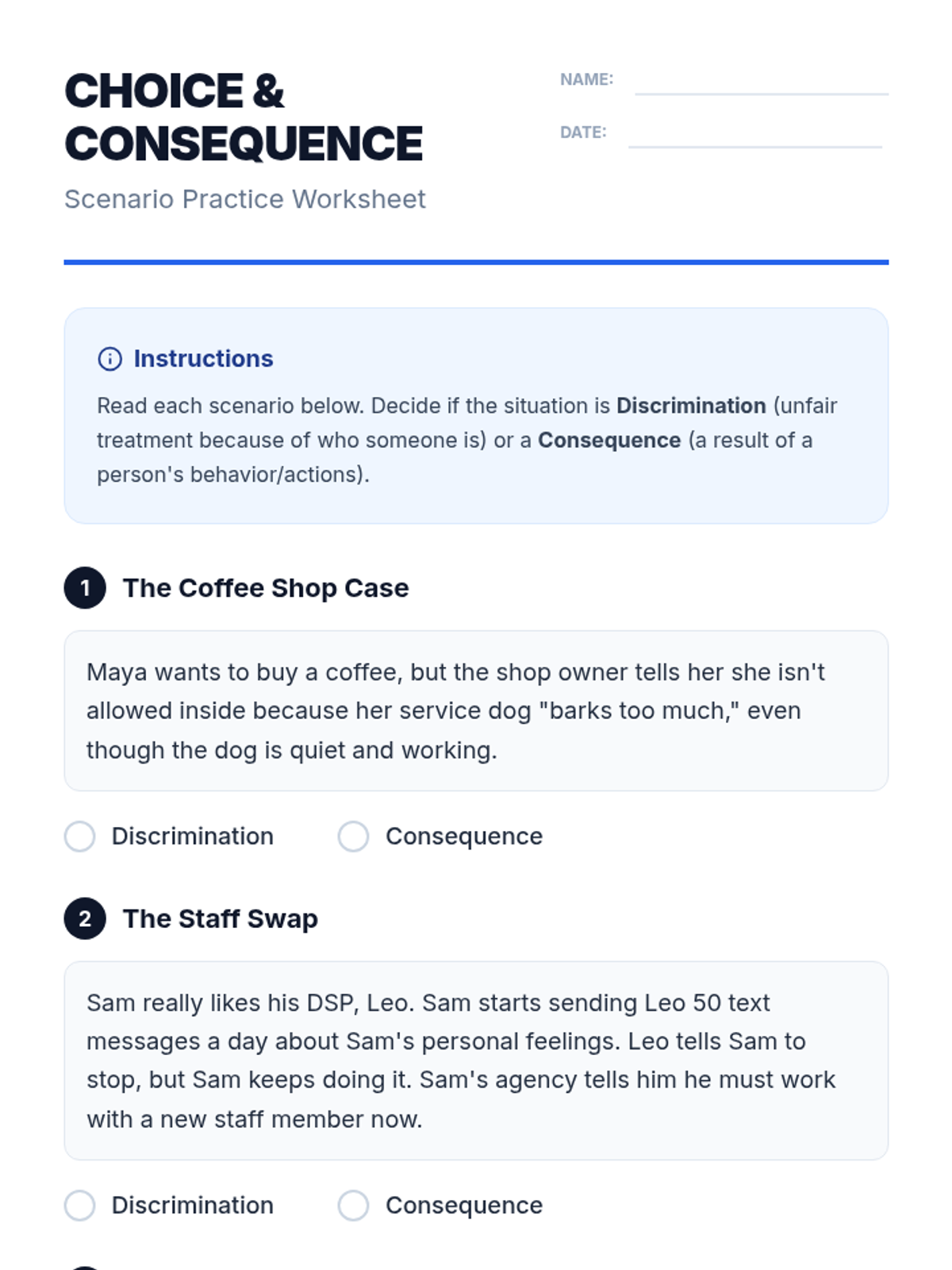
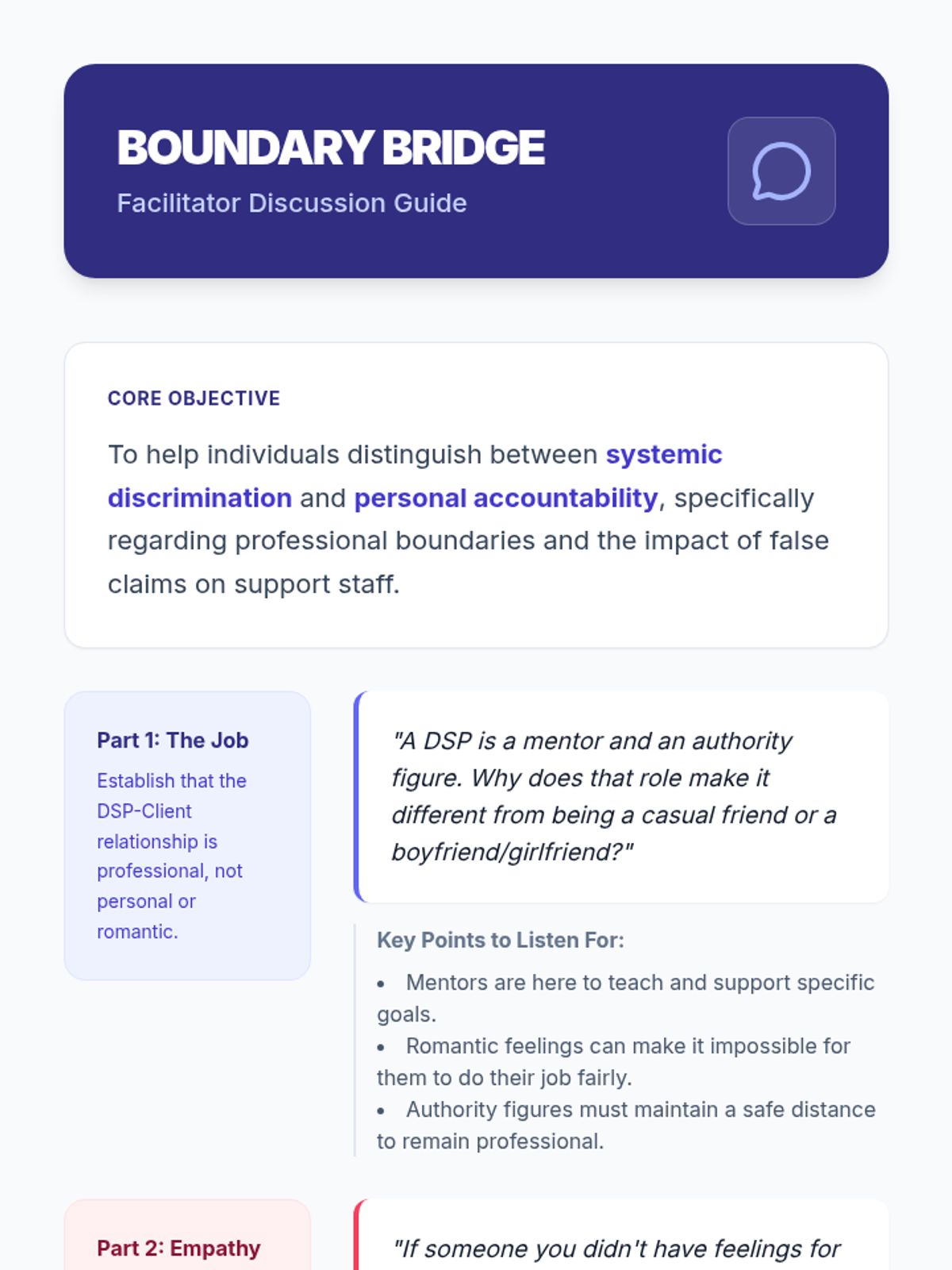
A series of lessons designed to help individuals understand the difference between discrimination and the consequences of personal behavior, focusing on professional boundaries and the impact of false claims.
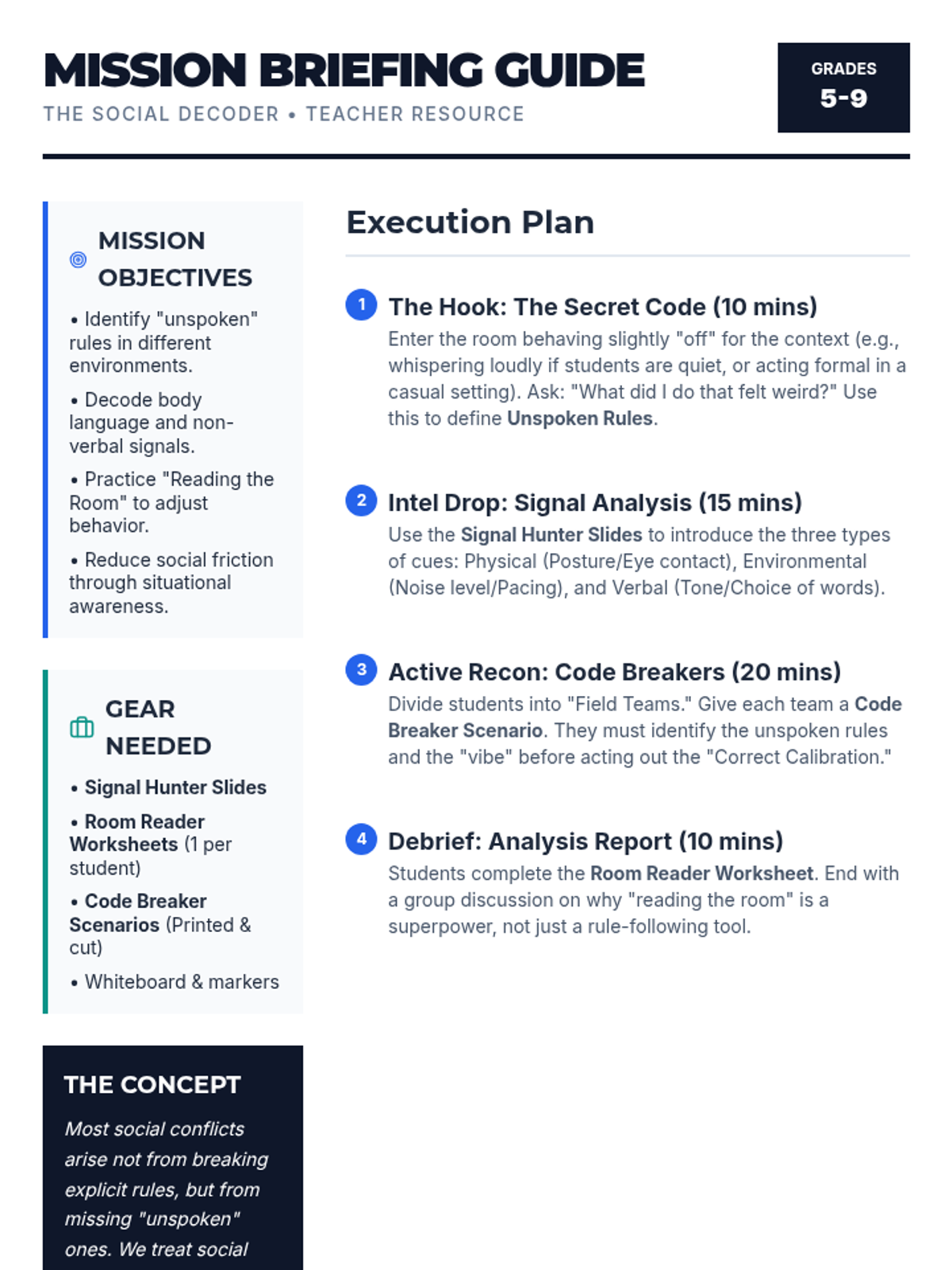
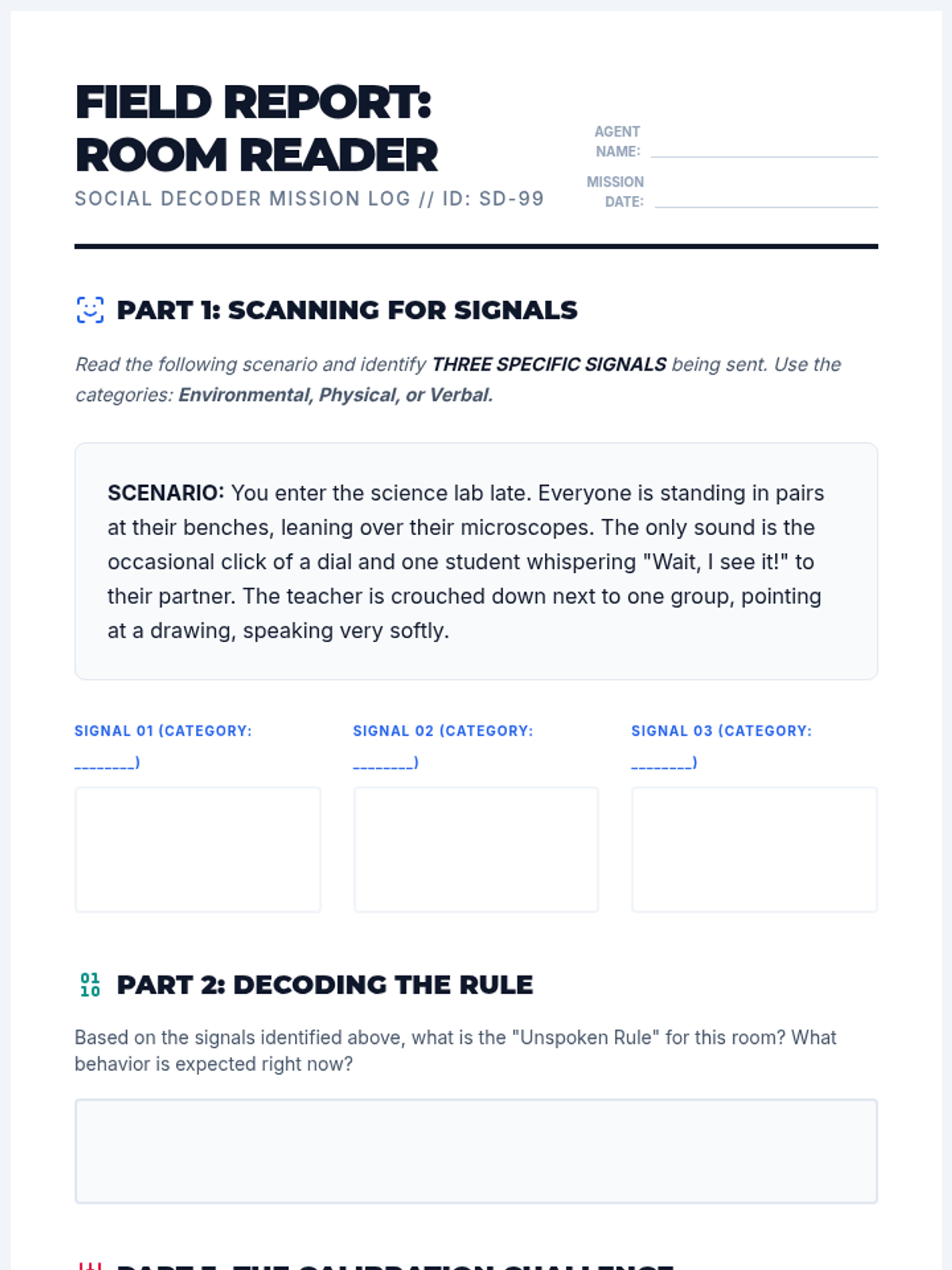
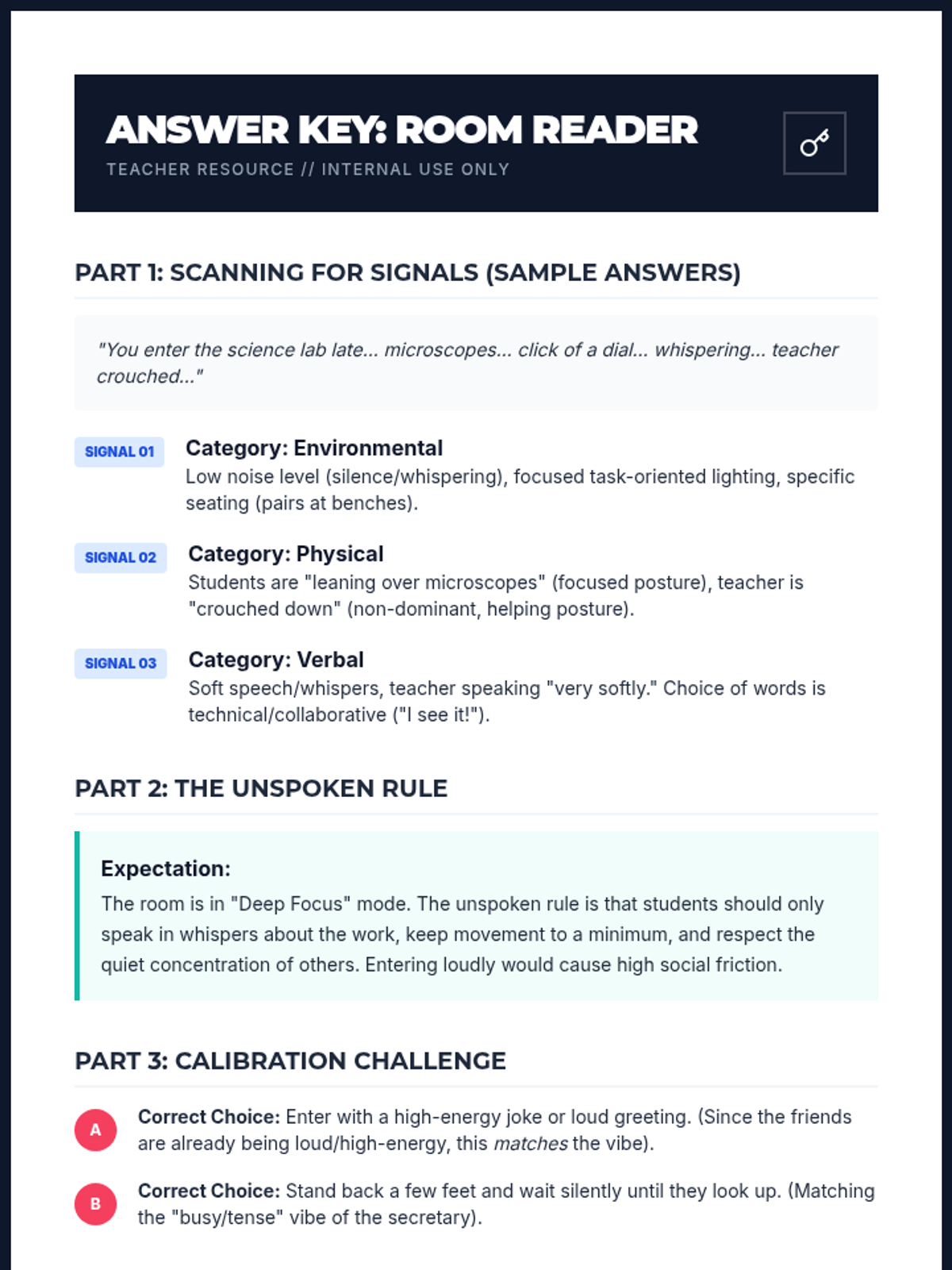
A curriculum designed to help middle and early high school students master the art of situational awareness. By explicitly teaching how to 'read the room' and interpret subtle social cues, this sequence reduces social friction and helps students navigate complex classroom and peer environments with confidence.
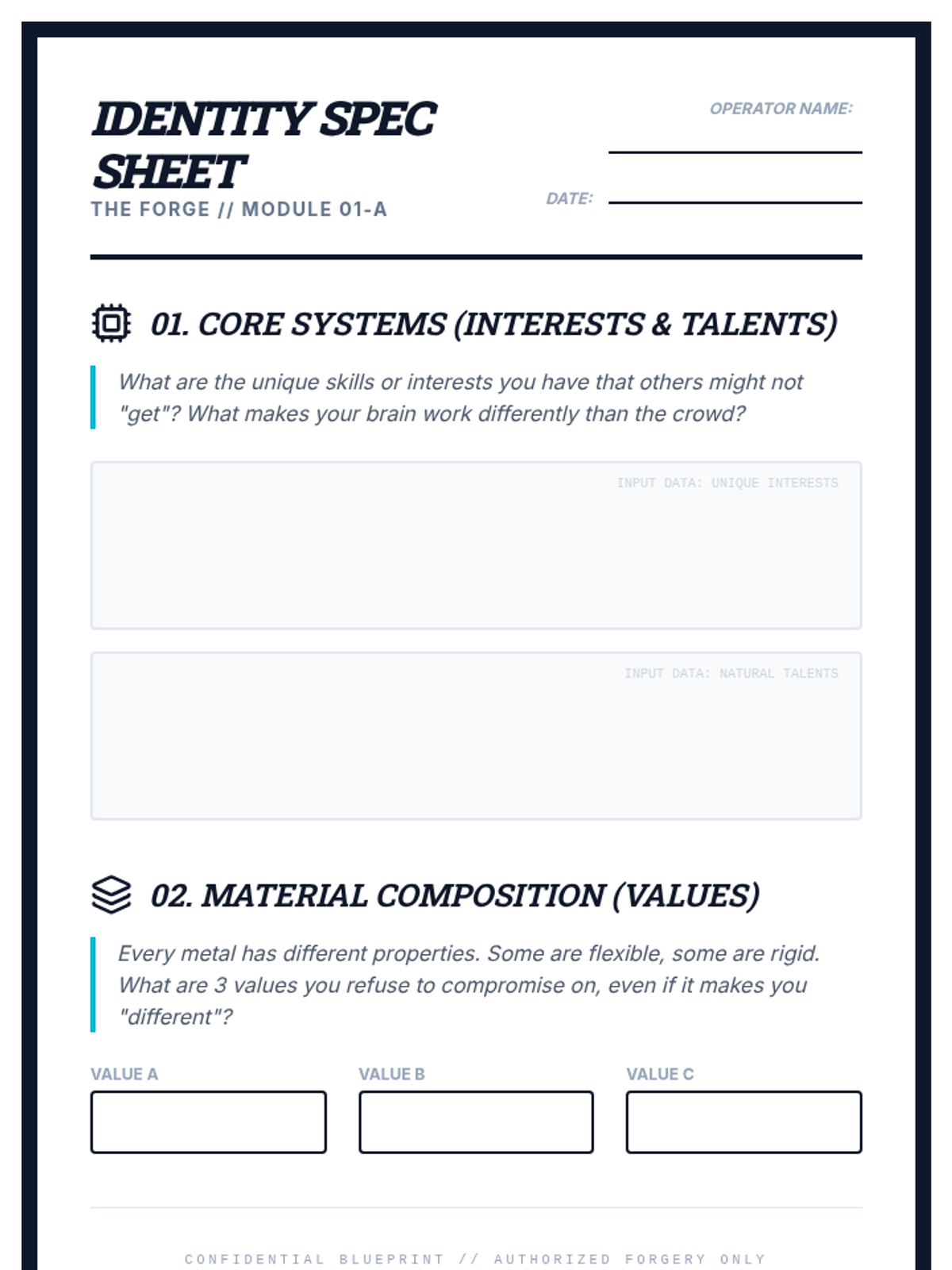
A multi-session workshop series designed for male students to explore identity, emotional intelligence, and social acceptance through the metaphor of industrial design and forging. Students move from understanding their unique 'specifications' to navigating social pressures and finally collaborating on a community-building project.
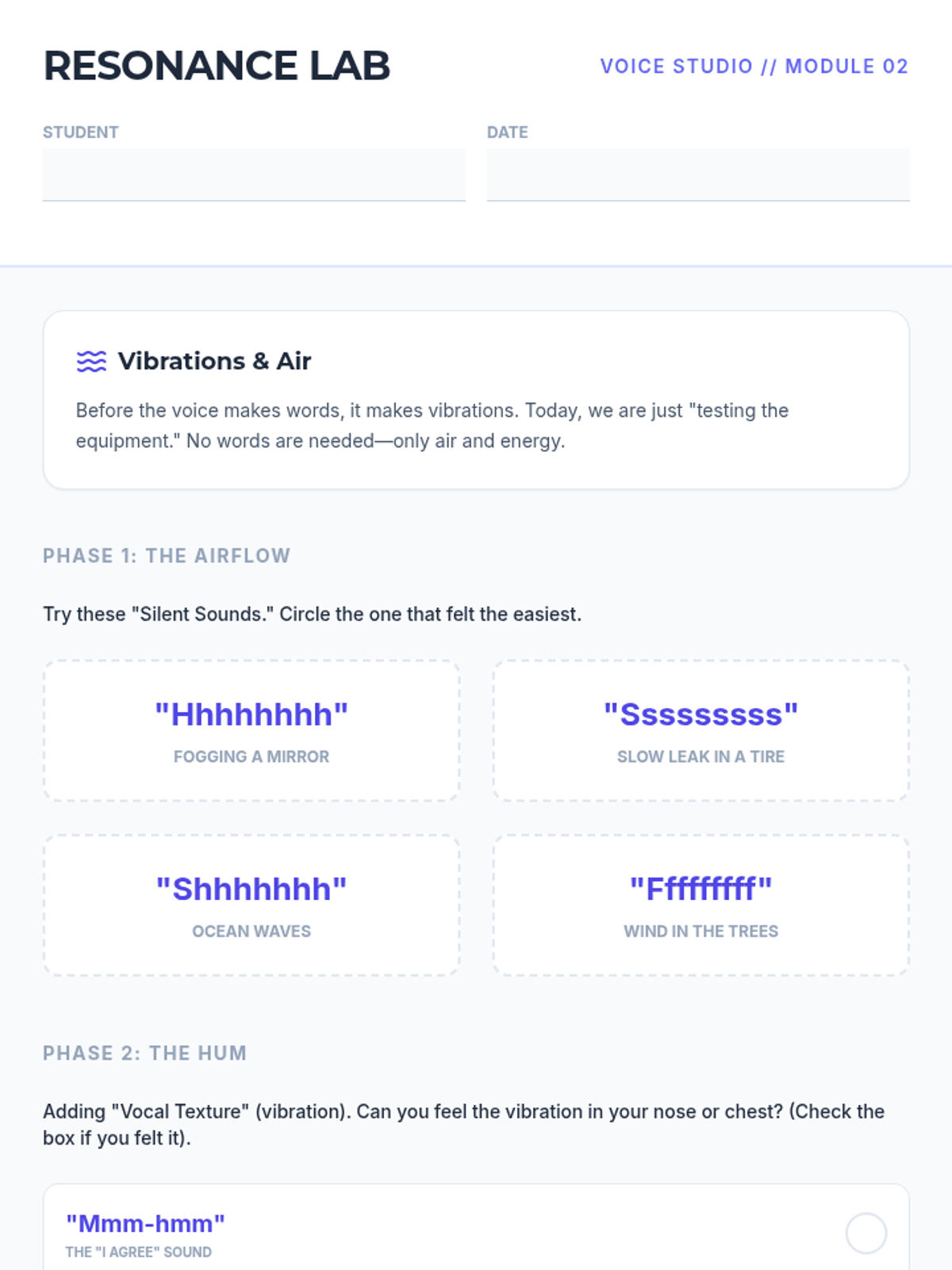
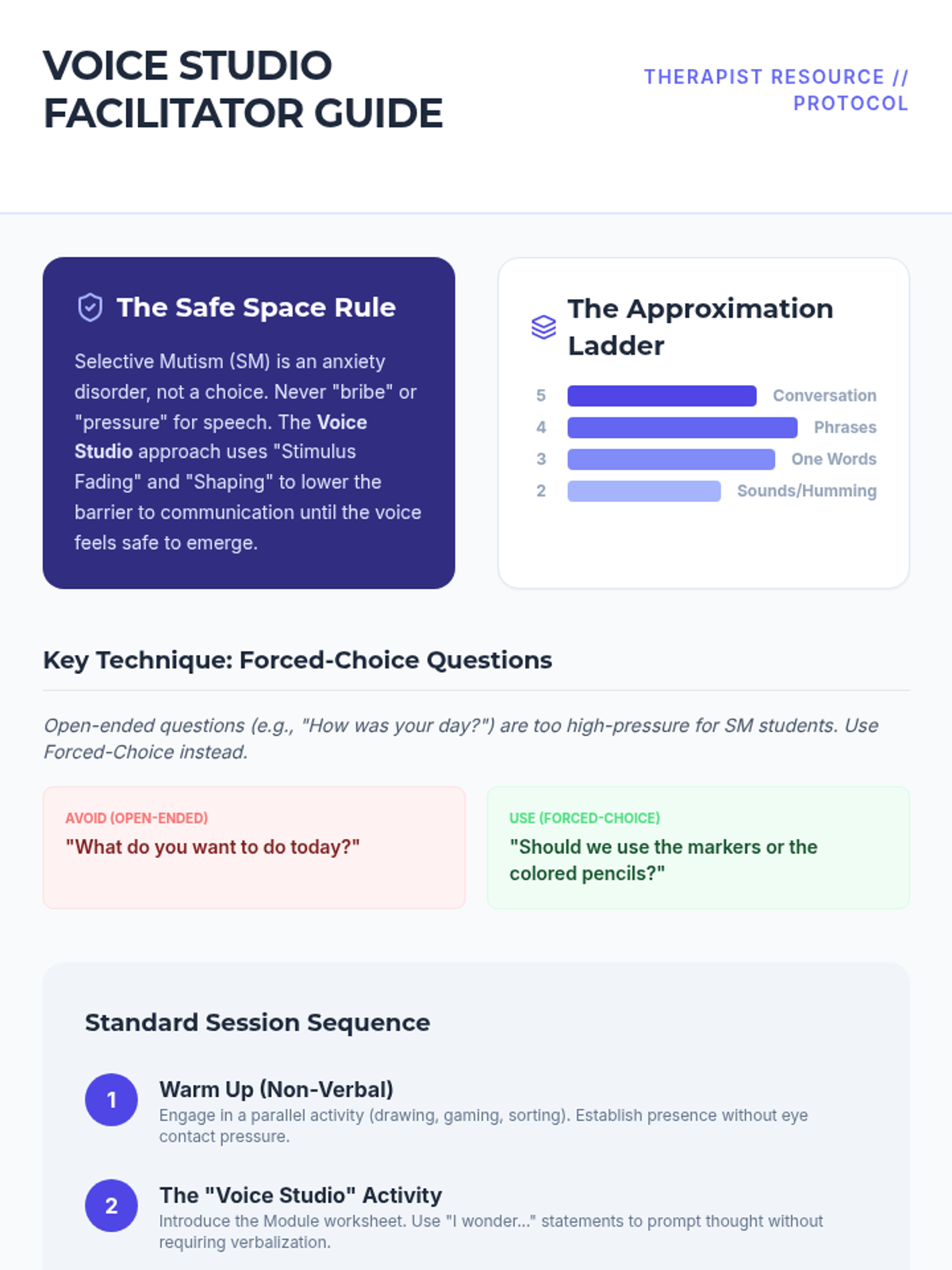
A gentle, evidence-based communication program for teens with Selective Mutism. It uses behavioral shaping and approximations to move from non-verbal rapport to functional vocalization in a low-pressure 1:1 environment.
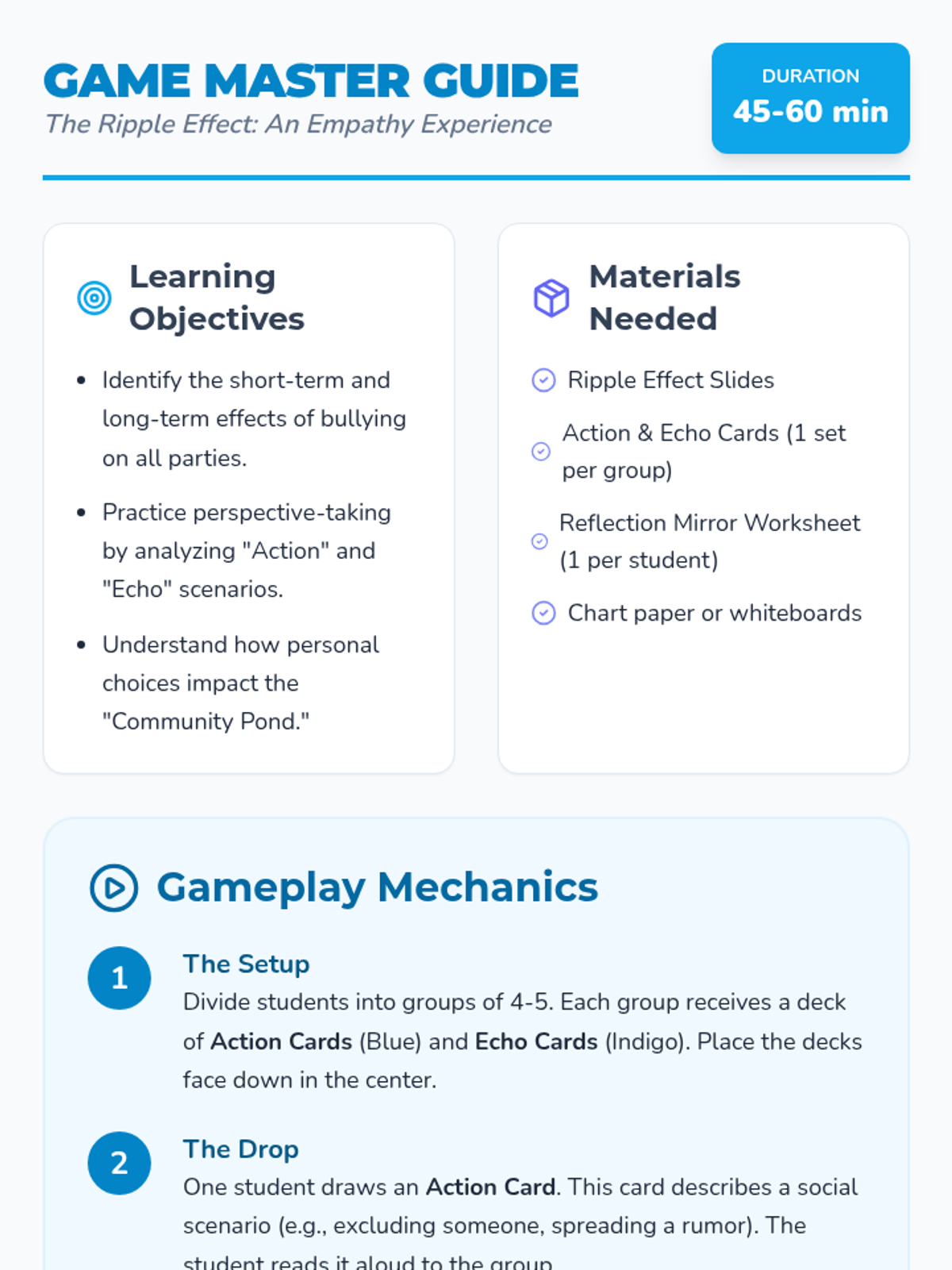
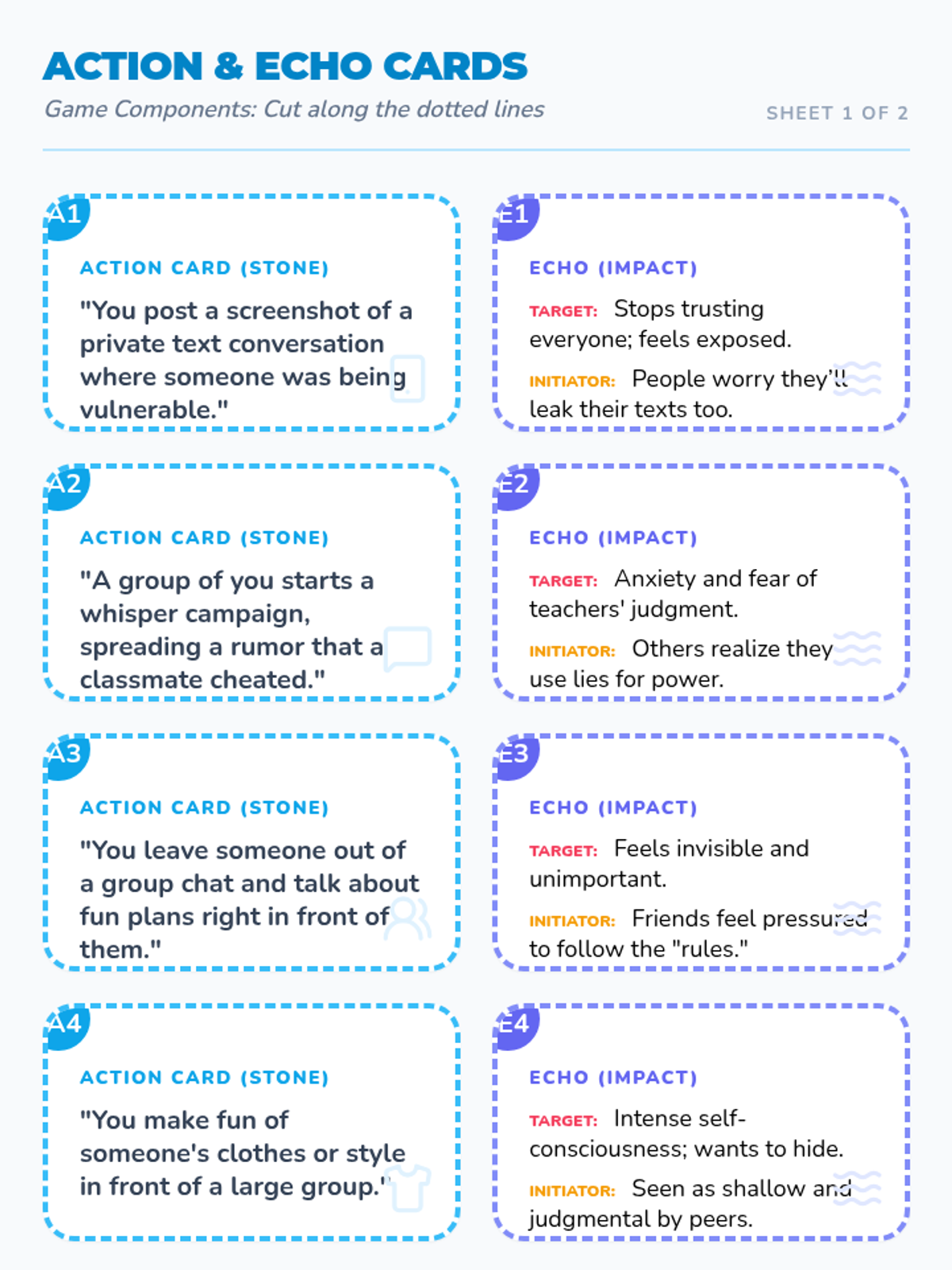
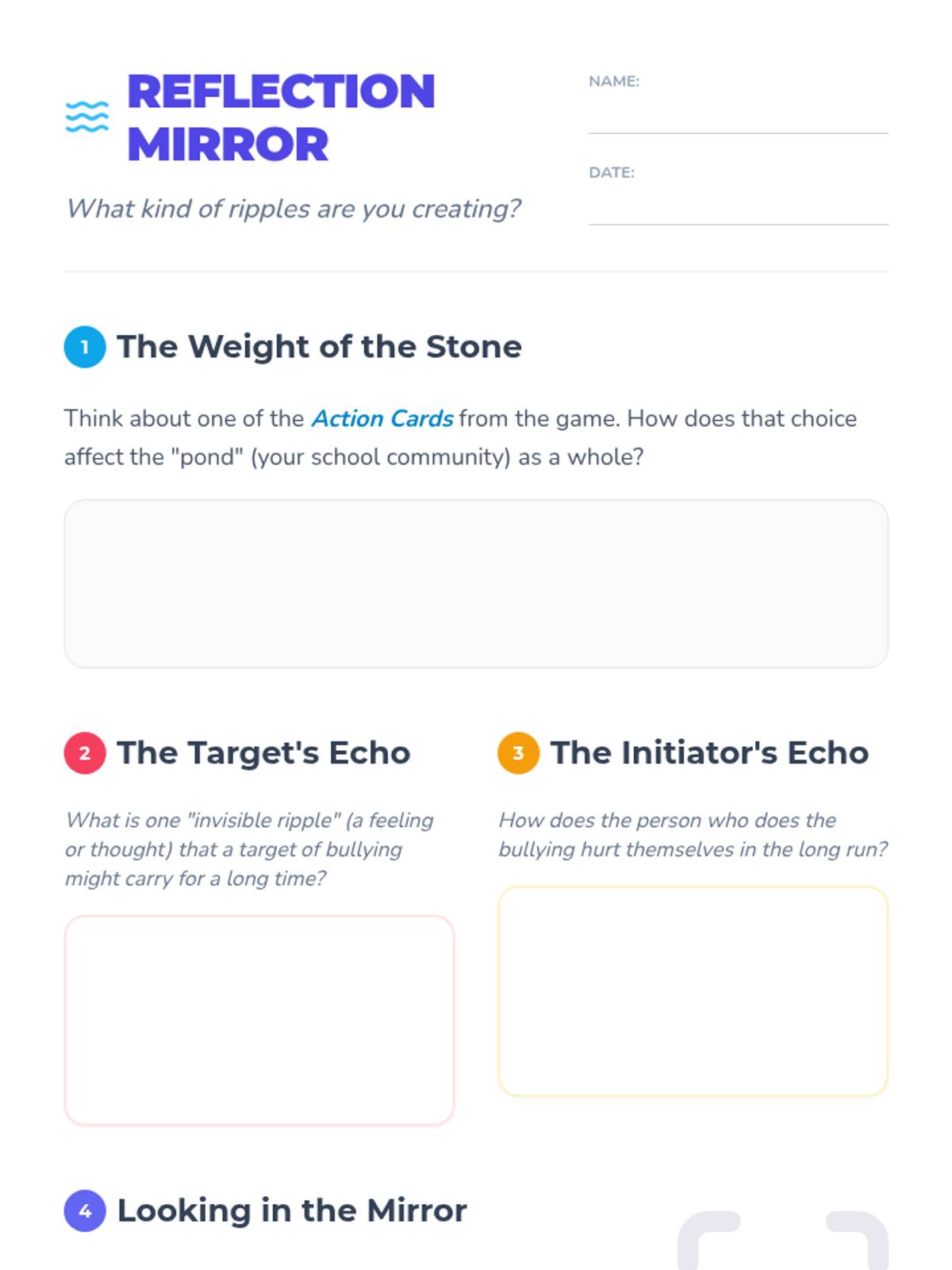
A transformative journey into empathy and self-awareness, exploring how our actions create ripples that affect ourselves and our community. students engage in interactive gameplay and deep reflection to understand the impact of bullying.
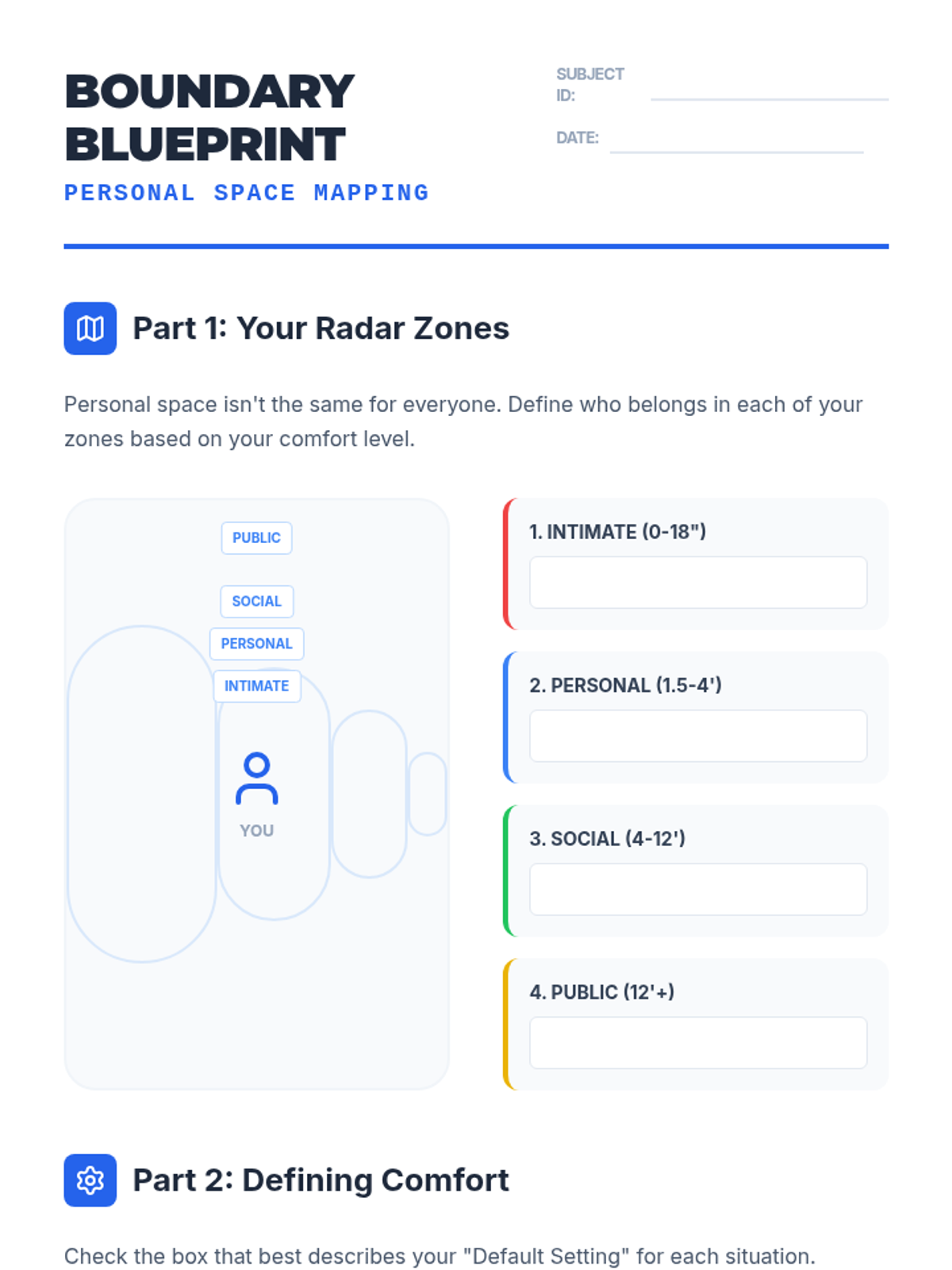
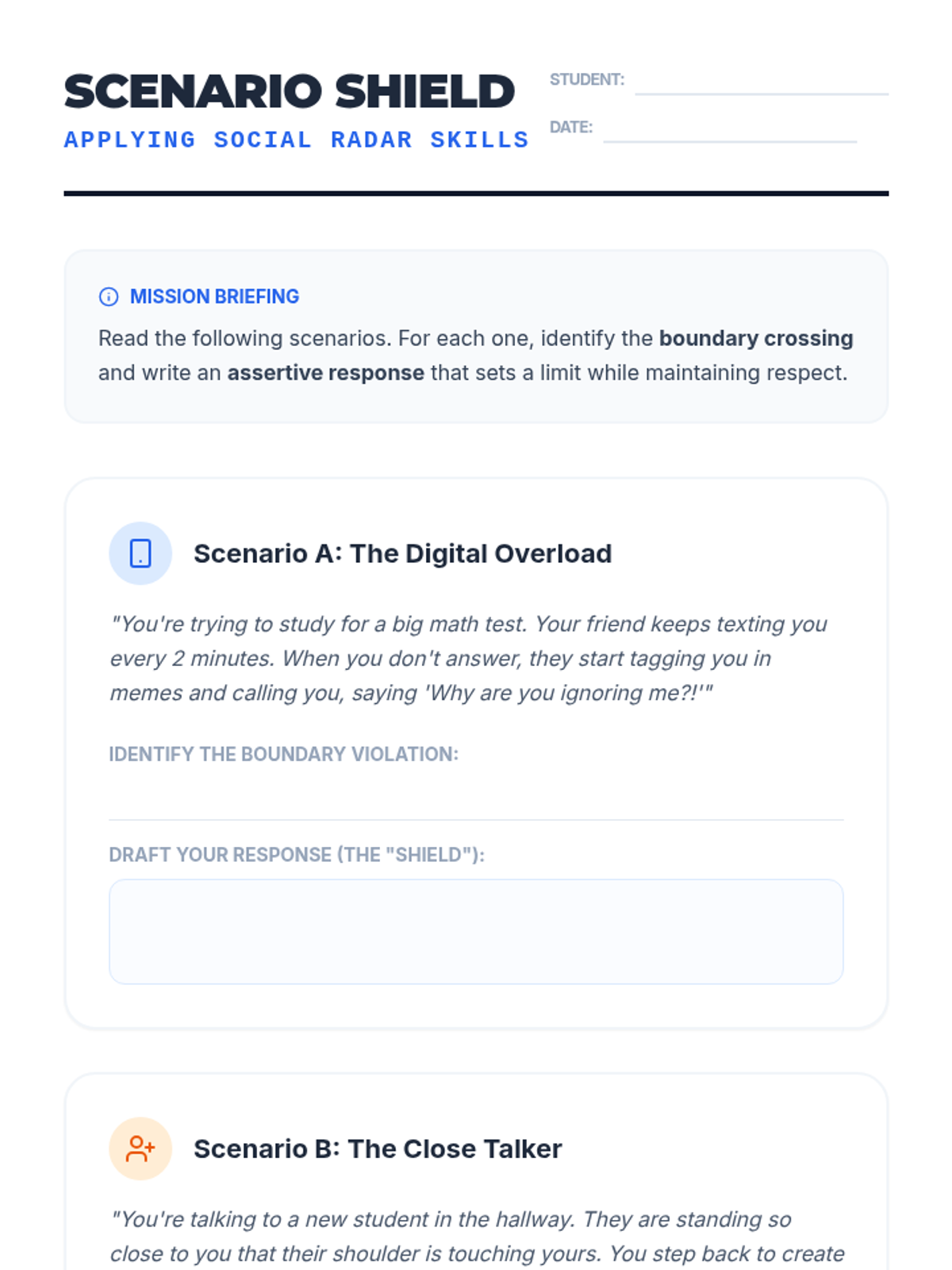
A comprehensive unit on understanding, establishing, and respecting personal space boundaries tailored for adolescents. This sequence covers physical, emotional, and digital boundaries using a 'Social Radar' framework.
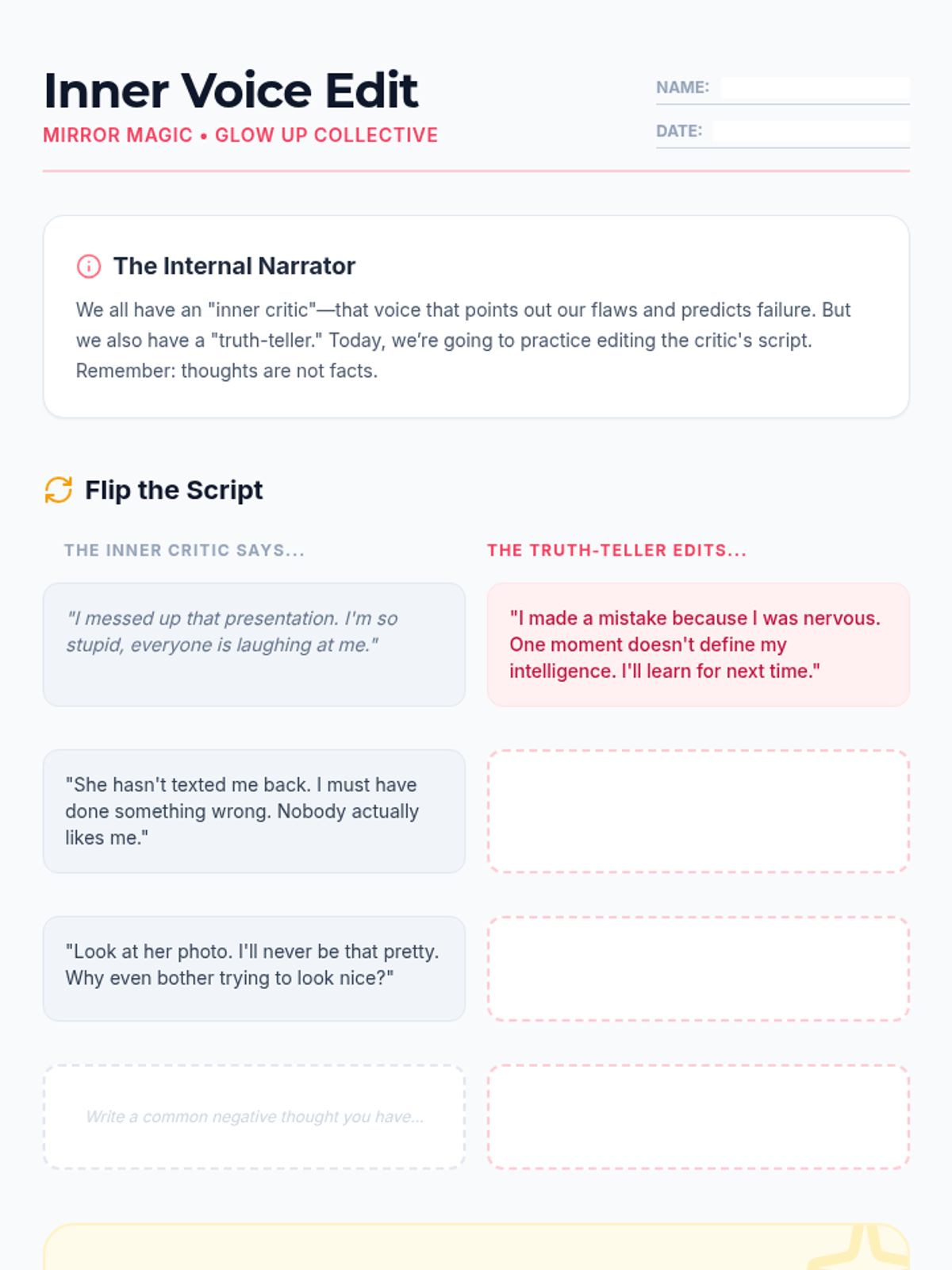
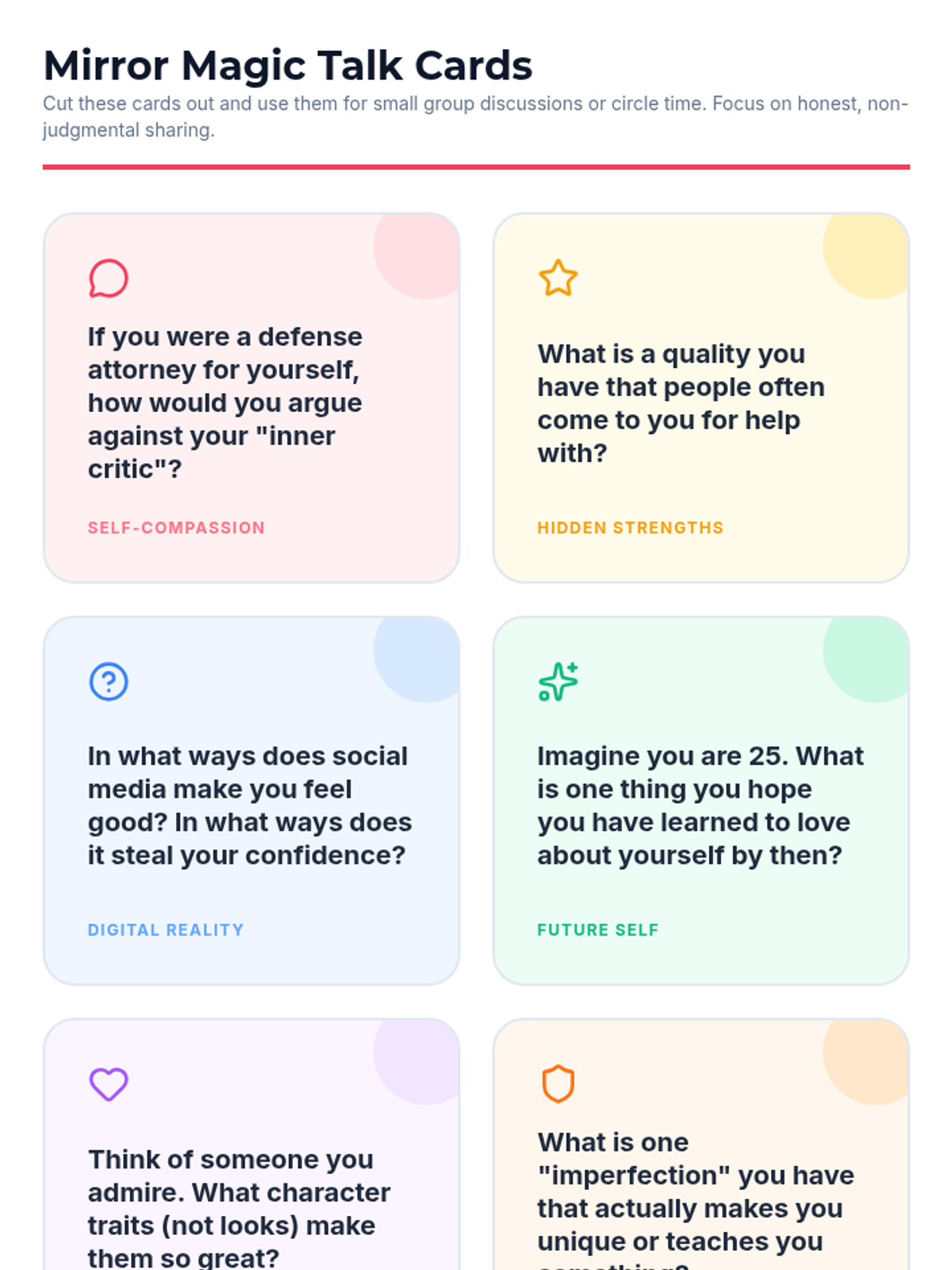
A high school girls' empowerment program focusing on self-esteem, healthy relationships, stress management, and future planning. Through interactive slides, worksheets, and discussion cards, students build resilience and confidence.
A month-long SEL sequence for March (Women's History Month) combining anti-bullying, mathematical bravery (Pi Day), and test-prep resilience.
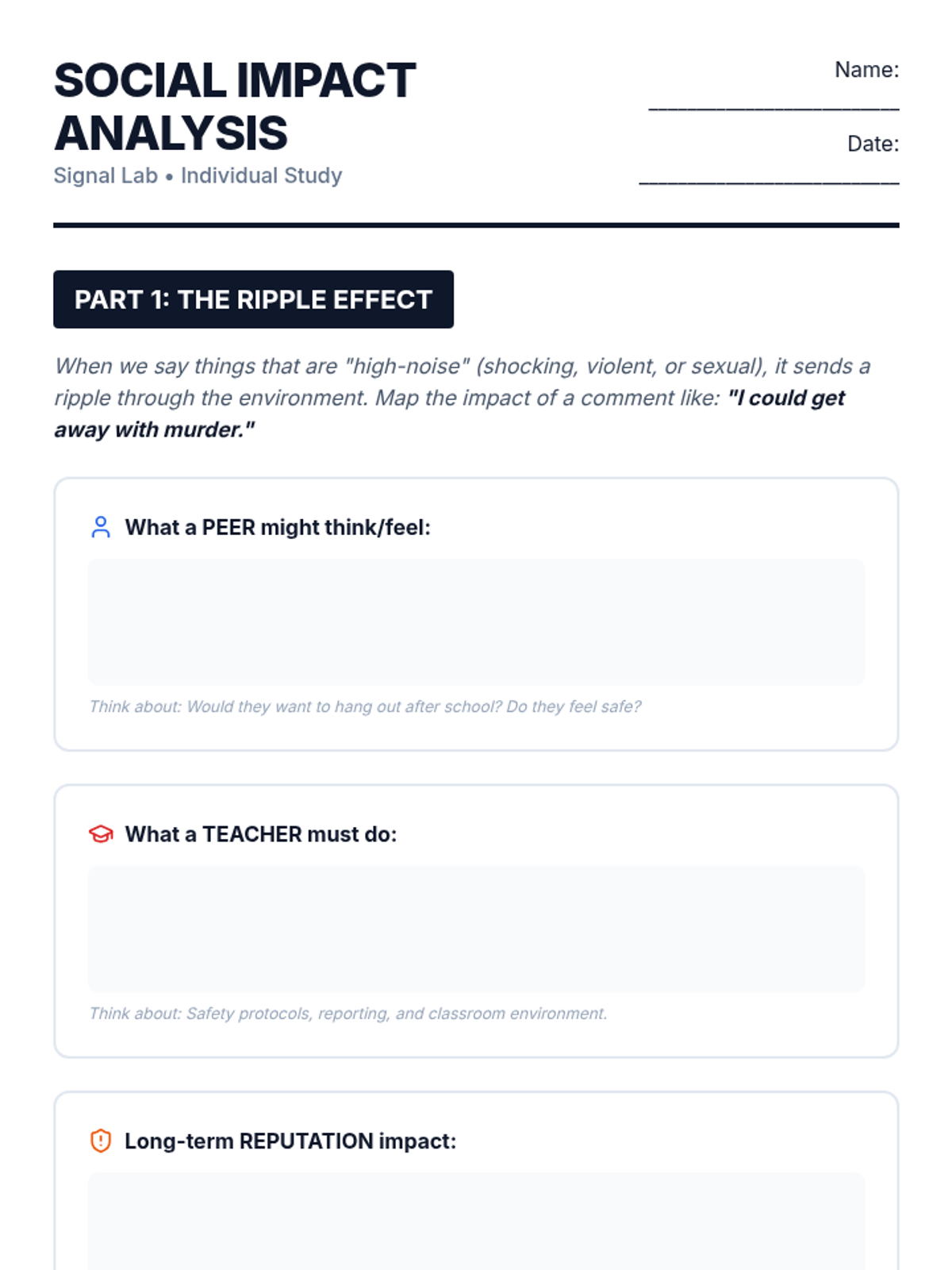
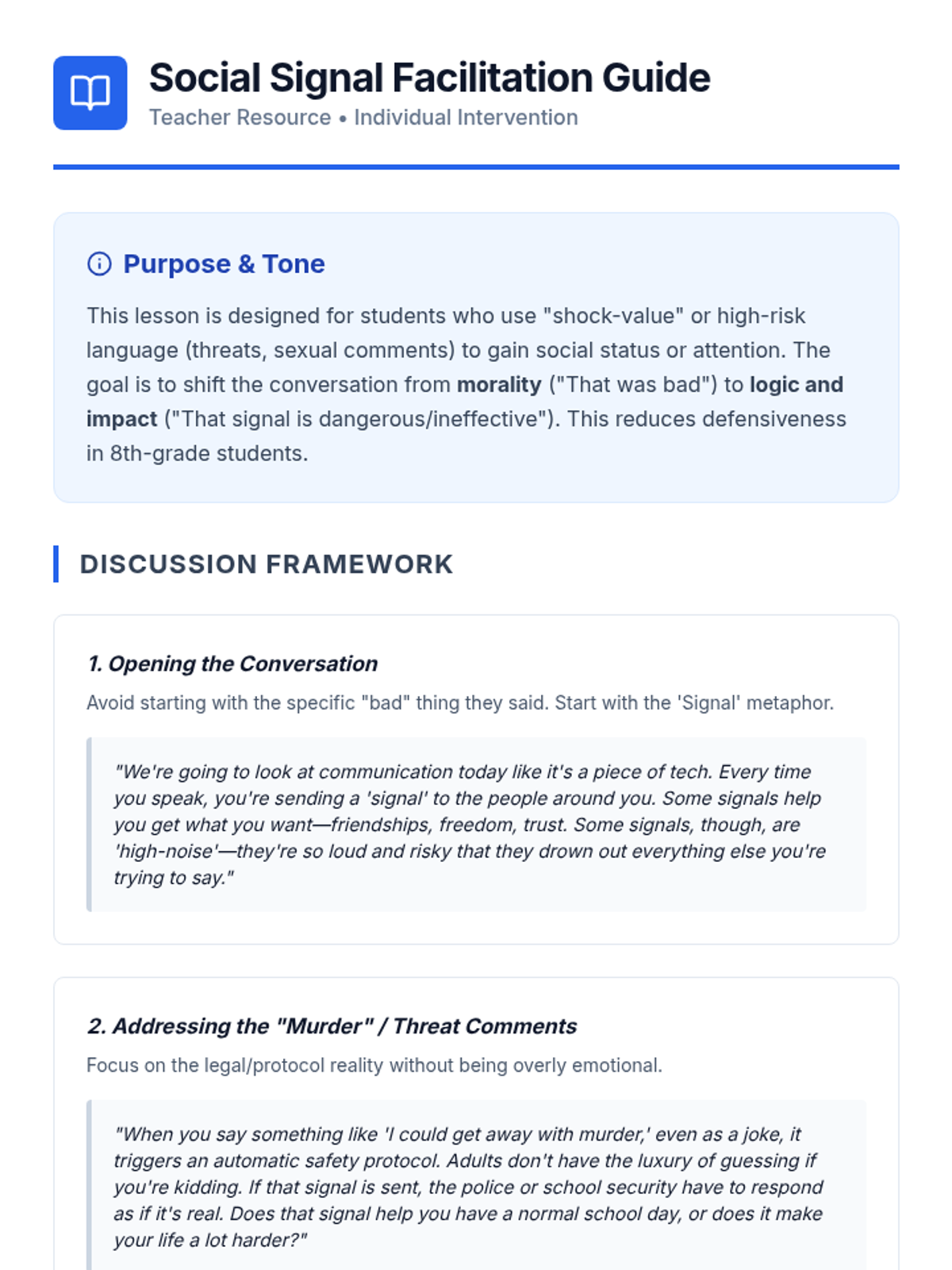
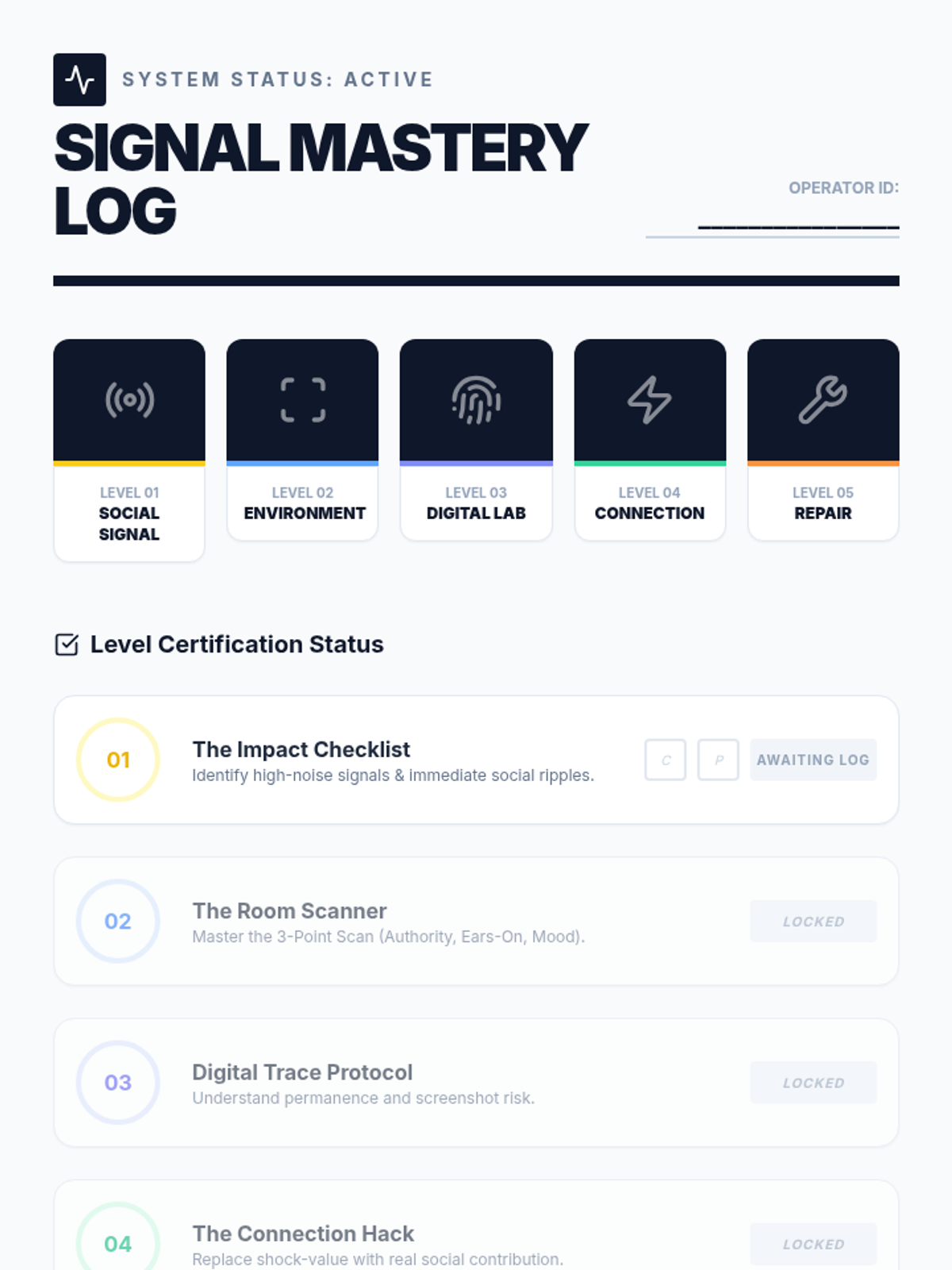
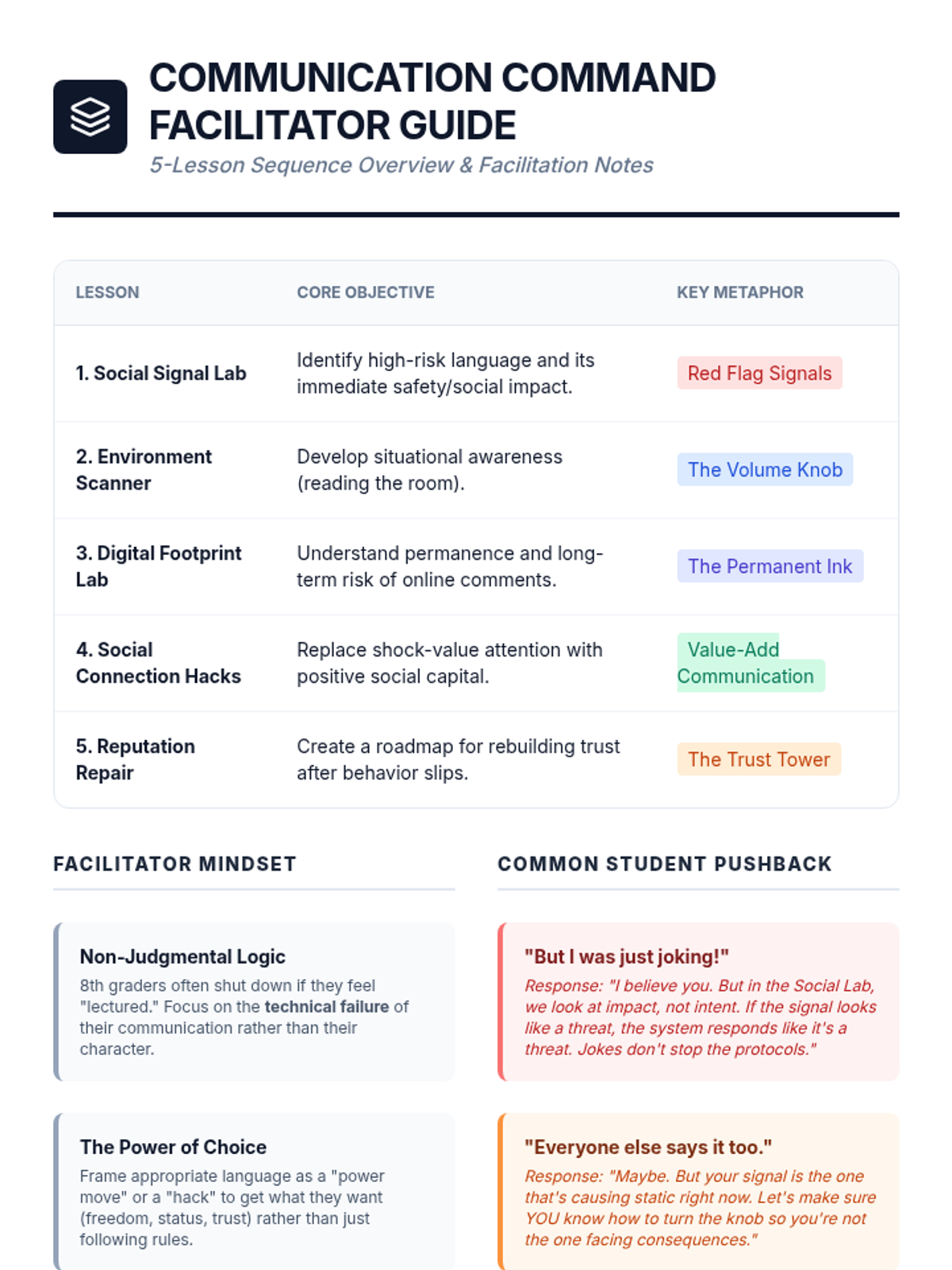
A comprehensive 5-lesson series designed to help students replace high-risk communication behaviors with socially appropriate interaction strategies and situational awareness.
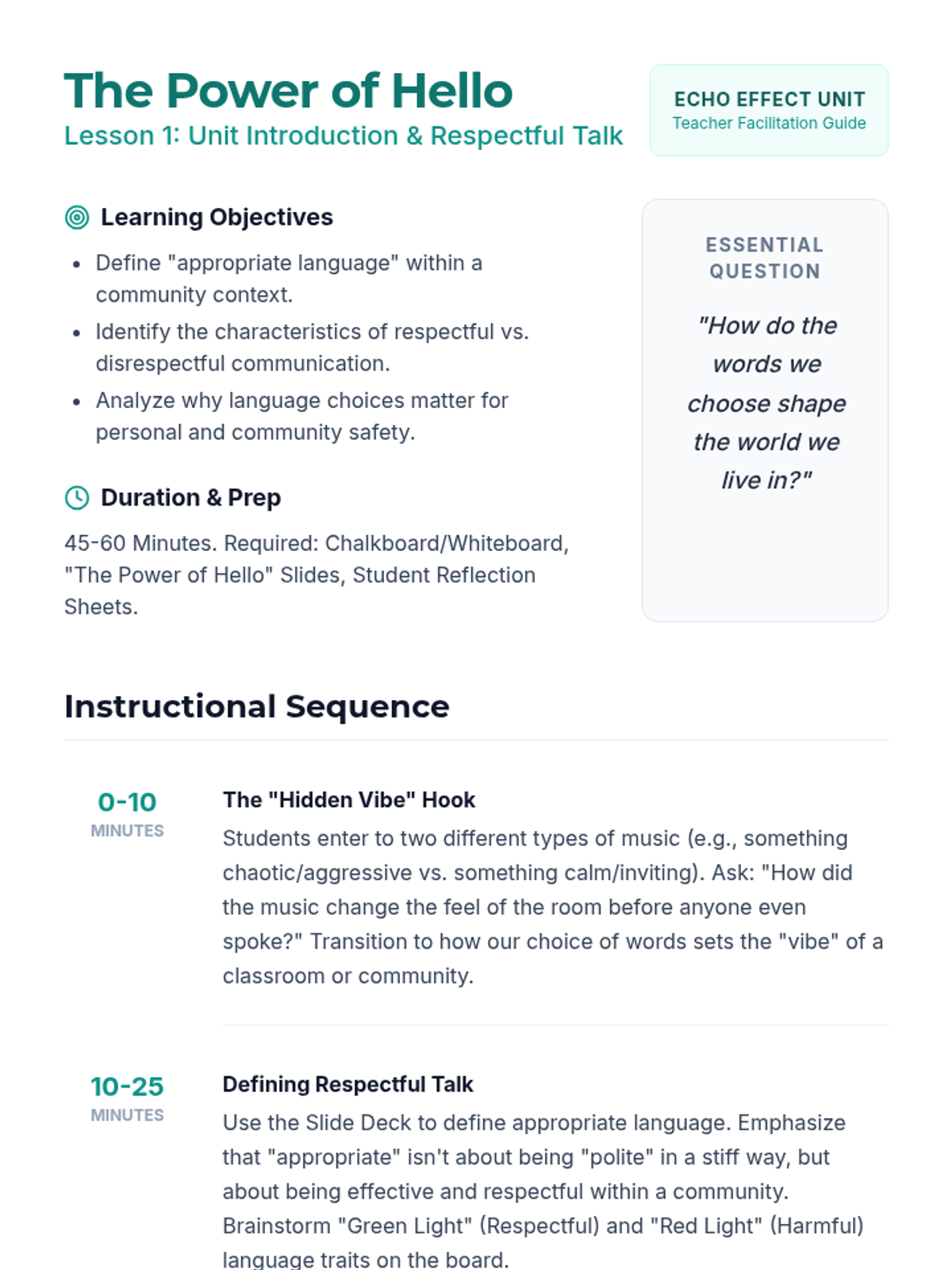
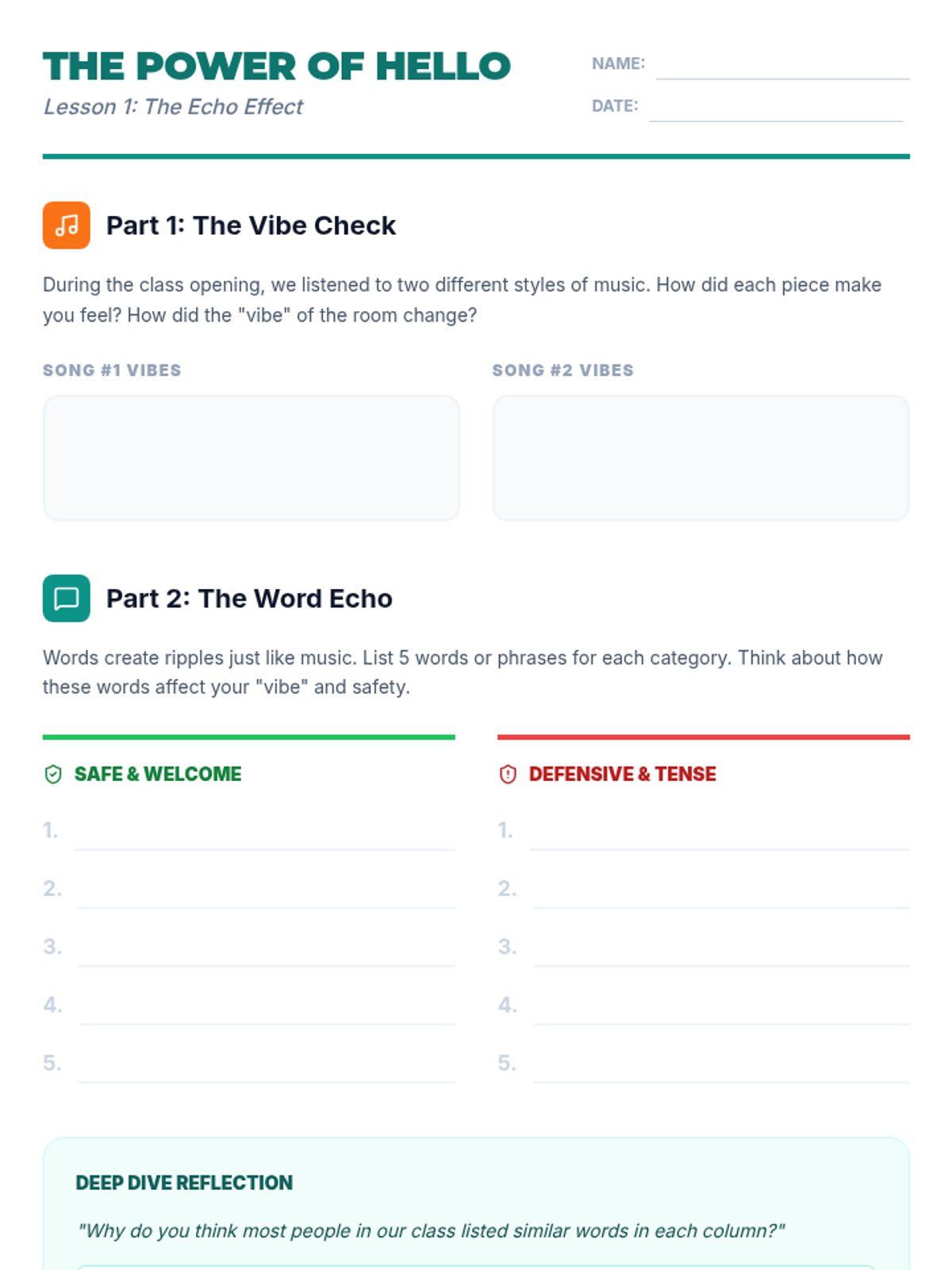
A five-day mini-unit exploring the nuances of appropriate language, social context, empathy, and inclusive communication strategies for middle or high school students.
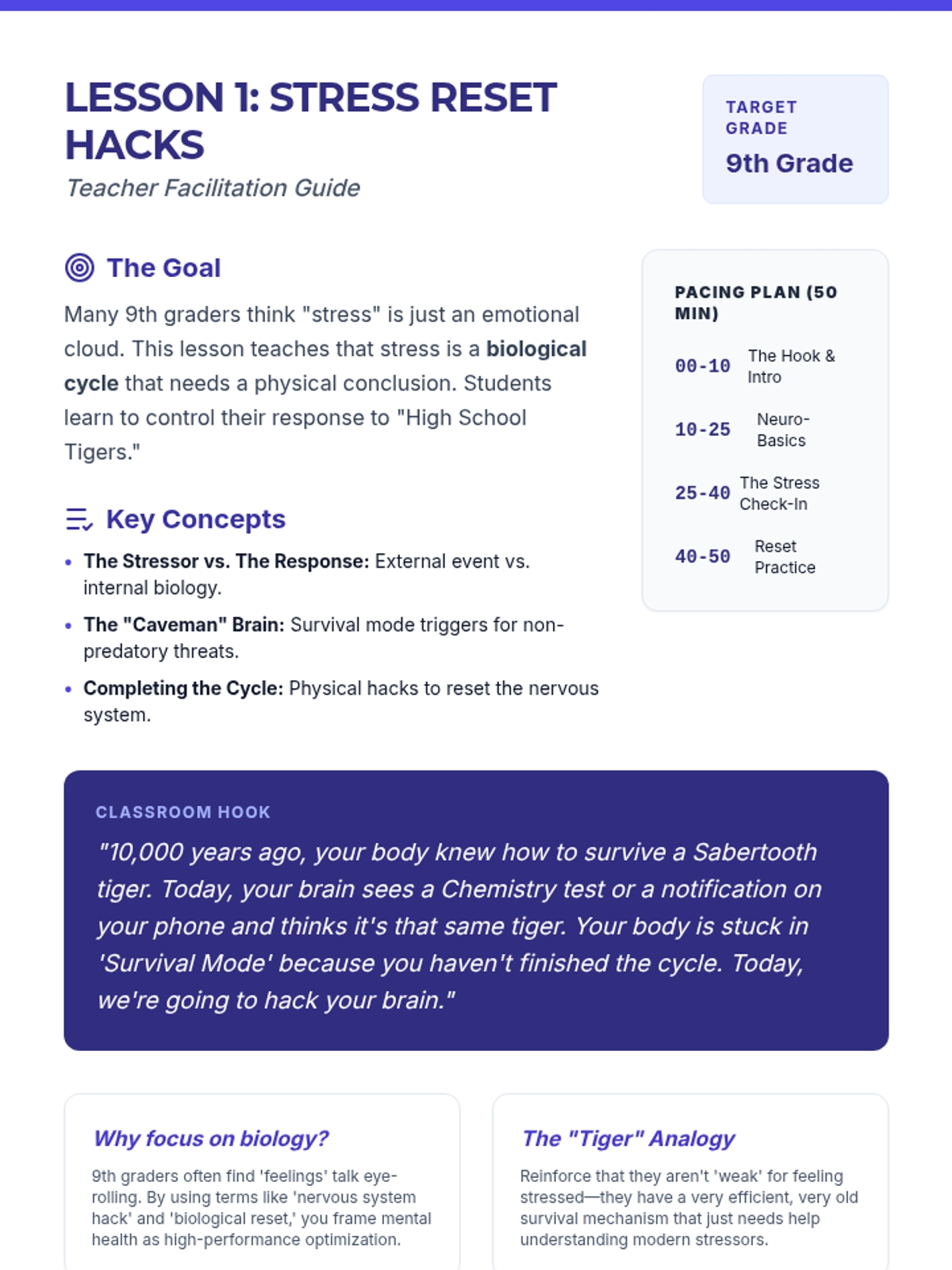
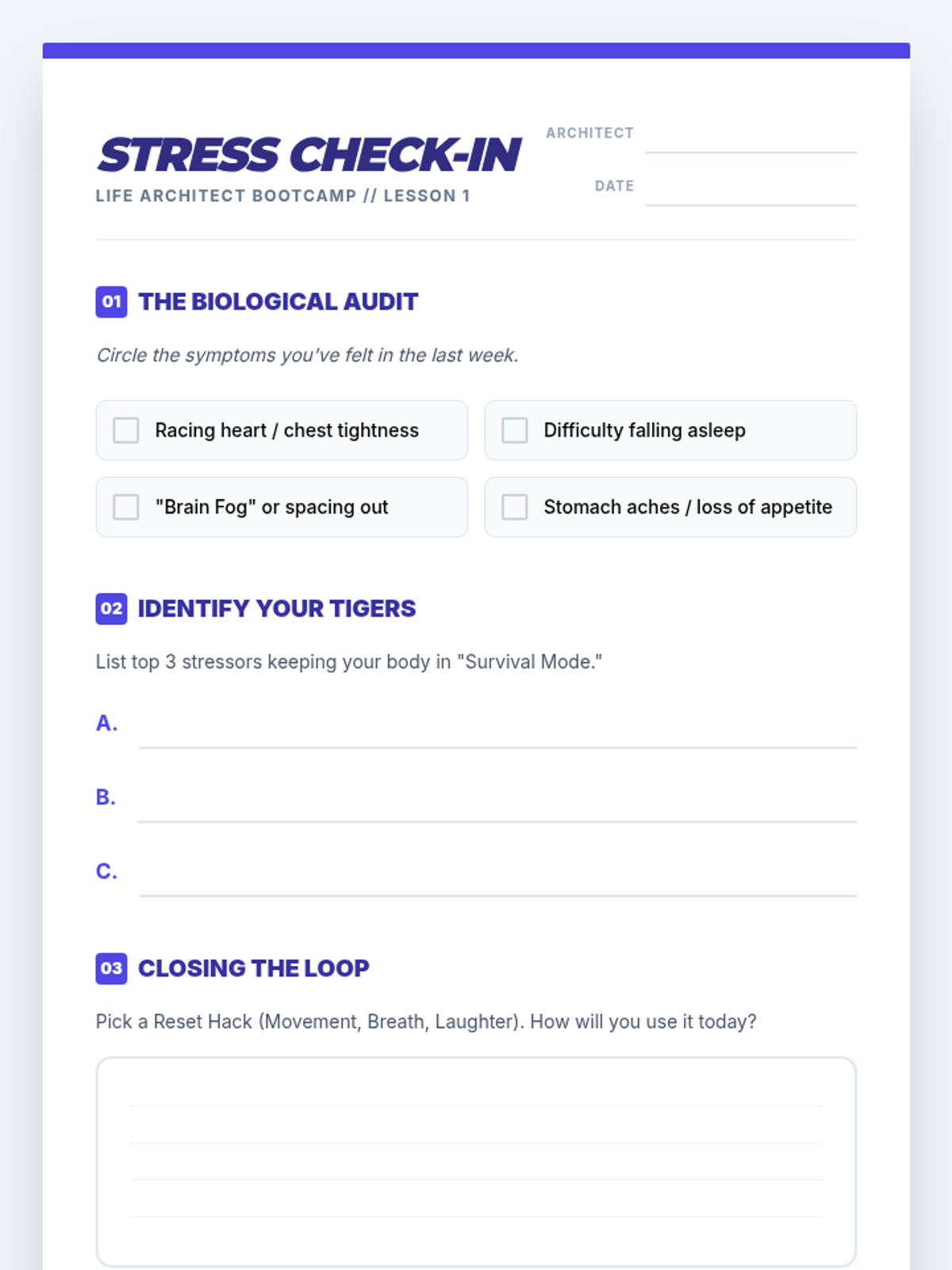
A practical guide for 9th graders to manage high school stress, reframing mental health as a 'life design' challenge. Students build a personalized stress-management blueprint to handle exams, social pressure, and extracurriculars without burning out.
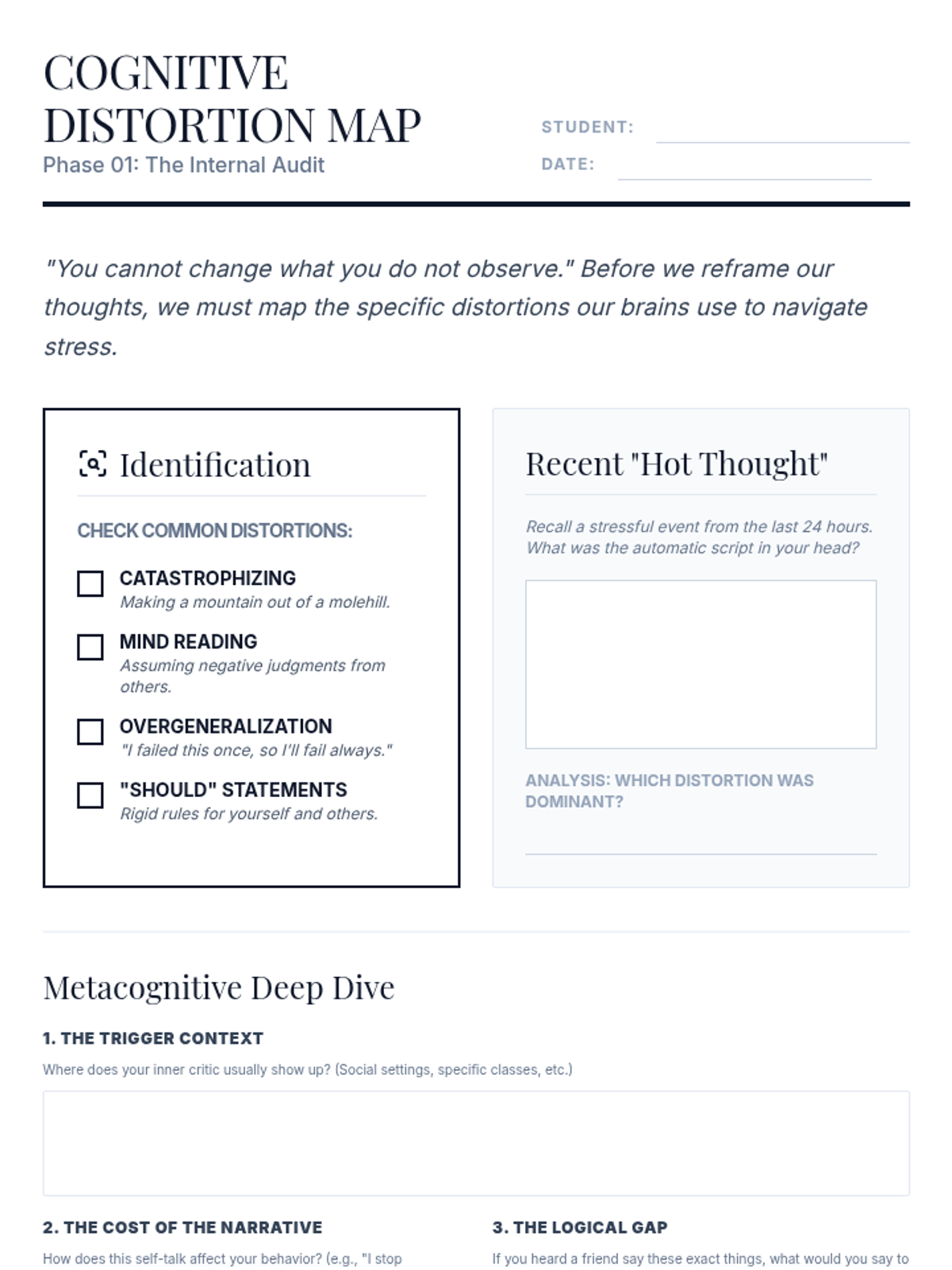
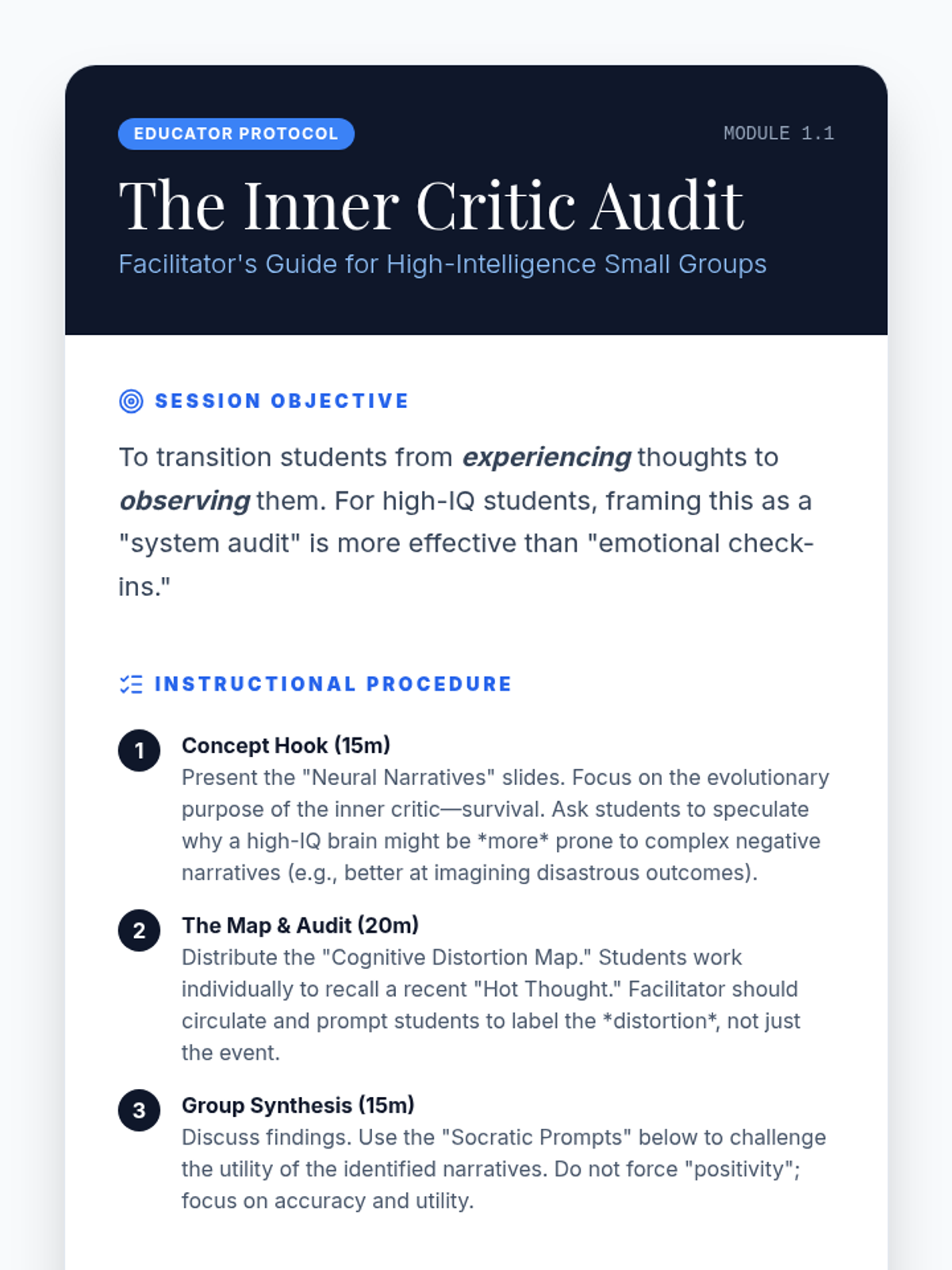
A sophisticated 3-day social skills sequence for high-intelligence high schoolers focused on cognitive reframing and dismantling negative self-talk patterns. Students explore the psychology of the inner critic, apply evidence-based reframing techniques, and practice social role-plays to build mental resilience.
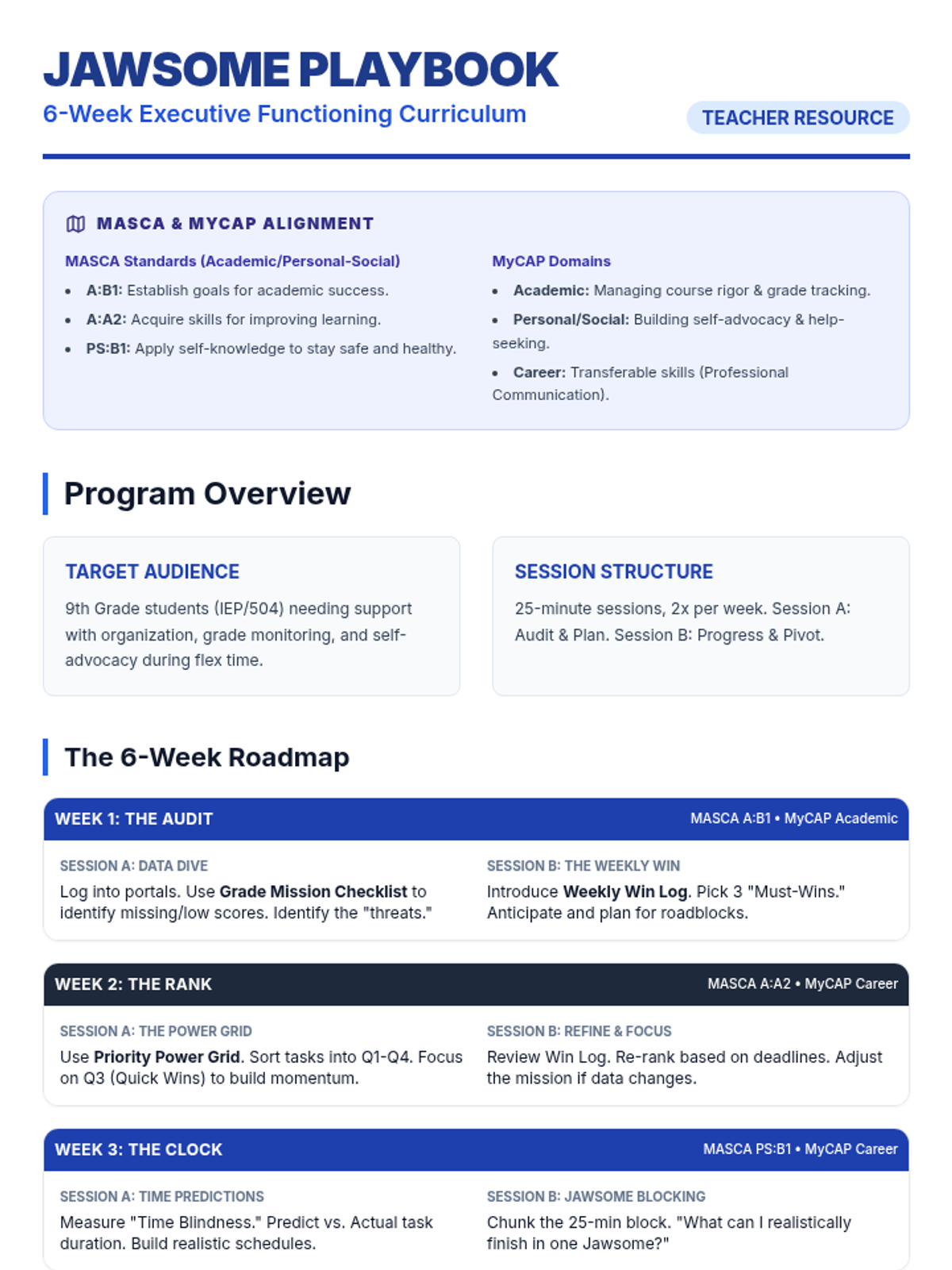
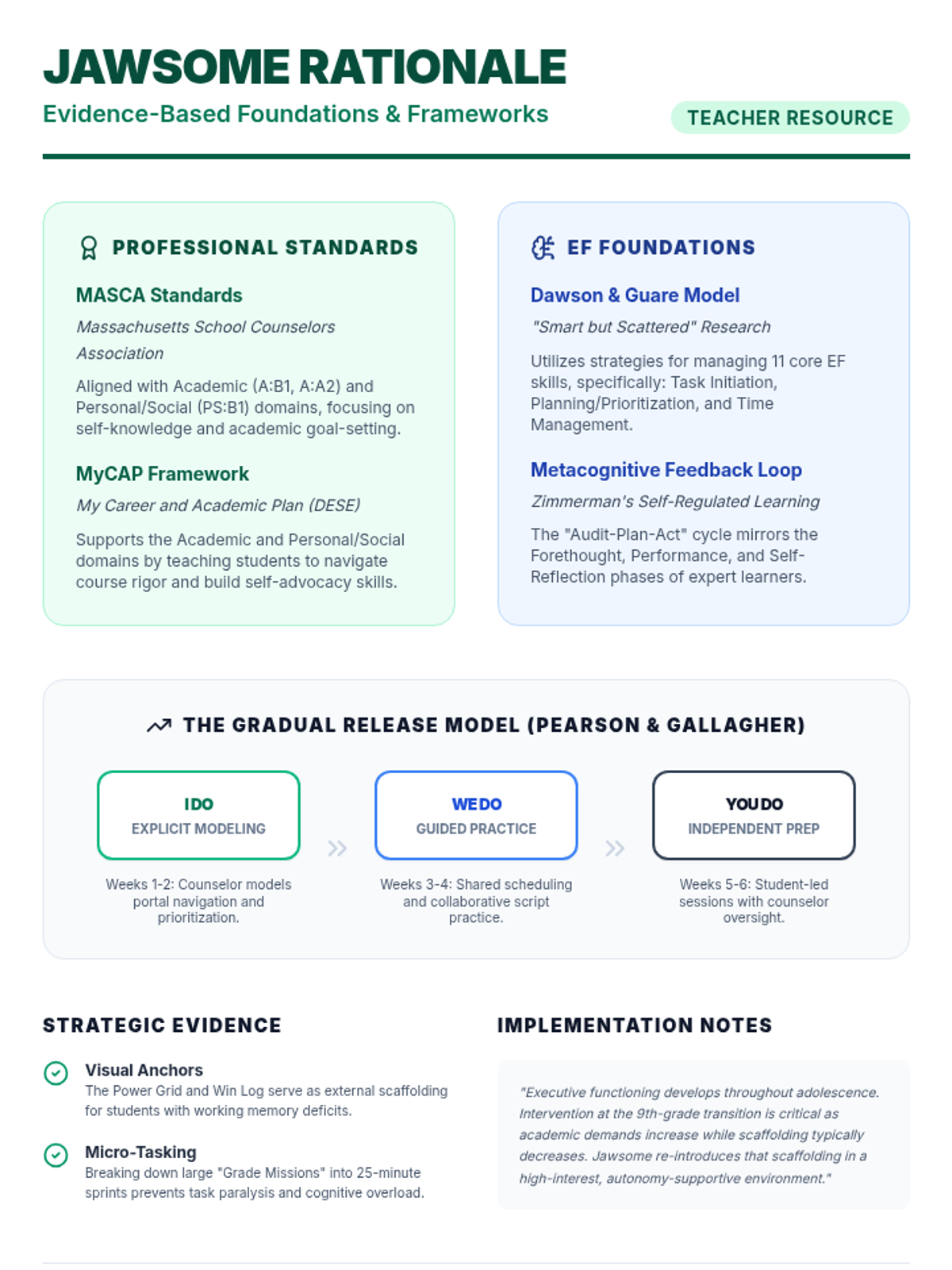
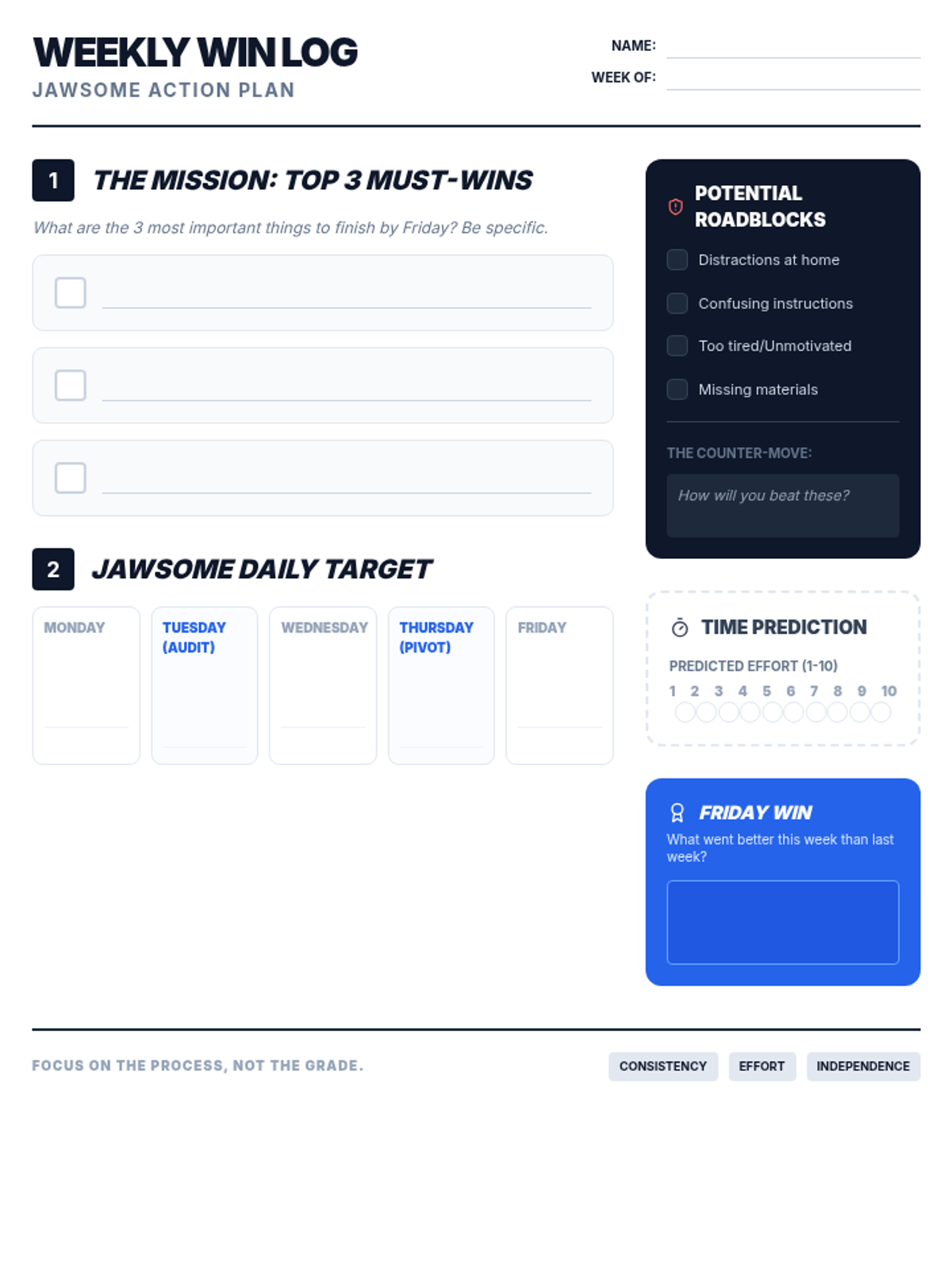
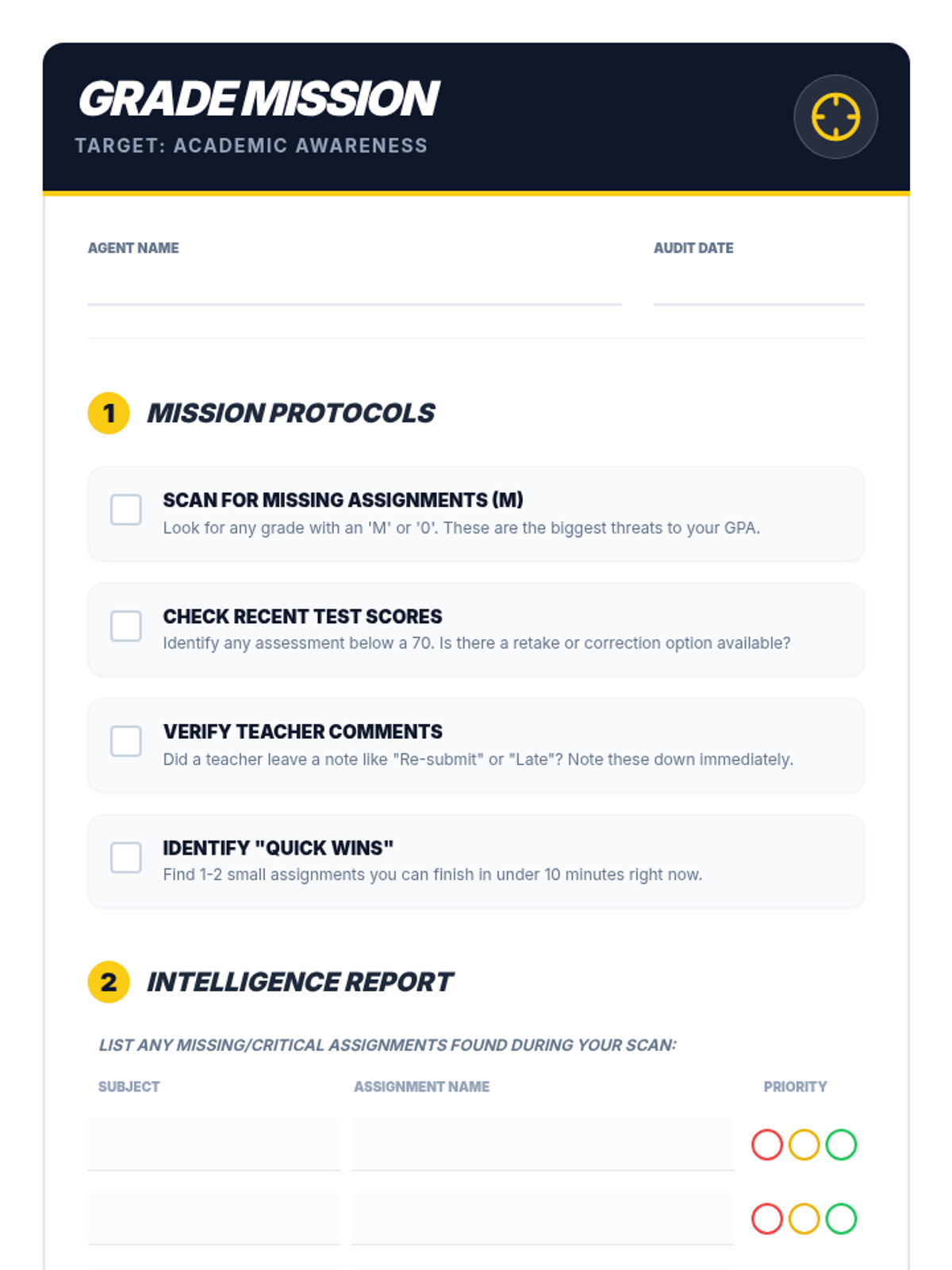
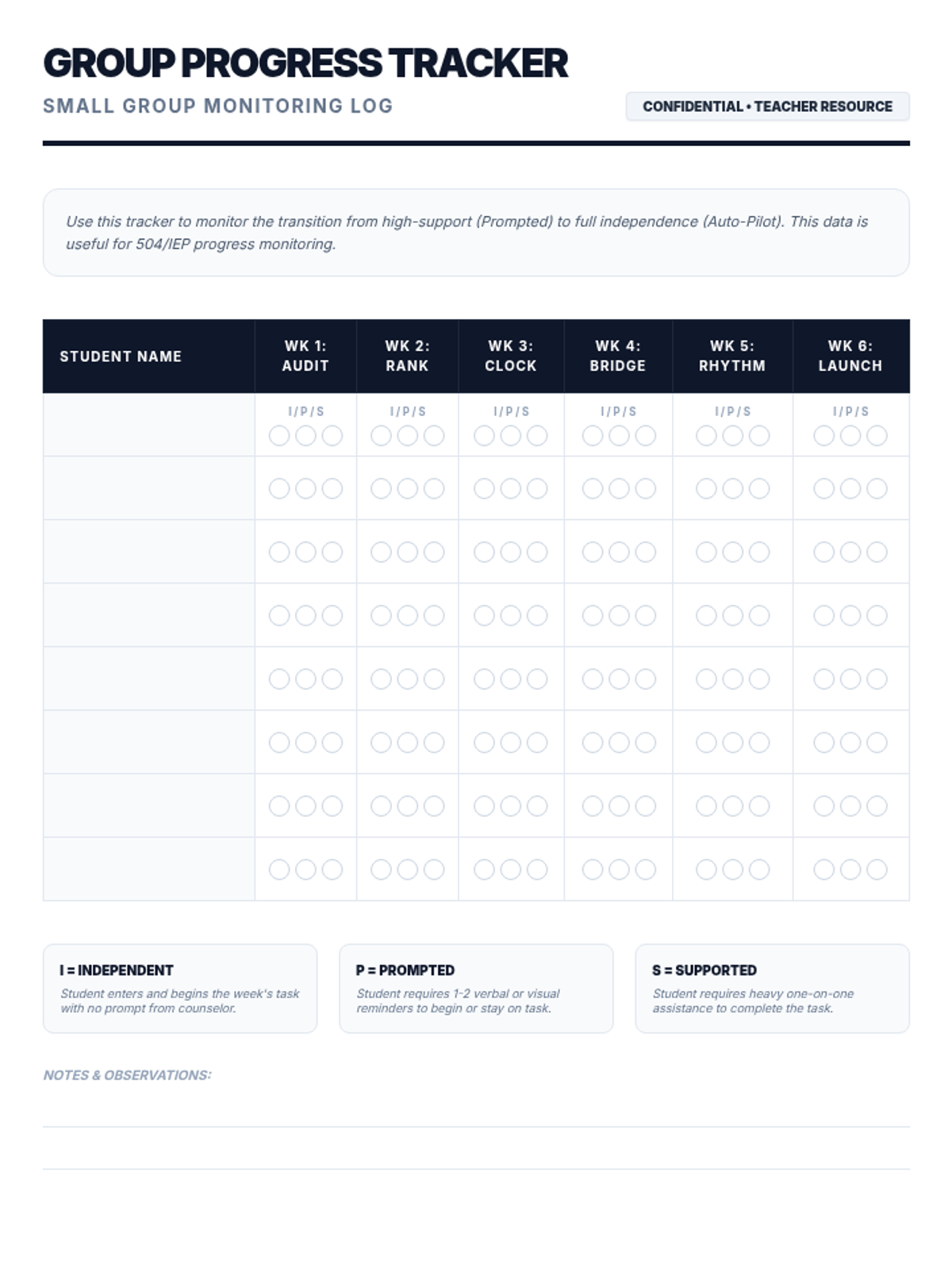
A 6-week executive functioning curriculum for 9th-grade boys designed for 25-minute small group sessions. Focuses on grade monitoring, task prioritization, and teacher communication to build independence.
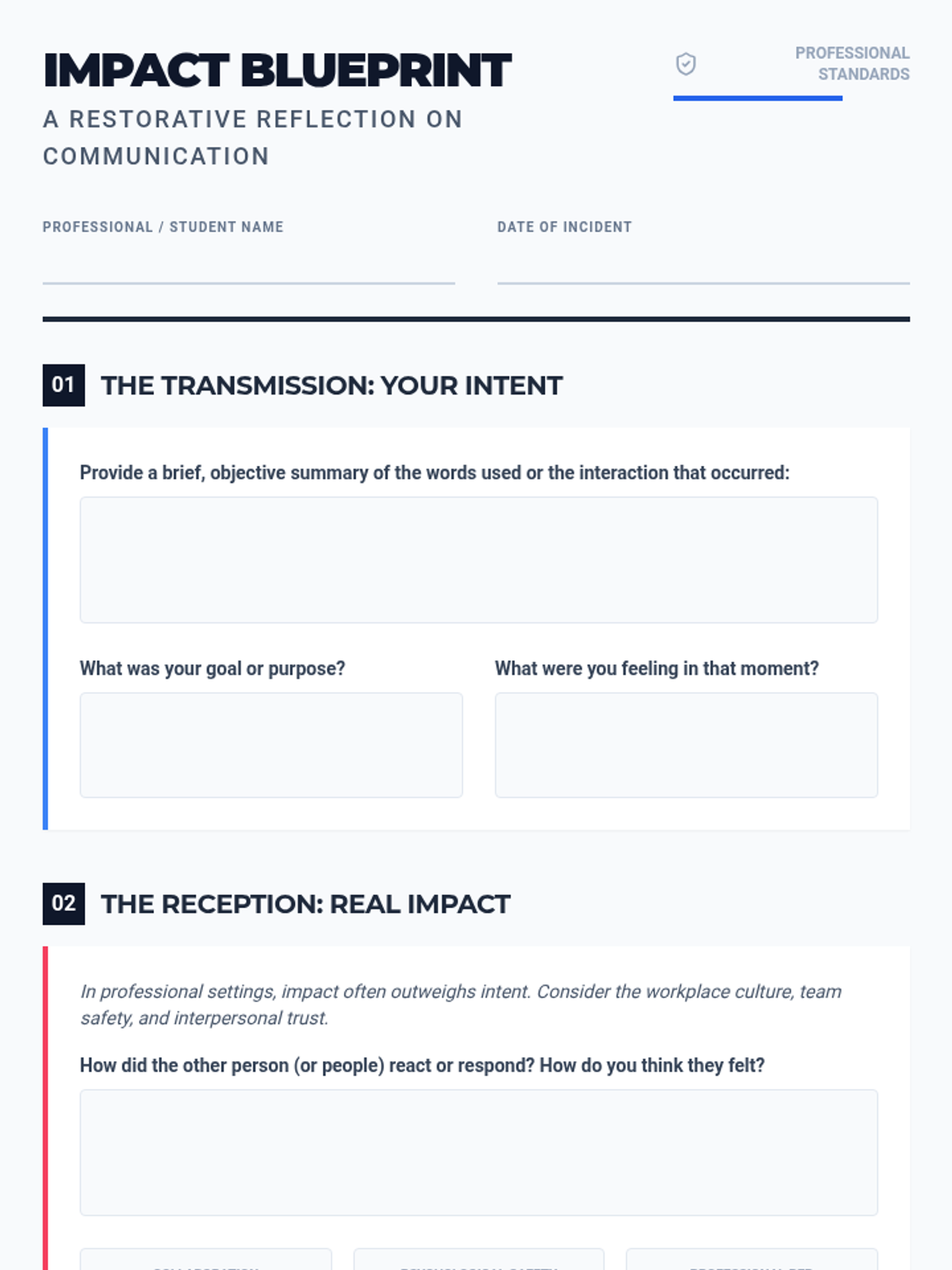
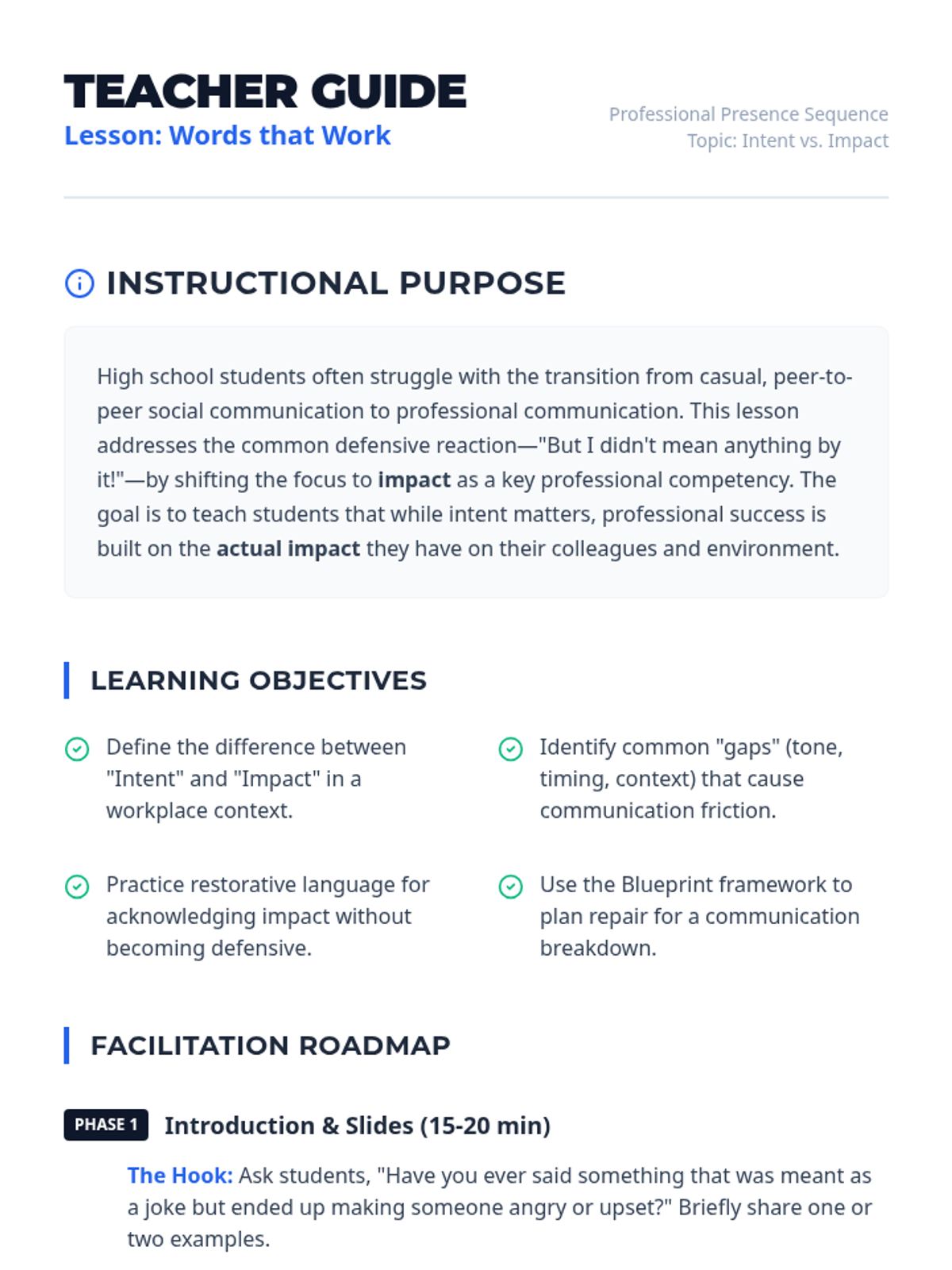
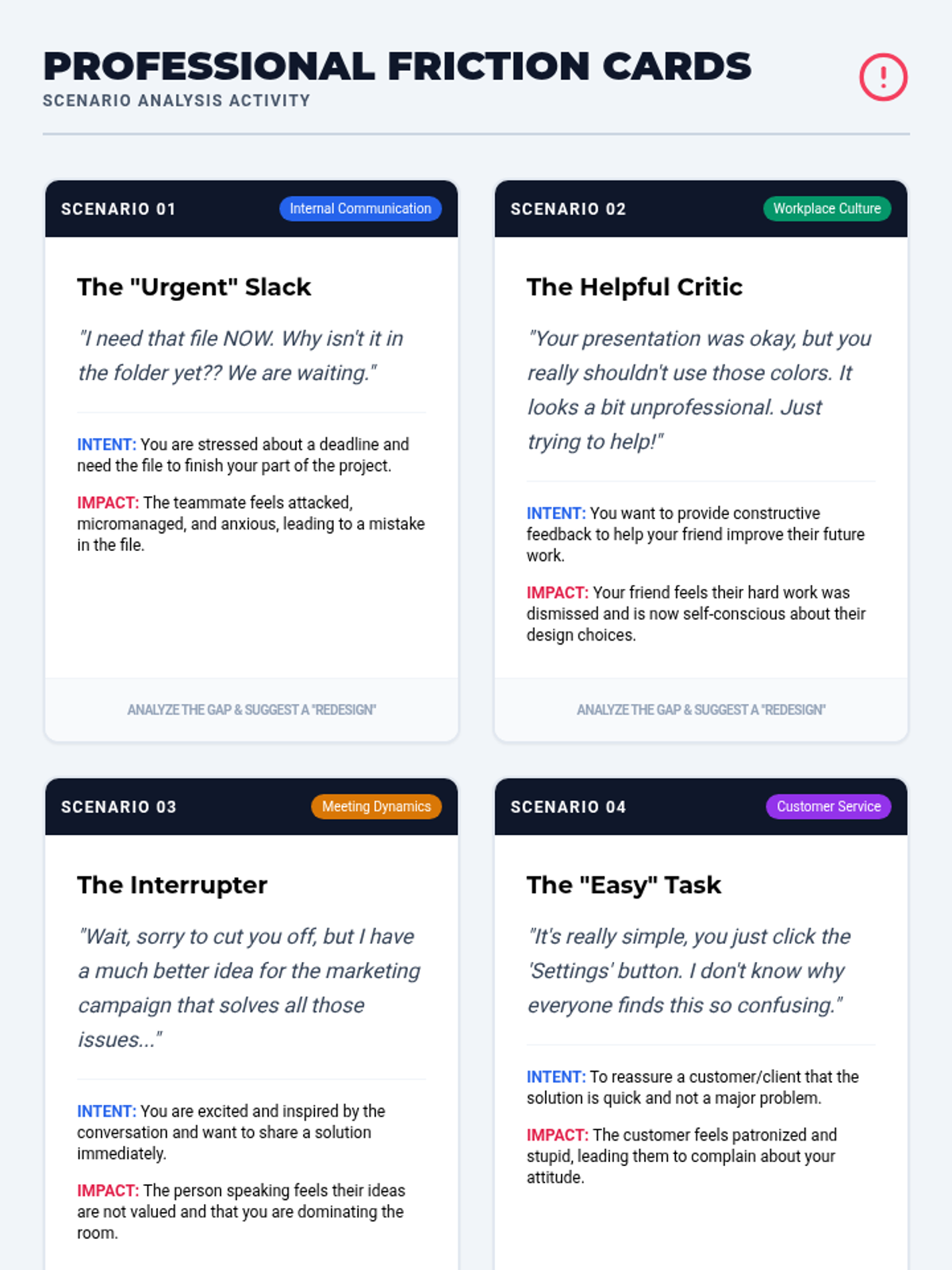
A unit focused on high school professional communication and soft skills, emphasizing the relationship between personal intent and professional impact.
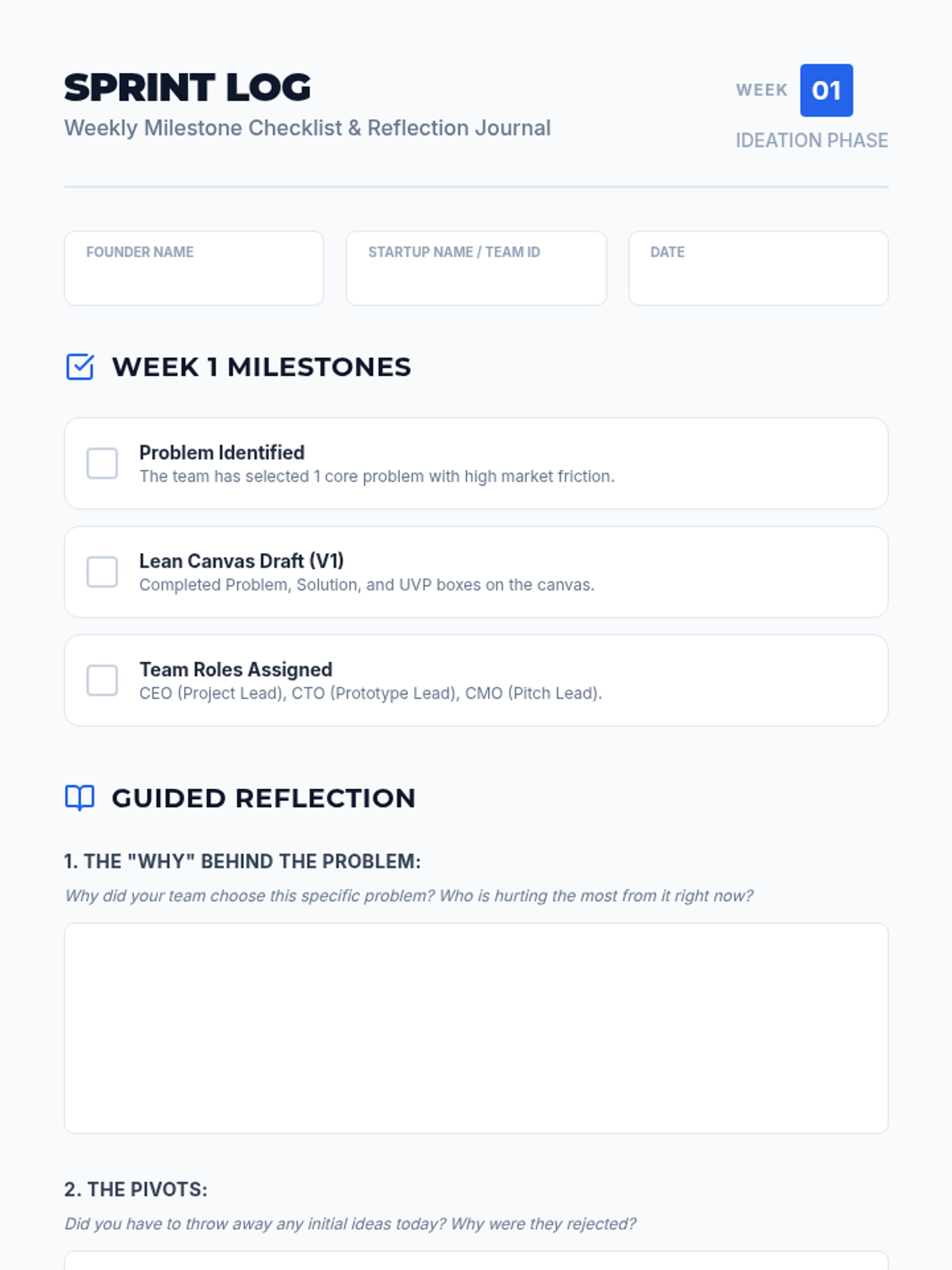
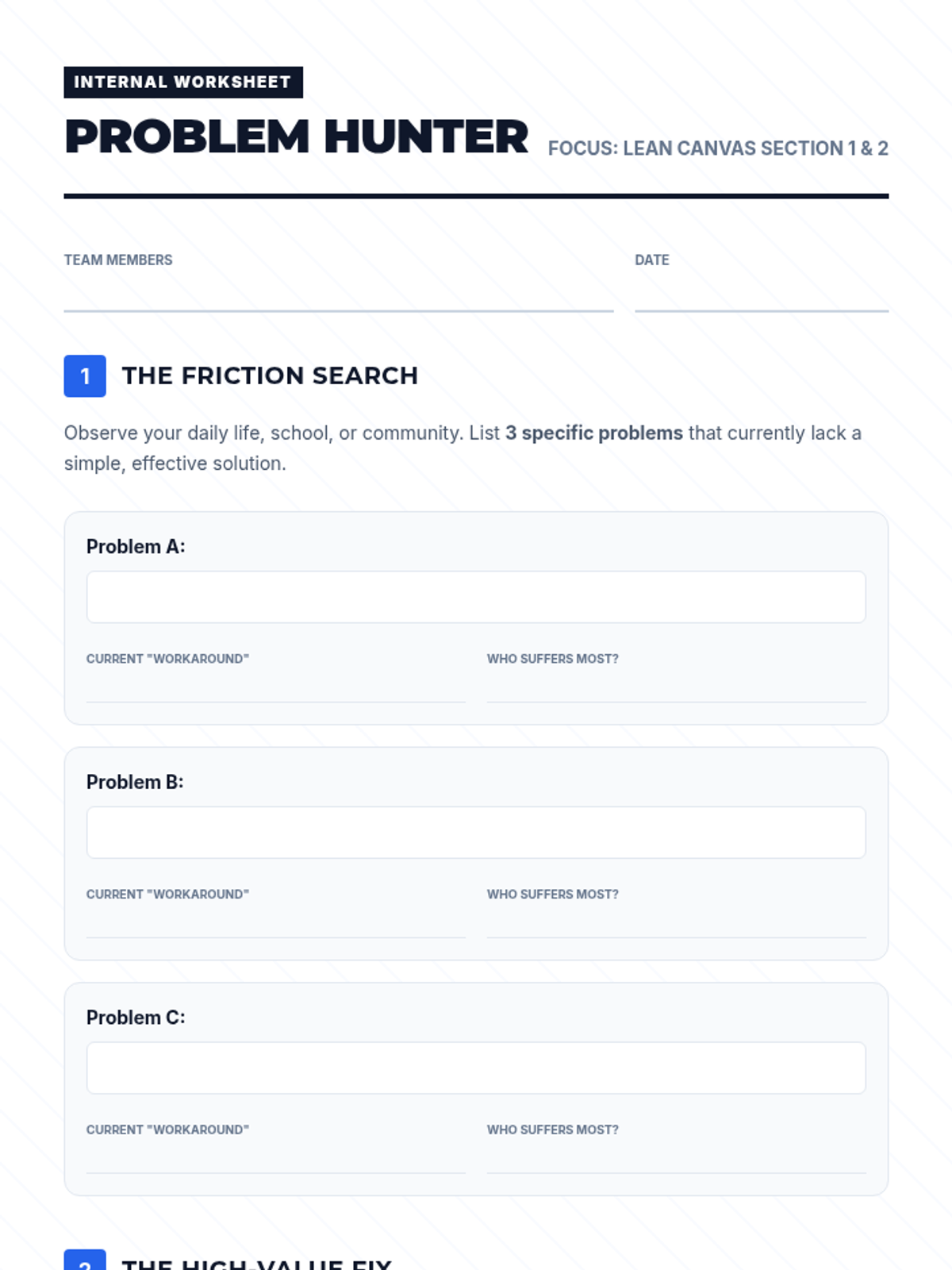
A comprehensive 4-week entrepreneurship project where high school CTE students use the Lean Business Canvas to develop a startup concept, build a tangible prototype, and deliver a professional pitch. Includes weekly reflection journals, milestone checklists, and peer feedback cycles.
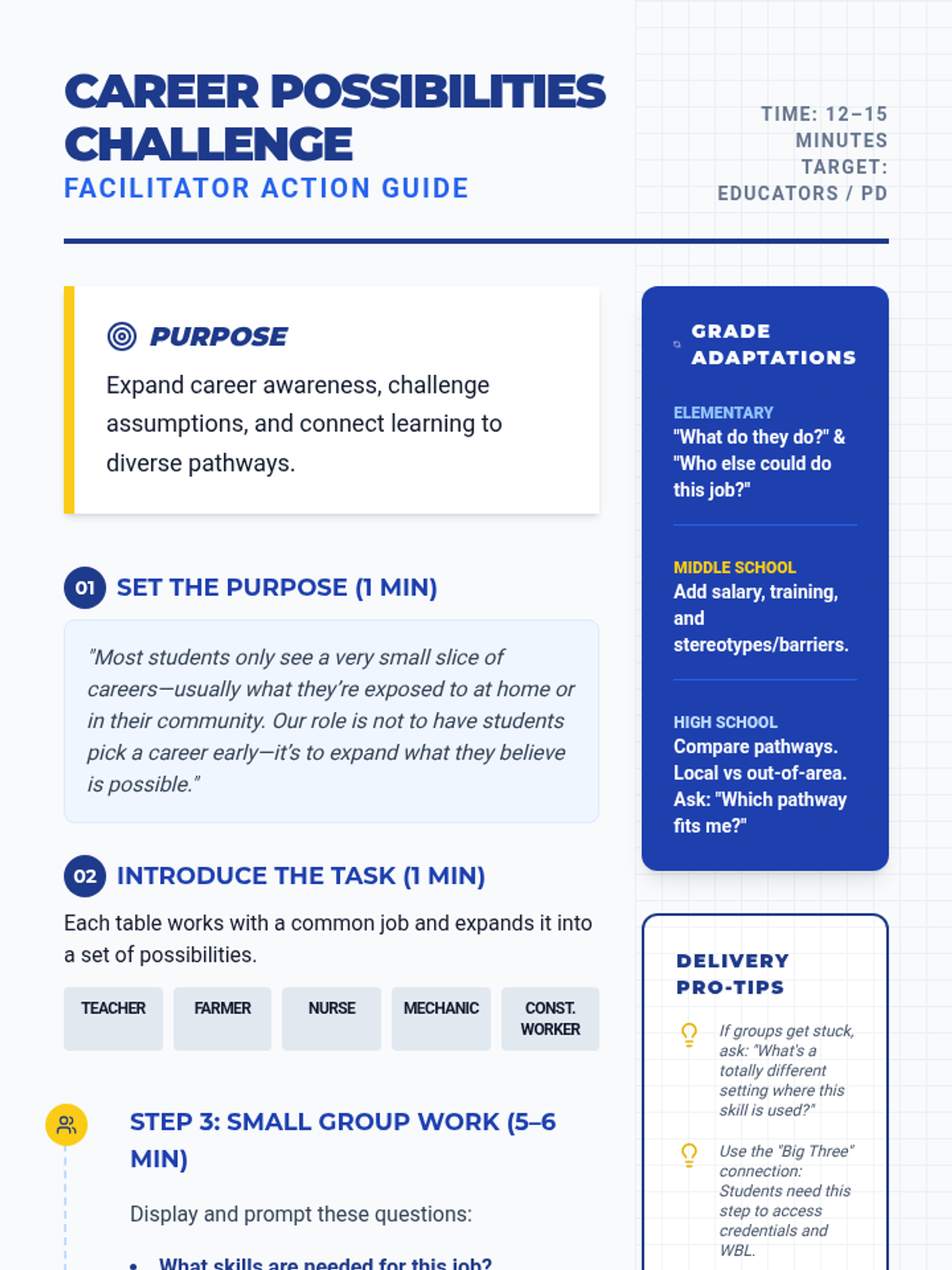
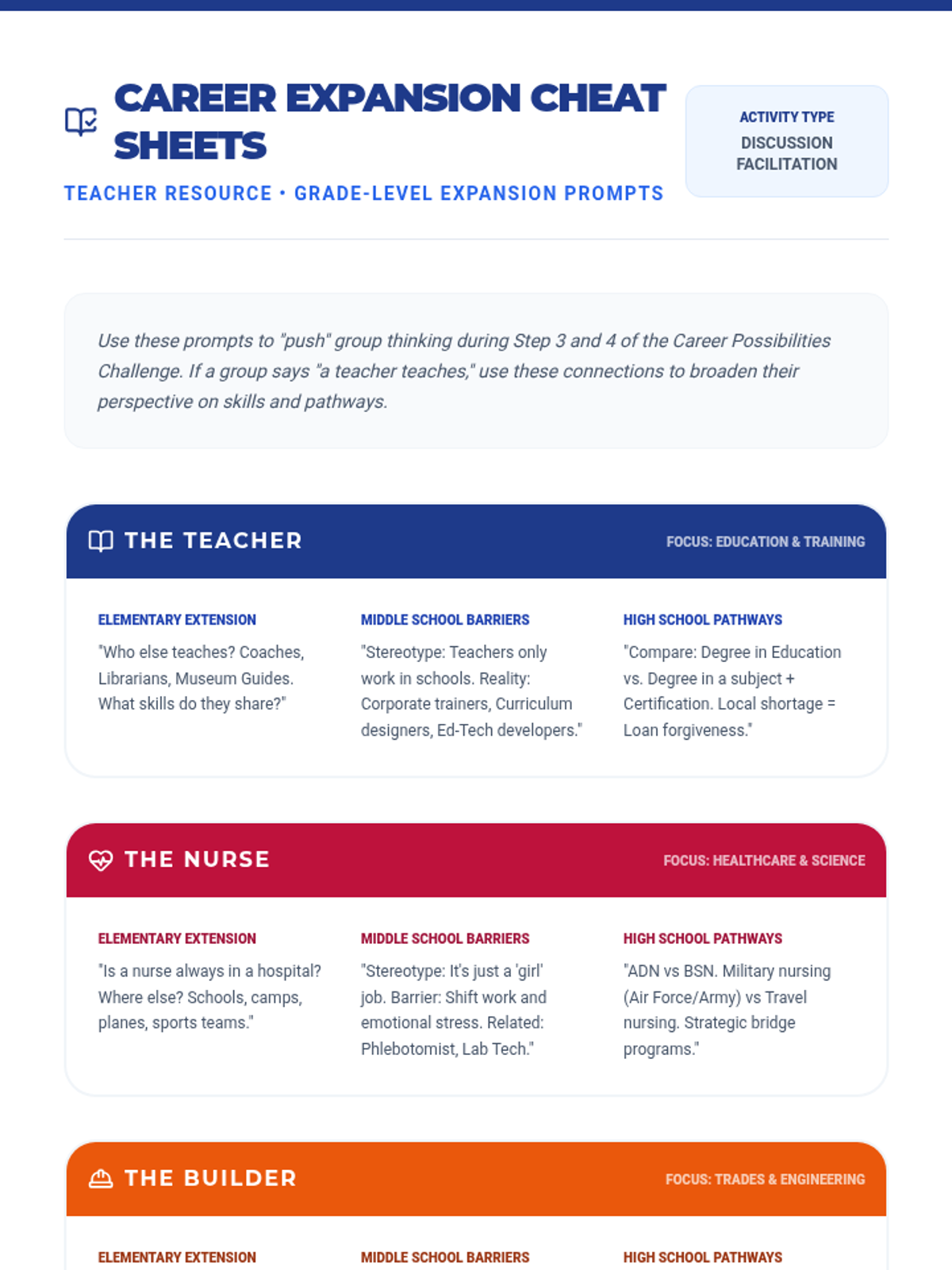
A comprehensive professional development and classroom activity suite designed to expand career awareness across K-12. Educators learn to facilitate the 'Career Possibilities Challenge,' while students engage in grade-appropriate tasks to map skills, pathways, and overcome stereotypes.
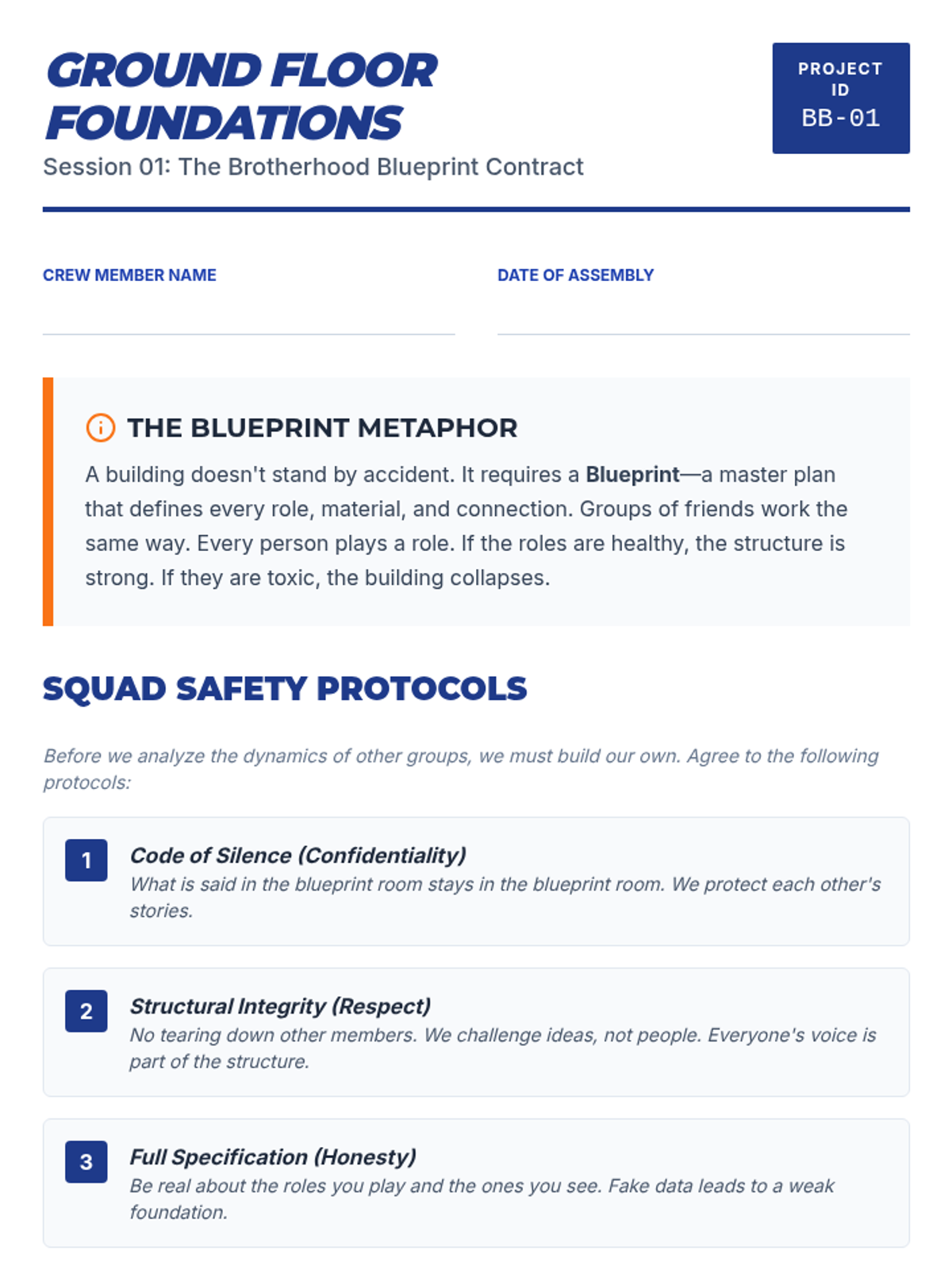
A 30-session group counseling curriculum for adolescent males focusing on social roles, group dynamics, and developing healthy friendship patterns. Through the metaphor of an architectural blueprint, students analyze leadership, support roles, and the difference between positive and negative group influences.
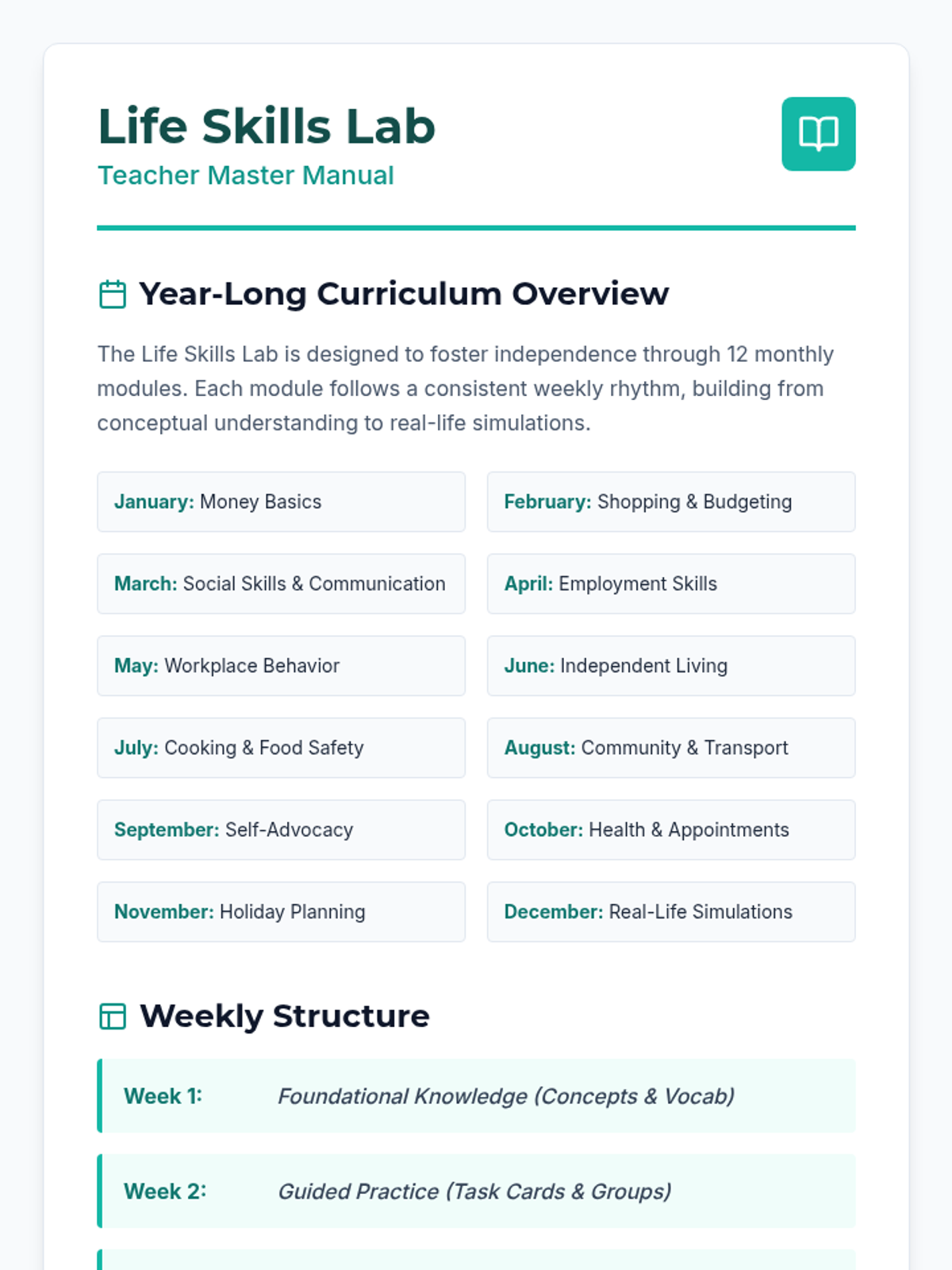
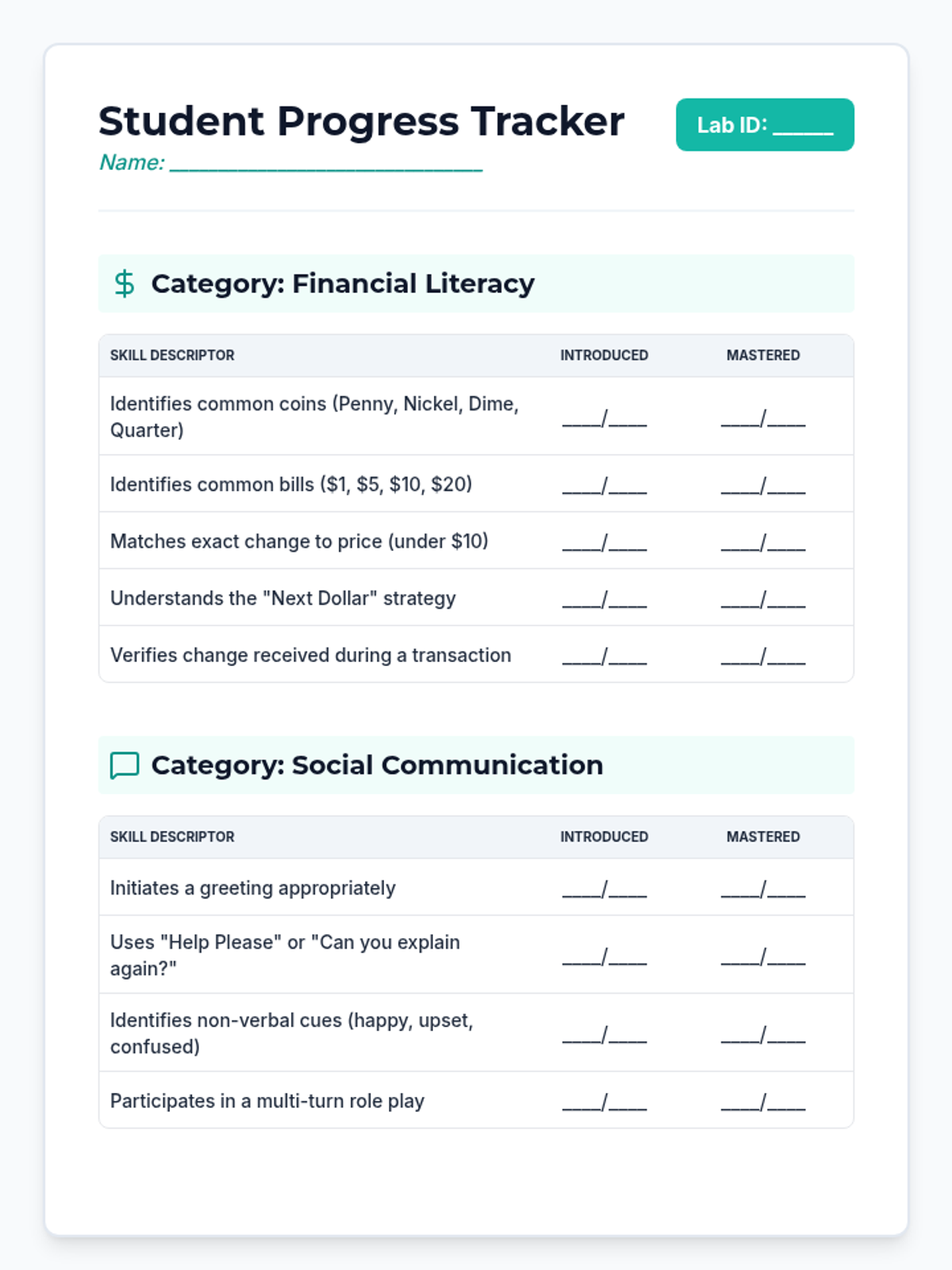
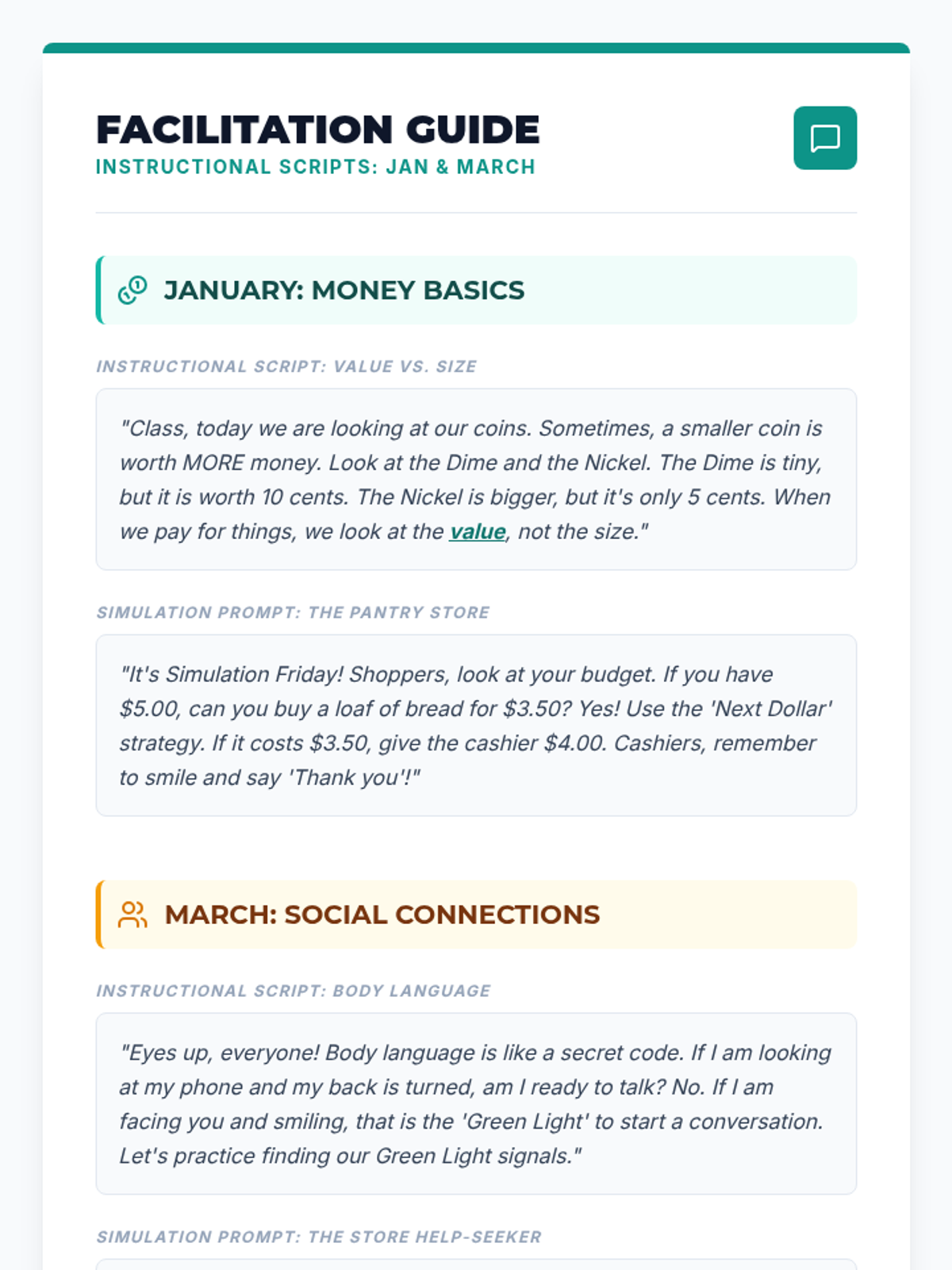
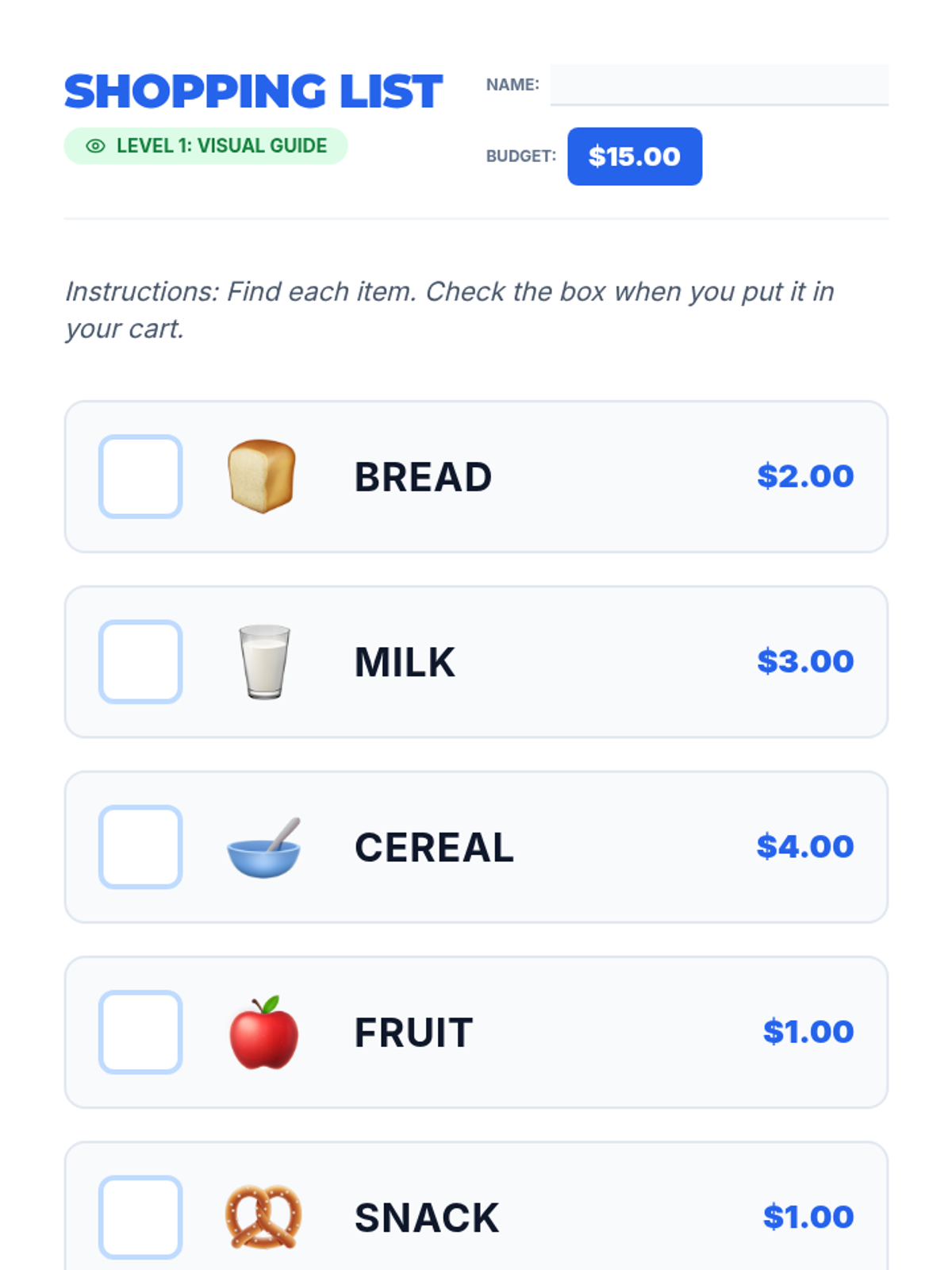
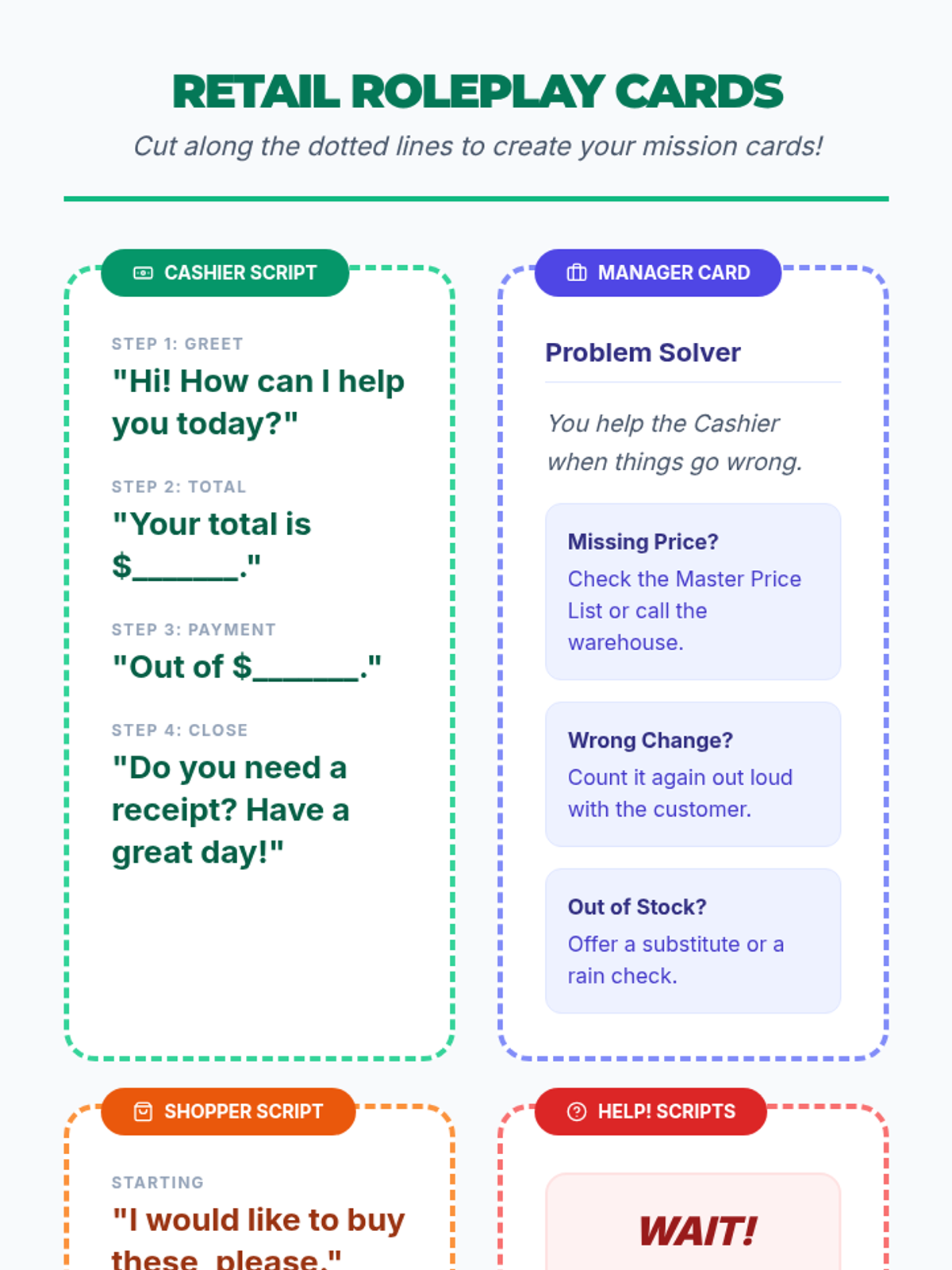
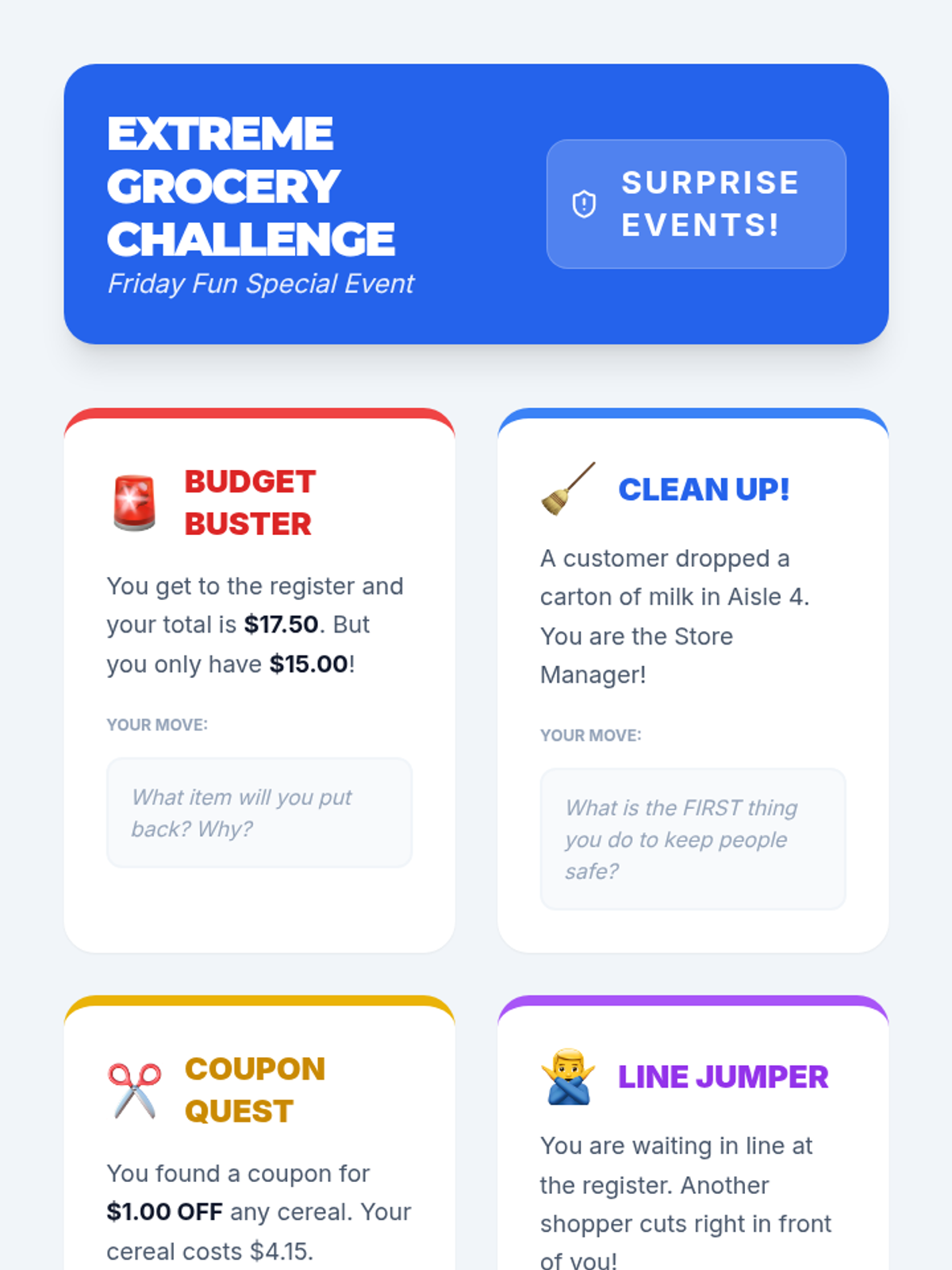
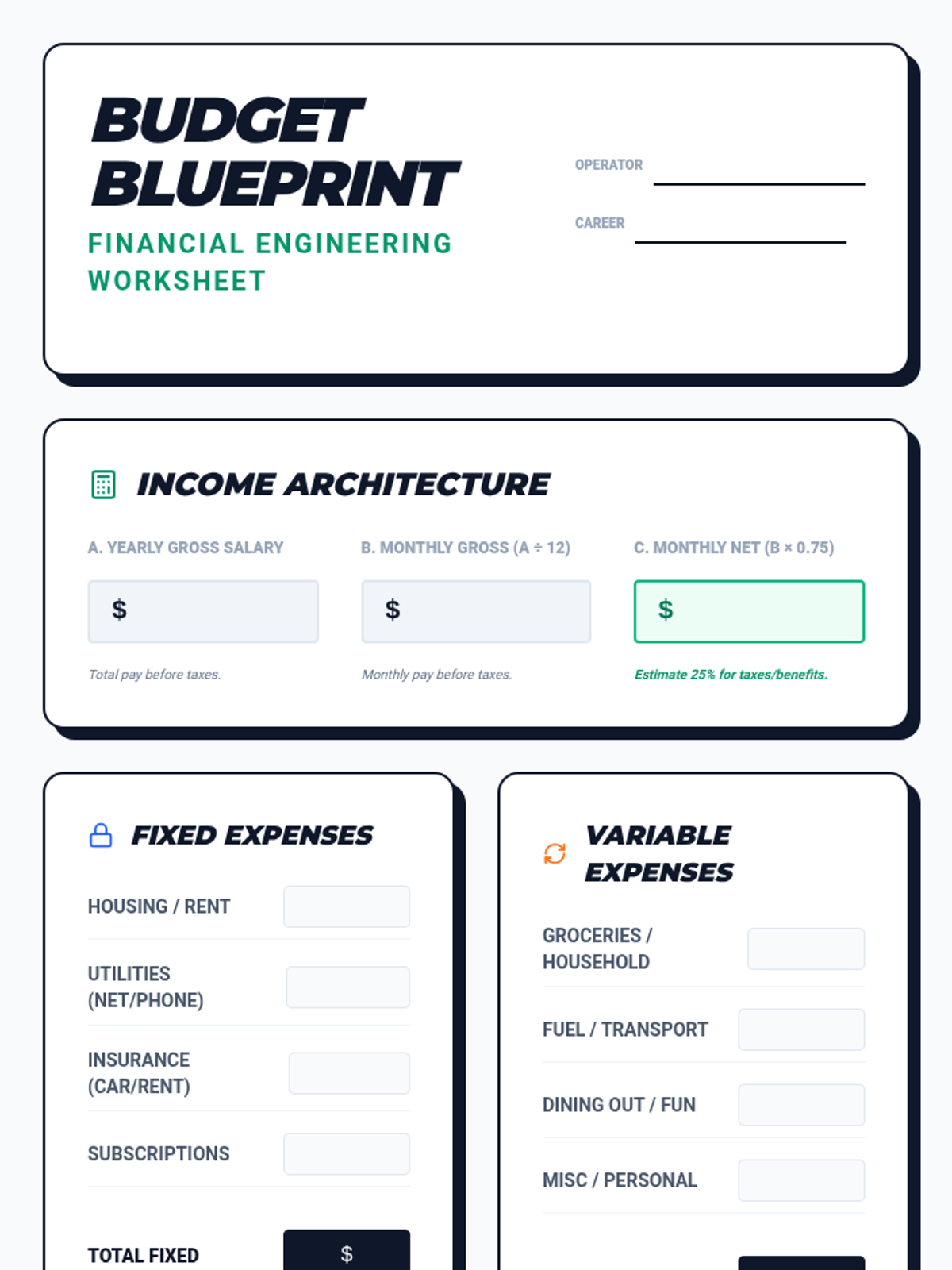
A comprehensive year-long curriculum designed to empower students with essential life skills for independence, focusing on financial literacy, social communication, and real-world simulations.
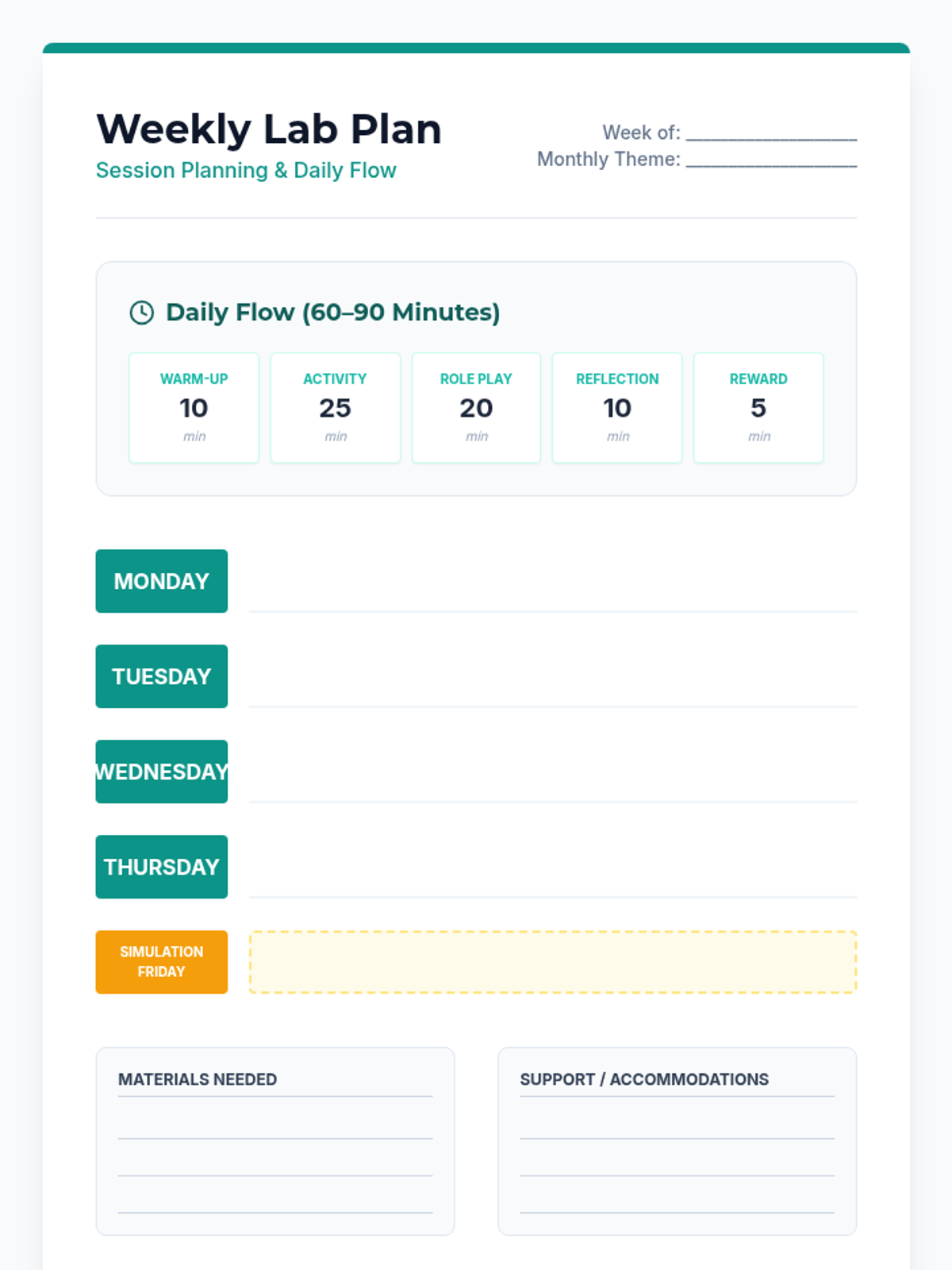
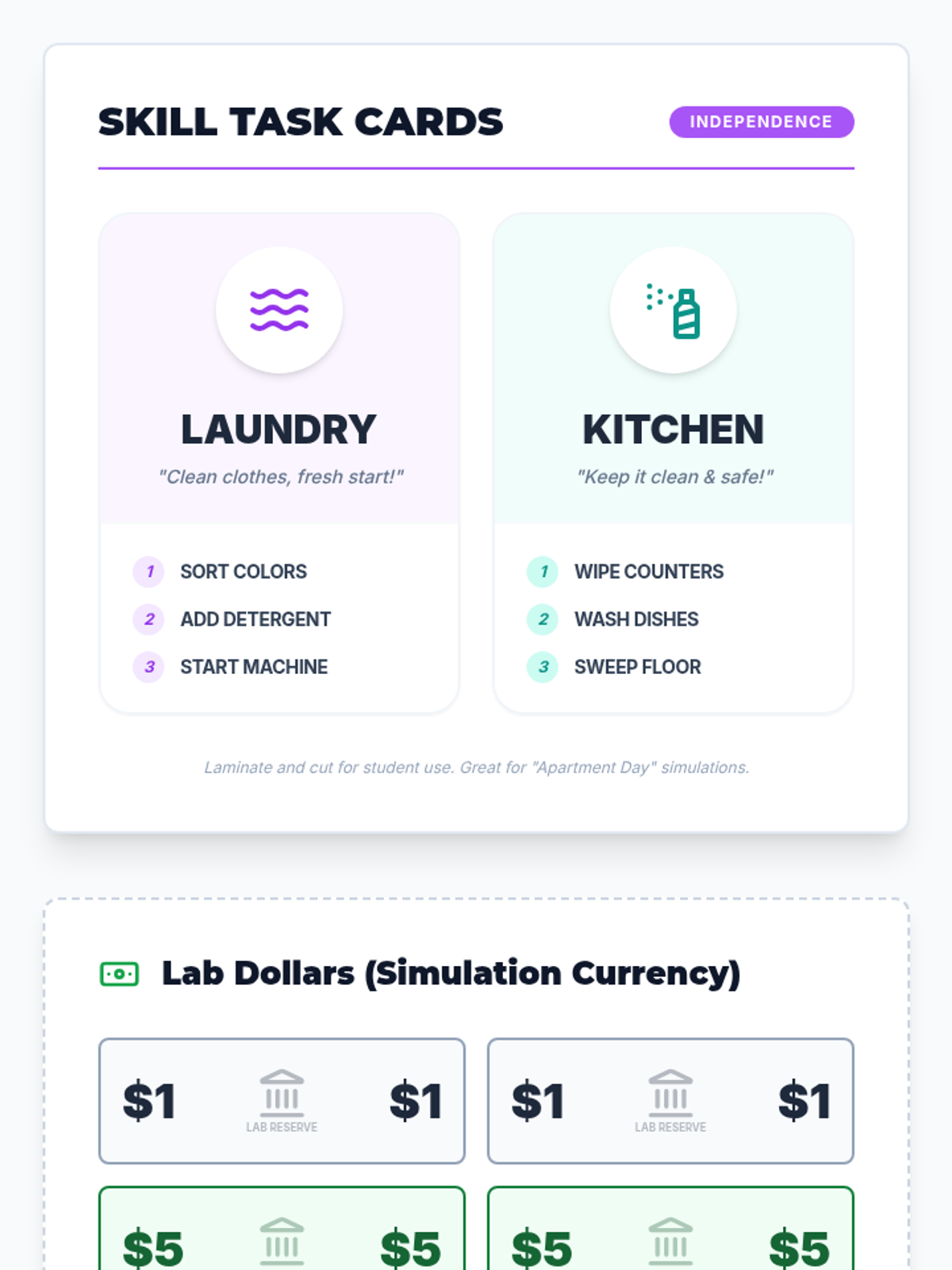
A full-month curriculum focused on developing independence through real-world simulations, role-playing, and practical application of functional life skills.
A series of lessons and projects designed to transition students from job-seeking skills to workplace success and independent living, focusing on professional ethics, communication, and long-term planning.
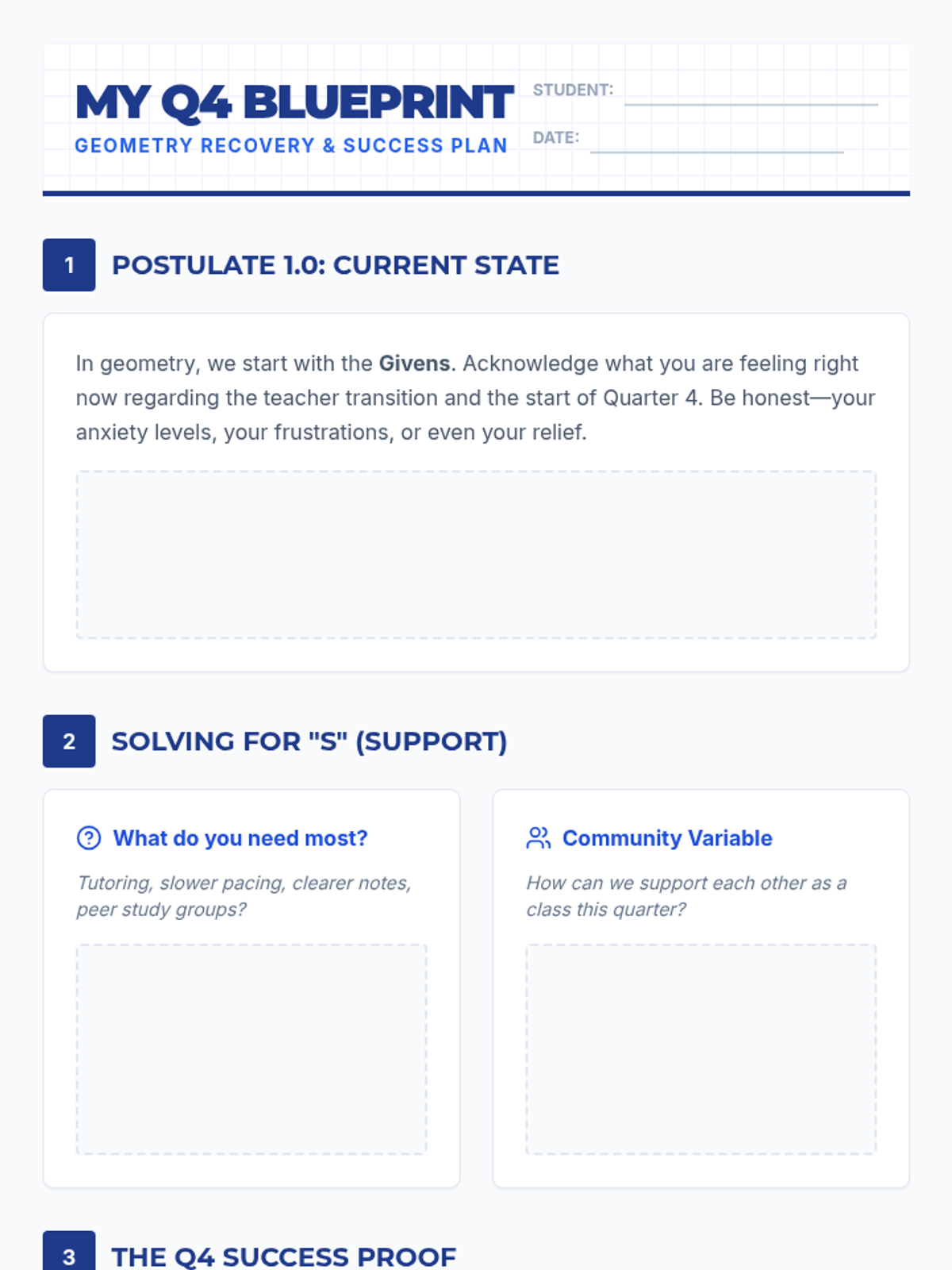
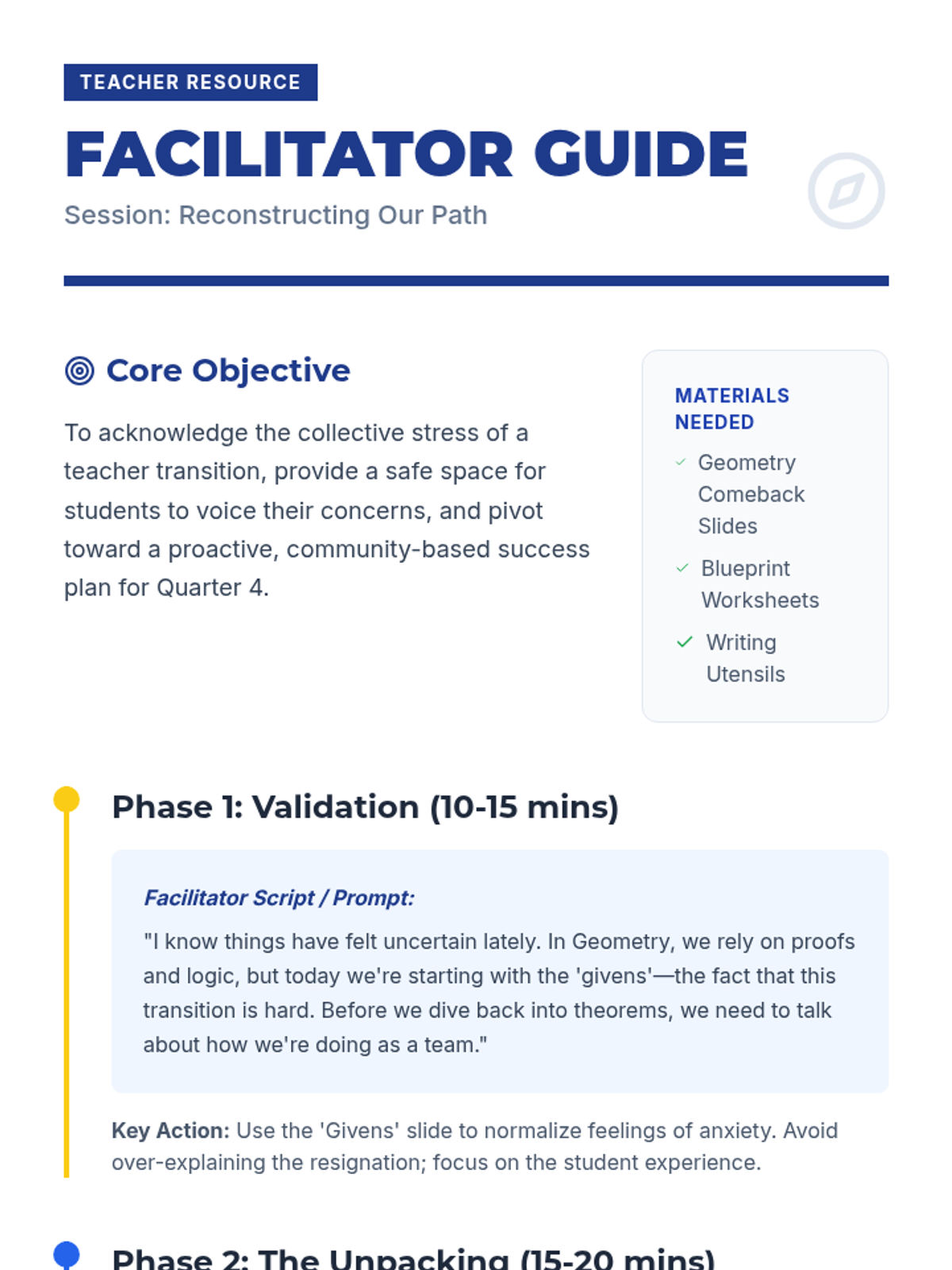
A supportive sequence designed to help Geometry students process a teacher transition, voice their anxieties, and co-create a success plan for the final quarter.
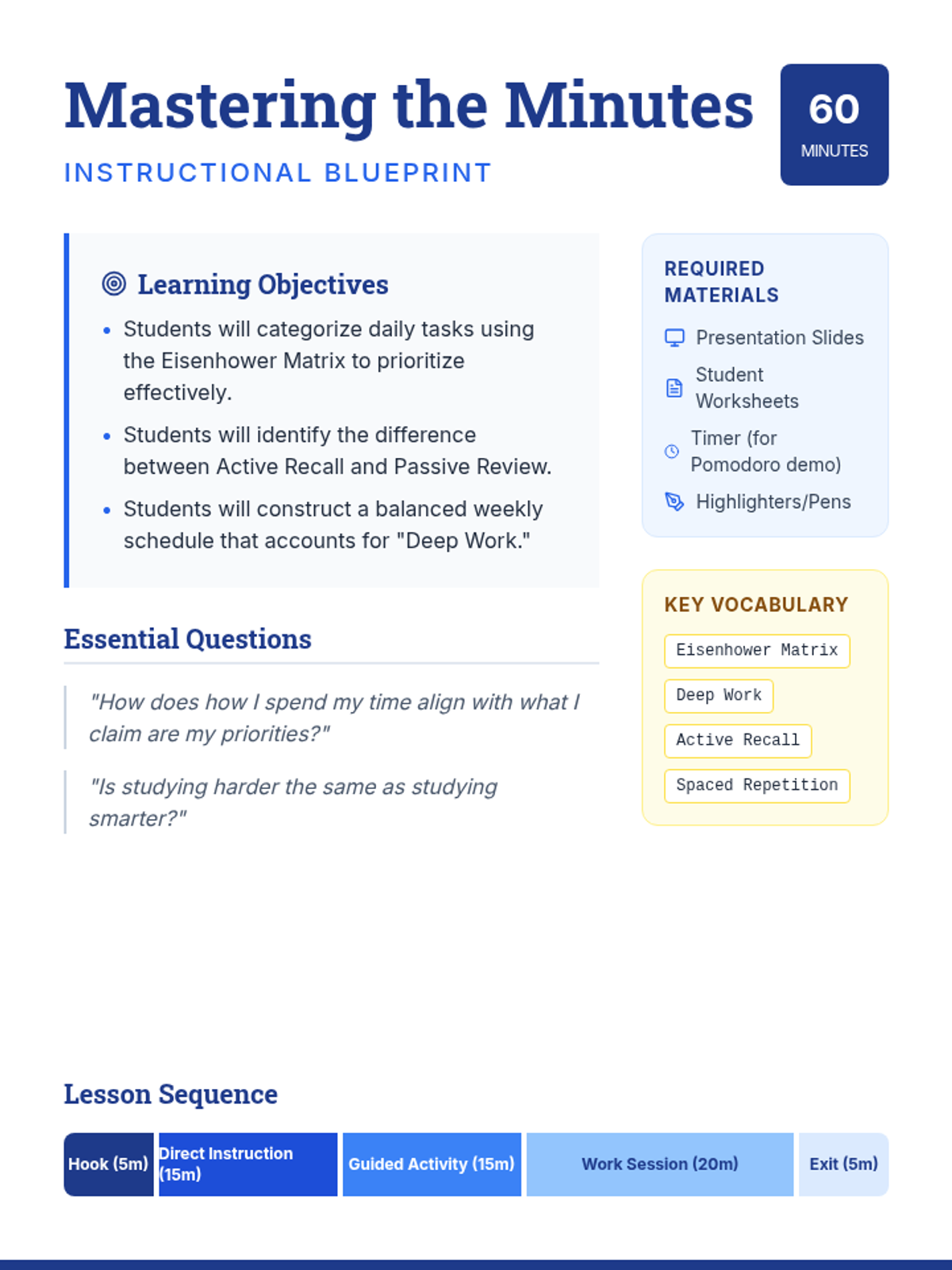
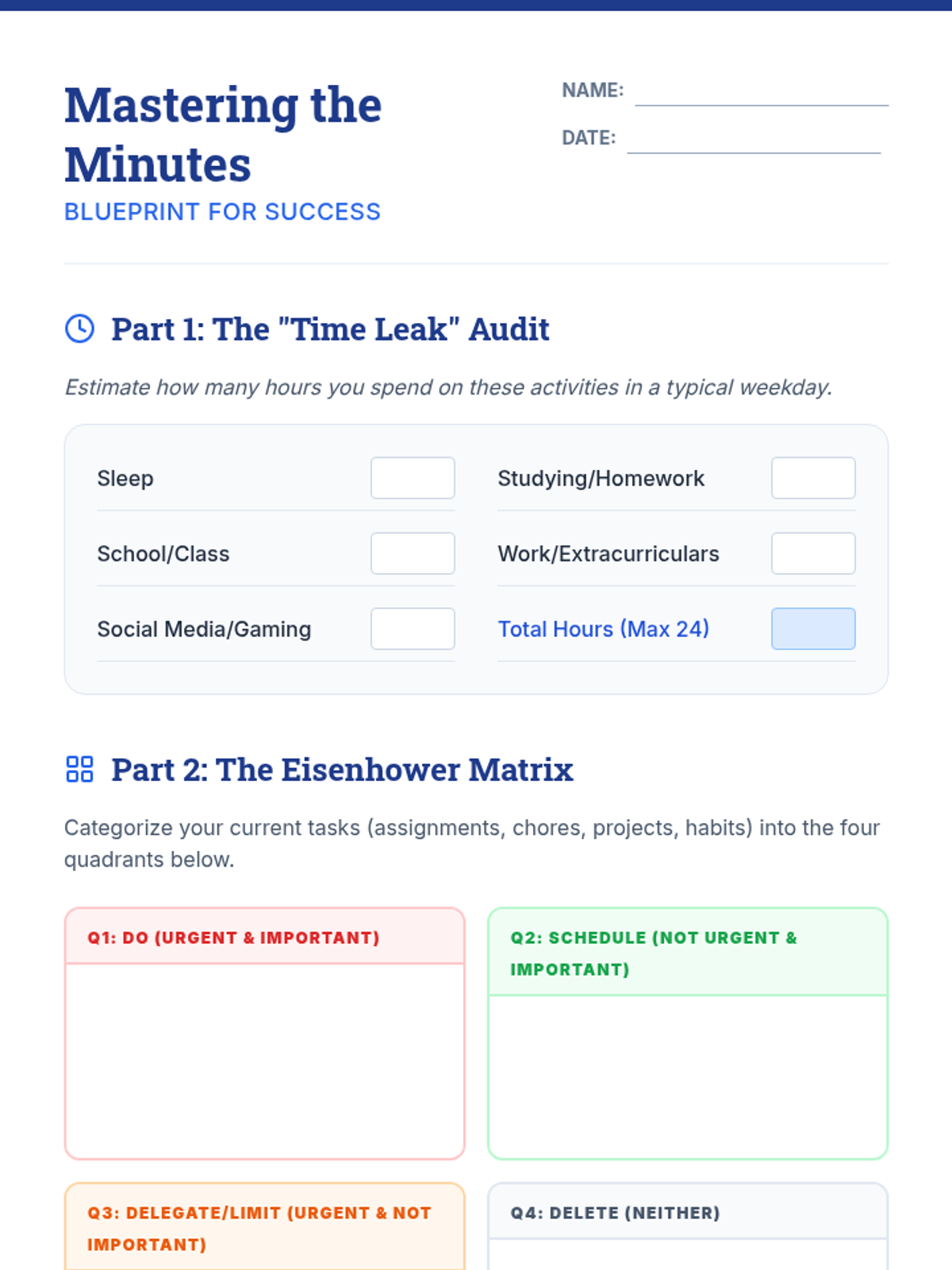
A comprehensive series designed to prepare students for post-secondary success through essential life skills, including time management, study habits, and digital literacy.
A comprehensive career readiness program designed to prepare students for the modern workforce through 12 modular lessons covering soft skills, exploration, and professional habits. Each lesson aligns with CCR standards and includes portfolio-ready reflections.
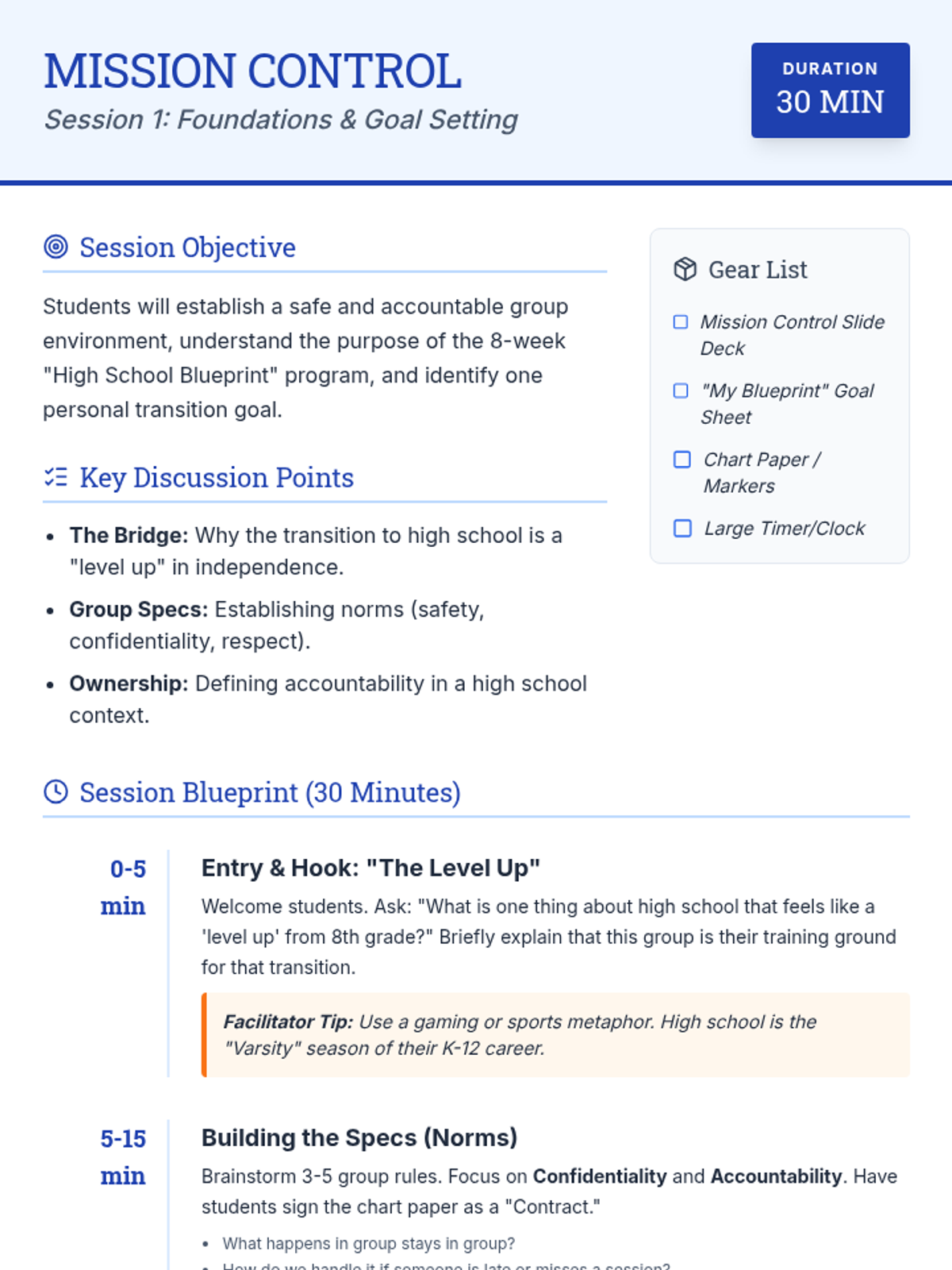
An 8-week program designed for 8th graders to develop the executive functioning and accountability skills necessary for a successful transition to high school.
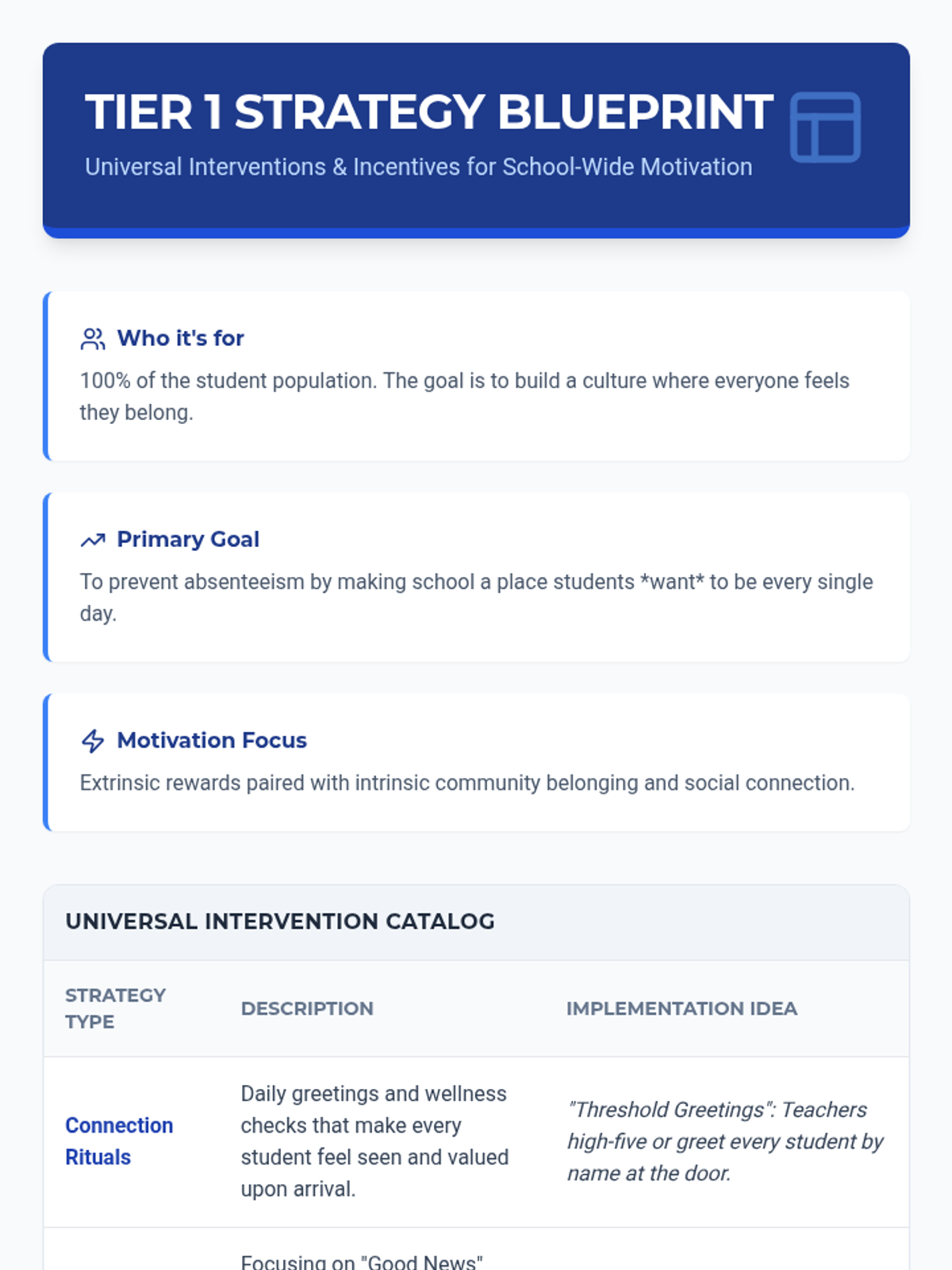
A comprehensive set of attendance interventions and motivation strategies spanning universal, targeted, and intensive support levels to improve student motivation and school connection.
A series of lessons designed to help students in life skills programs navigate social interactions and build healthy relationships.
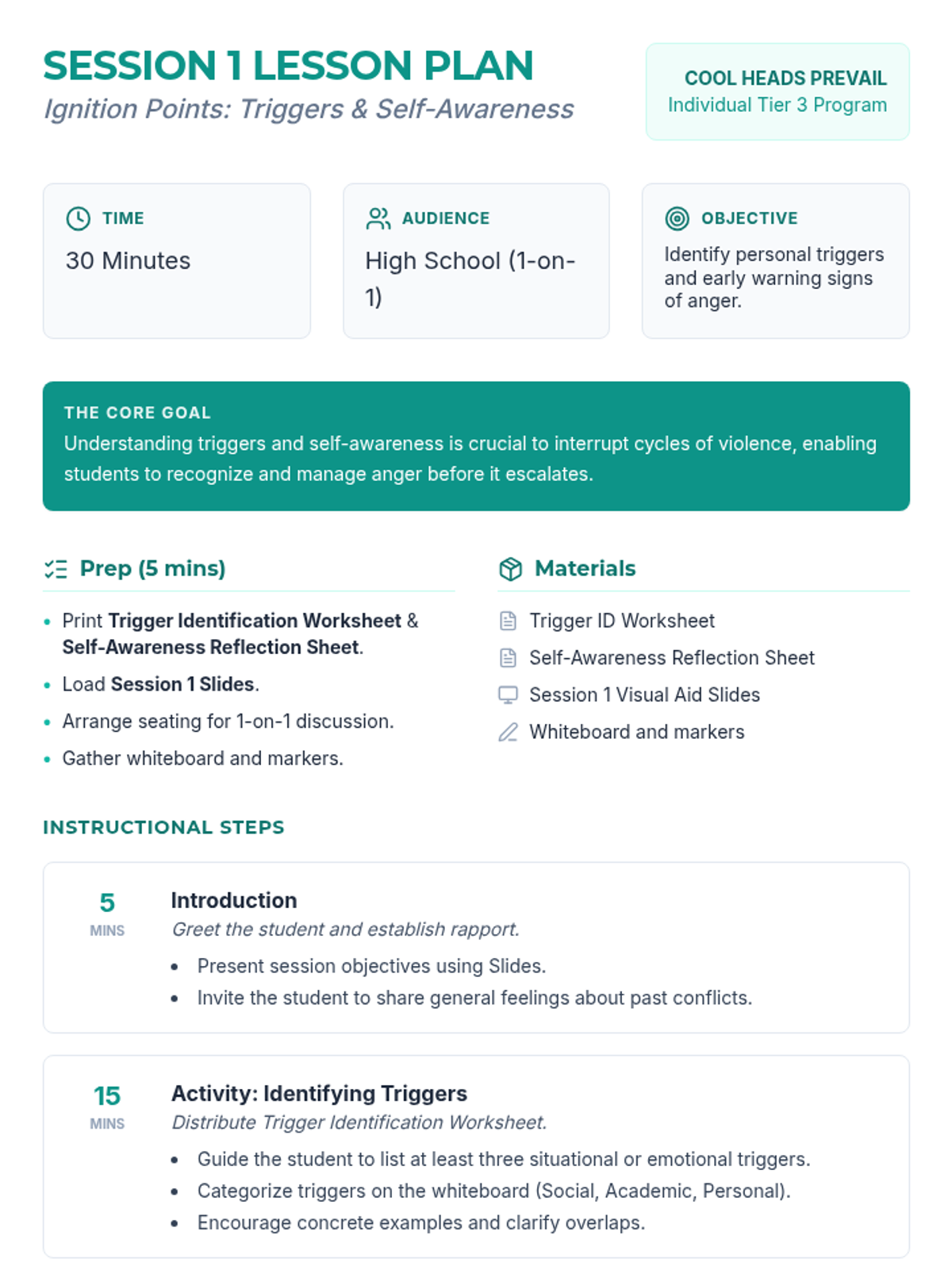
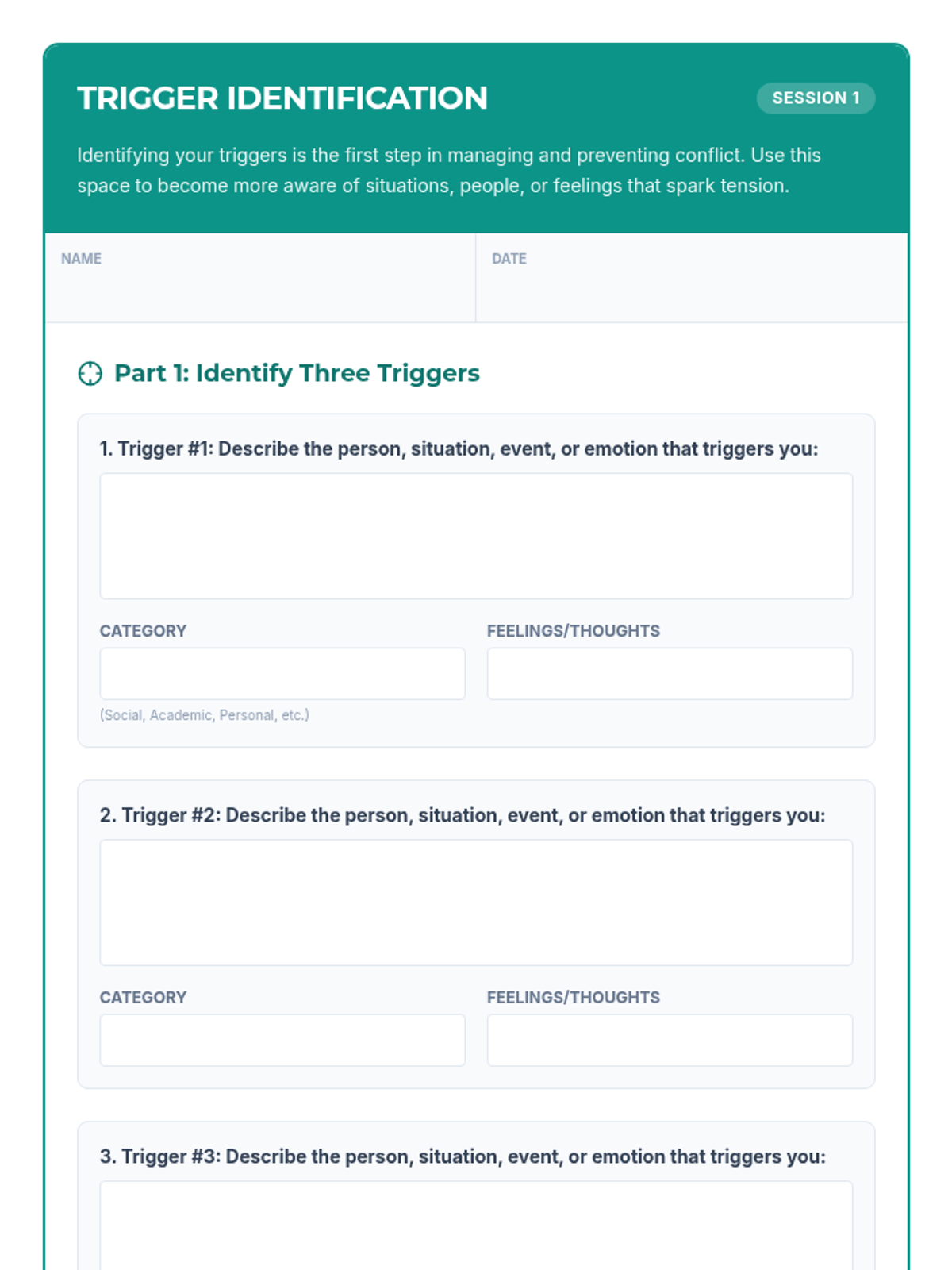
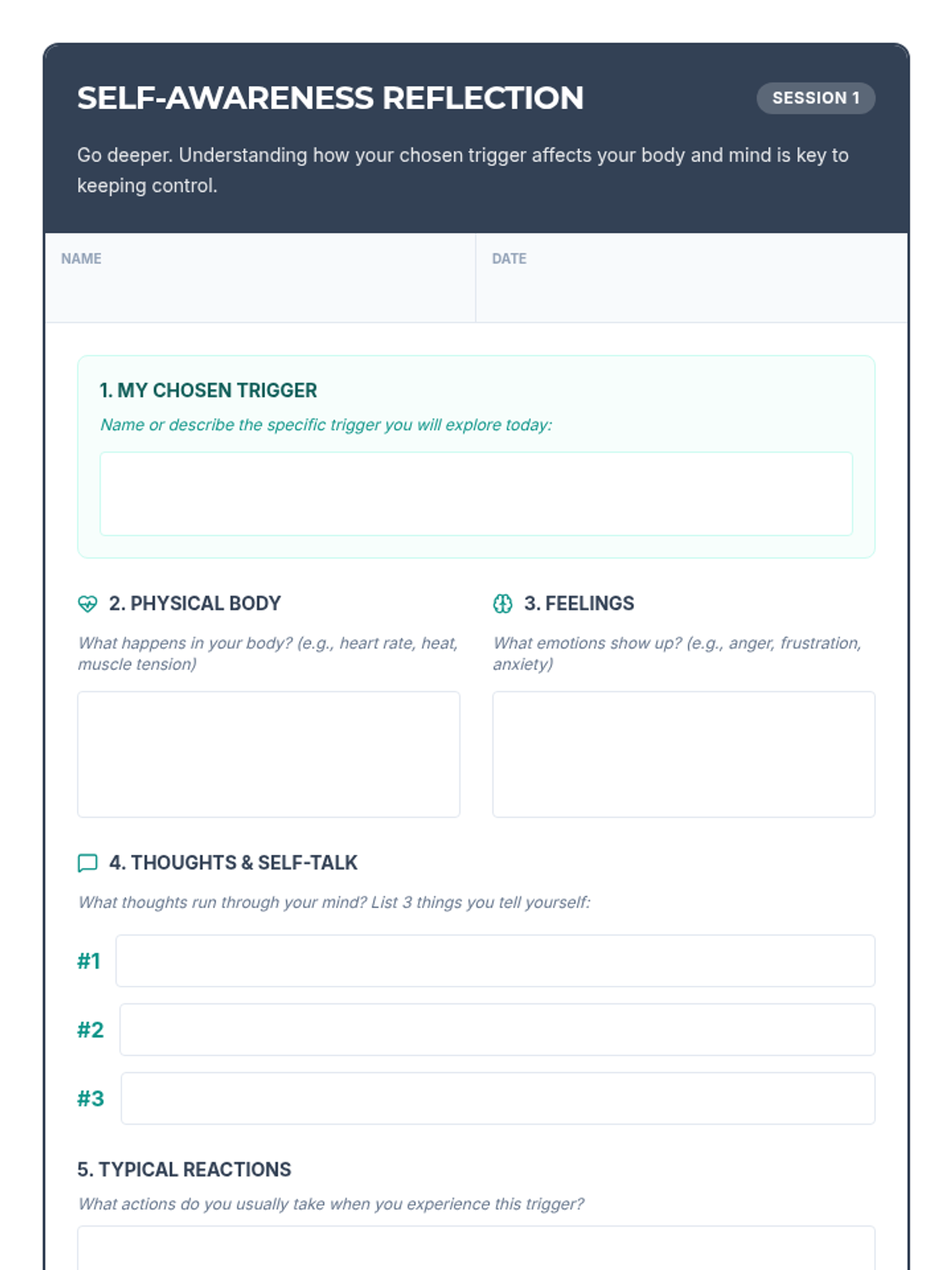
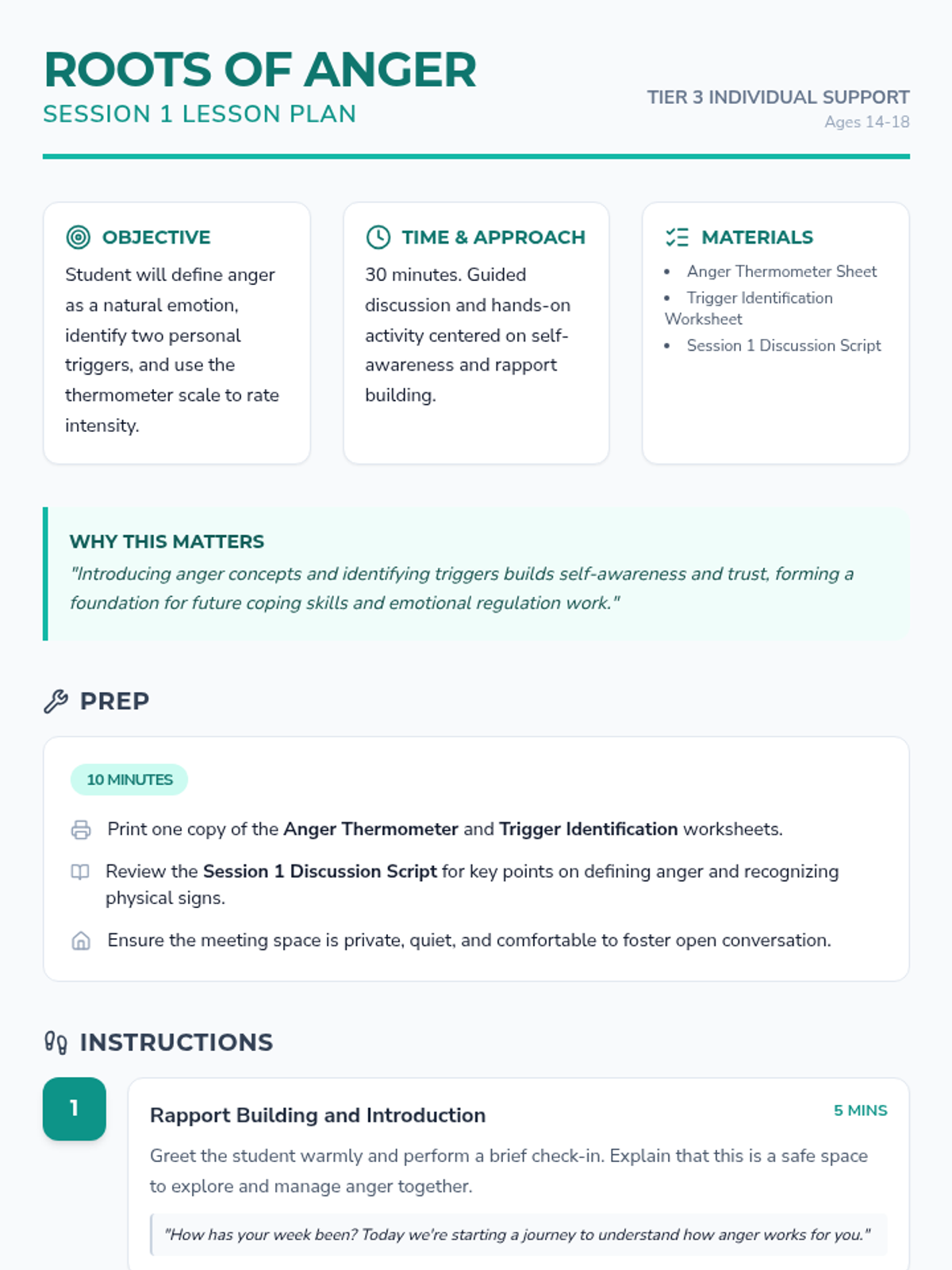
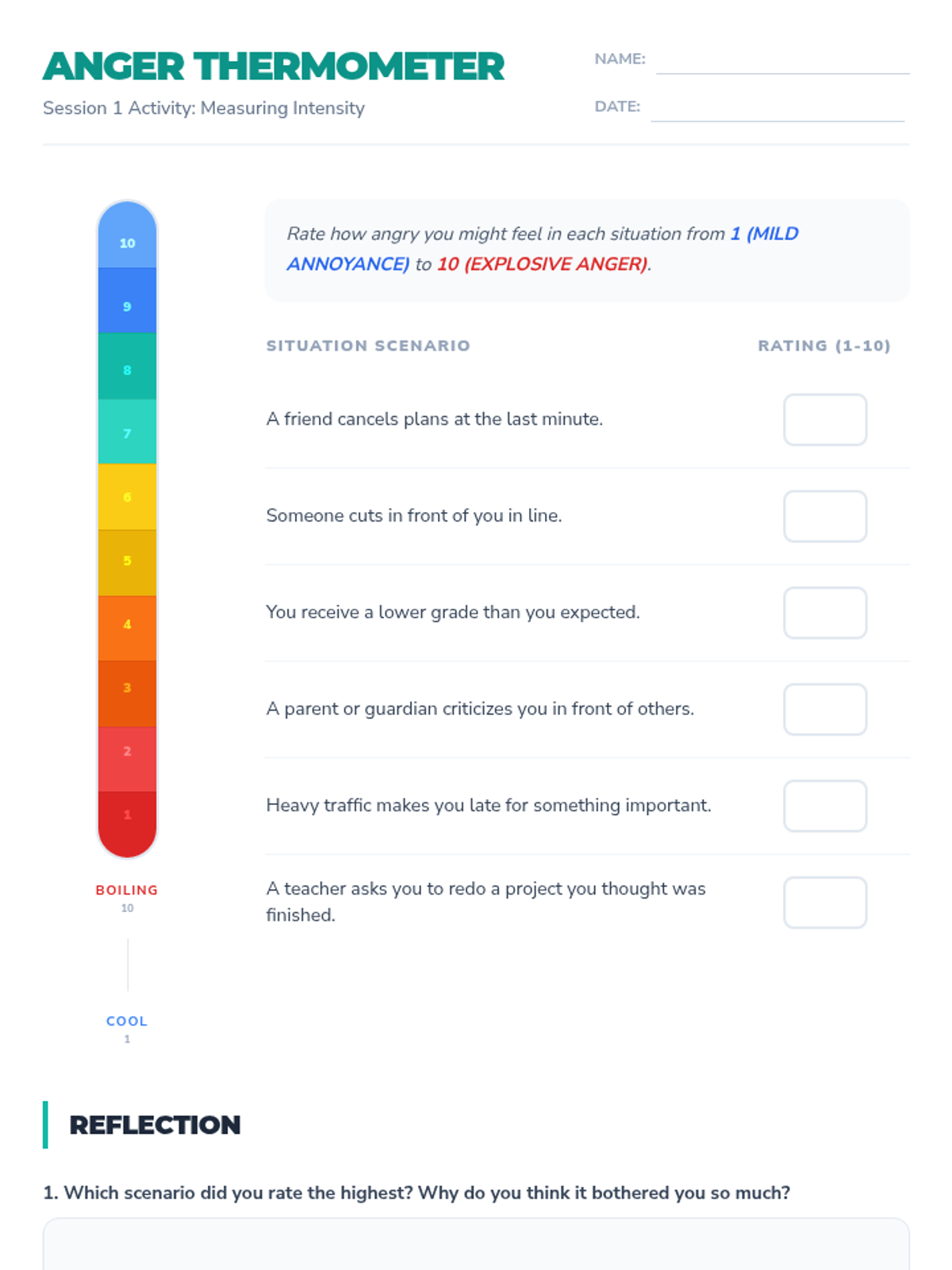
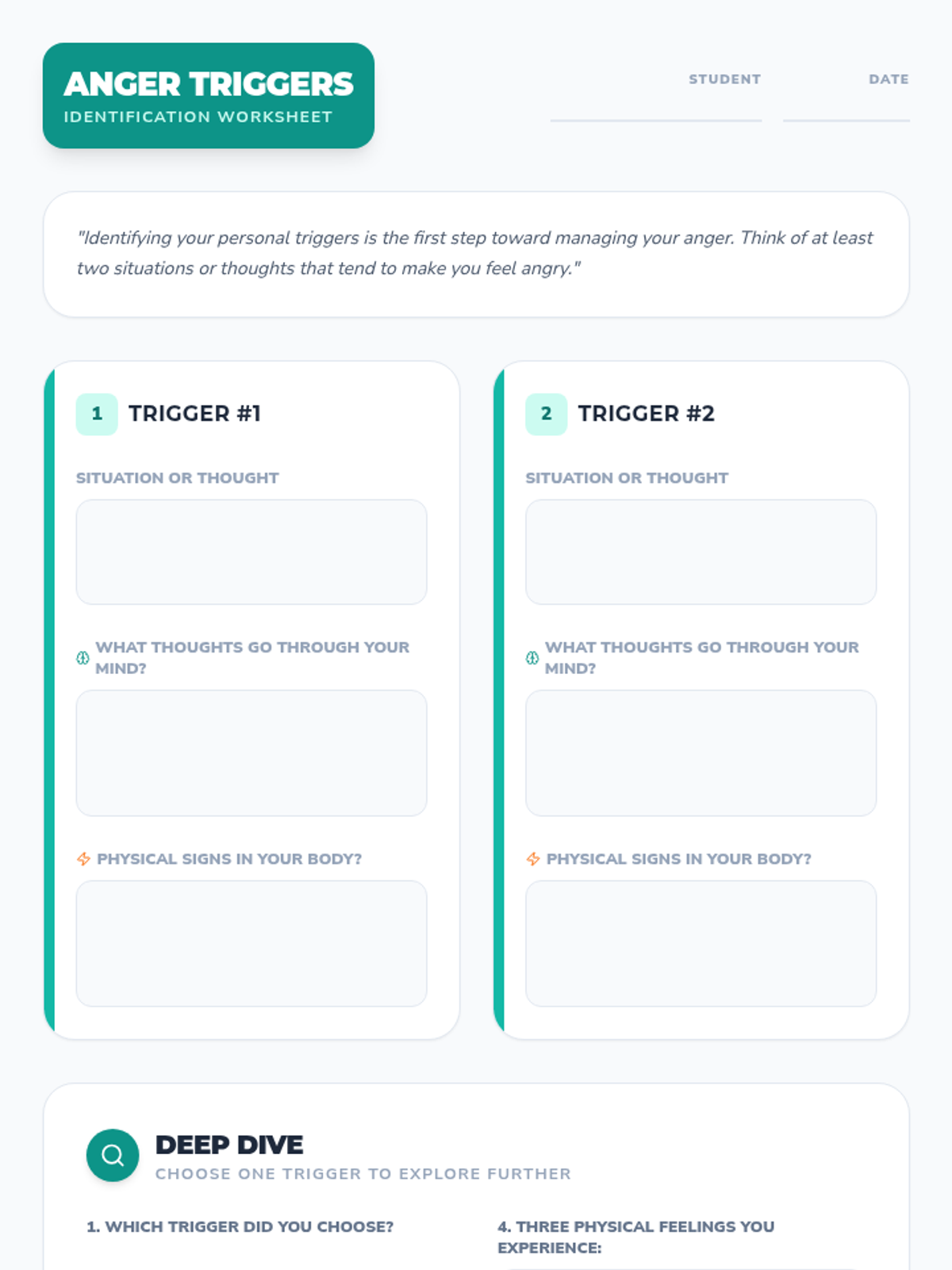
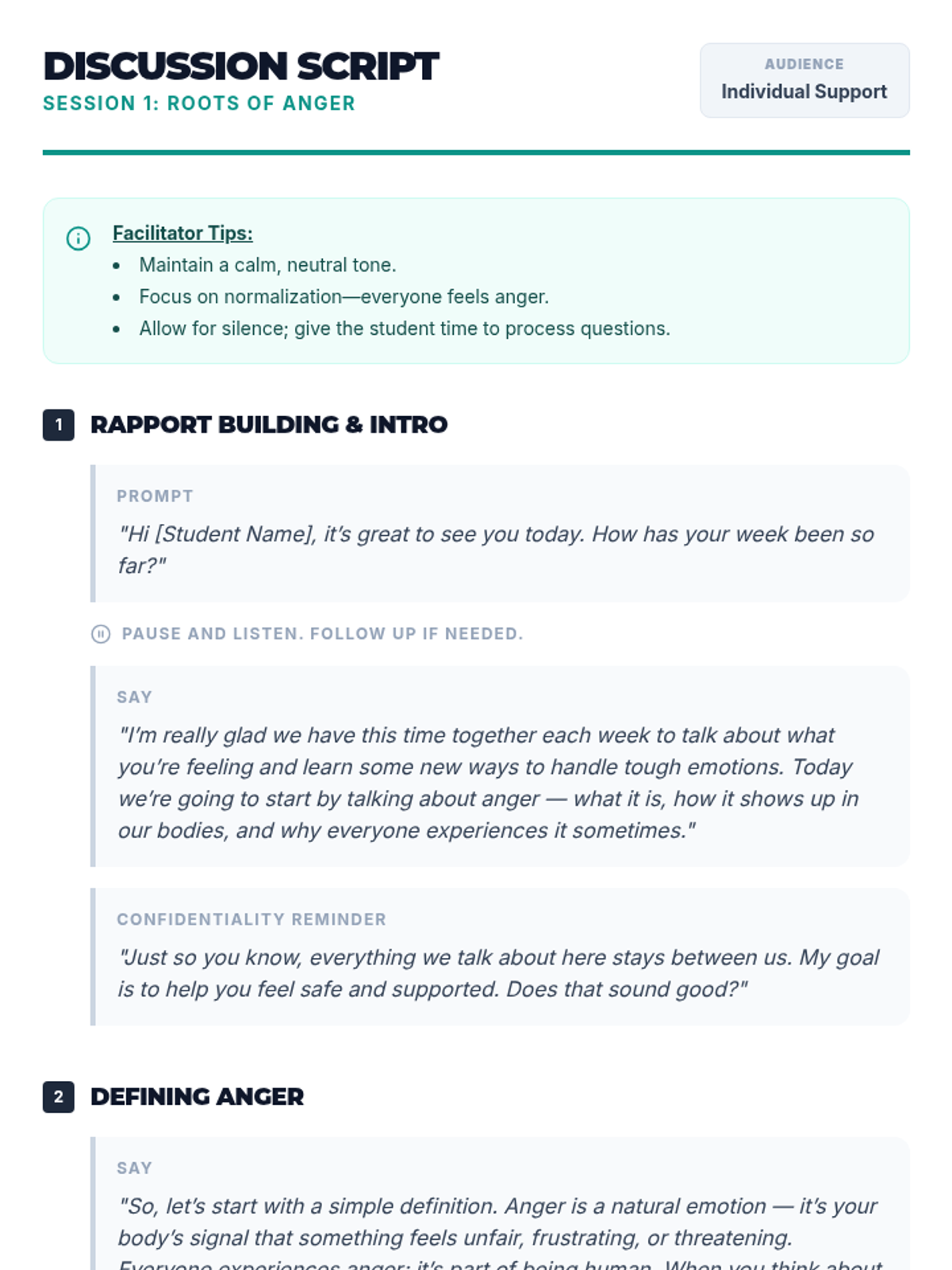
A six-session individual support plan for a 16-year-old student to understand anger, learn psychoeducation about emotions, and practice effective coping skills. This Tier 3 plan combines guided discussions, targeted activities, and worksheets to build self-awareness and regulation.
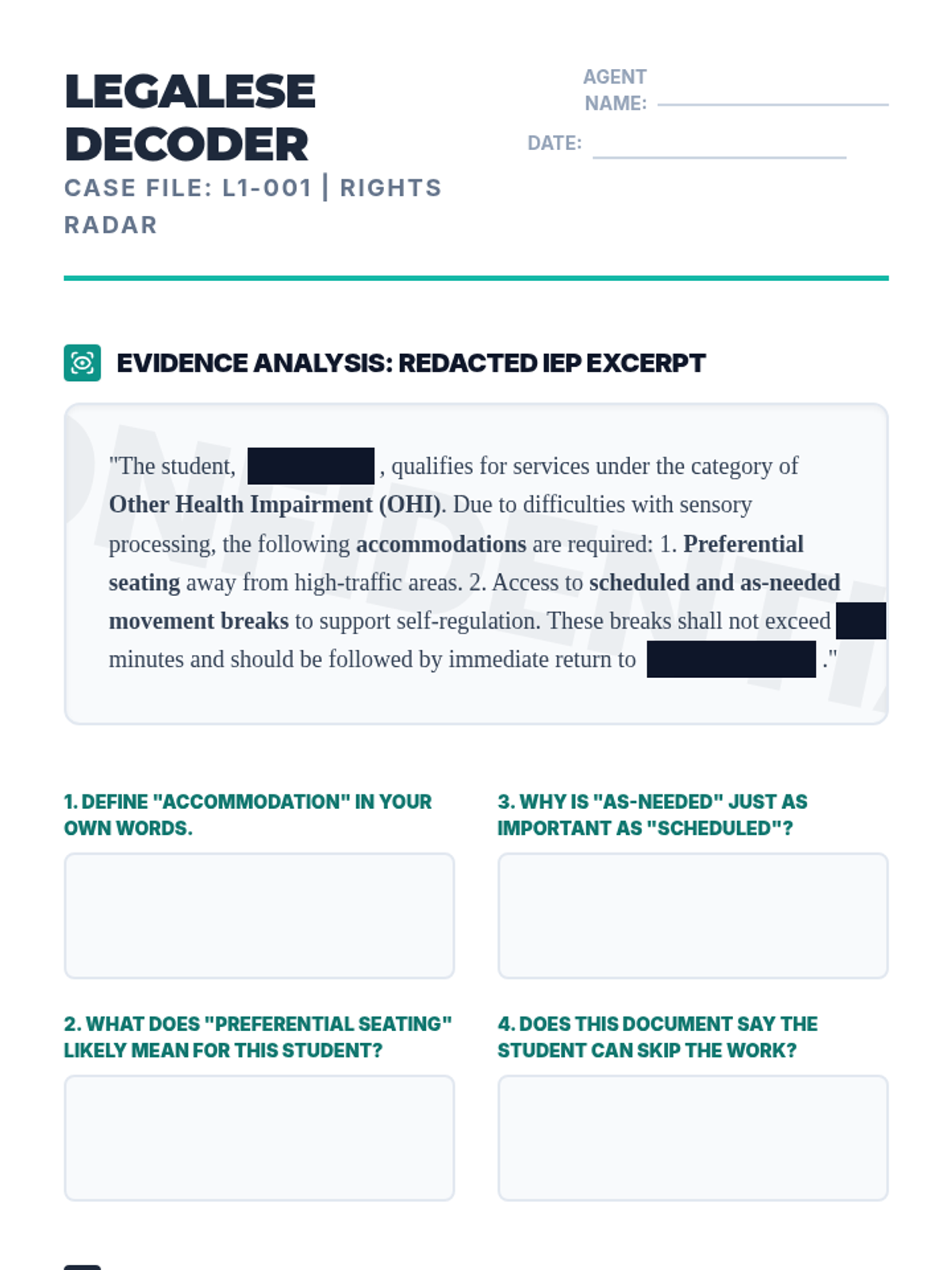
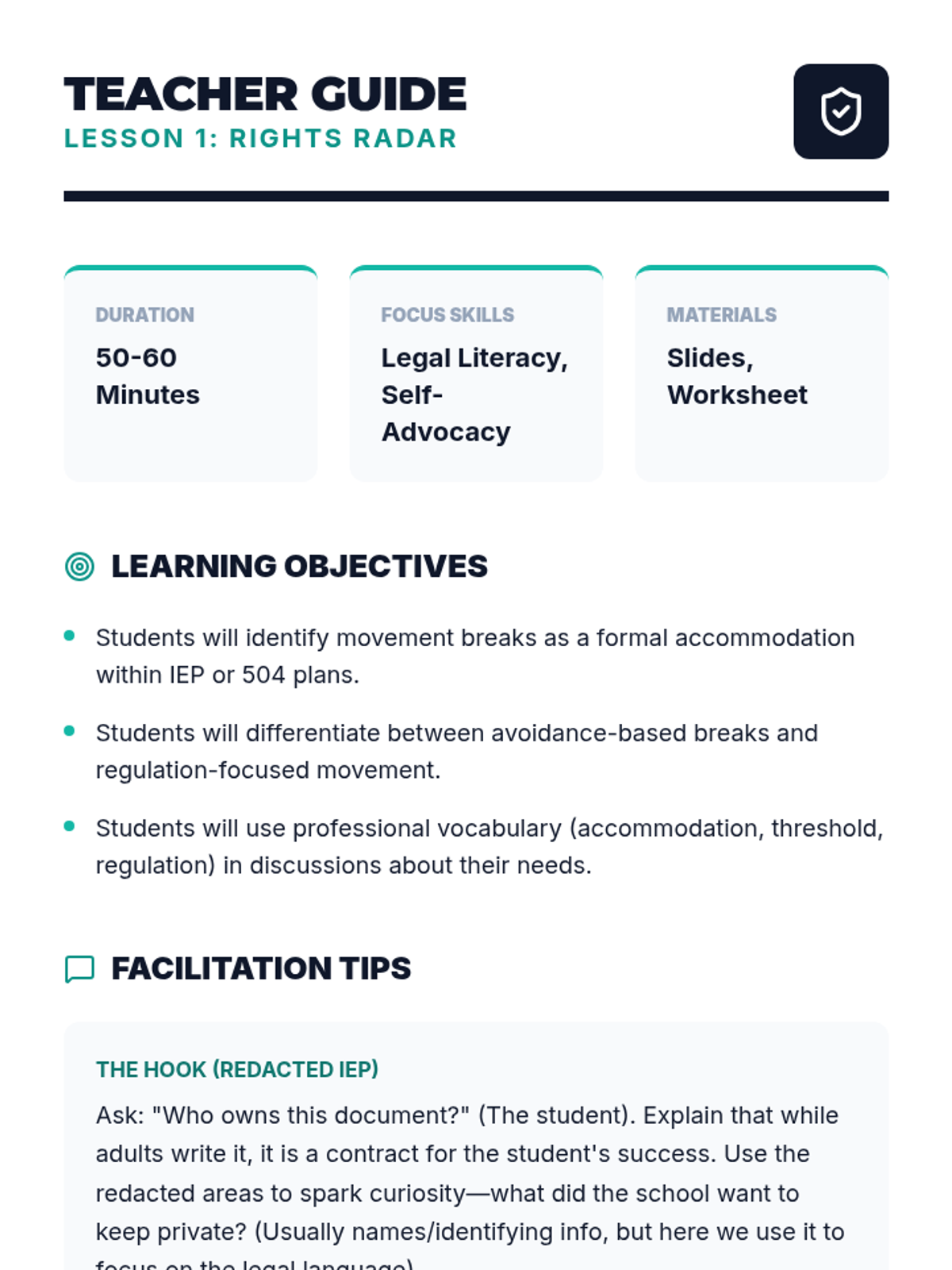
A 5-lesson sequence for 9th-grade students focused on self-advocacy and communication skills for sensory regulation. Students learn to navigate legal rights, recognize internal sensory signals, script professional requests for movement breaks, and design personal accountability protocols.
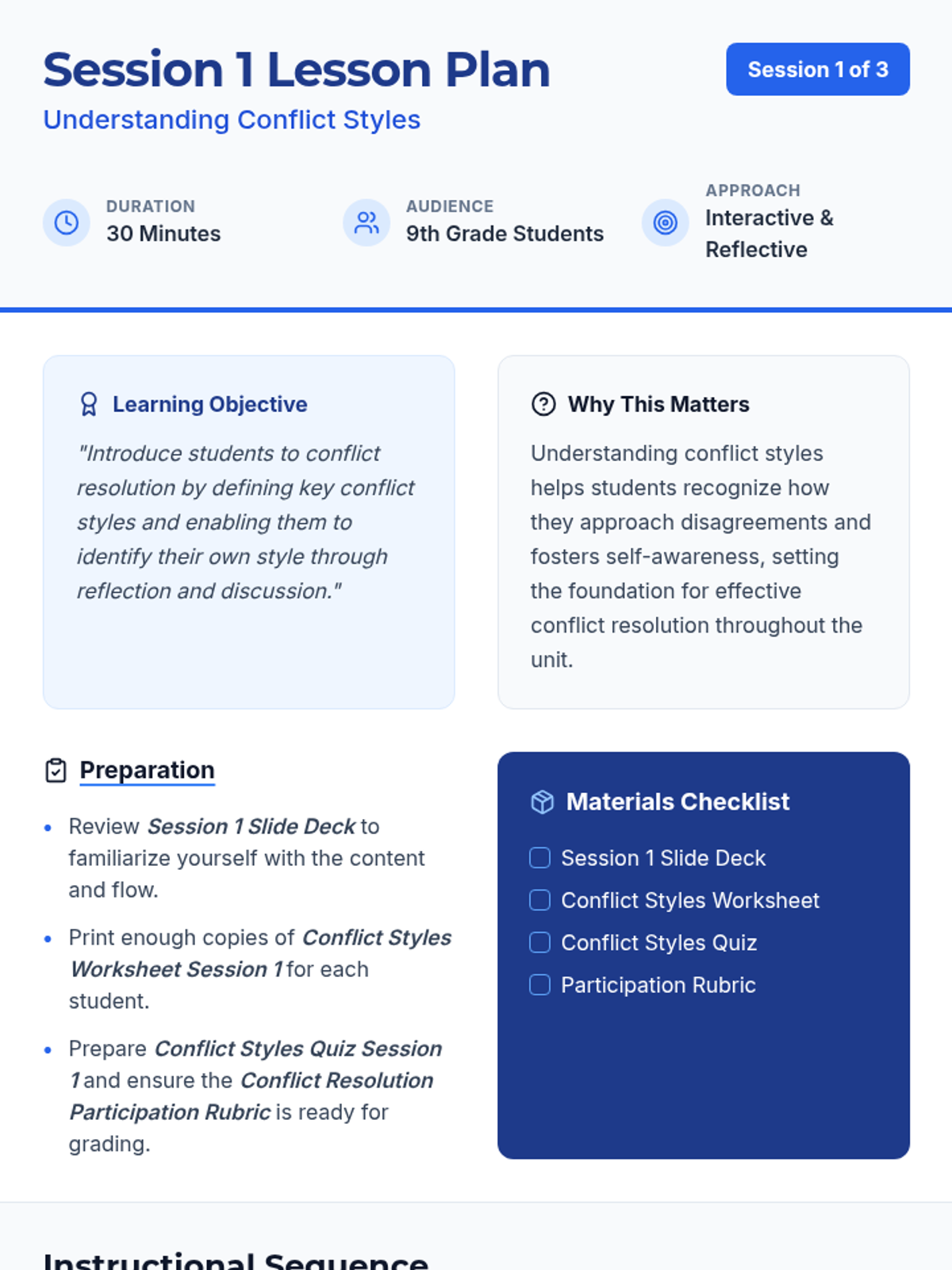
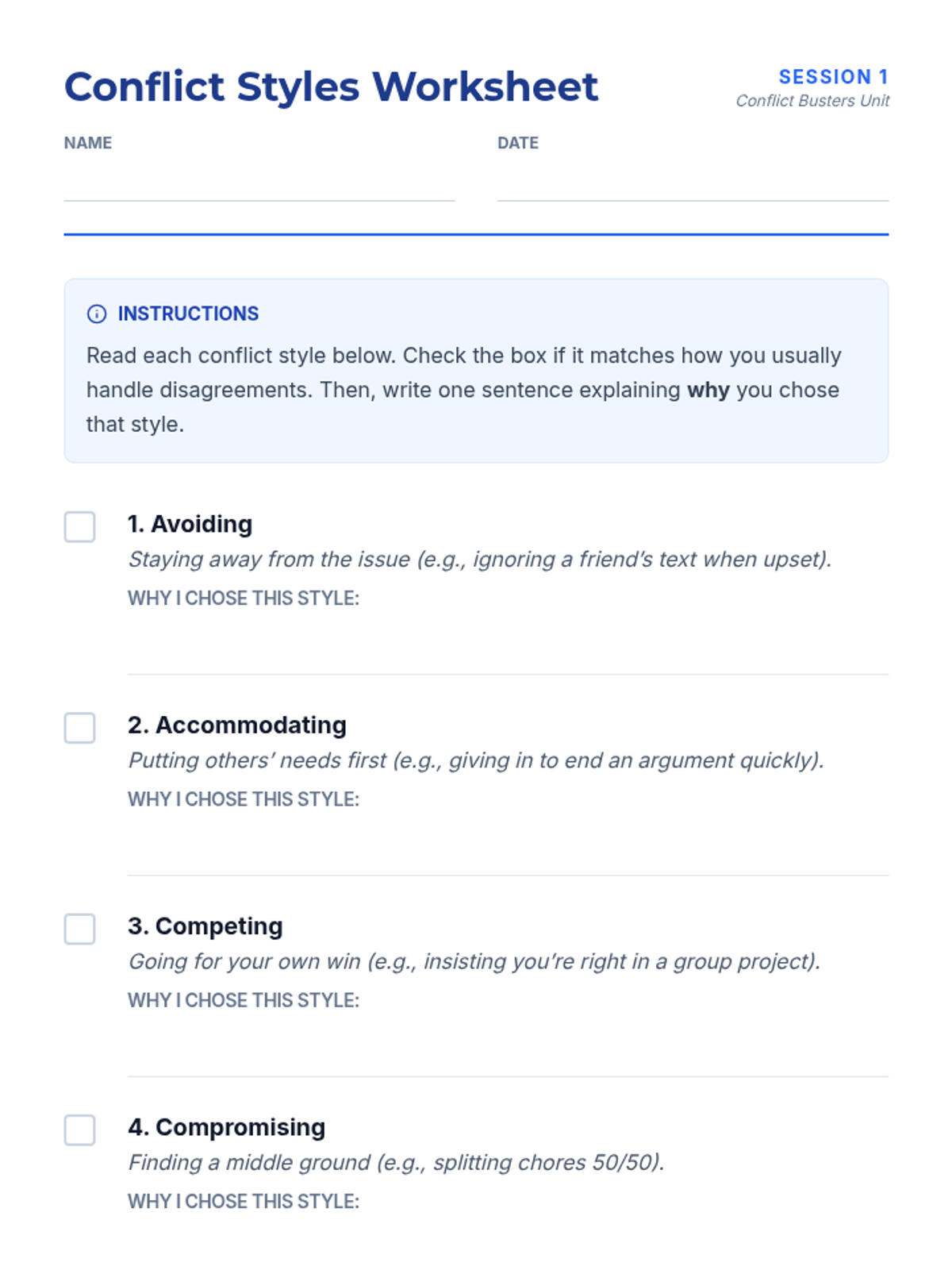
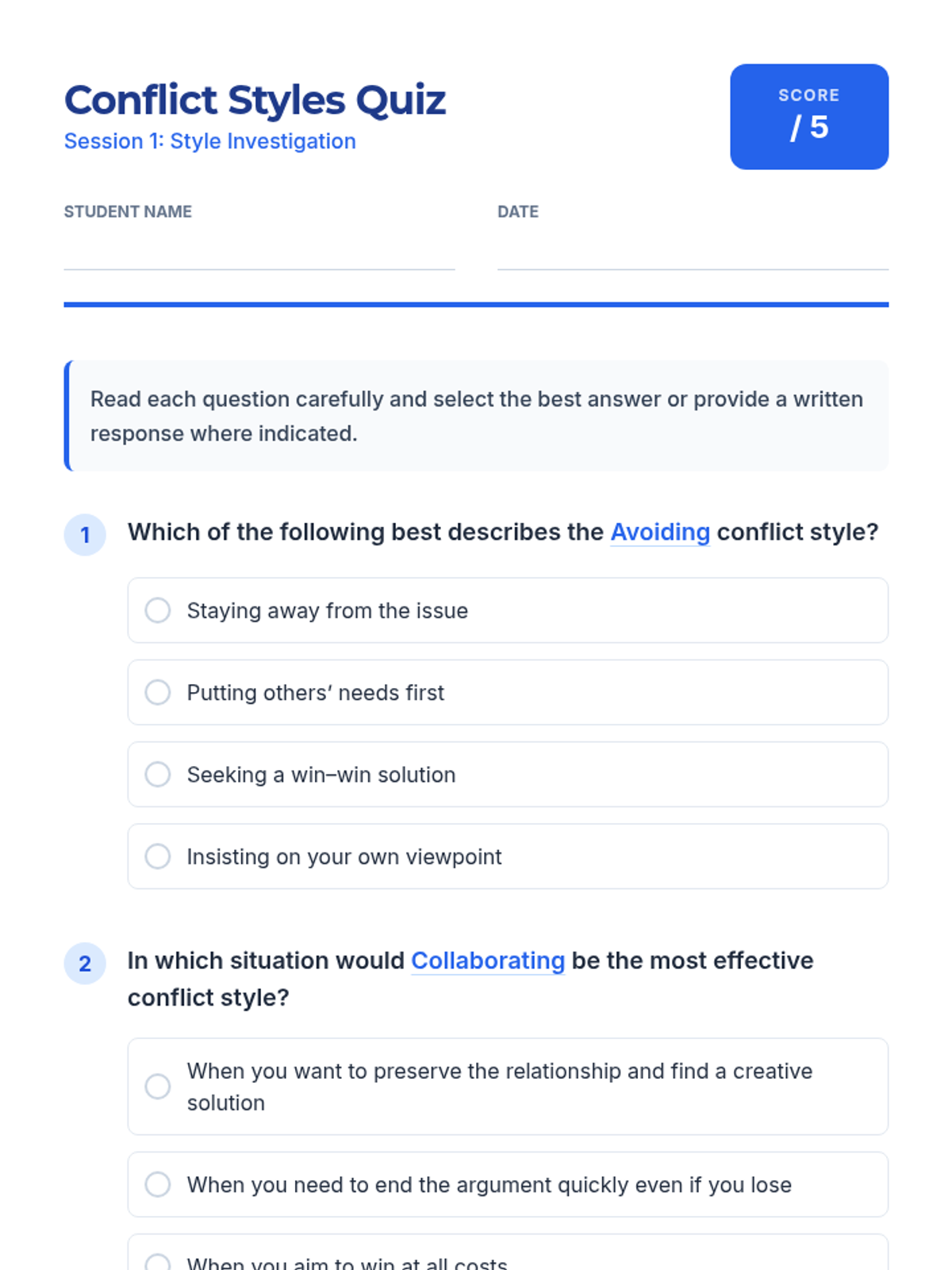
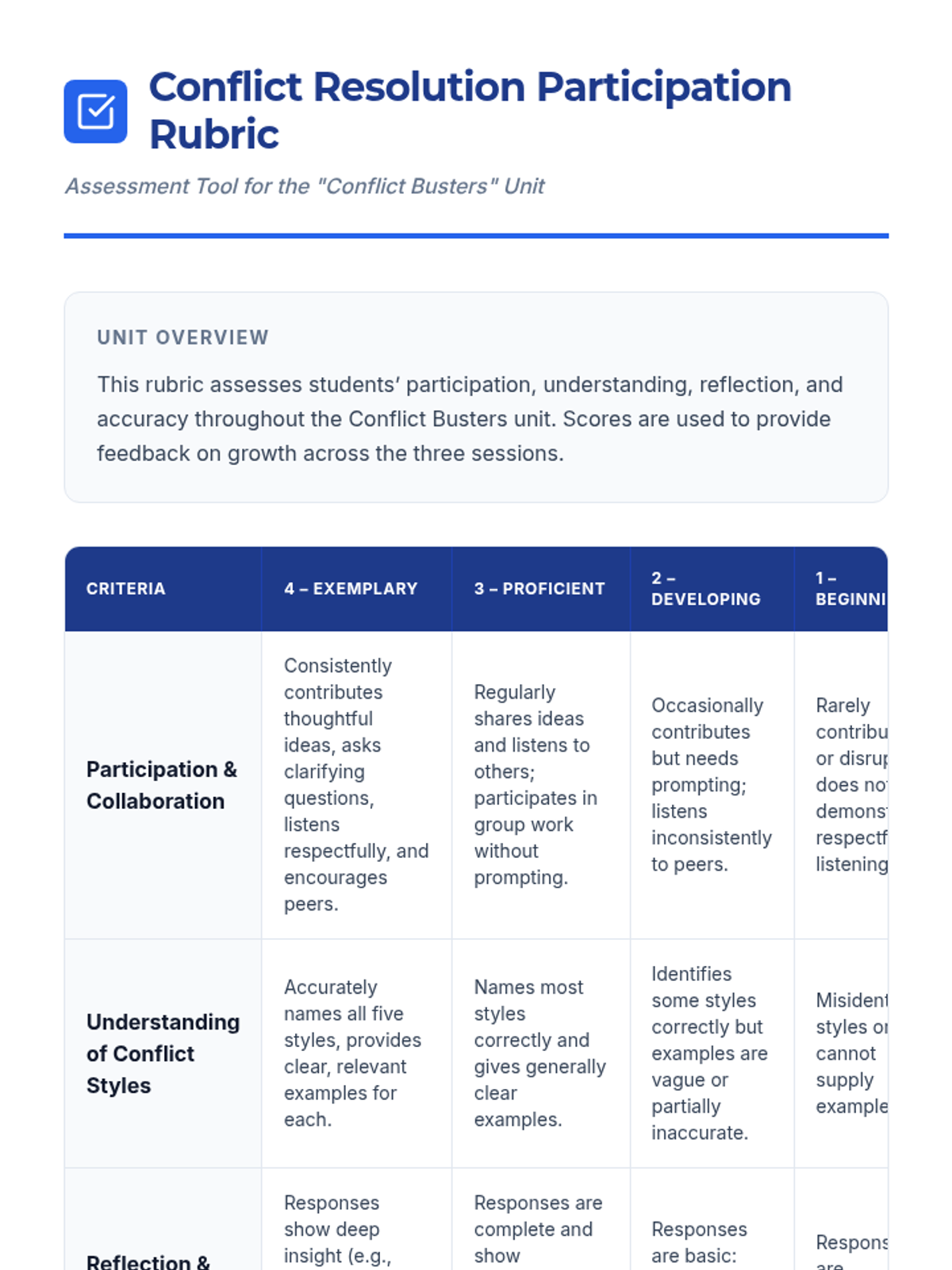
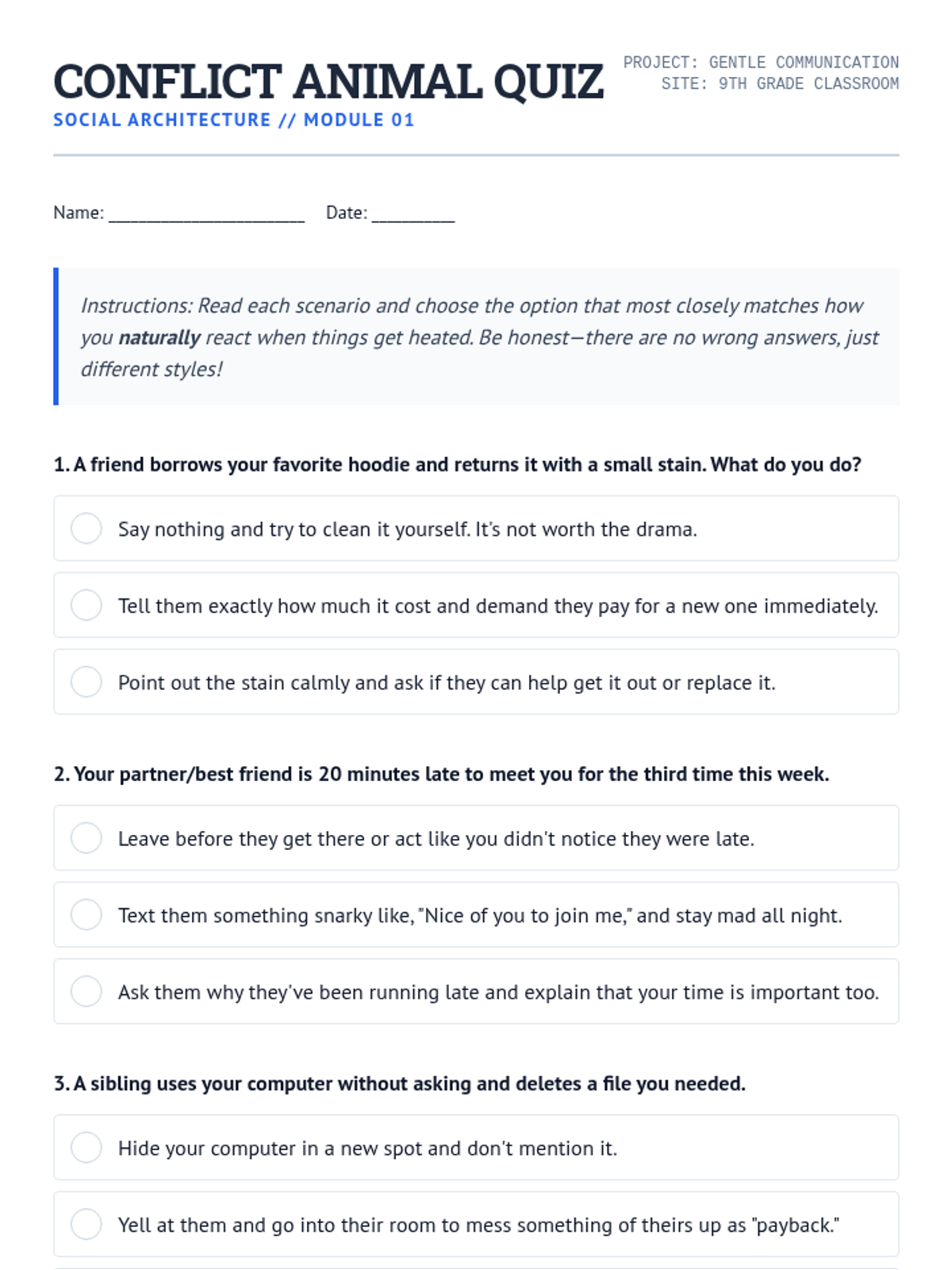
A 3-session mini-unit for 9th-grade students to develop conflict resolution skills, including identifying styles, practicing active listening, and applying negotiation strategies.
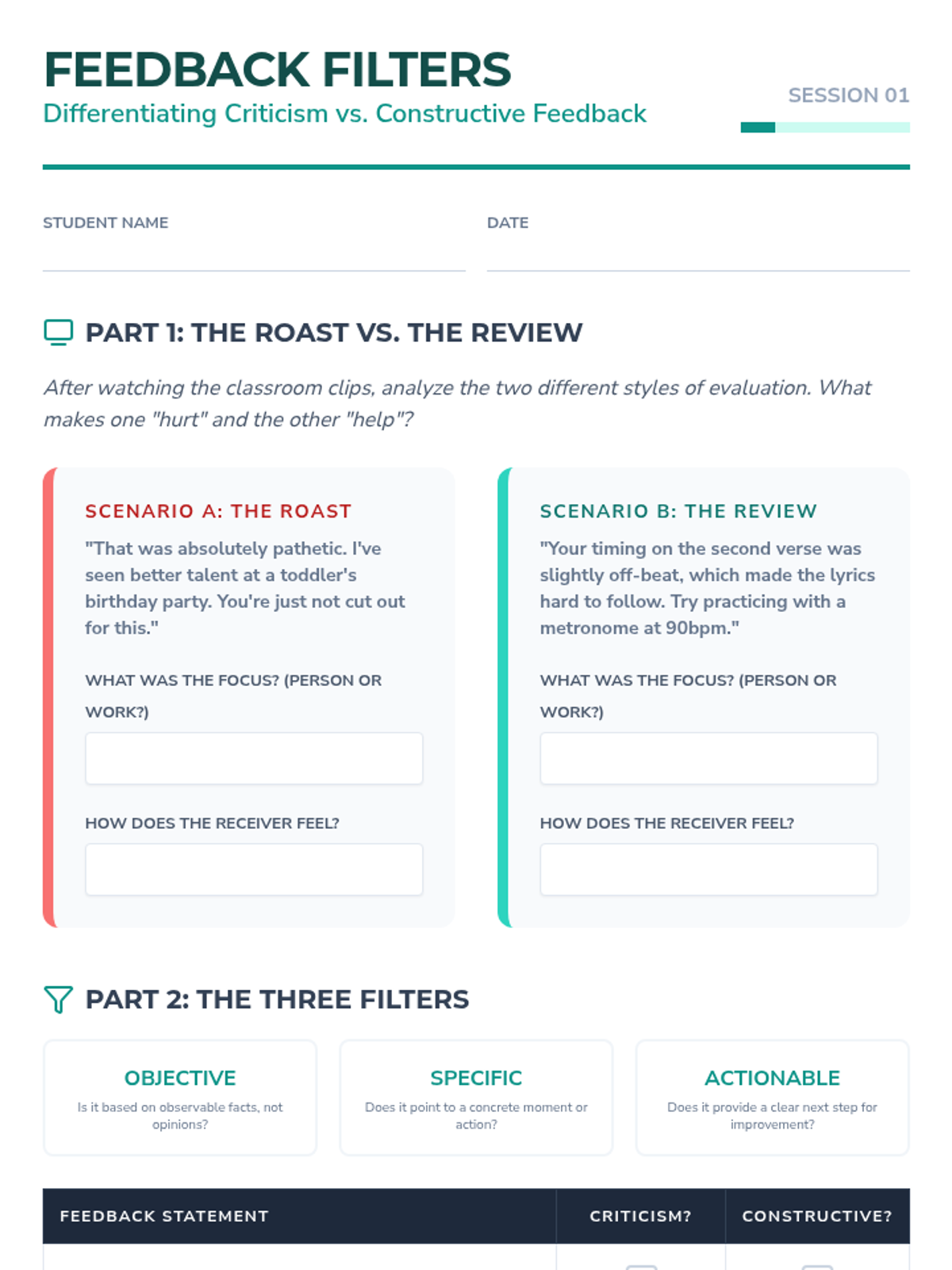
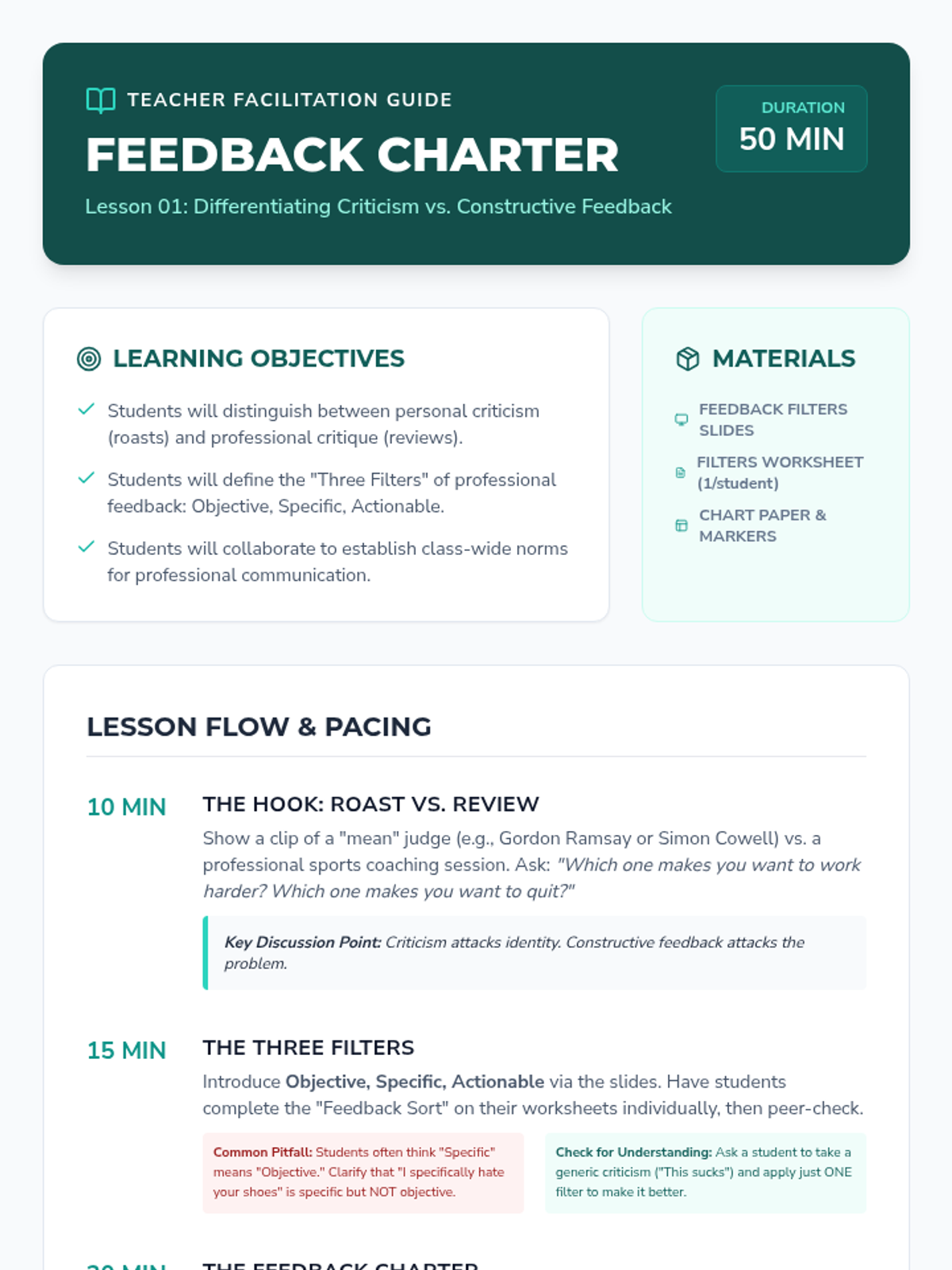
This sequence immerses students in the professional mechanics of giving and receiving evaluations, moving beyond simple peer review into workplace readiness. Students learn to differentiate personal criticism from professional critique, use the Situation-Behavior-Impact (SBI) model, and practice emotional regulation during performance simulations.
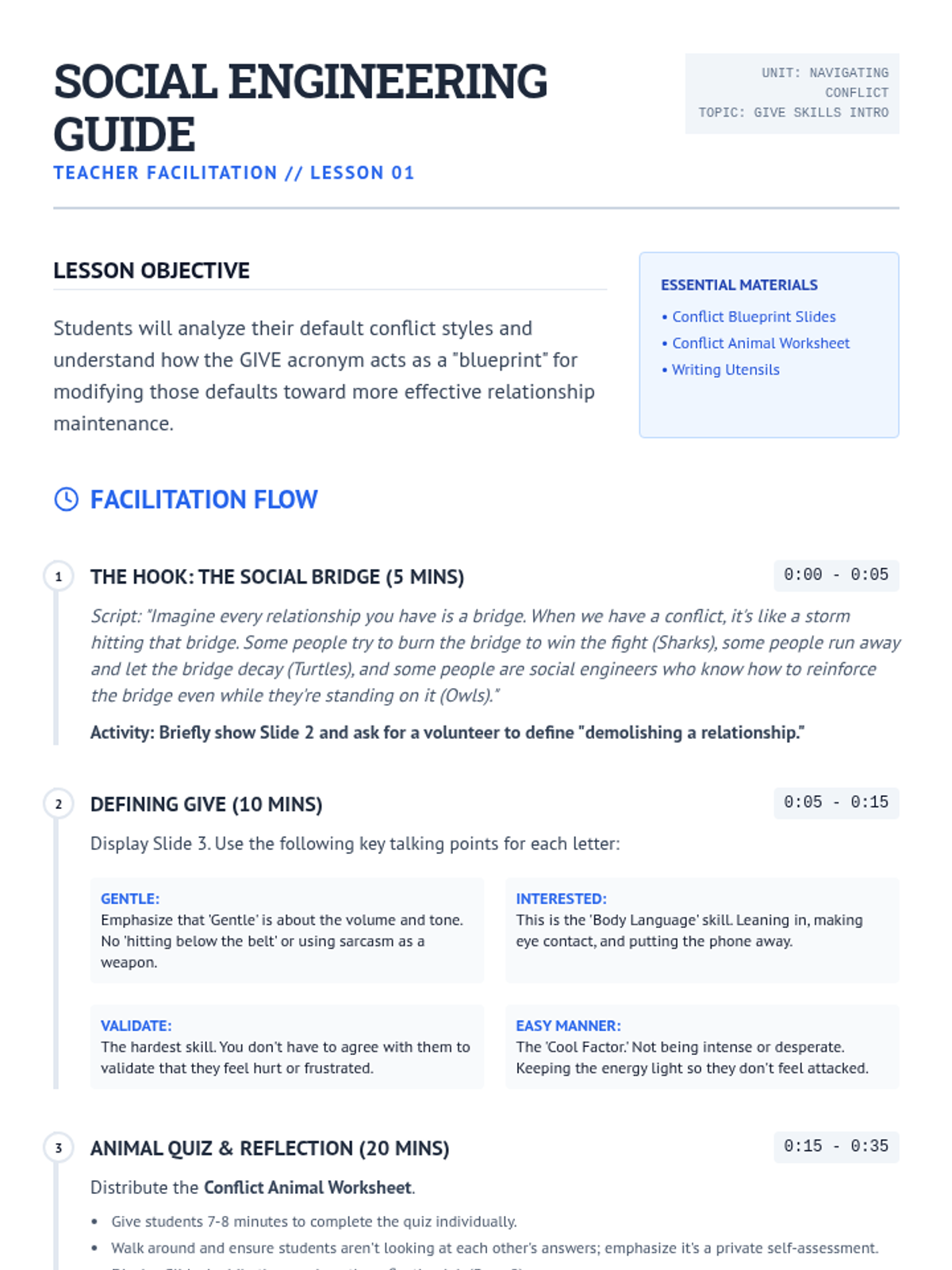
A 5-lesson unit for 9th graders focused on DBT 'GIVE' skills. Students move through increasingly difficult simulations to build muscle memory for maintaining relationships during high-pressure conflicts.
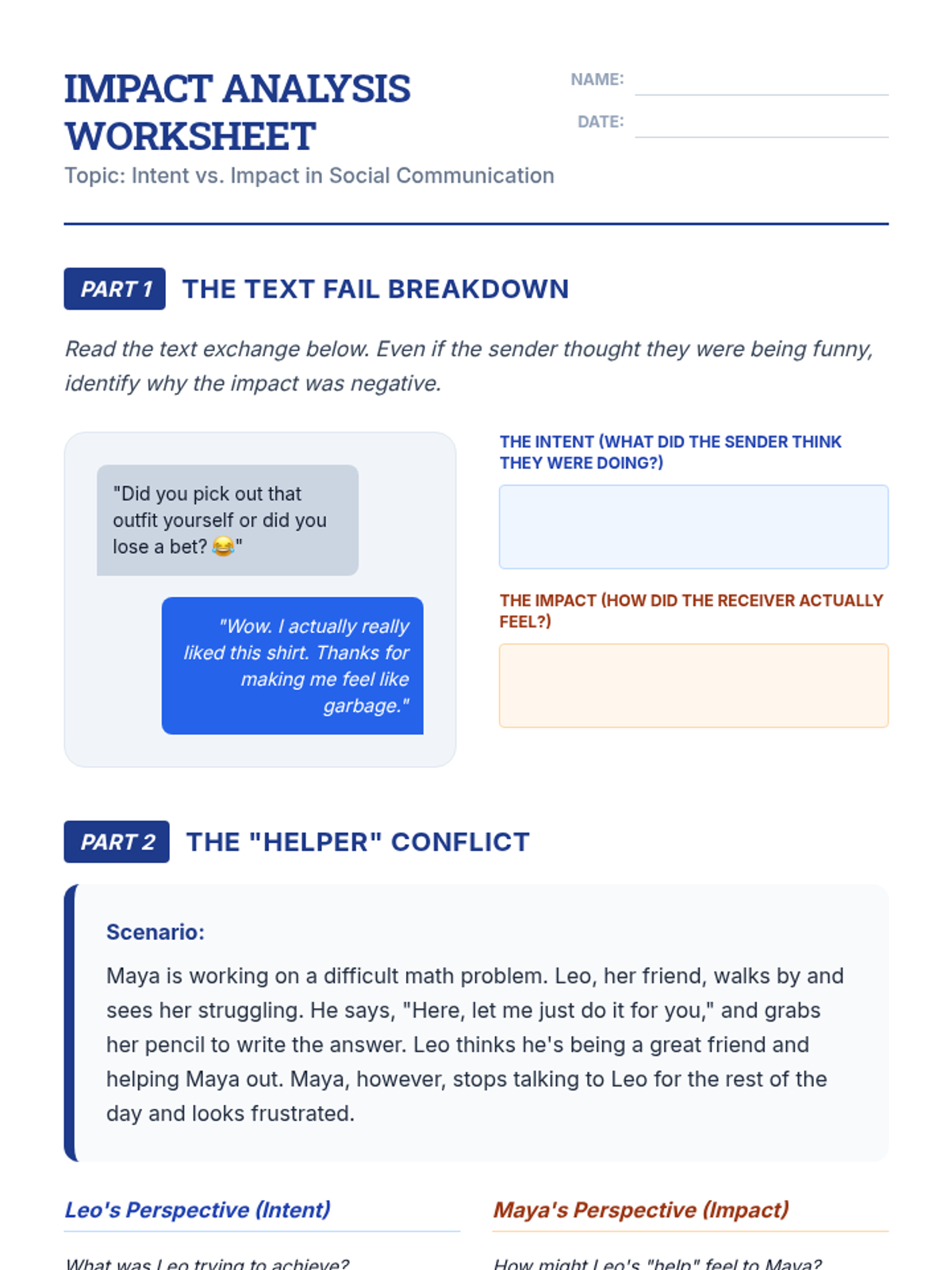
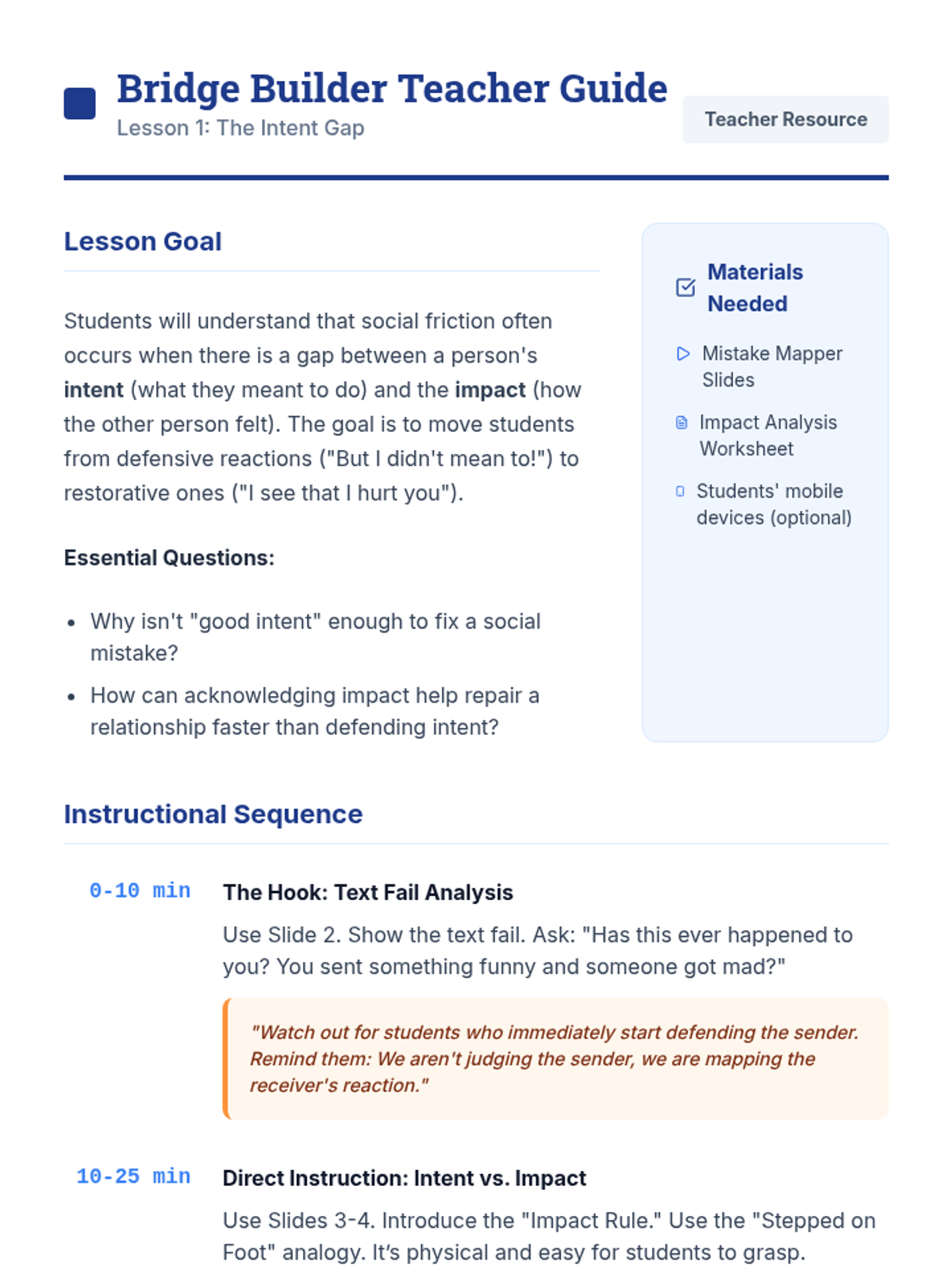
A 5-lesson sequence for 9th-grade social communication focusing on perspective-taking, digital literacy, and restorative solutions to resolve social conflicts. Students learn to navigate intent vs. impact, digital nuances, and complex group dynamics.
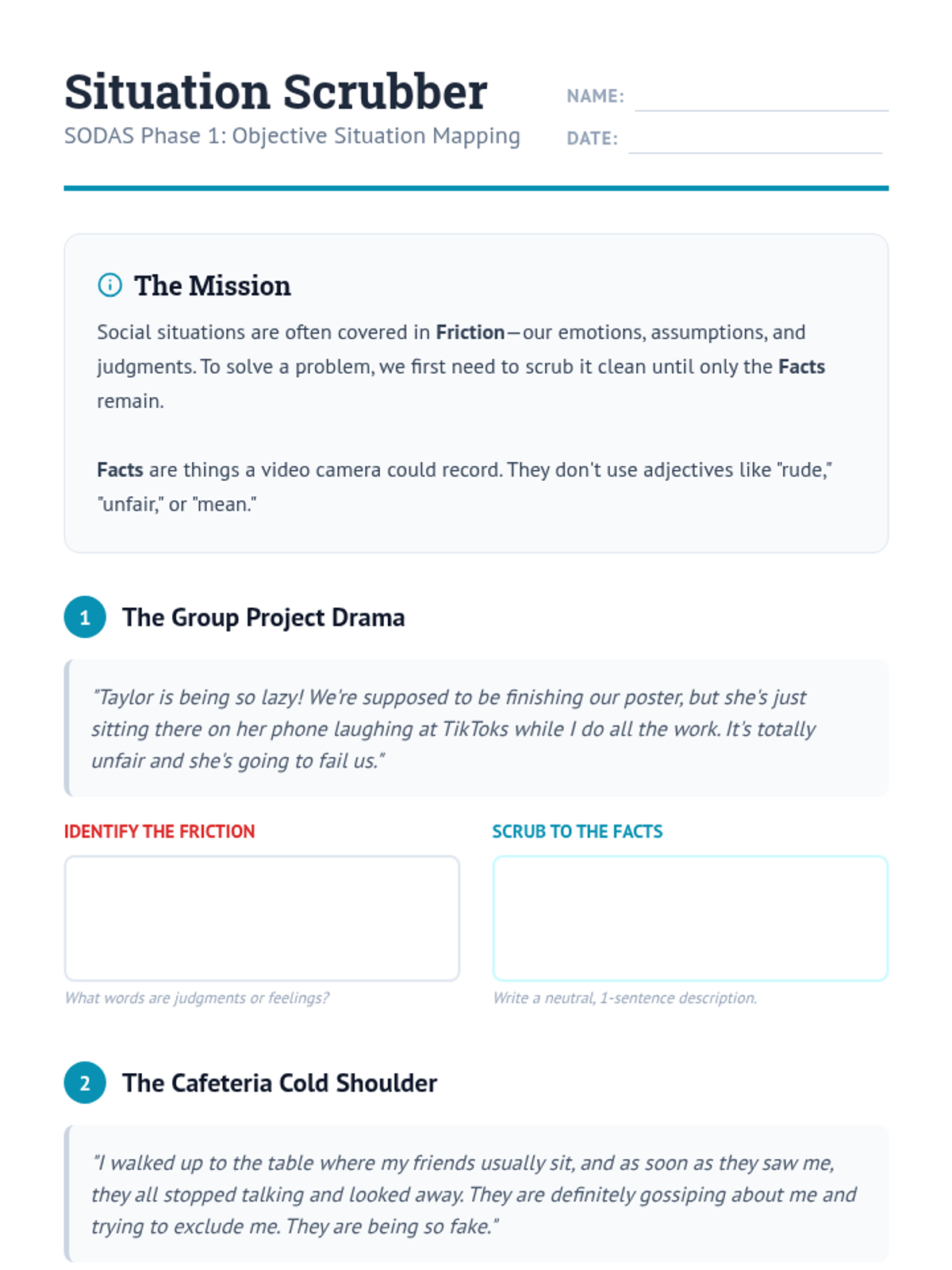
A 5-lesson sequence for 9th-grade students focusing on the SODAS (Situation, Options, Disadvantages, Advantages, Solution) framework for social conflict resolution. Students learn to strip away emotional bias, generate multiple responses, weigh consequences, and execute social strategies effectively.
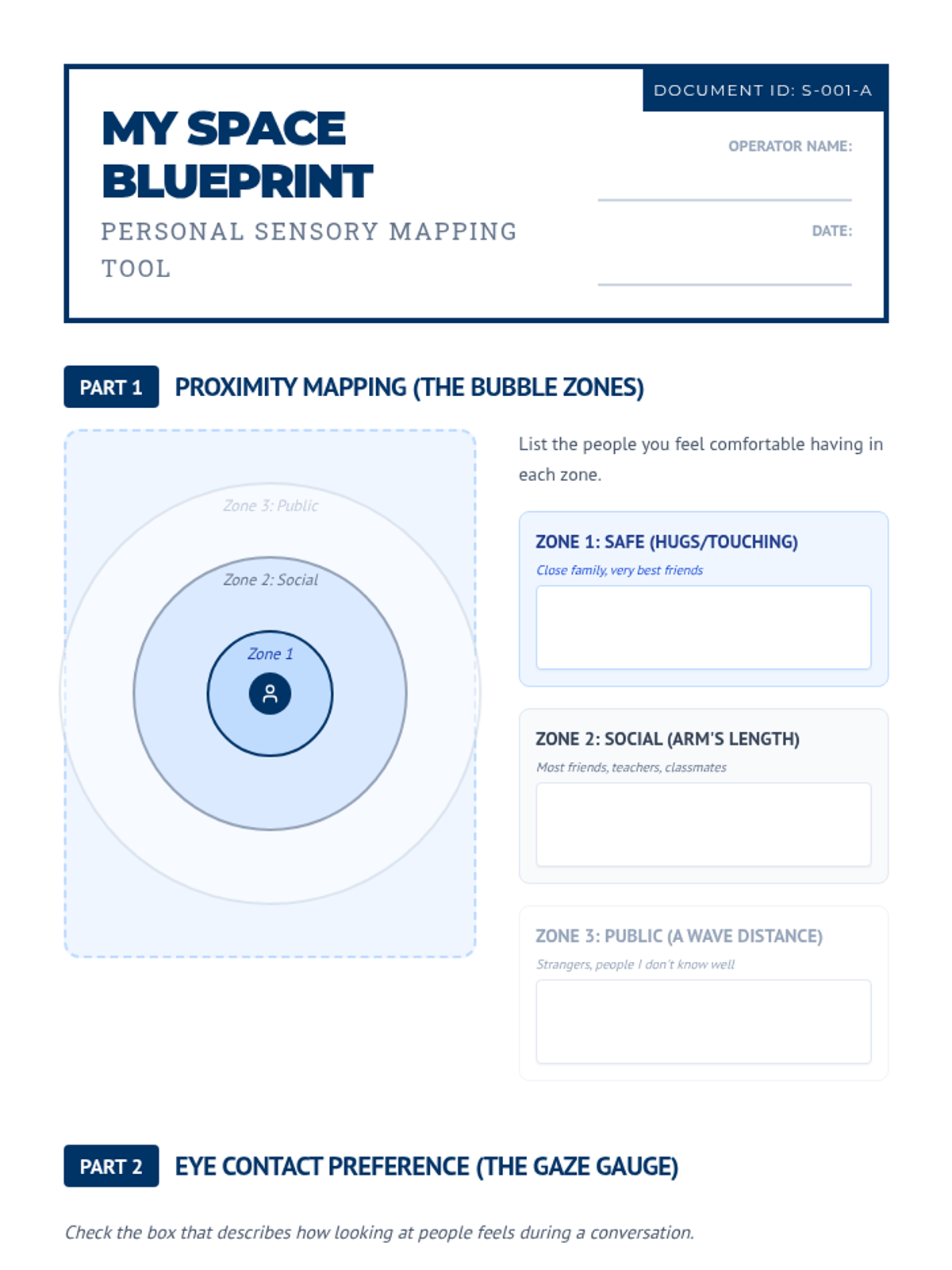
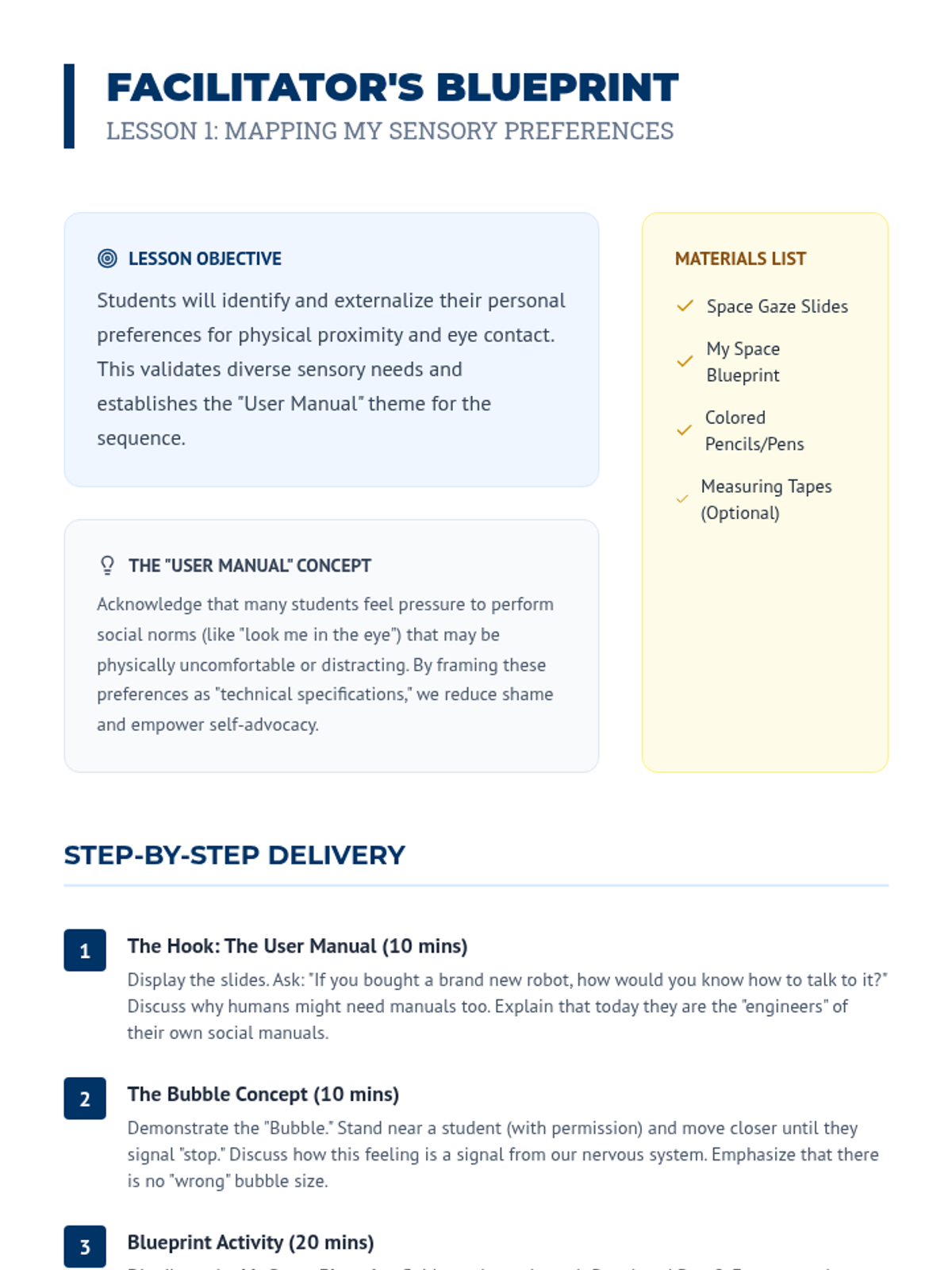
A neurodiversity-affirming sequence for 6th graders to explore their personal space needs and eye contact preferences. Students learn to advocate for their own boundaries while respecting the diverse sensory and cultural needs of others through a 'User Manual' theme.
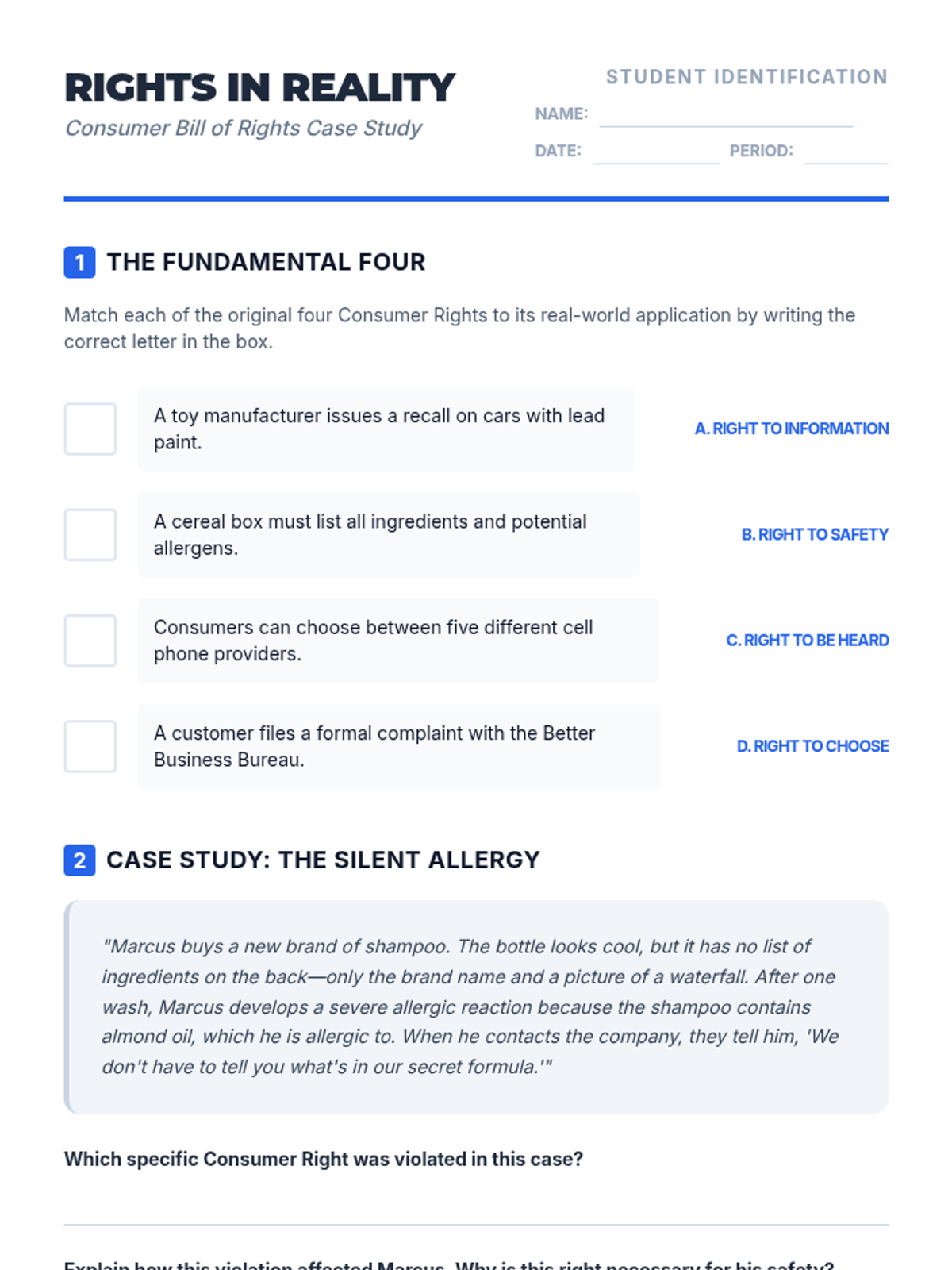
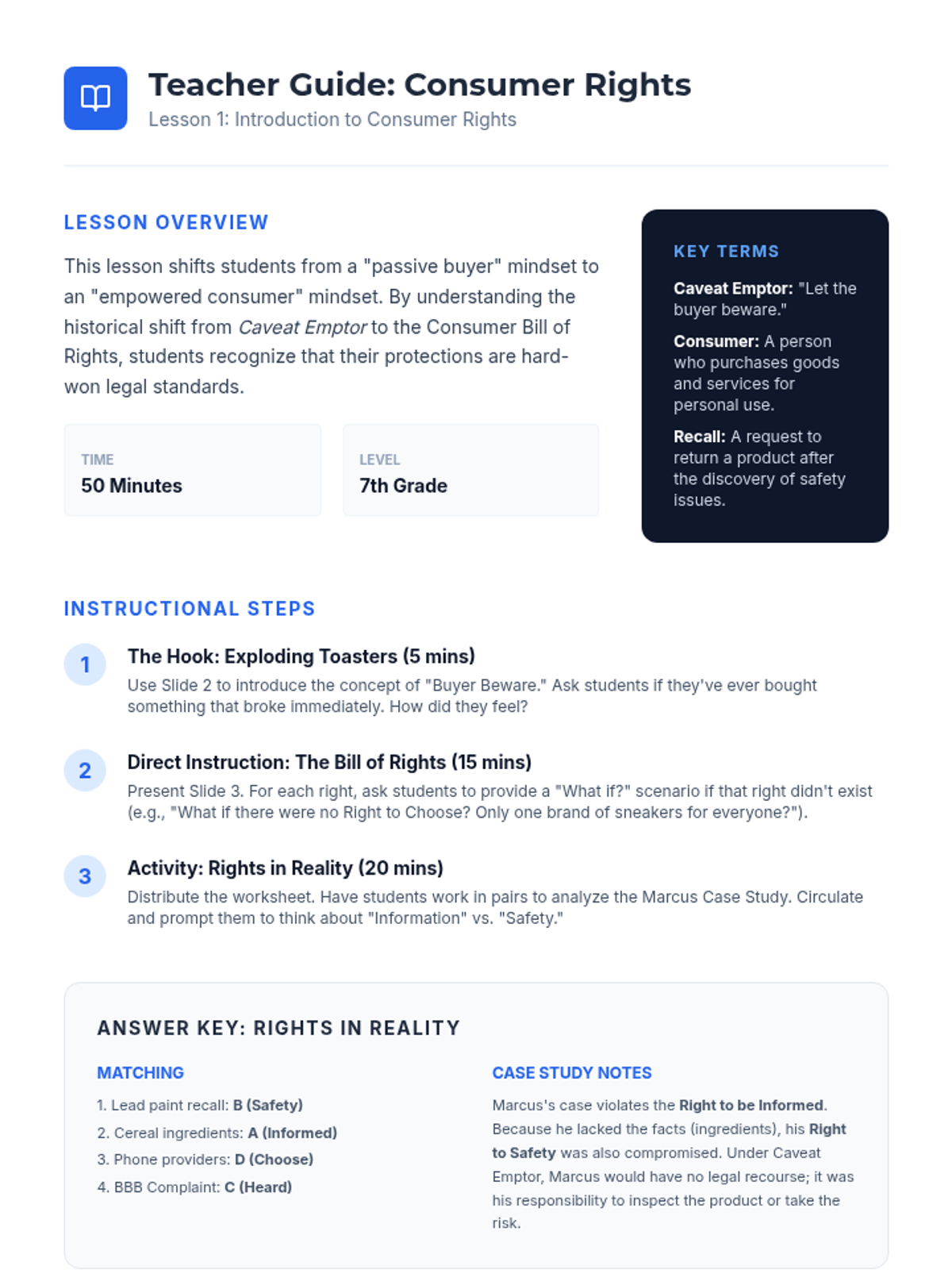
A comprehensive unit on consumer rights, warranties, and the art of professional dispute resolution. Students learn to navigate the legal and ethical framework of the marketplace through case studies, role-plays, and writing workshops.
An 8th-grade social communication sequence focusing on assertive communication, conflict analysis, and negotiation. Students transition from reactive behavior to strategic social decision-making during interpersonal challenges.
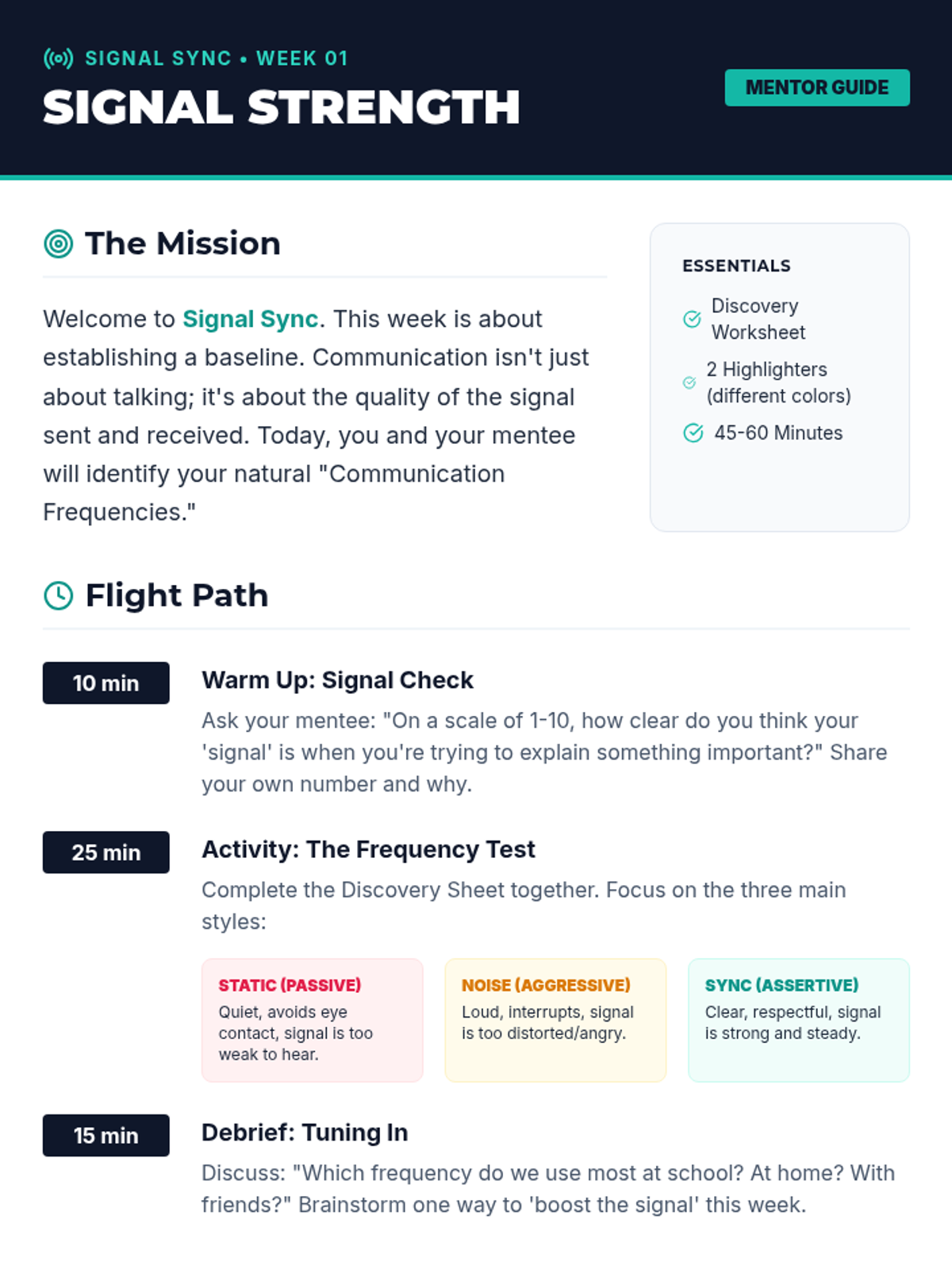
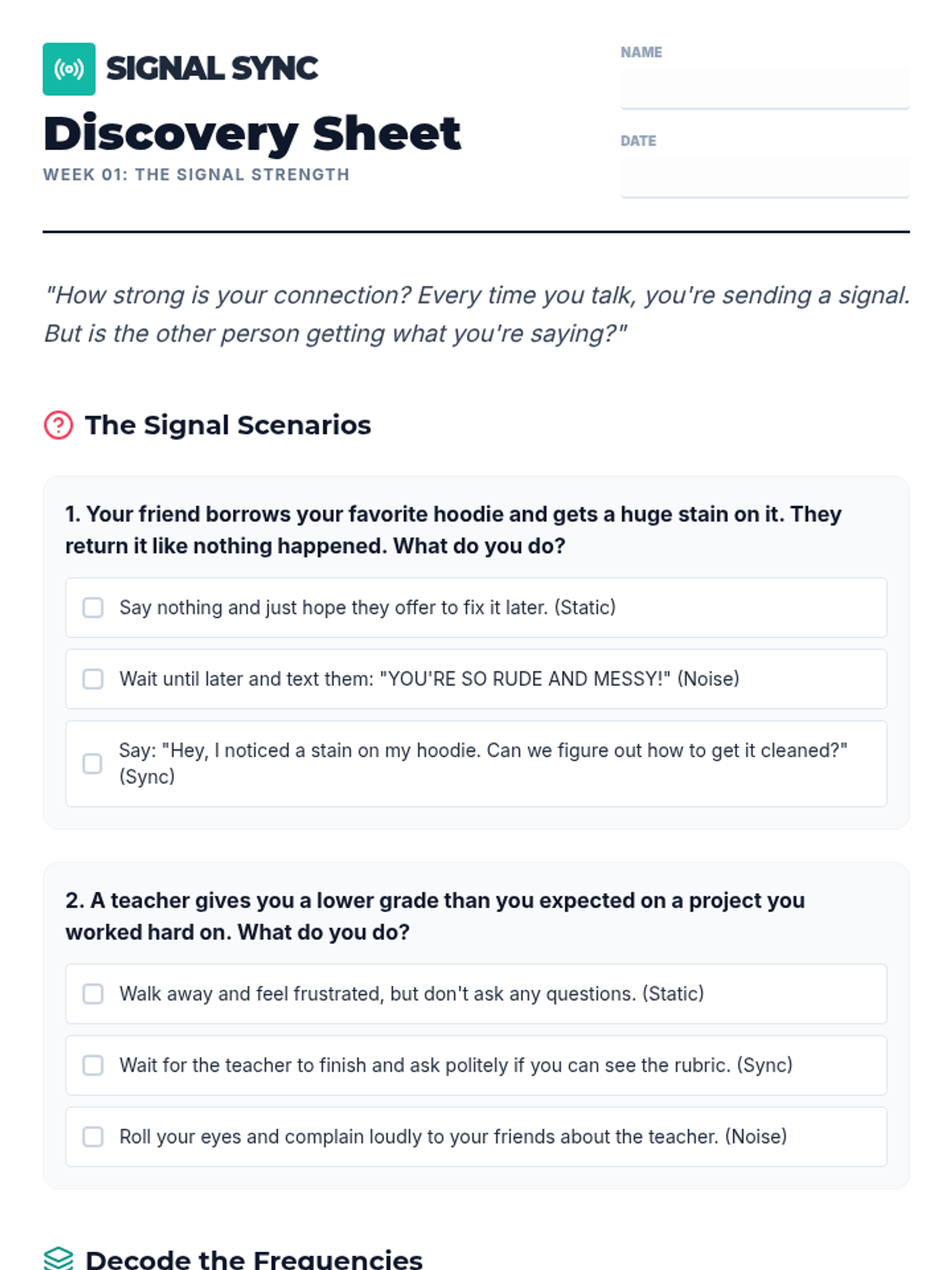
A 10-week comprehensive curriculum for mentors and mentees focusing on building effective communication habits and mastering conflict resolution through the 'Signal Sync' framework.
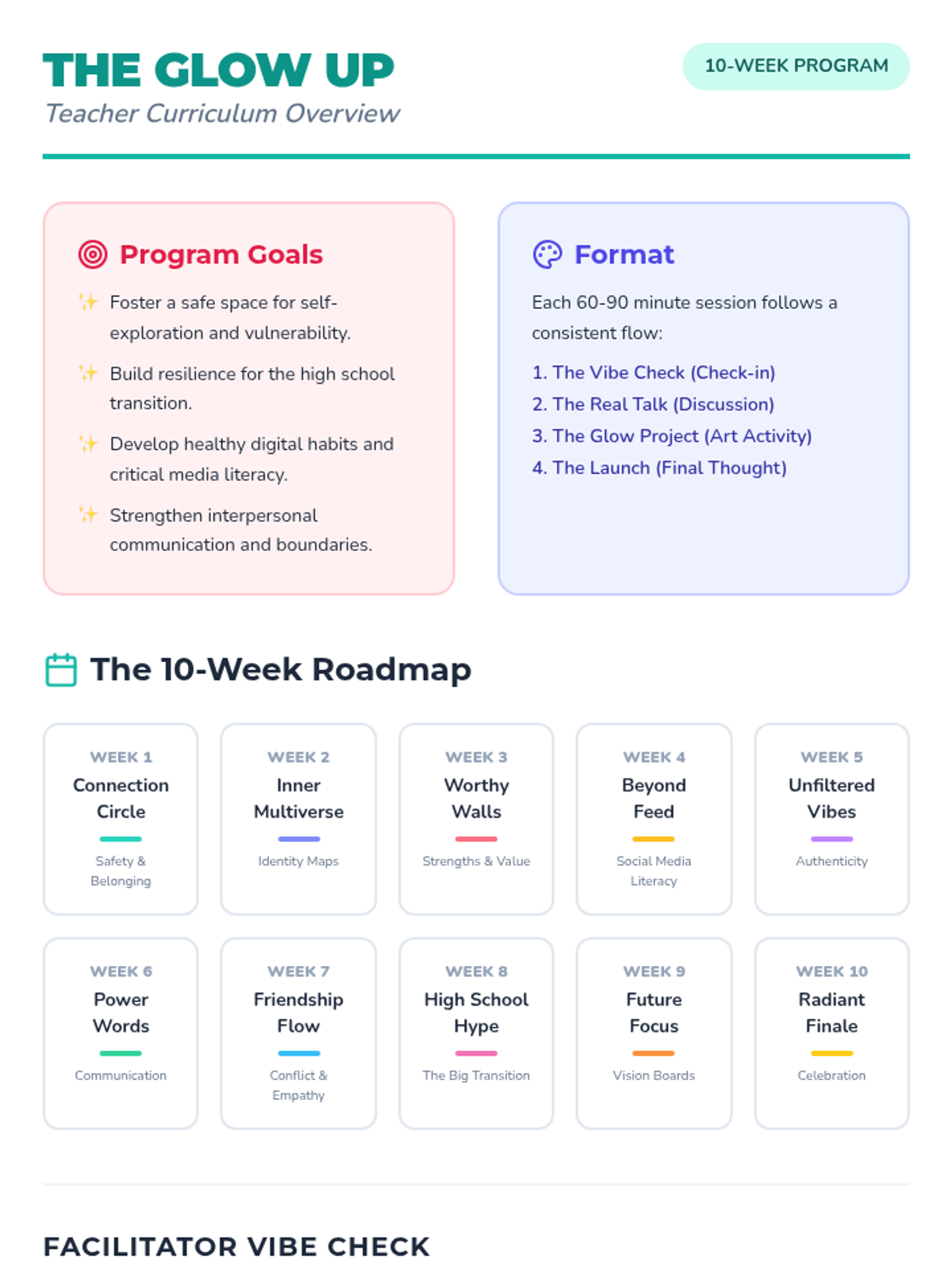
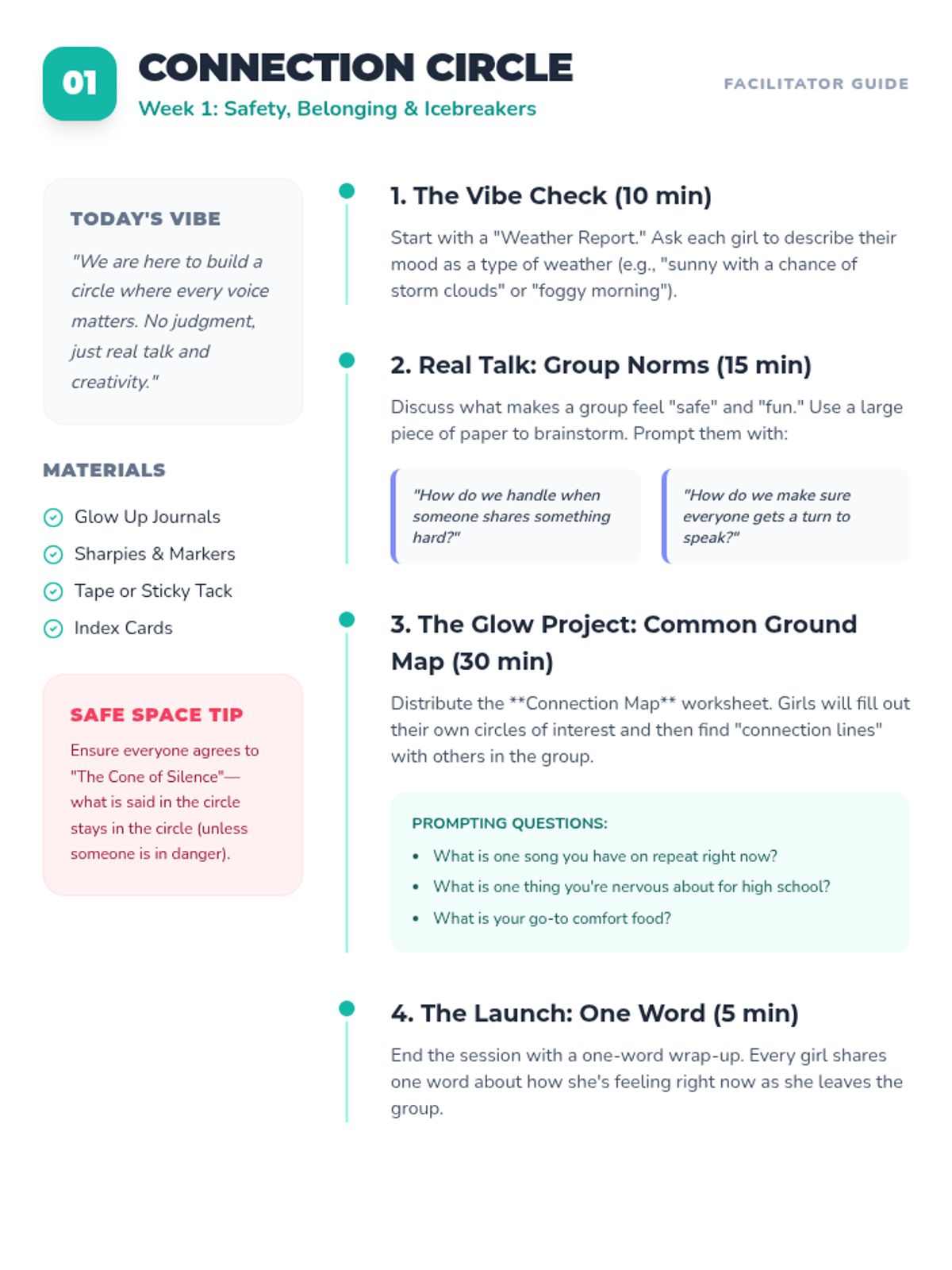
A 10-week empowerment and transition program for 8th-grade girls, focusing on self-esteem, identity, social media, and communication through art and discussion.
A 6-week social skills curriculum designed for high schoolers to master conflict resolution, verbal de-escalation, and restorative communication through role-play and self-reflection.
A comprehensive small group counseling series for high school students focusing on essential socio-emotional and life skills including stress management, future planning, healthy relationships, self-advocacy, and digital well-being.
An 8-week personal development and career exploration program designed for high school girls, focusing on identity, emotional intelligence, healthy relationships, and professional growth in a digital age.
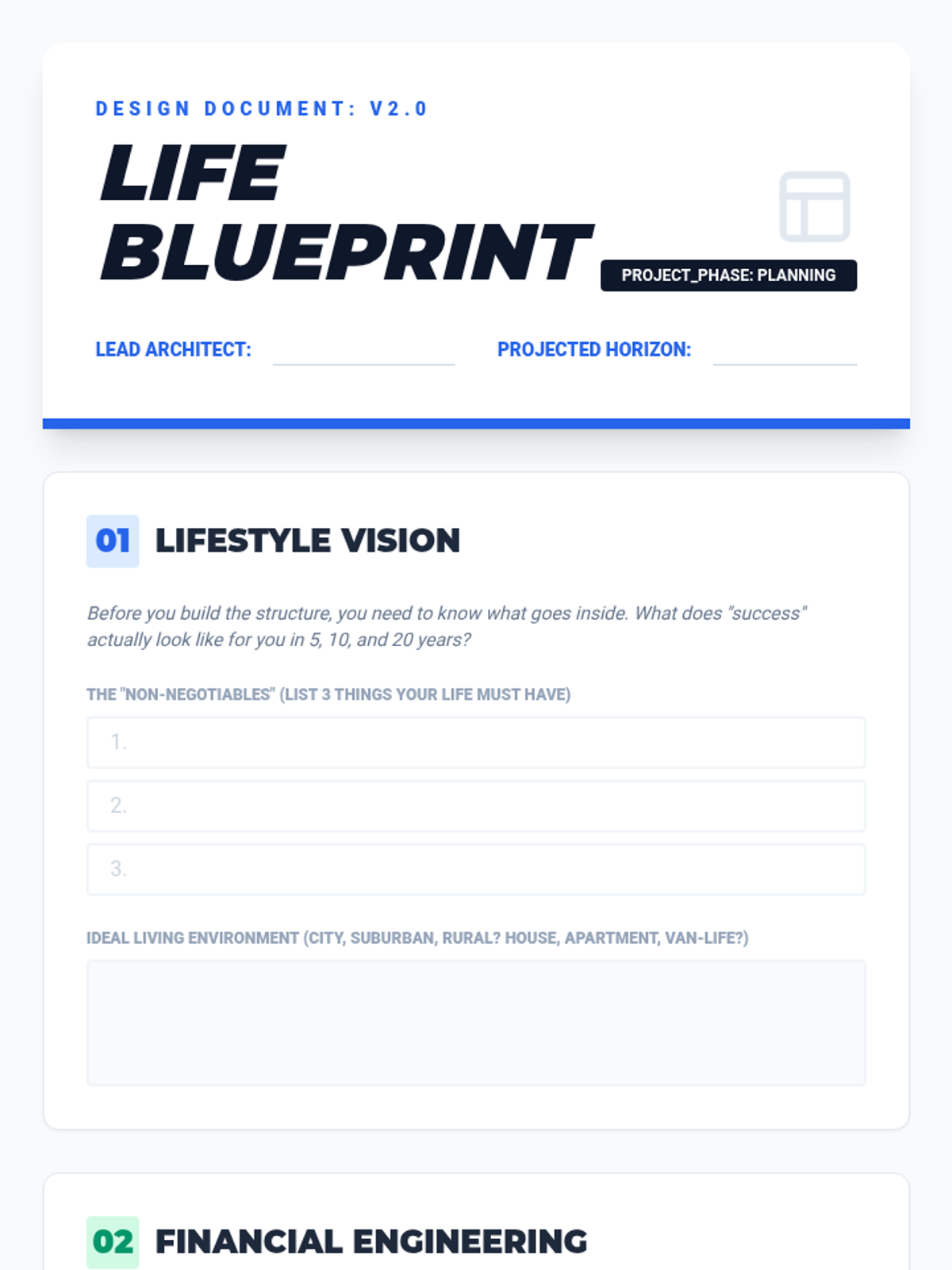
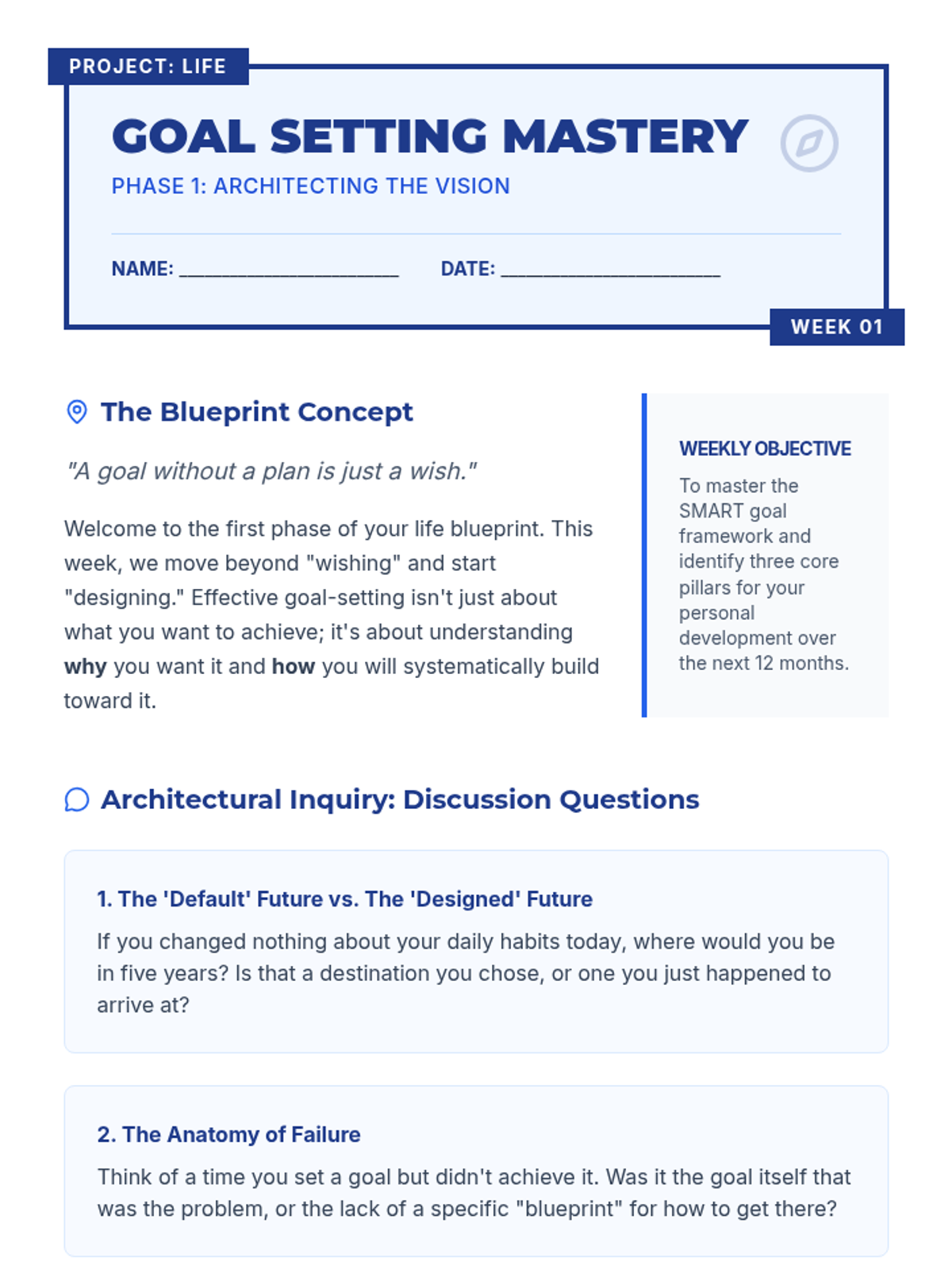
A comprehensive 9-week curriculum designed to equip young adults with essential skills for personal well-being, effective communication, and healthy relationships. This course uses a 'blueprint' theme to help students architect their own futures through goal-setting, stress management, and interpersonal growth.
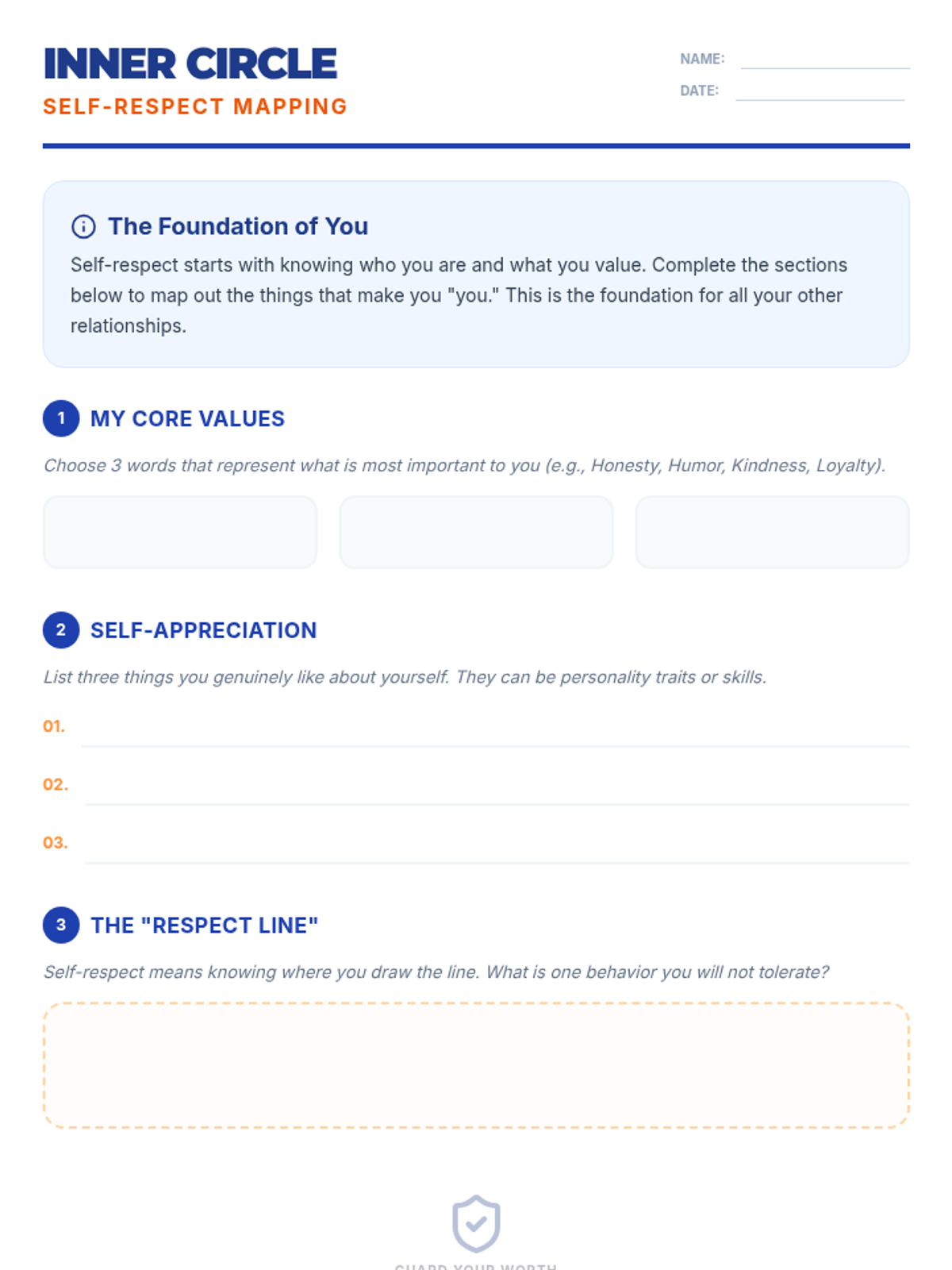
A four-week workshop series for high school students focused on building supportive relationships, identifying healthy behaviors, and fostering self-respect.
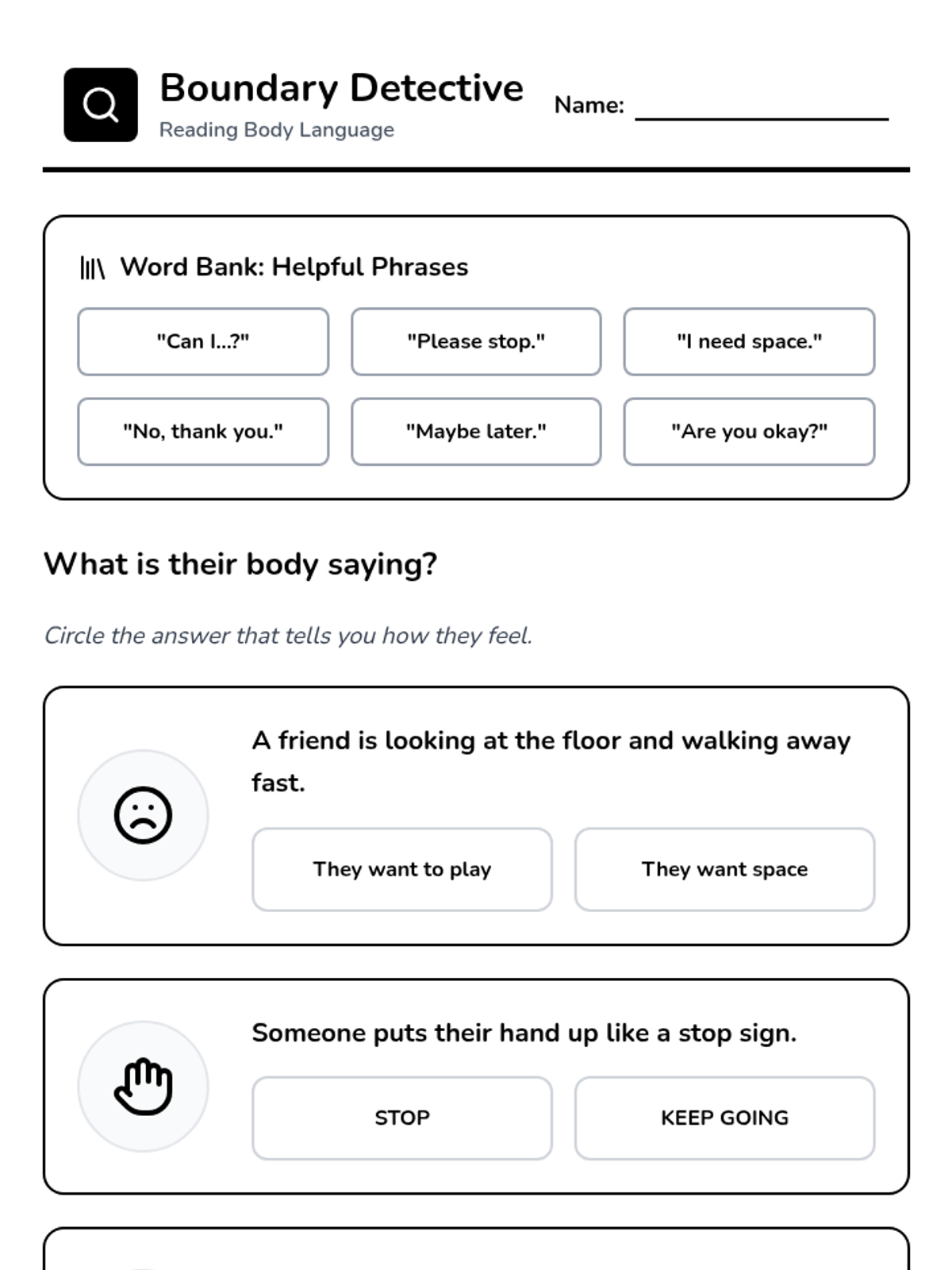
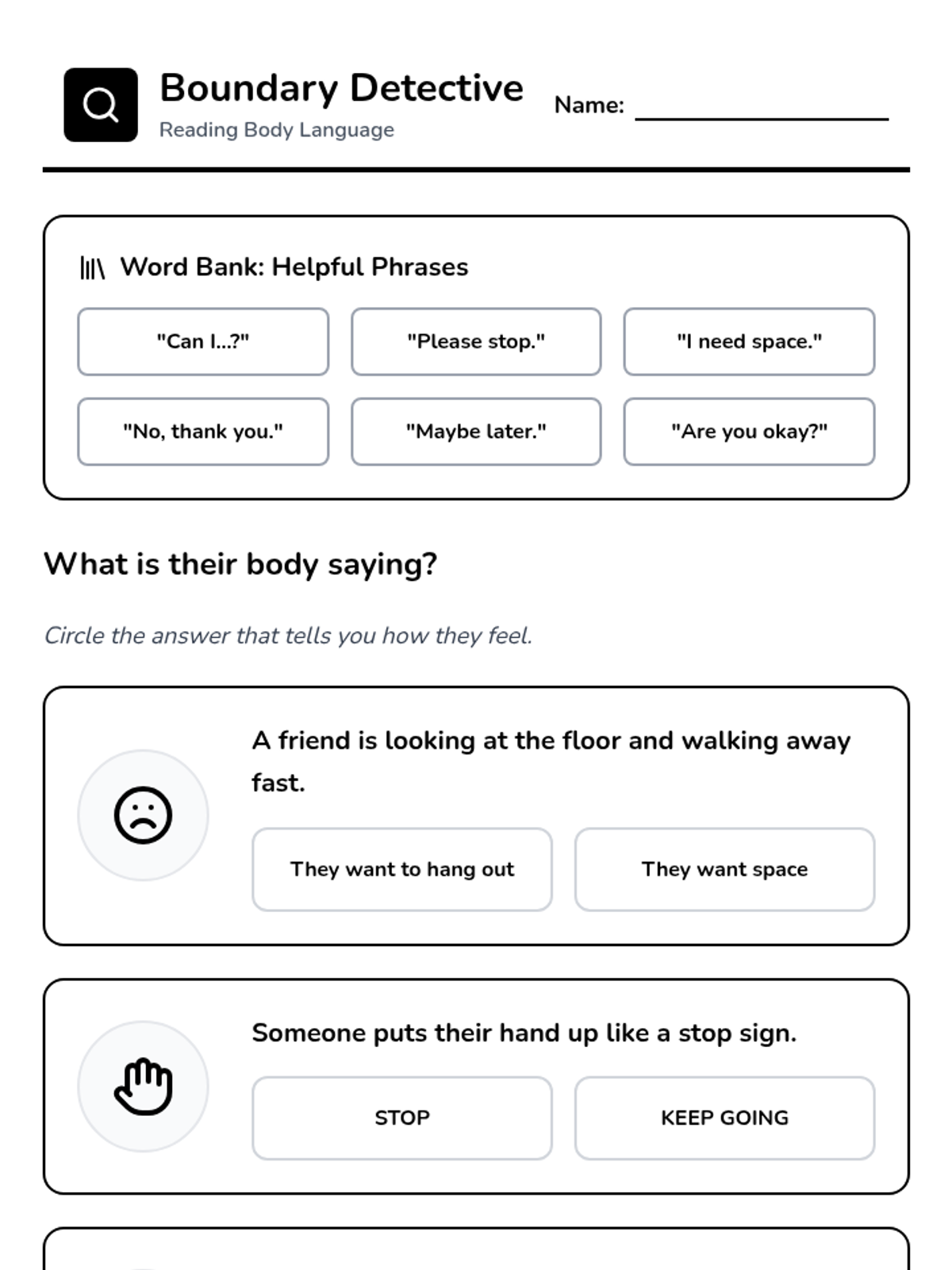
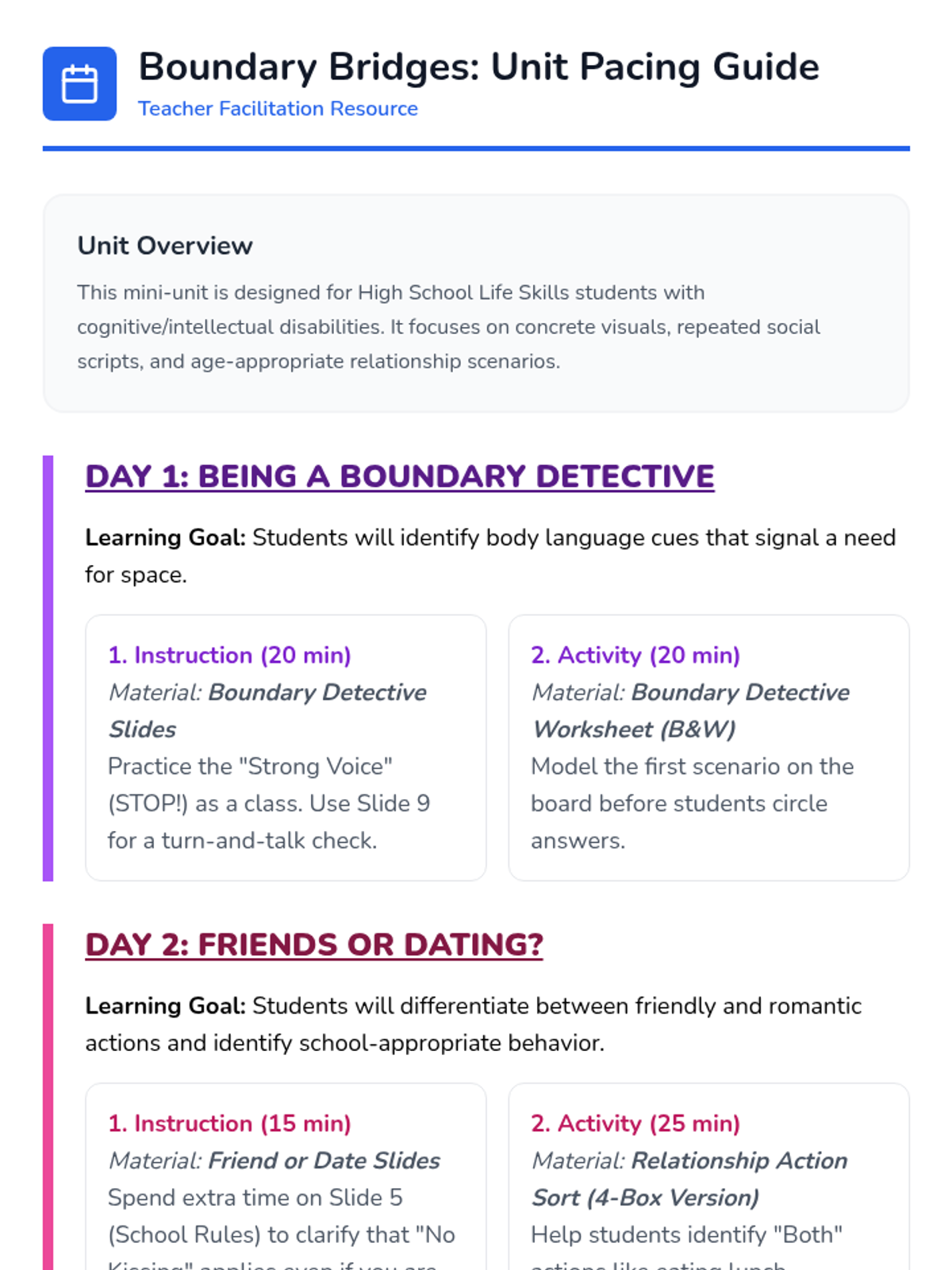
A comprehensive mini-unit for high school Life Skills students on personal boundaries, specifically focusing on the difference between friendships and romantic relationships, and how to respect the word 'No'.
This sequence addresses the interpersonal dynamics of trafficking, focusing on healthy boundaries and the specific 'Romeo' or 'Boyfriend' coercion tactics often used against teens. Students will engage in workshops to practice assertiveness and recognize the difference between affection and control.
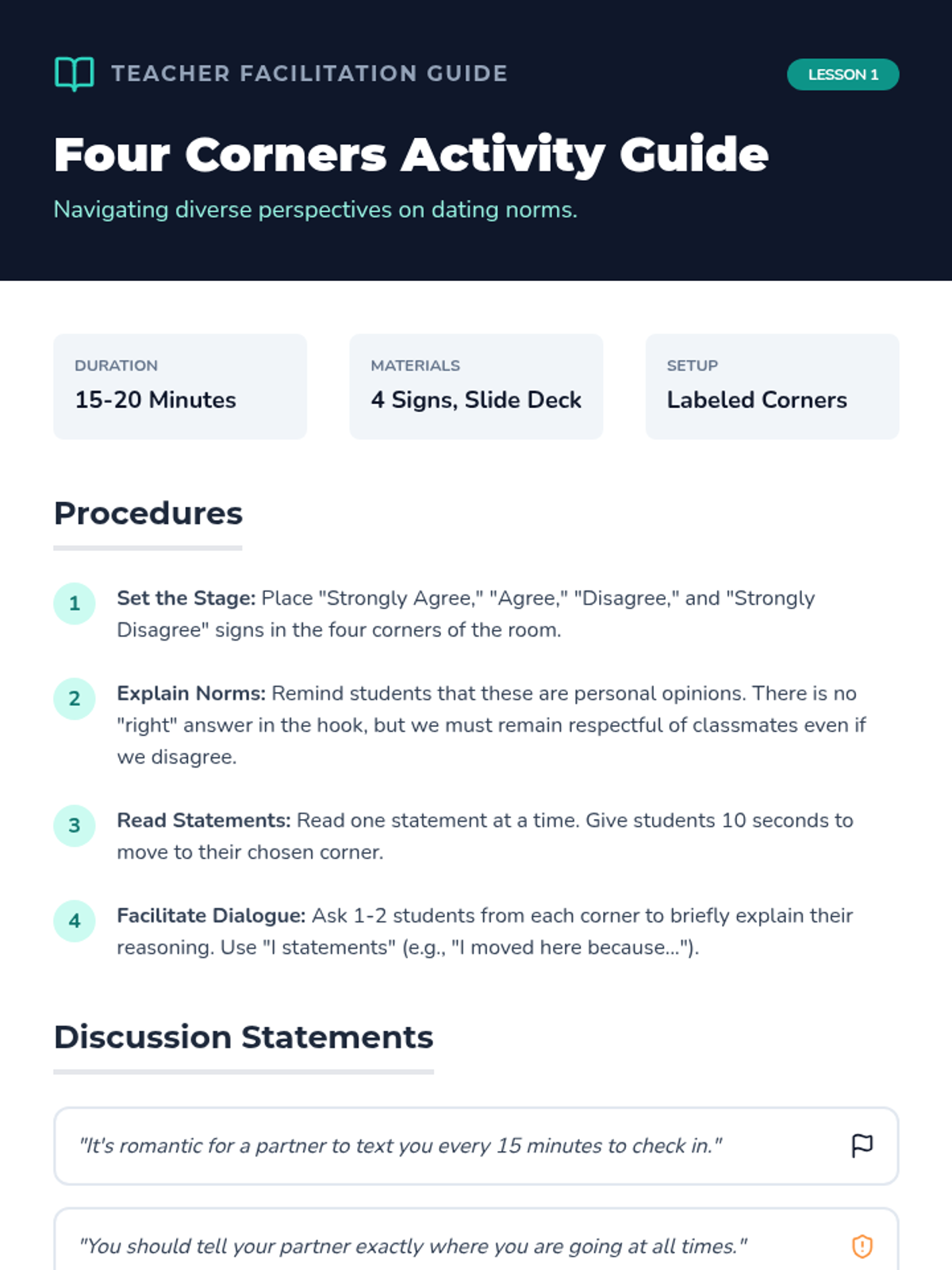
A comprehensive unit for 7th-grade students to identify healthy vs. unhealthy romantic relationship indicators, core values, and personal boundaries. Students will develop a 'Relationship Radar' to navigate social dynamics with emotional safety and autonomy.
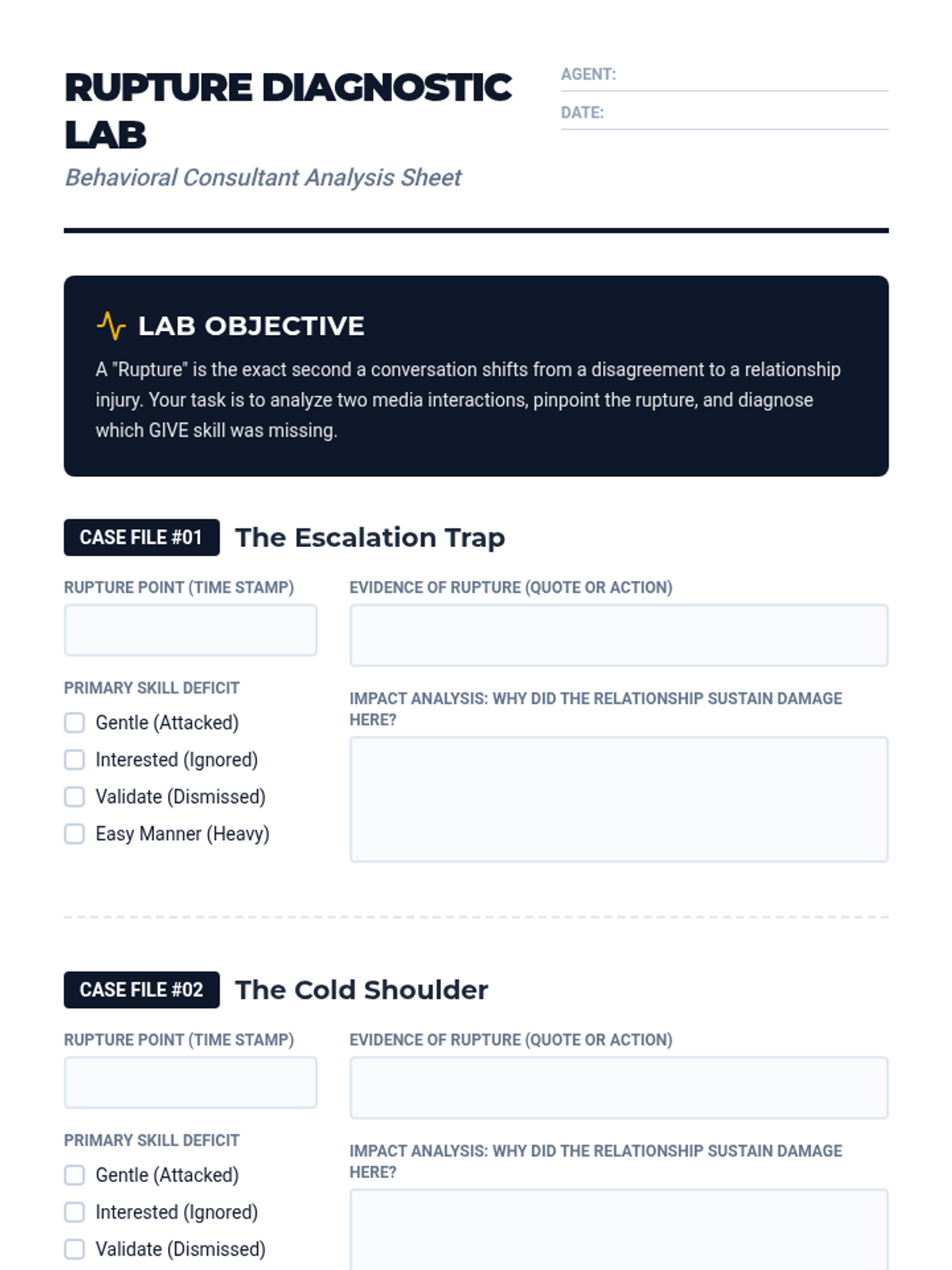
A comprehensive 10th-grade sequence where students act as behavioral consultants to analyze and repair relationship dynamics using the GIVE framework. Students move from identifying communication failures in media to auditing aggression in celebrity rants and finally rewriting scripts to demonstrate healthy relationship skills.
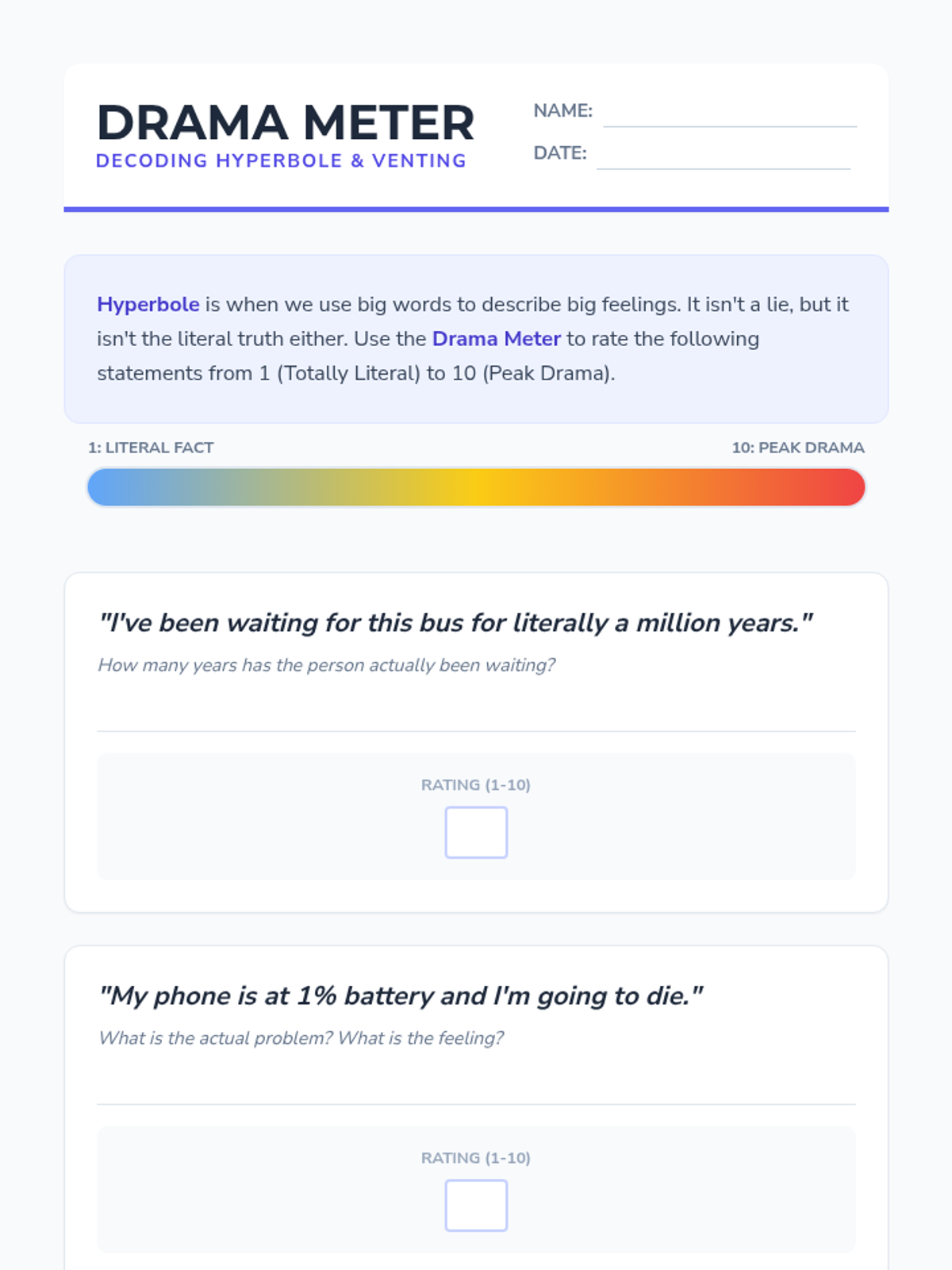
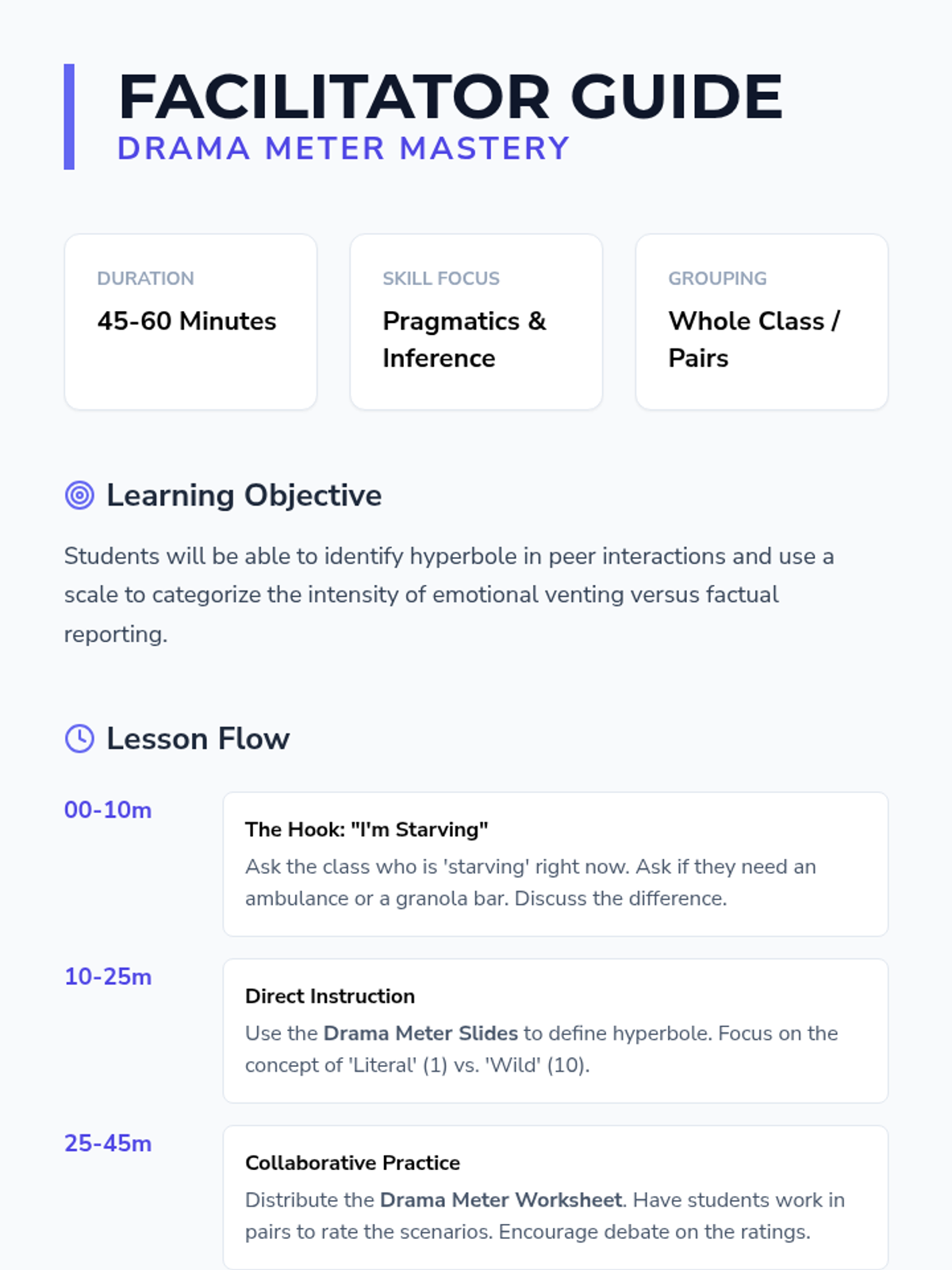
A high-school level sequence focusing on social communication through the lens of modern slang, hyperbole, and digital nuances. This unit helps students decode the figurative language used in peer groups, dating, and texting to improve social-emotional processing and relationship management.
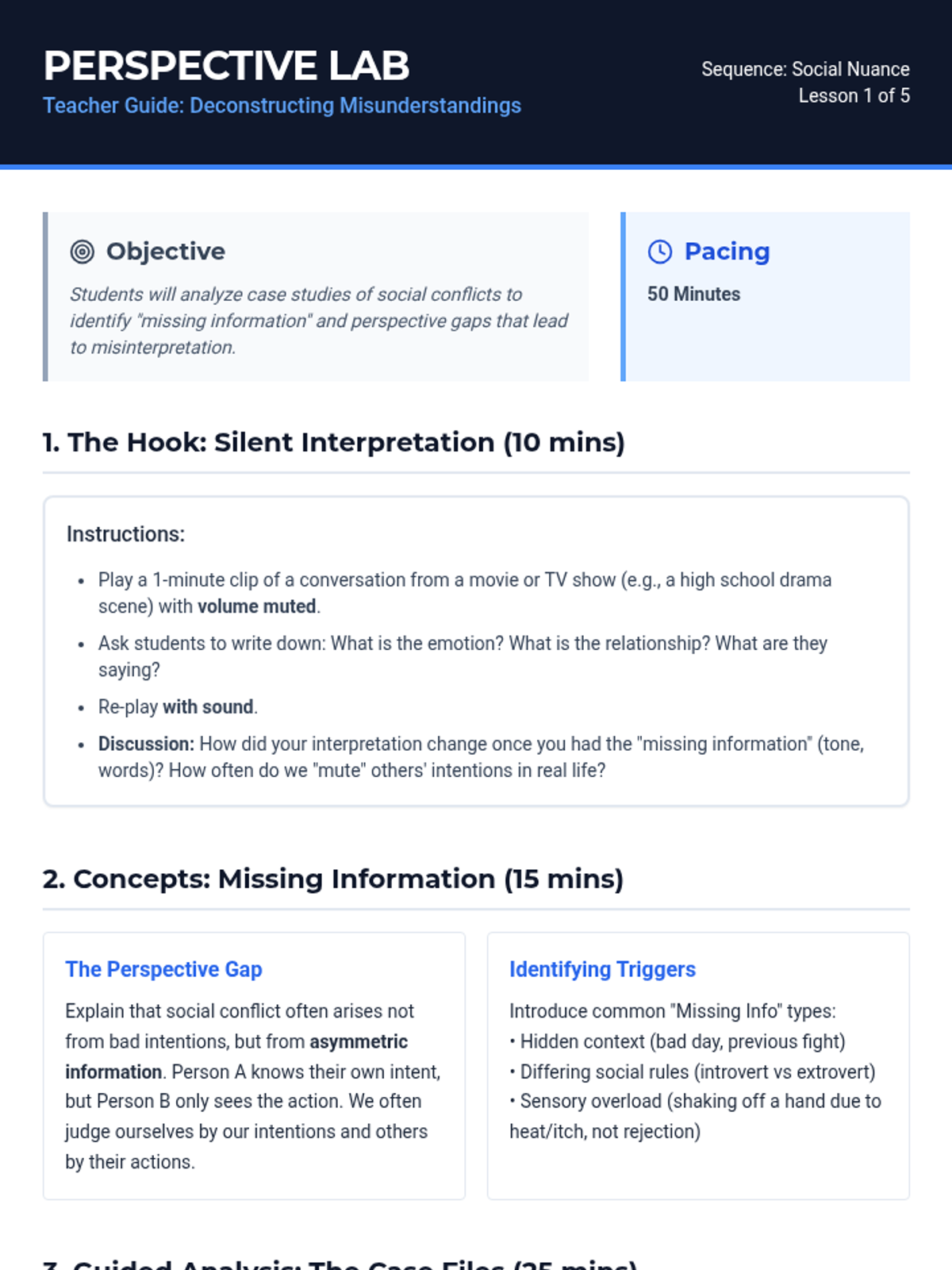
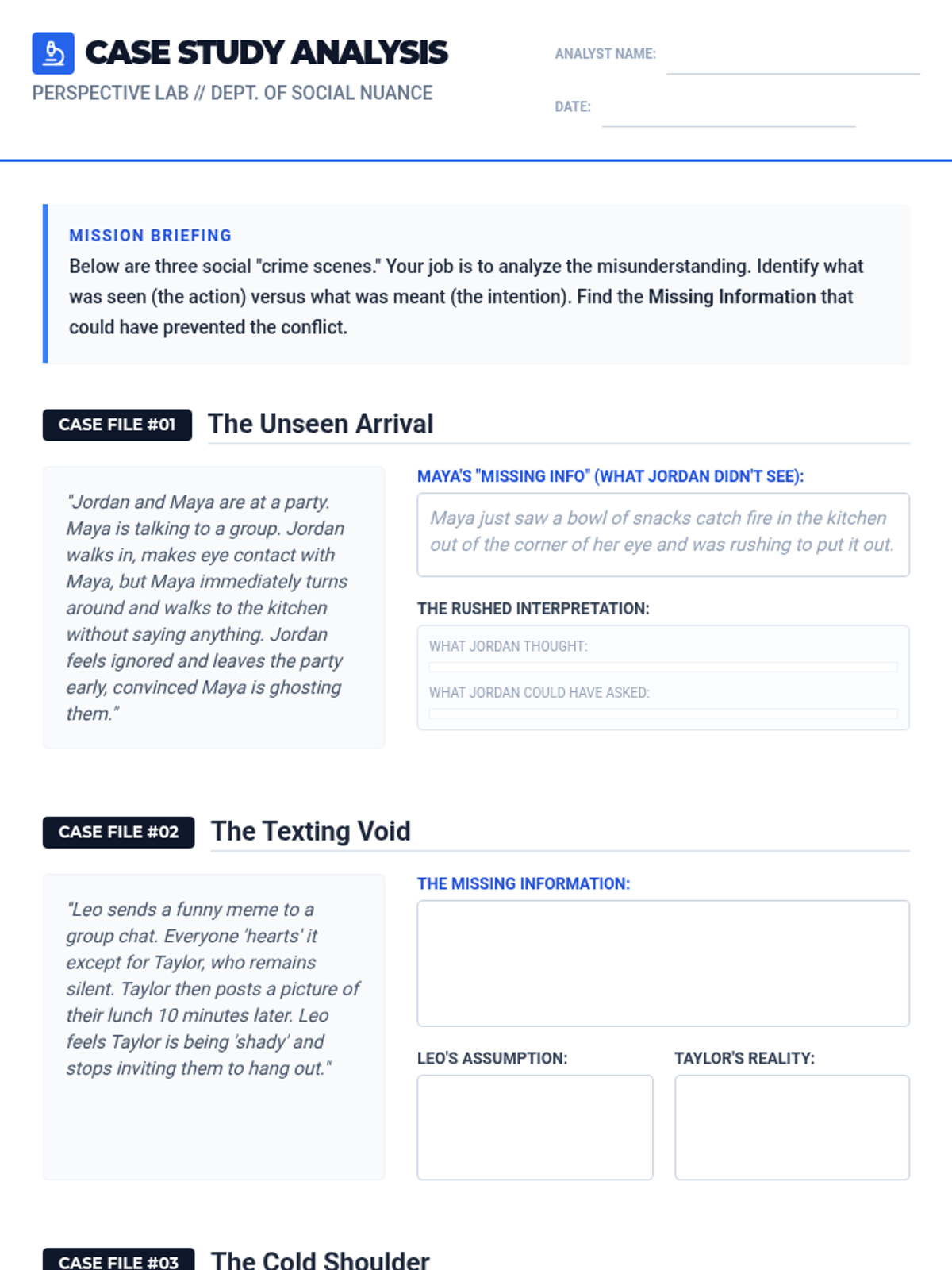
This sequence explores complex interpersonal dynamics through perspective-taking and social narrative creation. High school students will analyze social misunderstandings, develop Theory of Mind skills, and draft personal social stories to navigate conflict resolution, dating, and boundaries.
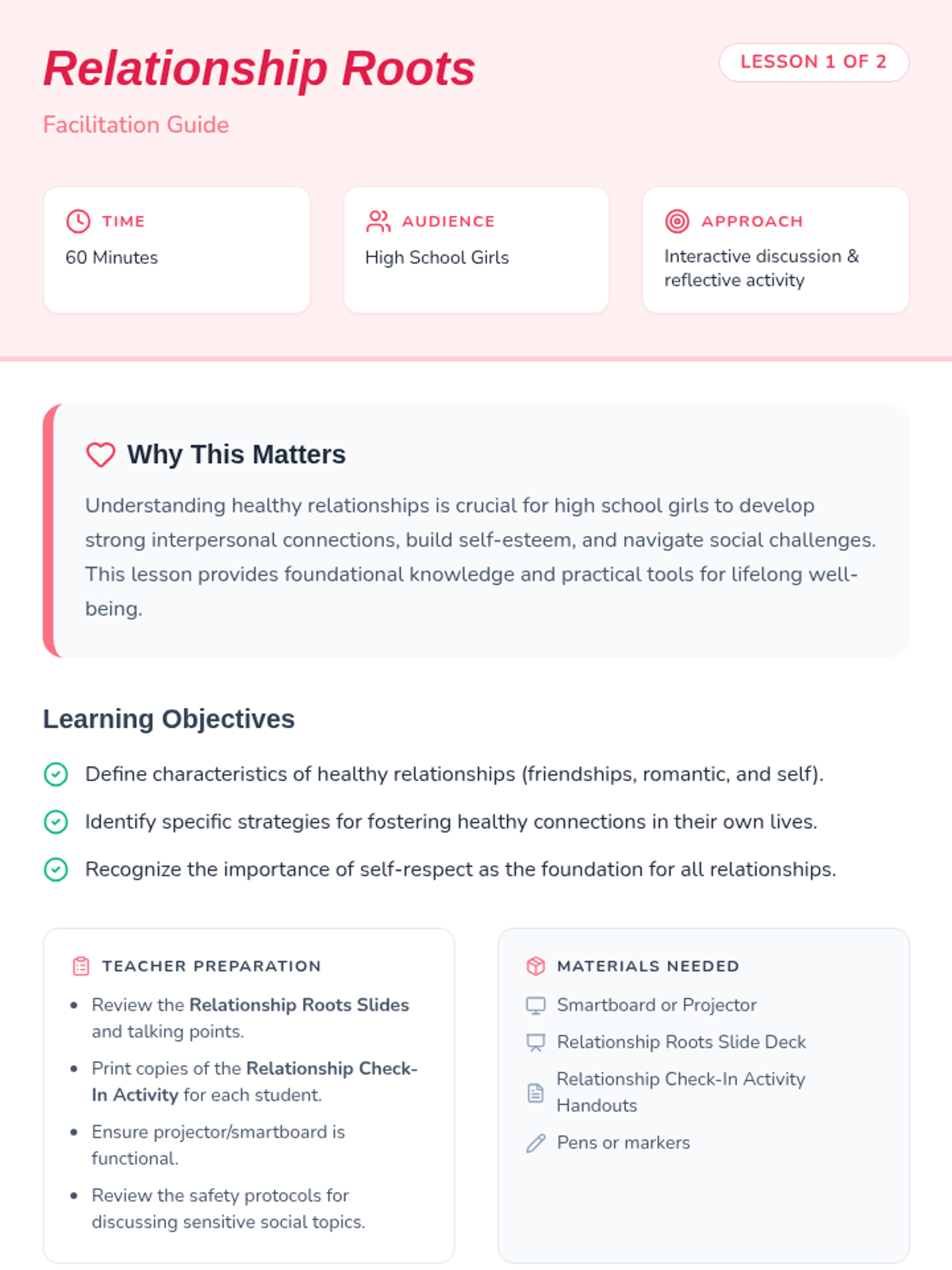
A two-part sequence for high school girls exploring the foundations of healthy relationships, encompassing friendships, romantic connections, and self-love. It provides tools for identifying green flags, setting boundaries, and cultivating self-respect.
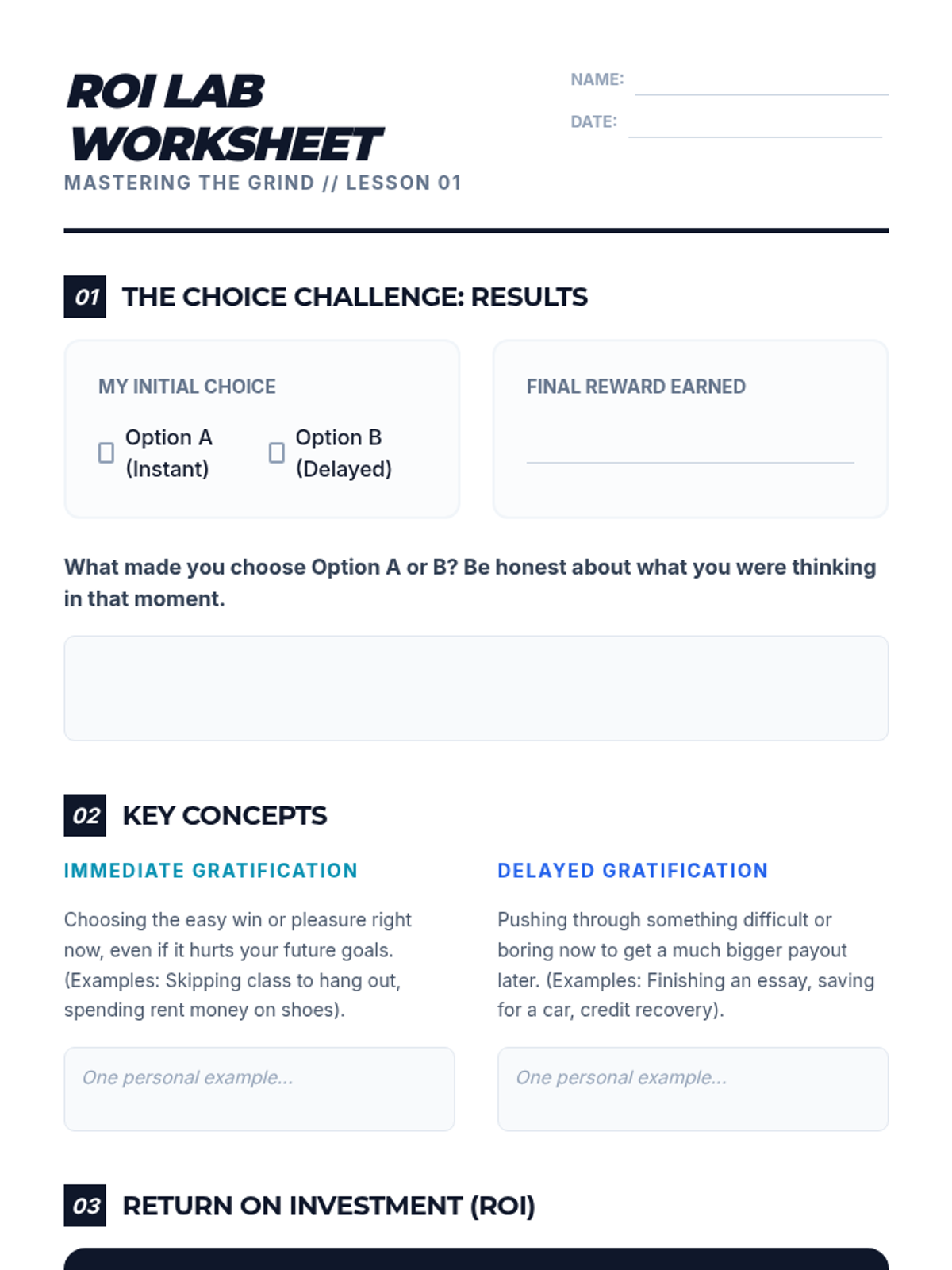
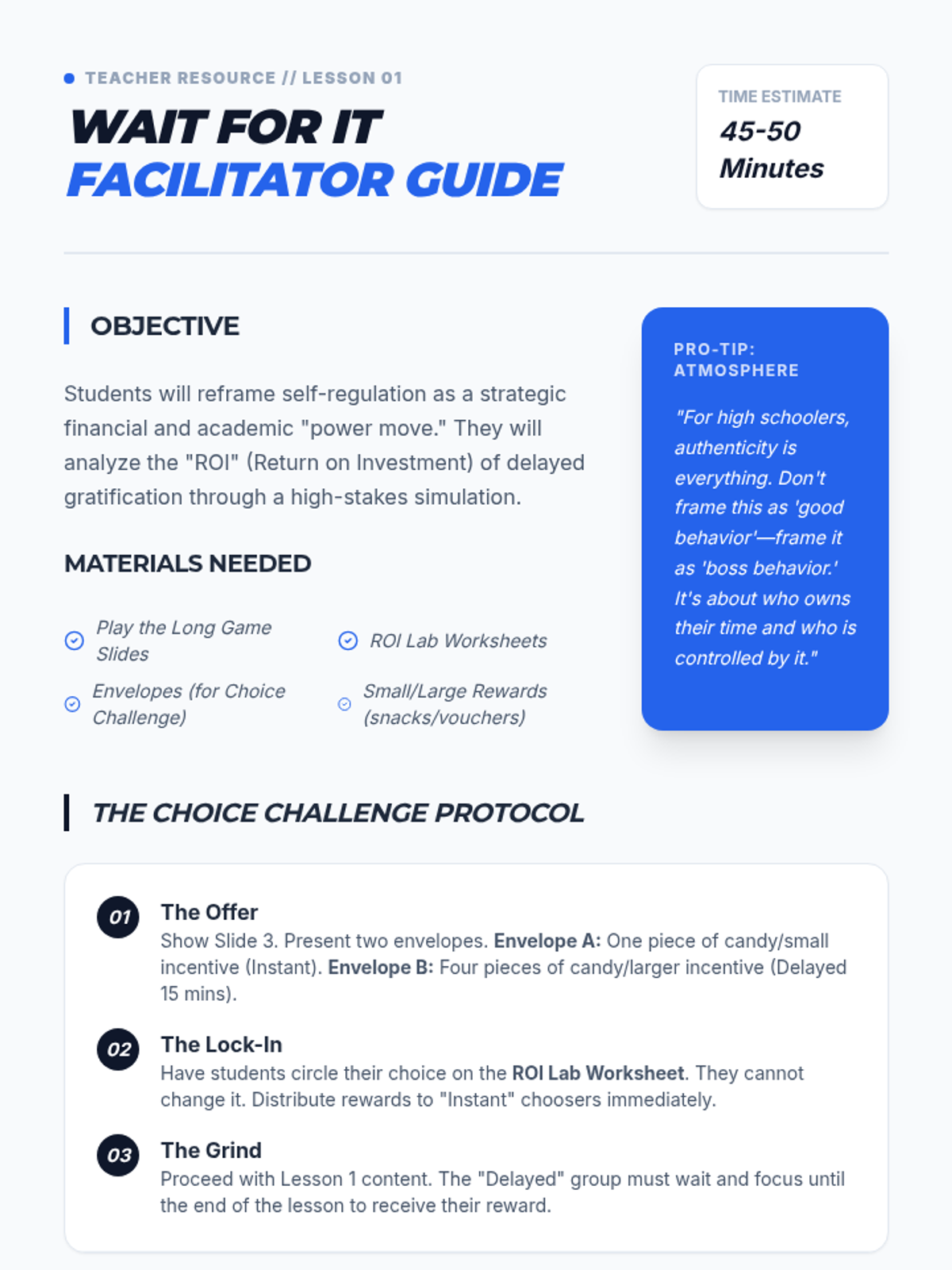
A high-impact 5-lesson sequence designed for credit-deficient high school sophomores to reclaim their academic path. The curriculum reframes impulse control as a strategic 'power move' for achieving independence, career success, and graduation through cognitive discipline and environmental awareness.
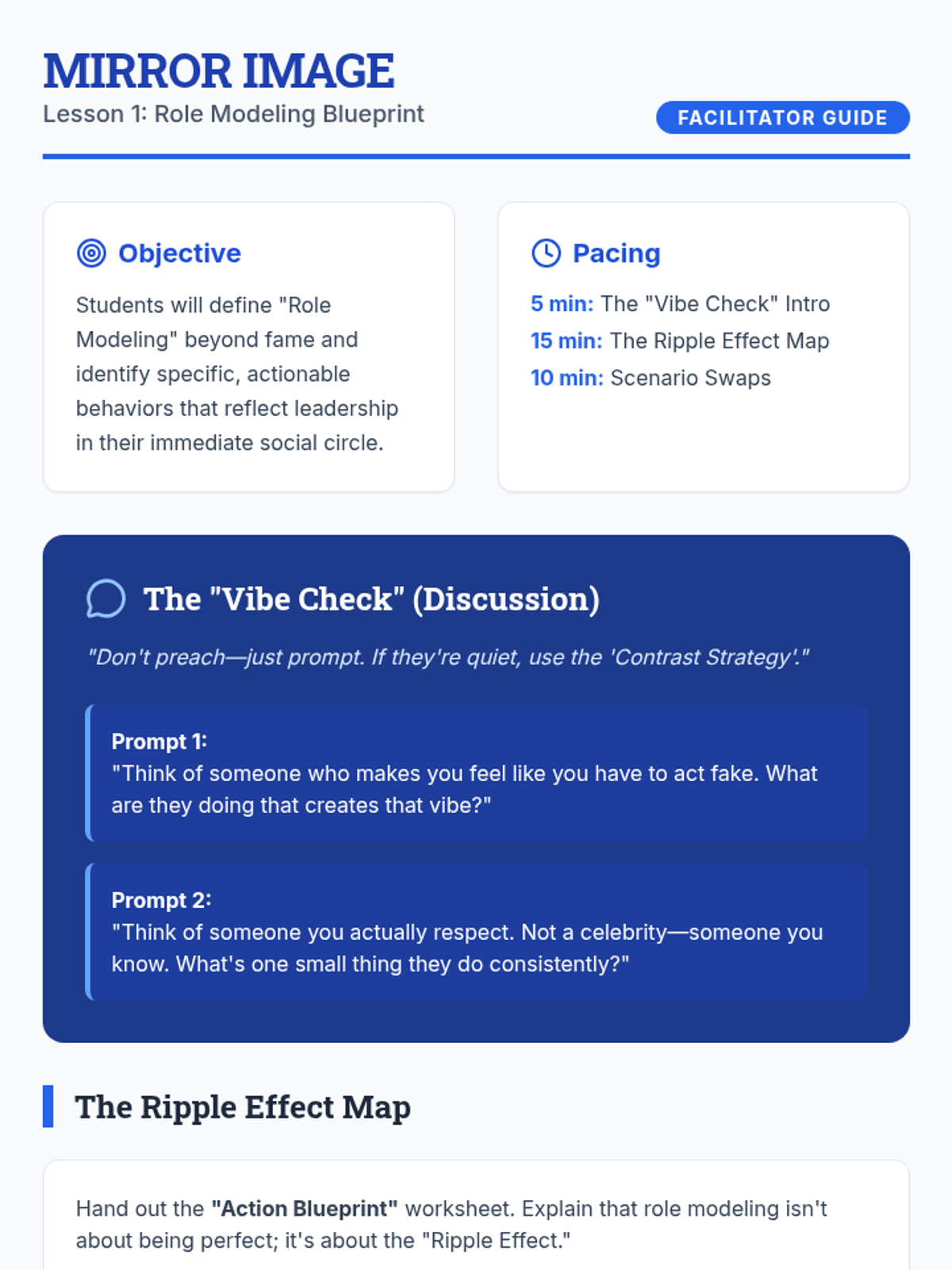
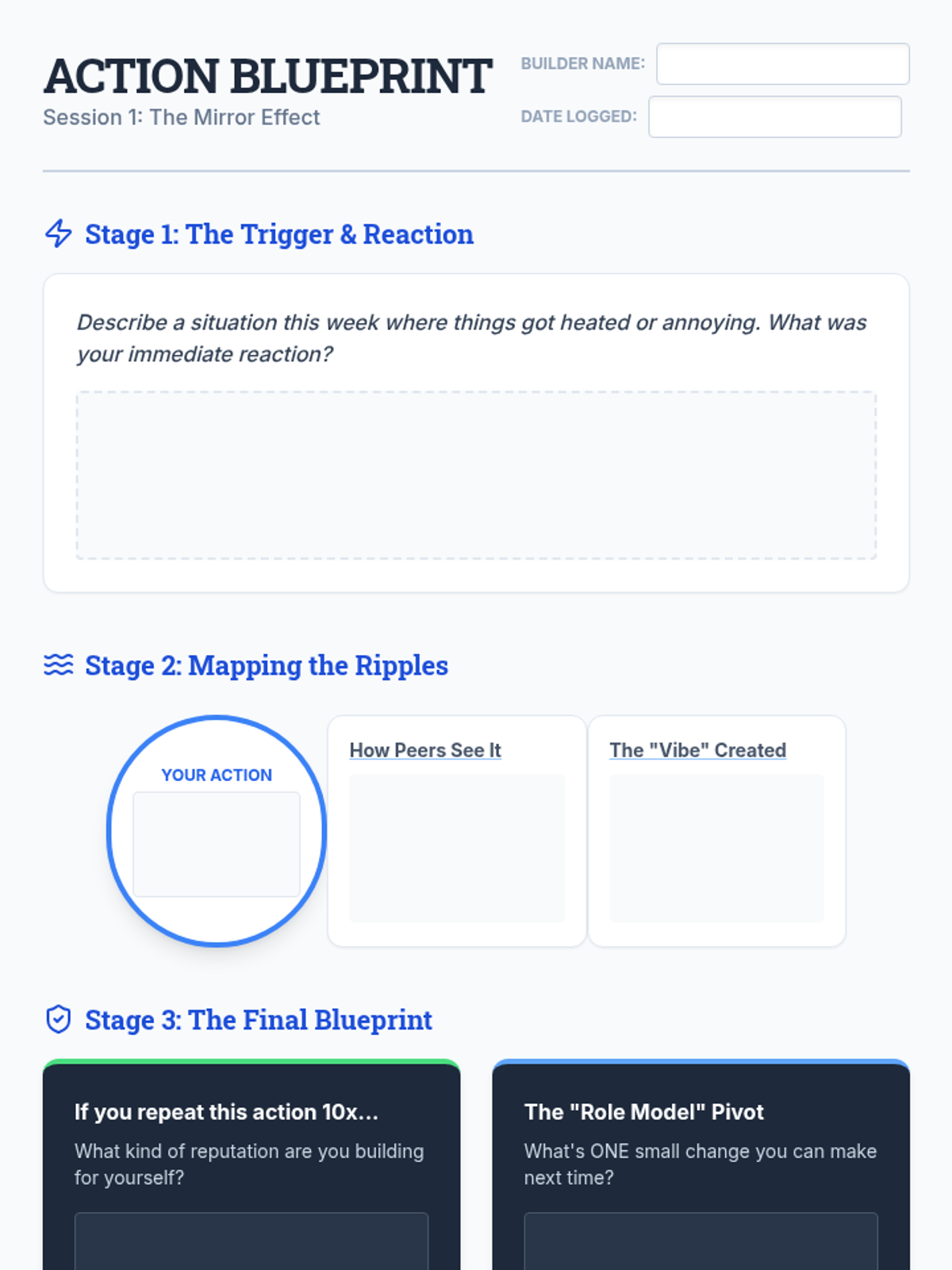
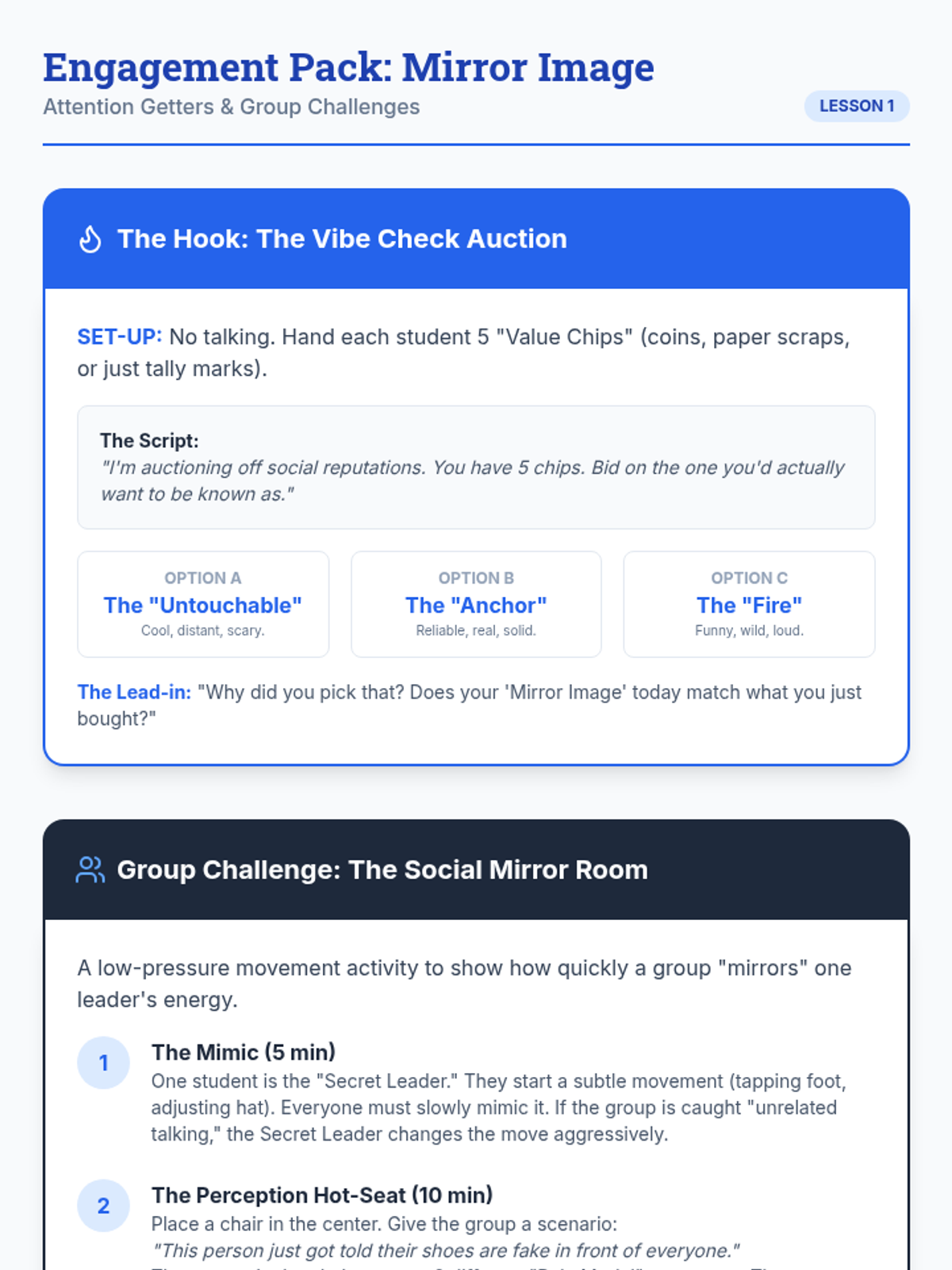
A high-engagement therapeutic sequence for grades 9-12 focusing on the pillars of leadership through role modeling and emotional self-regulation. Designed for students with short attention spans using interactive, low-pressure activities.