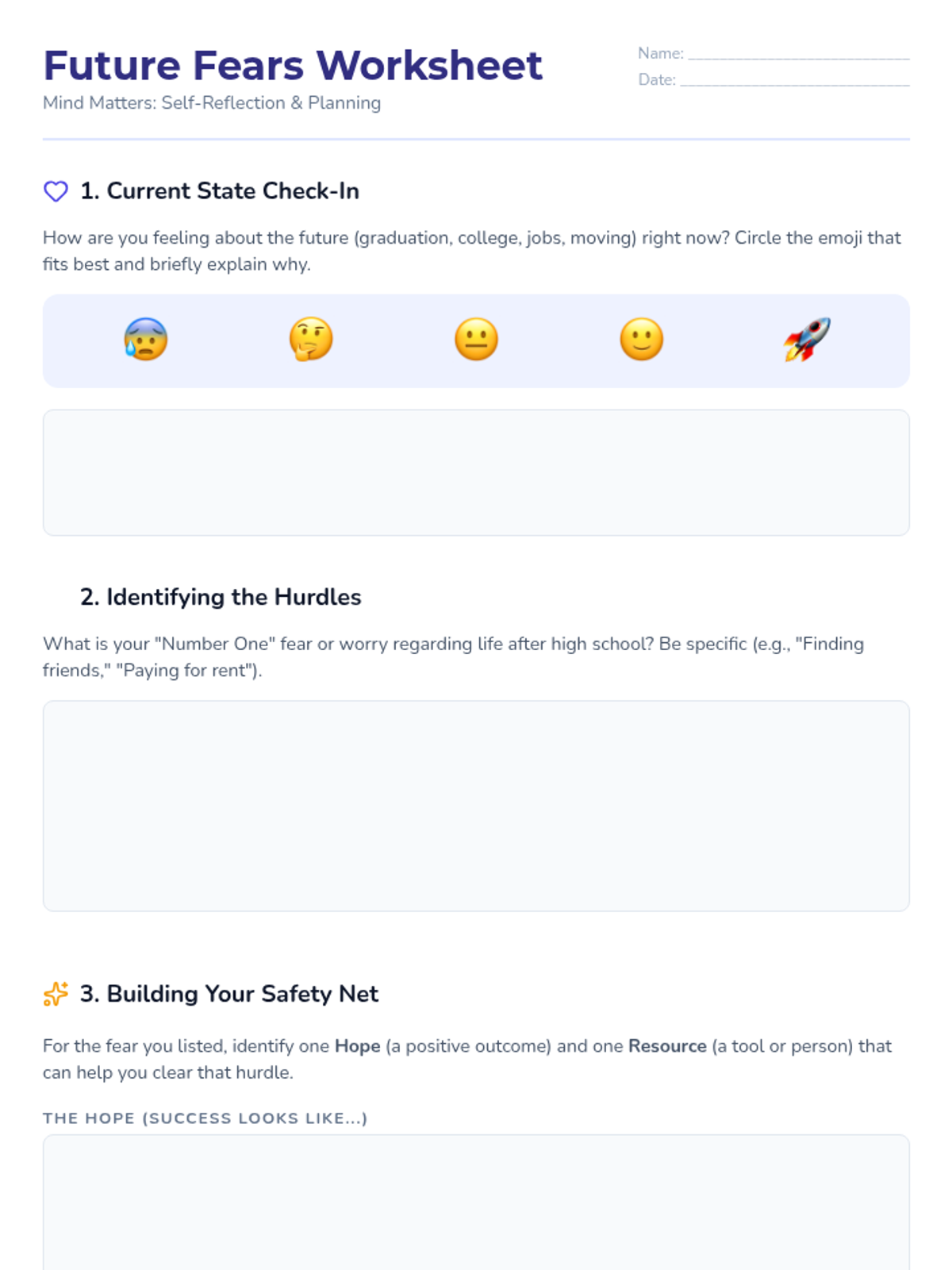
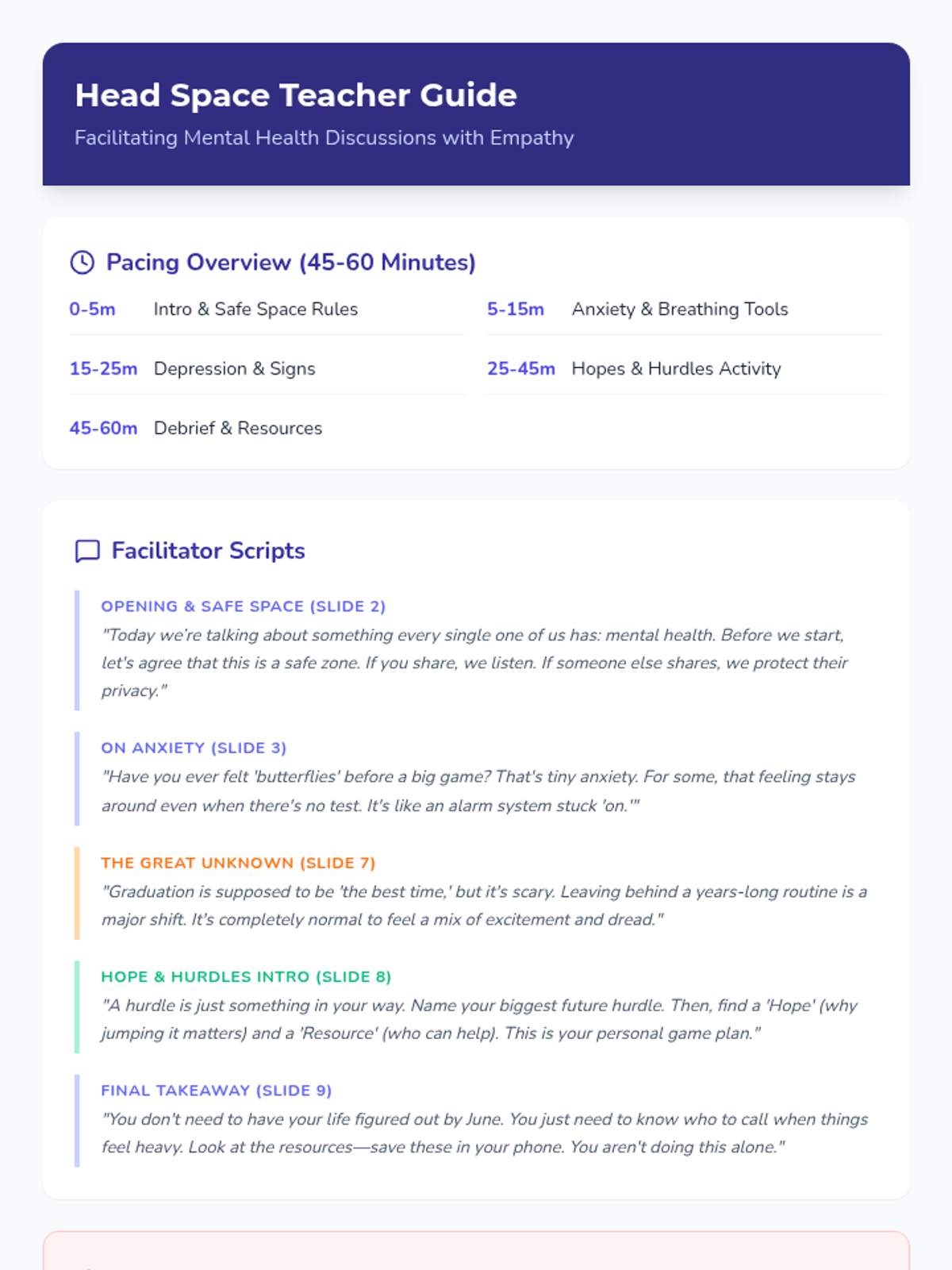
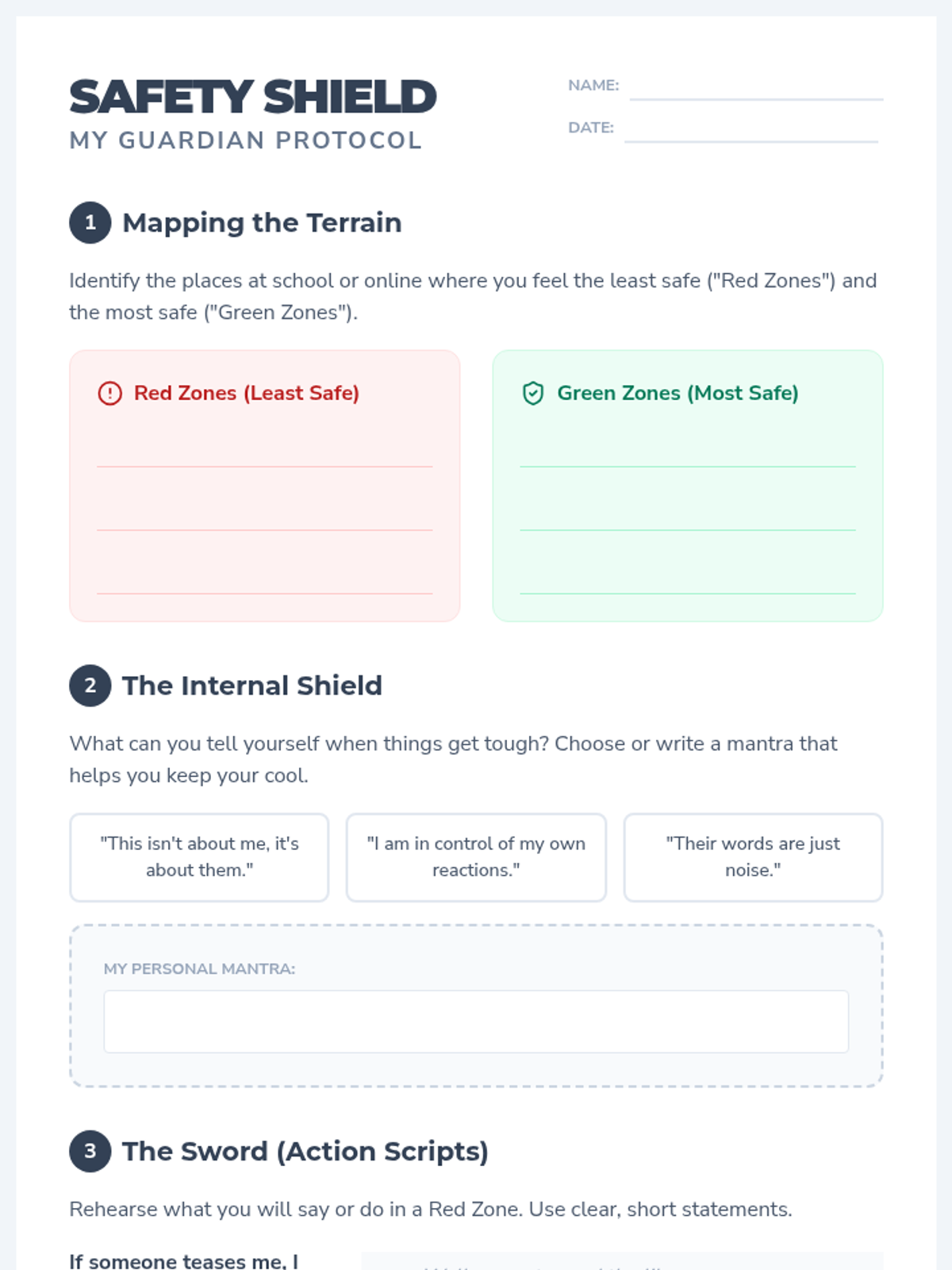
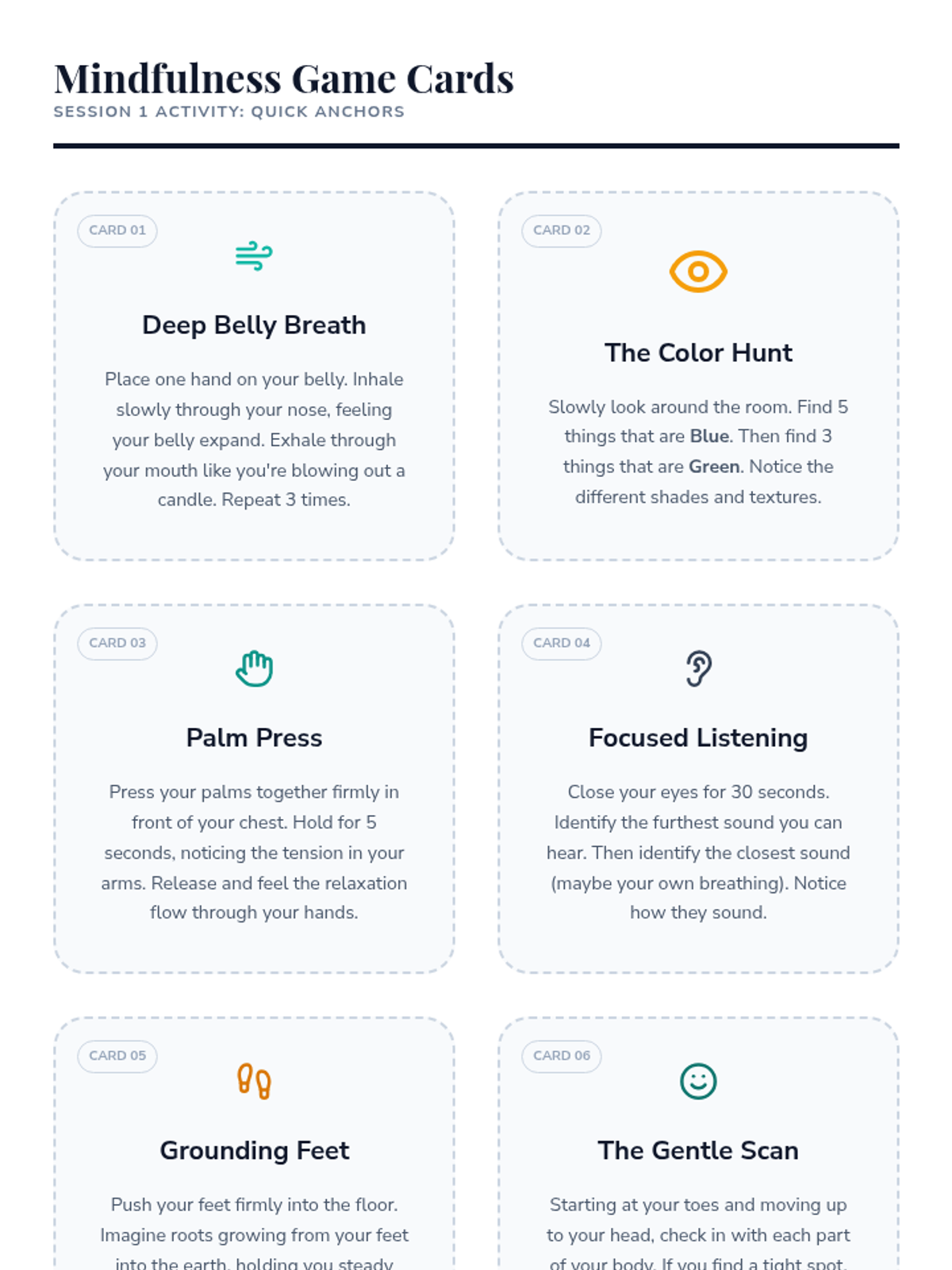
Identifies mental health crises and suicide warning signs while developing personal safety plans and grounding techniques. Equips users with peer gatekeeper skills and direct pathways to professional crisis resources and hotlines.
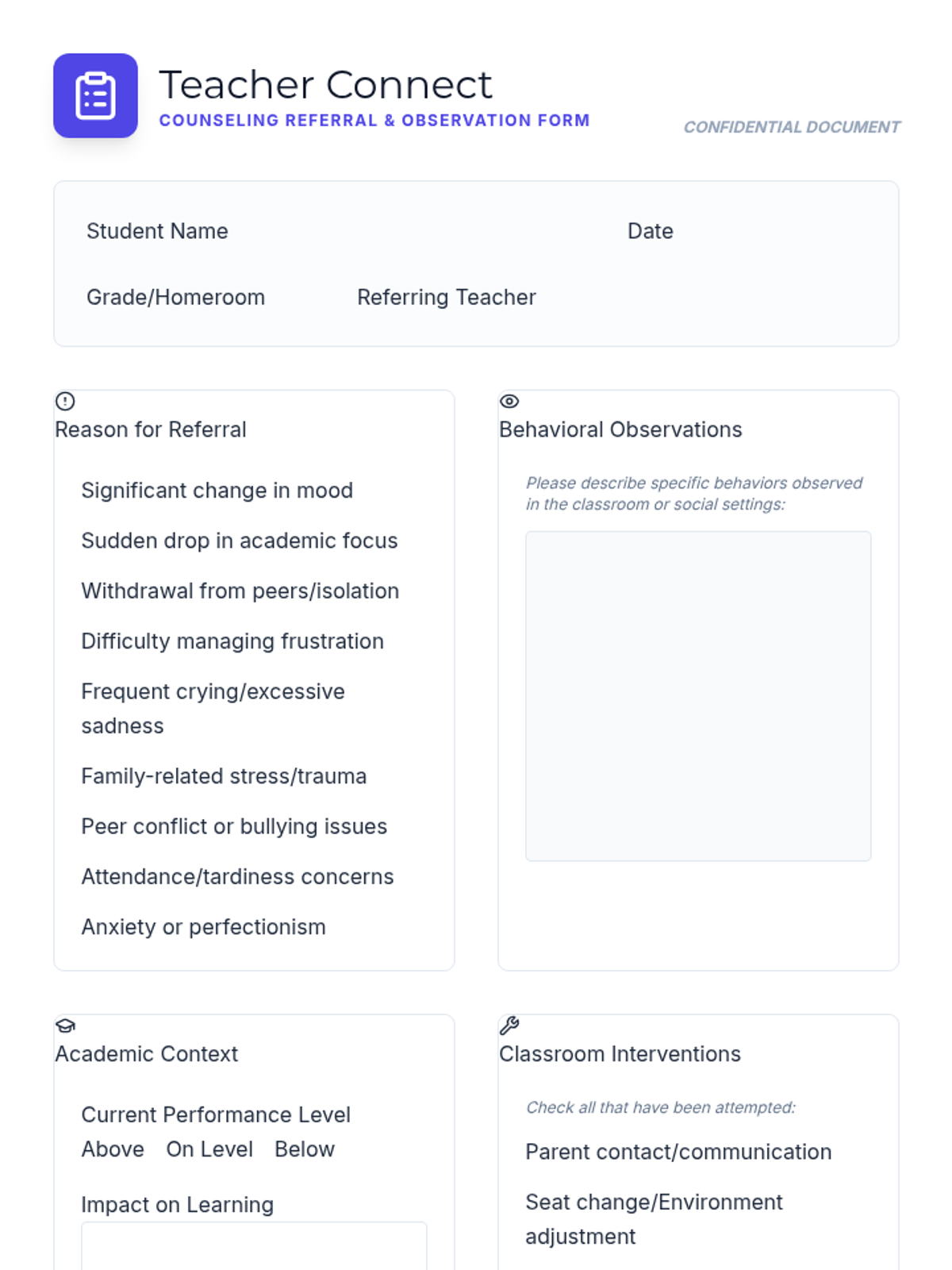
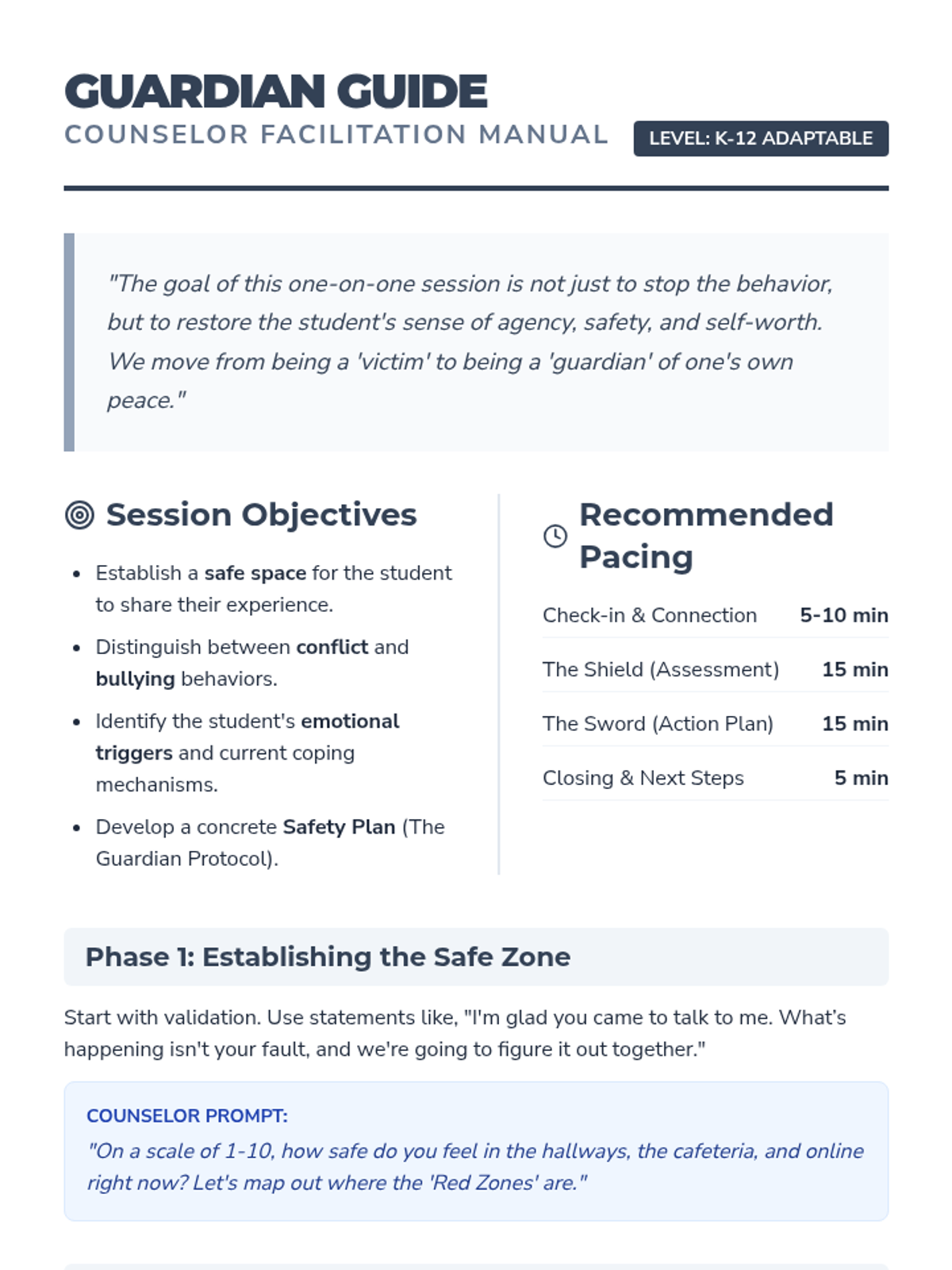
A tiered intervention series for school counselors to address bullying behaviors across different developmental stages, from foundational safety to complex social dynamics.
A 5-lesson workshop-style sequence for 9th-grade students on recognizing escalation warning signs and applying de-escalation strategies. Students learn situational assessment, verbal techniques, non-verbal communication, and active listening through simulations and mastery-based role-plays.
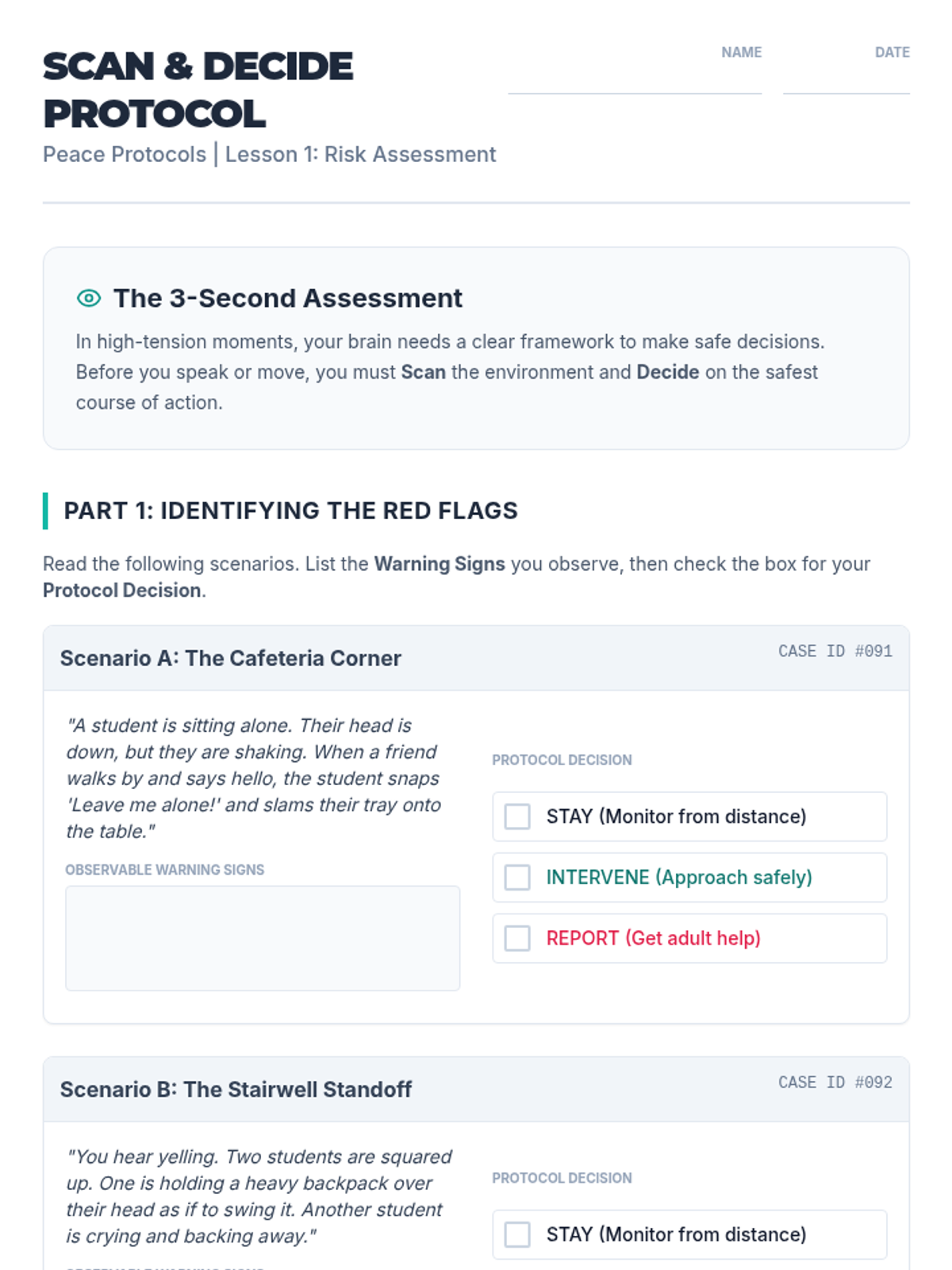
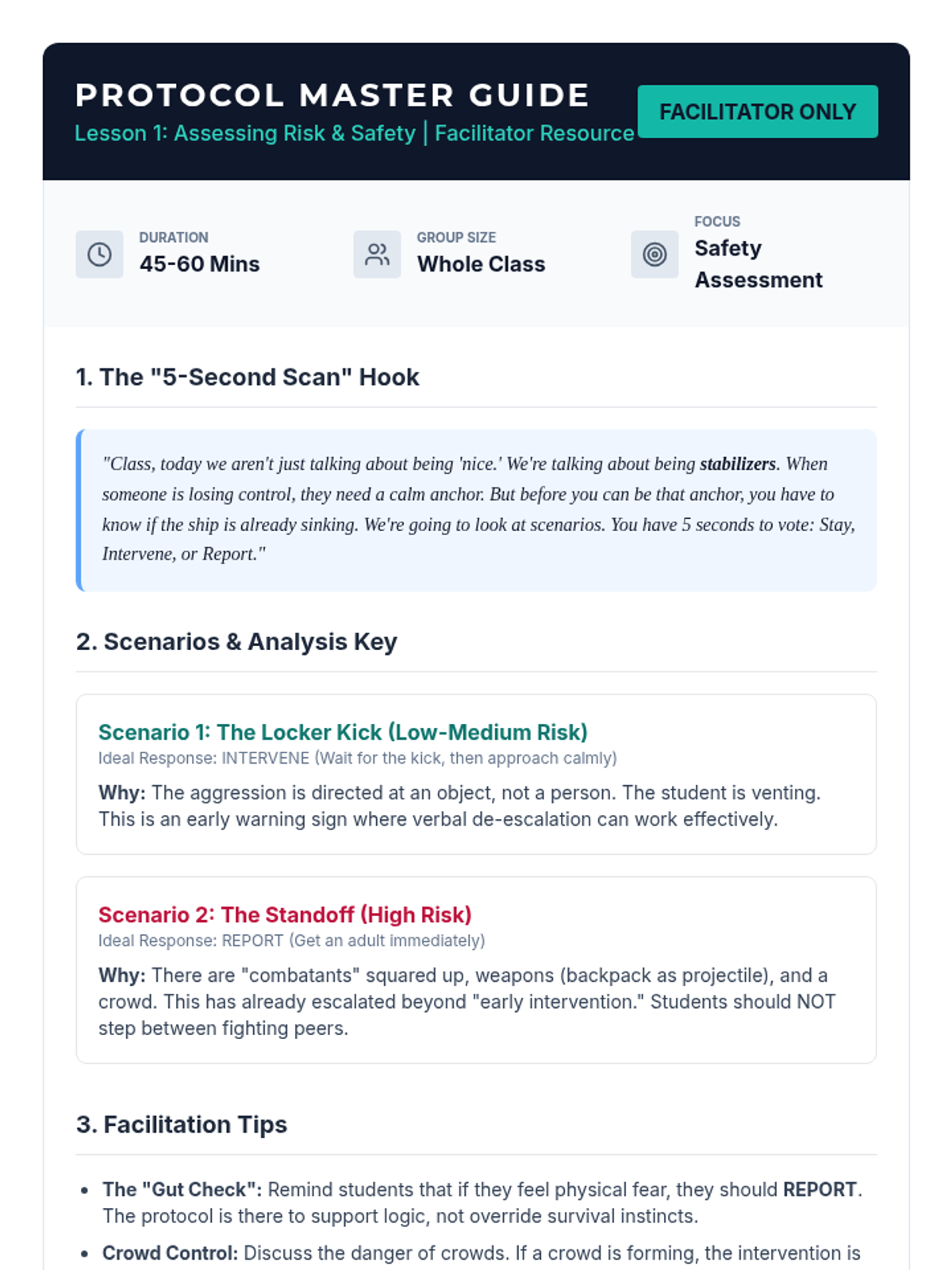
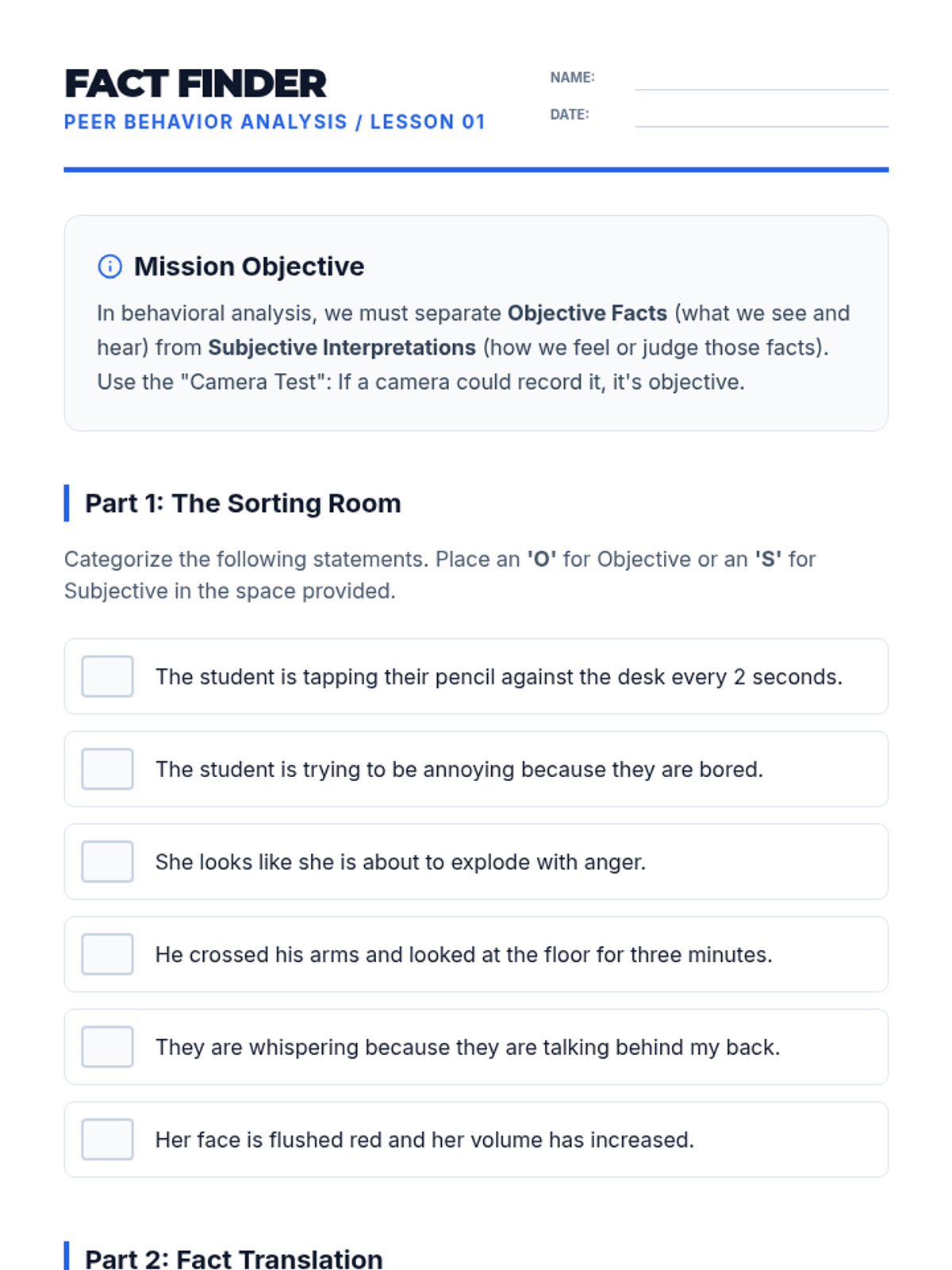
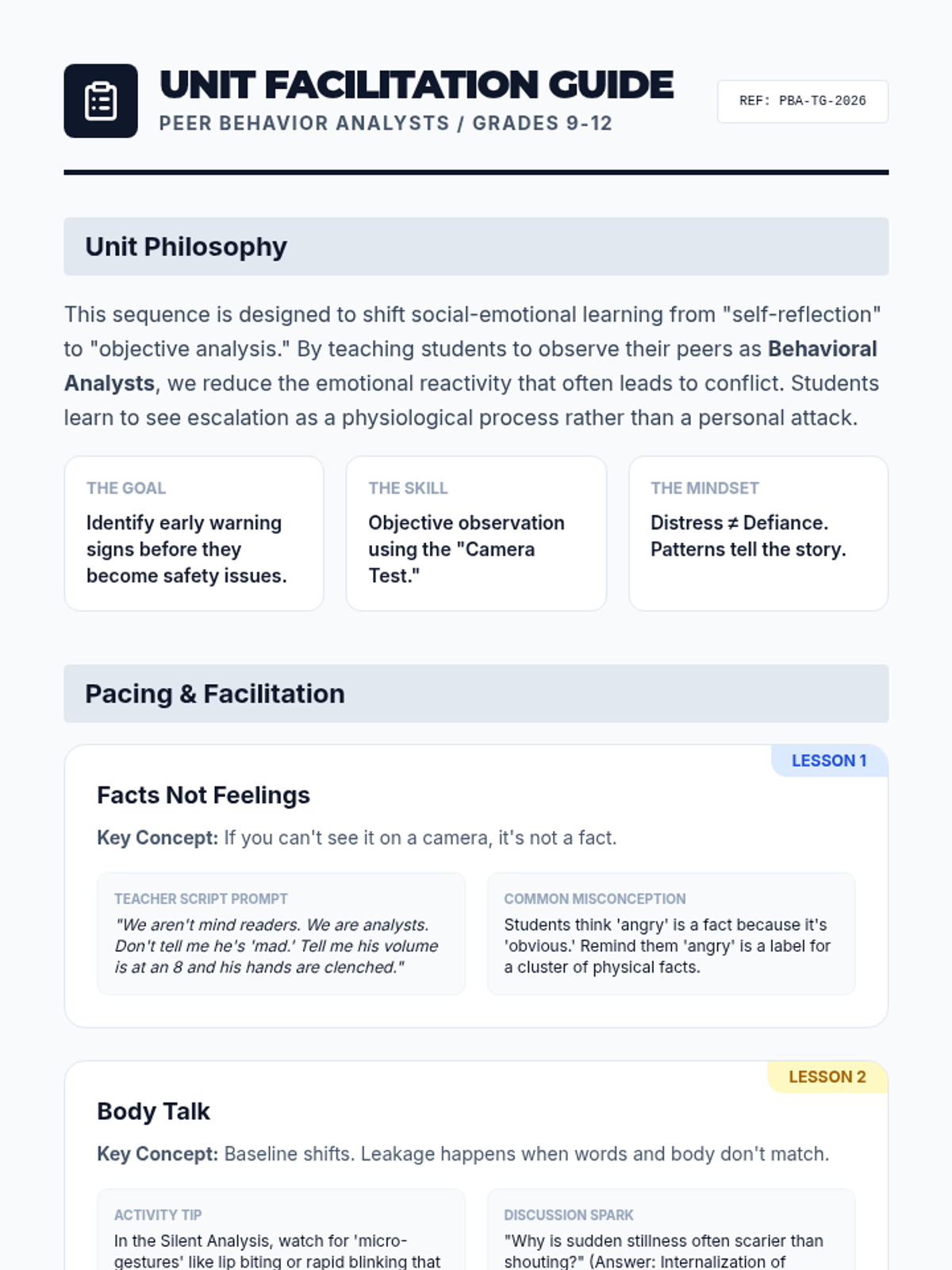
A 5-lesson sequence for 9th-grade students focused on developing social awareness and safety by identifying peer behavioral shifts and escalation warning signs through objective observation and non-verbal analysis.
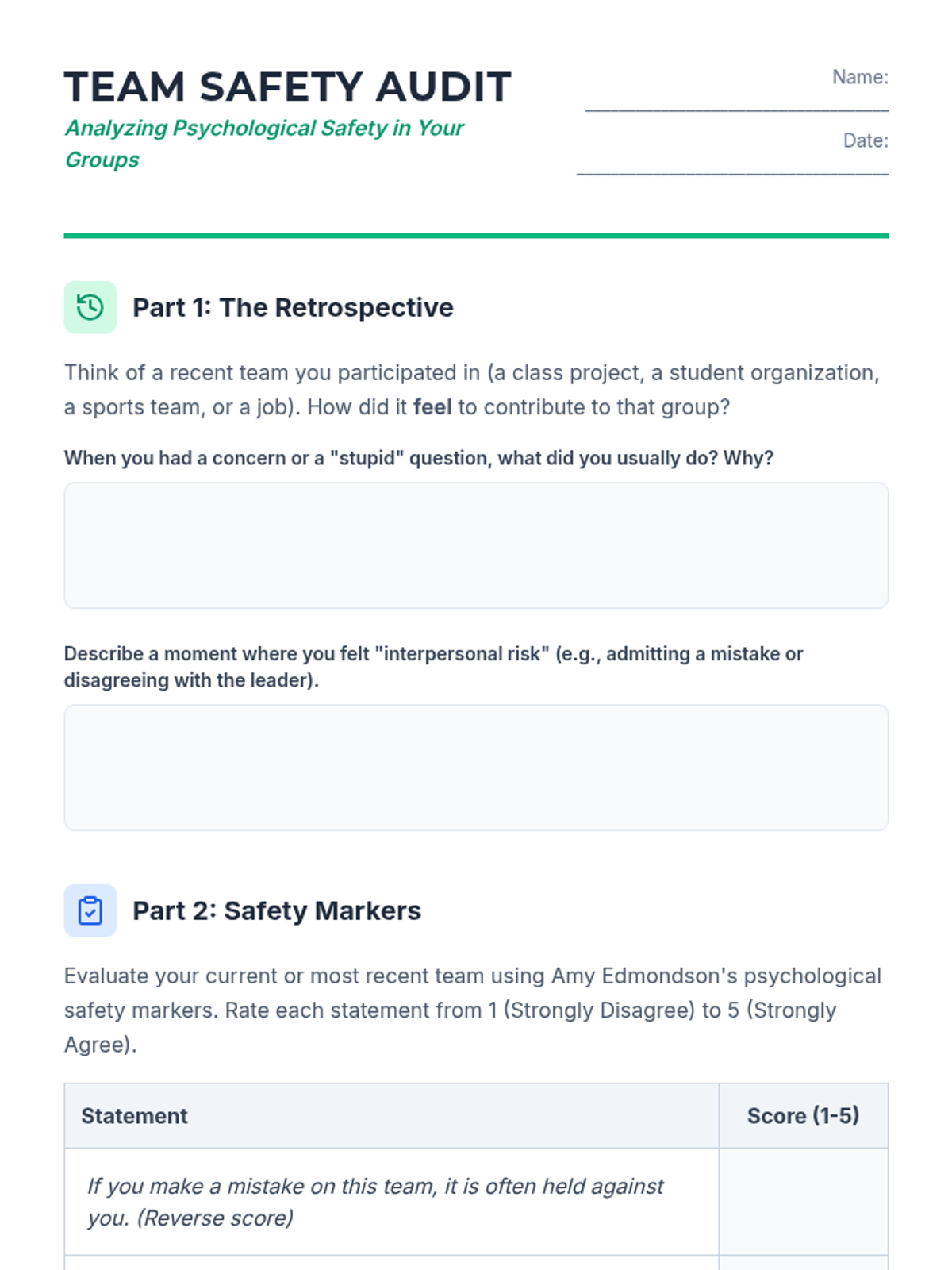
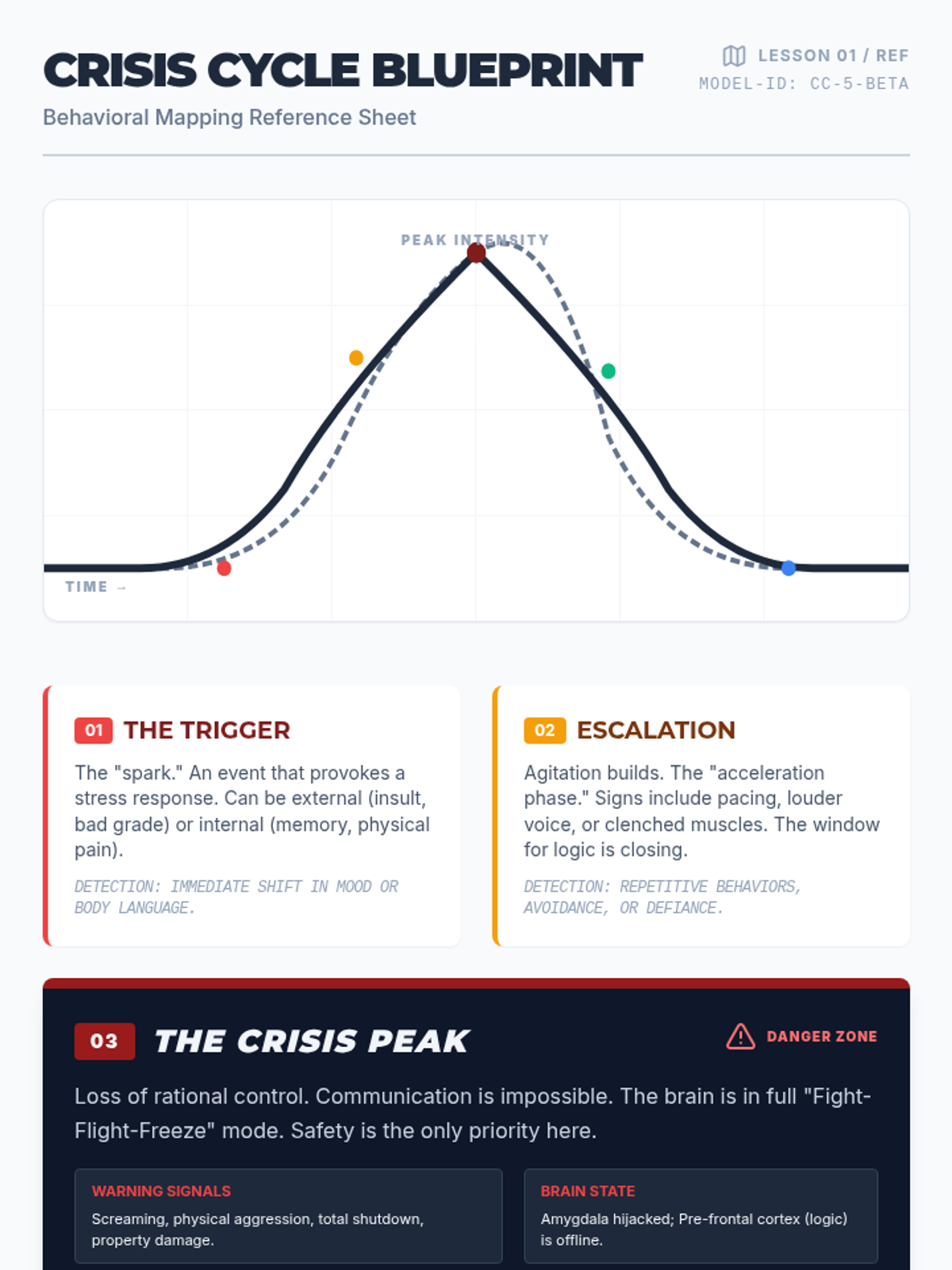
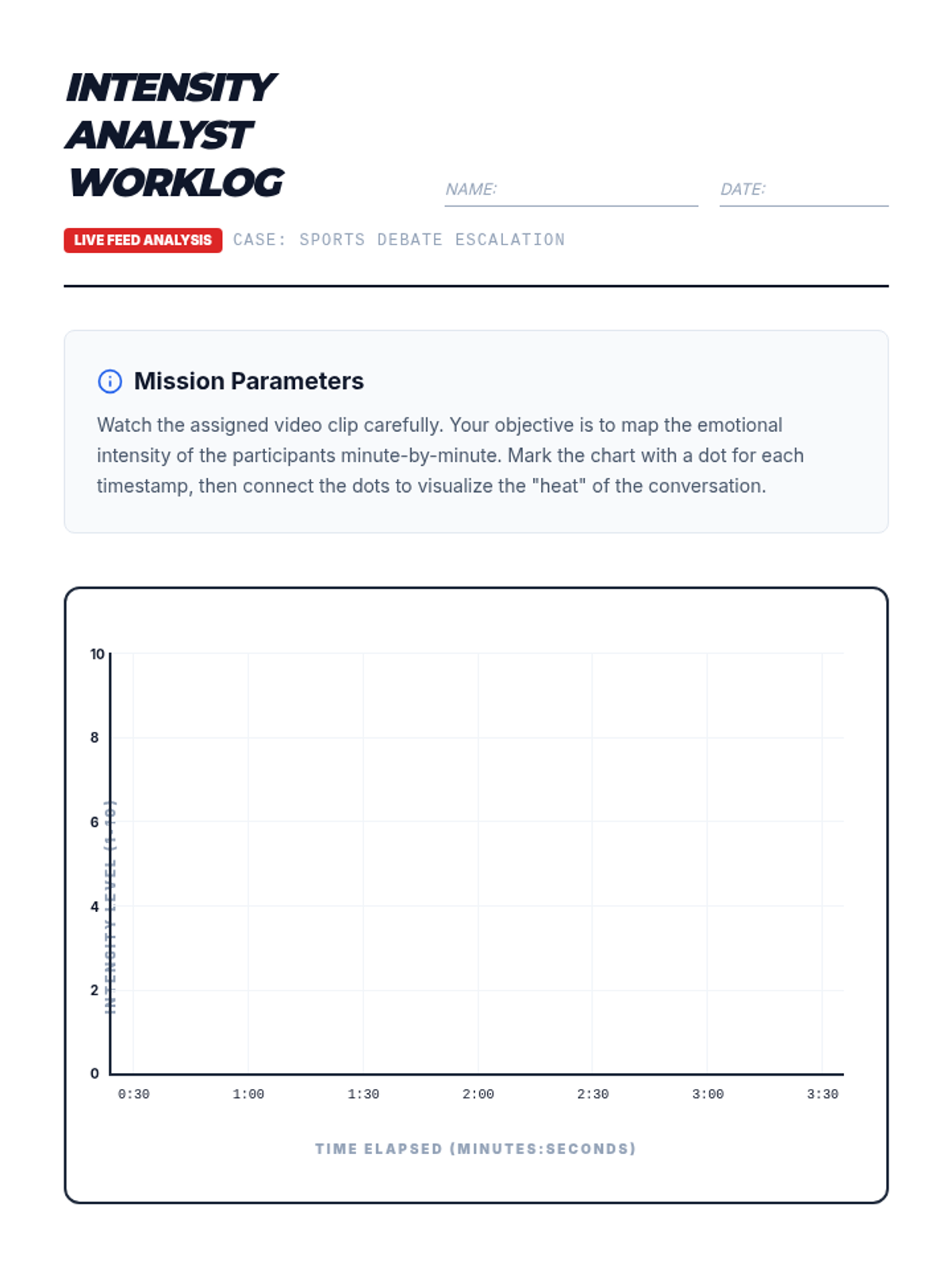
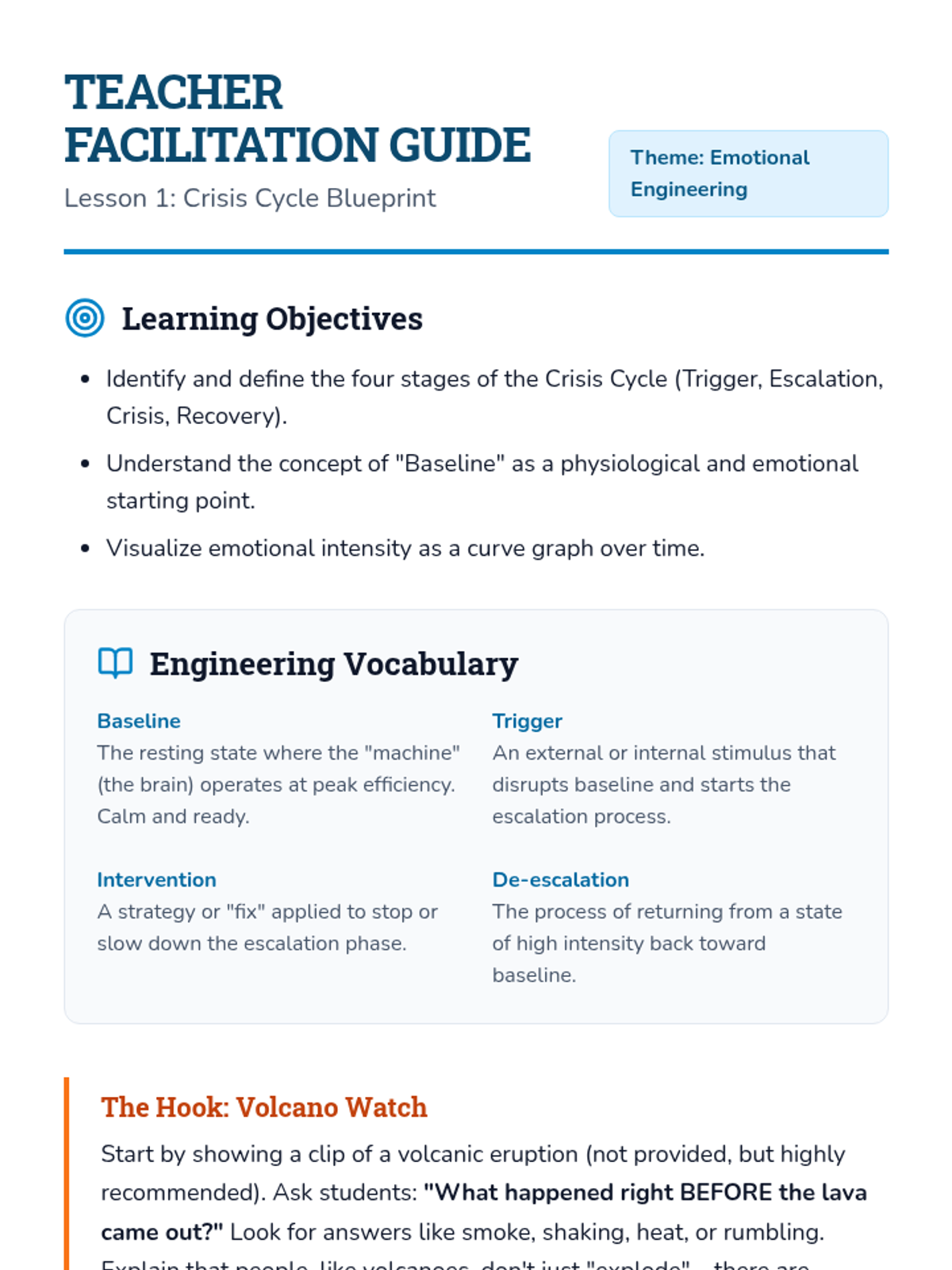
A comprehensive 5-lesson unit on the Crisis Cycle, focusing on identifying triggers, escalation stages, and intervention points through a technical mapping and simulation lens. Students move from theoretical understanding to retroactive detective work to understand behavioral patterns.
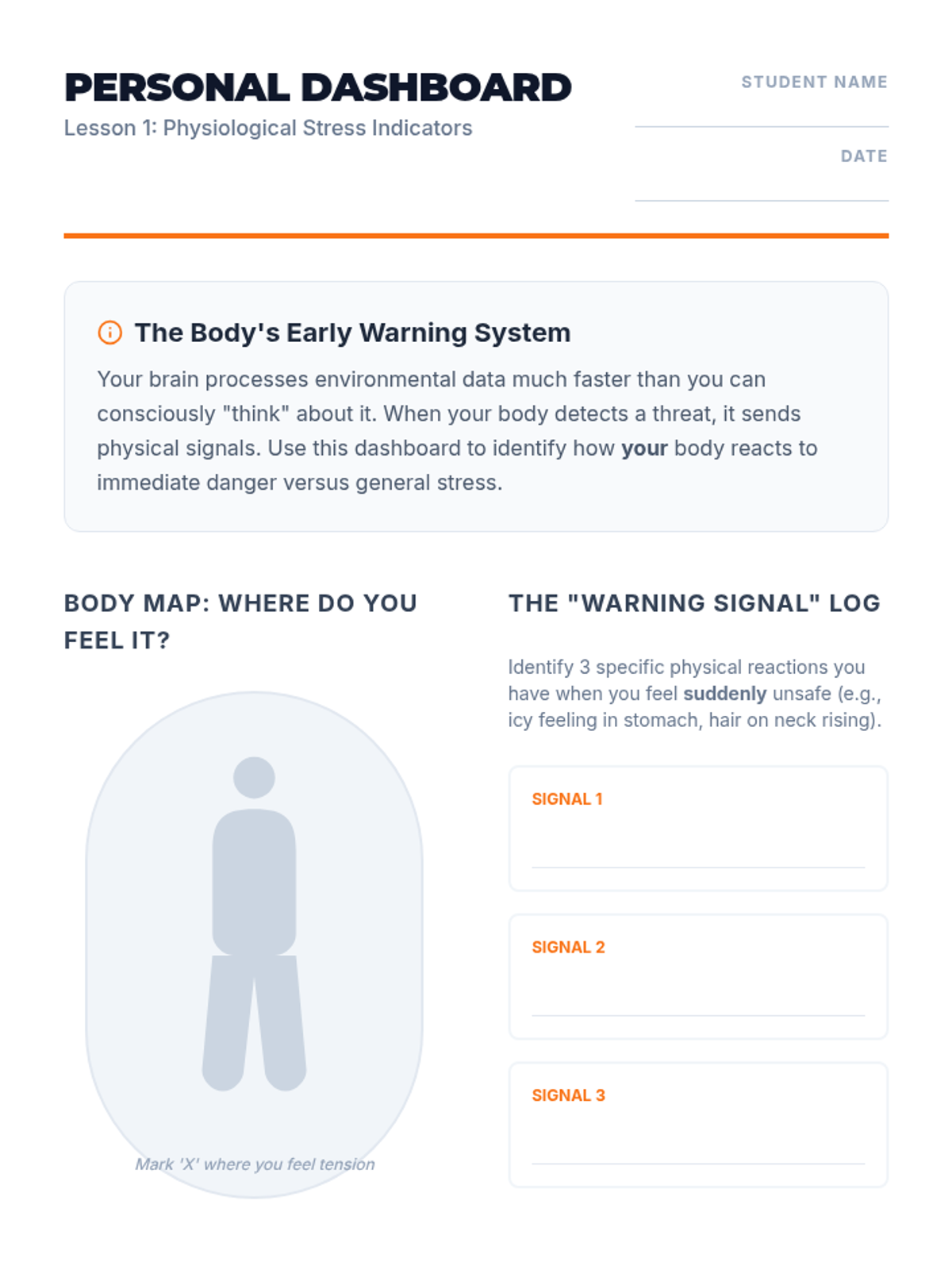
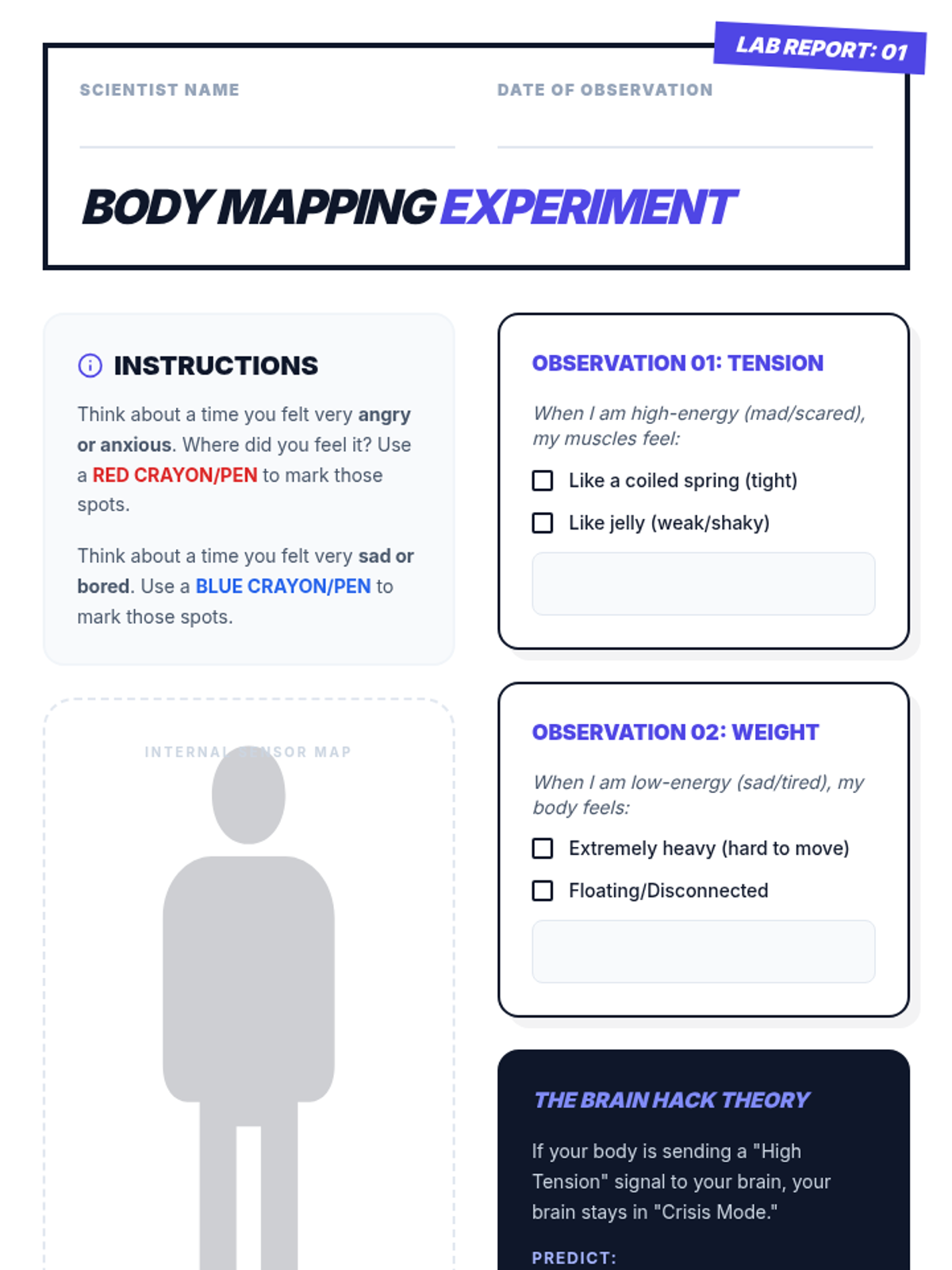
This sequence guides students through identifying physiological and behavioral warning signs of distress, focusing on establishing baselines, mapping internal stress responses, and analyzing external kinetic and vocal shifts to prevent crisis.
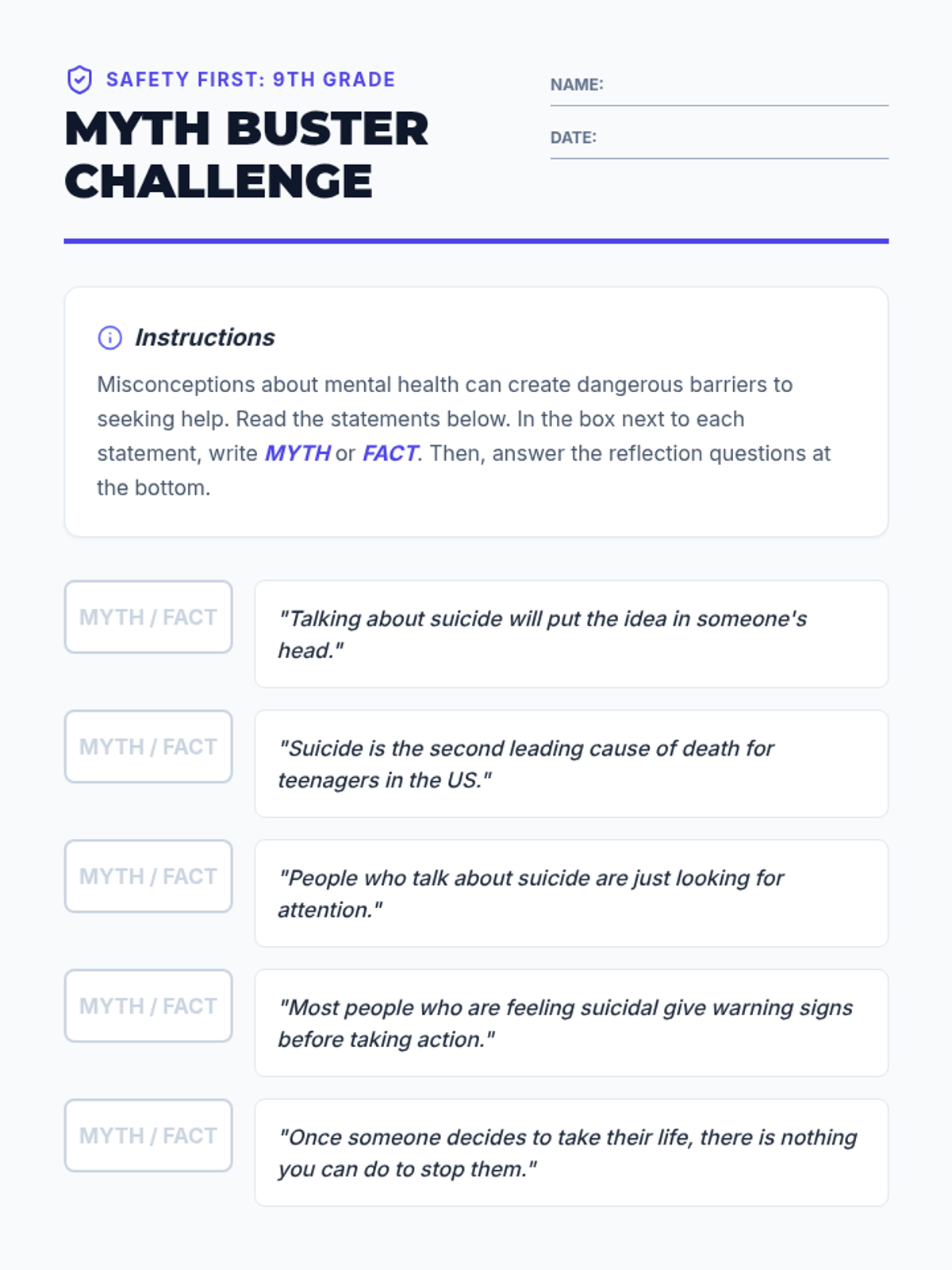
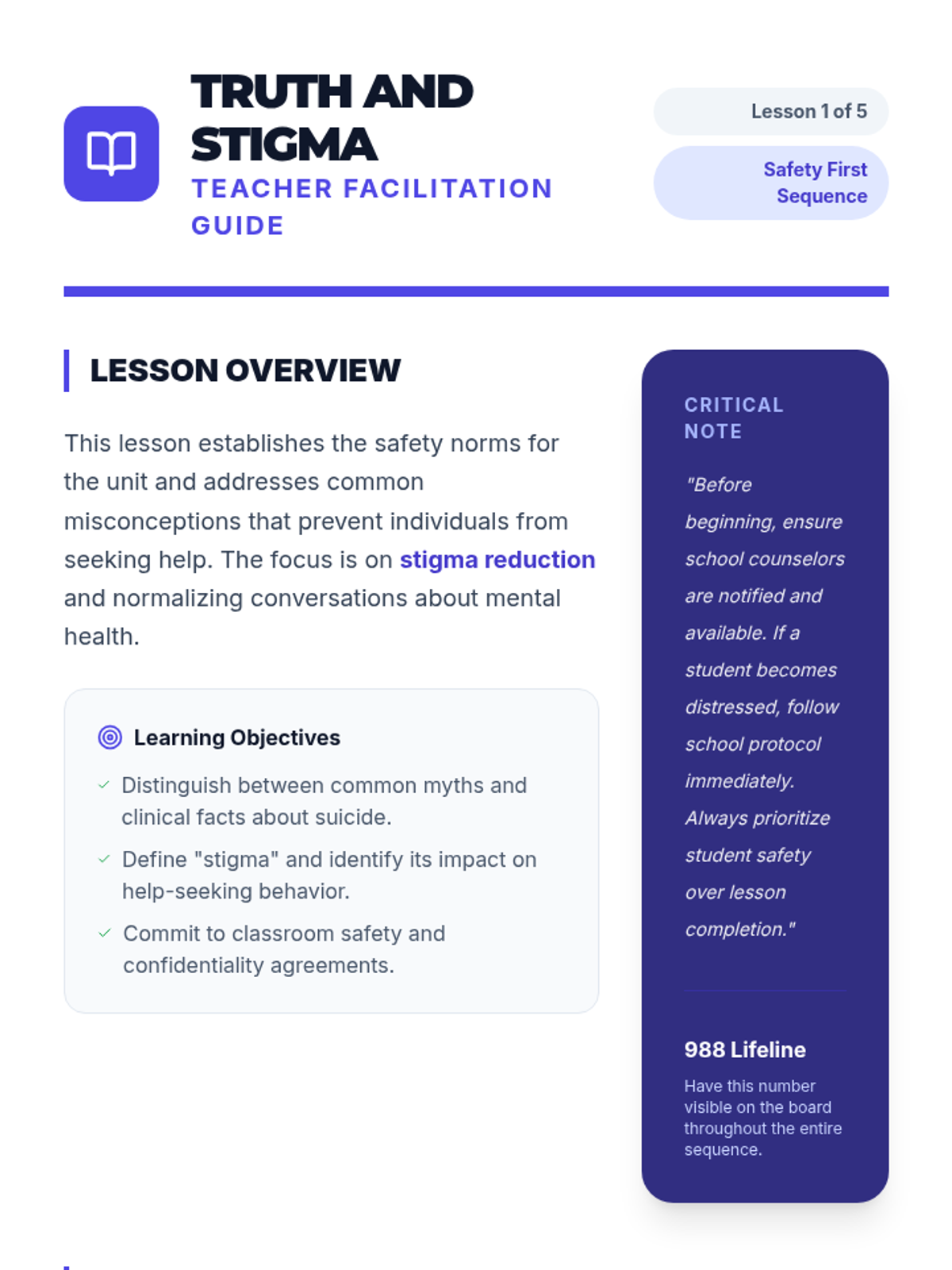
This sequence equips 9th-grade students to recognize signs of emotional distress and suicidal ideation using a safety-first framework. Students progress from debunking myths to identifying warning signs, understanding situational context, practicing the ACT (Acknowledge, Care, Tell) model, and mapping out support resources.
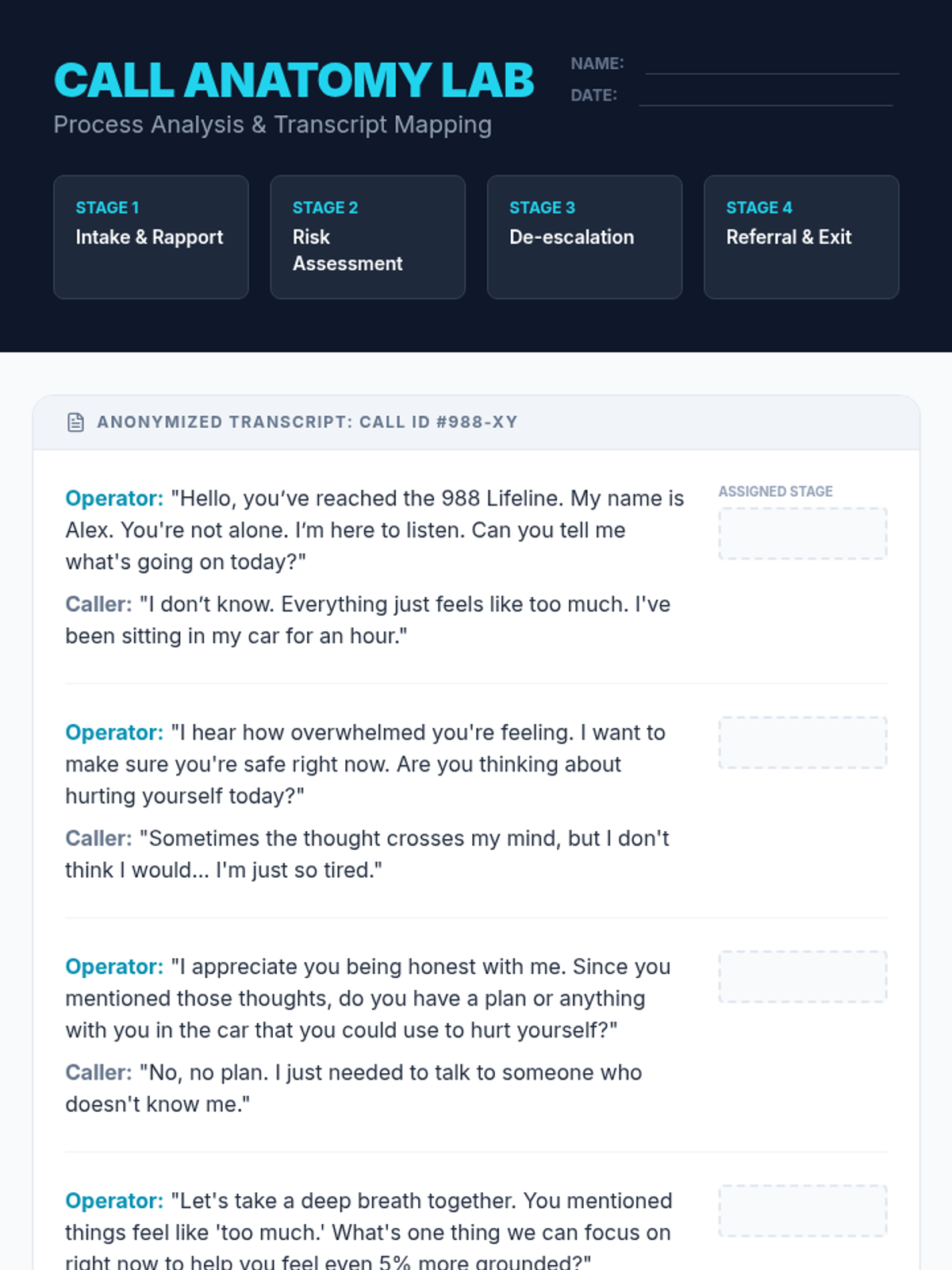
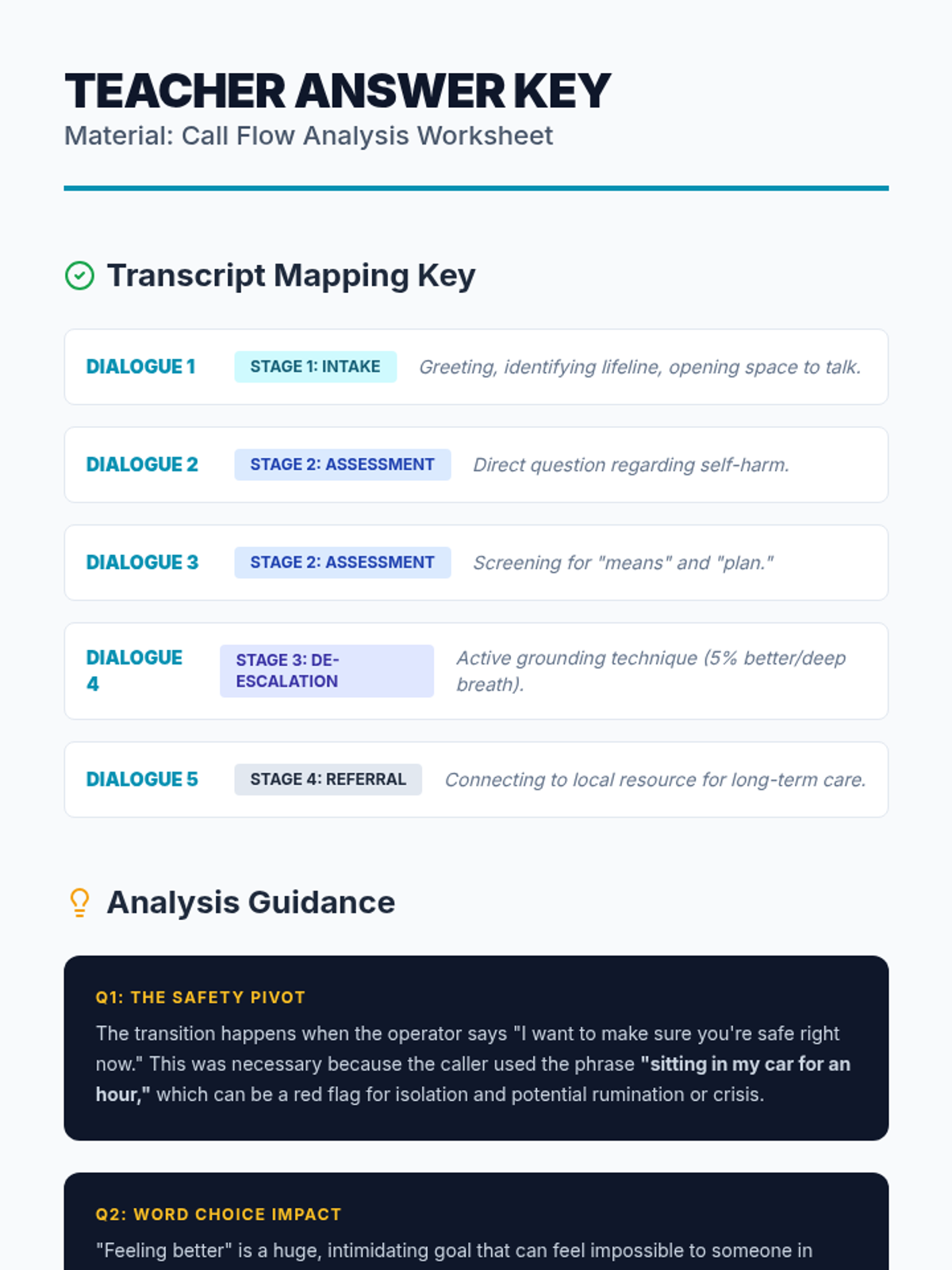
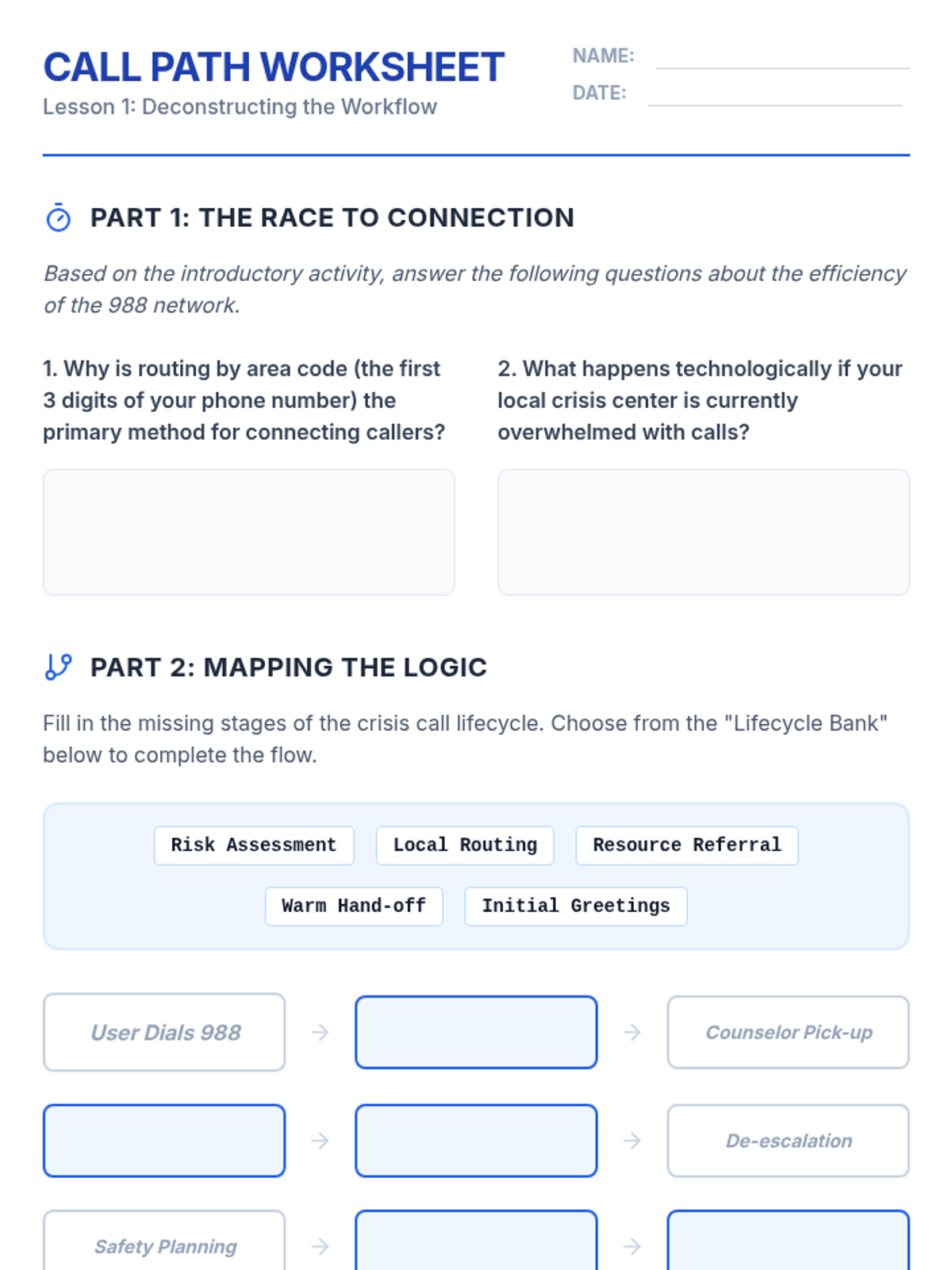
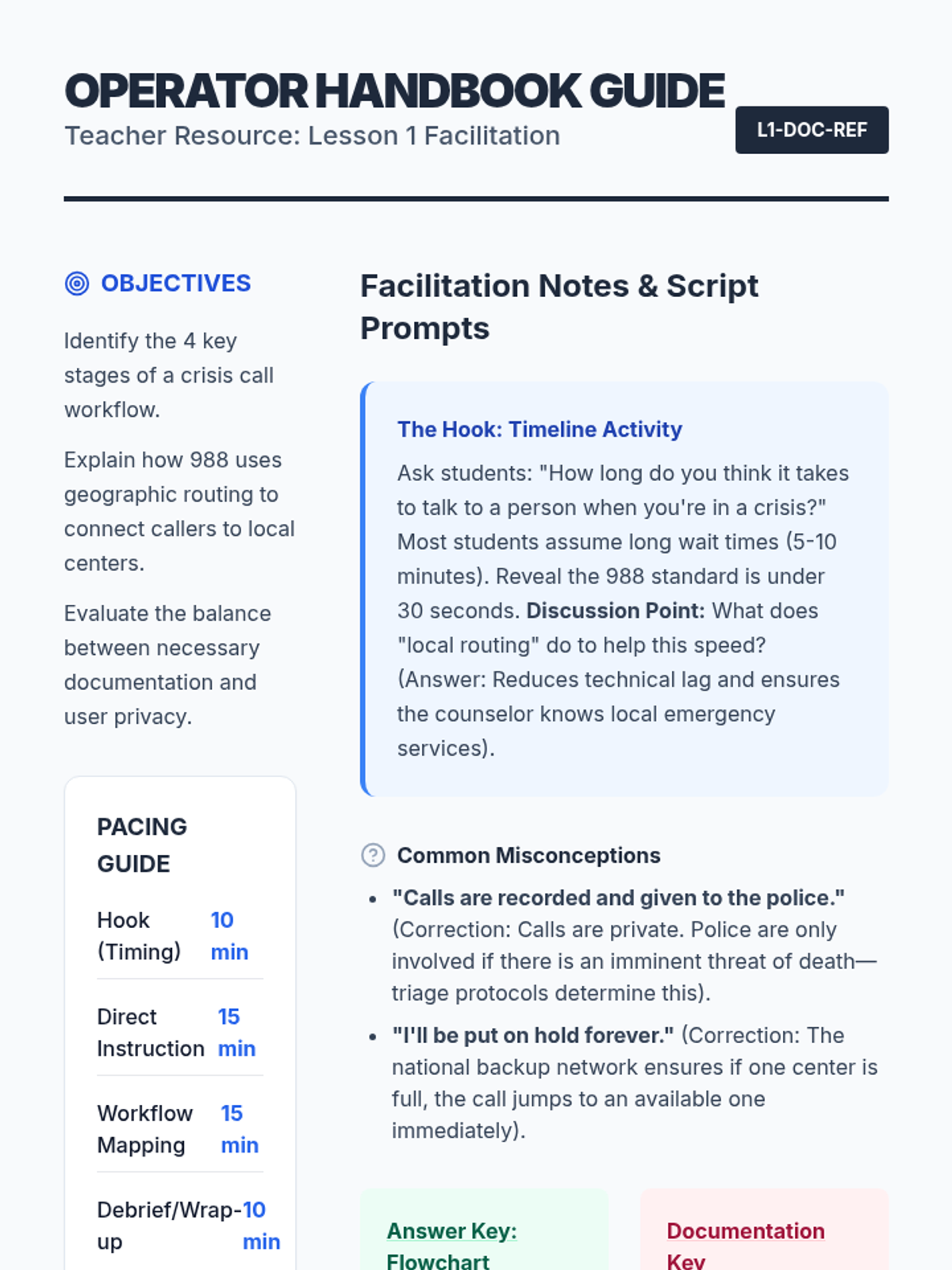
This sequence demystifies the operational side of crisis hotlines, focusing on triage, confidentiality, and the technical workflow of help-seeking. Students will learn how risk is assessed and how privacy is maintained, reducing anxiety about reaching out for support.
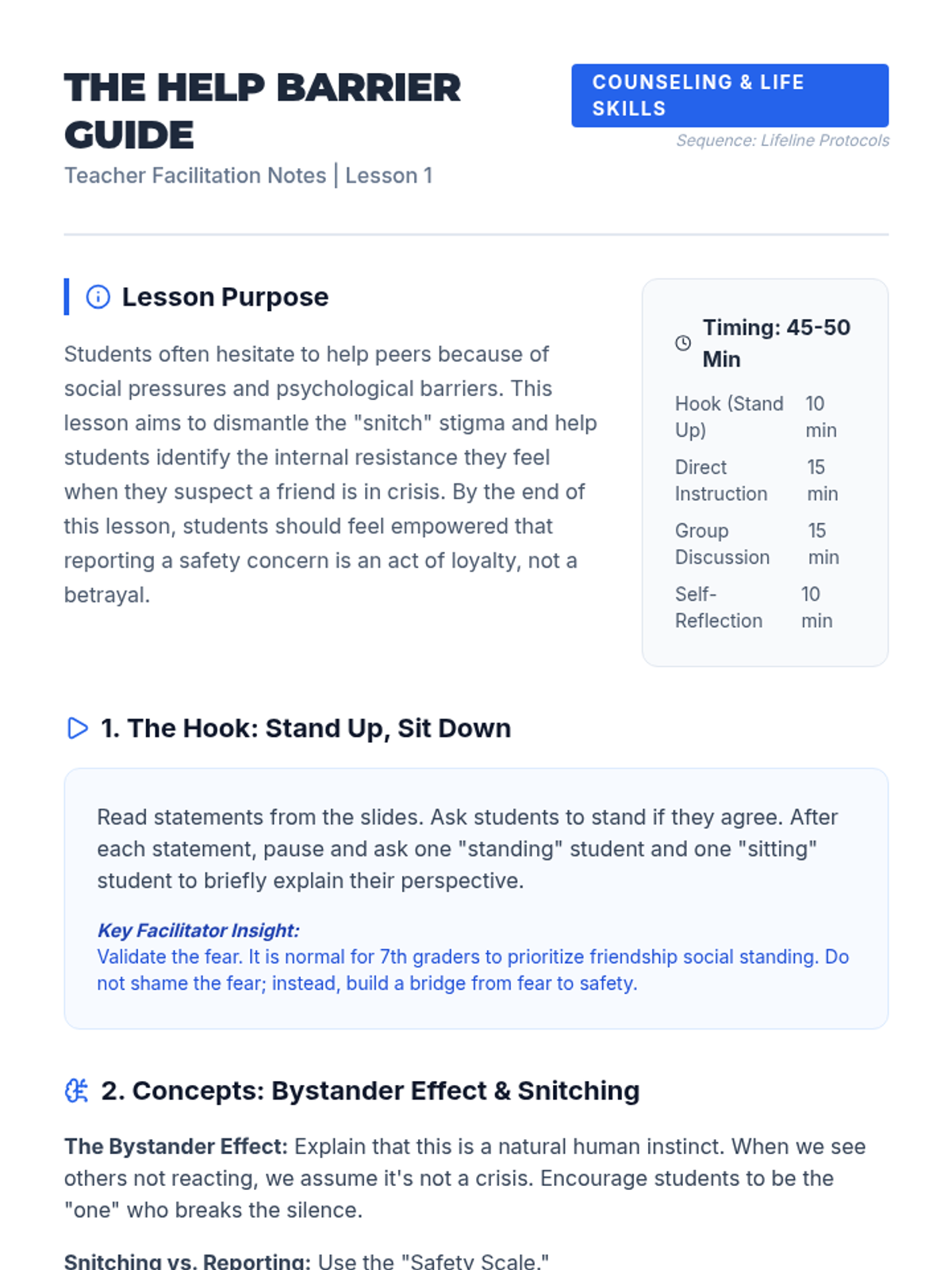
This sequence focuses on teaching 7th-grade students how to safely and effectively help a peer in a mental health crisis using the ACT (Acknowledge, Care, Tell) model. Students move from understanding psychological barriers like the bystander effect to practicing empathetic listening and identifying concrete resources for professional support.
This sequence frames daily check-ins as a professional leadership and team management competency. Students explore psychological safety, real-world professional stand-ups, and facilitation techniques to design their own 'Readiness Protocols' for teams.
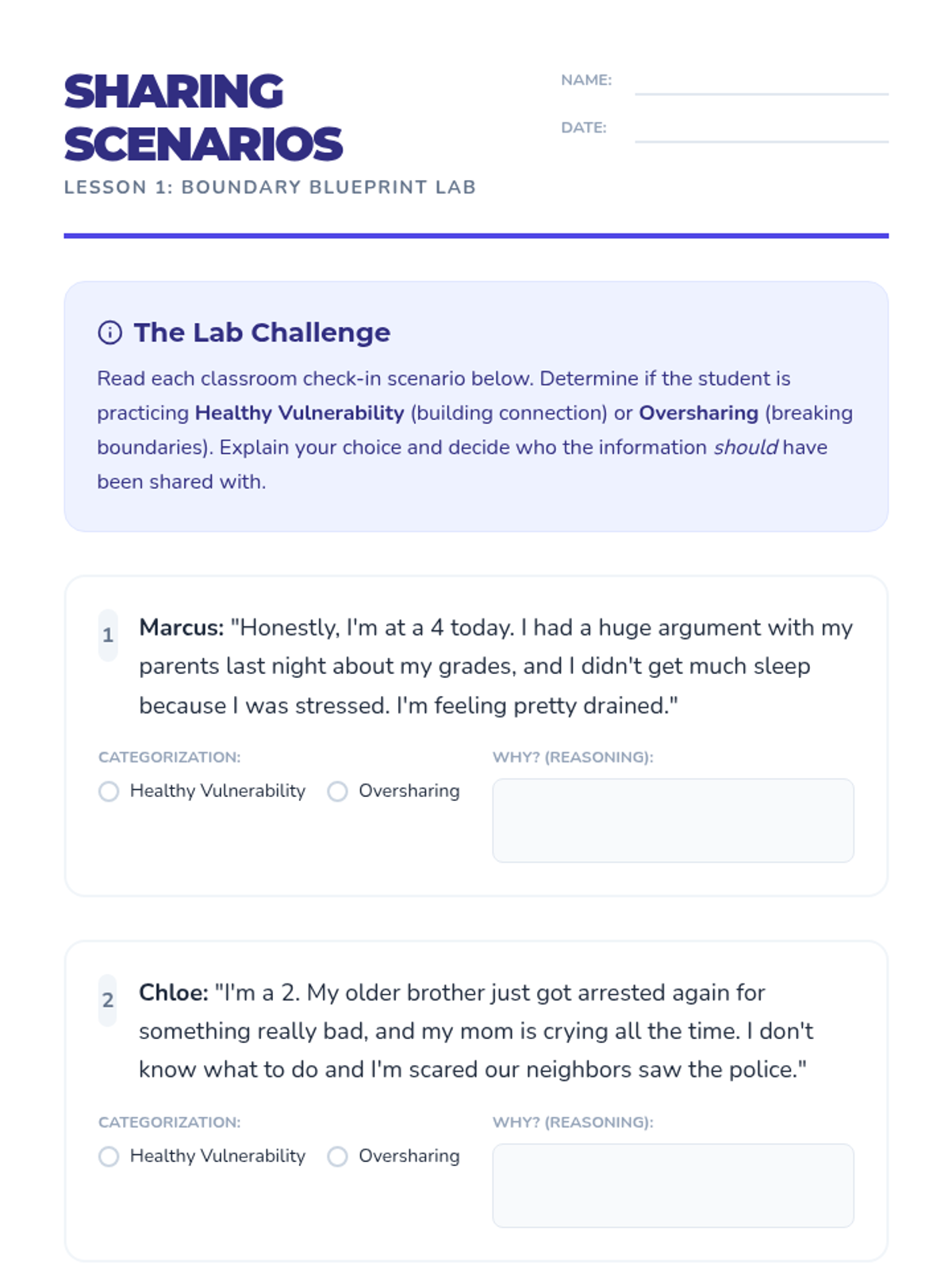
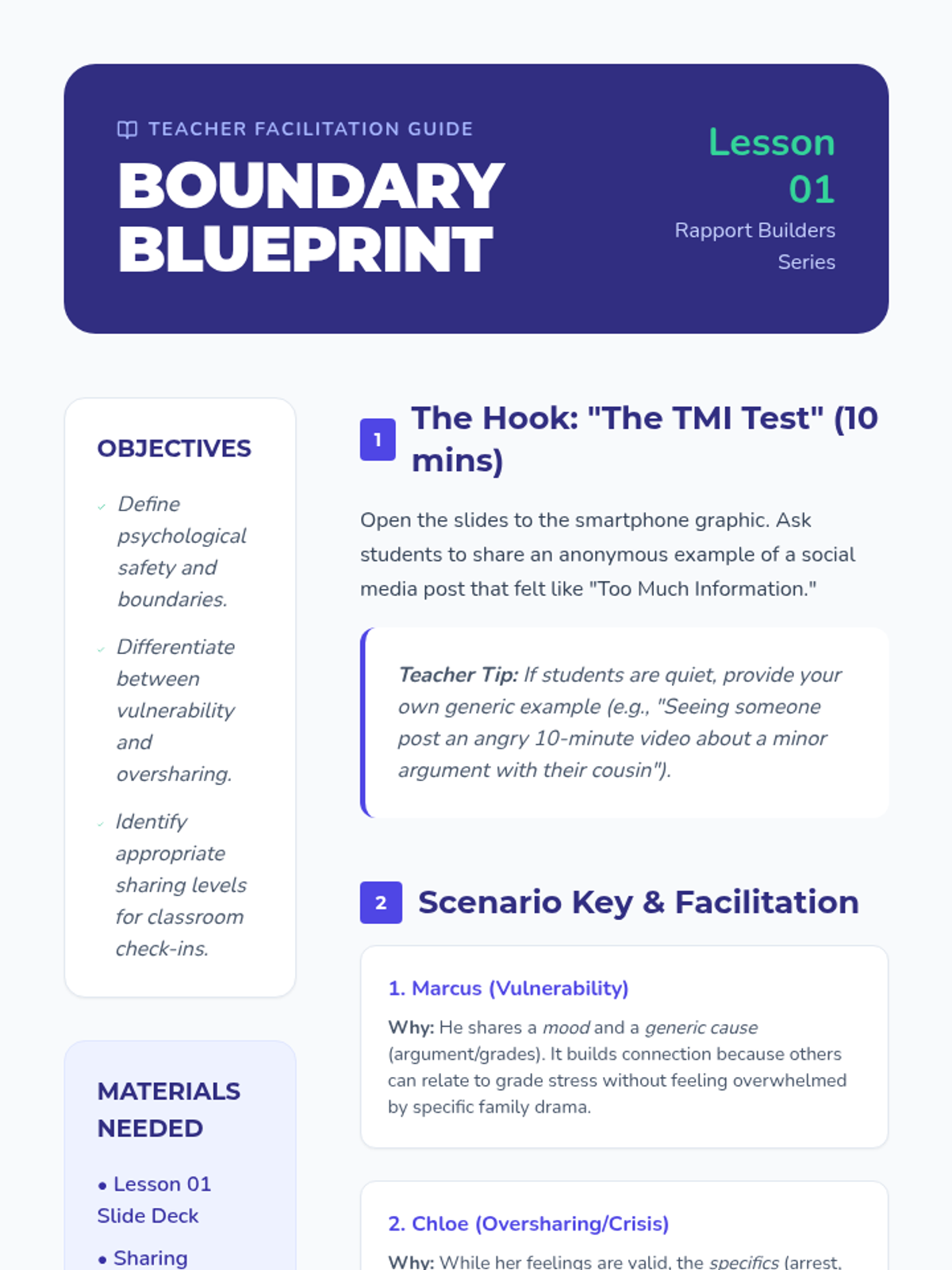
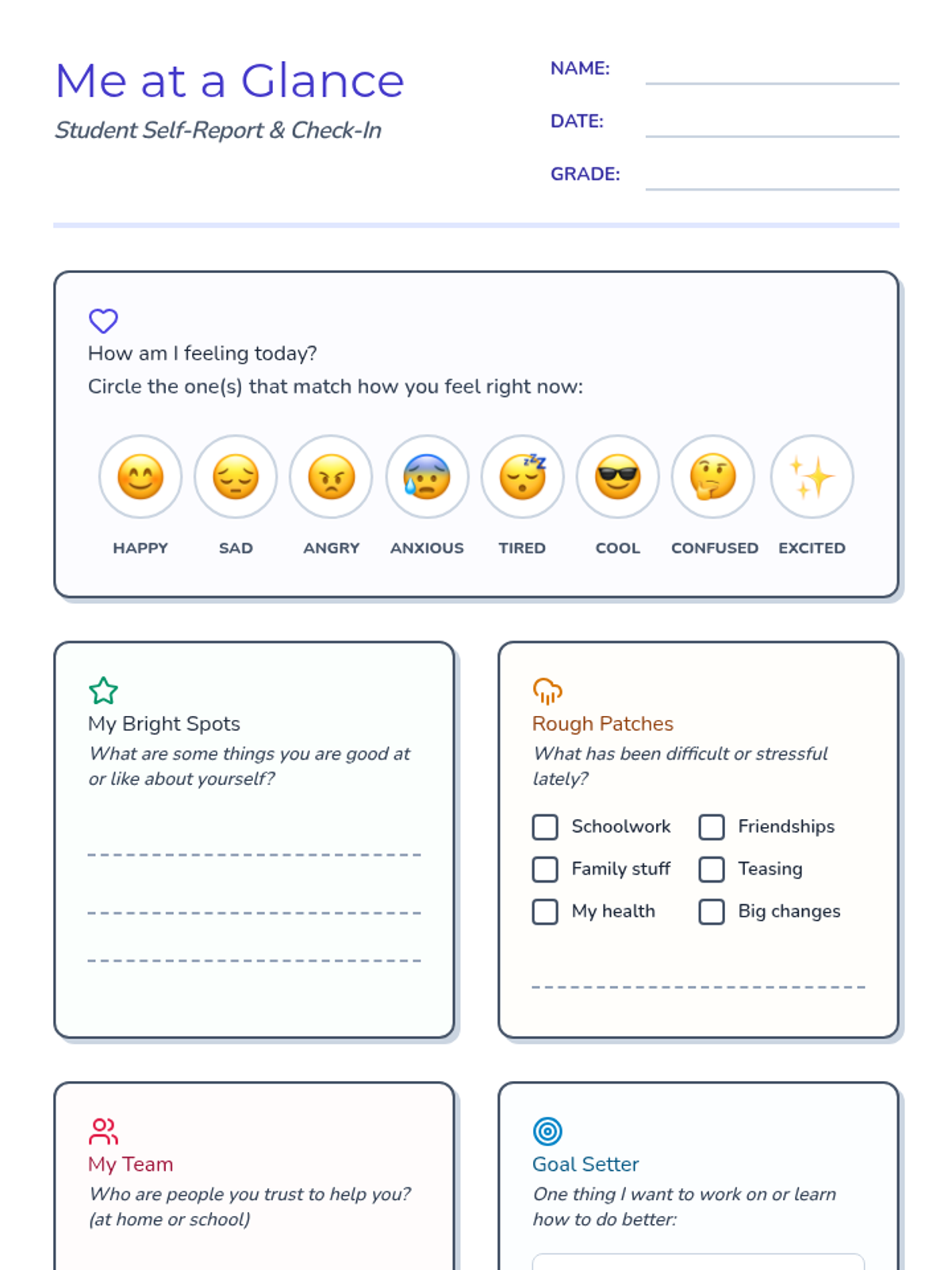
A 5-lesson sequence for 9th graders focusing on social-emotional check-in procedures, boundary setting, active listening, and peer leadership to build a supportive classroom community.
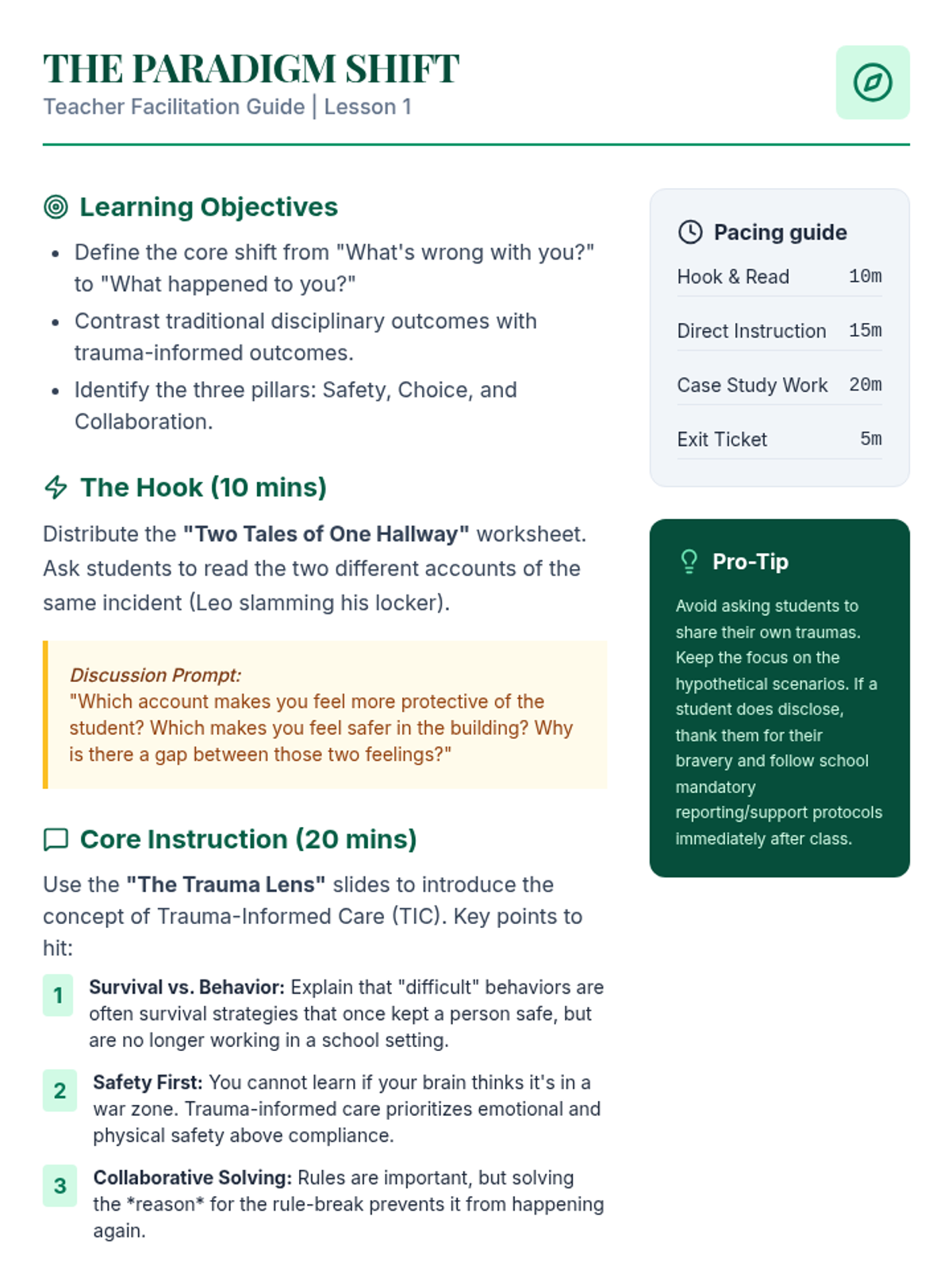
A 5-lesson unit for 9th-grade students focused on shifting from judgment to curiosity through trauma-informed perspectives. Students explore core principles of safety, empathy boundaries, de-escalation, and systemic resilience.
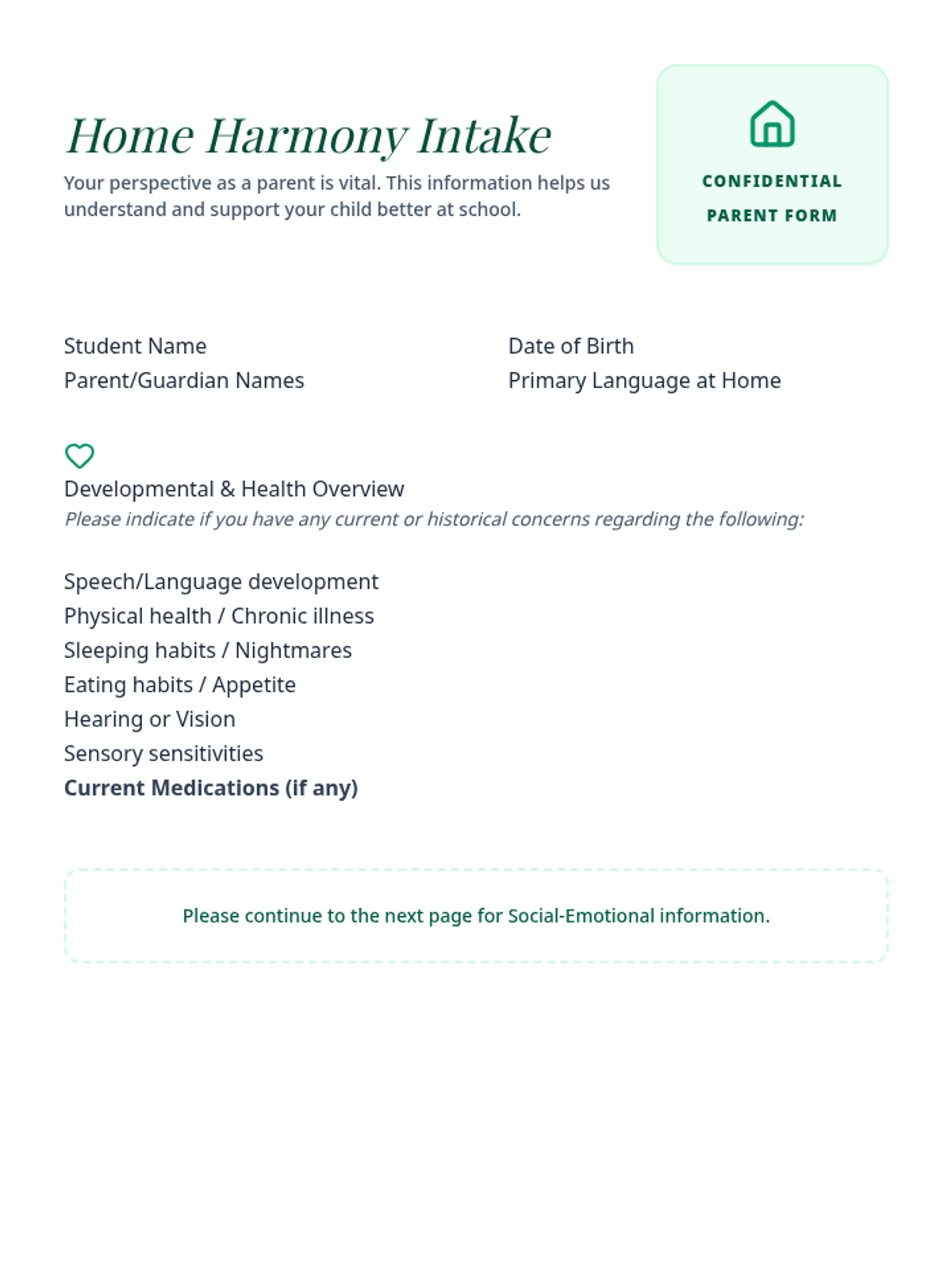
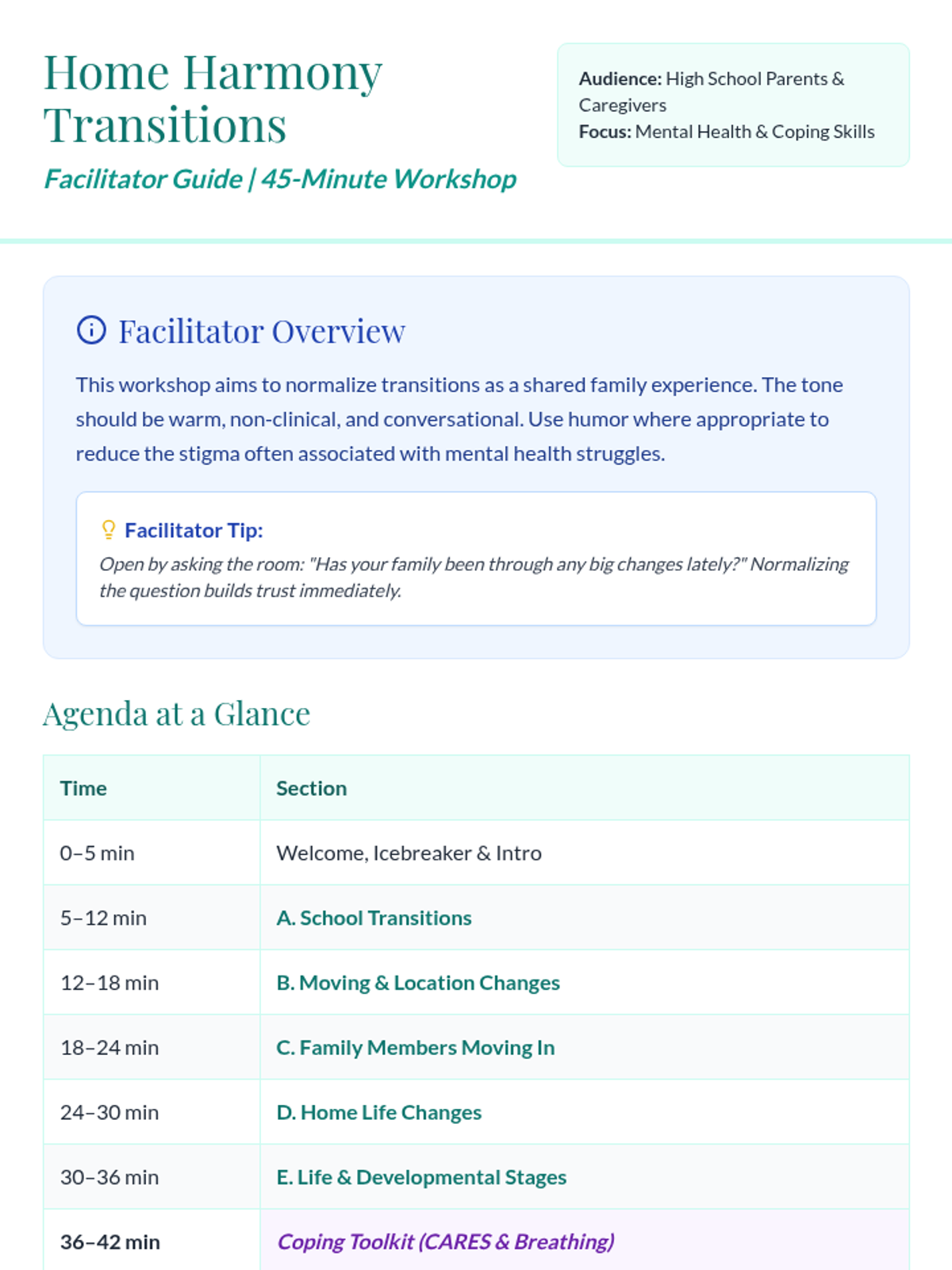
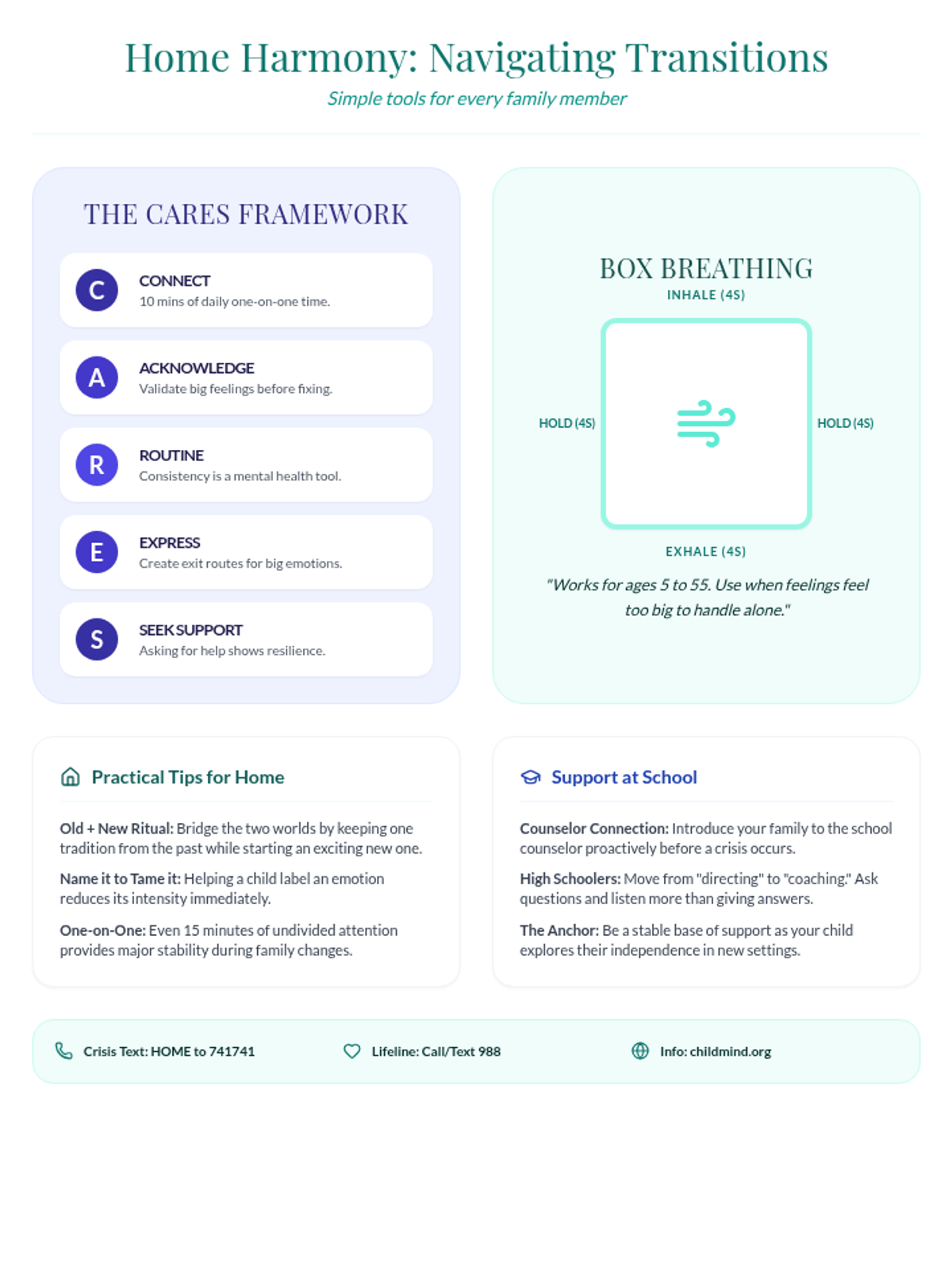
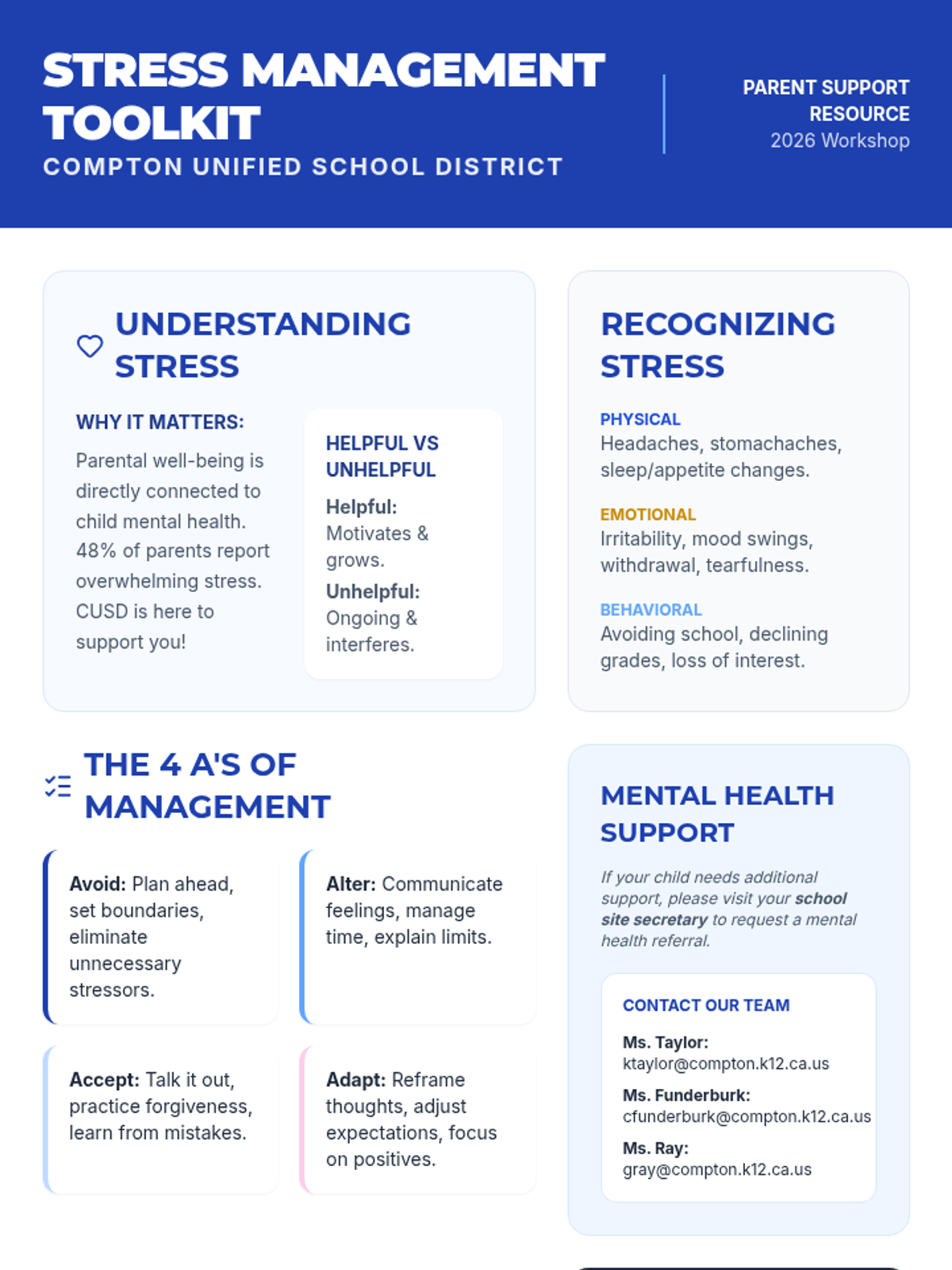
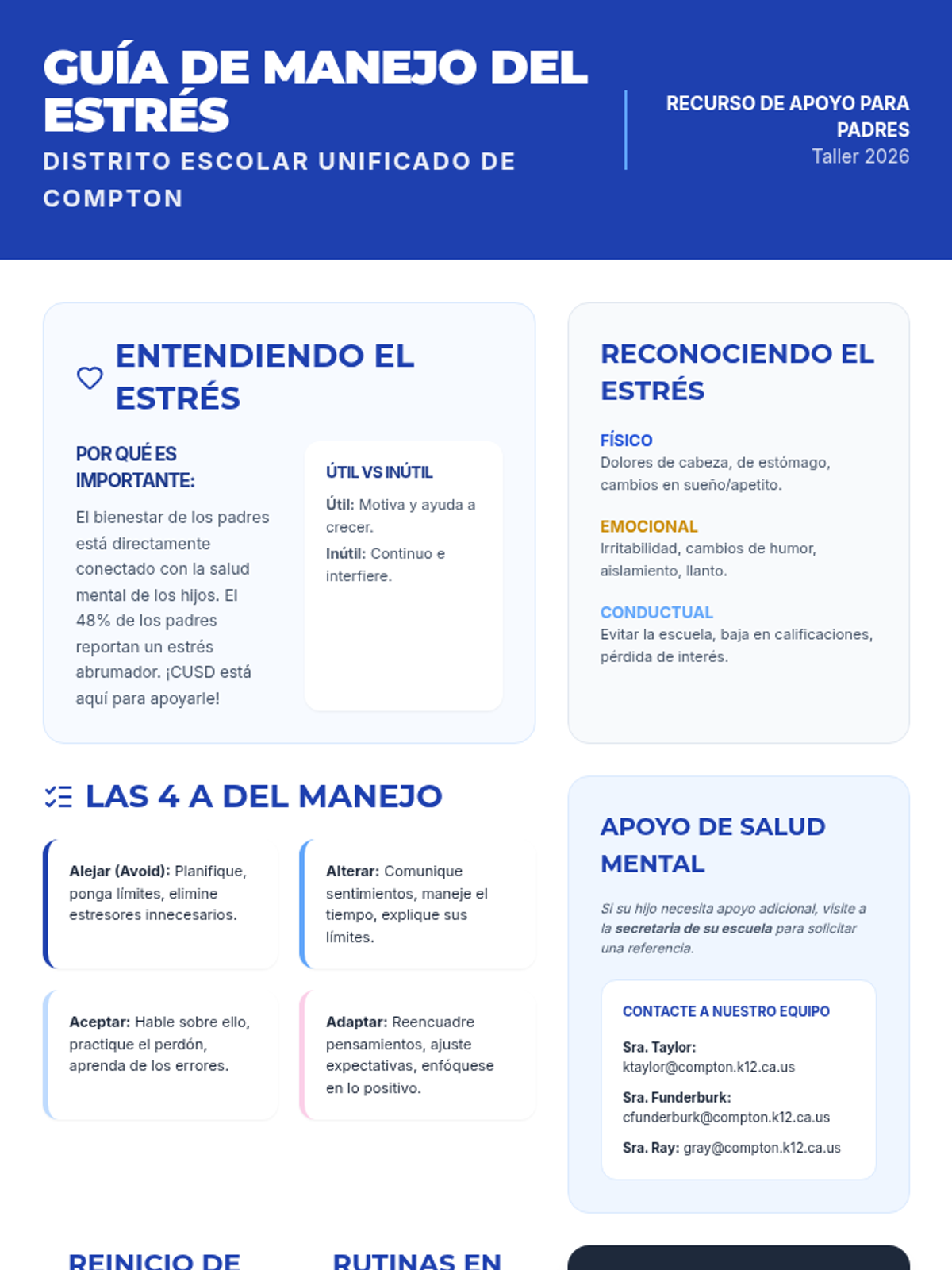
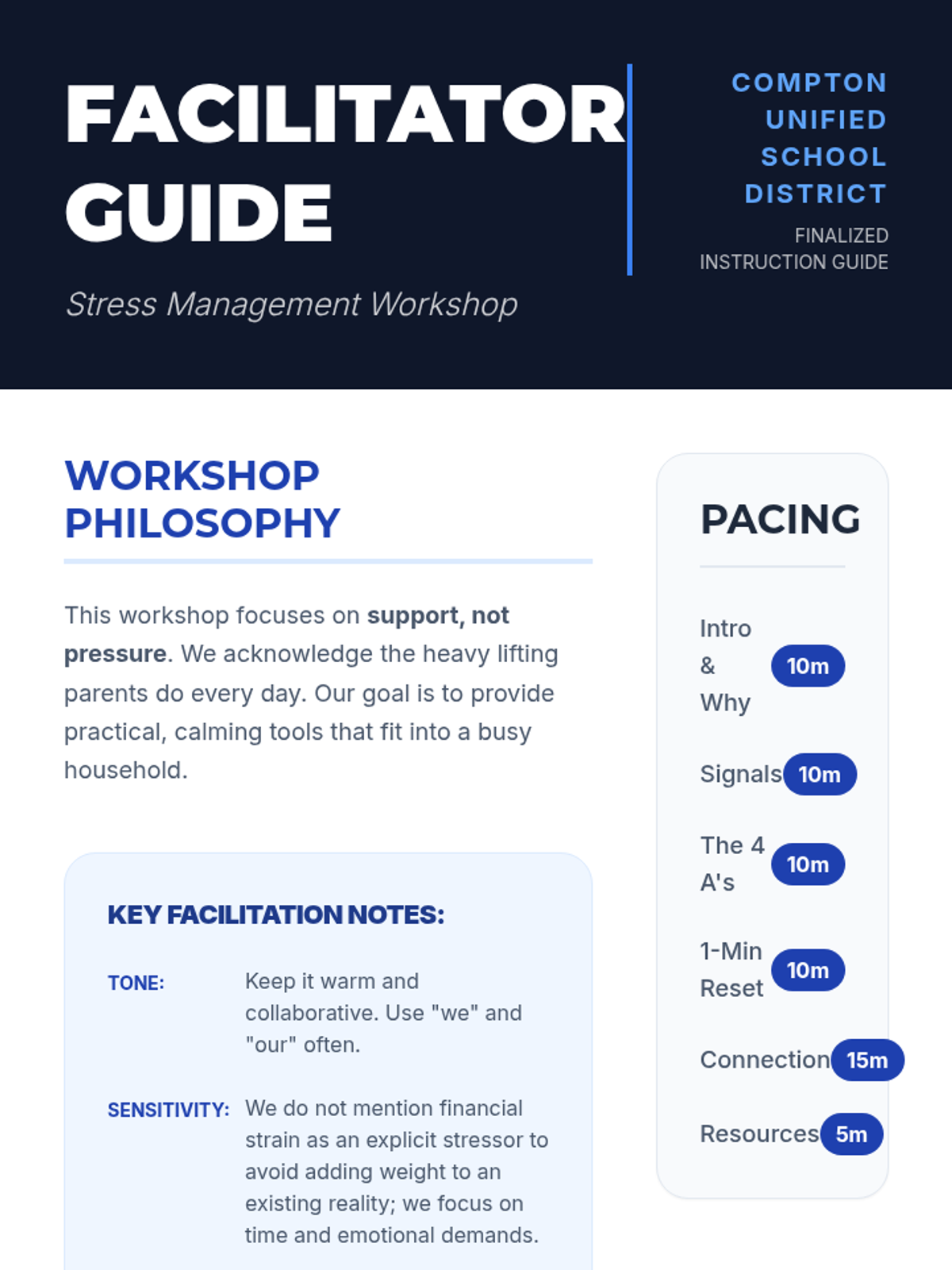
A comprehensive workshop sequence designed for parents and caregivers to understand and manage stress, identify stress signals in children, and implement practical coping strategies at home.
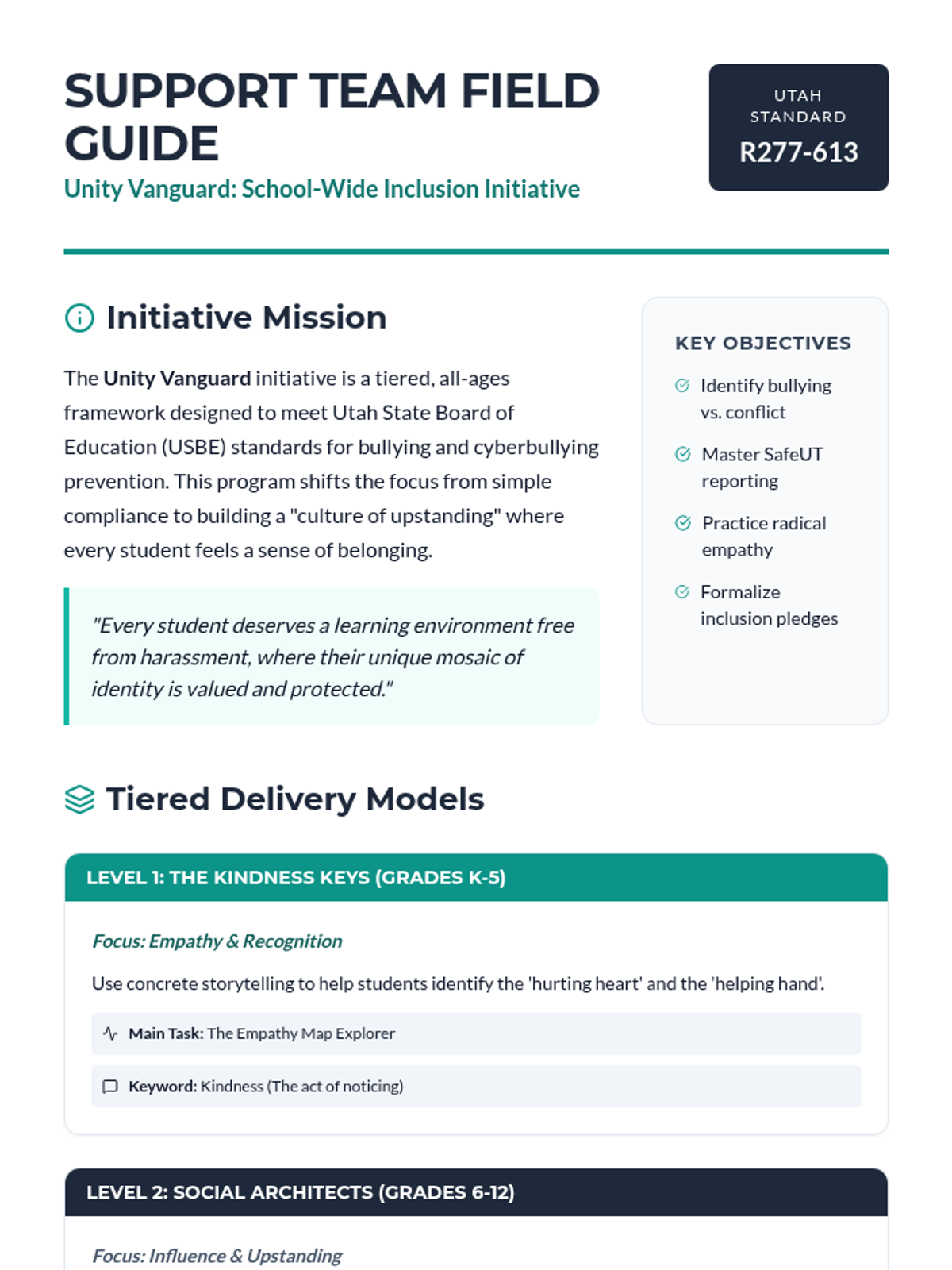
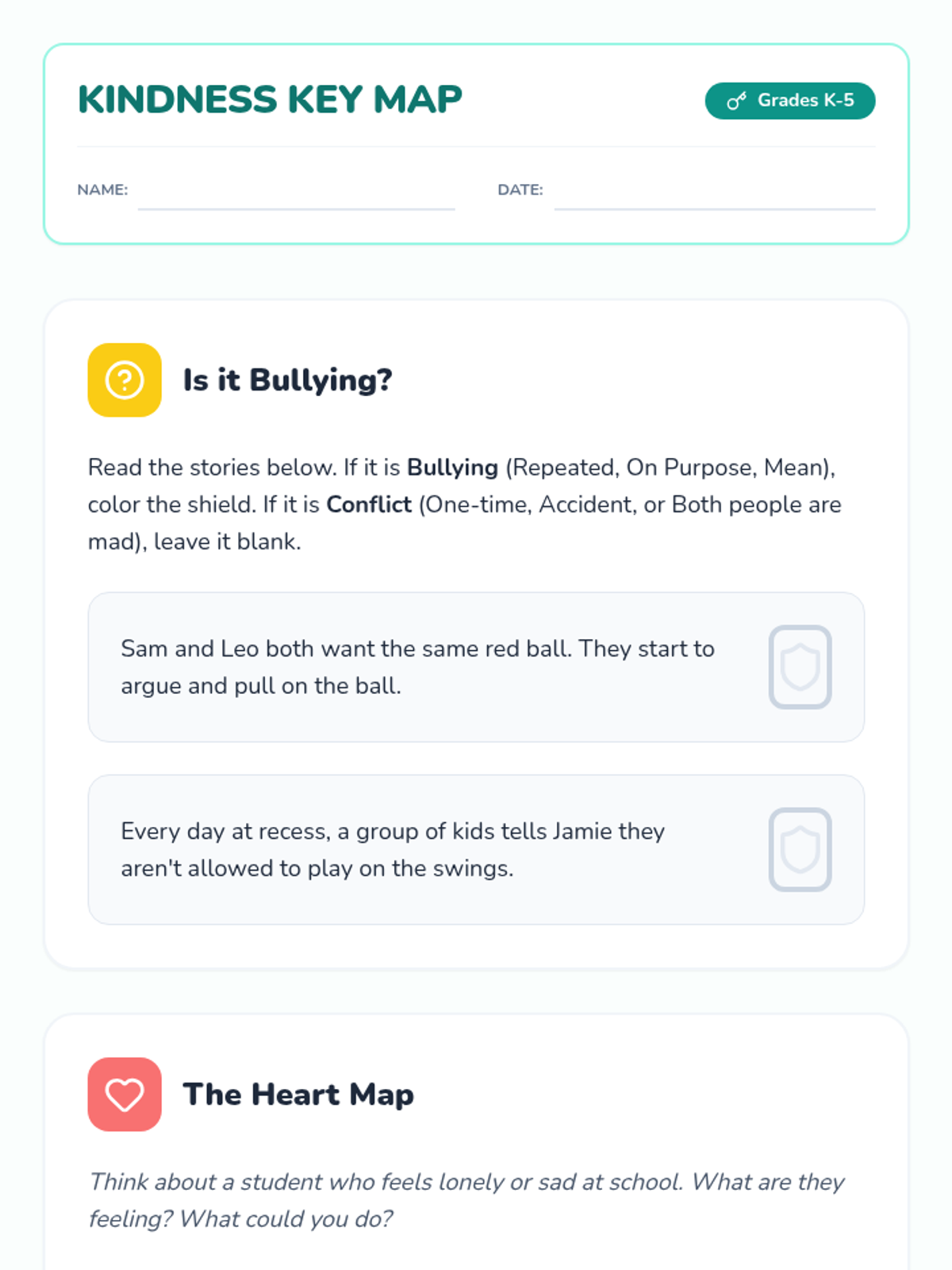
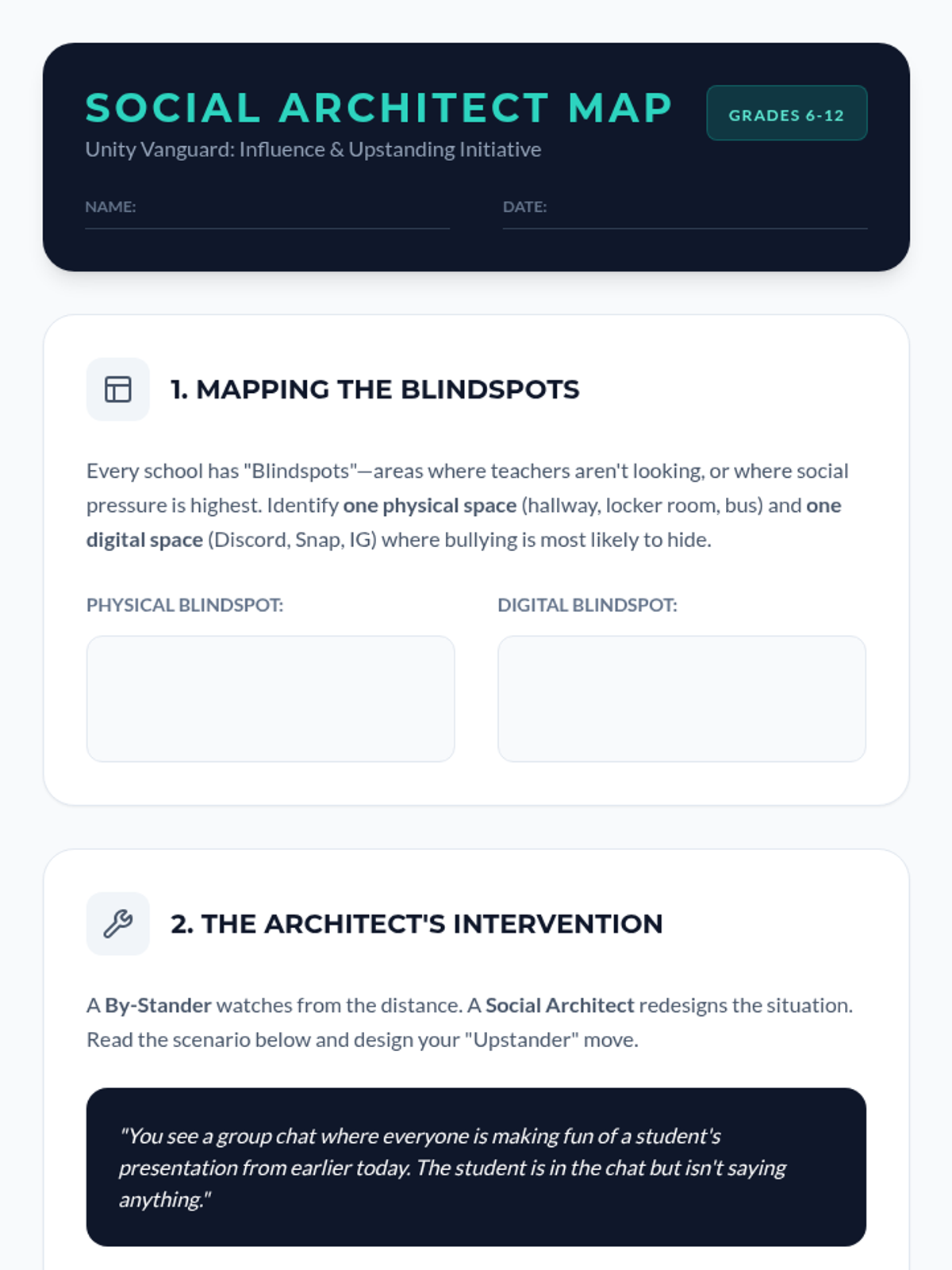
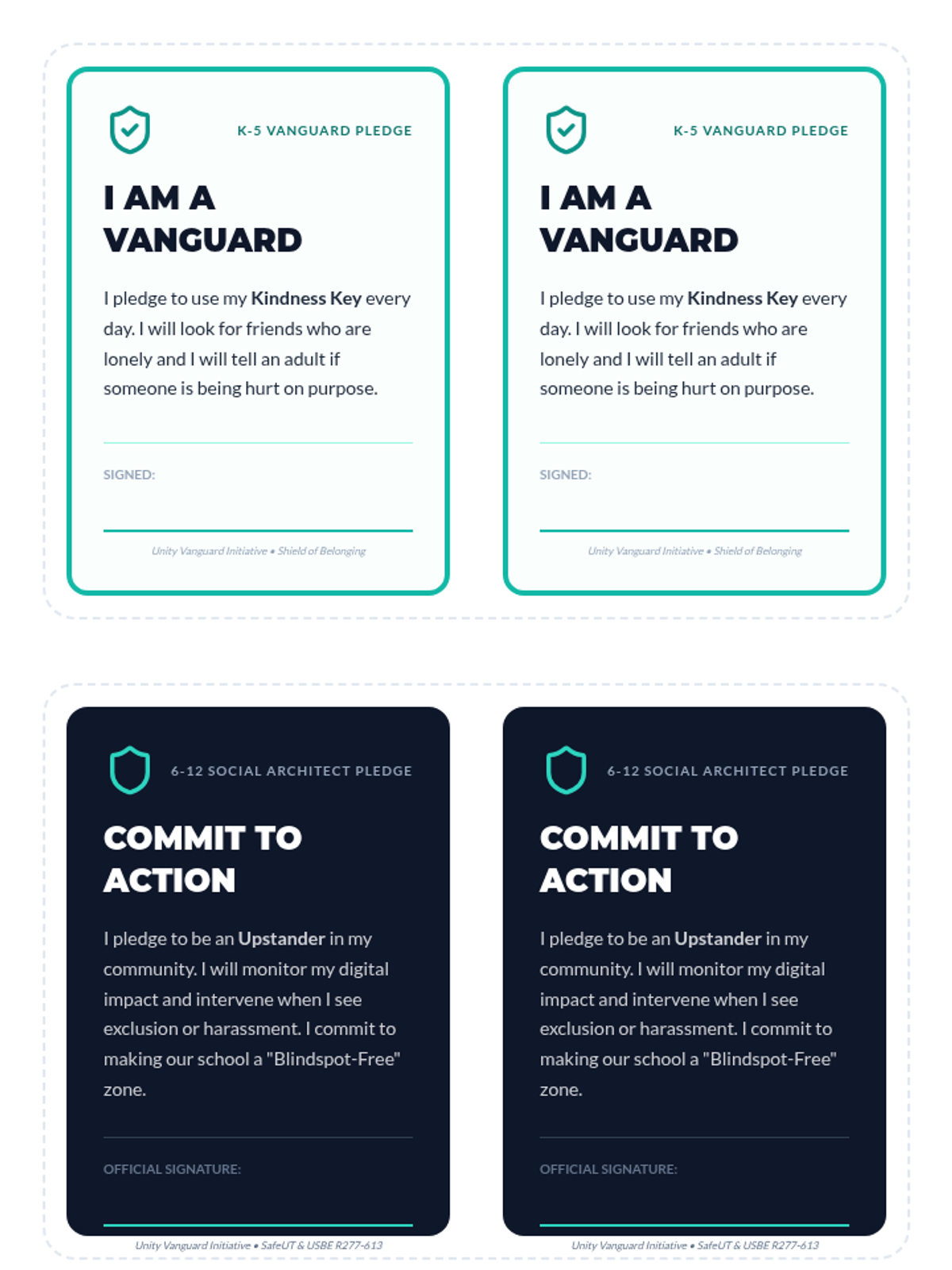
A comprehensive K-12 anti-bullying and inclusion program designed for school support teams to build safer, more empathetic school environments aligned with Utah state safety standards.
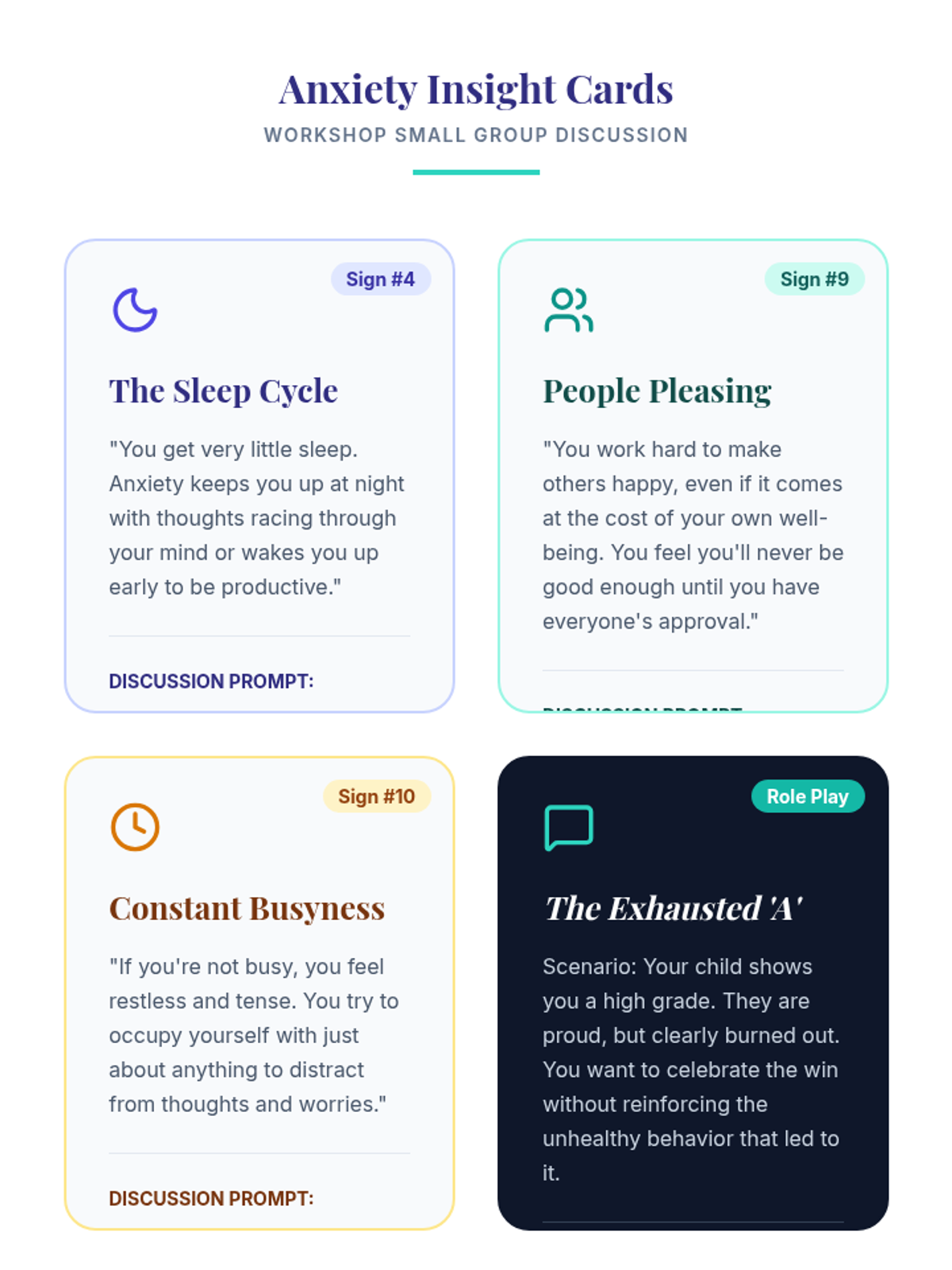
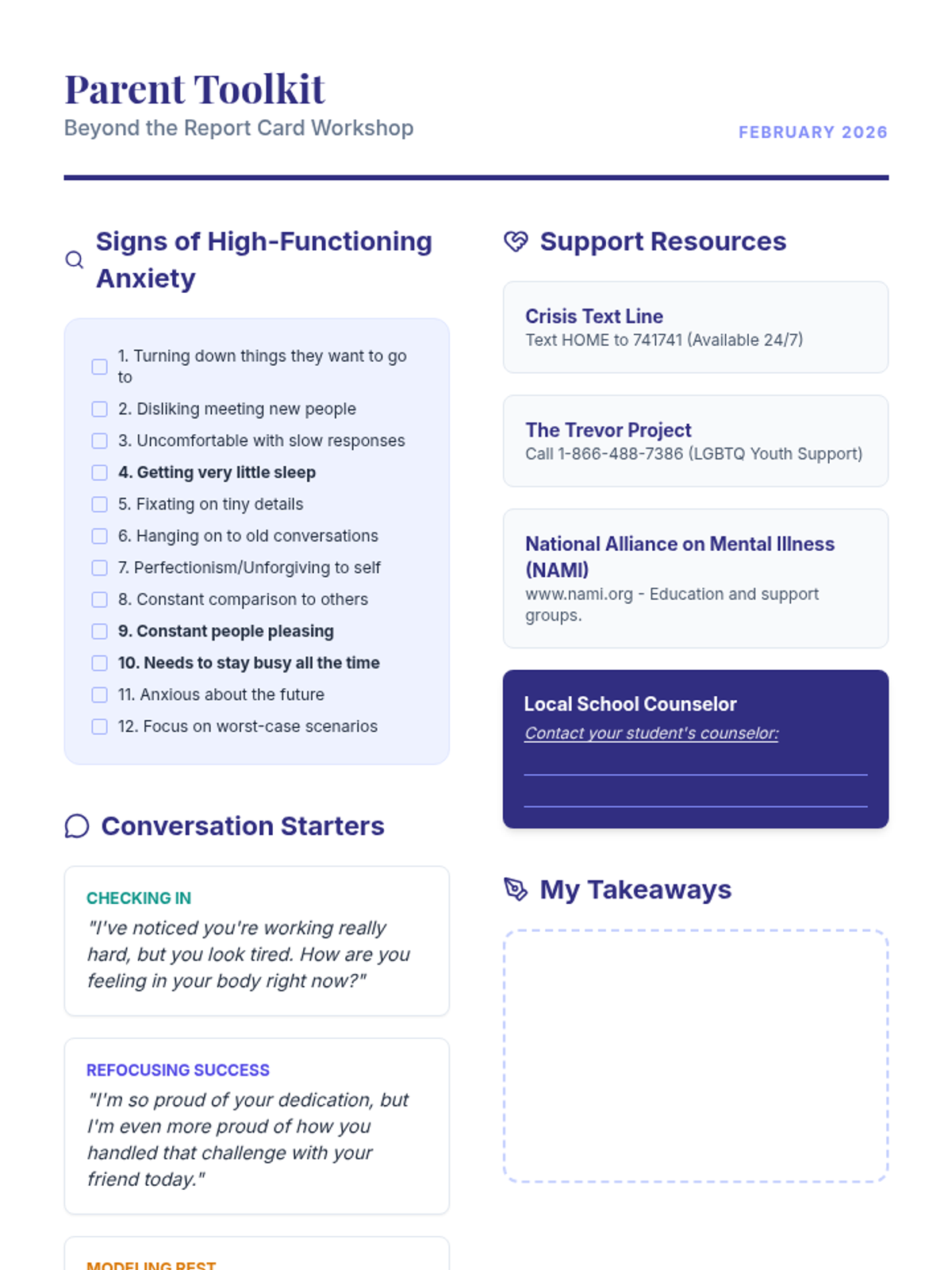
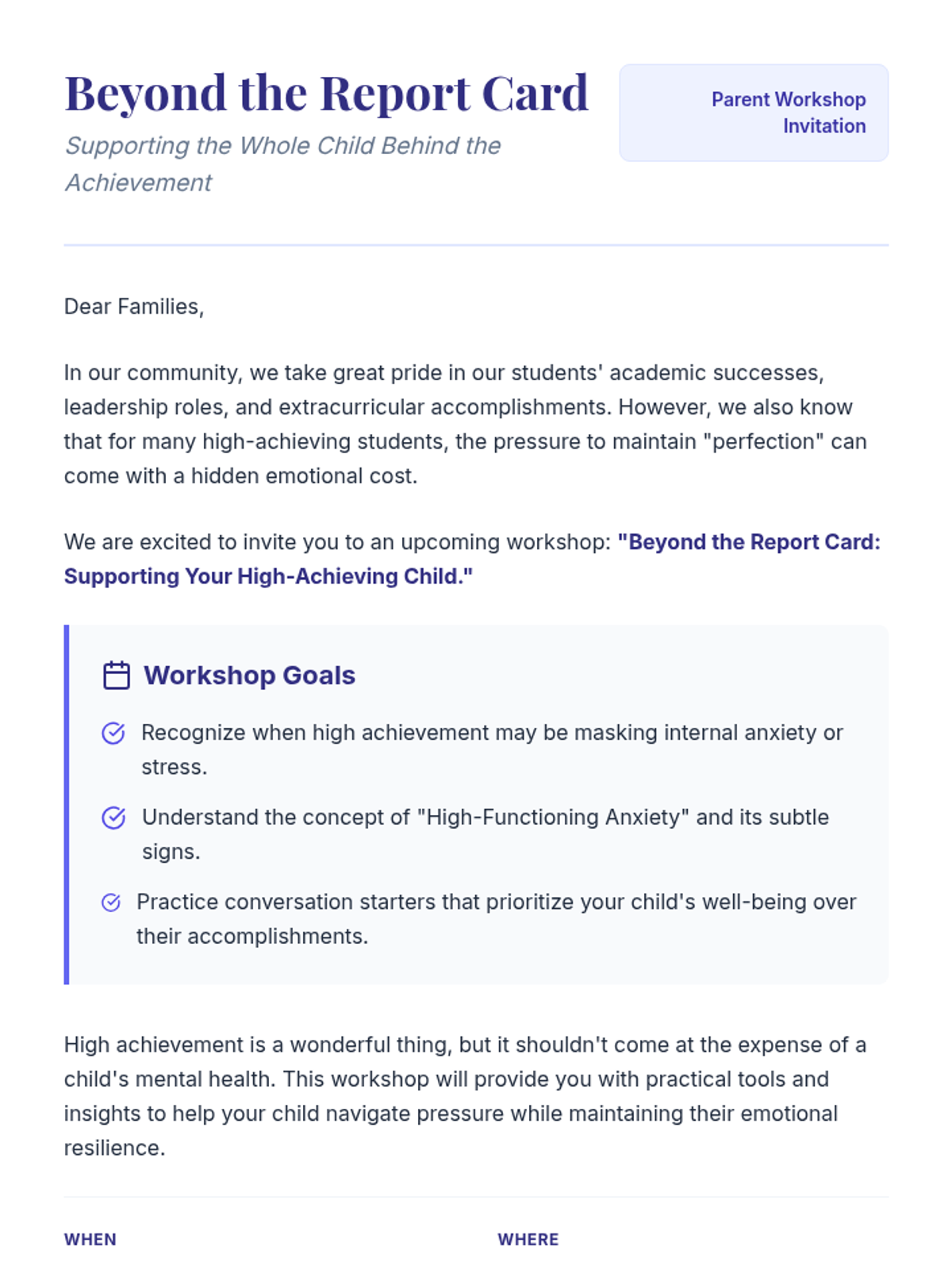
A workshop series designed for parents to understand the intersection of high academic achievement and mental health, focusing on identifying high-functioning anxiety and fostering healthy communication.
This sequence demystifies the operational side of crisis hotlines, focusing on technical and legal procedures. Students explore the 988 system, confidentiality laws, and triage protocols to understand how help is delivered and privacy is protected.
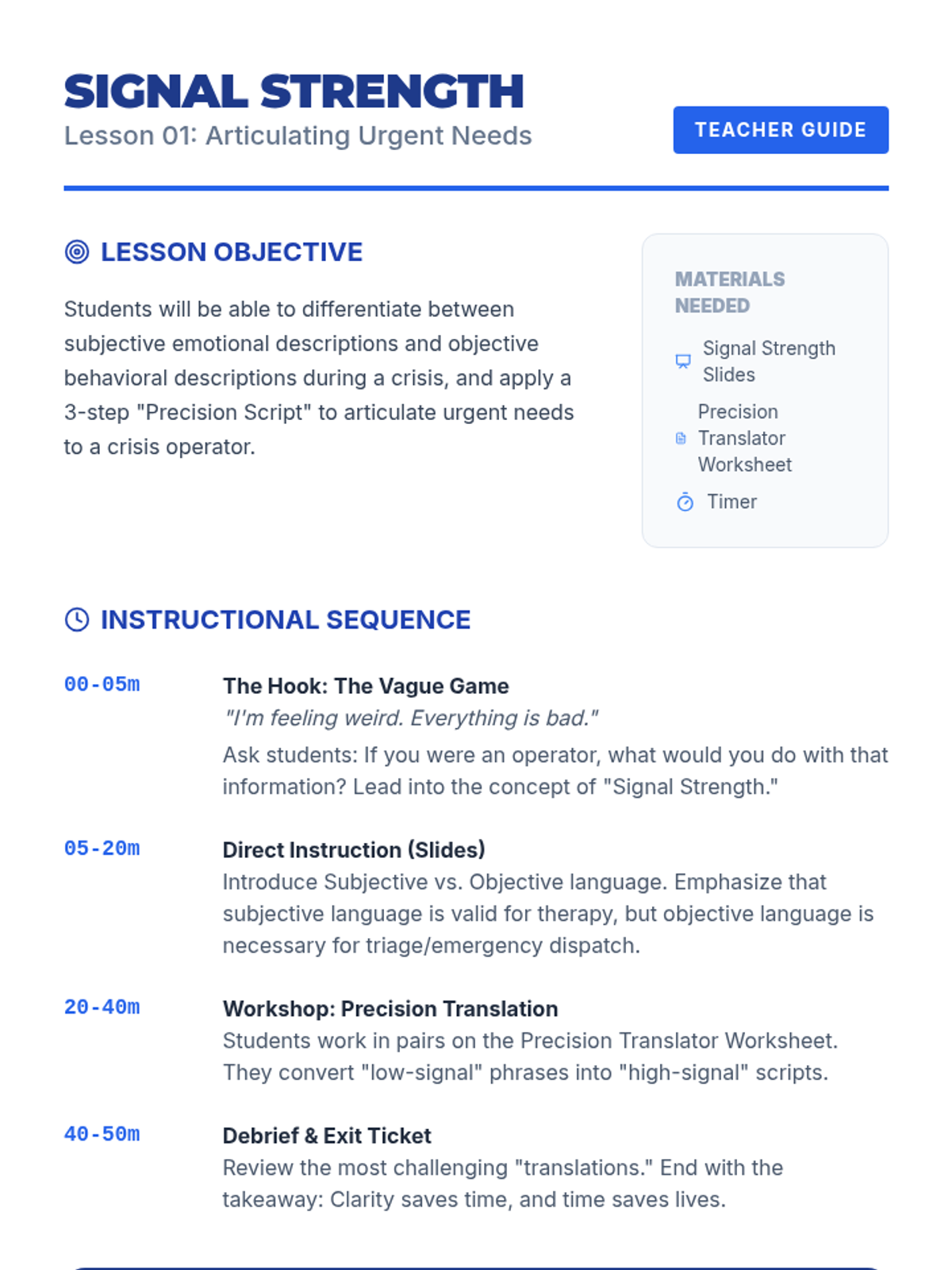
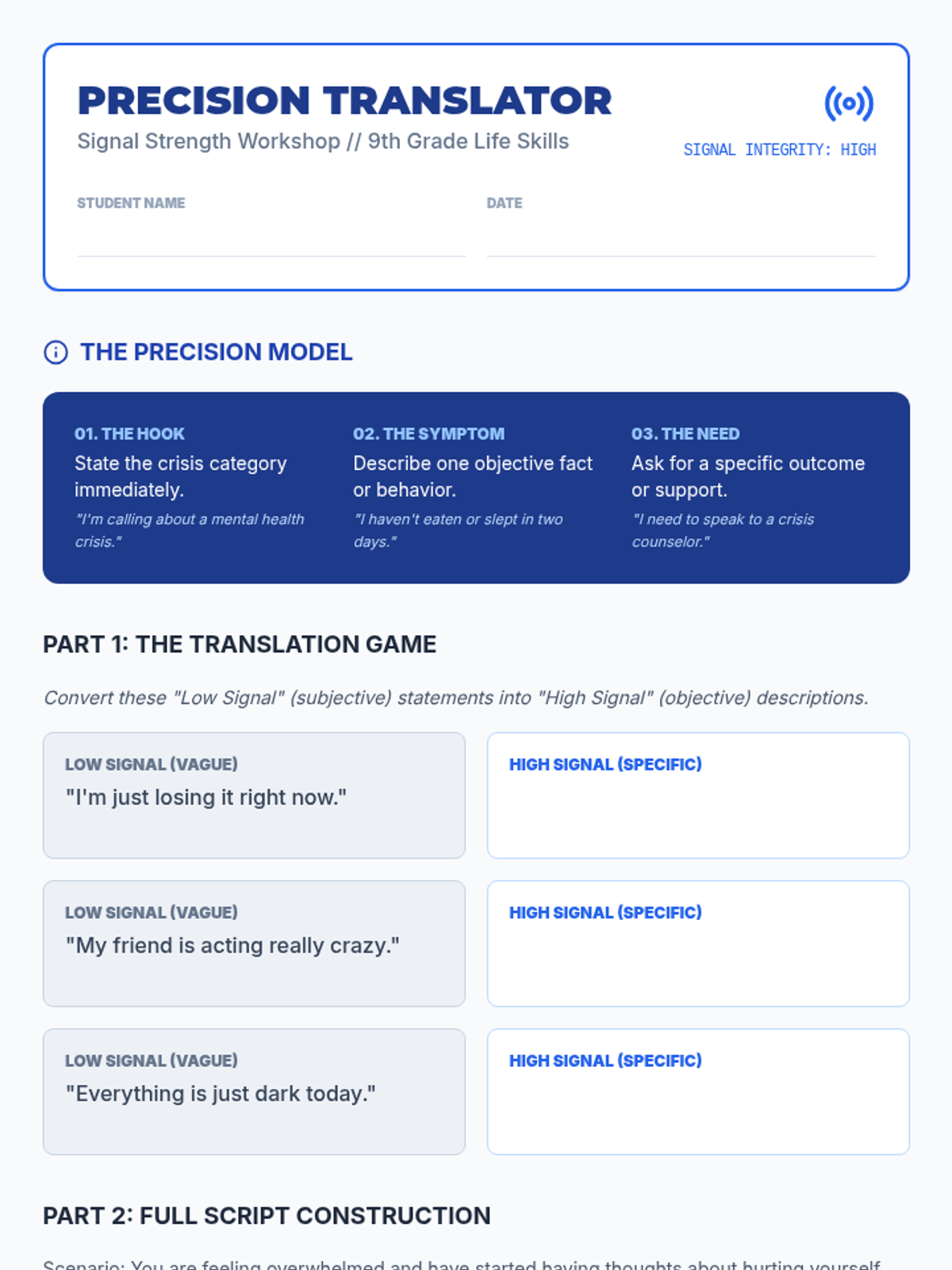
This skill-building sequence focuses on communication strategies for seeking crisis support, moving beyond just knowing phone numbers to practicing the specific scripts and techniques needed to facilitate help for oneself or others. Students learn to articulate urgent needs, overcome physiological stress responses, perform 'warm handoffs' as bystanders, and navigate the follow-up steps after a crisis call.
This action-oriented sequence empowers students with the knowledge and skills to act if they suspect trafficking. Moving beyond awareness, students learn the specific protocols for reporting, the importance of bystander intervention, and how to access local and national resources.
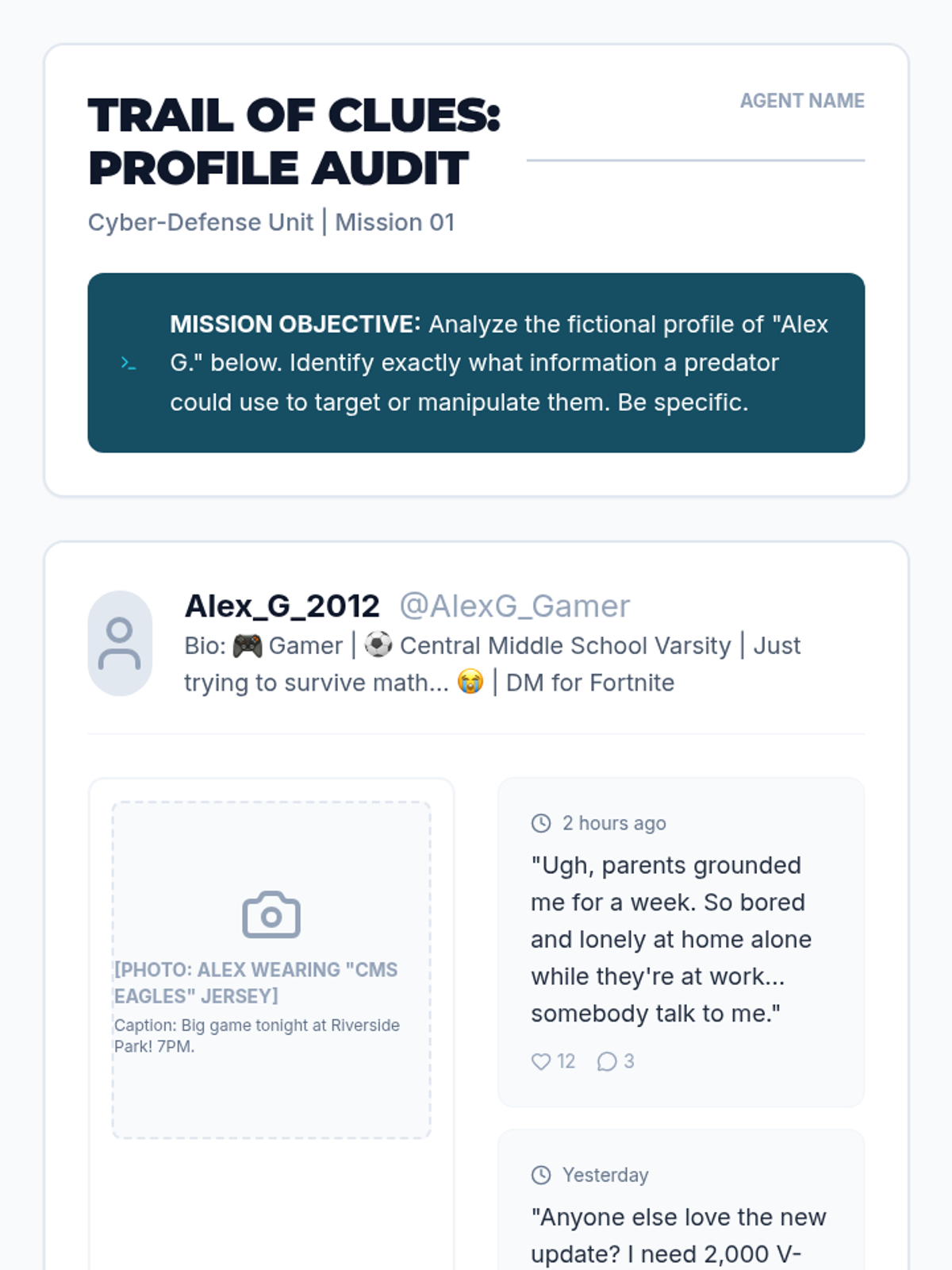
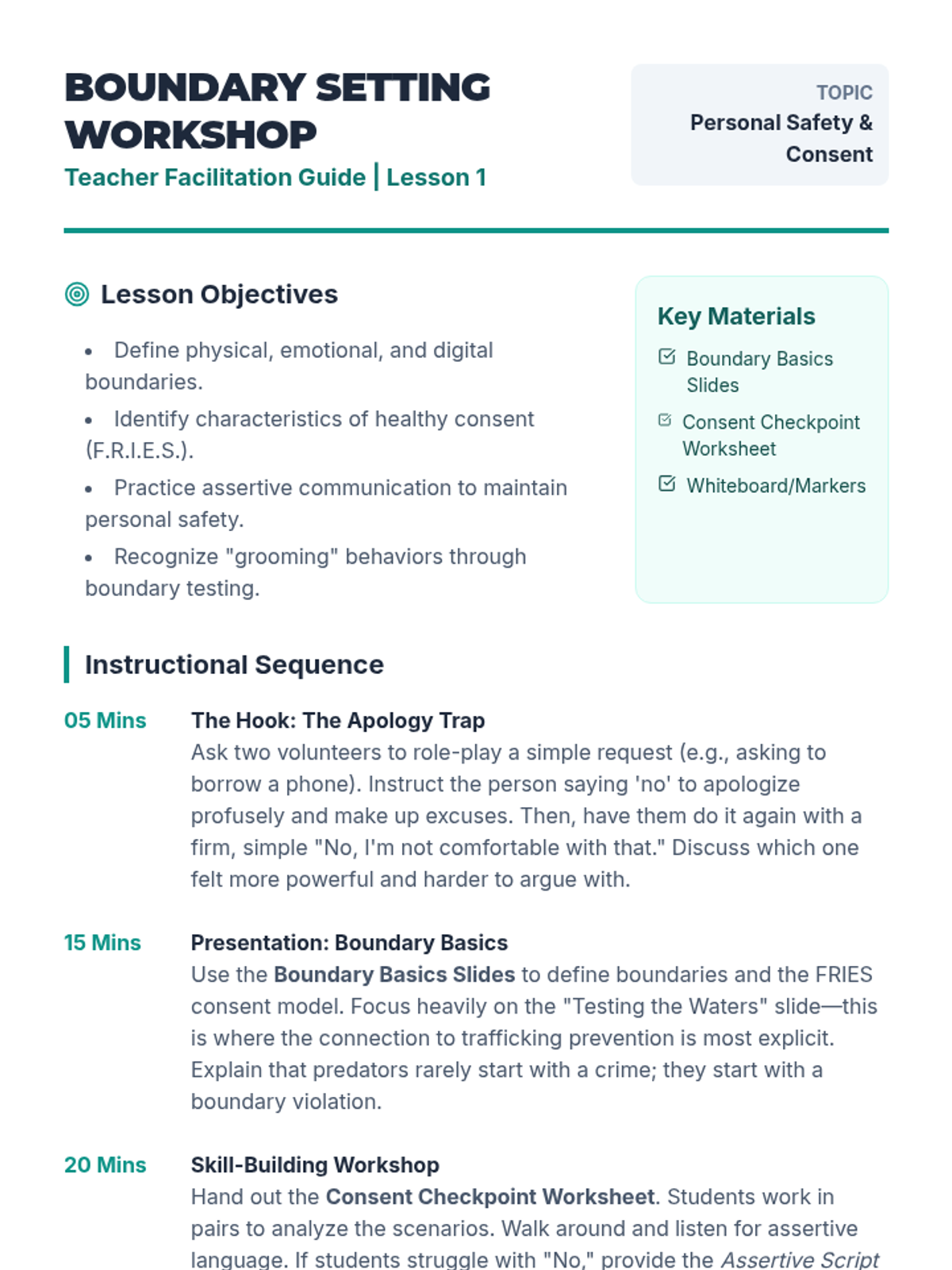
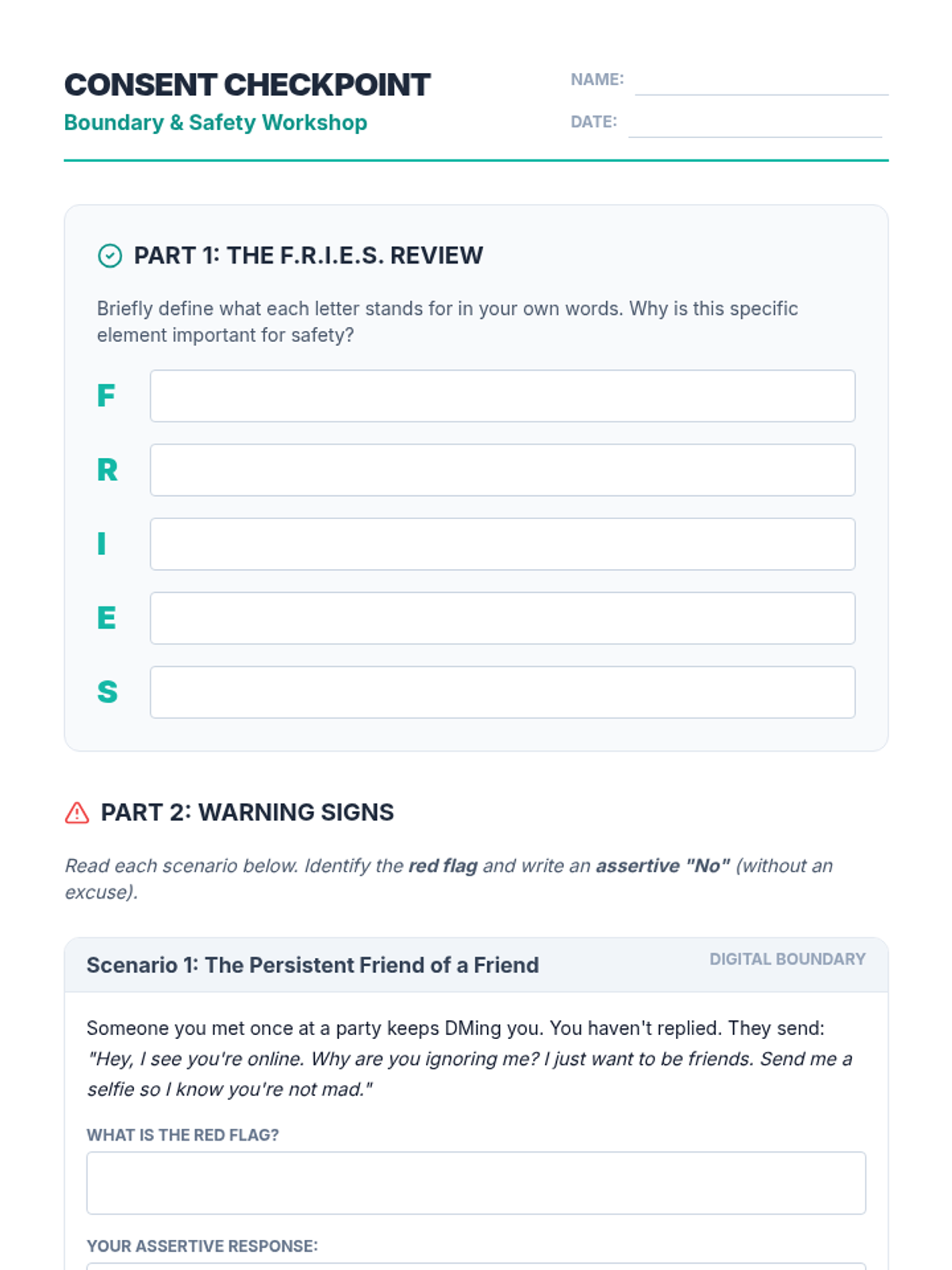
This sequence addresses the interpersonal dynamics of trafficking, focusing on healthy boundaries and the specific 'Romeo' or 'Boyfriend' coercion tactics often used against teens. Students will engage in workshops to practice assertiveness and recognize the difference between affection and control.
This sequence explores the psychology of group dynamics and community care. Students learn to recognize burnout, offer effective support, and advocate for cultures where requesting breaks is normalized and valued.
A comprehensive sequence for 7th-grade students focused on identifying and resisting online grooming and recruitment tactics used by traffickers. Students develop digital literacy skills to recognize fake profiles, manipulative lures, and unsafe gaming interactions while creating a personal digital defense protocol.
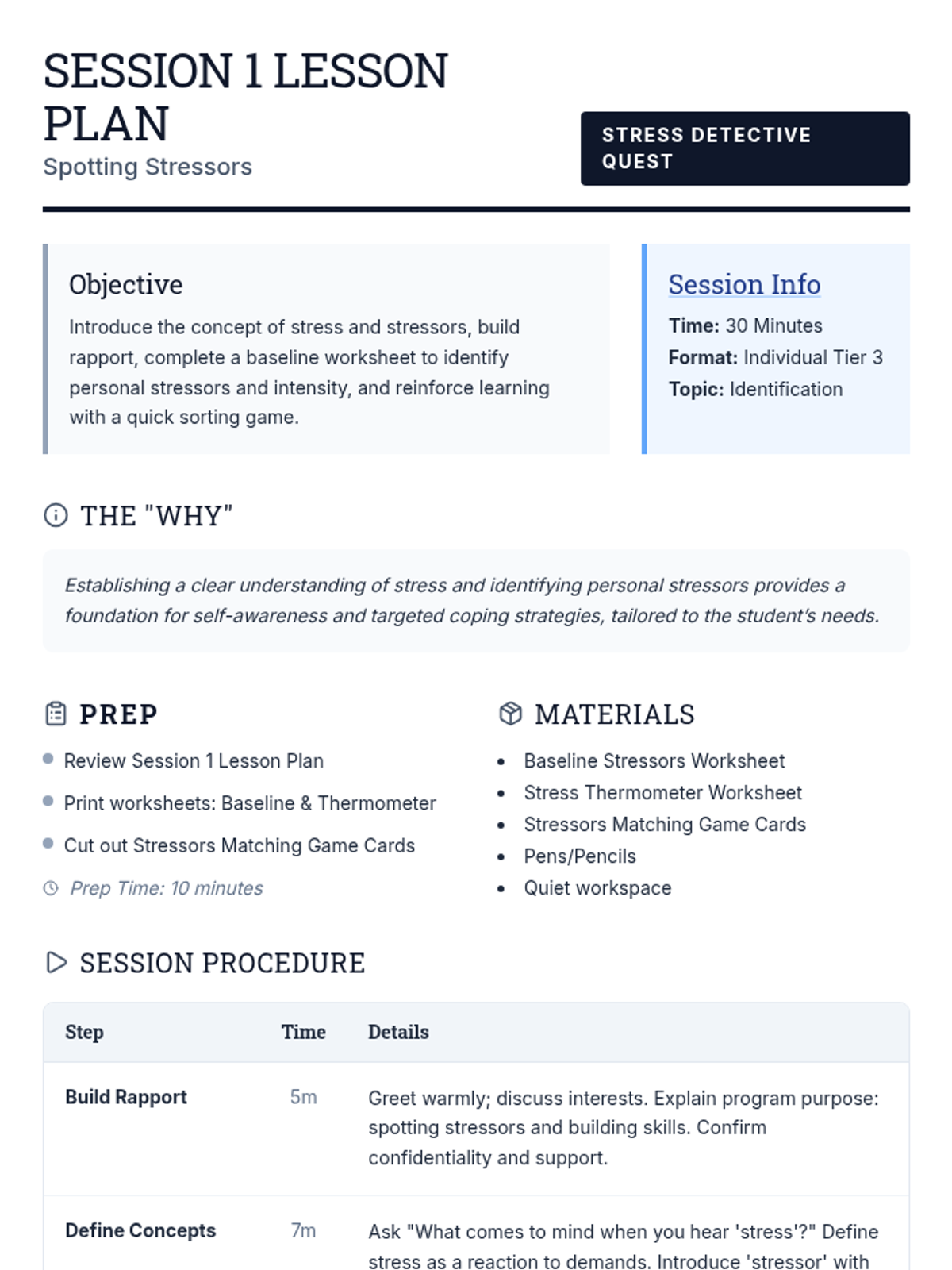
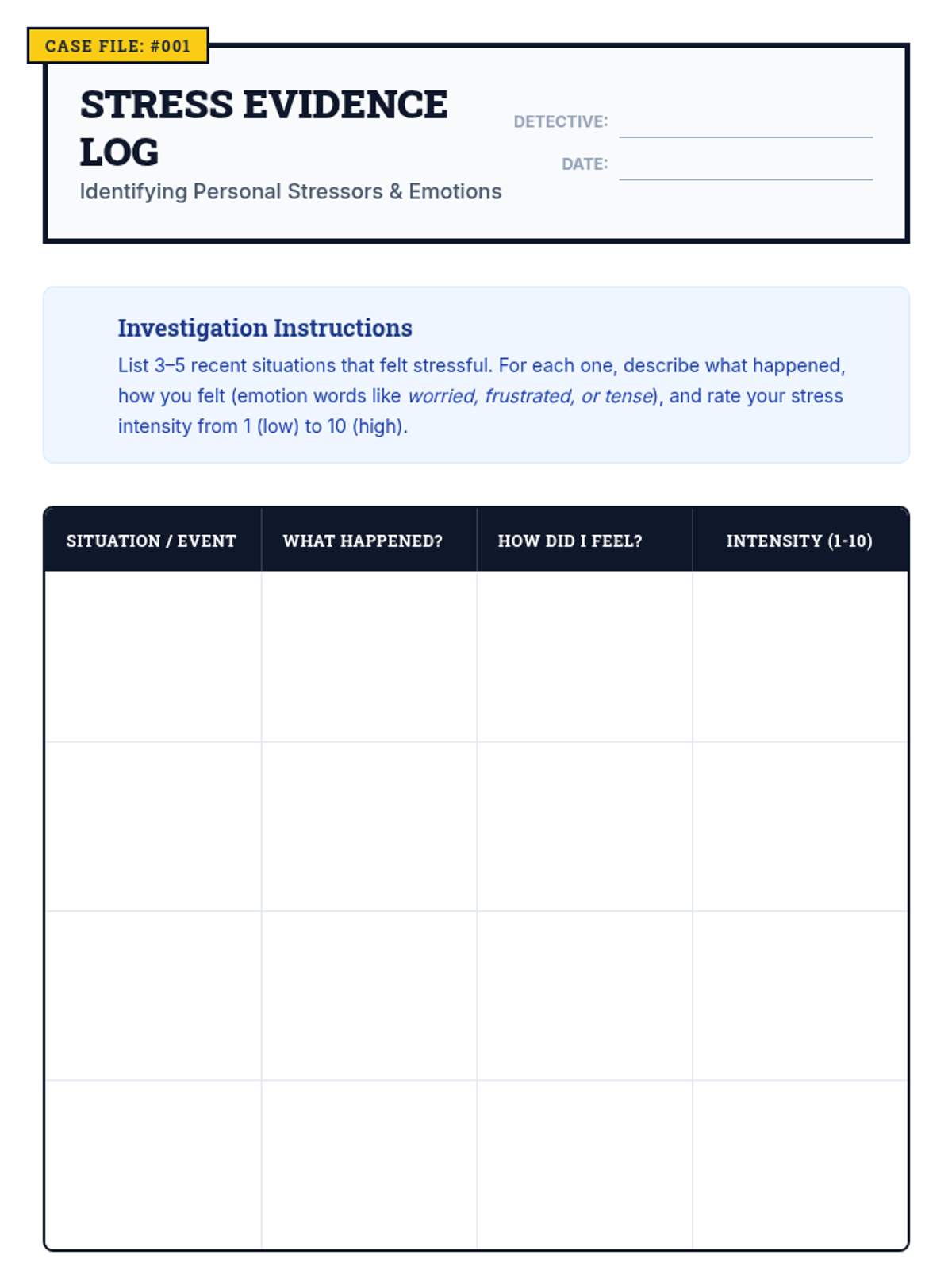
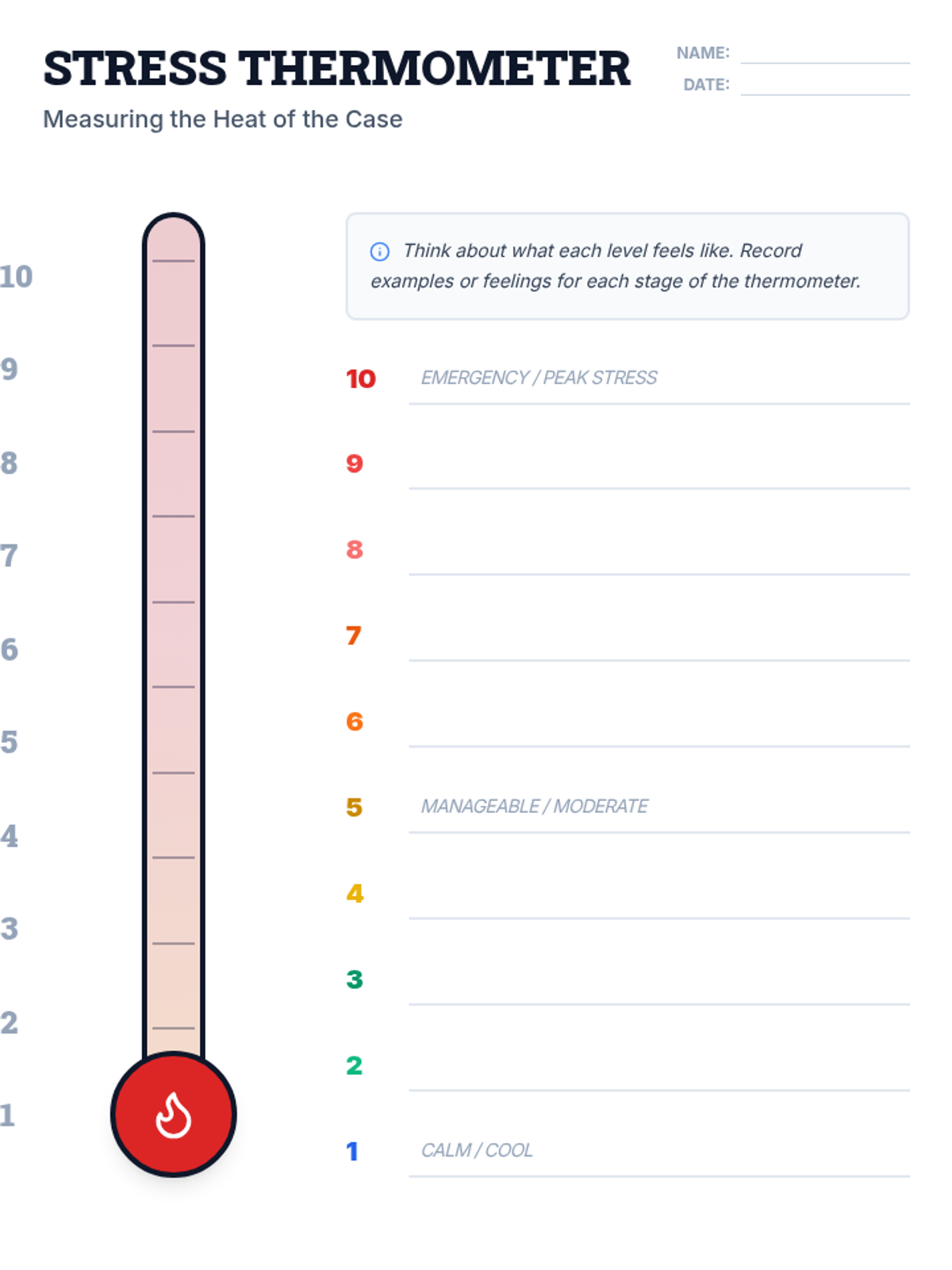
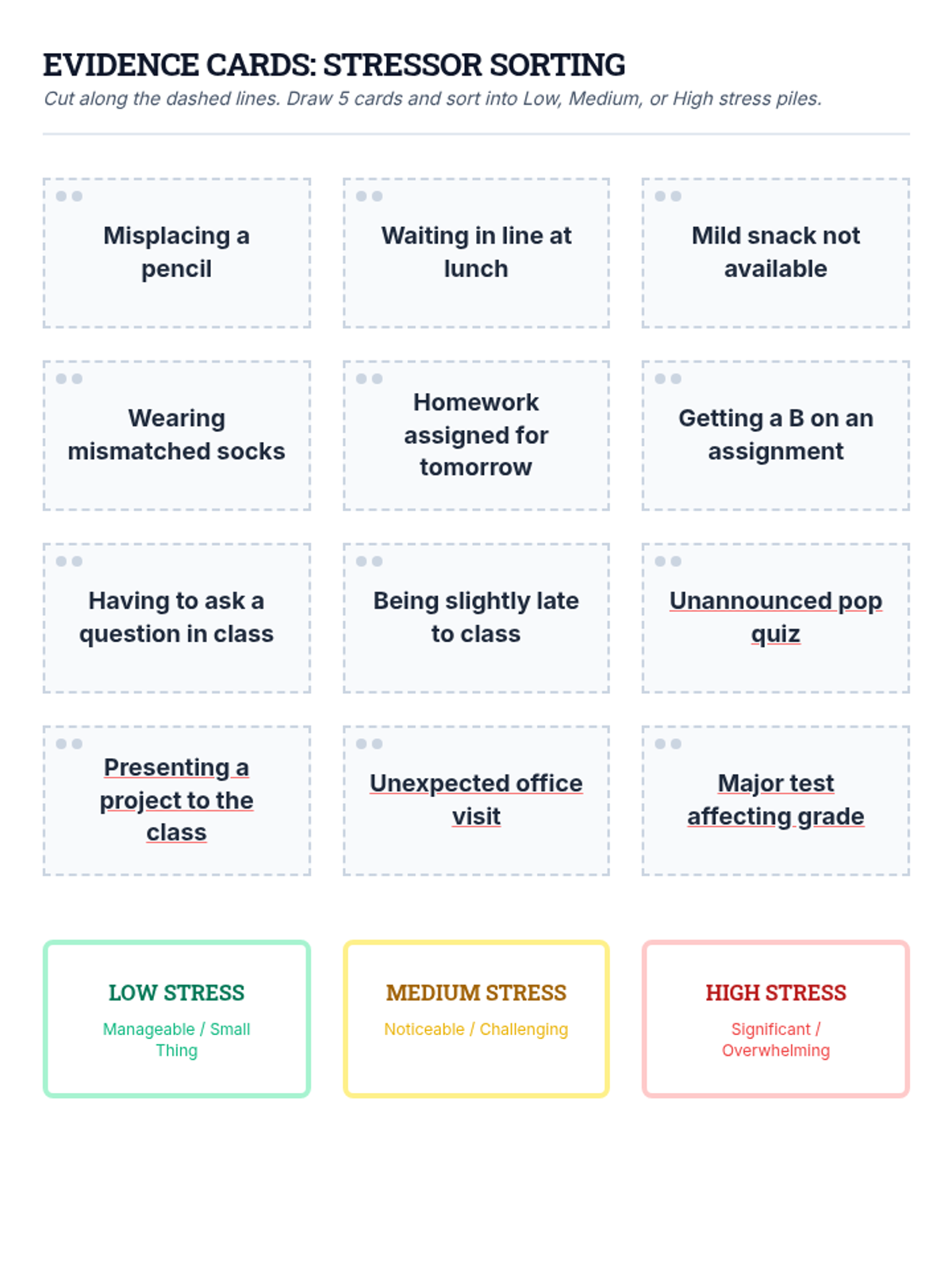
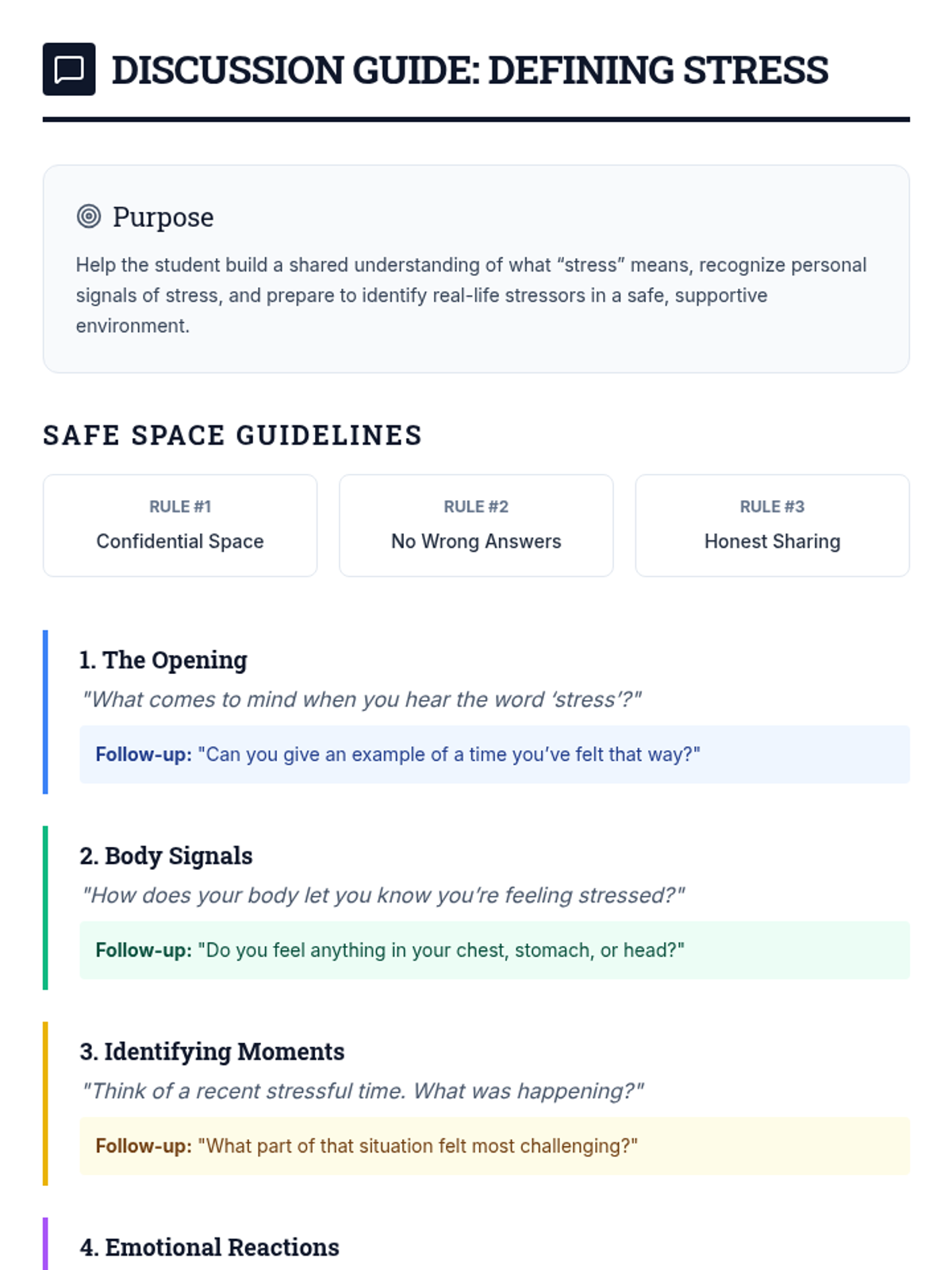
A 10-session individual Tier 3 support program for a 7th grader with a seizure history, focusing on identifying stressors and building evidence-based coping resilience.
A comprehensive unit for 7th-grade students to identify healthy vs. unhealthy romantic relationship indicators, core values, and personal boundaries. Students will develop a 'Relationship Radar' to navigate social dynamics with emotional safety and autonomy.
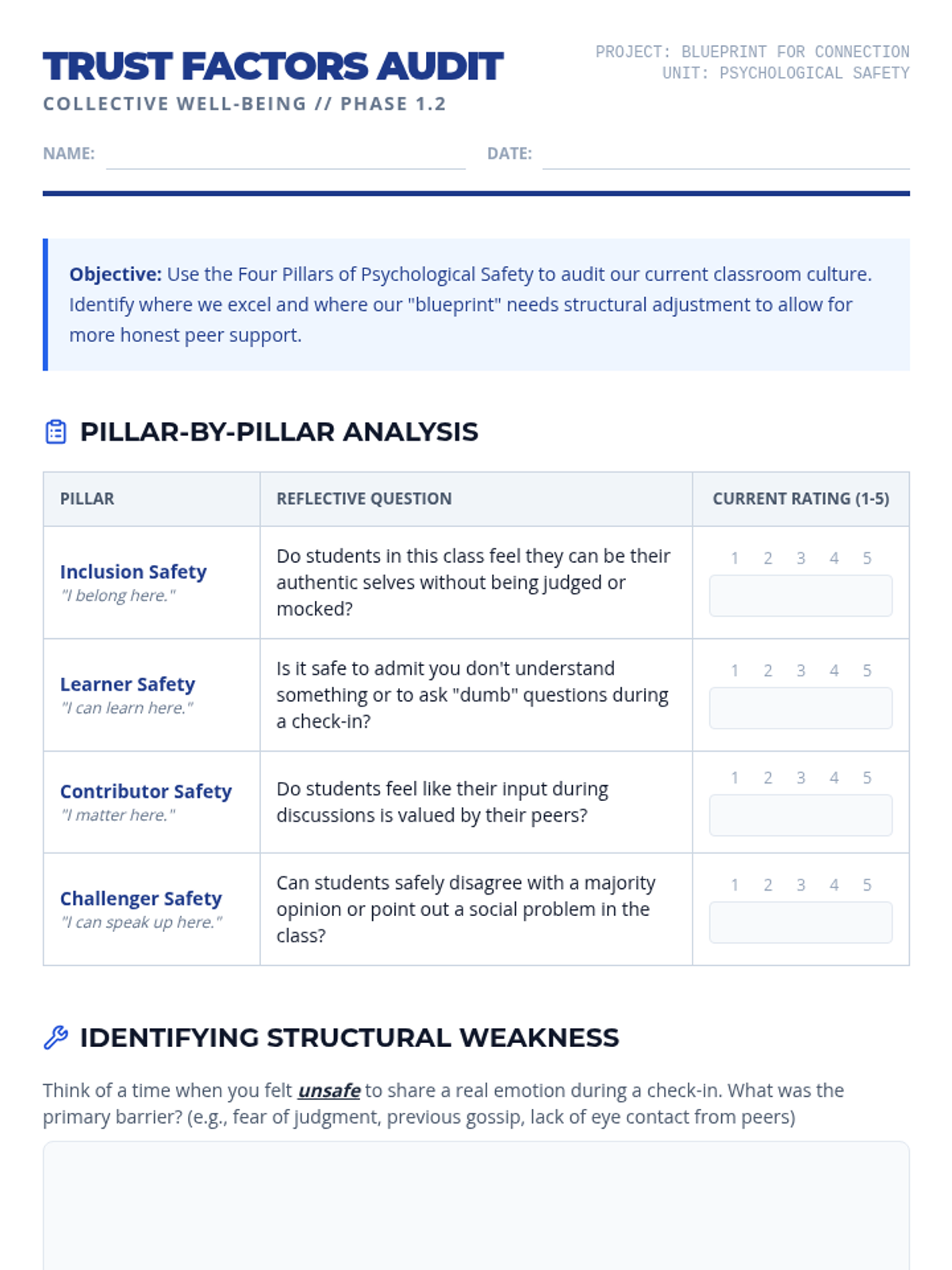
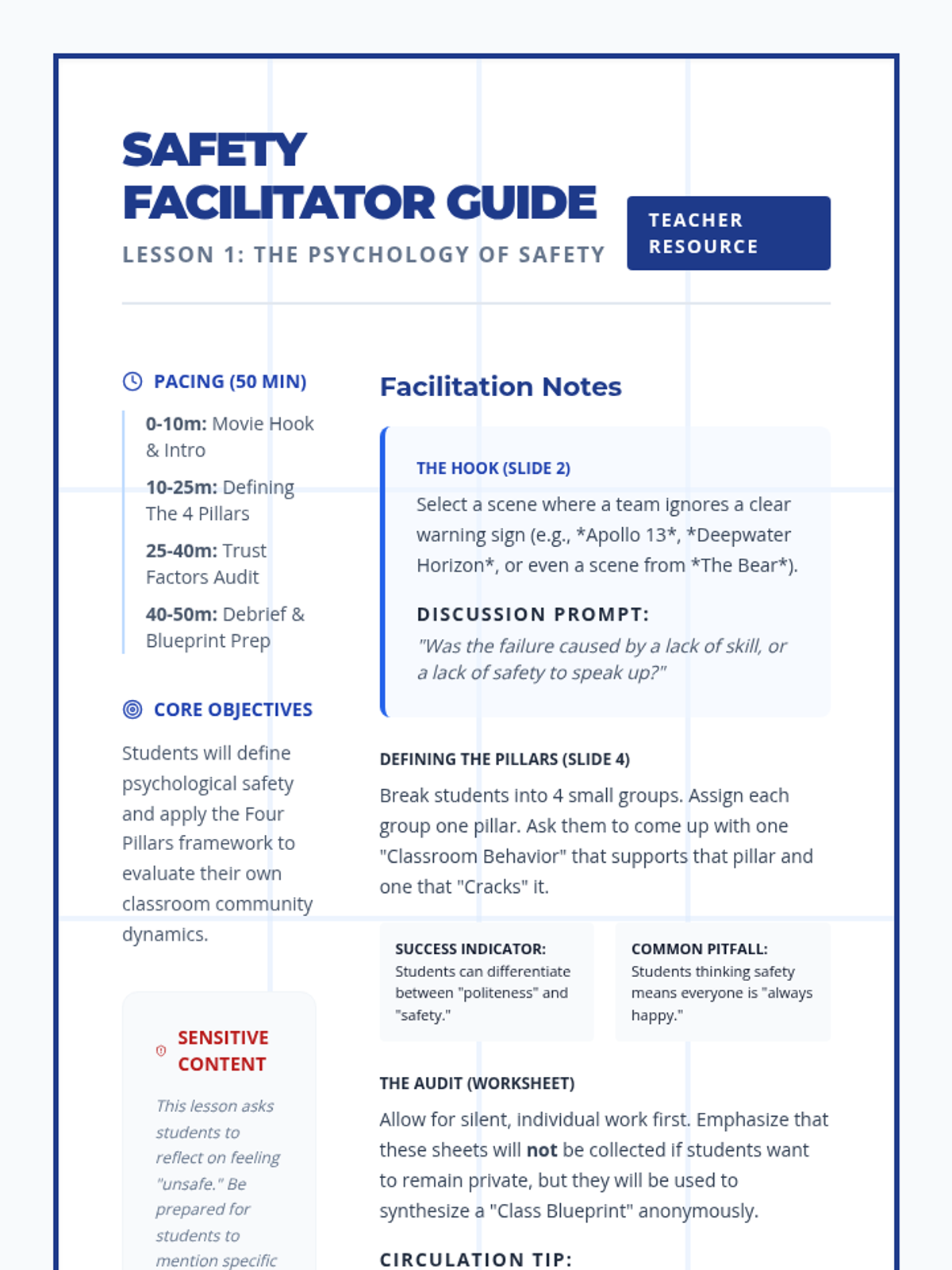
This sequence shifts the focus from individual introspection to collective well-being and leadership. Students learn to facilitate check-ins for others, developing empathy and active listening skills required for leadership roles. The arc explores the psychology of psychological safety, how to spot distress in peers, and how to build a supportive community culture. Students move from participants to facilitators, eventually leading community circles or peer support groups.
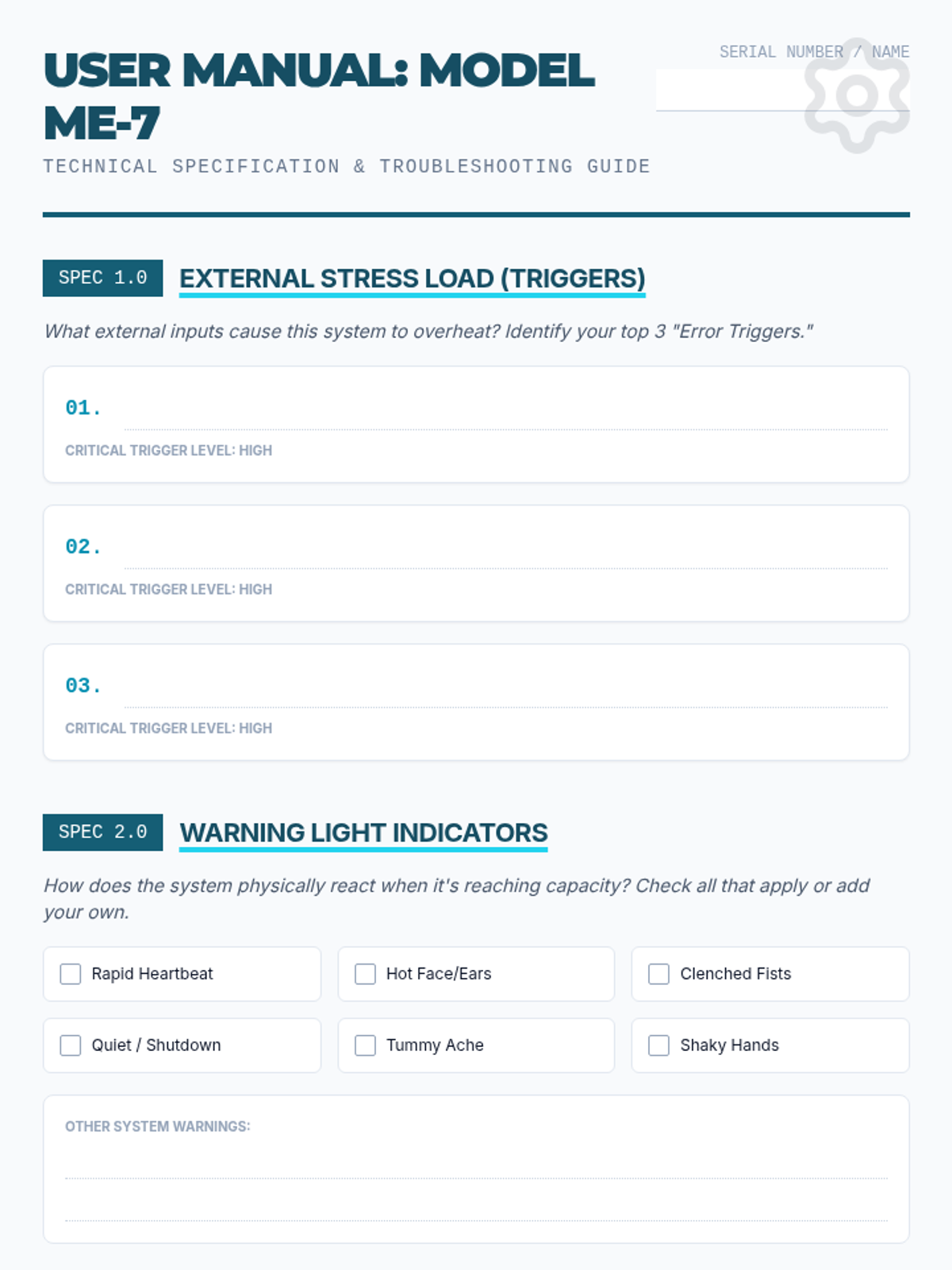
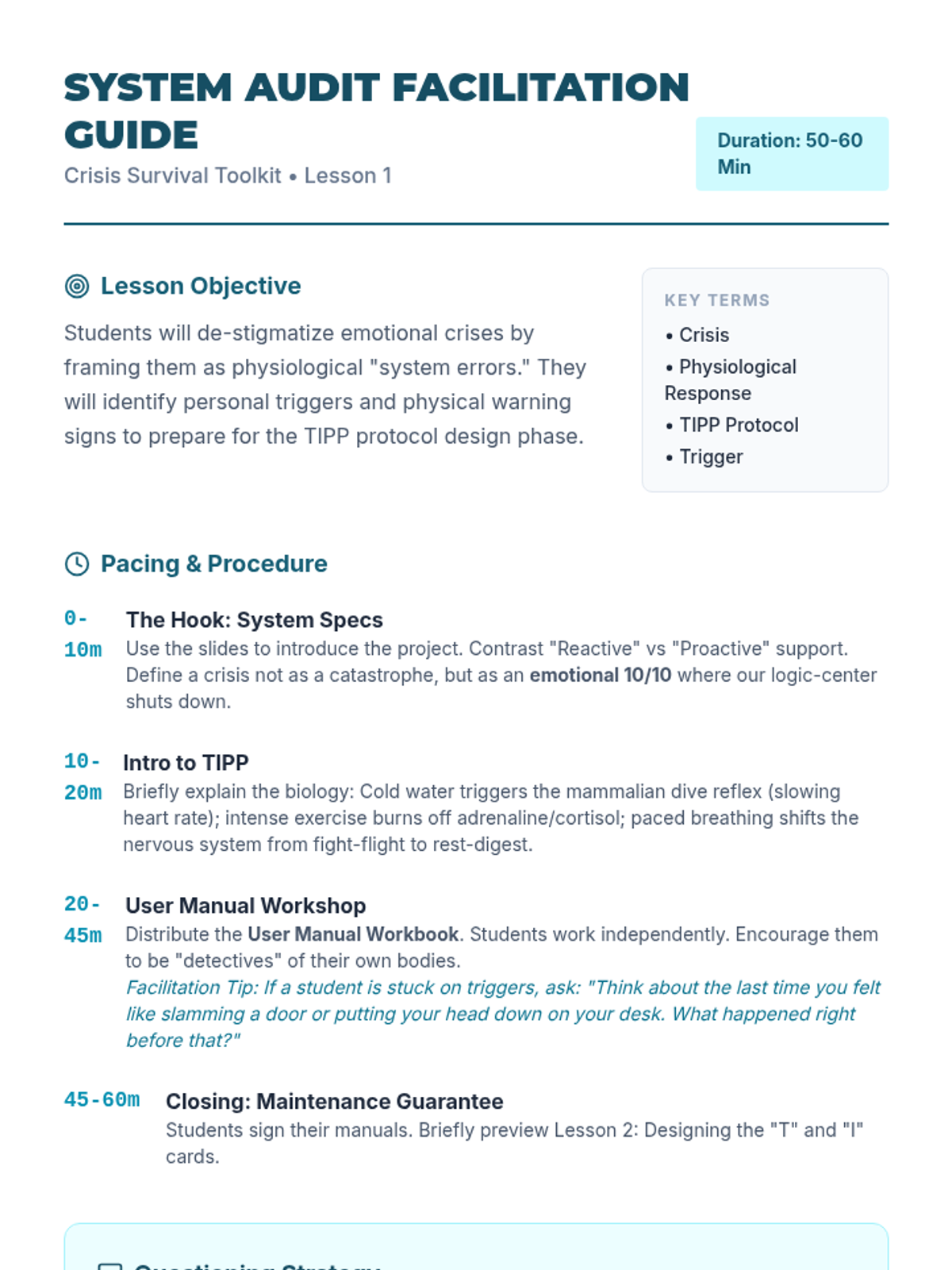
A project-based unit where 7th-grade students design and assemble personal 'Crisis Survival Kits' based on the TIPP skills (Temperature, Intense Exercise, Paced Breathing, and Paired Muscle Relaxation). Students move from self-audit to physical tool creation and final testing of their proactive mental health resources.
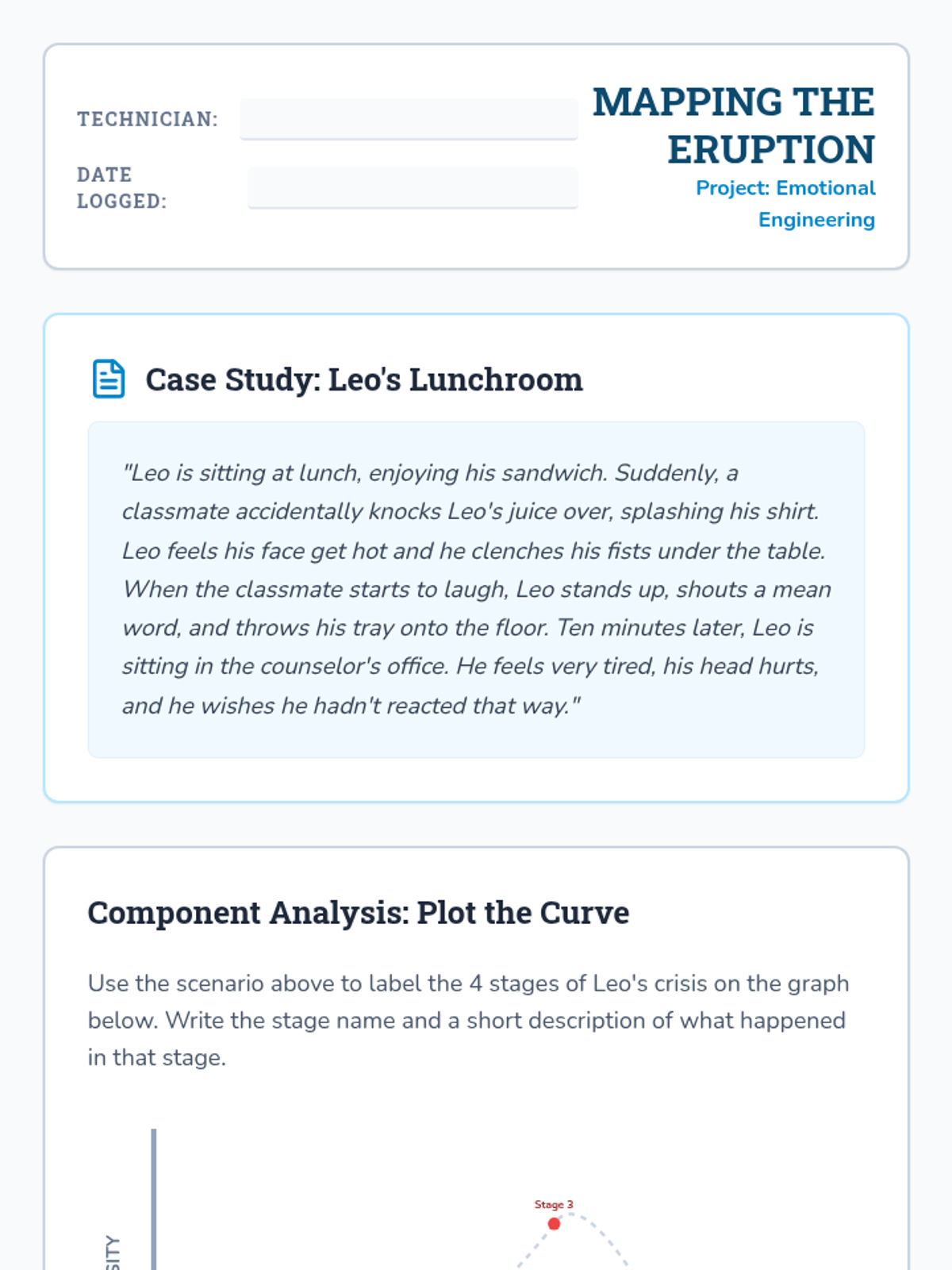
This 8th-grade sequence empowers students to analyze the mechanics of emotional dysregulation through a 'case study' lens. Students move from mapping the stages of a crisis to identifying hidden triggers and designing their own personal 'Crisis Prevention Plan' blueprints.
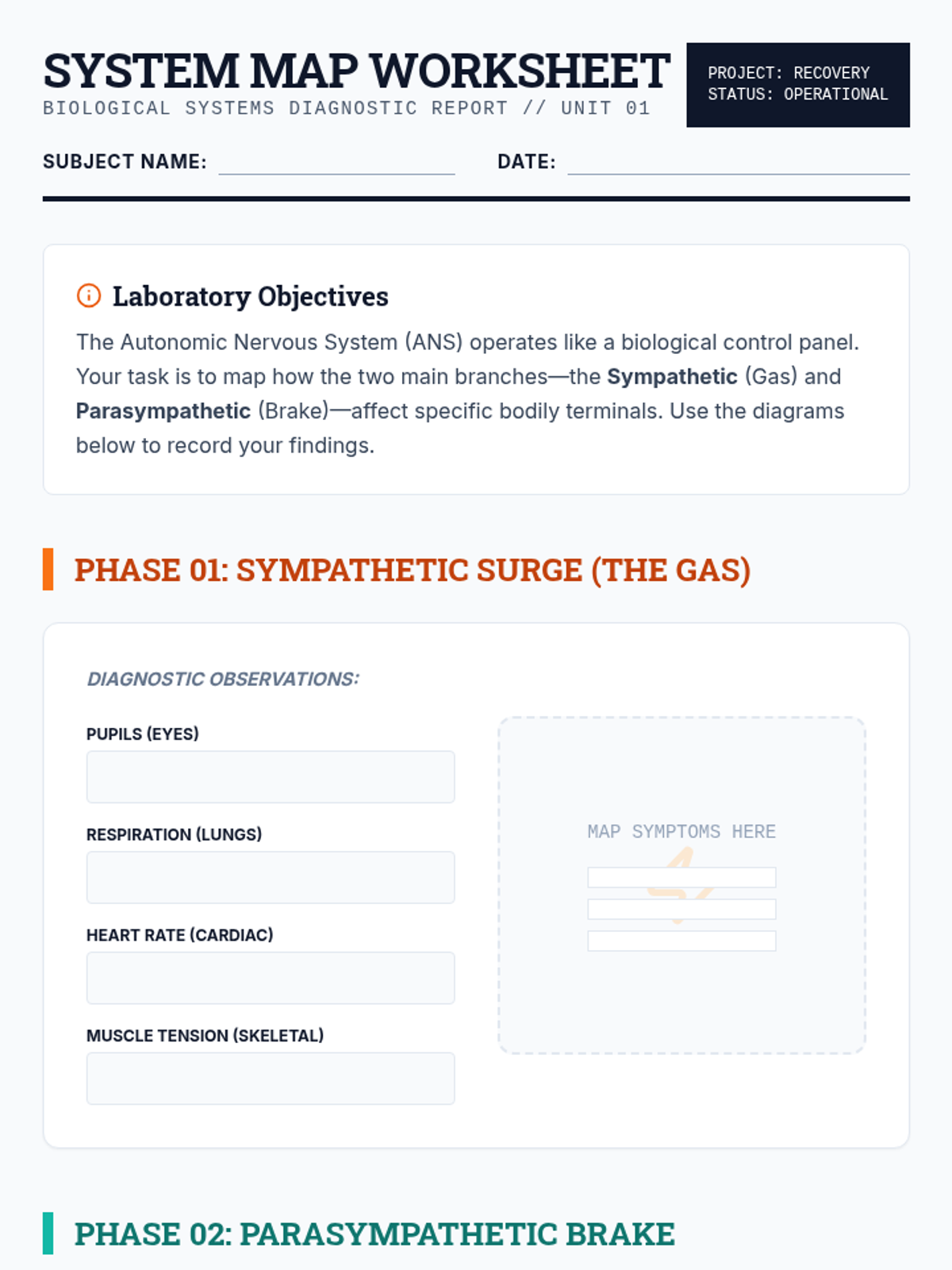
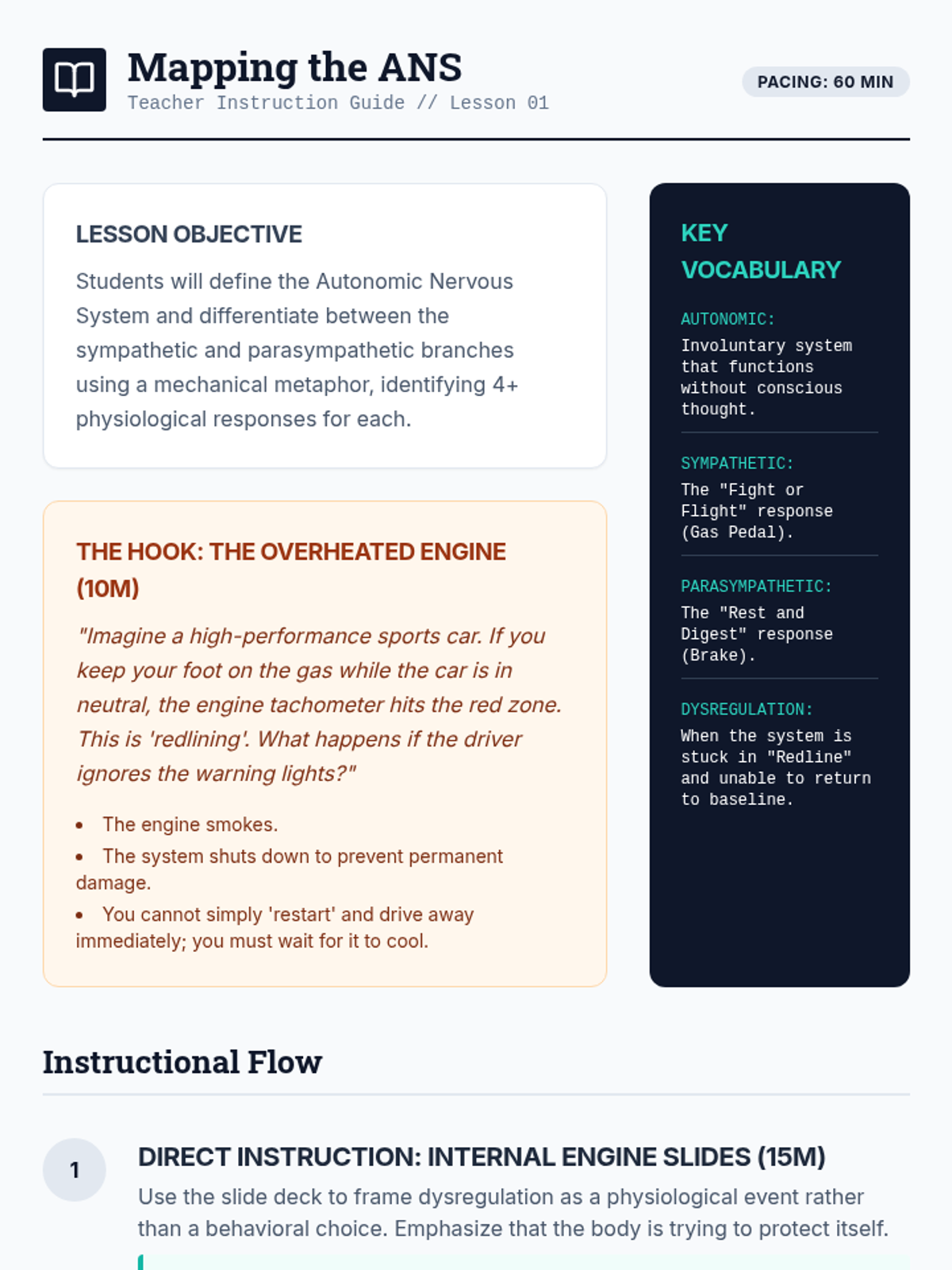
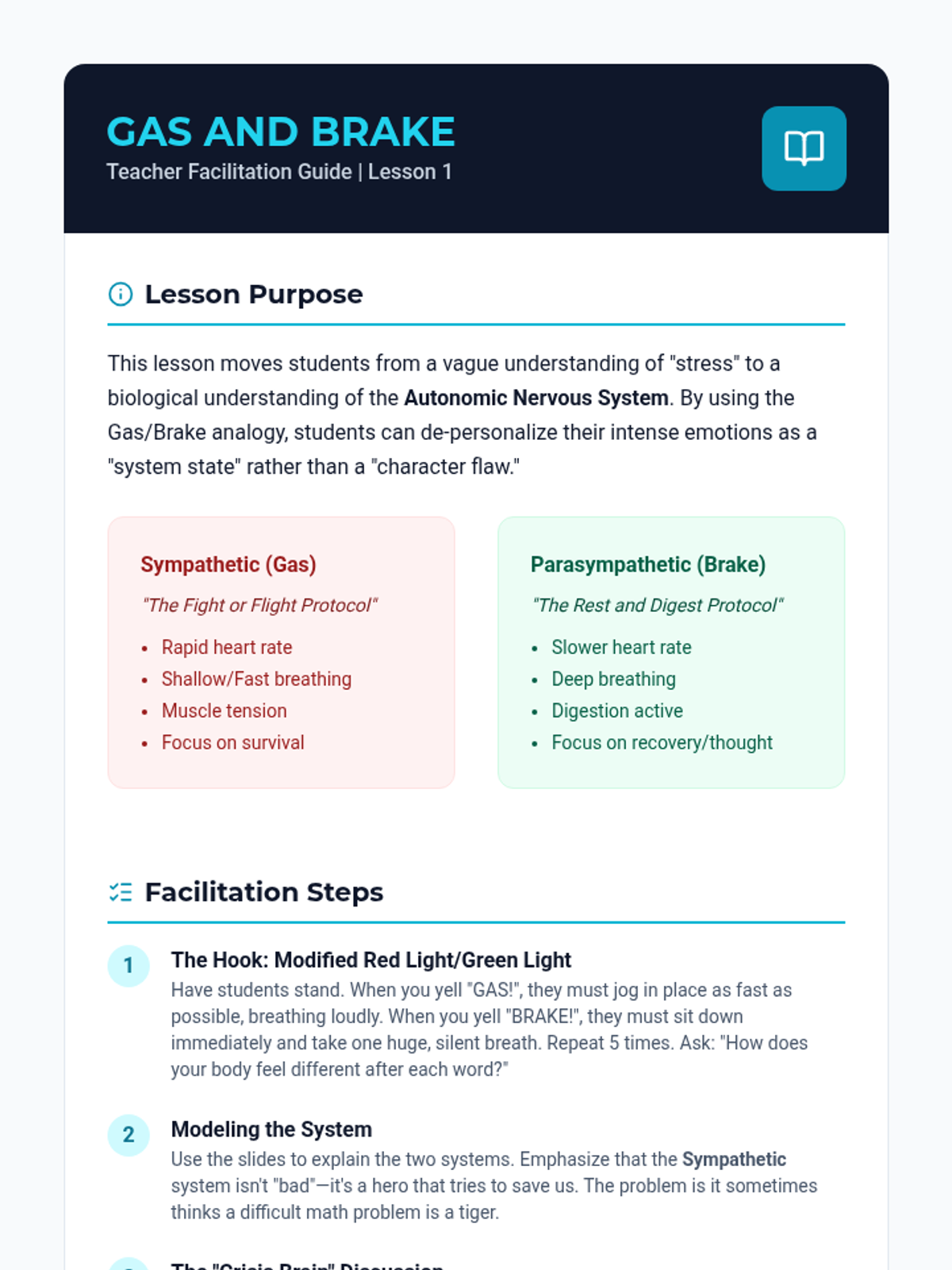
A biological approach to understanding and managing stress. Students explore the autonomic nervous system, interoception, and specific physiological interventions like proprioceptive input and vagus nerve stimulation to master the art of dysregulation recovery.
This sequence equips 9th-grade students with the critical thinking skills to assess personal safety in physical and digital environments by distinguishing between physiological intuition and environmental risks.
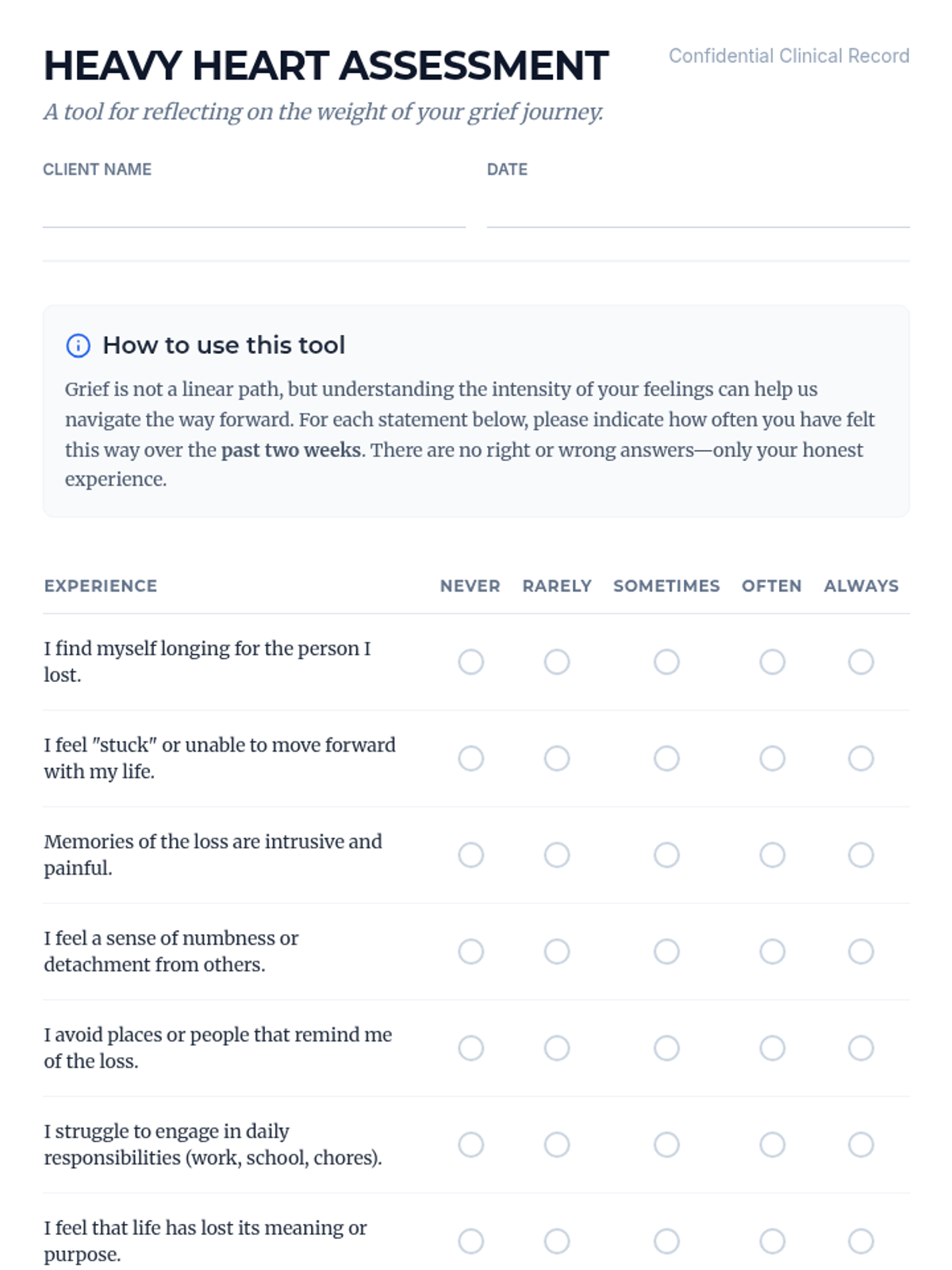
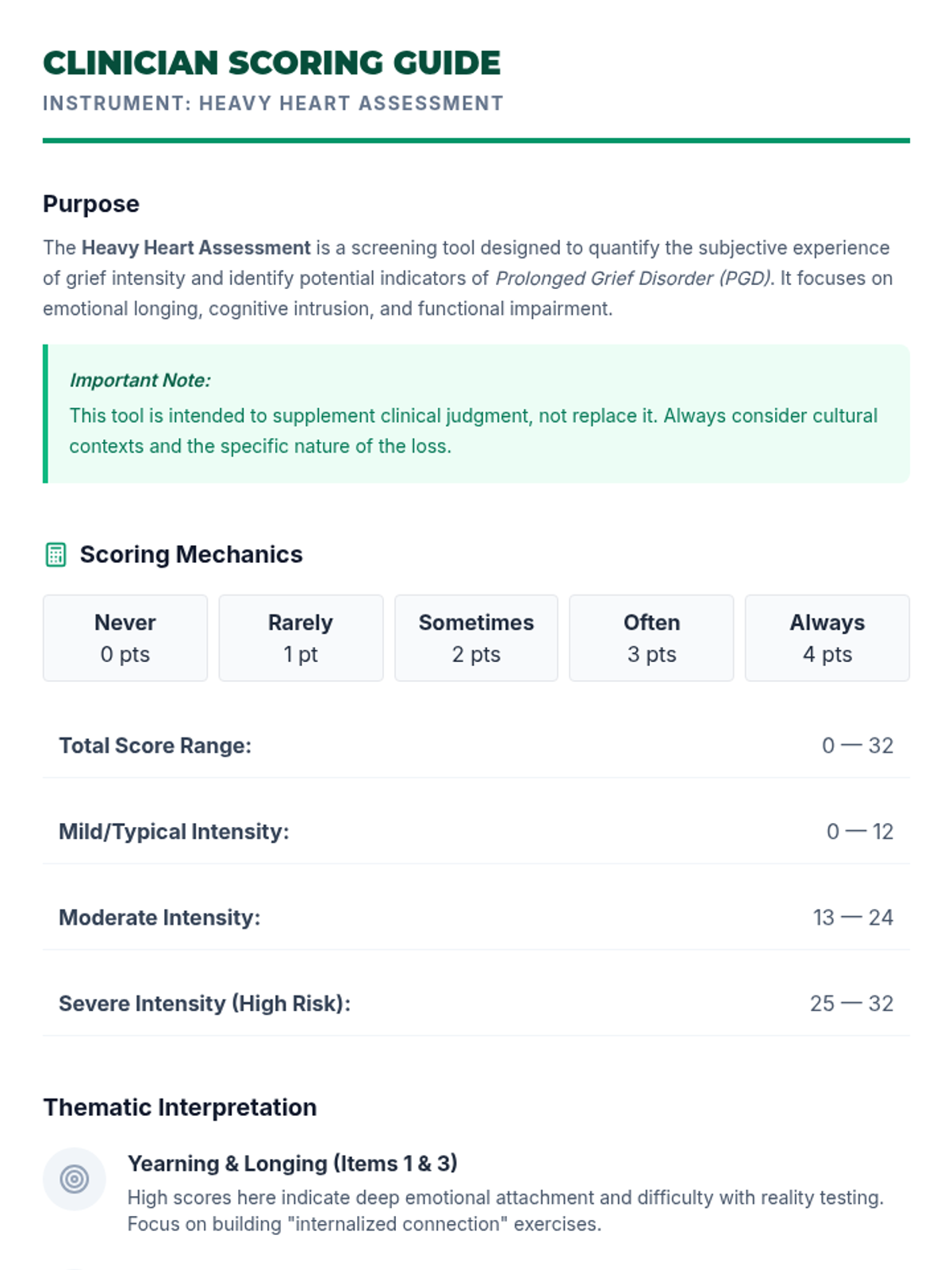
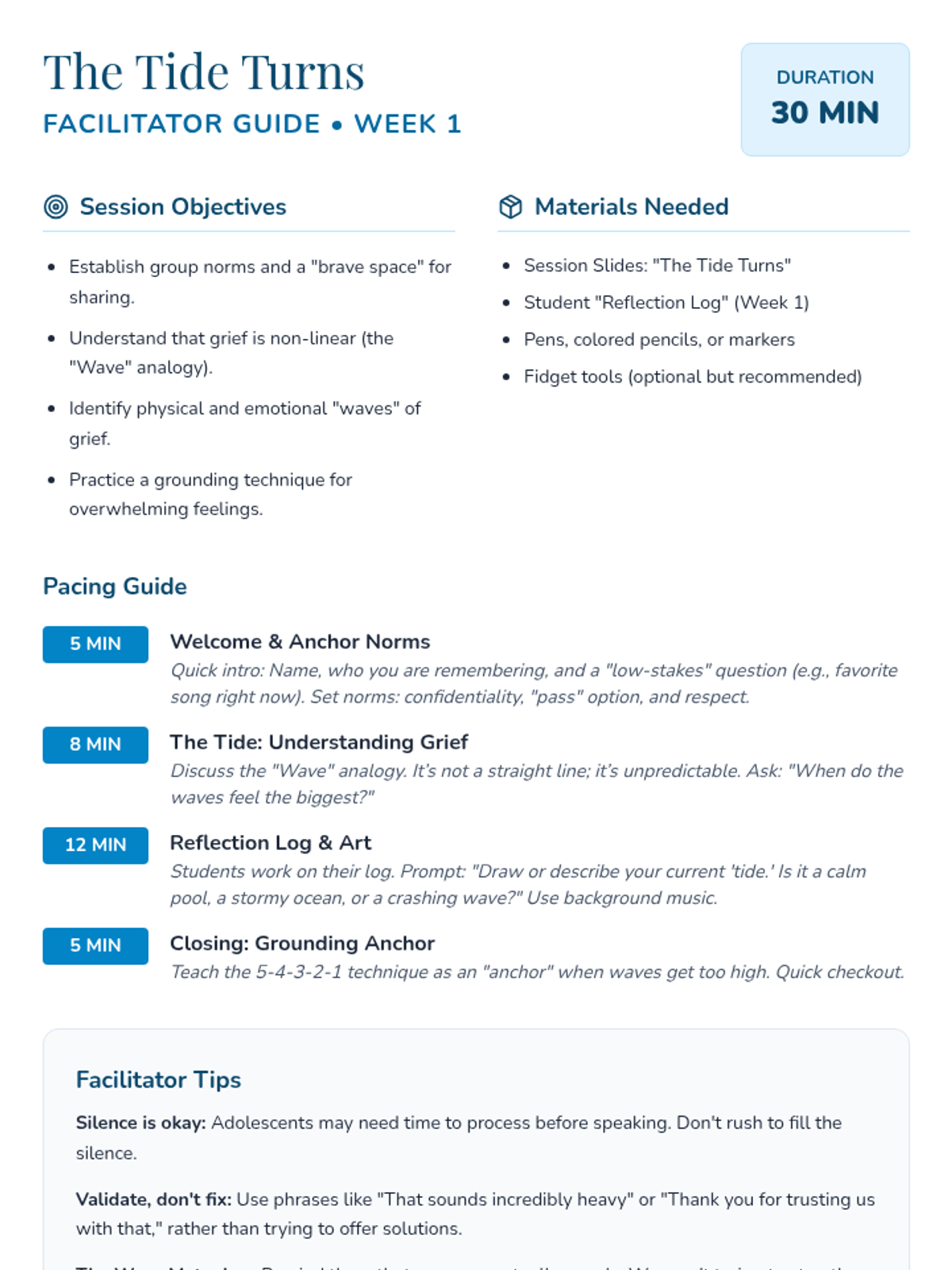
A comprehensive therapeutic sequence designed to guide clinicians and clients through the complexities of grief, focusing on assessment, psychoeducation, and age-appropriate coping strategies.
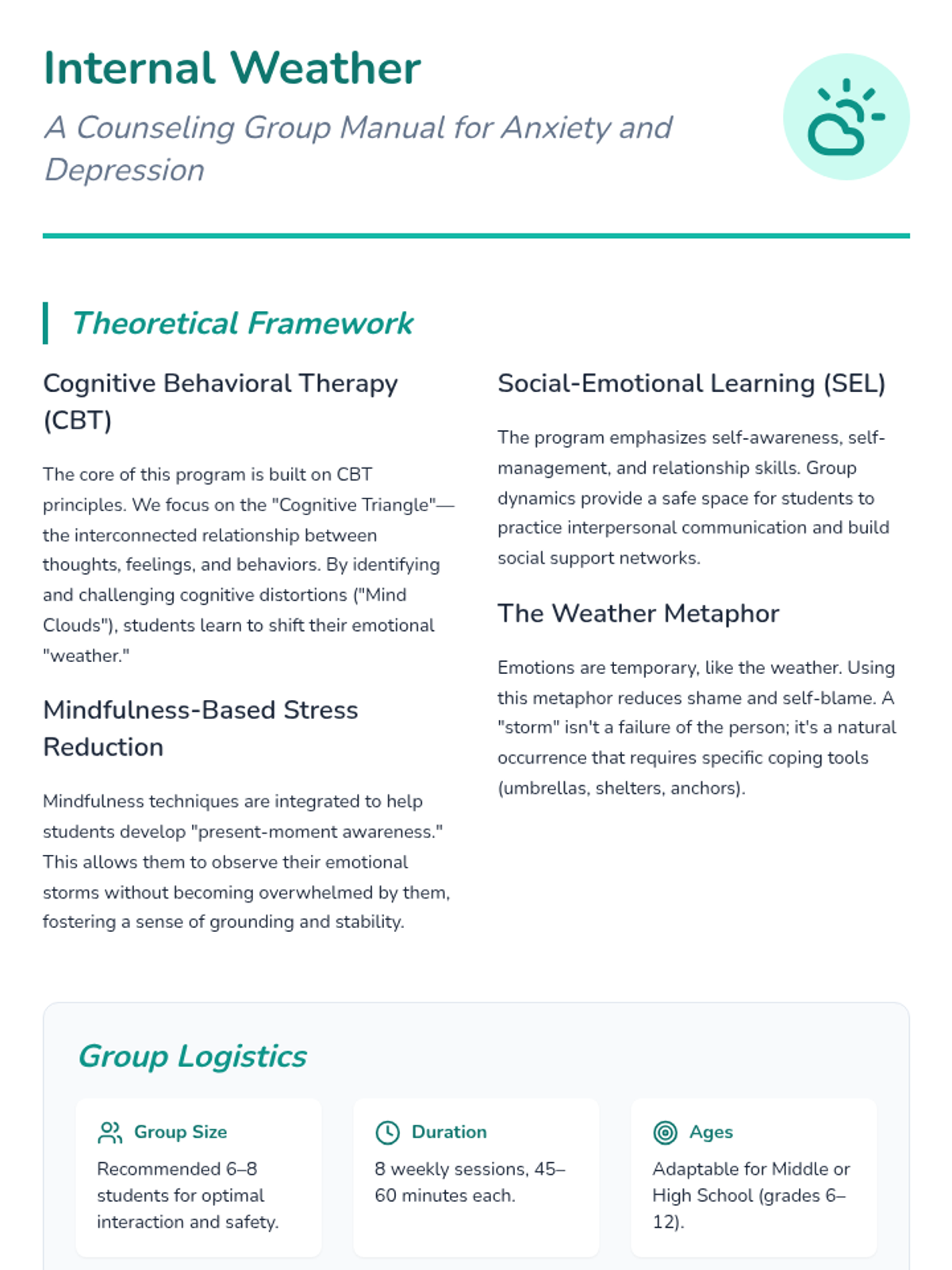
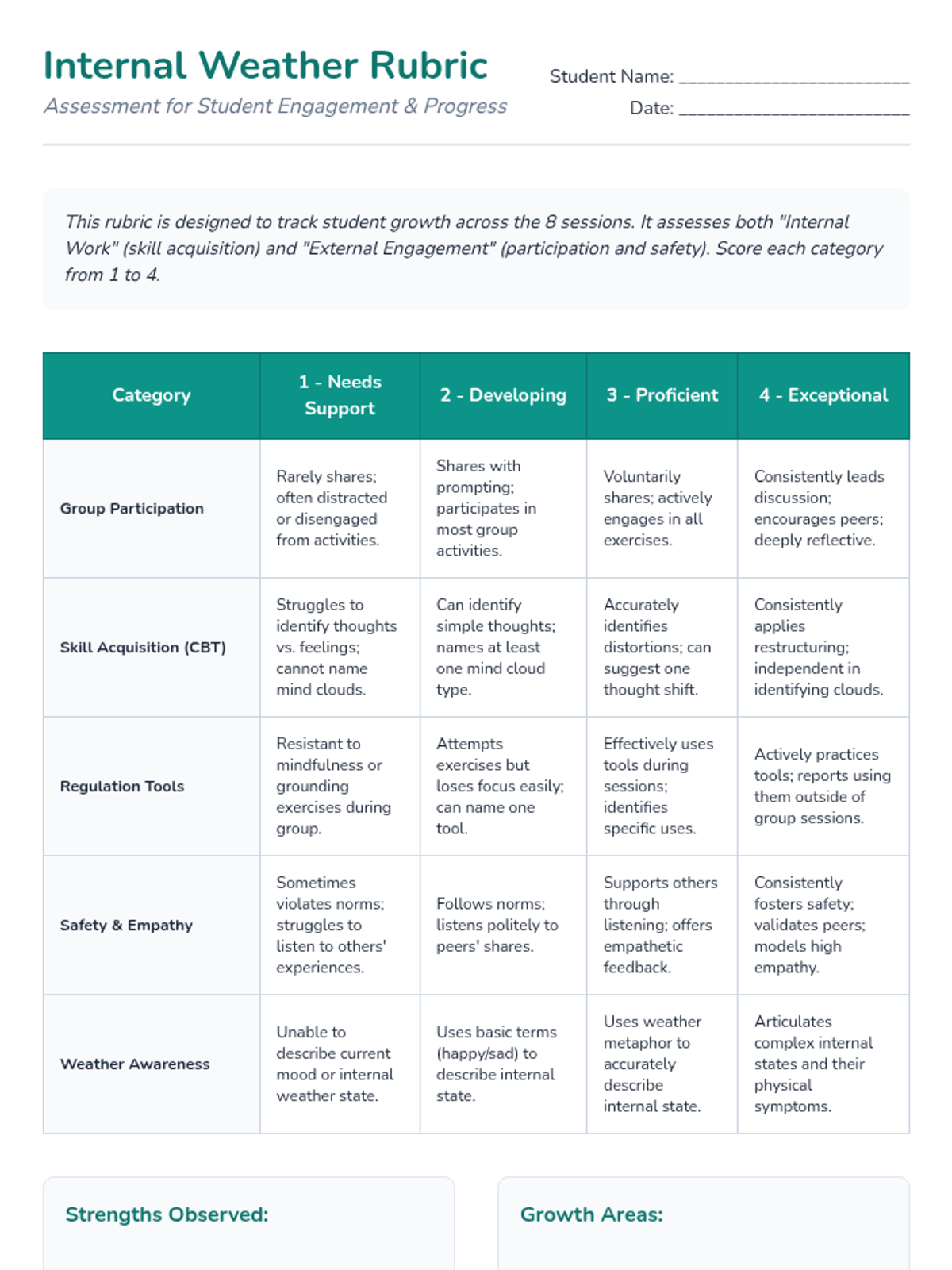
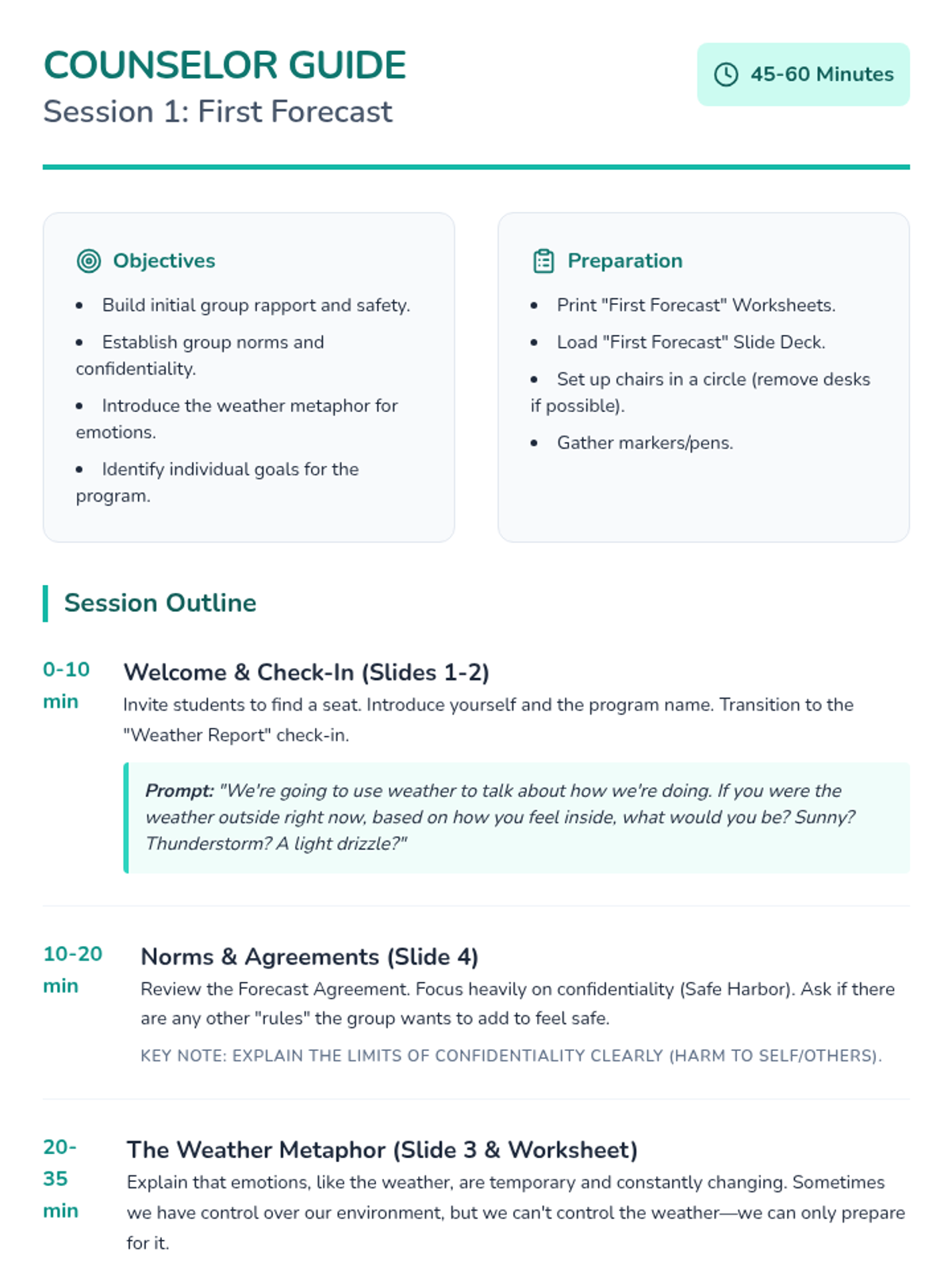
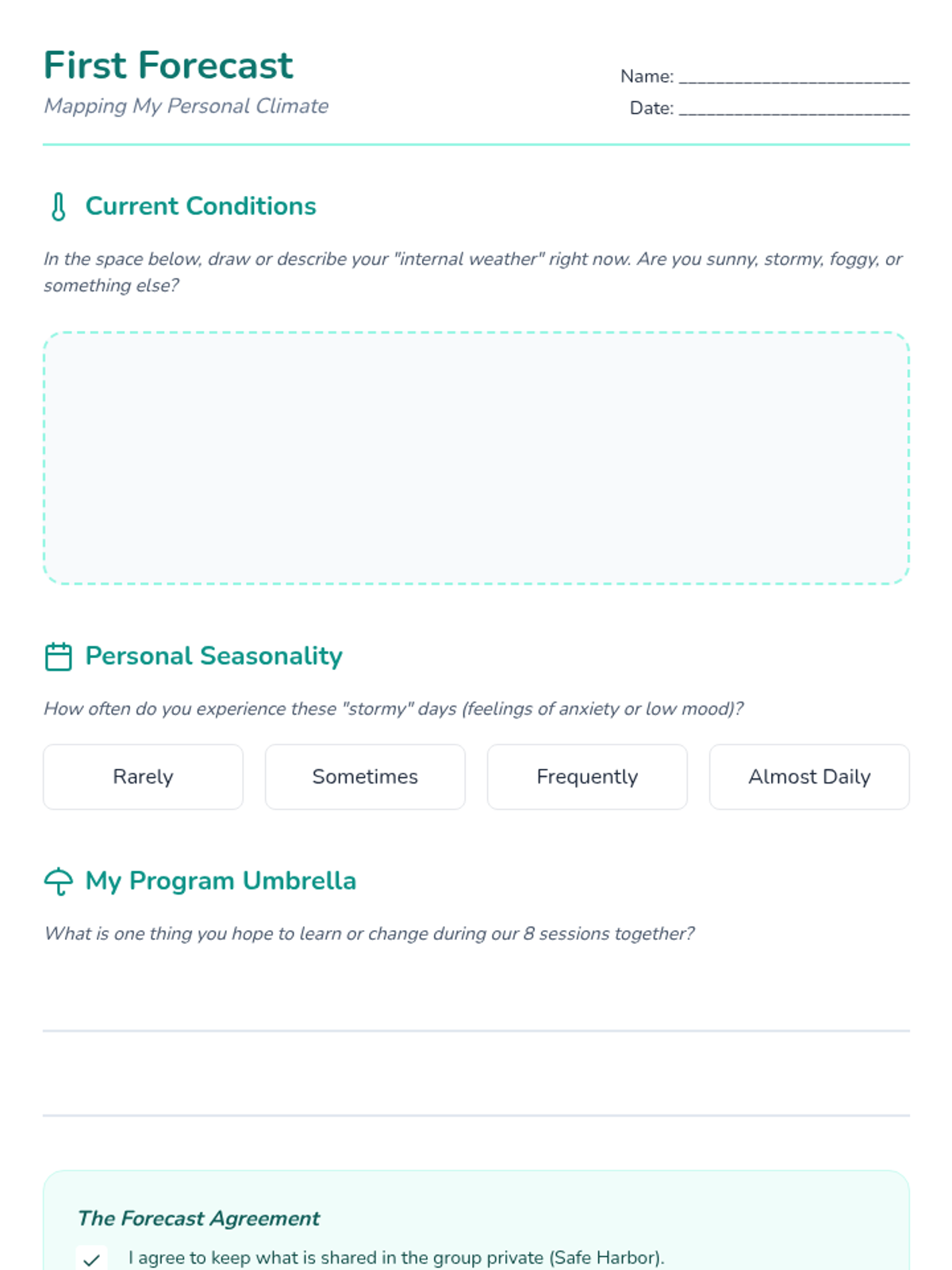
A comprehensive 8-session school counseling group program designed for students struggling with anxiety and depression. It uses a weather metaphor to help students identify, understand, and manage their internal emotional states through CBT, mindfulness, and social-emotional learning.
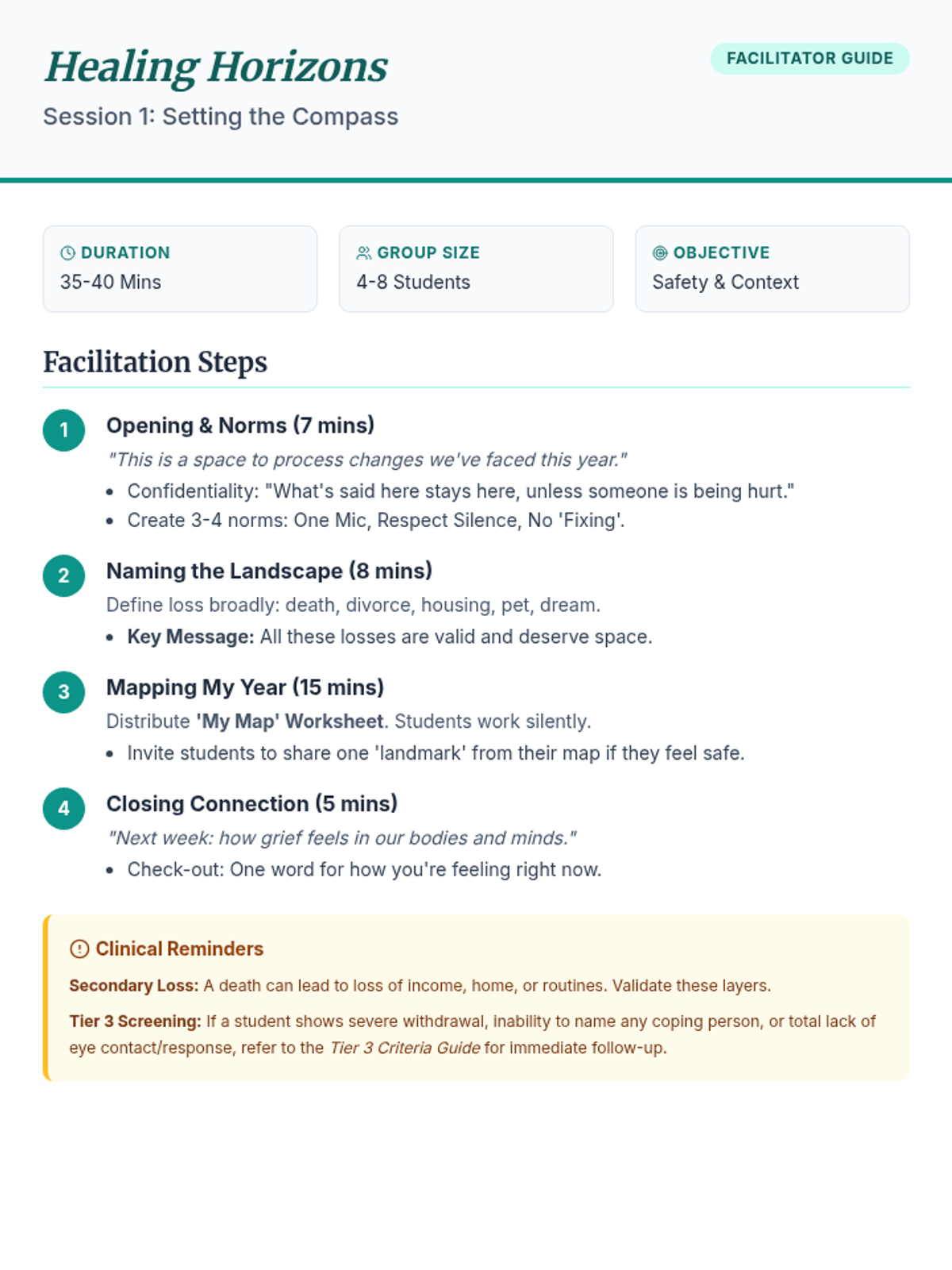
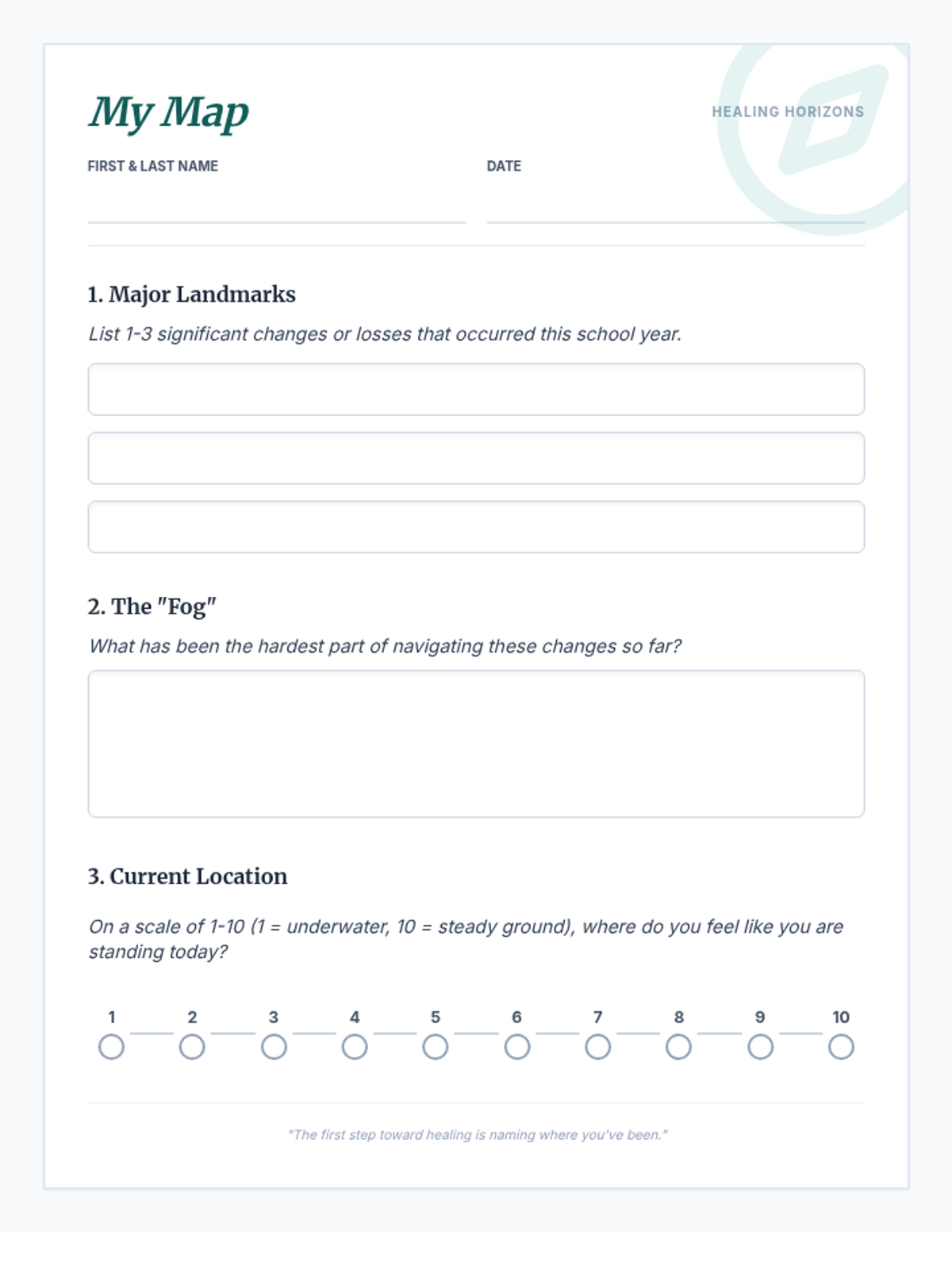
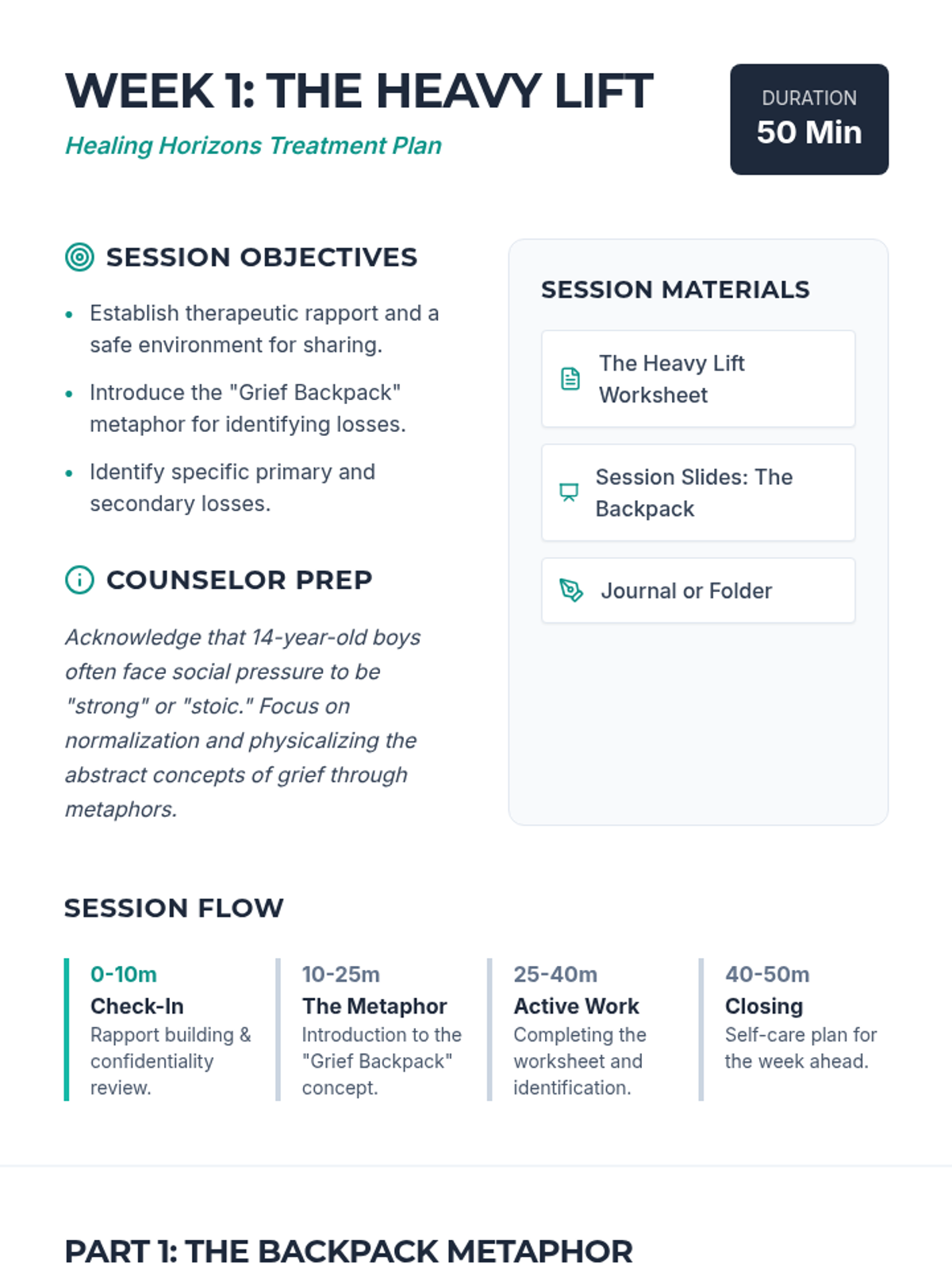
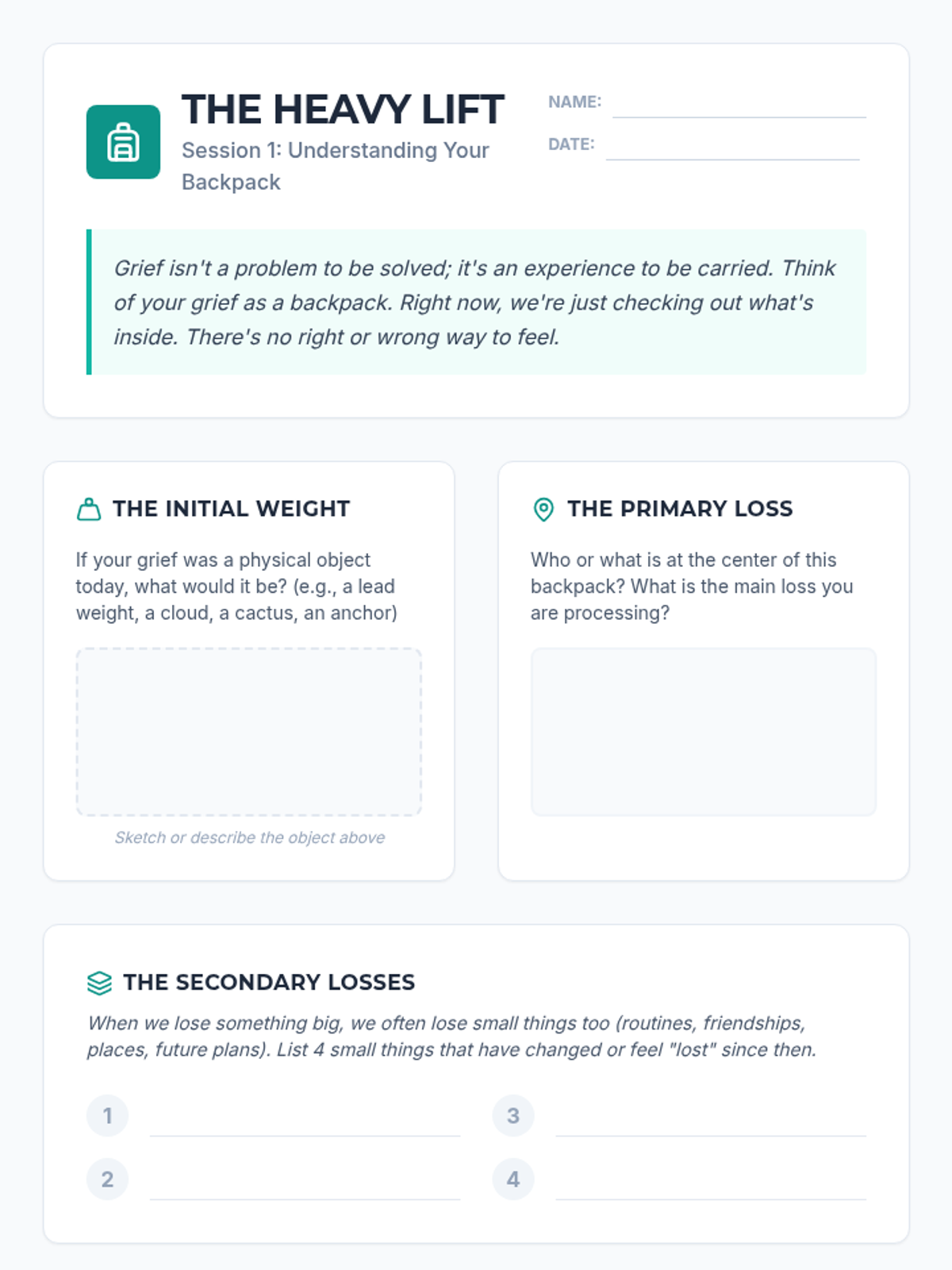
A comprehensive 6-week grief and loss treatment plan designed specifically for adolescent boys. The program, titled 'Healing Horizons,' uses a navigation and exploration metaphor to help teens process their loss, build coping skills, and find a path forward.
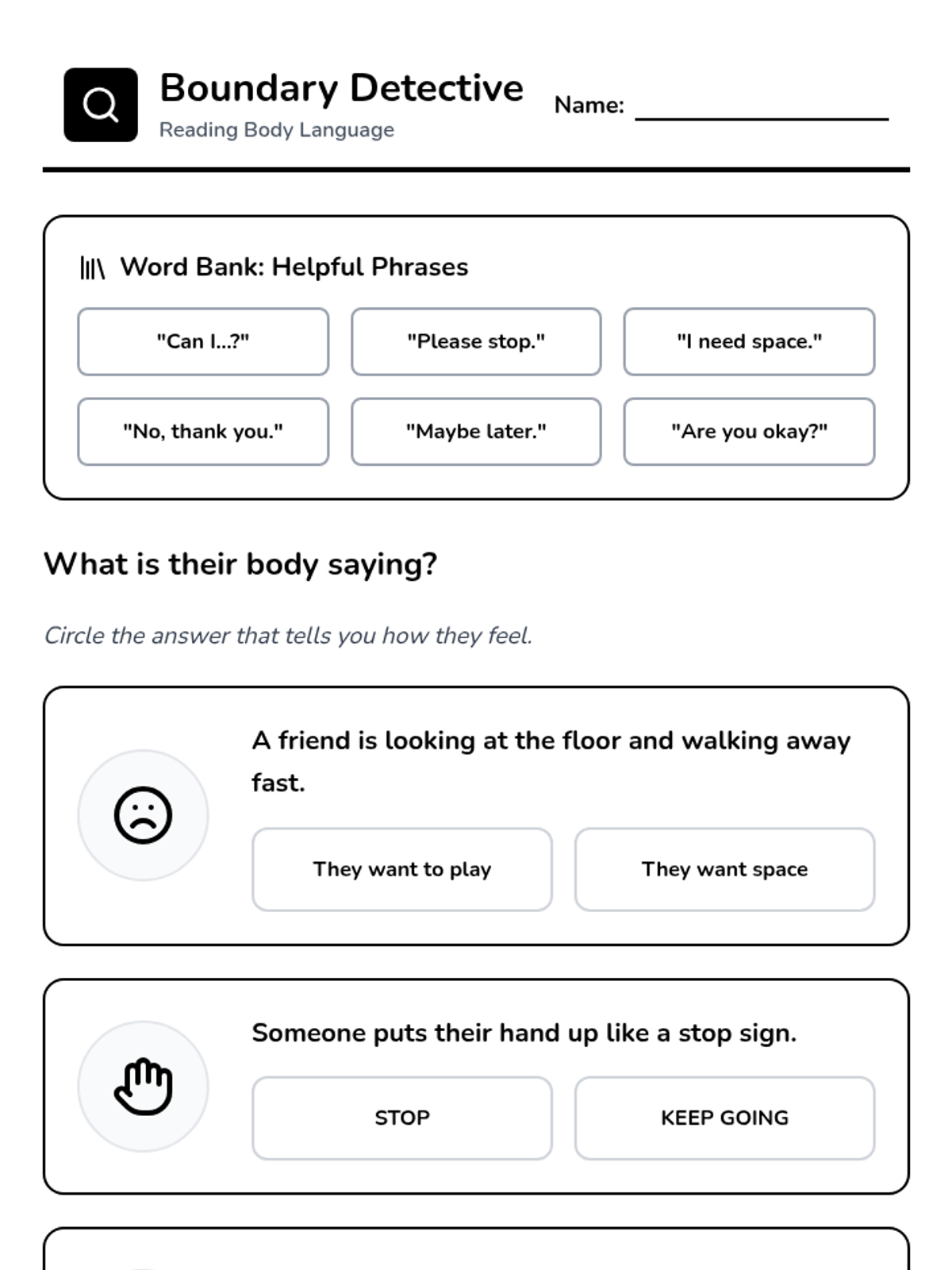
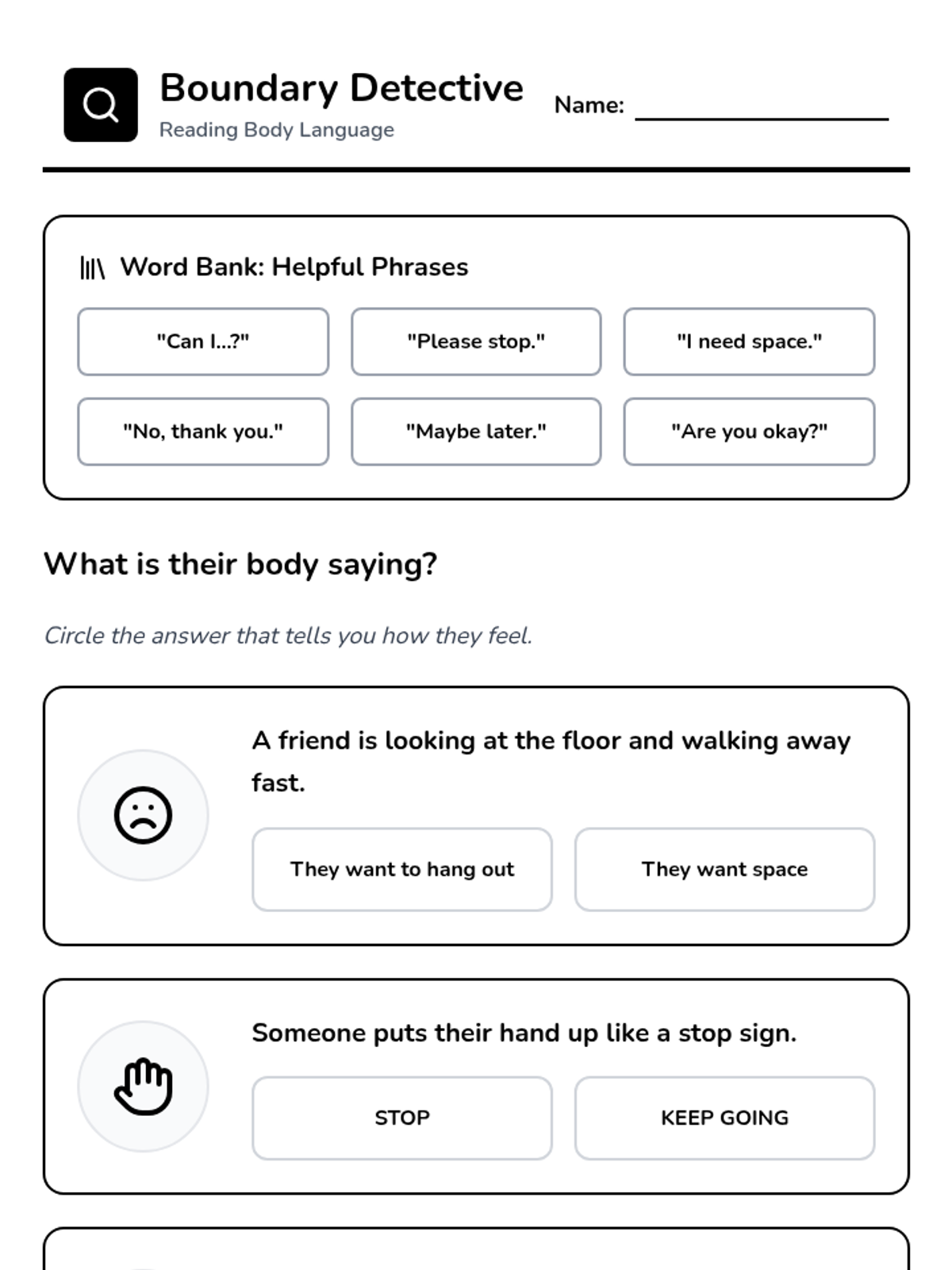
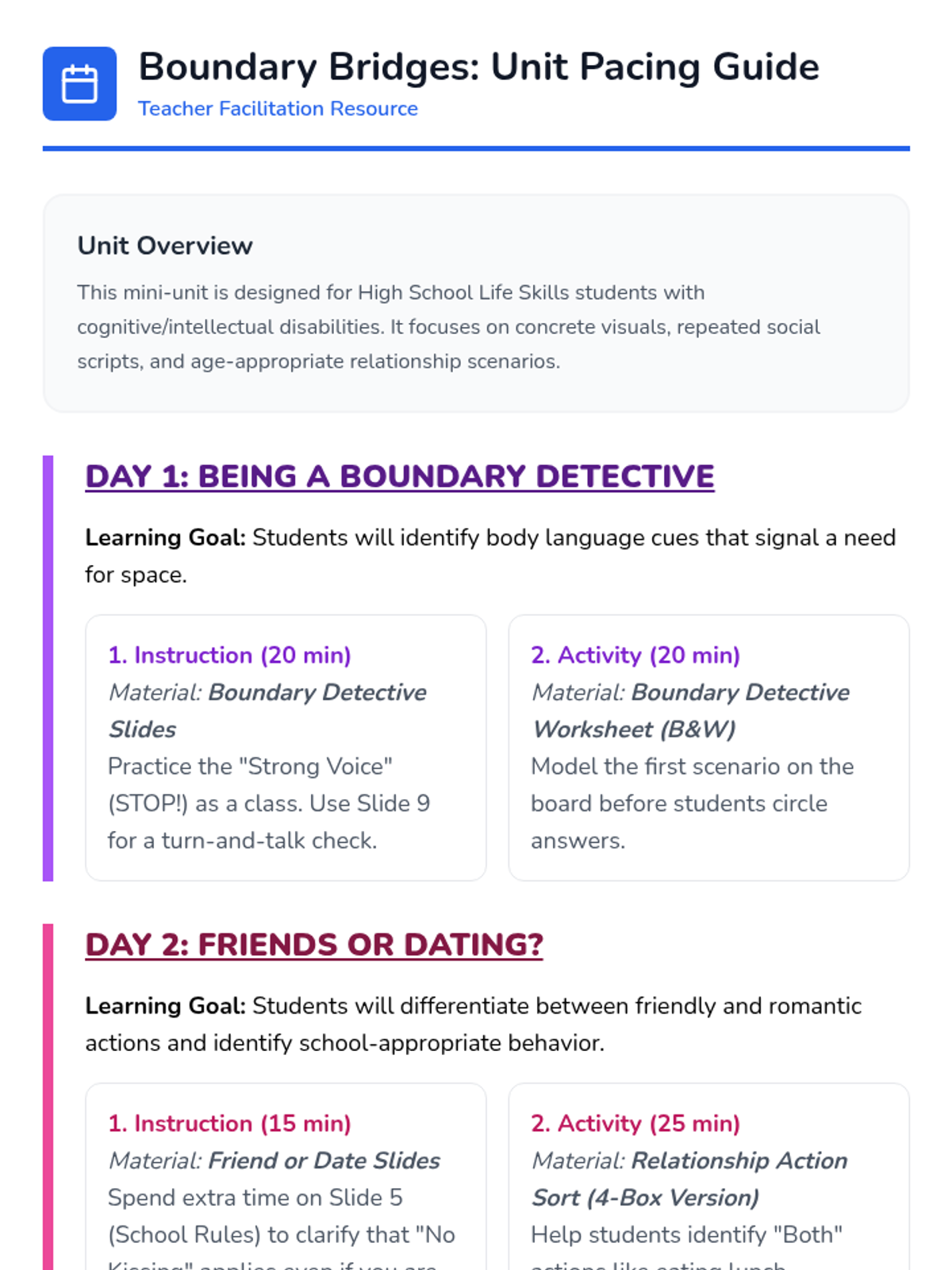
A comprehensive mini-unit for high school Life Skills students on personal boundaries, specifically focusing on the difference between friendships and romantic relationships, and how to respect the word 'No'.
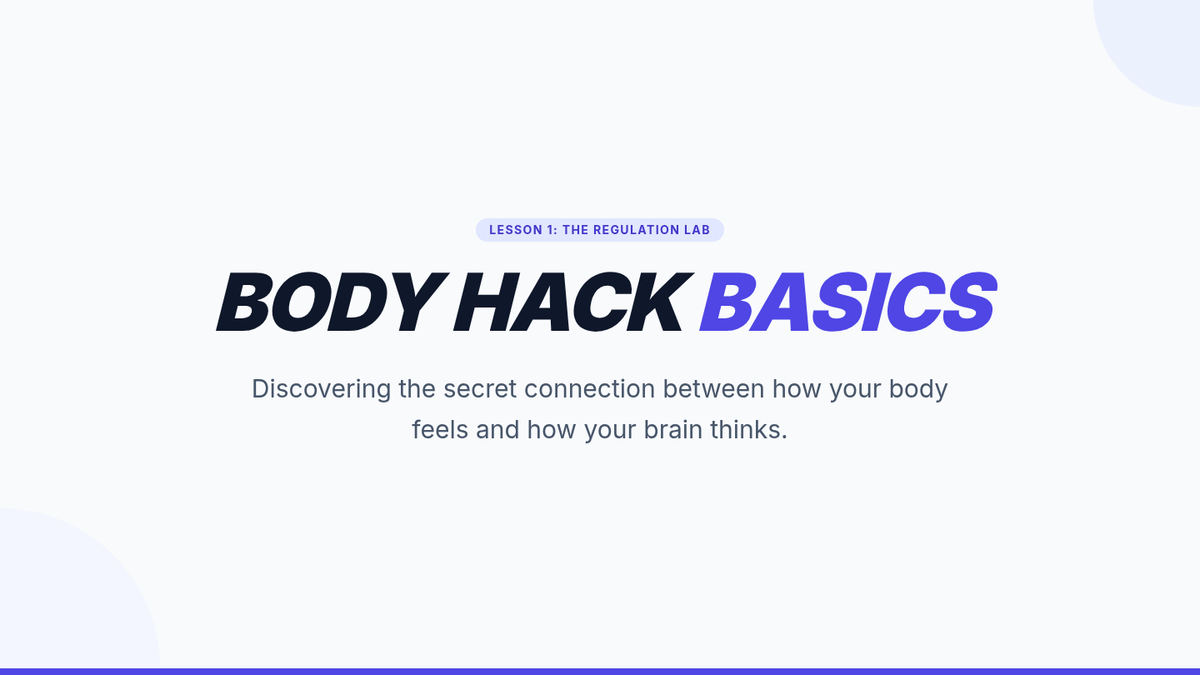
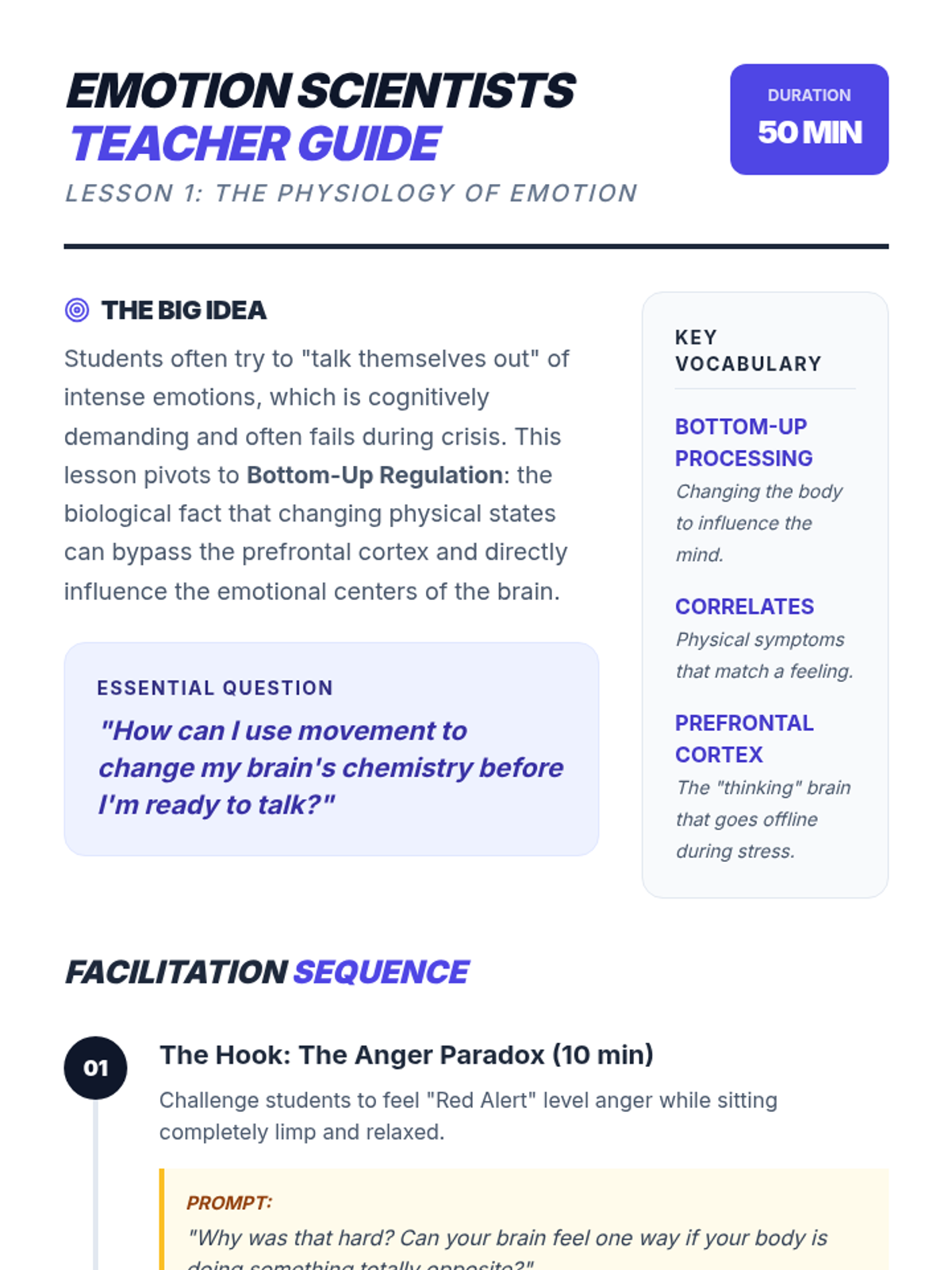
A 5-lesson sequence for 9th-grade students on using movement to regulate emotions. Students explore the body-mind connection, learn to categorize movements by their regulatory effect, and develop personalized 'emergency' protocols for emotional crises.
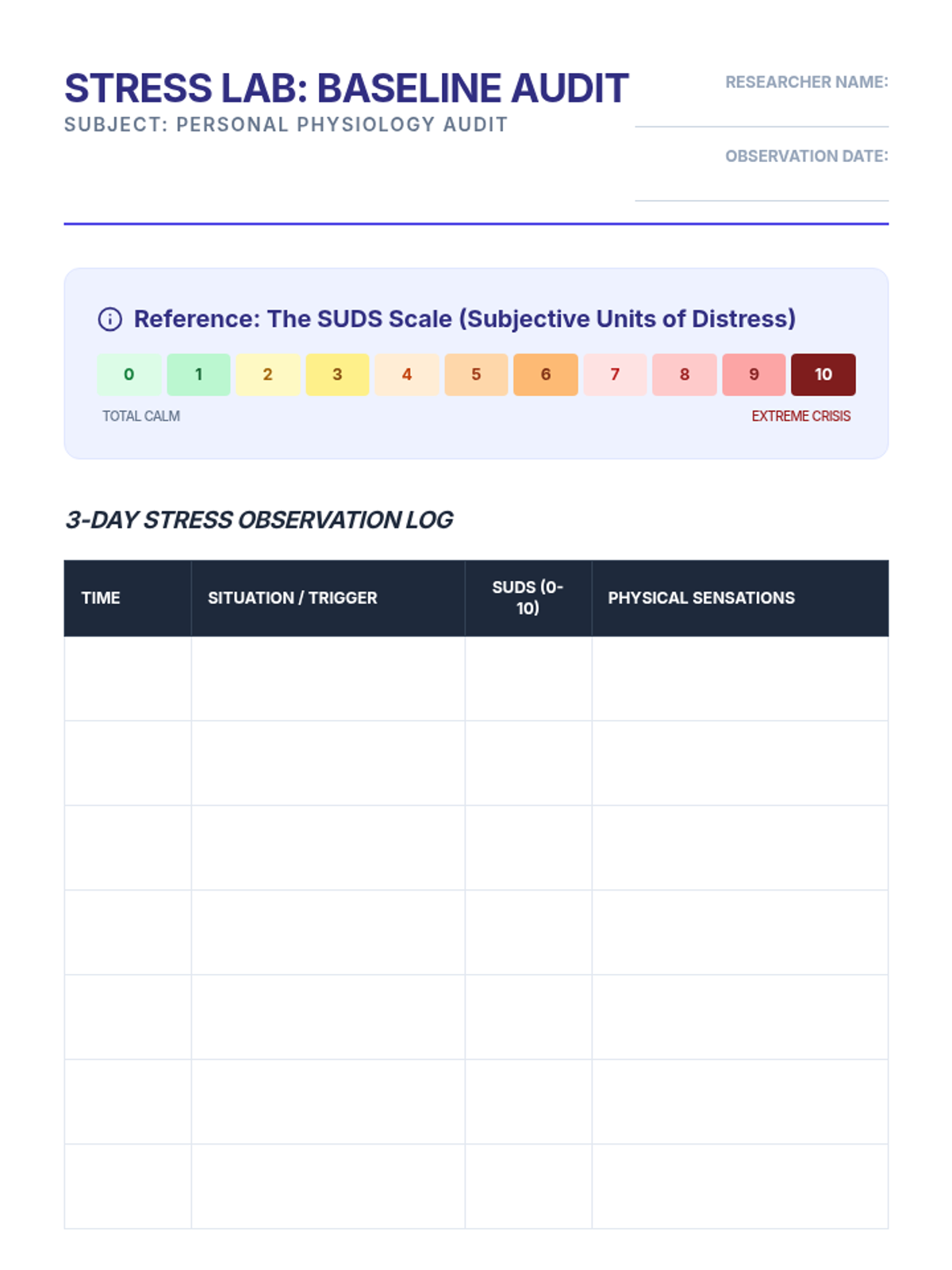
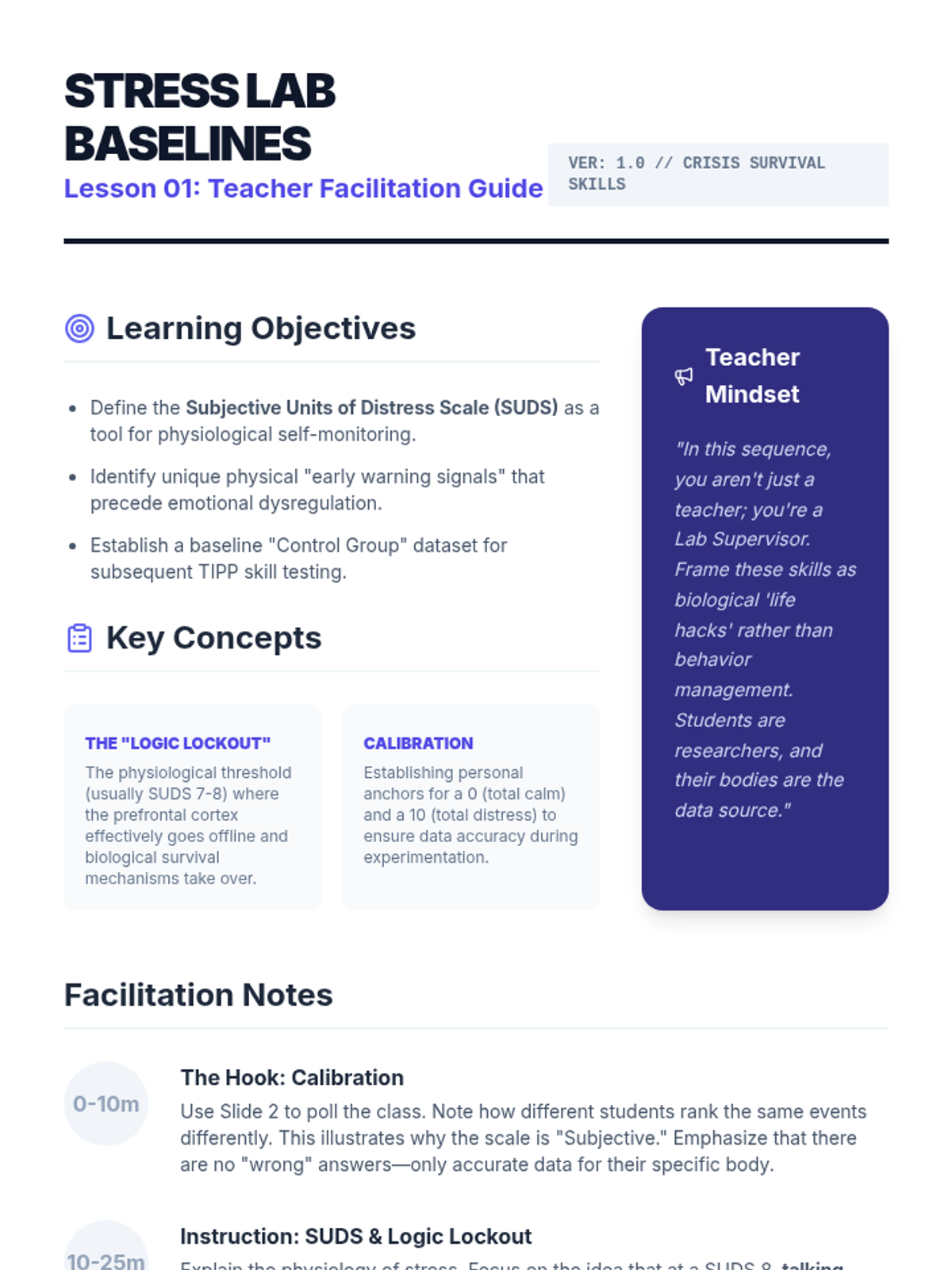
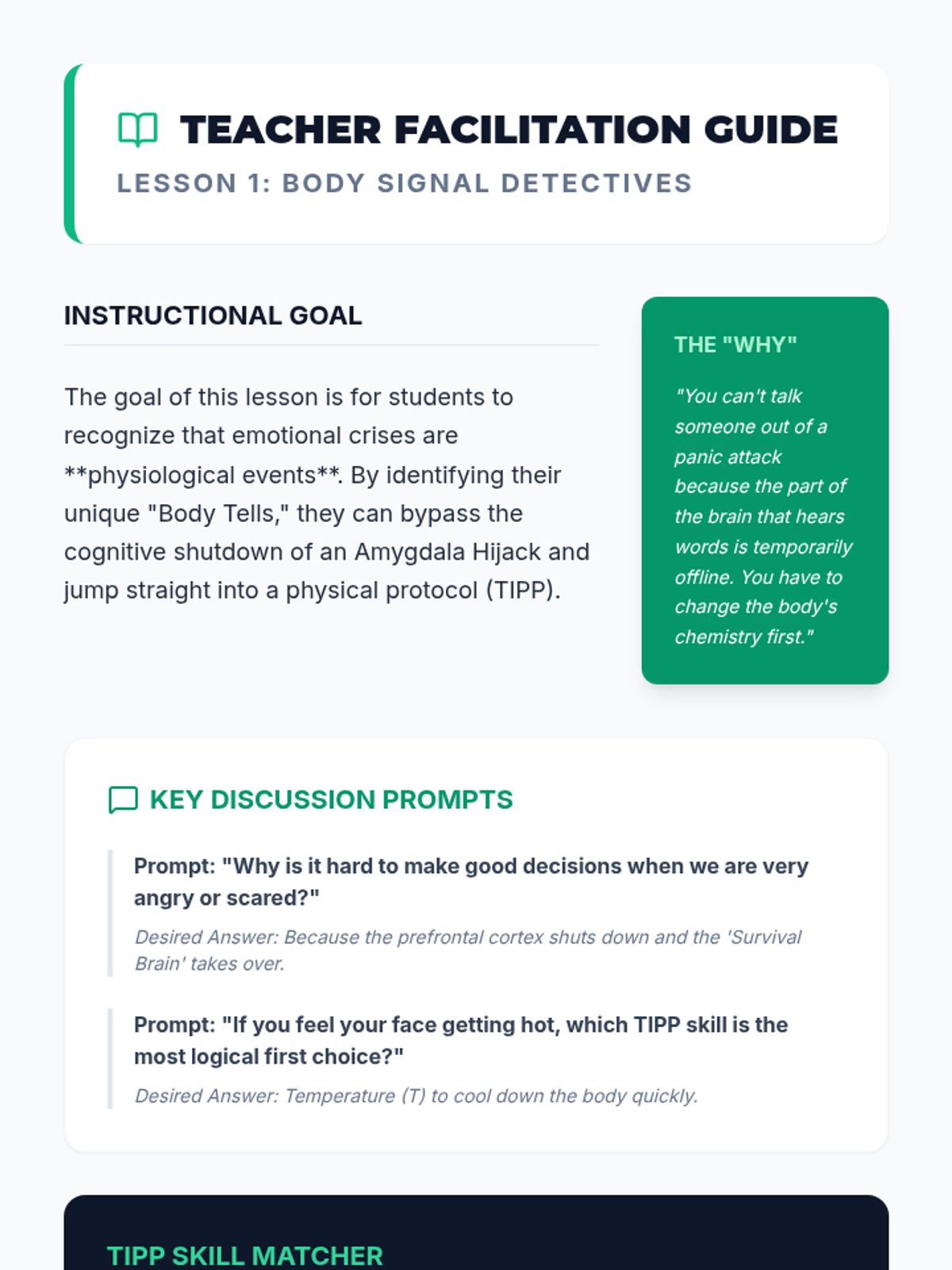
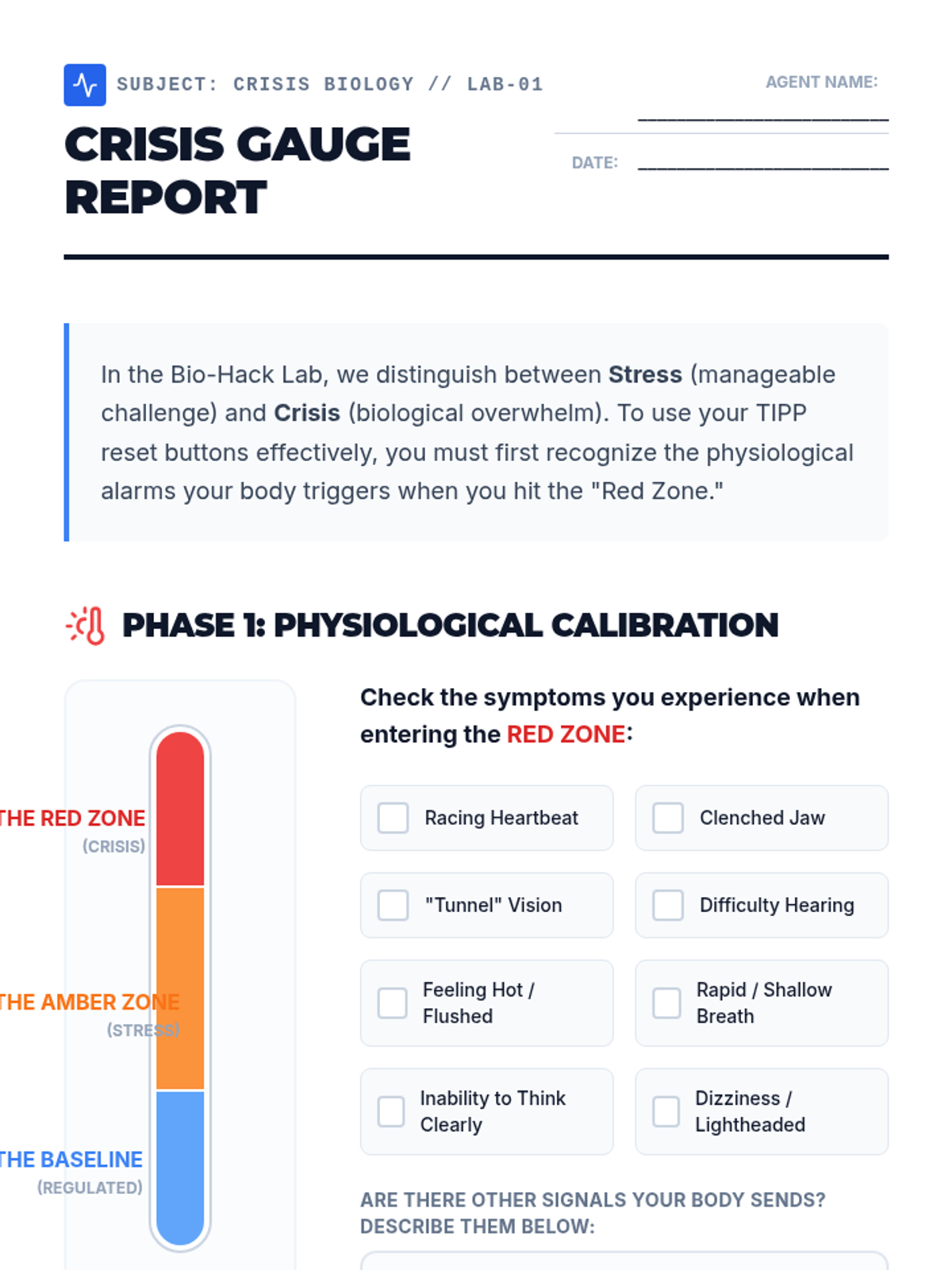
A mastery-based sequence where students treat themselves as the subject of a physiological experiment. They establish stress baselines, test TIPP interventions (Temperature, Intense Exercise, Paced Breathing, Paired Muscle Relaxation), and analyze personal data to build a verified, custom distress tolerance protocol.
A high-intensity, gamified sequence designed to build procedural memory for TIPP (Temperature, Intense Exercise, Paced Breathing, Paired Muscle Relaxation) skills, ensuring students can regulate their nervous systems under pressure.
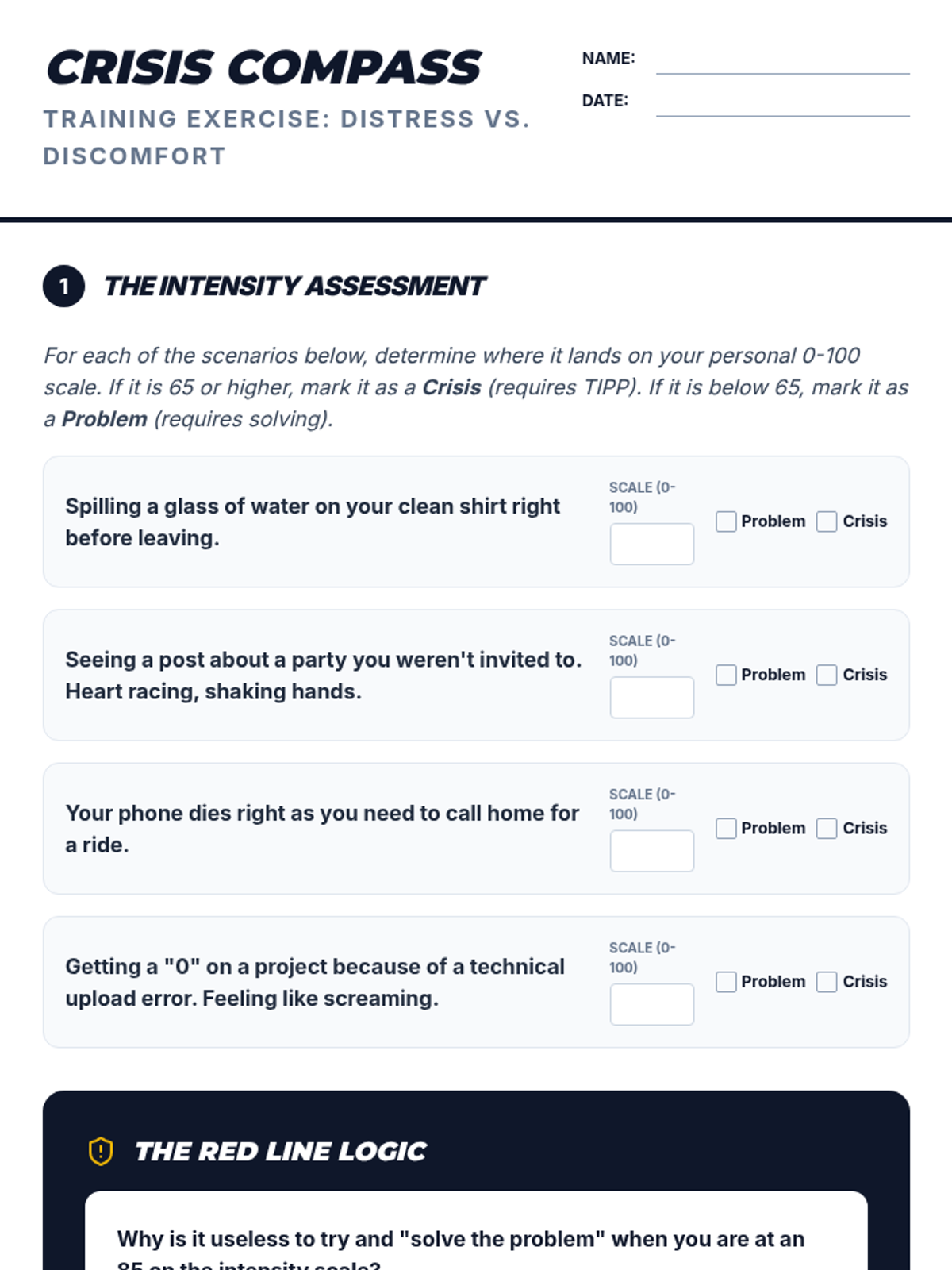
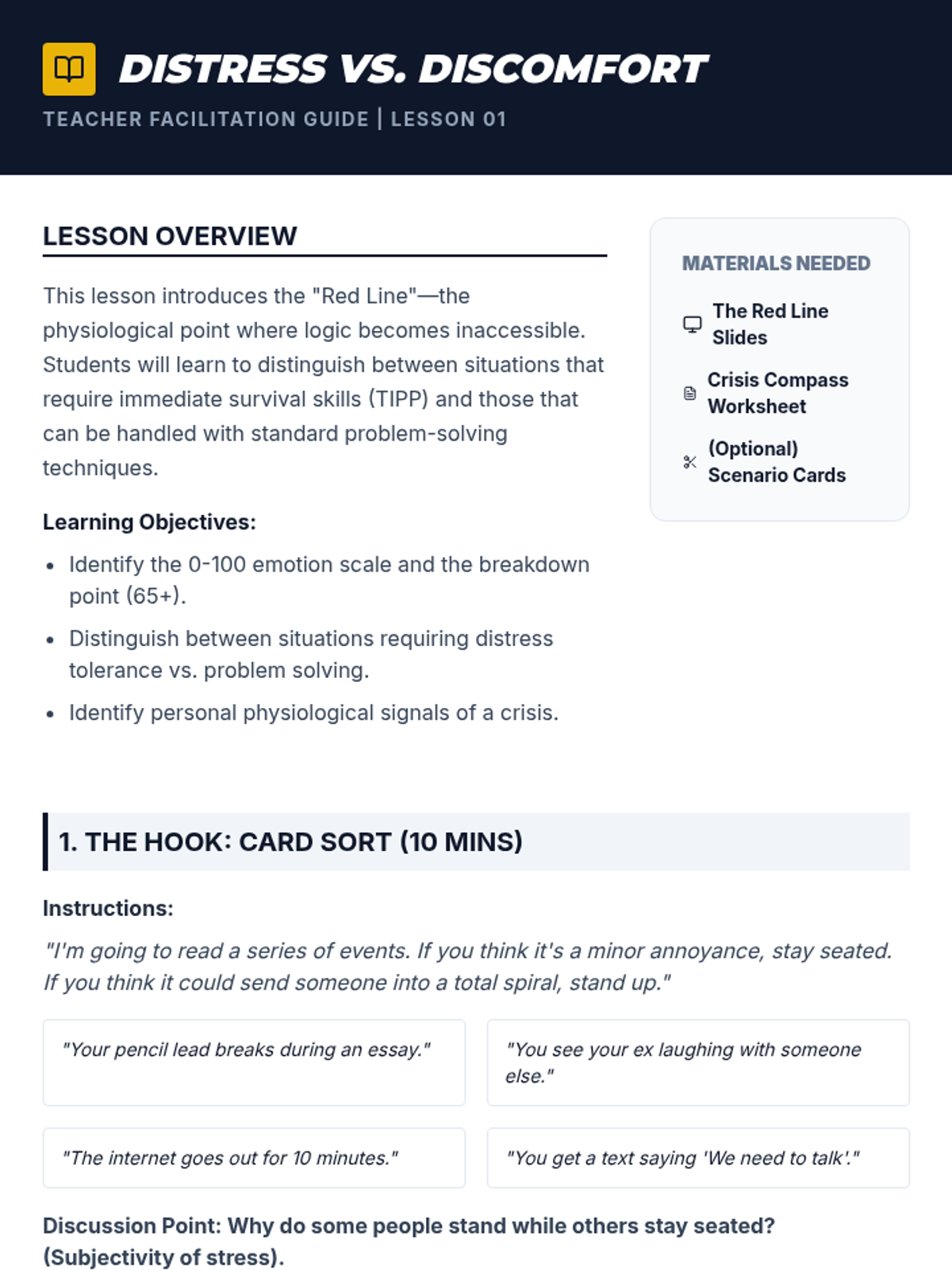
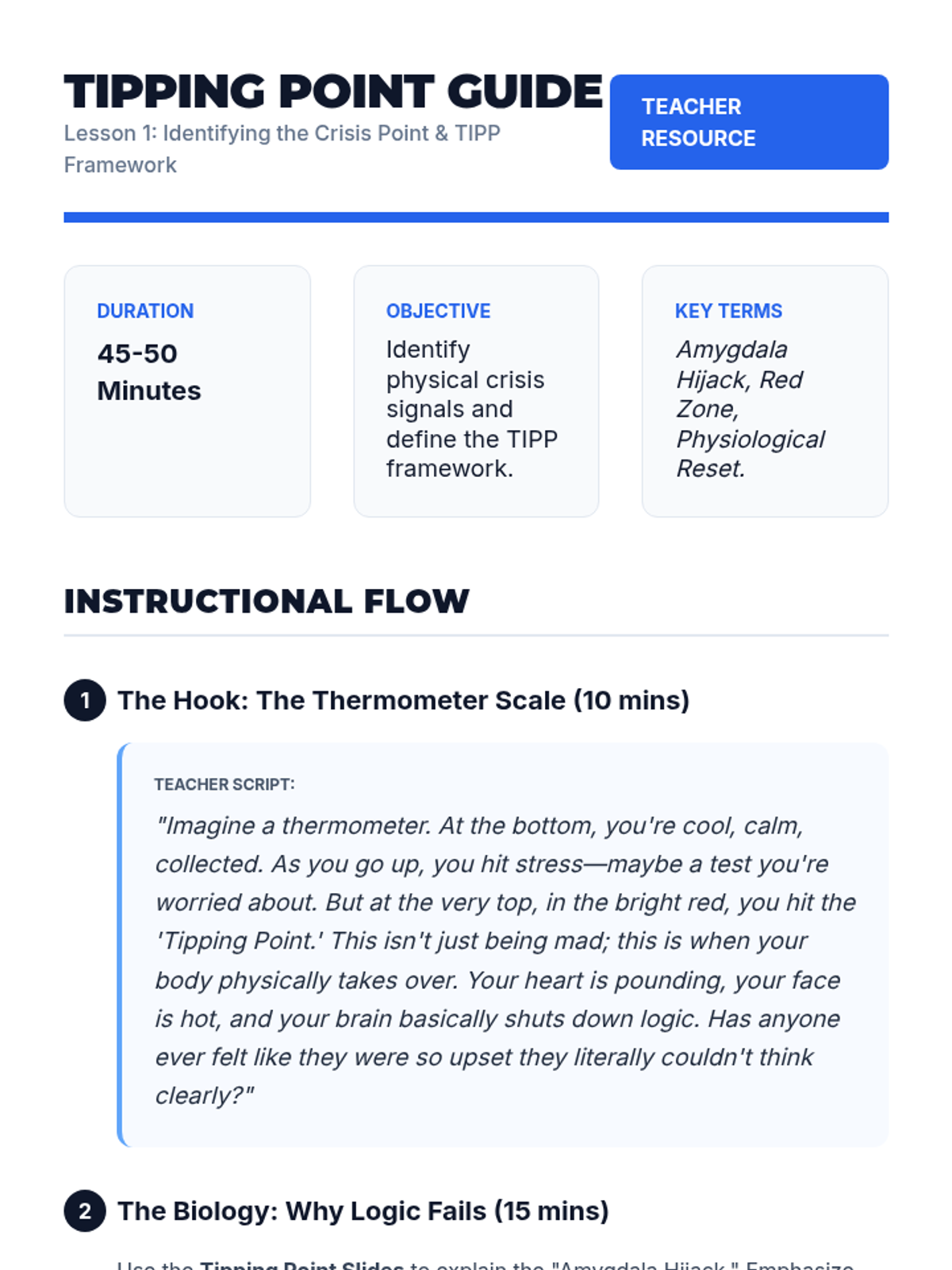
A 5-lesson sequence for 9th-grade students on Crisis Survival Skills (TIPP). Students learn to distinguish between general discomfort and true crisis situations, applying specific TIPP skills (Temperature, Intense Exercise, Paced Breathing, and Paired Muscle Relaxation) to real-world social, academic, and personal challenges through case studies and simulations.
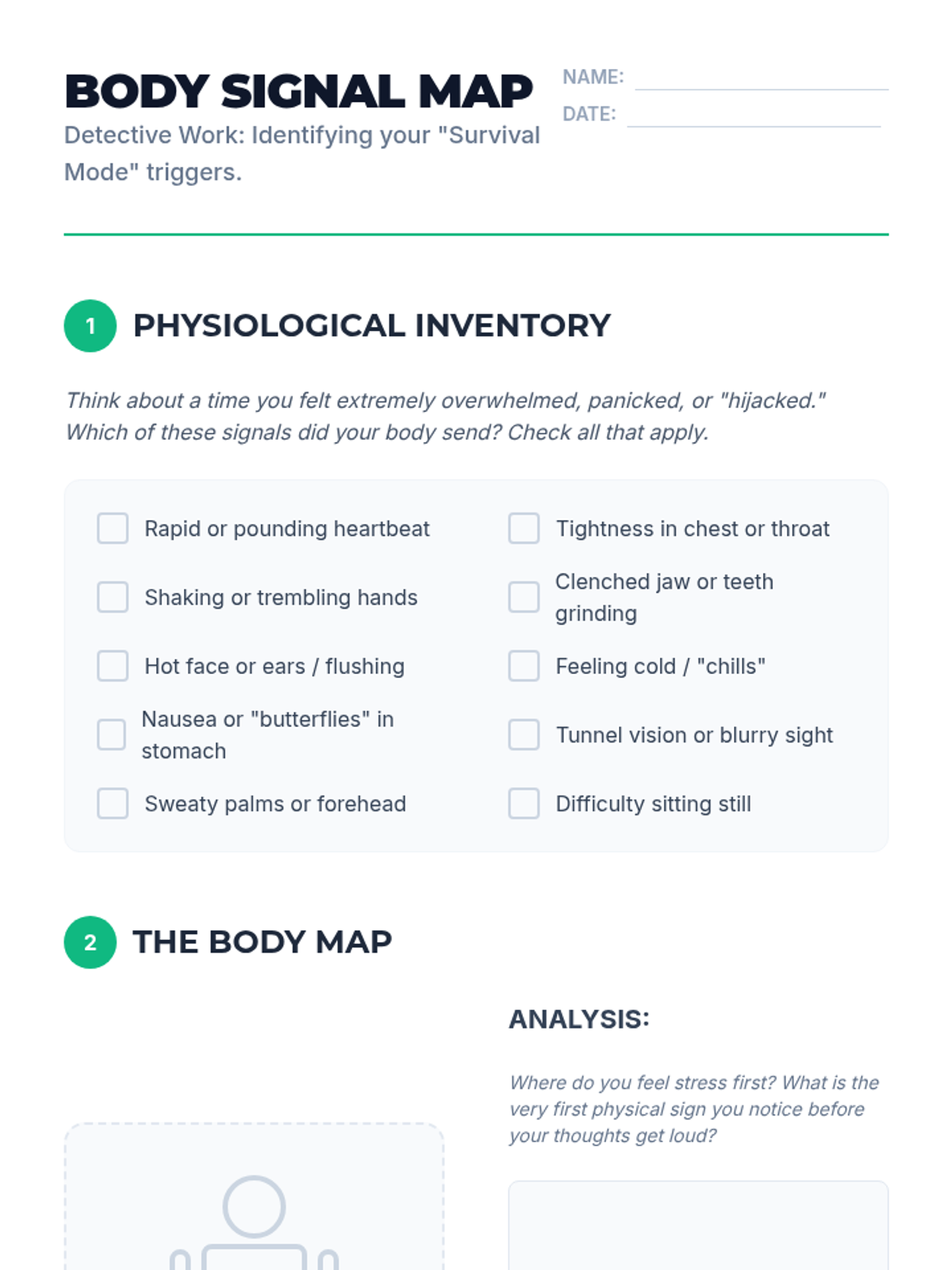
A project-based sequence for 9th-grade students to design a personalized Crisis Response Kit using TIPP skills. Students move from identifying physiological triggers to curating specific sensory, exercise, and breathing protocols for moments of high distress.
A comprehensive sequence for 9th-grade students on TIPP crisis survival skills, focusing on physiological regulation to manage acute emotional distress. Students learn the biological mechanics of the mammalian dive reflex, intense exercise, paced breathing, and paired muscle relaxation.
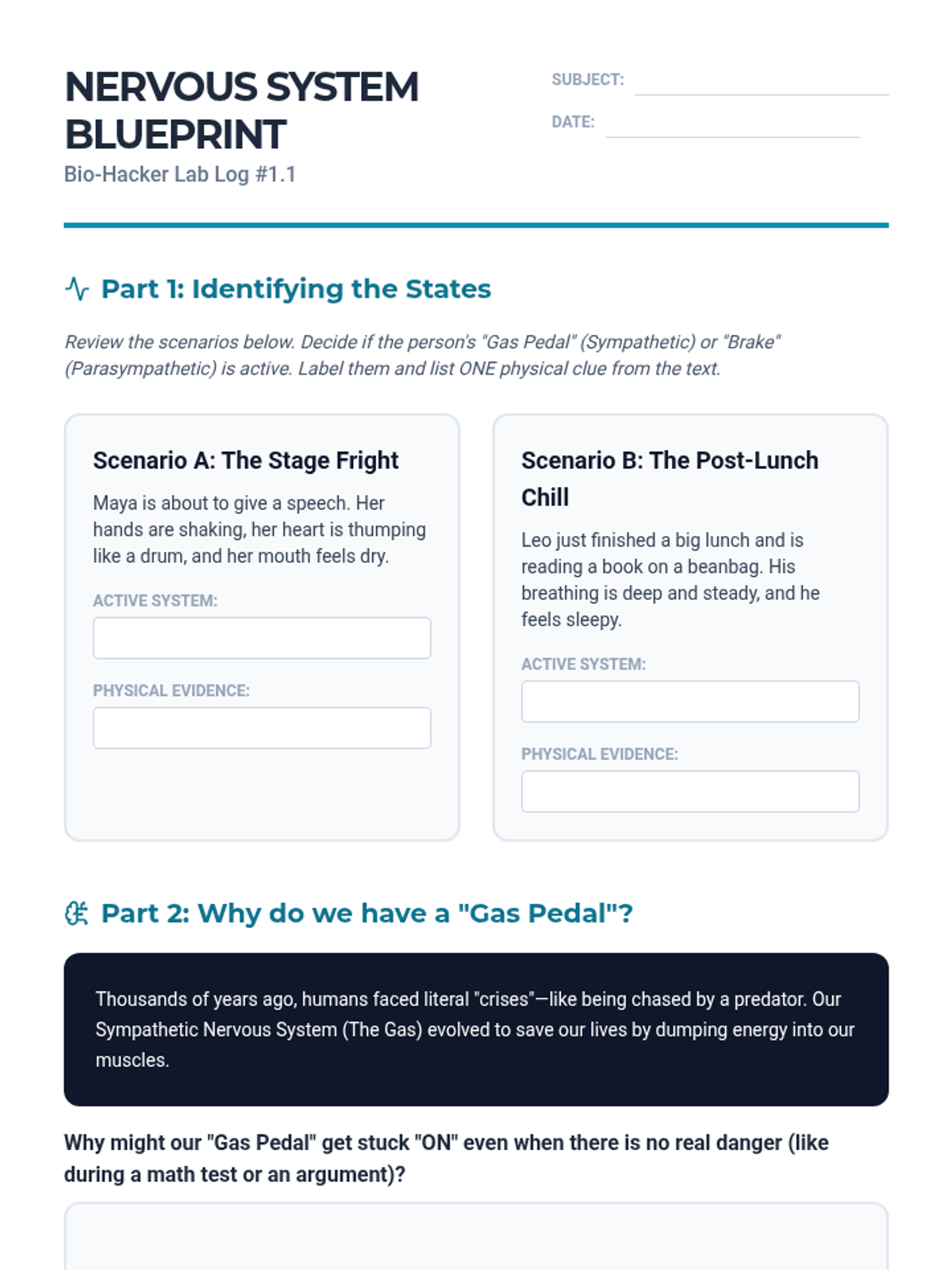
This inquiry-based sequence explores the biological 'why' behind TIPP skills, reframing them as 'bio-hacks' for the nervous system. Students investigate the autonomic nervous system, the Mammalian Dive Reflex, and the chemistry of stress to understand how physical interventions can regulate emotional states.
A scientific inquiry into the TIPP skills, treating the body as a laboratory to collect data on how physiological interventions affect emotional states and biometric markers. Students act as 'bio-hackers' to validate the effectiveness of crisis survival techniques through empirical evidence.
A gamified, mastery-based sequence designed to build automaticity with TIPP crisis survival skills. Students move through a 'Boot Camp' style curriculum, mastering Temperature, Intense Exercise, Paced Breathing, and Paired Muscle Relaxation through rapid-fire drills and simulations.
A project-based sequence where 8th-grade students learn and personalize TIPP crisis survival skills, culminating in the creation of a physical or digital Crisis Survival Kit. Students assess triggers, brainstorm school-appropriate strategies, and script guided exercises for emotional regulation.
This sequence introduces students to the biological mechanisms behind the TIPP skill set (Temperature, Intense Exercise, Paced Breathing, Paired Muscle Relaxation). Students explore how the autonomic nervous system responds to stress and how specific physical actions can 'hack' this system to reduce emotional intensity.
A 5-lesson unit for 7th graders exploring the physiological basis of the TIPP crisis survival skills. Students learn how to 'hack' their nervous system using temperature, exercise, breathing, and muscle relaxation to override the brain's stress response.
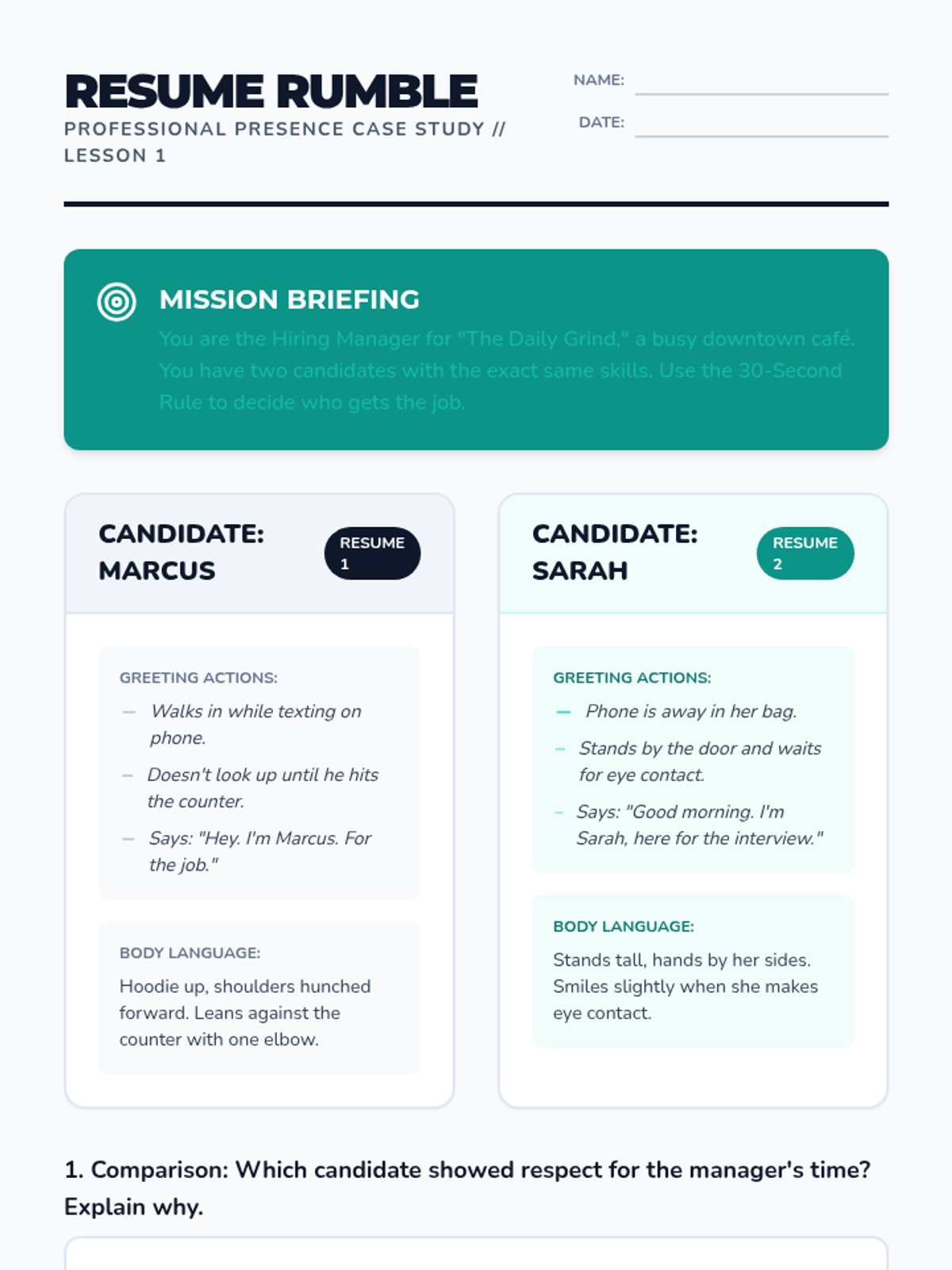
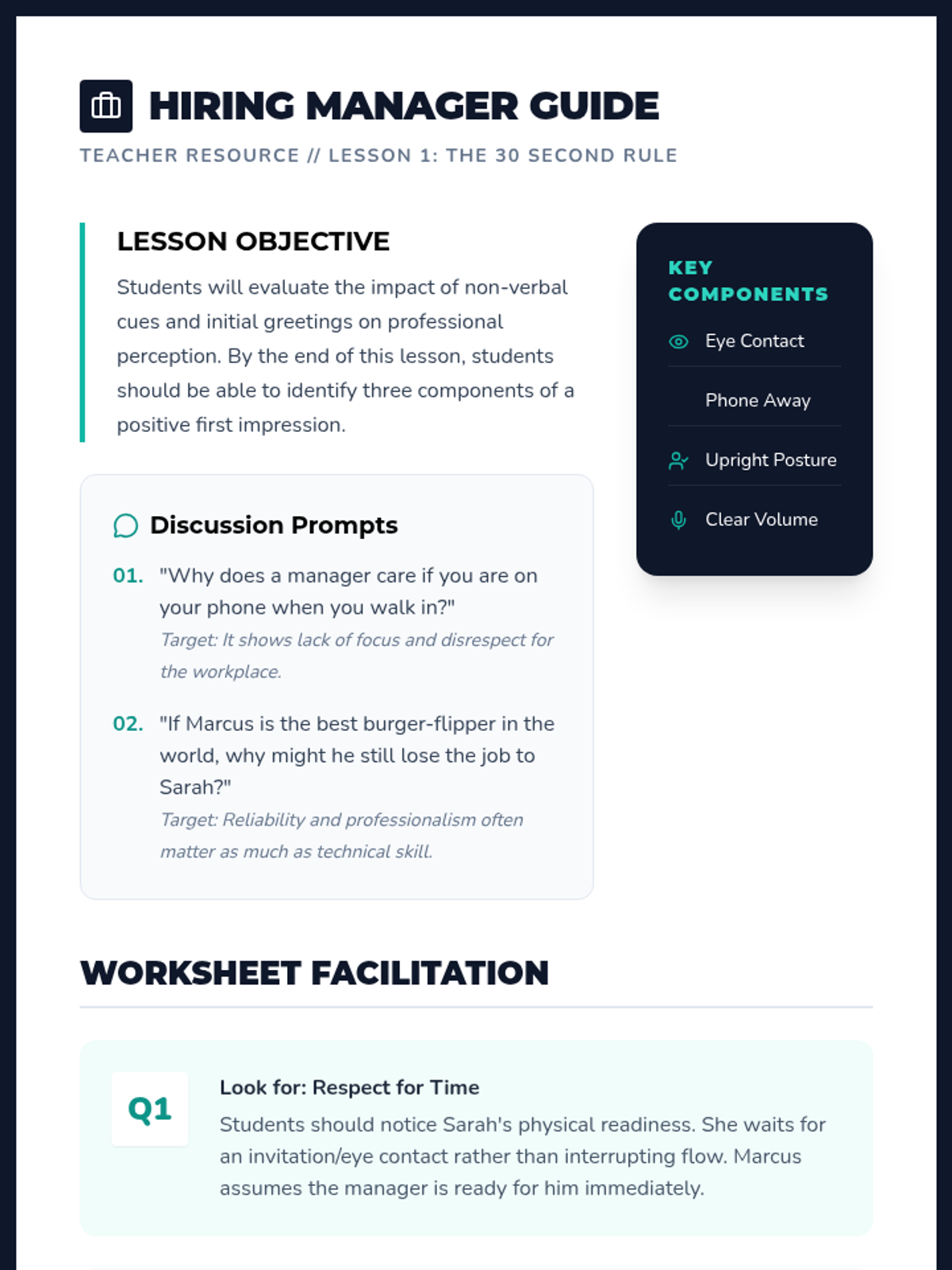
This sequence prepares transition-age students for vocational and community success by mastering context-specific greetings. Students progress from analyzing first impressions to practicing interview entrances, customer service interactions, and respectful community helper encounters, culminating in a high-stakes mock interview circuit.
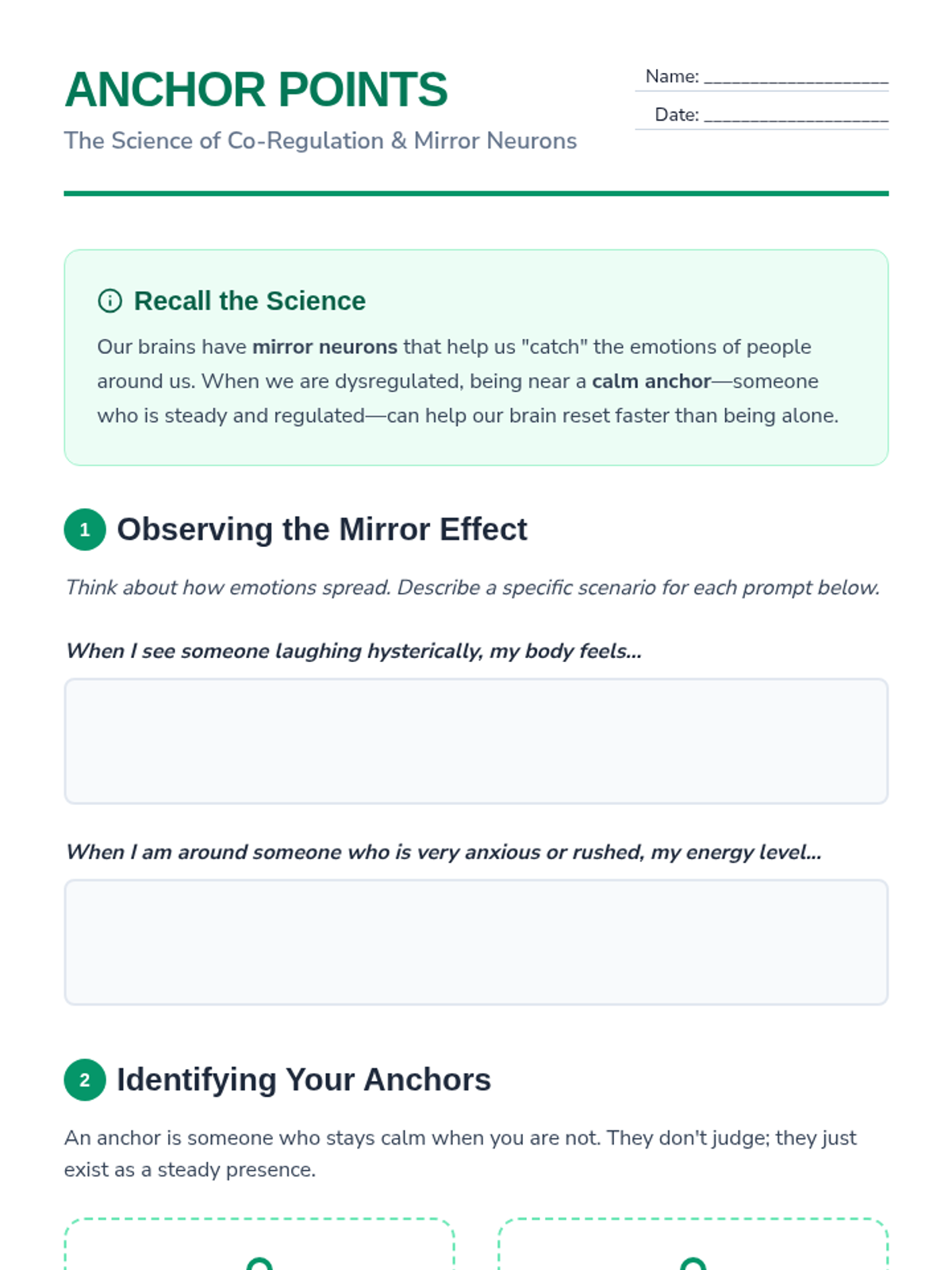
A 5-lesson sequence for 9th-grade students focused on the social aspects of dysregulation recovery. Students learn about the science of co-regulation, identify safe supporters, develop non-verbal communication systems, and practice restorative re-entry and repair techniques after a crisis.
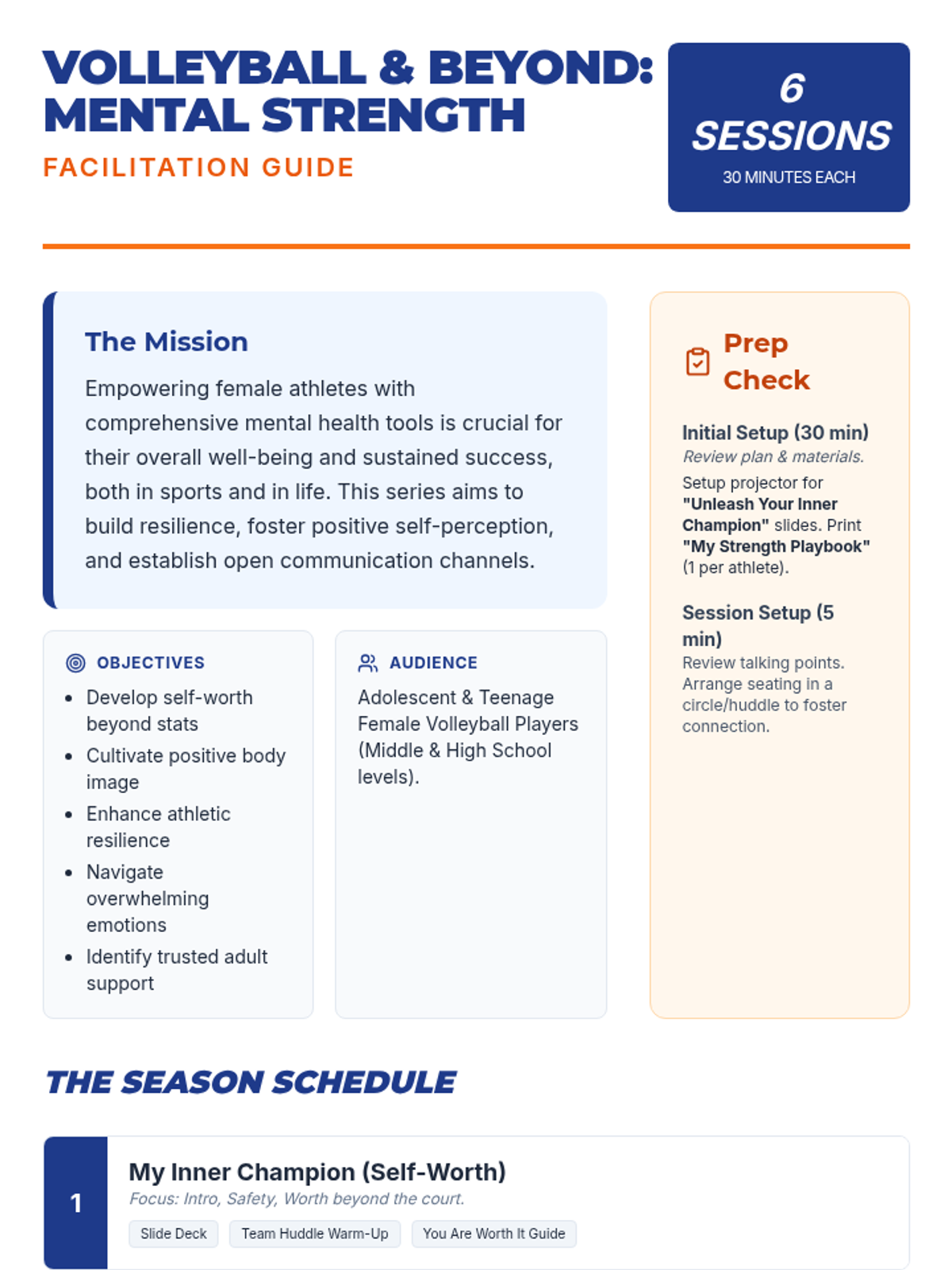
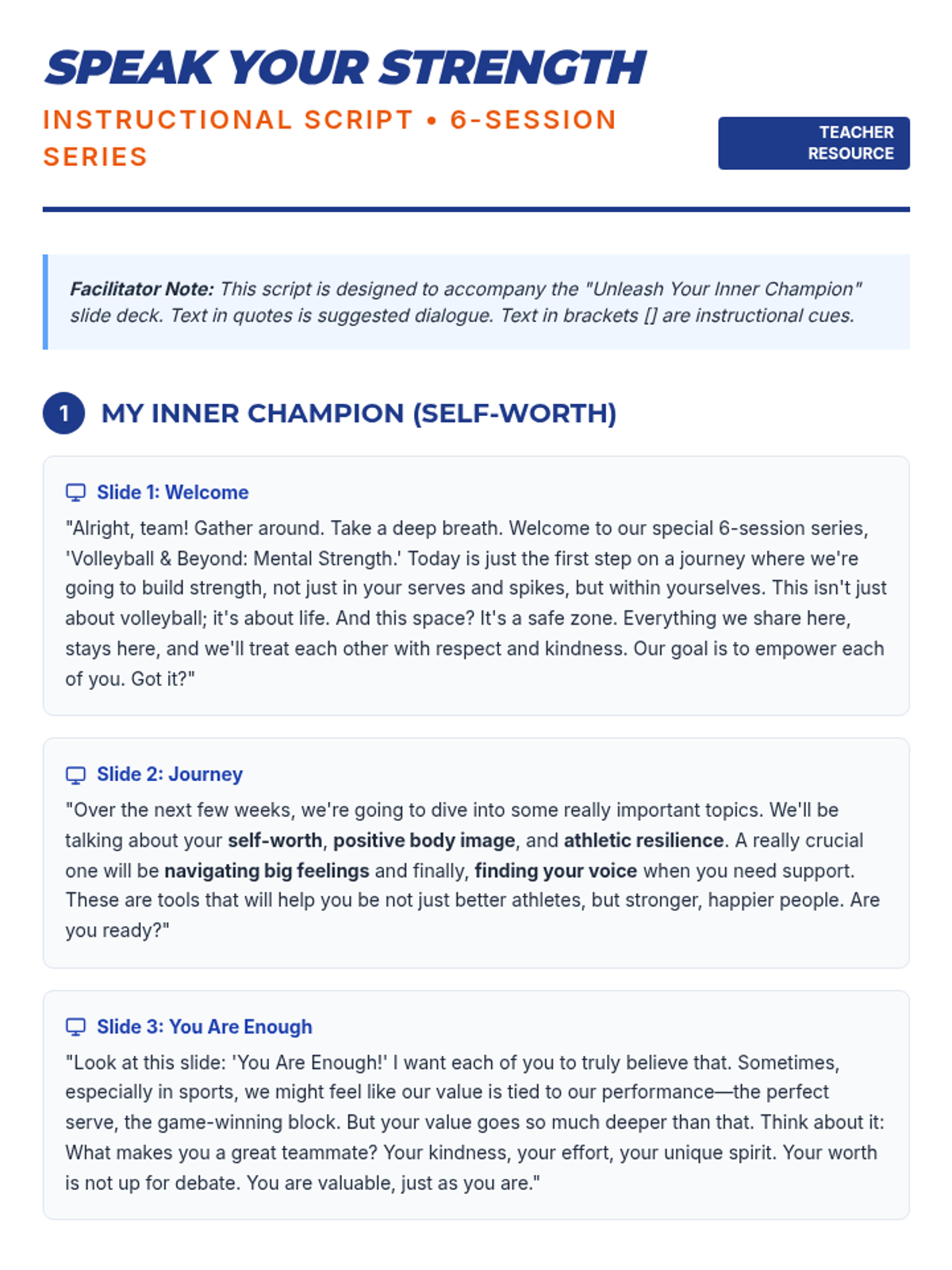
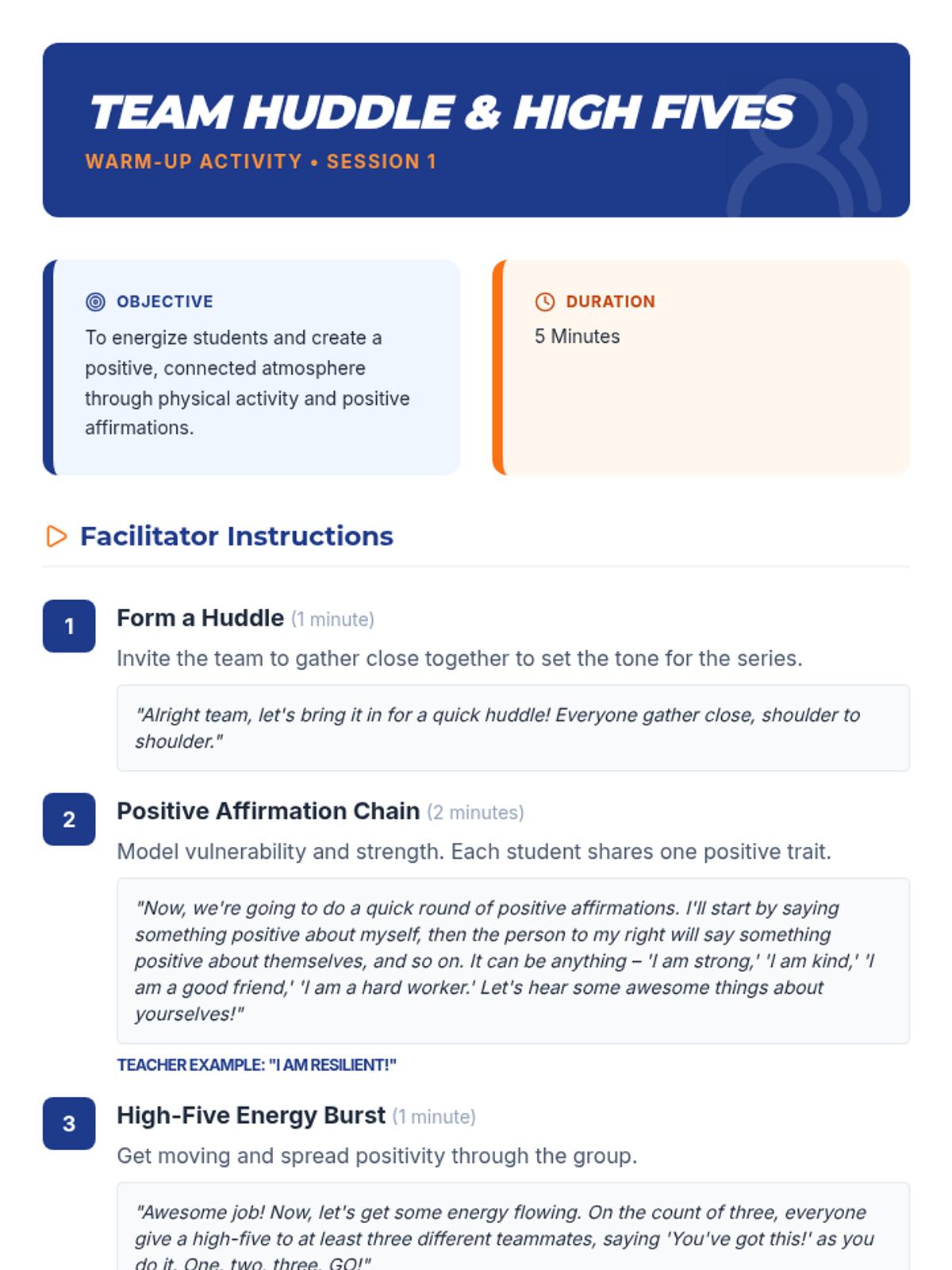
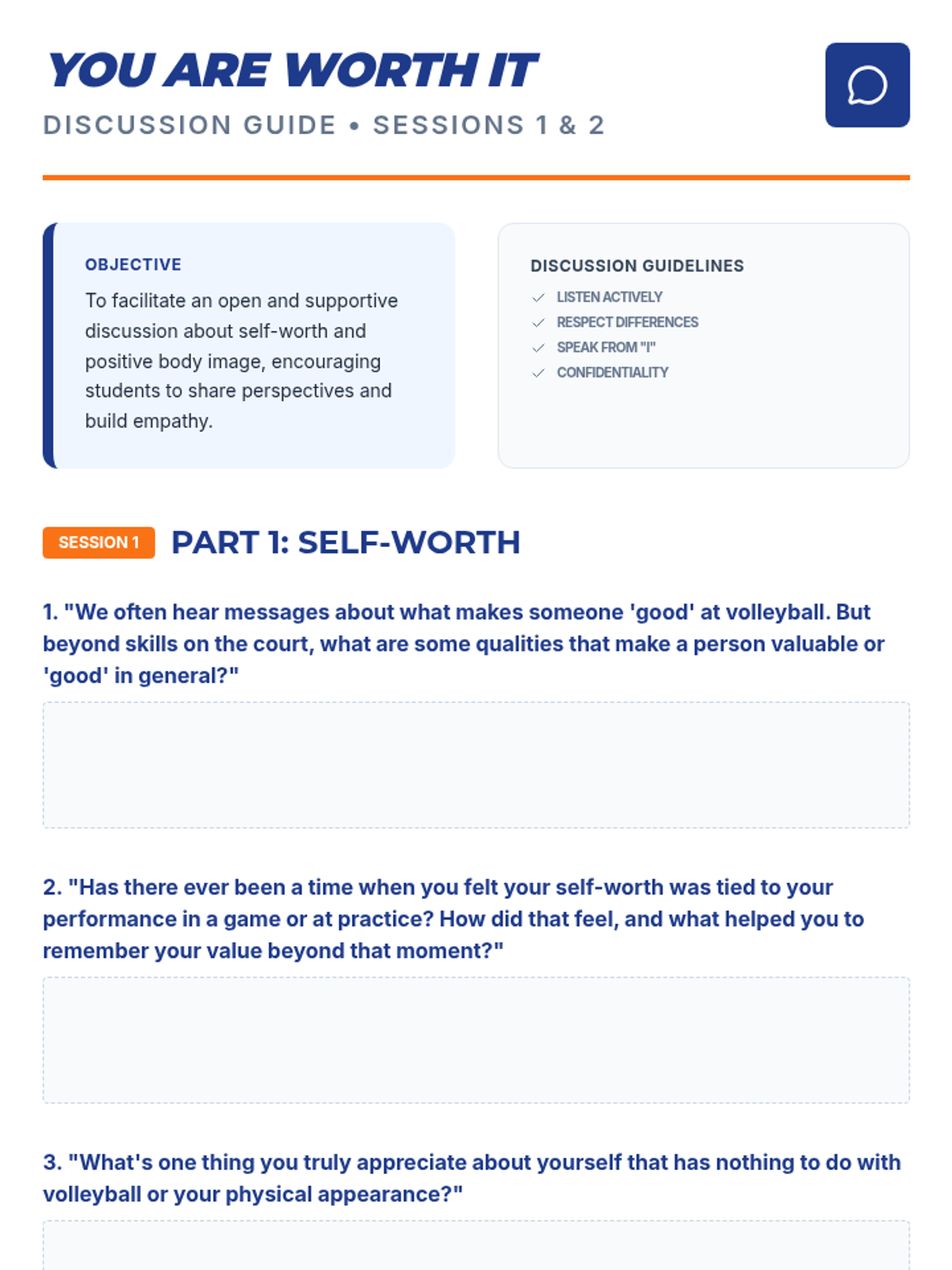
A 6-session series for adolescent female volleyball players focusing on self-worth, body image, resilience, and mental health communication.
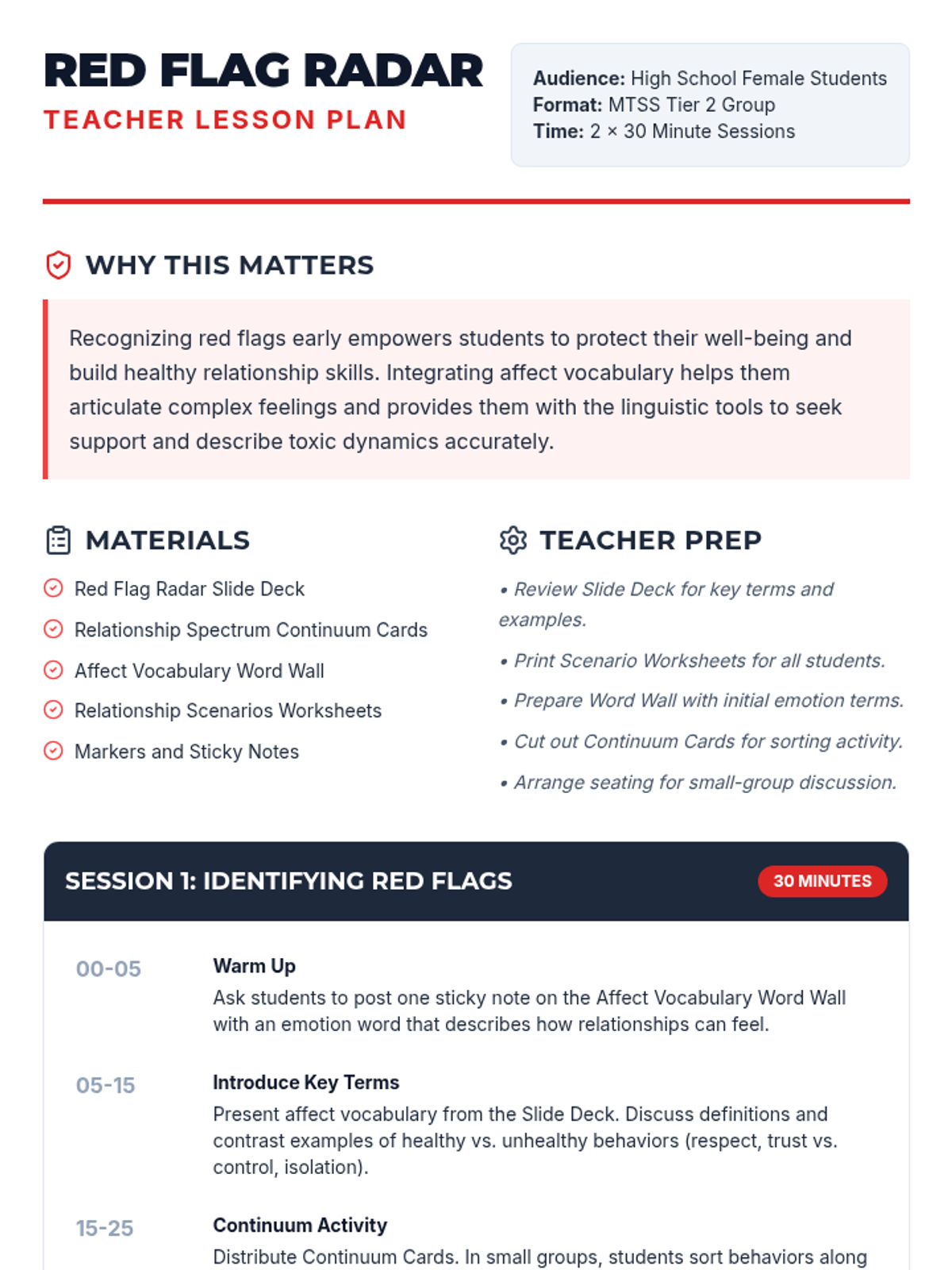
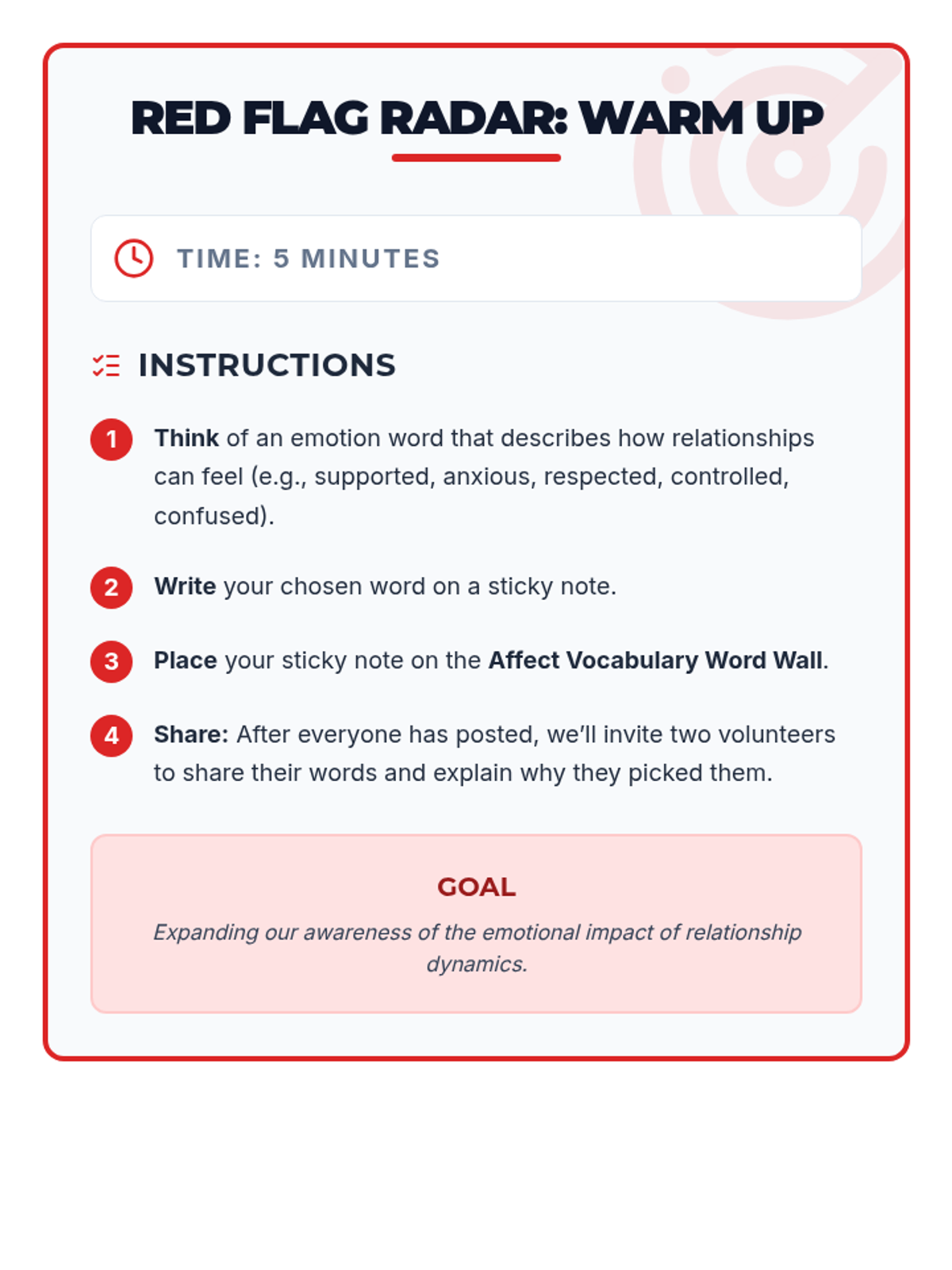
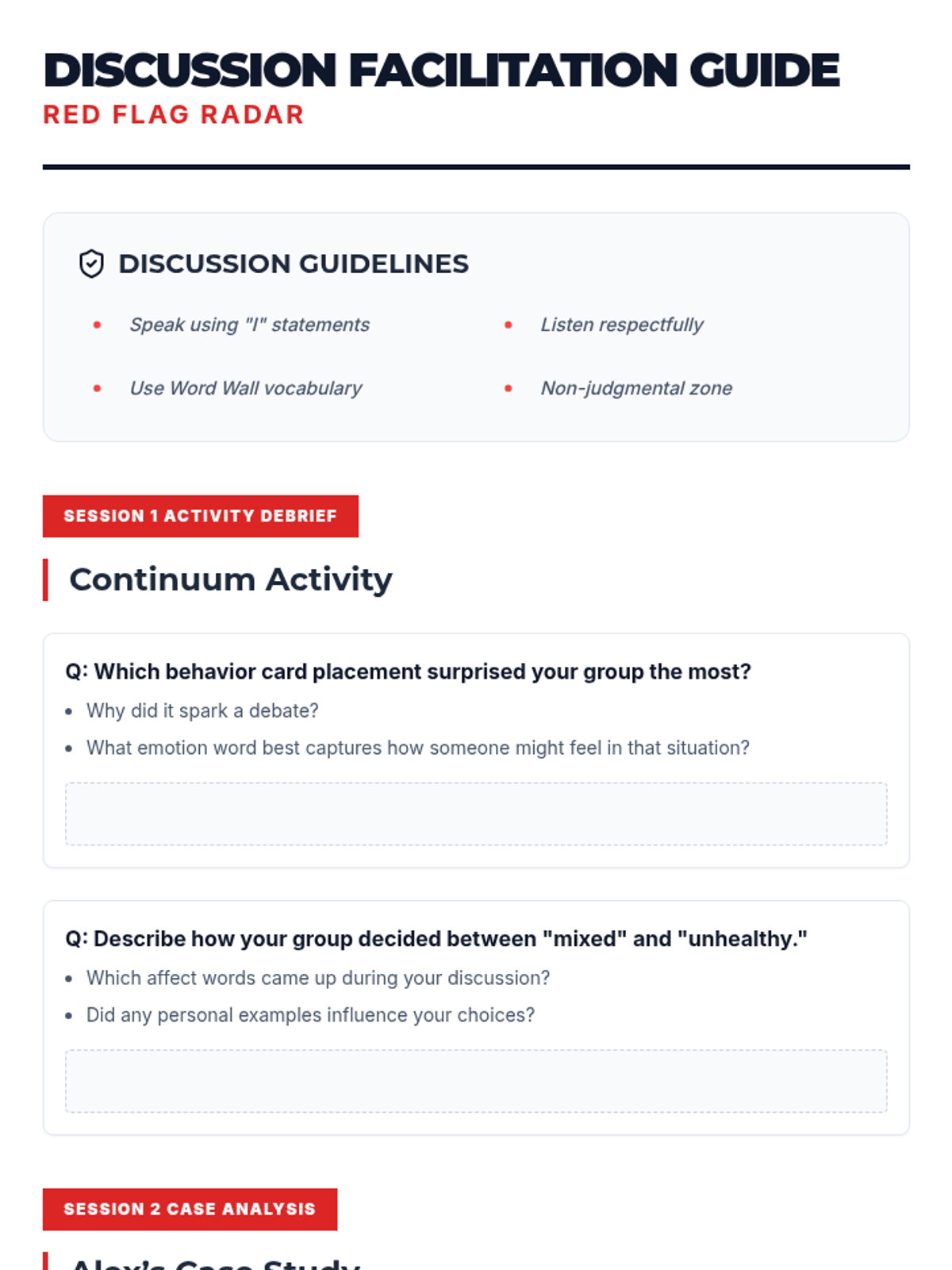
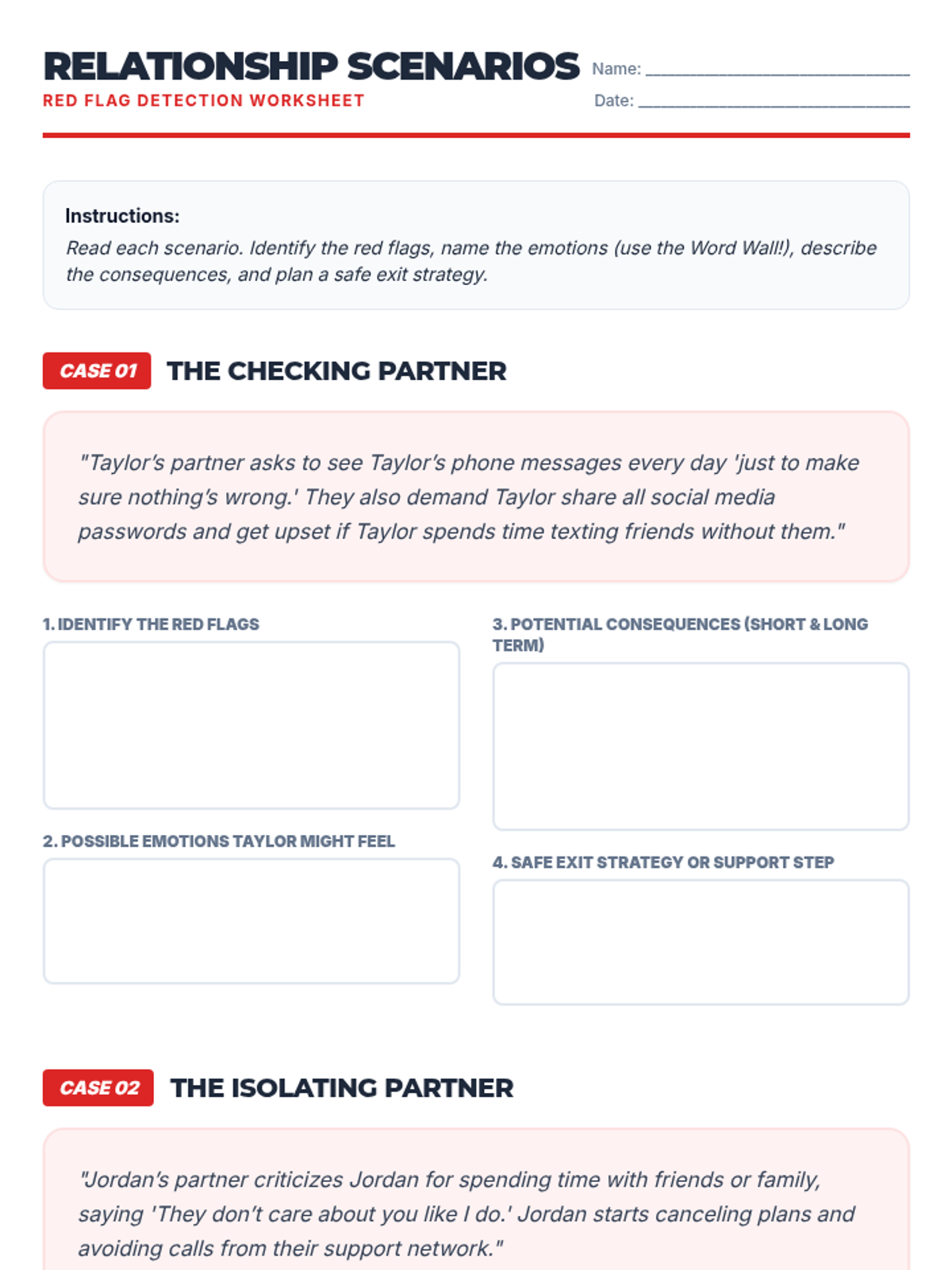
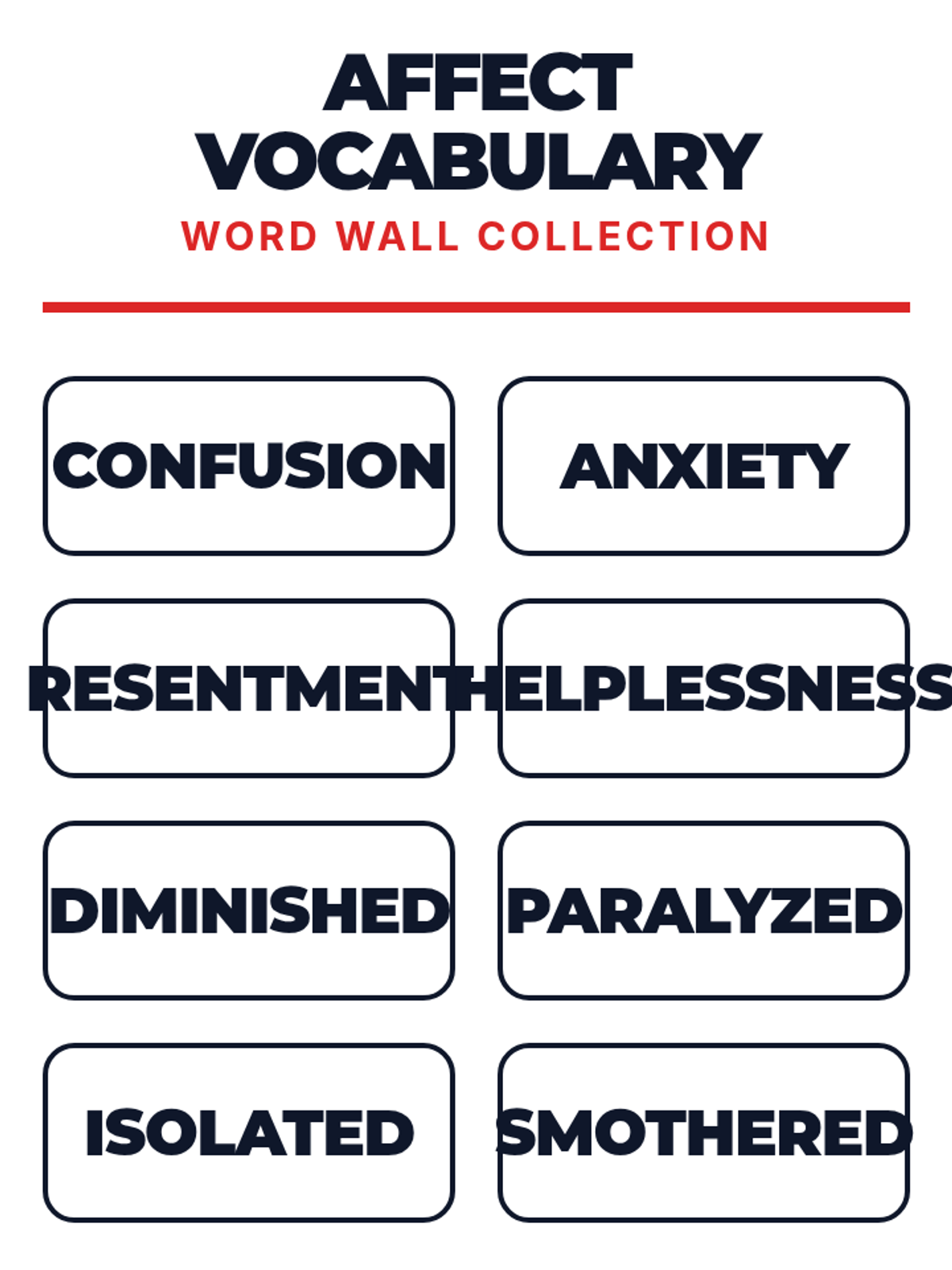
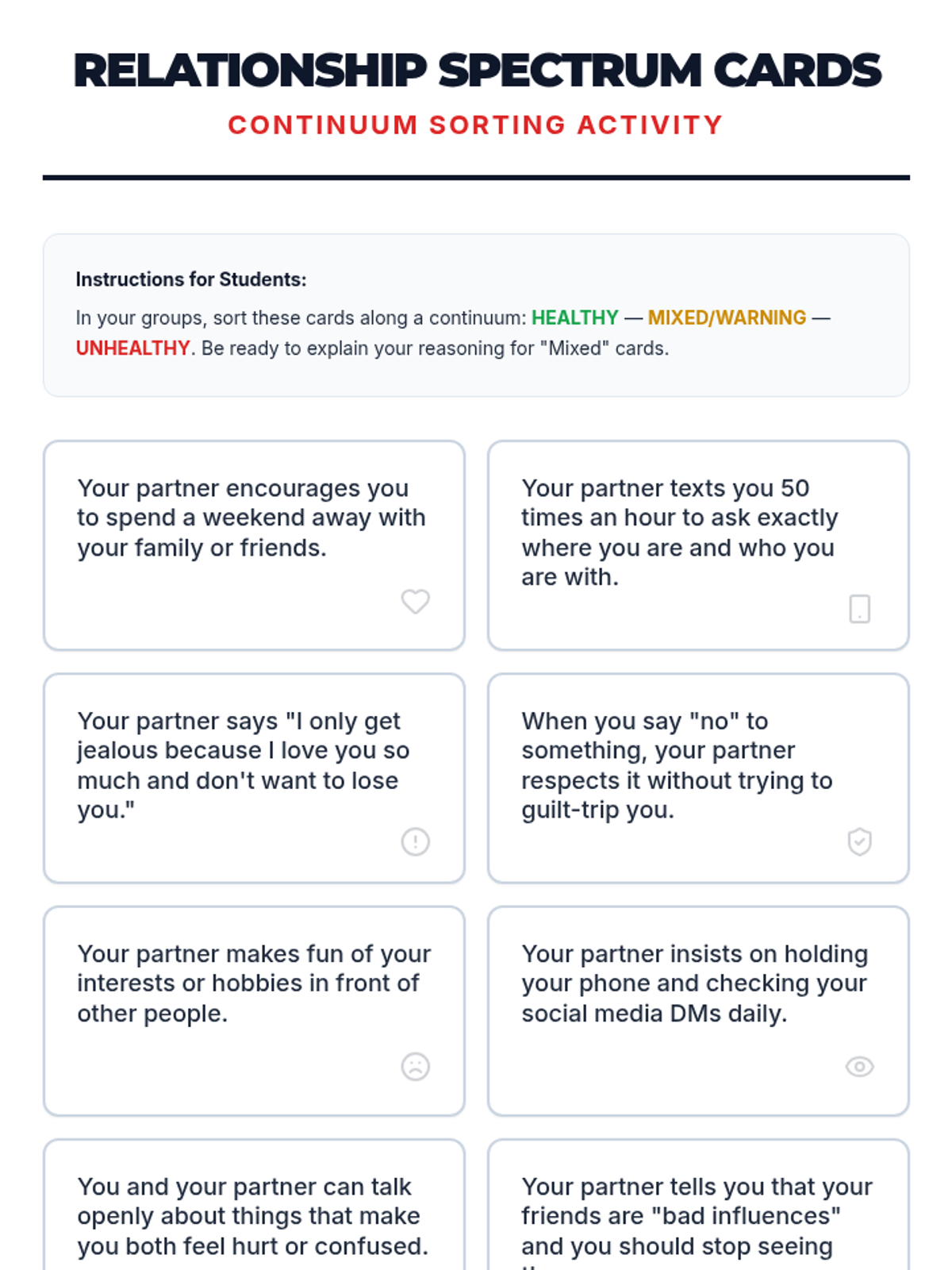
A two-session group lesson for high school female students focused on identifying red flags in unhealthy relationships, expanding affect vocabulary, and planning safe exit strategies.
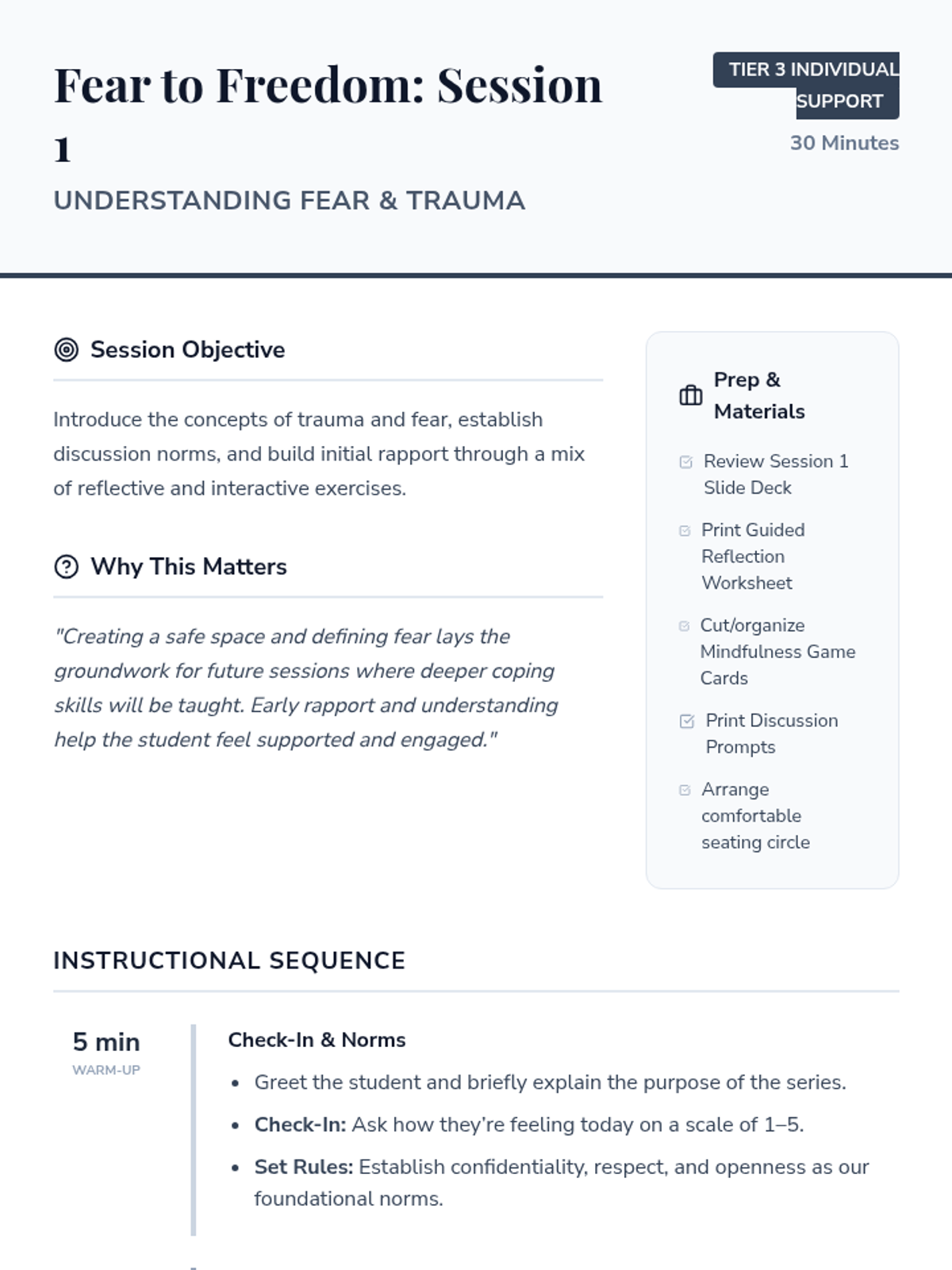
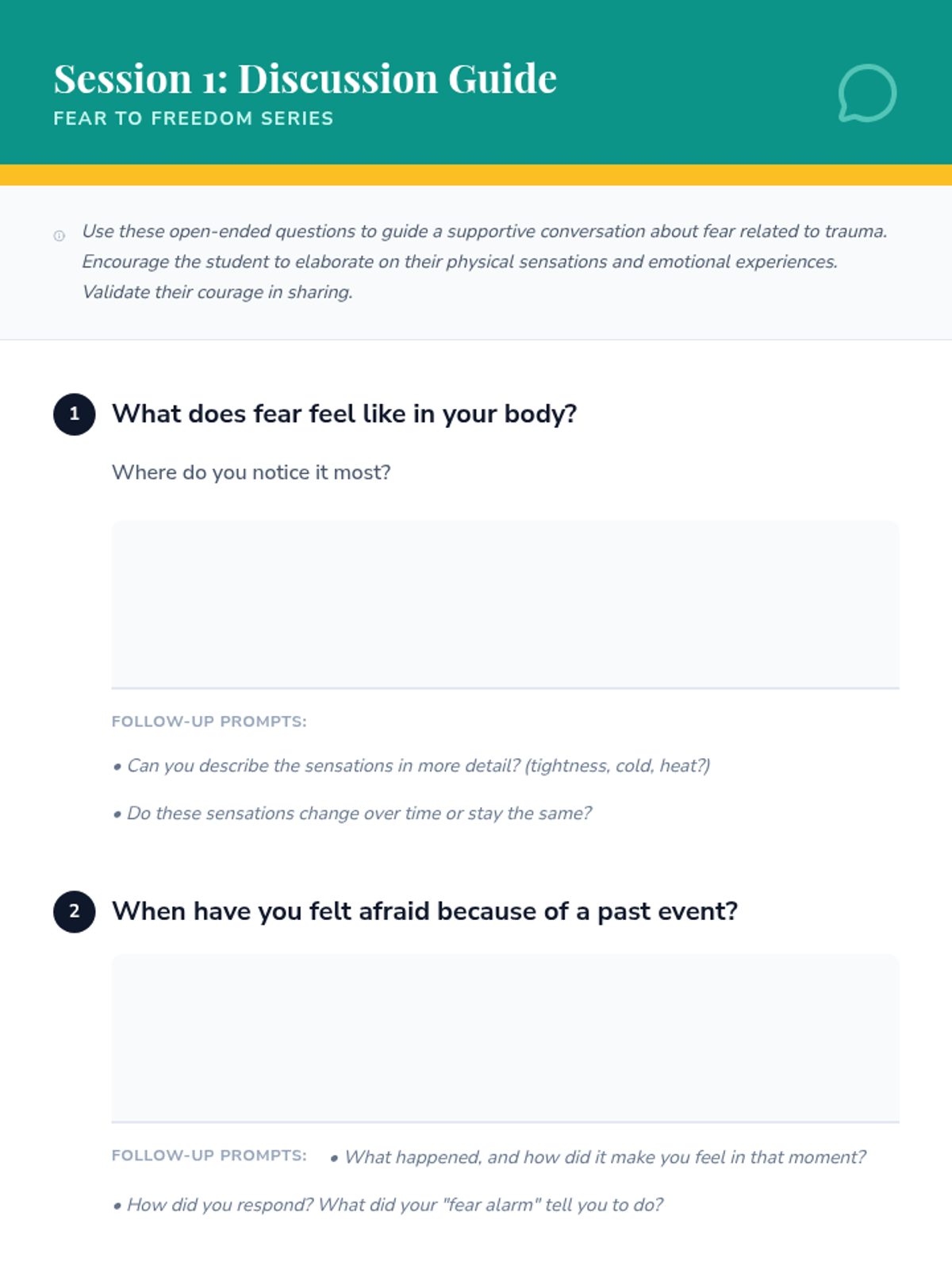
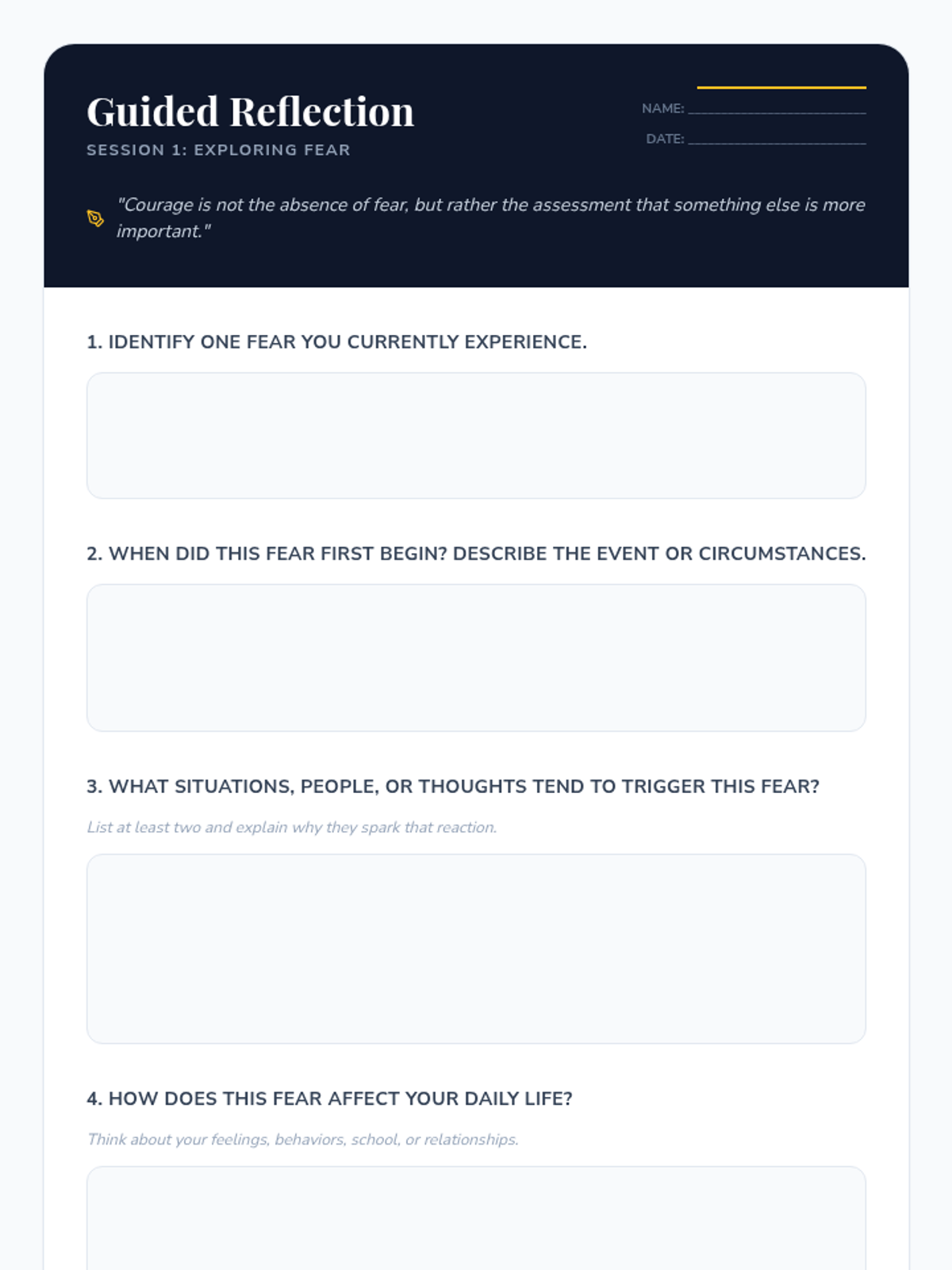
A 6-session, 30-minute Tier 3 support series guiding a high school female student through strategies to understand, confront, and overcome trauma-related fears. Through discussions, activities, games, and reflections, the student will build coping skills, self-awareness, and resilience to transform fear into personal strength.
A two-session creative project sequence where students explore mental health topics, design awareness posters, and reflect on the impact of advocacy through art.
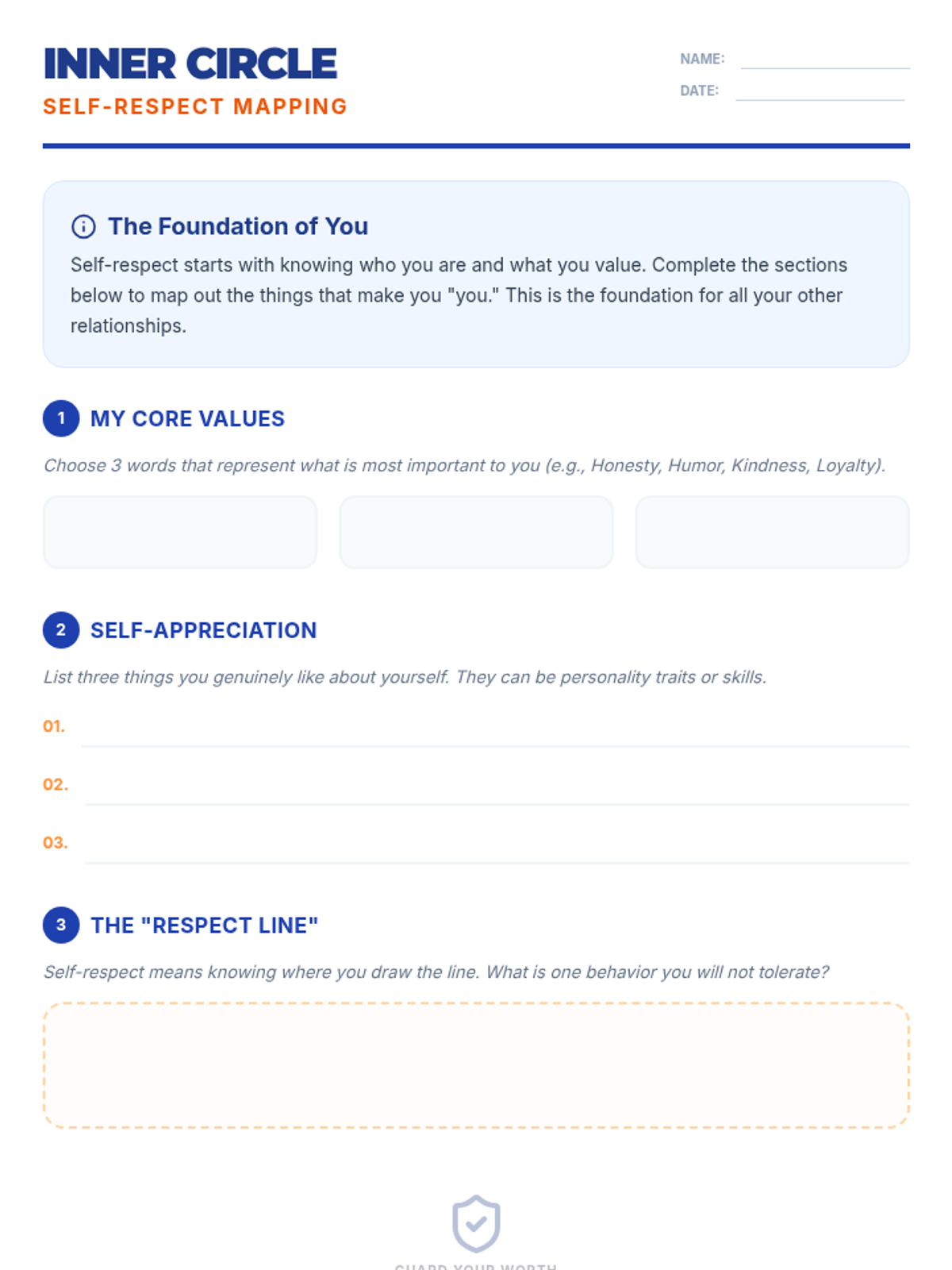
A four-week workshop series for high school students focused on building supportive relationships, identifying healthy behaviors, and fostering self-respect.
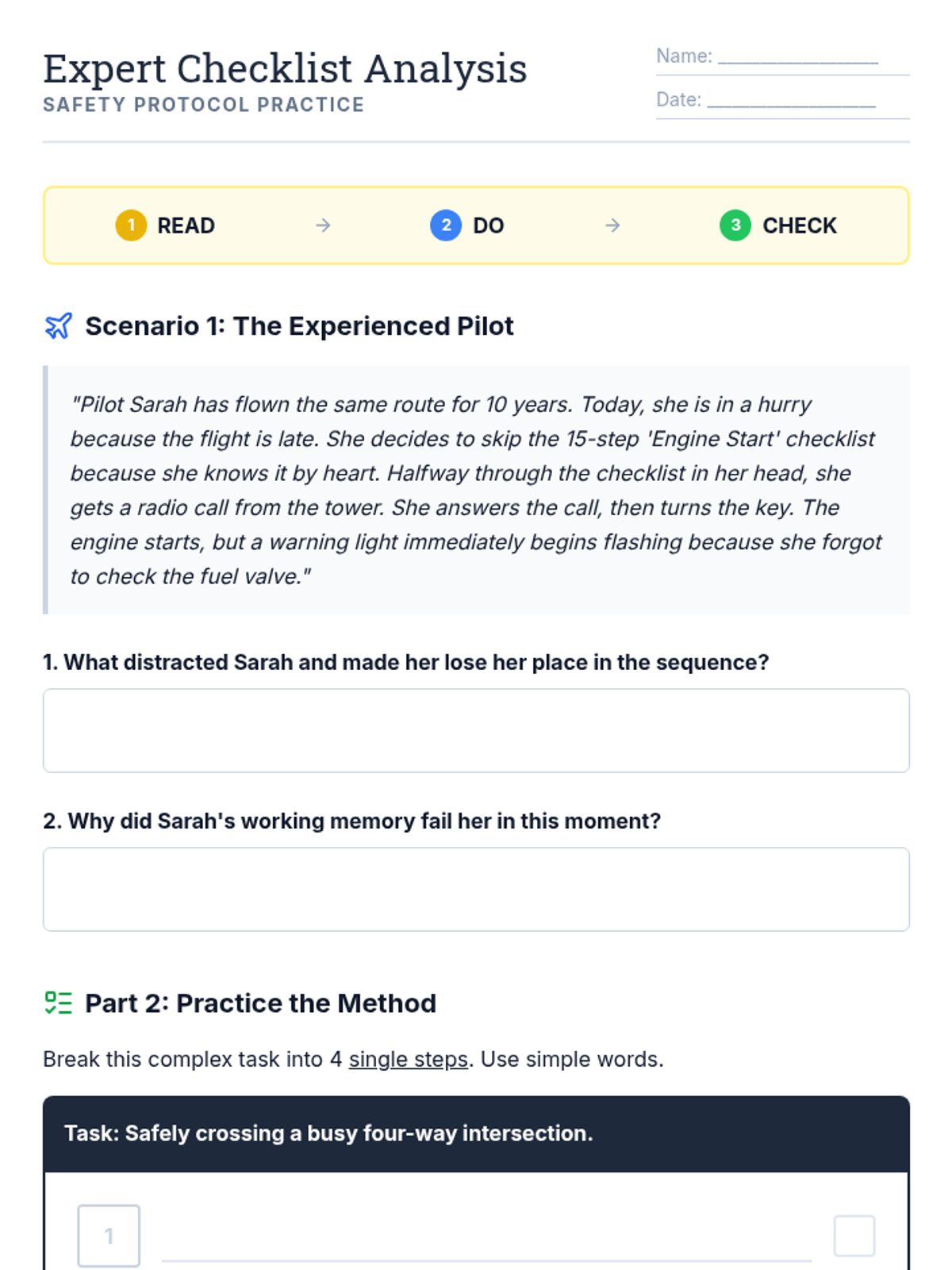
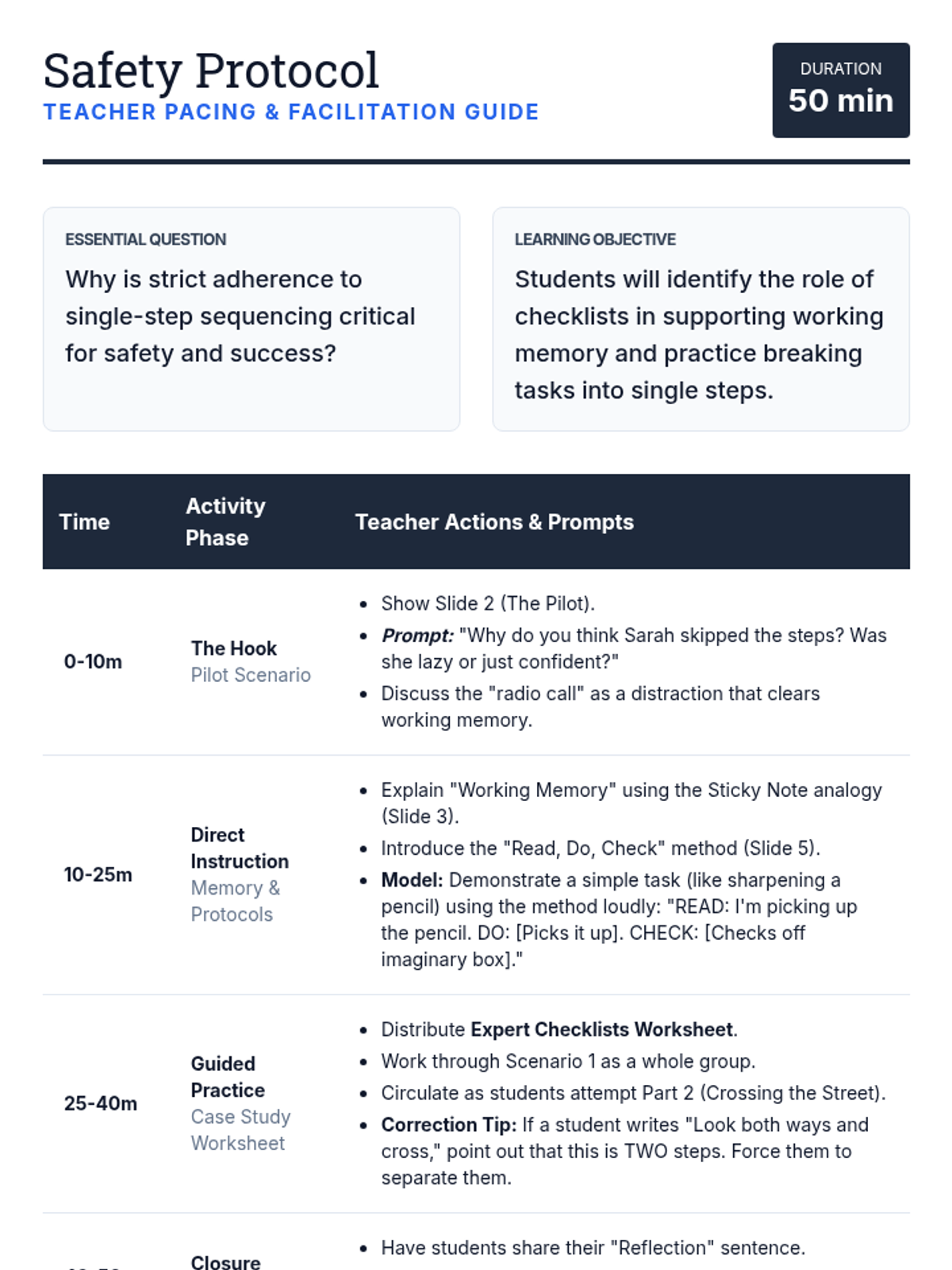
A vocational and life skills sequence for 7th-grade students focusing on working memory through single-step directions. Students explore how strict adherence to sequences ensures safety and success in fields like aviation, cooking, digital security, and emergency response.