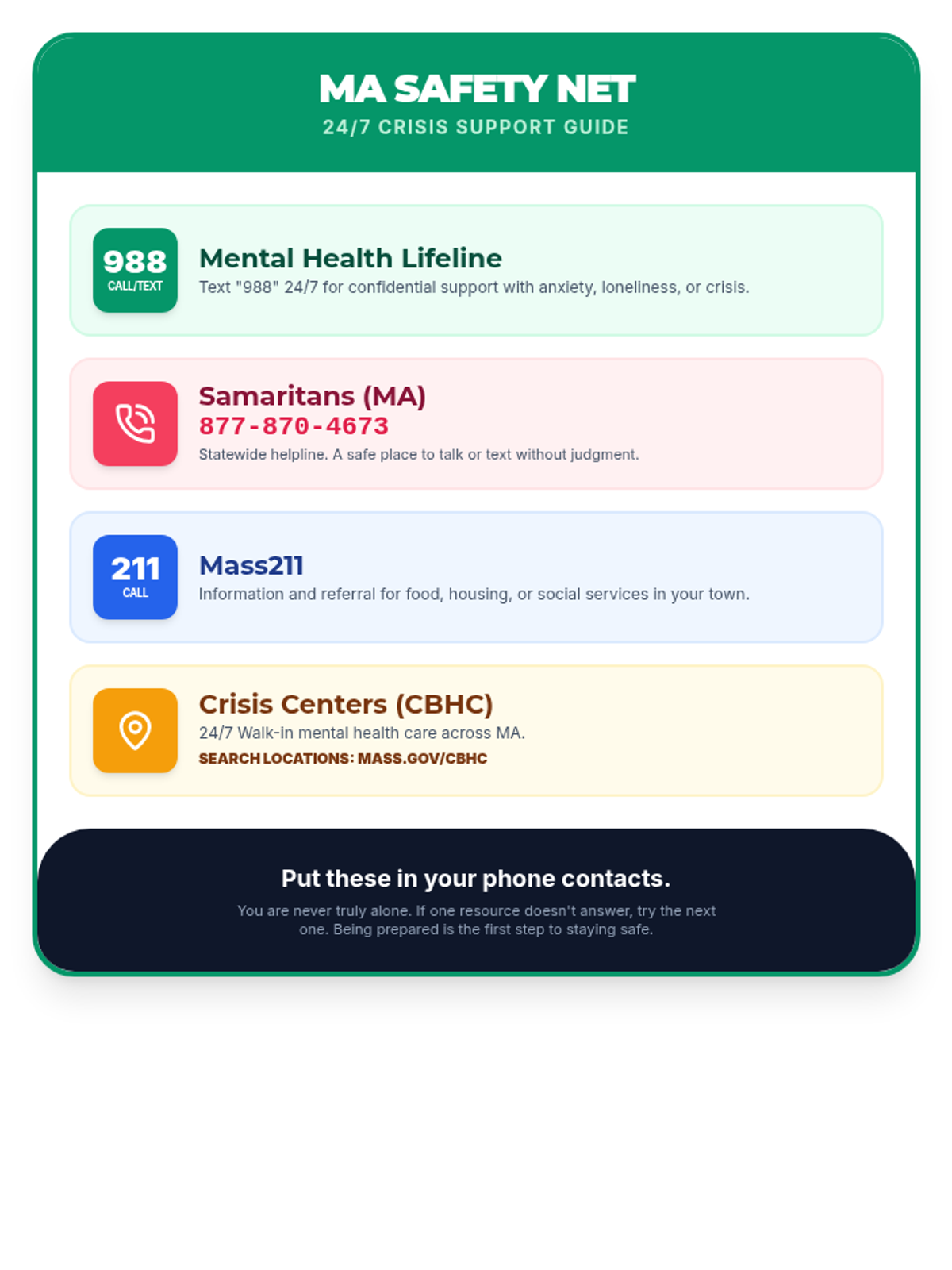
Identifies mental health crises and suicide warning signs while developing personal safety plans and grounding techniques. Equips users with peer gatekeeper skills and direct pathways to professional crisis resources and hotlines.
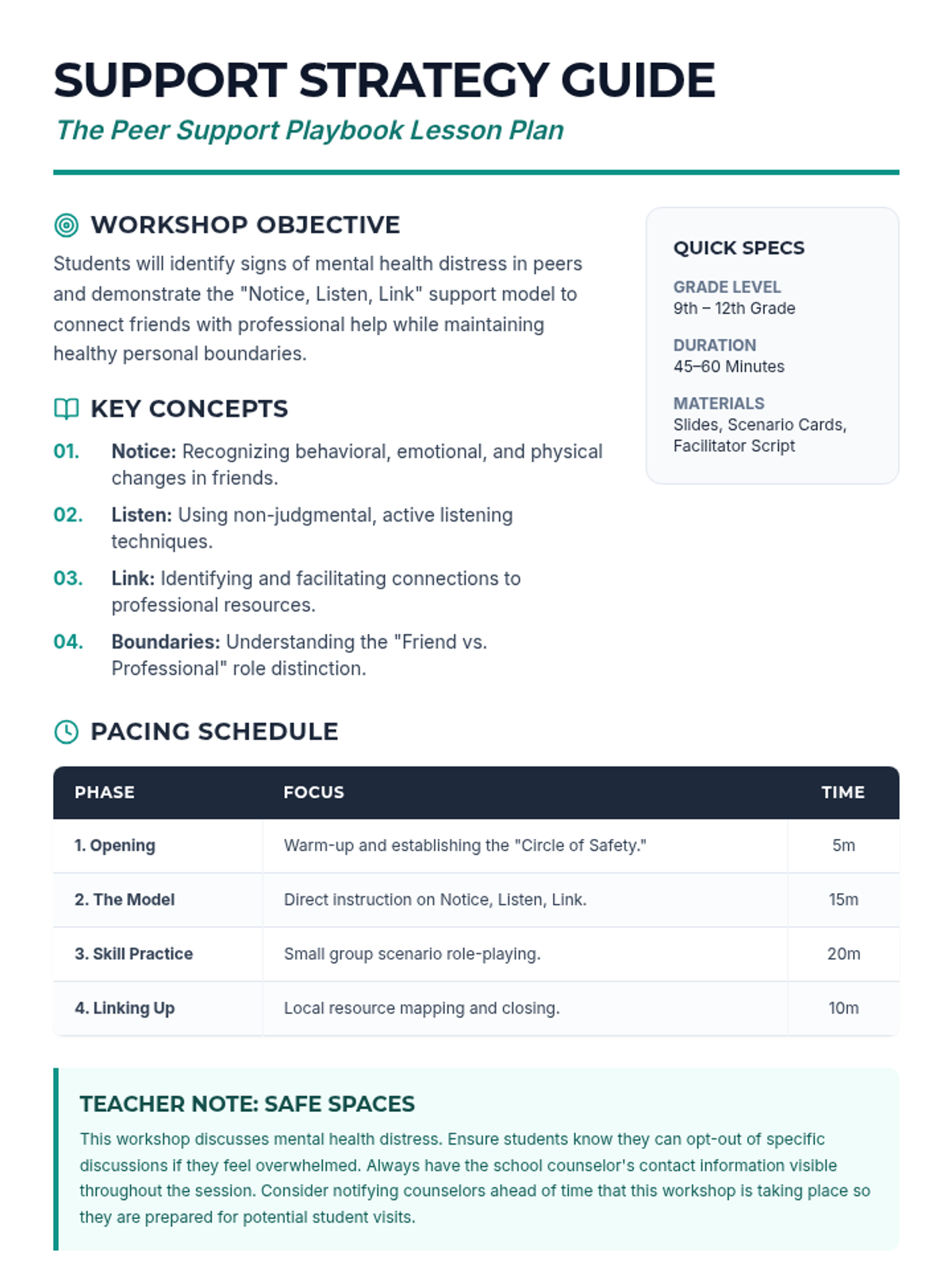
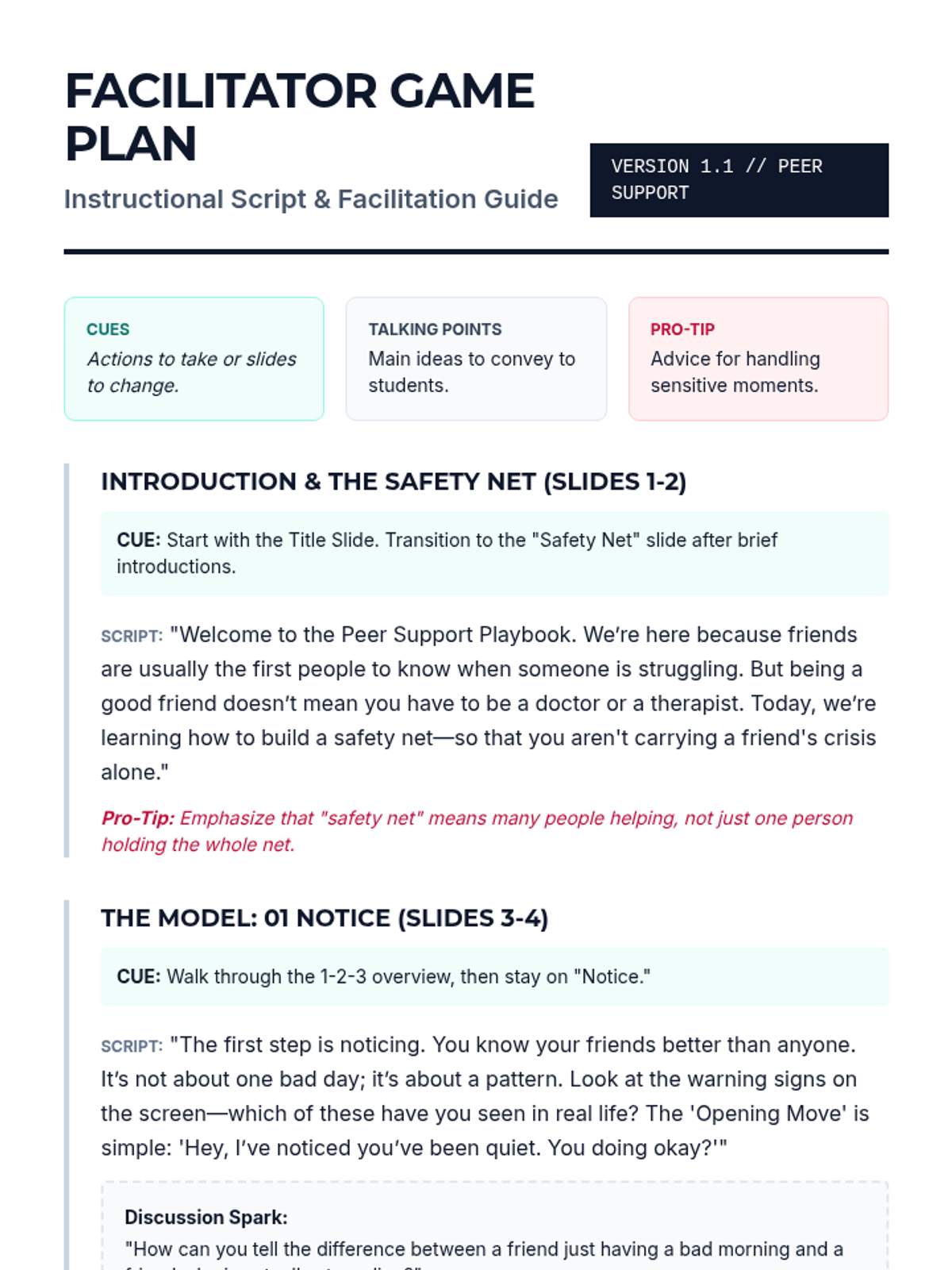
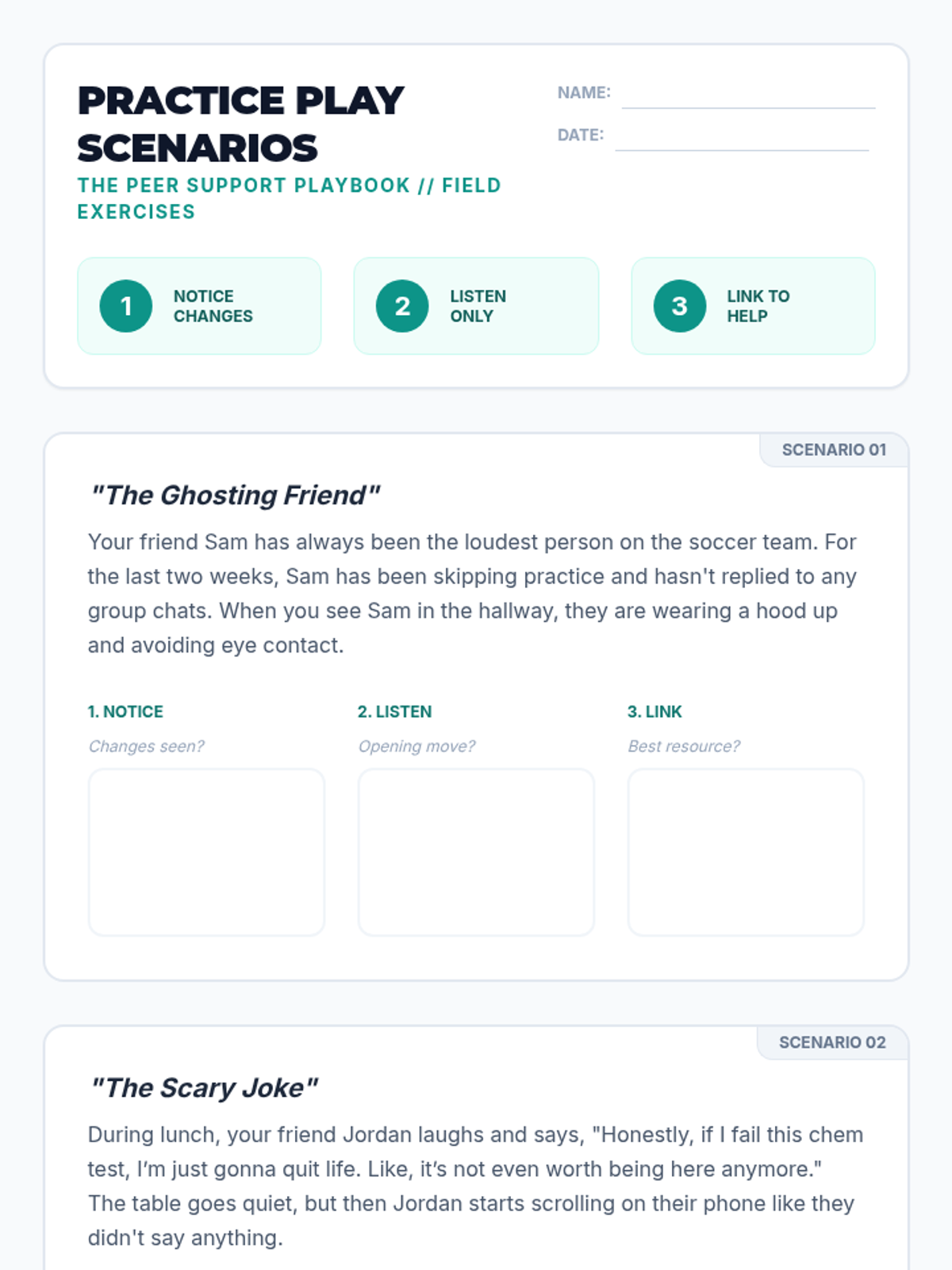
A mental health literacy workshop for high schoolers that teaches the 'Notice, Listen, Link' model for supporting peers in distress while emphasizing personal boundaries and professional referrals.
Consolidating resources and creating a concrete, personalized safety plan for life after graduation.
An interactive workshop day where students map out personal hurdles and the resources needed to clear them.
Specifically addressing the psychological challenges of leaving high school and the loss of routine.
An exploration of depression symptoms, breaking stigma, and how to support friends in crisis.
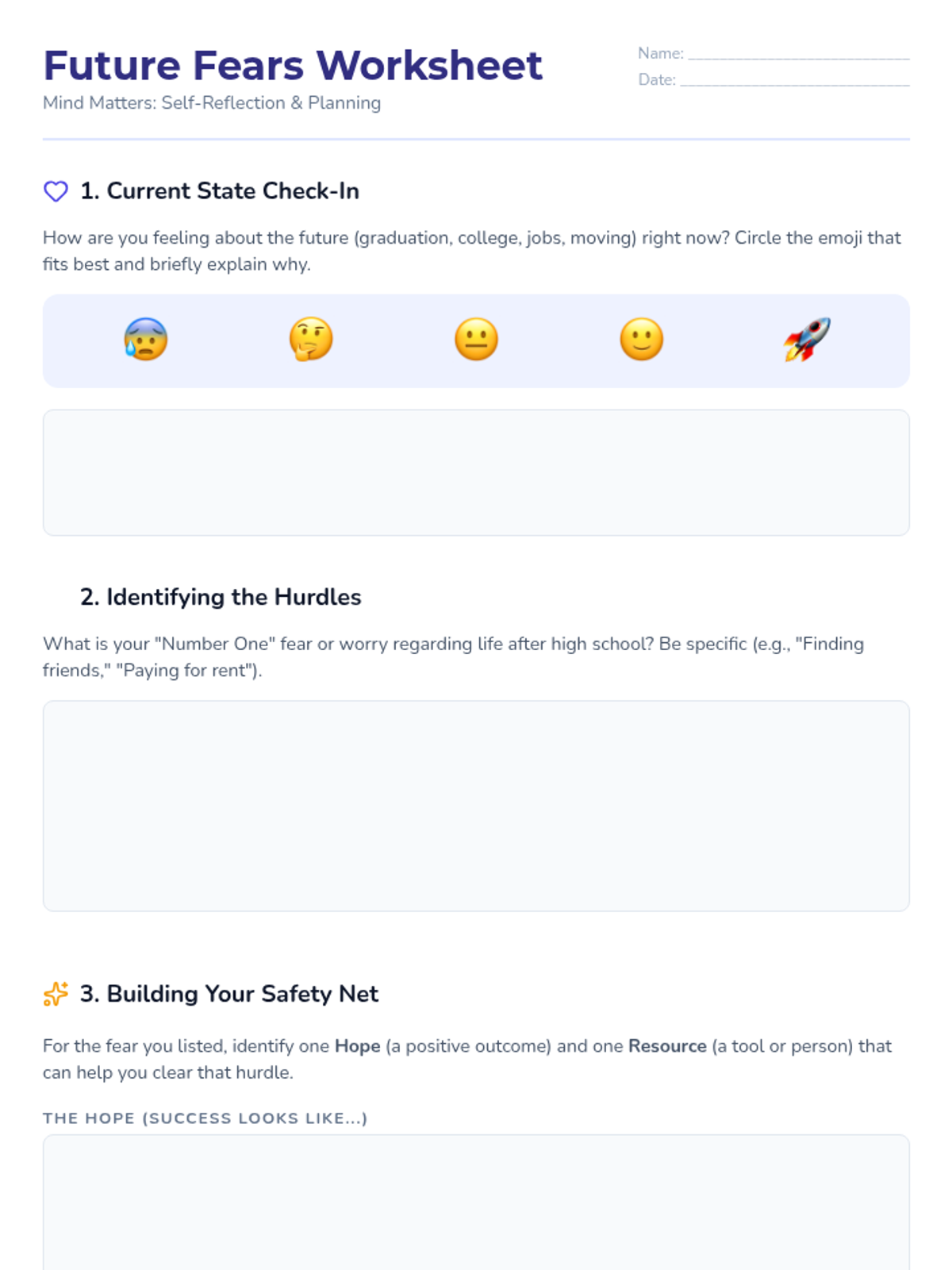
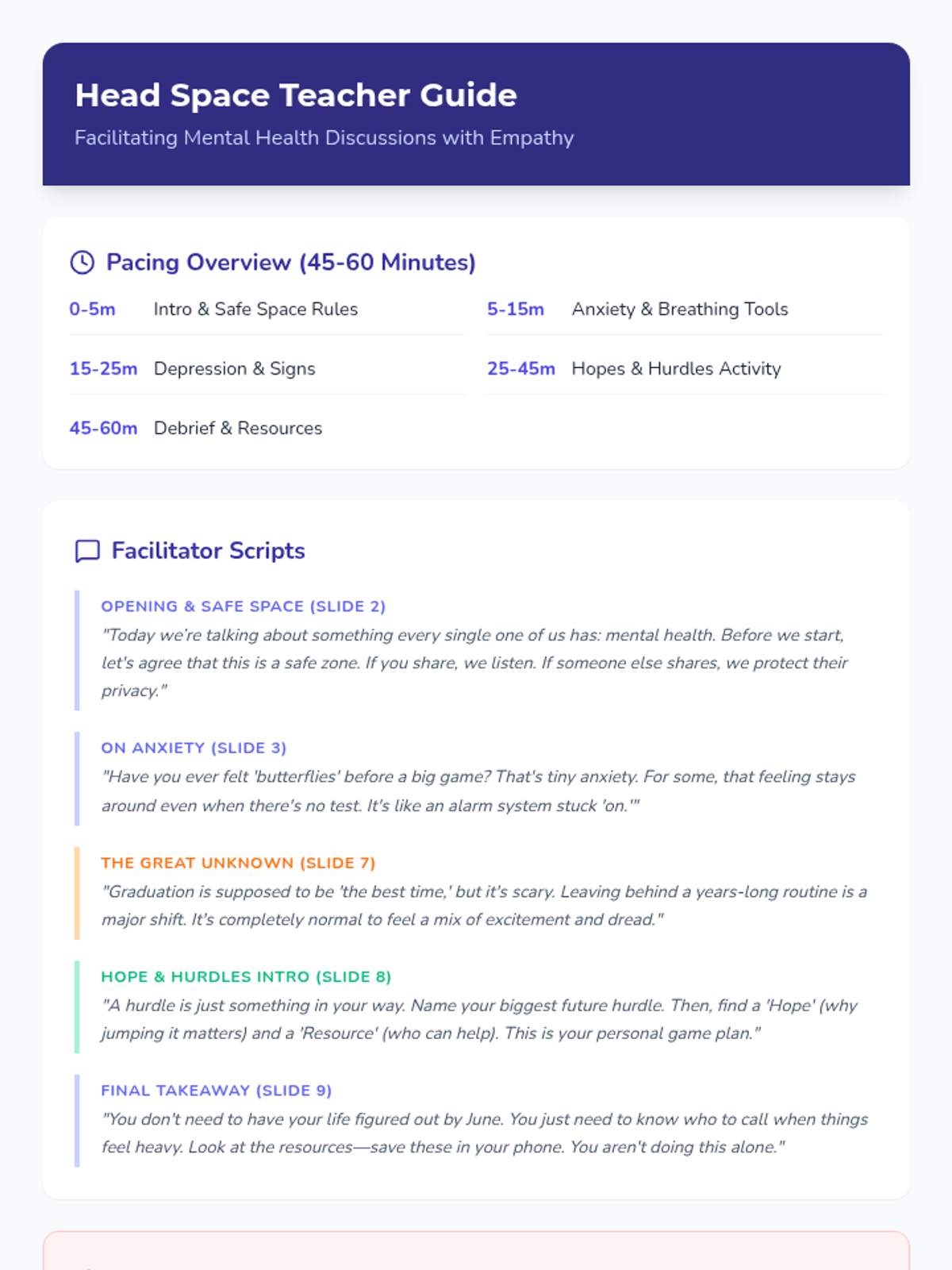
A comprehensive lesson on mental health awareness focusing on anxiety, depression, and the transition from high school, featuring a guided presentation and self-reflection activities.
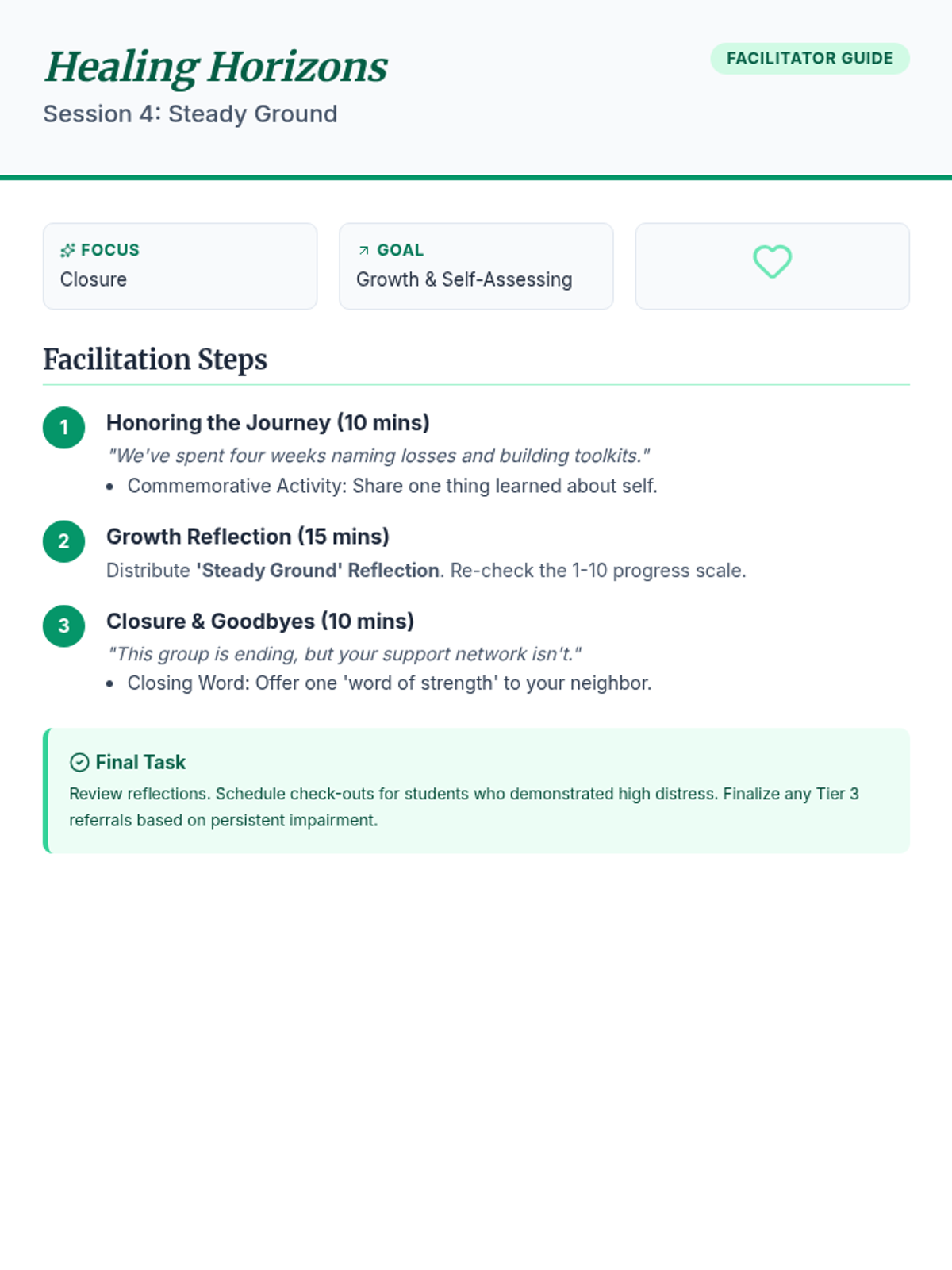
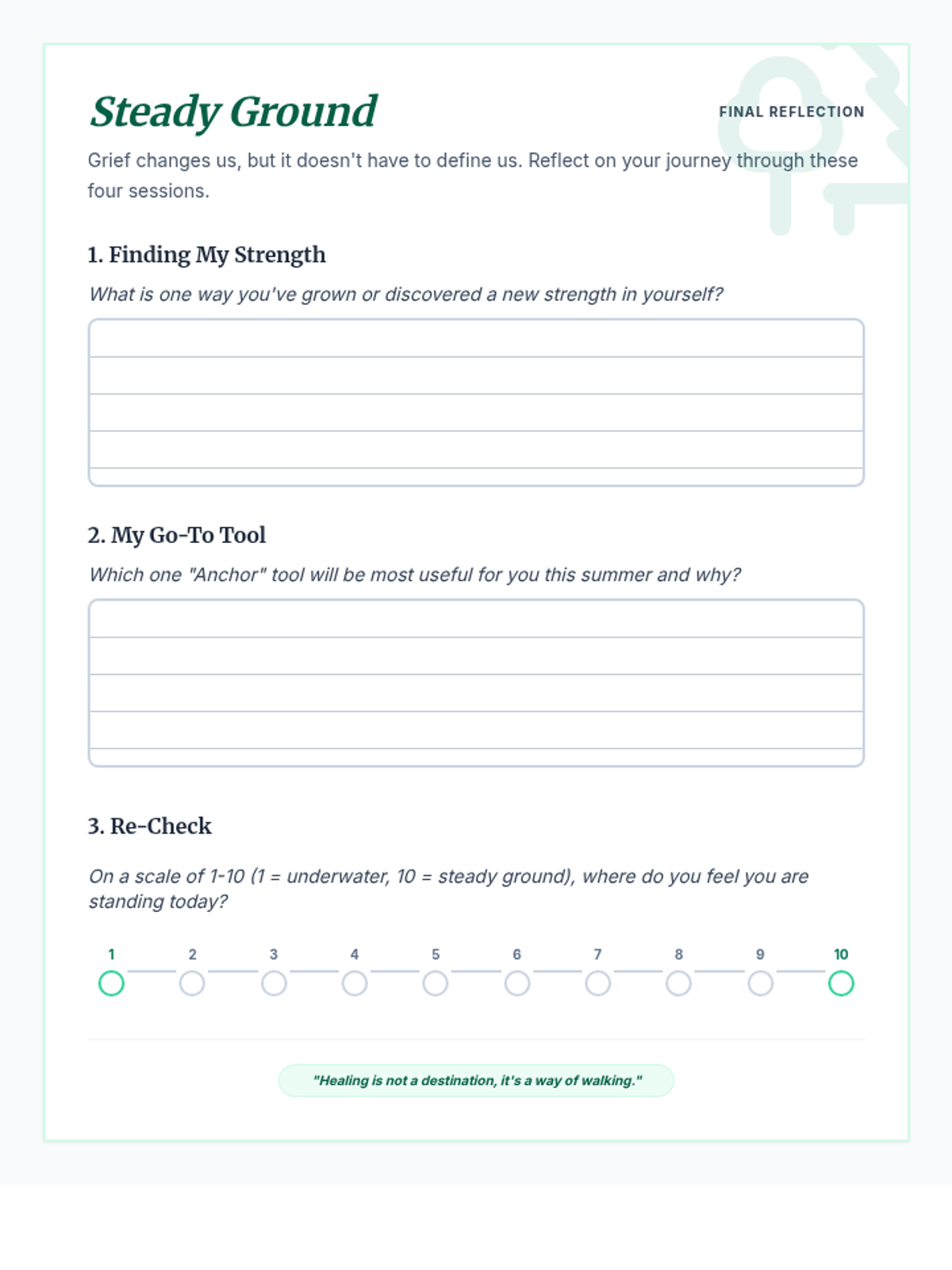
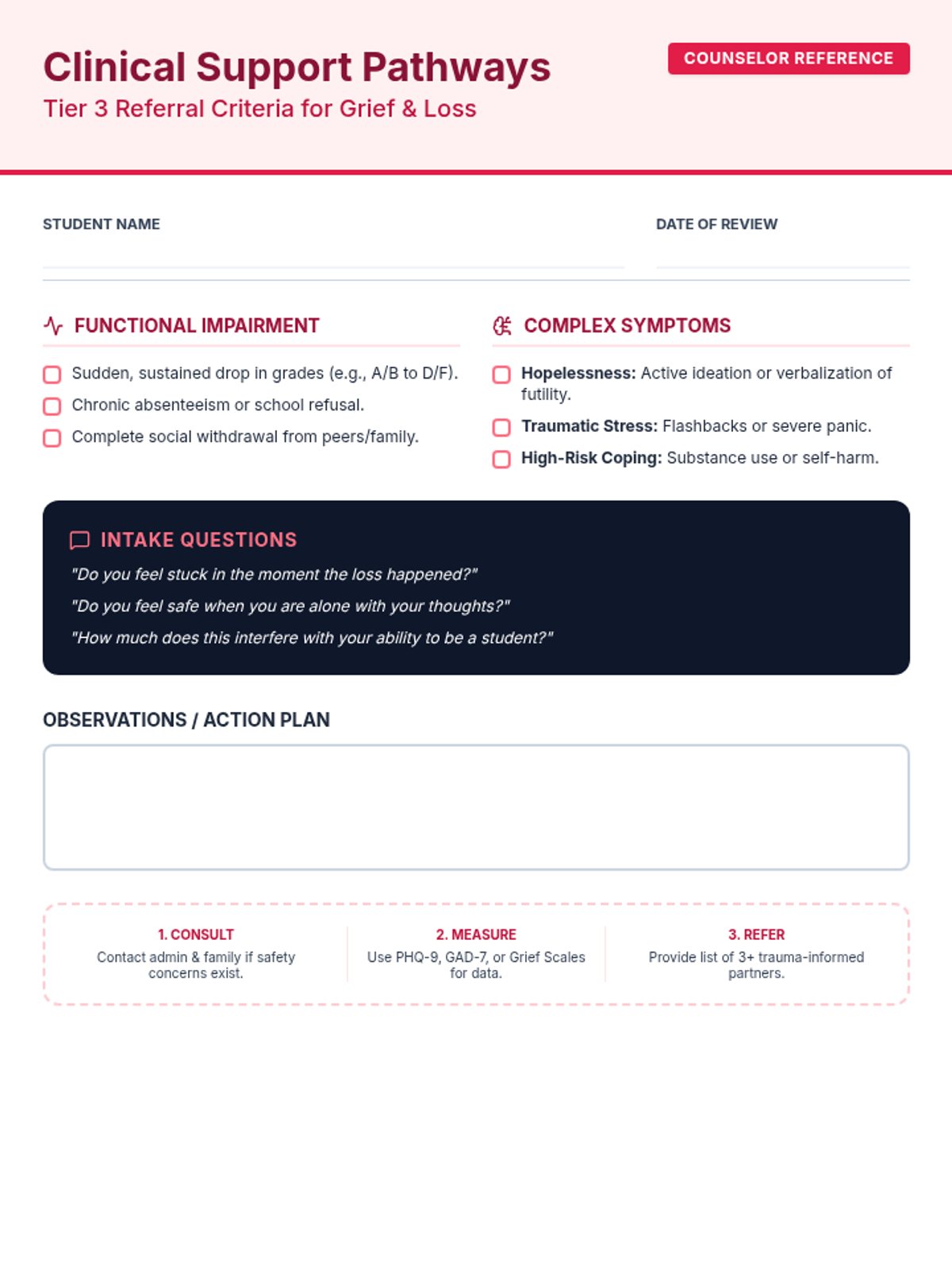
Honor individual growth, provide closure for the group, and identify resources for ongoing support, including Tier 3 referral screening.
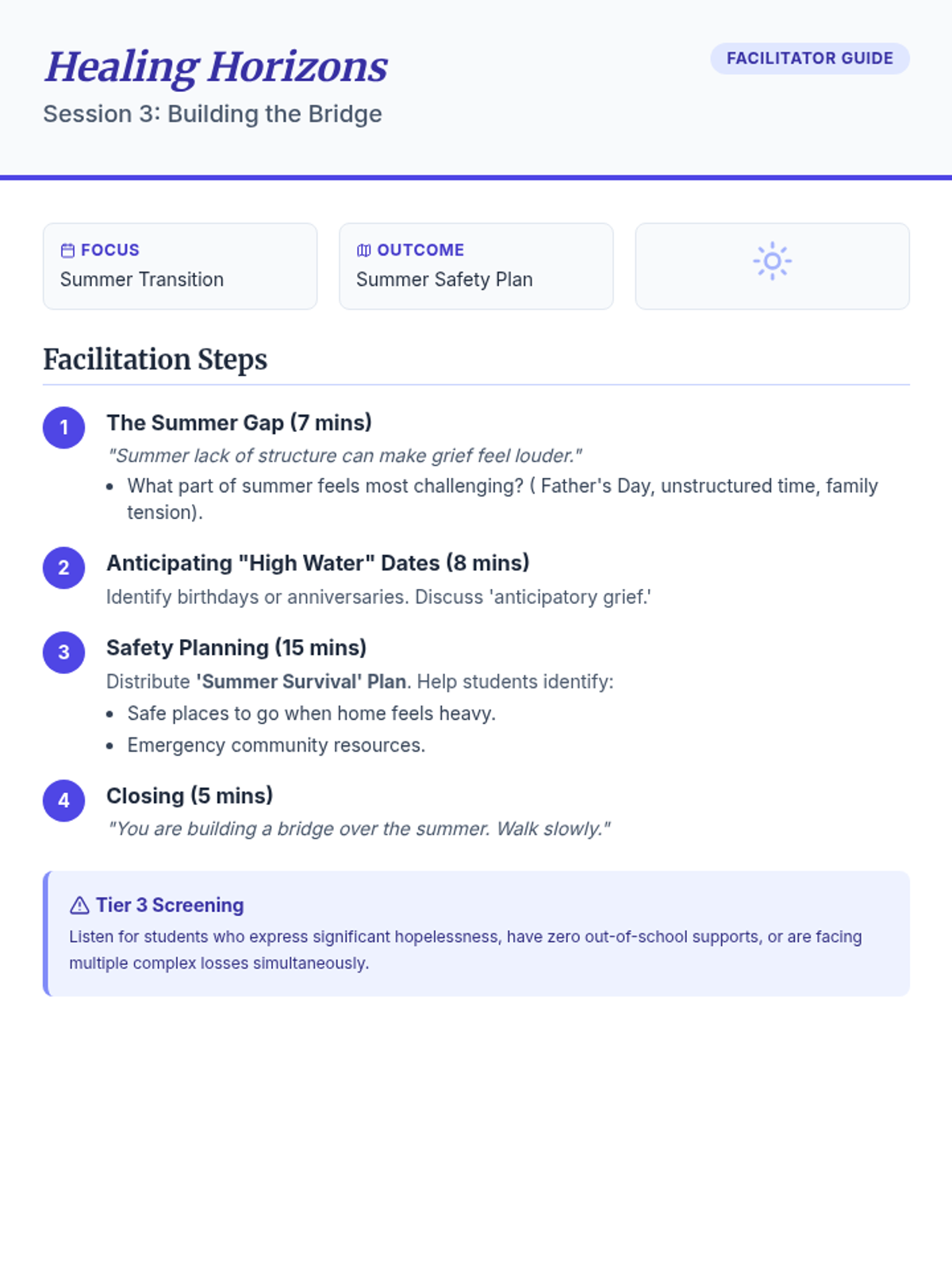
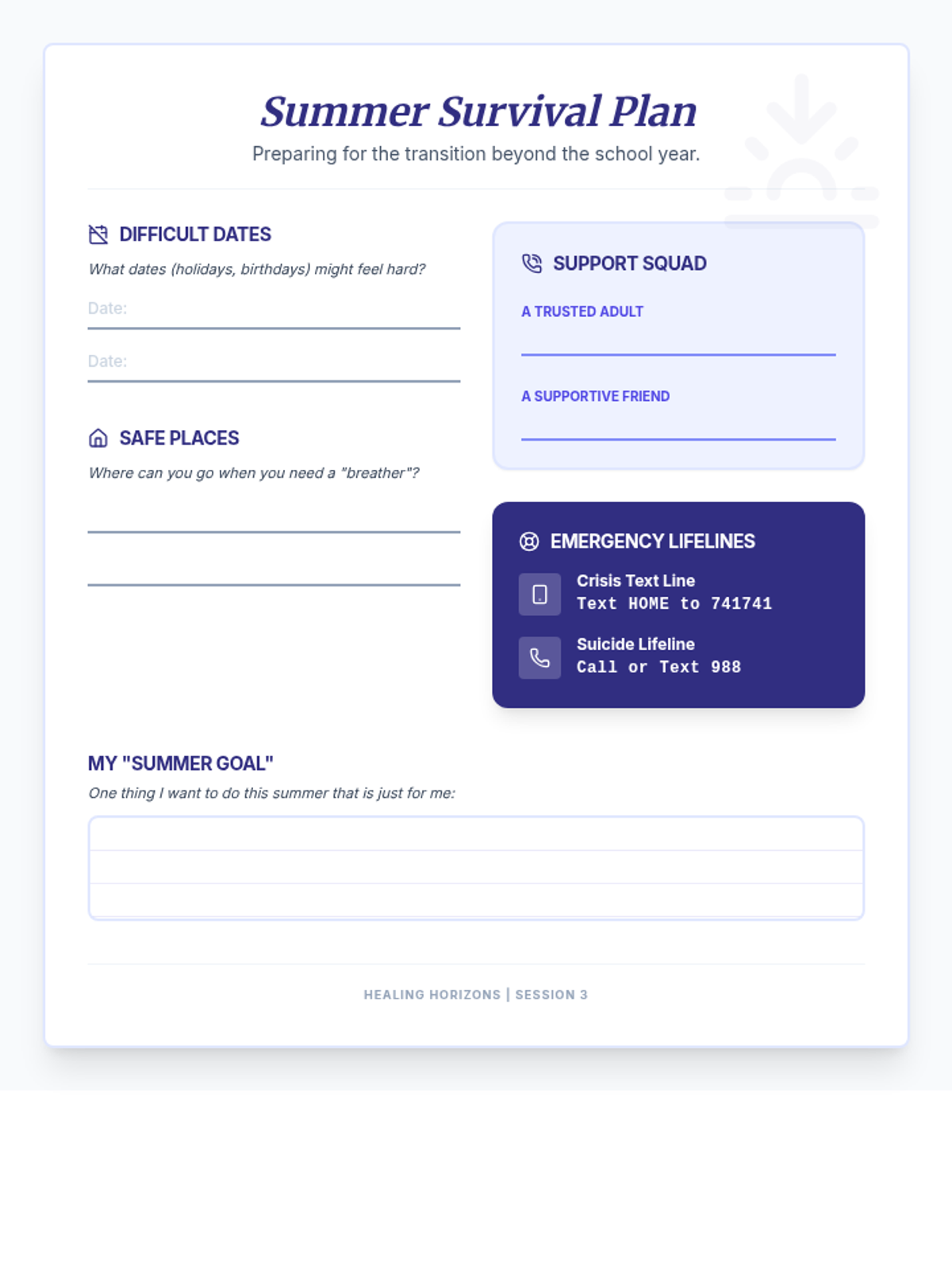
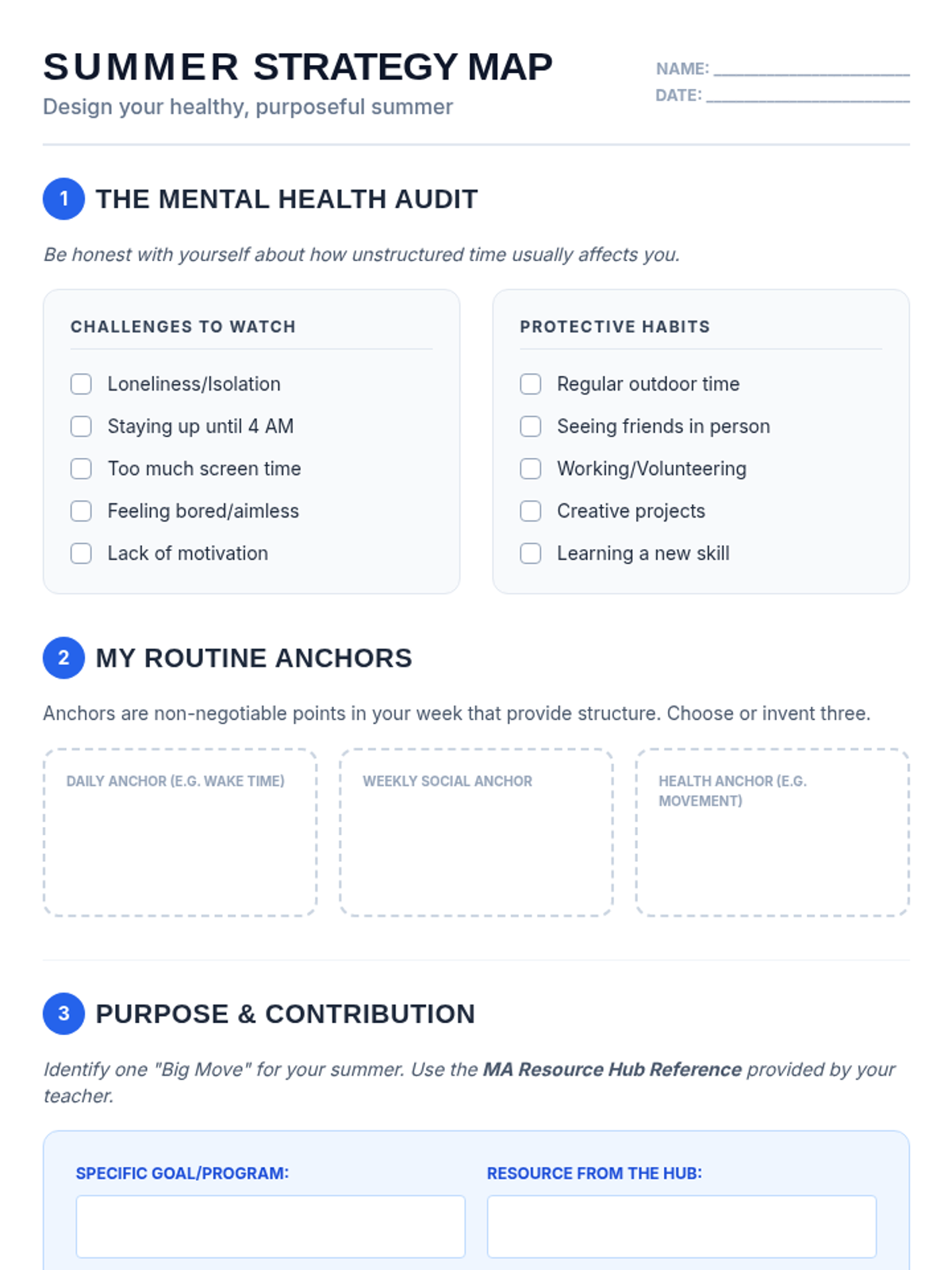
Focus on the transition to summer, identifying potential triggers during unstructured time, and creating a personalized support plan.
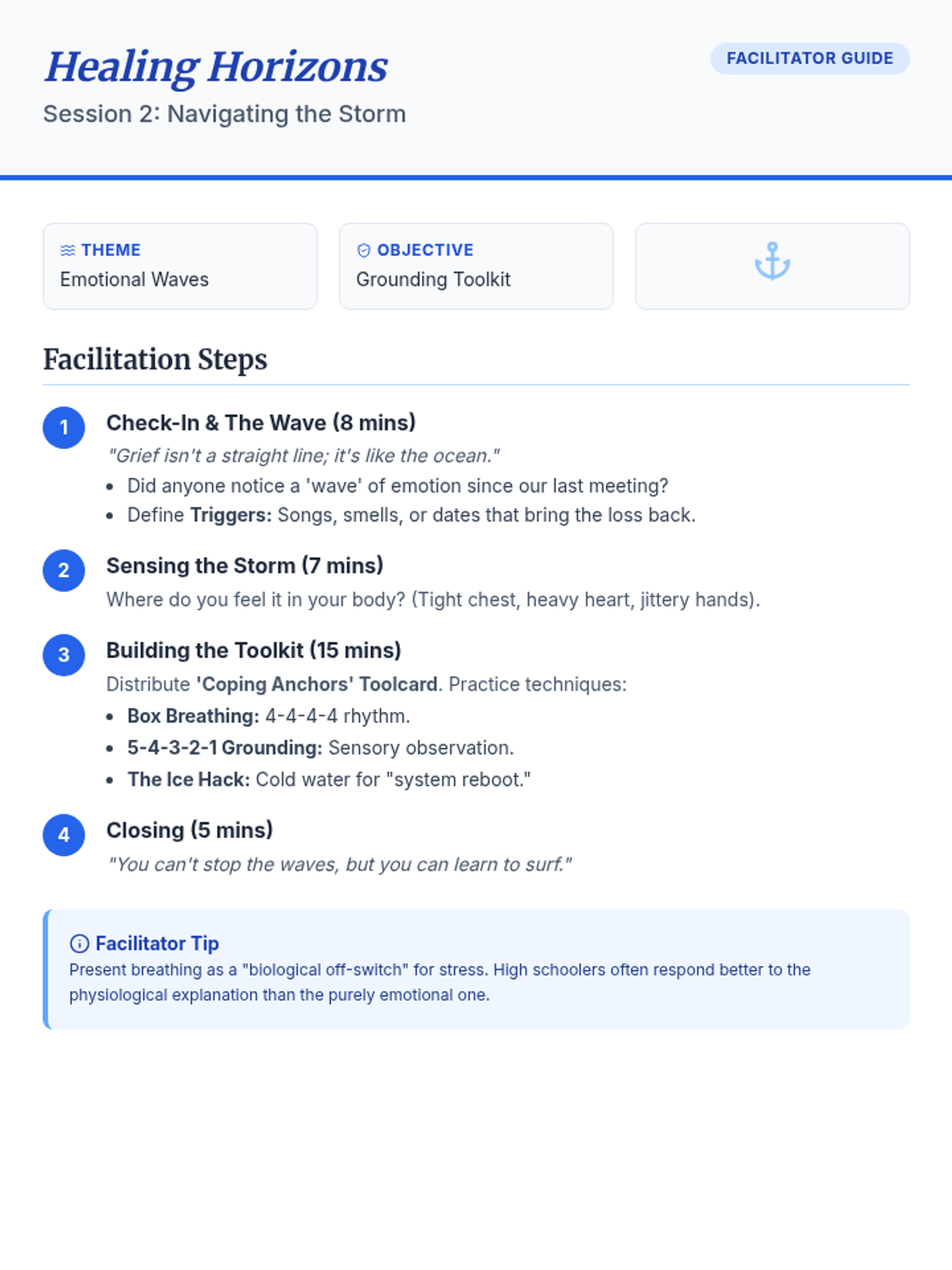
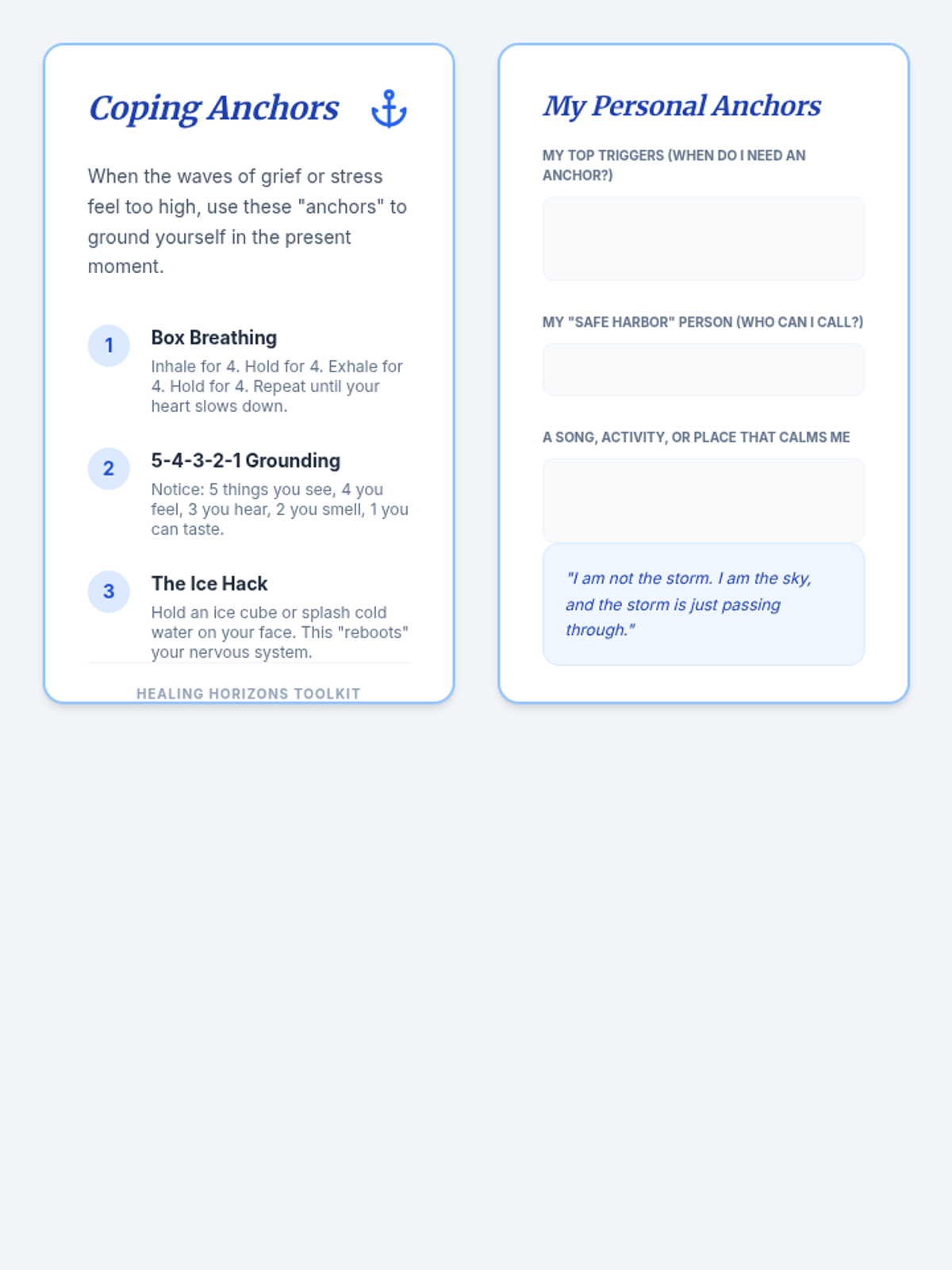
Explore the physical and emotional 'waves' of grief, identify personal triggers, and build a toolkit of grounding and coping strategies.
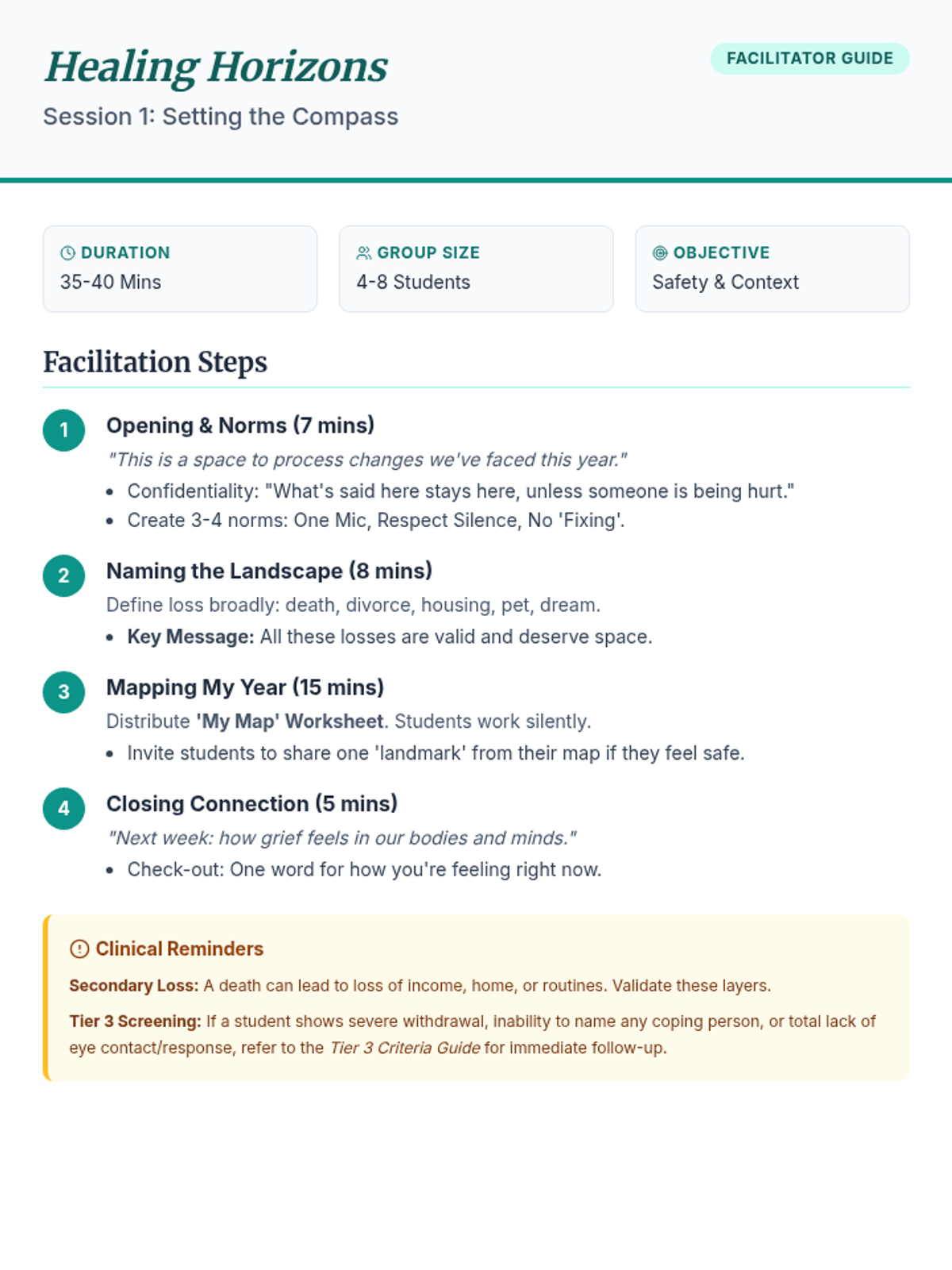
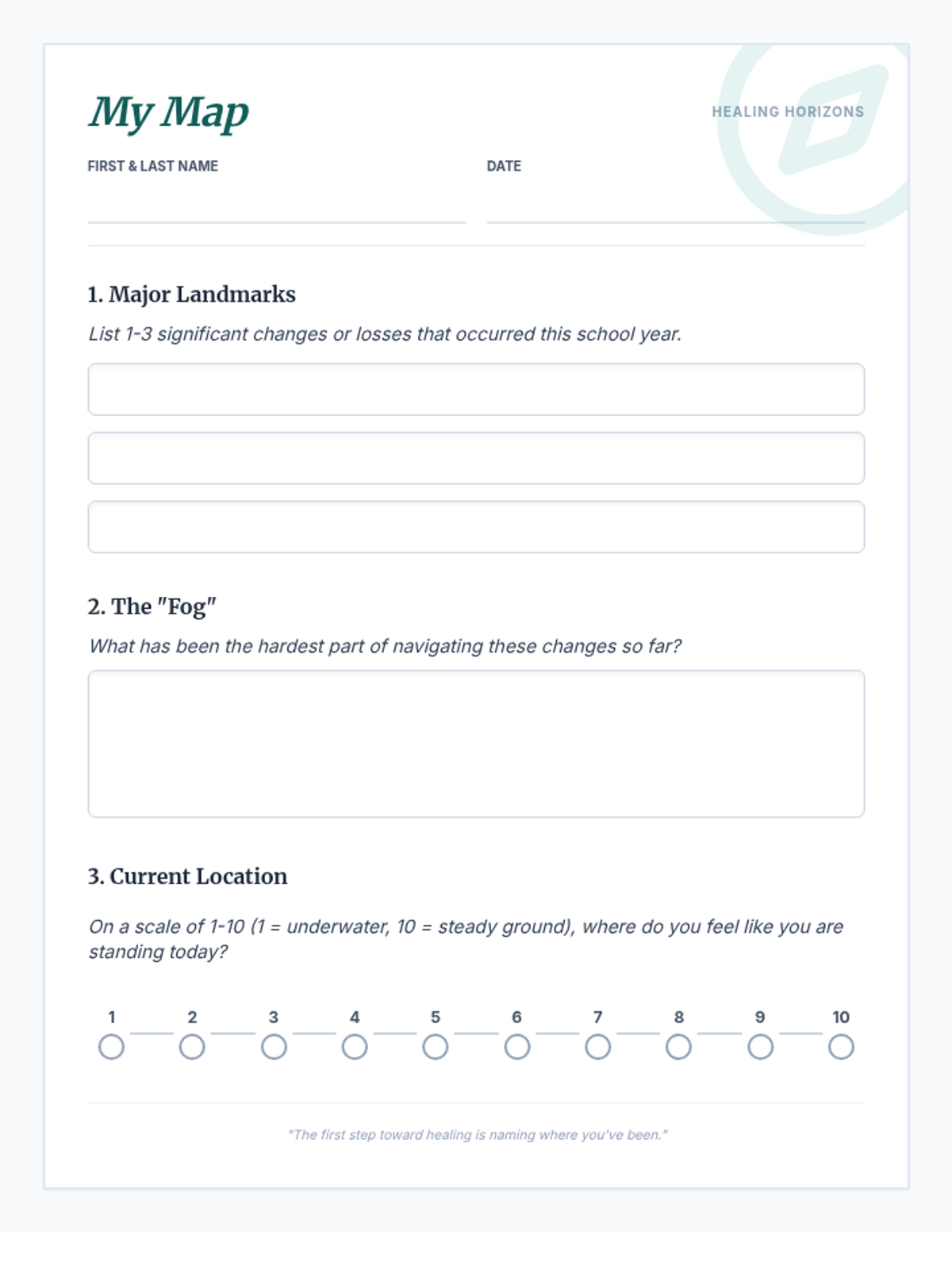
Establish group safety, introduce the concept of diverse losses, and allow students to map their personal journeys in a supportive environment.
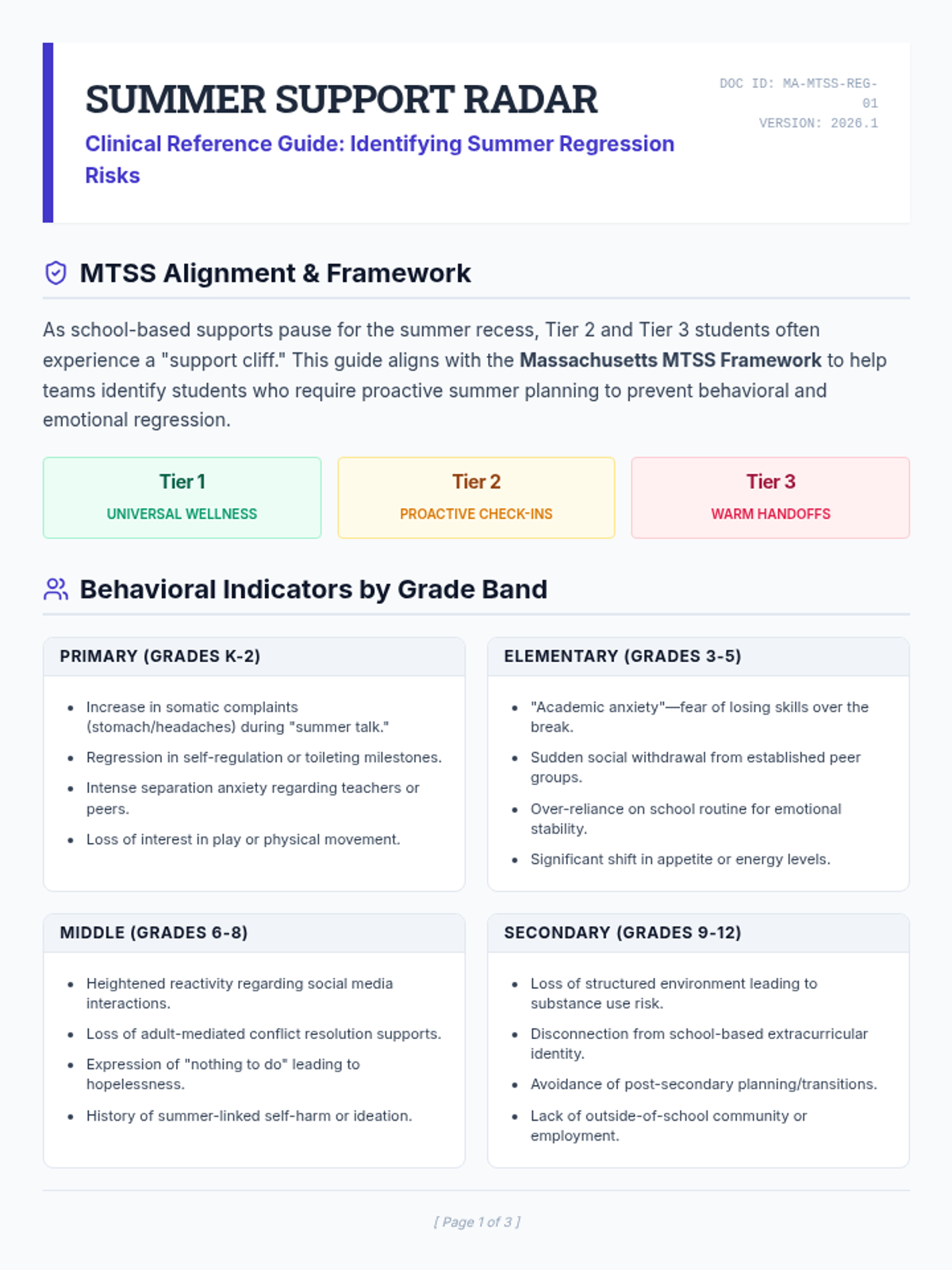
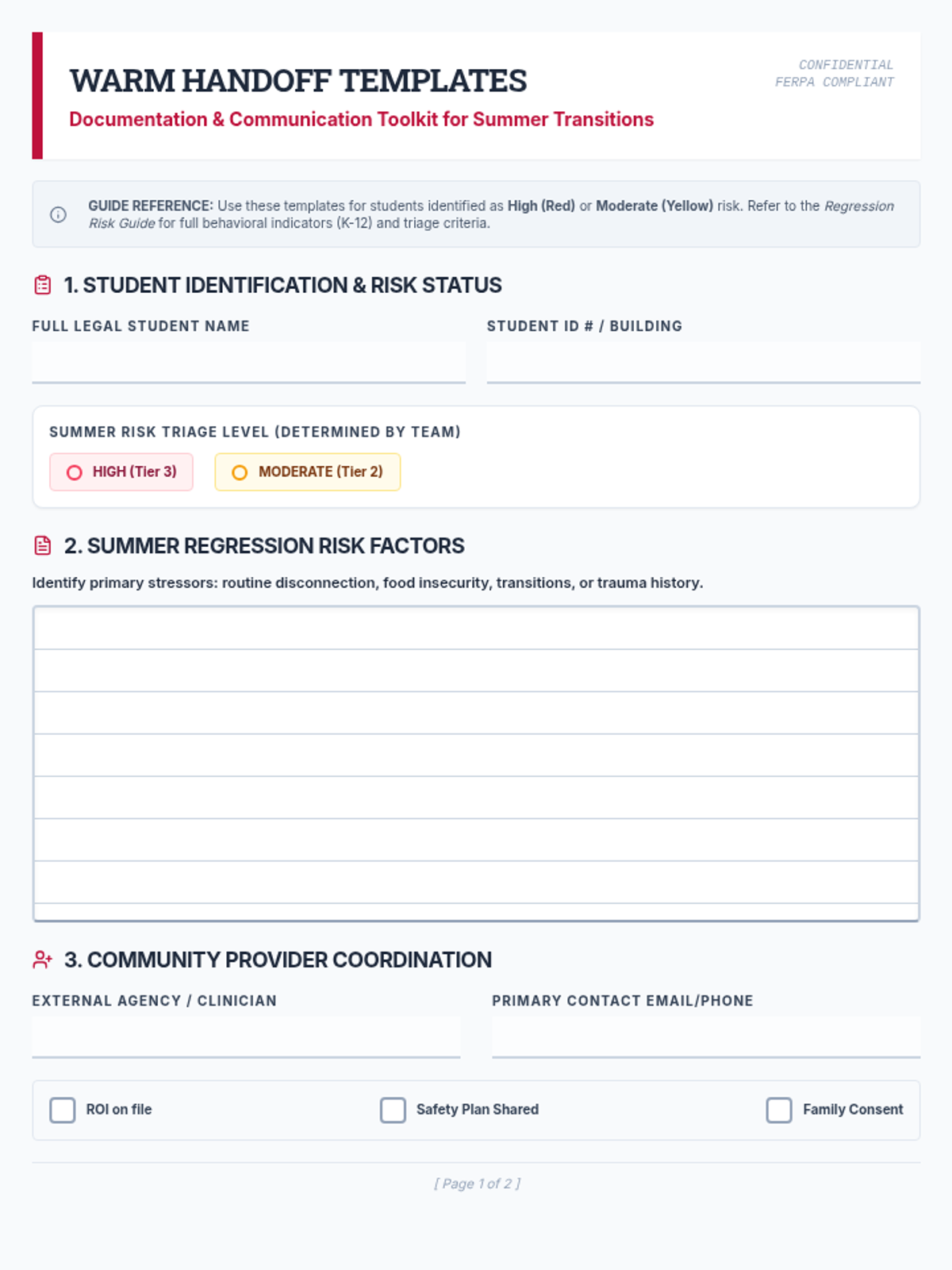
A professional toolkit for school counselors and educators to identify K-12 students at risk of mental health regression during summer break, including triage frameworks and handoff documentation.
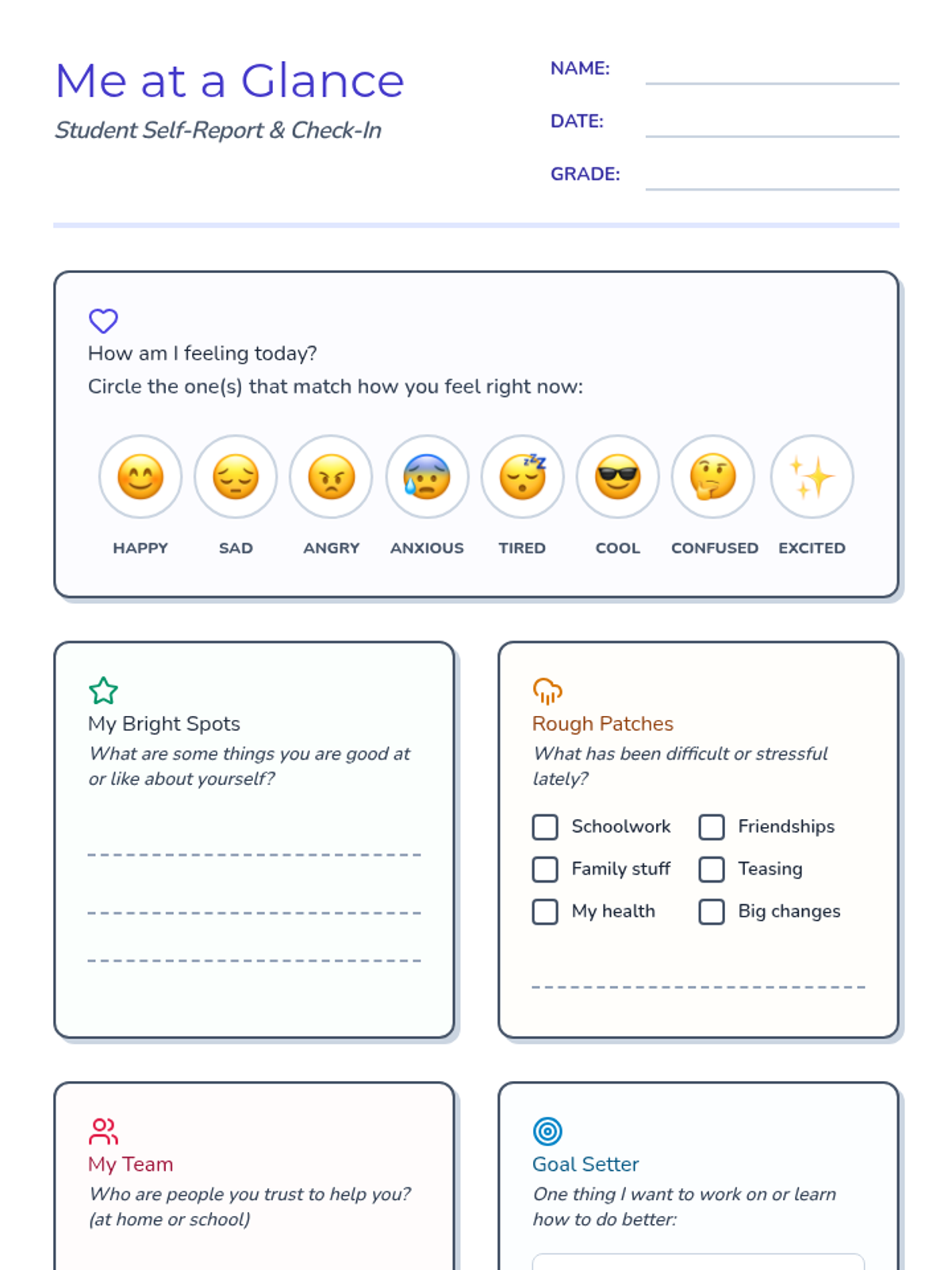
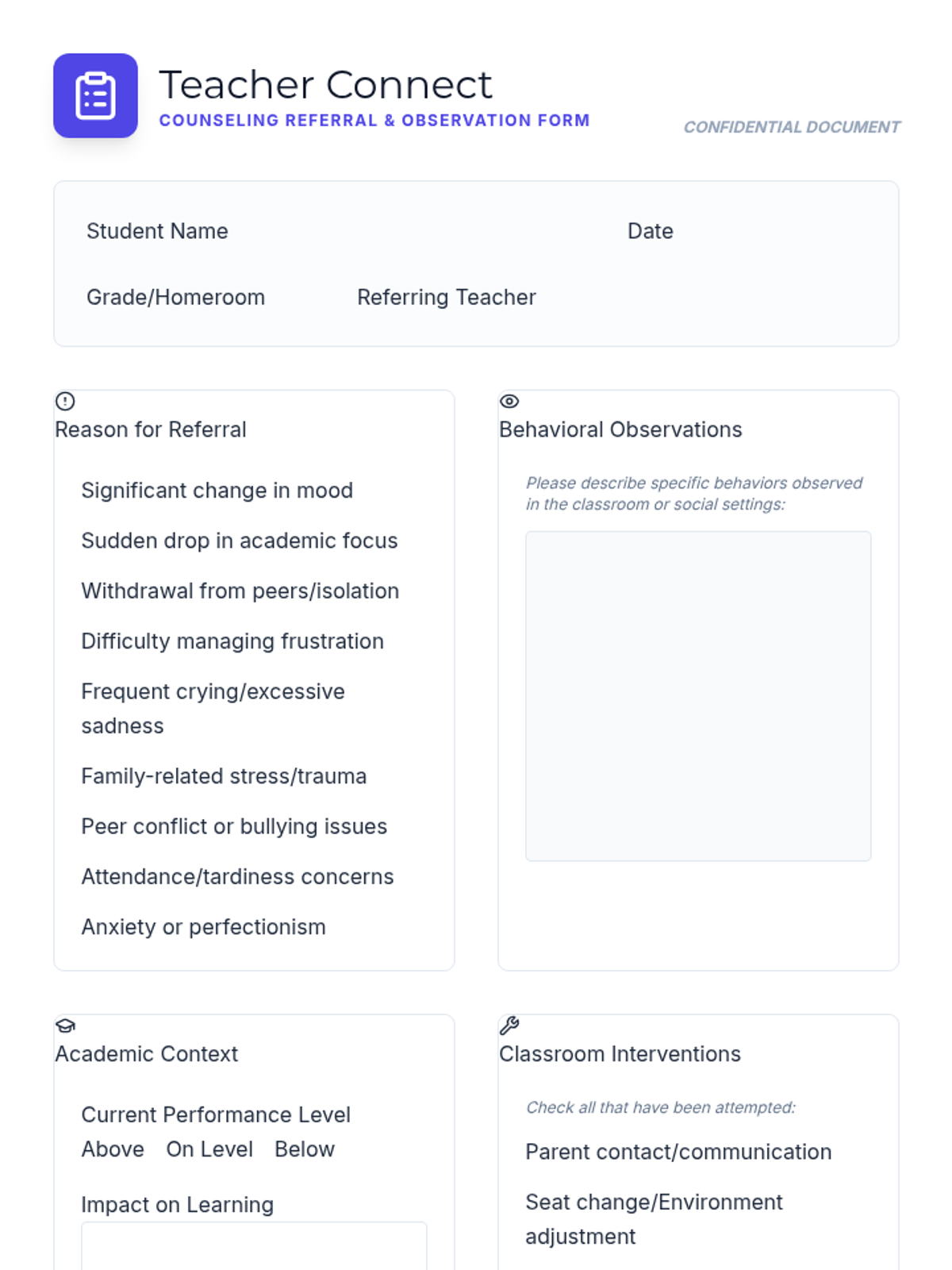
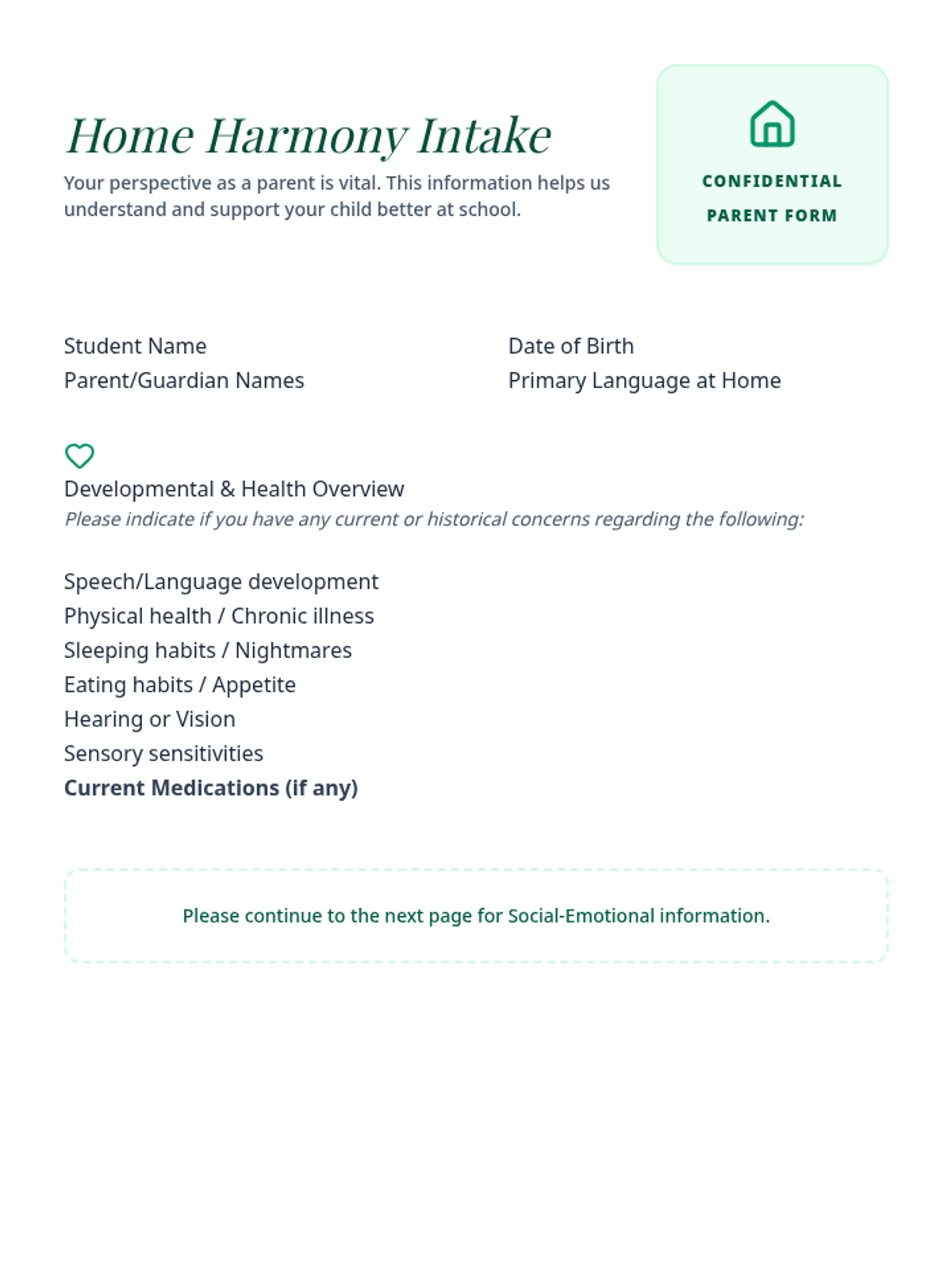
A collection of intake and referral forms for school counseling programs, focused on building a holistic understanding of a student's social-emotional needs through student, teacher, and parent perspectives.
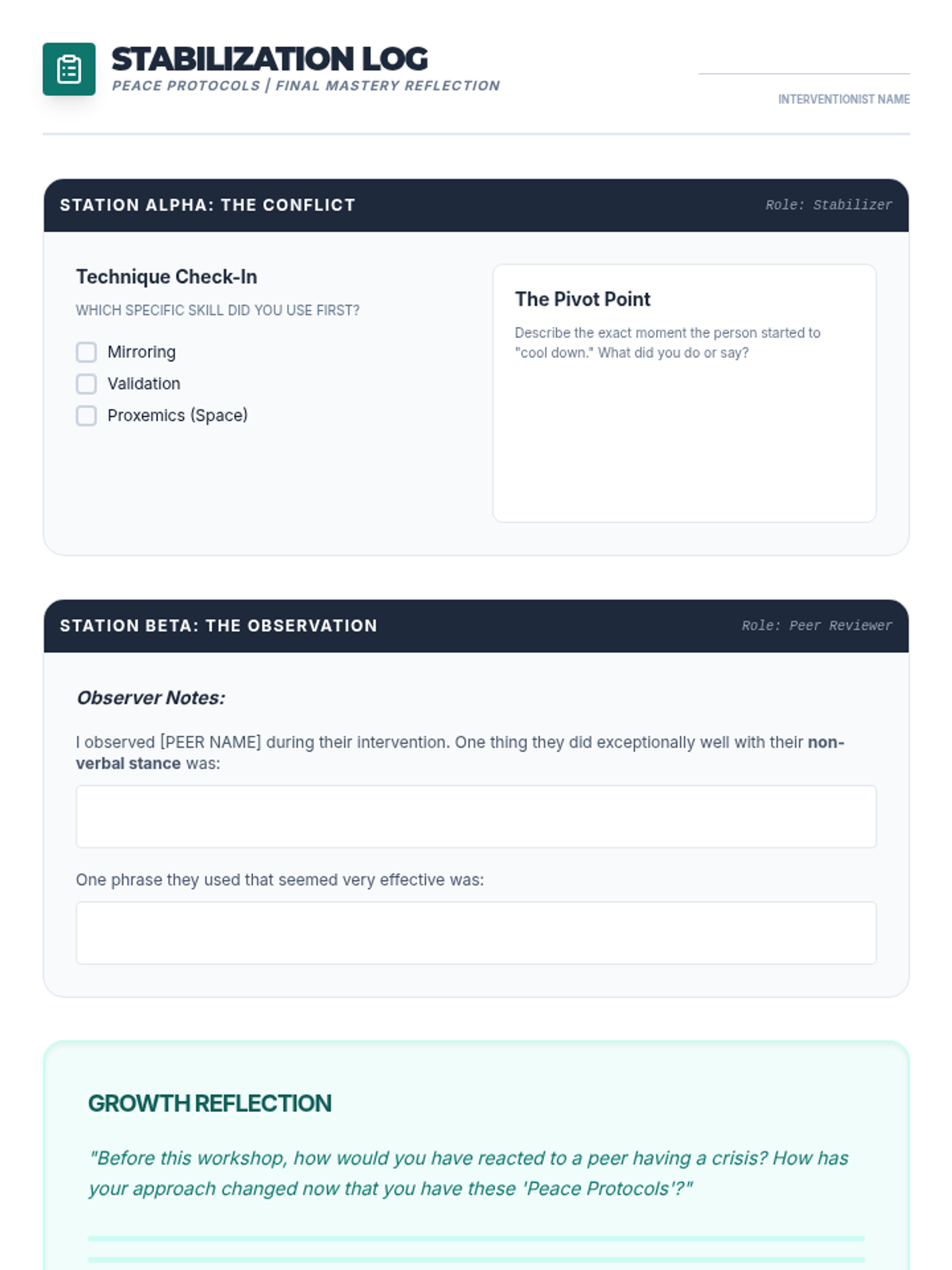
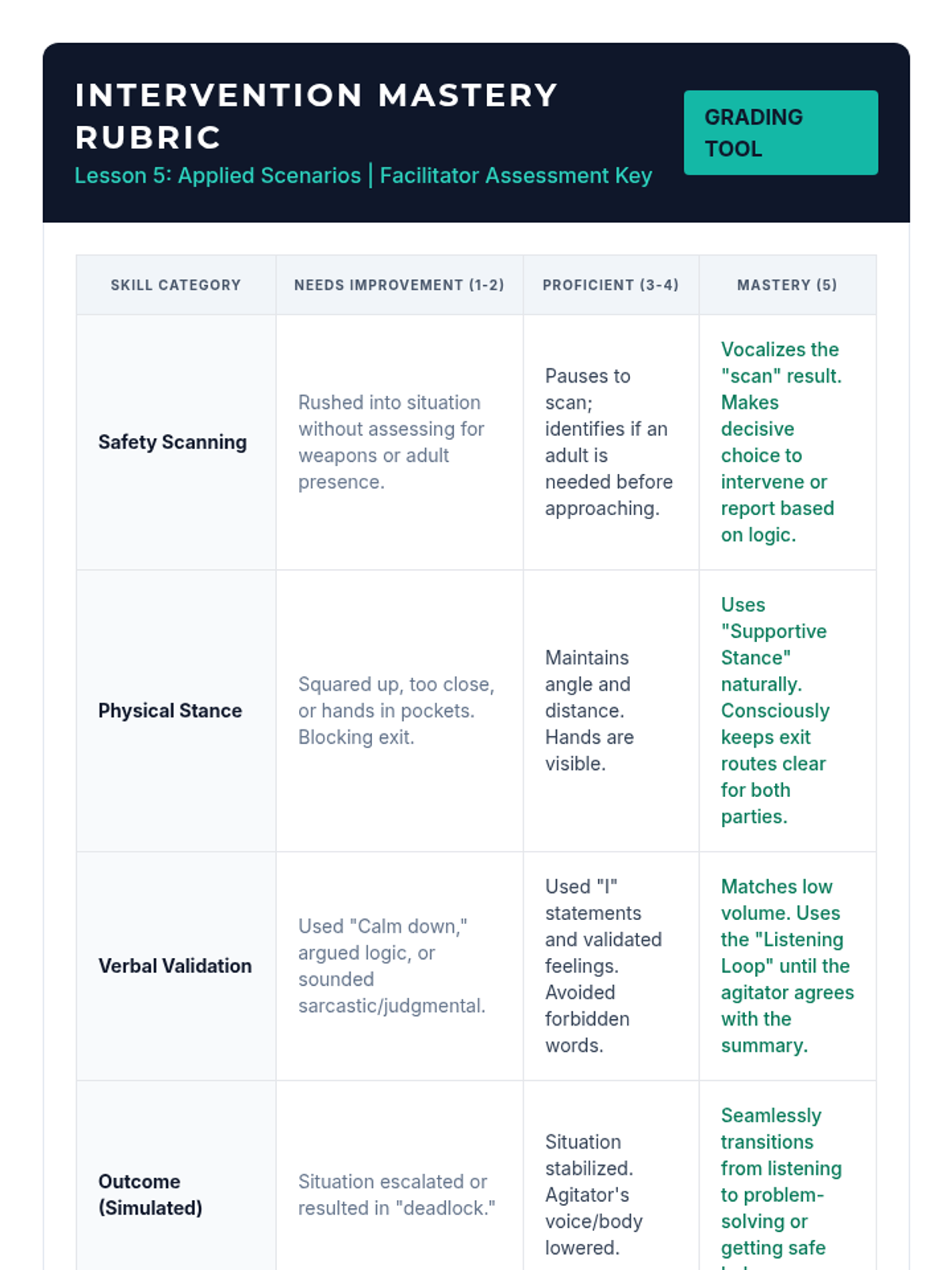
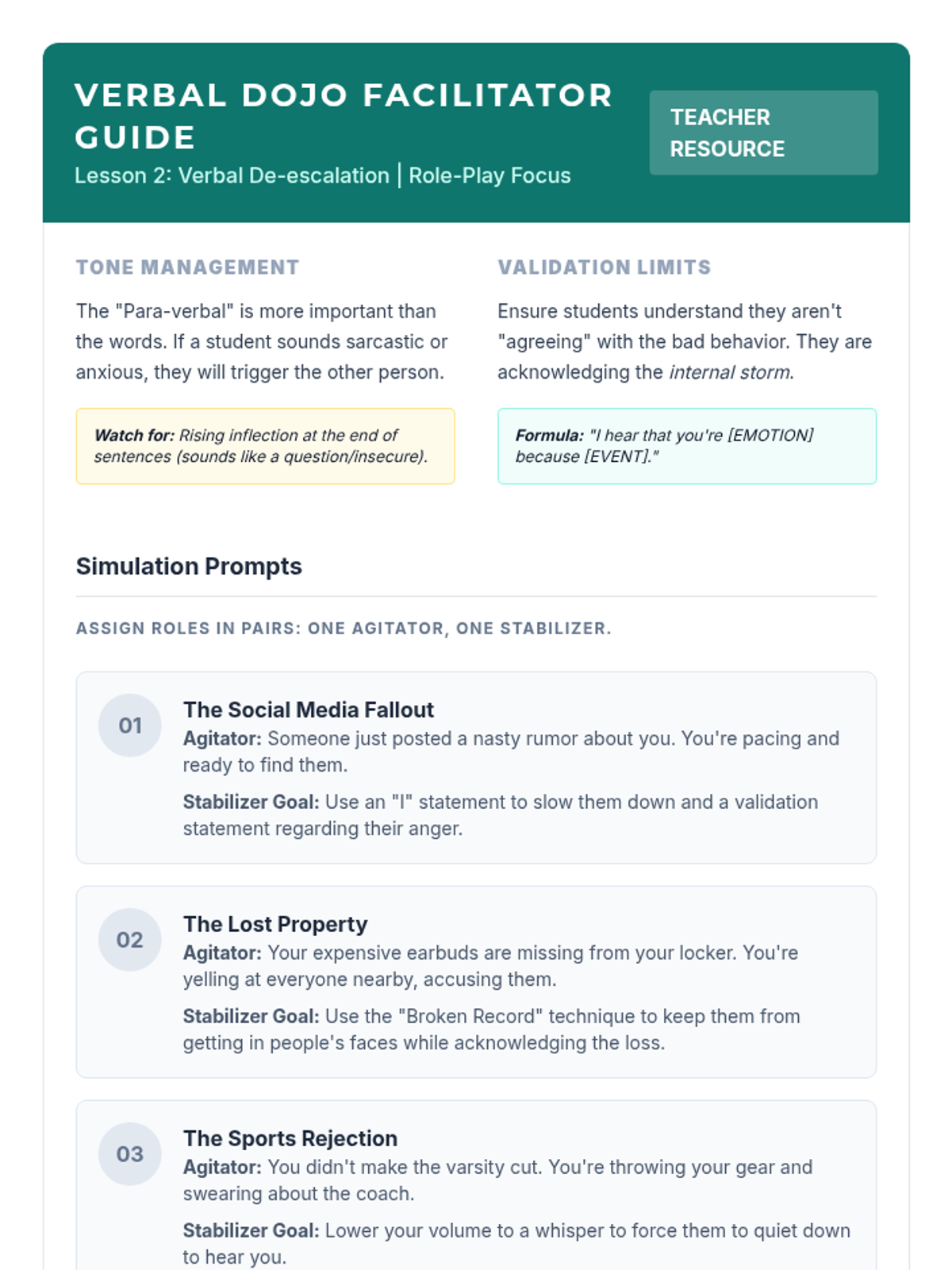
A mastery session where students apply all learned strategies in live role-play stations representing common school-based conflicts.
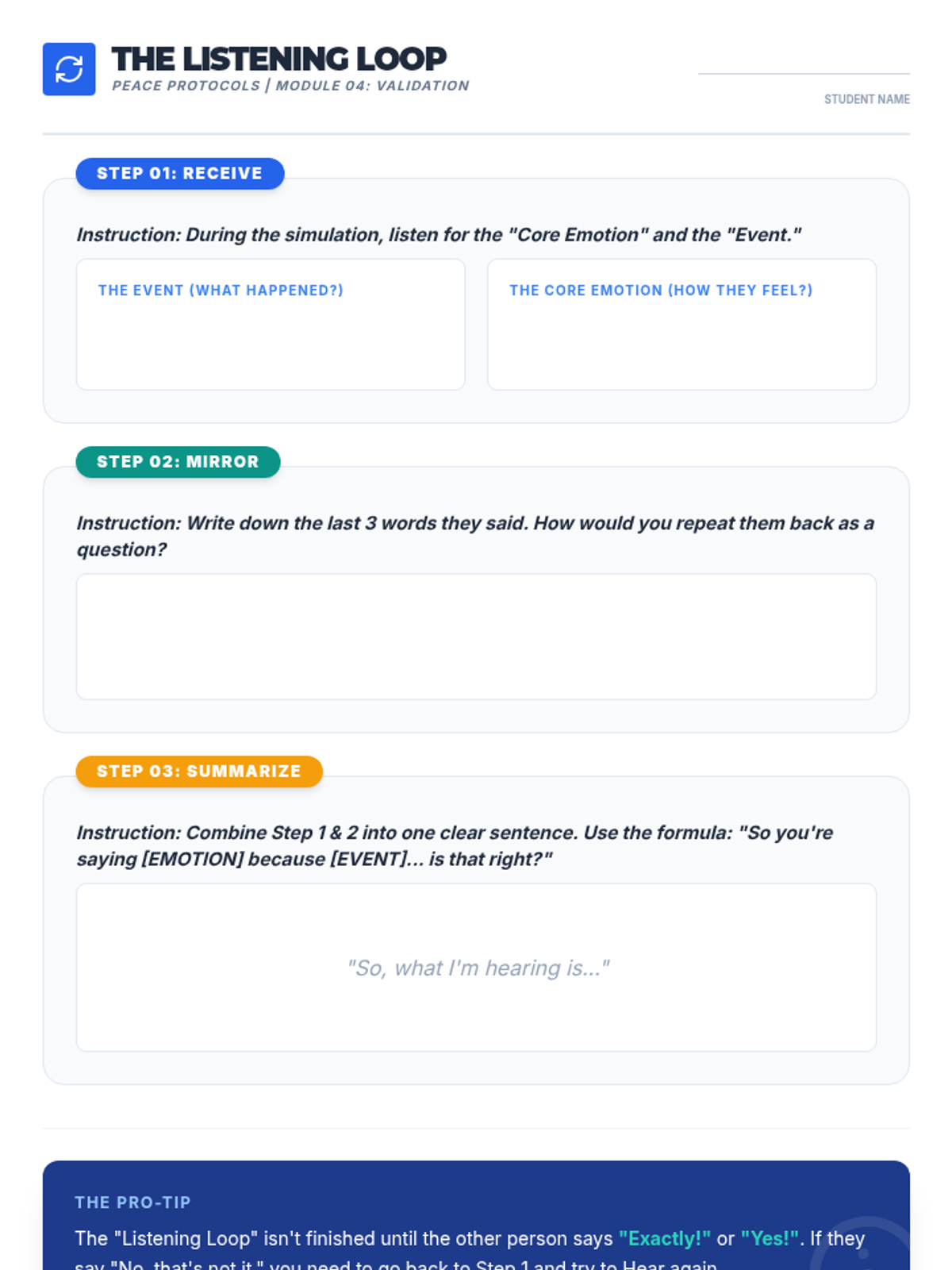
Focus on empathy and active listening techniques, teaching students to mirror emotions and summarize statements to help agitated peers feel heard.
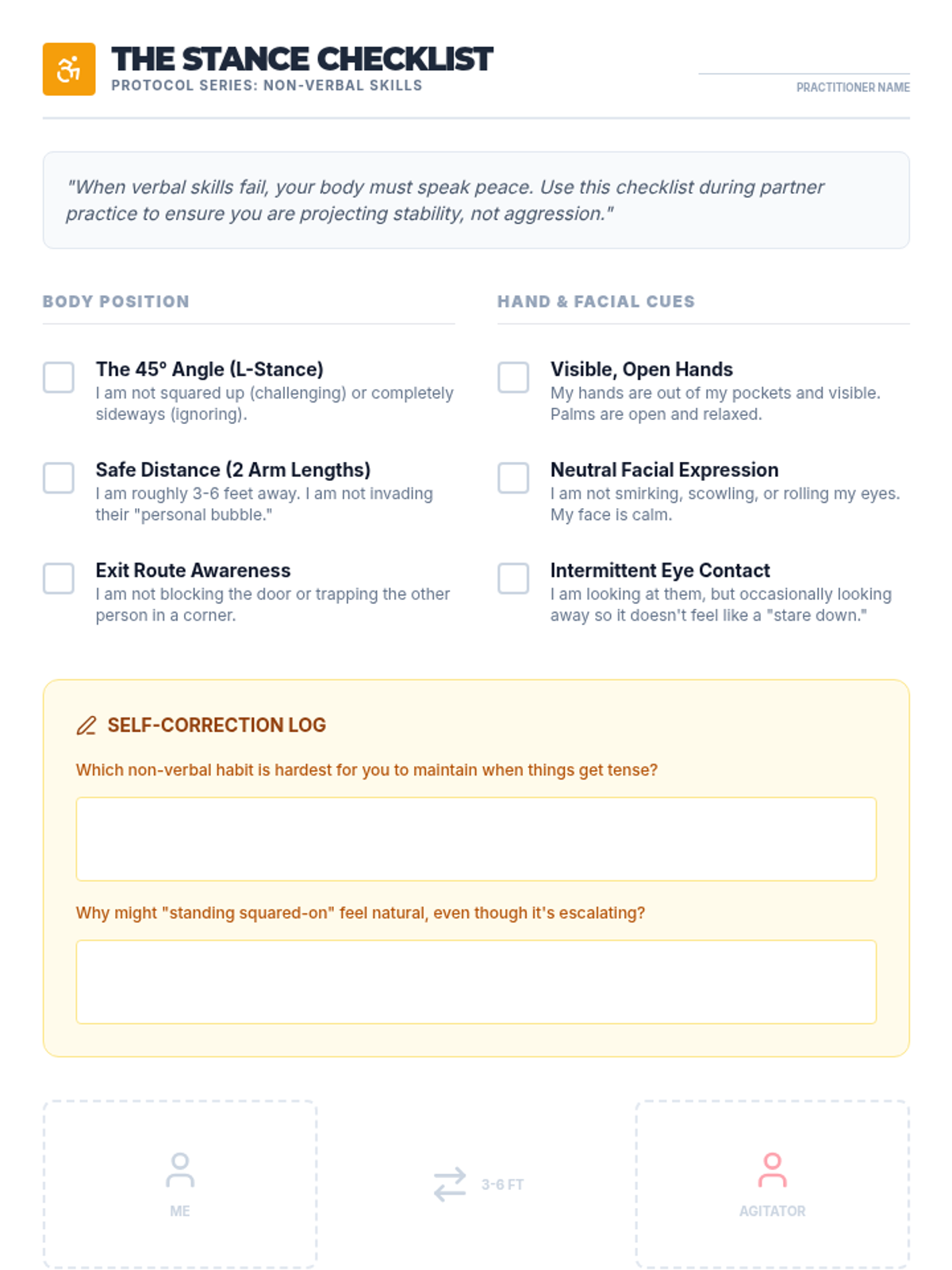
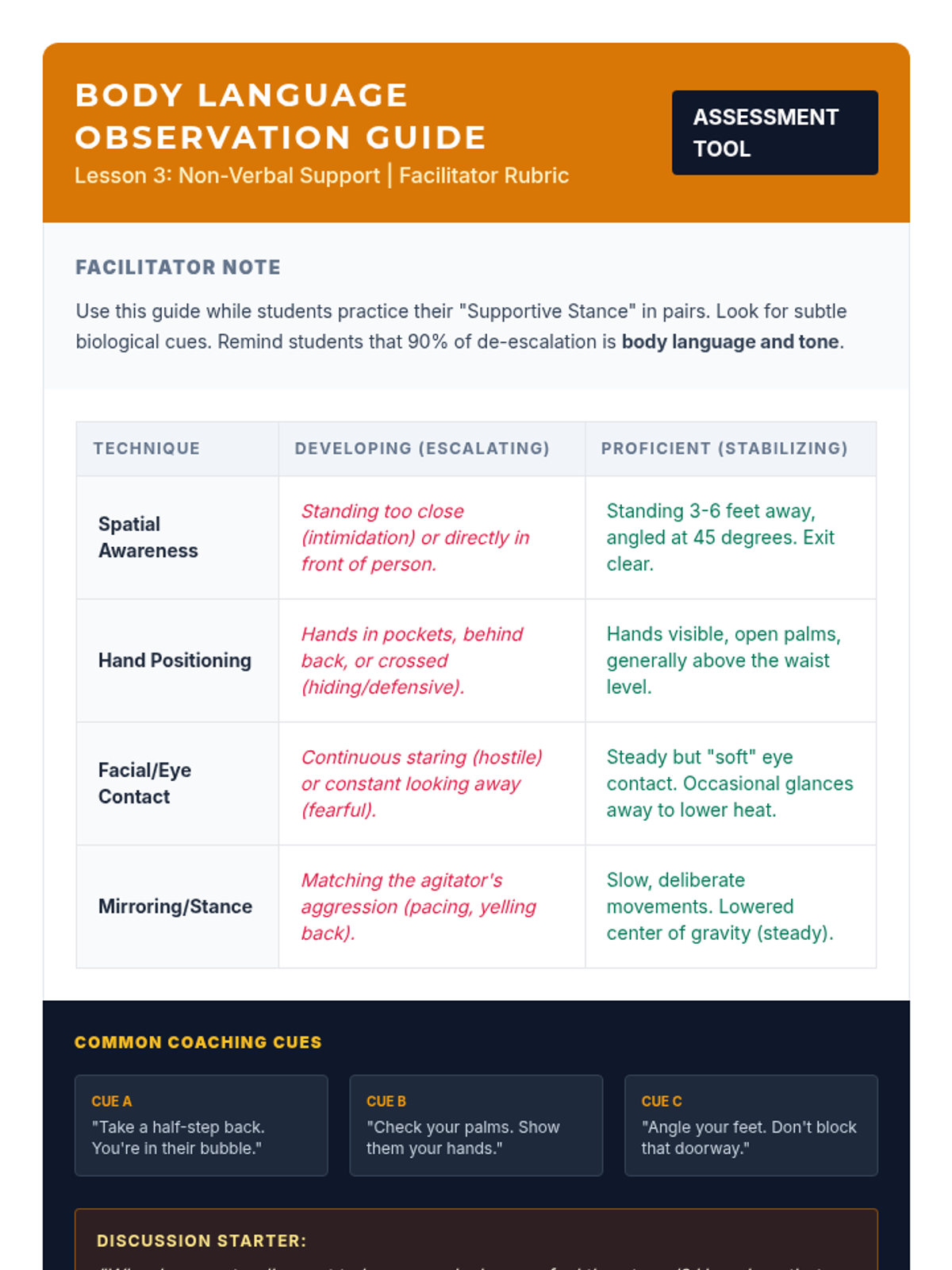
Exploration of personal space (proxemics) and body stance to understand how non-verbal cues impact an agitated person and how to maintain a supportive stance.
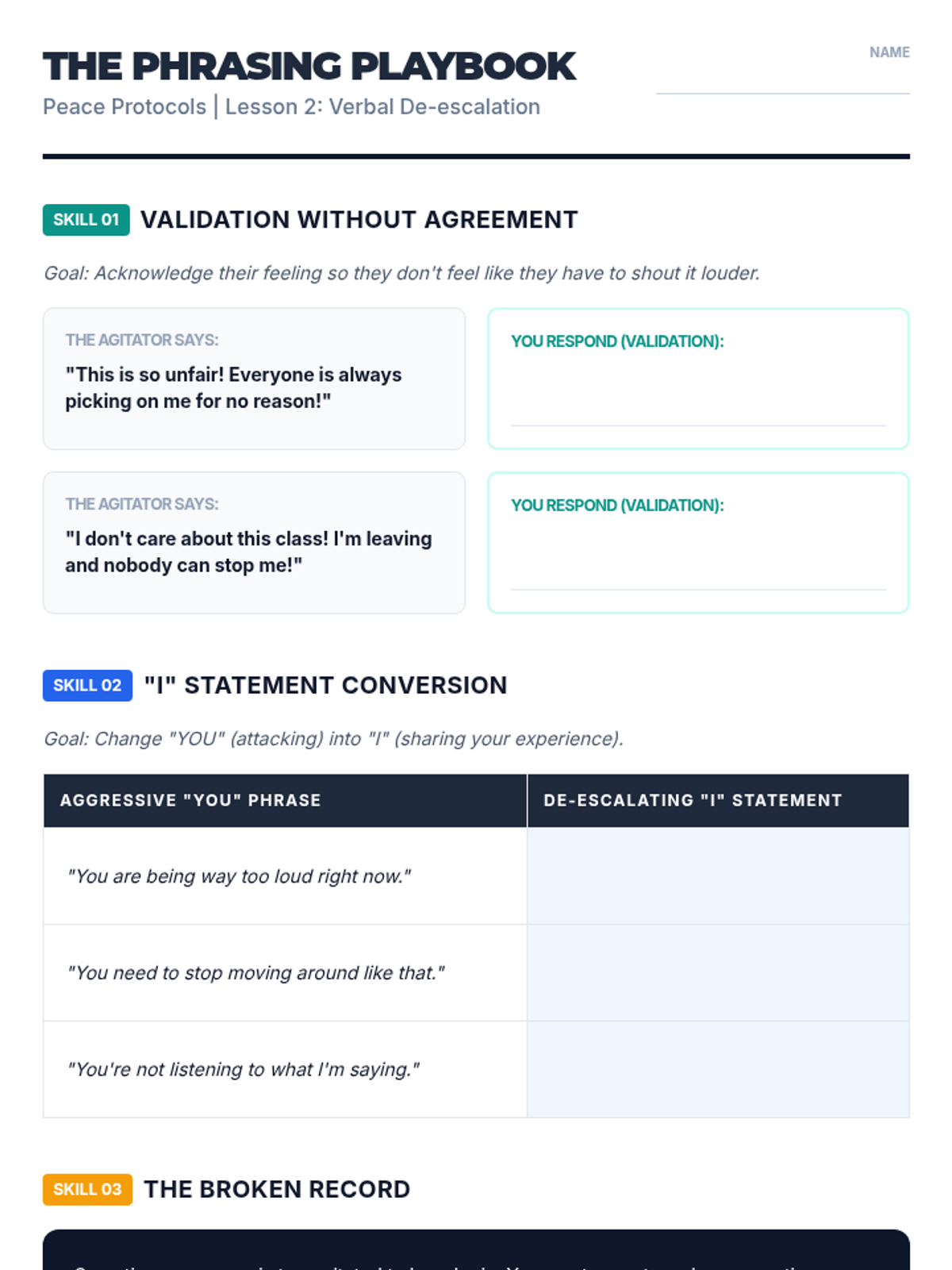
Students practice verbal de-escalation techniques, focusing on tone, volume, and phrasing (the 'Verbal Judo' approach) to lower the temperature of tense interactions.
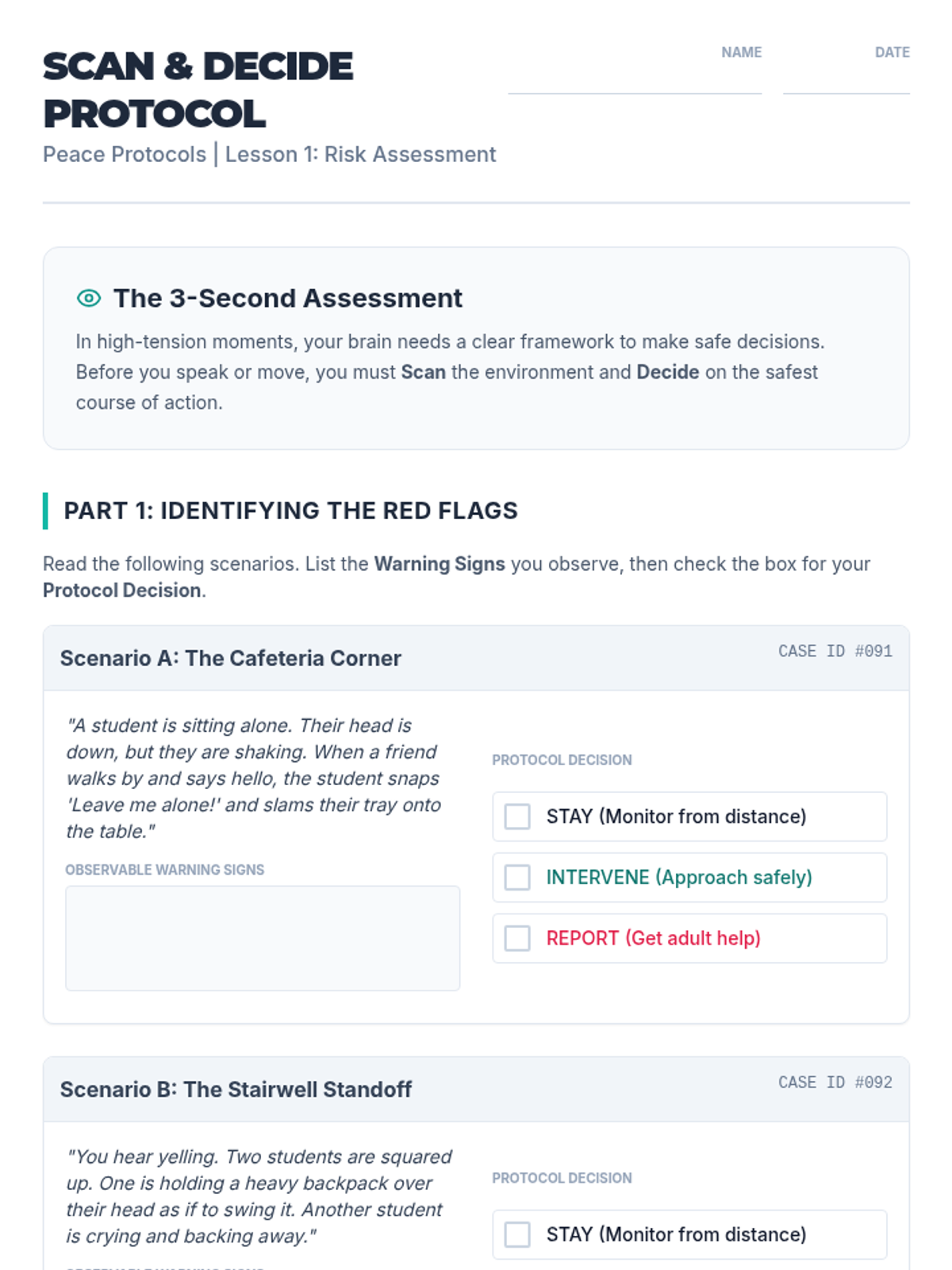
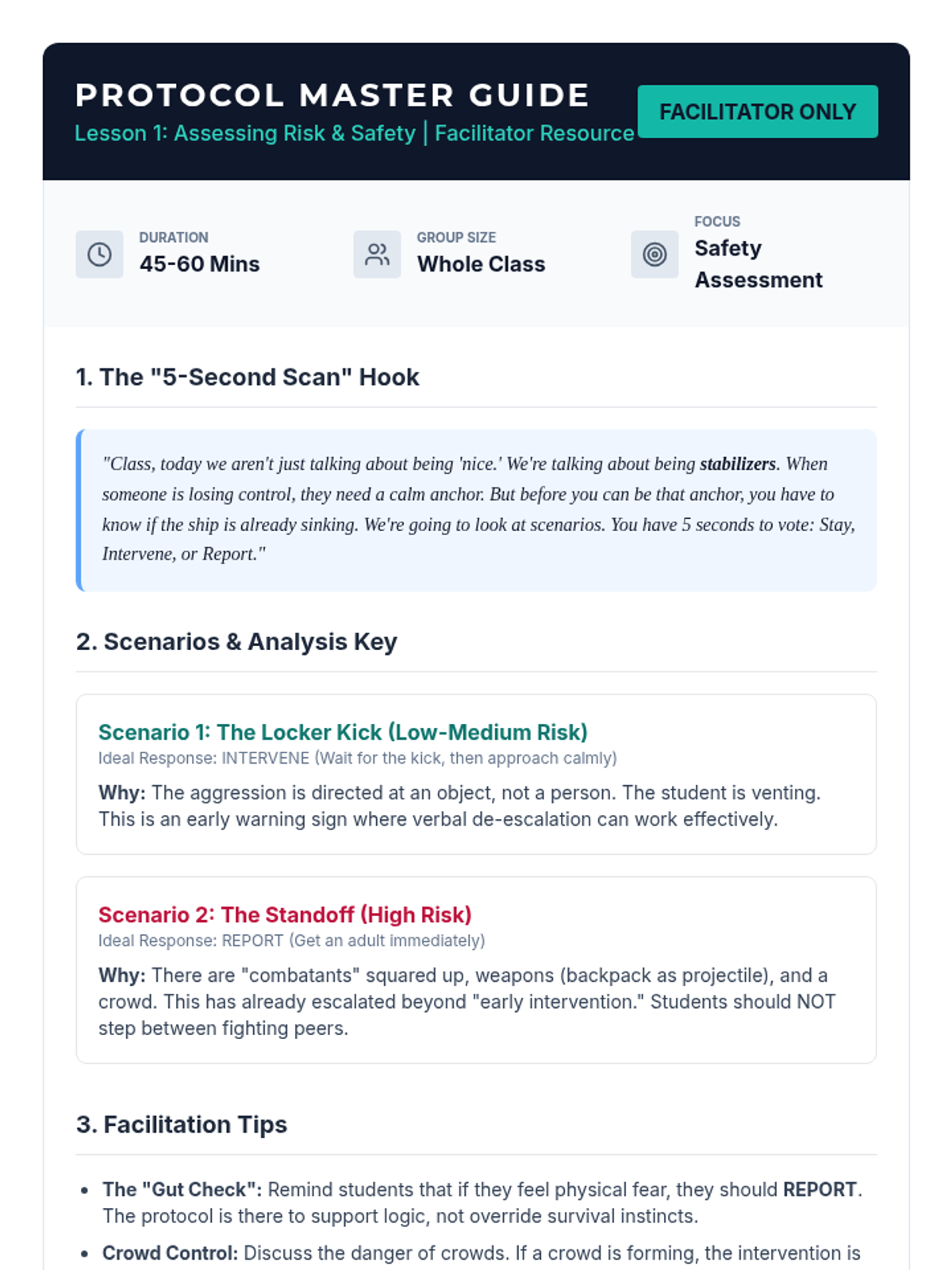
Students learn to assess the safety of a situation using a 'scan and decide' protocol to determine if they should approach a peer or seek adult help immediately.
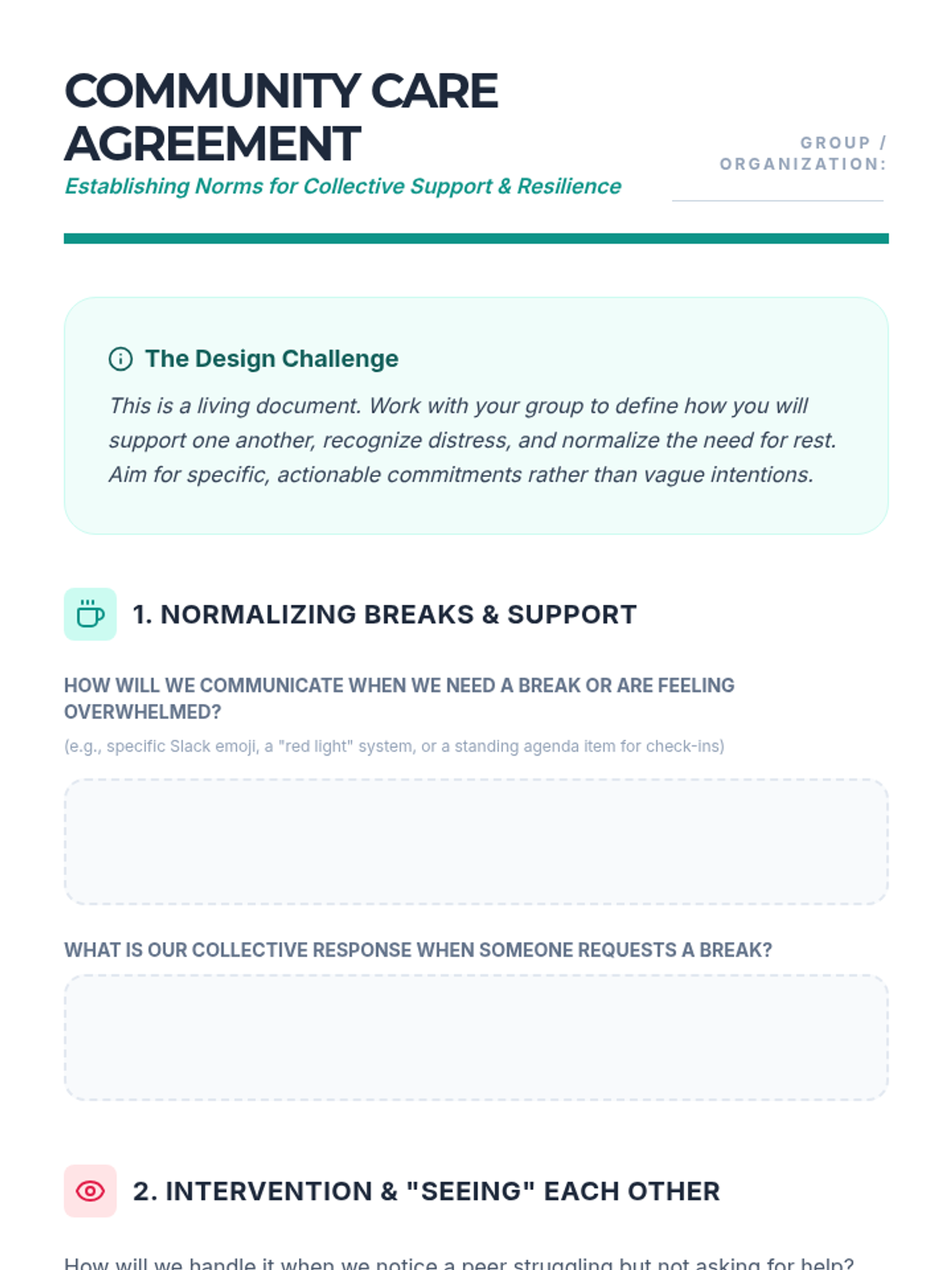
The sequence concludes with students designing a 'Community Care Agreement' to establish norms for mutual support and collective rest in their own communities.
This lesson teaches specific bystander intervention strategies to bridge the gap between noticing distress and connecting a peer to resources.
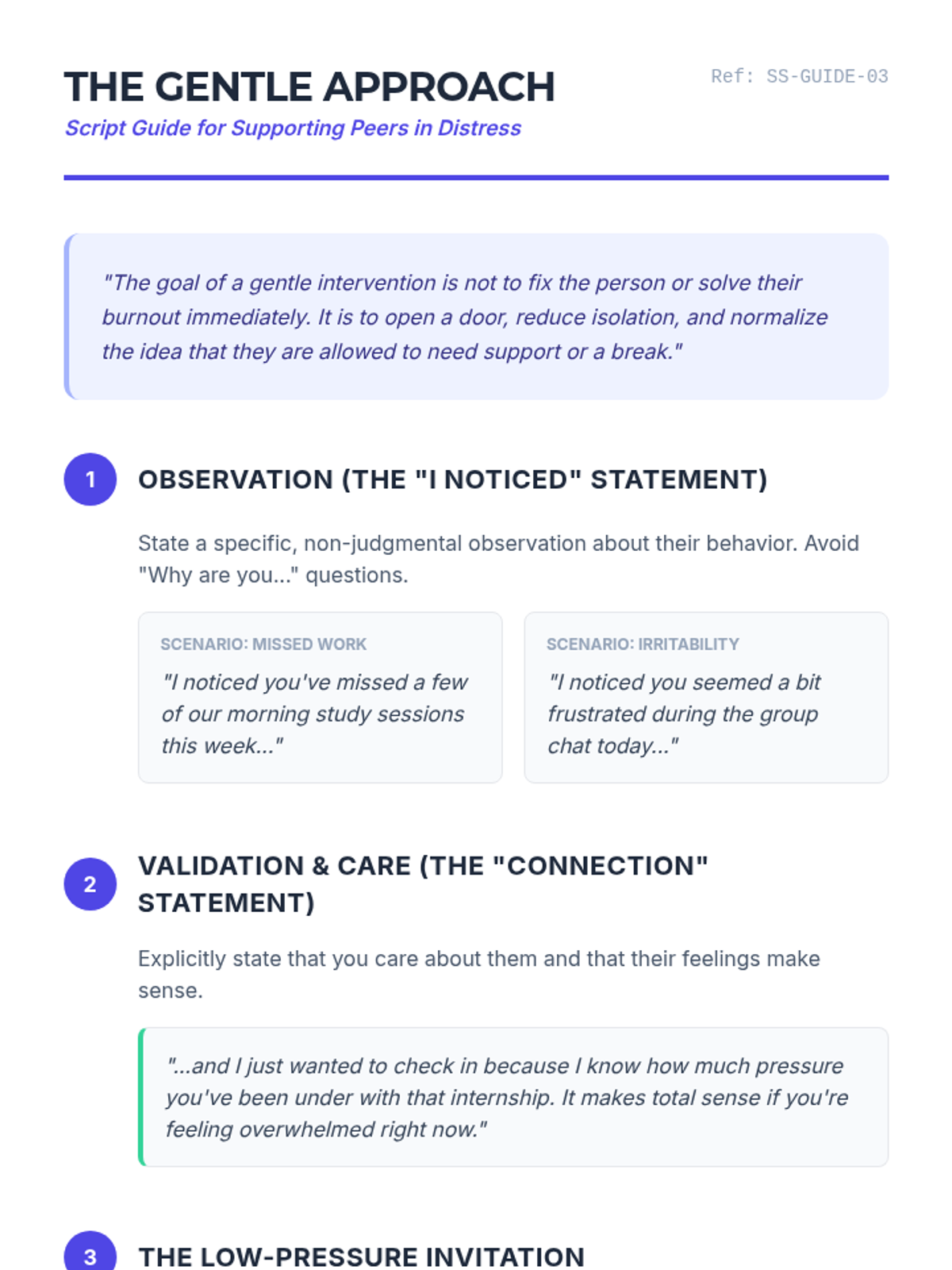
Students learn to identify subtle behavioral and non-verbal signs of distress in their peers and practice gentle intervention strategies.
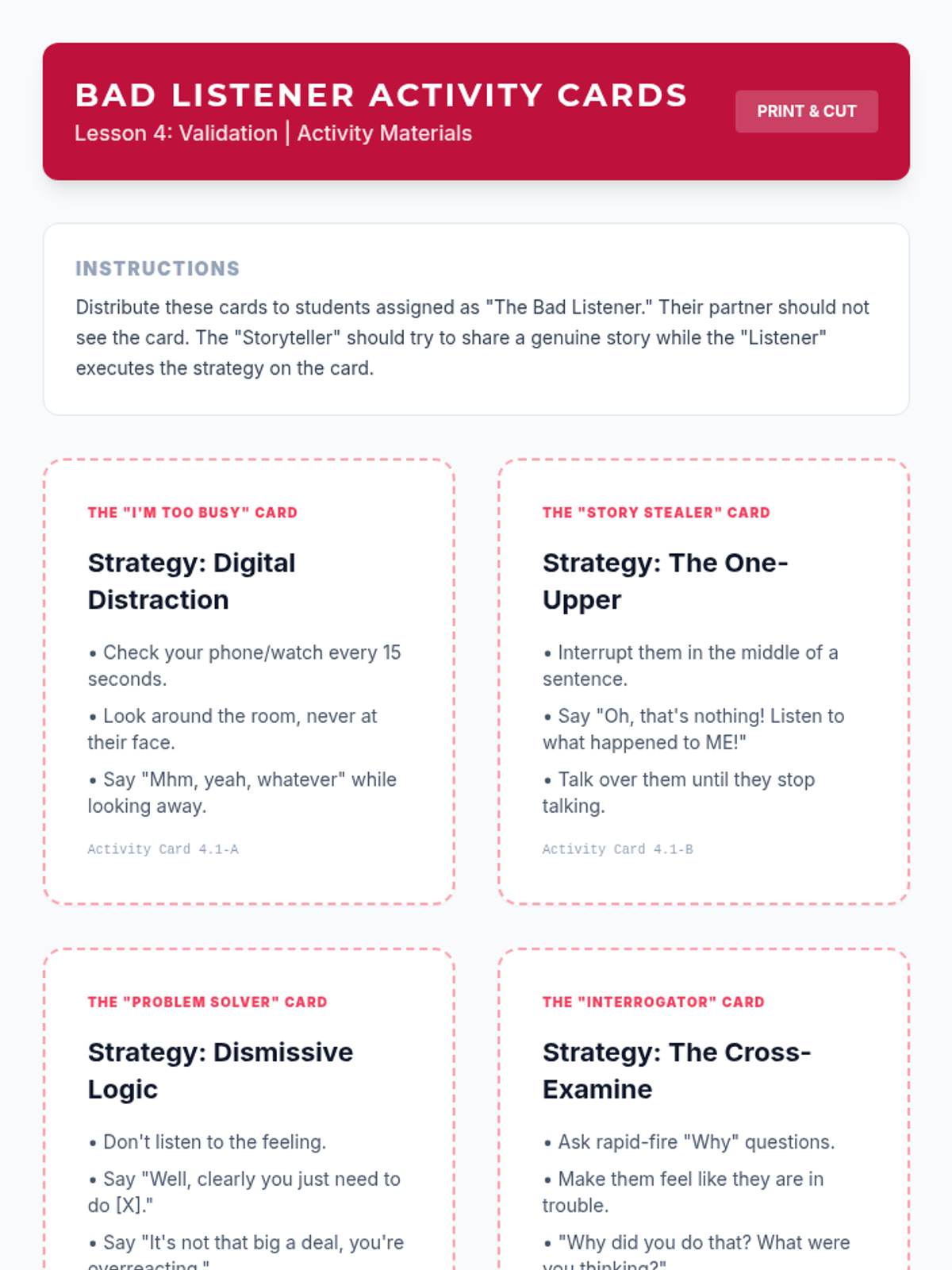
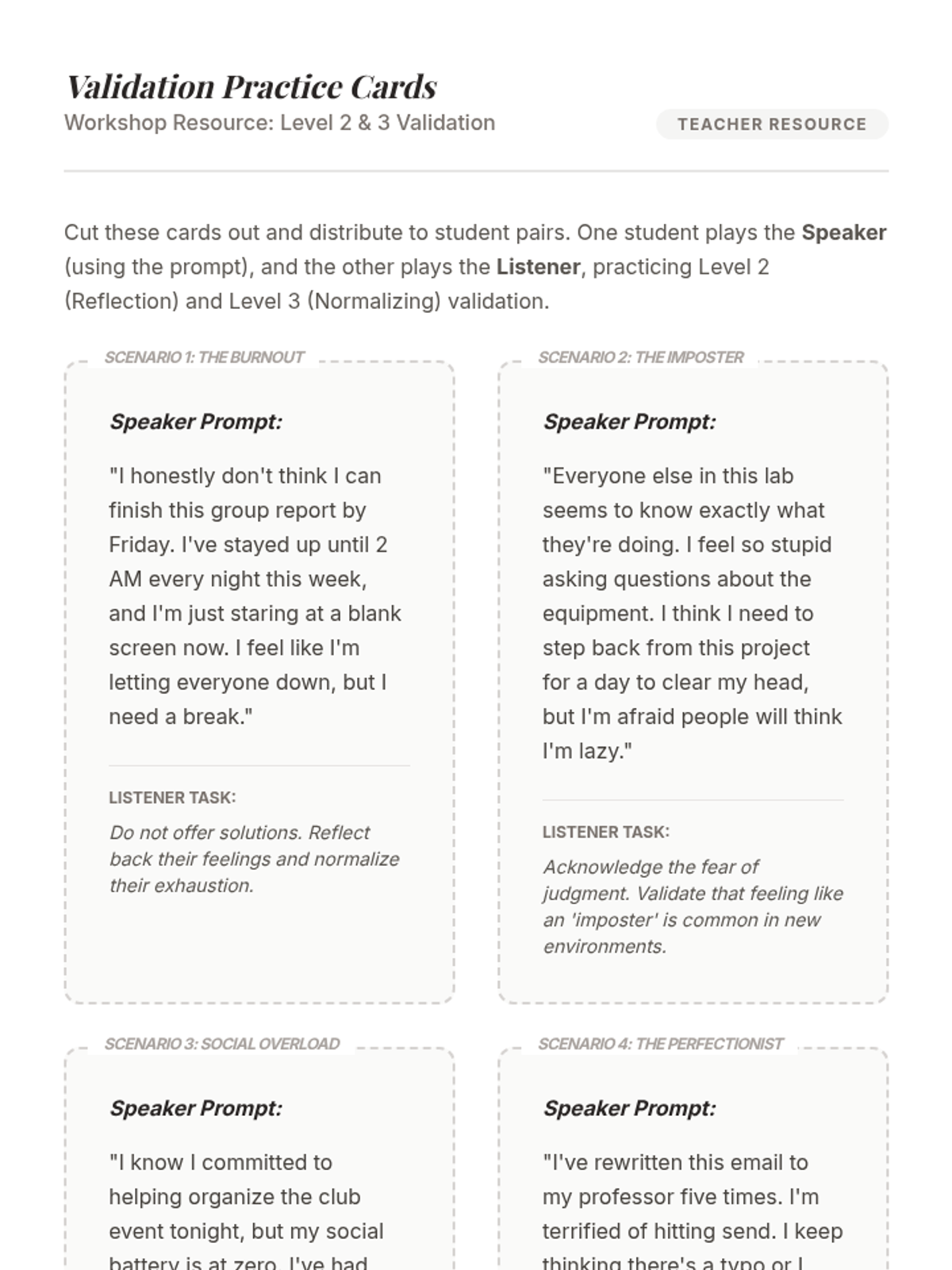
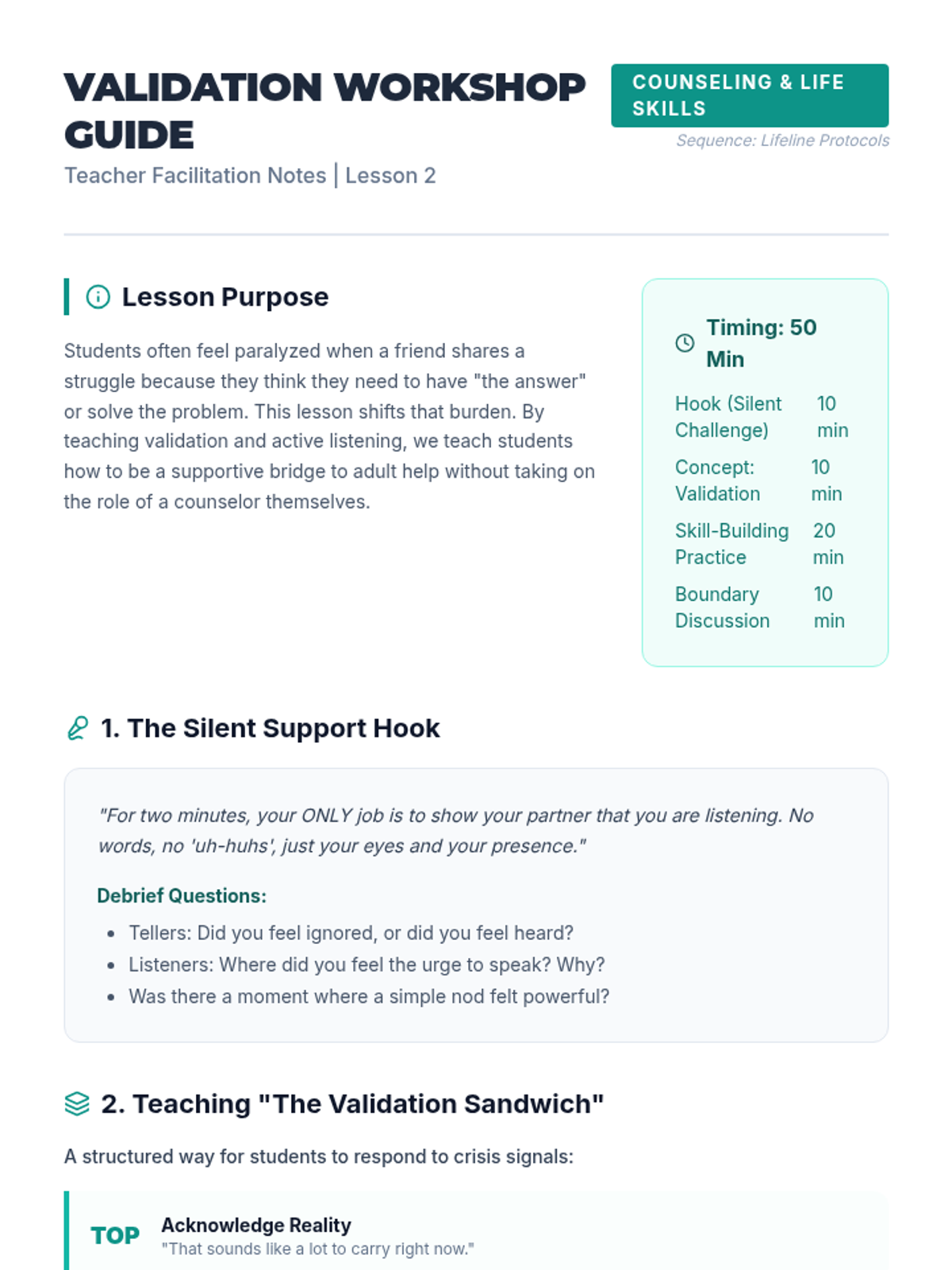
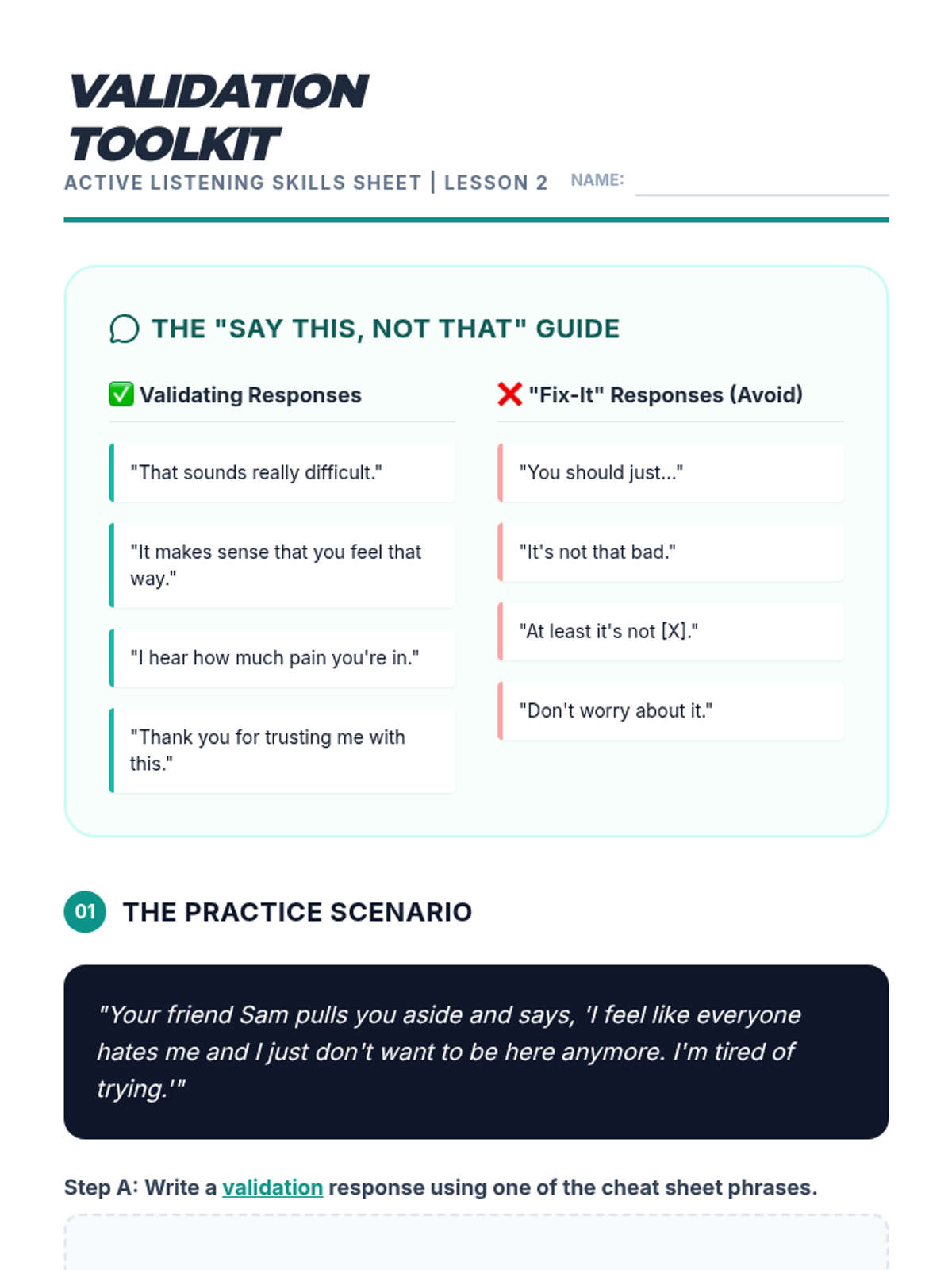
A workshop focusing on the listening skills required to support peers, emphasizing validation over immediate problem-solving.
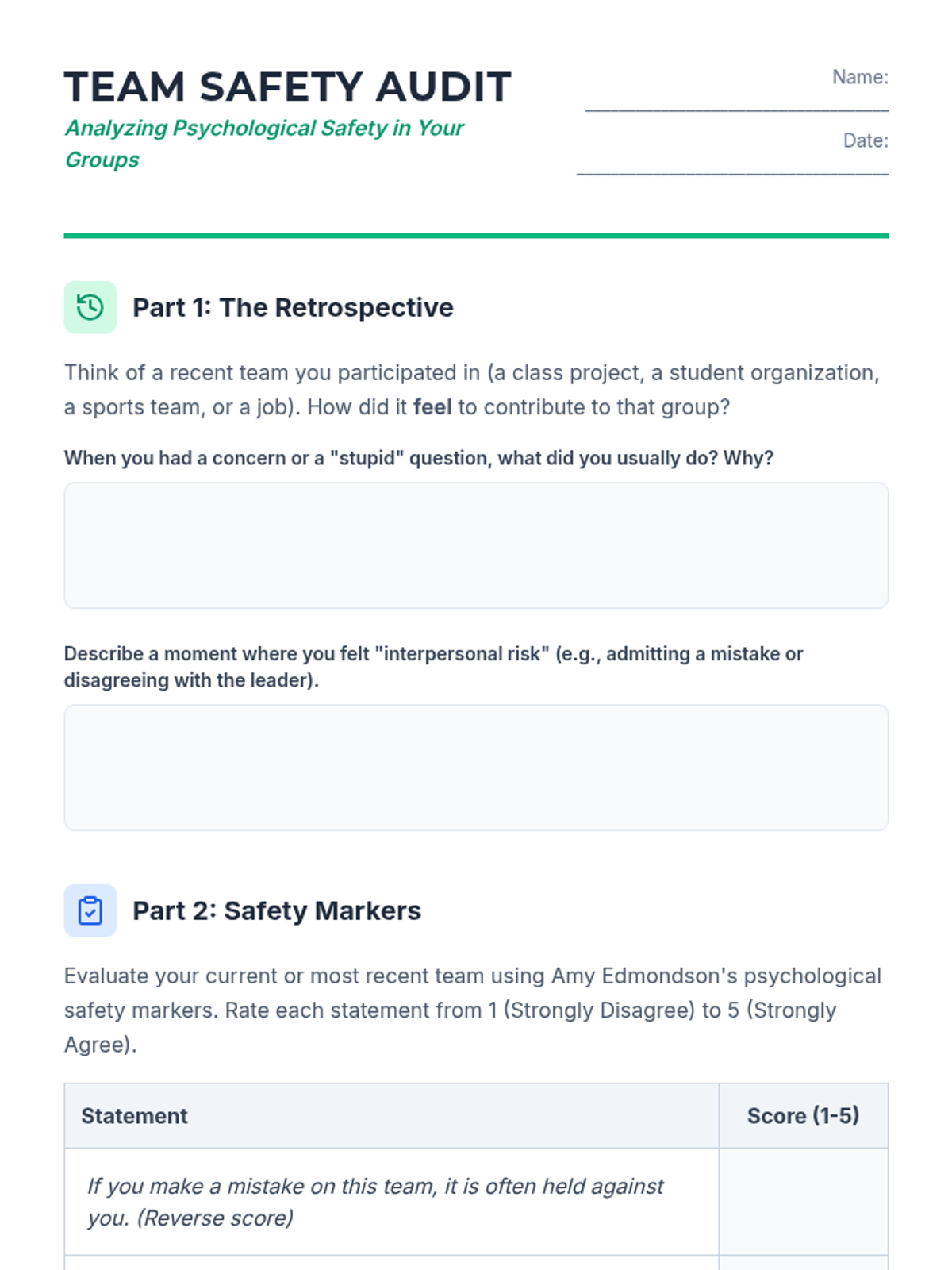
Students define psychological safety and analyze its impact on team performance, using Google's 'Project Aristotle' as a primary case study.
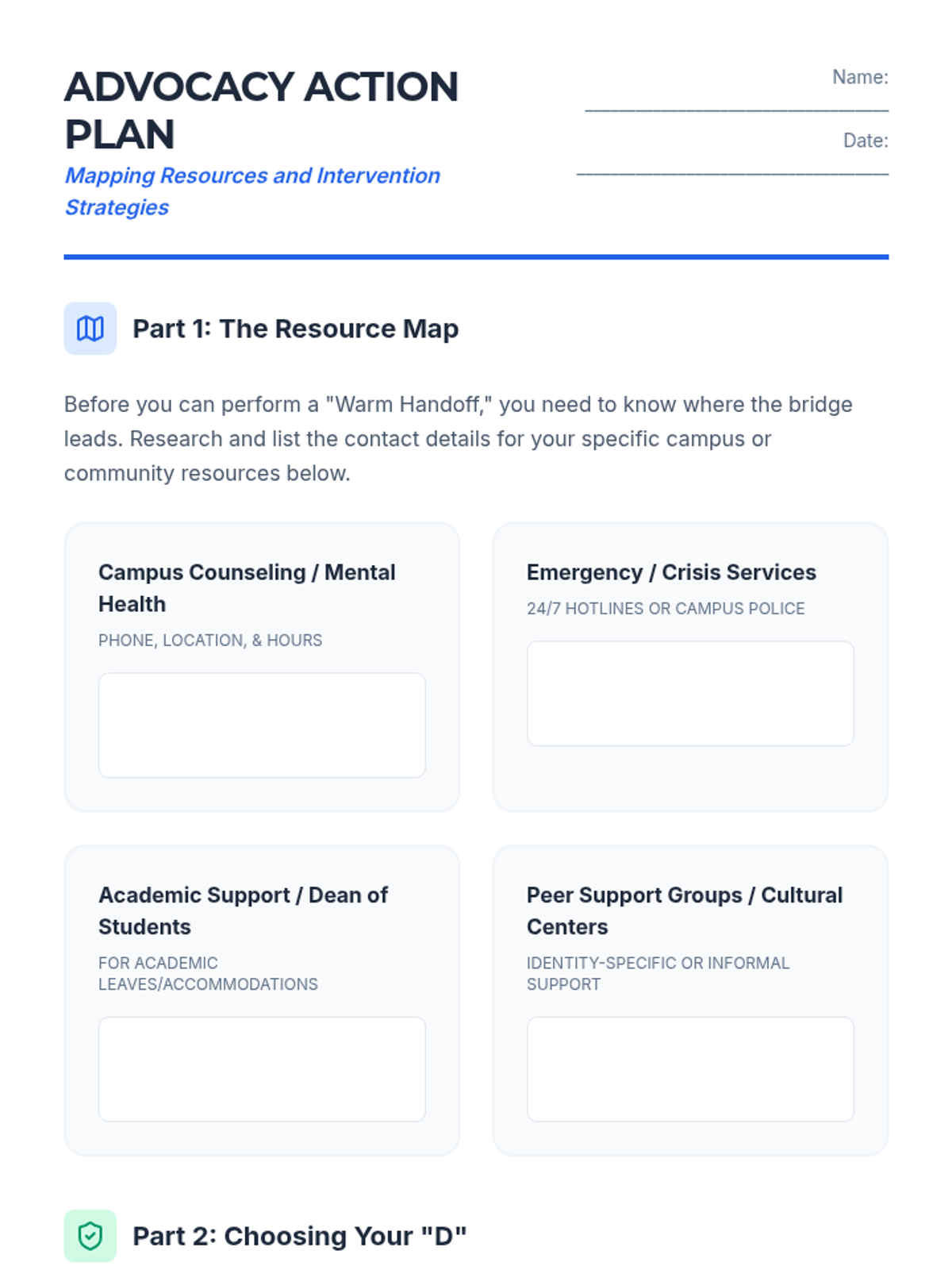
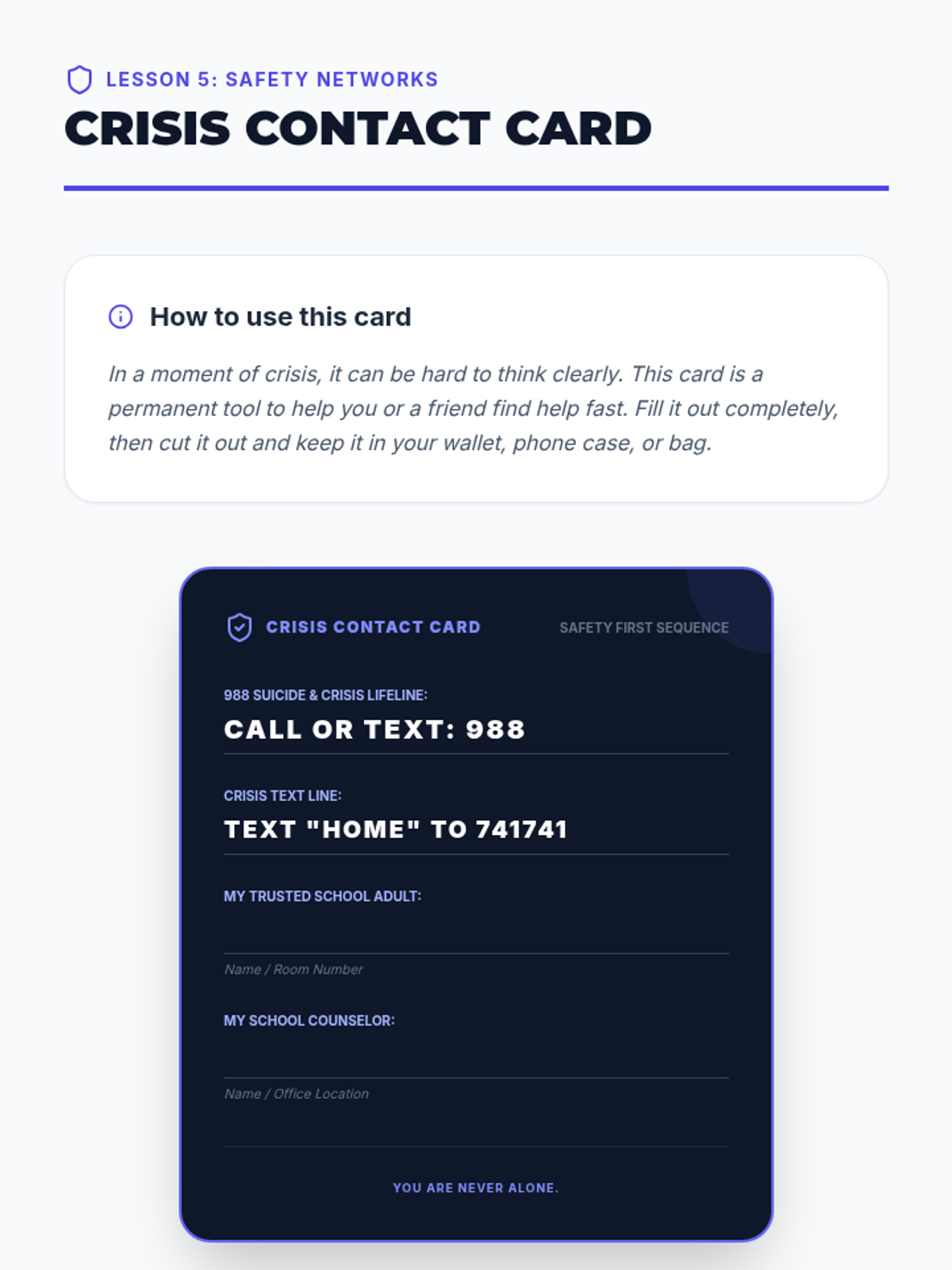
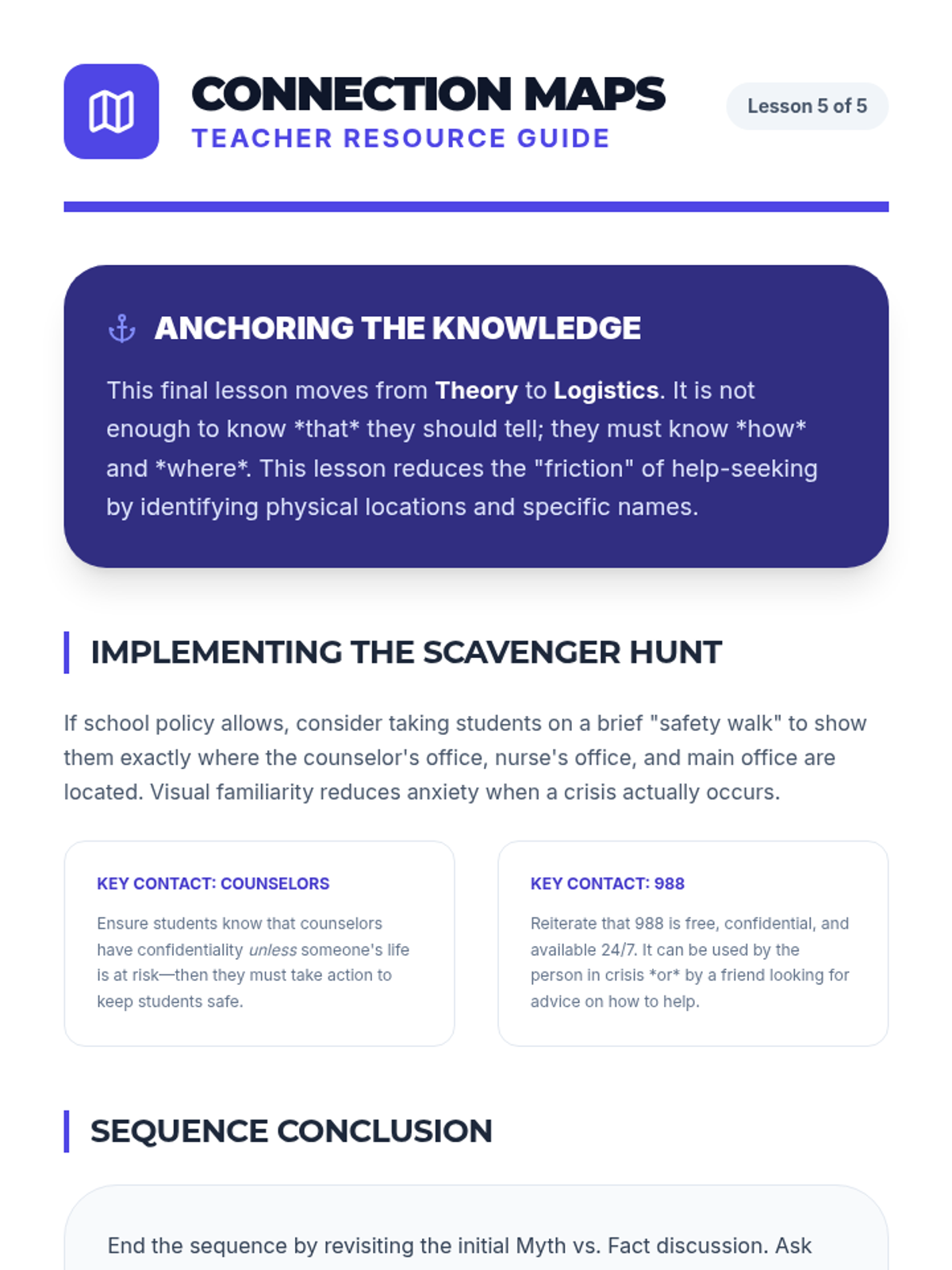
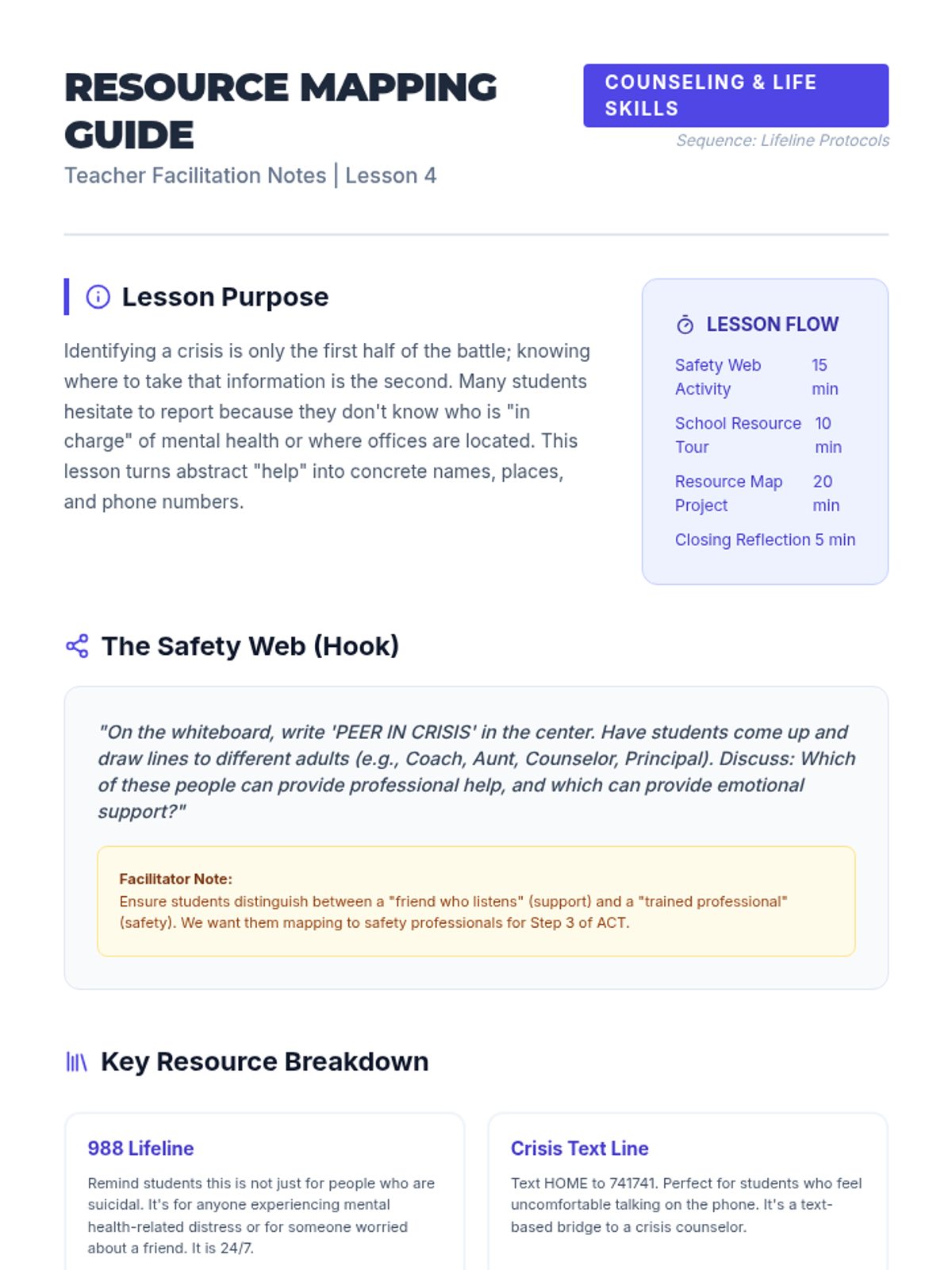
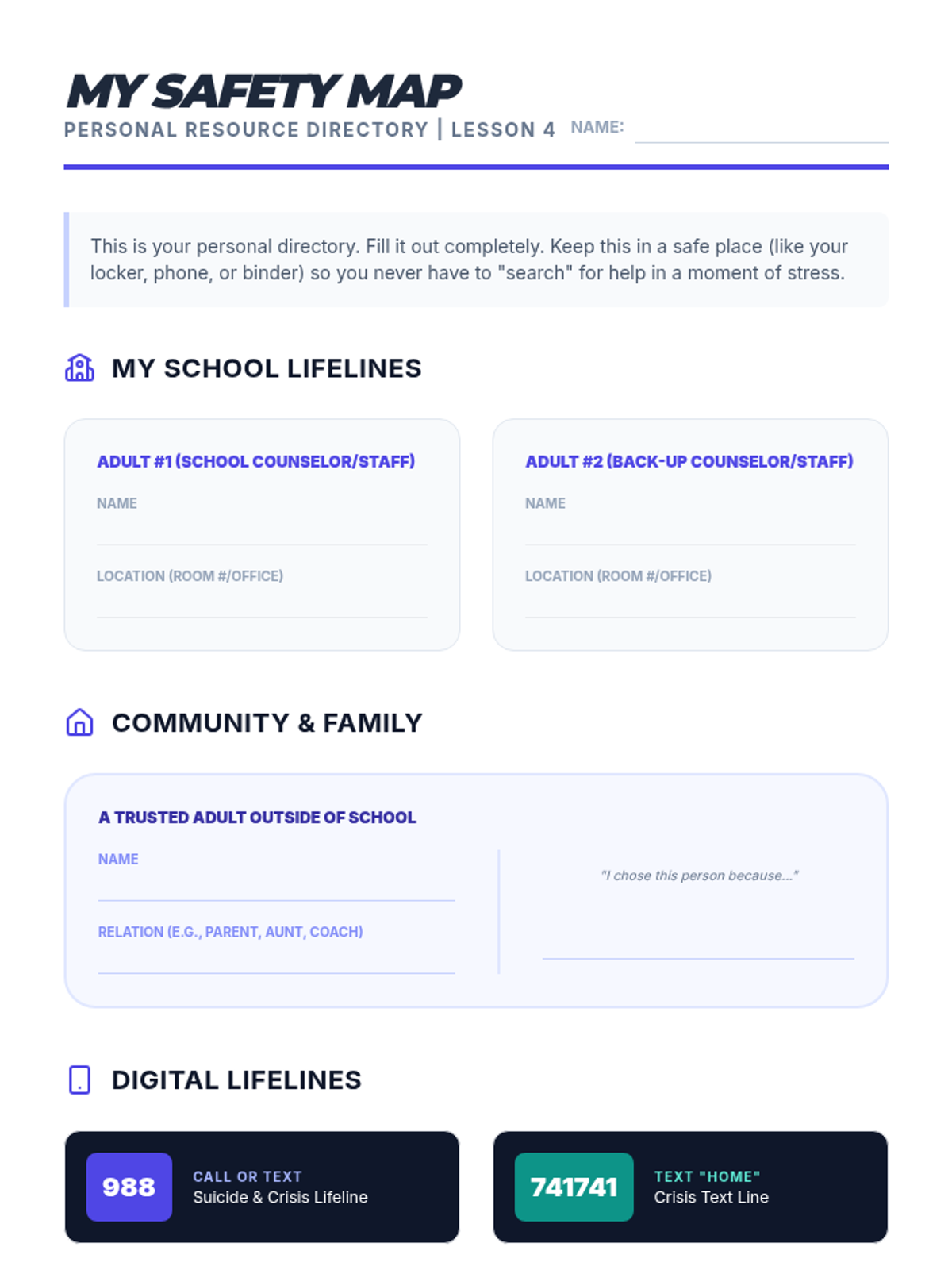
Students identify specific adults within the school building and external resources available for crisis support. They create a 'Crisis Contact Card' and practice the logistics of how to physically walk a friend to the counseling office or make a report.
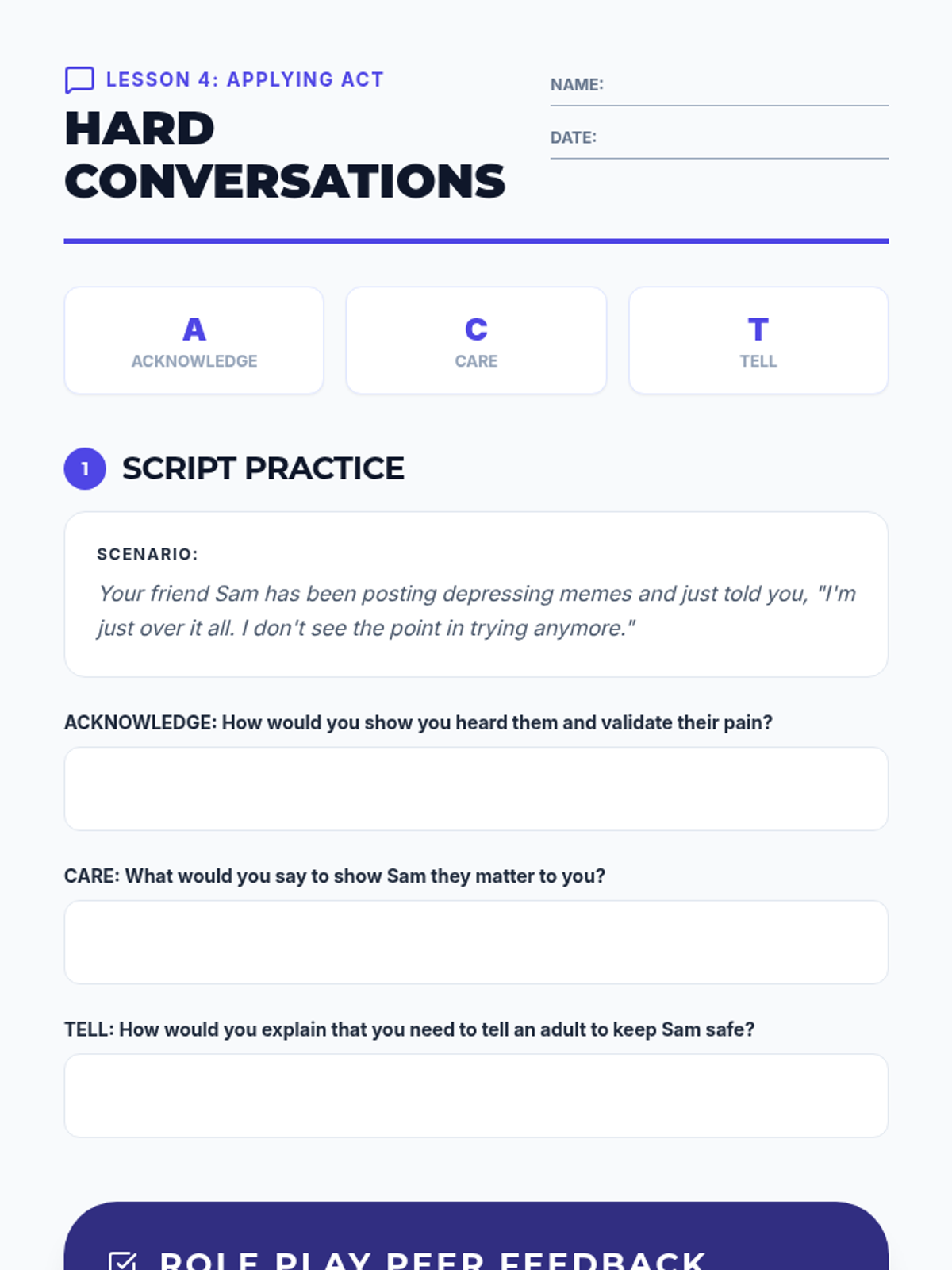
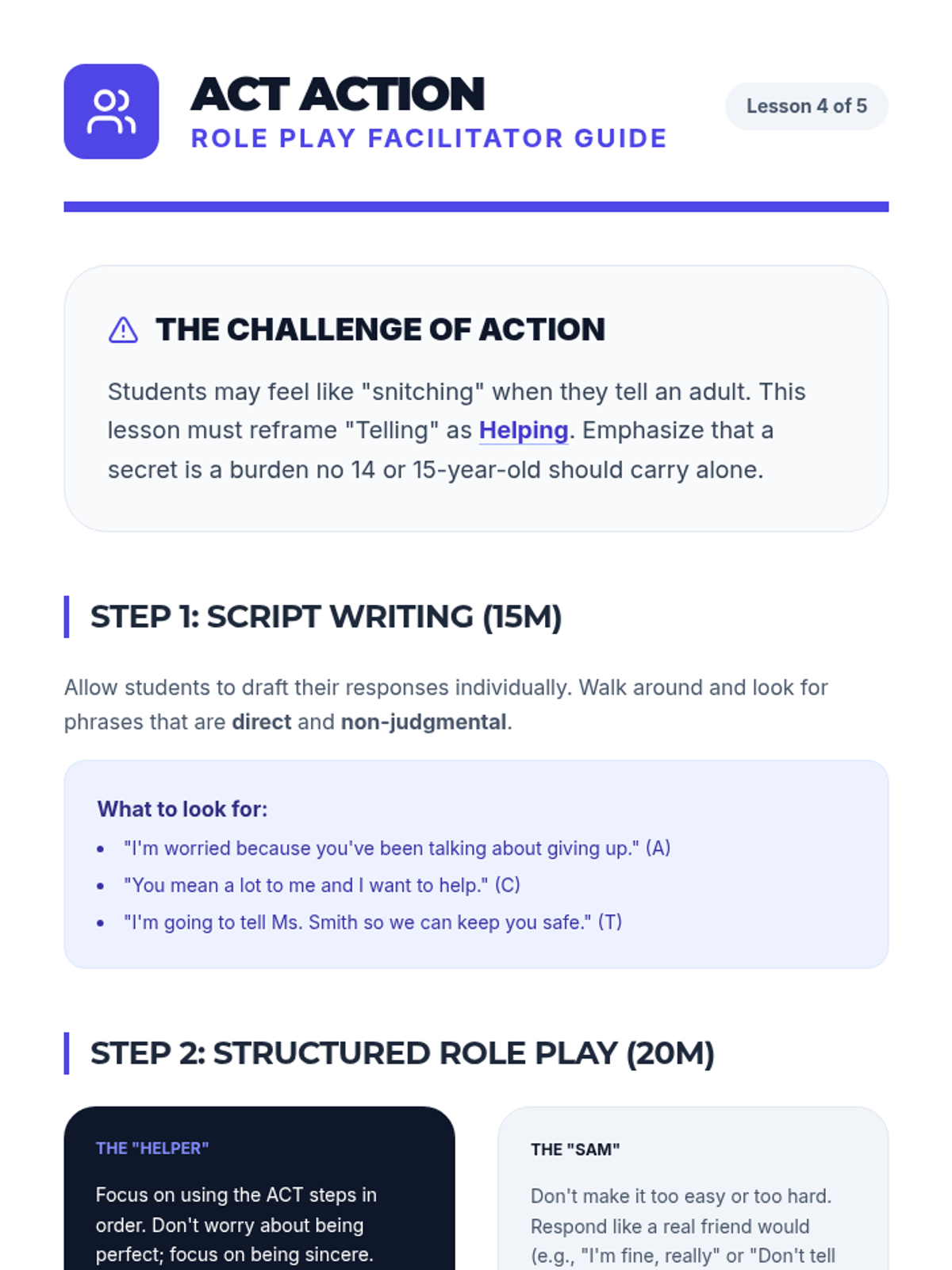
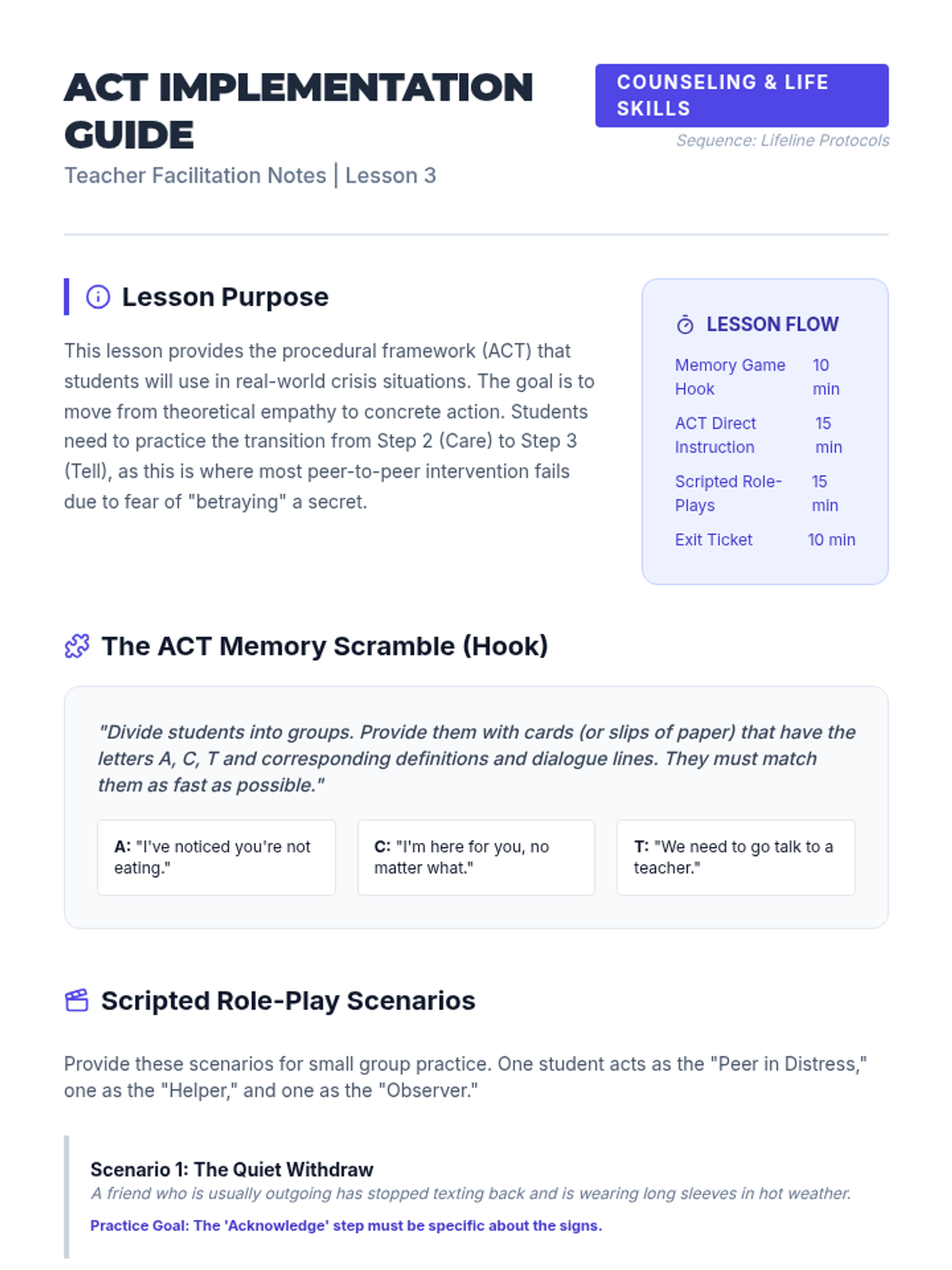
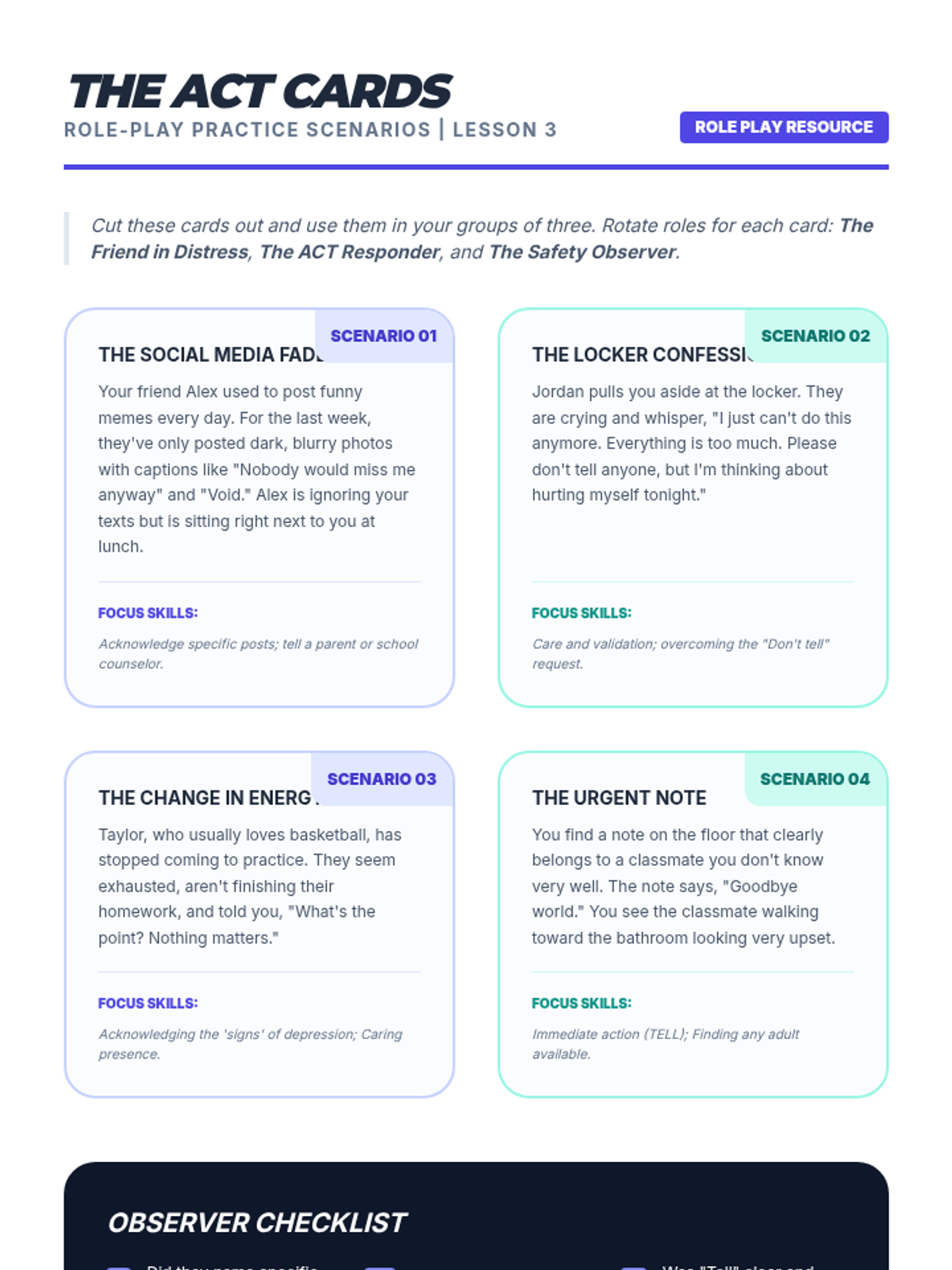
Students learn a specific three-step protocol for responding to warning signs: Acknowledging the feelings, showing Care, and Telling a trusted adult. Through structured role-play and script-writing, students practice saying the hard words needed to bridge a friend to safety.
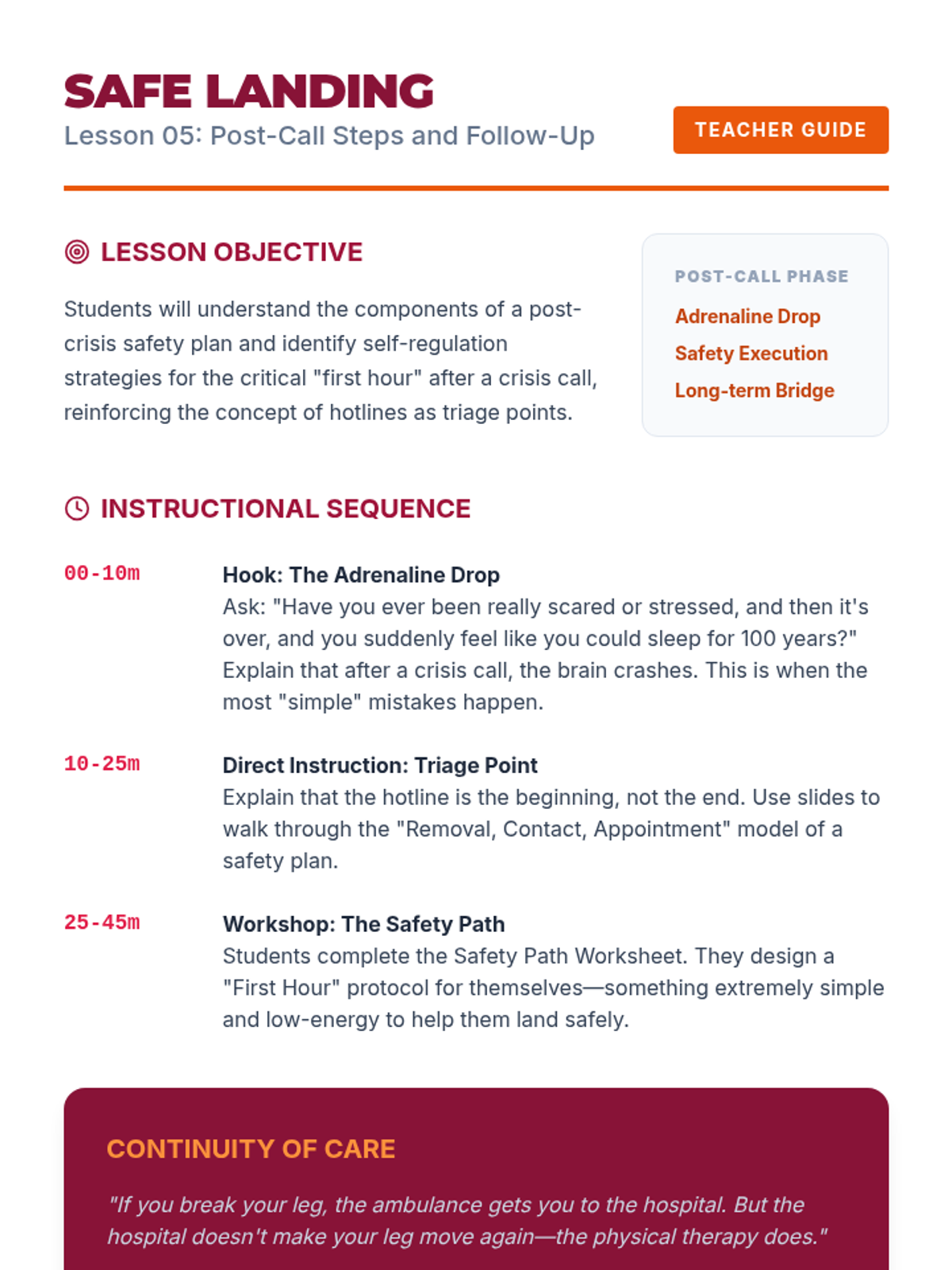
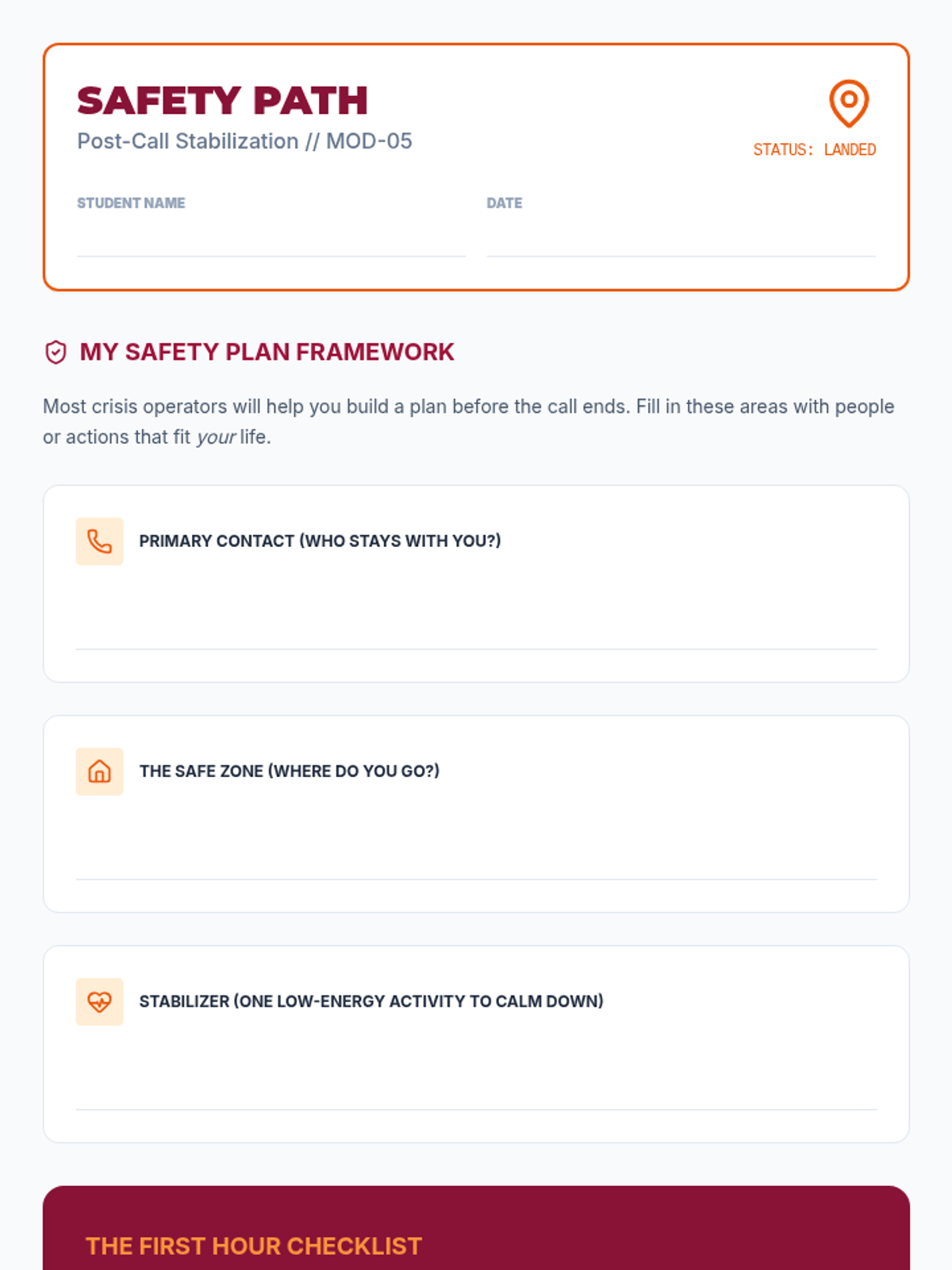
The sequence concludes with what happens after the hang-up. Students discuss the importance of following safety plans generated during the call and how to seek ongoing support, reinforcing that the hotline is a triage point, not the final cure.
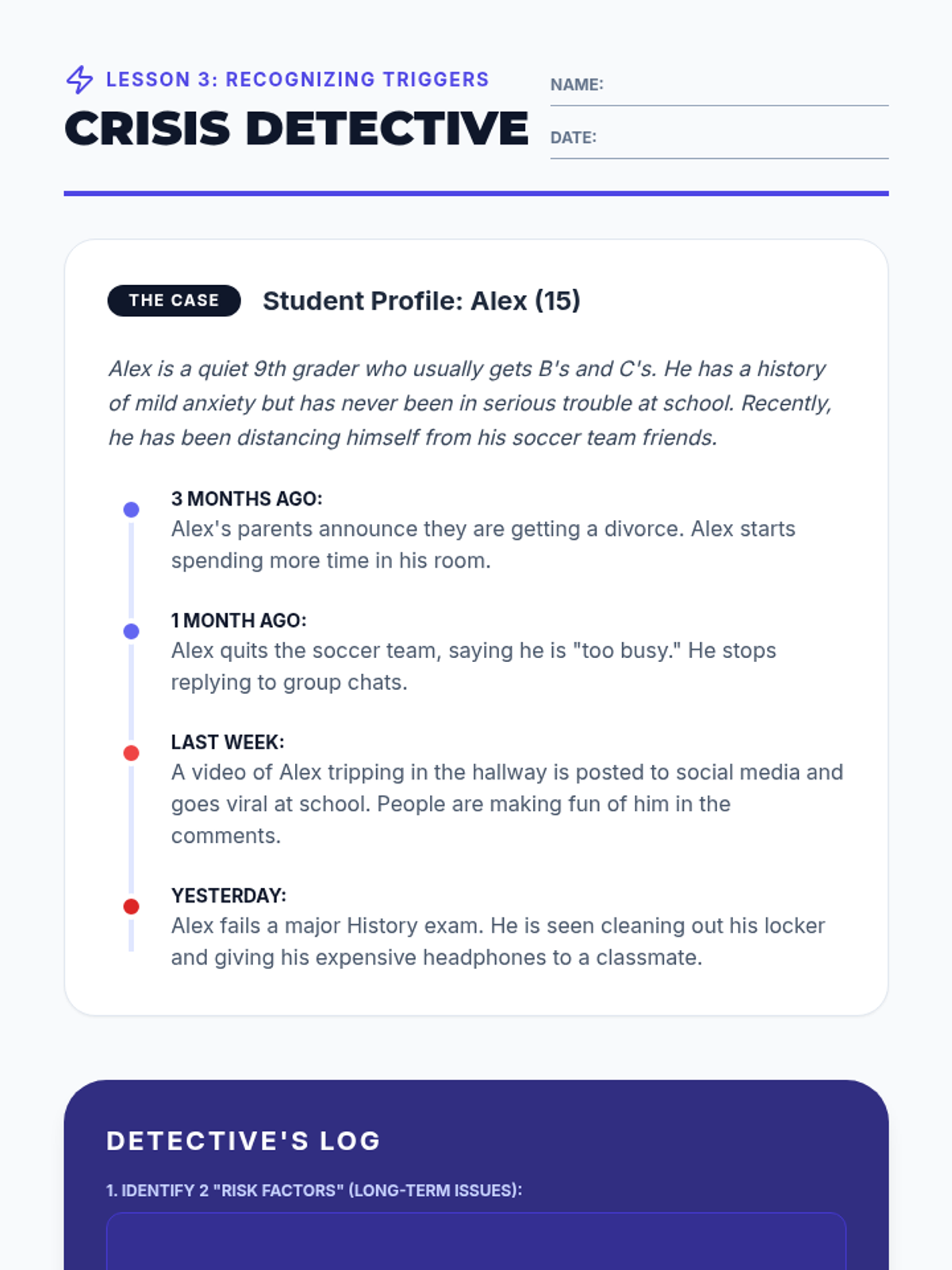
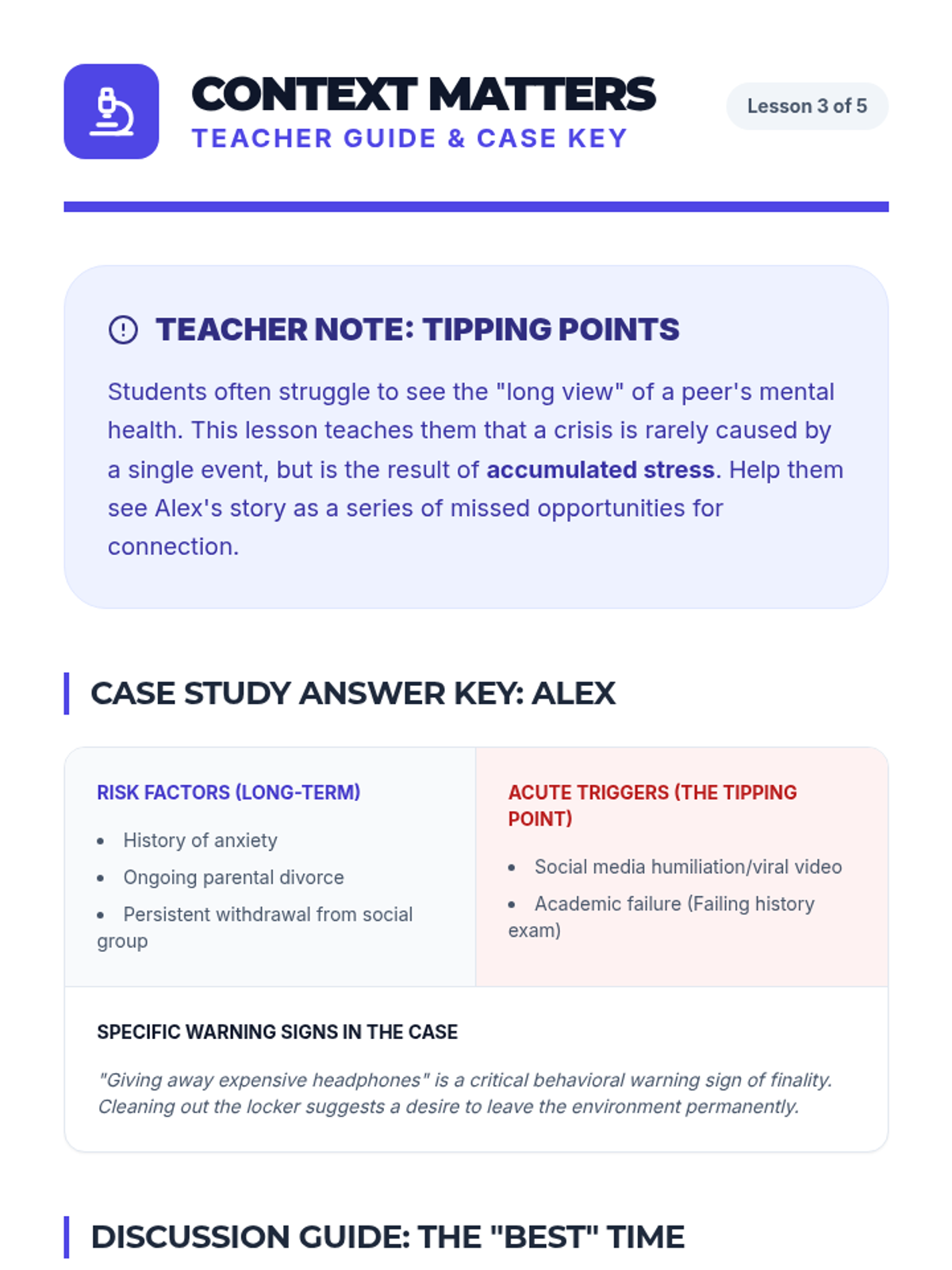
Students examine how life events like bullying, loss, or academic pressure can escalate risk. They review case summaries to identify 'tipping points' and practice distinguishing between temporary distress and a safety crisis.
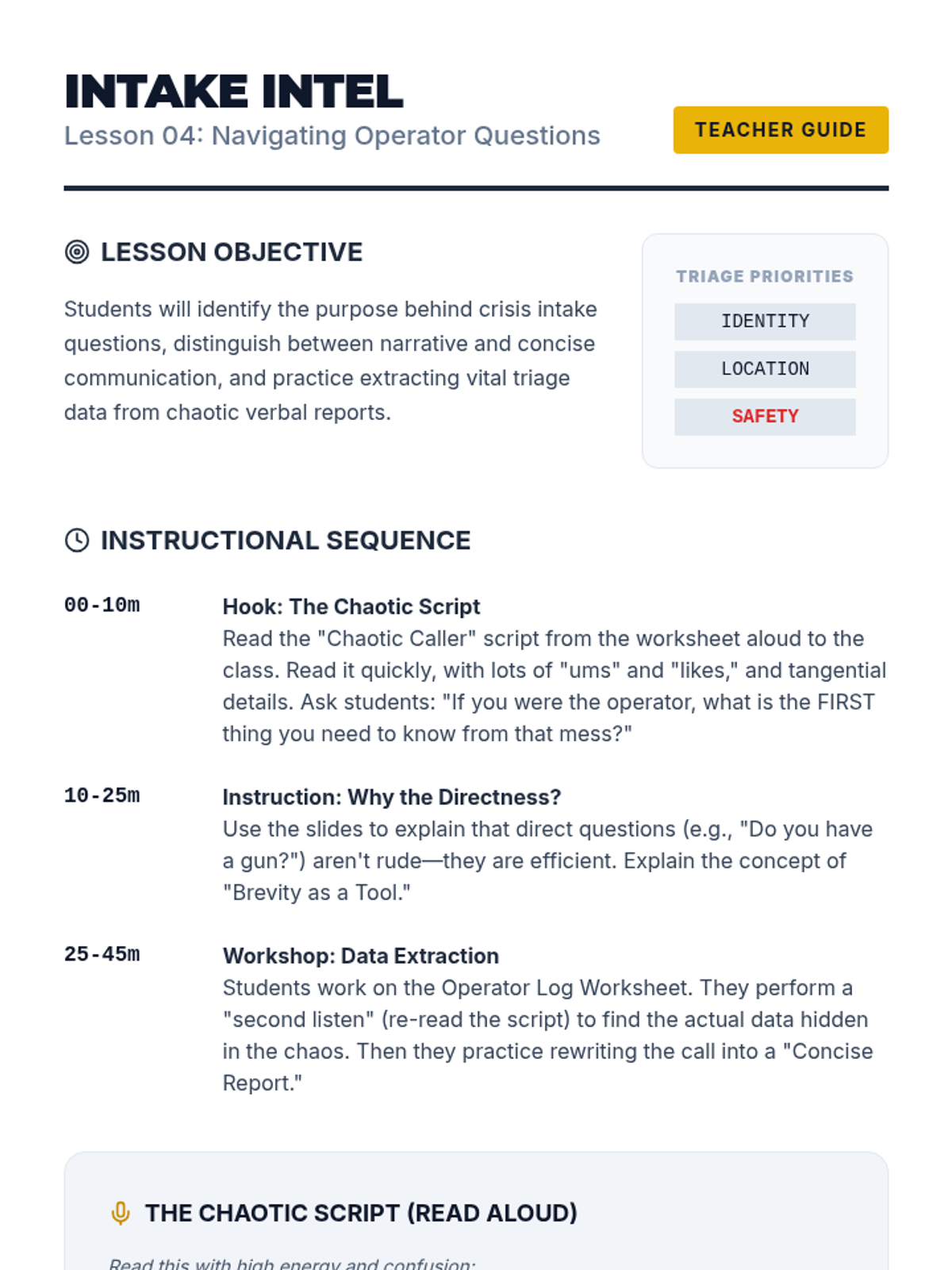
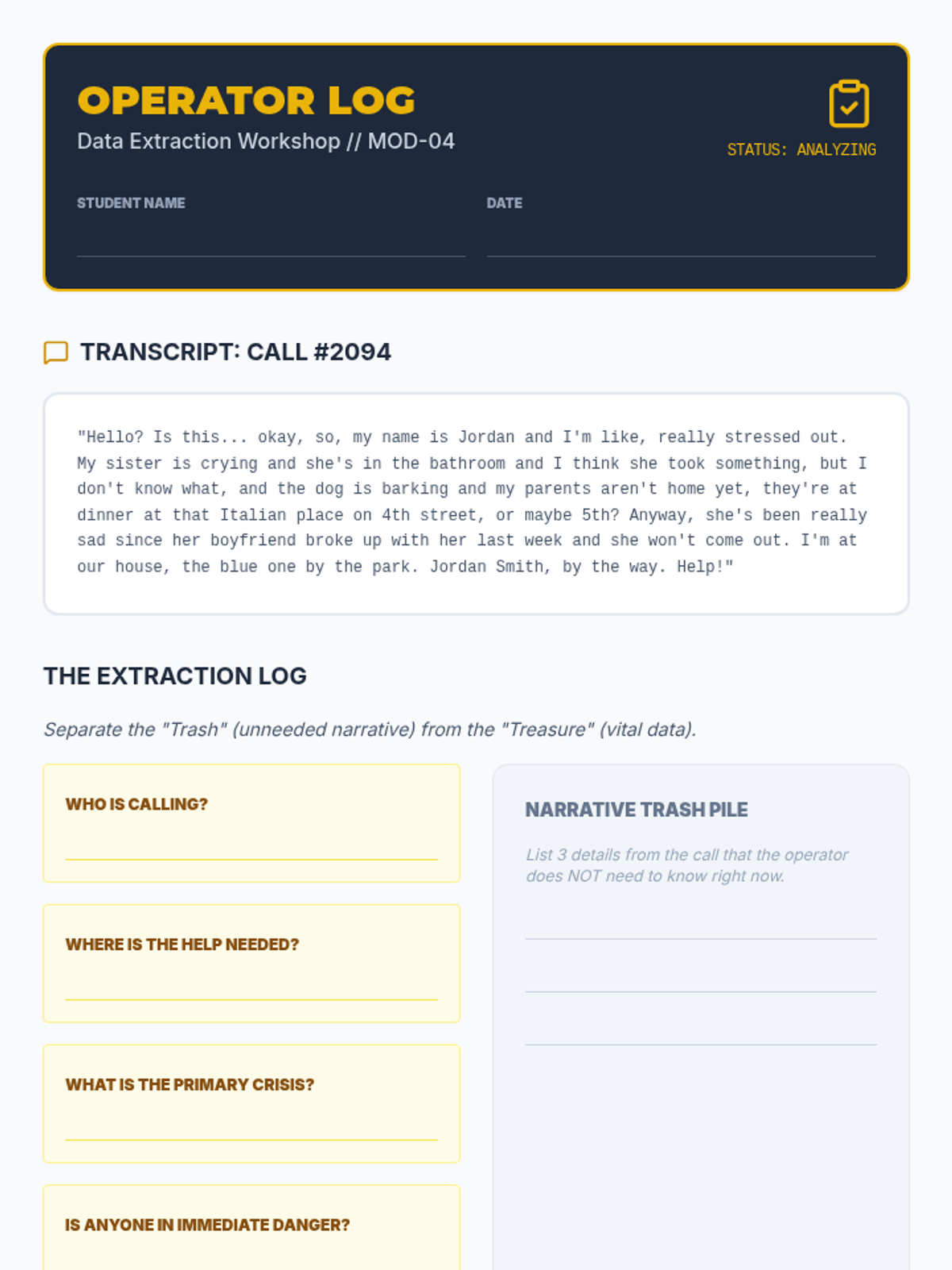
Students review standard intake questionnaires to demystify the probing questions operators ask. They practice listening for key terms and providing concise answers through a 'third-party' analysis where they critique a fictional dialogue.
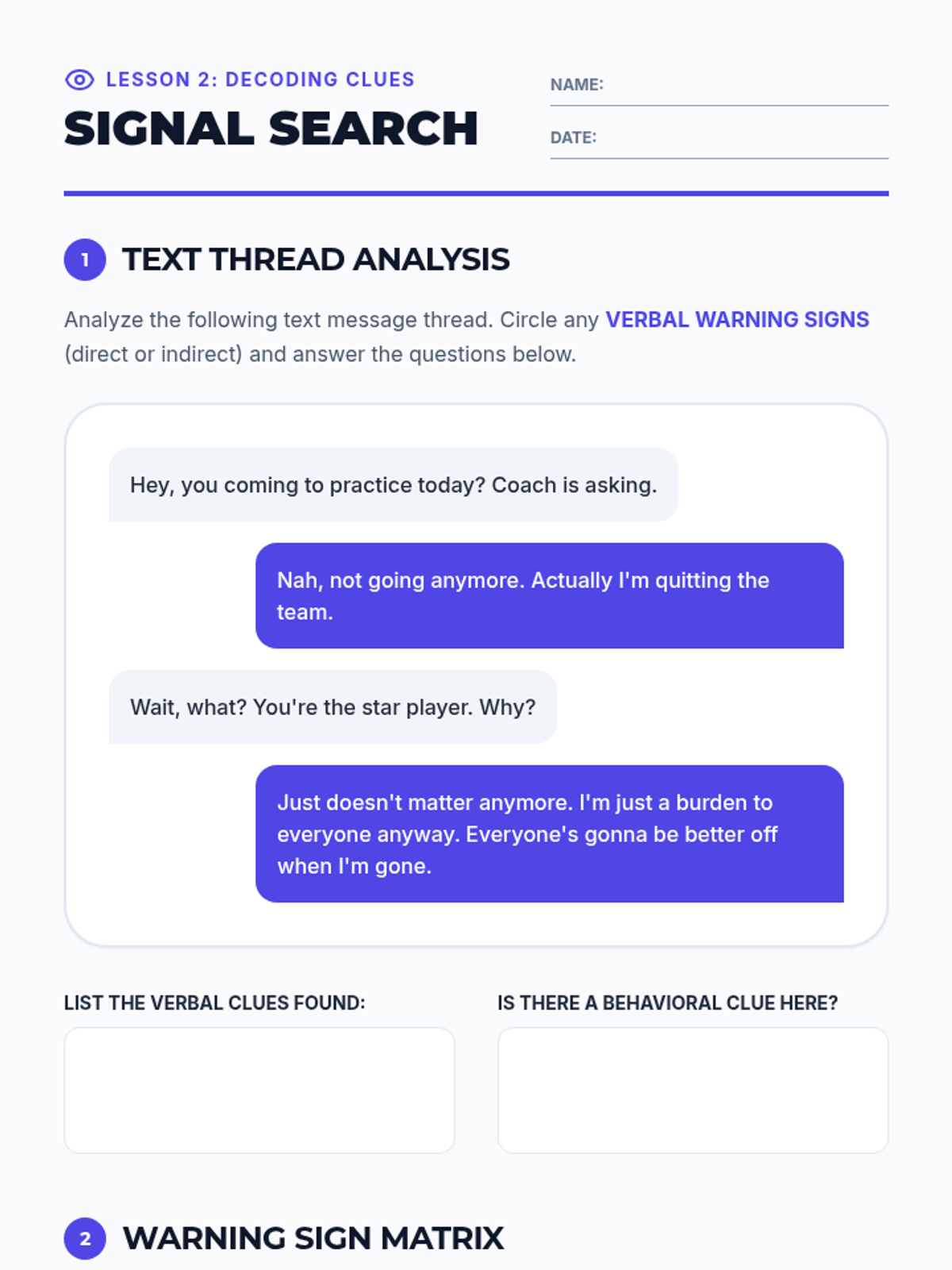
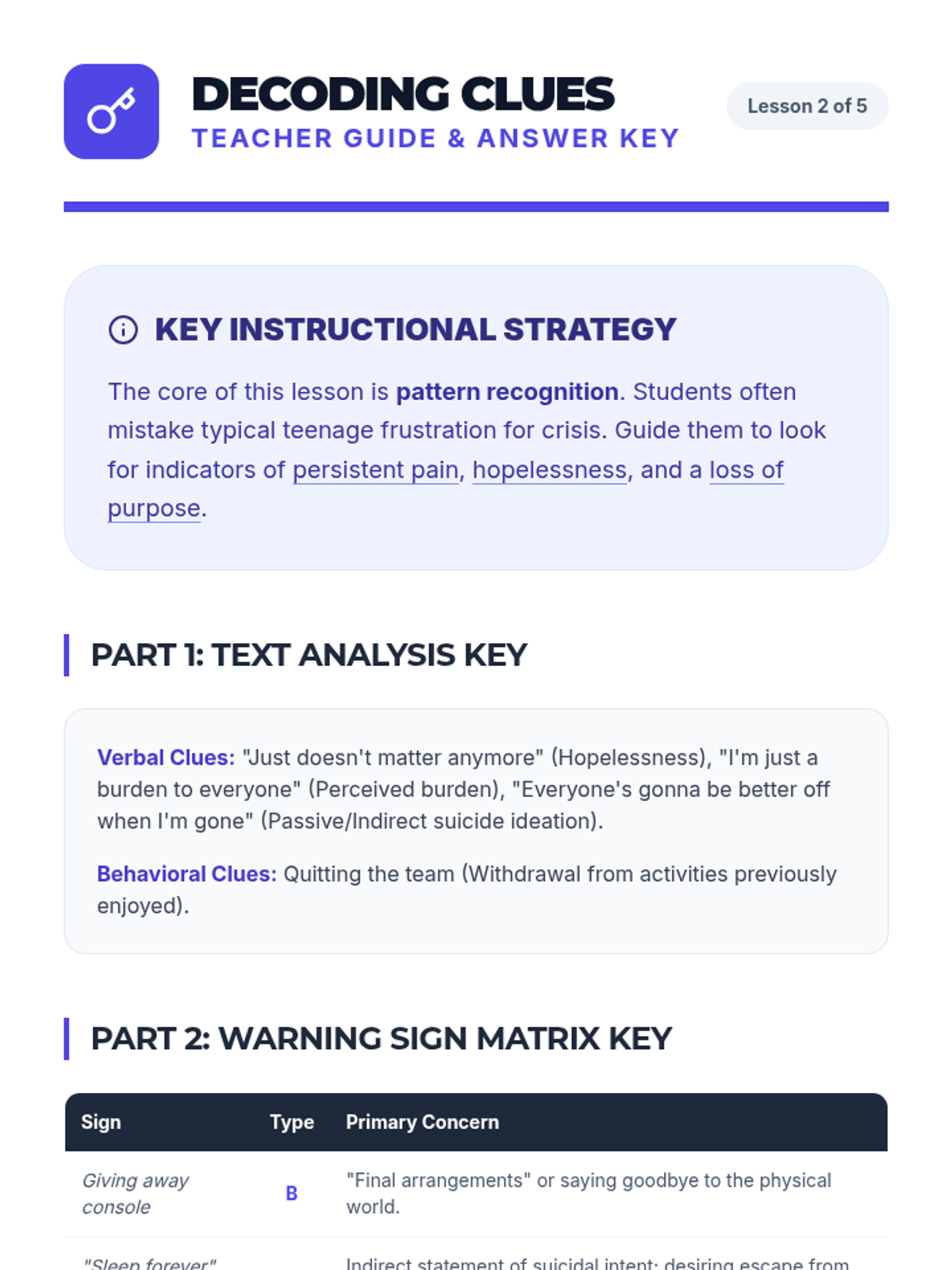
Students analyze direct and indirect verbal clues of distress through fictional text messages and dialogue. They create a 'Warning Sign Matrix' to categorize behavioral changes like withdrawal and giving away possessions.
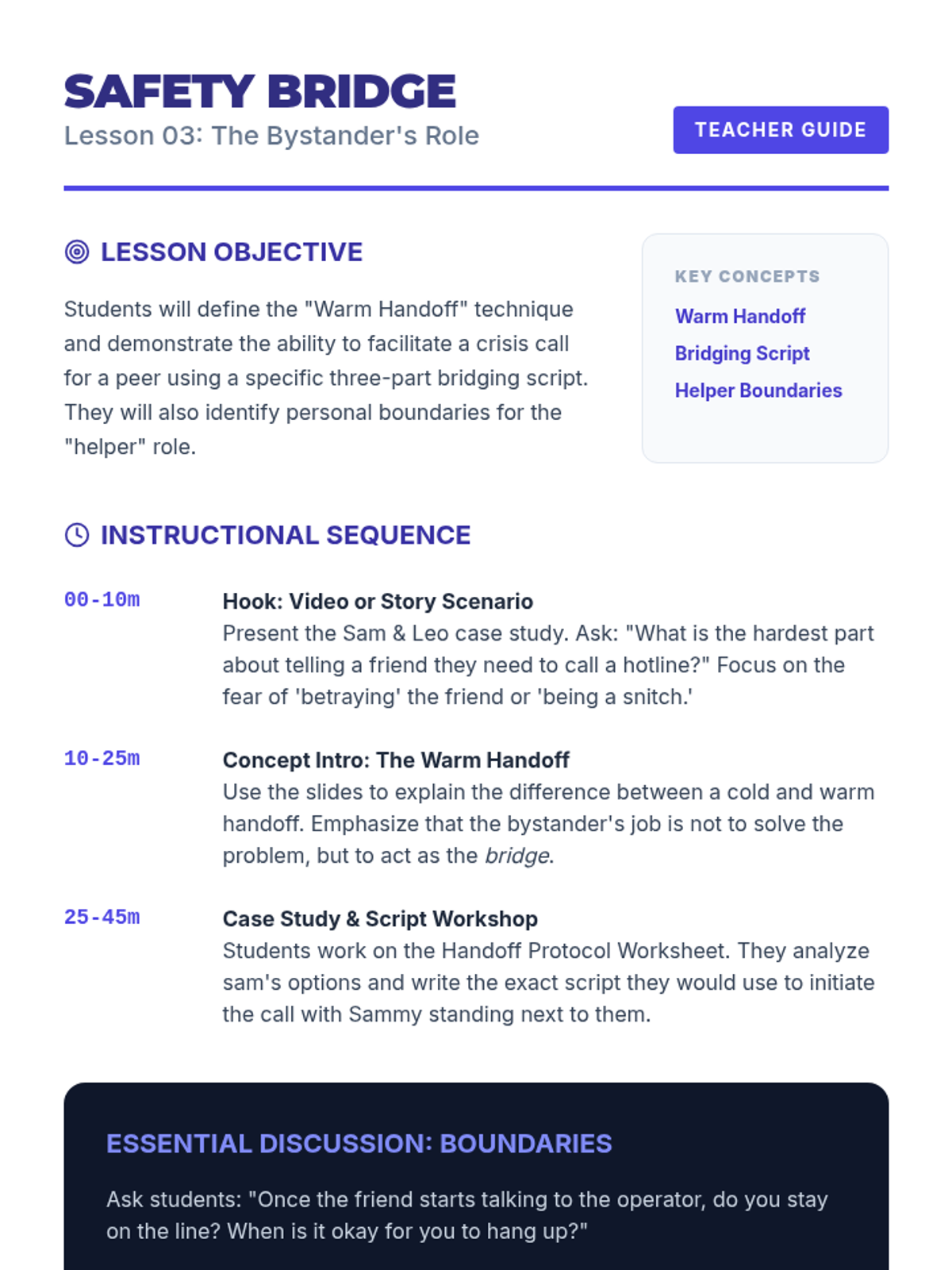
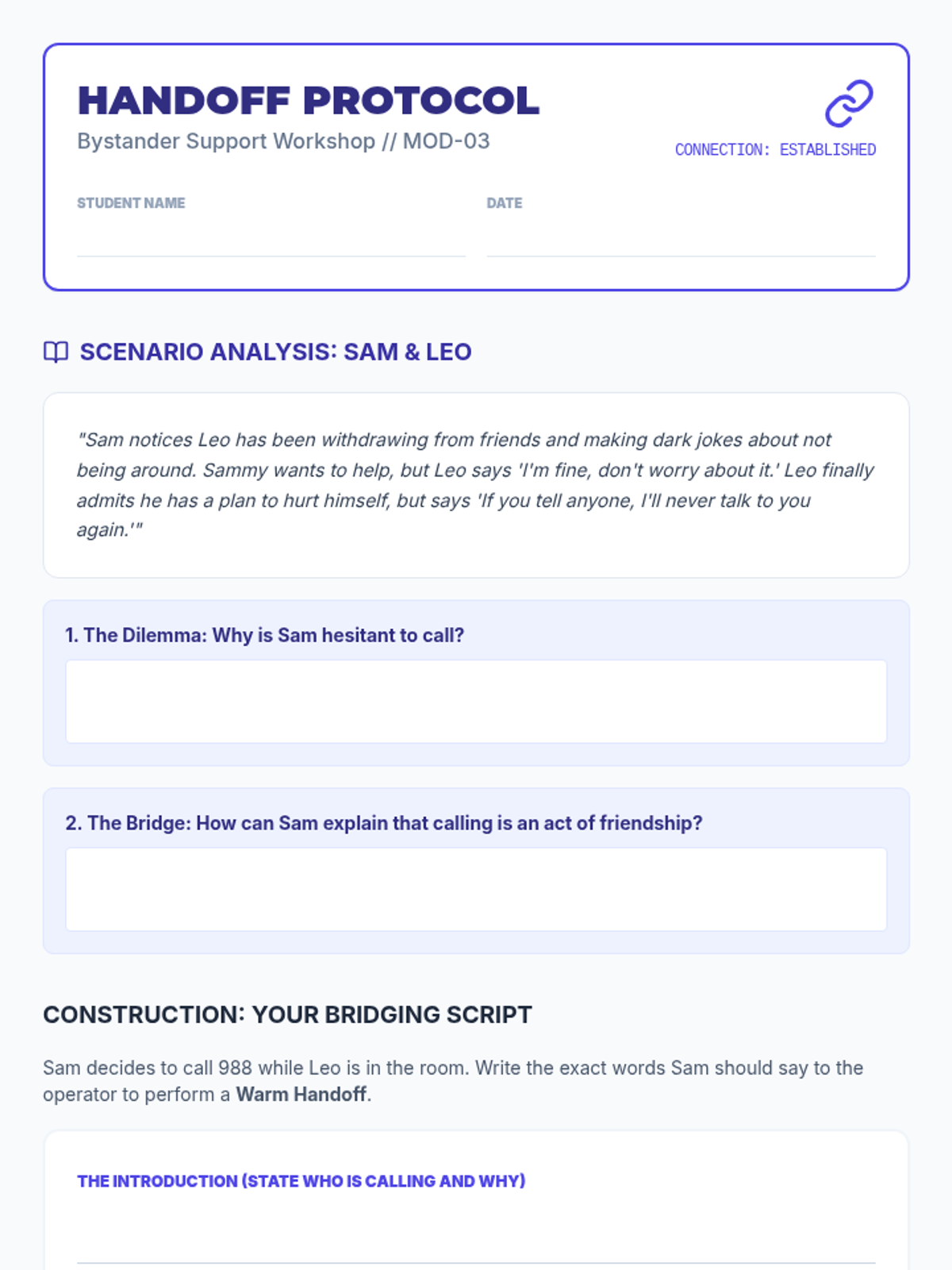
Students learn how to support a friend by making the call with them or for them. The lesson focuses on the concept of a 'warm handoff'—staying on the line until the professional takes over—and the specific language to use to bridge the gap.
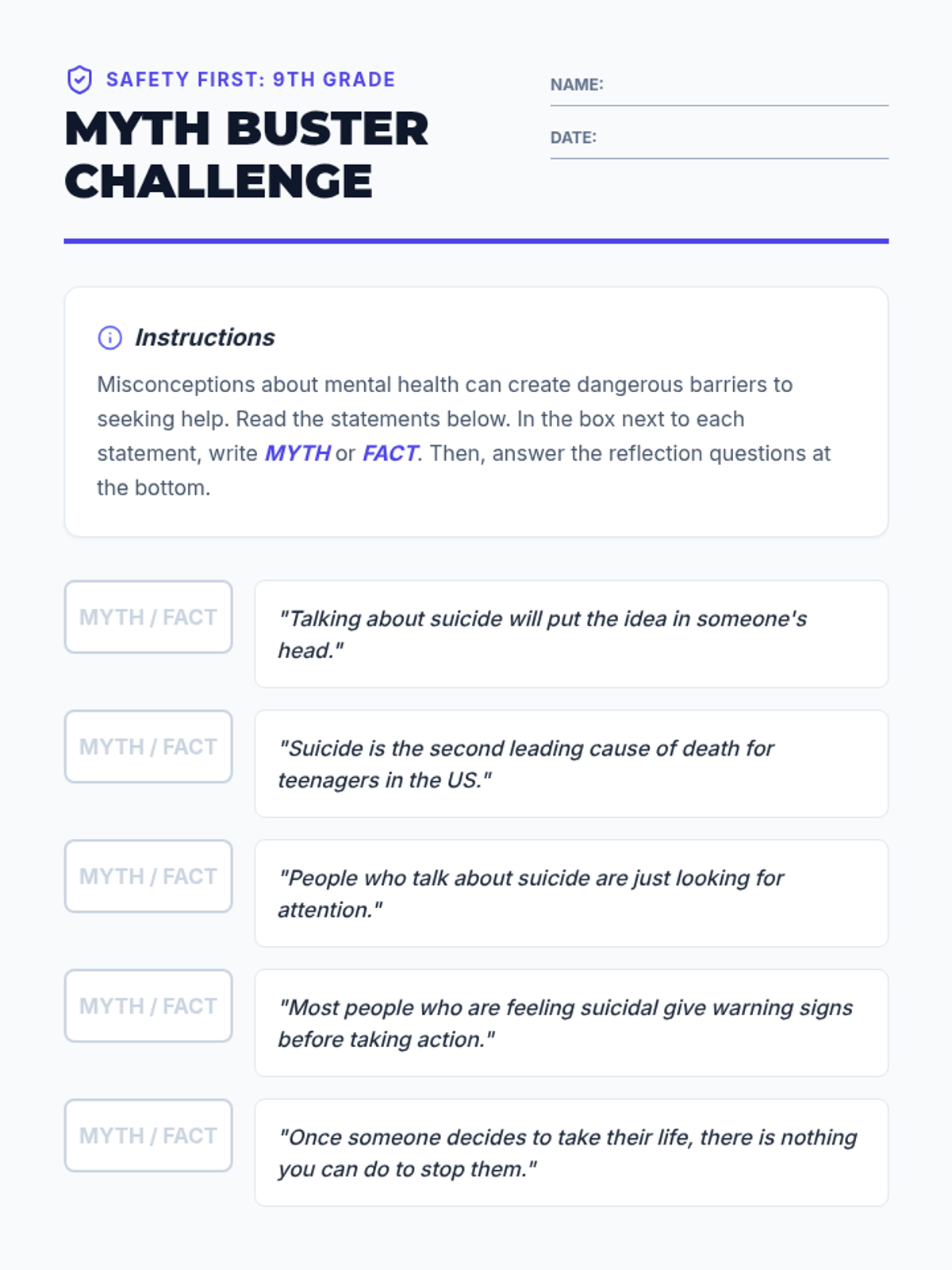
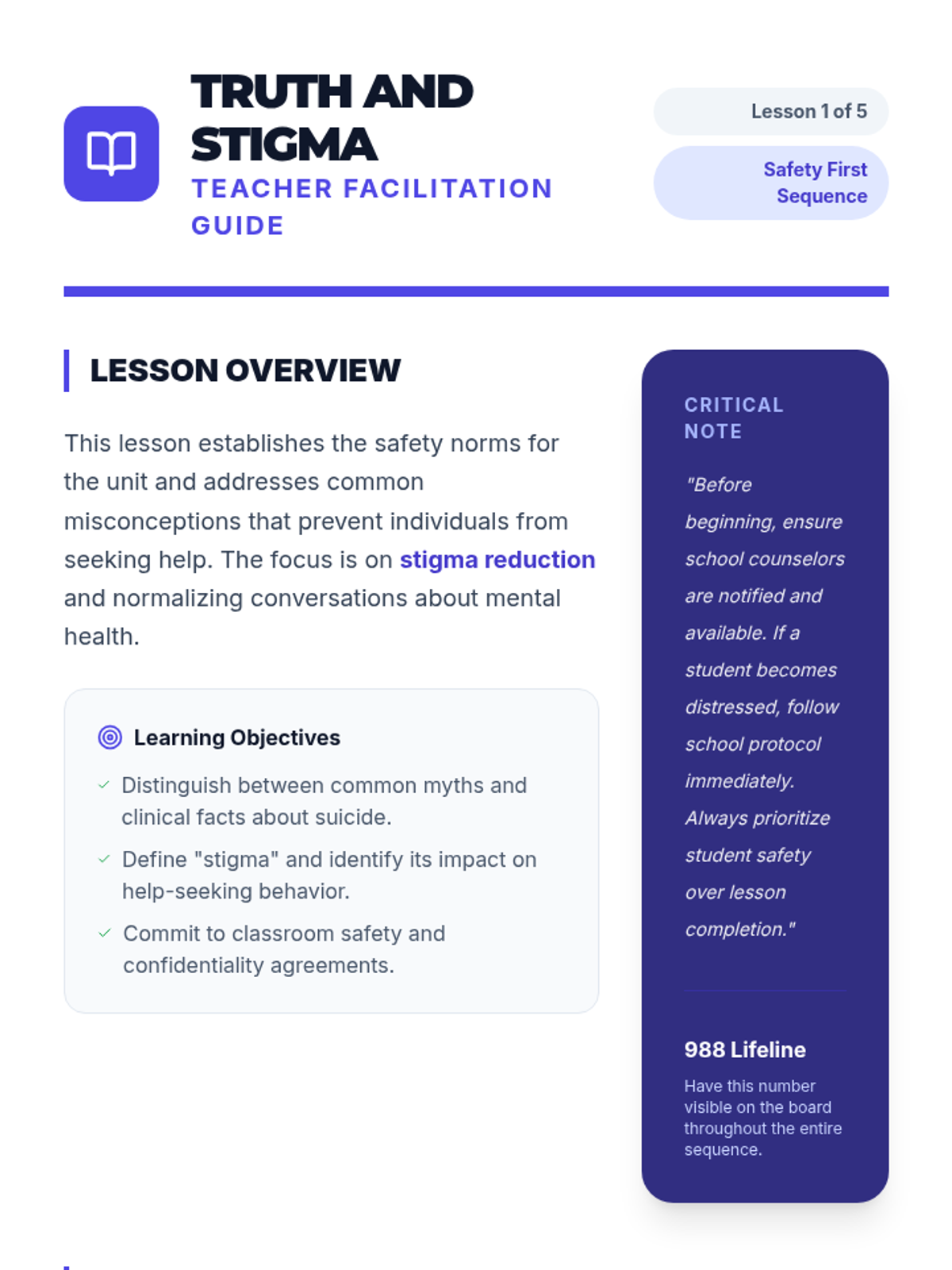
Students address common misconceptions about suicide and mental health through a 'Myth vs. Fact' sorting activity. The lesson focuses on reducing stigma and establishing a safe, respectful environment for discussing crisis support.
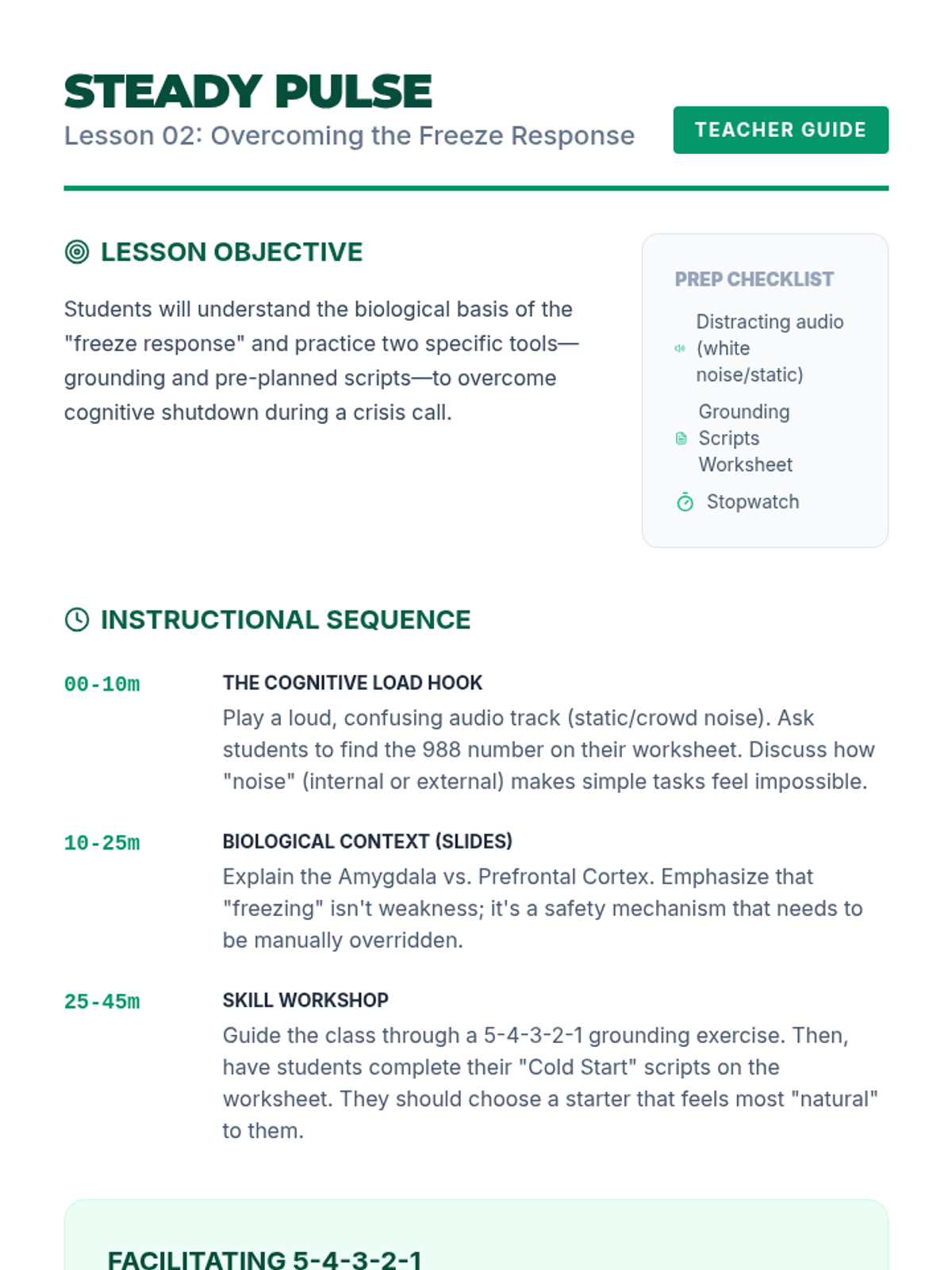
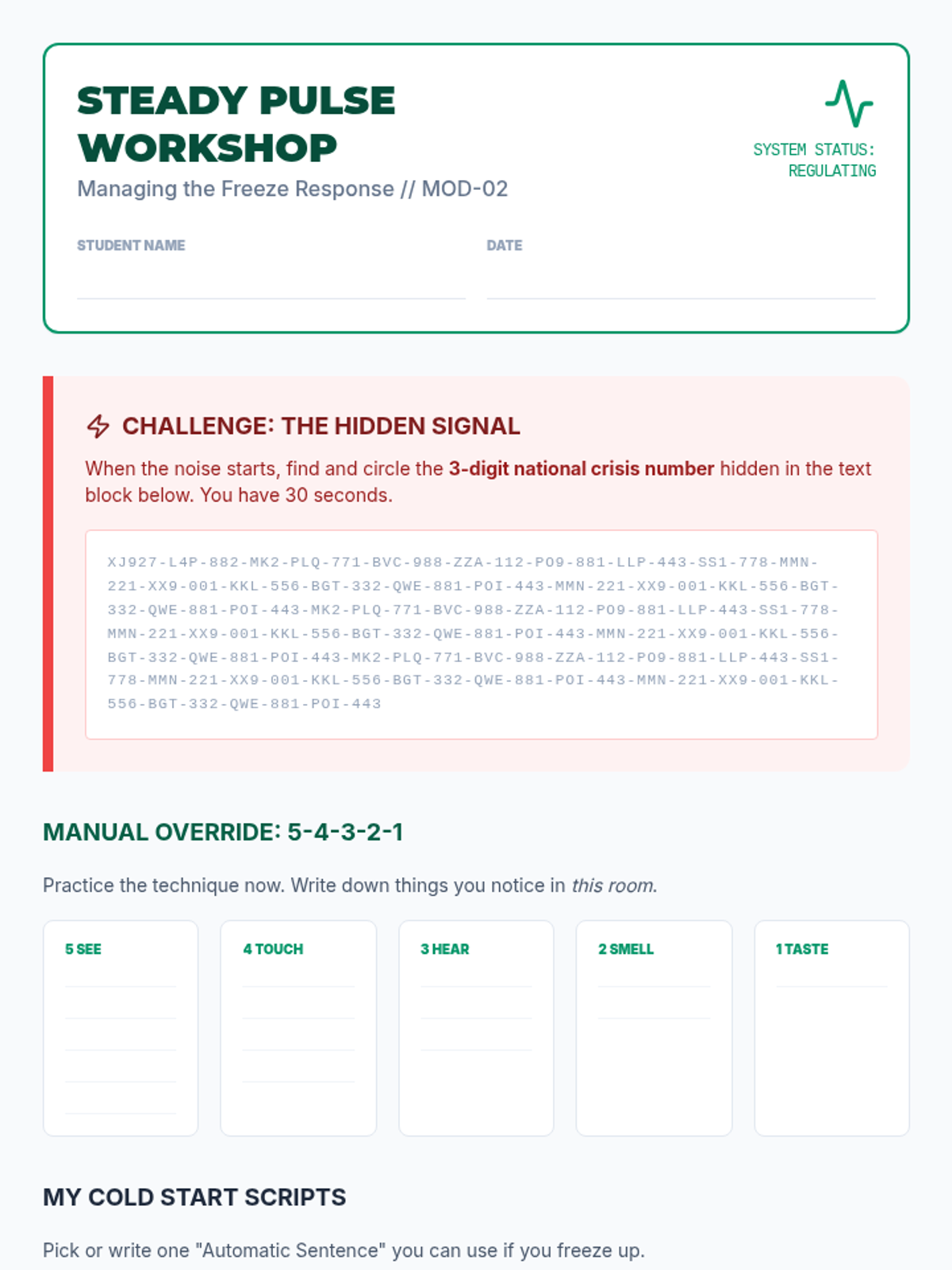
This lesson addresses the physiological stress response that makes speaking difficult during a crisis. Students learn grounding techniques and simple pre-planned scripts (sentence starters) to initiate a call when they are overwhelmed.
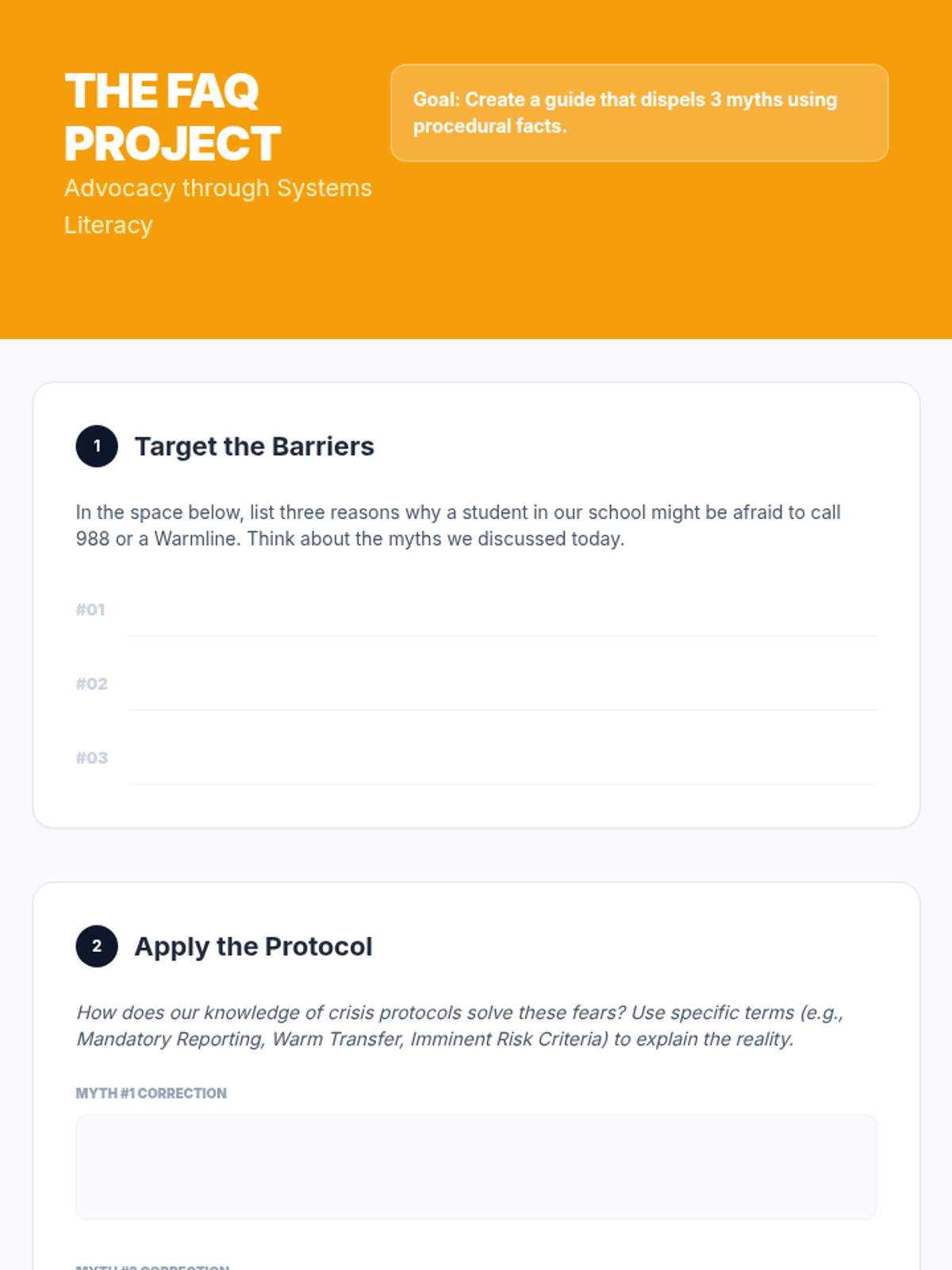
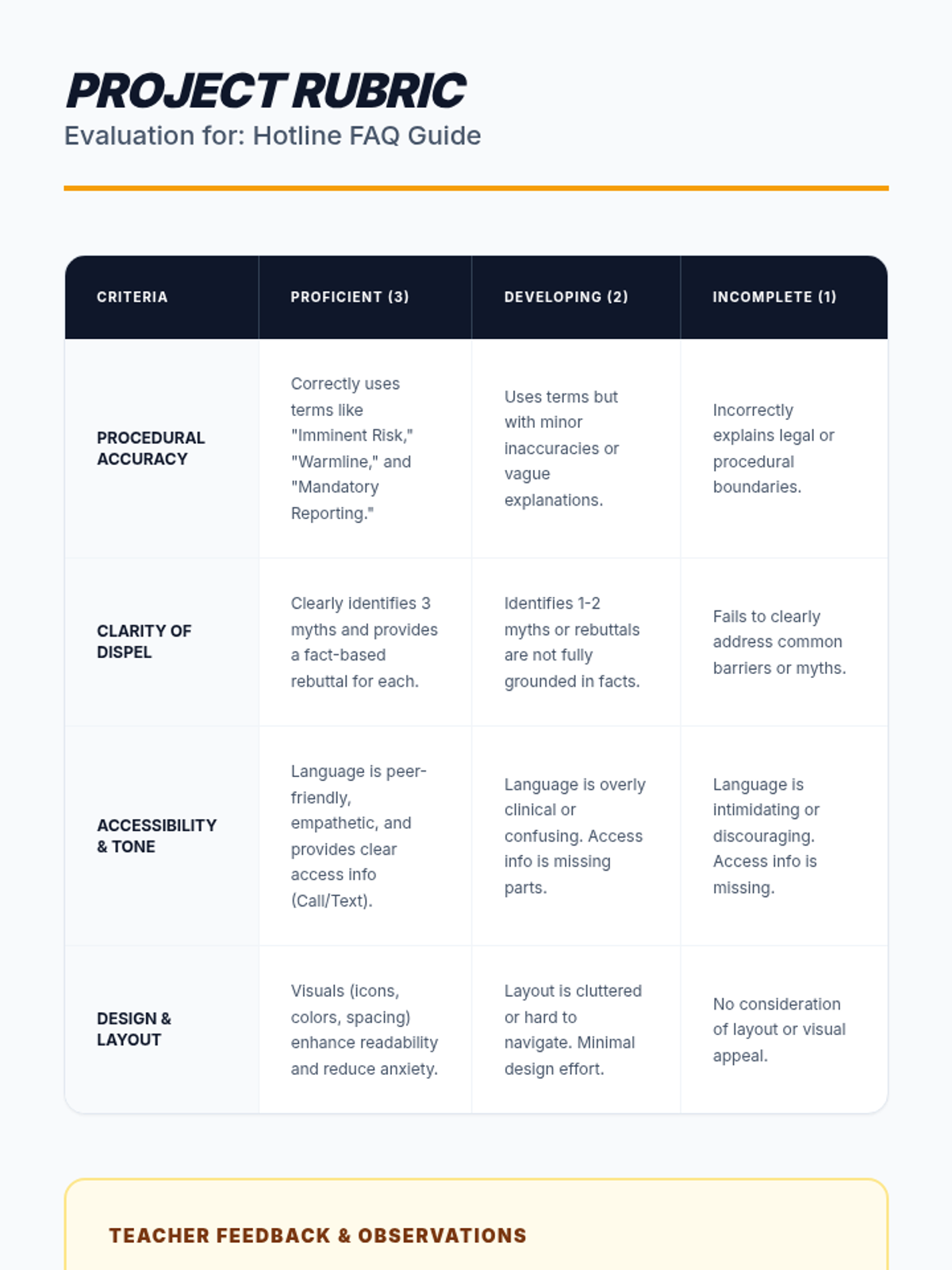
Students address psychological and logistical barriers to seeking help. They use their procedural knowledge to create FAQ guides that dispel myths and reduce the fear of calling a hotline.
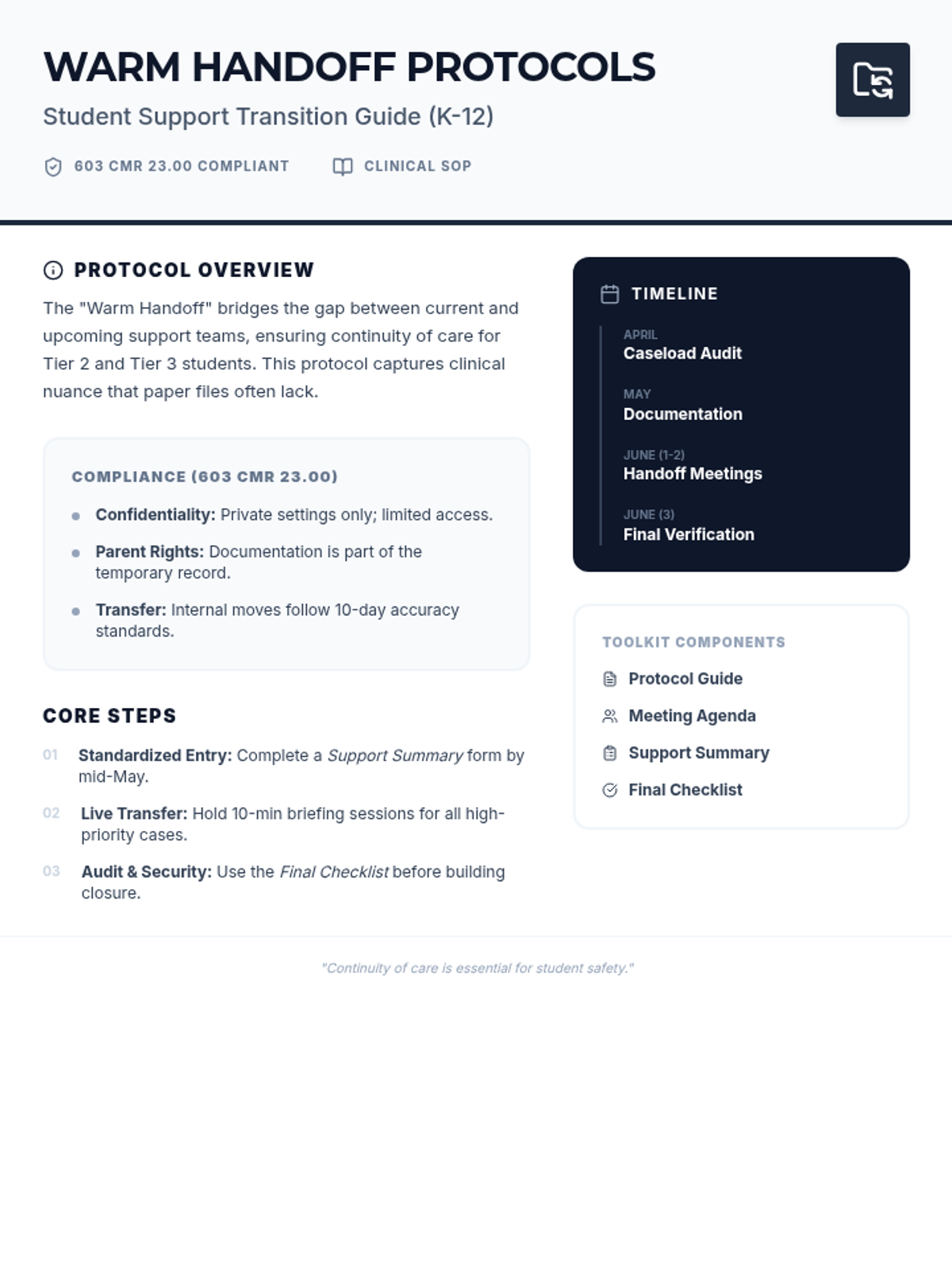
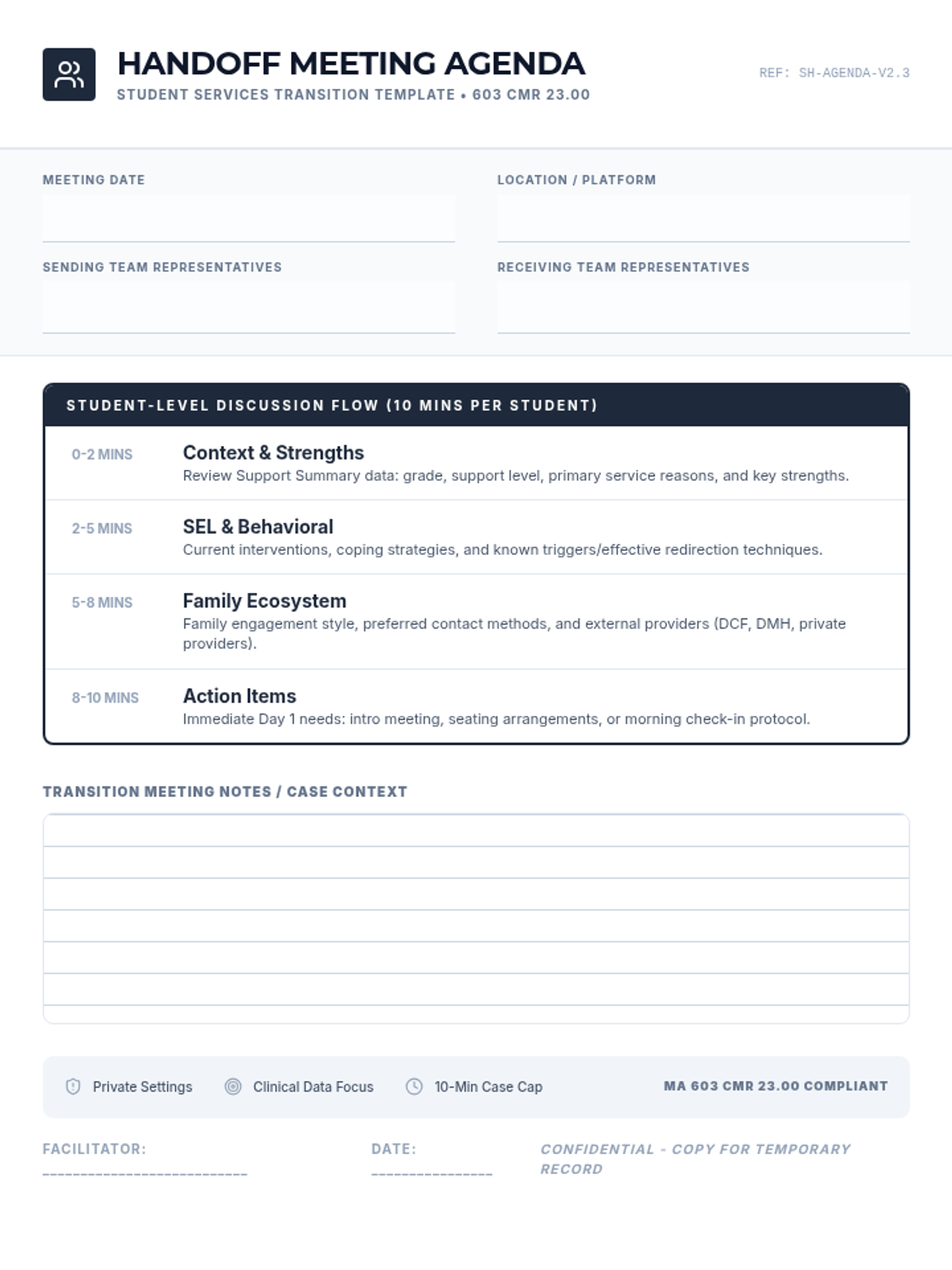
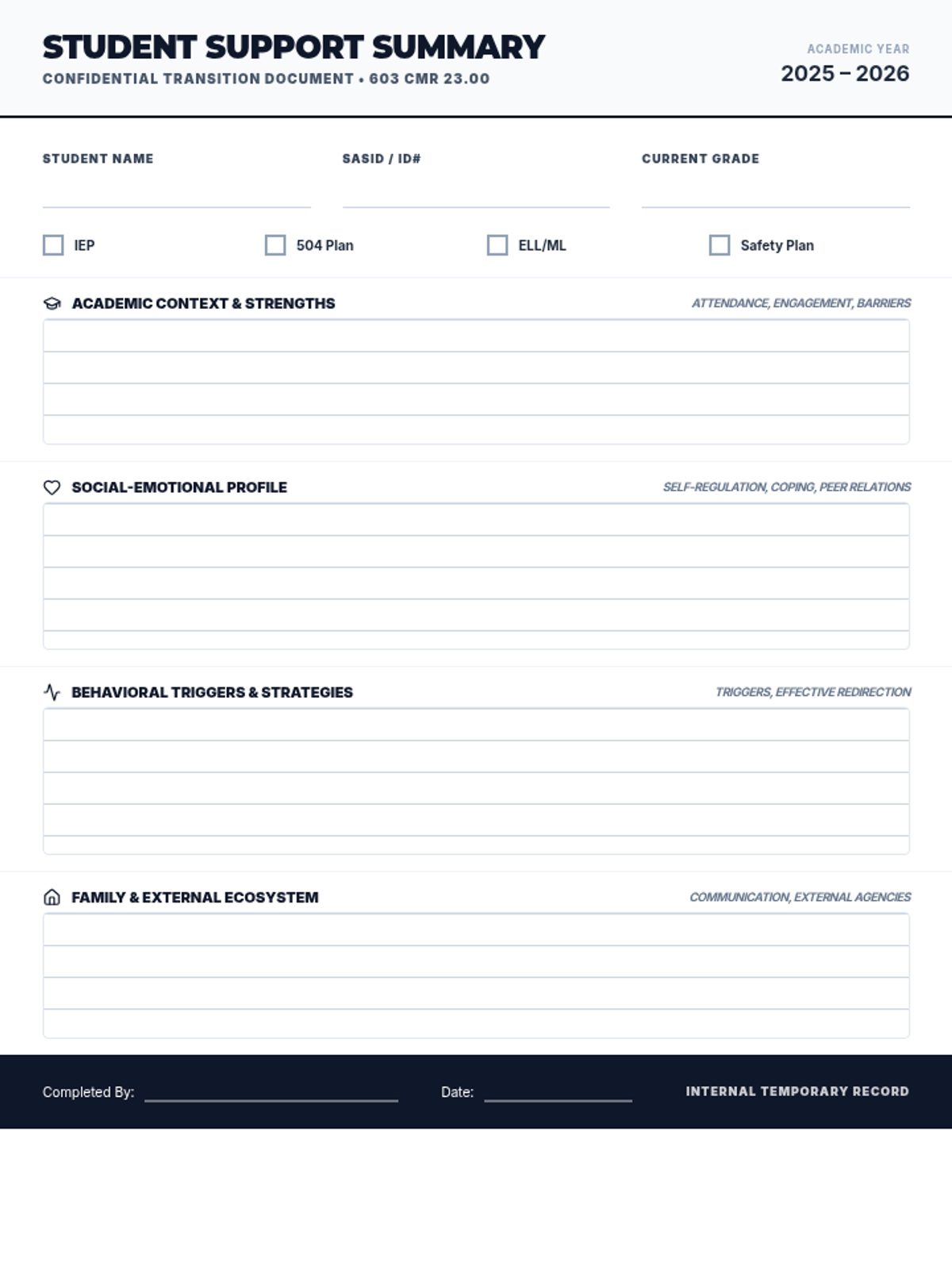
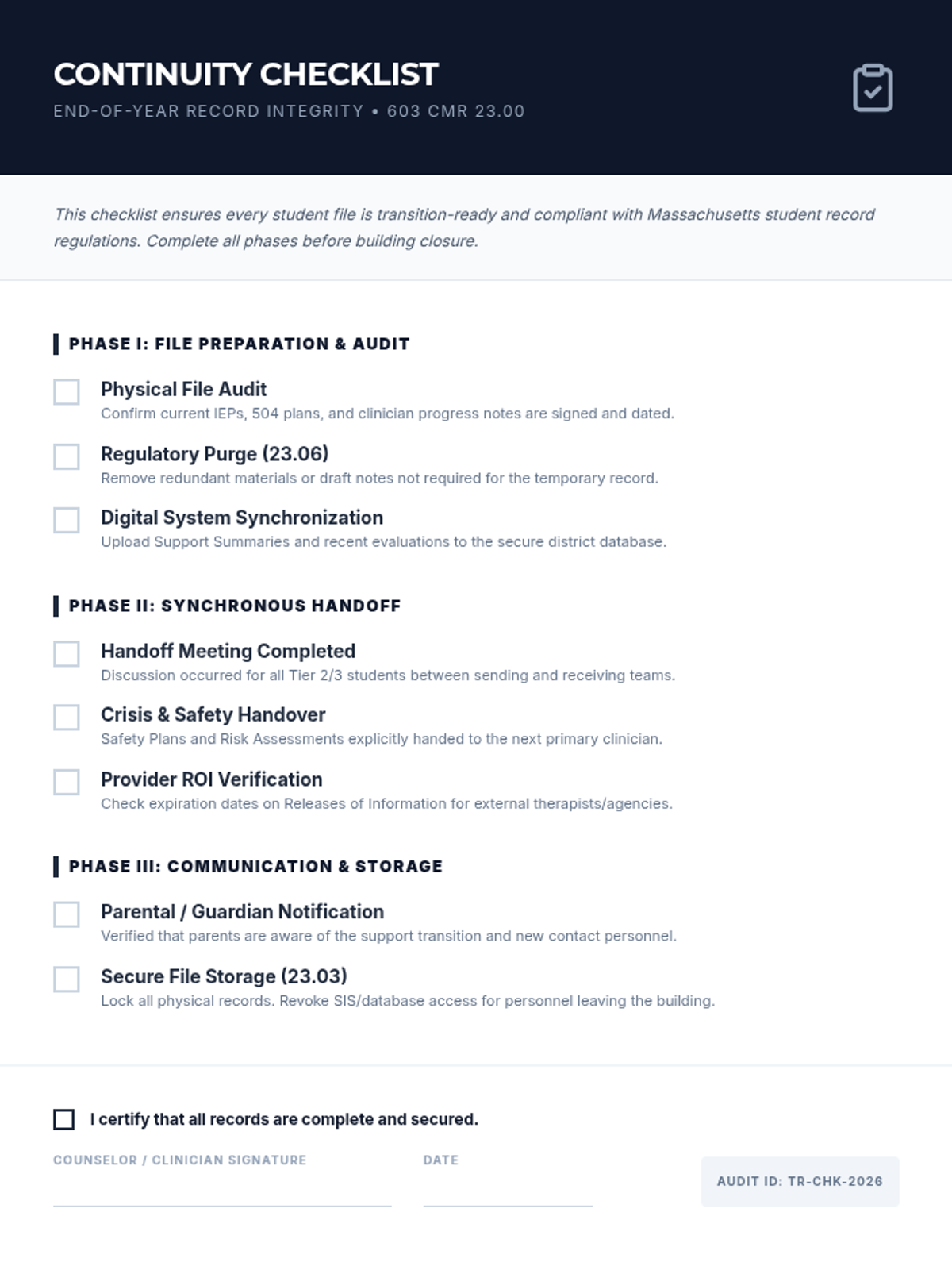
A comprehensive toolkit for K-12 school counselors and student services teams to ensure continuity of care during end-of-year transitions. It includes protocol guides, meeting structures, and documentation templates aligned with Massachusetts student records regulations.
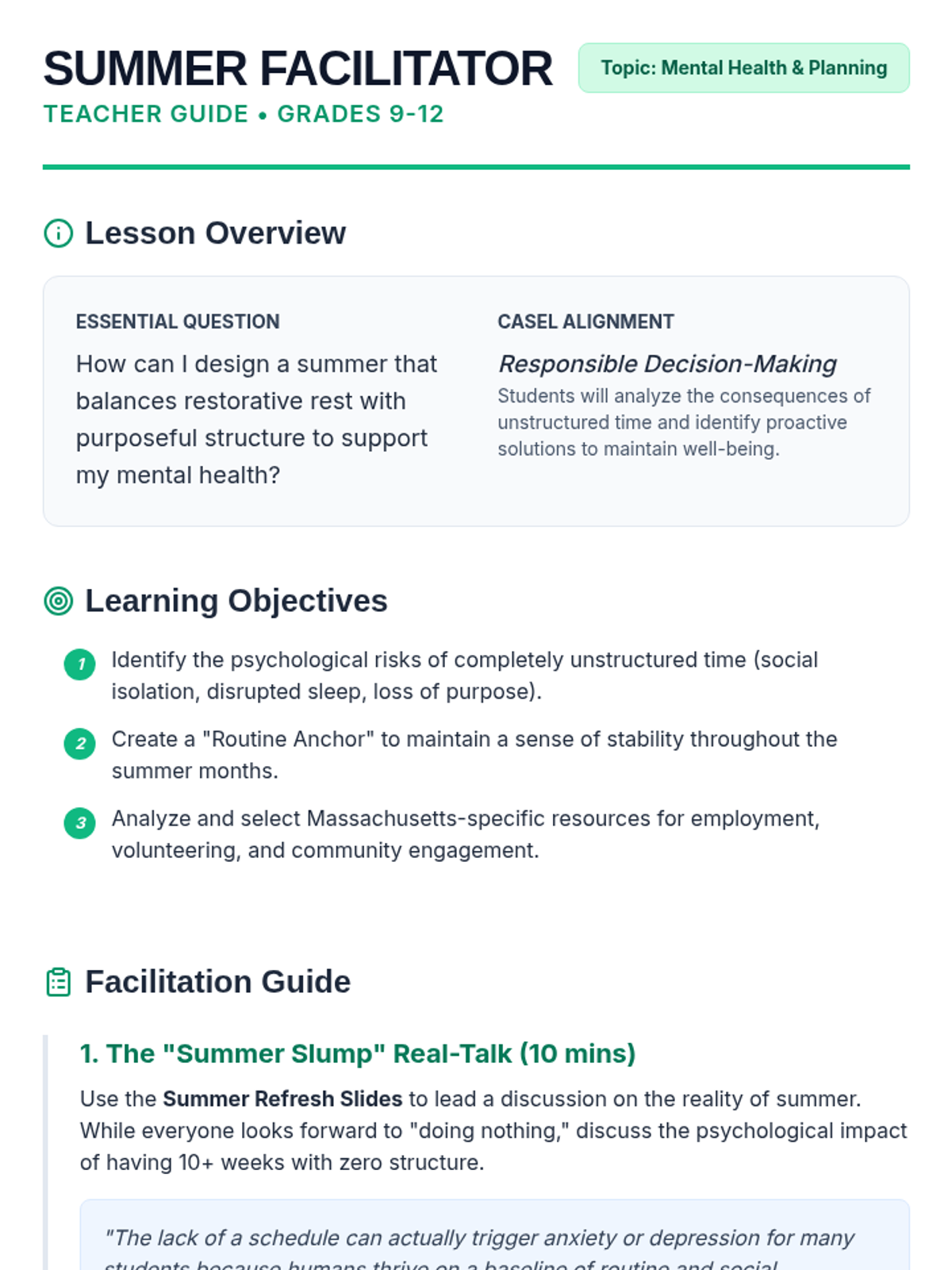
A high school counseling lesson designed to help students create a balanced, purposeful summer plan that supports mental health. It covers the risks of unstructured time, the importance of routine, and connects students with Massachusetts-specific resources.
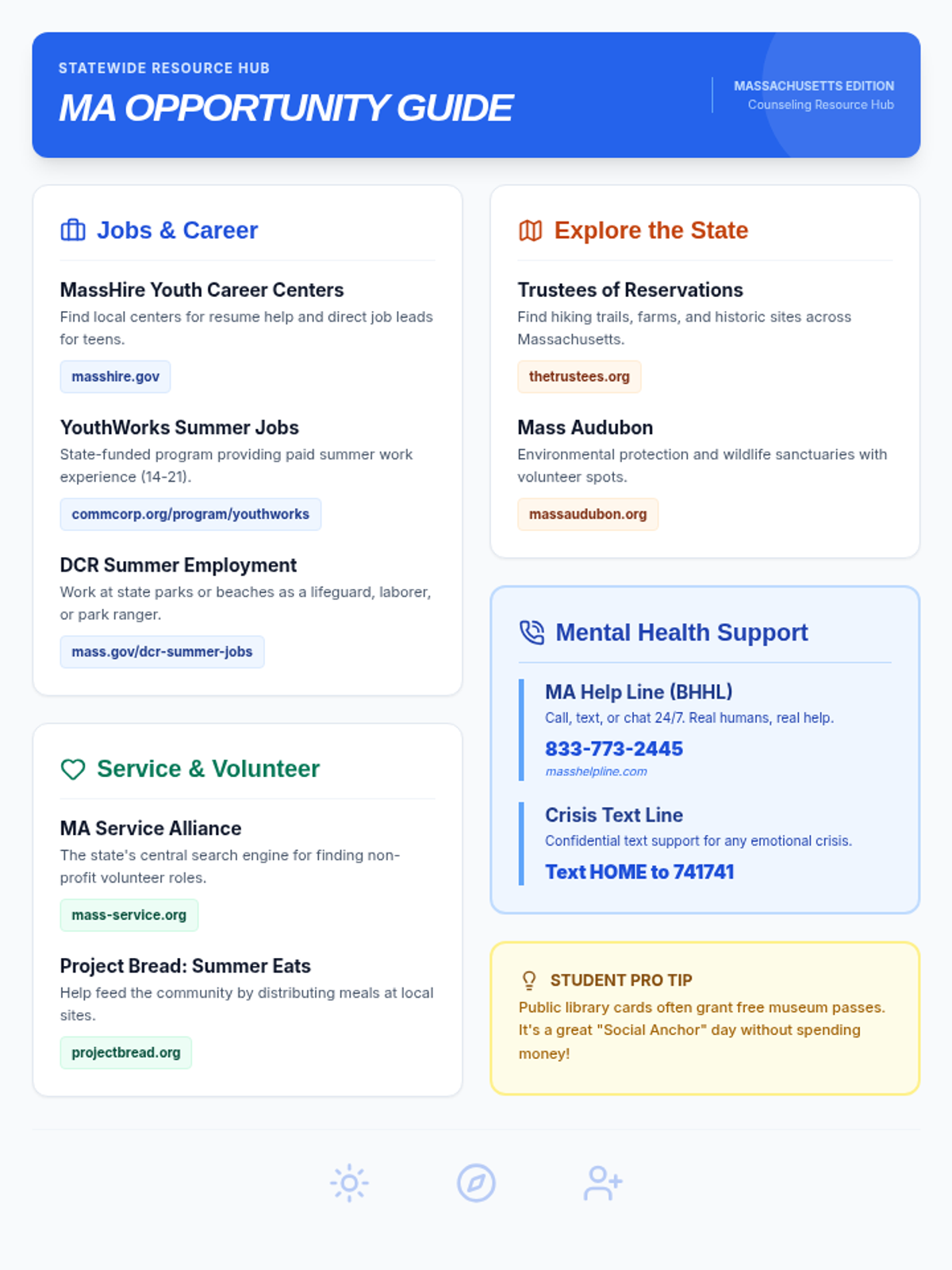
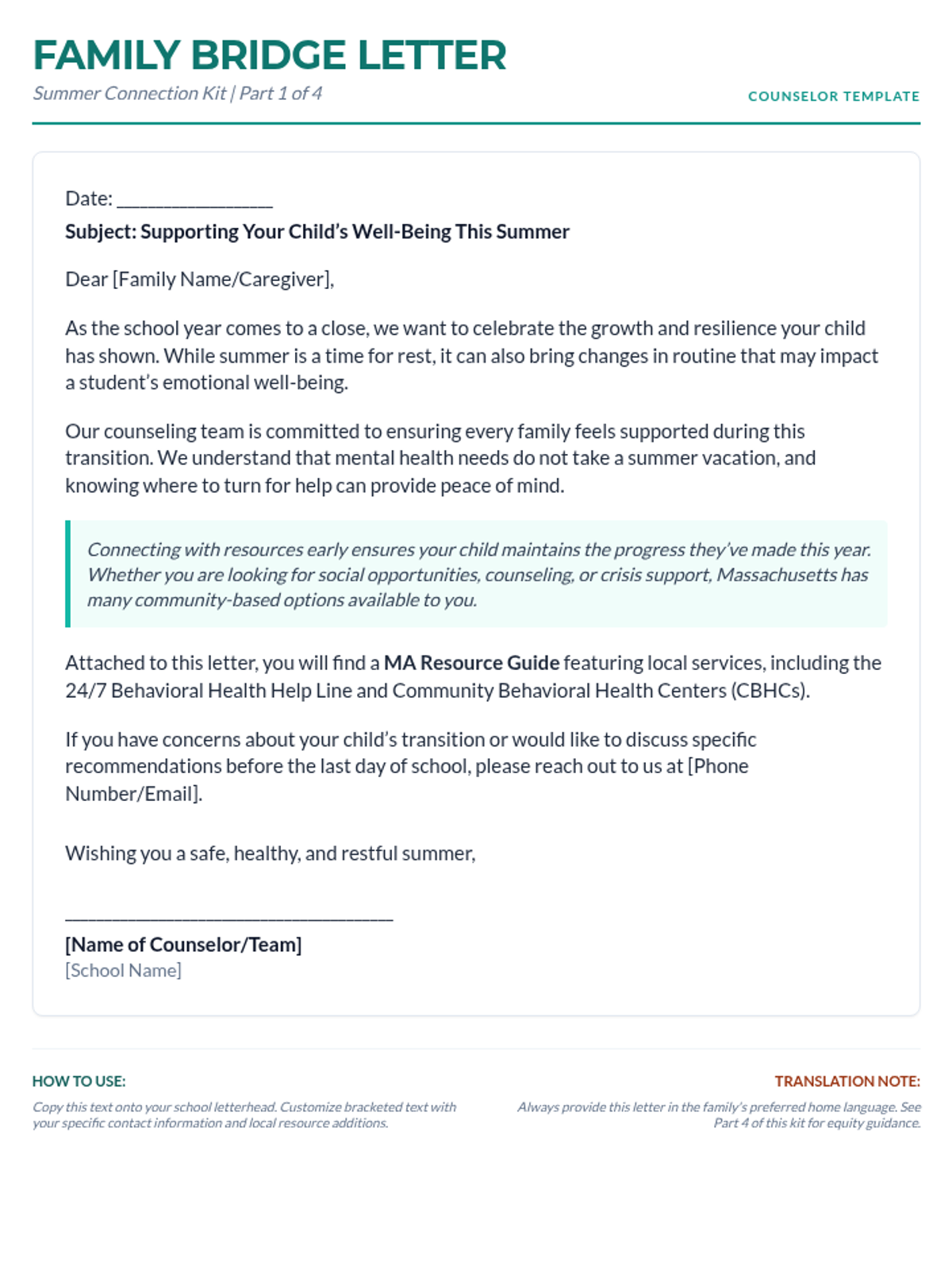
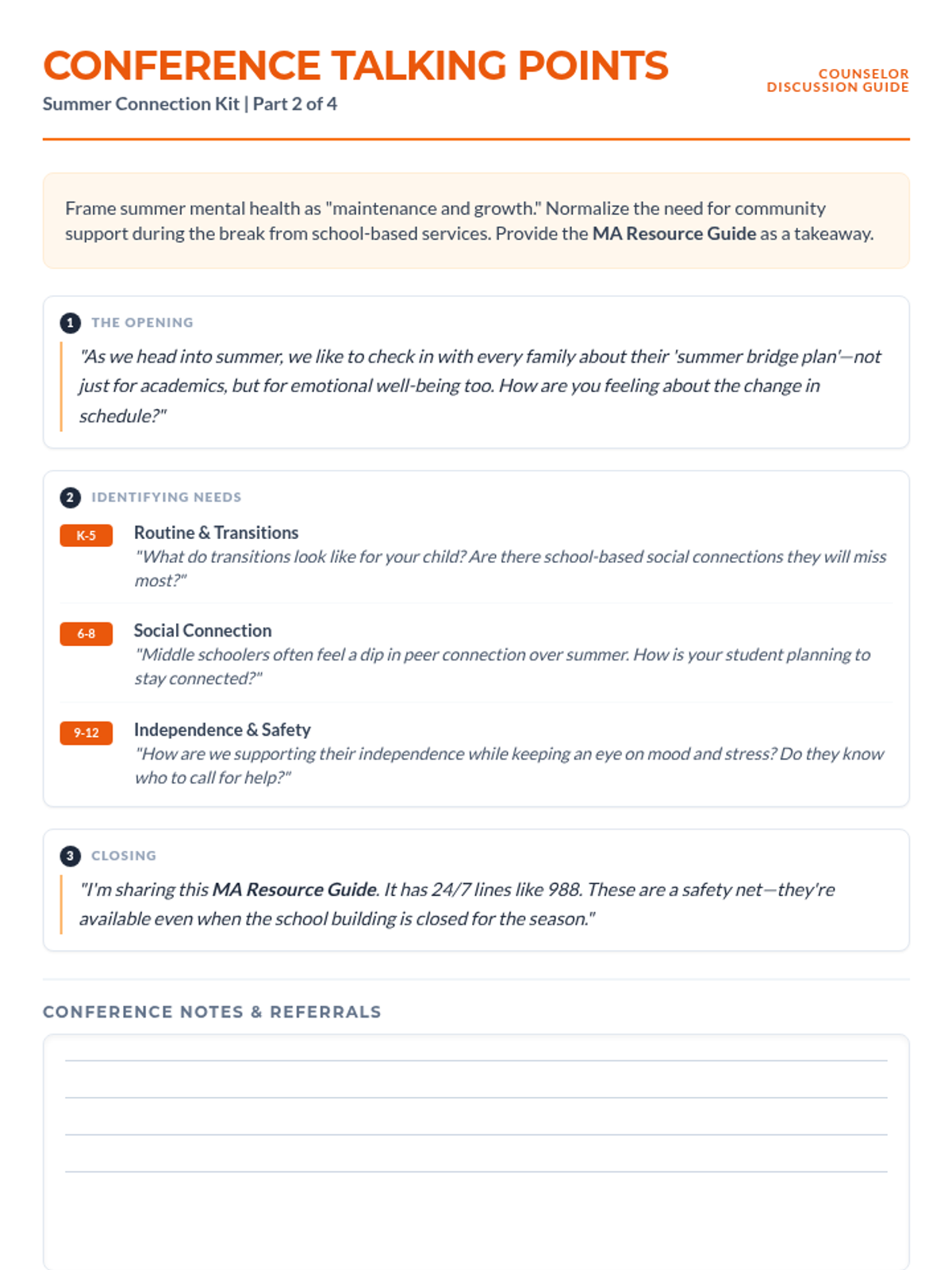
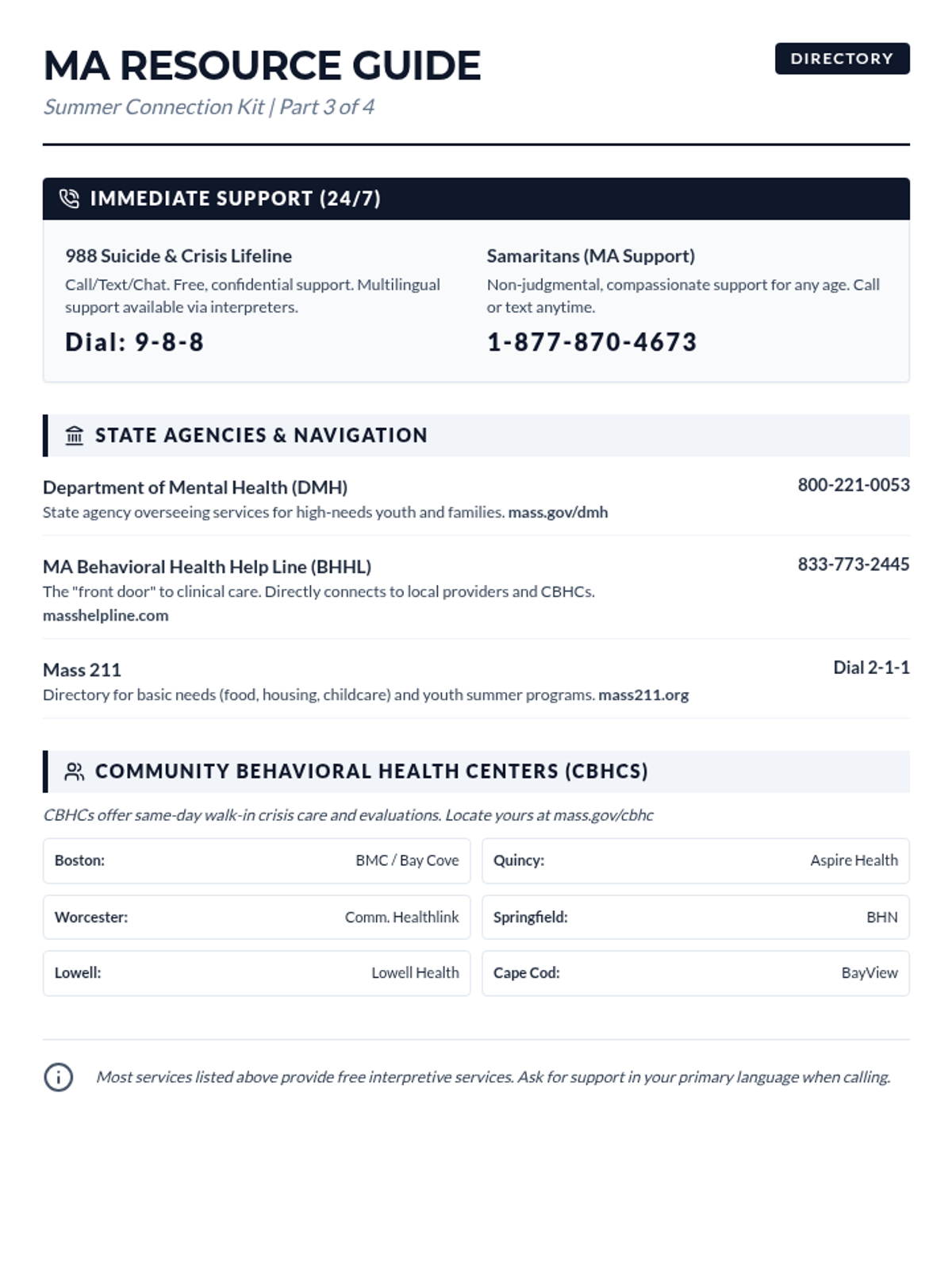
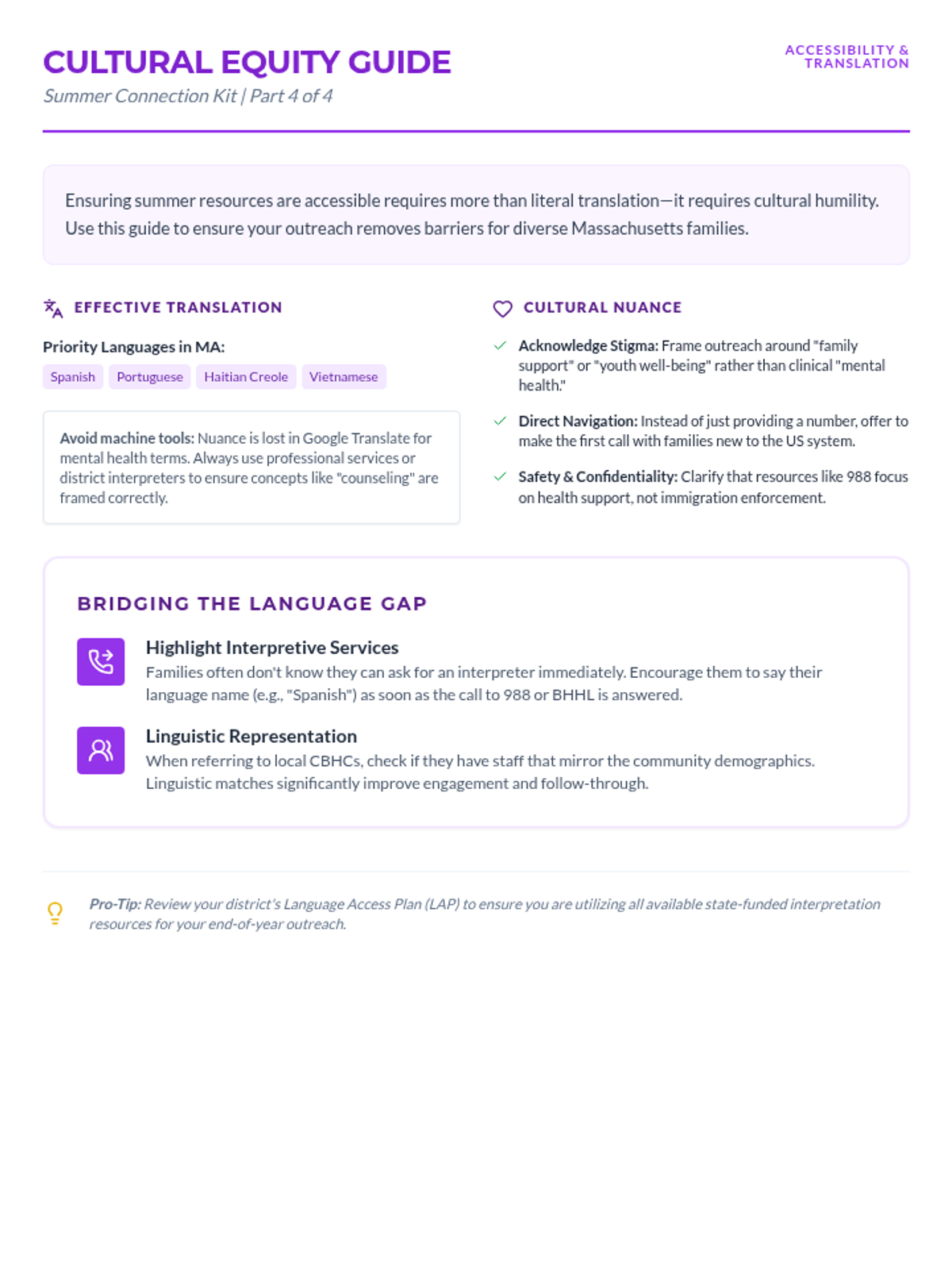
A comprehensive toolkit for school counselors to bridge the gap between school-year support and summer mental health resources for families in Massachusetts.
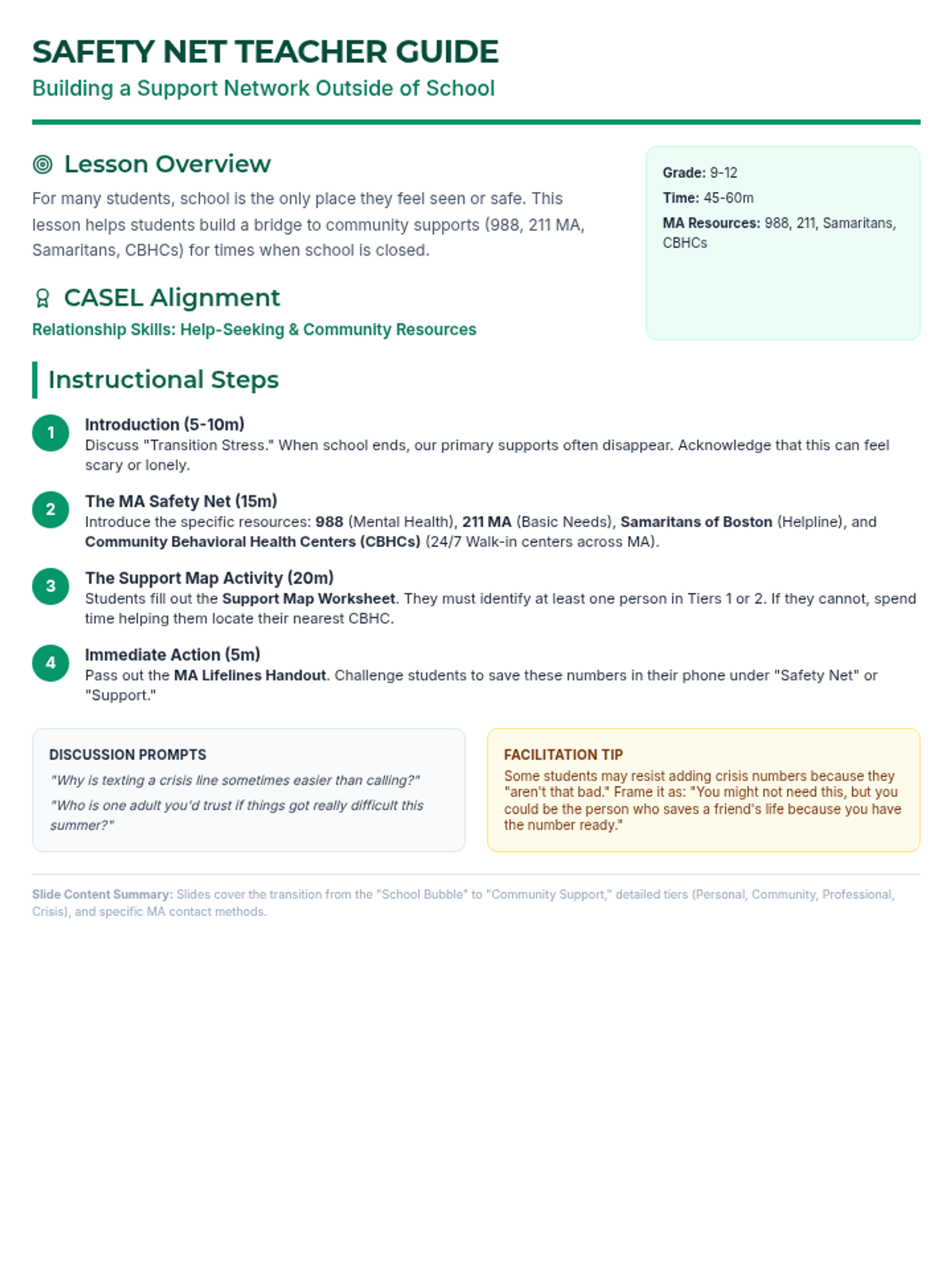
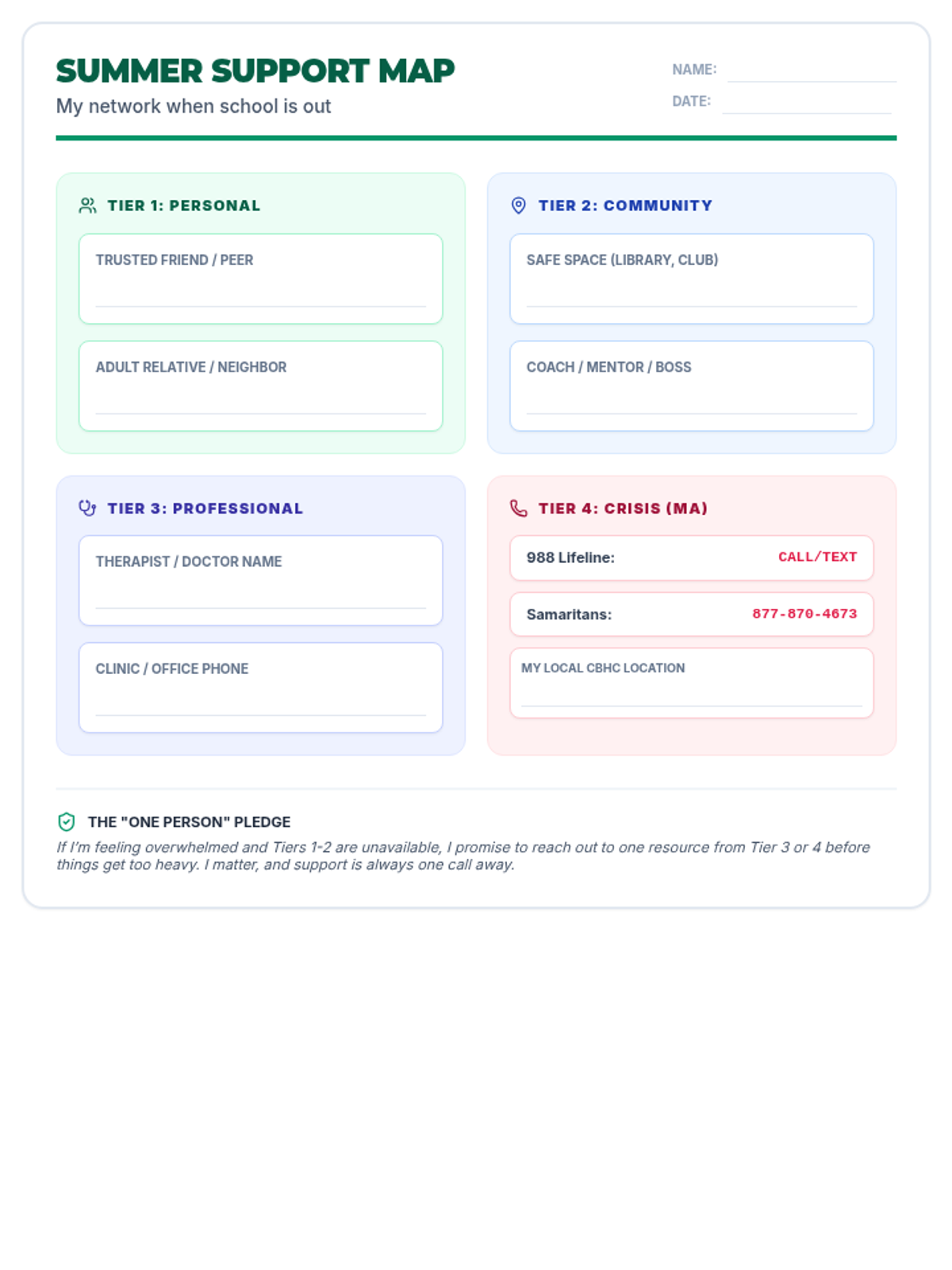
A high school counseling lesson focused on identifying and accessing mental health support resources outside of the school environment, specifically designed for breaks and summer transitions. Students will map out their personal support systems and learn about Massachusetts-specific crisis resources.
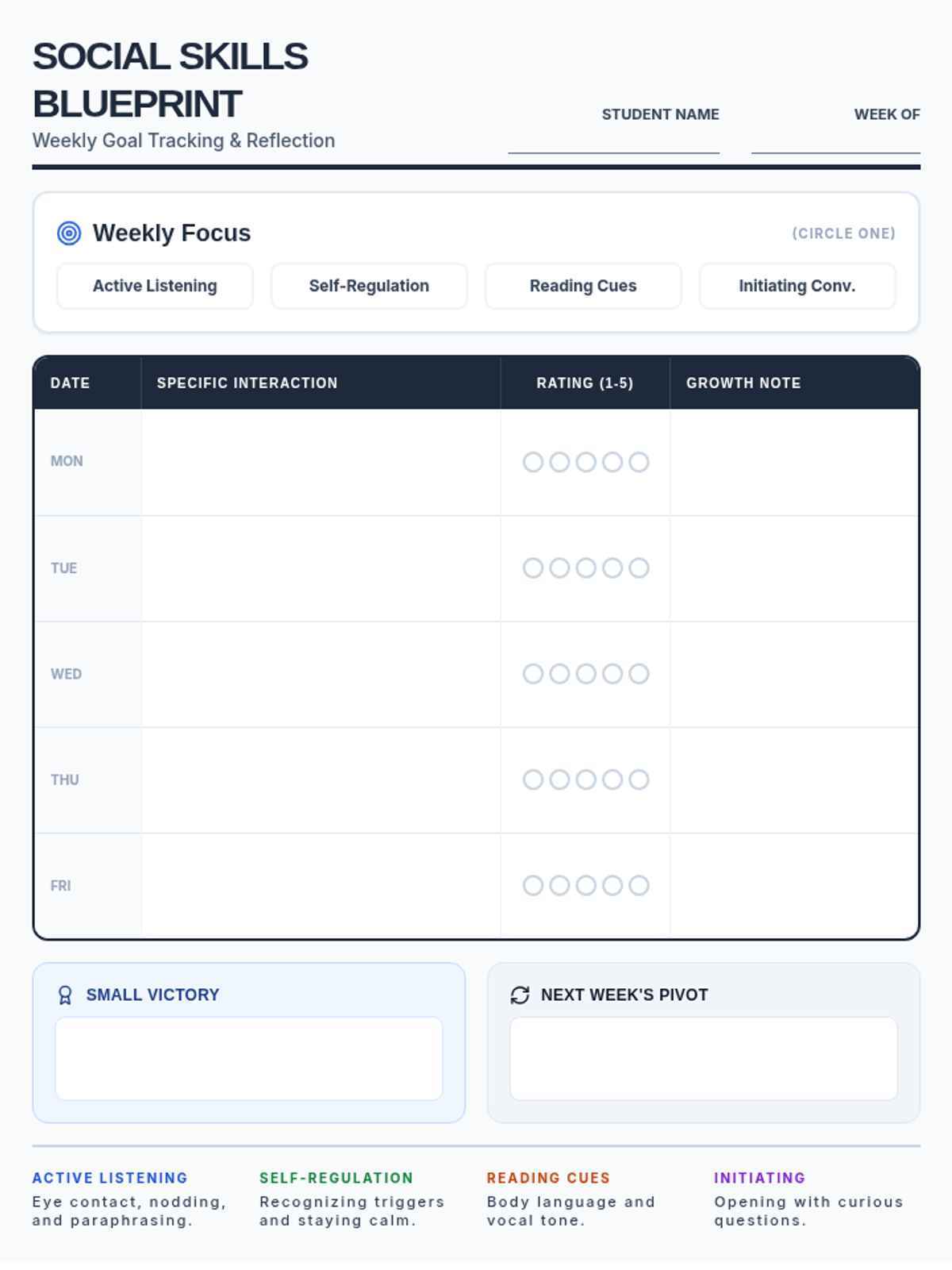
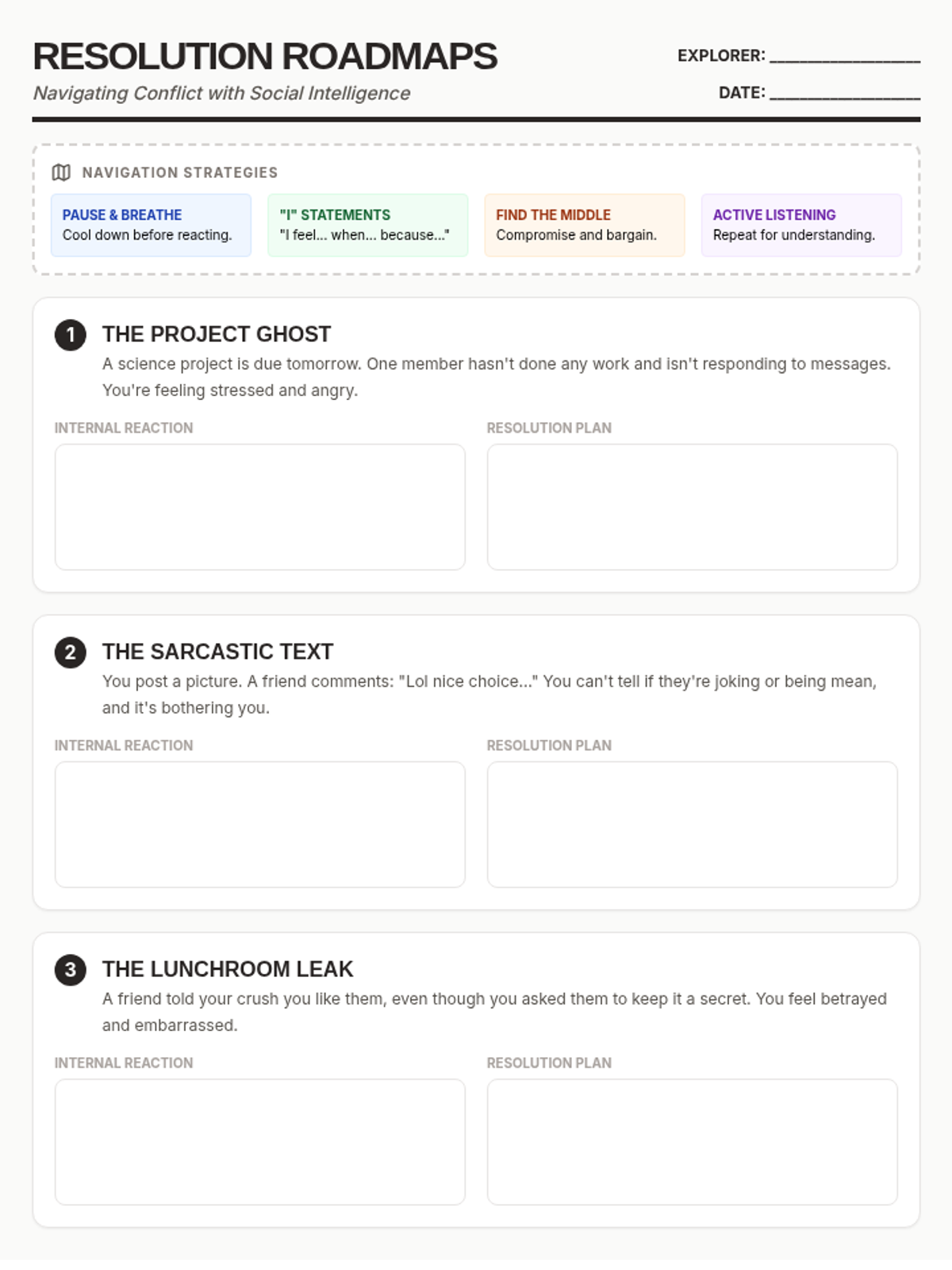
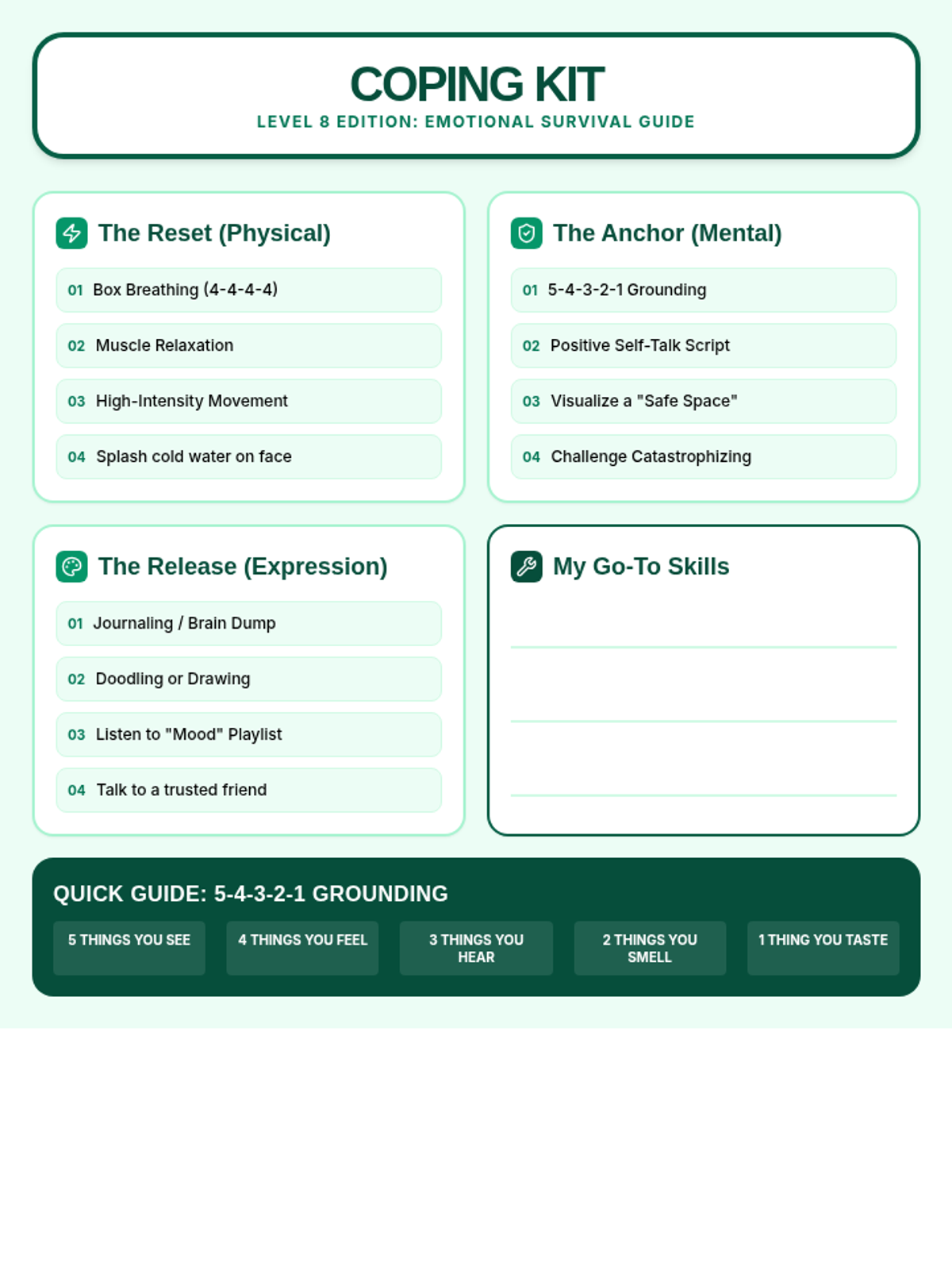
A comprehensive set of resources for middle and high school students focused on developing social-emotional intelligence, mental health awareness, and practical coping strategies. This lesson provides tools for self-tracking, group discussion, and hands-on practice with real-world scenarios.
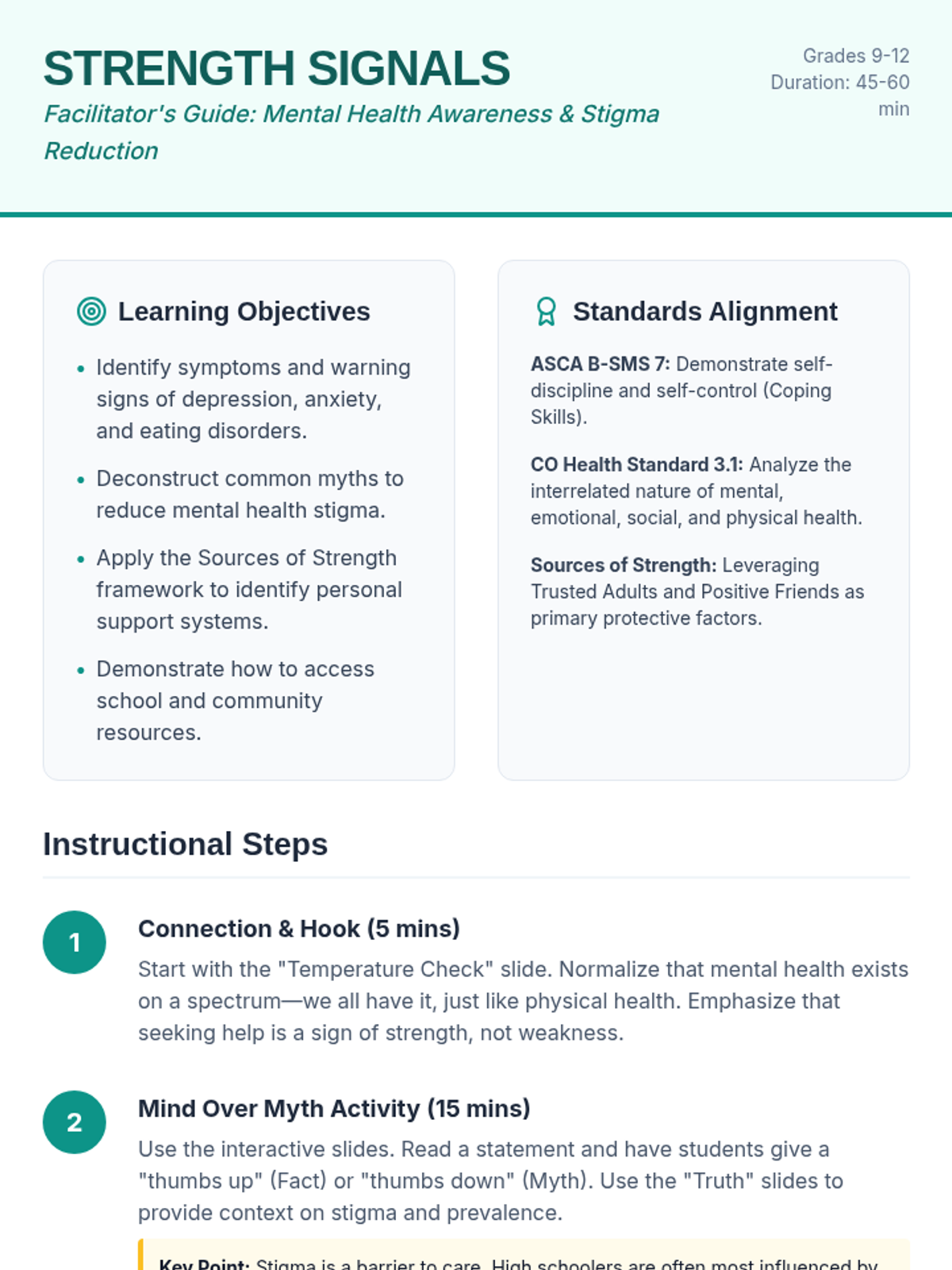
A high school guidance lesson focused on mental health awareness, destigmatization, and resource navigation using the Sources of Strength framework. Students will identify warning signs, debunk myths, and map out their support systems.
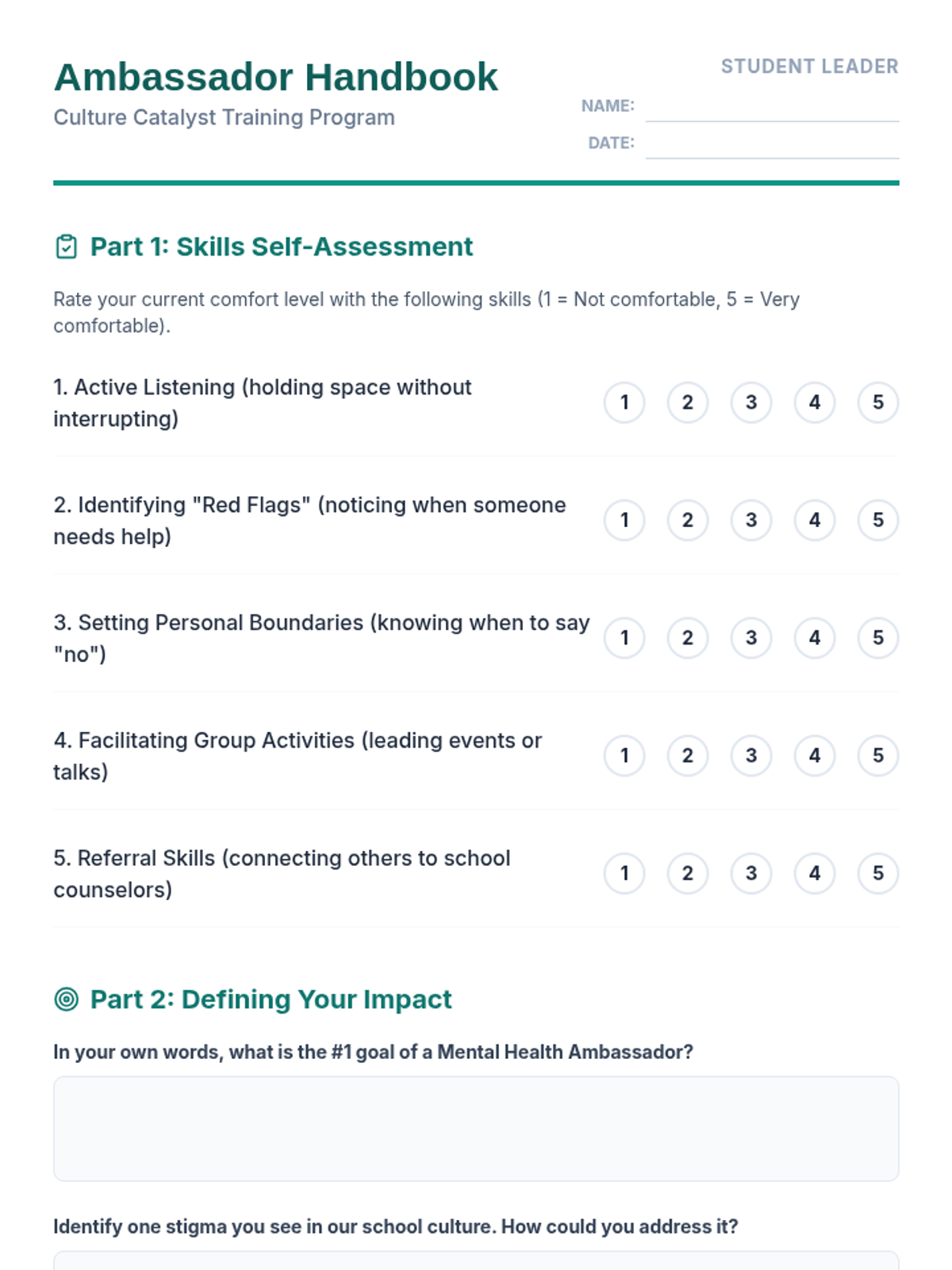
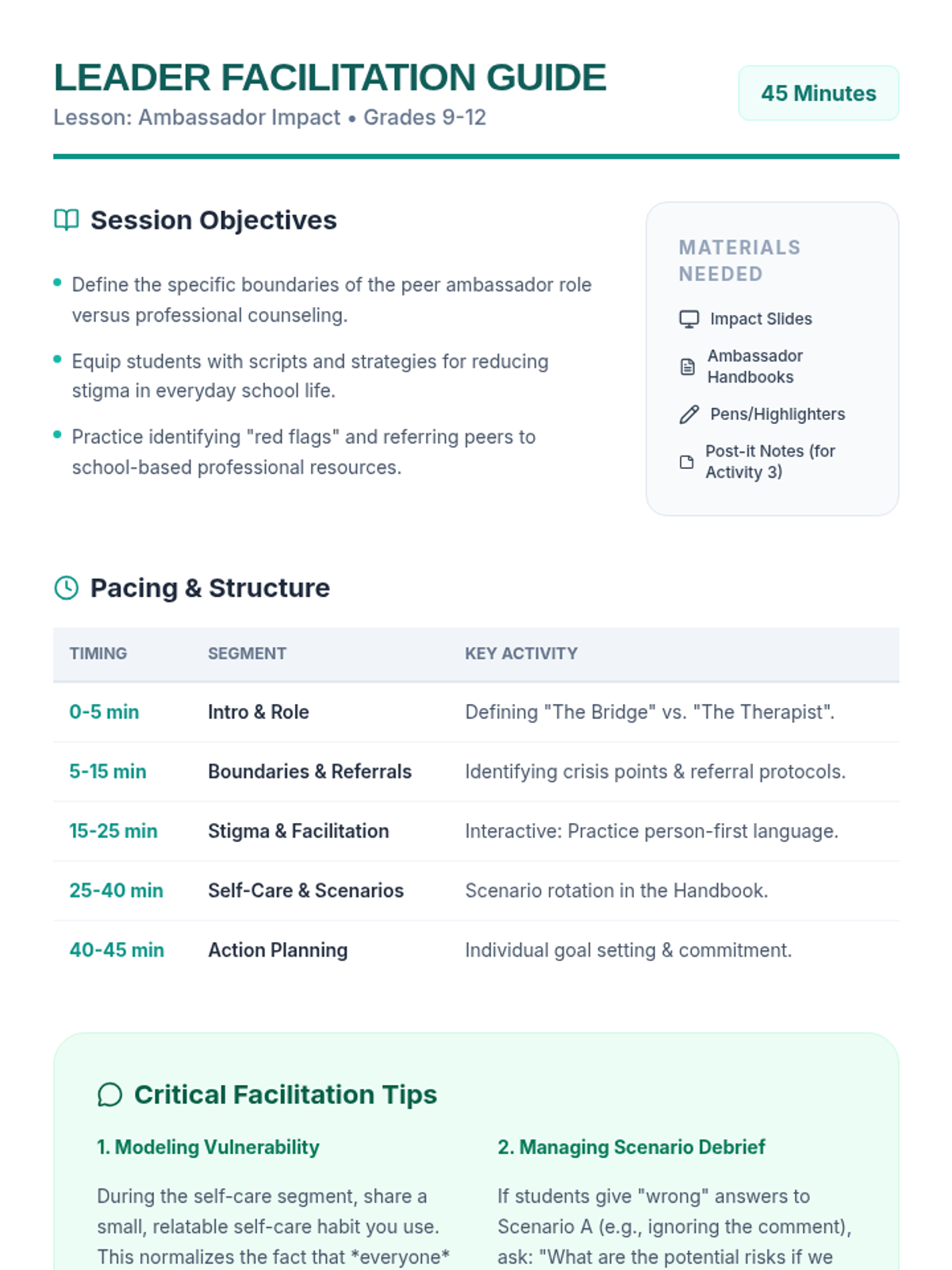
A 45-minute core training session covering the ambassador role, safety boundaries, practical stigma-reduction strategies, and student self-care.
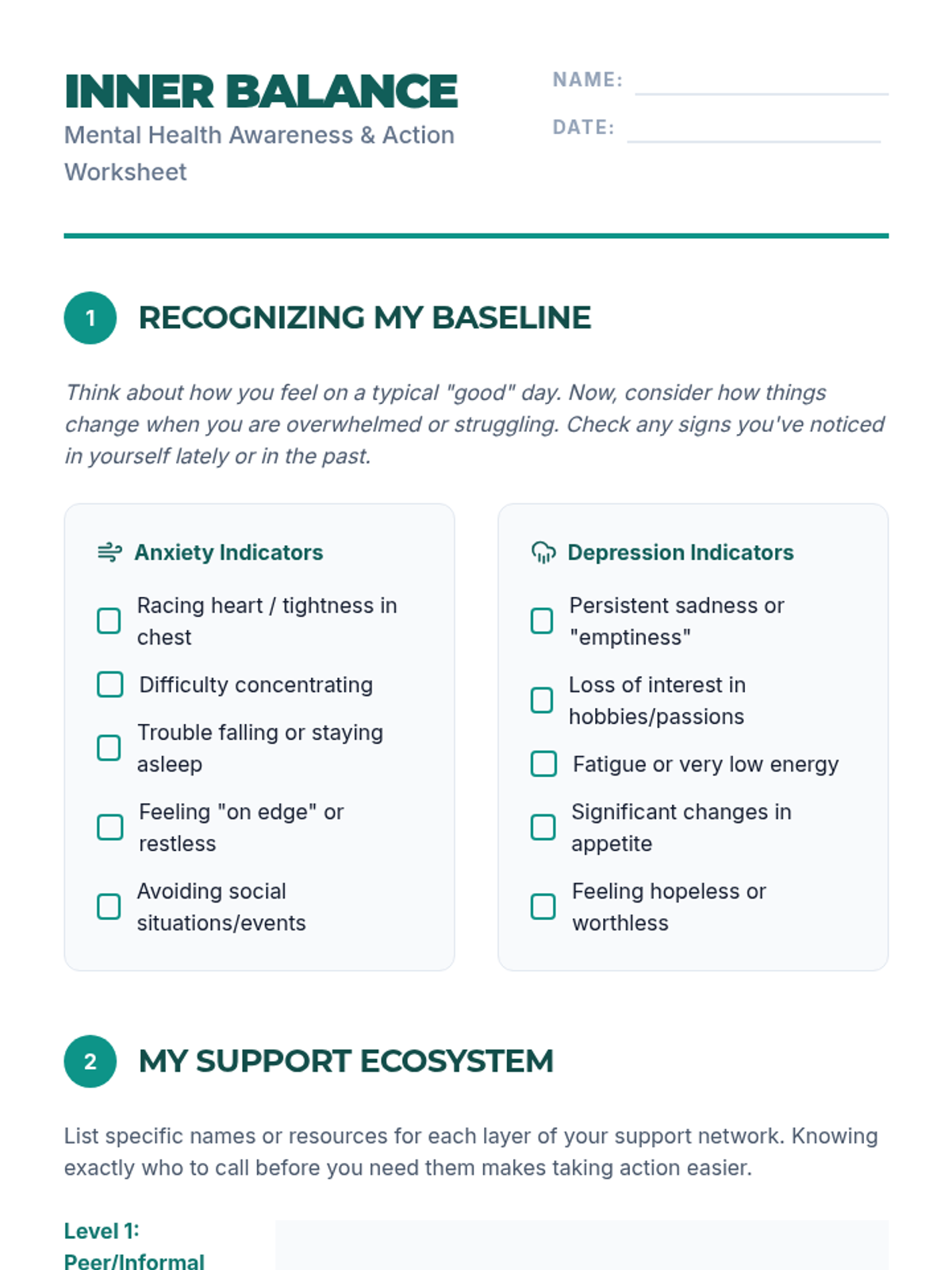
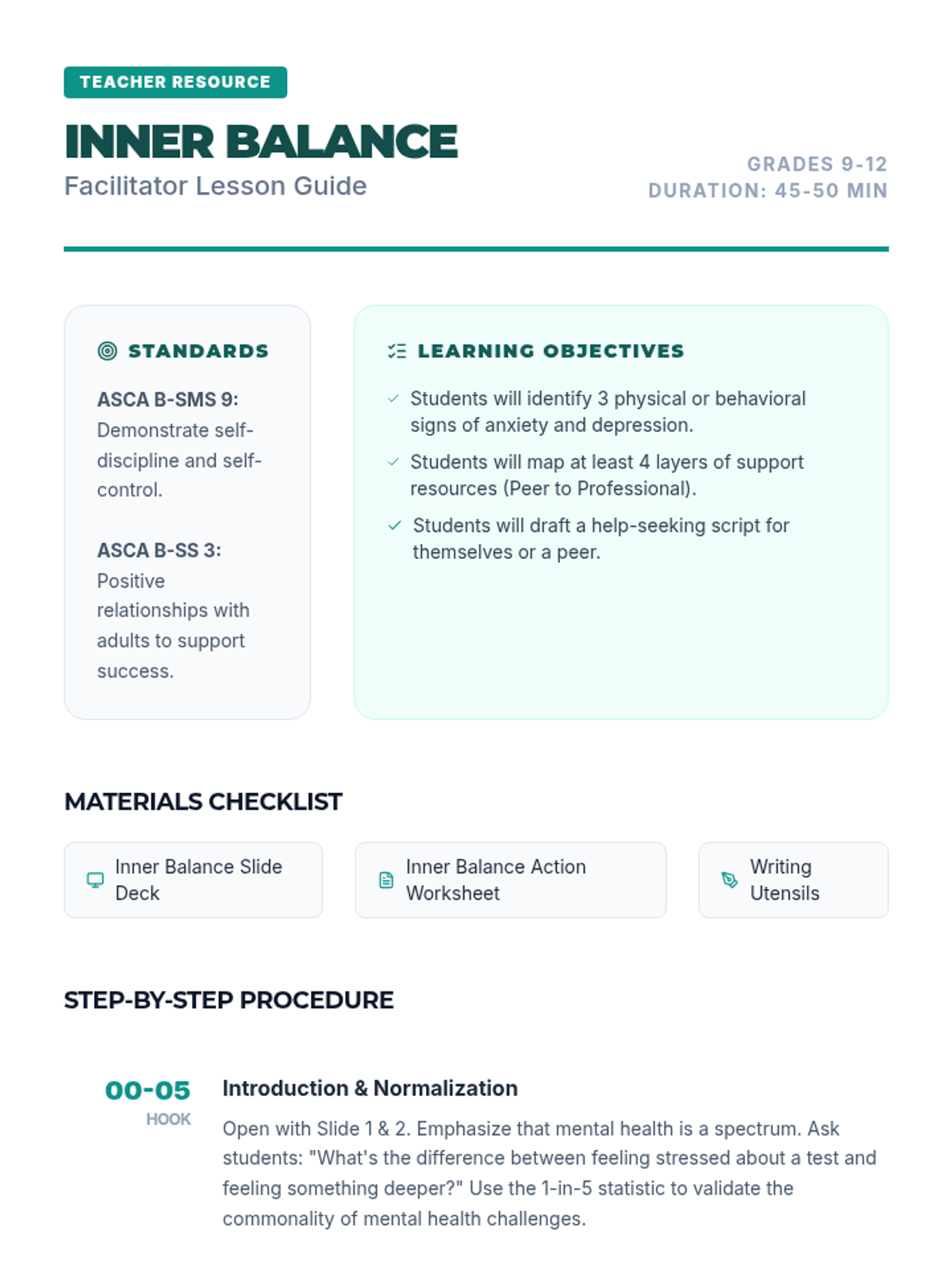
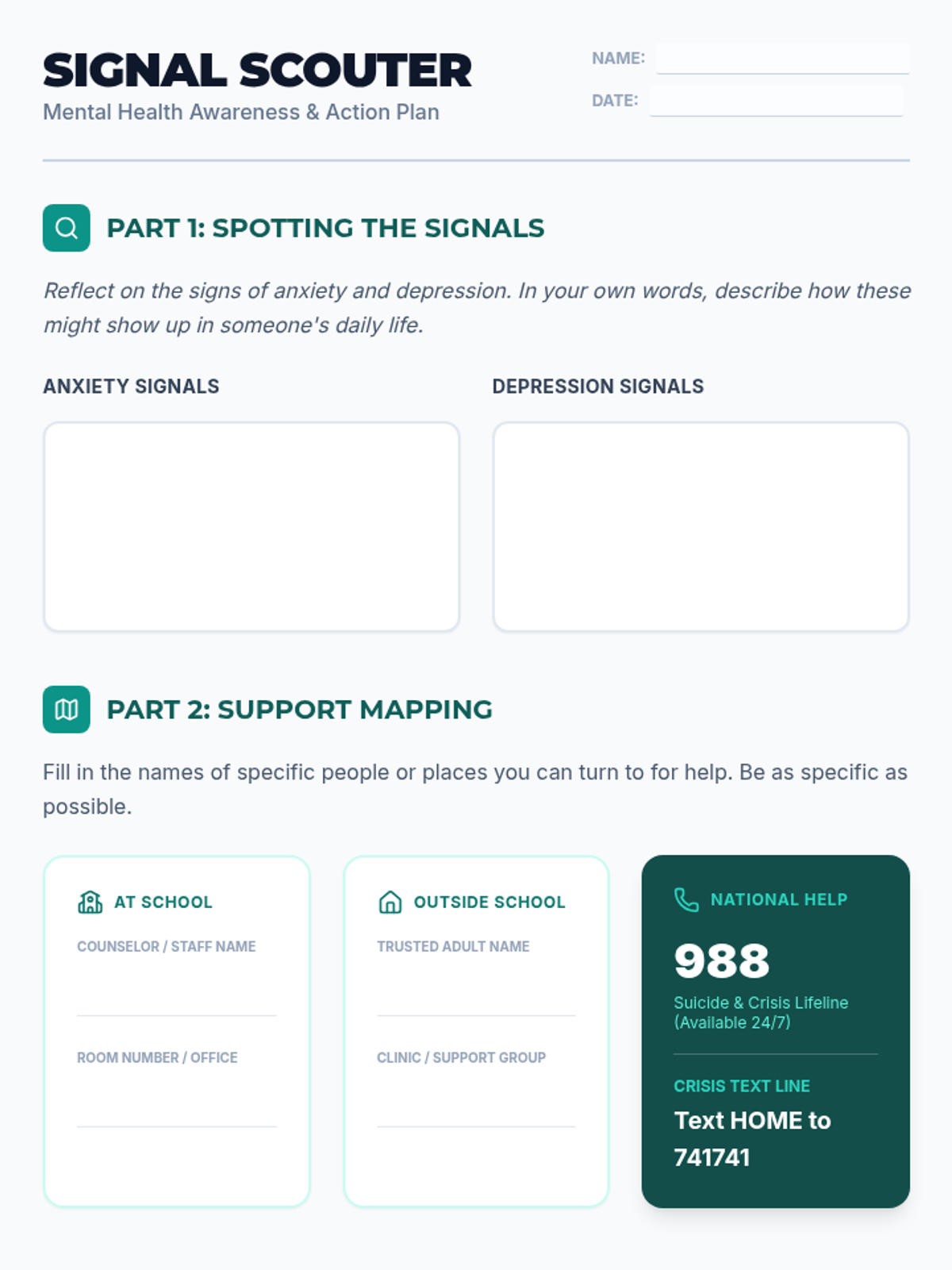
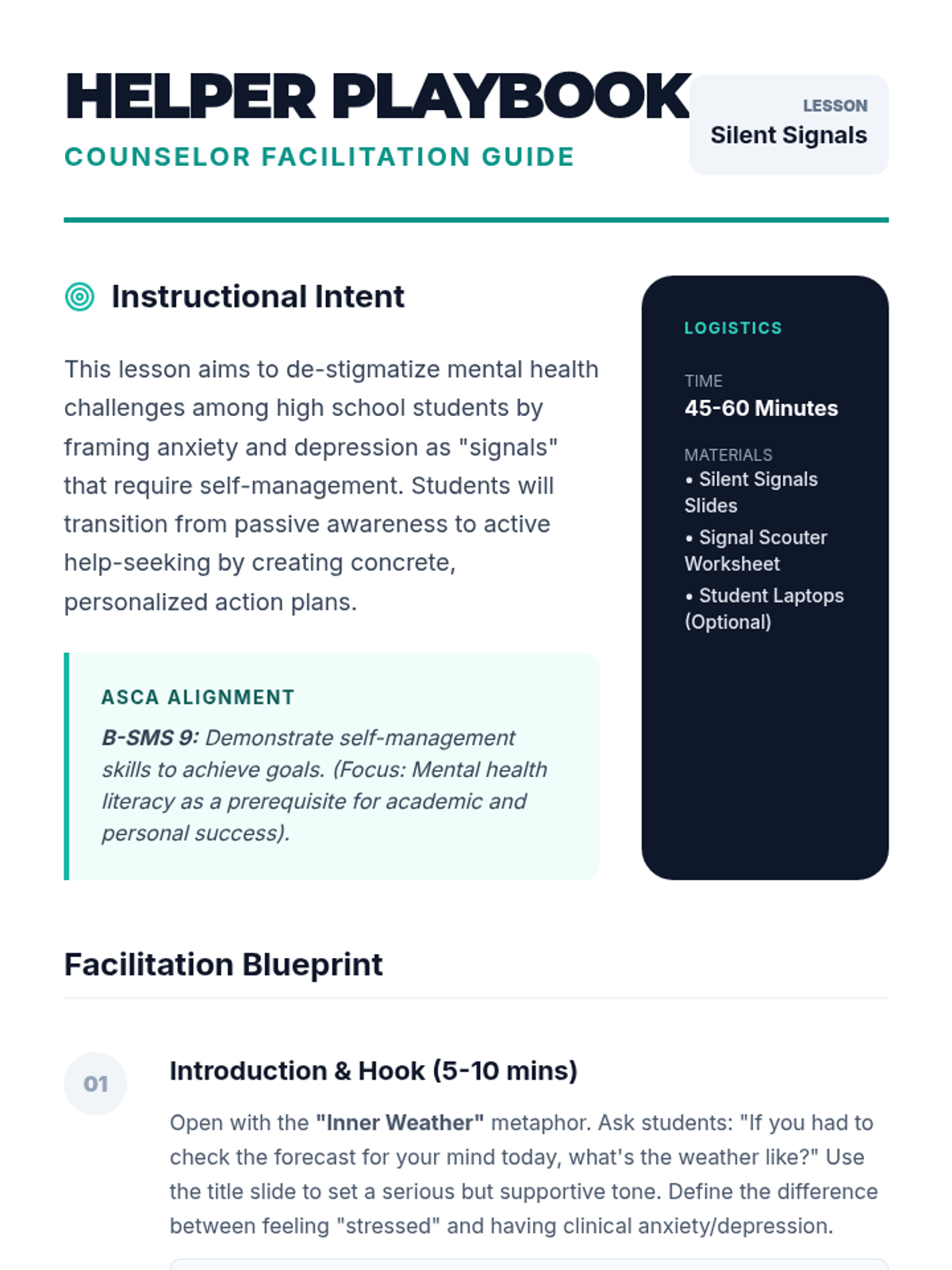
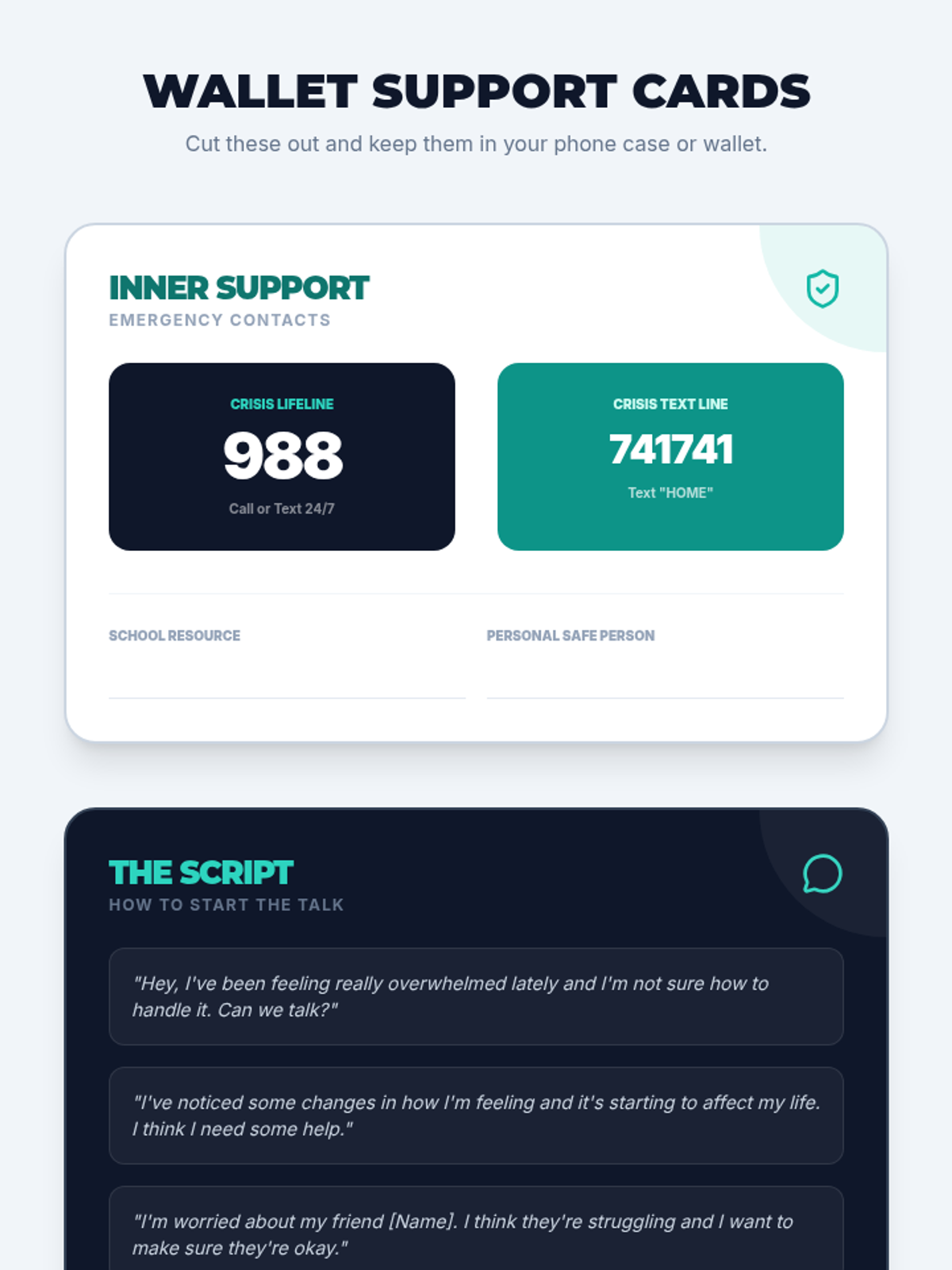
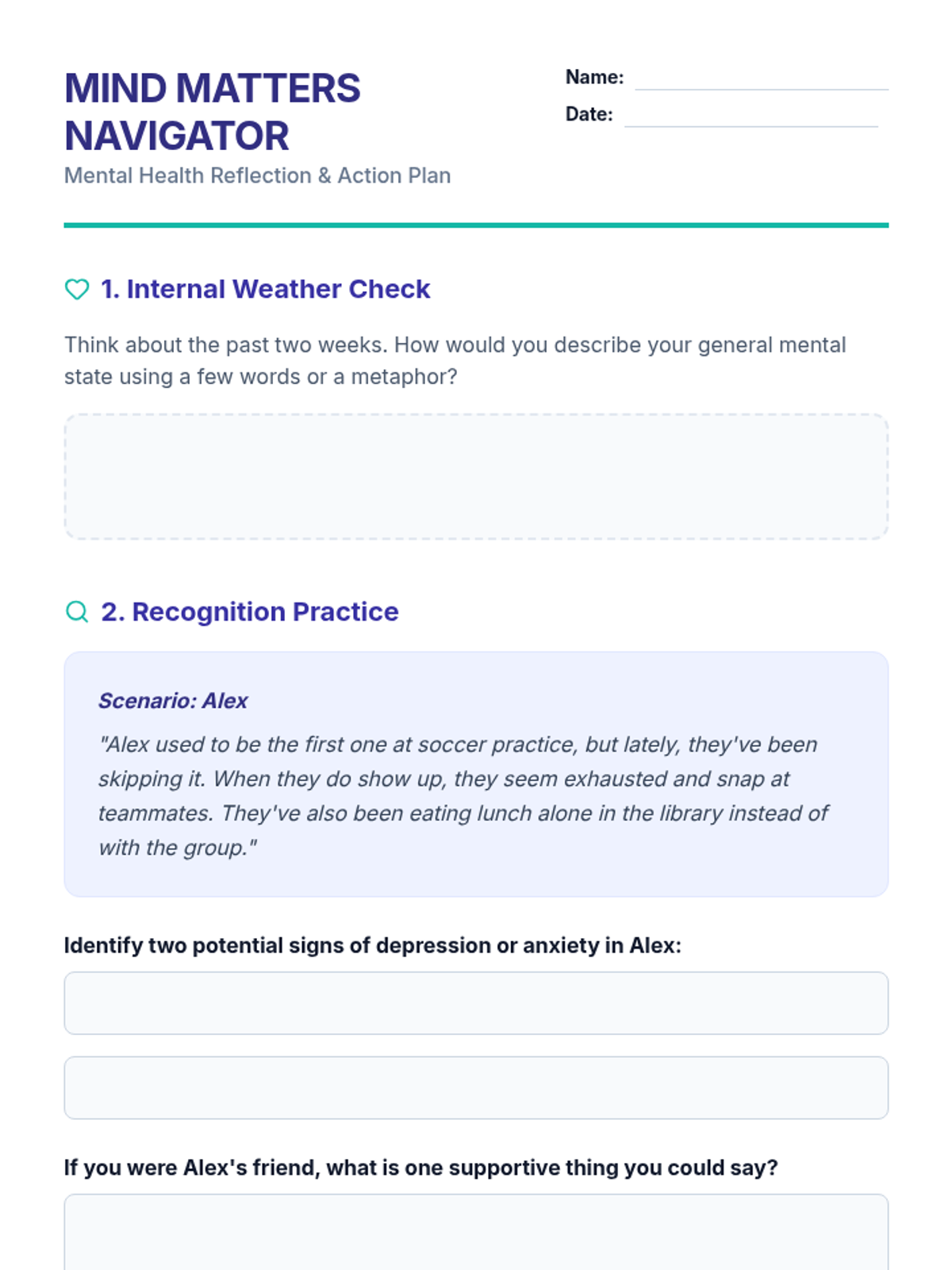
A high school mental health awareness lesson focused on identifying signs of anxiety and depression, mapping support resources, and creating a personal help-seeking action plan. Aligned to ASCA Mindsets & Behaviors B-SMS 9.
A comprehensive mental health awareness lesson for high schoolers focusing on identifying anxiety and depression, mapping support resources, and creating help-seeking action plans. Aligned to ASCA B-SMS 9.
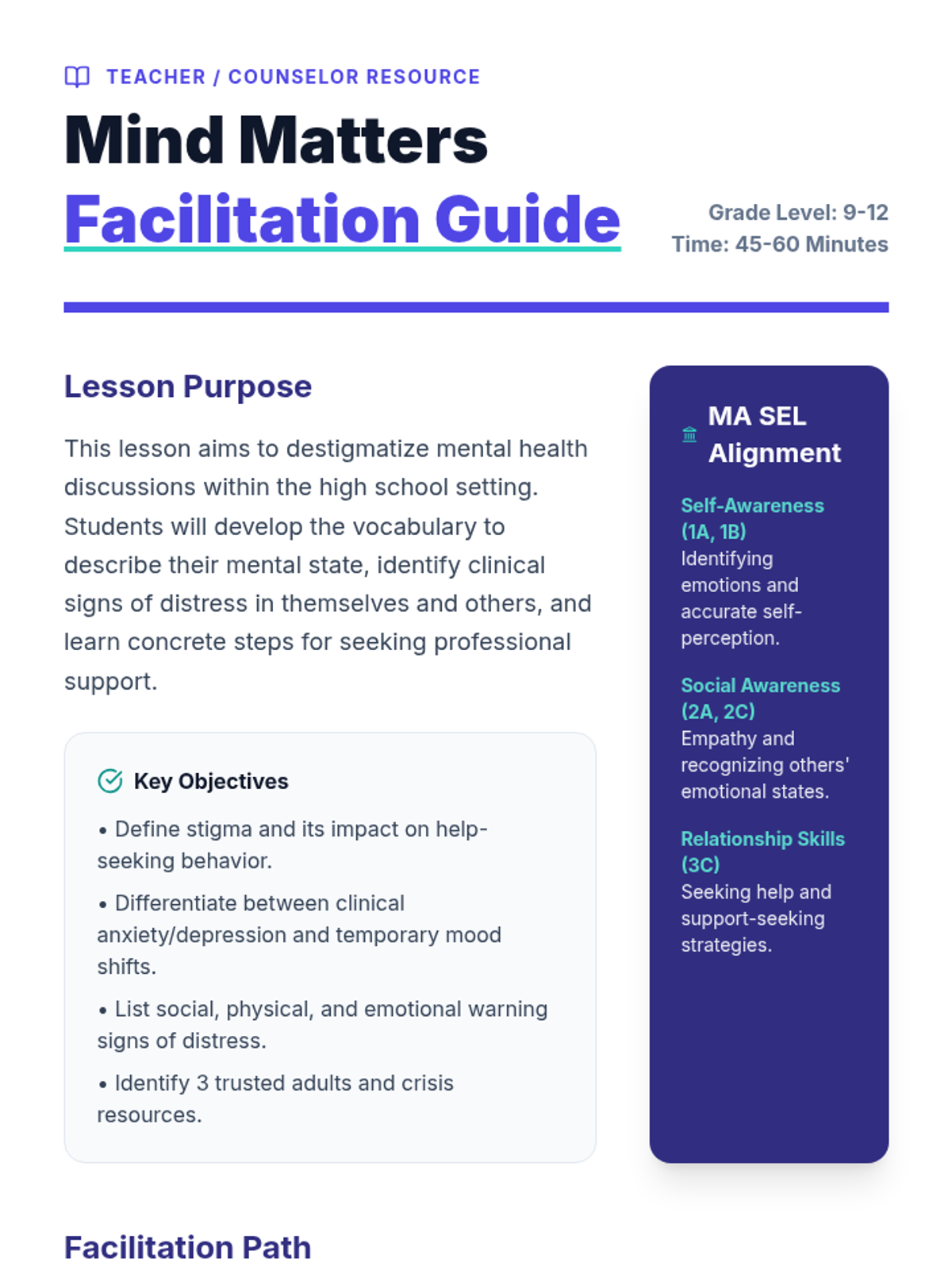
A comprehensive lesson for high school students focused on mental health literacy, stigma reduction, and proactive help-seeking strategies, aligned with Massachusetts SEL standards.
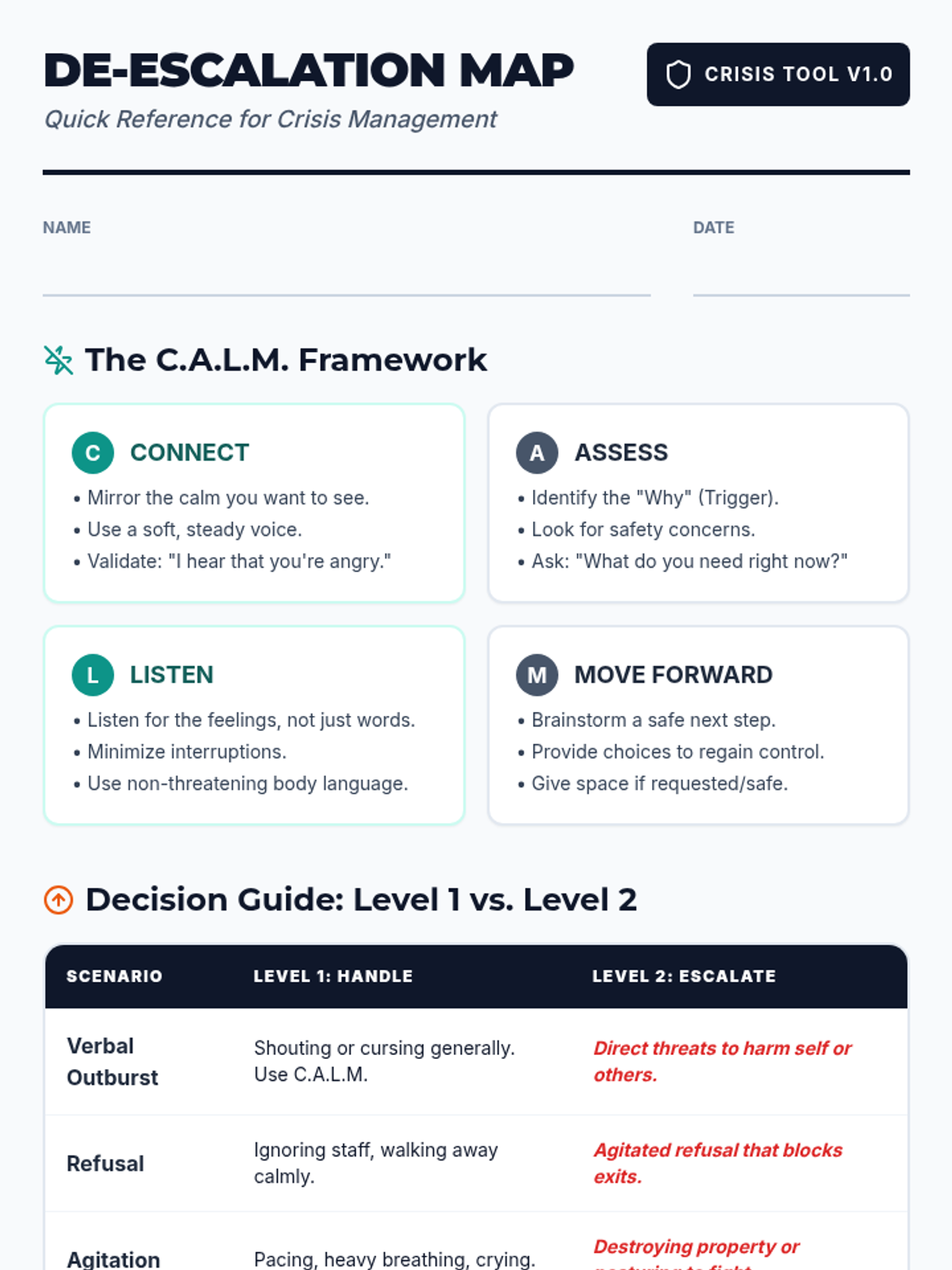
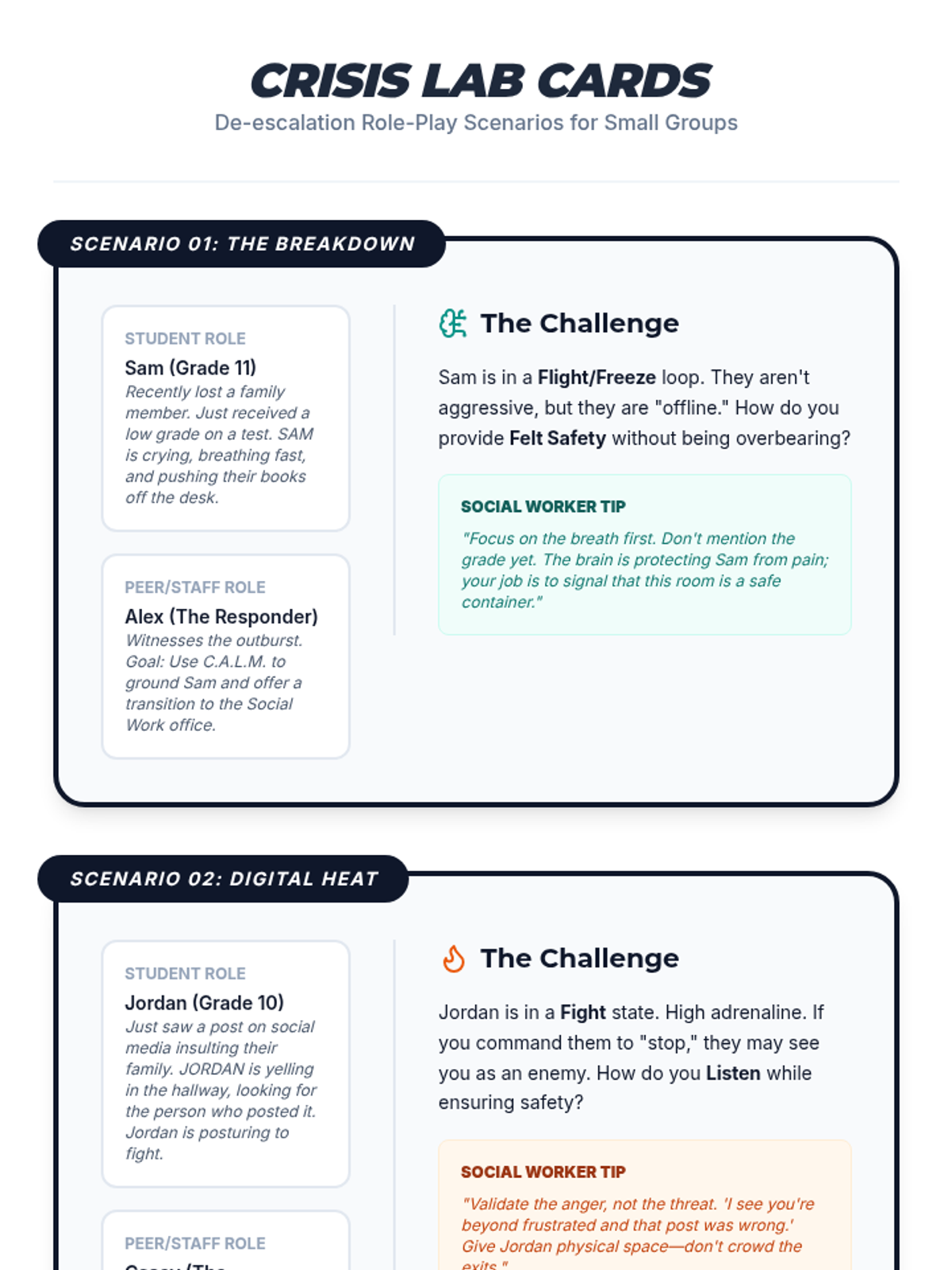
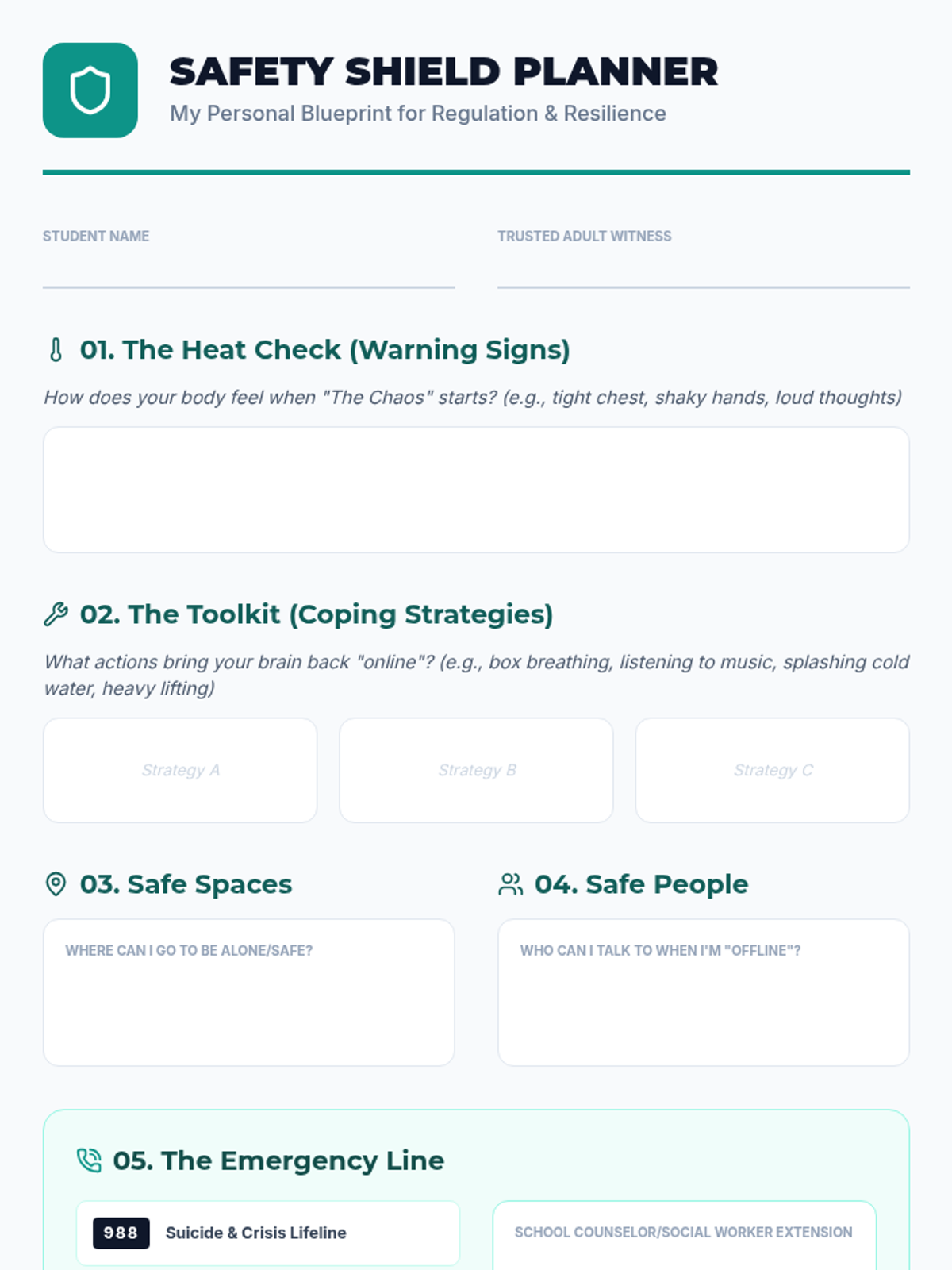
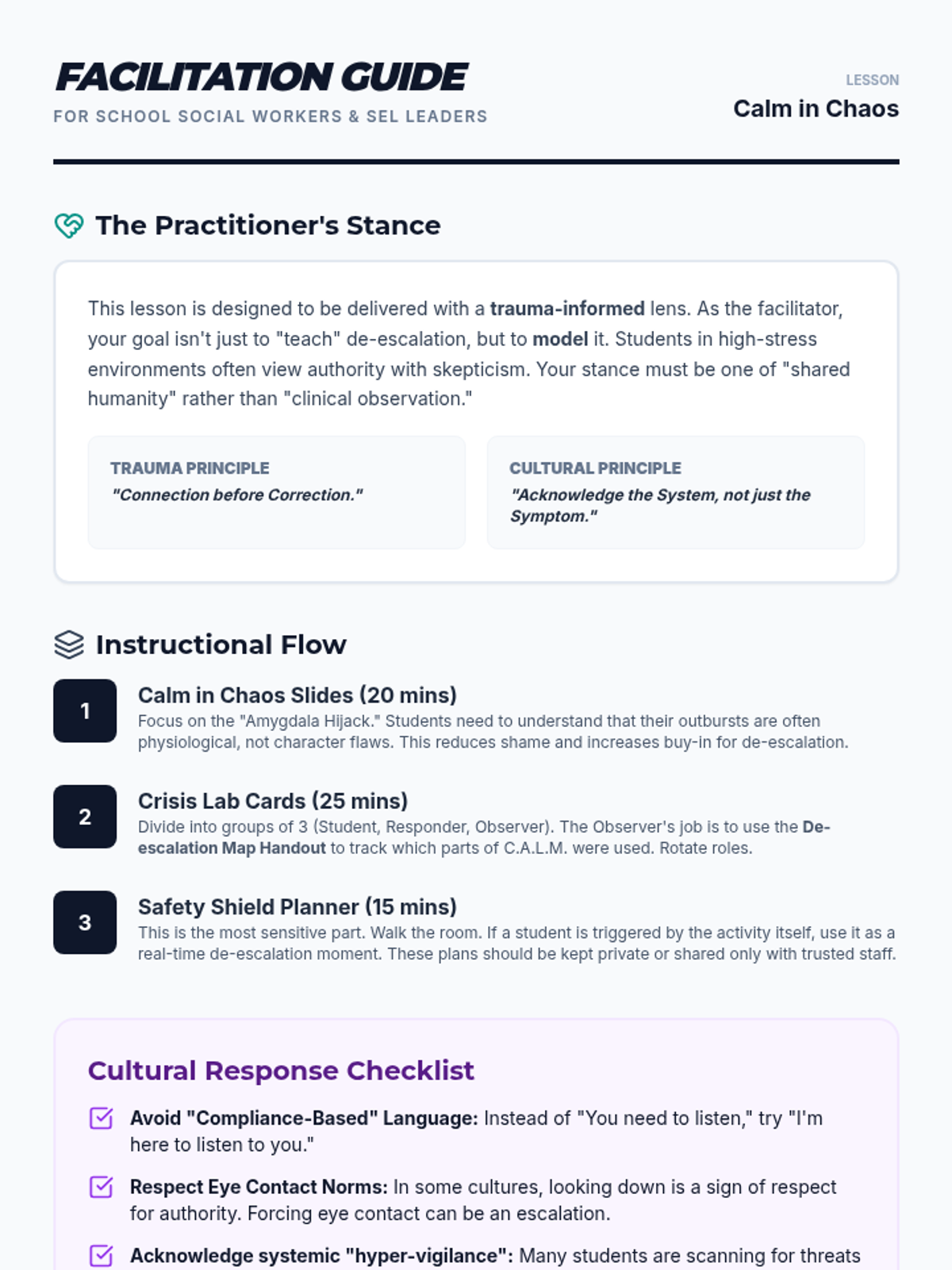
A trauma-informed guide for high school students to master de-escalation techniques and crisis management, facilitated by school social workers. The lesson covers the C.A.L.M. framework, safety planning, and navigating conflicts.
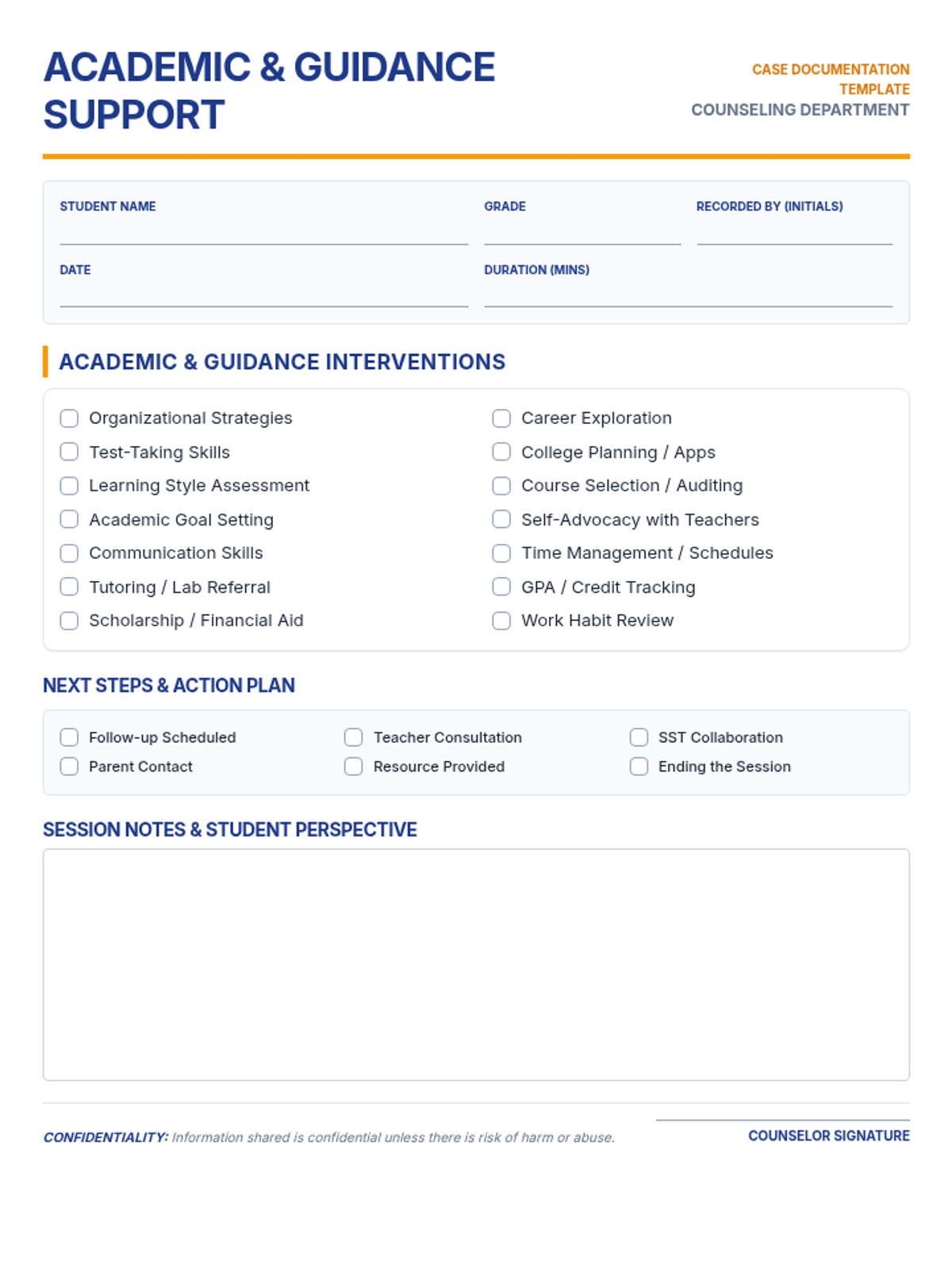
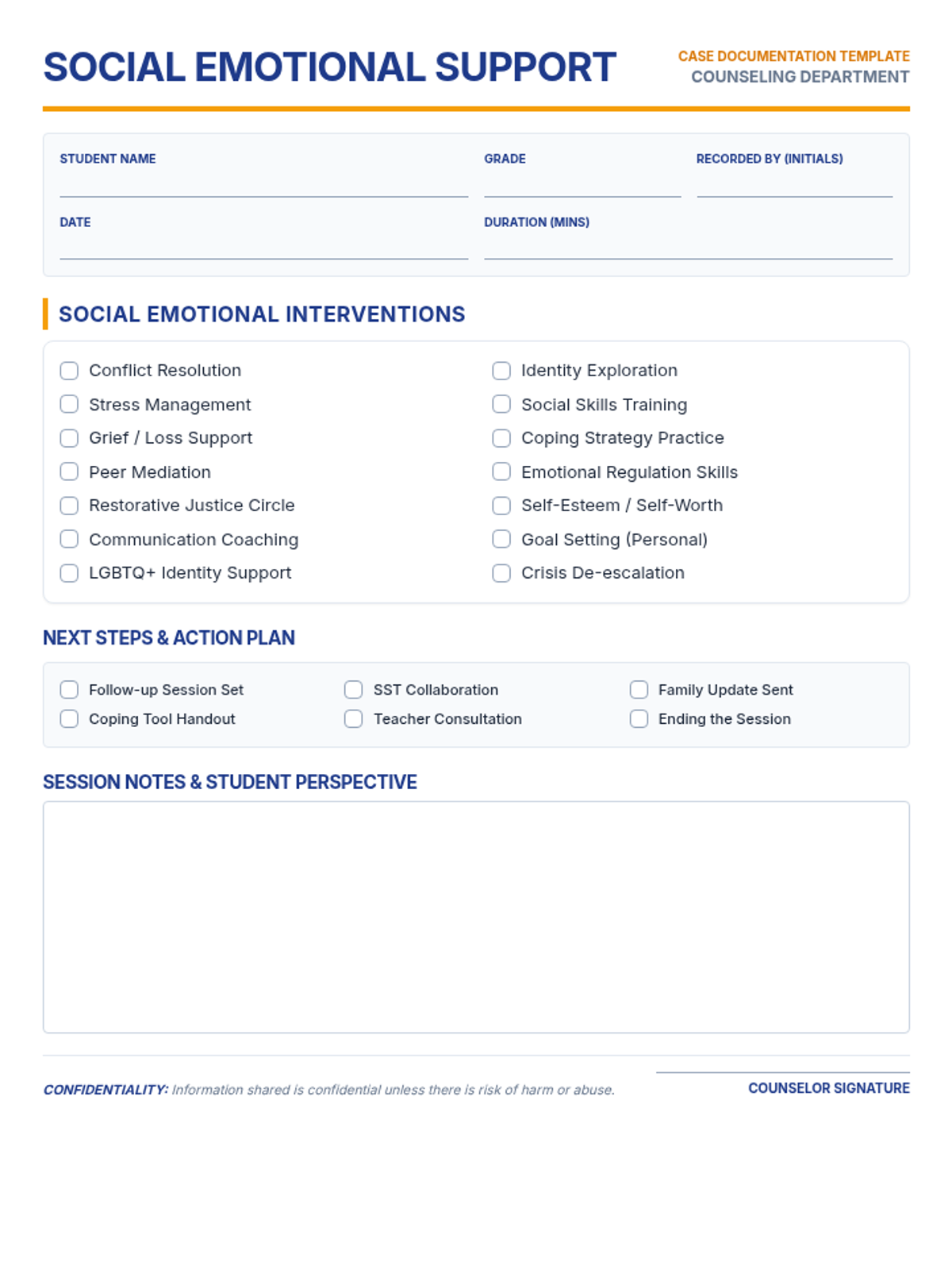
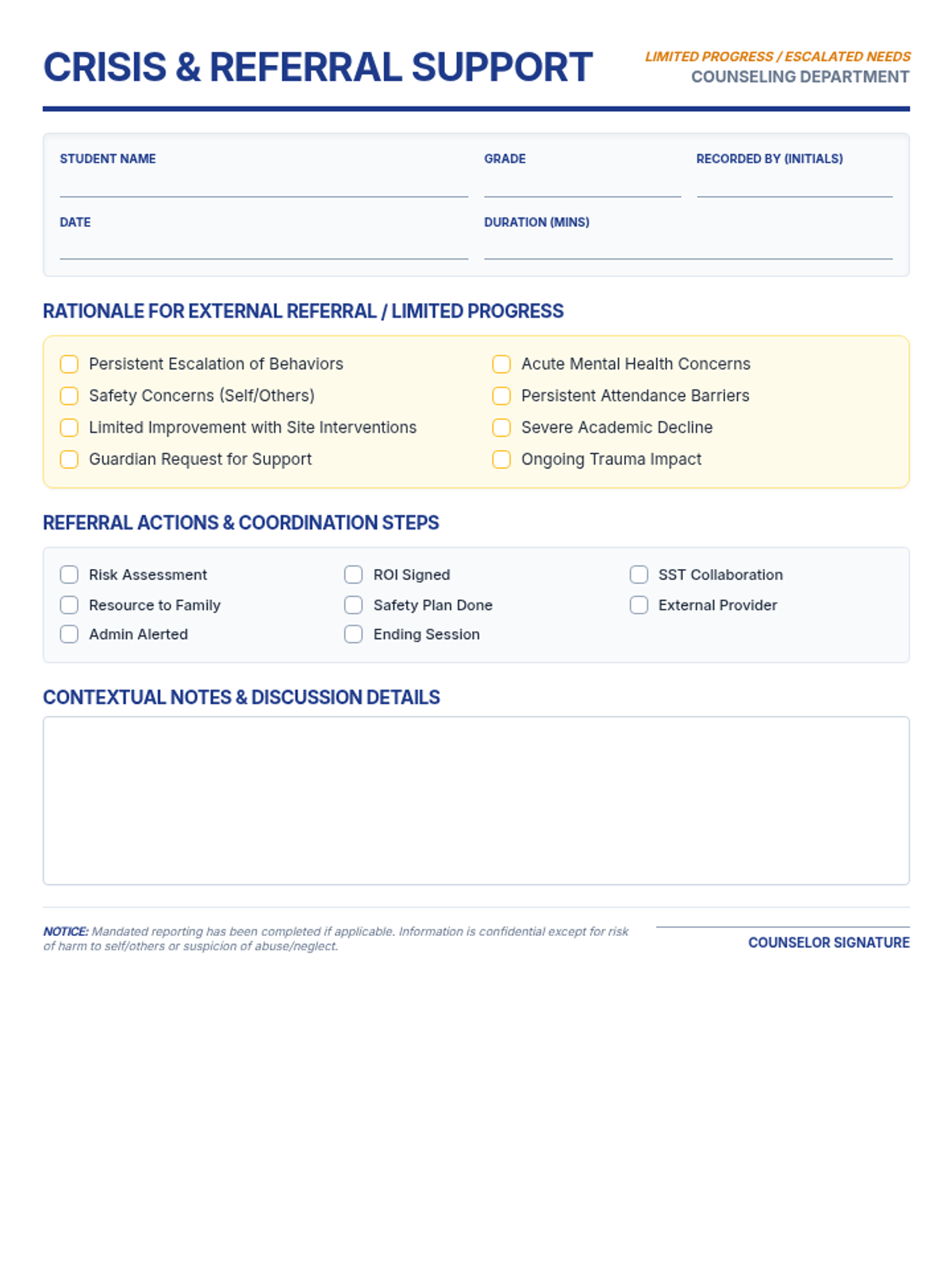
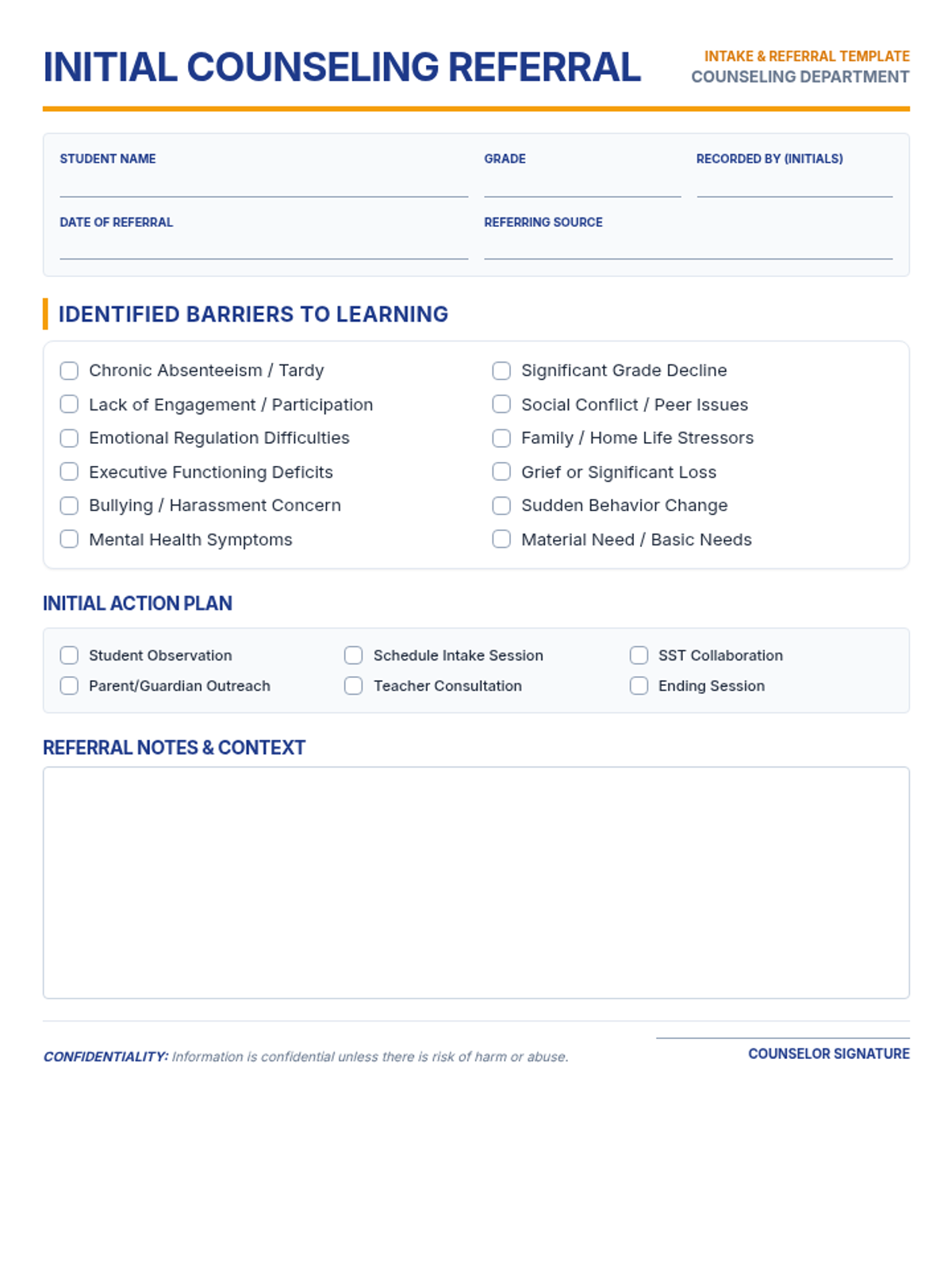
A suite of professional case note templates for school counselors, designed for efficiency and clarity in documenting student support sessions. These templates follow a blue and gold theme and utilize best-practice intervention checklists.
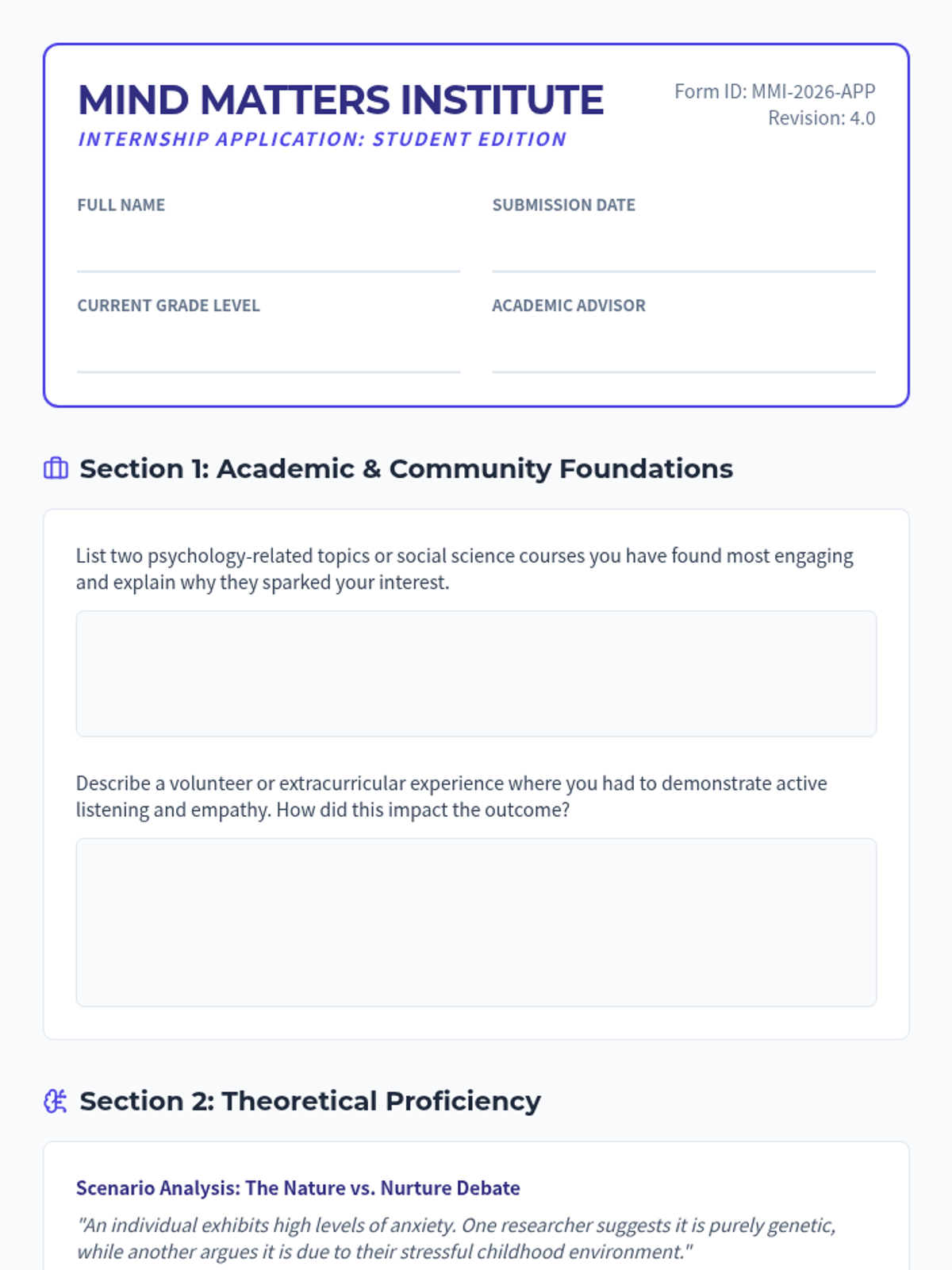
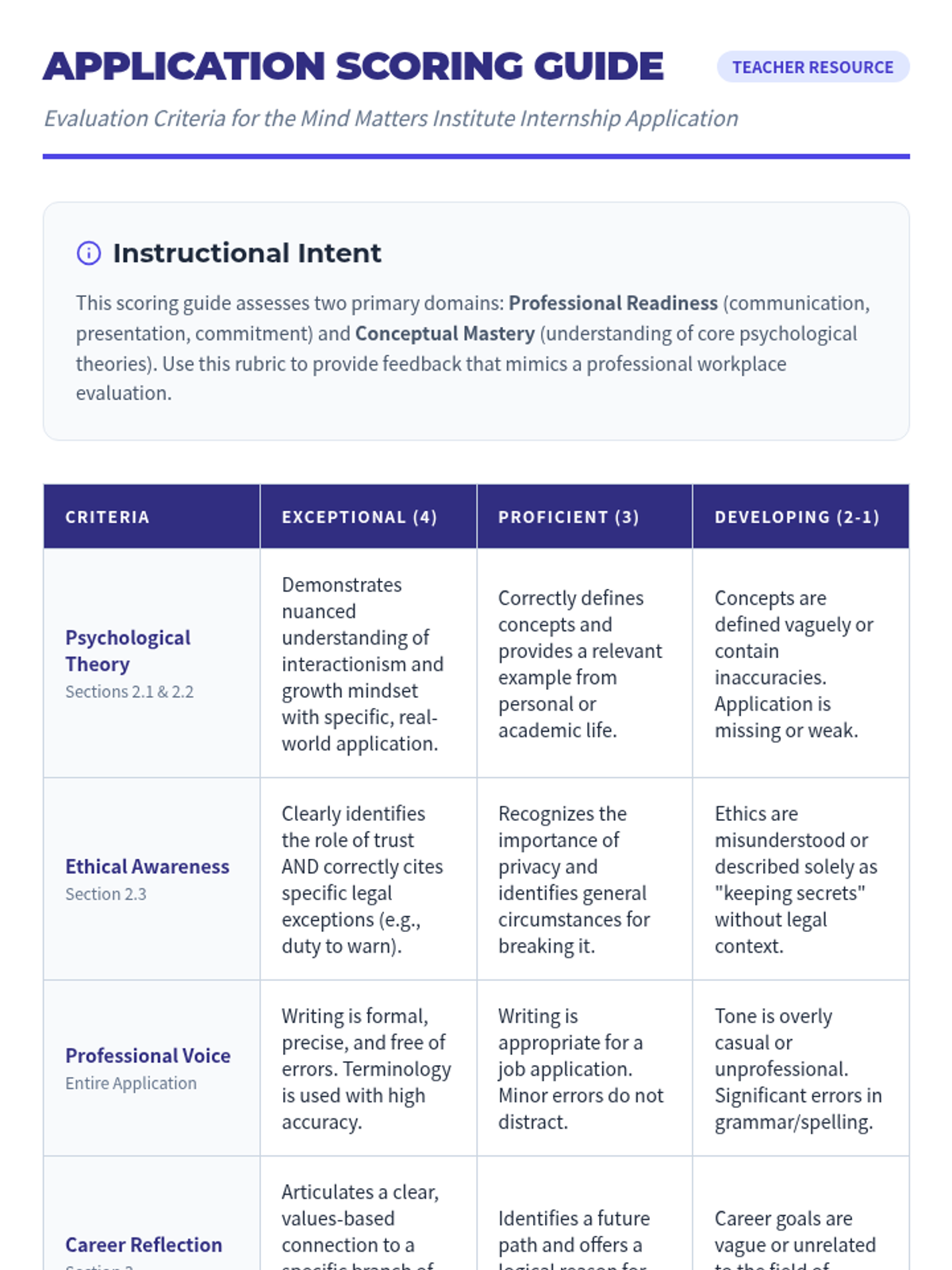
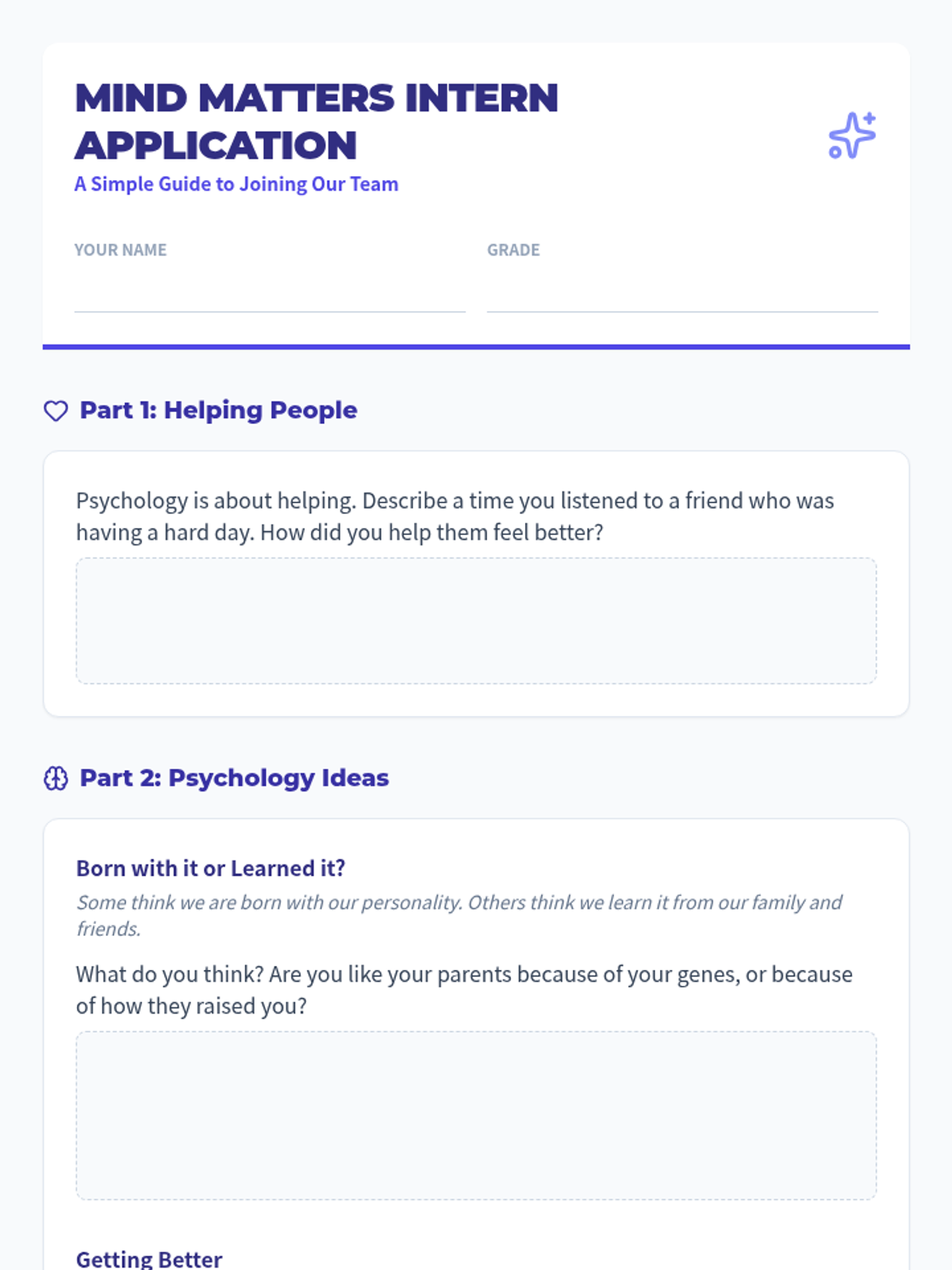
A comprehensive lesson designed to help high school students navigate the job application process for a psychology internship while demonstrating their subject-matter knowledge.
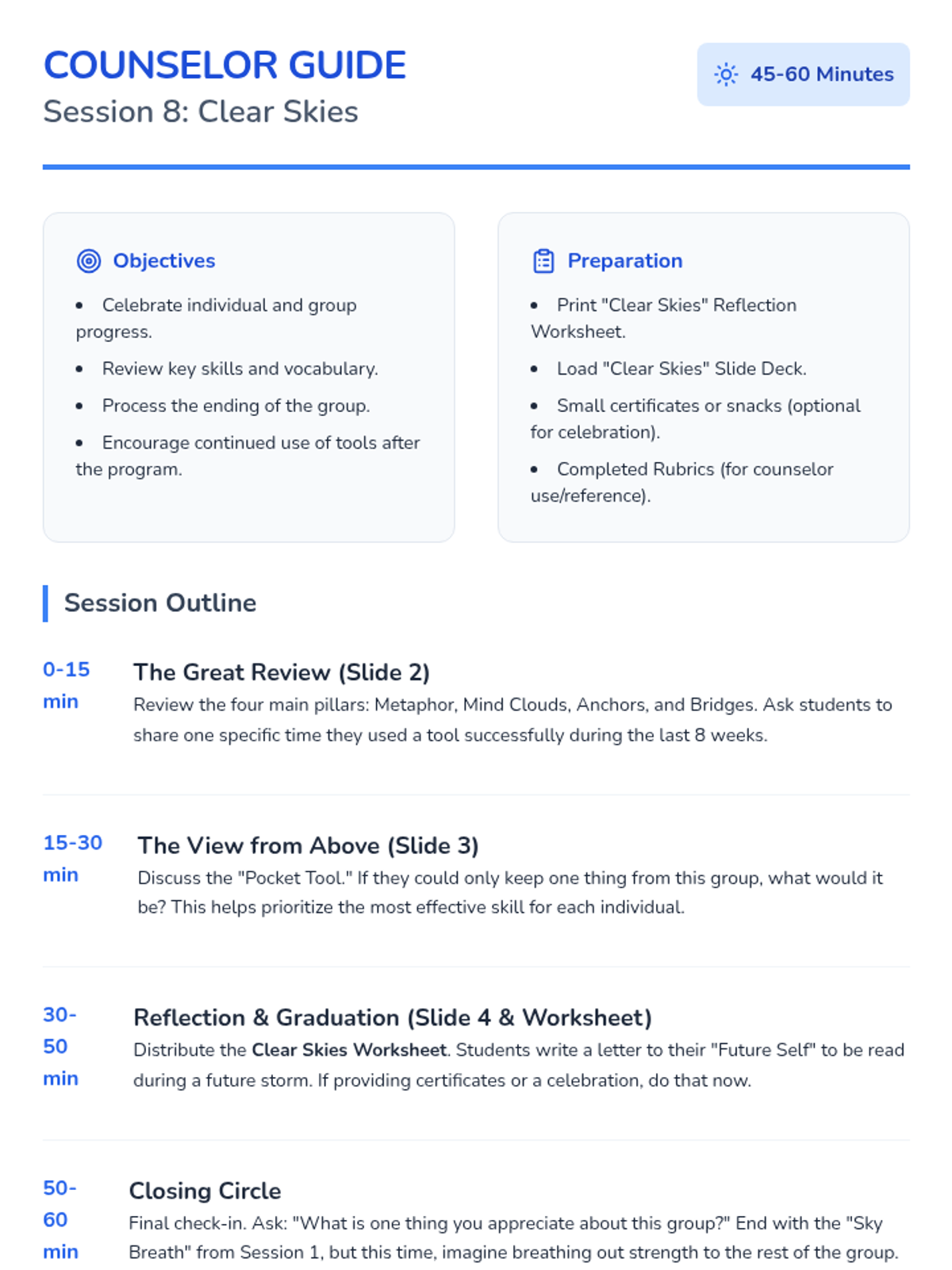
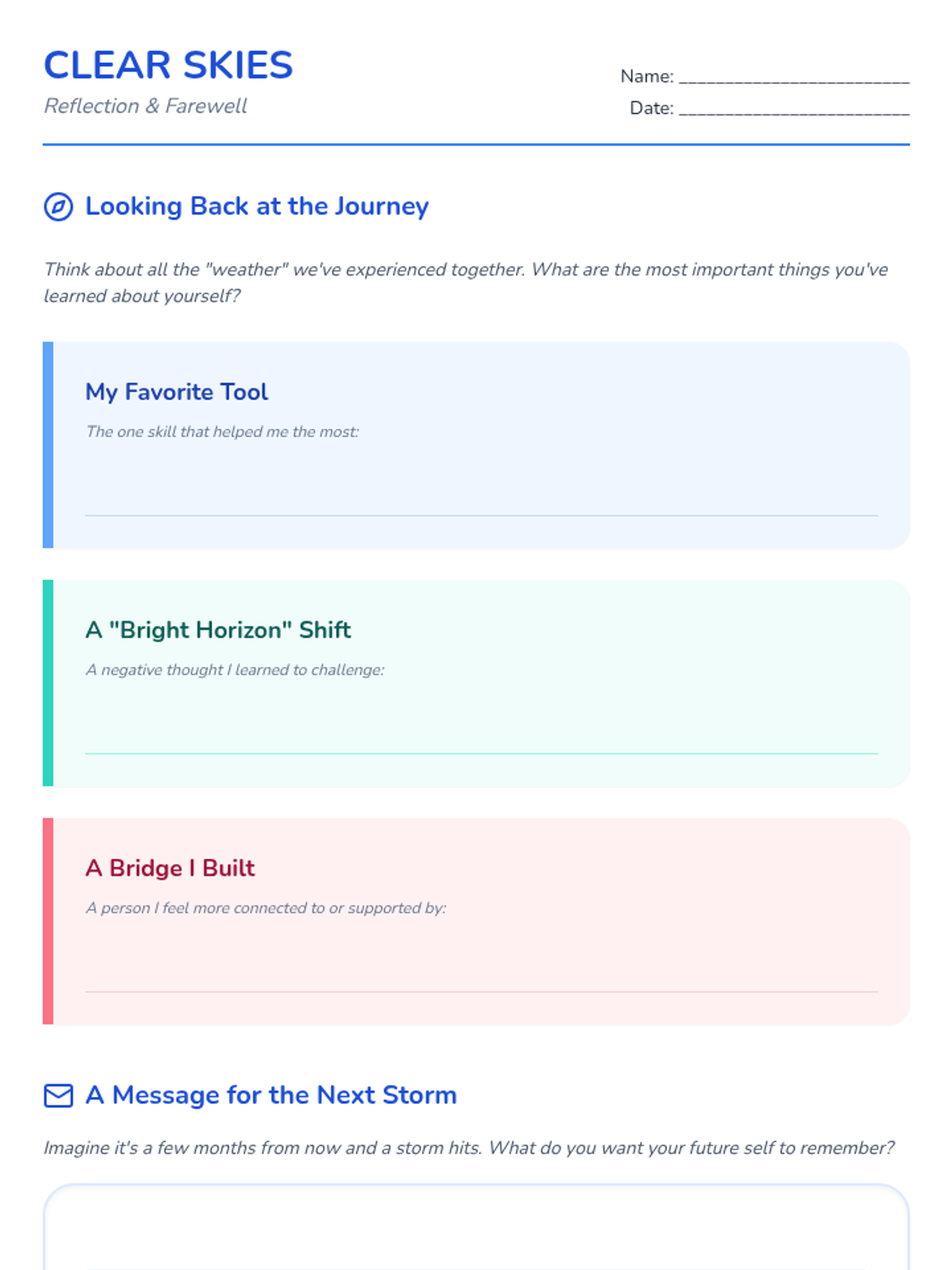
Concluding the group, celebrating progress, and preparing for life after the sessions.
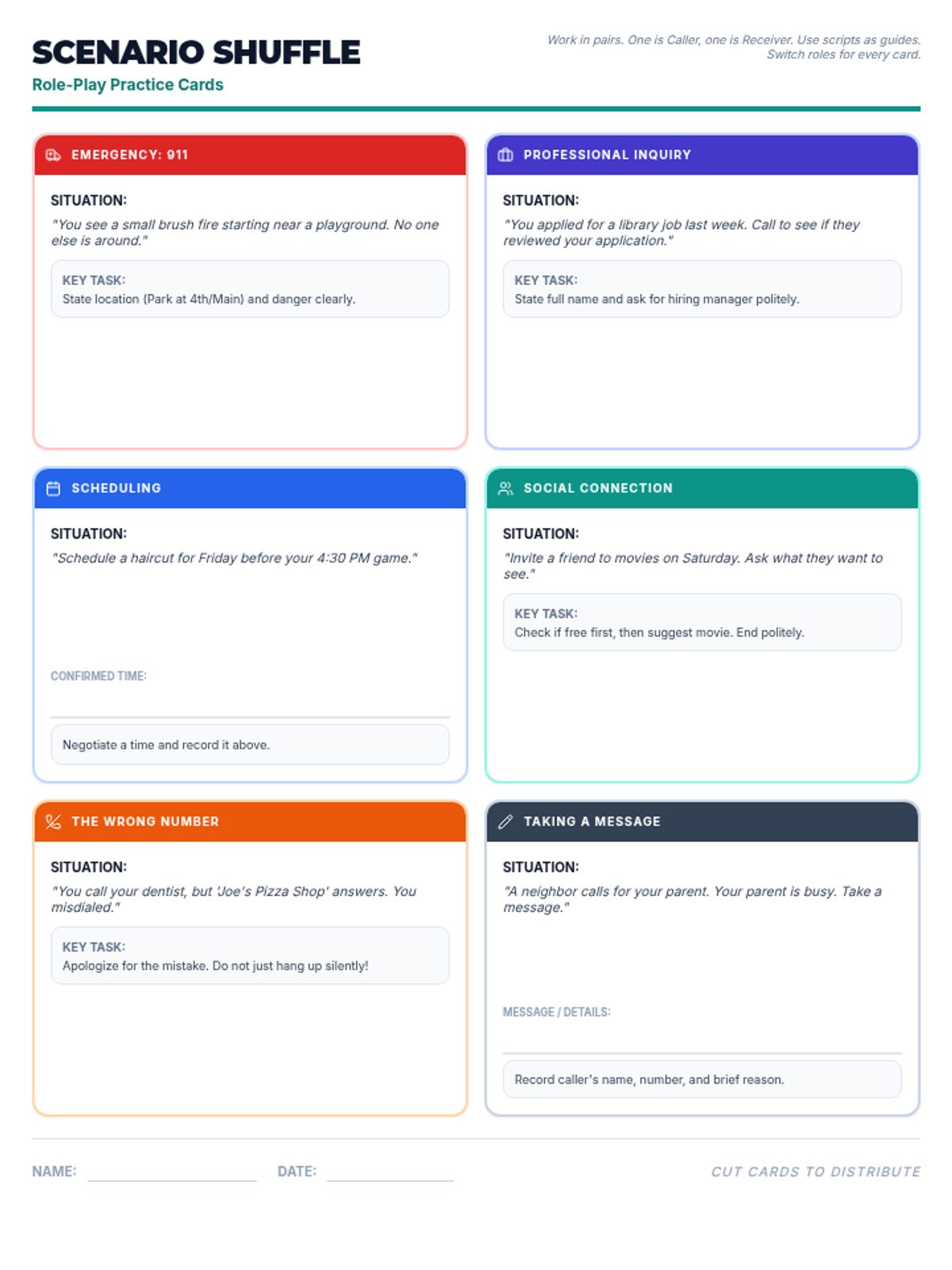
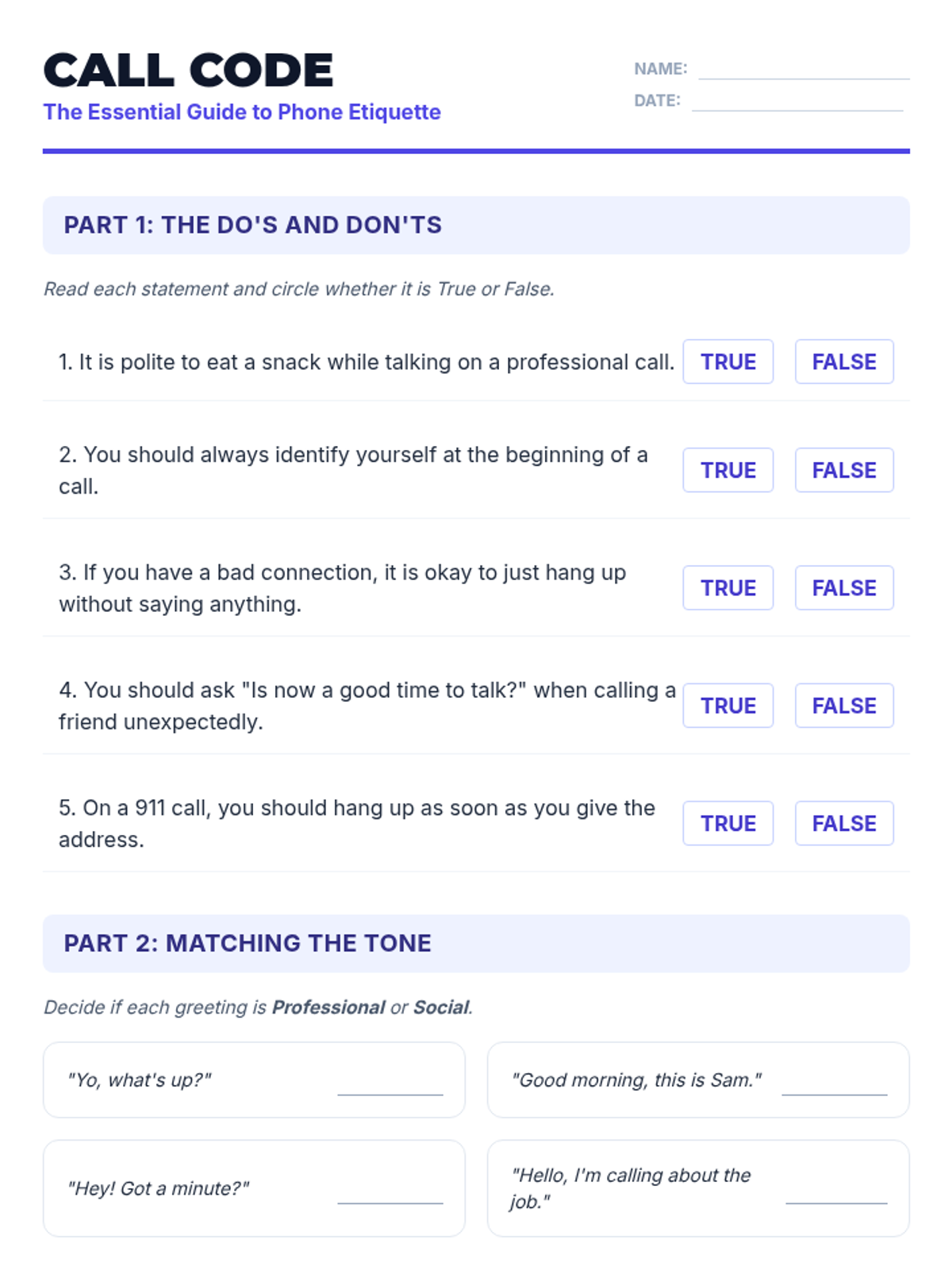
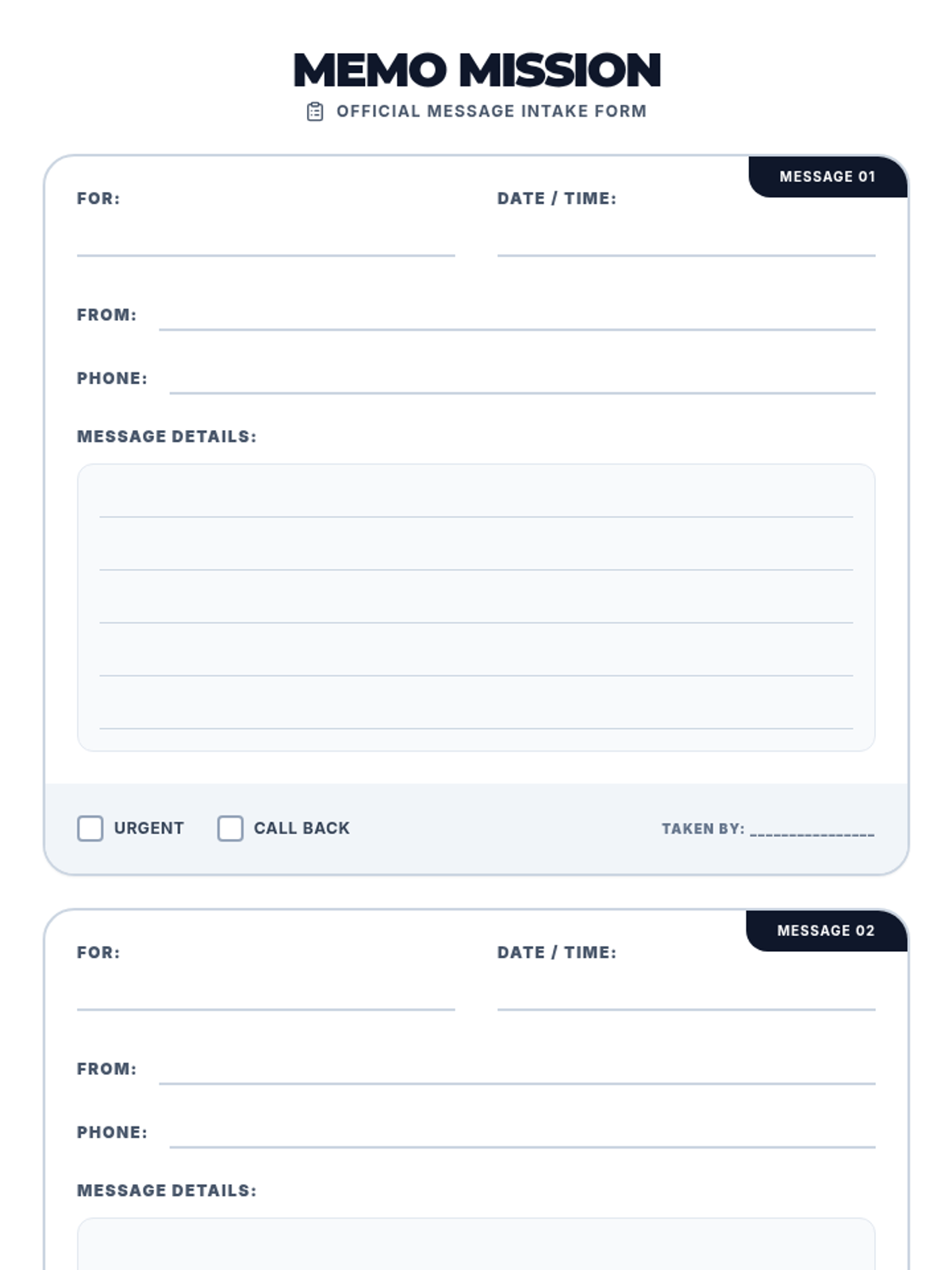
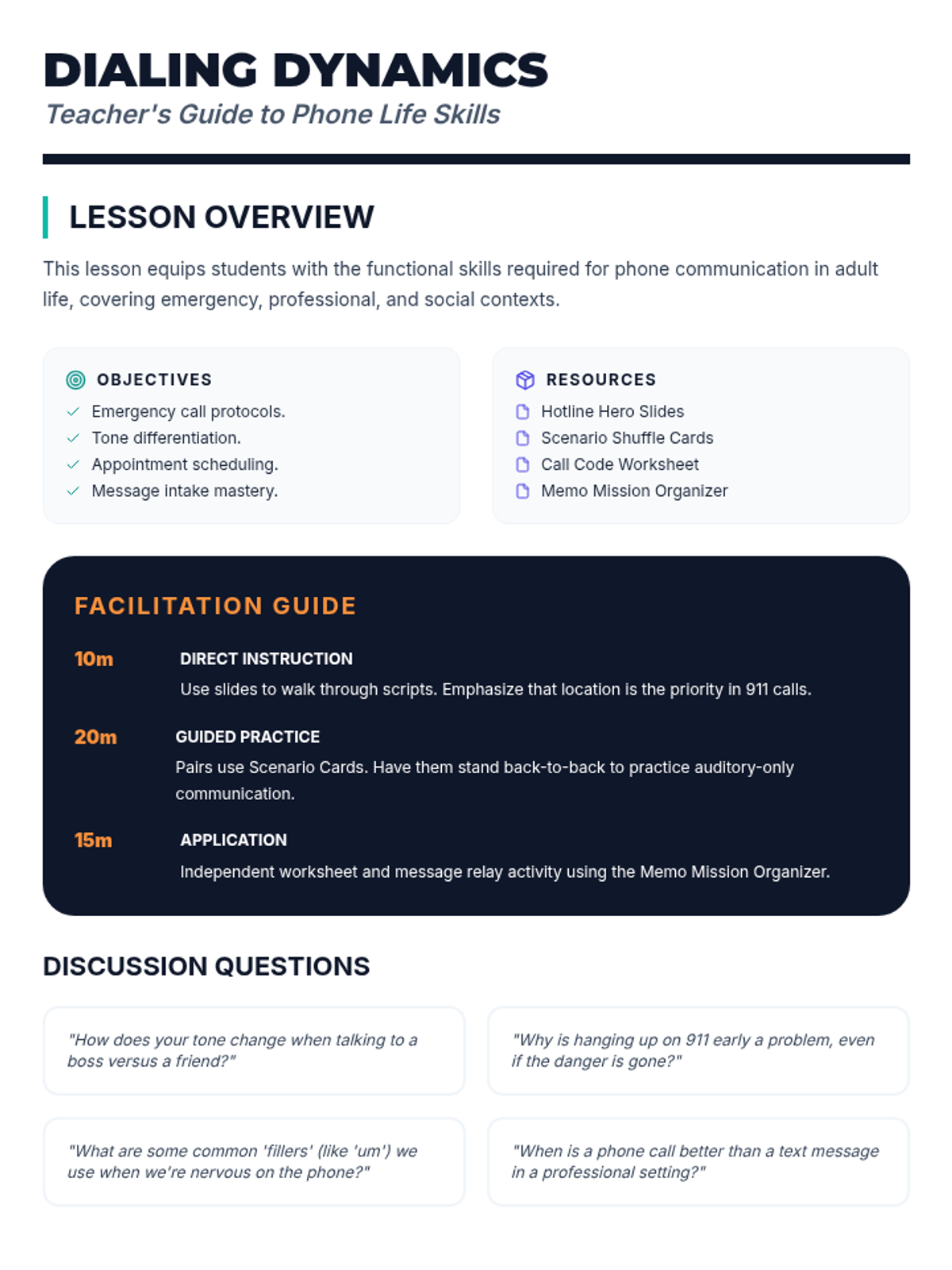
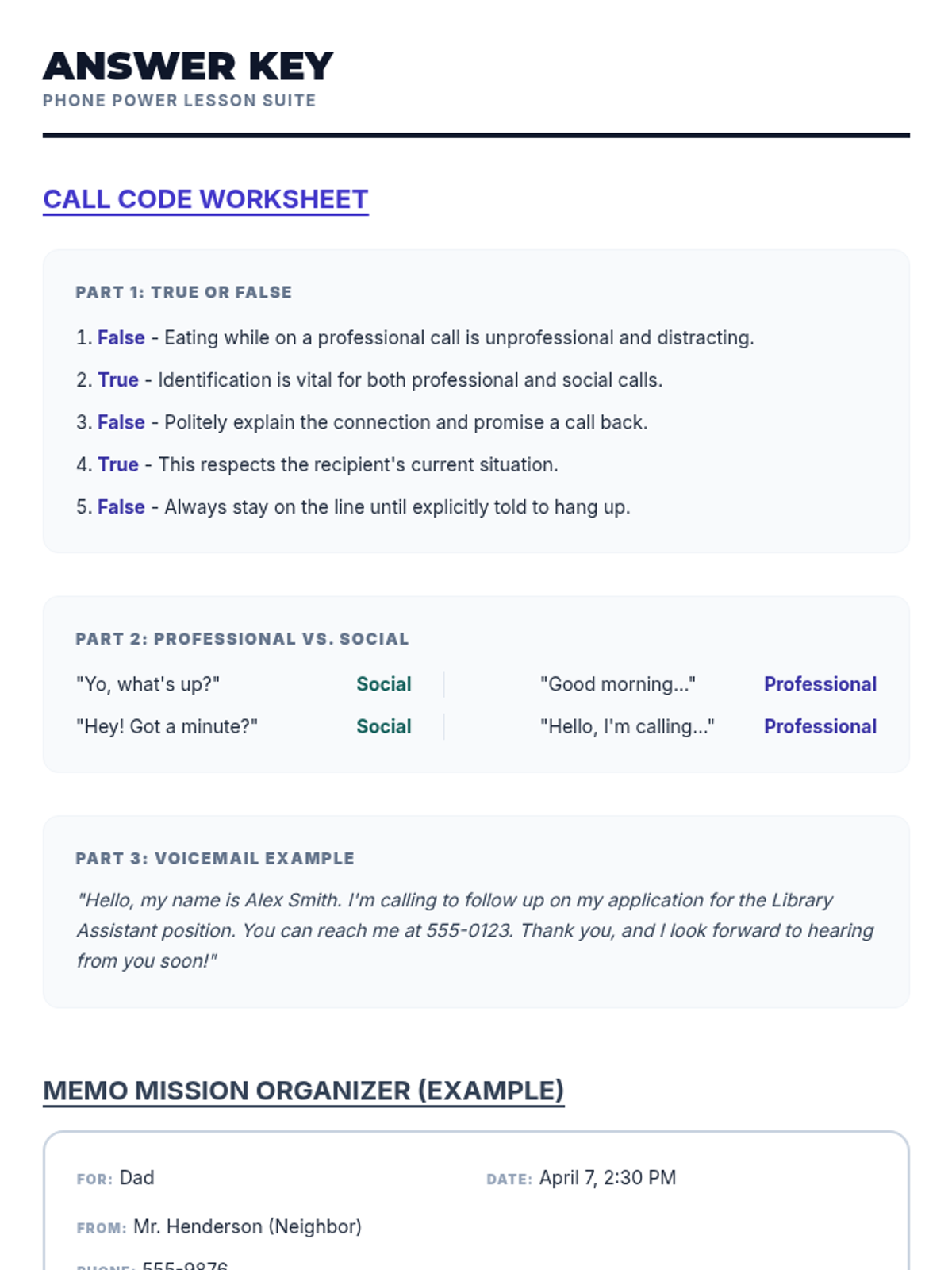
A comprehensive lesson on essential phone communication skills for high school students, covering emergency, professional, social, and scheduling calls.
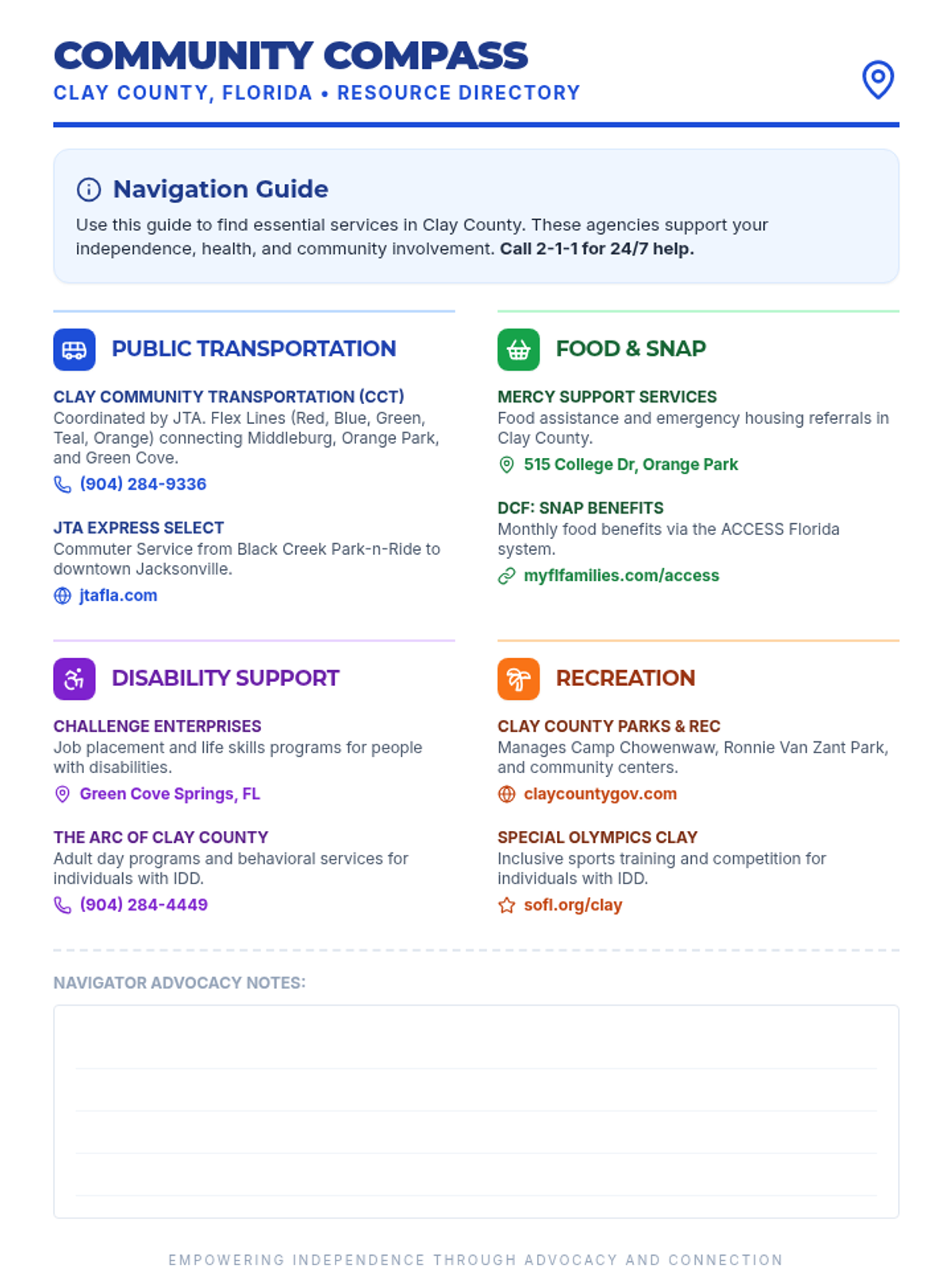
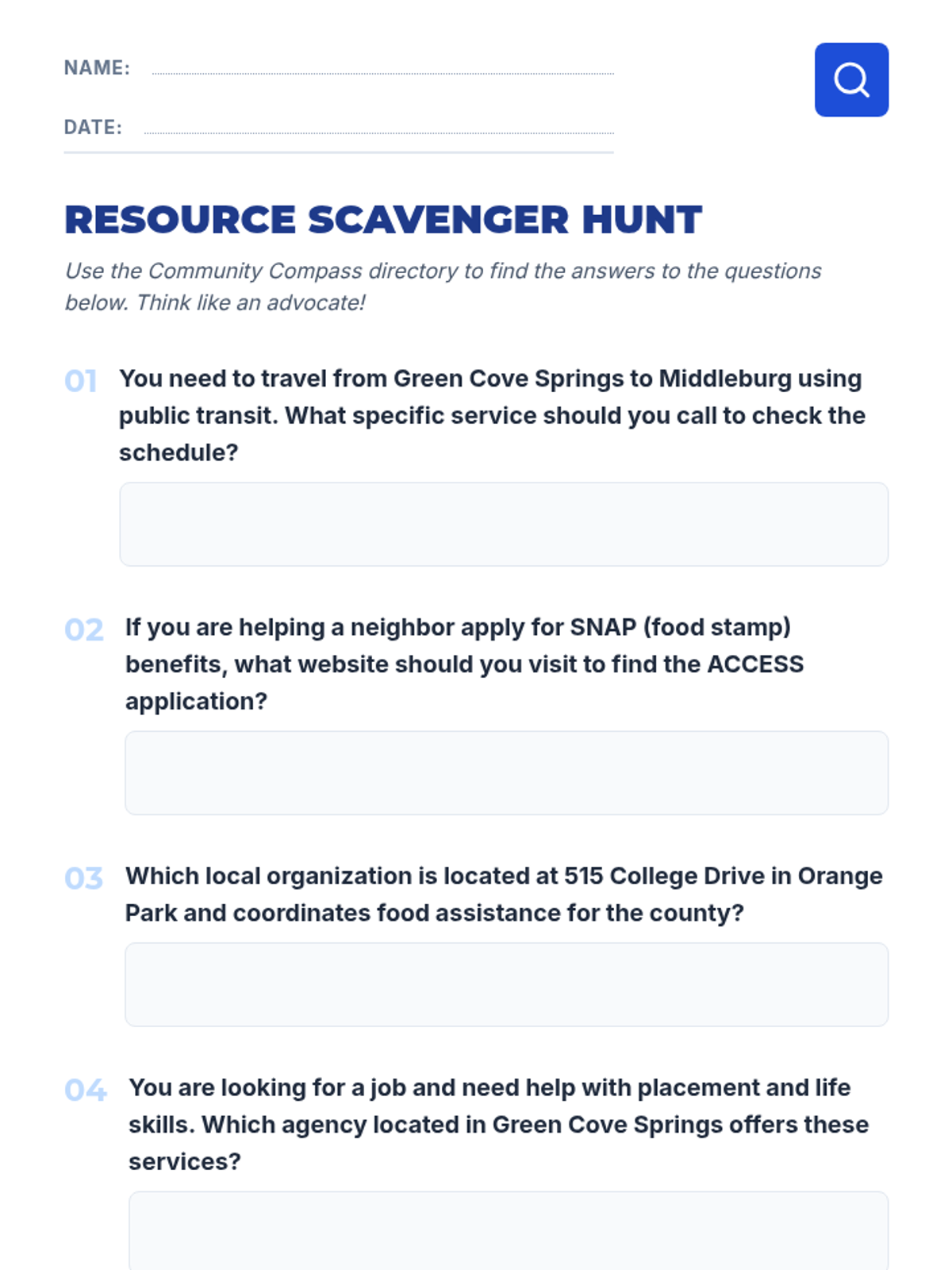
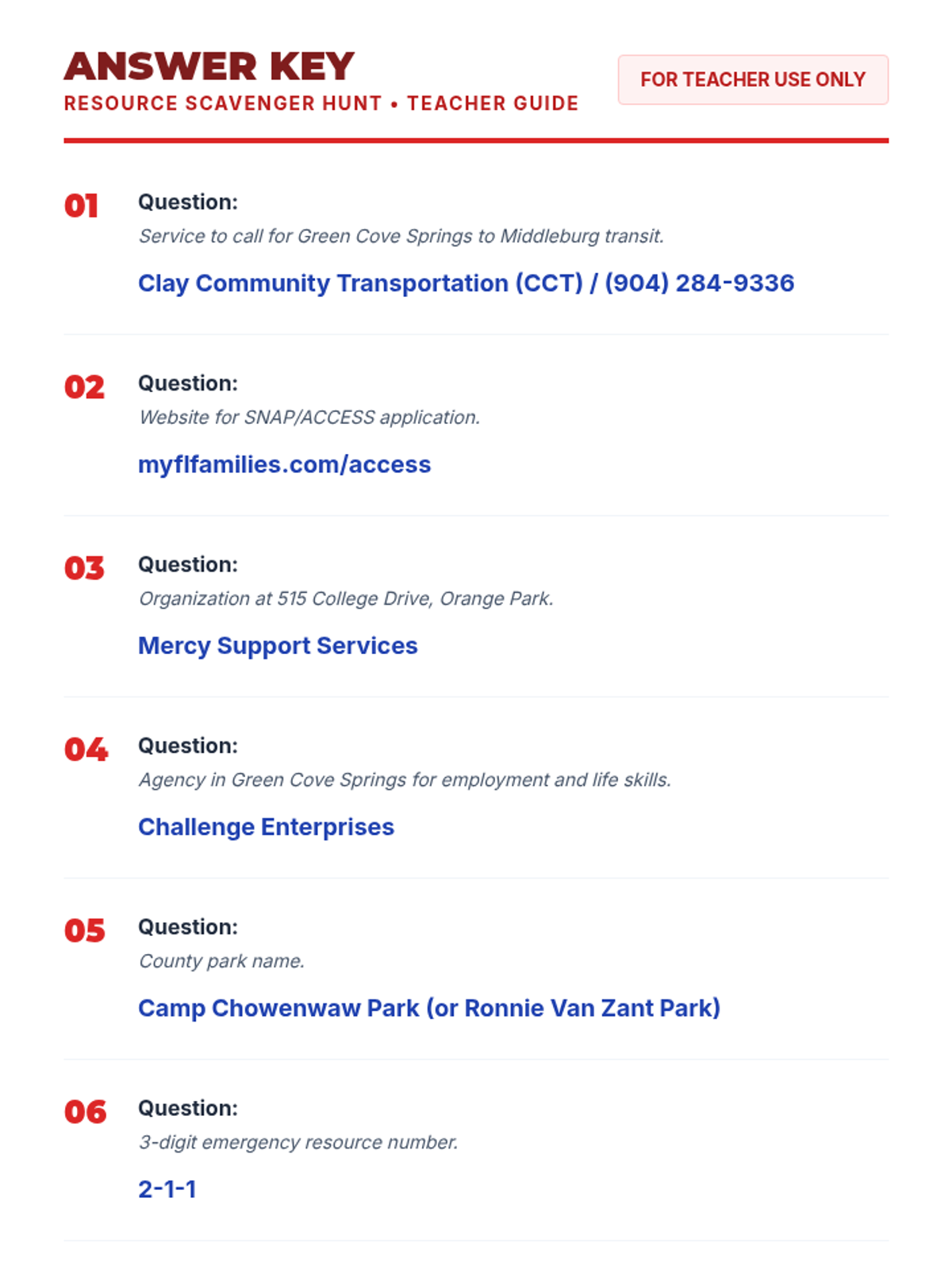
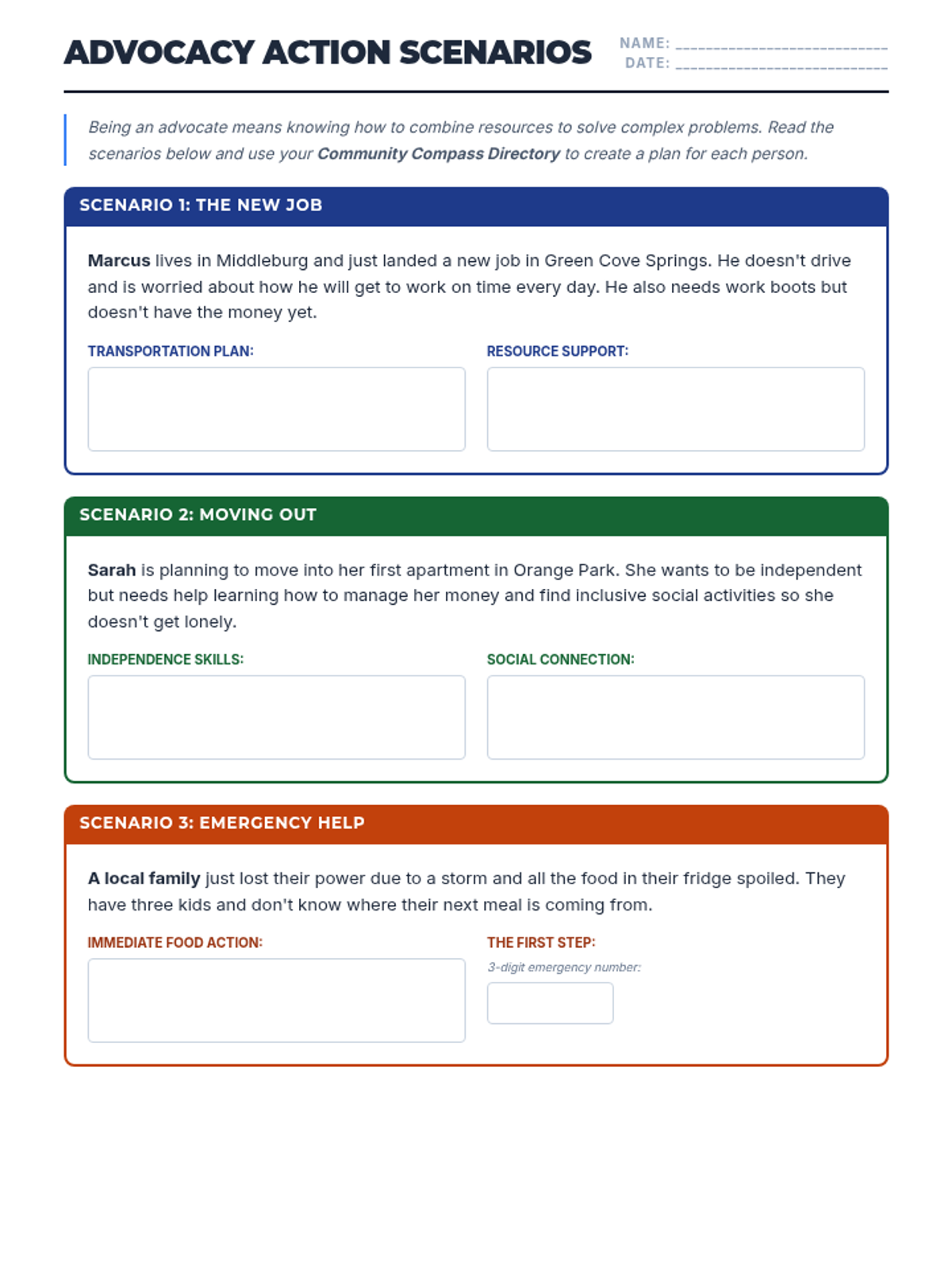
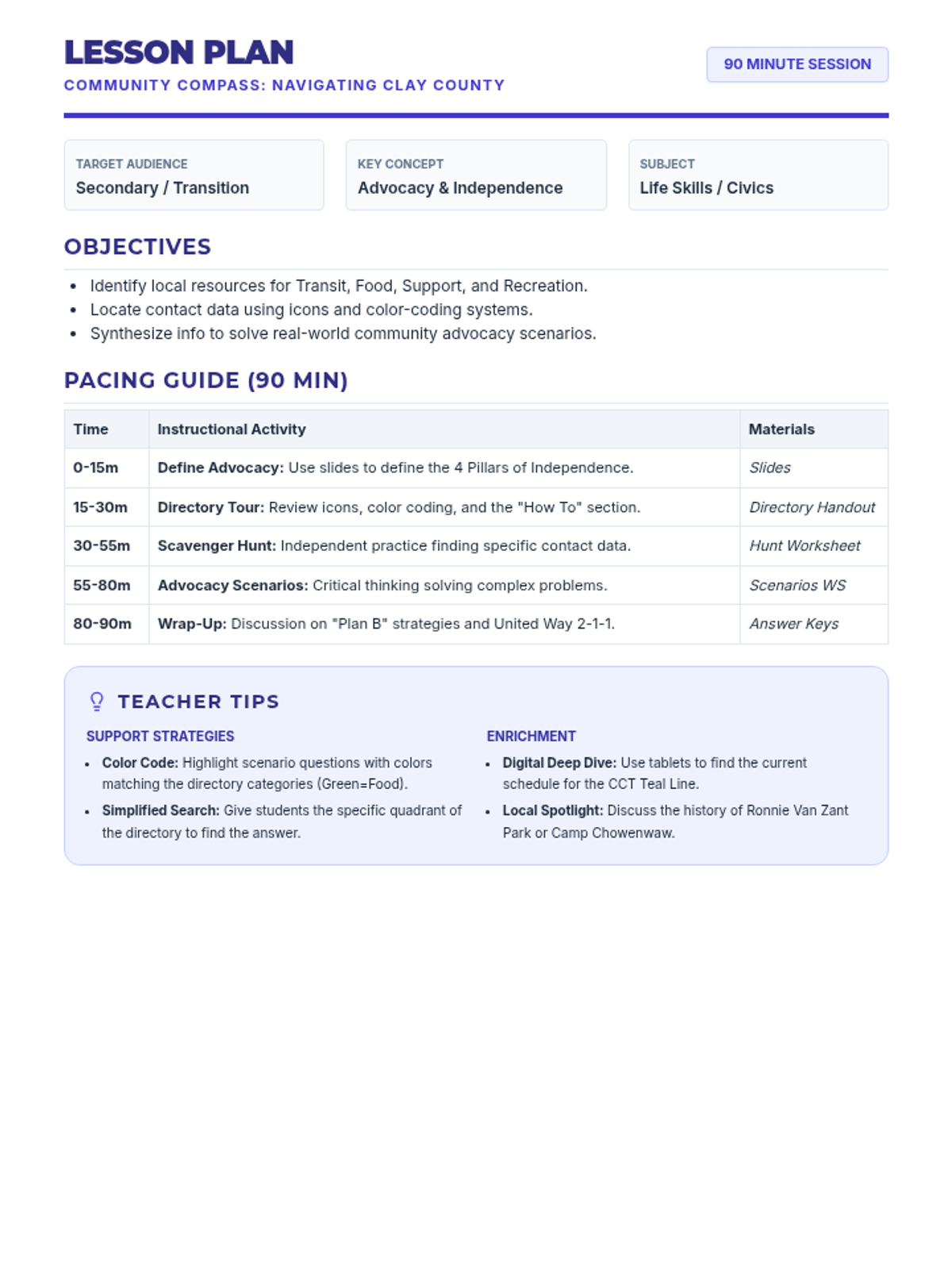
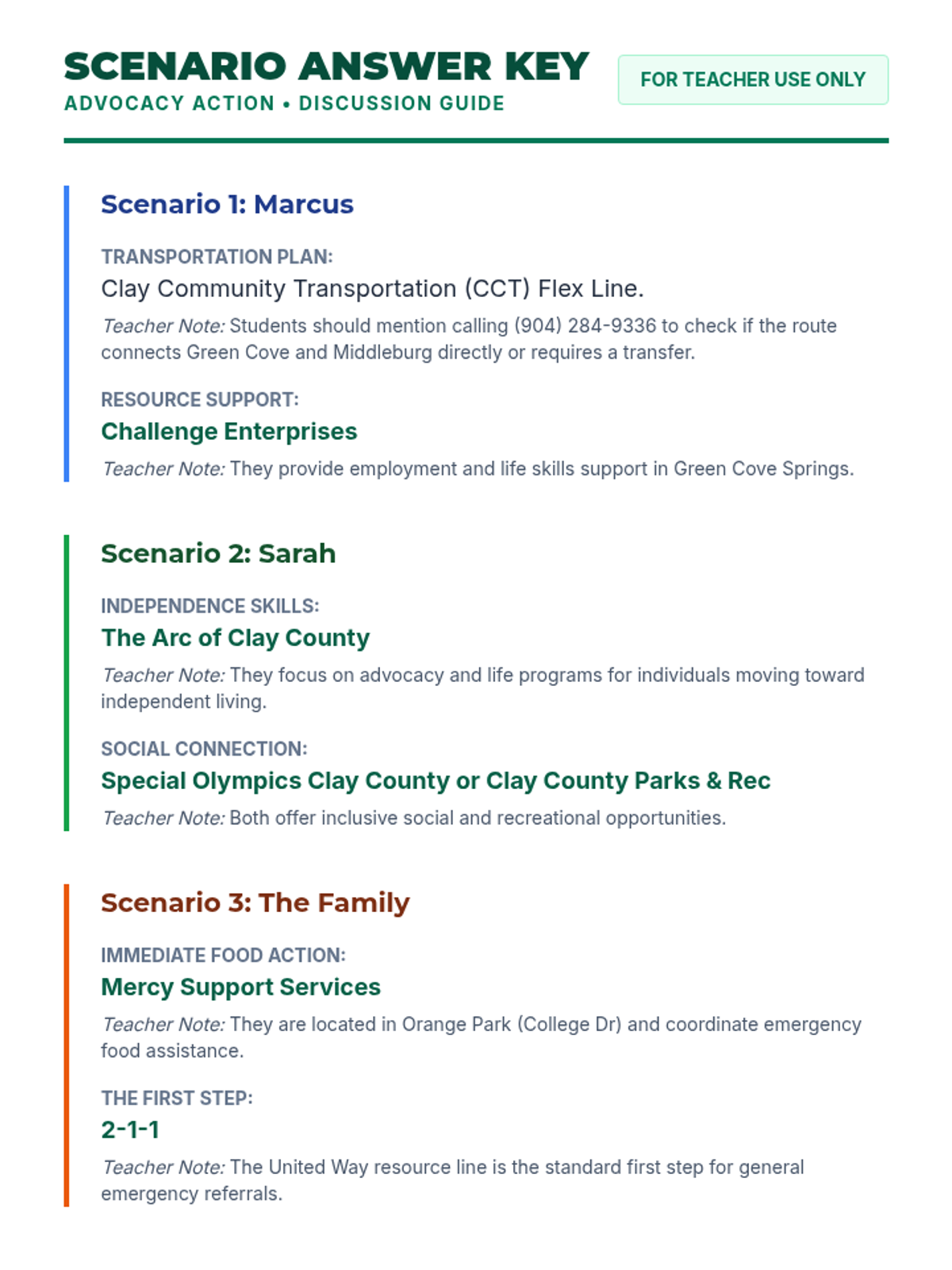
An introductory guide to navigating local community resources in Clay County, Florida, focusing on essential services for independence and advocacy. Students will explore transportation, food assistance, disability support, and recreational opportunities.
A lesson designed to help middle school students navigate the transition to high school by identifying and accessing academic, mental, and behavioral health supports.
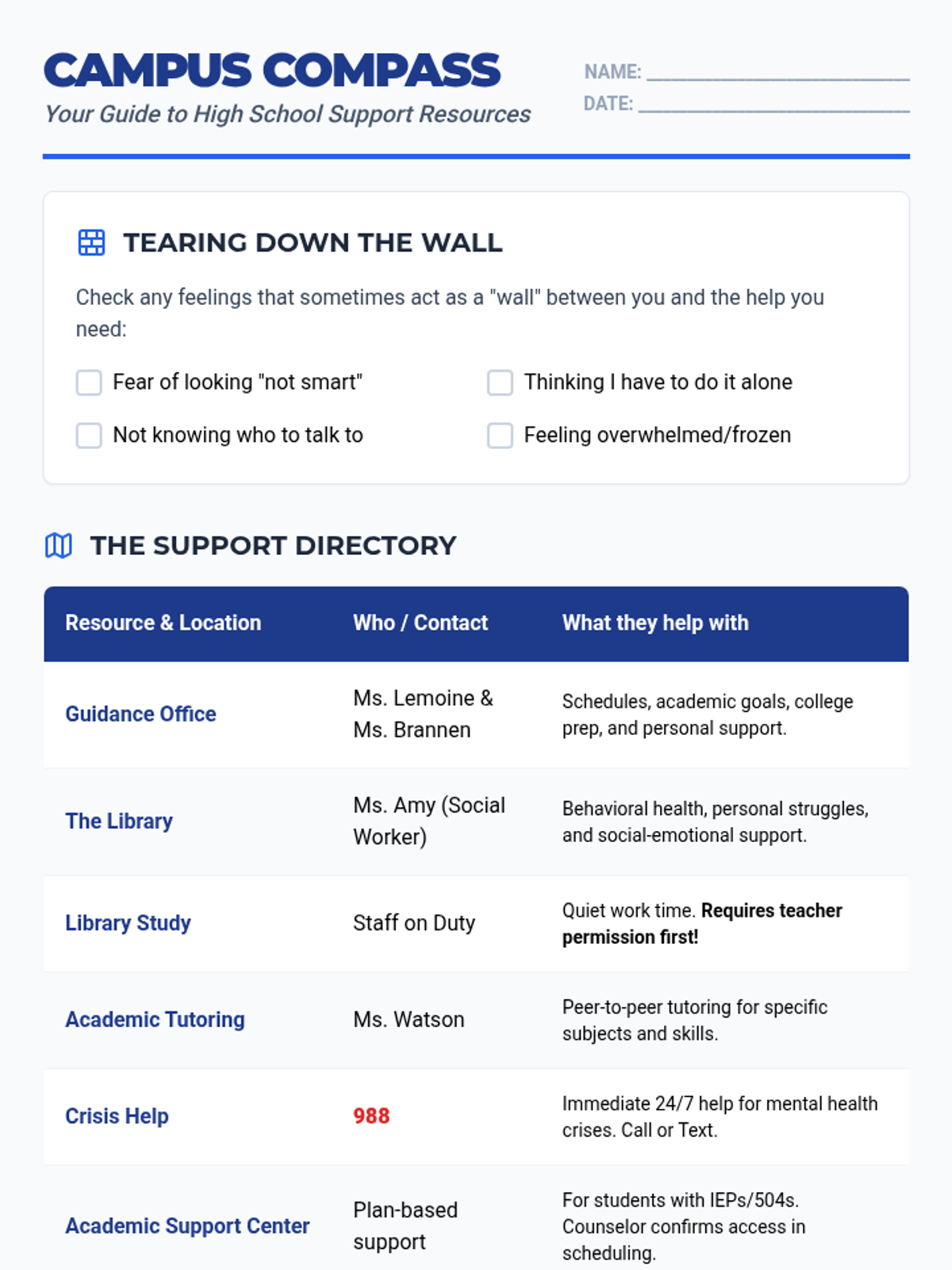
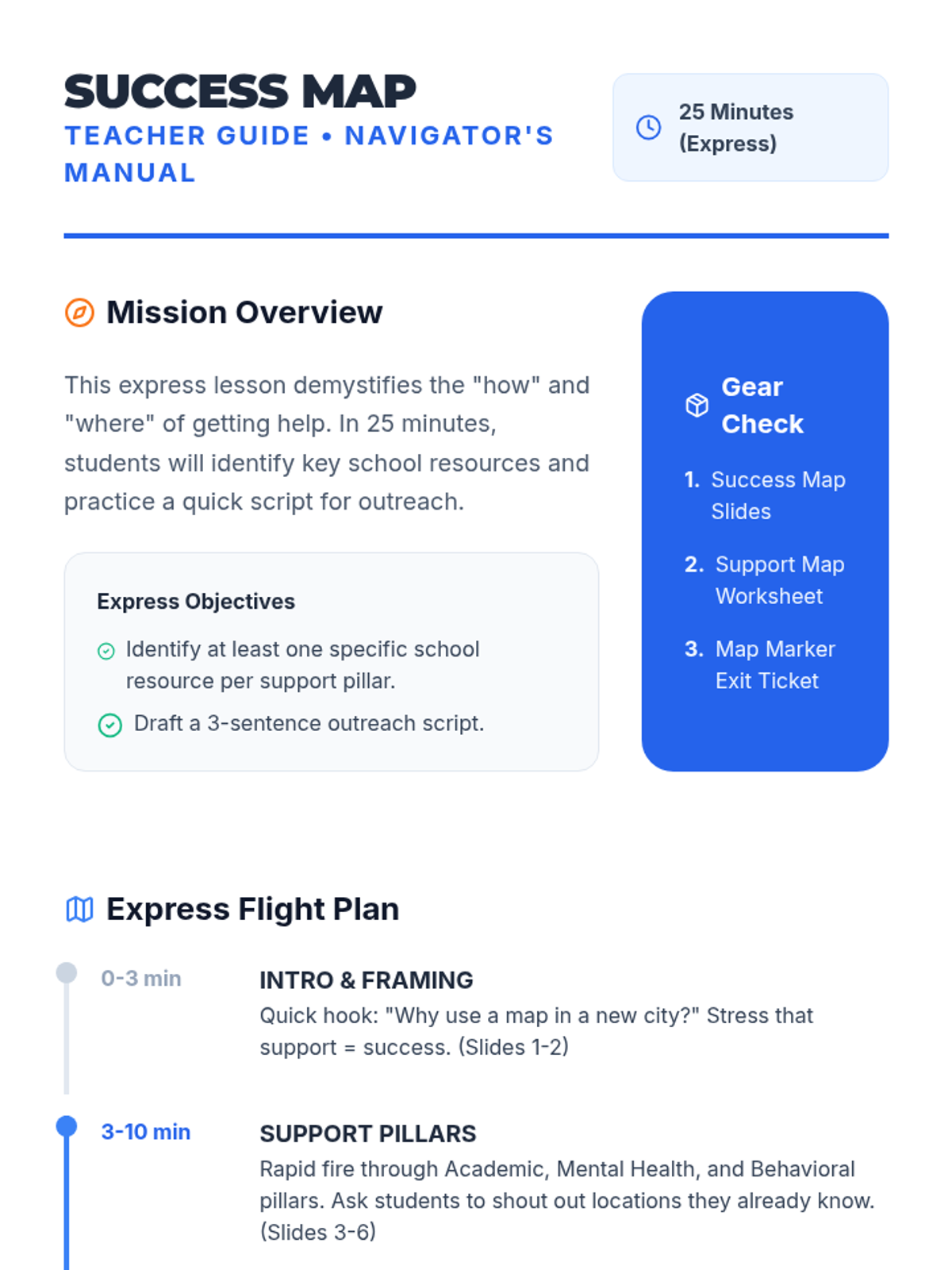
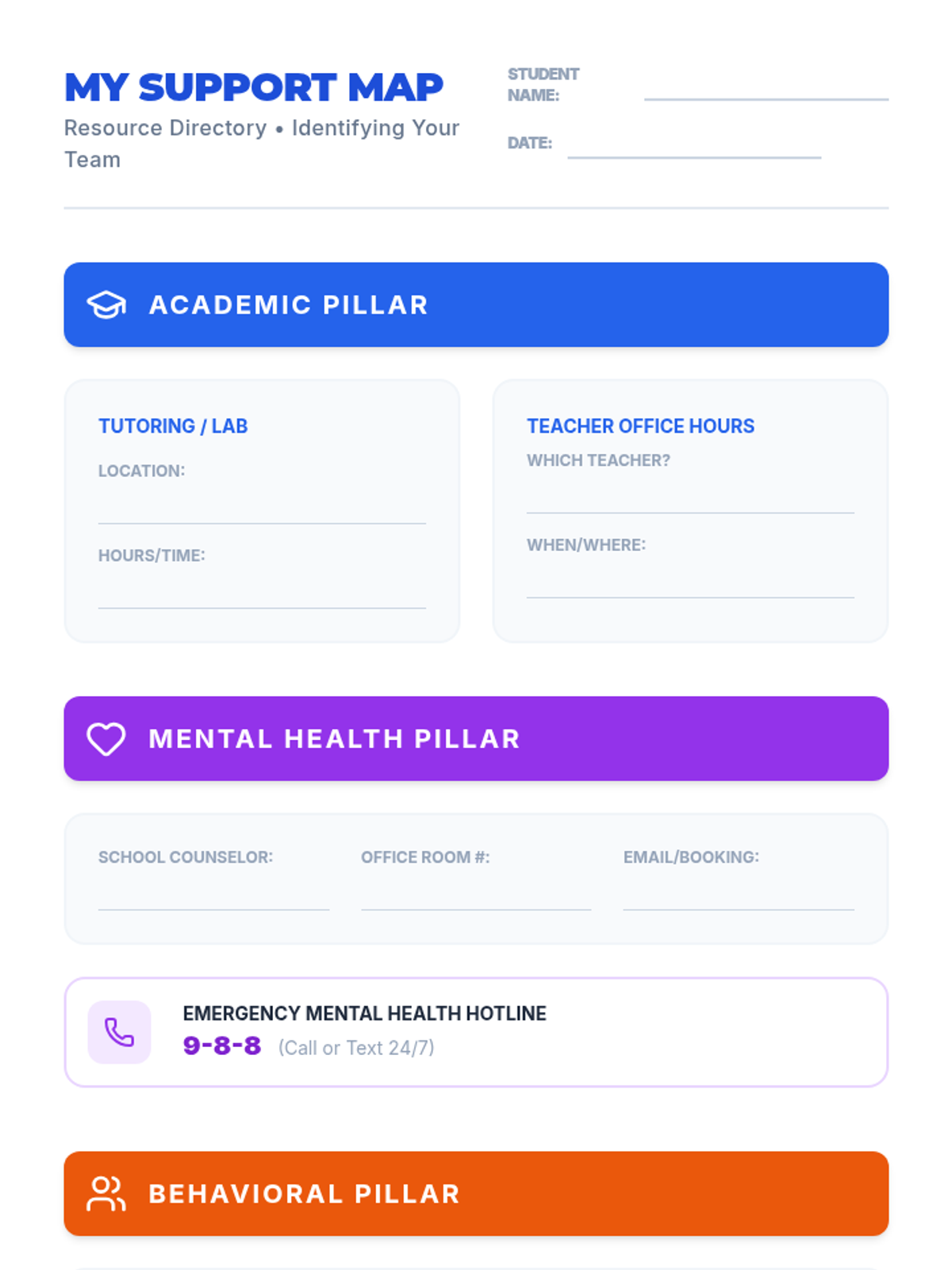
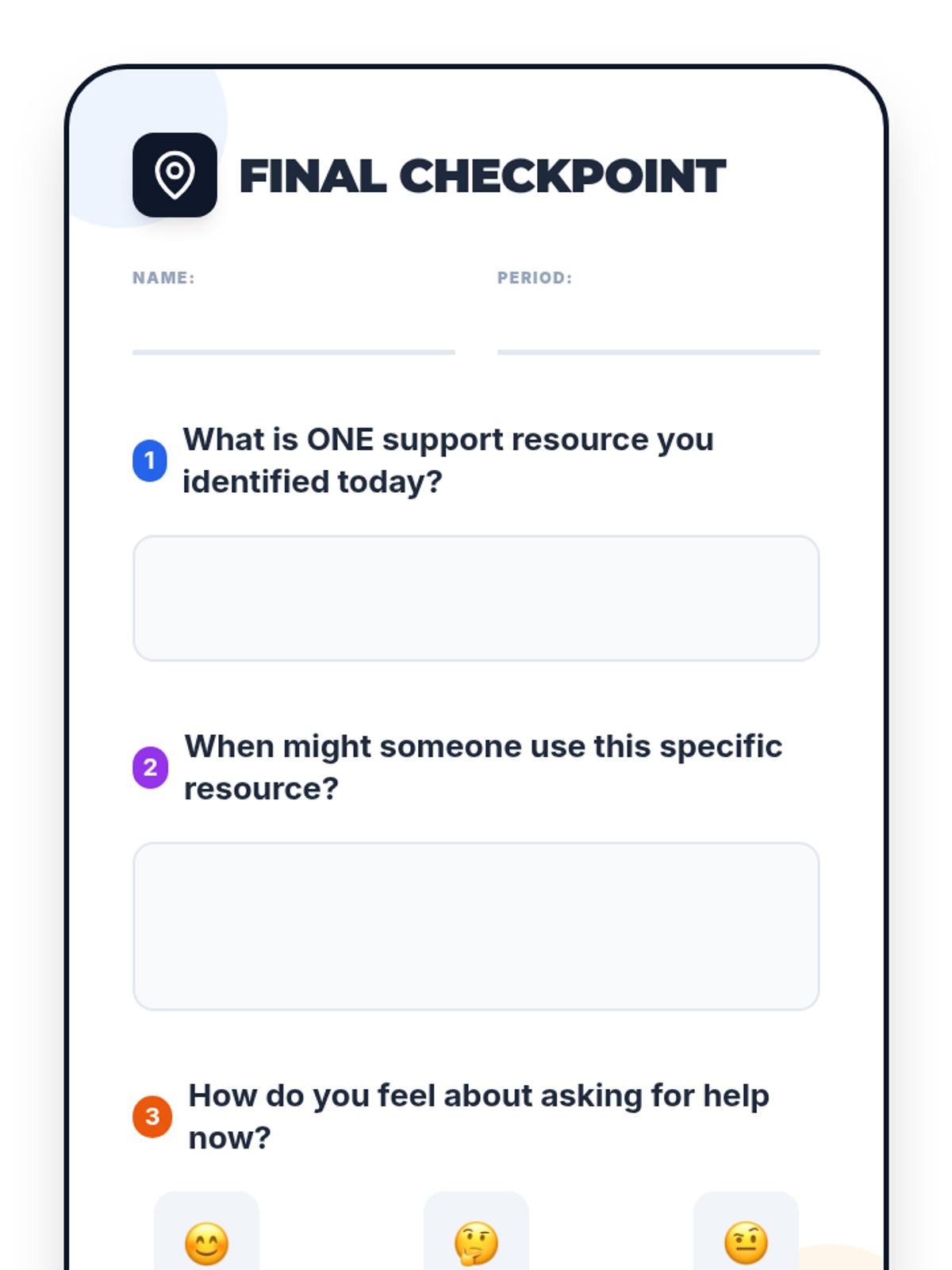
A comprehensive guide for high school students to navigate academic, mental health, and behavioral support systems. Students learn how to identify their needs, find the right resources, and effectively ask for help.
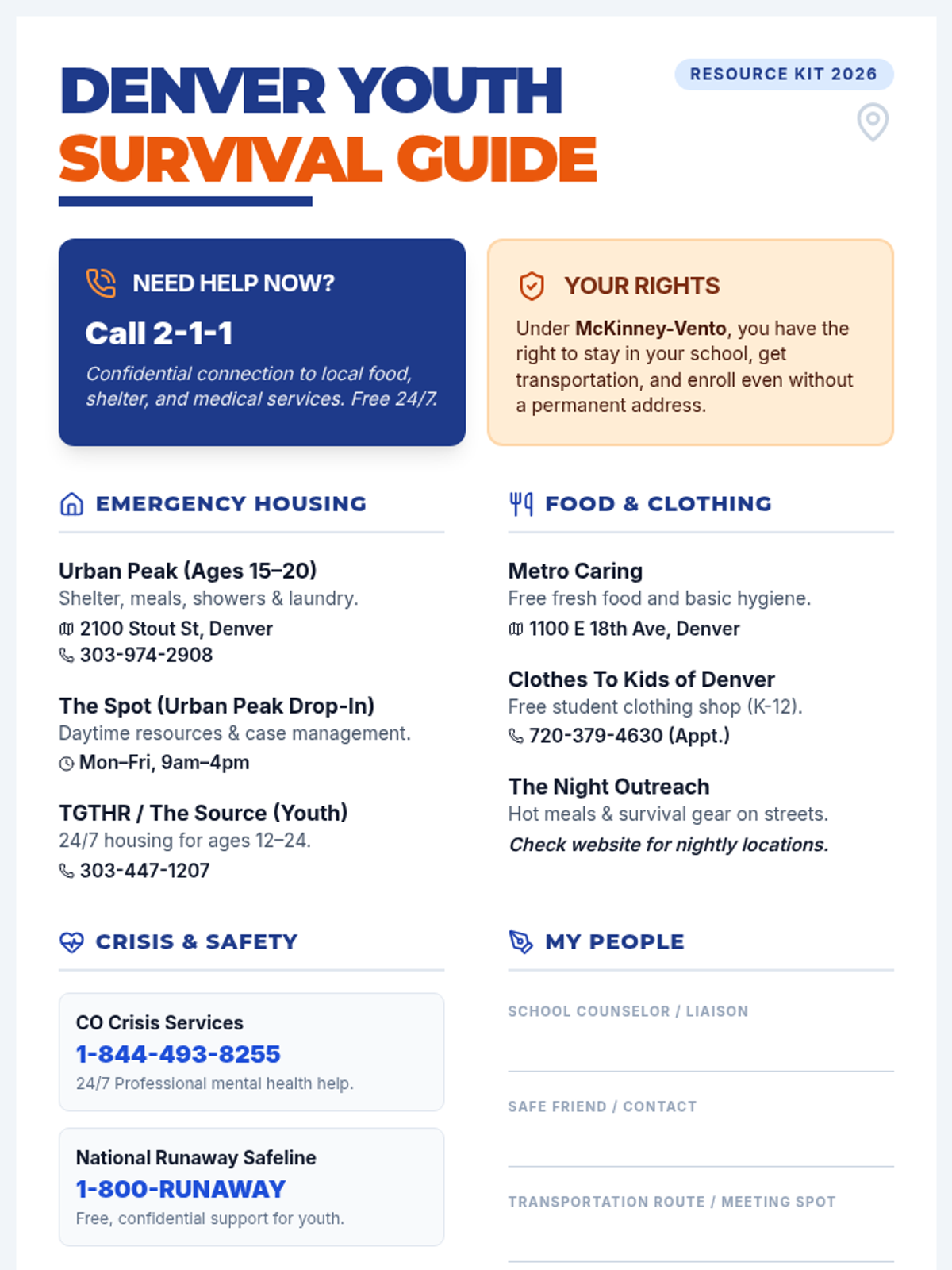
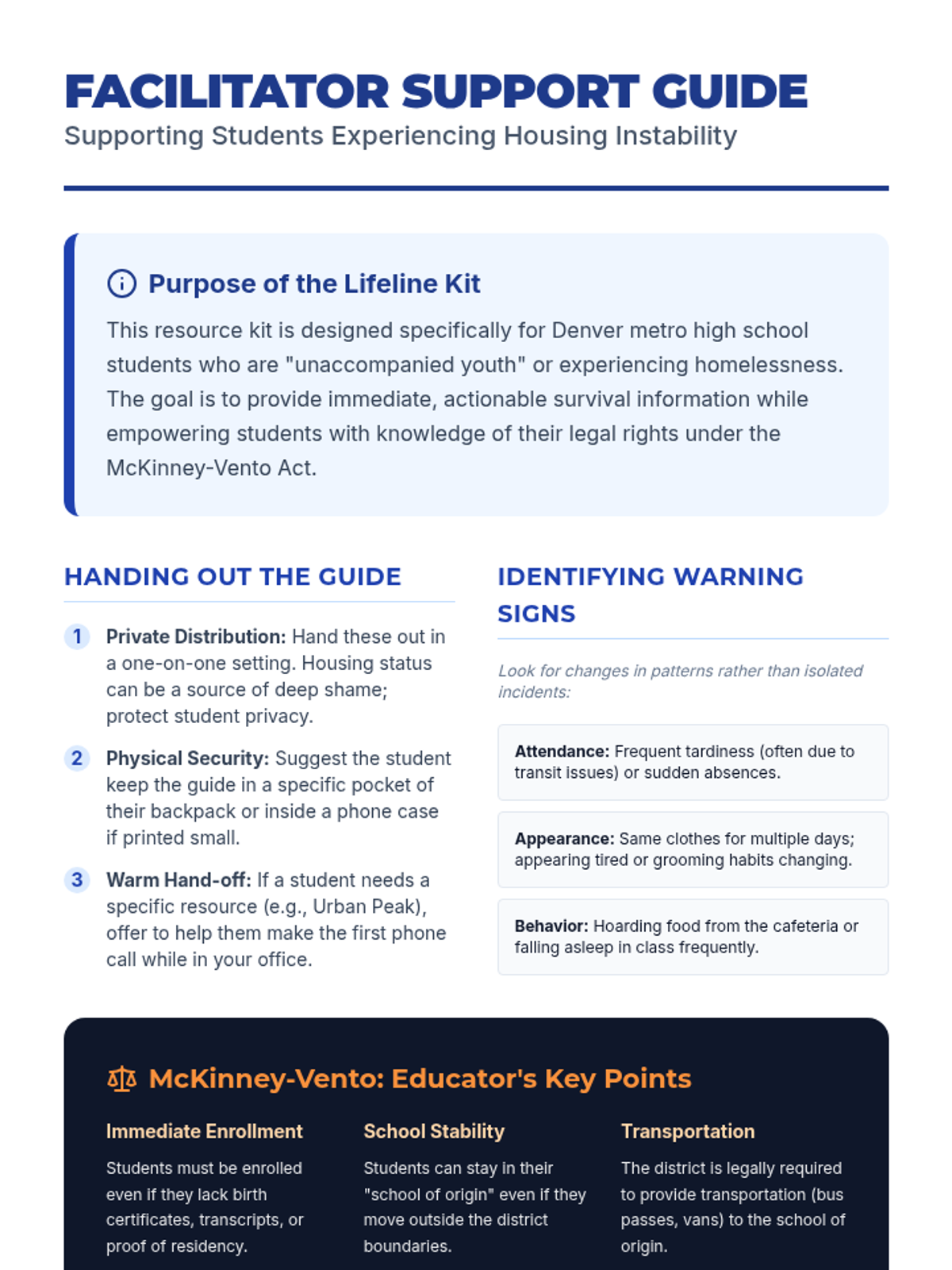
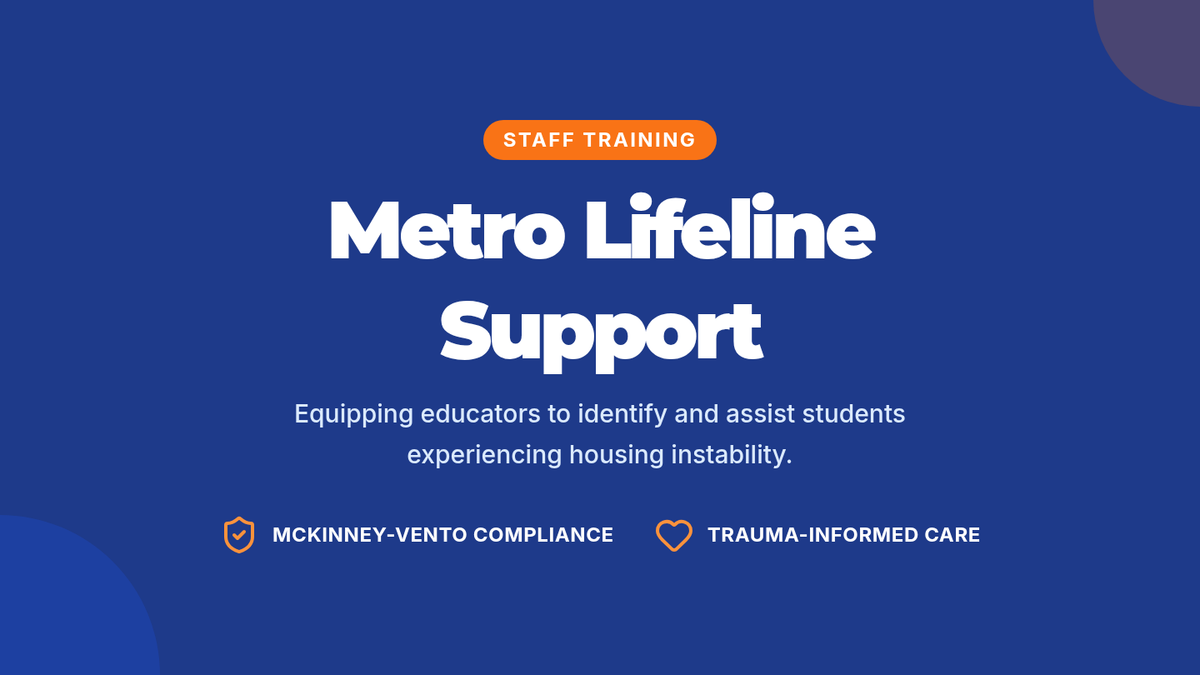
A comprehensive set of resources and instructional materials to support Denver metro high school students experiencing housing instability, focusing on immediate survival needs and legal rights under the McKinney-Vento Act.
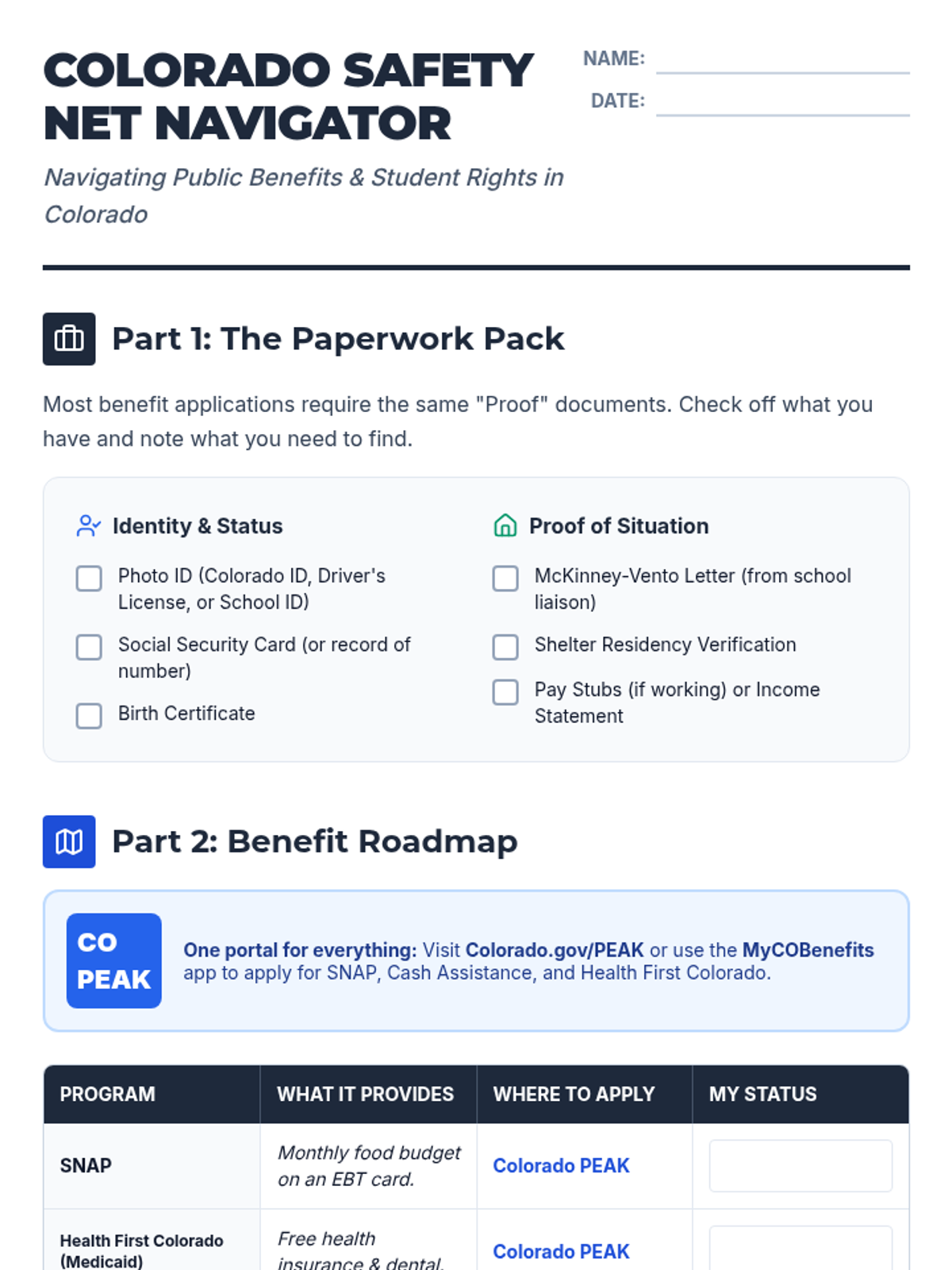
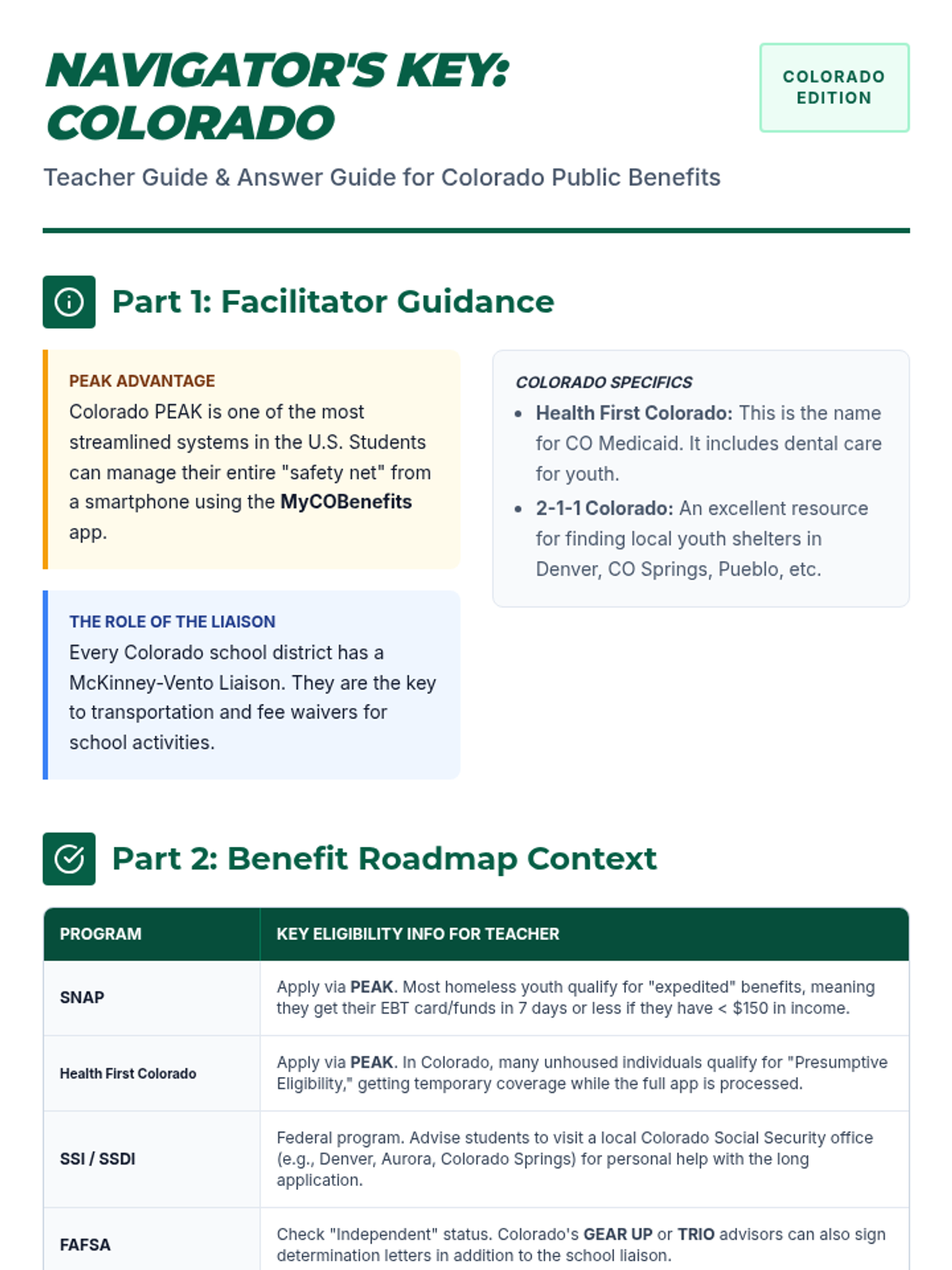
A comprehensive lesson designed to help homeless high school students navigate complex public benefit systems, understand their rights under McKinney-Vento, and manage the documentation required for stability and post-secondary success.
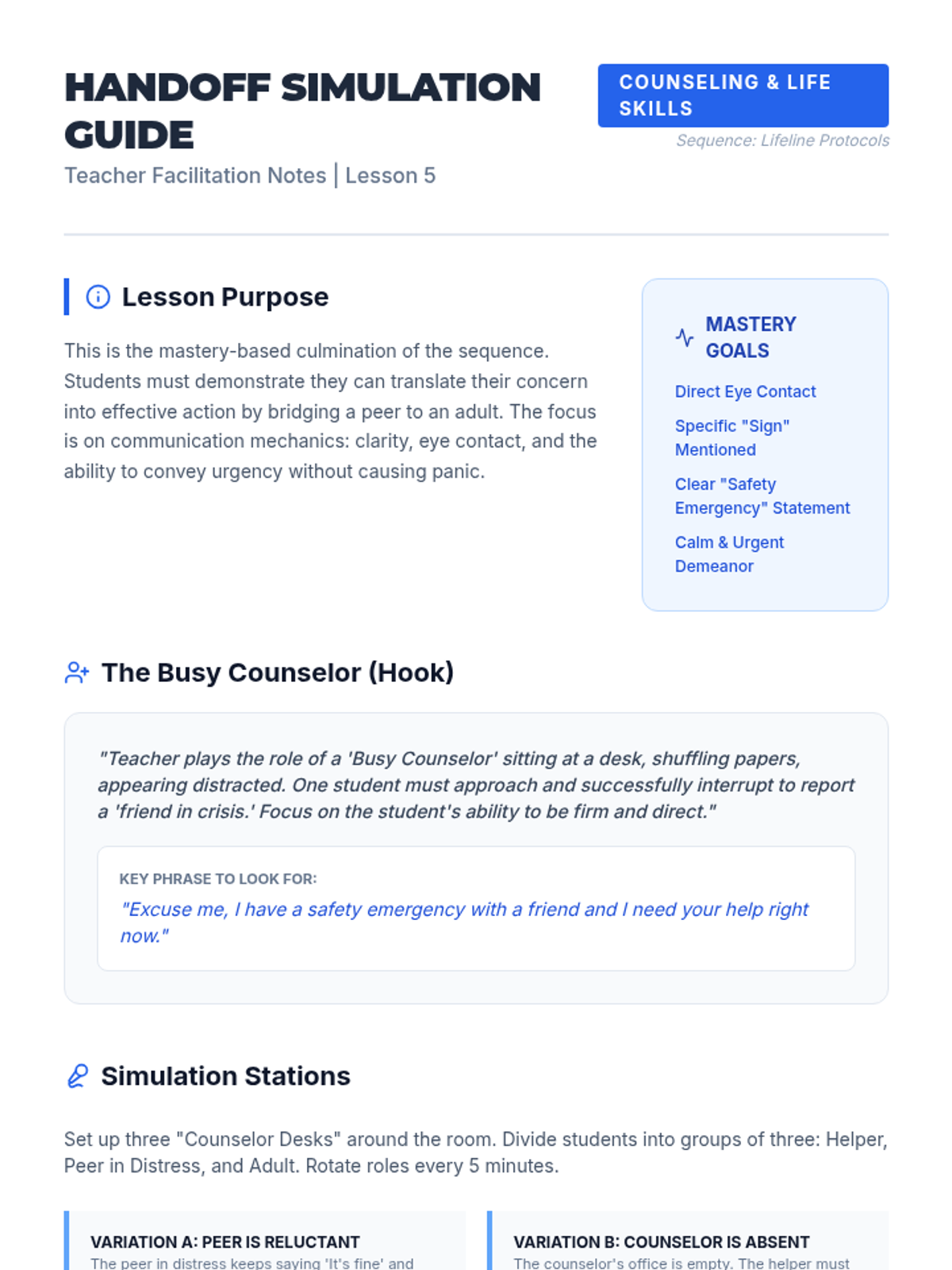
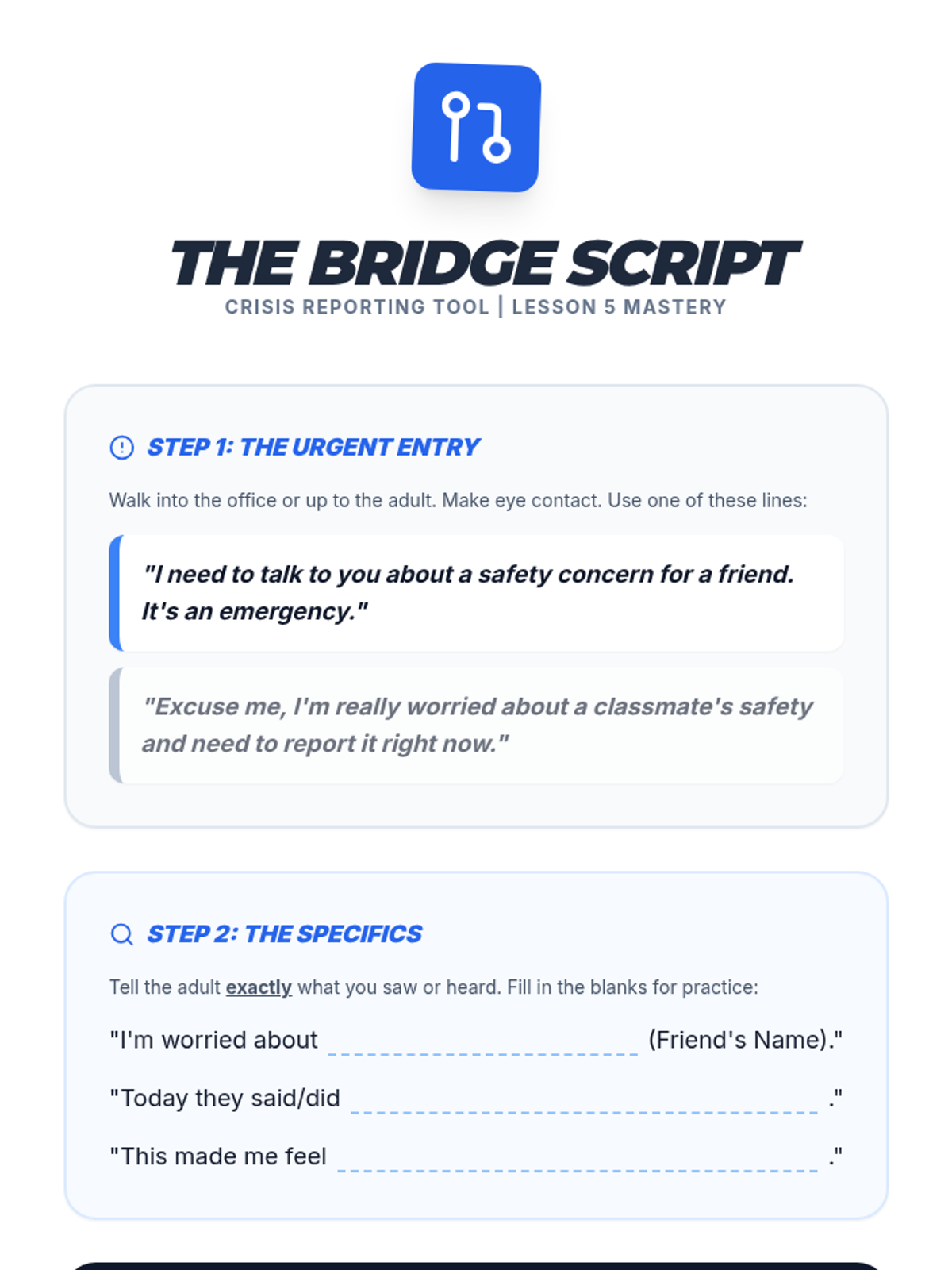
Students participate in simulations where they practice the 'handoff'—bridging a peer in distress to a professional. The focus is on clear, urgent communication with school counselors and administrators.
Students map out specific trusted adults in their school and community and research local crisis resources. This ensures they have a concrete plan of who to turn to when a crisis is identified.
Students learn the ACT framework (Acknowledge, Care, Tell) as a standard protocol for crisis response. Through role-plays, they practice moving from identifying signs to connecting a peer with an adult.
This workshop focuses on active listening and validation techniques. Students learn to support peers by validating feelings without attempting to 'fix' the problem or provide therapy, maintaining healthy boundaries.
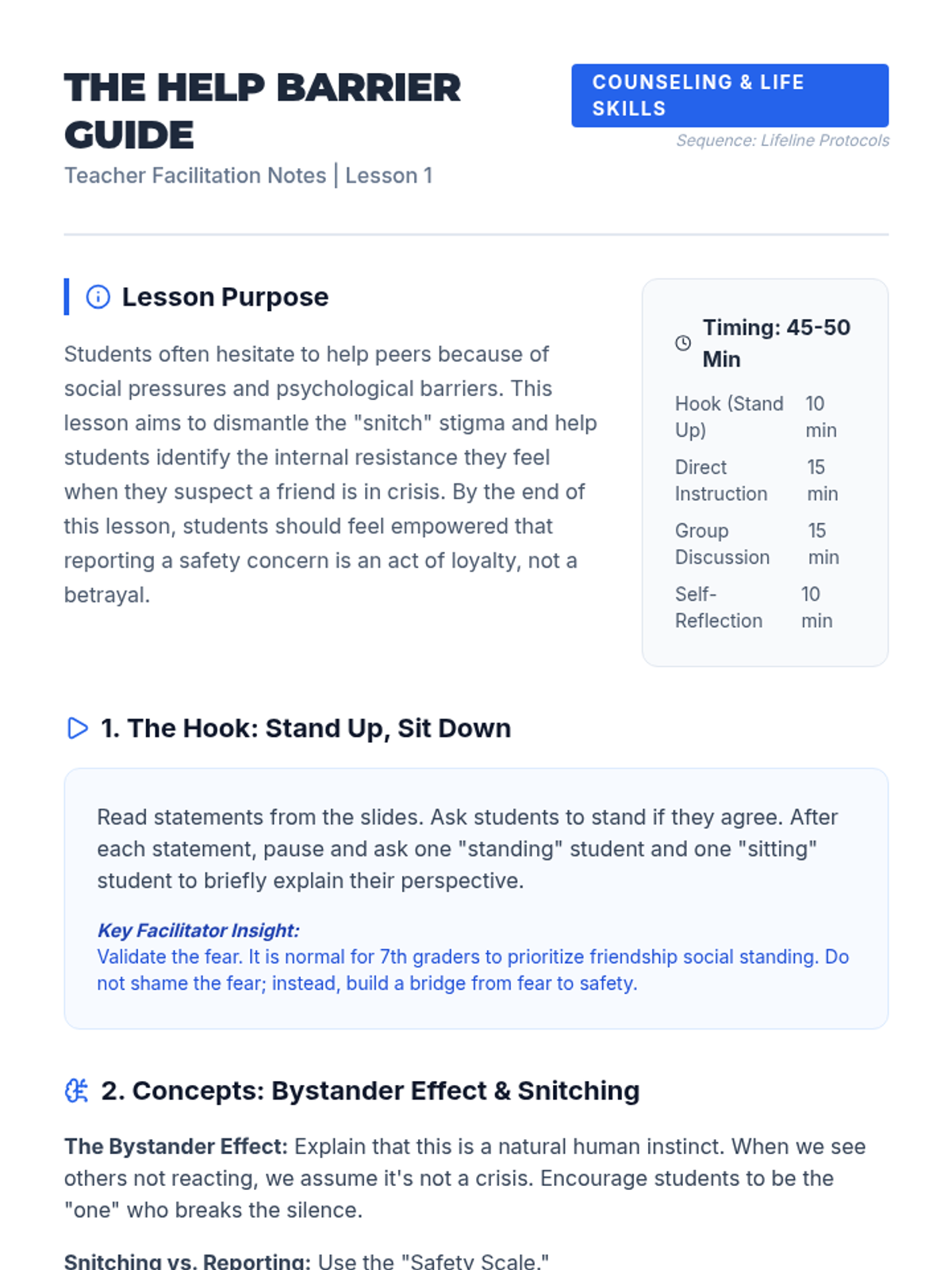
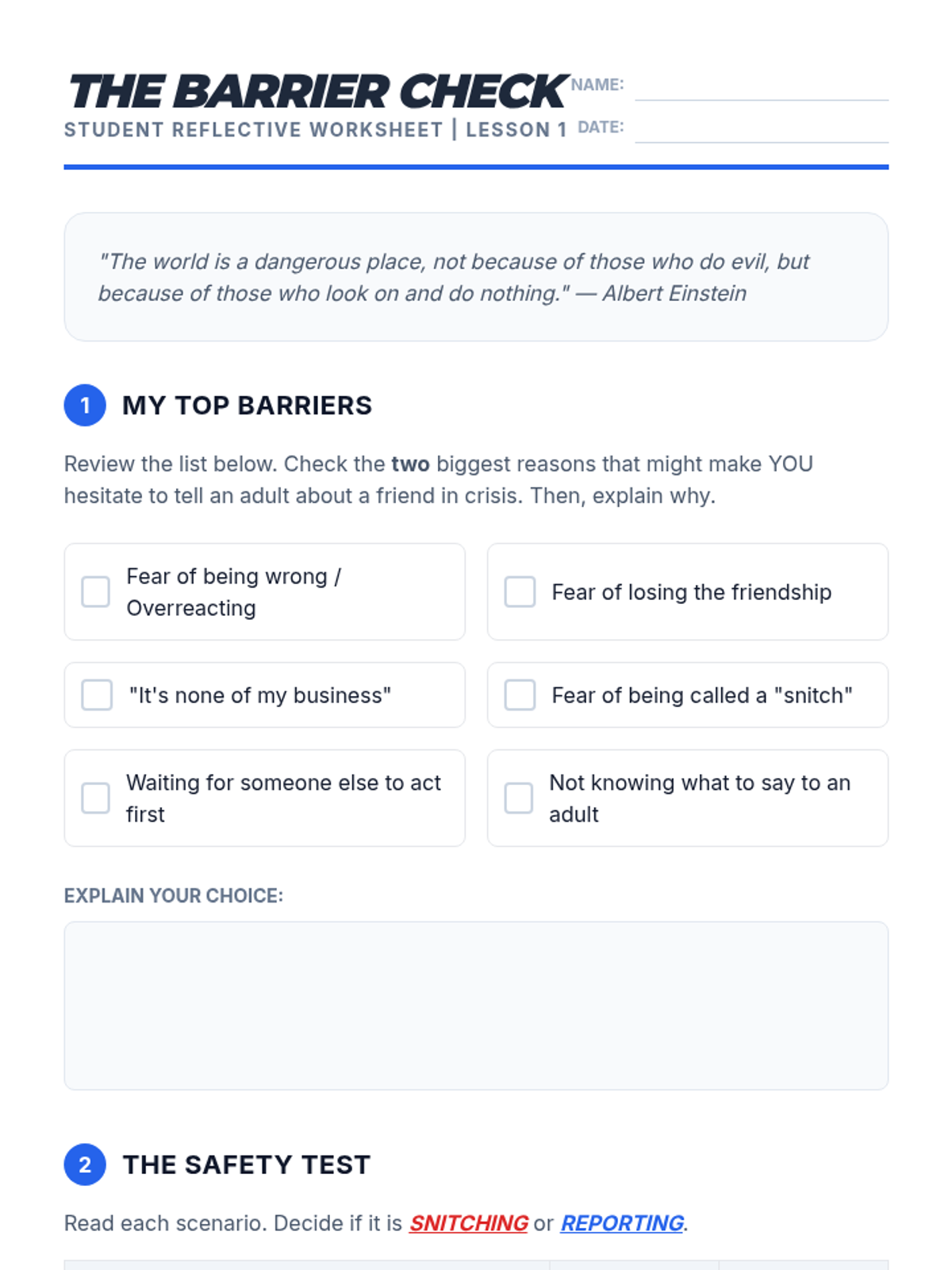
Students explore the 'Bystander Effect' and common fears that prevent peers from speaking up, such as fear of losing a friendship or being wrong. The goal is to build confidence in the decision to act and distinguish 'snitching' from 'reporting.'
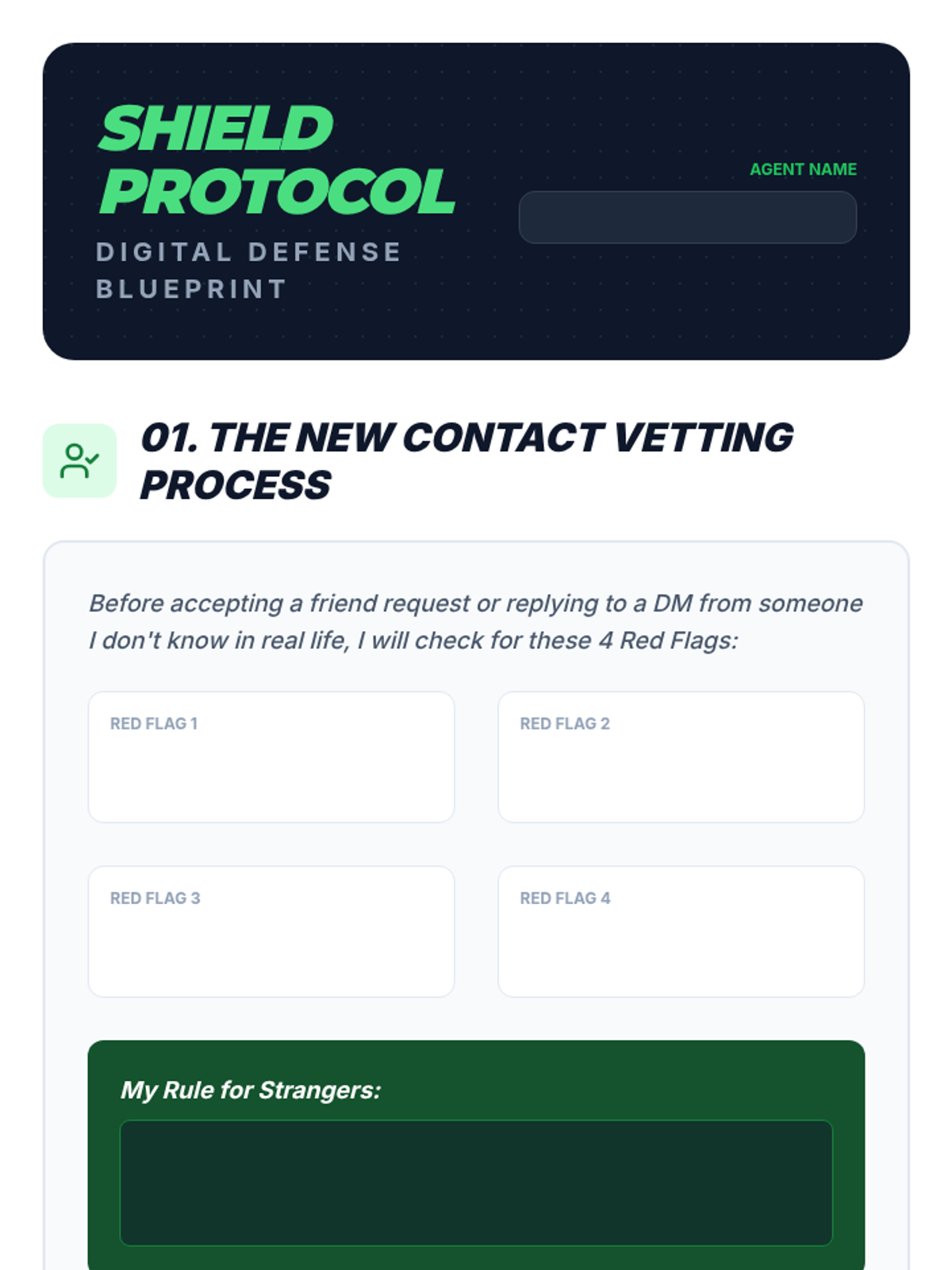
Students synthesize their learning into a personal digital defense strategy and master the 'Stop, Block, and Tell' protocol.
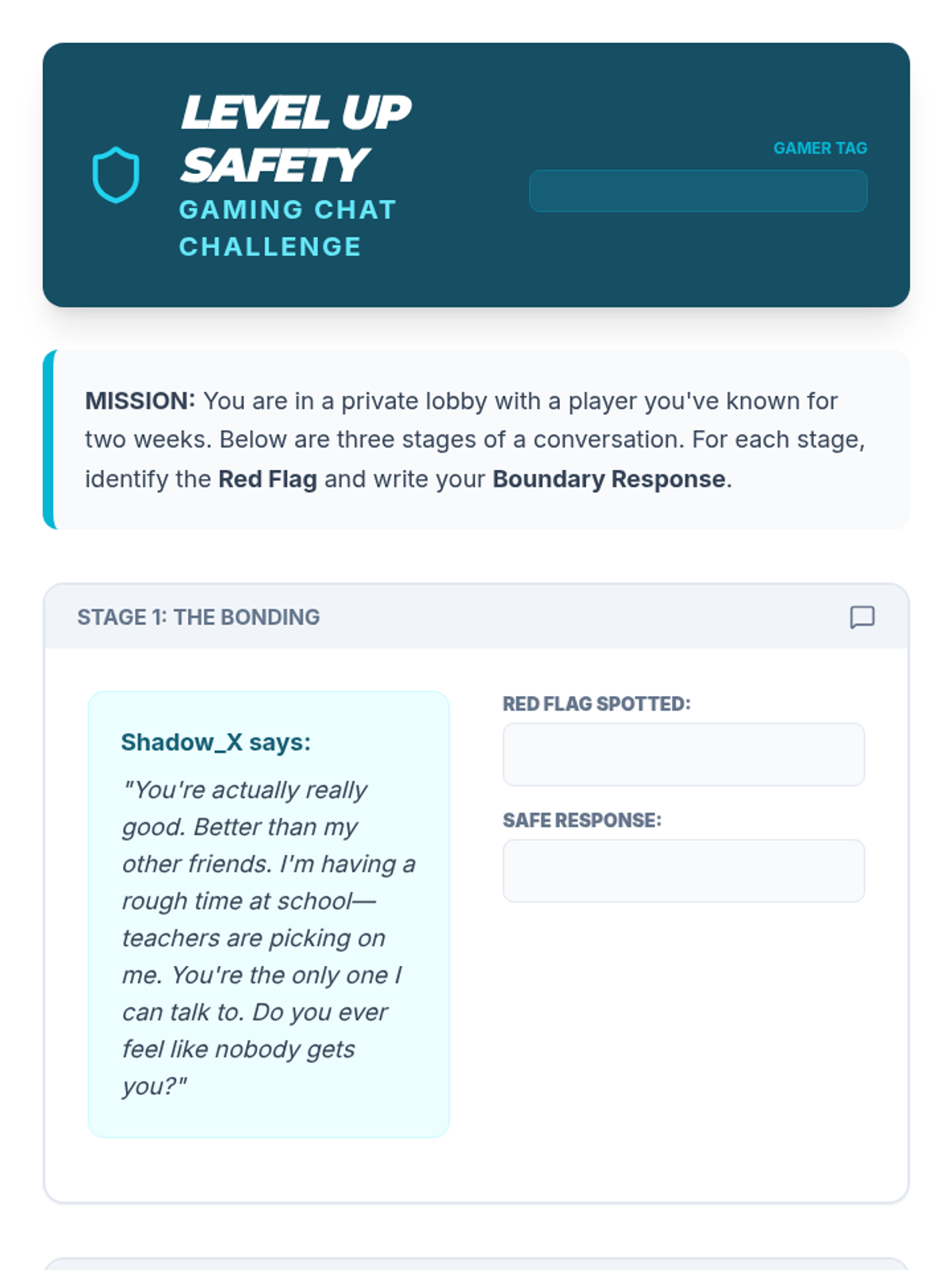
Focusing on gaming environments, students practice setting boundaries and identifying grooming behaviors in chat rooms.
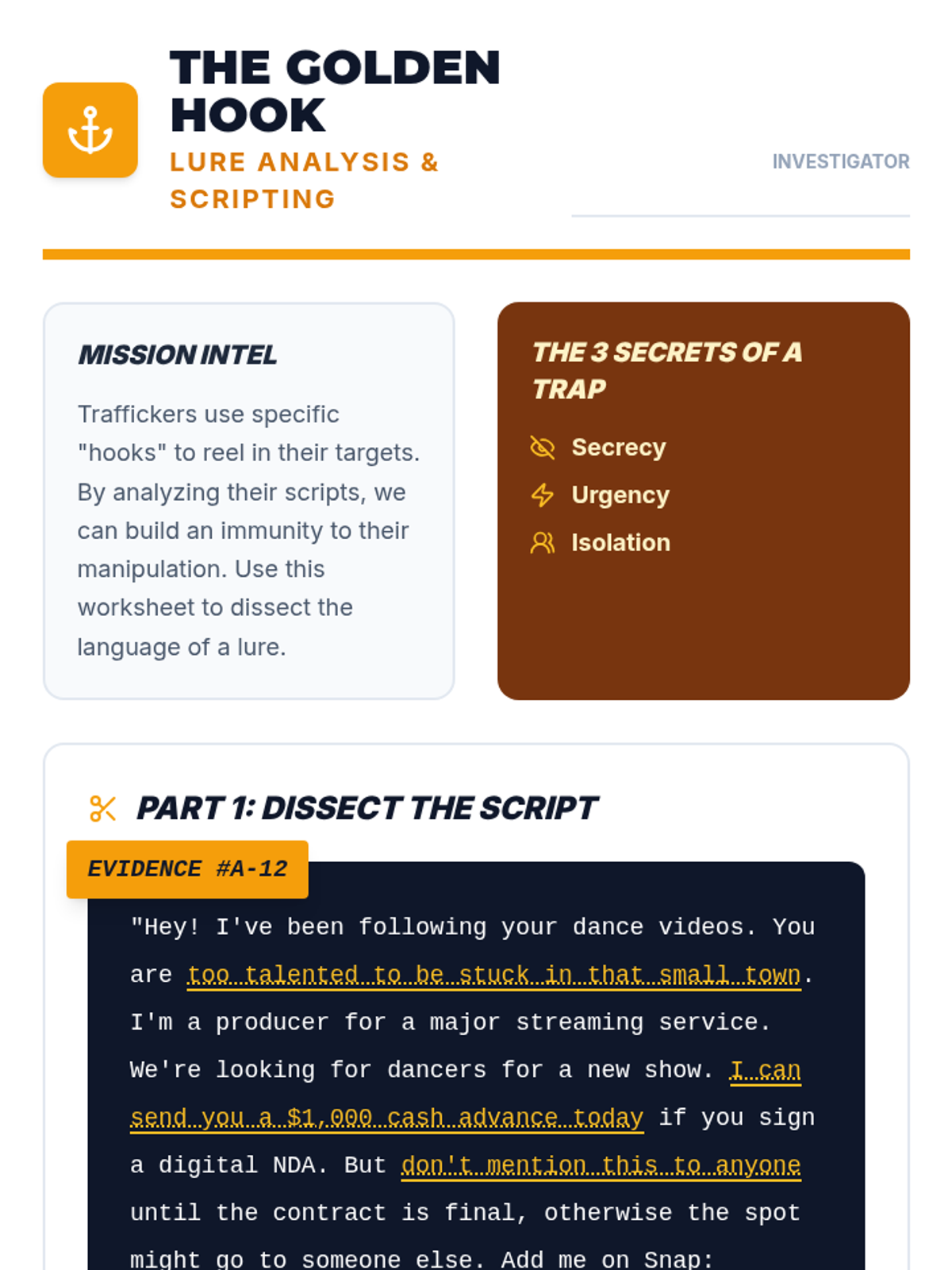
This lesson analyzes common 'hooks'—such as modeling offers or financial incentives—to understand how manipulators use flattery and greed.
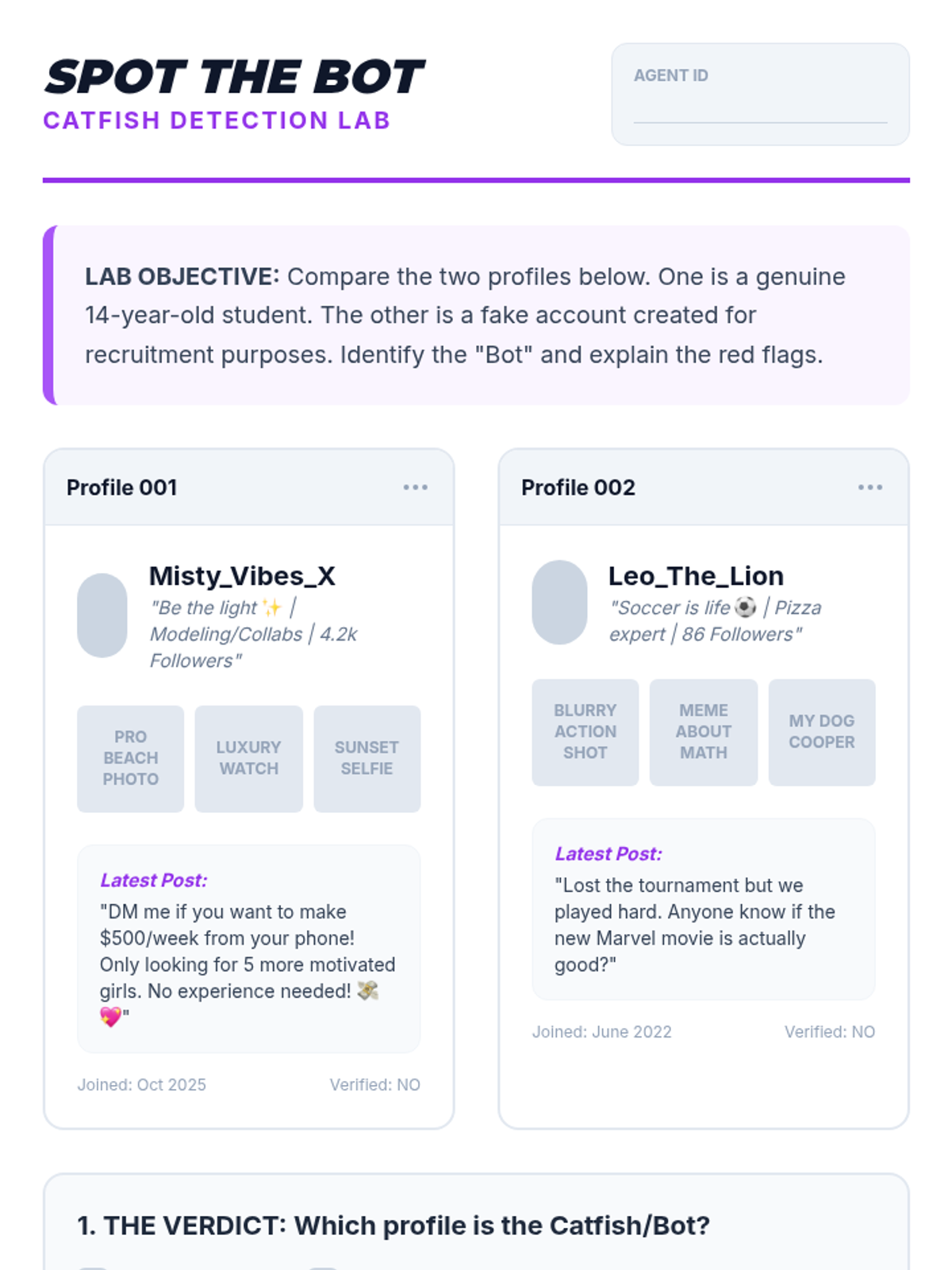
Learners develop the skills to spot inconsistencies in fake profiles and recognize the signs of catfishing used in recruitment attempts.
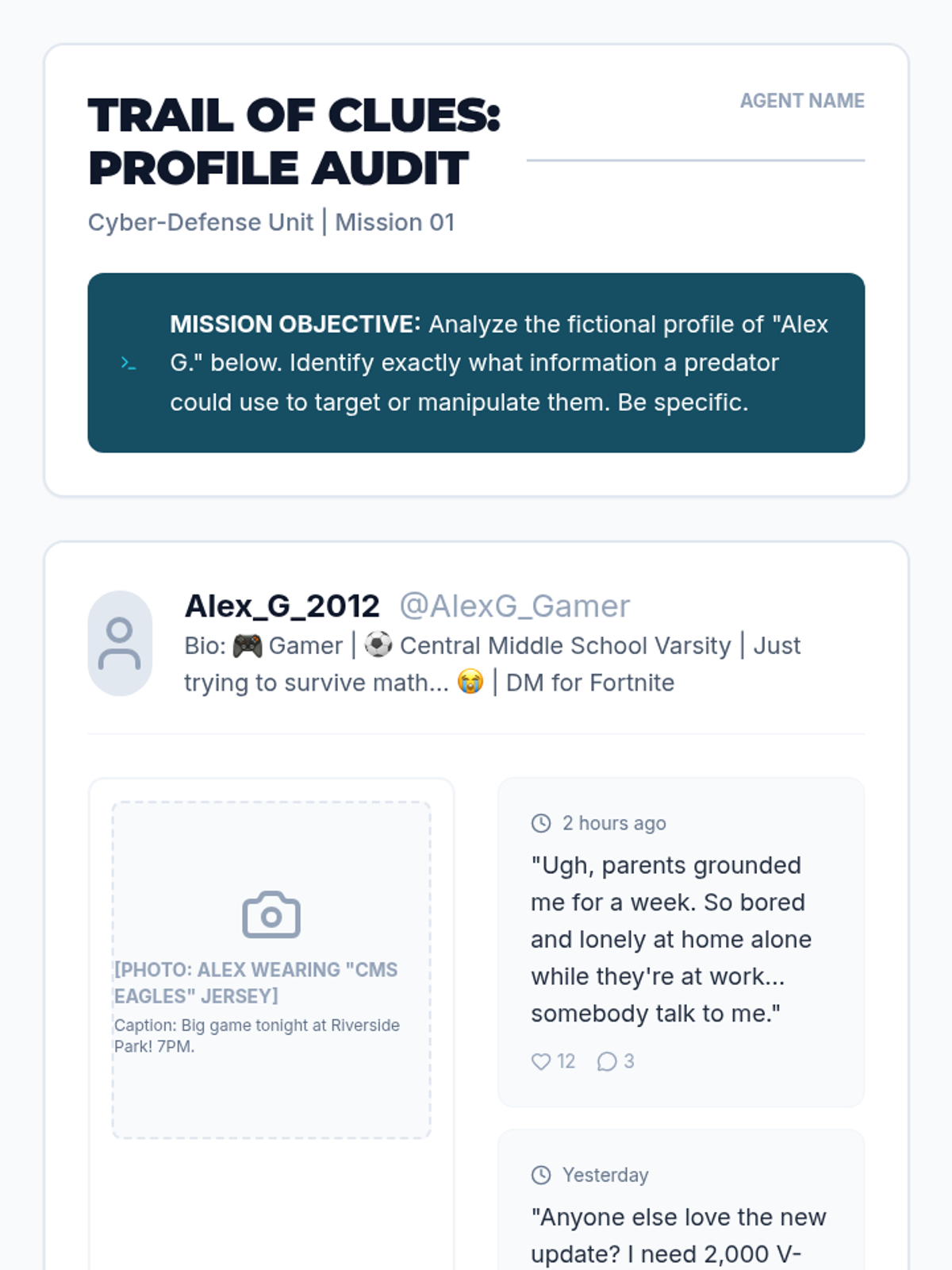
Students audit social media profiles to understand how predators use public digital footprints to target and build rapport with youth.
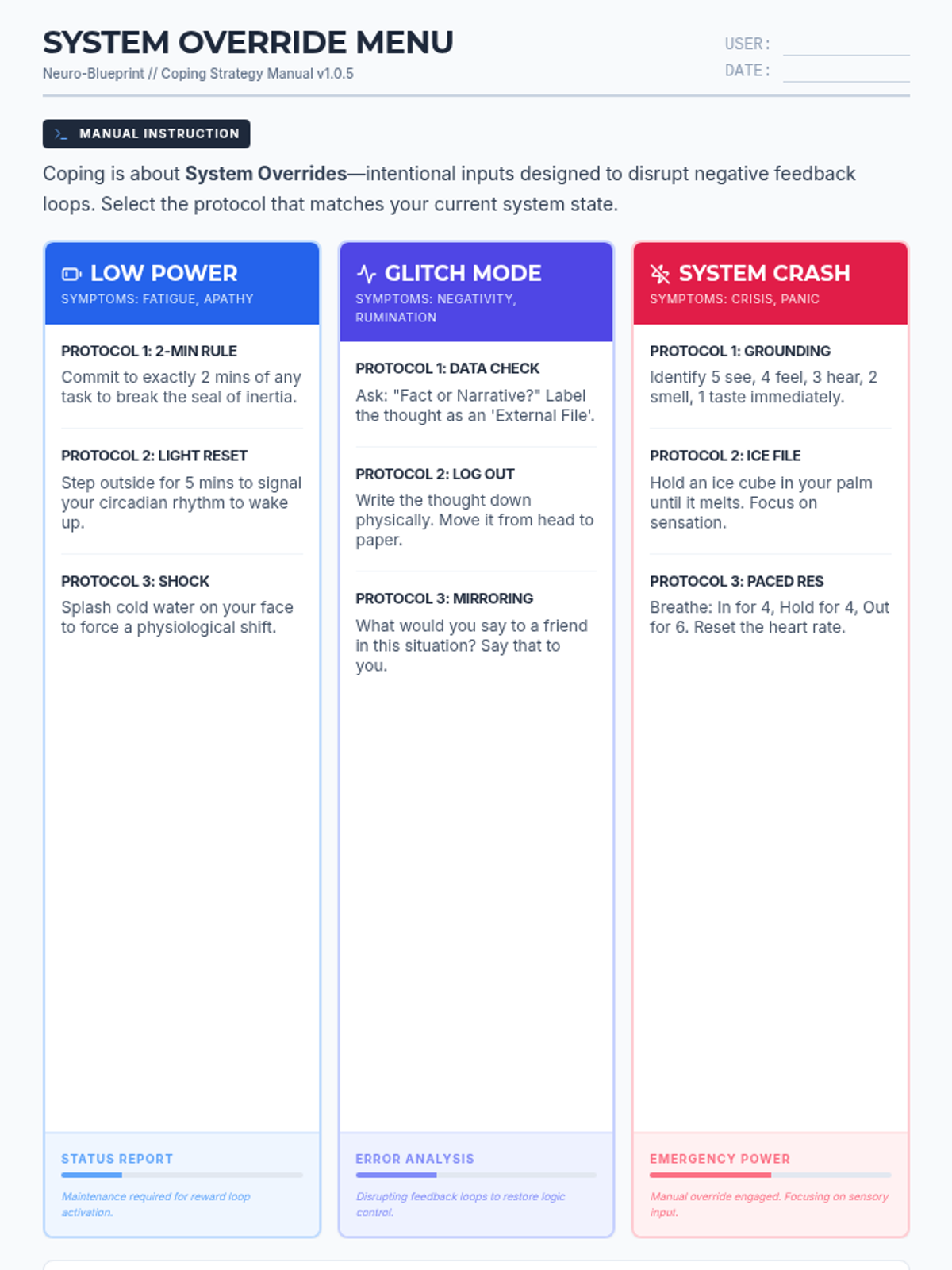
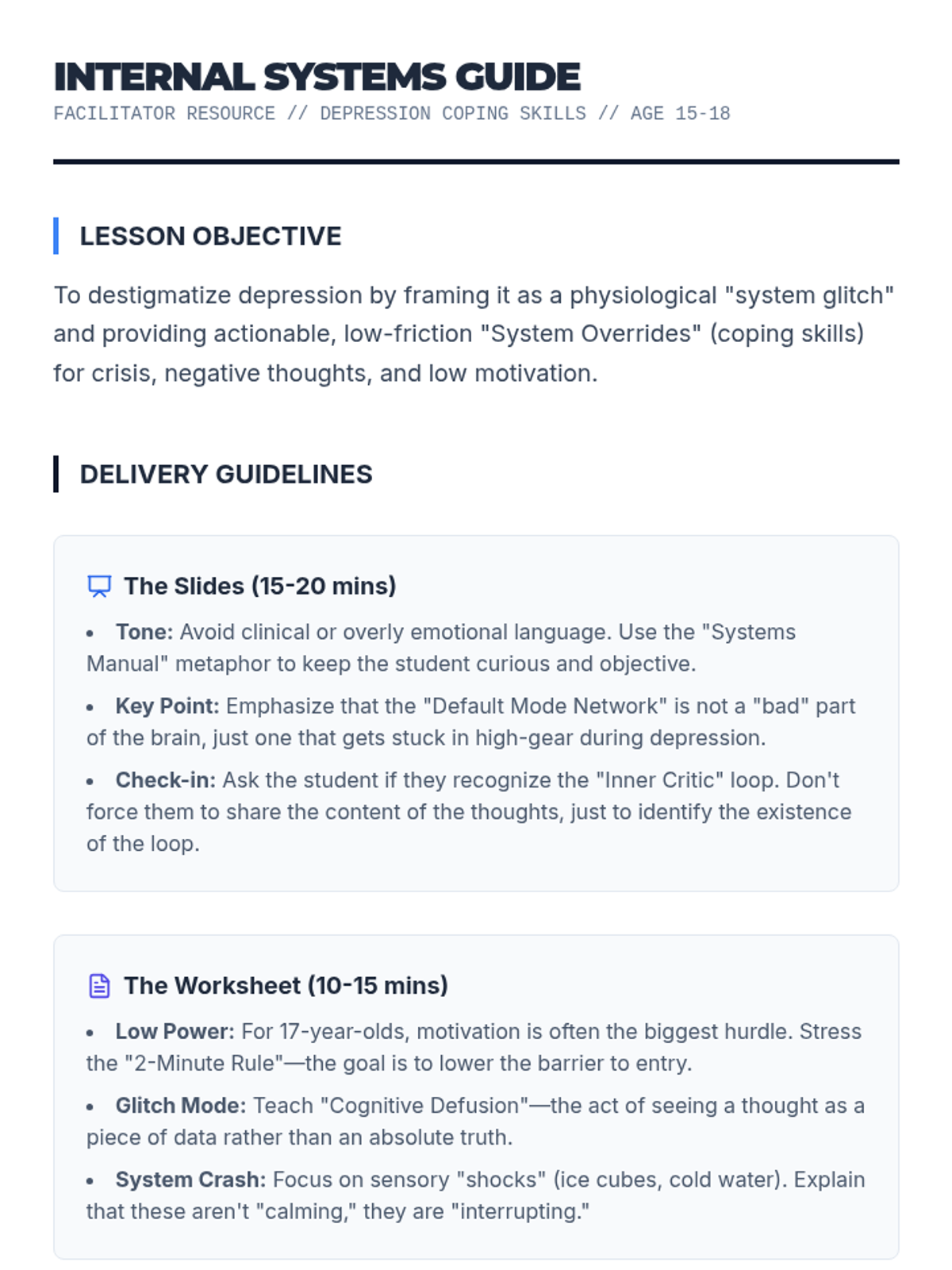
A modern, science-based exploration of depression, motivation, and coping strategies designed specifically for teens. This lesson focuses on the 'Neuro Blueprint' approach to understanding brain chemistry and emotional regulation.
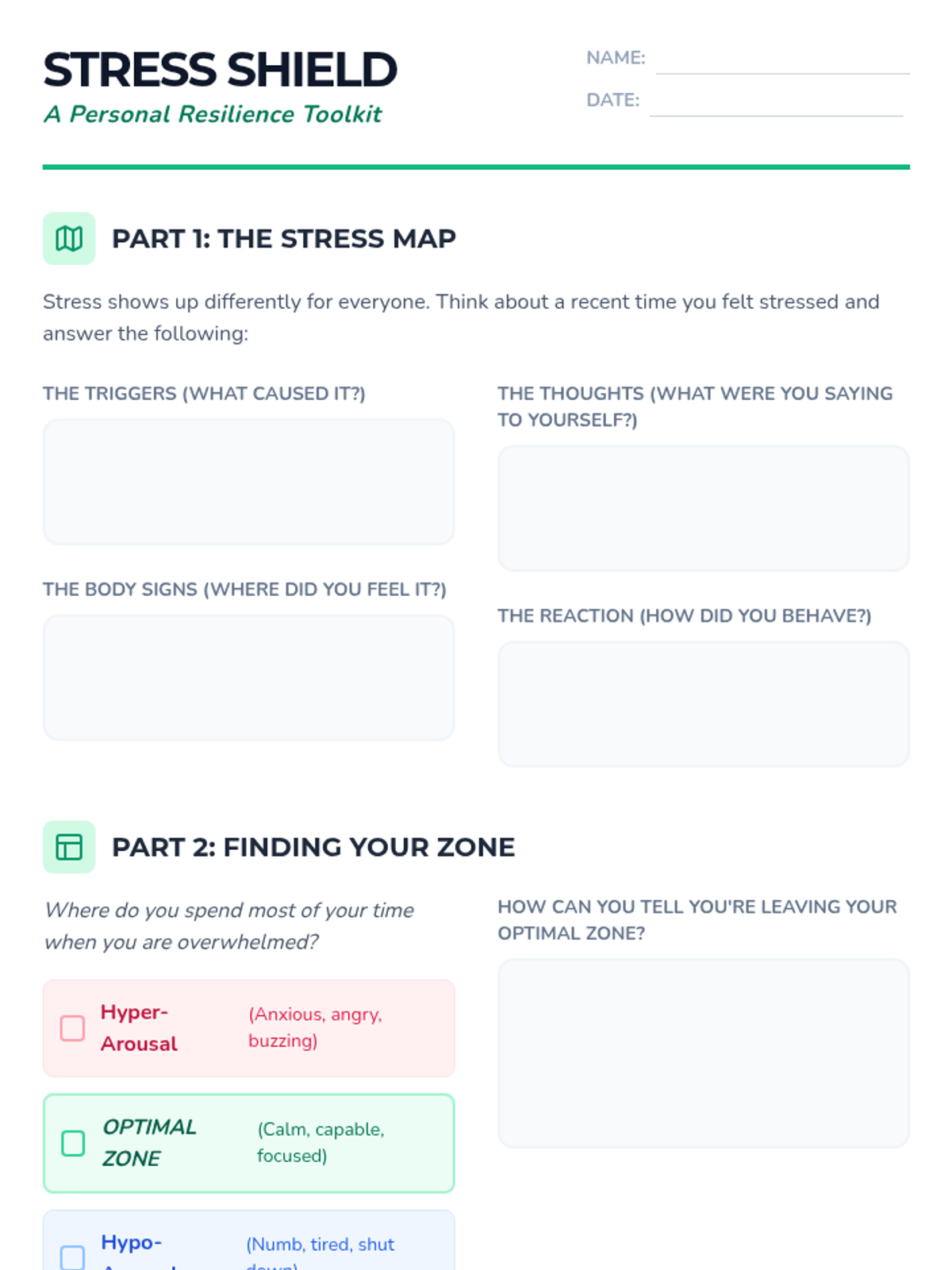
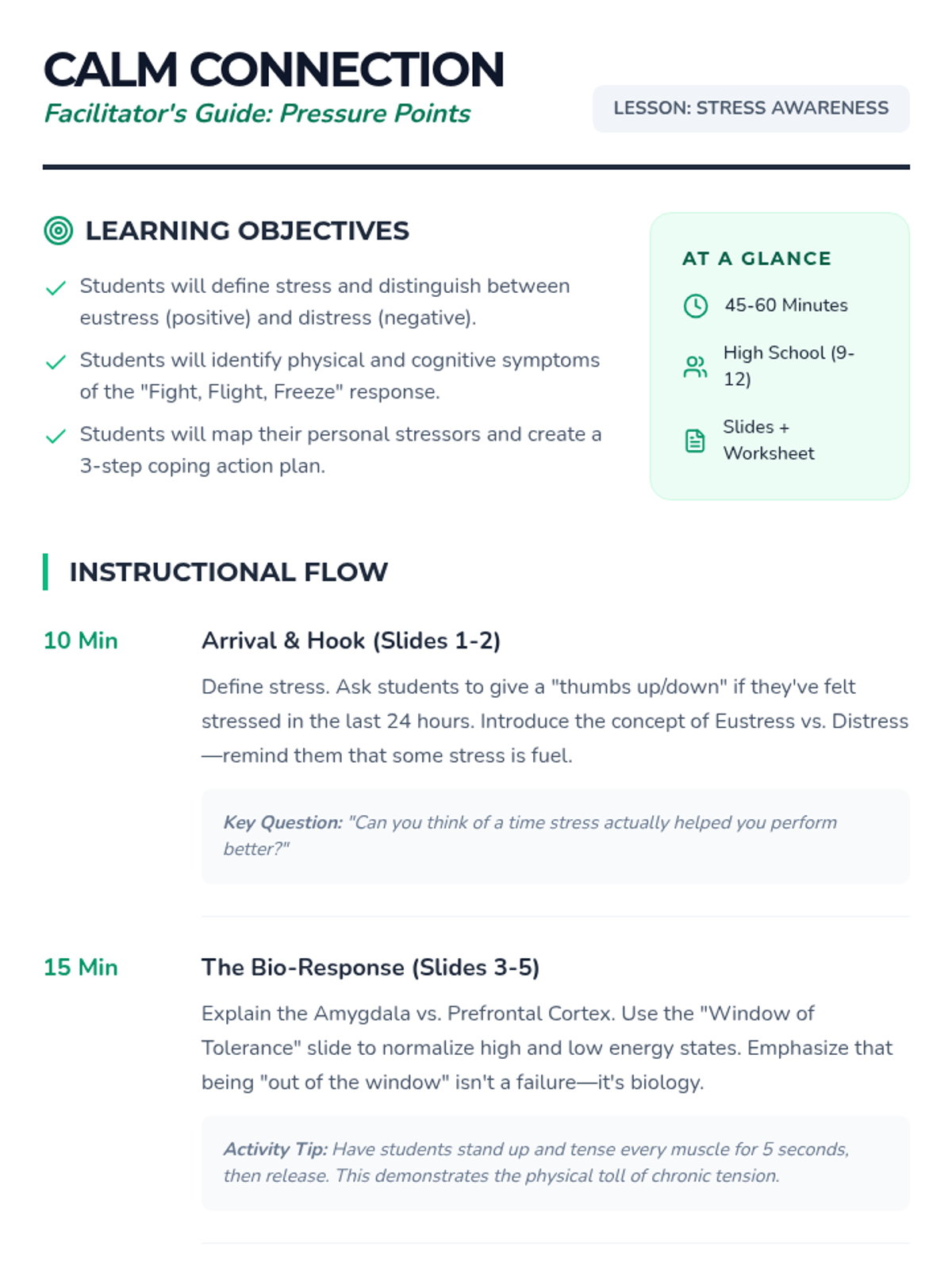
A comprehensive lesson on understanding stress, identifying personal triggers, and developing healthy coping mechanisms for high school students.
A comprehensive toolkit for 14-year-old boys to manage anxiety, intrusive thoughts, and guilt using CBT and mindfulness techniques with a tech-inspired 'System Override' theme.
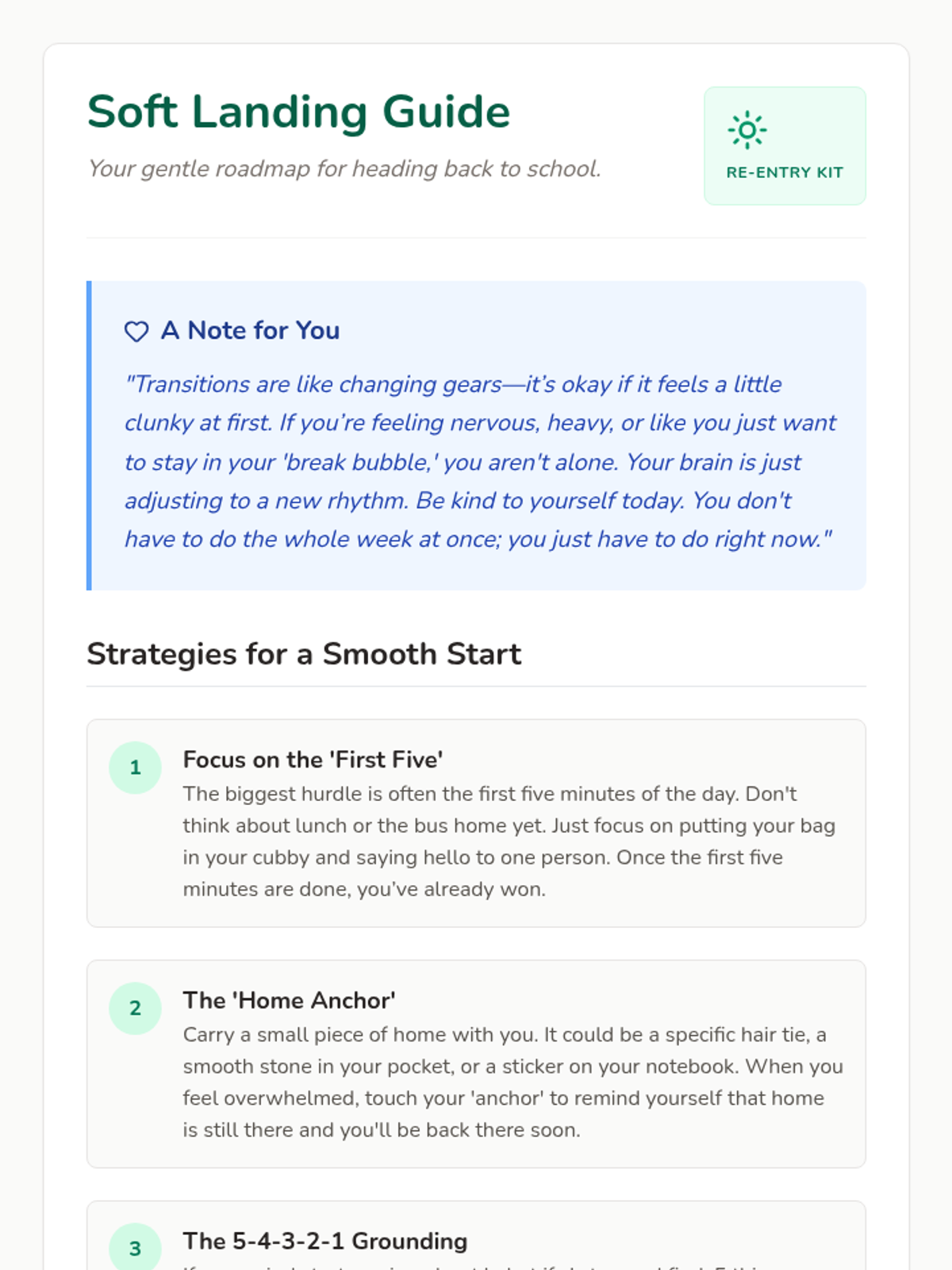
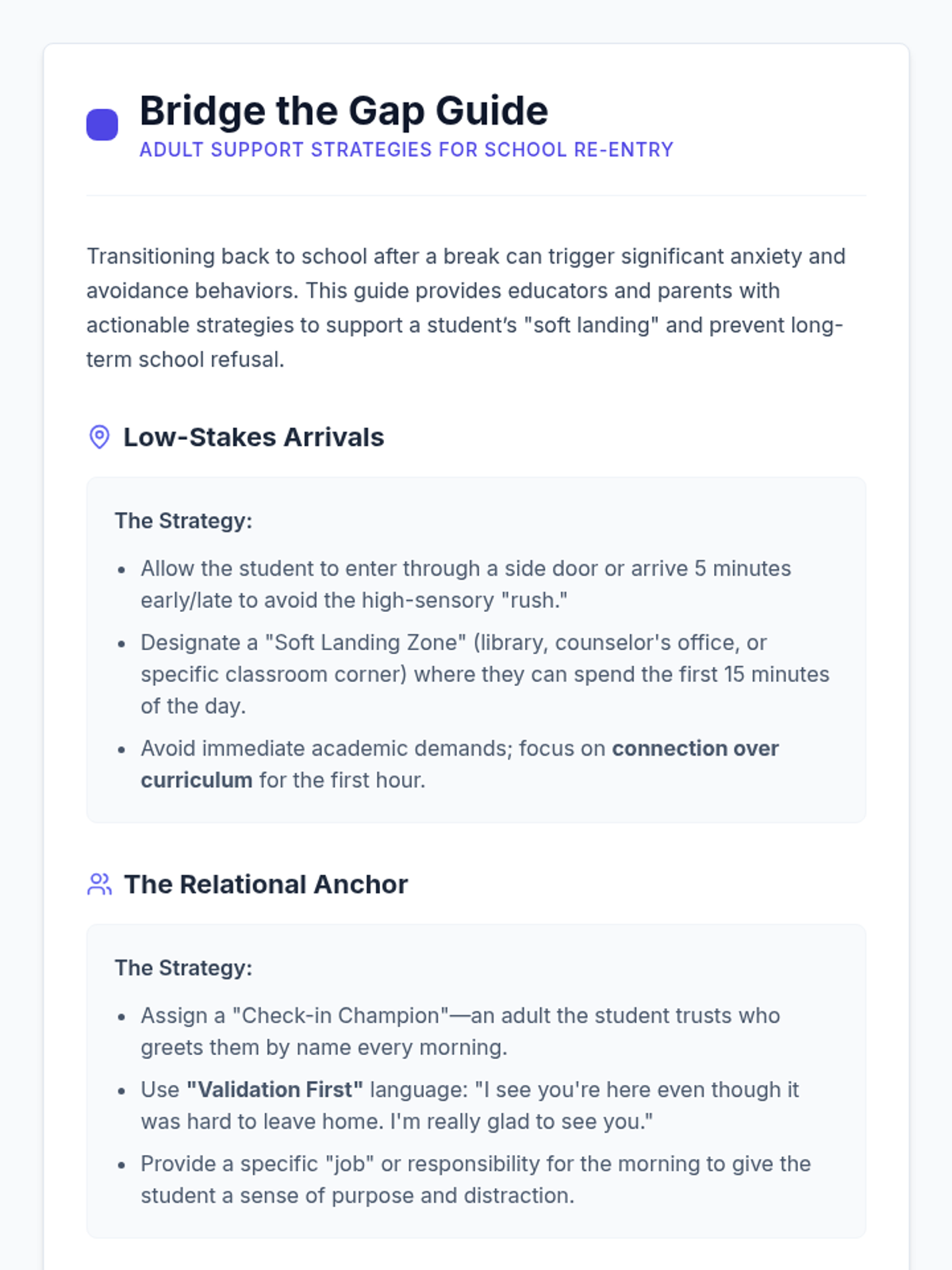
A supportive lesson focused on easing school-re-entry anxiety and providing concrete strategies for students transitioning back after a break.
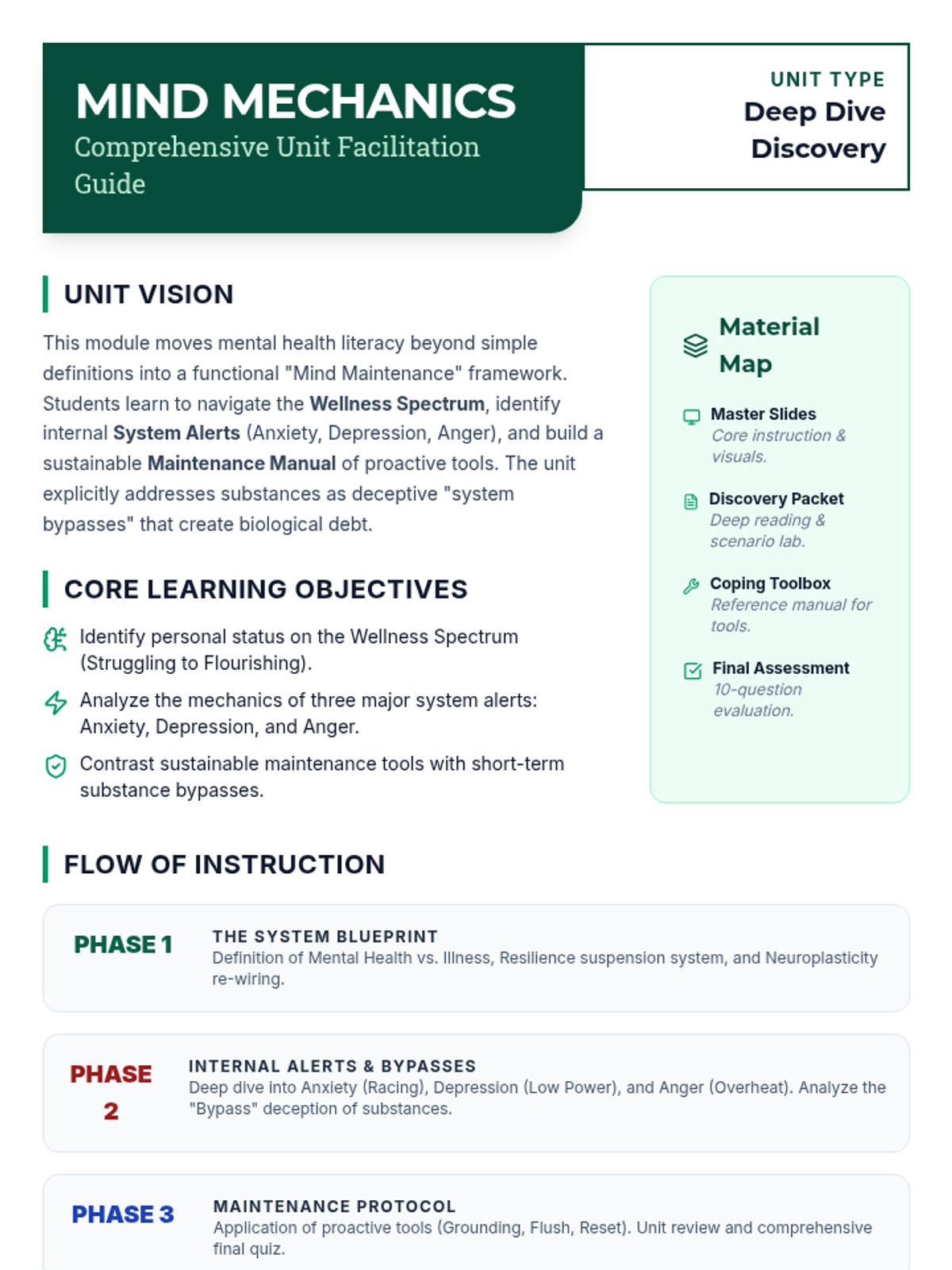
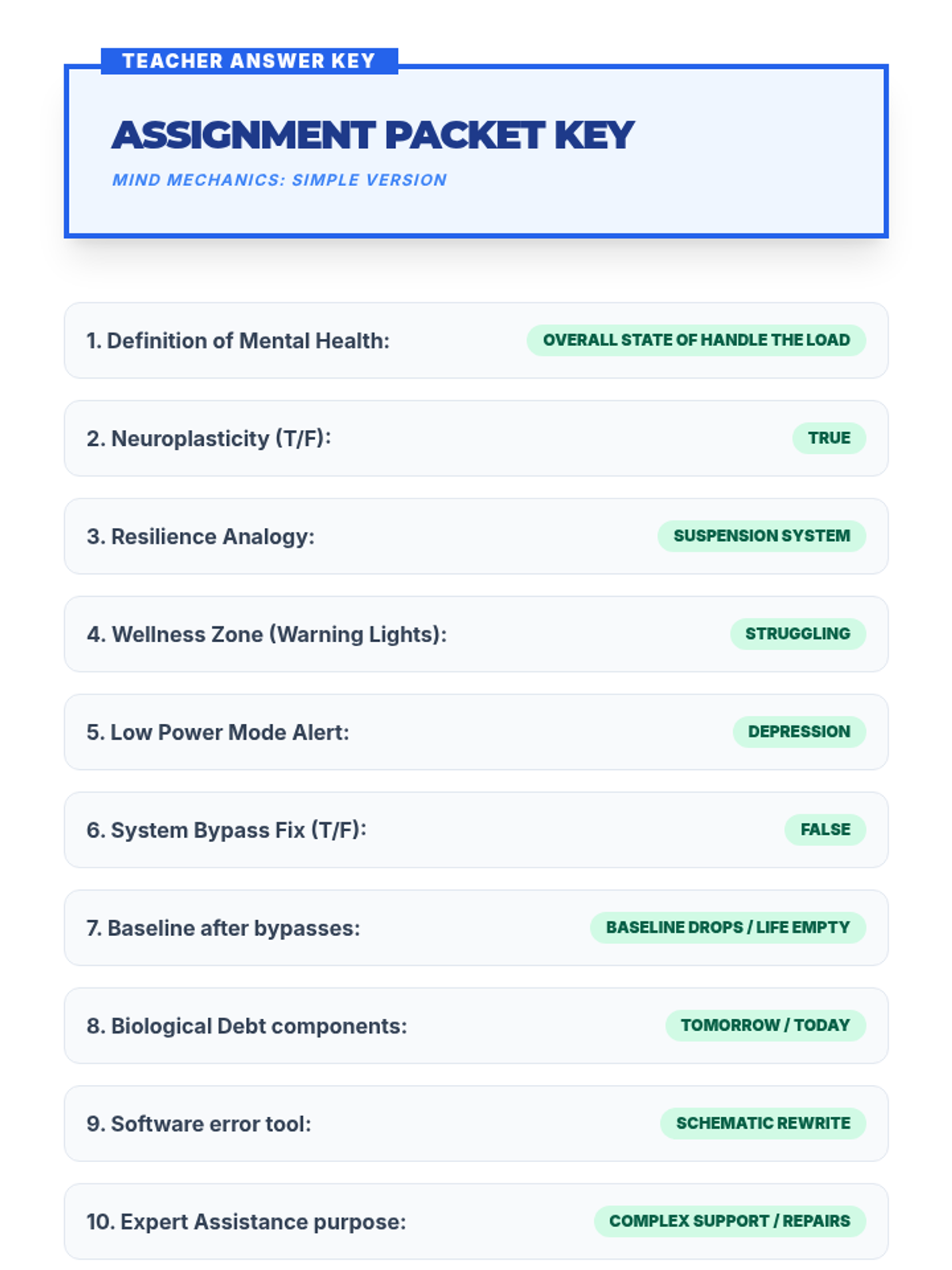
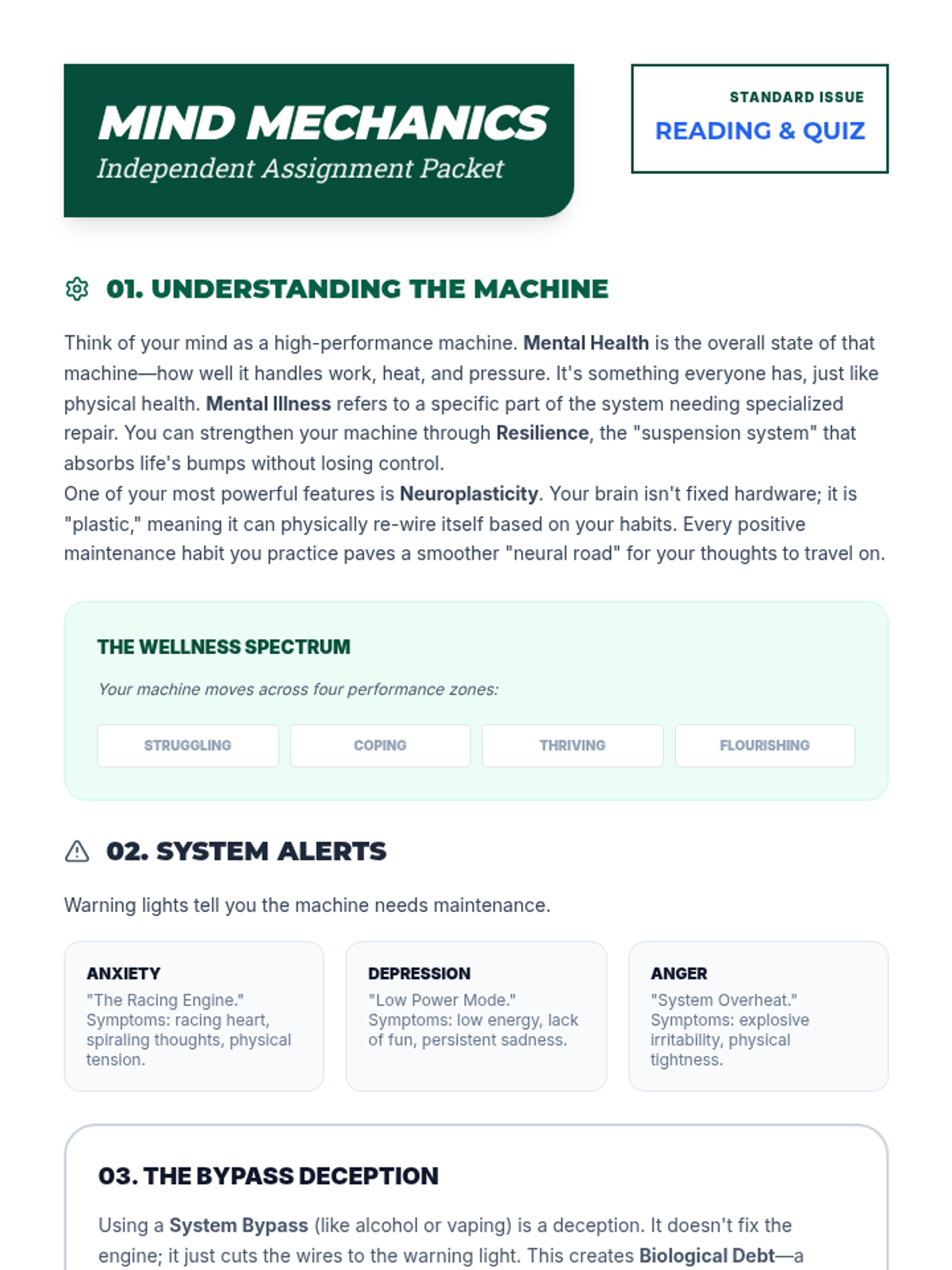
A comprehensive, in-depth unit on mental health literacy, identifying system alerts (Anxiety, Depression, Anger), and building a proactive coping toolkit. Includes detailed reading, scenario analysis, and a 10-question final assessment.
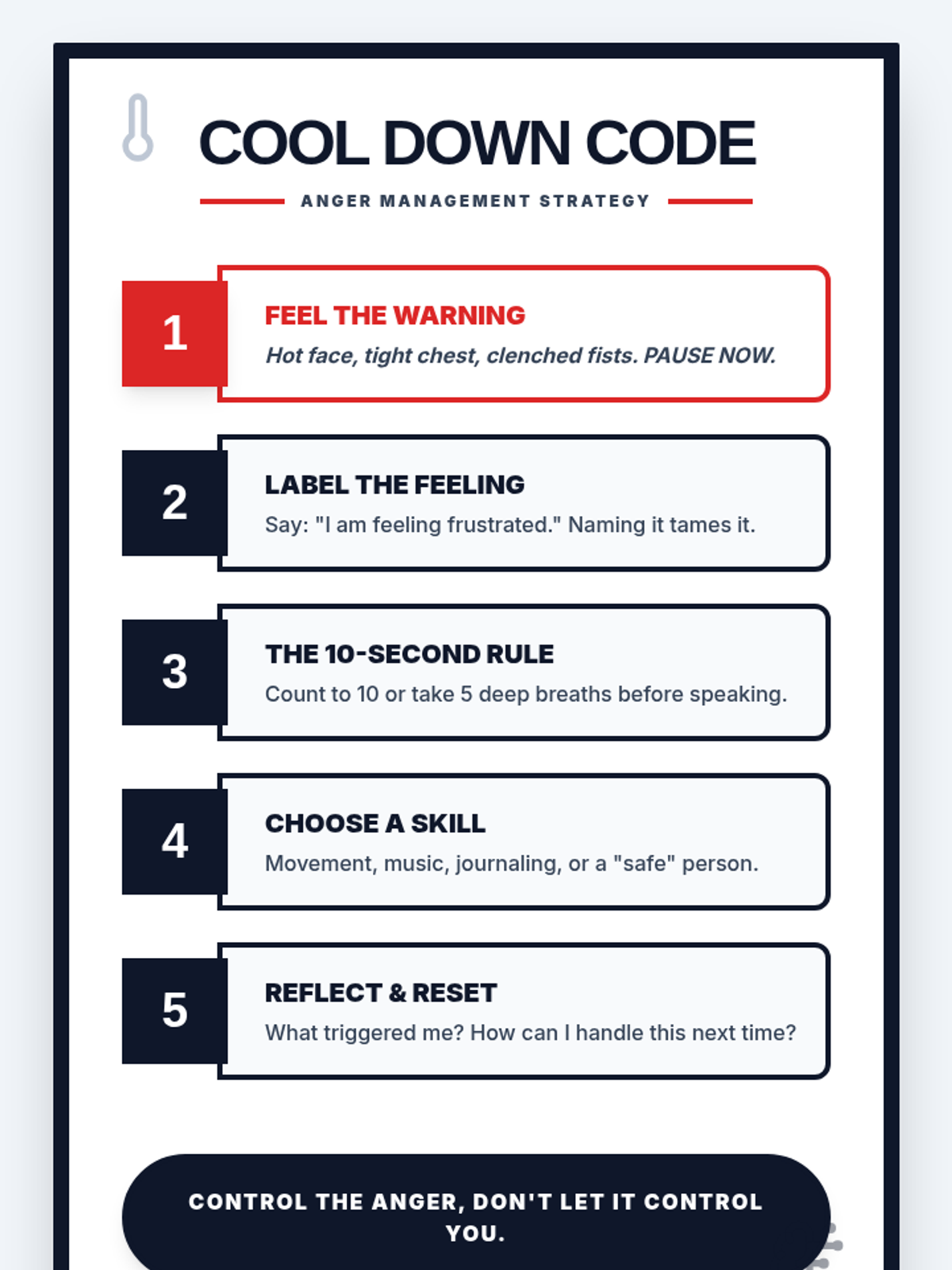
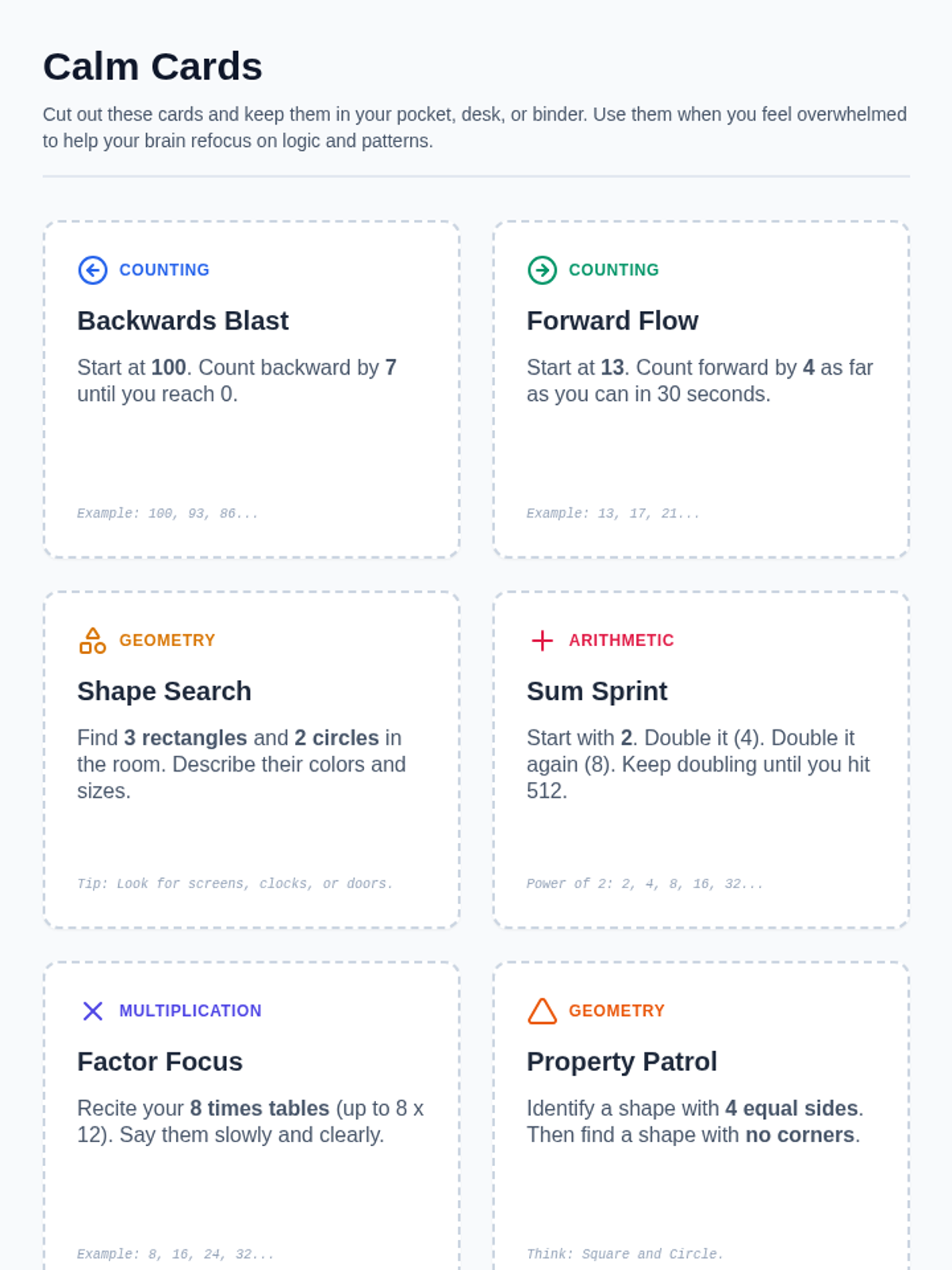
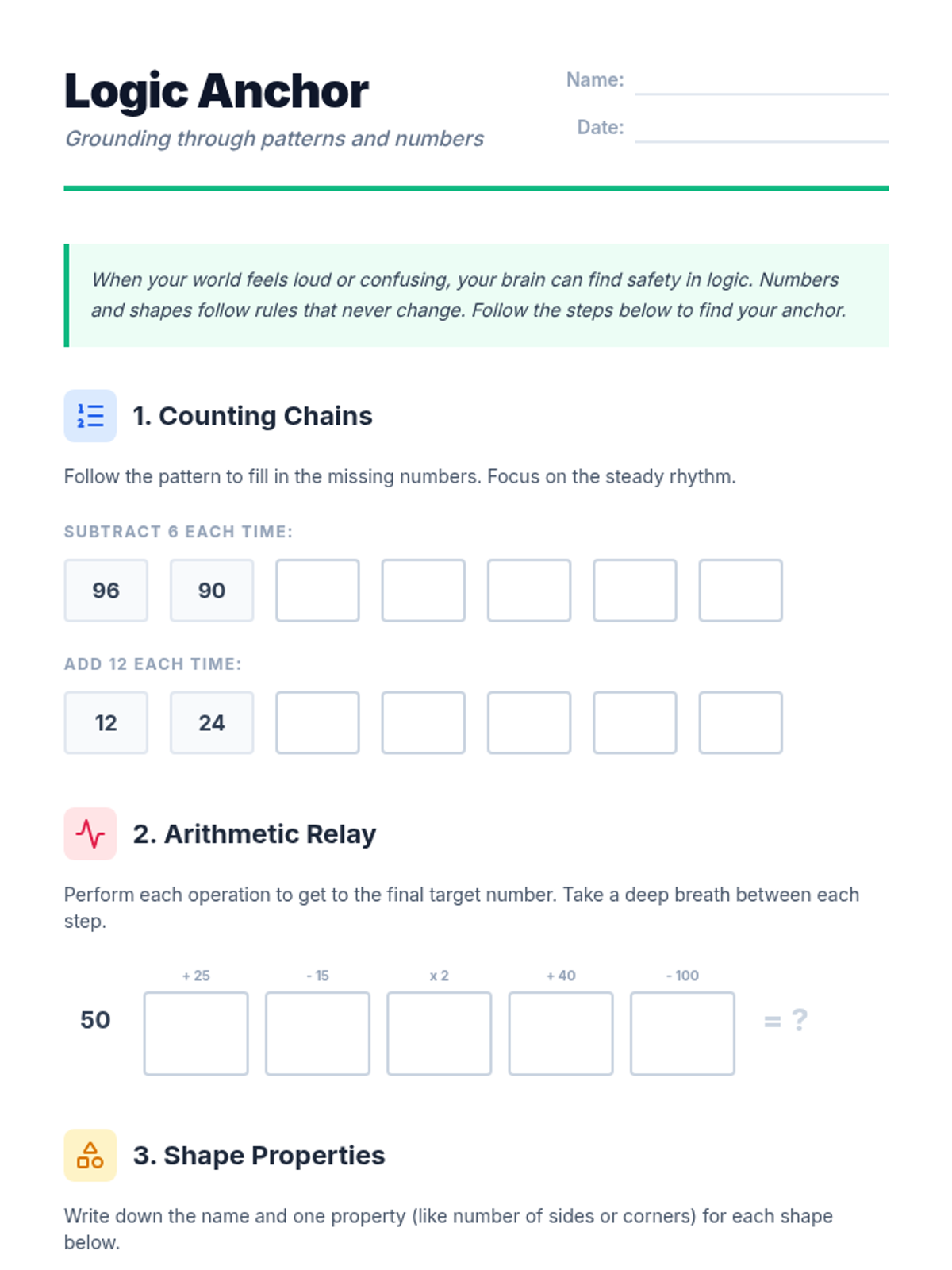
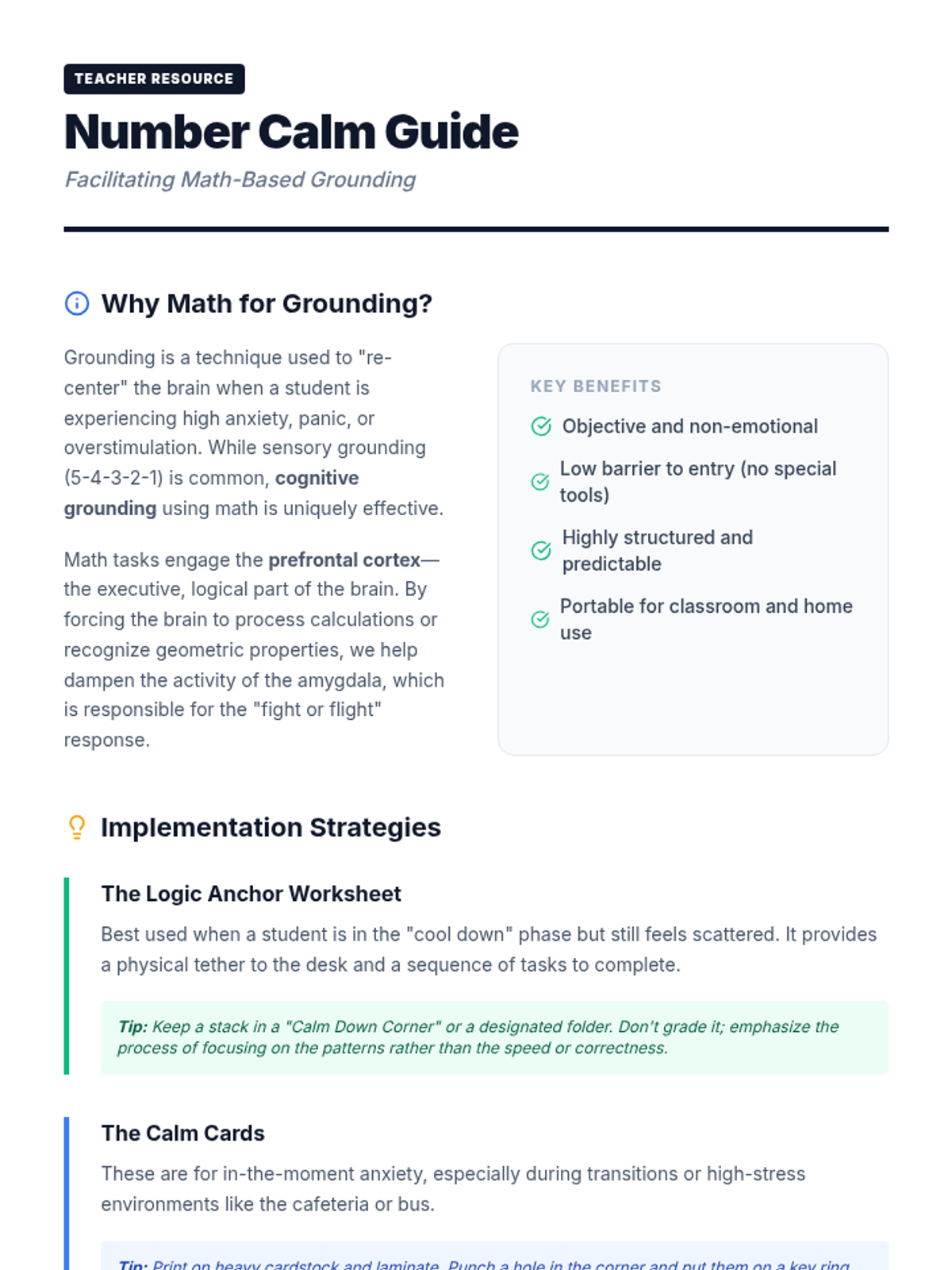
This lesson introduces math-based grounding techniques to help students manage anxiety or overstimulation by engaging the logical side of the brain. It includes portable prompt cards and structured worksheets featuring counting, arithmetic, and geometry challenges.