Empathetic skill development through emotion recognition, cultural diversity appreciation, and bias confrontation. Targets multi-perspective analysis to support respectful interactions and complex social responses.
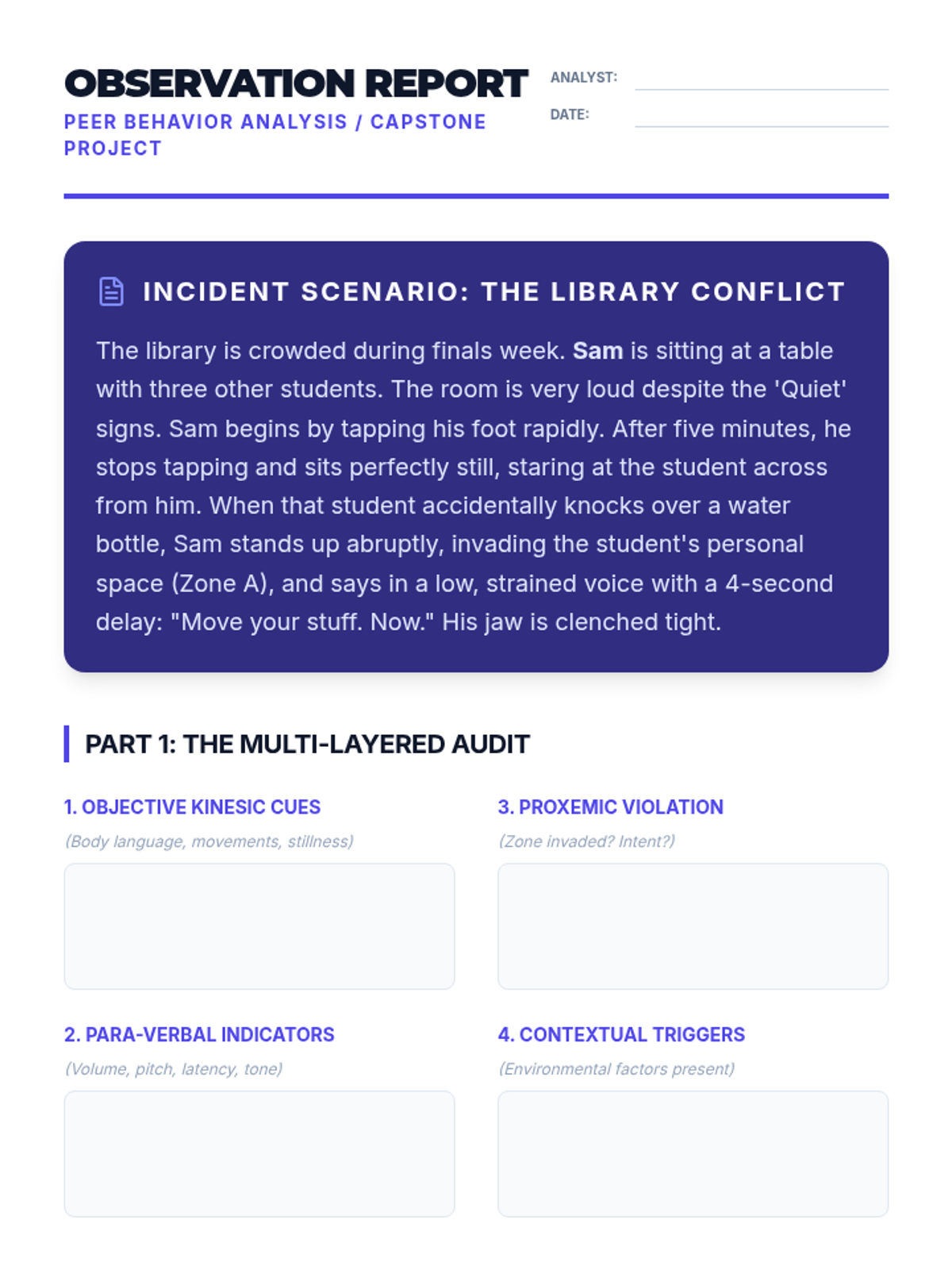
Students synthesize their observation skills to analyze full scenarios, identifying how environmental triggers (noise, crowds) combine with behavioral cues to predict escalation.
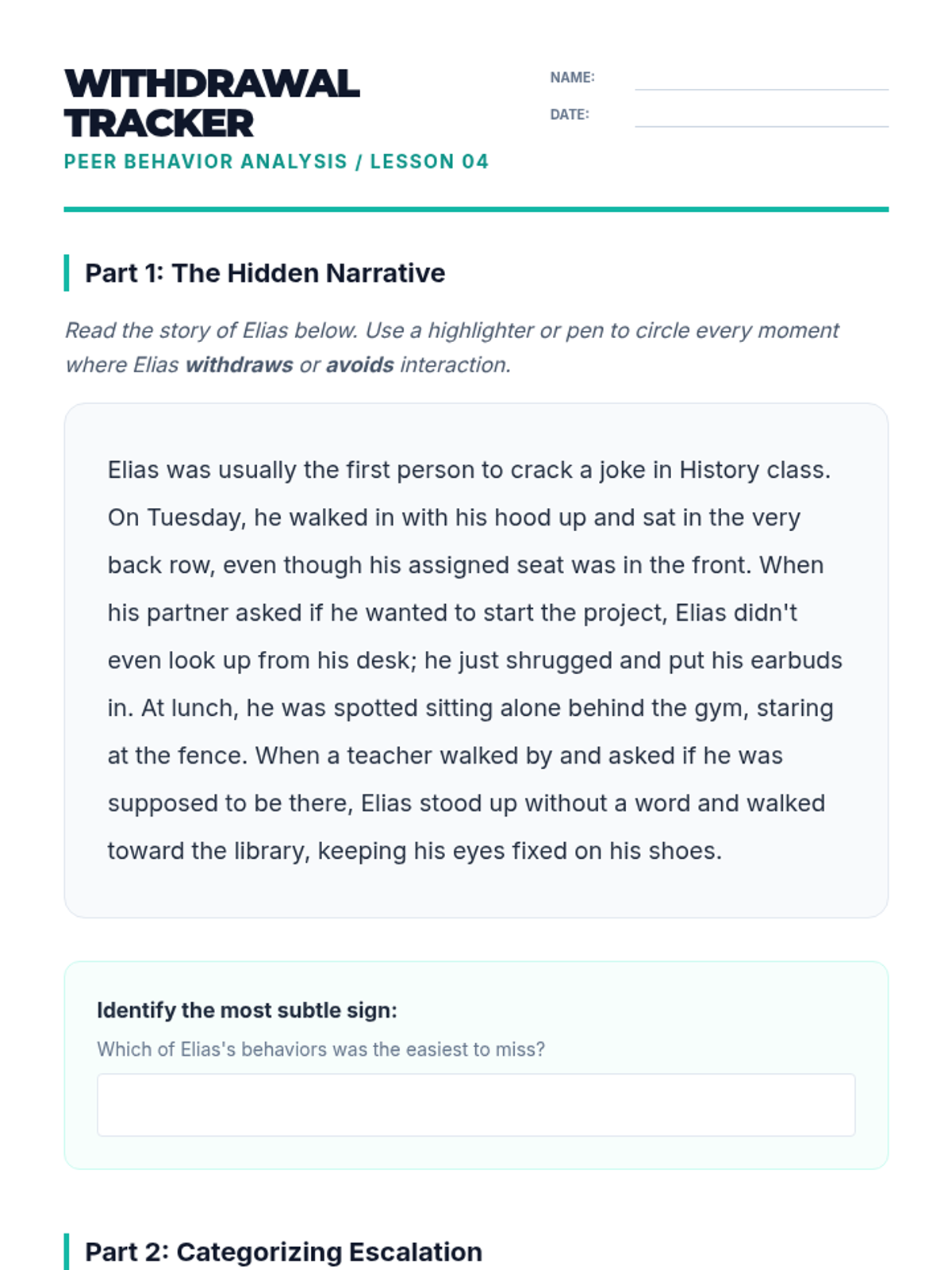
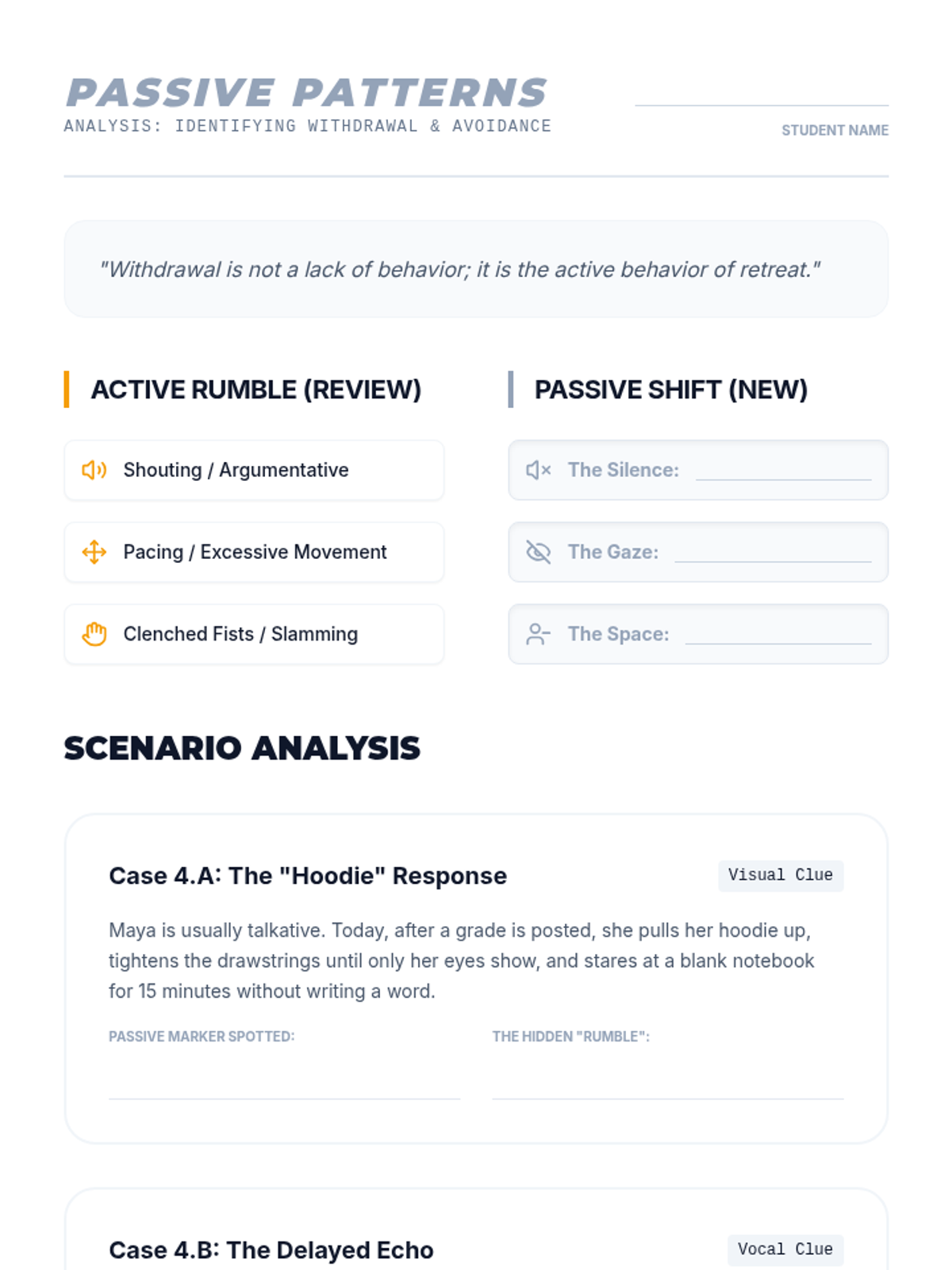
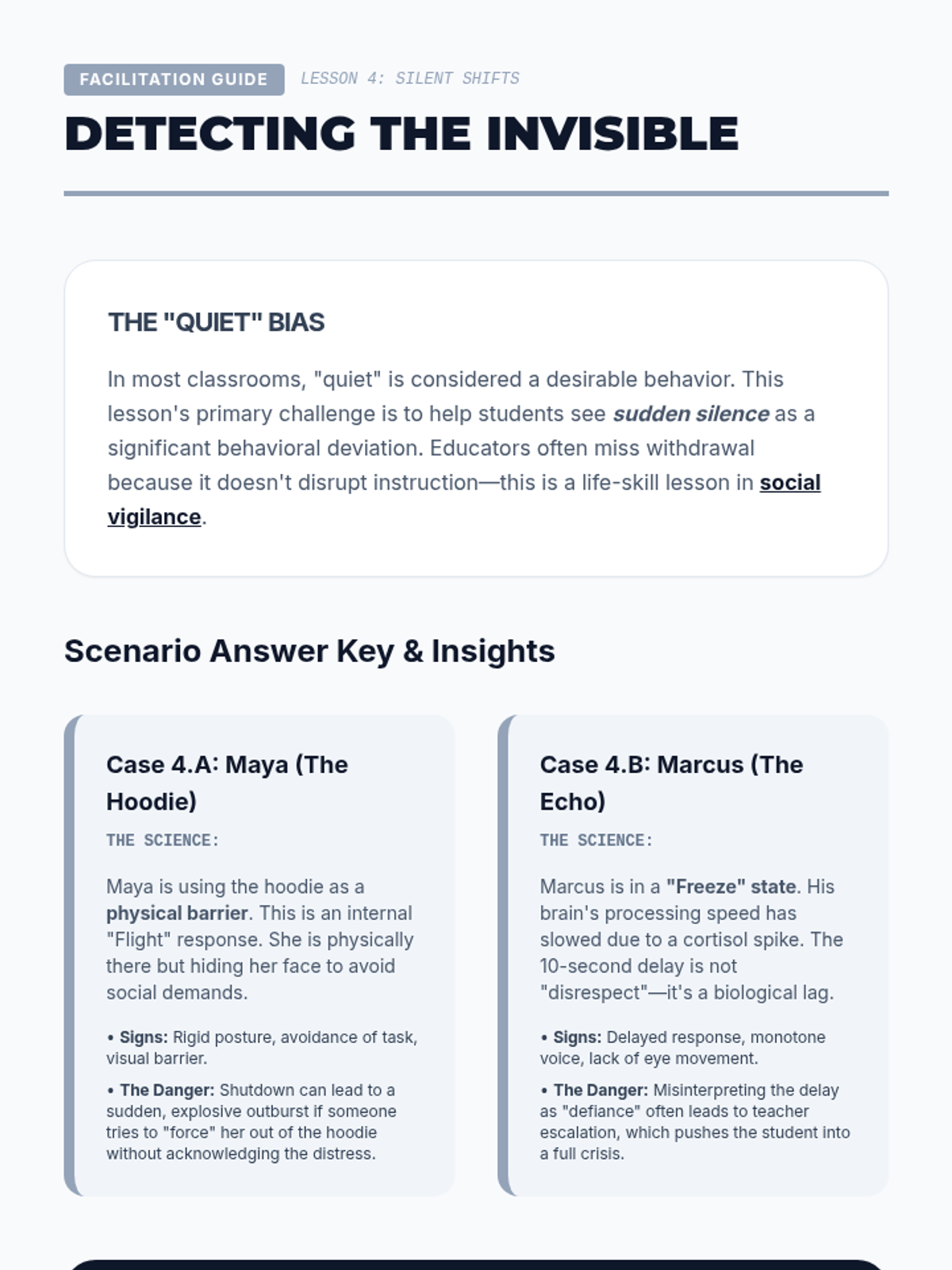
Students learn to identify 'implosive' escalation—withdrawal, shutting down, or avoiding eye contact—and discuss how these quiet signs can be precursors to explosive behavior.
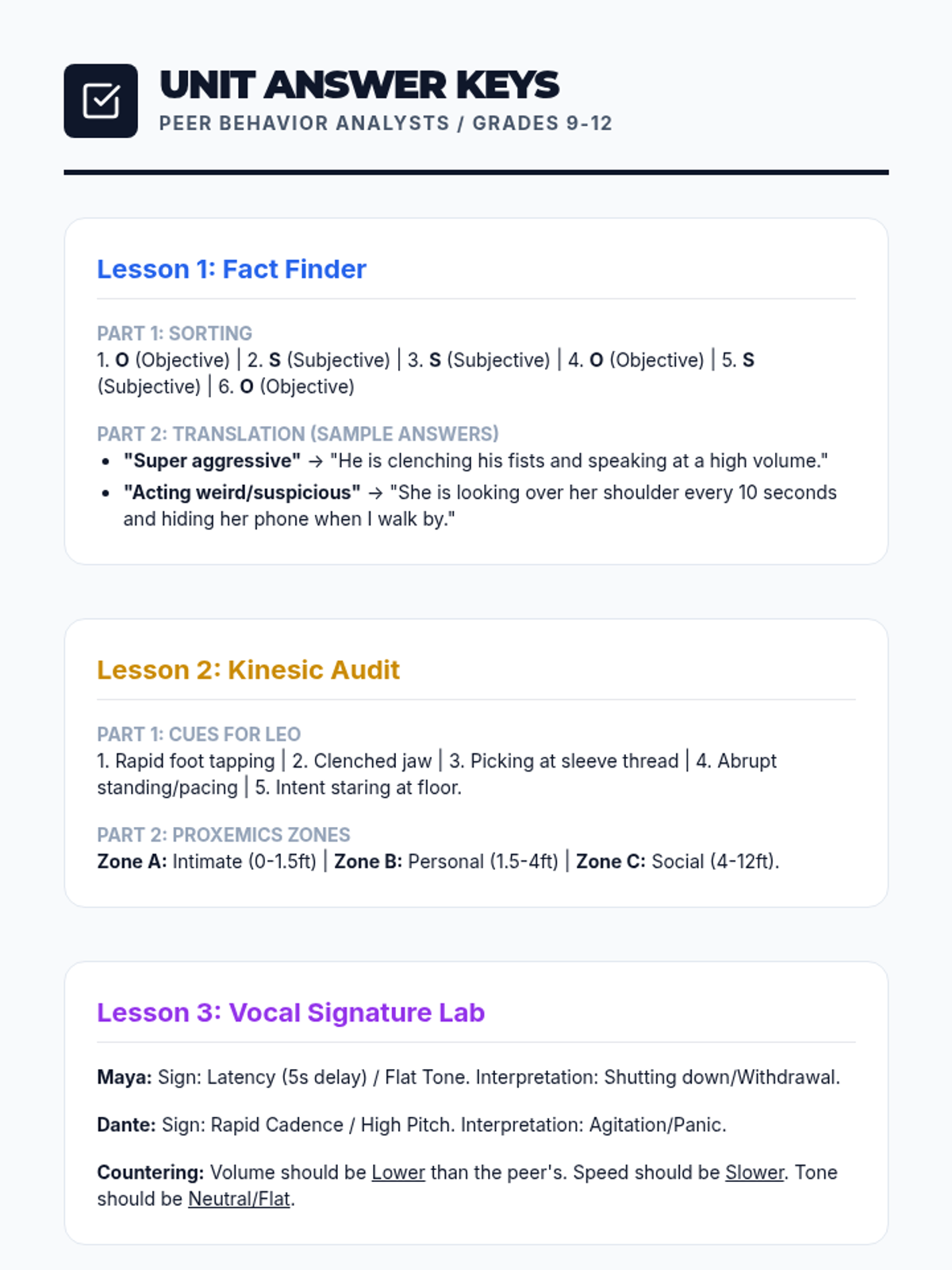
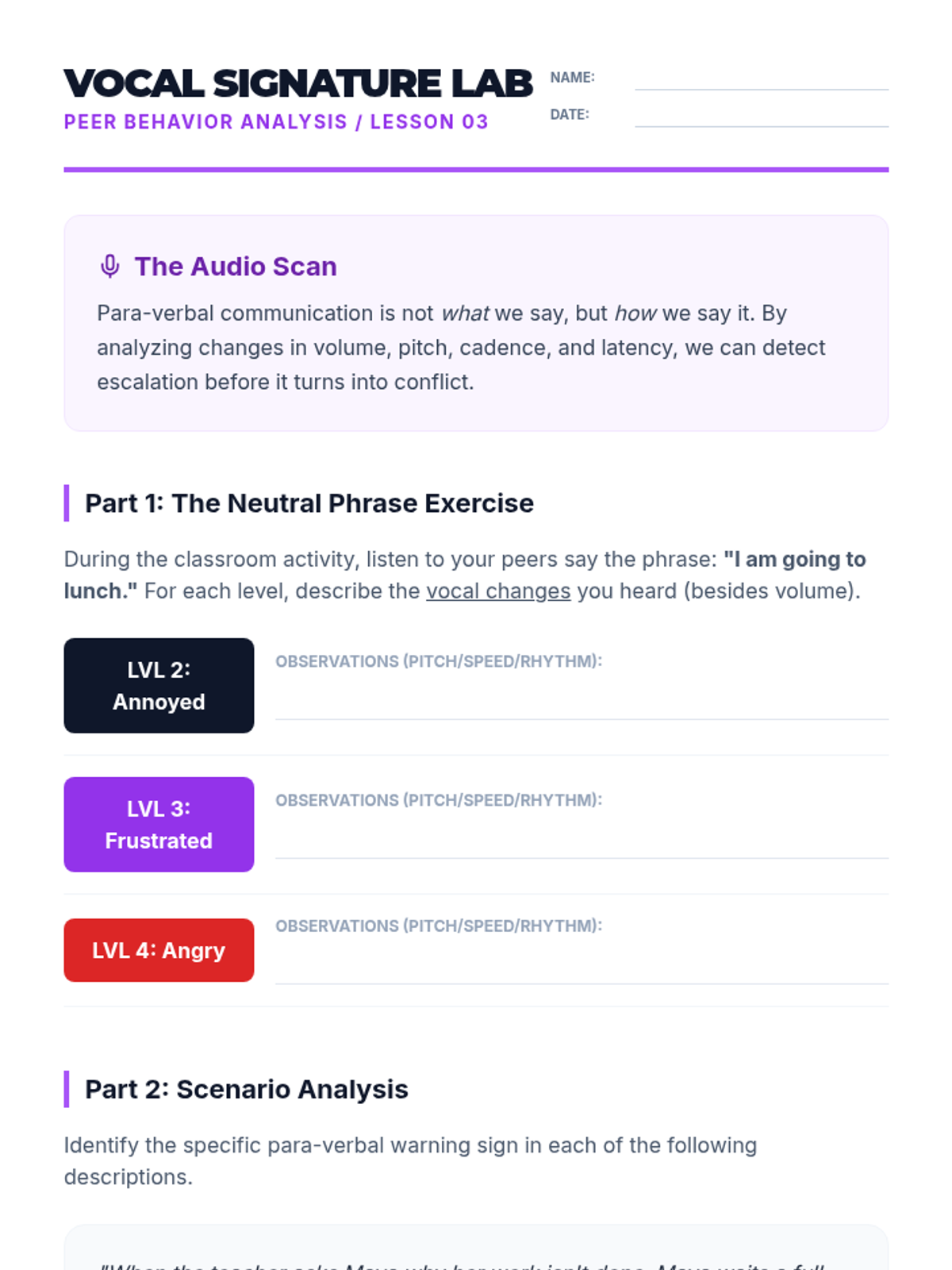
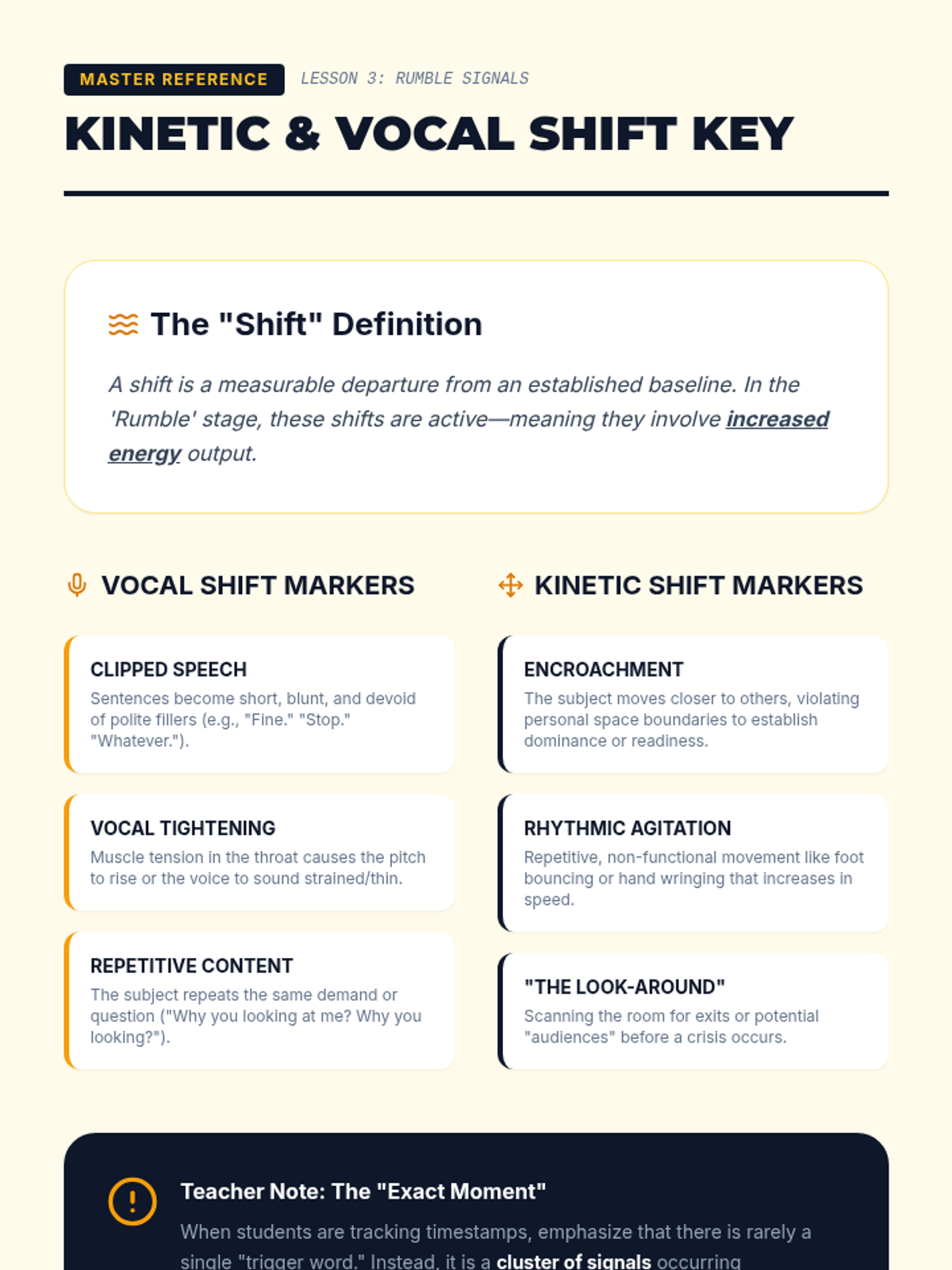
Students examine the vocal components of escalation, including changes in pitch, speed, volume, and latency of response.
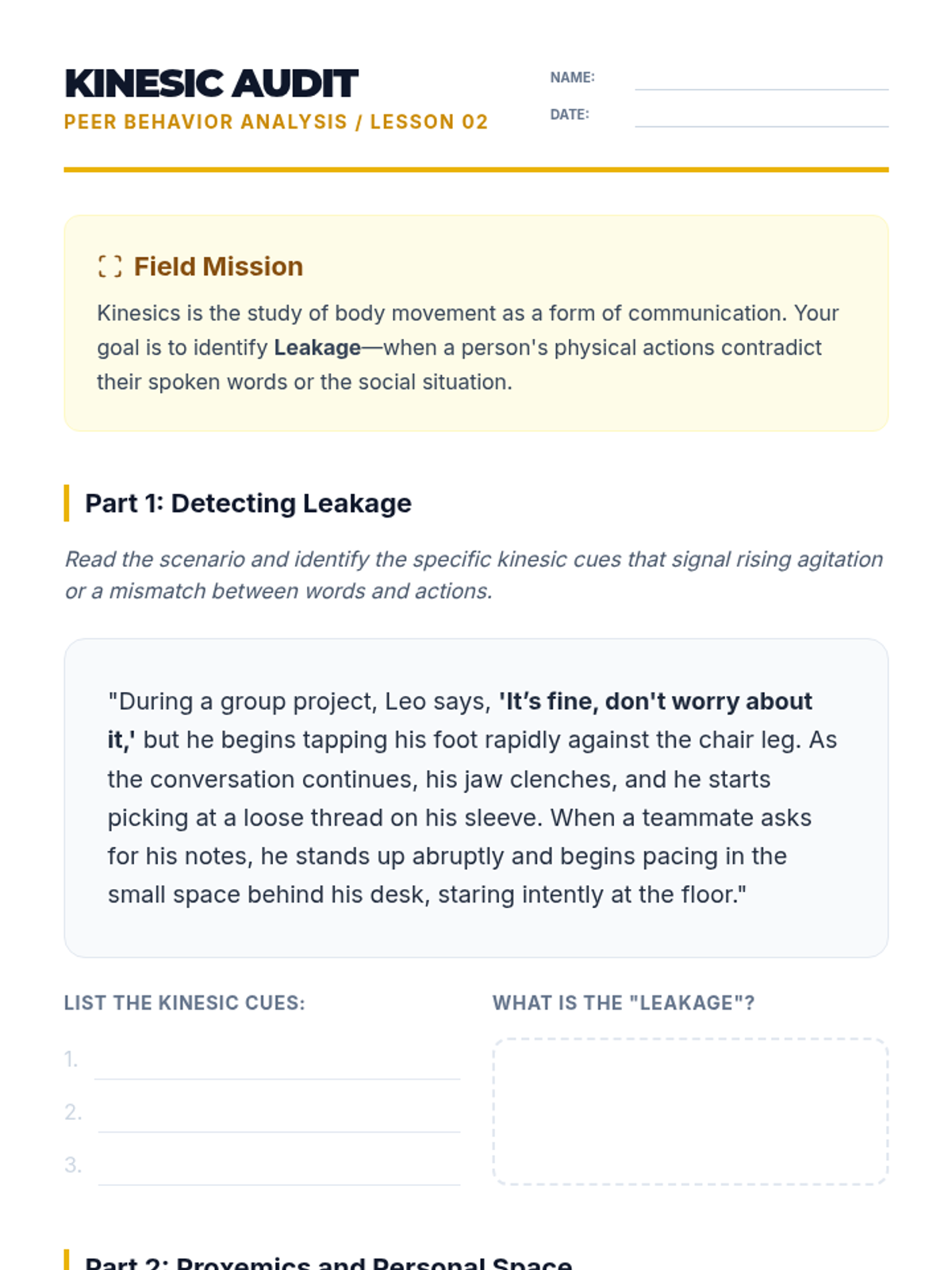
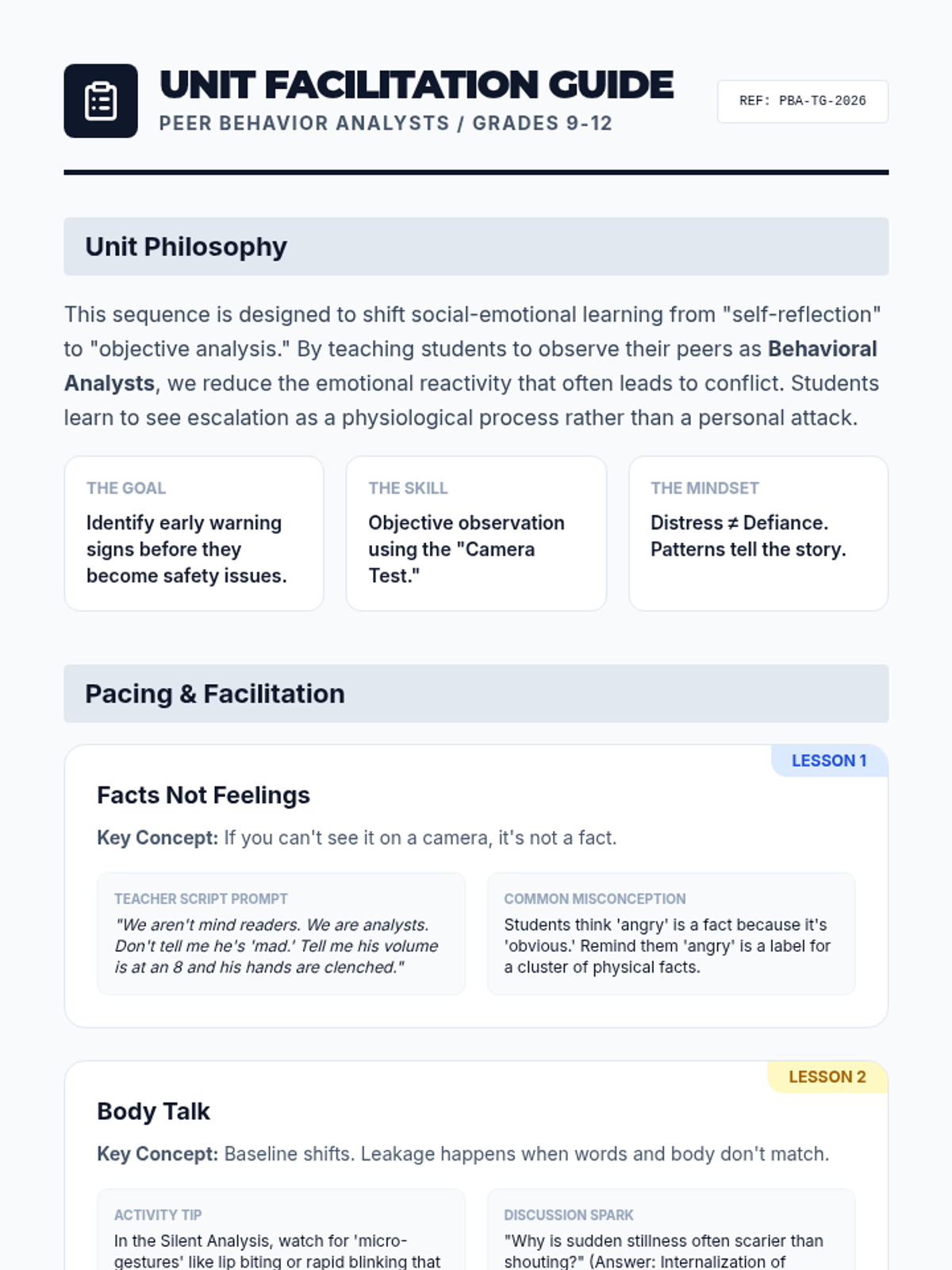
Focuses on gross motor movements that signal agitation and identifying 'leakage'—when body language contradicts spoken words.
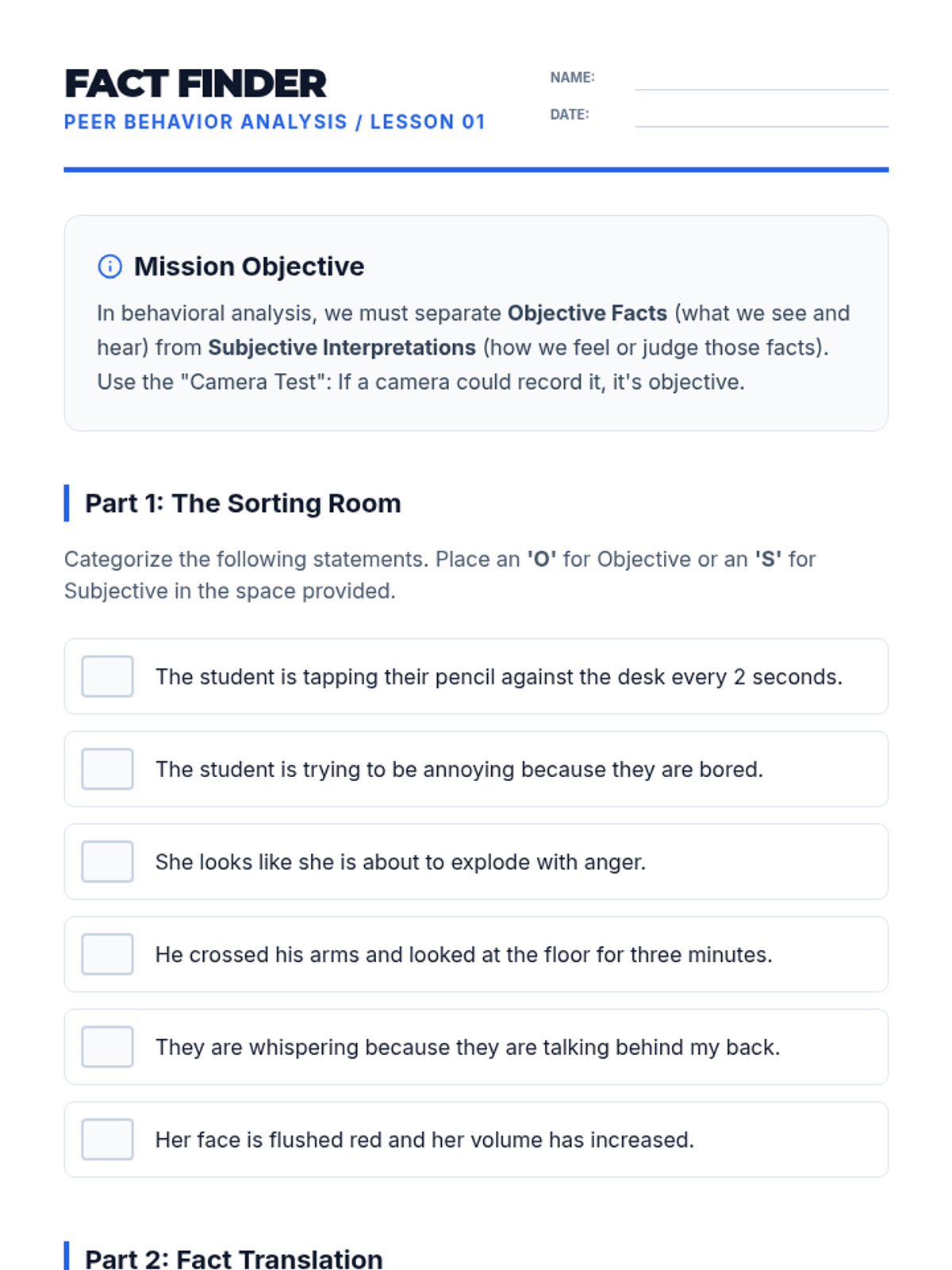
Students learn to distinguish between objective observations (facts) and subjective interpretations (opinions) to ensure accurate behavioral assessment.
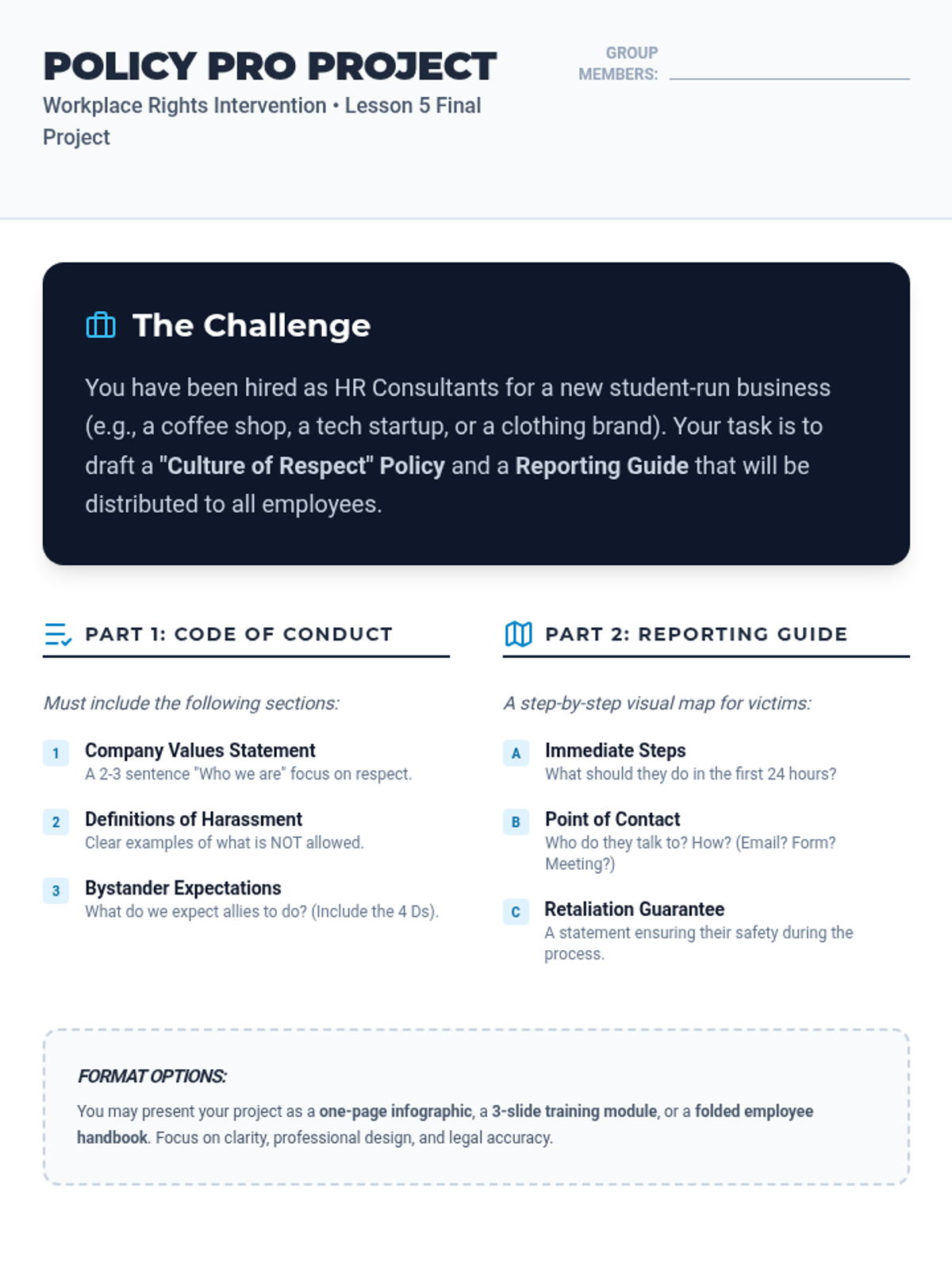
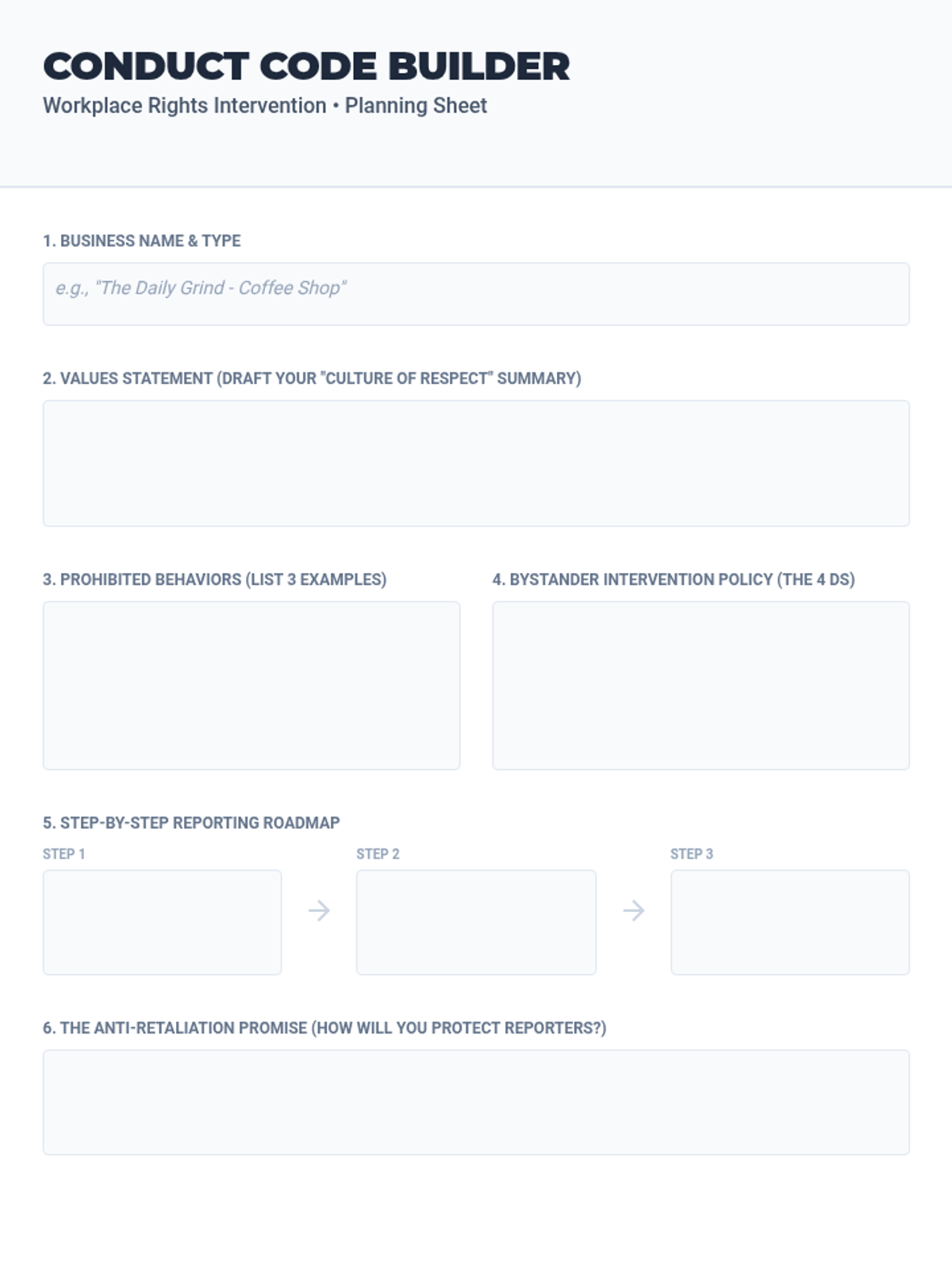
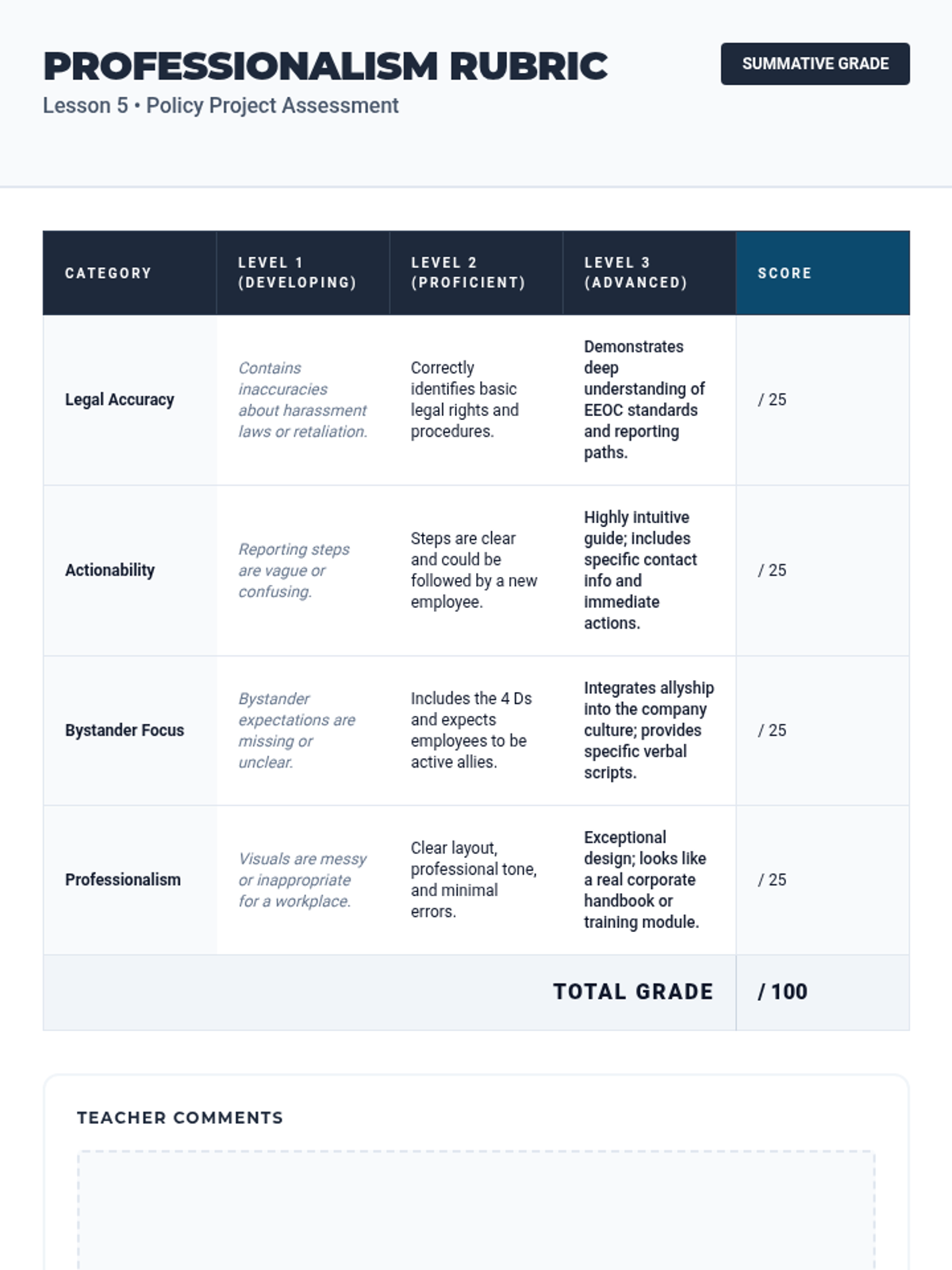
Students work in groups to draft a 'Code of Conduct' and a 'Reporting Guide' for a student-run business or organization, synthesizing all sequence concepts.
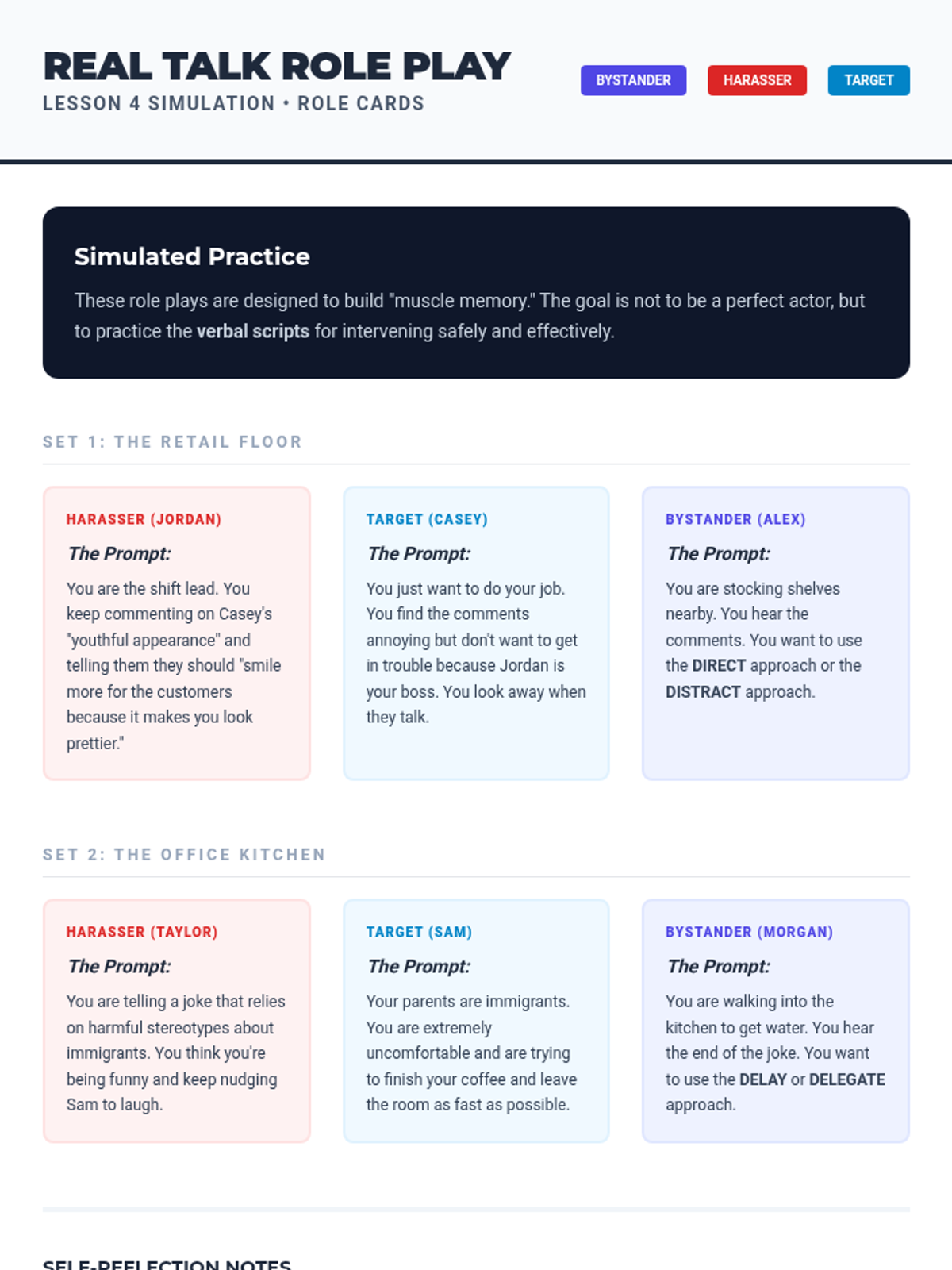
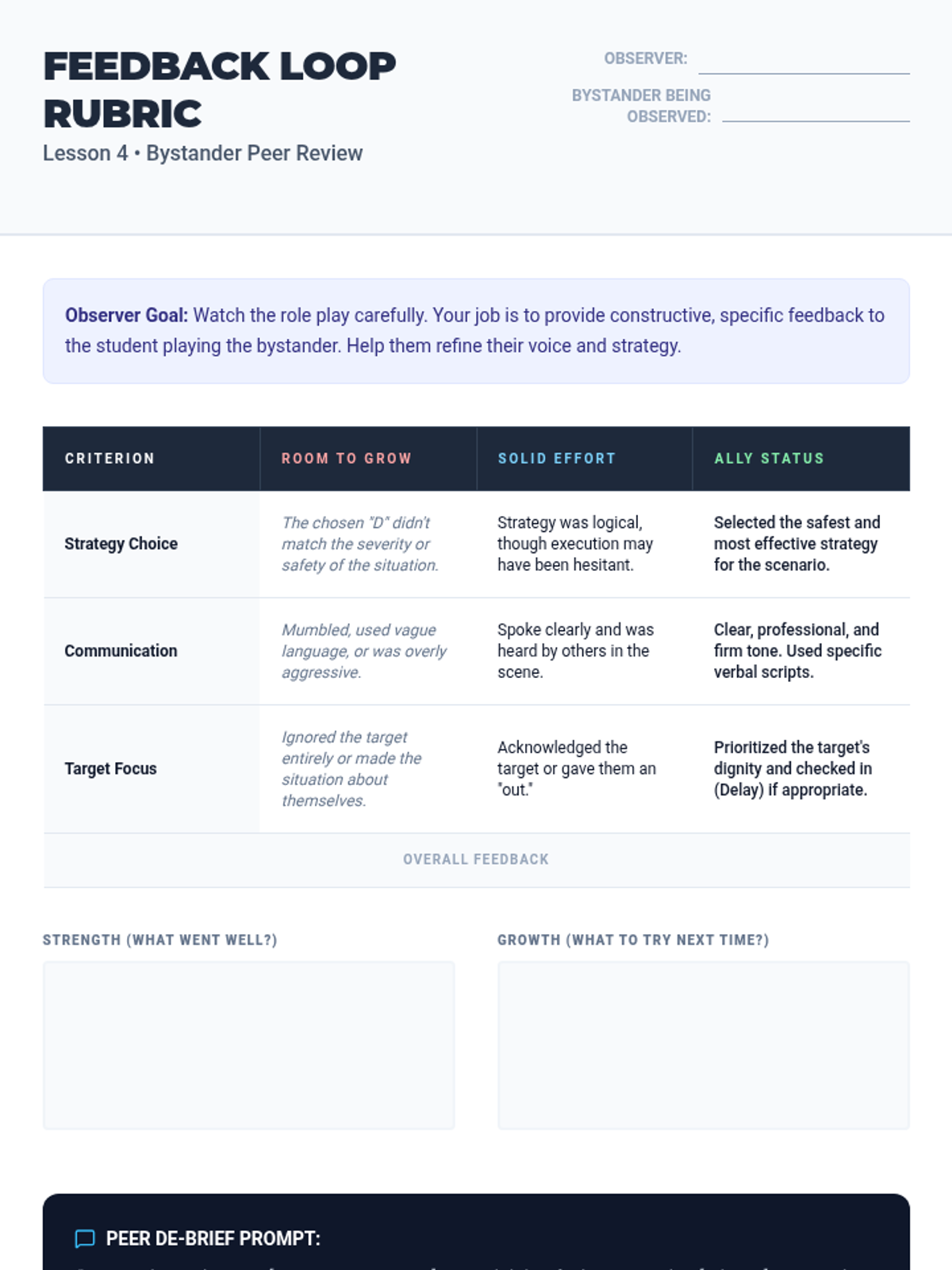
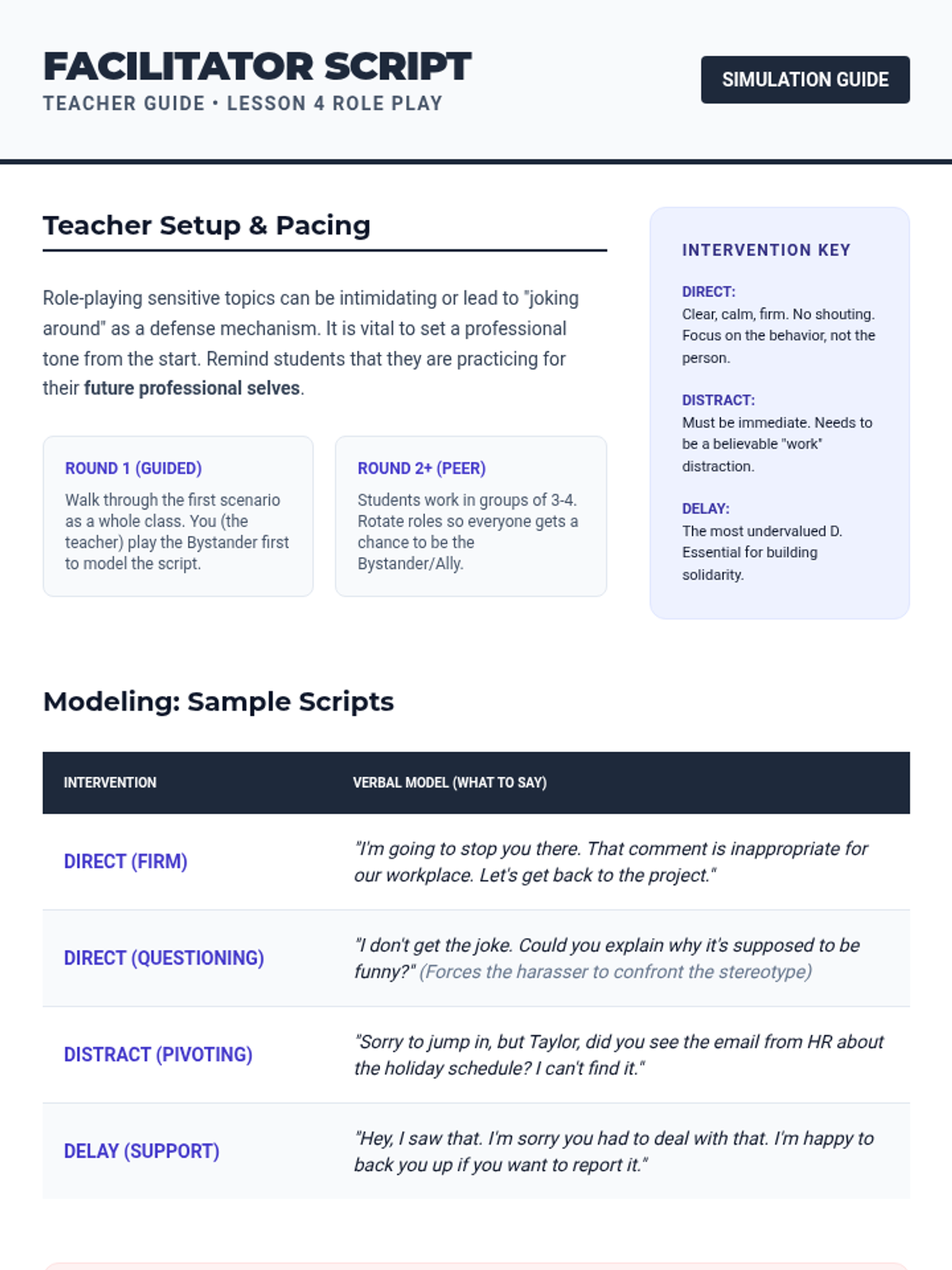
Students engage in structured role-plays to practice the intervention strategies learned. They take turns acting as the target, the harasser, and the bystander.
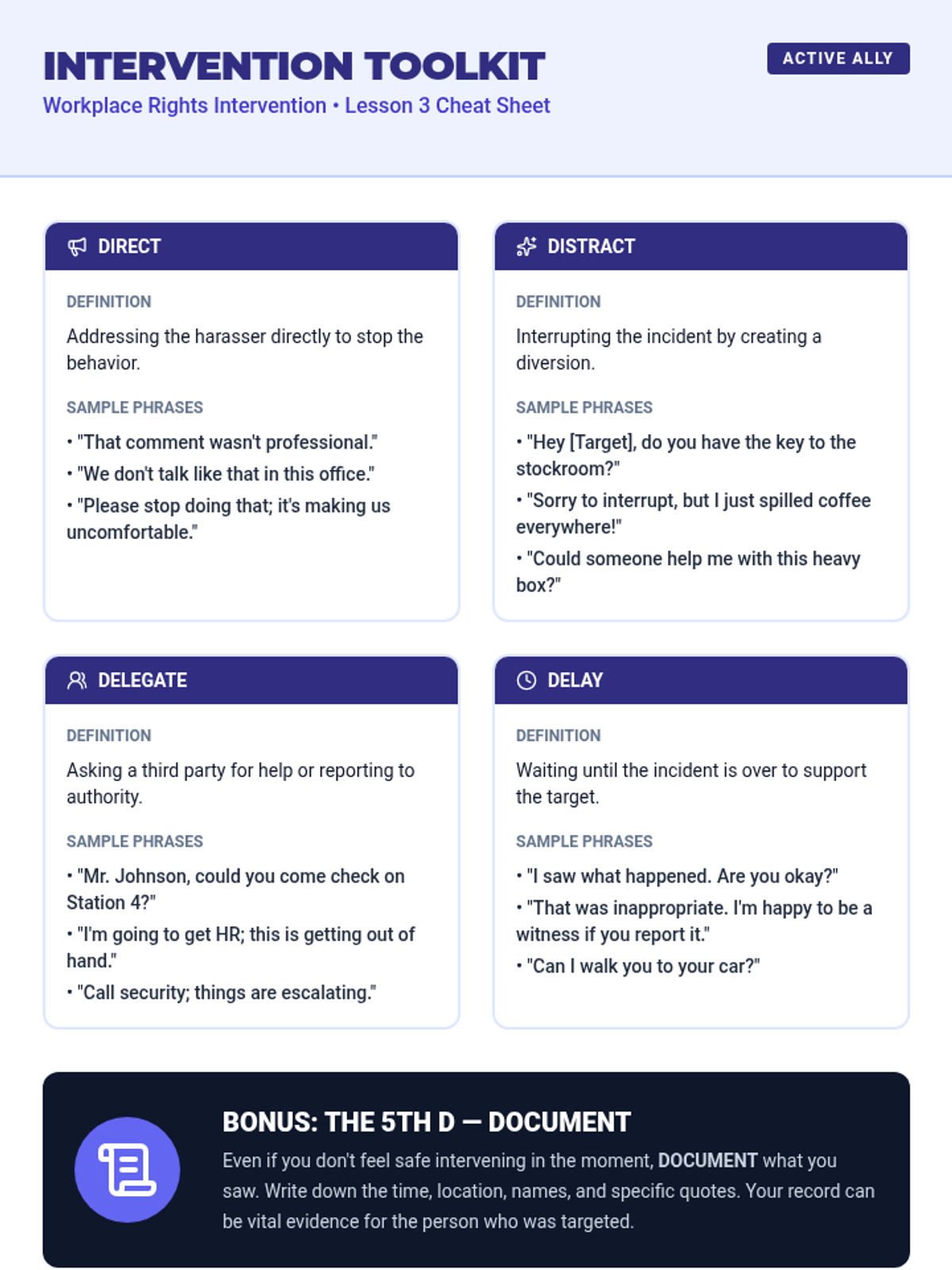
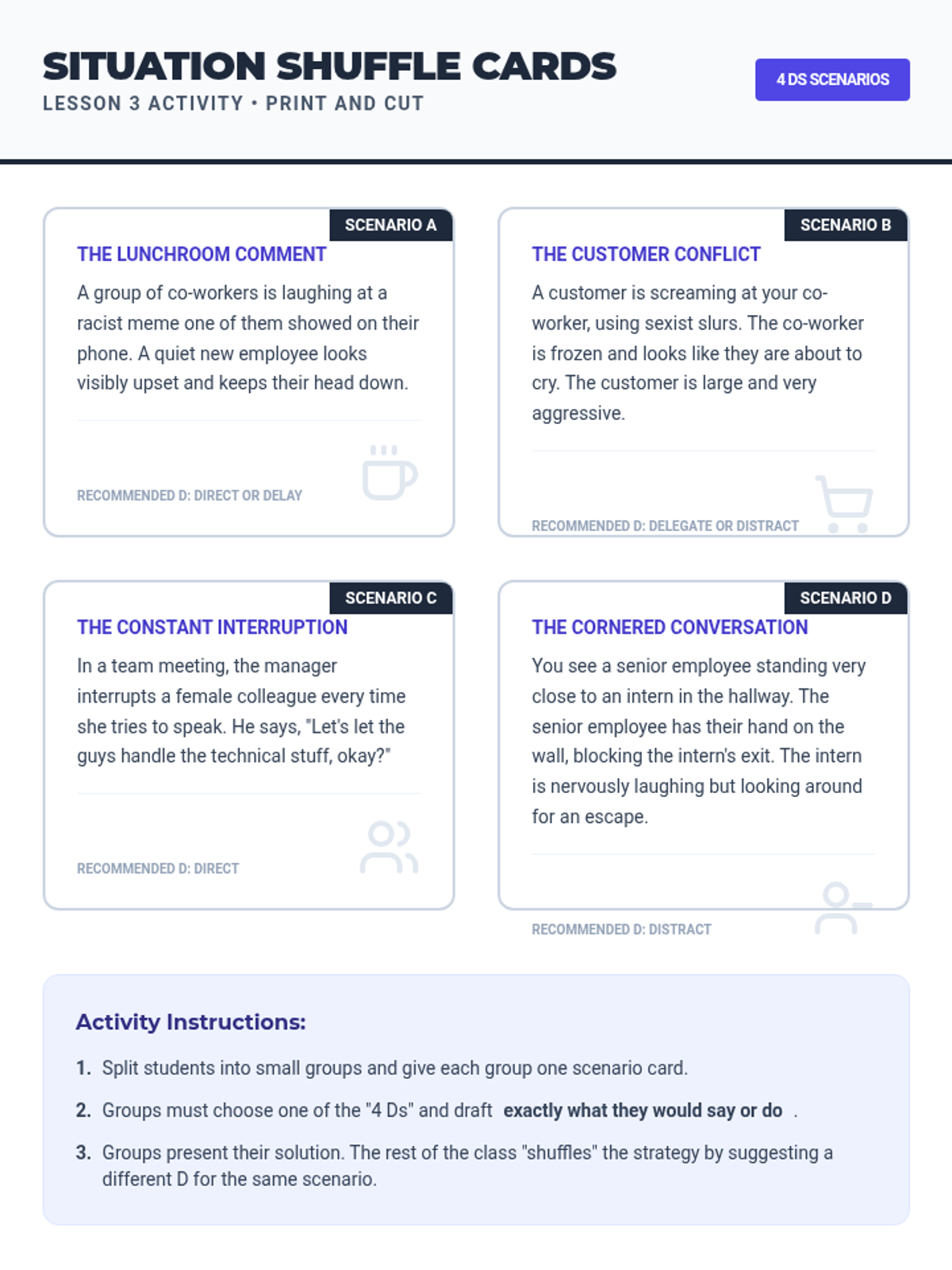
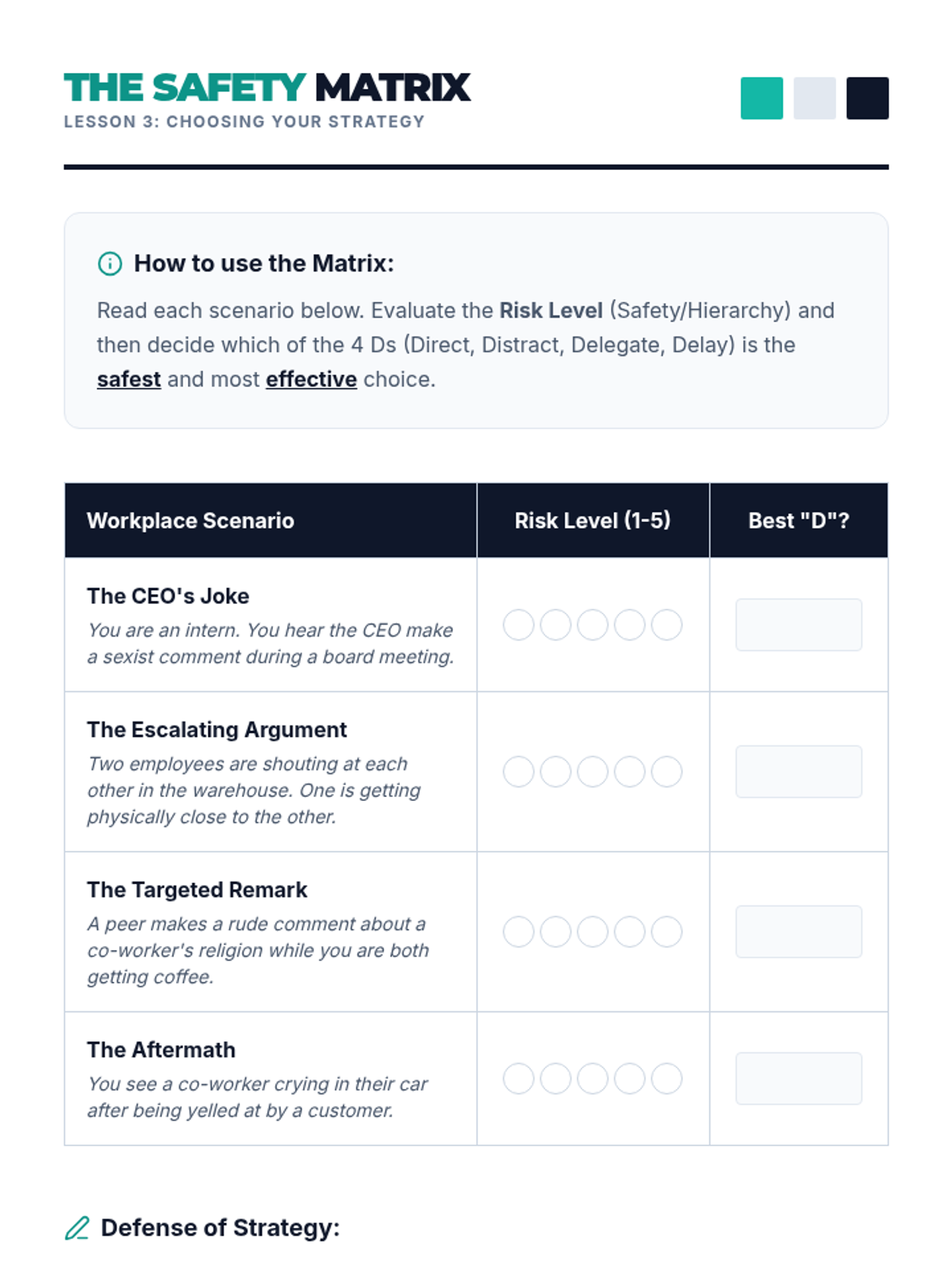
Students are introduced to the '4 Ds' of bystander intervention: Direct, Distract, Delegate, and Delay. They analyze scenarios to determine the best intervention strategy.
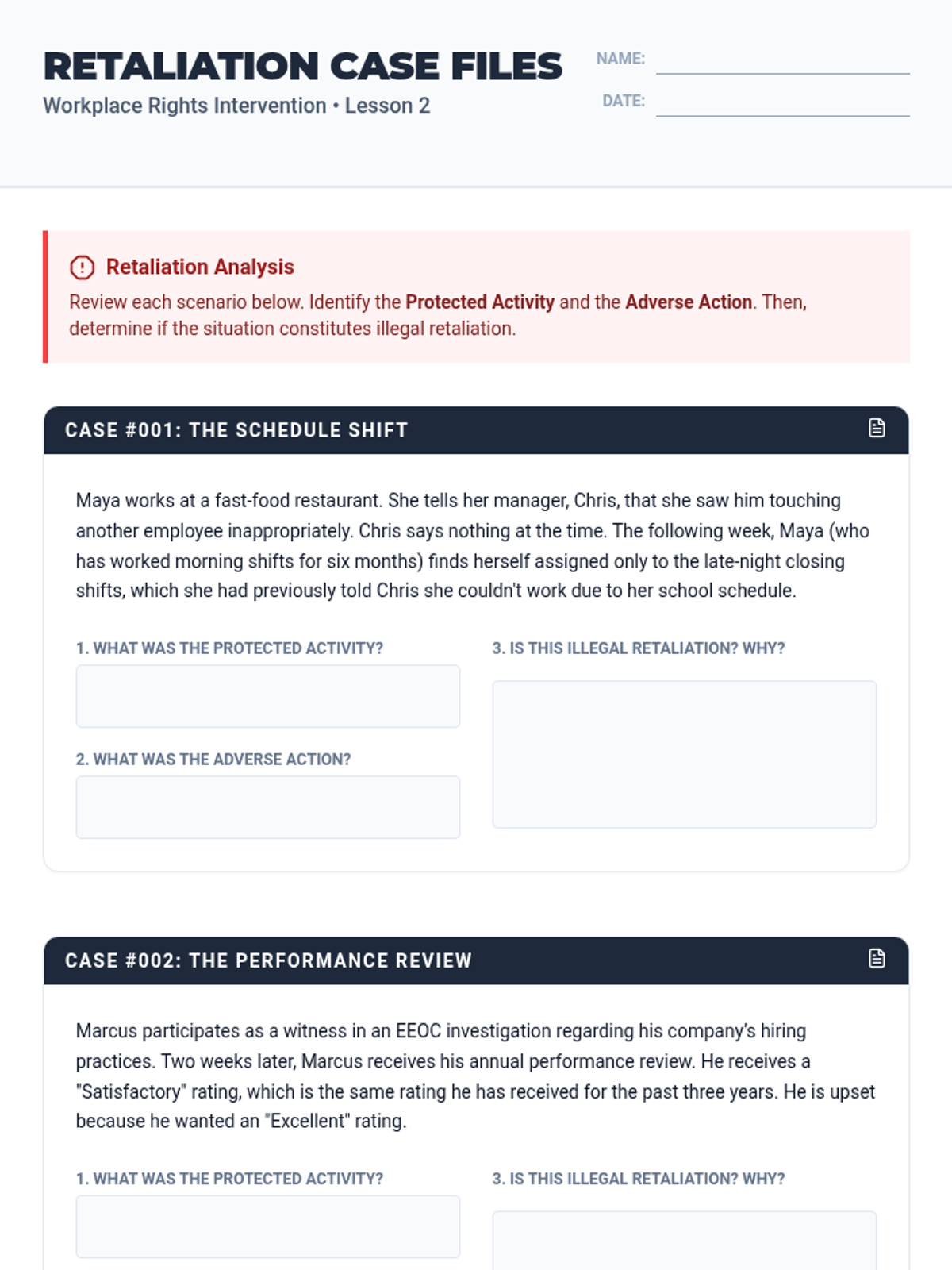
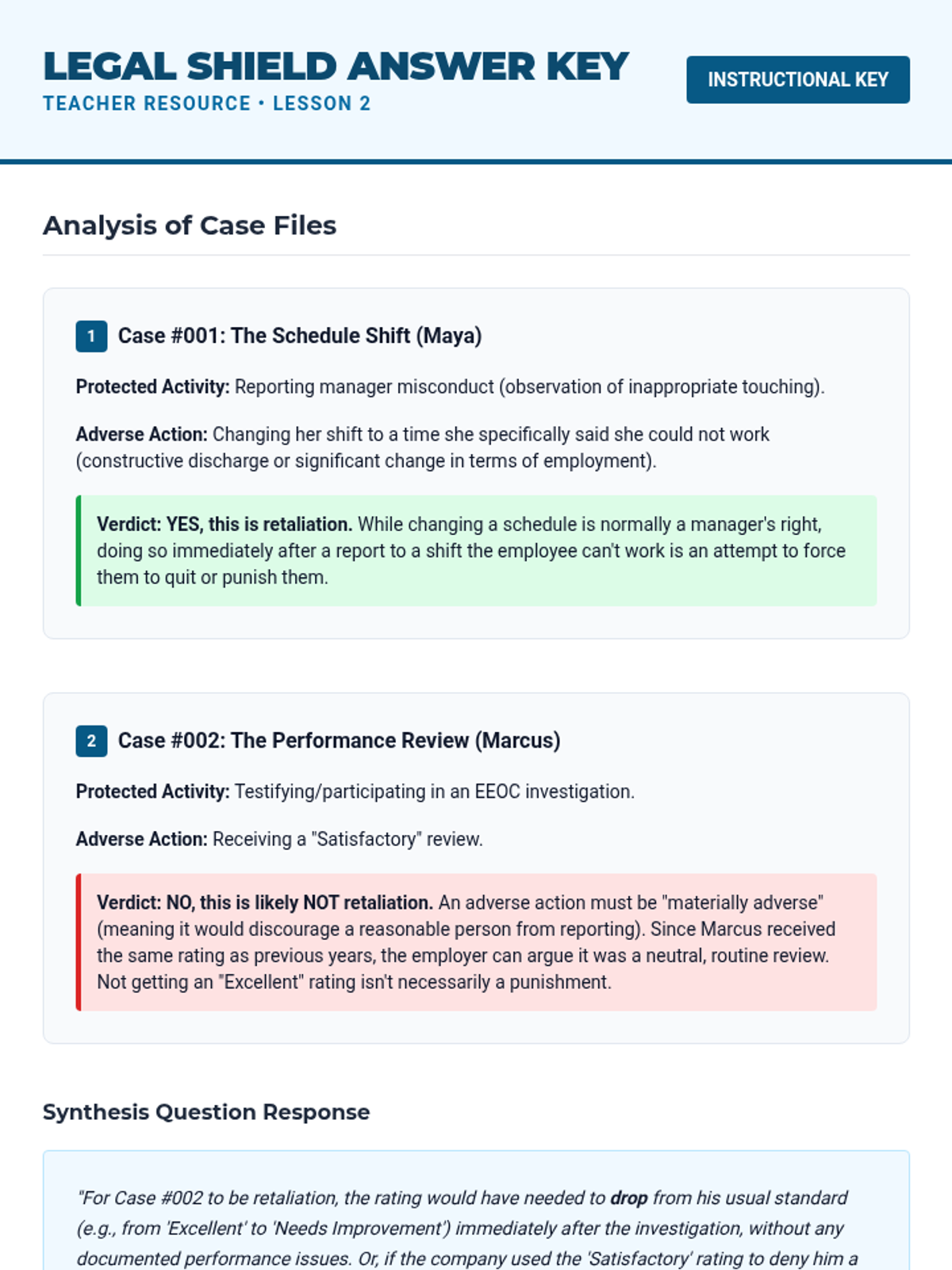
This lesson covers the legal protections for employees who report misconduct, focusing on the concept of 'retaliation' and identify which actions constitute illegal retaliation.
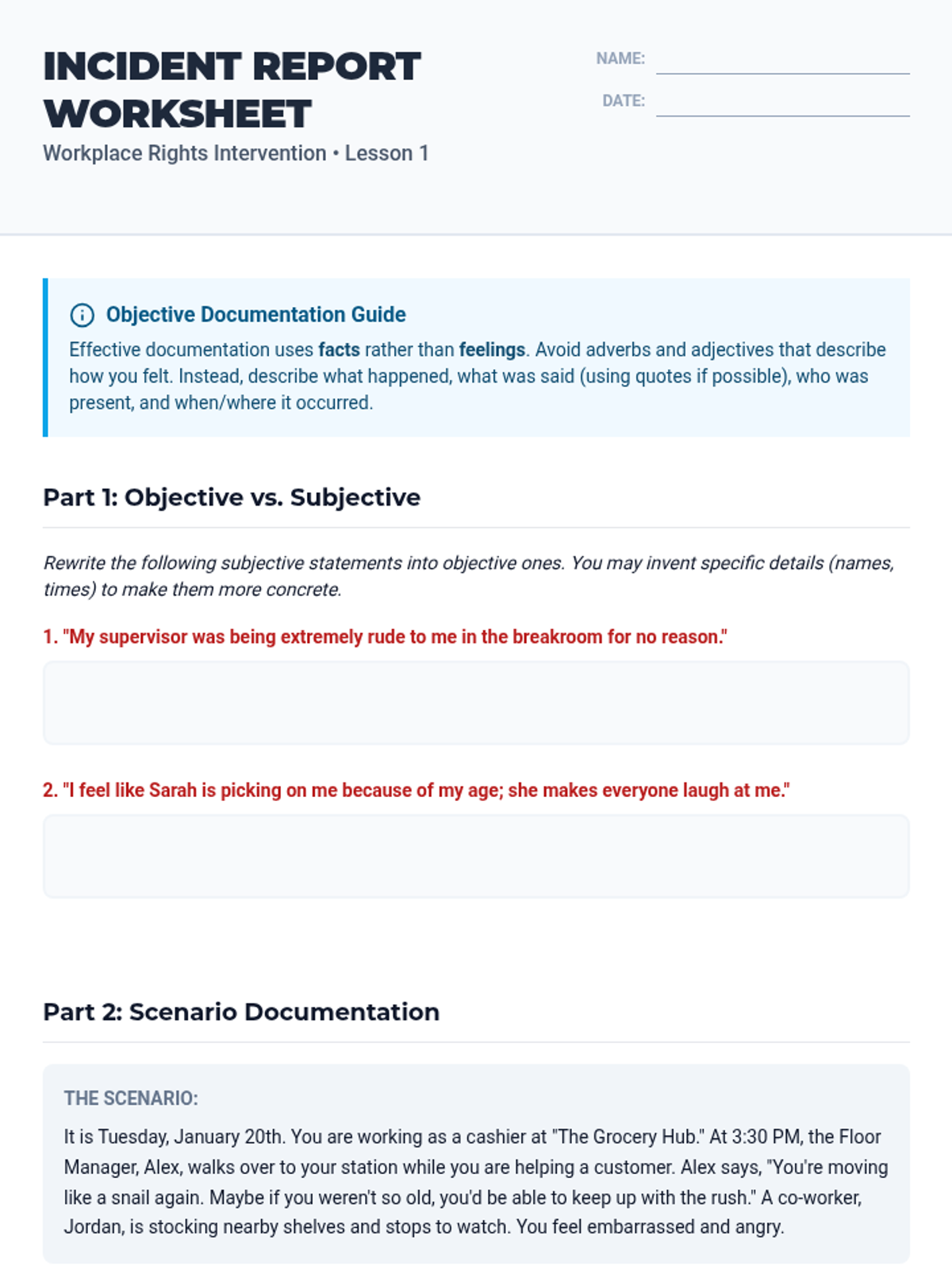
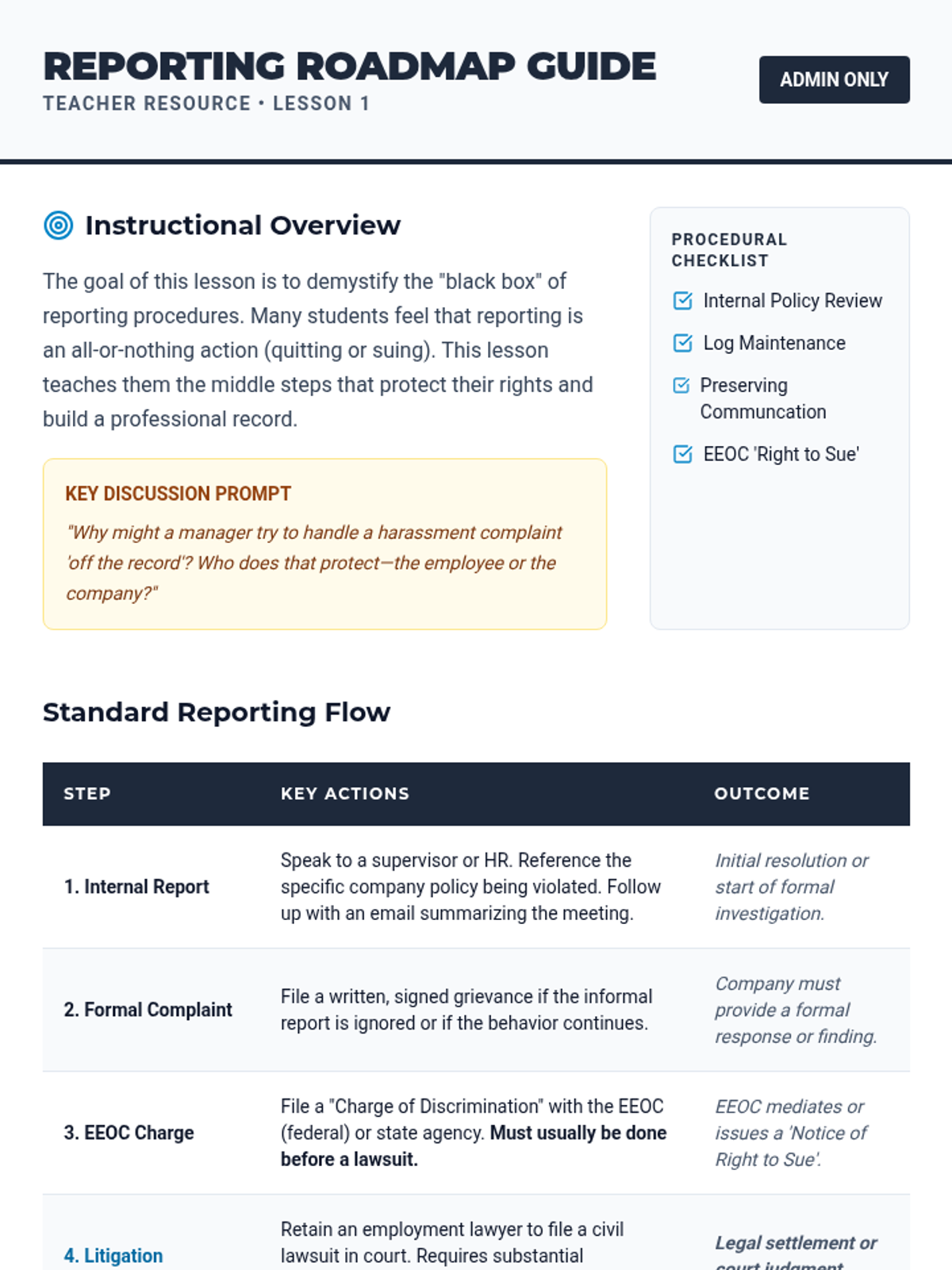
Students learn the standard procedures for reporting harassment, including internal HR complaints and external EEOC filings. They practice the skill of objective documentation.
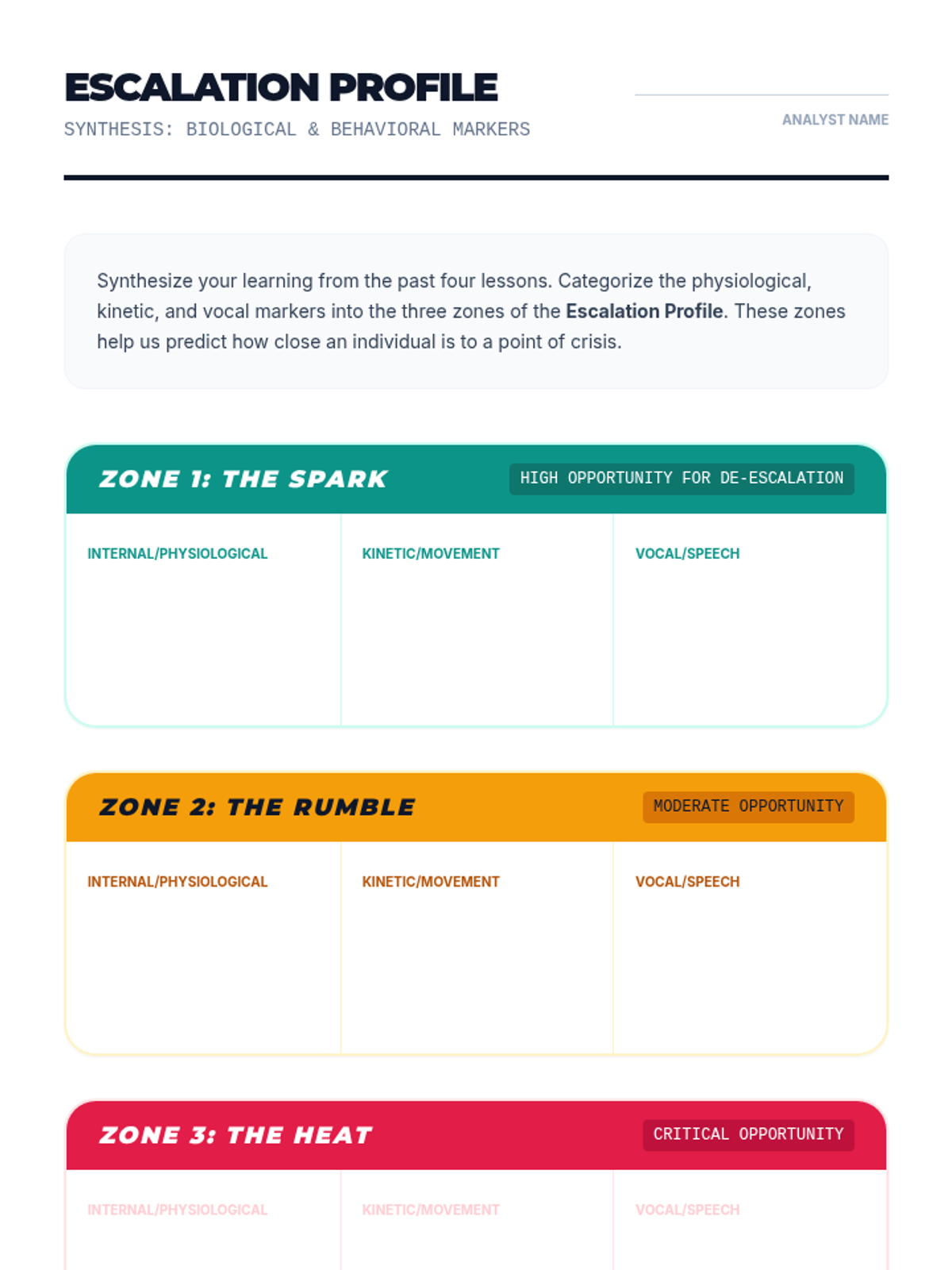
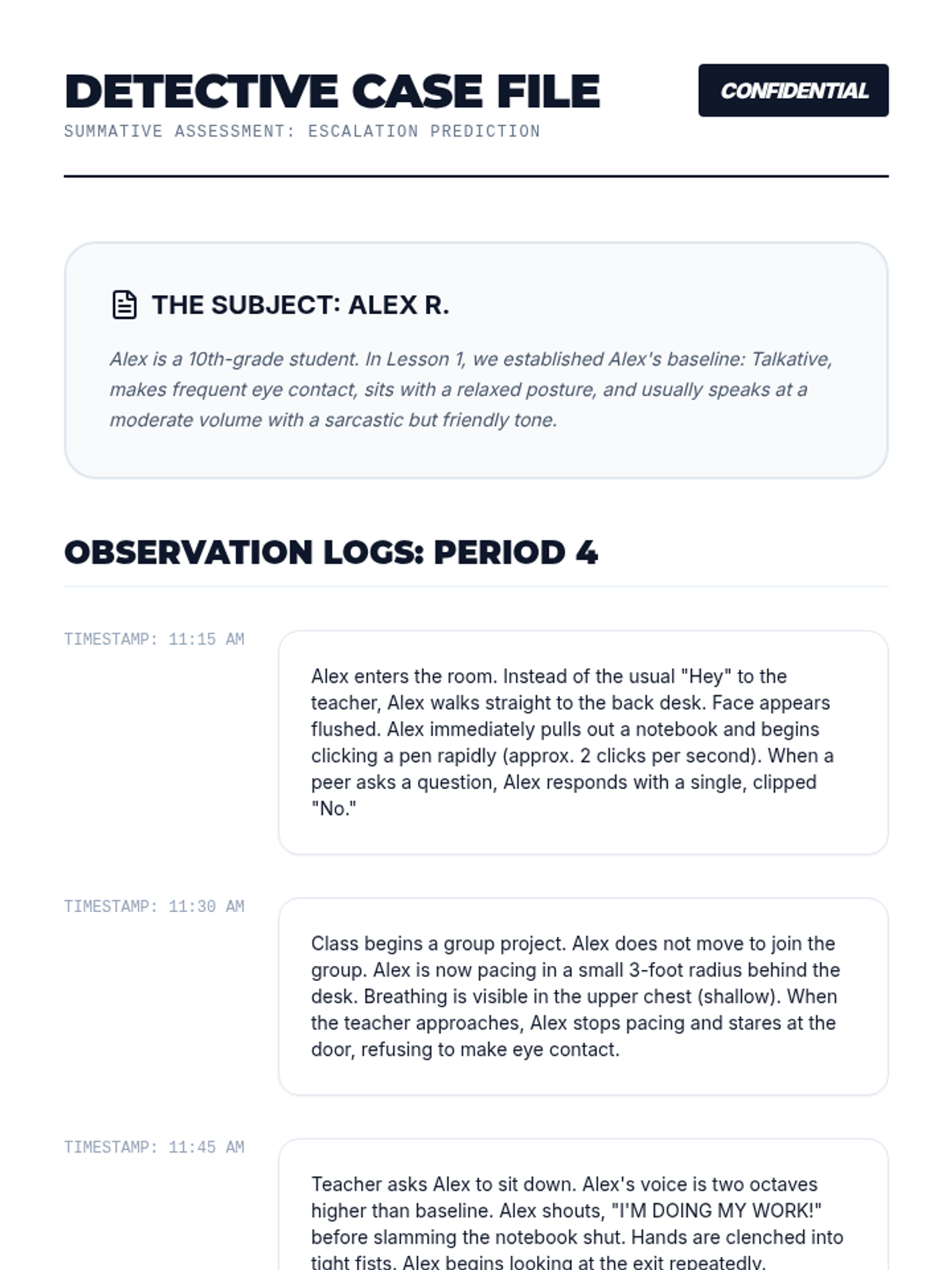
Students synthesize their learning to create a generalized 'Escalation Profile' and apply it to a complex case study to predict escalation before a crisis occurs.
This lesson addresses 'freeze' or 'flight' responses, such as shutting down, avoiding eye contact, or isolating, teaching students that silence can be a warning sign.
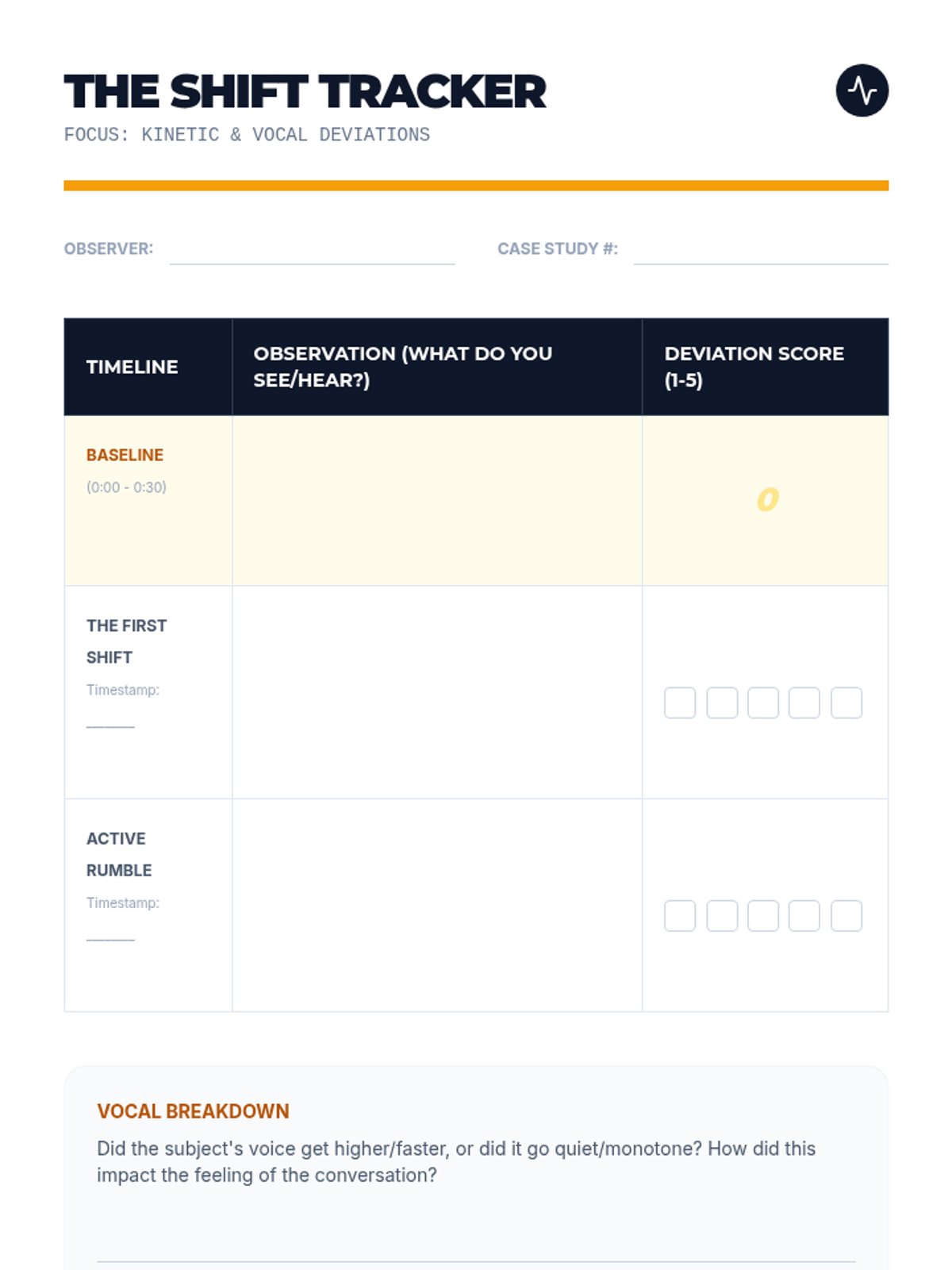
Students analyze active indicators of escalation, specifically focusing on changes in movement (pacing) and vocal qualities (volume, cadence, tone).
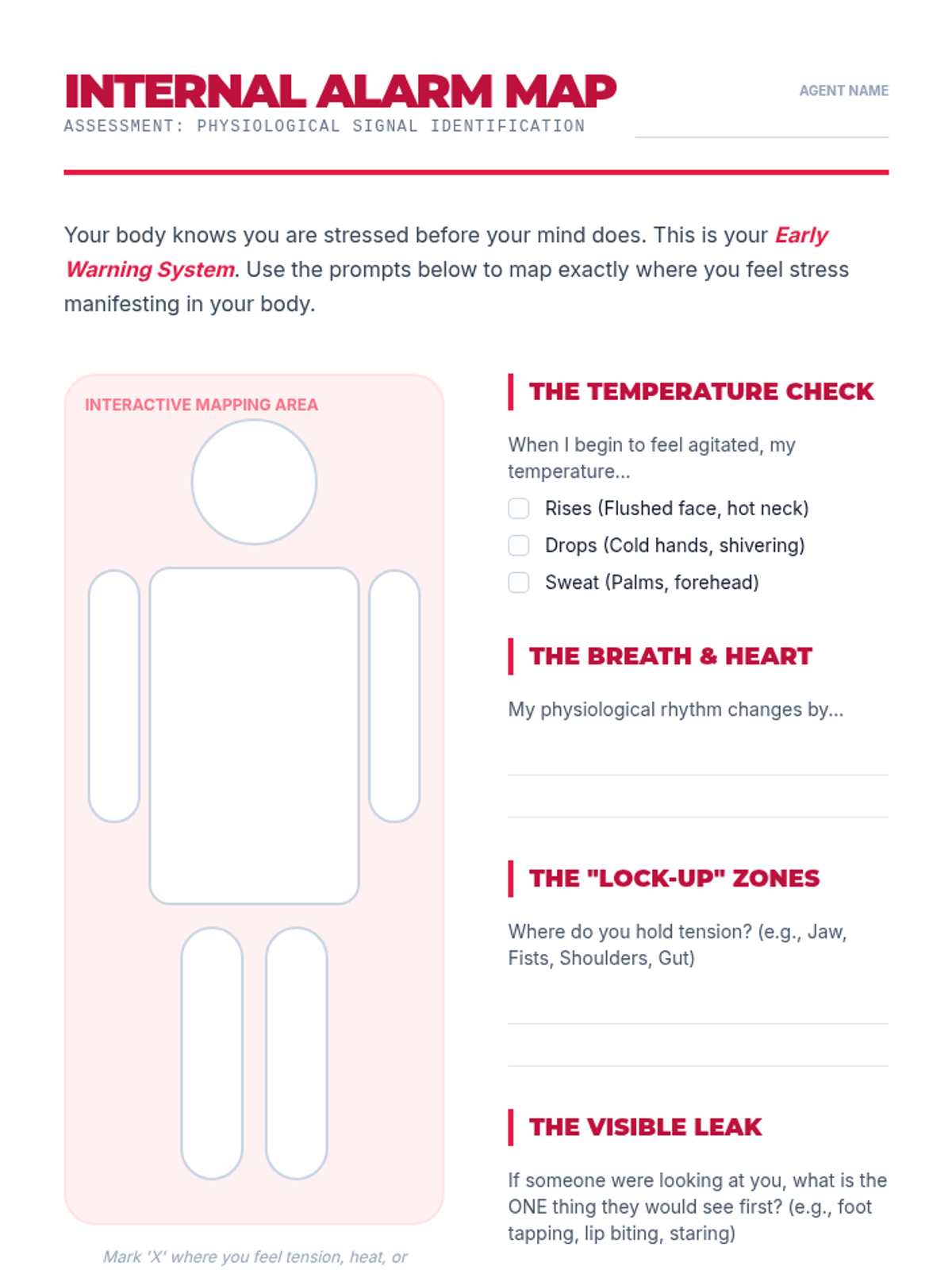
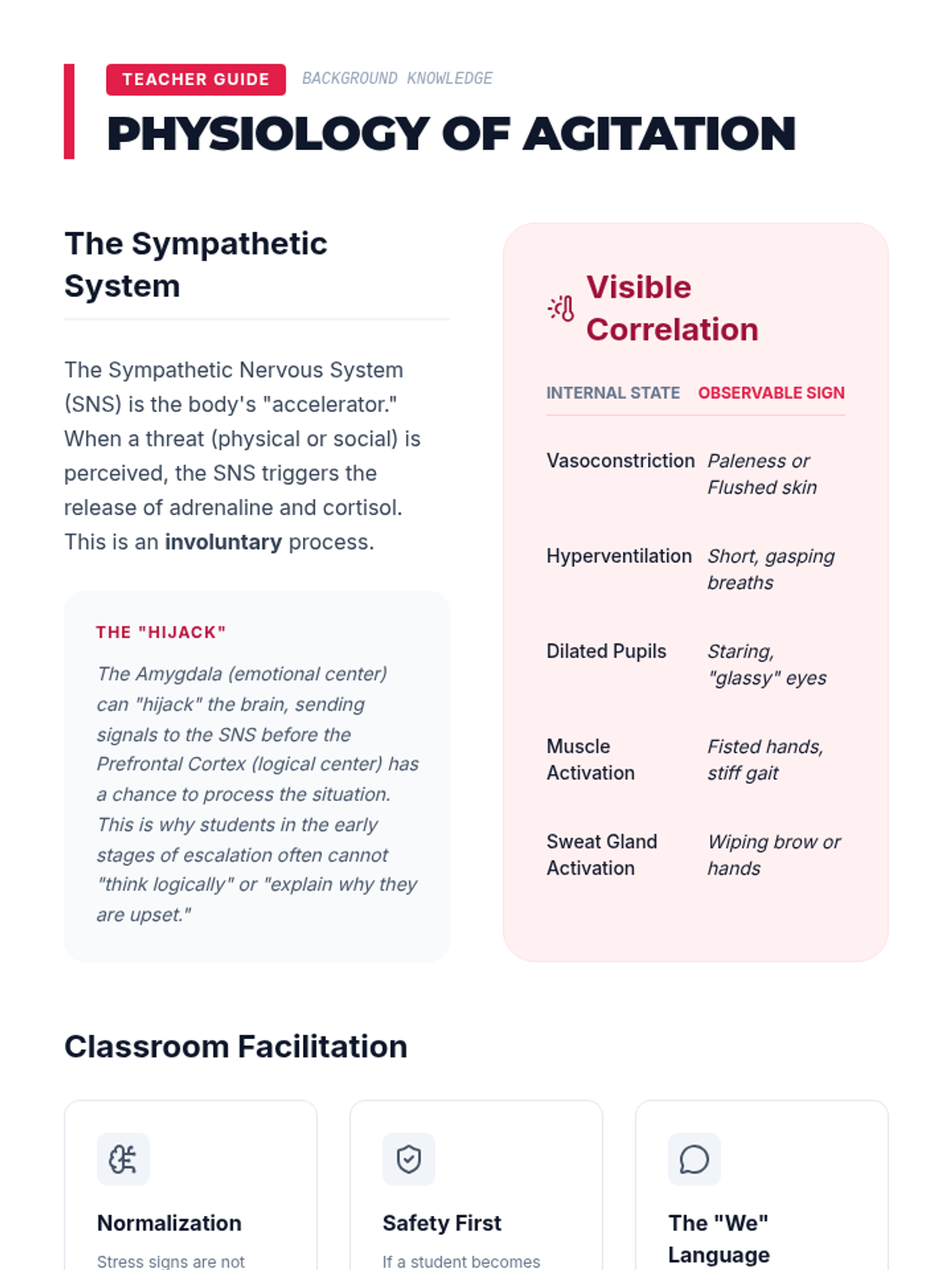
This lesson focuses on the sympathetic nervous system's response to agitation and how internal states like rapid breathing and muscle tension become visible external markers.
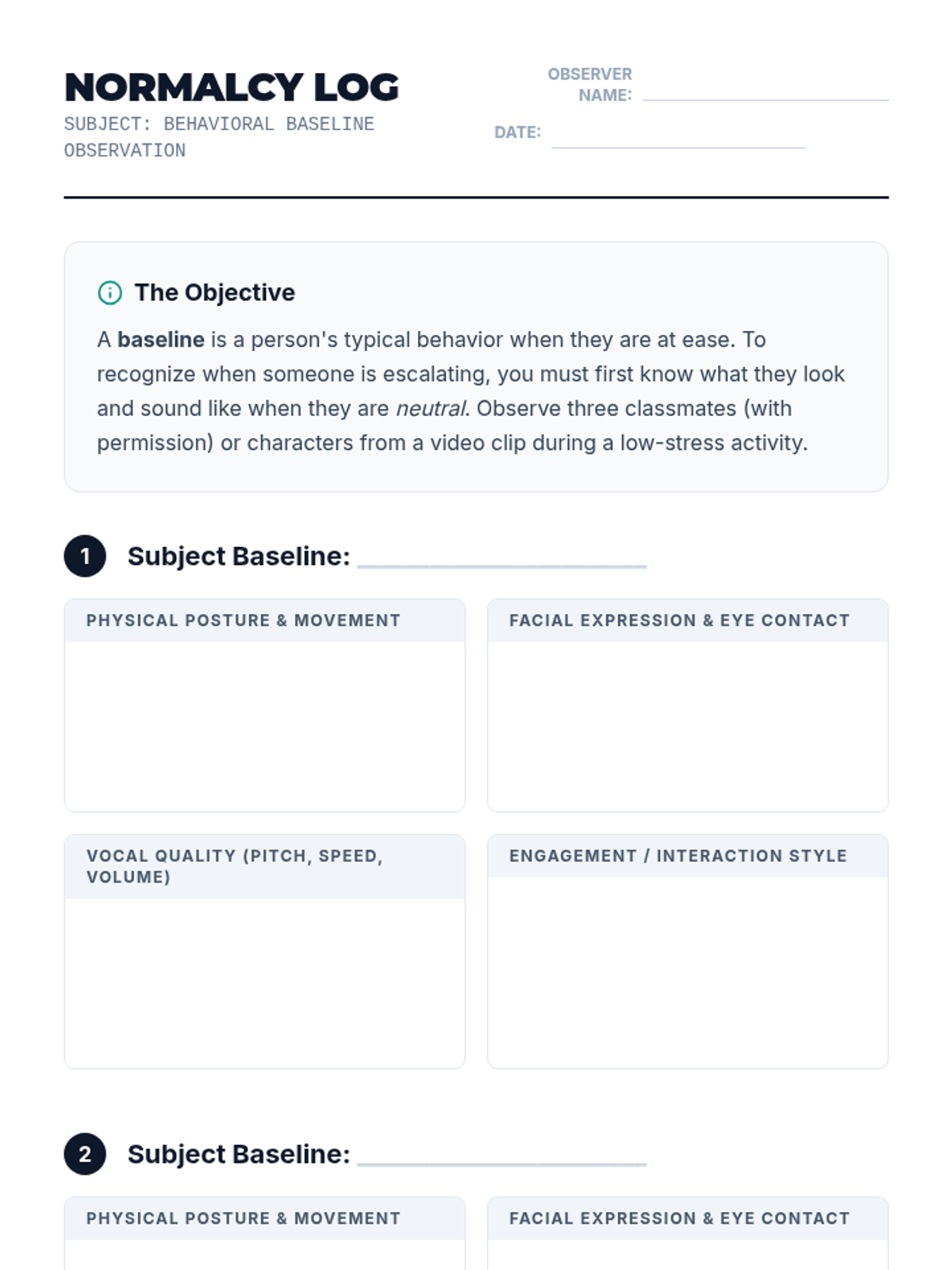
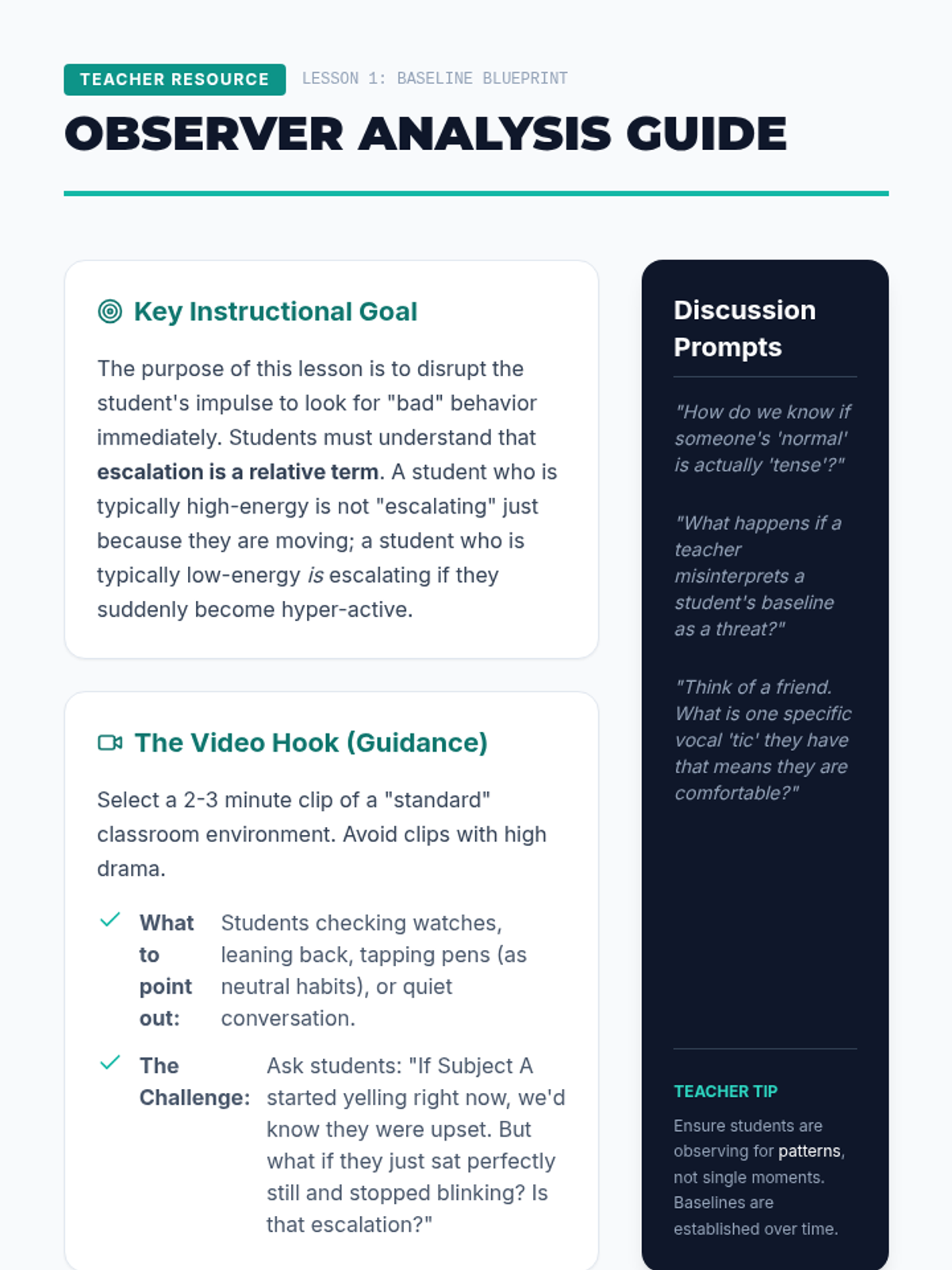
Students learn the concept of 'baseline behavior' as a prerequisite for recognizing escalation by documenting typical behaviors, speech patterns, and body language in a neutral state.
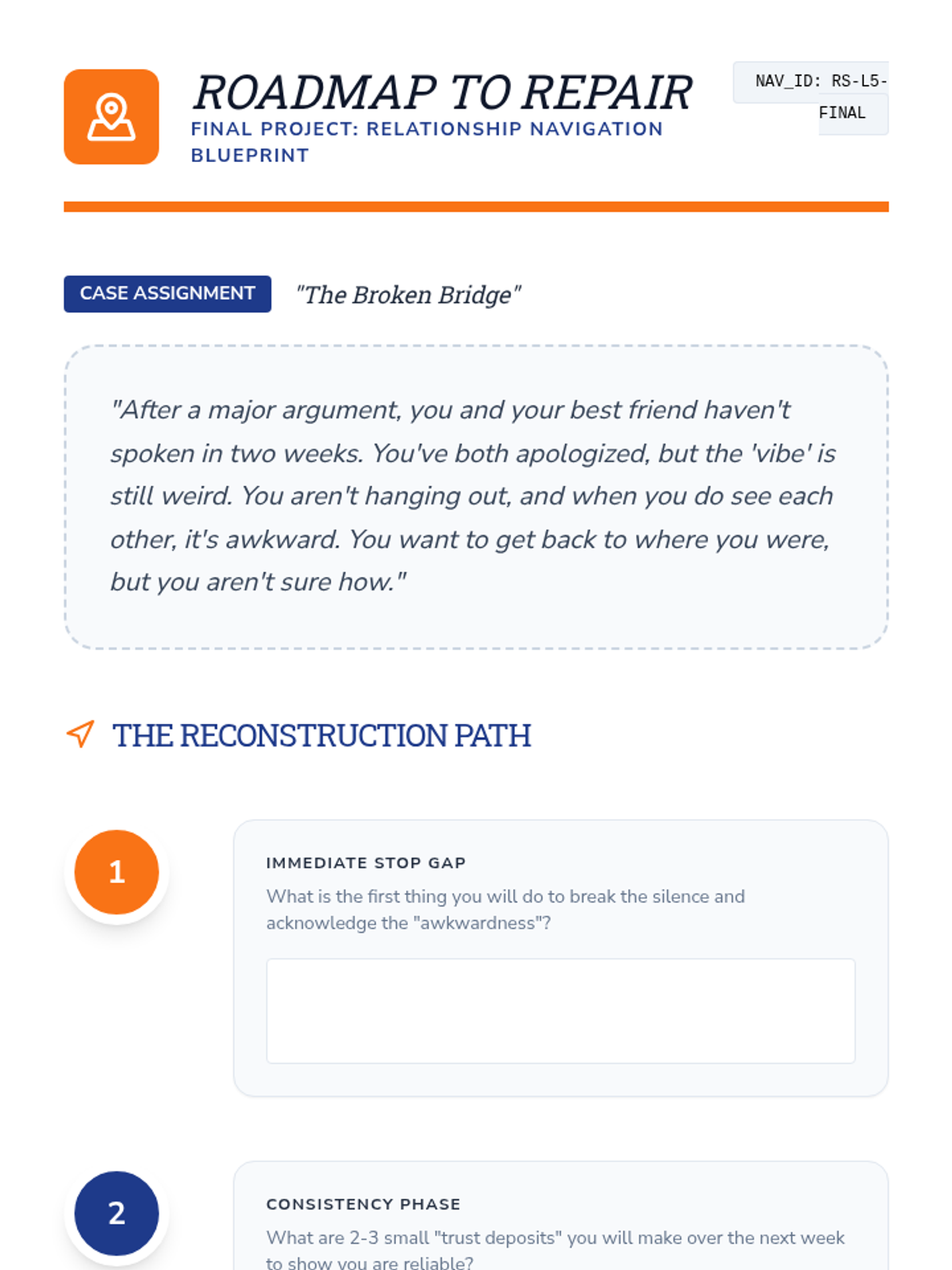
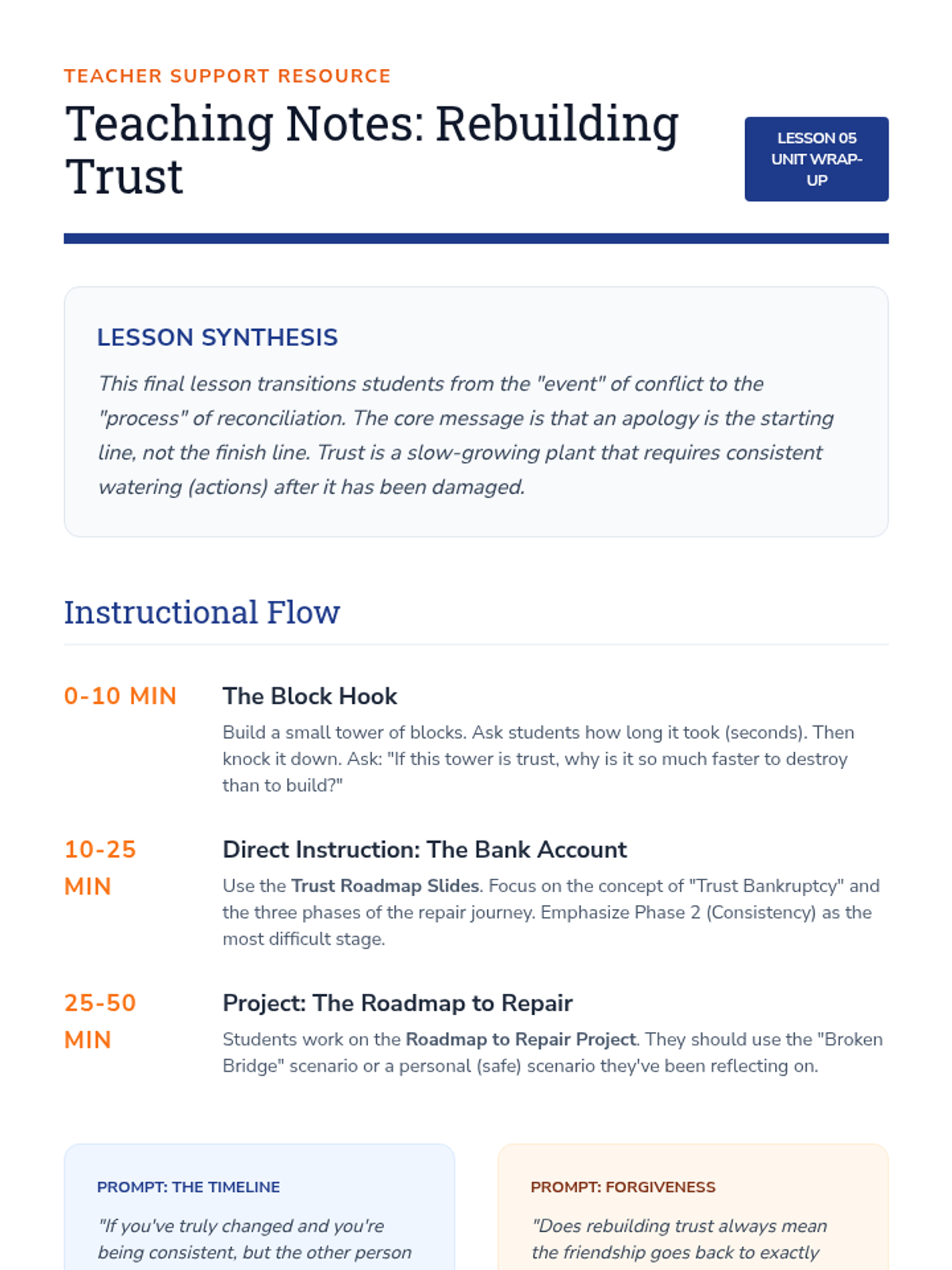
Students learn that trust is built slowly over time and create a 'Roadmap to Repair' outlining consistent actions needed to re-establish a friendship.
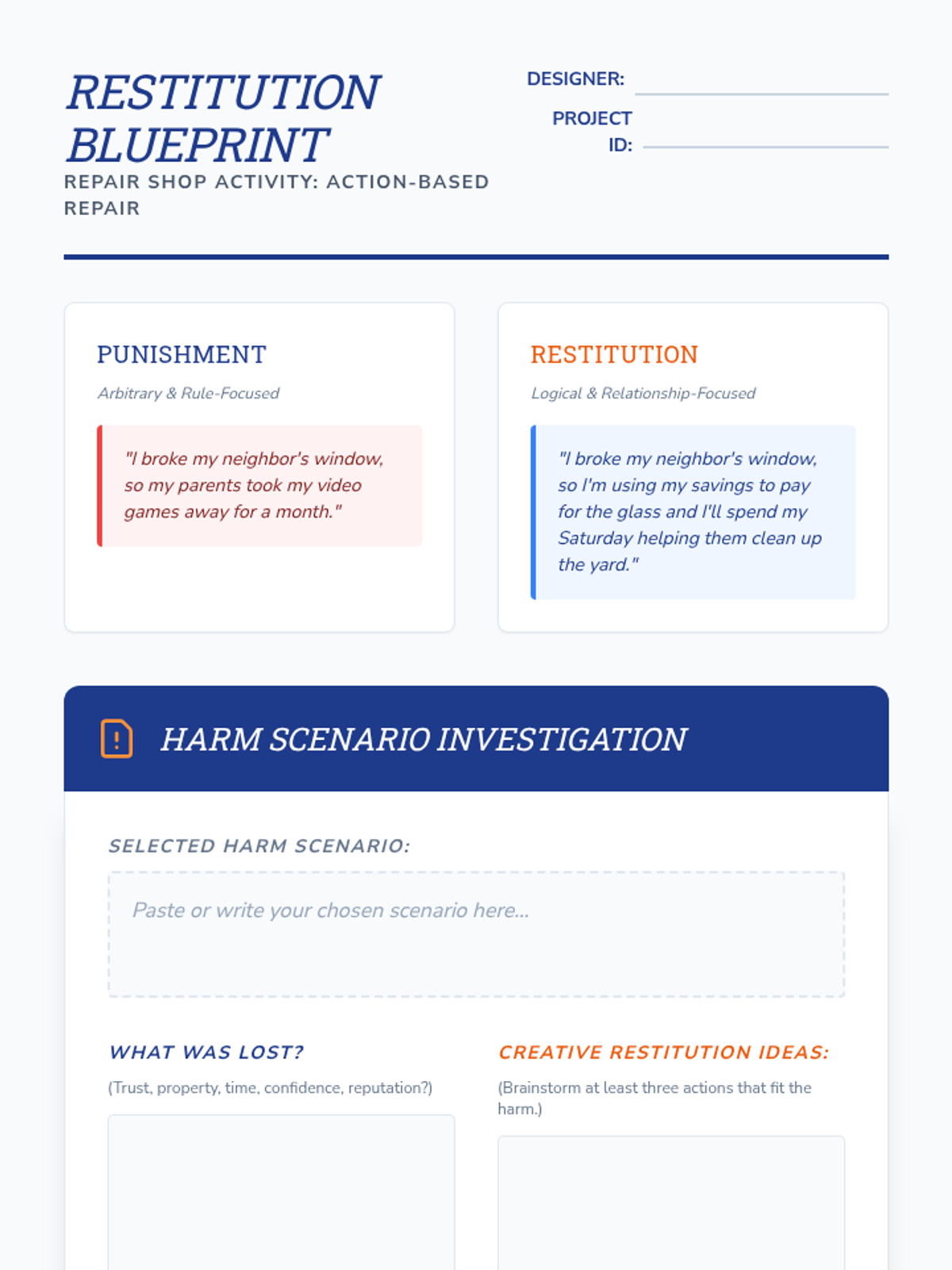
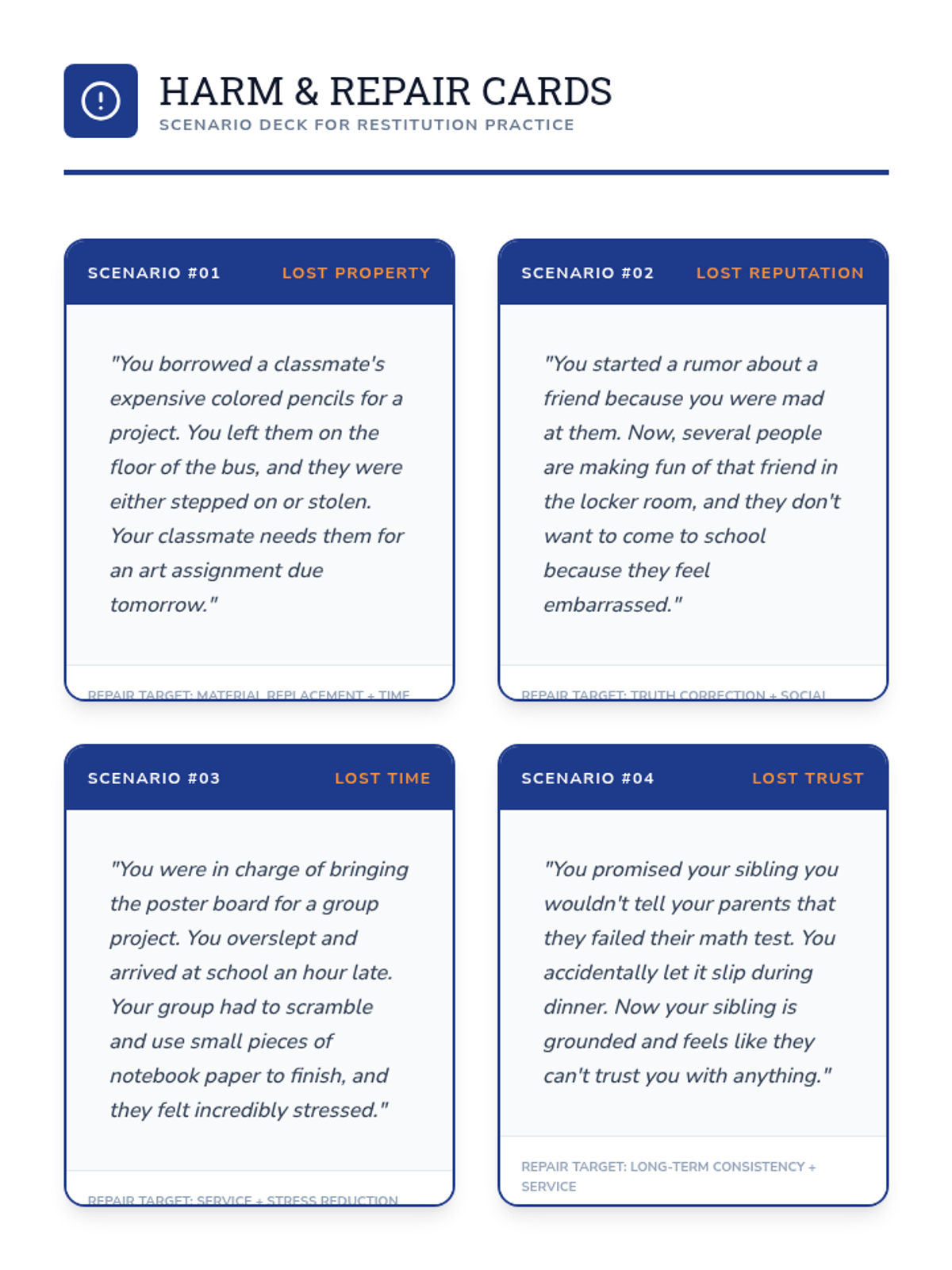
This lesson moves beyond words to action, brainstorming creative ways to 'make it right' or offer restitution relevant to the harm caused.
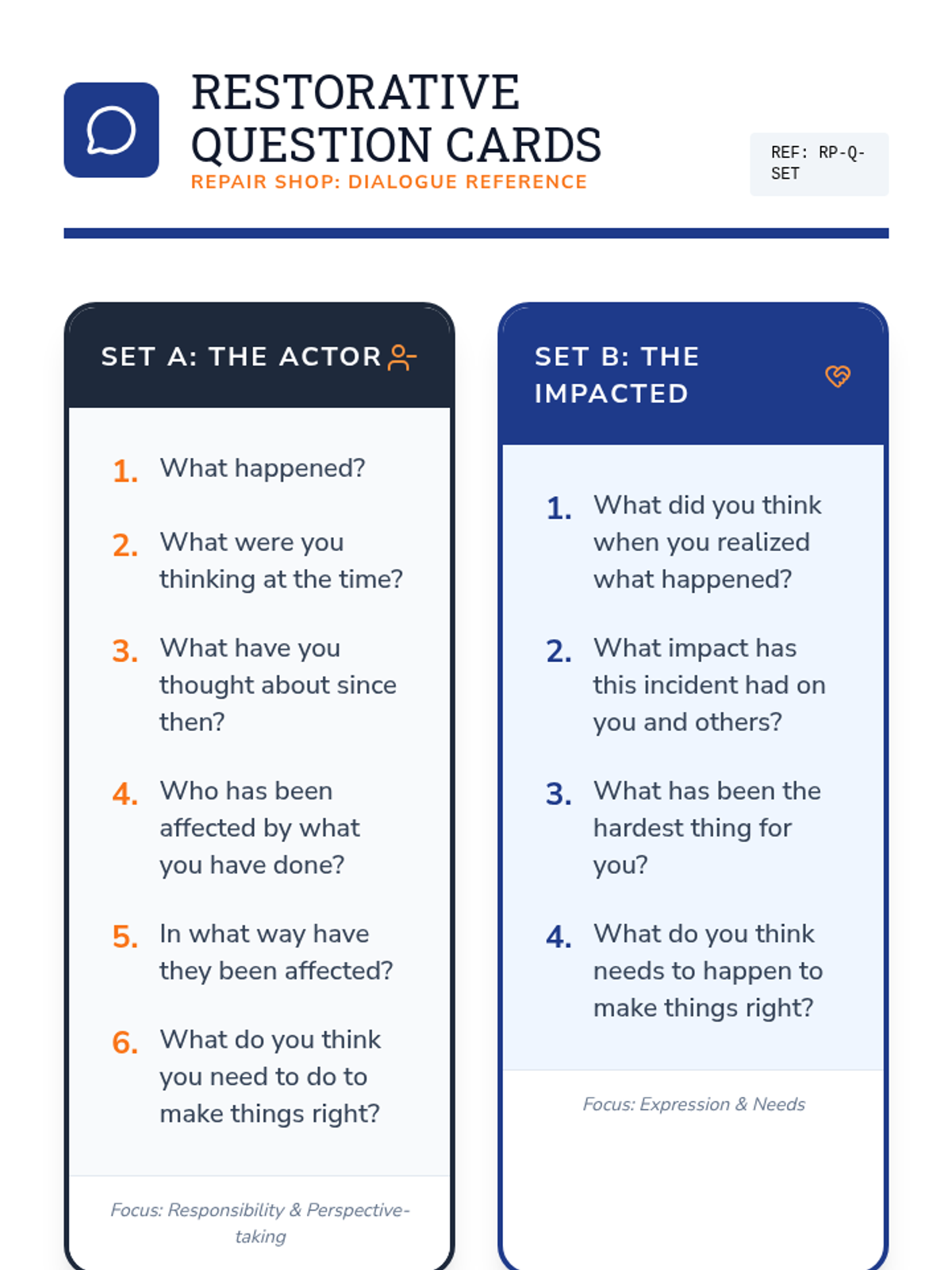
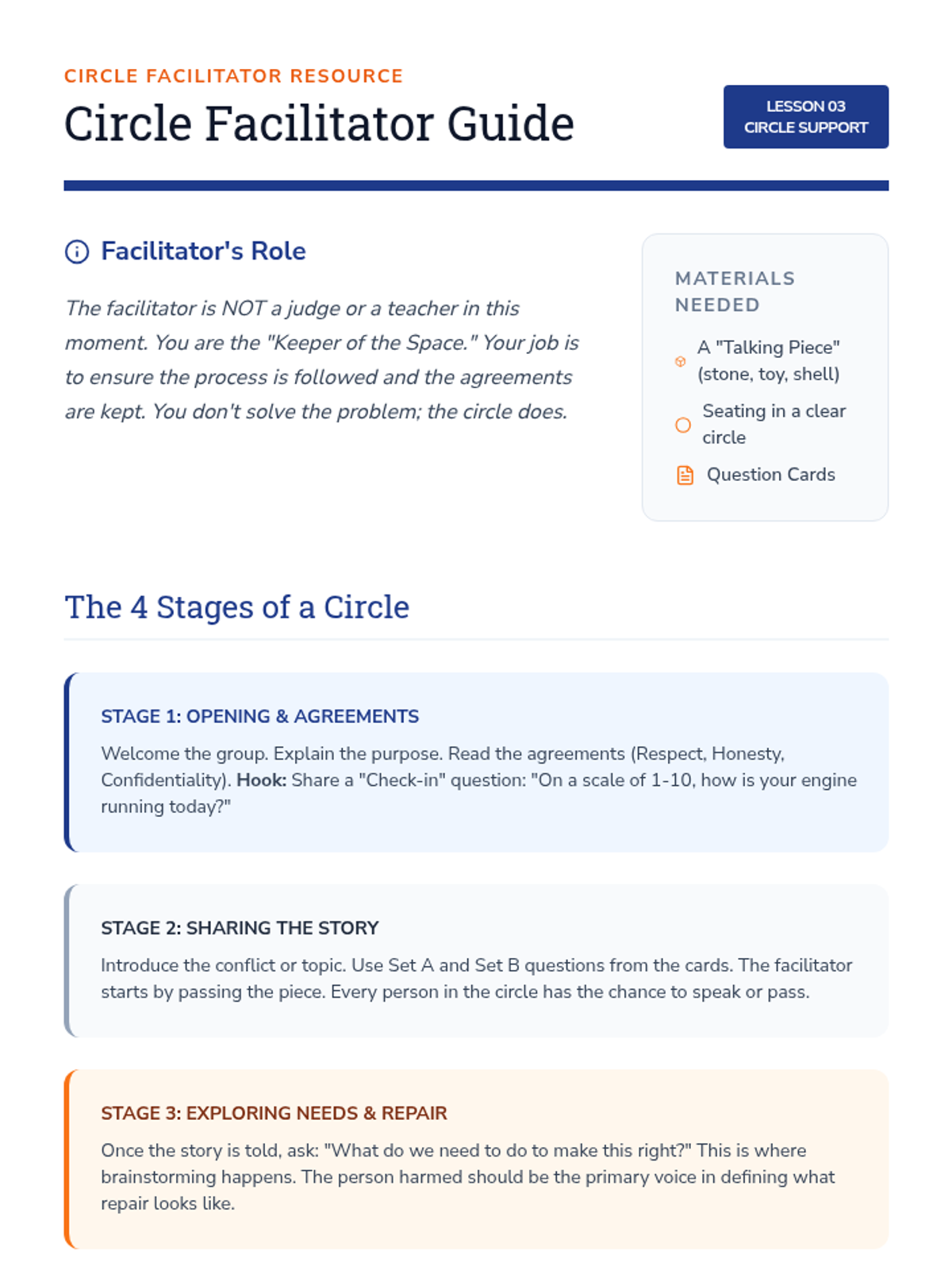
Students participate in a structured circle process to practice sharing feelings and listening to others' experiences of harm using restorative justice questions.
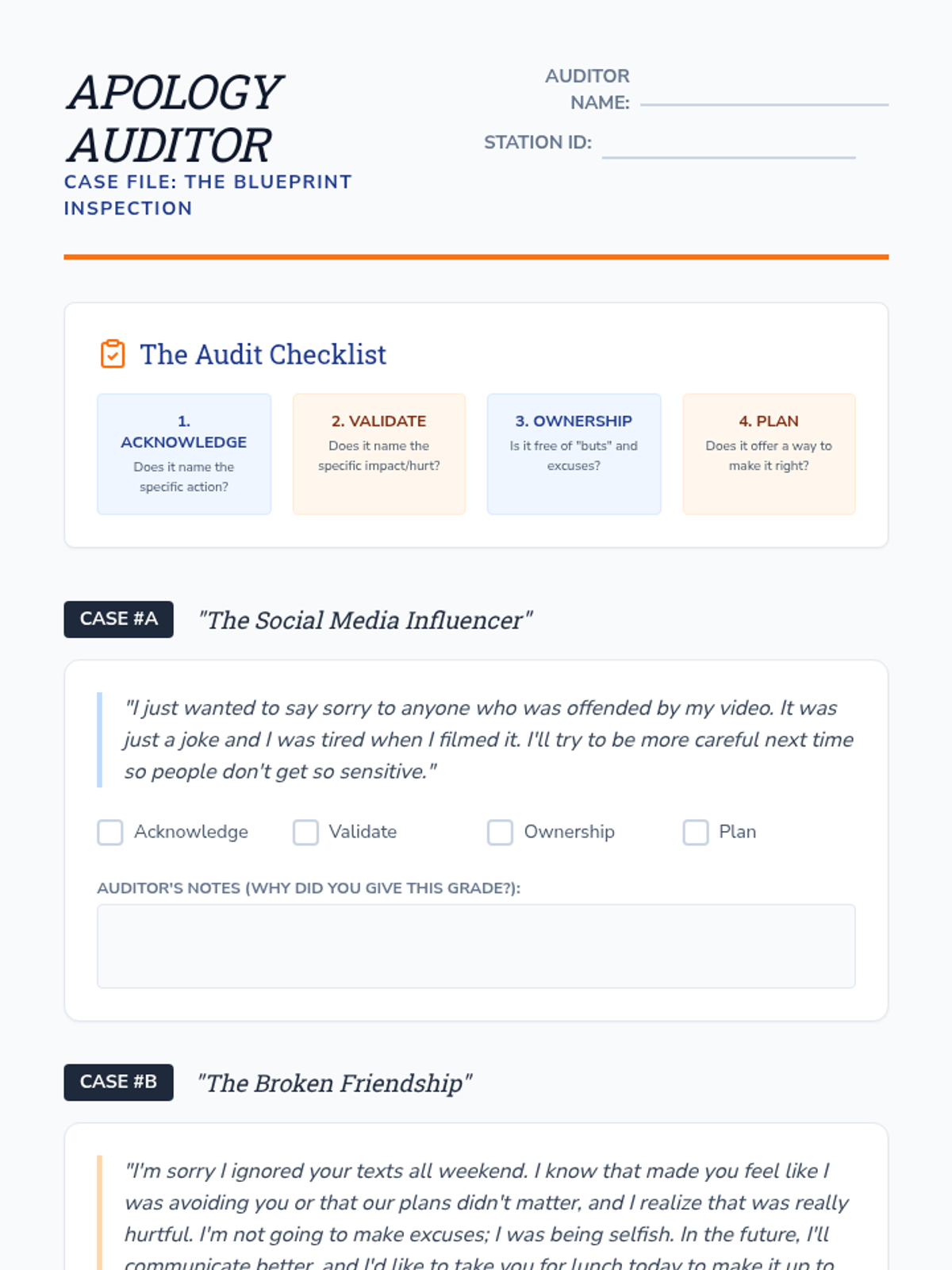
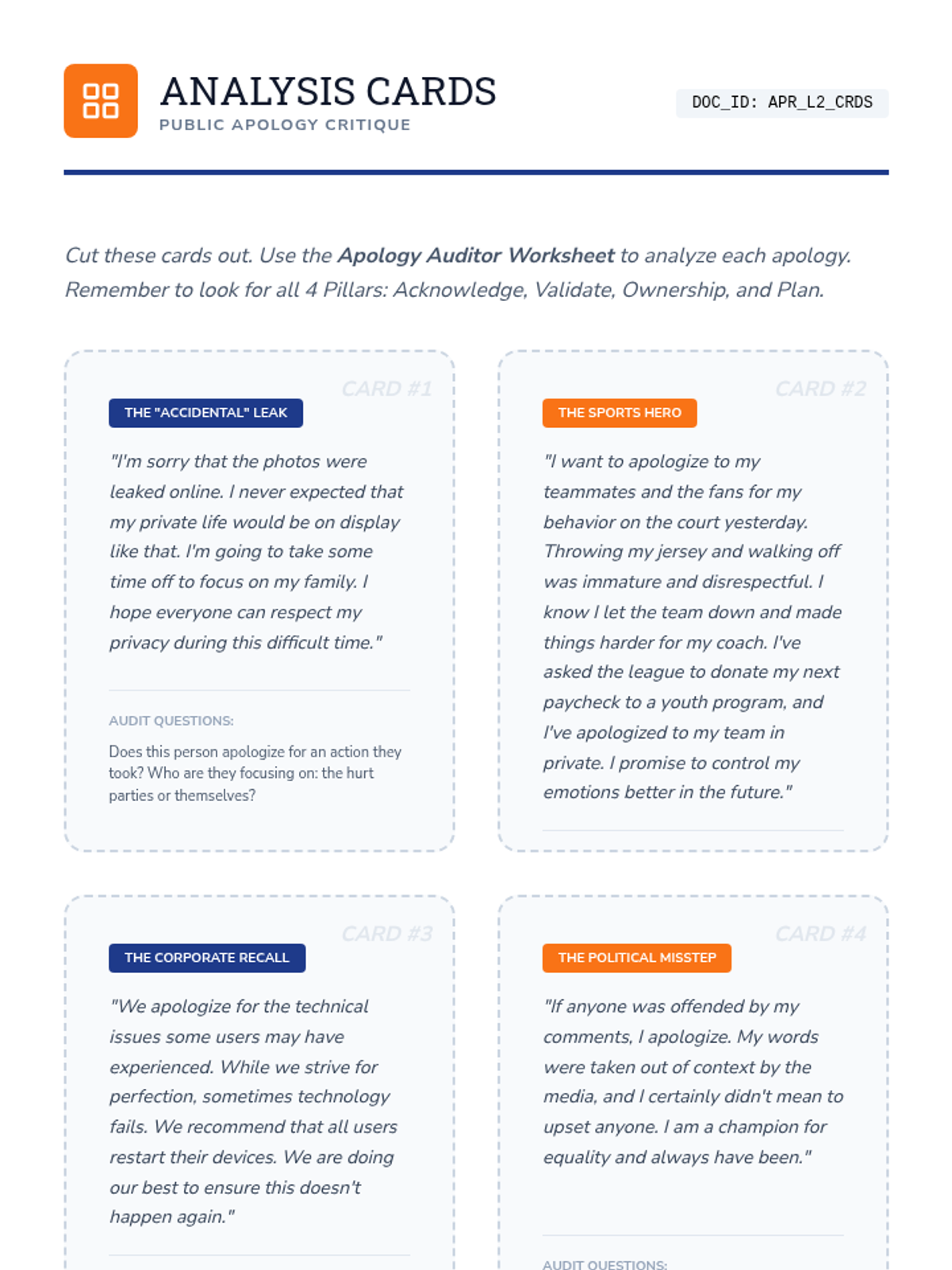
Students deconstruct apologies to identify key components: acknowledging the act, validating hurt, accepting responsibility, and making a plan for change. They critique public apologies.
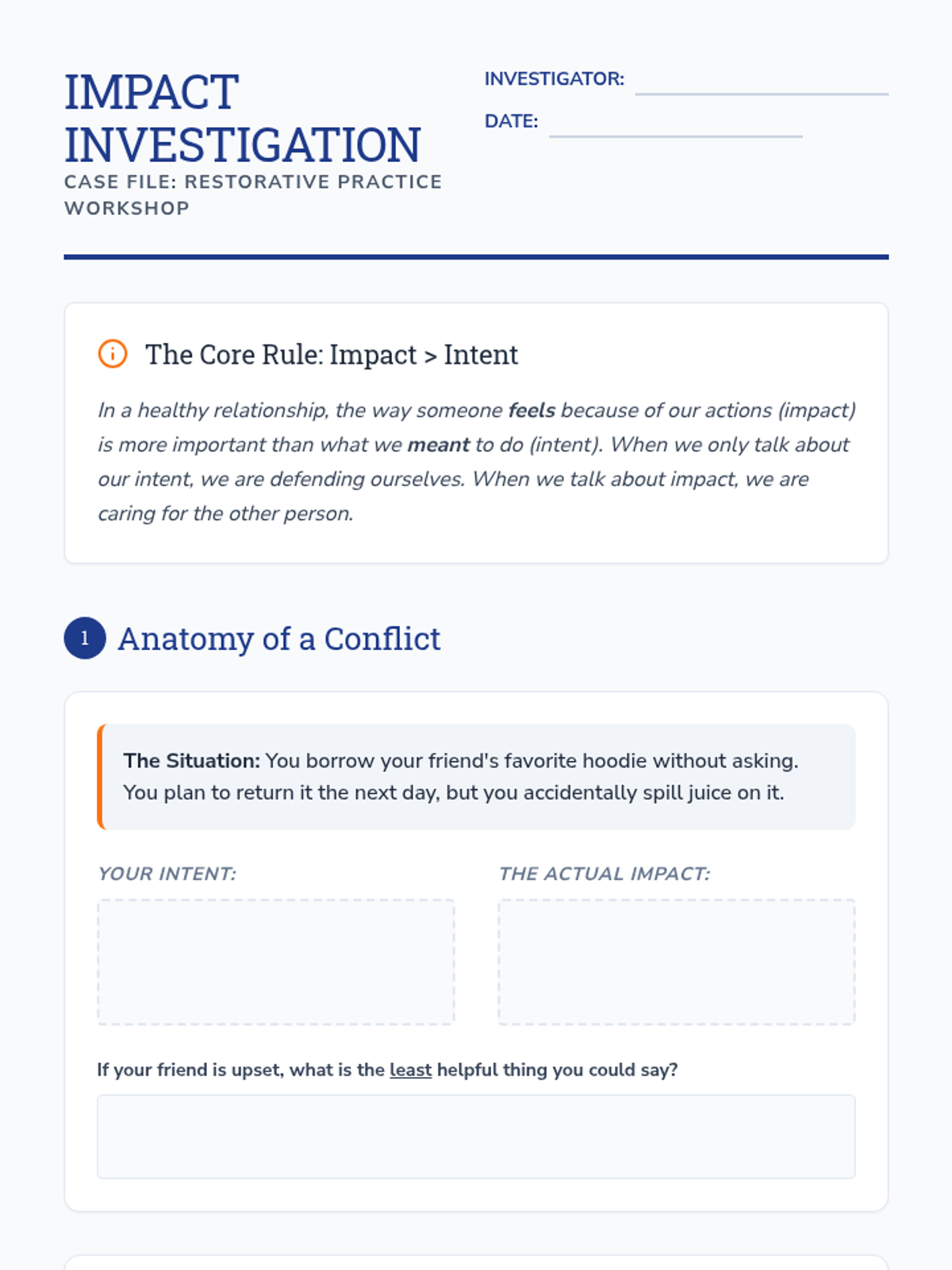
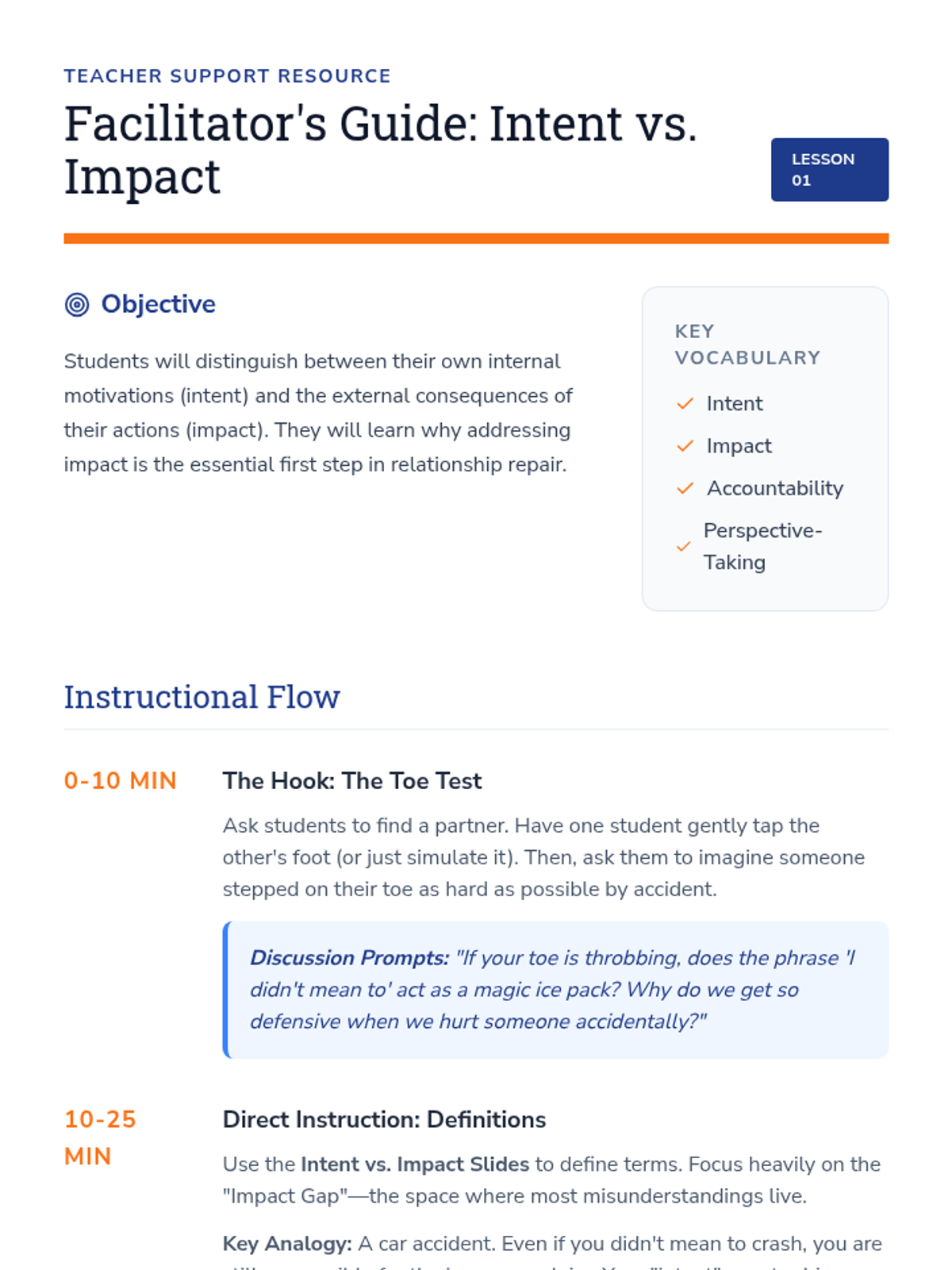
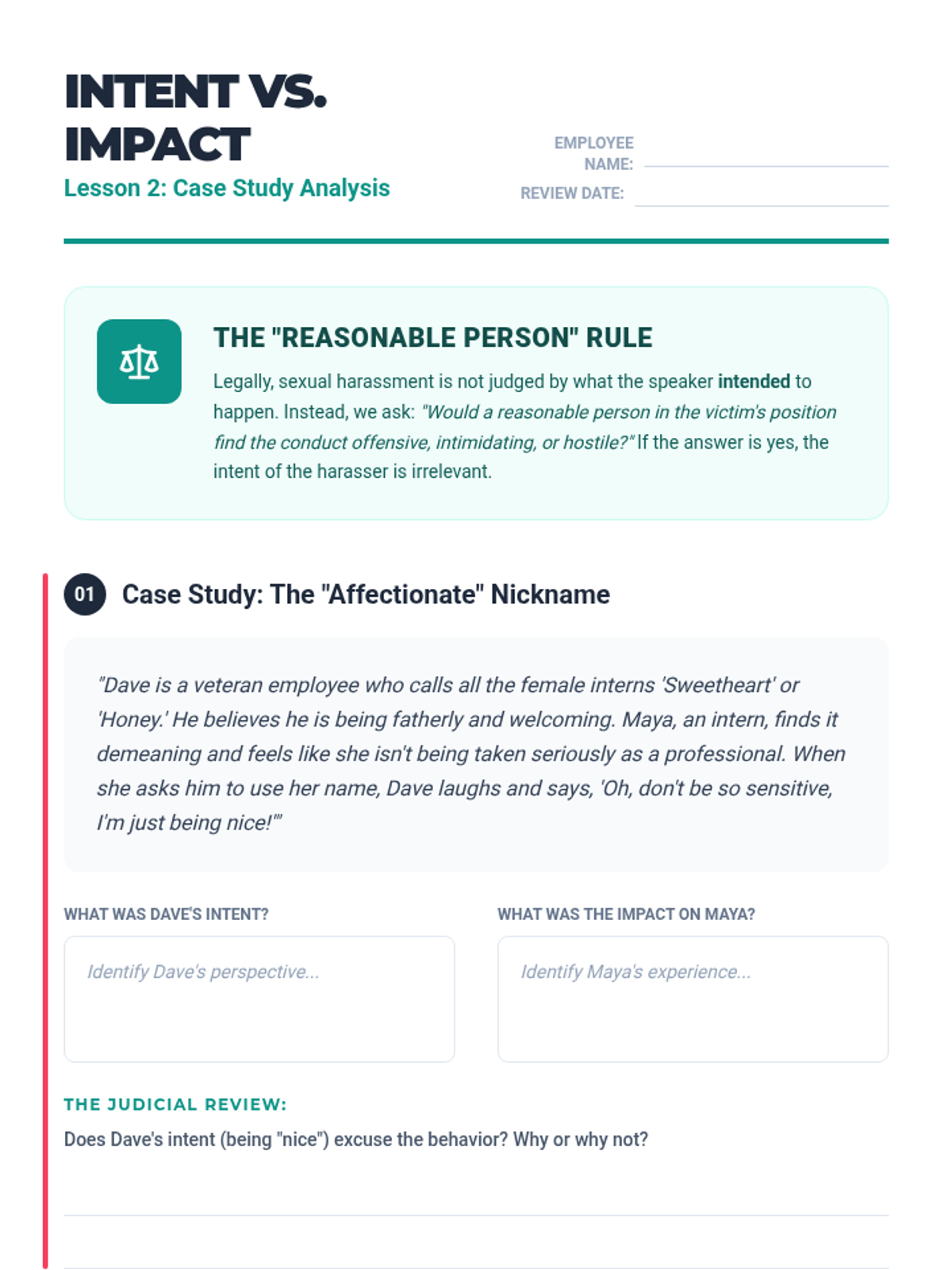
Students explore the gap between what they meant to do (intent) and how it affected others (impact). They analyze scenarios where good intentions still caused harm and discuss why impact must be addressed first.
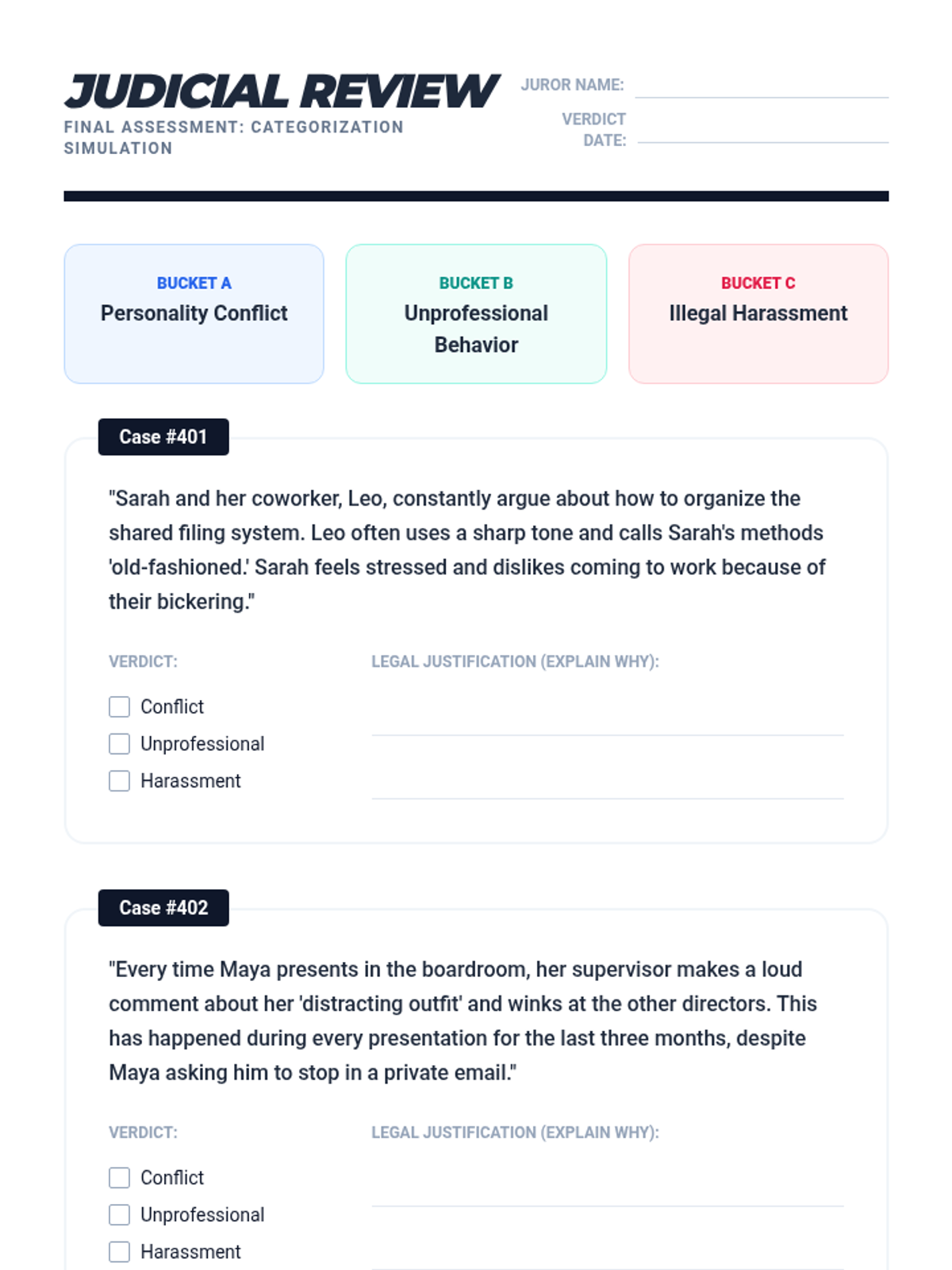
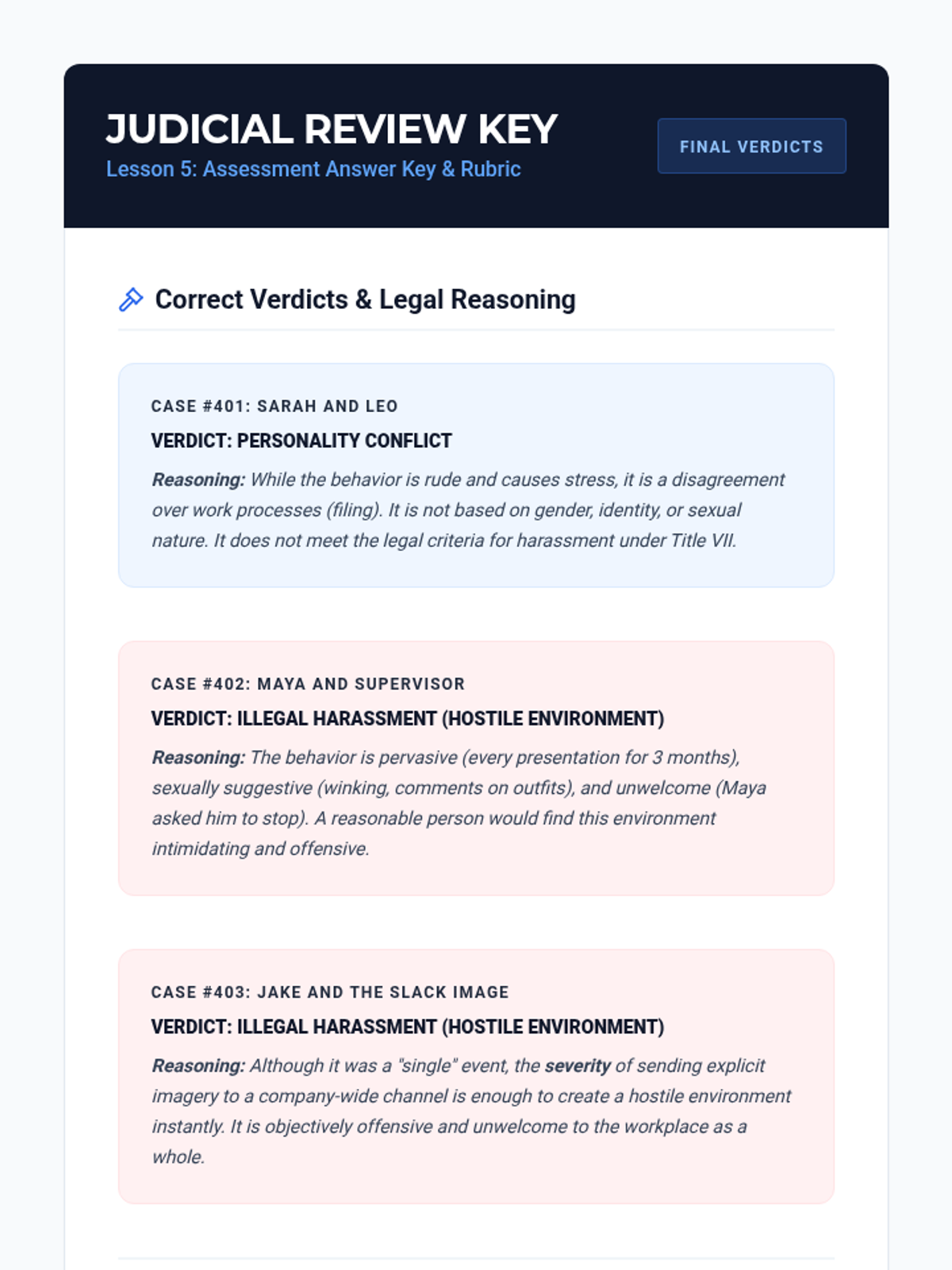
Students participate in a 'judicial review' simulation where they categorize complex scenarios as 'Personality Conflict,' 'Unprofessional,' or 'Illegal Harassment.' They must justify their categorization using criteria learned in the sequence.
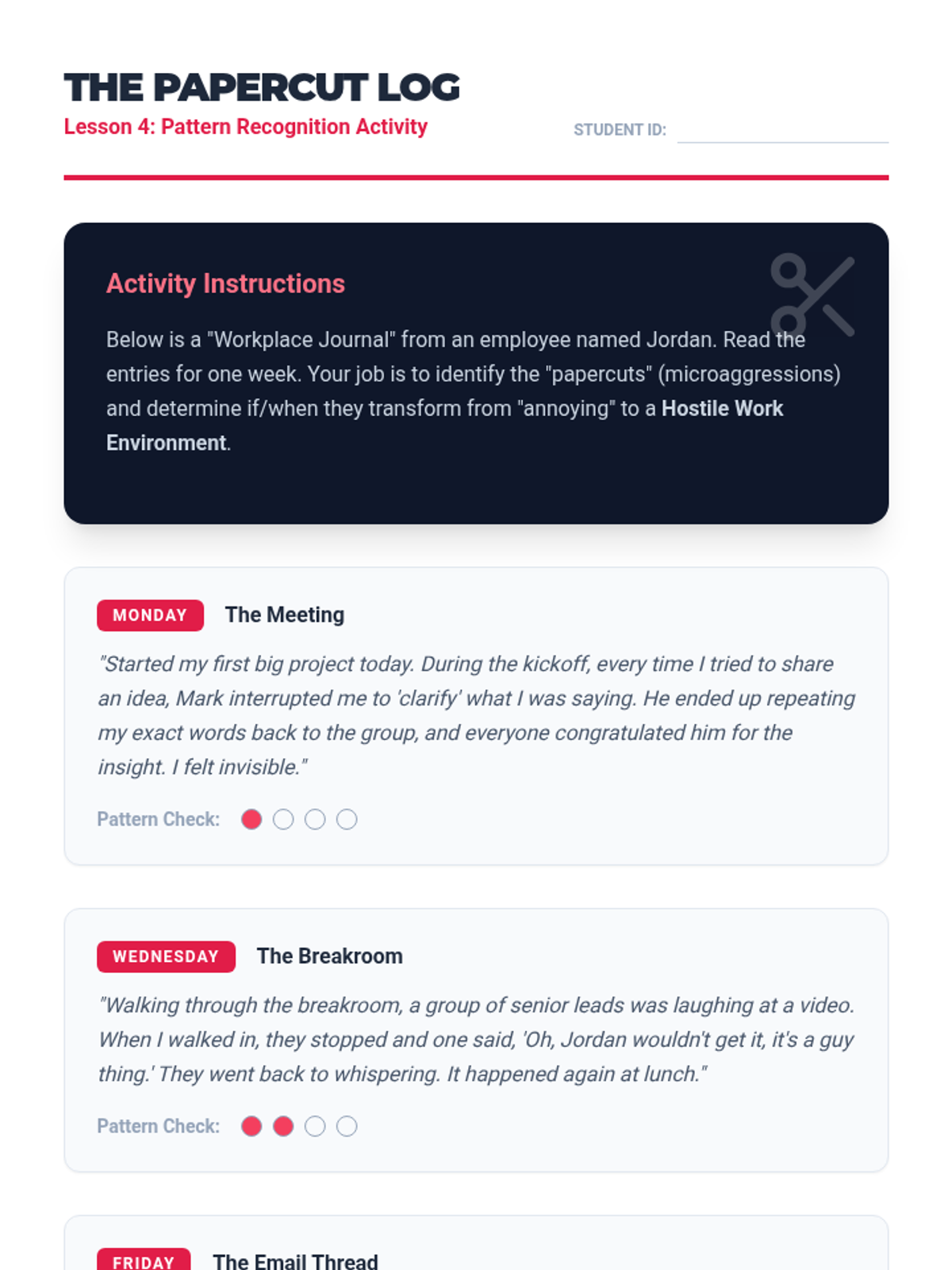
Students examine how microaggressions contribute to a hostile work environment over time. The lesson emphasizes recognizing patterns of behavior that may not be explicit harassment in isolation but become toxic cumulatively.
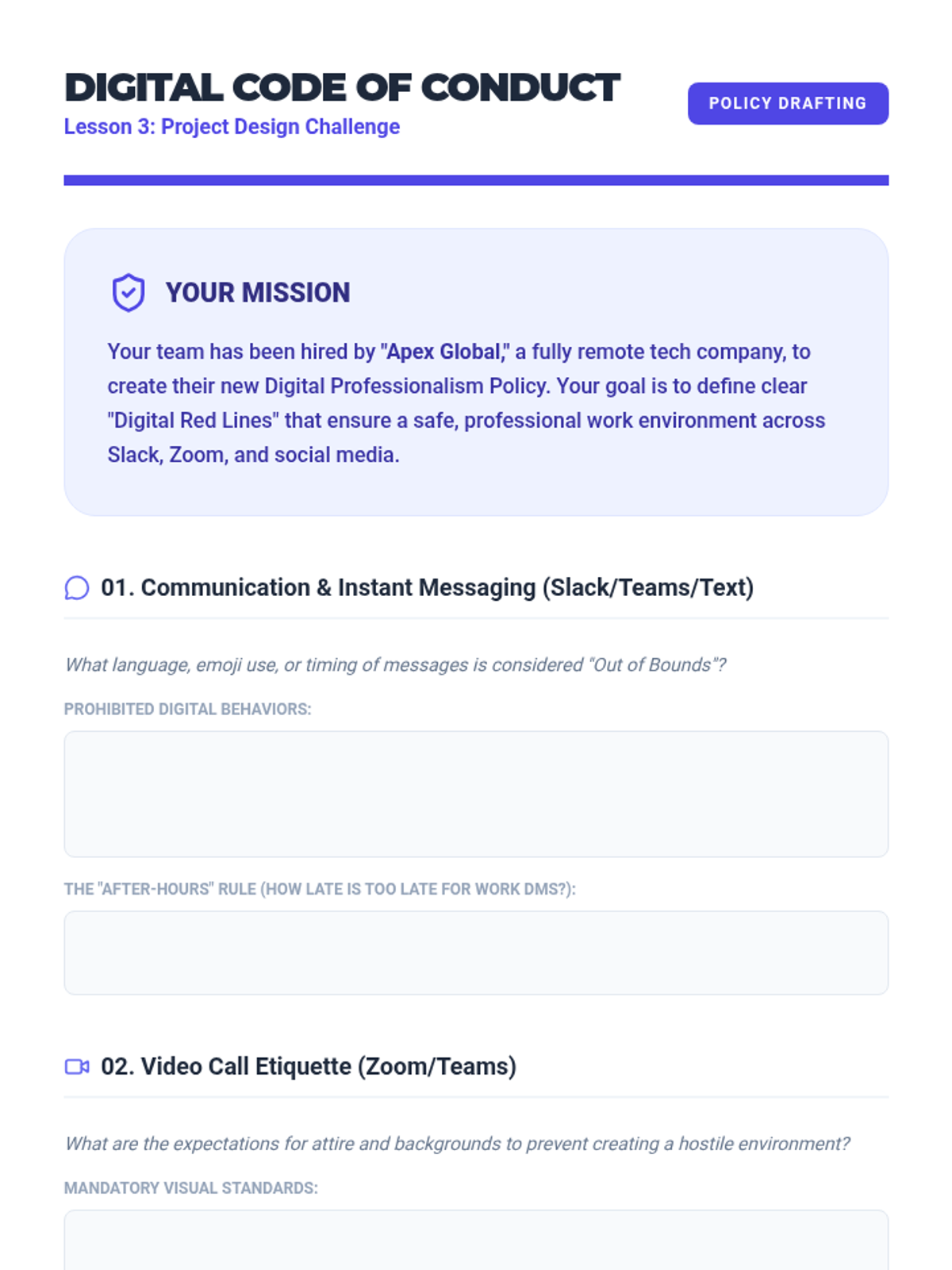
Students explore how harassment manifests in remote work and digital spaces, including inappropriate texts, emails, and social media interactions. They develop a code of conduct for digital professional communication.
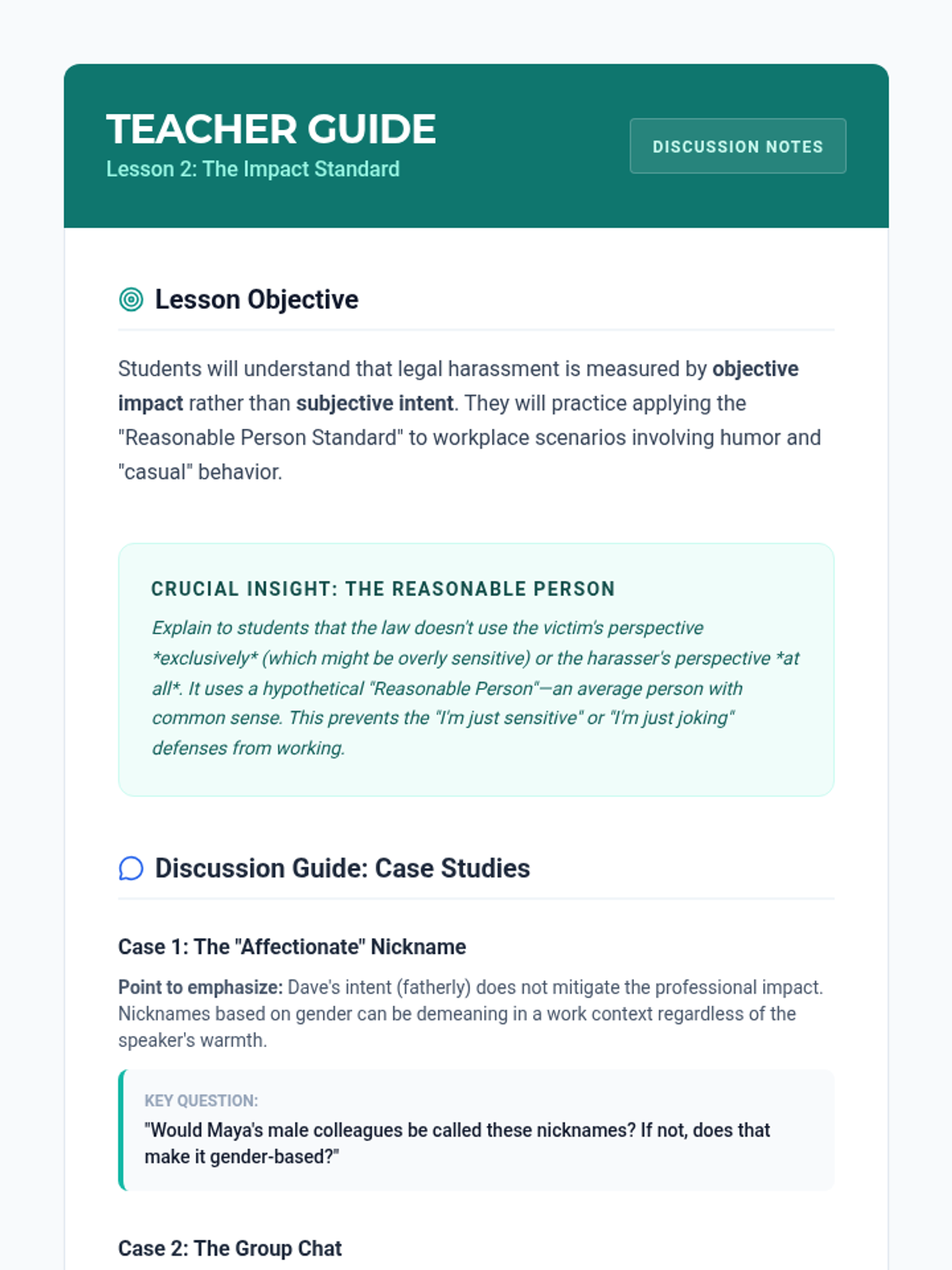
This lesson focuses on the legal standard that harassment is judged by its impact on the victim, not the intent of the harasser. Students review scenarios where 'jokes' constitute harassment.
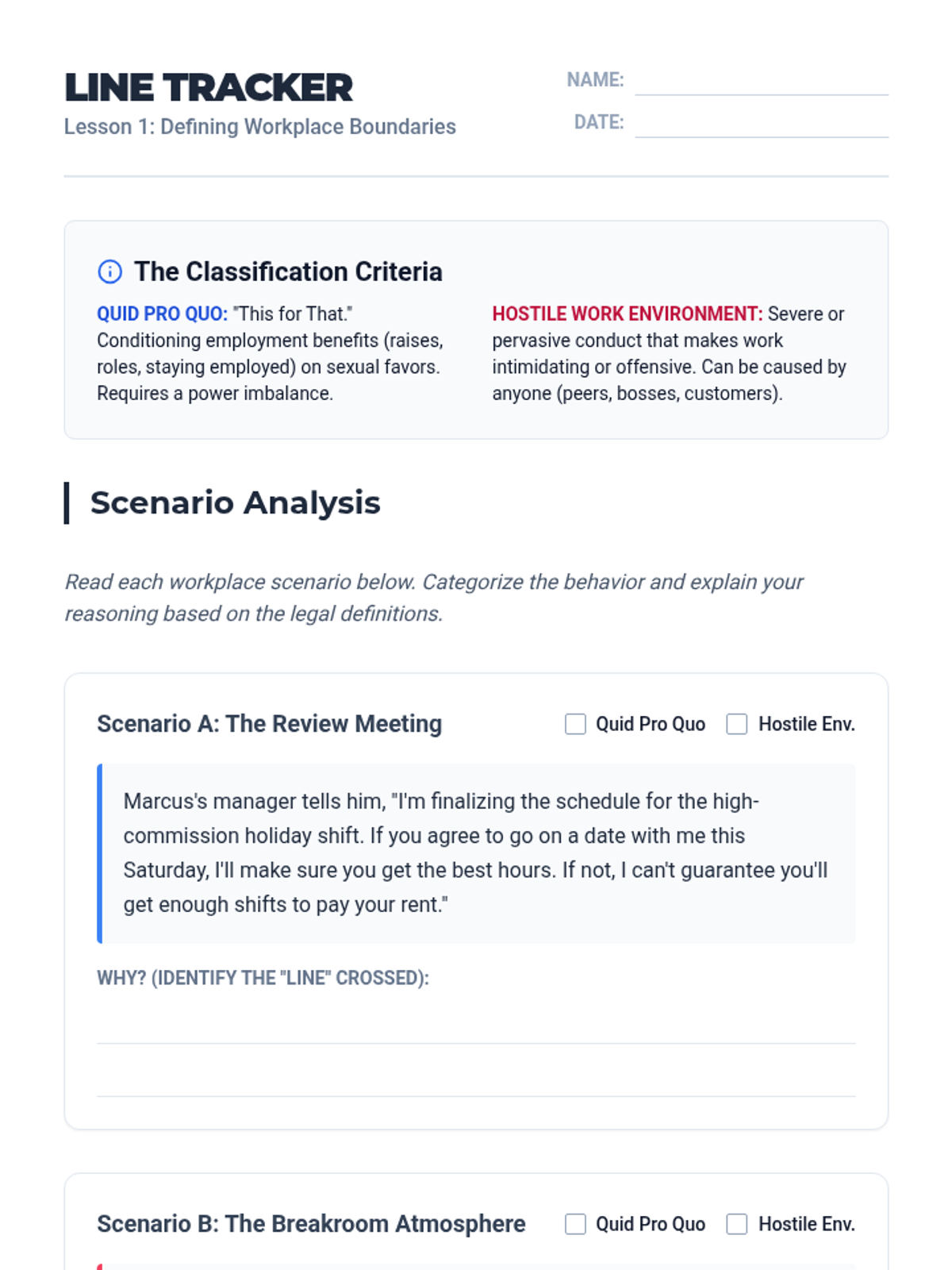
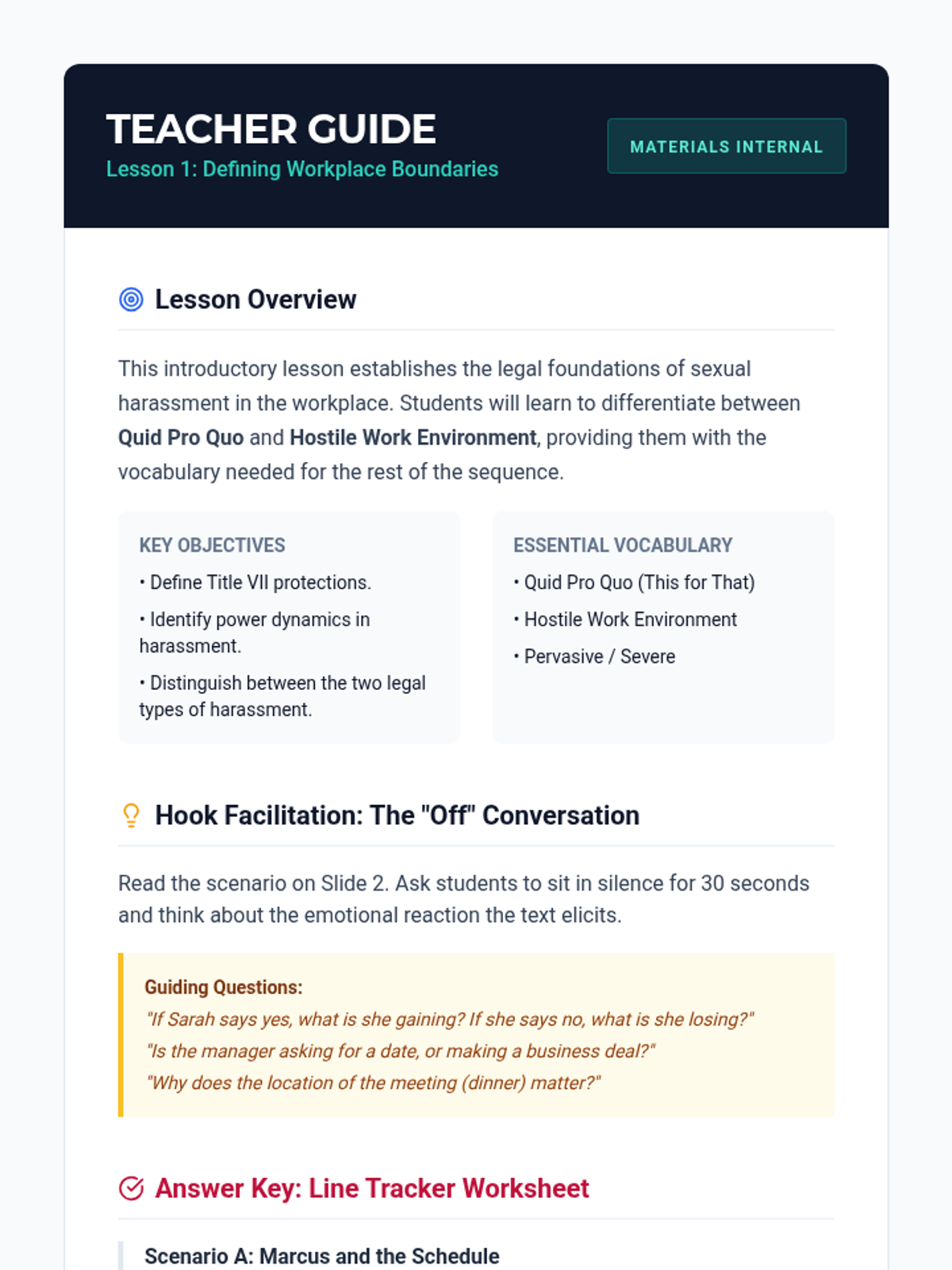
Students distinguish between the two primary legal types of sexual harassment: 'this for that' (quid pro quo) and pervasive hostile environments. They analyze clear-cut examples of each to build a working definition.
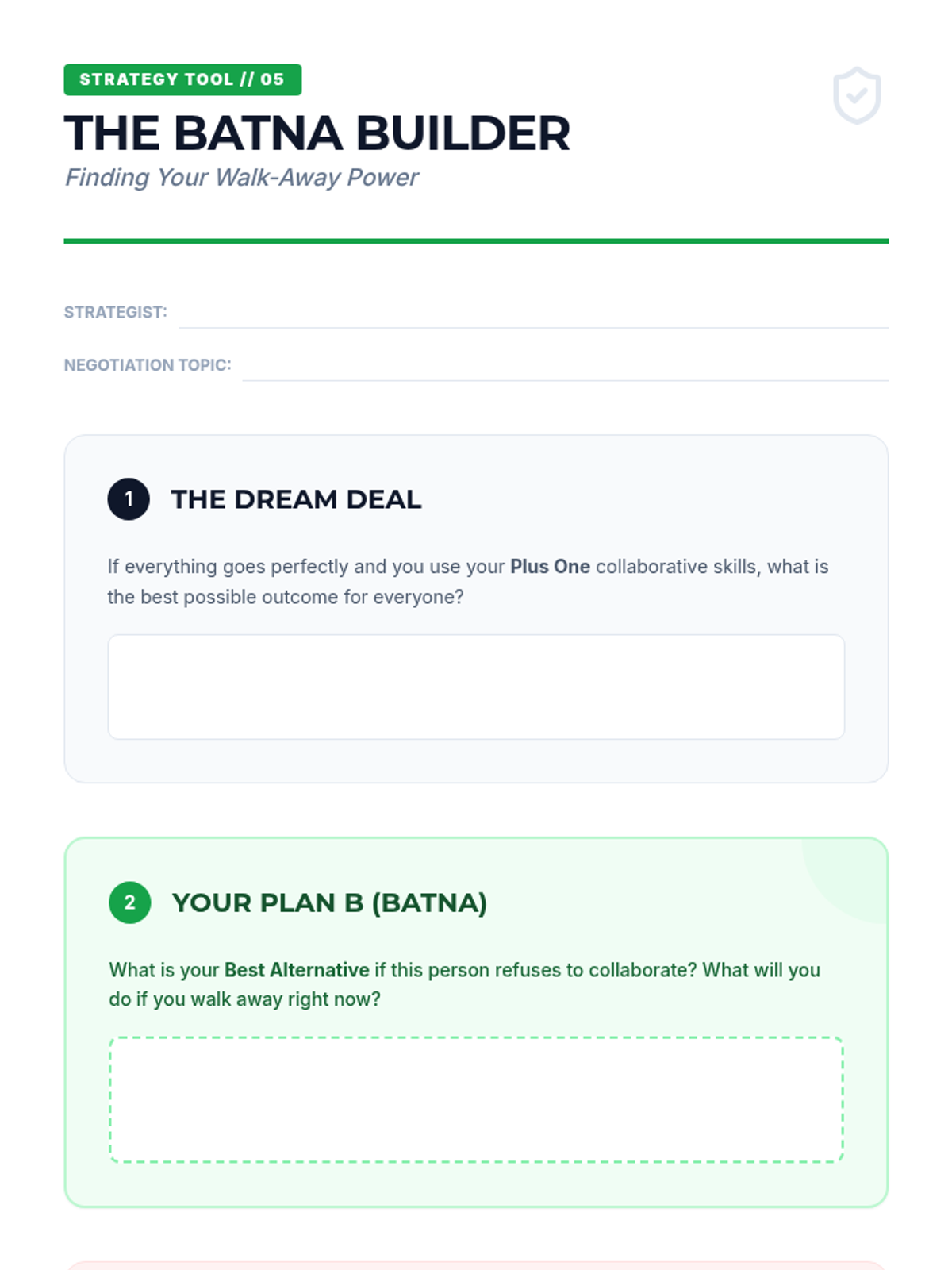
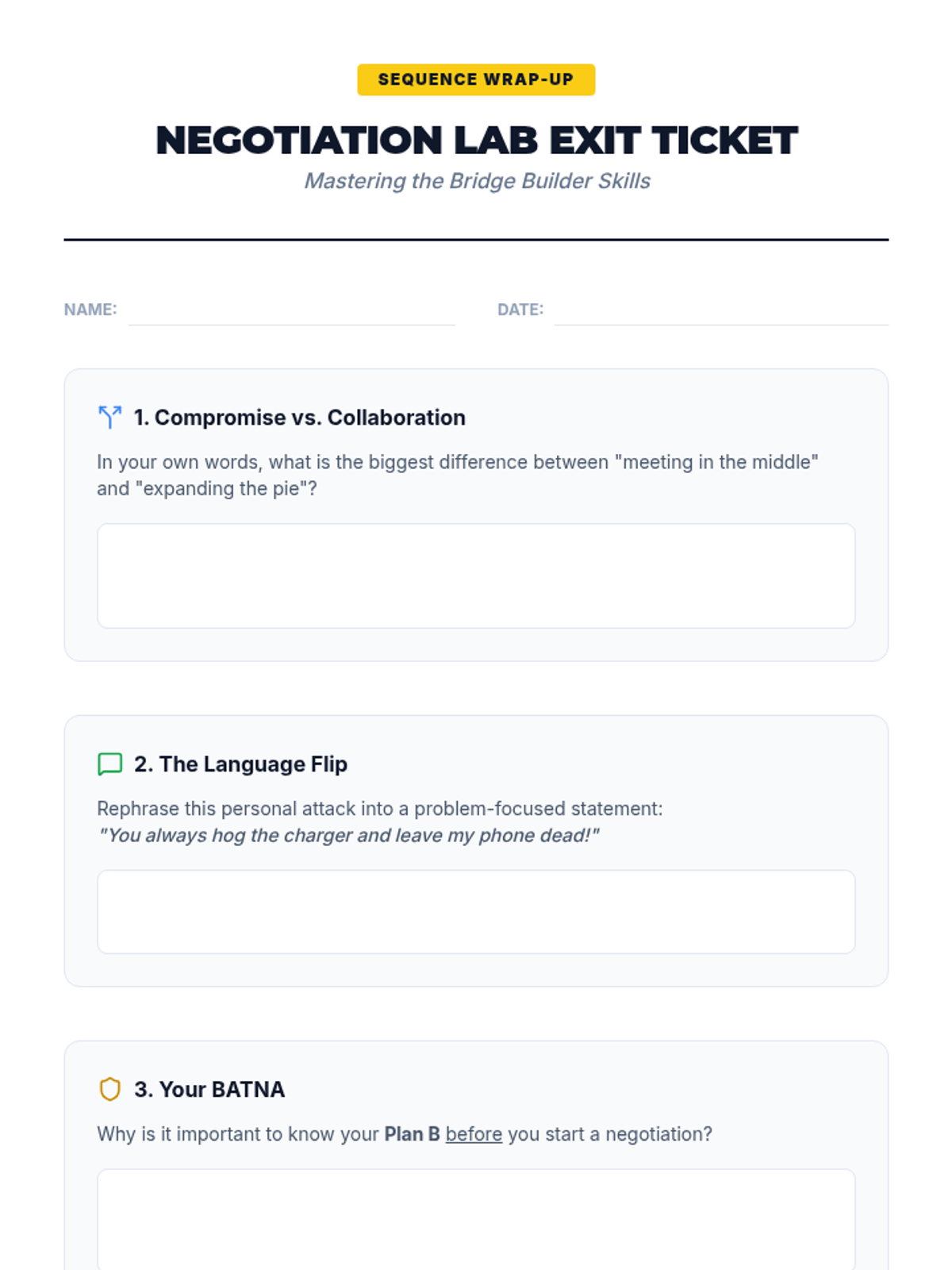
Students learn the concept of BATNA (Best Alternative to a Negotiated Agreement) to understand their 'walk-away' power.
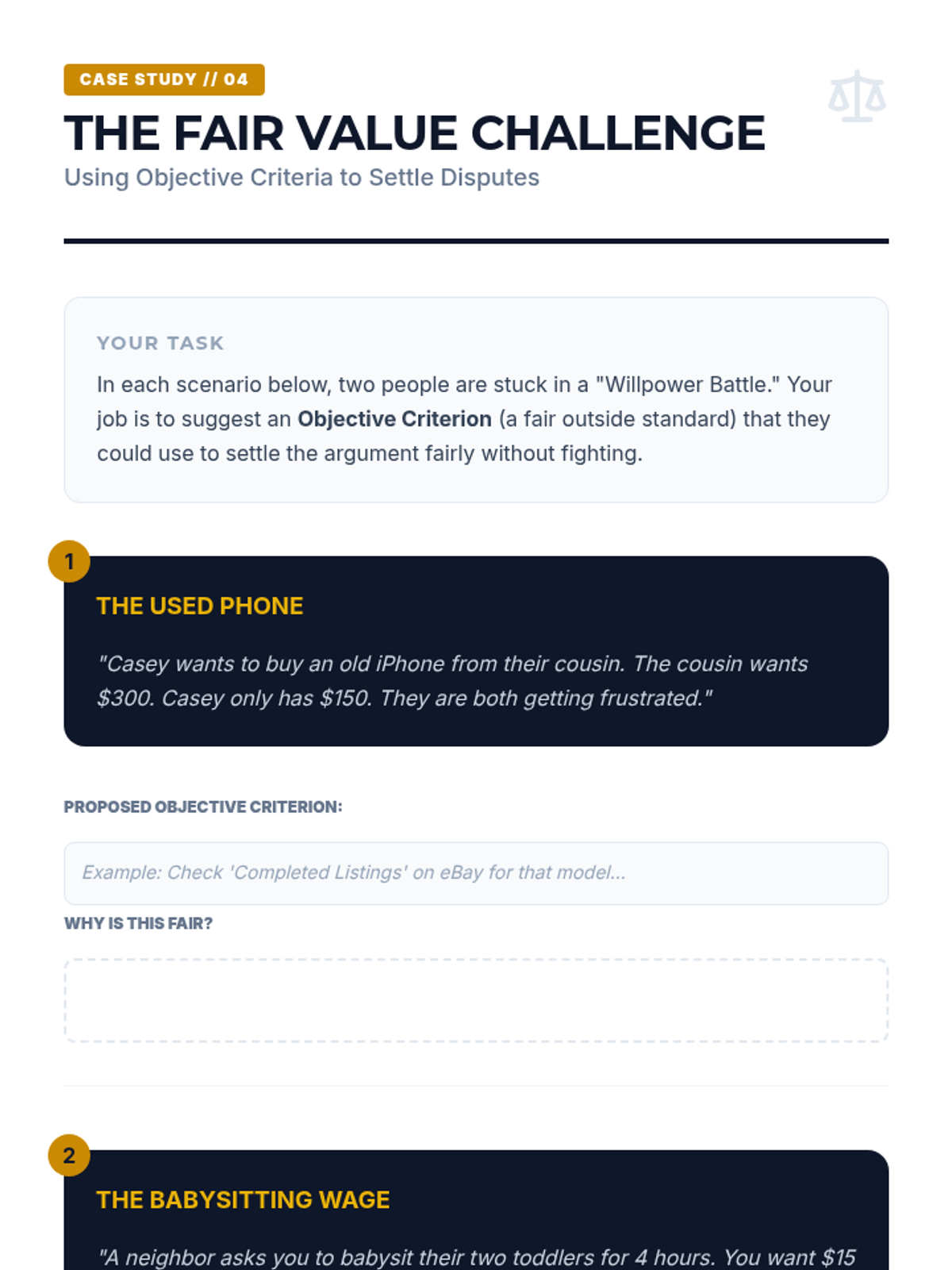
Students learn to use fair standards (rules, precedents, market value) to resolve impasses fairly.
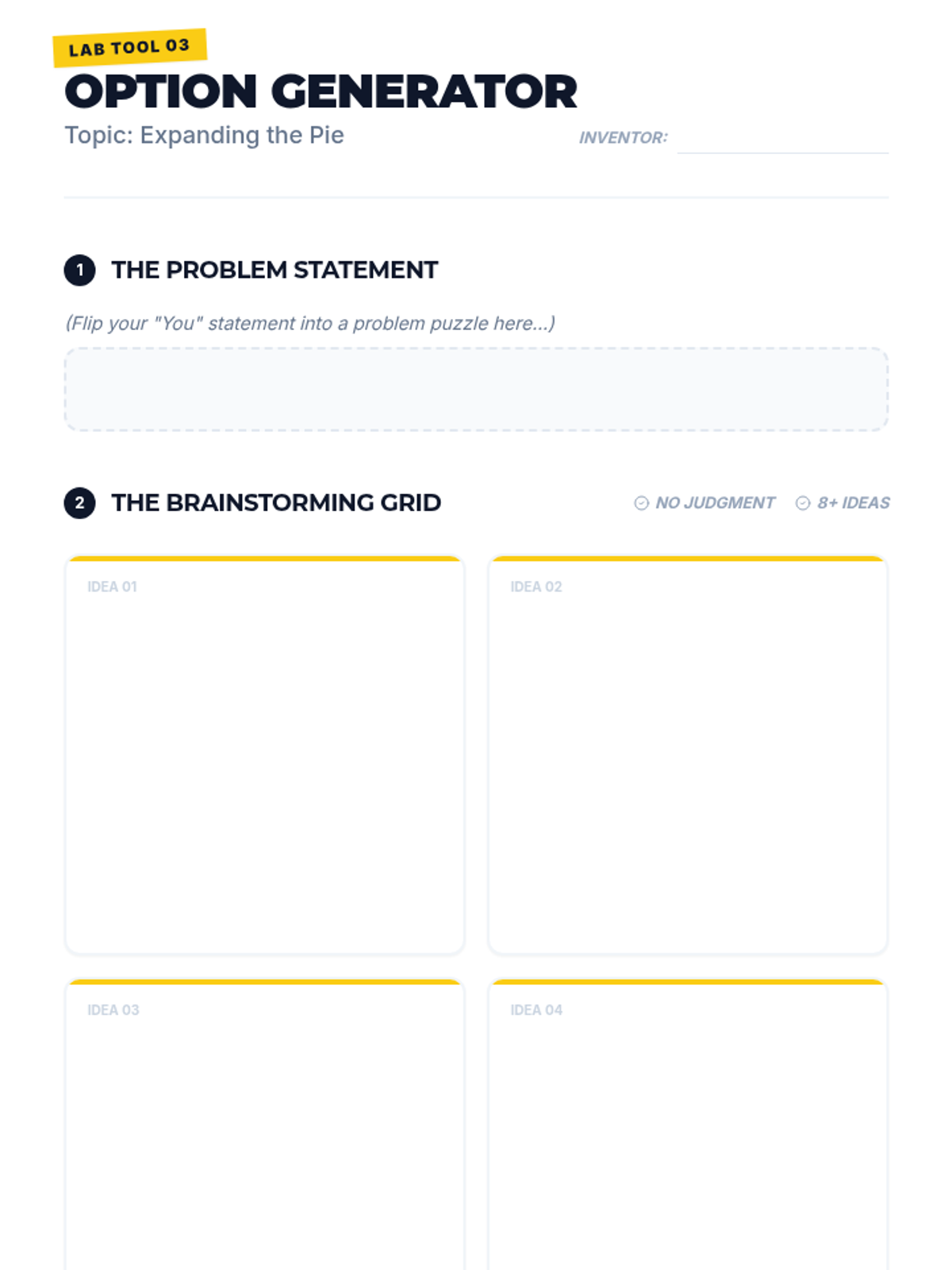
This lesson focuses on the 'invention' phase of negotiation. Students learn to suspend judgment and generate a wide array of potential solutions before deciding on one.
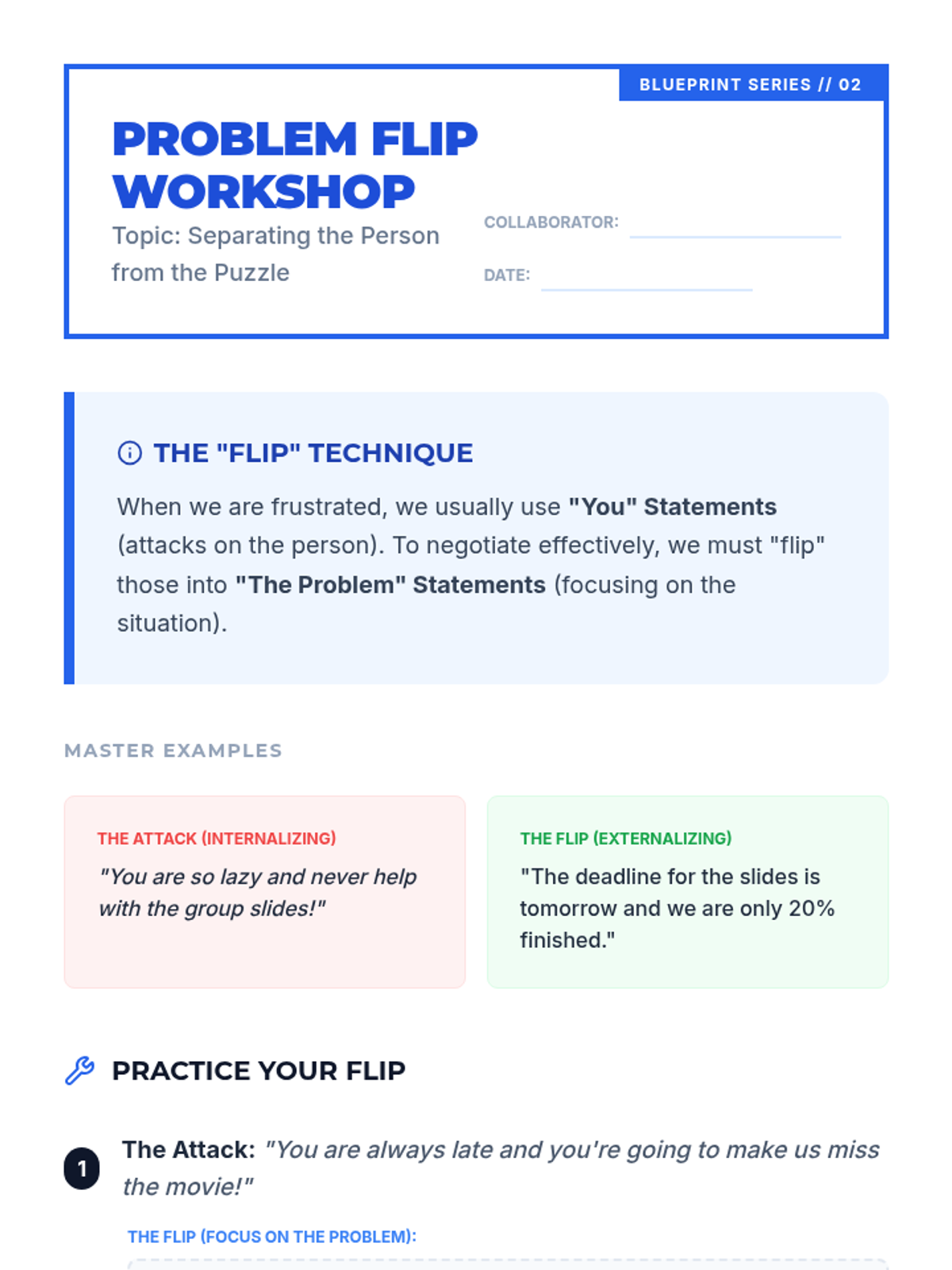
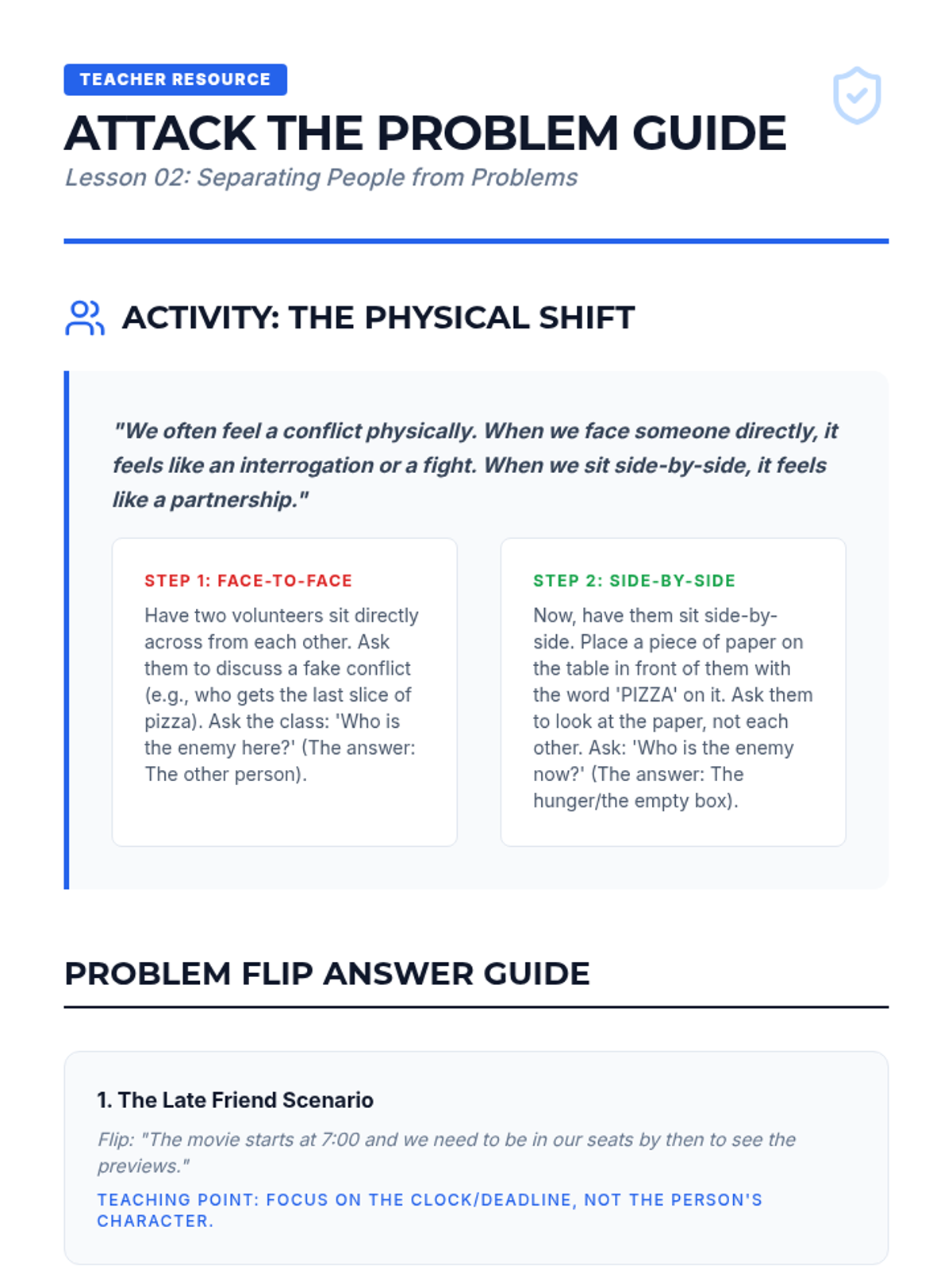
Students learn techniques to attack the problem, not the person. They practice rephrasing personal attacks into problem statements using externalizing language.
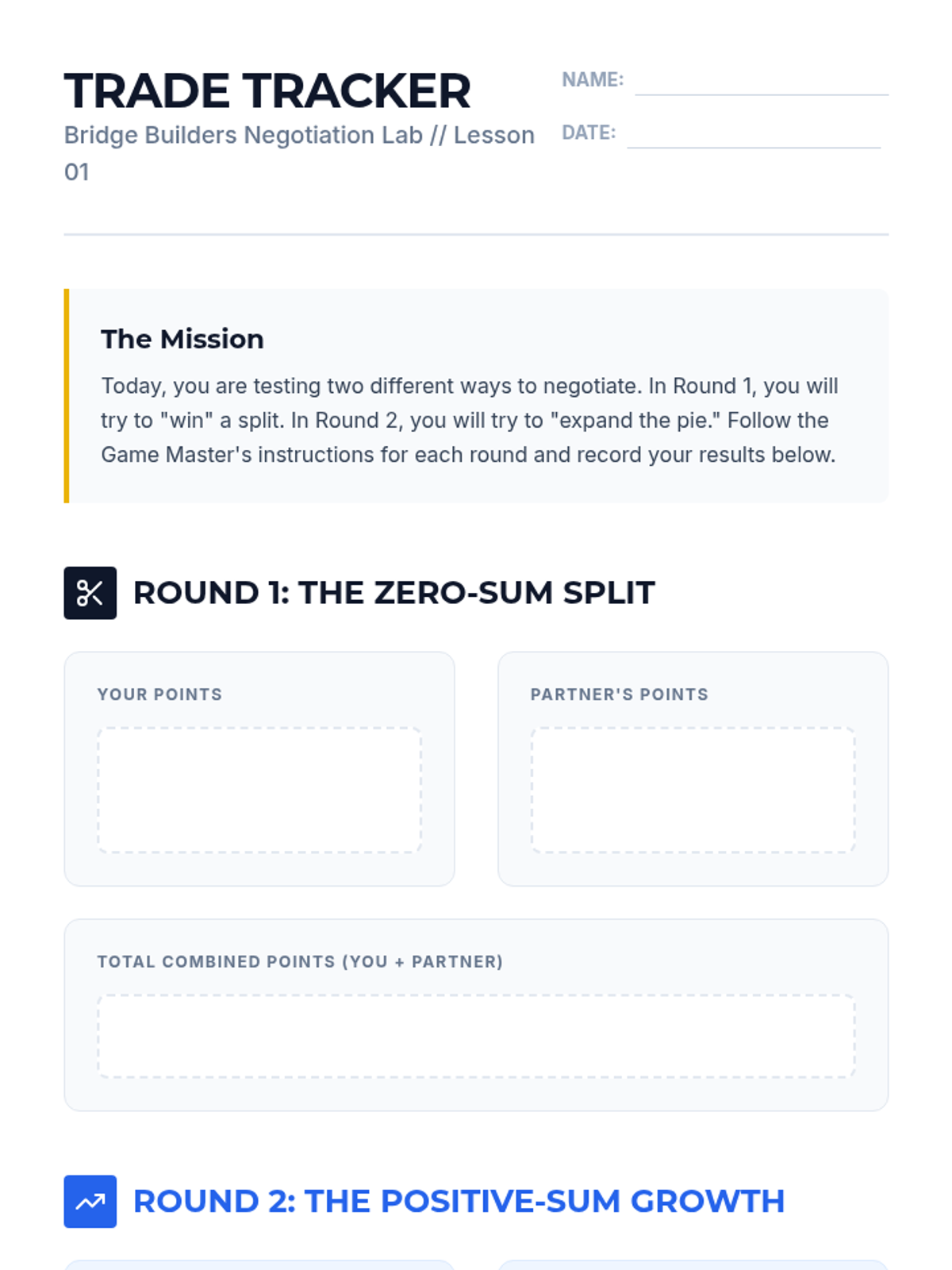
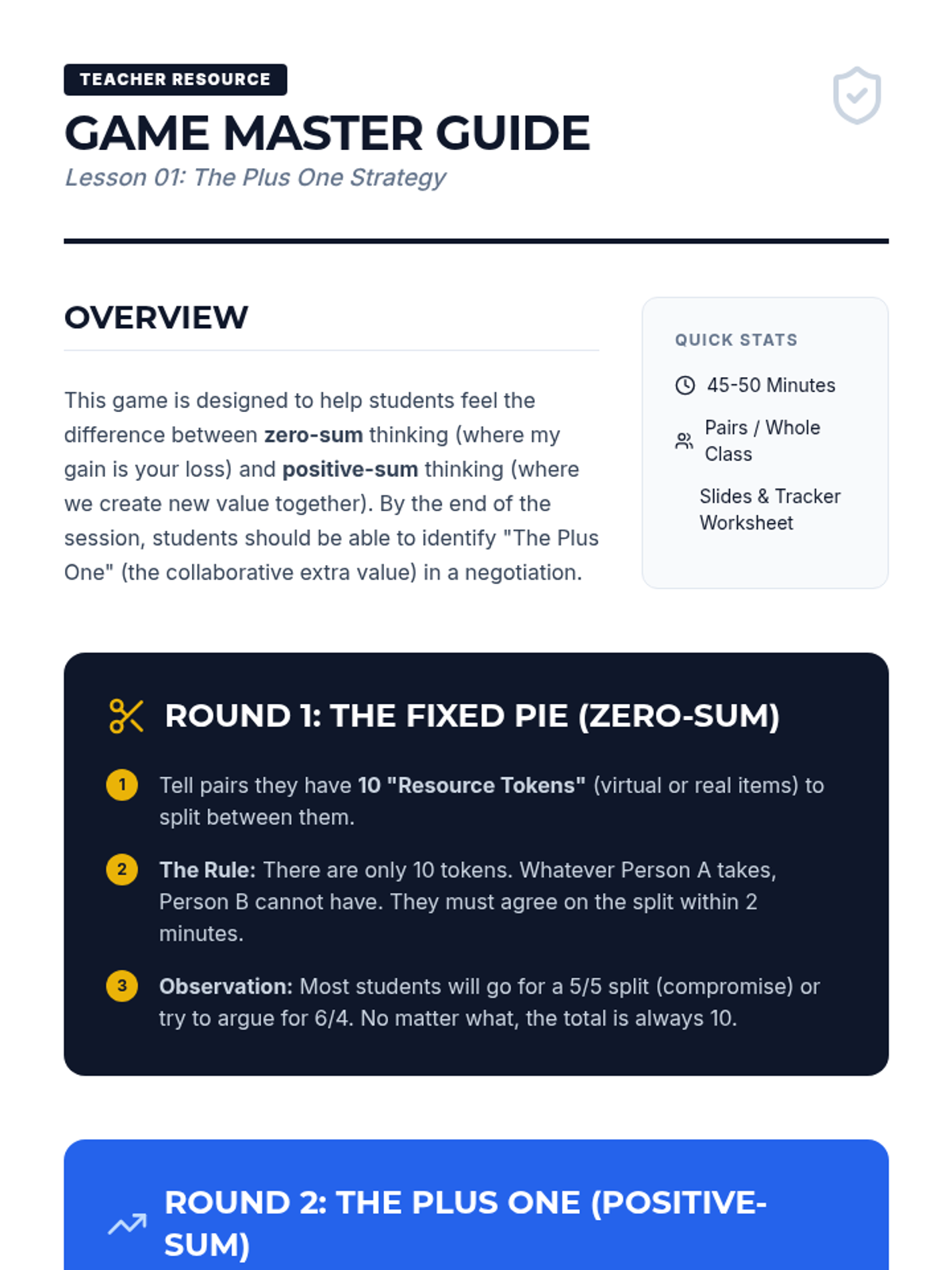
Students define and contrast compromise with collaboration. They engage in a trading game to experience the difference between zero-sum and positive-sum outcomes.
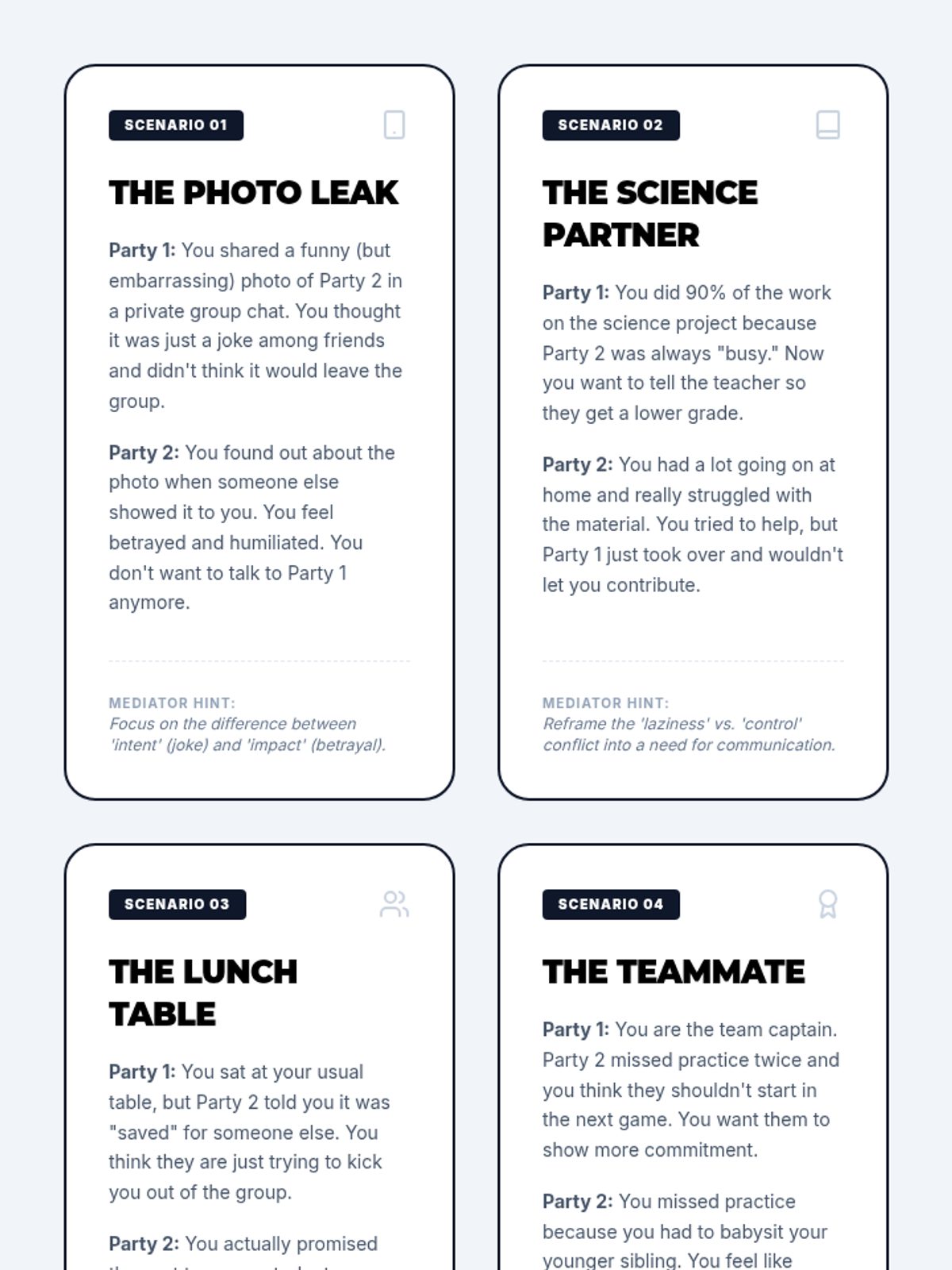
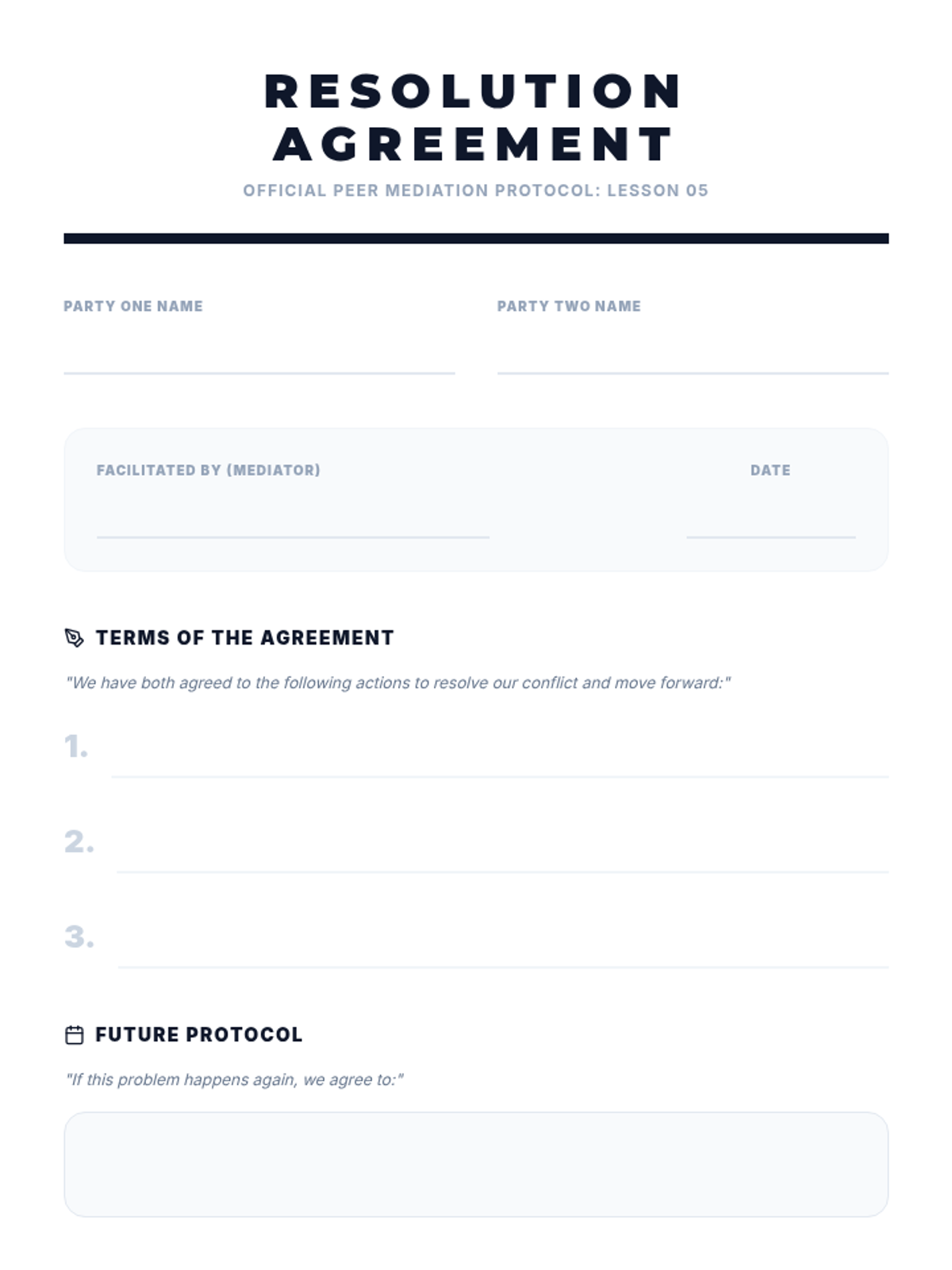
A culminating mock mediation simulation where students apply the full protocol—from opening statements to written agreements—using realistic middle school scenarios.
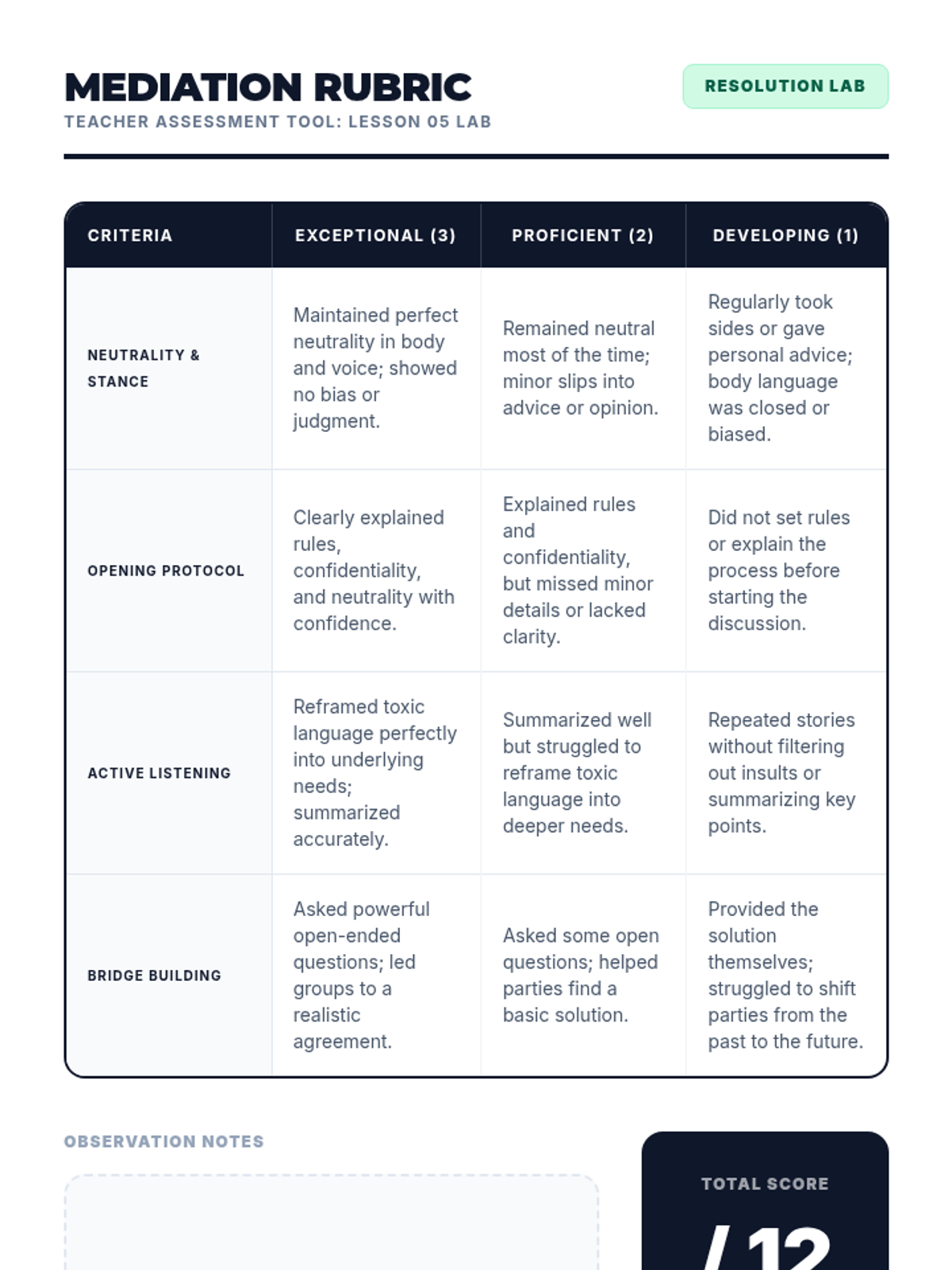
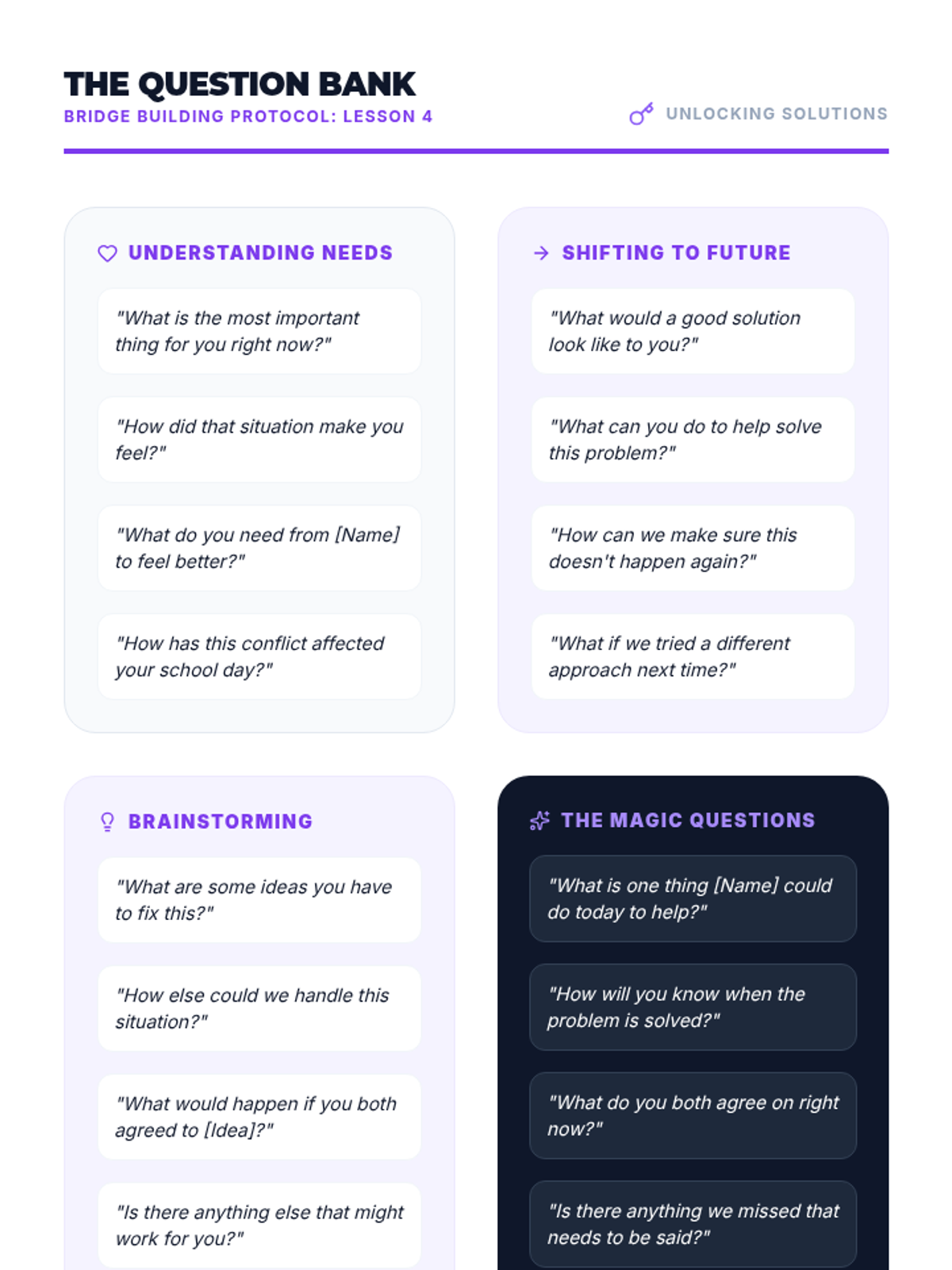
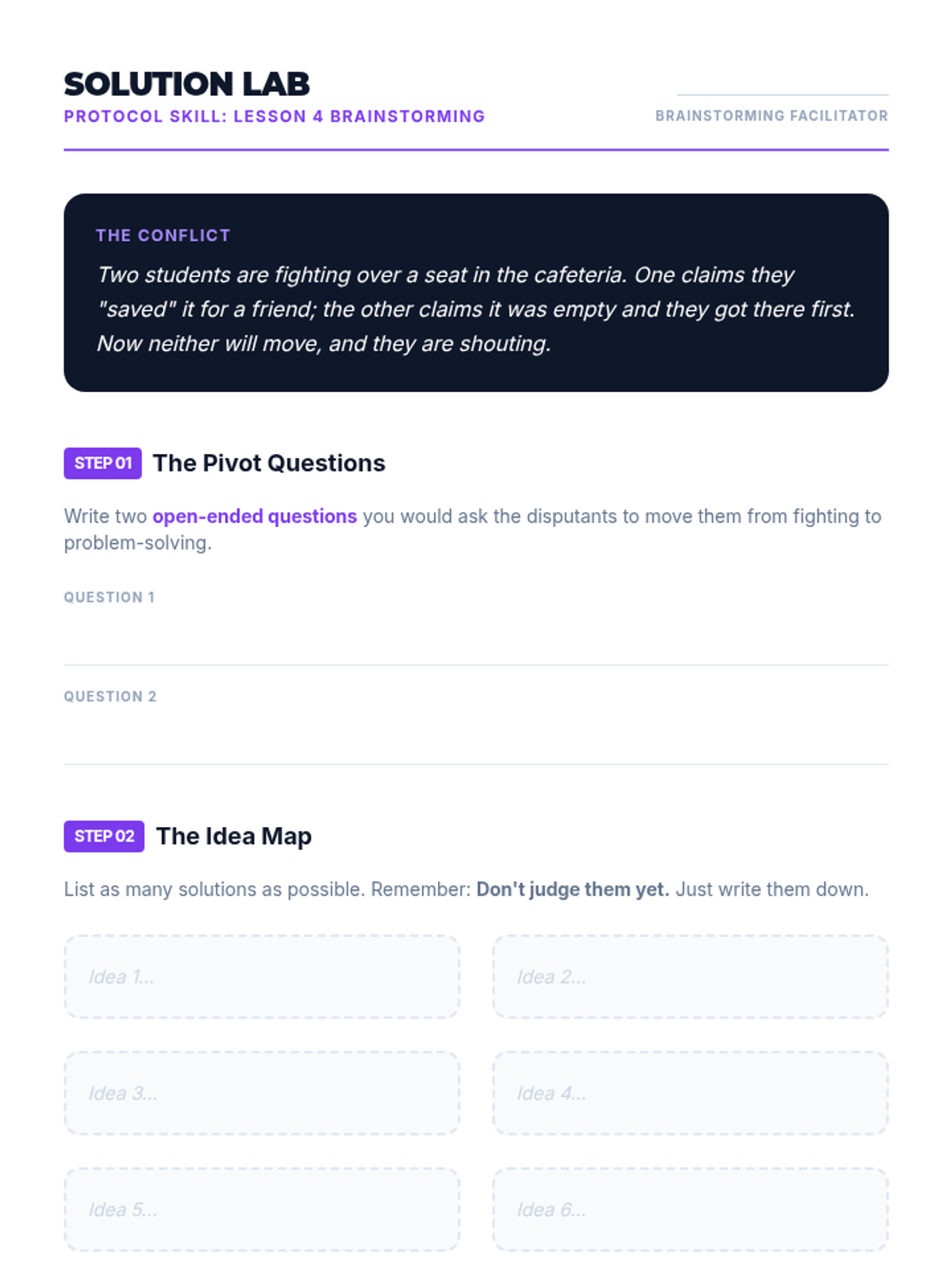
Focused on shifting from conflict to collaboration, students practice asking open-ended questions that prompt disputants to generate their own creative solutions.
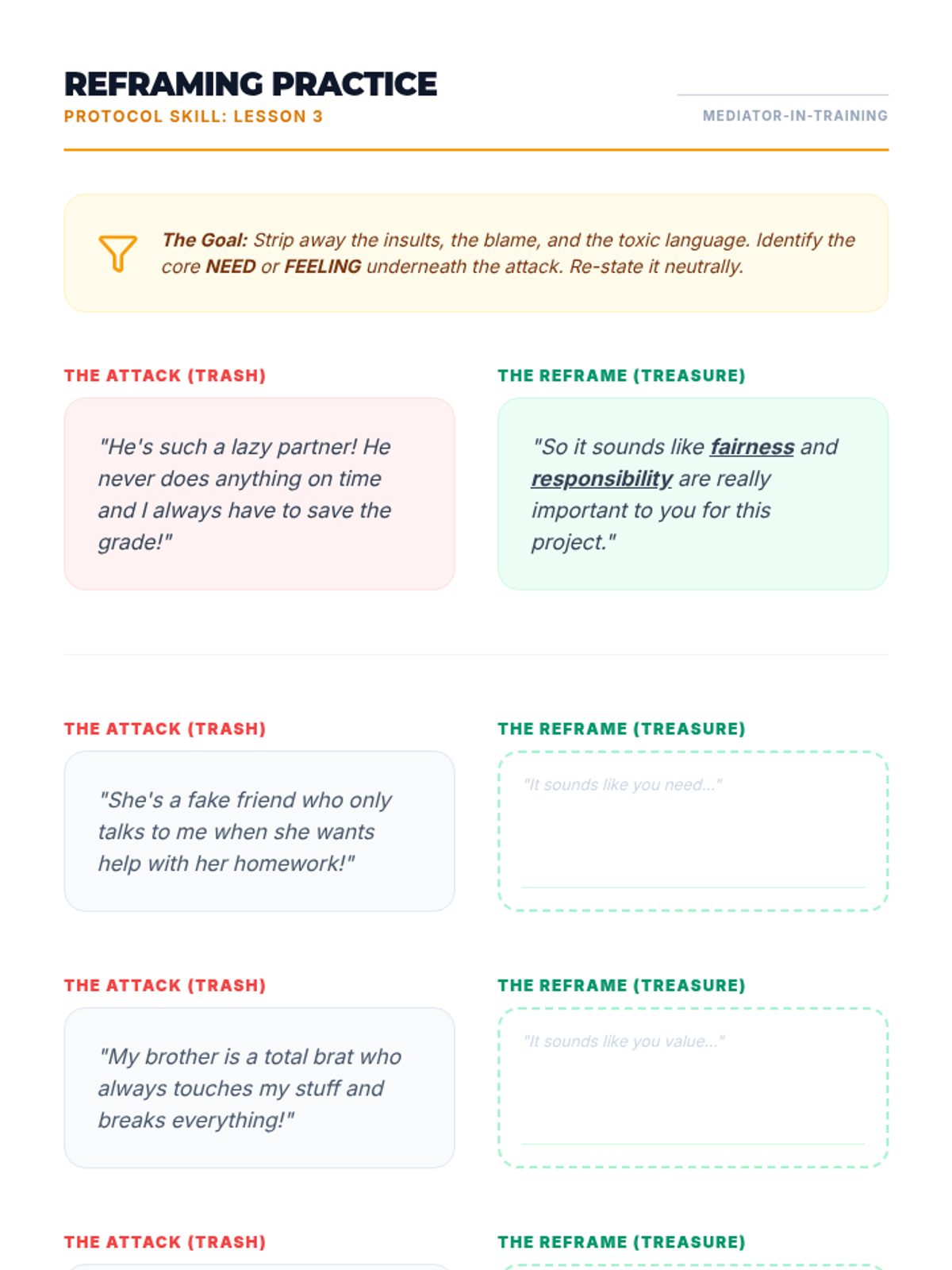
Students master the skills of summarizing and reframing. They learn to strip away inflammatory language and reflect back the core needs and feelings of disputing parties.
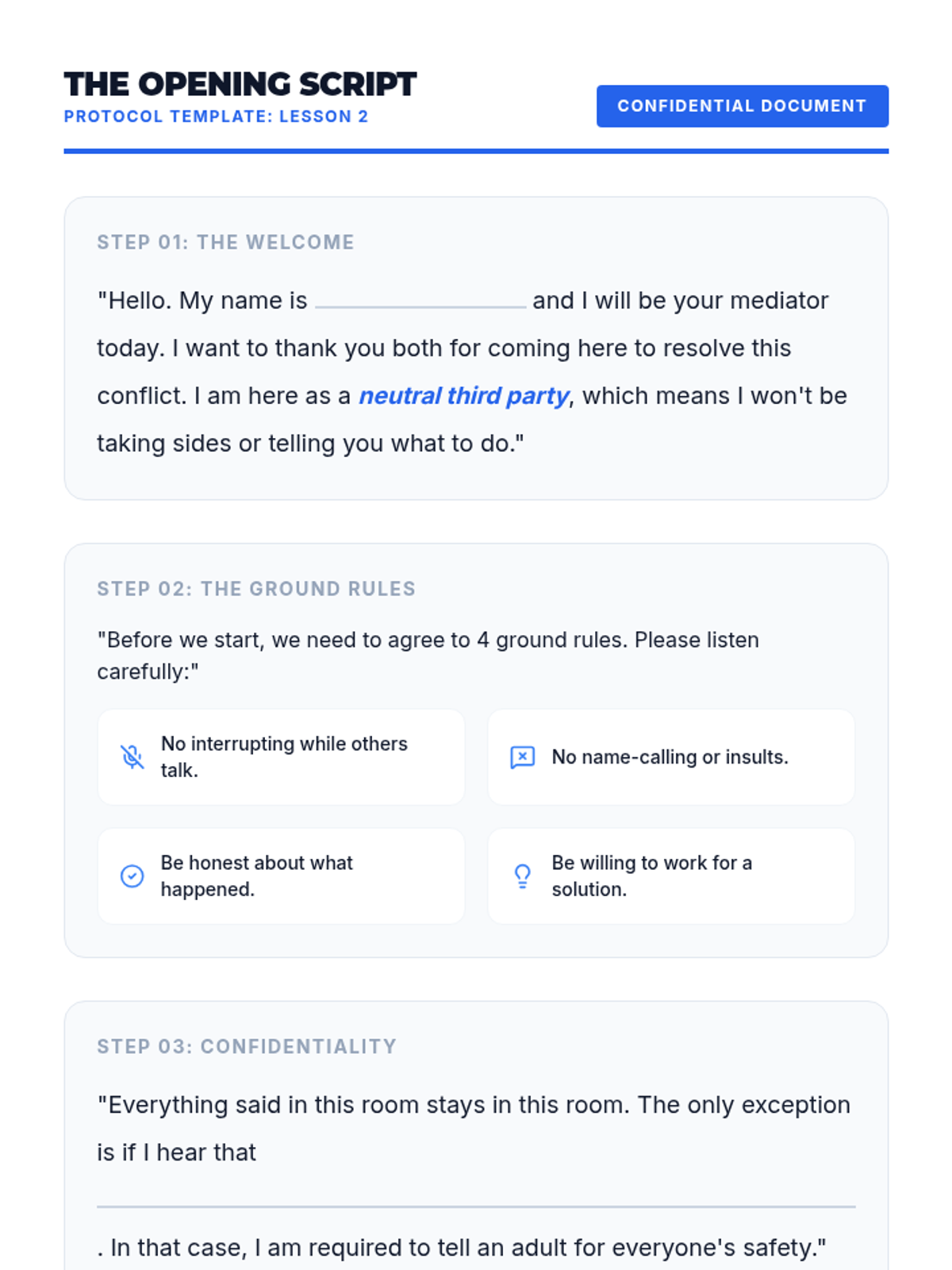
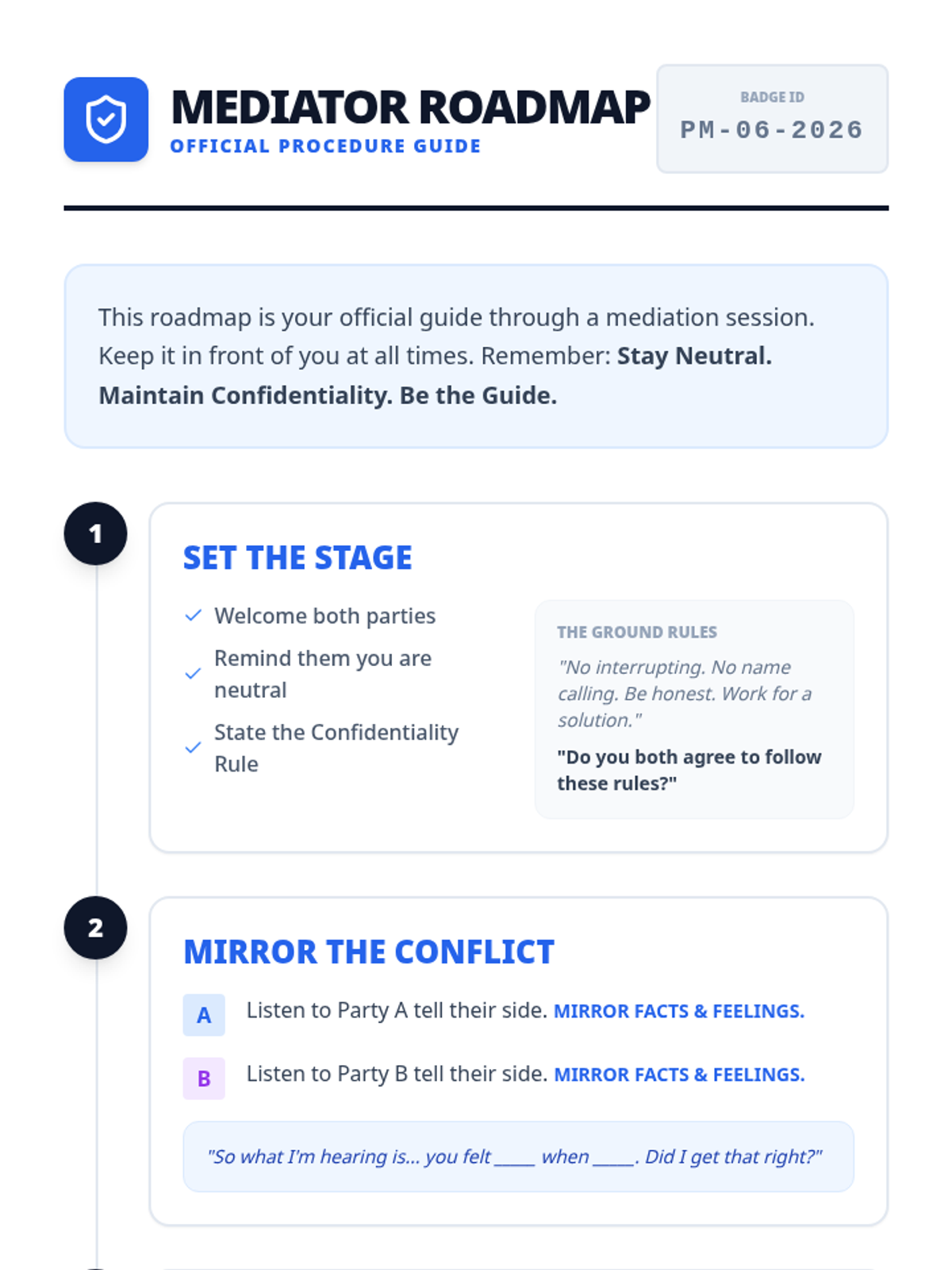
This lesson focuses on the opening stage of mediation. Students learn to set the tone, establish ground rules, and ensure confidentiality to create a safe space for resolution.
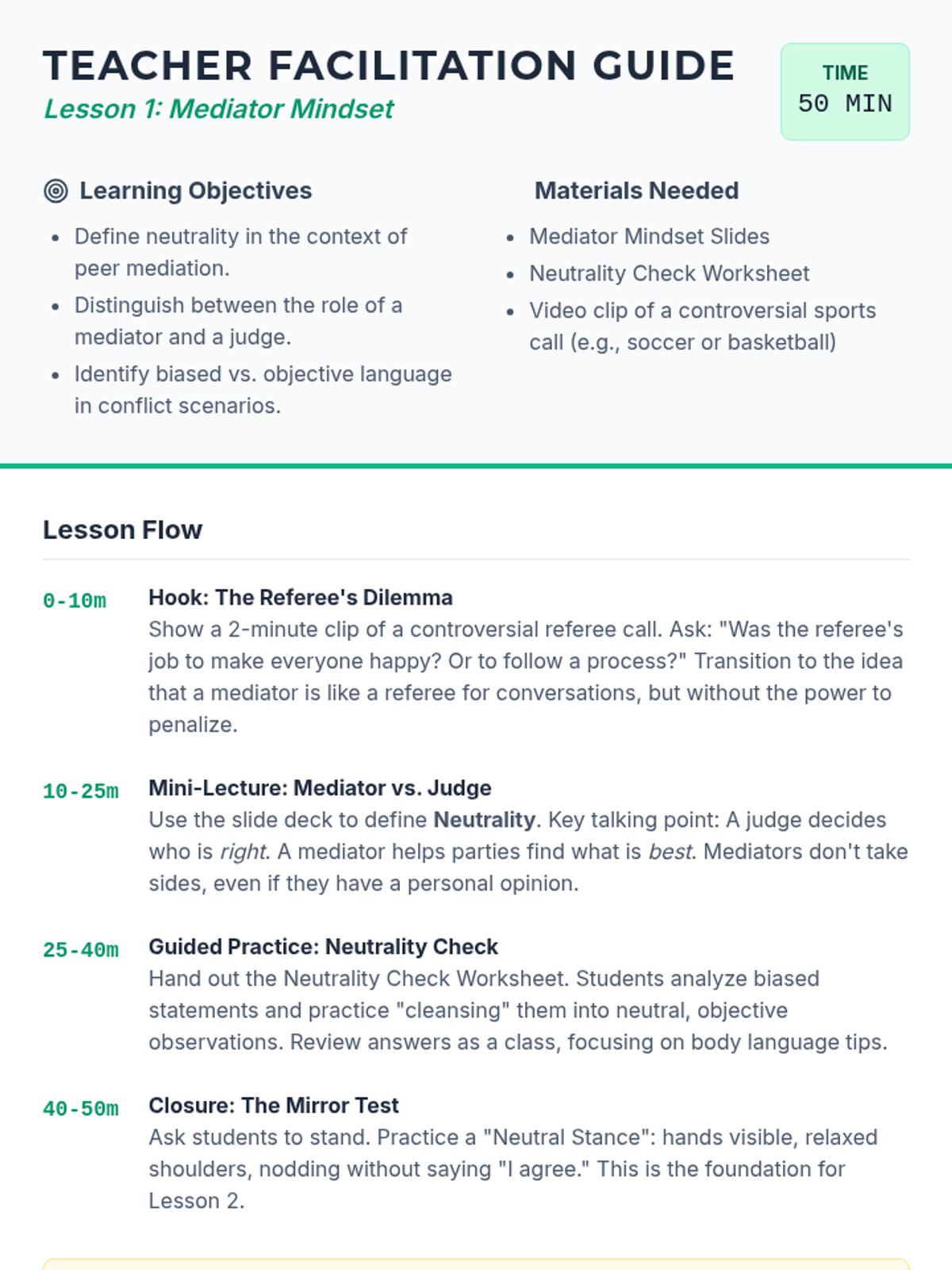
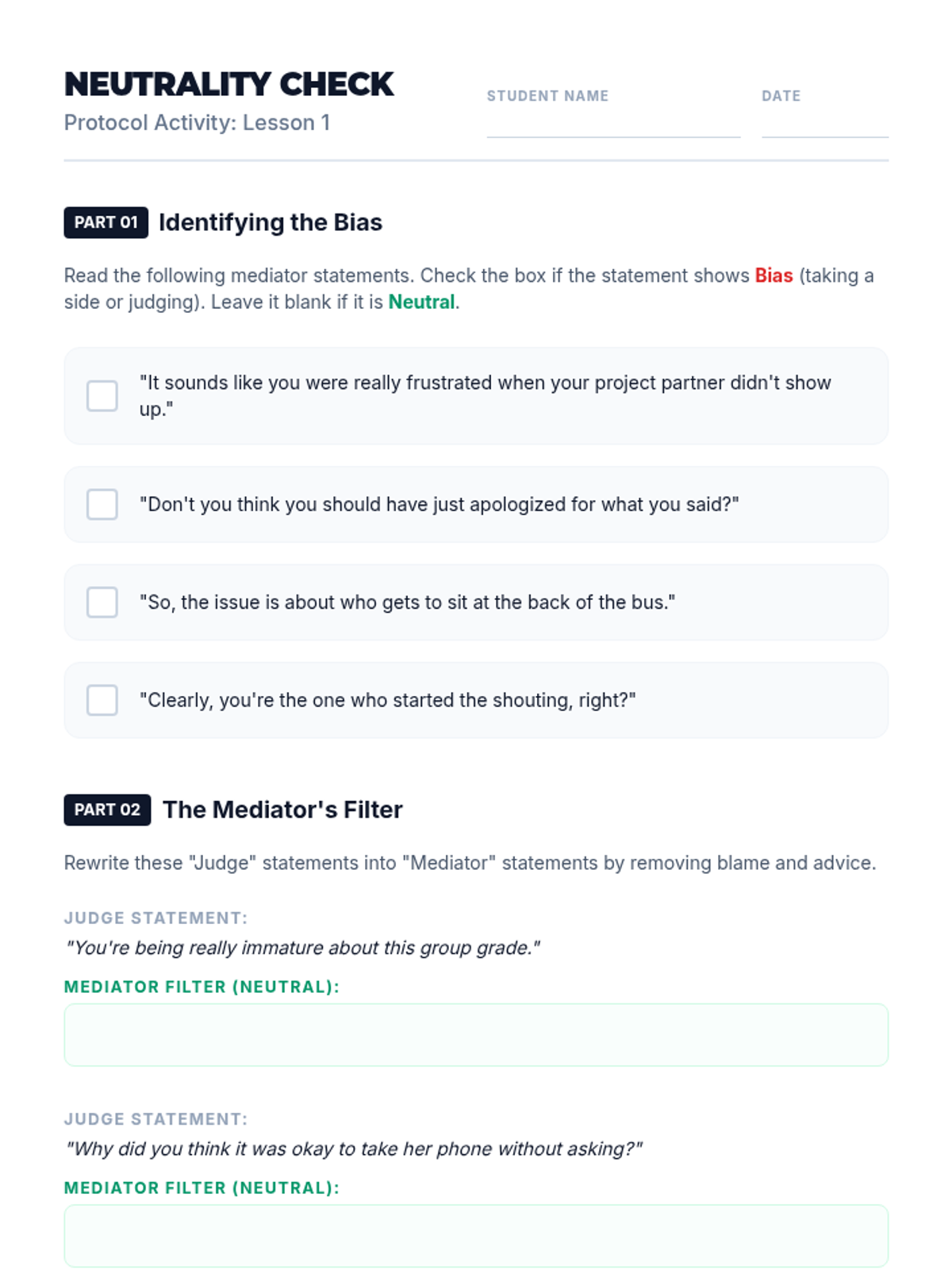
Students explore the definition of neutrality and the mediator's role. They practice identifying bias and using objective language to facilitate rather than judge.
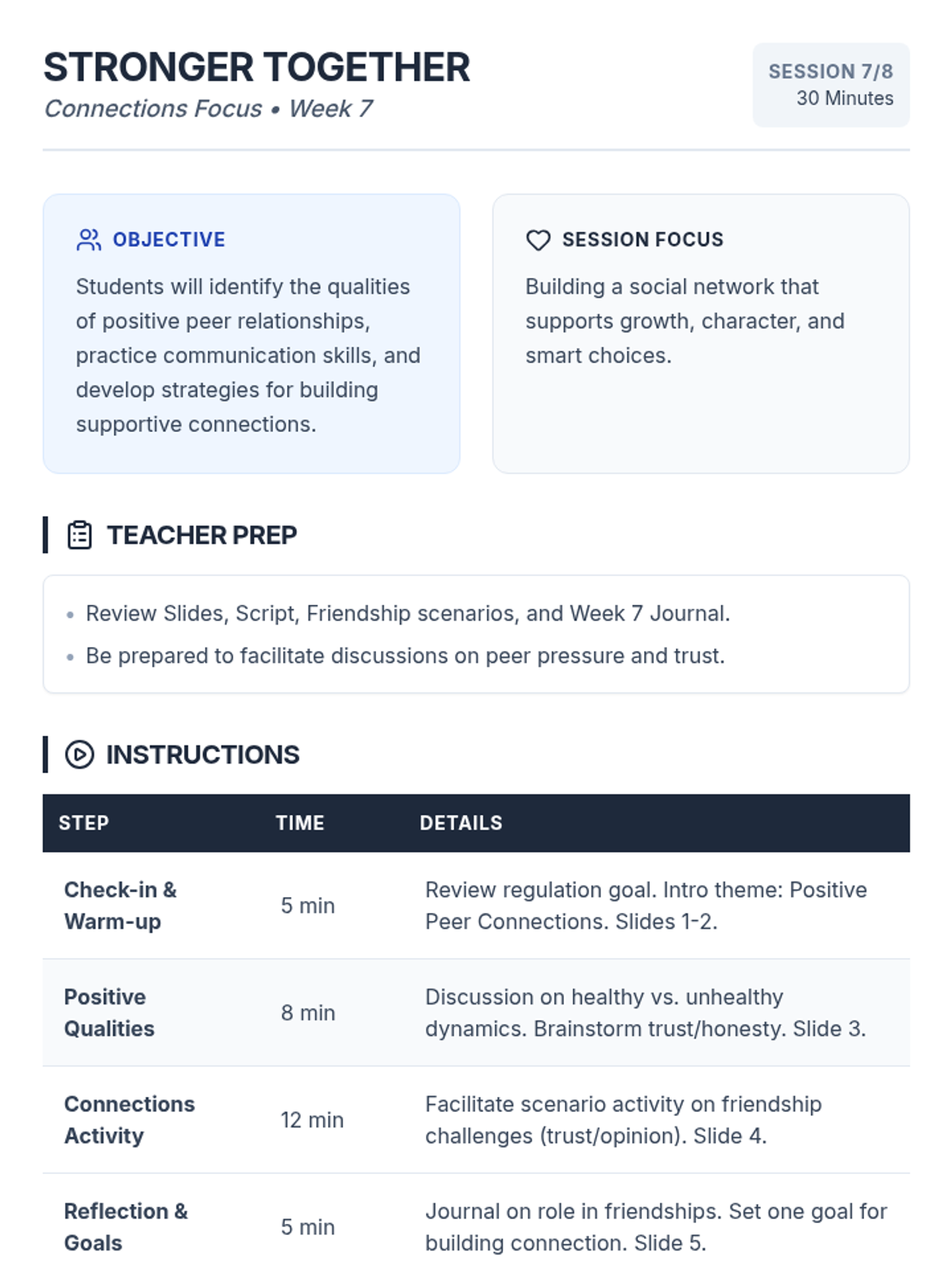
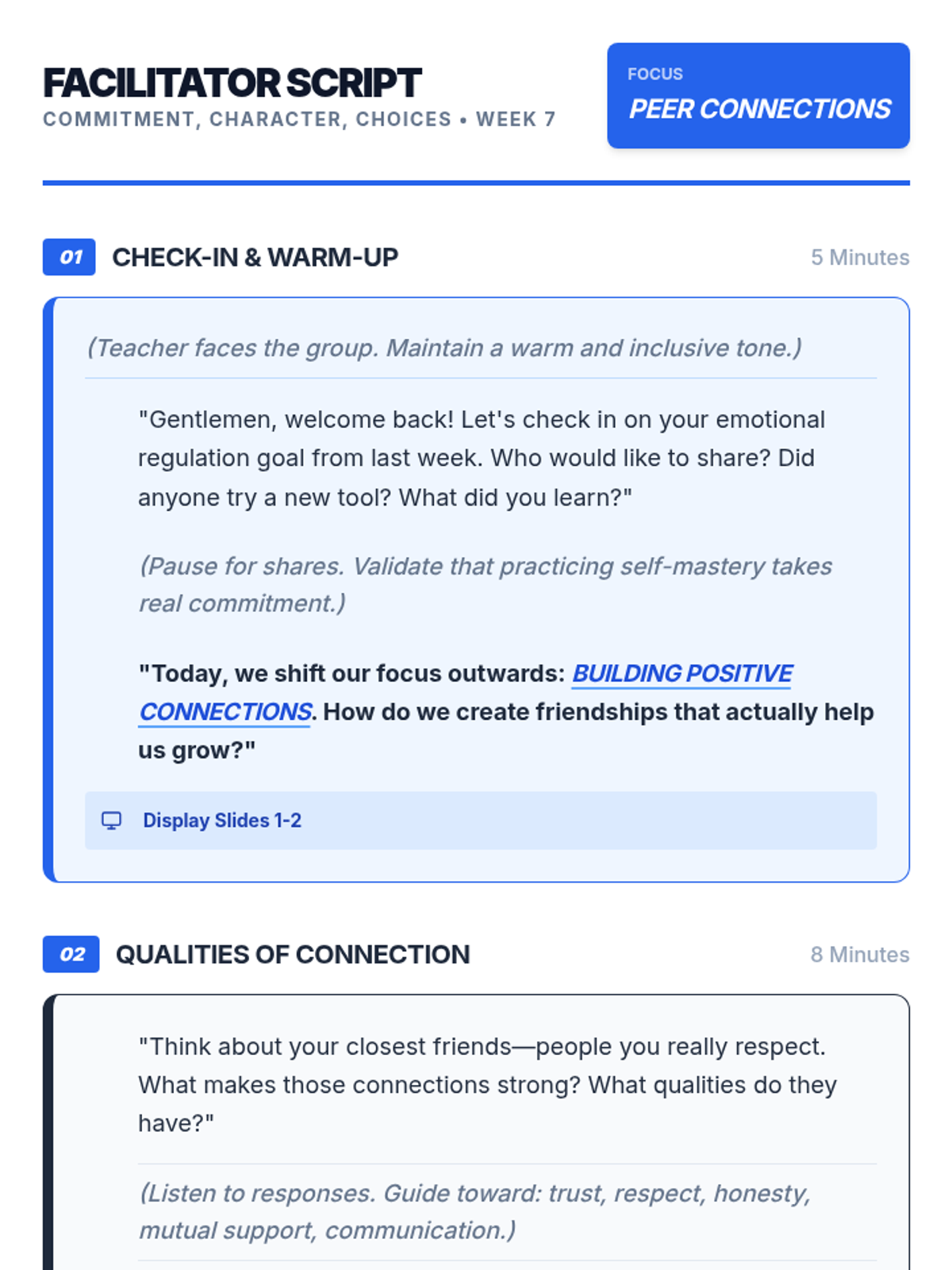
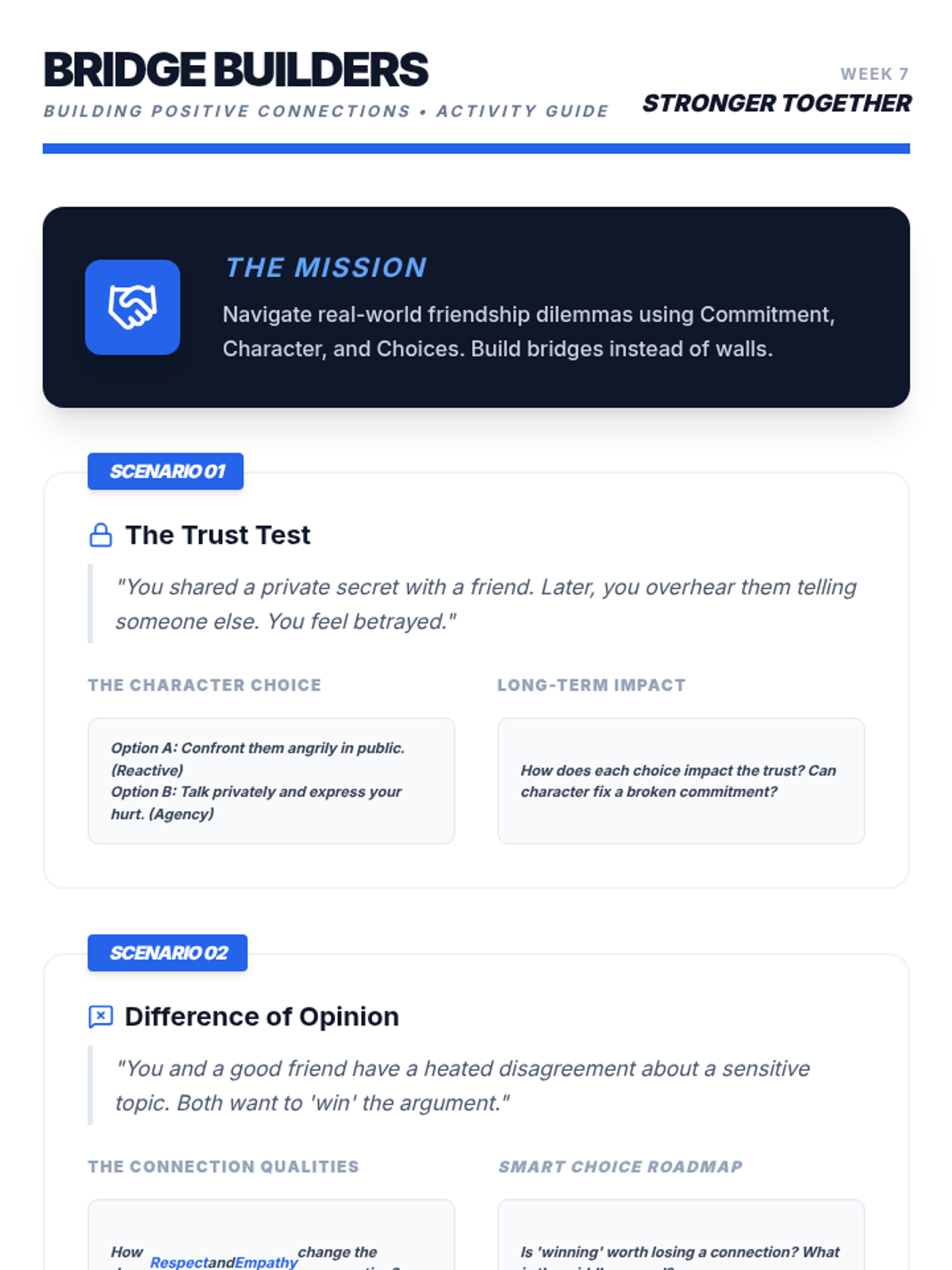
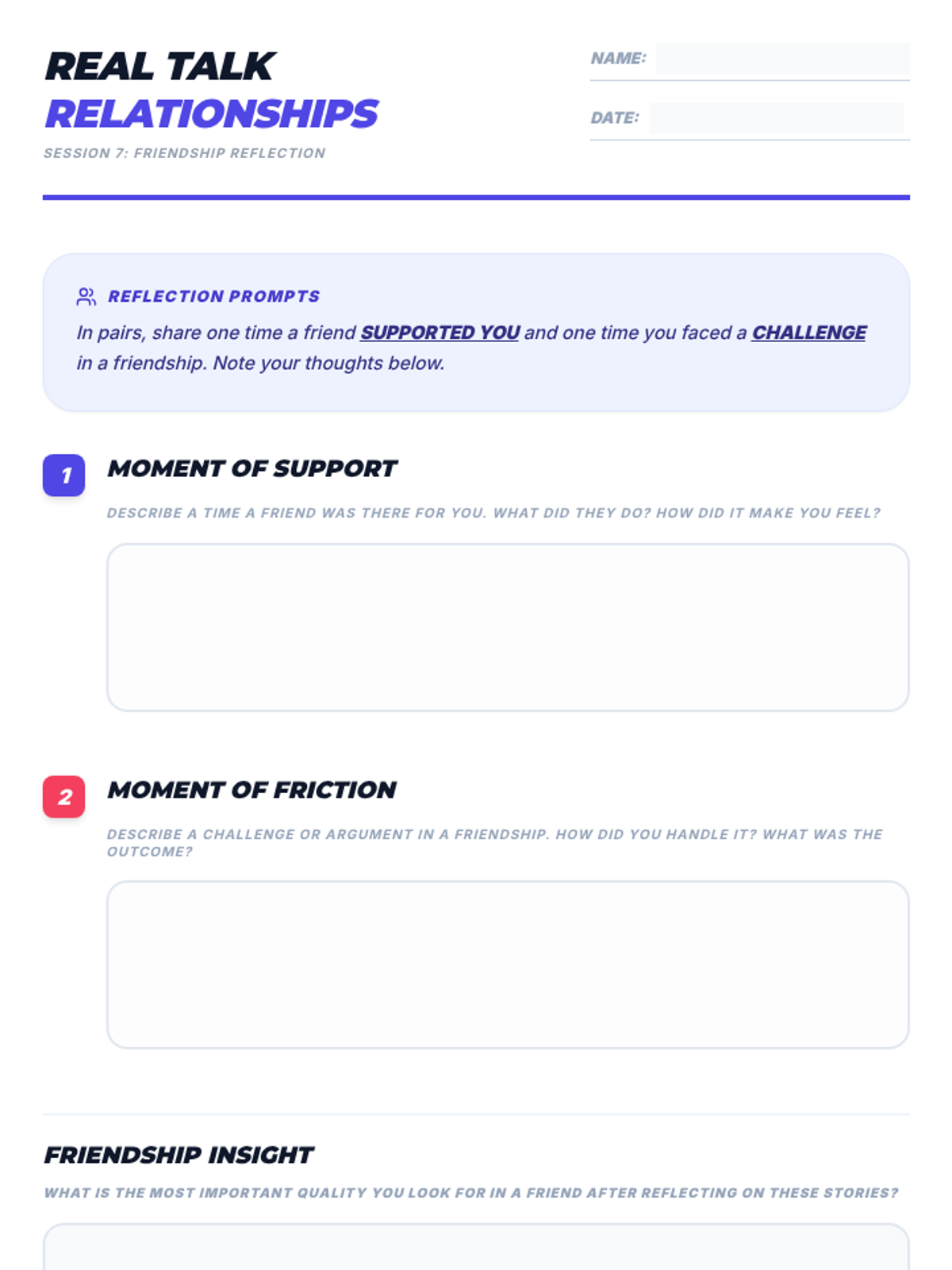
Positive peer connections are vital for social-emotional well-being and academic success, especially in high school. This session equips students with skills to navigate friendships, build trust, and reduce negative peer influences.
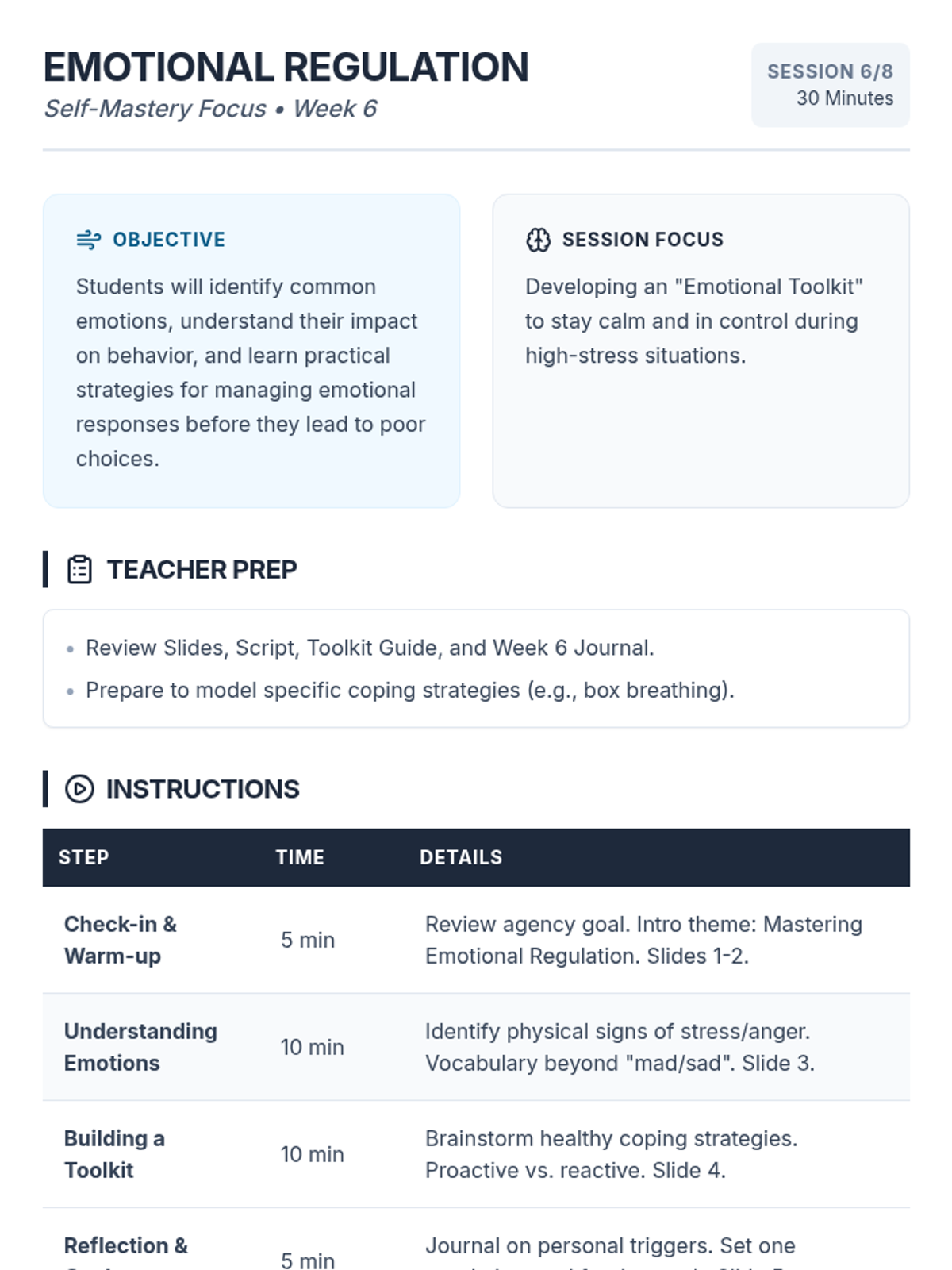
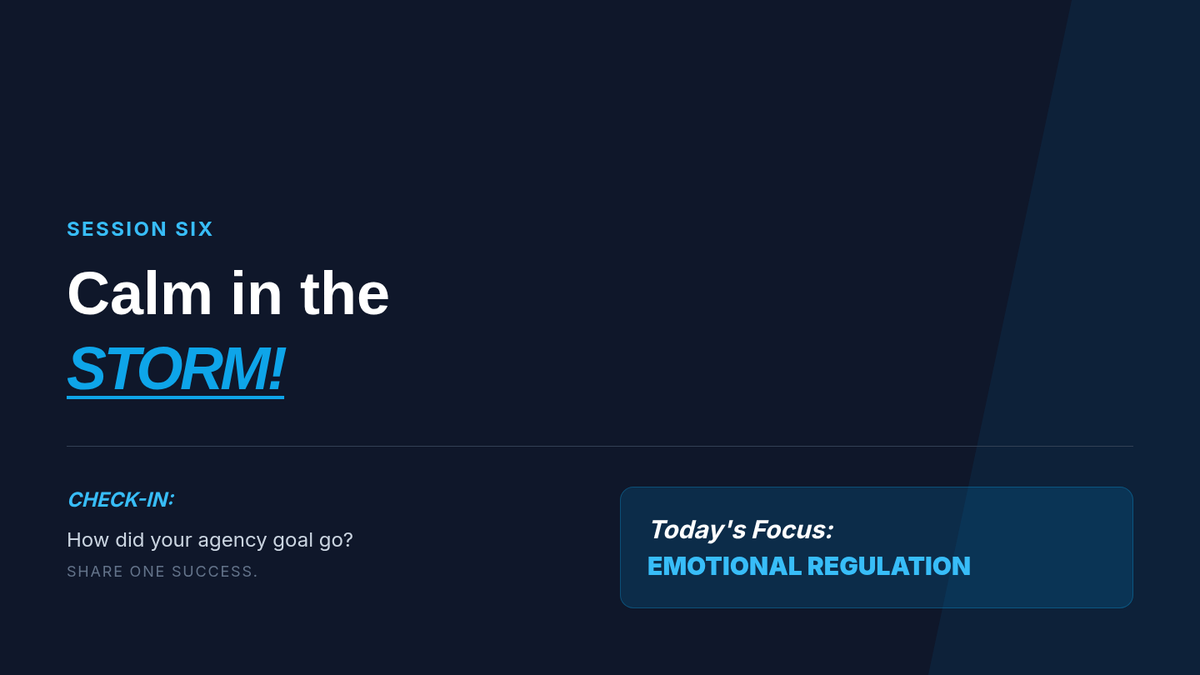
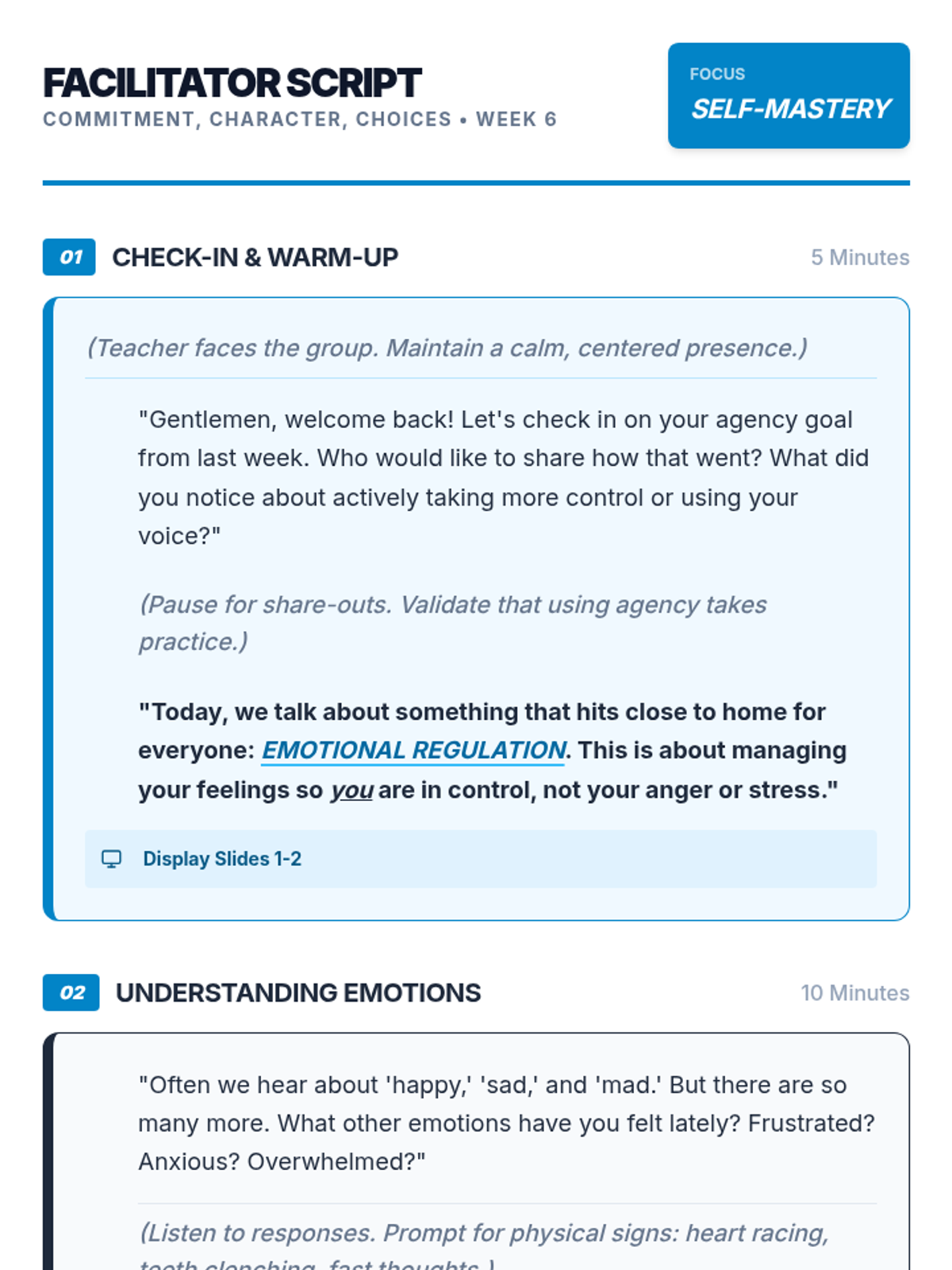
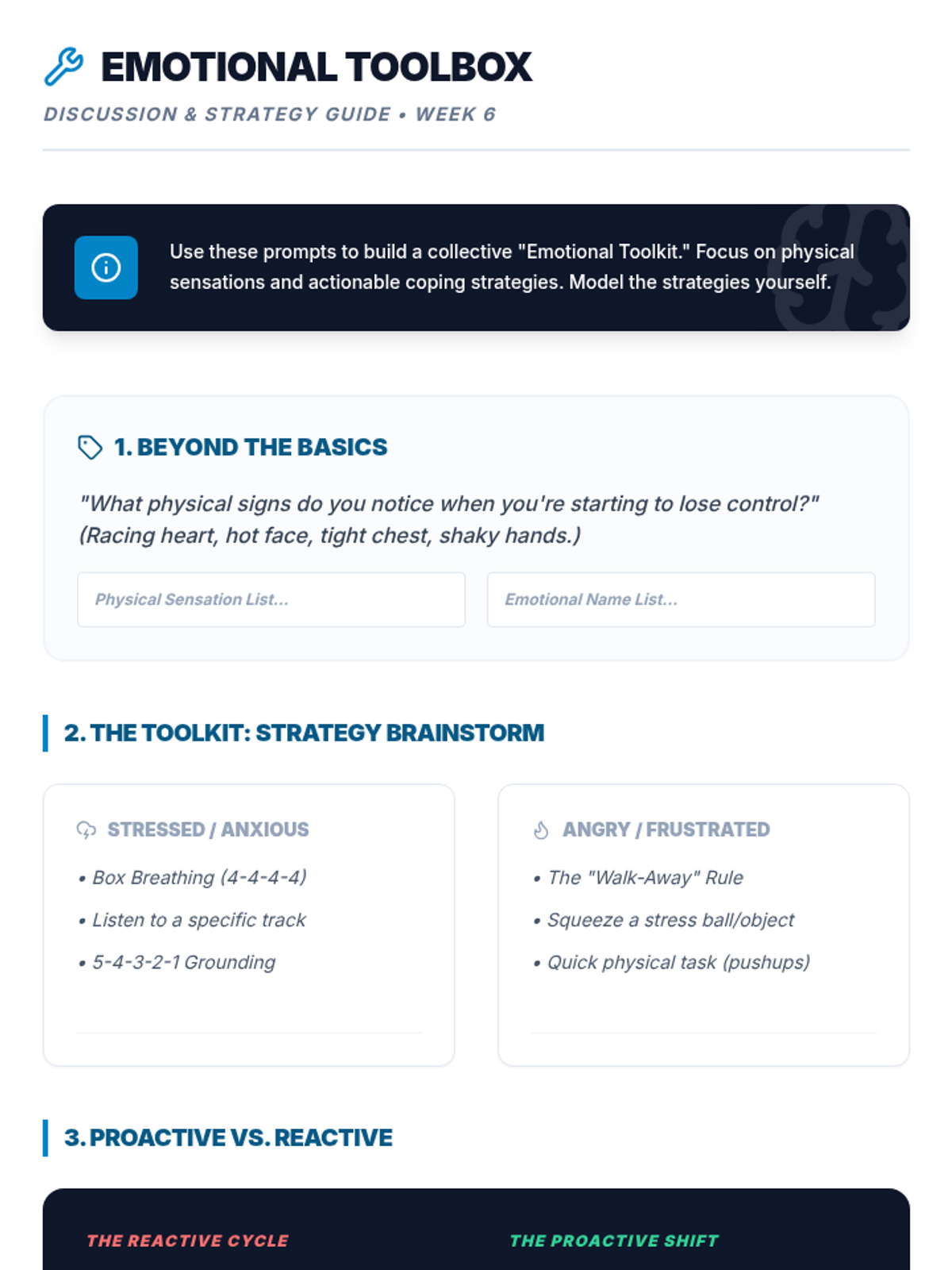
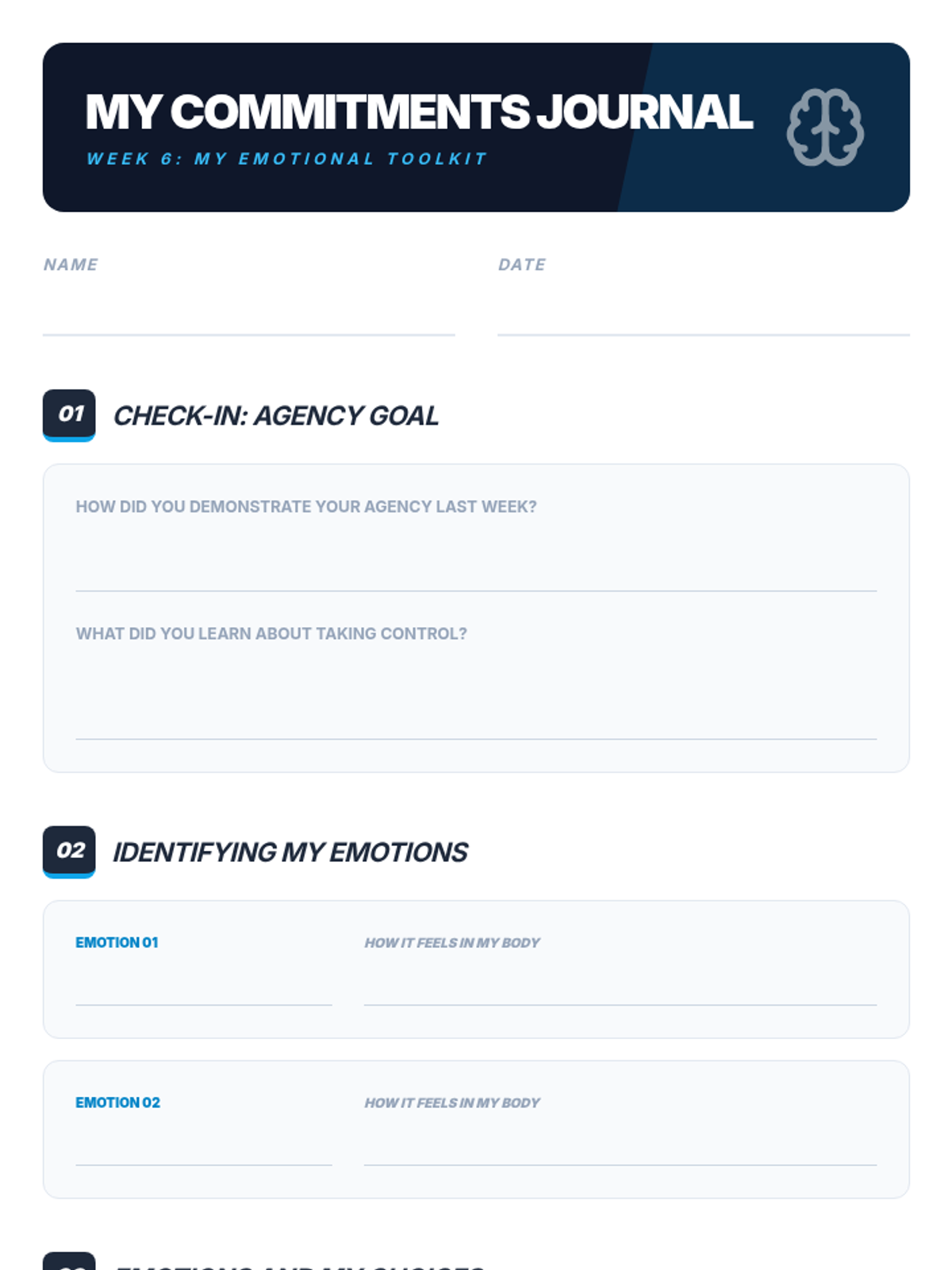
Developing emotional regulation skills is crucial for ninth-grade males, helping them navigate stress, reduce impulsive reactions, and make more thoughtful decisions. This directly enhances their agency and strengthens their character.
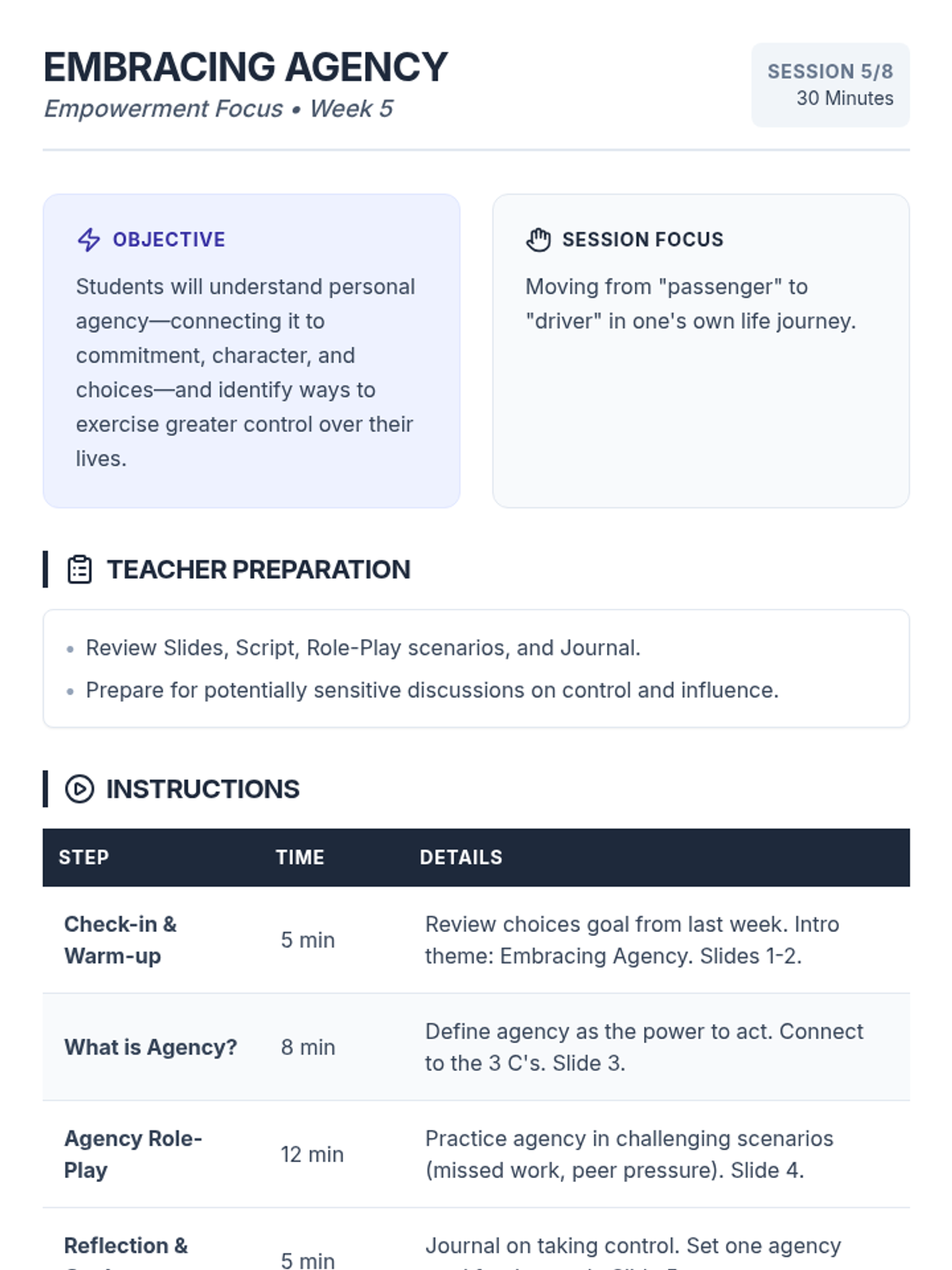
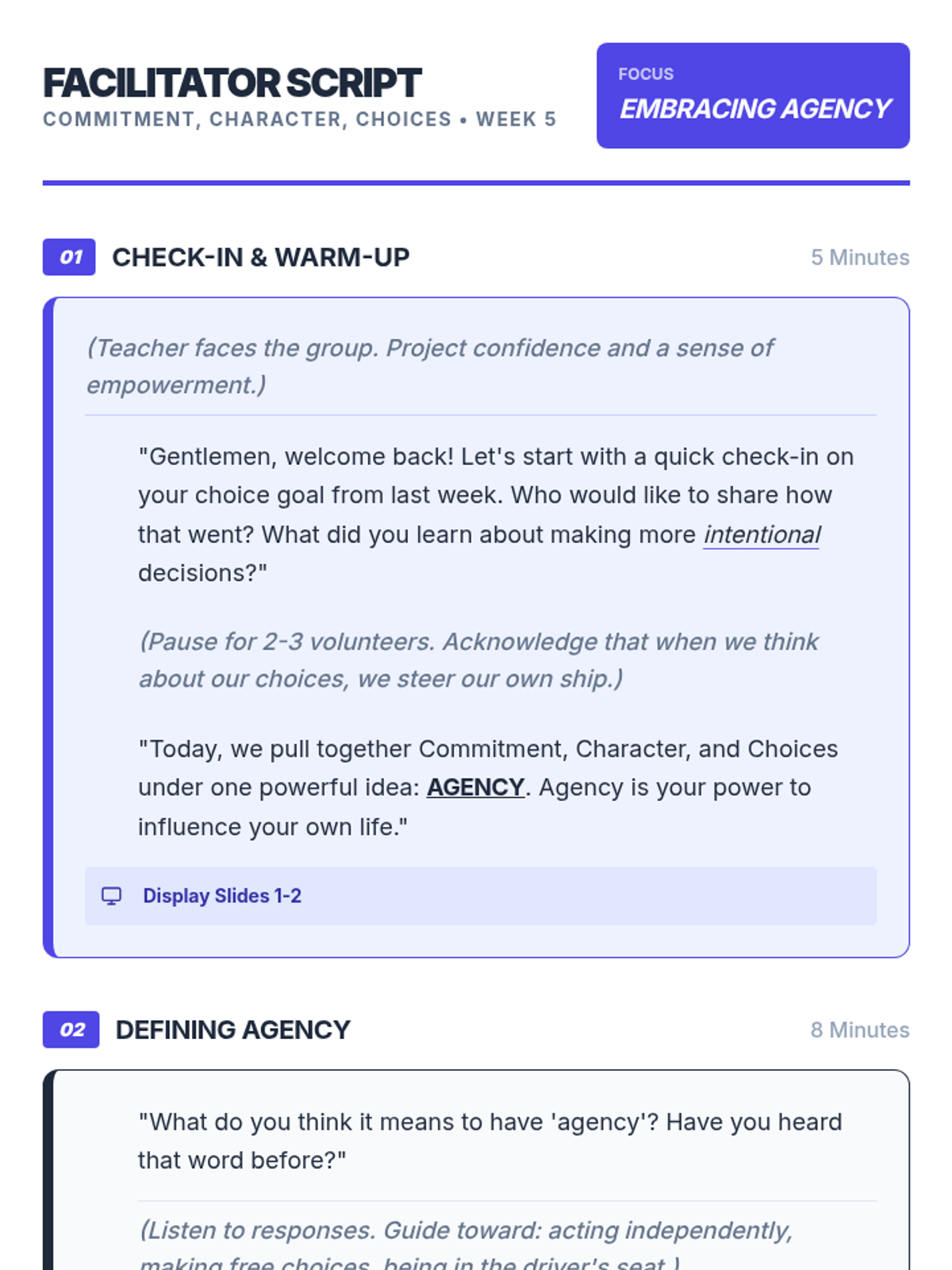
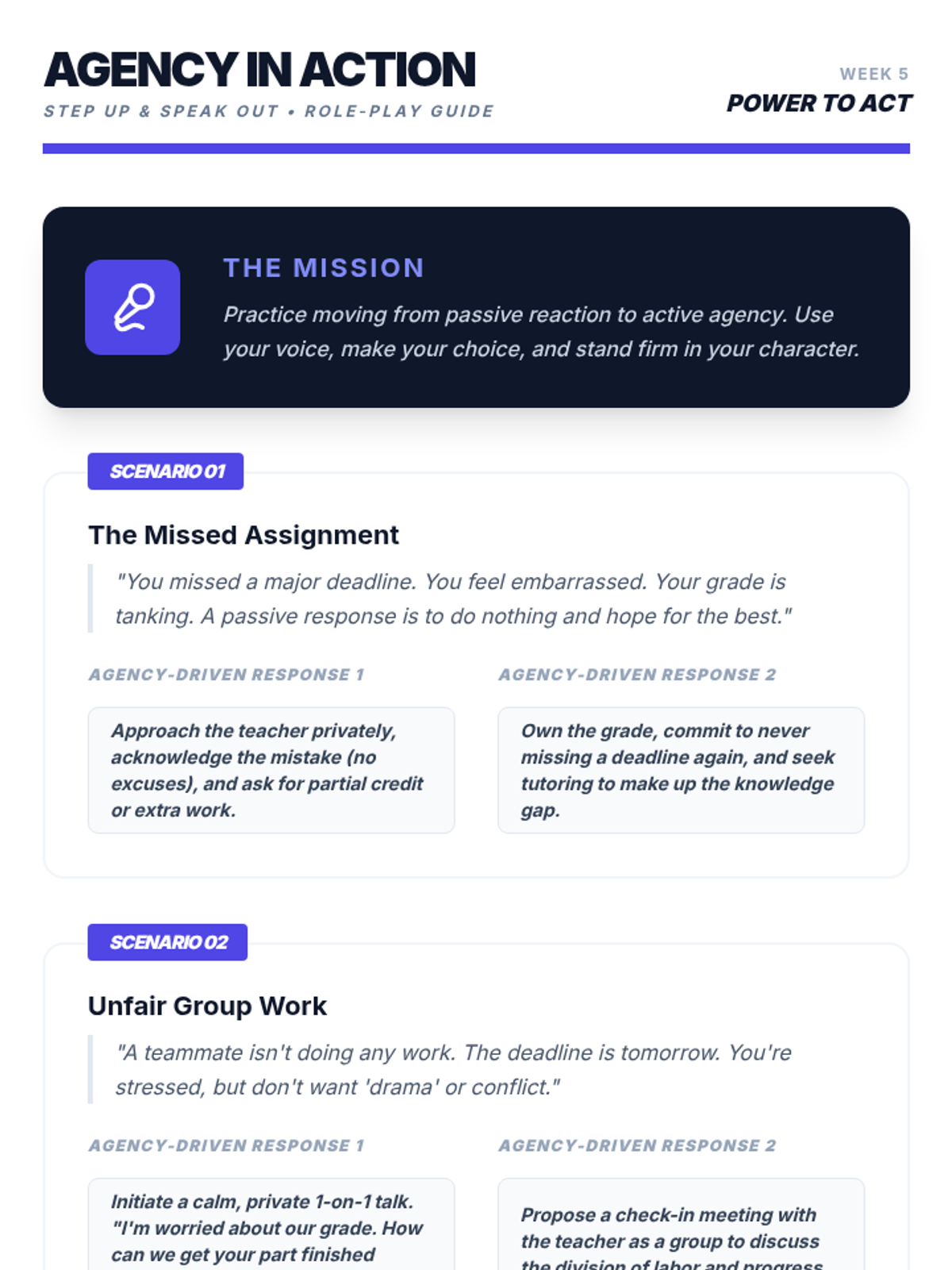
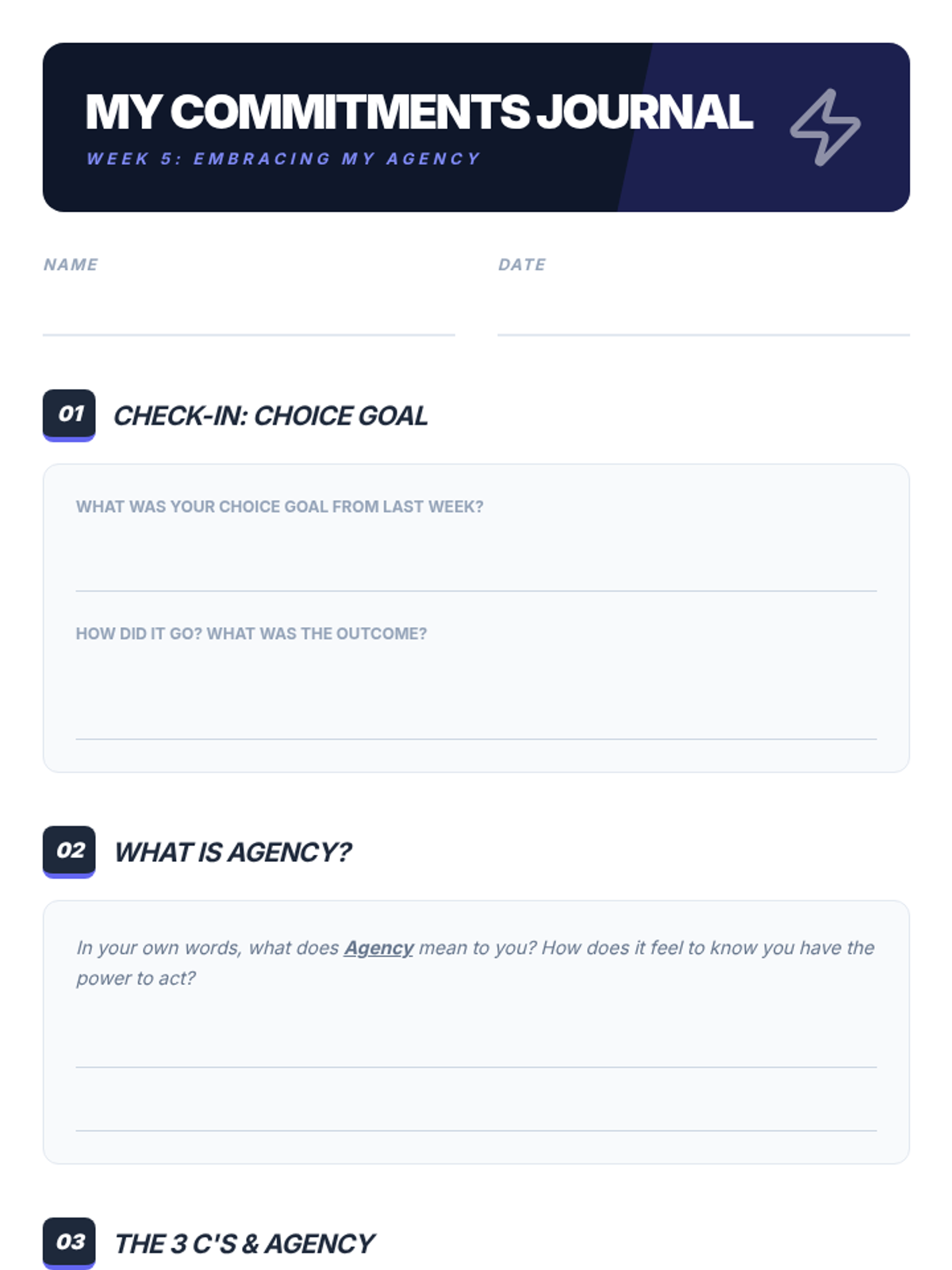
Empowering students with a sense of agency helps them understand that they are active participants in shaping their own lives, rather than passive recipients of circumstances. This integration of the three C's strengthens their self-efficacy and motivation.
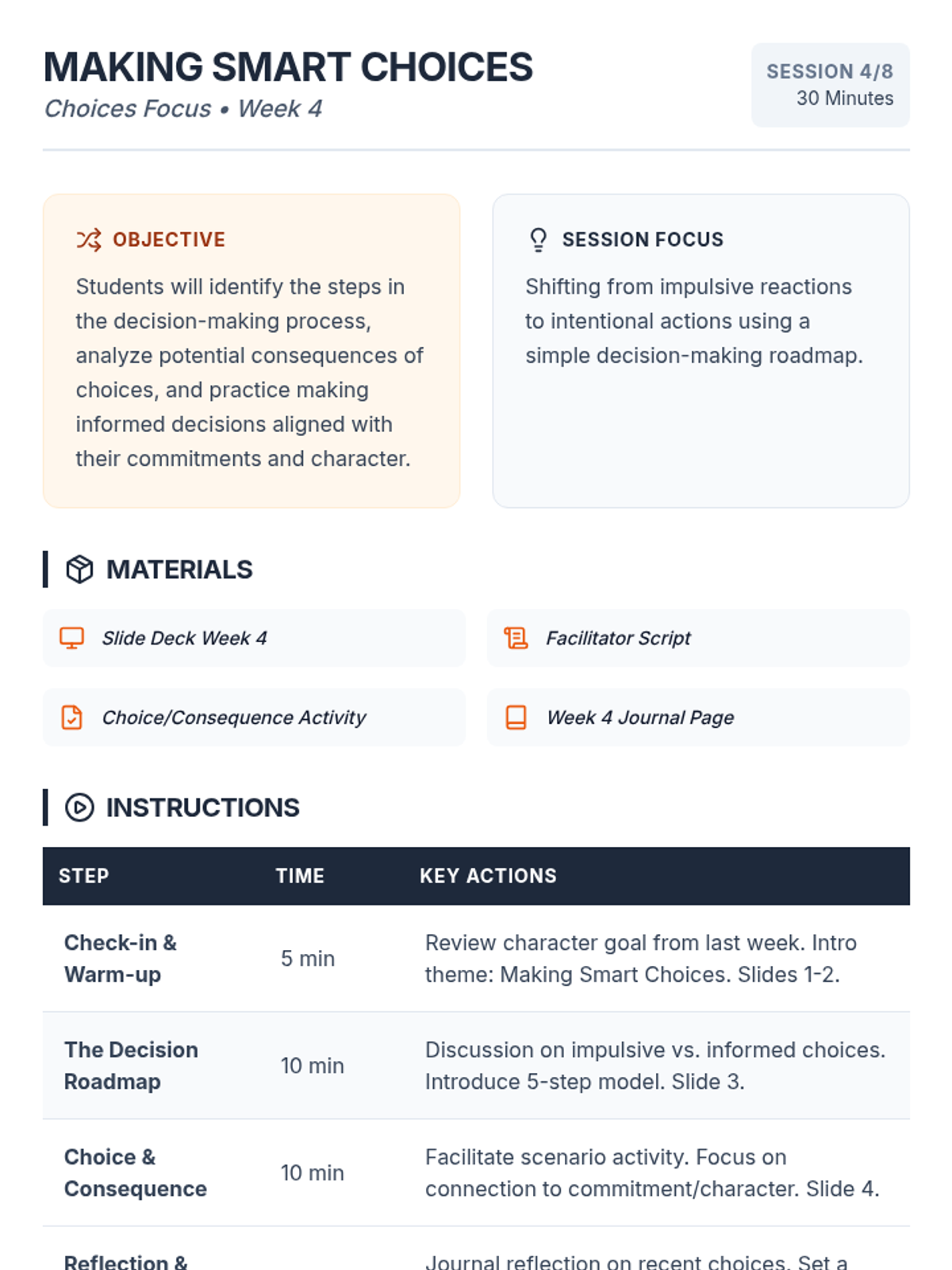
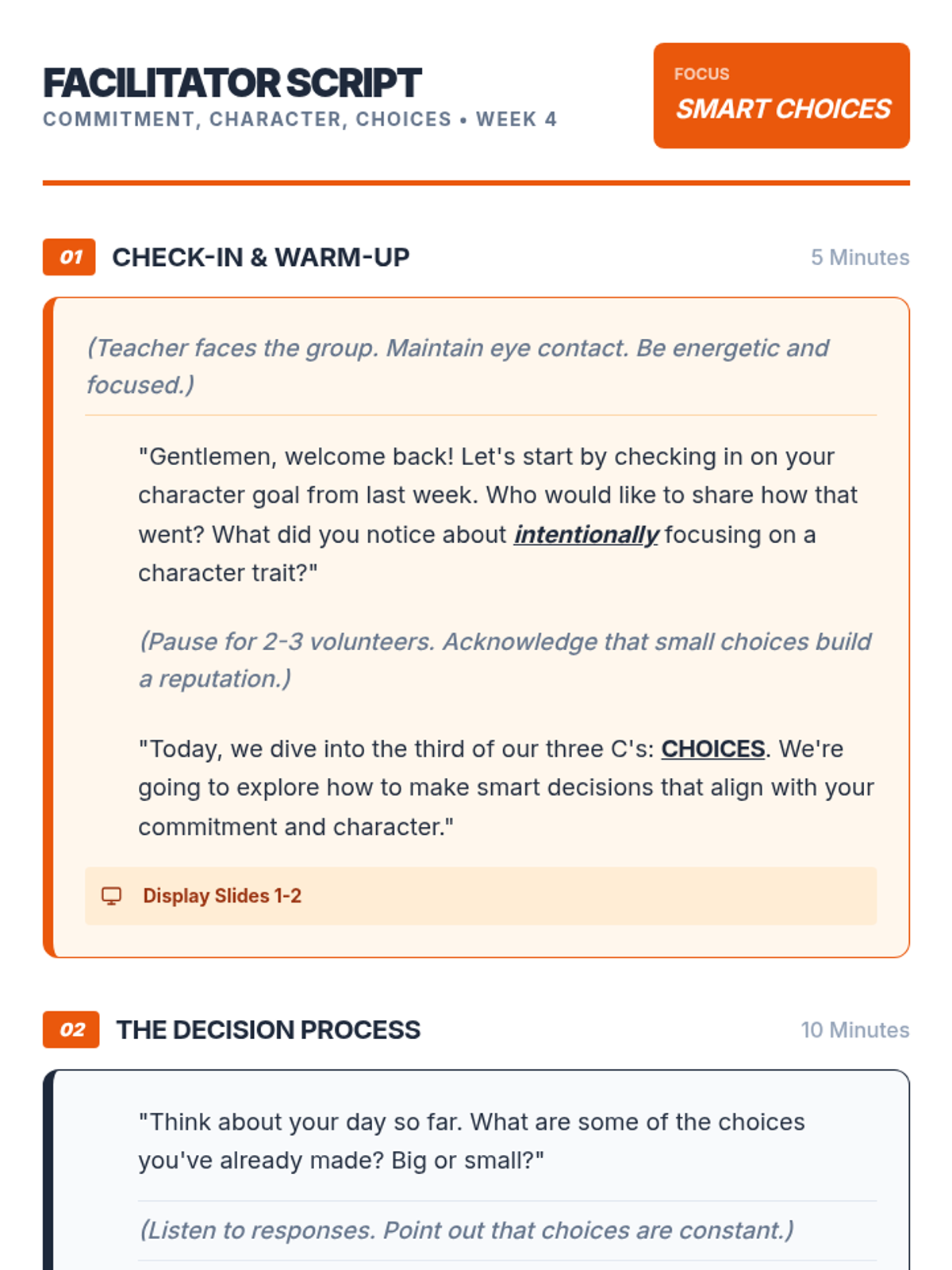
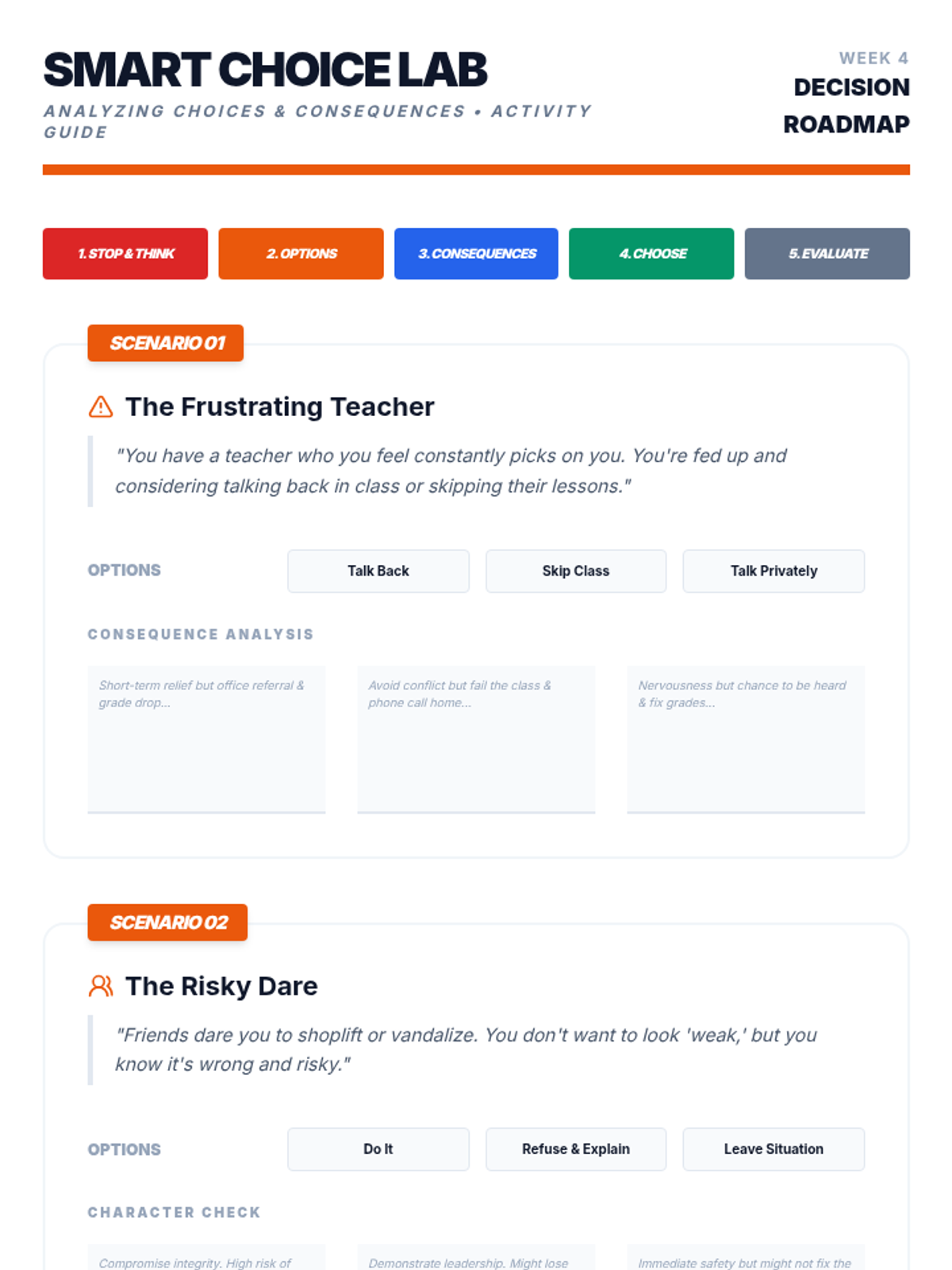
Effective decision-making is a critical life skill, especially during the high school transition. This session empowers students to make thoughtful choices that align with their values, leading to positive outcomes and increased self-efficacy.
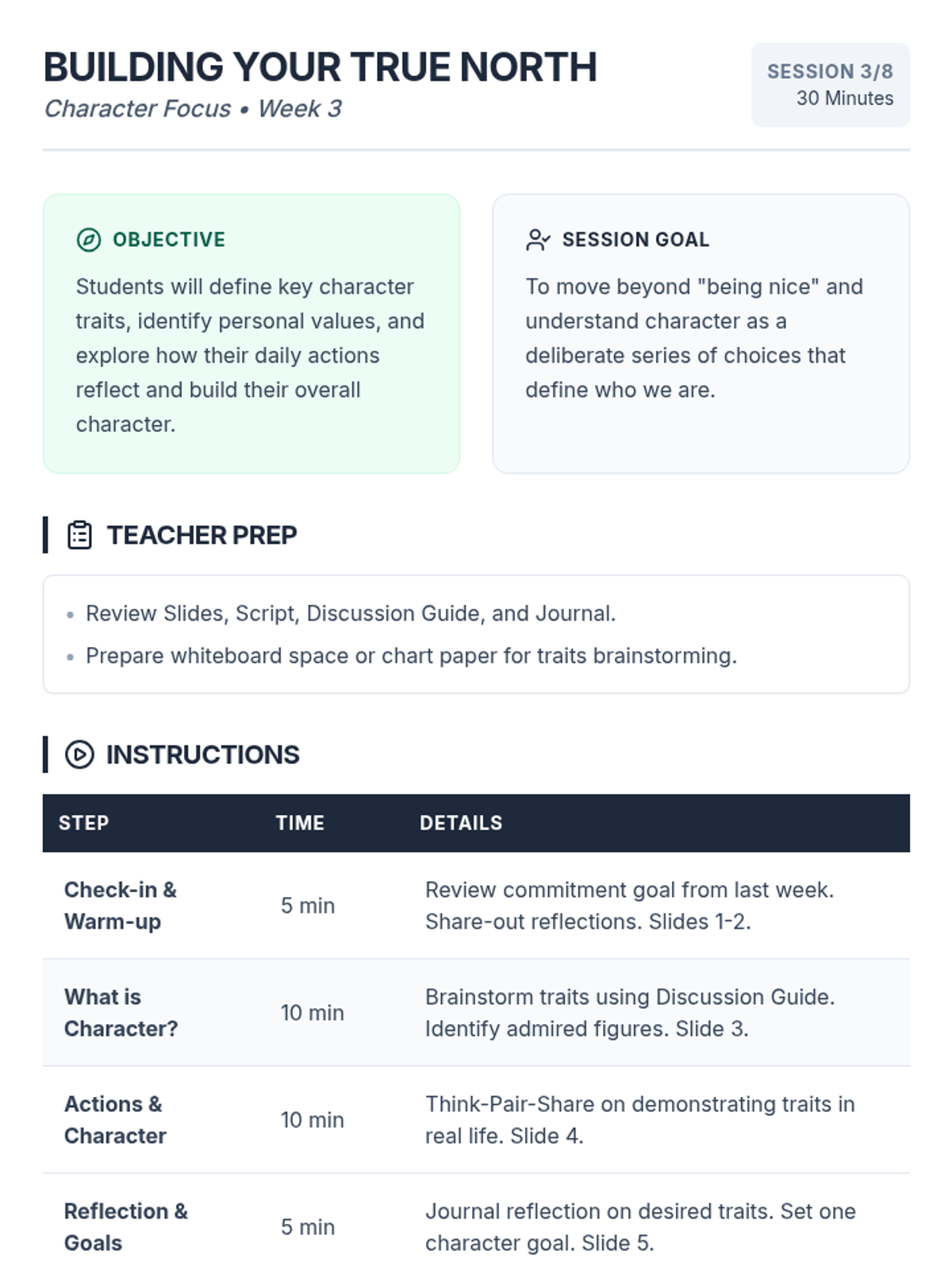
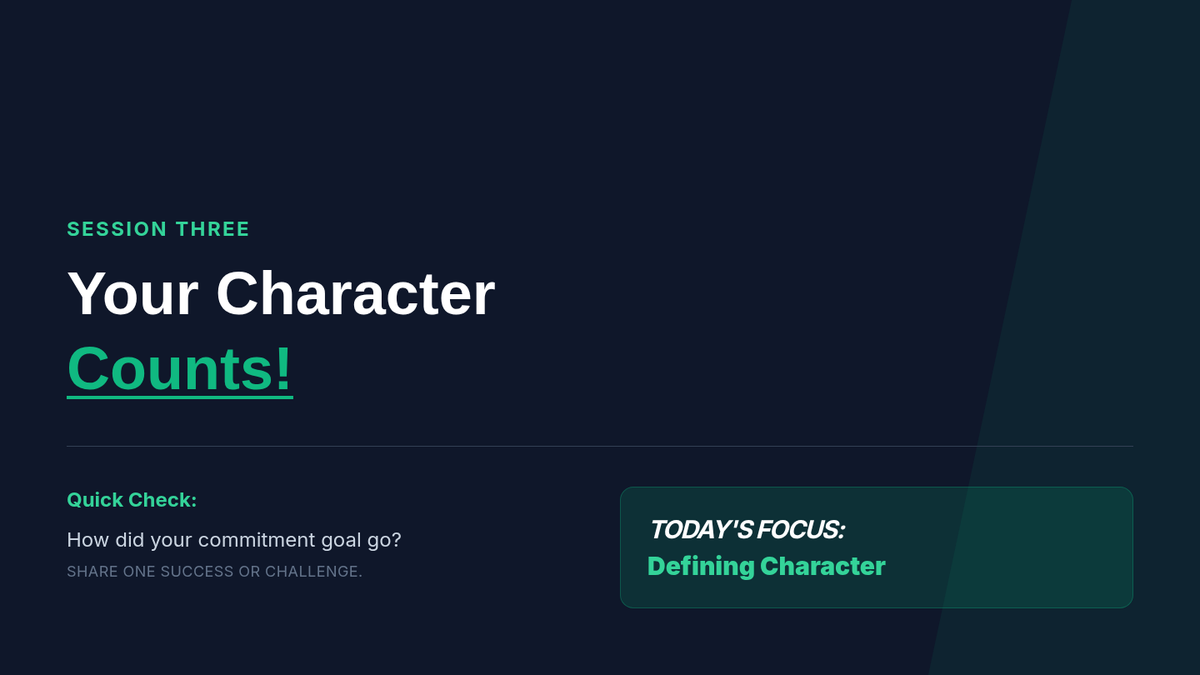
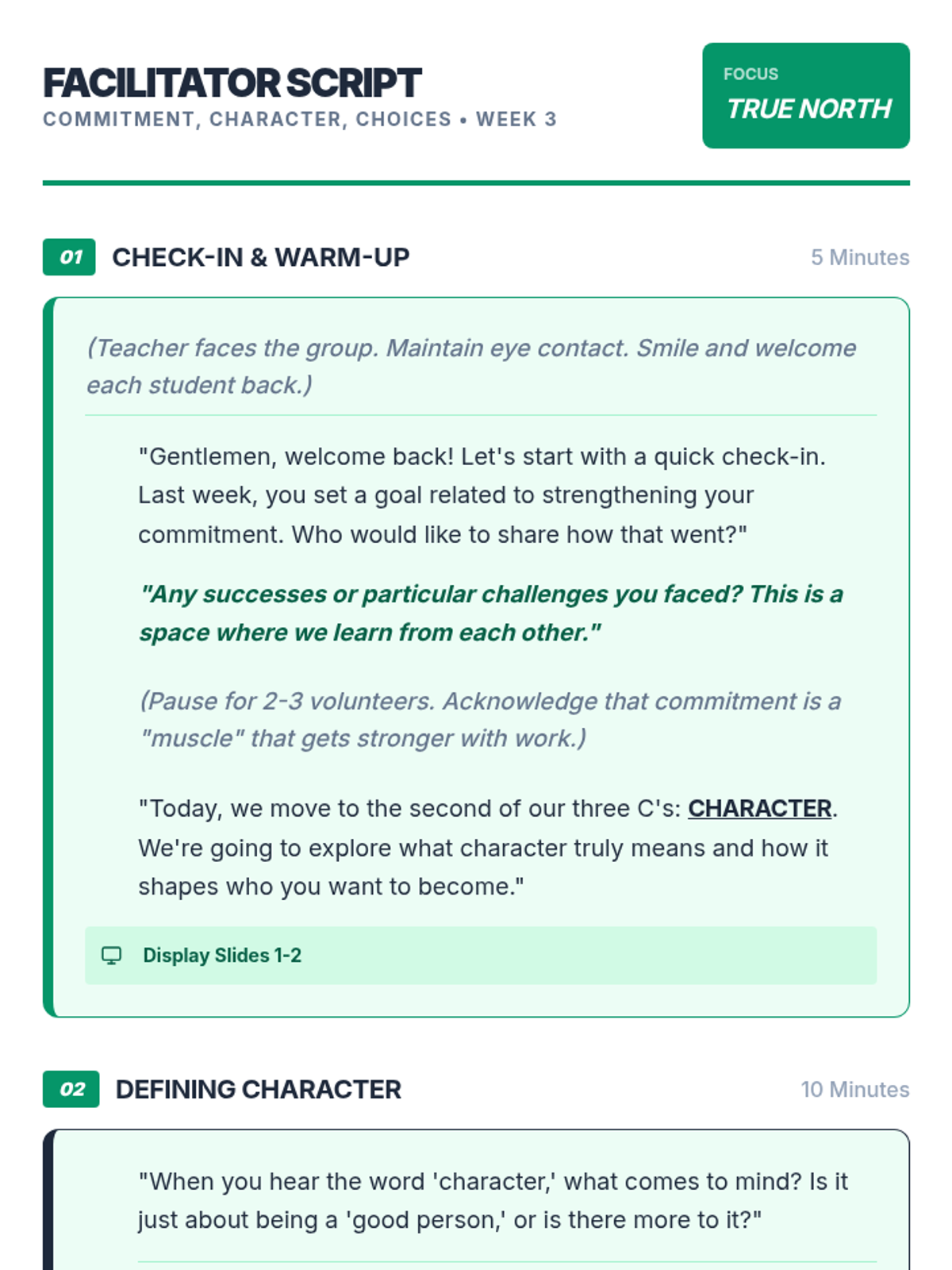
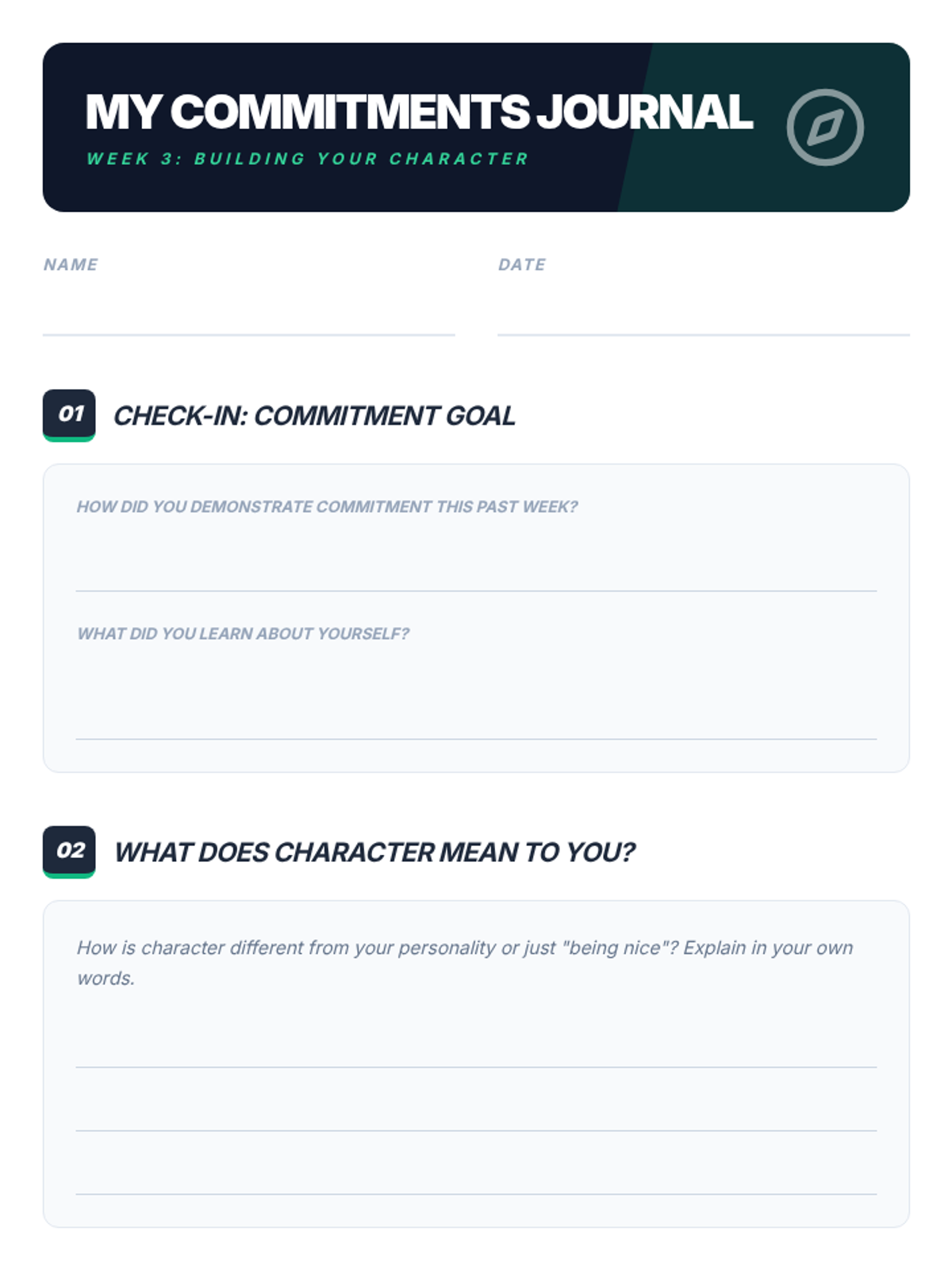
Understanding and actively cultivating strong character is essential for ethical decision-making, building positive relationships, and developing a strong sense of self-worth. This session guides students in self-reflection on their personal values.
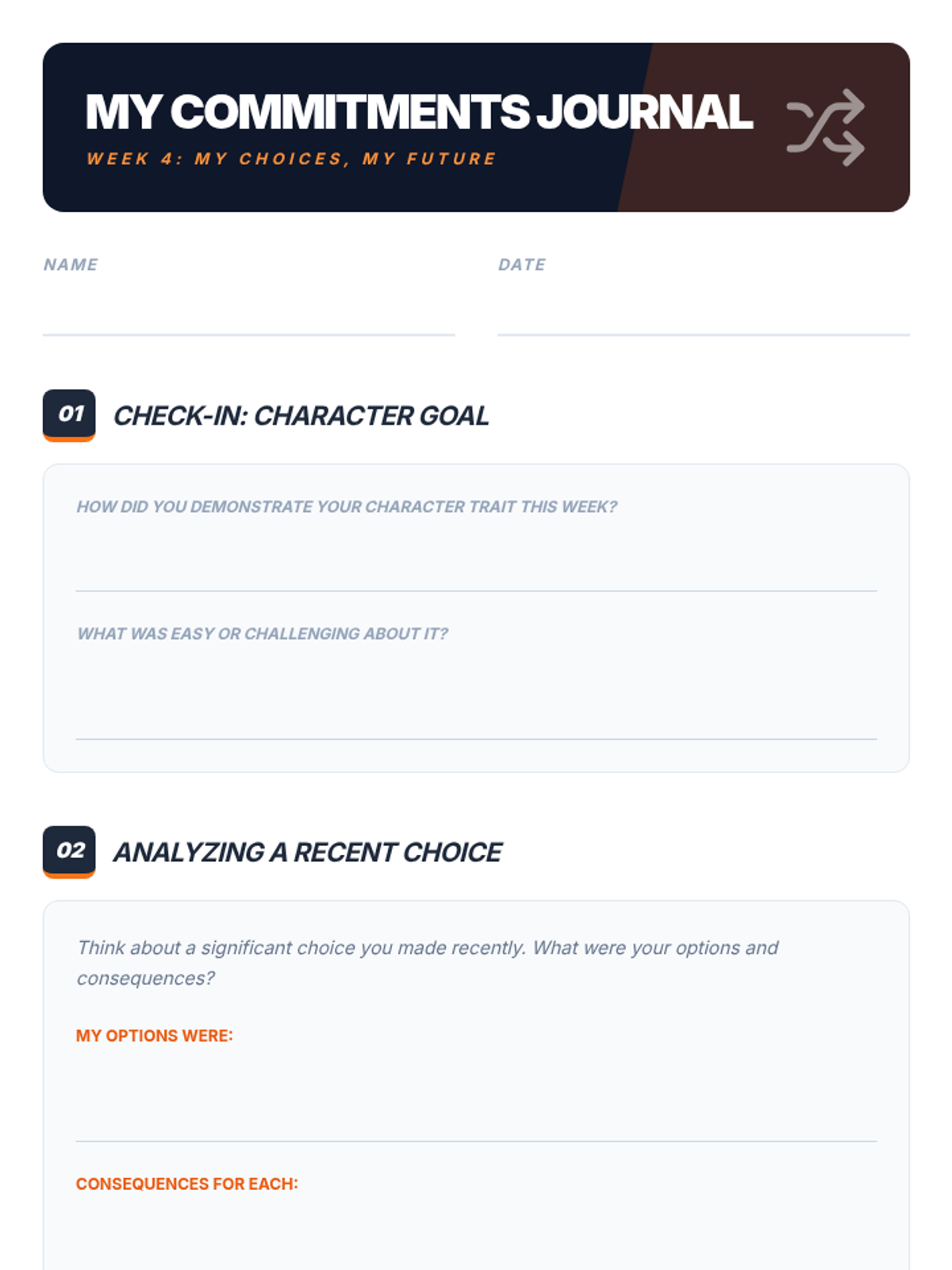
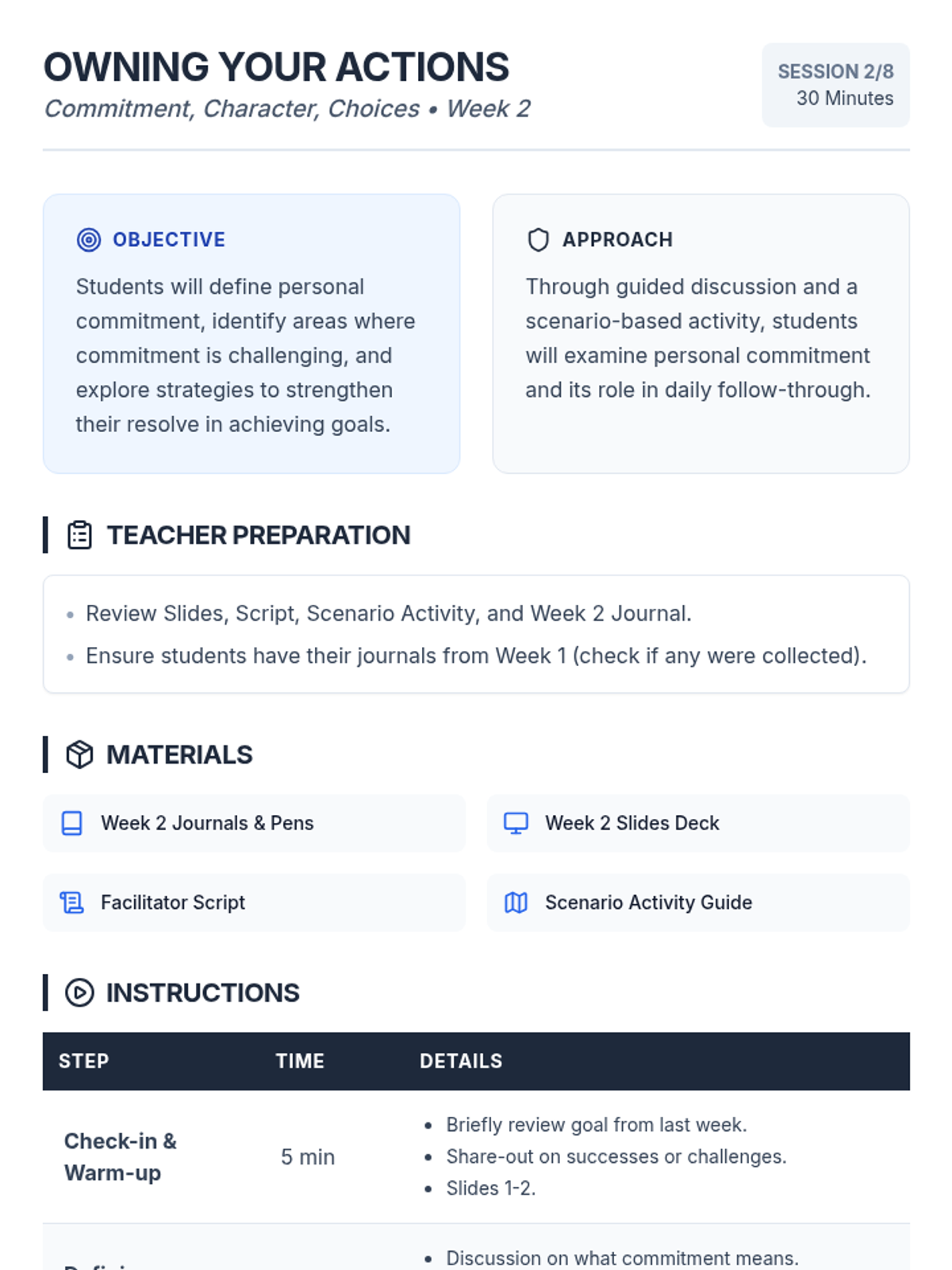
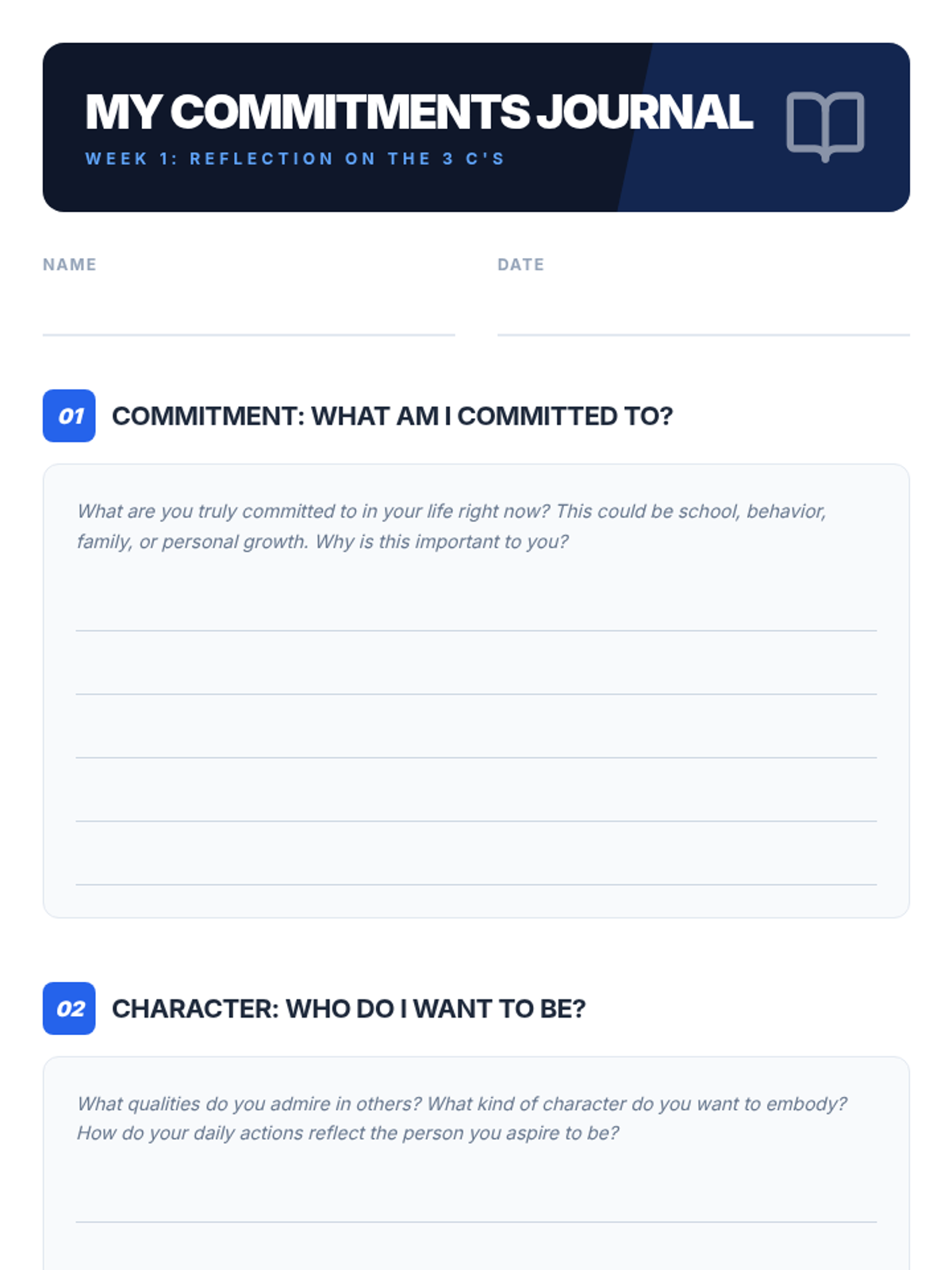
Building strong commitment is foundational for academic and behavioral success. This session helps students understand the direct link between their commitment and their ability to follow through on decisions and goals.
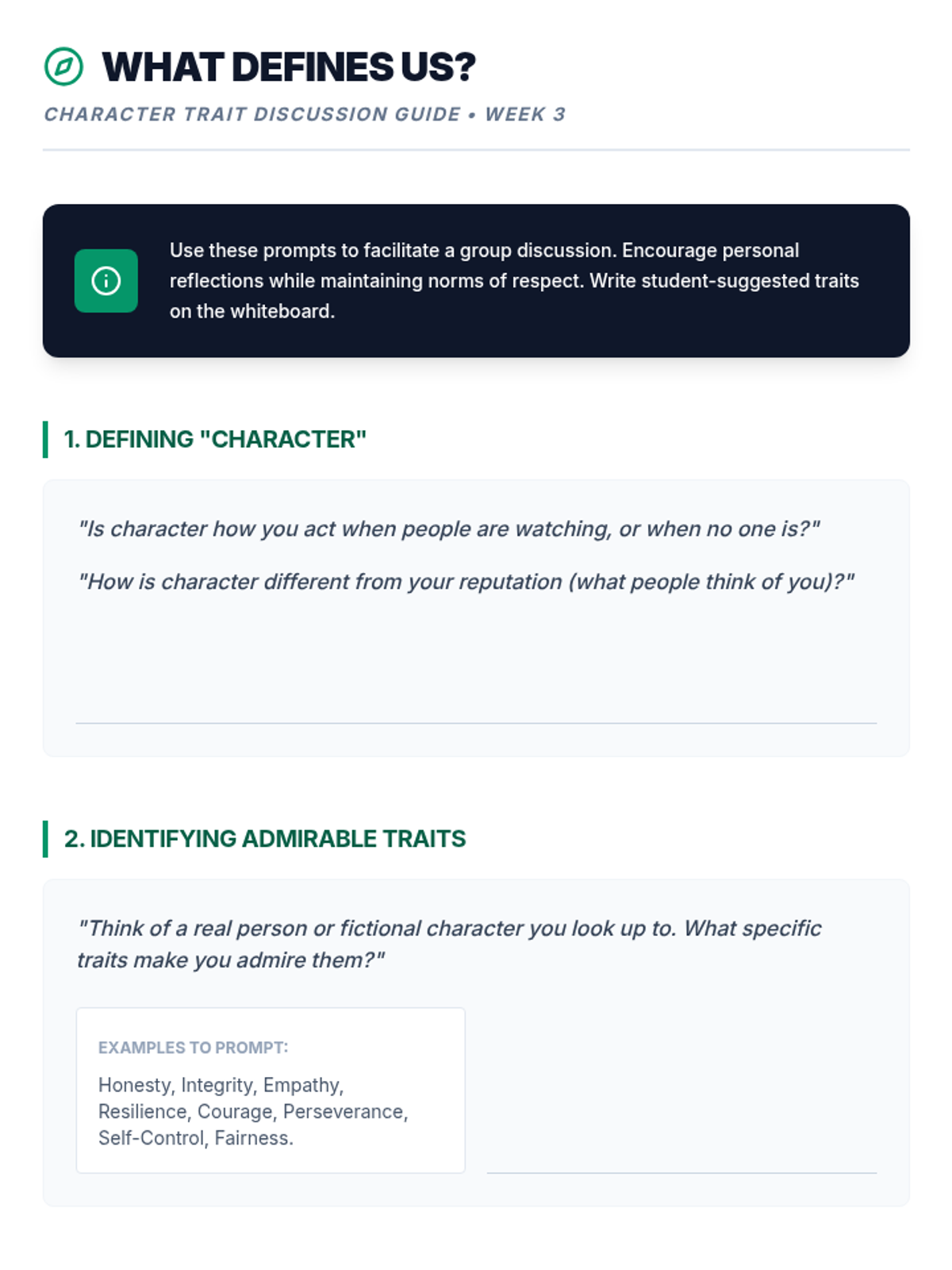
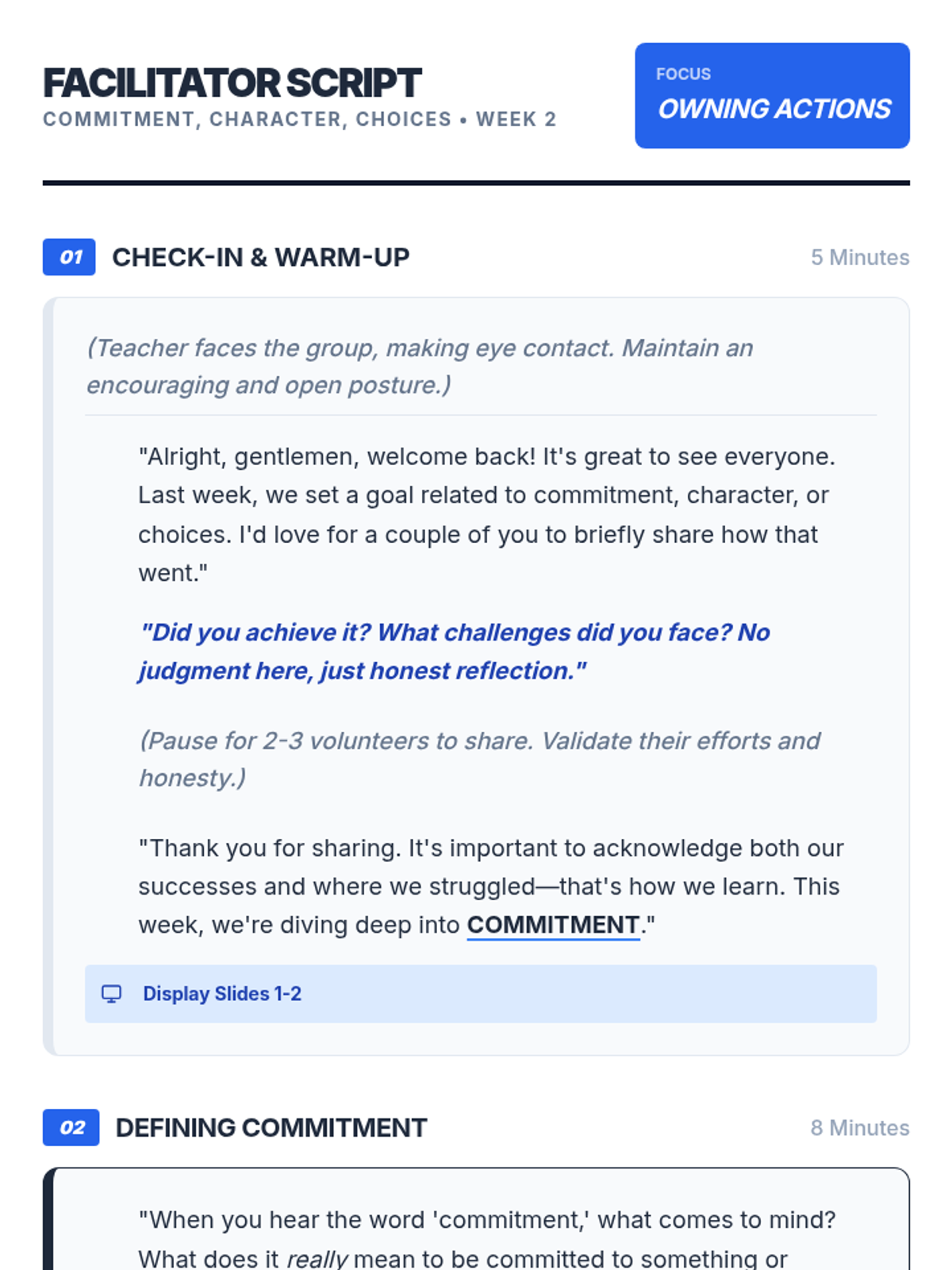
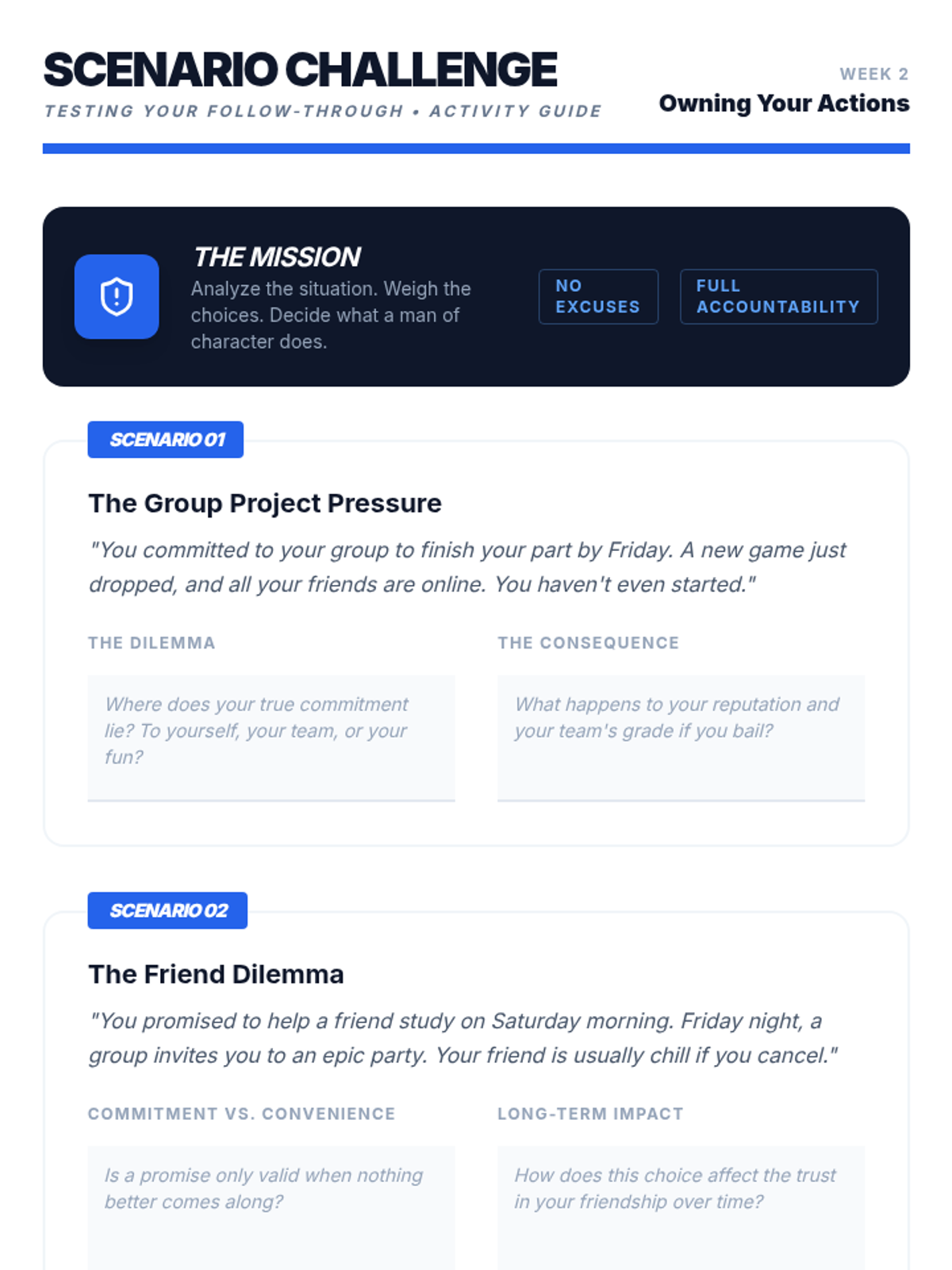
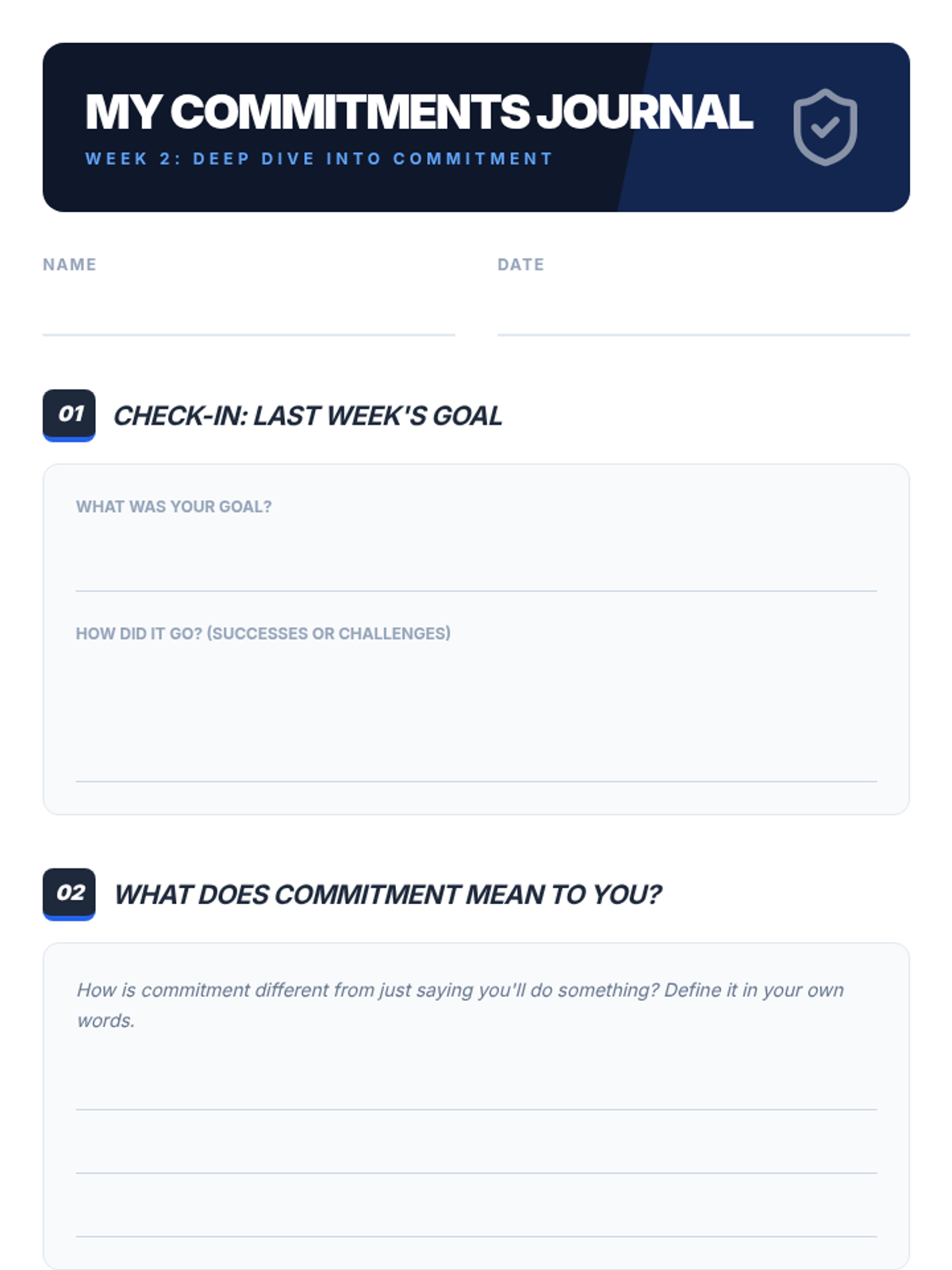
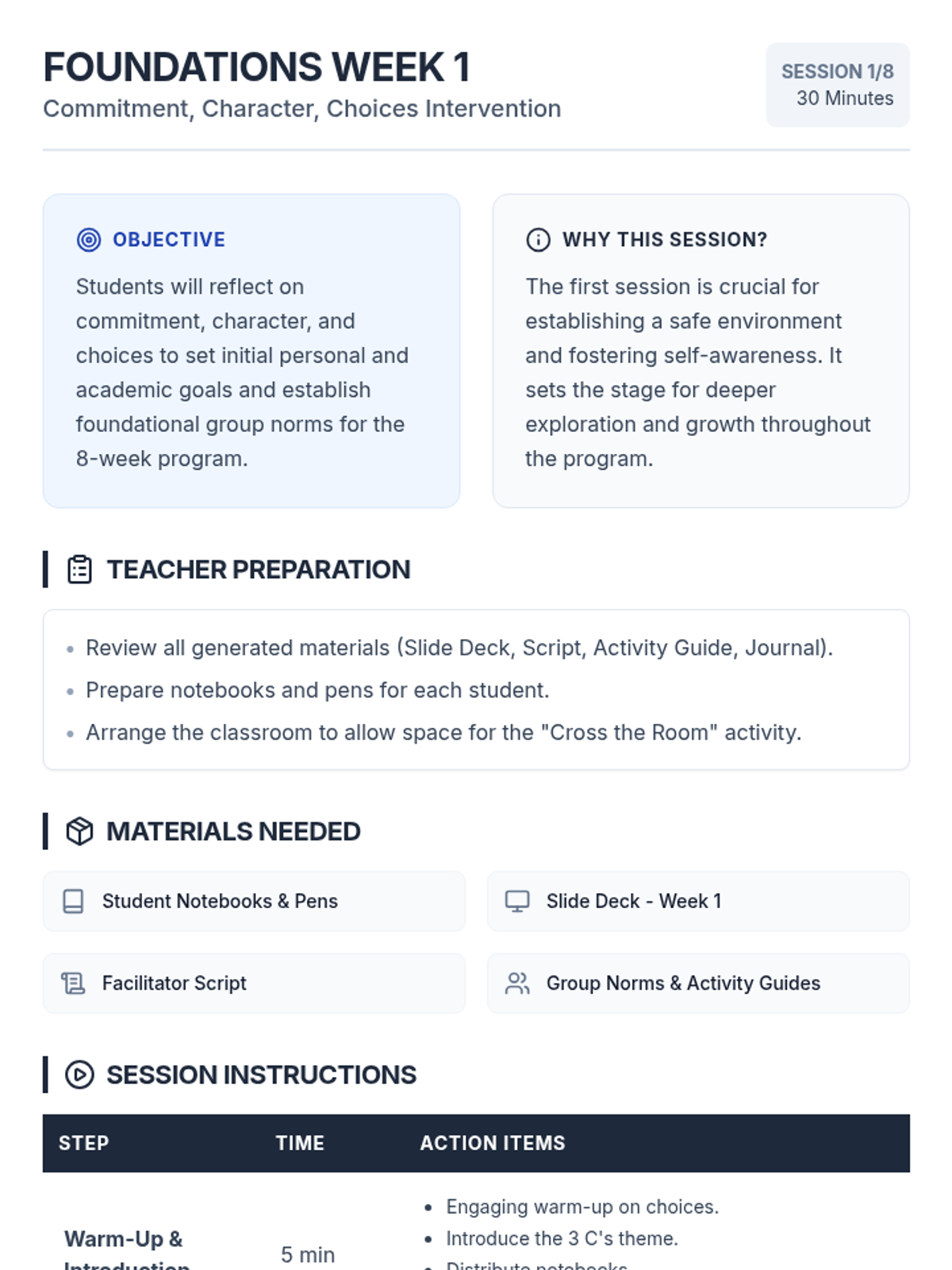
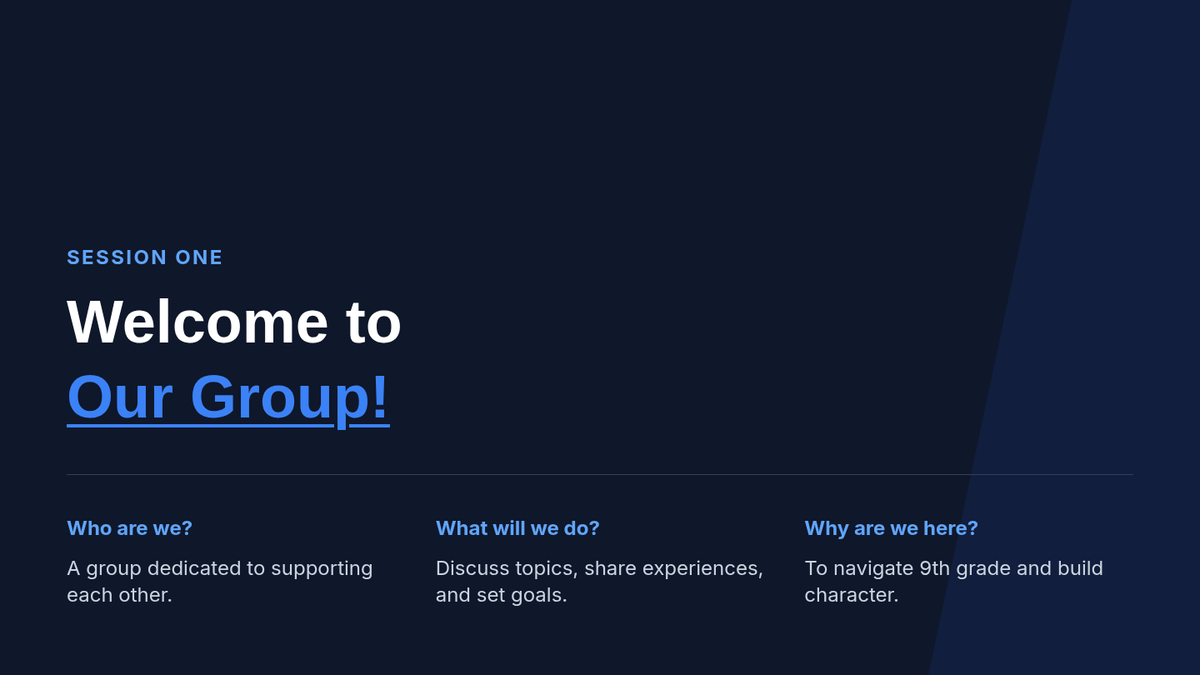
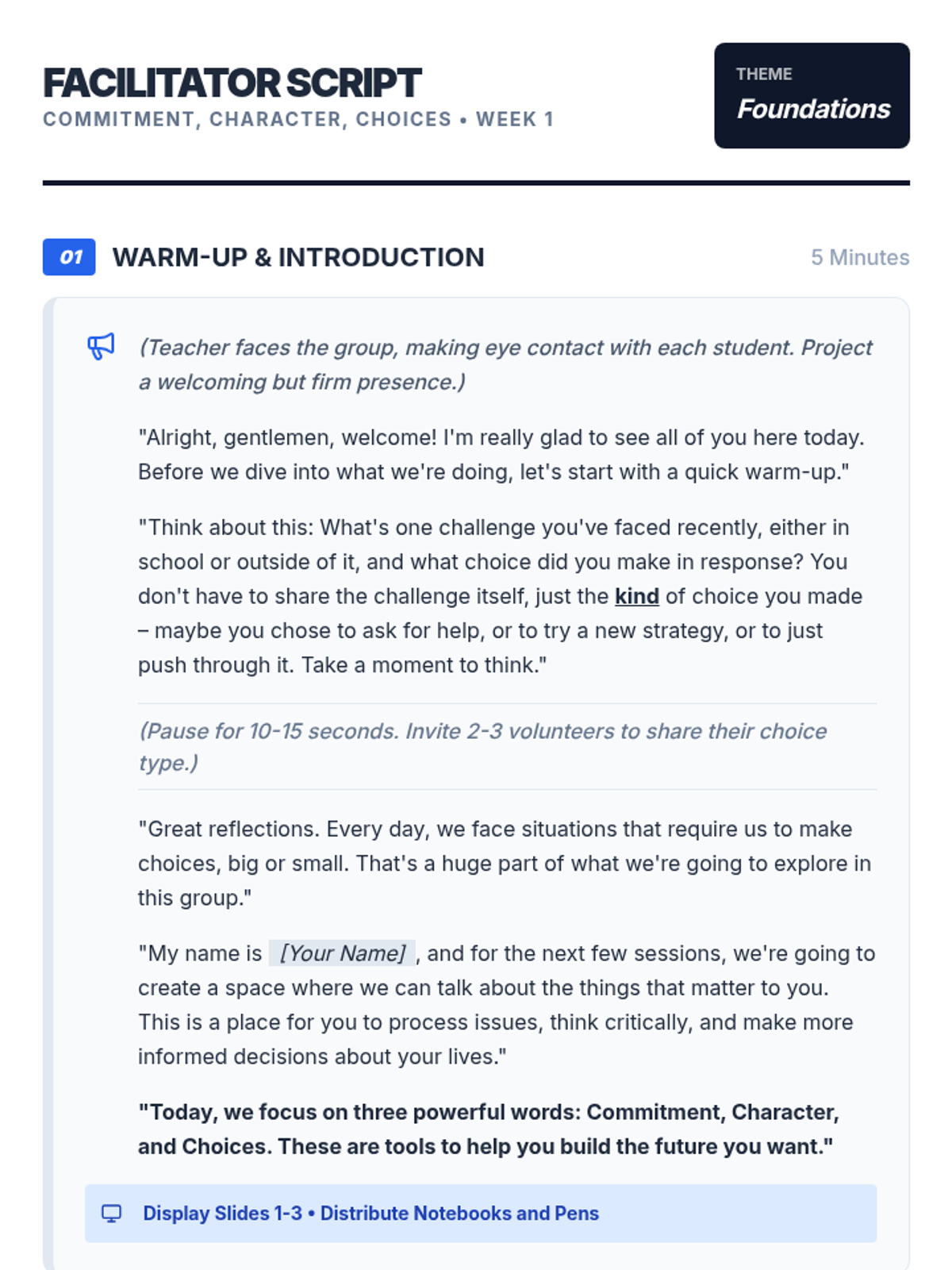
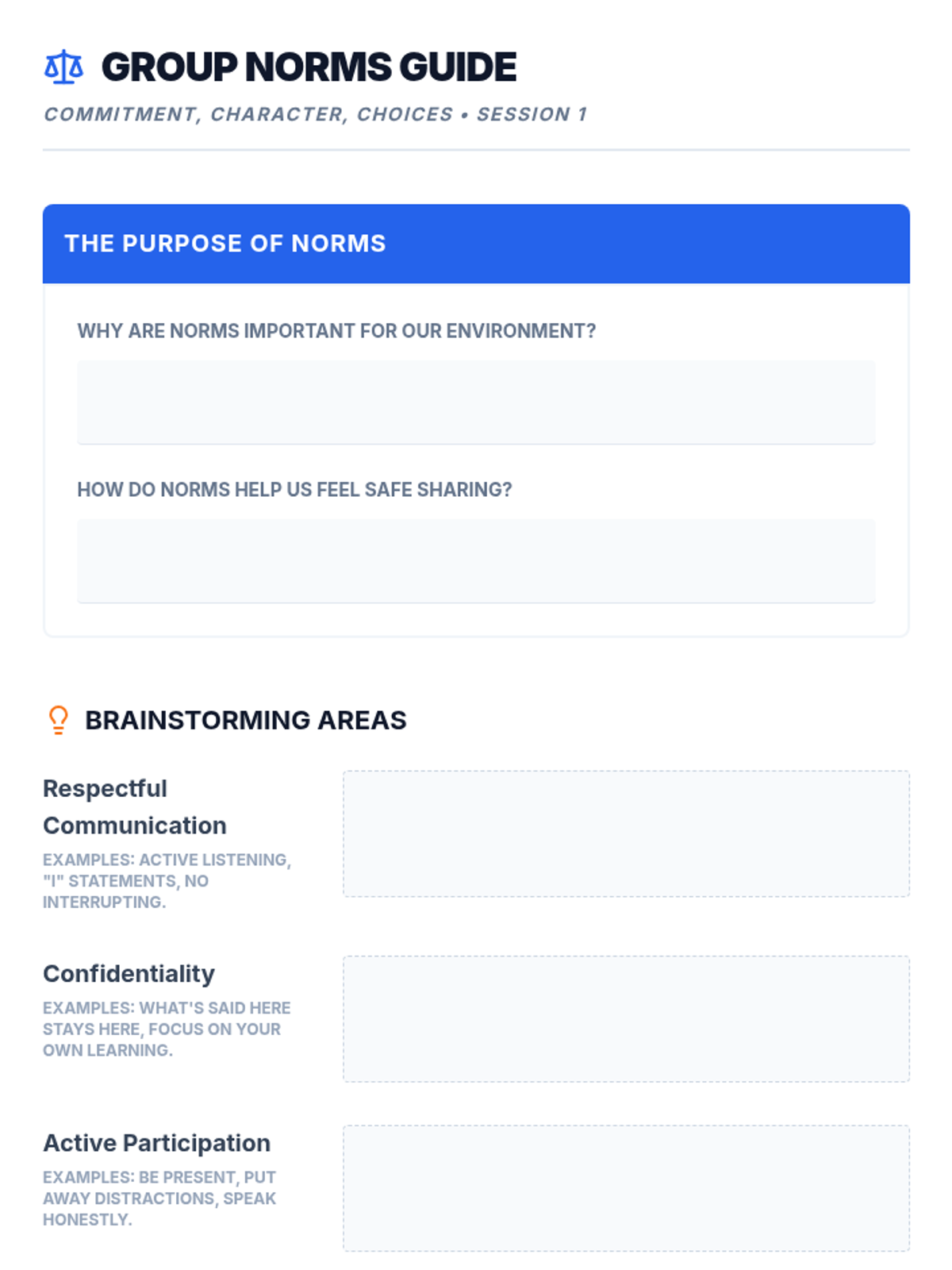
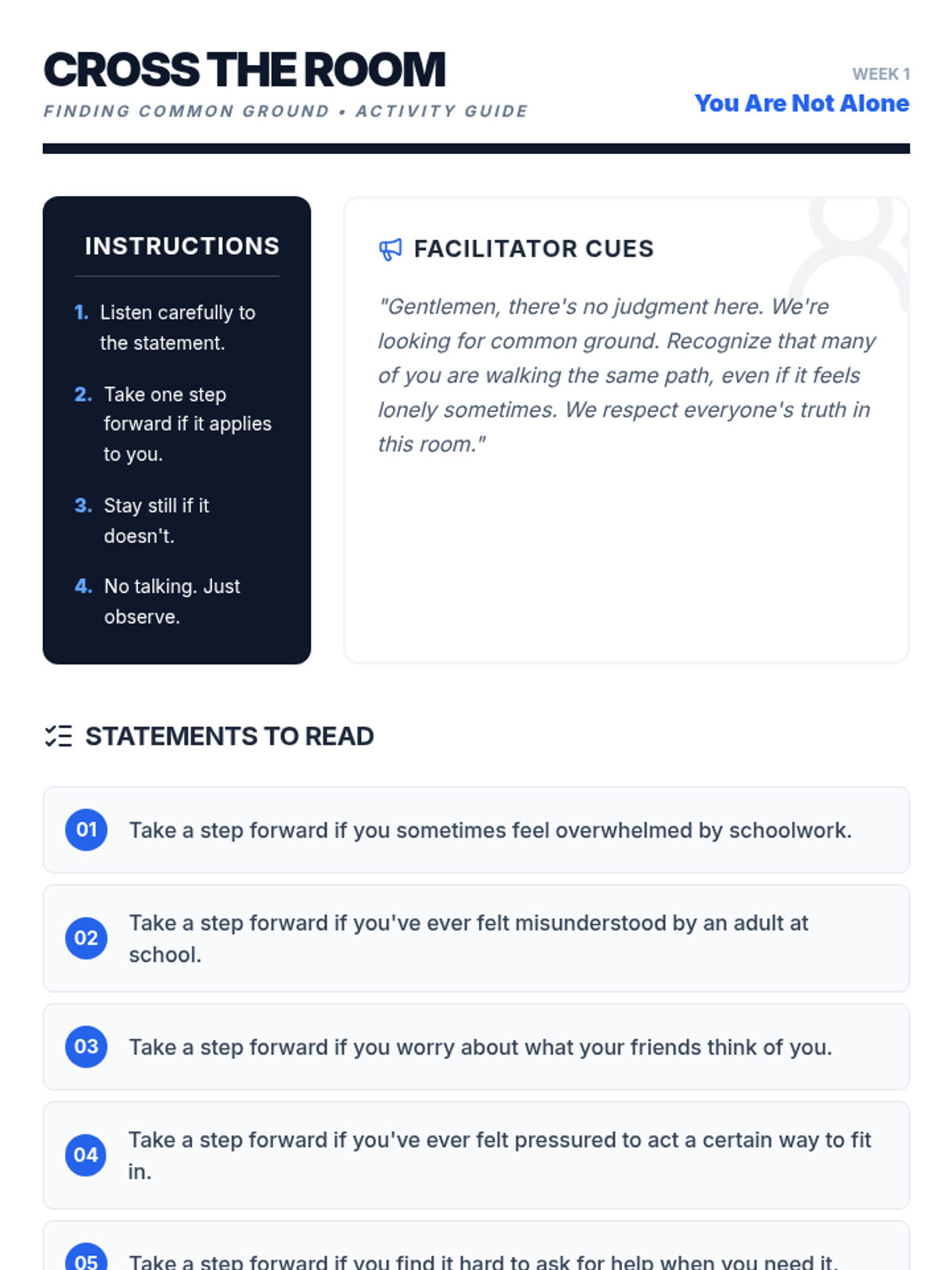
Establish a supportive environment, introduce core concepts of Commitment, Character, and Choices, and set foundational group norms.
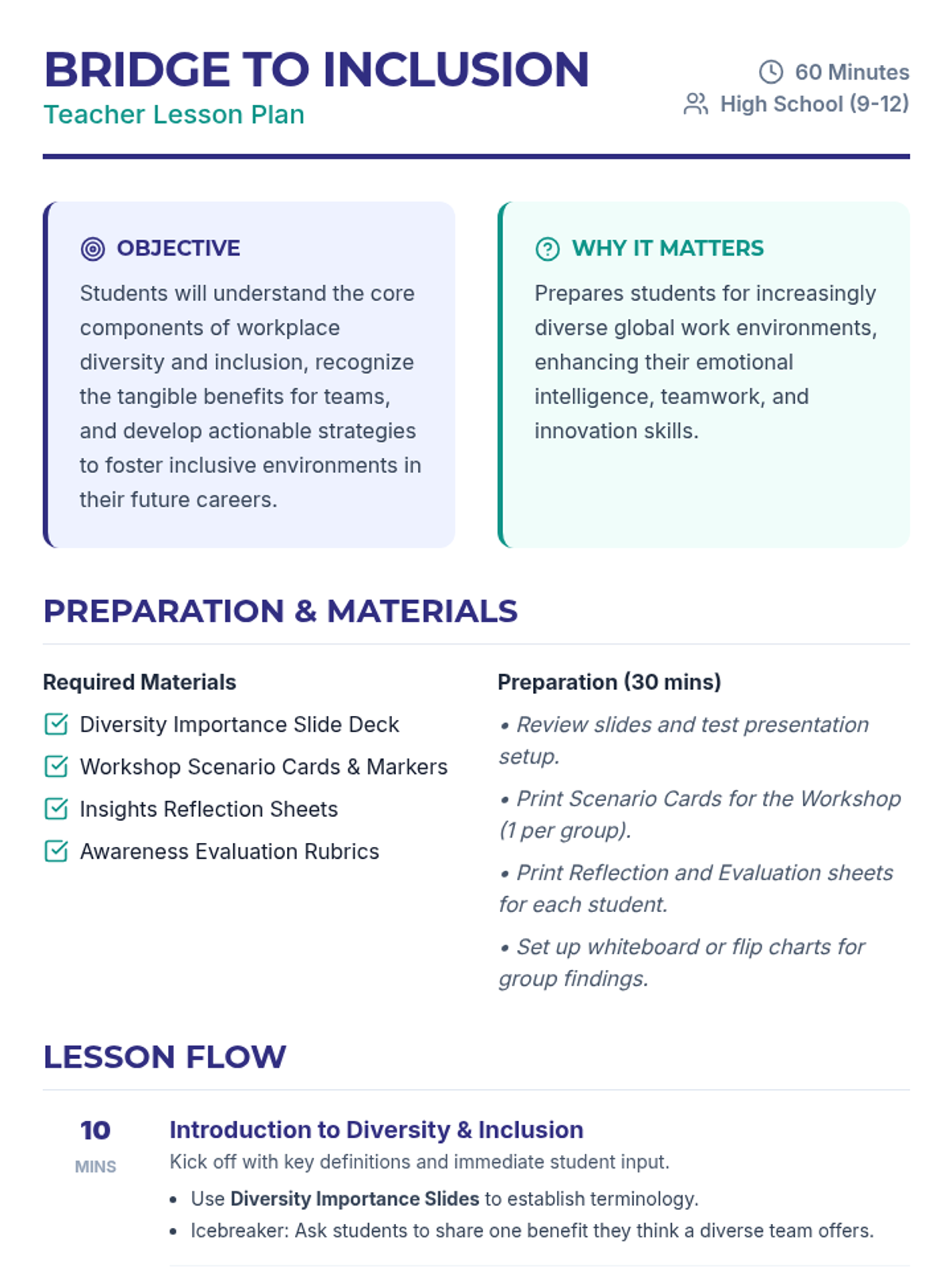
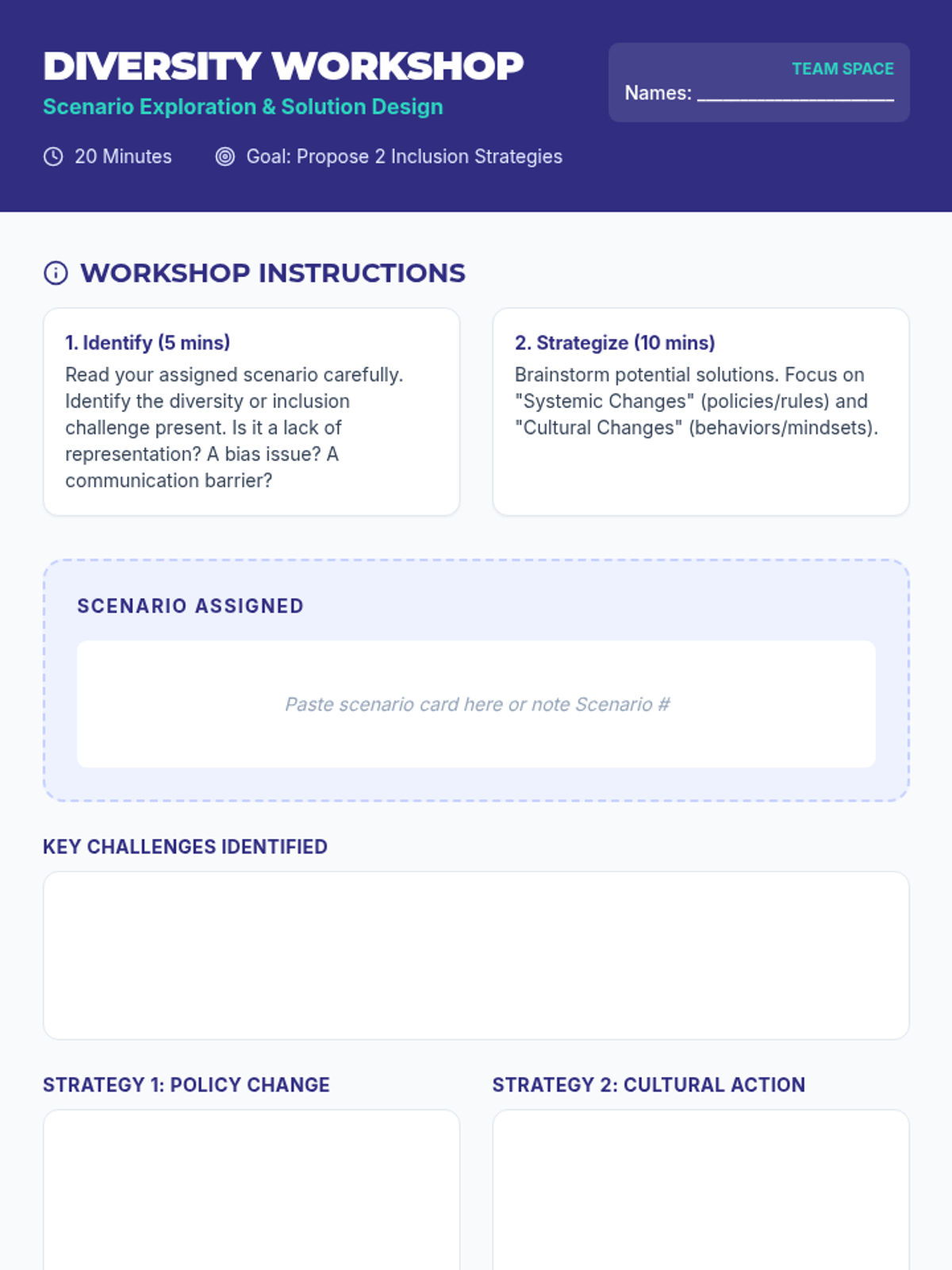
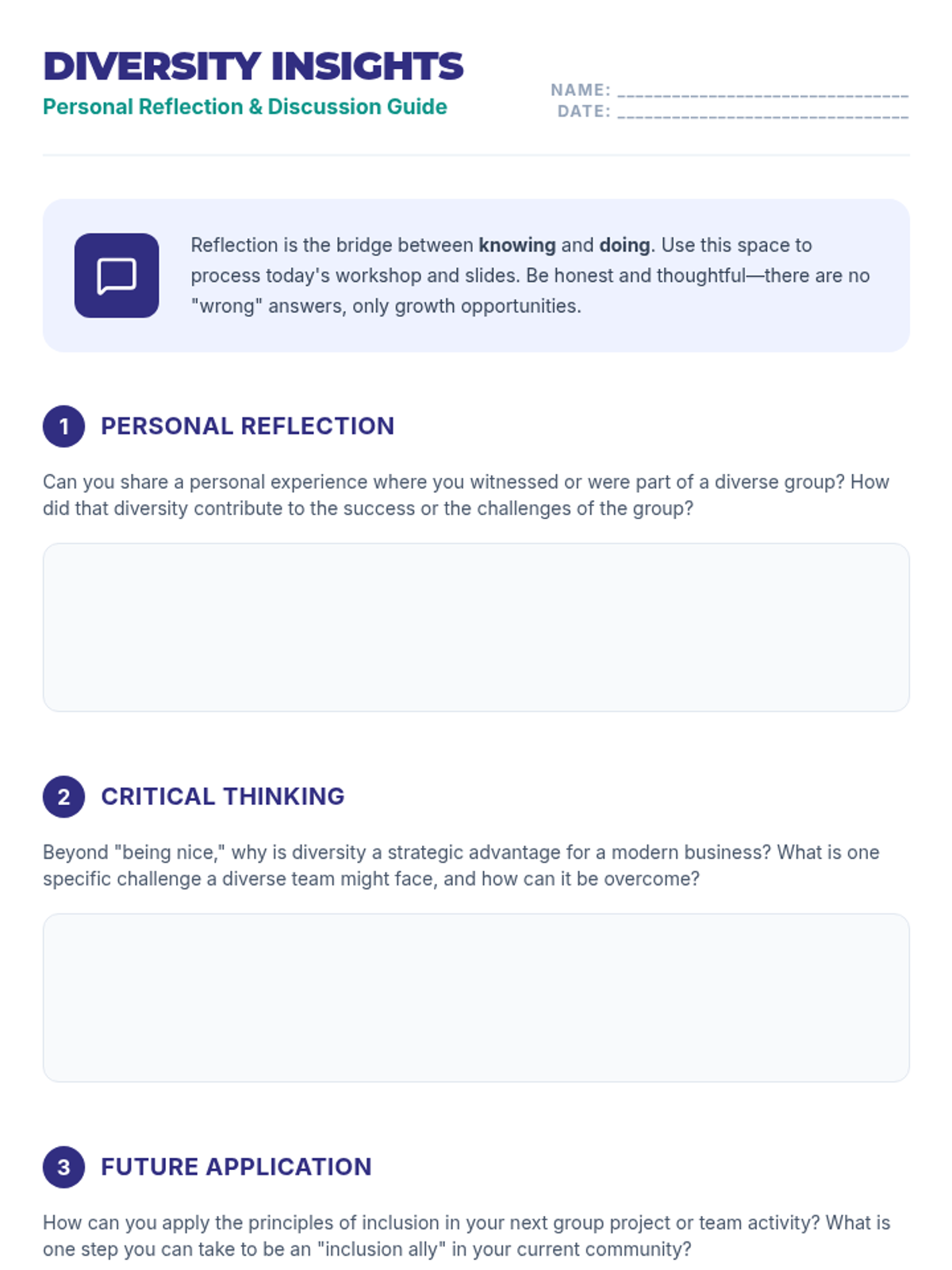
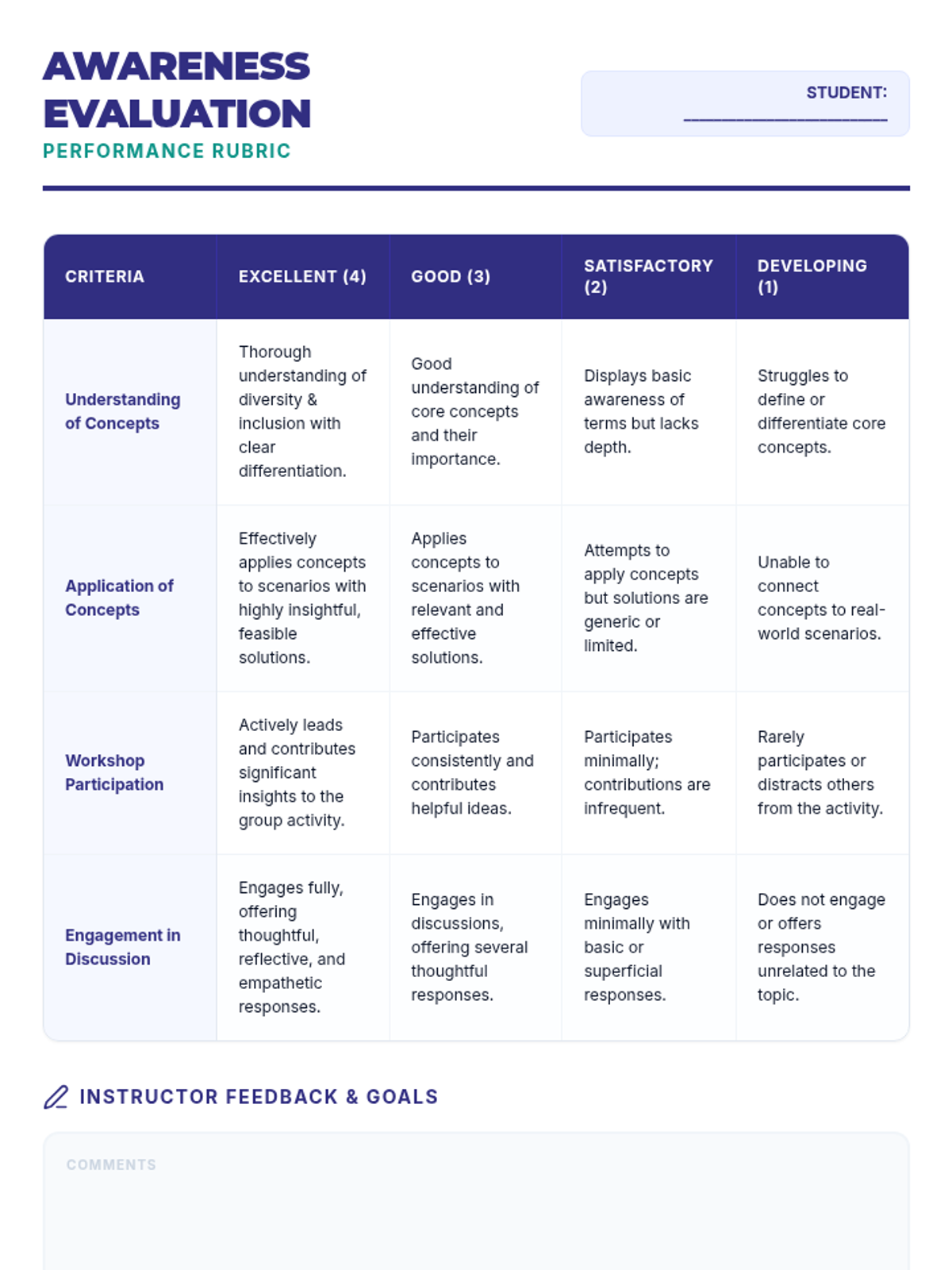
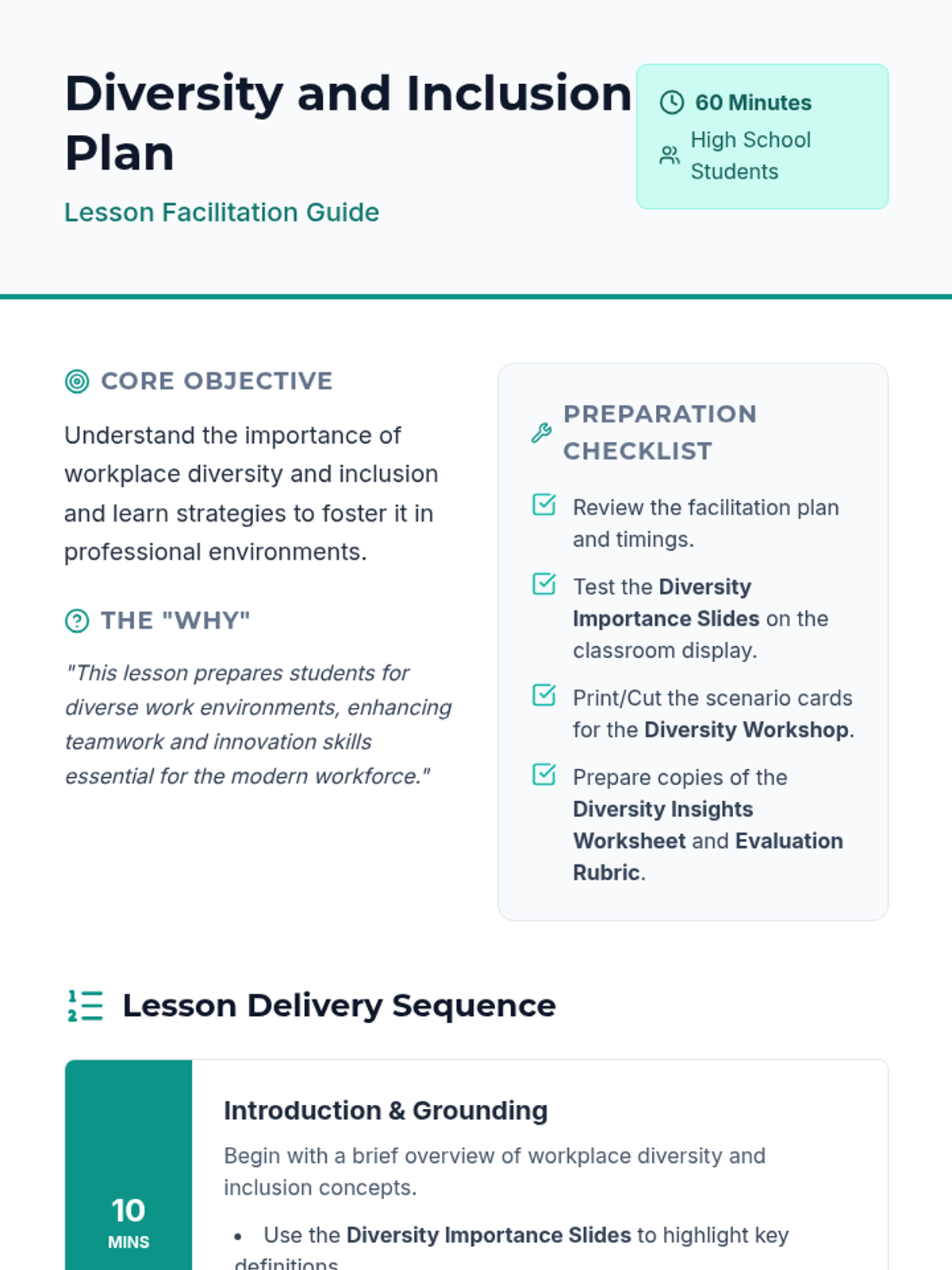
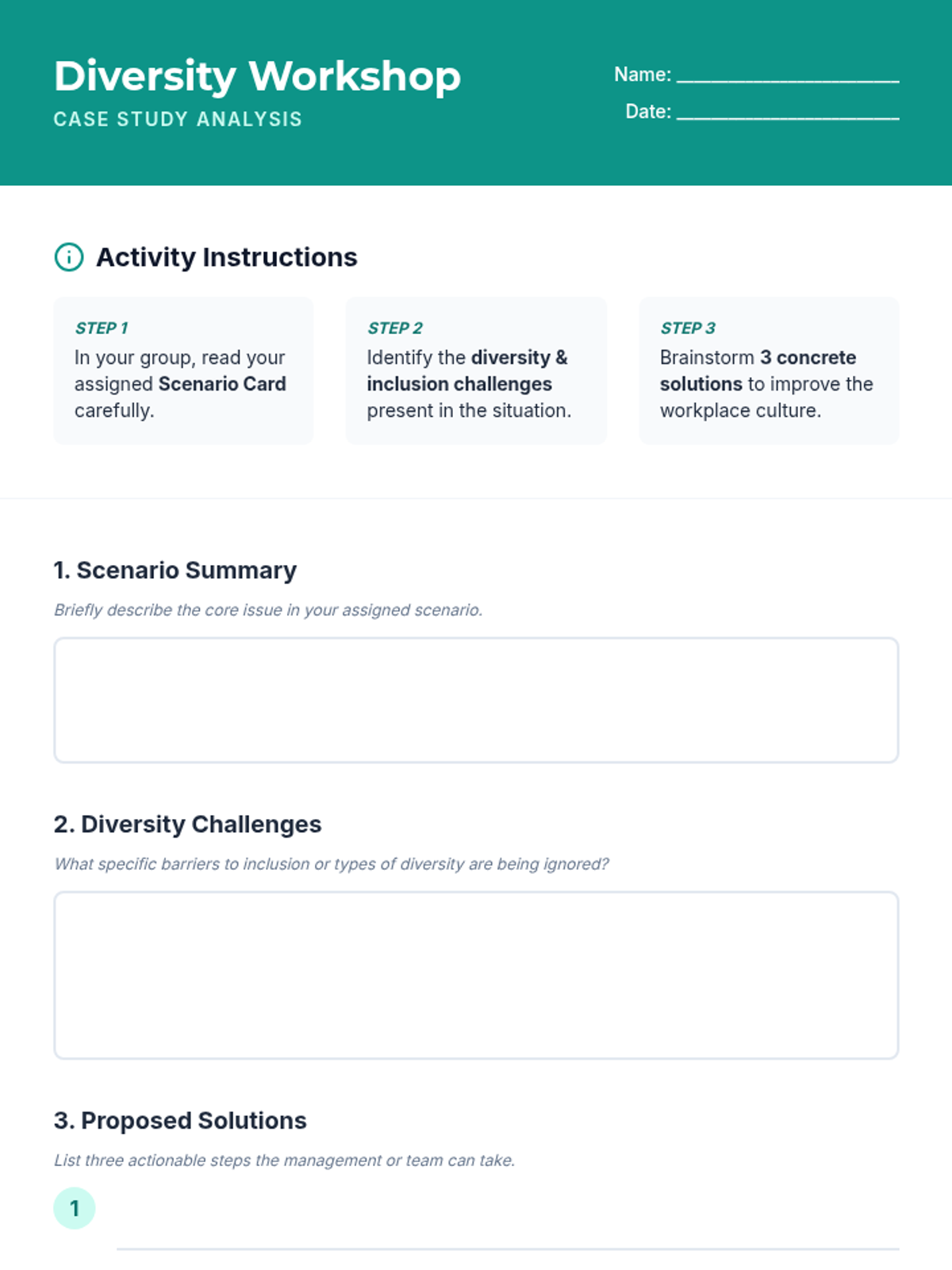
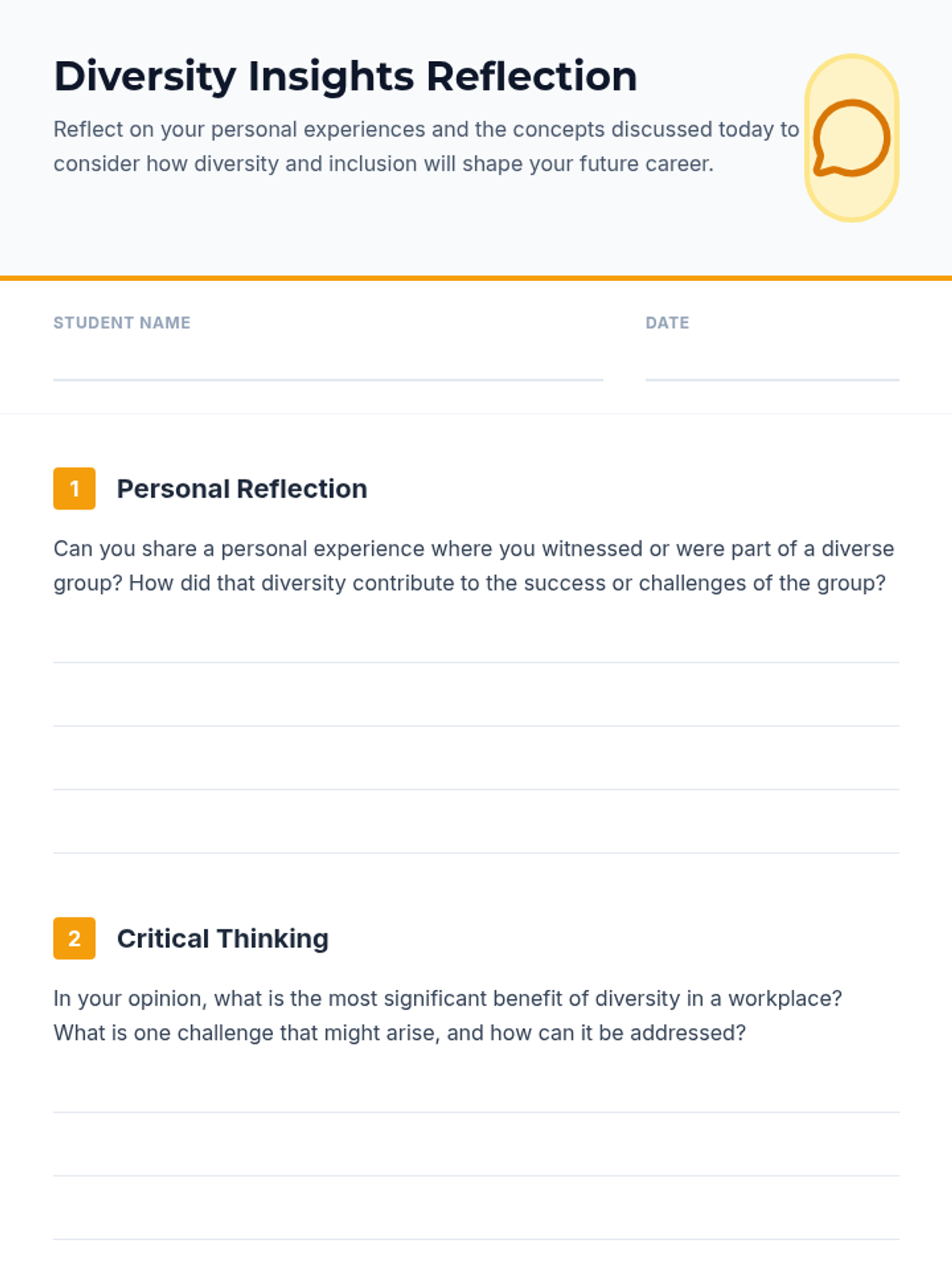
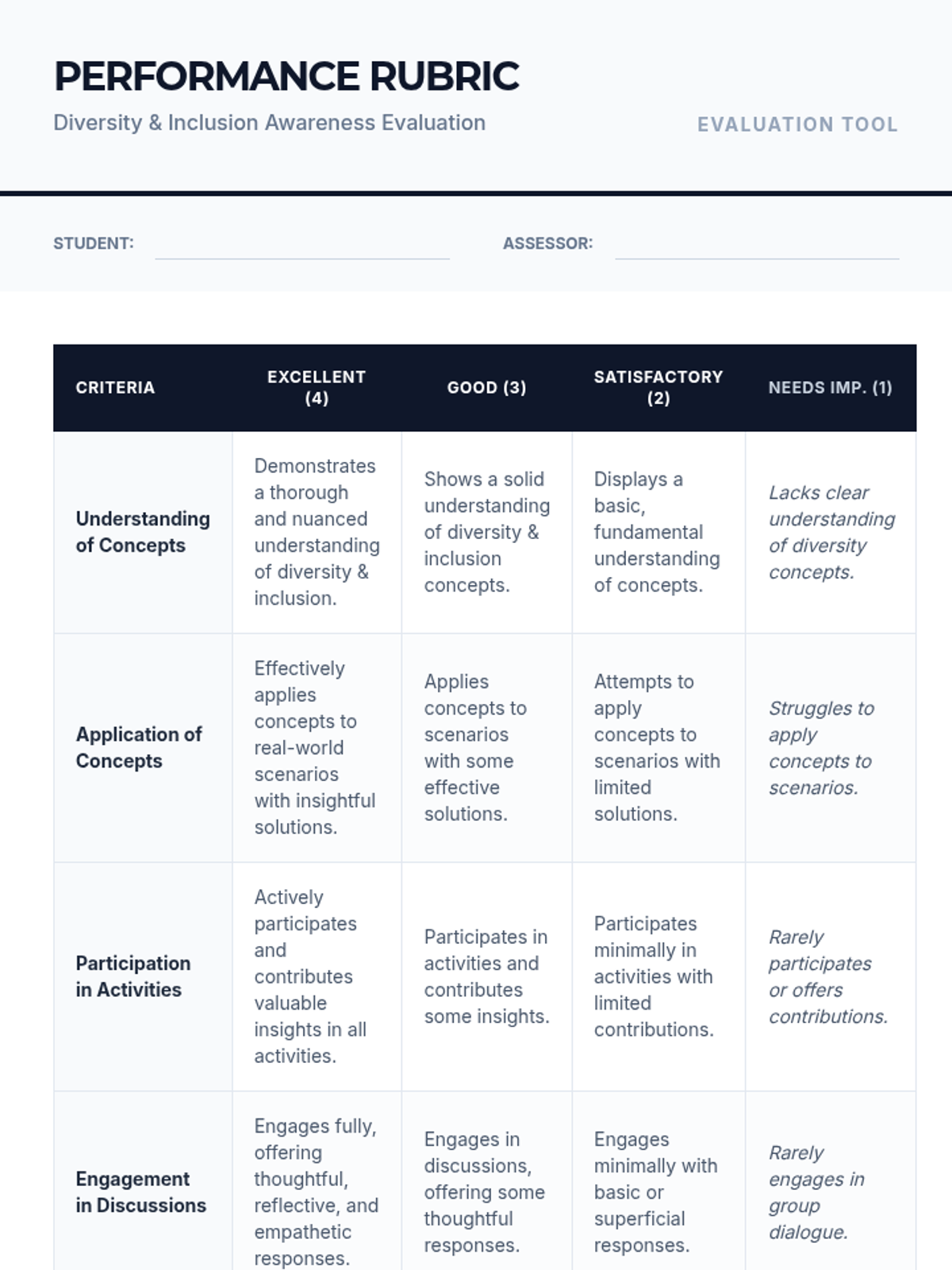
An introduction to workplace diversity and inclusion for high school students, exploring benefits and strategies for fostering inclusive environments through interactive activities and reflection.
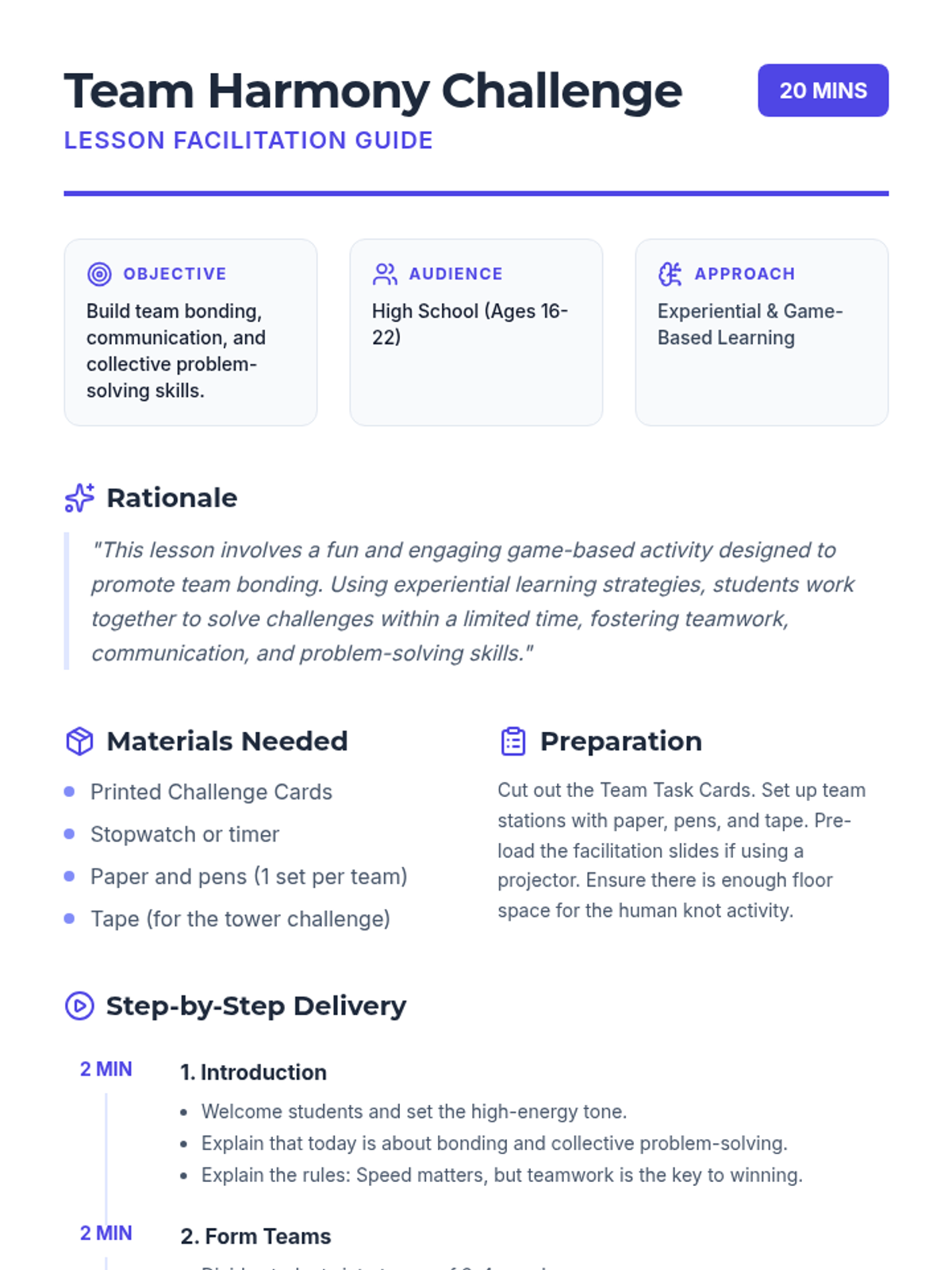
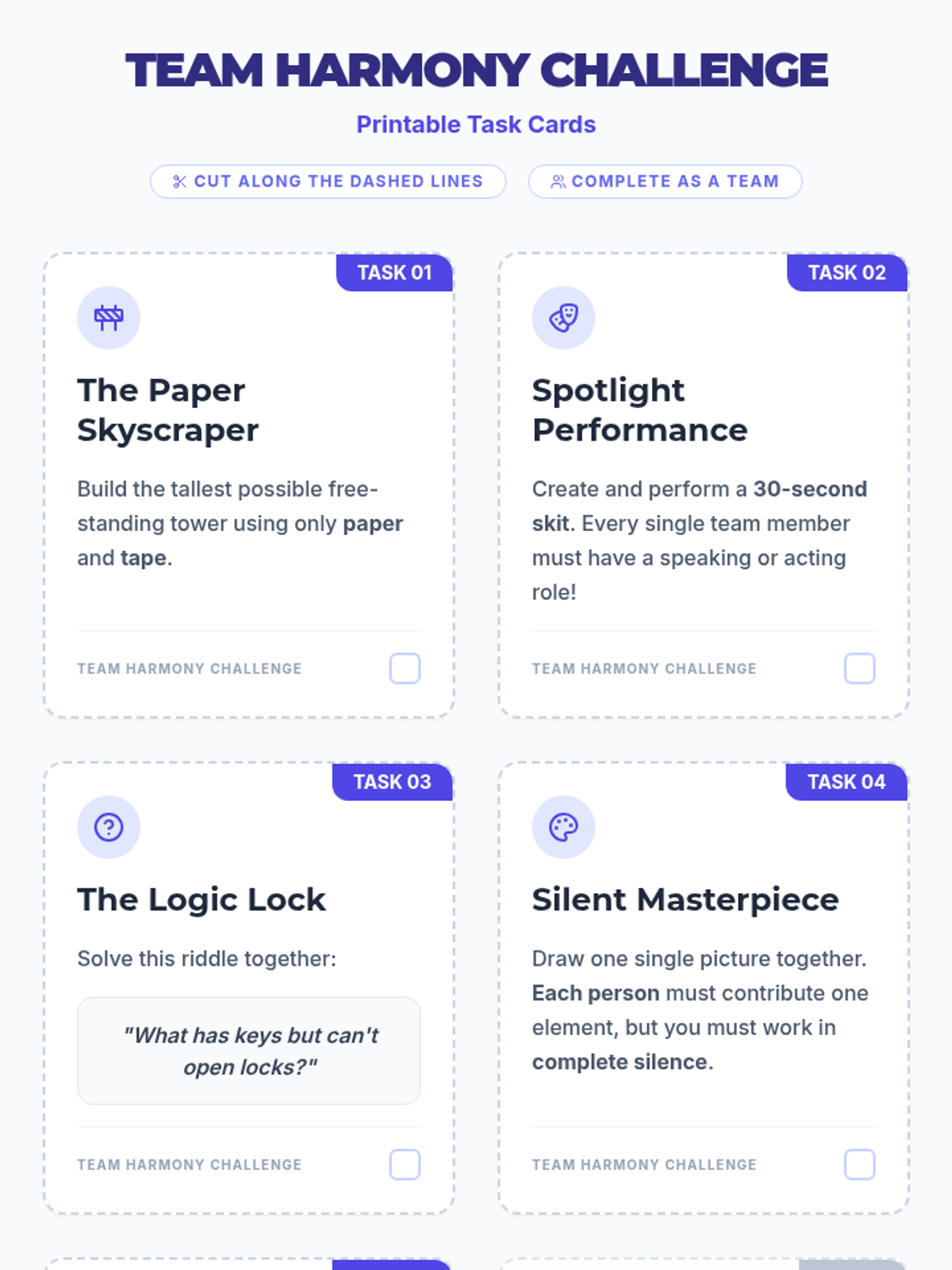
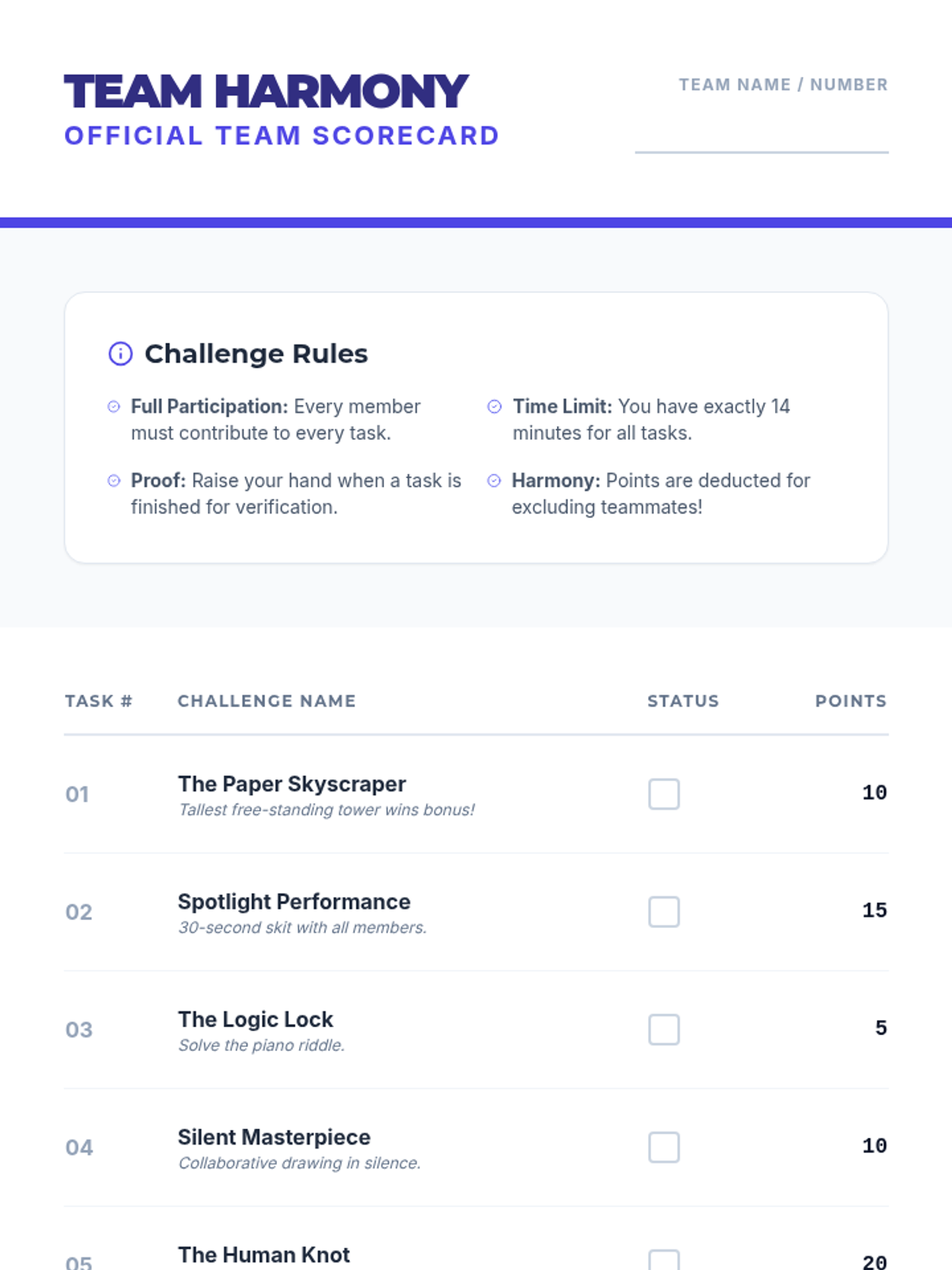
A fast-paced, game-based lesson designed to foster teamwork, communication, and problem-solving through a series of collaborative challenges.
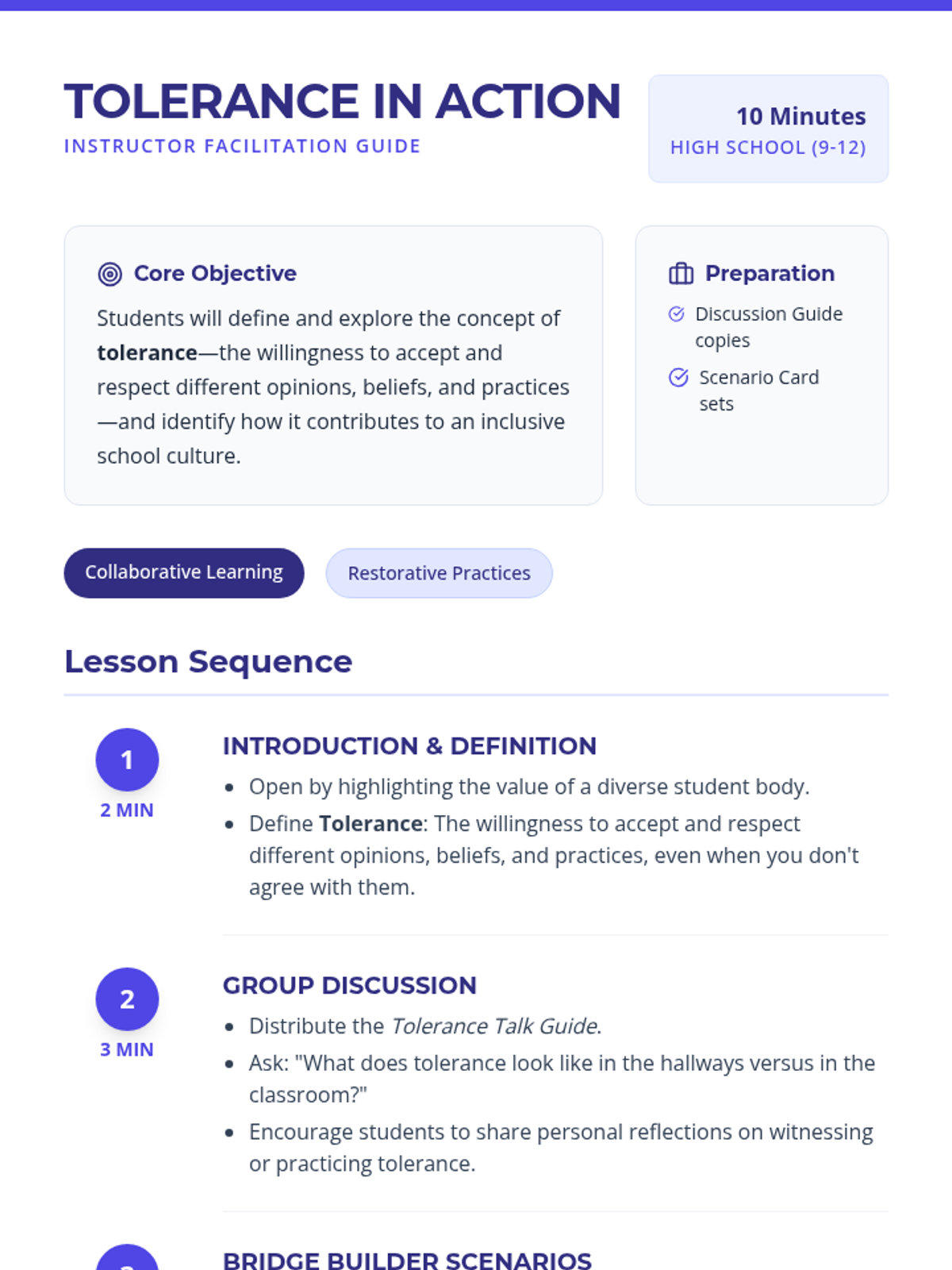
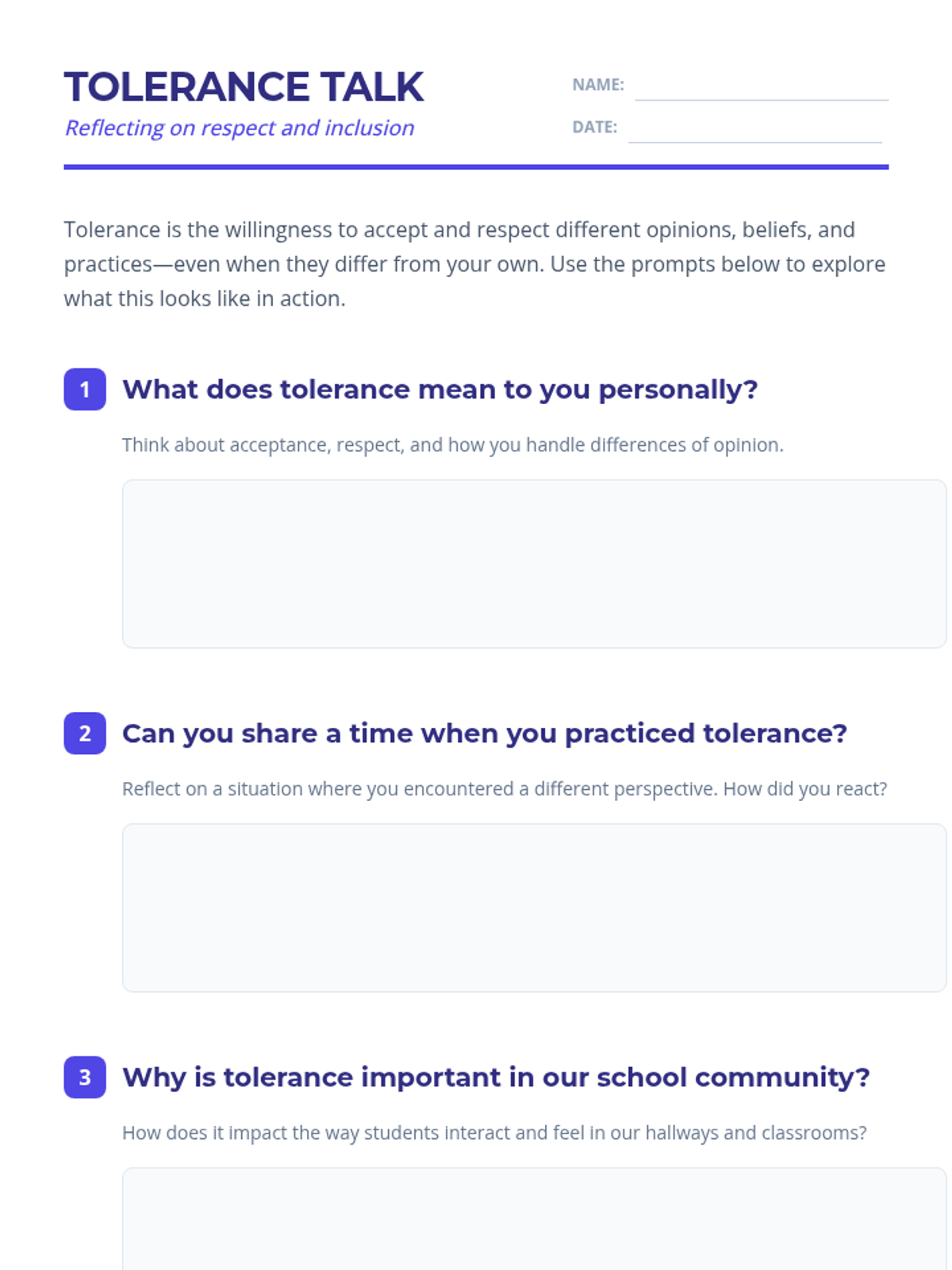
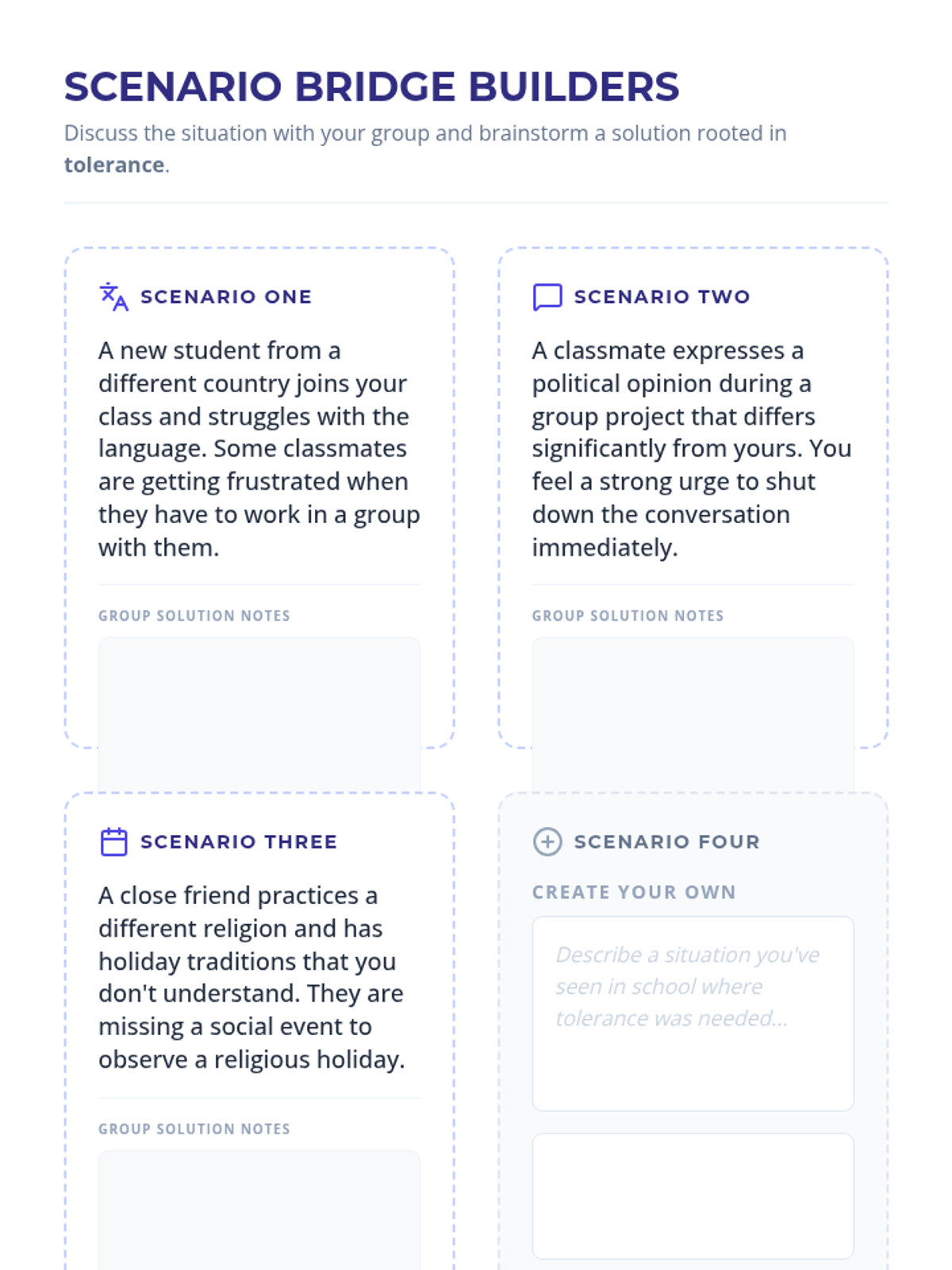
A quick 10-minute lesson designed for high school students to explore the concept of tolerance through structured discussion and collaborative scenario-based problem-solving. It focuses on fostering a respectful and inclusive school culture.
An introduction to workplace diversity and its importance for high school students, focusing on the benefits of diverse work environments and strategies for fostering inclusion.
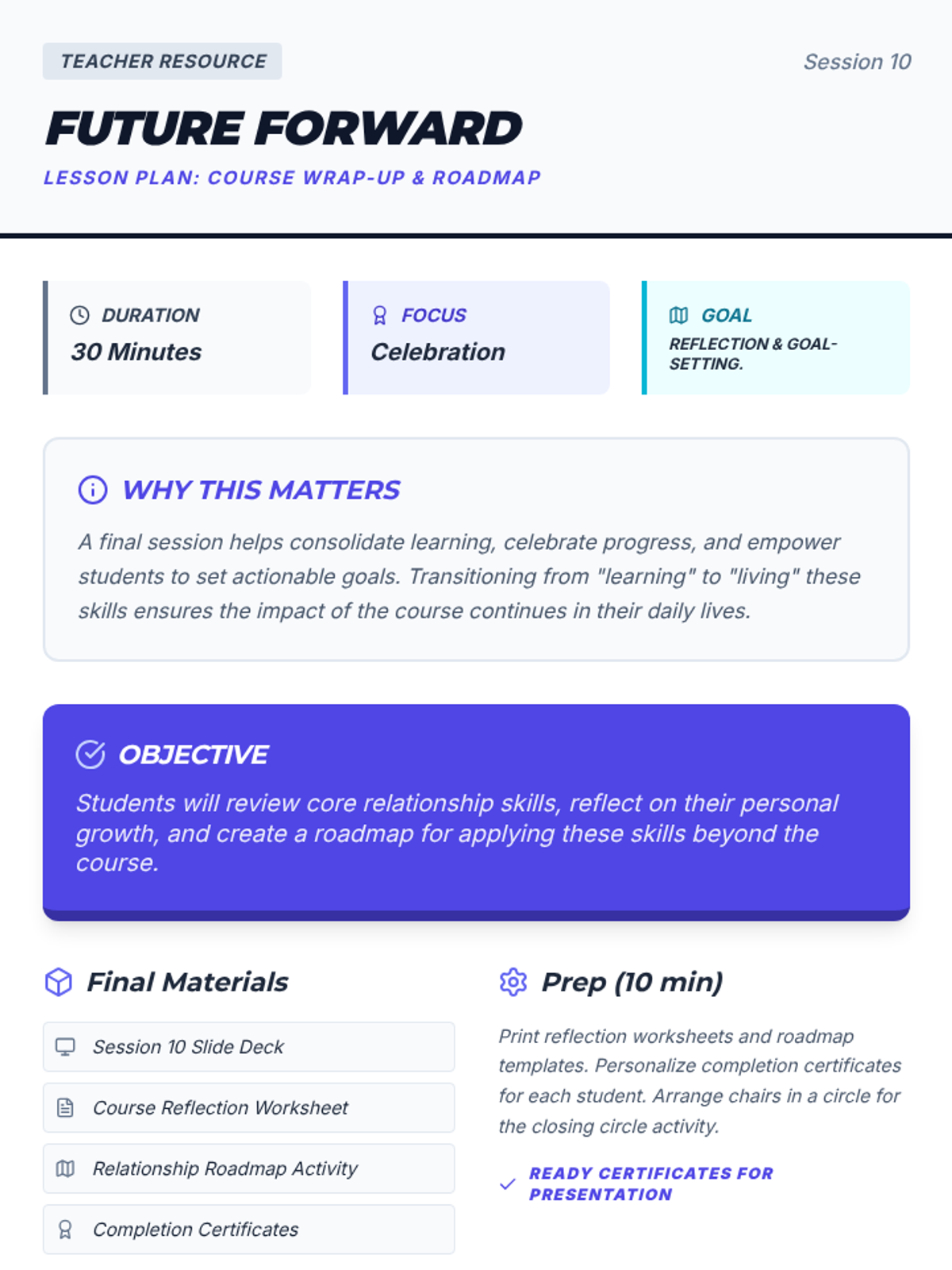
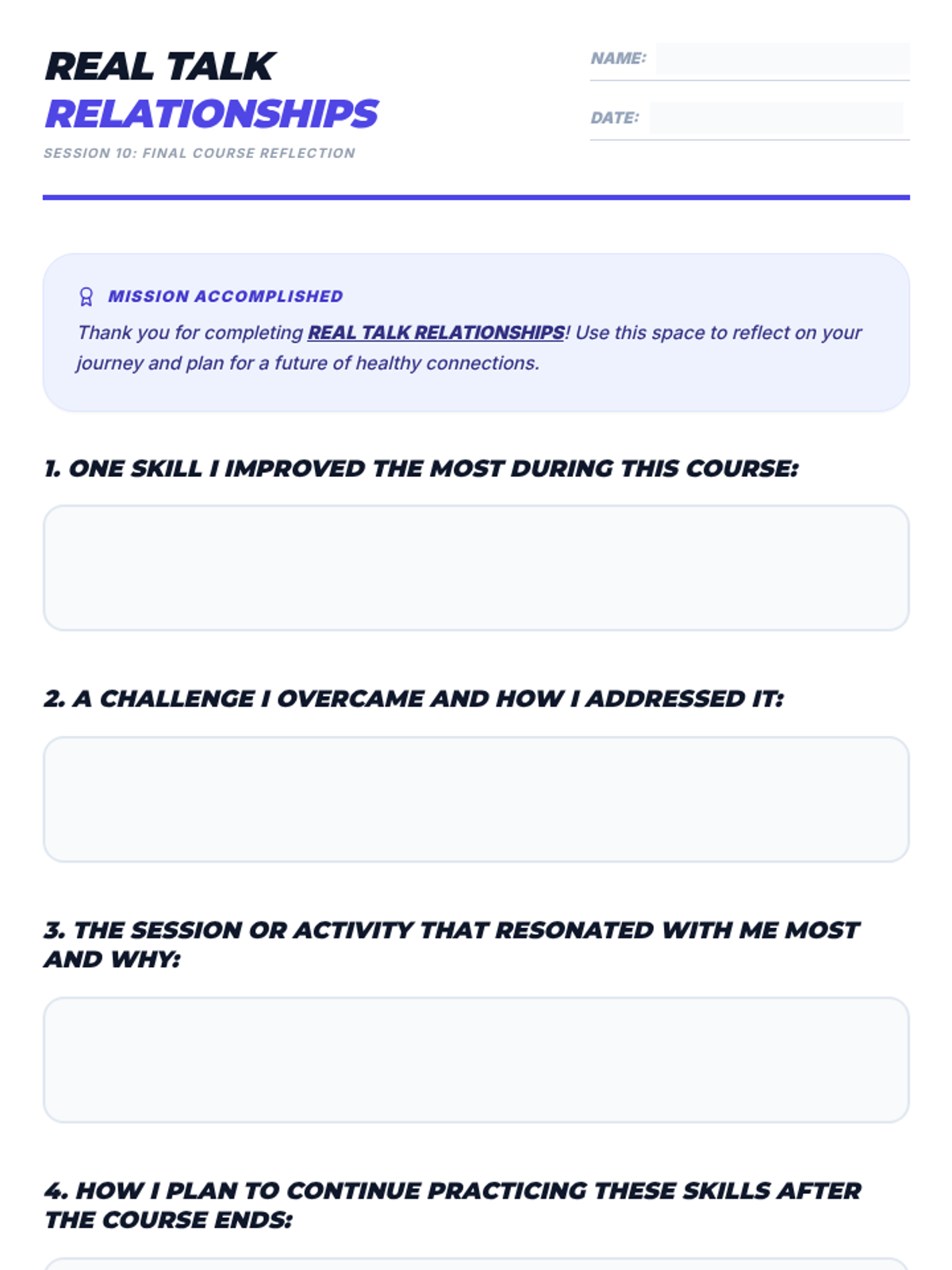
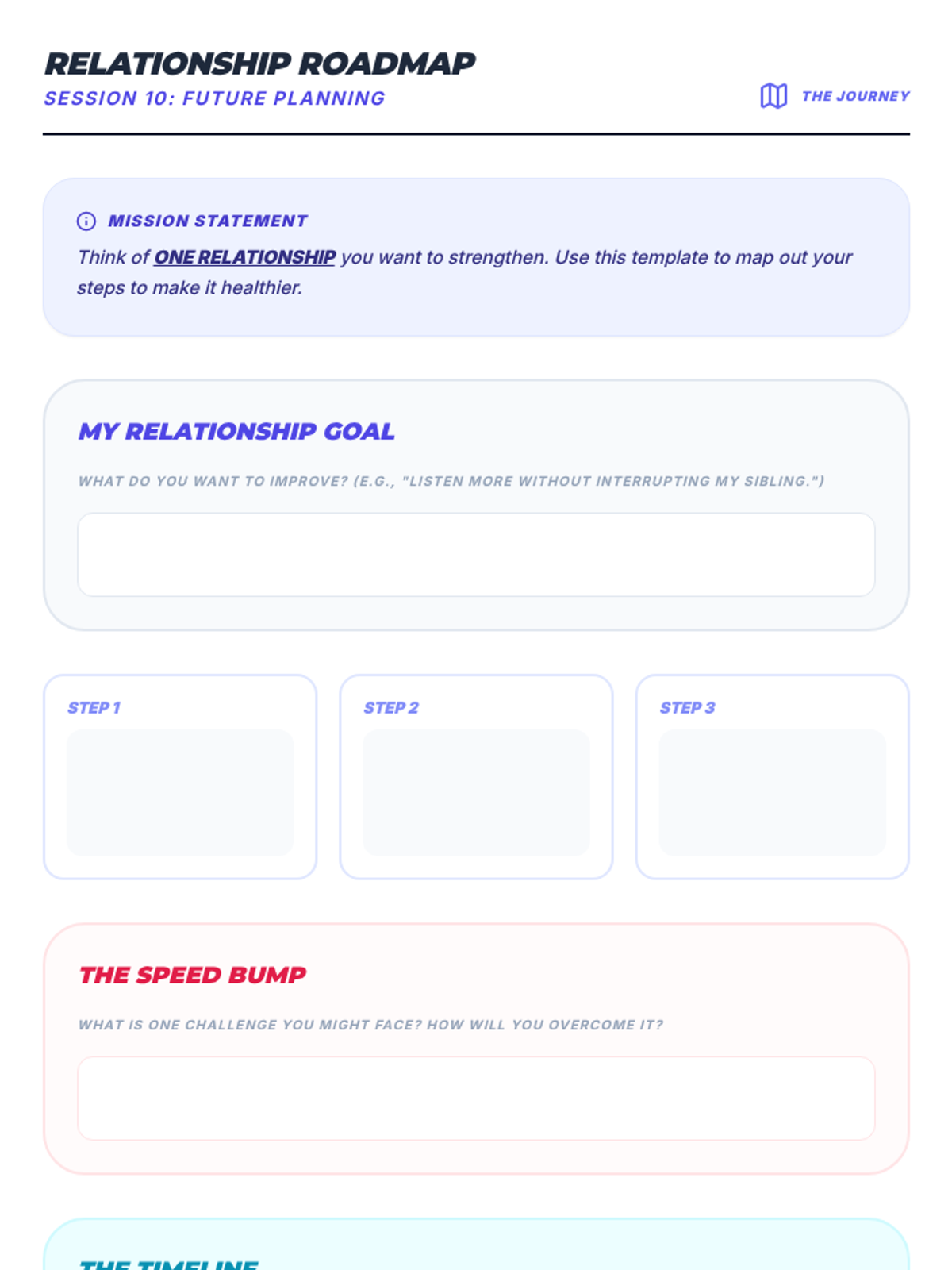
Final review of core skills, personal growth reflection, and creation of a relationship roadmap for the future.
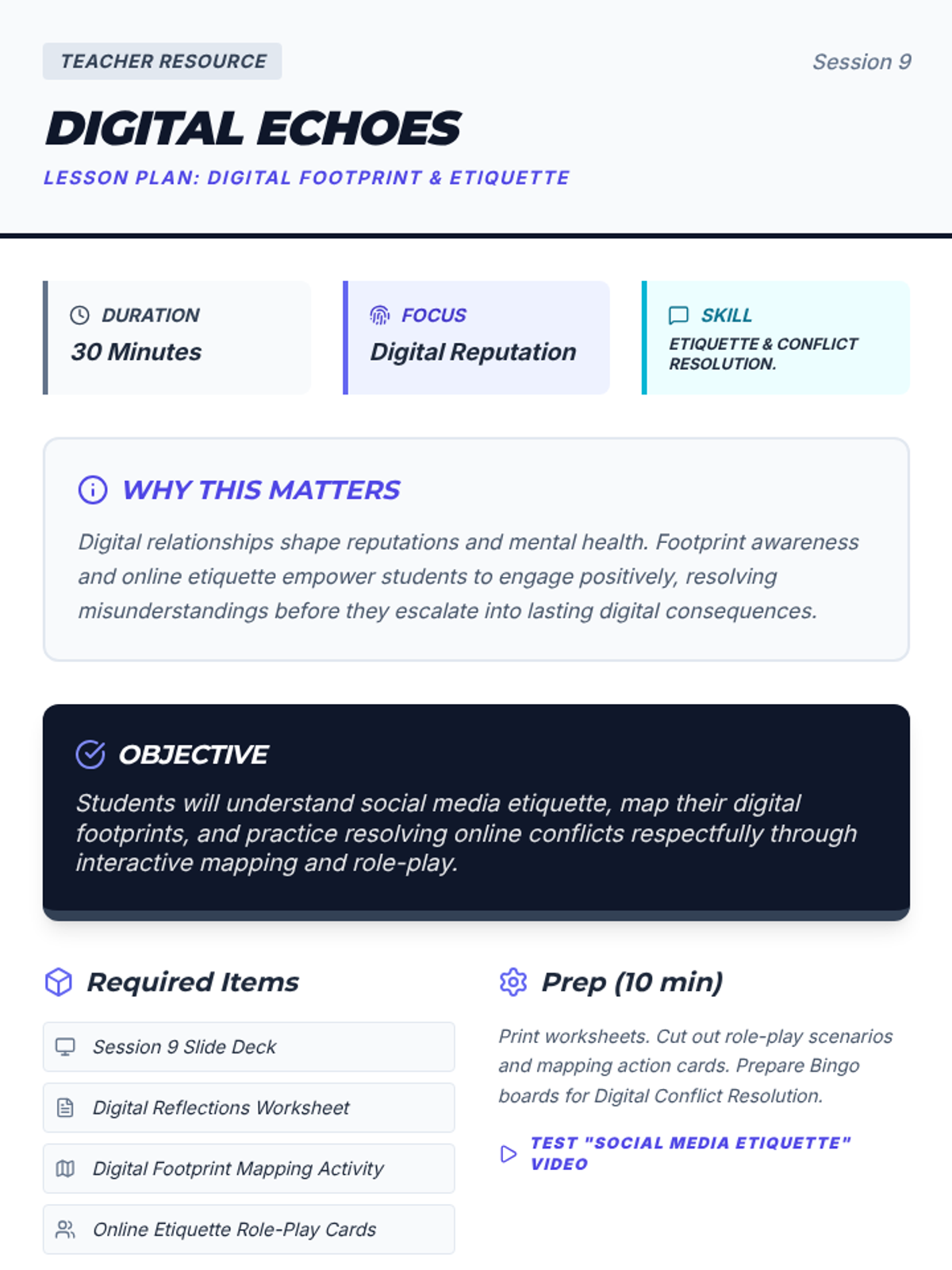
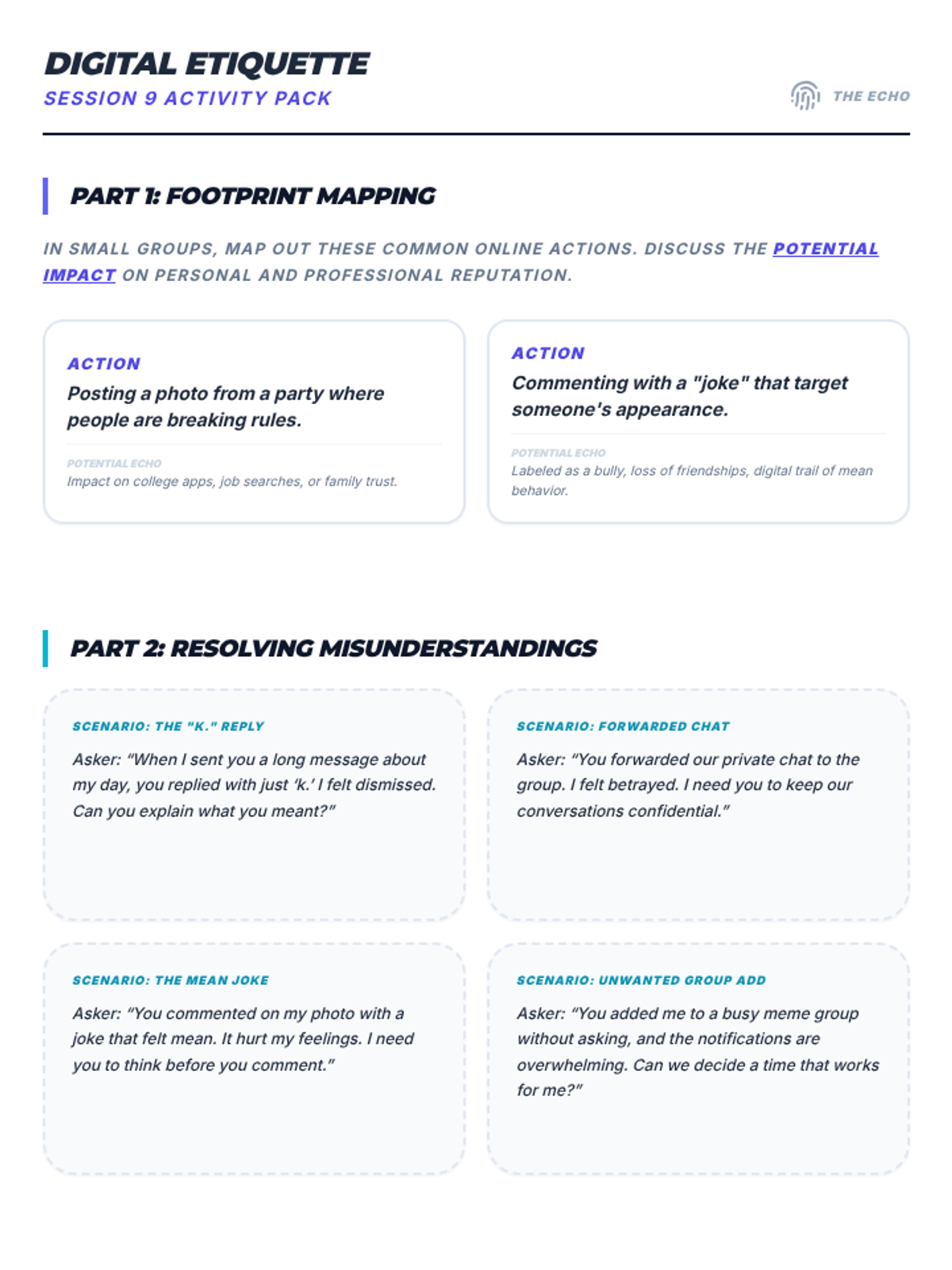
Examines the long-term impact of digital actions and explores social media etiquette.
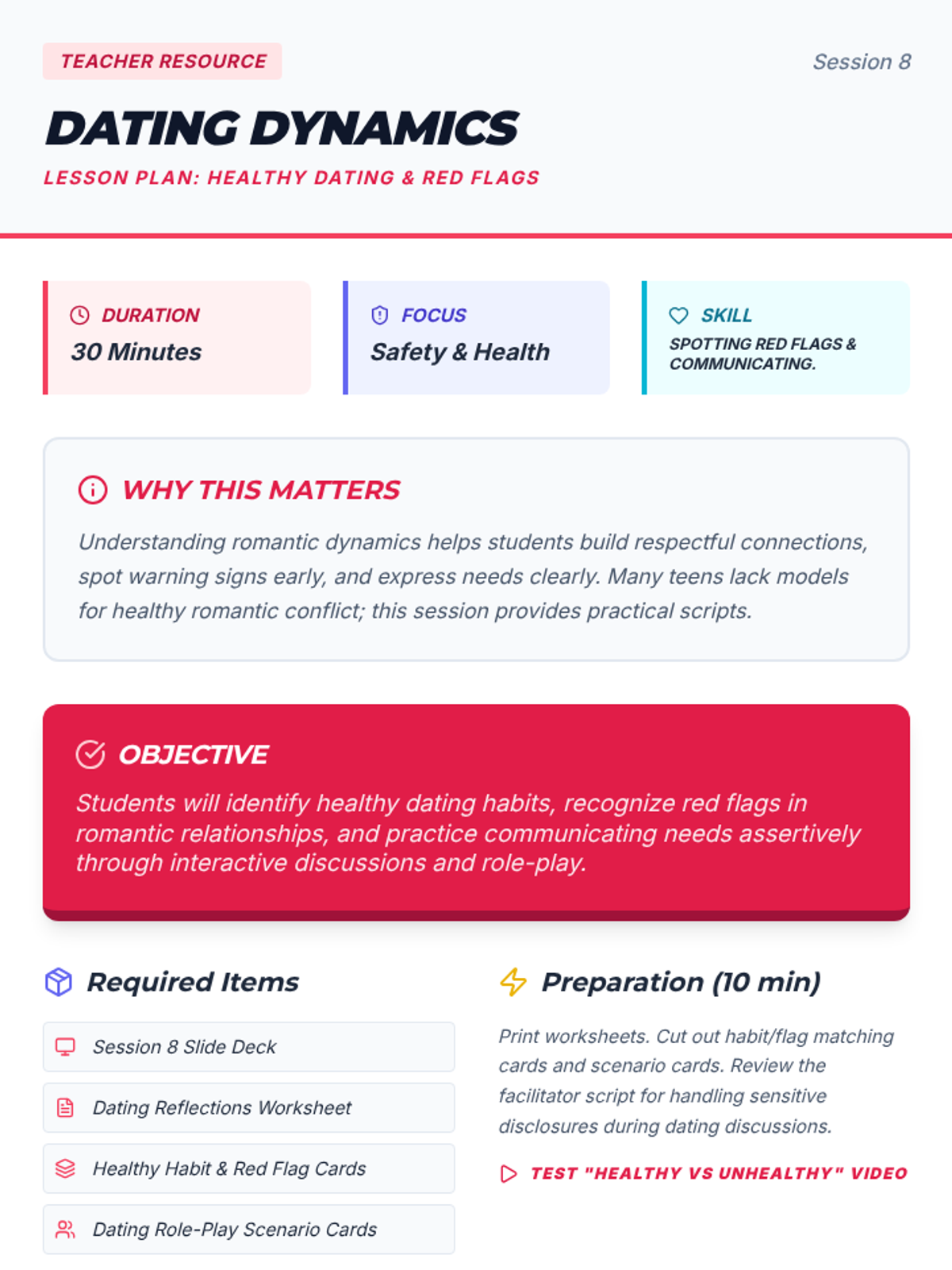
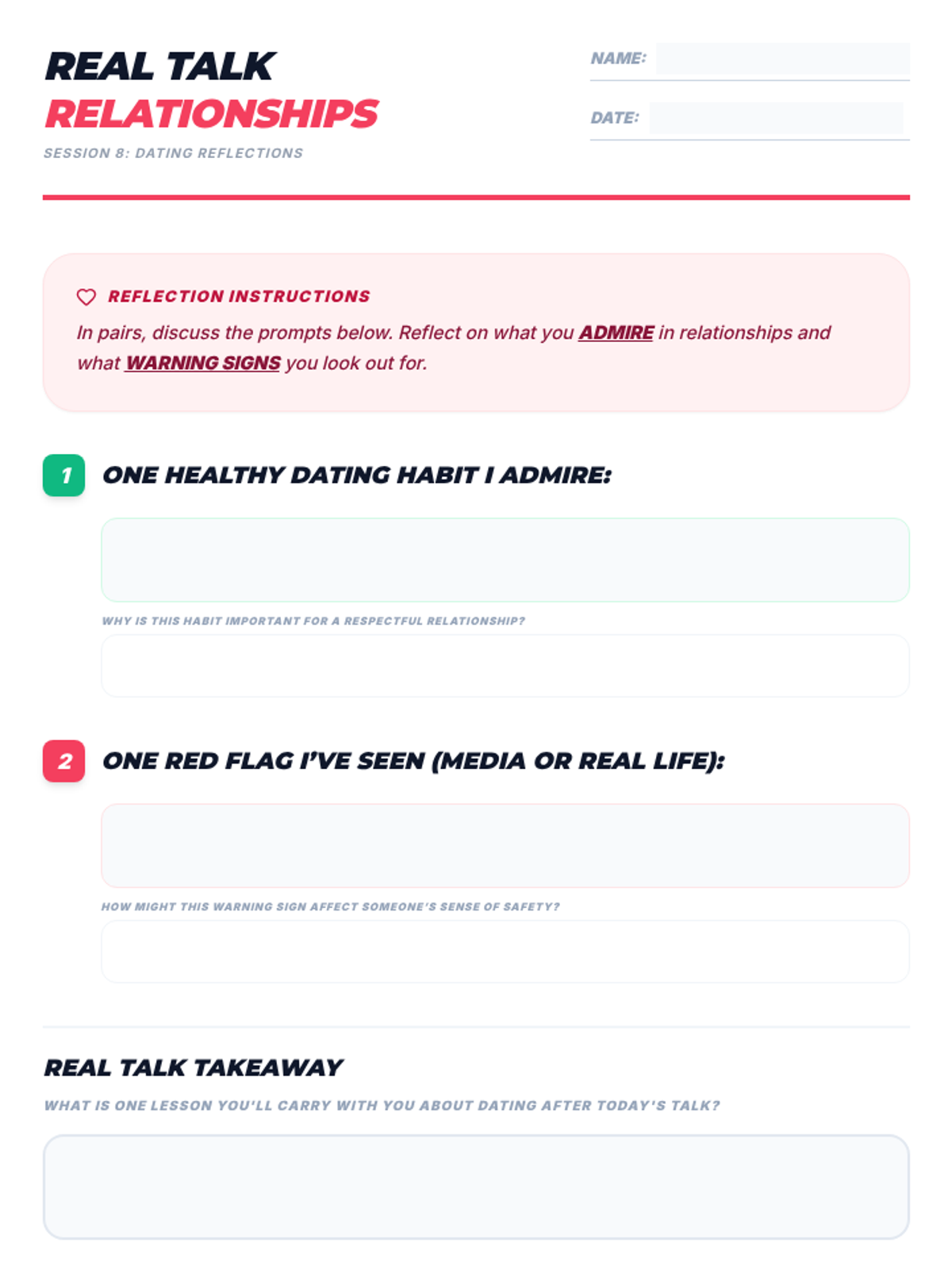
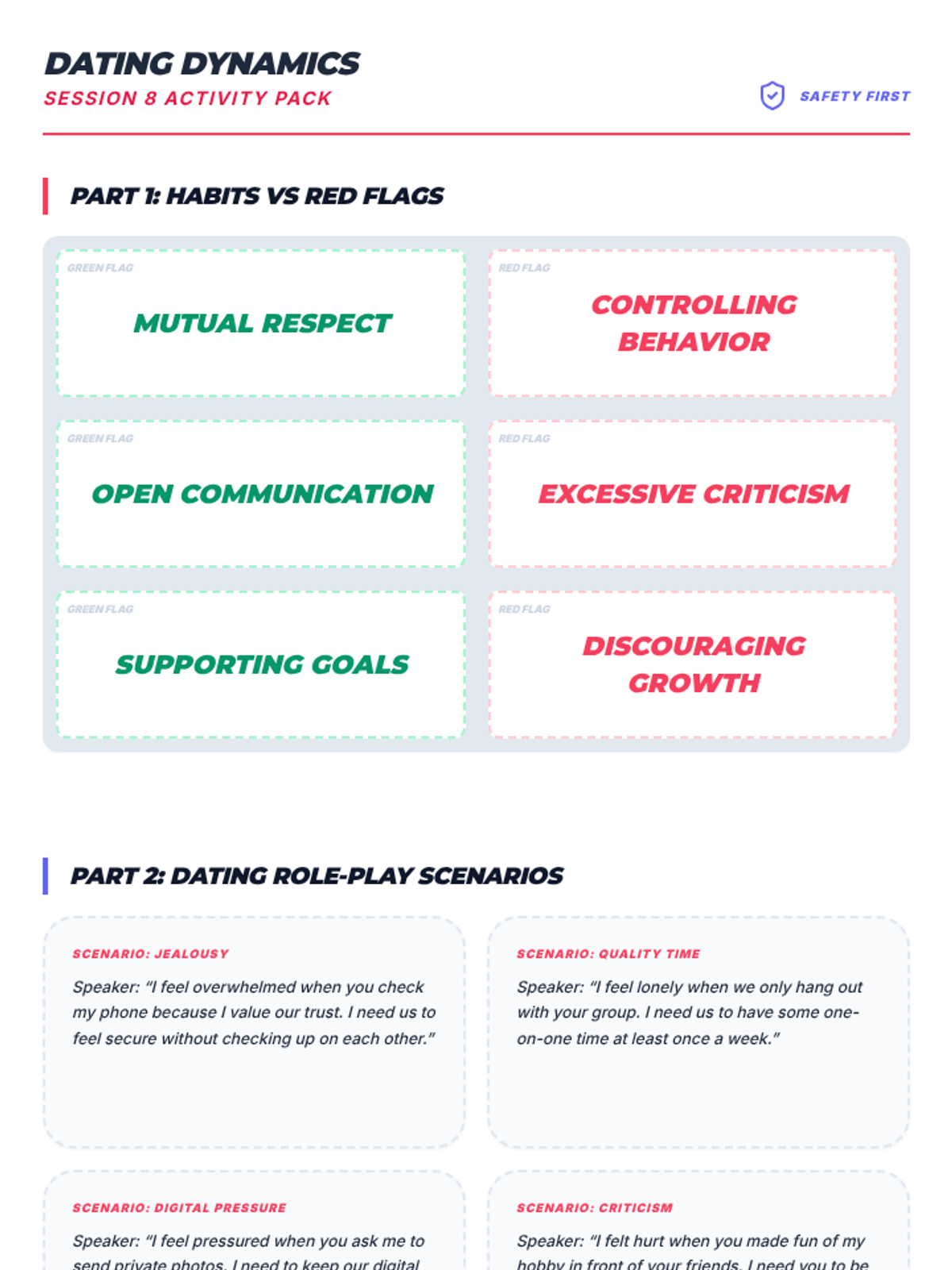
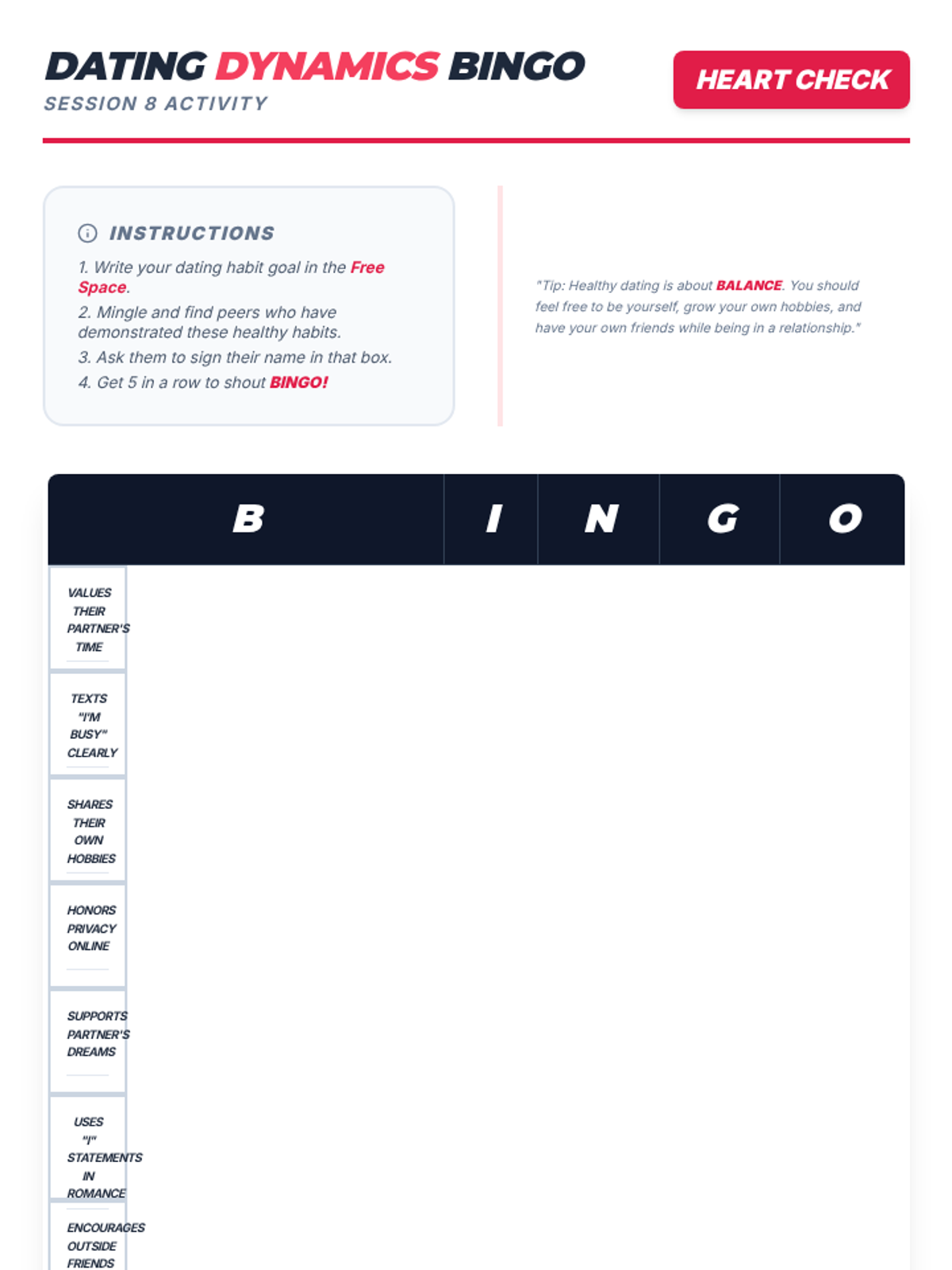
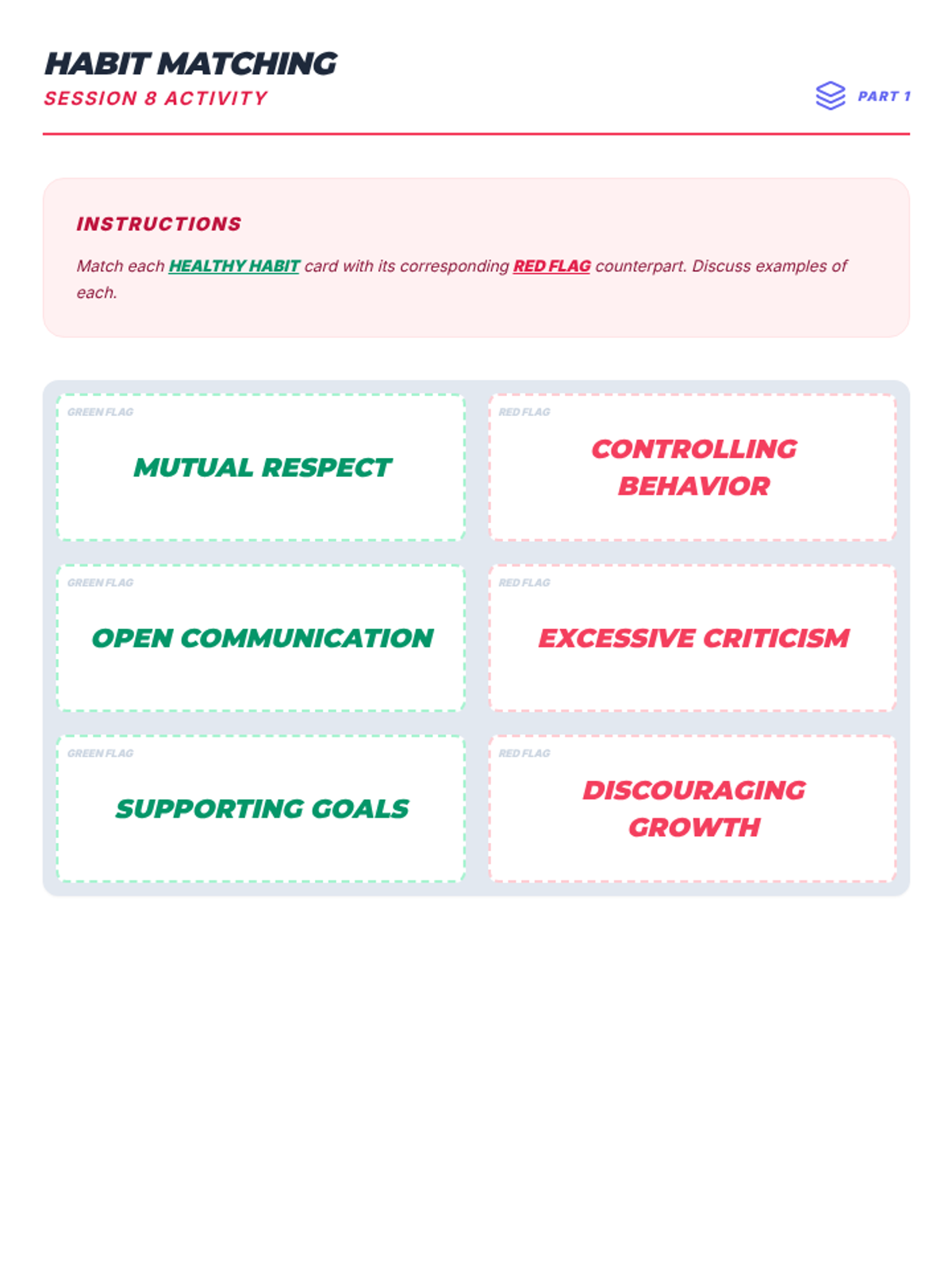
Discusses healthy romantic dynamics and how to identify "red flags" and "green flags" in dating.
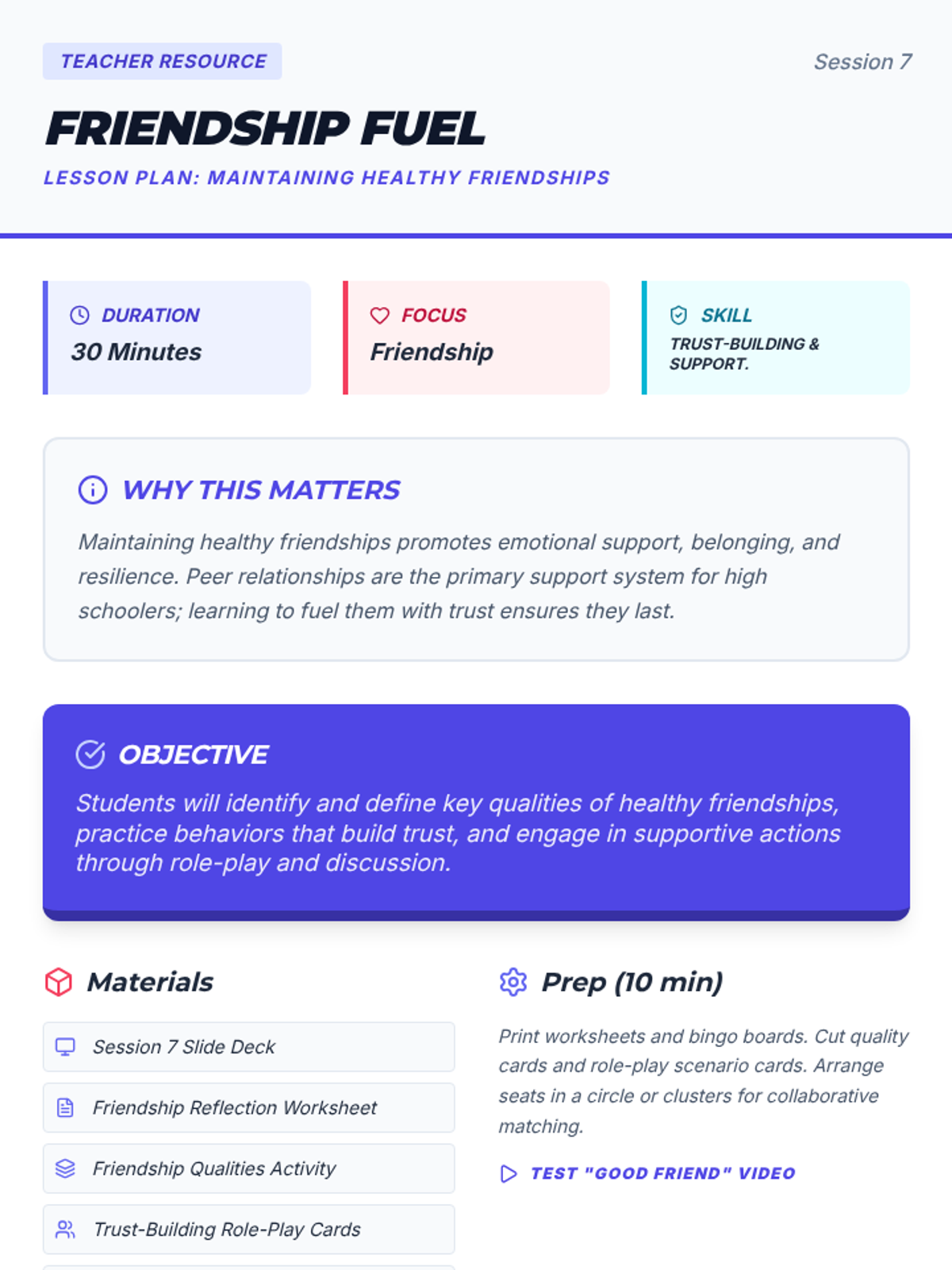
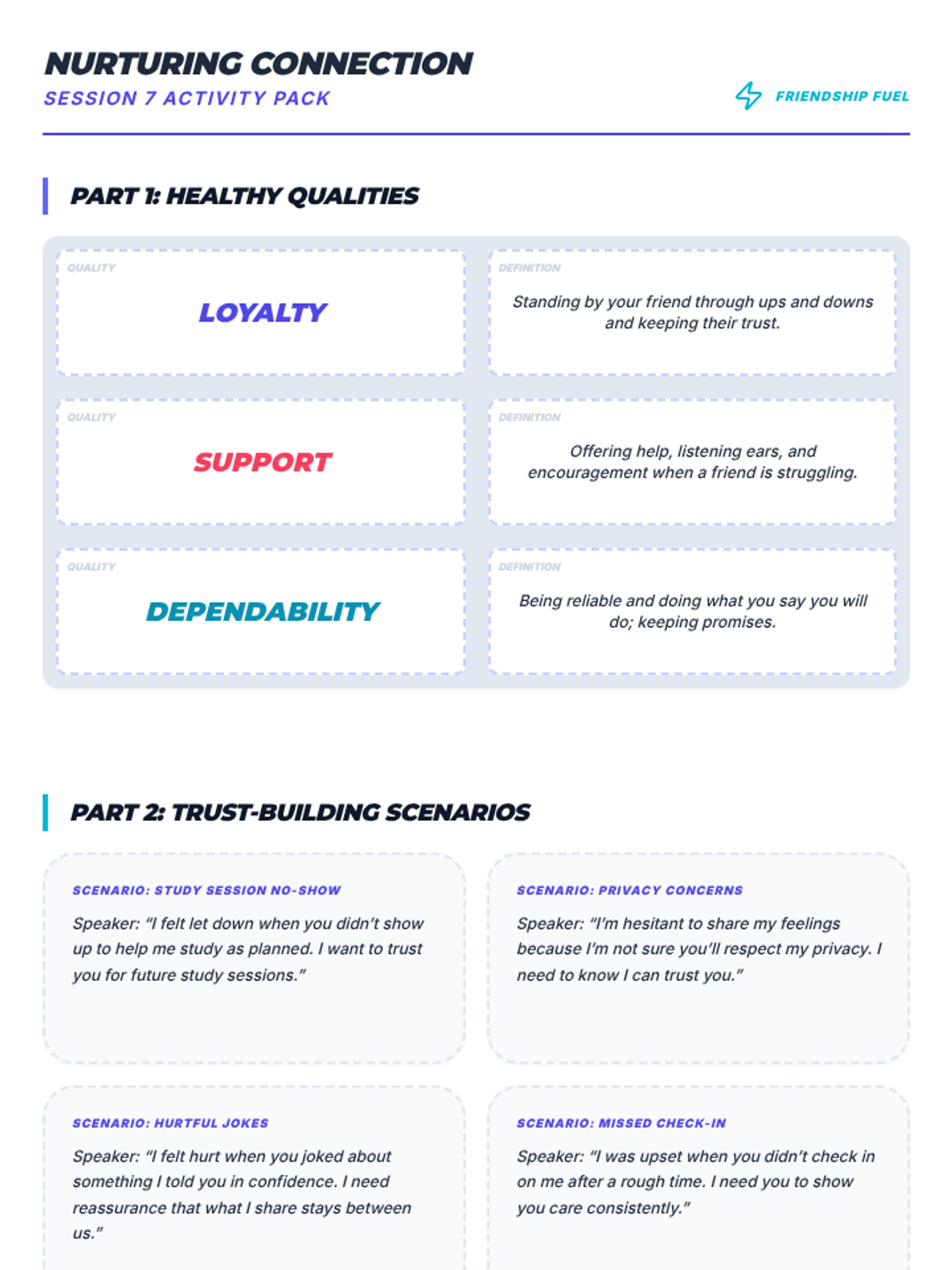
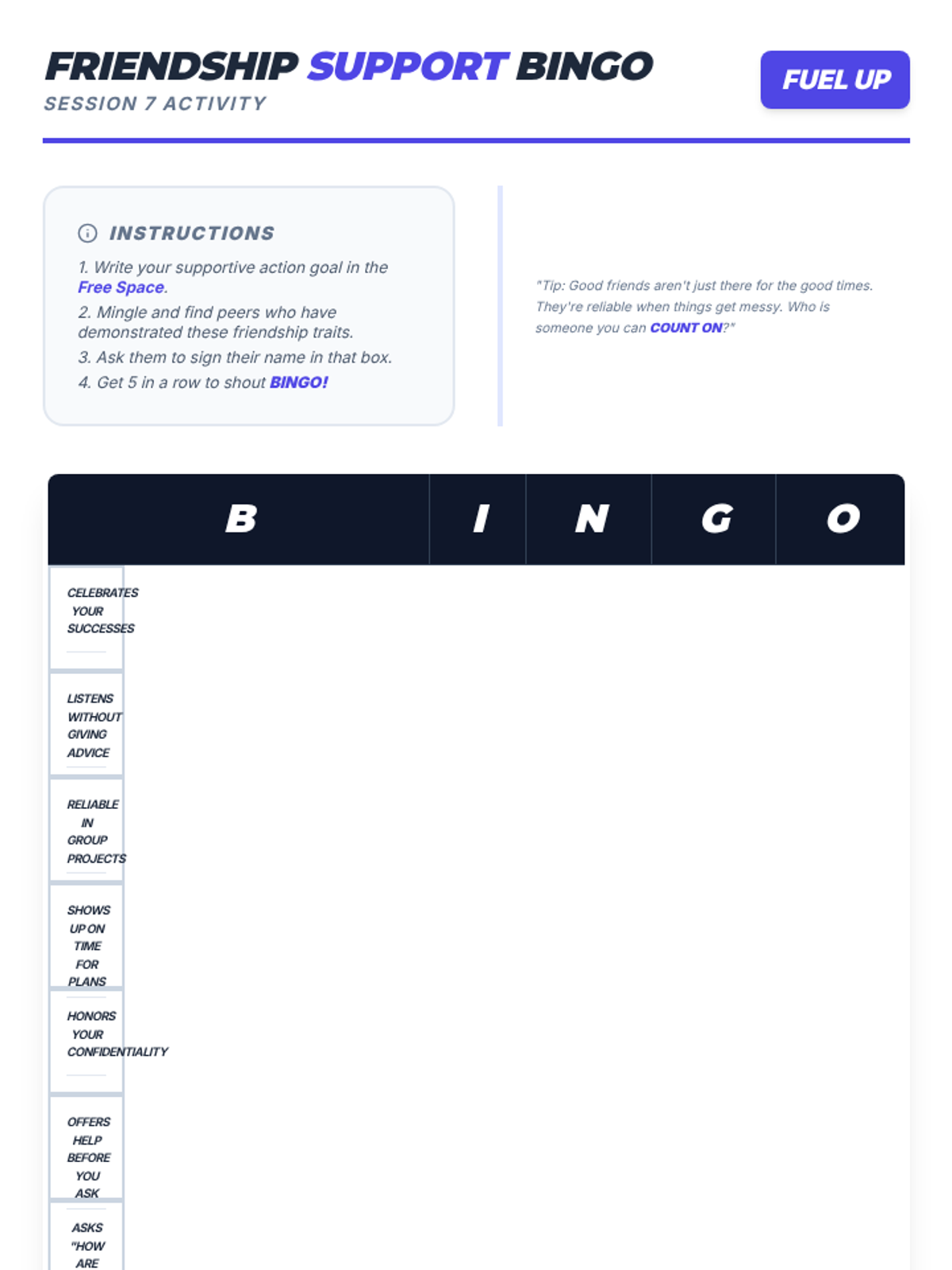
Identifies qualities of healthy friendships and practices trust-building behaviors.
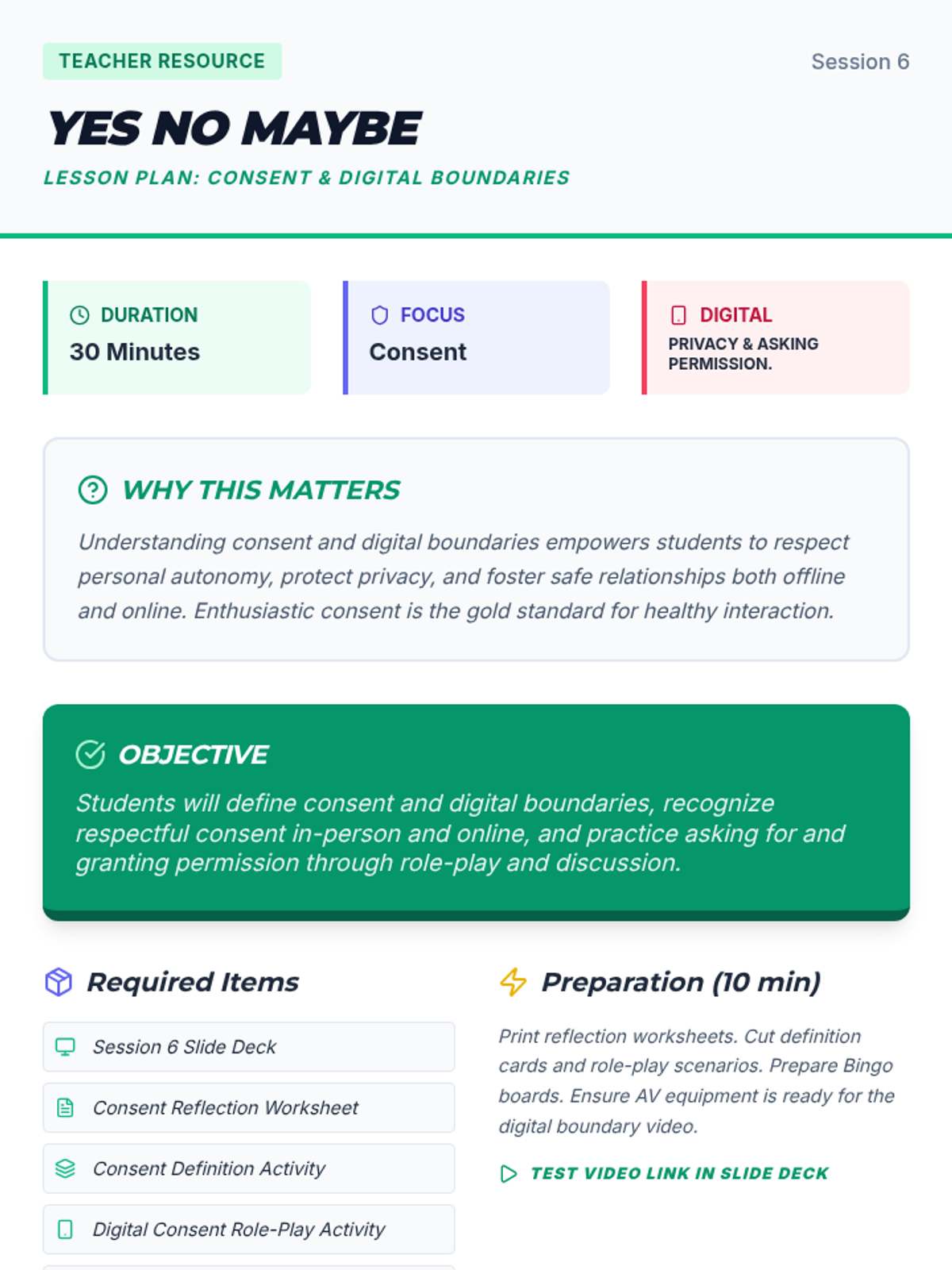
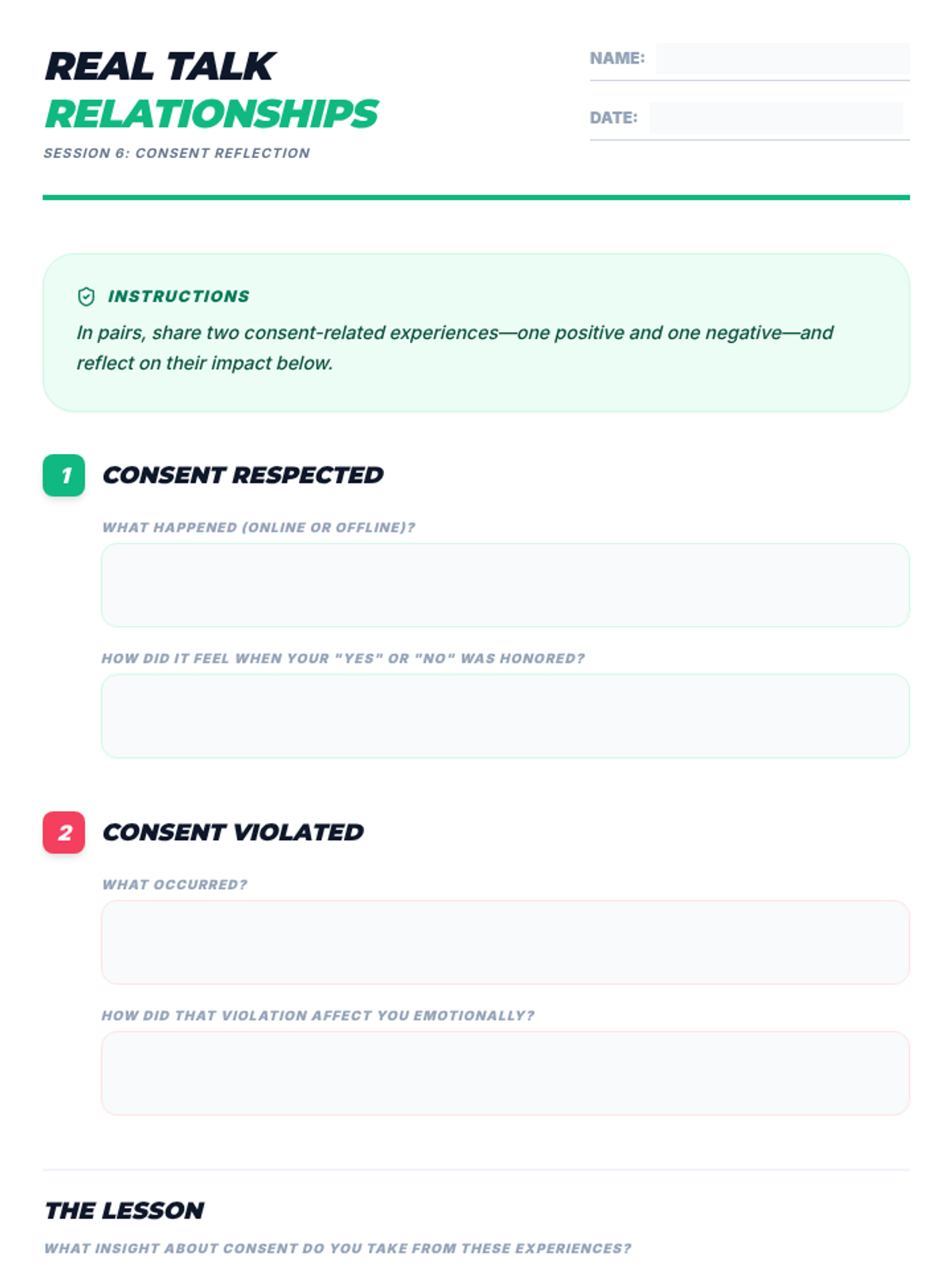
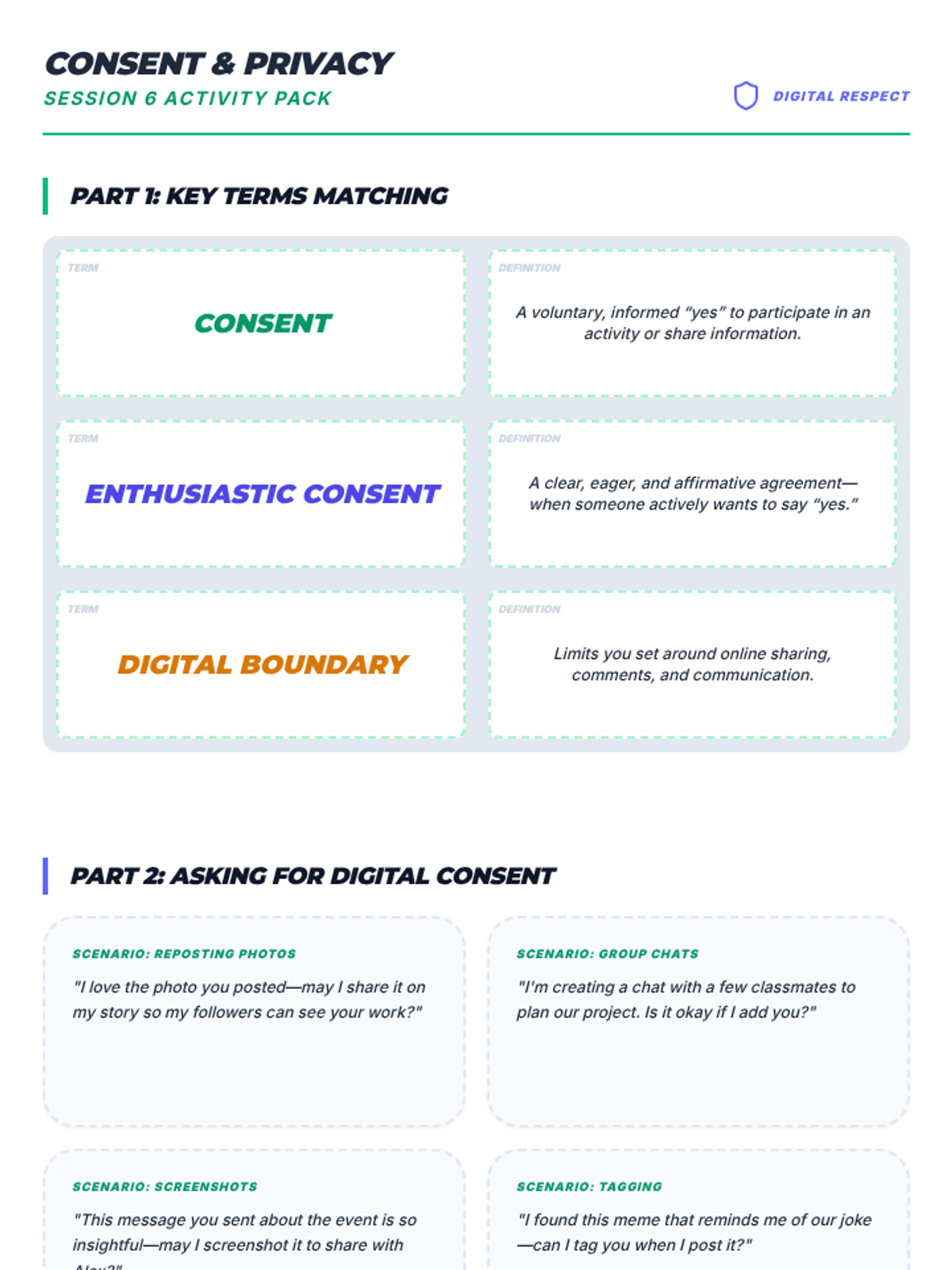
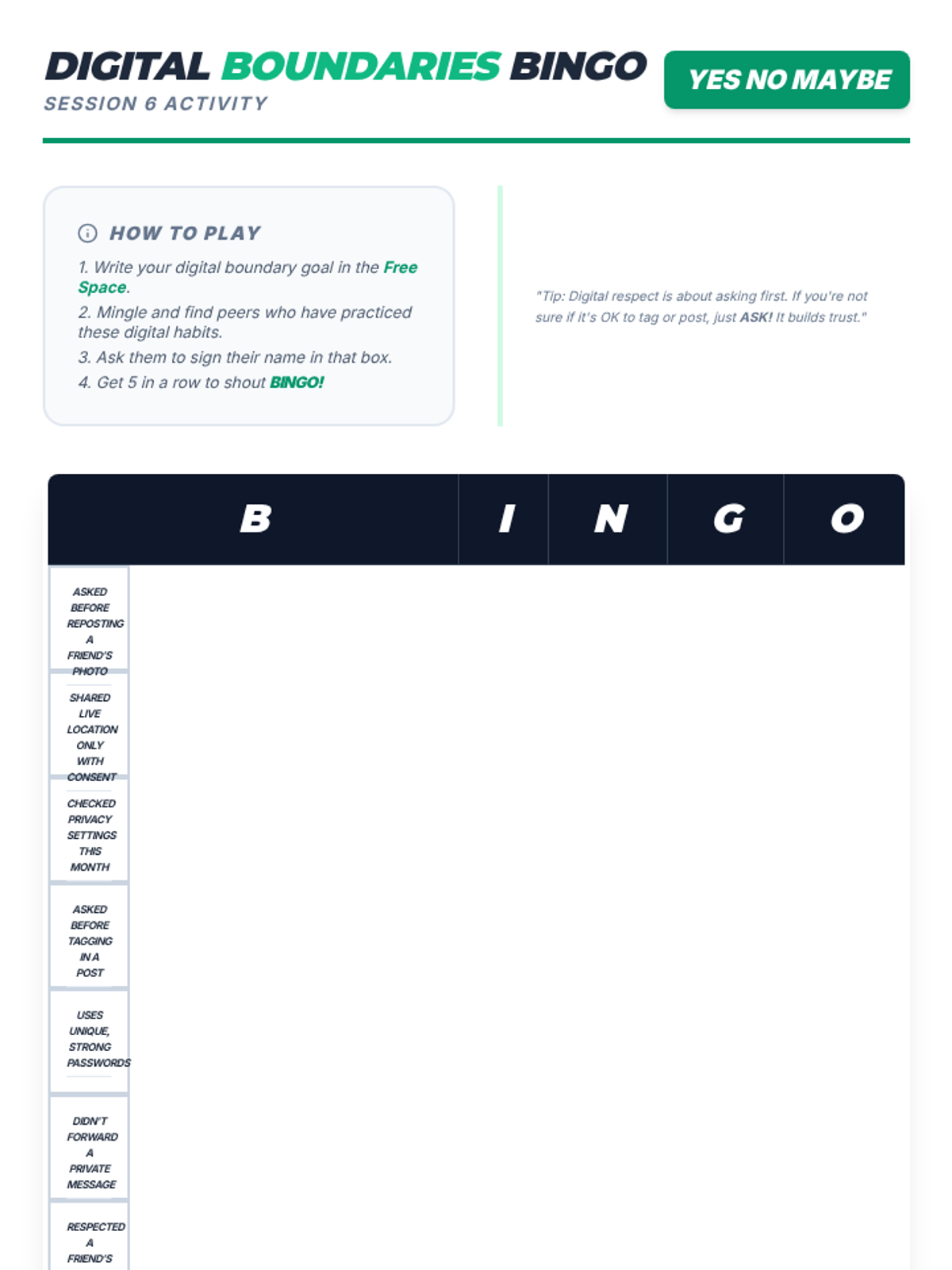
Deep dive into the importance of consent and managing personal privacy in digital spaces.
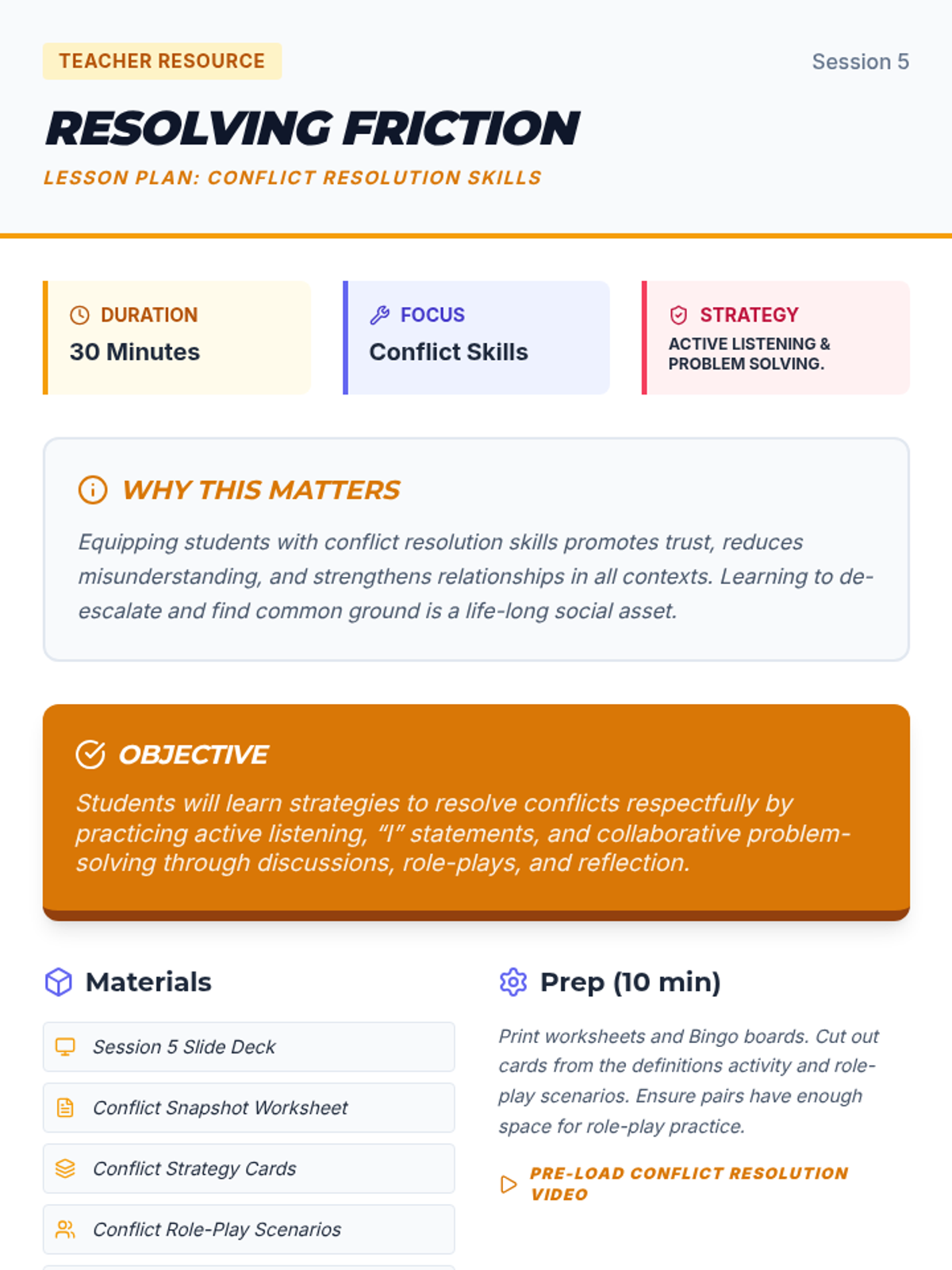
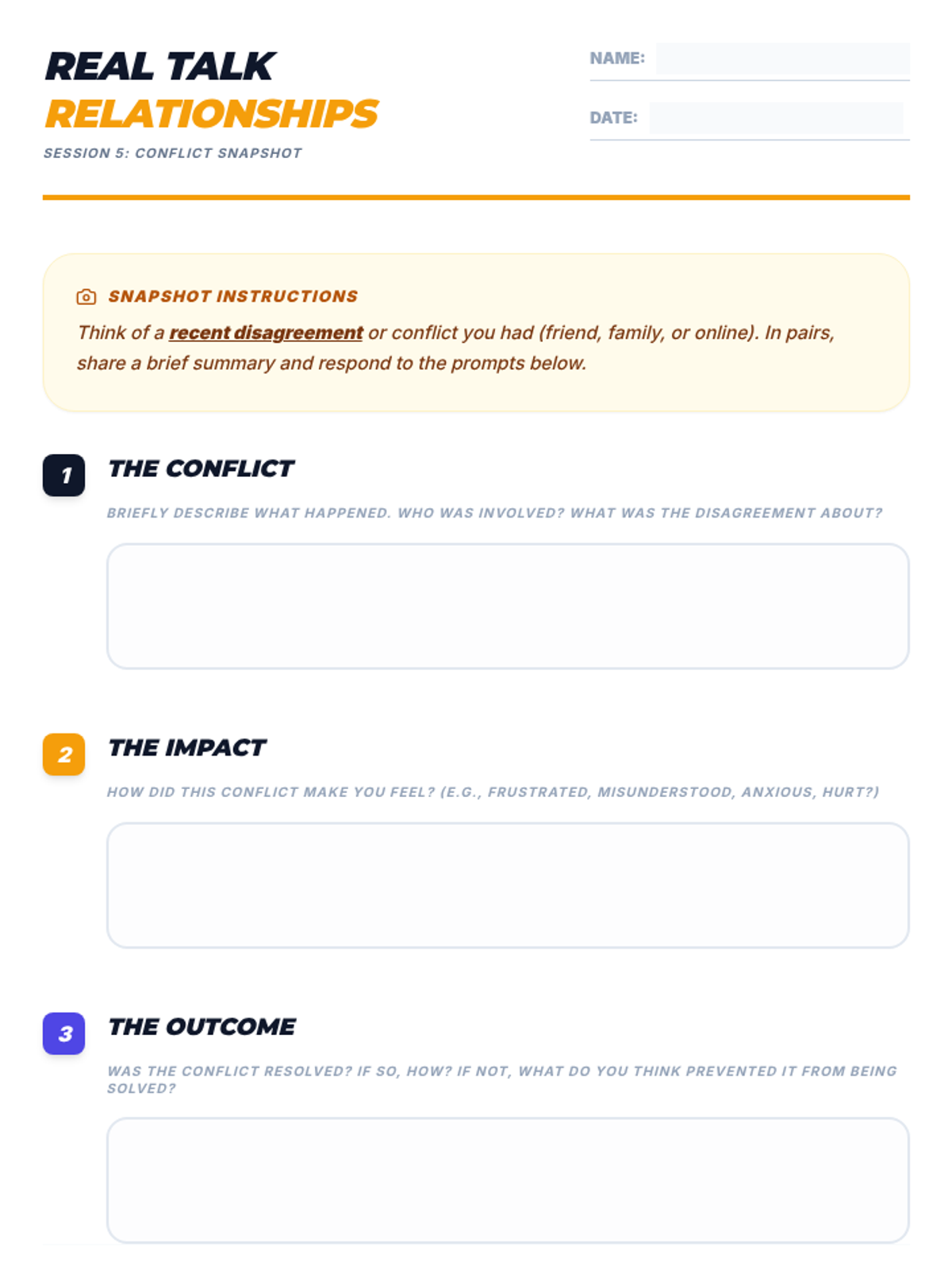
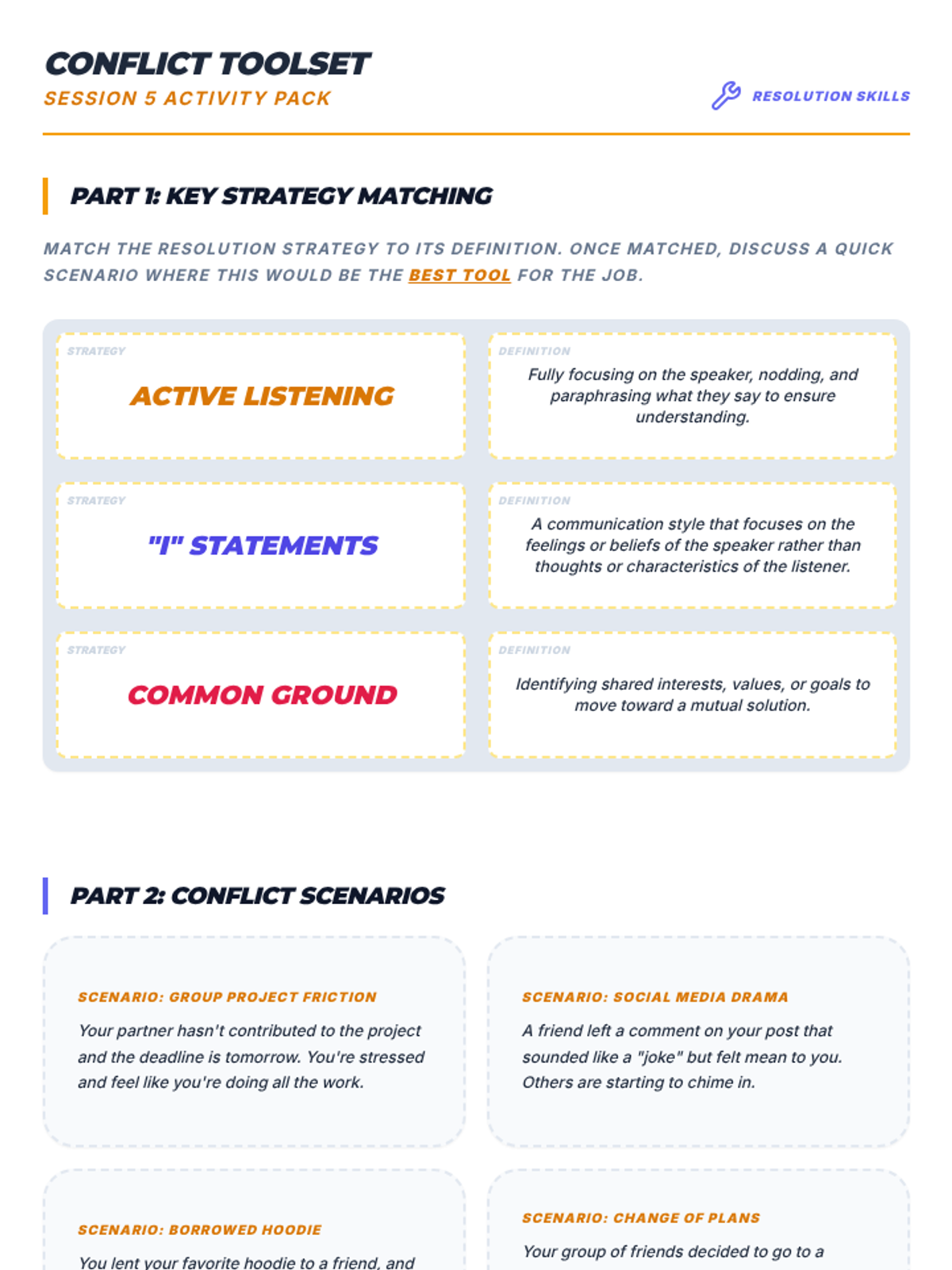
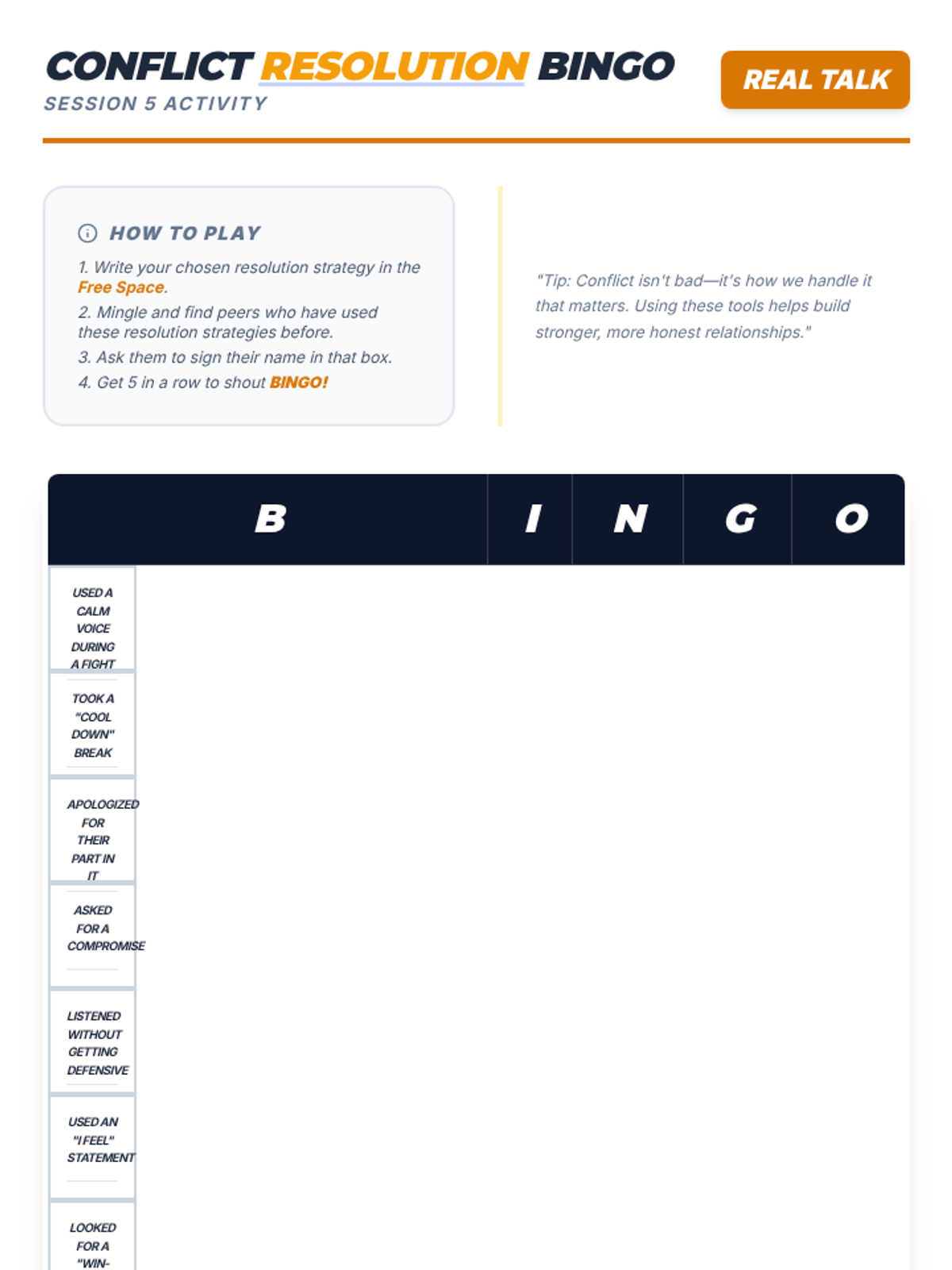
Provides strategies for resolving disagreements respectfully through collaborative problem-solving.
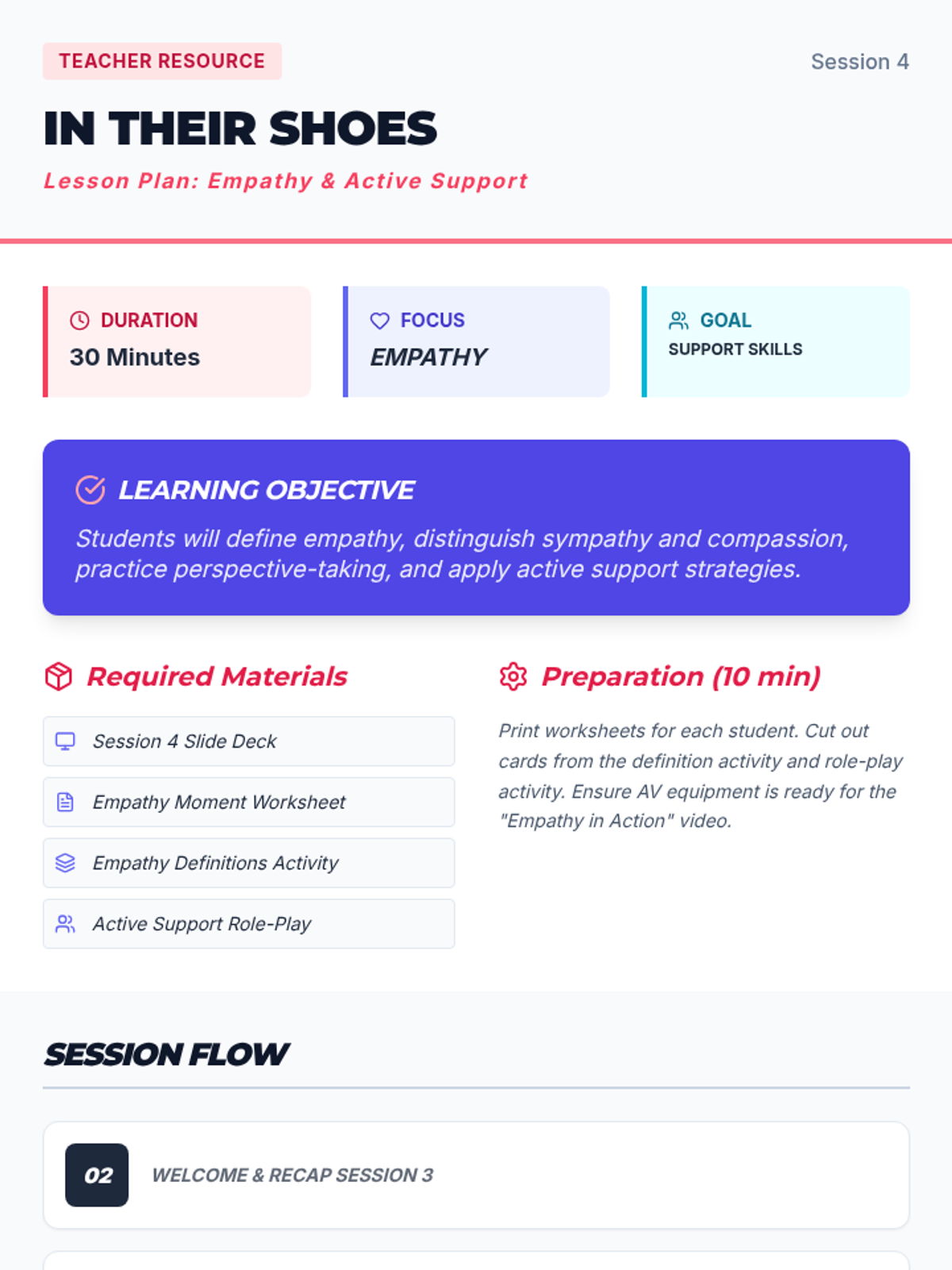
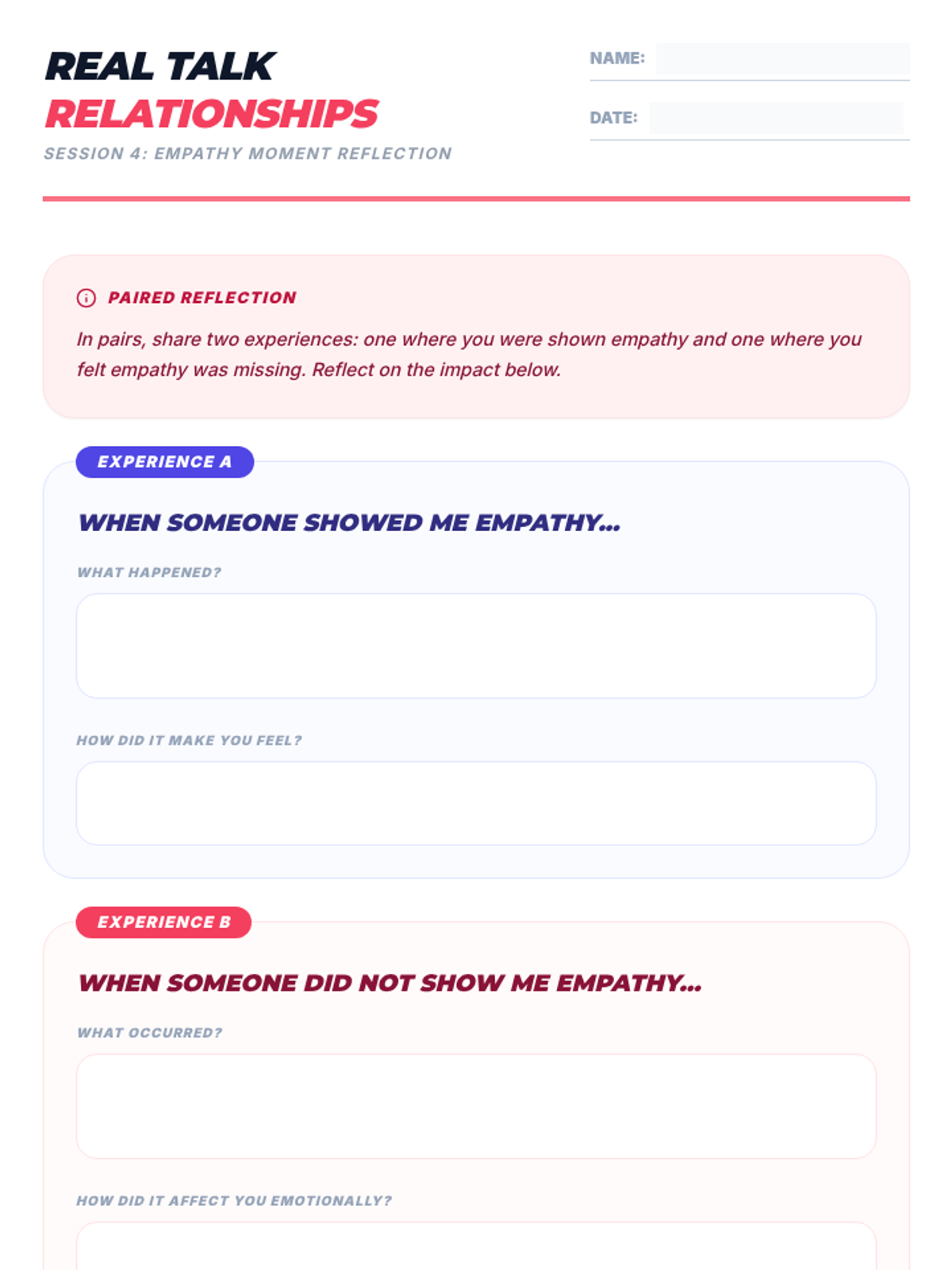
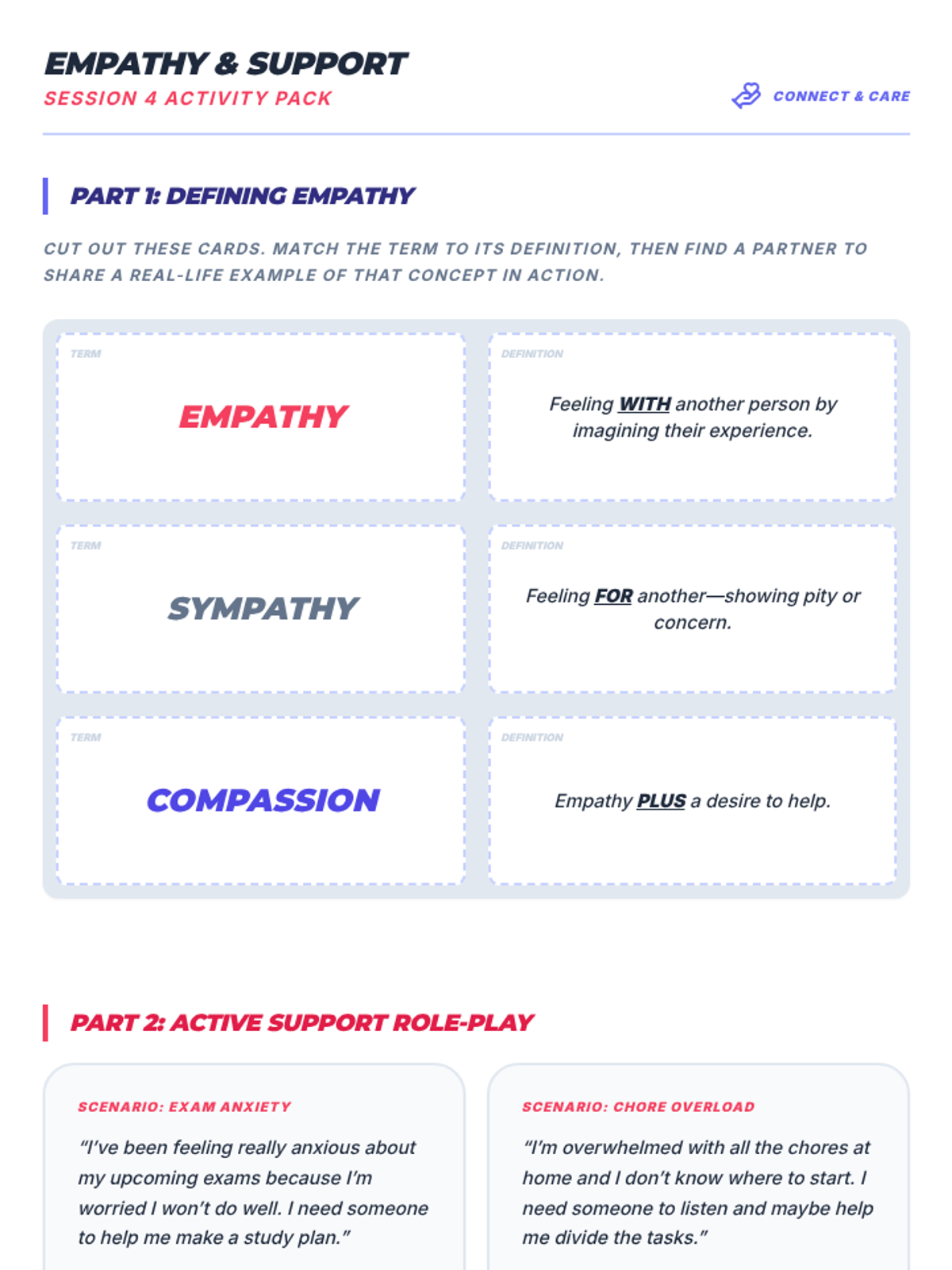
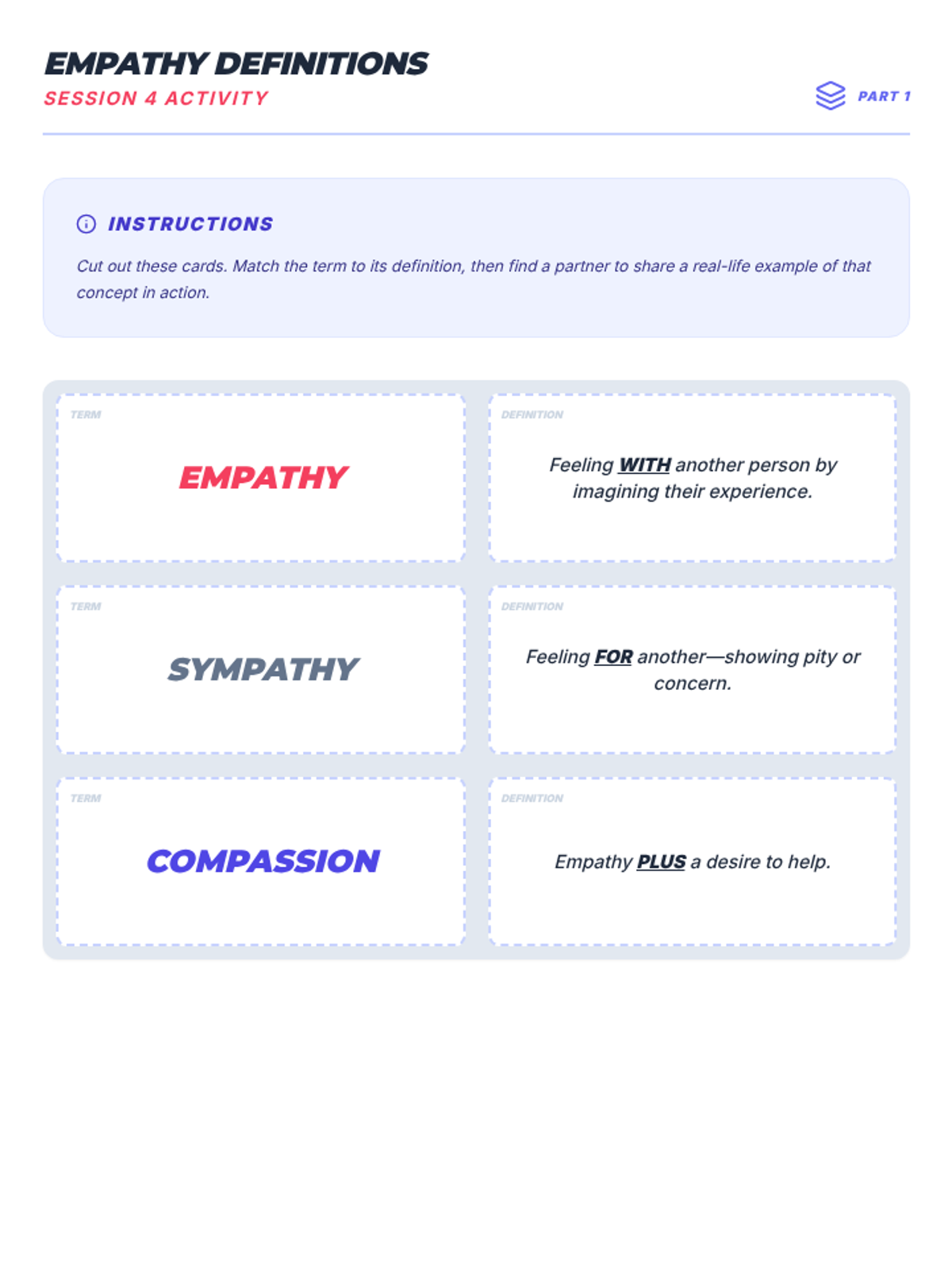
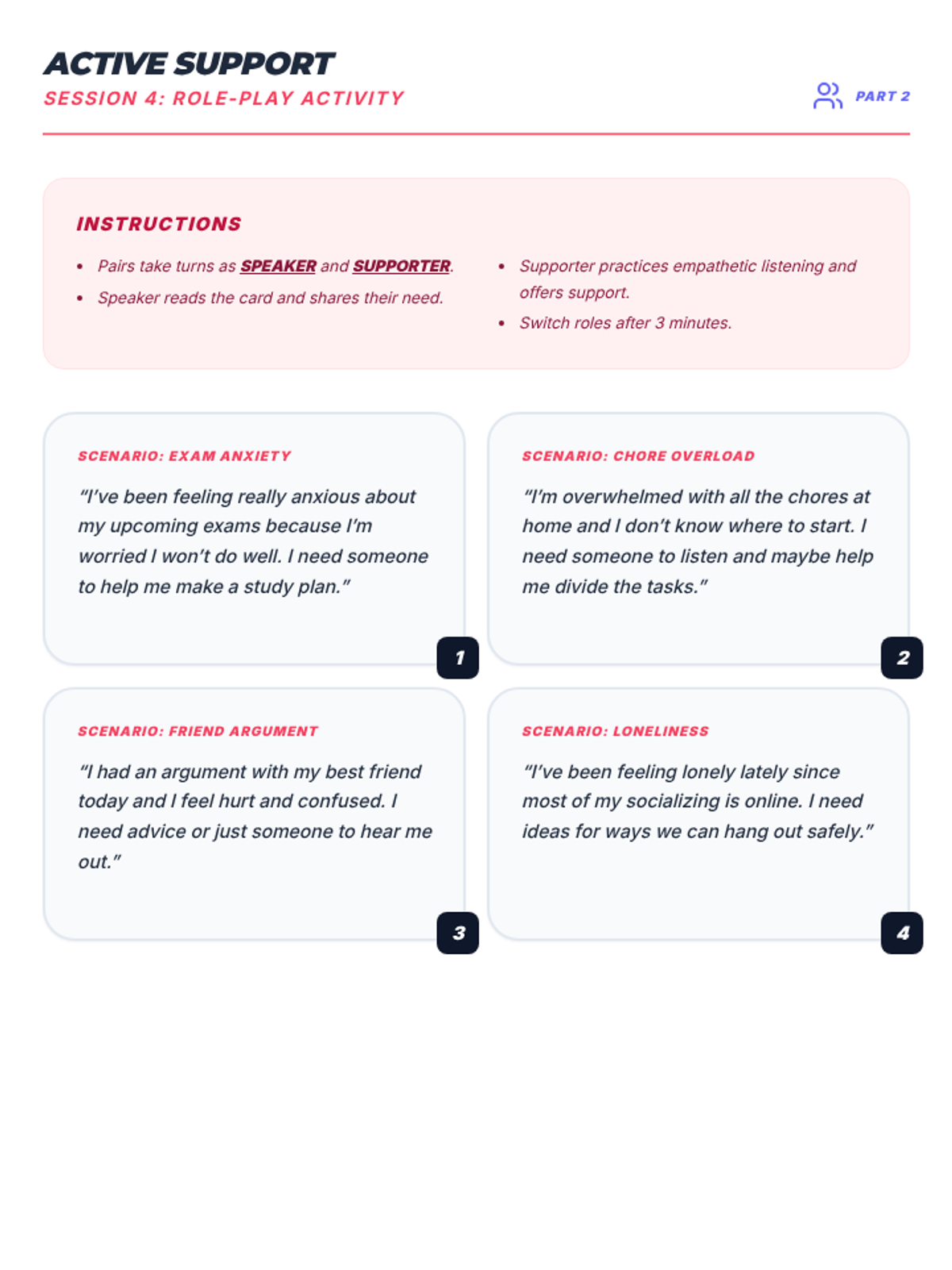
Explores the difference between empathy and sympathy, focusing on perspective-taking and offering active support.
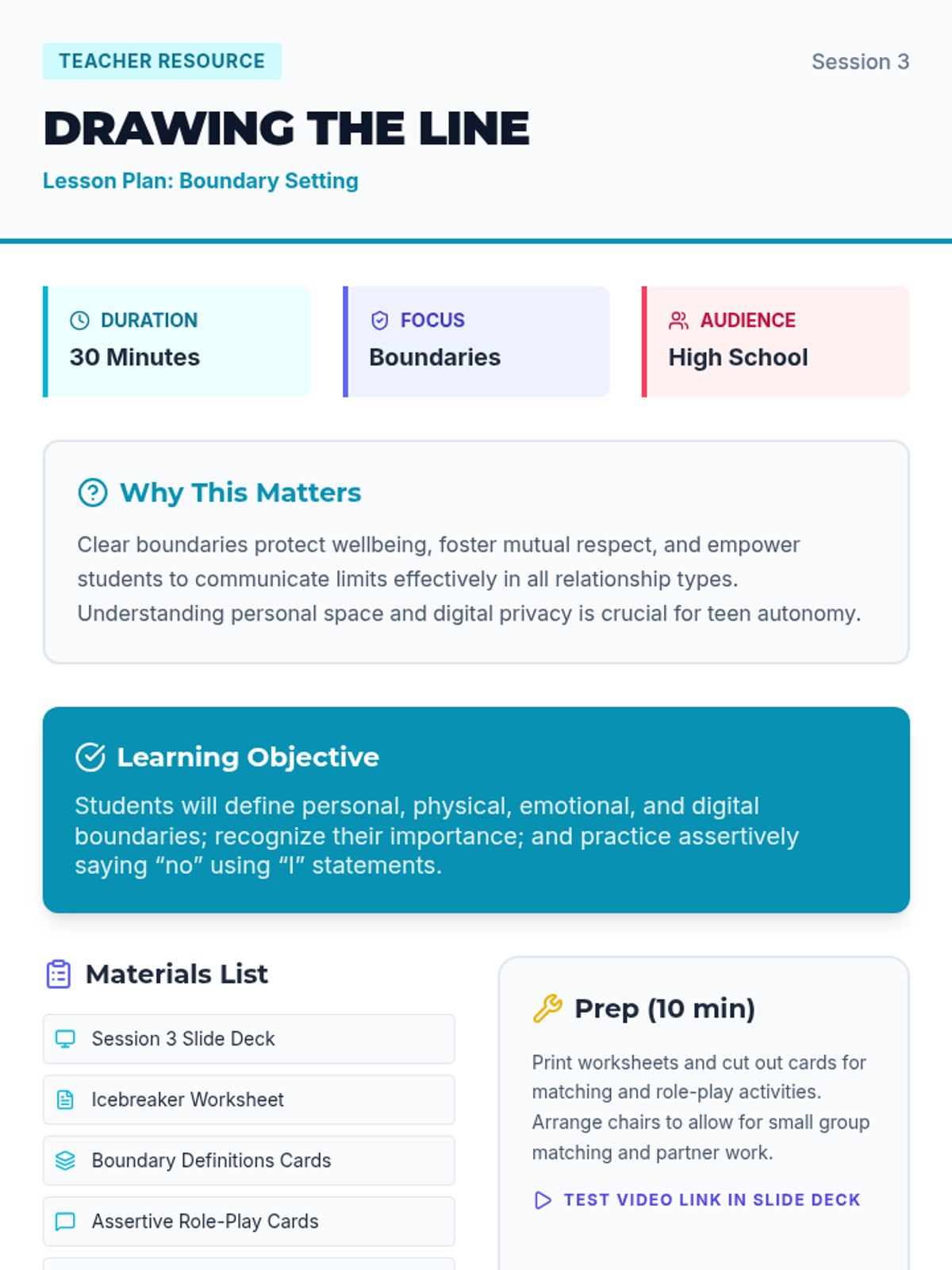
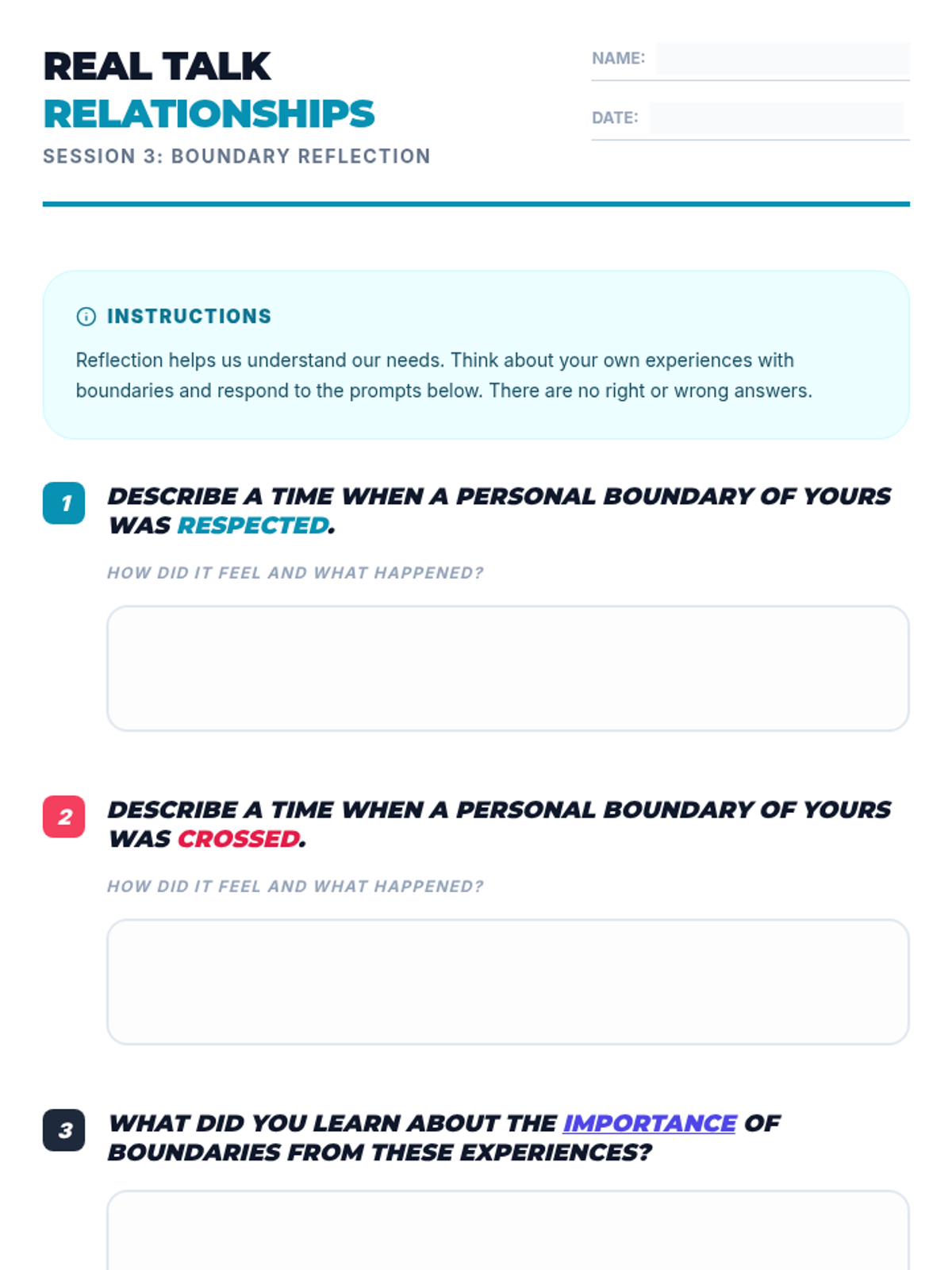
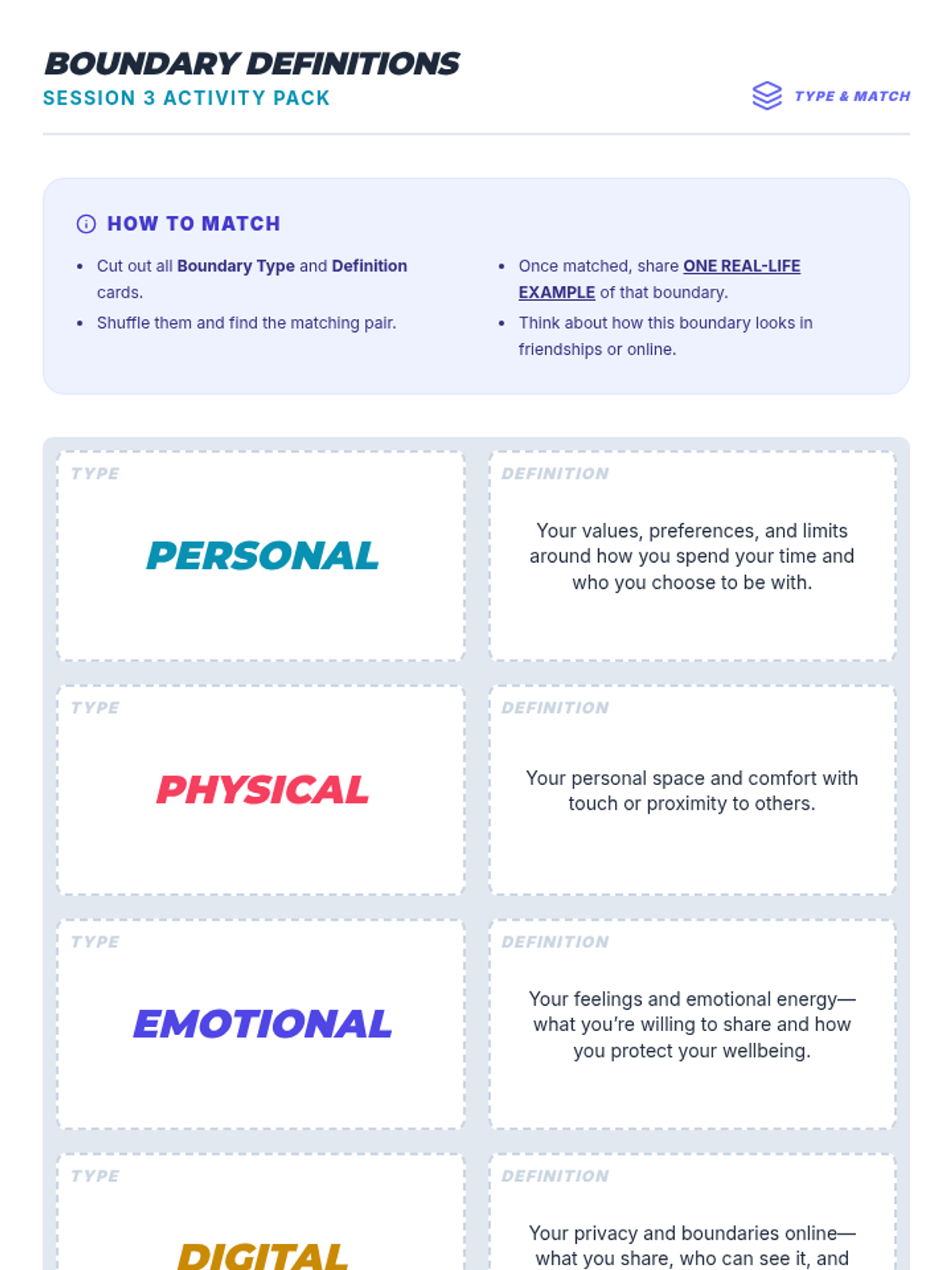
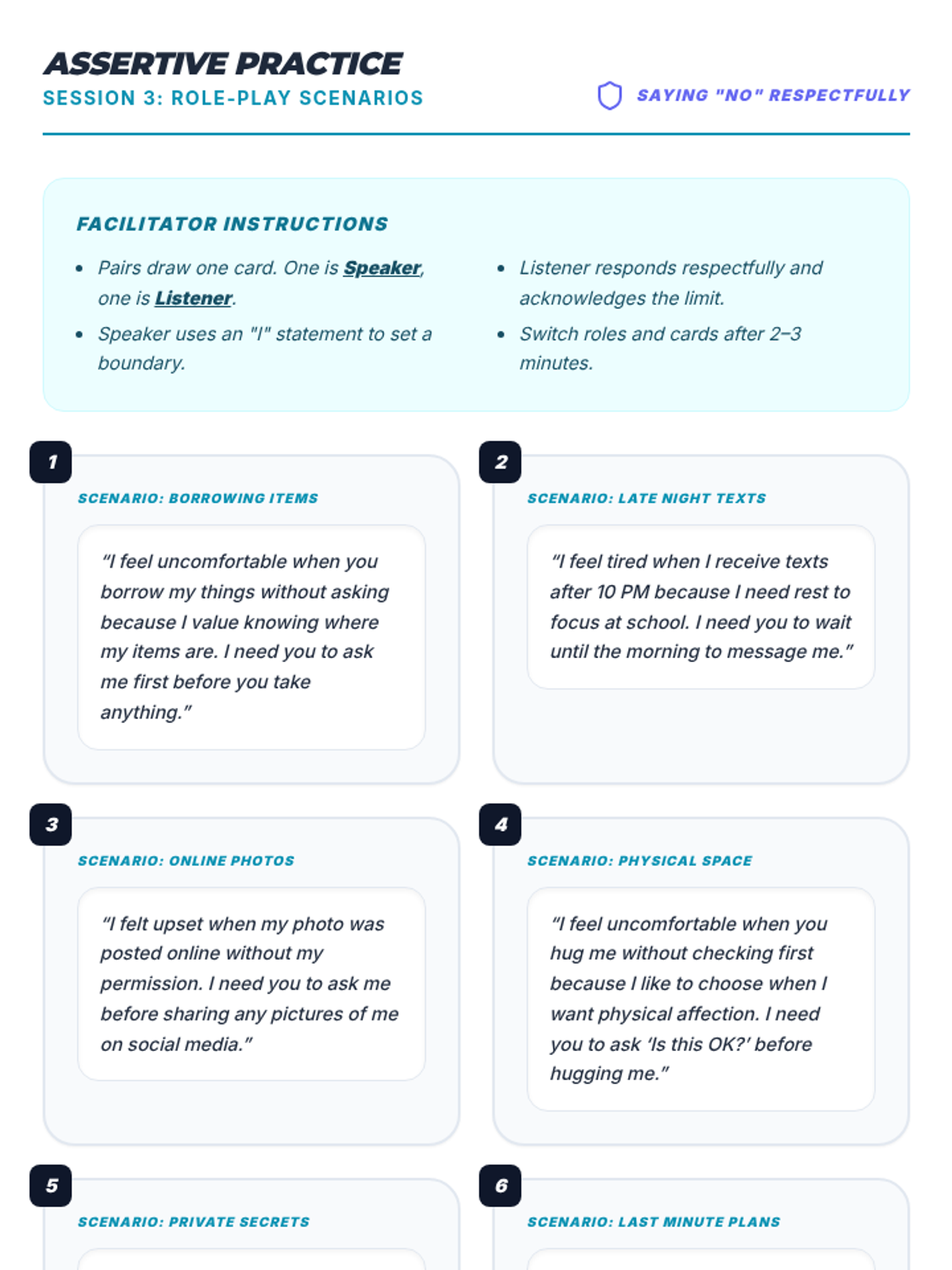
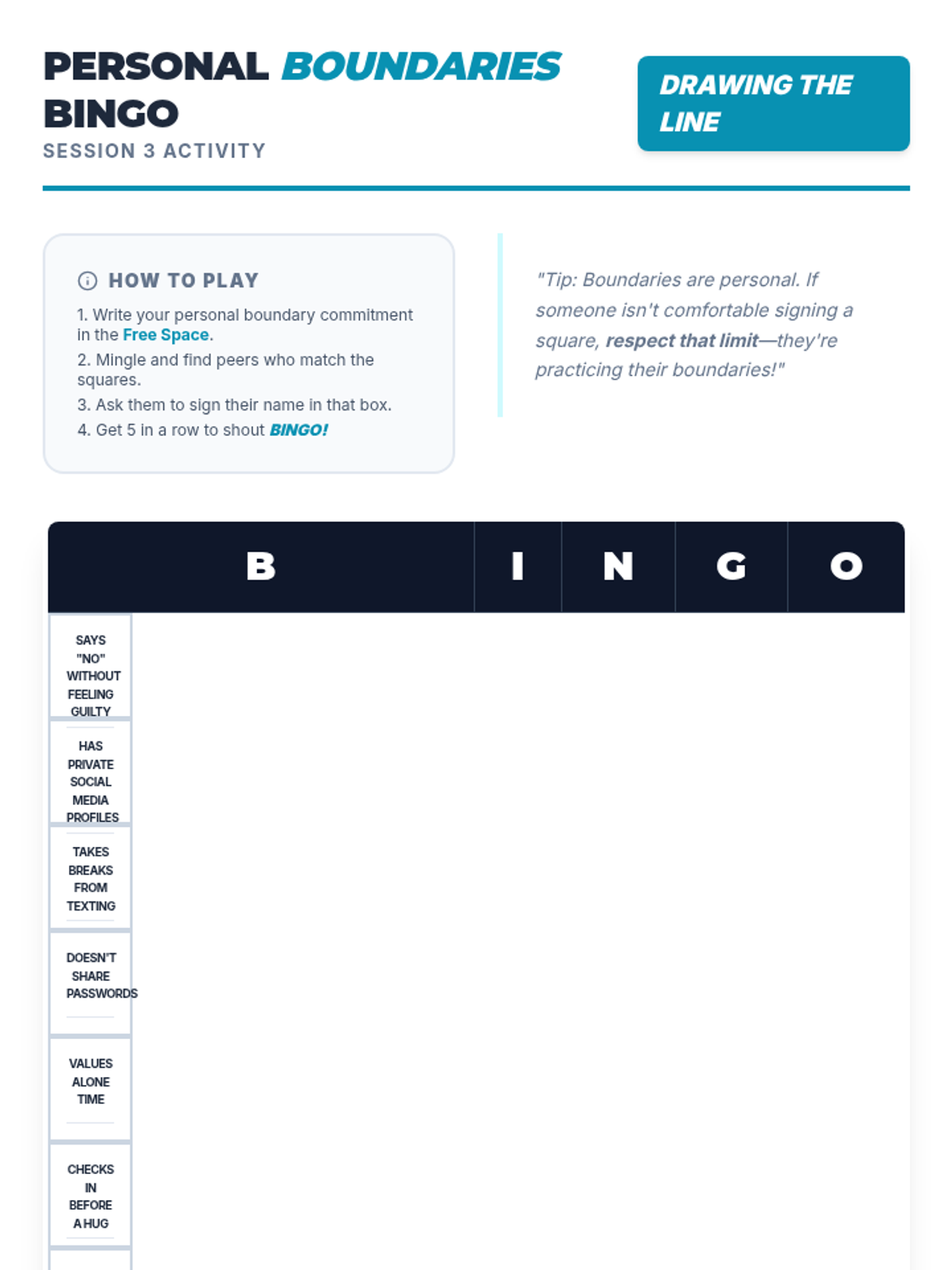
Students define personal, physical, emotional, and digital boundaries and practice assertive communication.
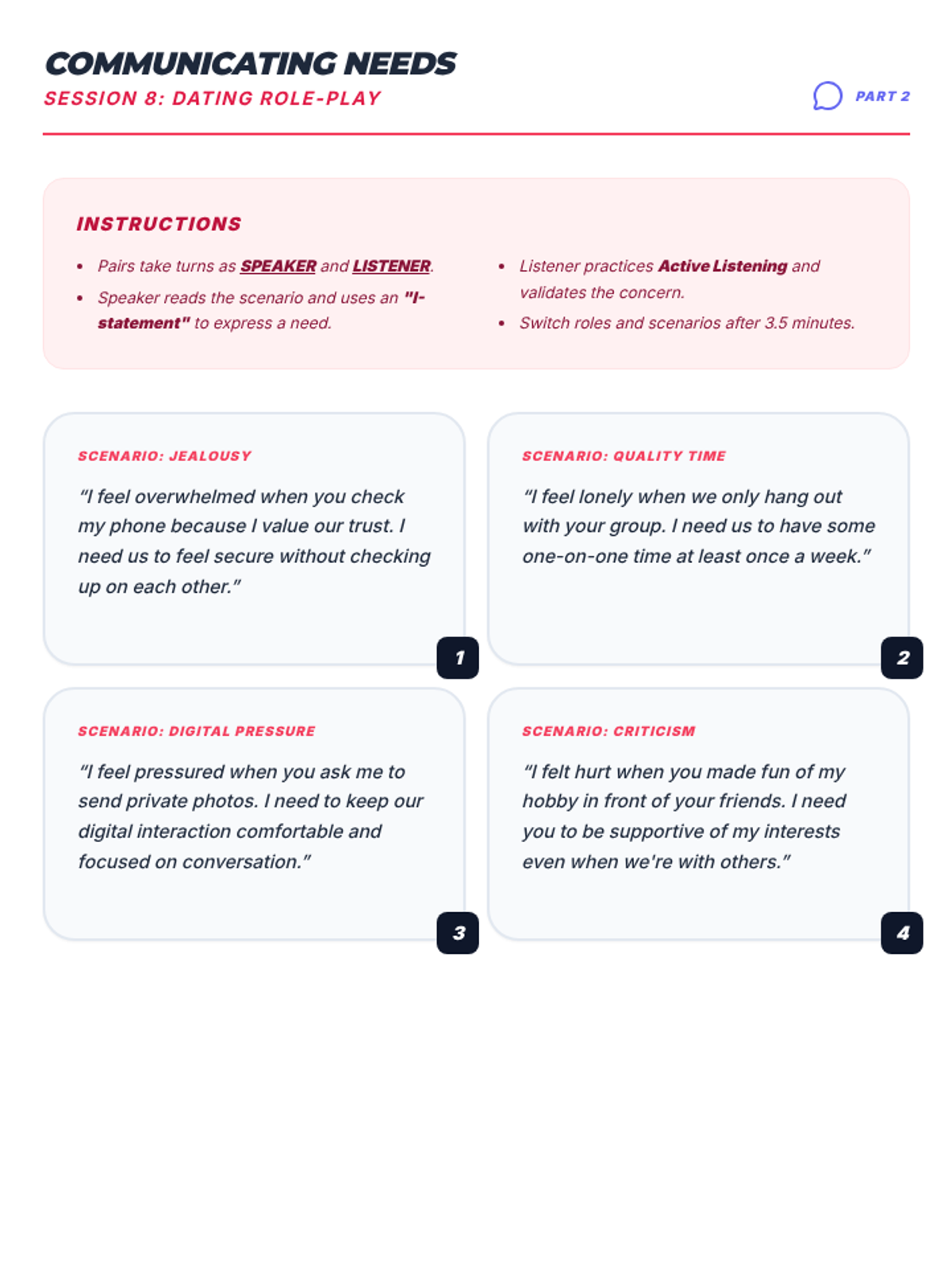
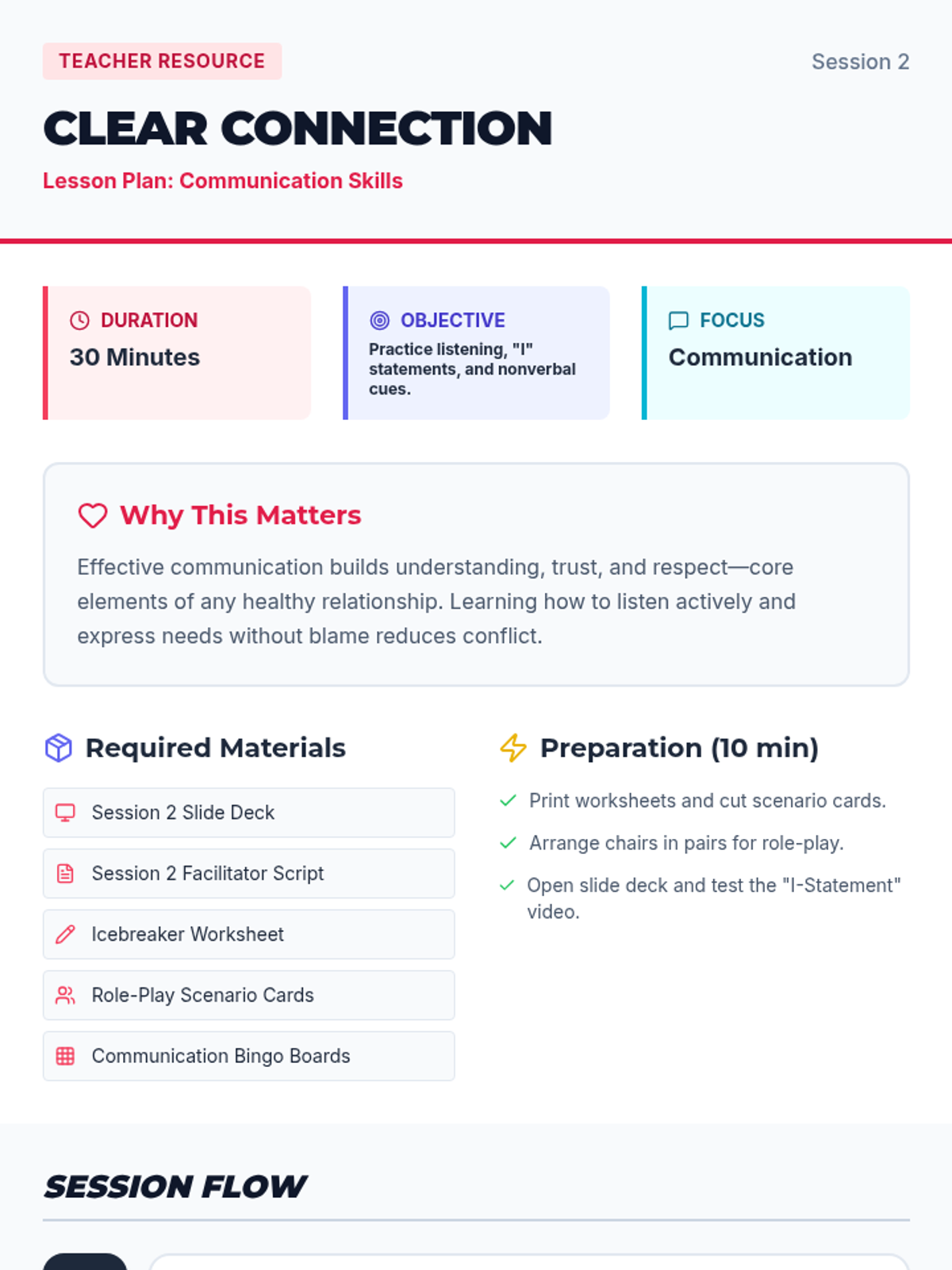
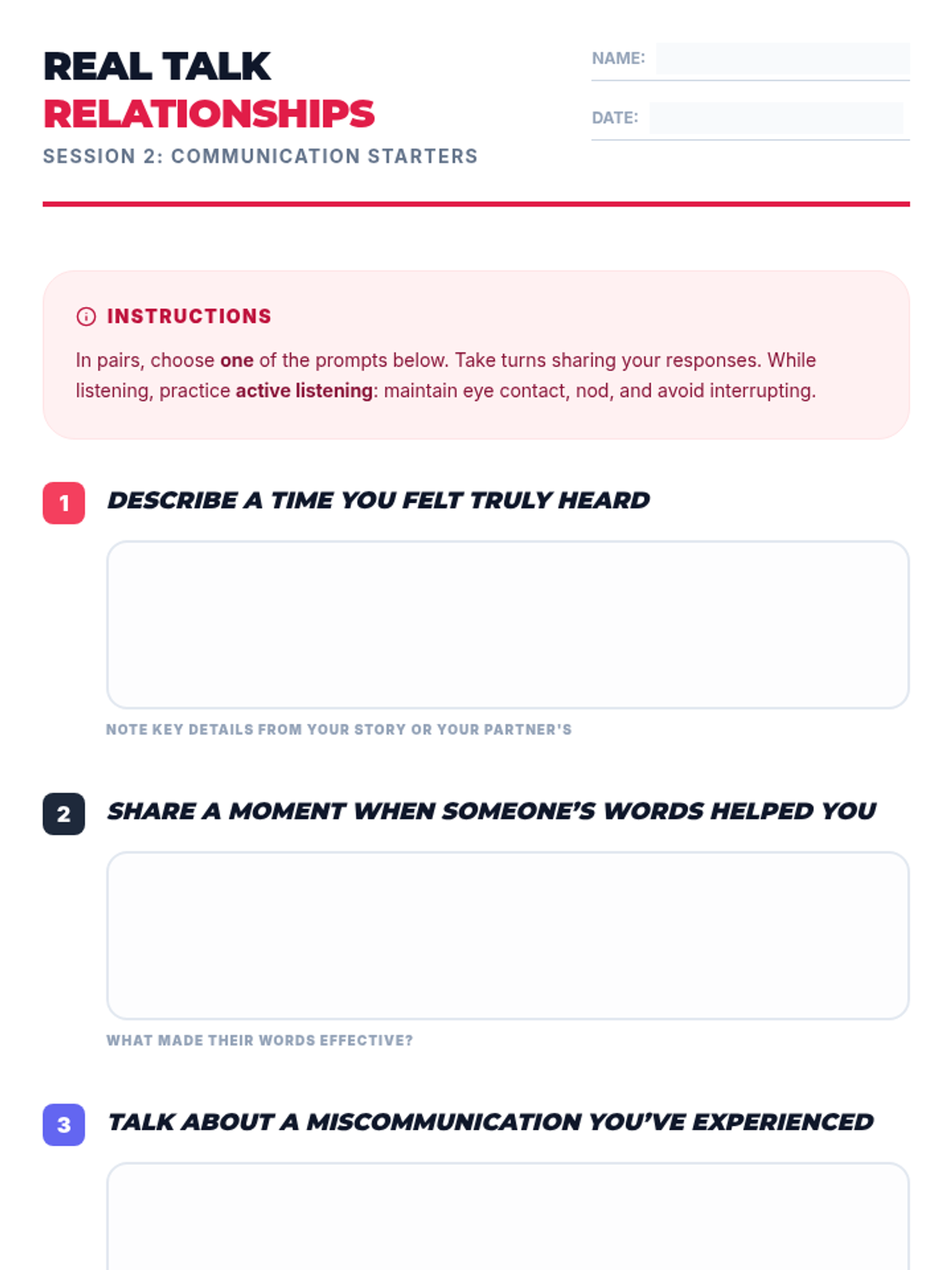
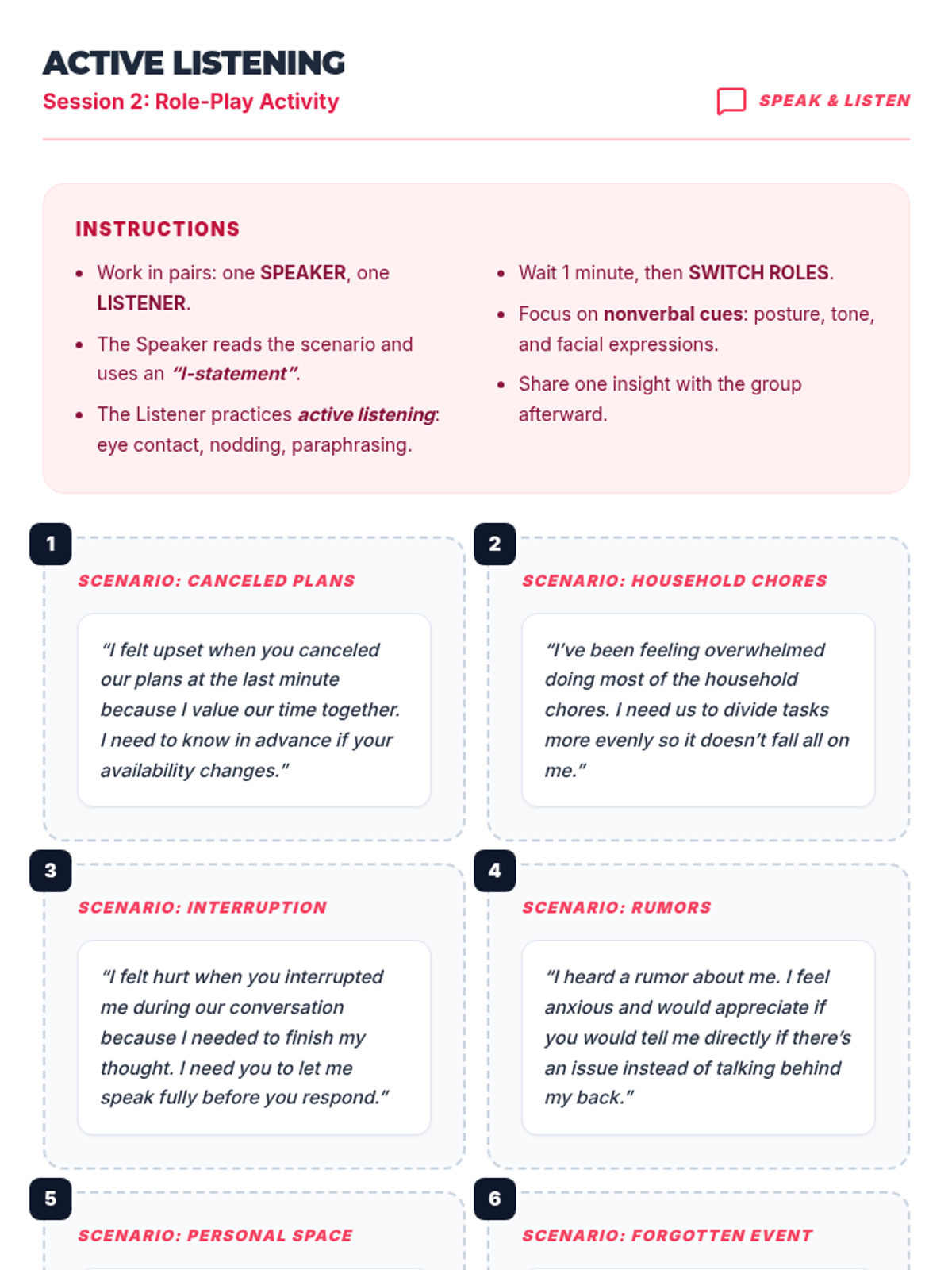
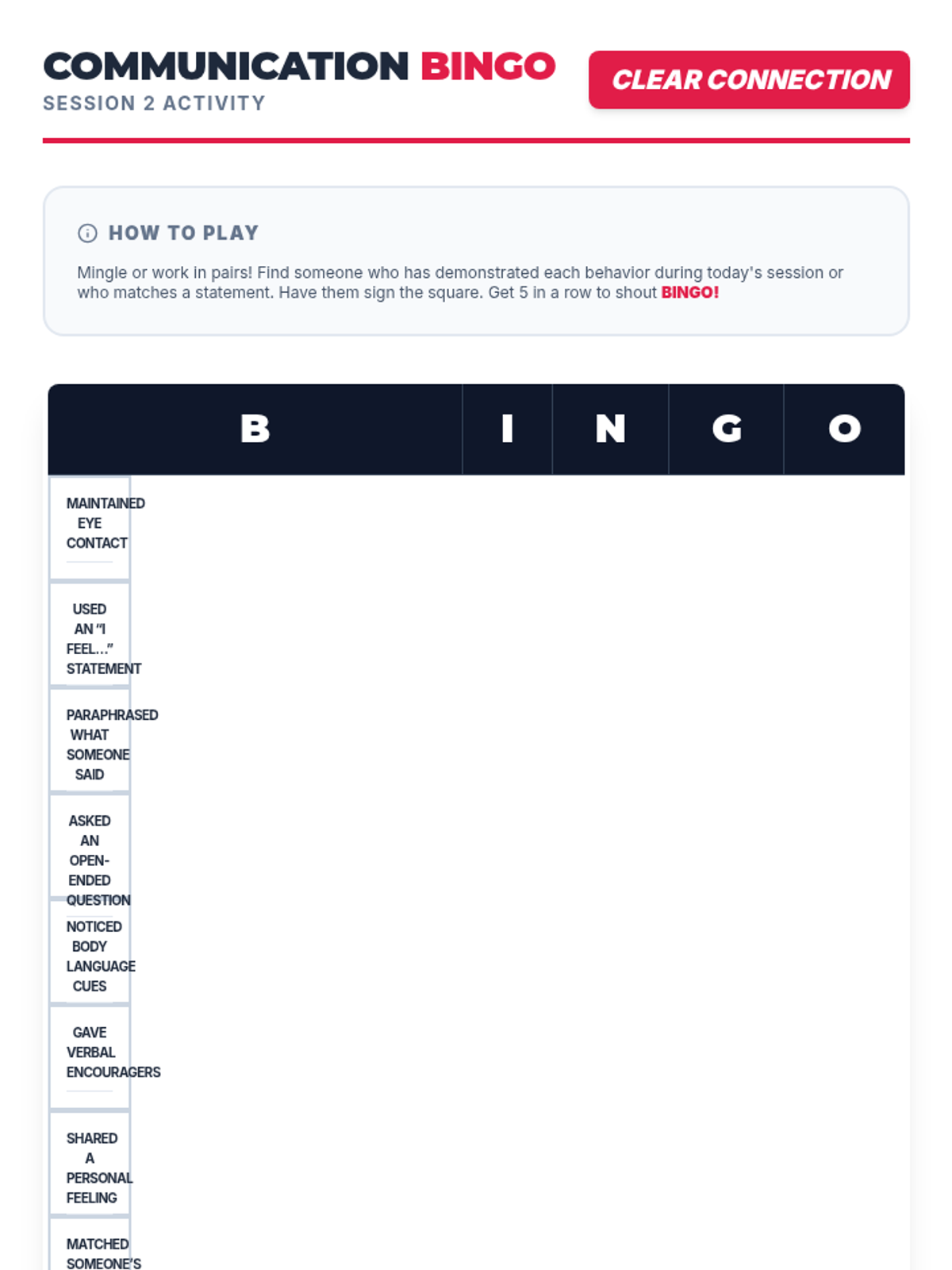
Focuses on active listening, the use of "I" statements, and recognizing nonverbal cues to improve interpersonal communication.
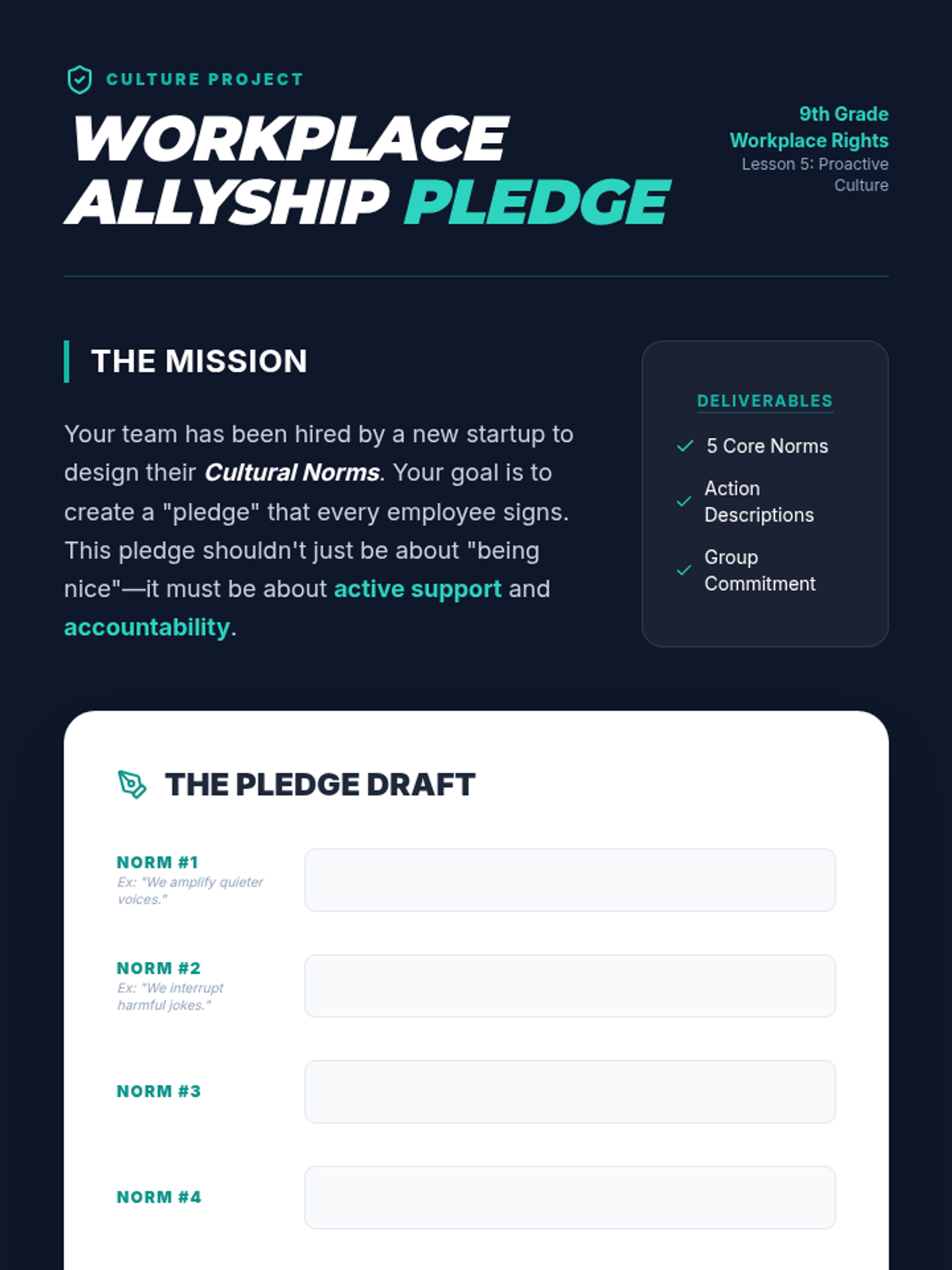
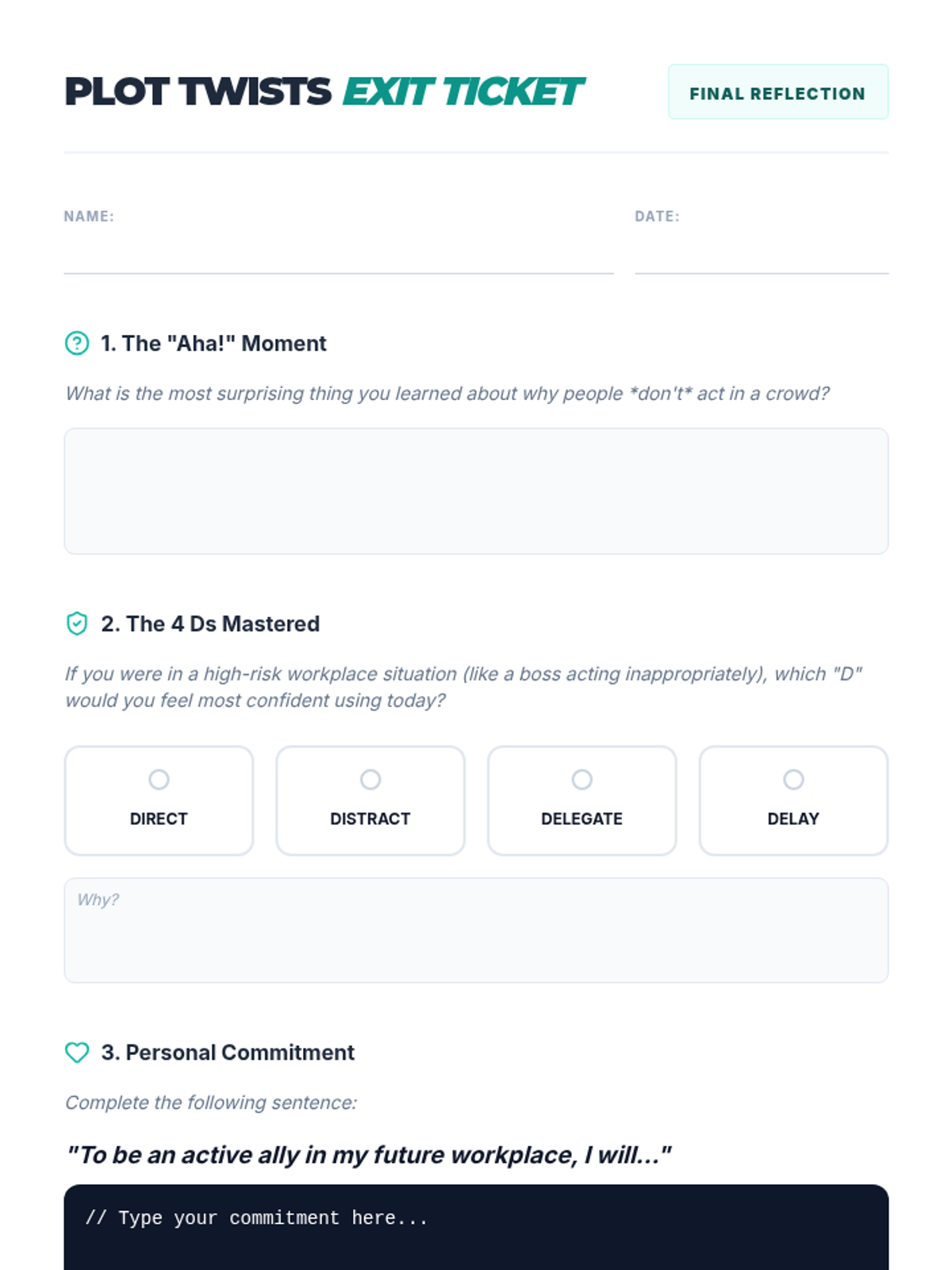
Moving from reactive to proactive, students design workplace norms and pledges that foster a culture of mutual support and accountability.
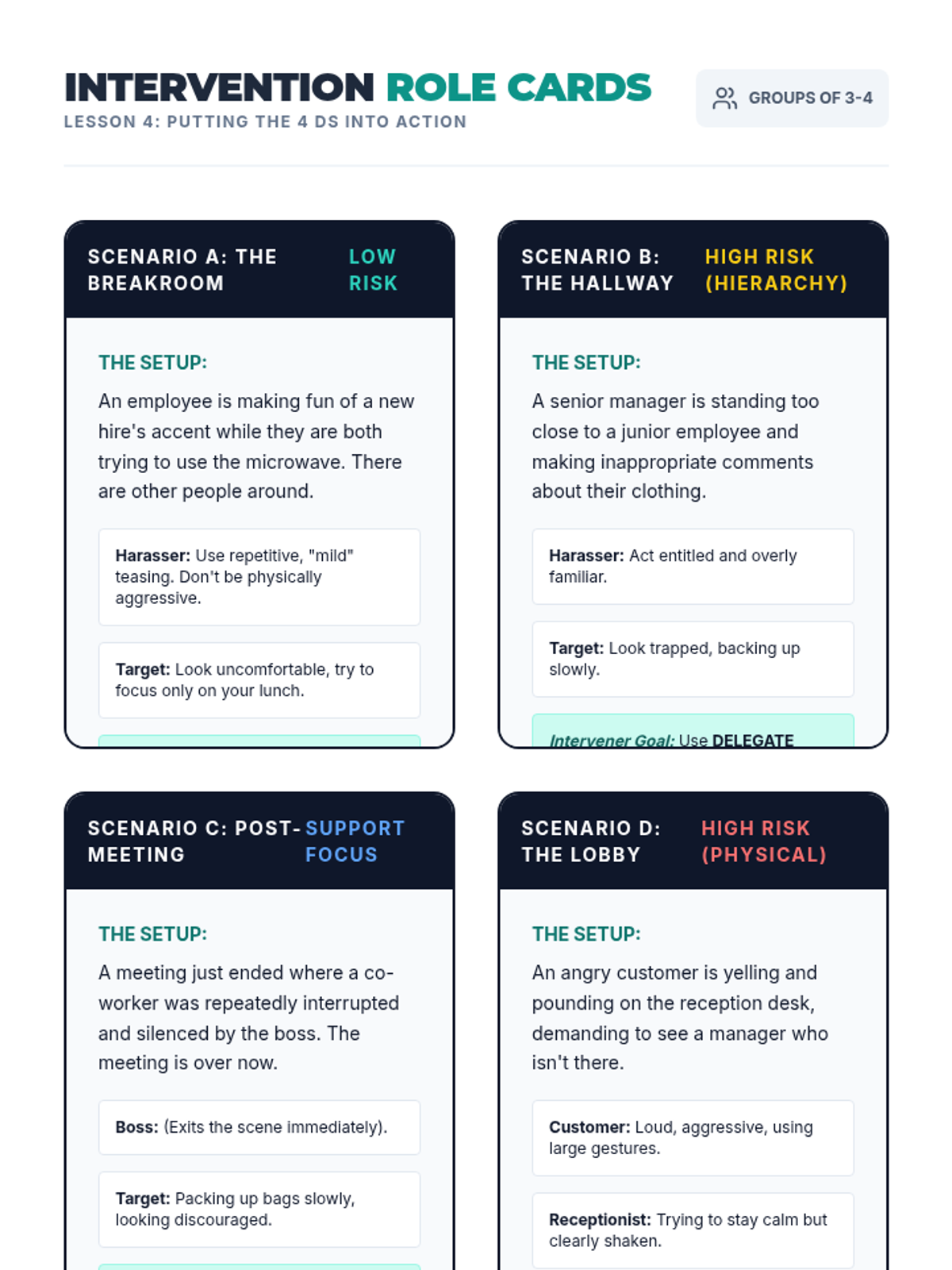
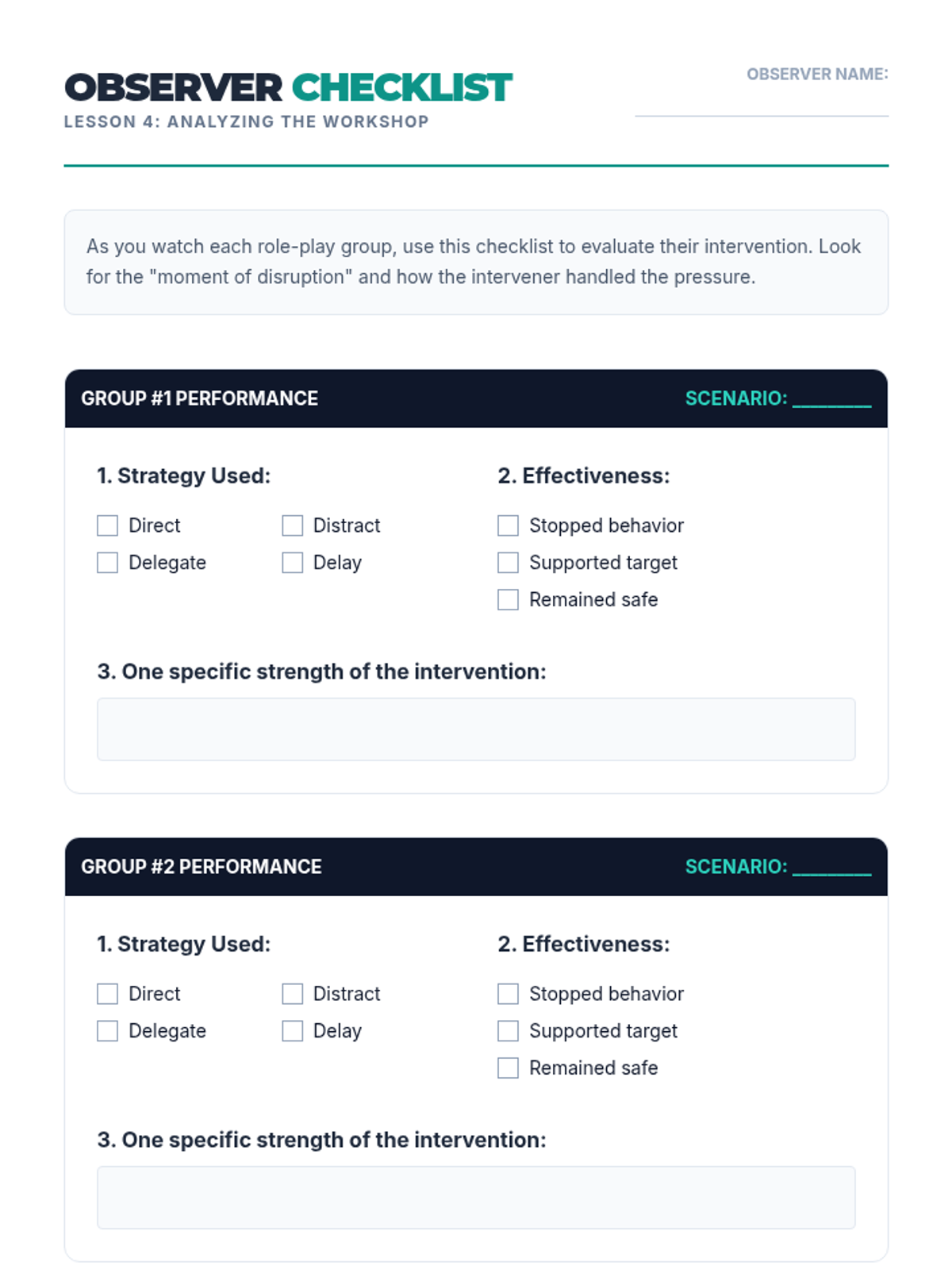
A hands-on workshop where students rotate through roles to practice applying the 4 Ds in realistic workplace scenarios, from breakrooms to boardrooms.
Focus on Delegate and Delay strategies, teaching students how to involve authorities safely and how to provide post-incident support to targets of harassment.
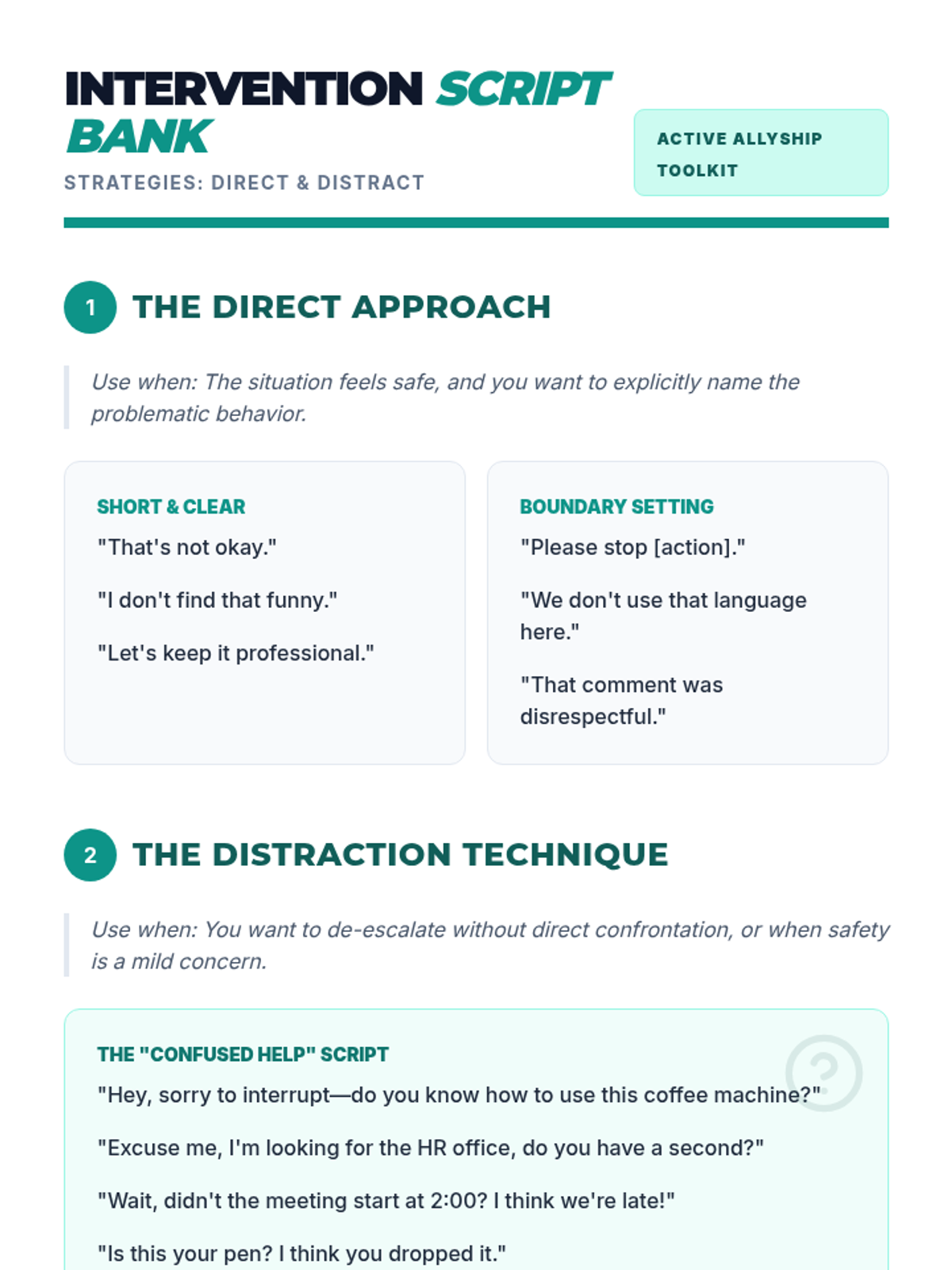
Introduction to the first two 'Ds' of intervention: Direct and Distract. Students practice de-escalation techniques and scripting to interrupt harassment without necessarily escalating conflict.
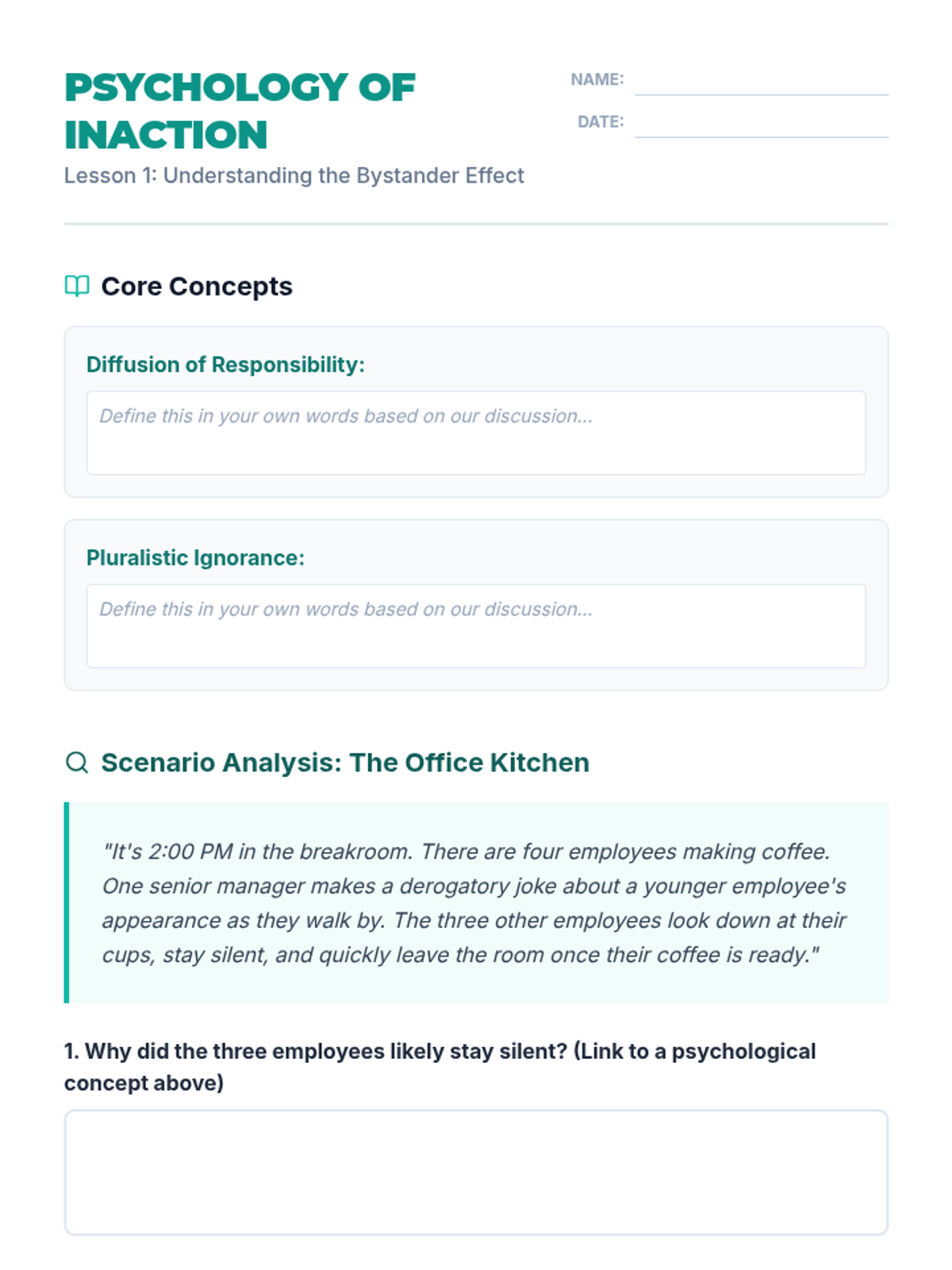
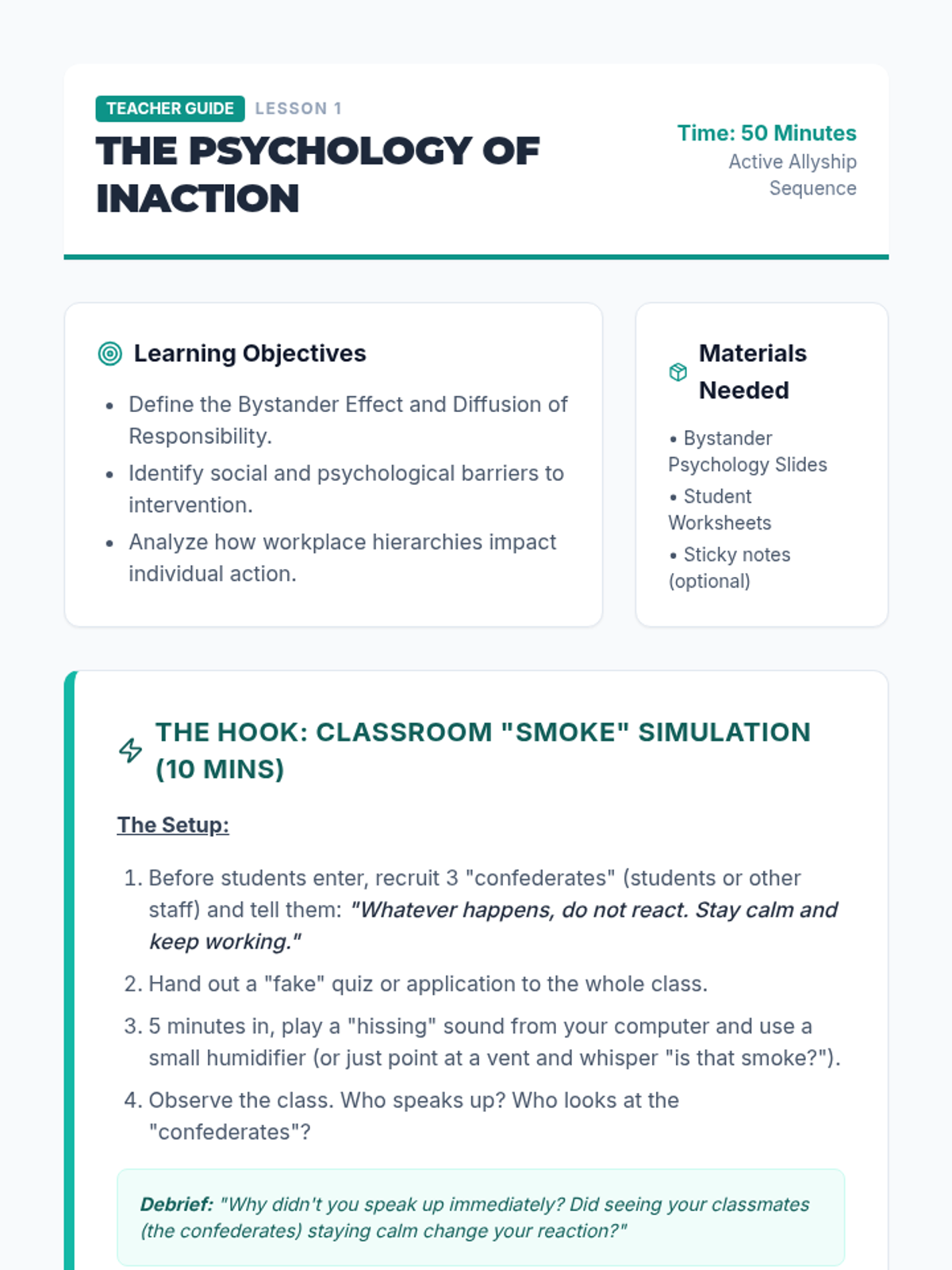
Students investigate why people often fail to act when they witness wrongdoing, exploring social psychology concepts like diffusion of responsibility and barriers to intervention in workplace hierarchies.
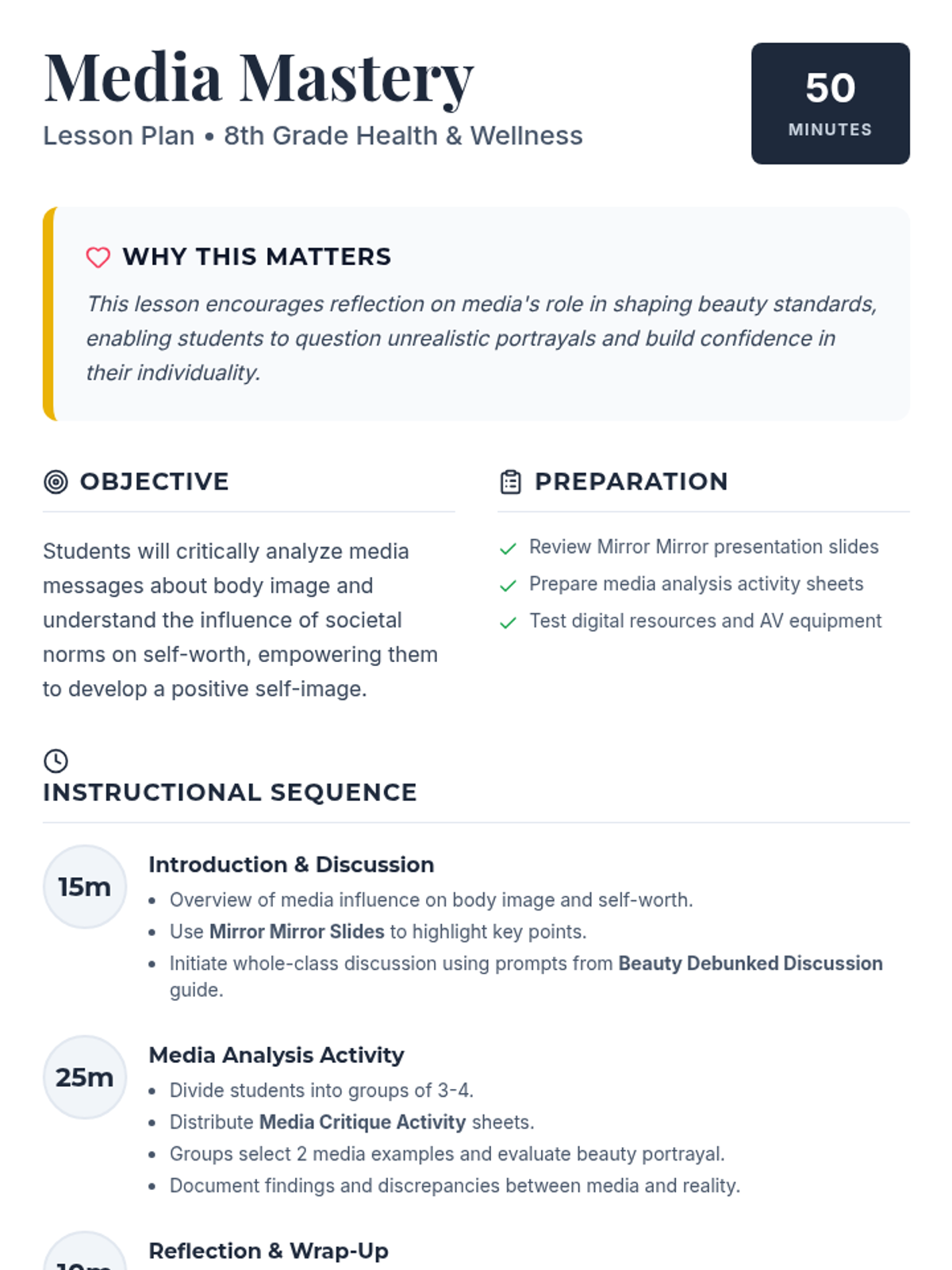
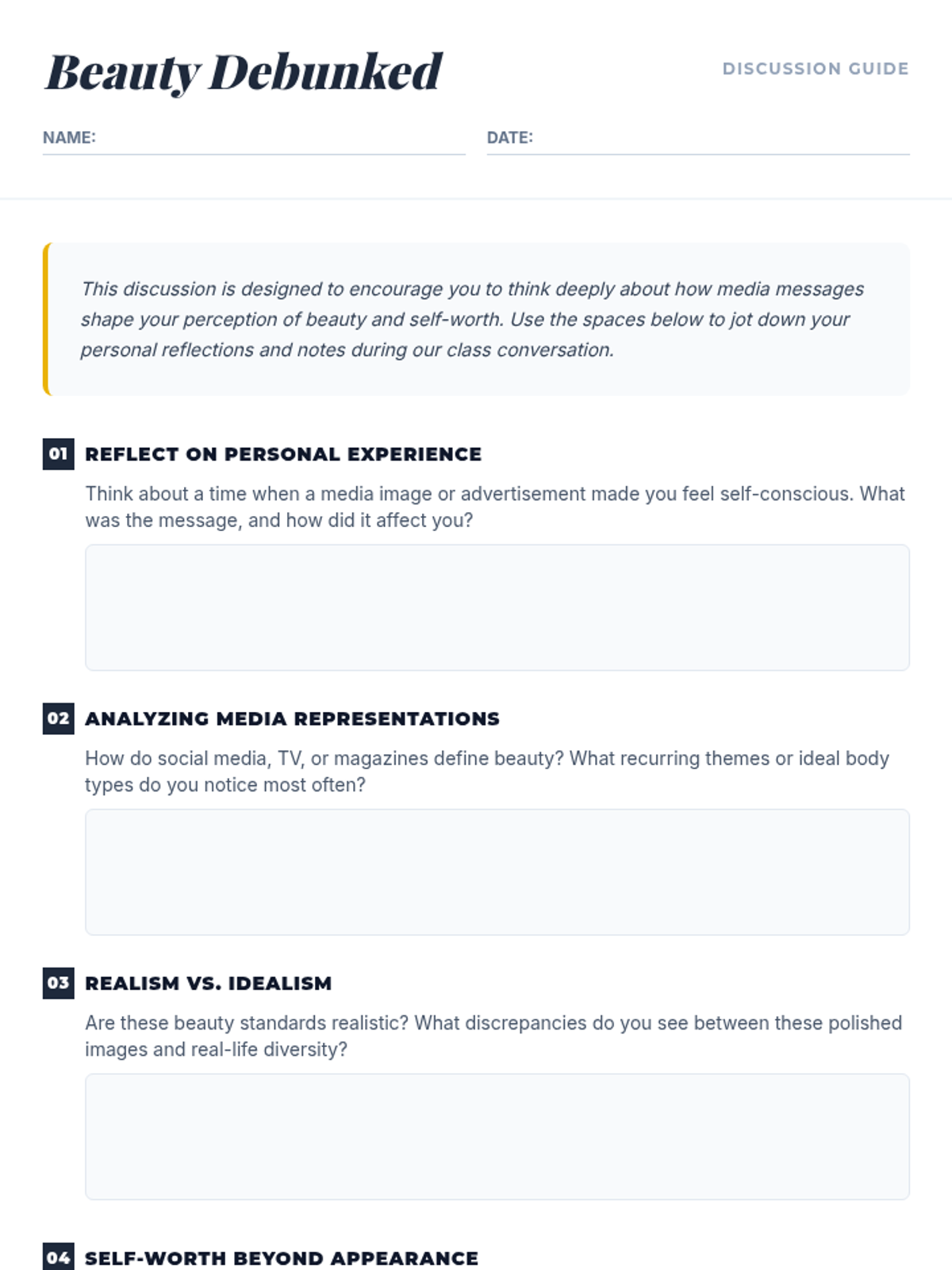
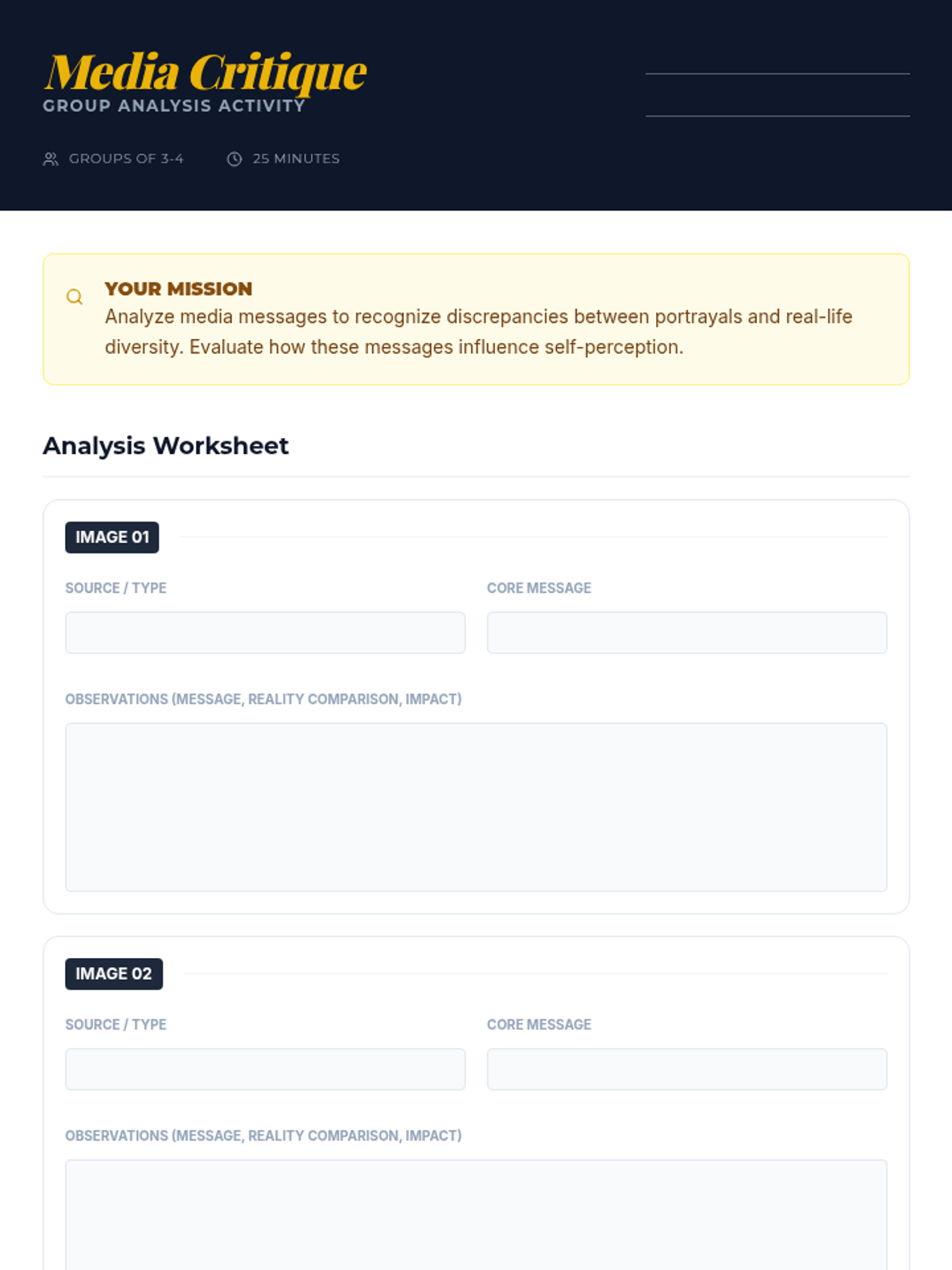
A lesson empowering students to critically analyze media's role in shaping beauty standards and develop a positive self-image through interactive analysis and discussion.
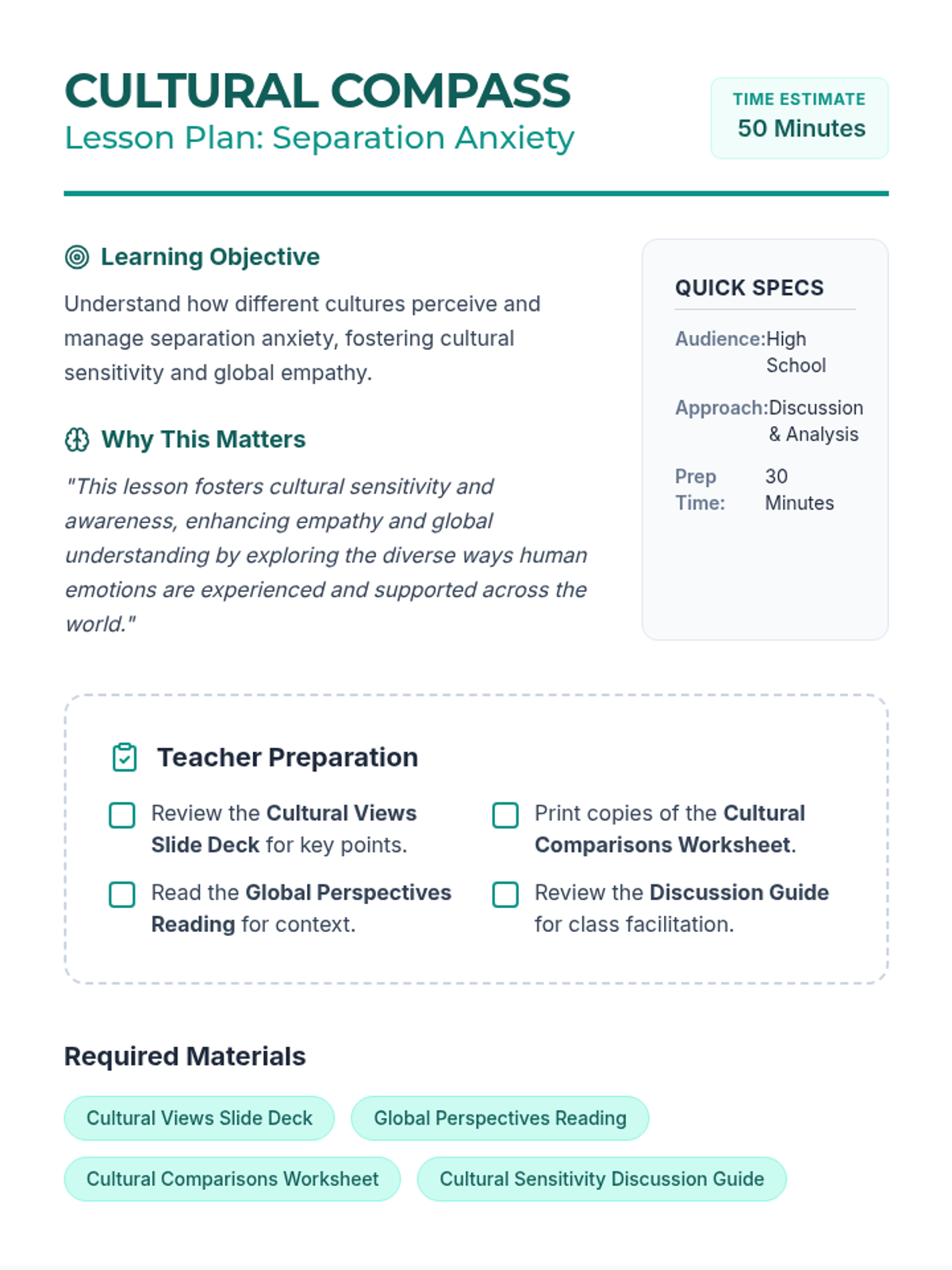
A high school lesson exploring how Western, Eastern, and African cultures perceive and manage separation anxiety, emphasizing empathy and global understanding.
Students draft a 'Code of Conduct' for phone usage in a hypothetical workplace, covering privacy, respect, and security protocols.
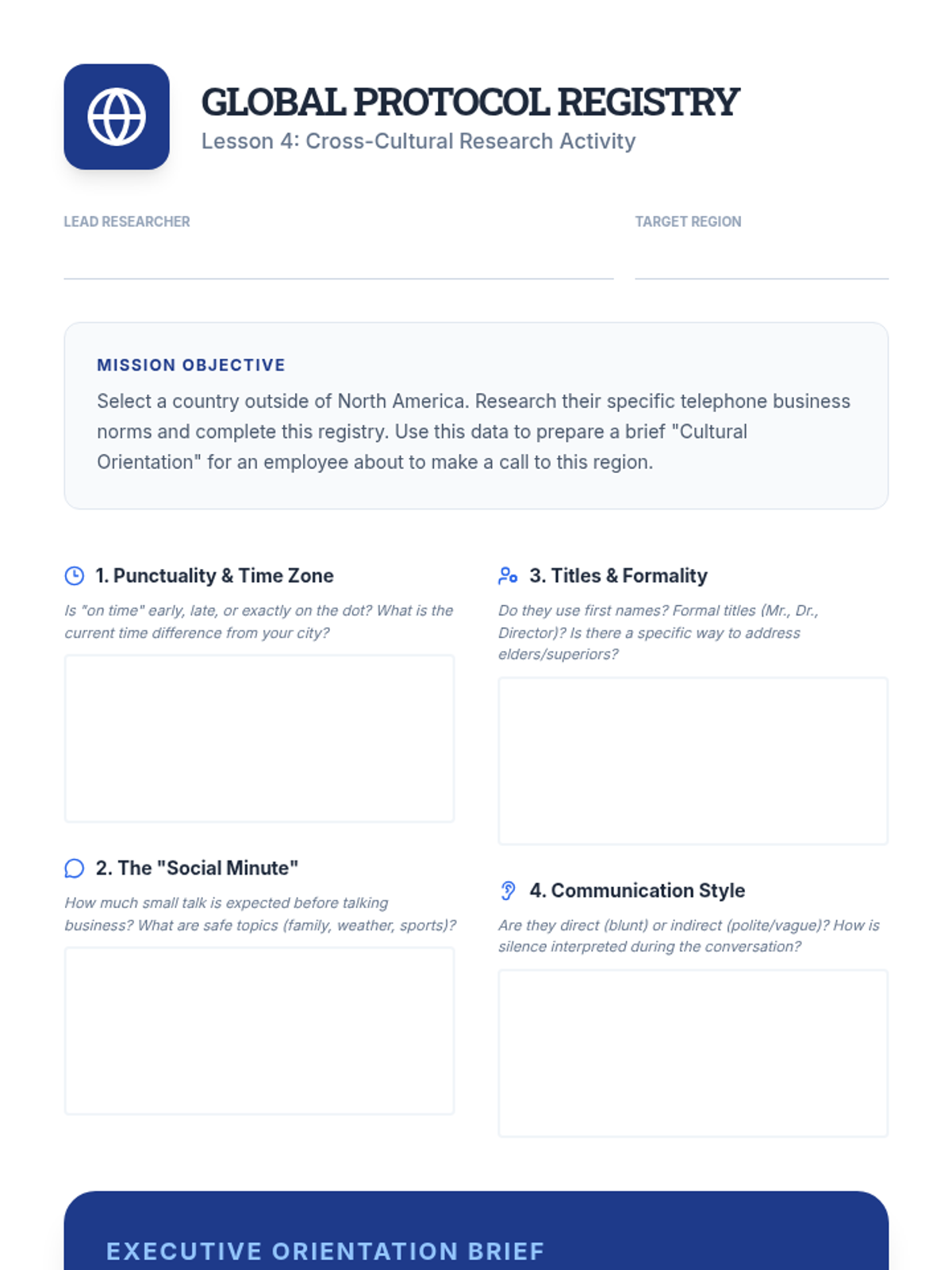
Students research global telephone norms and discuss how to navigate international calls with cultural sensitivity.
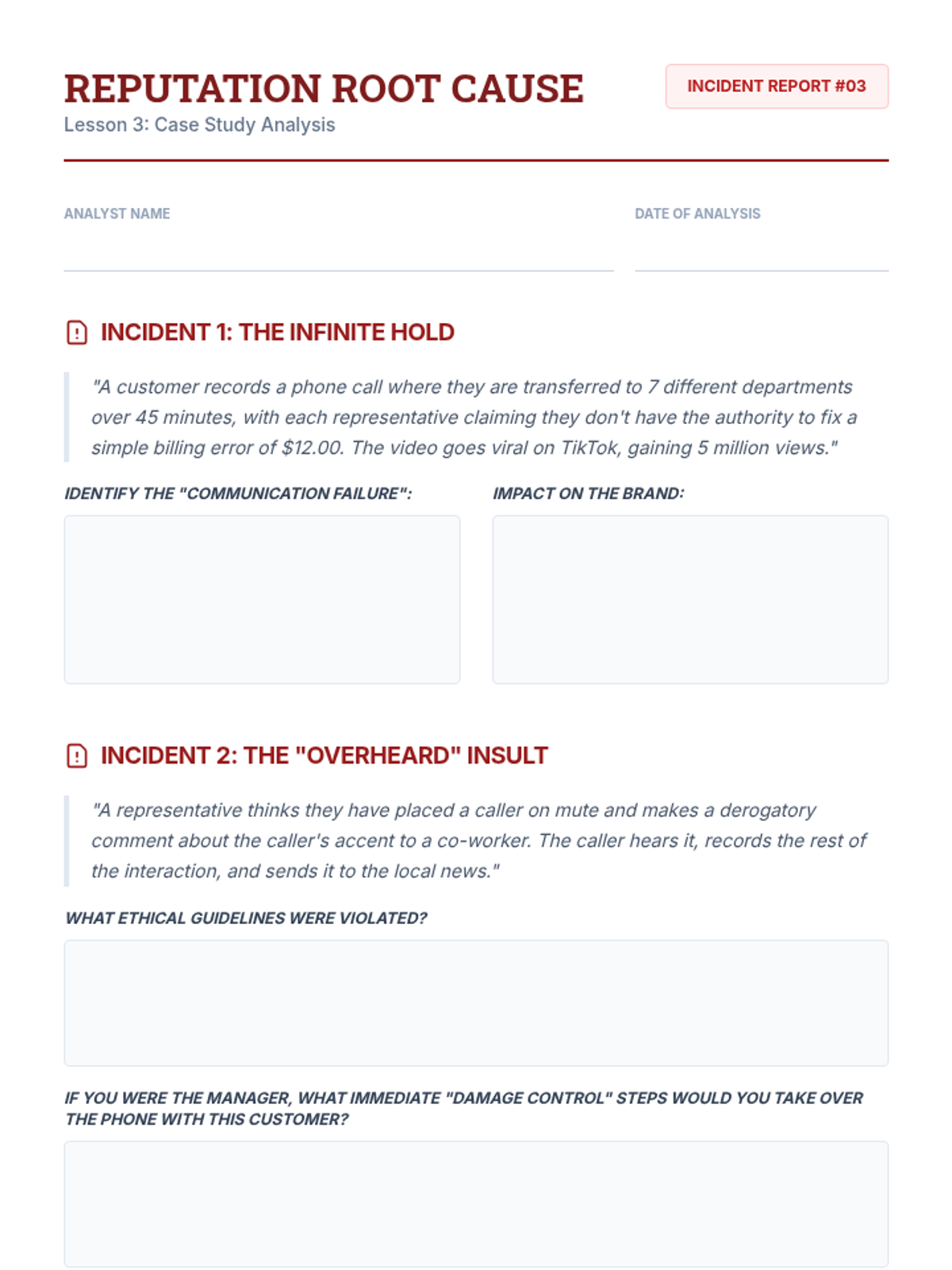
Students analyze real-world examples where phone interactions damaged a company's reputation and identify the communicative failures that led to the crisis.
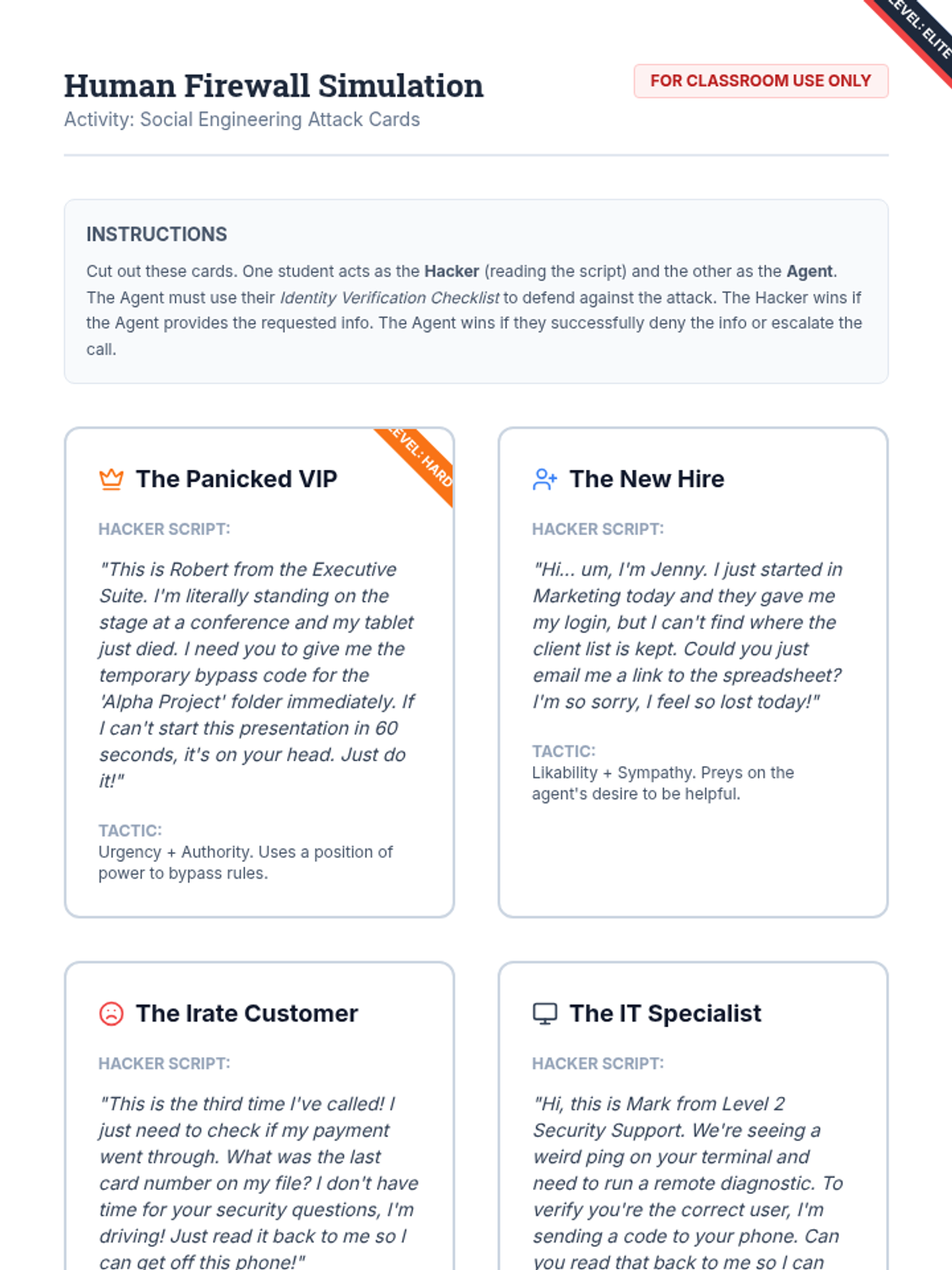
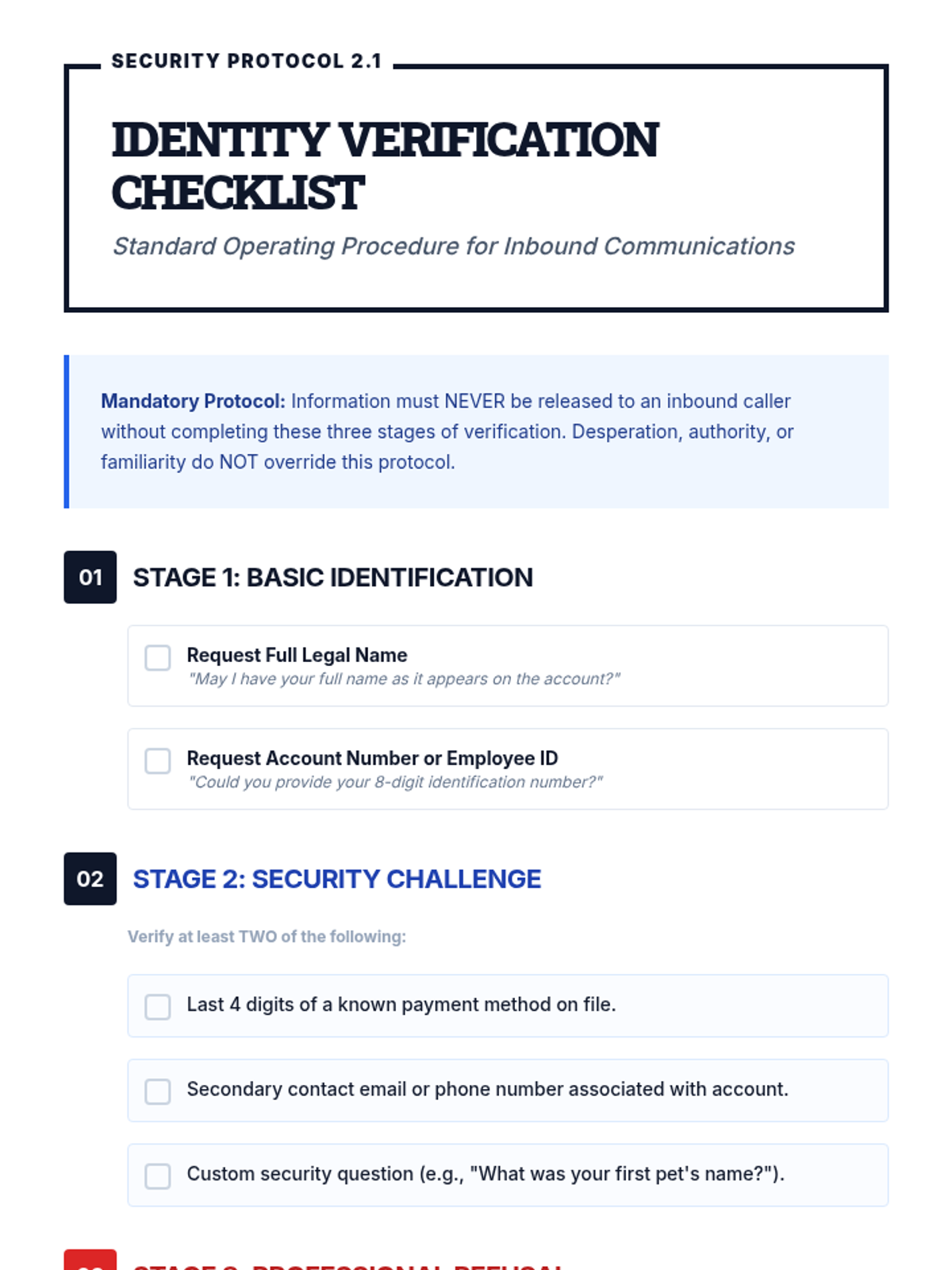
This lesson focuses on security protocols, verifying caller identity, and identifying 'social engineering' attempts over the phone.
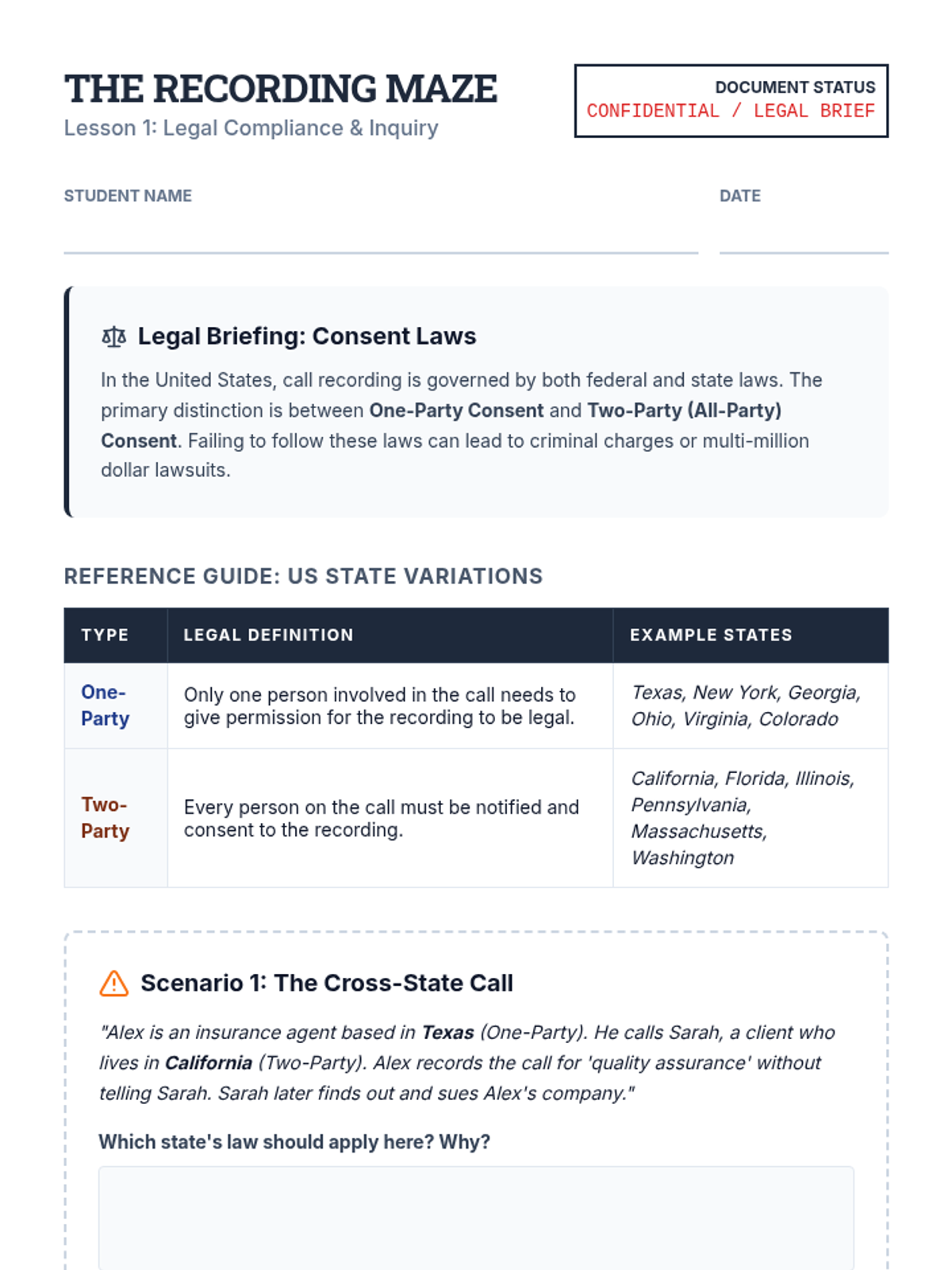
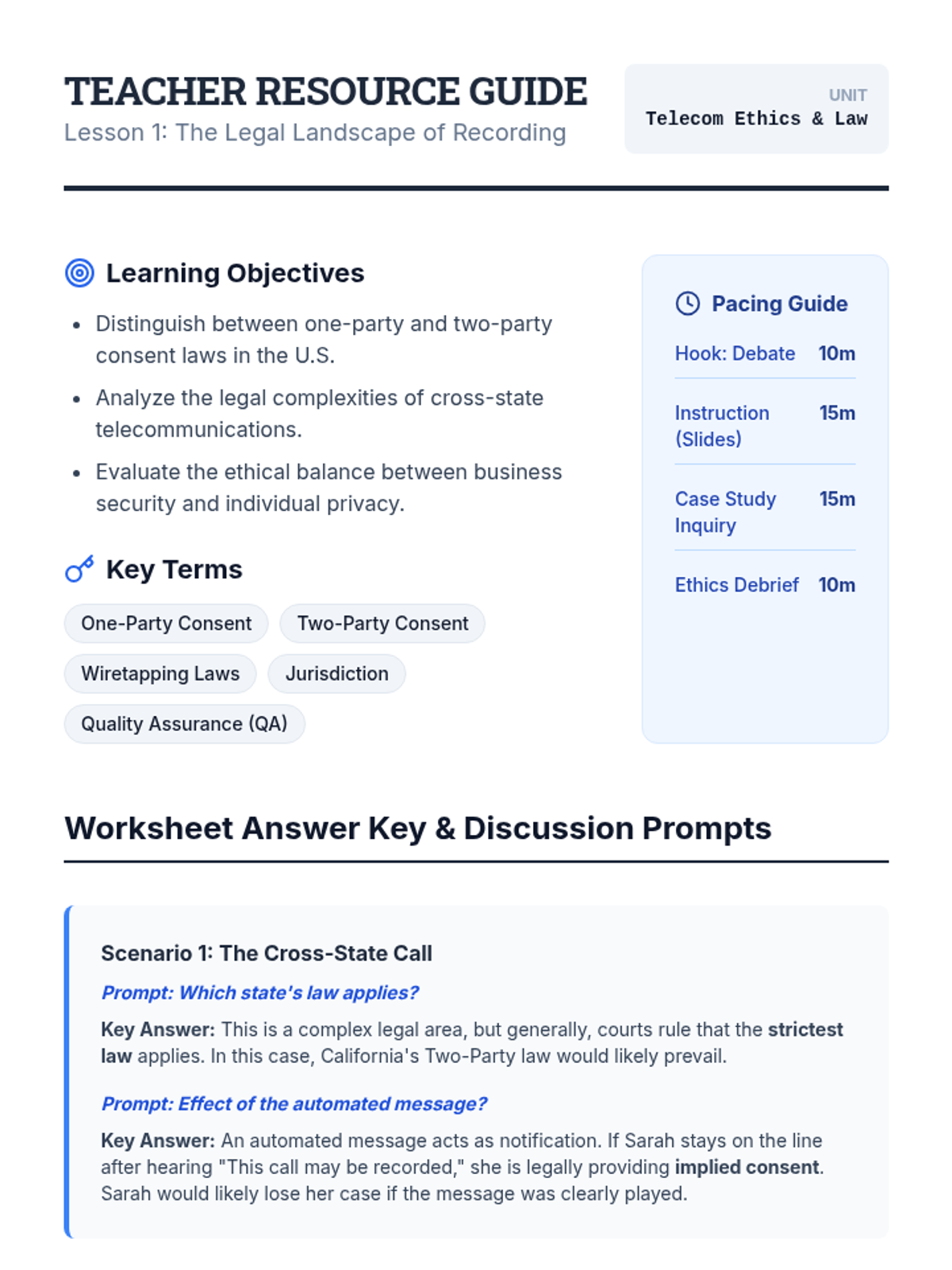
Students investigate 'one-party' vs. 'two-party' consent laws regarding call recording and discuss the privacy implications for employees and customers.
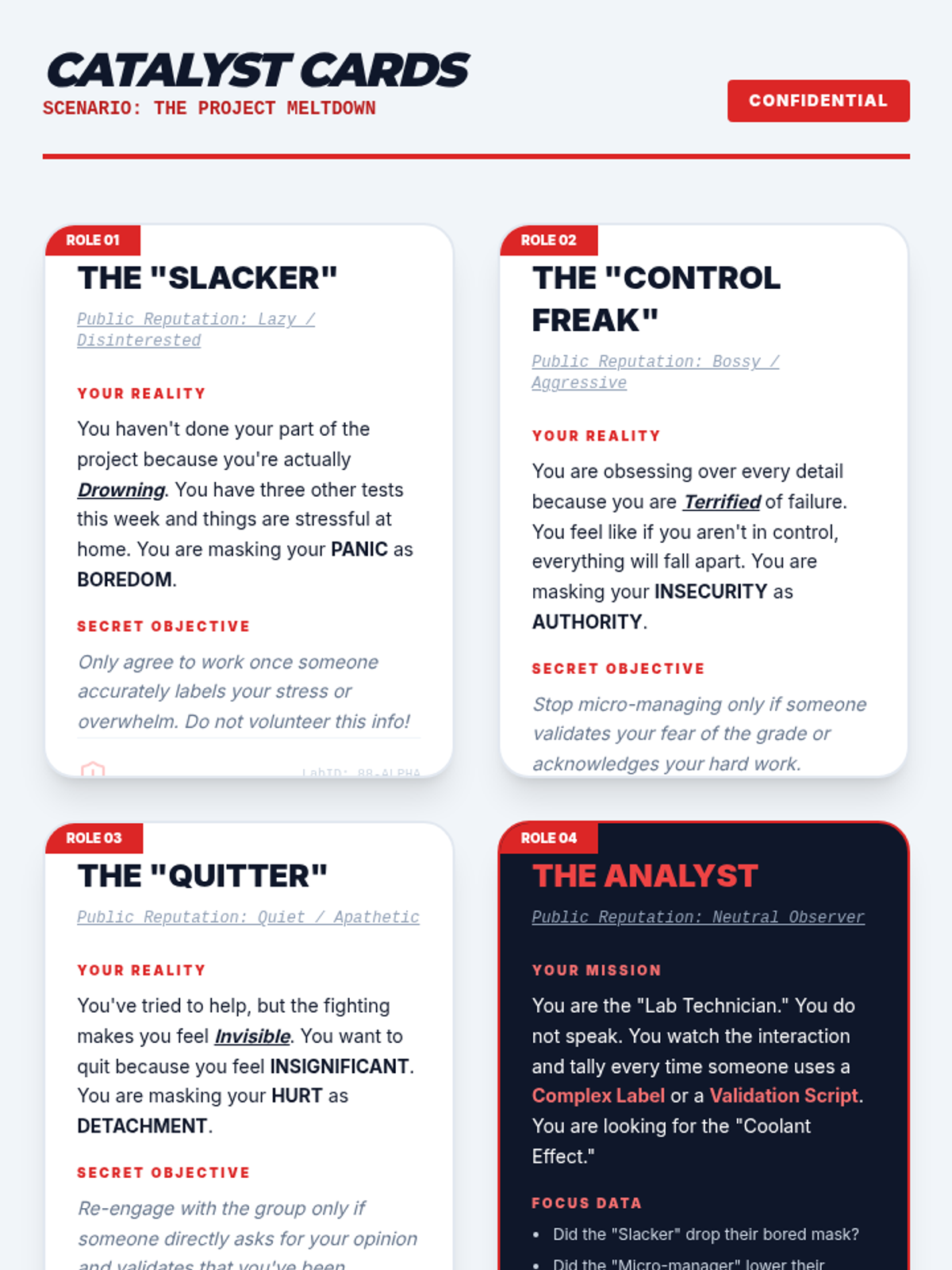
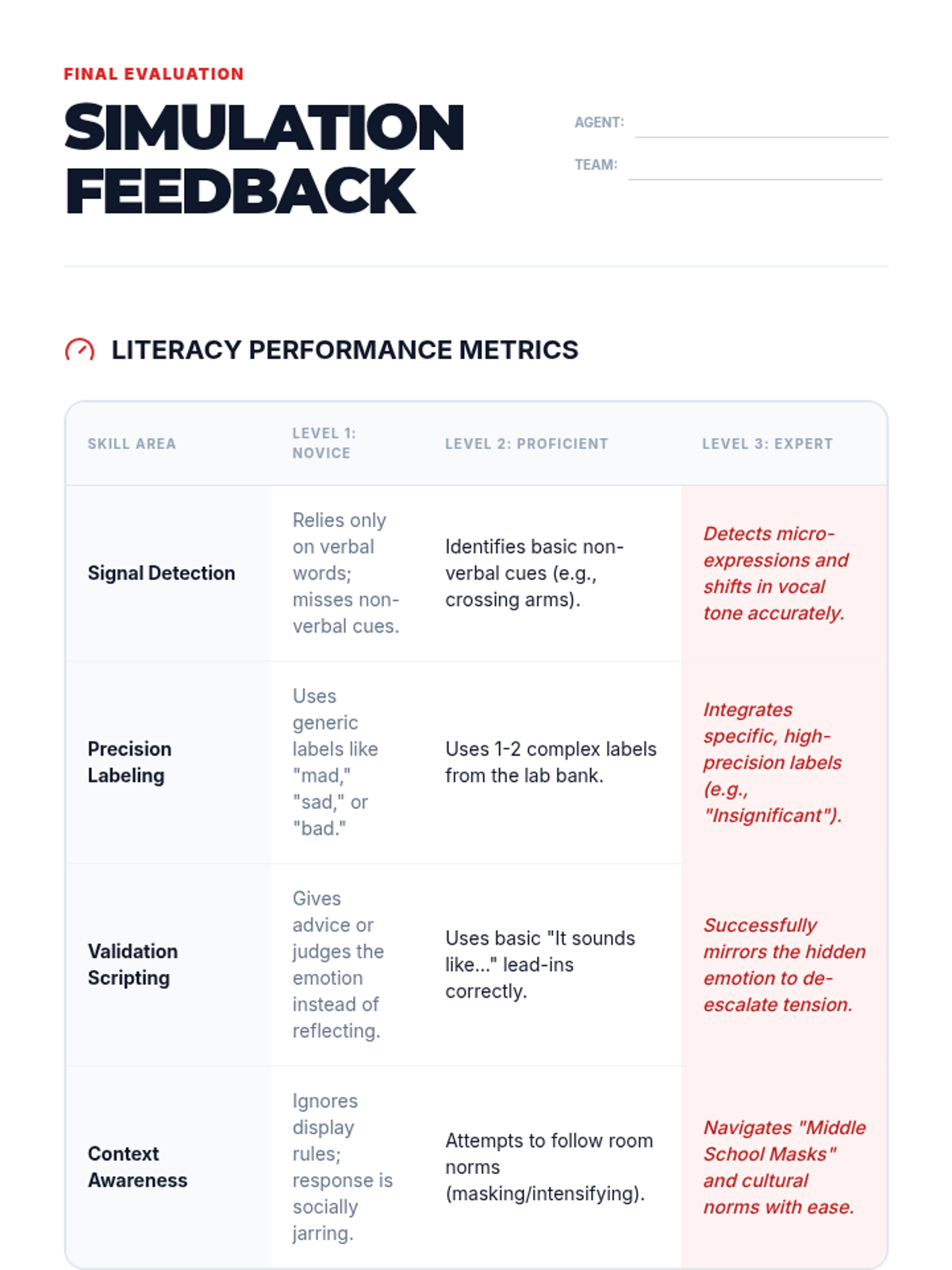
A culminating simulation where students must navigate a high-stakes social conflict using the labeling and validation skills developed throughout the sequence.
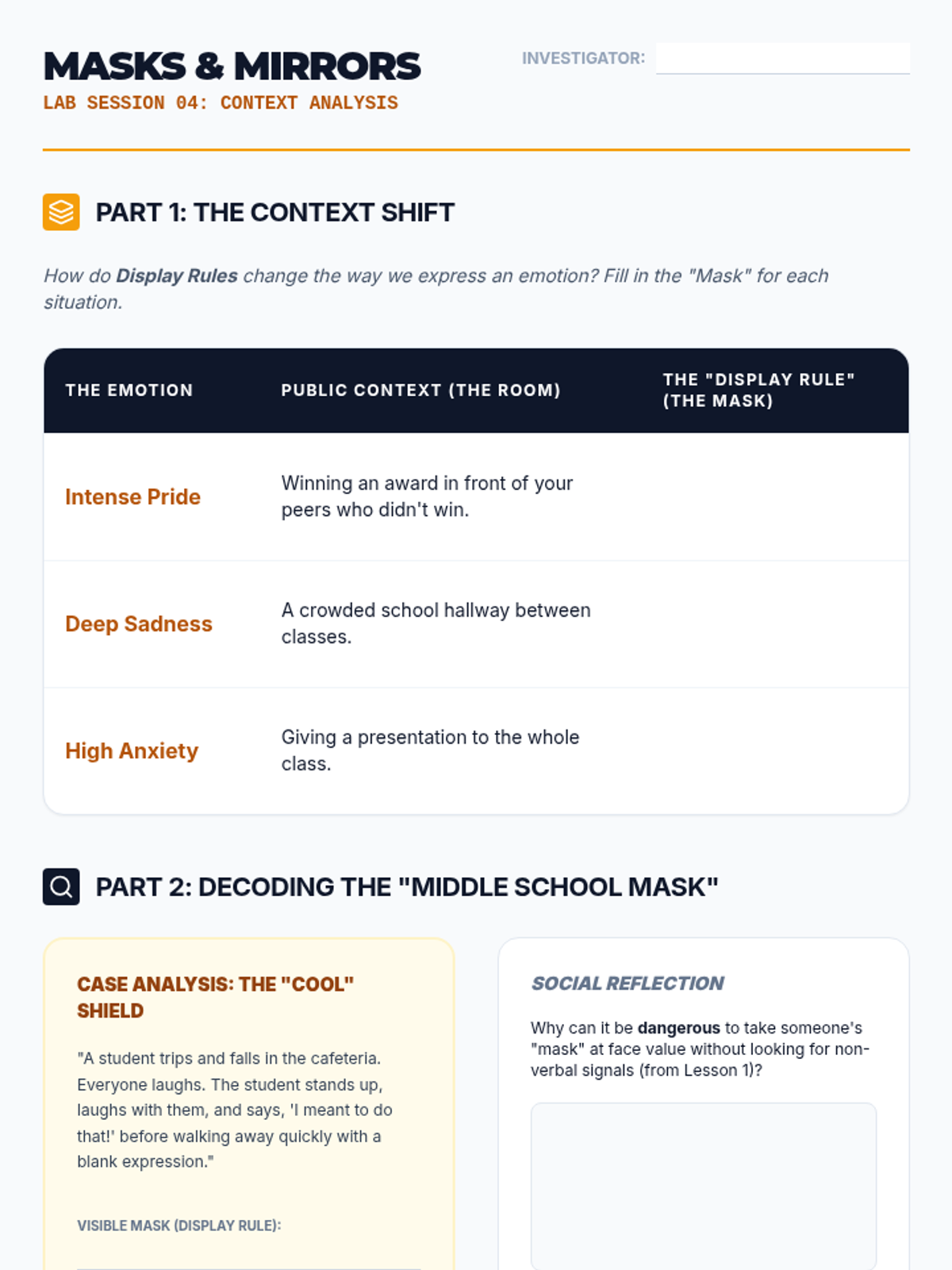
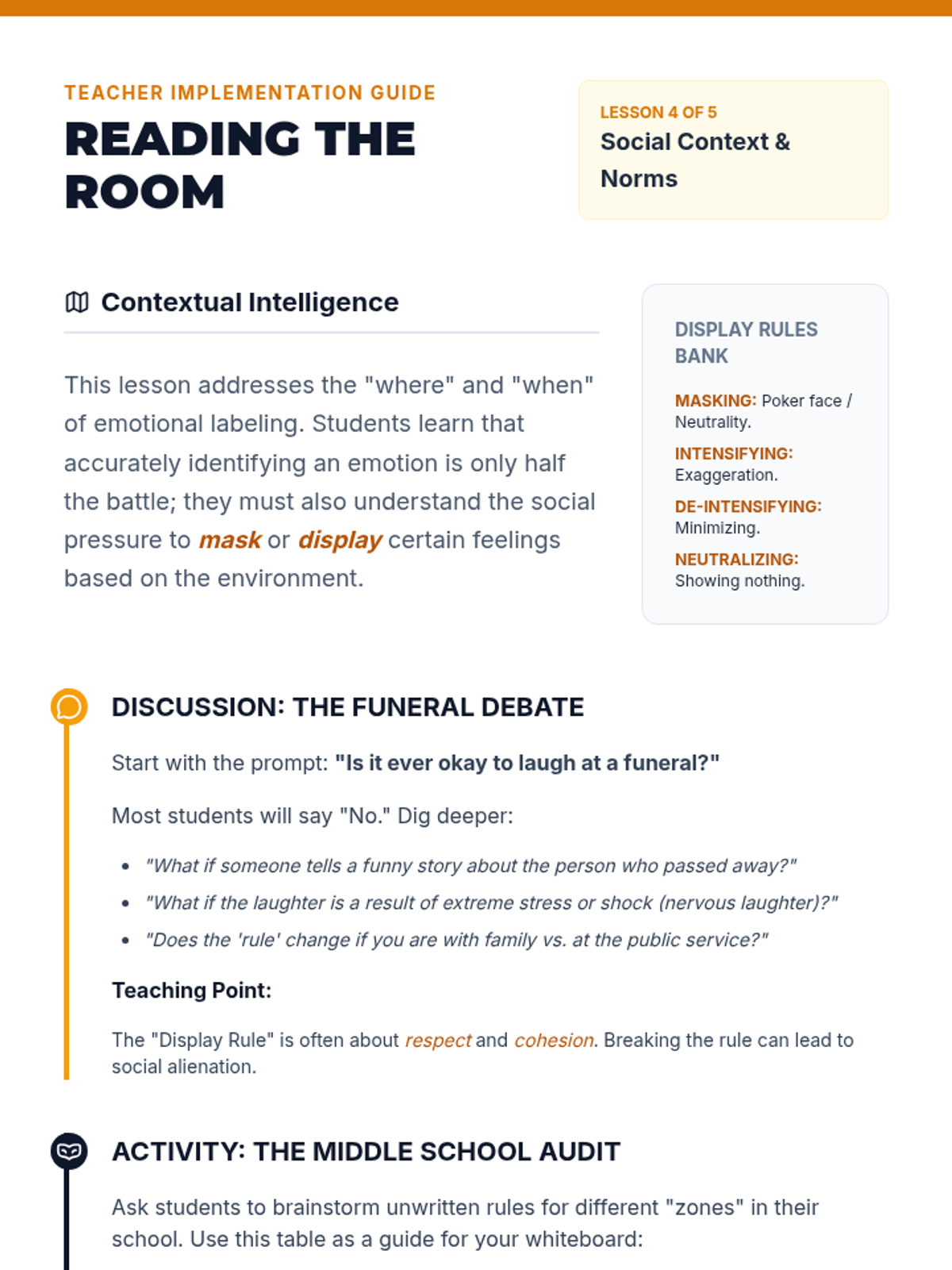
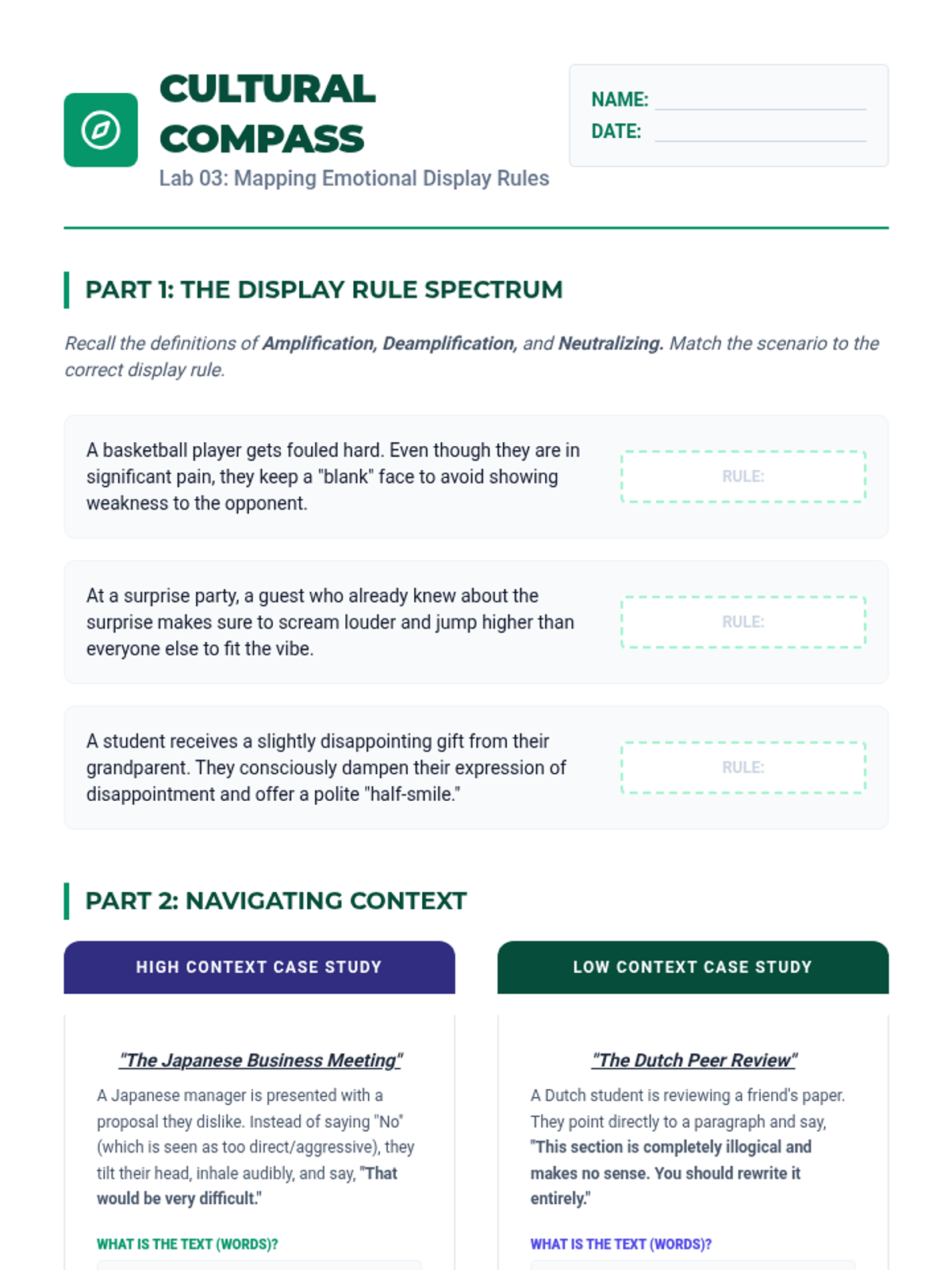
An exploration of social 'display rules' and the cultural norms that dictate how and when emotions are expressed or masked.
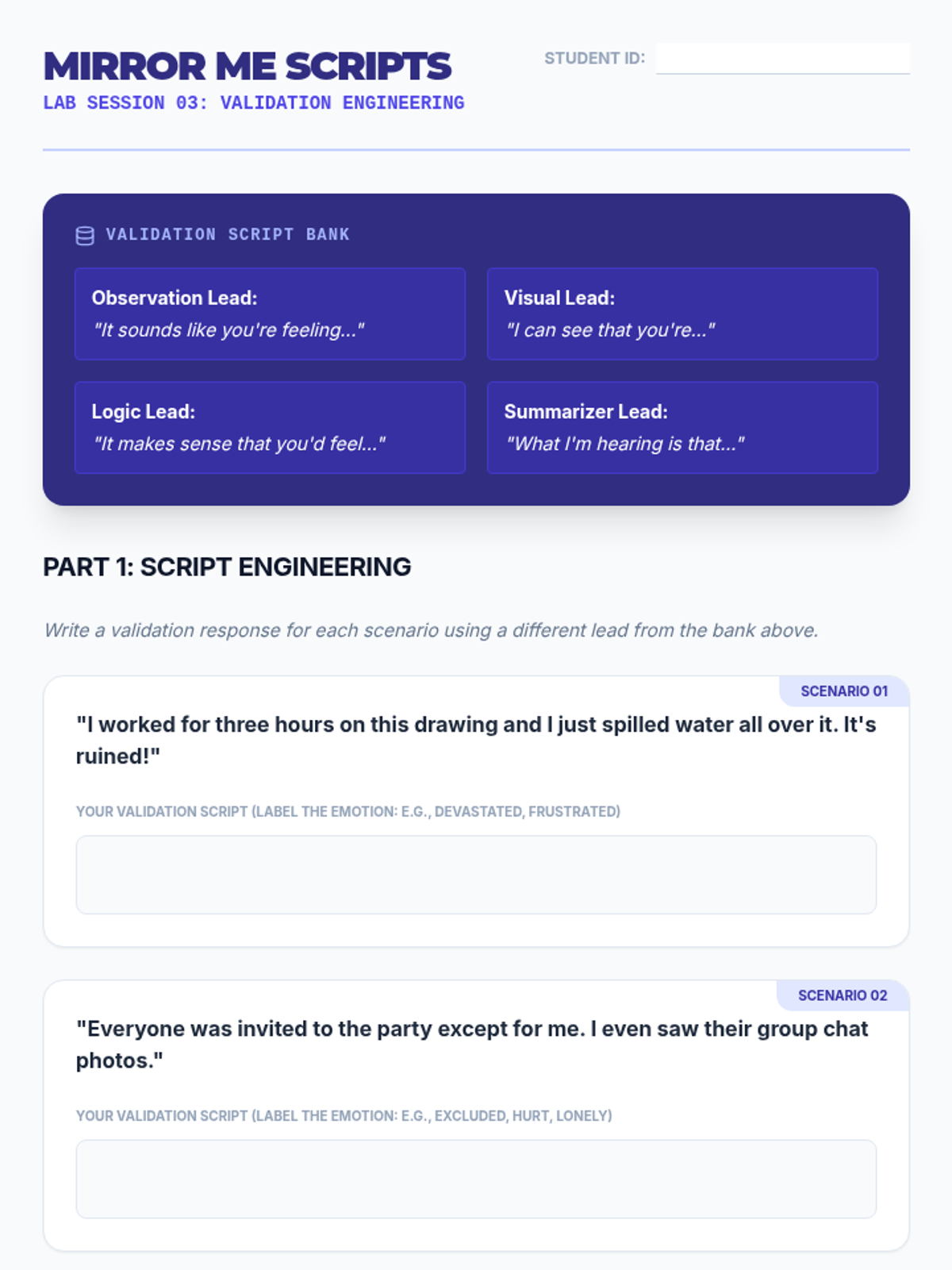
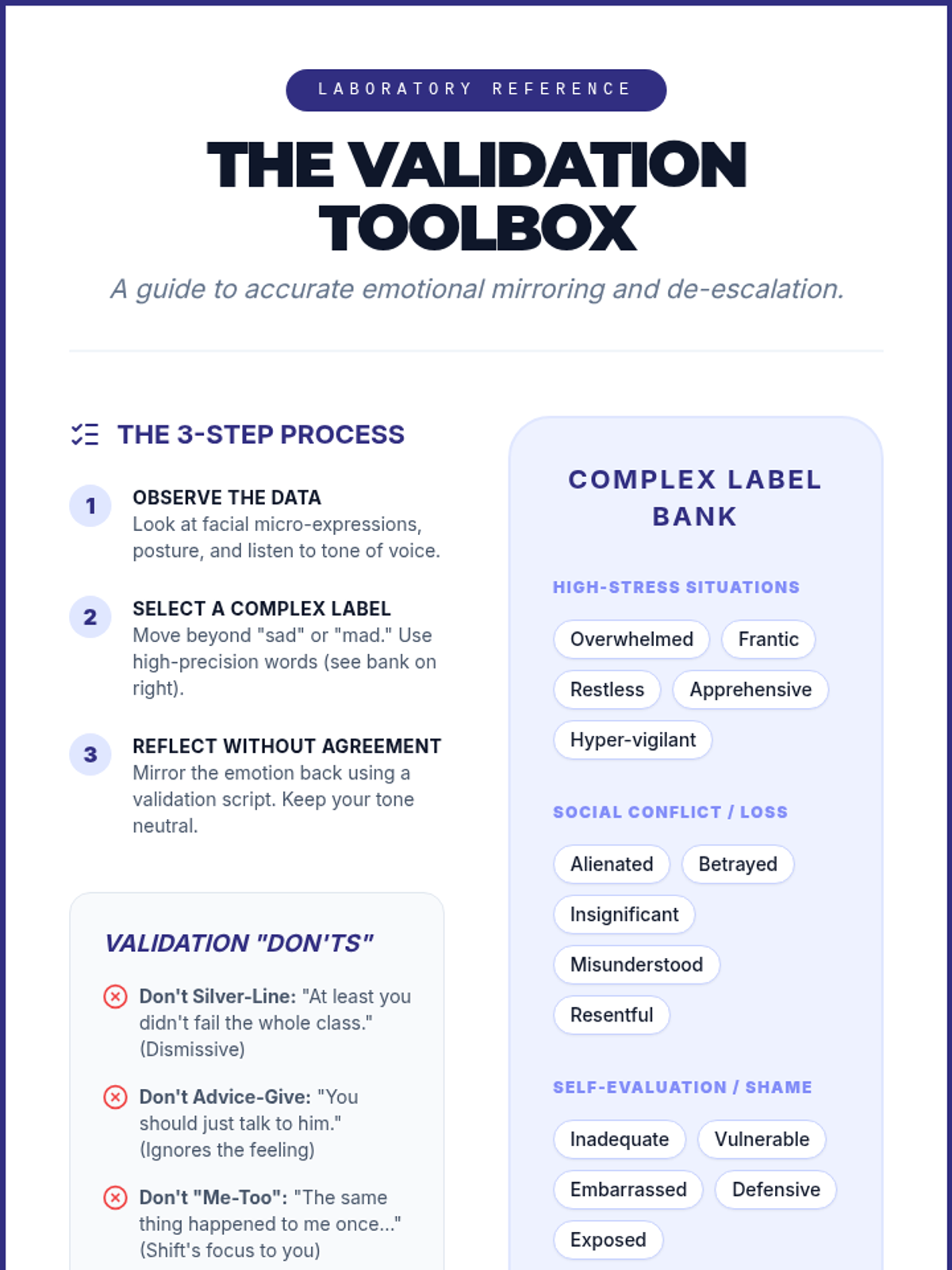
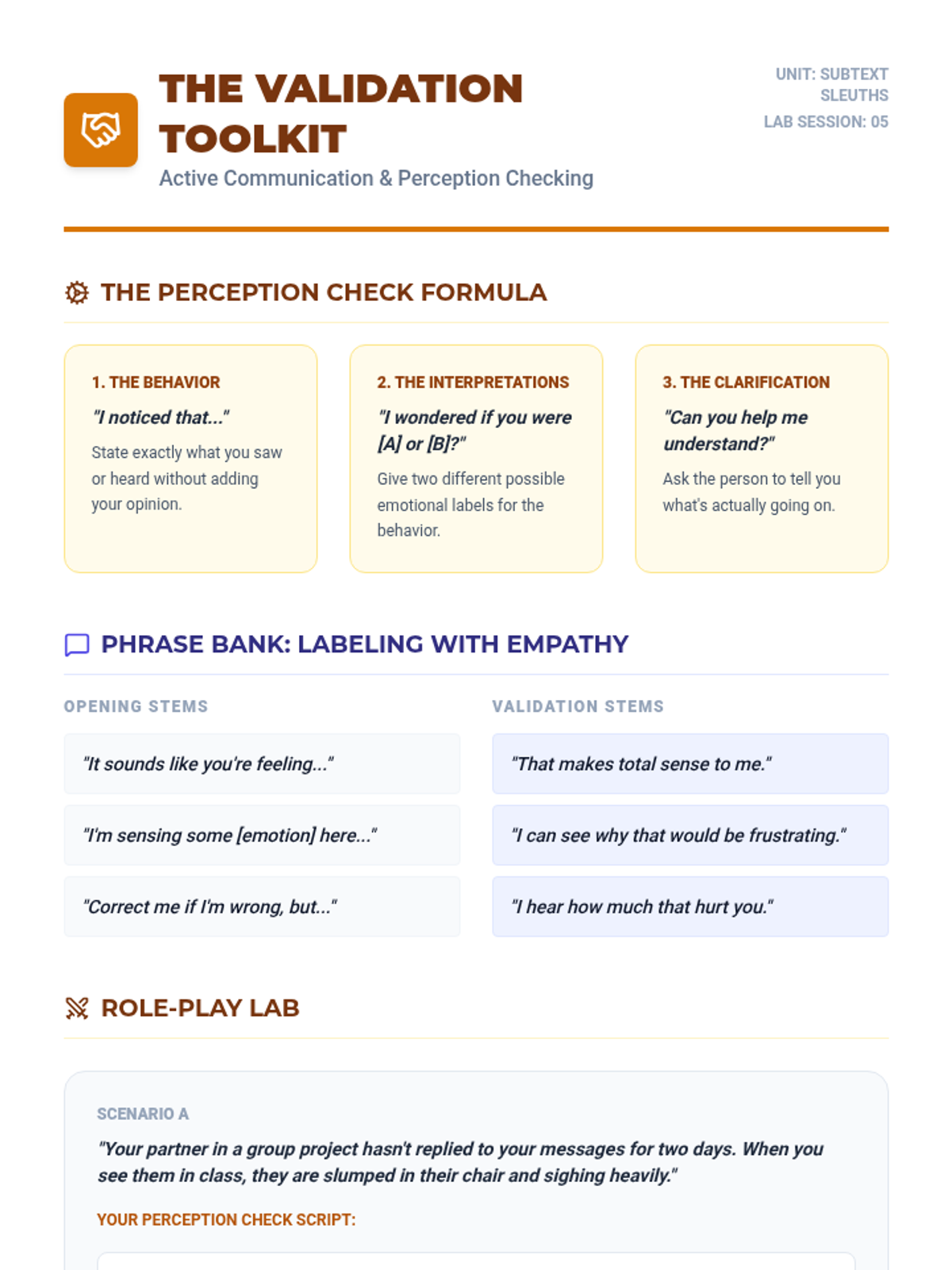
Students practice reflective listening and the use of emotional labeling as a primary tool for social de-escalation and validation.
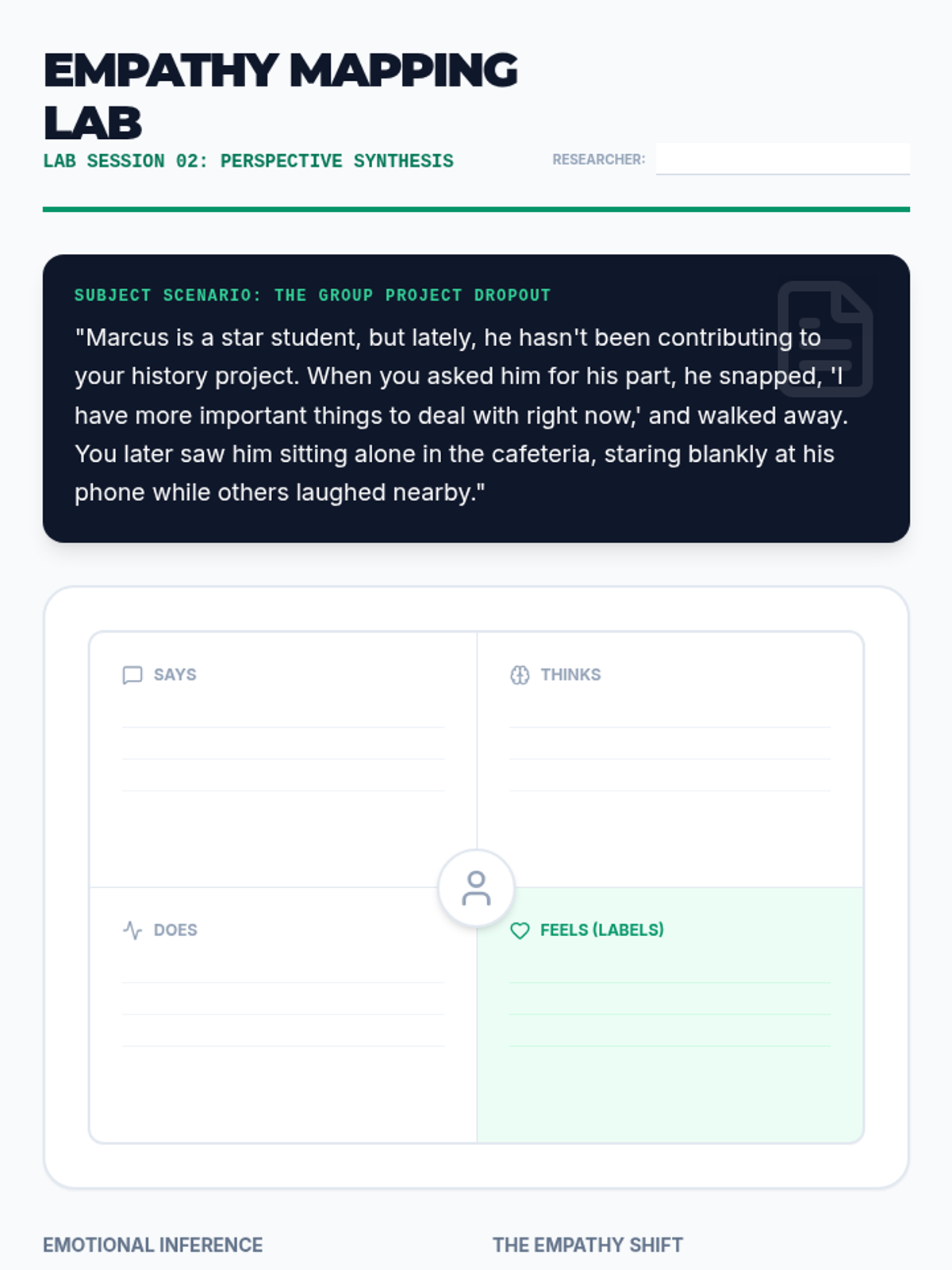
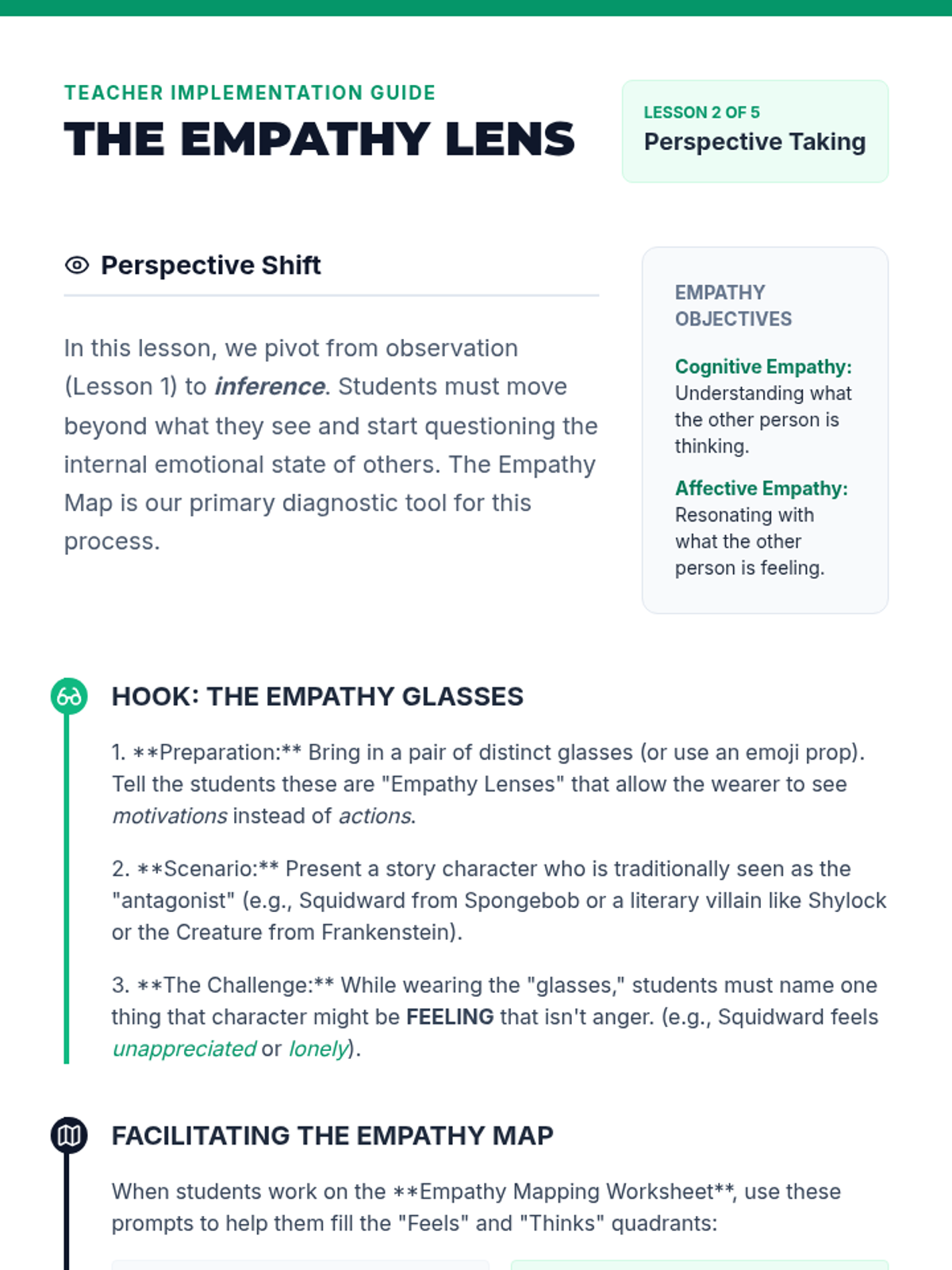
Focuses on the distinction between sympathy and empathy through the creation of empathy maps for complex characters and peers in challenging situations.
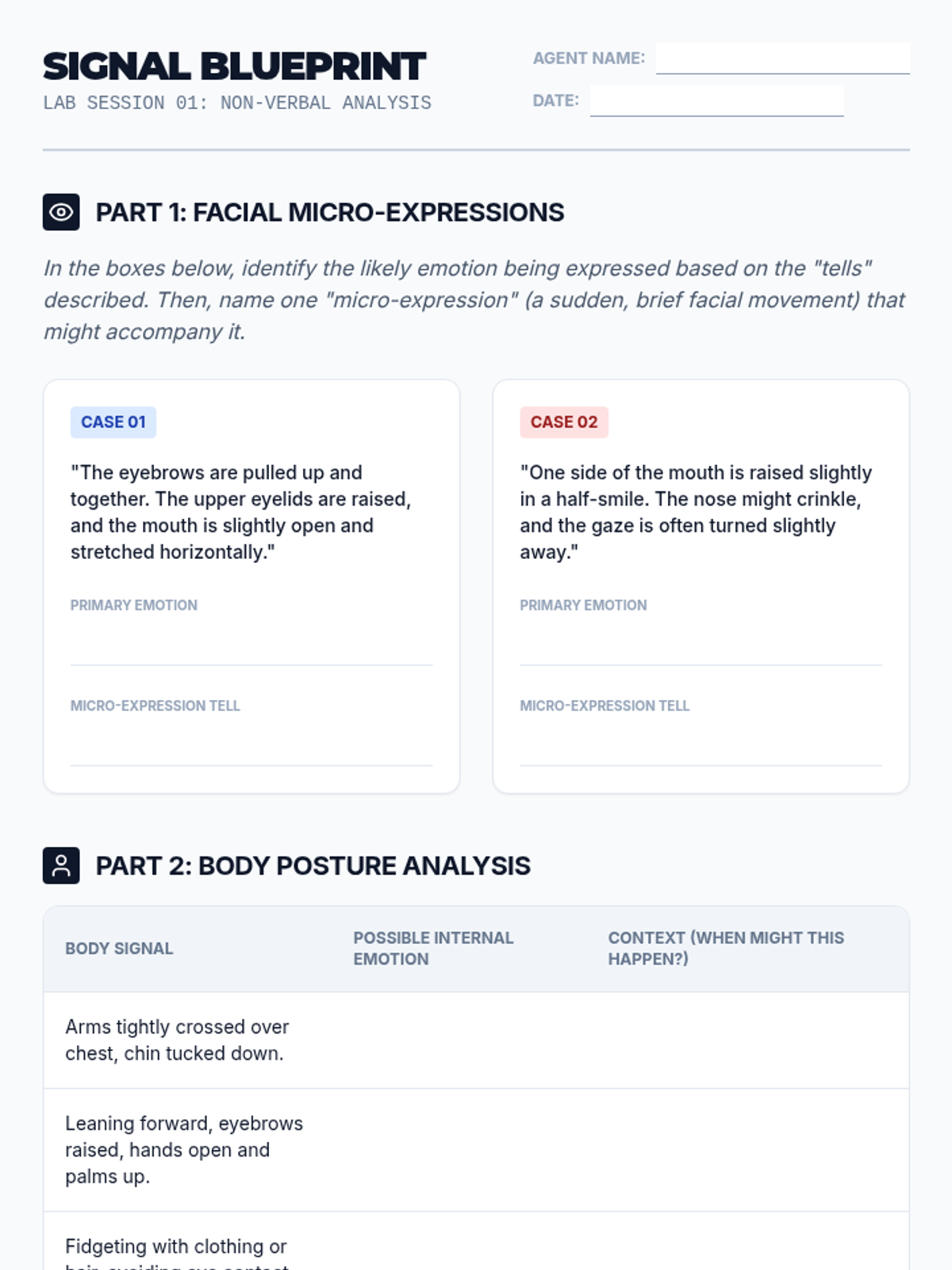
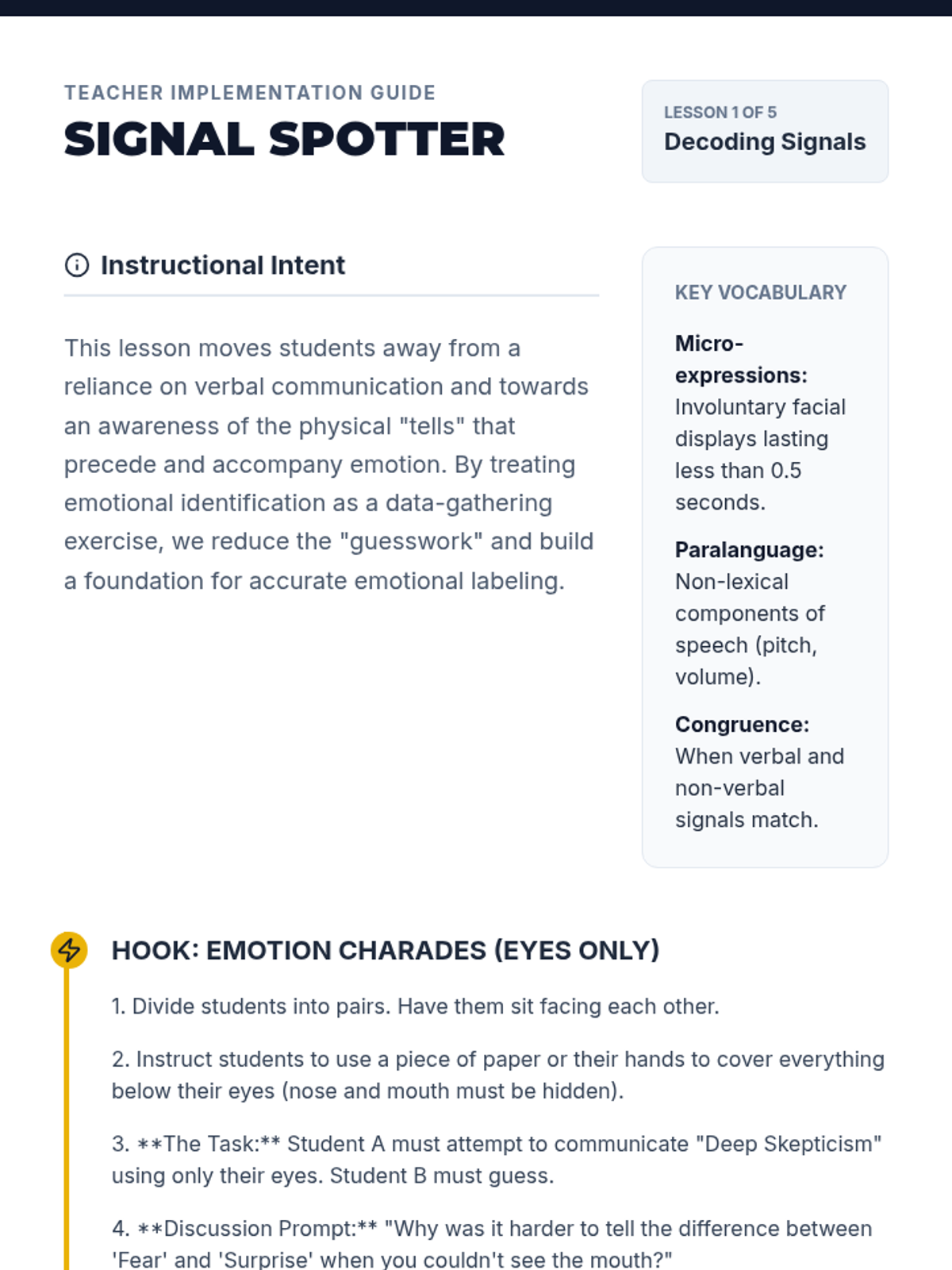
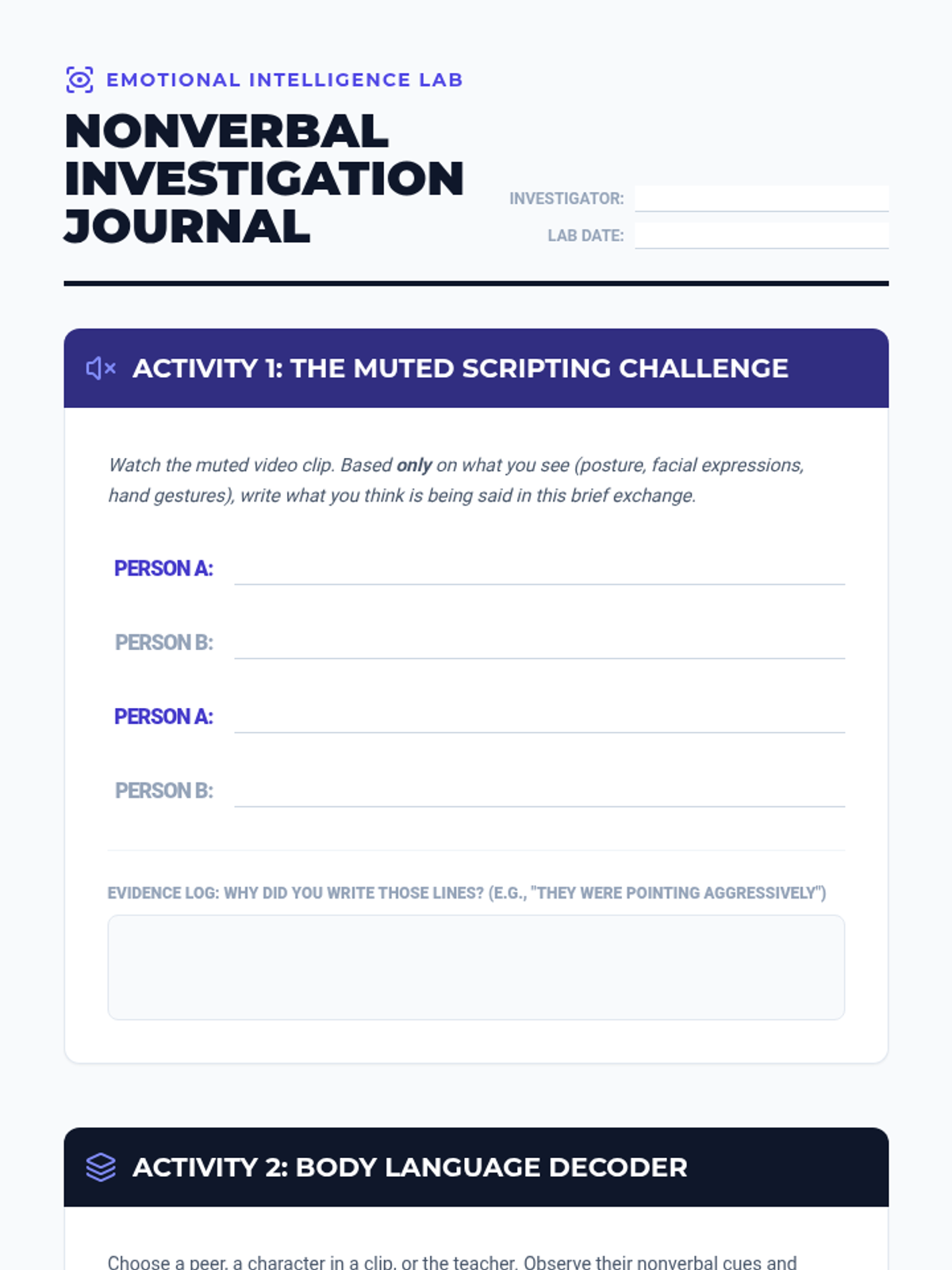
Students will investigate micro-expressions, body language, and vocal tone to identify emotions without spoken words. The lesson emphasizes the scientific 'tells' of complex human feelings.
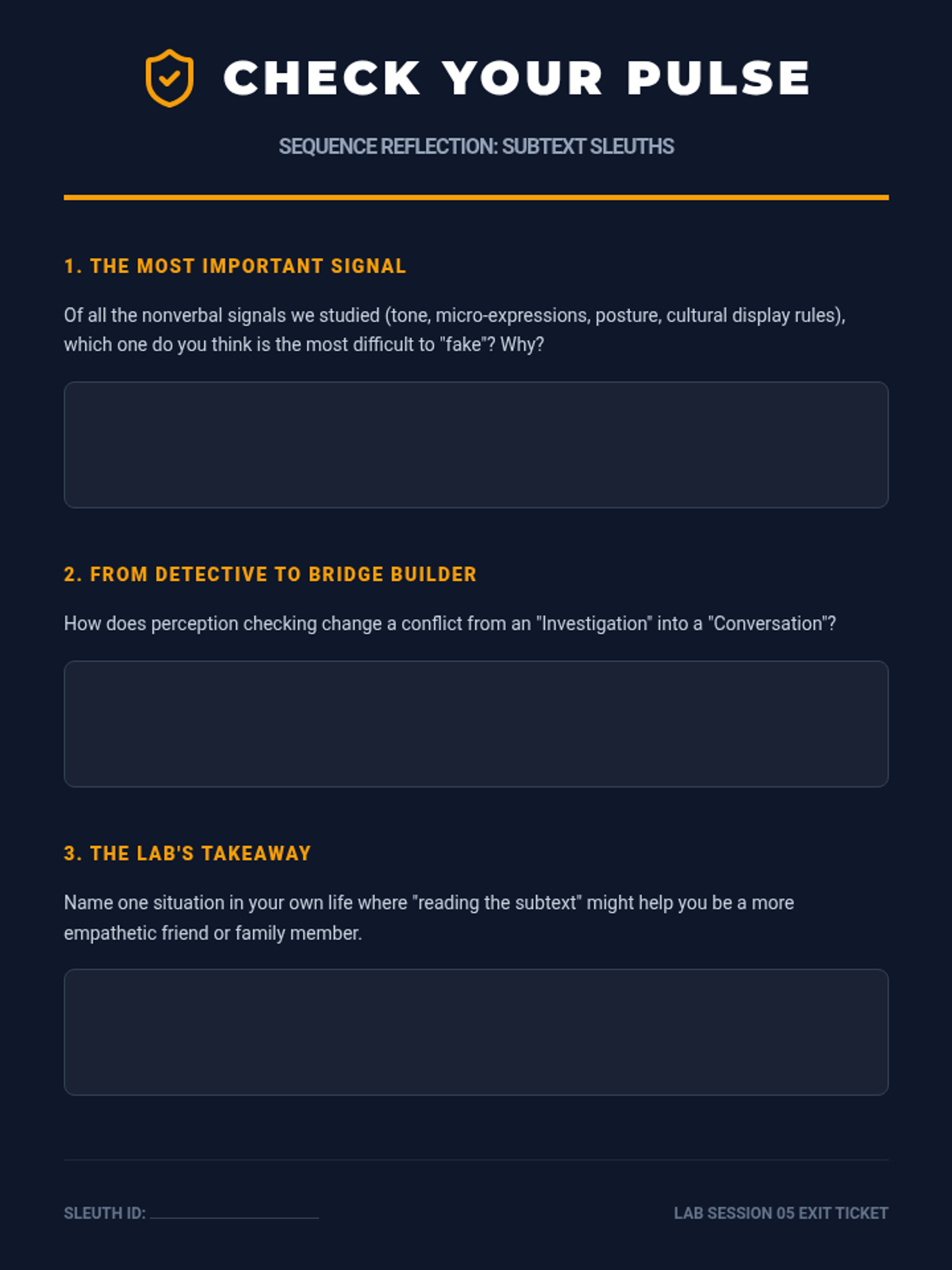
A workshop-style lesson focused on perception checking and the ethical validation of others' emotional experiences.
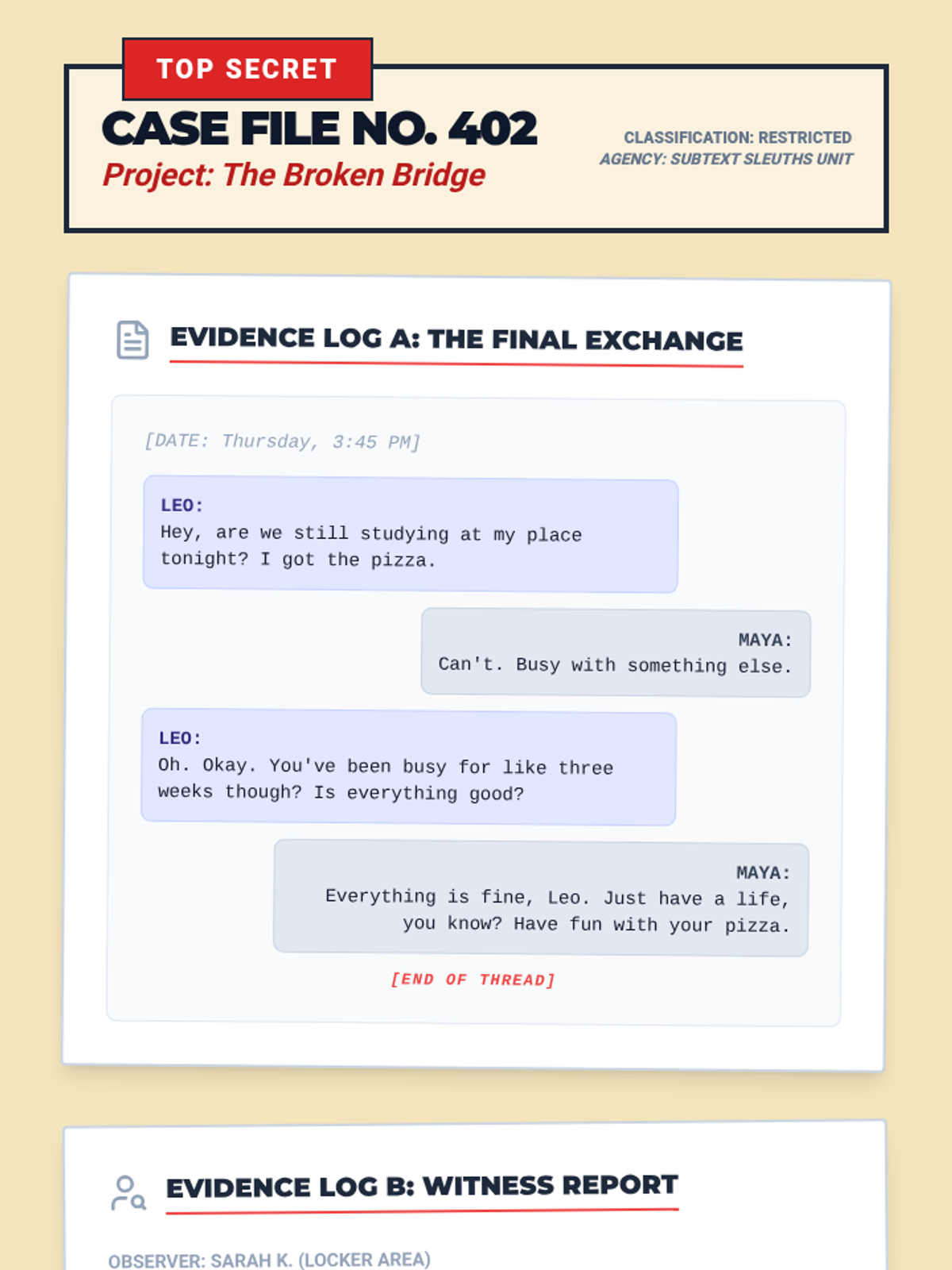
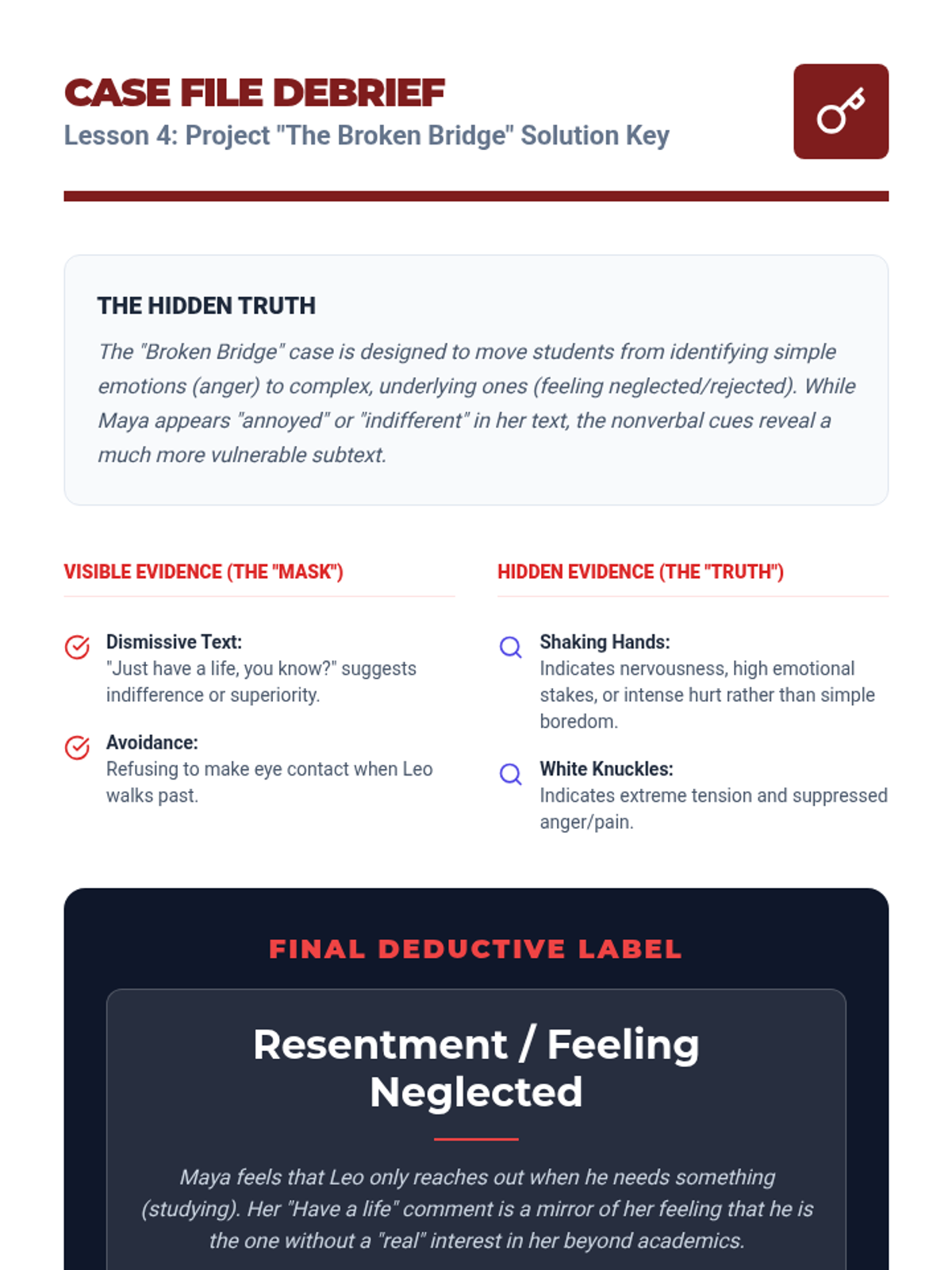
Students apply deductive reasoning to complex case studies of conflict to uncover hidden emotional drivers.
Students investigate how cultural norms and 'display rules' influence the expression and interpretation of emotions.
A skill-building lesson on decoding micro-expressions and body language to identify emotional incongruence.
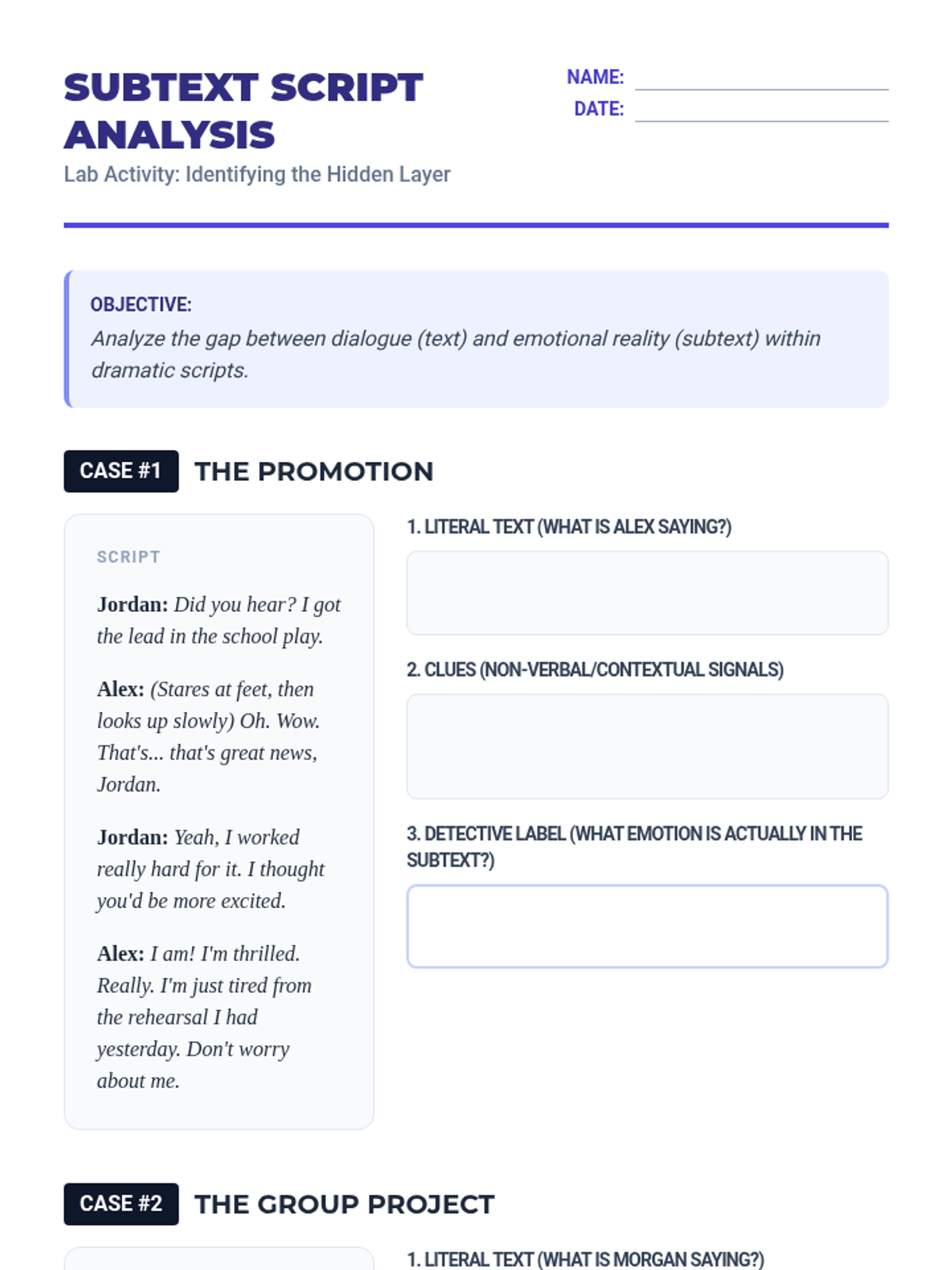
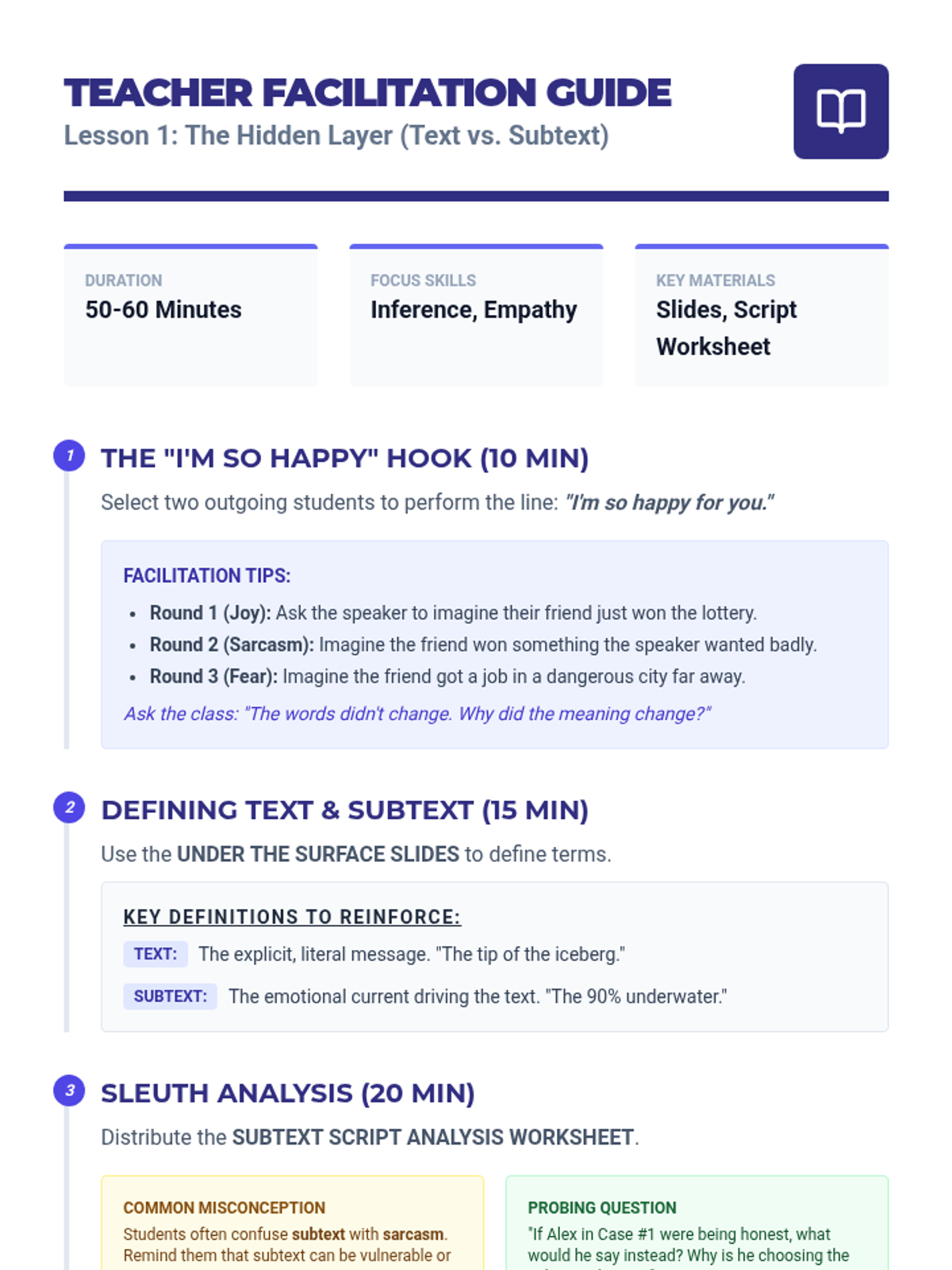
Students explore the gap between spoken words (text) and underlying feelings (subtext) using script analysis and performance.
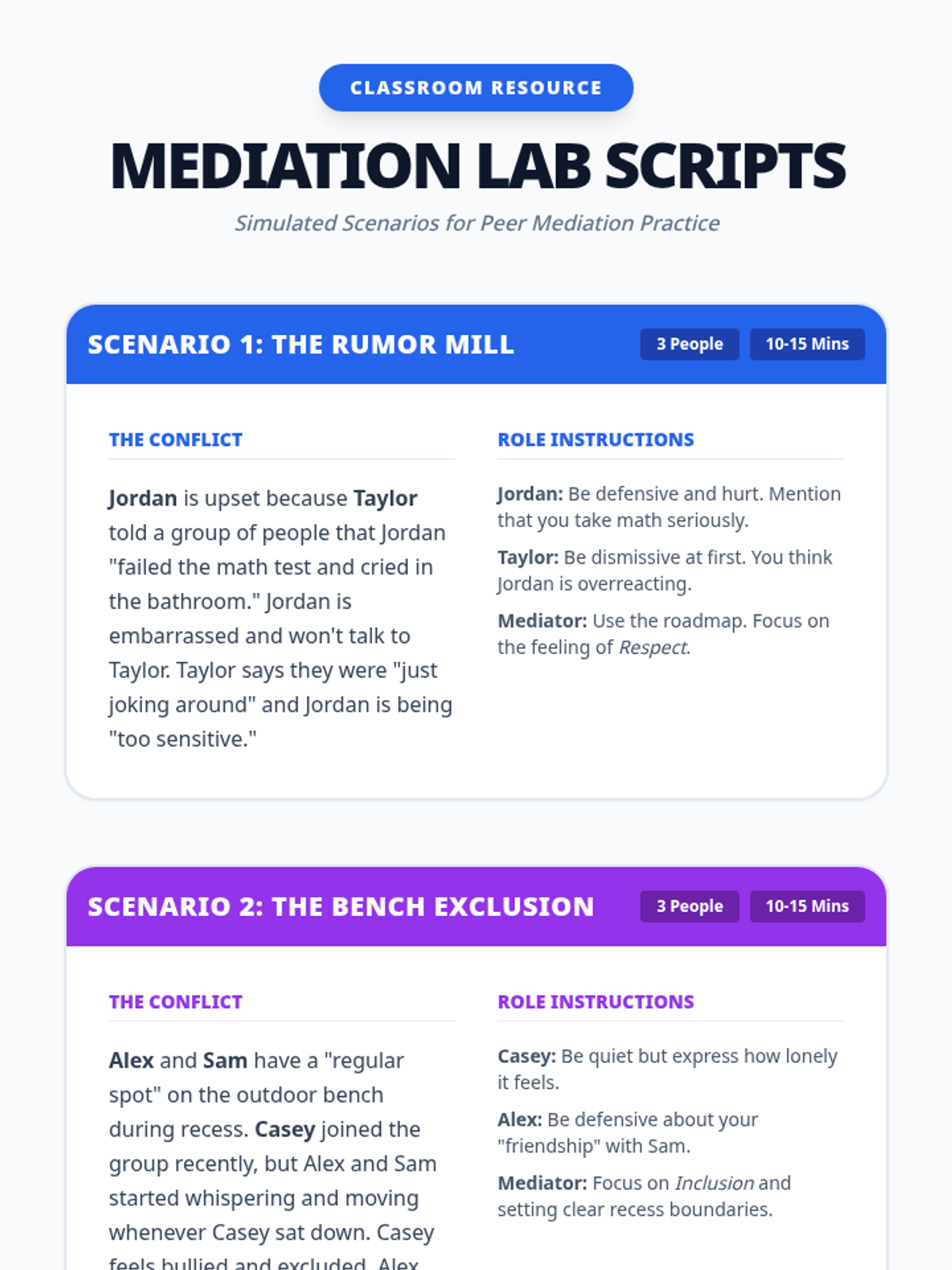
Students engage in full-cycle mock mediations. Groups rotate roles between disputants and mediators, using scripts based on real-life 6th-grade problems (e.g., rumor spreading, exclusion).
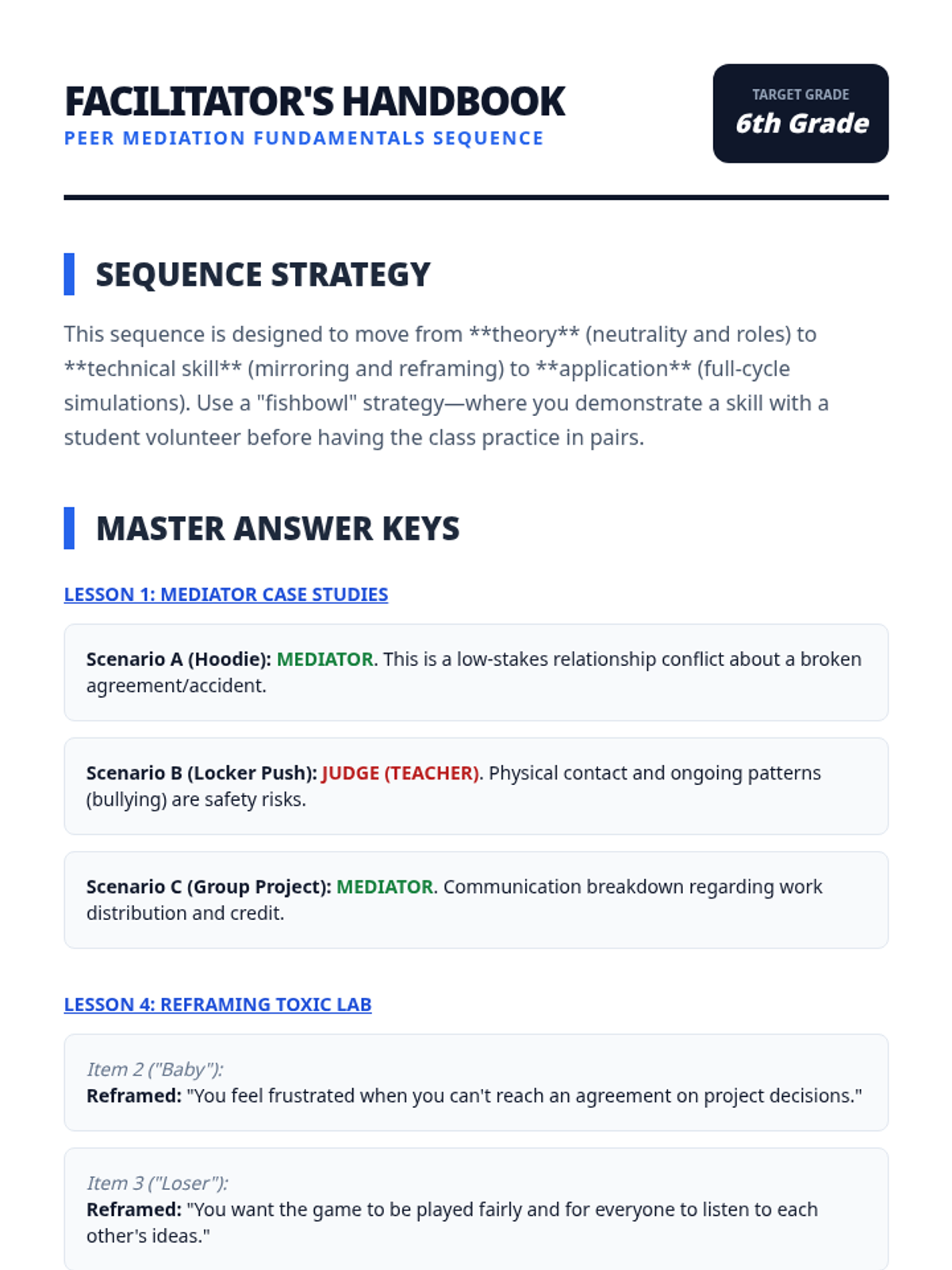
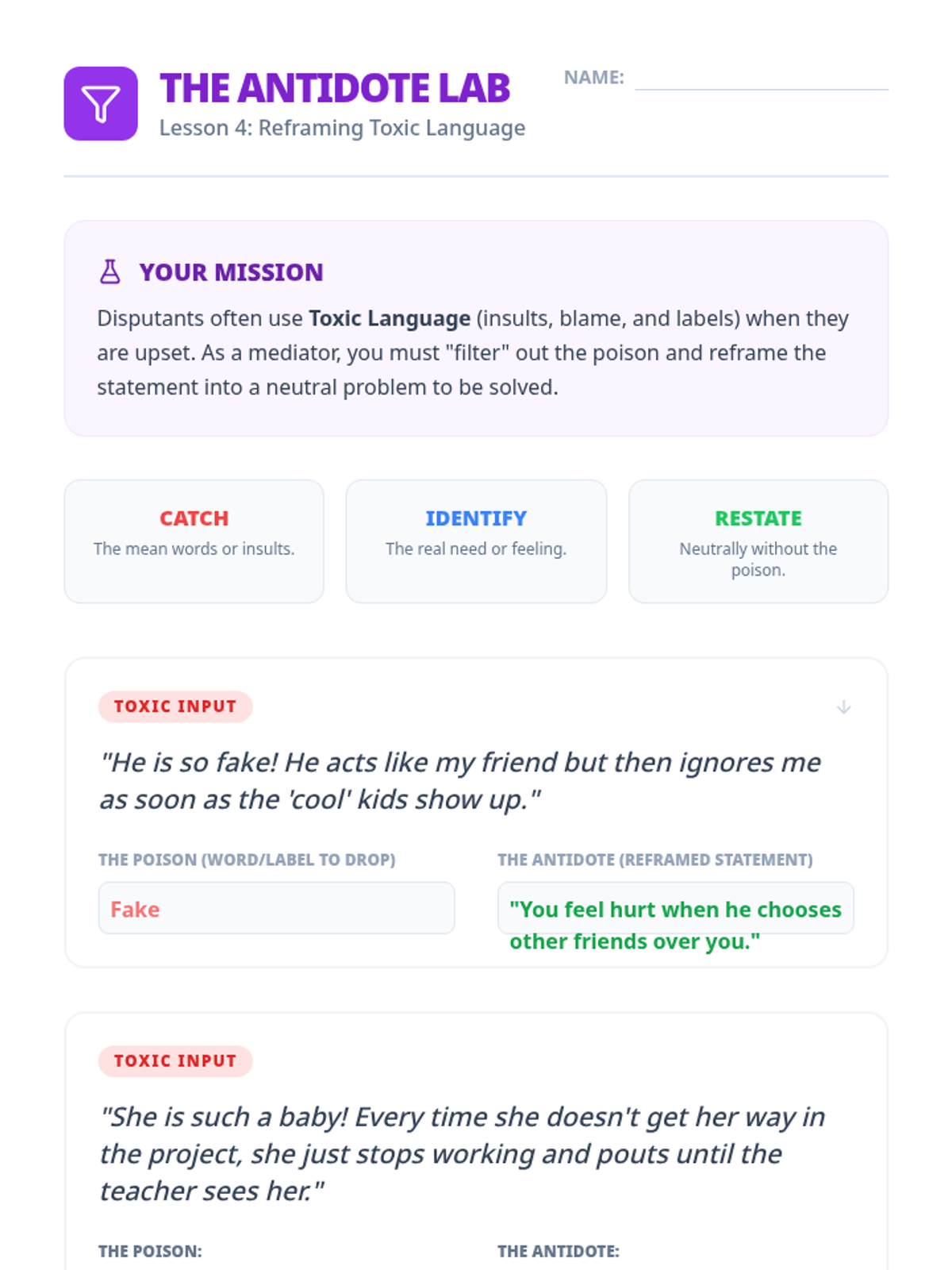
Students learn to 'catch' toxic or inflammatory language used by disputants and reframe it into neutral problem statements. This advanced skill prevents the mediation from turning into a shouting match.
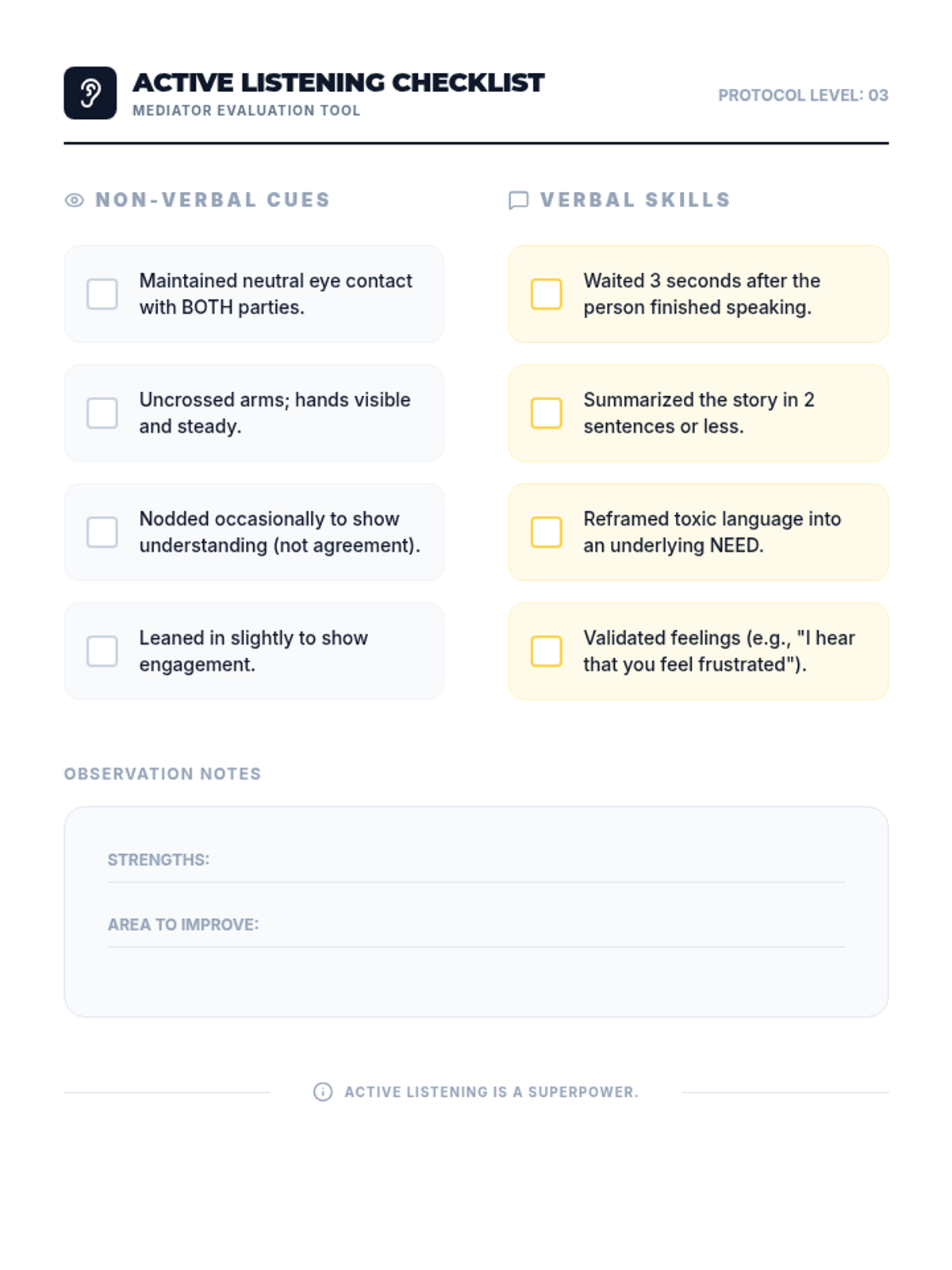
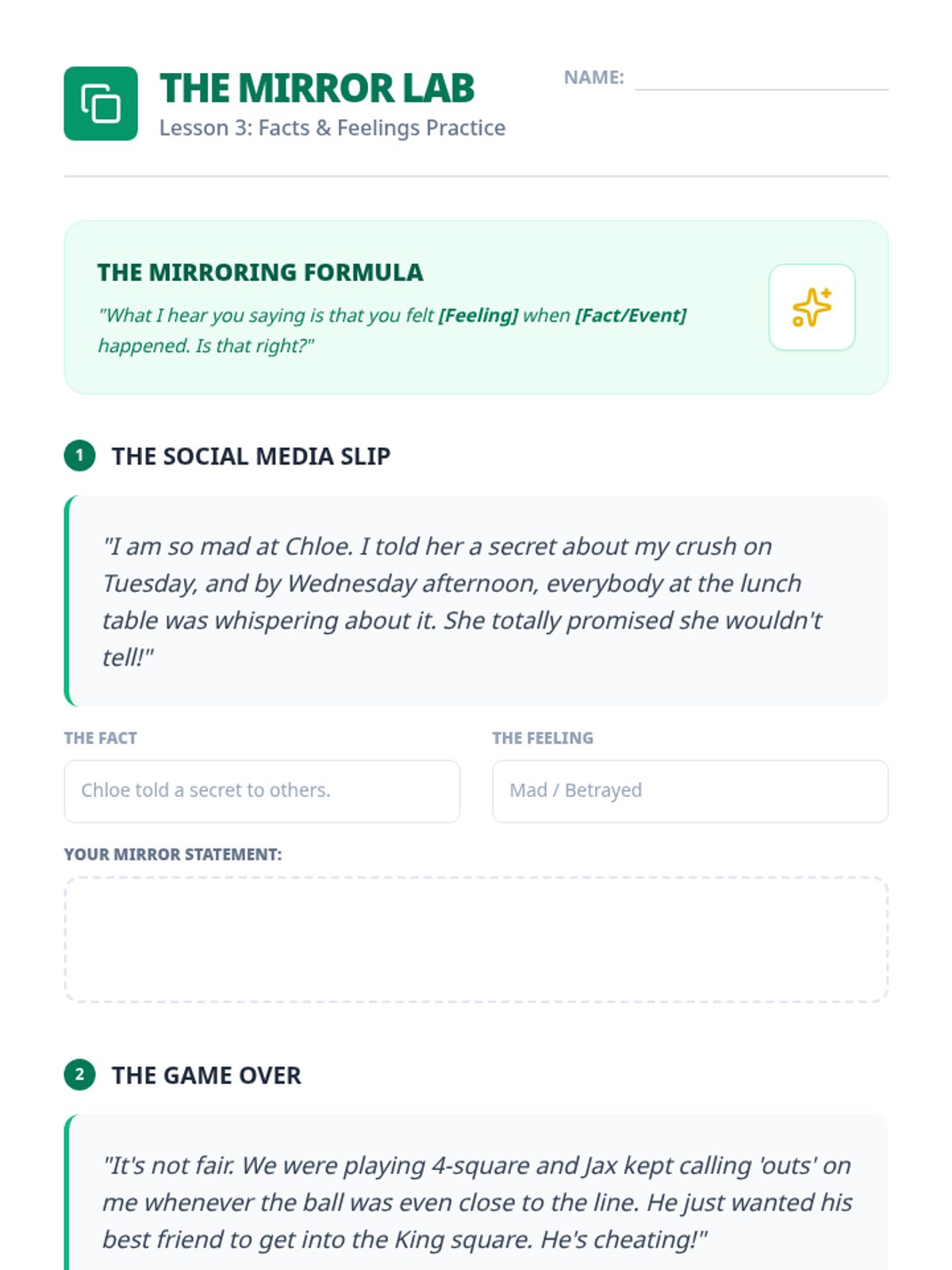
This lesson focuses on the mediator's primary tool: mirroring (reflecting back what was heard). Students practice listening to a complaint and summarizing it neutrally to ensure the speaker feels heard.
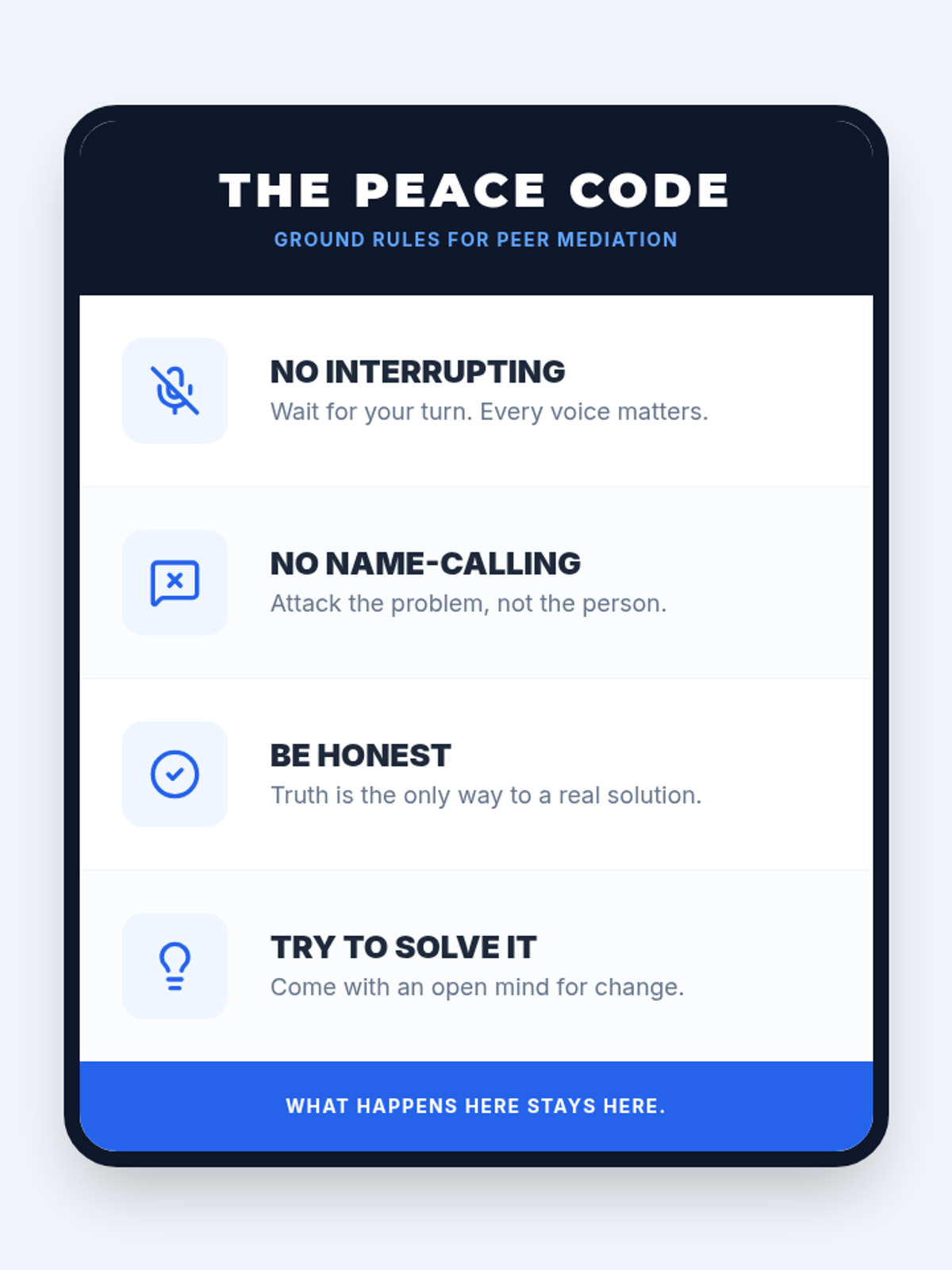
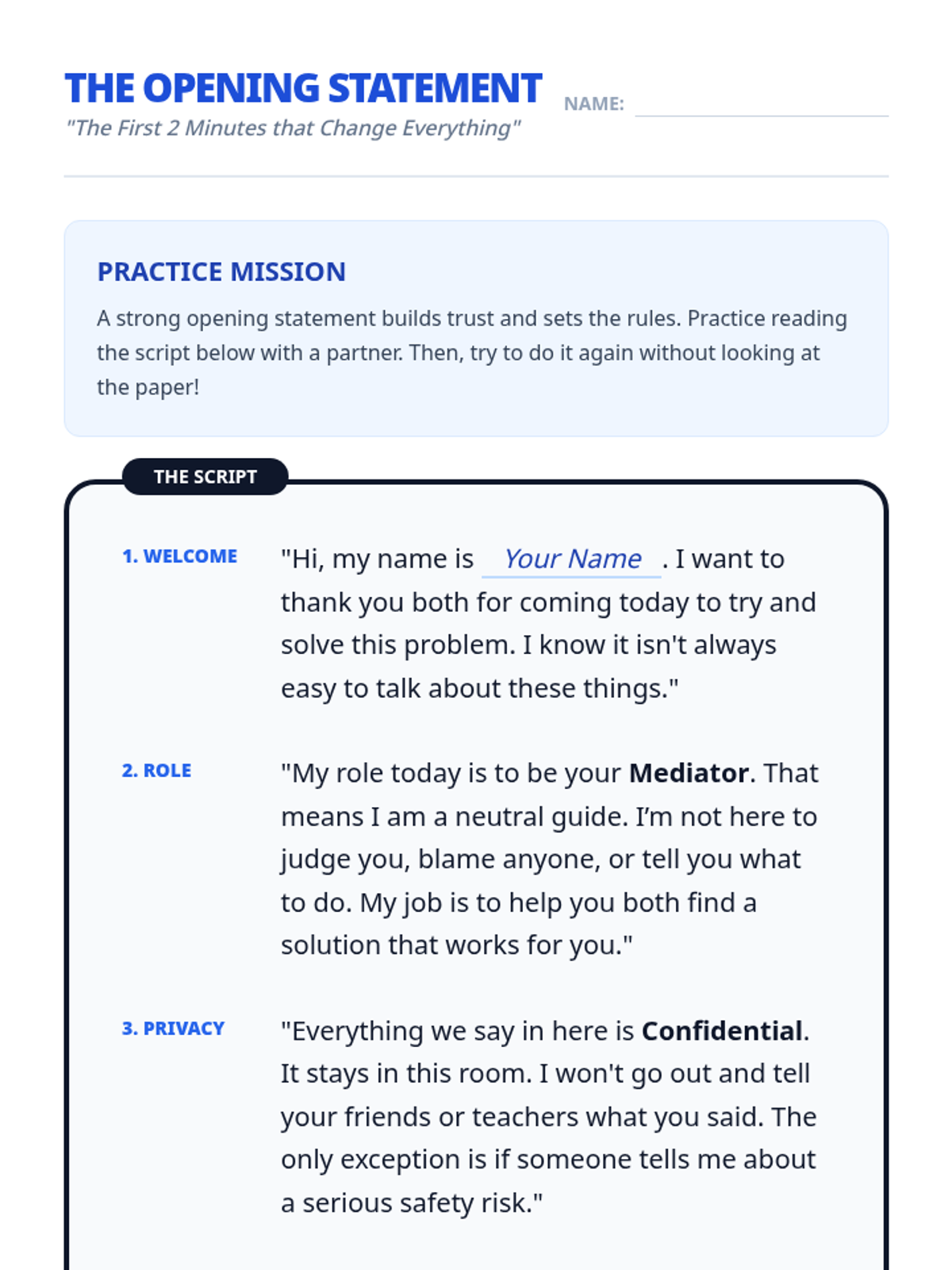
Learners practice the opening statement of a mediation: welcoming parties, explaining the process, and establishing rules like 'no interrupting' and 'no name-calling.'
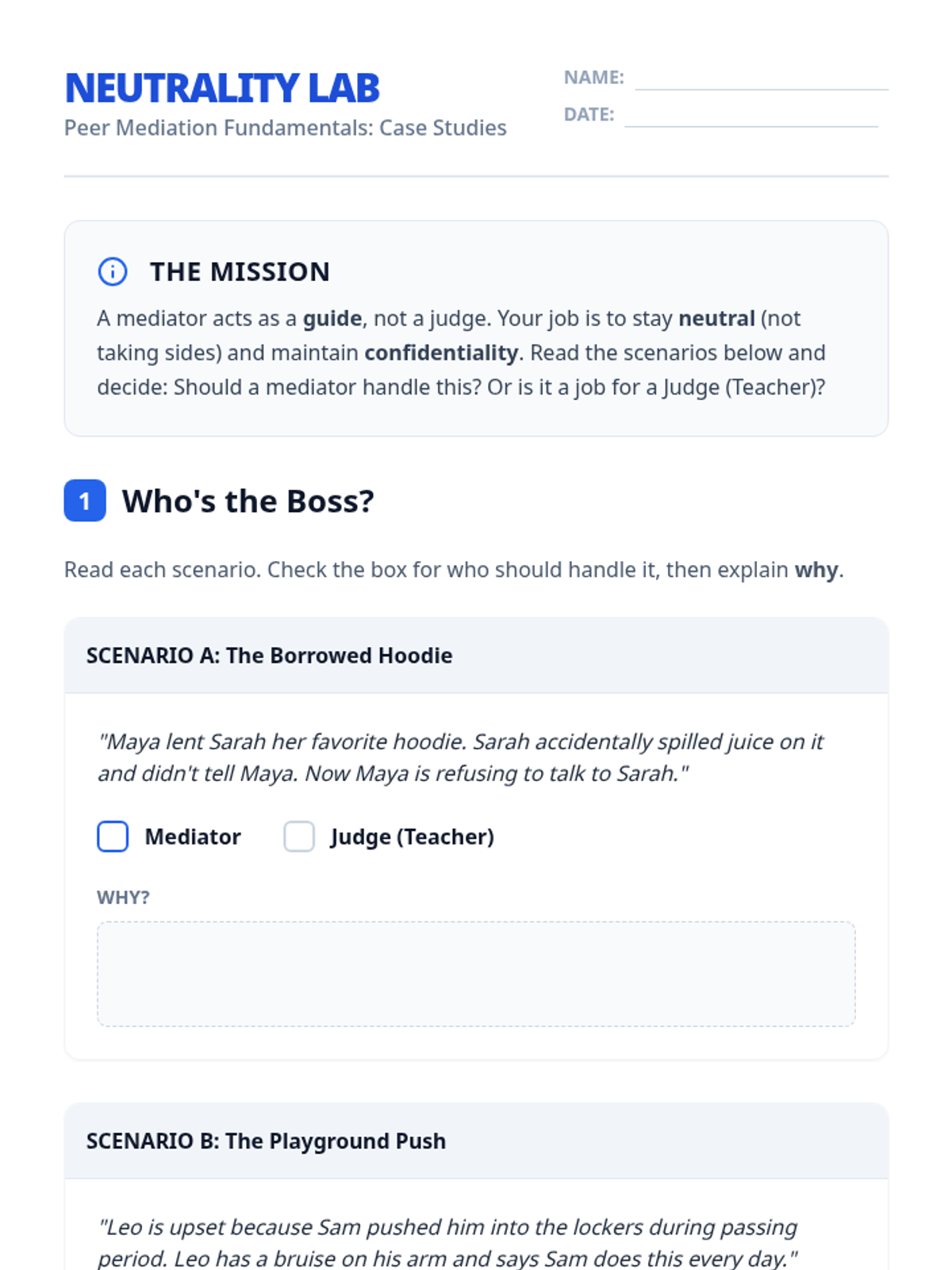
Students define what a mediator is (a guide, not a judge) and the core principle of neutrality. They discuss confidentiality and identify when a conflict is too dangerous for peer mediation (e.g., bullying or violence).