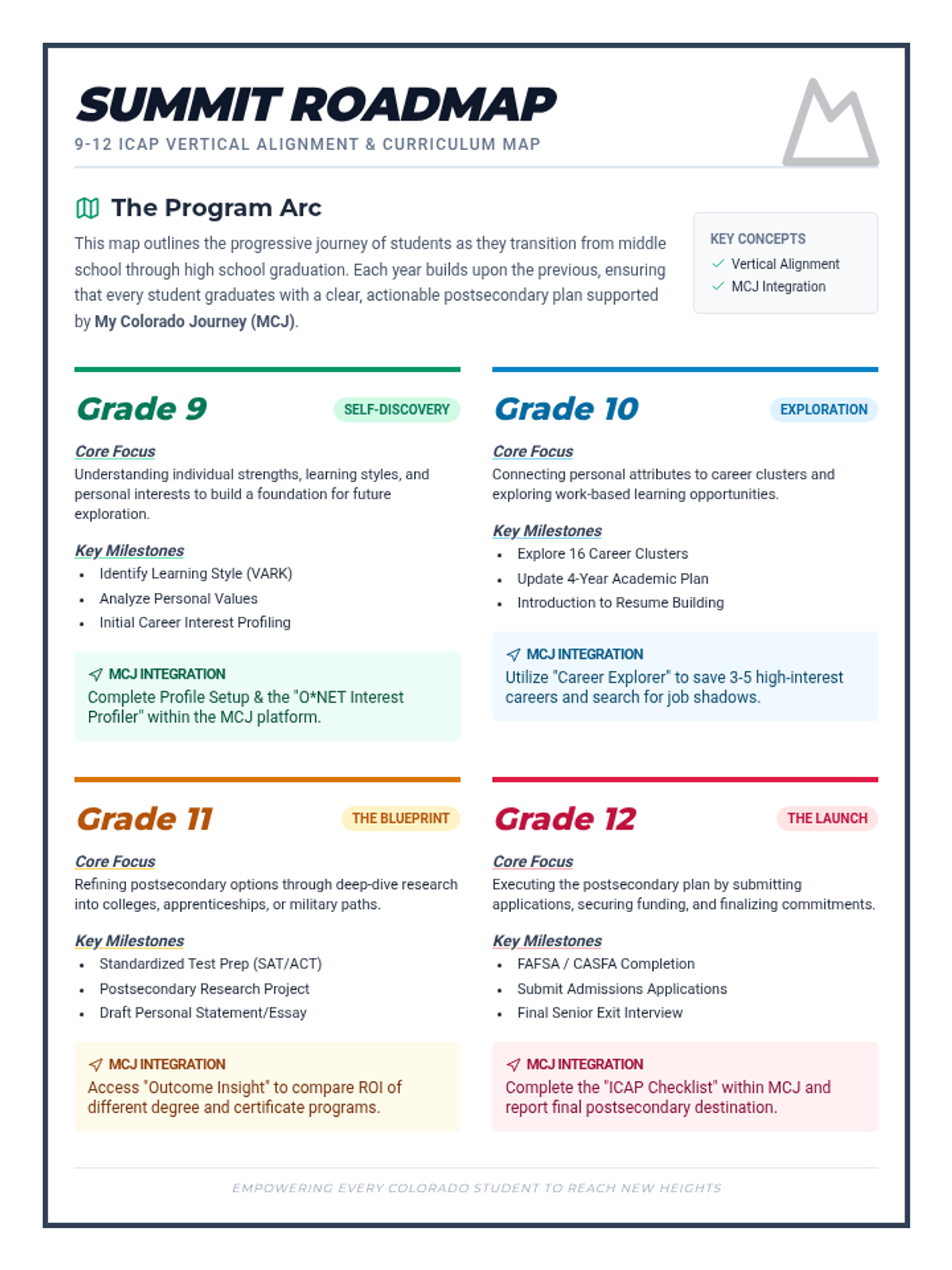
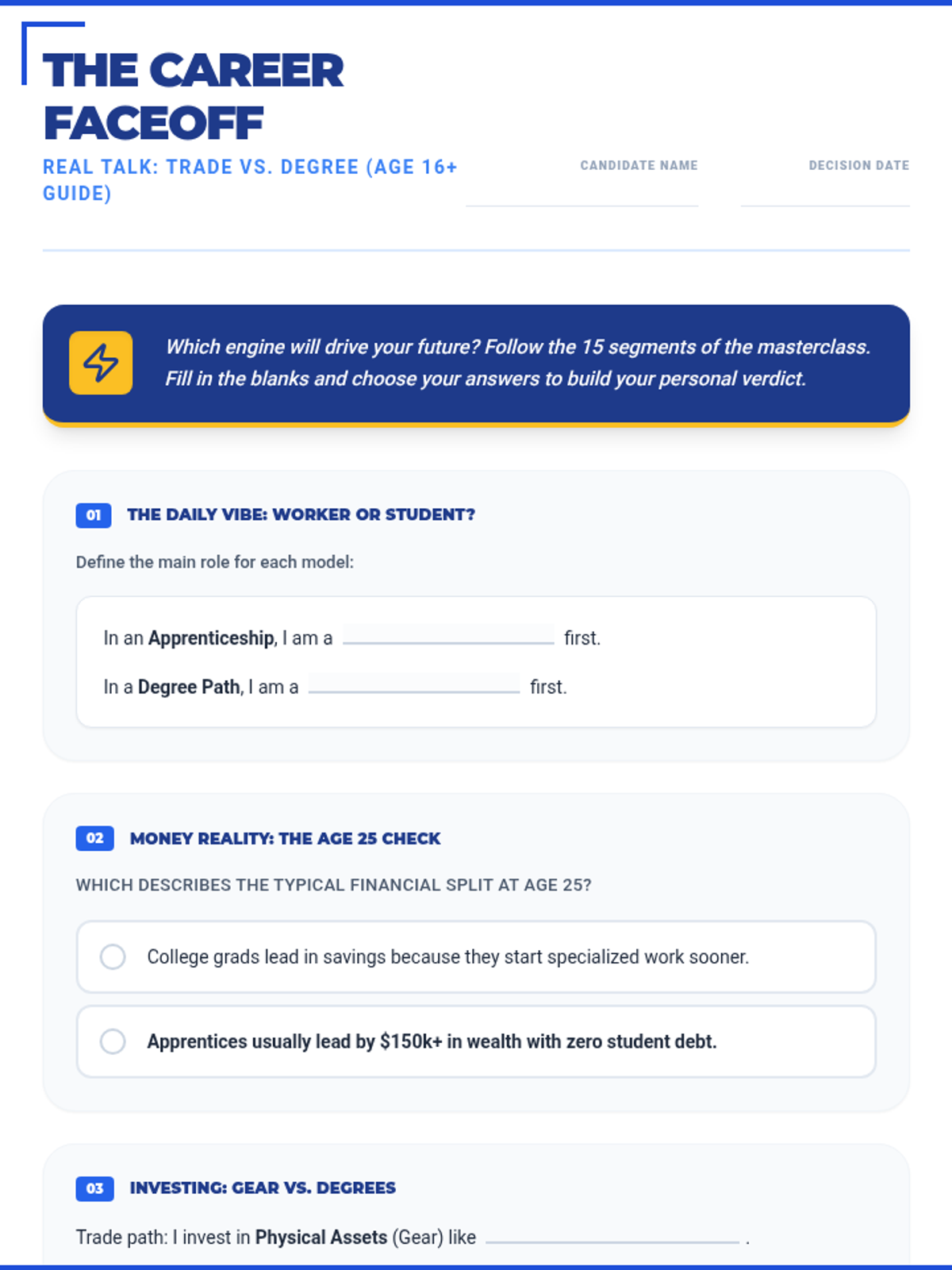
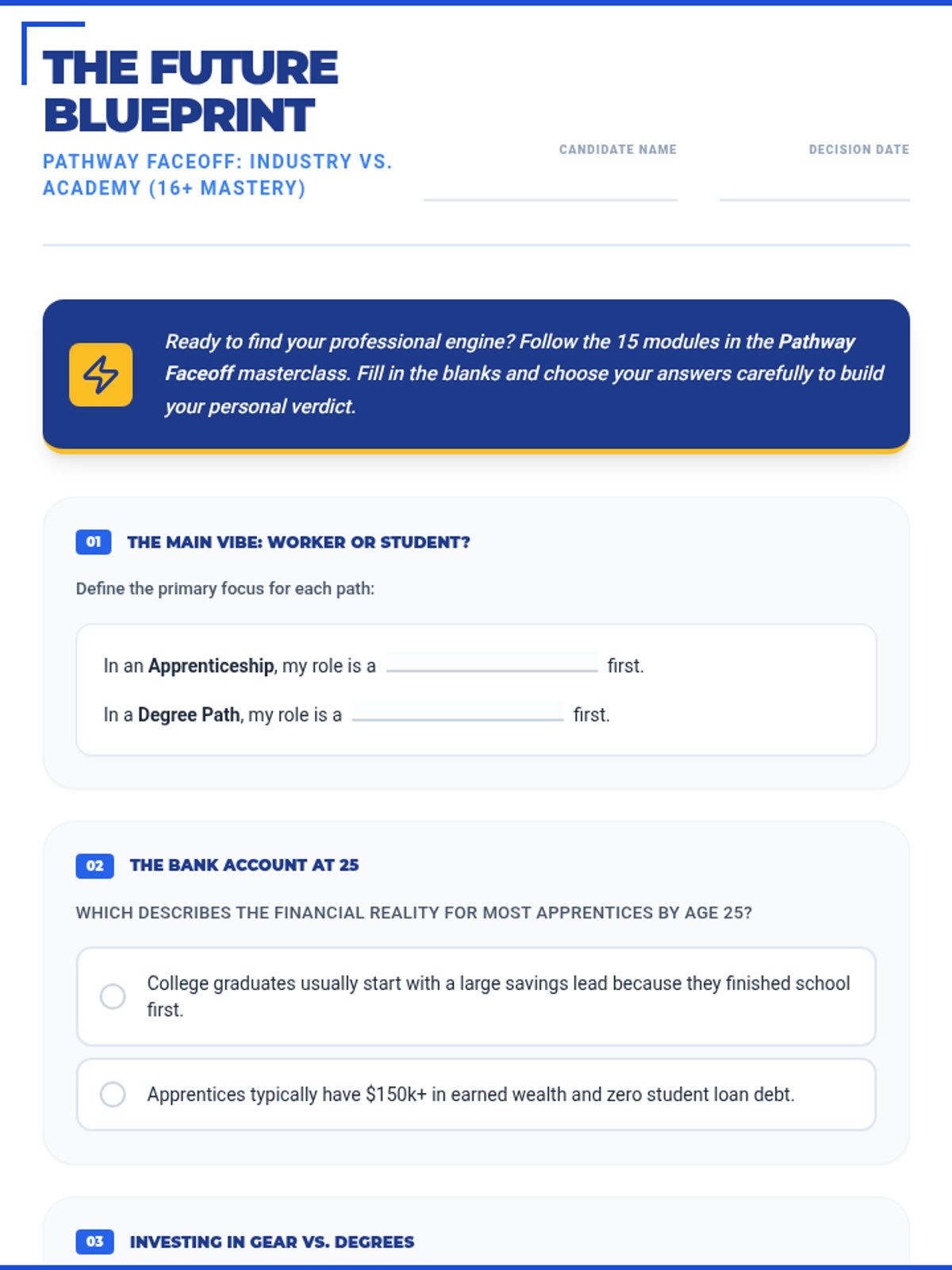
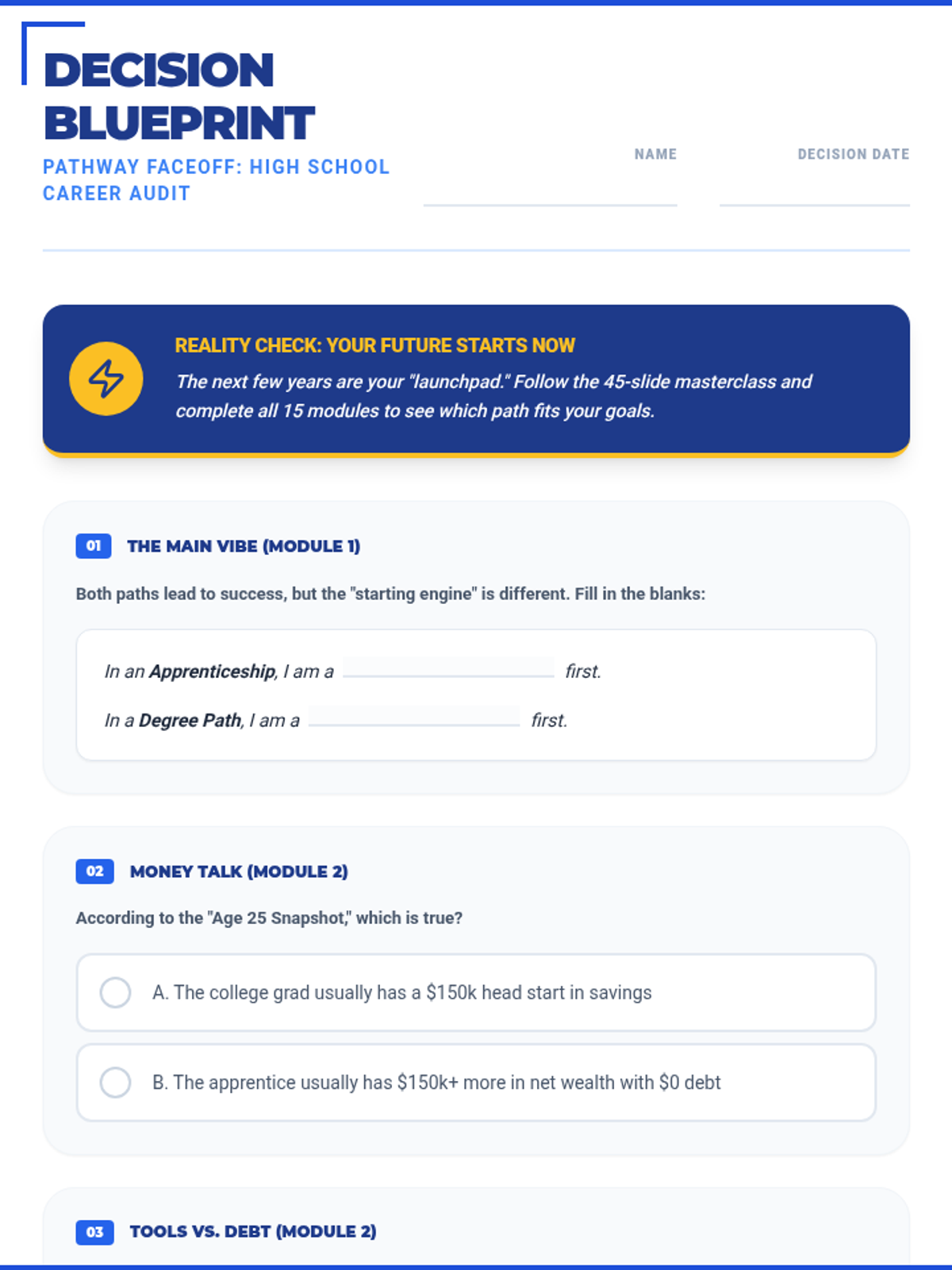
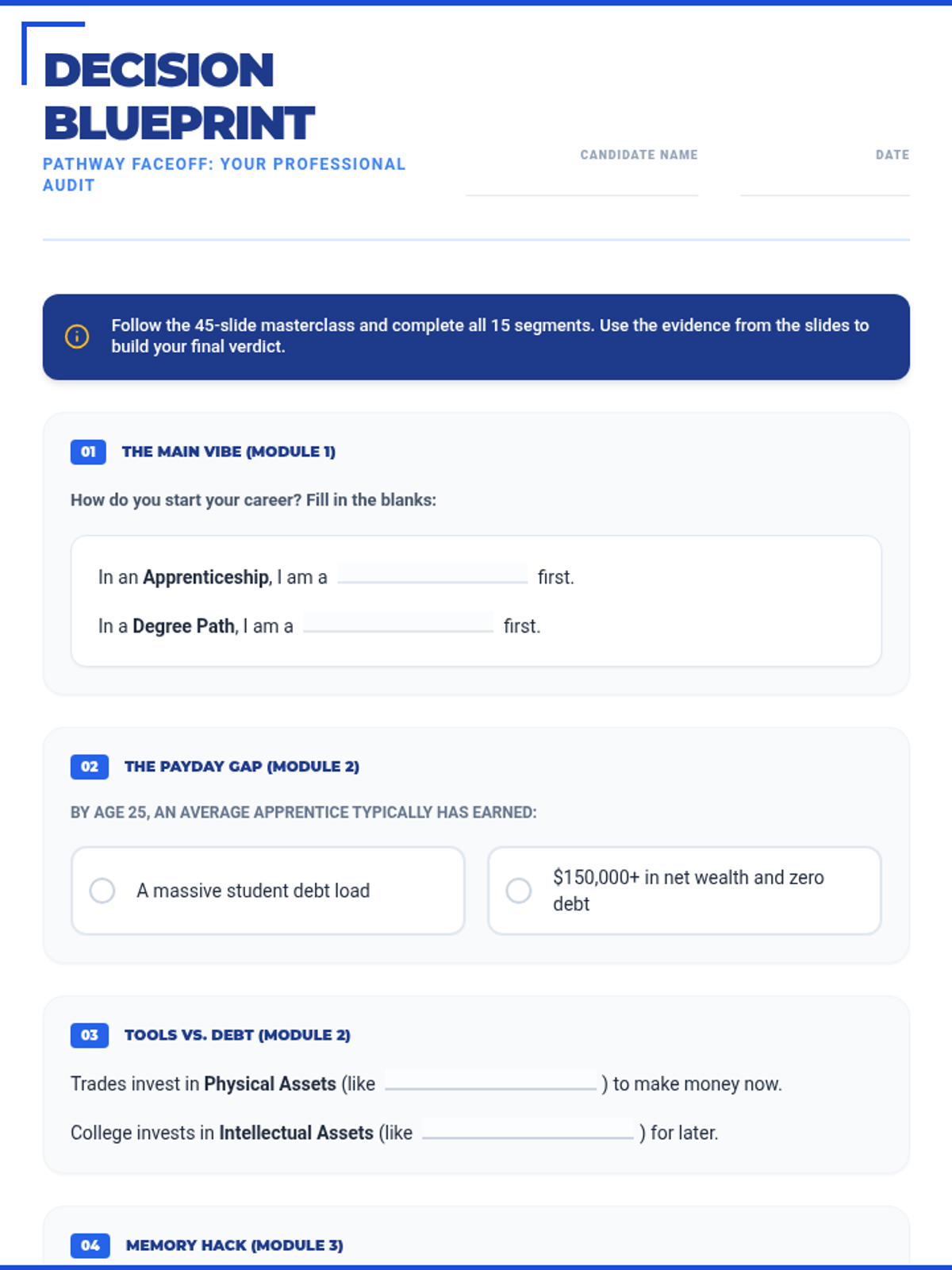
College selection, application workflows, and financial aid navigation including FAFSA and scholarship acquisition. Builds skills in personal statement writing and career exploration to align post-secondary choices with long-term professional goals.
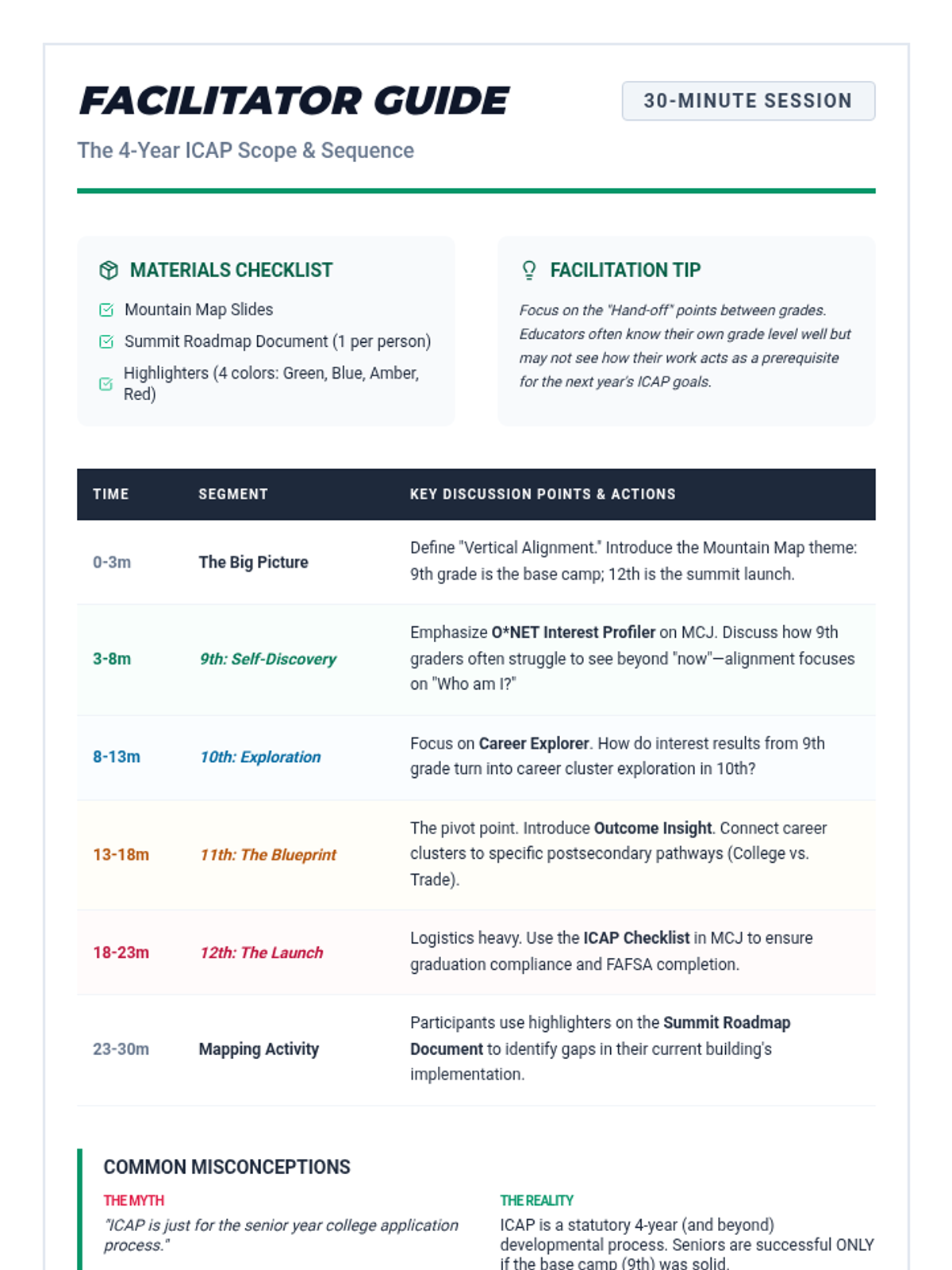
A 30-minute professional development session for educators focused on the vertical alignment of the Individual Career and Academic Plan (ICAP) across grades 9-12, featuring My Colorado Journey integration.
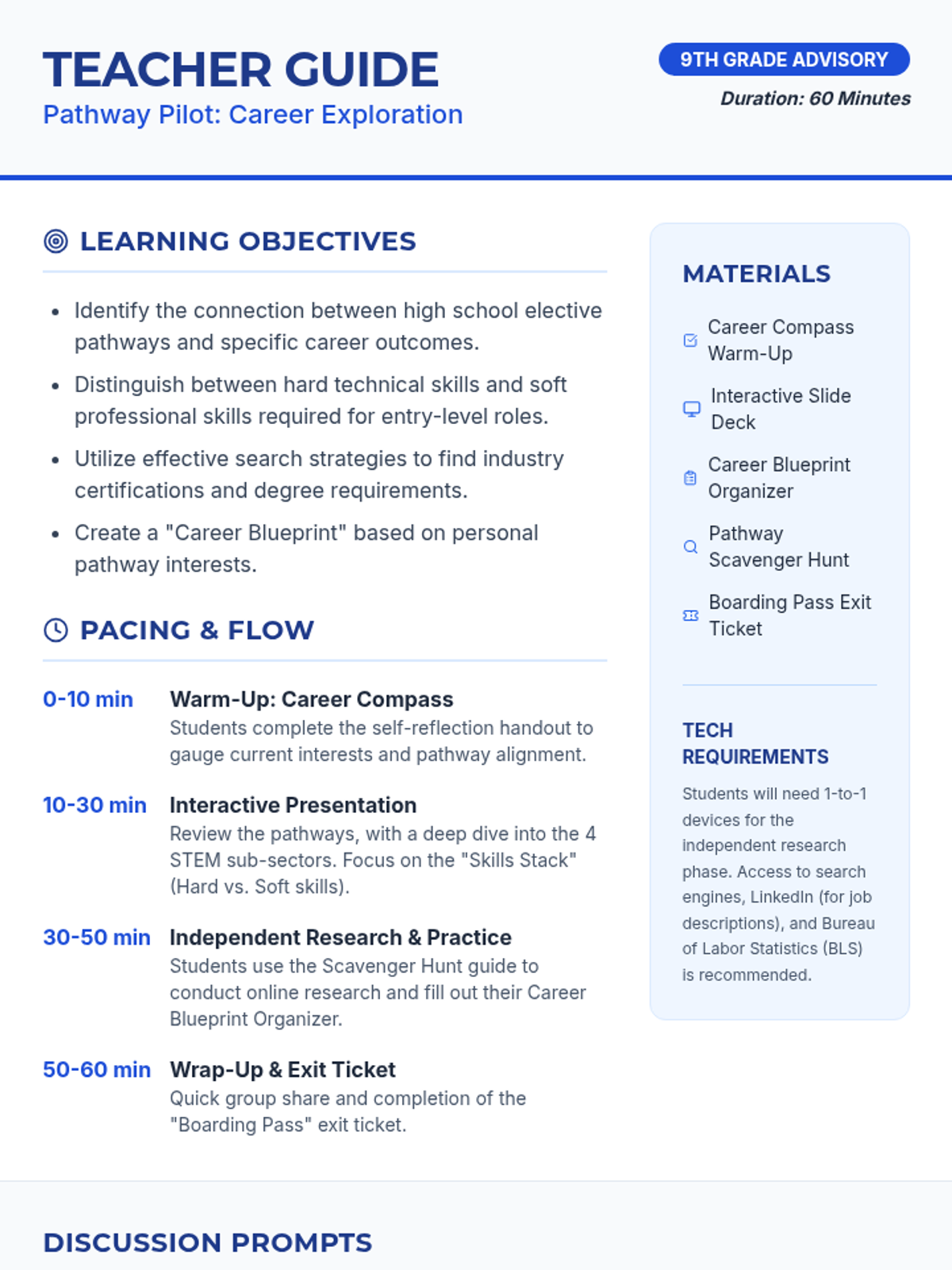
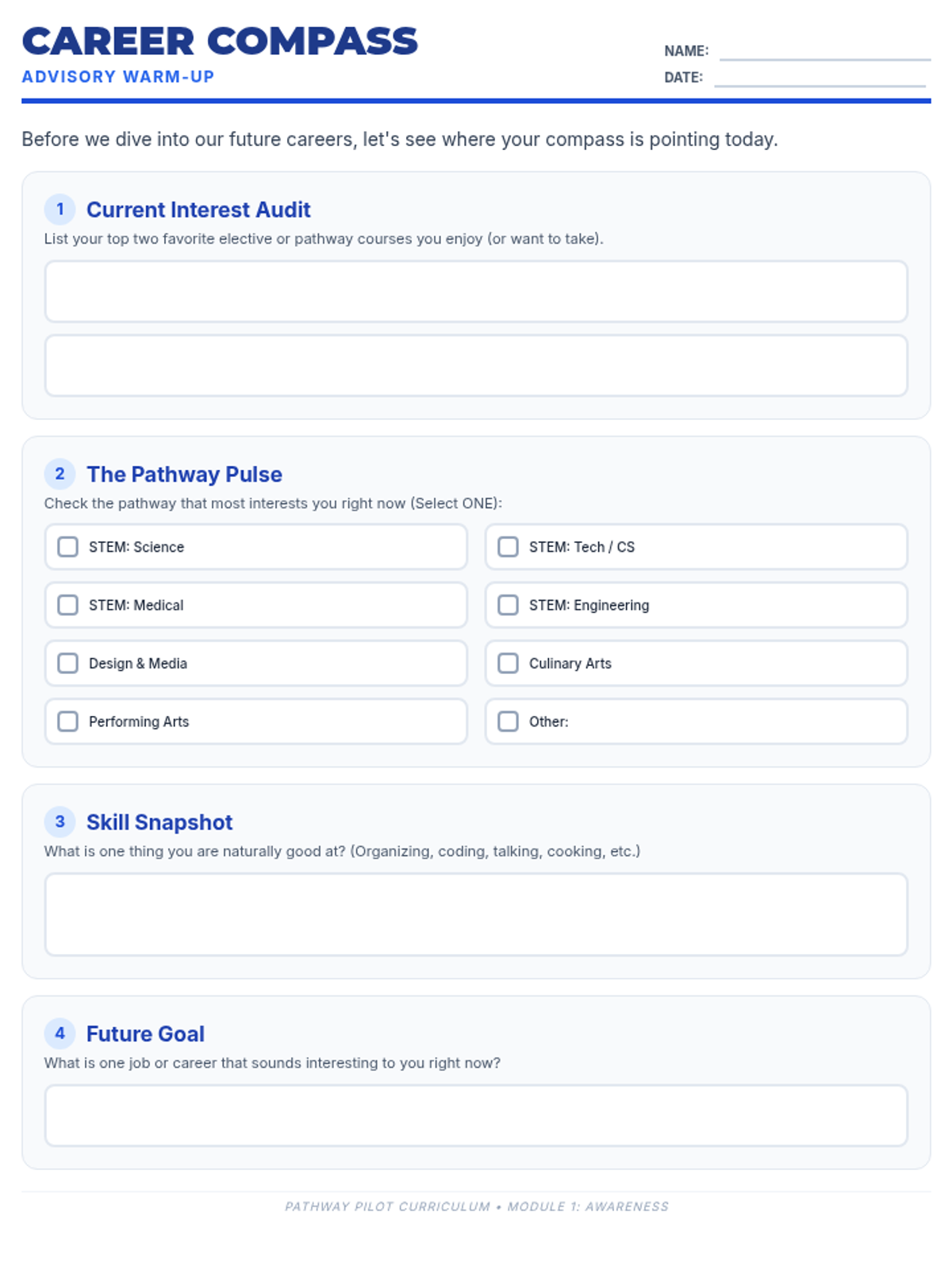
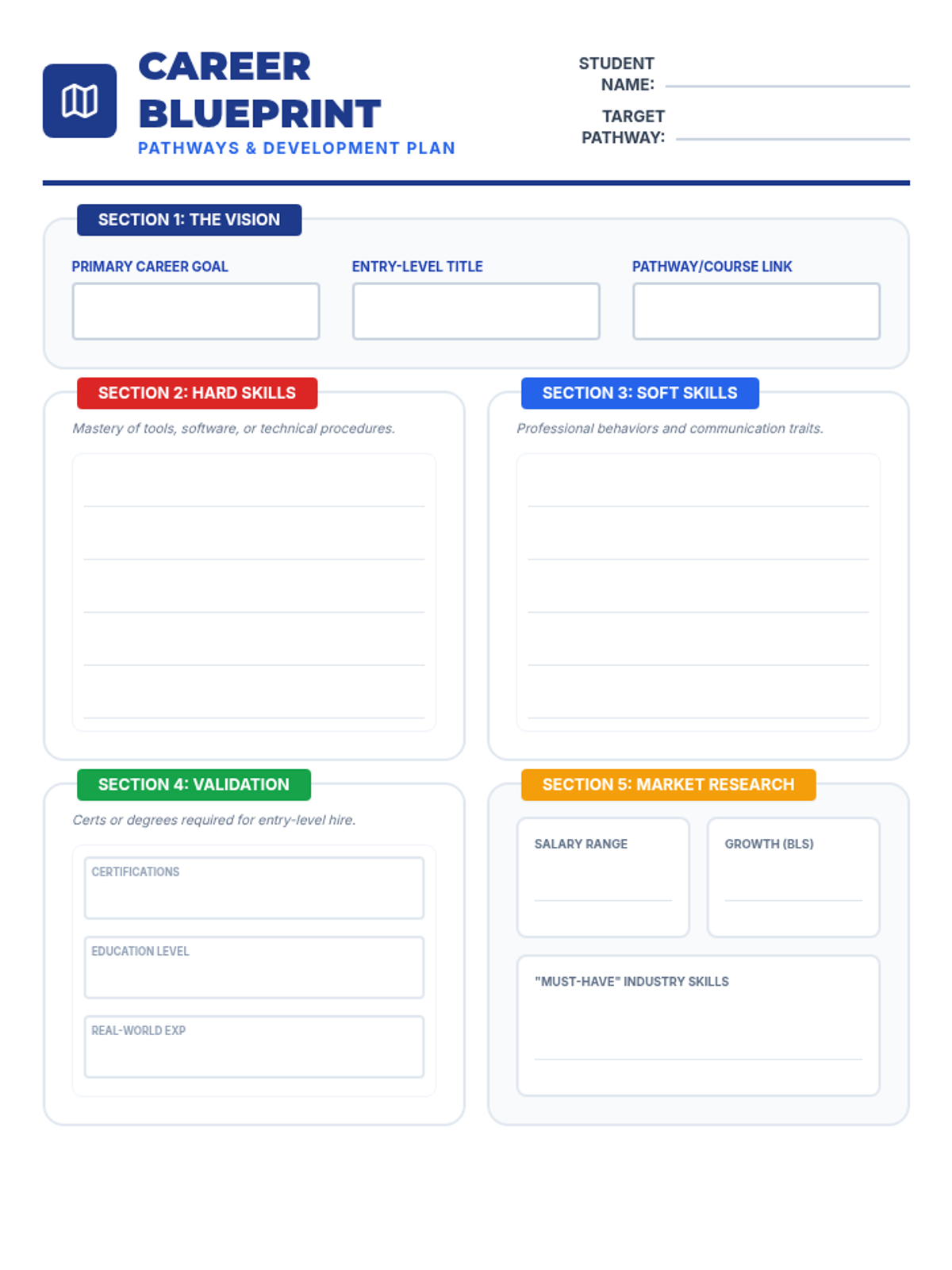
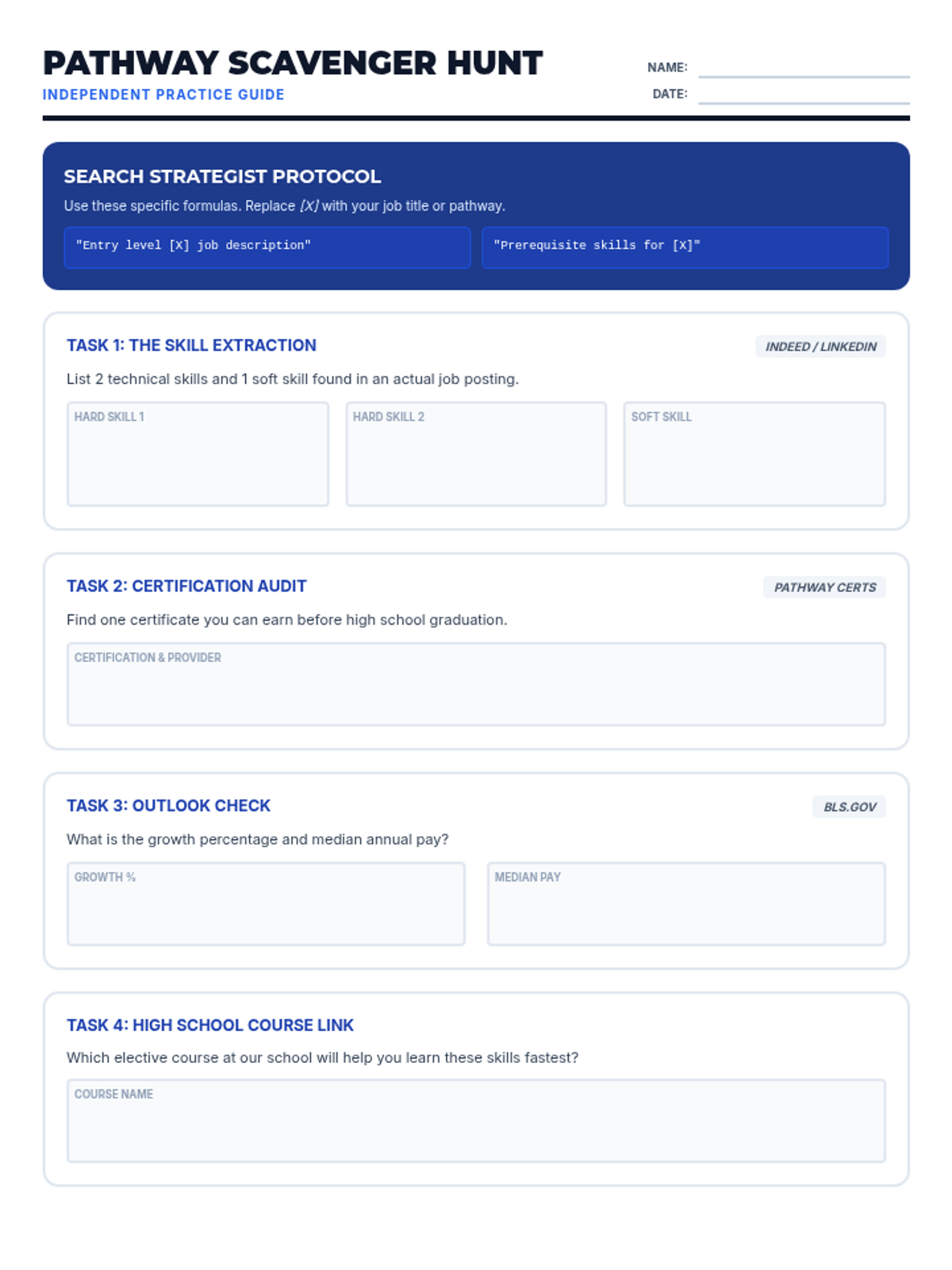
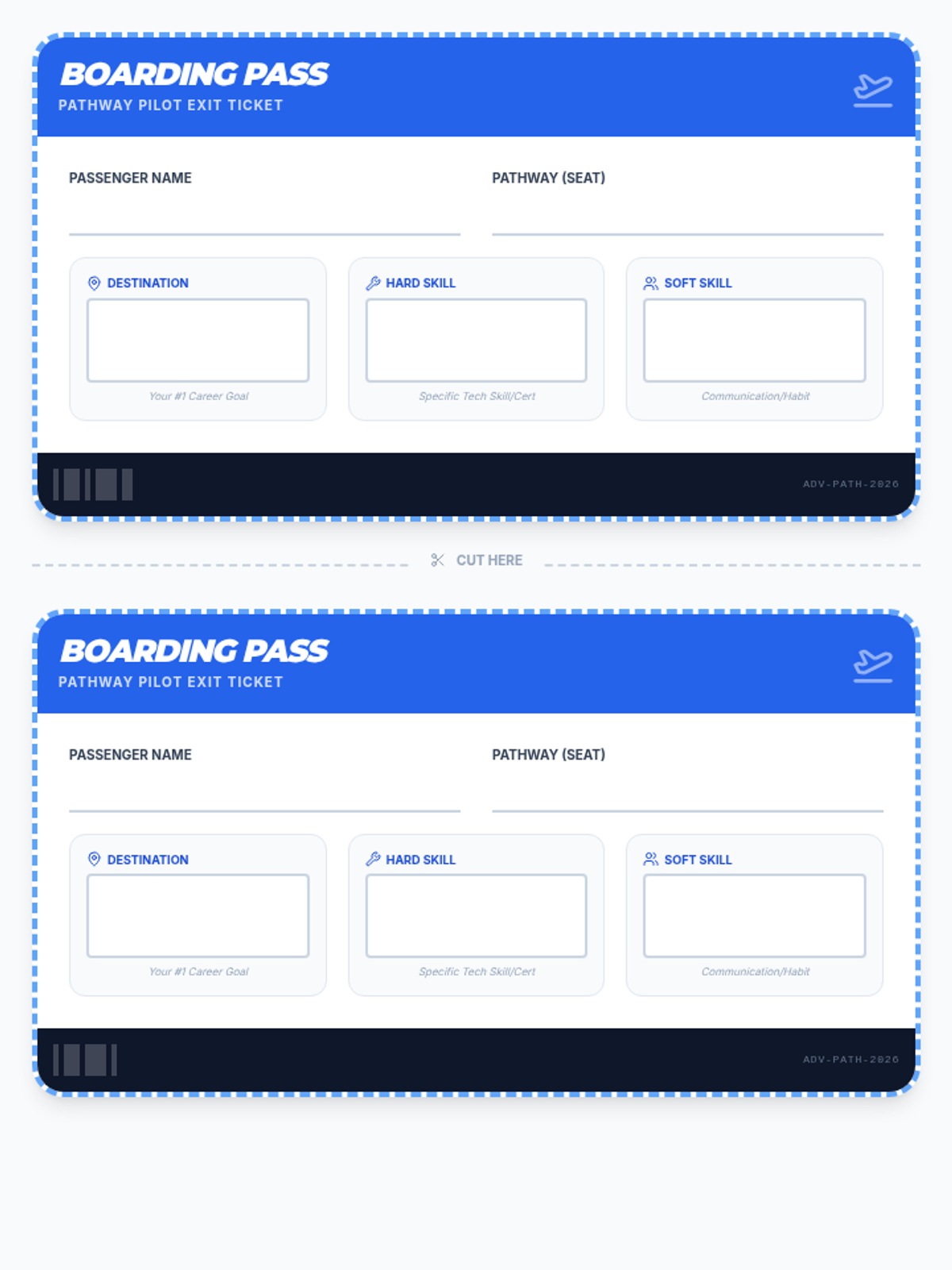
A comprehensive 60-minute advisory lesson designed to help 9th-grade students connect their high school elective pathways (Performing Arts, Design, Culinary, and STEM) to future career requirements, focusing on hard and soft skills, certifications, and research strategies.
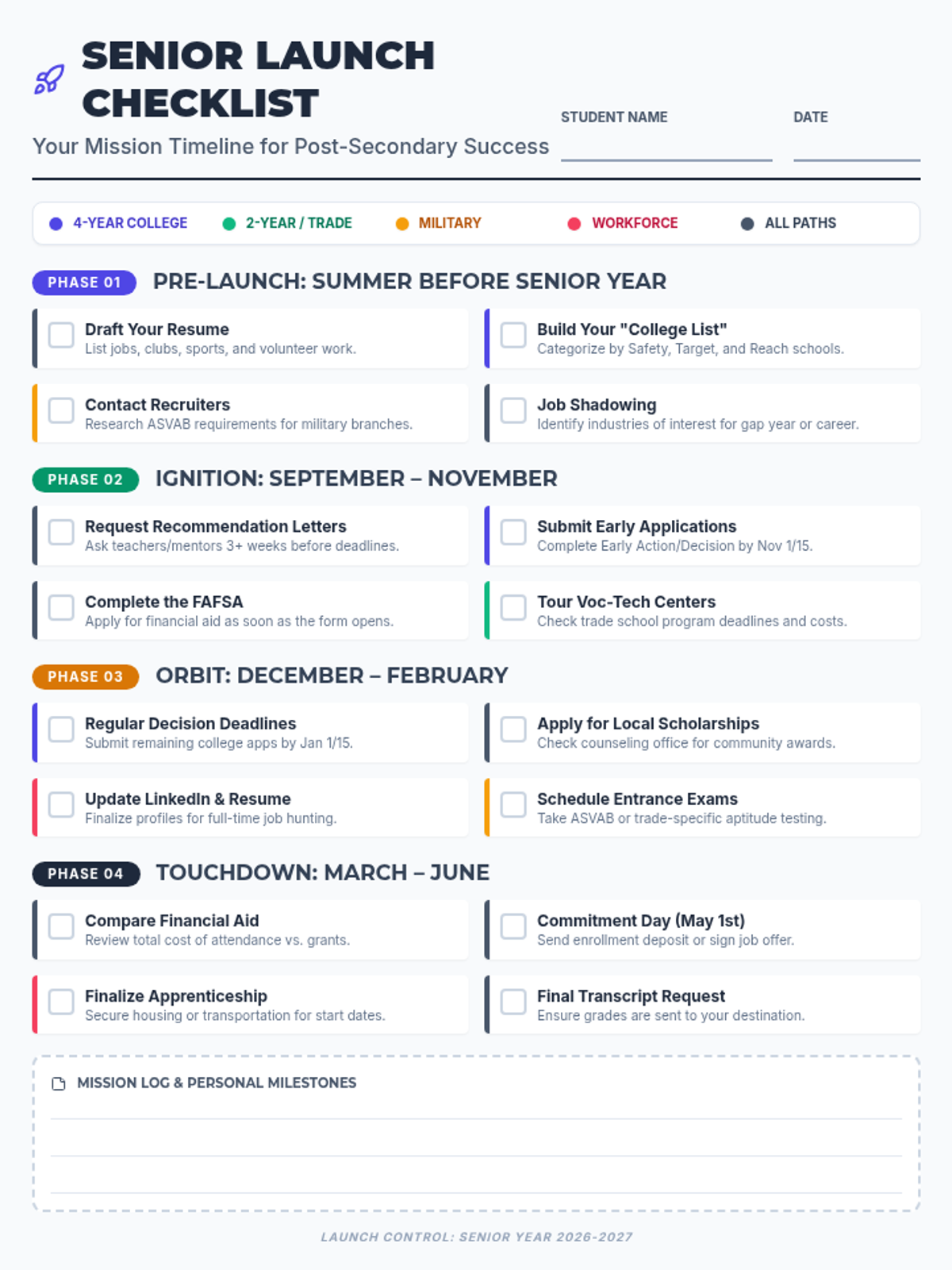
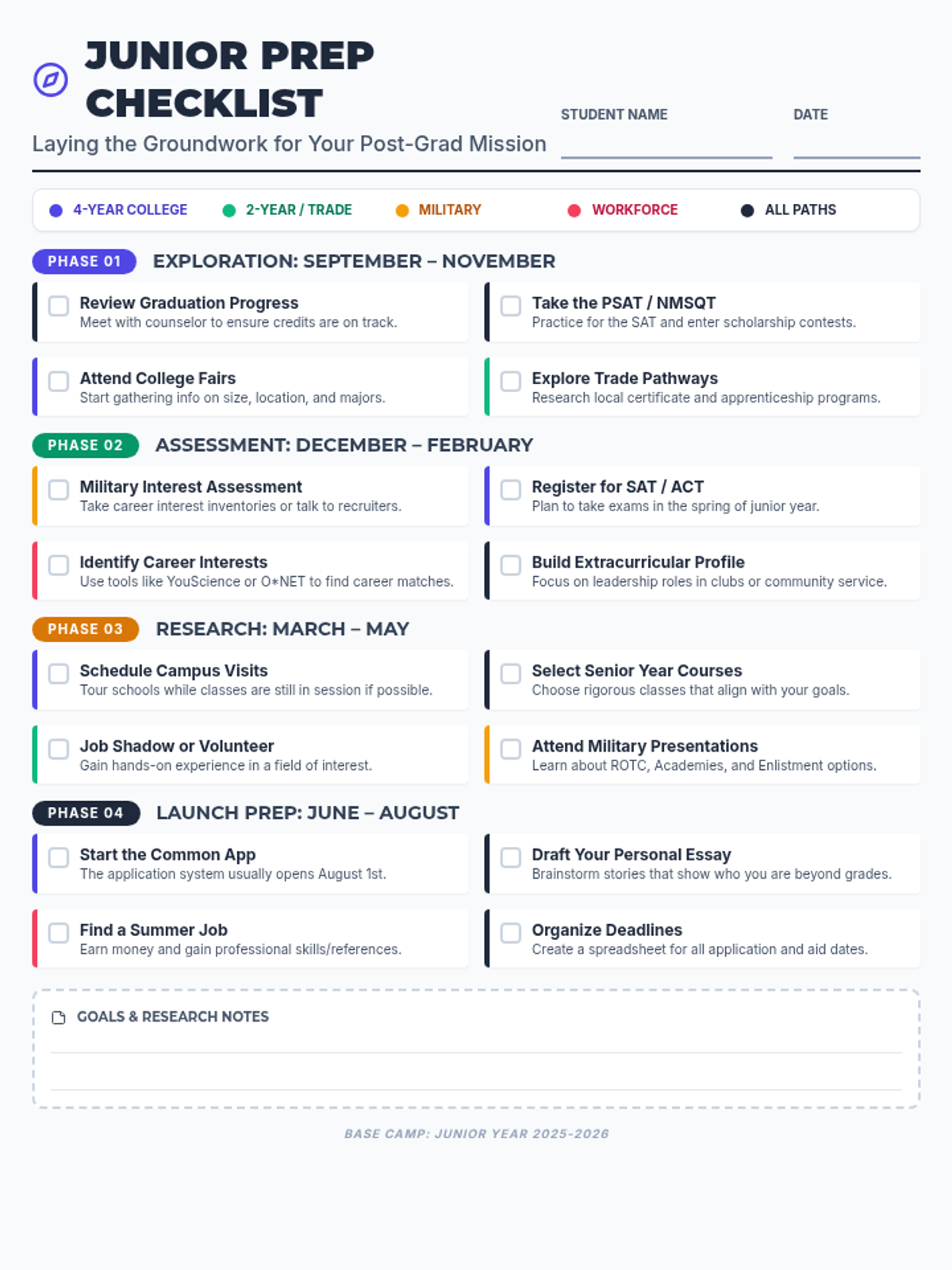
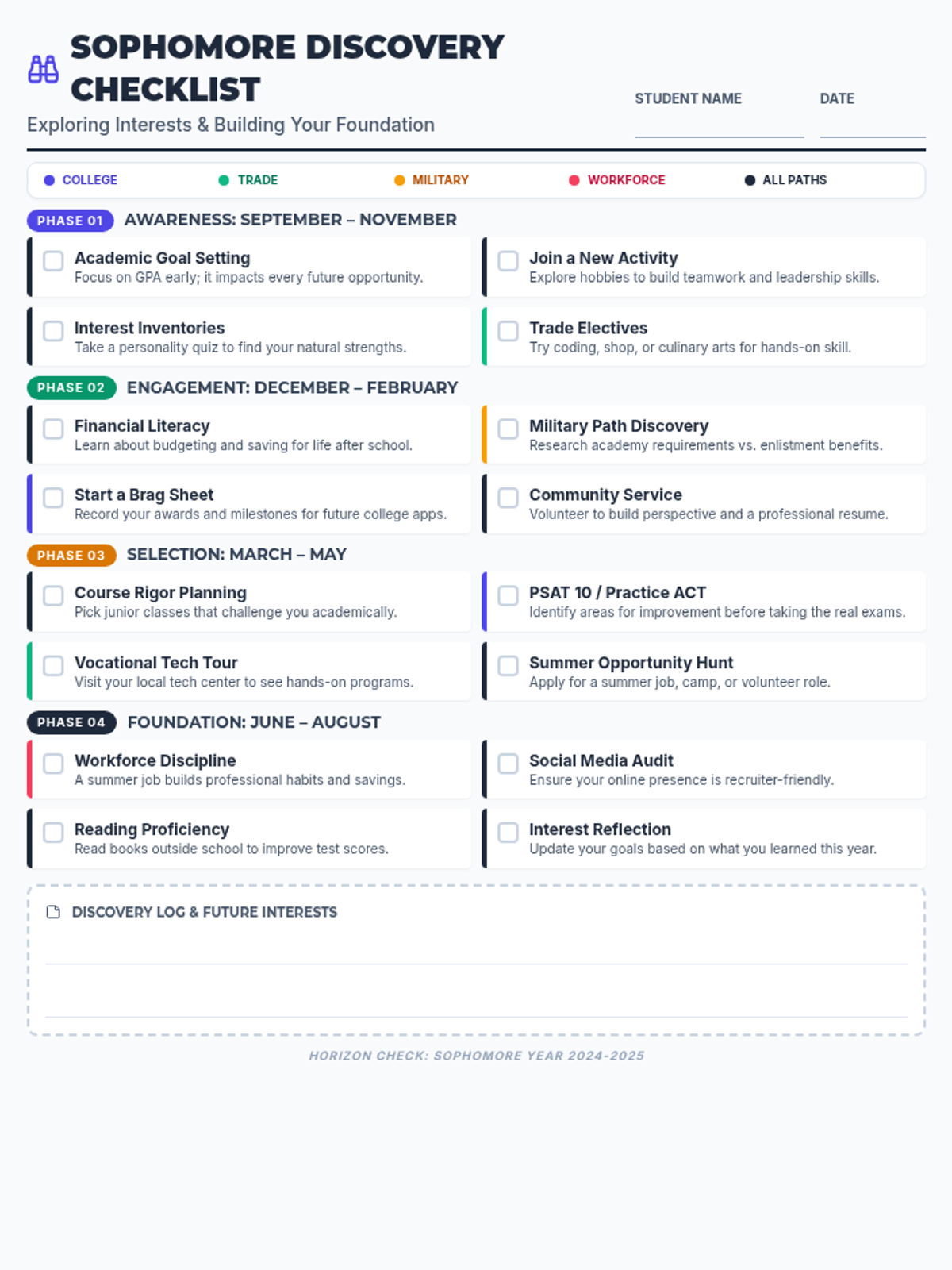
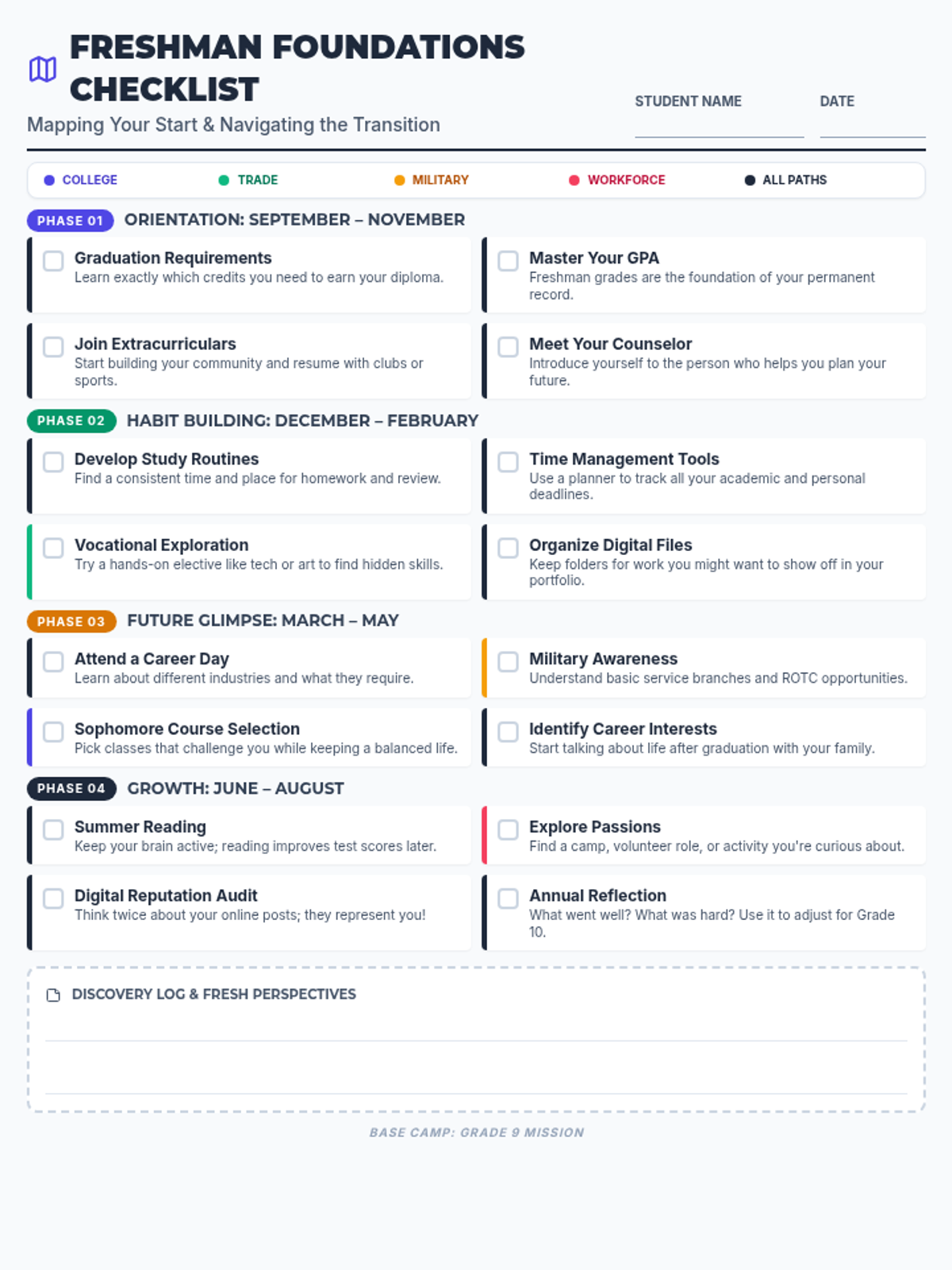
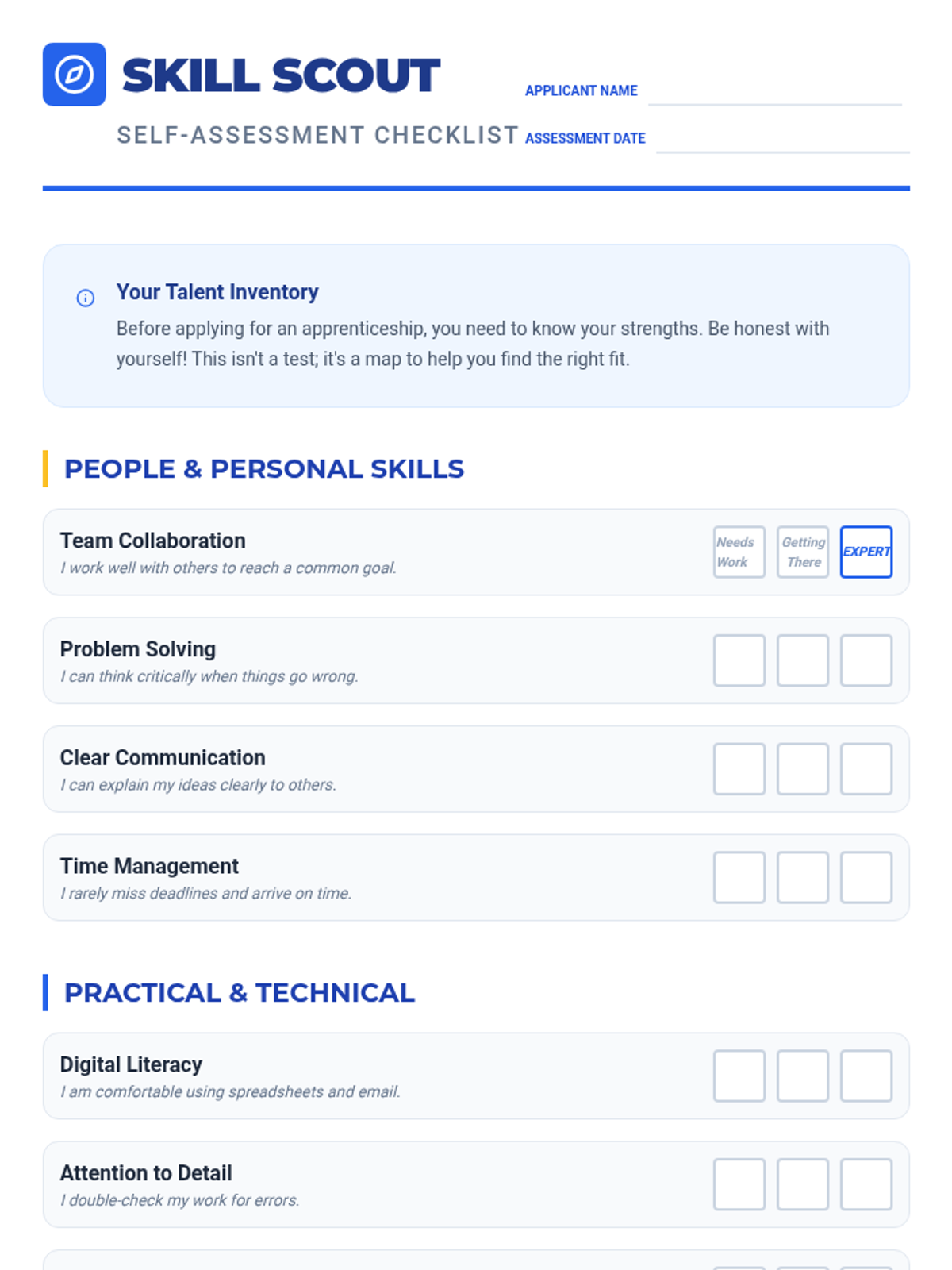
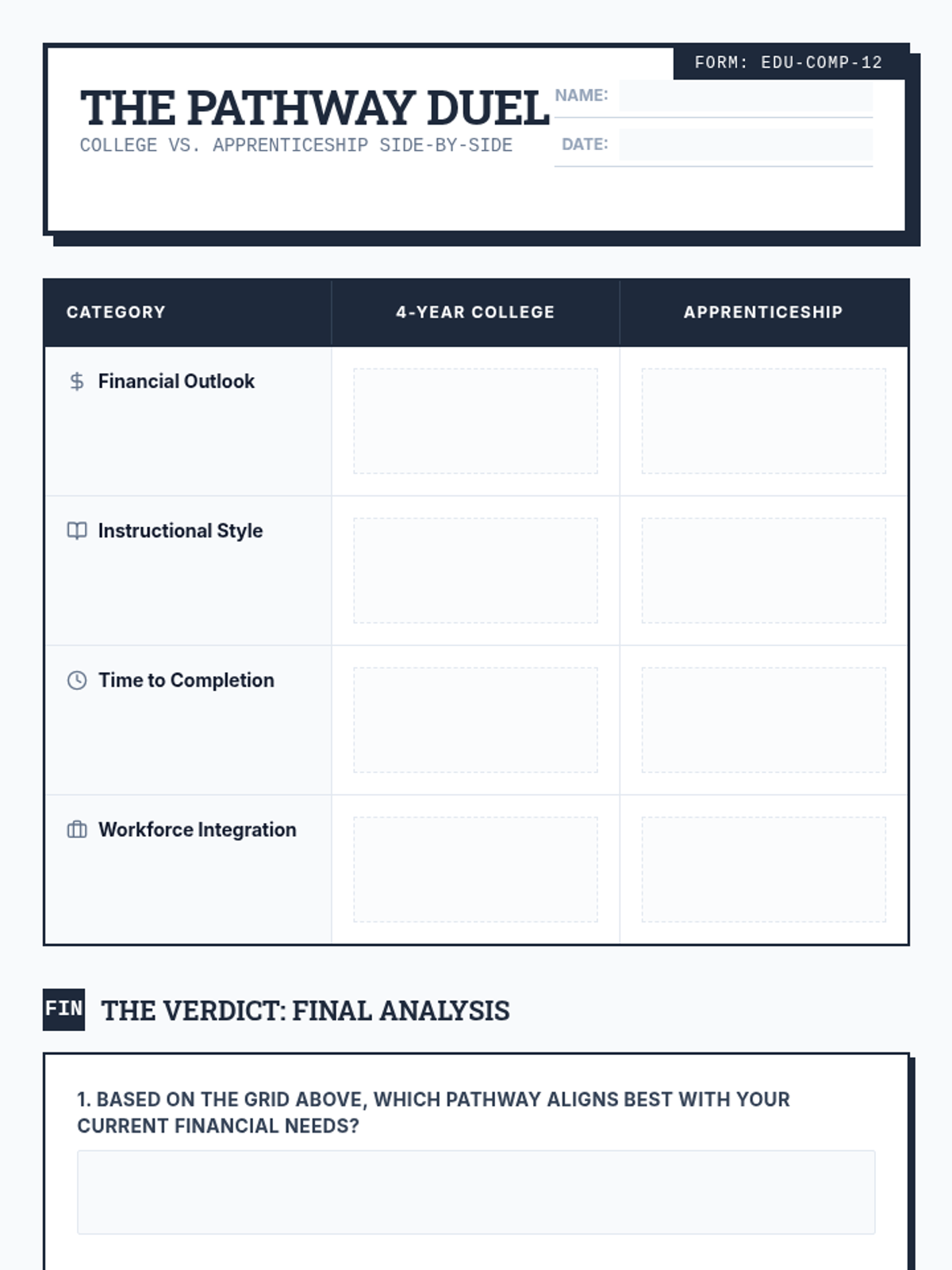
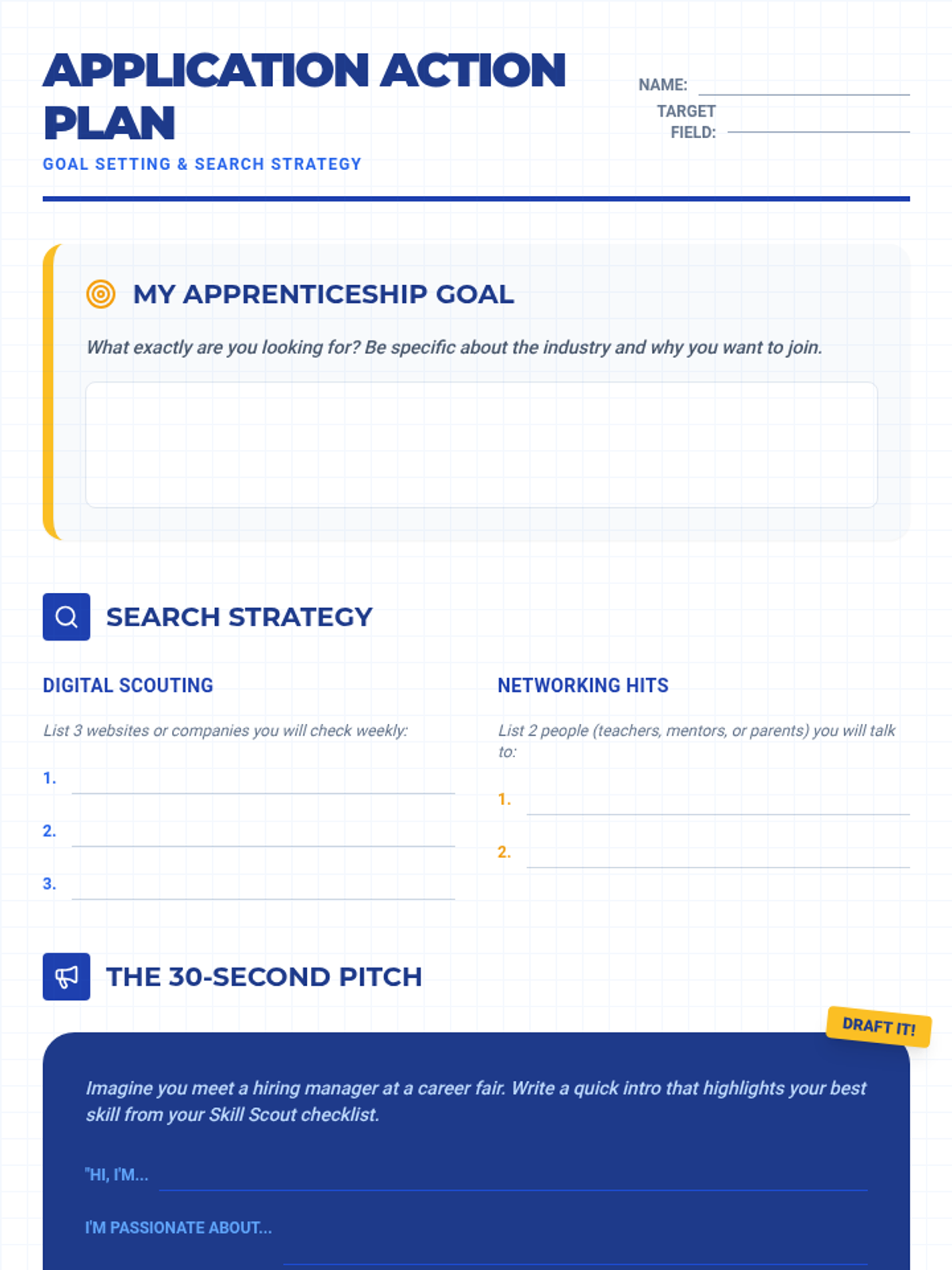
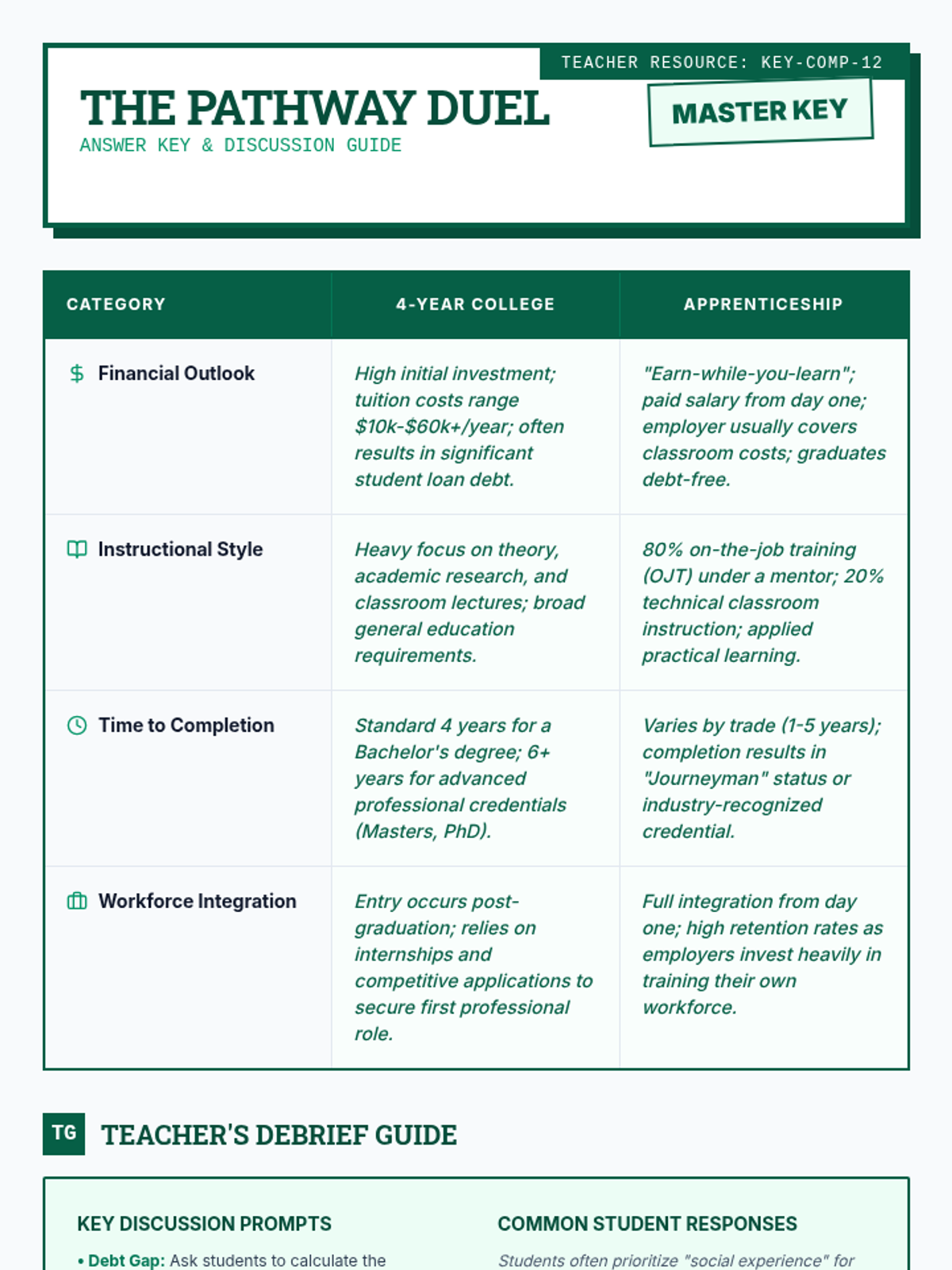
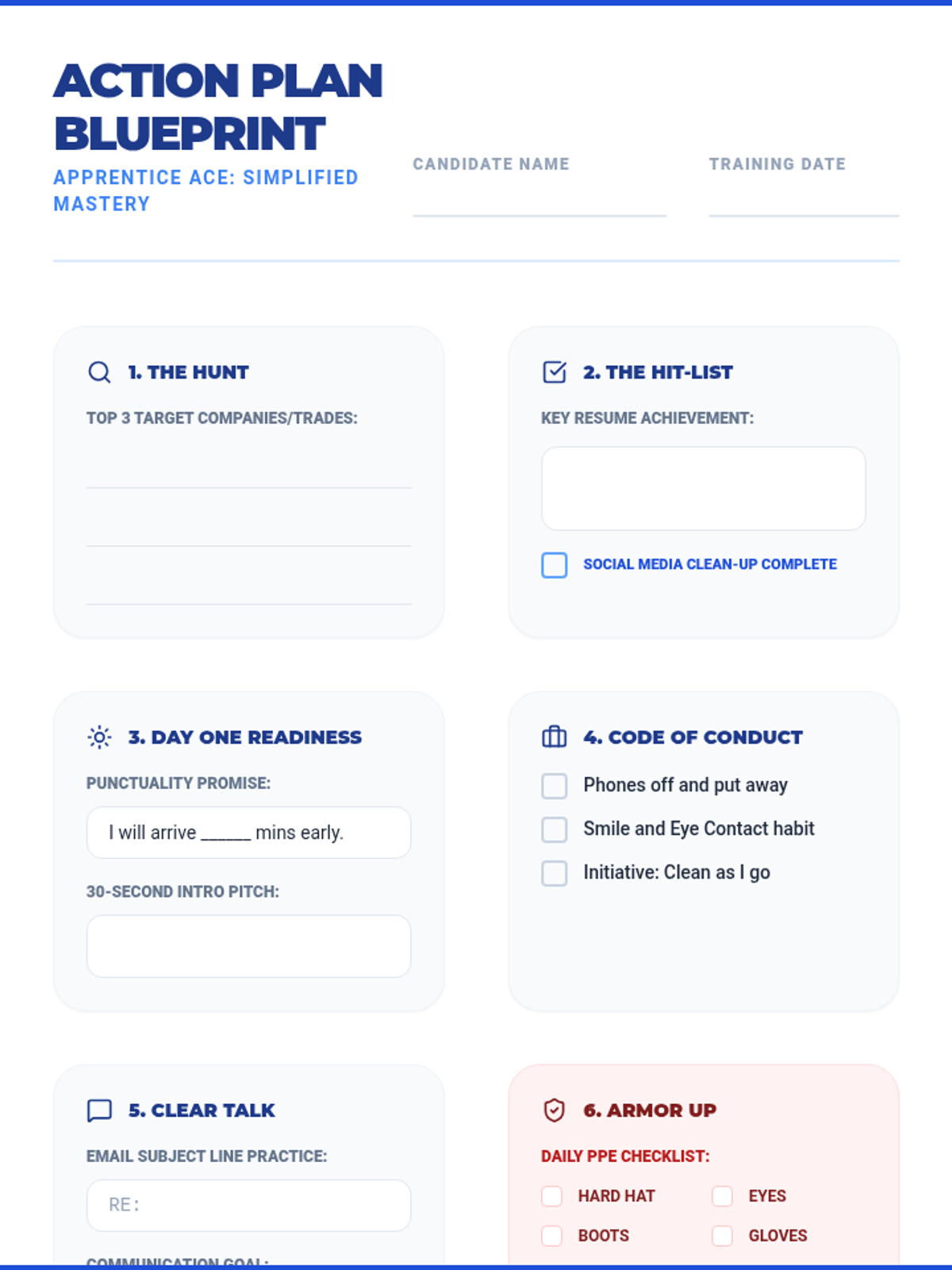
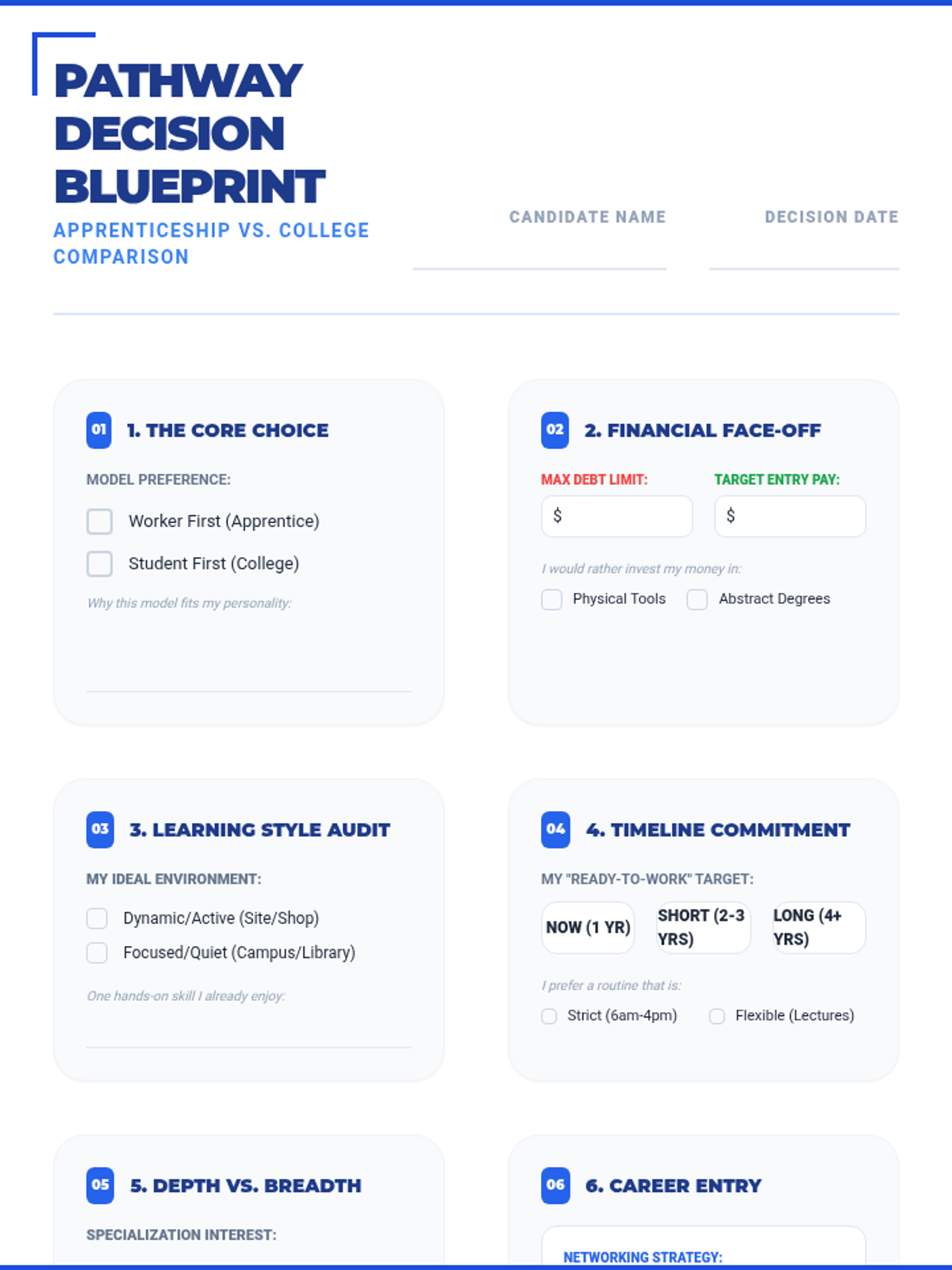
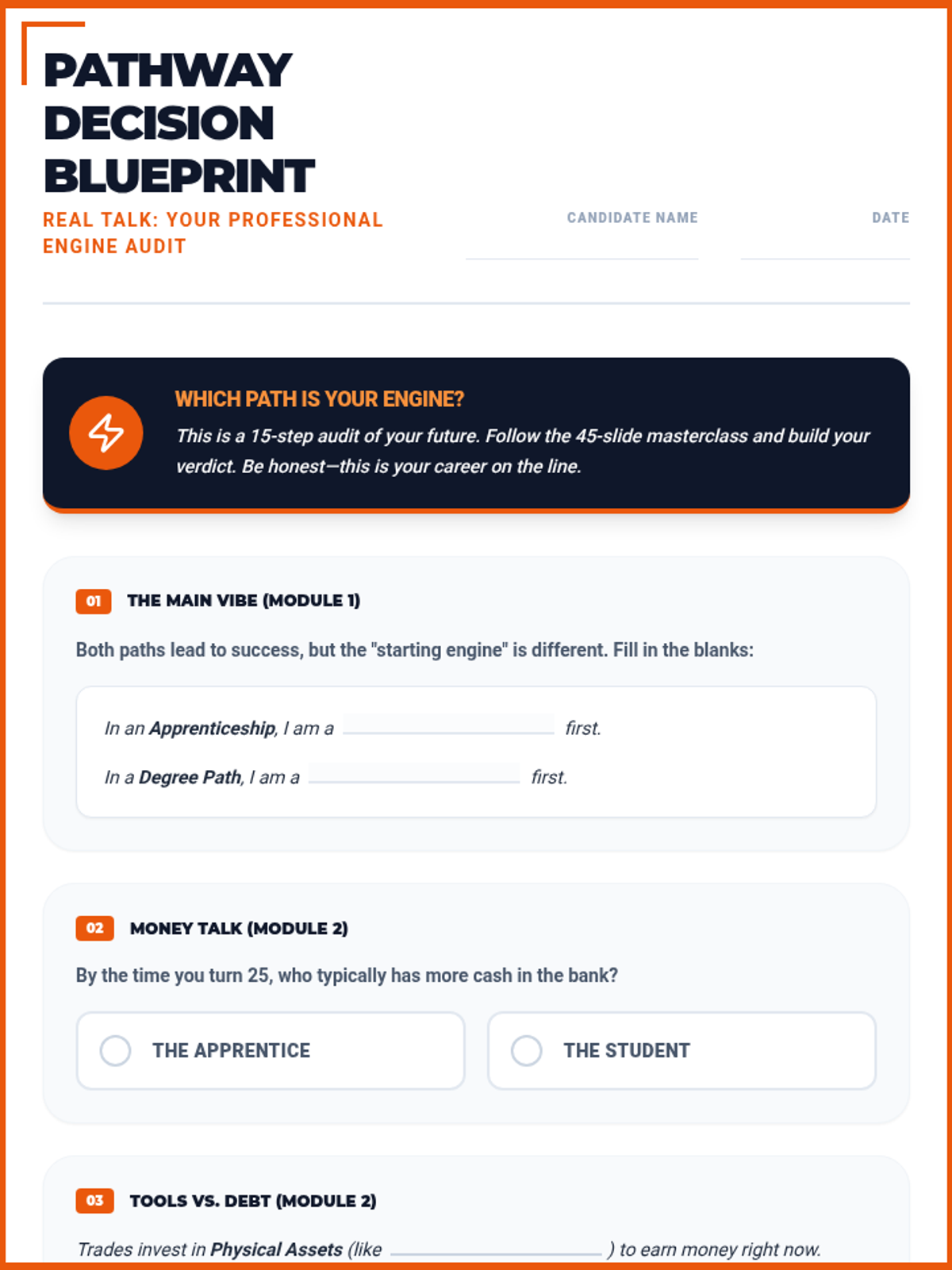
A collection of visual checklists and organizers to help high school students navigate the complex transition to post-secondary life, covering college, trade schools, military, and the workforce.
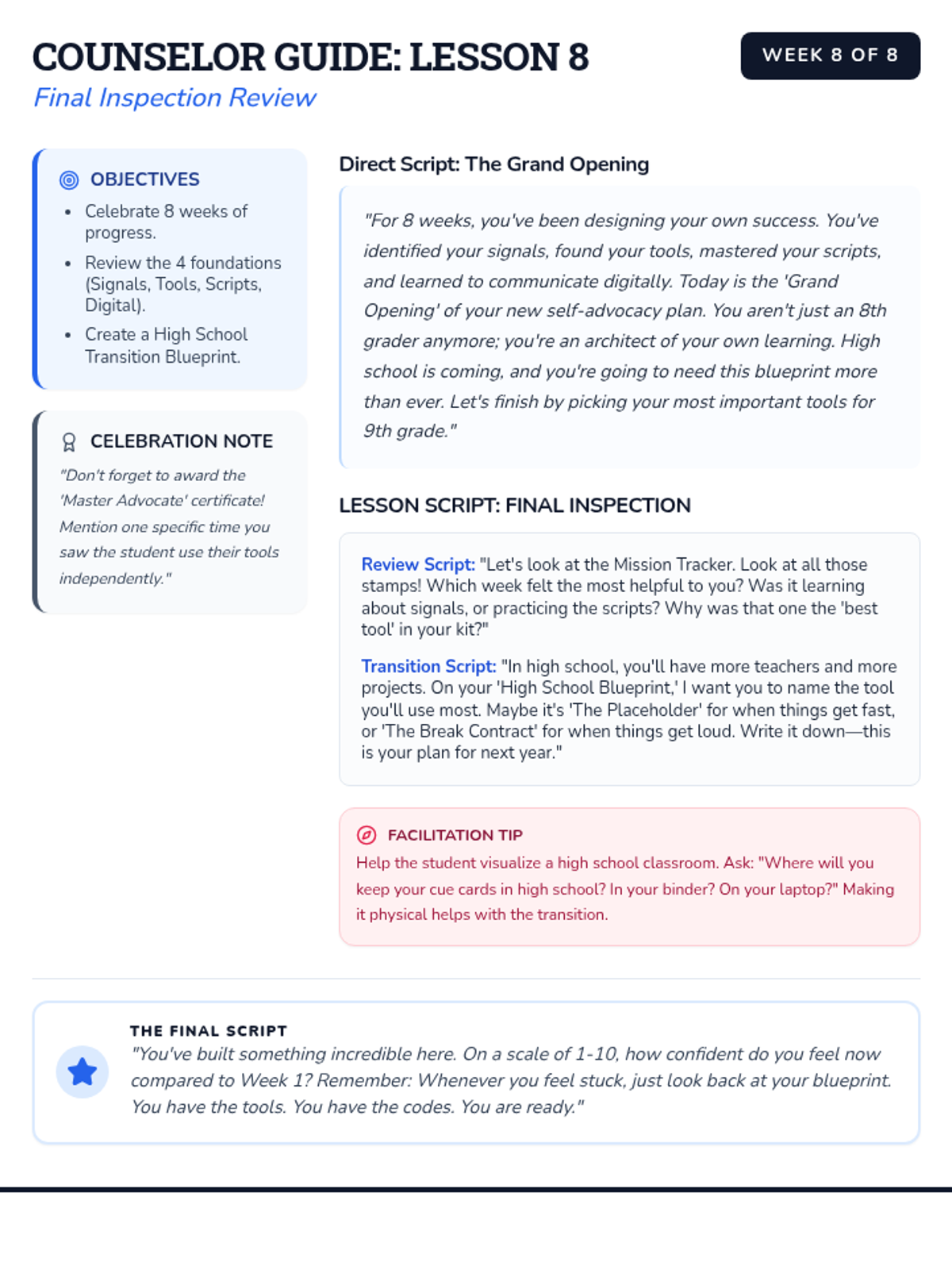
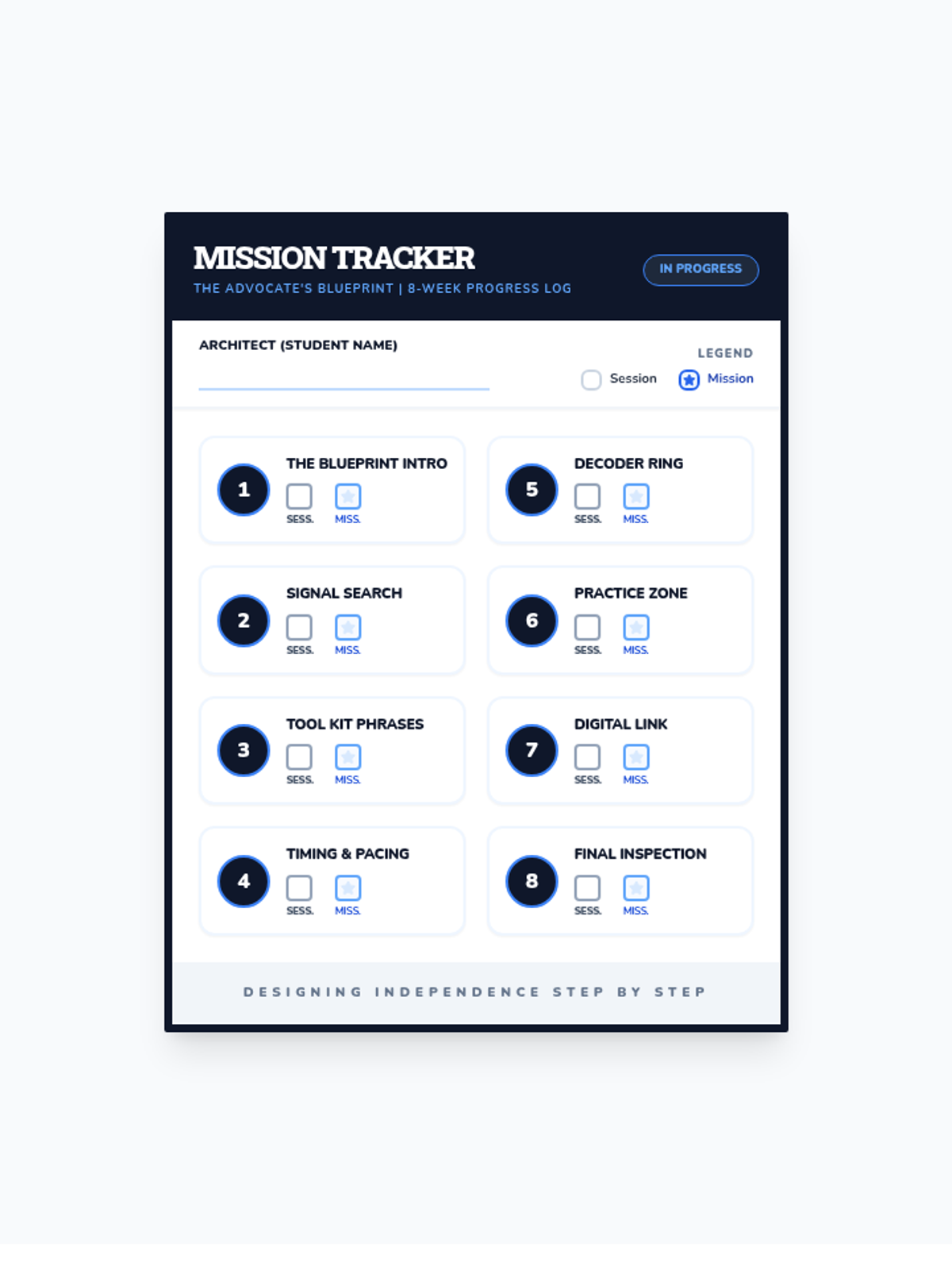
Reviewing progress, finalizing the personal advocacy plan, and celebrating growth.
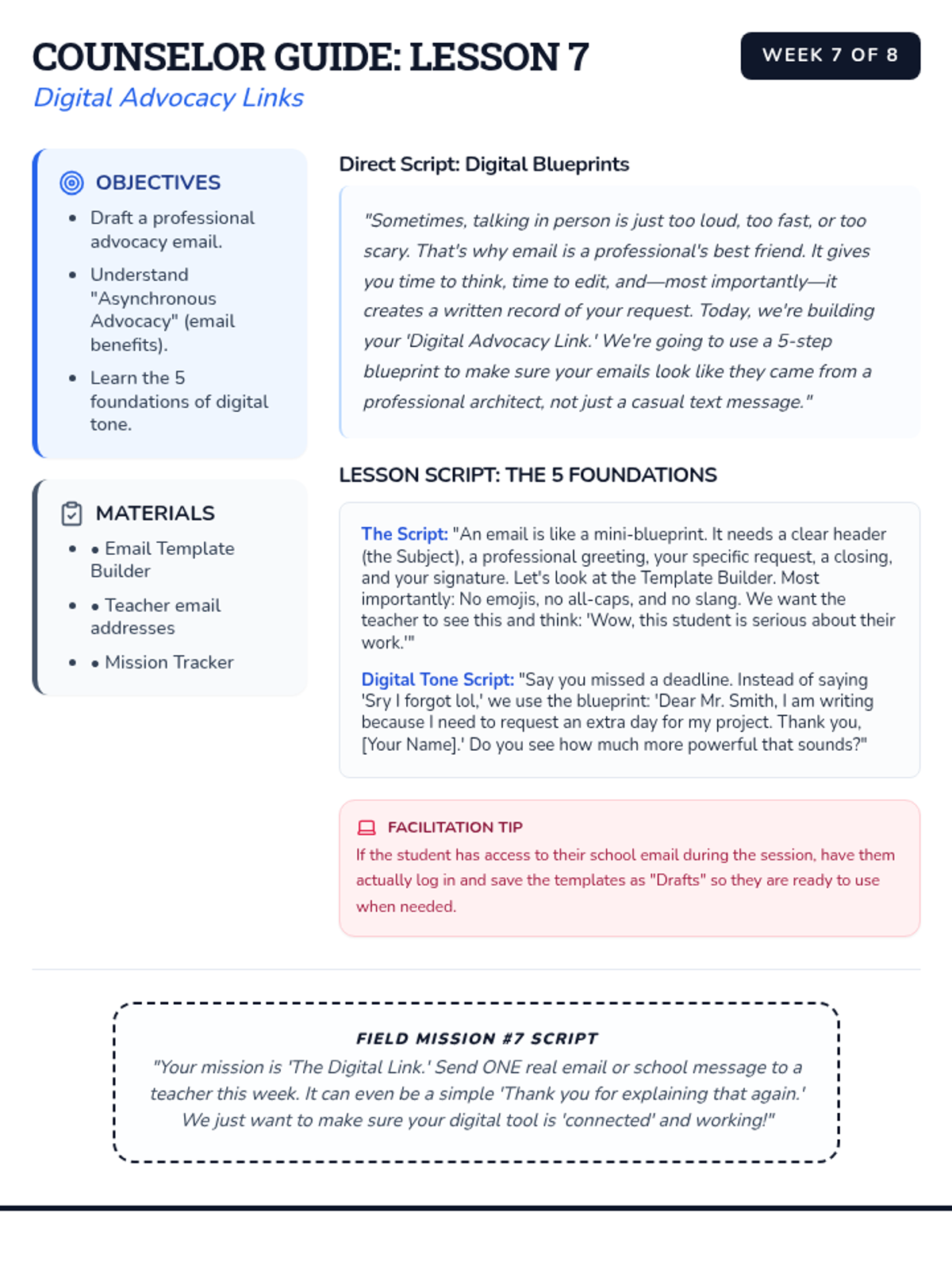
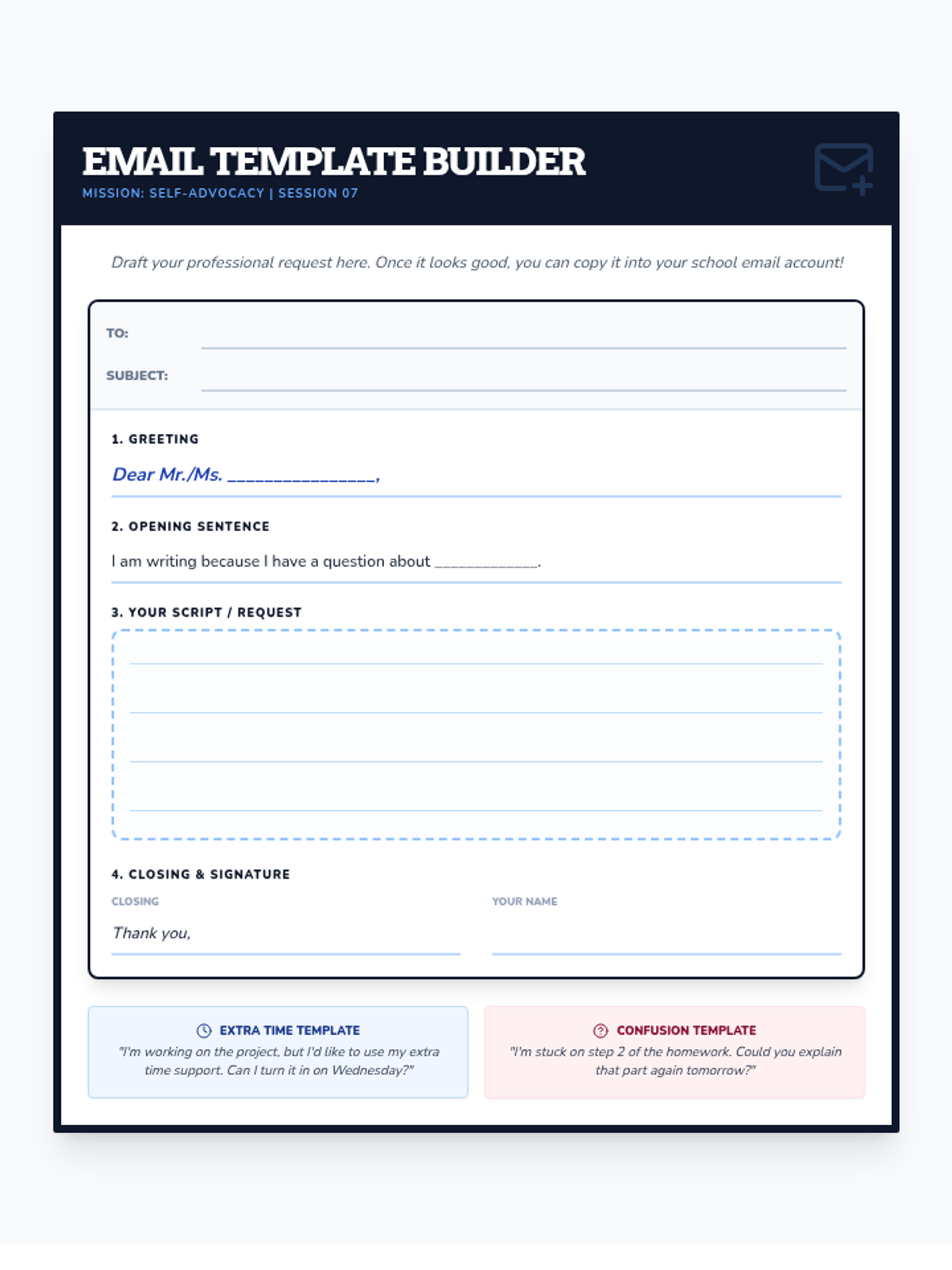
Learning how to professionally request help and tools via email or school messaging systems.
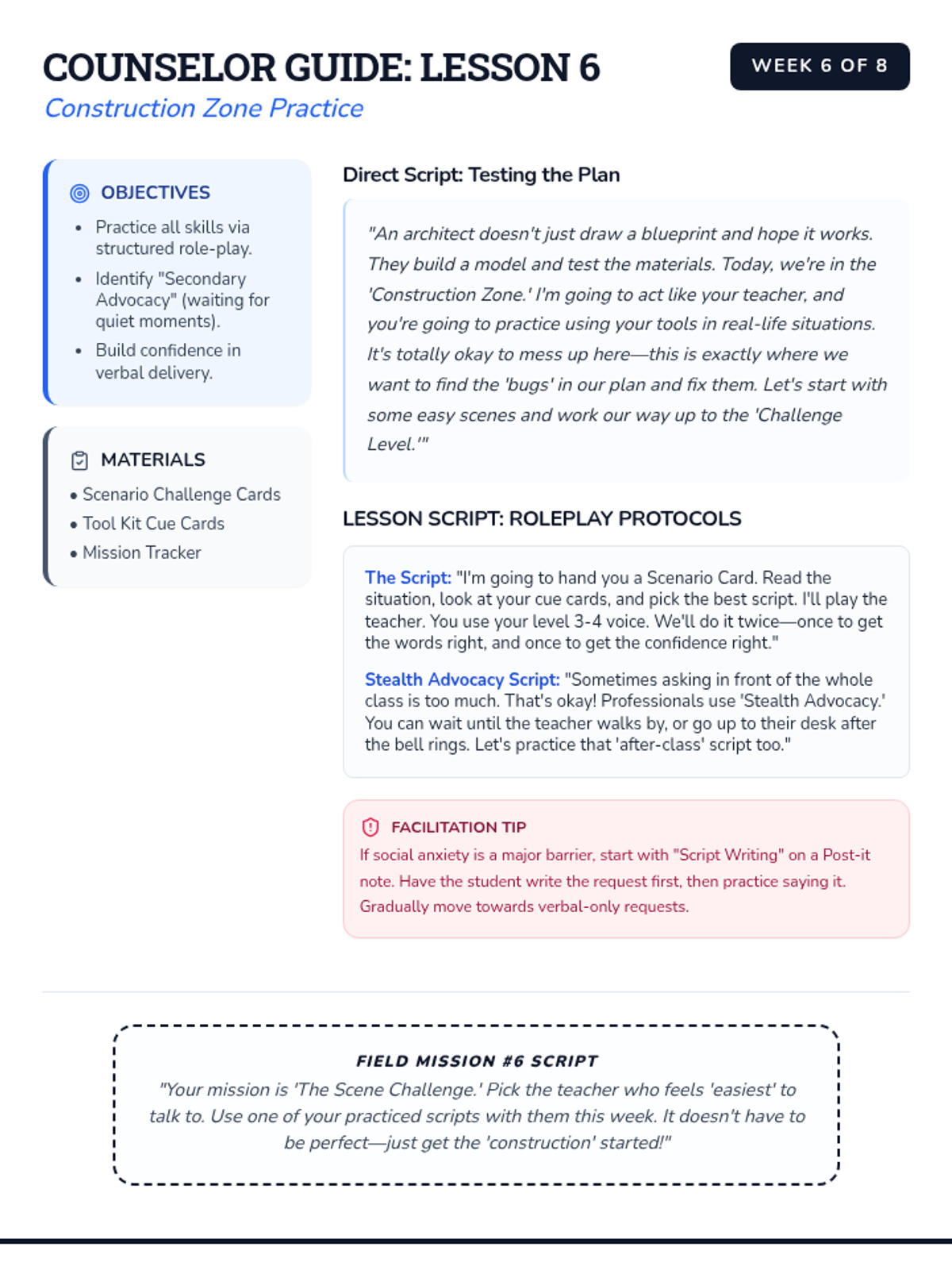
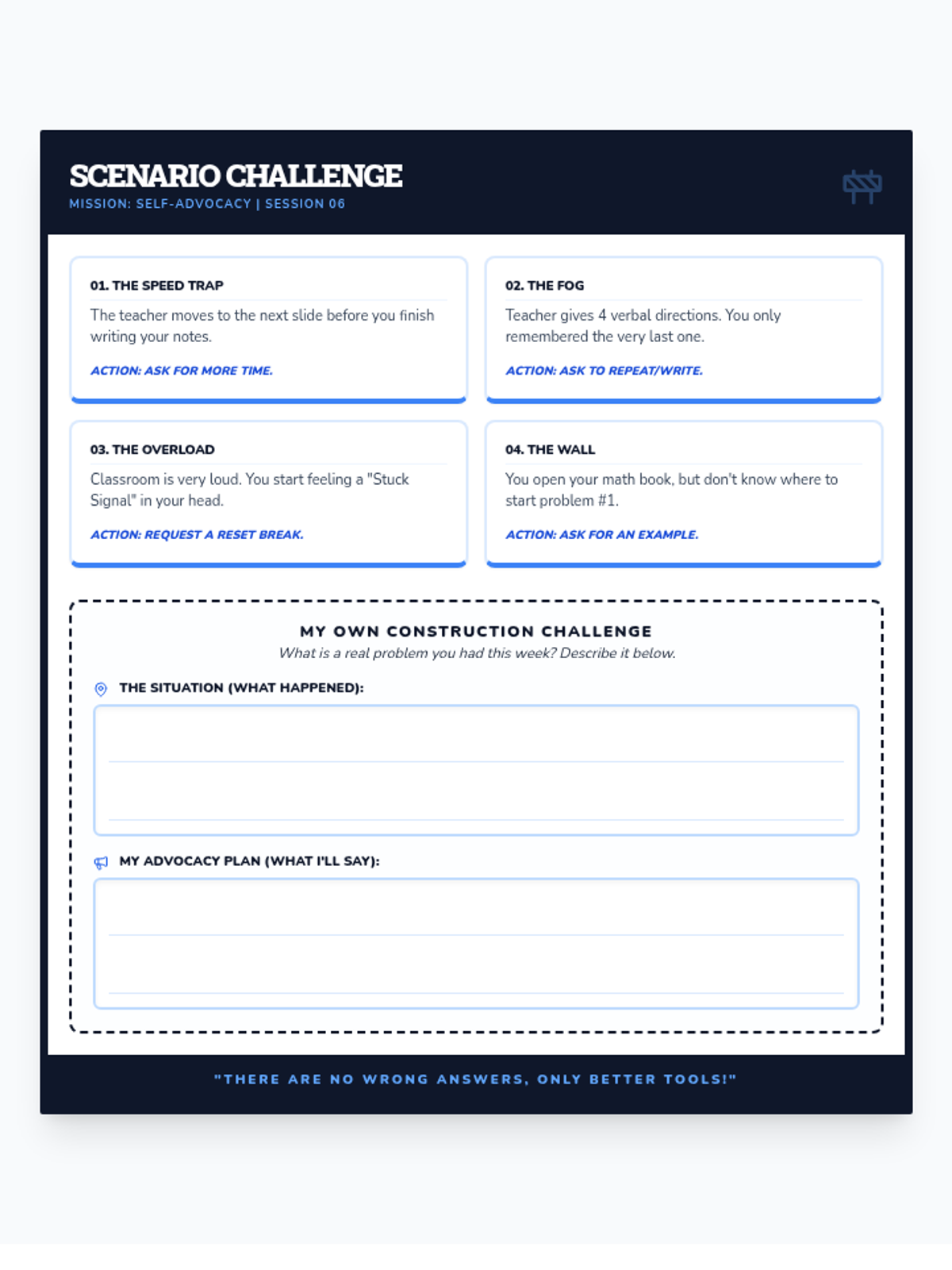
Practicing self-advocacy scripts through structured role-play in various school scenarios.
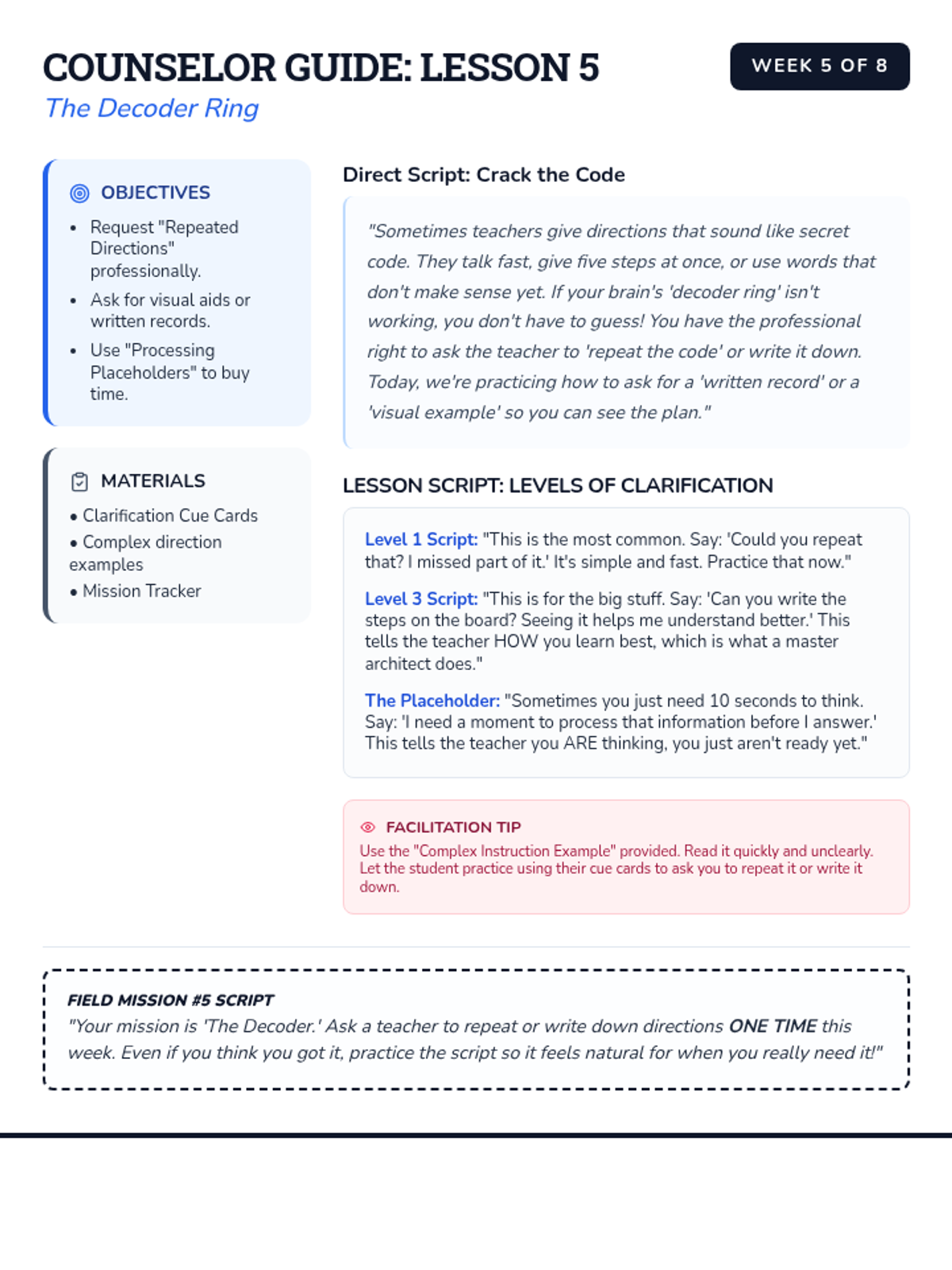
Techniques for asking teachers to repeat directions or simplify complex instructions.
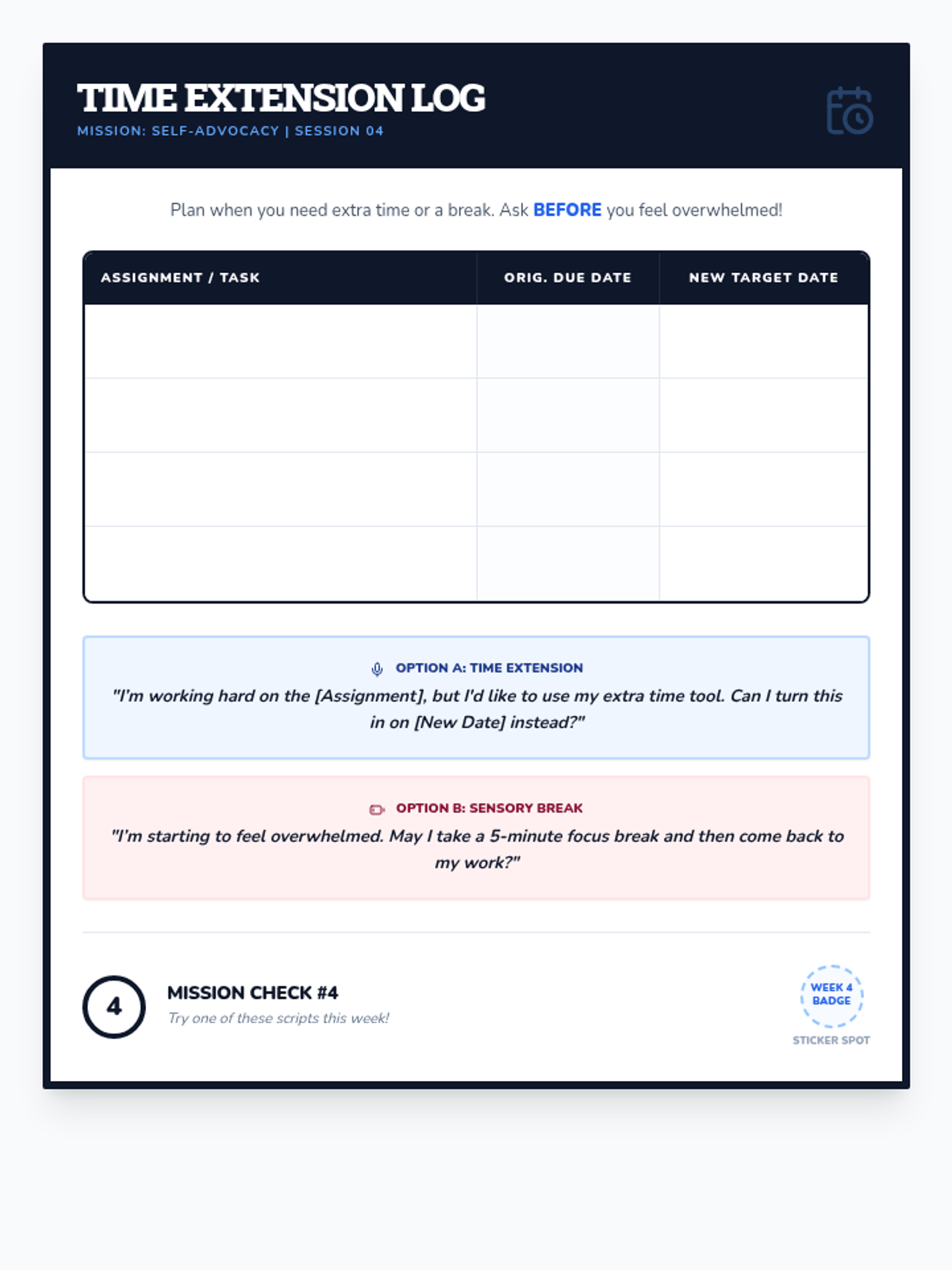
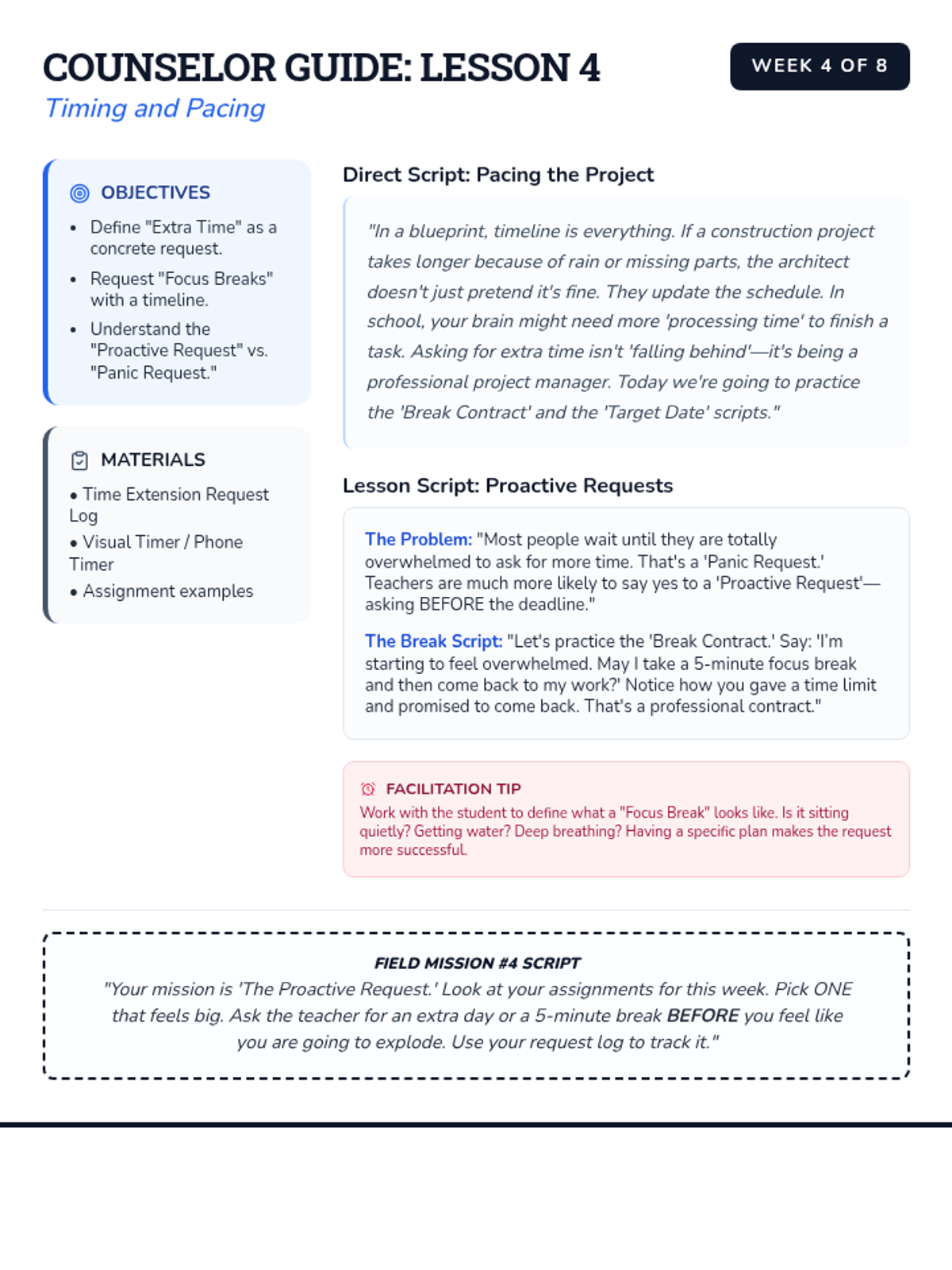
Focusing on self-advocating for time-based tools like extra time or short breaks.
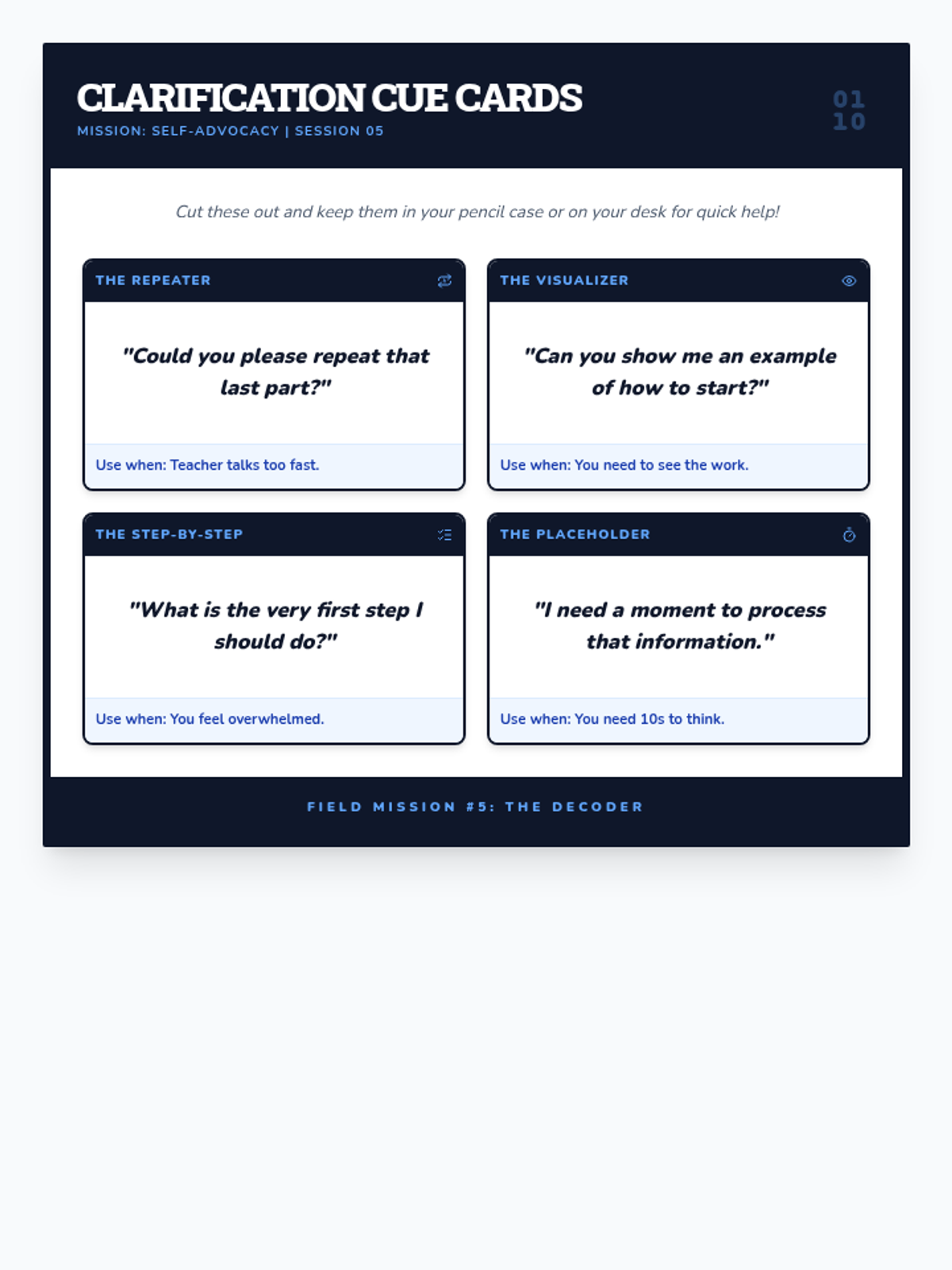
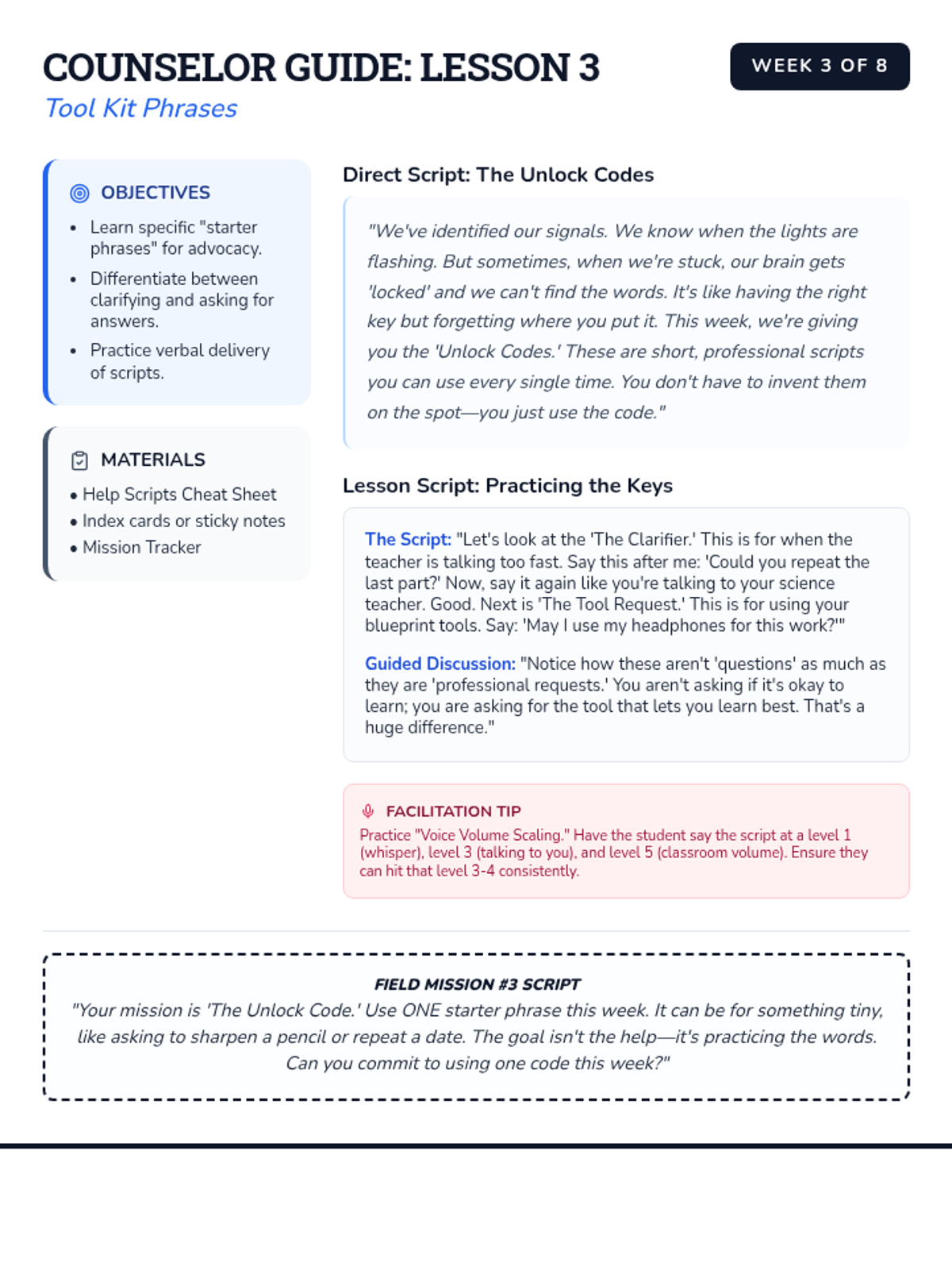
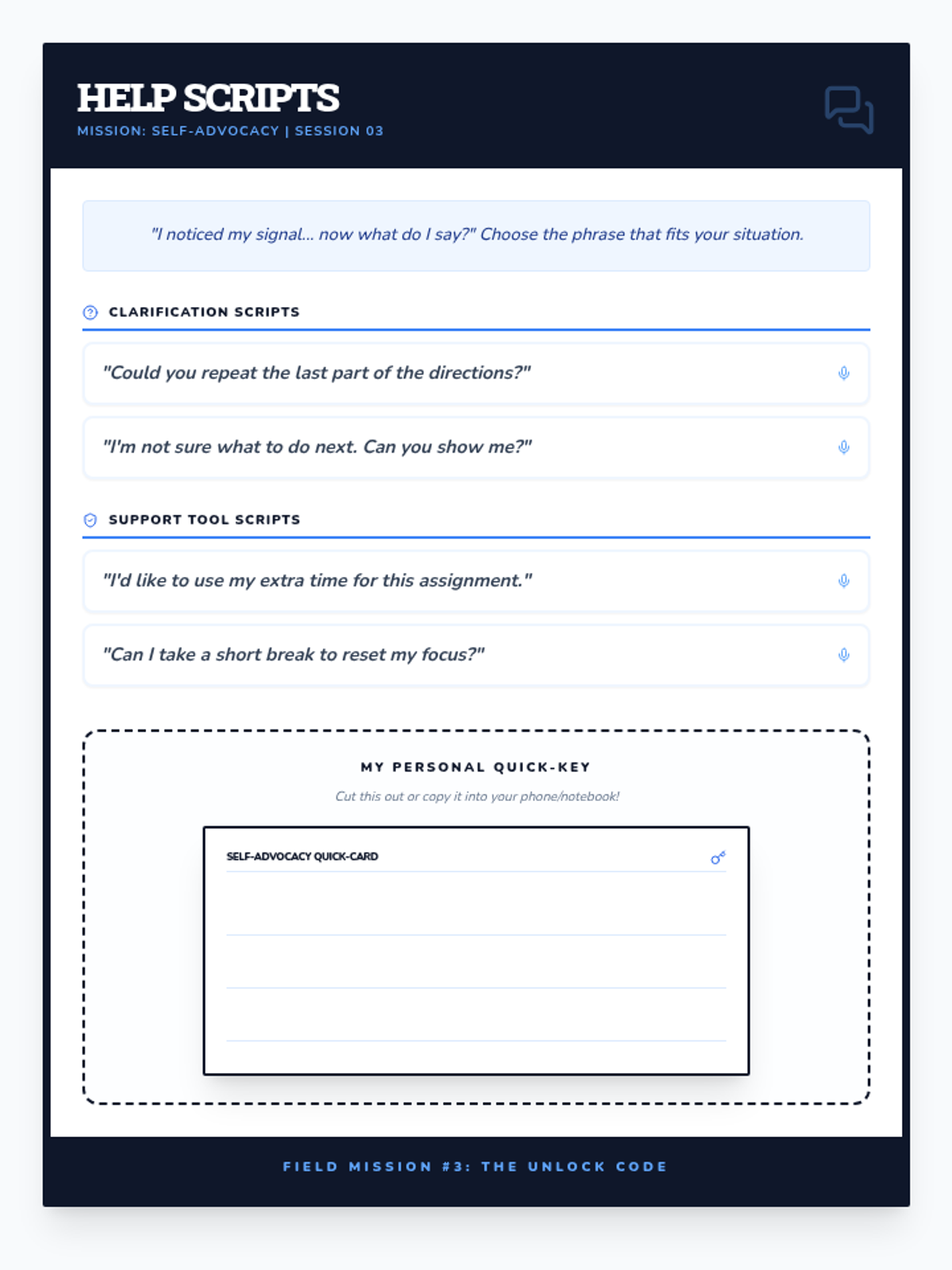
Building a collection of specific scripts and phrases for asking for help and clarification.
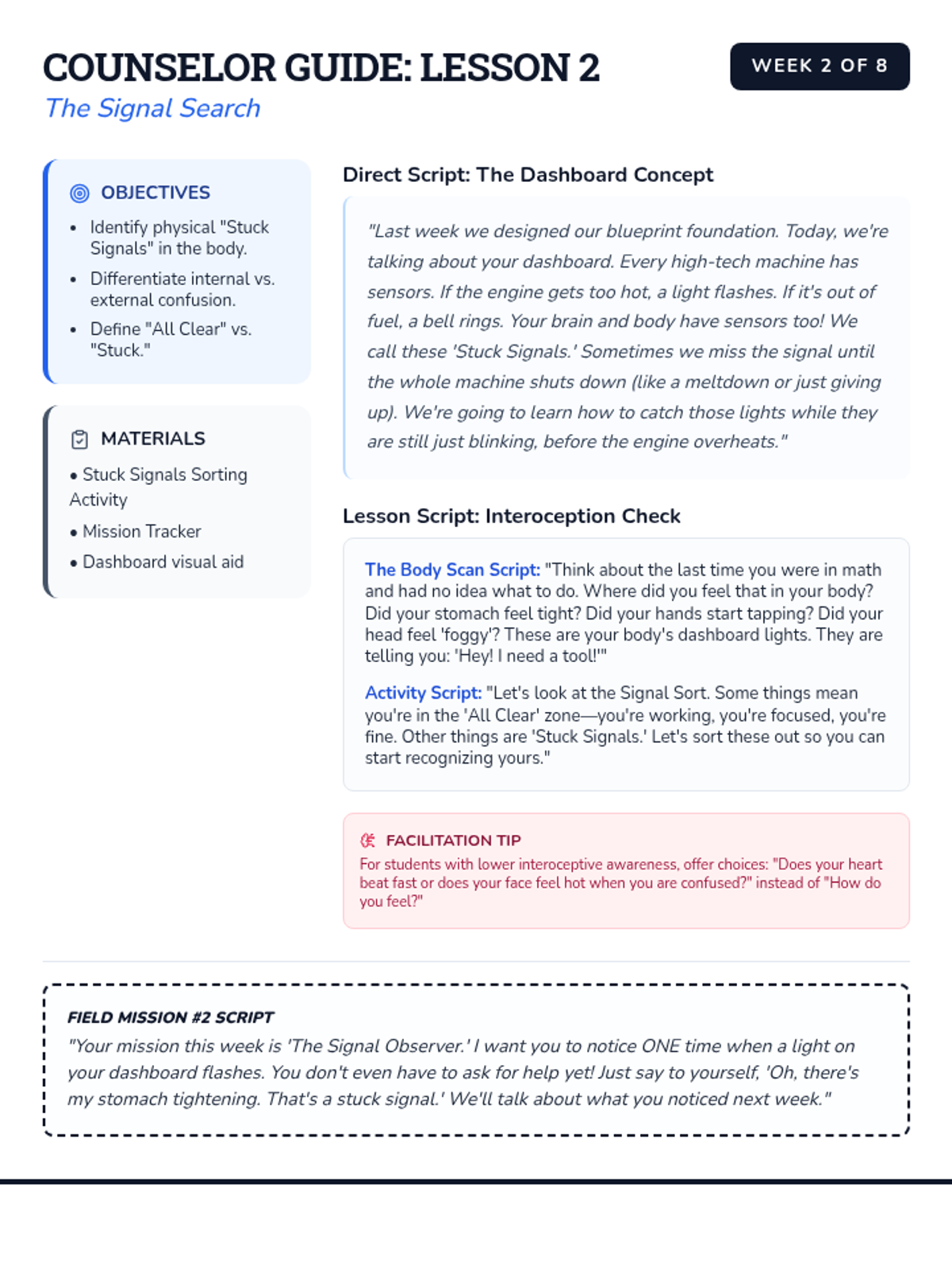
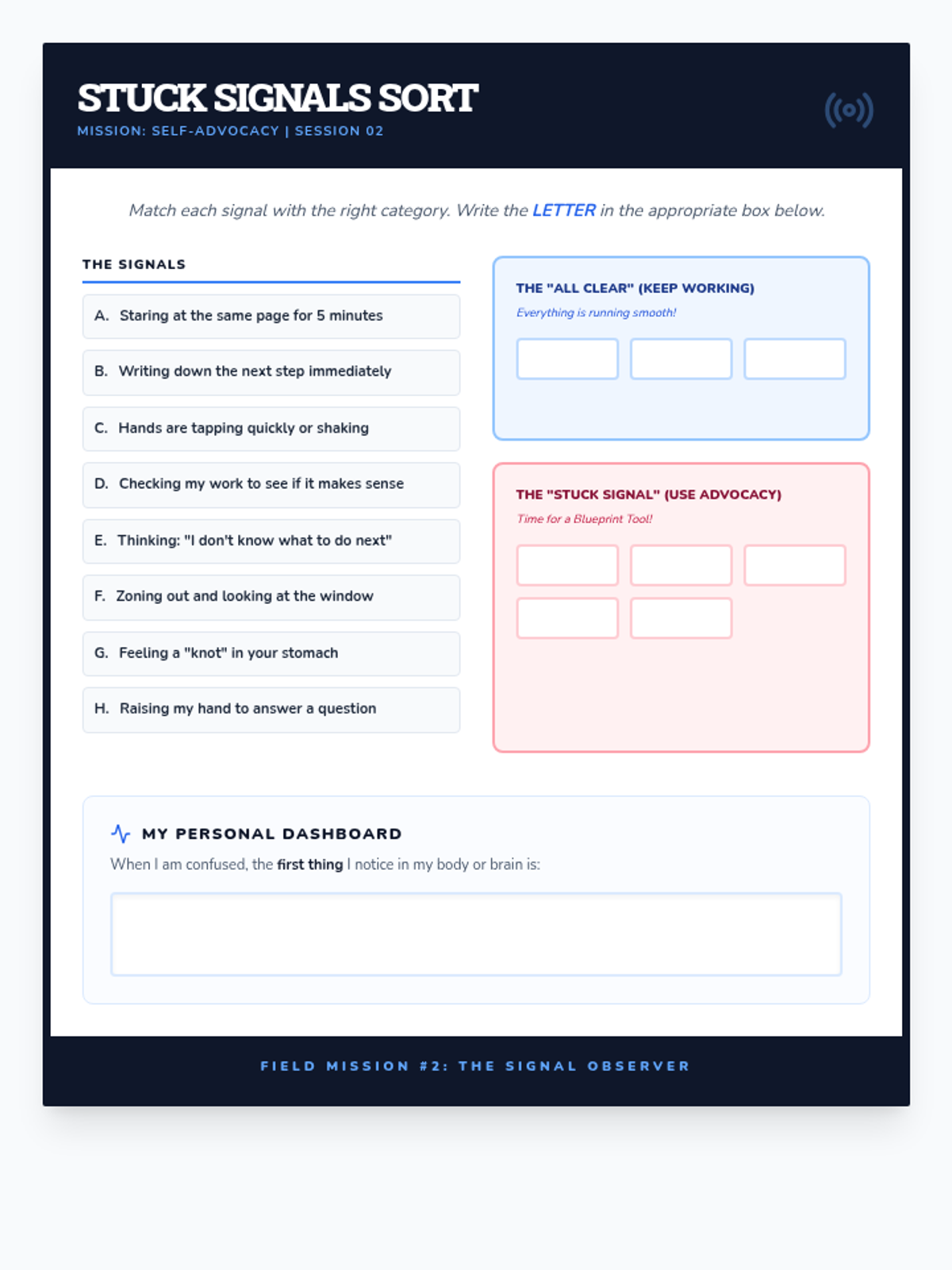
Learning to identify internal and external cues that indicate a need for help or clarification.
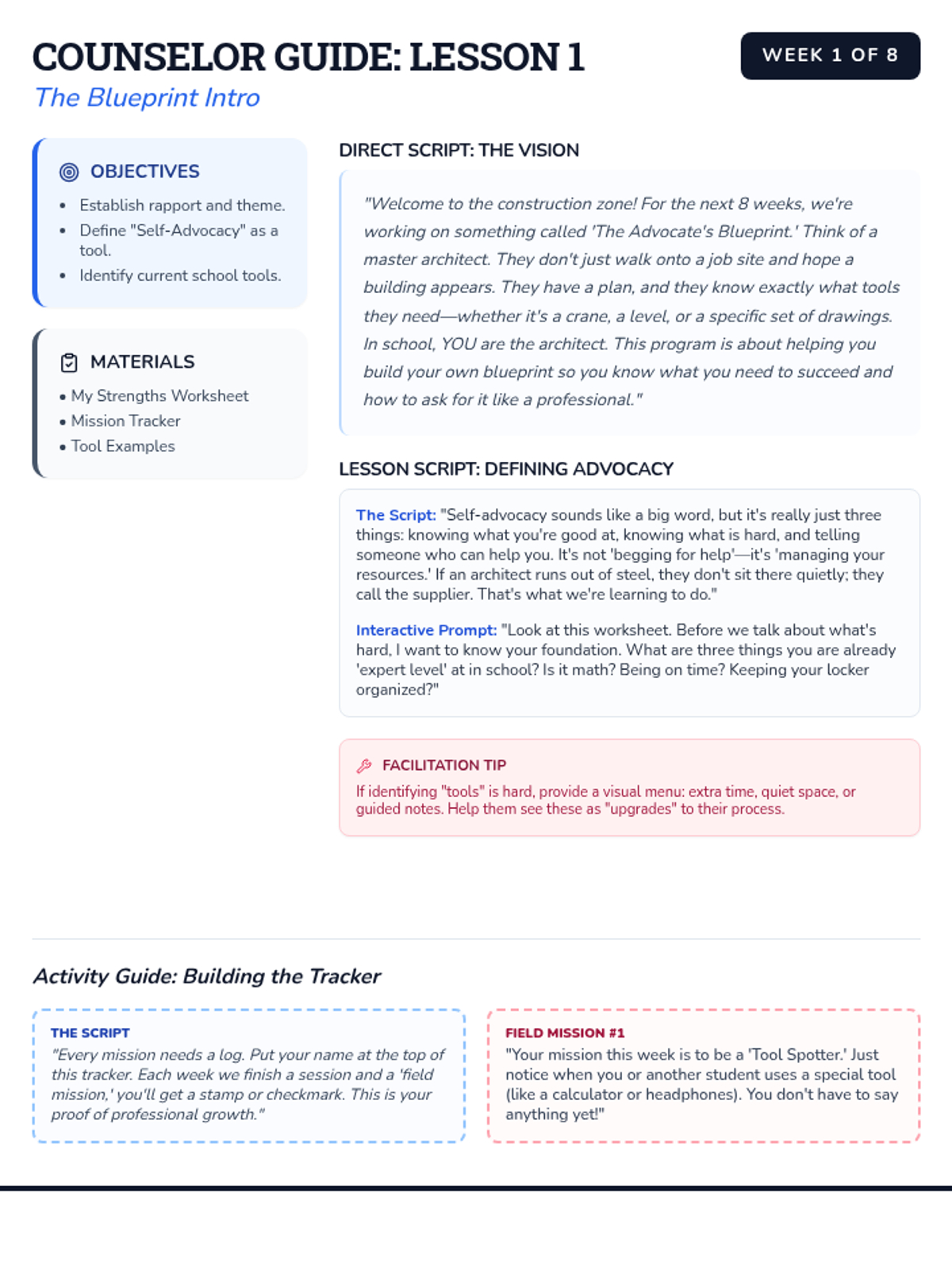
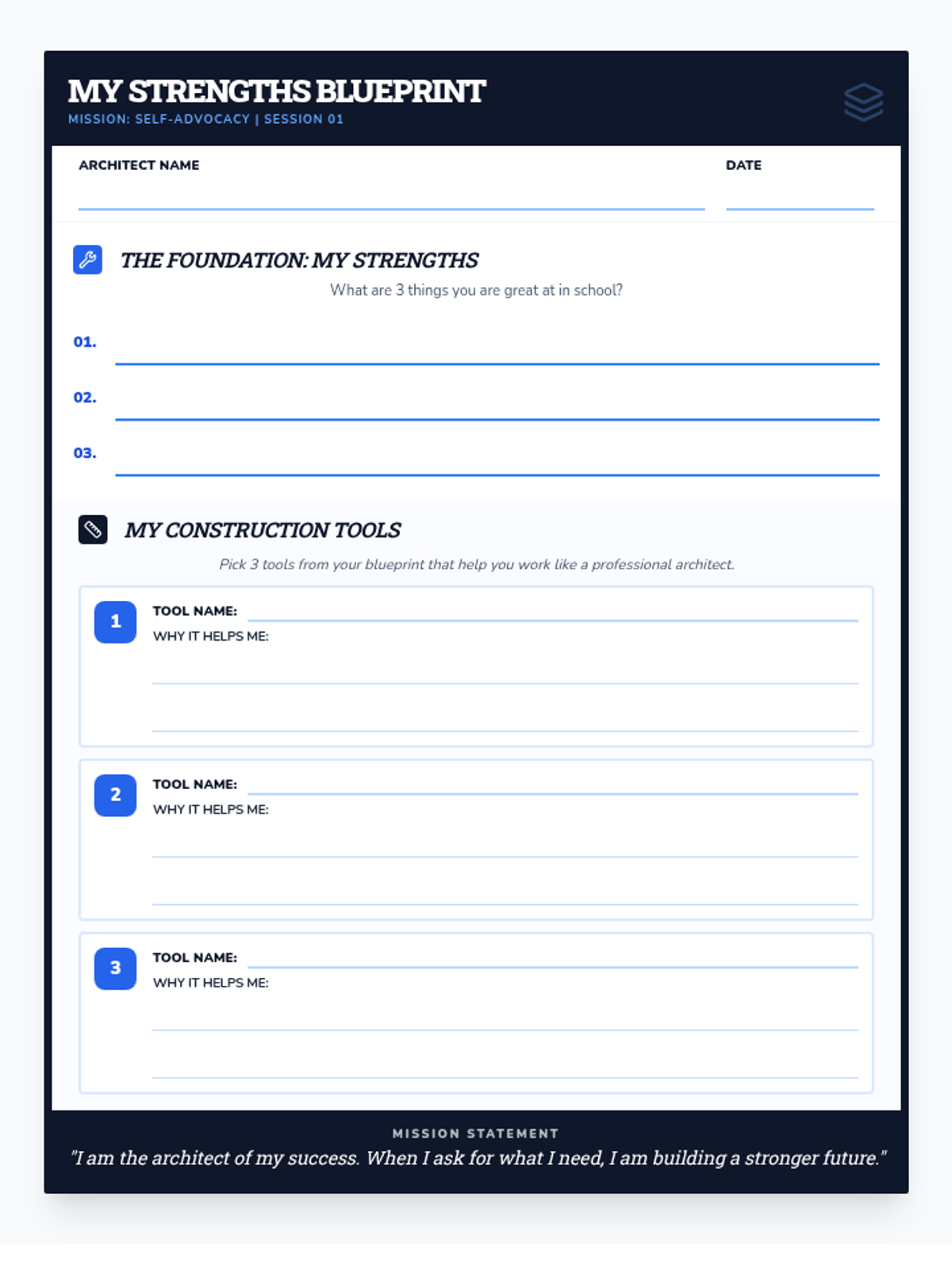
Introduction to the concept of self-advocacy and understanding the student's specific strengths and learning tools.
Consolidating resources and creating a concrete, personalized safety plan for life after graduation.
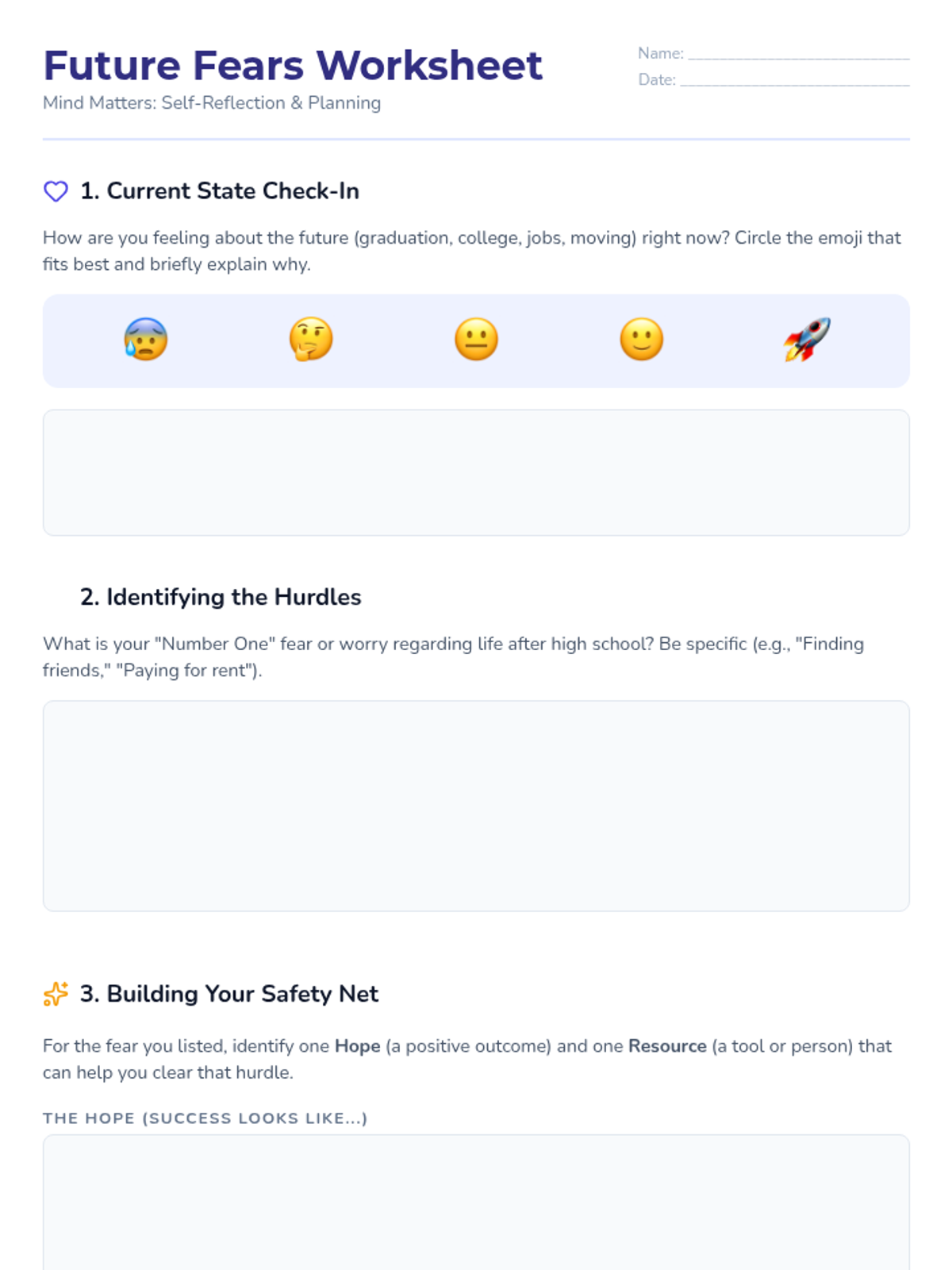
An interactive workshop day where students map out personal hurdles and the resources needed to clear them.
Specifically addressing the psychological challenges of leaving high school and the loss of routine.
An exploration of depression symptoms, breaking stigma, and how to support friends in crisis.
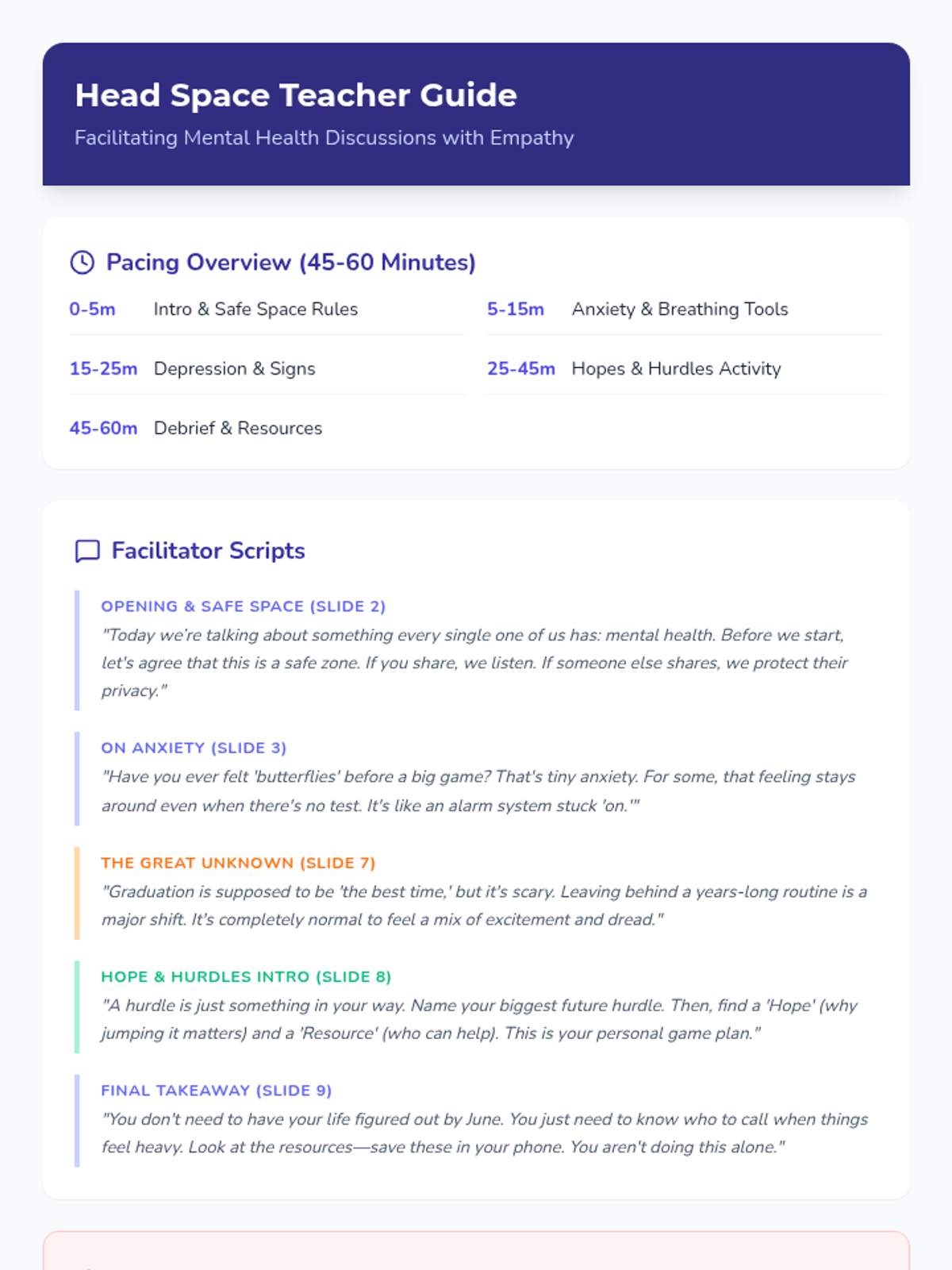
A comprehensive lesson on mental health awareness focusing on anxiety, depression, and the transition from high school, featuring a guided presentation and self-reflection activities.
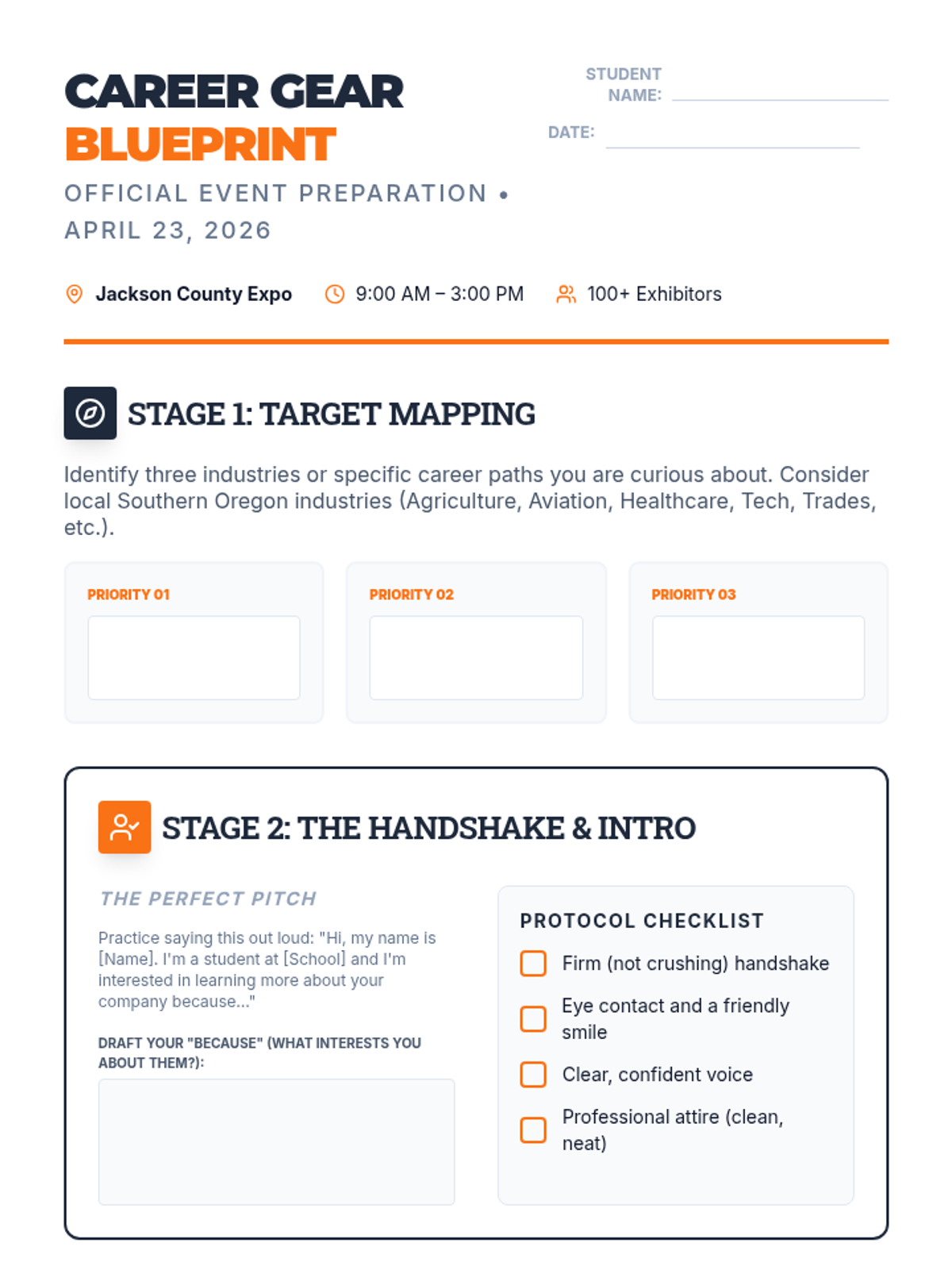
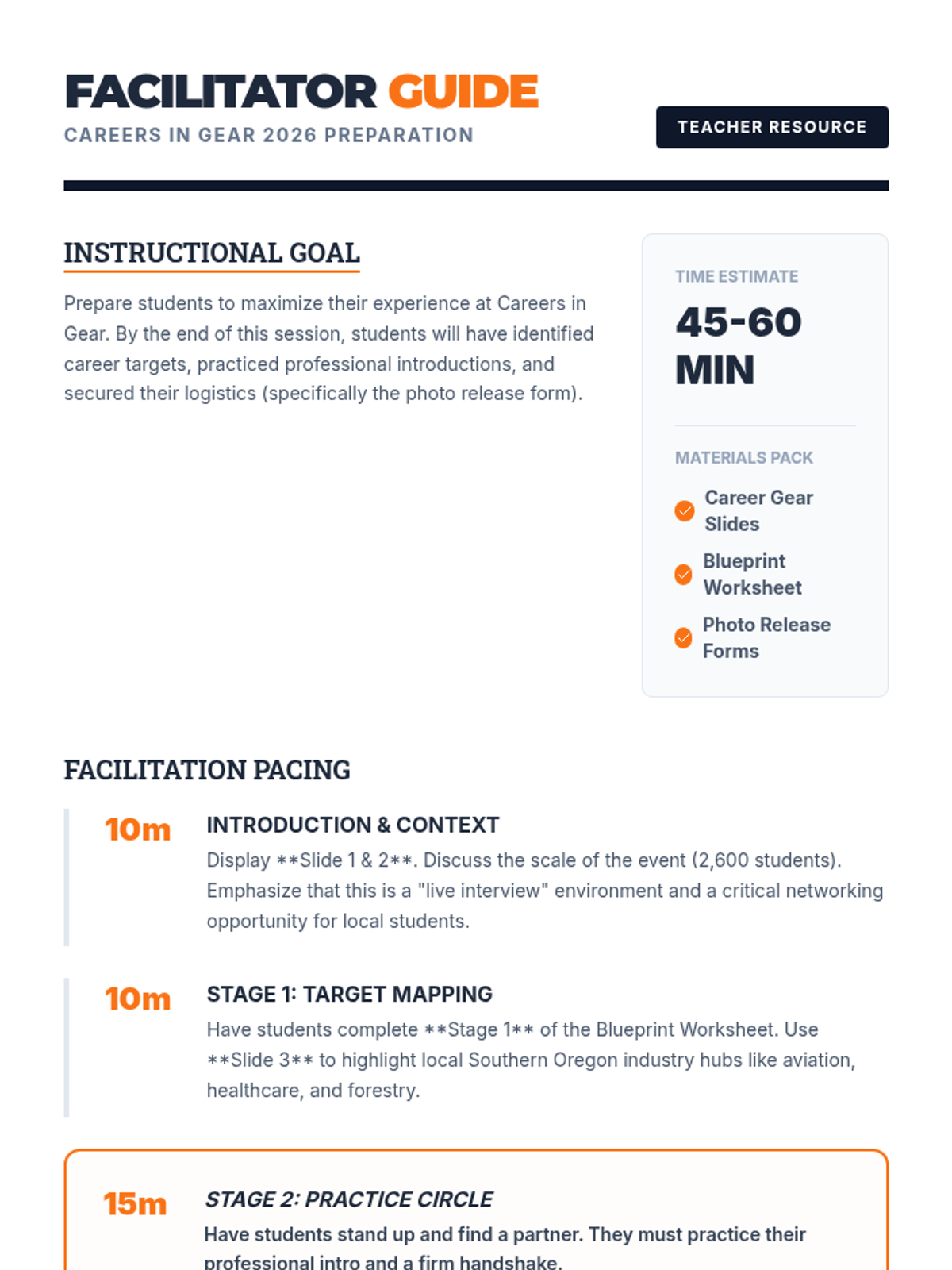
A preparation lesson for the Careers in Gear 2026 event, focusing on career interest identification, professional communication, and logistical readiness.
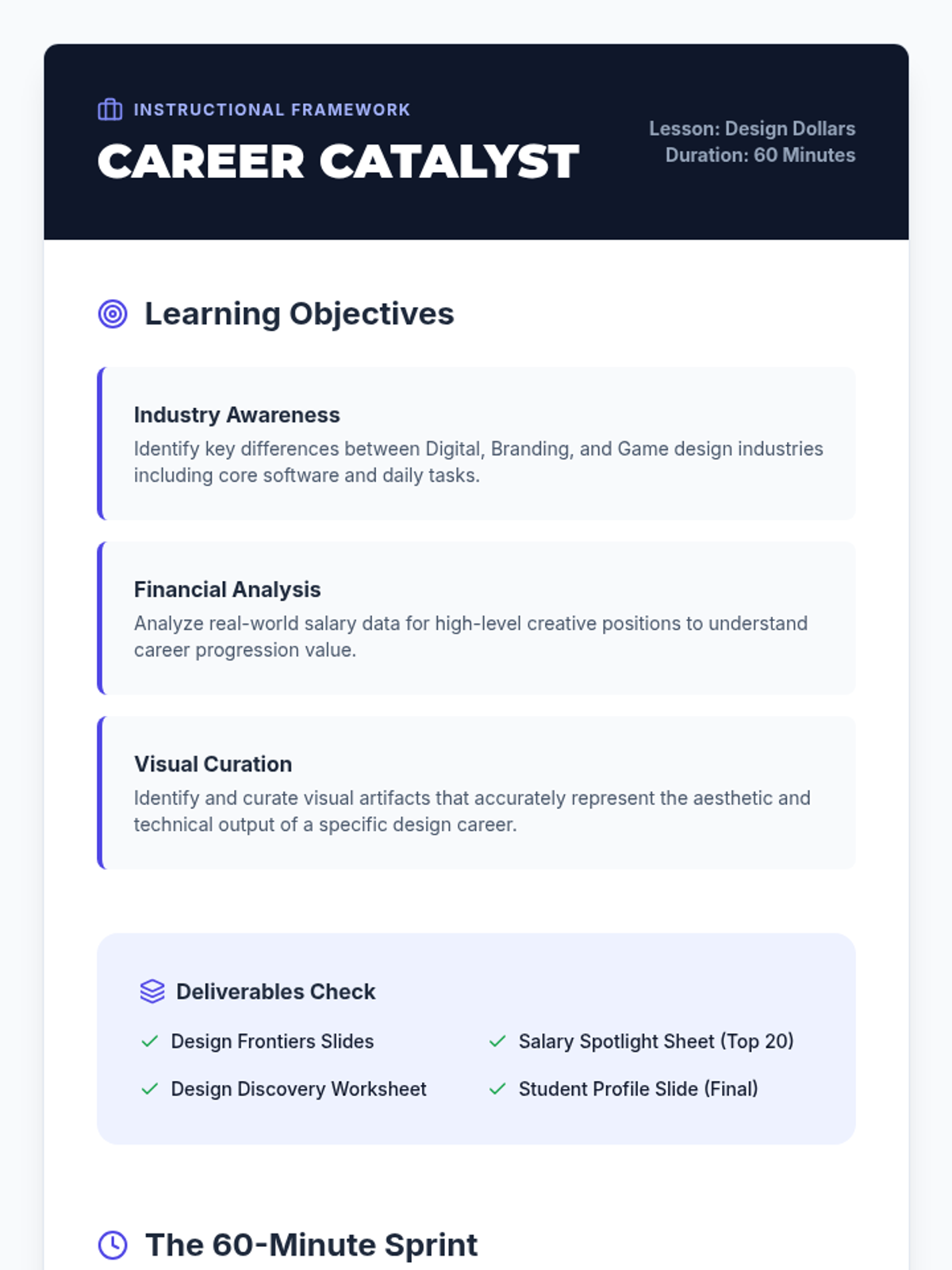
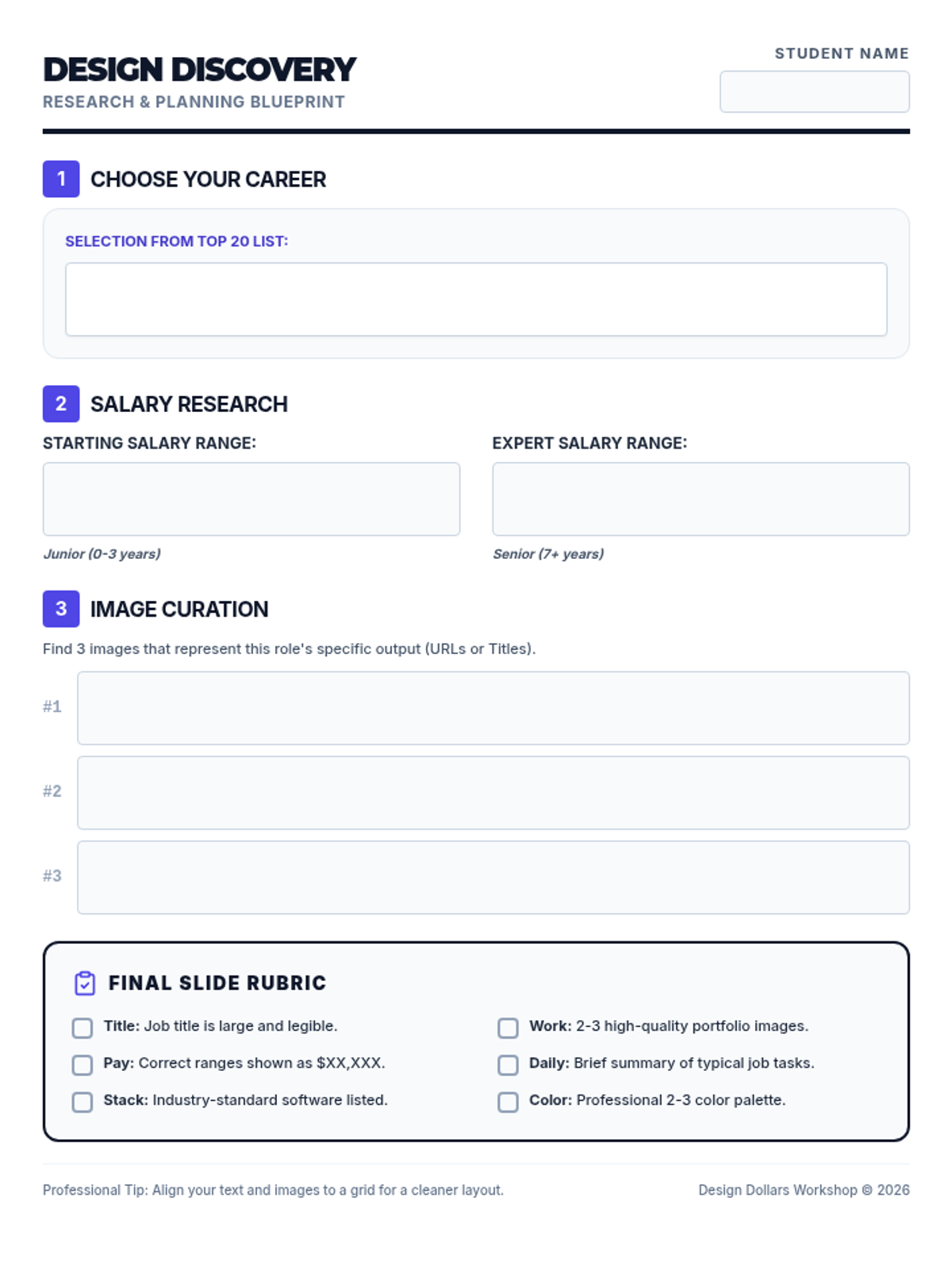
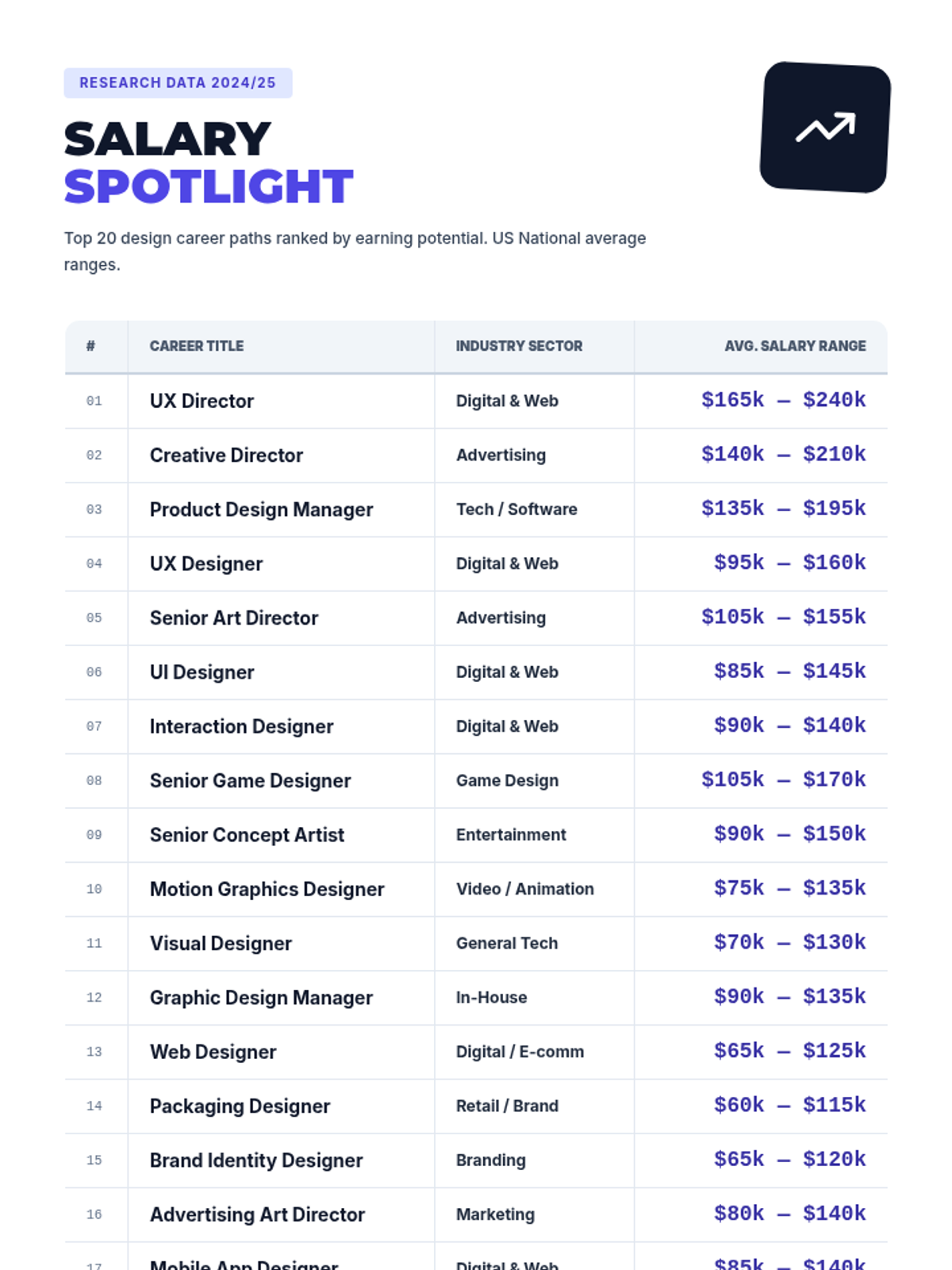
A fast-paced, 60-minute exploration of high-earning graphic design career paths, focusing on digital media, branding, and game design. Students research salary data and visual trends to create a professional industry profile slide.
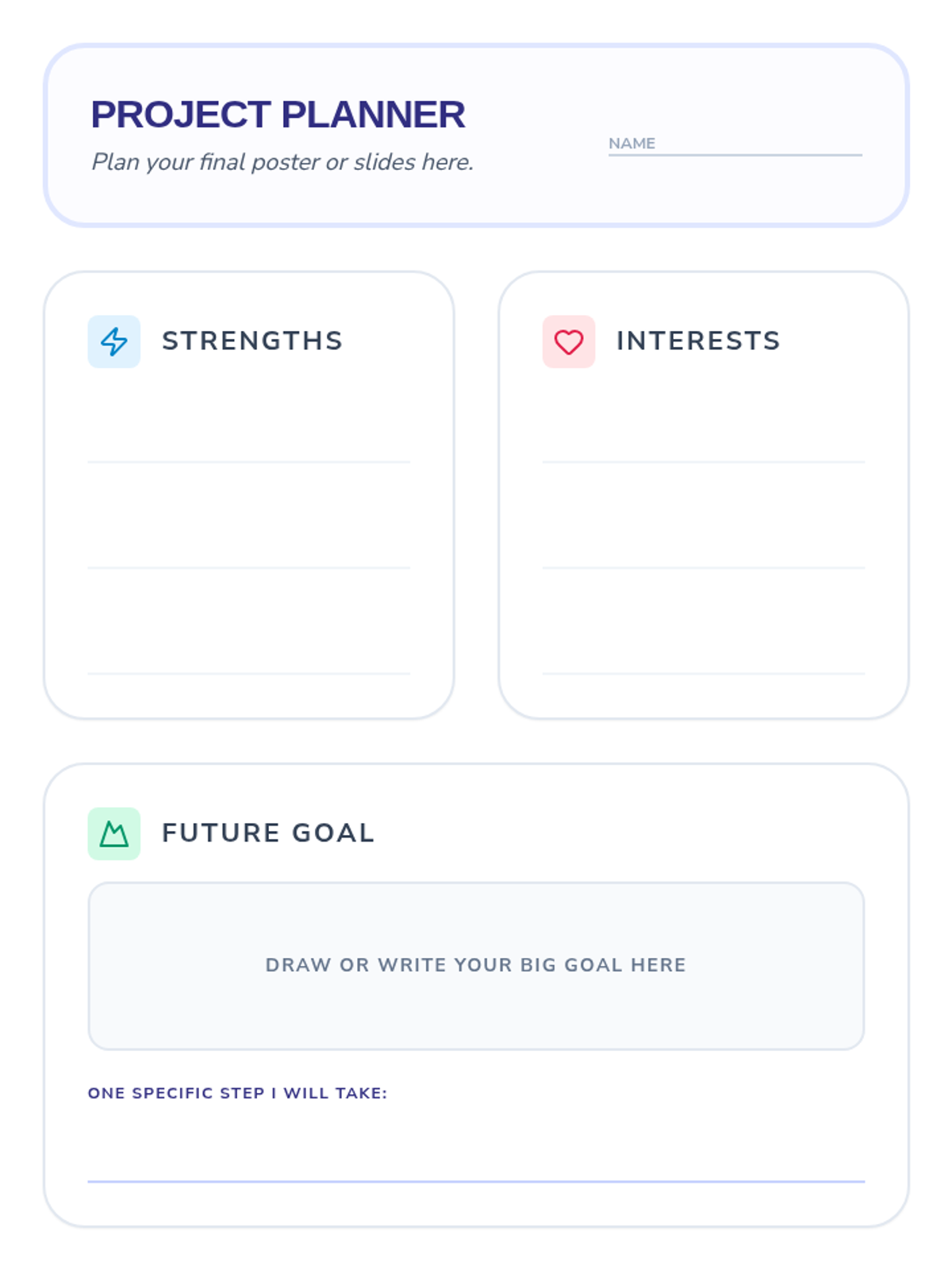
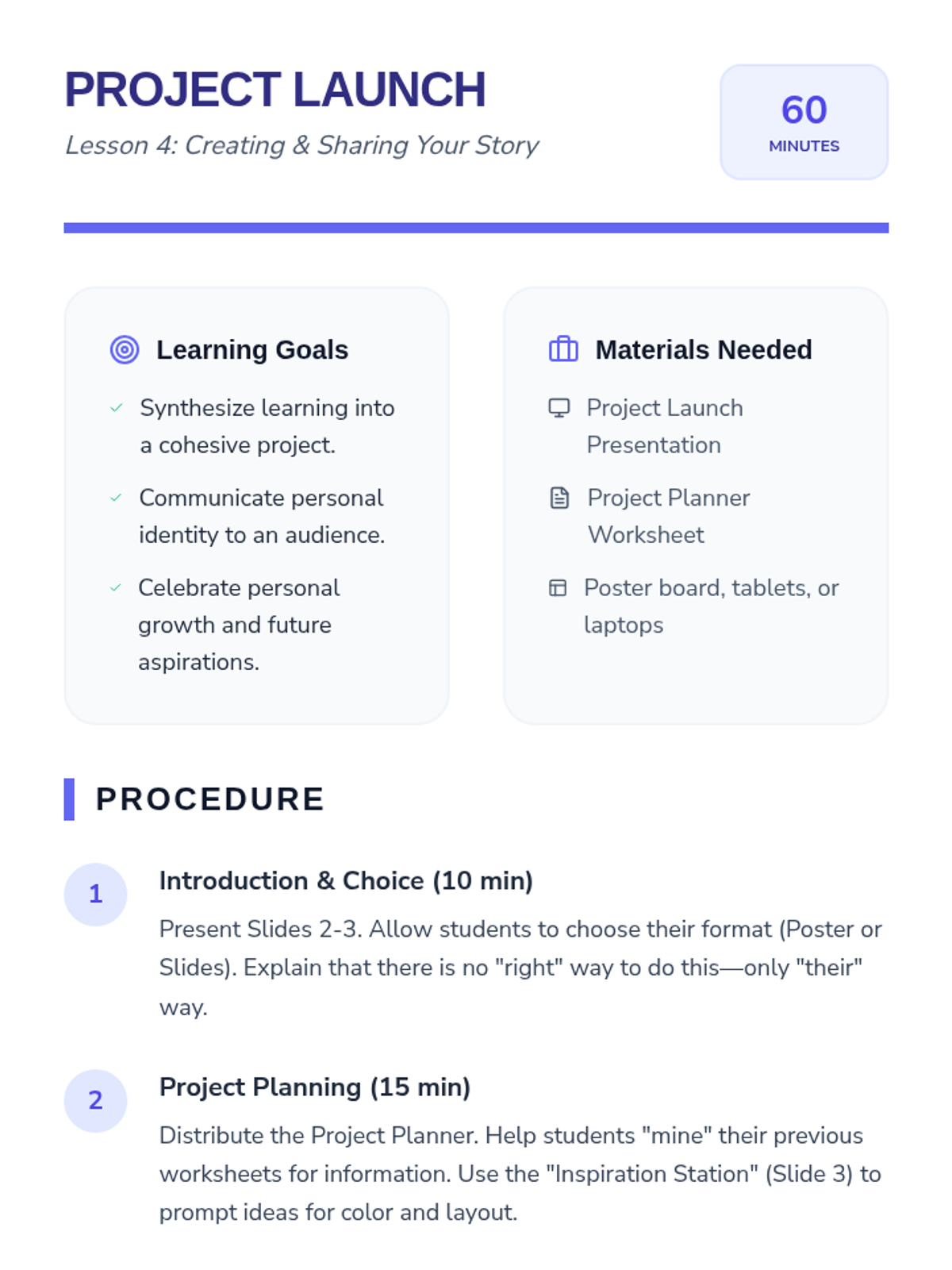
Students synthesize their learning into a final project (poster or presentation) that showcases their self-identity and future aspirations.
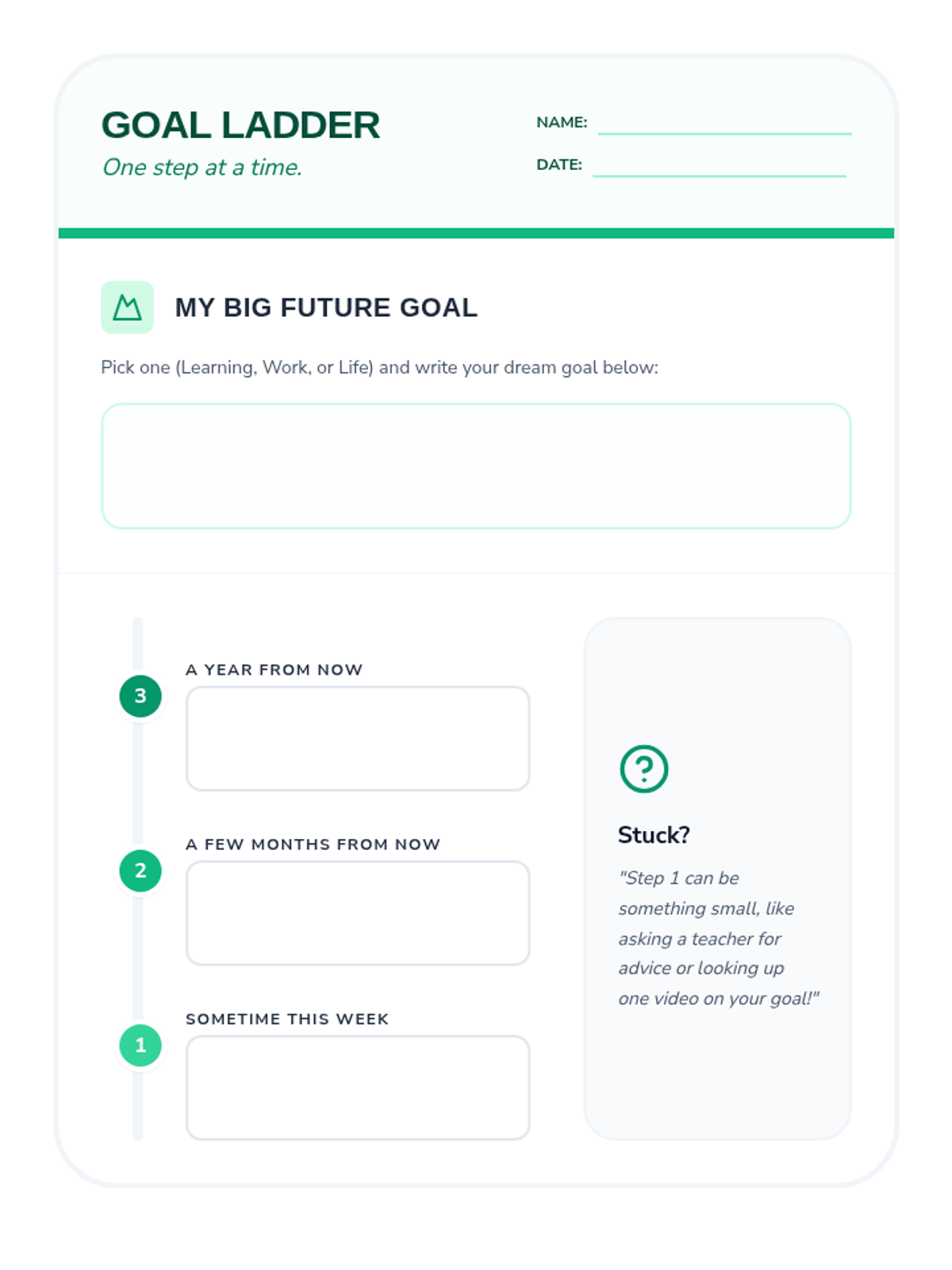
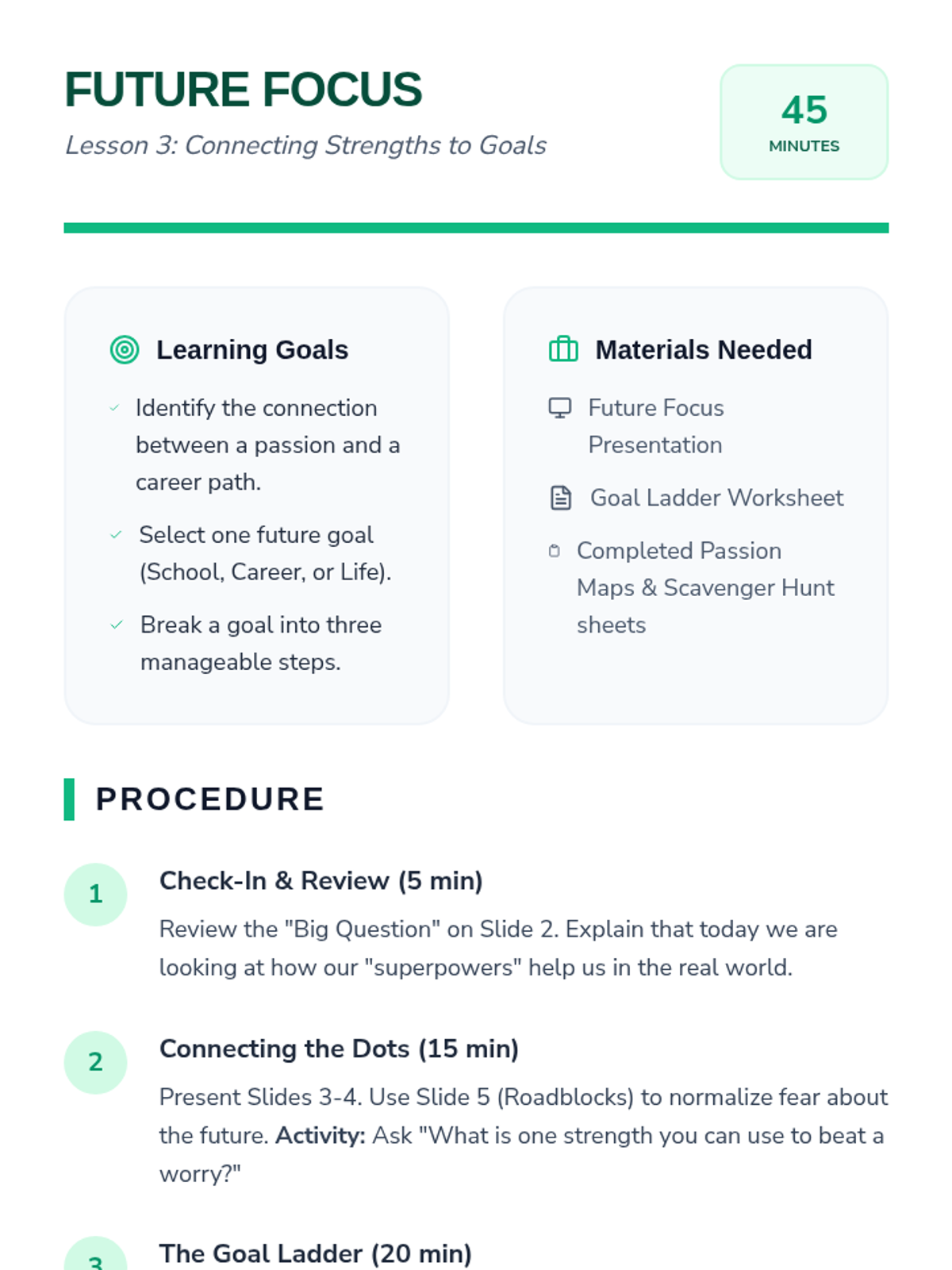
Students bridge their current strengths and interests to potential future goals in school, career, and life.
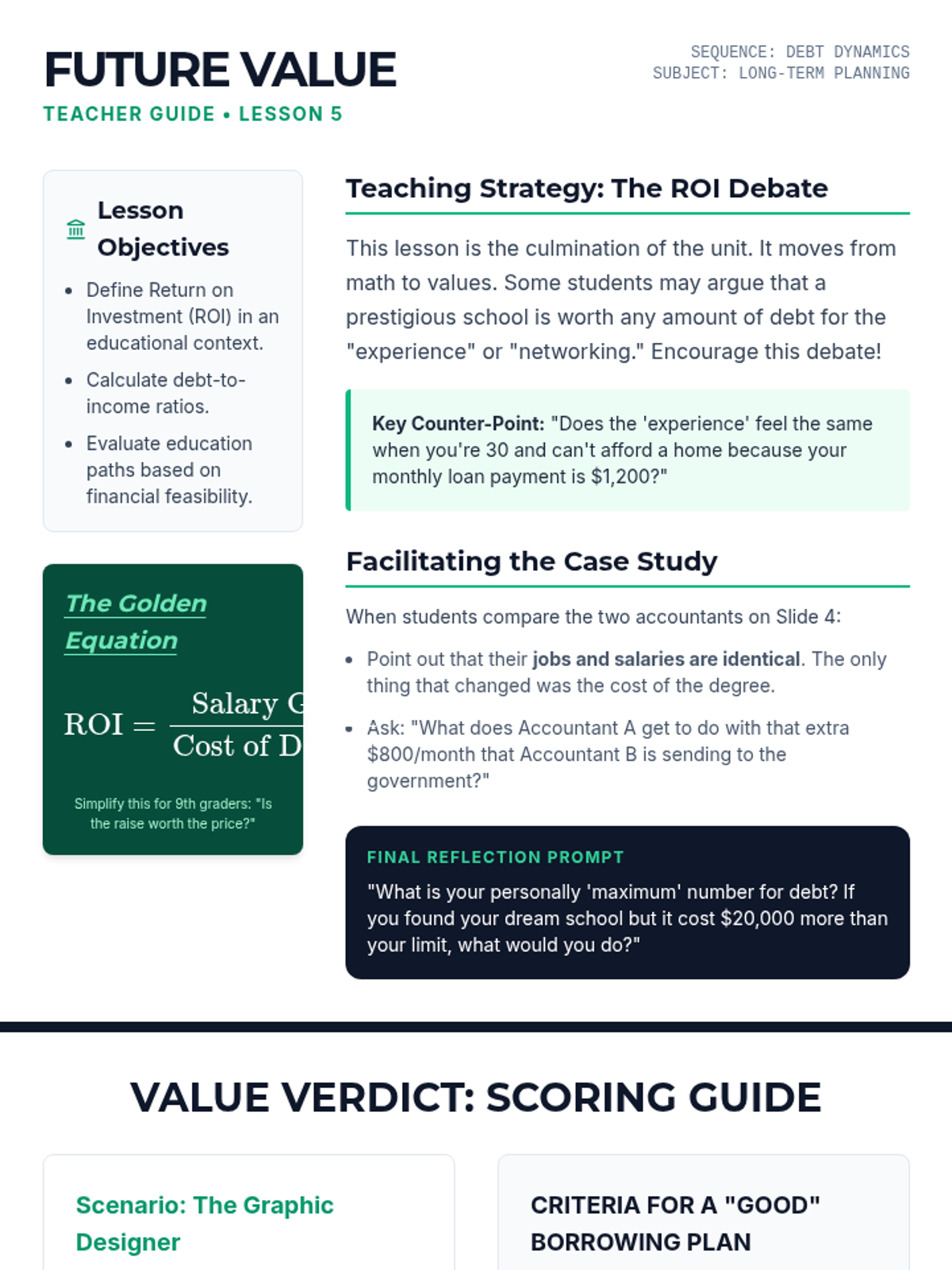
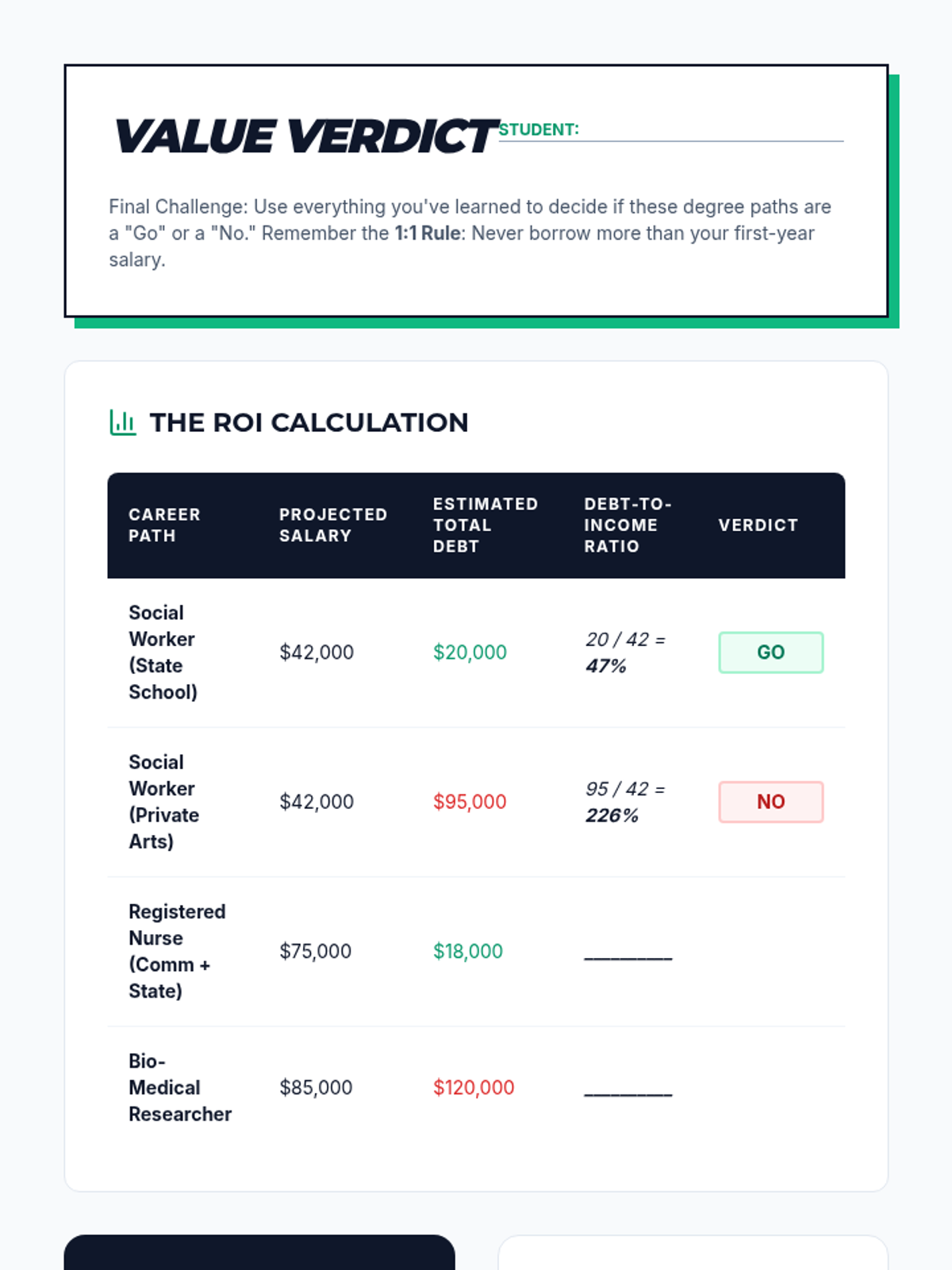
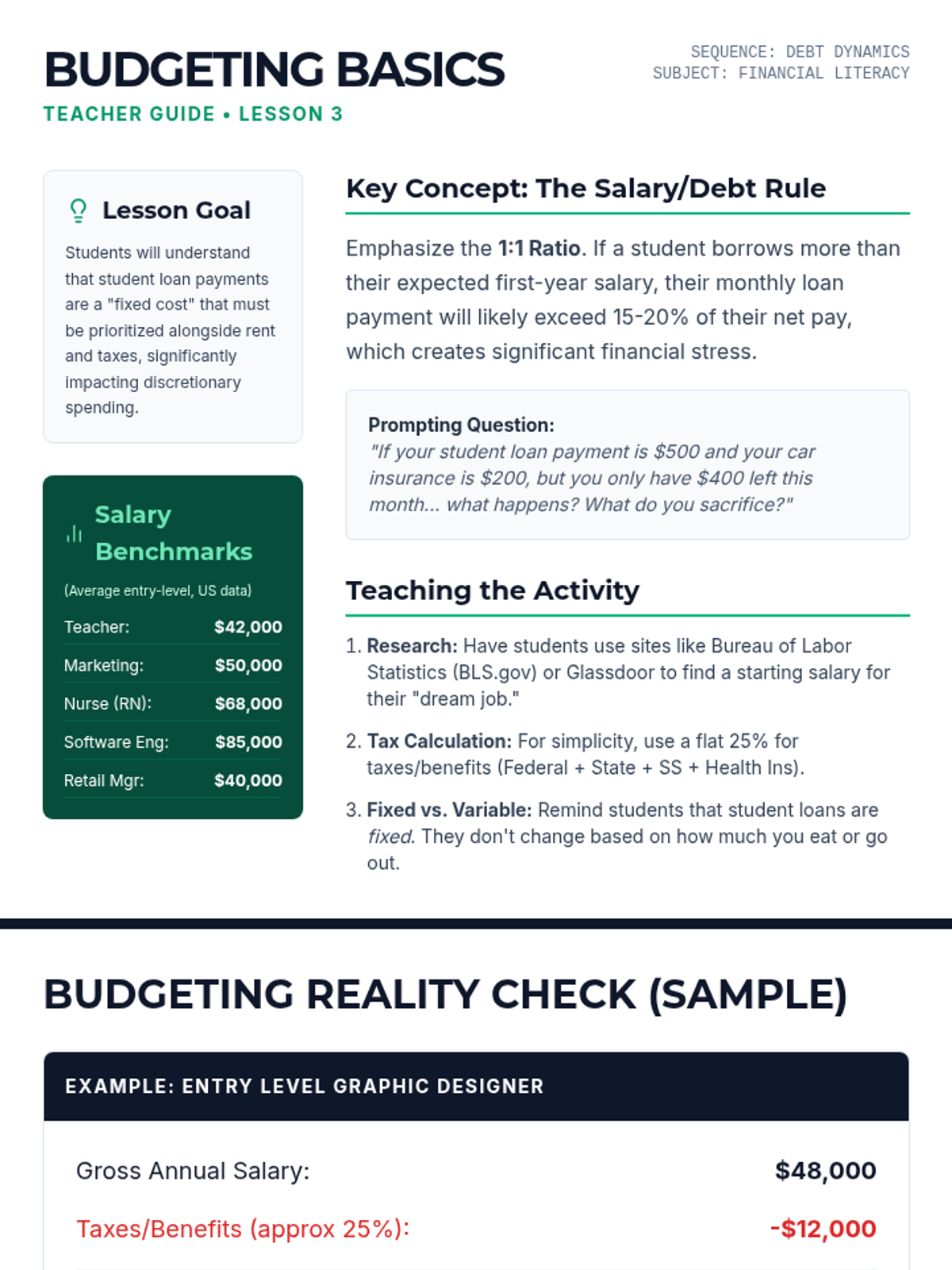
Students evaluate whether specific degrees and colleges are worth the estimated debt load based on projected earnings. They calculate the debt-to-income ratio for various career paths and set personal borrowing guidelines.
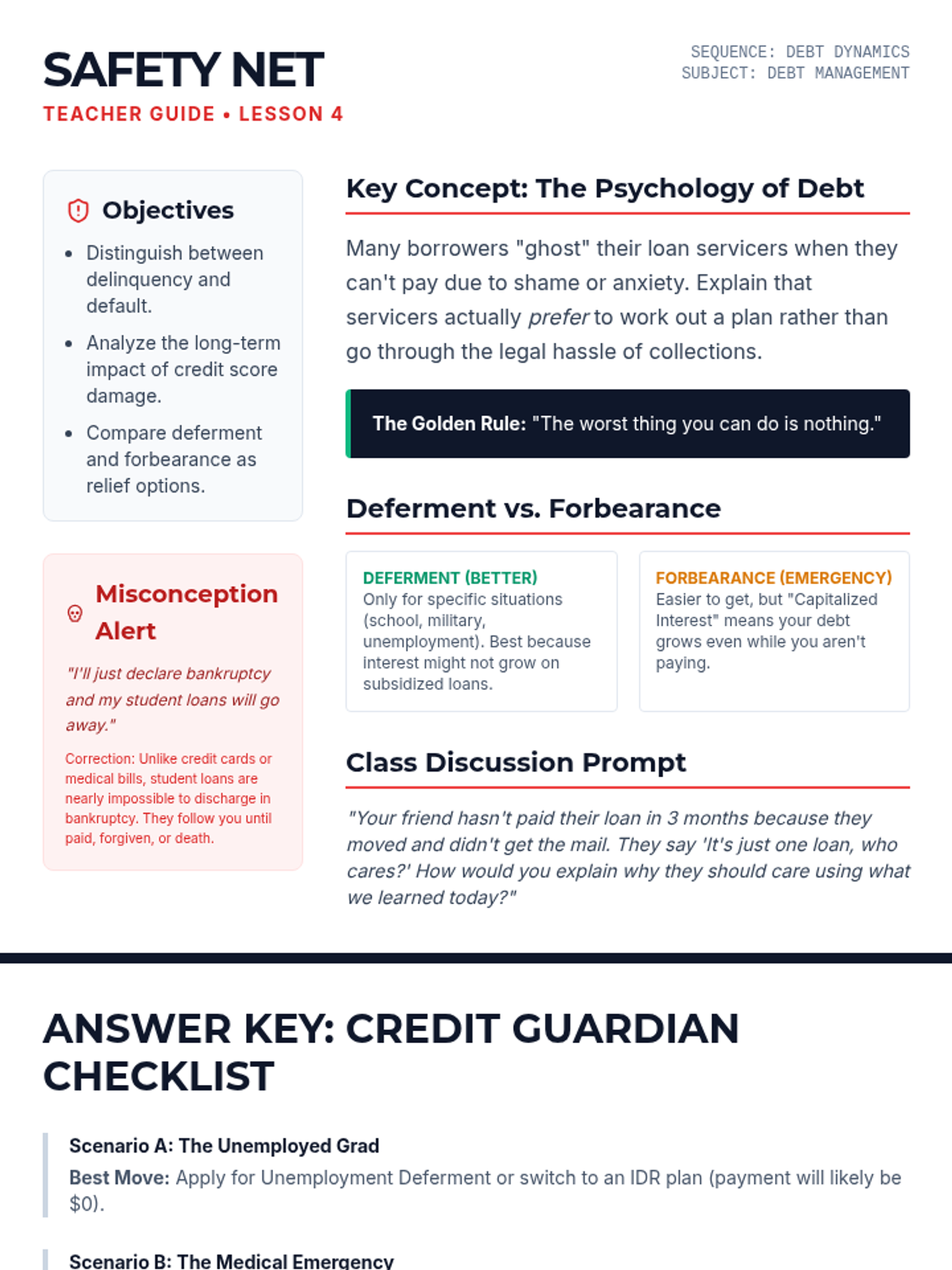
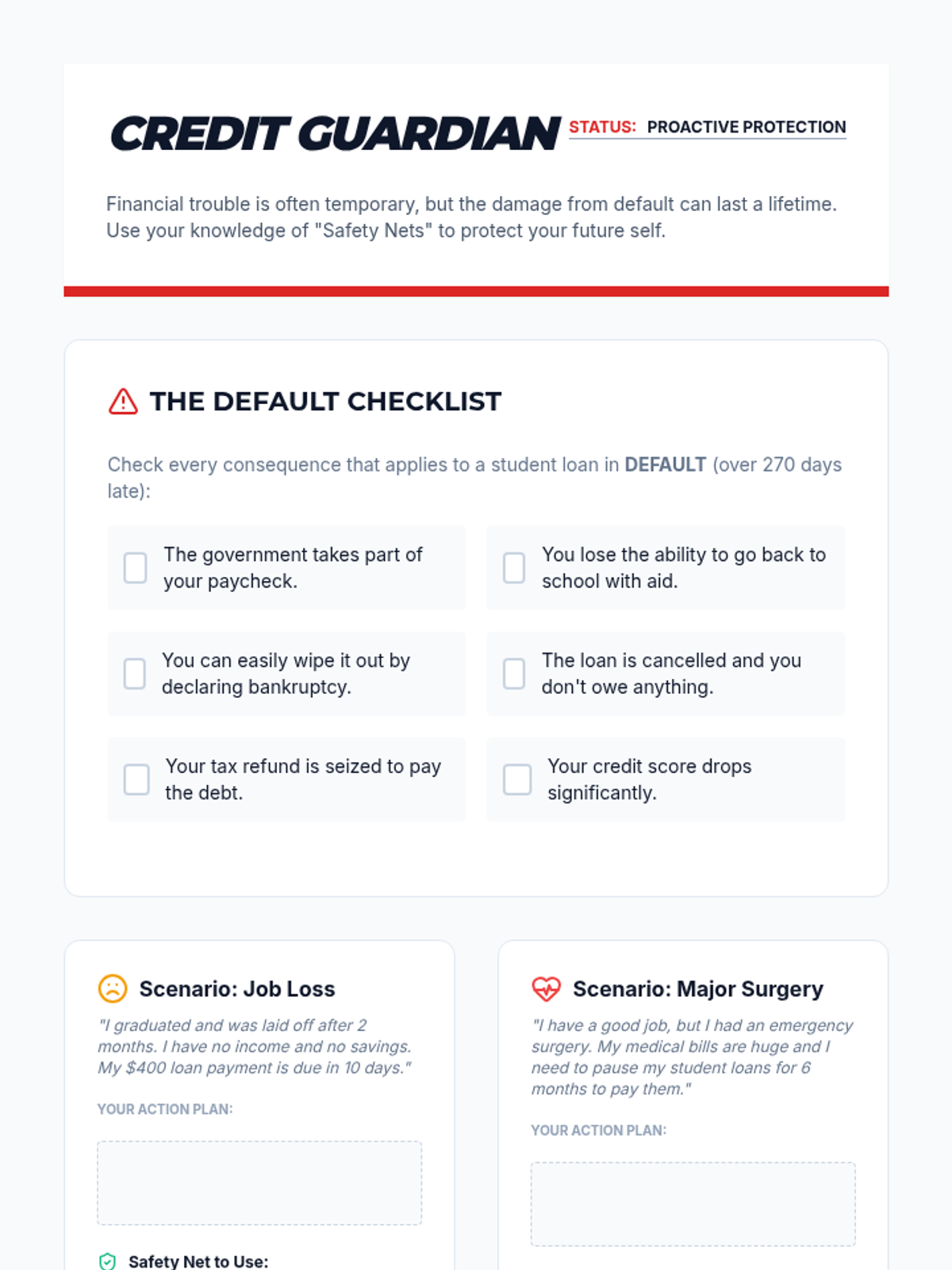
Students examine the consequences of failing to repay student loans, including wage garnishment and credit score damage. They learn about deferment and forbearance as temporary safety nets.
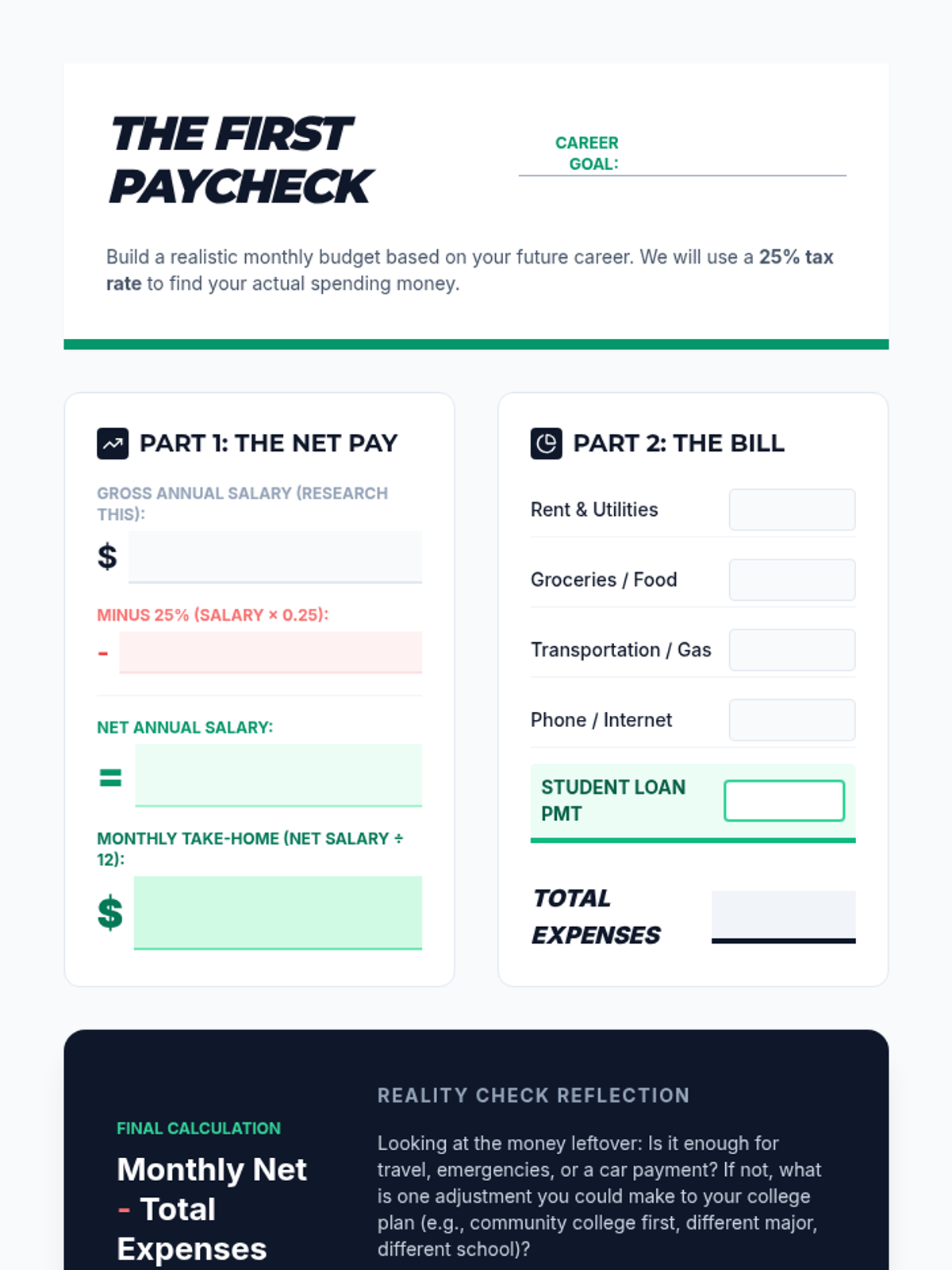
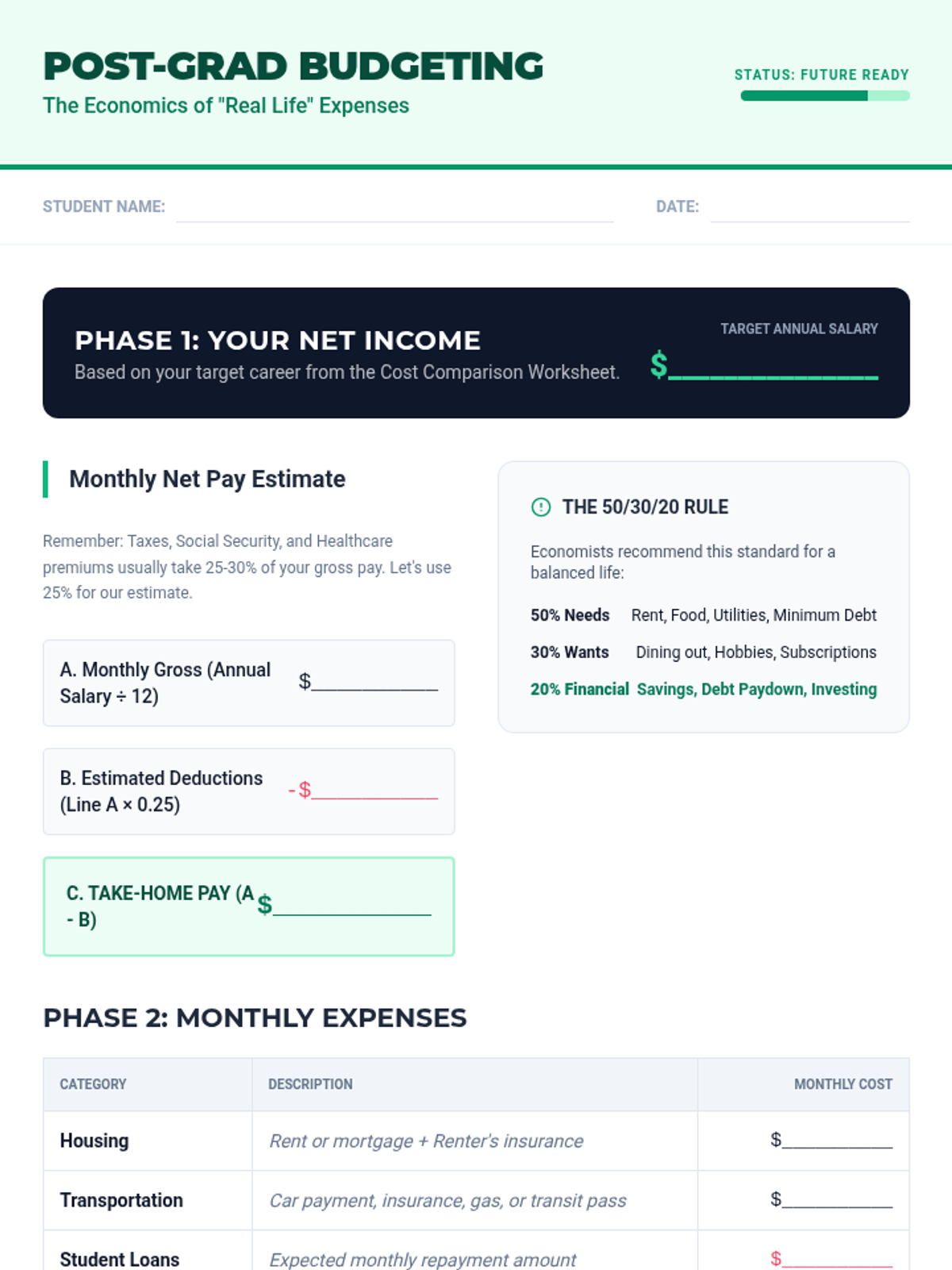
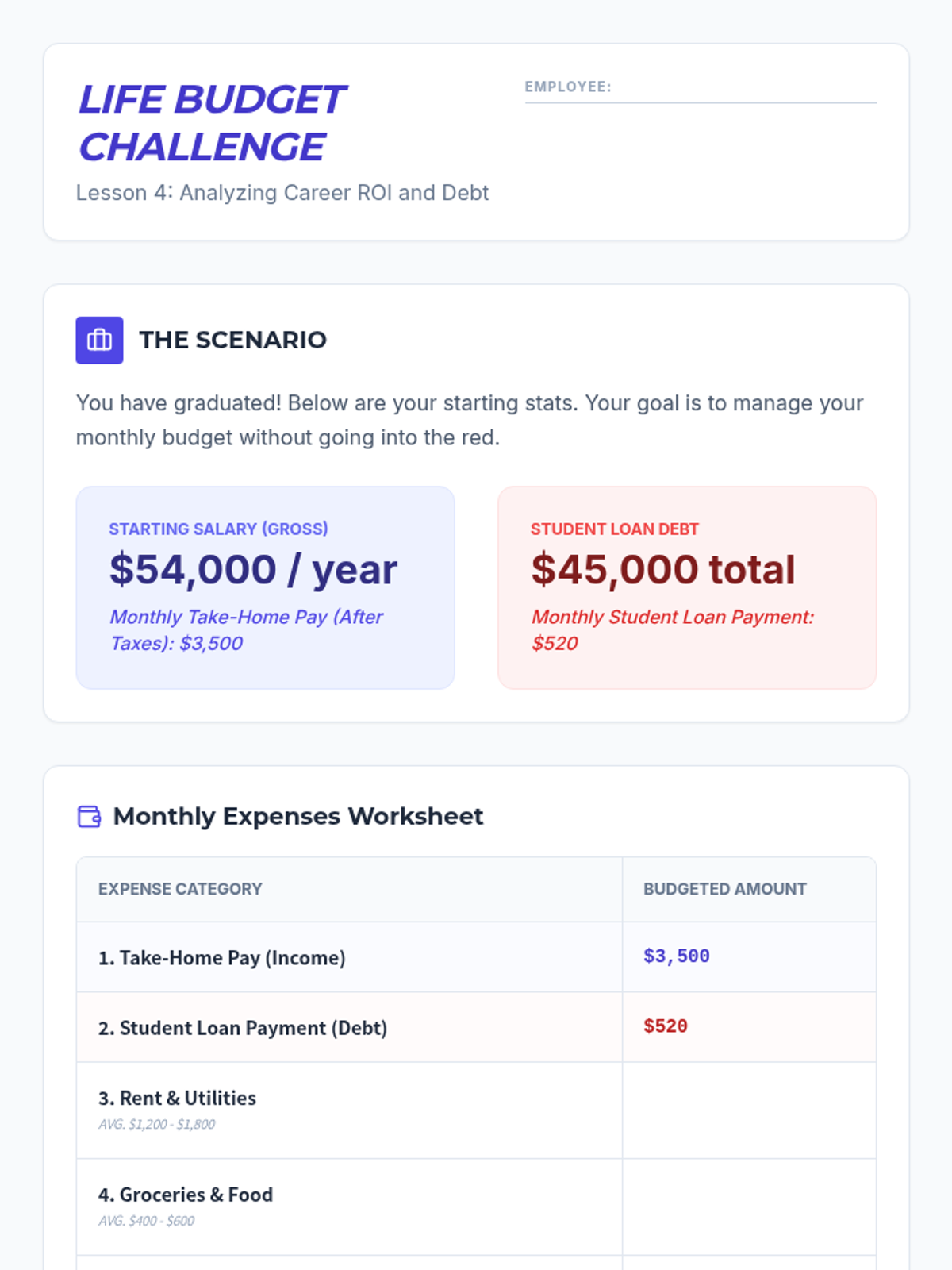
Students integrate student loan payments into a realistic entry-level monthly budget. They research starting salaries for careers of interest and subtract taxes and living expenses to see if the loan payments are affordable.
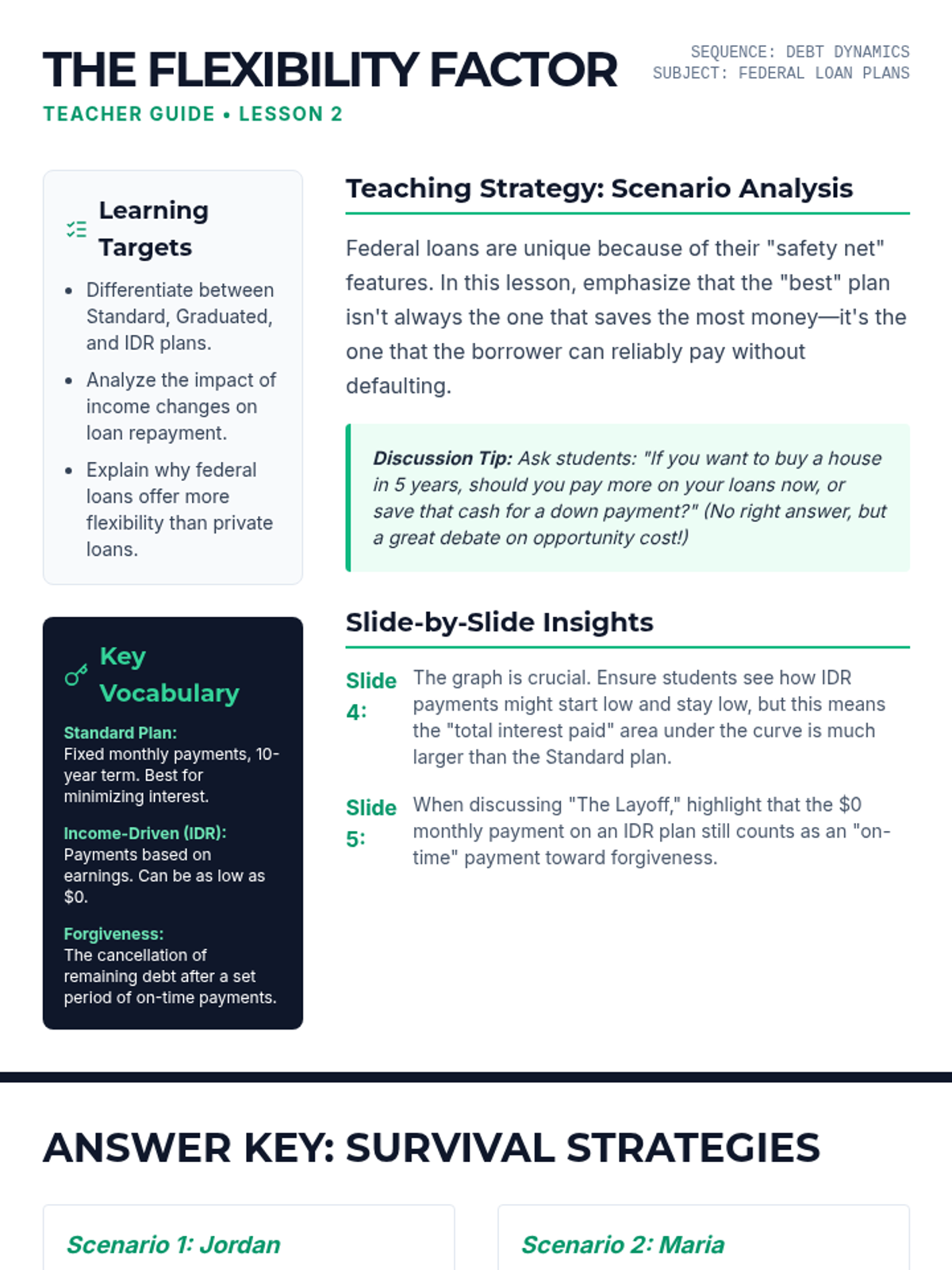
This lesson details various federal loan repayment options (Standard, Graduated, Income-Driven) and helps students determine when to prioritize lower monthly payments over long-term savings.
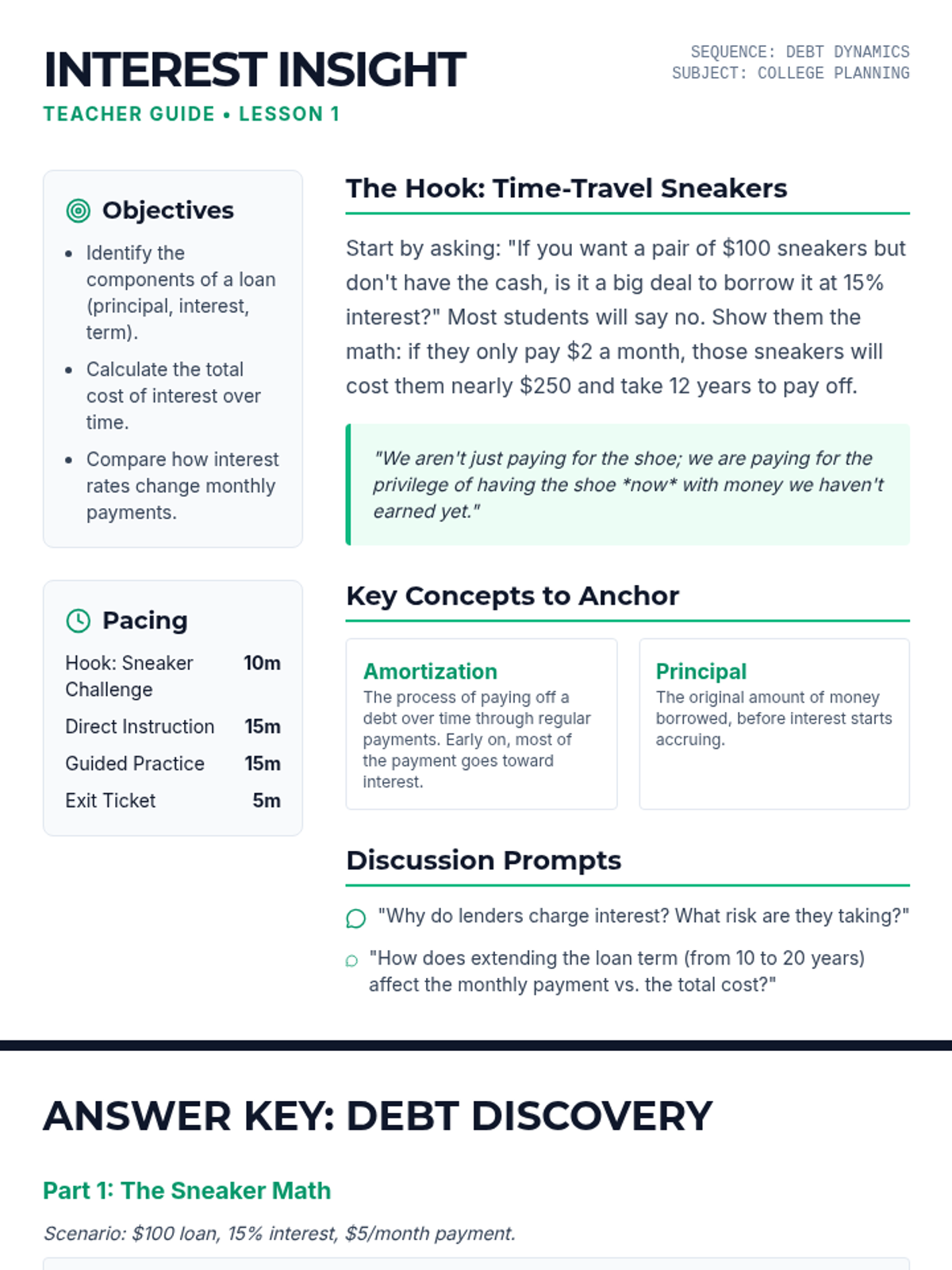
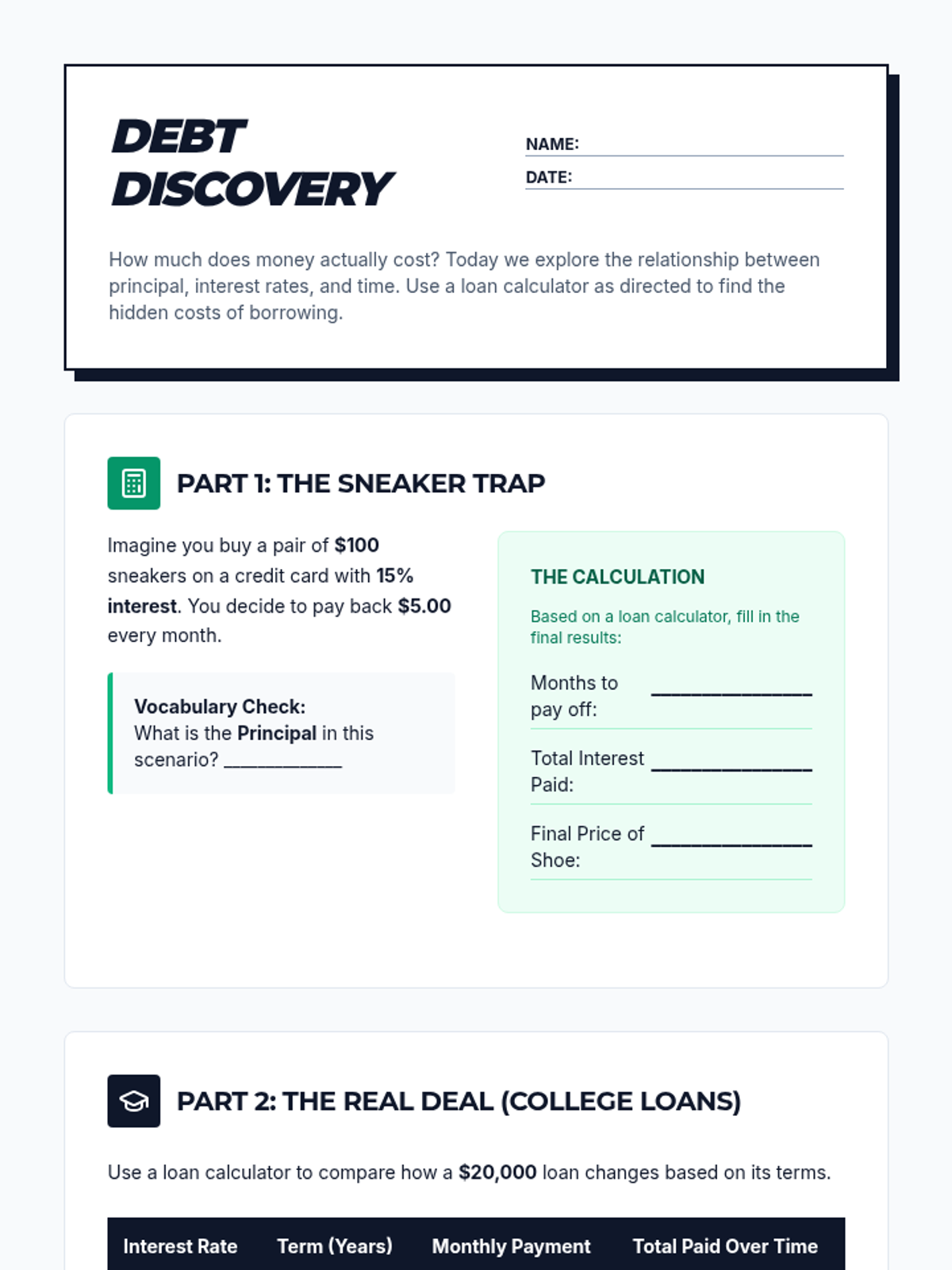
Students use loan calculators to understand how interest rates and loan terms affect the total cost of borrowing, introducing the concept of amortization.
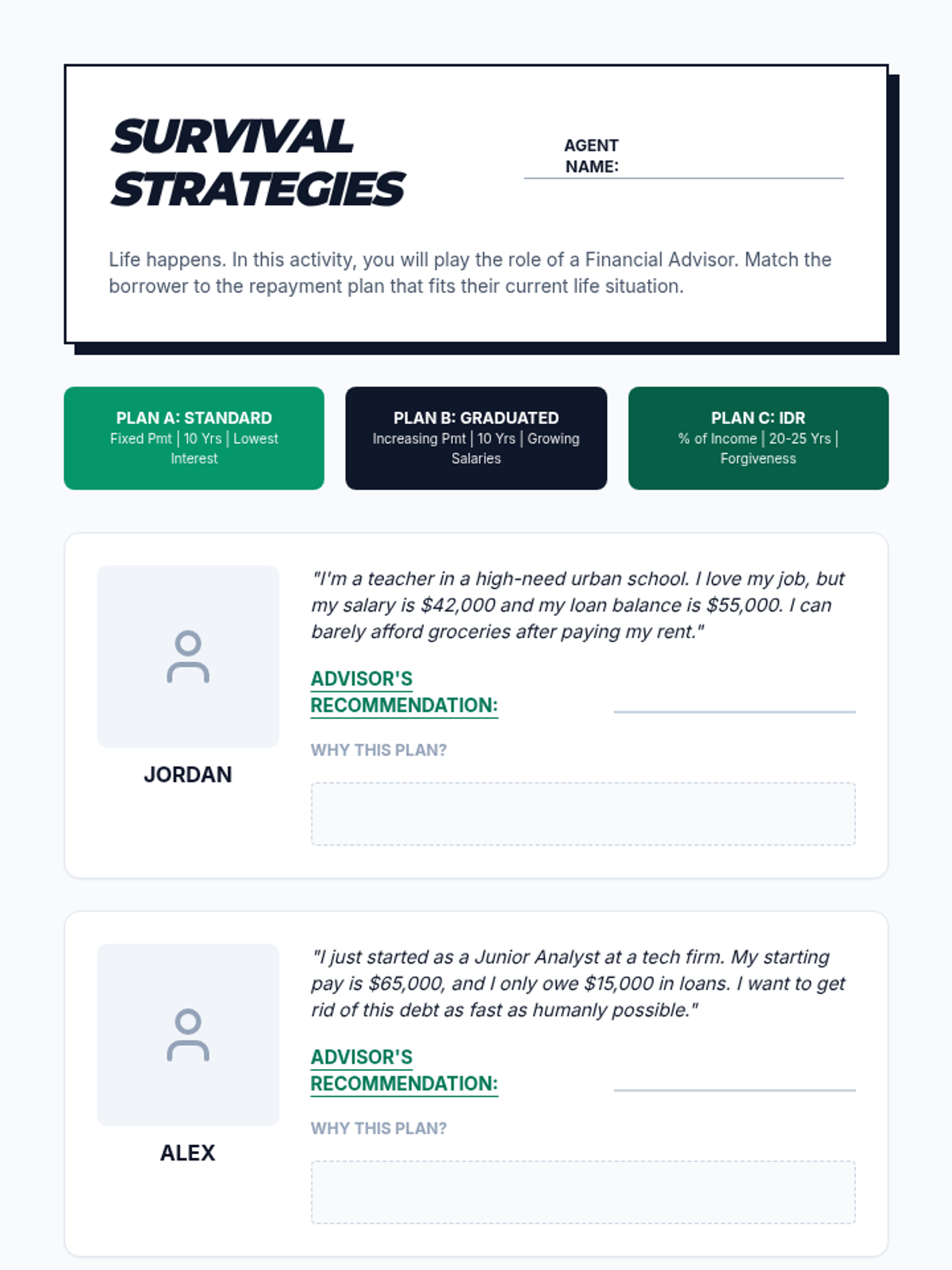
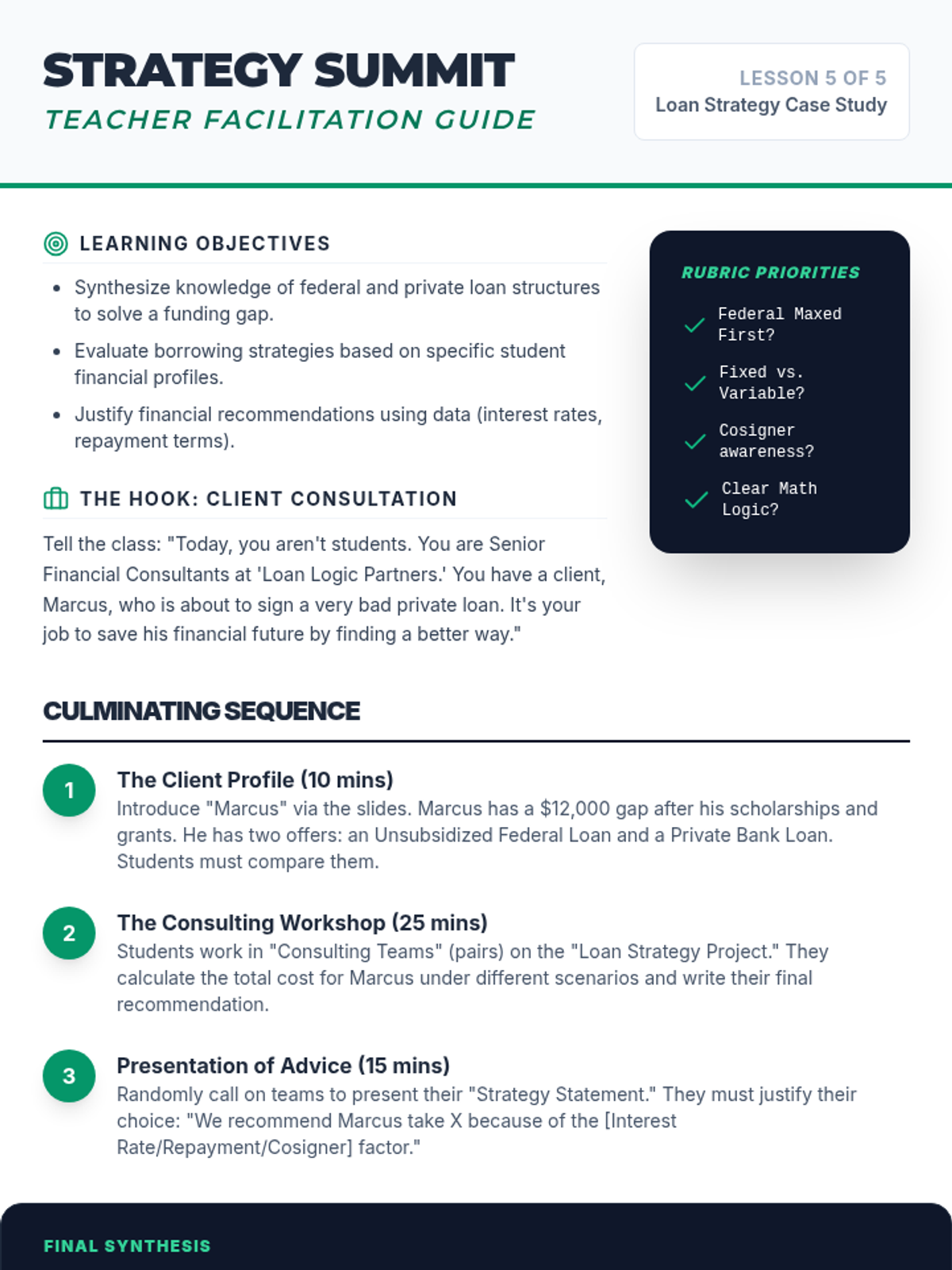
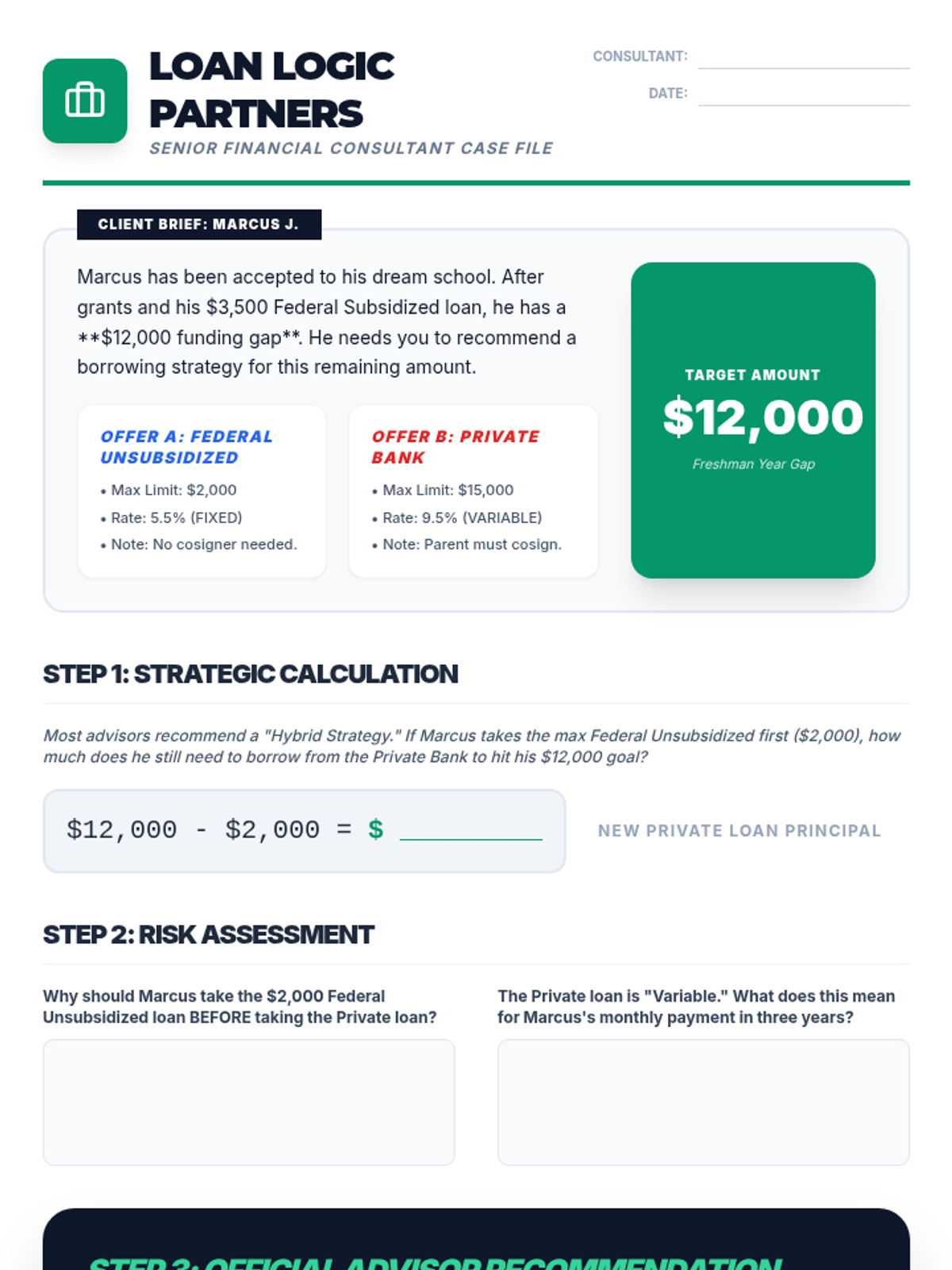
Students act as financial advisors for fictional high school seniors, recommending a mix of federal and private loans based on specific profiles.
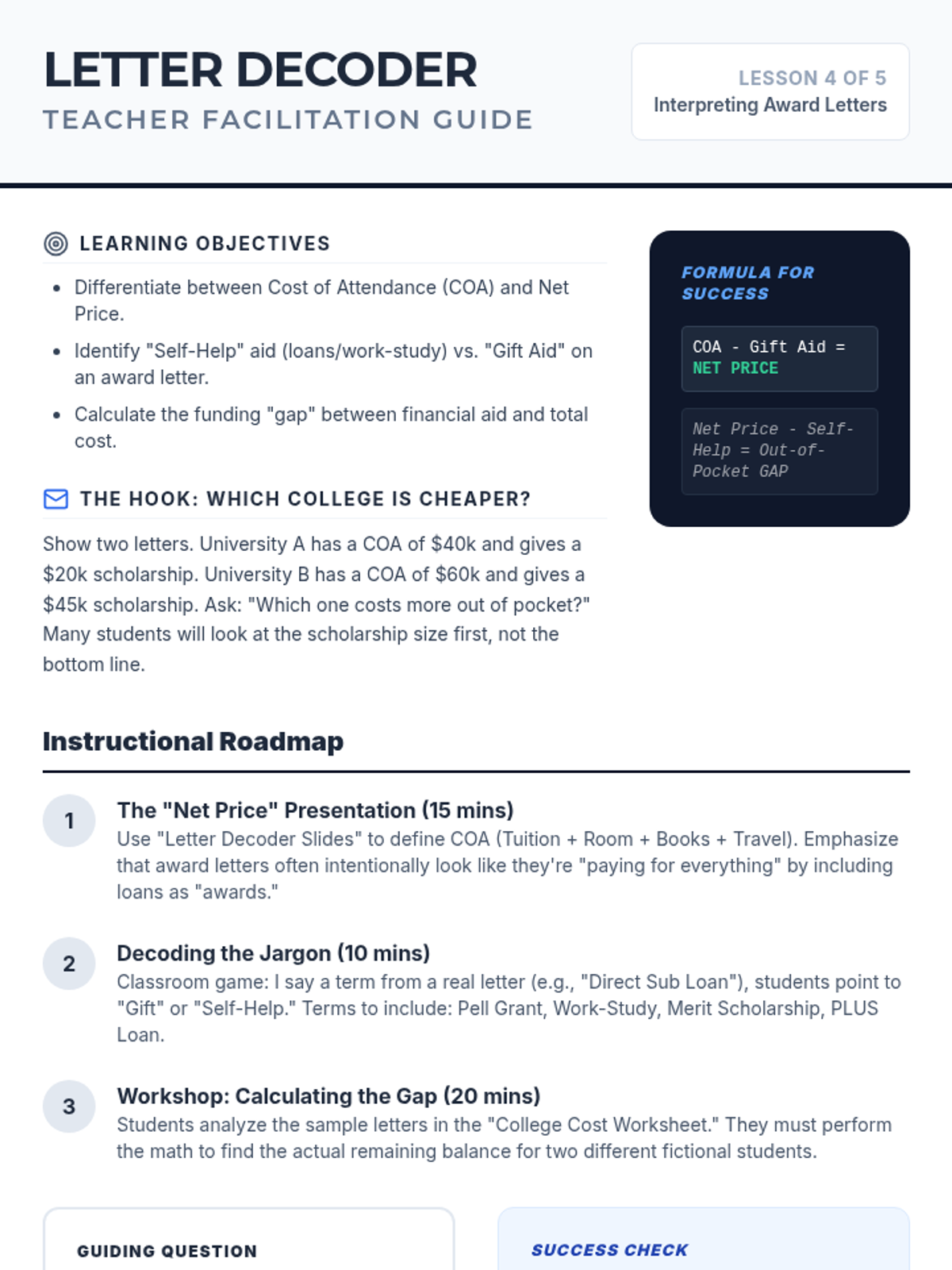
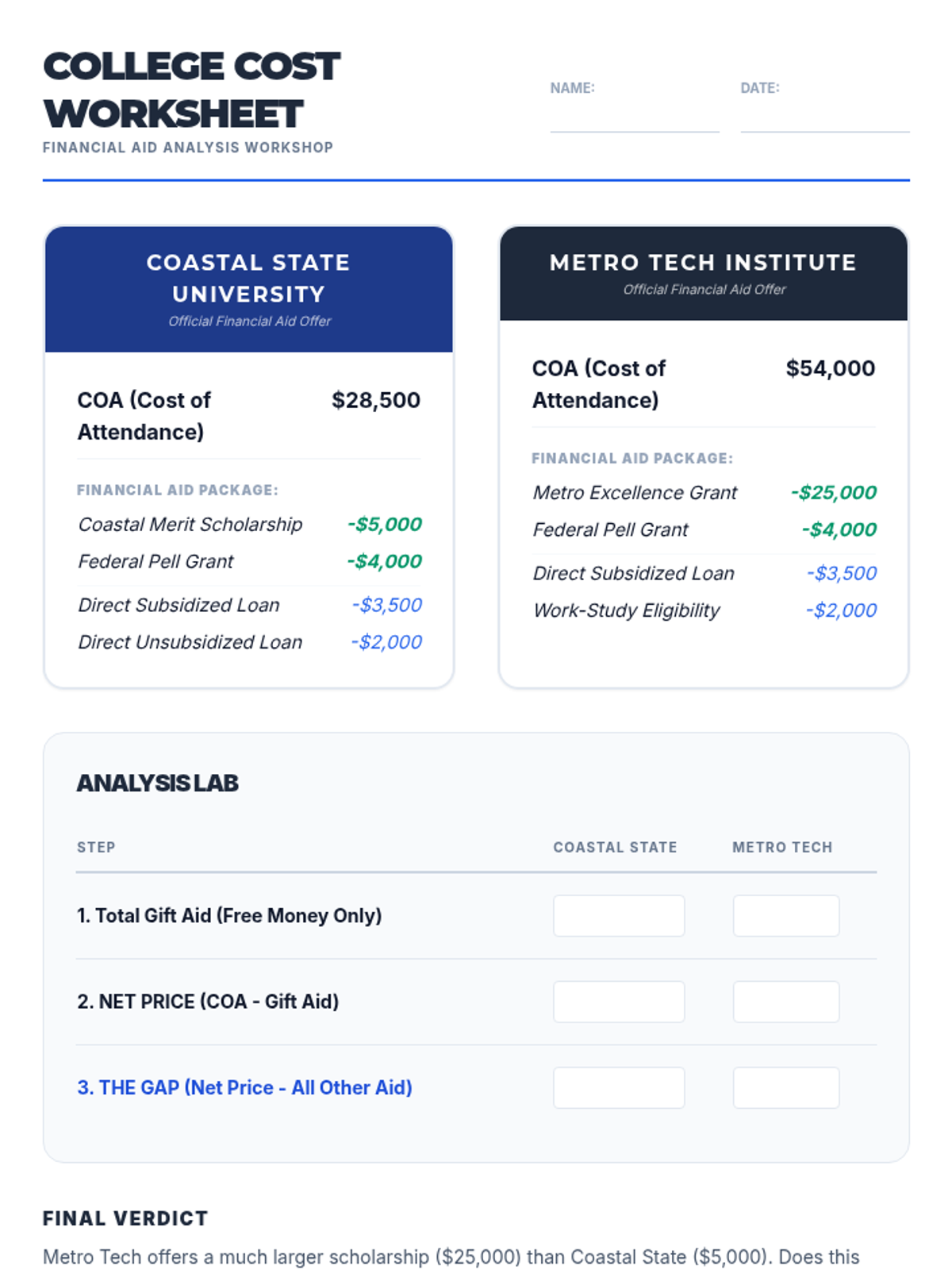
Using sample award letters, students practice identifying the 'net price' and separating loans from grants to determine the true cost of attendance.
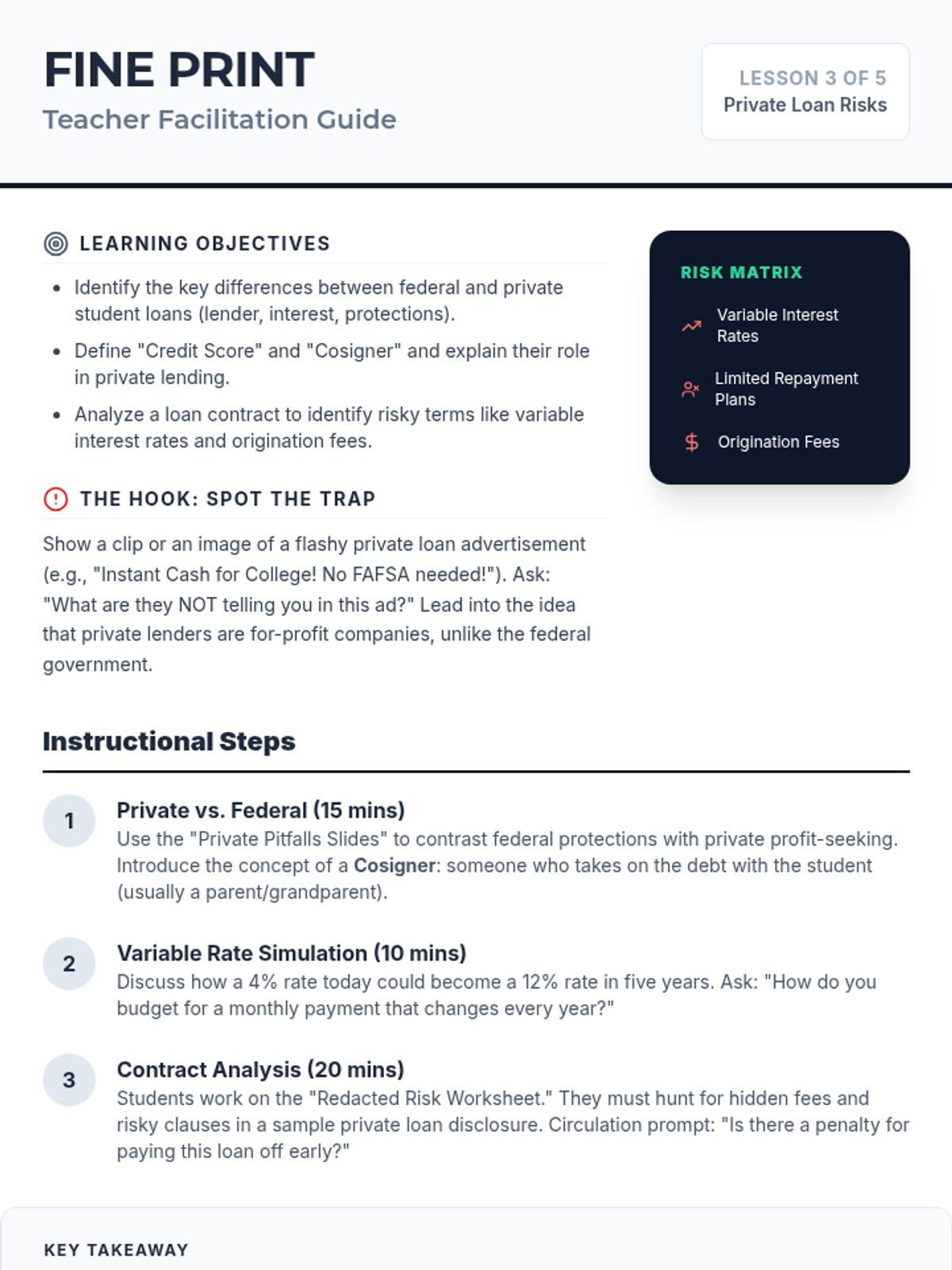
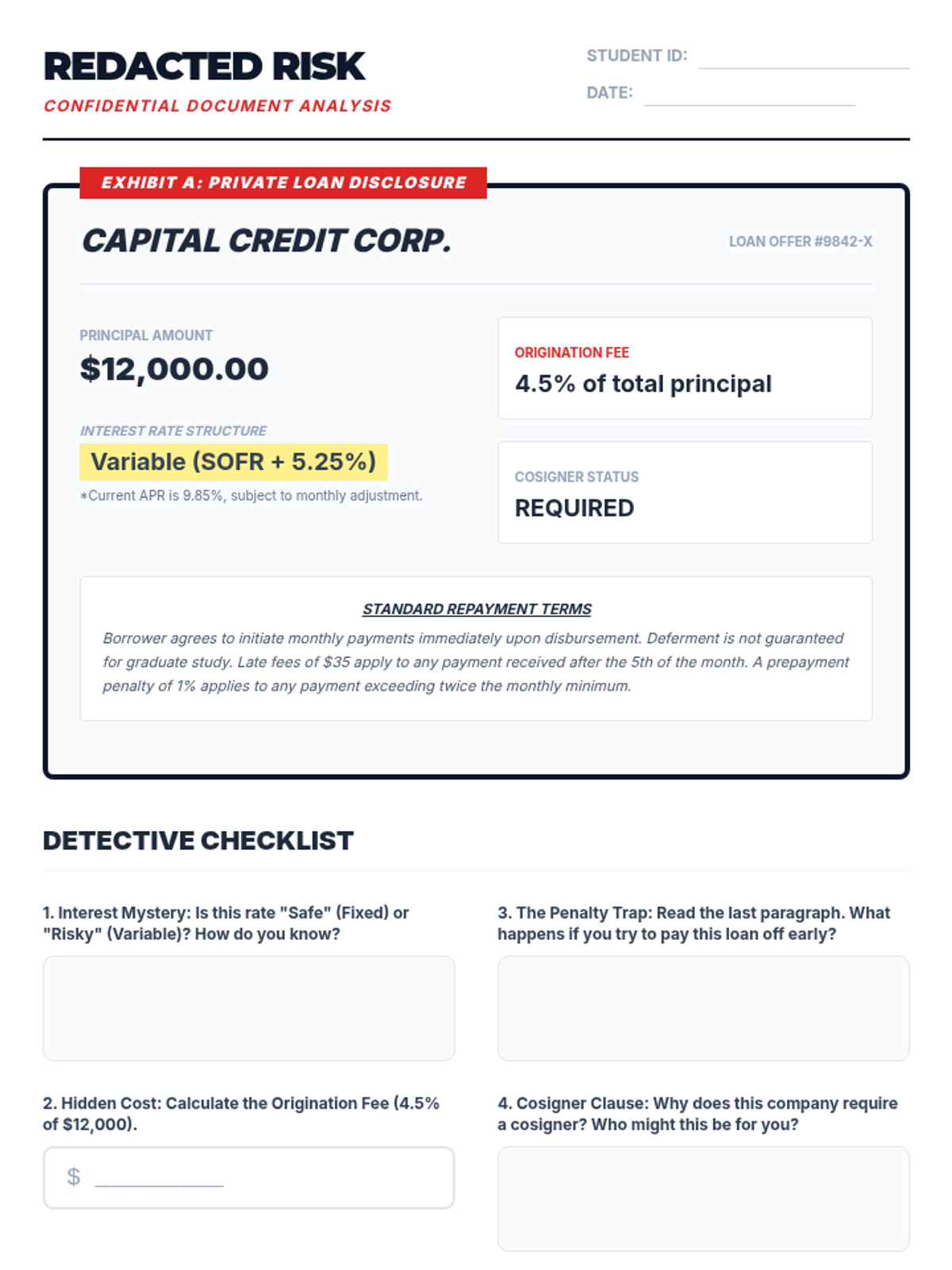
Students investigate the landscape of private student loans, examining the role of credit scores, cosigners, and variable versus fixed interest rates.
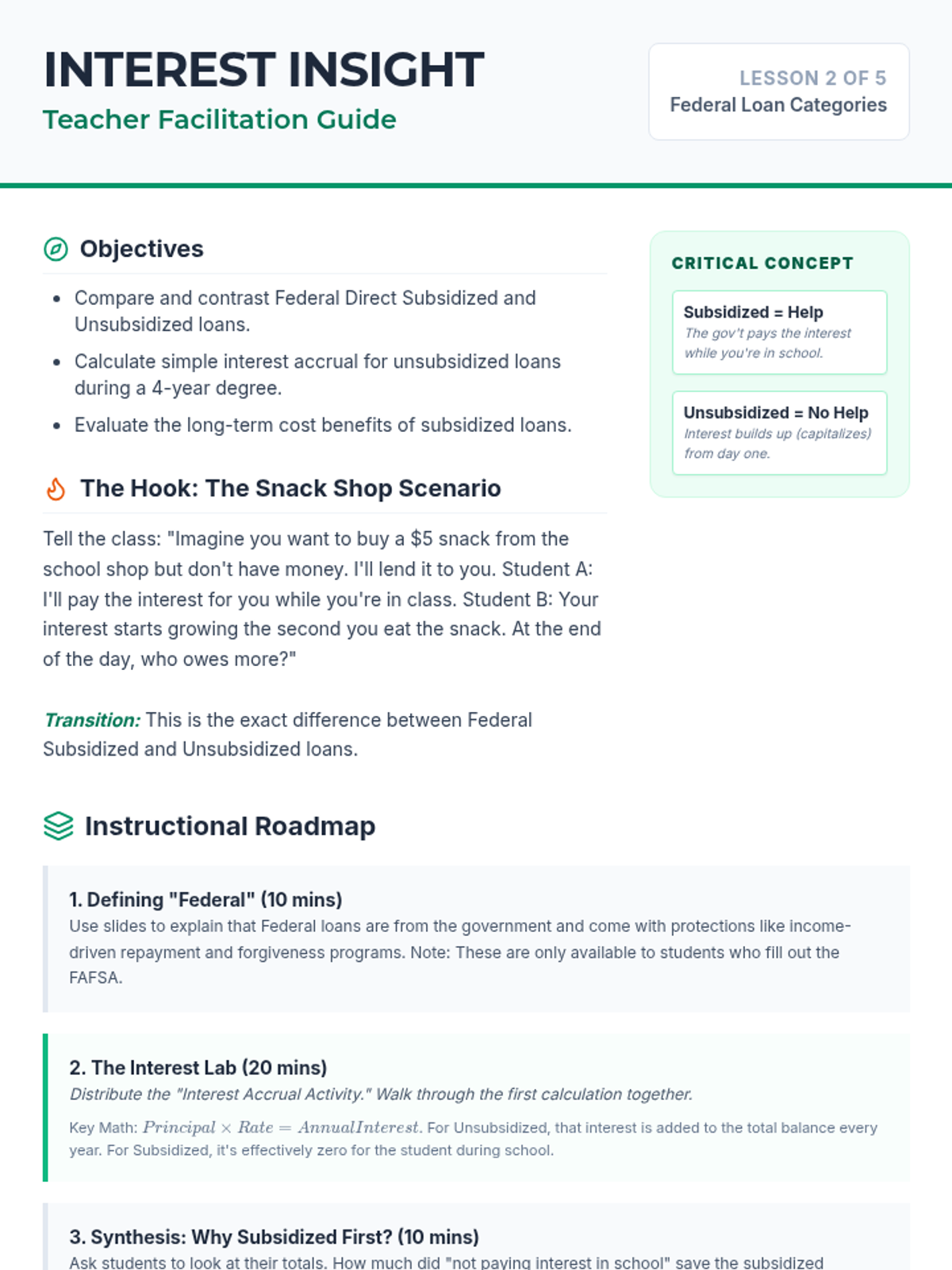
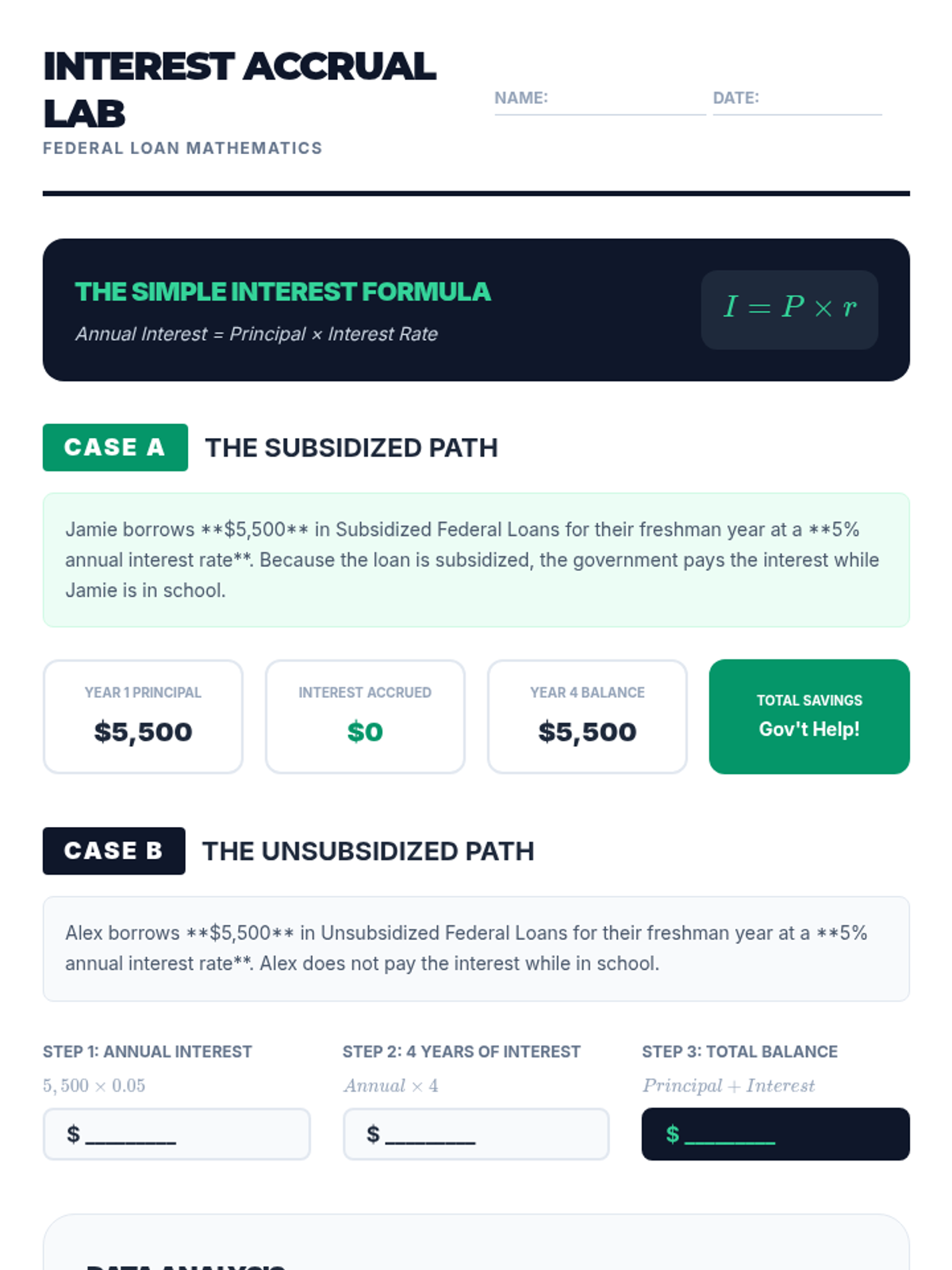
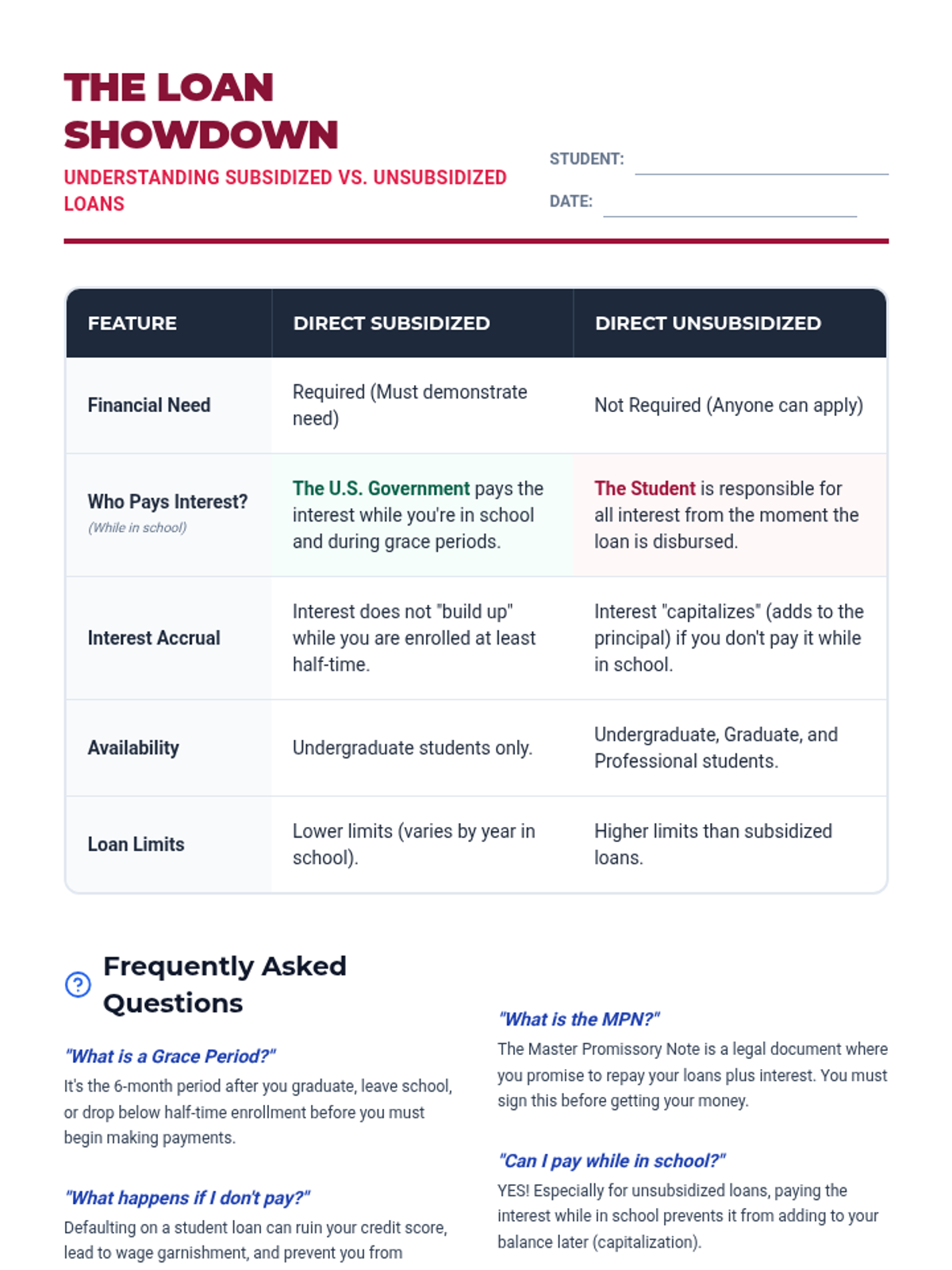
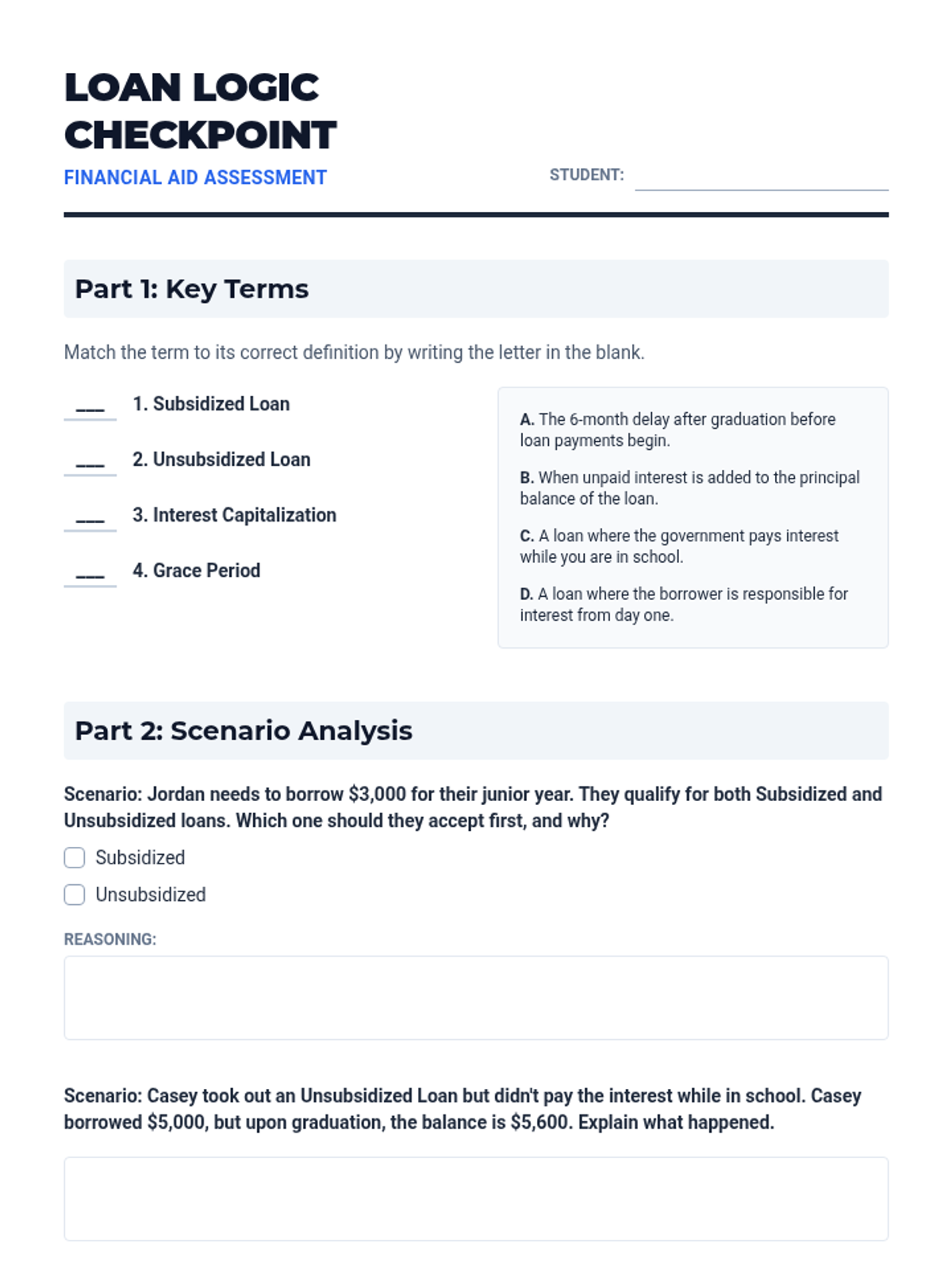
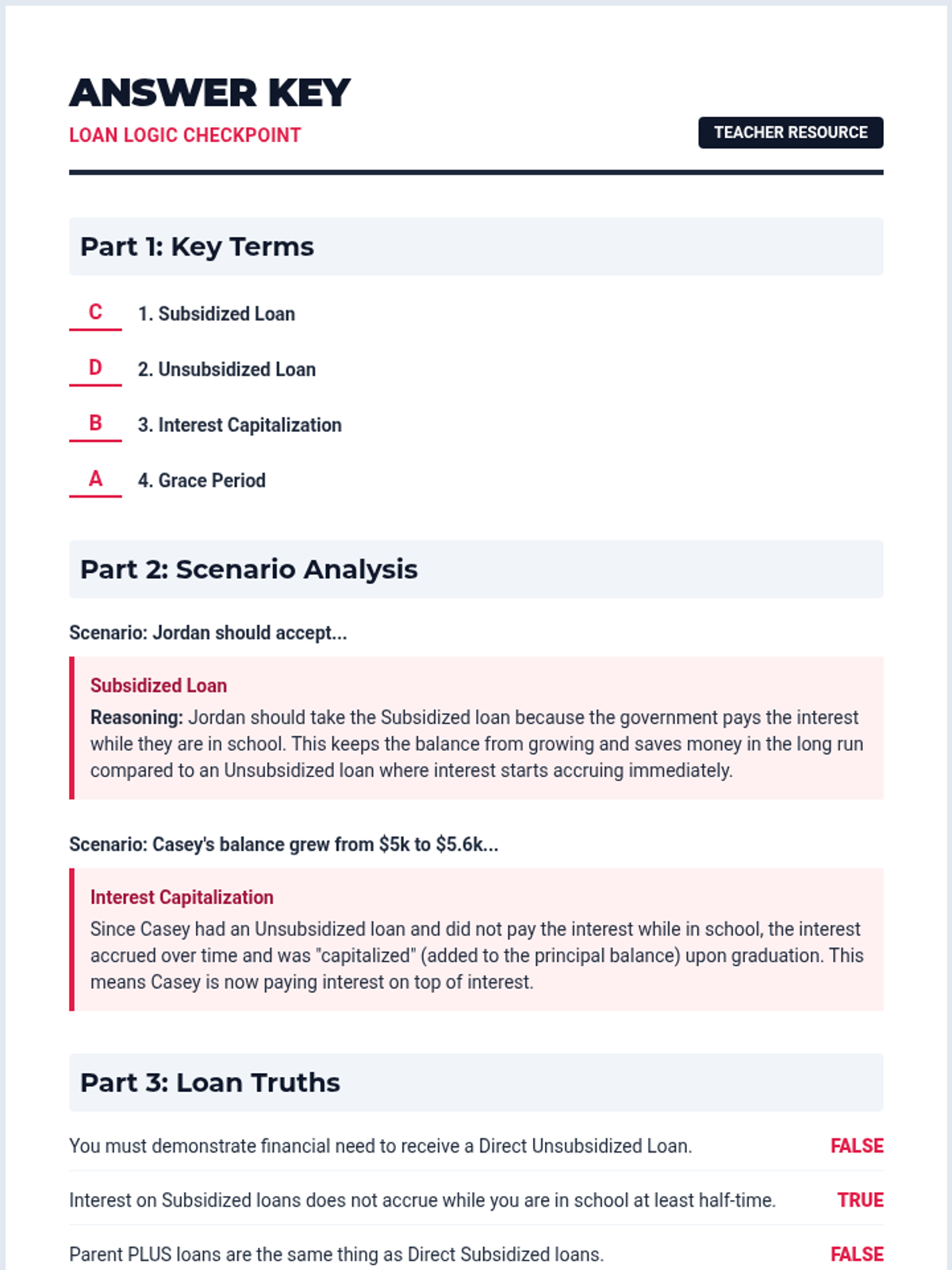
This lesson focuses on the Federal Direct Loan program, clarifying the difference between Subsidized and Unsubsidized loans and calculating interest accrual.
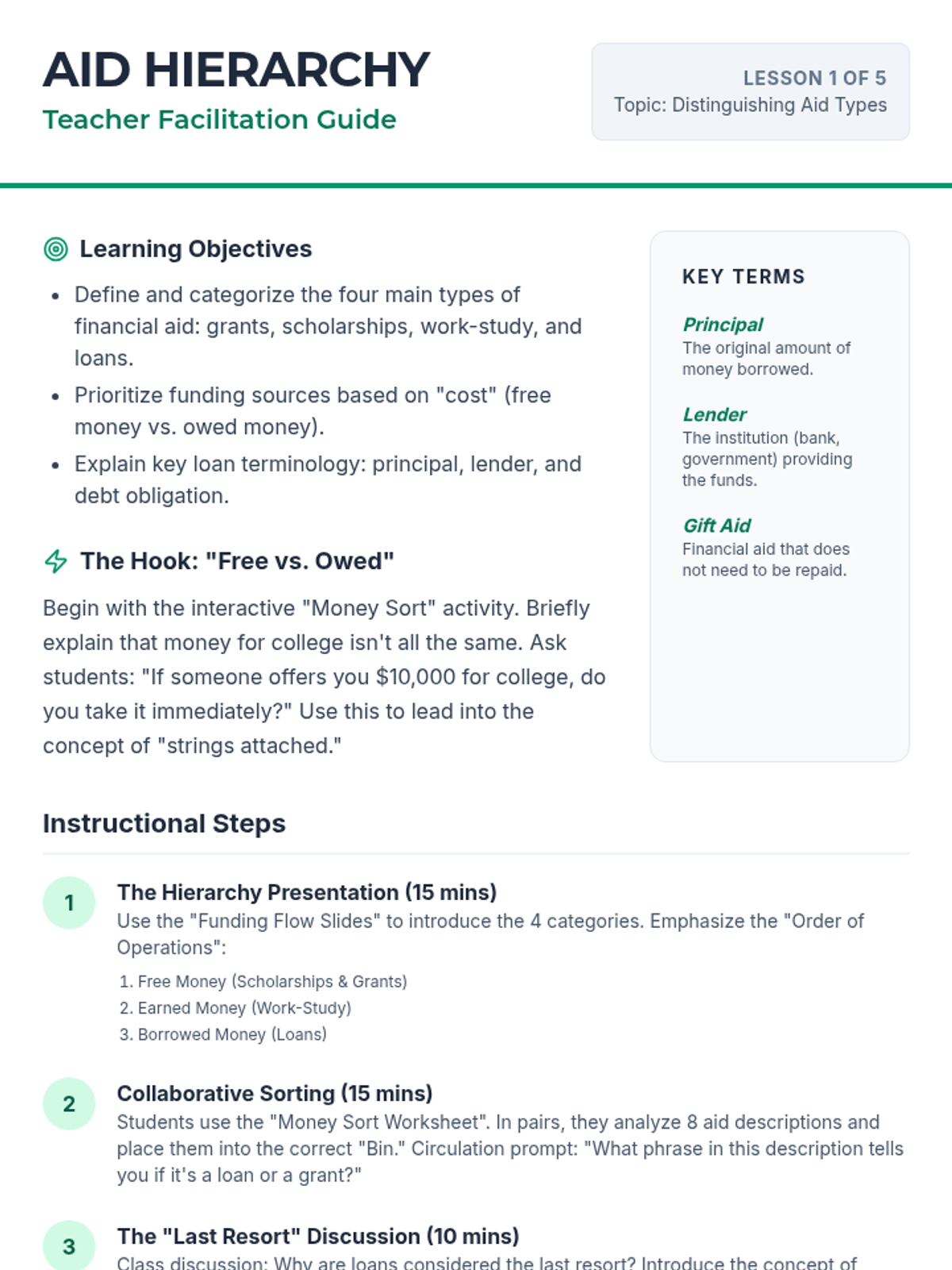
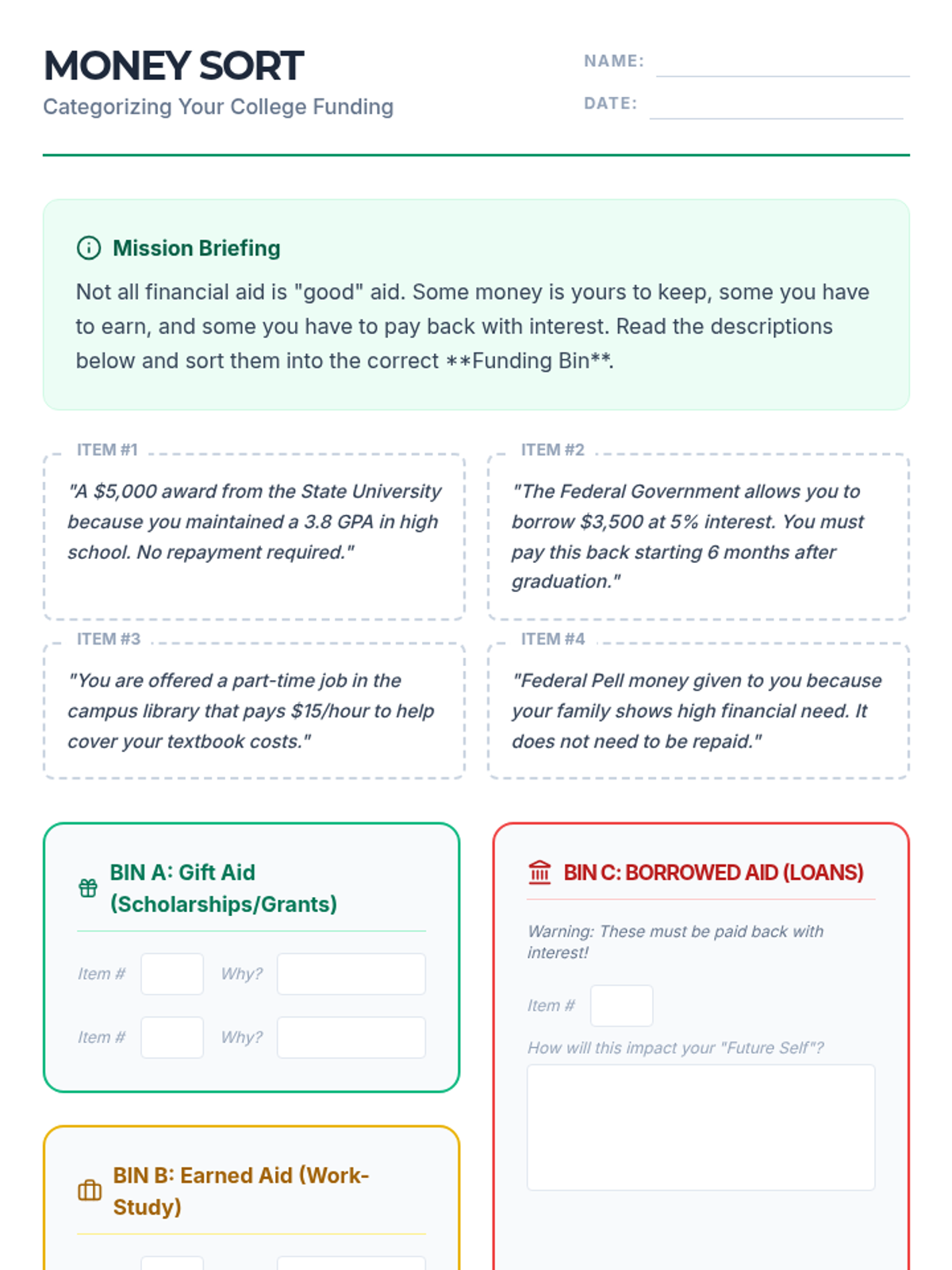
Students explore the hierarchy of funding higher education, categorizing grants, scholarships, work-study, and loans. They analyze why loans should be the last resort and define key terminology.
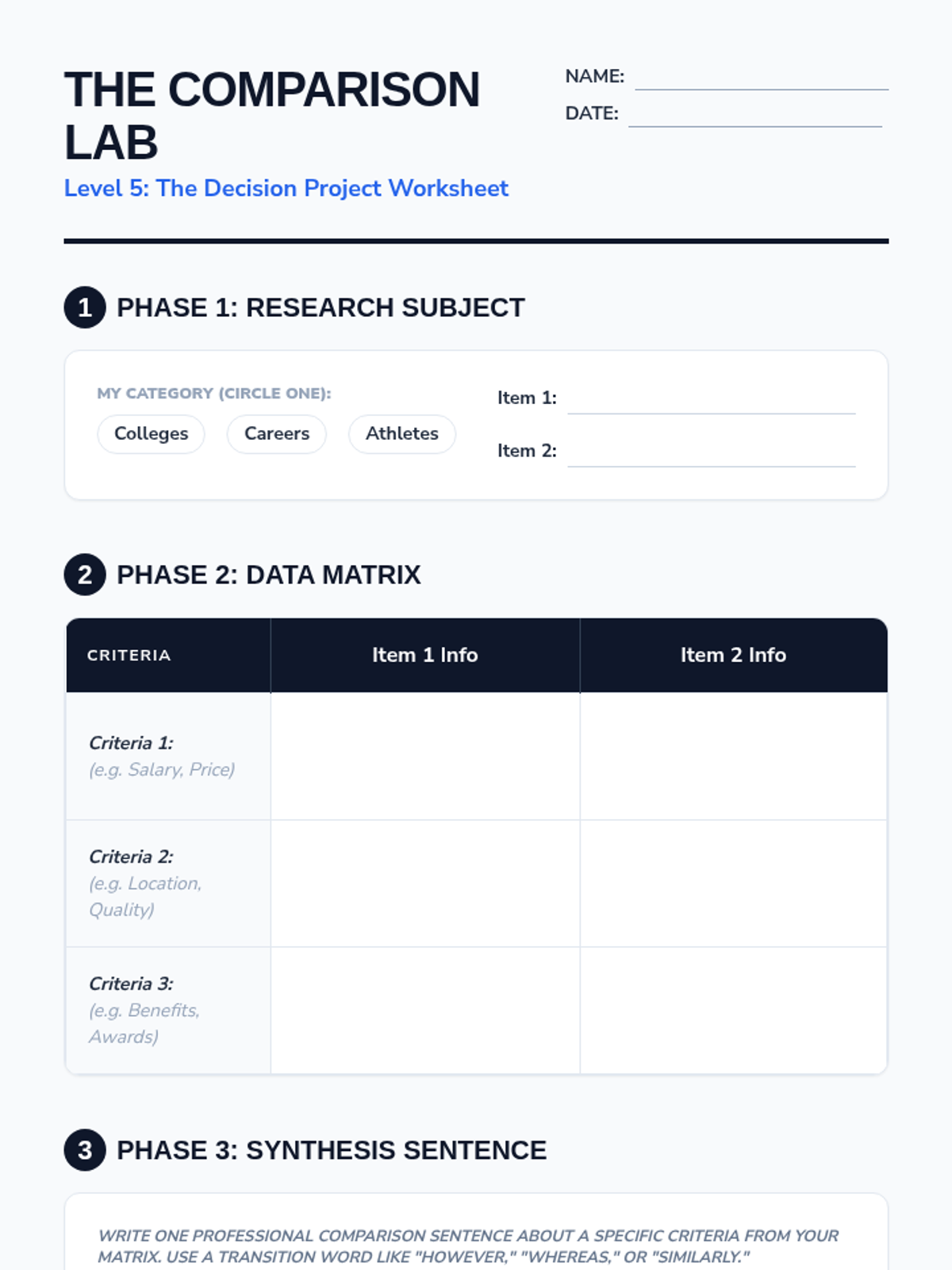
A project-based finale where students research two topics of interest (colleges, careers, or athletes), create a comparison matrix, and present a data-backed recommendation.
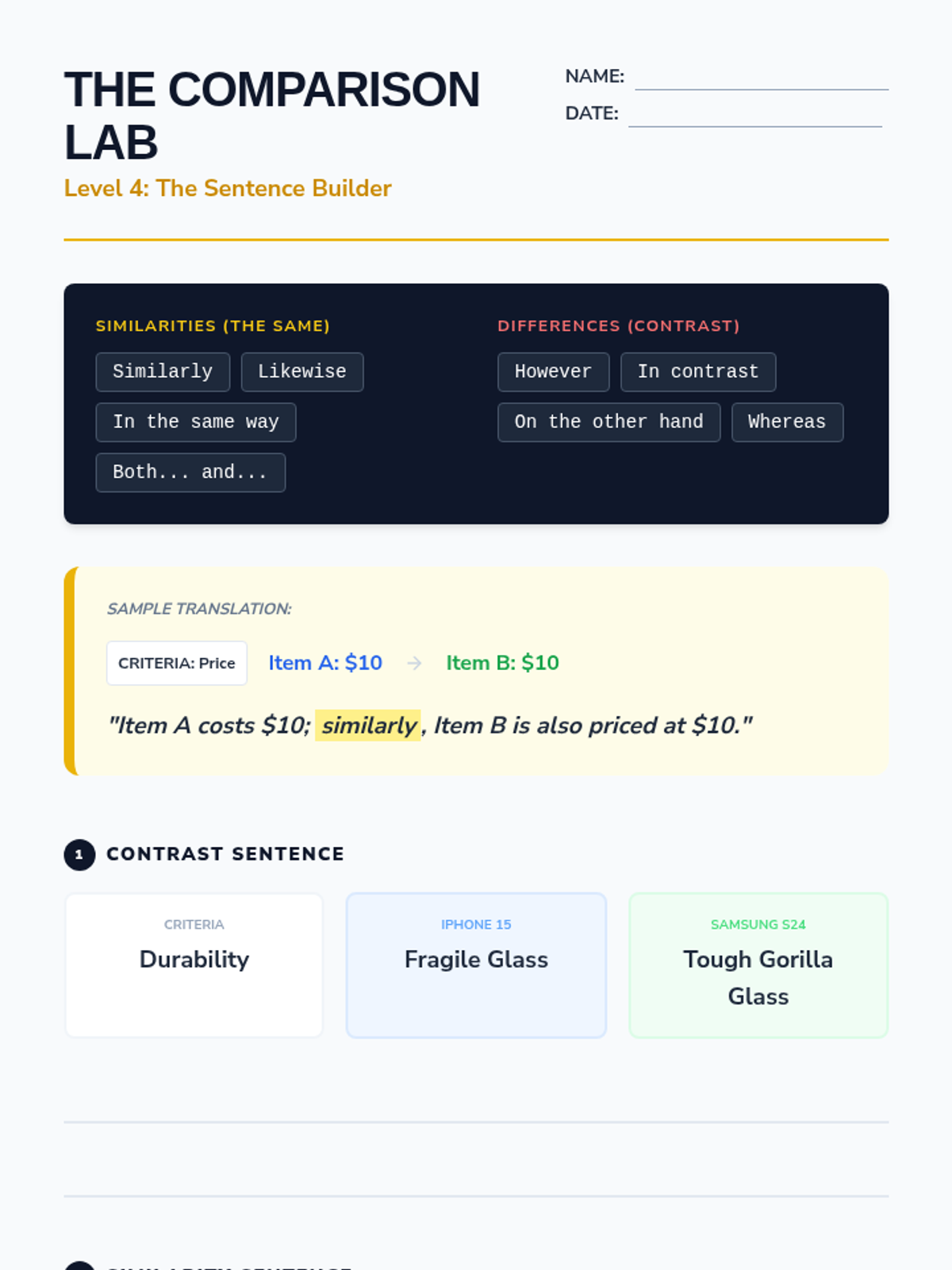
Bridging the gap between visual organizers and formal writing. Students learn to use transition words to turn matrix rows into sophisticated comparative sentences and paragraphs.
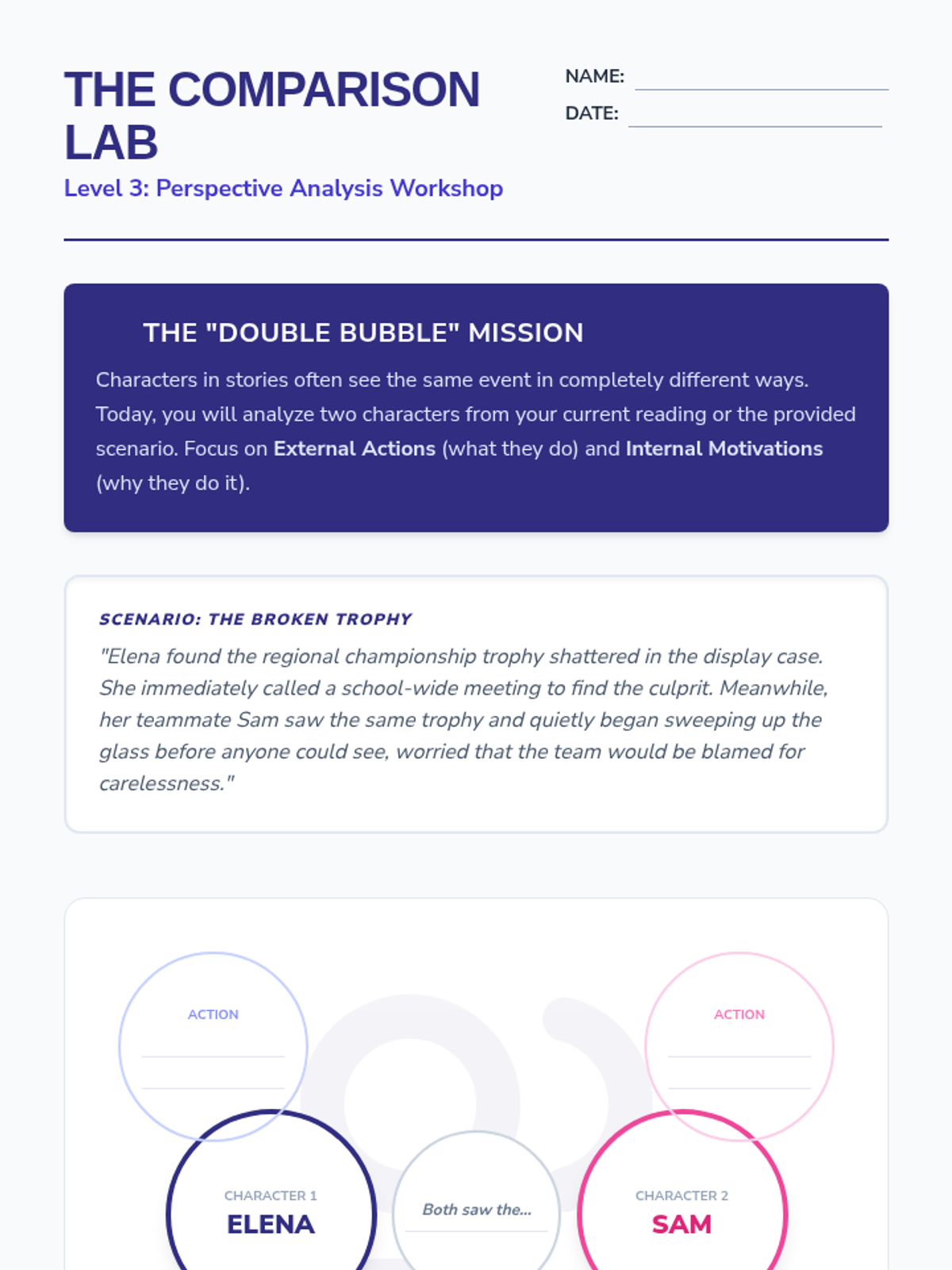
Applying comparative organizers to literary analysis. Students use Double Bubble maps to contrast character motivations and perspectives in fiction or conflicting accounts of the same event.
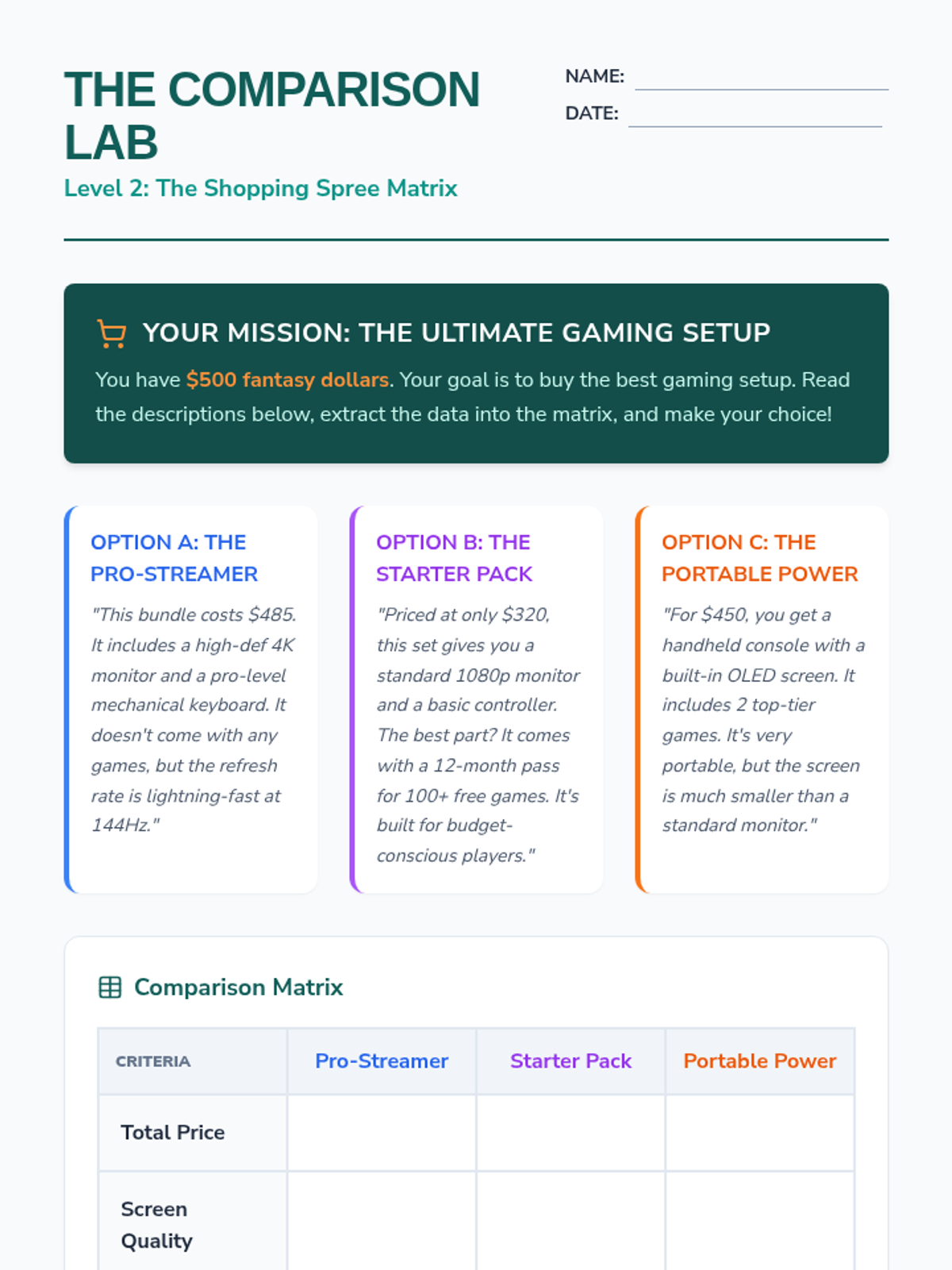
Introduction to the comparison matrix (grid) for managing large amounts of data across multiple items. Students learn to extract information from text and organize it into a structured grid to facilitate quick analysis.
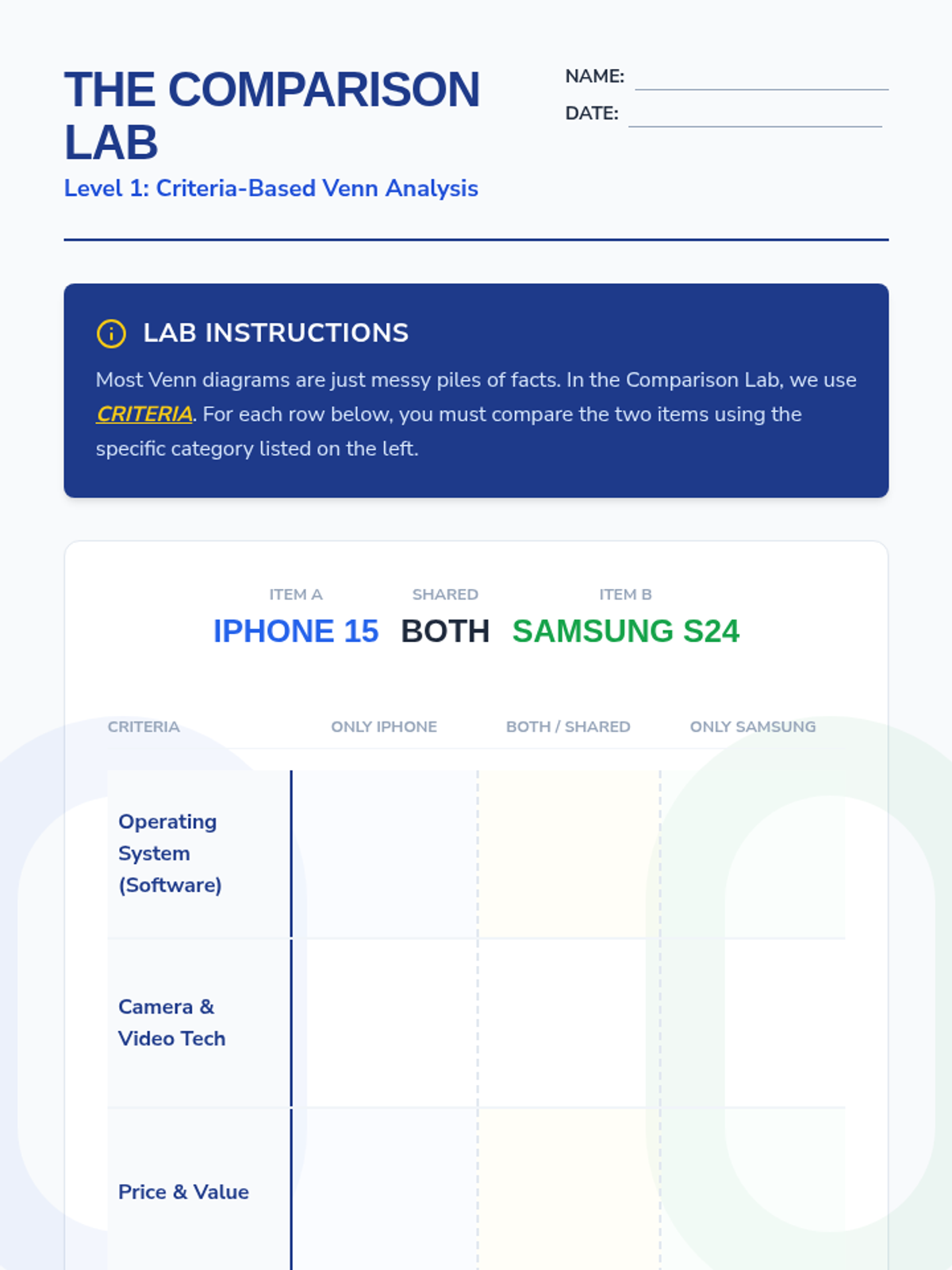
Students evolve their understanding of Venn diagrams by introducing specific 'criteria' for comparison. Using products like smartphones or consoles, they learn to categorize similarities and differences based on objective measures.
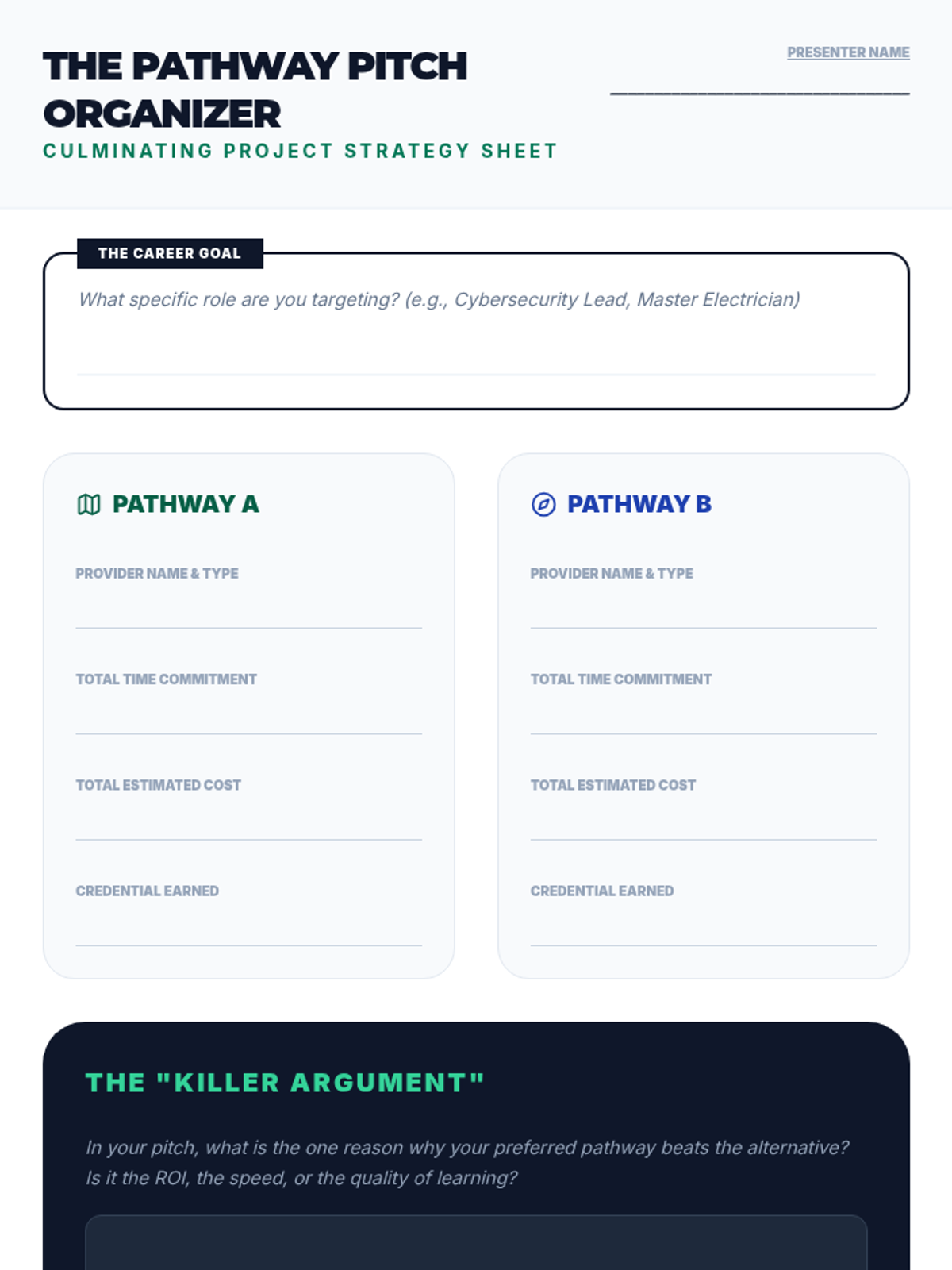
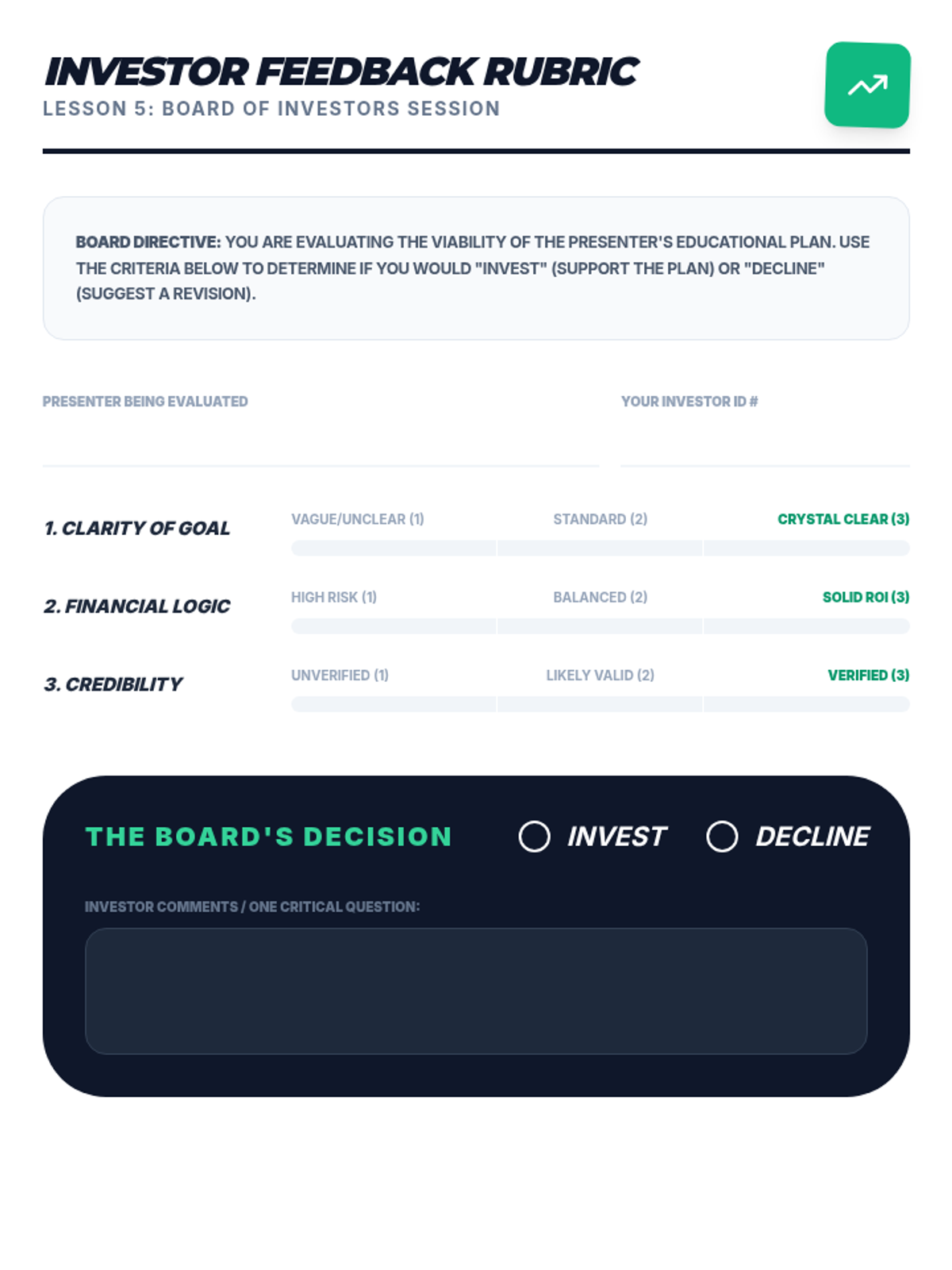
In this culminating lesson, students select a career goal and present a comparative analysis of two distinct educational pathways to achieve it, pitching their plan to a 'Board of Investors'.
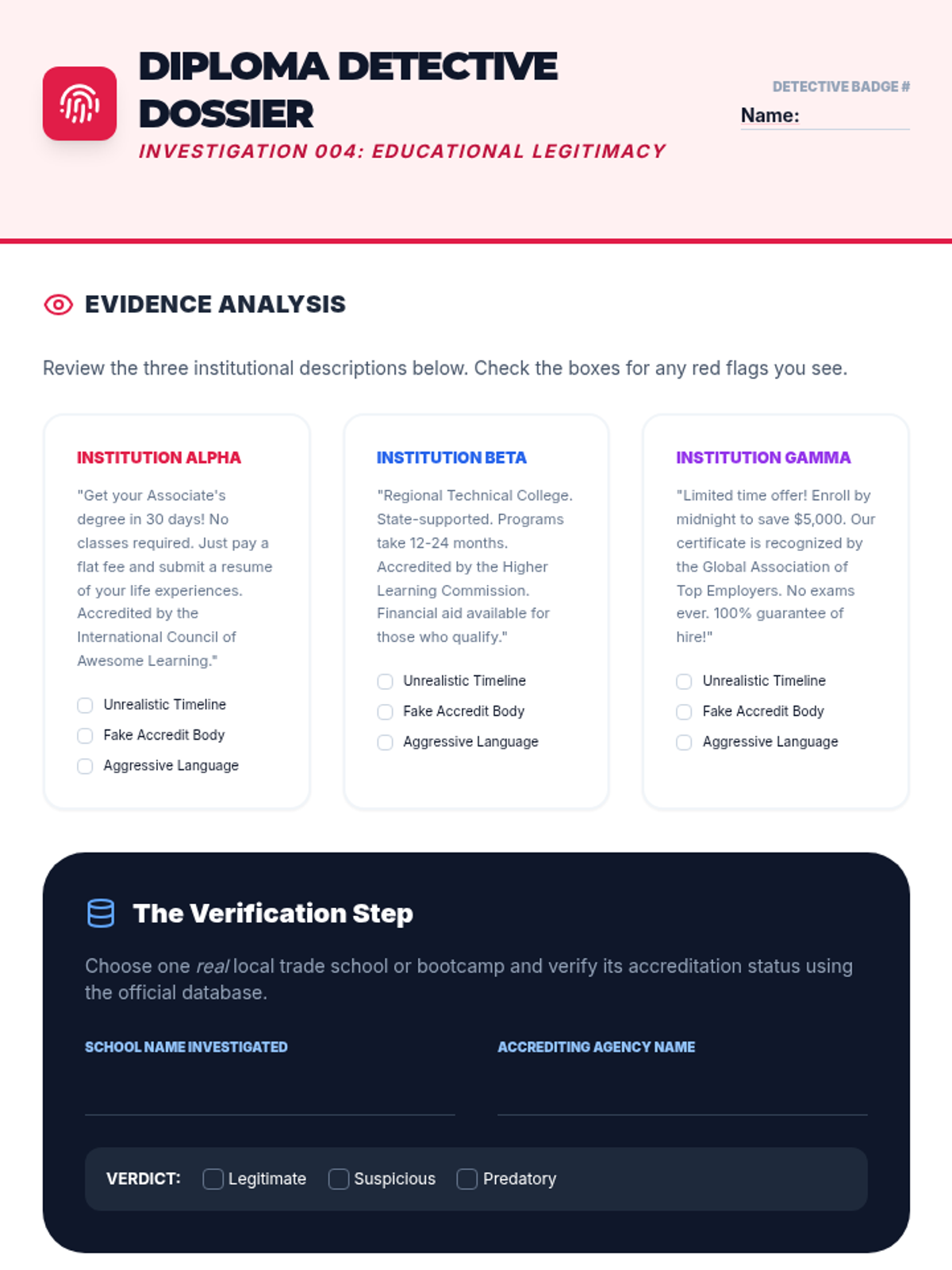
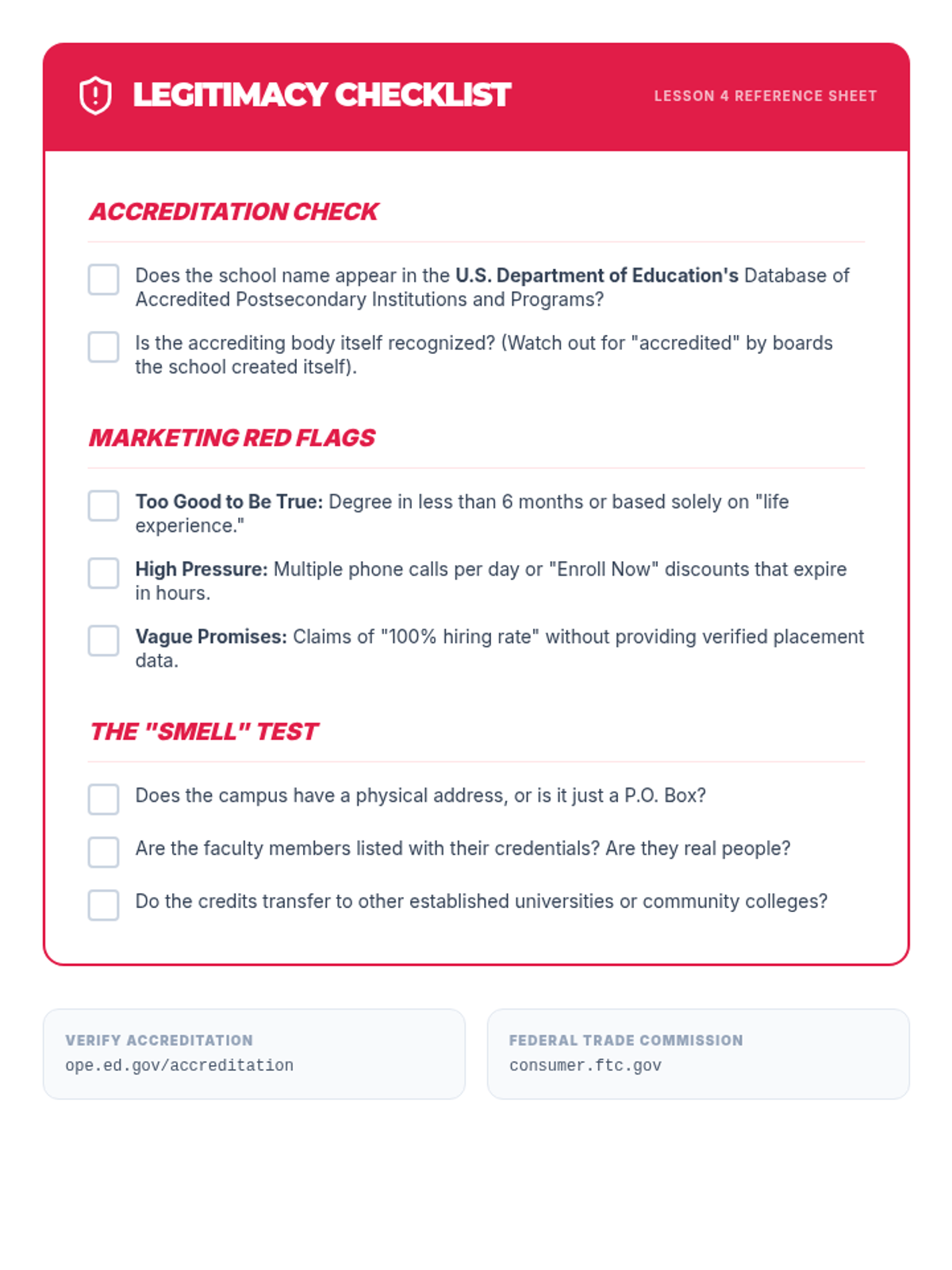
This lesson equips students with tools to verify the legitimacy of educational providers, check accreditation databases, and identify red flags in predatory marketing.
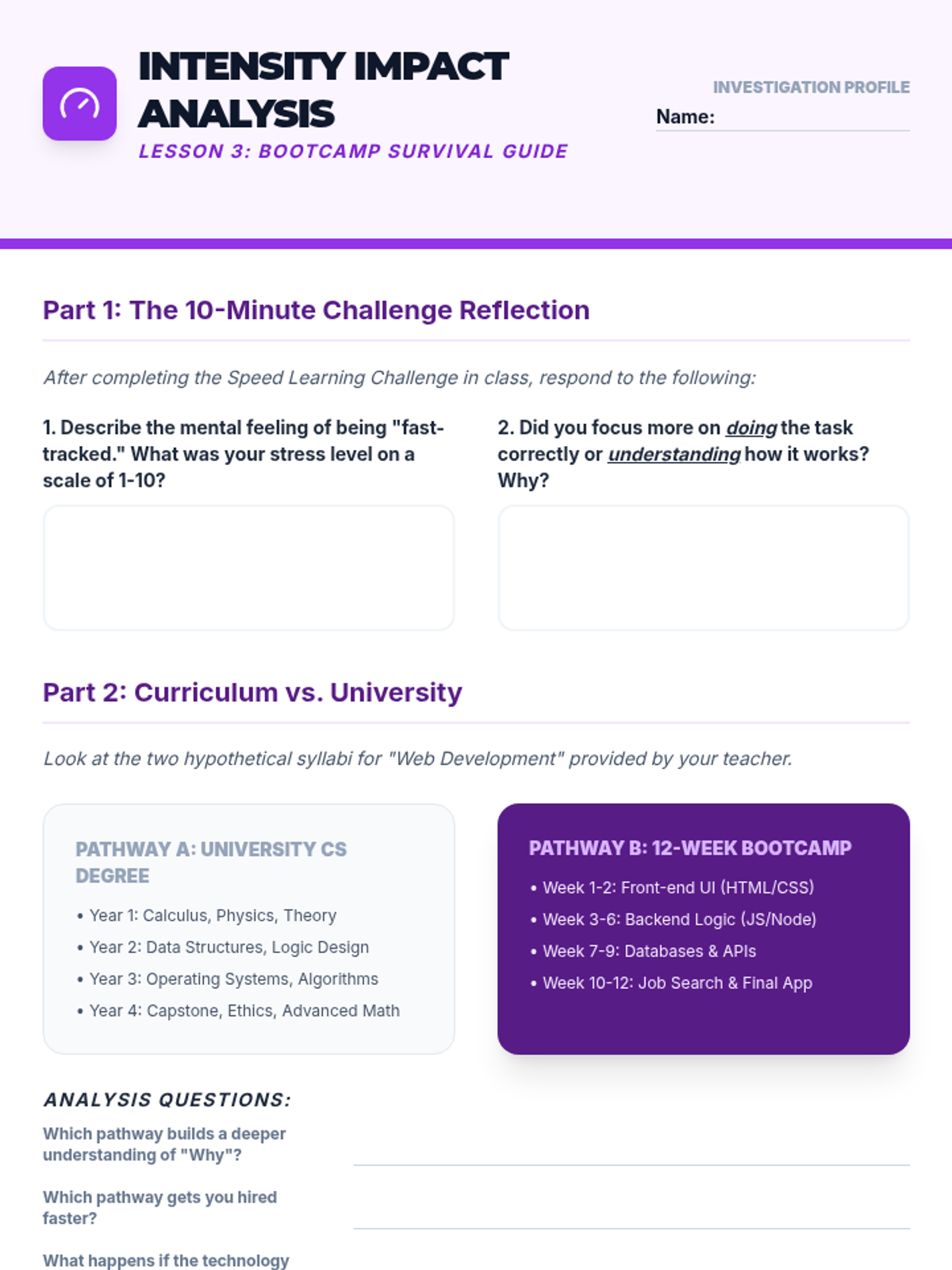
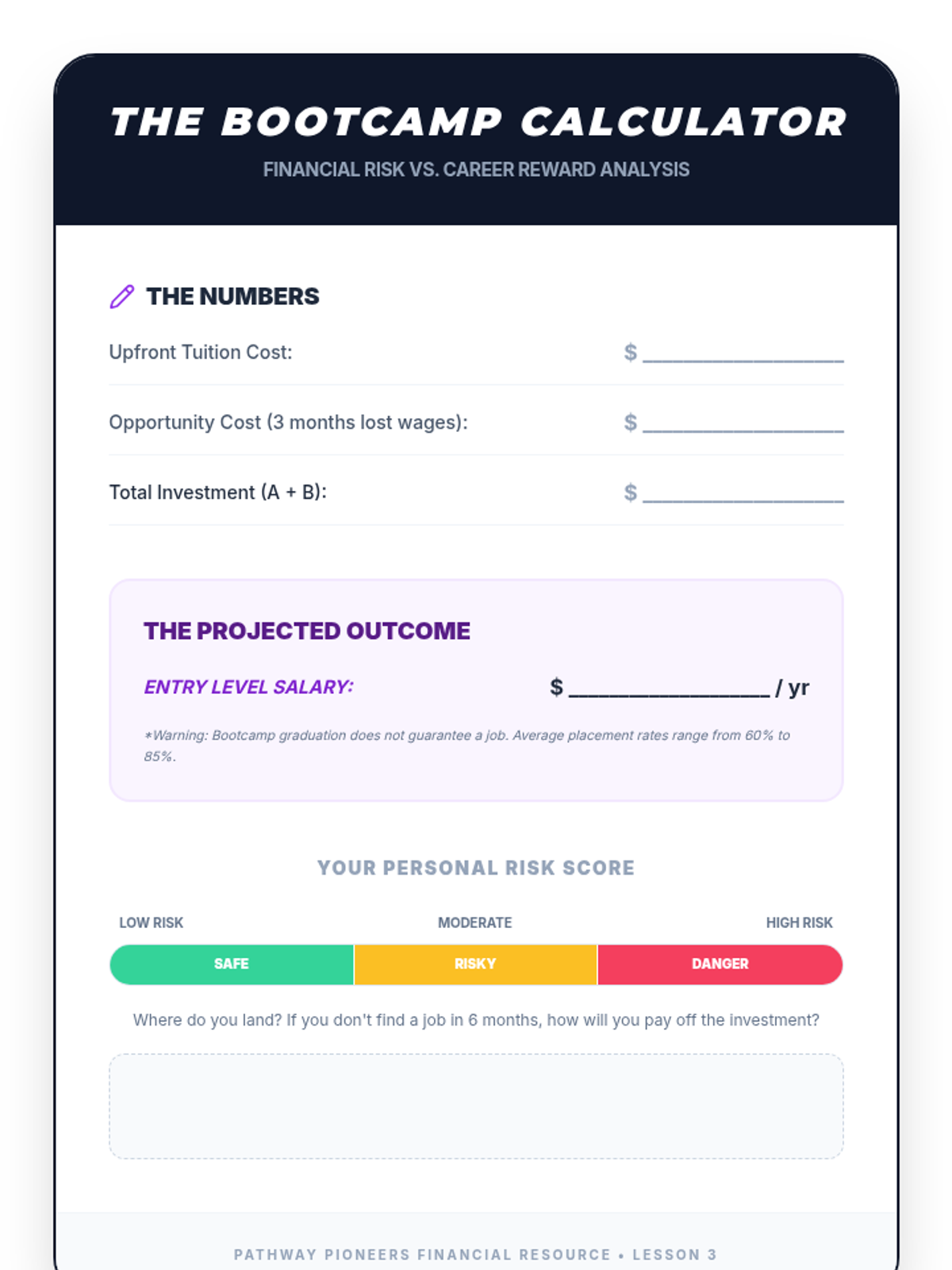
Students explore intensive, short-term training programs in tech and design, critiquing curriculum examples and assessing the risks and rewards of unaccredited education.
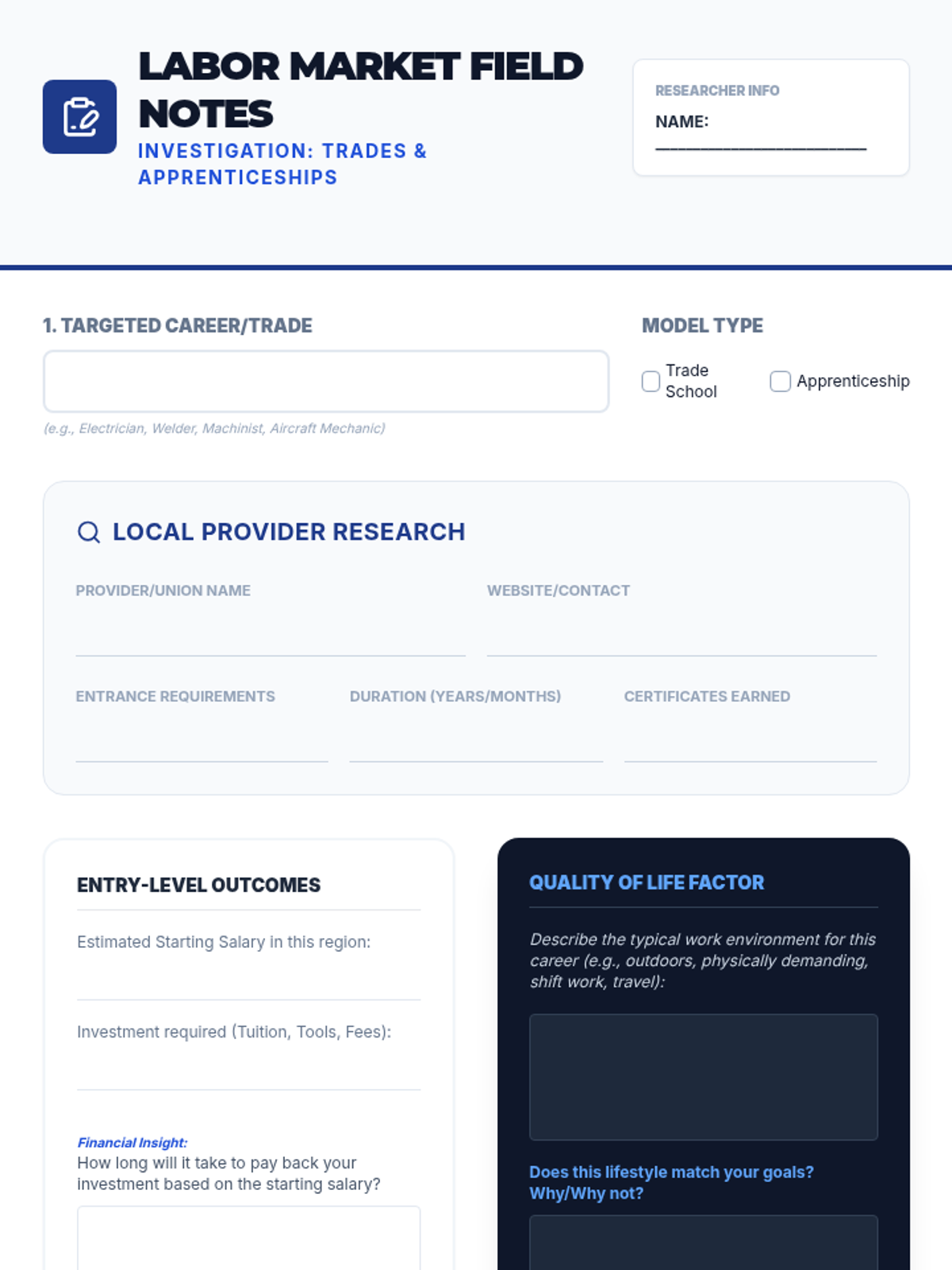
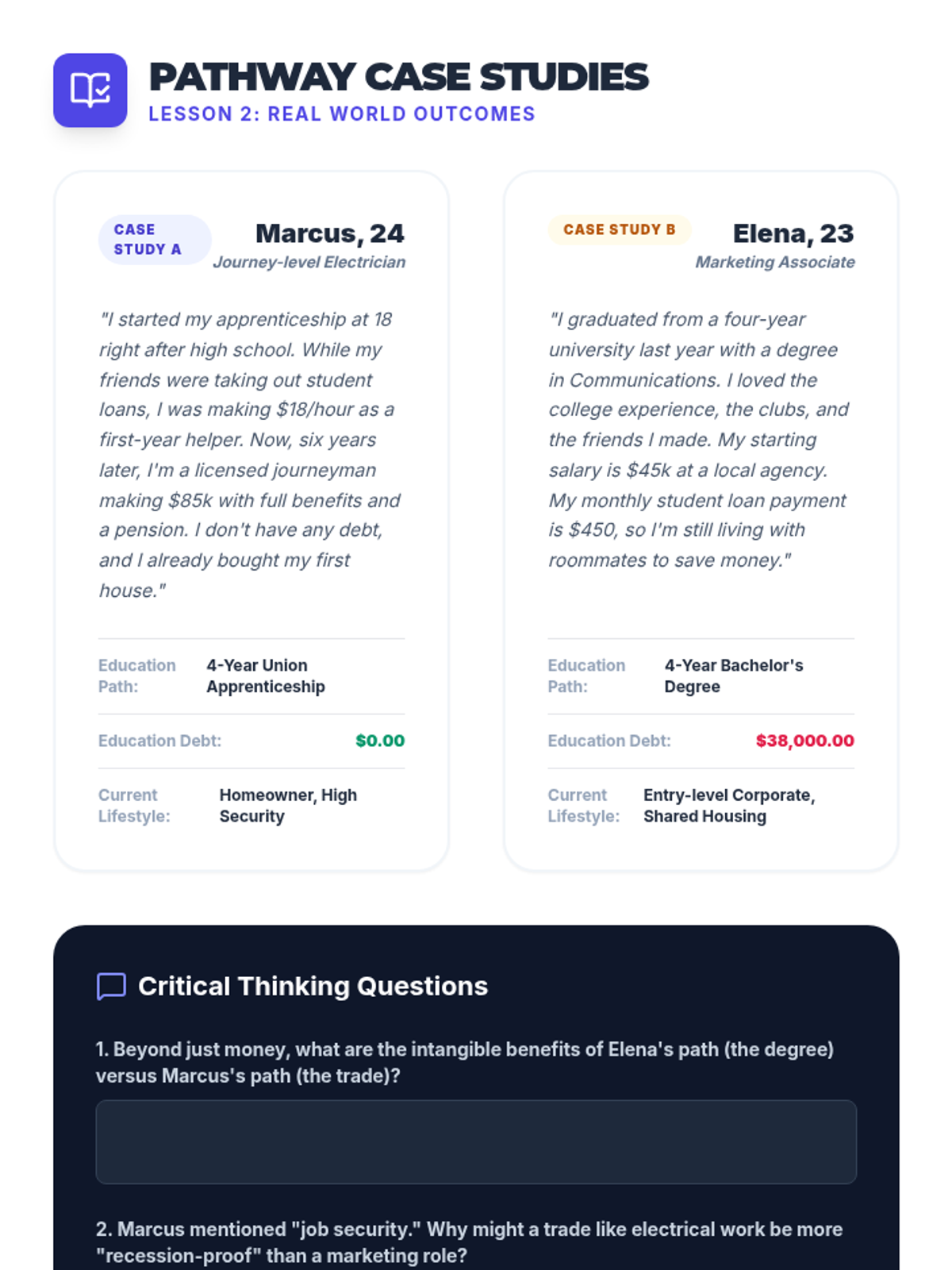
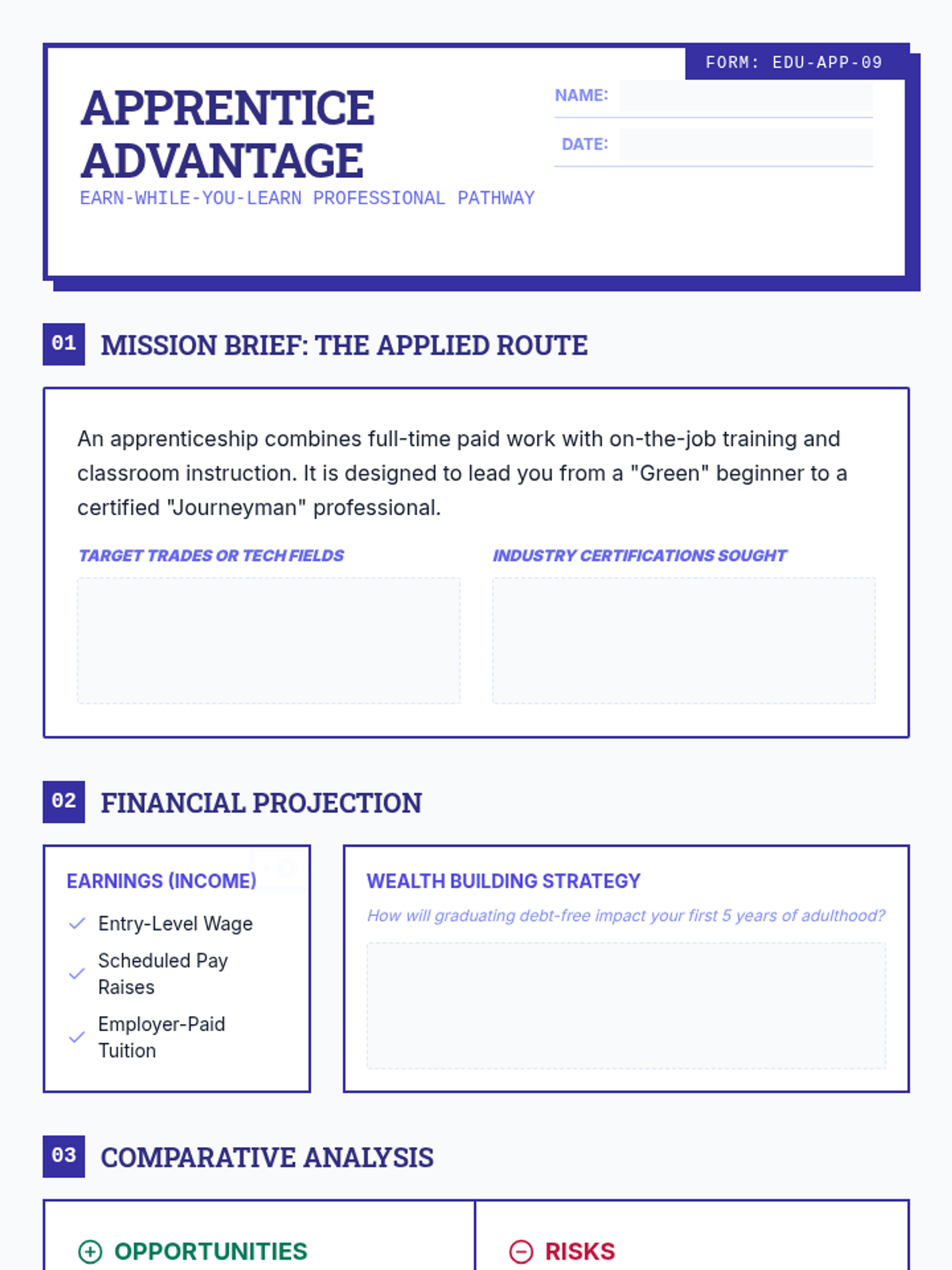
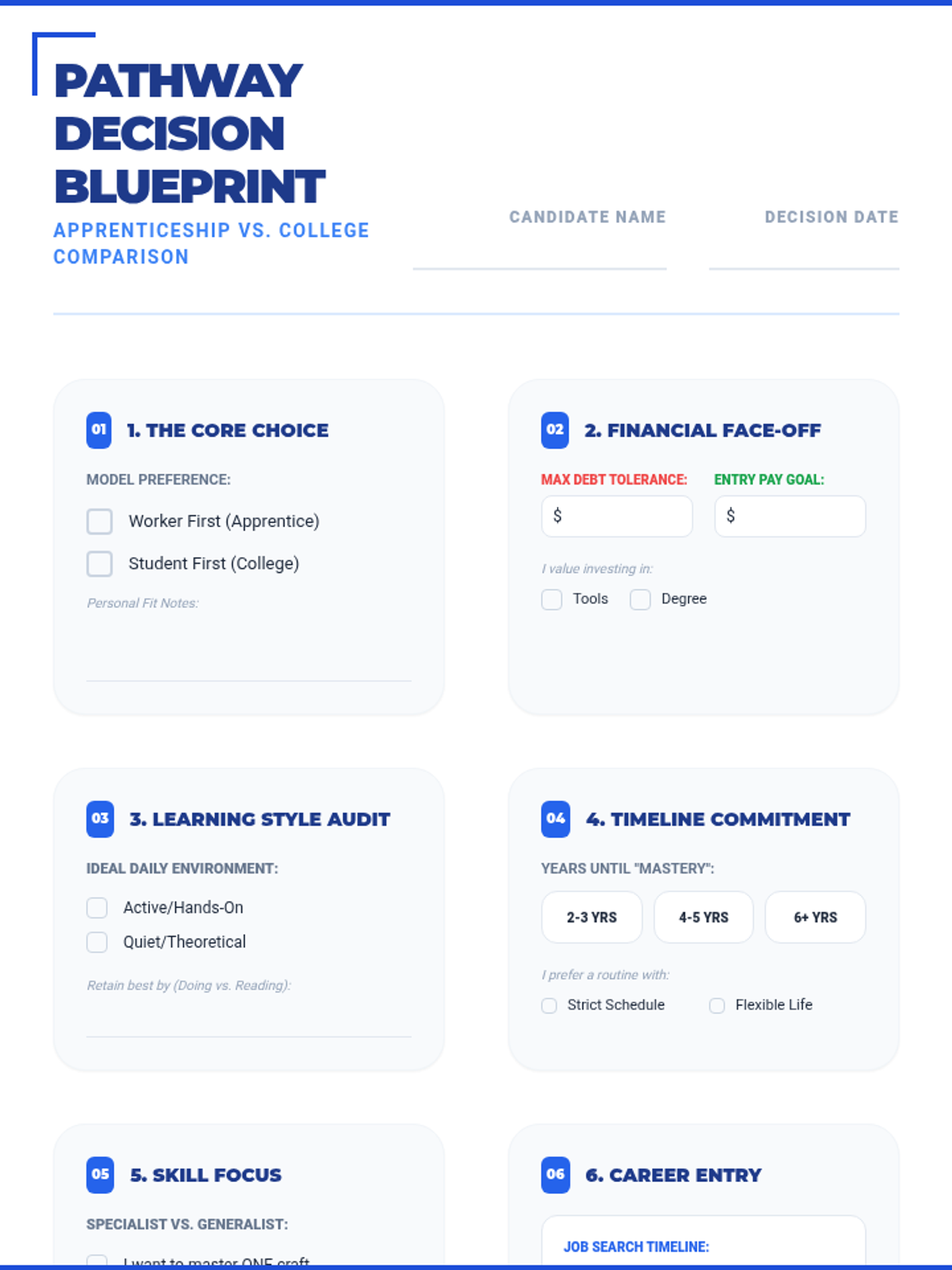
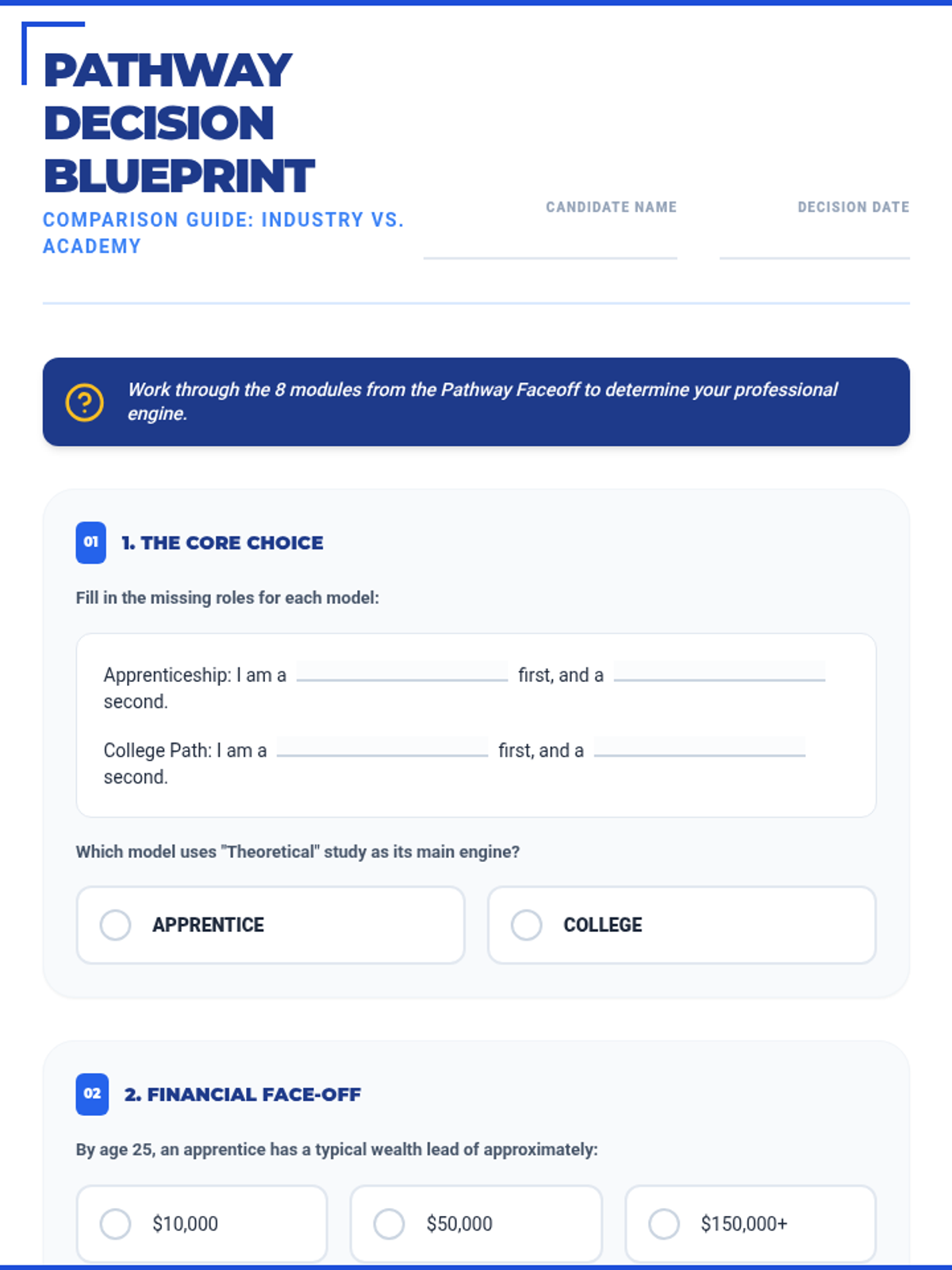
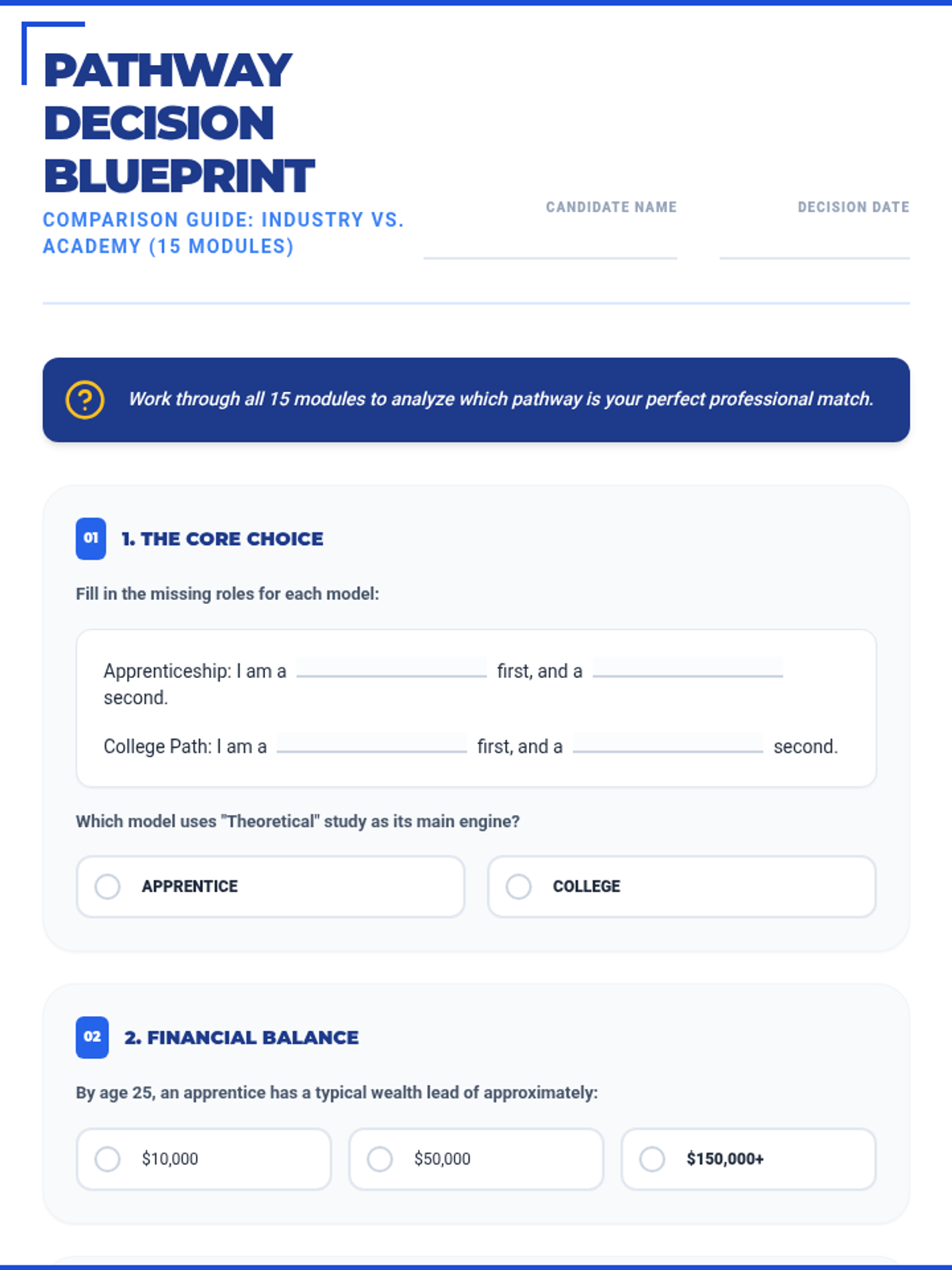
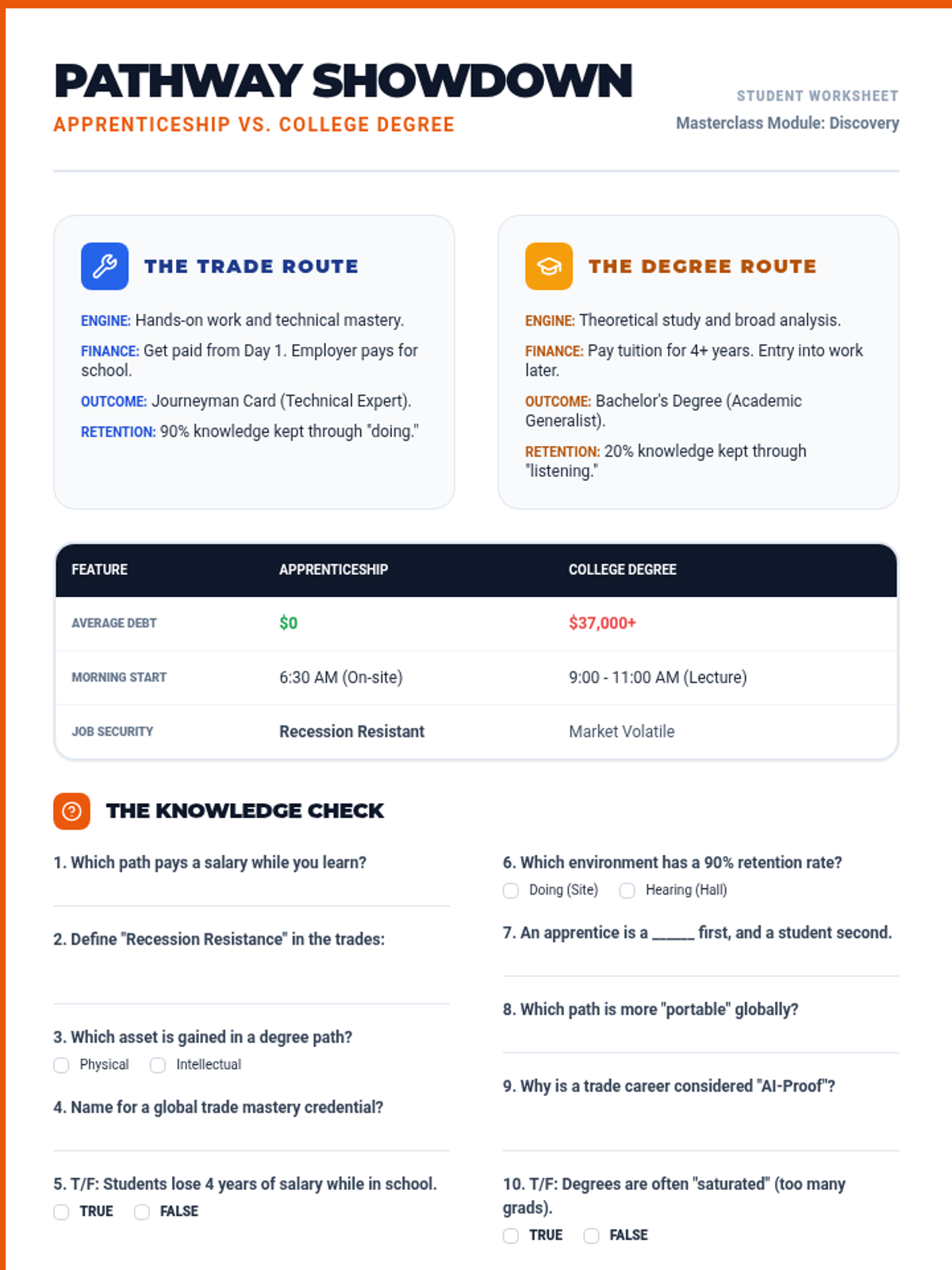
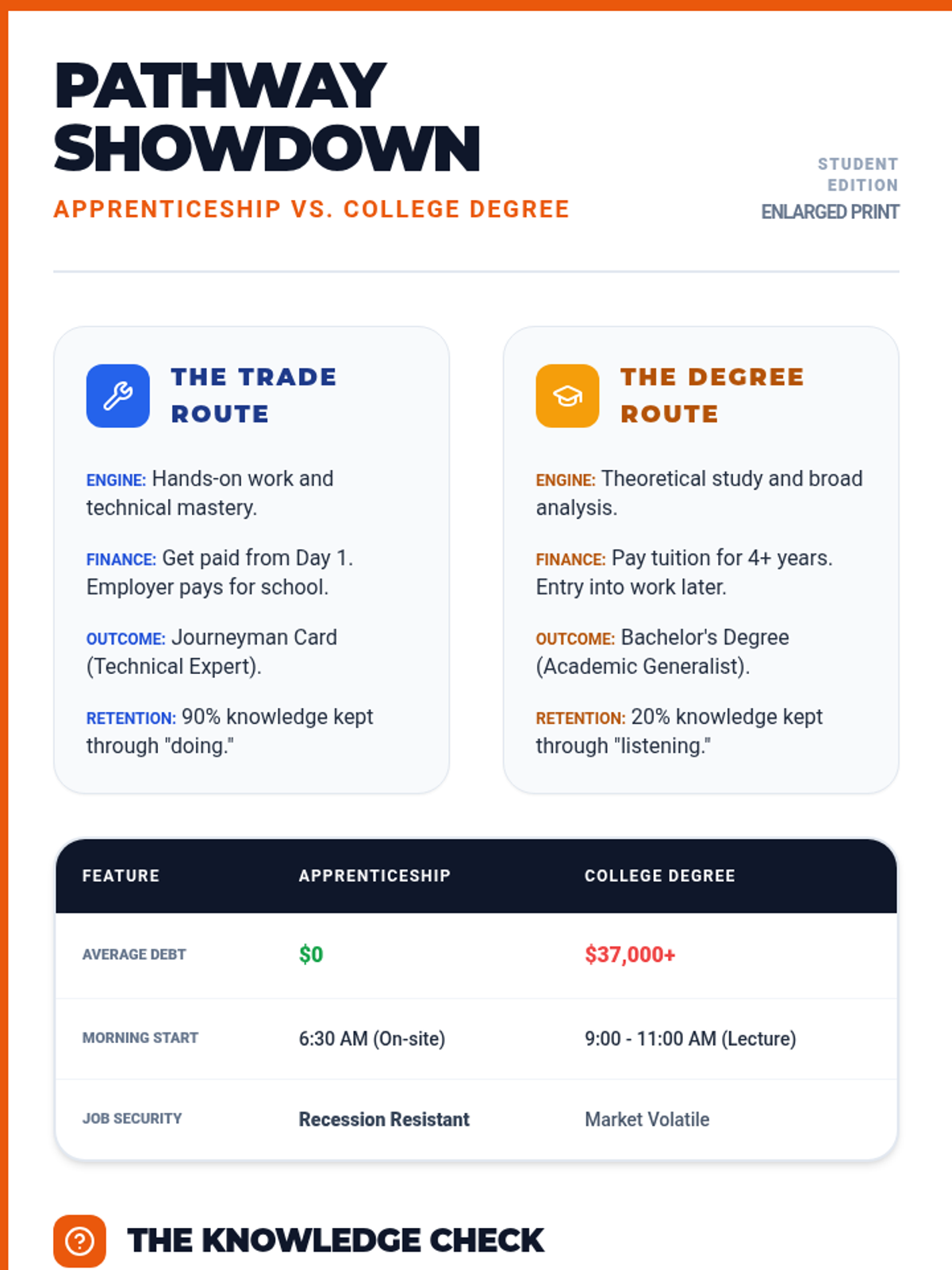
Learners dive into vocational training models, comparing the 'earn while you learn' structure of apprenticeships with tuition-based trade schools. They research local opportunities and analyze salary potential.
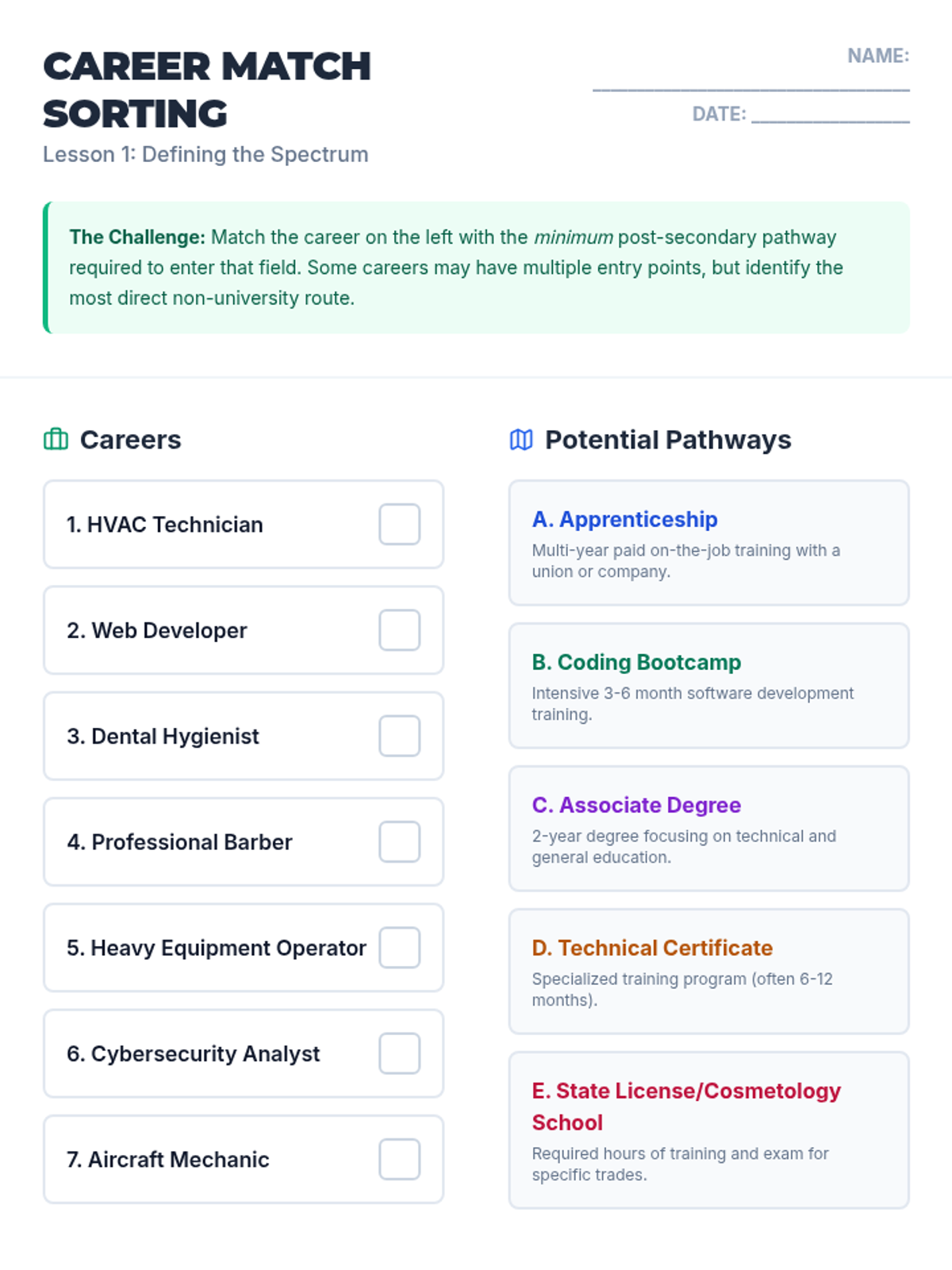
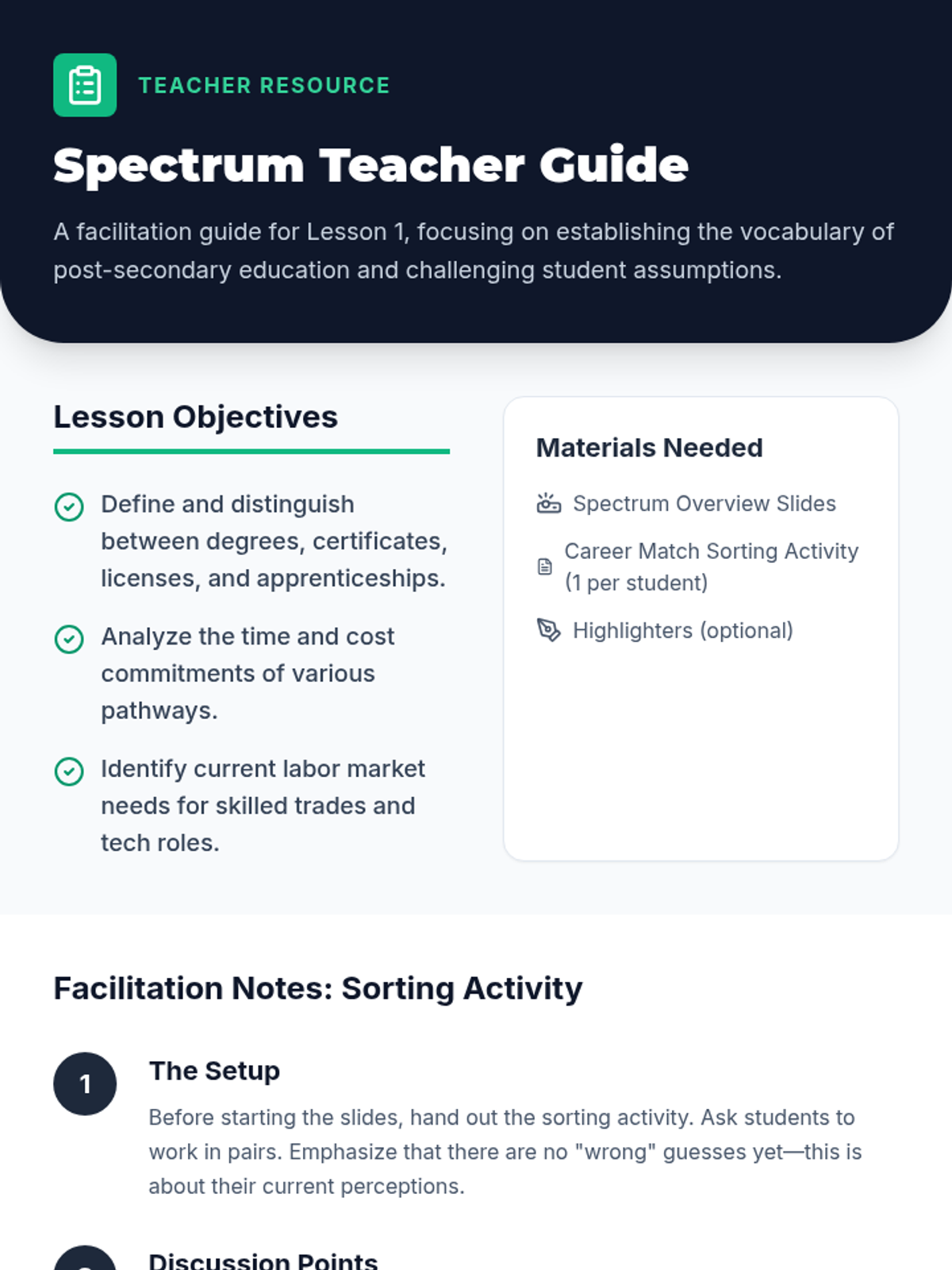
Students map out the landscape of post-secondary education, distinguishing between degrees, certificates, licenses, and apprenticeships. They analyze time commitments and requirements to establish a foundational vocabulary.
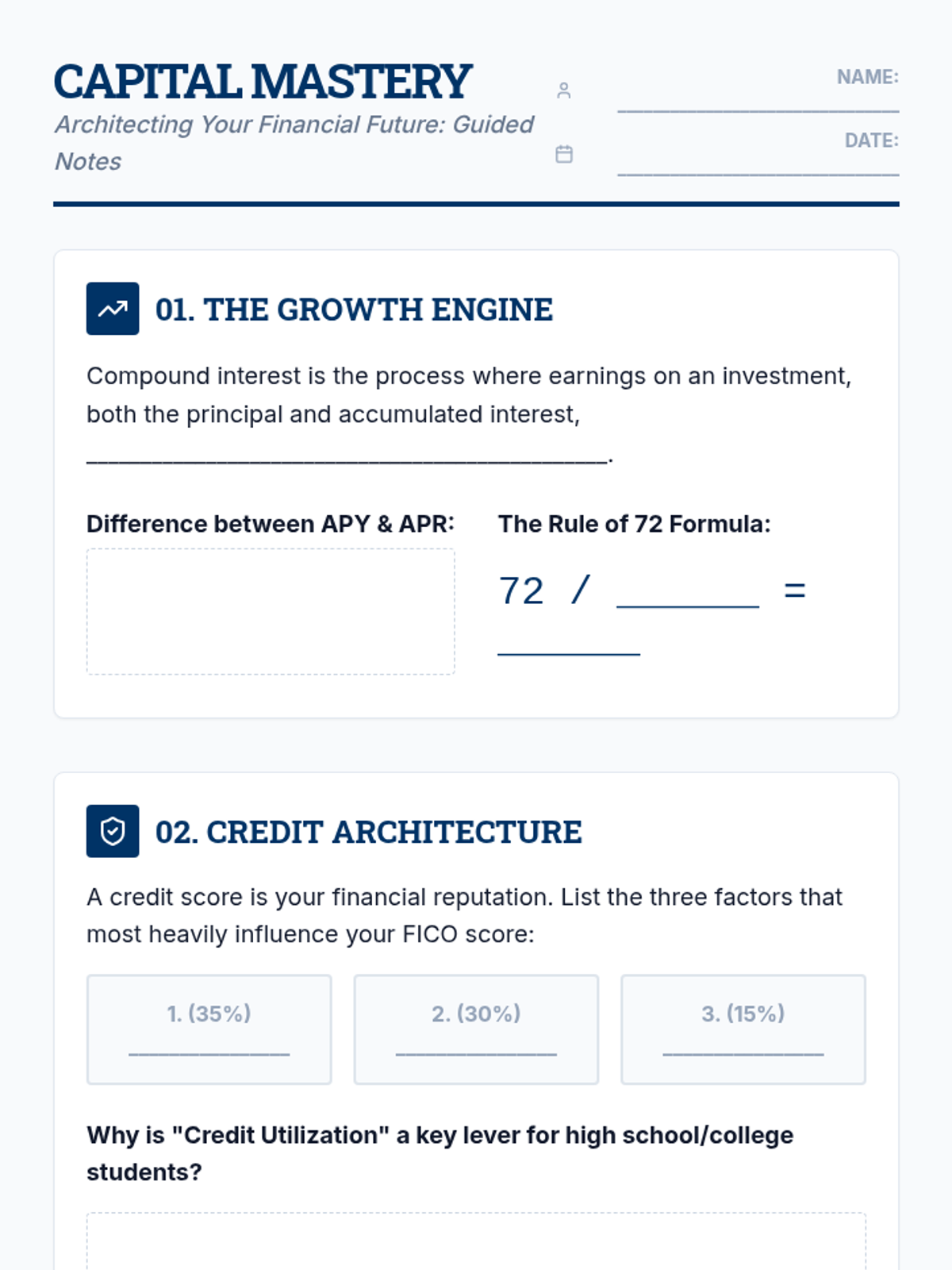
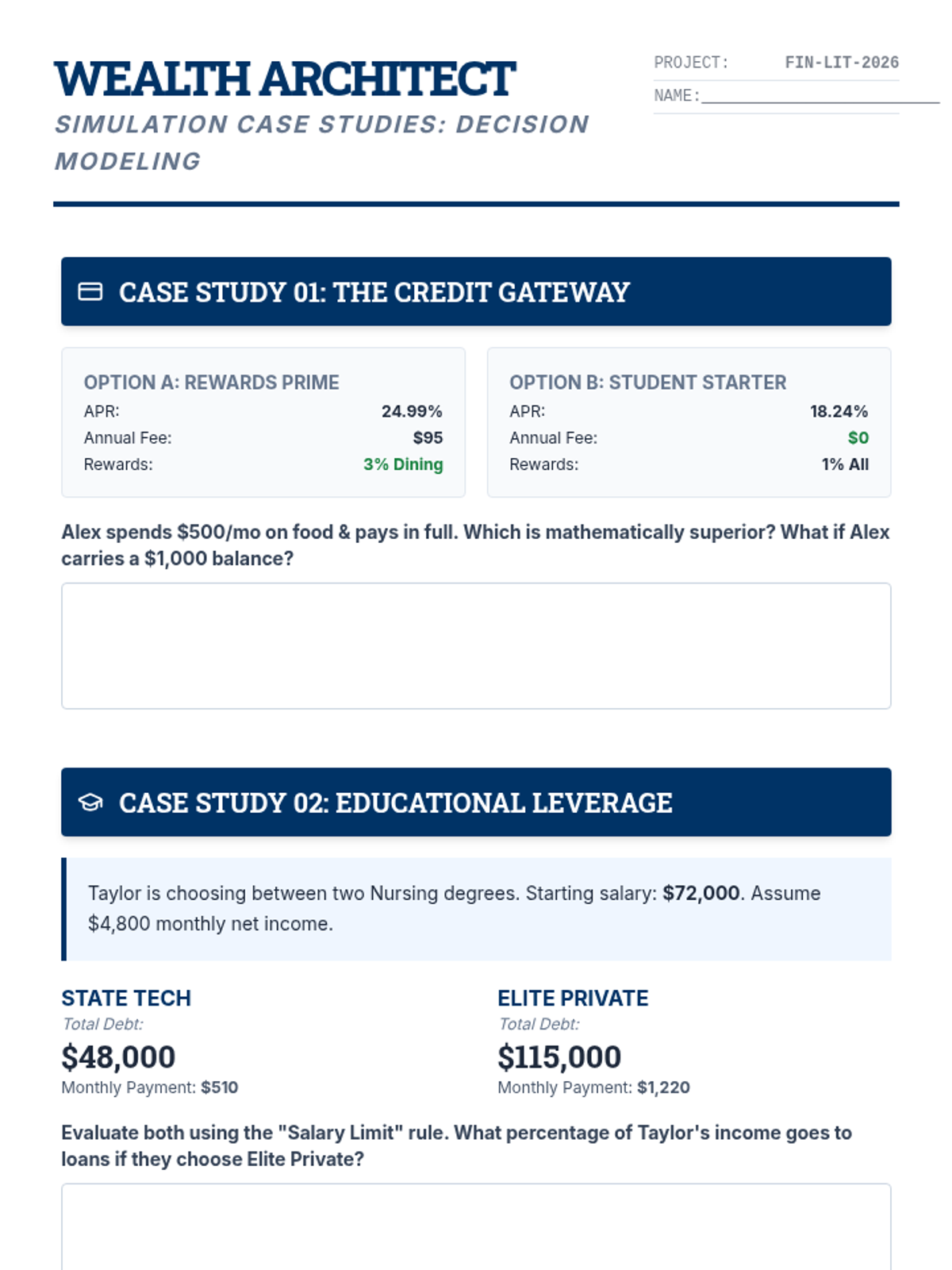
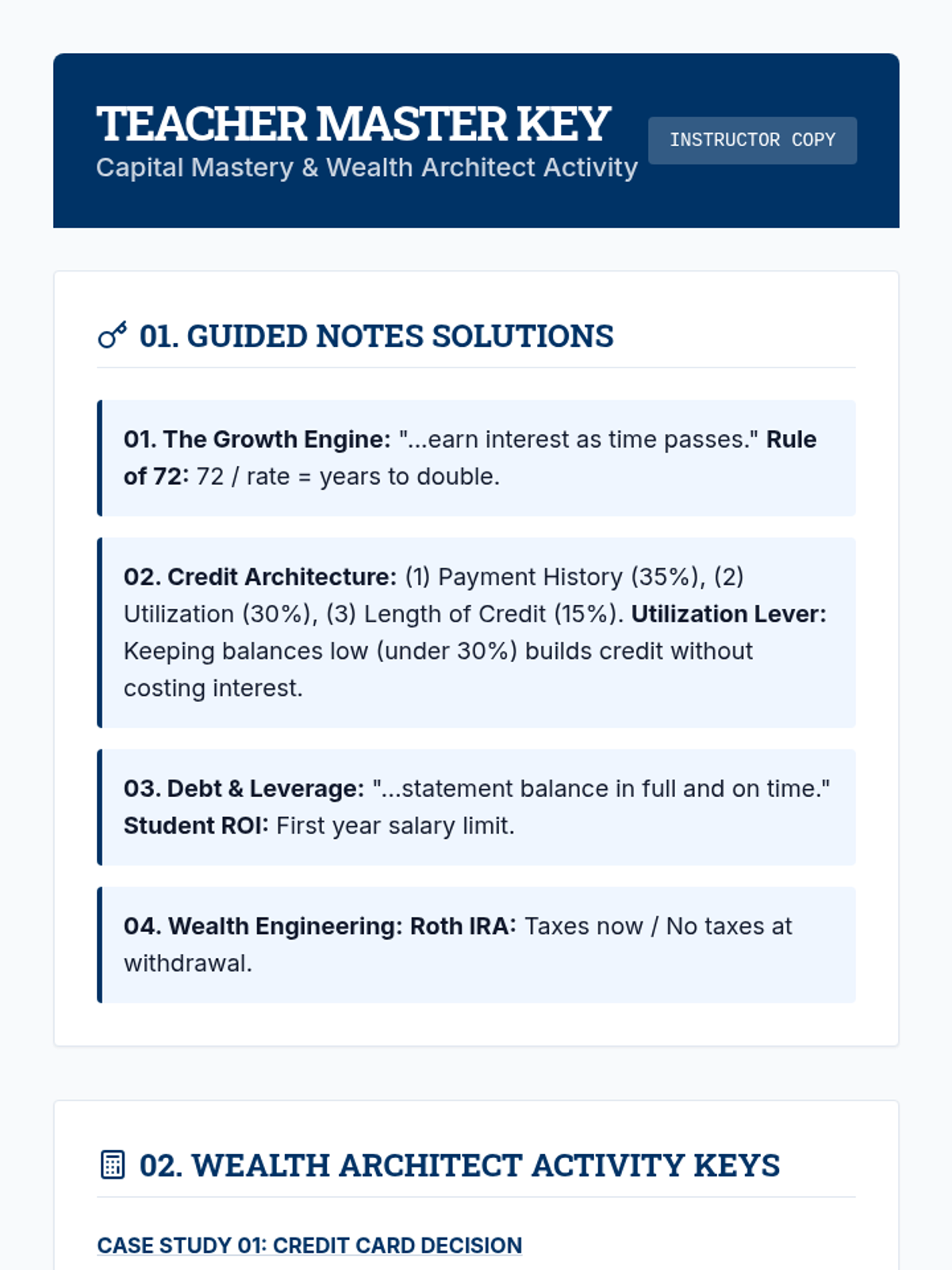
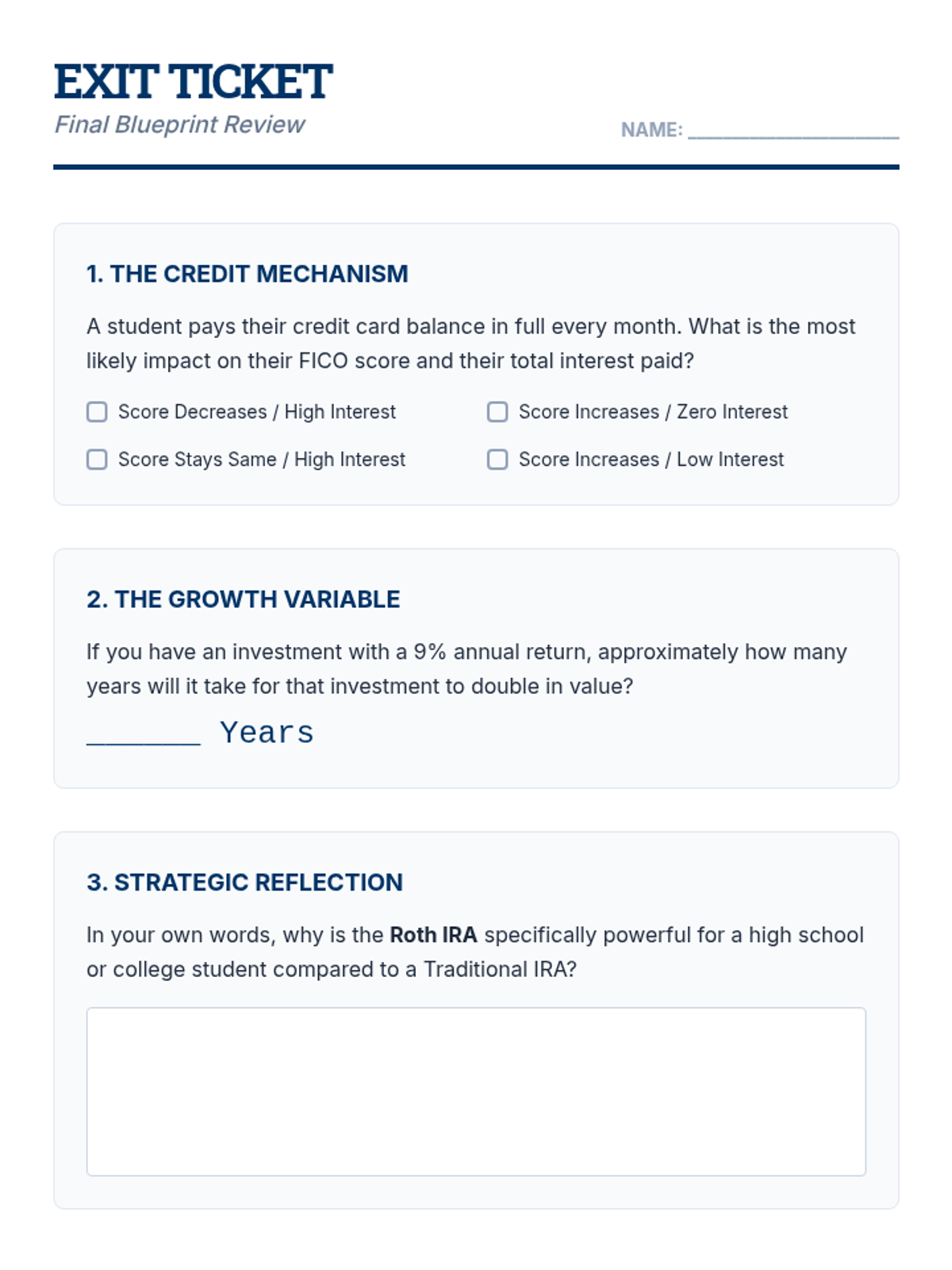
A high-level financial literacy lesson for advanced high school students, focusing on the mechanics of wealth building, credit architecture, and strategic debt management through the lens of long-term financial engineering.
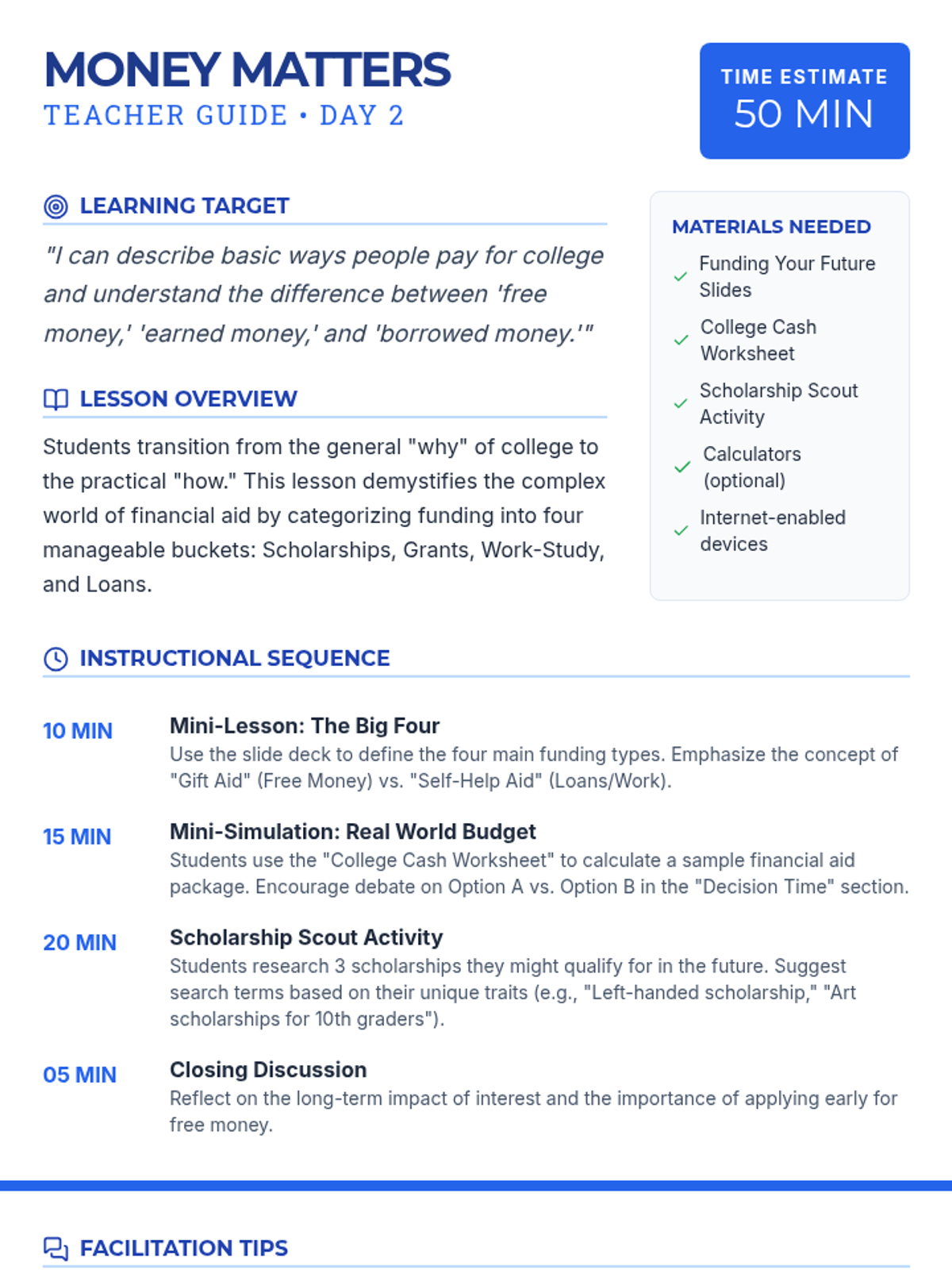
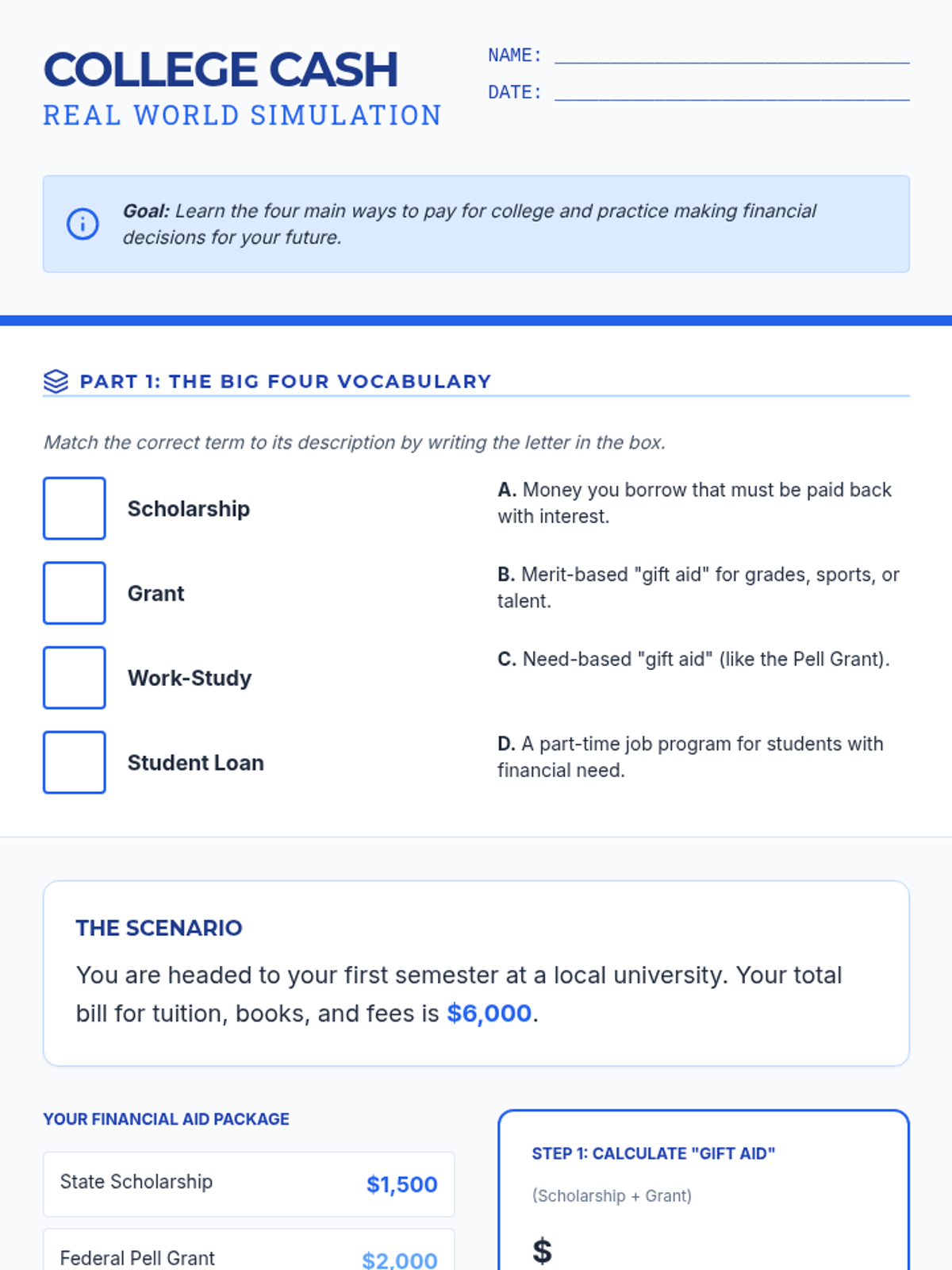
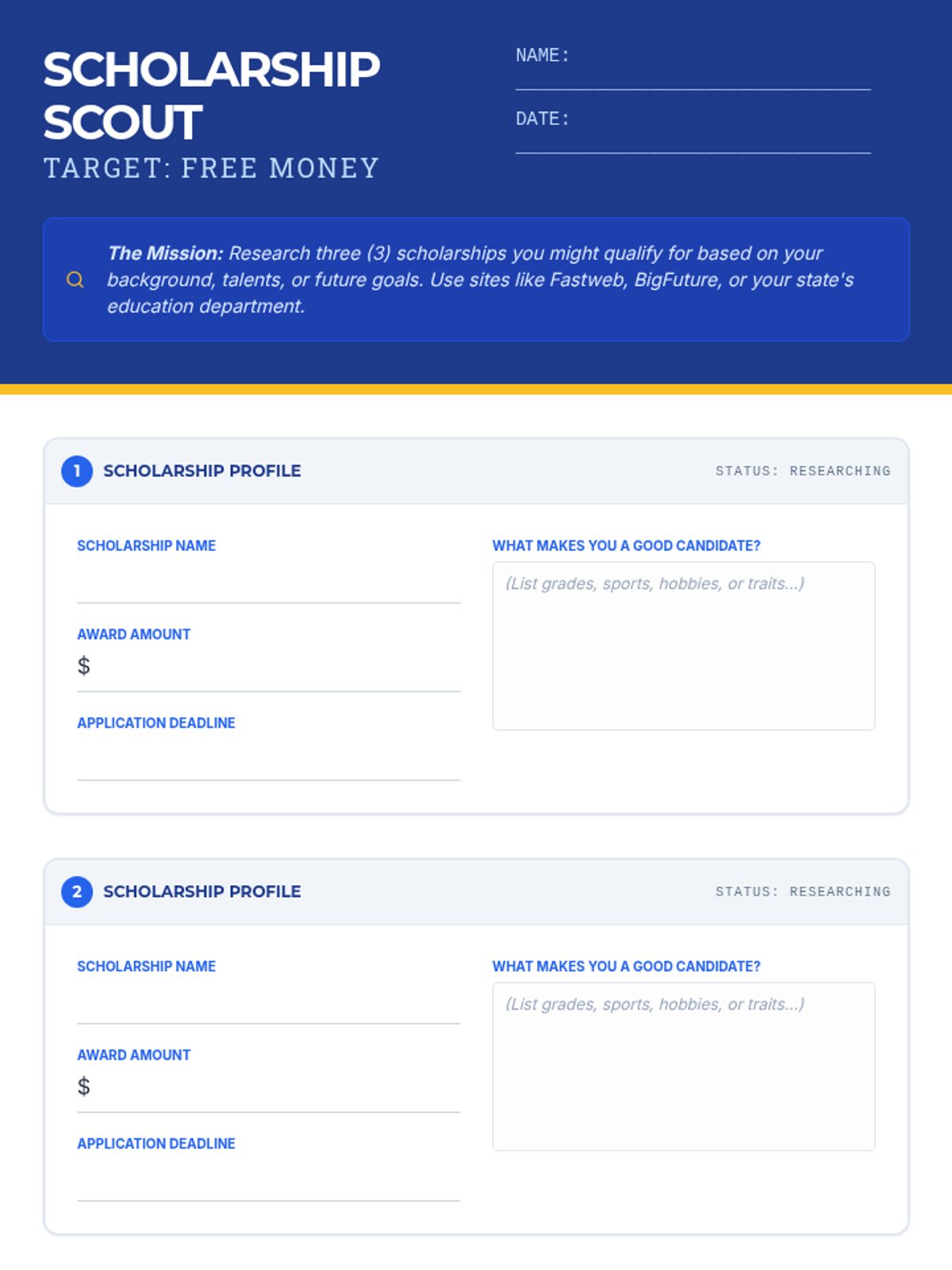
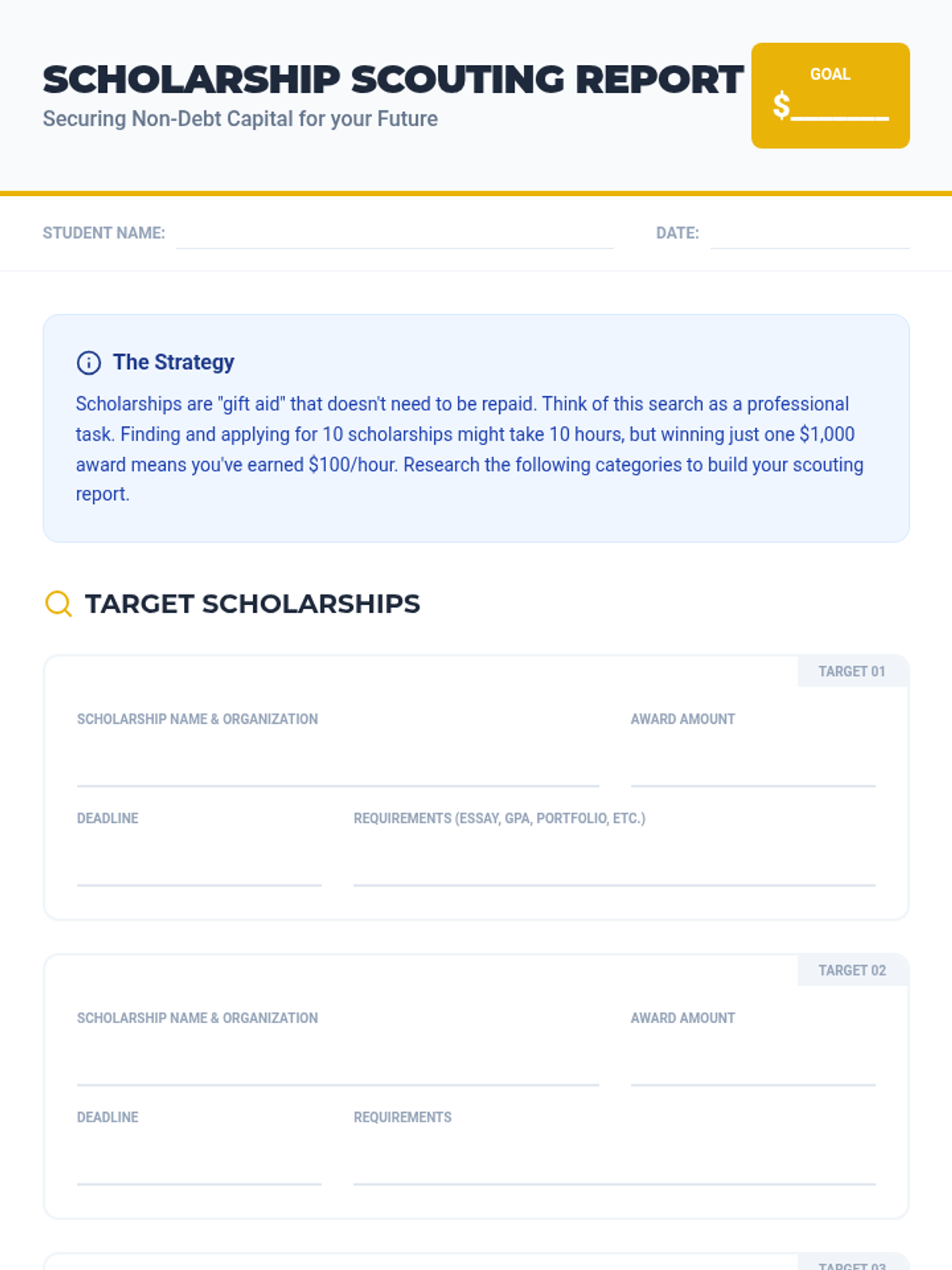
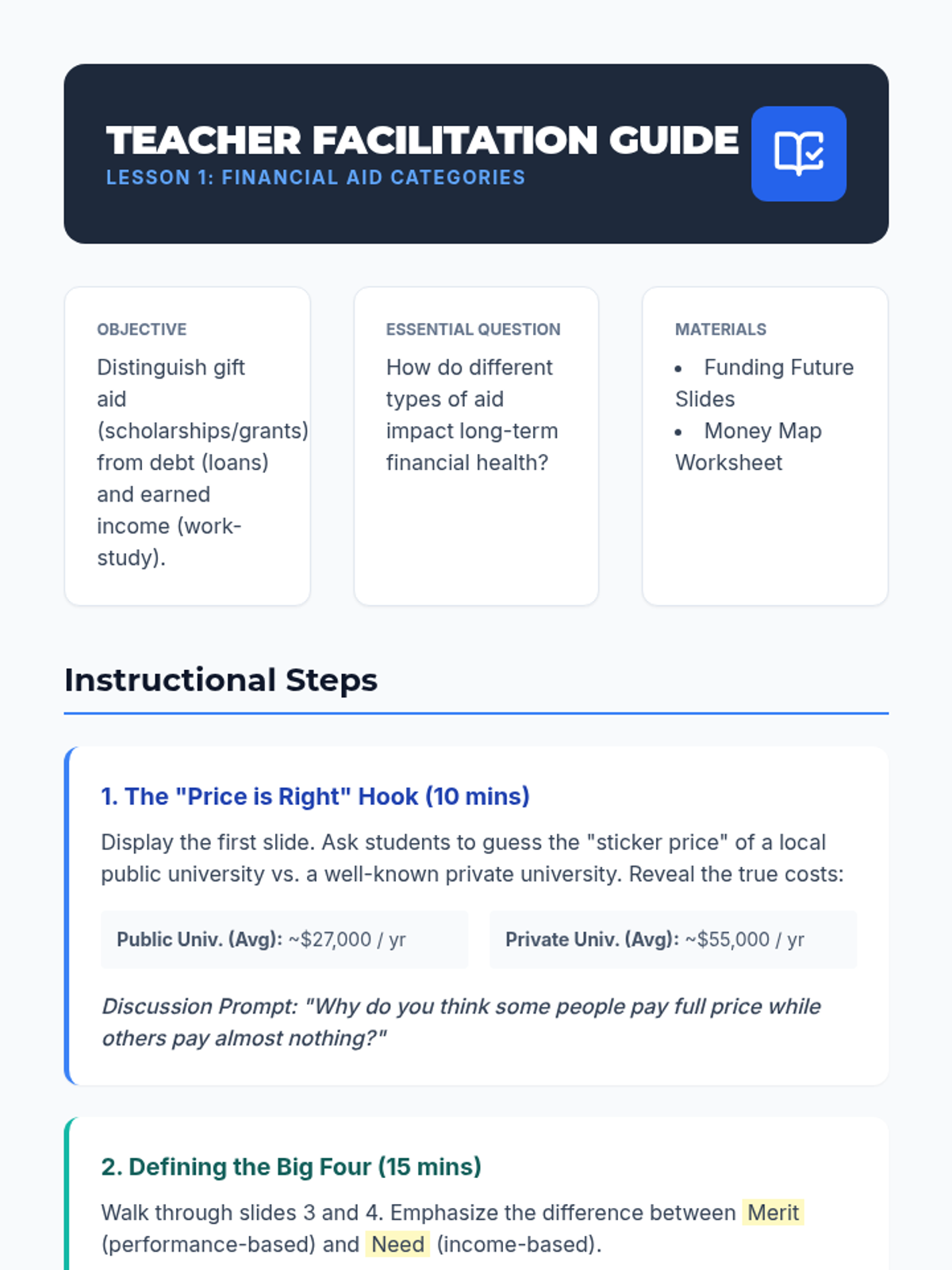
A lesson covering the four main ways to pay for college: scholarships, grants, work-study, and loans, featuring a budget simulation and a scholarship research activity.
Outlines the steps to take after receiving acceptance letters, including deposits, orientation, and housing, concluding with a reflection journal.
Guides students through the application timeline, components of a college application, and the admissions review process.
Focuses on financial literacy, including FAFSA/ORSAA, scholarship hunting, and decoding financial aid award letters.
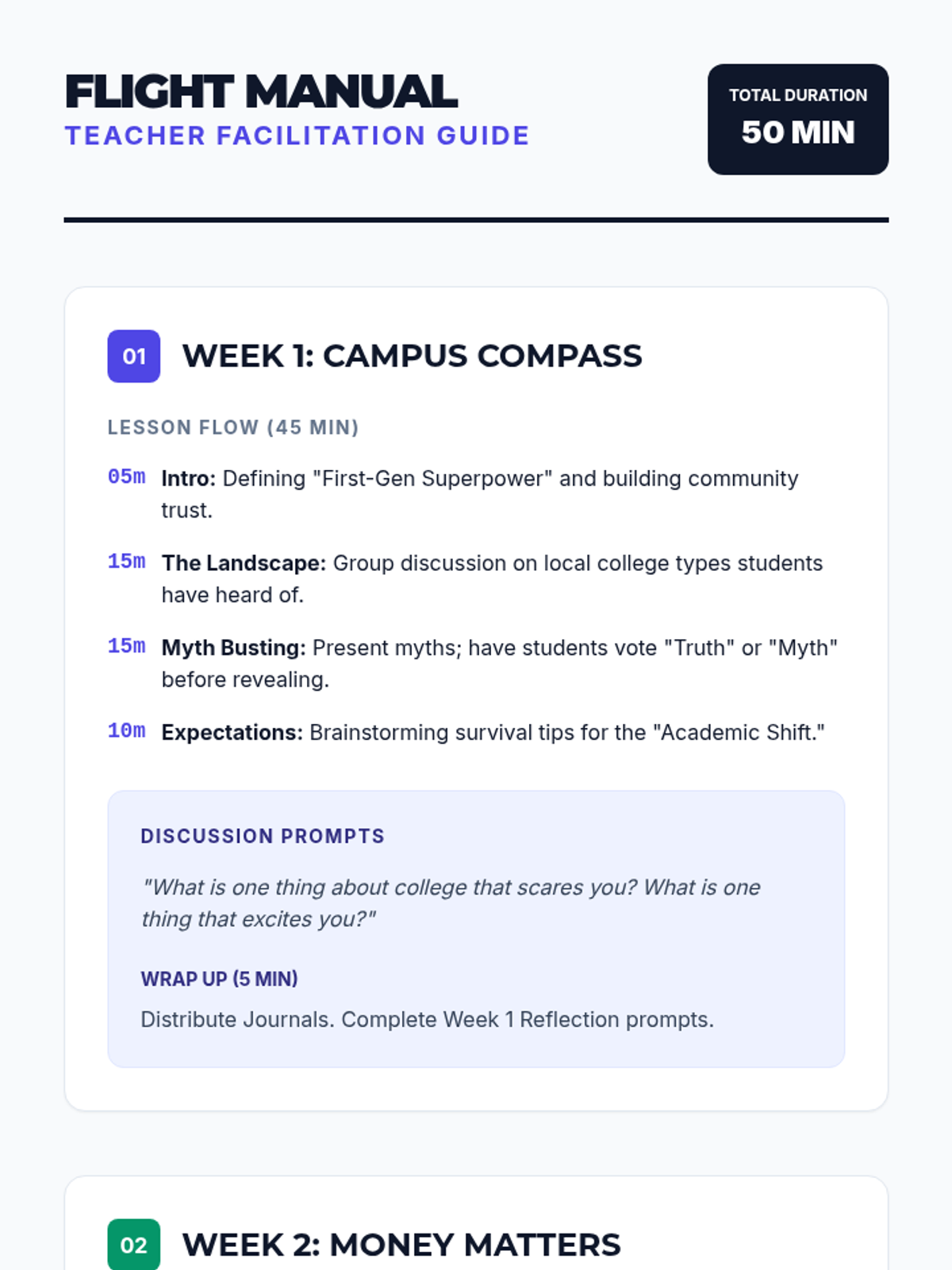
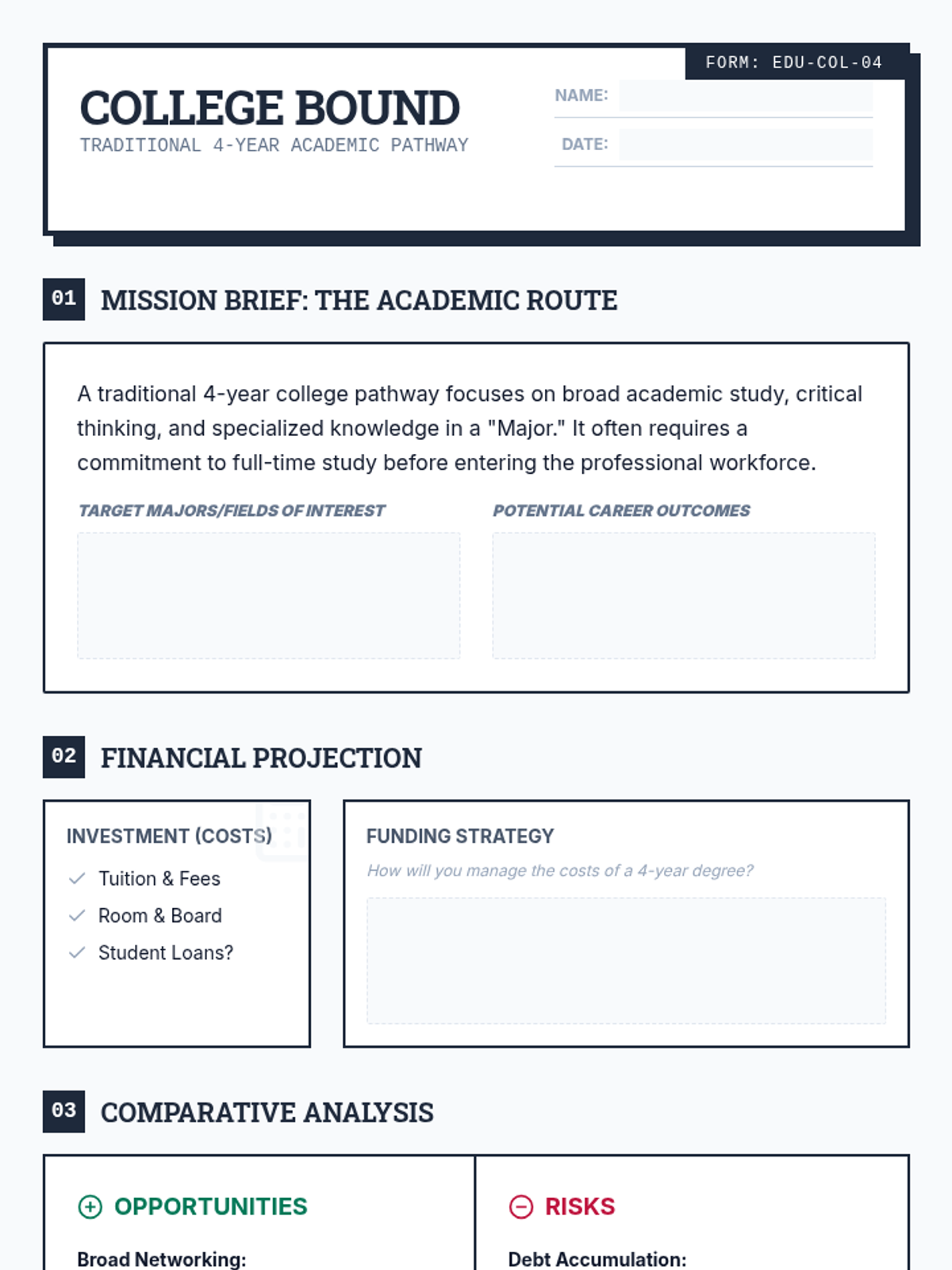
Covers the different types of colleges (2-year vs. 4-year, public vs. private), debunks common academic myths, and sets expectations for the college experience.
Master the transition from student to professional. This lesson covers workplace etiquette and the application process through engaging puzzles and reflective self-assessments.
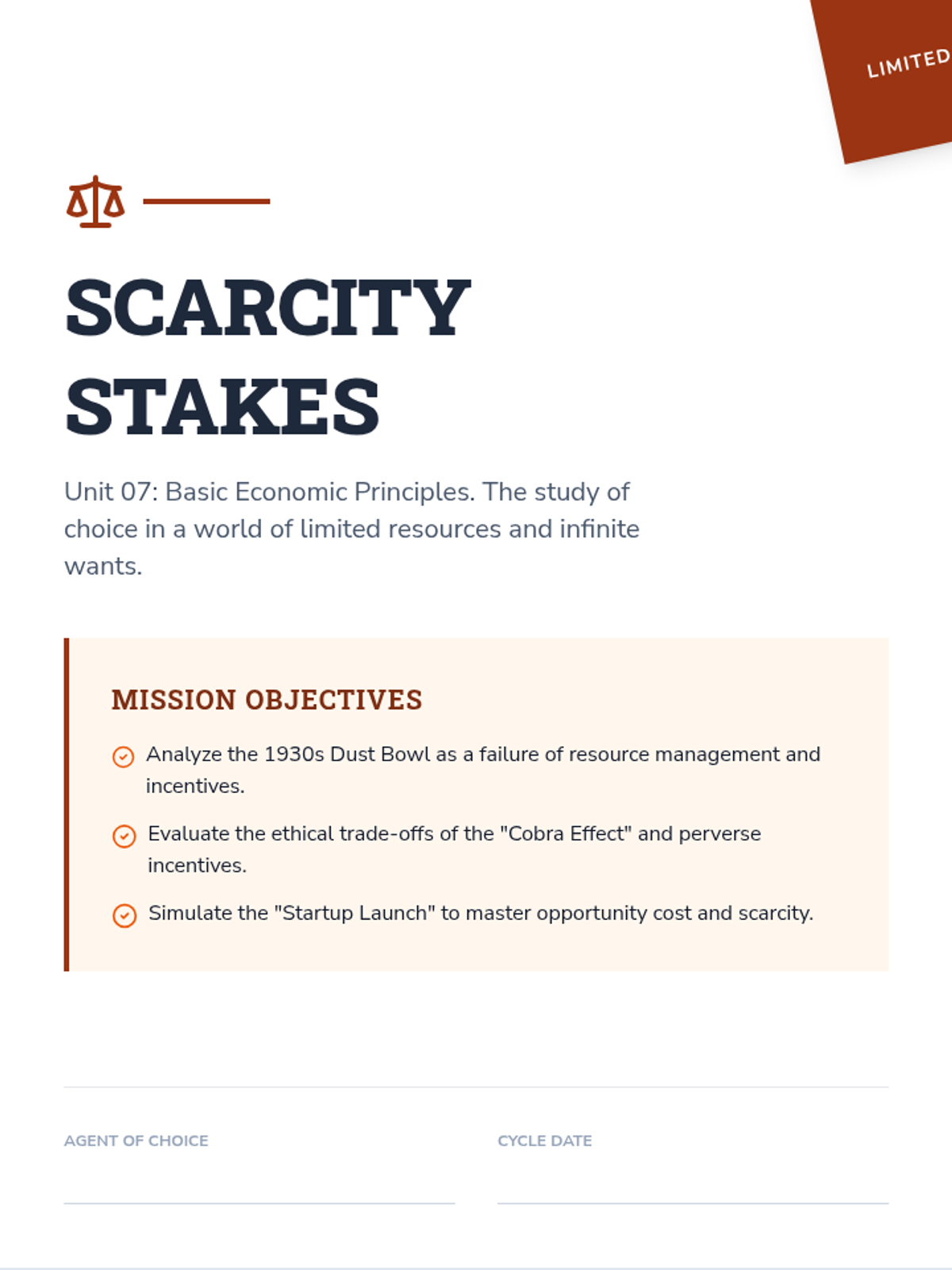
Explore the foundational pillars of economics through the history of the Dust Bowl, the ethics of organ markets, and simulations of scarcity and marginal utility.
Master the mechanics of life's largest financial commitments through the history of the 30-year mortgage, the ethics of urban gentrification, and complex simulations of home ownership.
Uncover the mechanisms of risk management through the history of the Great Fire of London, the ethics of pre-existing conditions, and complex simulations of health and auto insurance.
Master the battlefield of the modern marketplace through the history of consumer protection, the ethics of planned obsolescence, and simulations of contract negotiation.
Uncover the mechanics of modern banking through historical currency crises, the ethics of fee structures, and simulations of liquidity management.
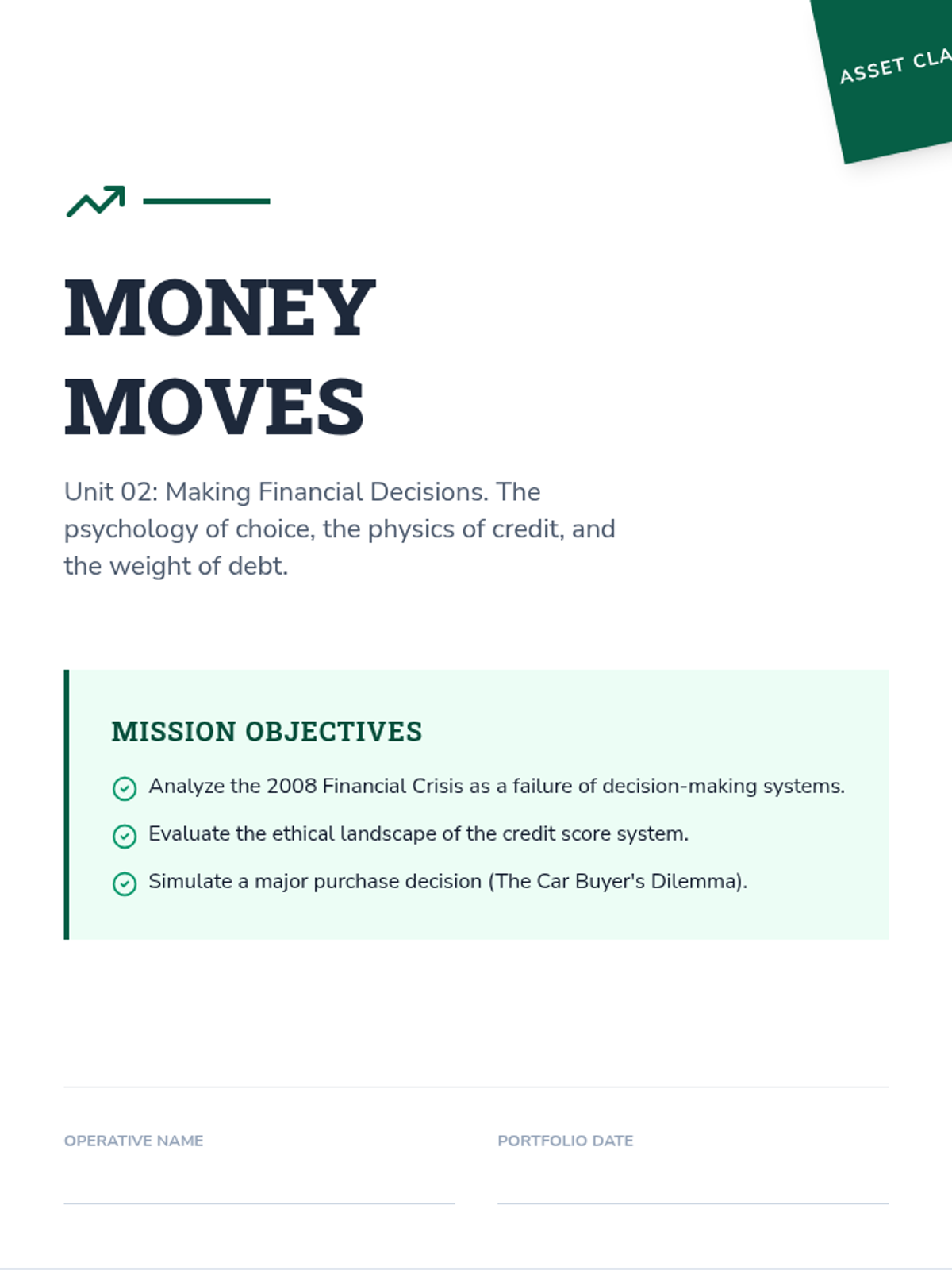
Analyze the mechanics of financial choice through historical market crashes, the ethics of credit, and complex simulations of high-stakes adult purchases.
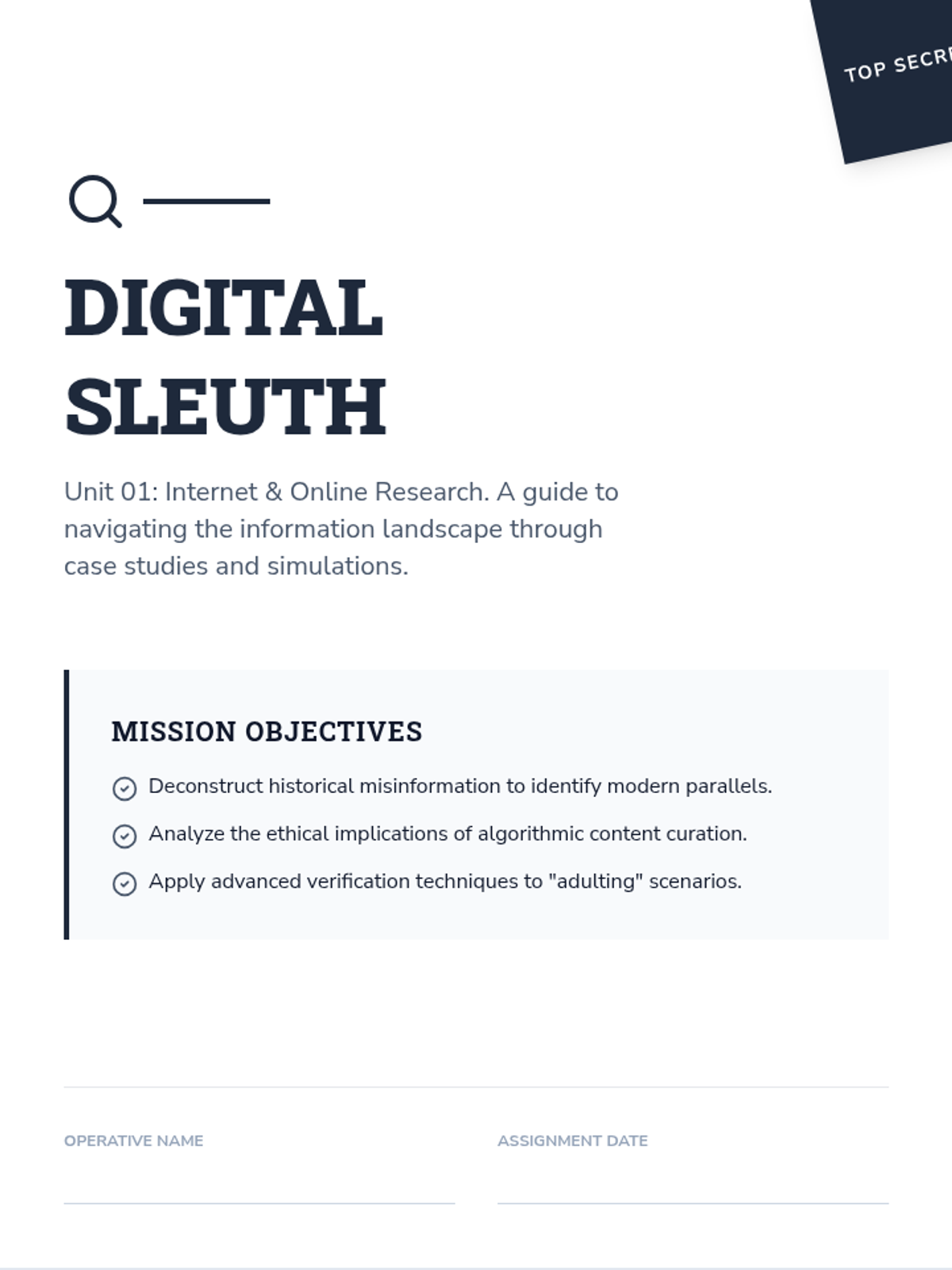
Master the art of information gathering and source verification in the digital age through historical misinformation cases and modern research simulations.
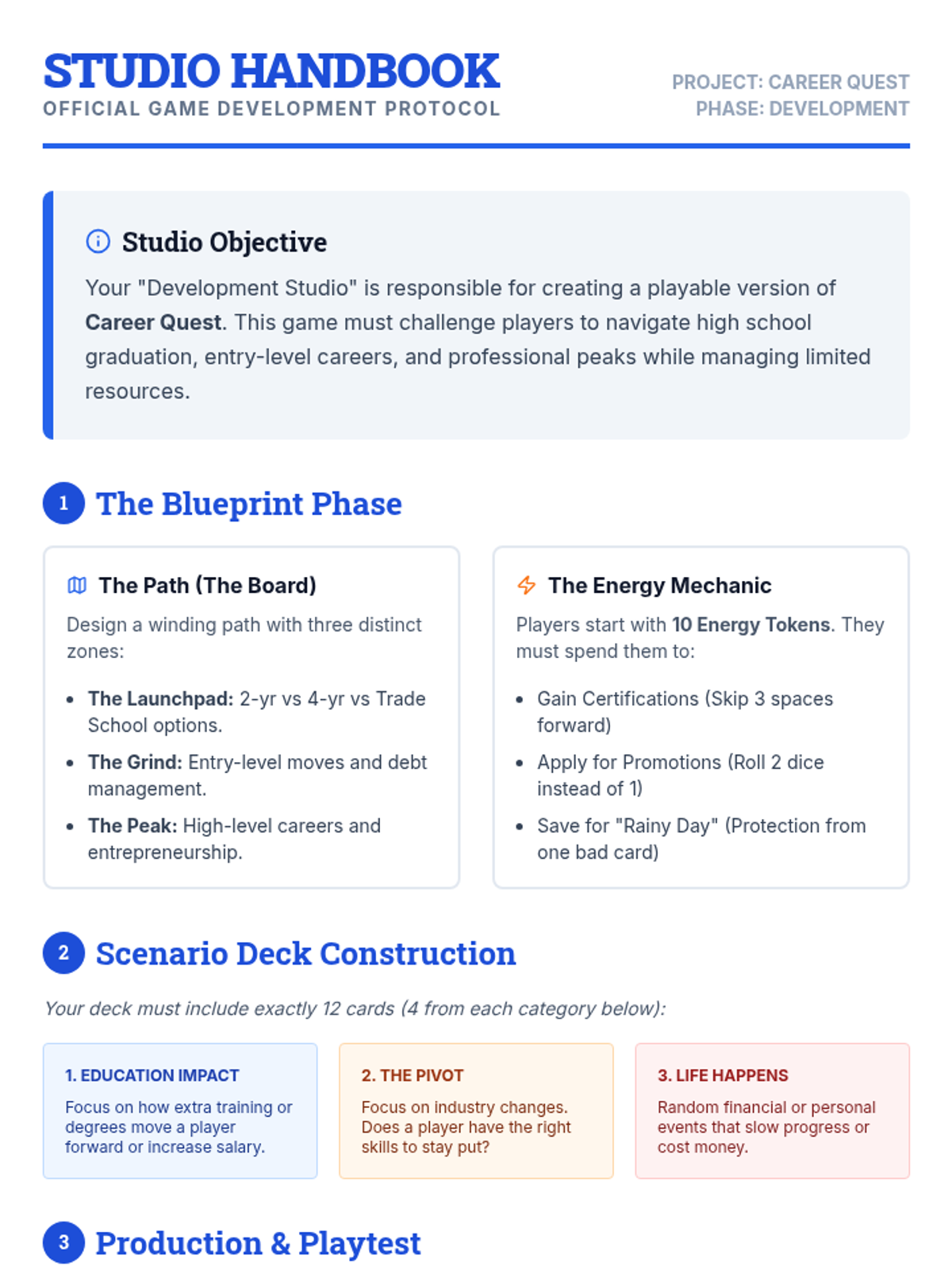
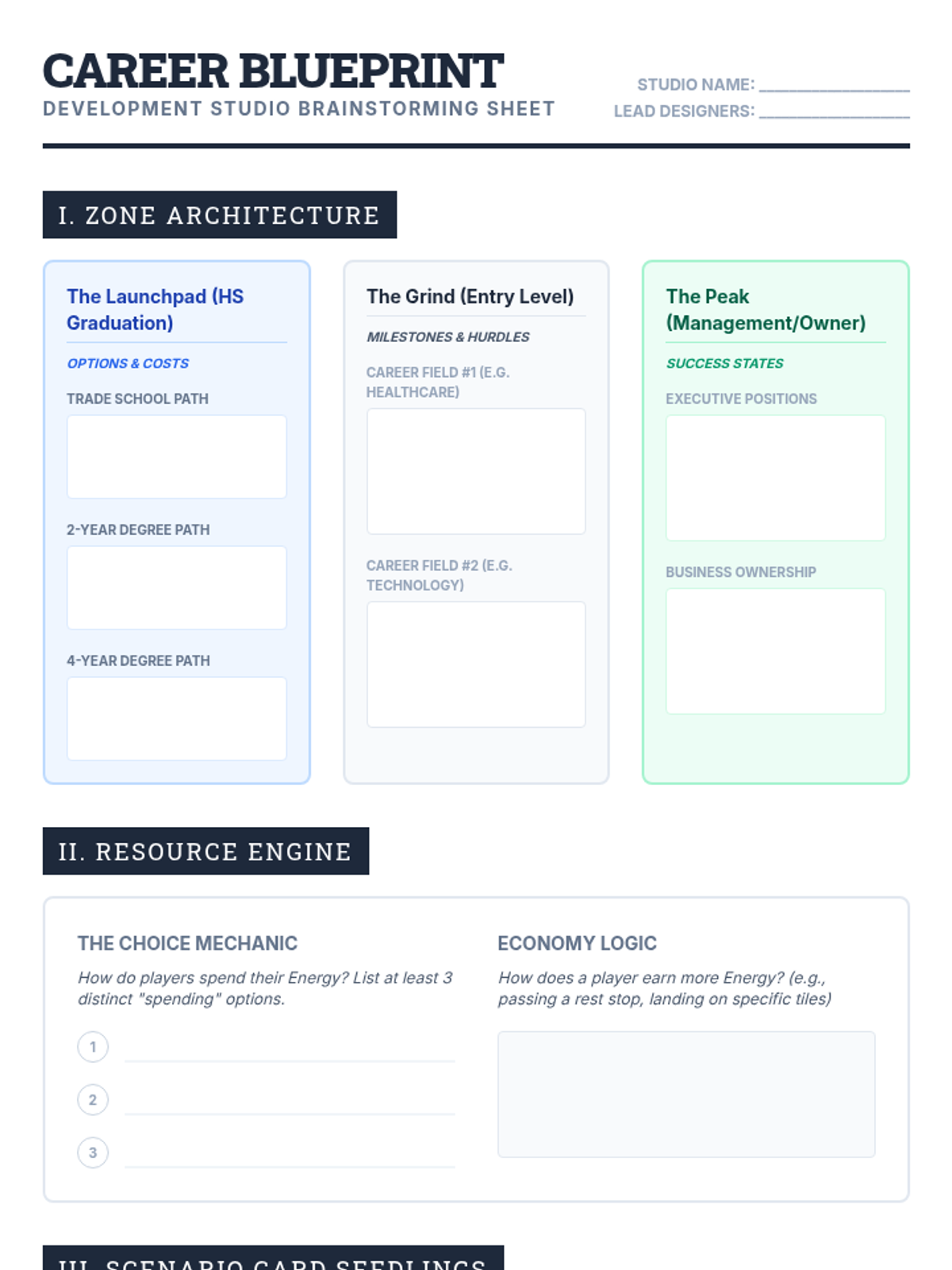
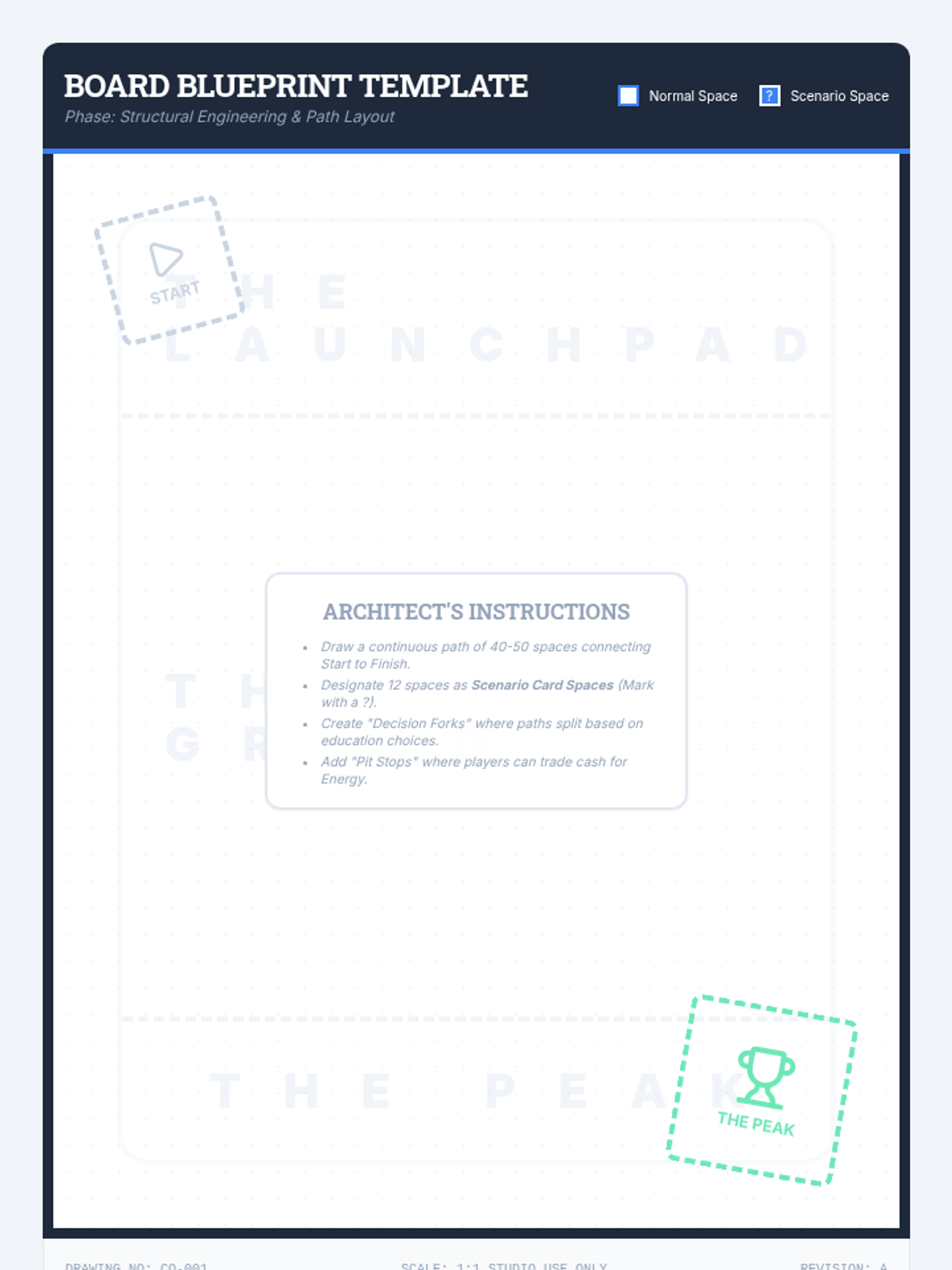
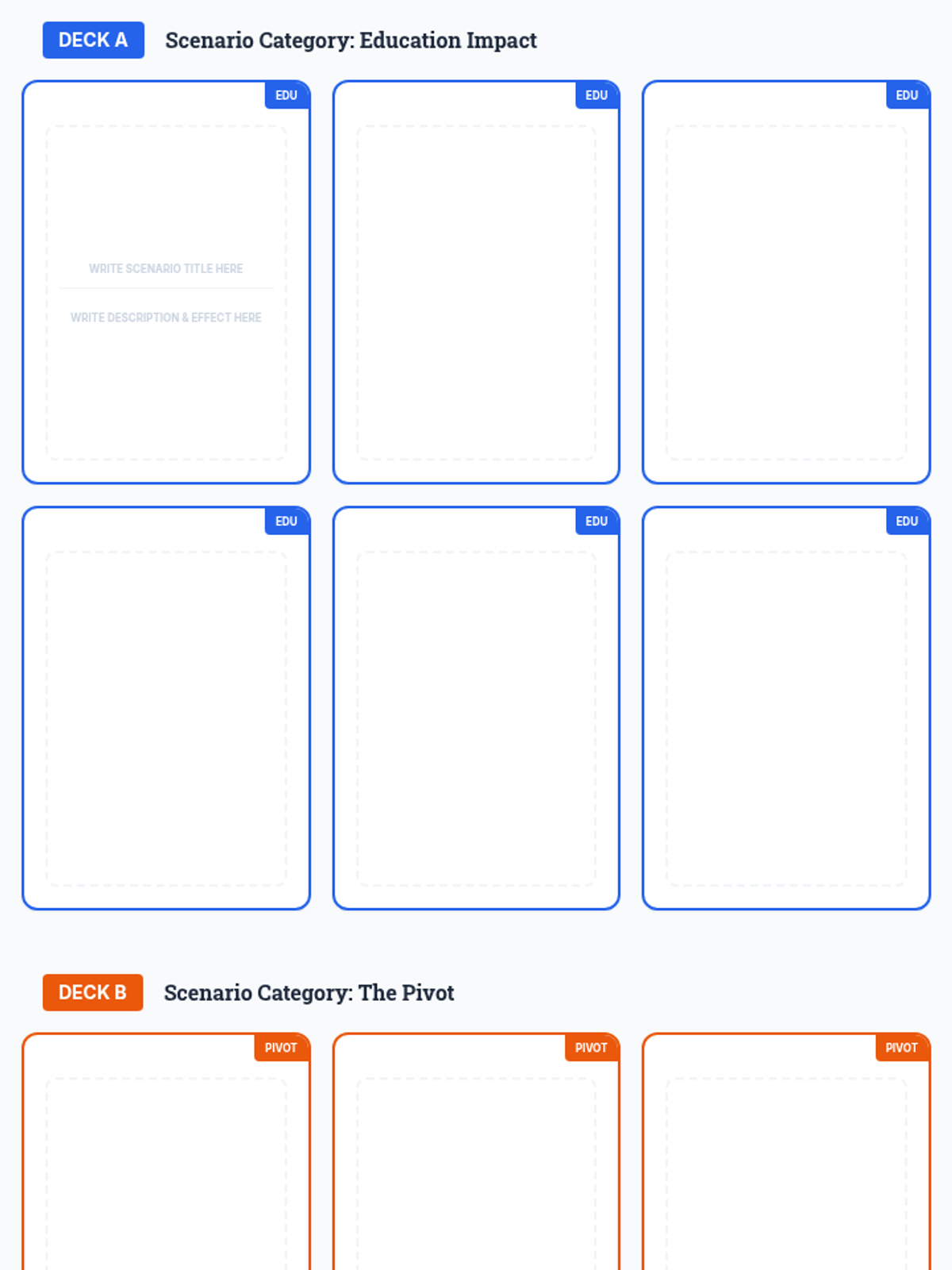
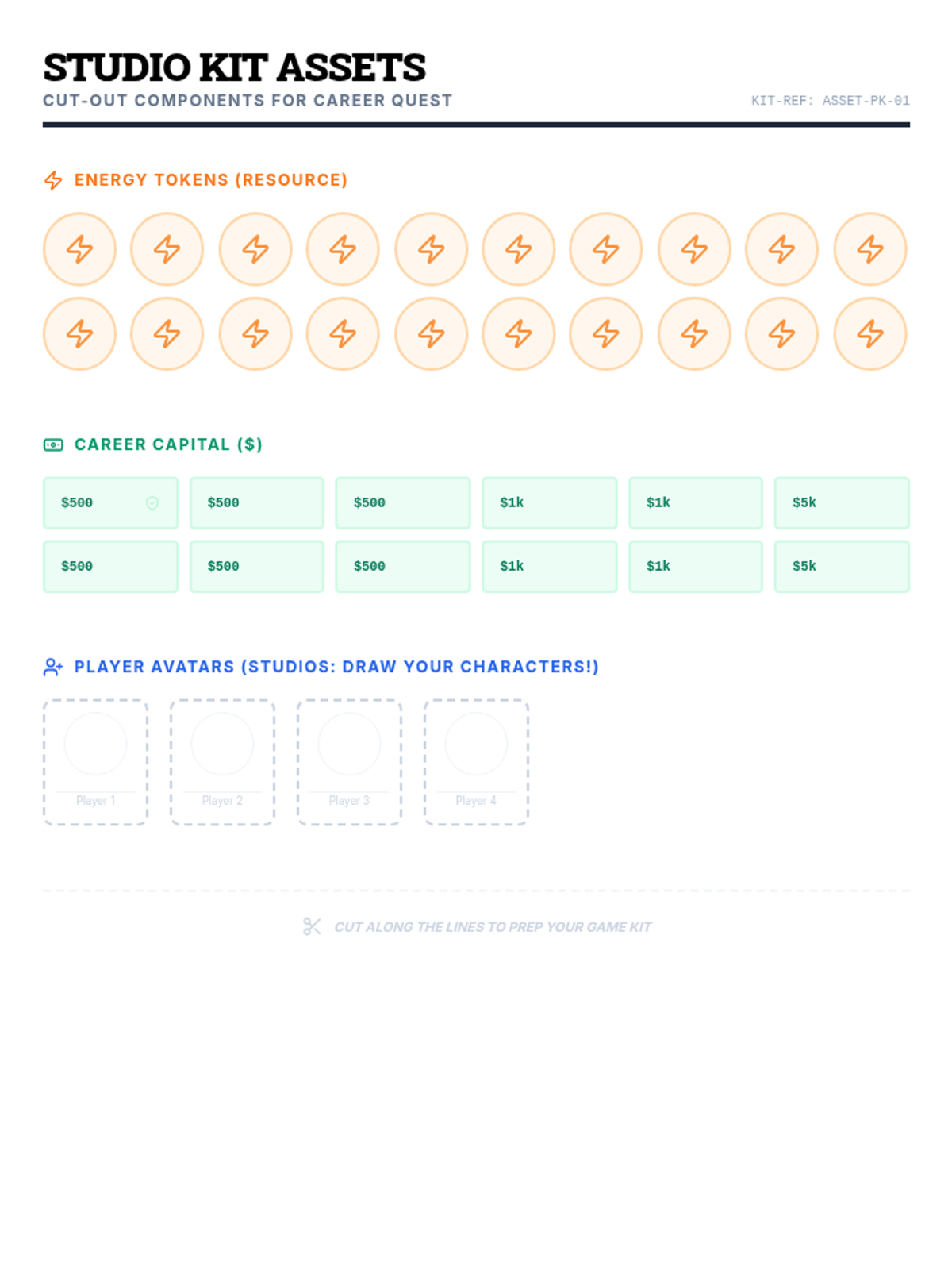
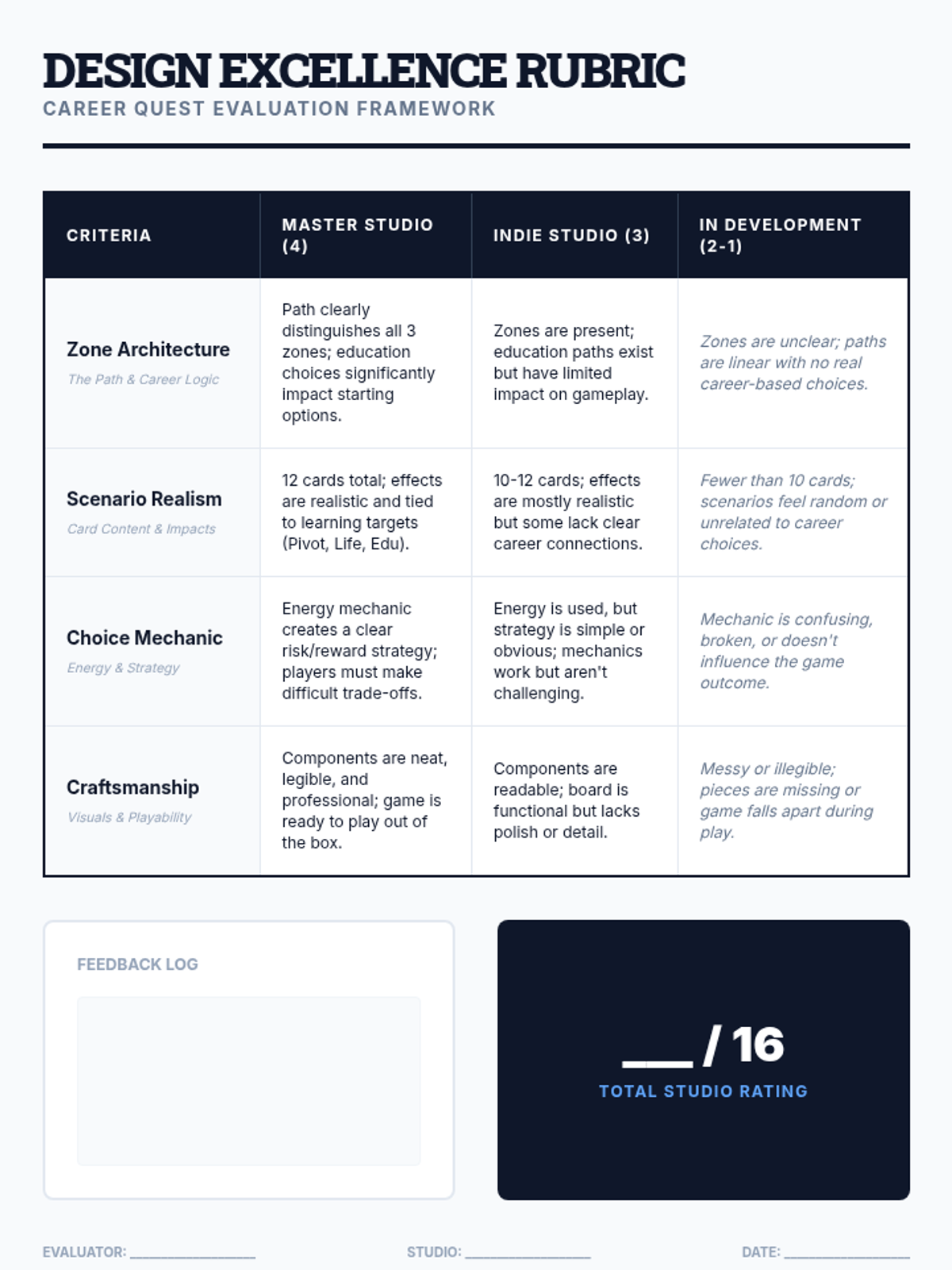
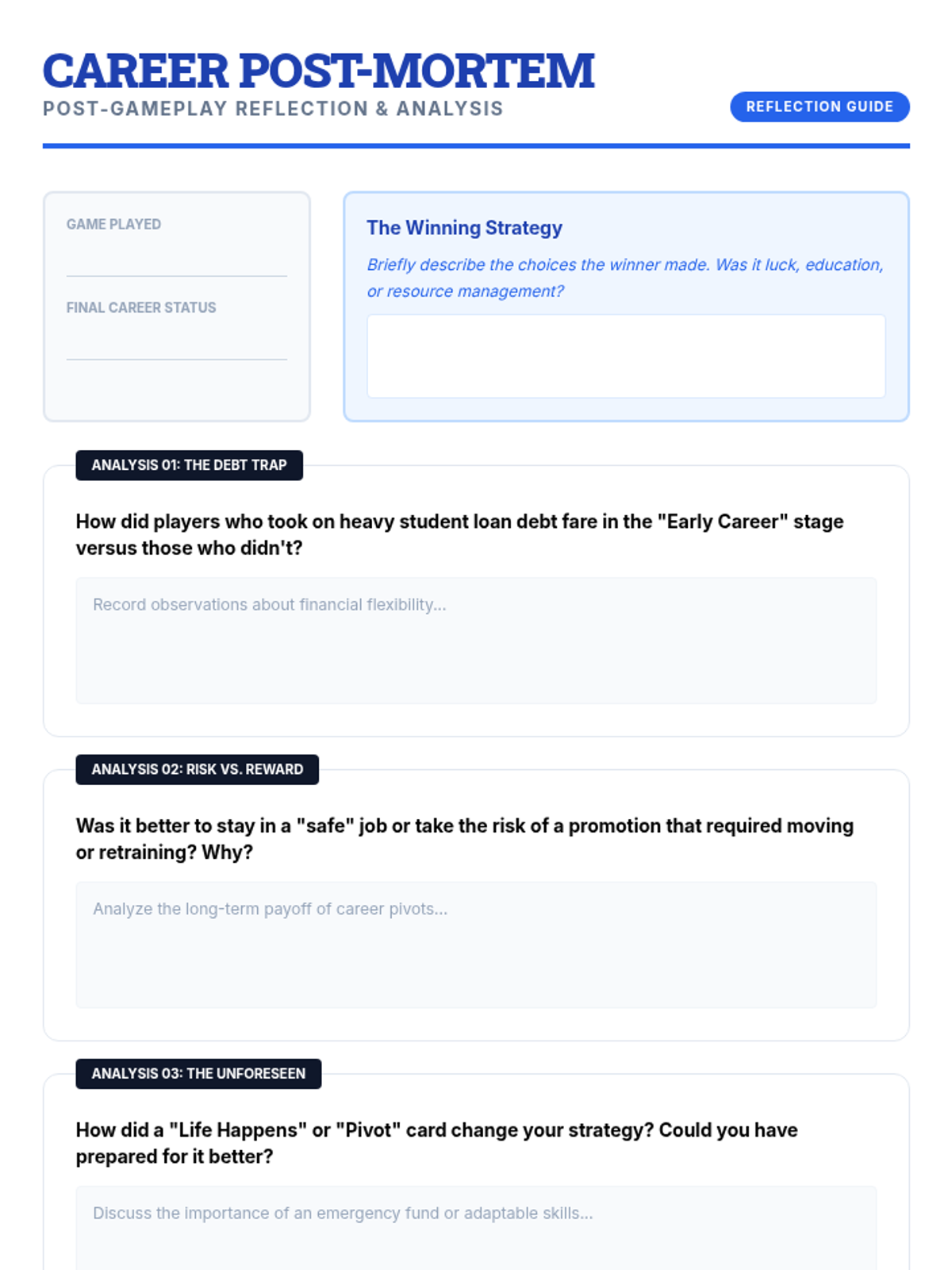
A multi-day project where students act as 'Development Studios' to design, build, and playtest their own career-themed board games, focusing on the impact of education and life choices on long-term outcomes.
This lesson covers the essential components of college financial aid, focusing on the differences between gift aid, work-study, and loans, with a deep dive into federal loan structures.
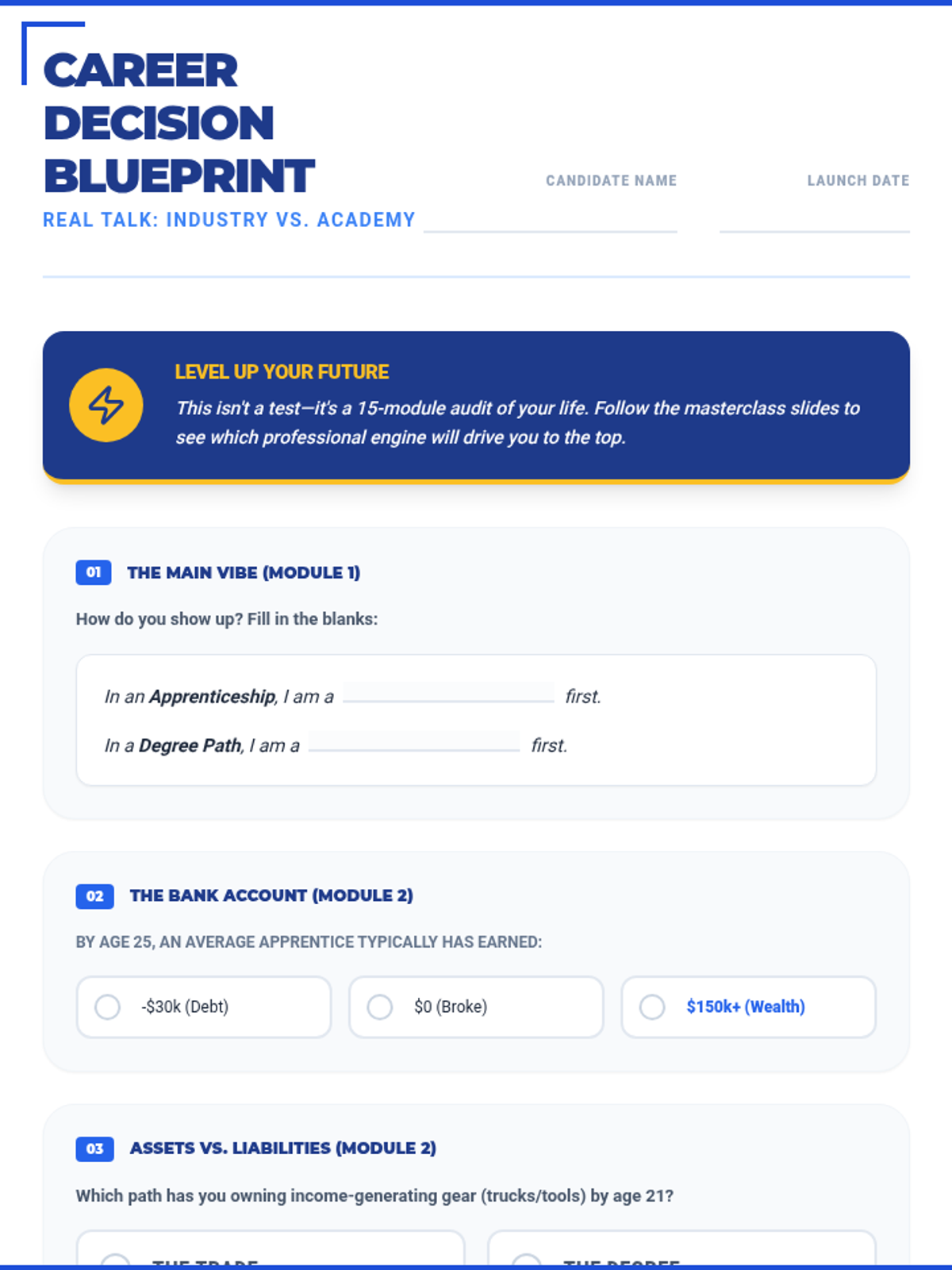
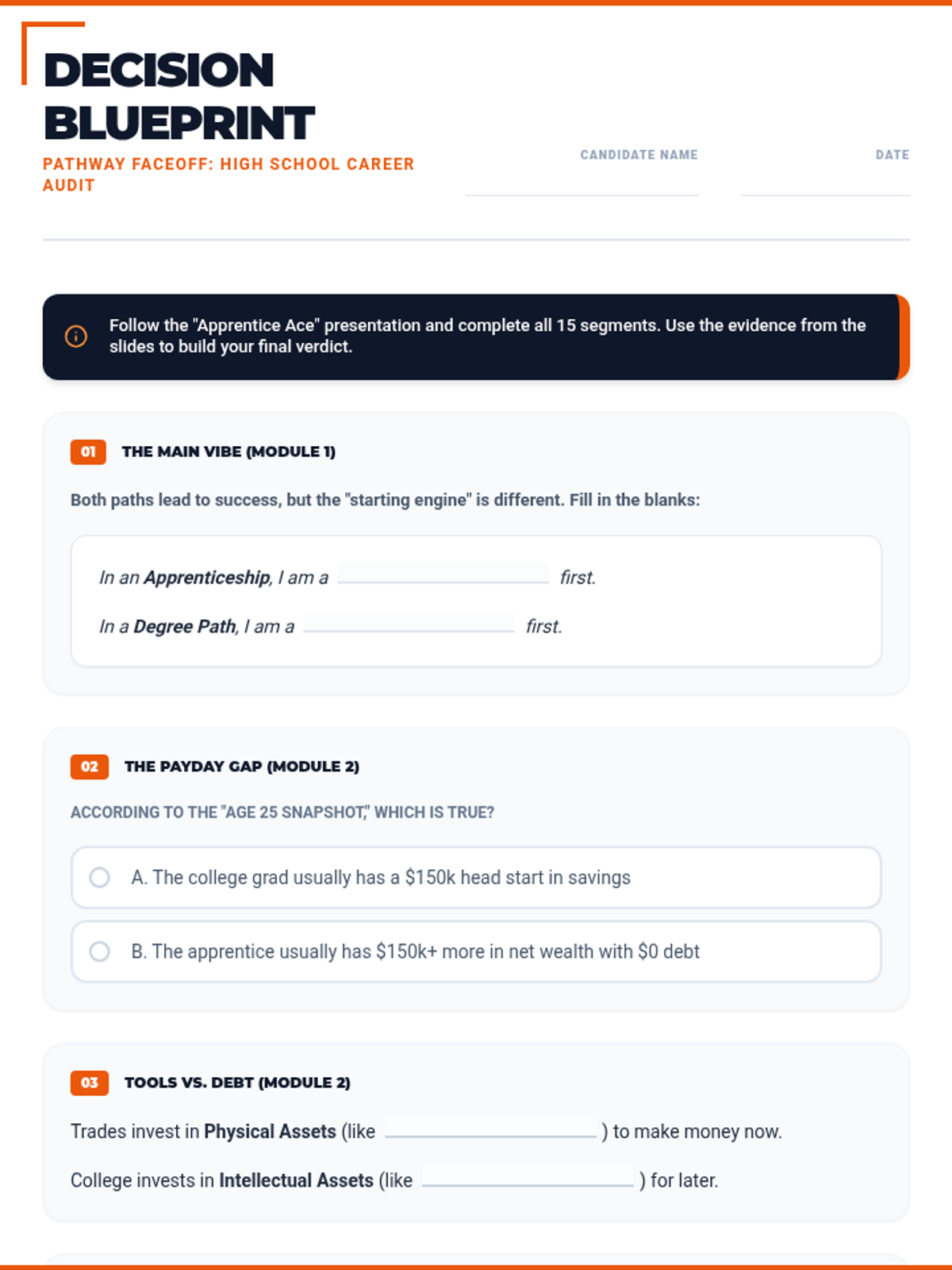
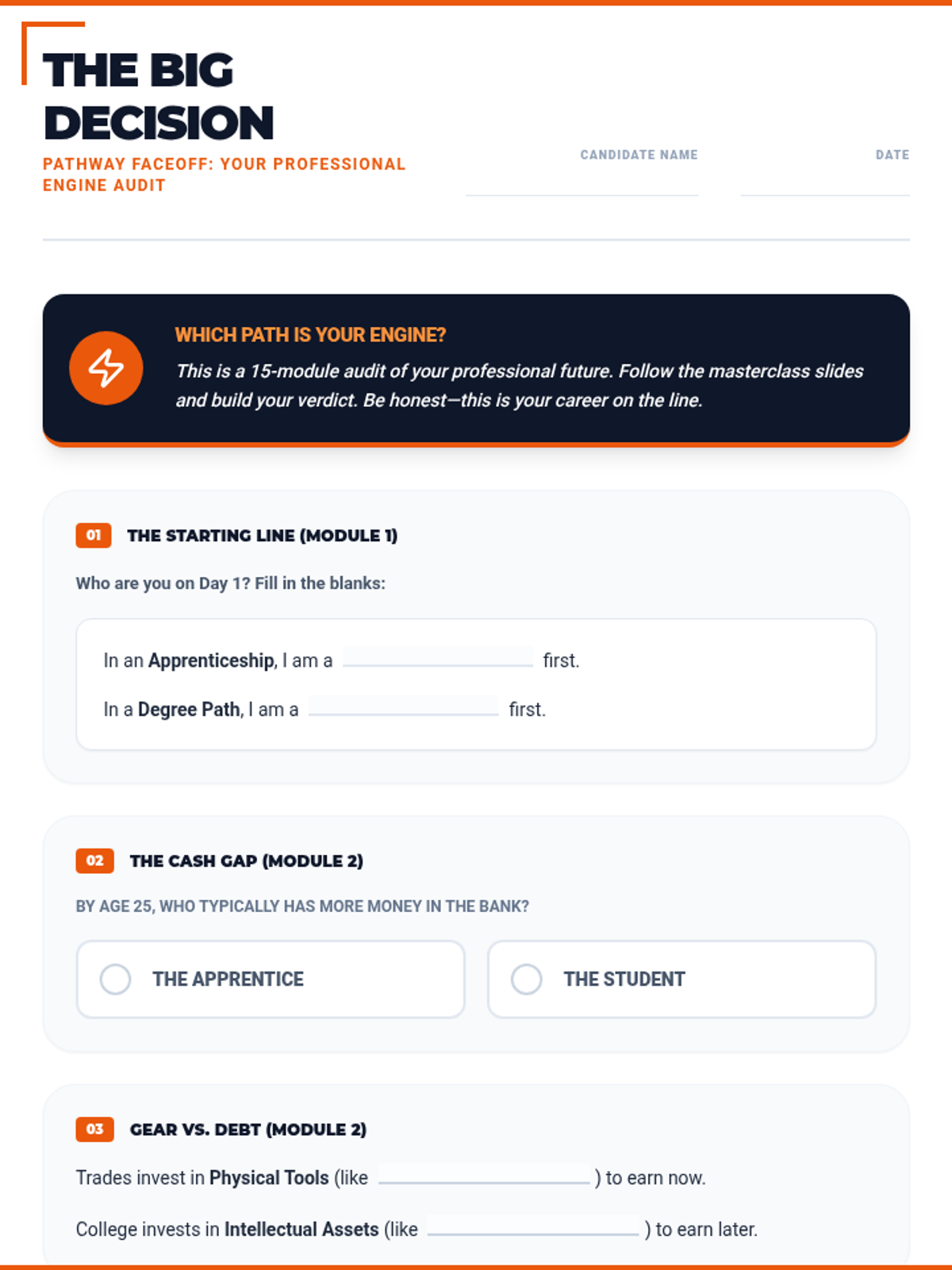
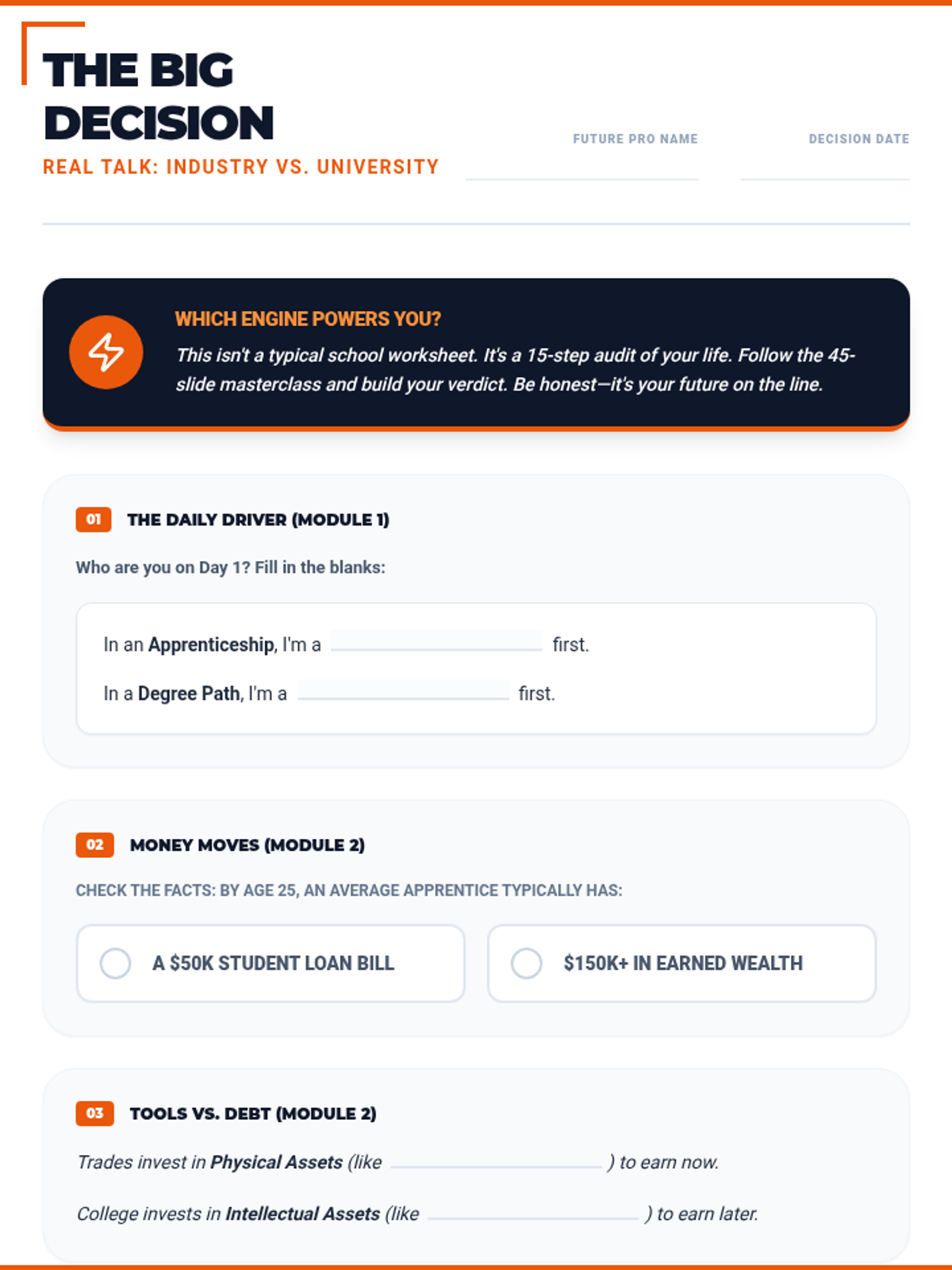
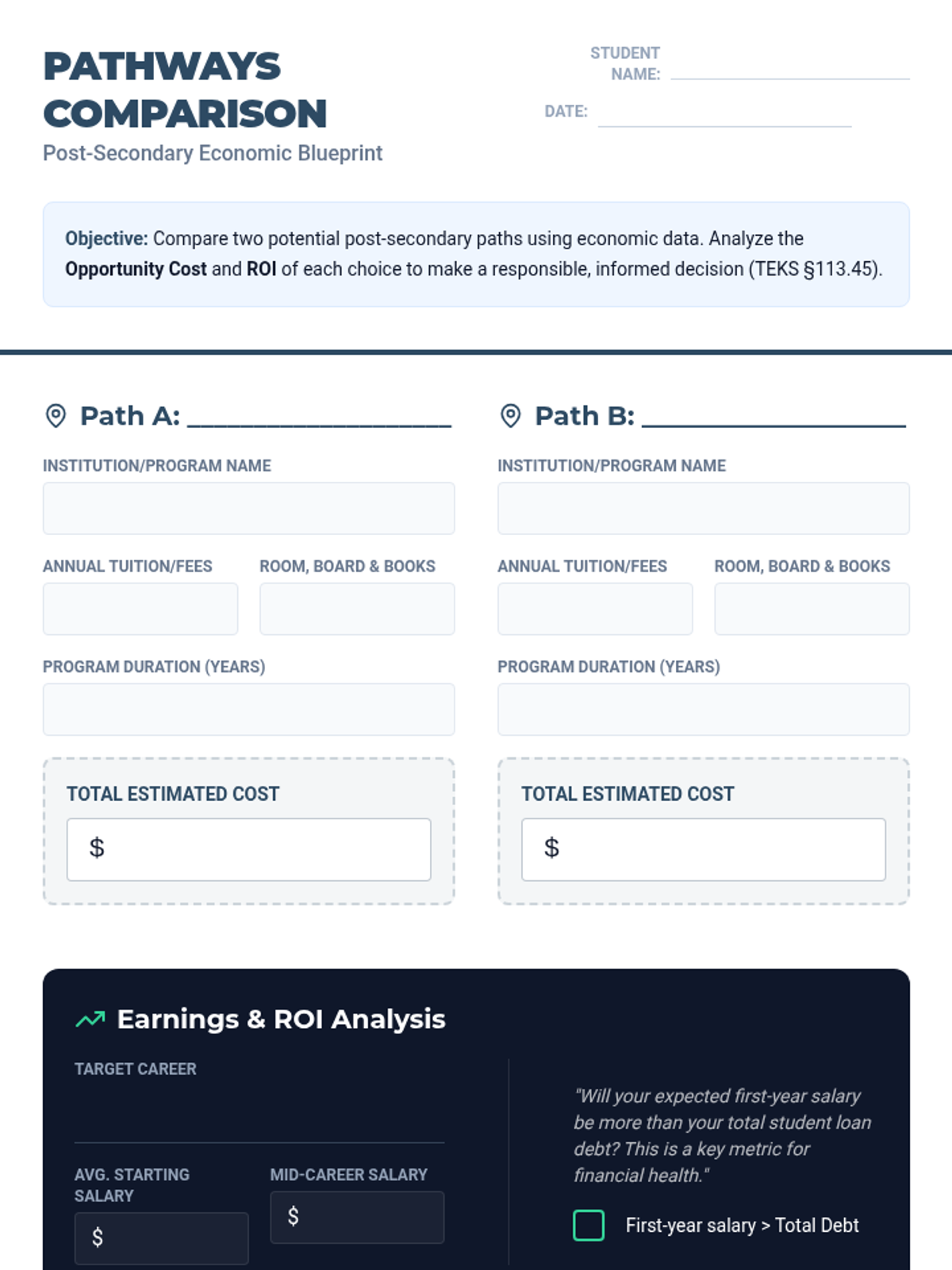
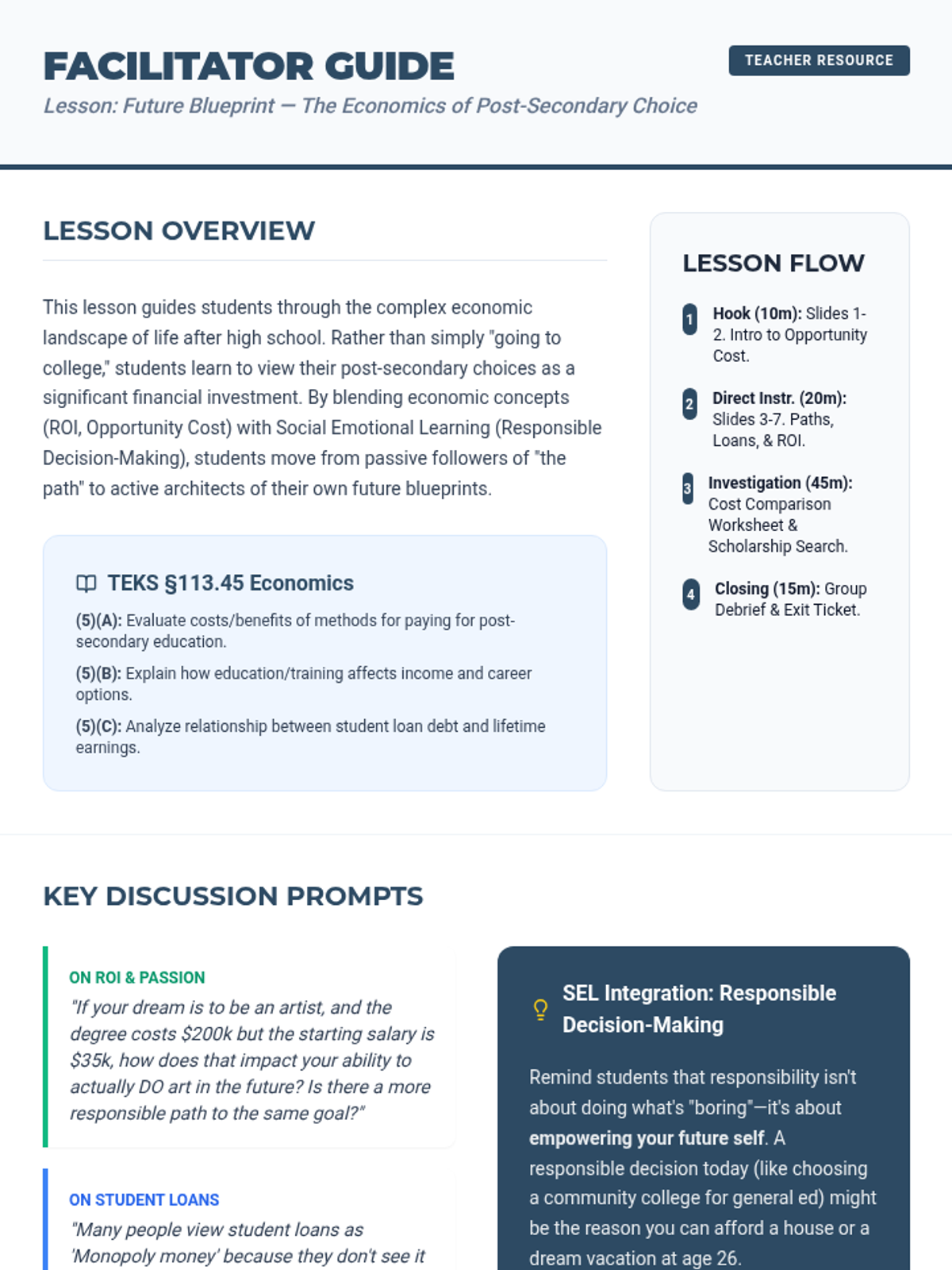
A comprehensive lesson for high school students on the economics of post-secondary choices, covering college costs, ROI for various paths, student loans, and budgeting for the future. Includes SEL components for responsible decision-making.
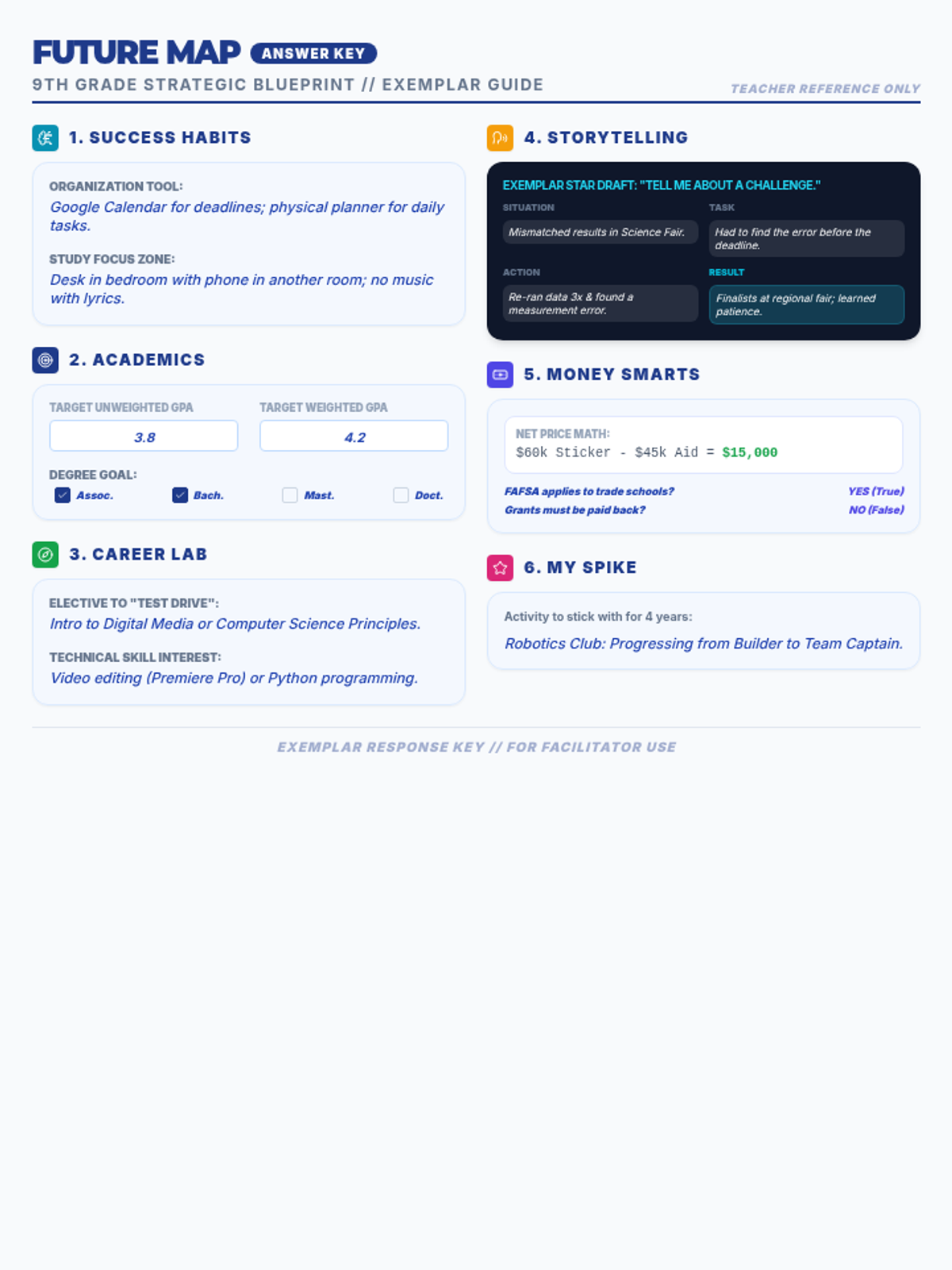
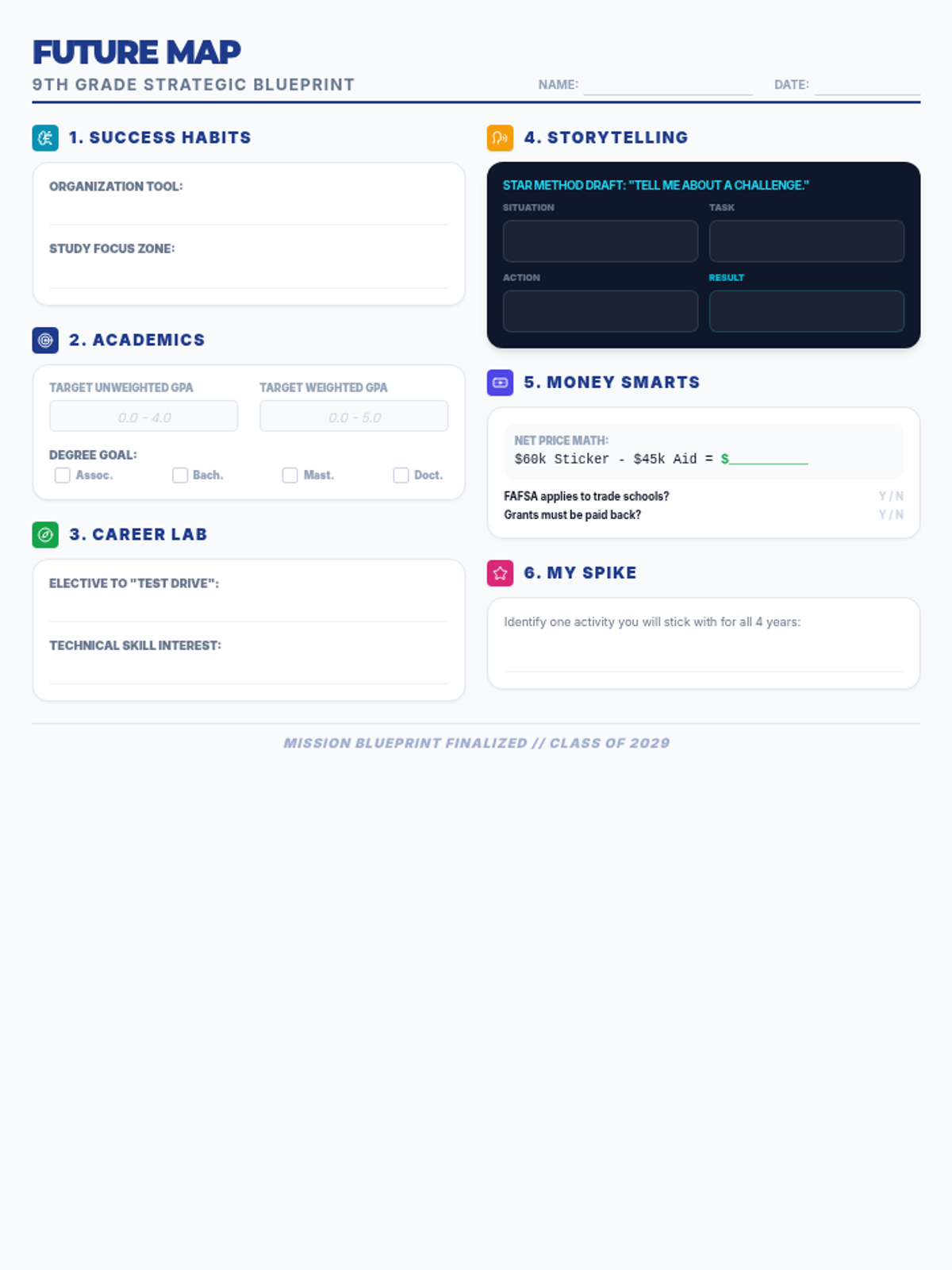
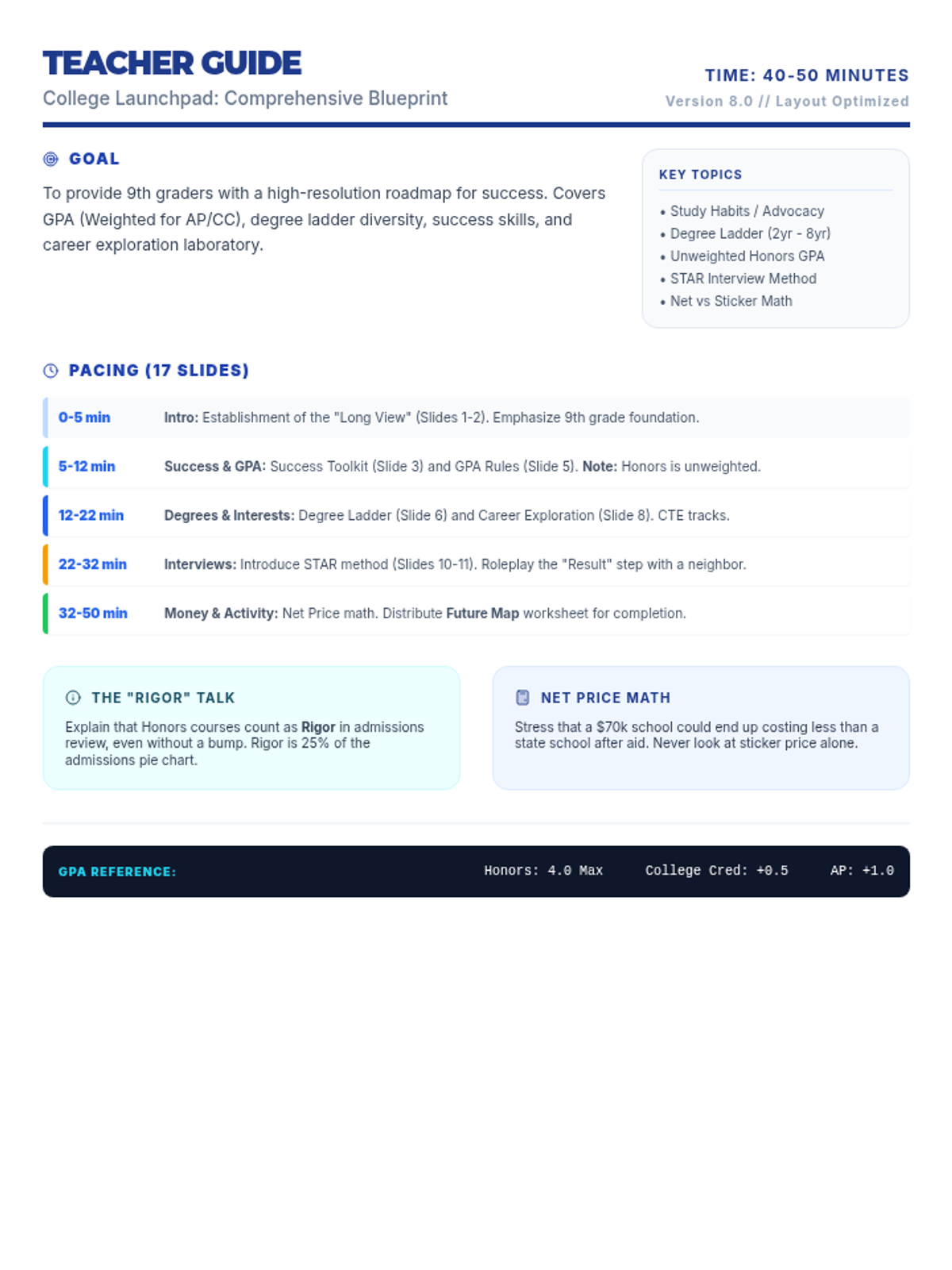
An introductory lesson for 9th graders to understand high school academics, college entrance requirements, and the basics of financial aid including GPA, FAFSA, and scholarships.
An introductory lesson for 9th graders to understand high school academics, college and career pathways, entrance requirements, and the basics of financial aid including GPA, FAFSA, and scholarships.
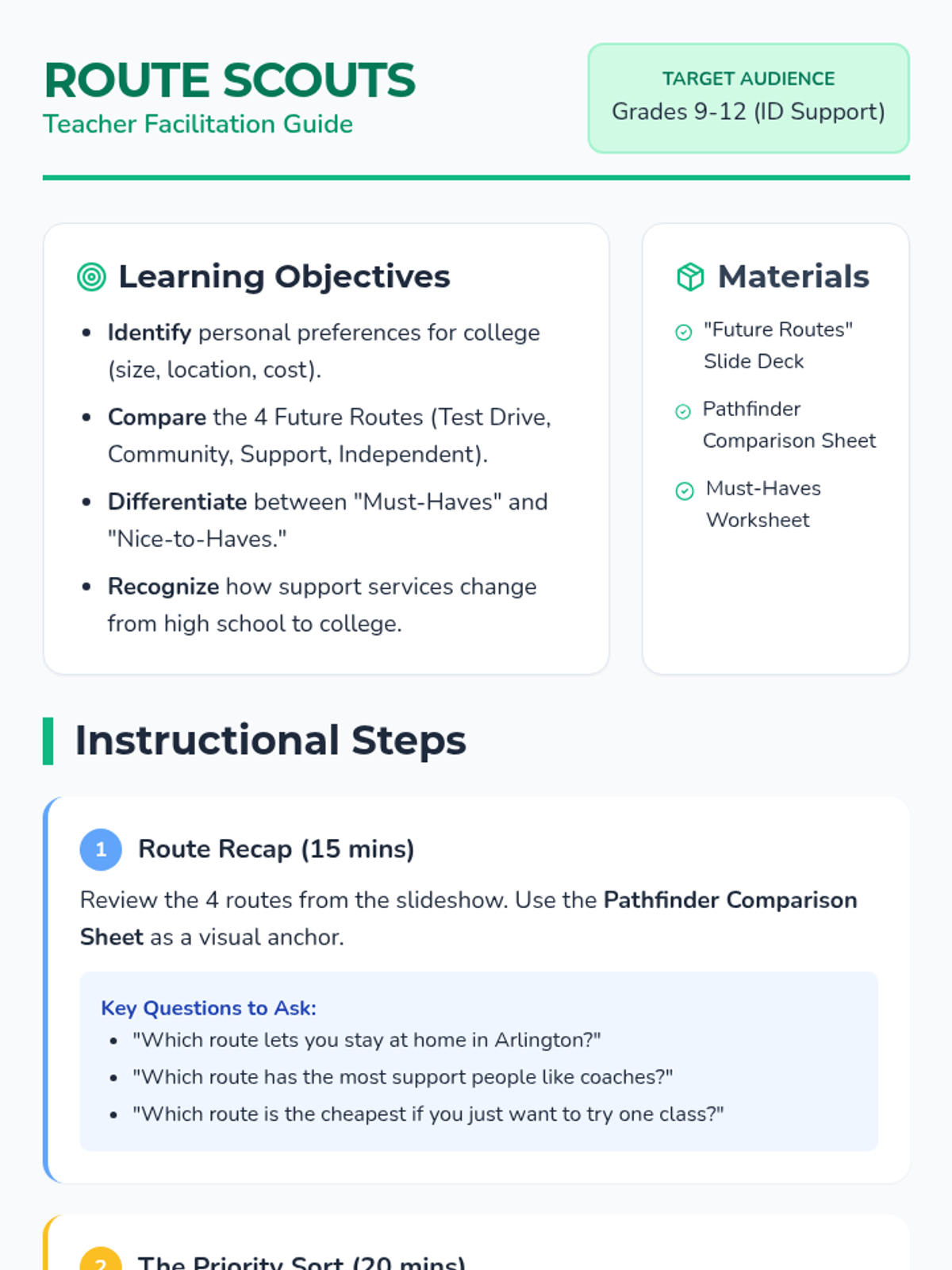
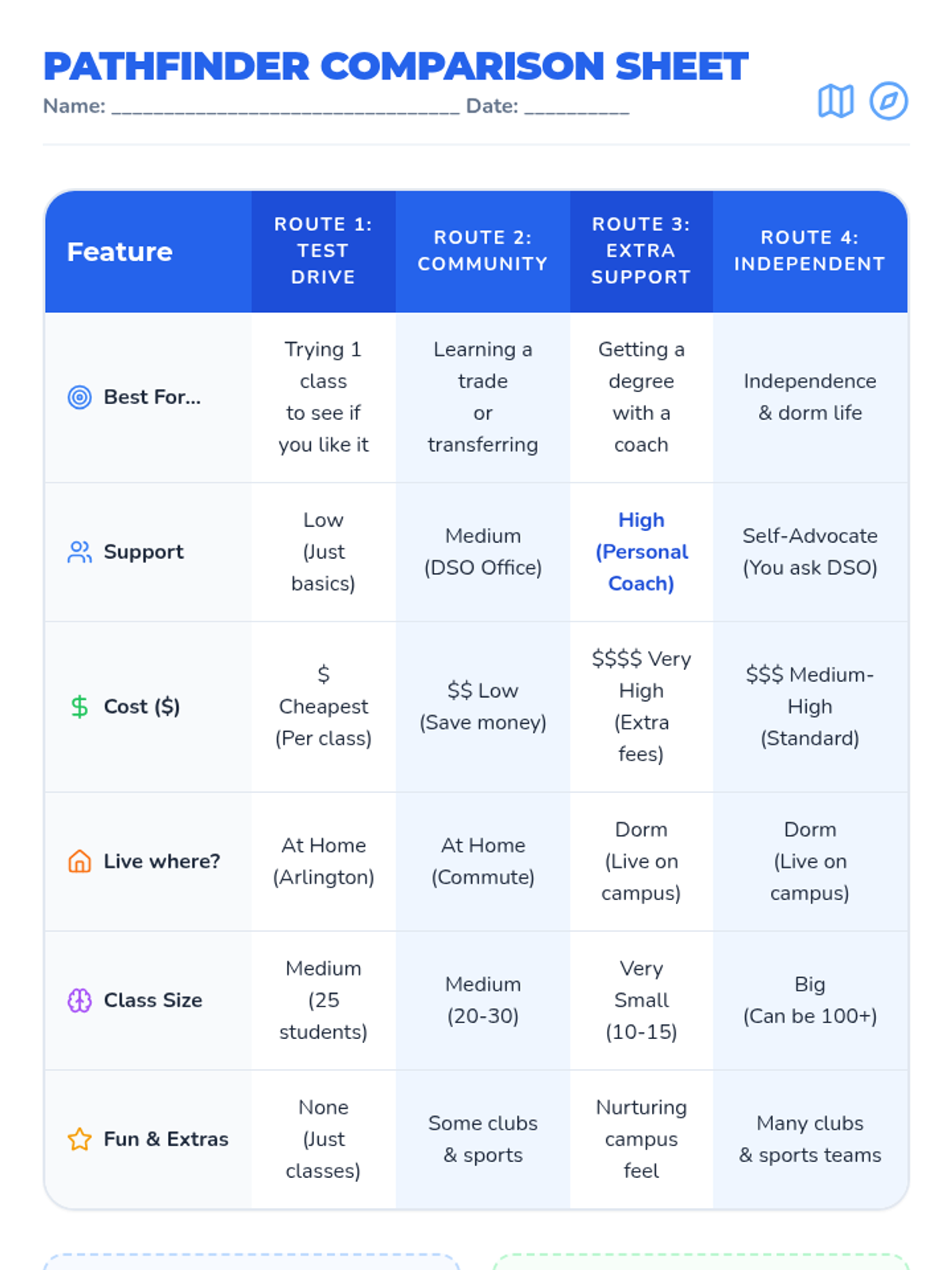
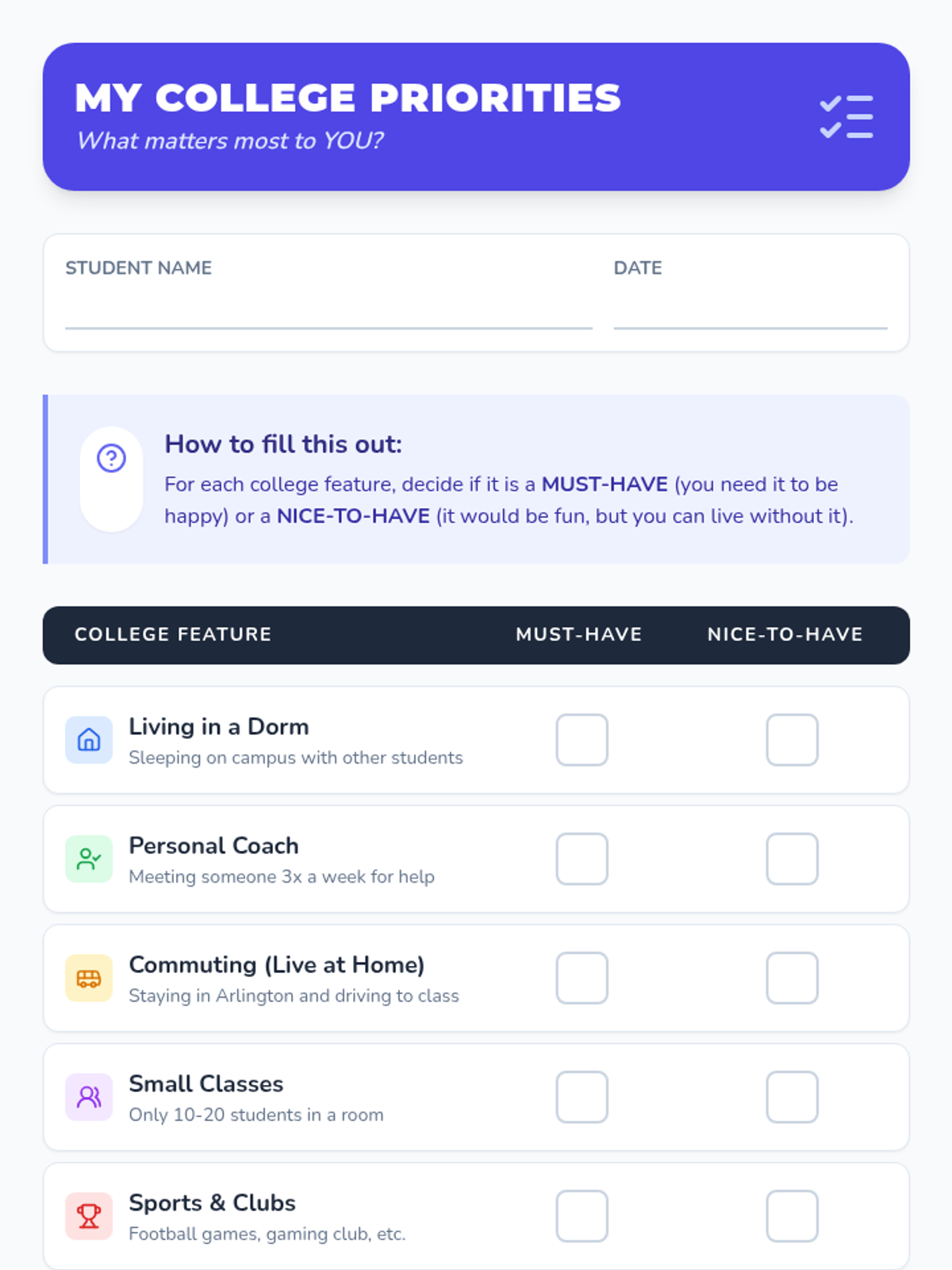
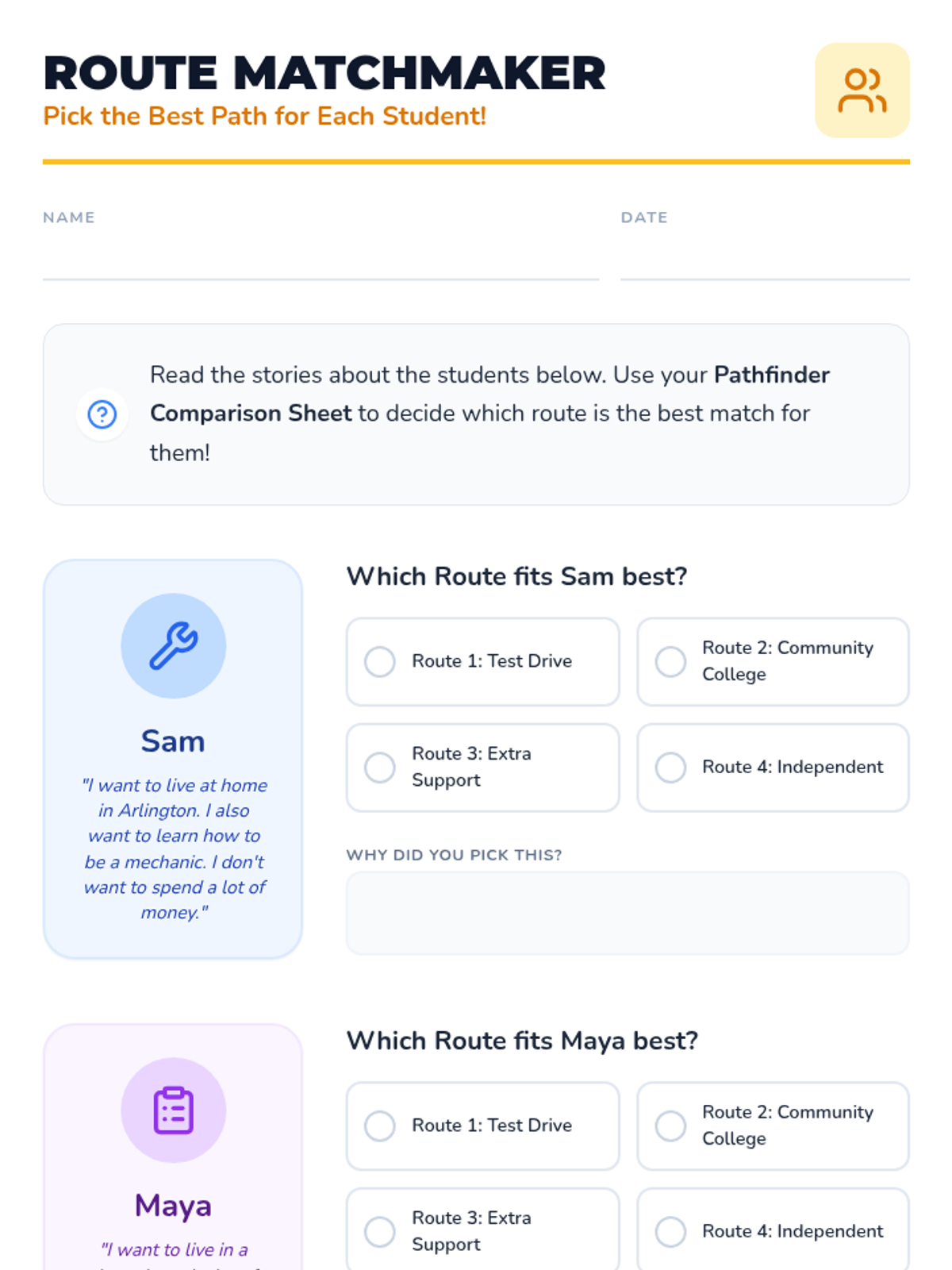
A comprehensive lesson for high school students with intellectual disabilities to explore and compare post-secondary education routes, focusing on personal preferences, support needs, and practical considerations like cost and location.
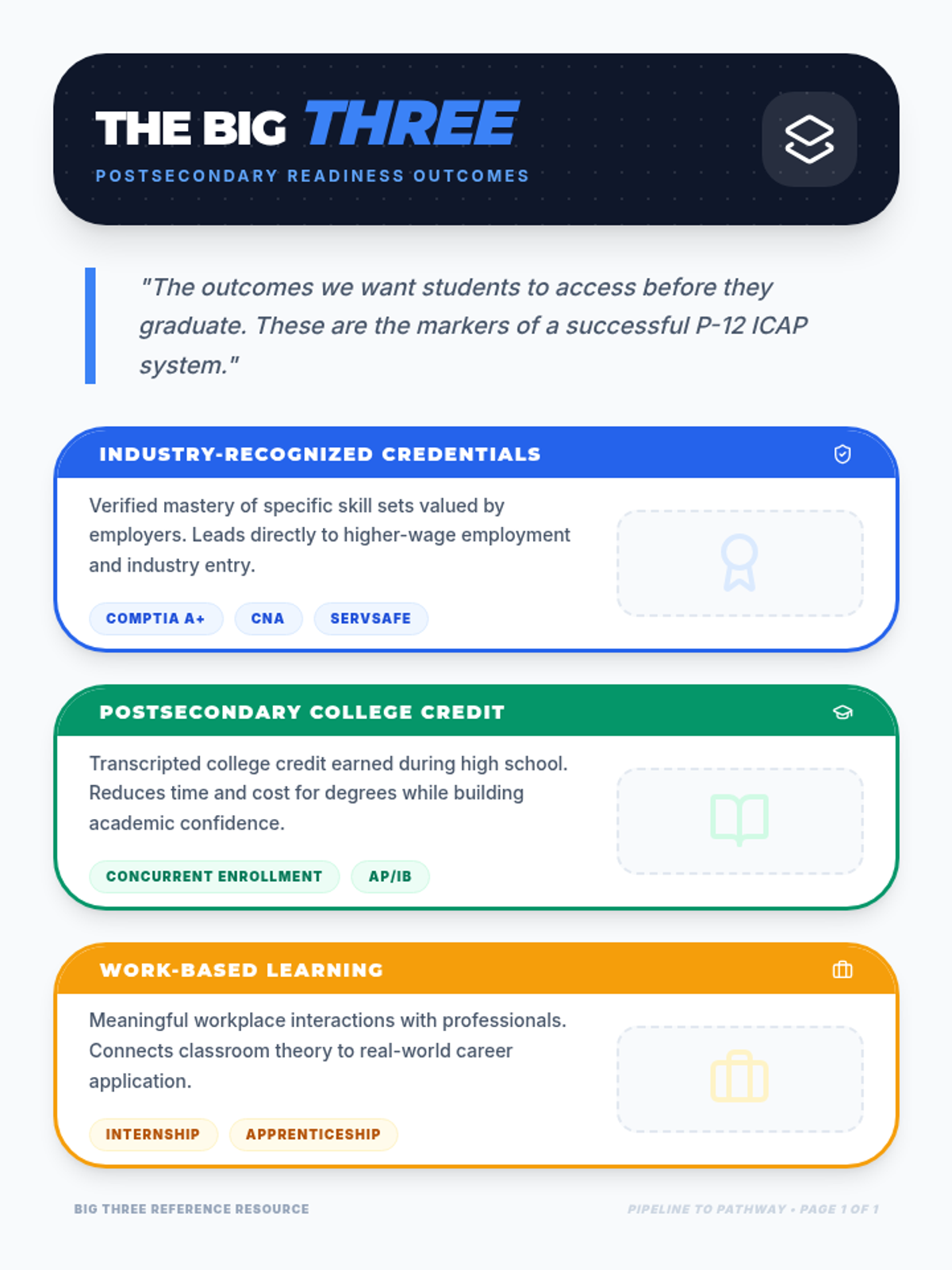
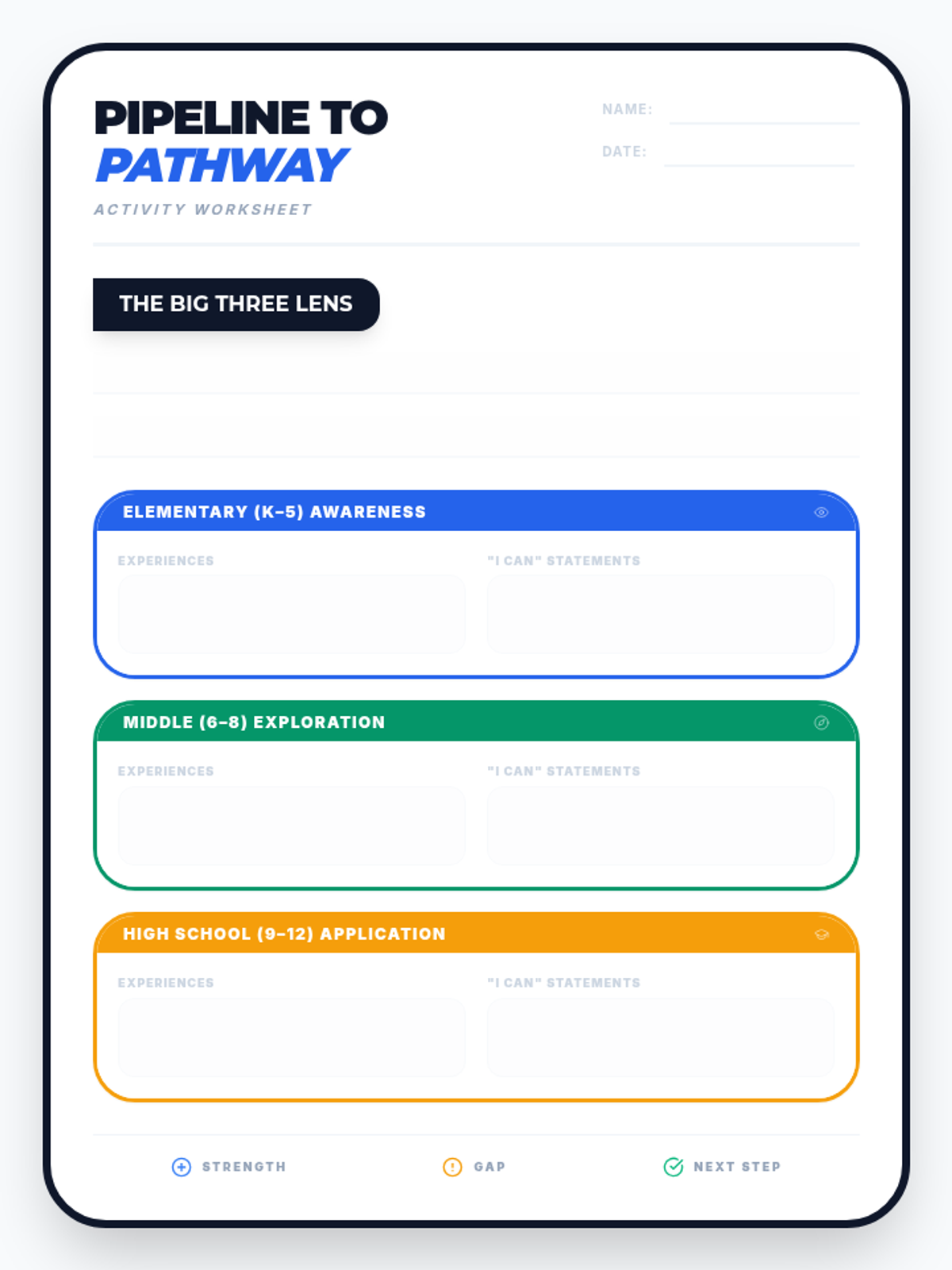
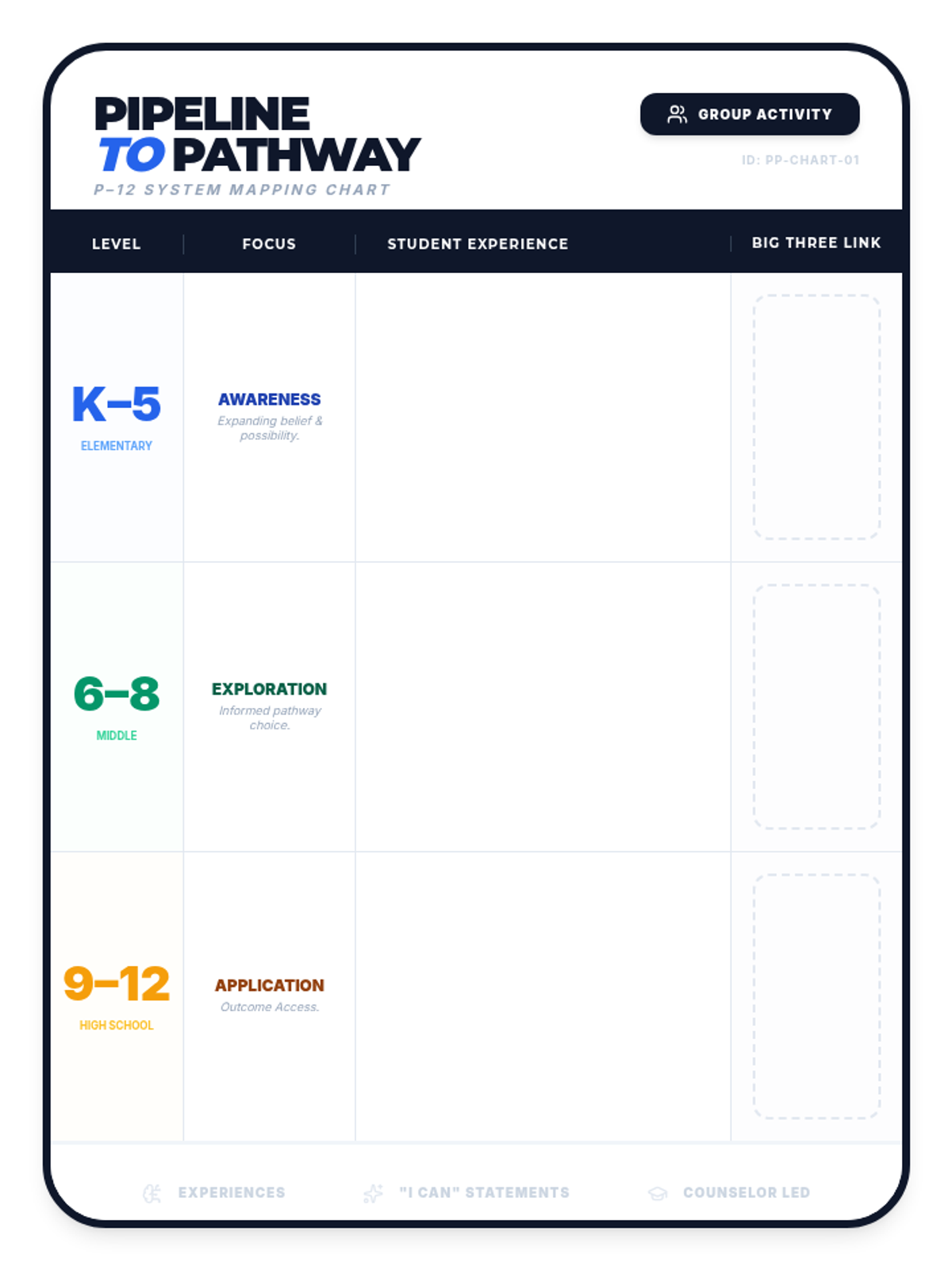
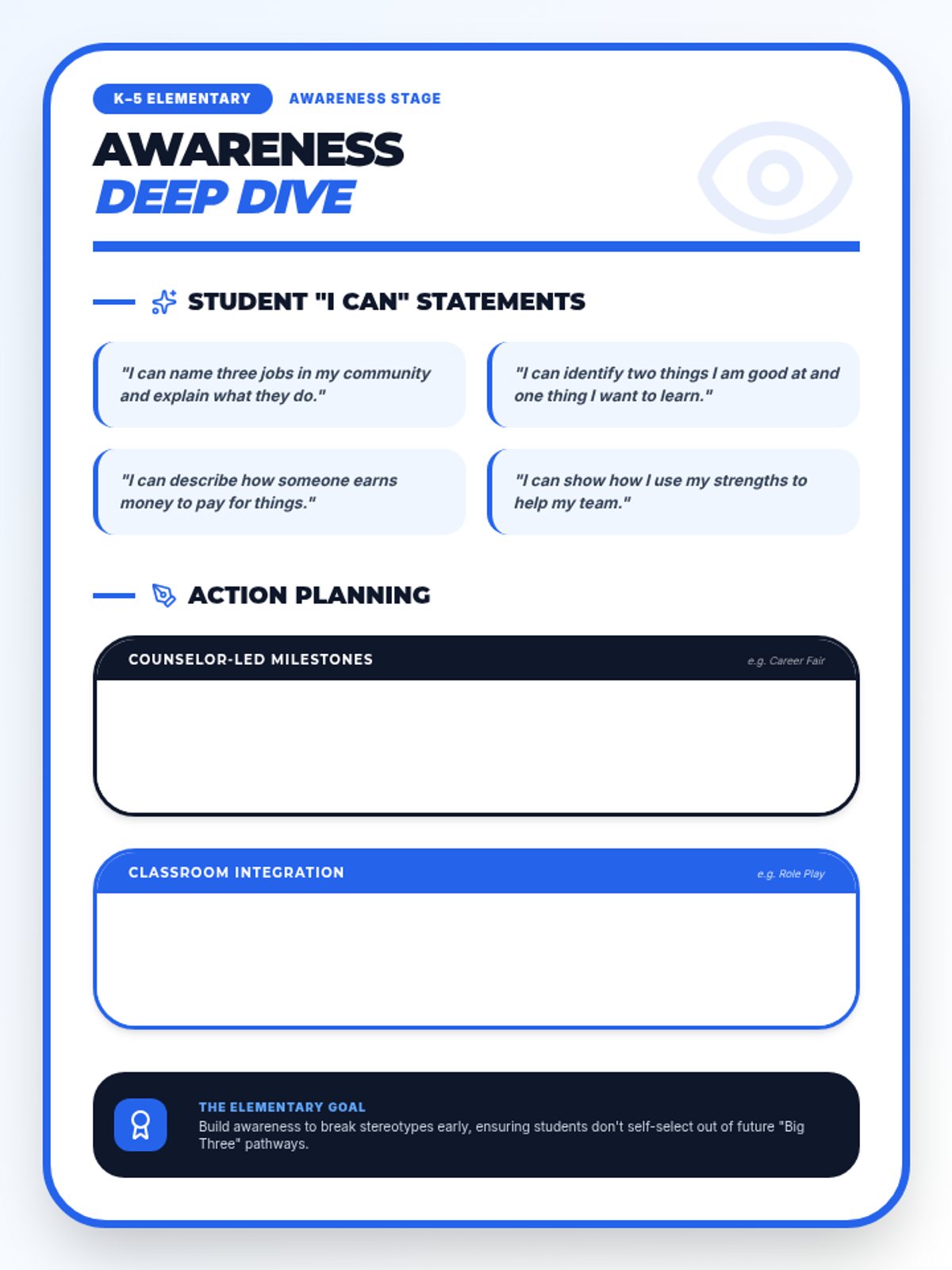
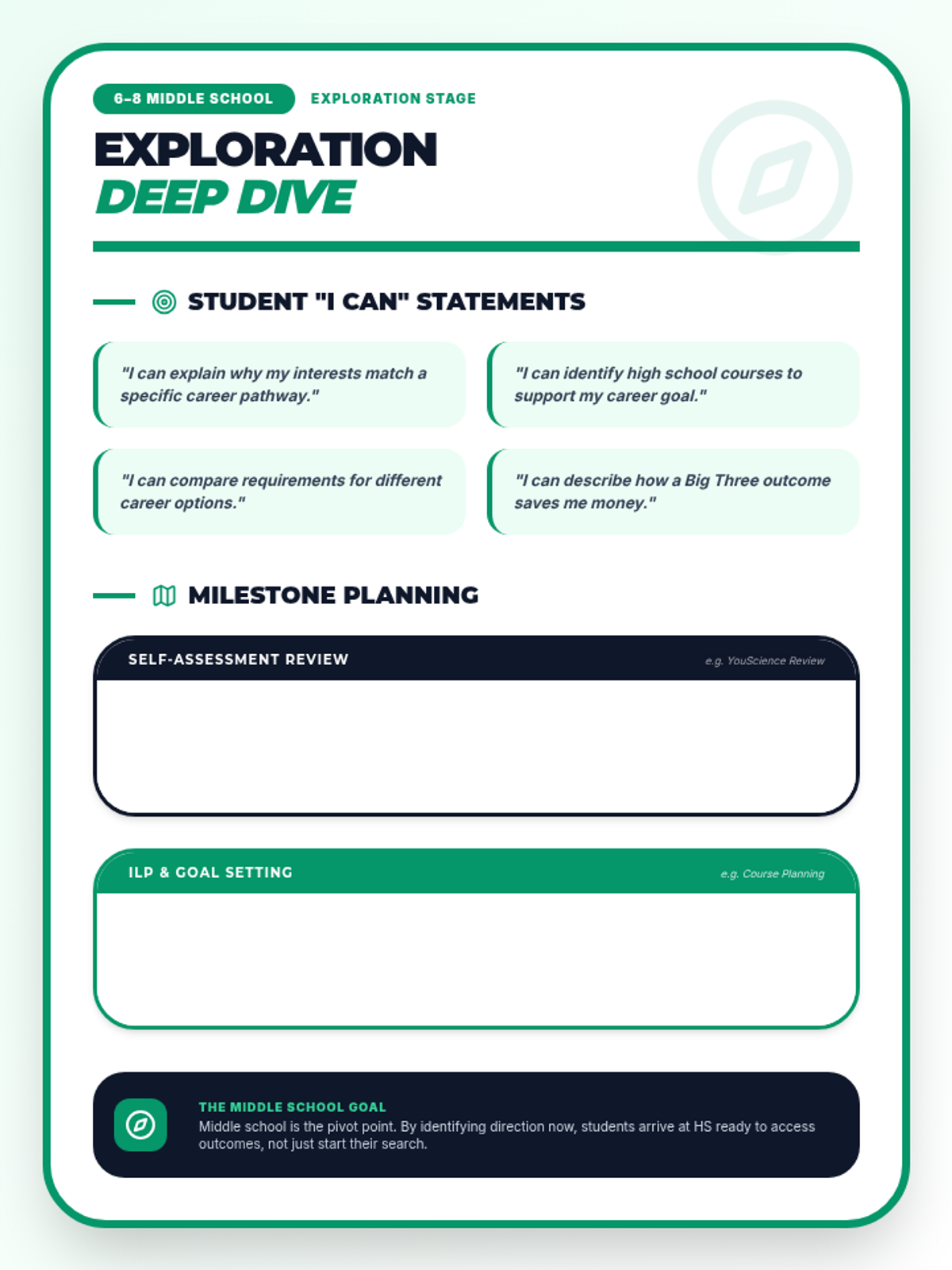
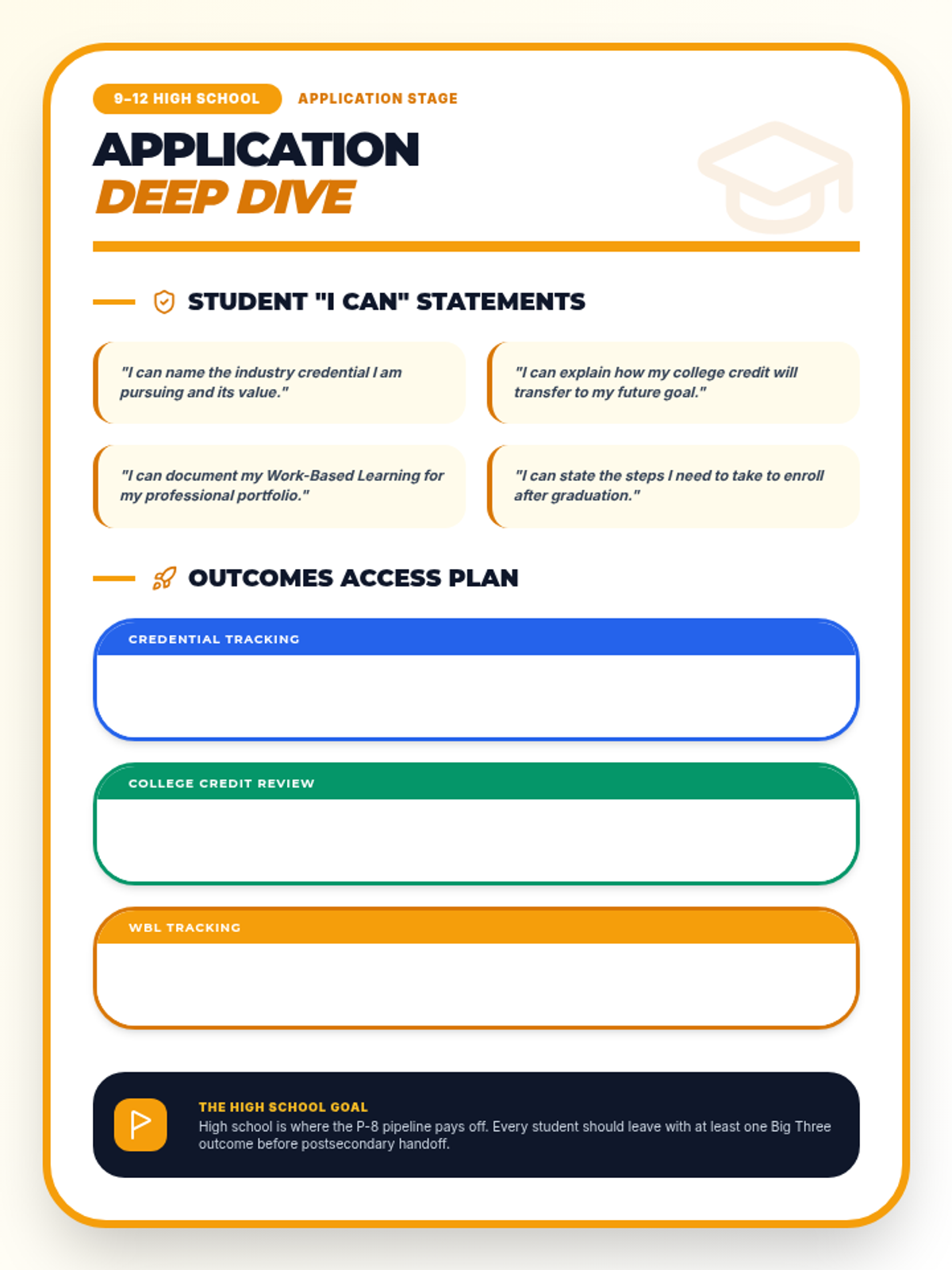
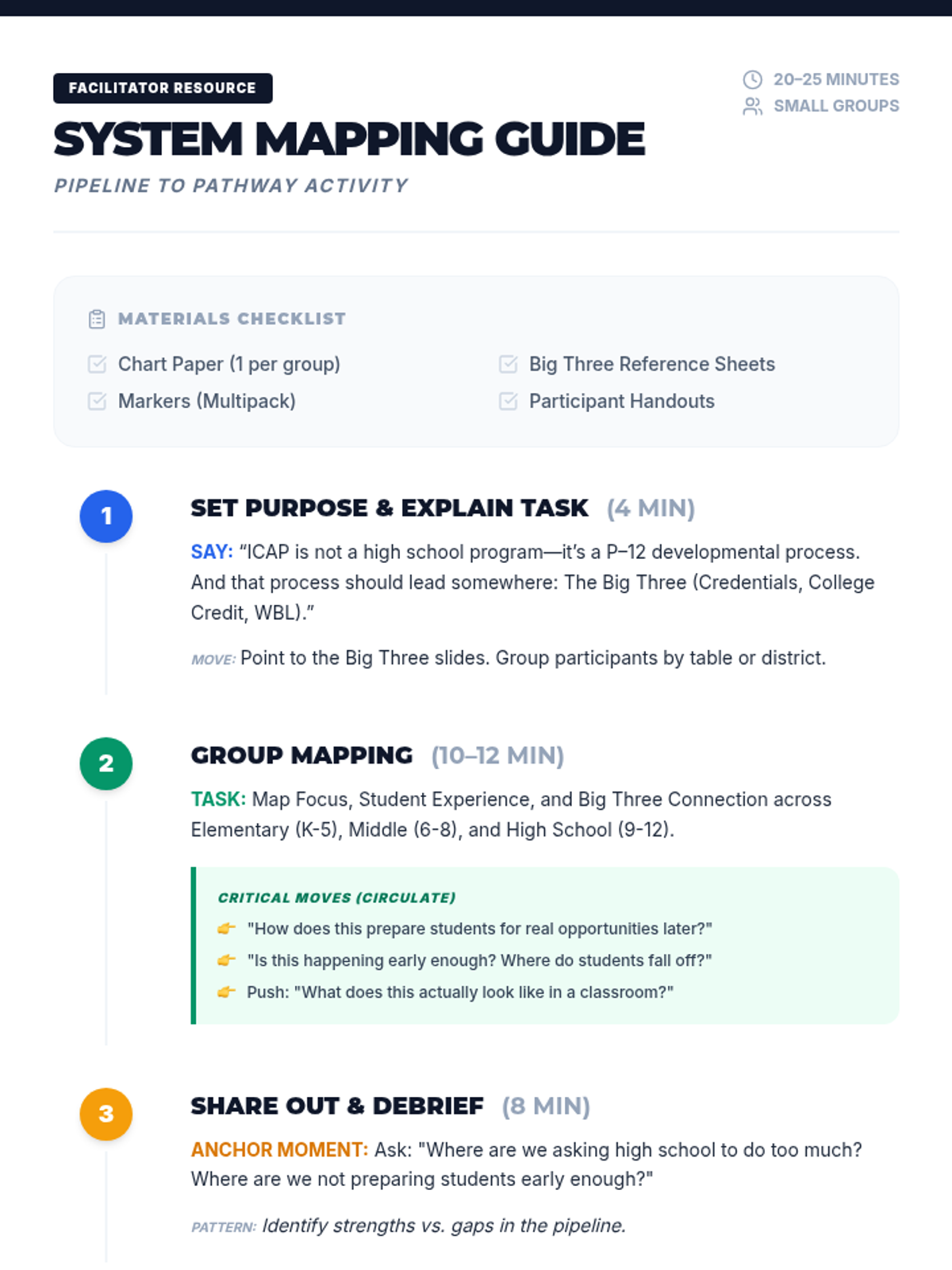
A collaborative workshop session where educators map out the developmental stages of a student's journey from elementary awareness to high school application and outcome access.
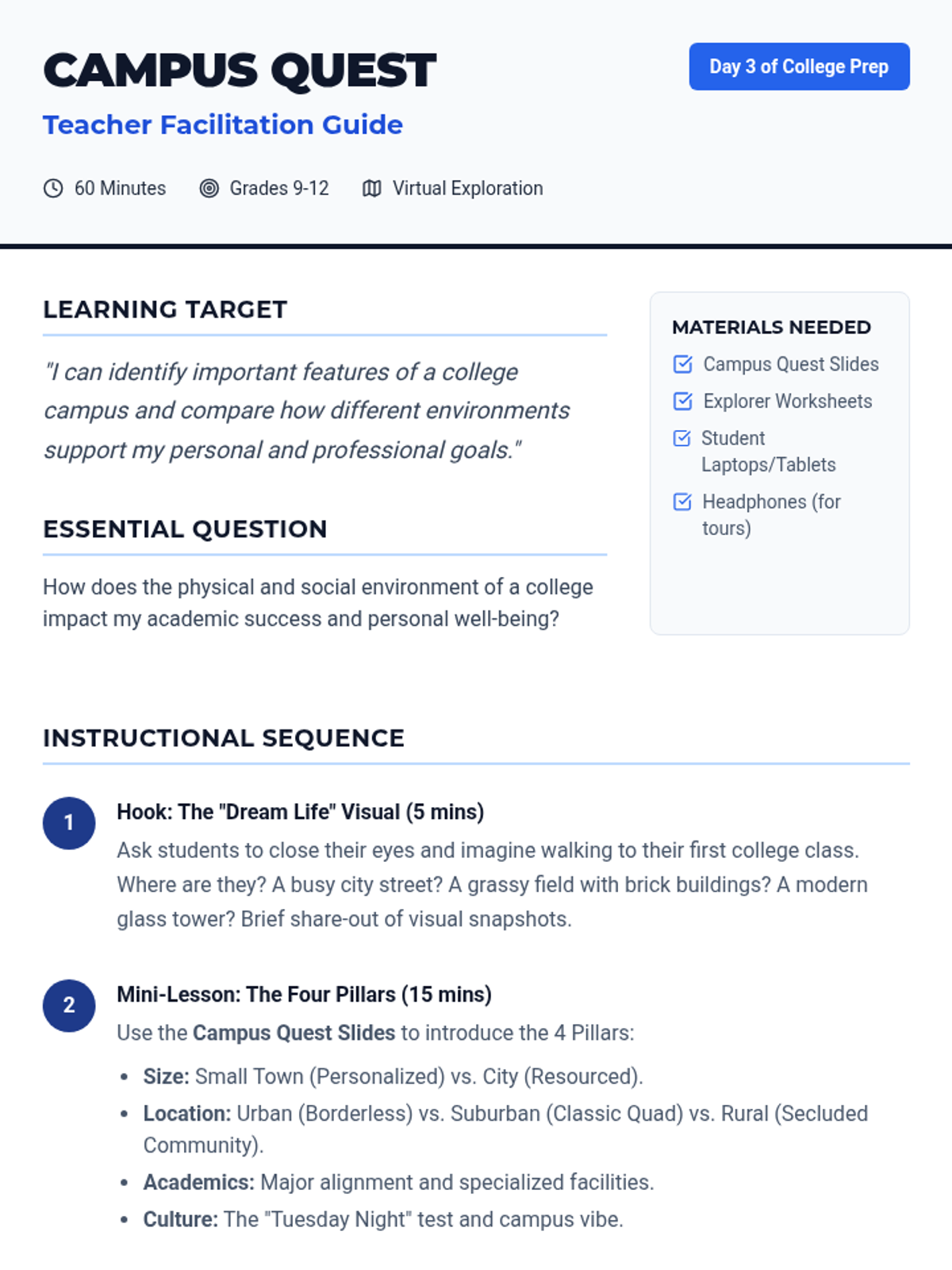
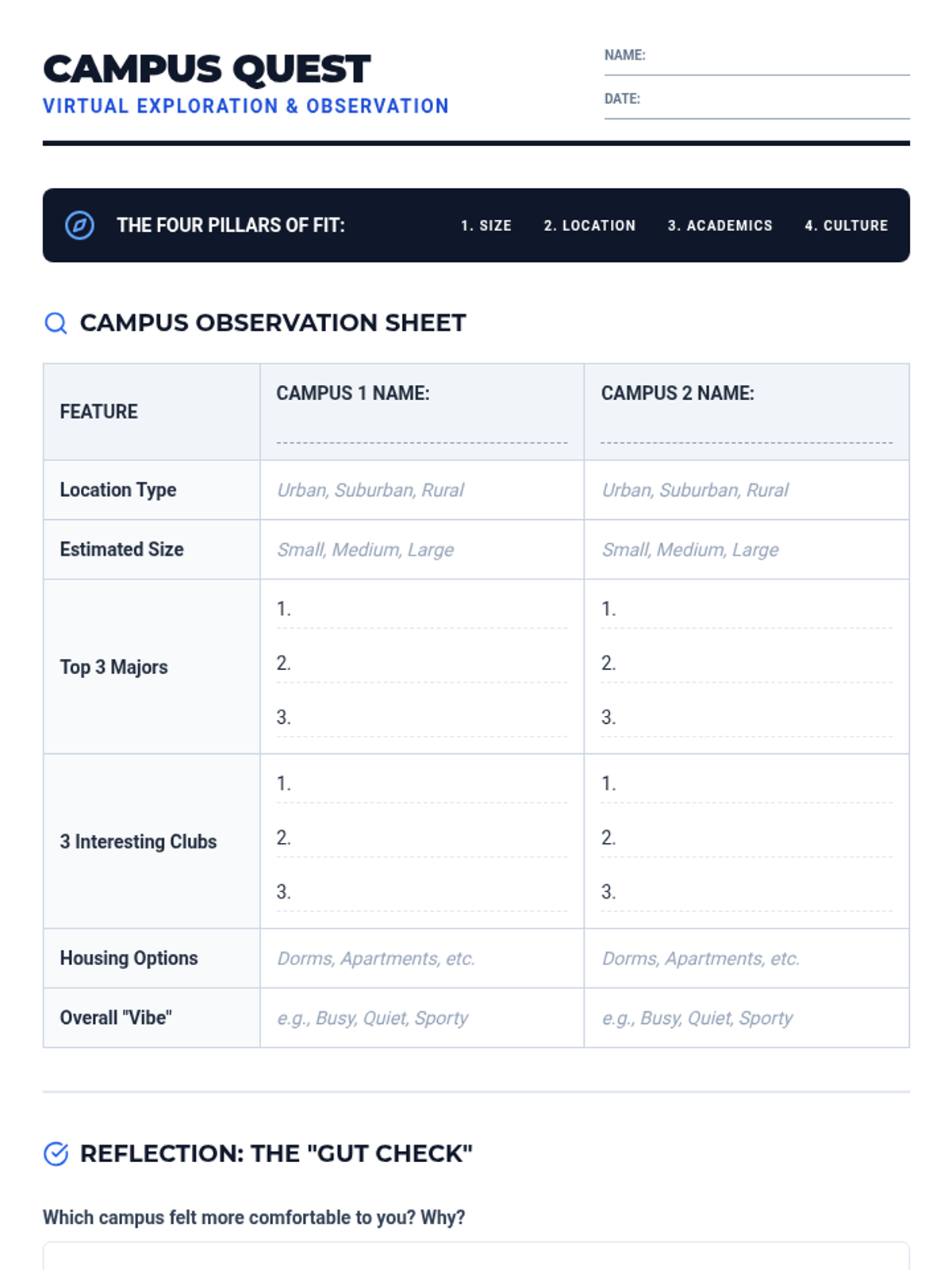
A lesson focused on exploring college campuses virtually to identify key features such as size, location, and culture to find the right fit for personal and professional goals.
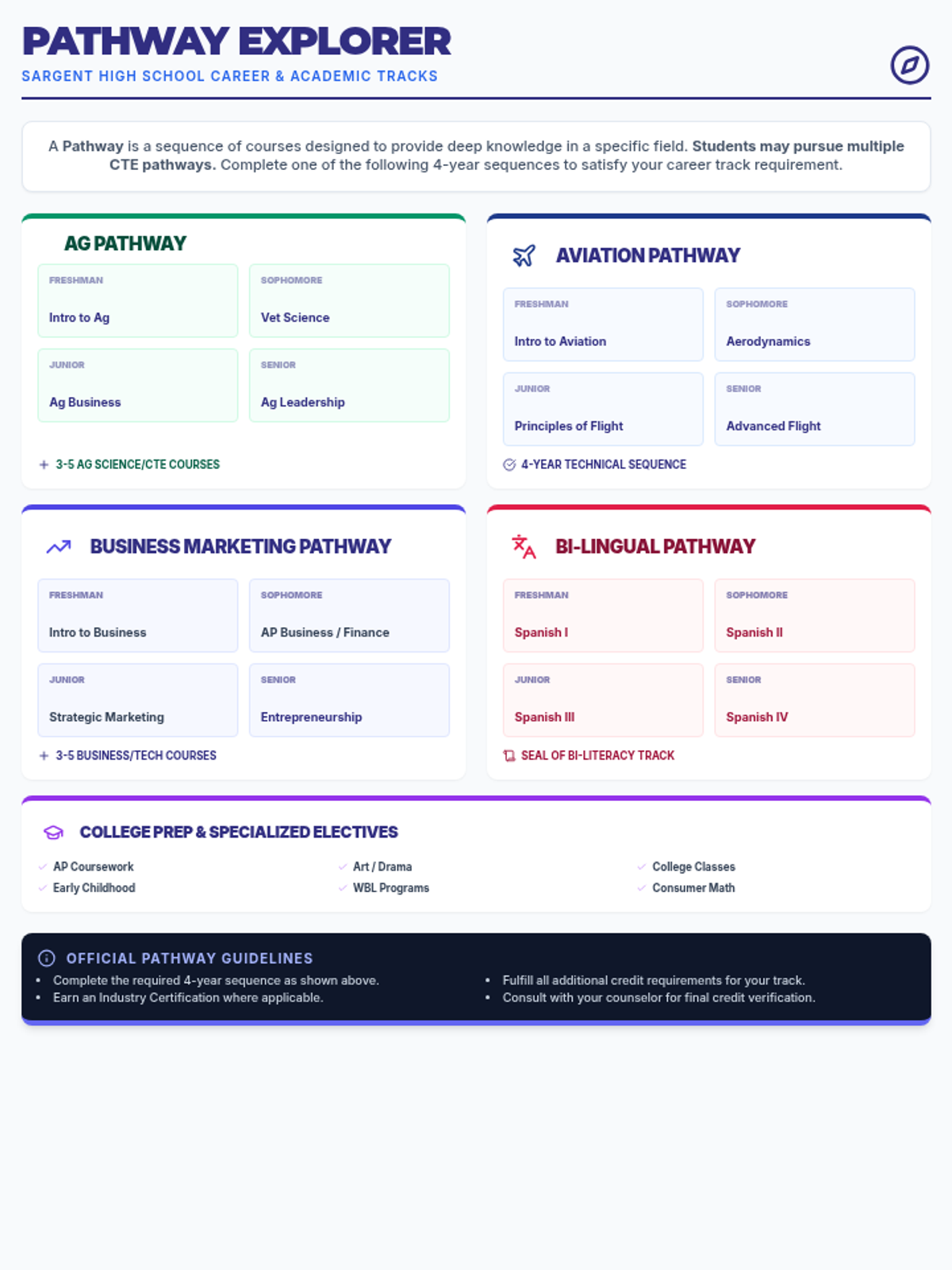
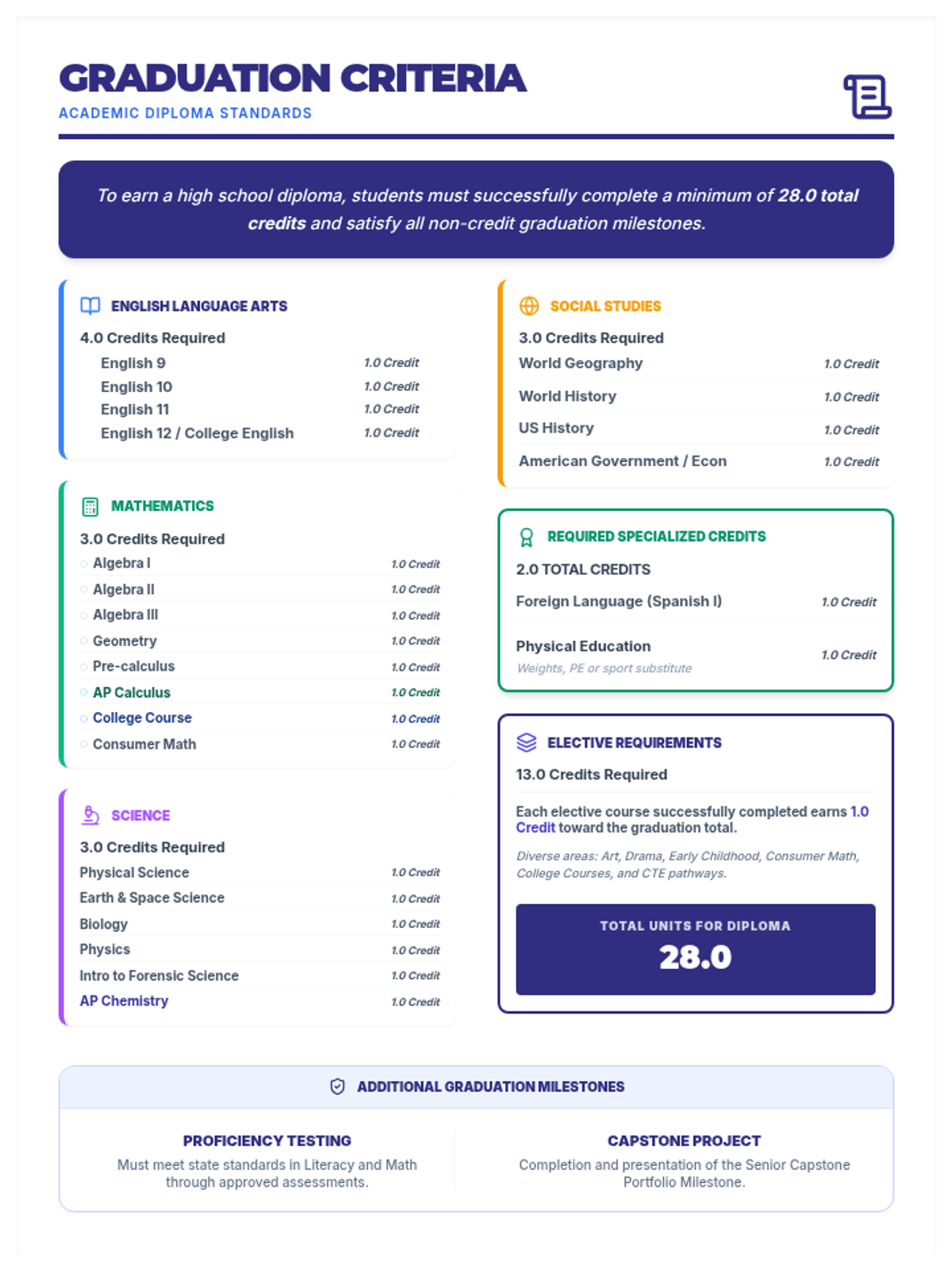
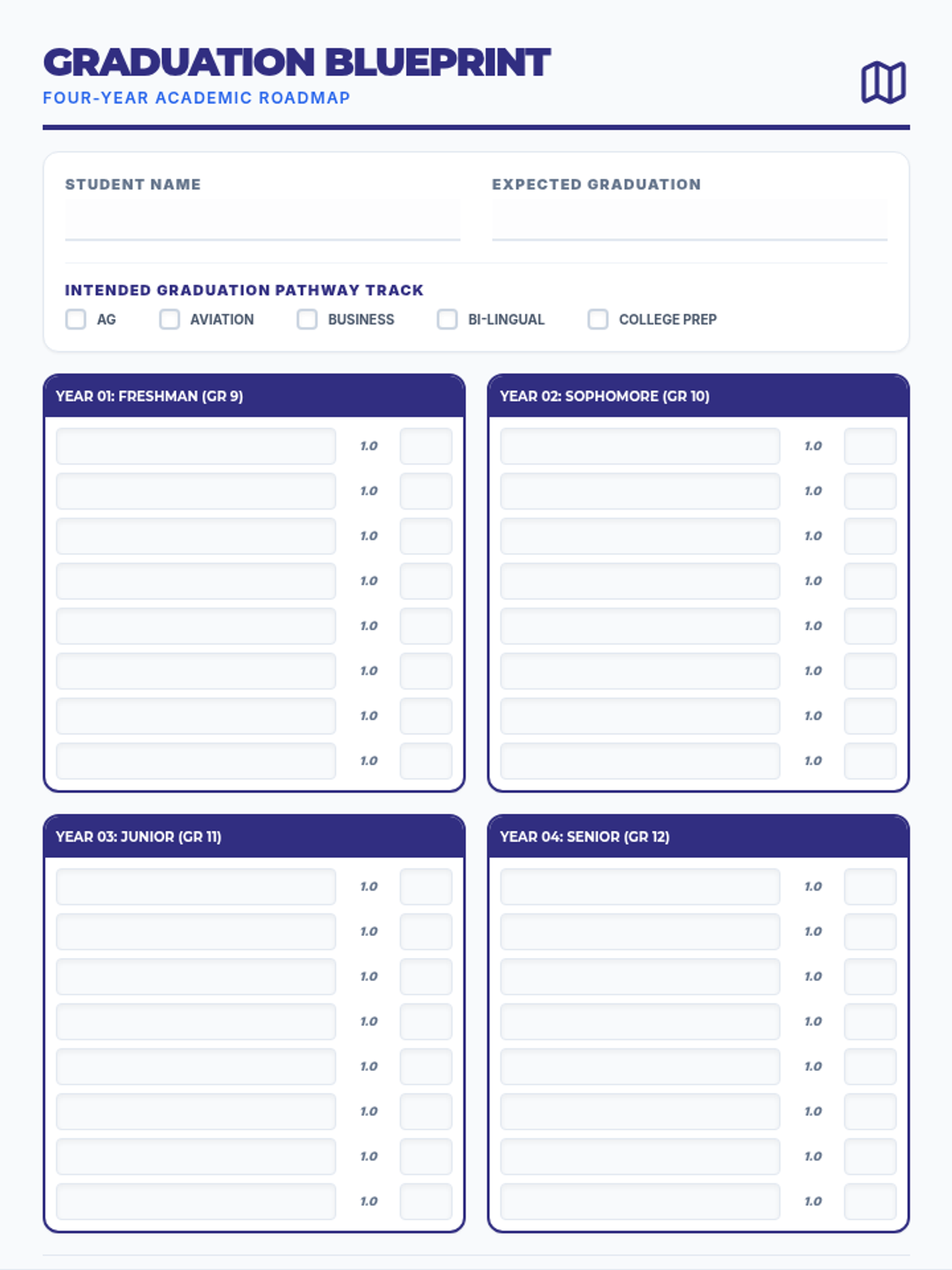
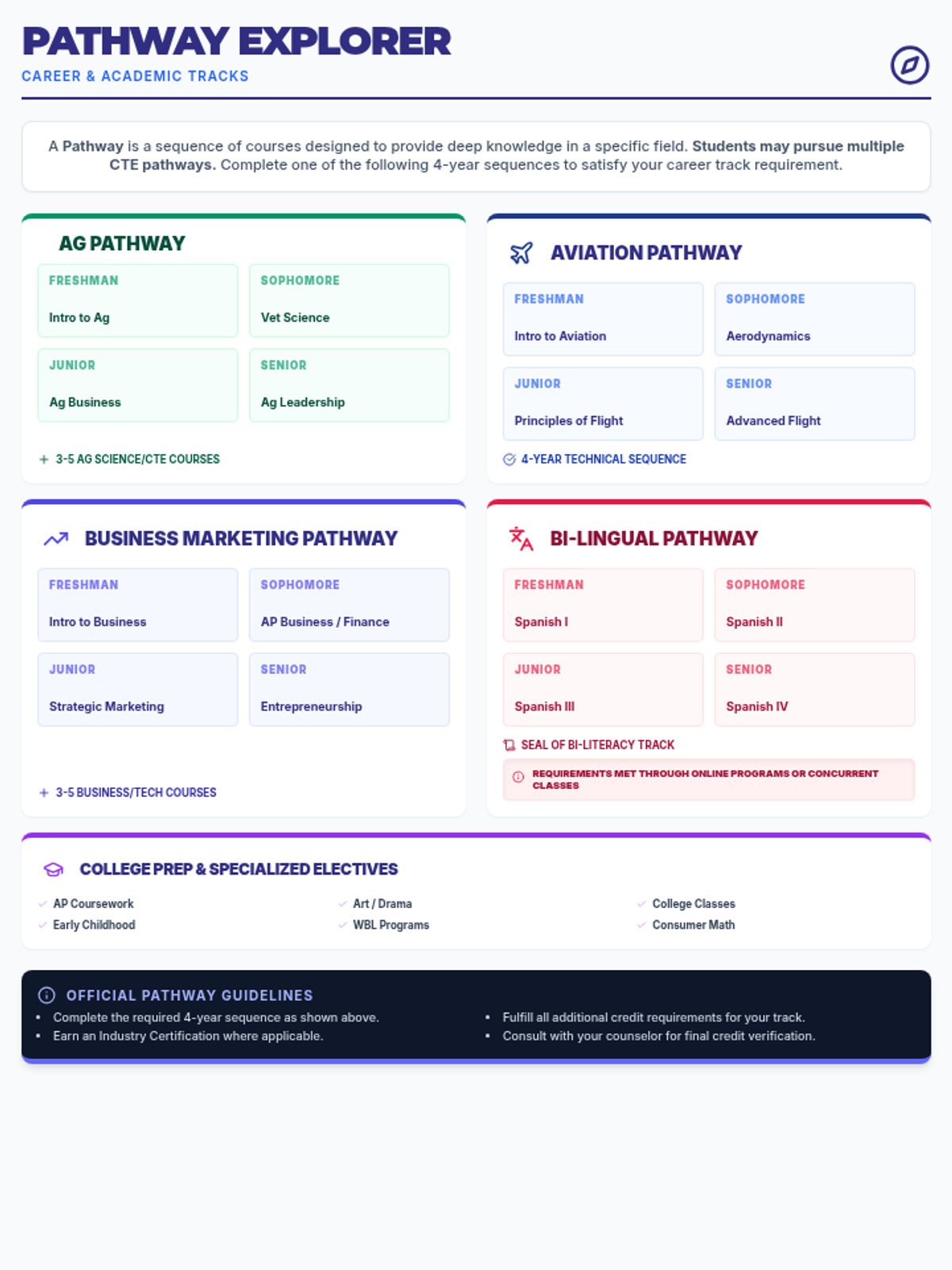
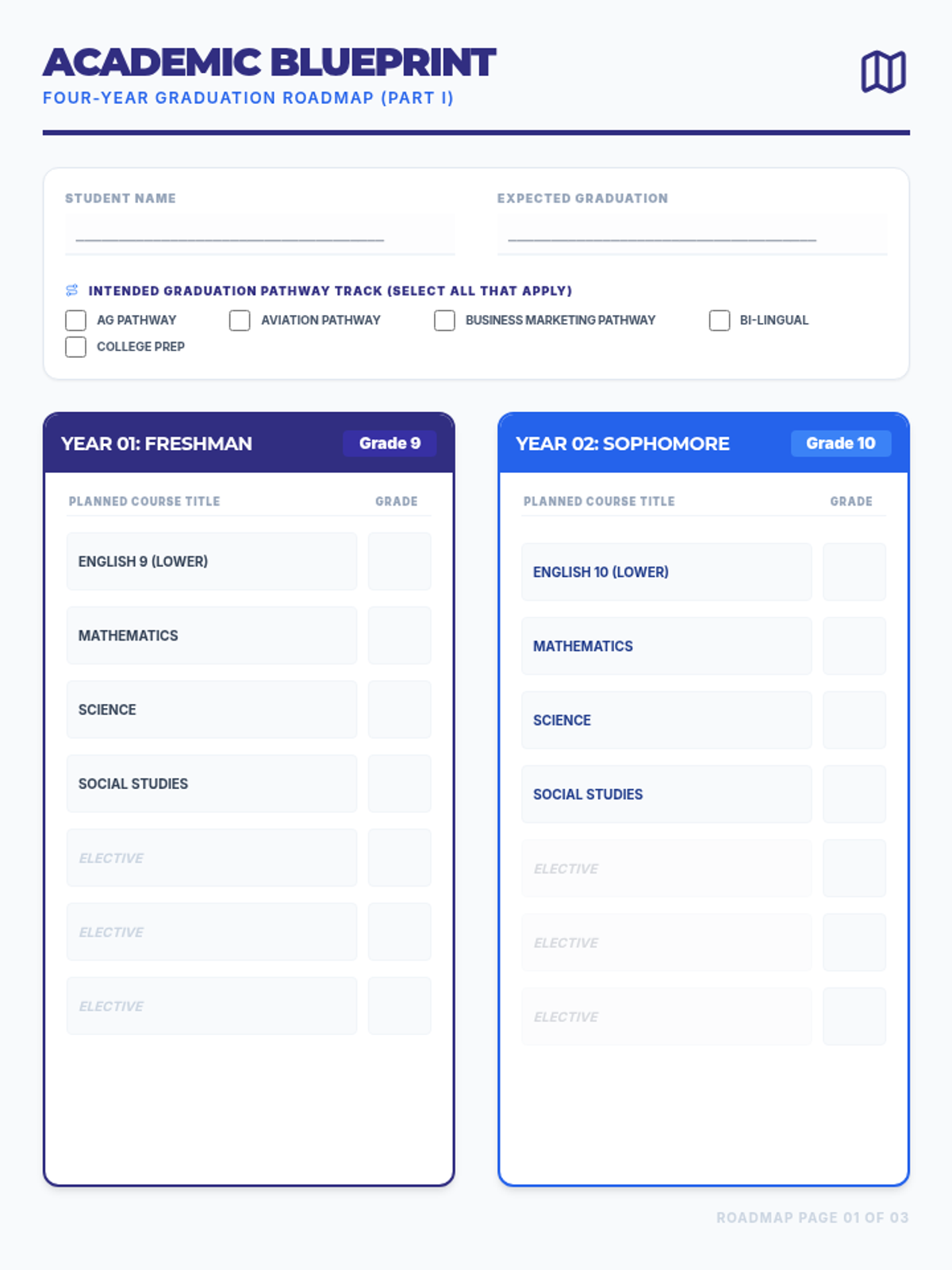
A comprehensive suite of academic planning tools designed for high school students to map out their graduation requirements and future career paths with their school counselor.
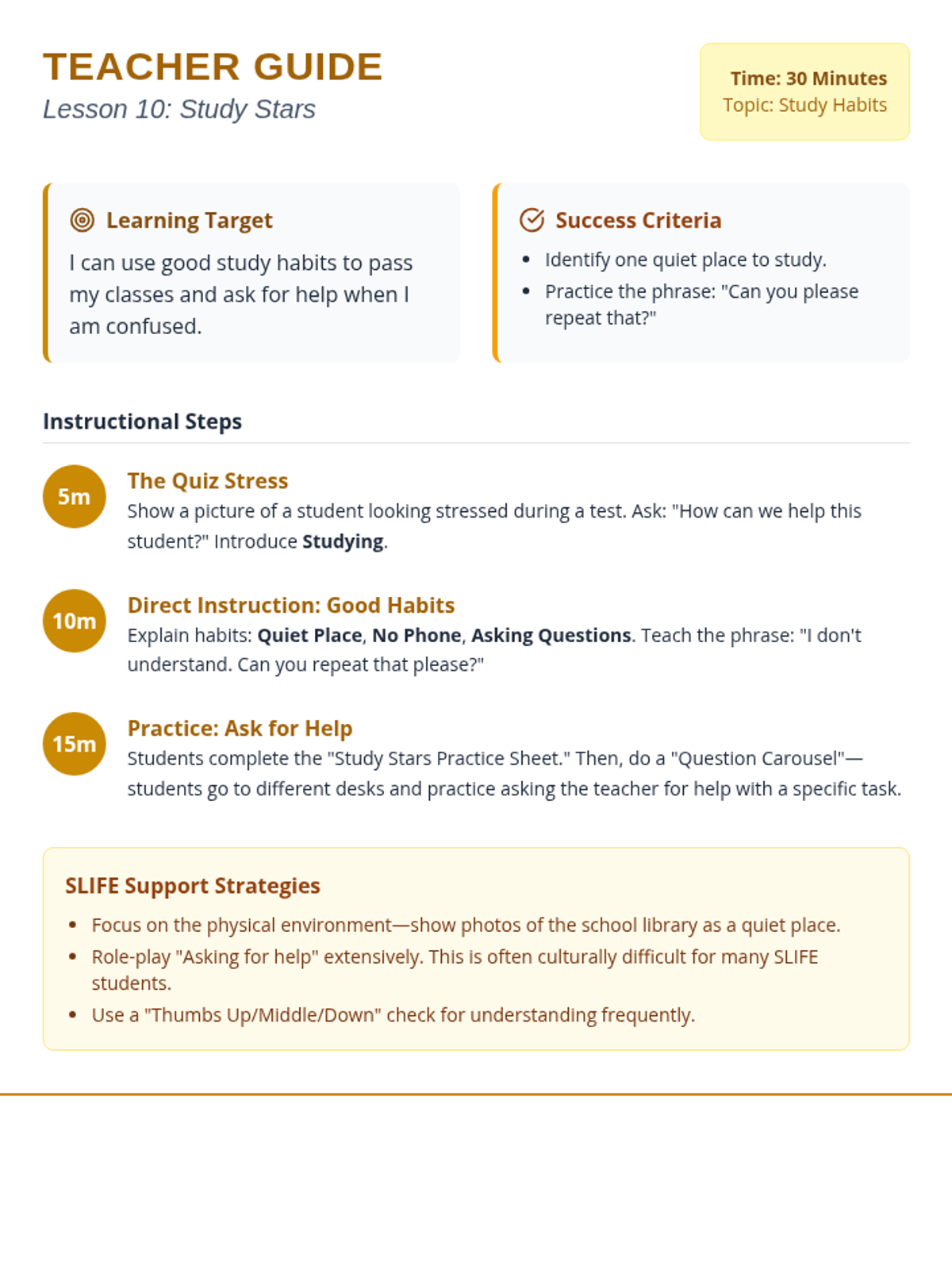
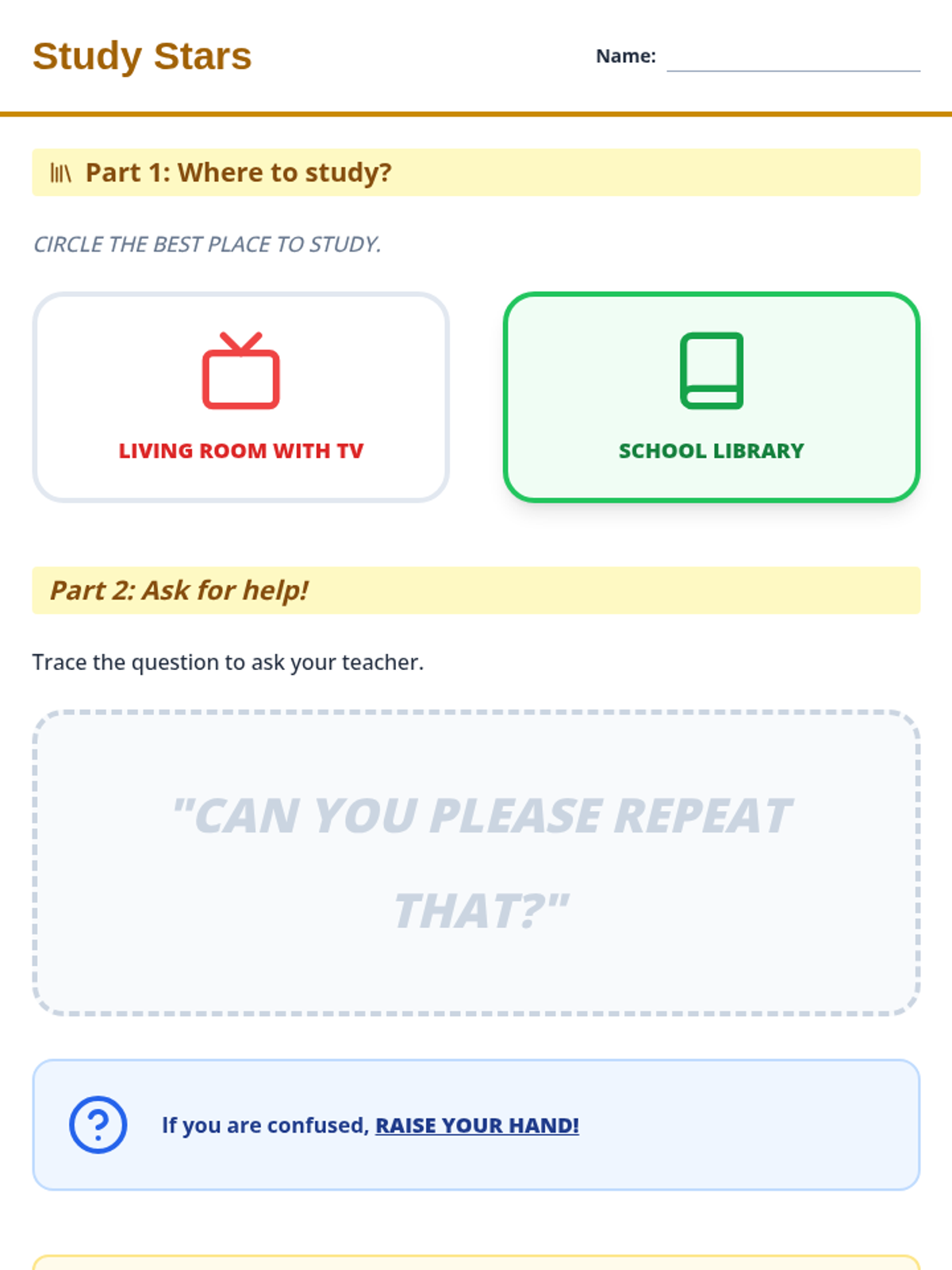
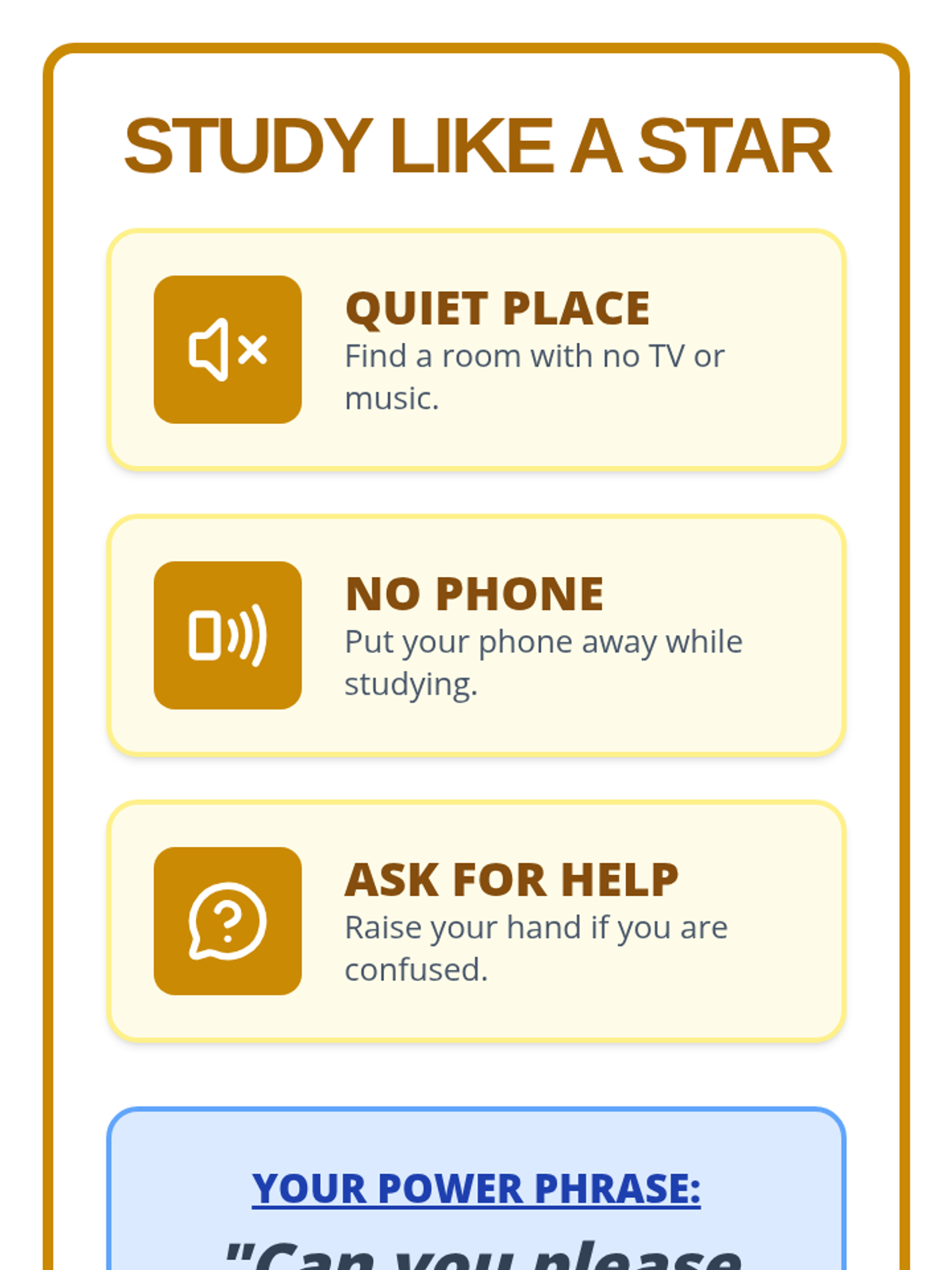
Essential study habits, organizational skills, and phrases for asking for clarification.
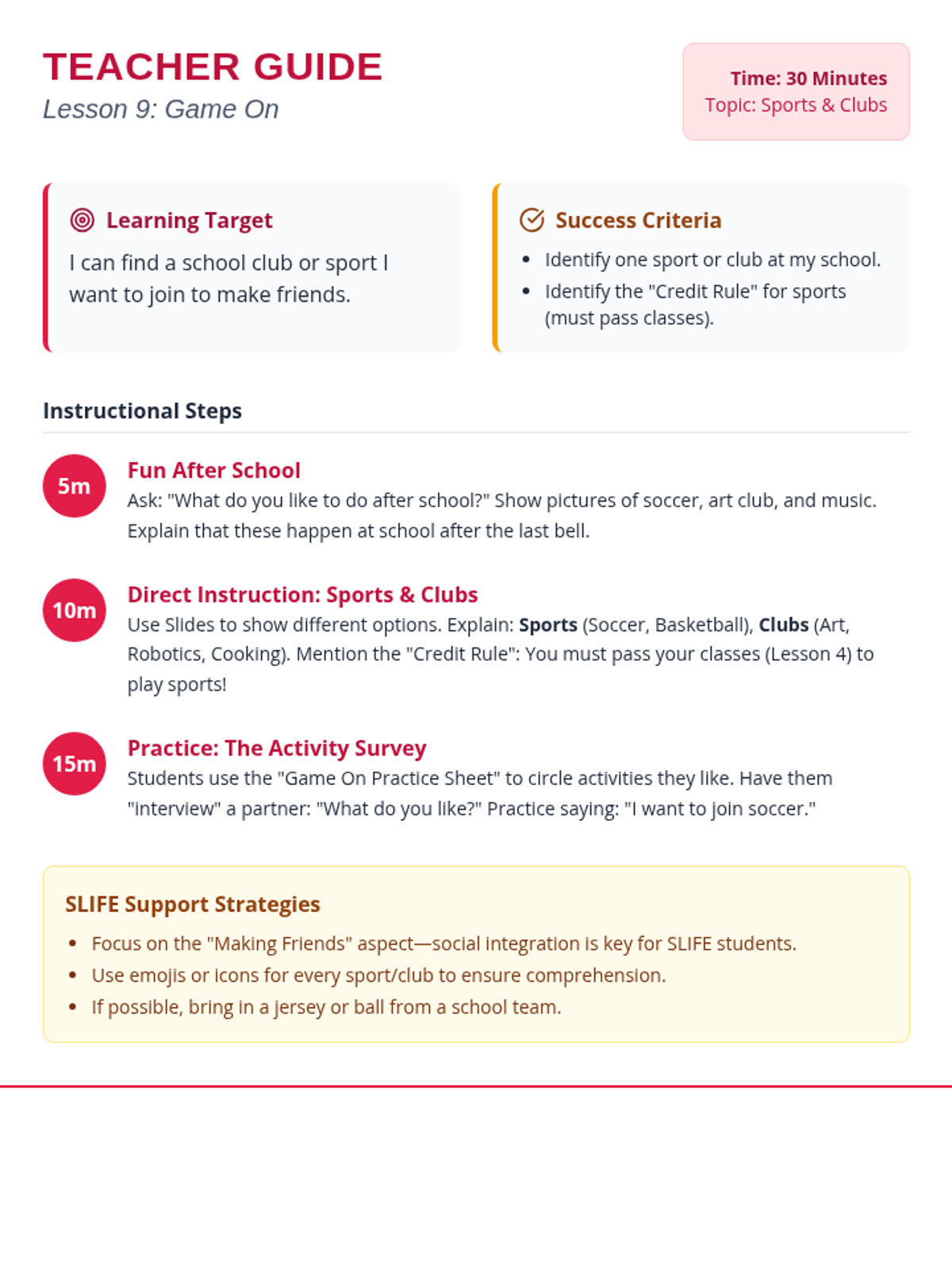
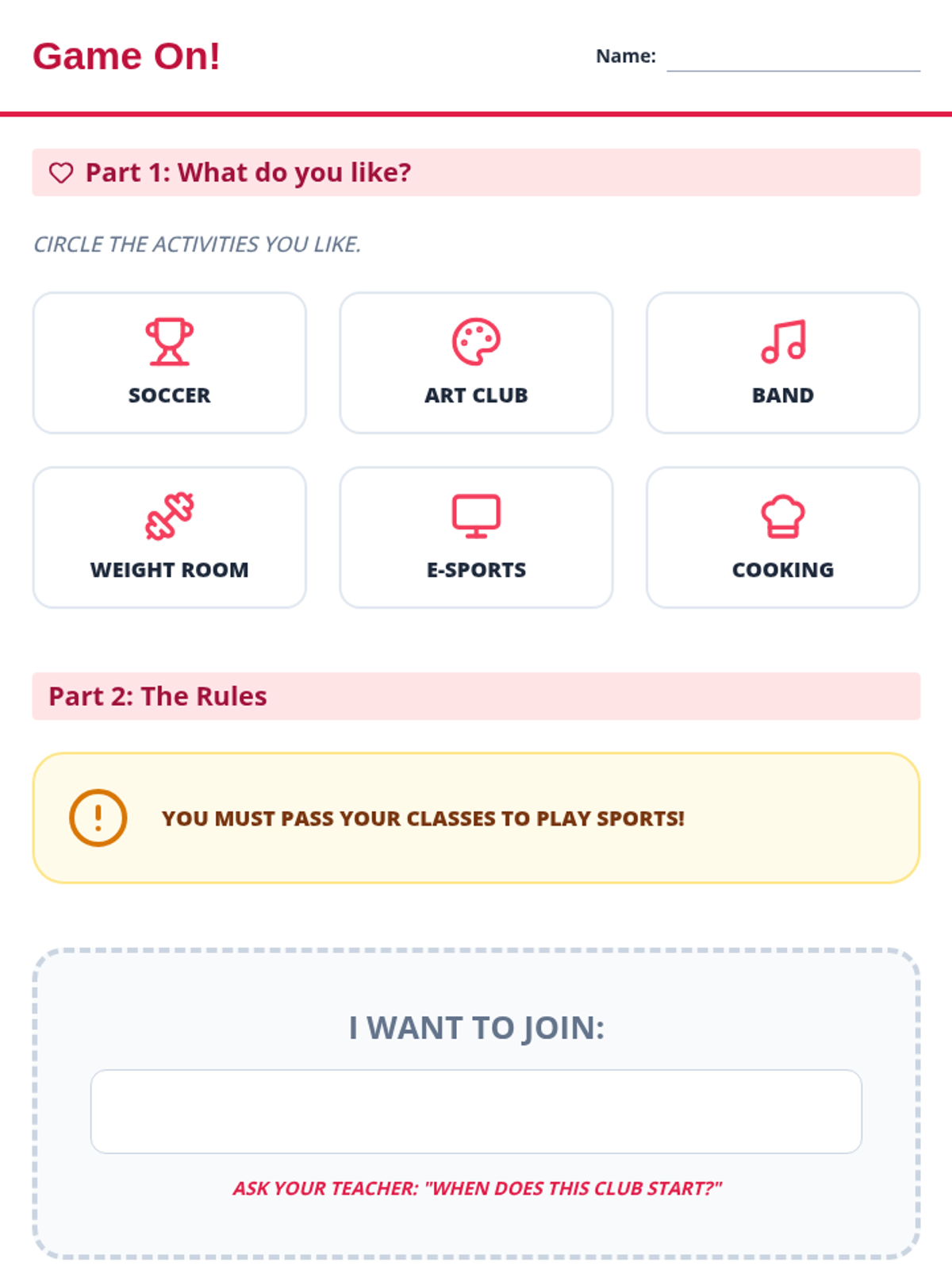
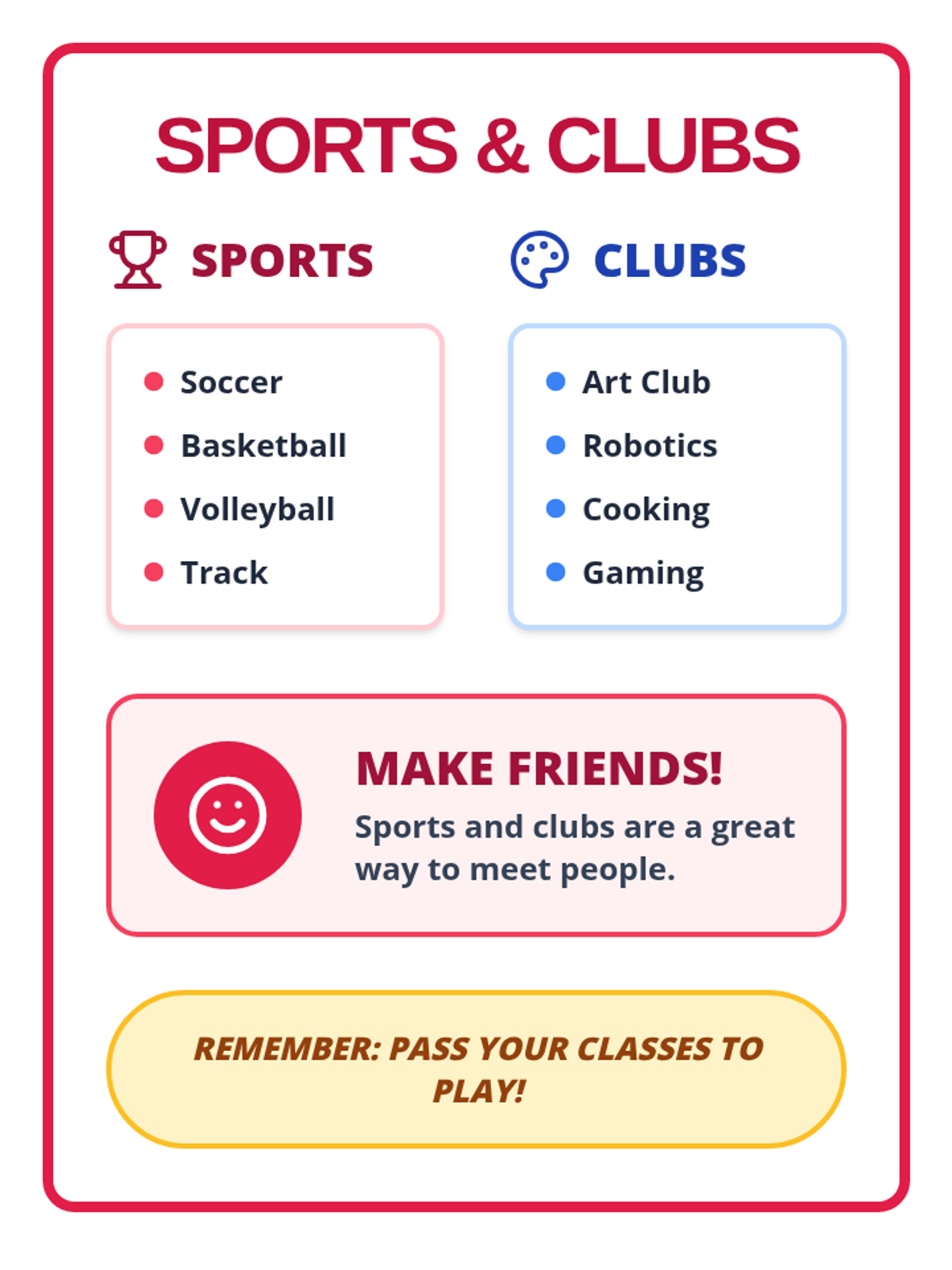
Exploring sports, clubs, and extracurricular activities to build community.
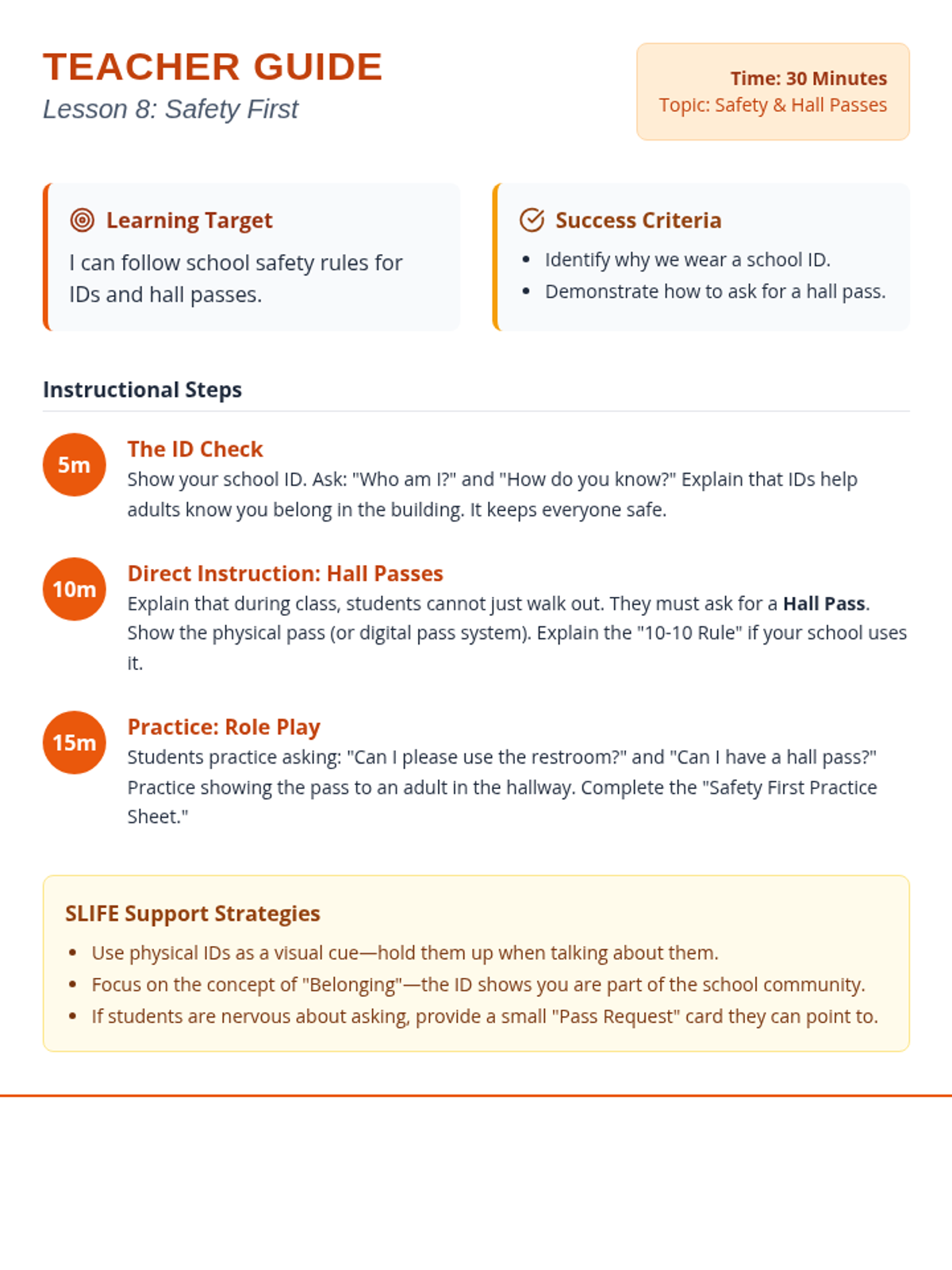
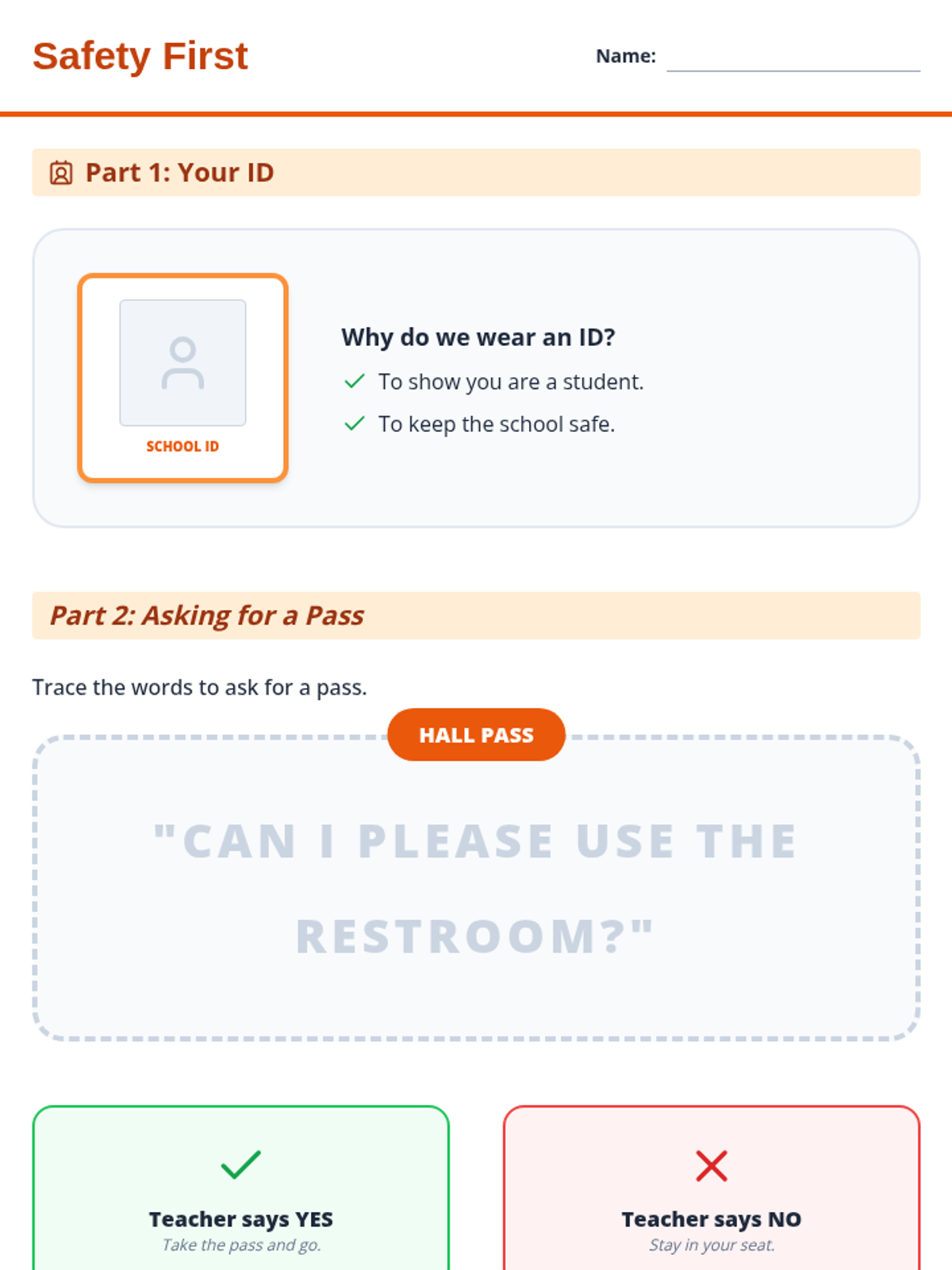
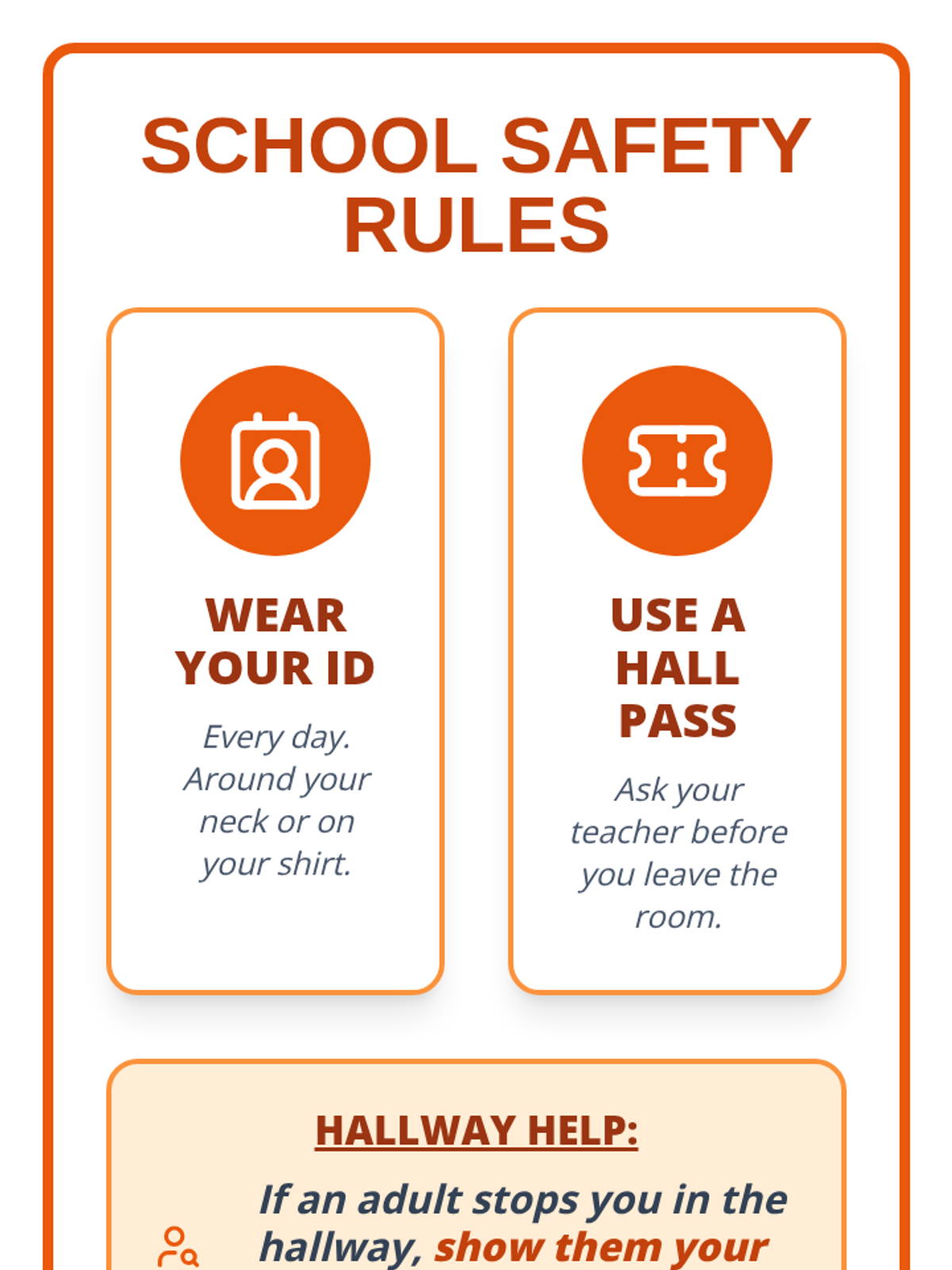
Understanding school safety protocols, ID requirements, and hall pass procedures.
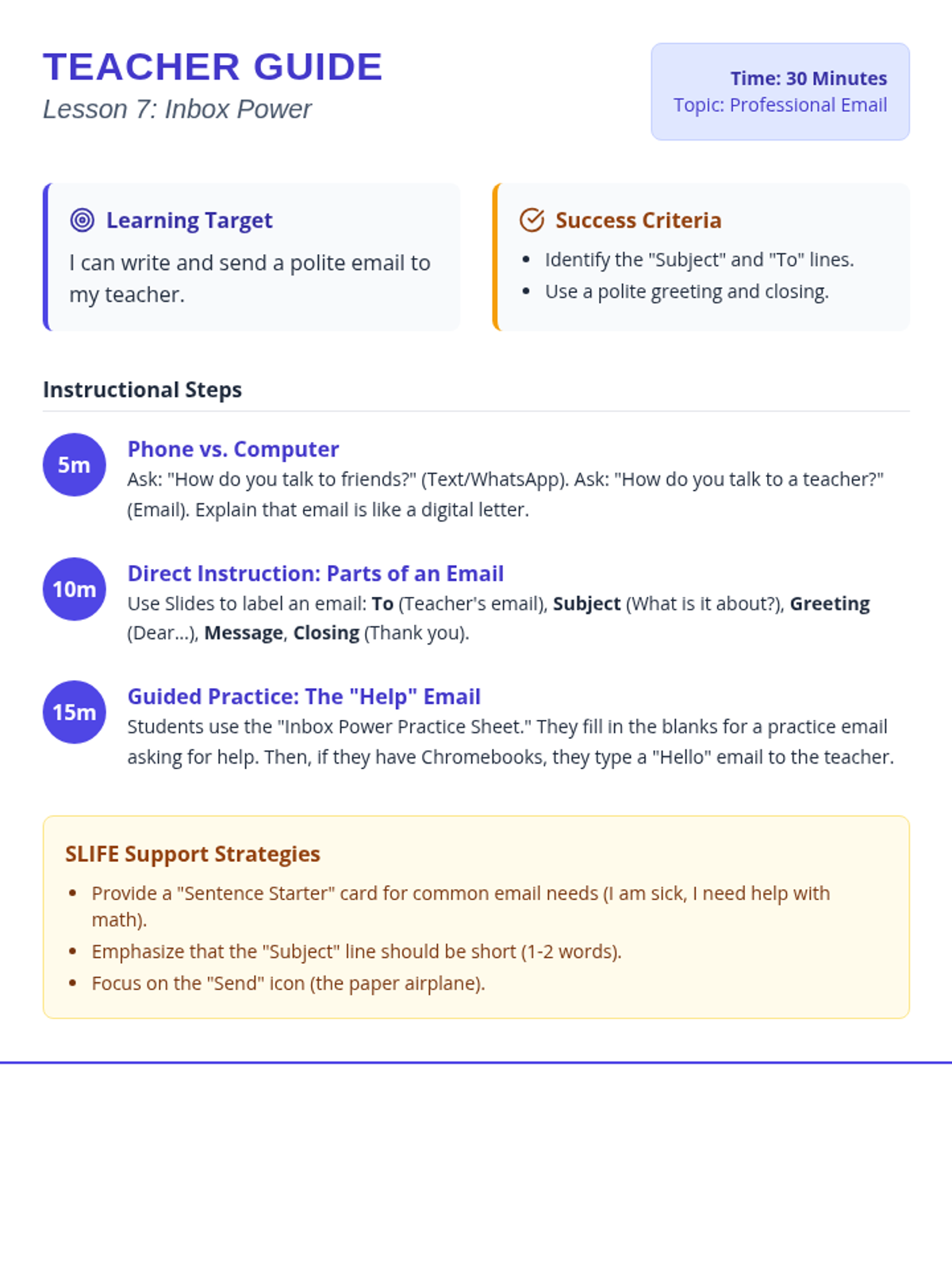
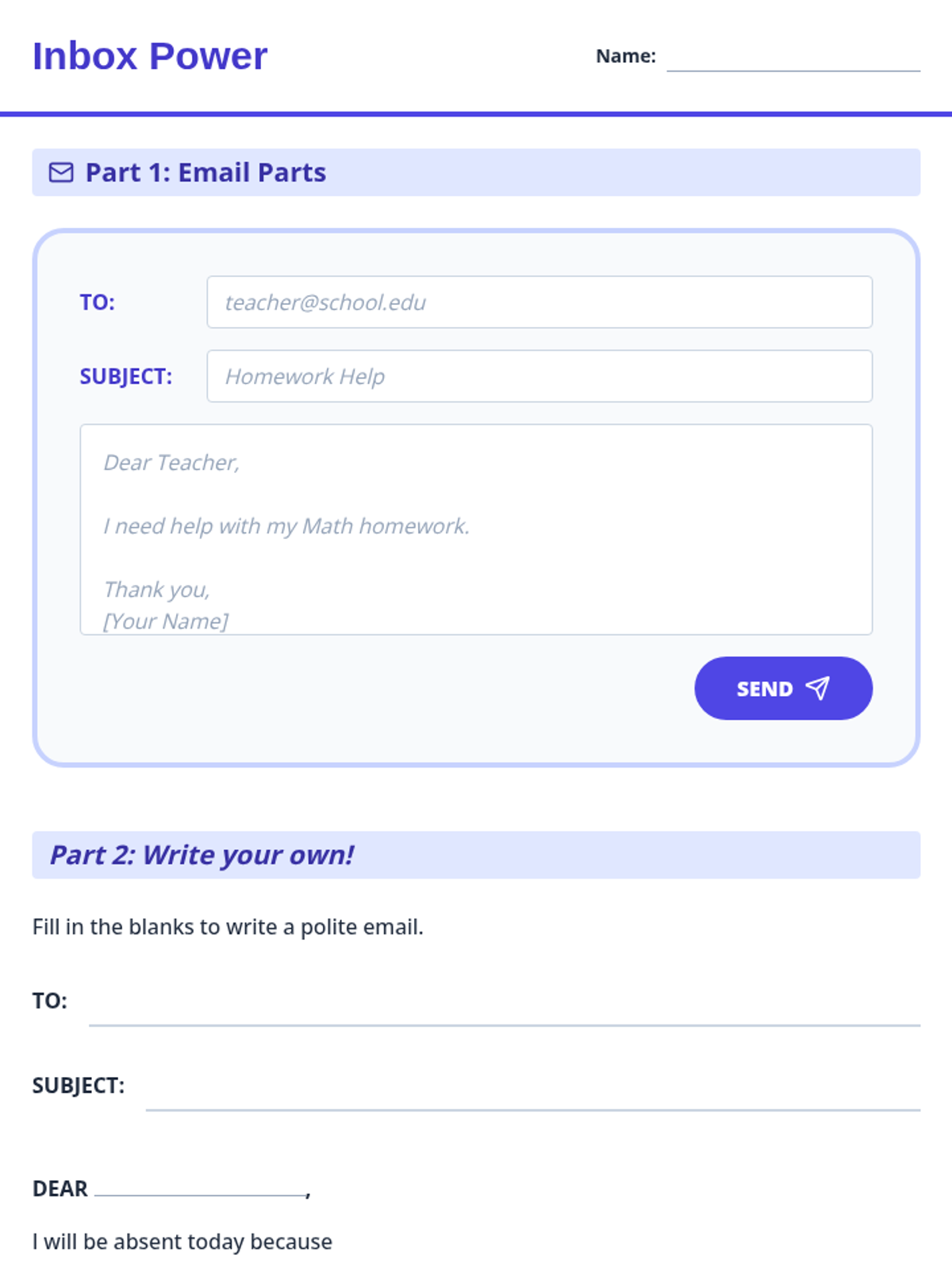
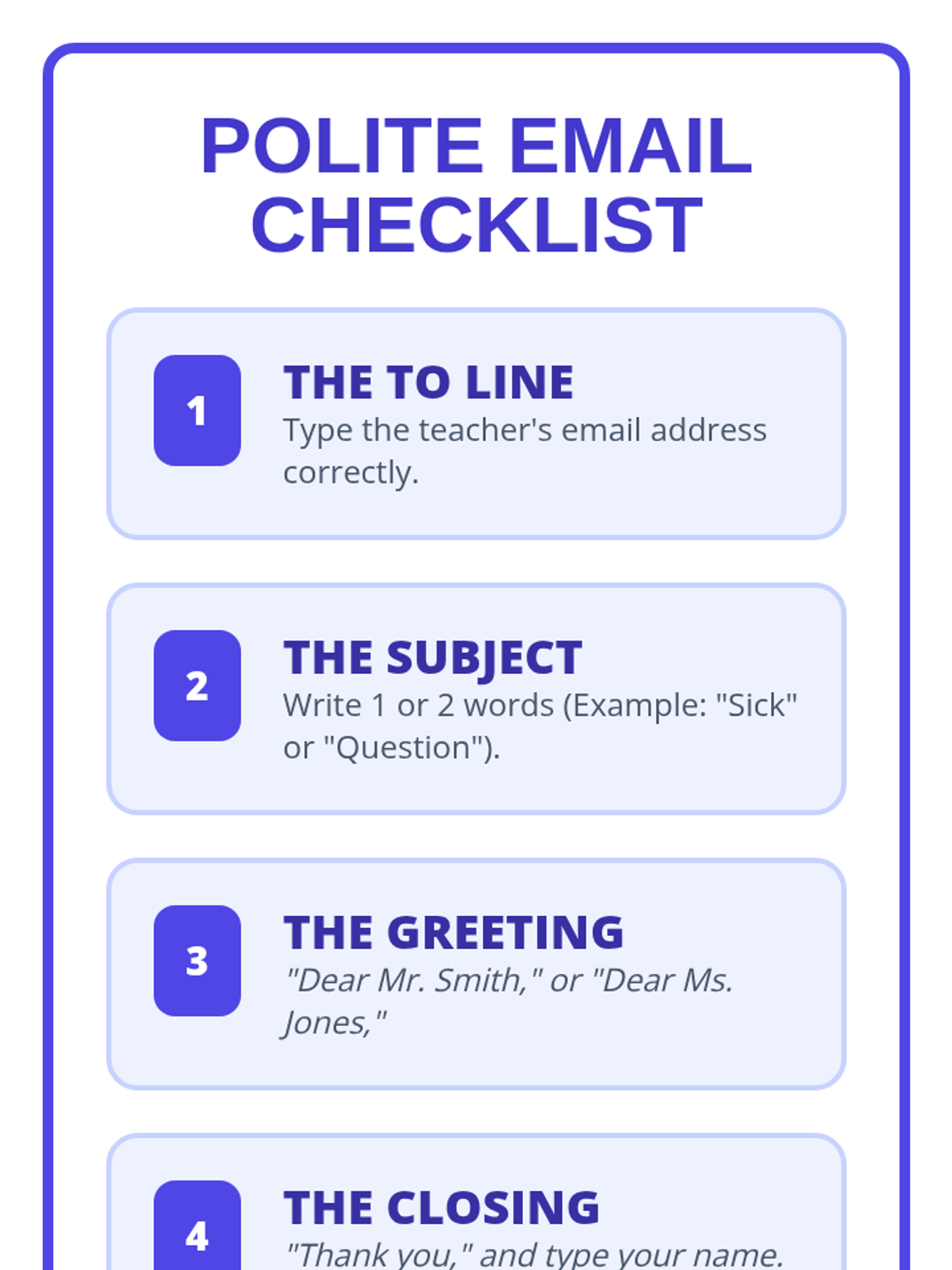
Step-by-step guidance on writing and sending a professional email to a teacher.
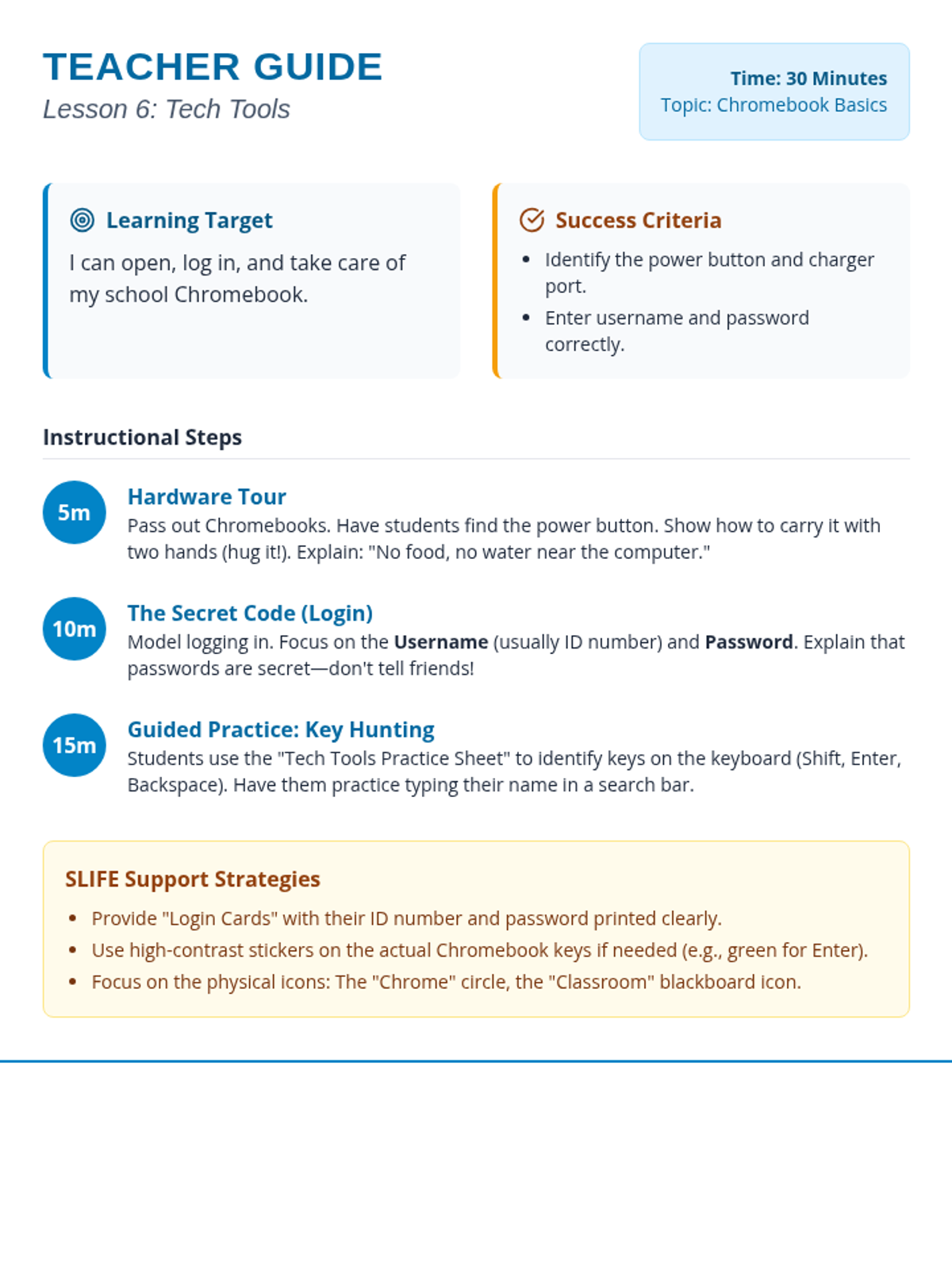
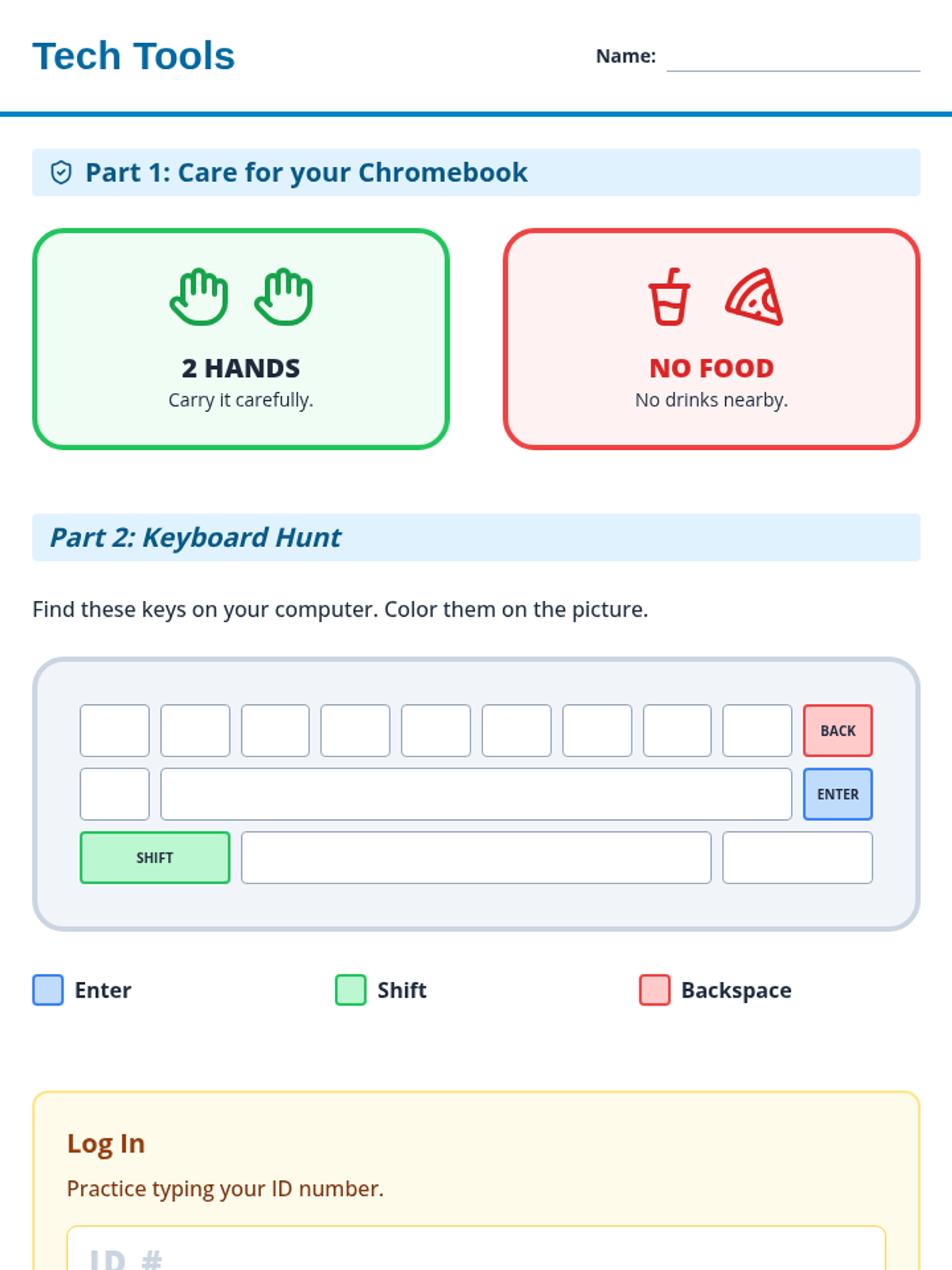
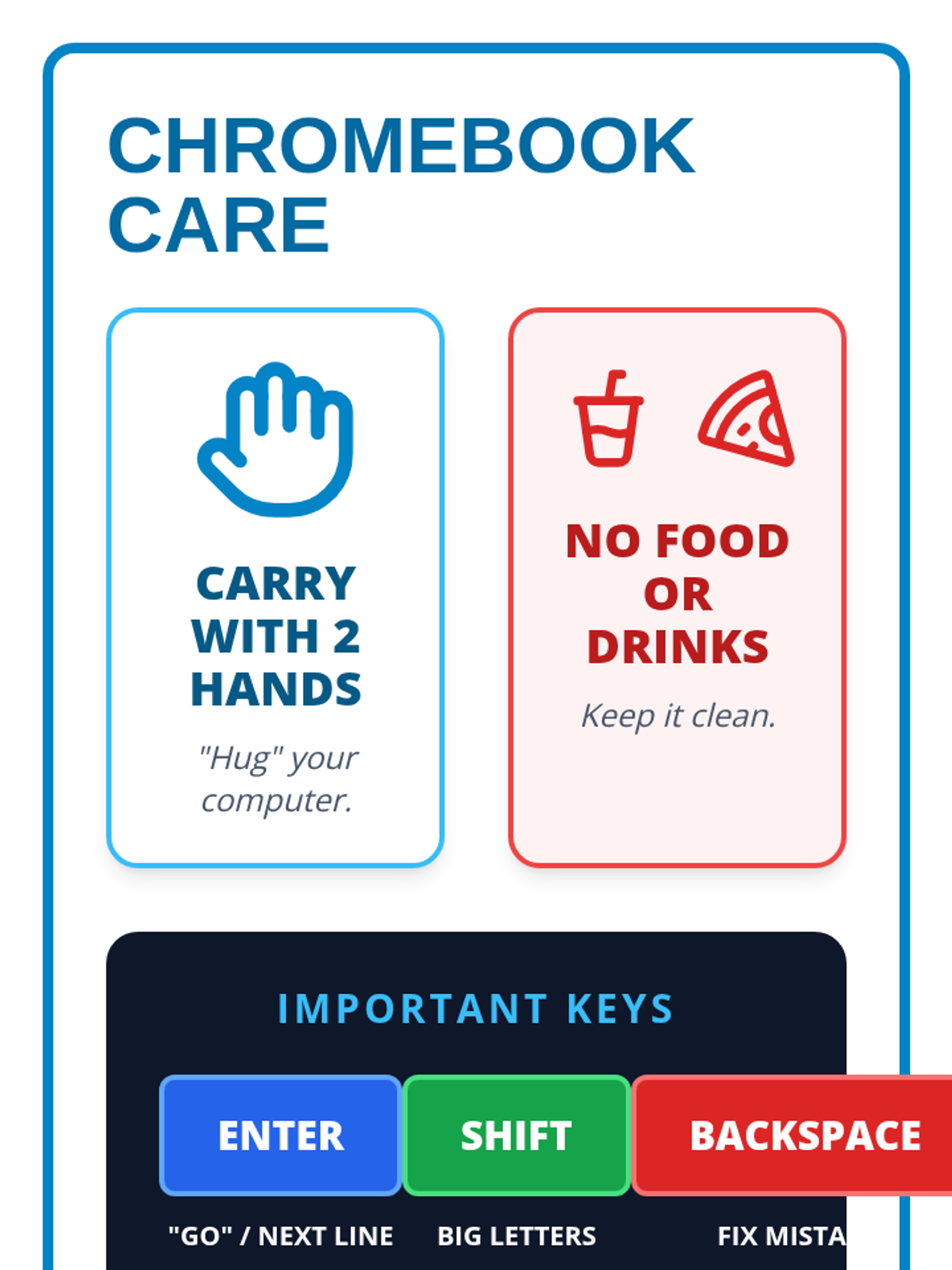
Basic Chromebook operation, including logging in, hardware care, and keyboard basics.
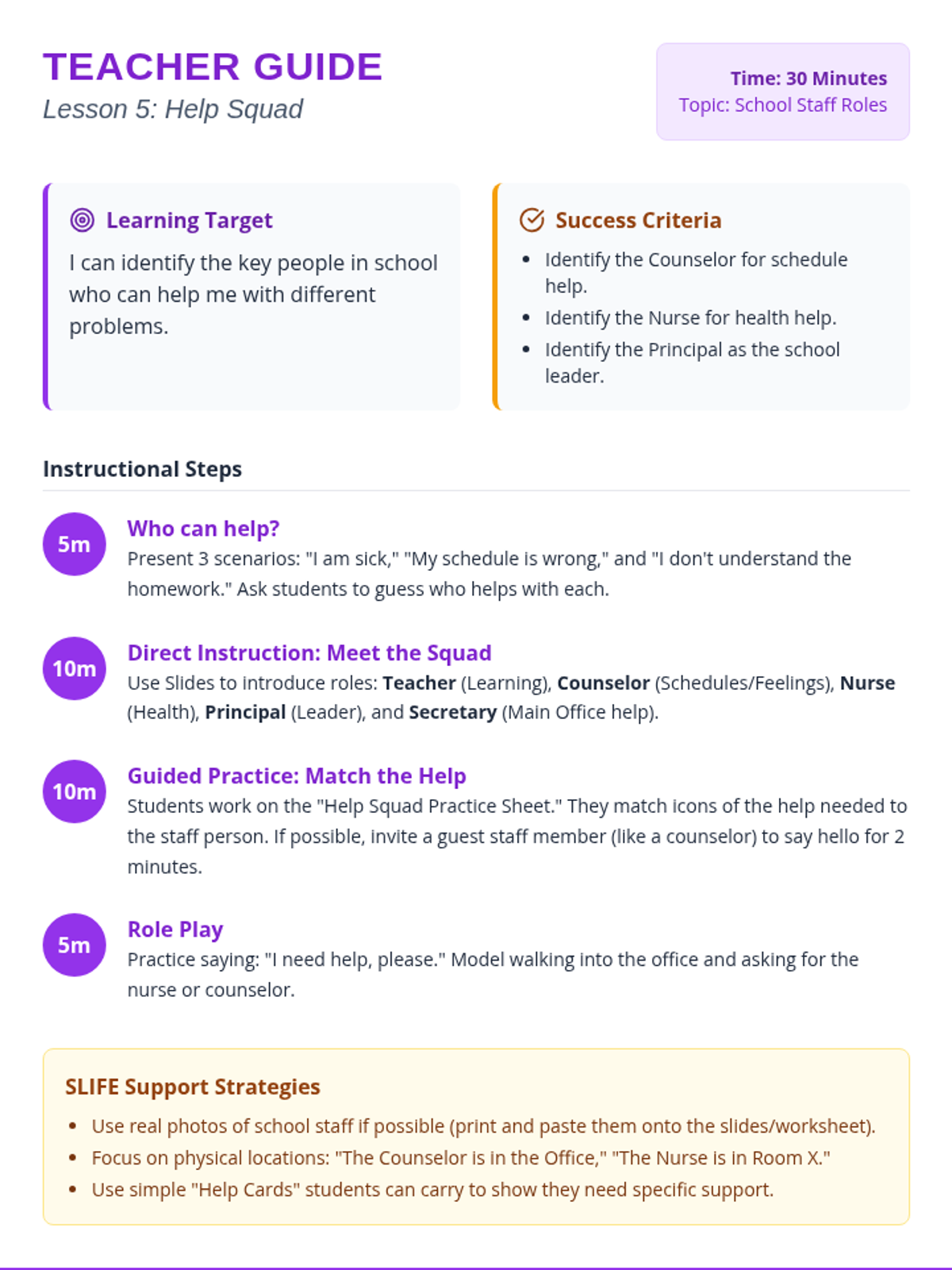
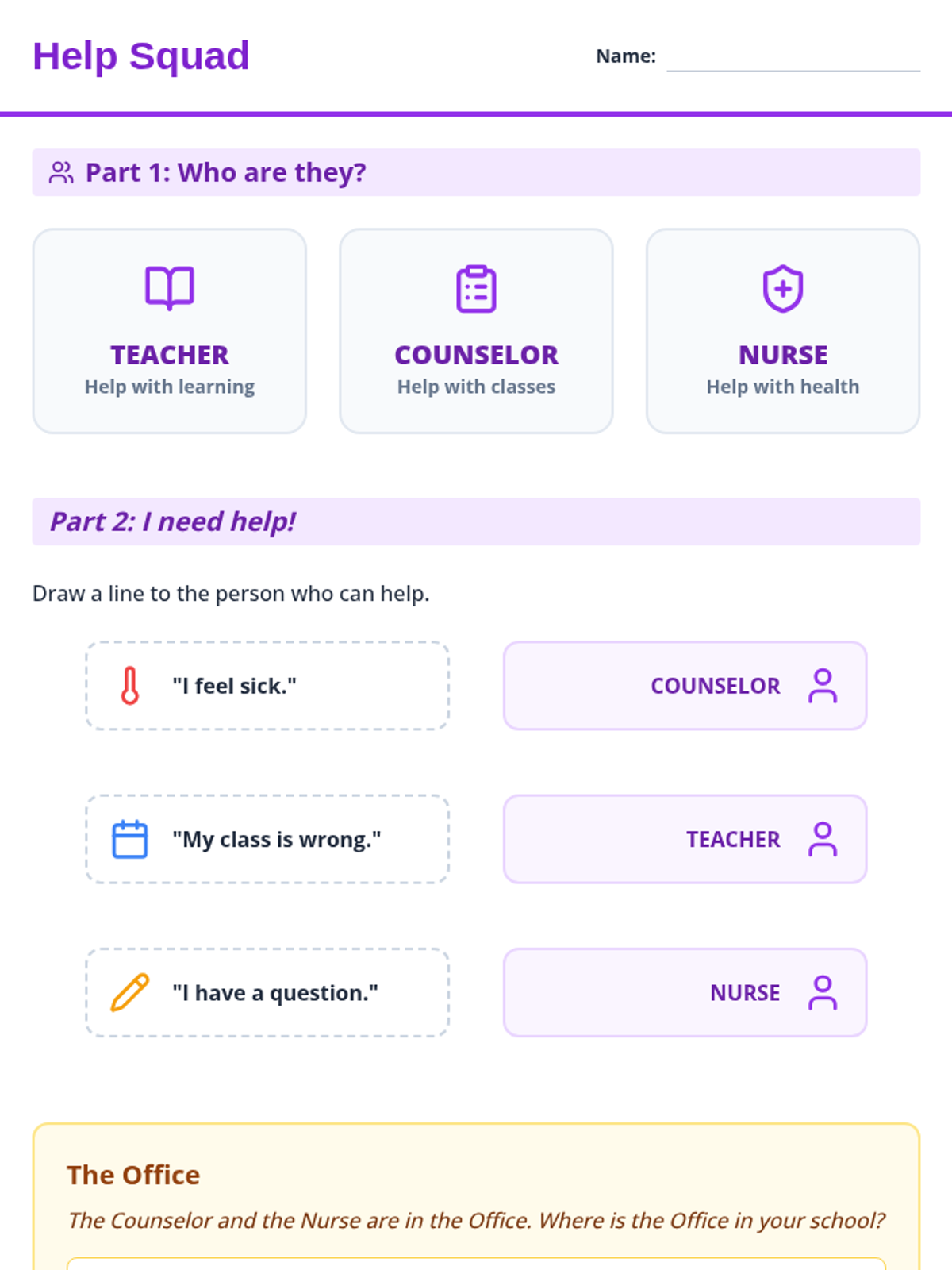
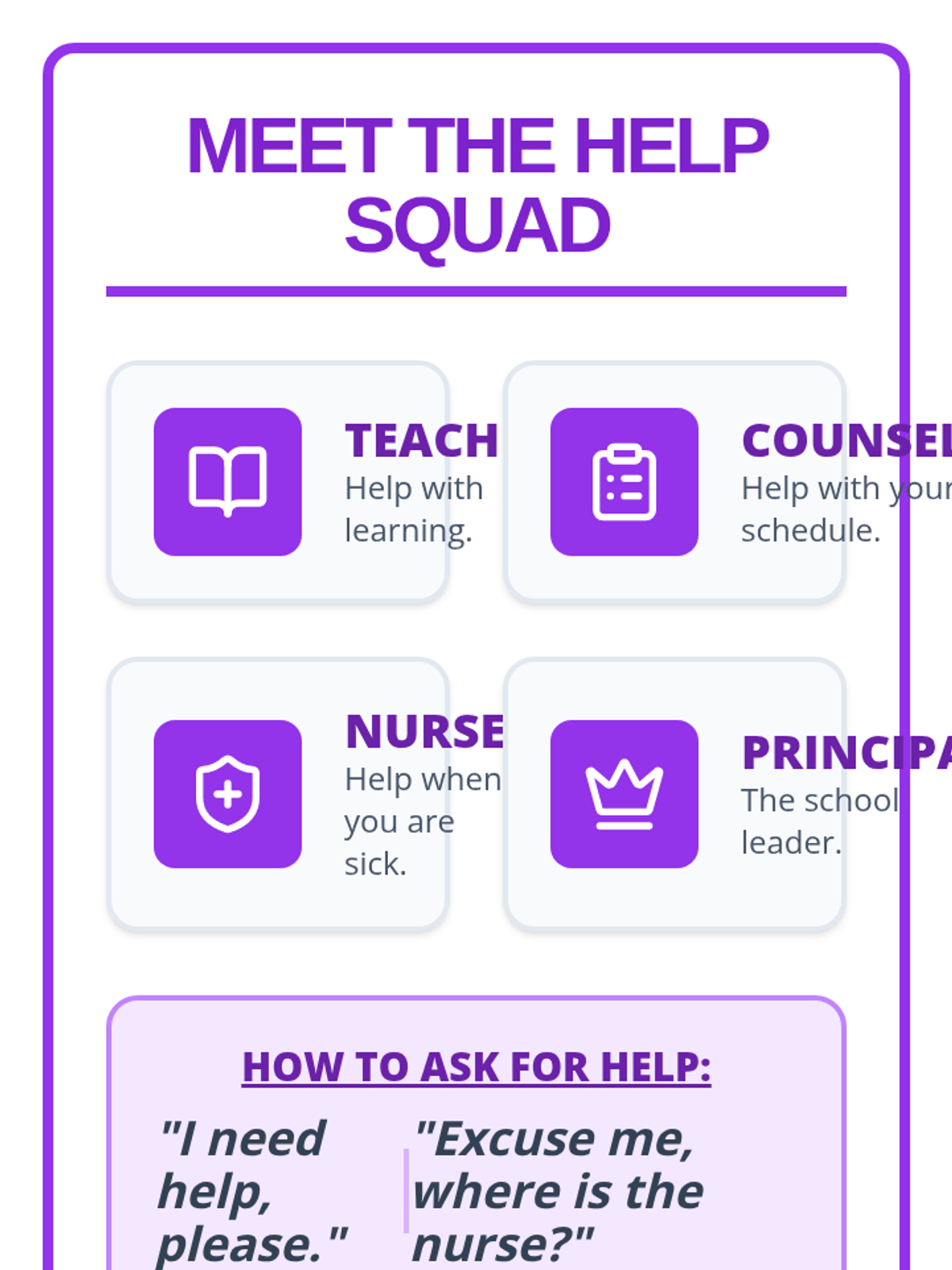
Identifying key school staff members and understanding their roles in supporting students.
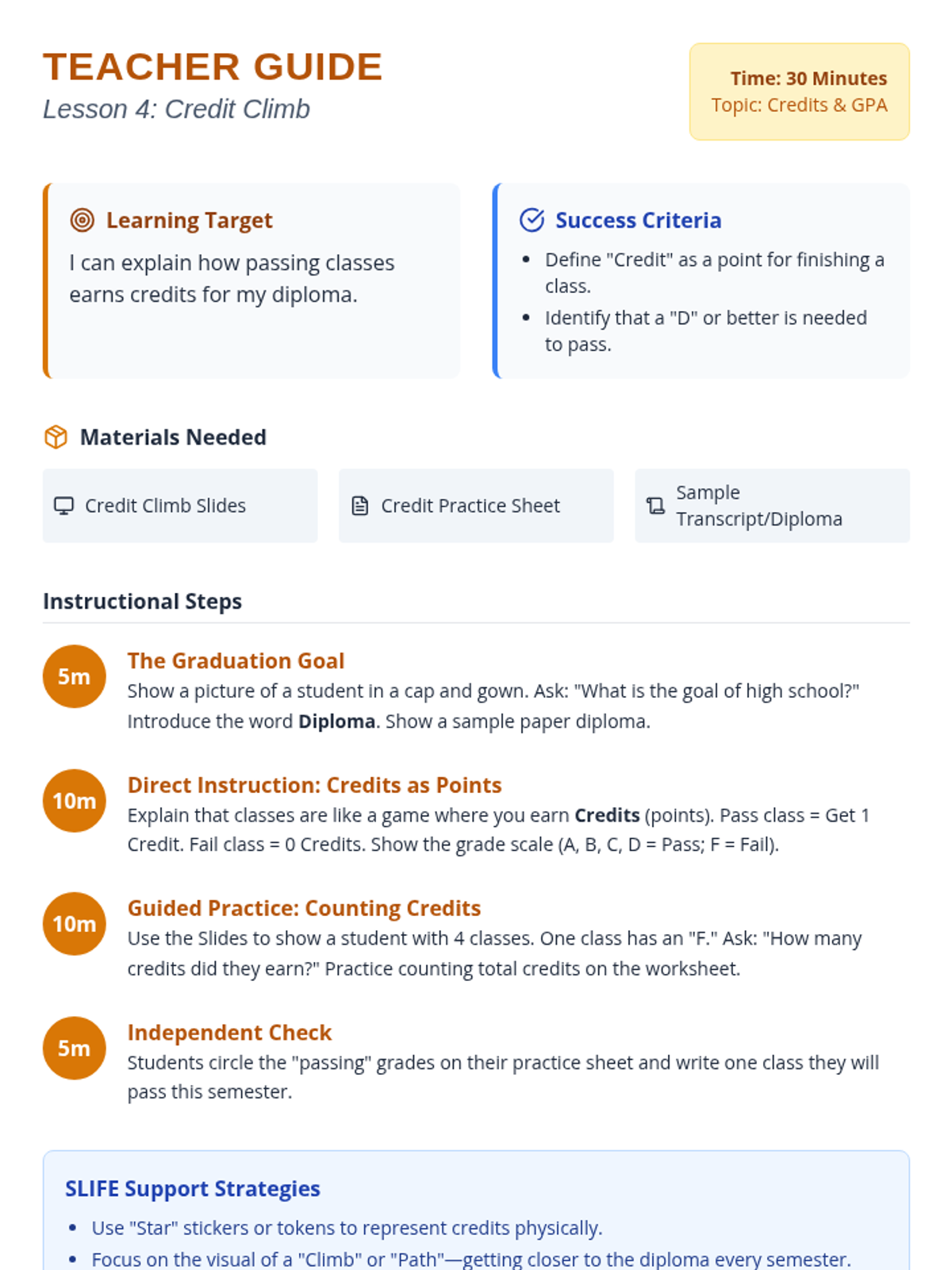
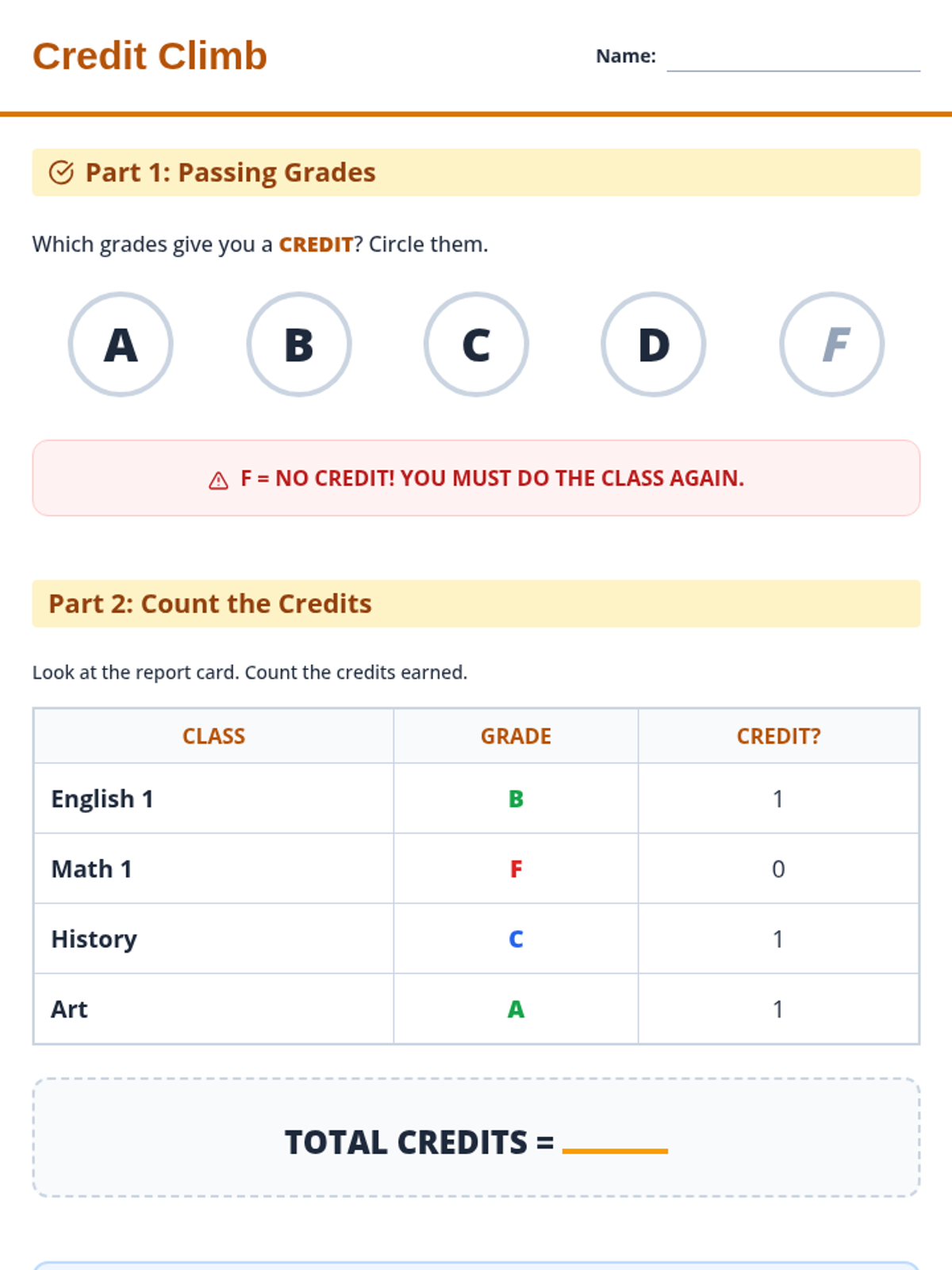
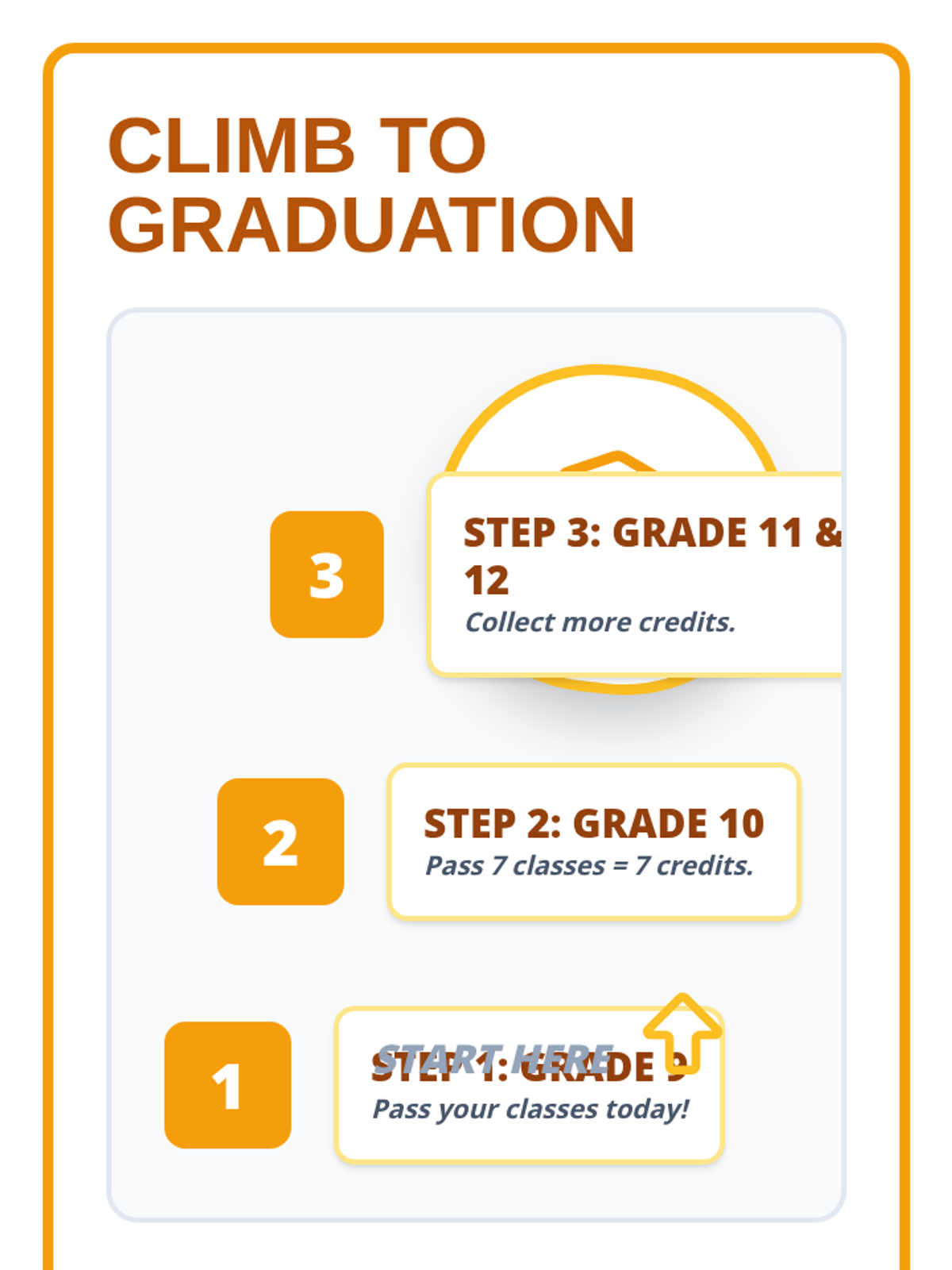
An introduction to earning credits, GPA basics, and the path to a high school diploma.
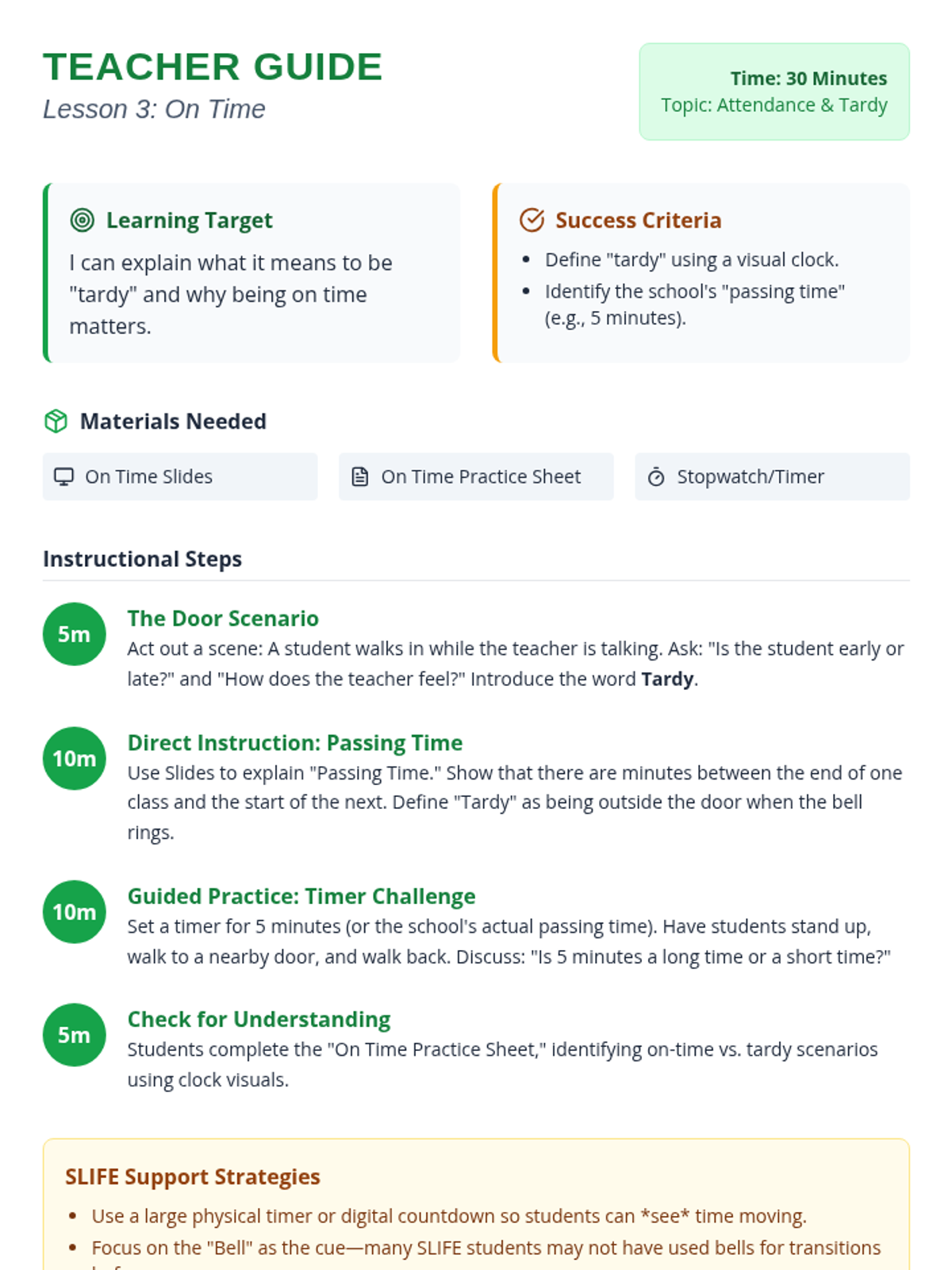
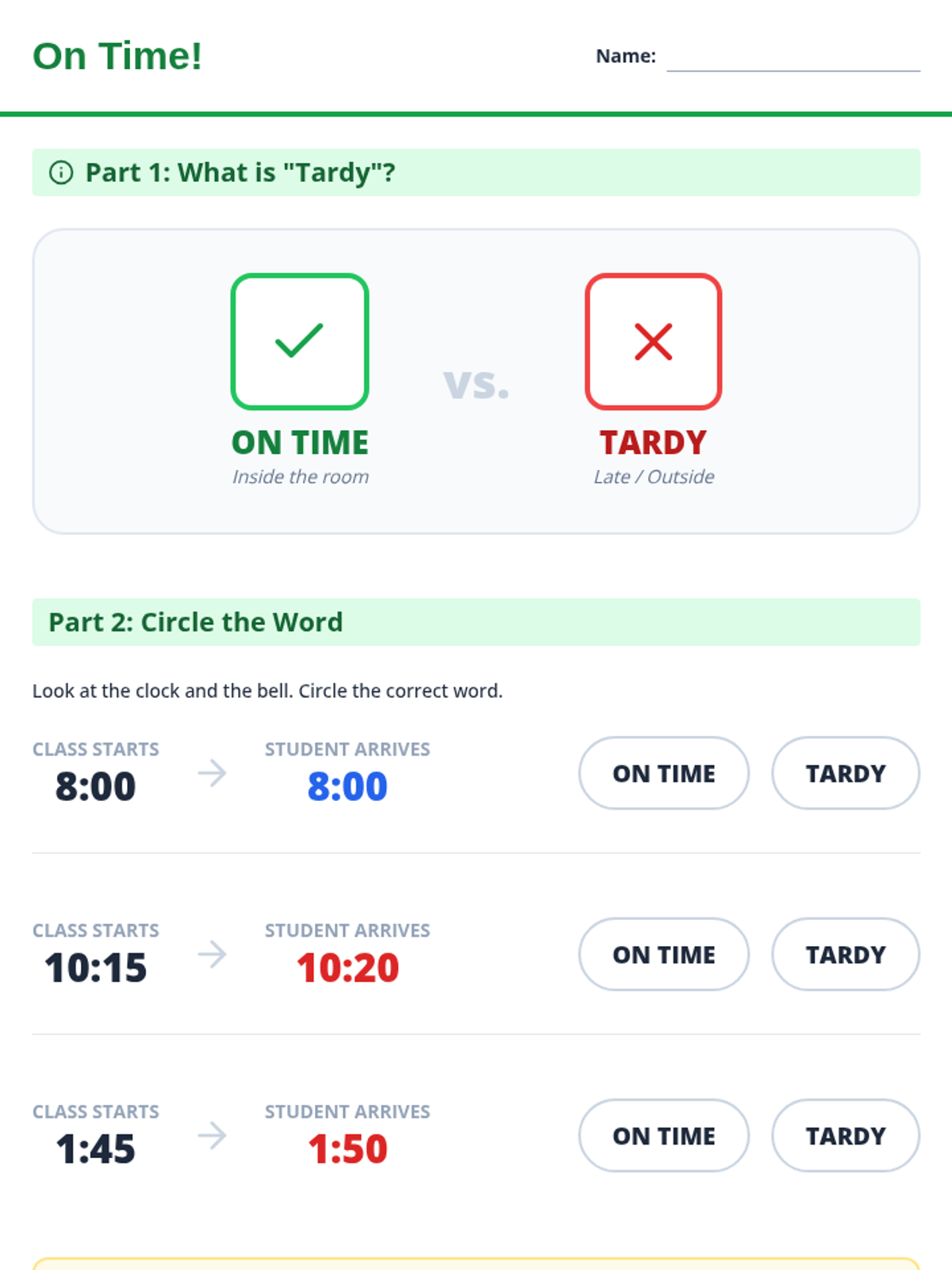
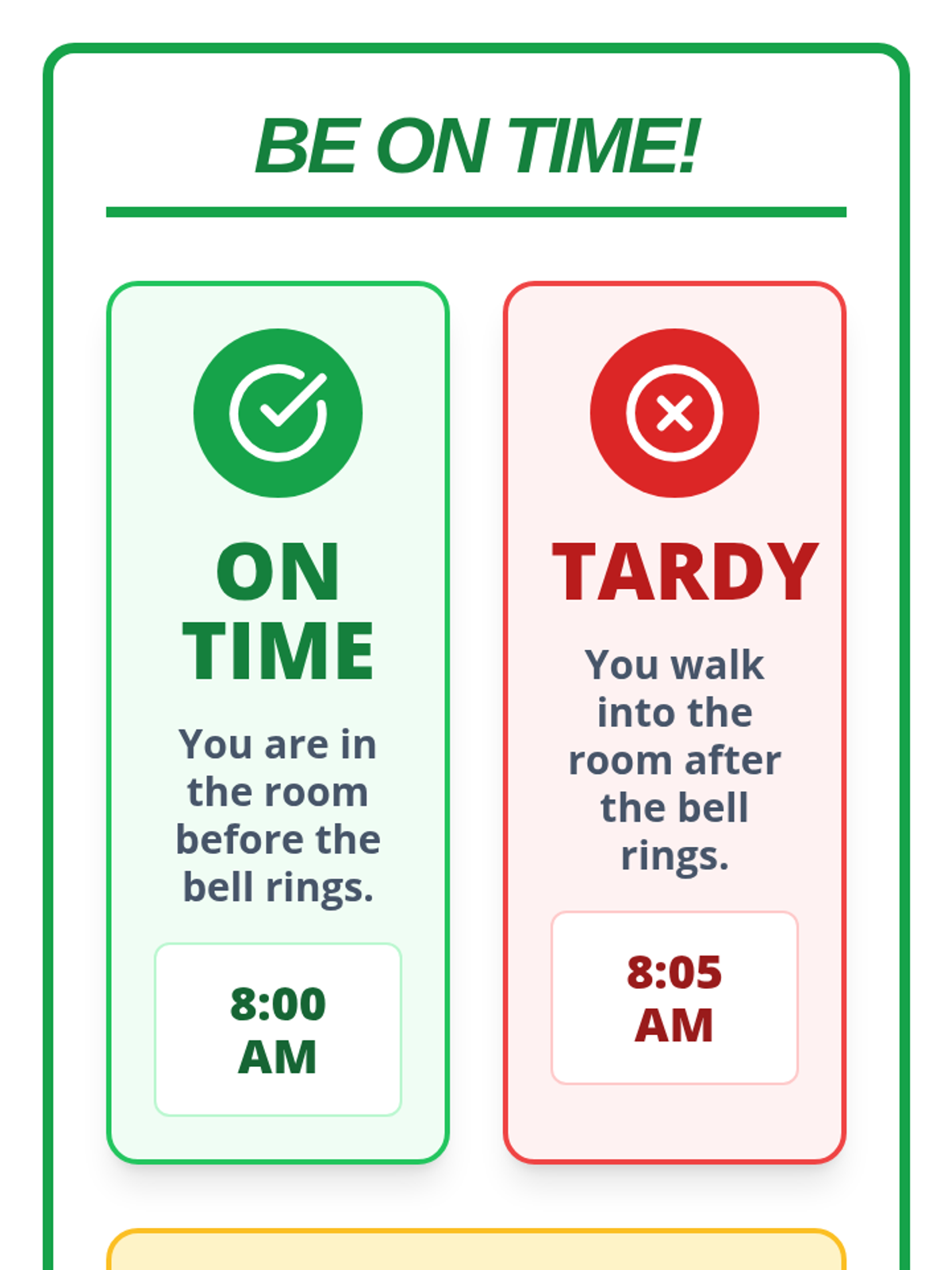
Students explore the importance of attendance and the definition of being tardy.
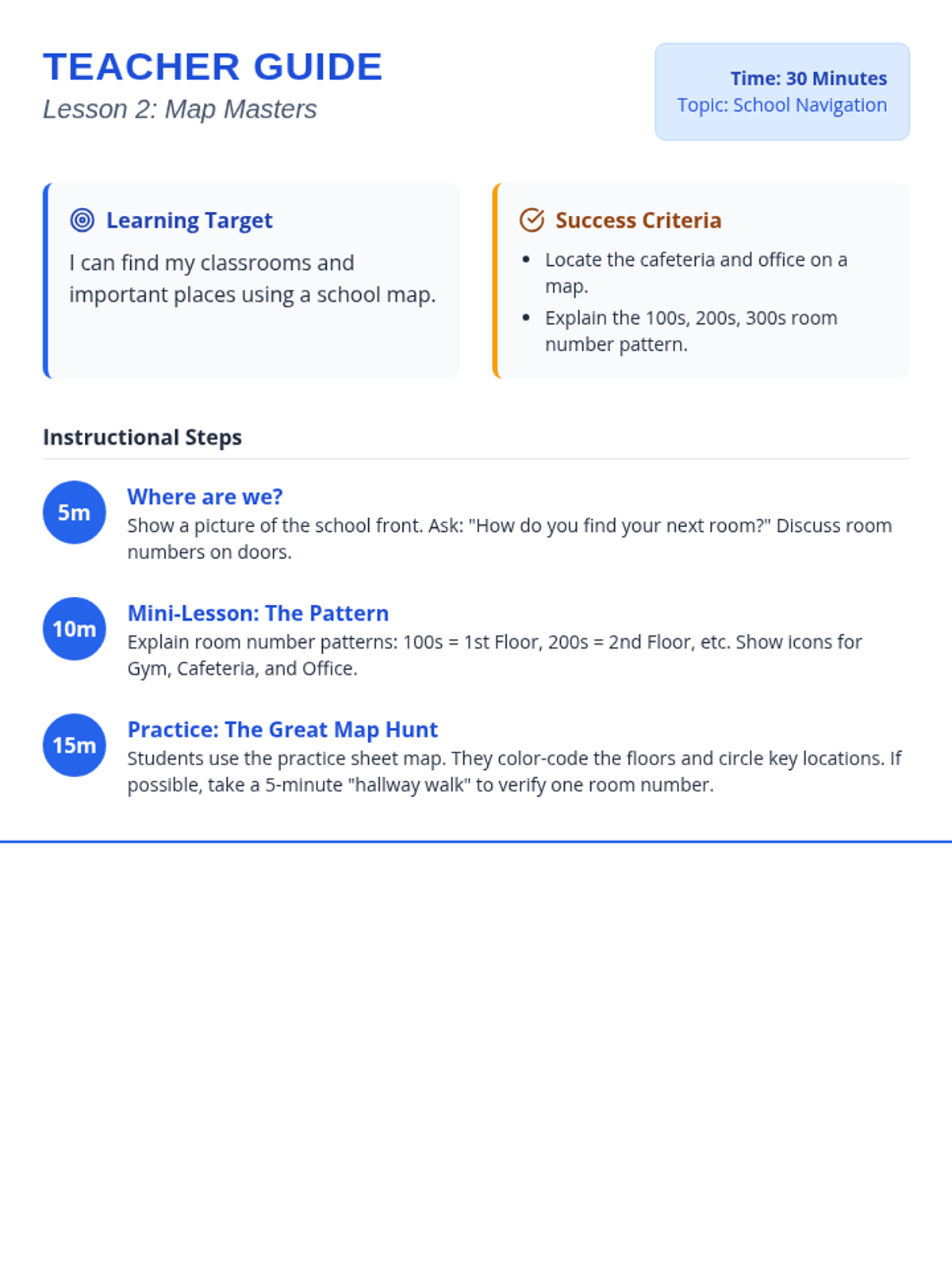
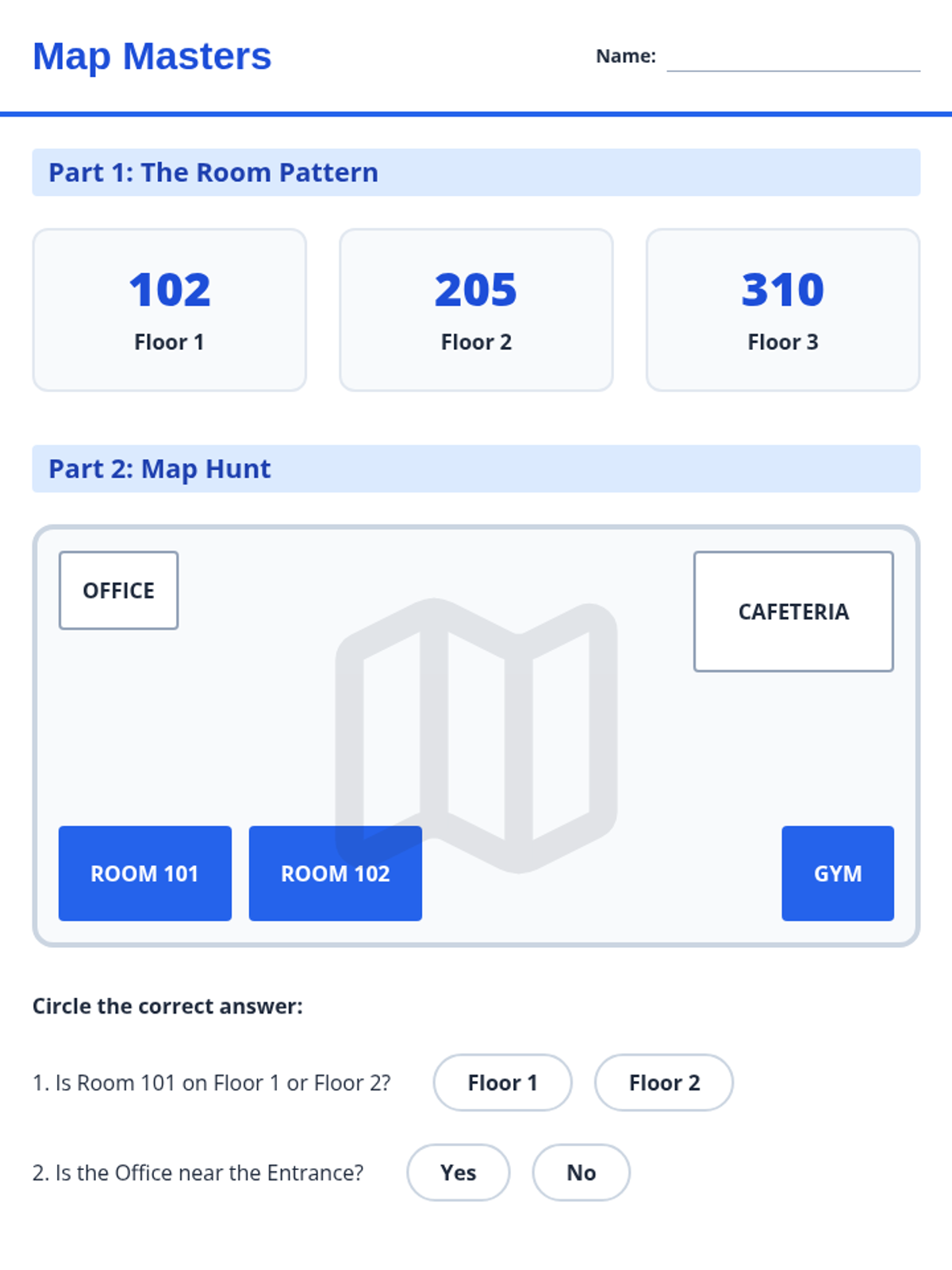
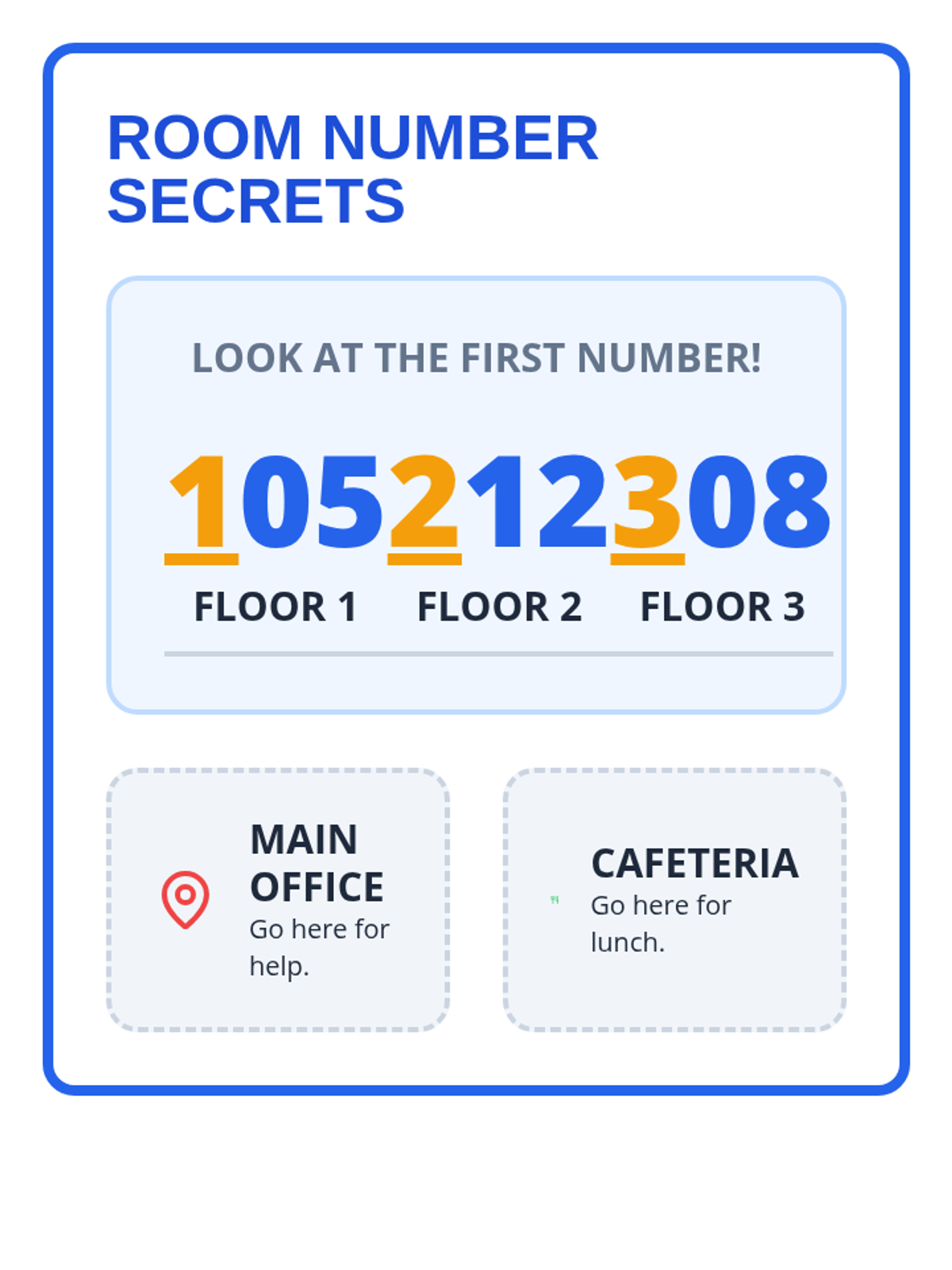
Students learn to navigate the school building using maps and room number patterns.
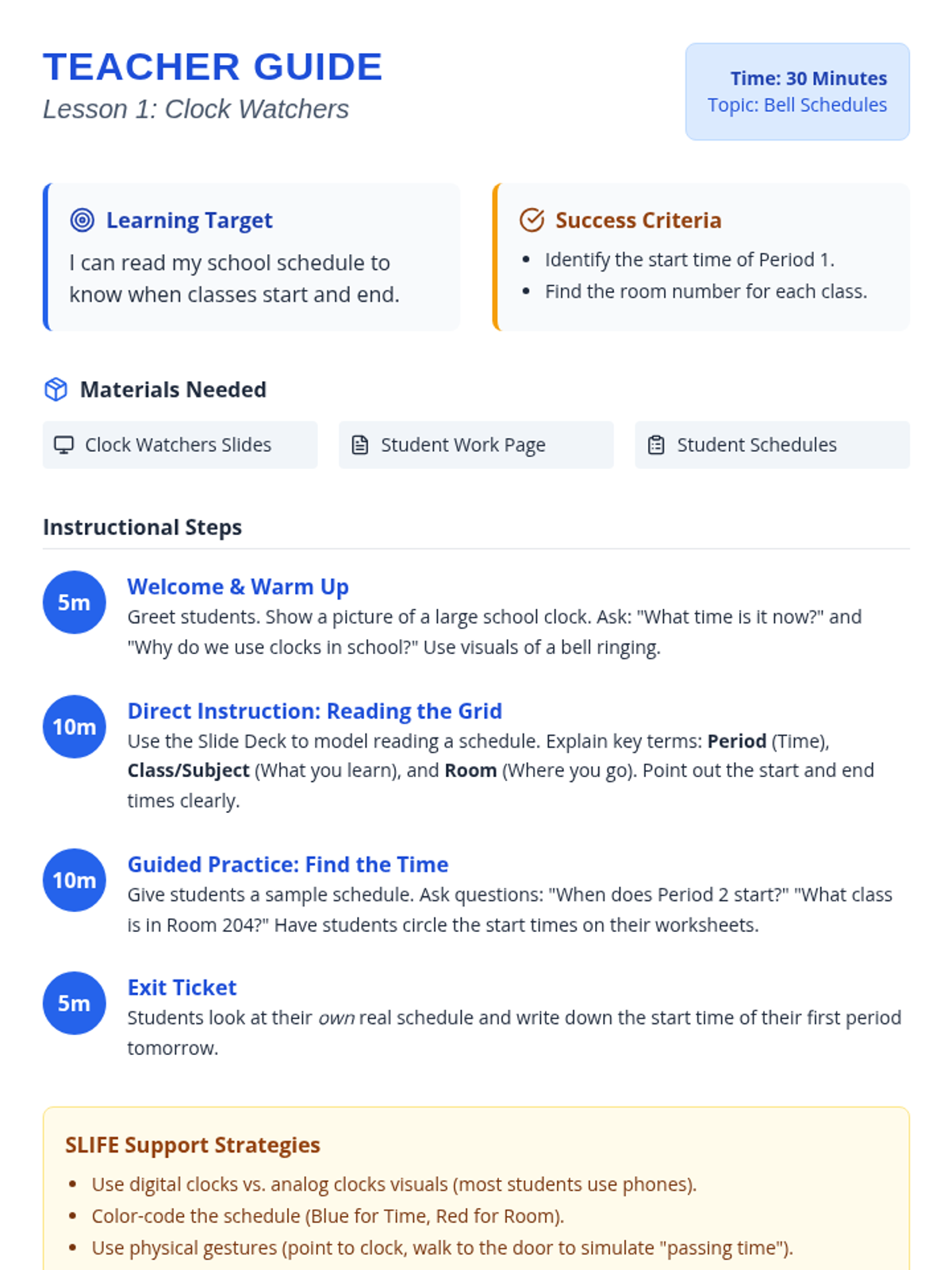
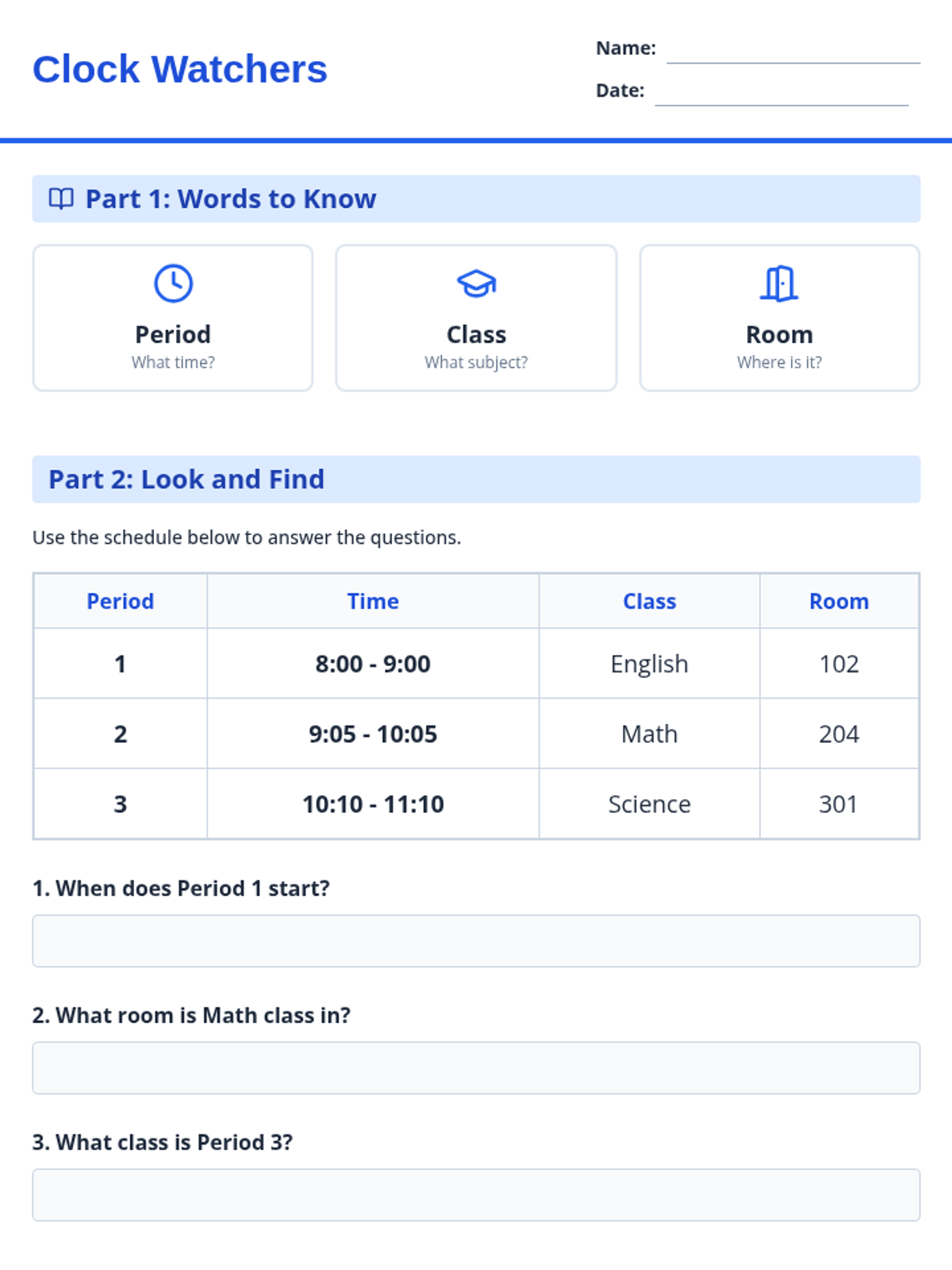
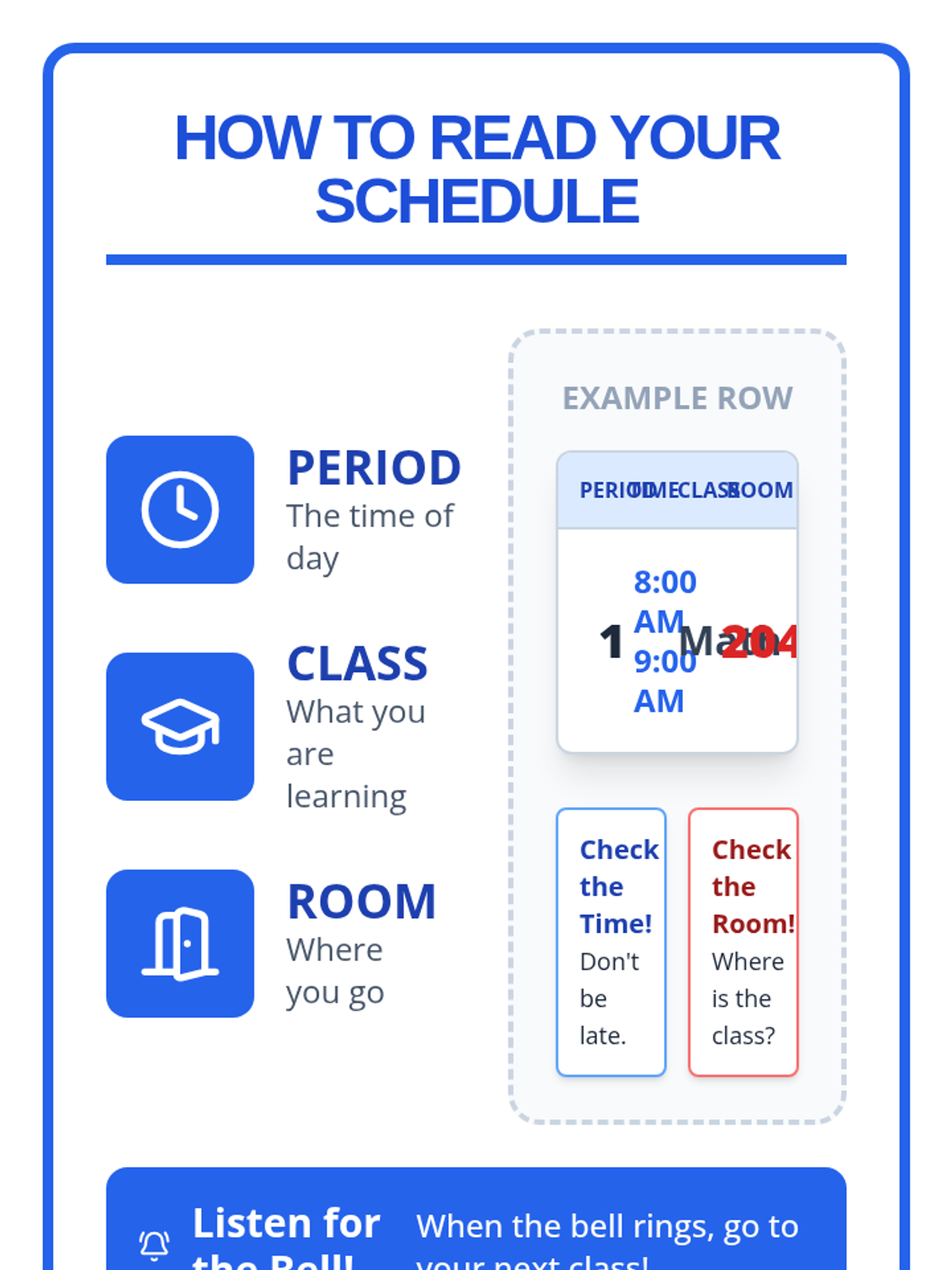
Students learn to read a high school bell schedule, understand period transitions, and identify their own class times.
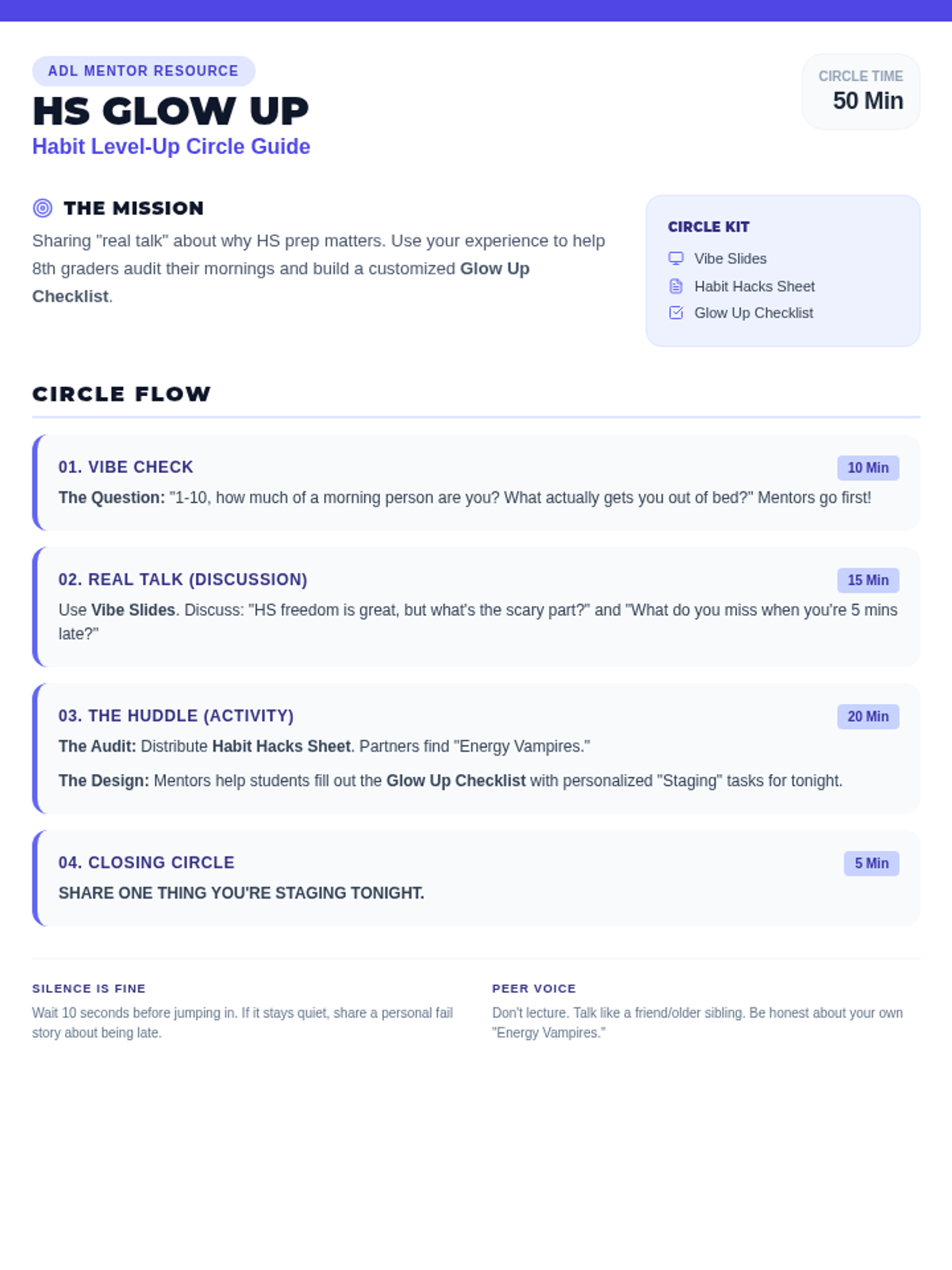
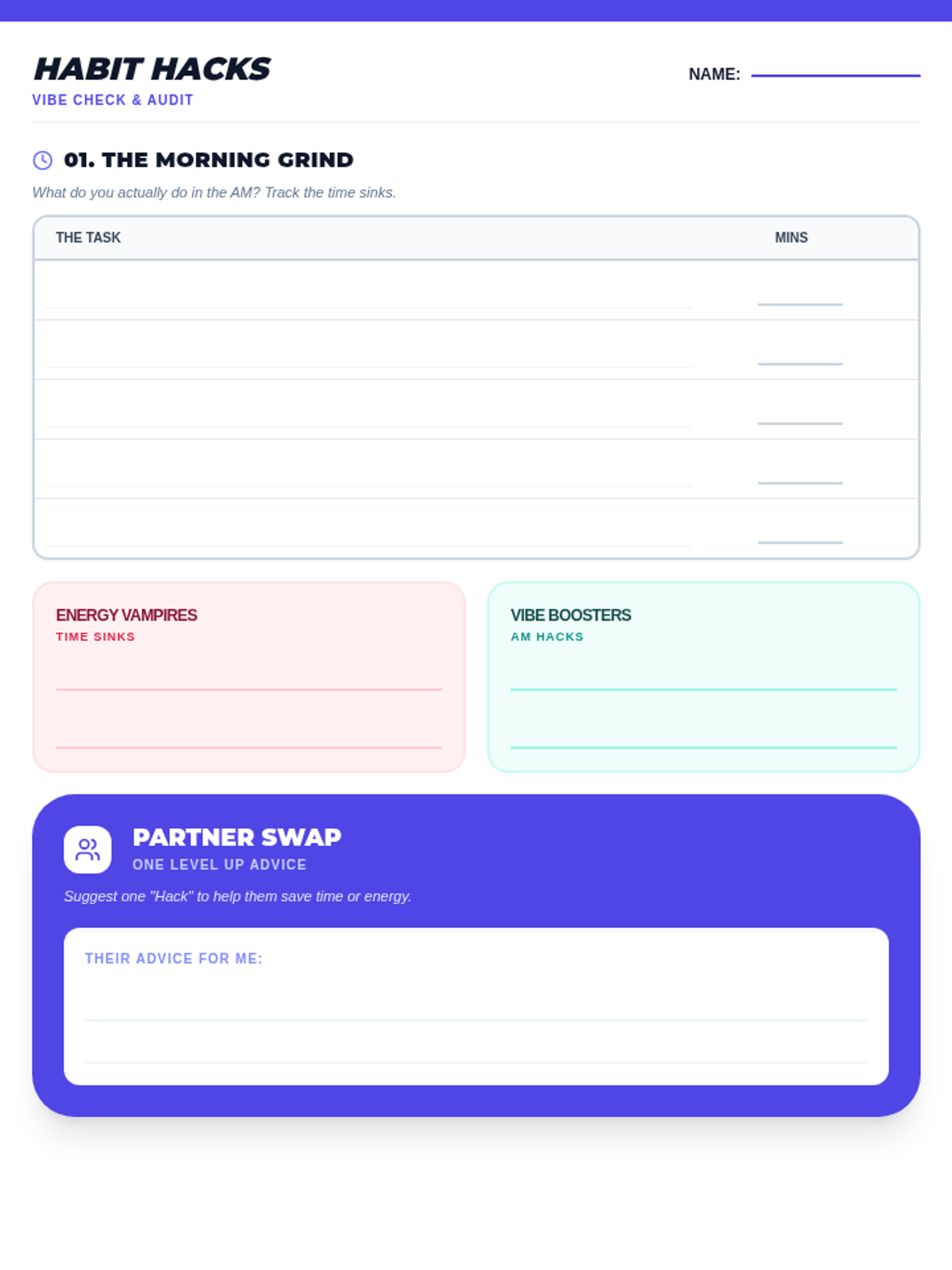
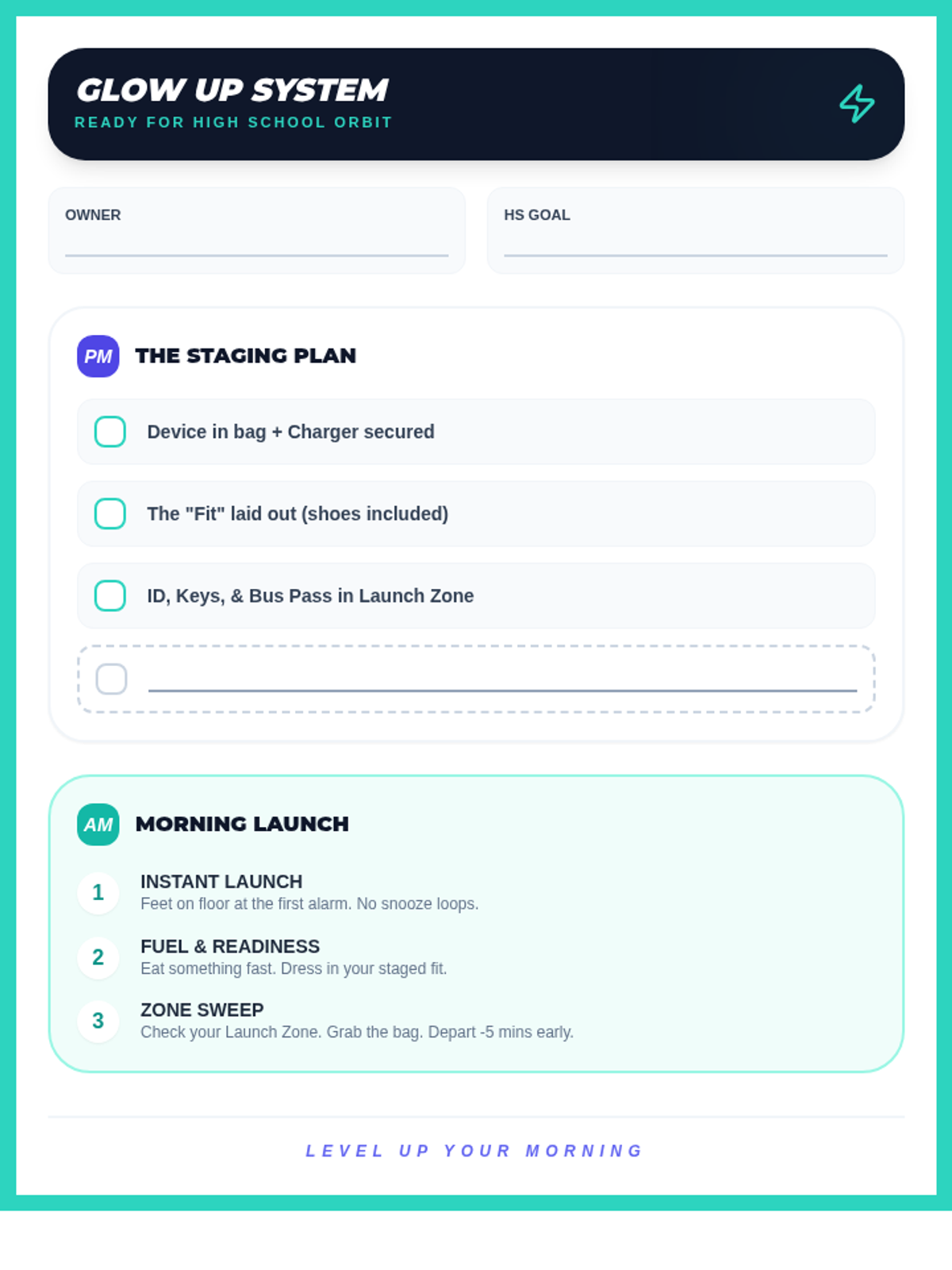
A 50-minute lesson designed to help 8th graders develop punctuality and preparedness habits for the transition to high school. Students will analyze their current routines and create a 'Mission Control' morning checklist.
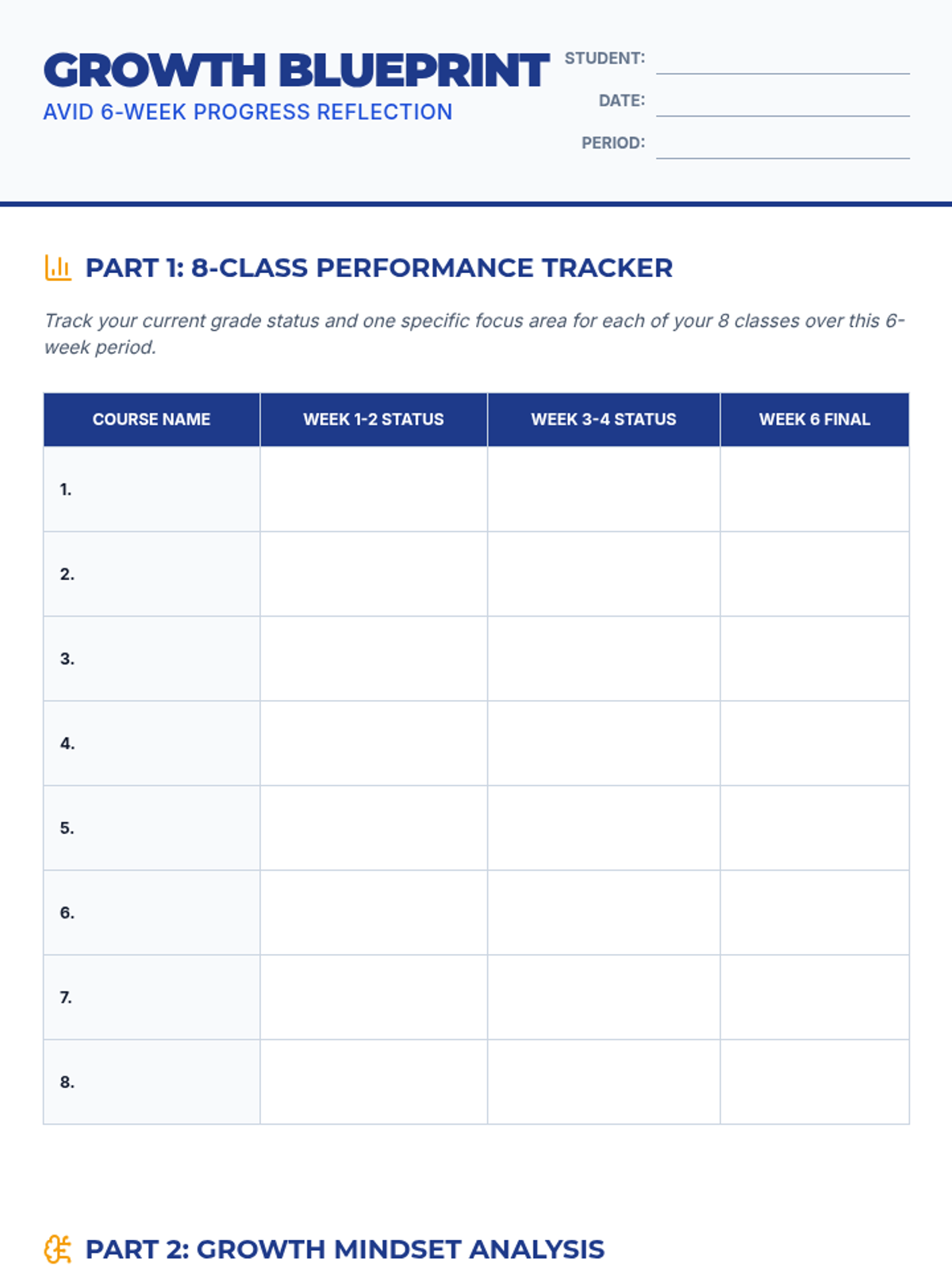
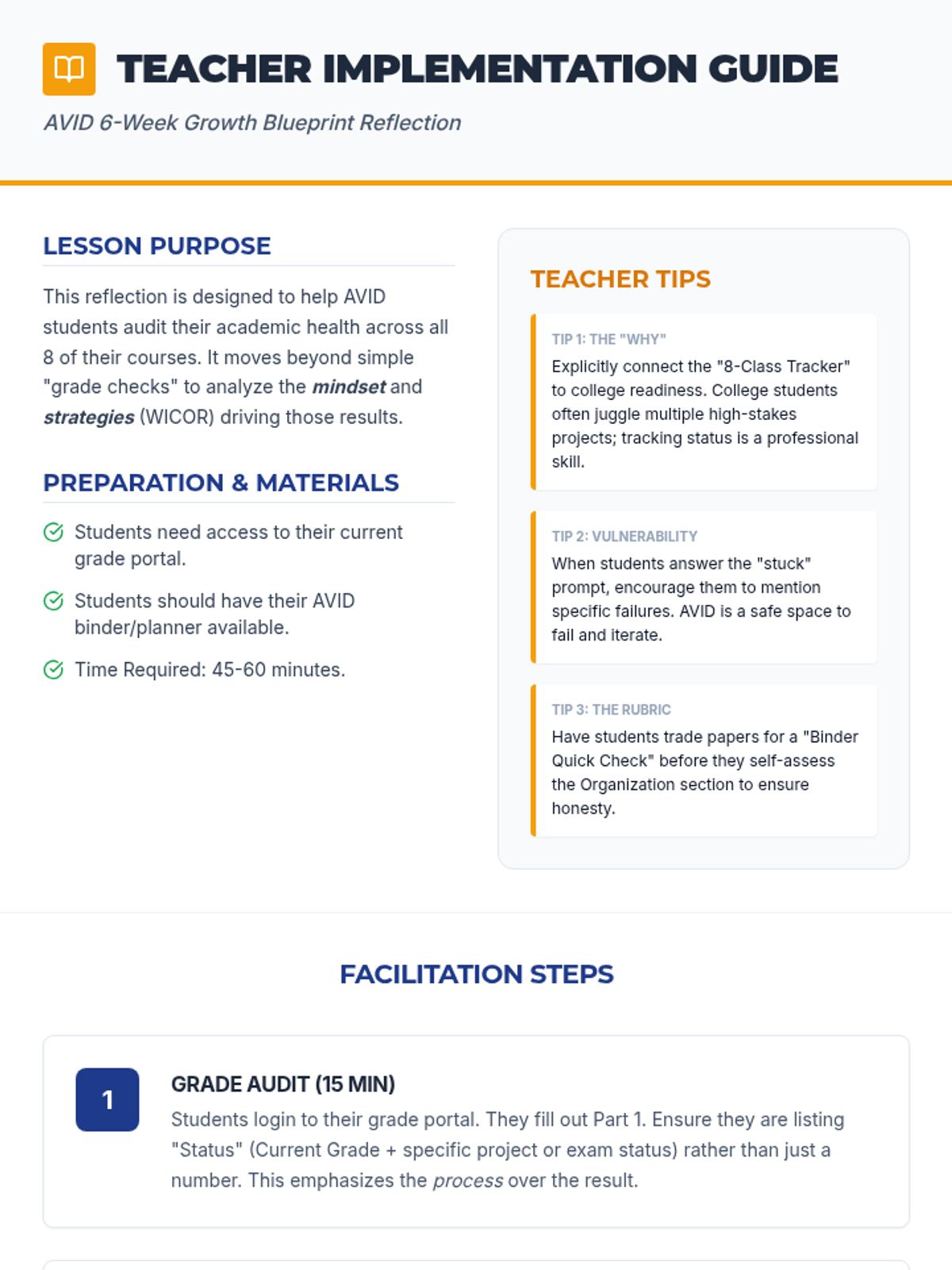
A comprehensive 6-week reflection unit for AVID students to evaluate their academic progress across 8 classes using growth mindset principles and the WICOR framework.
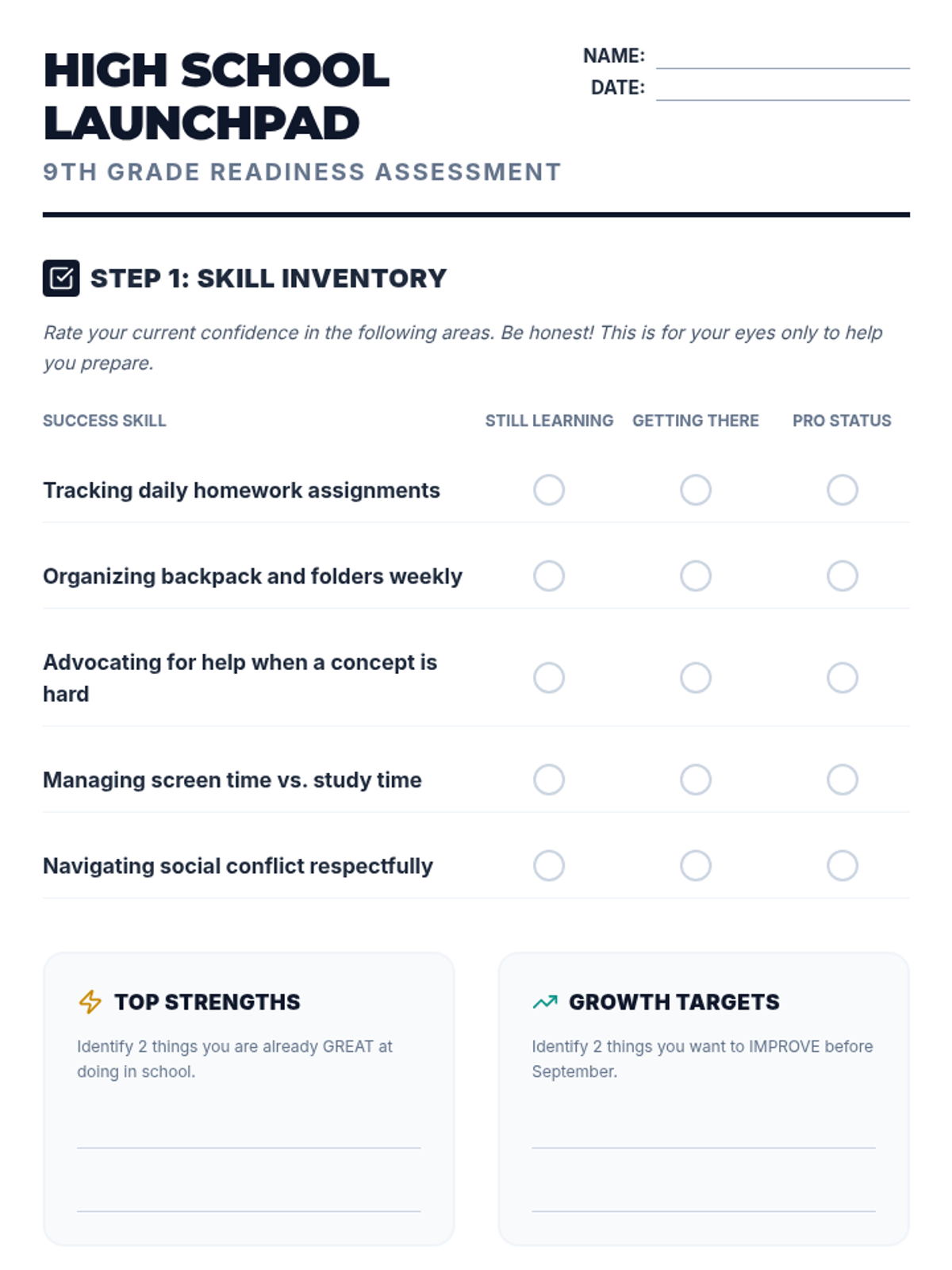
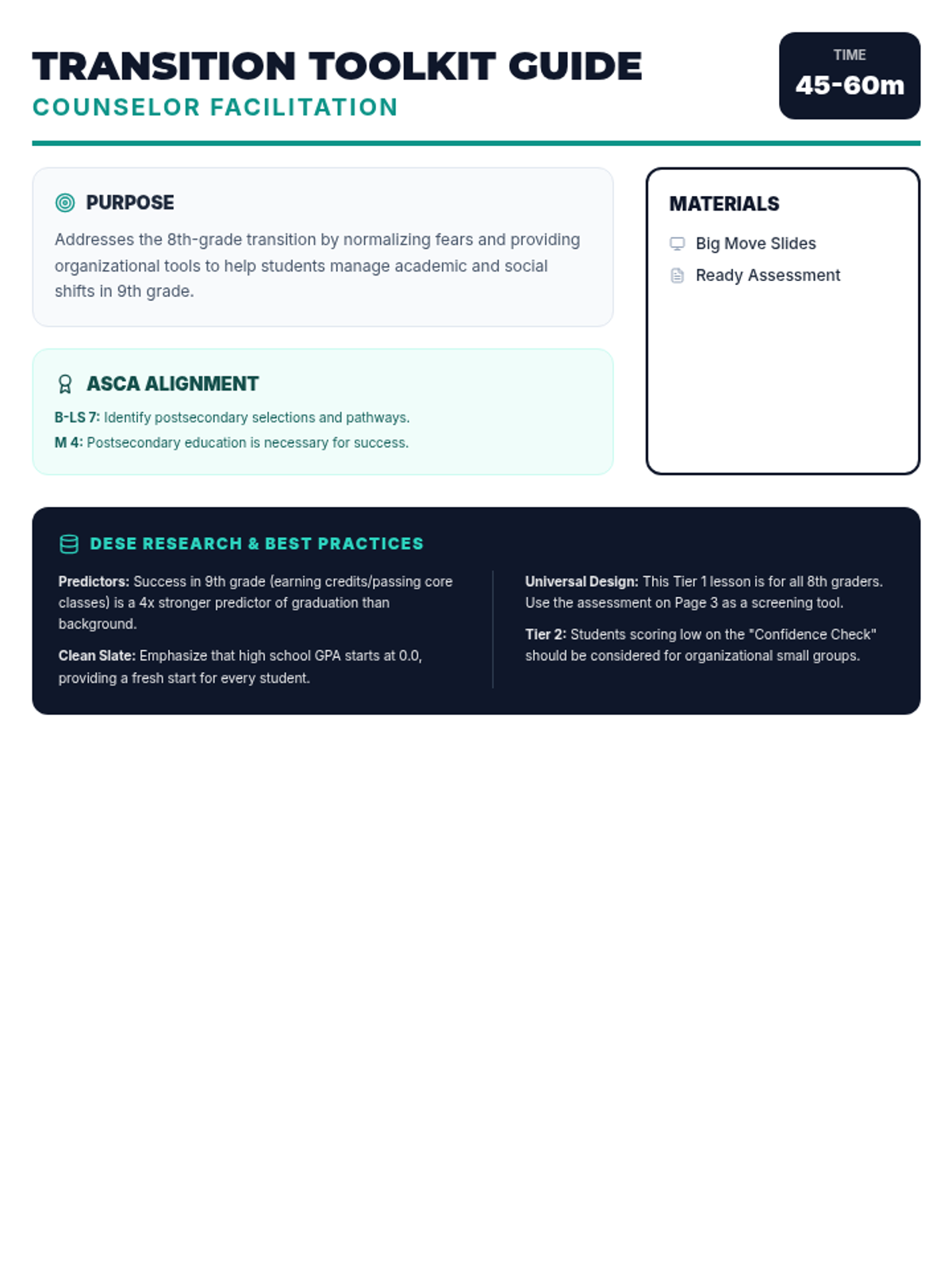
A comprehensive counseling lesson designed to ease the transition from middle to high school for 8th-grade students, focusing on academic readiness, social-emotional navigation, and organizational success.
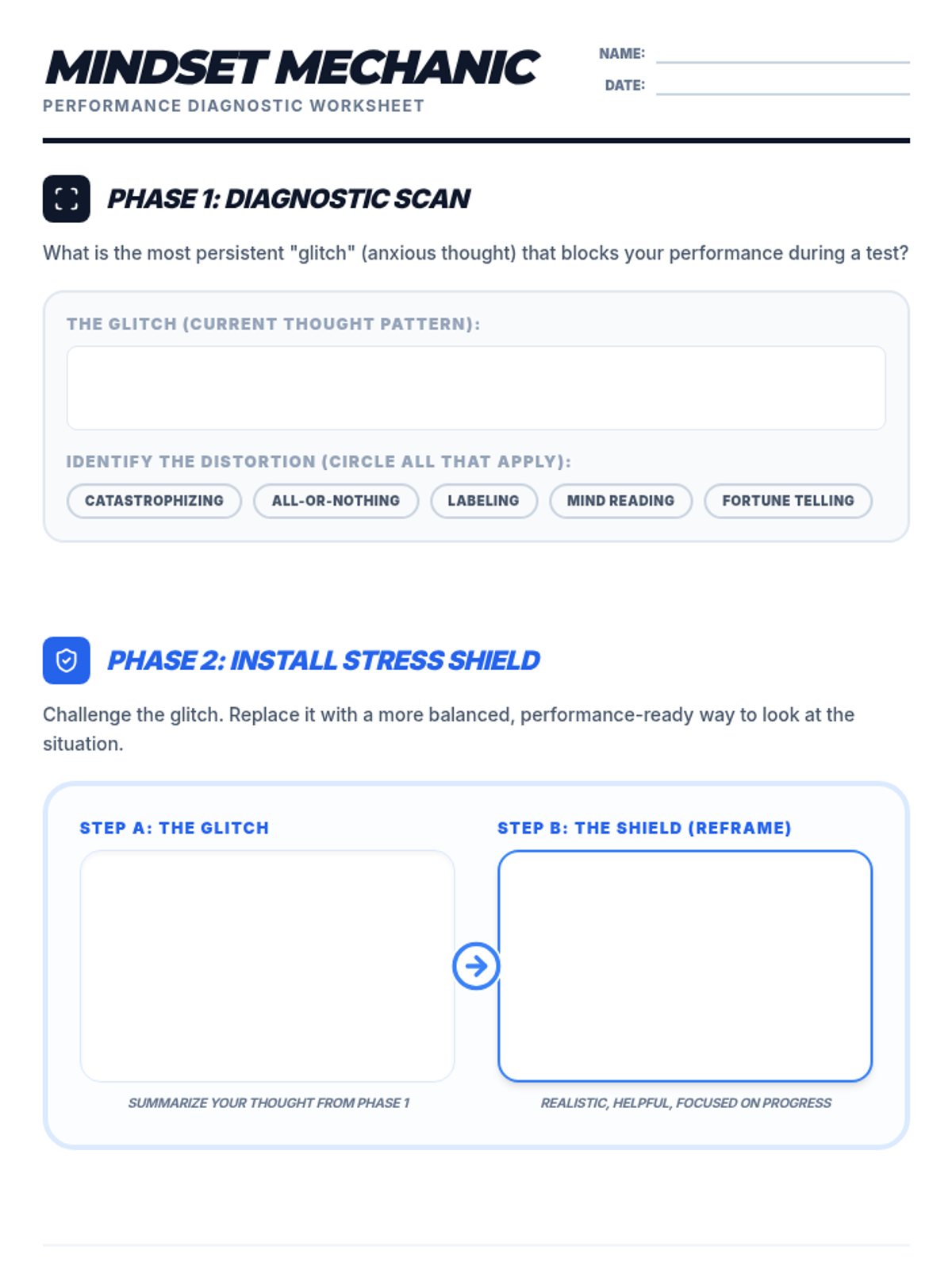
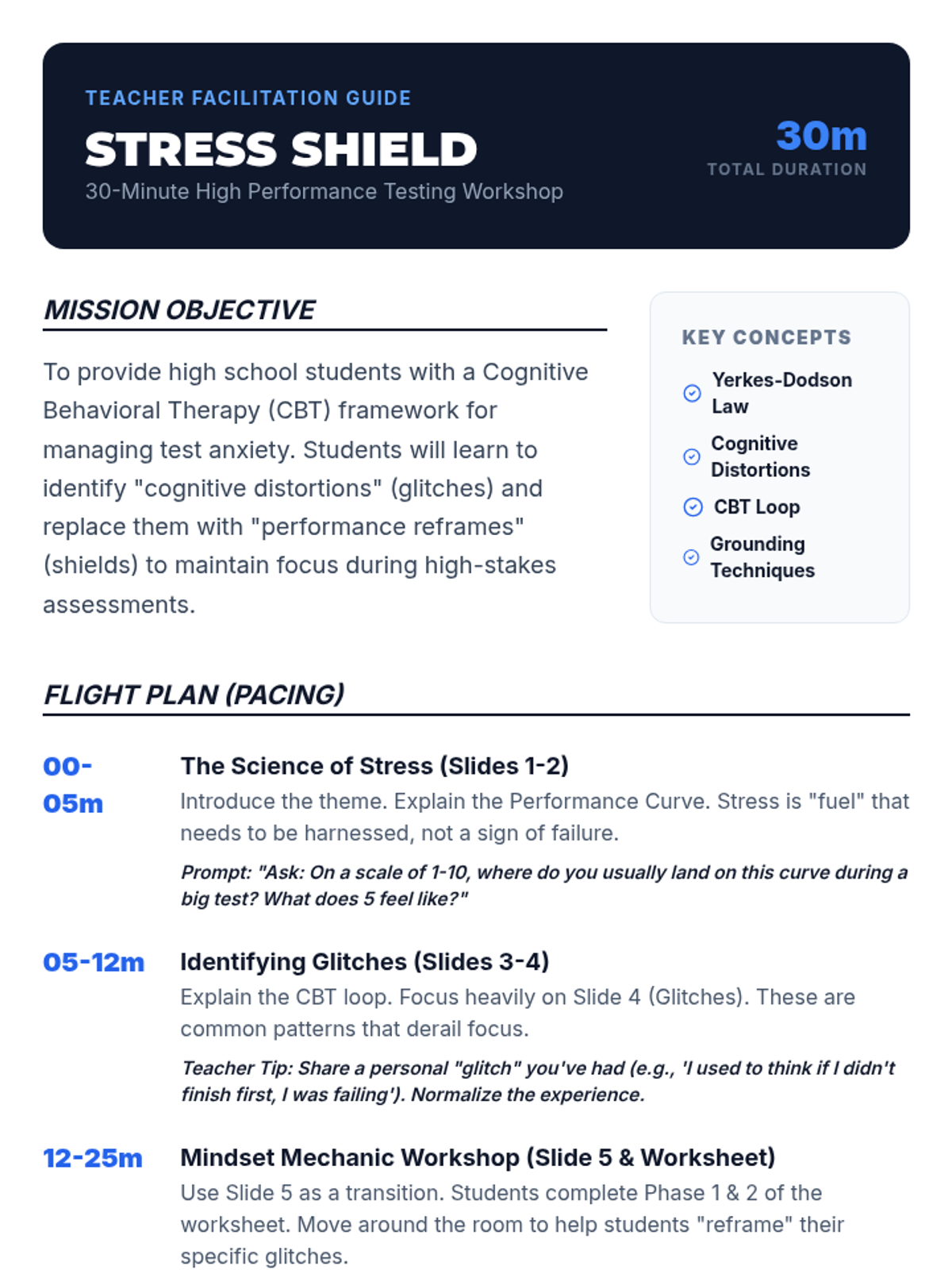
A fast-paced, high-impact 30-minute lesson designed to give high school students practical CBT-based tools to manage test anxiety and optimize performance on standardized assessments.
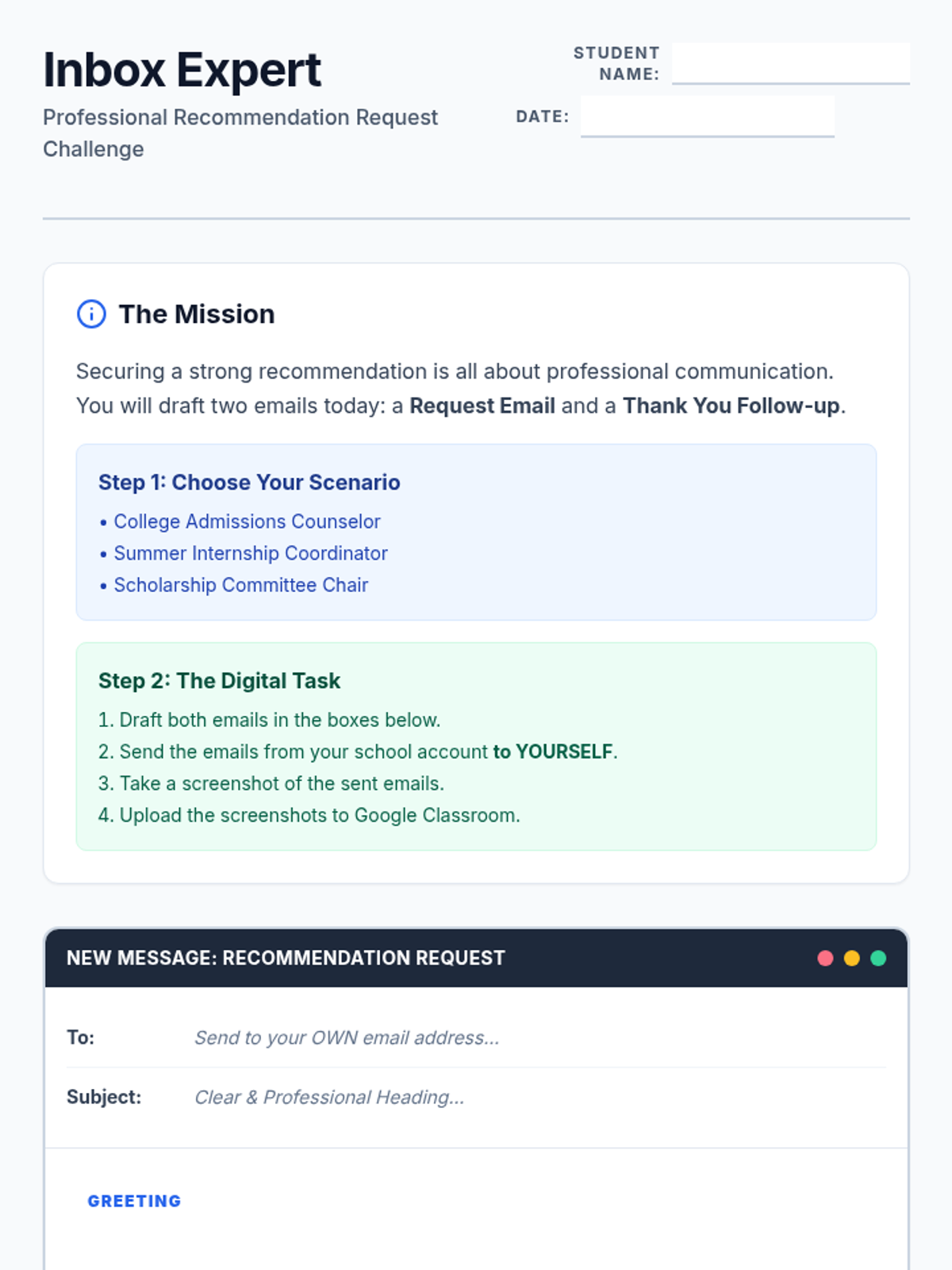
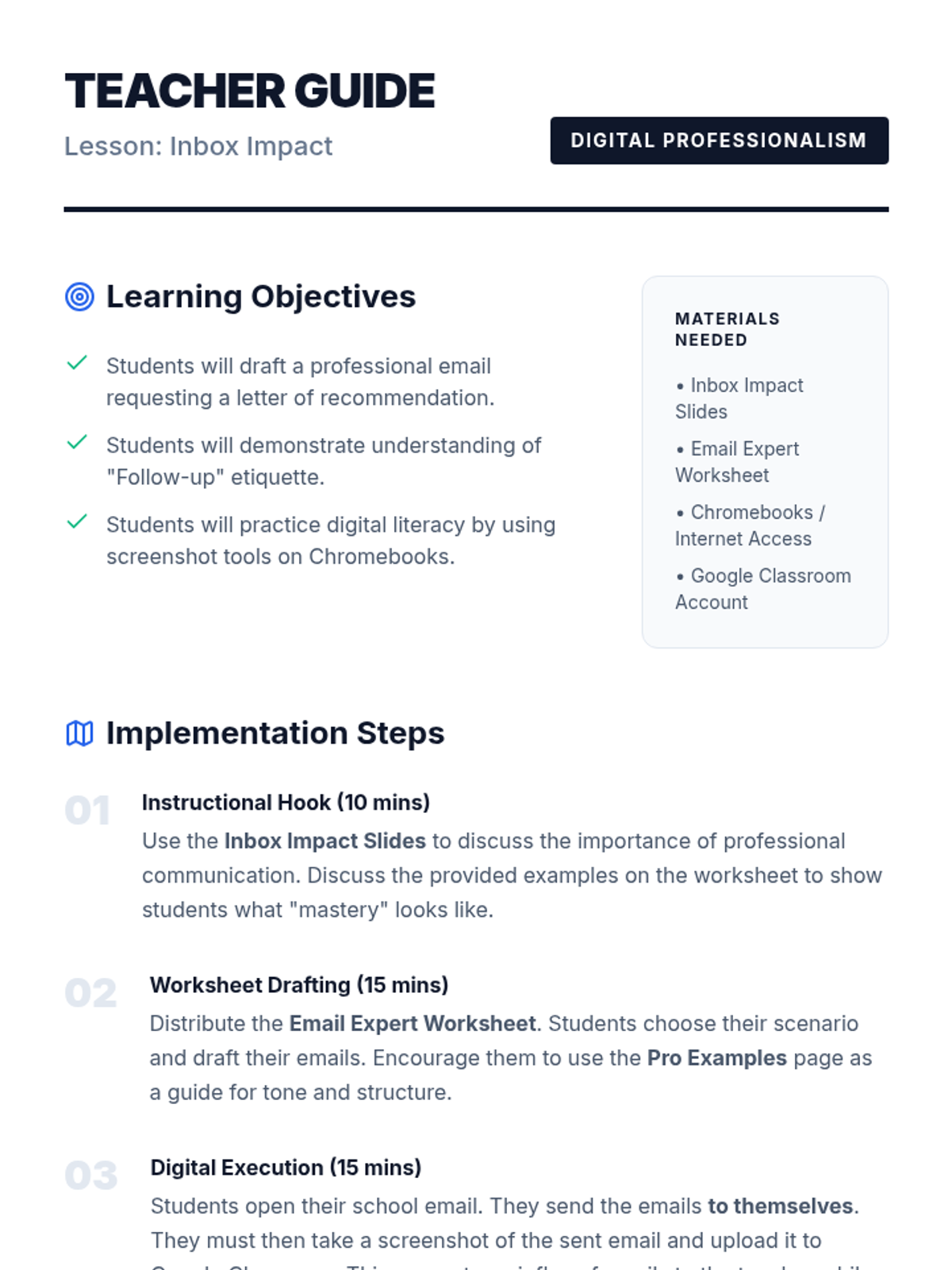
A lesson on drafting and sending professional emails to request letters of recommendation for college, internships, or scholarships. Students learn proper email etiquette, structure, and follow-up procedures.
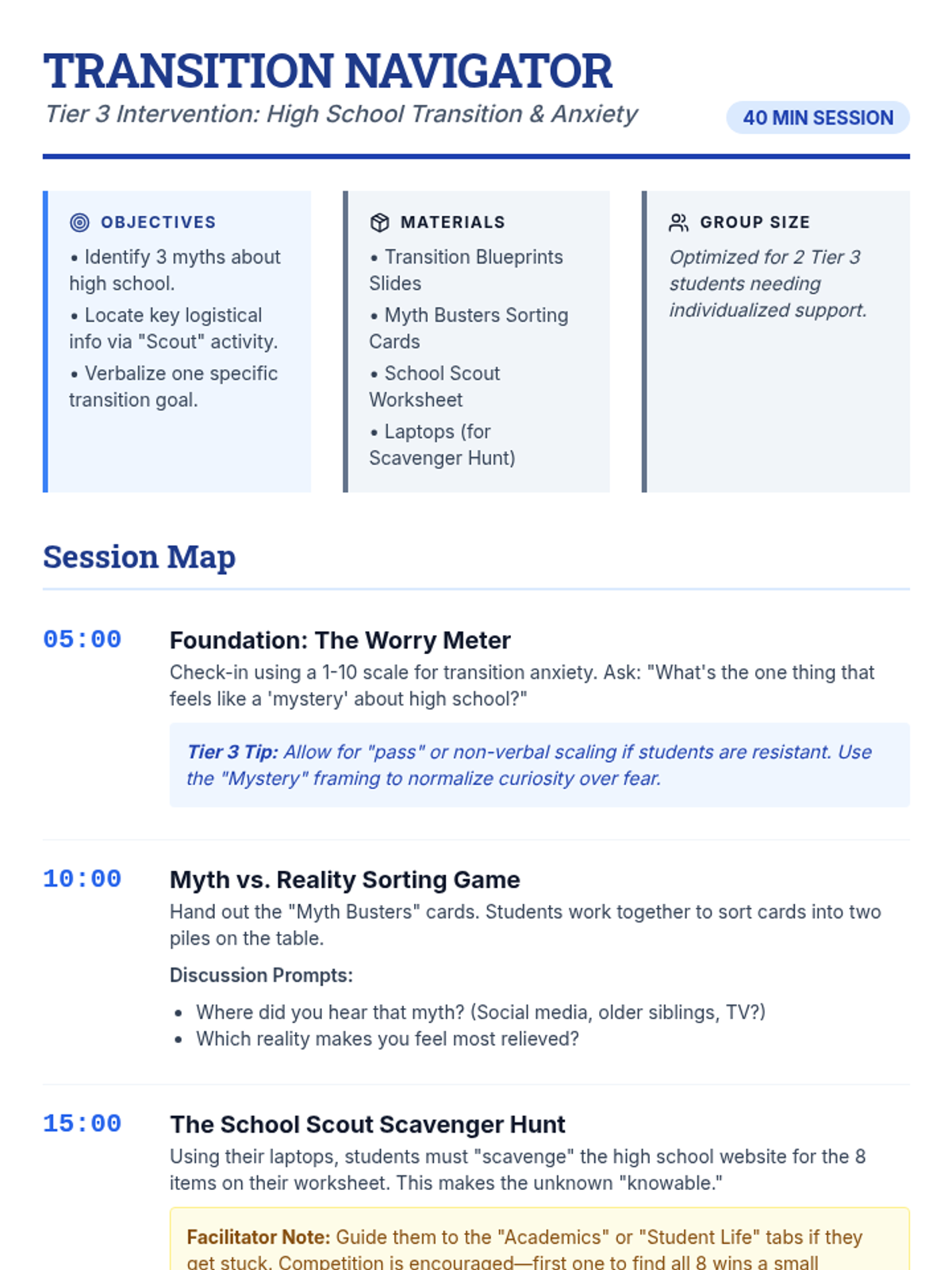
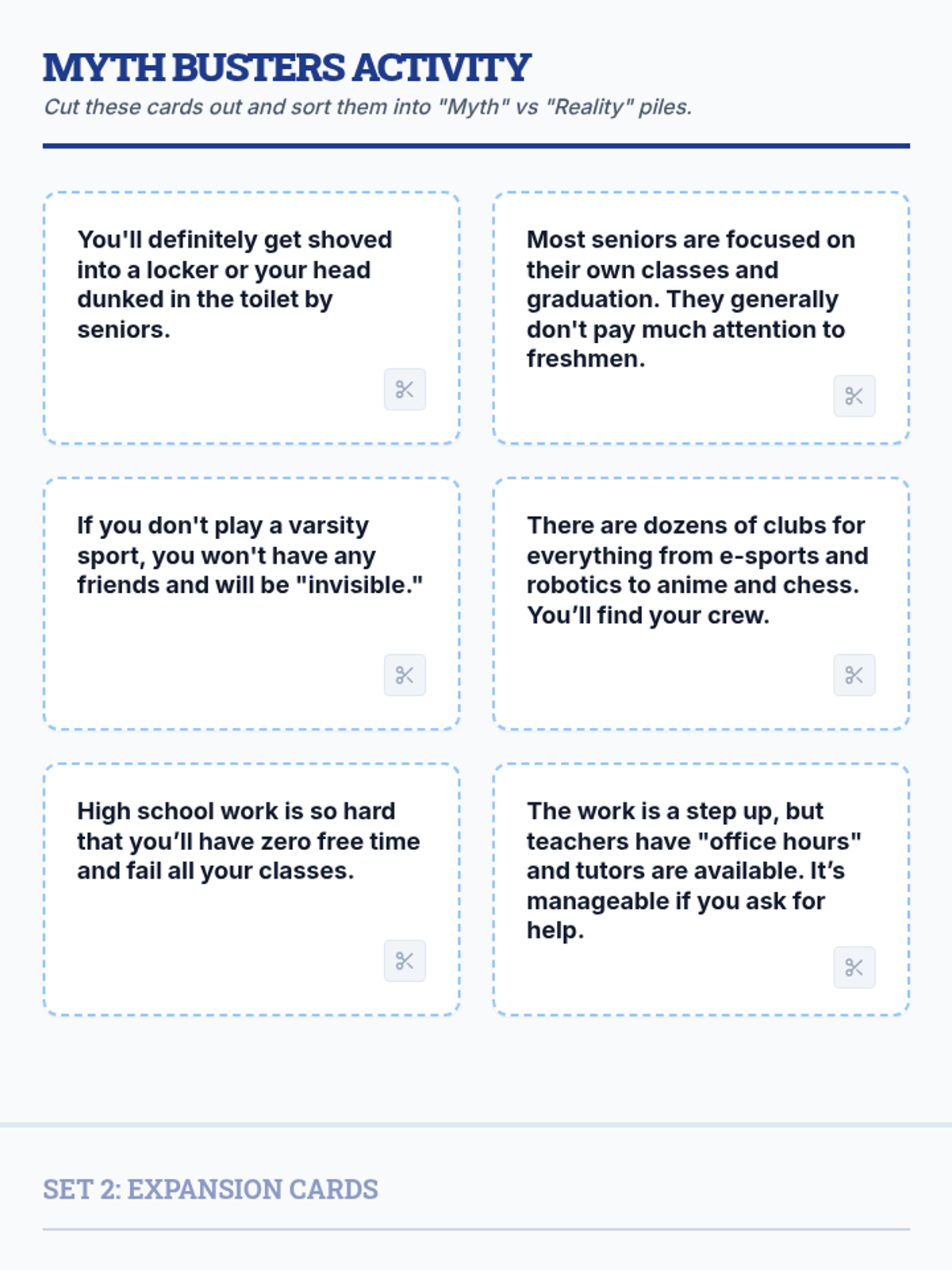
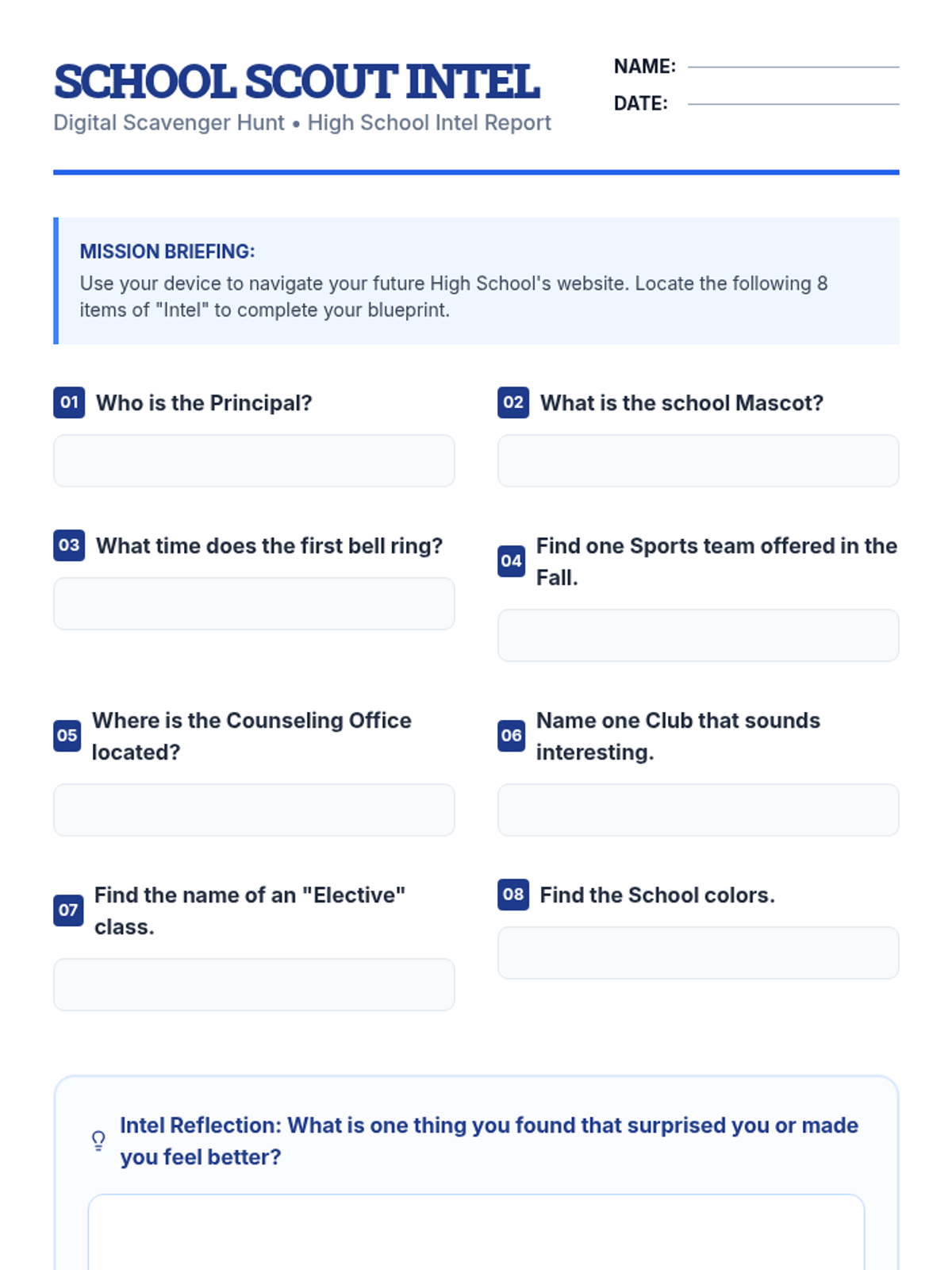
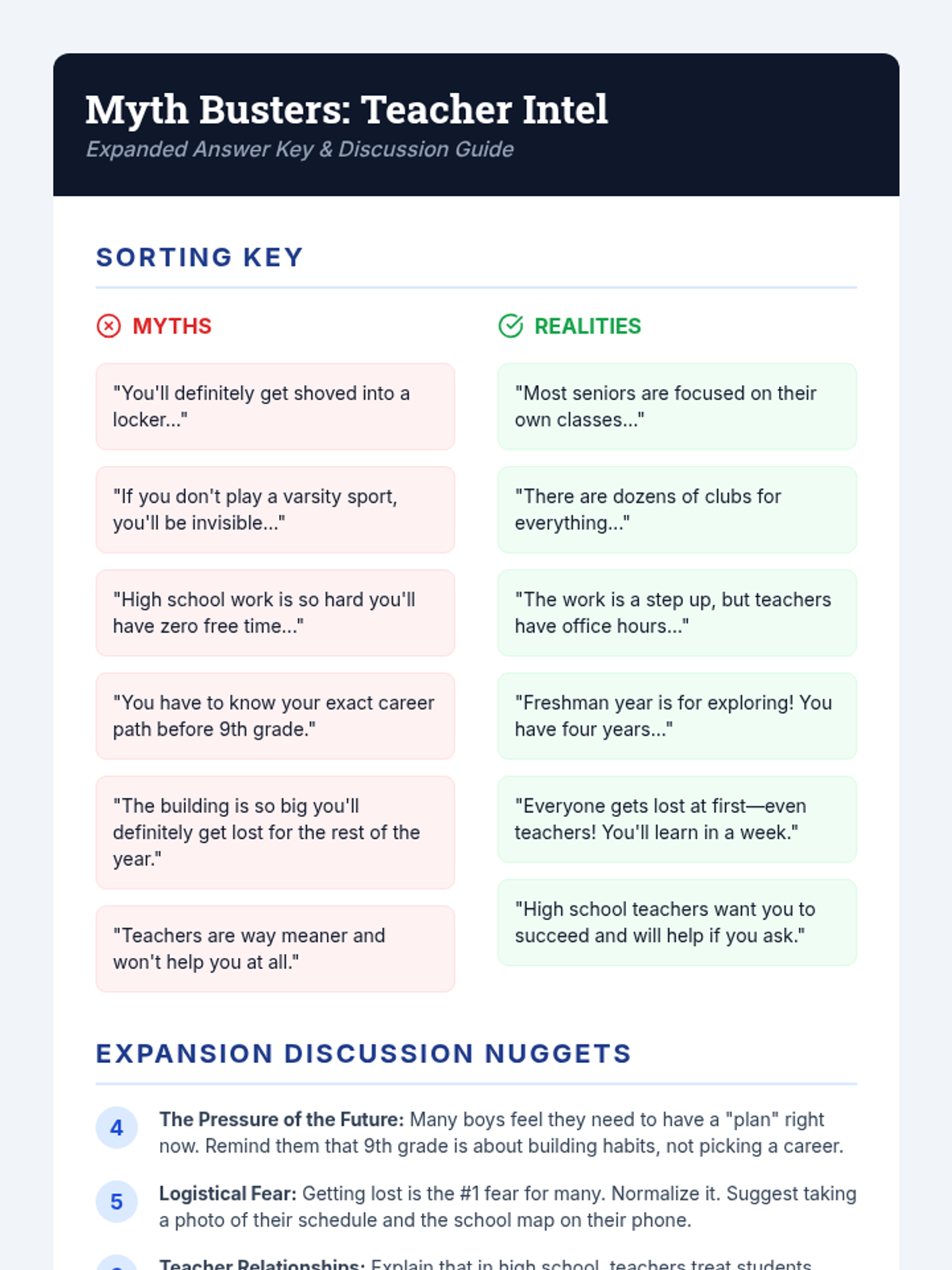
A 40-minute counseling lesson designed for middle school boys to address anxiety about the high school transition through interactive myth-busting and information gathering.
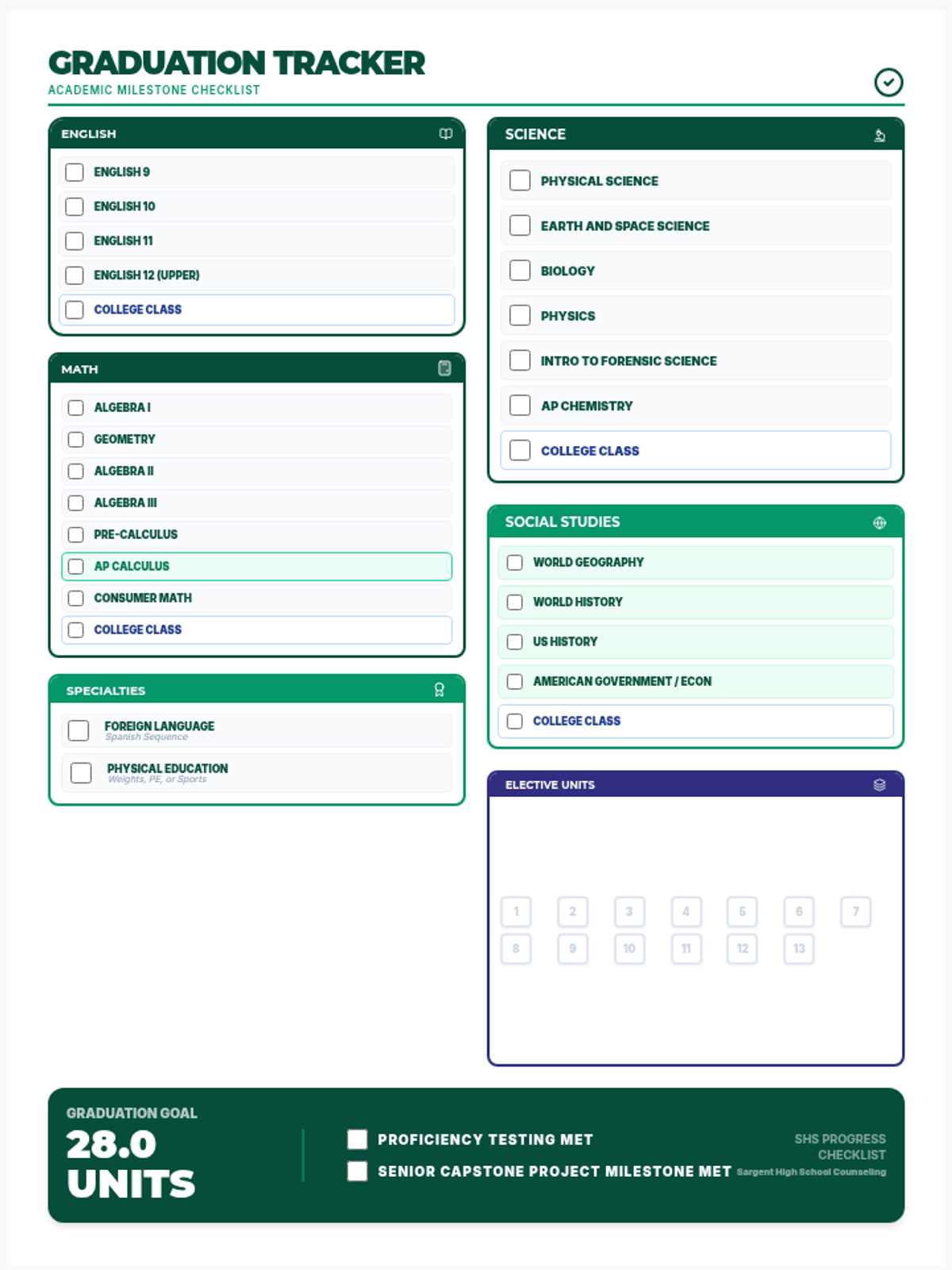
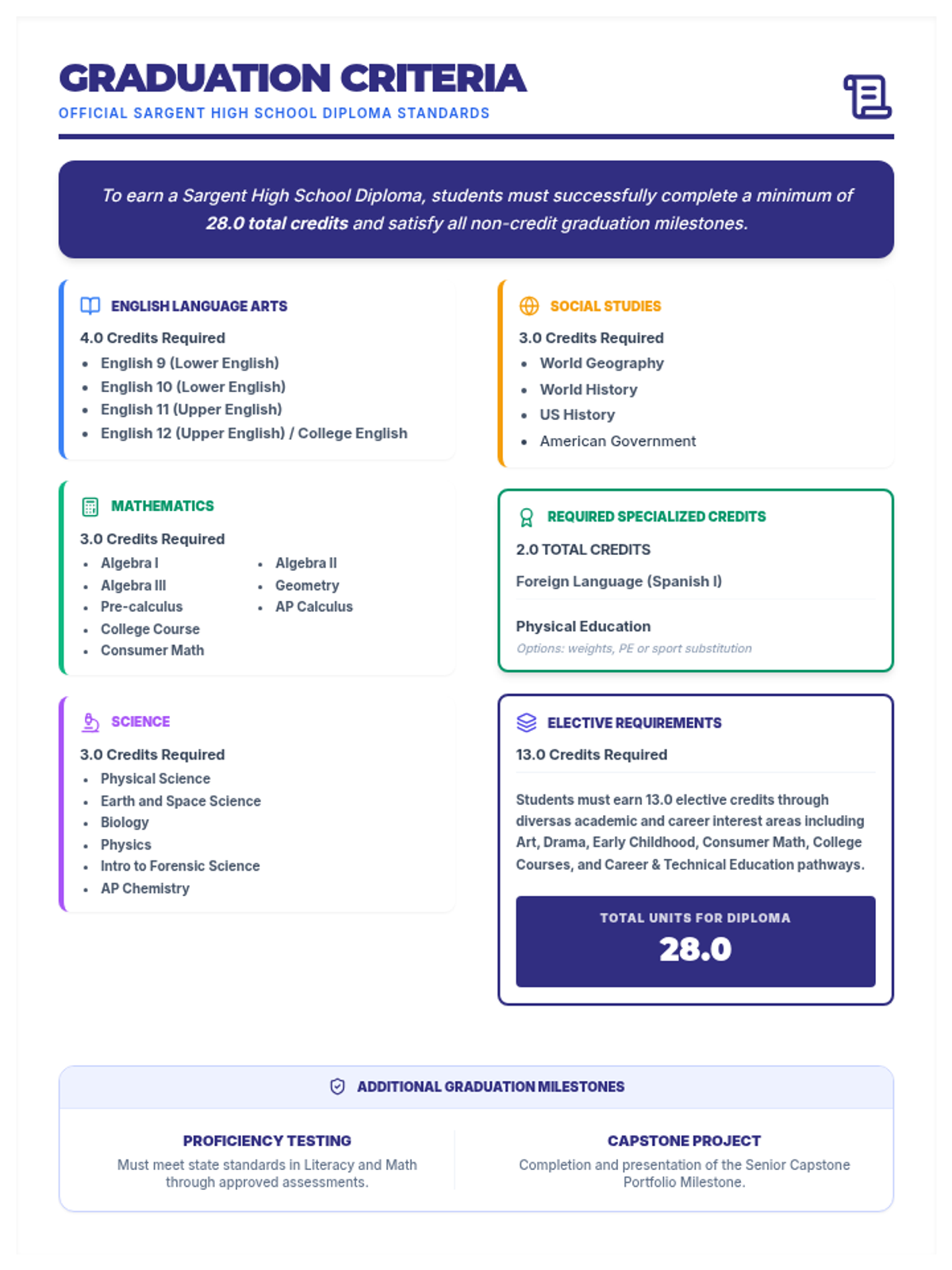
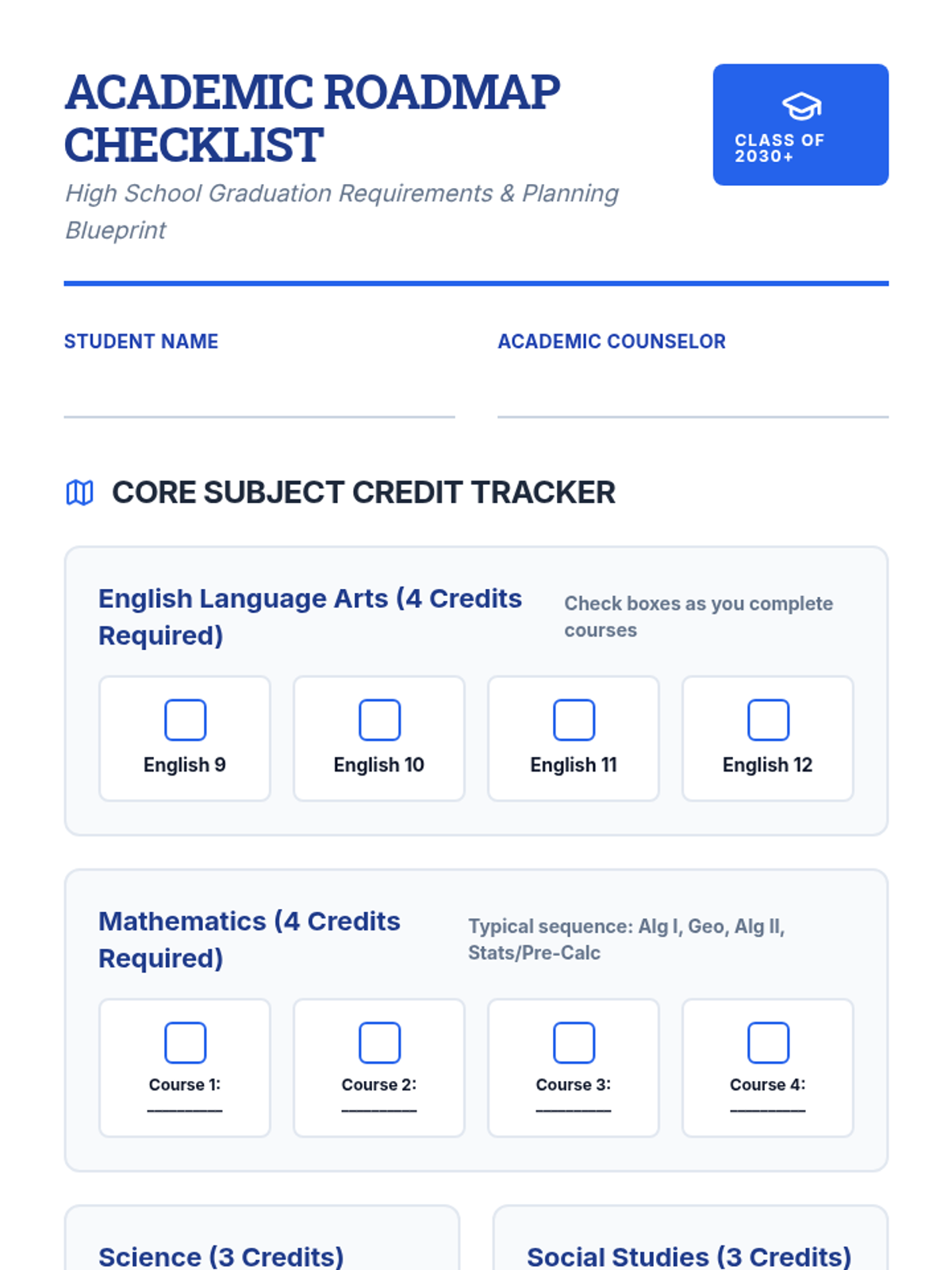
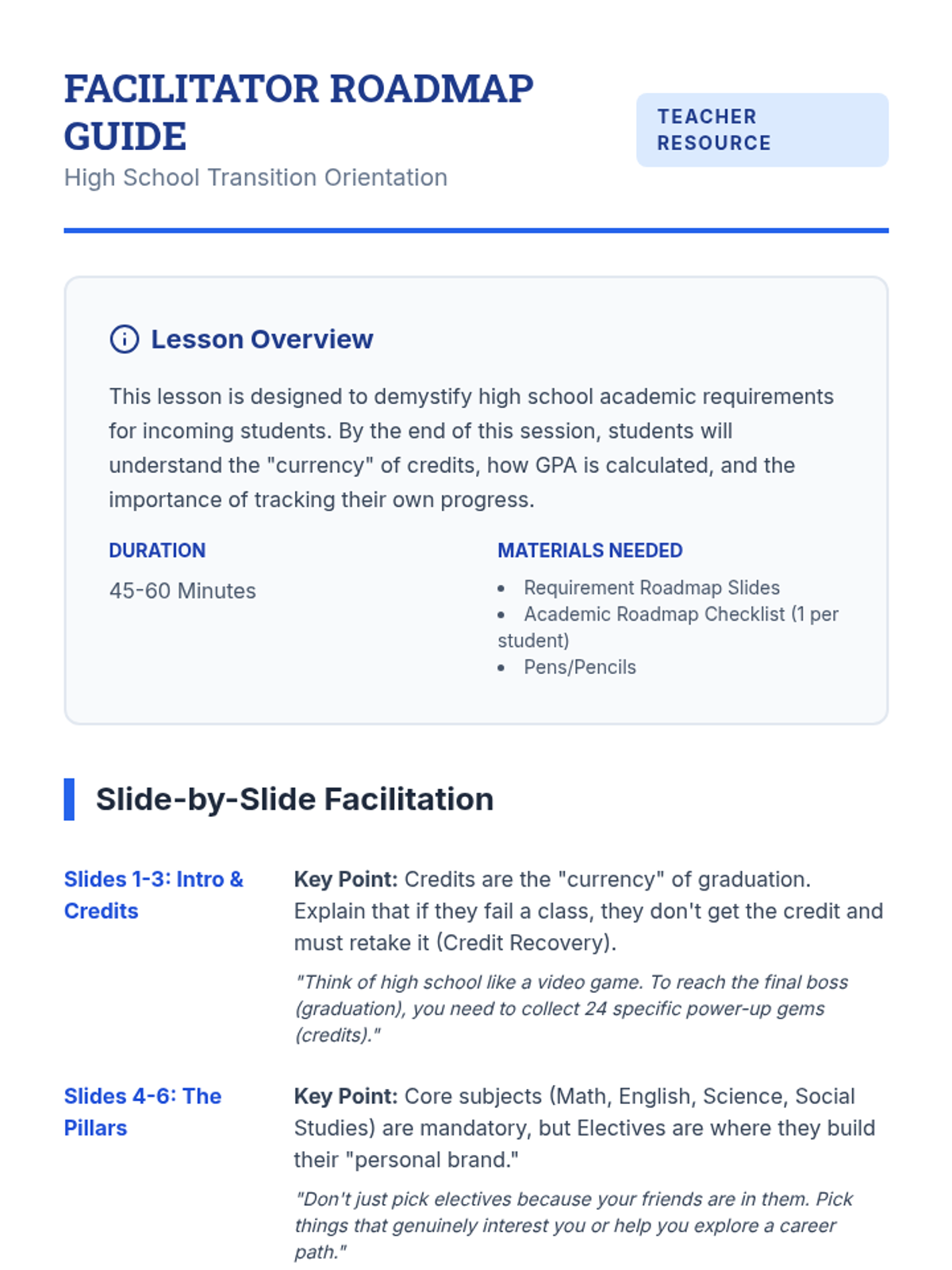
A comprehensive guide to high school graduation requirements and academic planning for transitioning students. Includes a visual presentation and a printable tracking checklist.
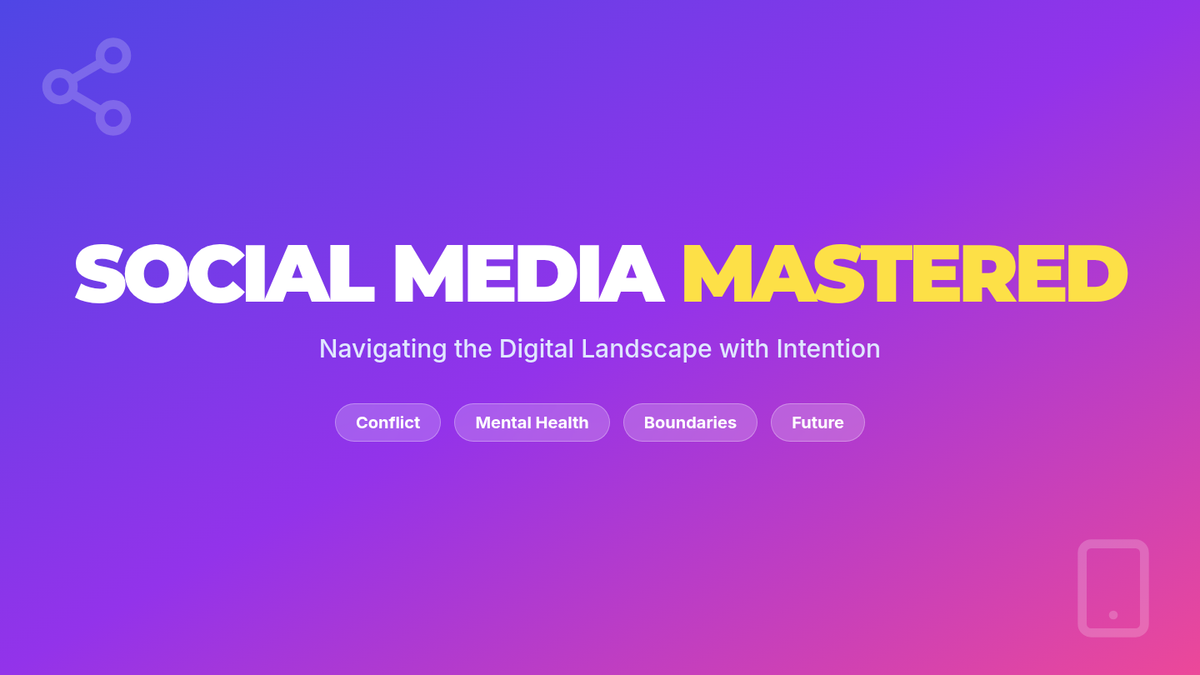
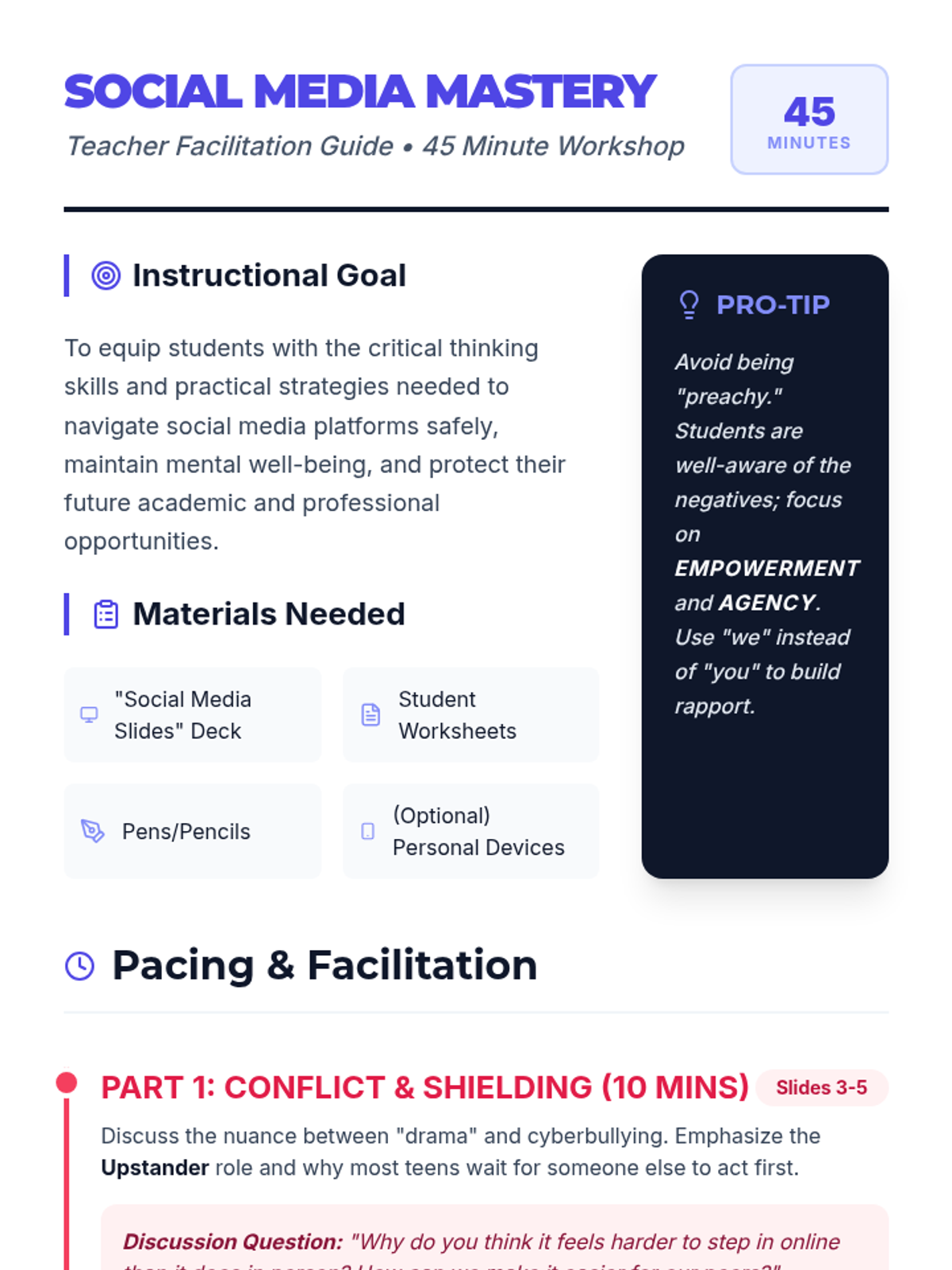
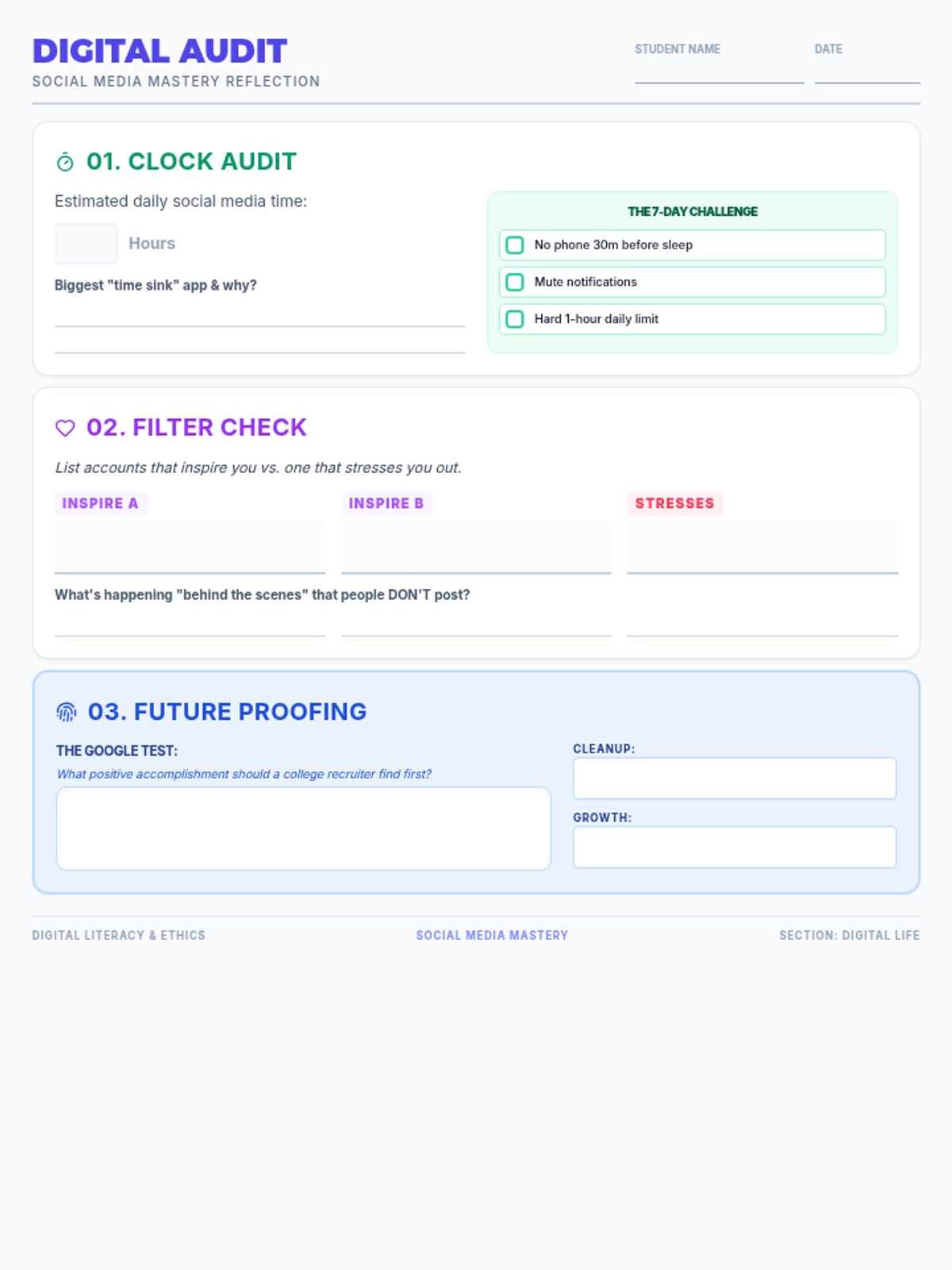
A comprehensive 45-minute lesson covering the critical pillars of responsible social media use, including digital citizenship, mental well-being, and future-proofing one's online presence.
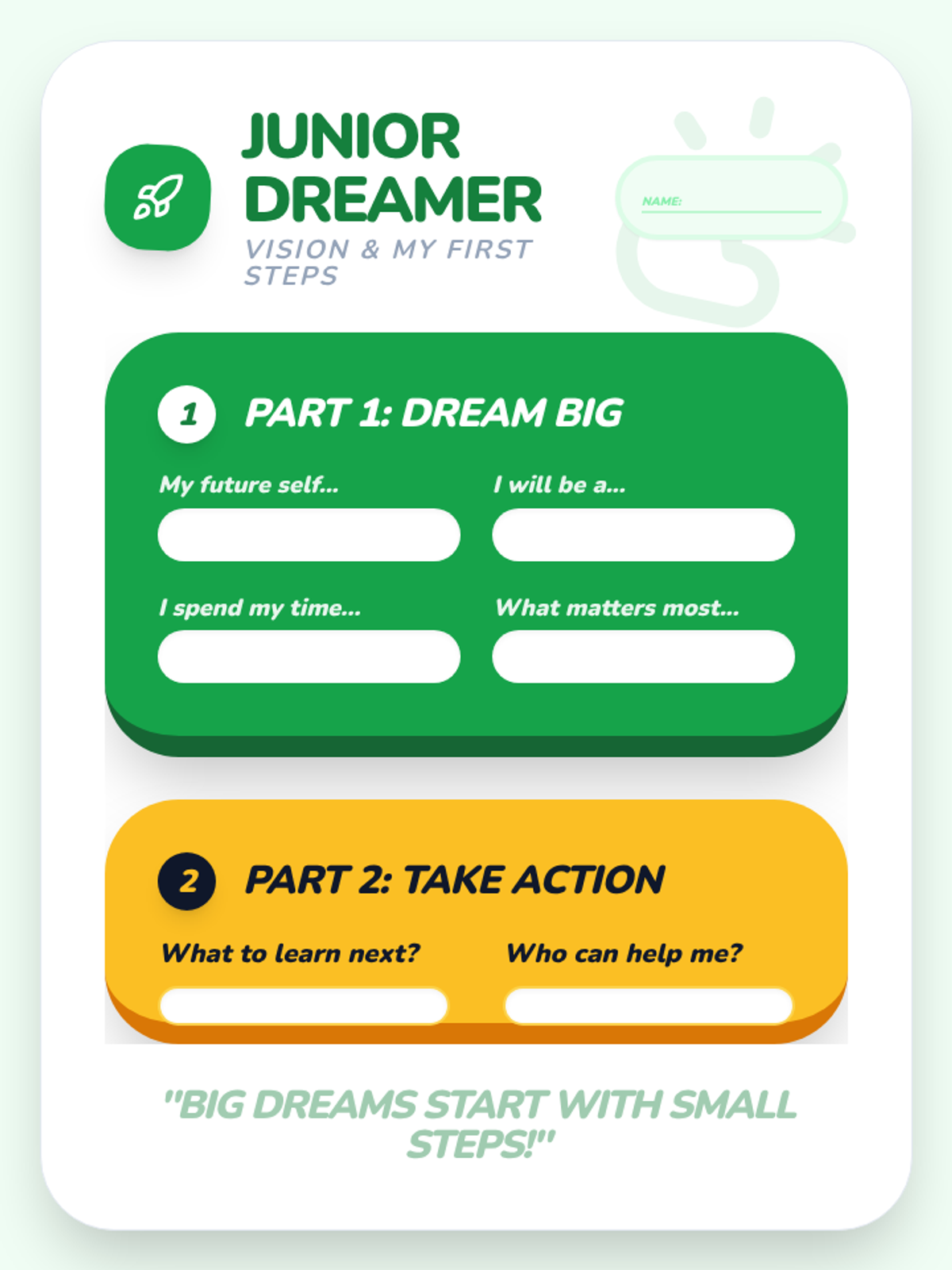
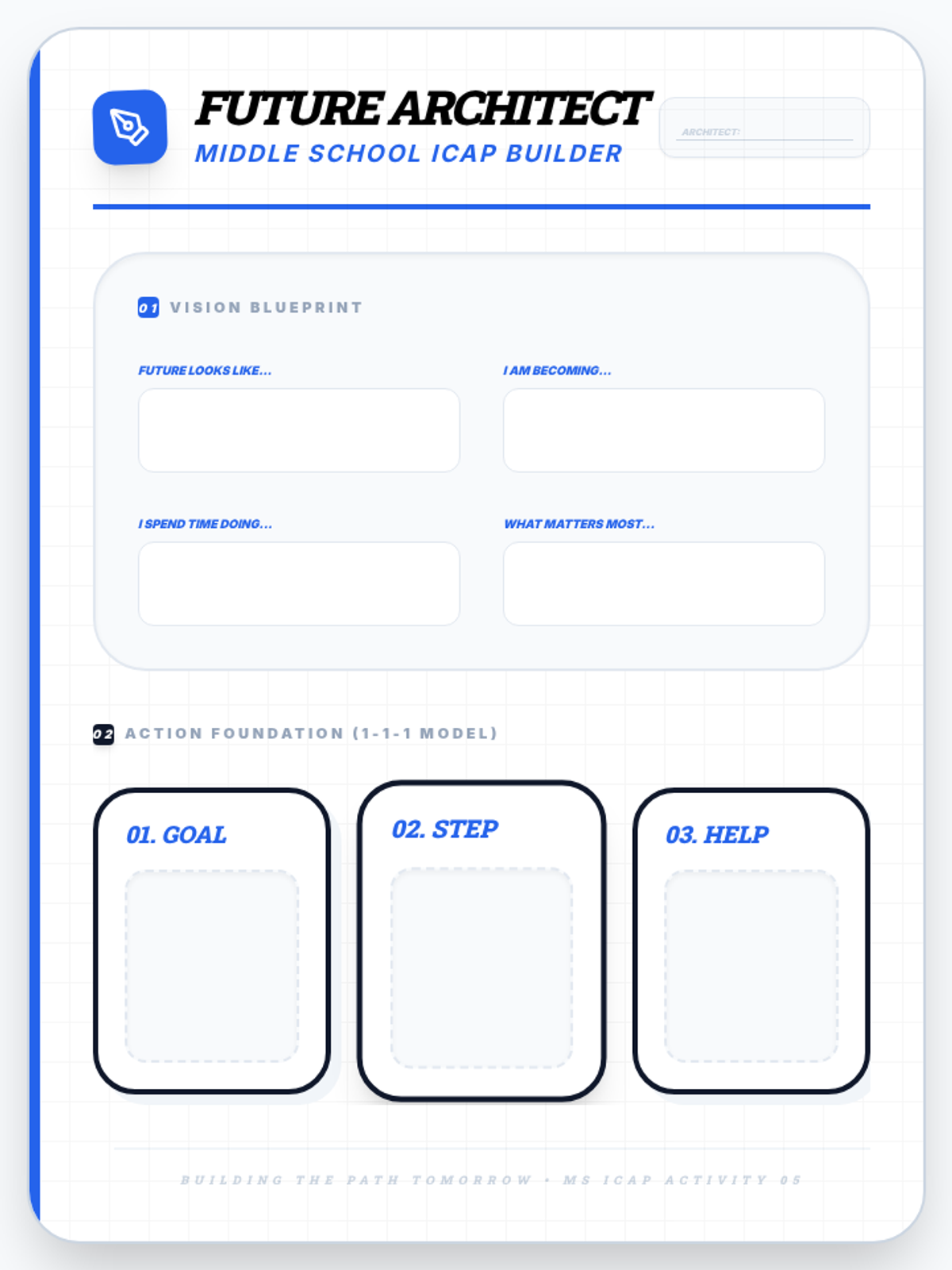
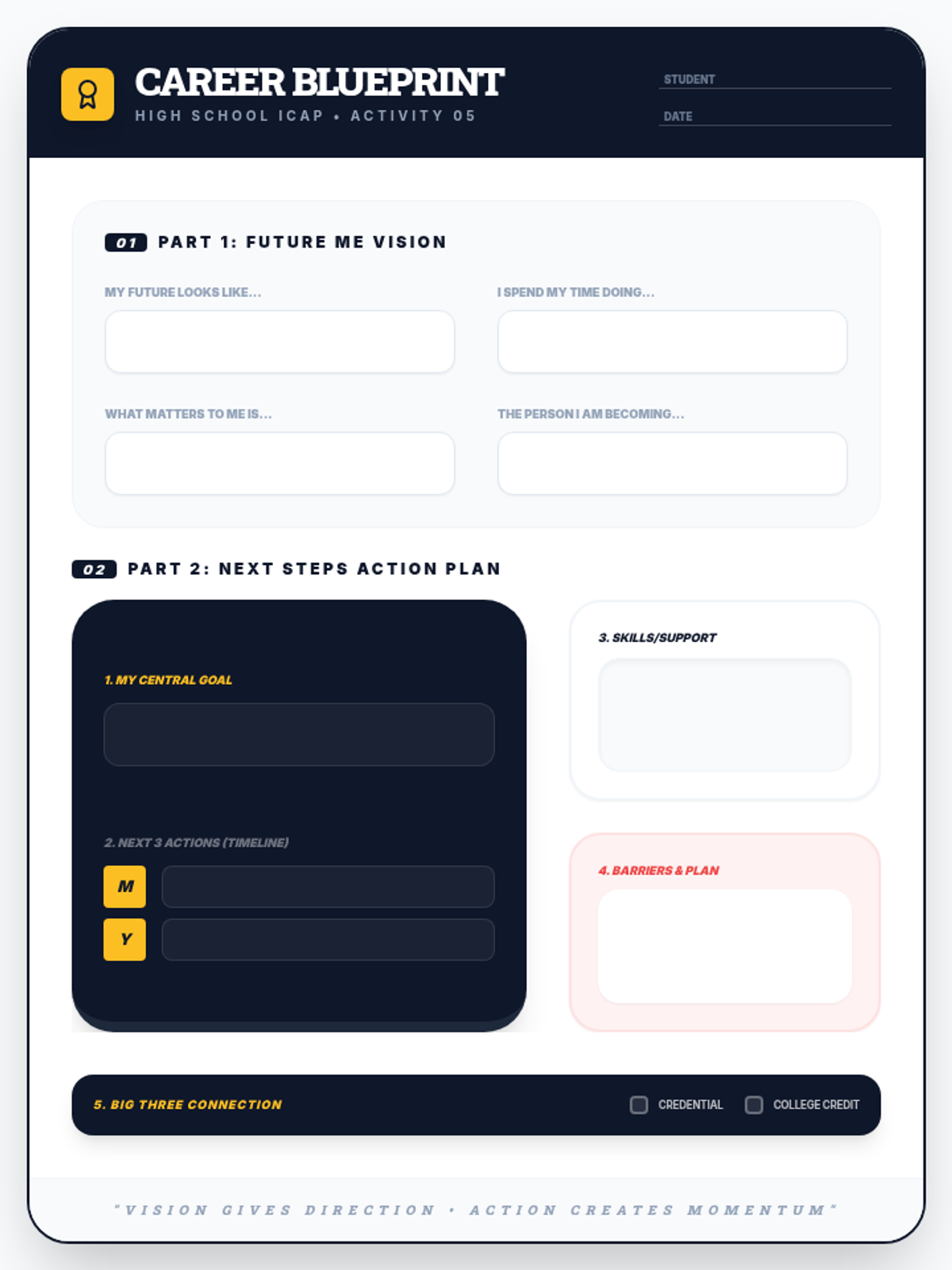
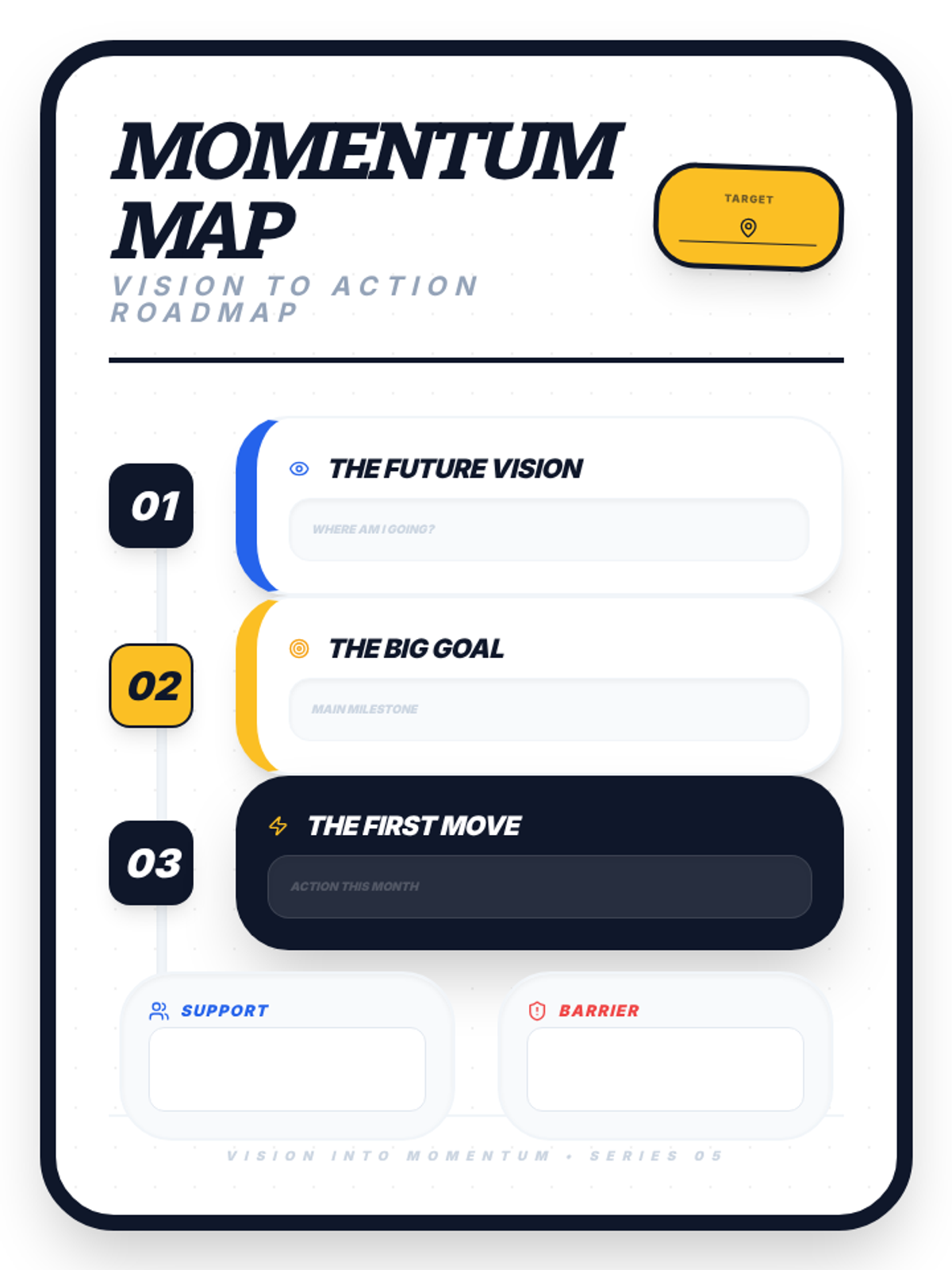
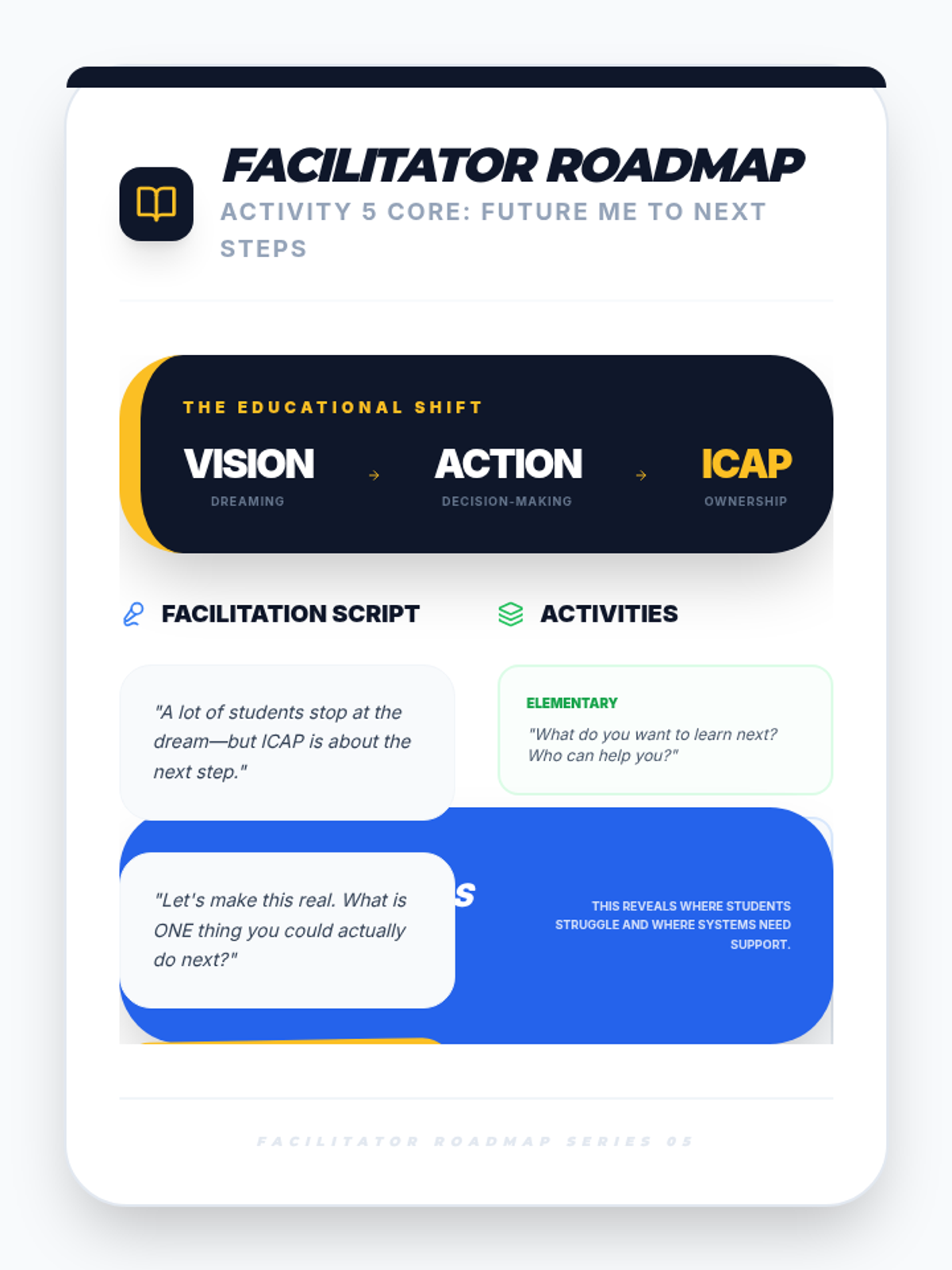
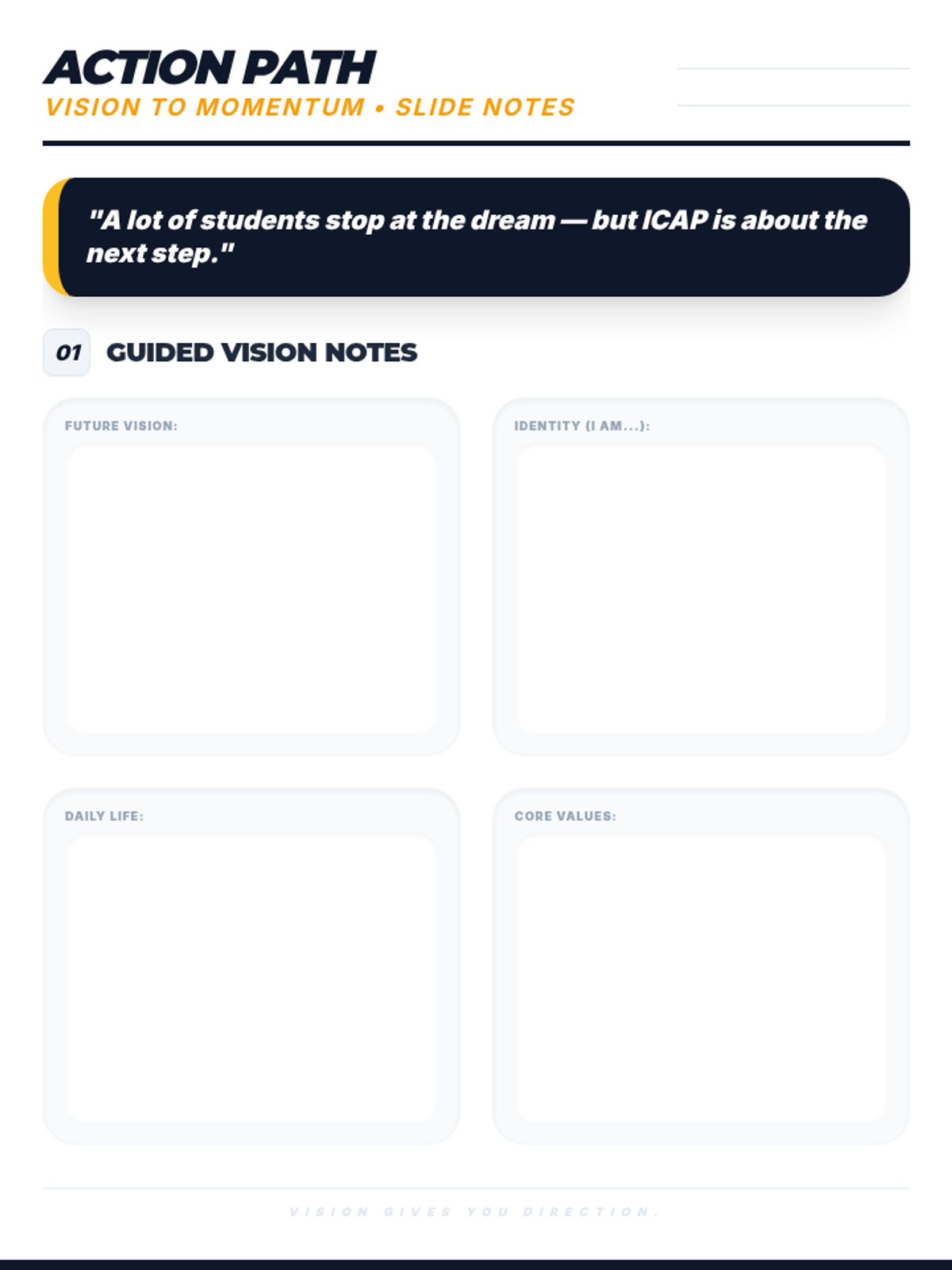
A transition-focused lesson that moves students from personal vision to concrete action steps through the ICAP framework, tailored for Elementary, Middle, and High School levels.
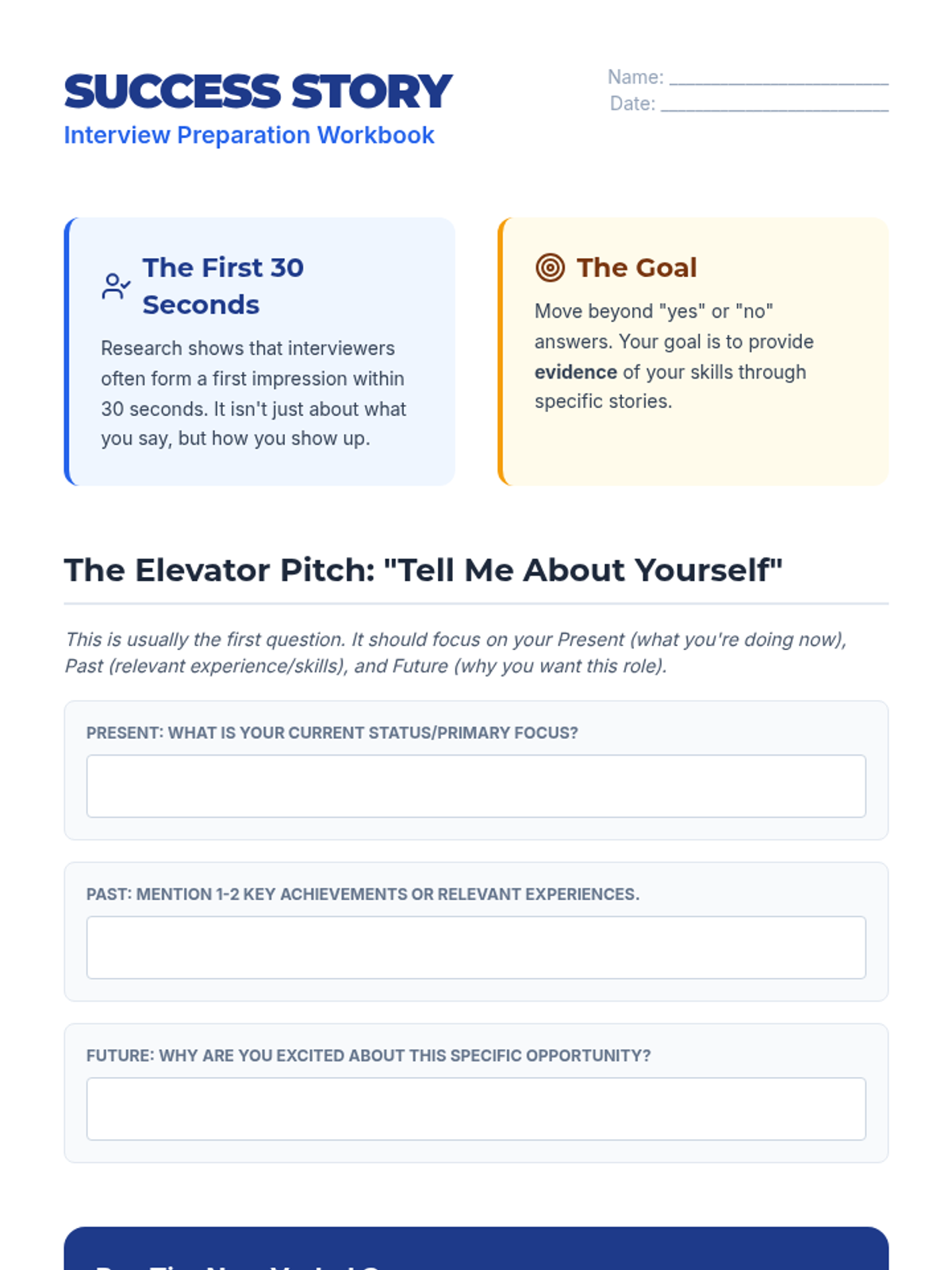
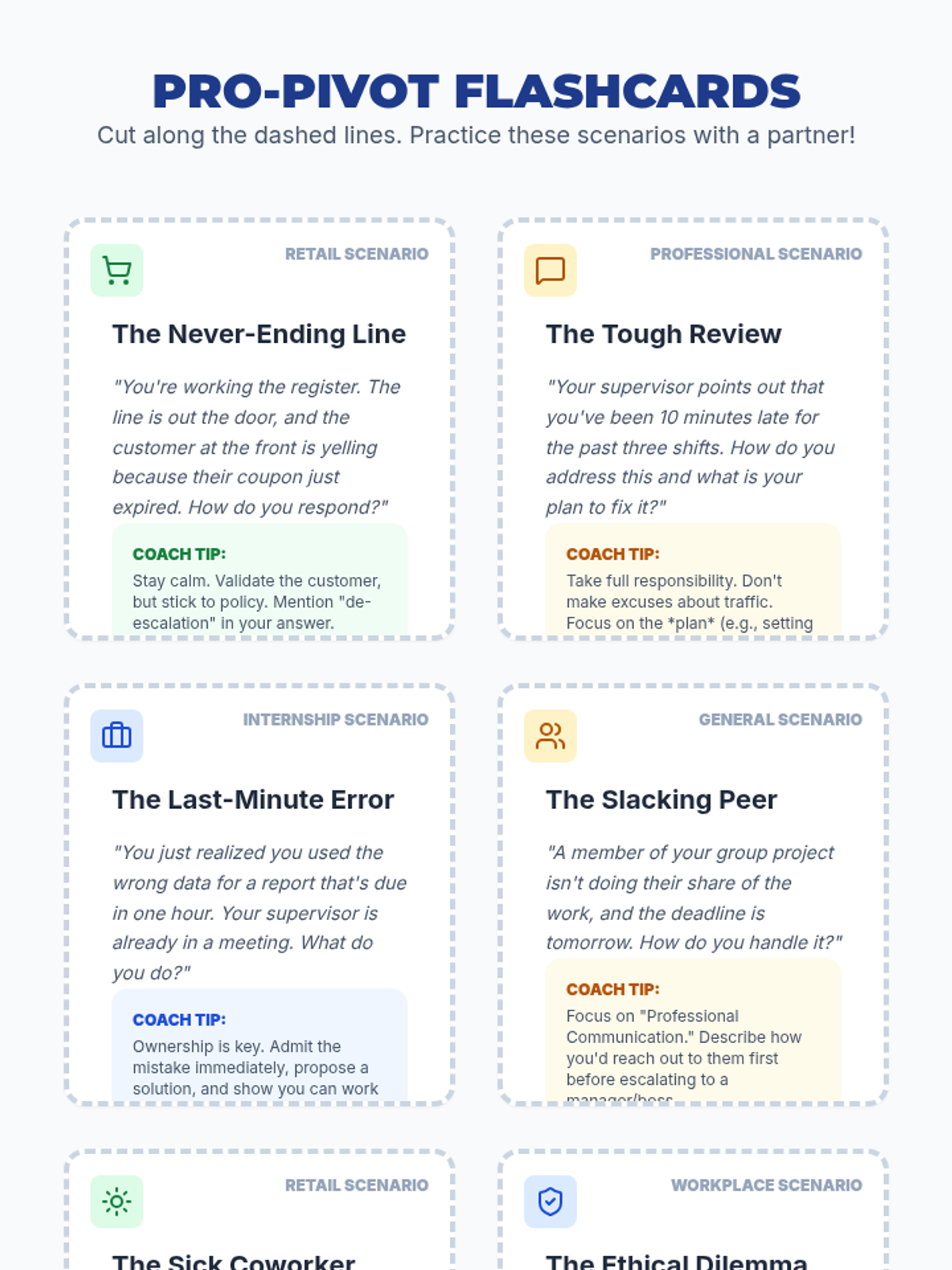
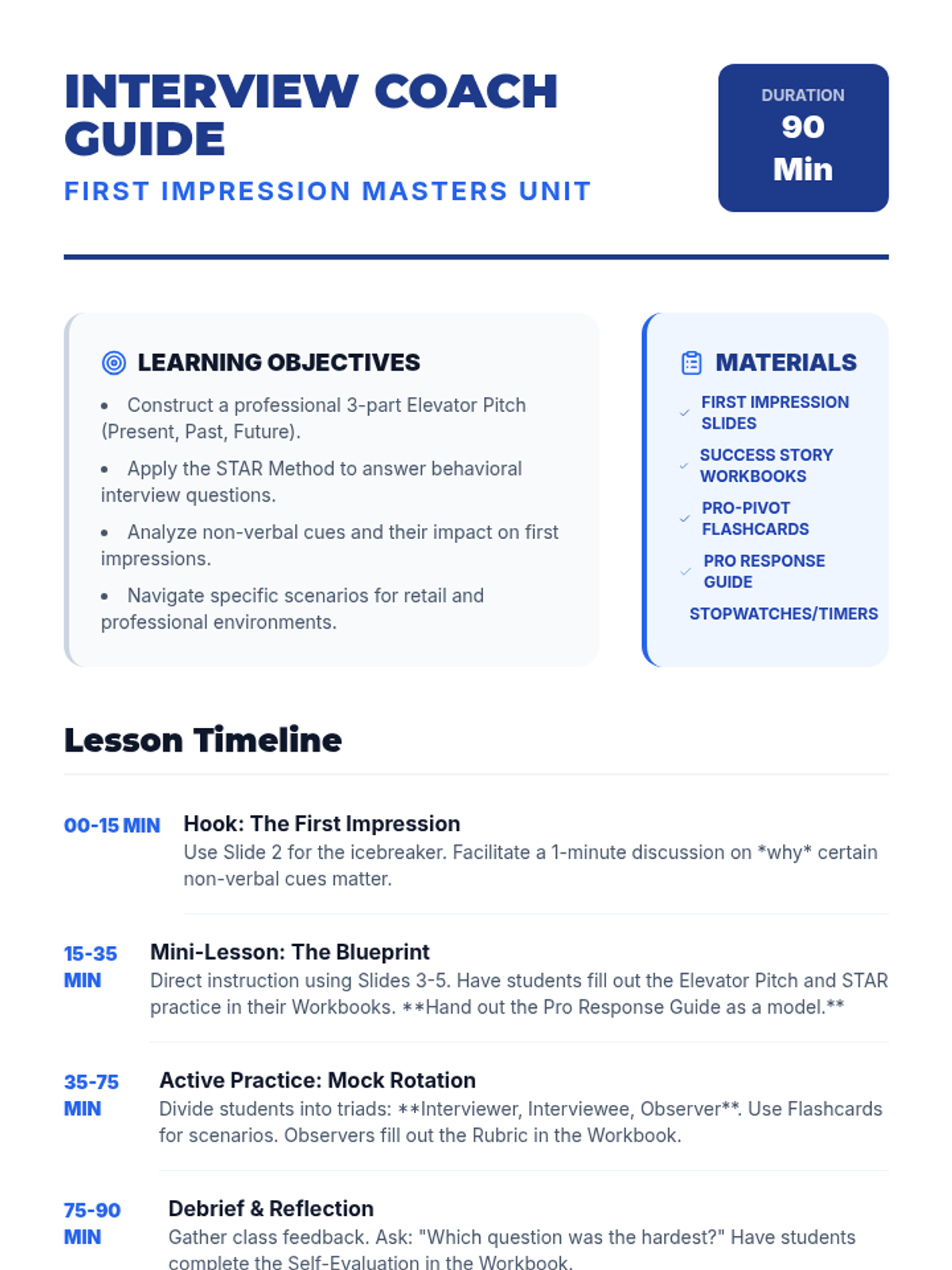
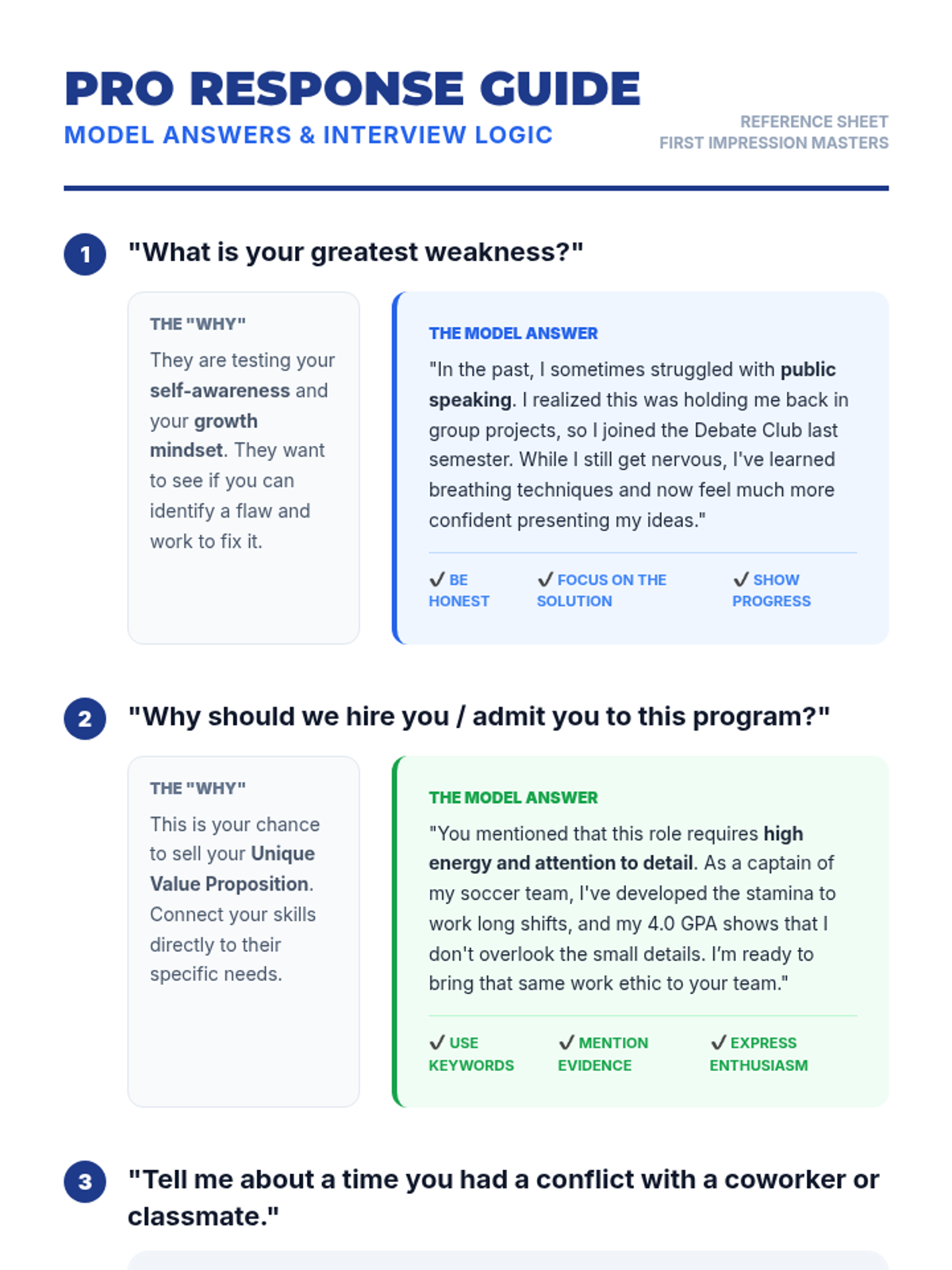
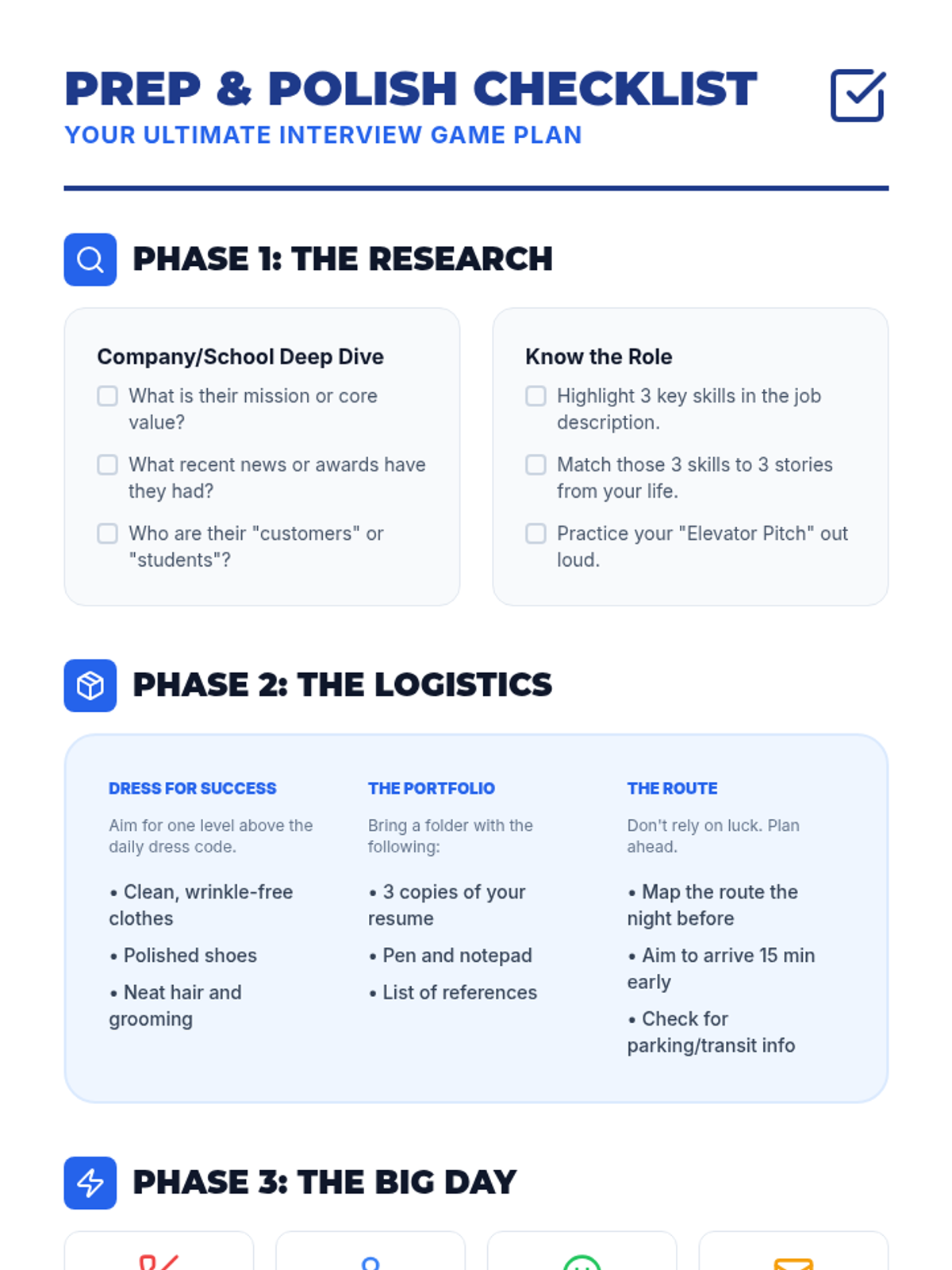
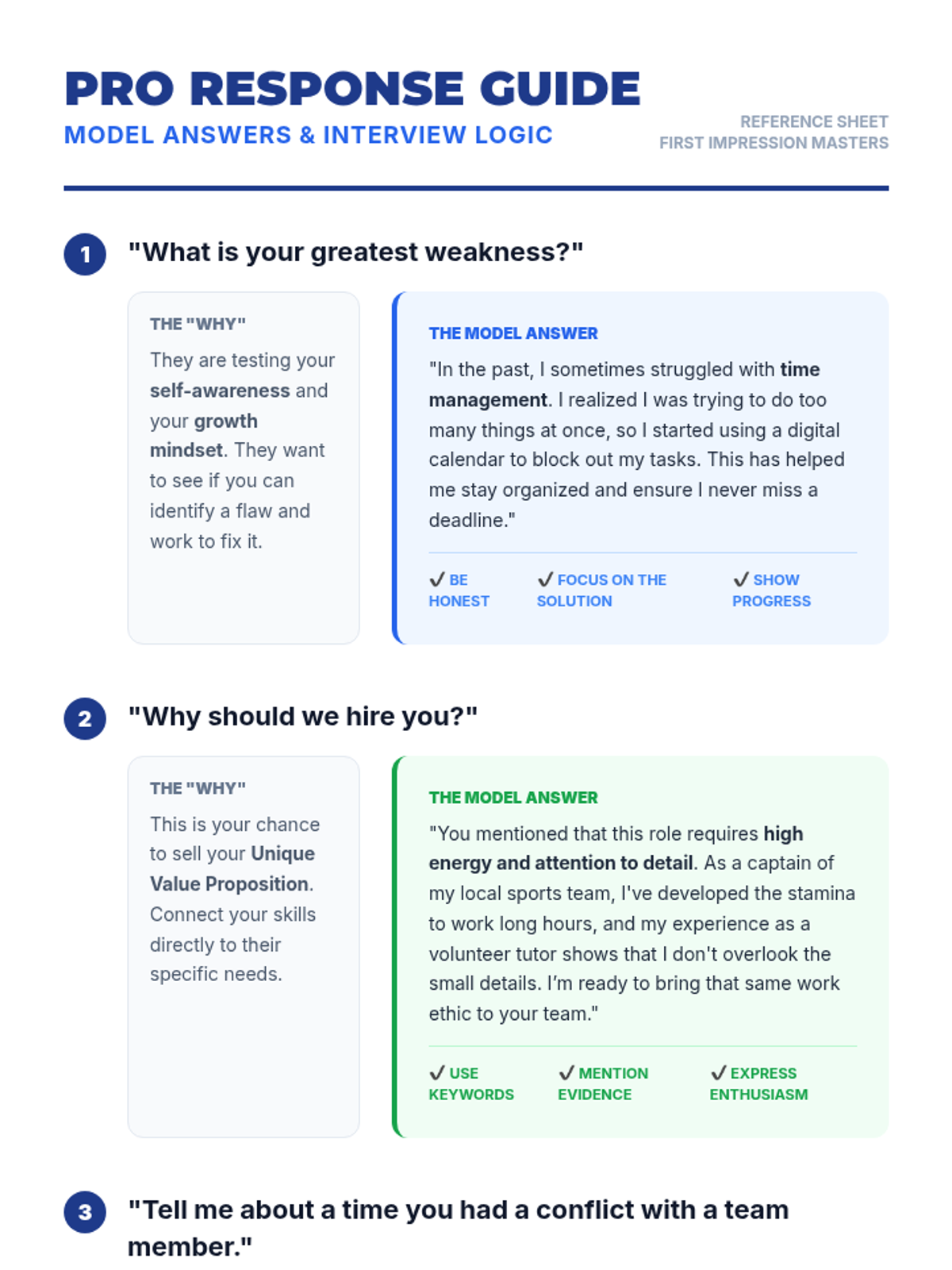
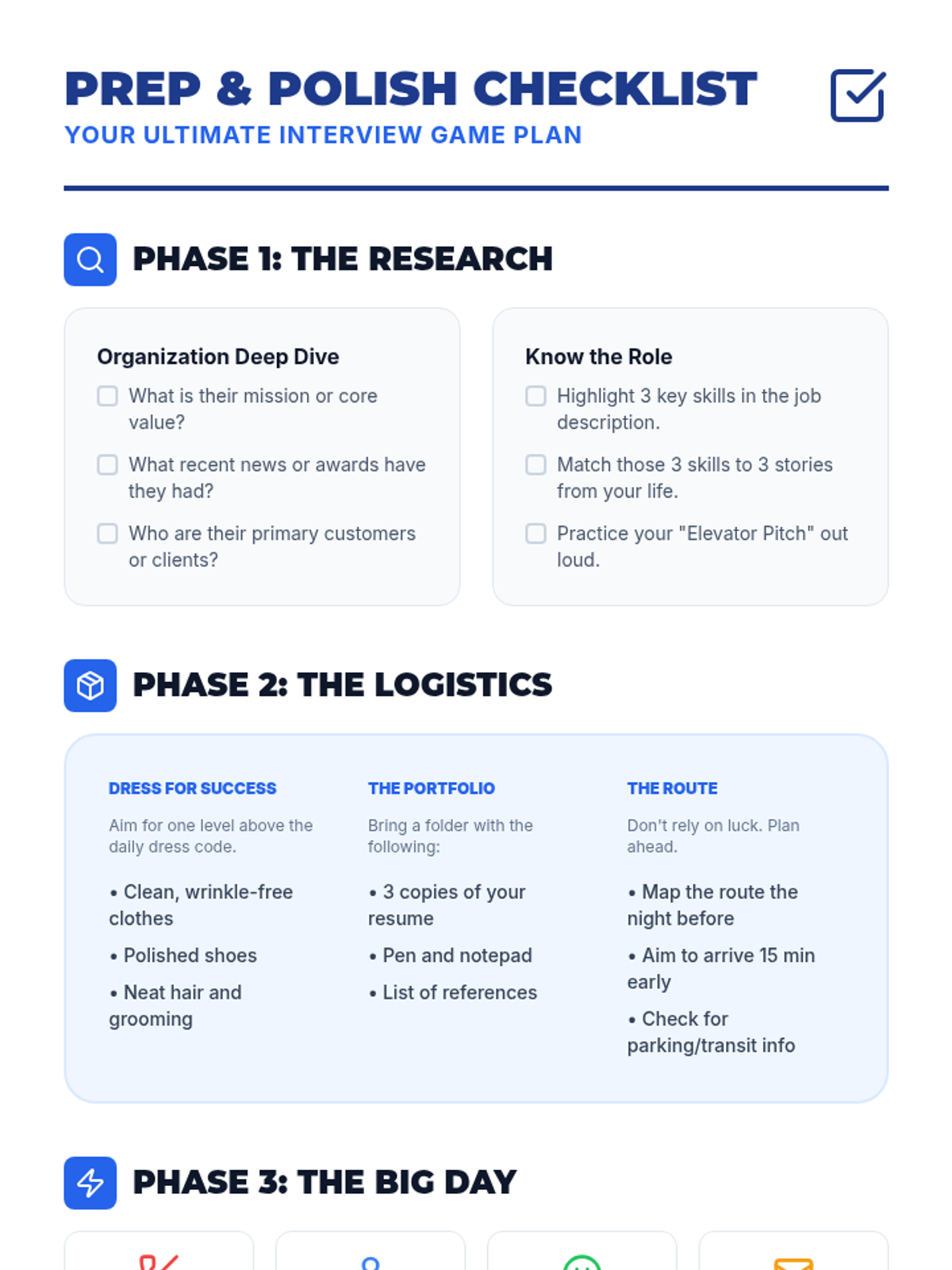
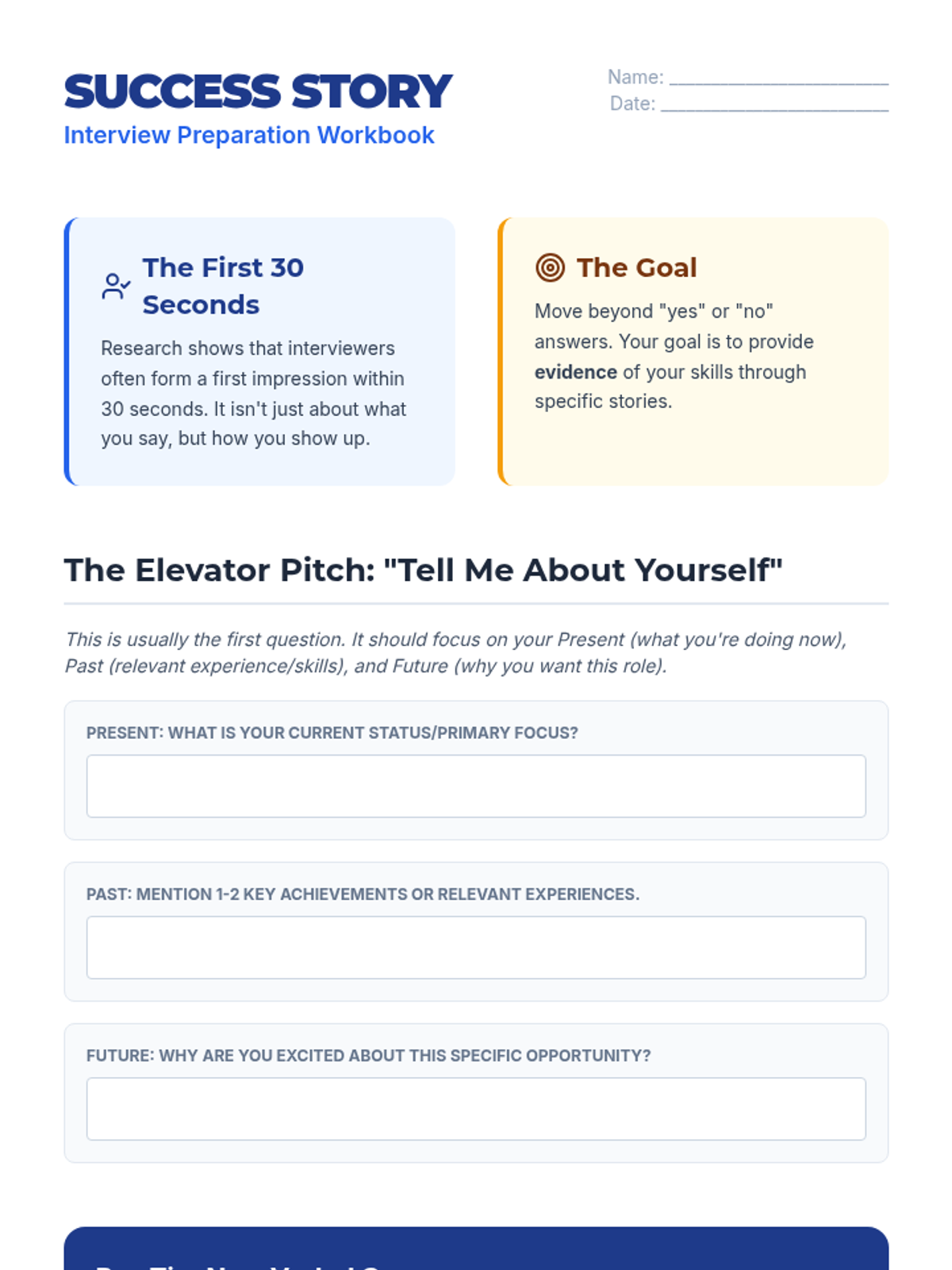
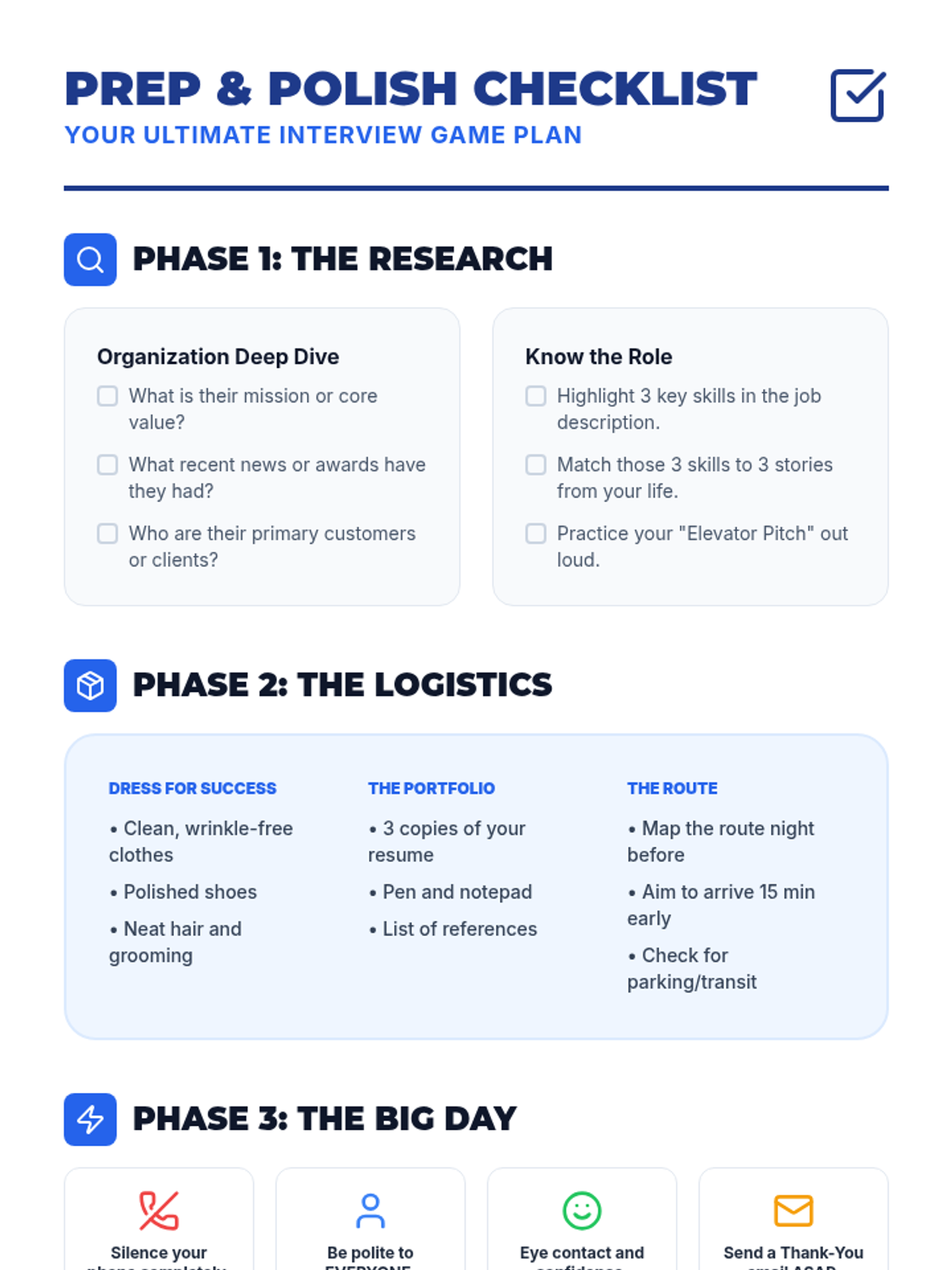
A comprehensive guide to mastering entry-level and academic interviews through the STAR method, practical scenarios, and self-reflection. Students will build a portfolio of stories to demonstrate their skills to future employers and admissions officers.
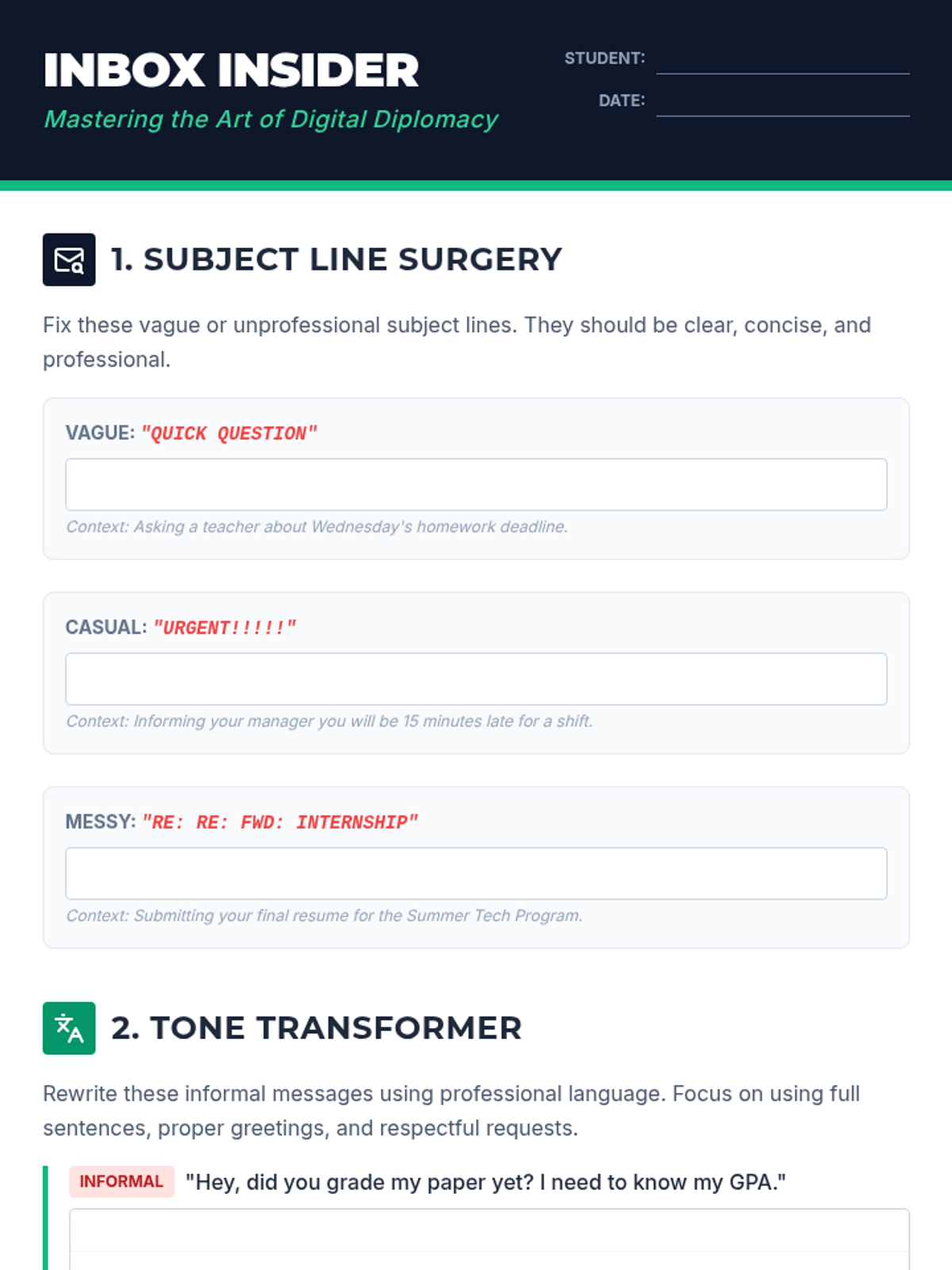
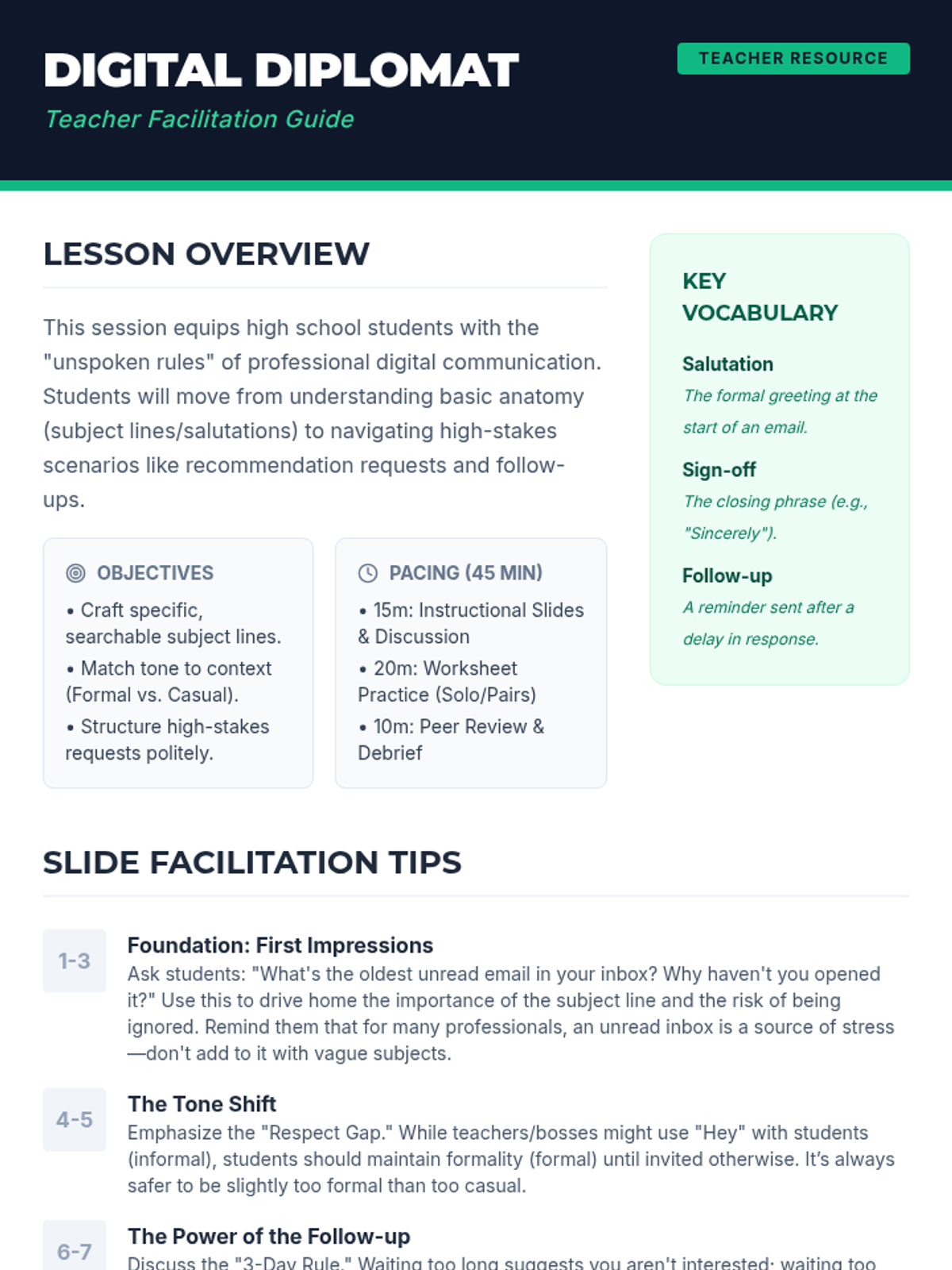
High school students master the art of professional digital communication through scenario-based practice, focusing on tone, structure, and high-stakes requests.
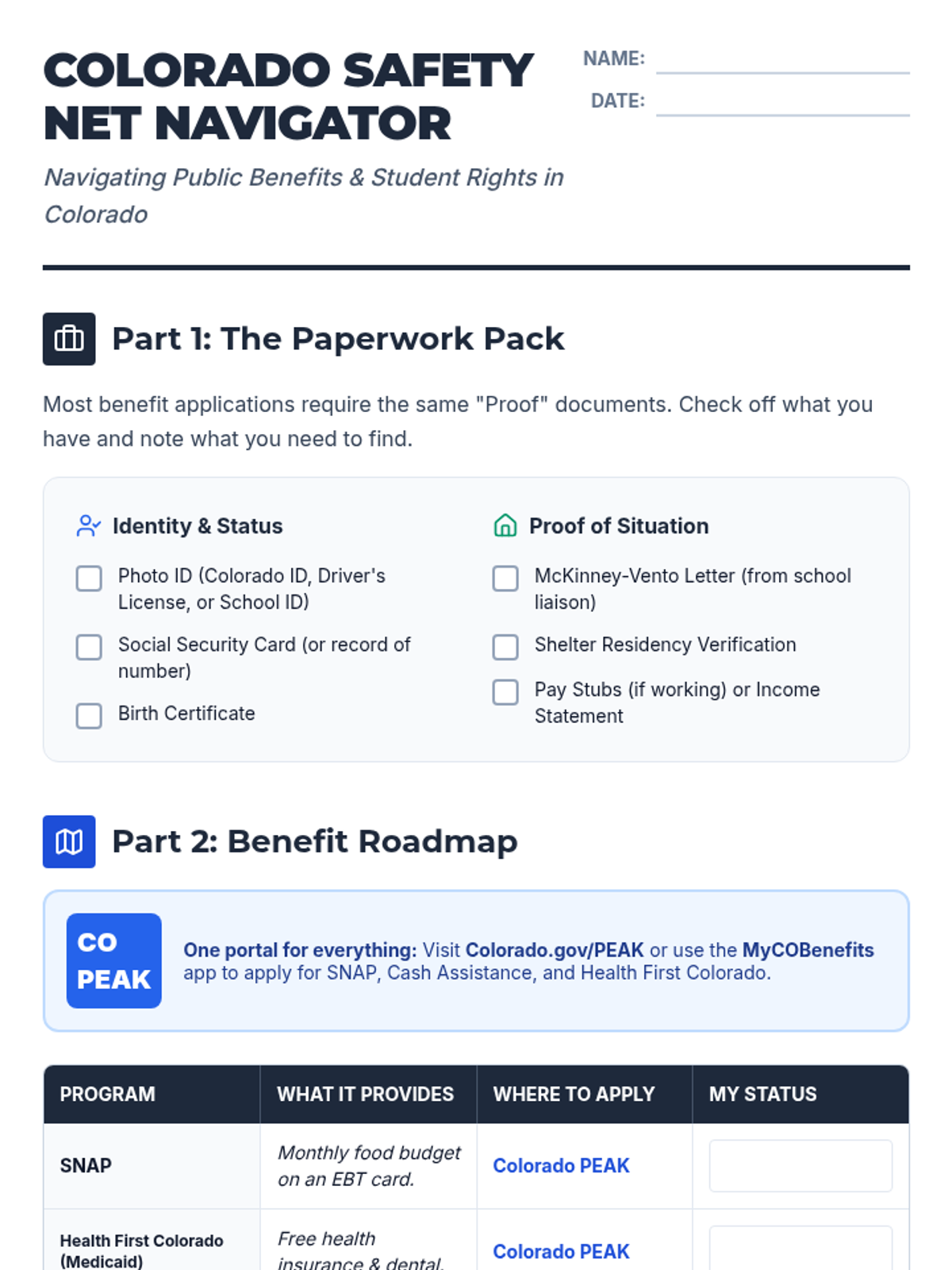
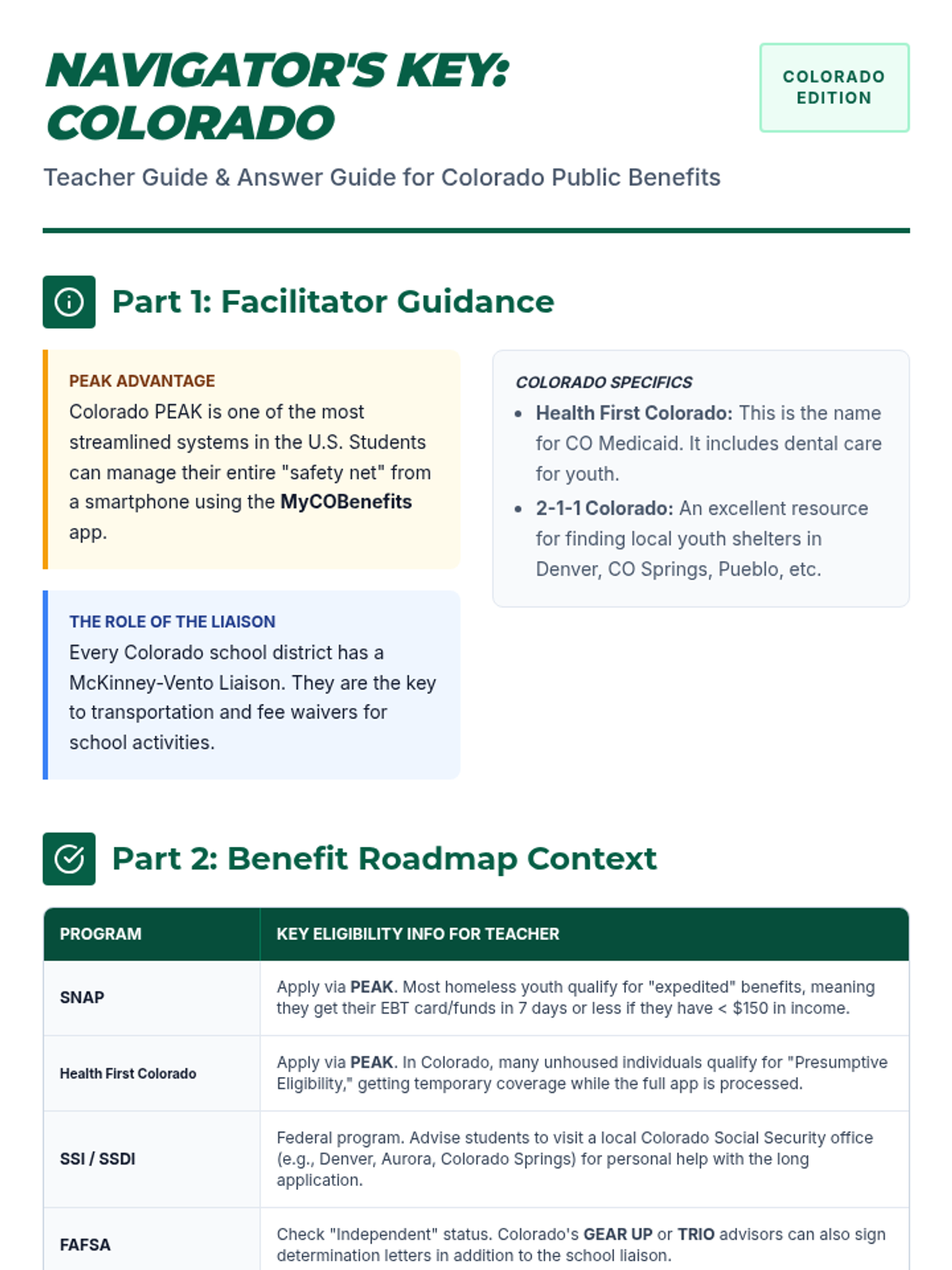
A comprehensive lesson designed to help homeless high school students navigate complex public benefit systems, understand their rights under McKinney-Vento, and manage the documentation required for stability and post-secondary success.
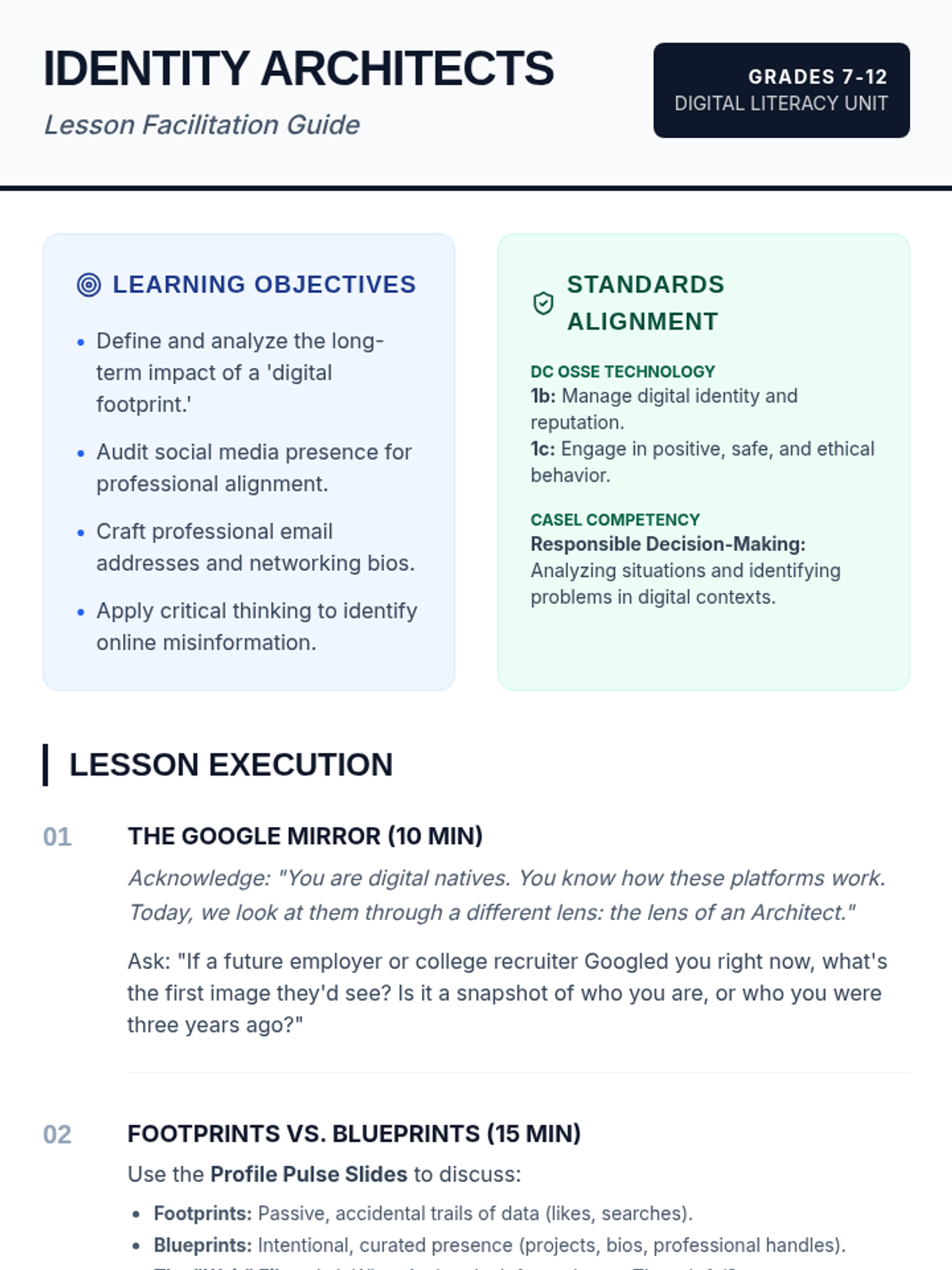
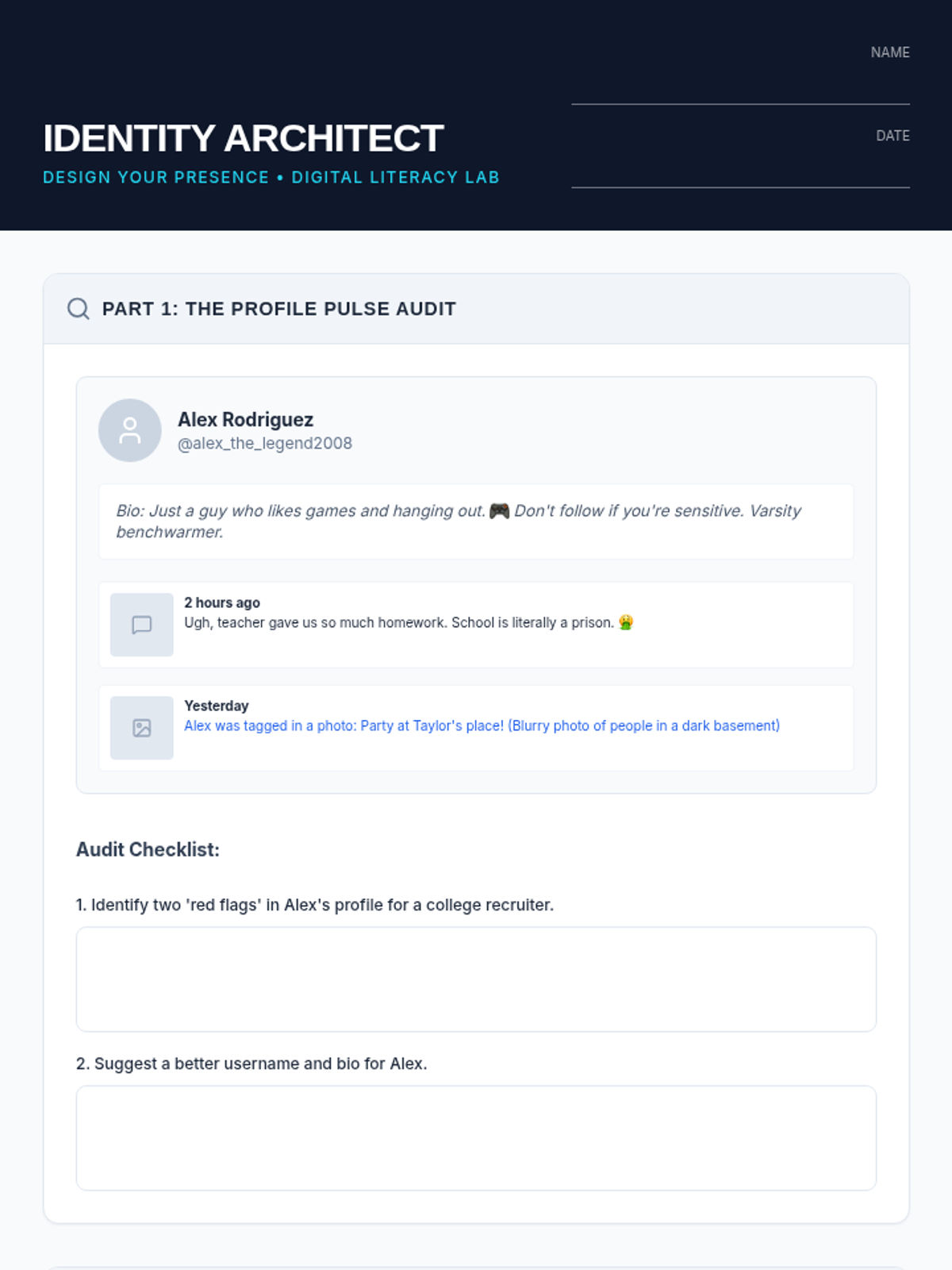
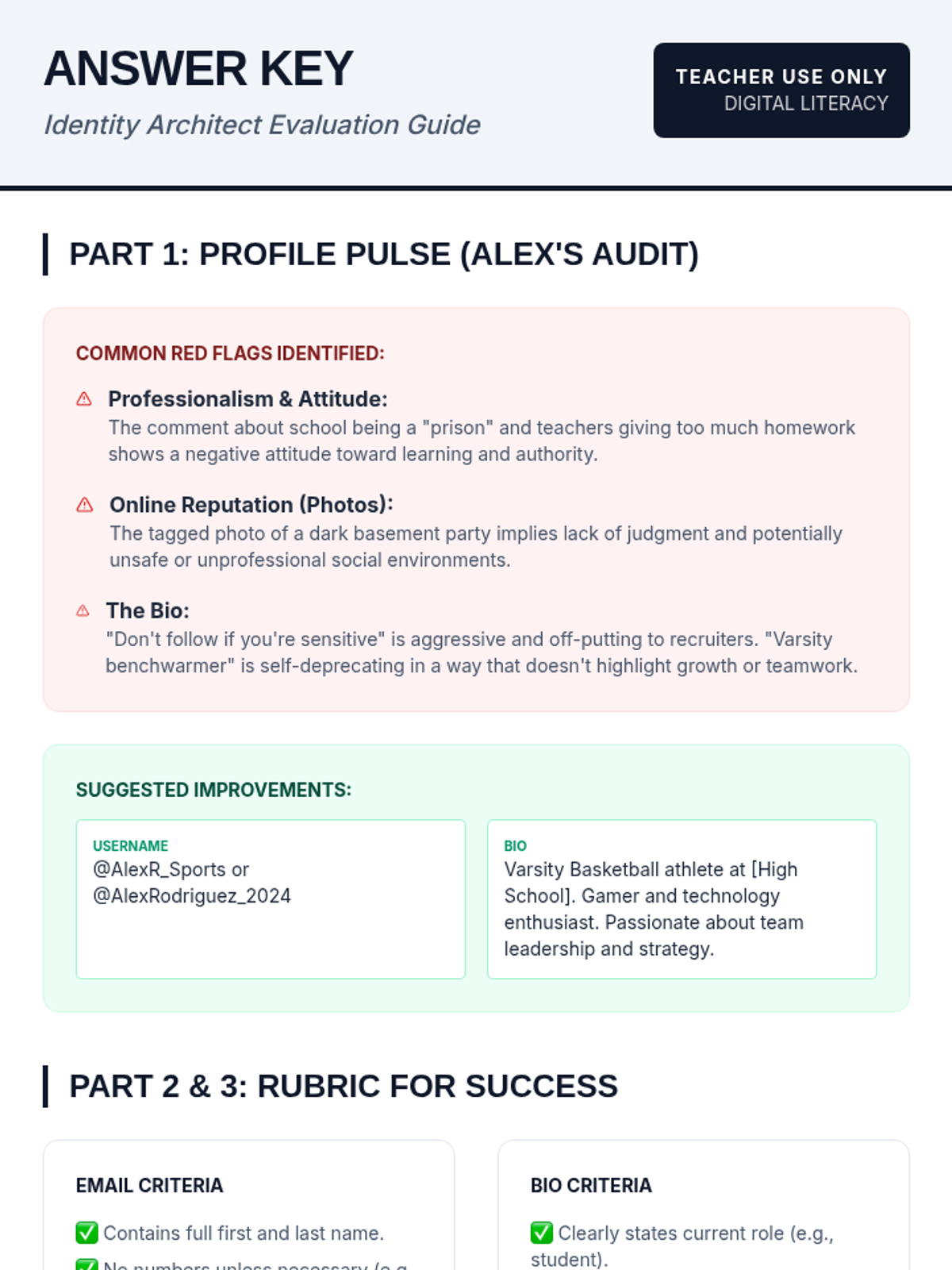
This lesson empowers students to take control of their digital footprints by transforming them into intentional 'digital blueprints.' Students analyze mock social media profiles, practice professional communication, and draft networking bios while navigating online safety and misinformation.
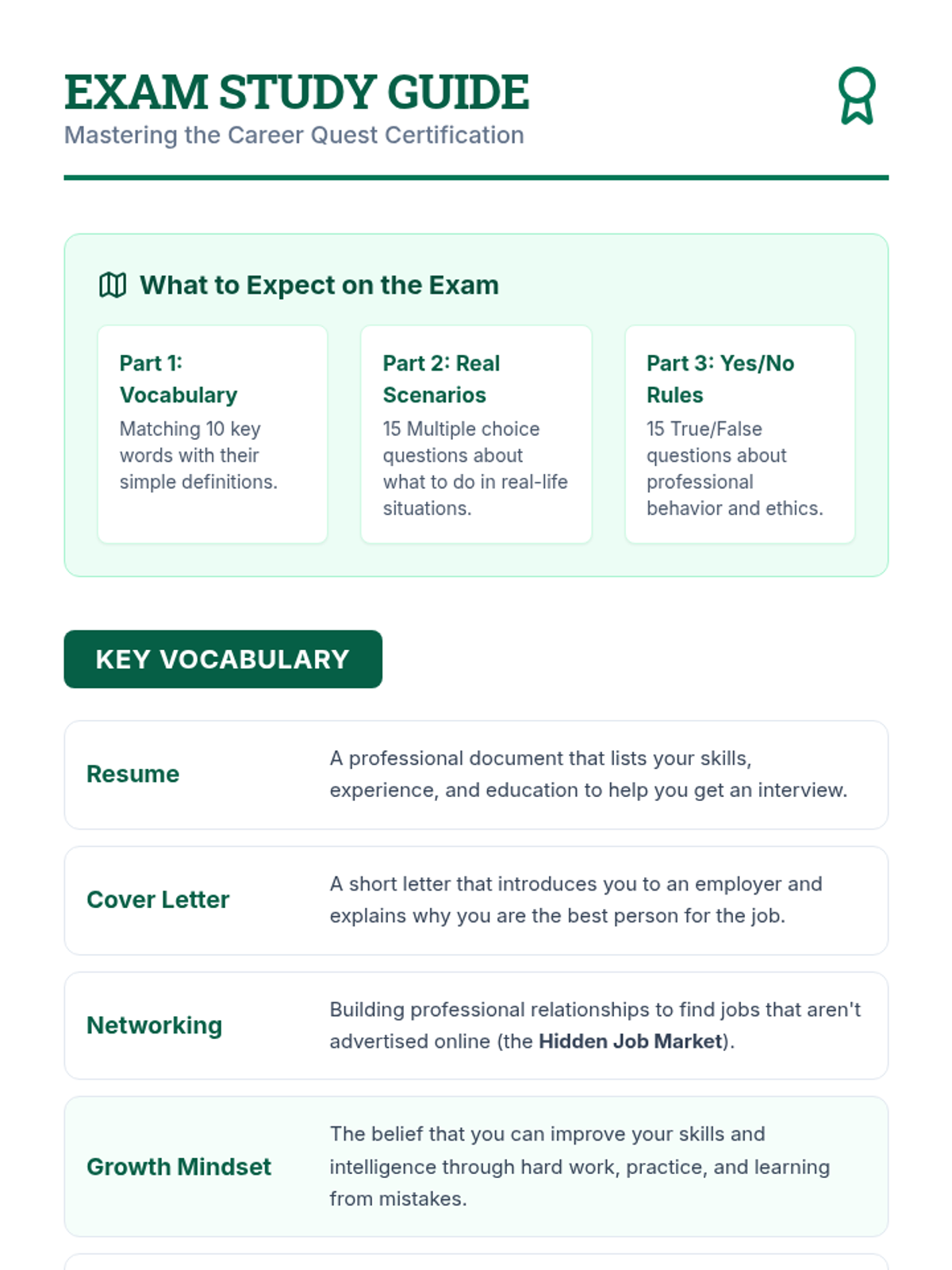
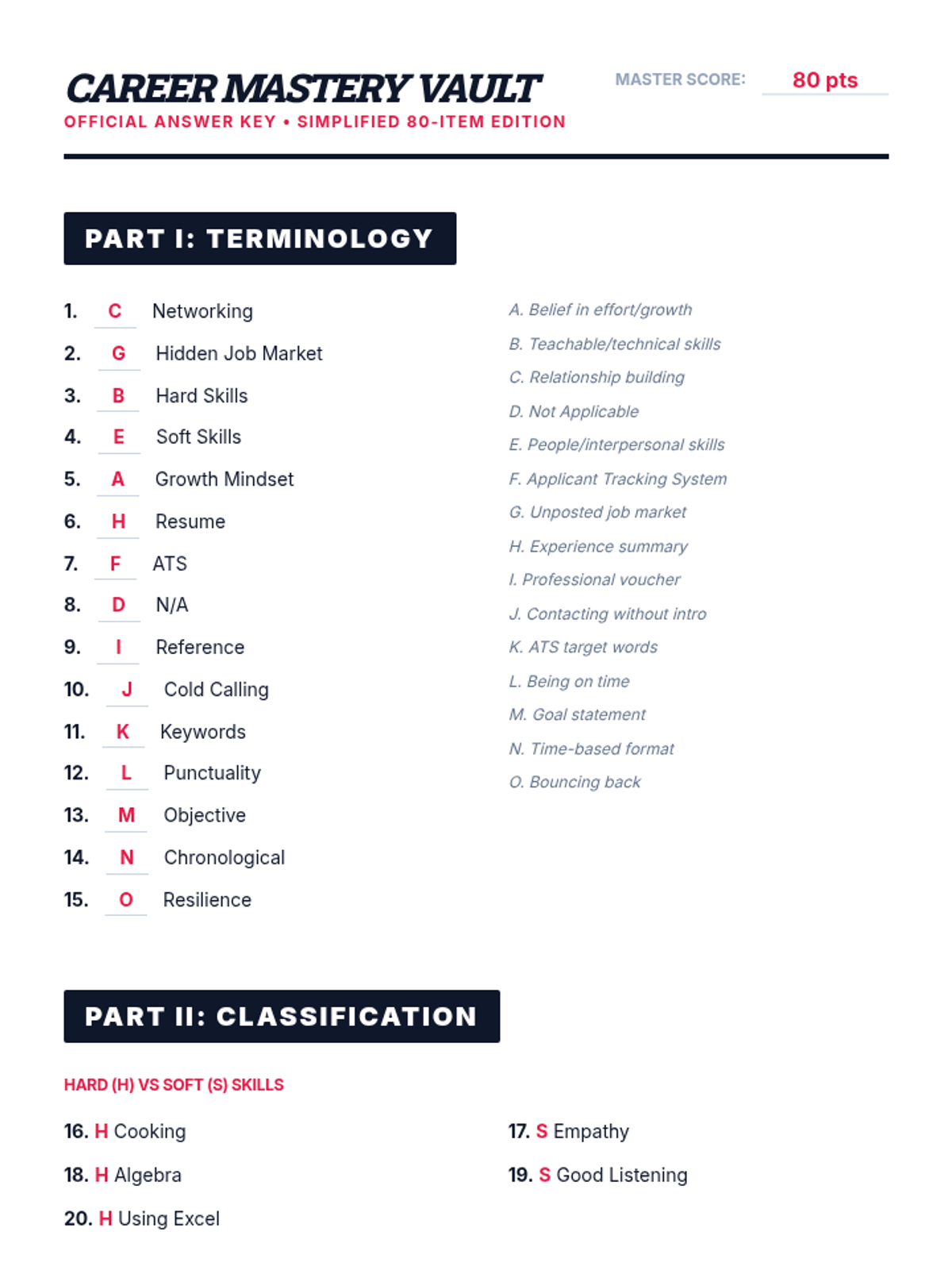
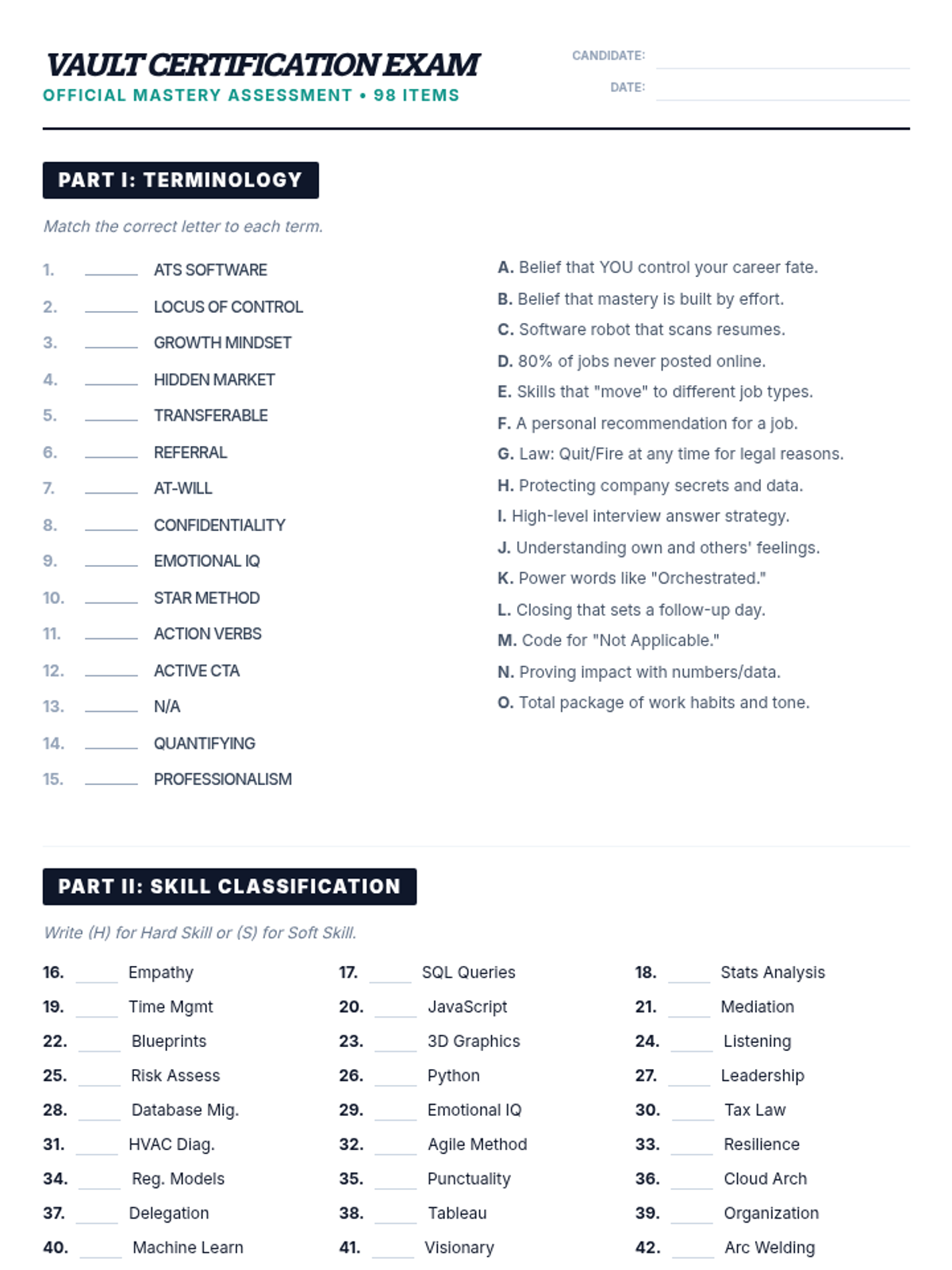
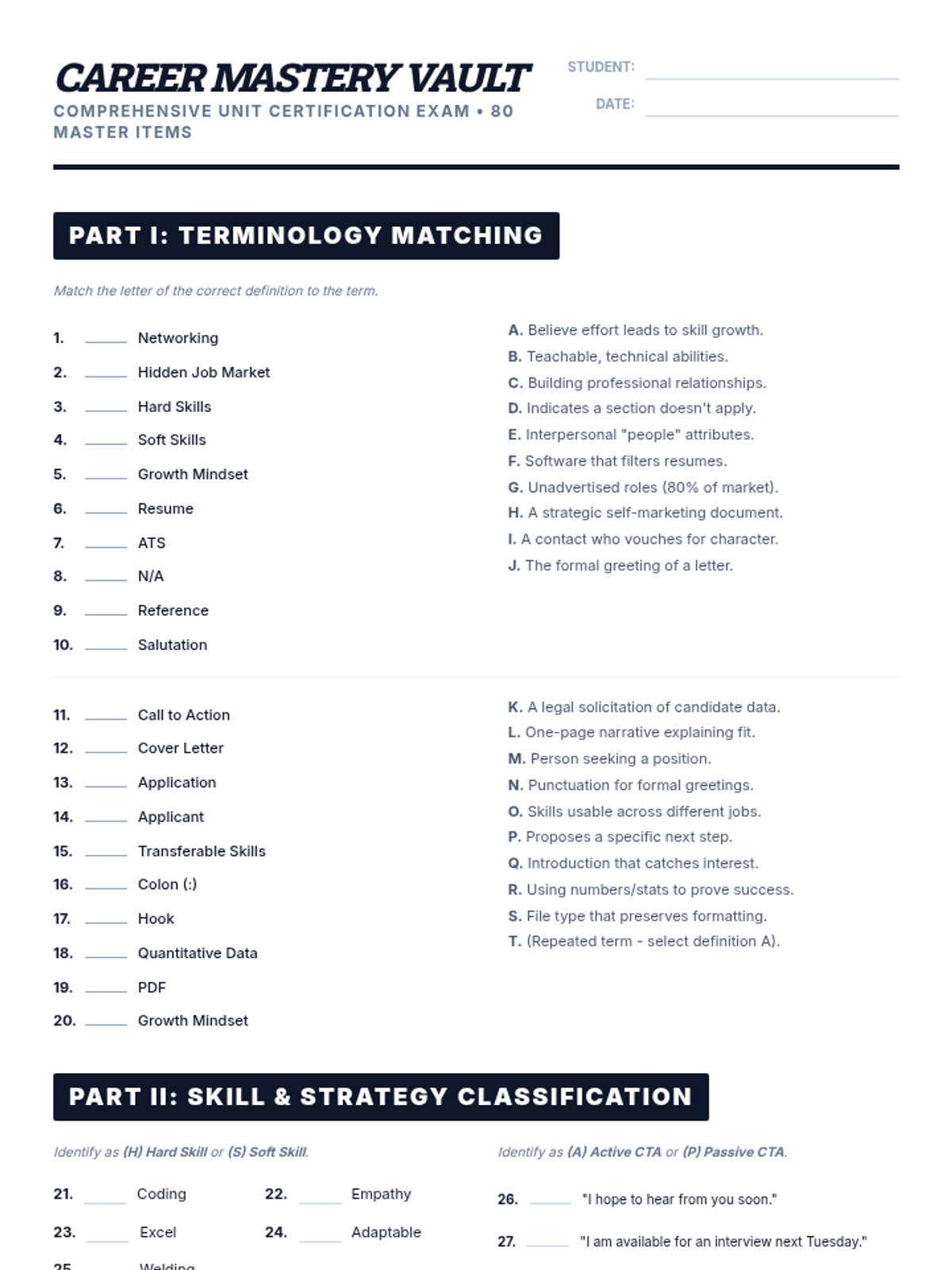
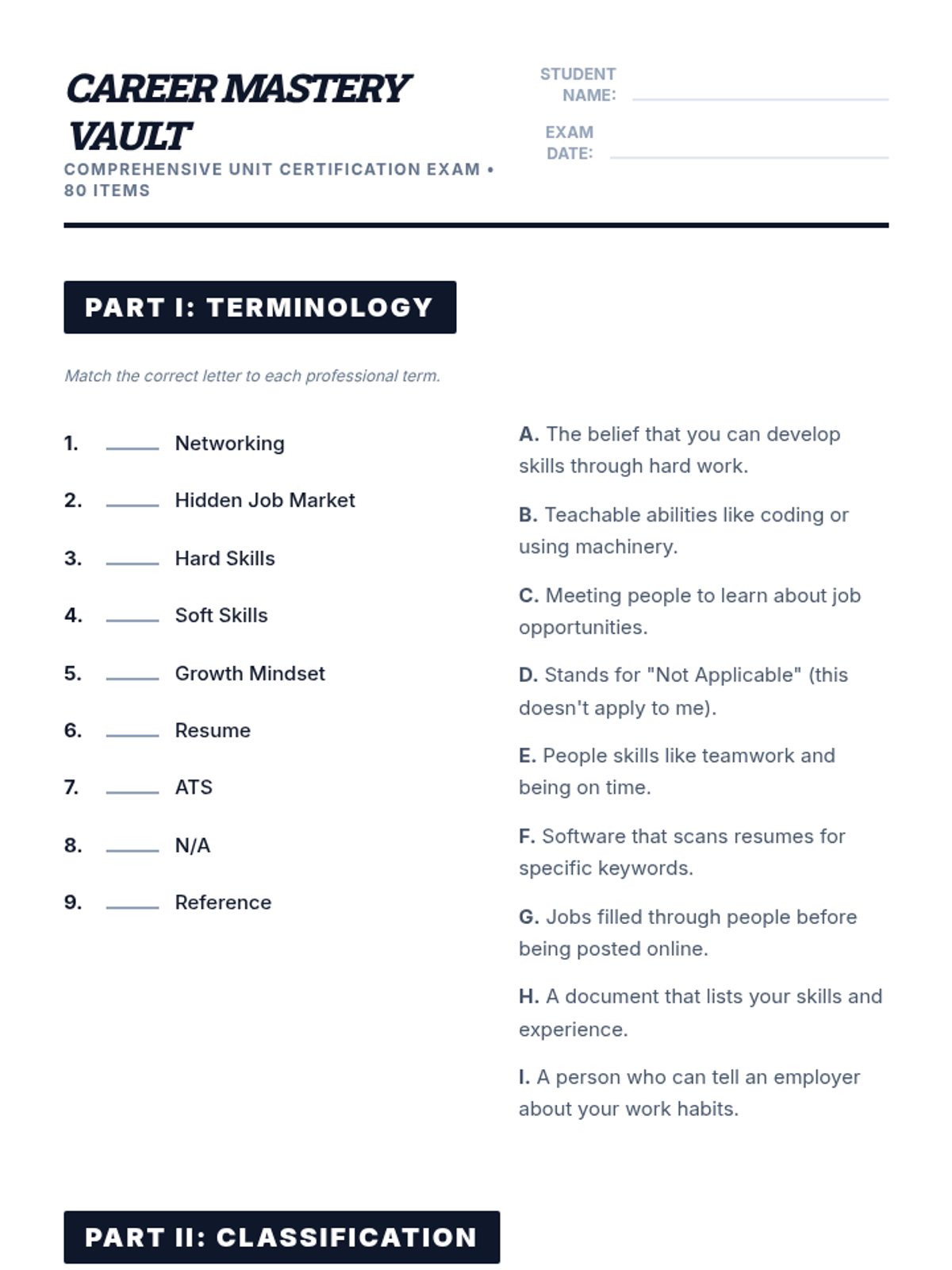
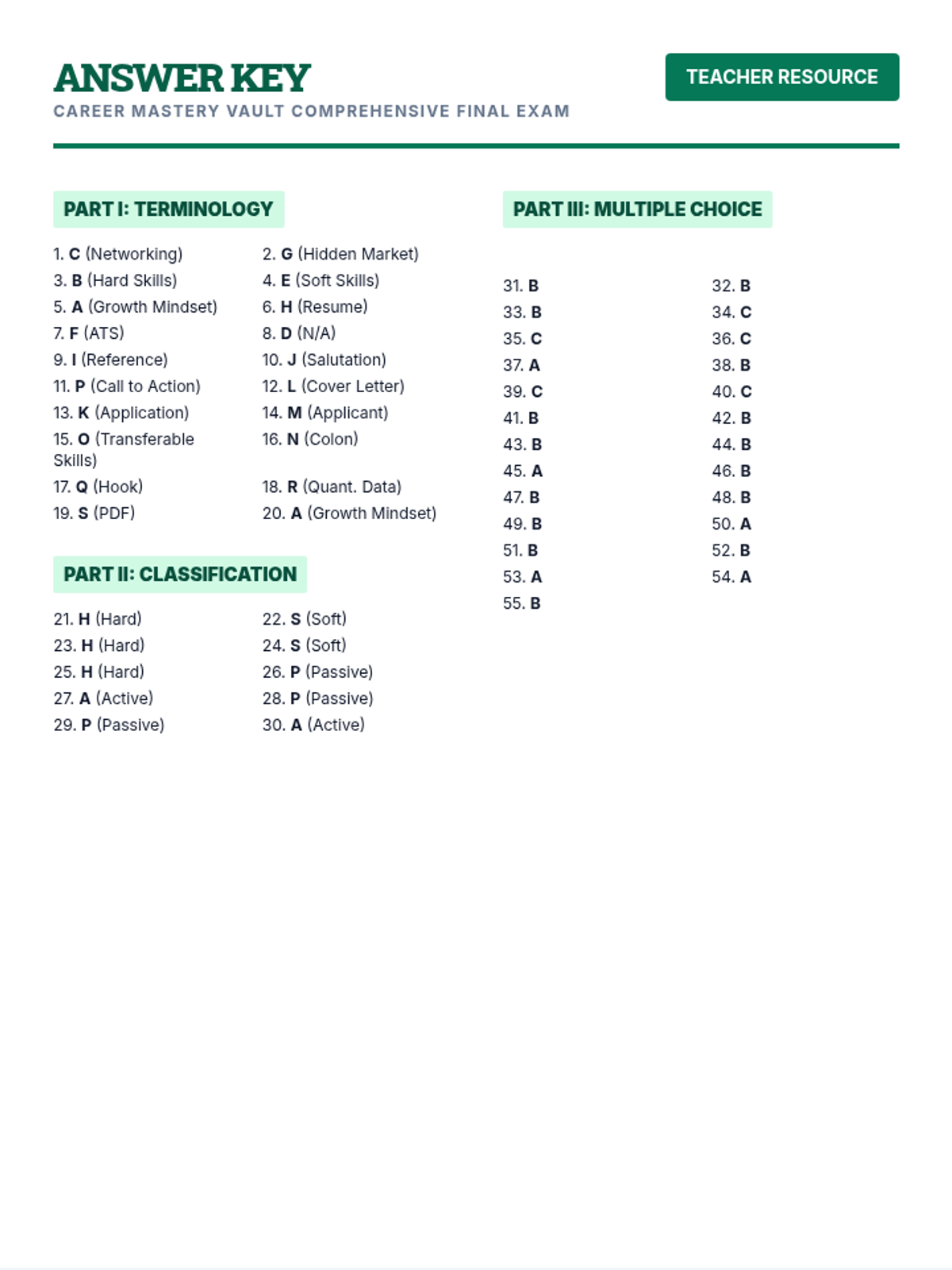
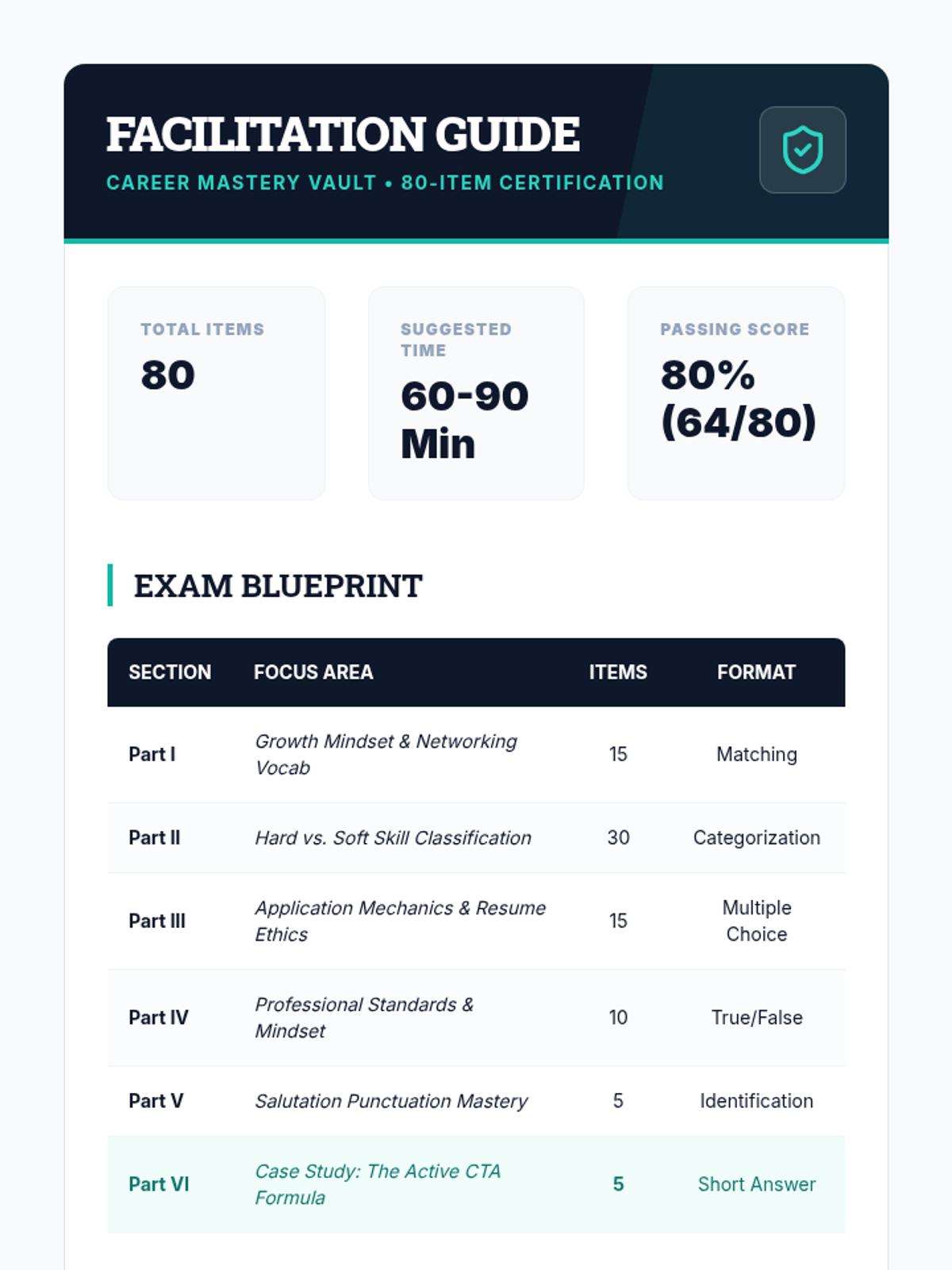
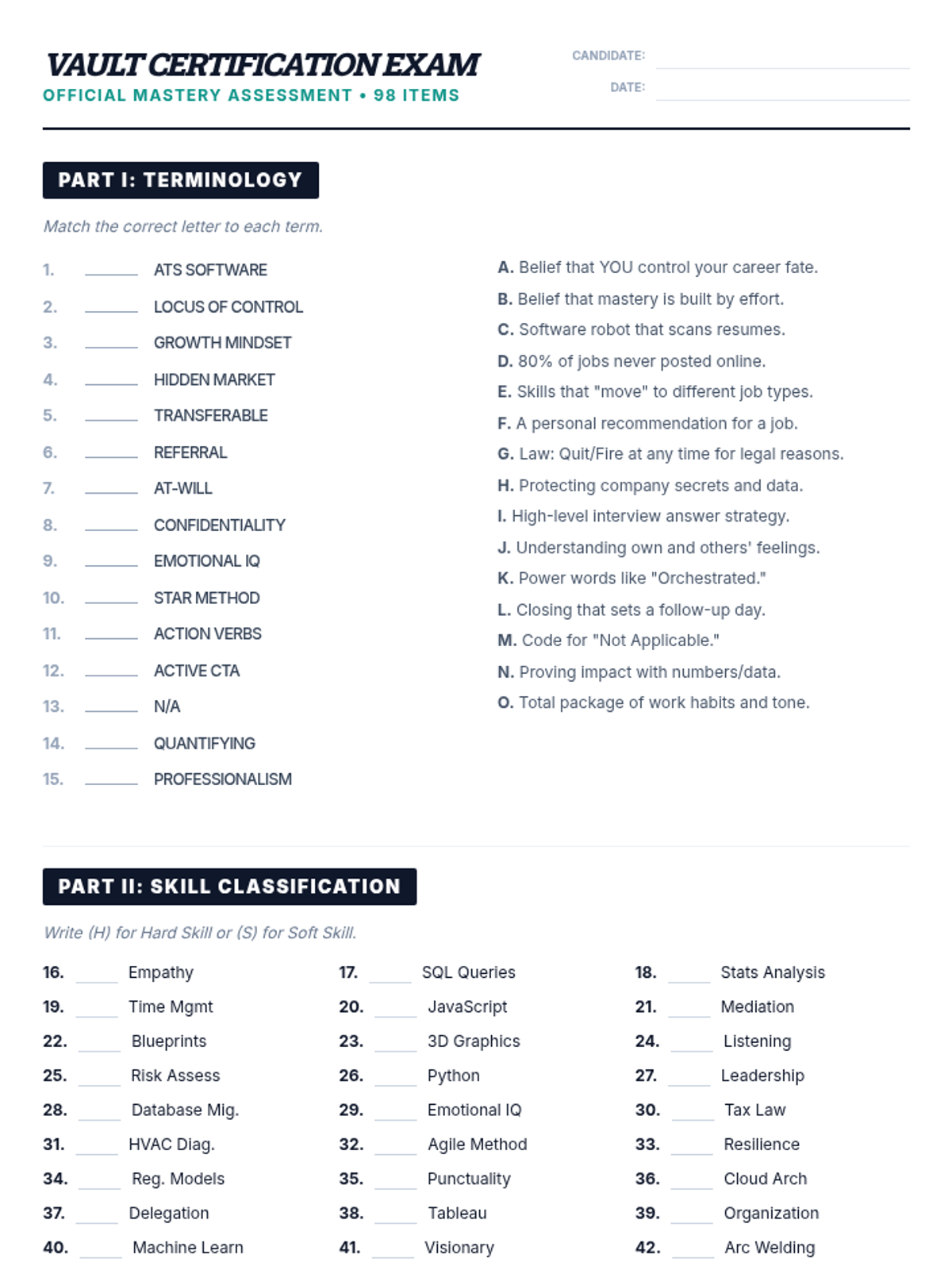
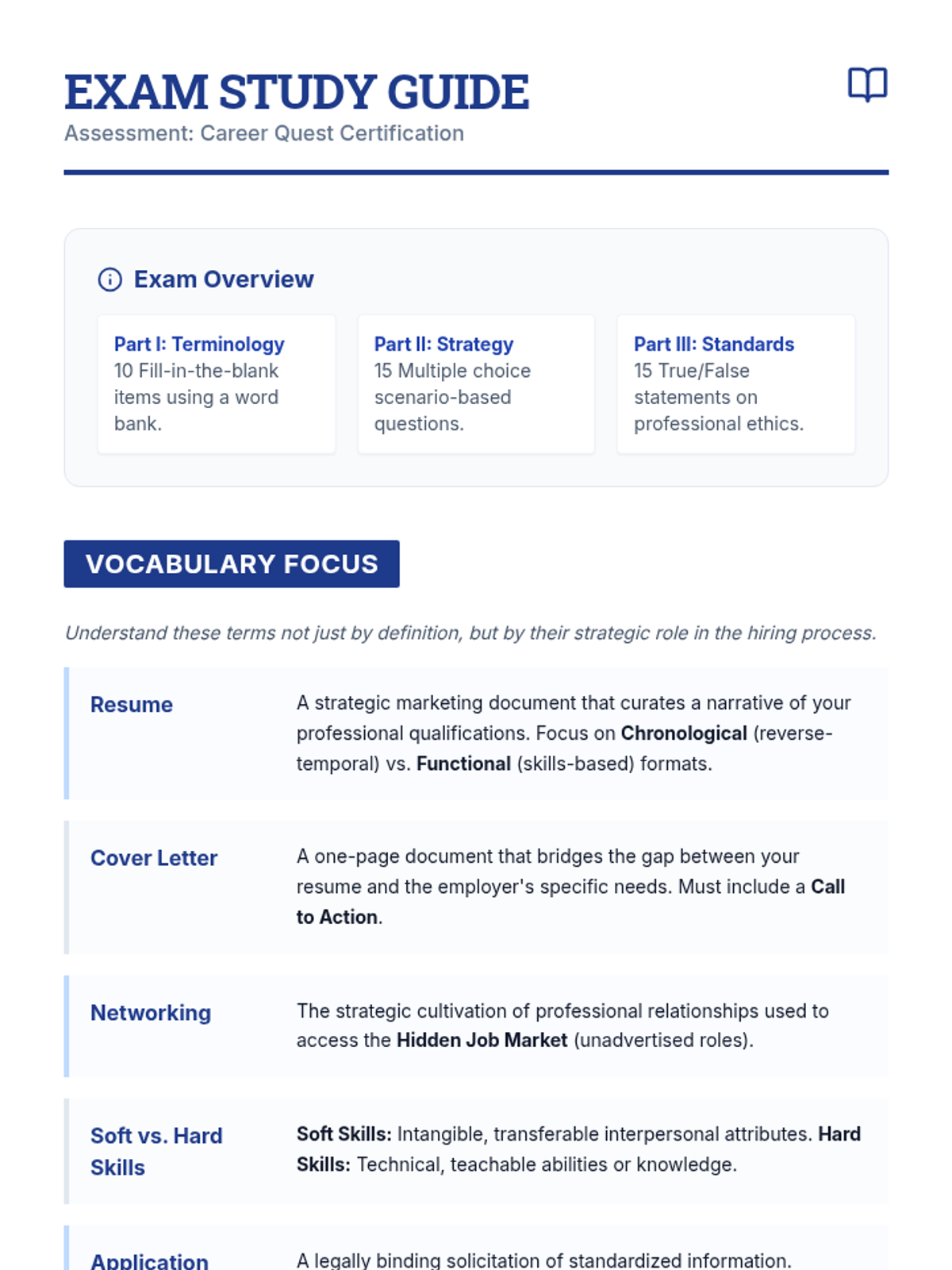
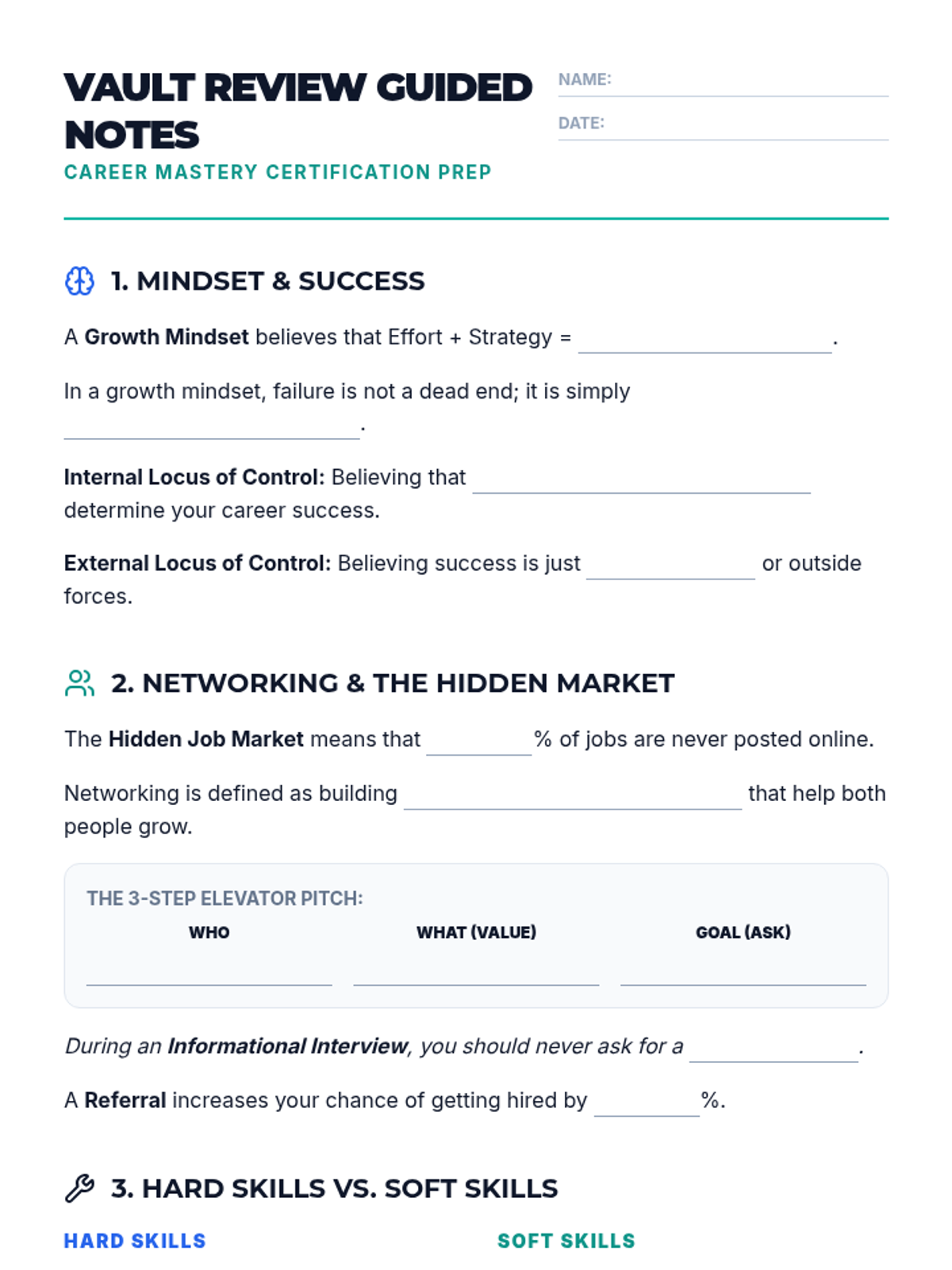
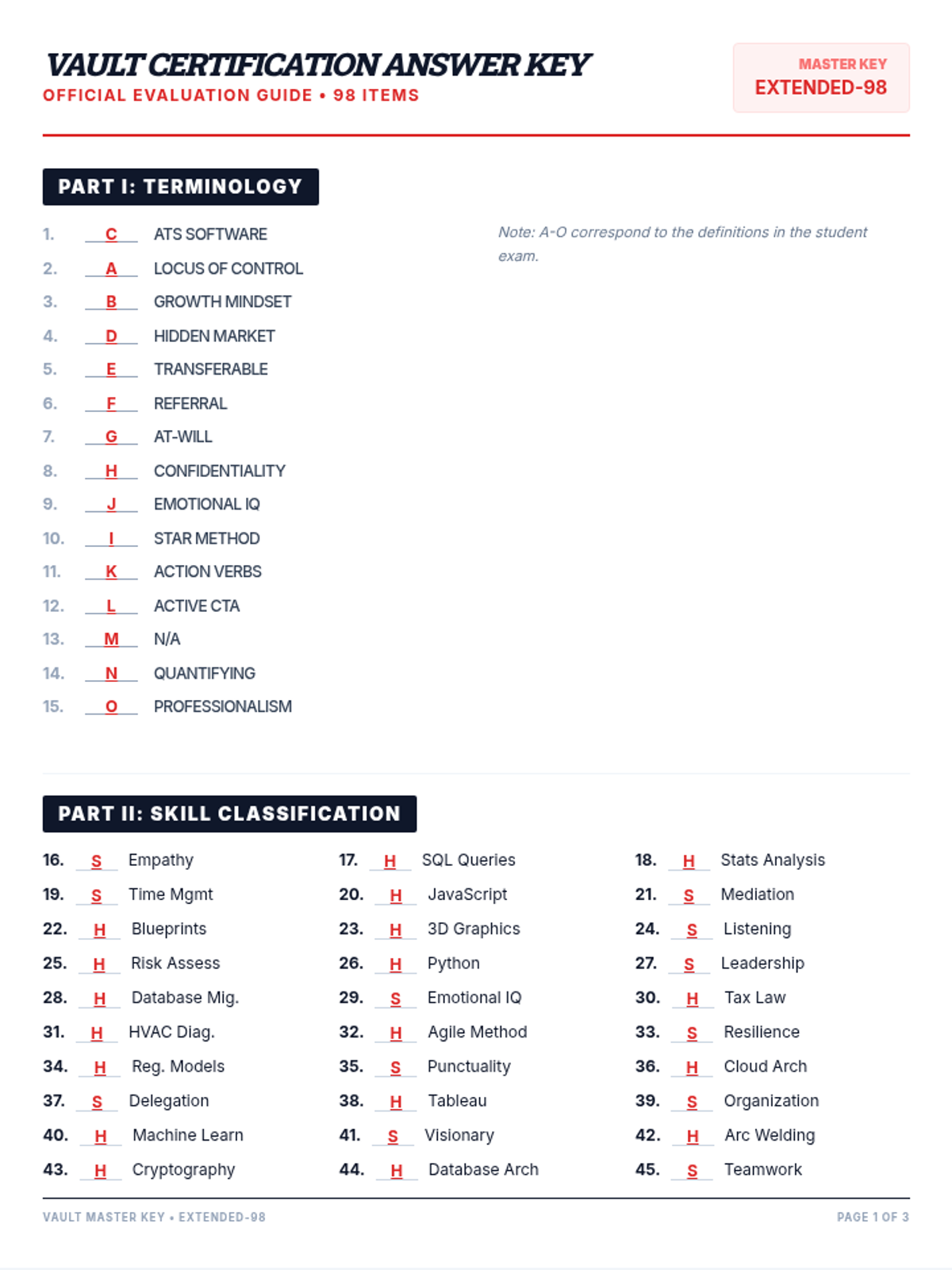
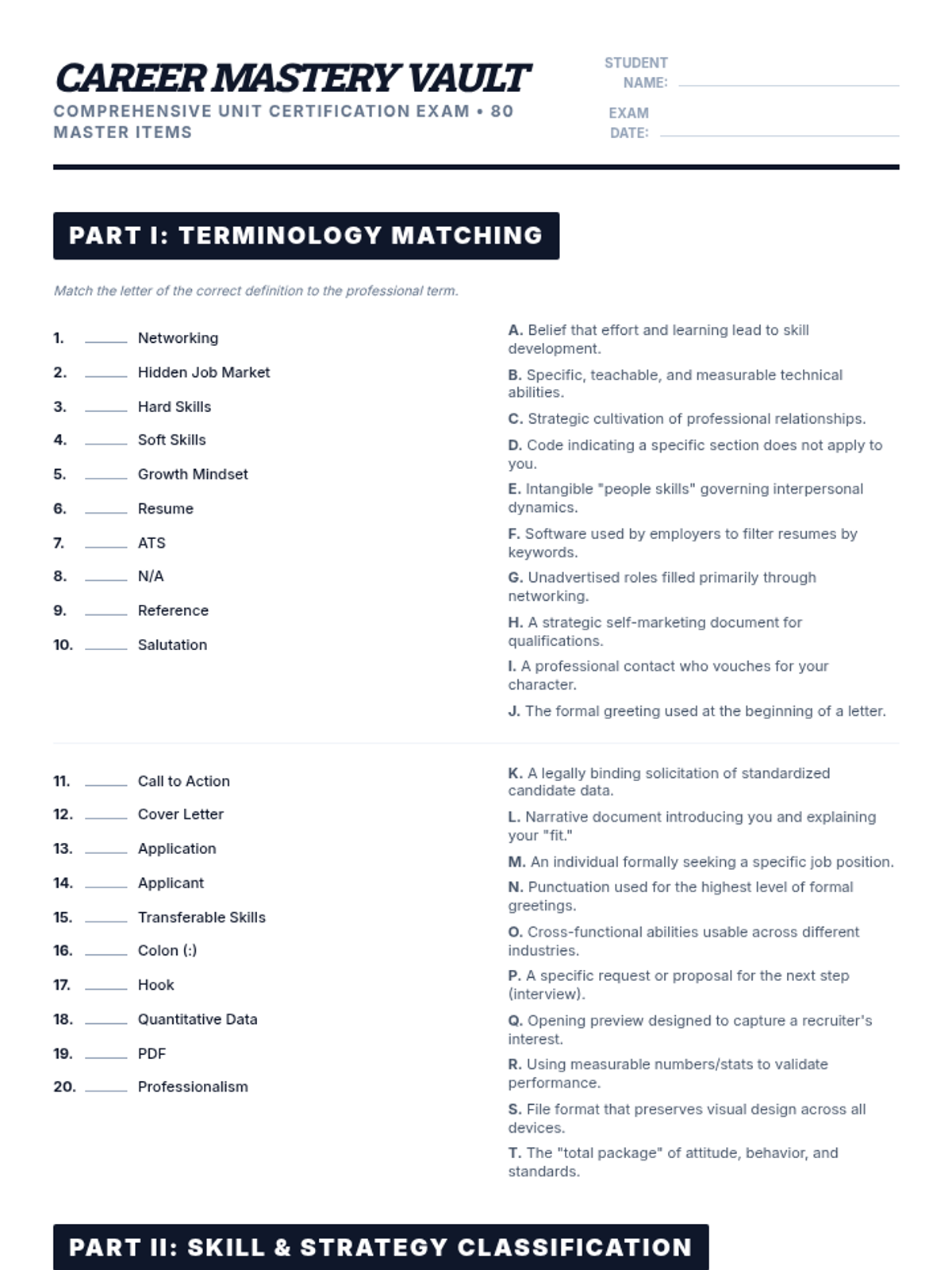
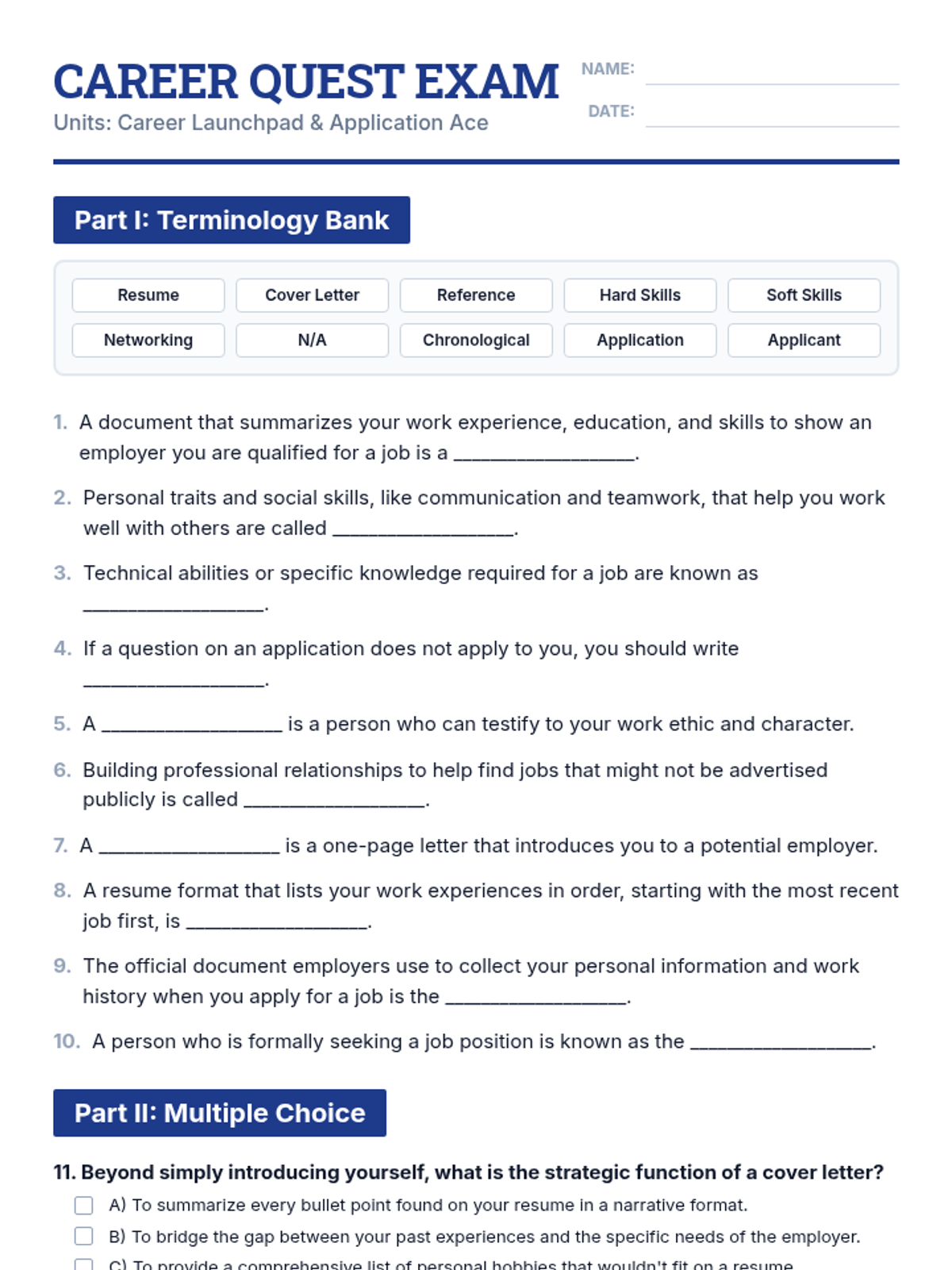
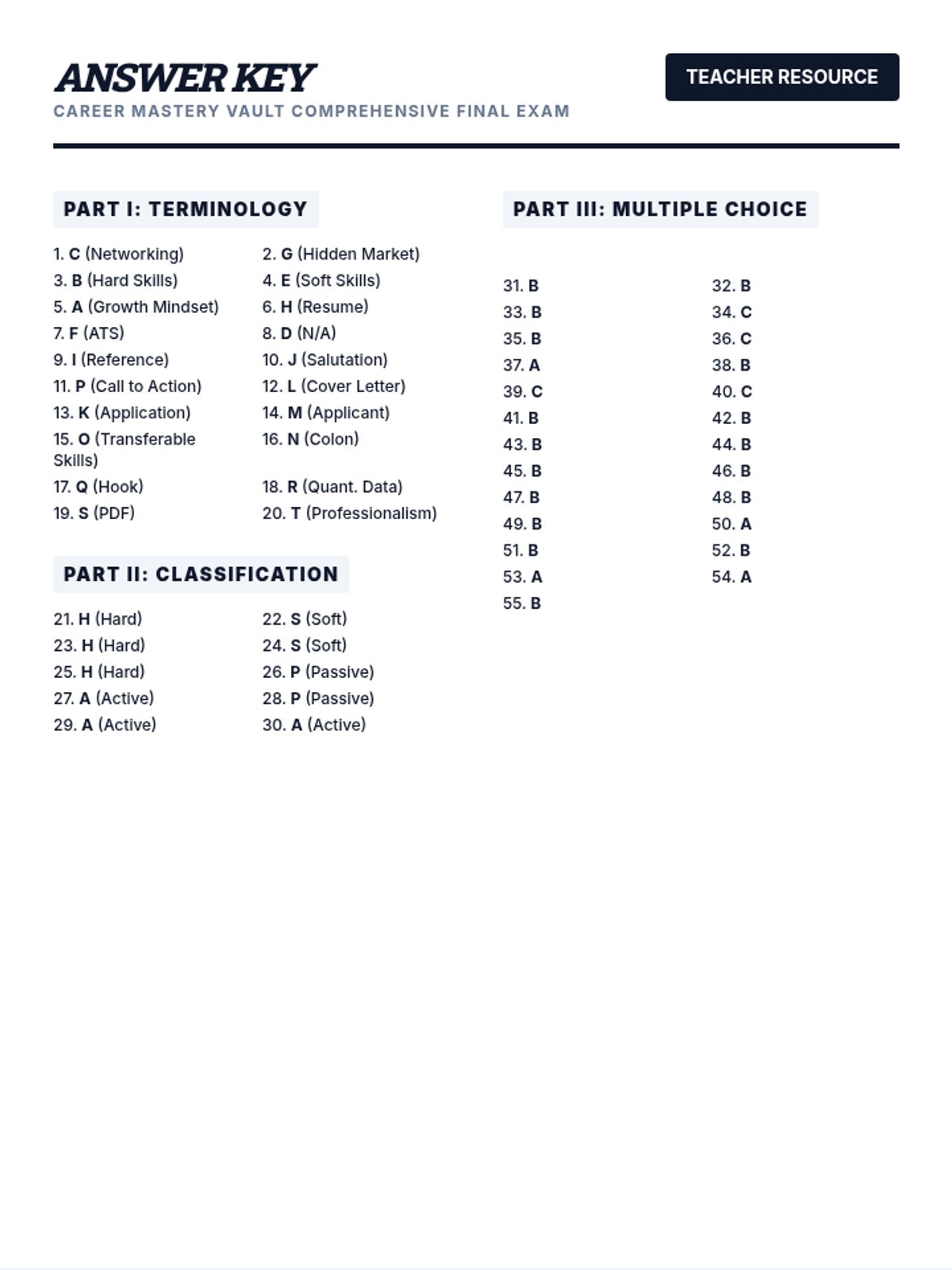
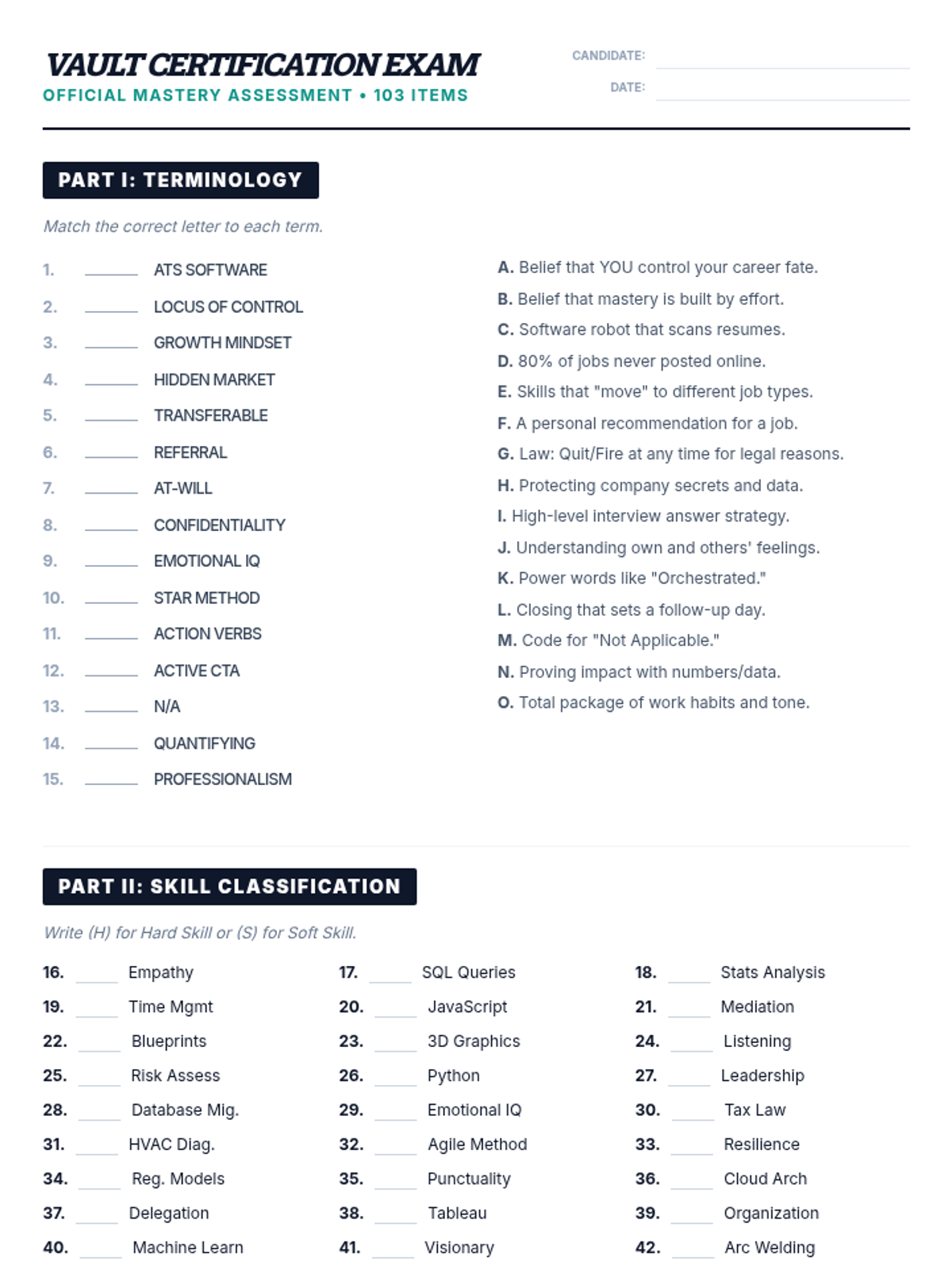
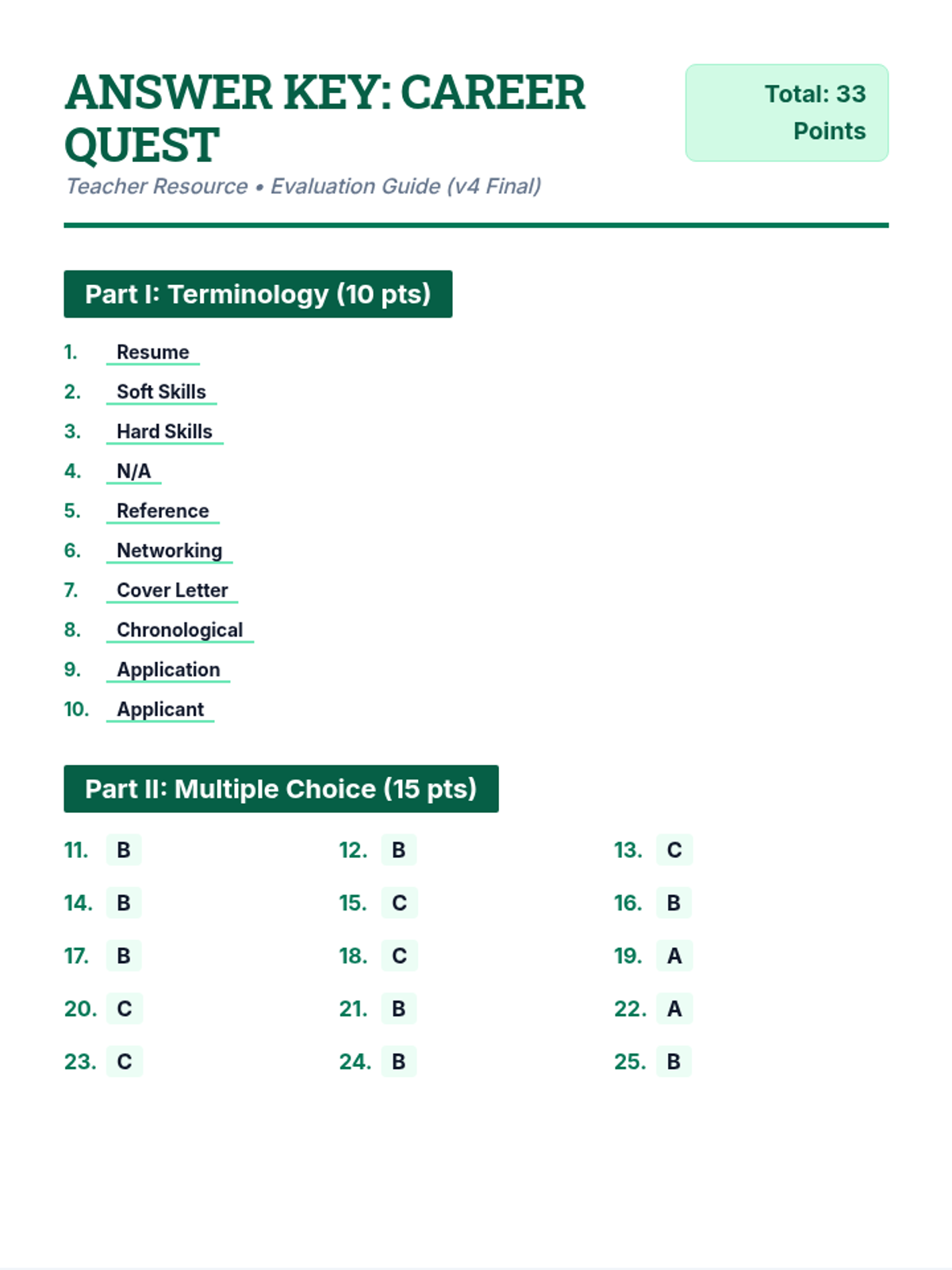
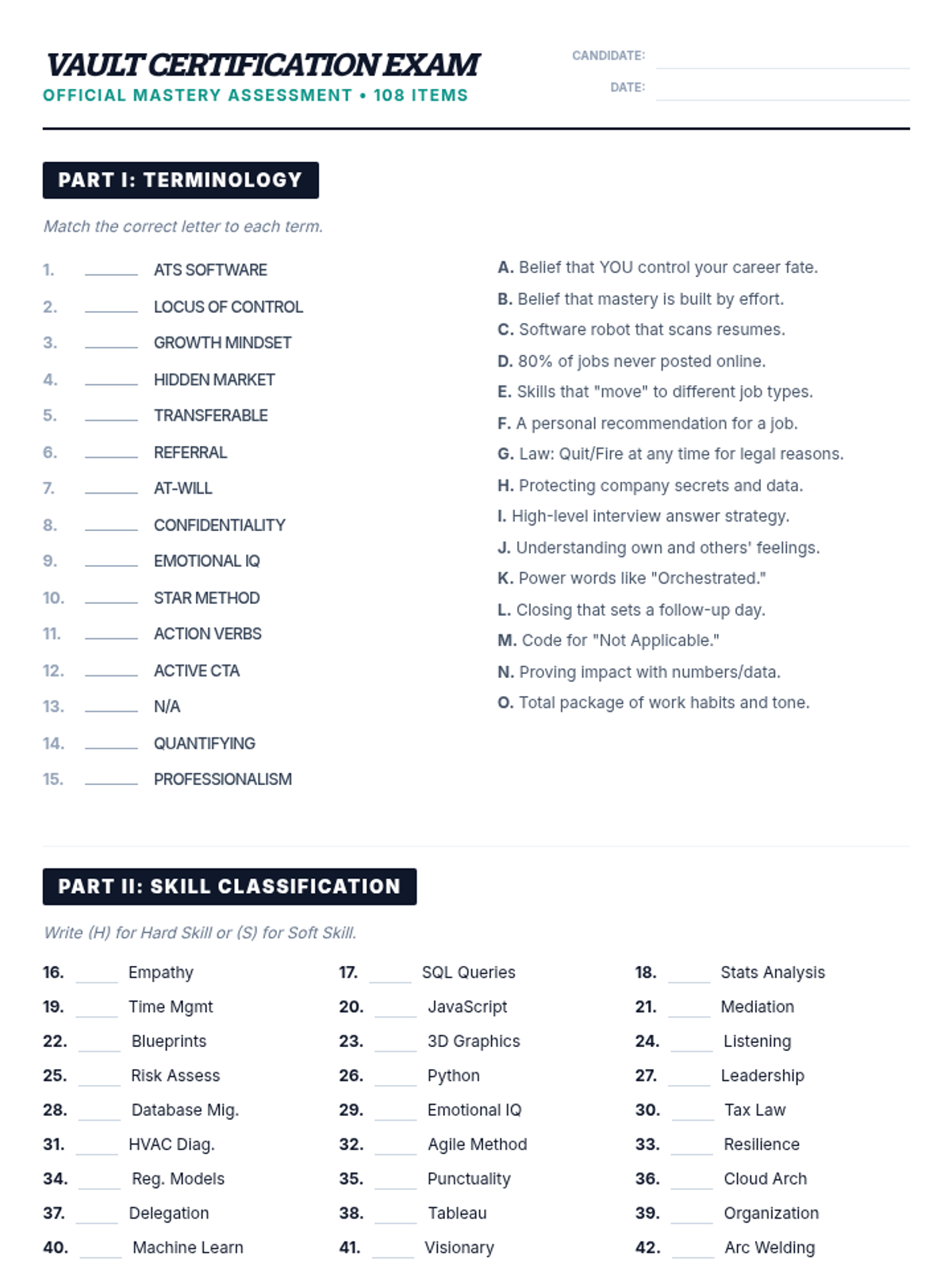
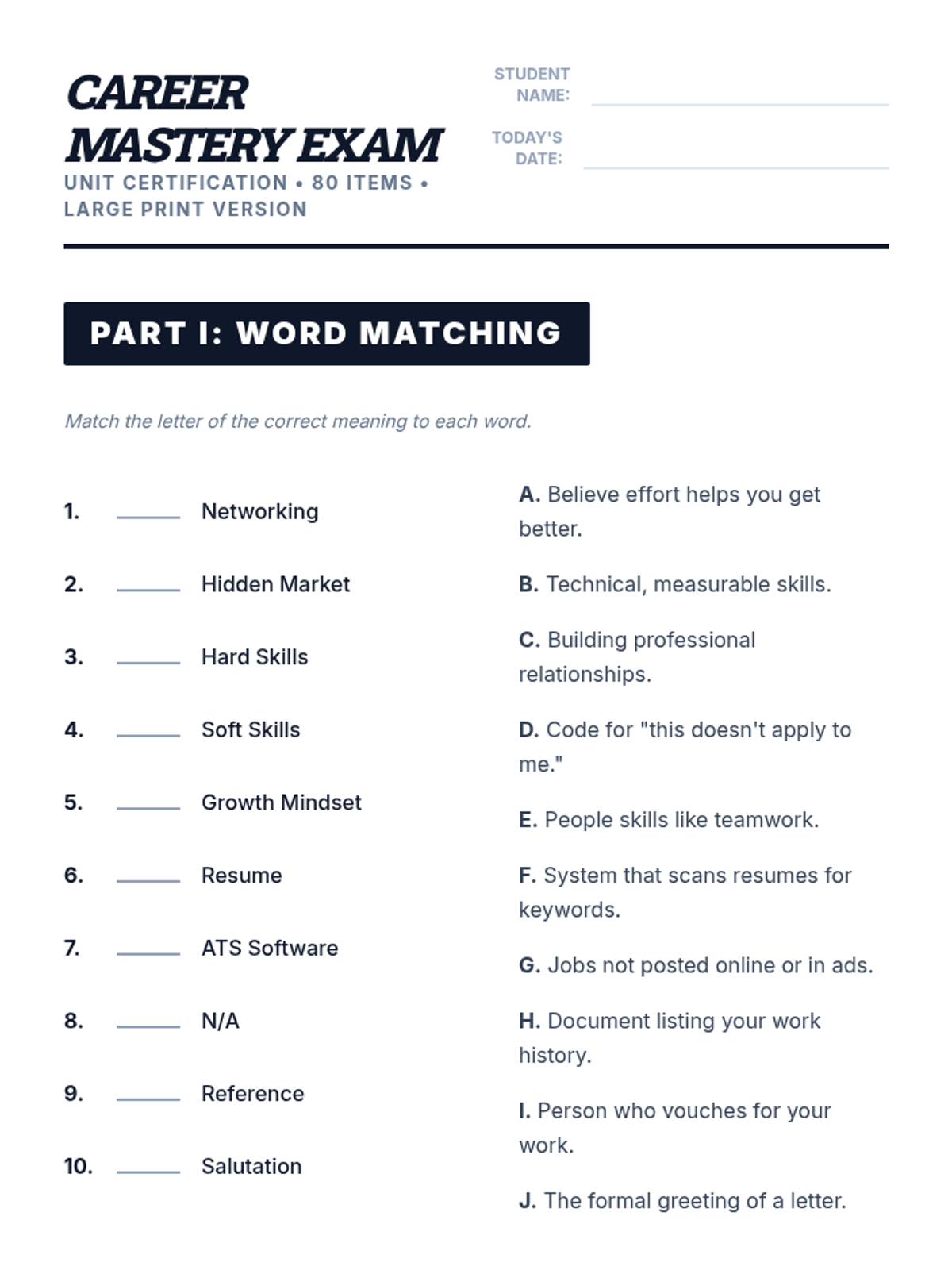
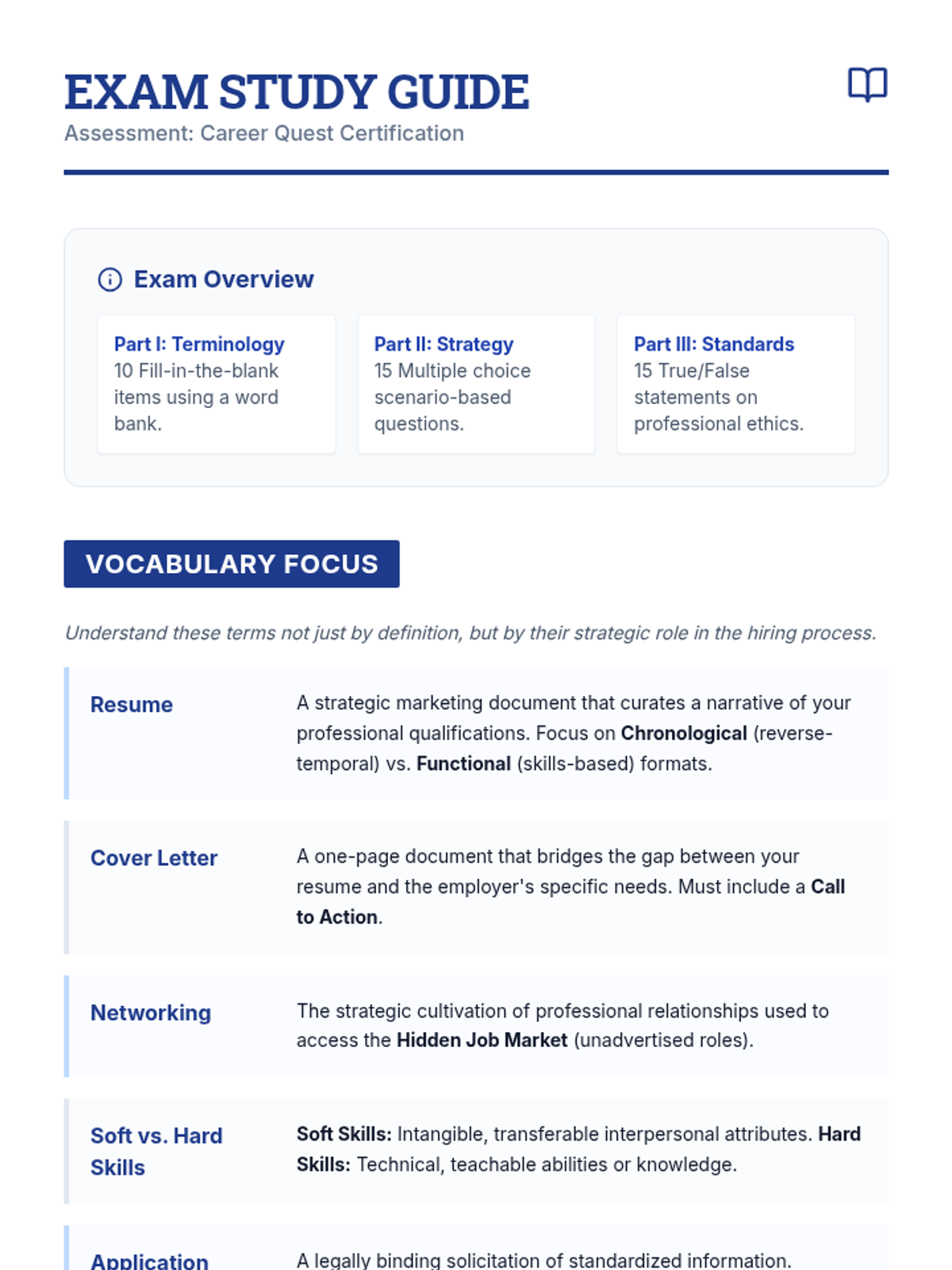
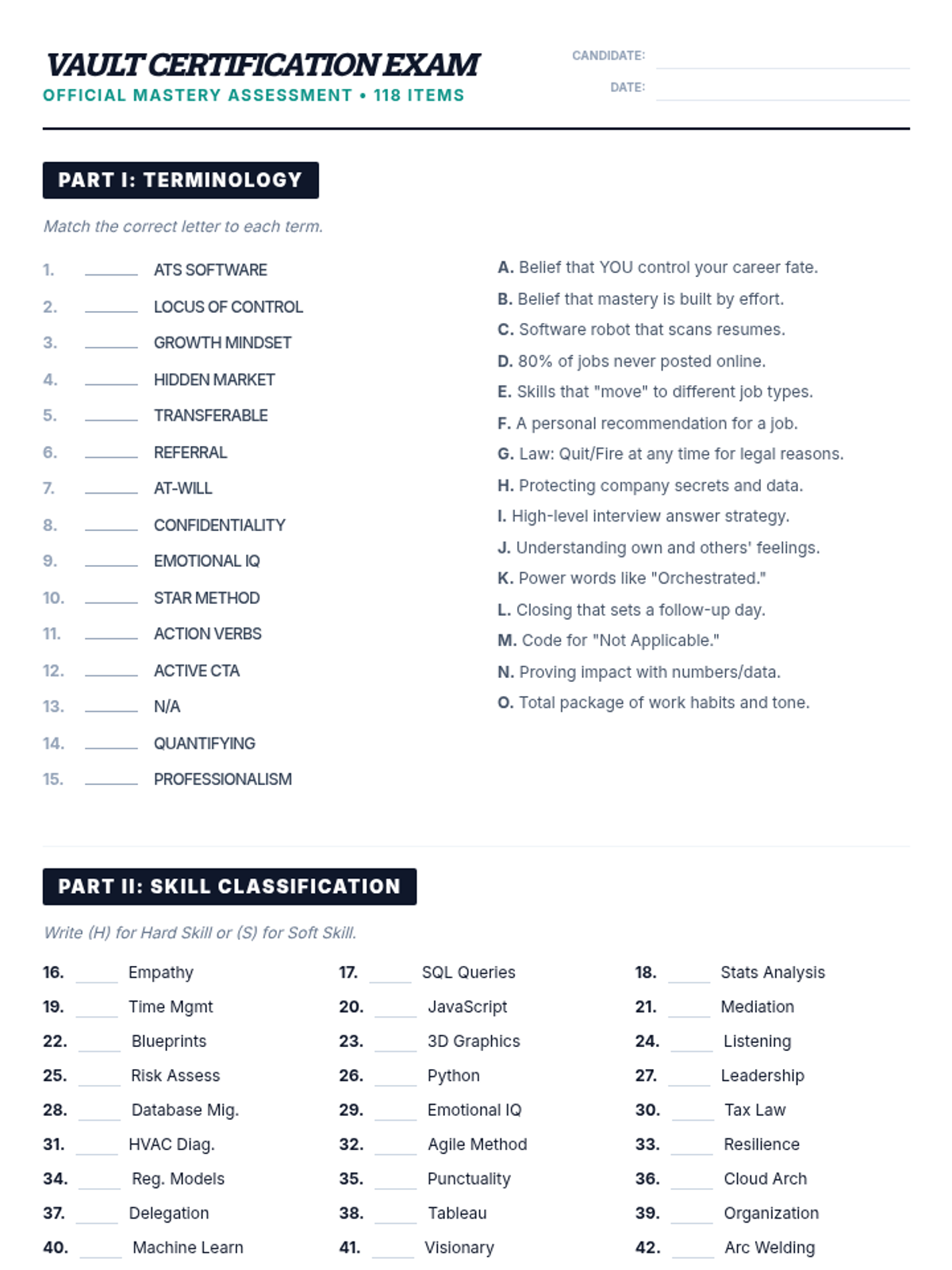
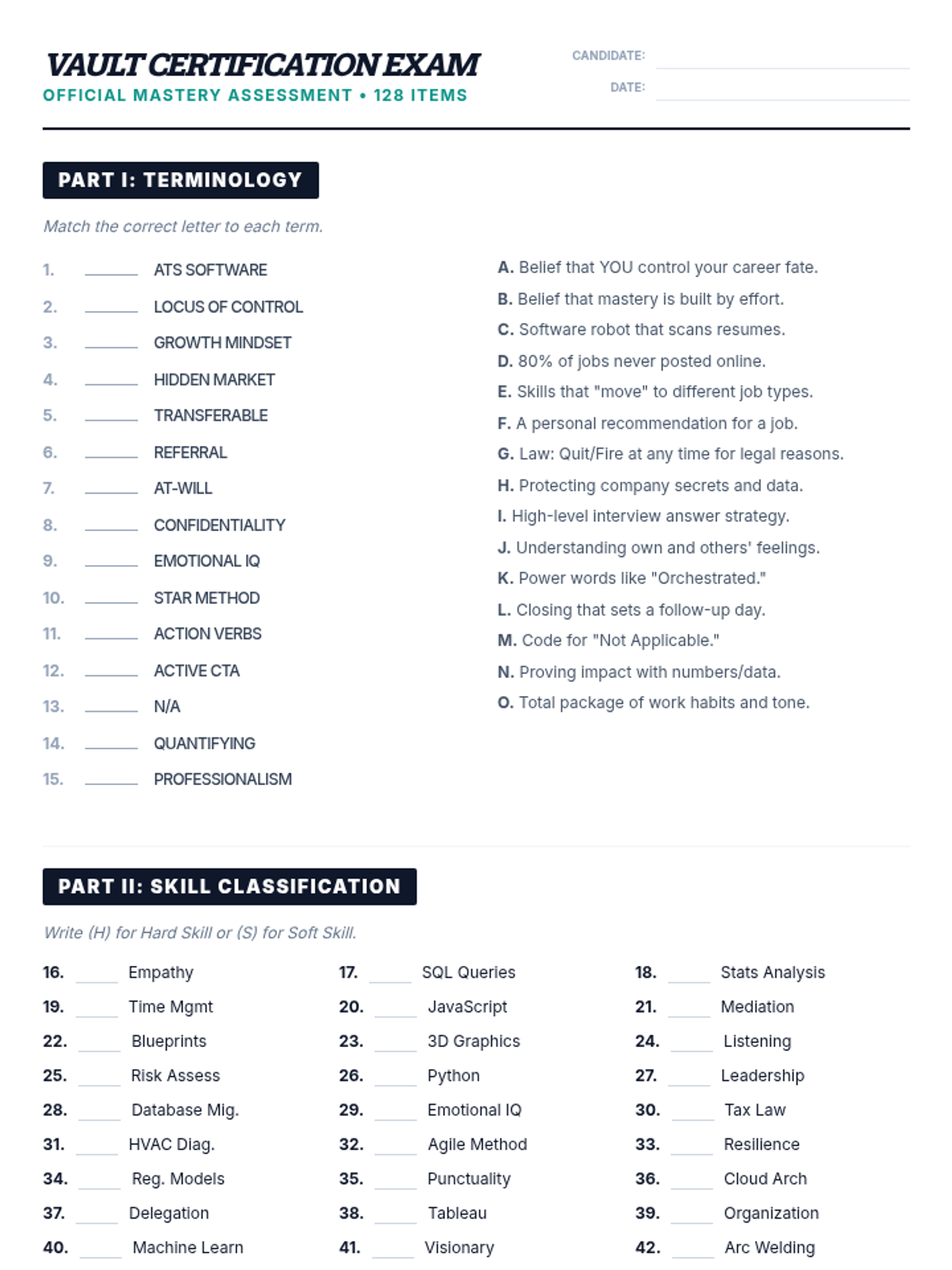
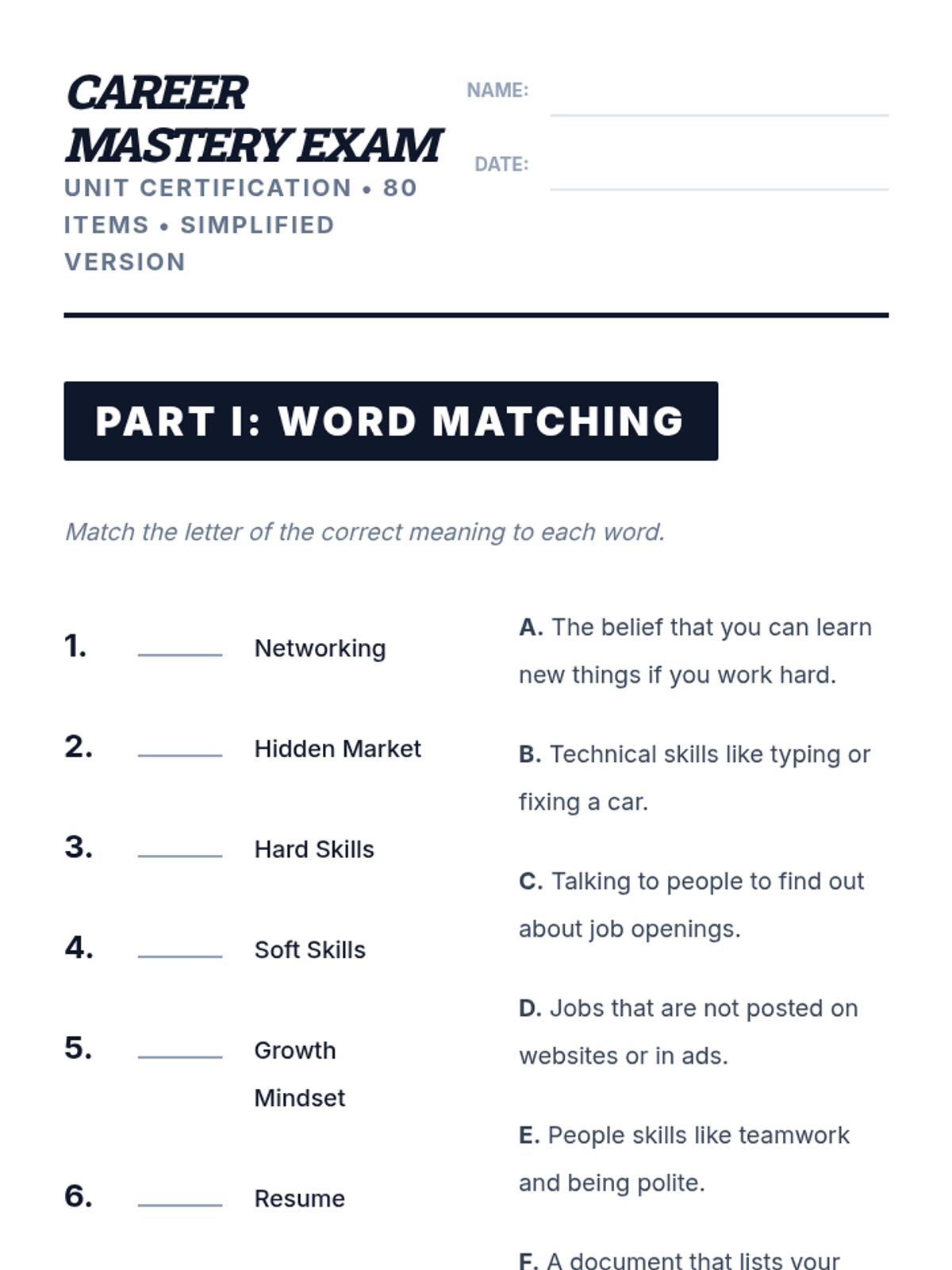
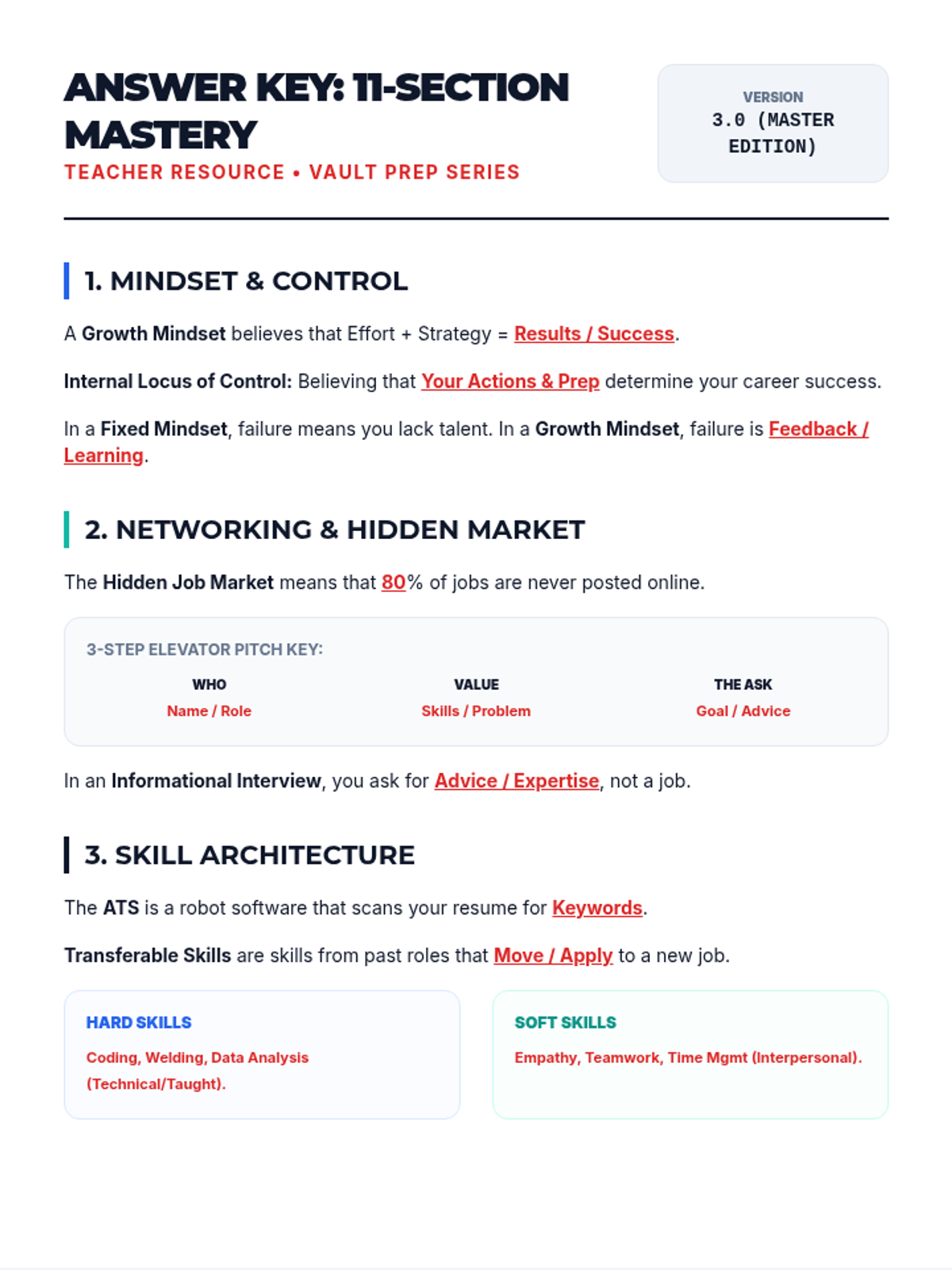
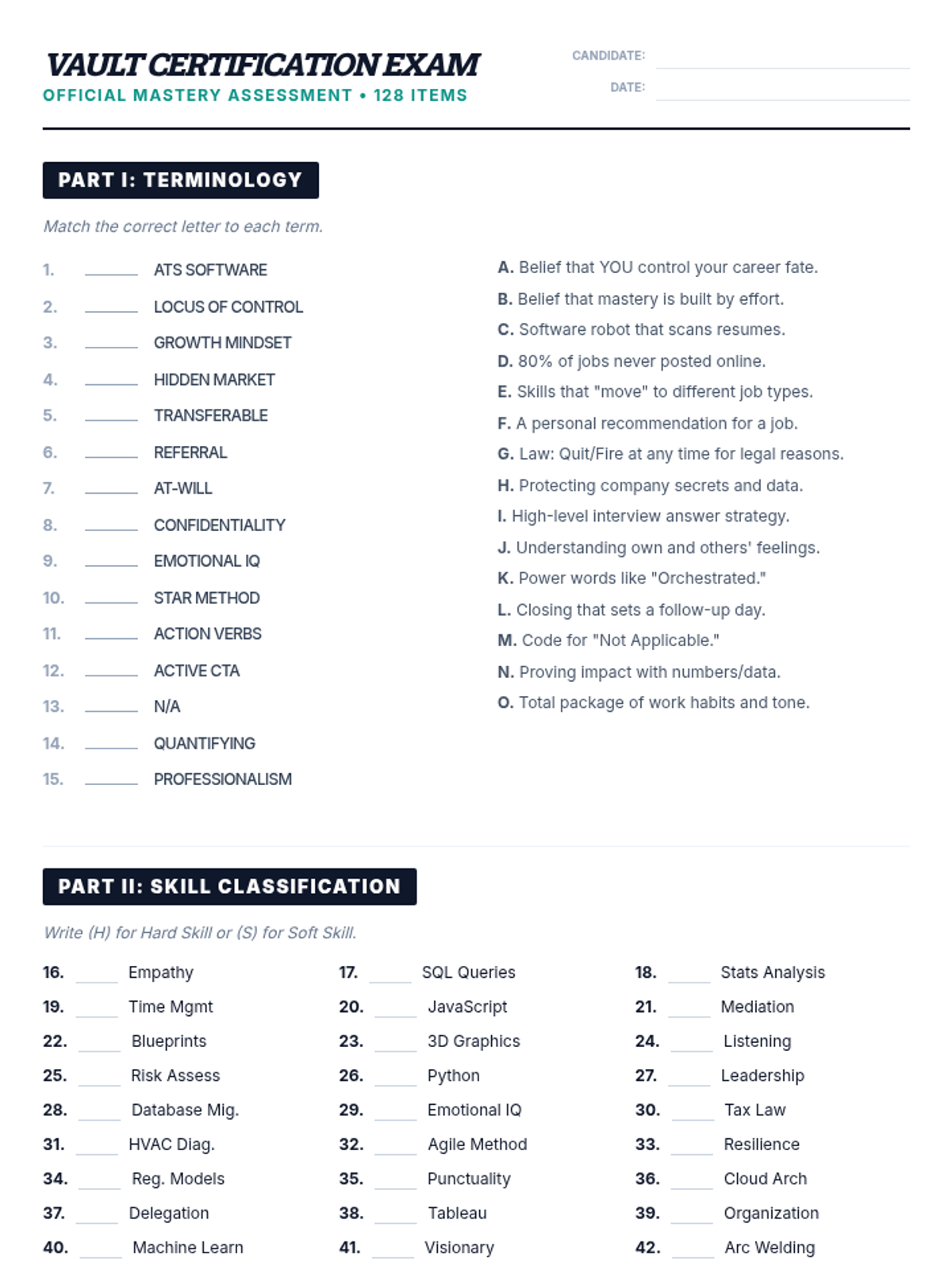
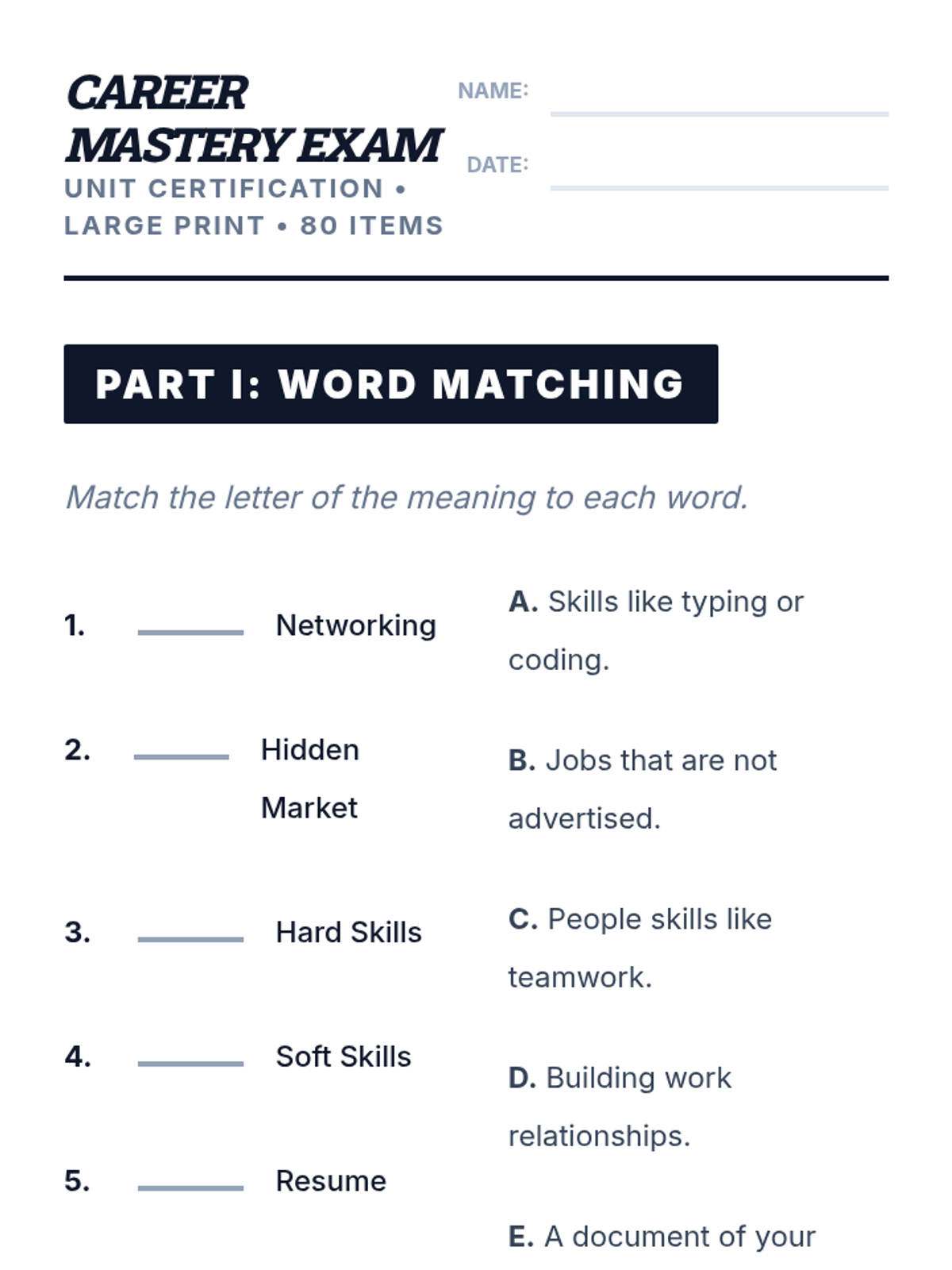
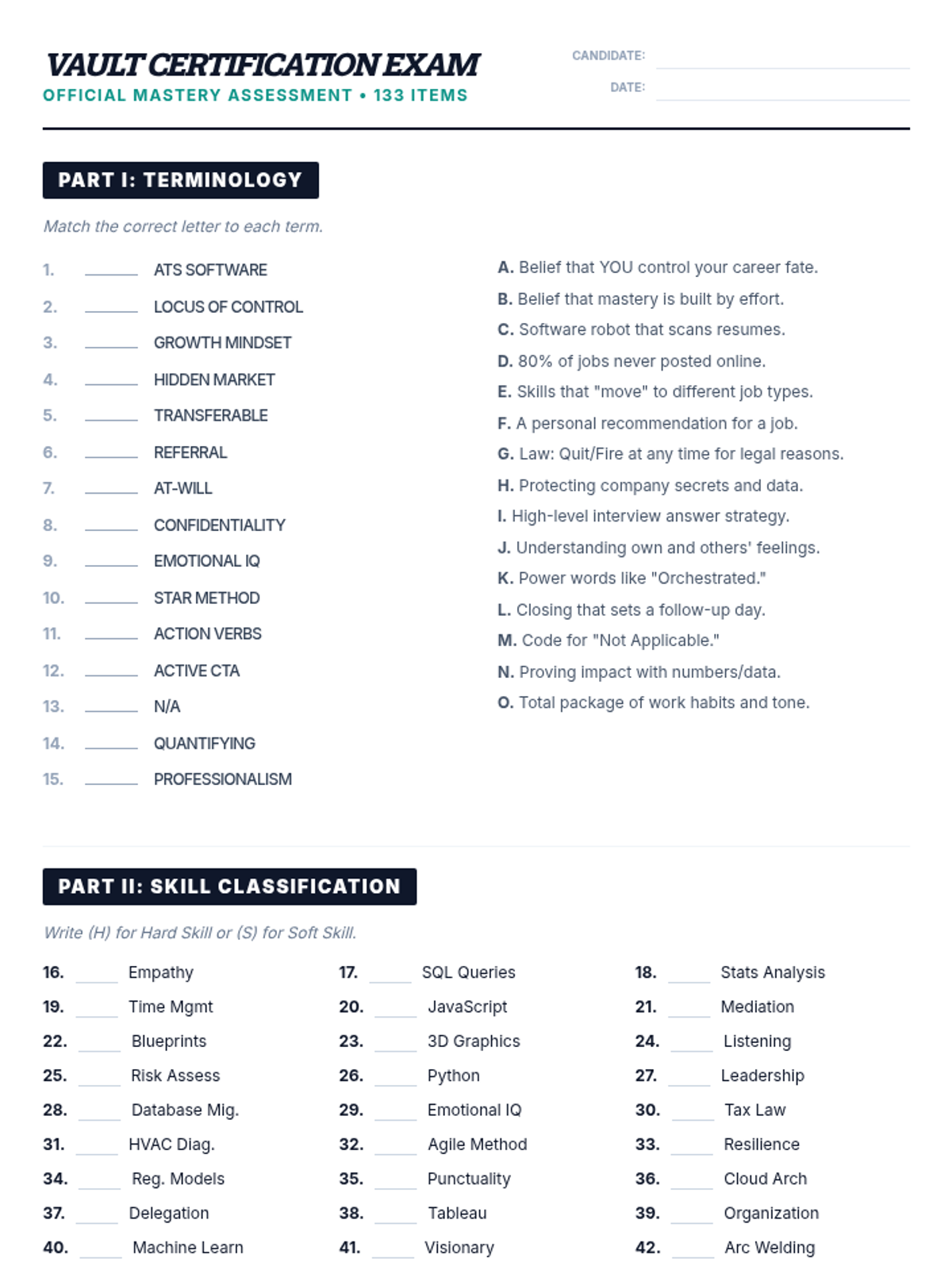
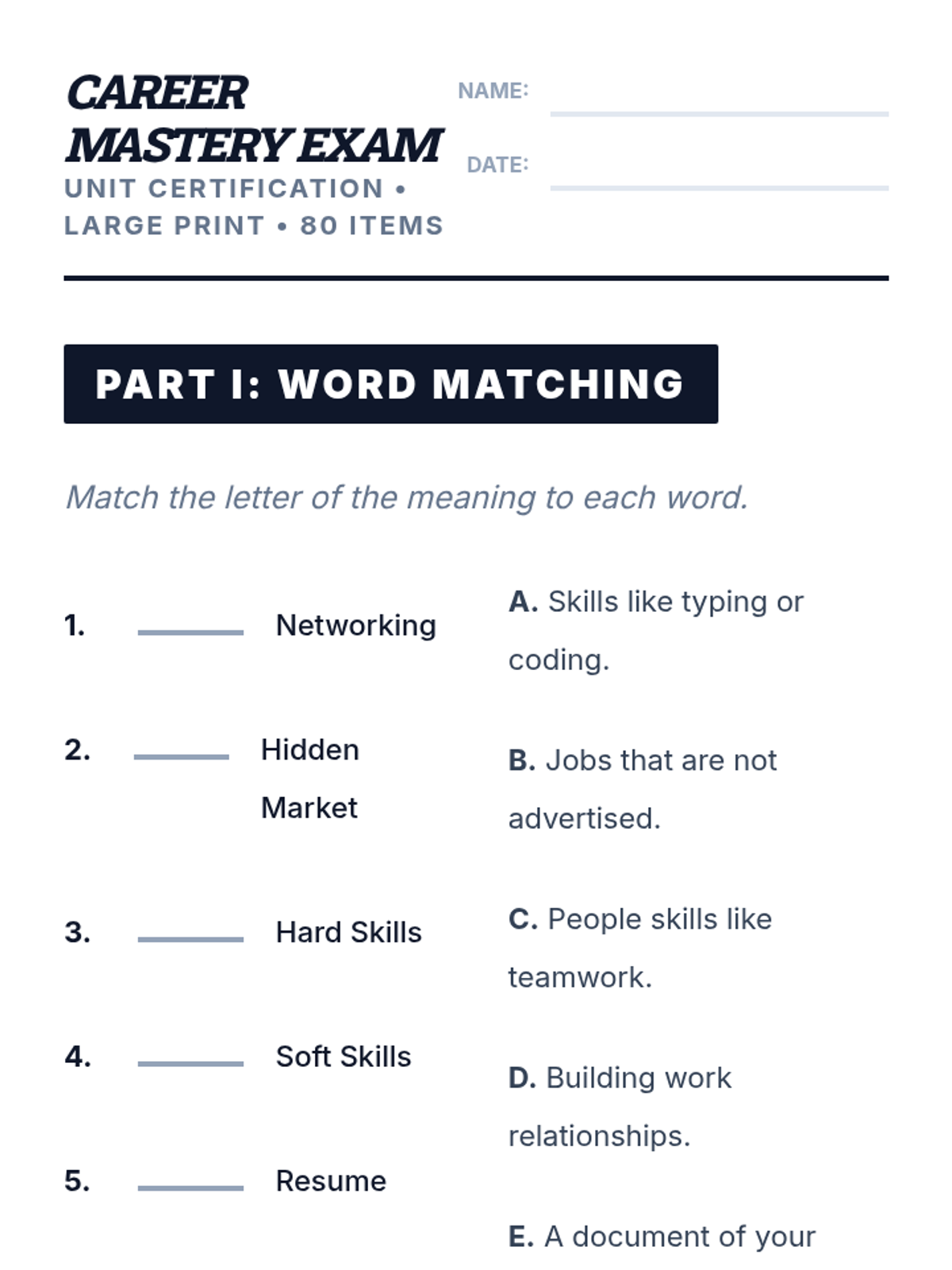
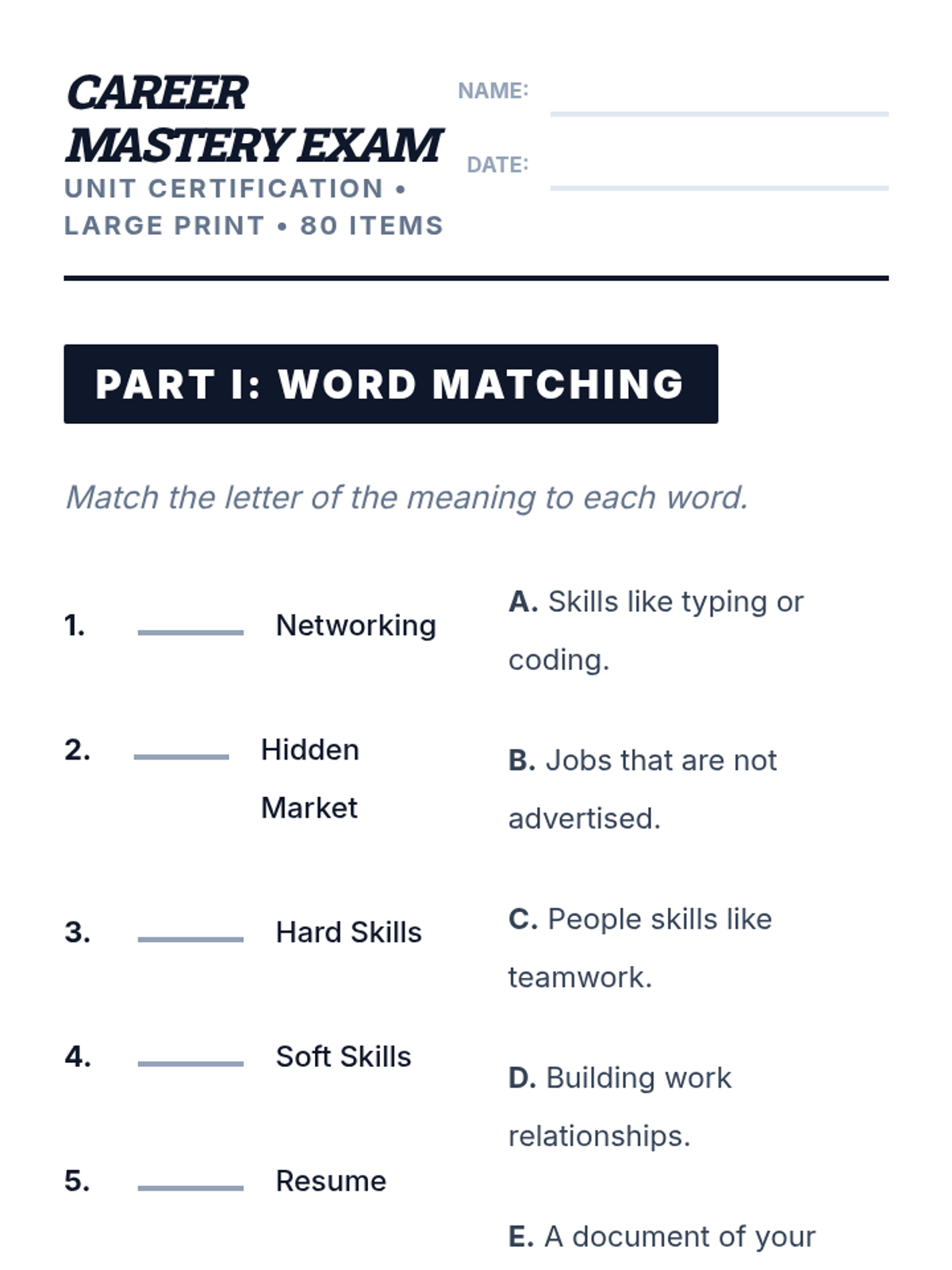
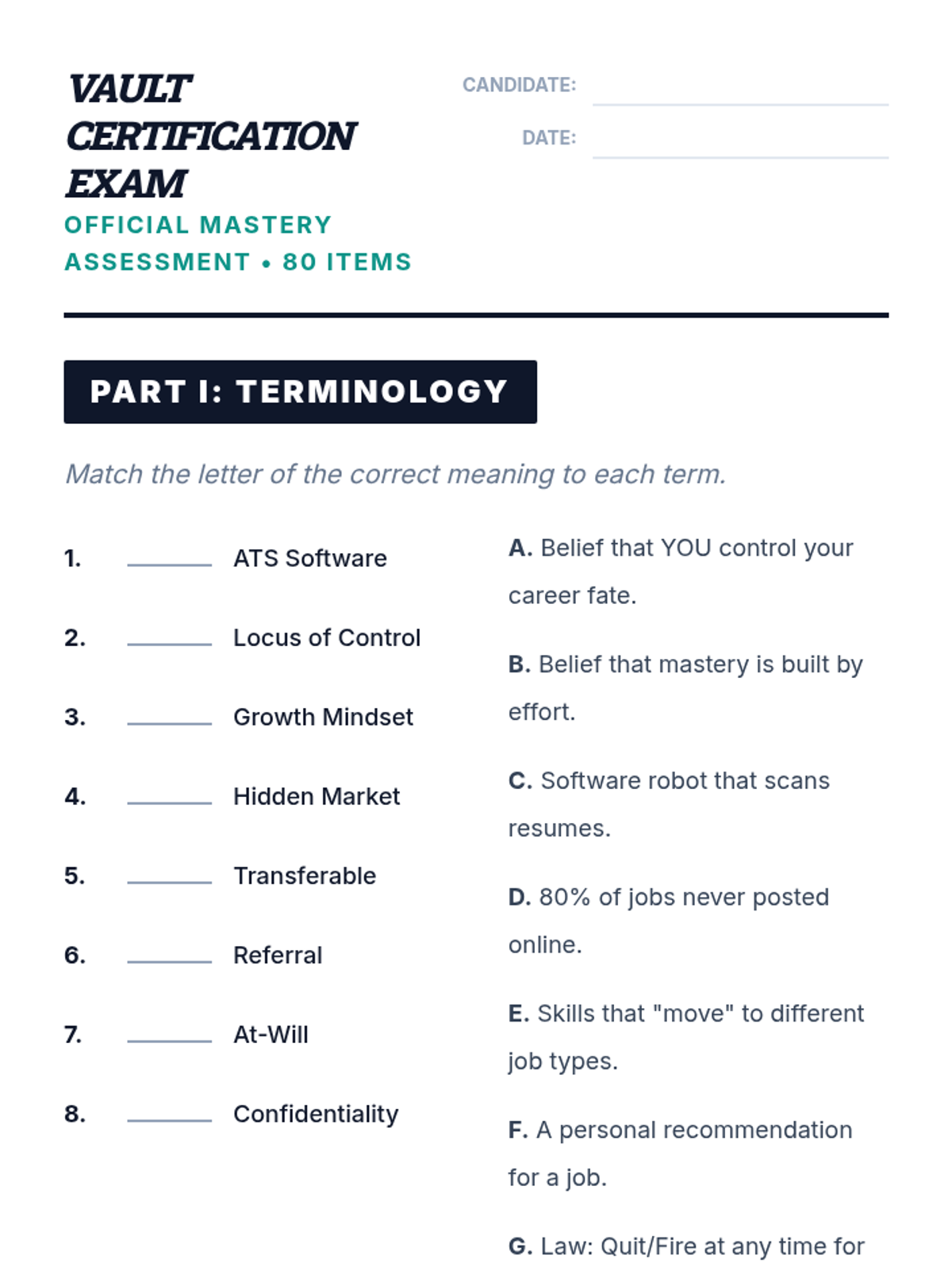
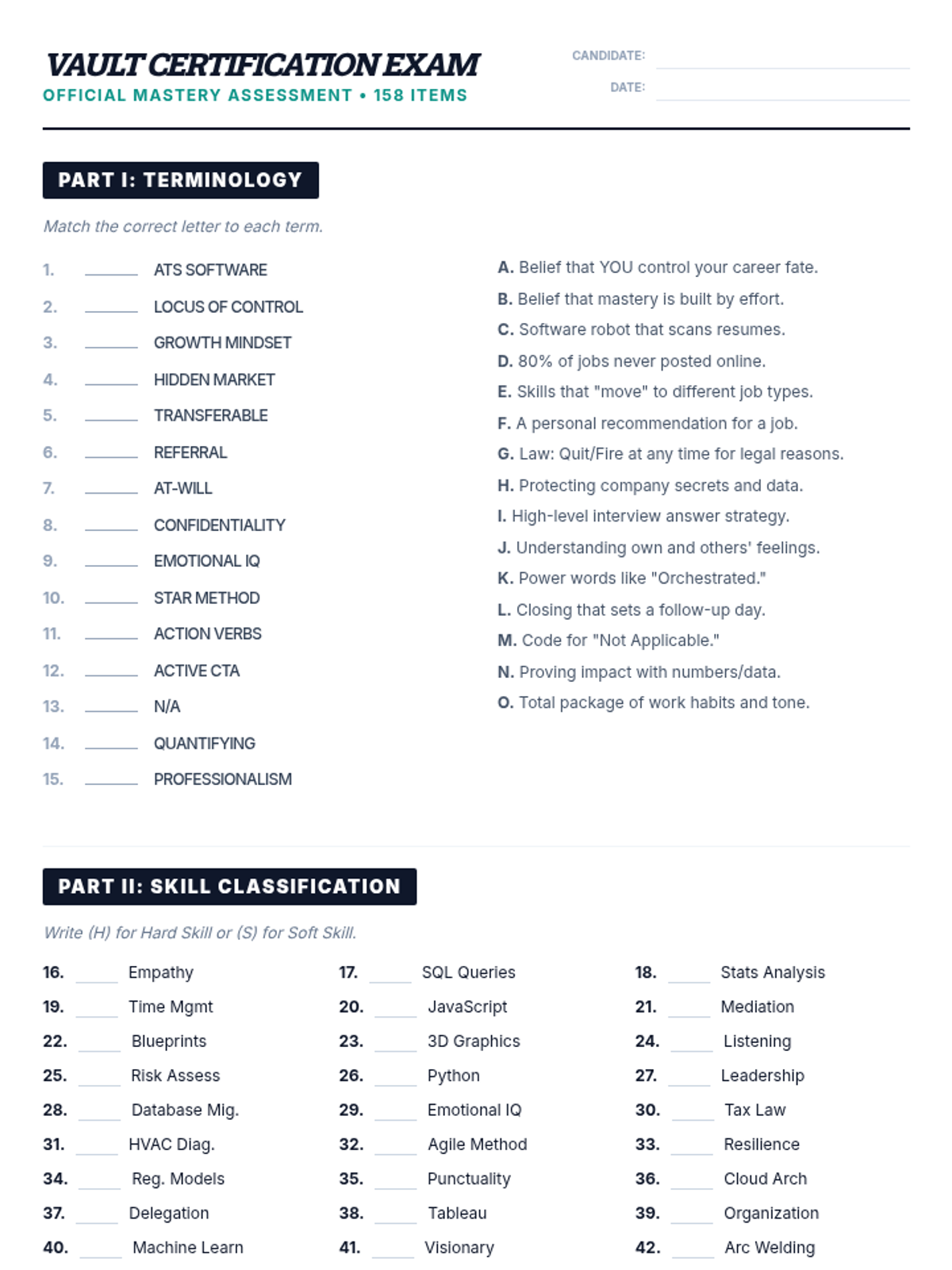
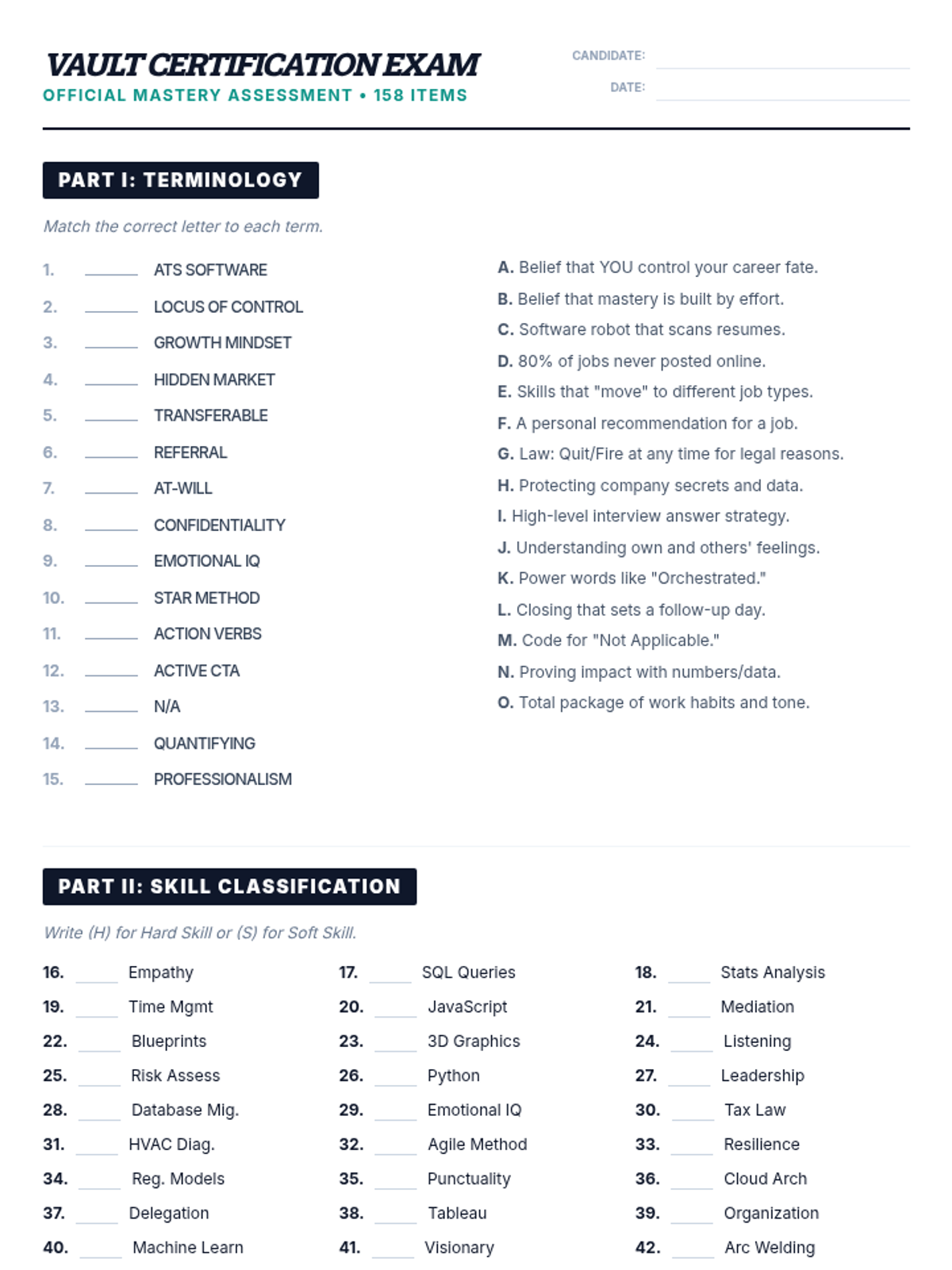
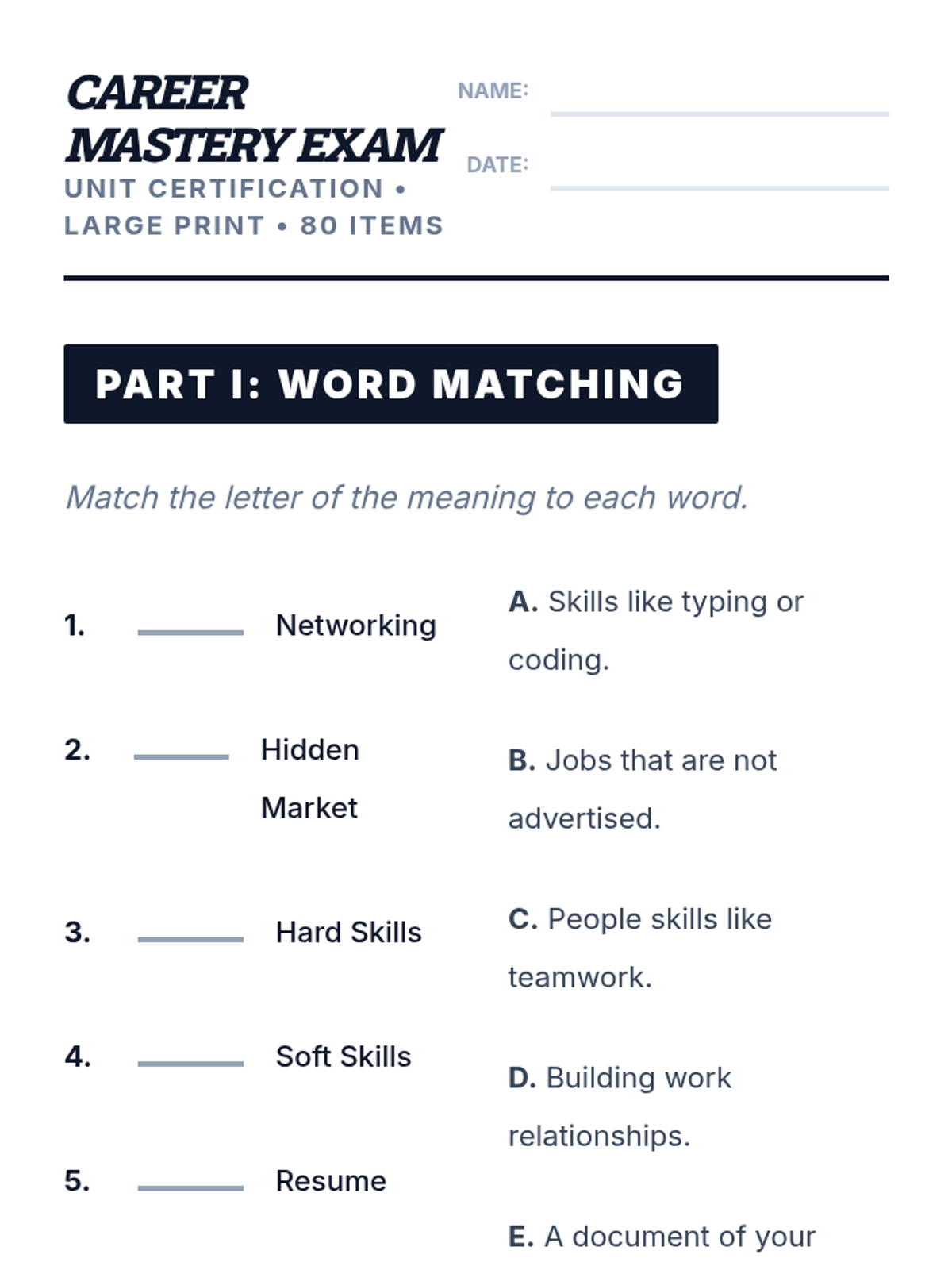
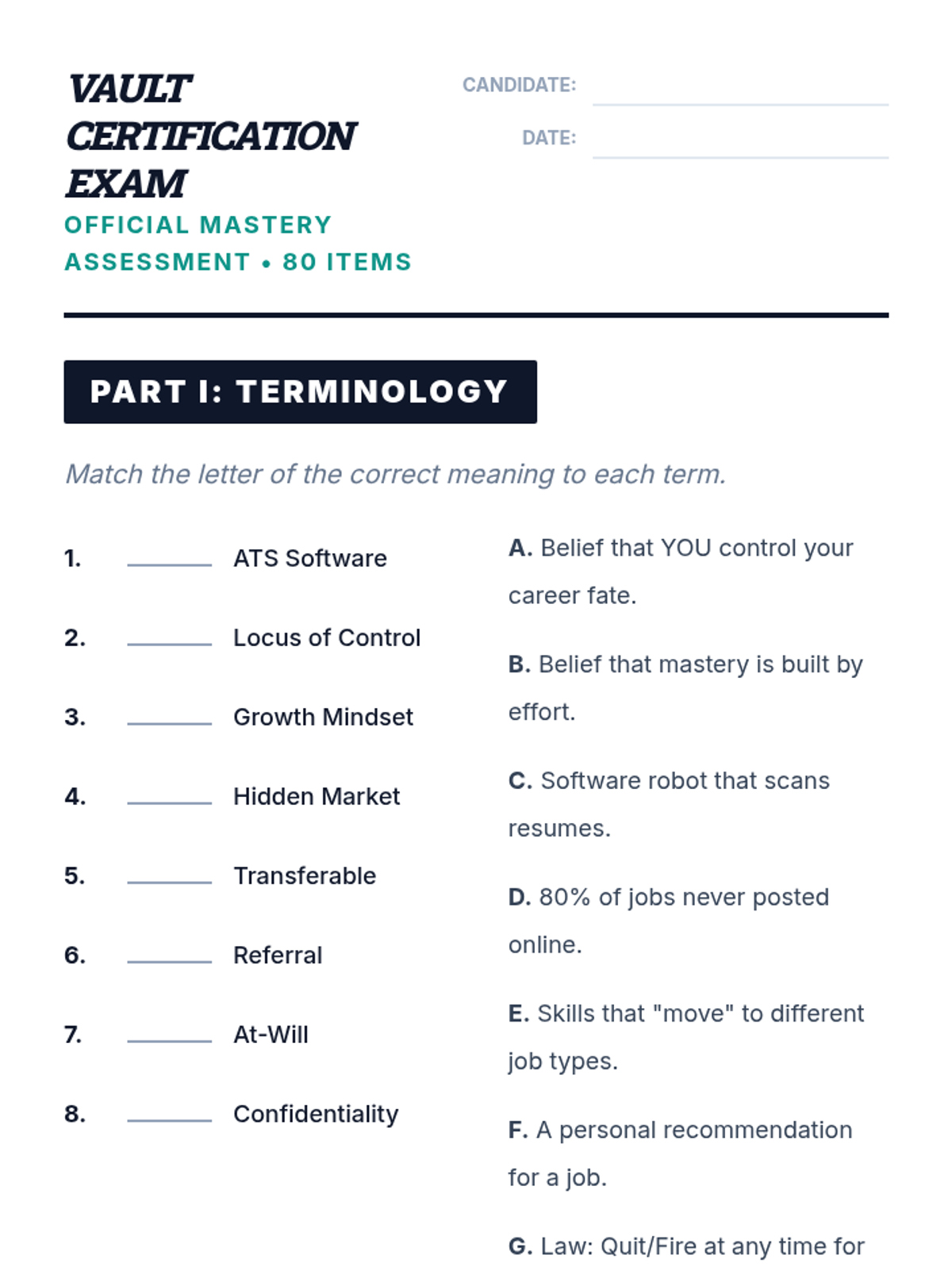
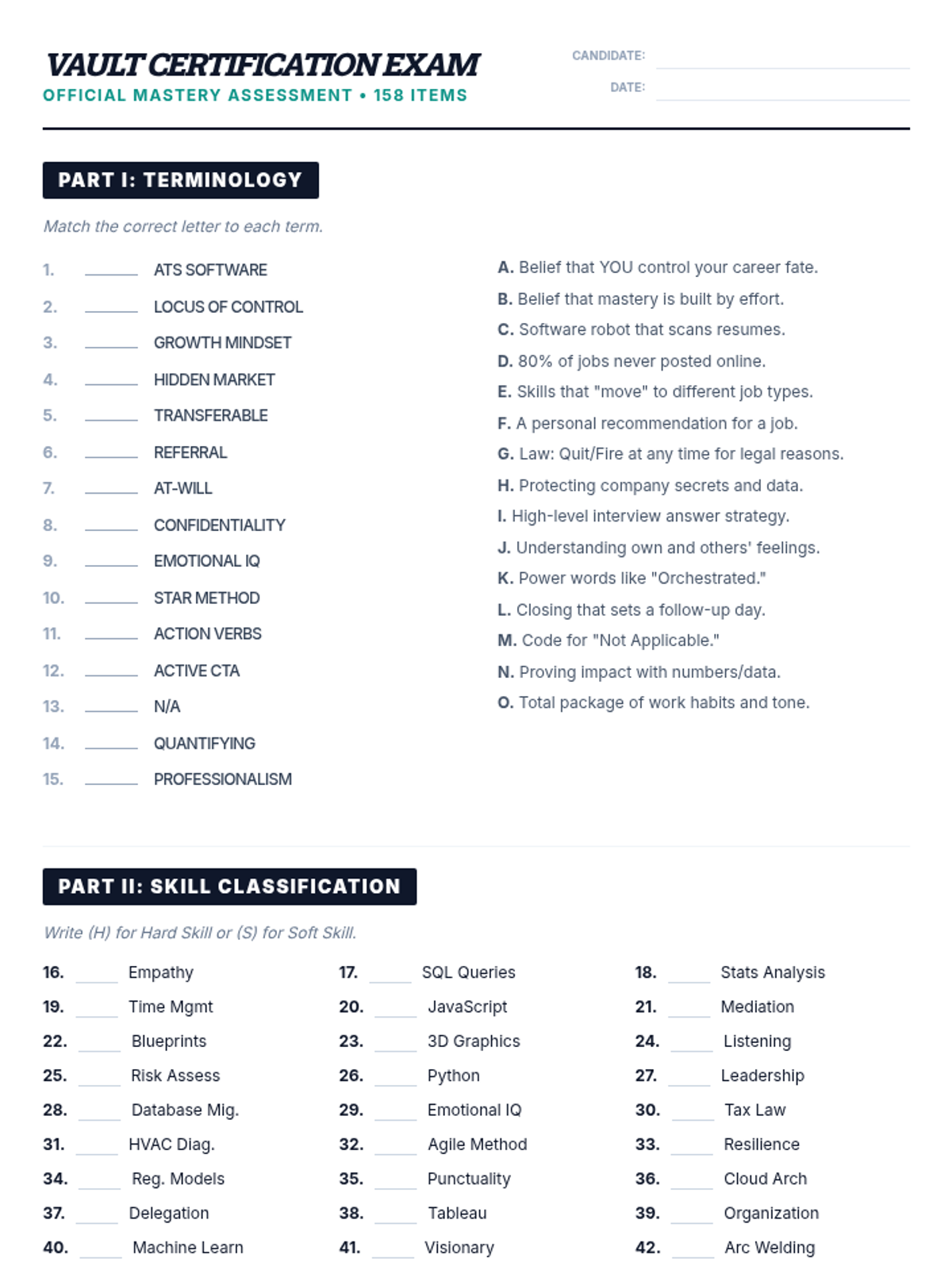
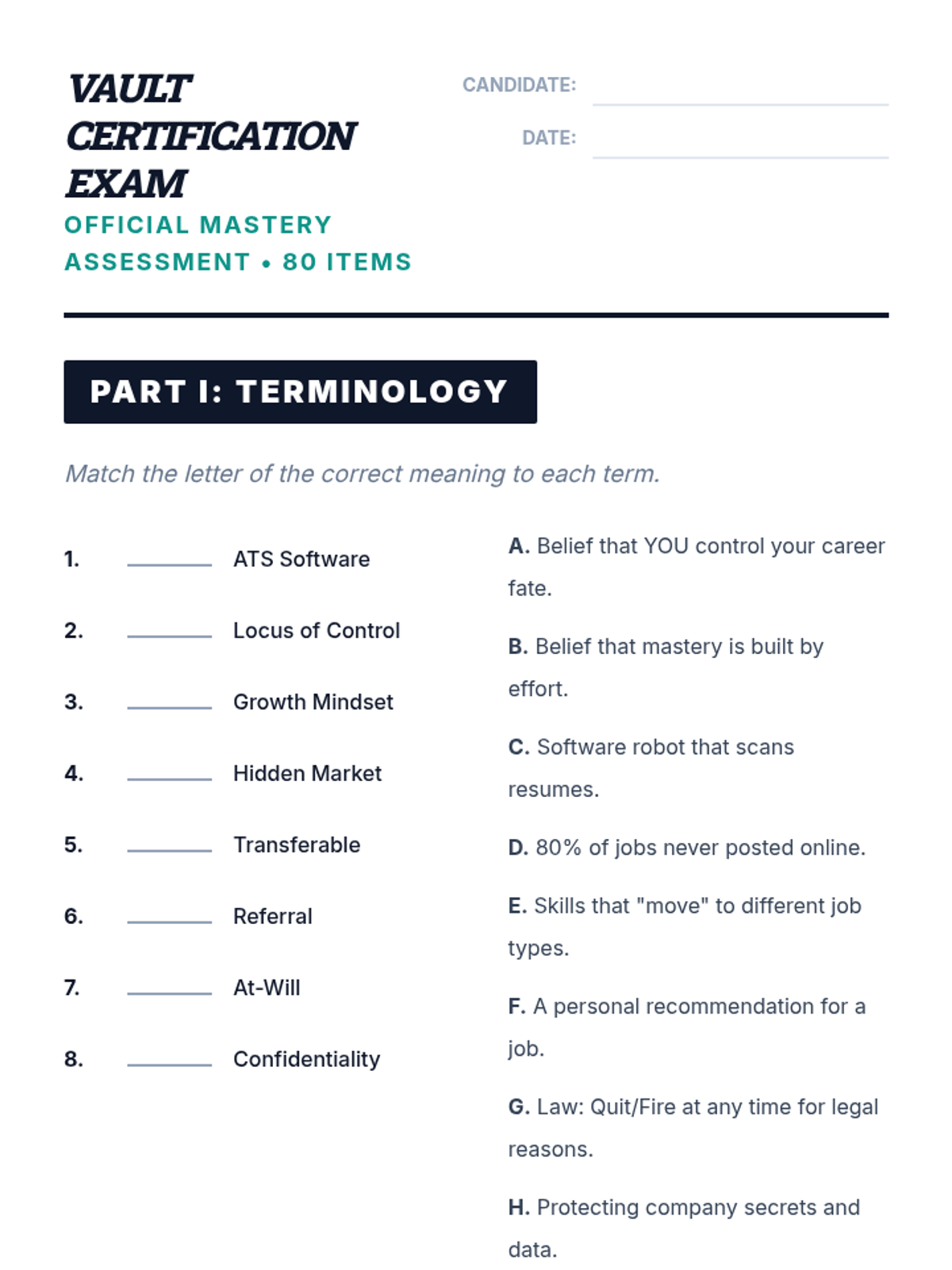
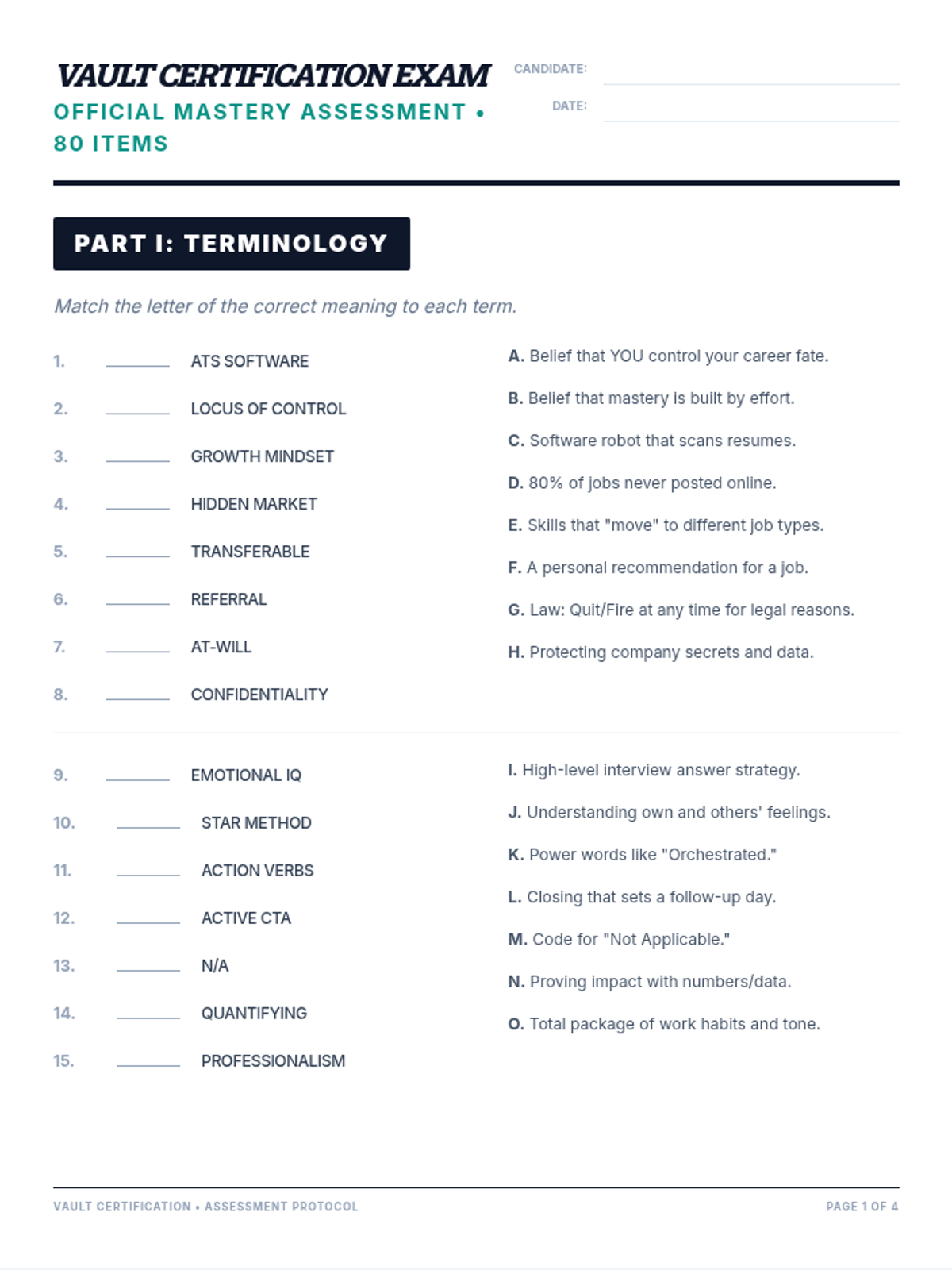
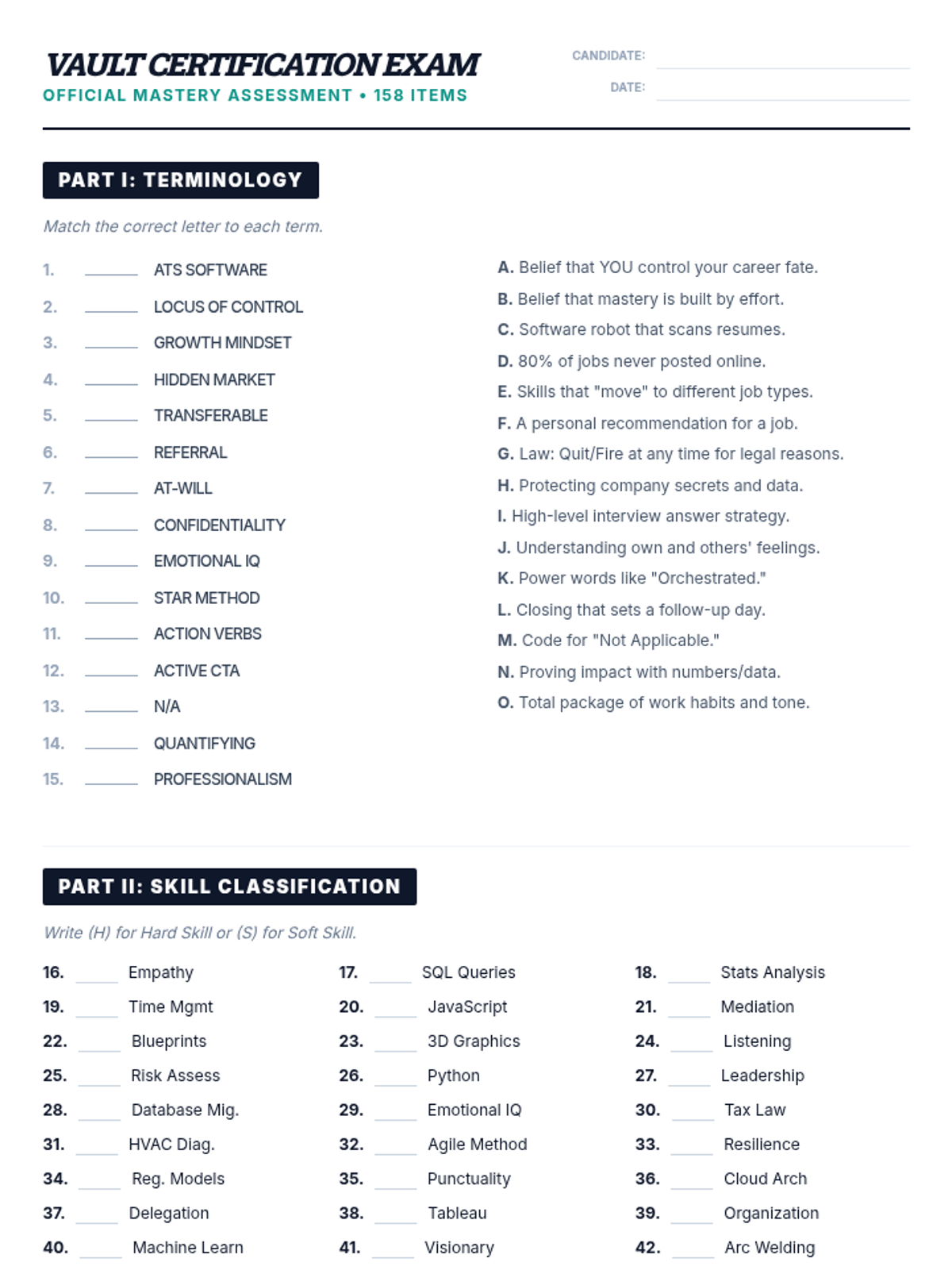
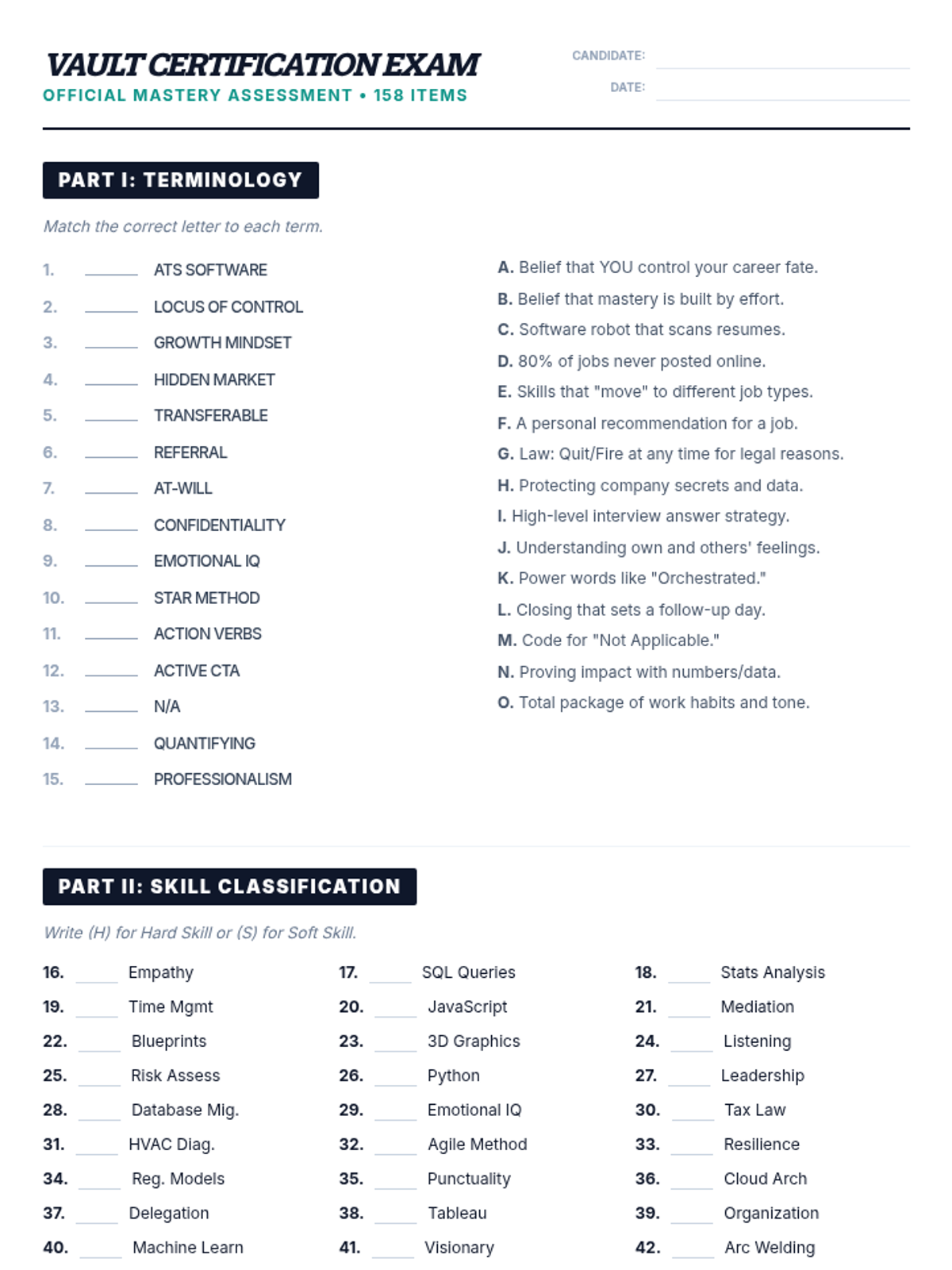
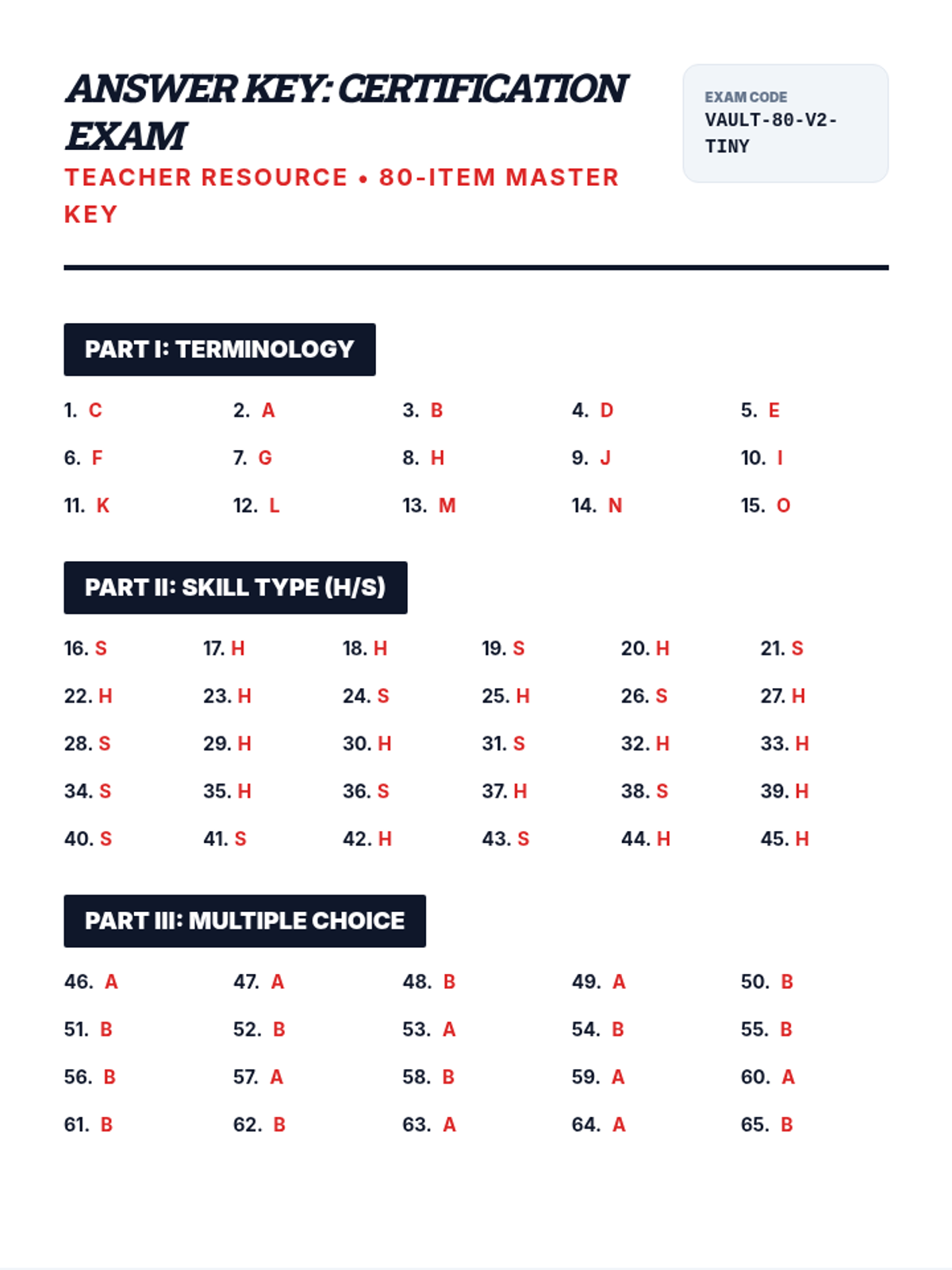
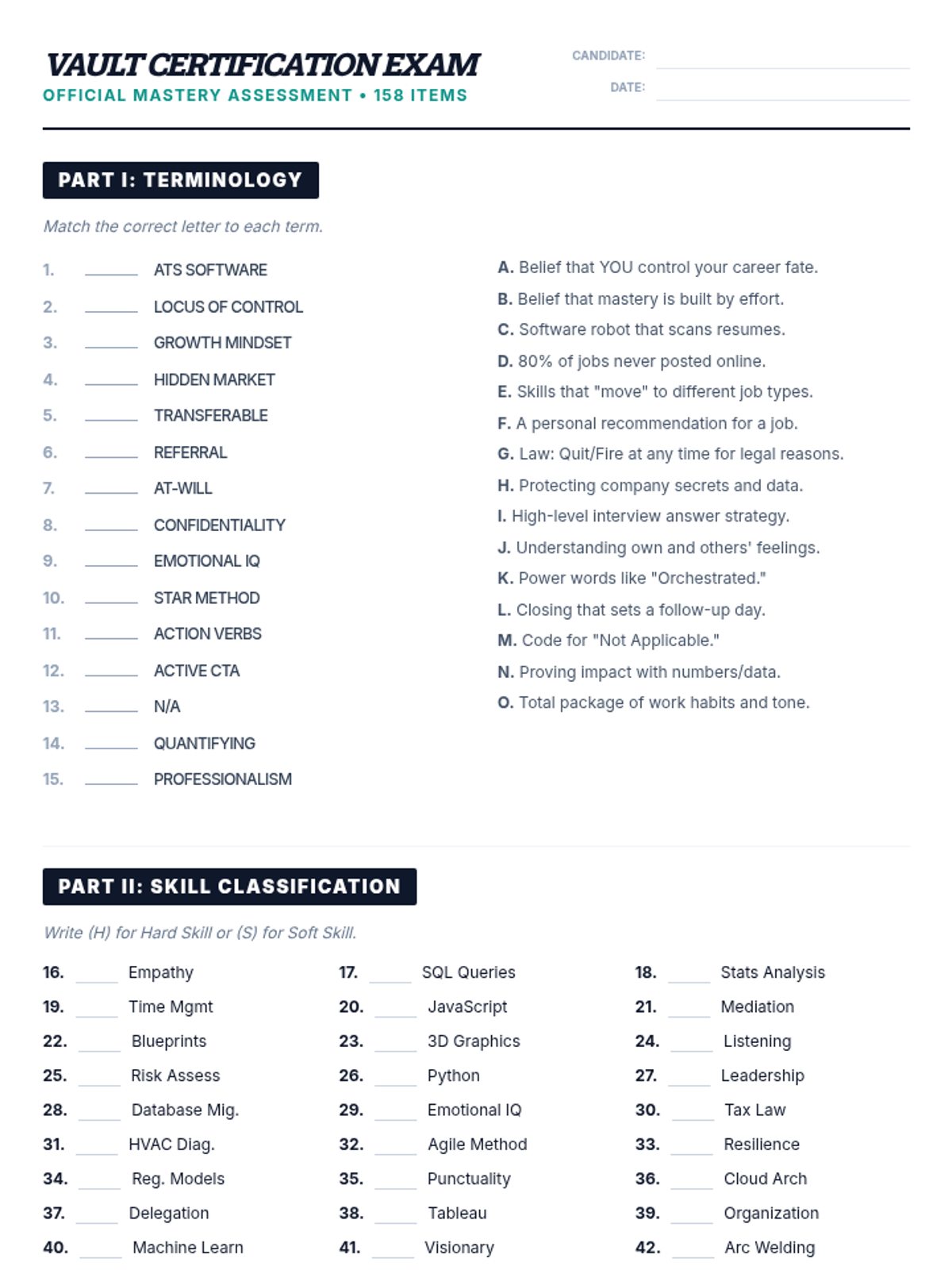
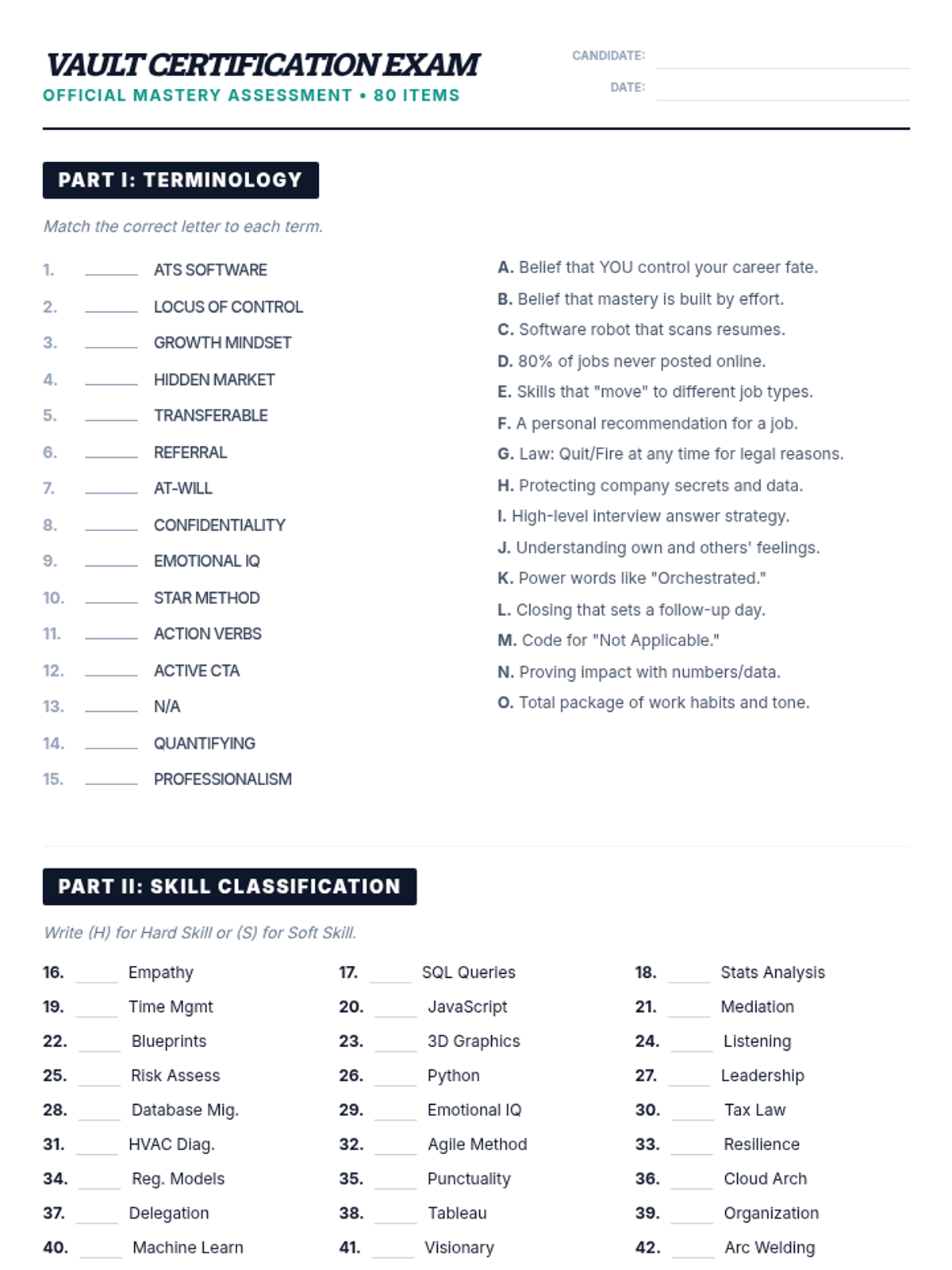
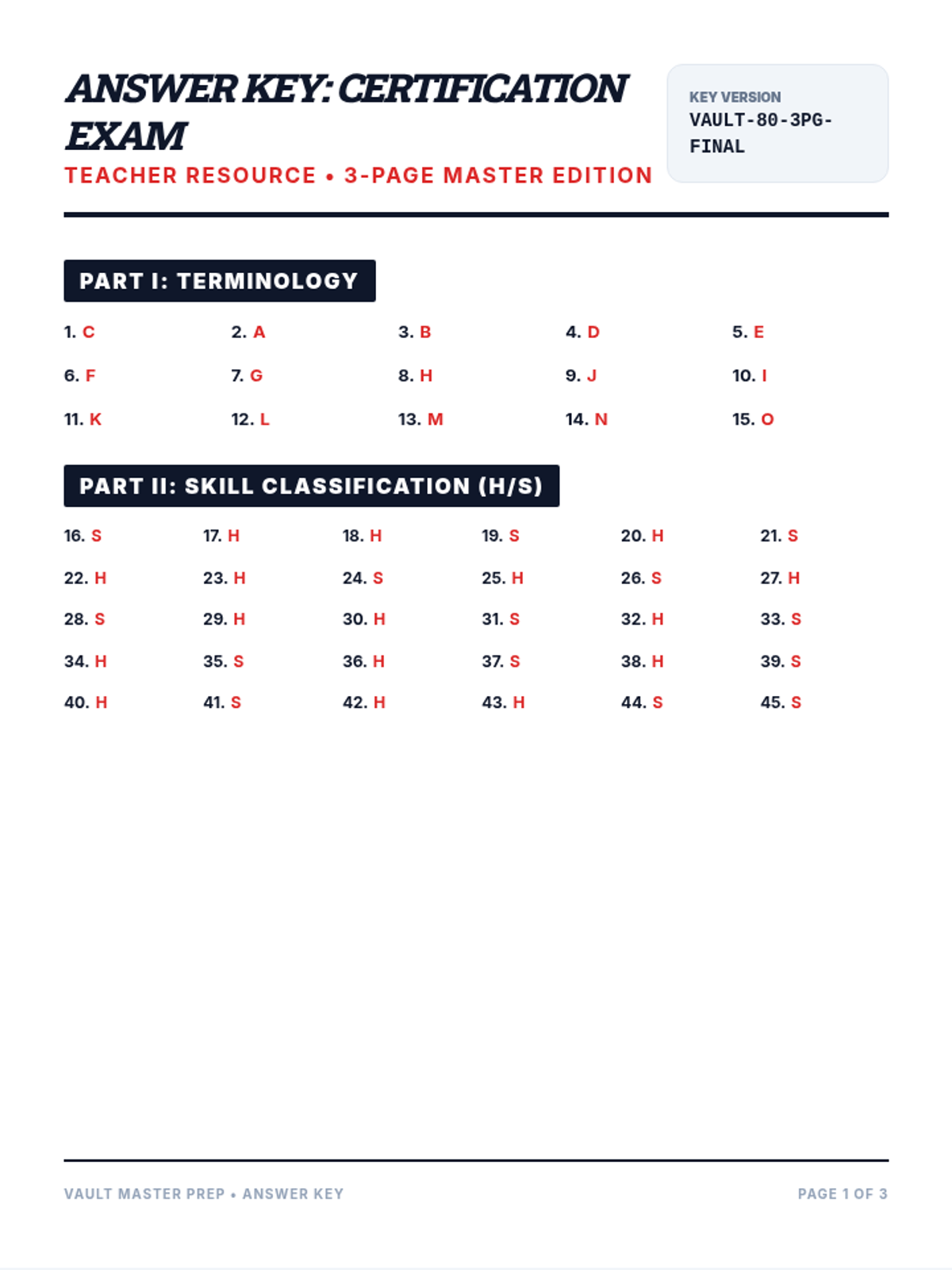
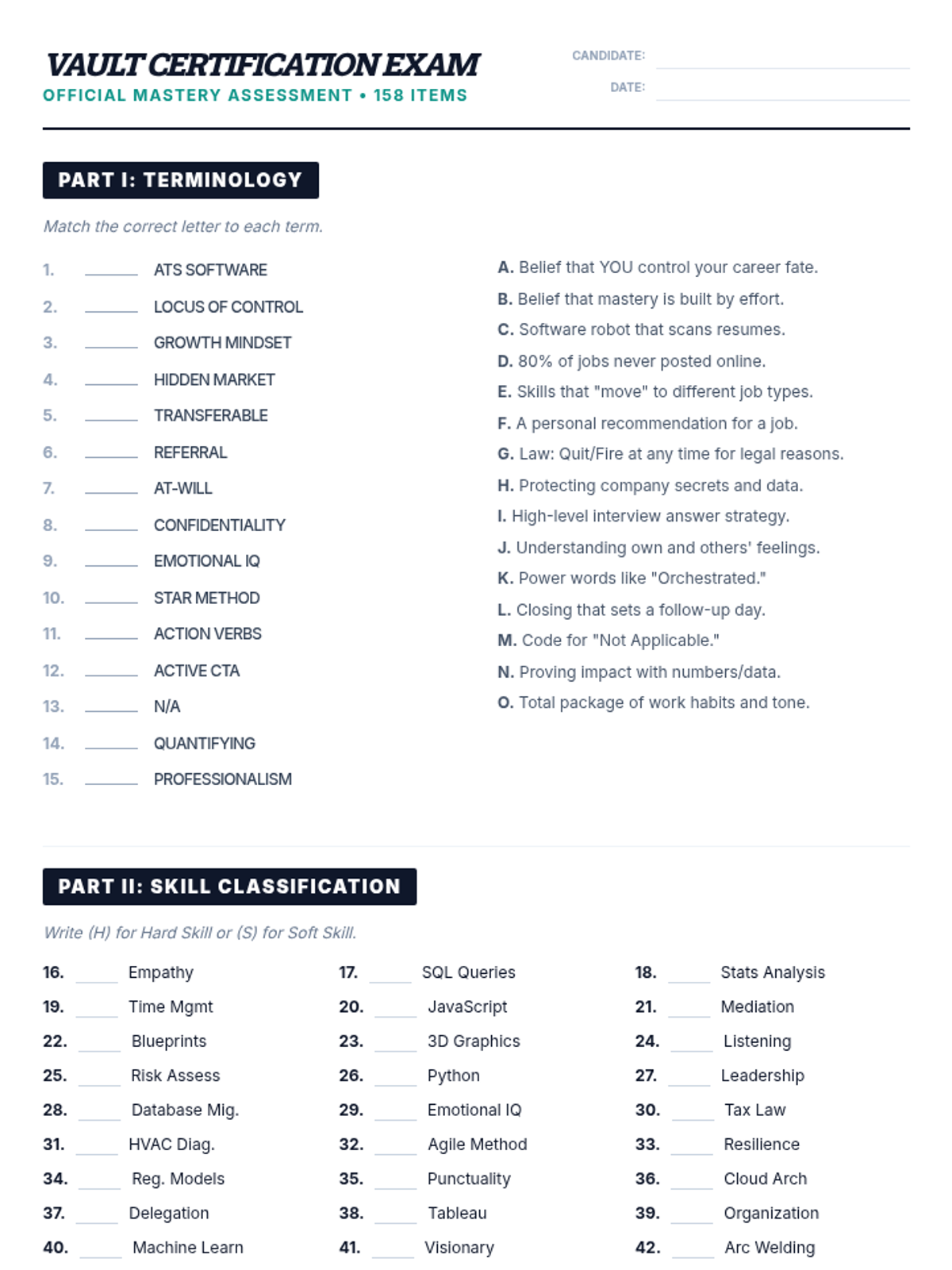
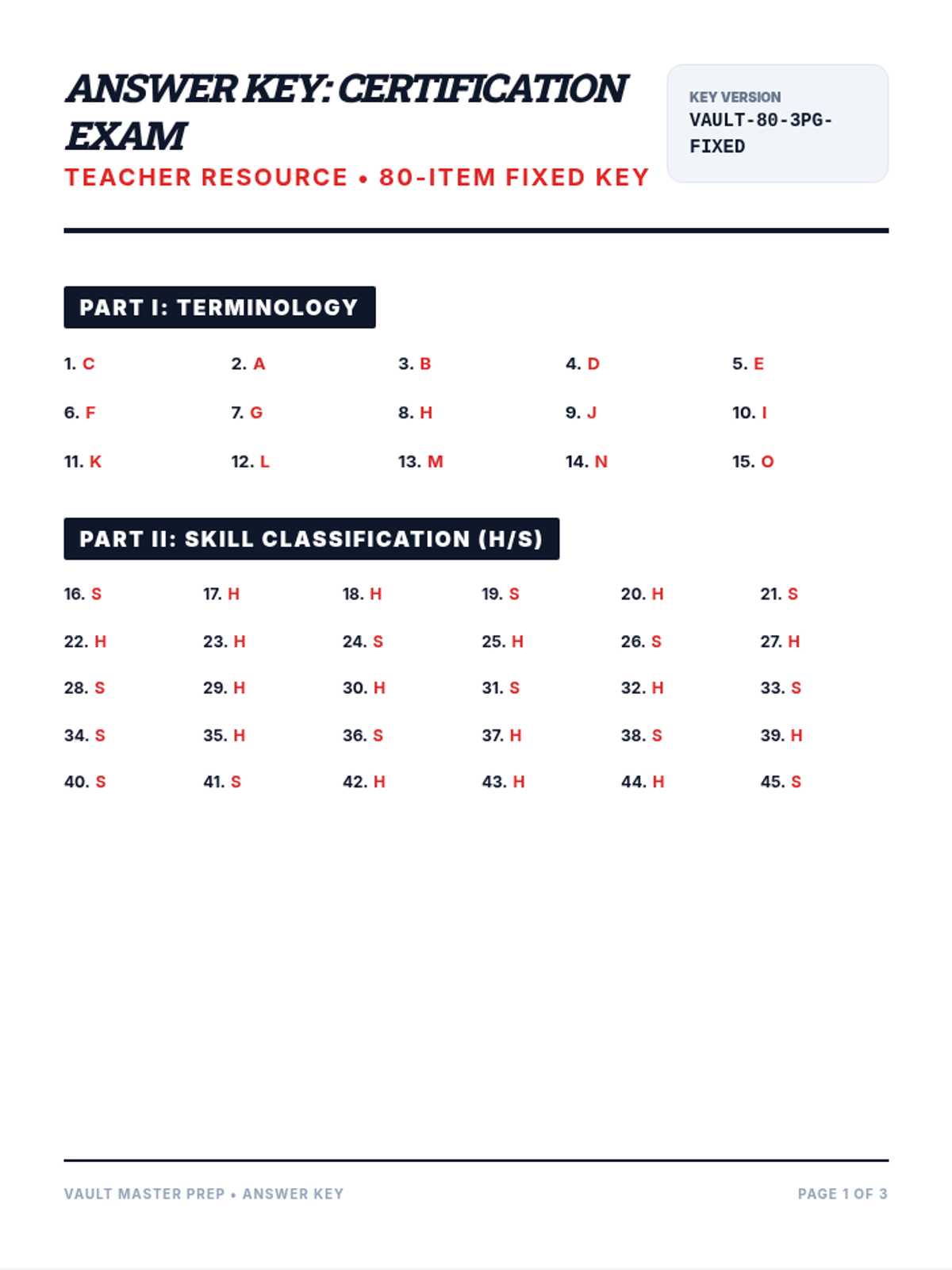
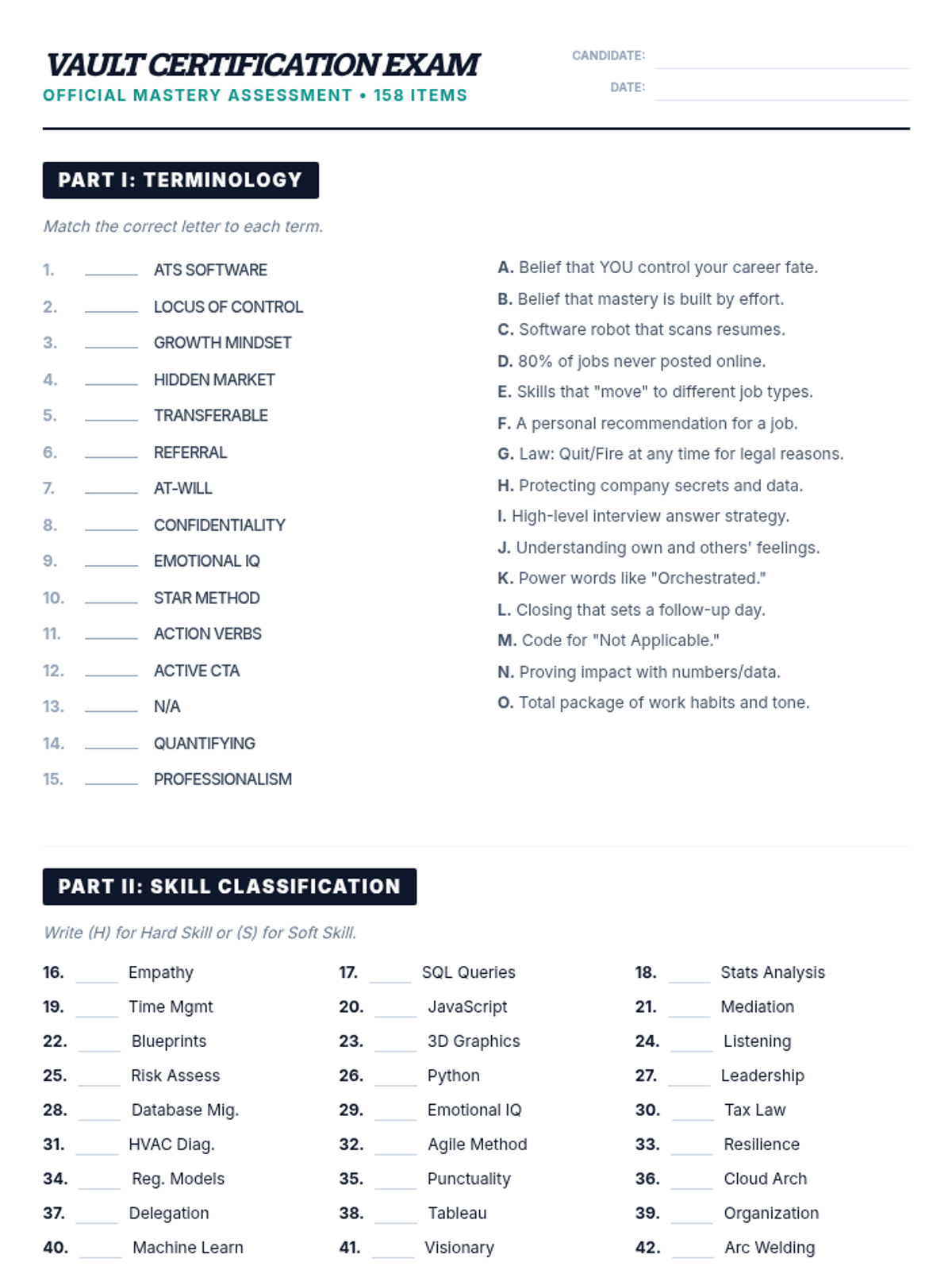
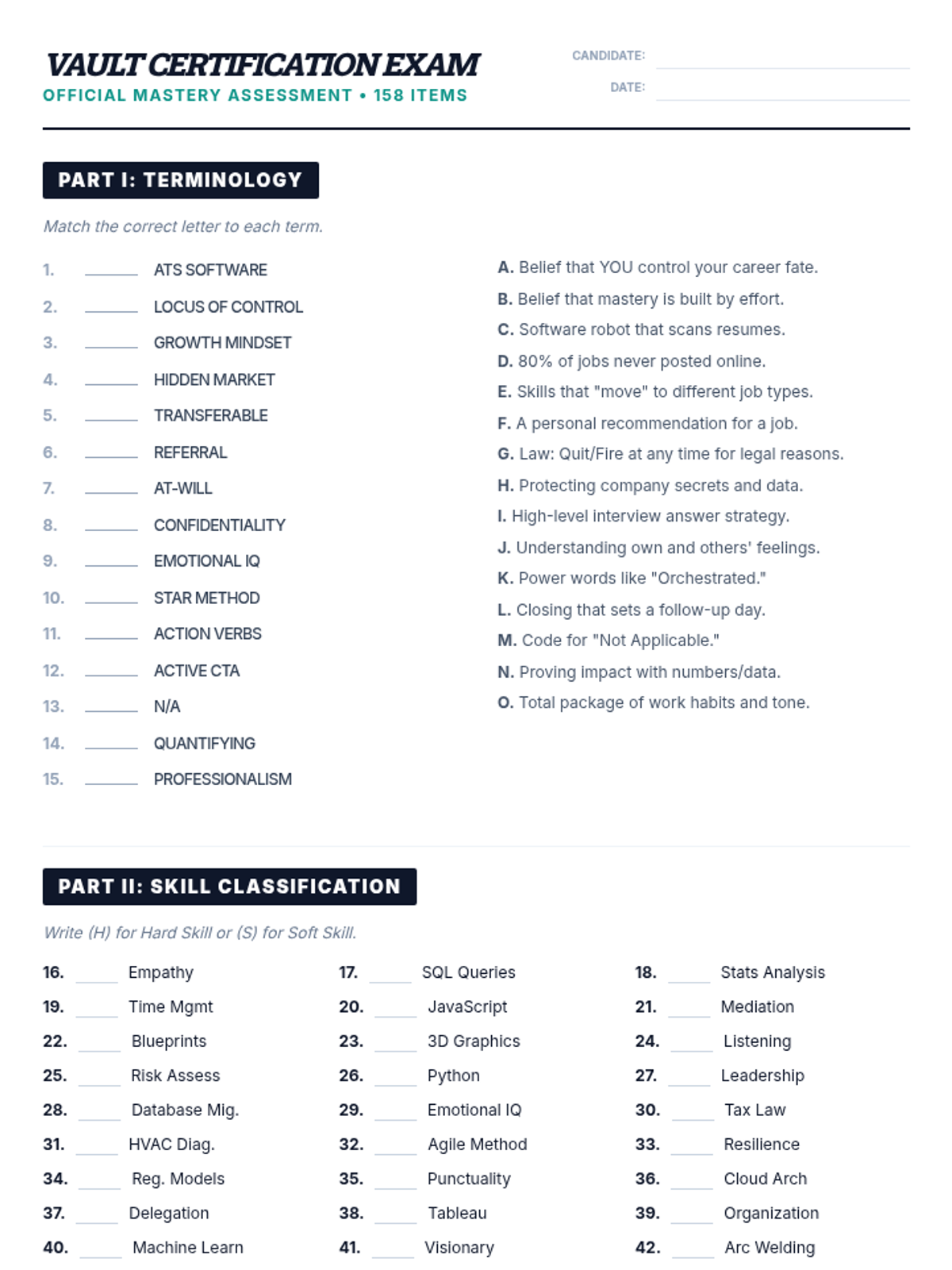
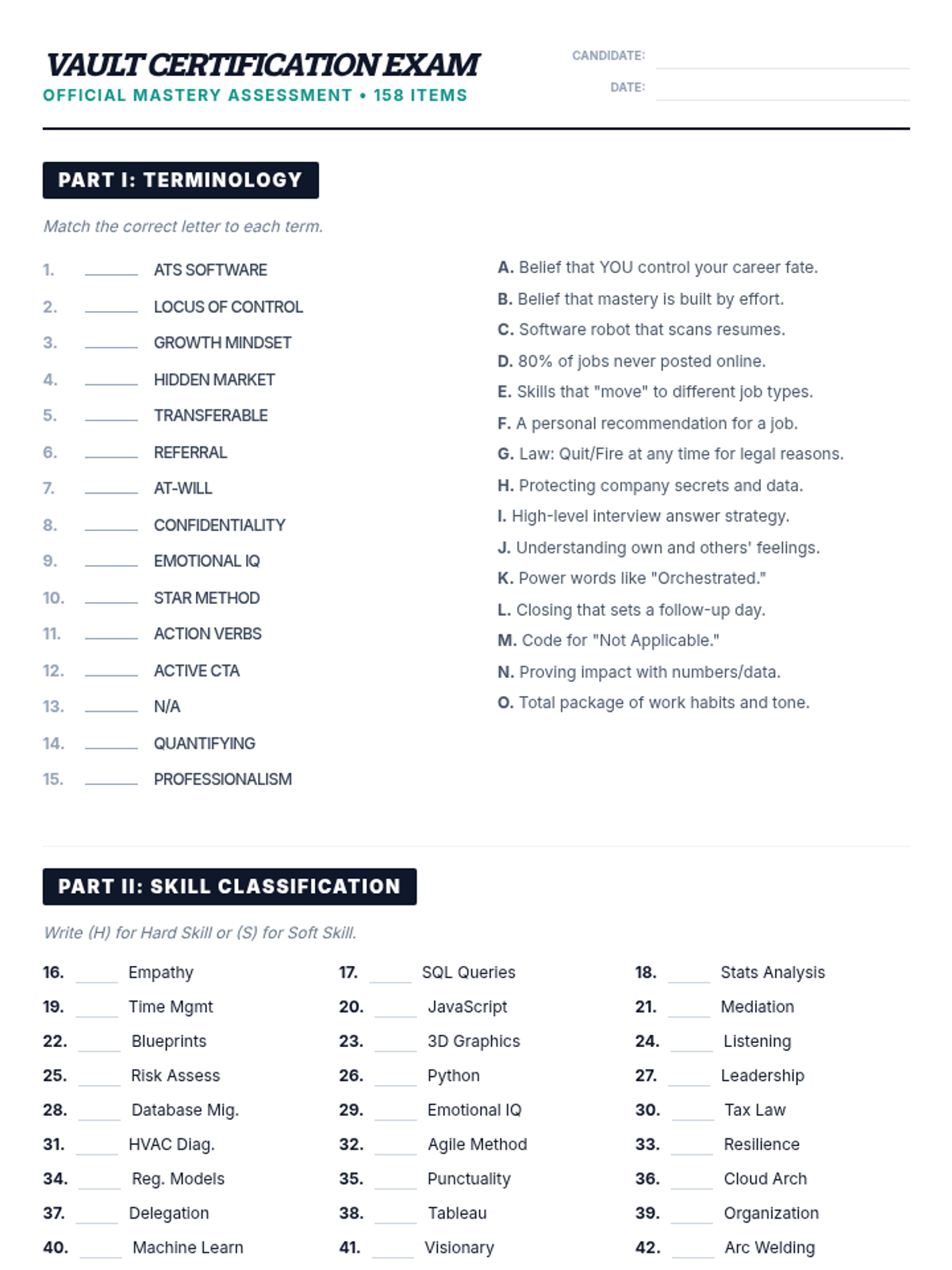
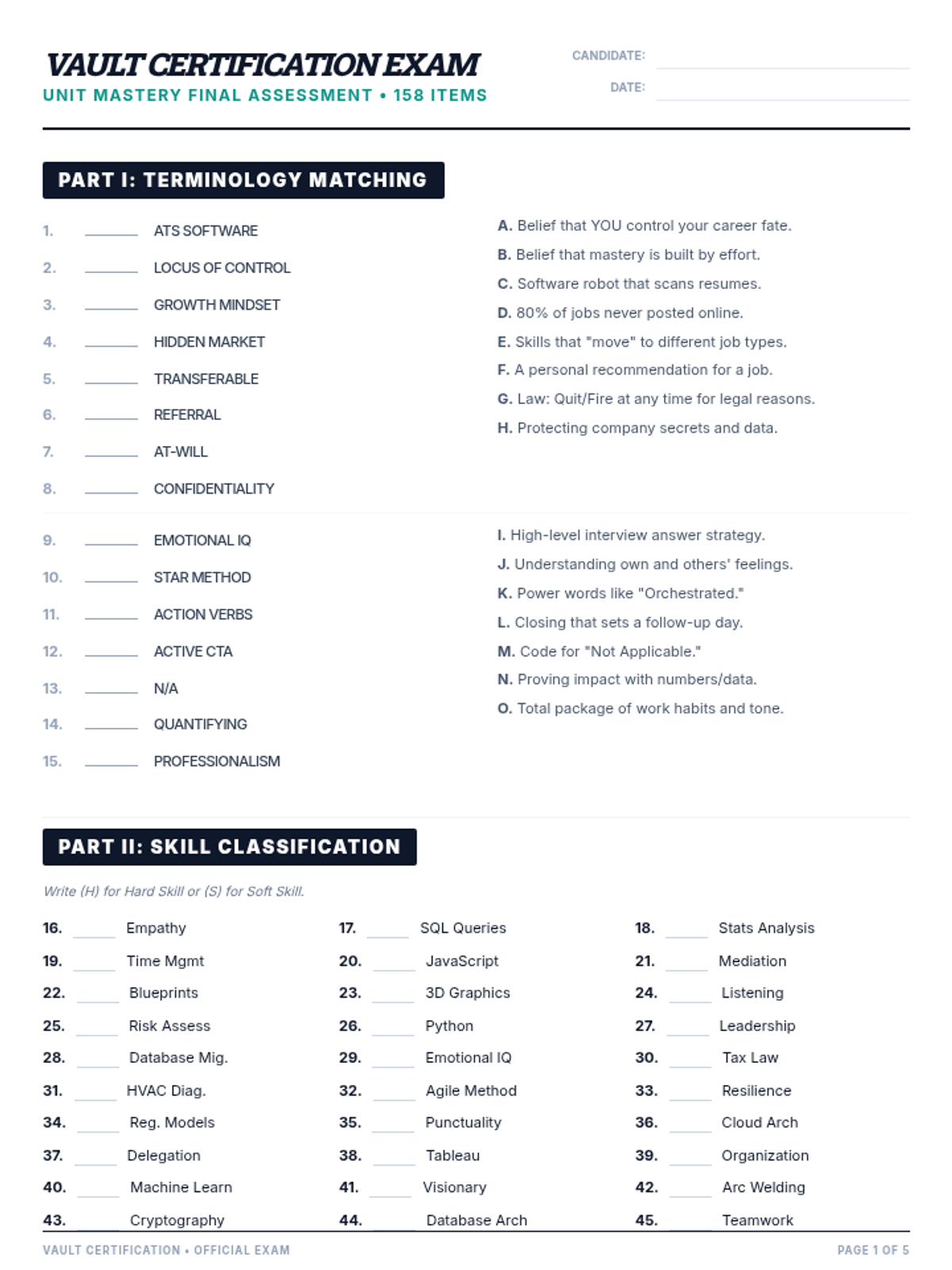
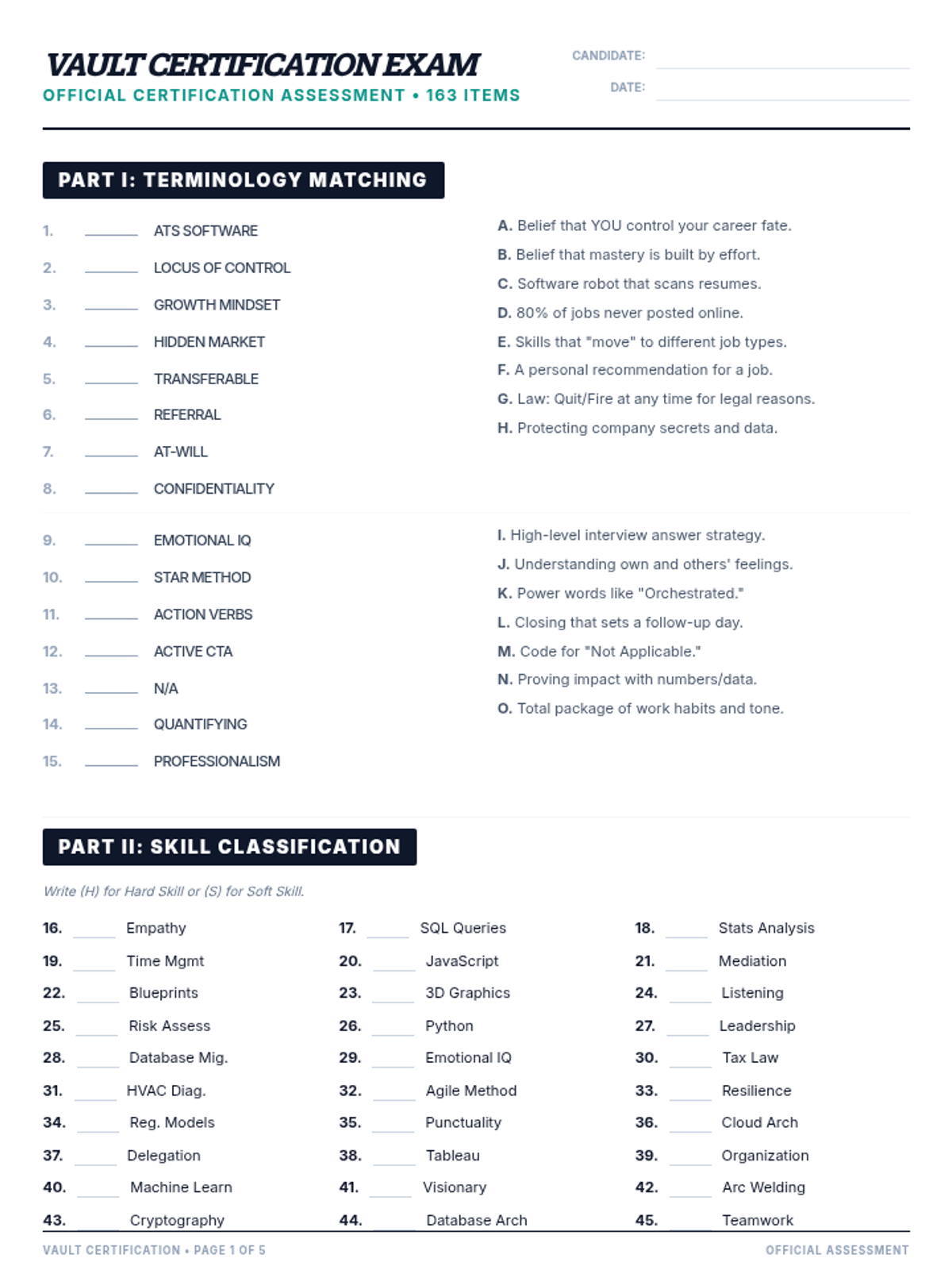
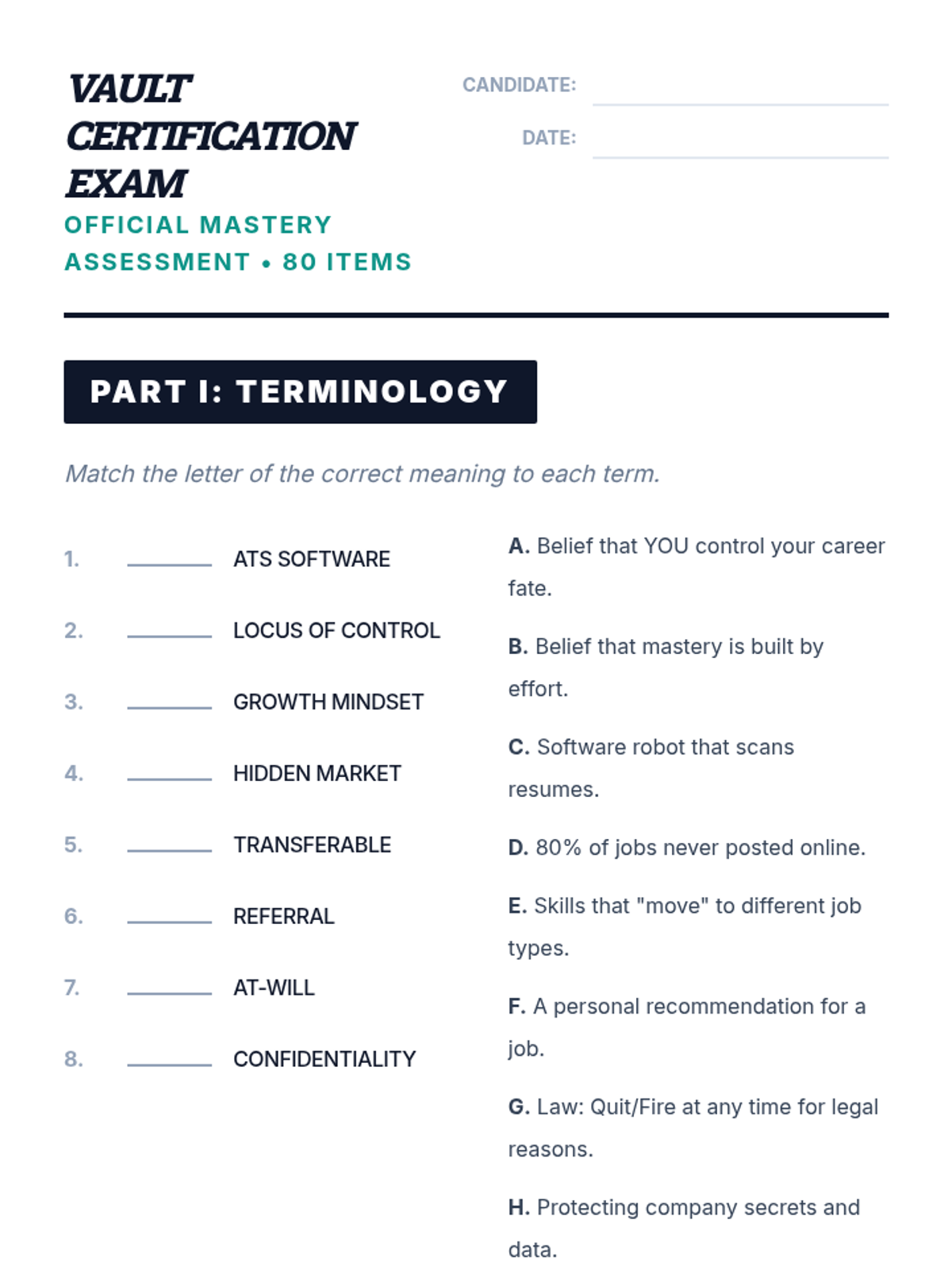
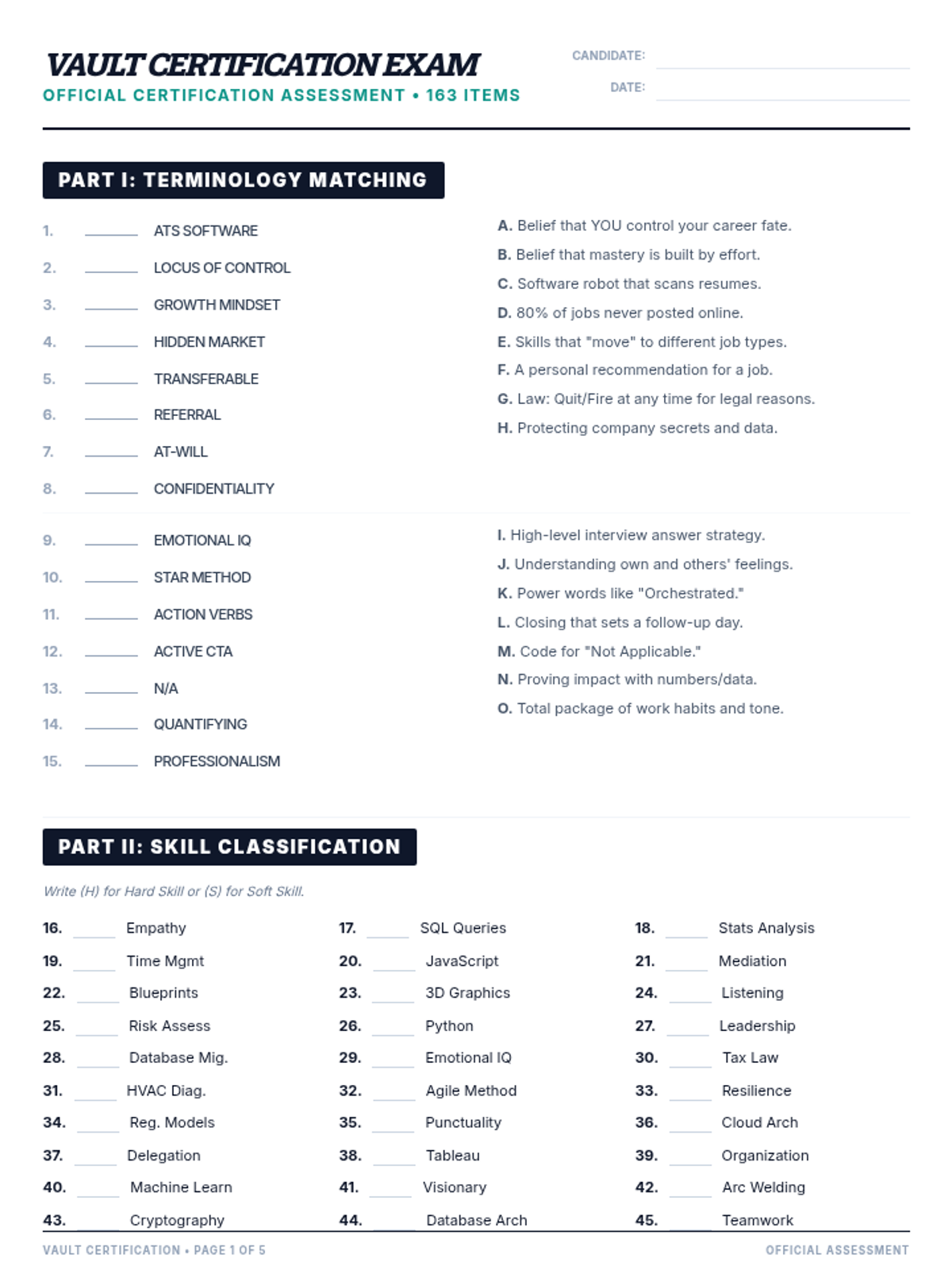
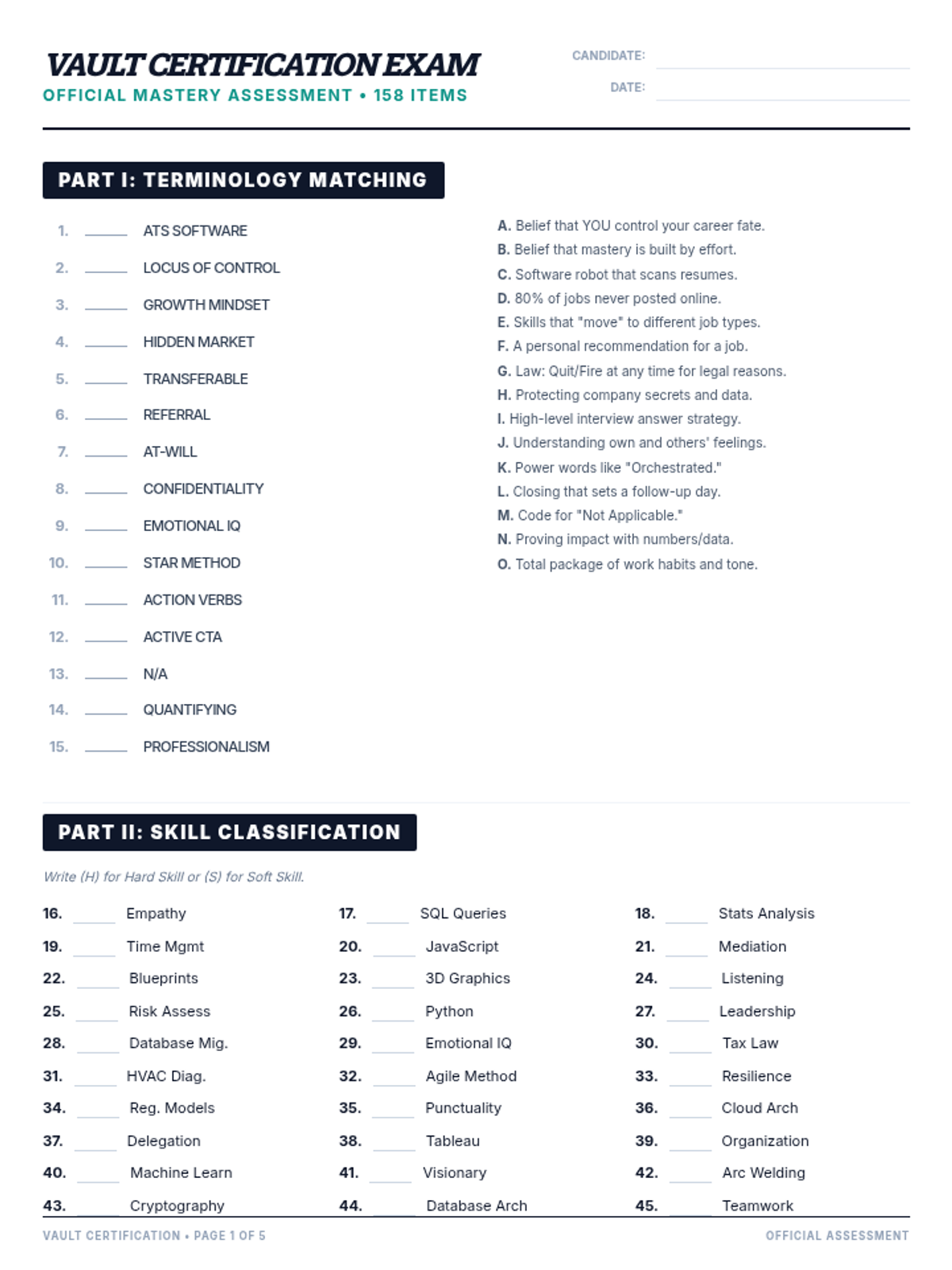
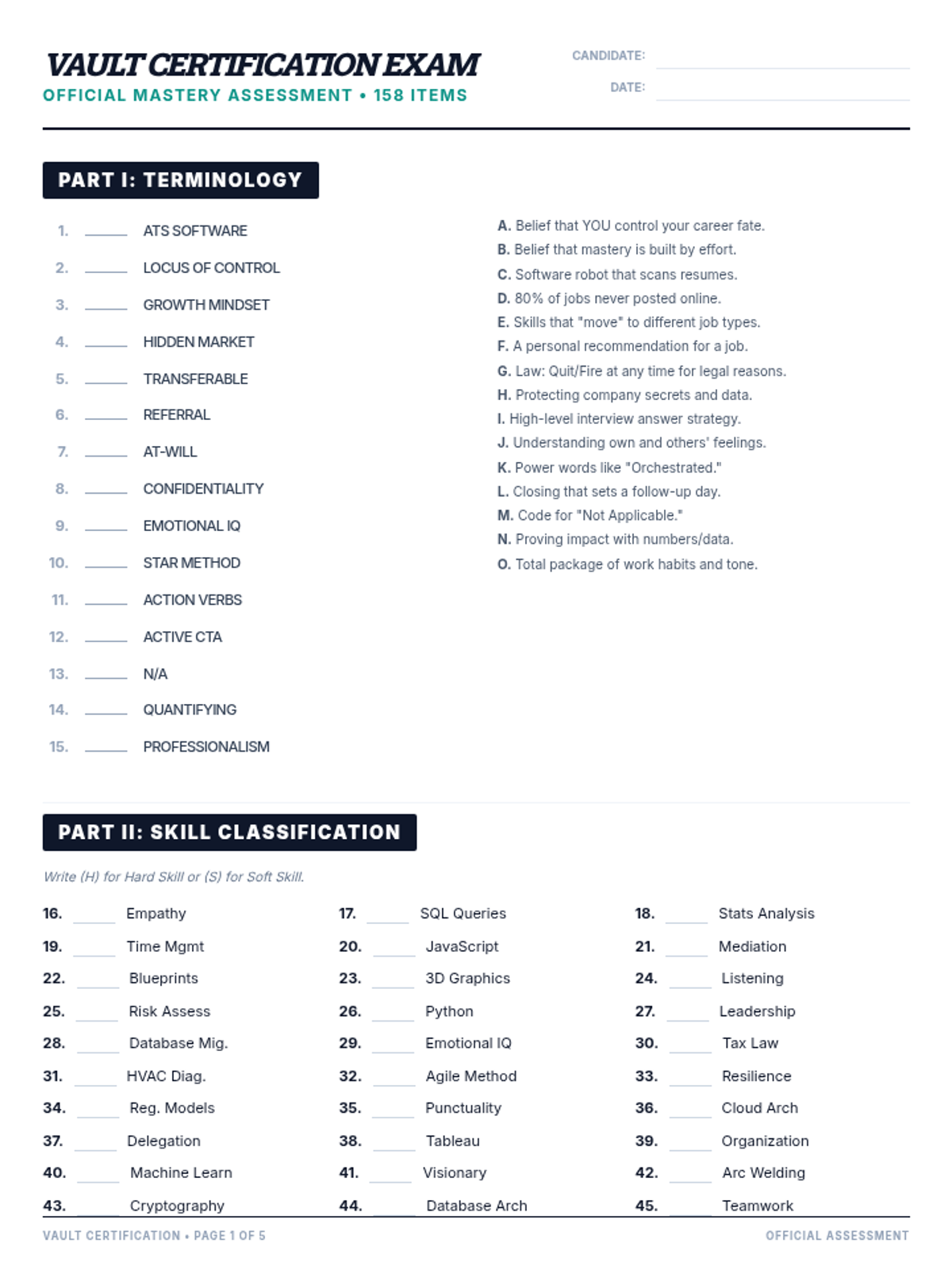
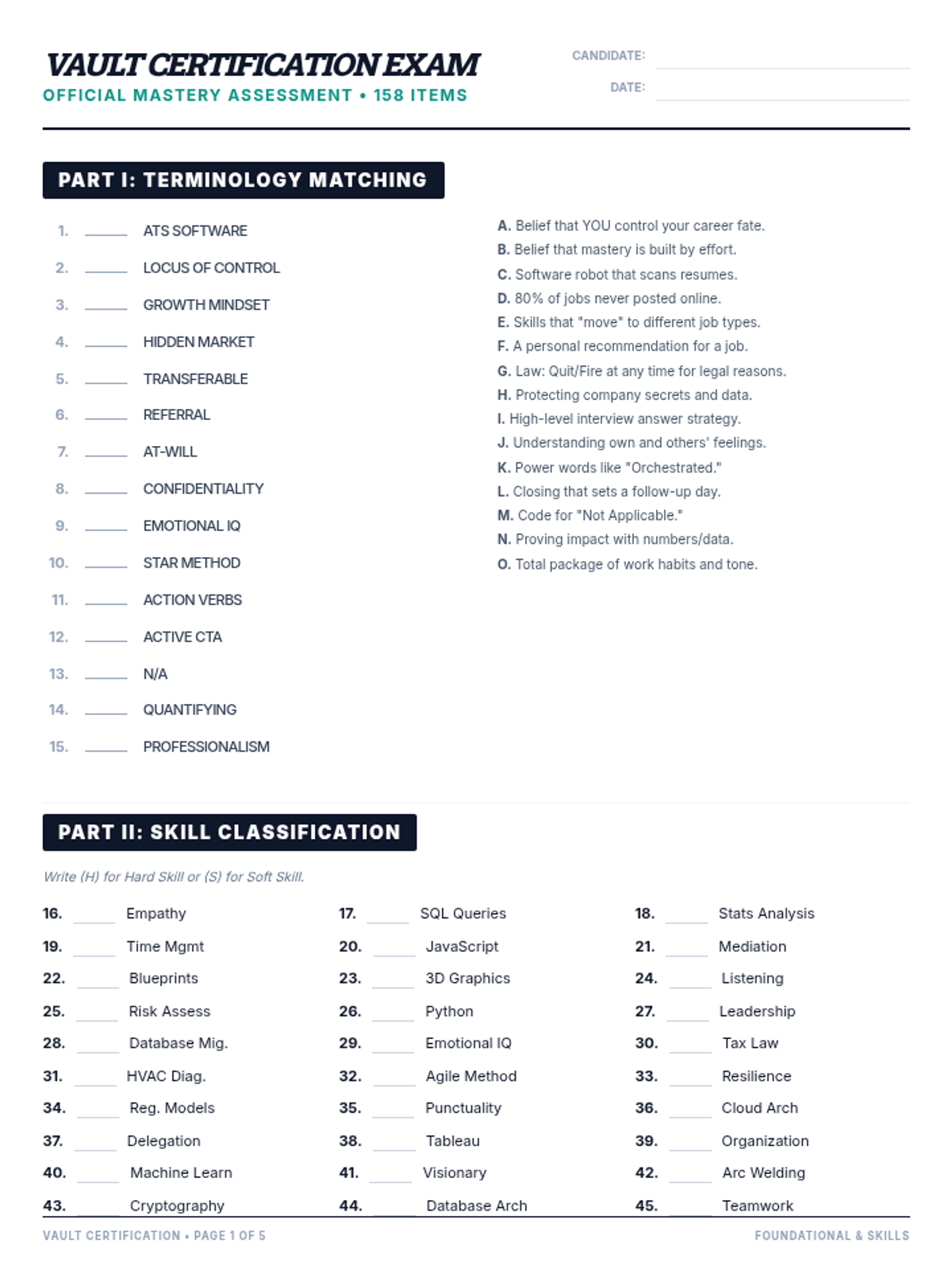
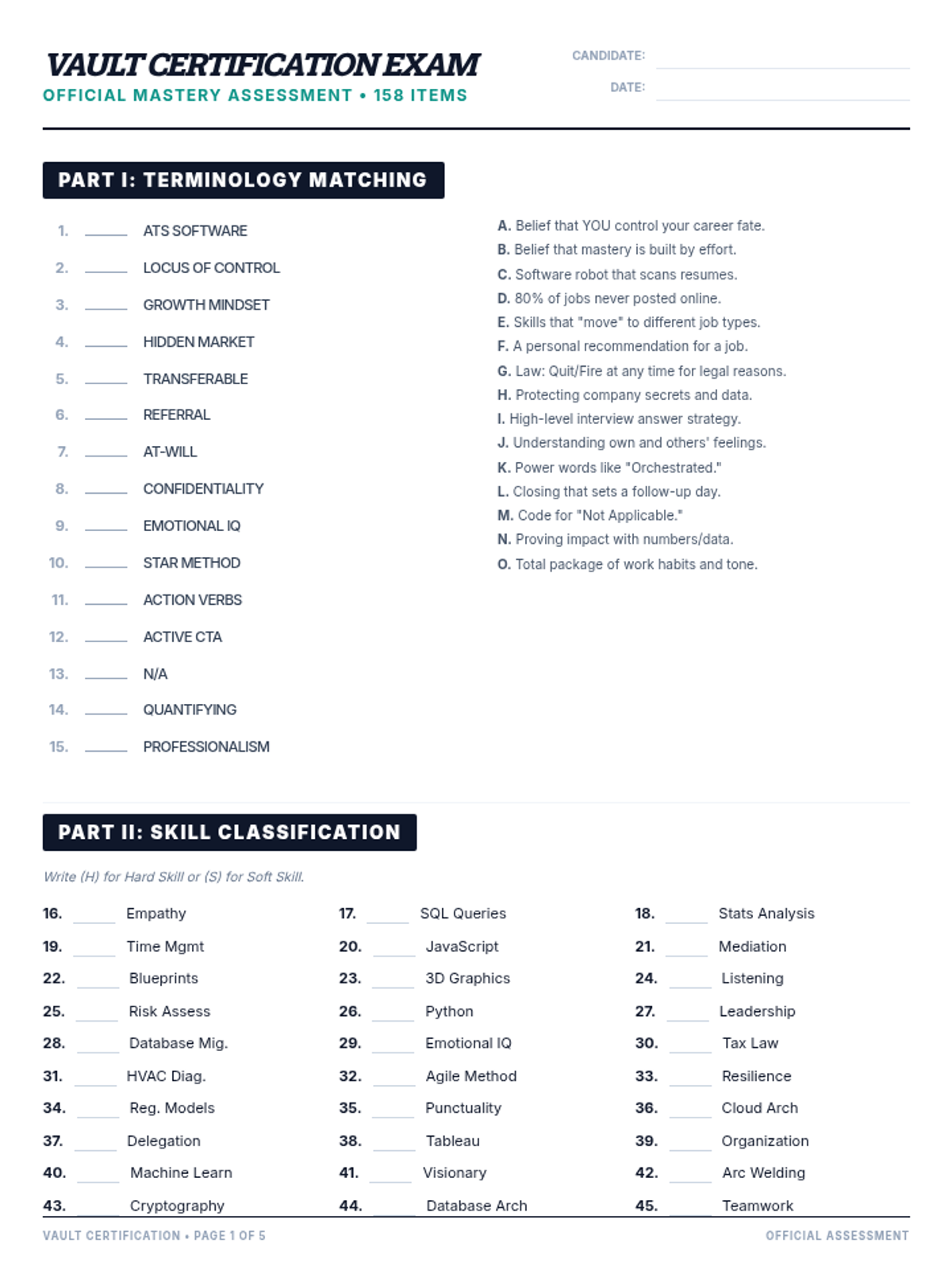
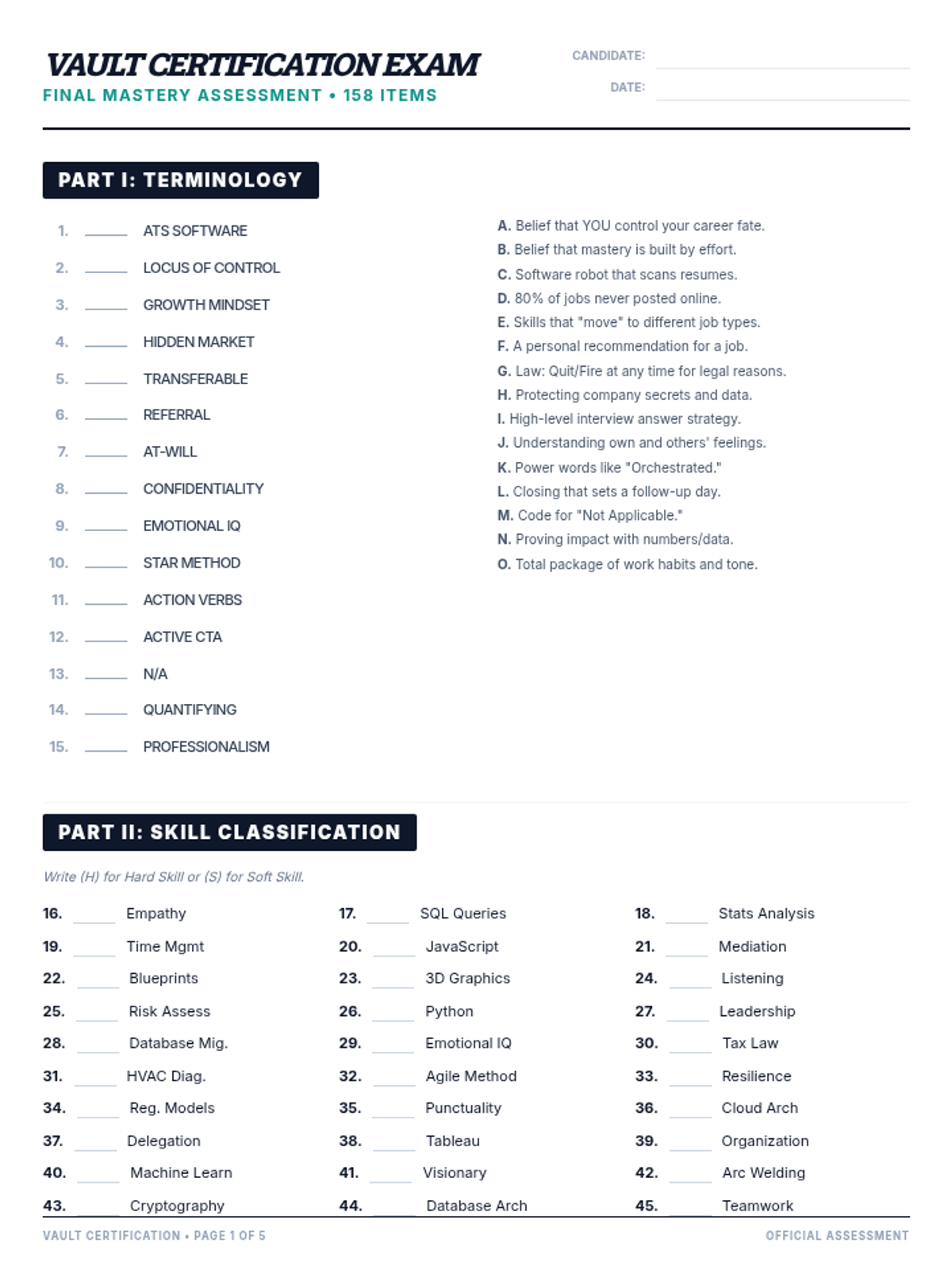
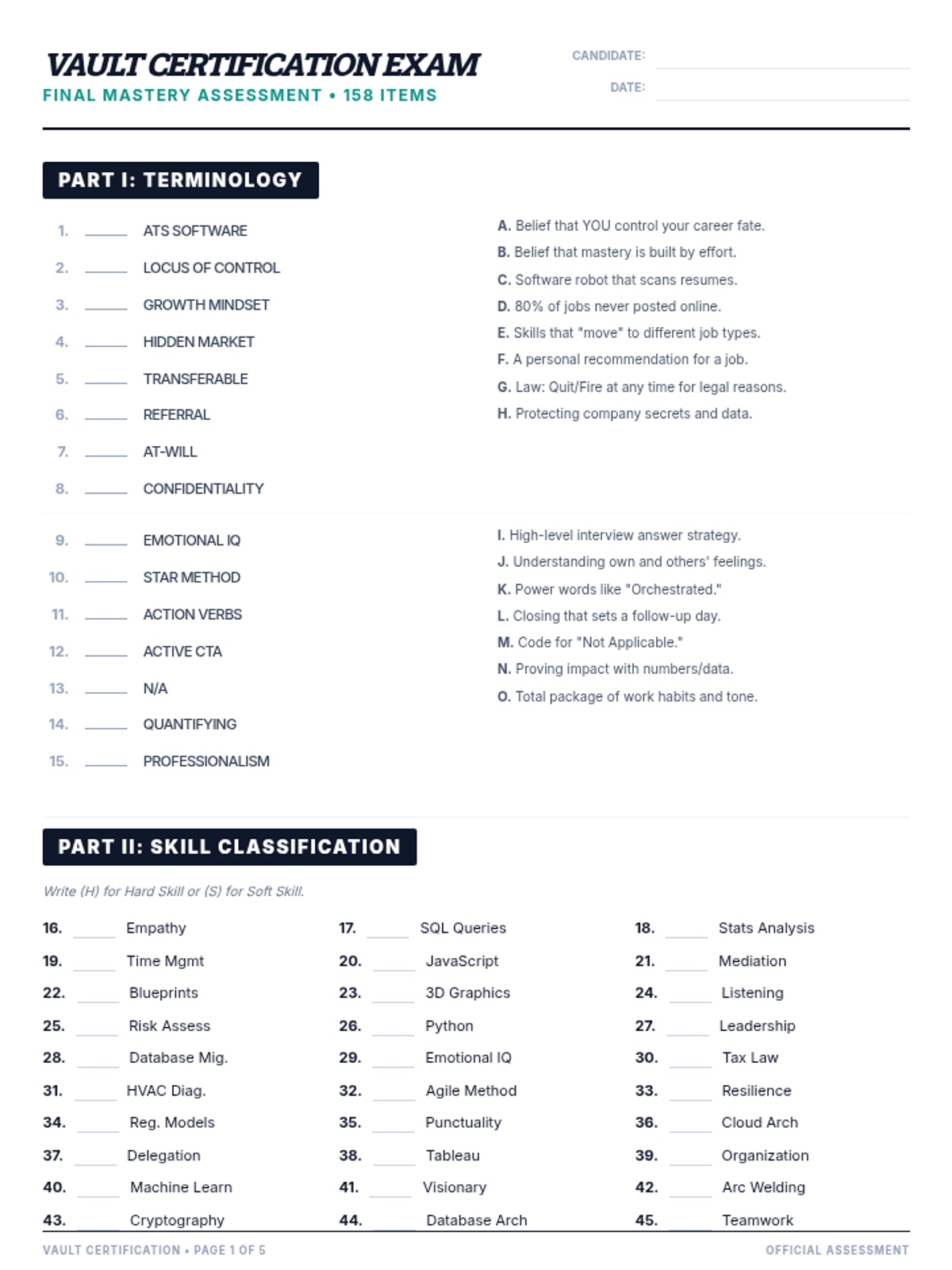
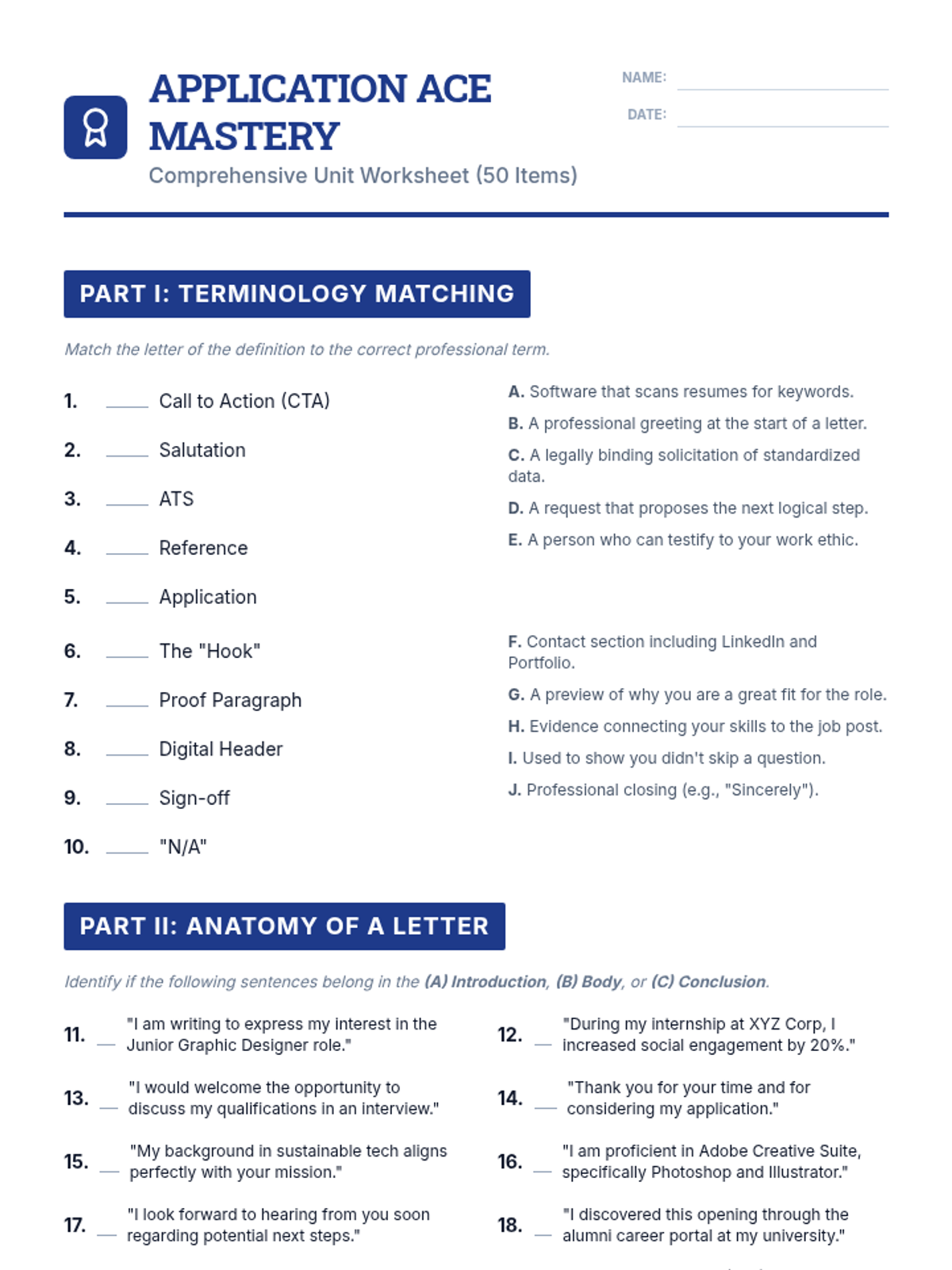
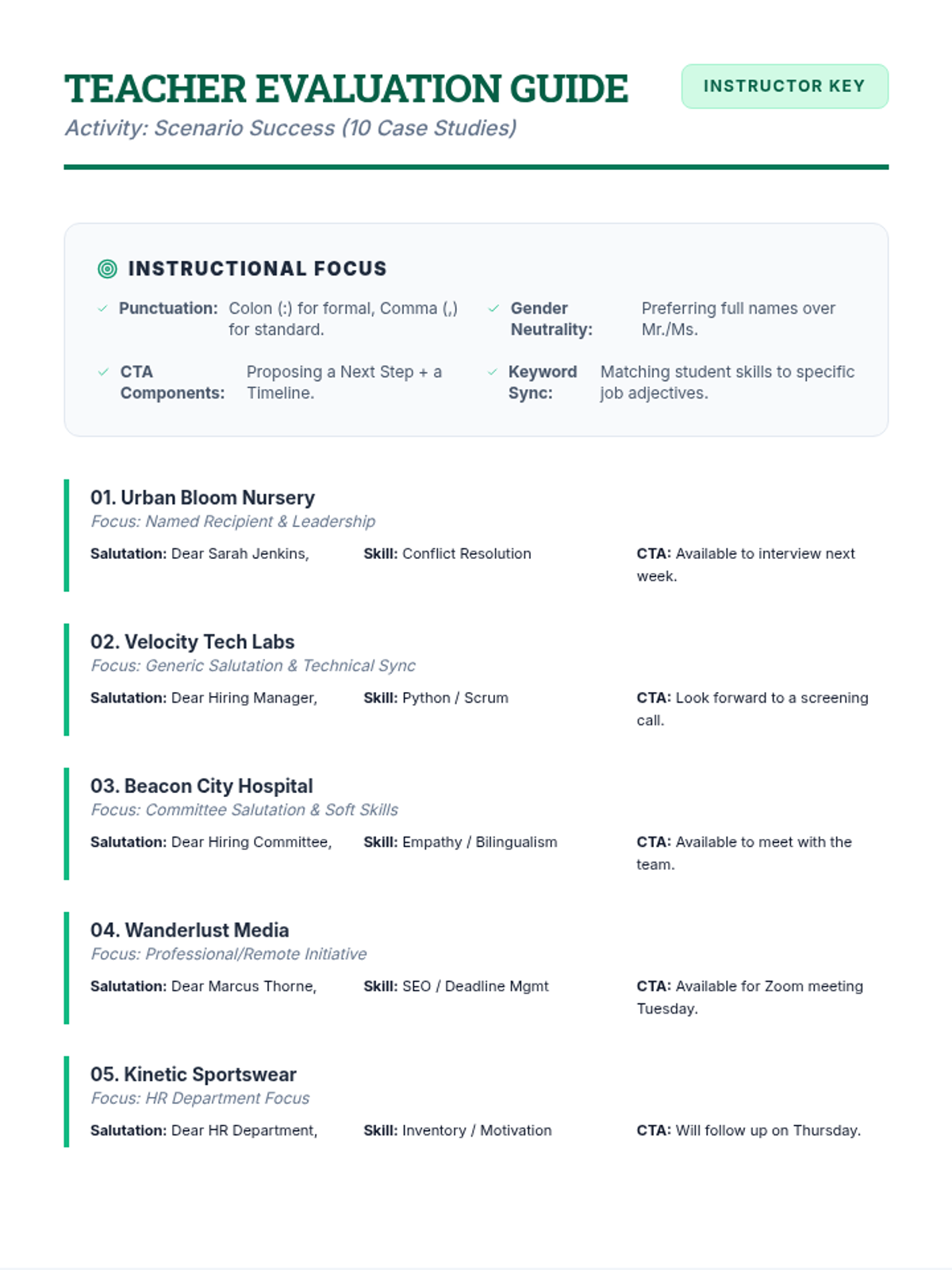
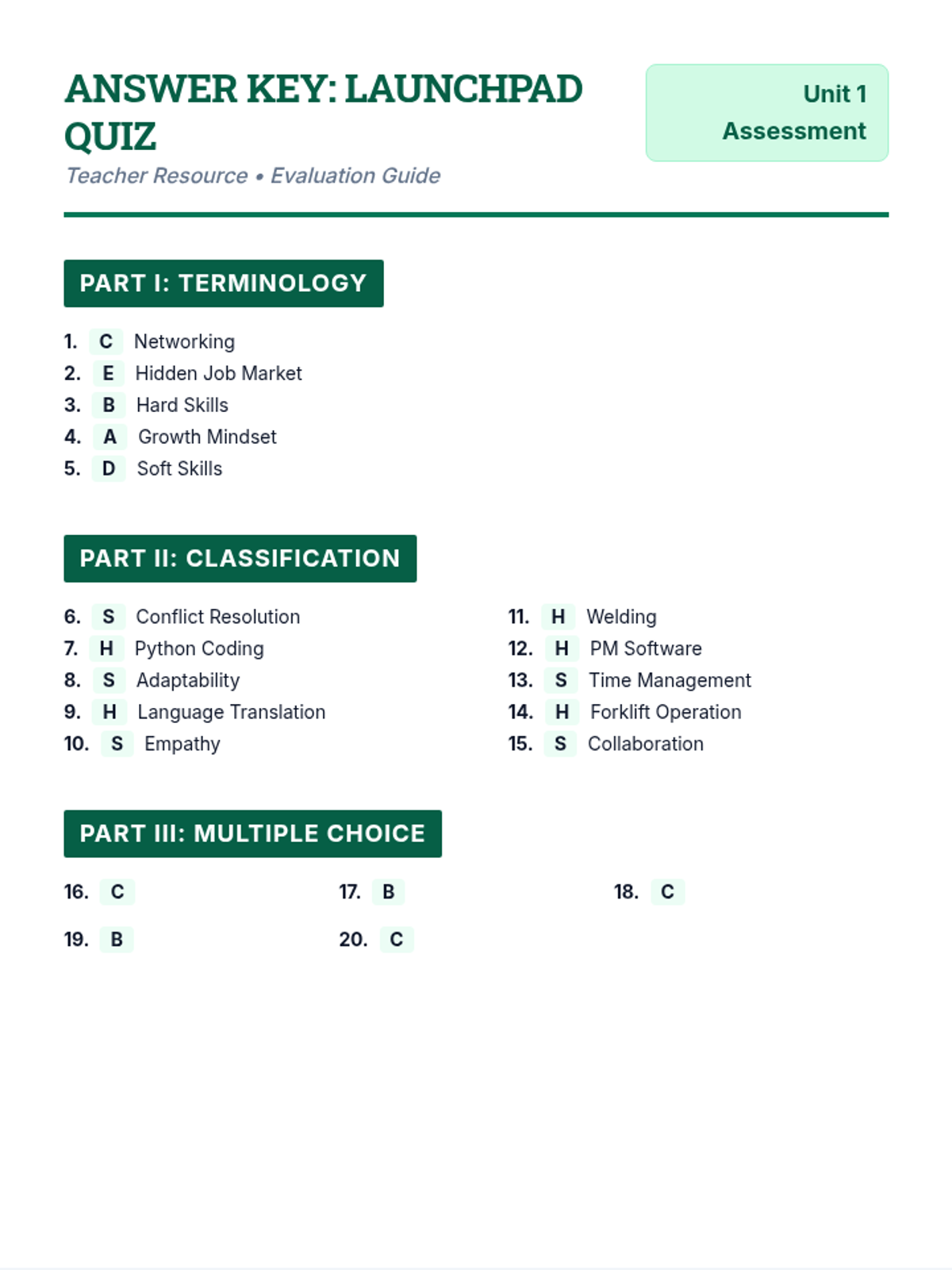
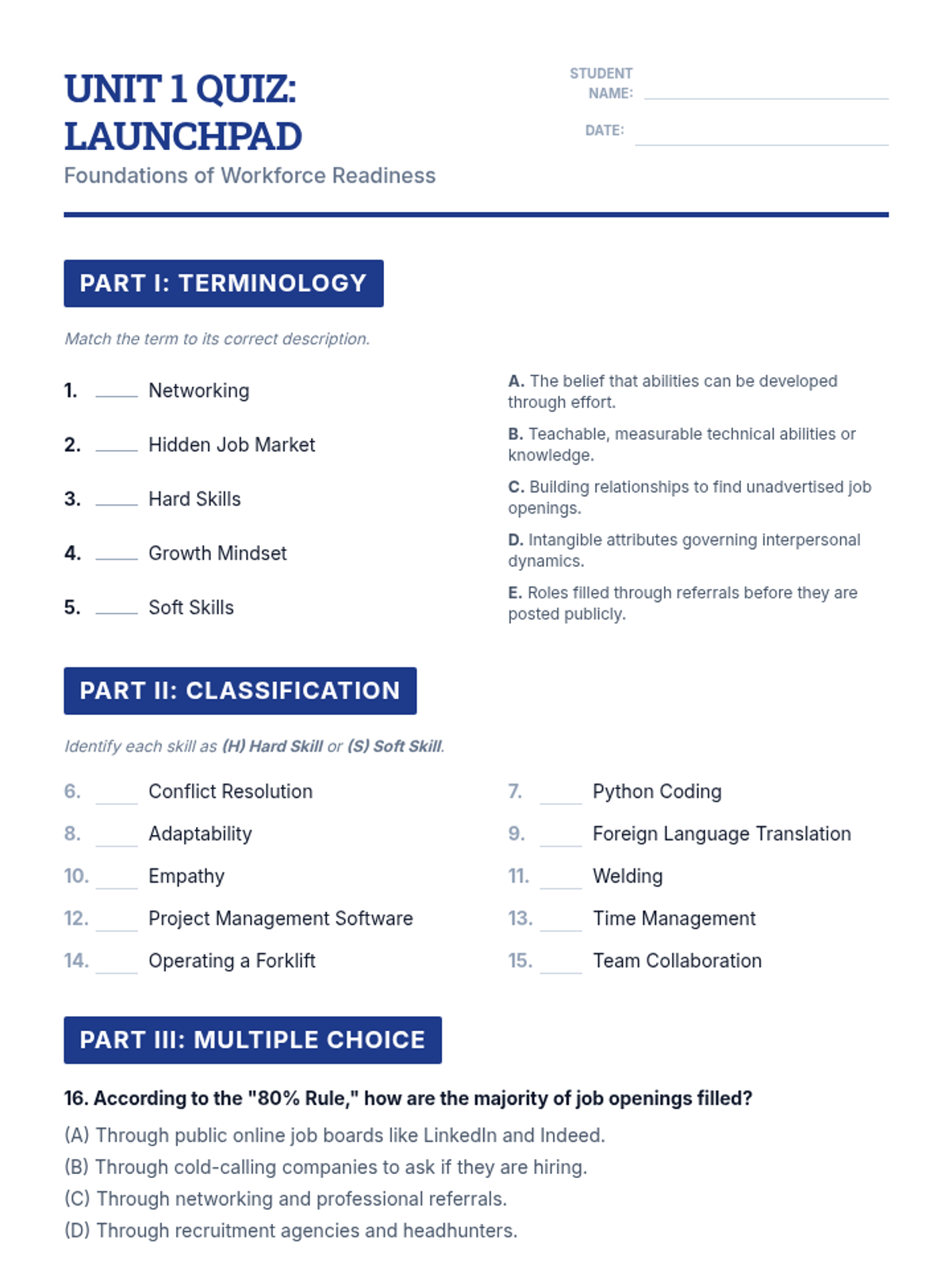
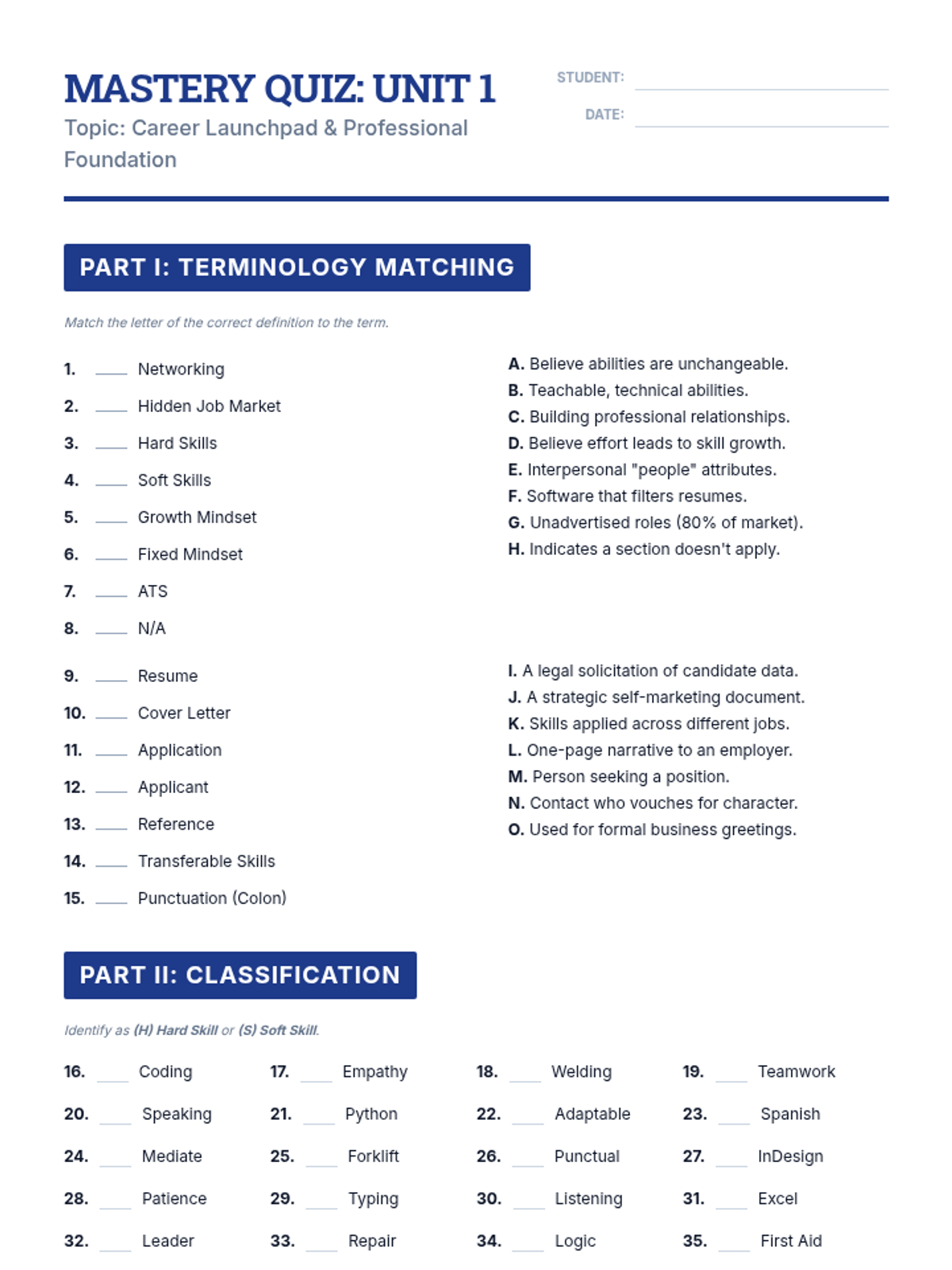
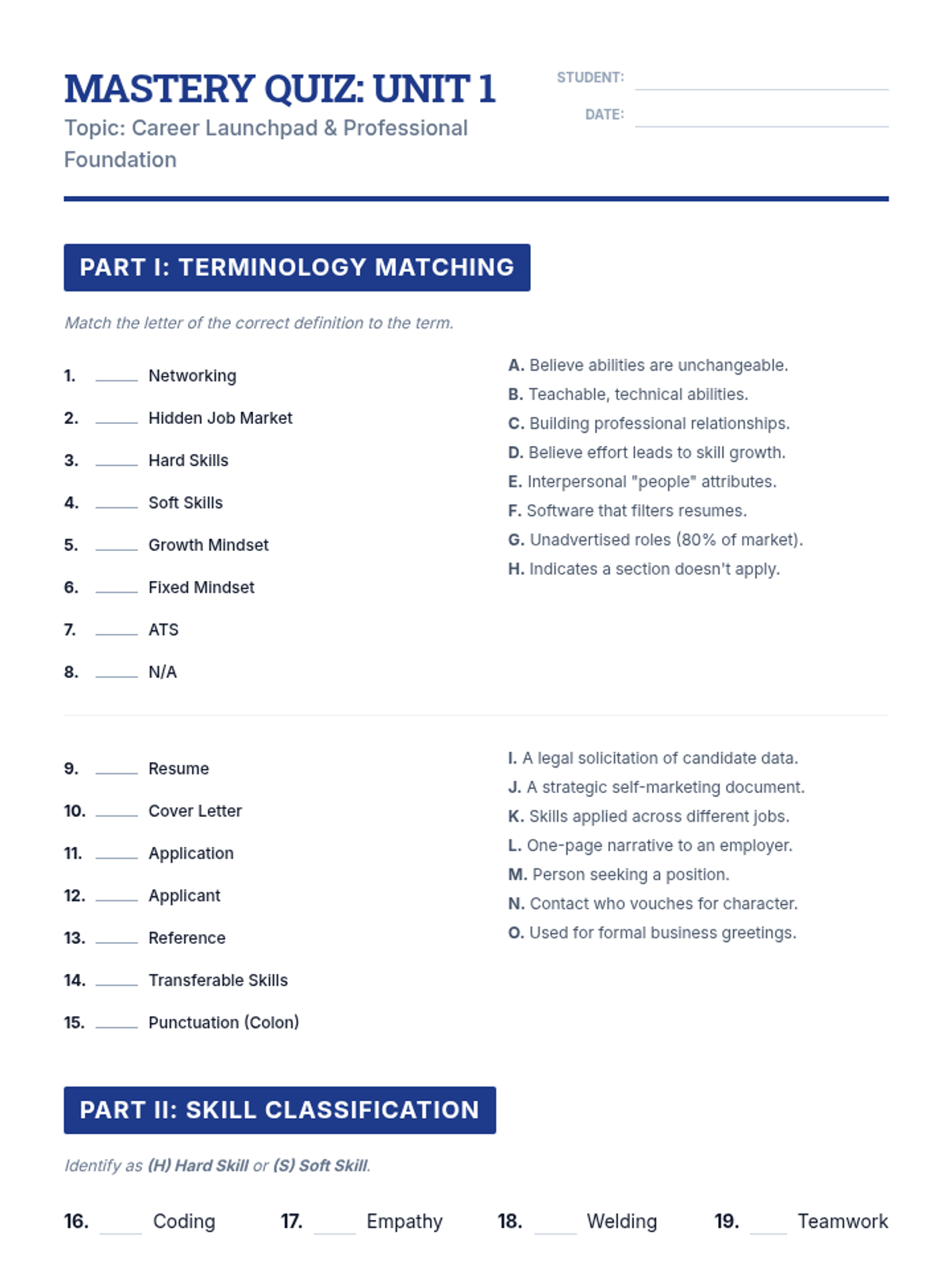
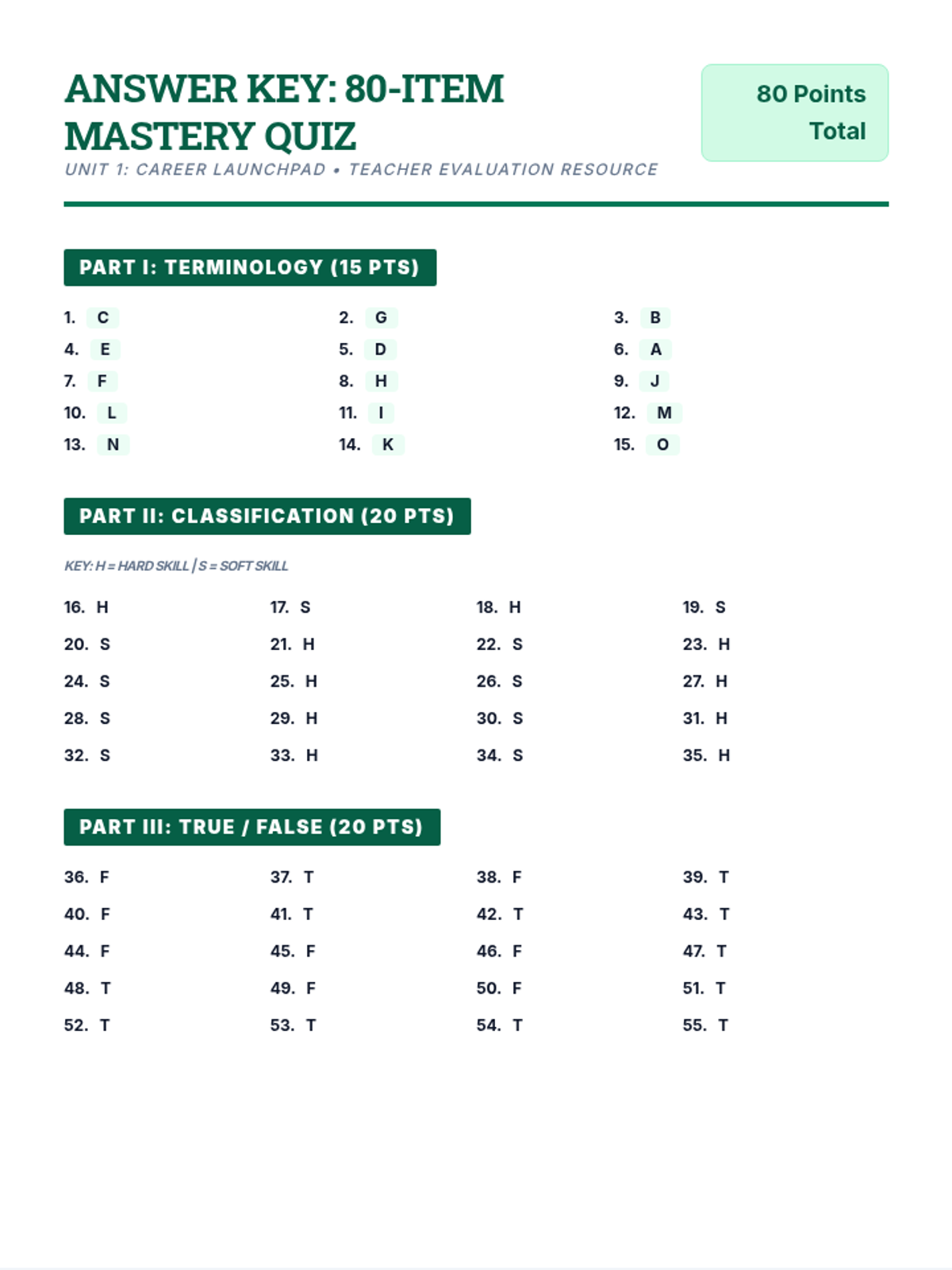
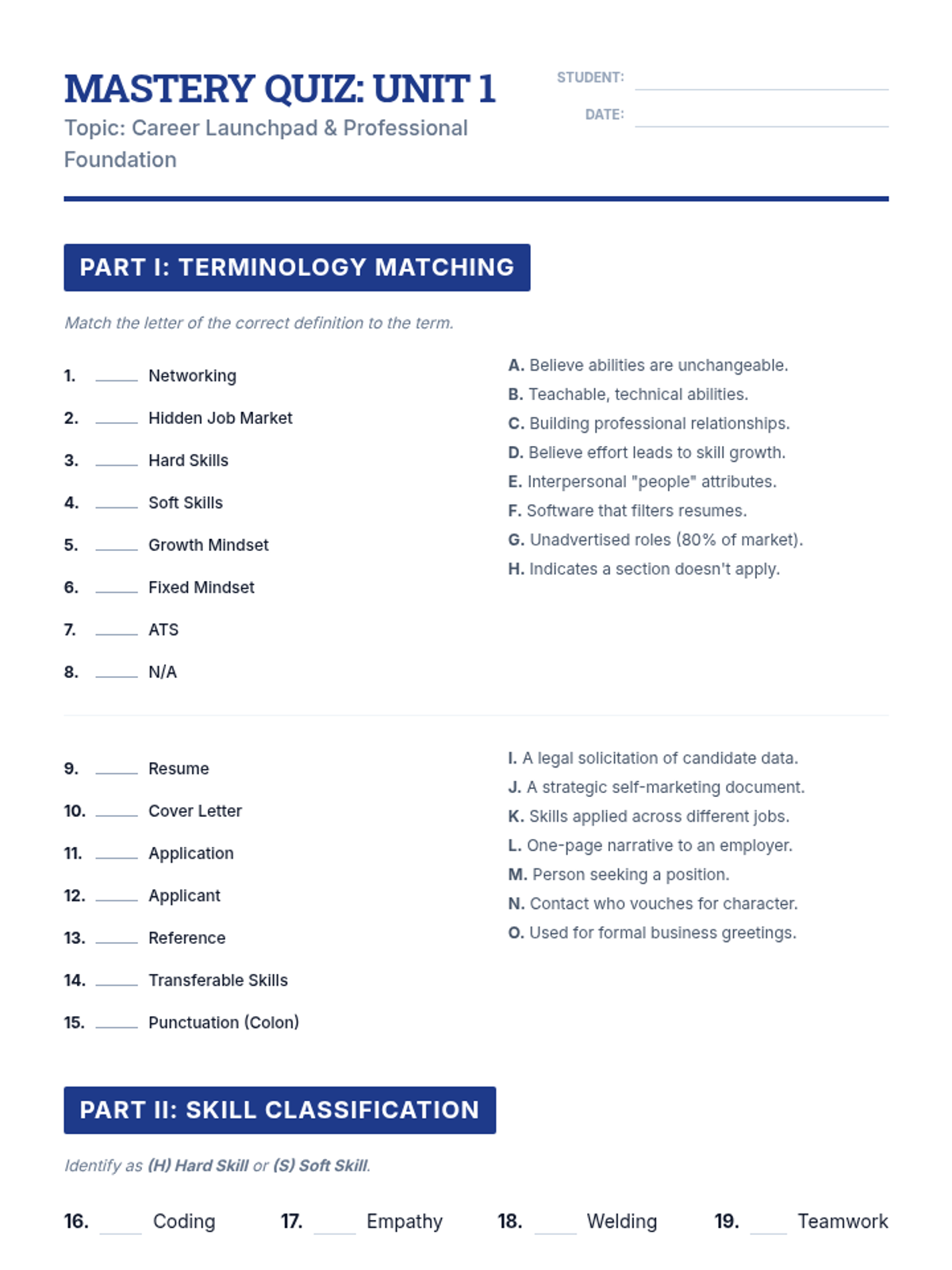
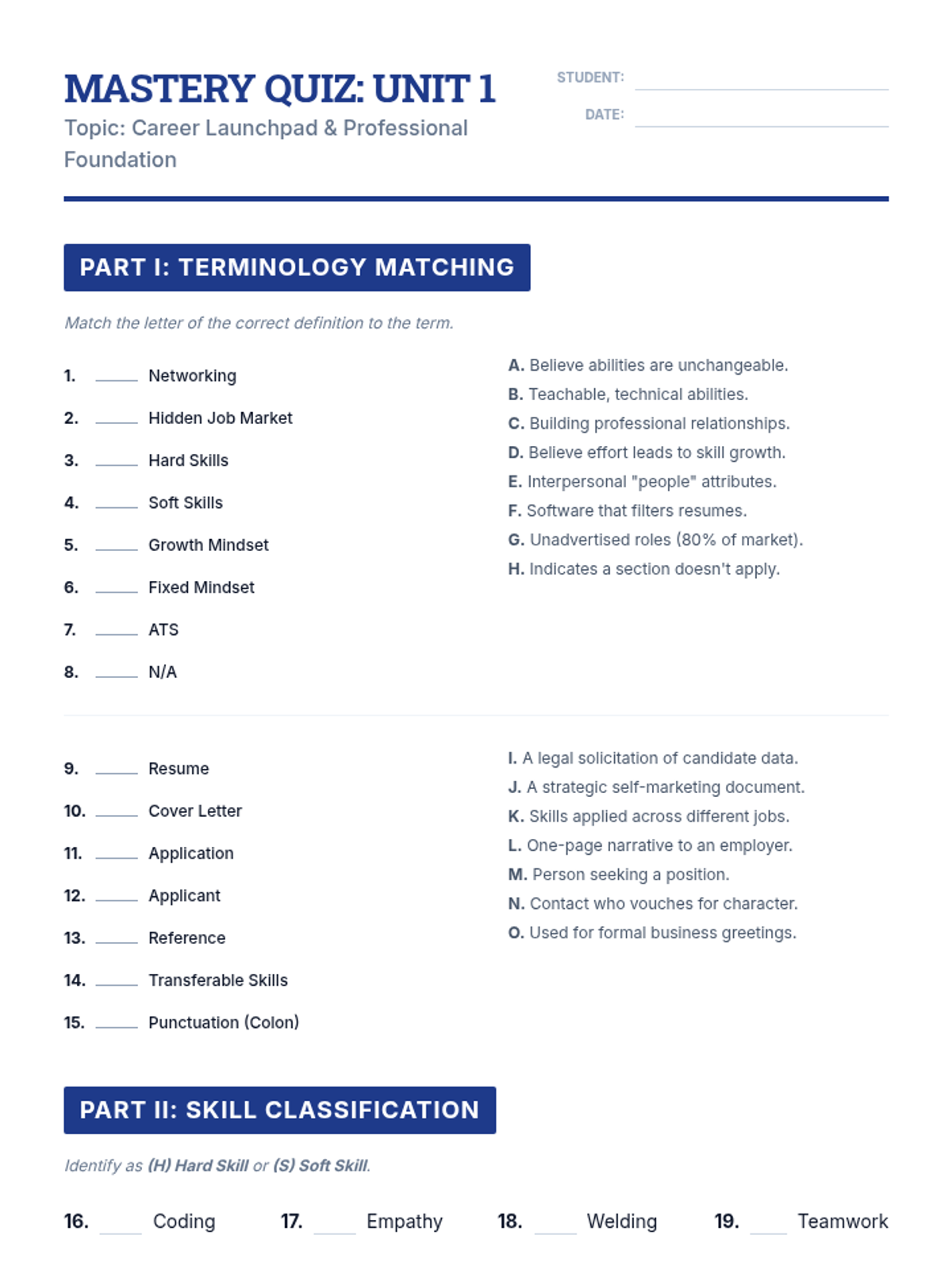
A final assessment module to evaluate student understanding of career readiness concepts and application proficiency.
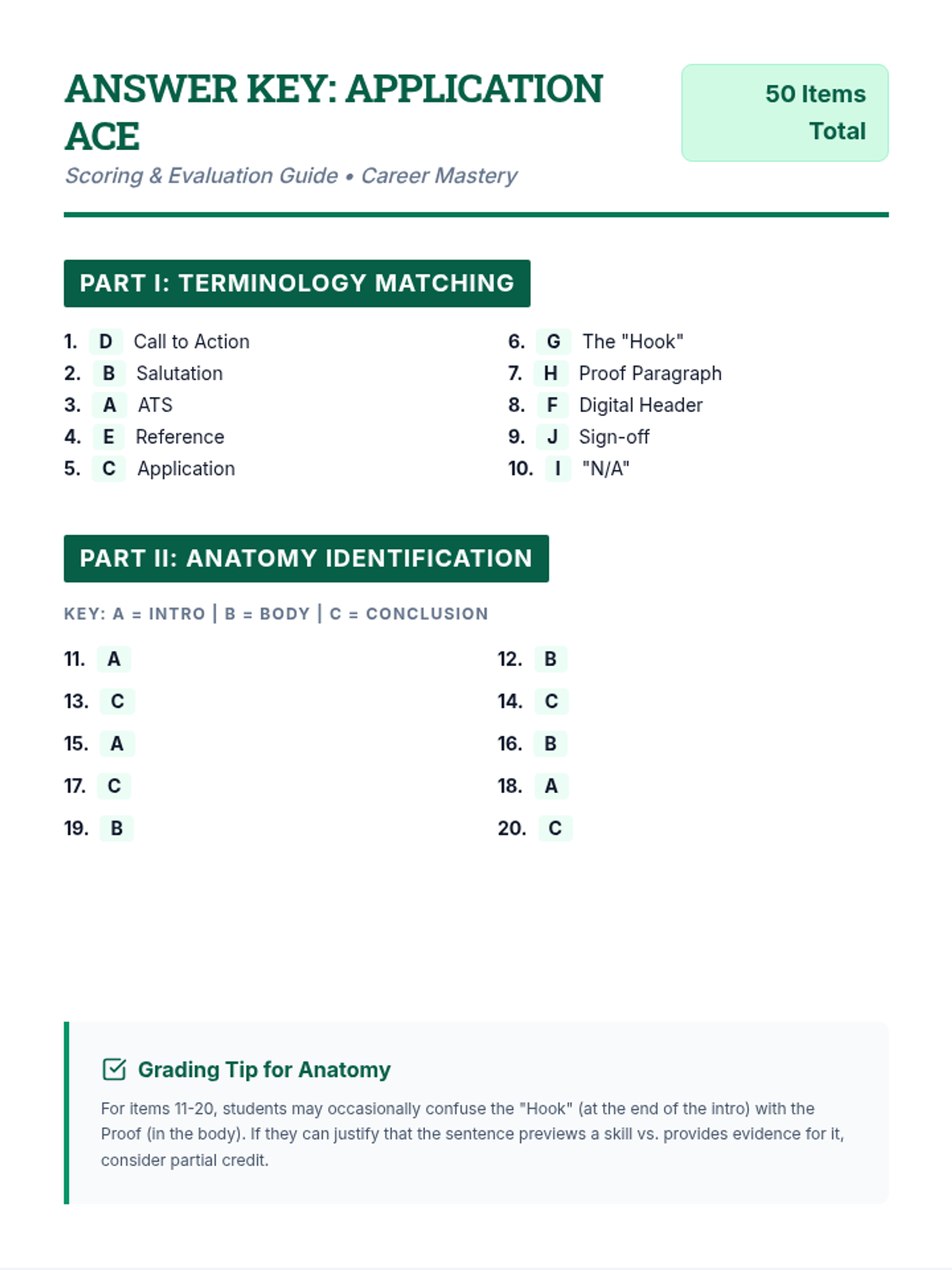
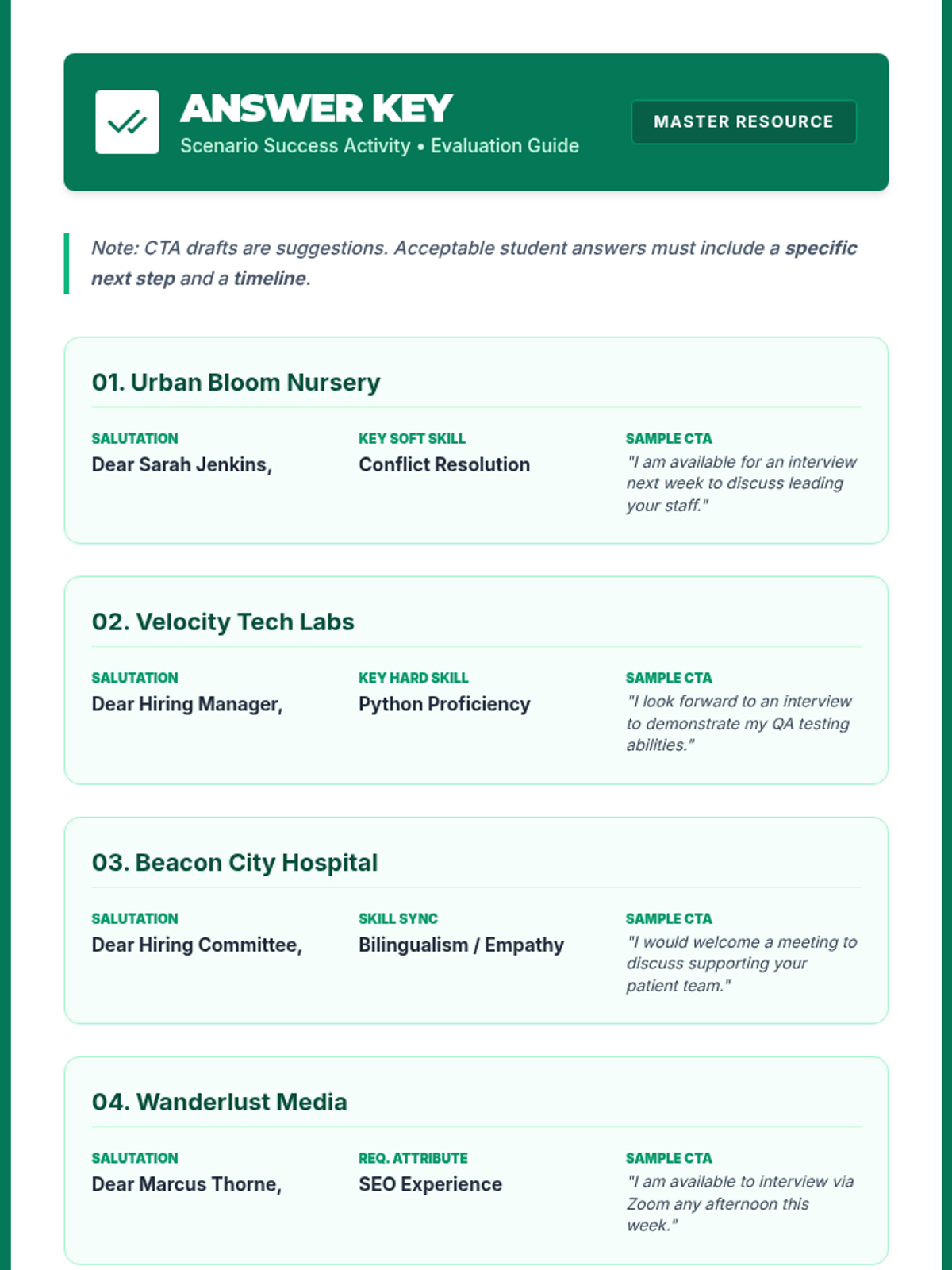
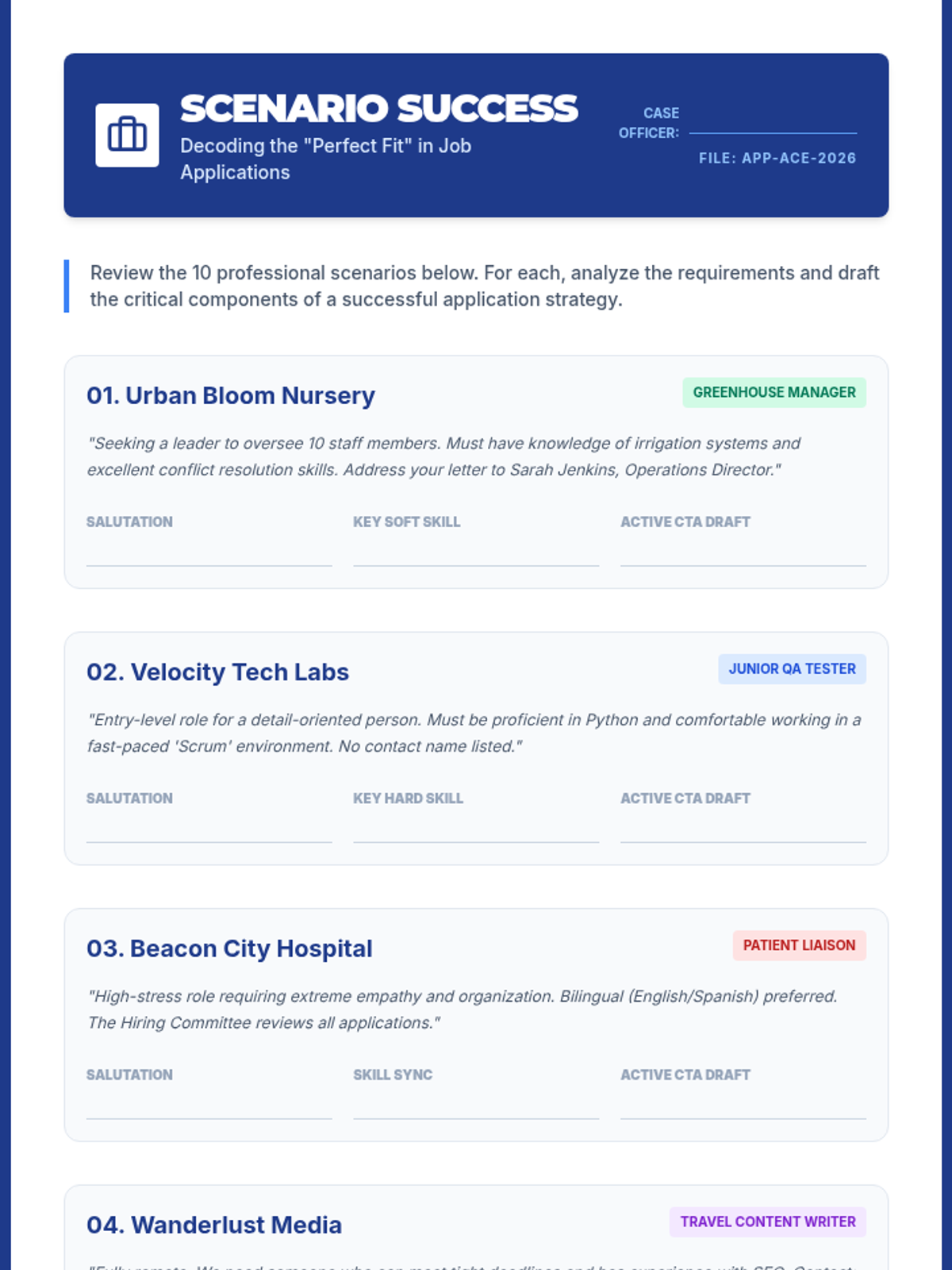
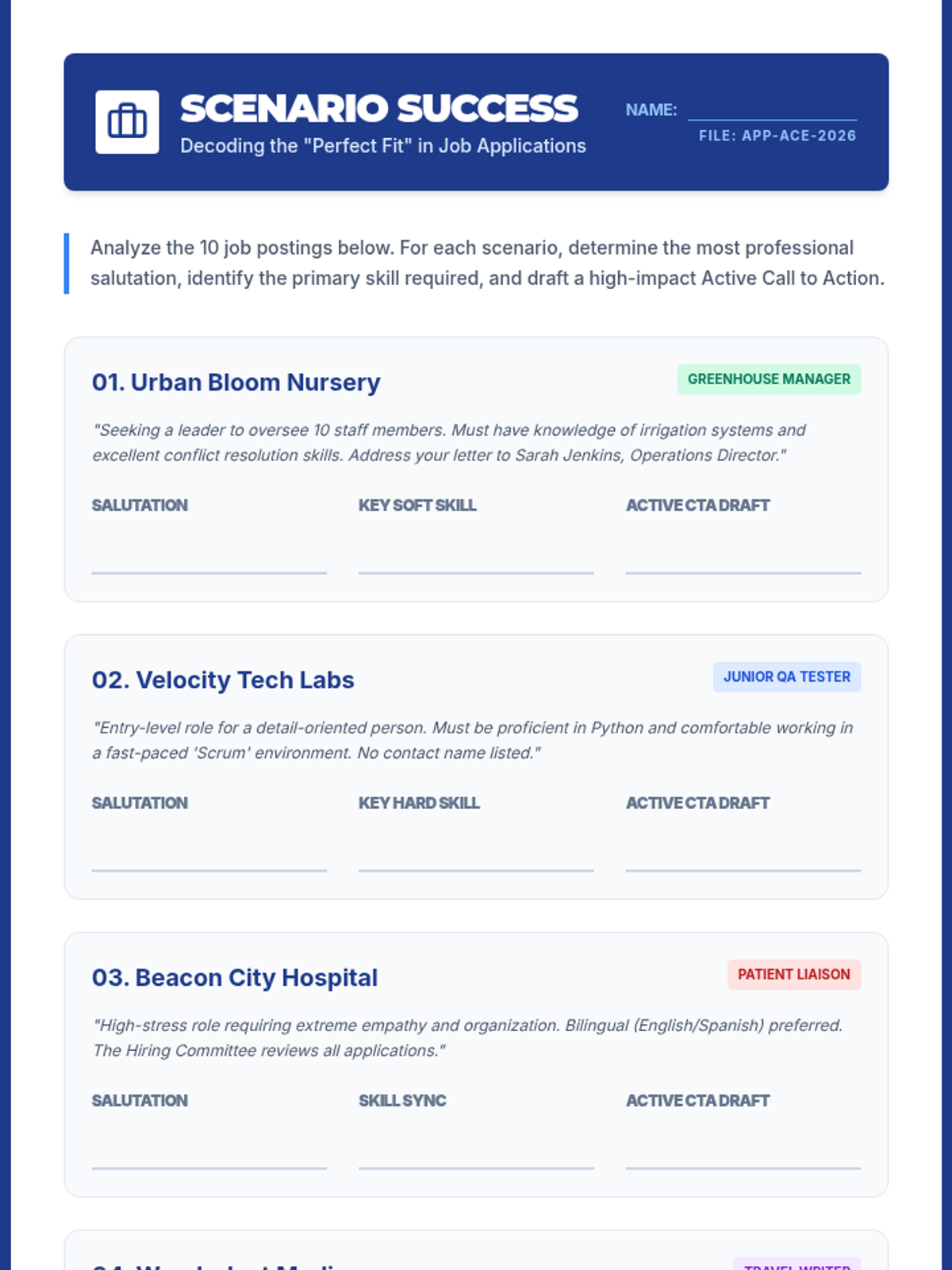
A deep dive into the mechanics of job applications, cover letter construction, and managing professional references.
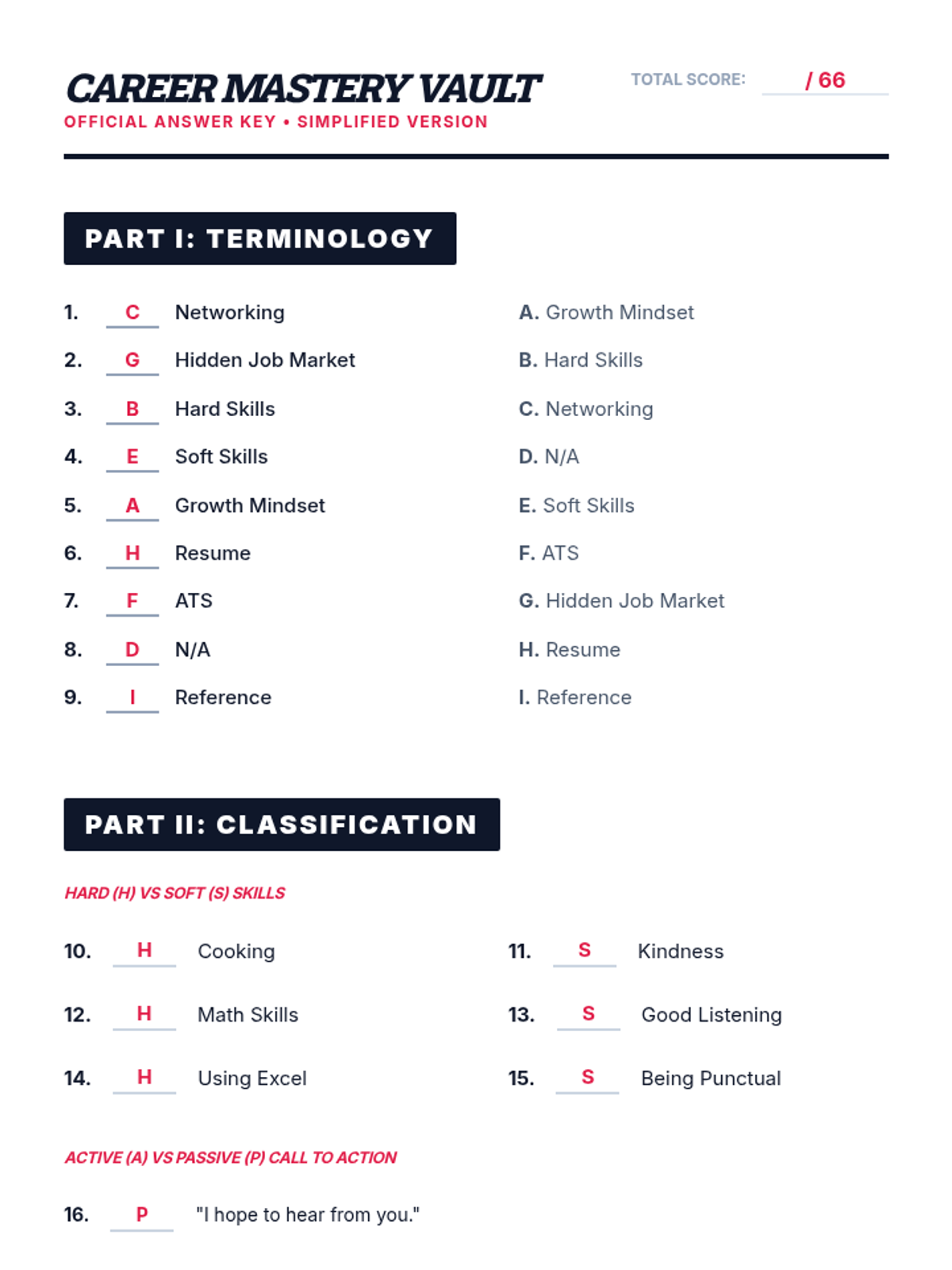
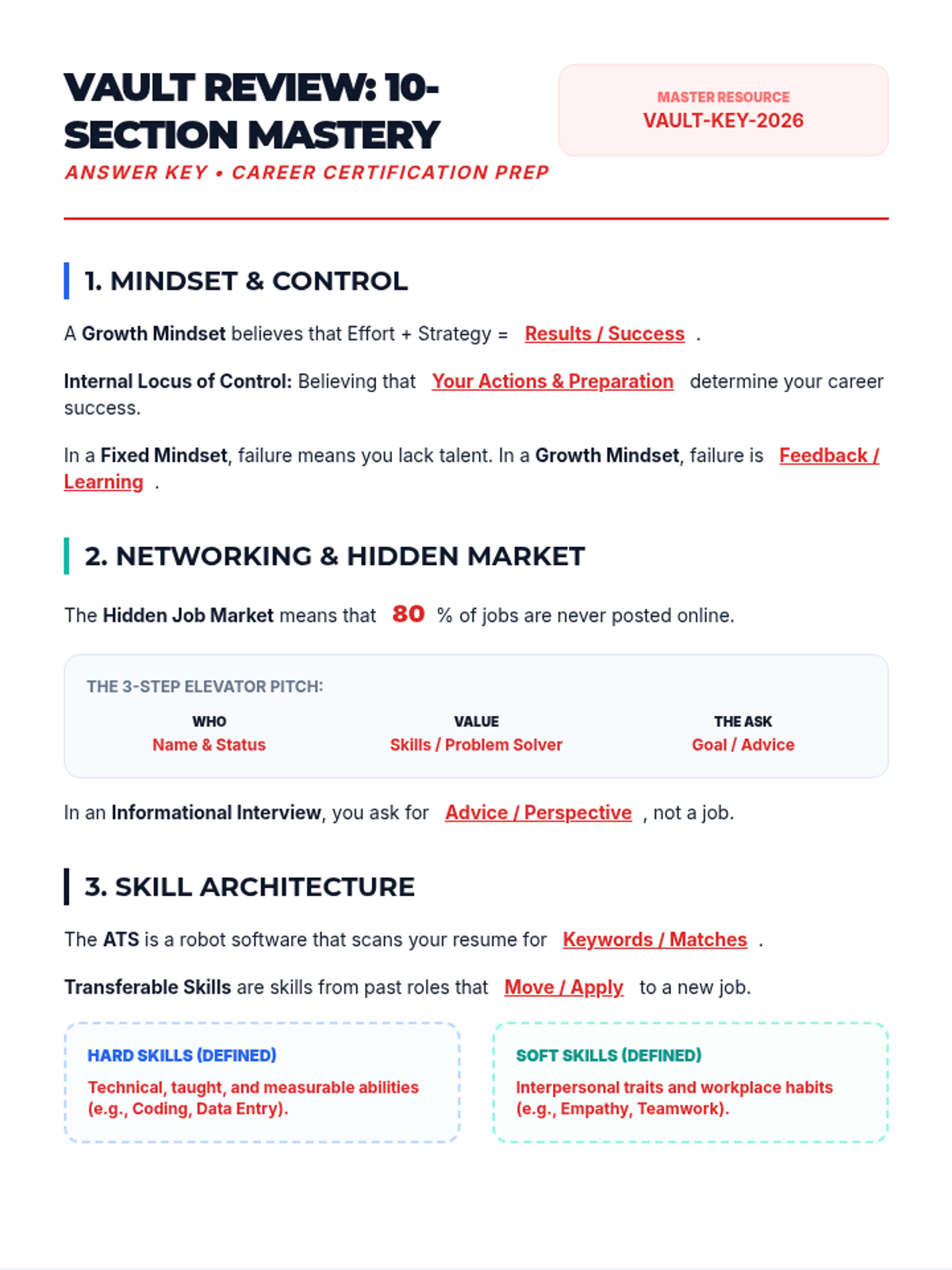
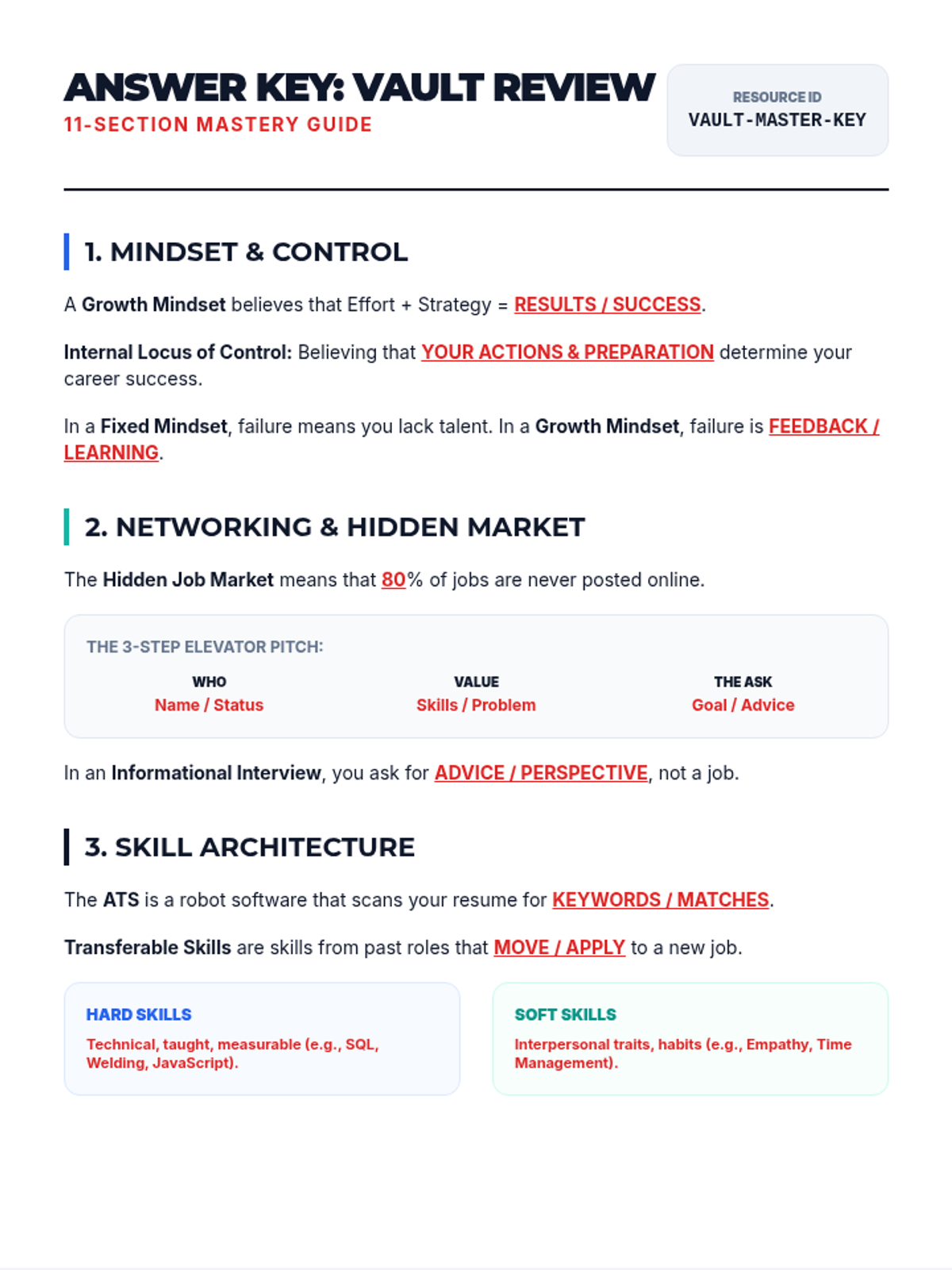
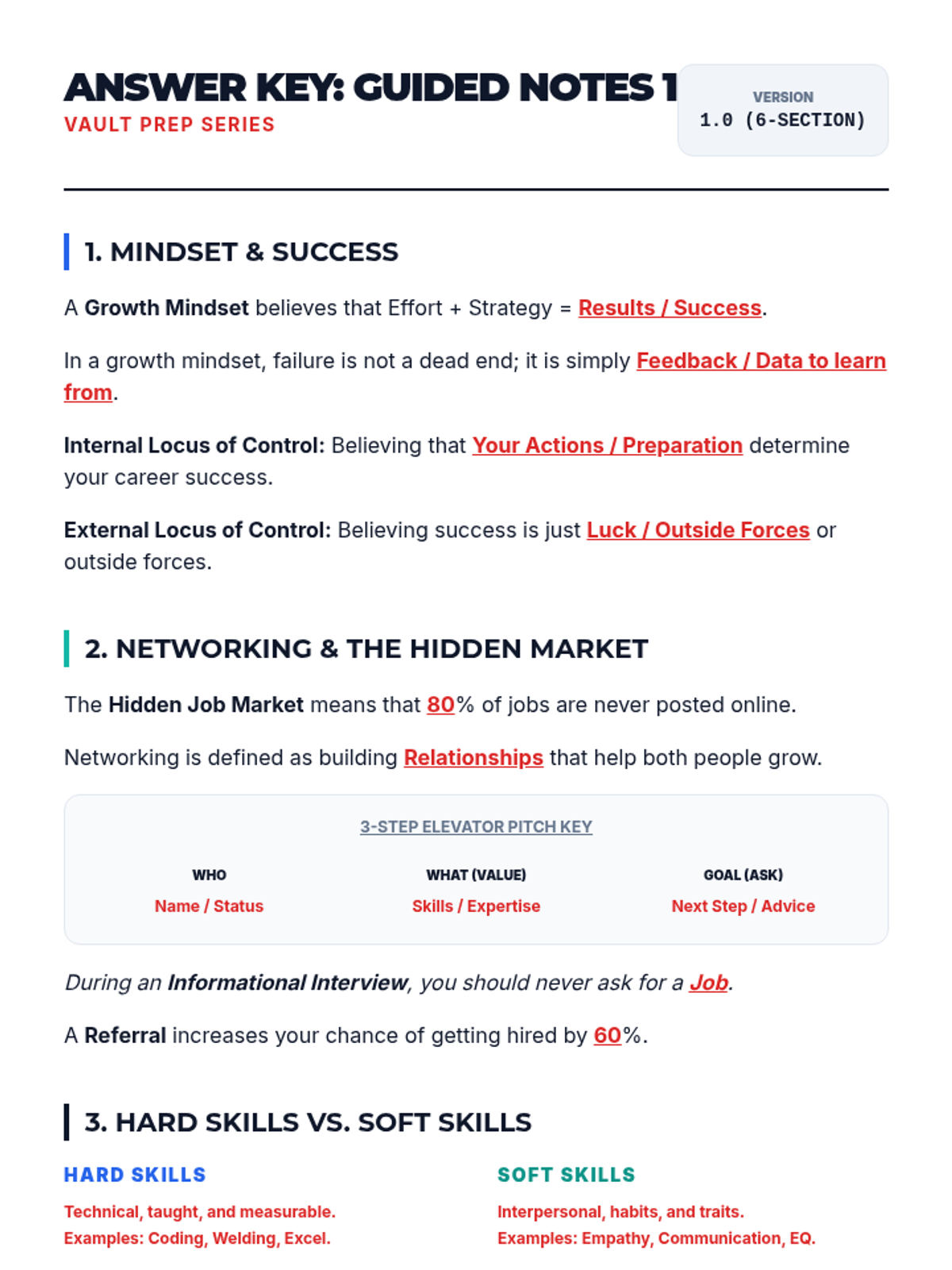
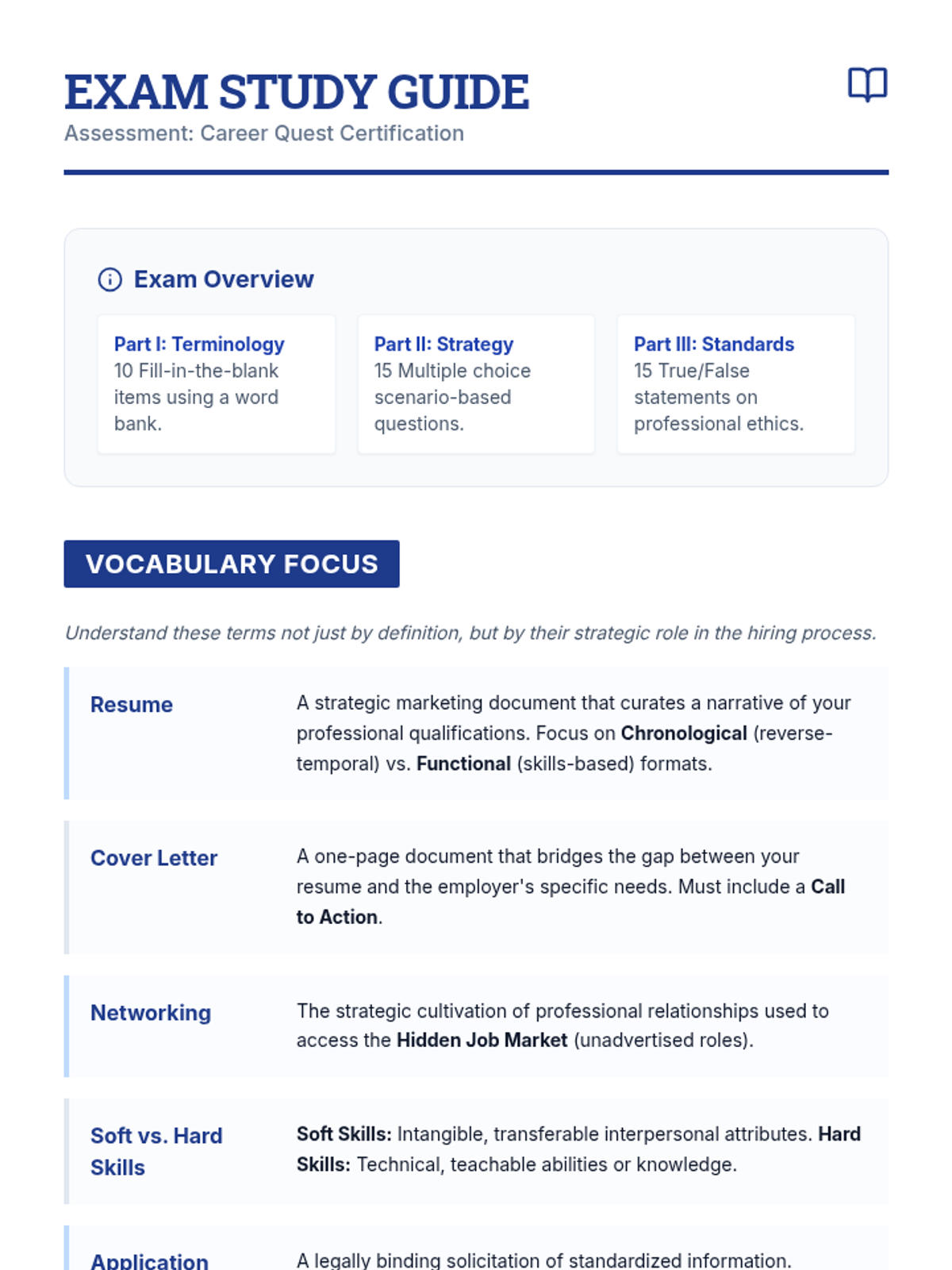
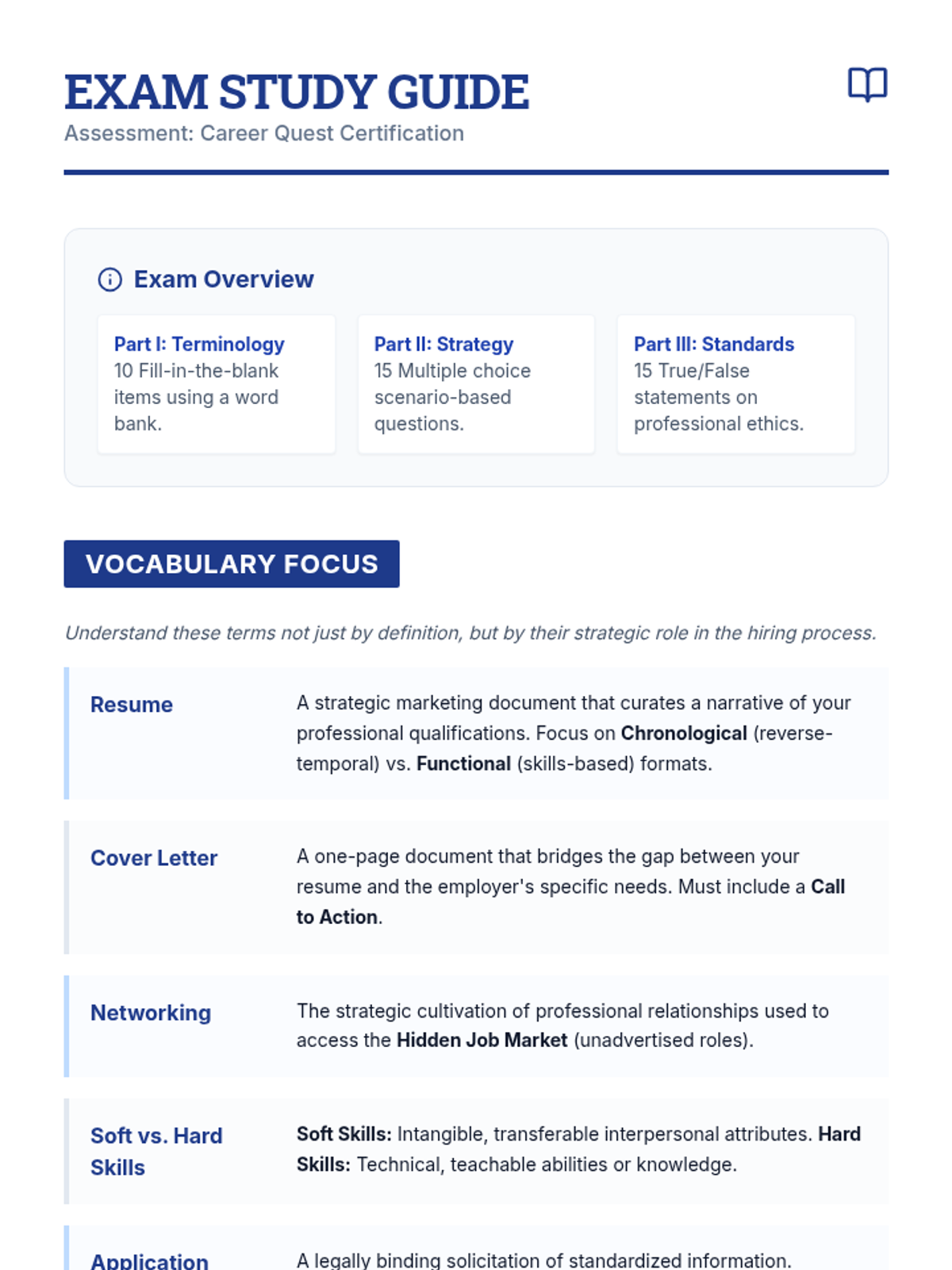
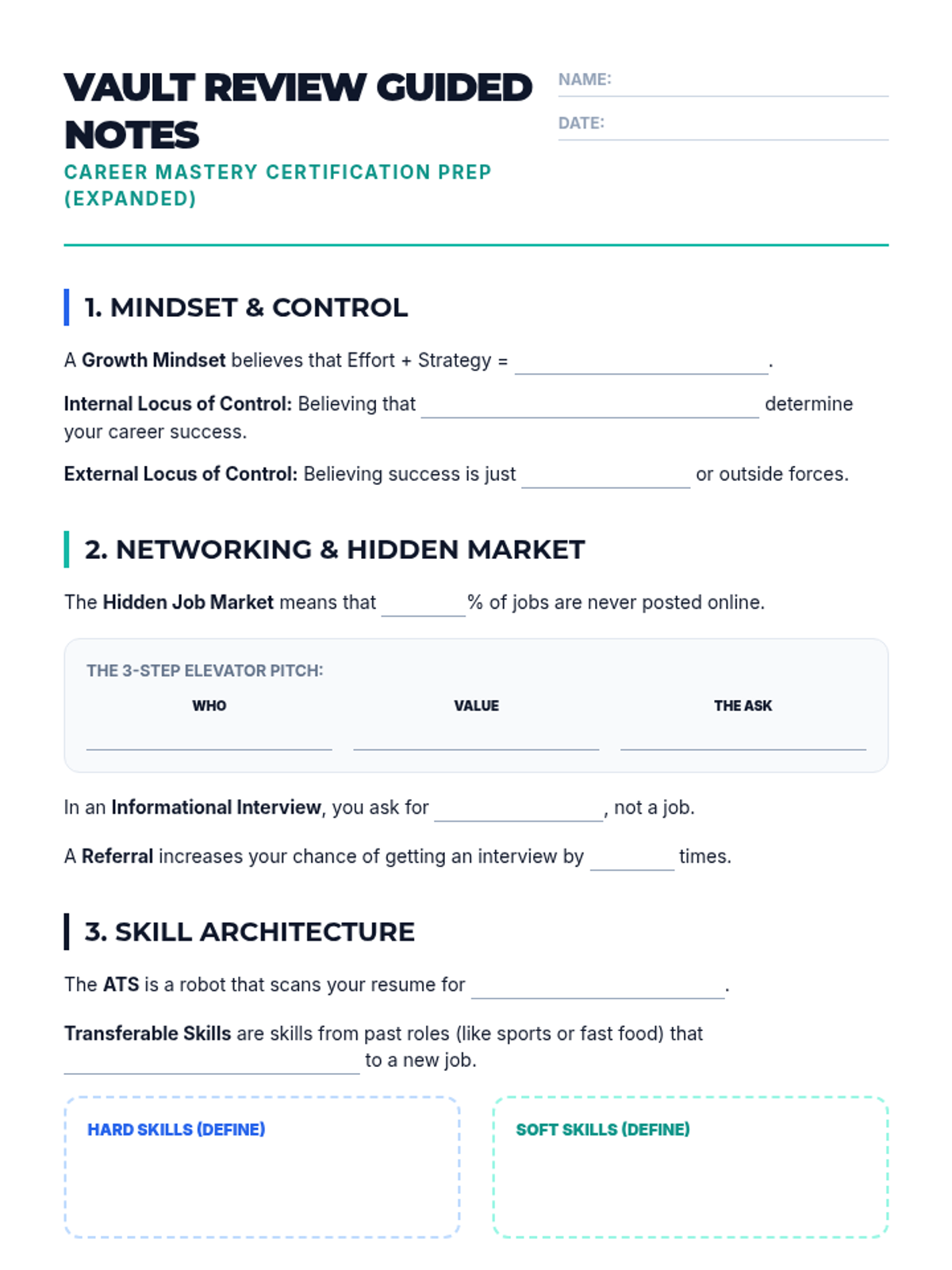
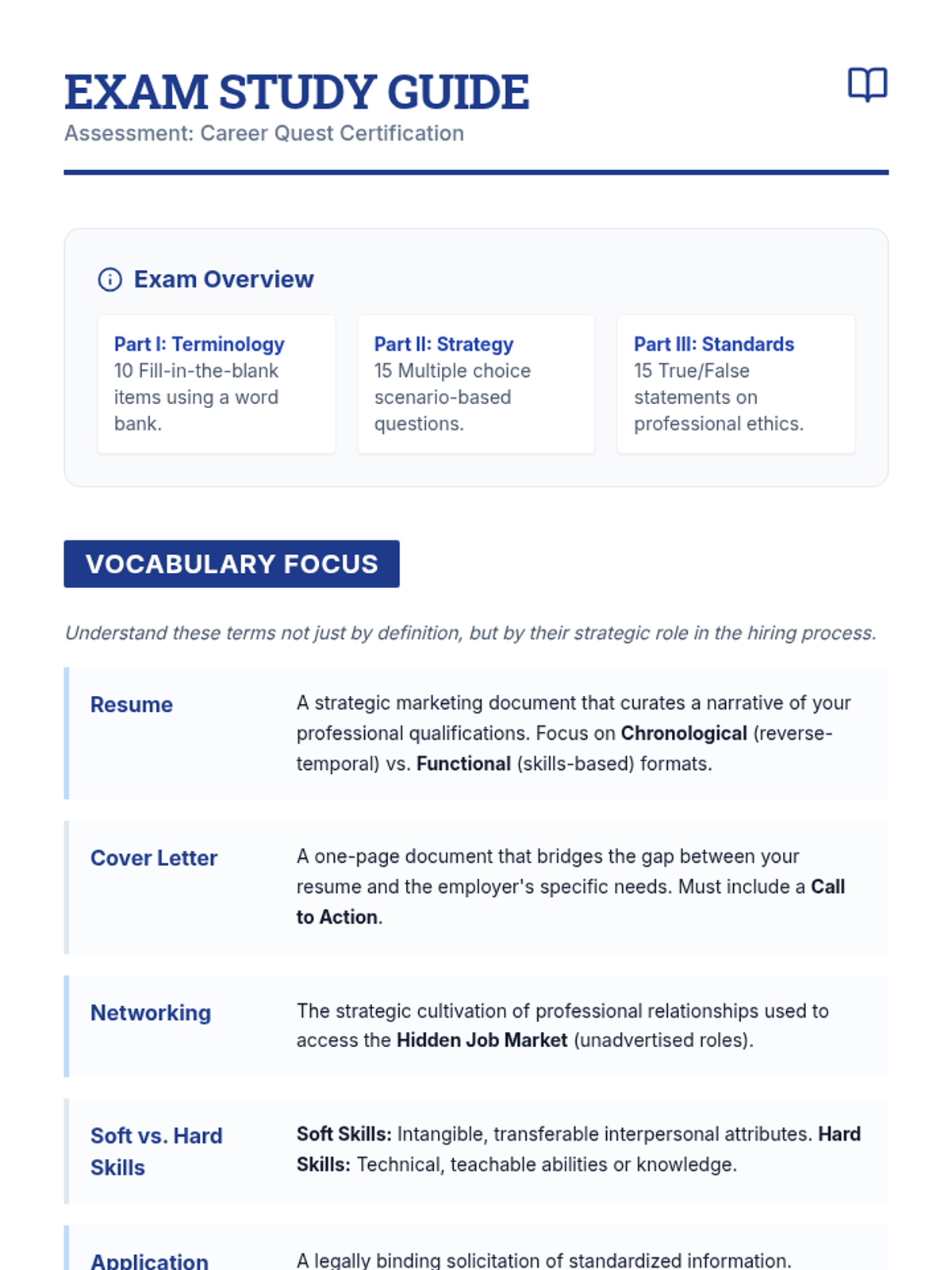
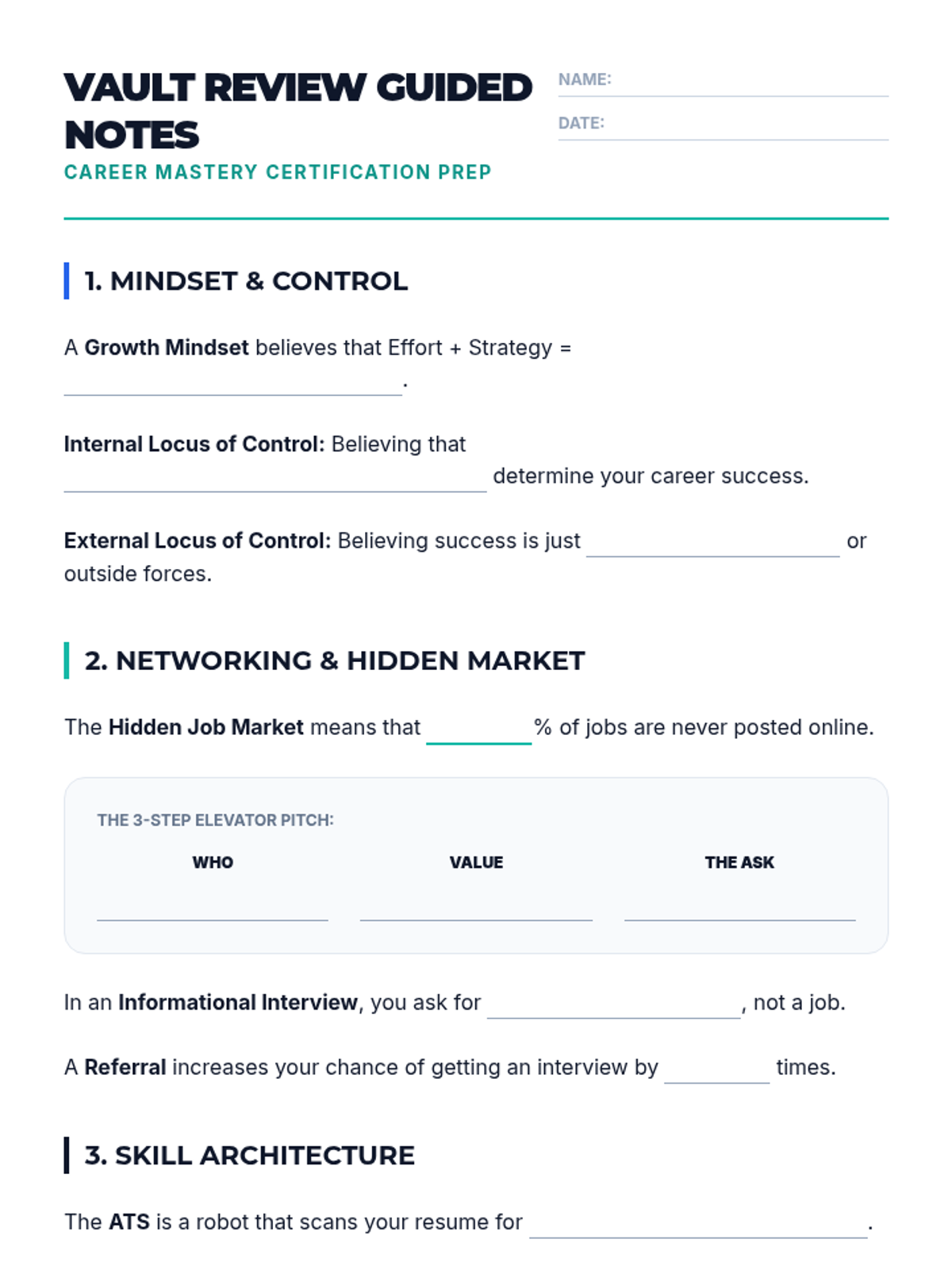
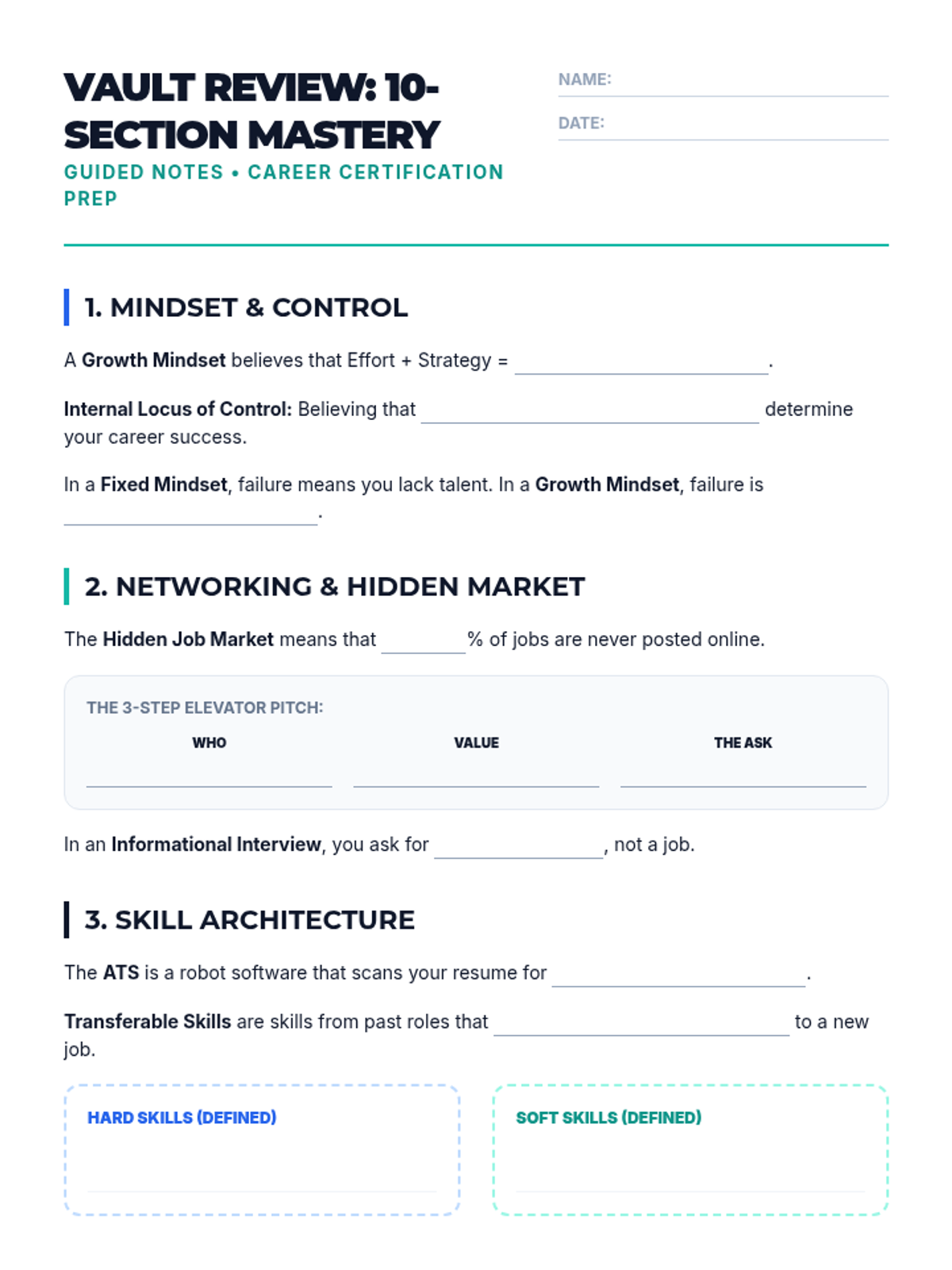
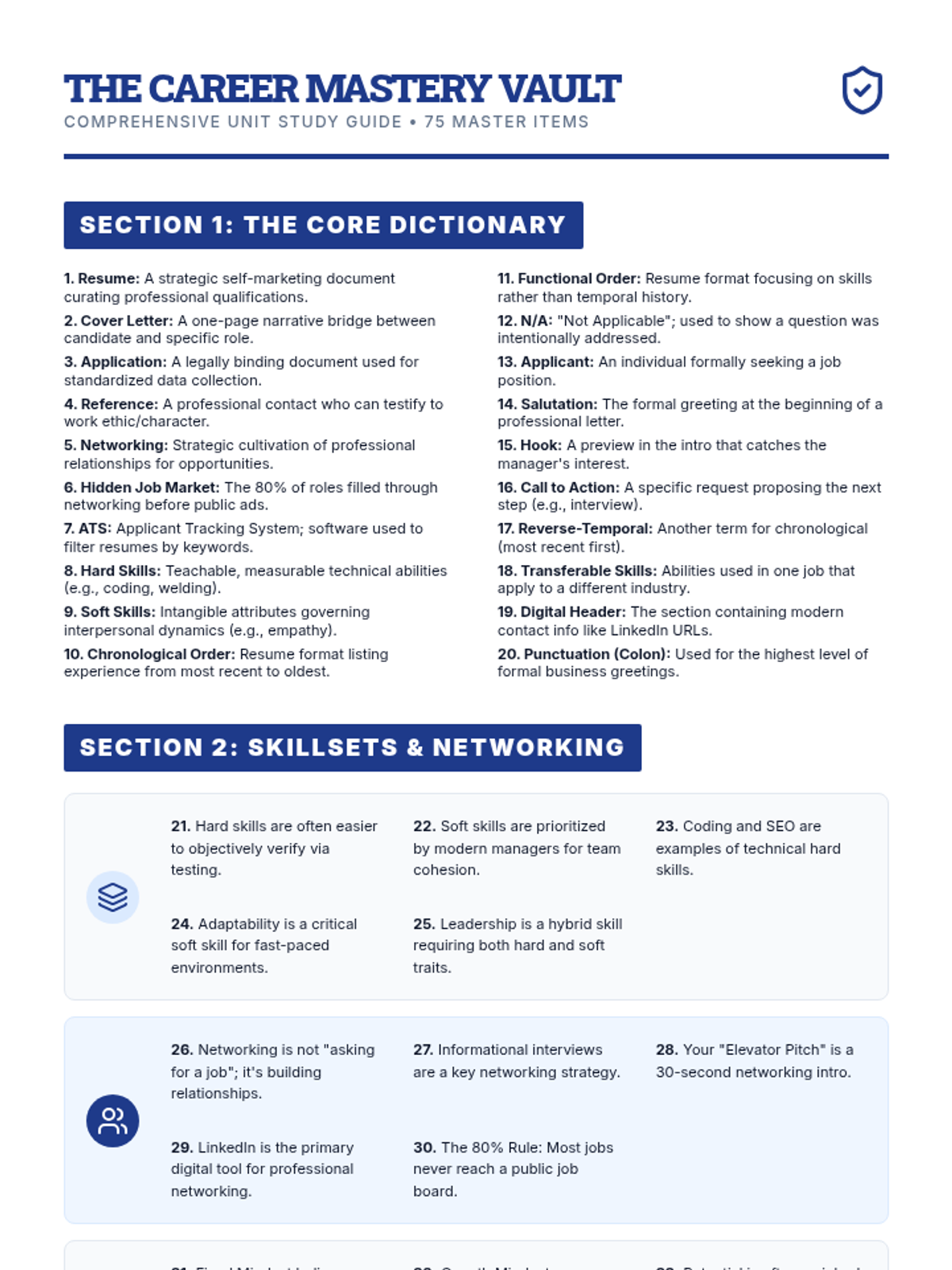
An introductory unit focusing on career terminology, professional mindset, and identifying personal strengths for the workforce.
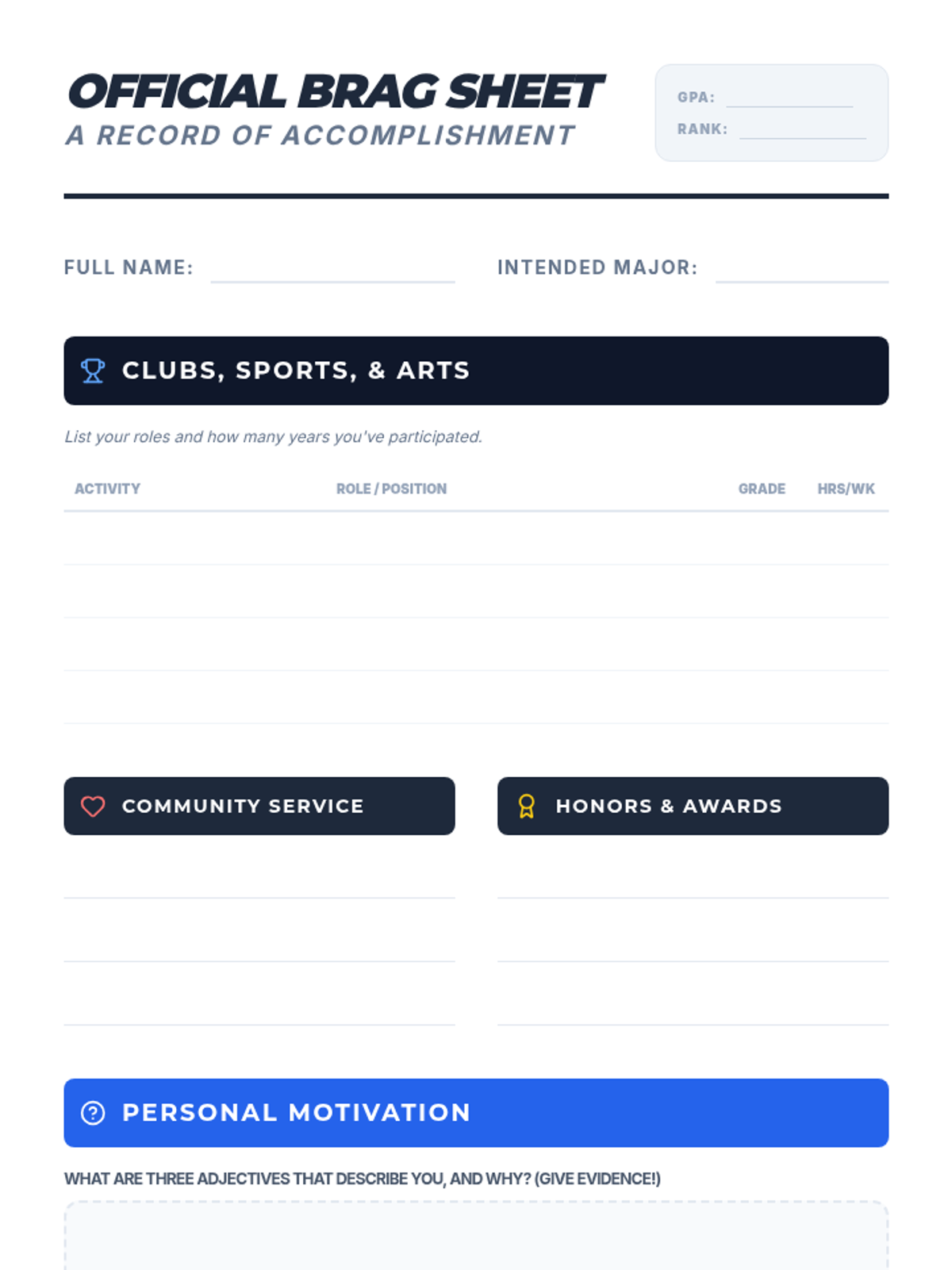
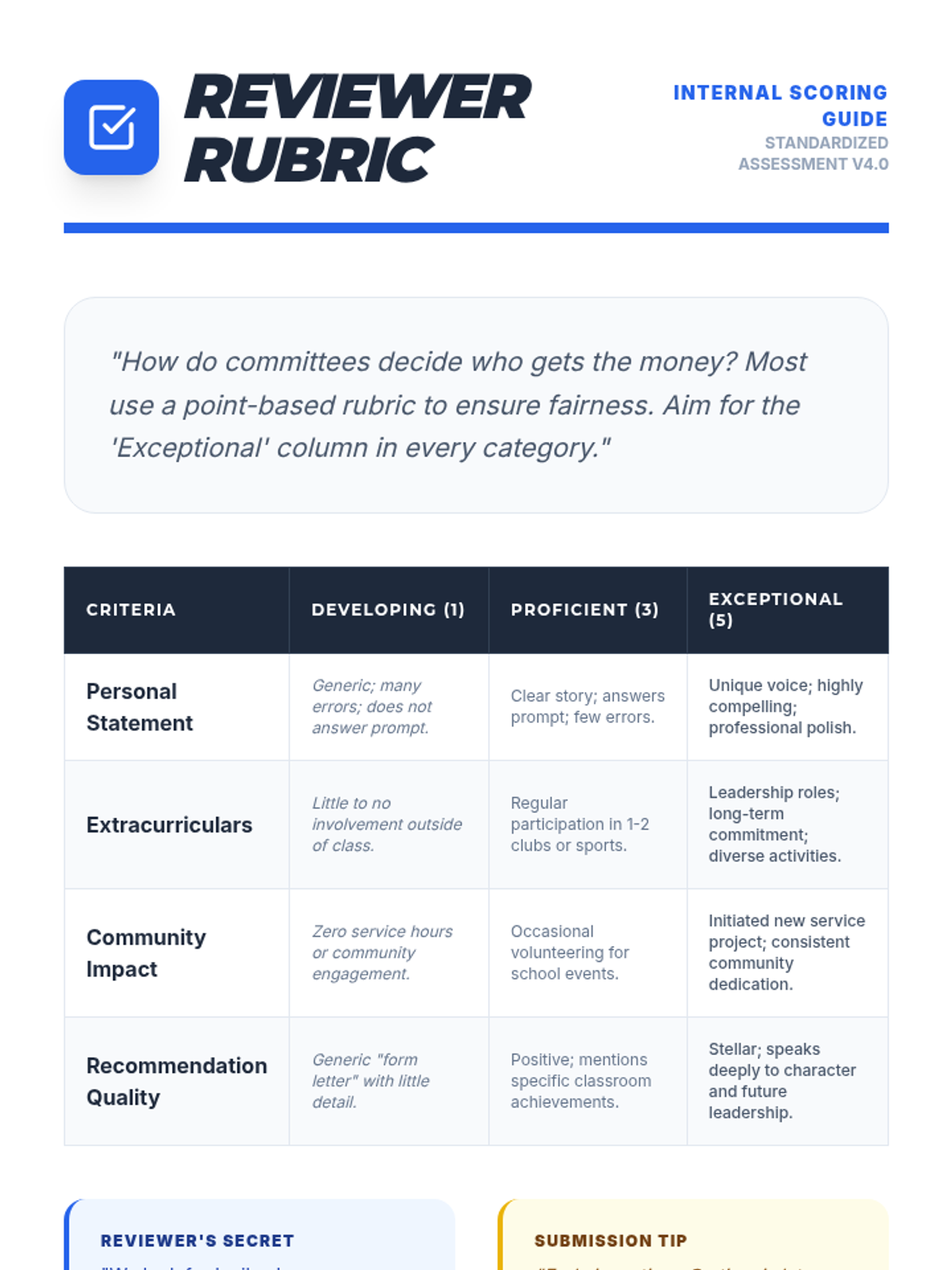
Students analyze common scholarship application components and begin creating a 'brag sheet' of their high school accomplishments.
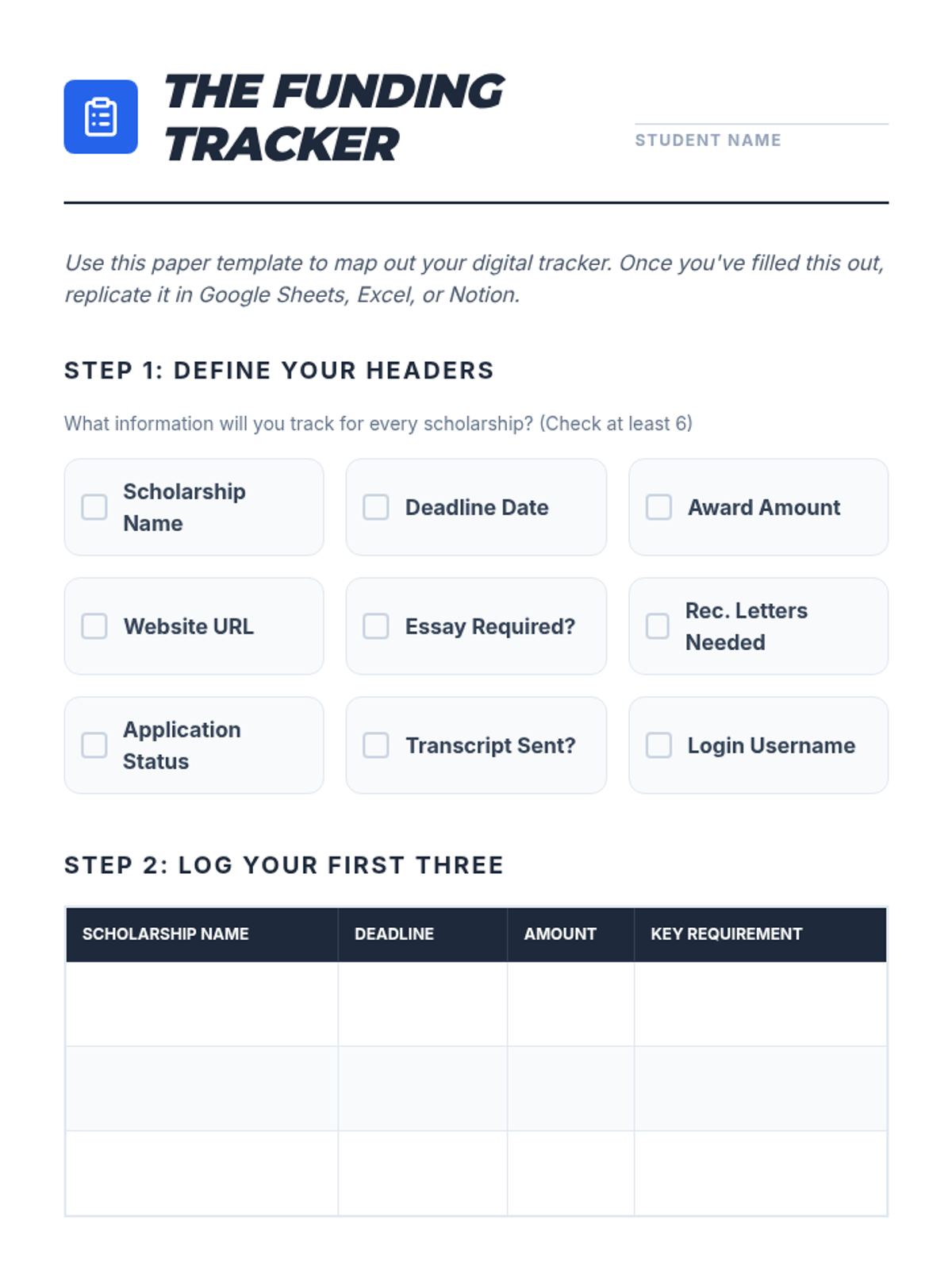
Students build a personalized organization system to track scholarship deadlines, requirements, and application statuses.
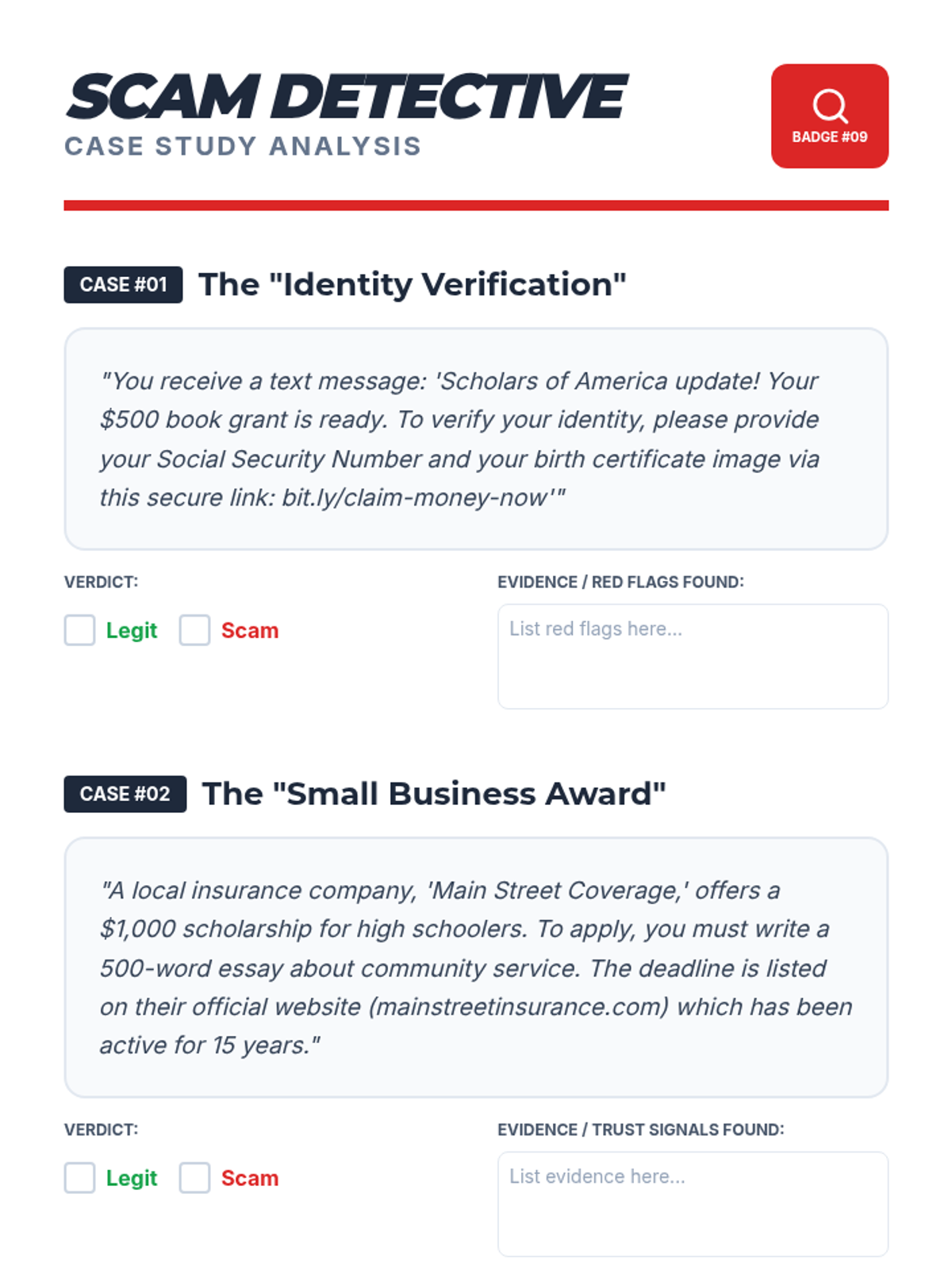
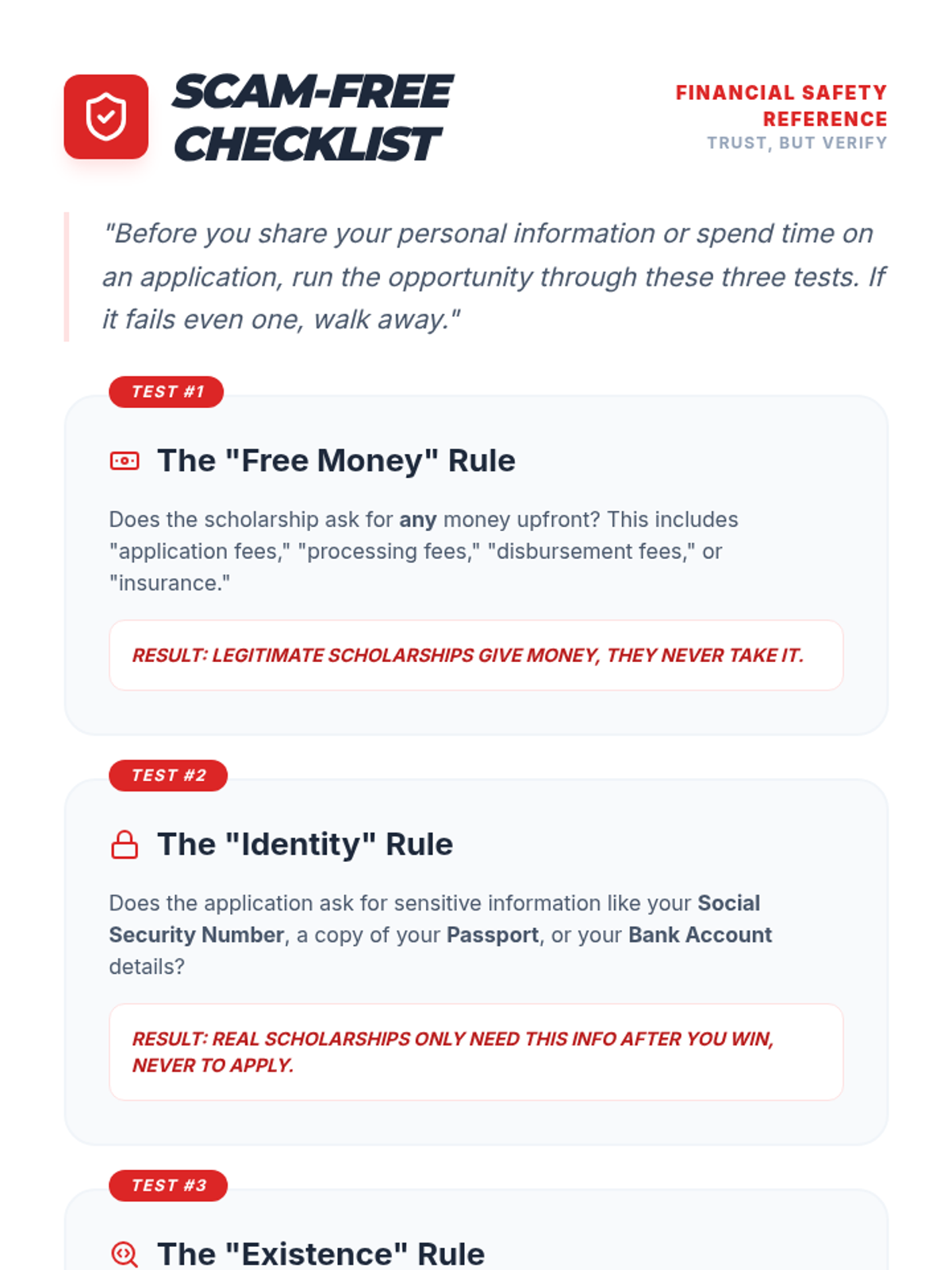
Students learn to identify red flags in scholarship offers and develop critical thinking skills to avoid financial aid scams.
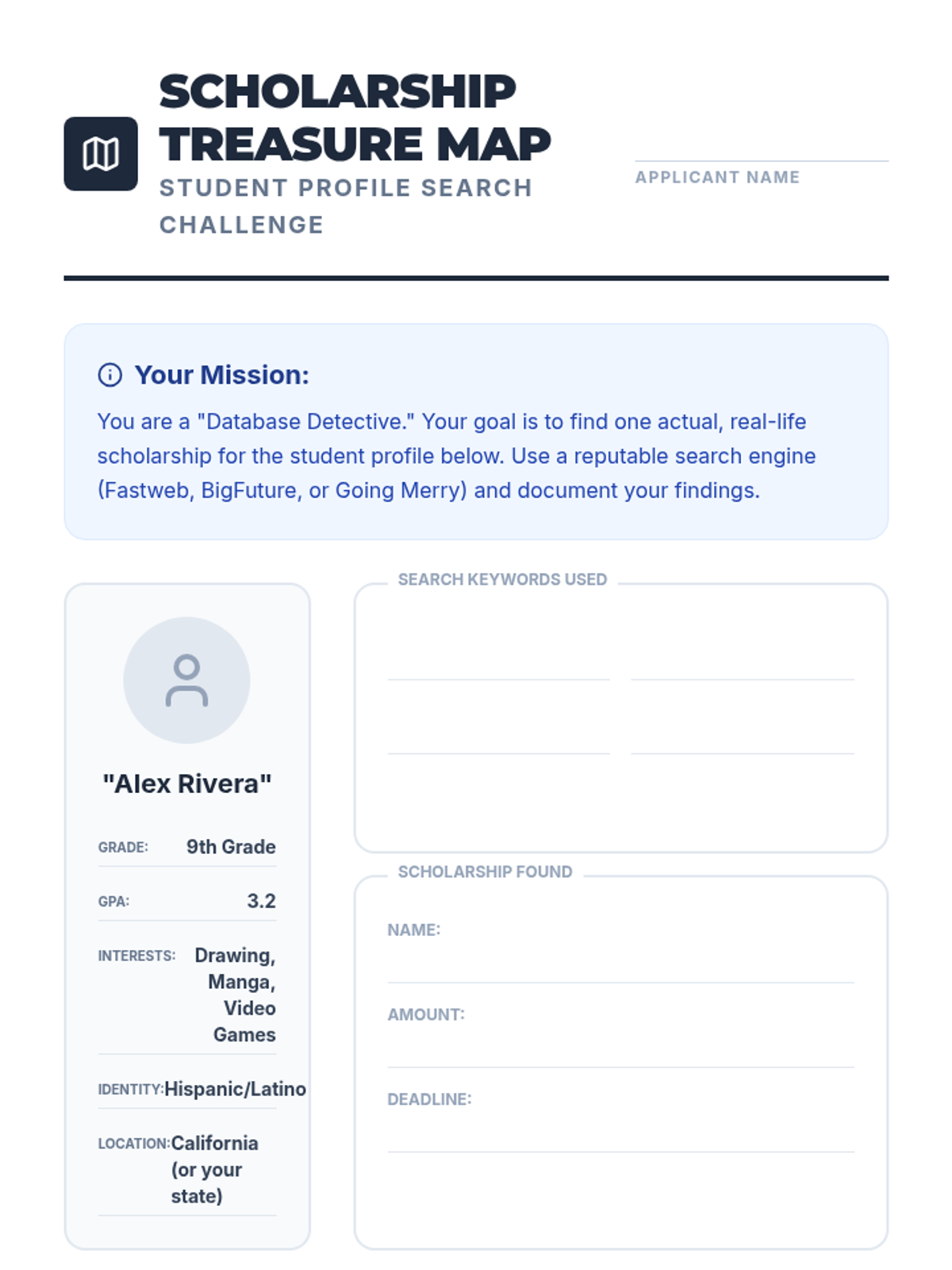
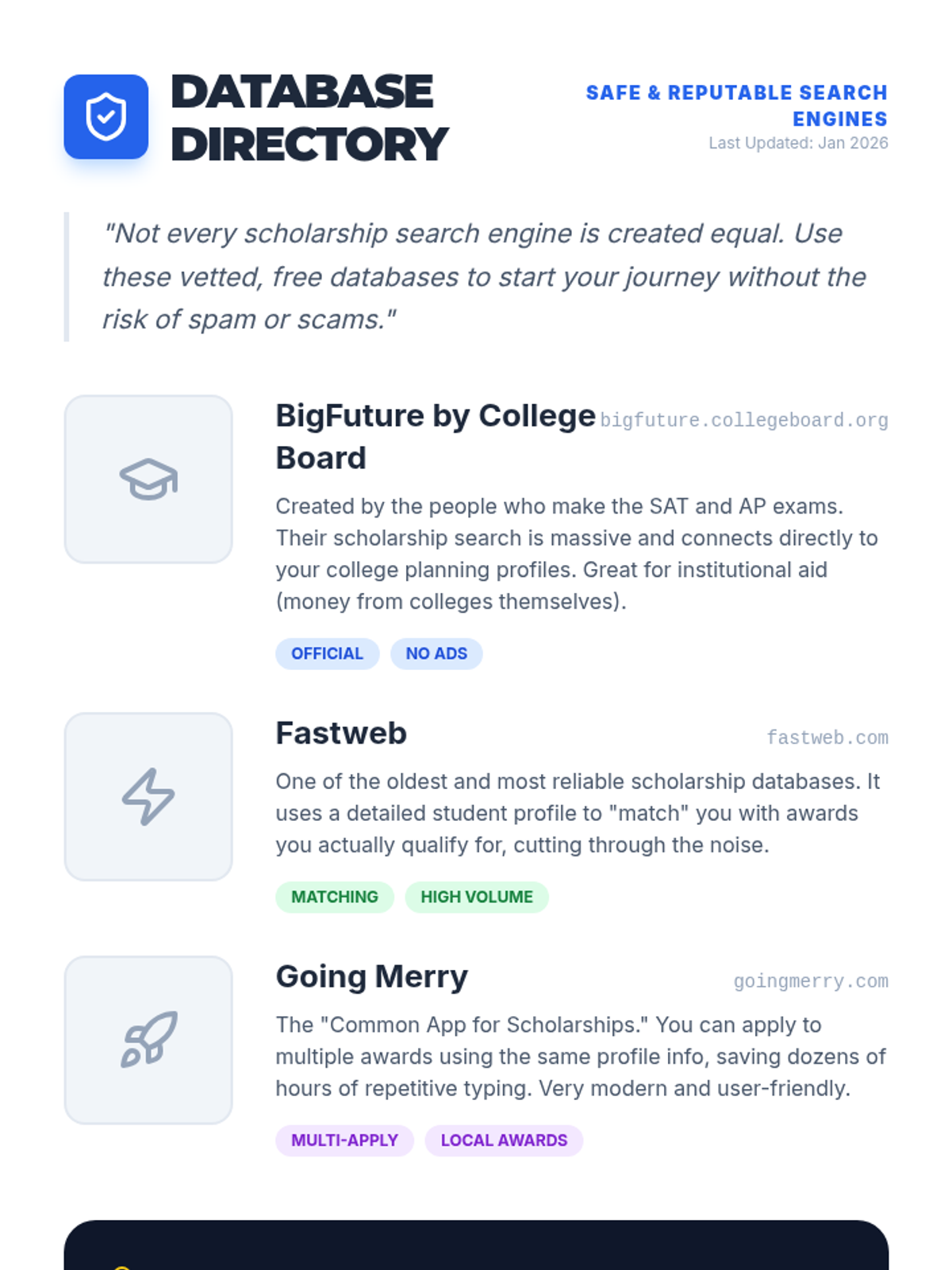
Students practice using digital scholarship databases and search engines, focusing on filtering for opportunities available to underclassmen.
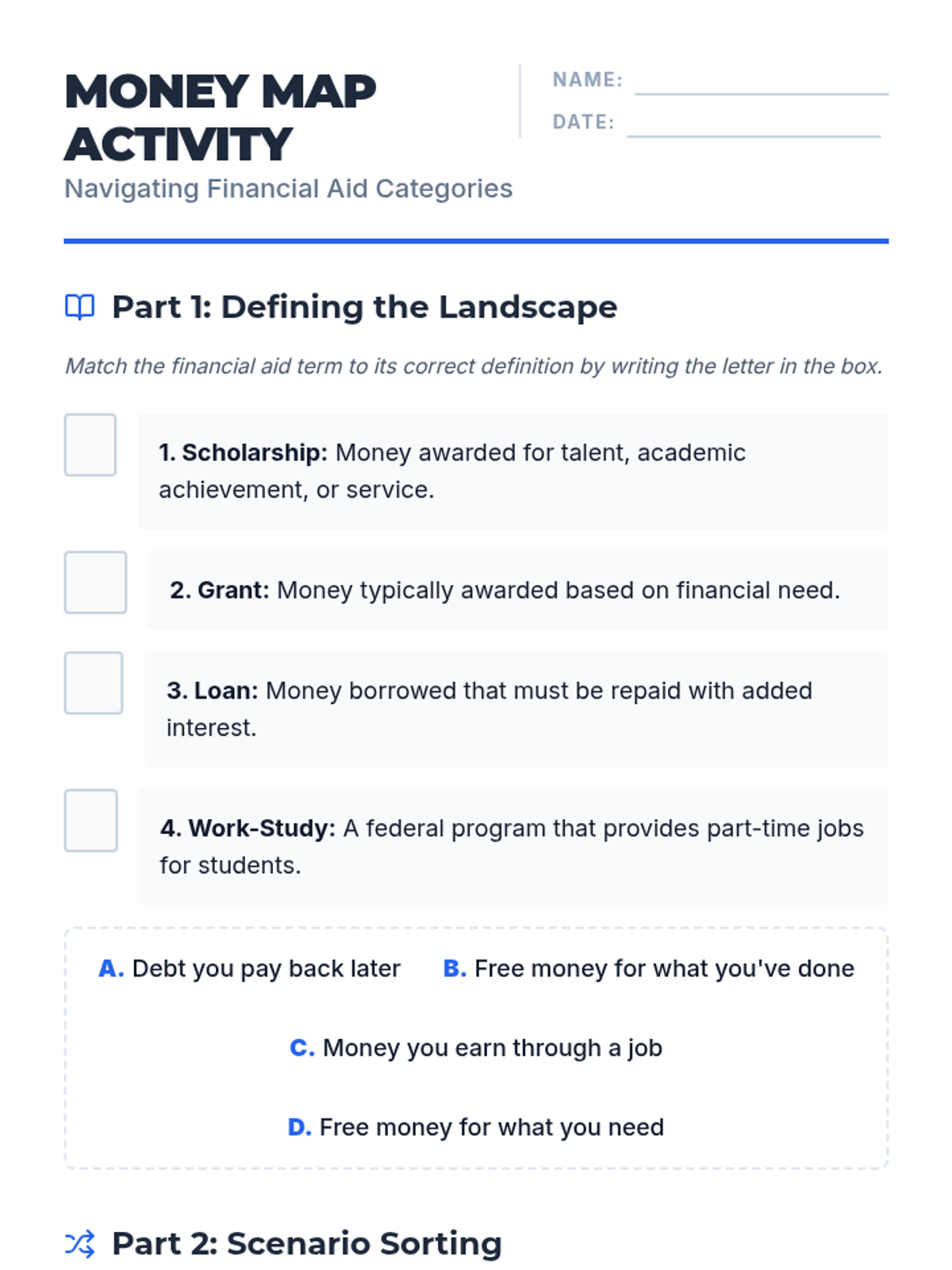
Students distinguish between different types of financial aid—loans, grants, work-study, and scholarships—and analyze the long-term impact of debt versus free money.
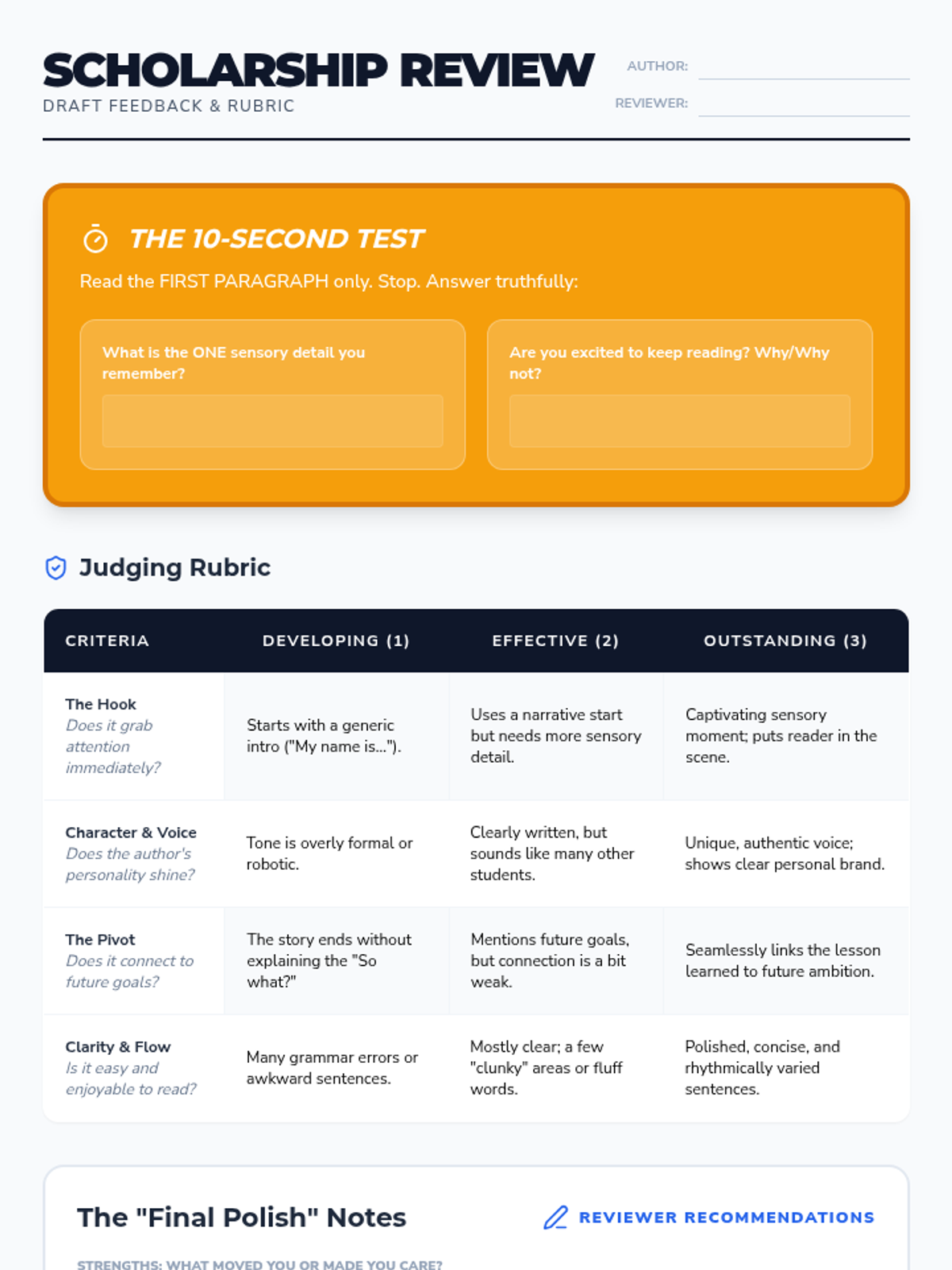
A structured workshop session where students use a rubric to provide and receive constructive feedback on their essay drafts.
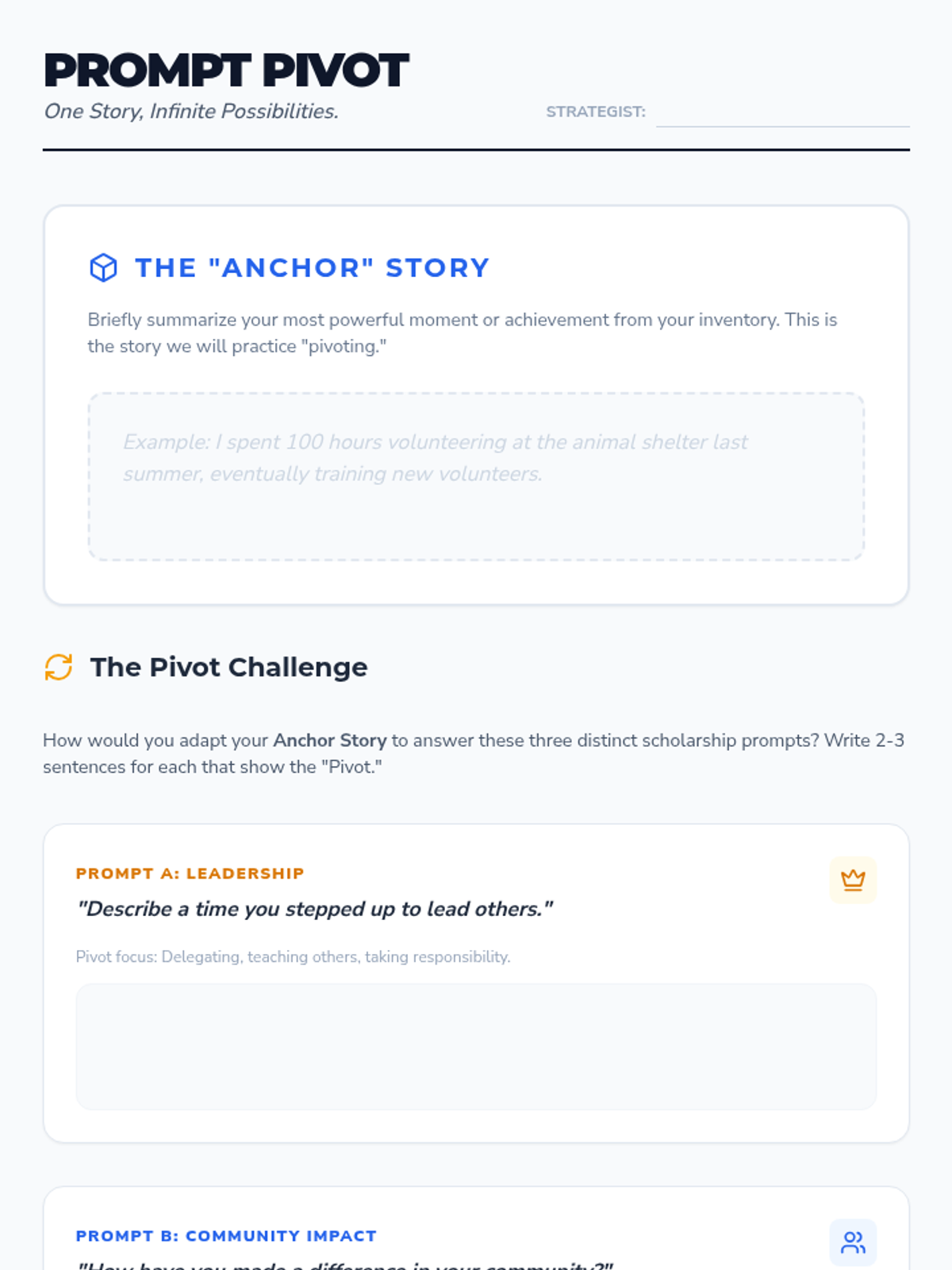
Students practice adapting a core personal story to address various scholarship prompts, learning the art of the 'pivot.'
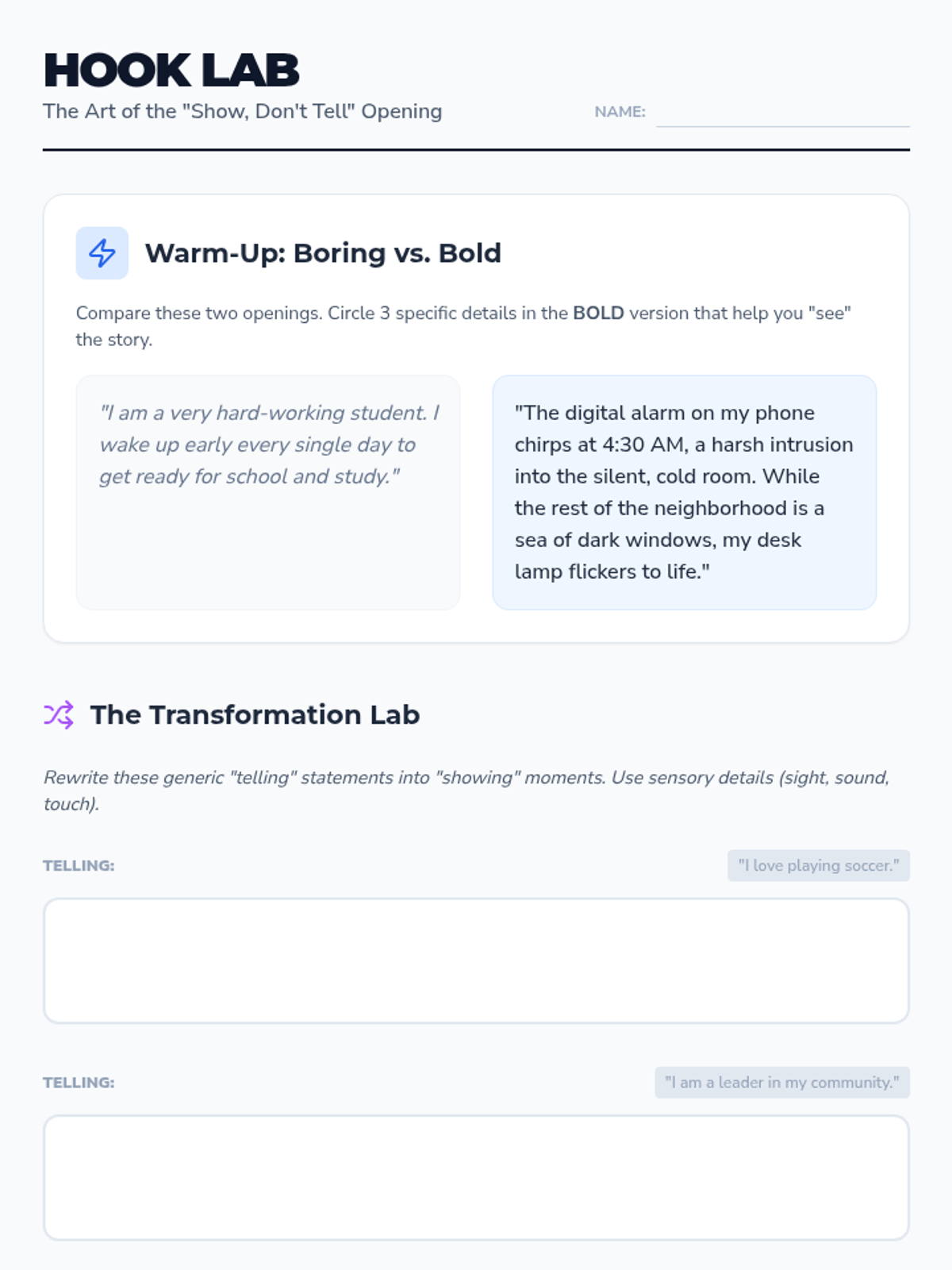
Focused on the introduction, students learn the 'Show, Don't Tell' technique to write engaging opening lines and sensory-rich narratives.
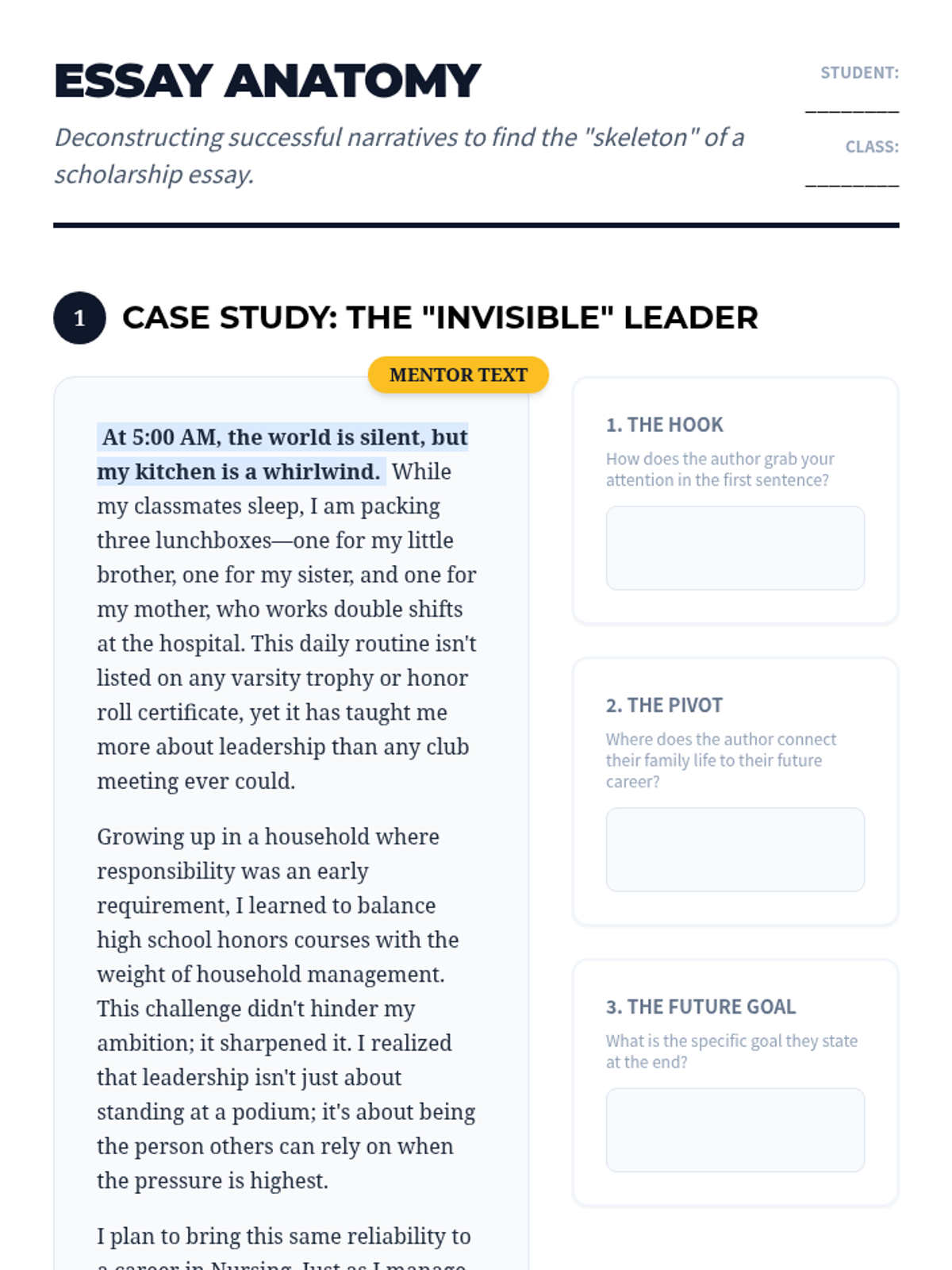
Students analyze successful scholarship essays to understand structural elements like hooks, narrative arcs, and future goal statements.
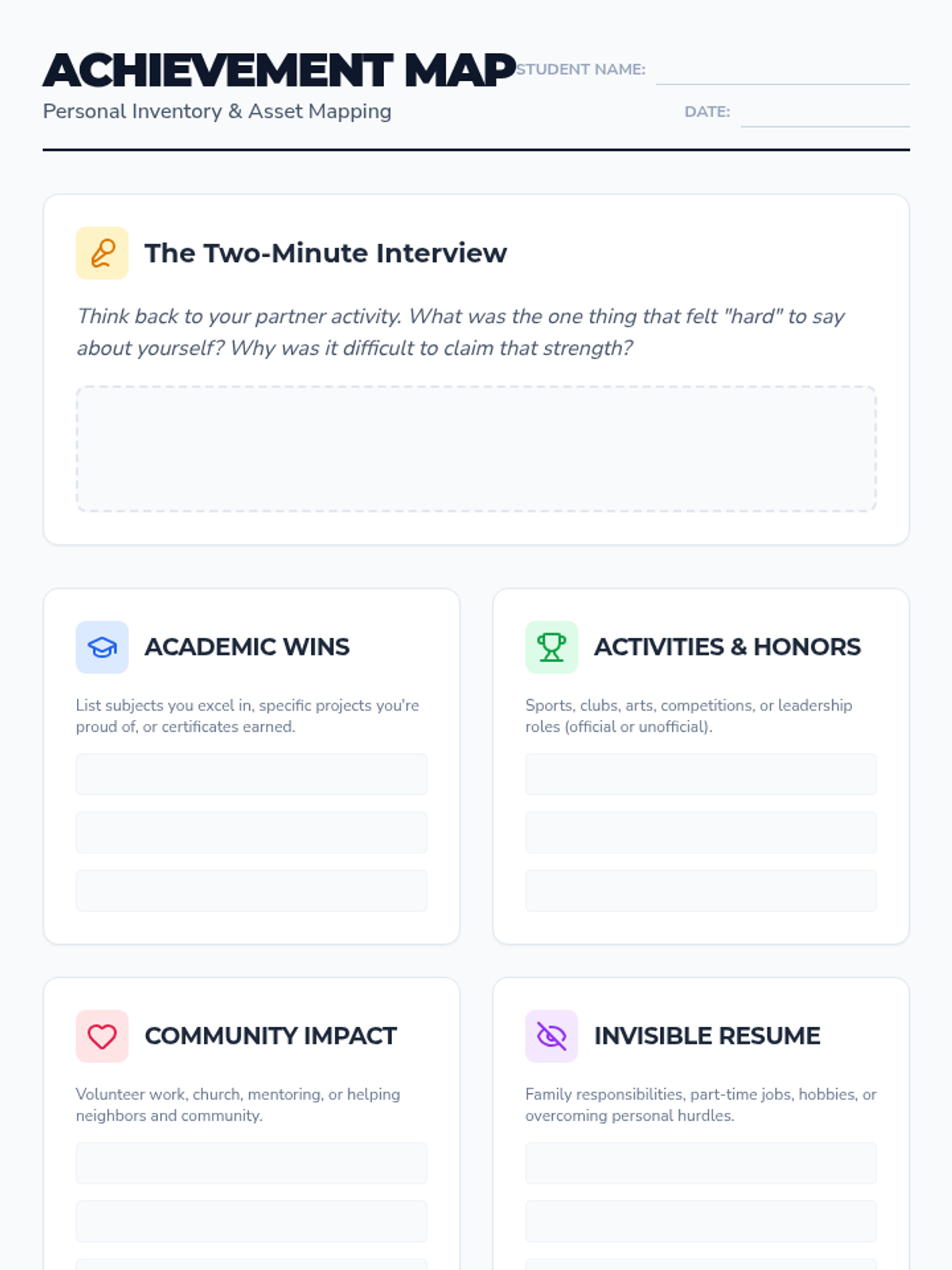
Students identify their unique skills, experiences, and 'personal brand' through a structured inventory of academic and non-academic achievements.
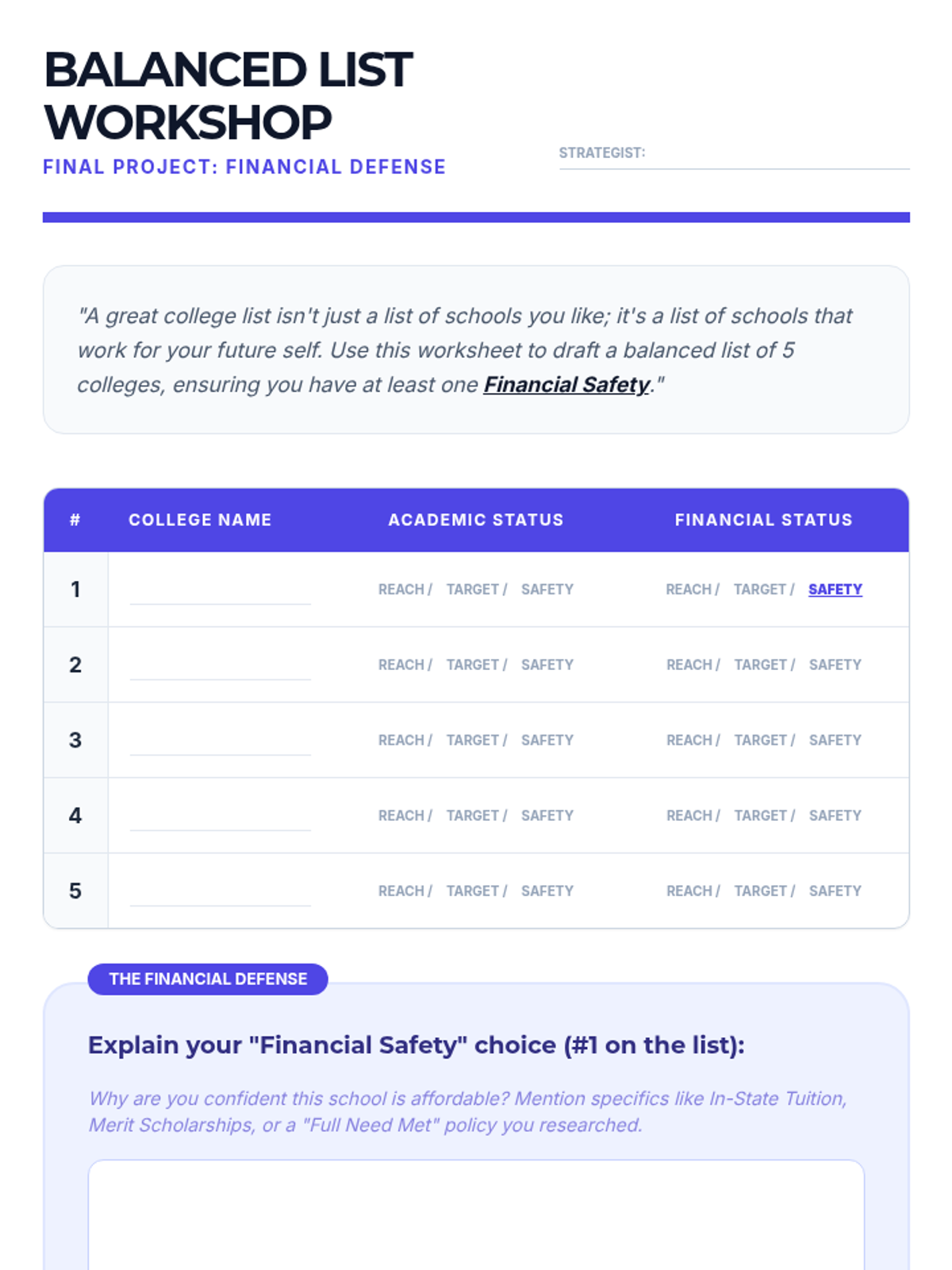
Students apply their knowledge to create a balanced college list that includes 'Financial Safeties,' culminating in a peer-reviewed defense of their choices.
Students investigate career earnings versus student loan debt, calculating ROI and simulating a monthly budget to understand the long-term impact of college costs.
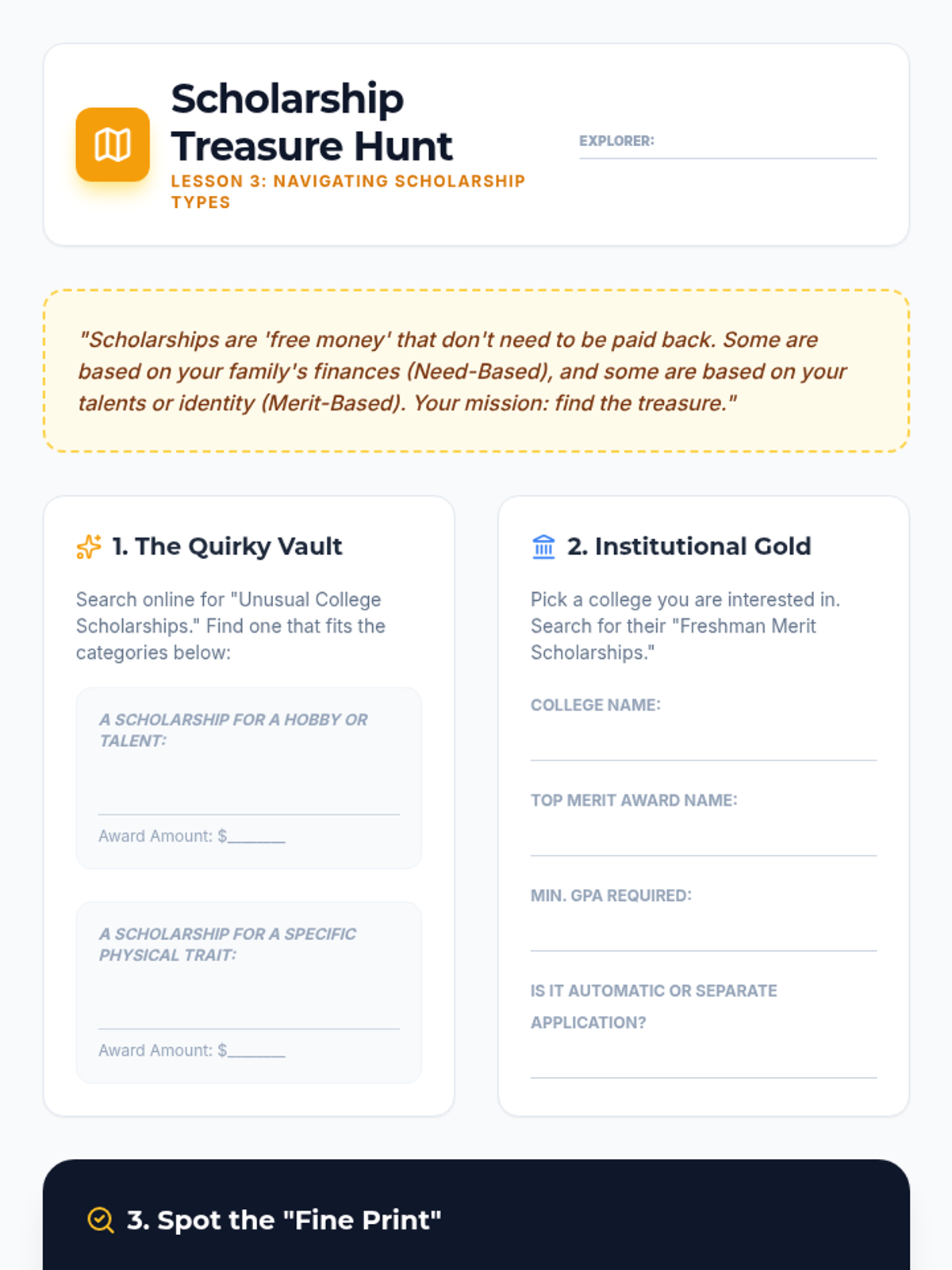
Students categorize merit-based and need-based aid, conducting research into institutional scholarships and participating in a 'Scholarship Scavenger Hunt.'
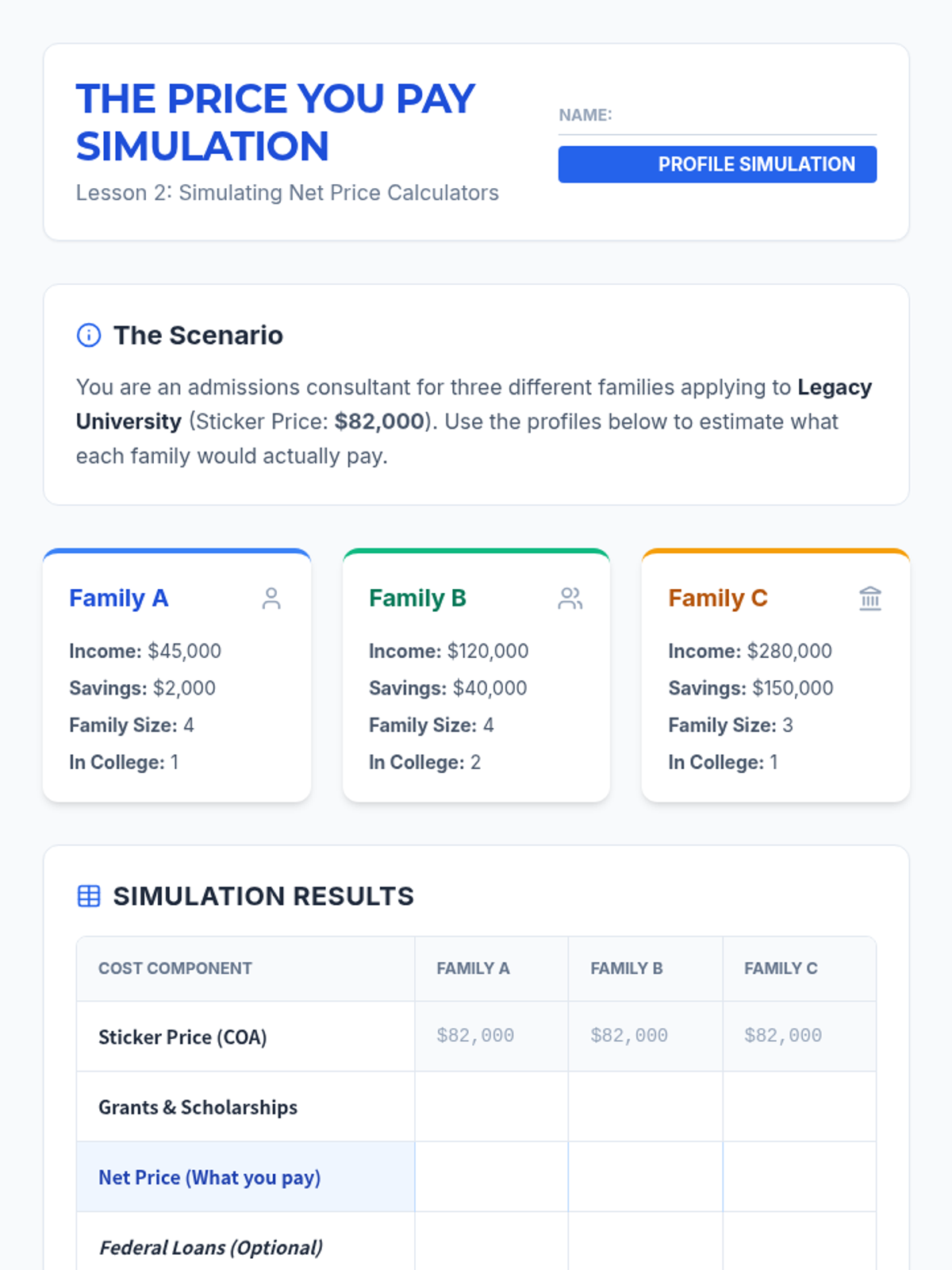
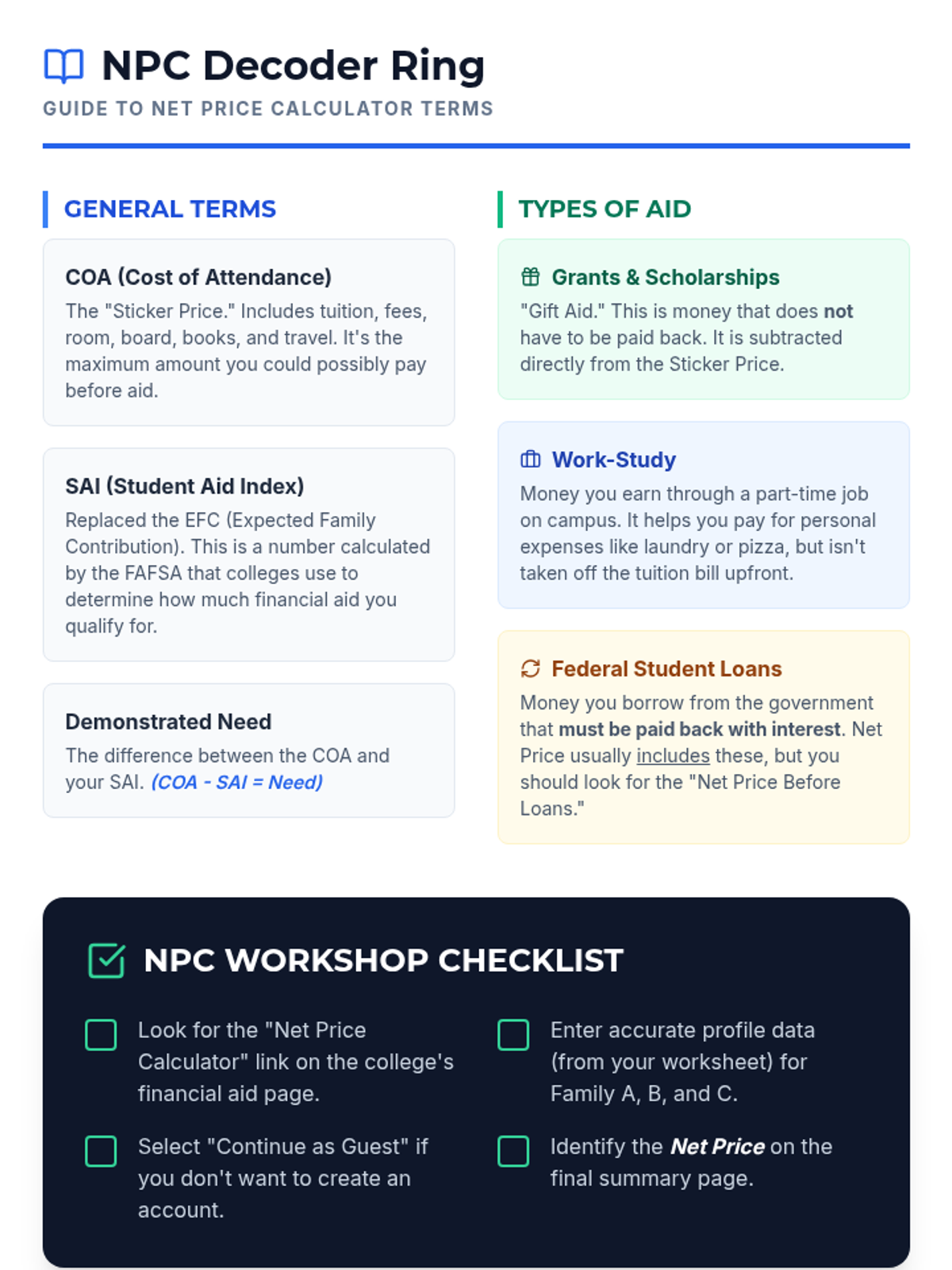
A technical workshop where students simulate the financial aid process for different family profiles using Net Price Calculators to see how individual circumstances affect college costs.
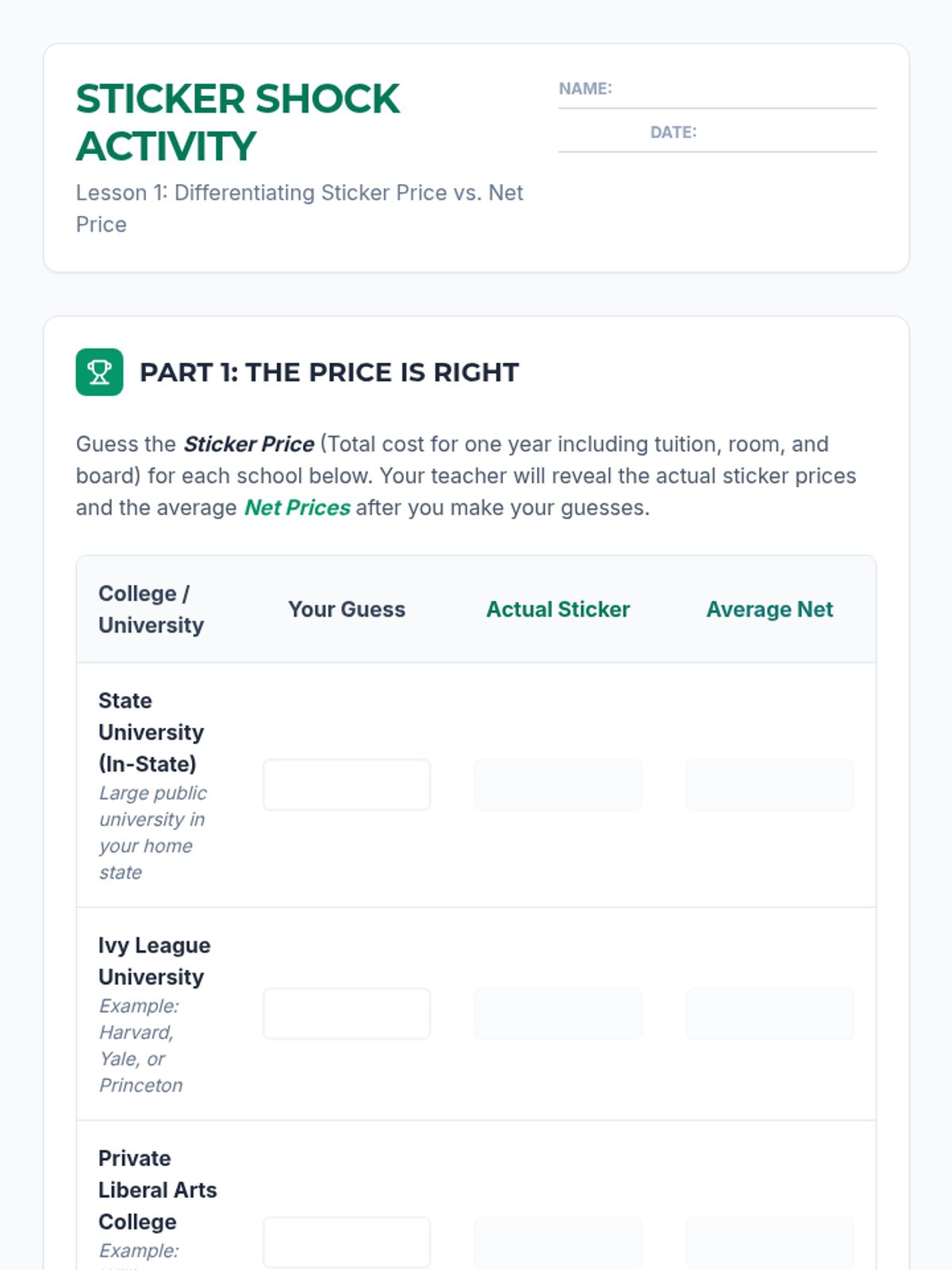
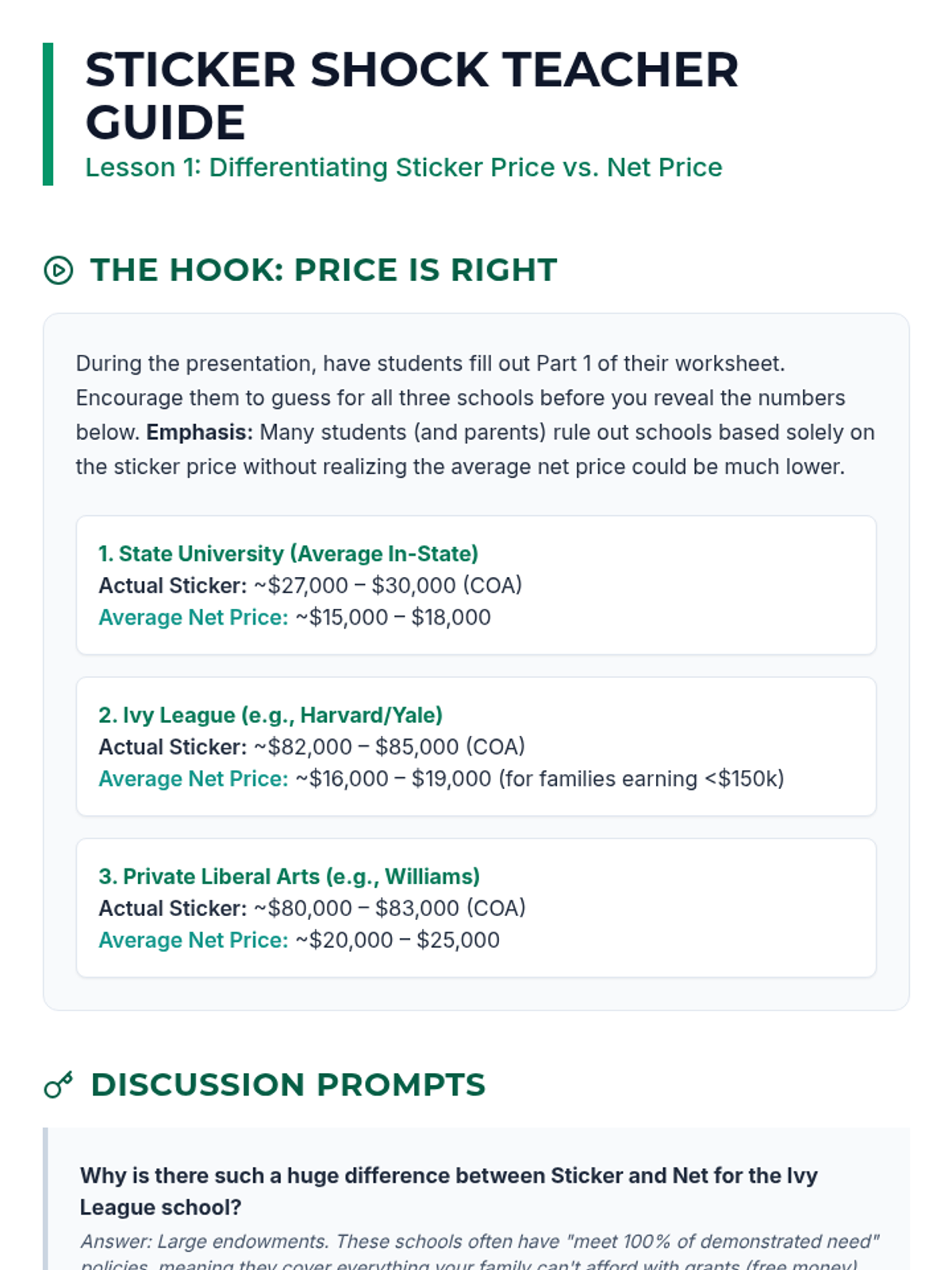
Students learn the difference between published college tuition and actual costs, exploring components like room, board, and demonstrated need through a game-based introduction.