Emotion recognition ranging from basic feelings to complex nuances and mixed states. Strengthens accurate self-assessment through identity exploration, strength identification, and values-based decision making.
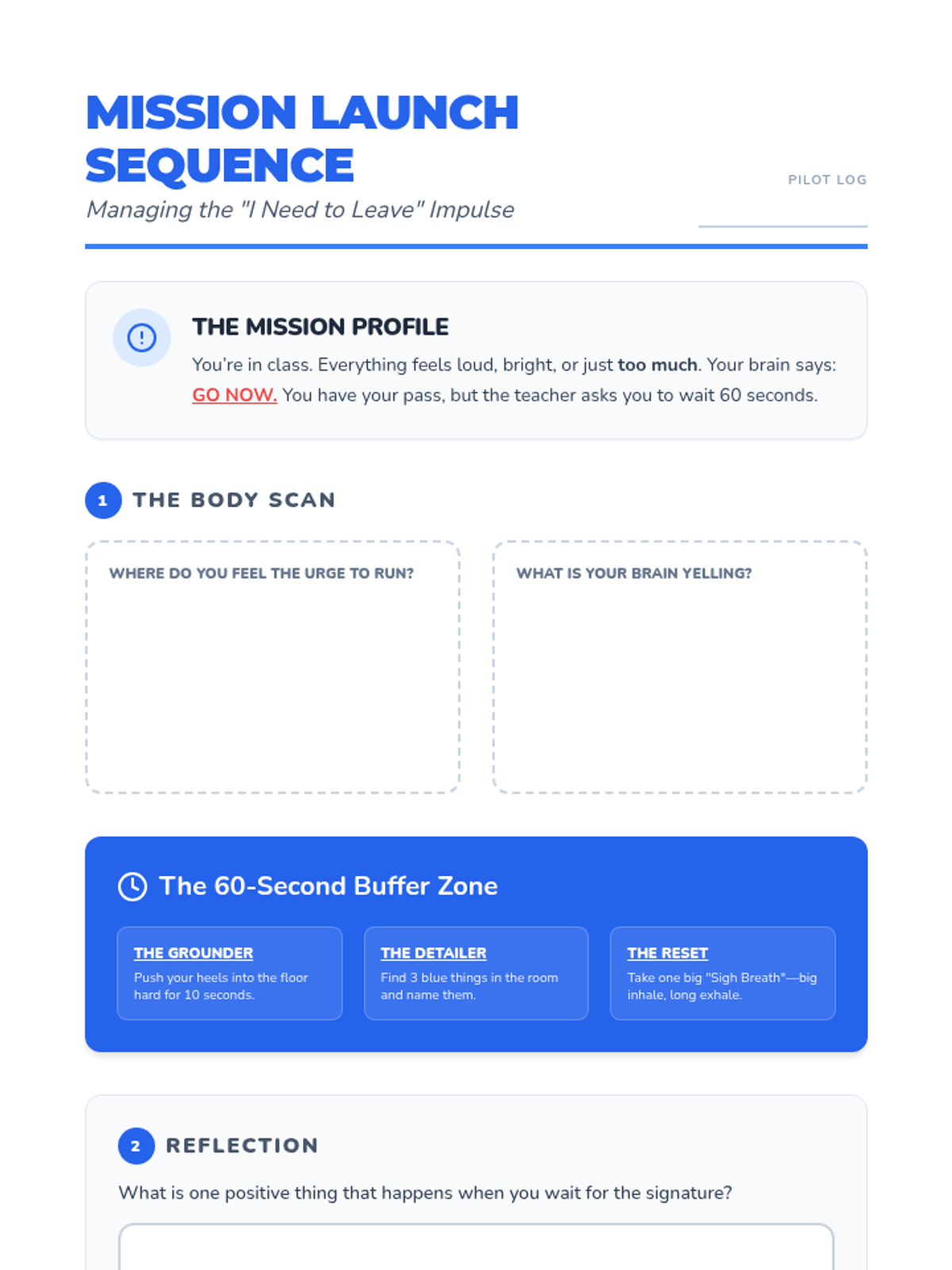
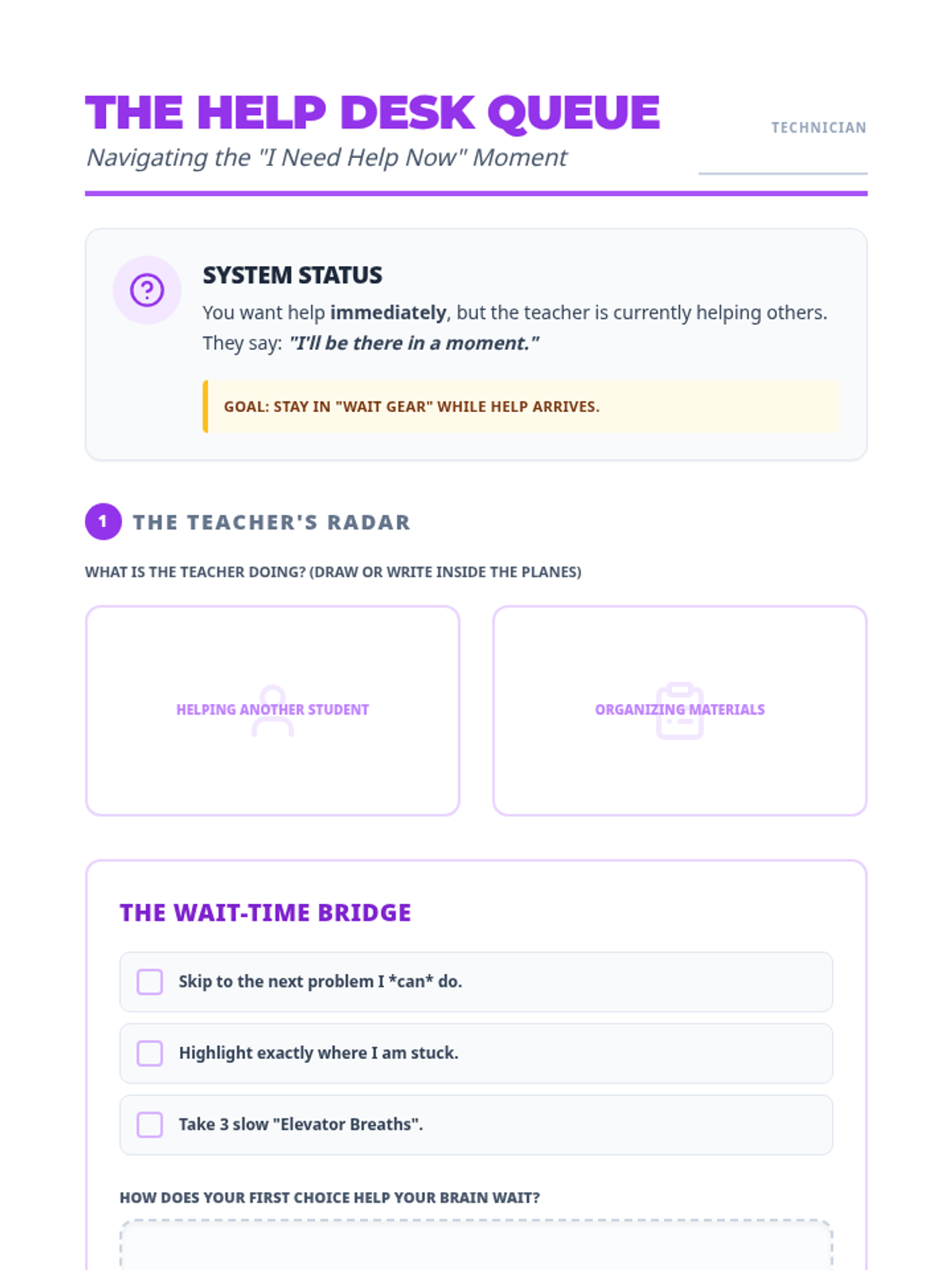
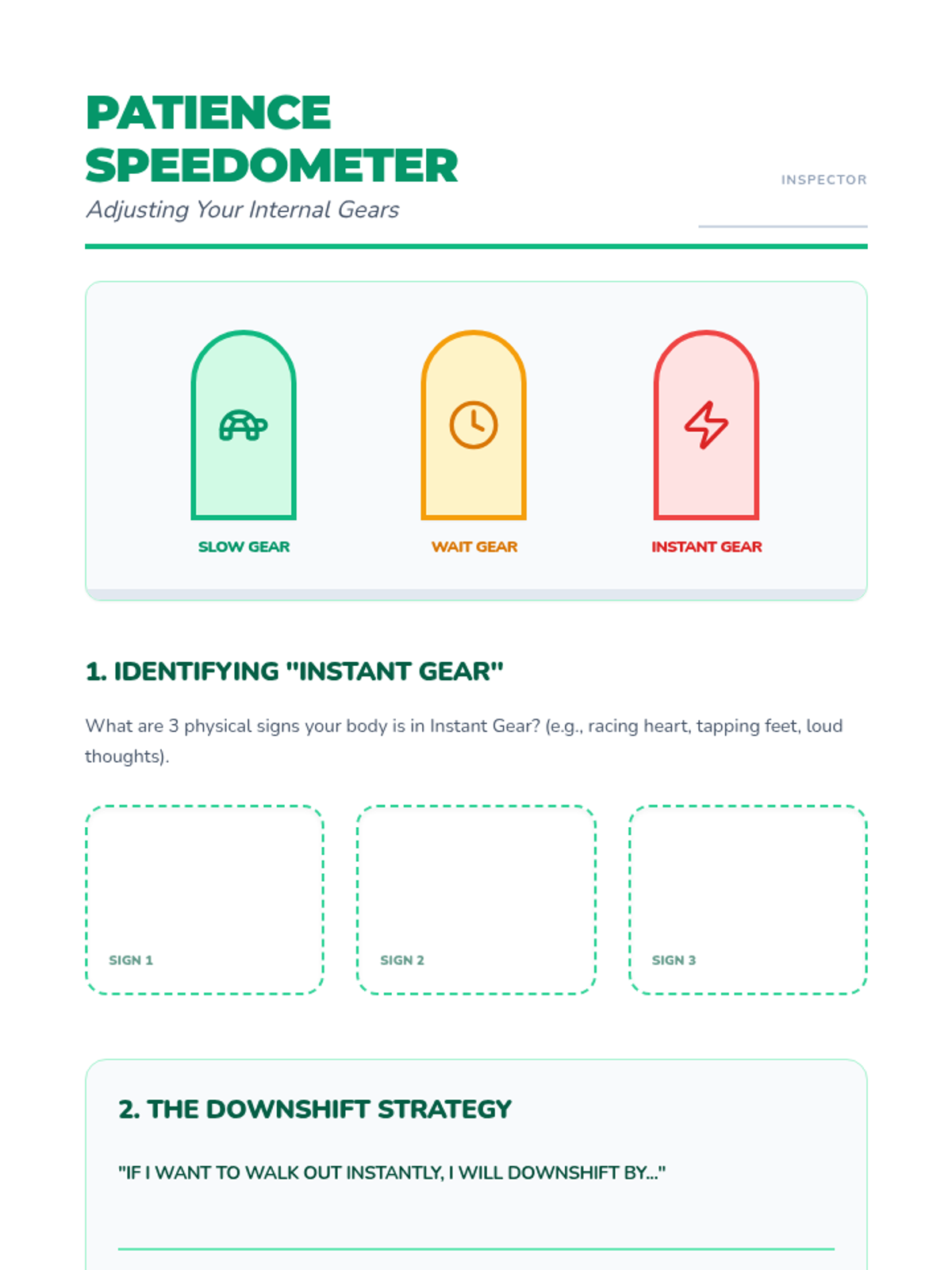
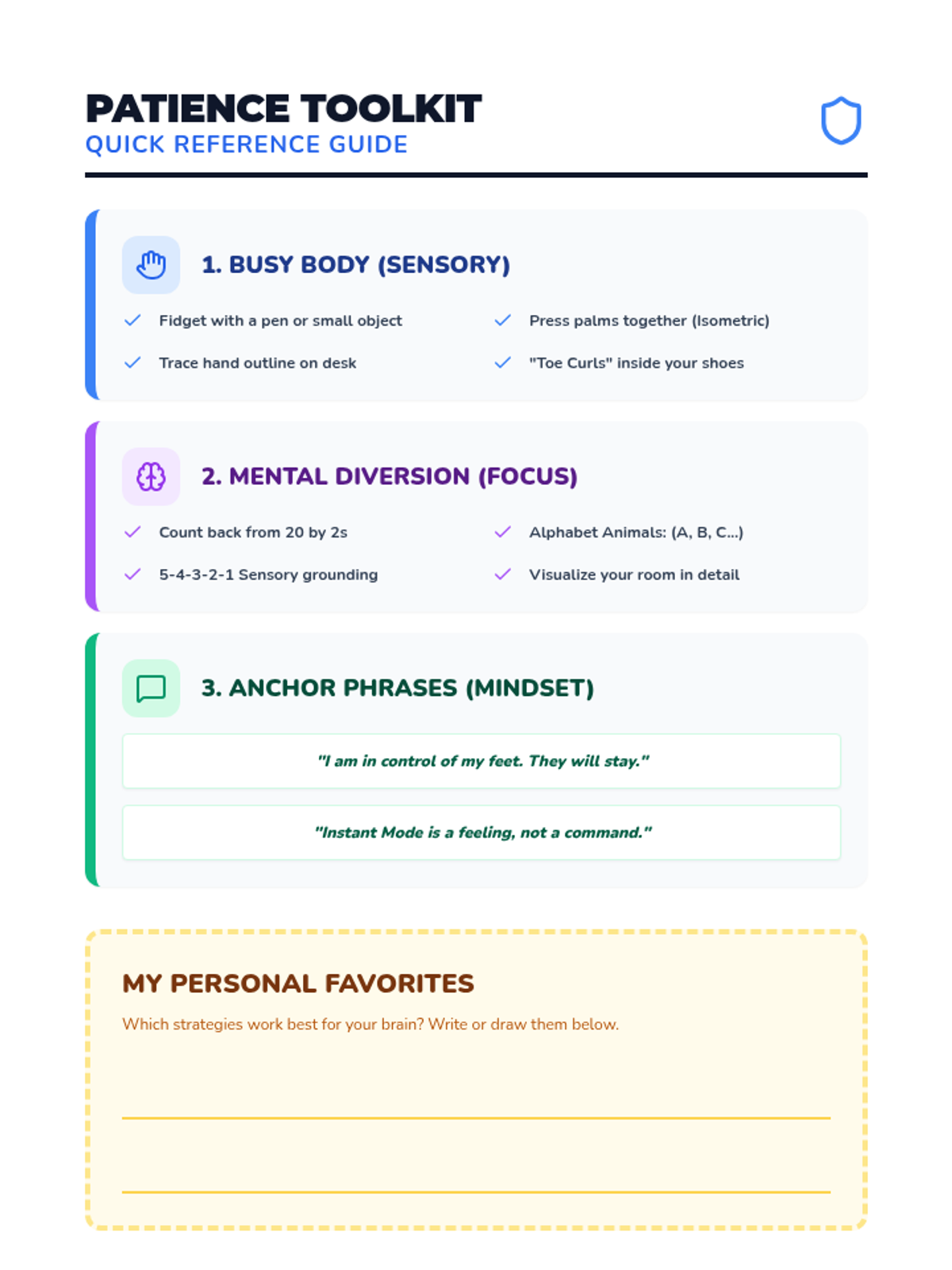
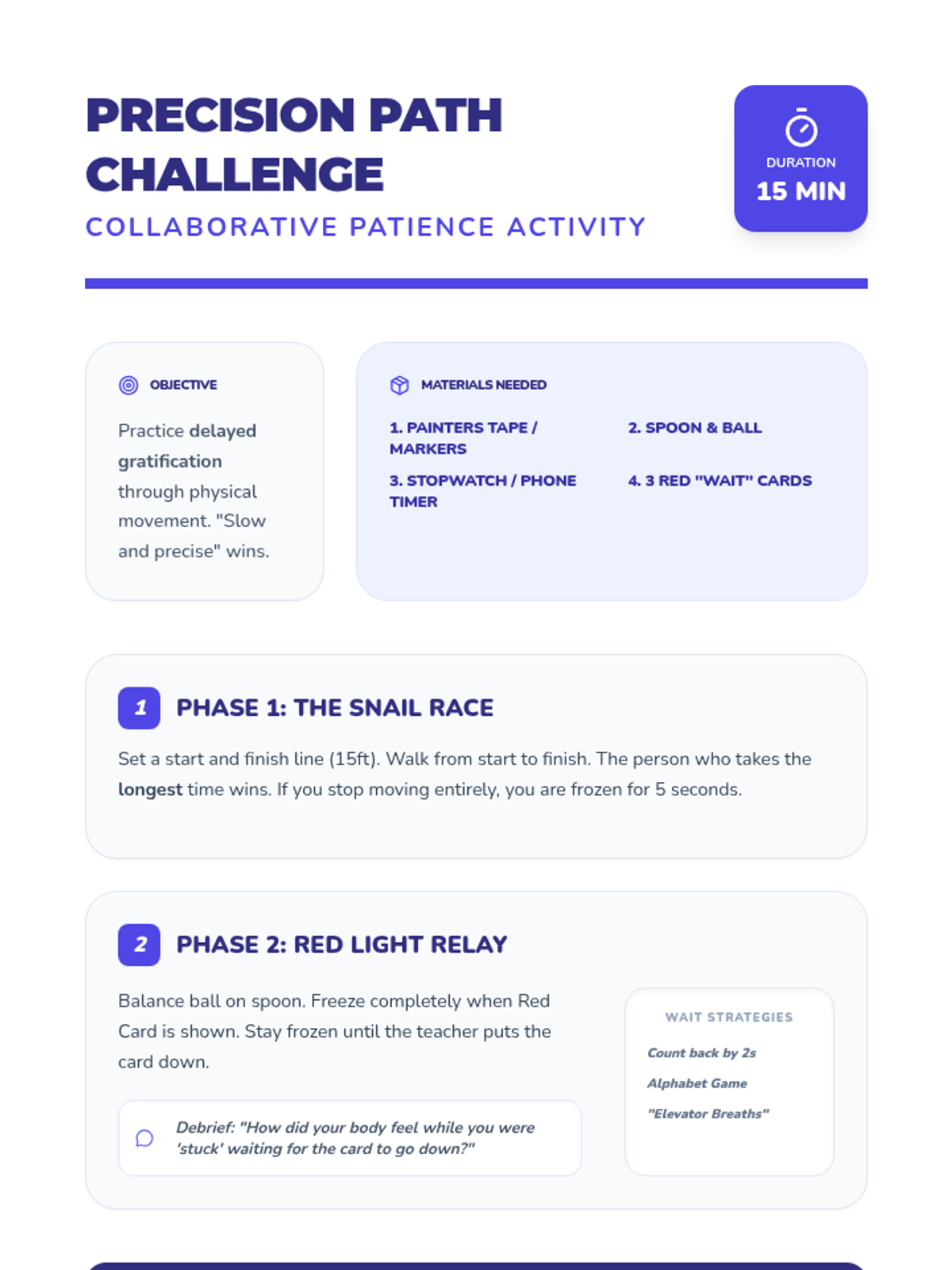
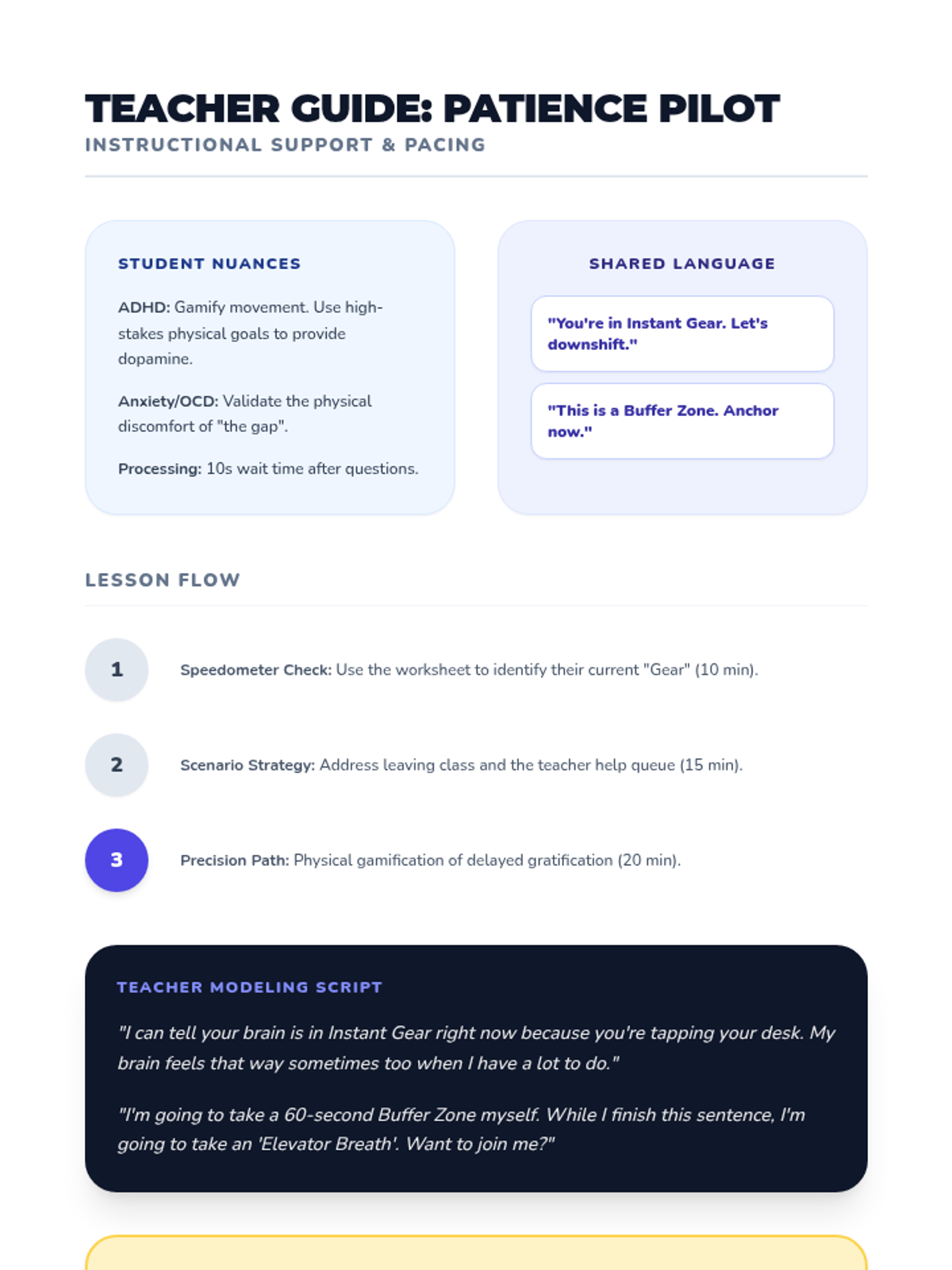
This lesson introduces the concept of the 'Waiting Gap' and provides practical tools for managing the physical and emotional urge to act instantly. Includes worksheets on specific classroom scenarios and a movement-based activity for building delayed gratification.
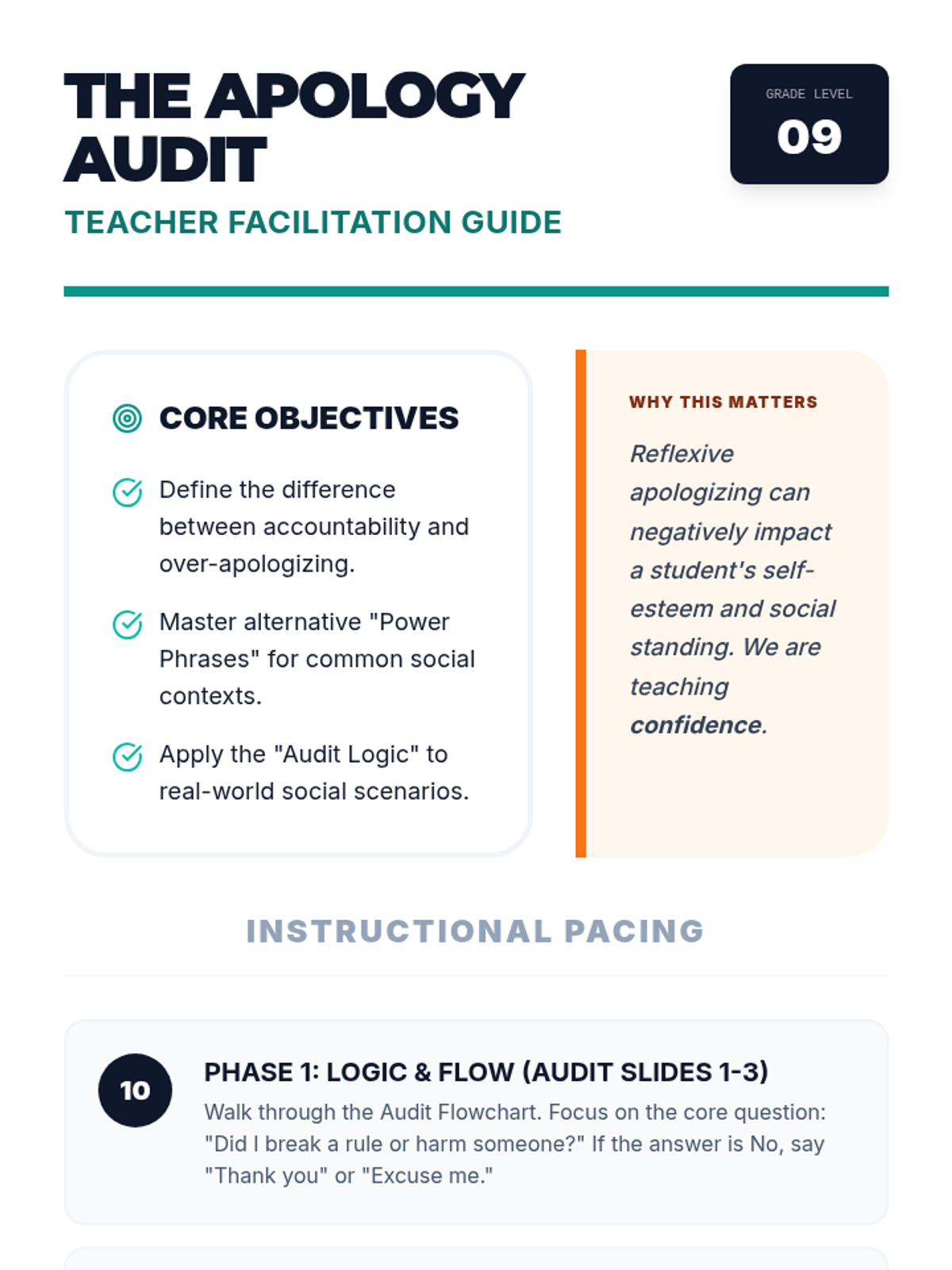
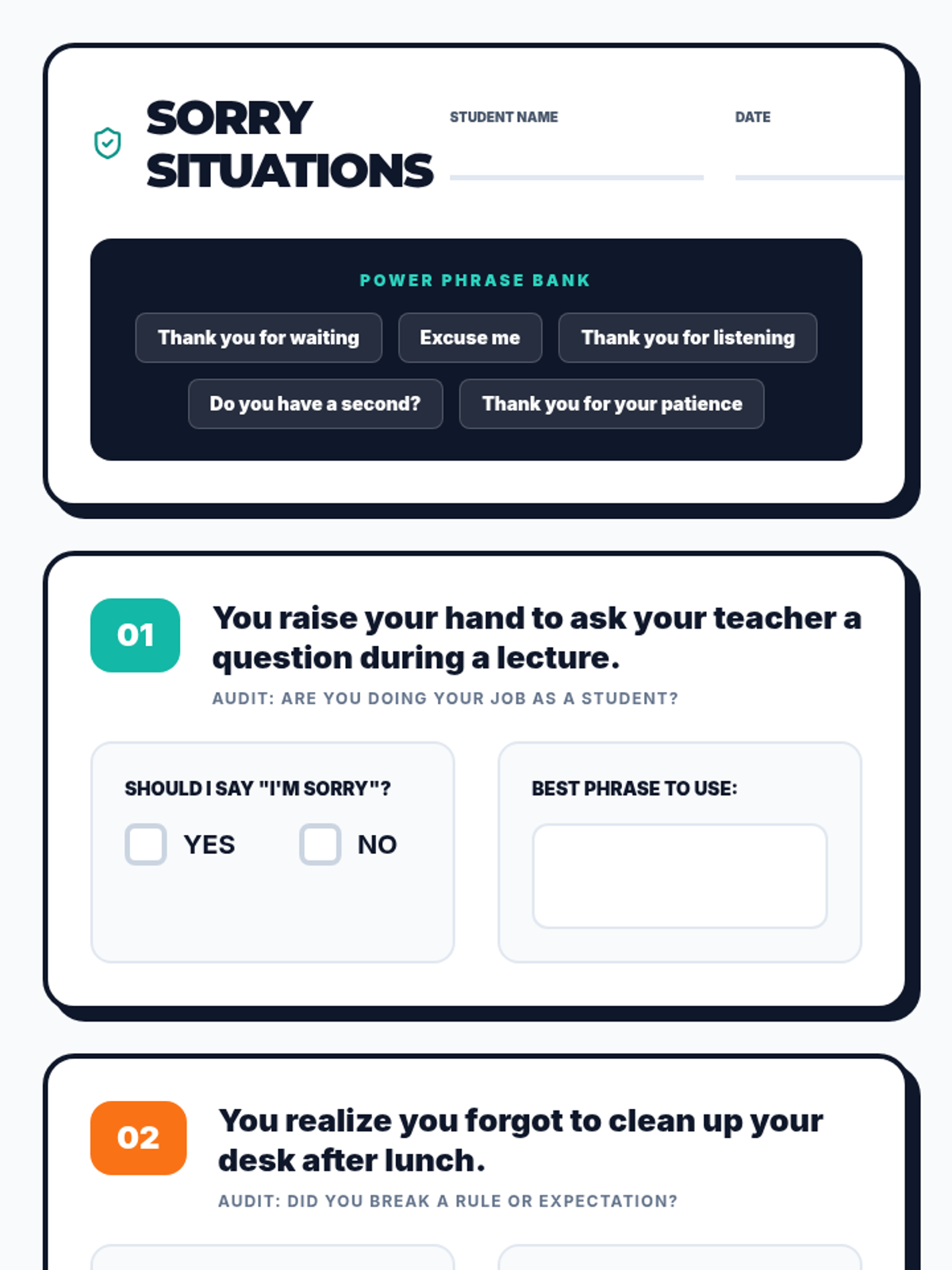
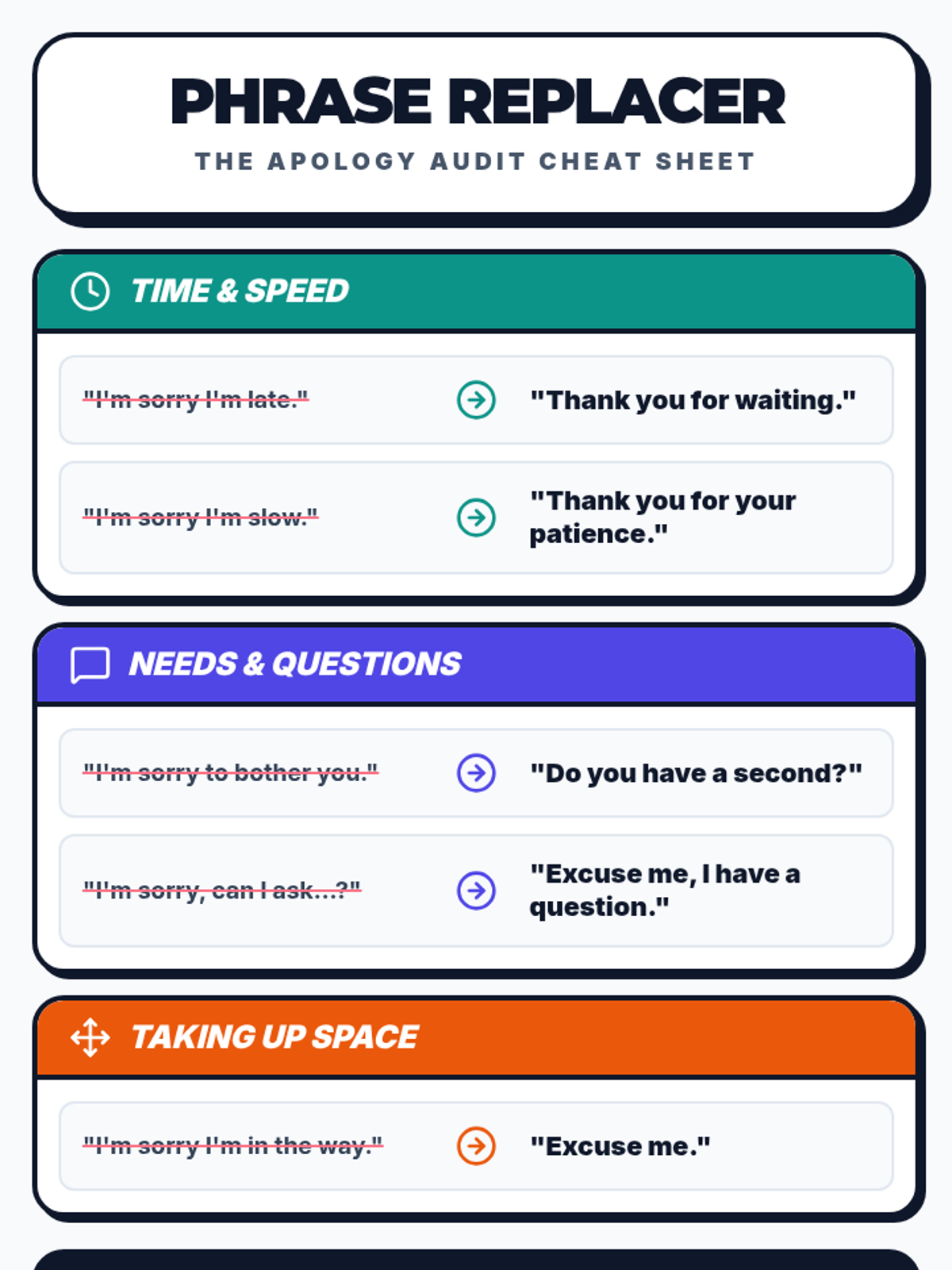
A lesson designed for high school students to differentiate between appropriate apologies and over-apologizing, featuring social scripts and alternative communication strategies.
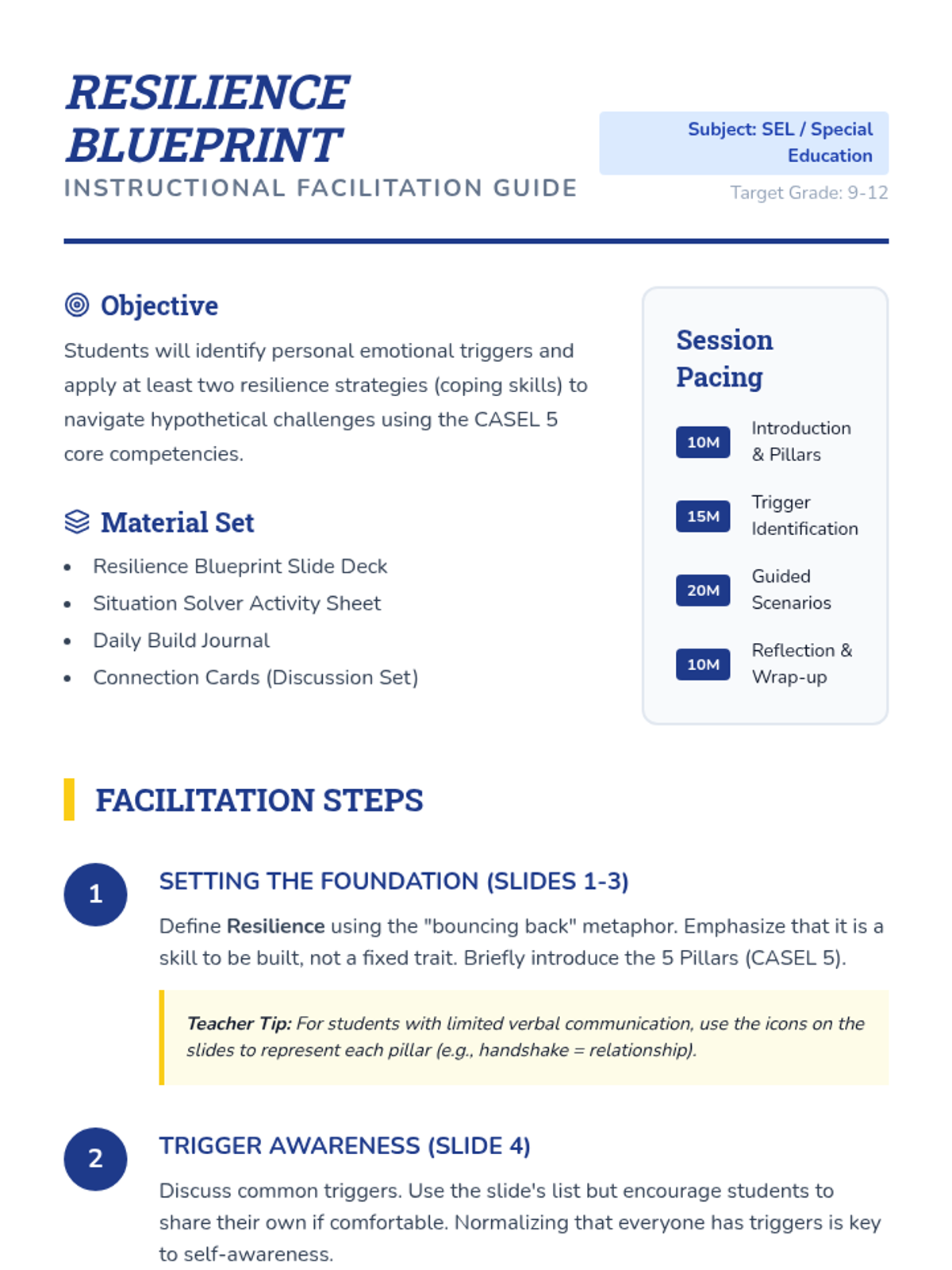
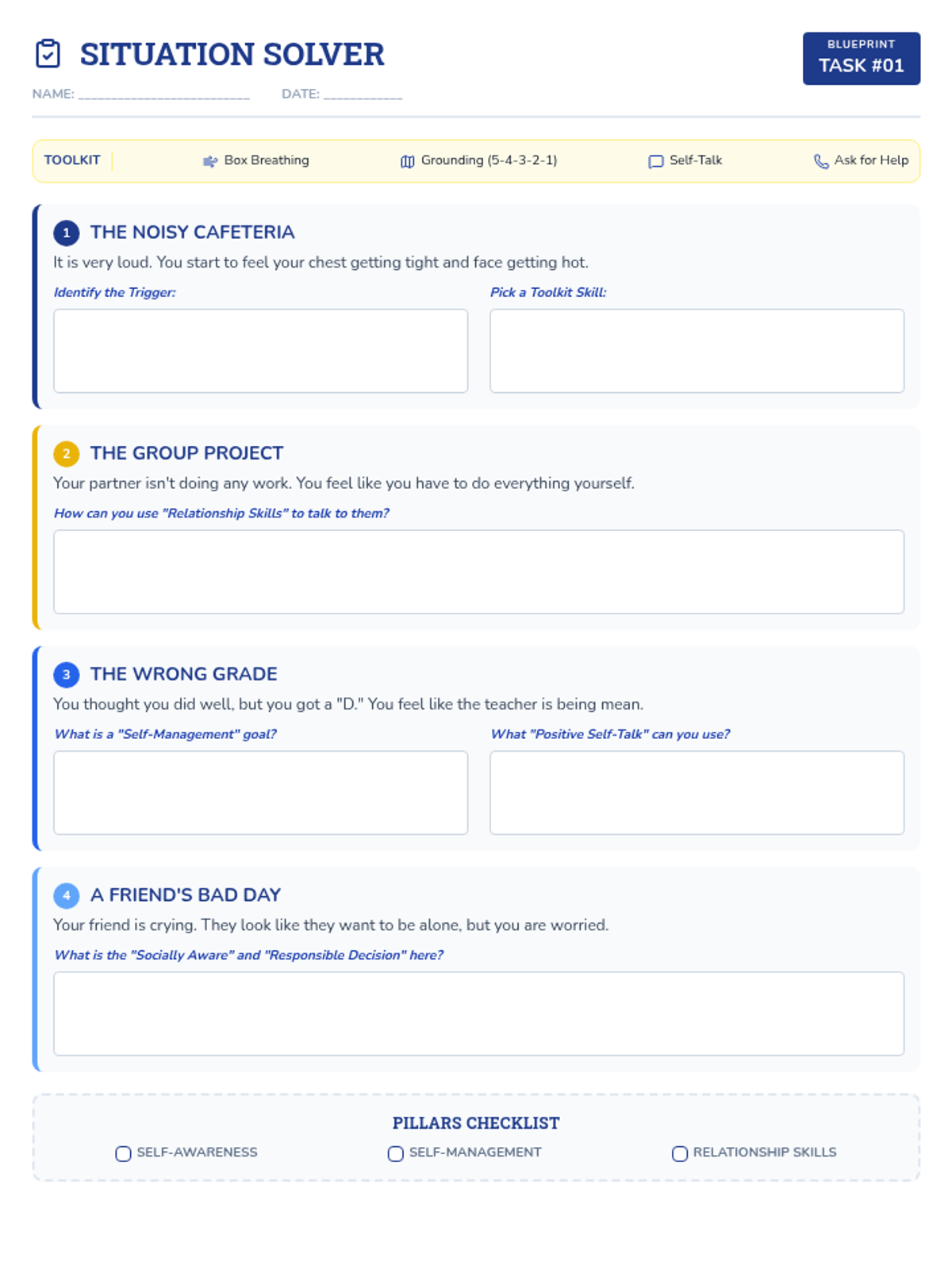
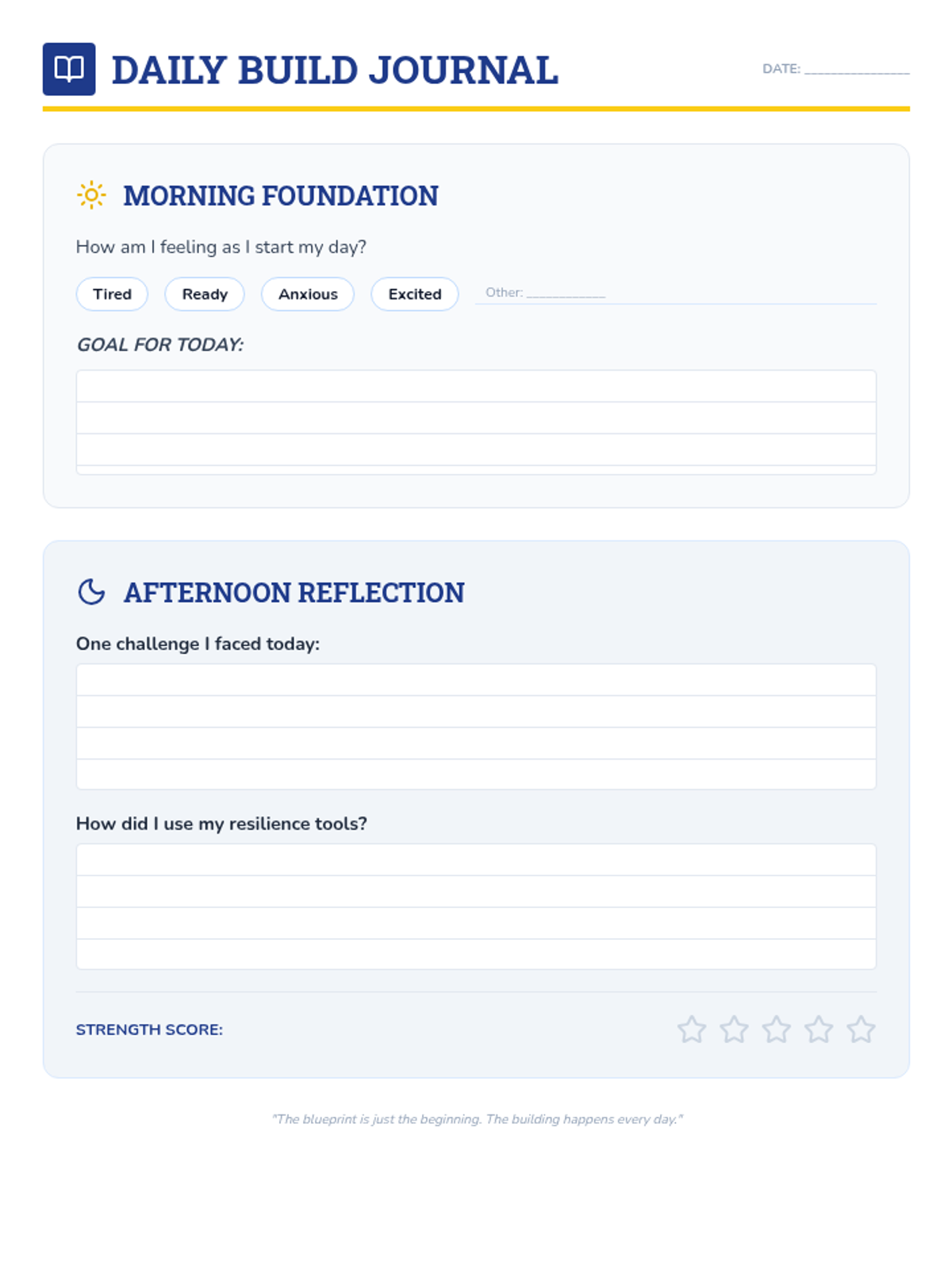
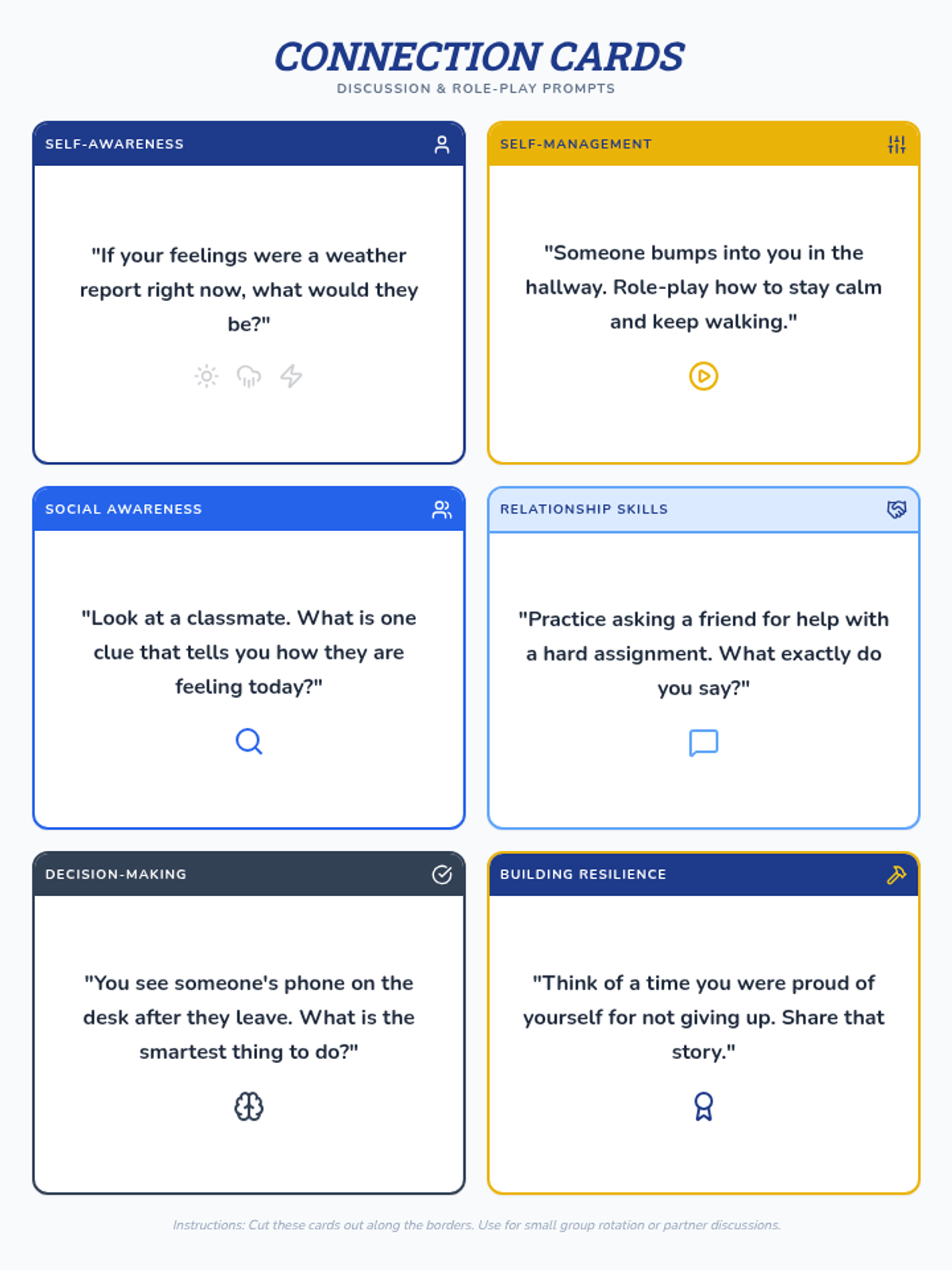
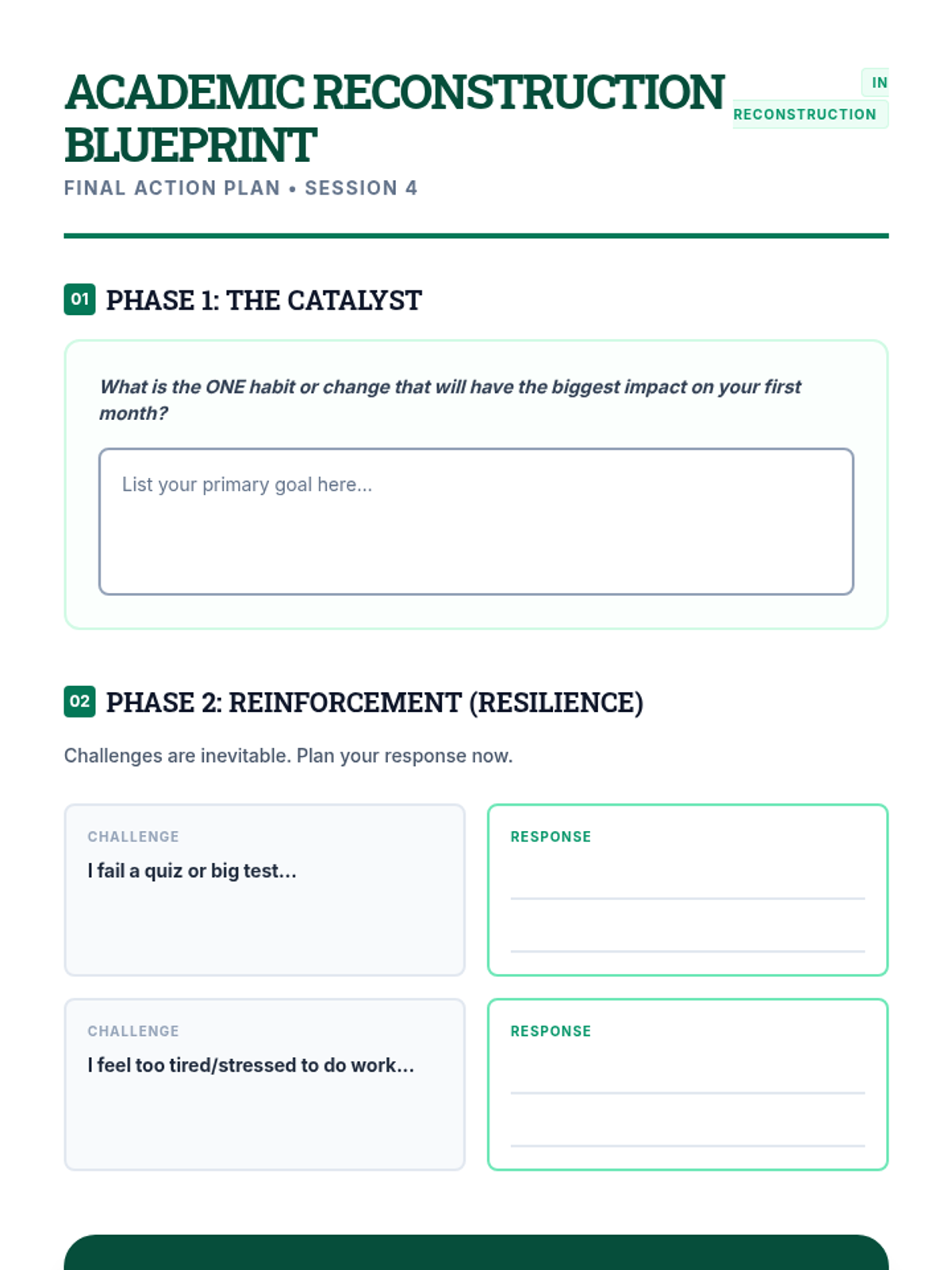
This lesson focuses on building the five core SEL competencies through a 'Blueprint' metaphor, helping high school students in special education develop resilience, self-awareness, and relationship skills. Students will explore emotional triggers, coping strategies, and responsible decision-making through guided instruction and interactive reflection.
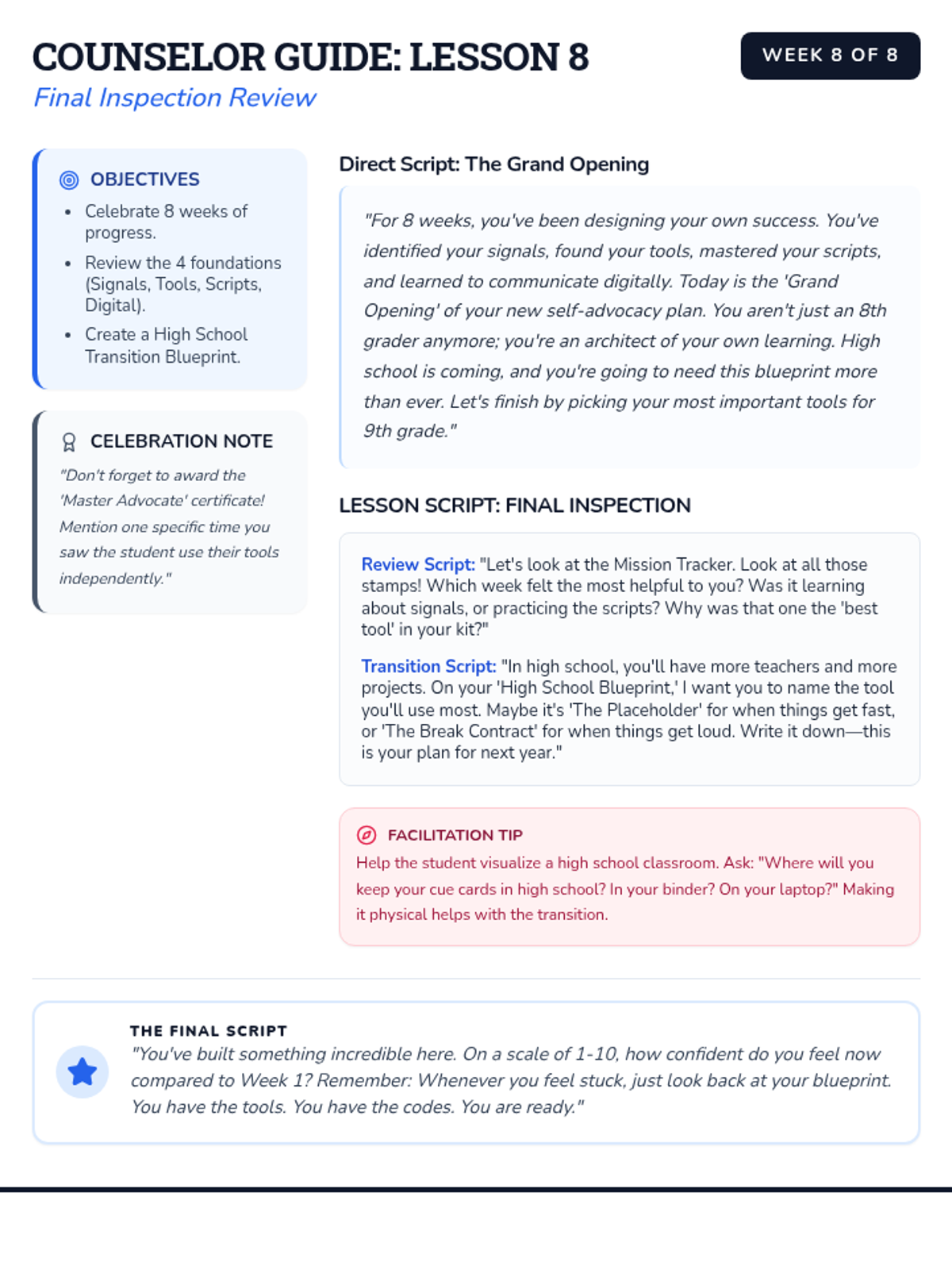
Reviewing progress, finalizing the personal advocacy plan, and celebrating growth.
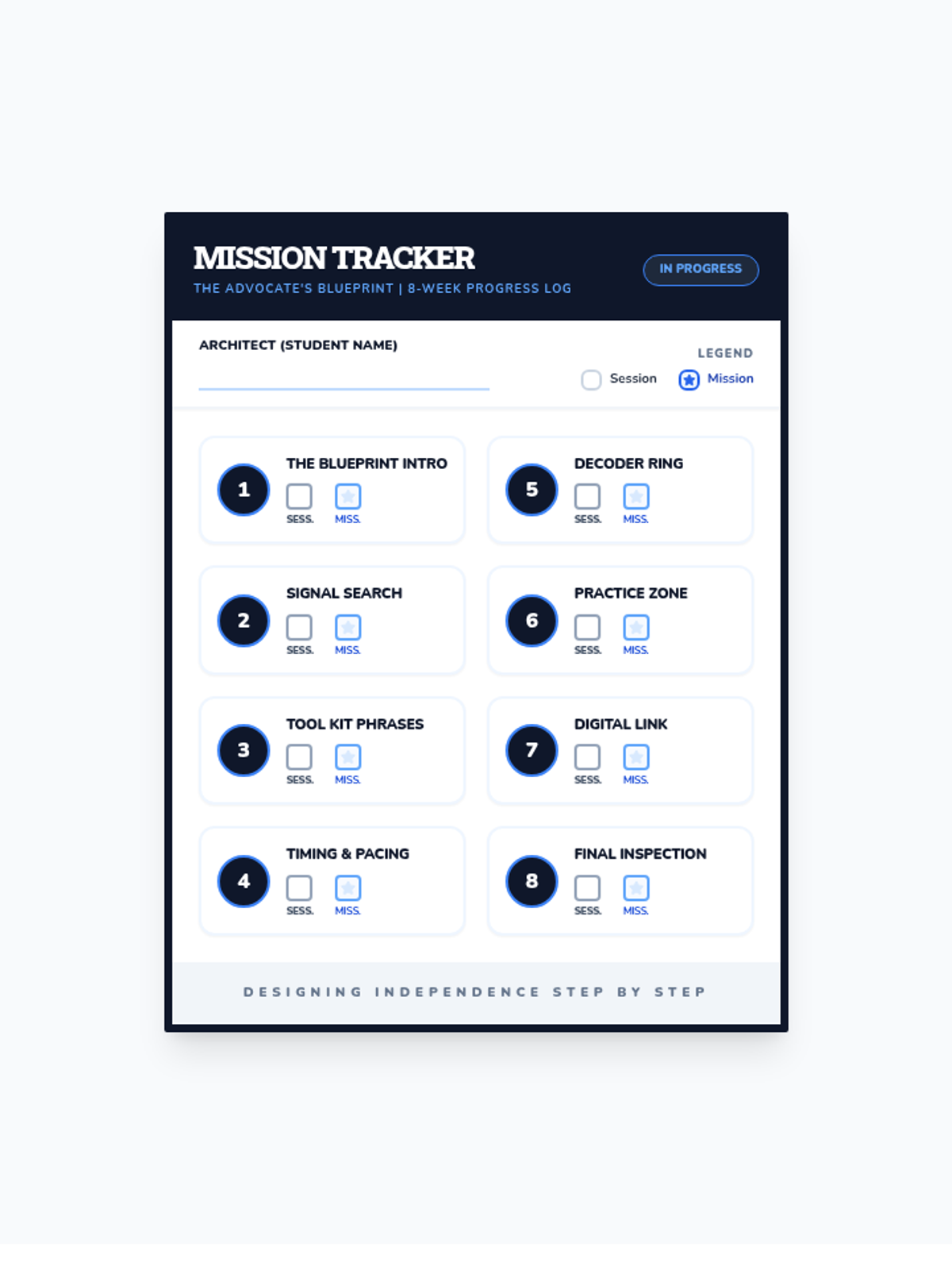
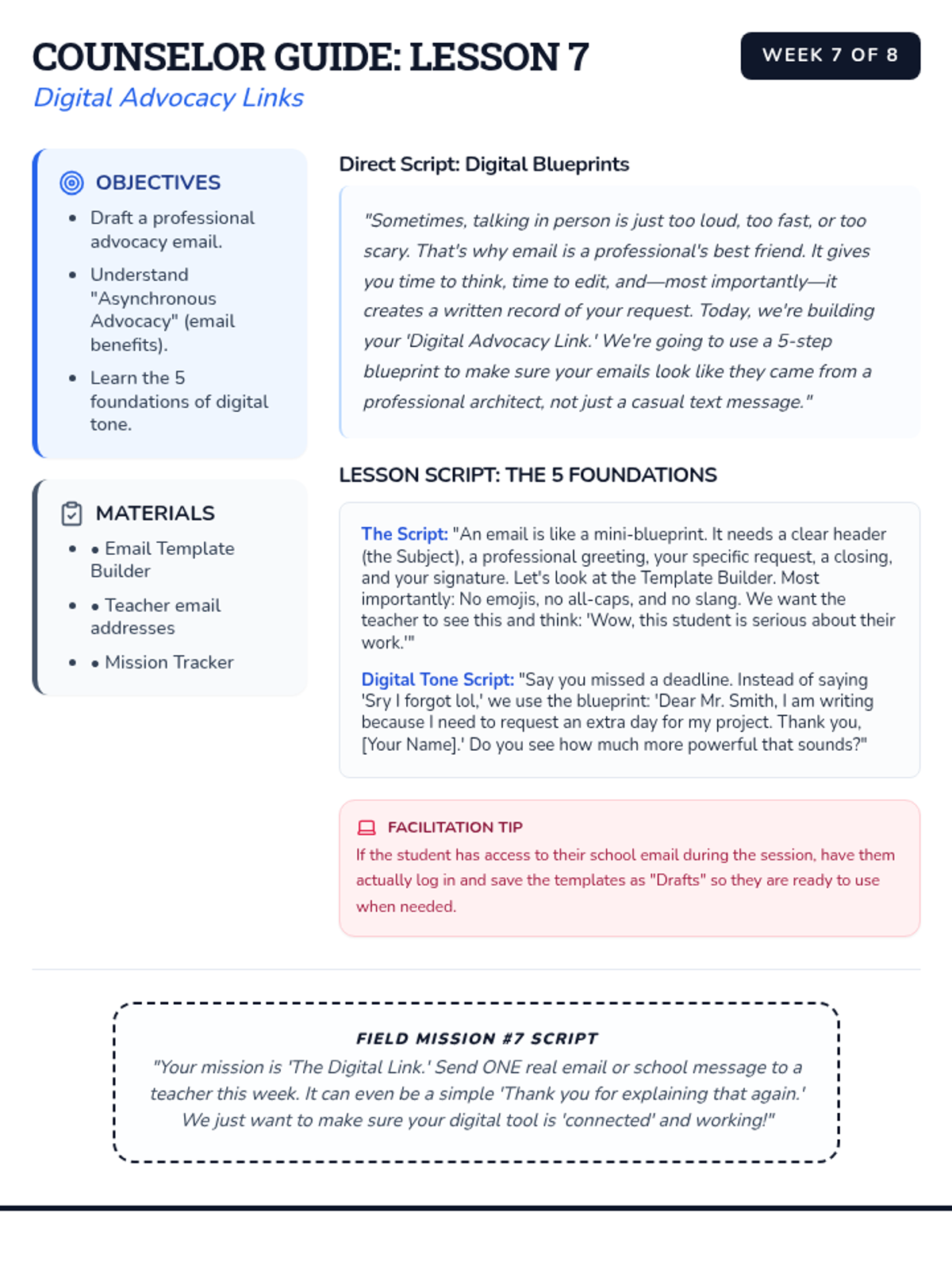
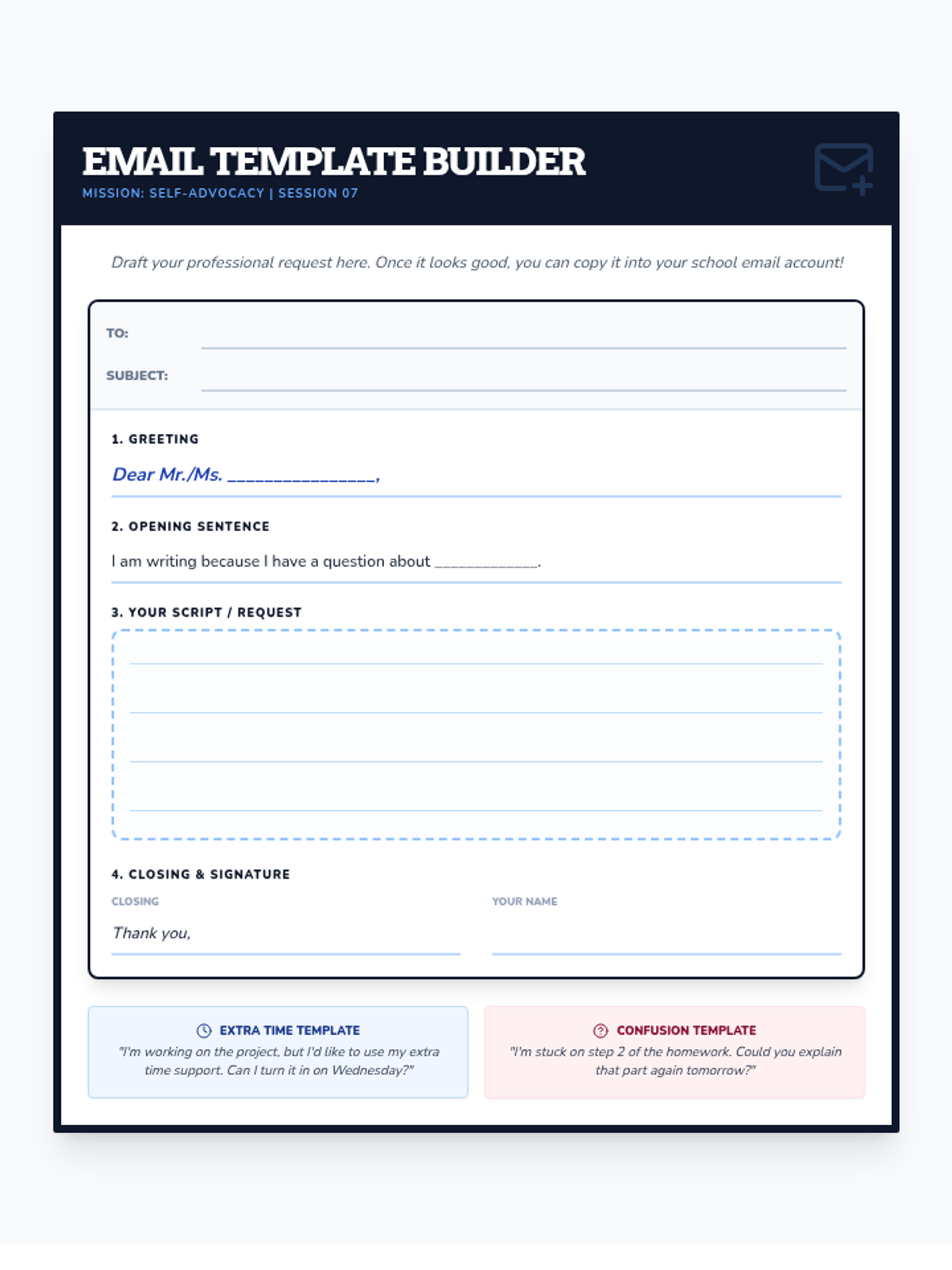
Learning how to professionally request help and tools via email or school messaging systems.
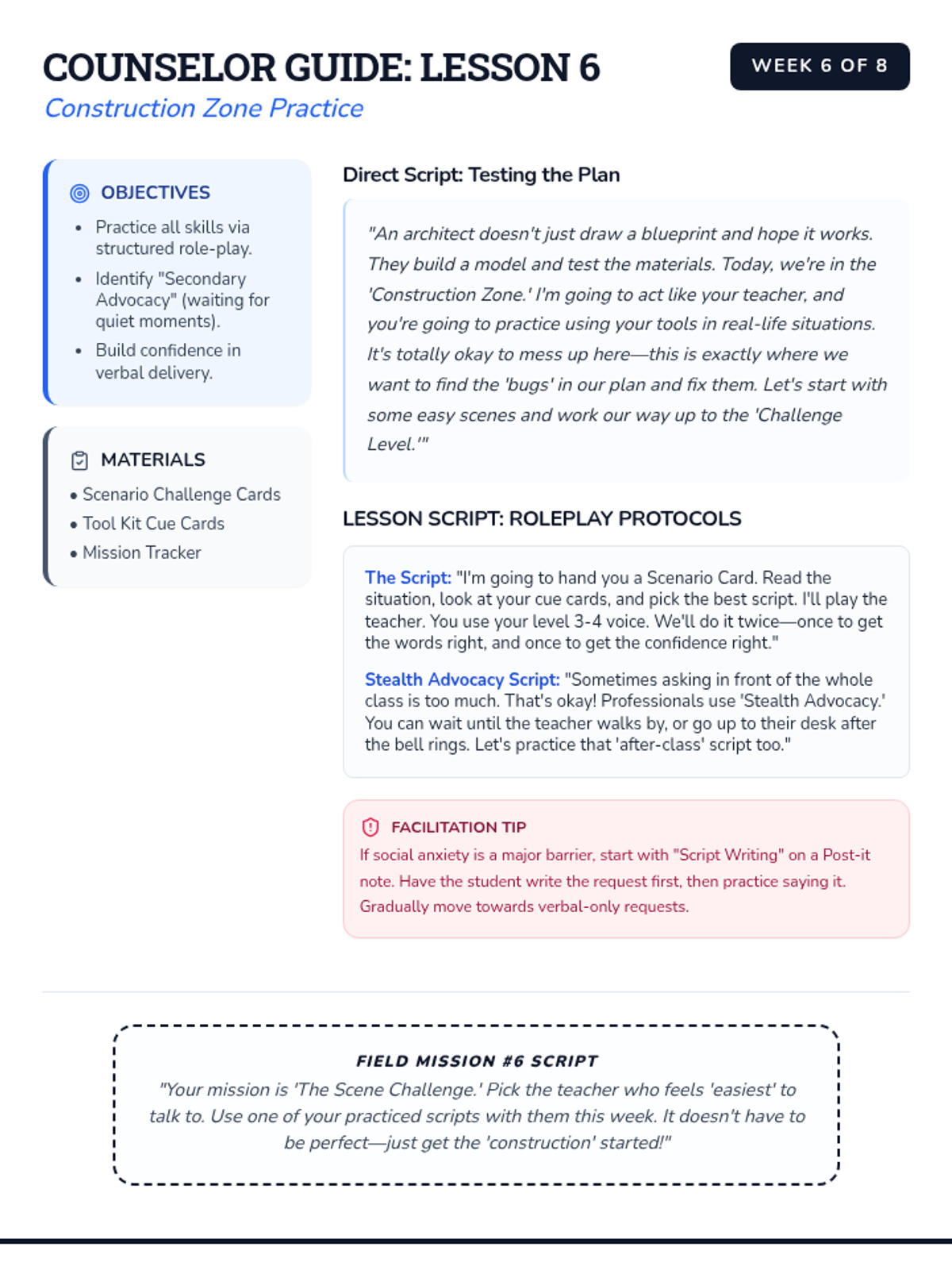
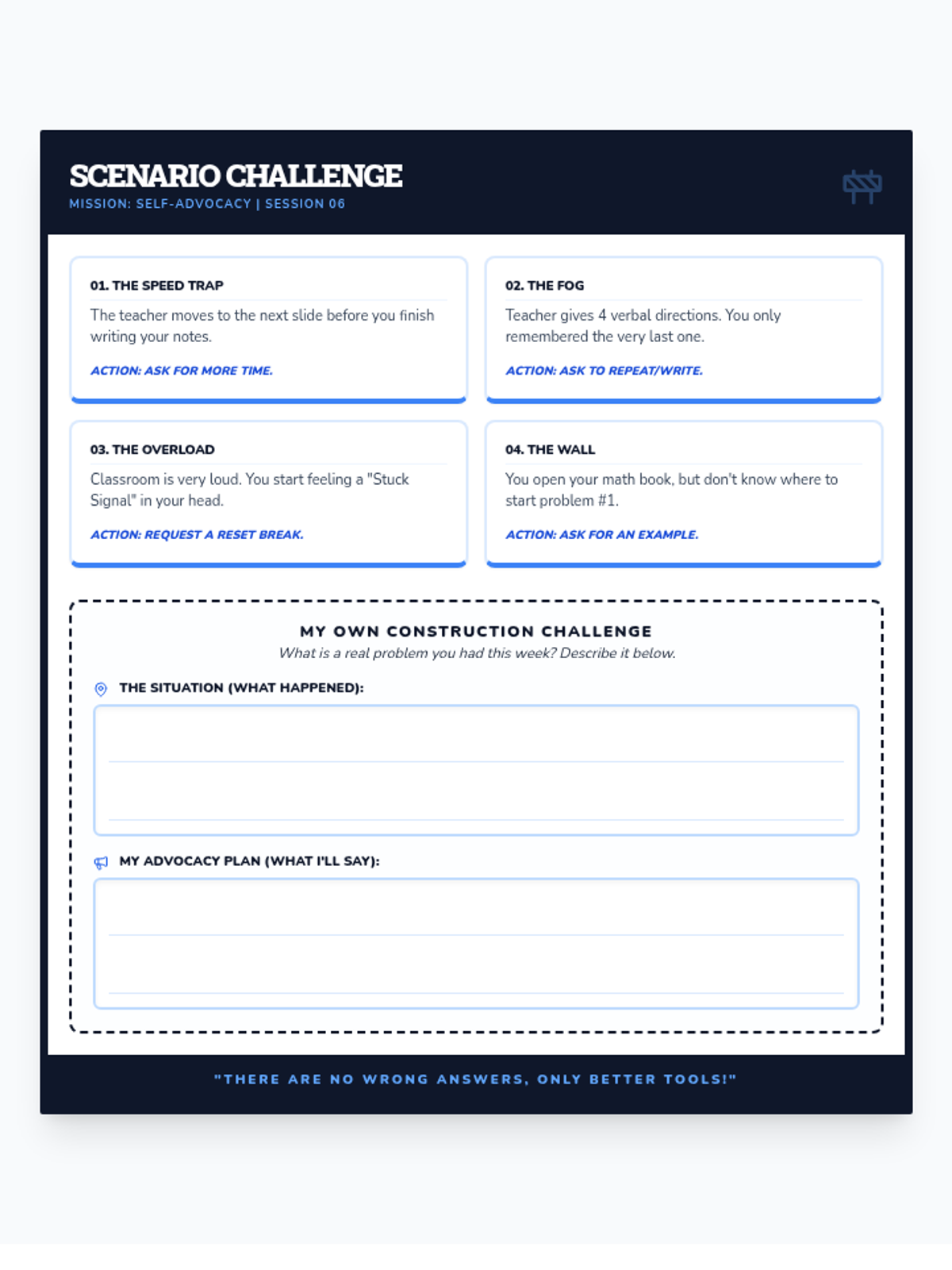
Practicing self-advocacy scripts through structured role-play in various school scenarios.
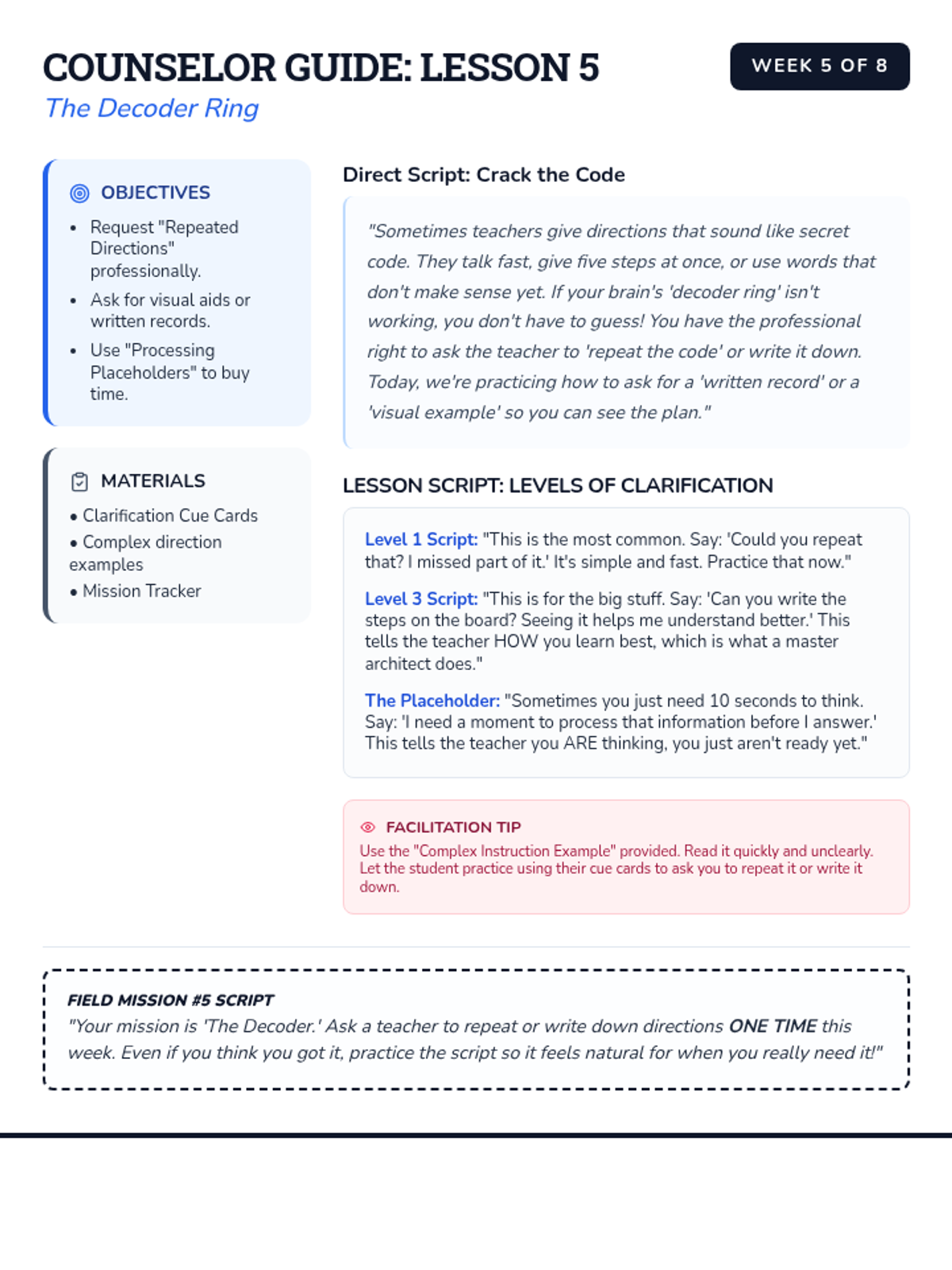
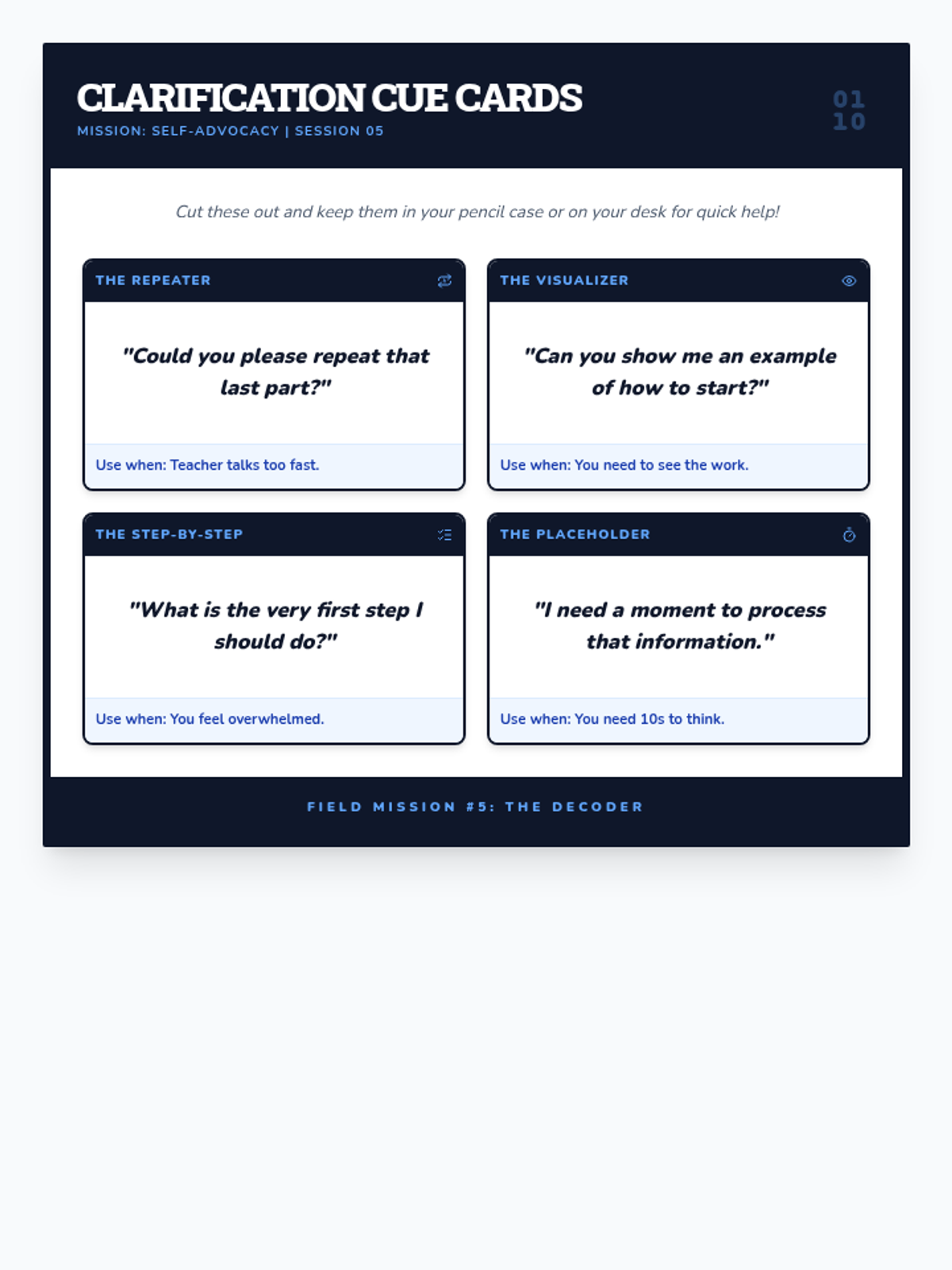
Techniques for asking teachers to repeat directions or simplify complex instructions.
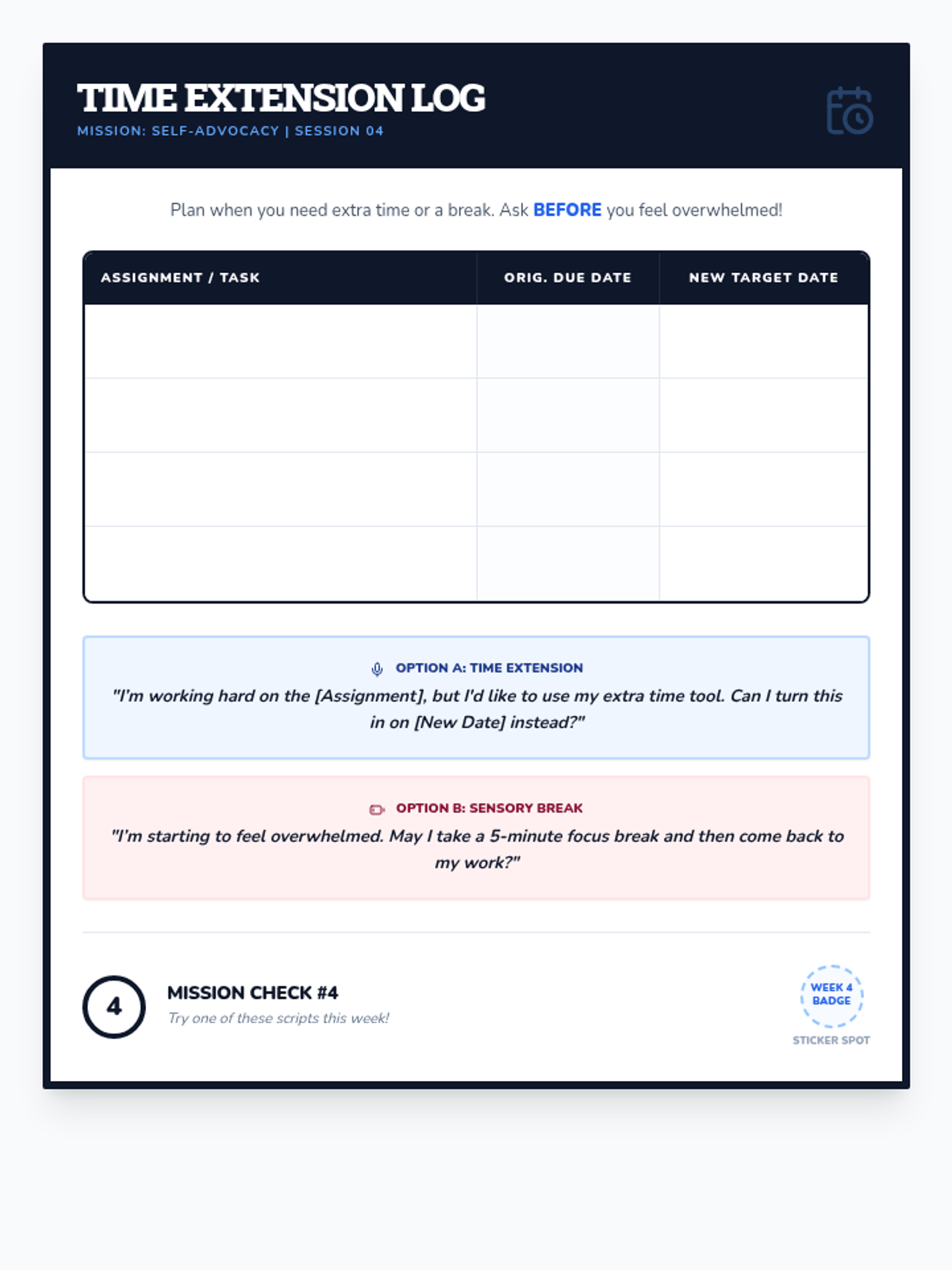
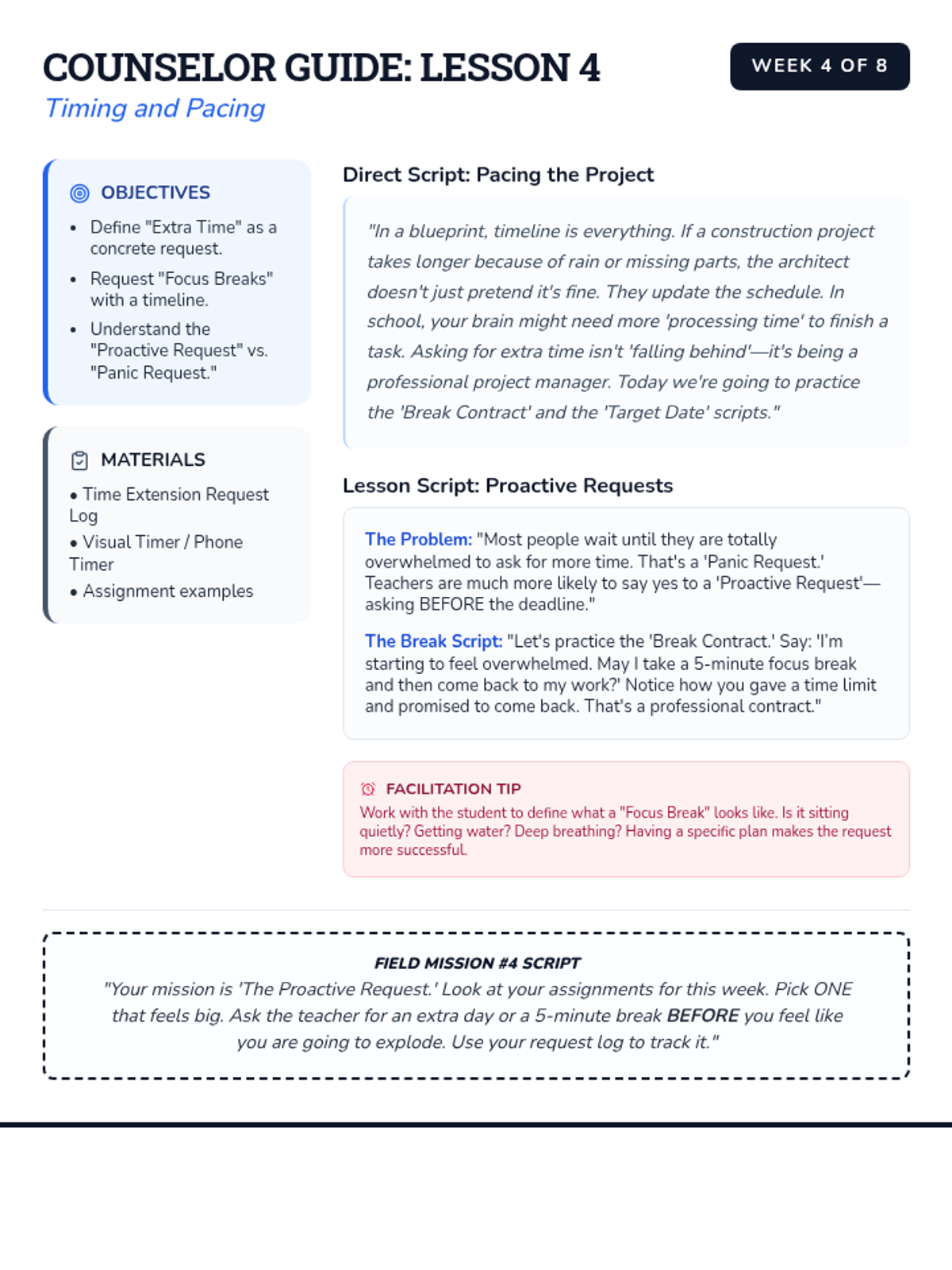
Focusing on self-advocating for time-based tools like extra time or short breaks.
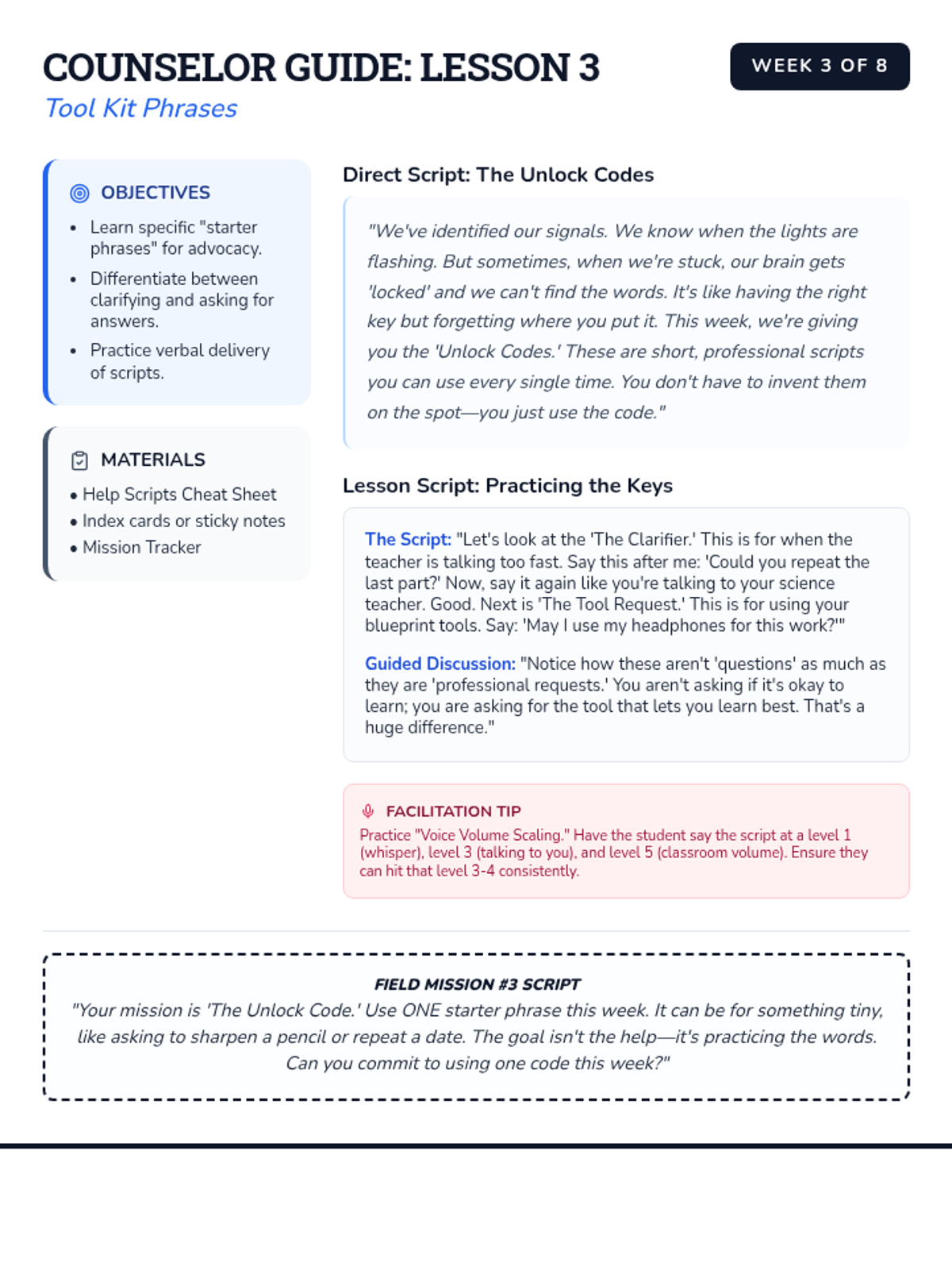
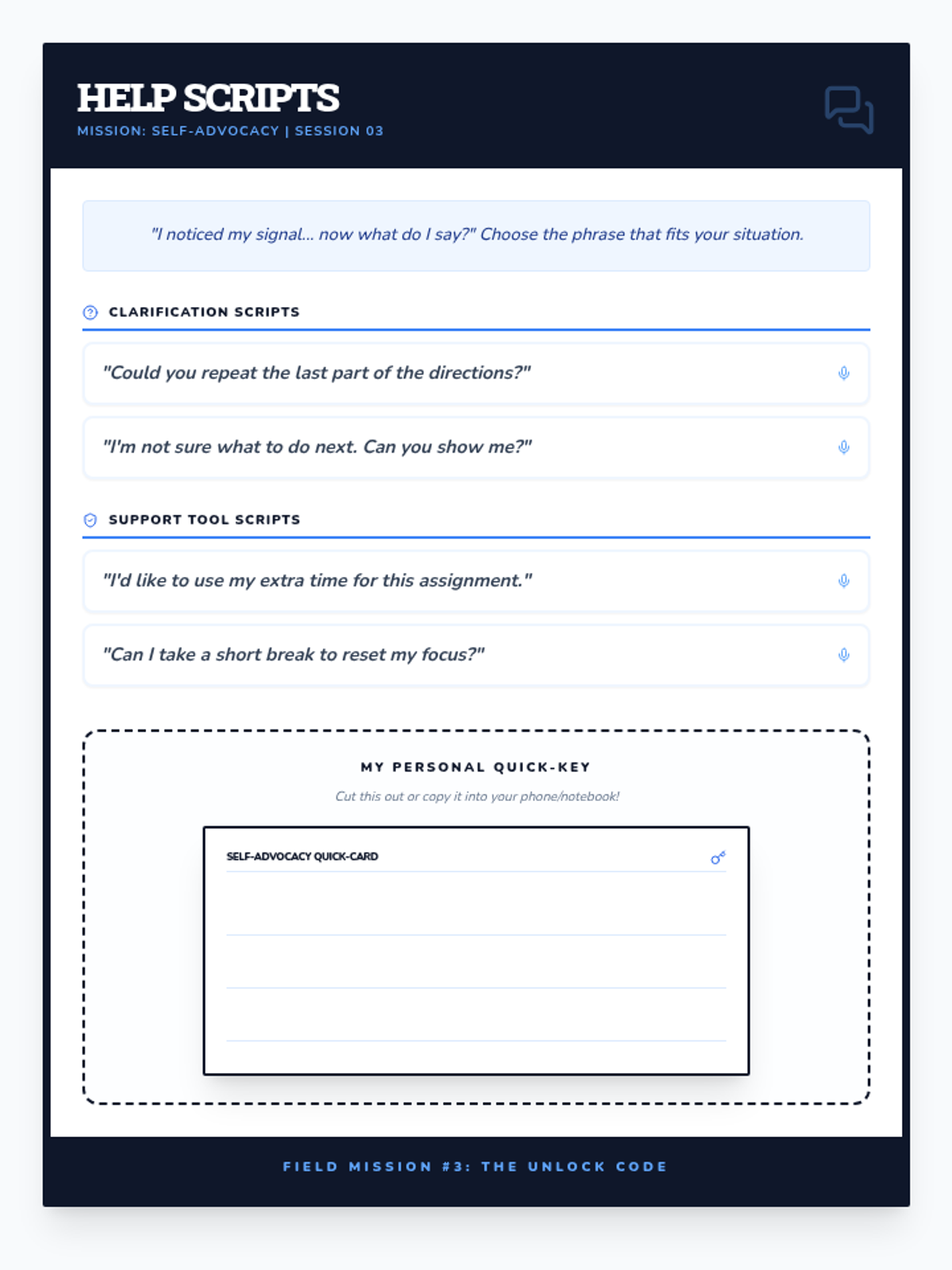
Building a collection of specific scripts and phrases for asking for help and clarification.
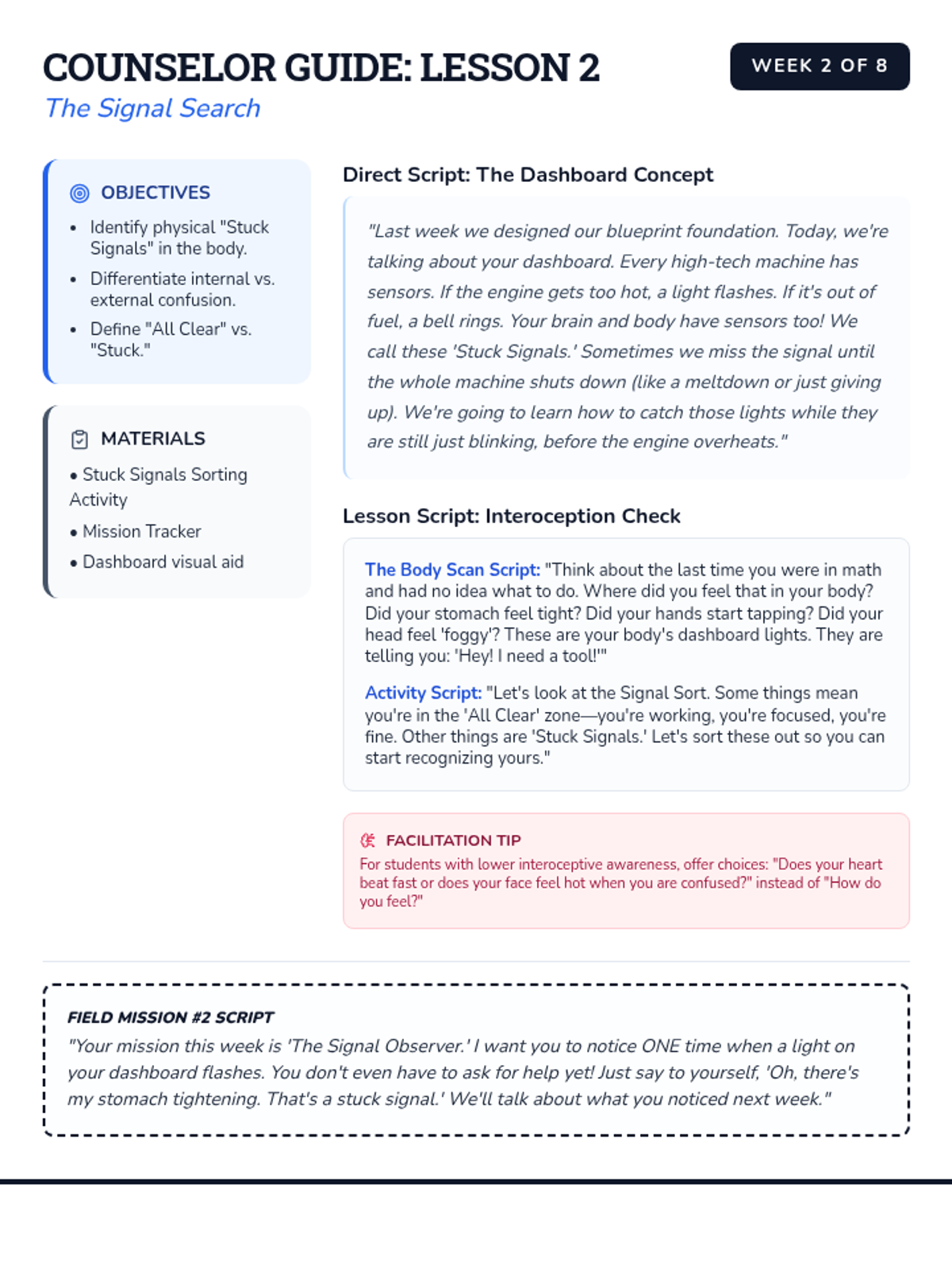
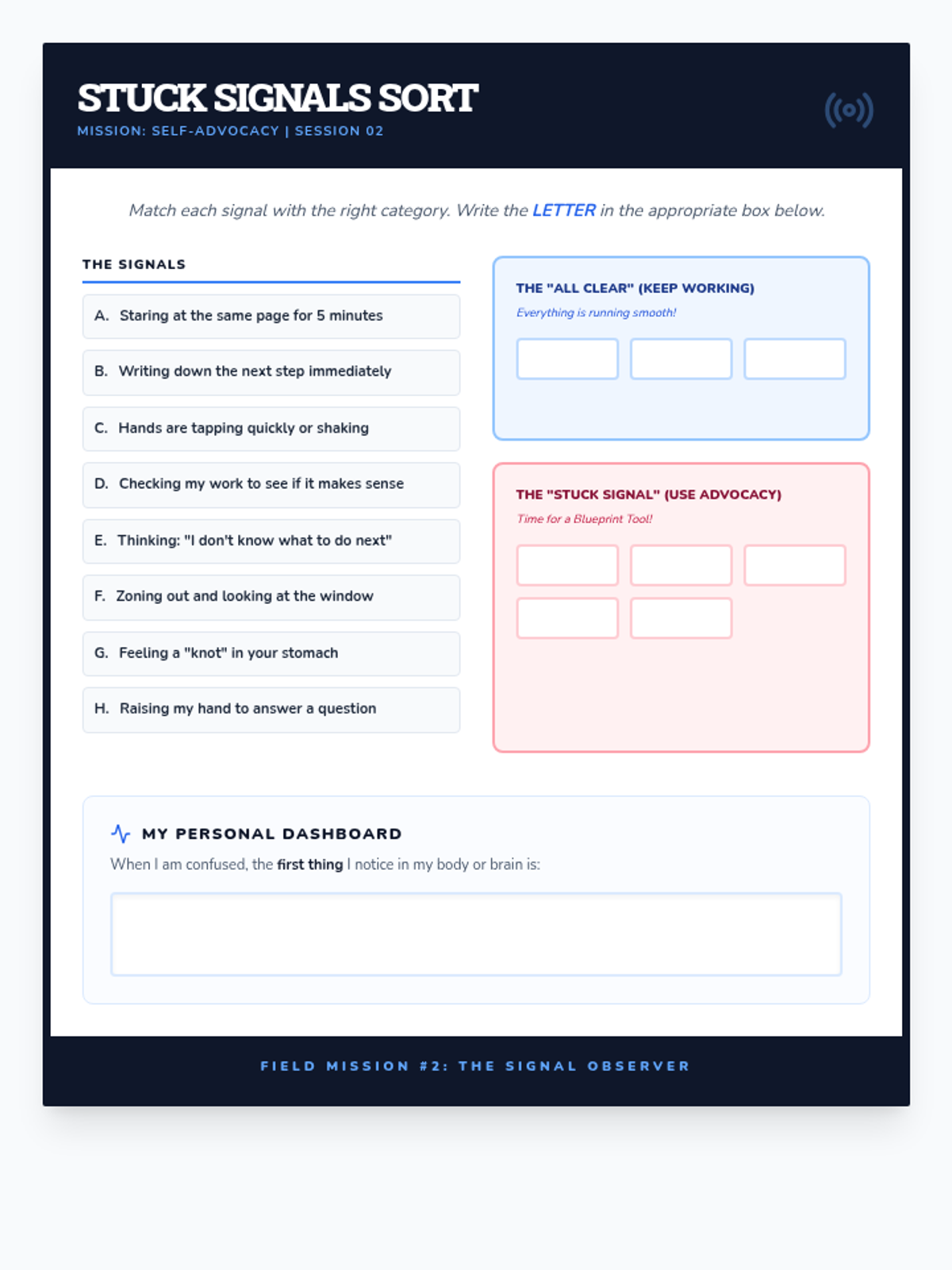
Learning to identify internal and external cues that indicate a need for help or clarification.
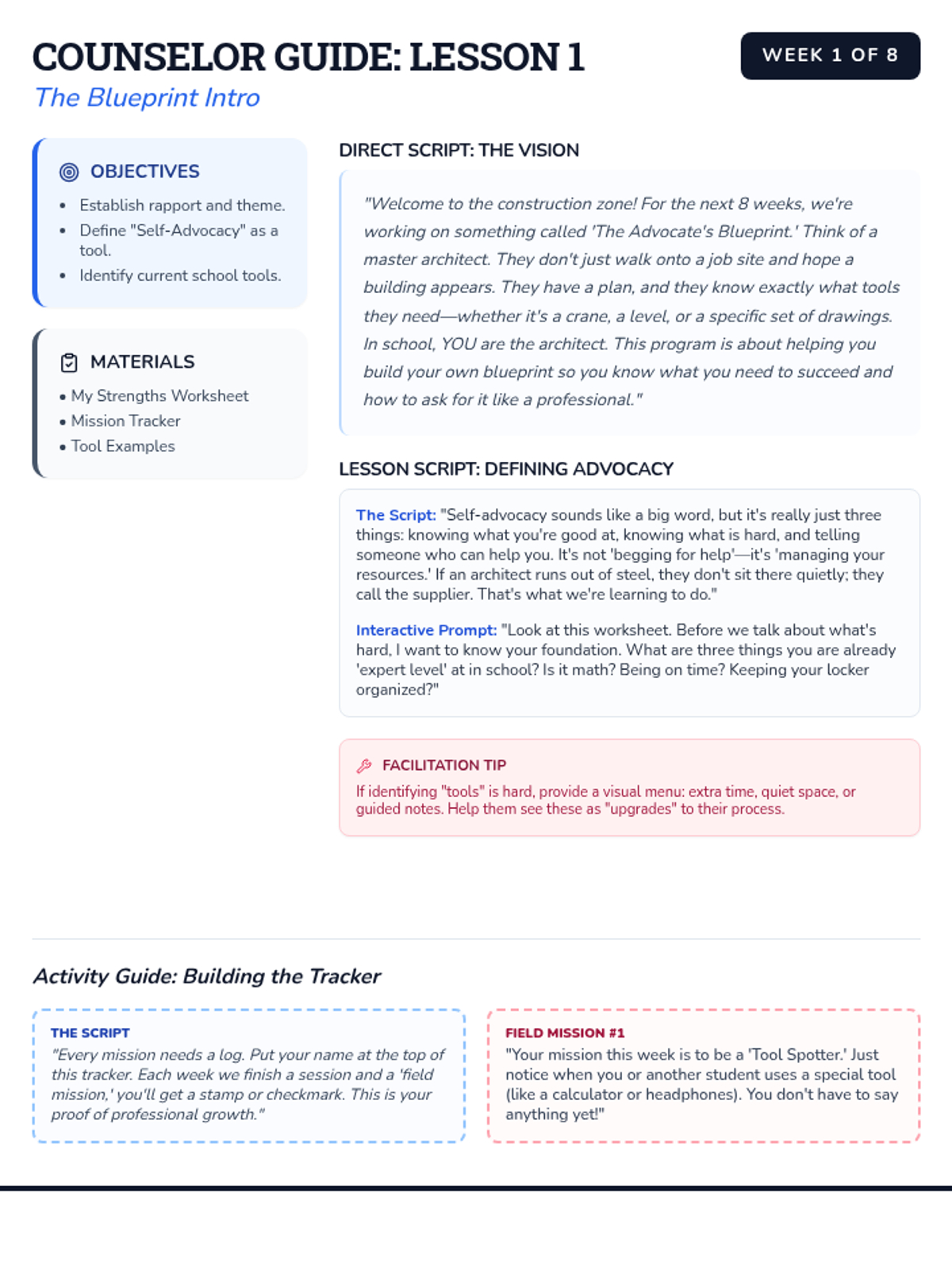
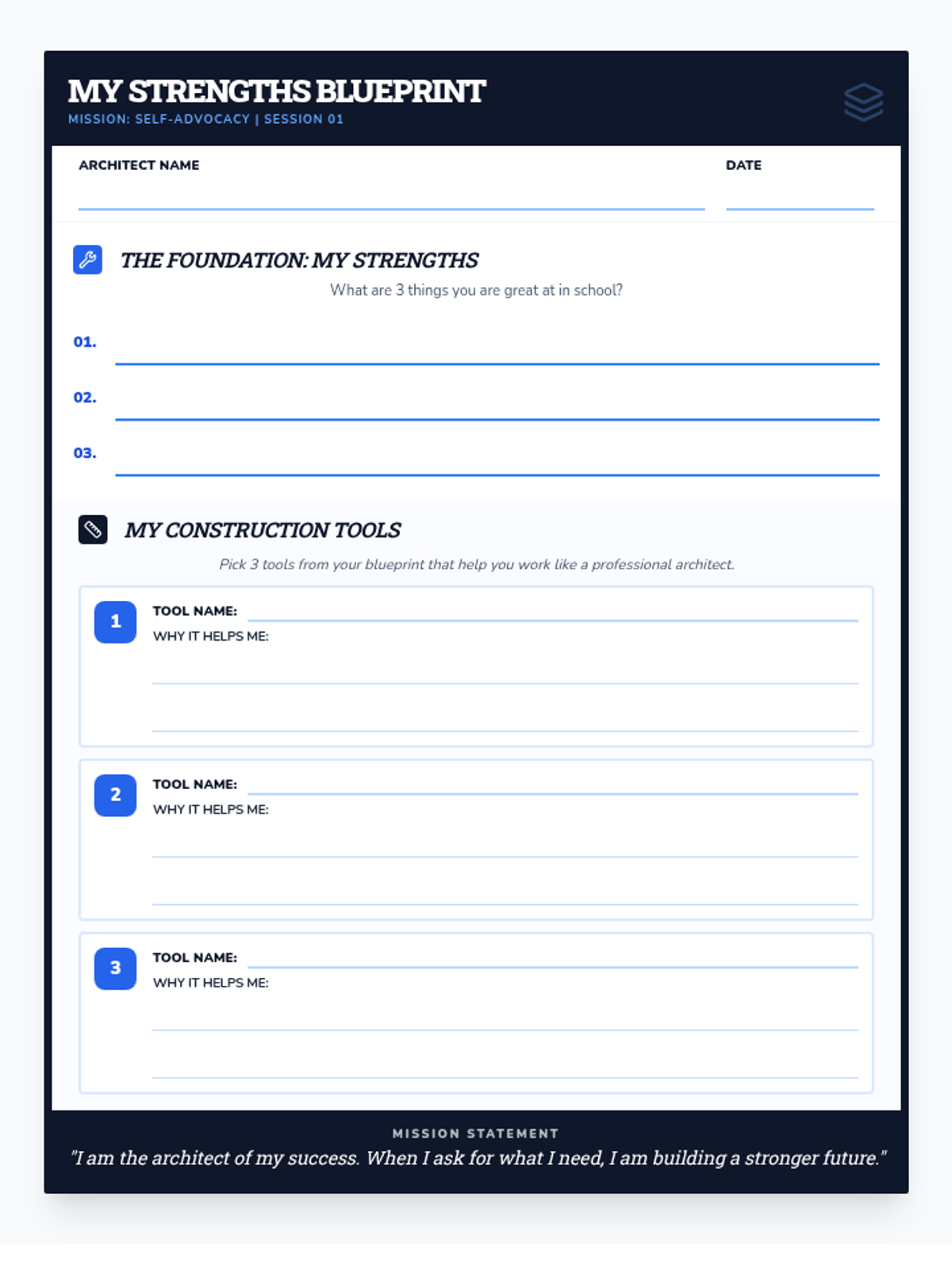
Introduction to the concept of self-advocacy and understanding the student's specific strengths and learning tools.
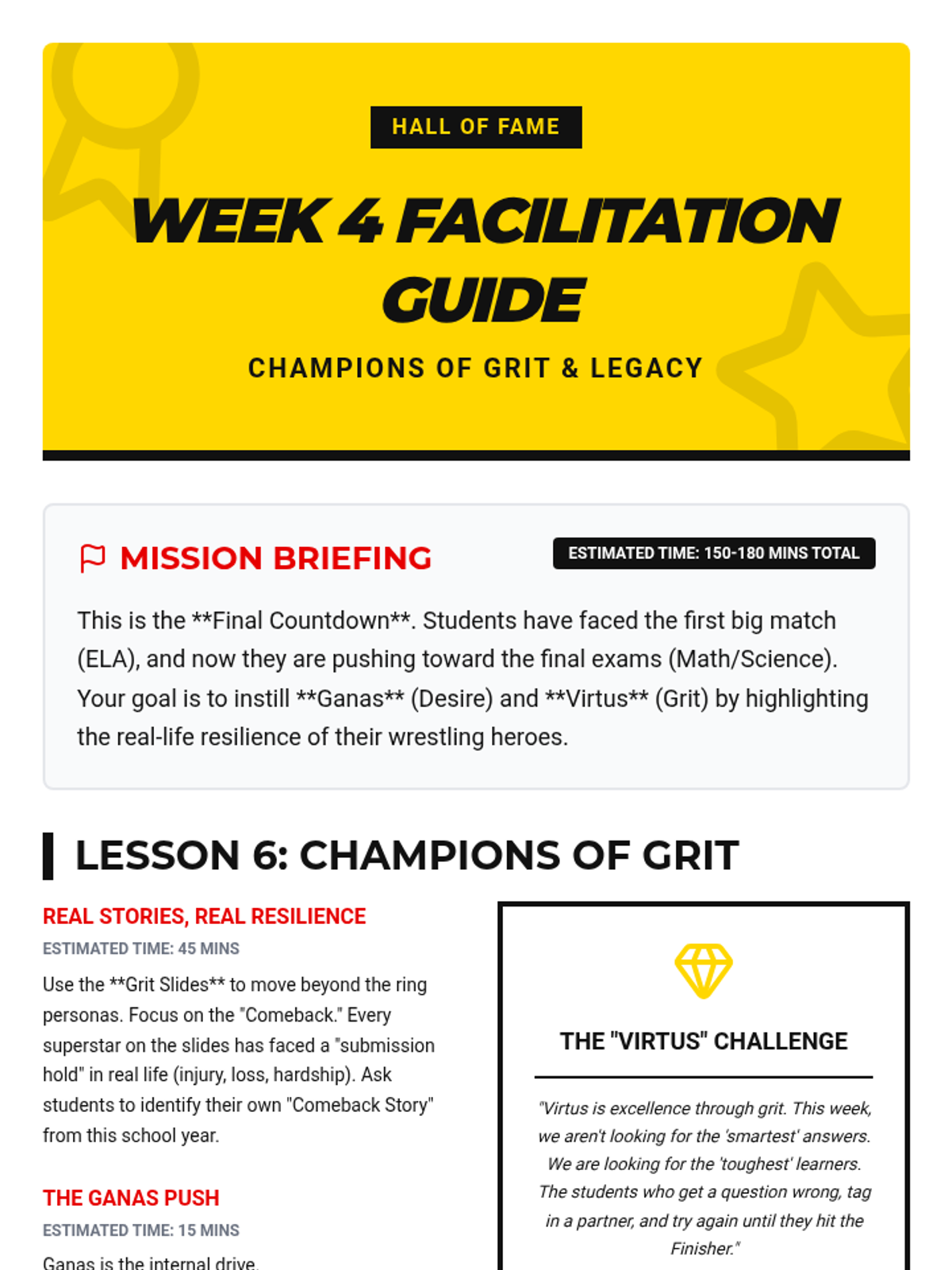
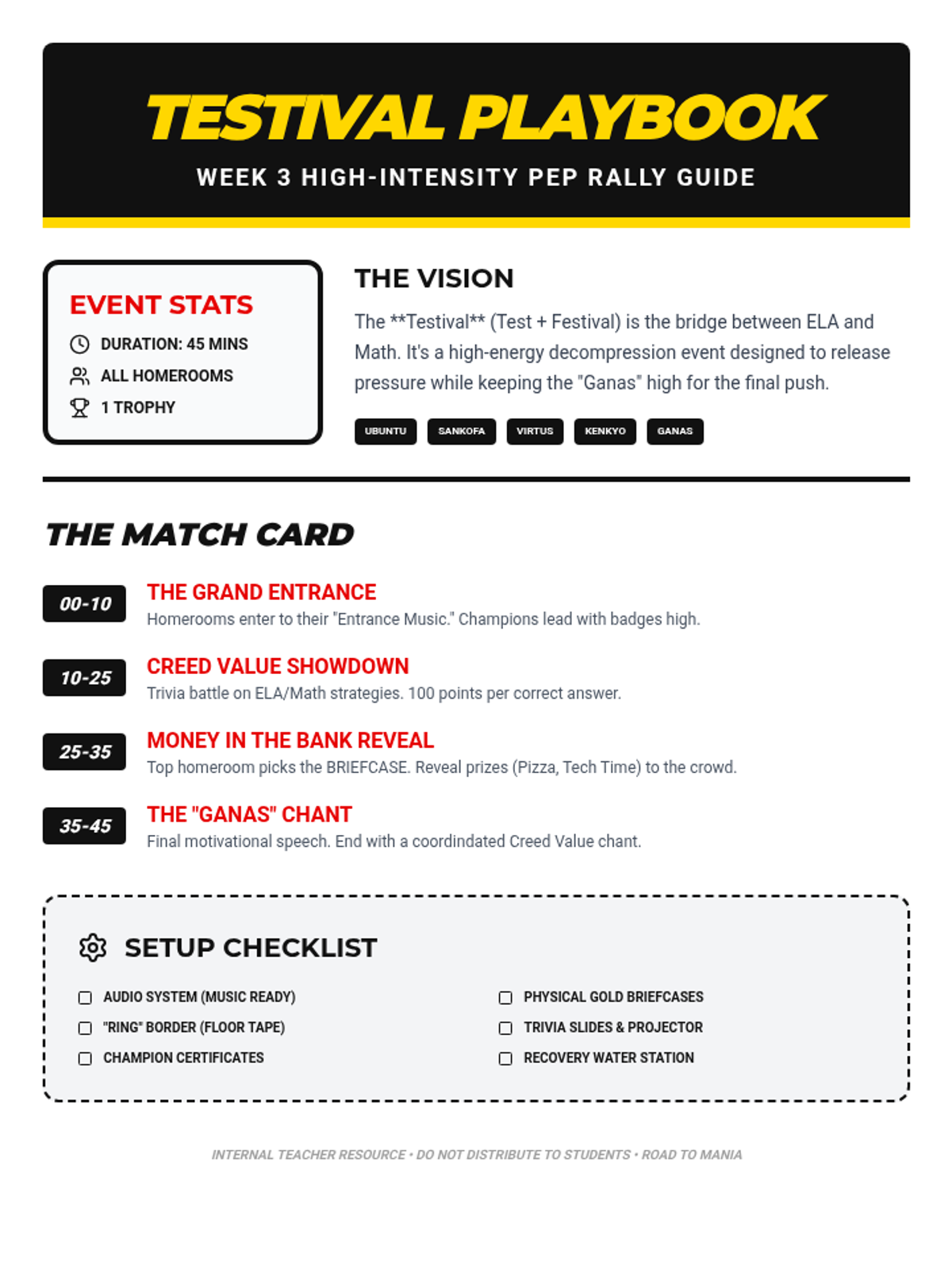
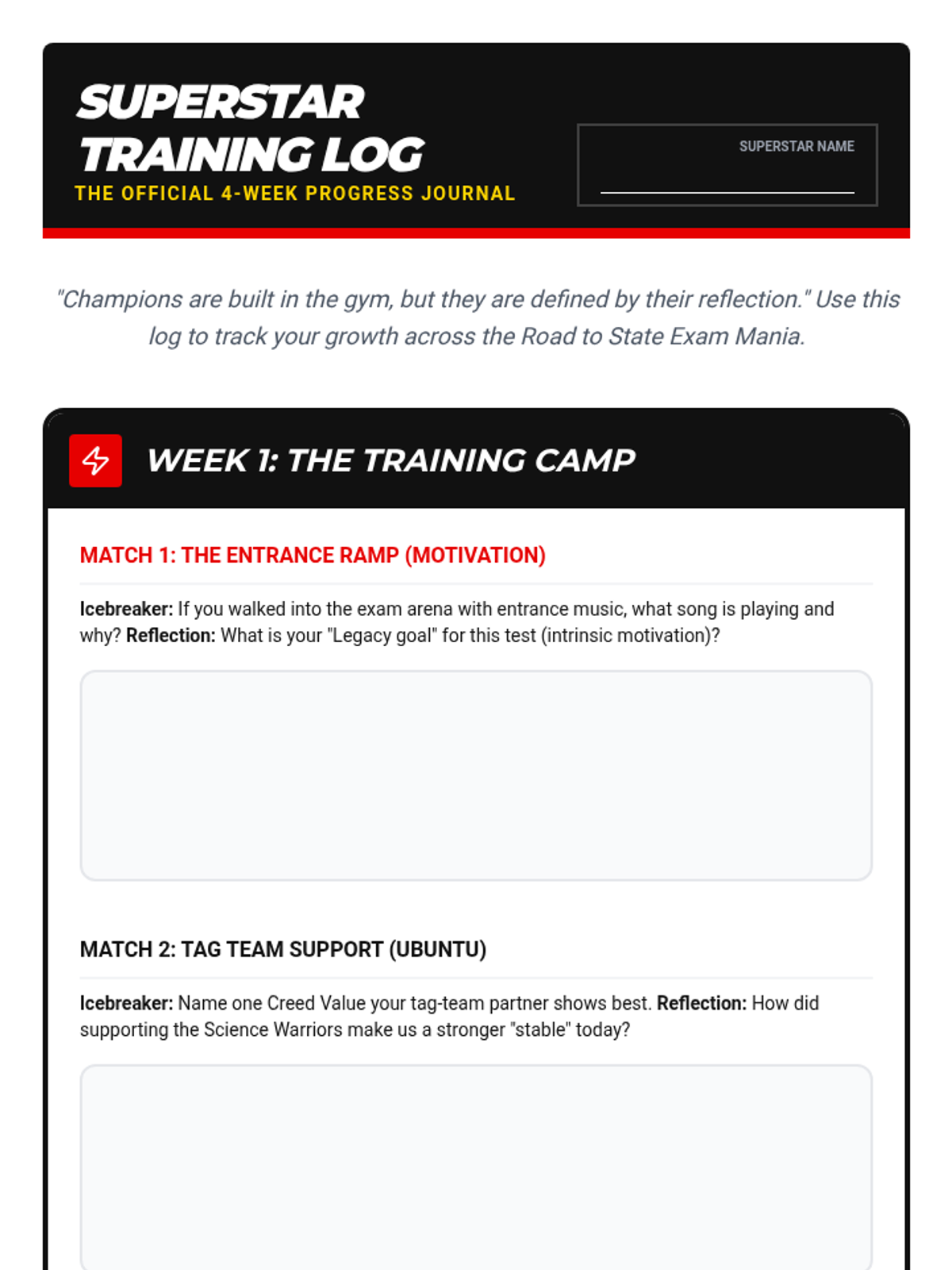
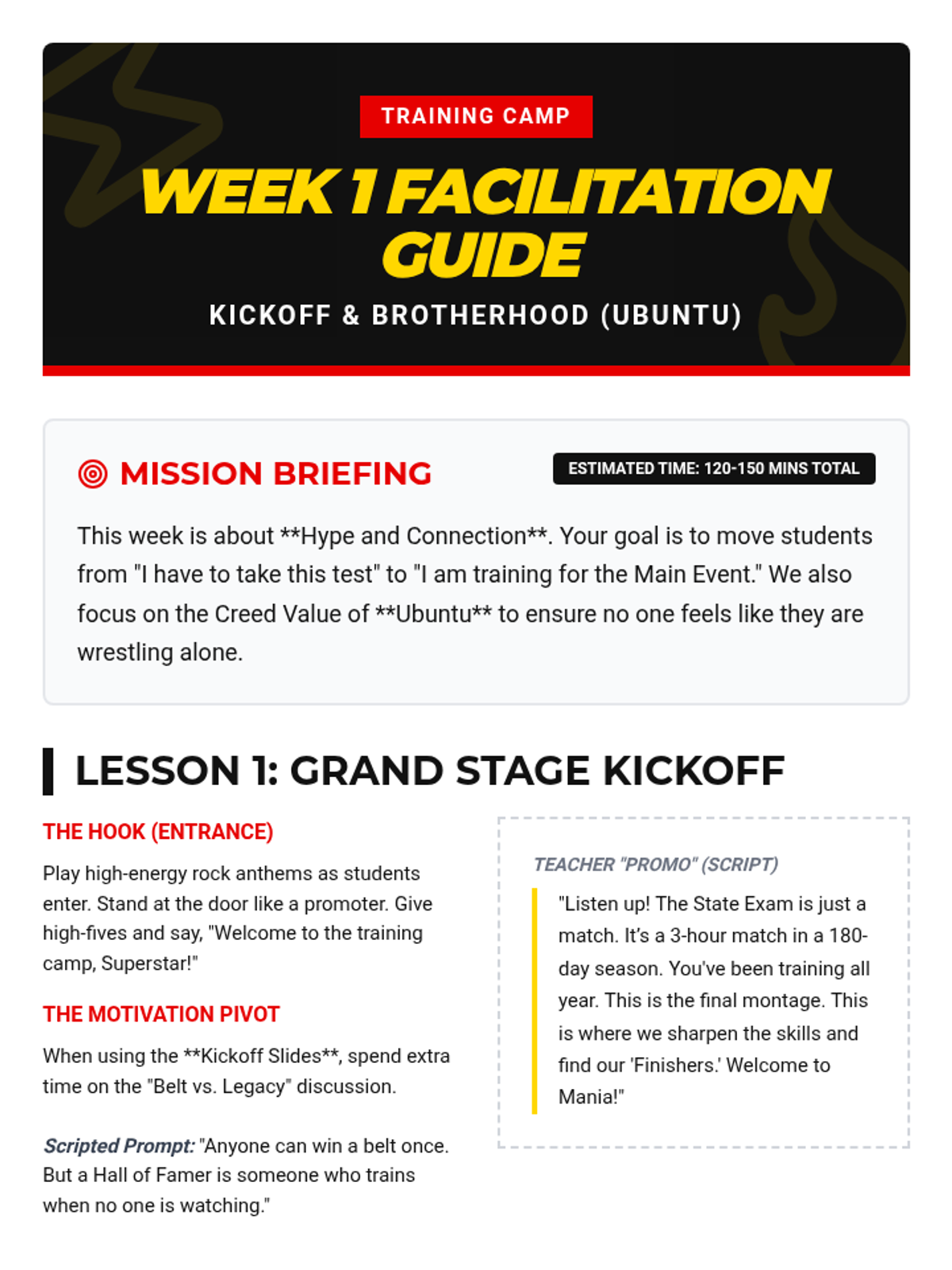
Examining real-life challenges faced by WWE stars to inspire resilience, grit, and the 'Ganas' required for the final push.
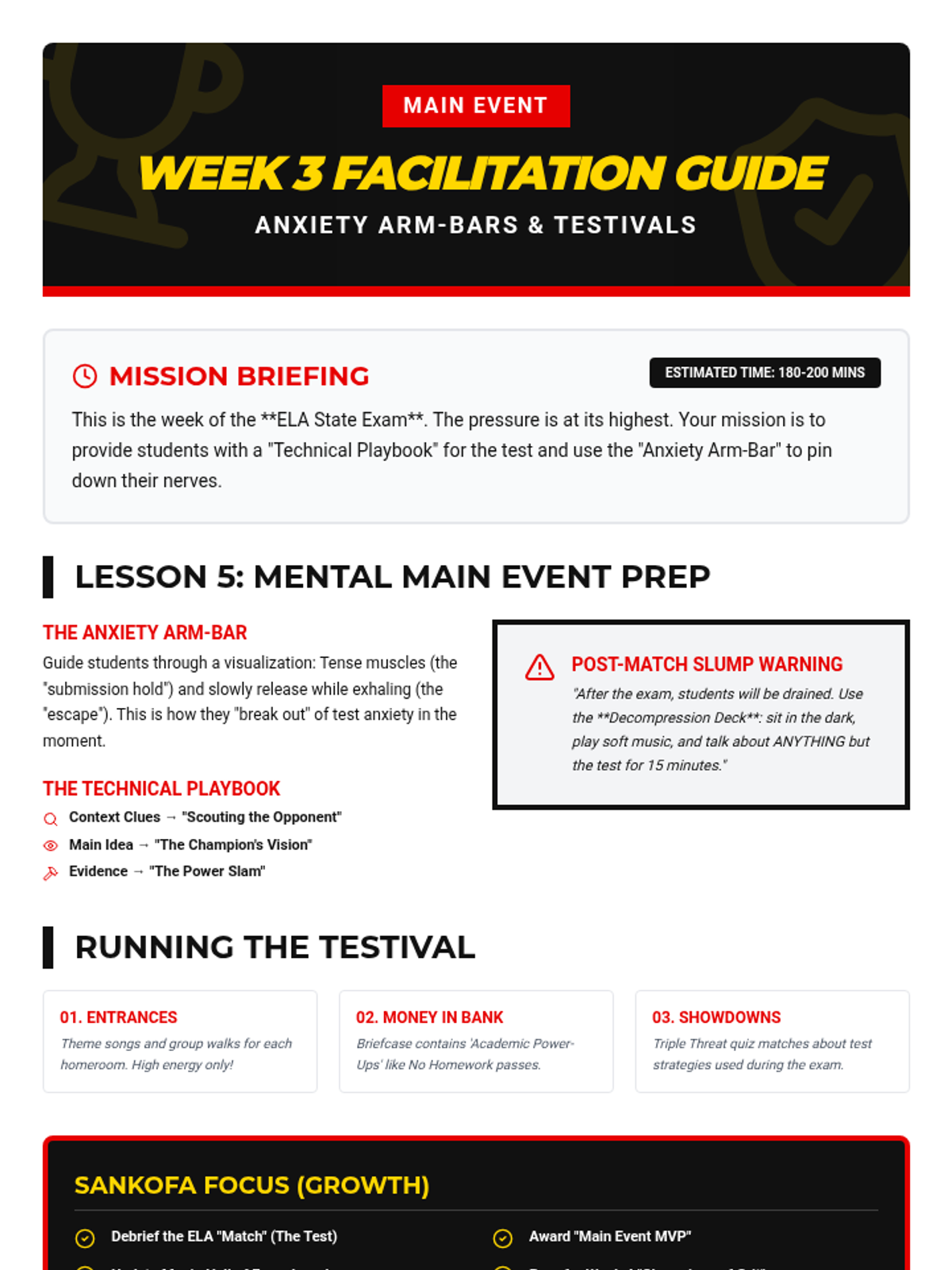
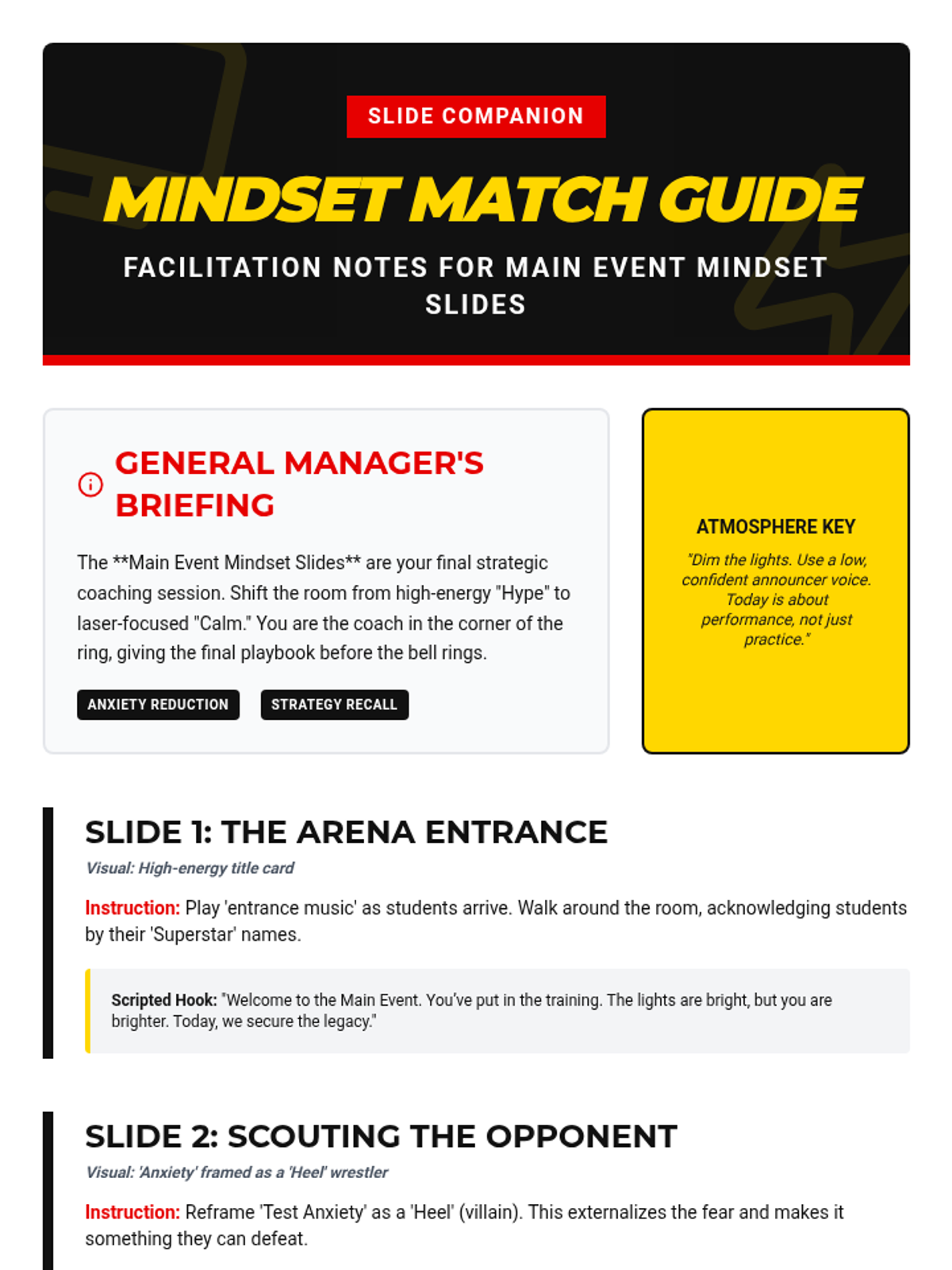
Addressing test anxiety and ELA state exam preparation, including decompression strategies to stay 'main event' ready.
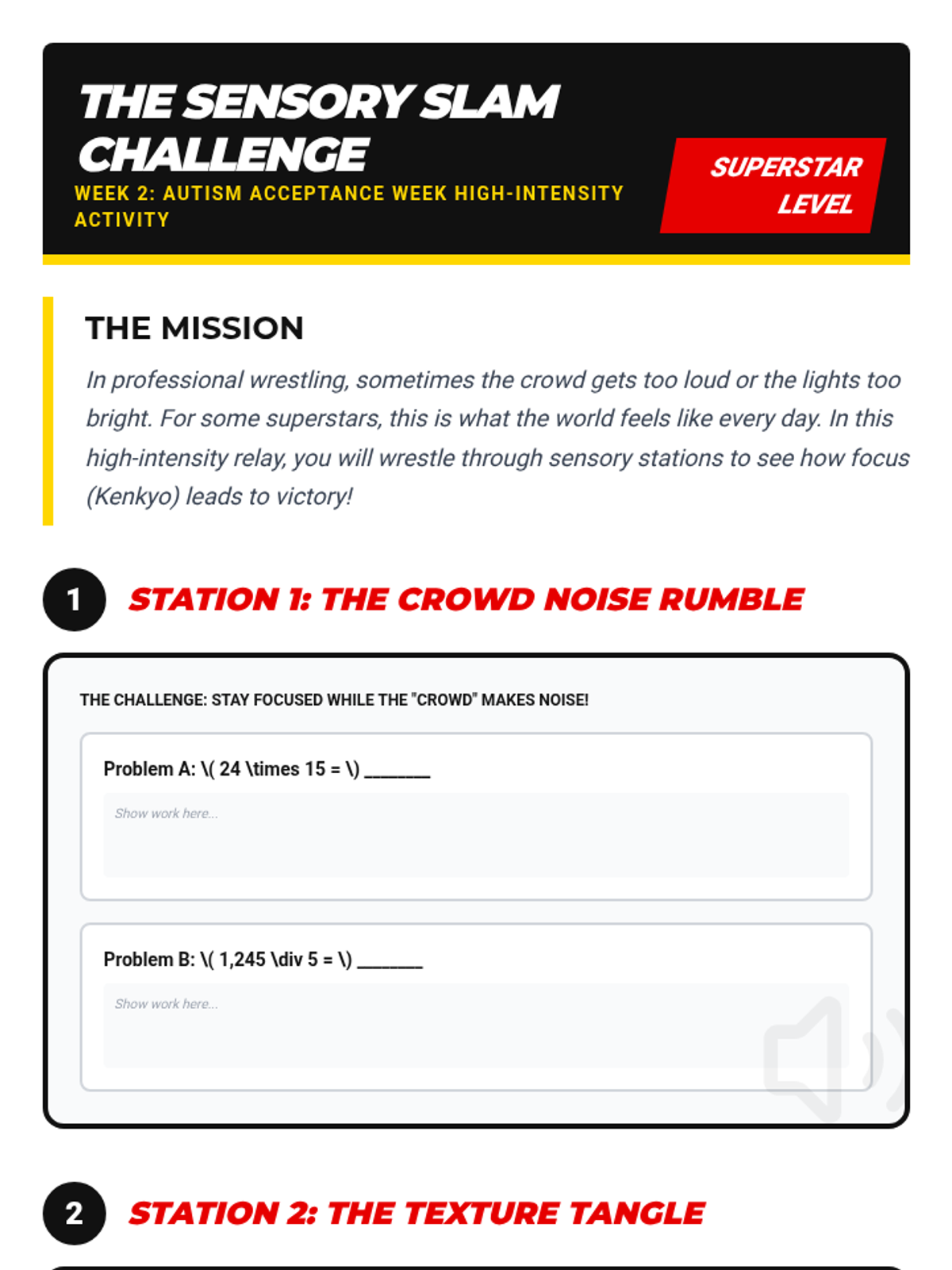
A high-energy activity focusing on inclusivity and celebrating different ways of thinking and 'wrestling' with challenges.
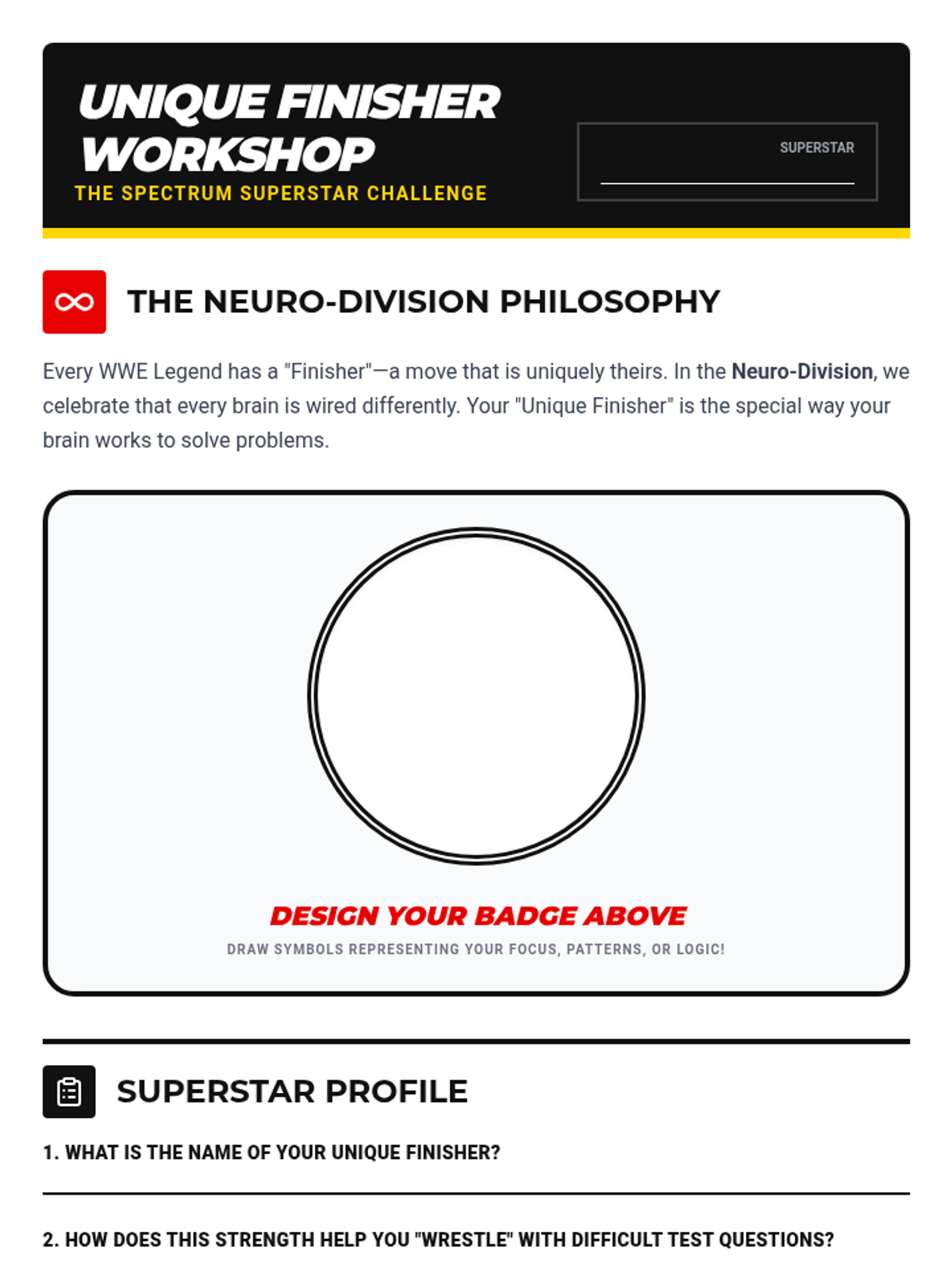
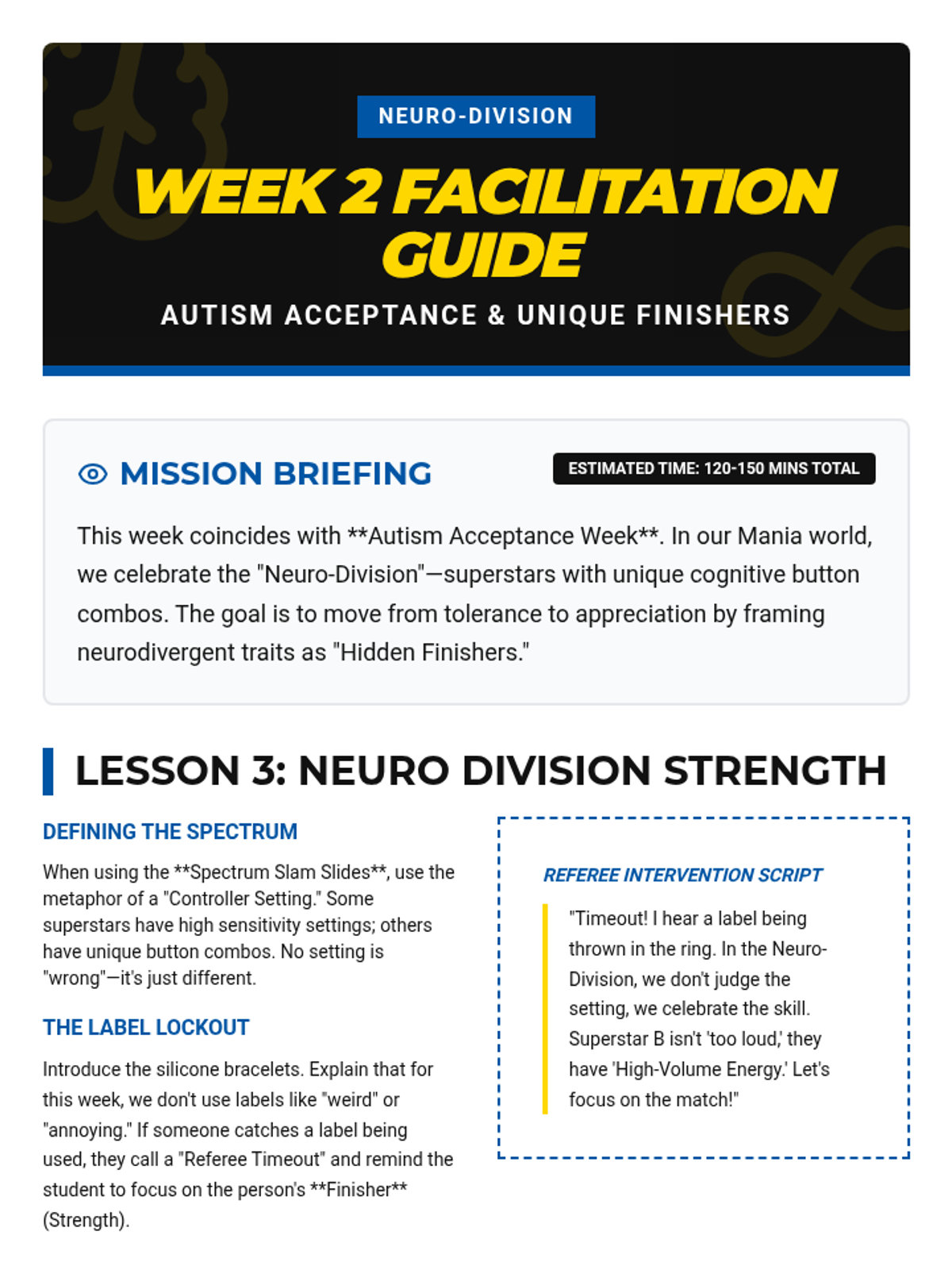
The first of two activities celebrating Autism Acceptance Week, highlighting the unique 'finishers' and strengths of neurodivergent individuals.
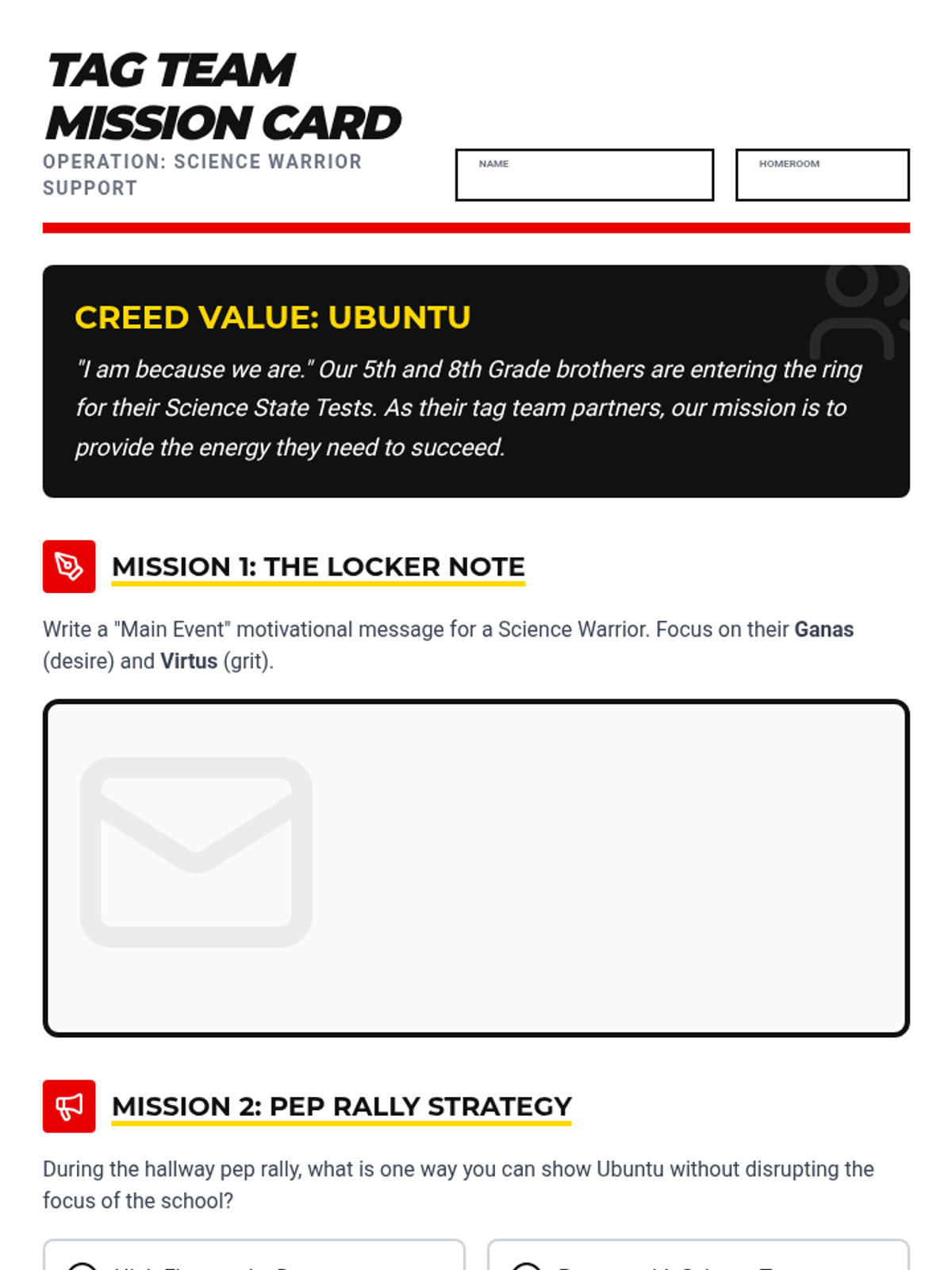
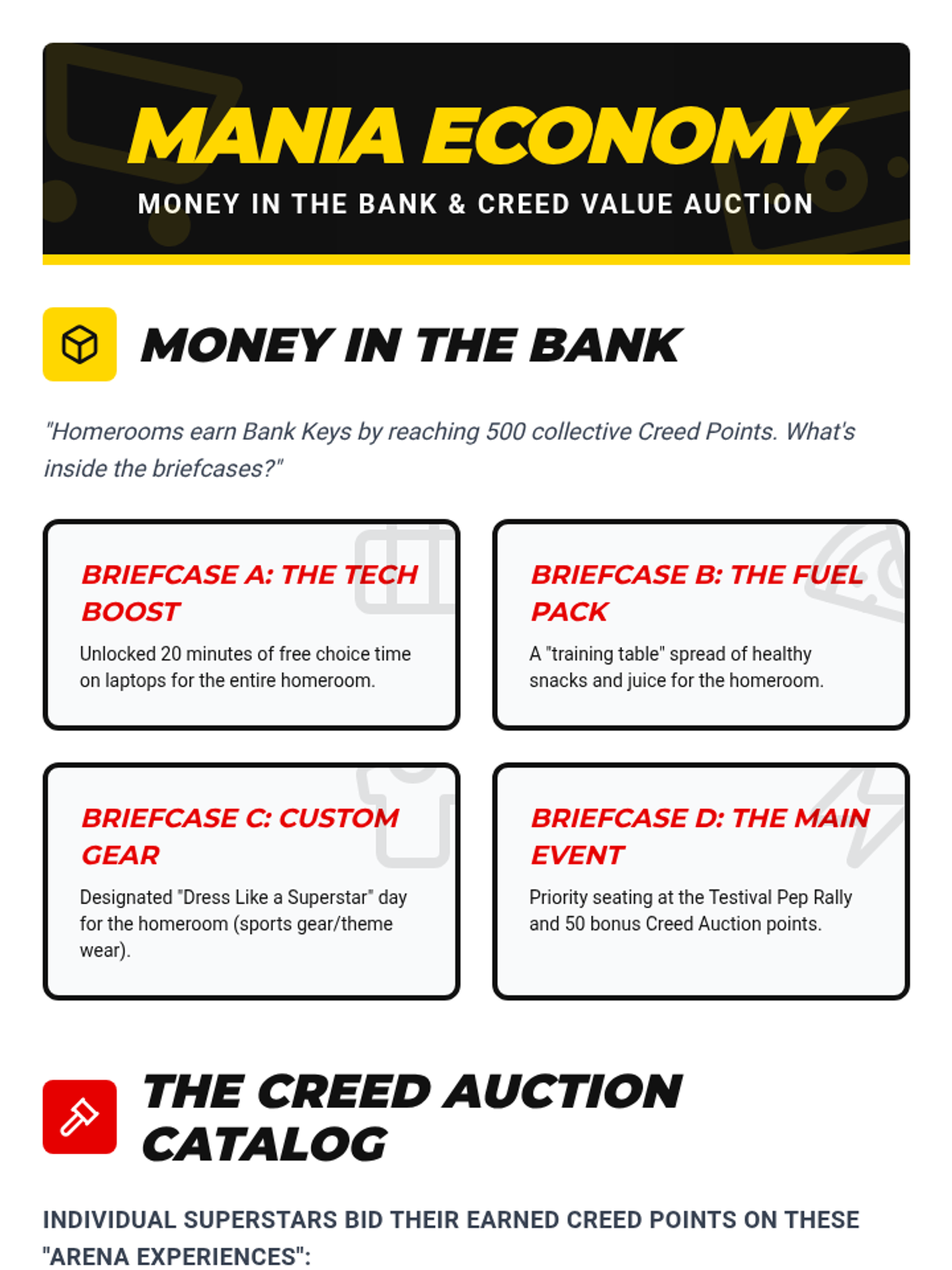
Focus on the Creed Value of Ubuntu and brotherhood, preparing students to support their peers during science test pep rallies.
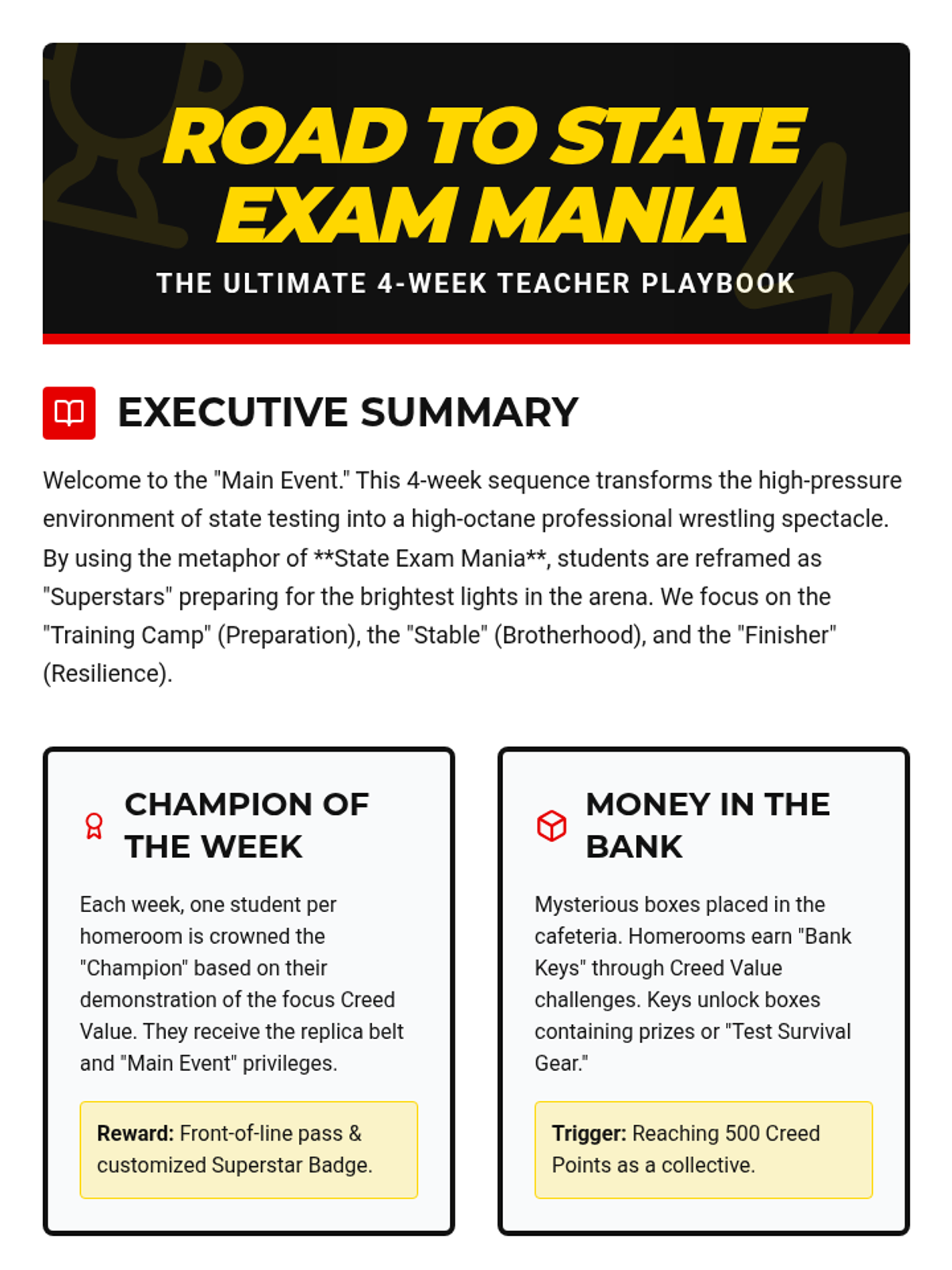
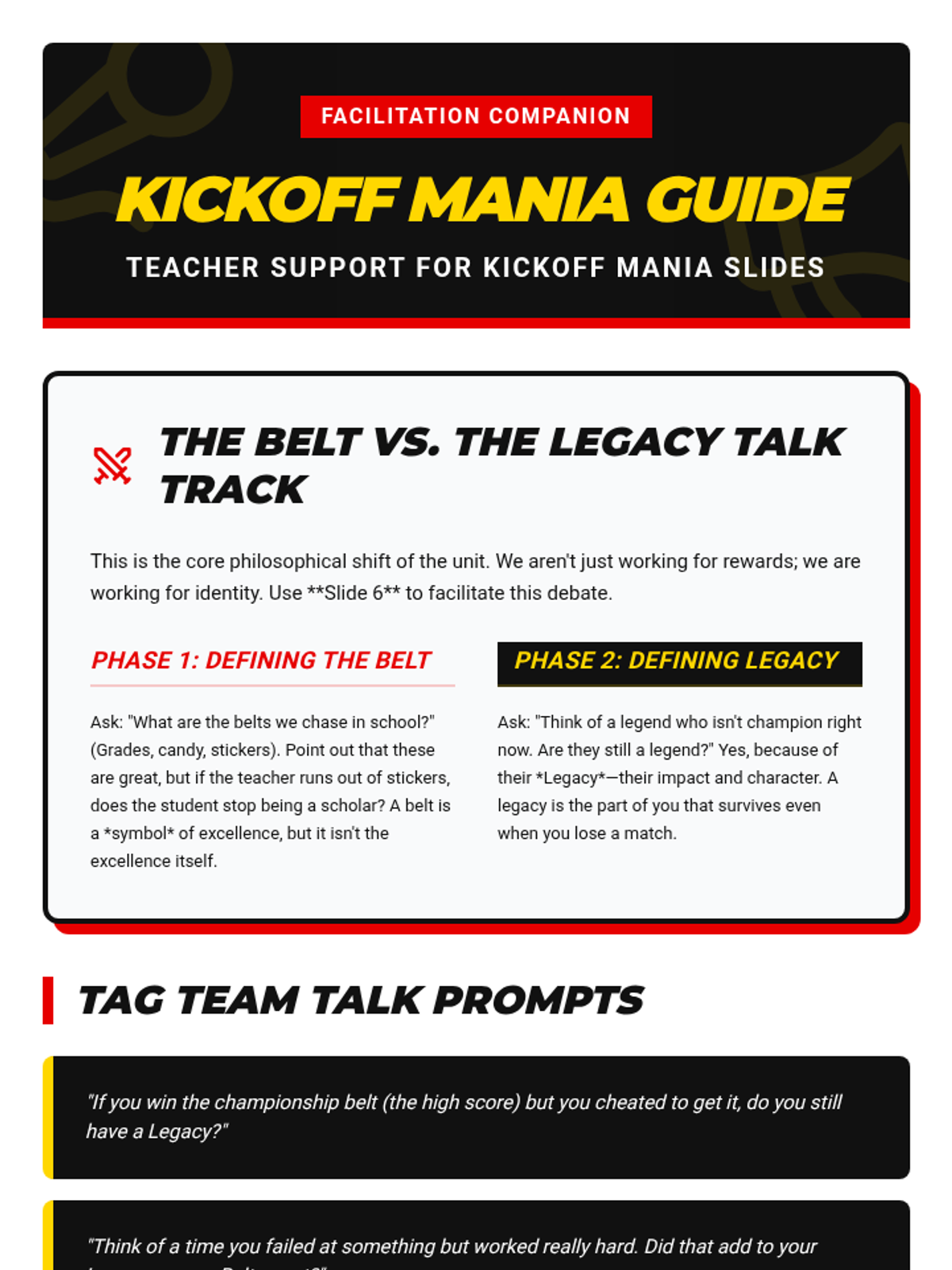
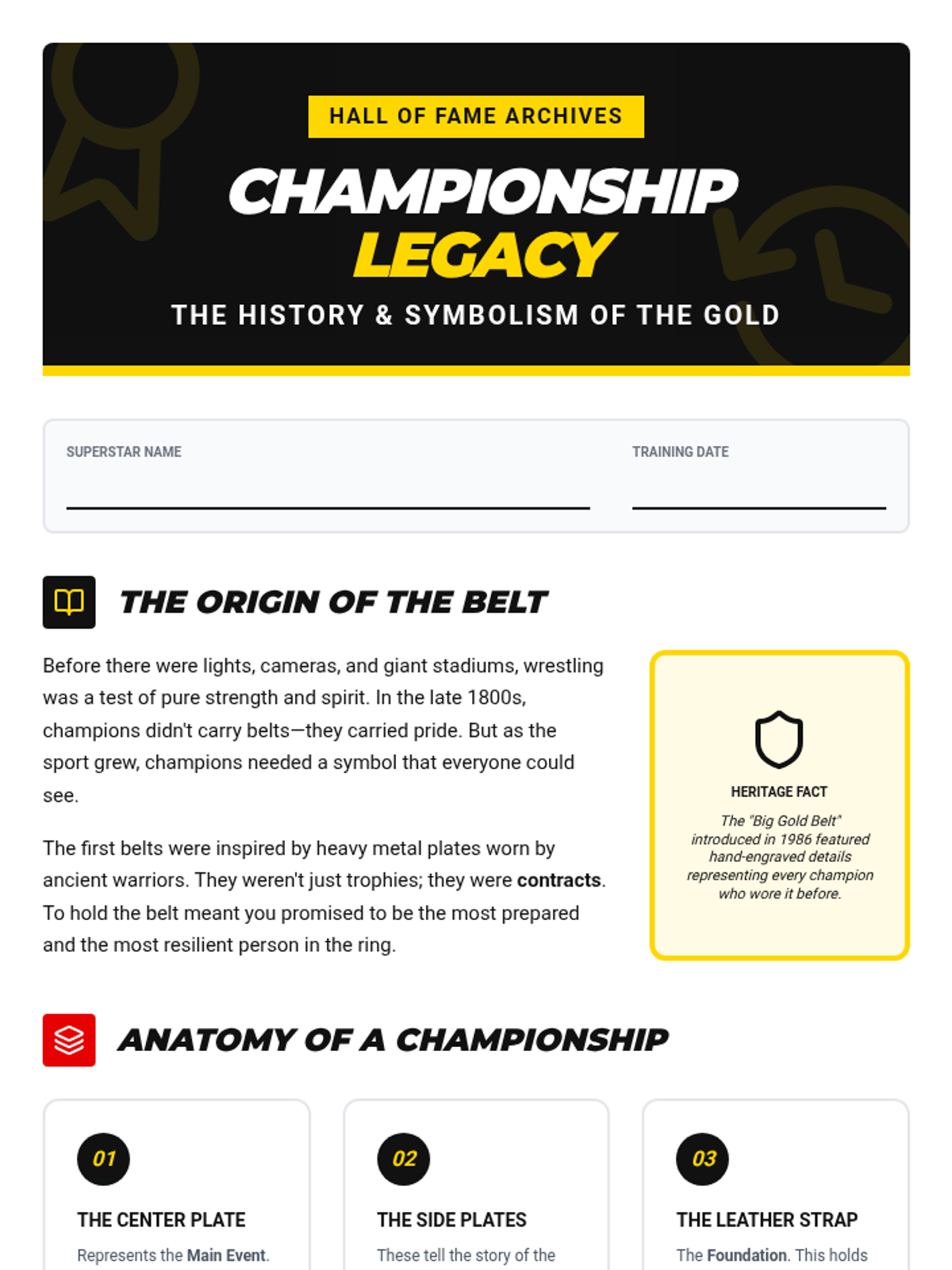
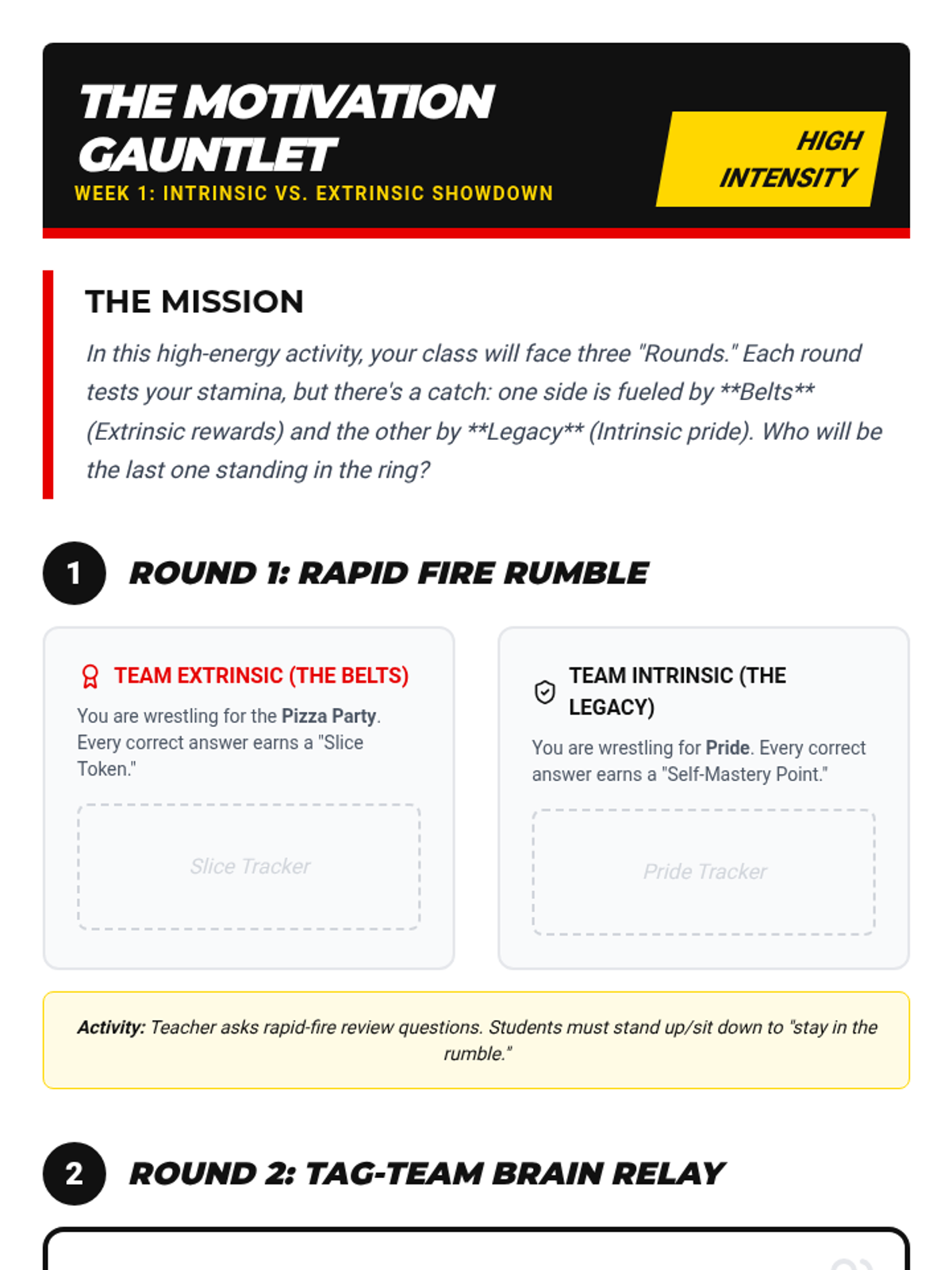
Introduce the 'State Exam Mania' theme, focusing on the difference between intrinsic and extrinsic motivation using the metaphor of championship belts vs. personal legacy.
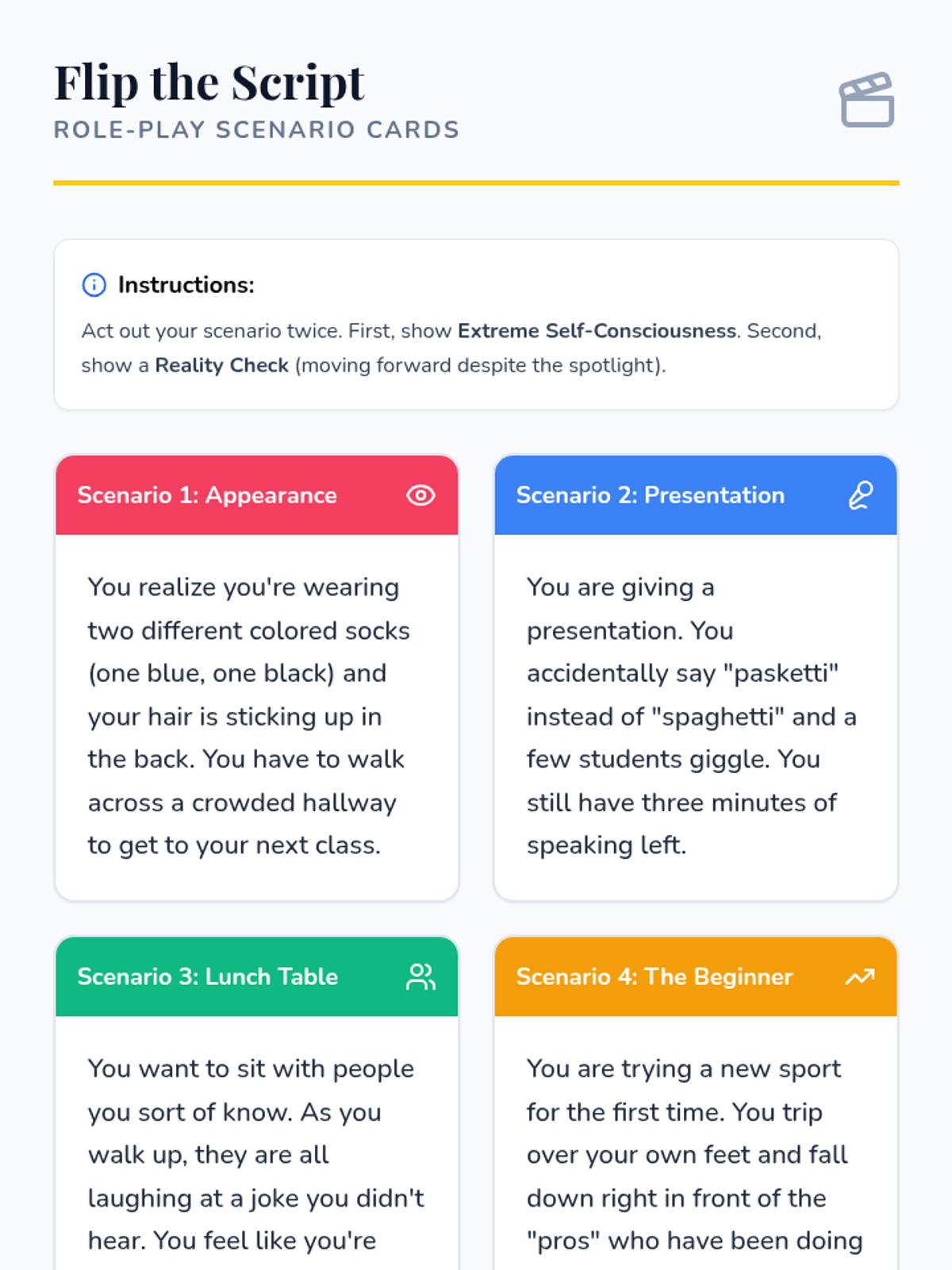
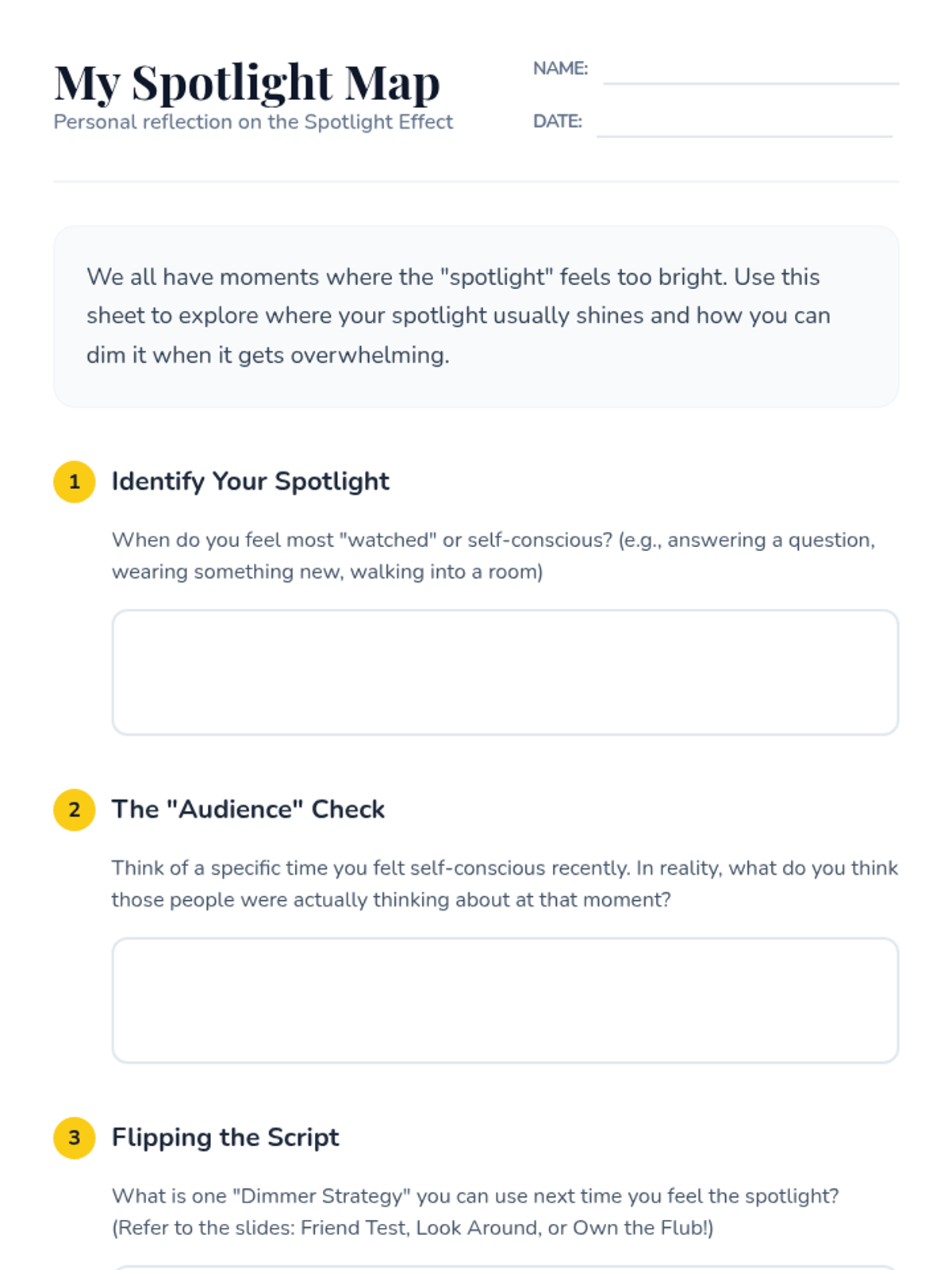
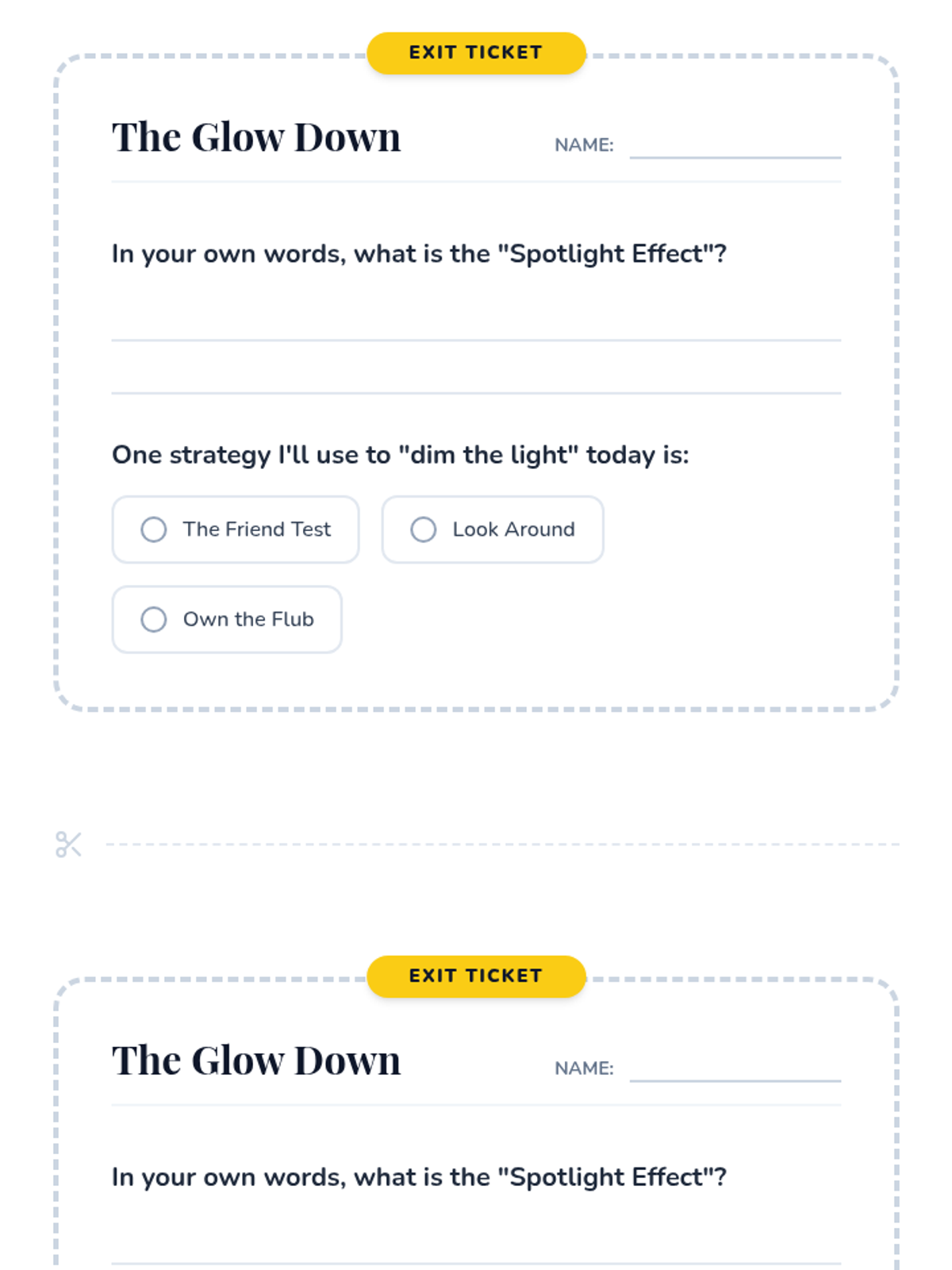
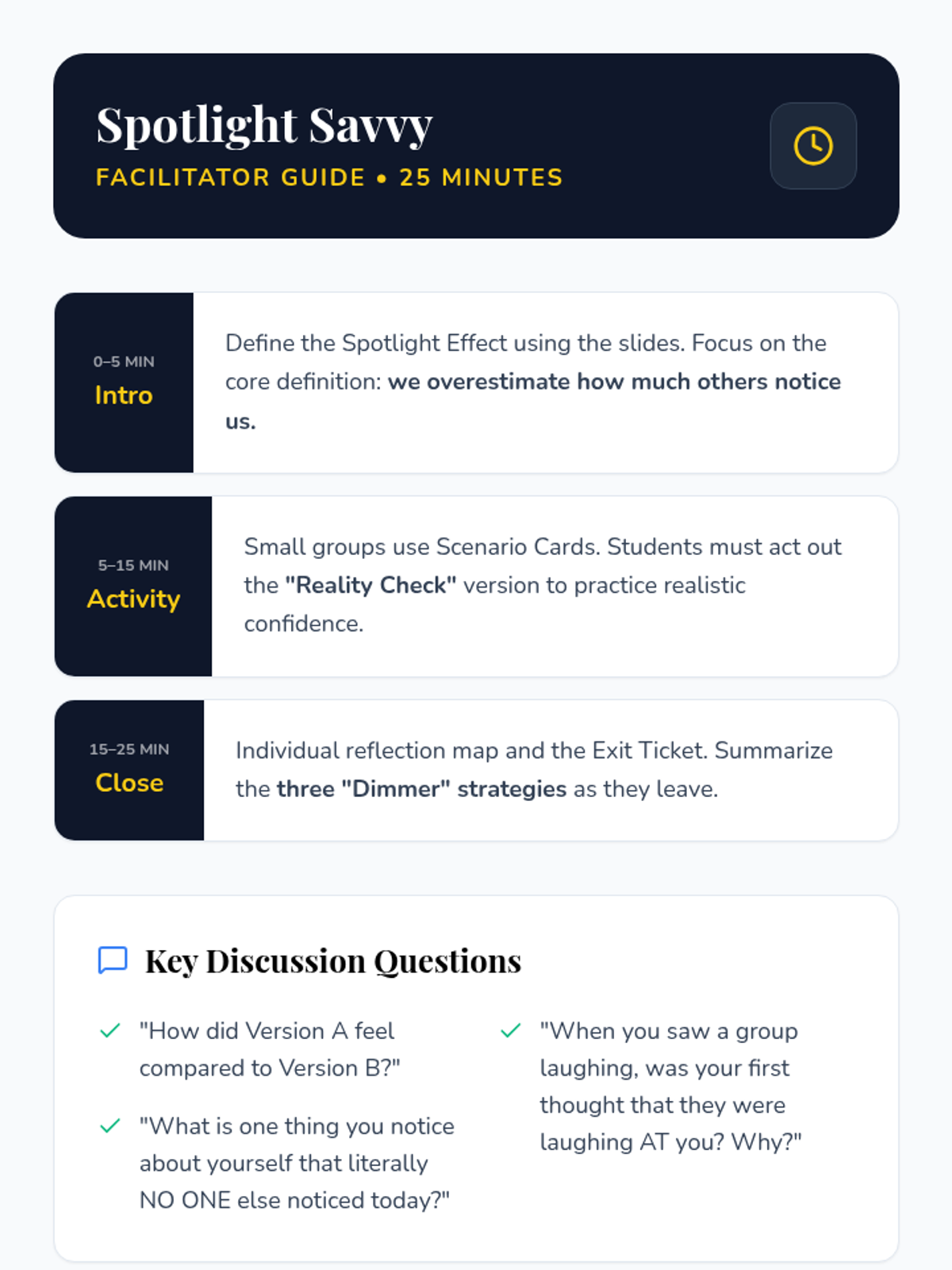
A 25-minute lesson on overcoming the 'Spotlight Effect' and reducing self-consciousness across social, physical, and performance-based situations. Students explore why we feel watched and practice 'flipping the script' through scenario-based role-play.
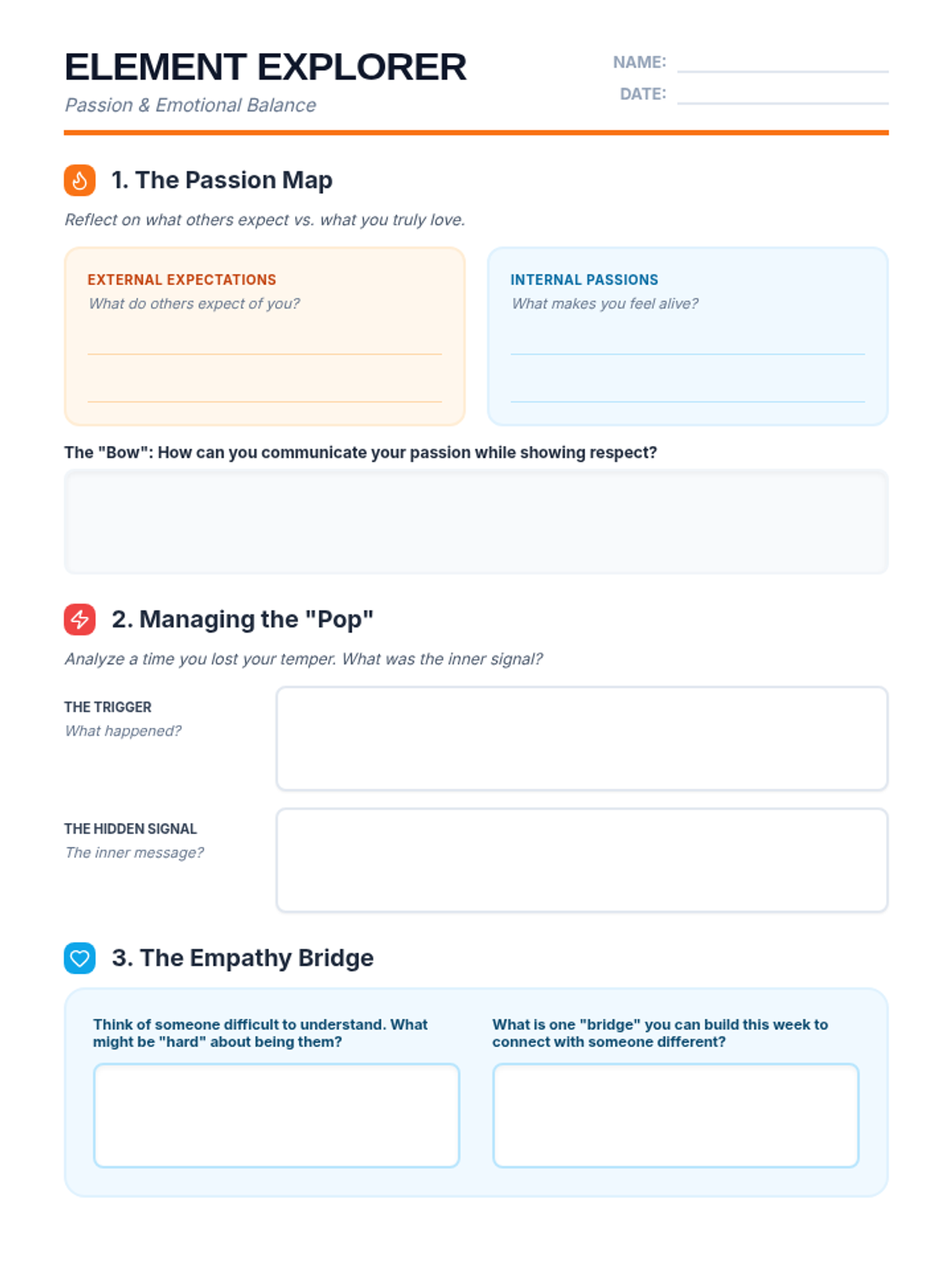
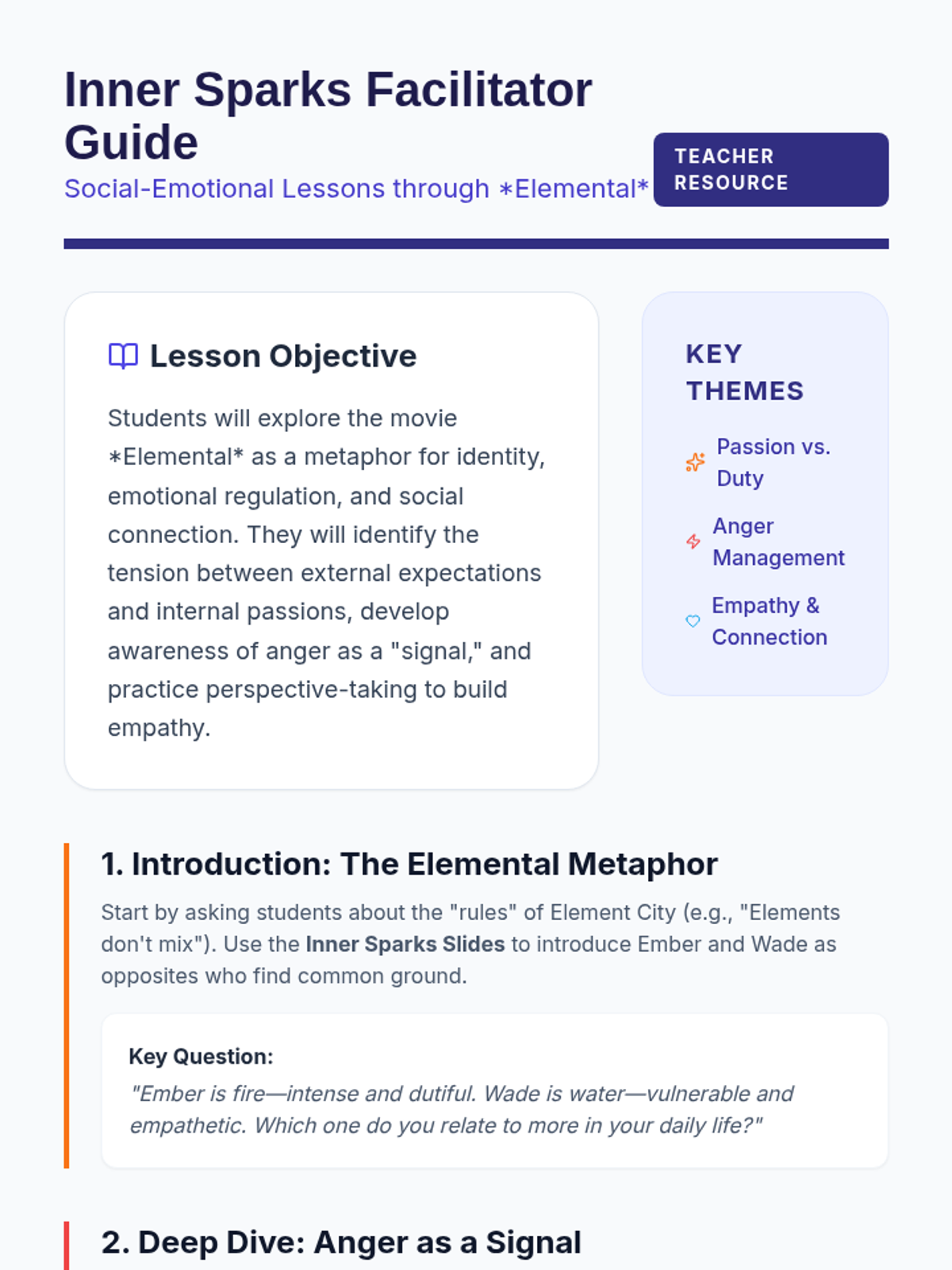
A social-emotional learning lesson exploring themes from the movie Elemental, focusing on the tension between family duty and personal passion, as well as strategies for managing anger and building empathy.
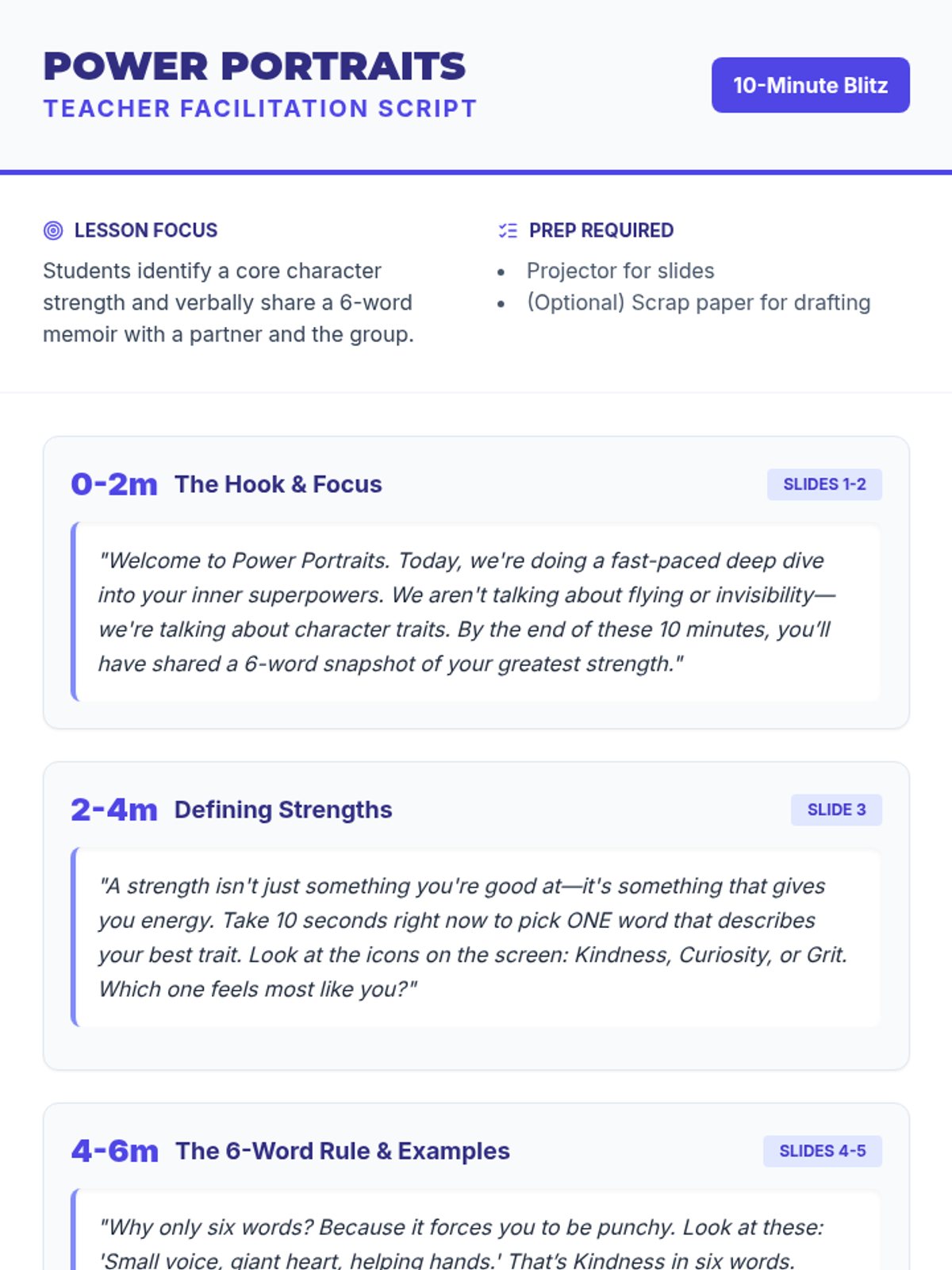
A quick 10-minute session focused on identifying personal character strengths and crafting a concise 6-word memoir to celebrate them.
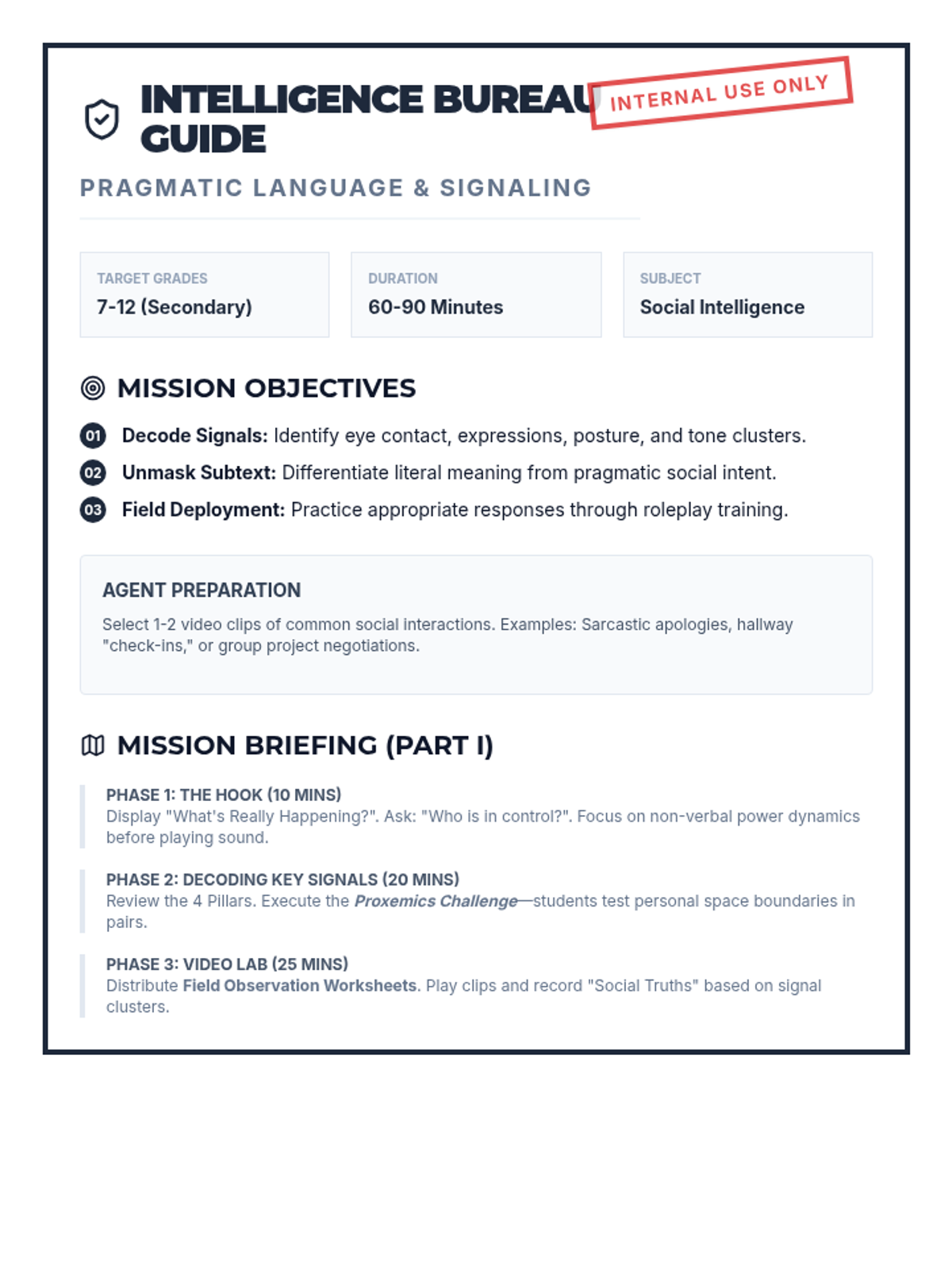
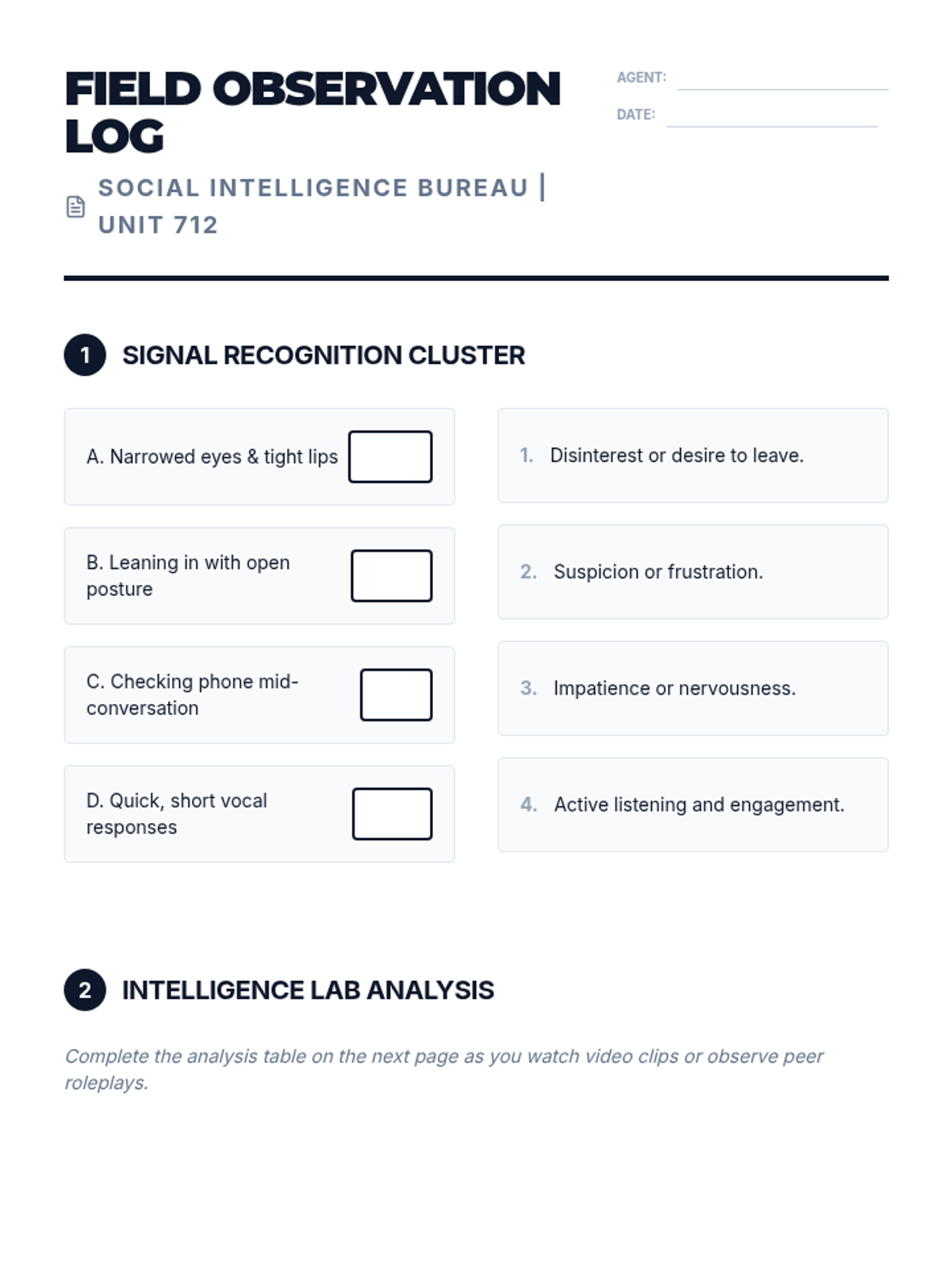
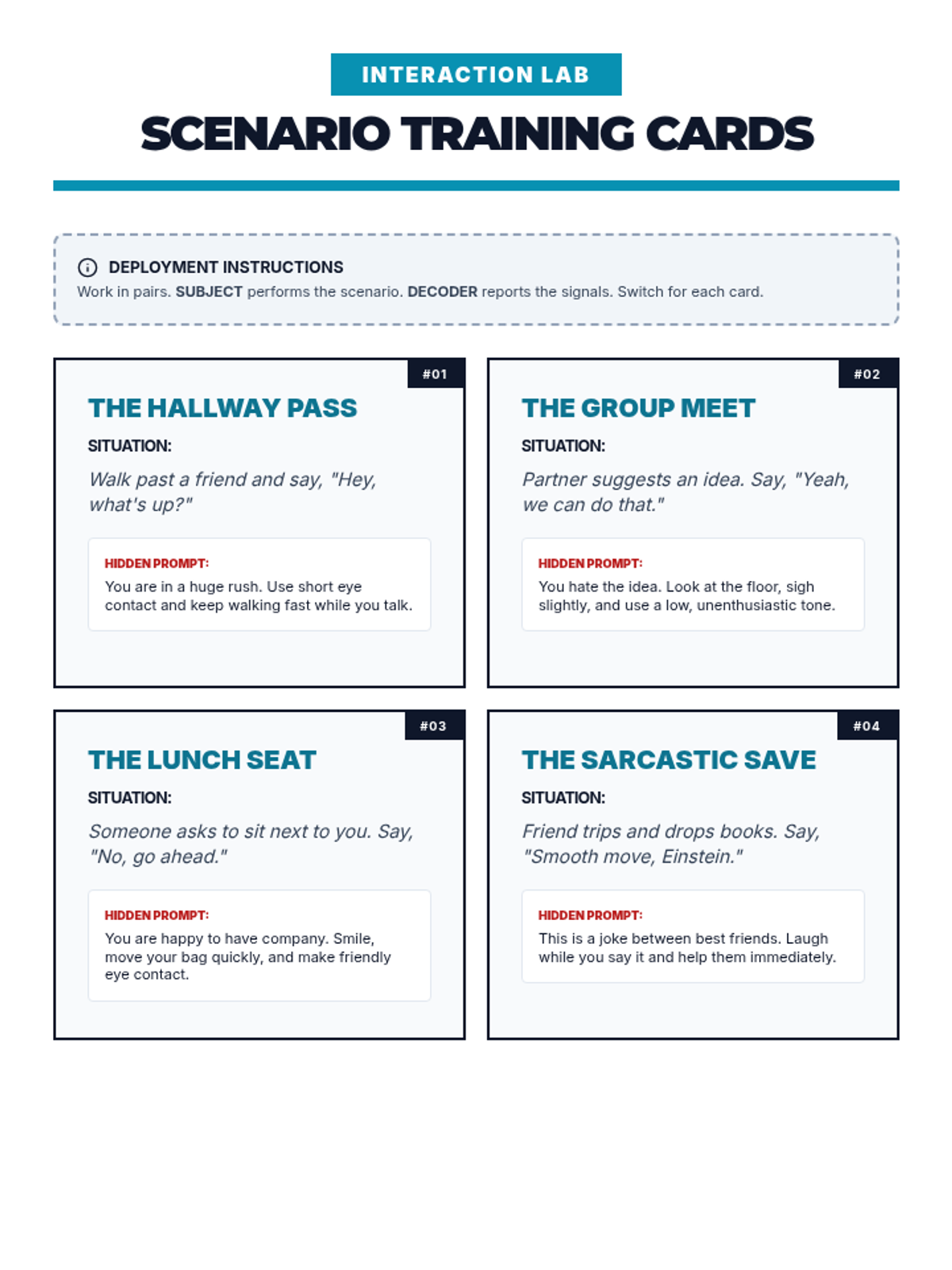
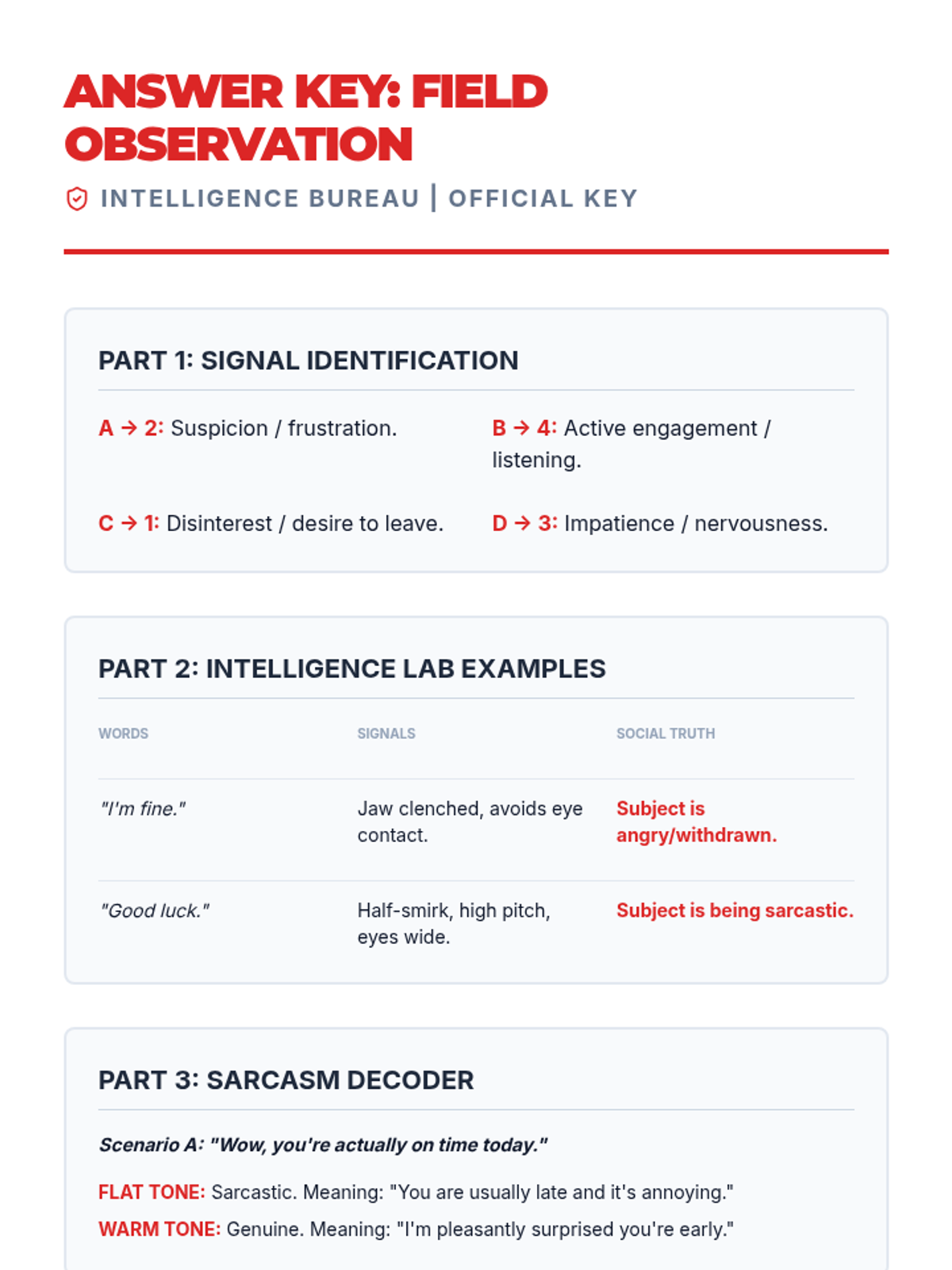
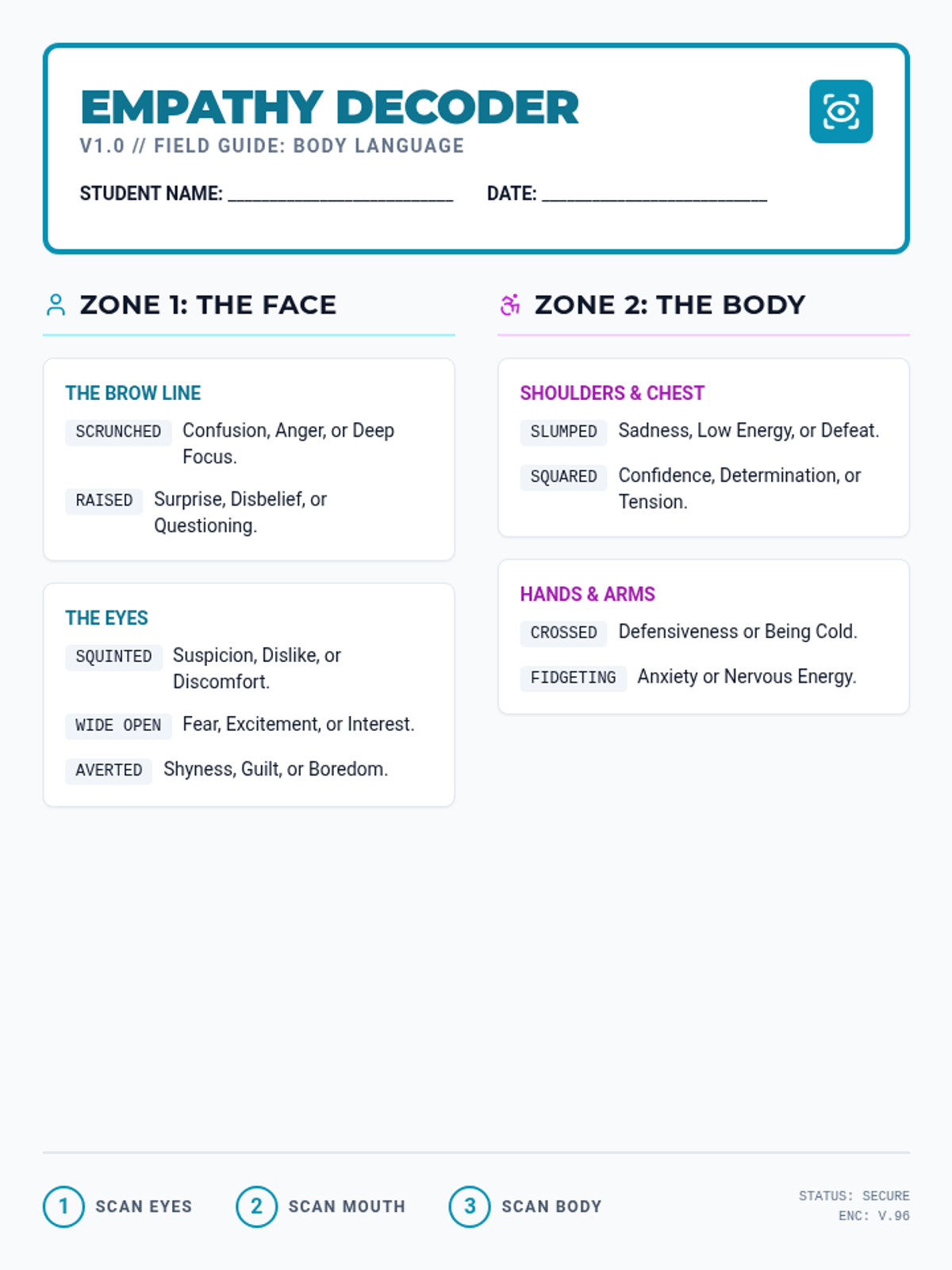
A comprehensive lesson on pragmatic language and non-verbal communication for secondary students, using a field-researcher aesthetic to decode social nuances.
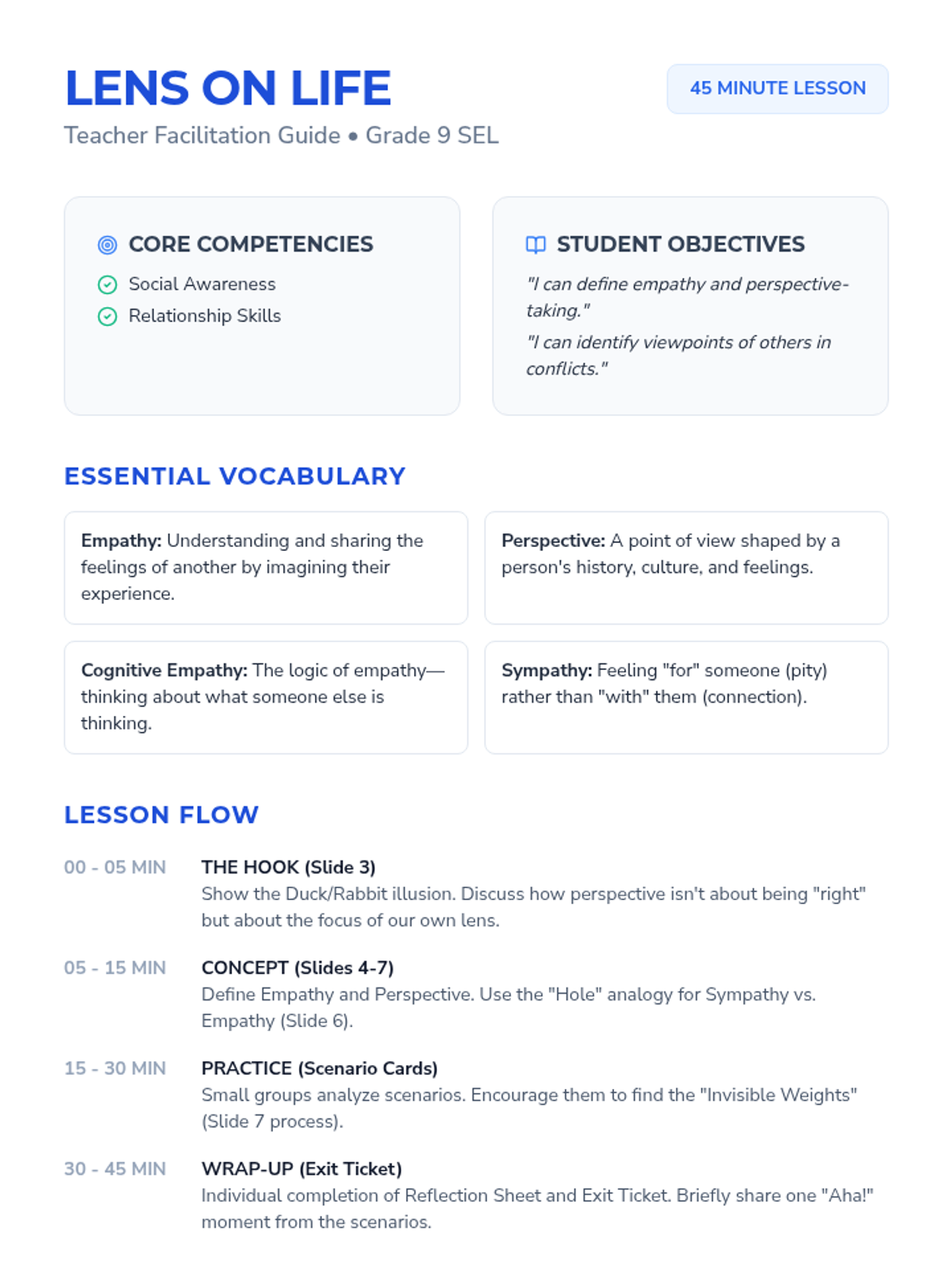
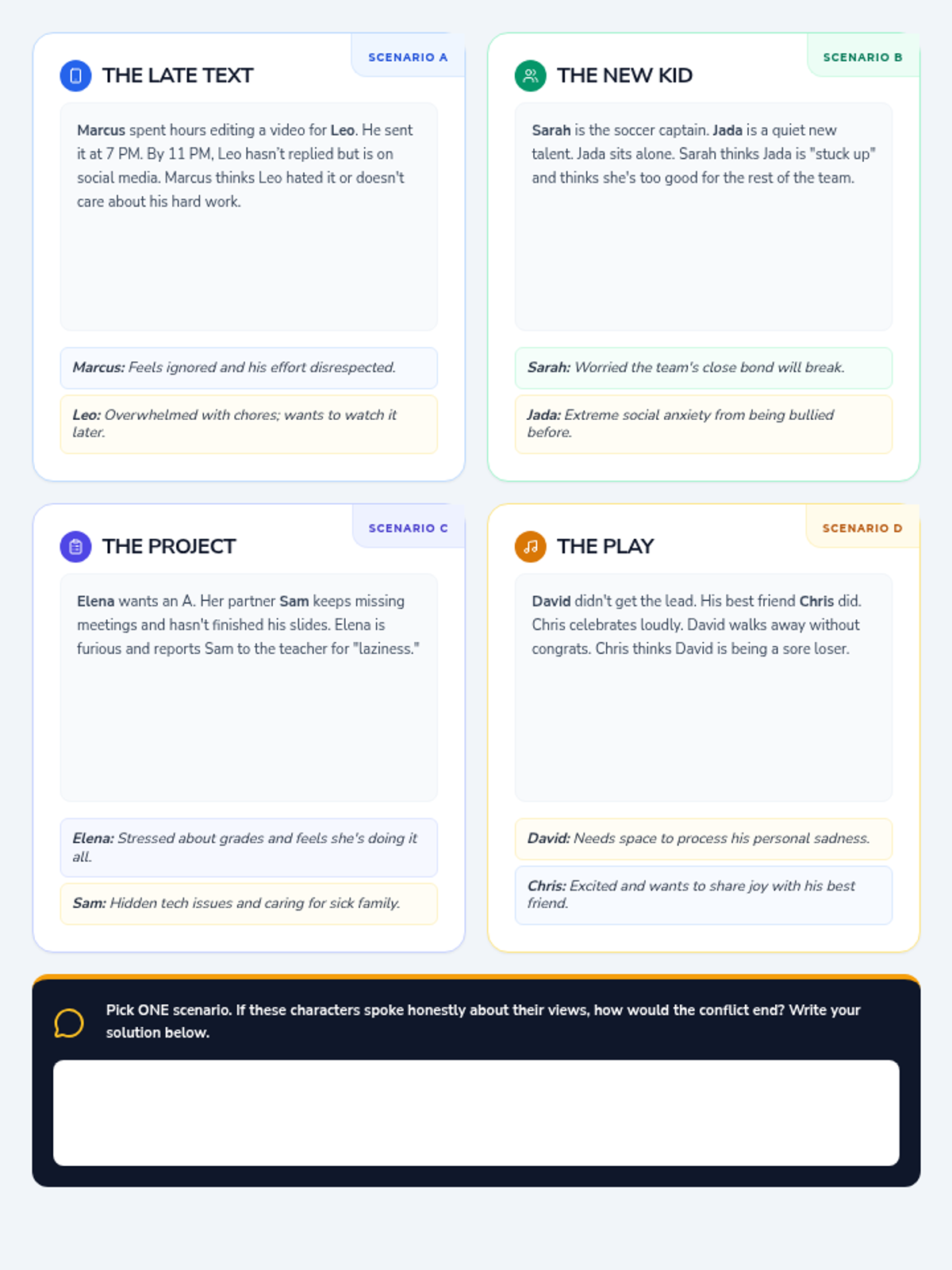
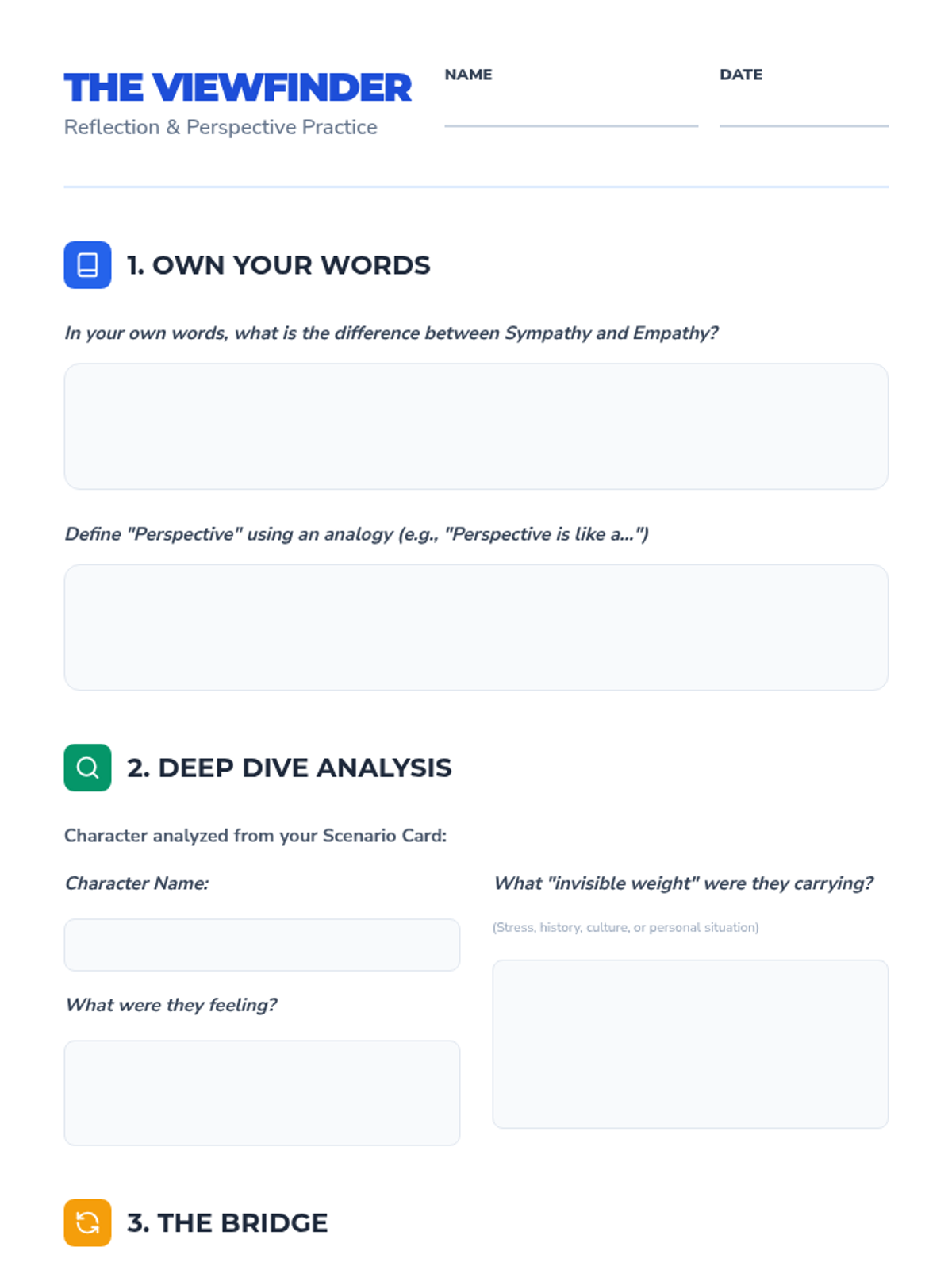
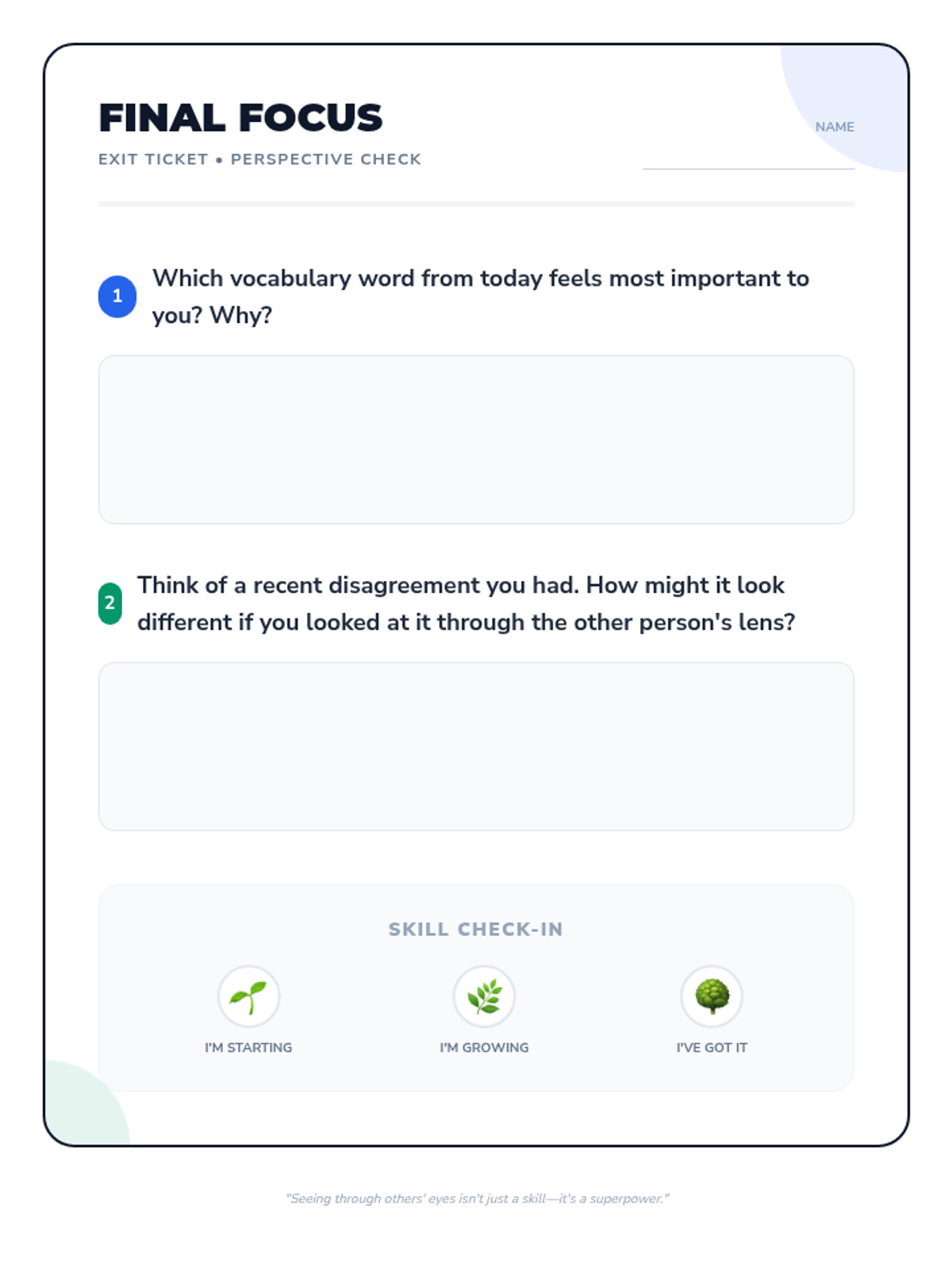
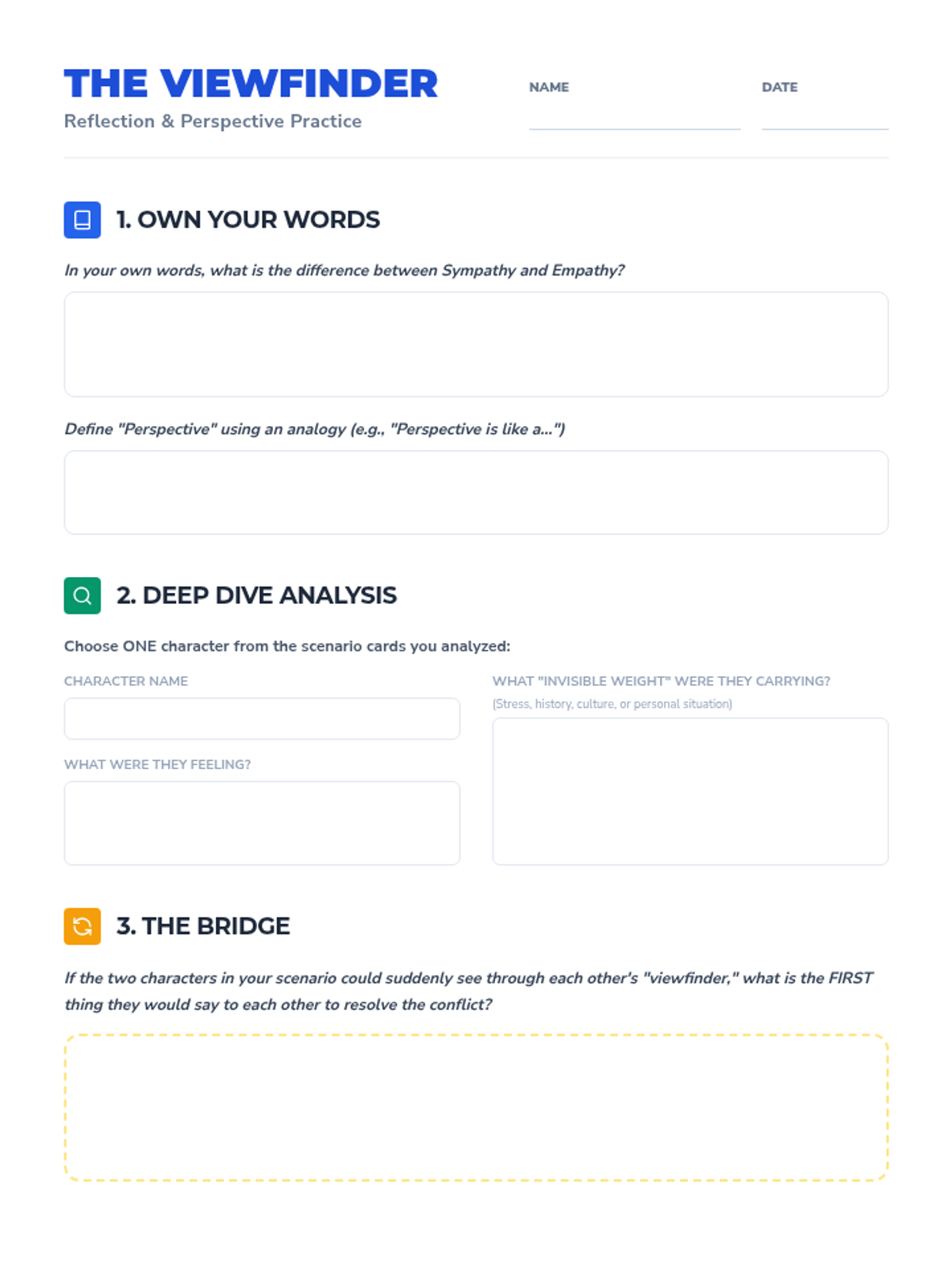
A Grade 9 SEL lesson focused on developing empathy and perspective-taking through interactive scenarios and reflections. Students will learn to identify others' emotions and understand different points of view.
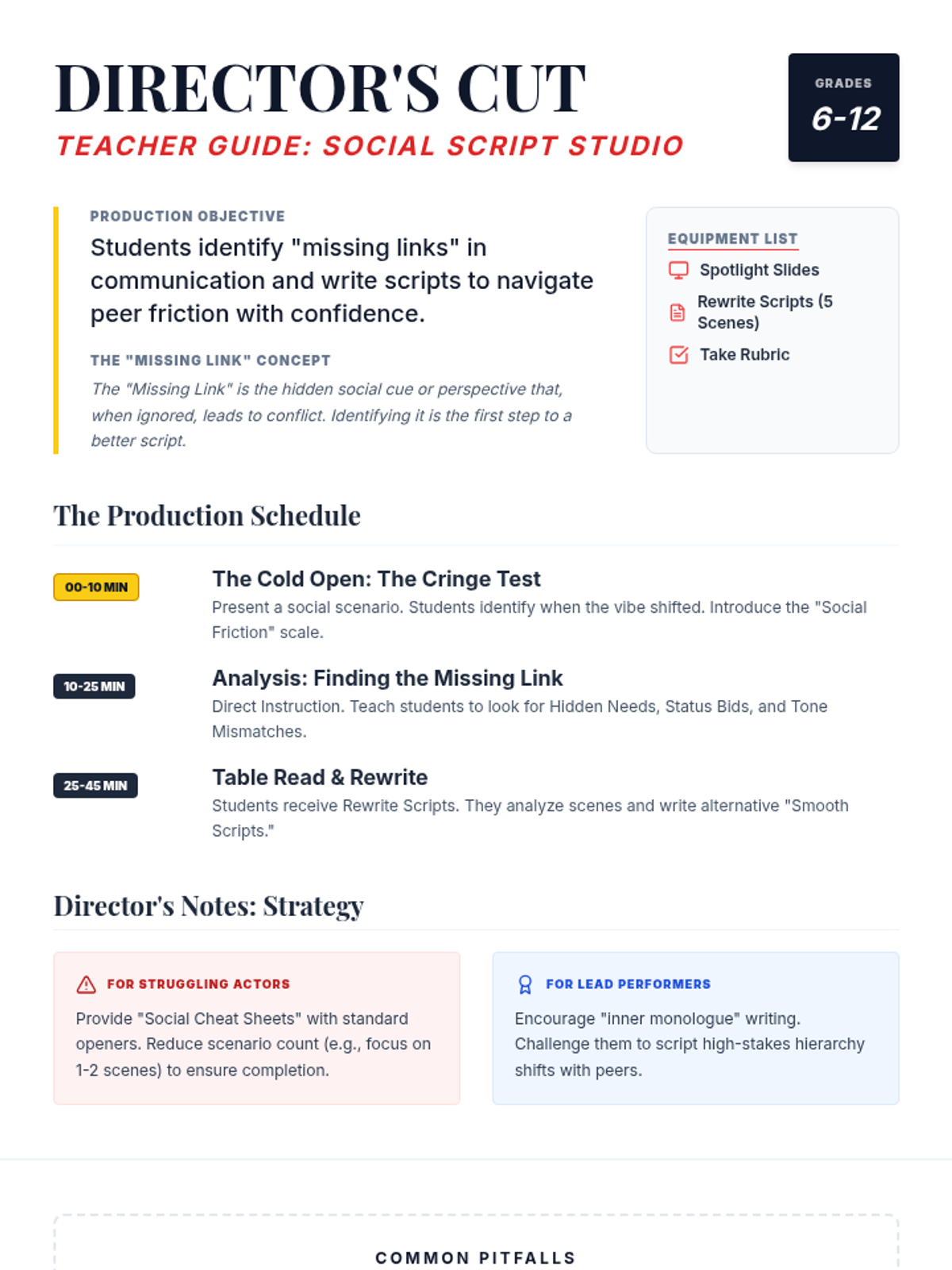
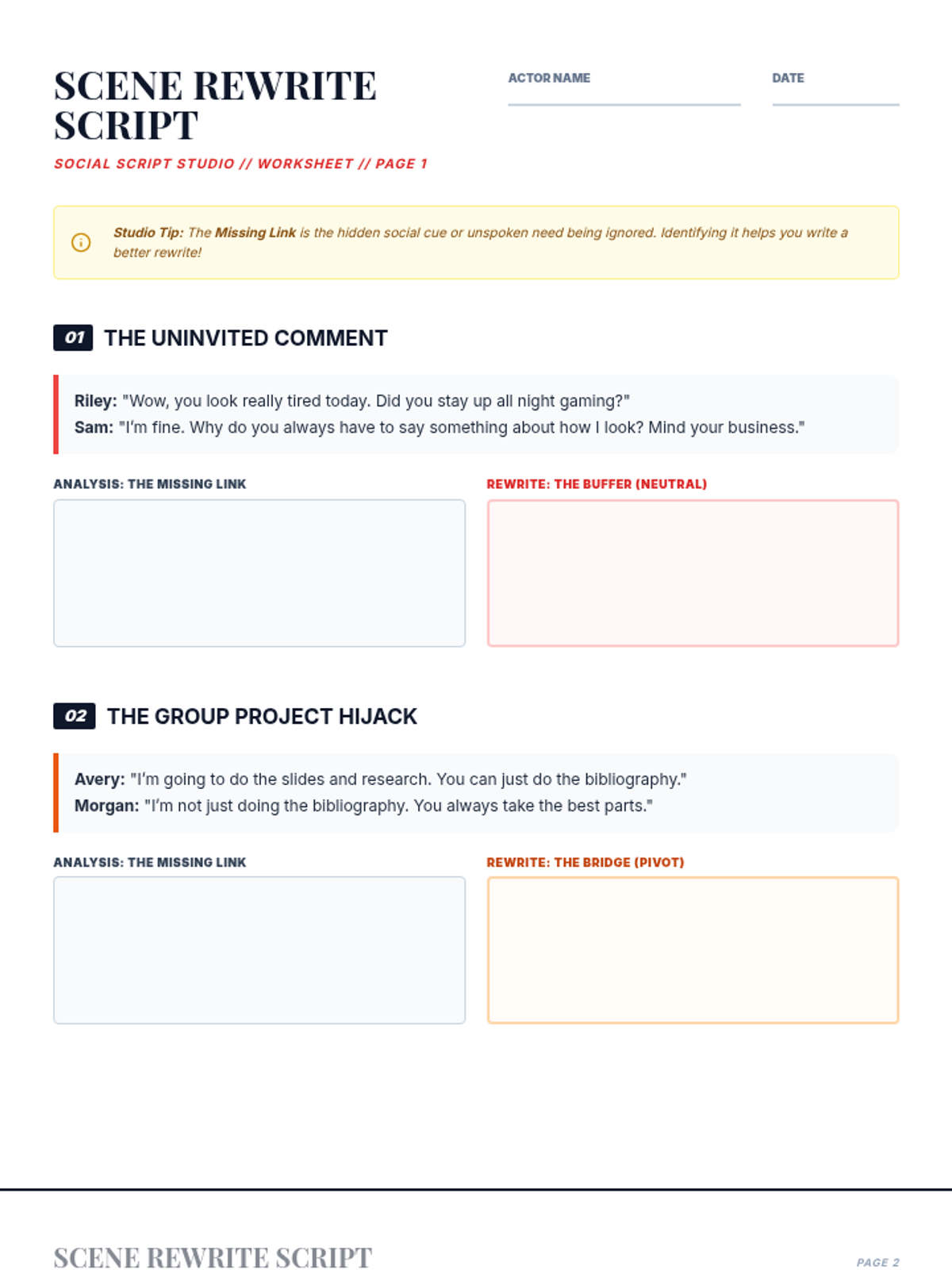
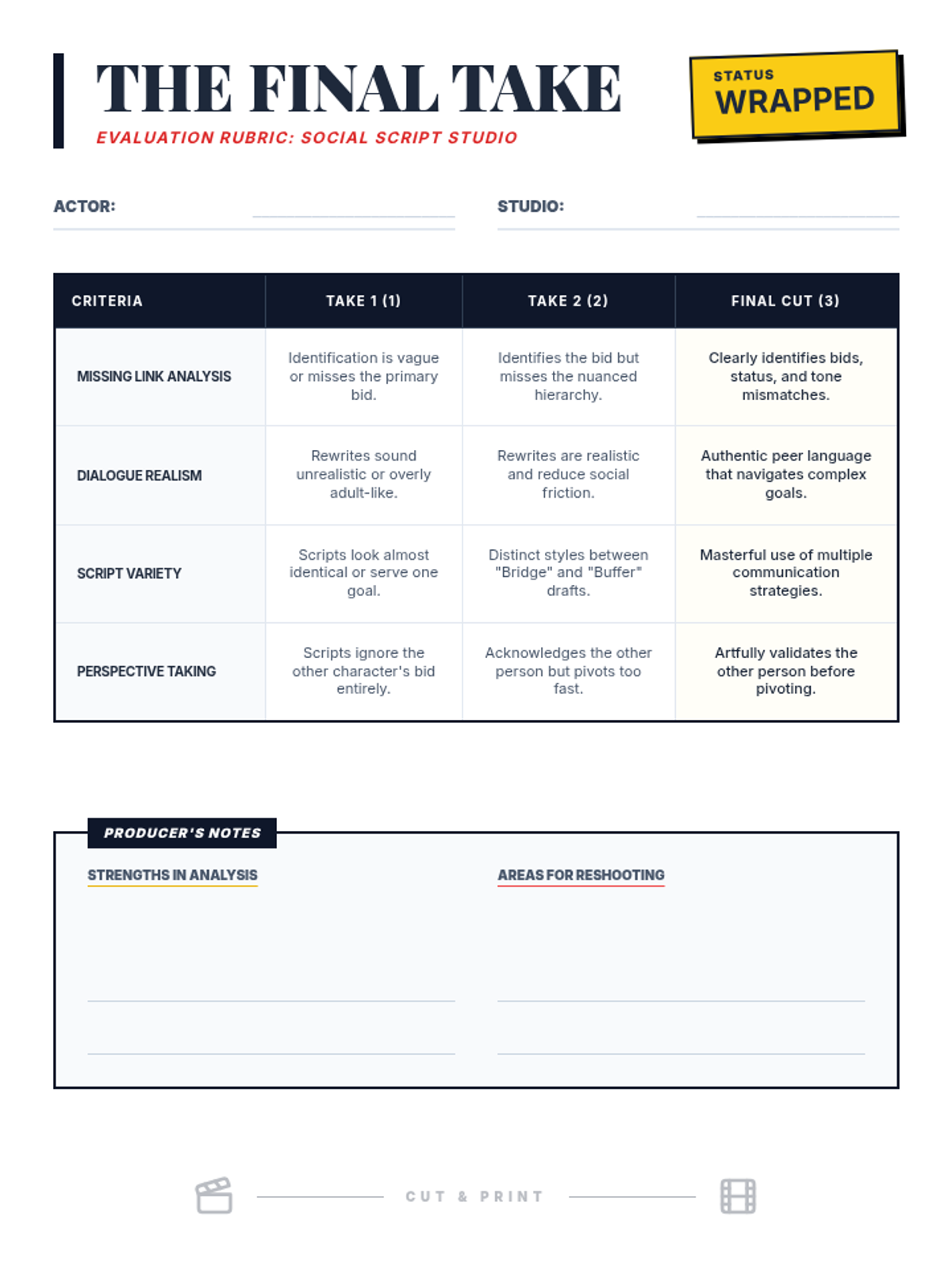
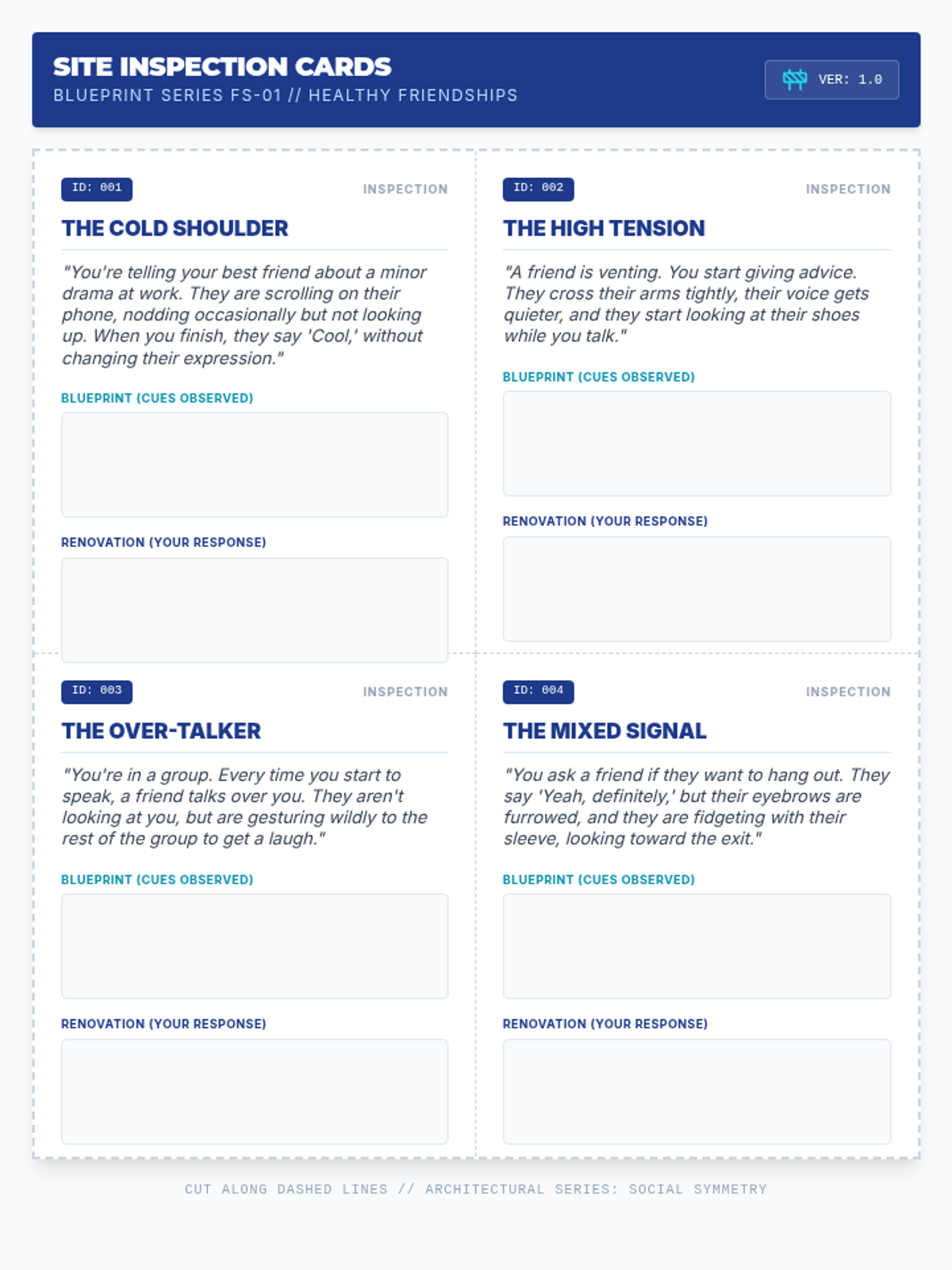
A social skills lesson for middle and high school students focused on analyzing social interactions, identifying communication gaps, and rehearsing alternative responses to peer conflict.
Consolidating resources and creating a concrete, personalized safety plan for life after graduation.
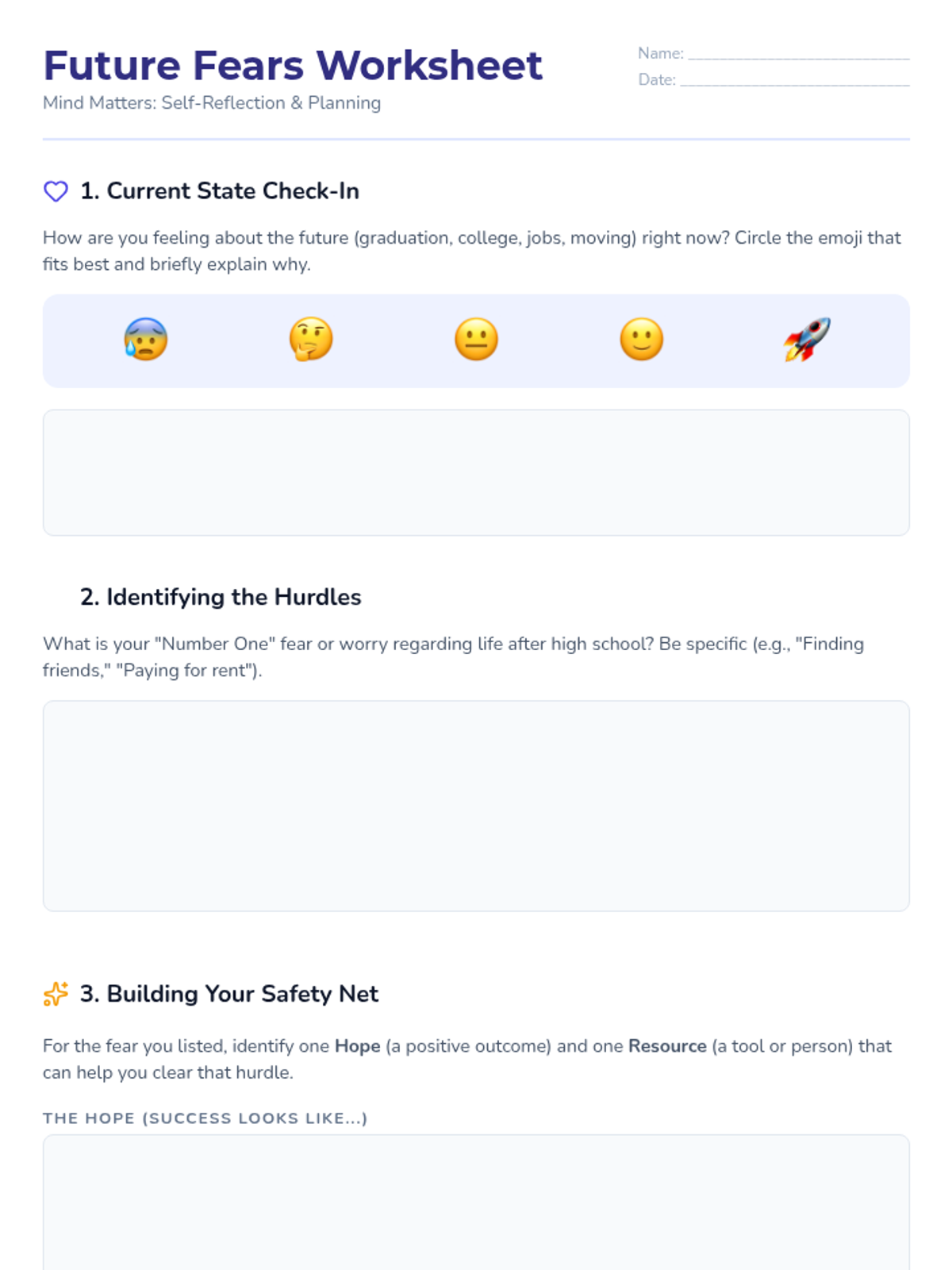
An interactive workshop day where students map out personal hurdles and the resources needed to clear them.
Specifically addressing the psychological challenges of leaving high school and the loss of routine.
An exploration of depression symptoms, breaking stigma, and how to support friends in crisis.
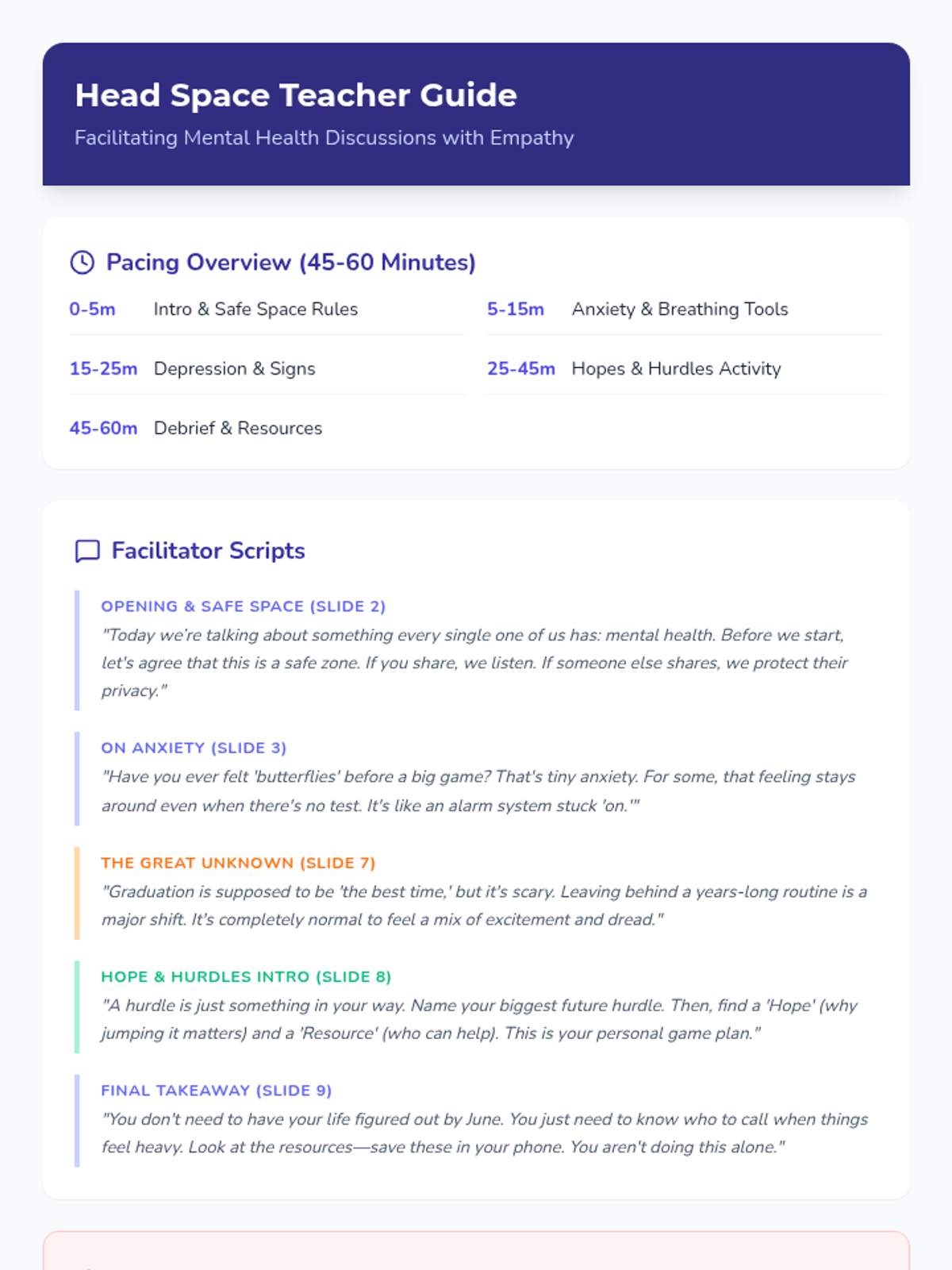
A comprehensive lesson on mental health awareness focusing on anxiety, depression, and the transition from high school, featuring a guided presentation and self-reflection activities.
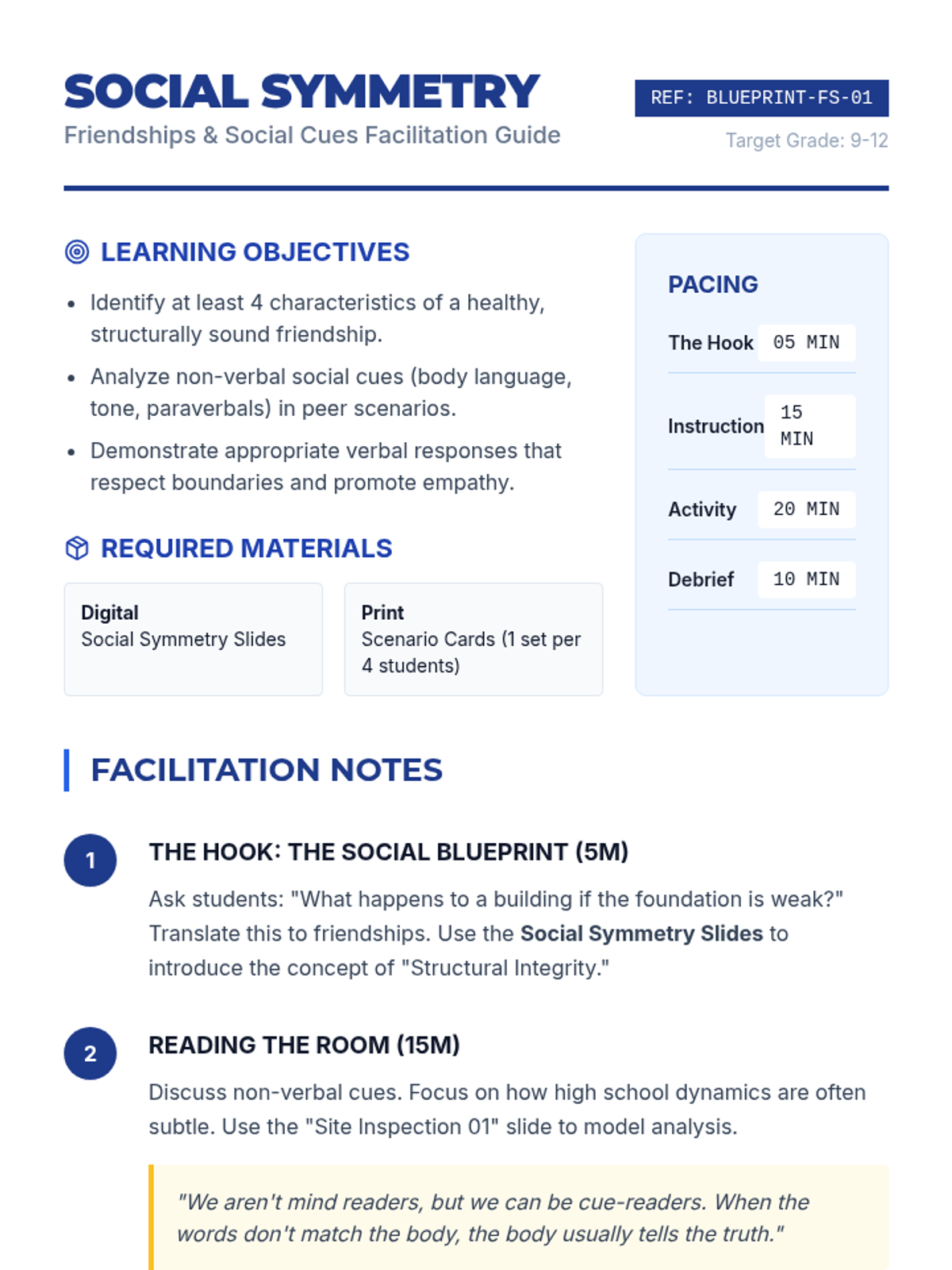
A high-school level lesson focused on navigating the complexities of friendships through the lens of social cues and healthy boundaries. Students analyze social 'blueprints' to build stronger, more empathetic connections.
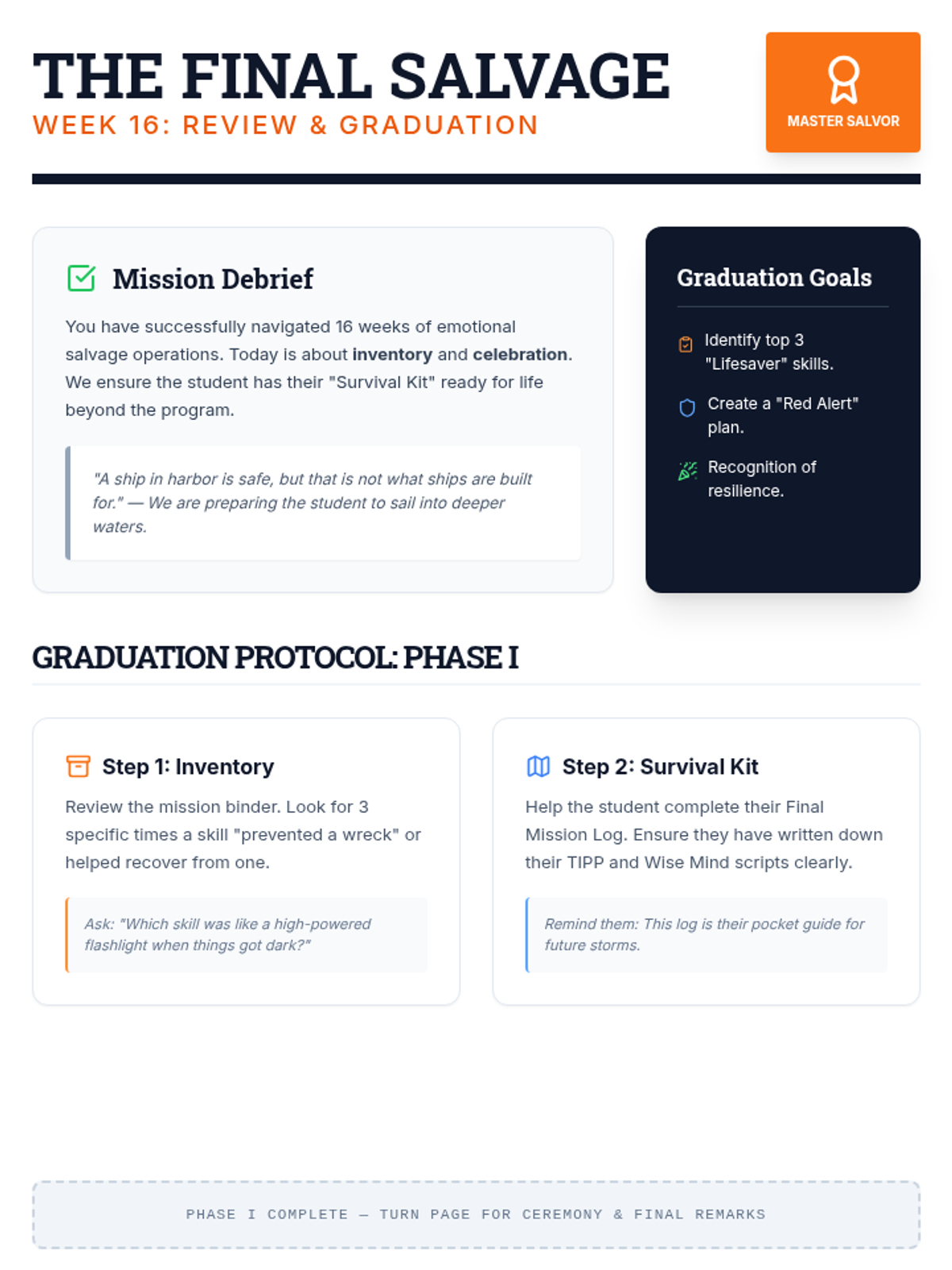
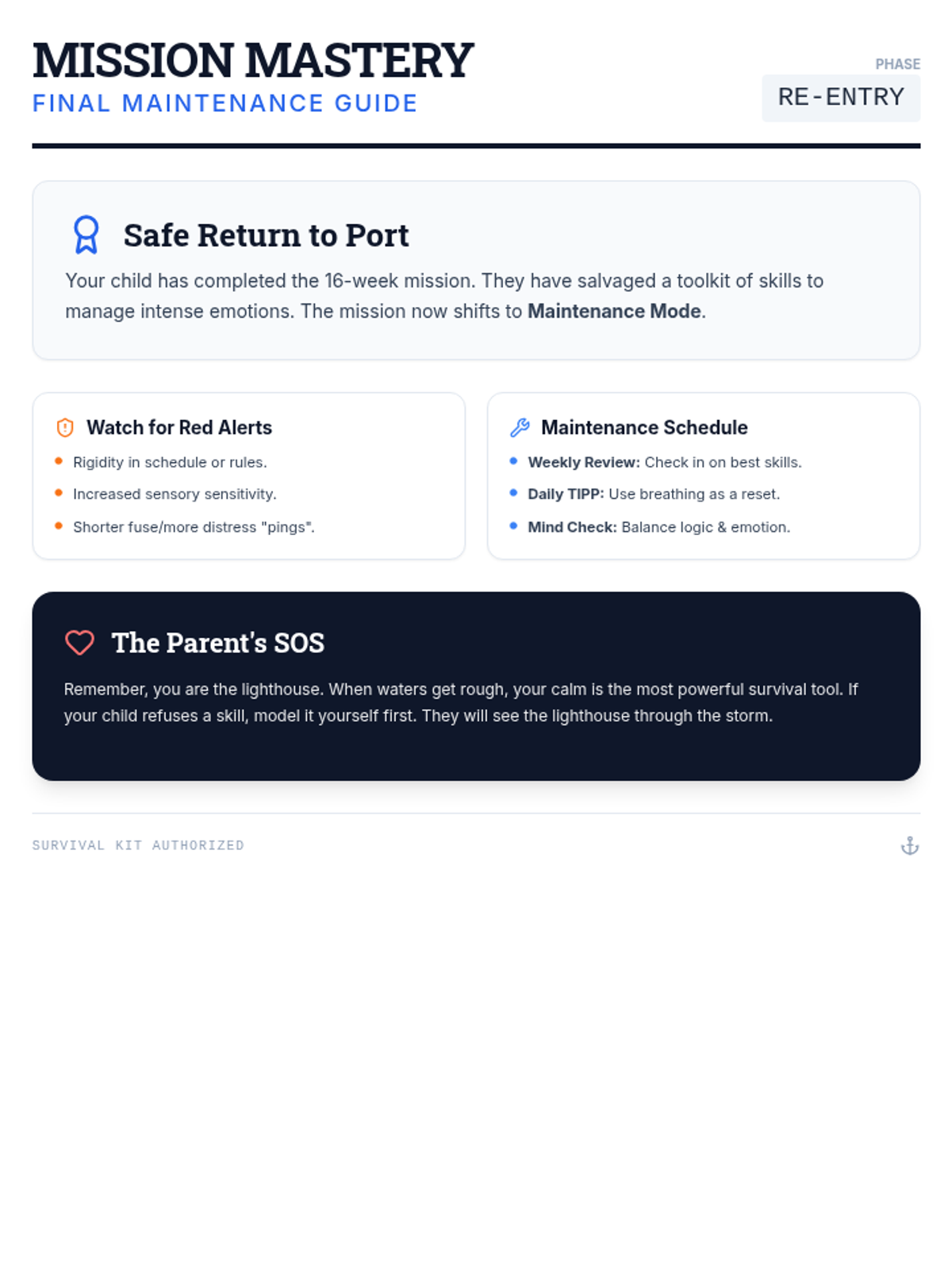
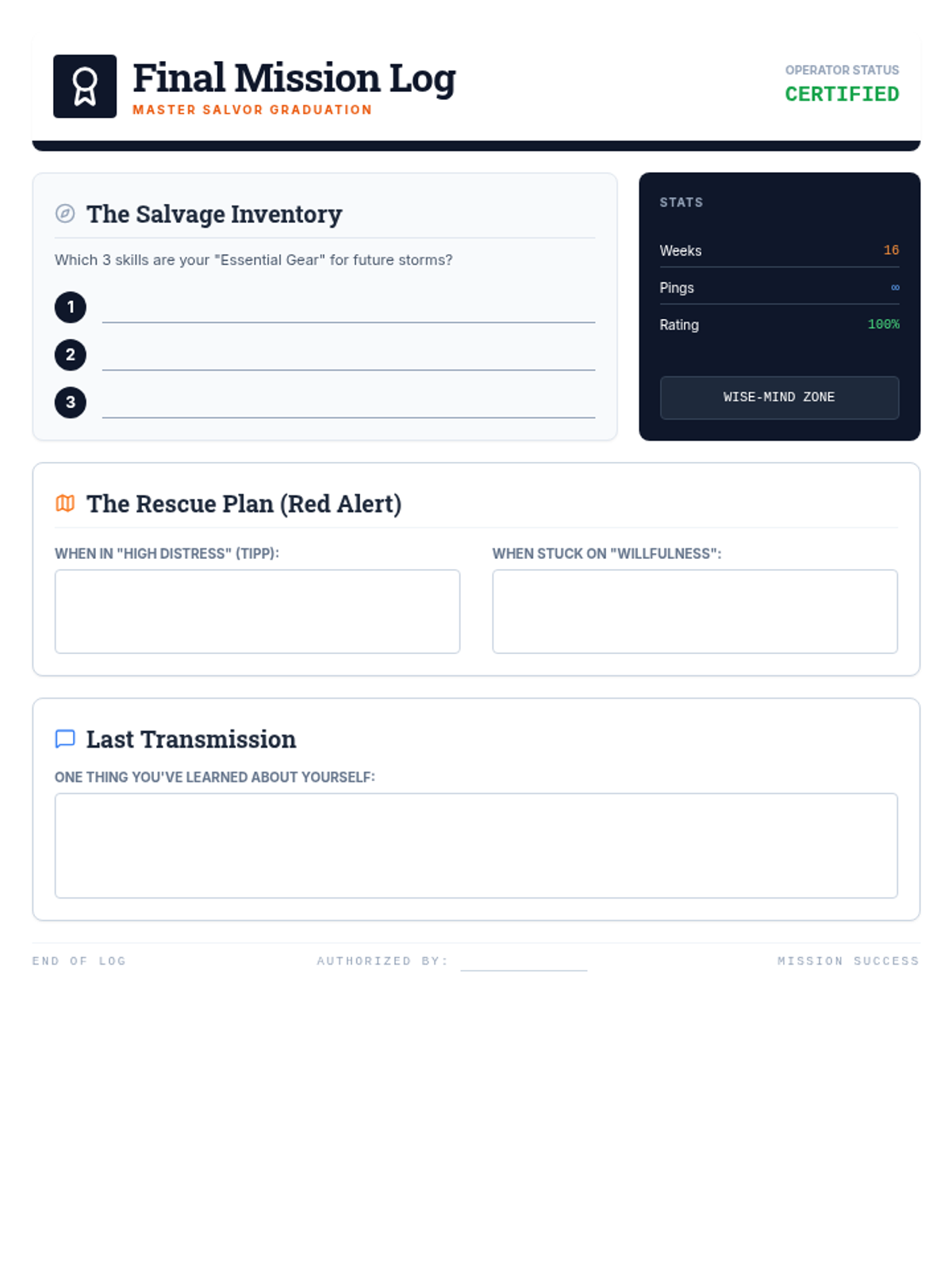
Comprehensive review and graduation from the Survival and Salvage DBT program.
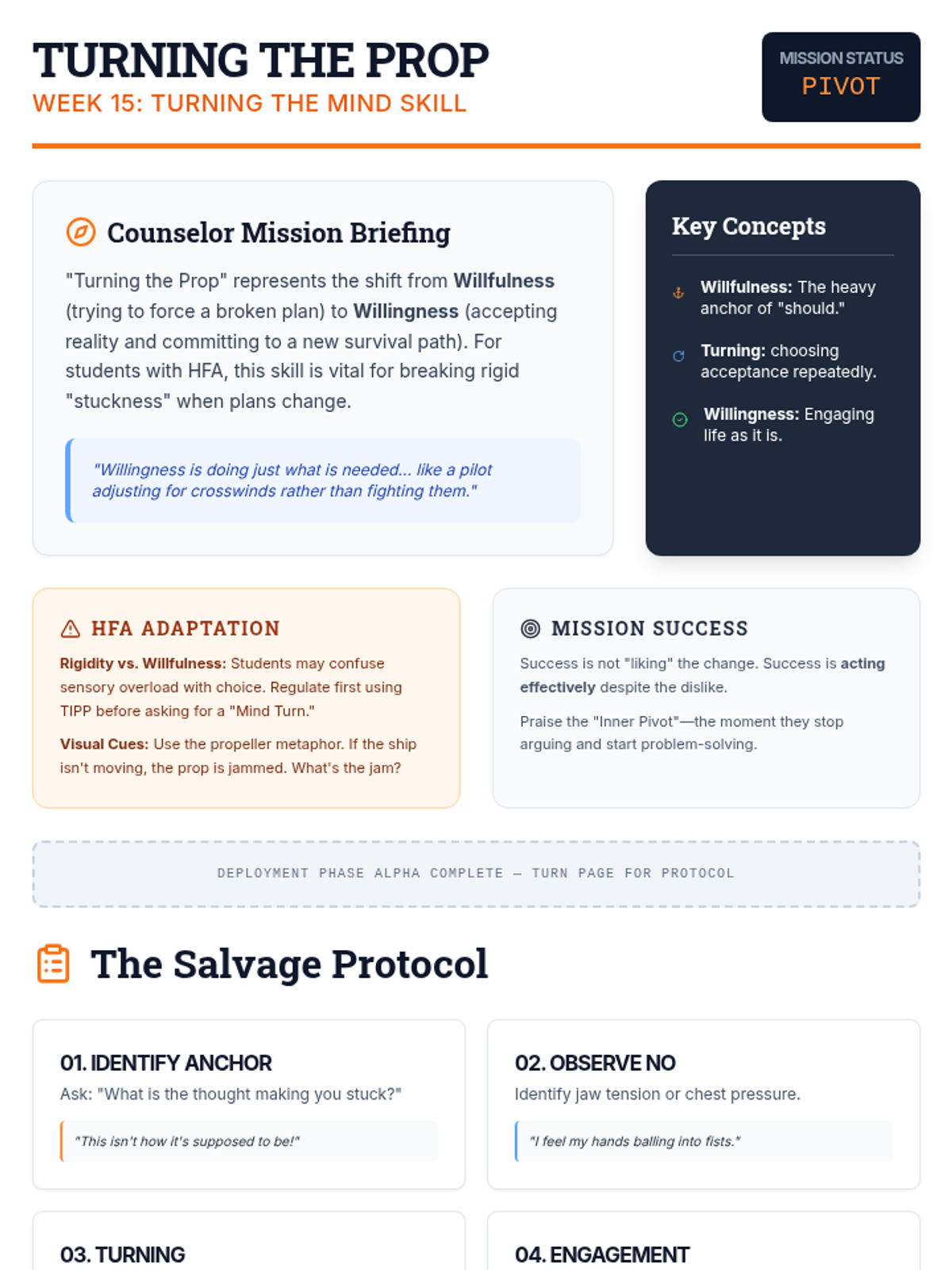
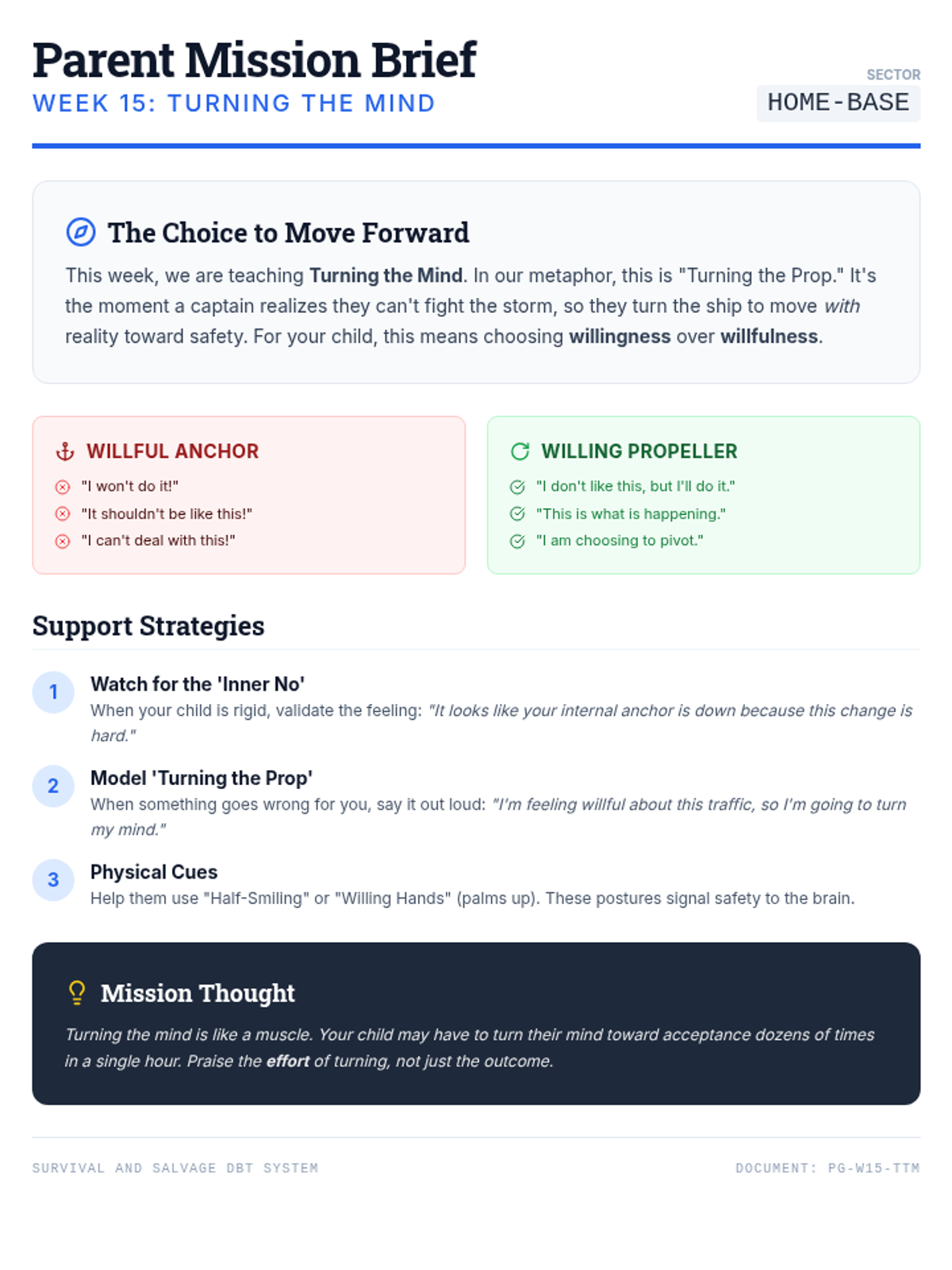
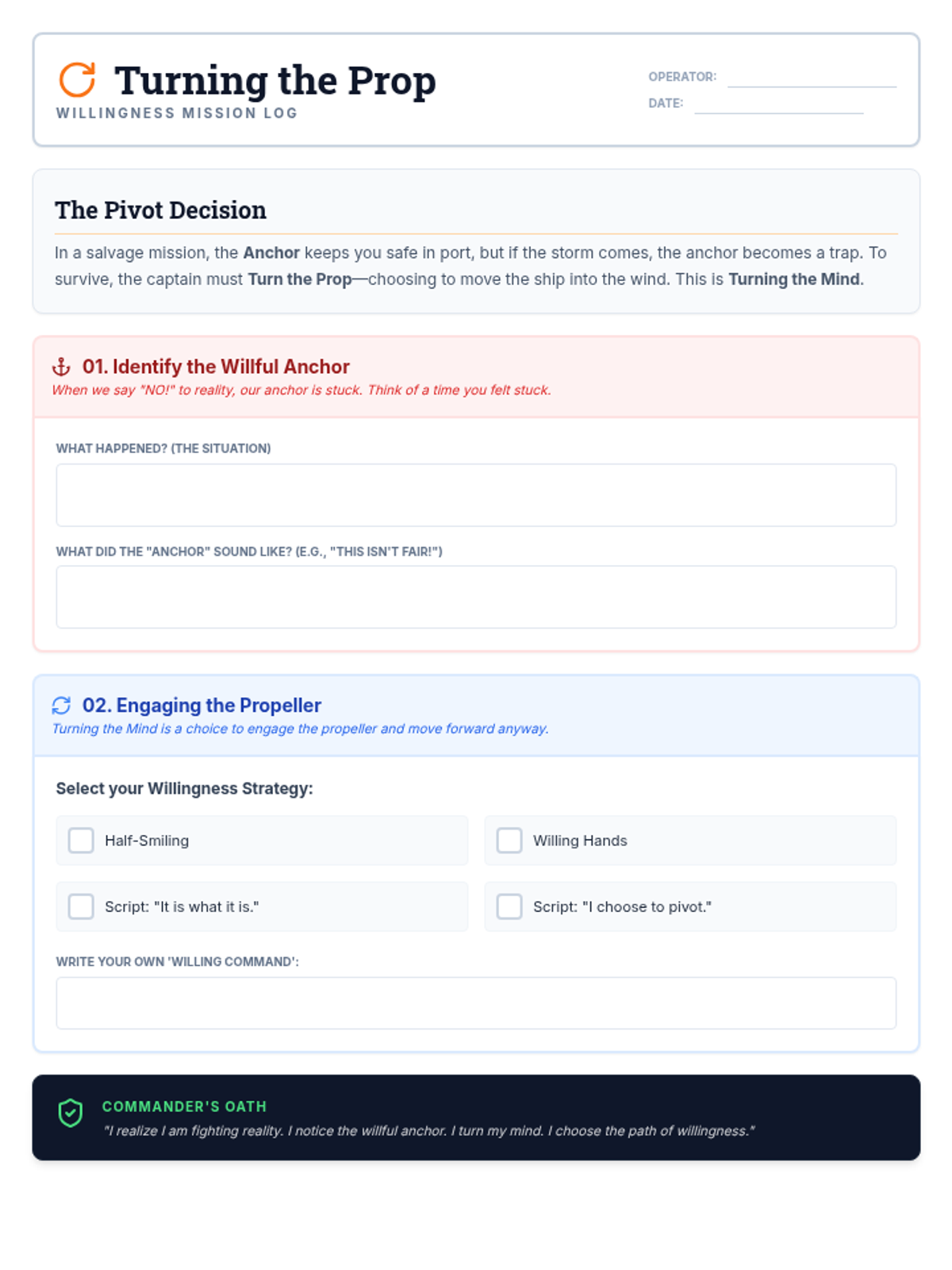
Committing to a new path (Turning the Mind) using the decision to pivot from salvage to survival.
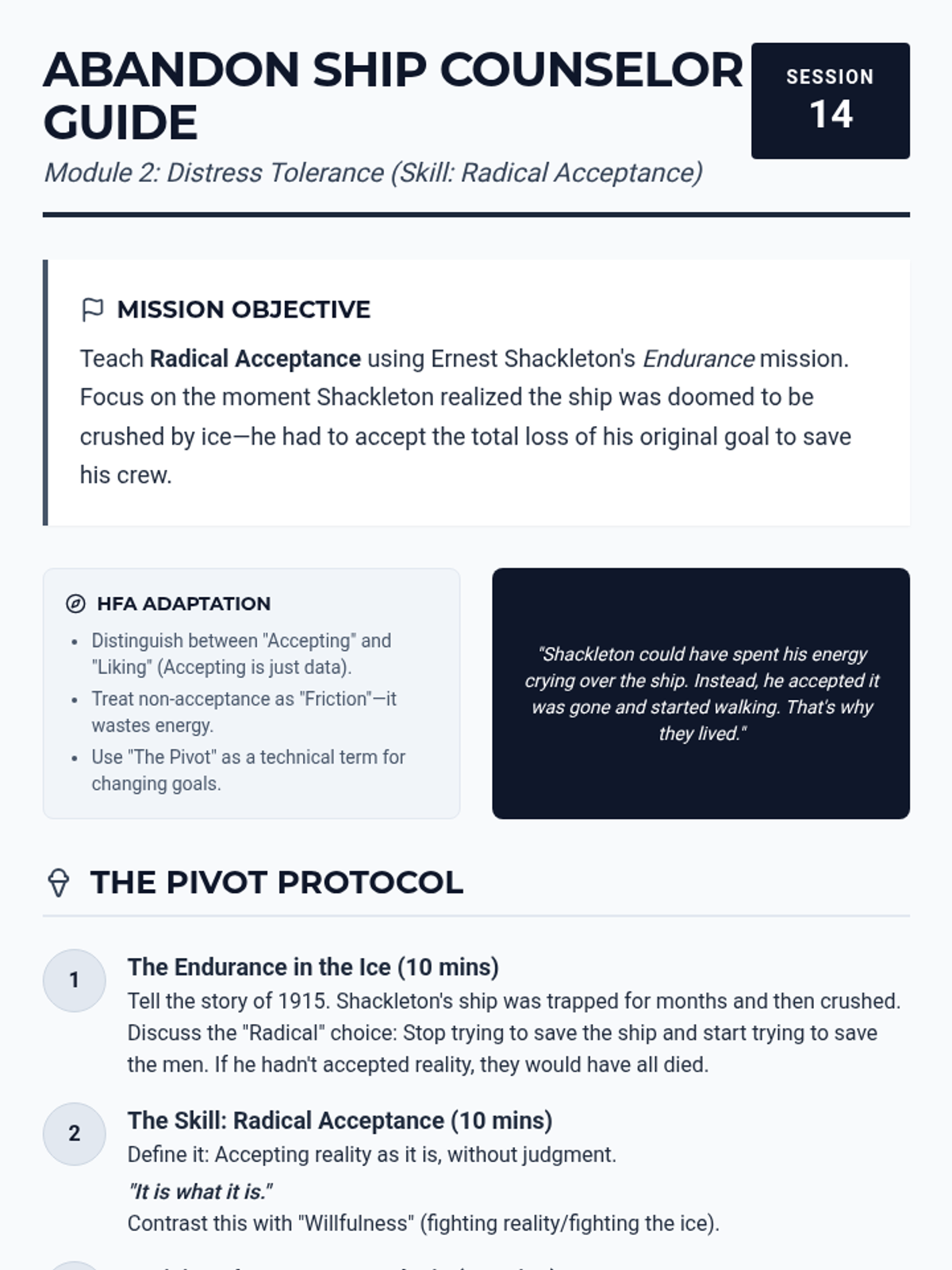
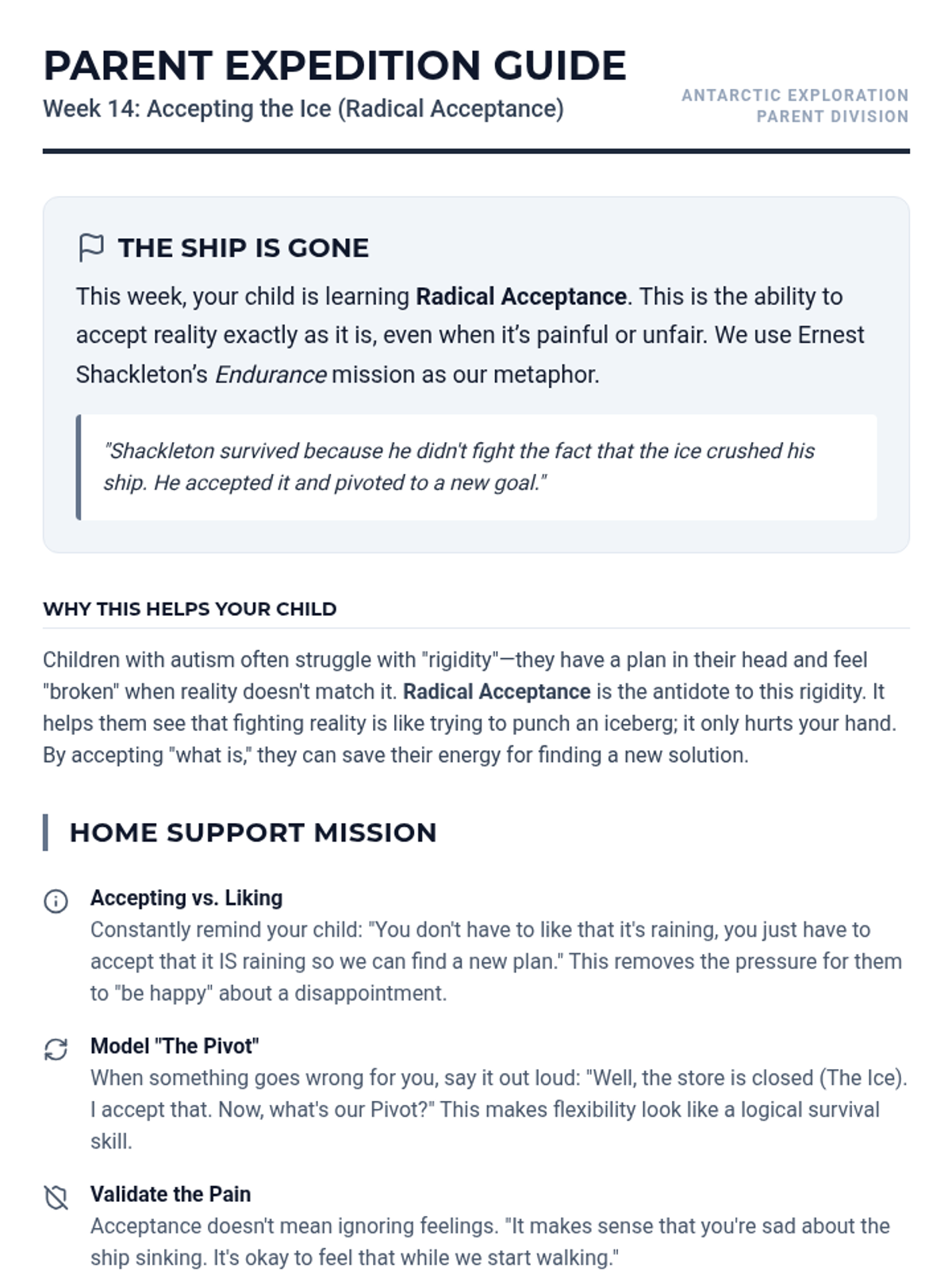
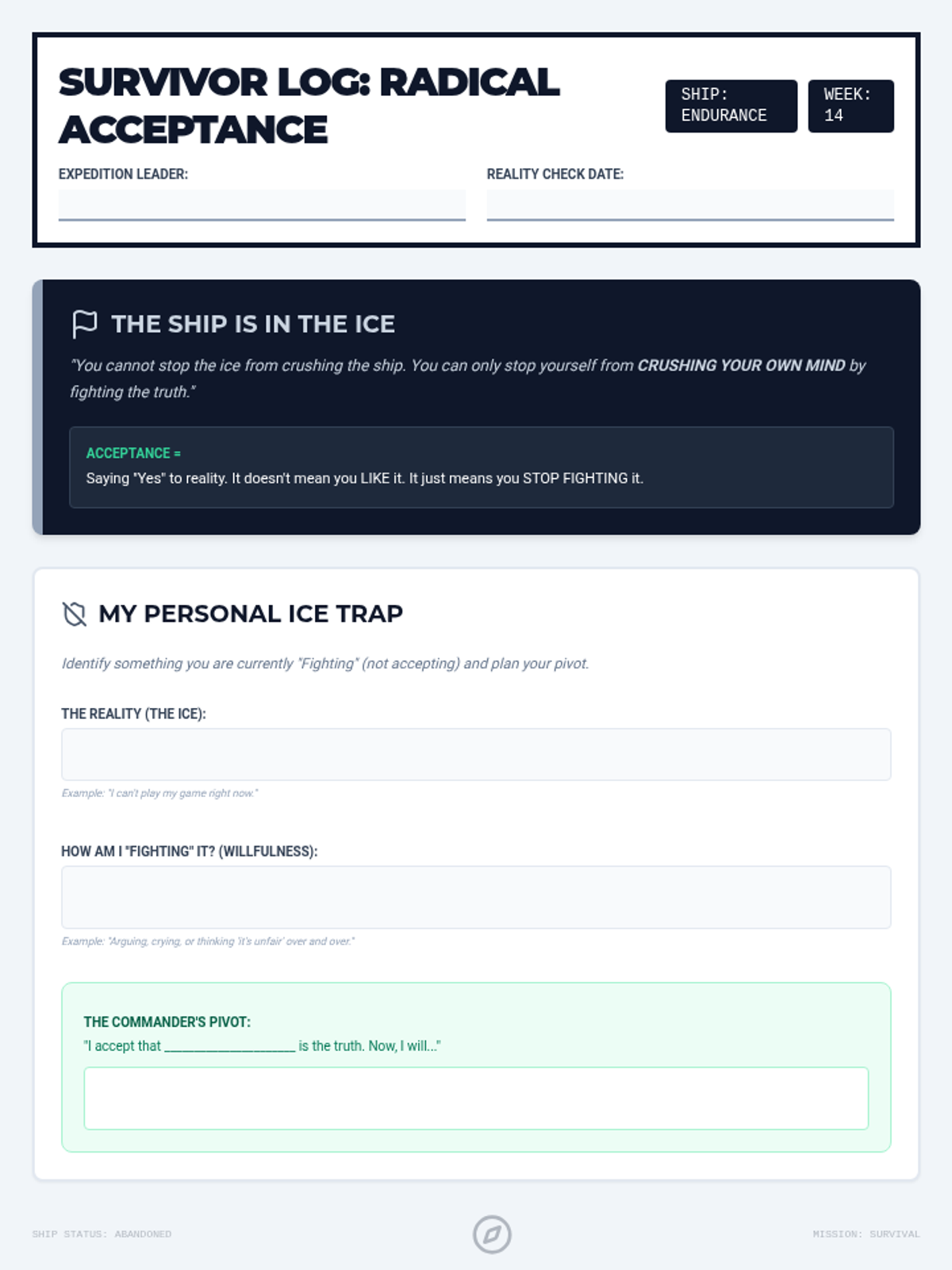
Accepting reality without judgment (Radical Acceptance) using Shackleton's Endurance survival story.
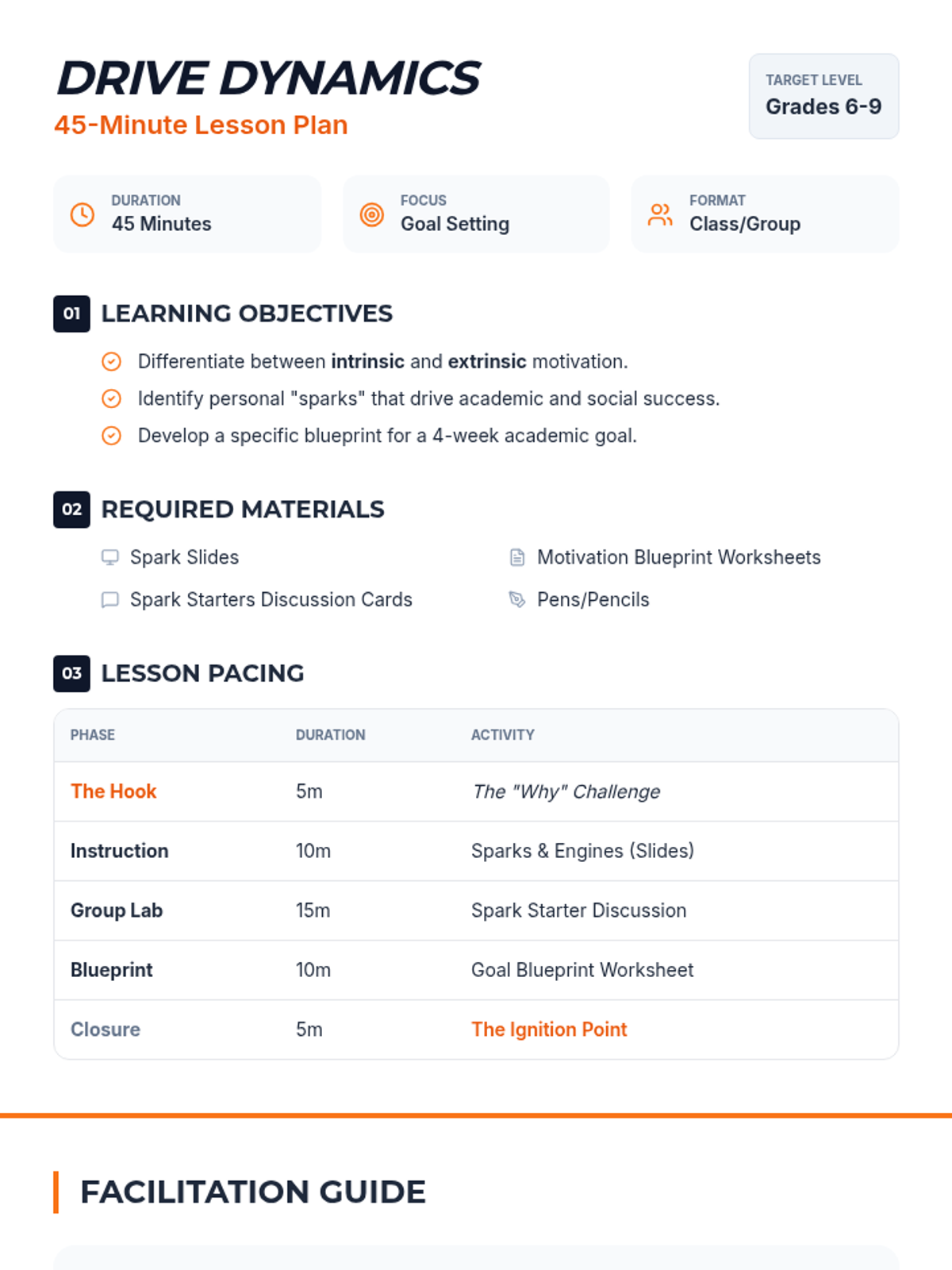
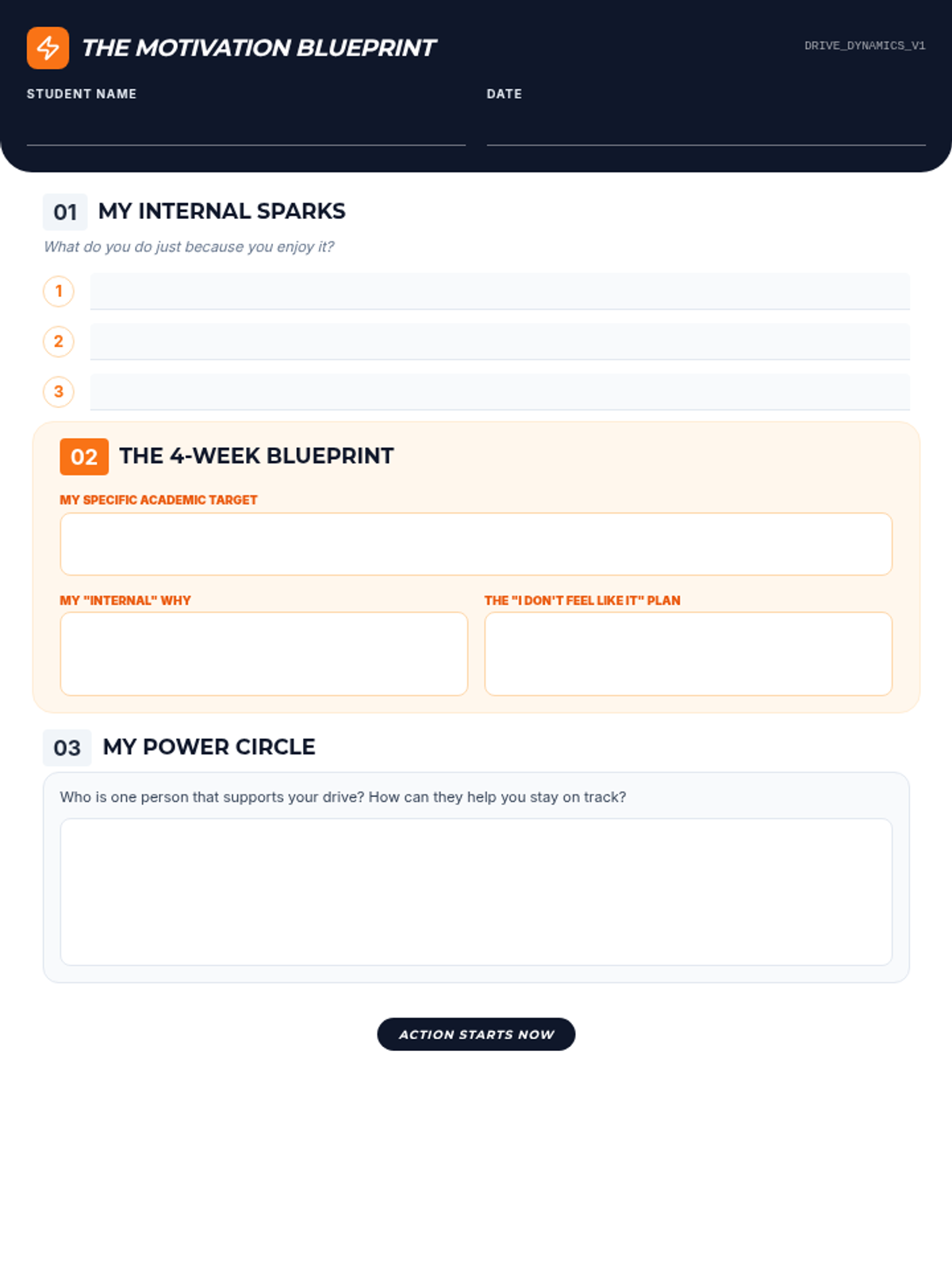
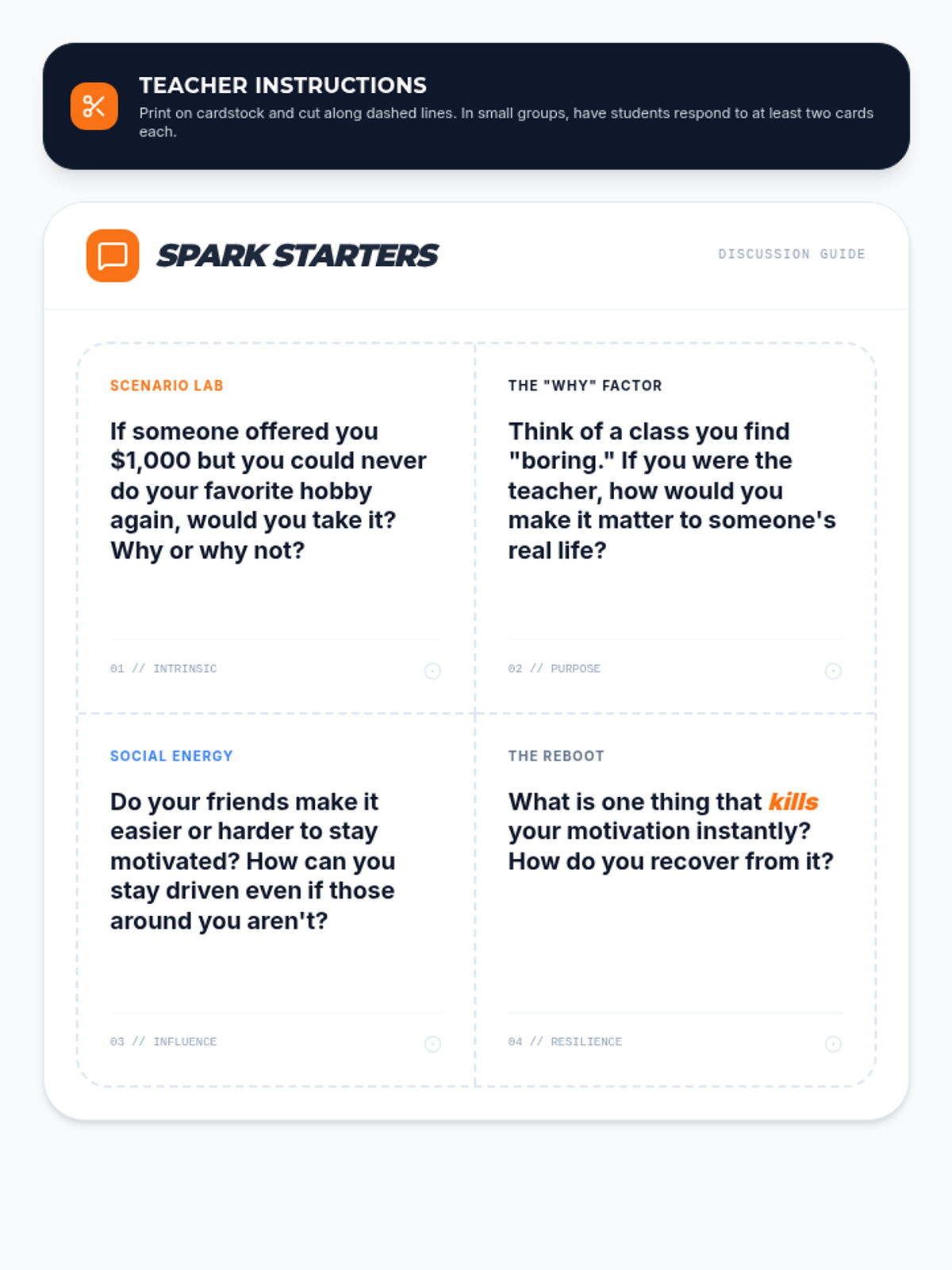
A comprehensive session focused on uncovering internal drivers, setting meaningful academic goals, and building social-emotional resilience through motivation strategies.
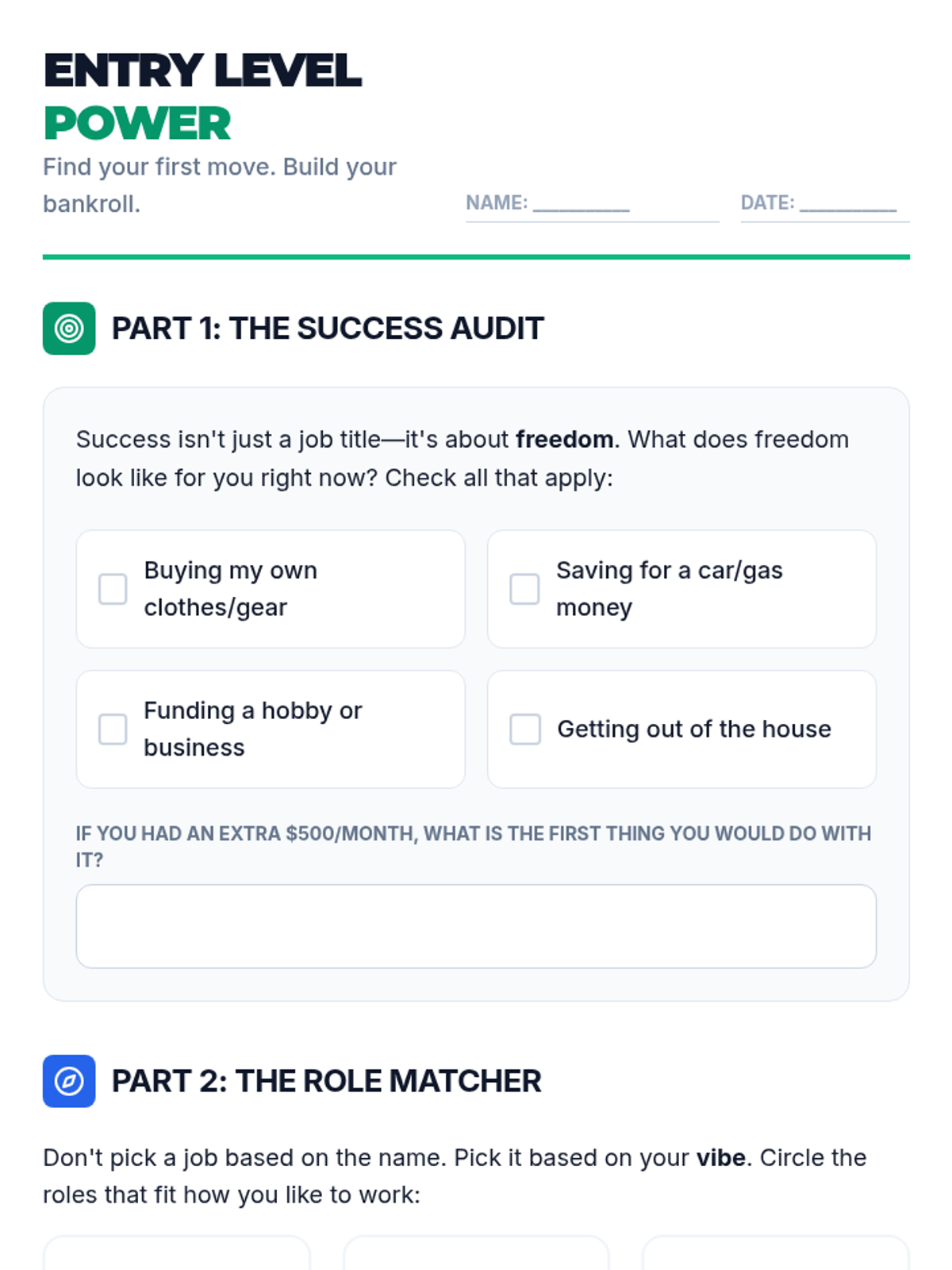
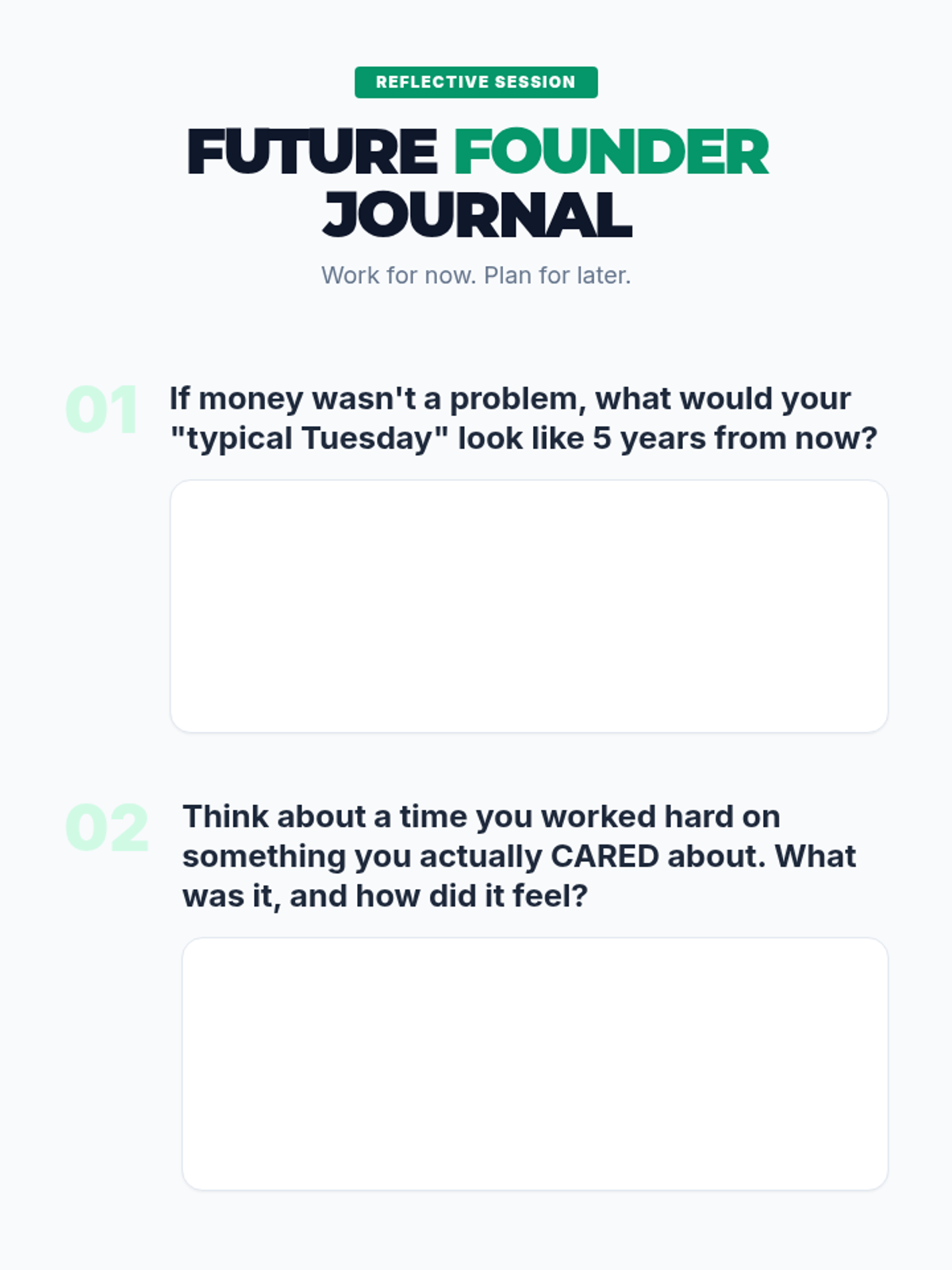
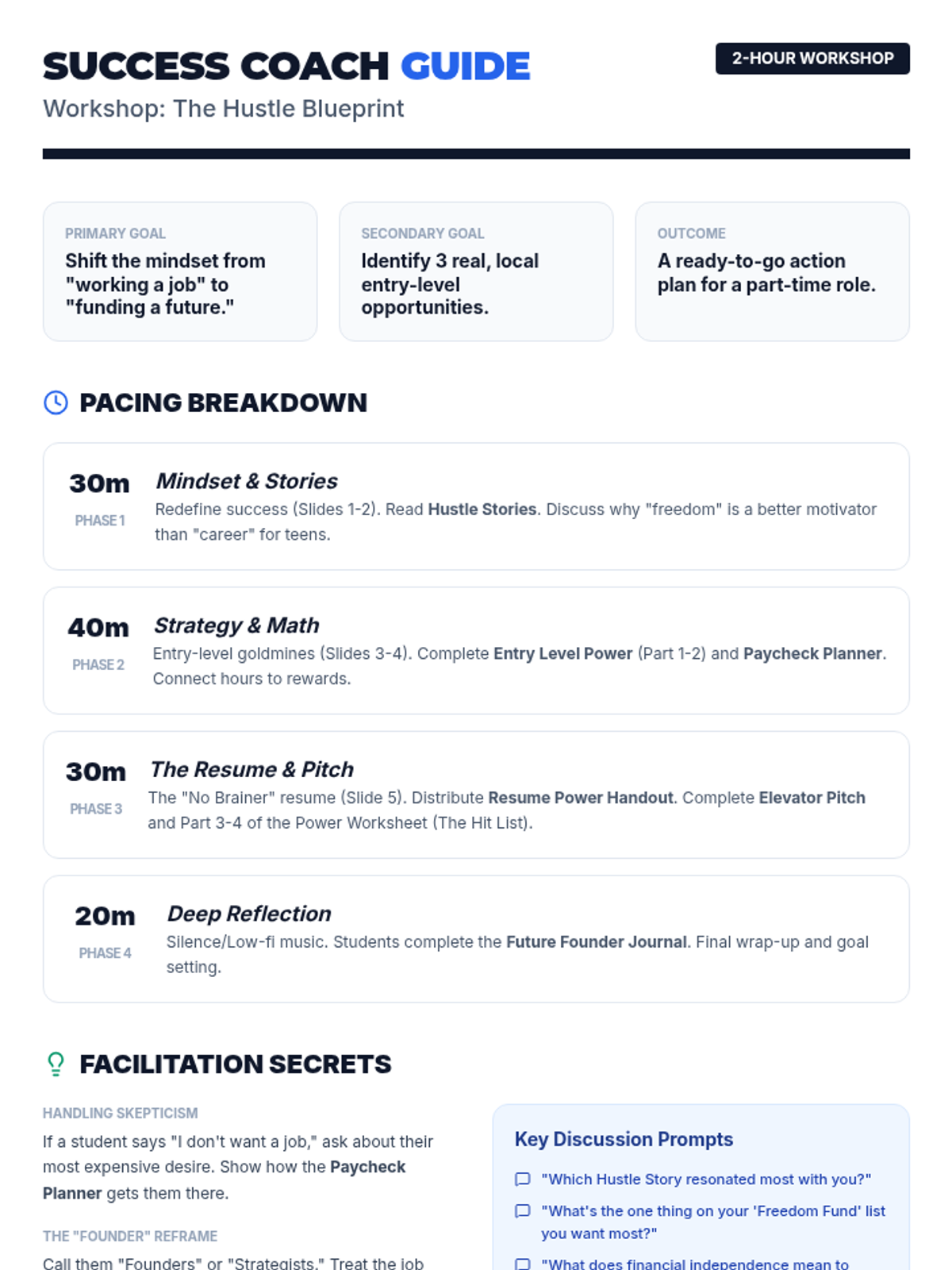
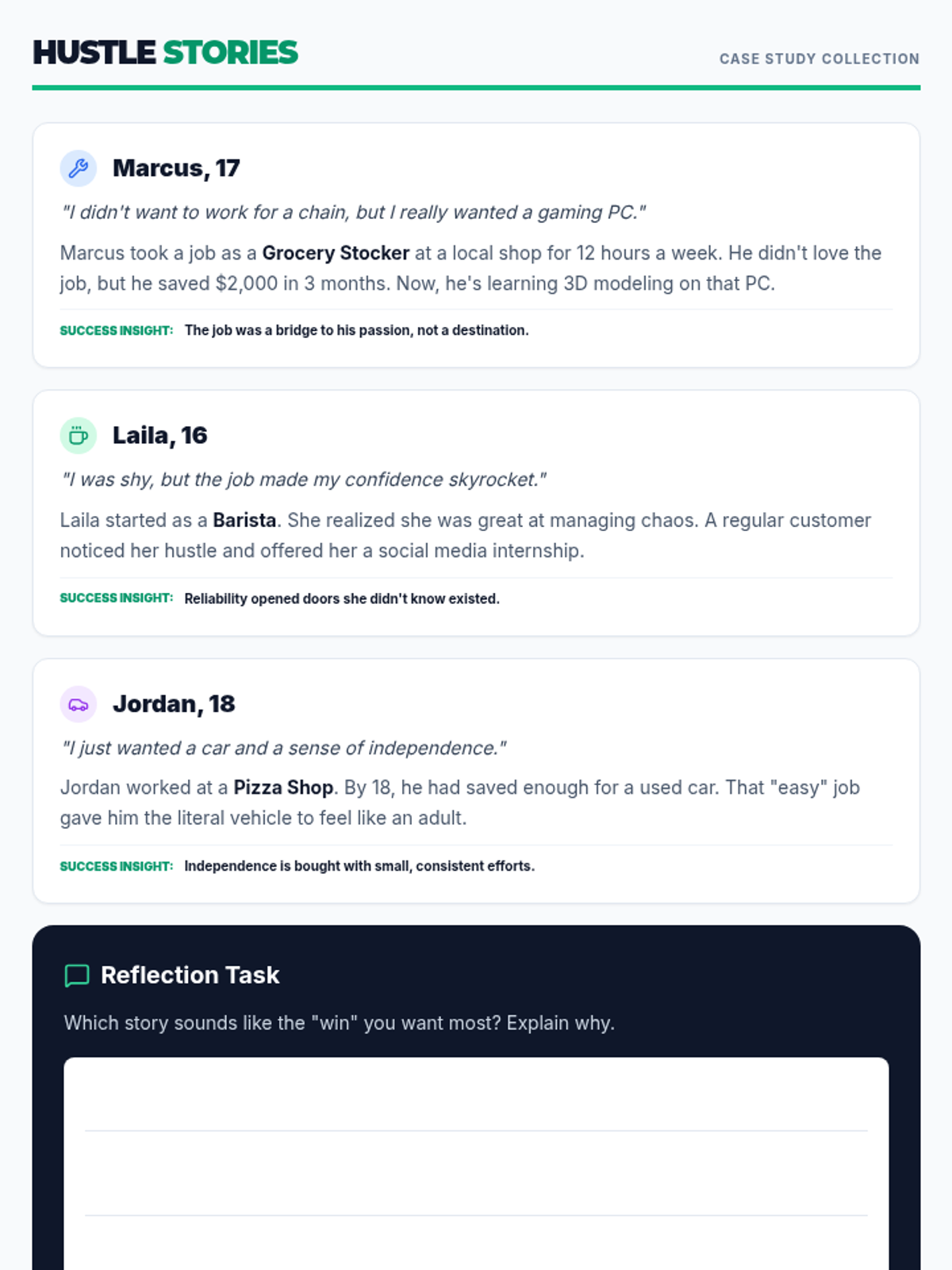
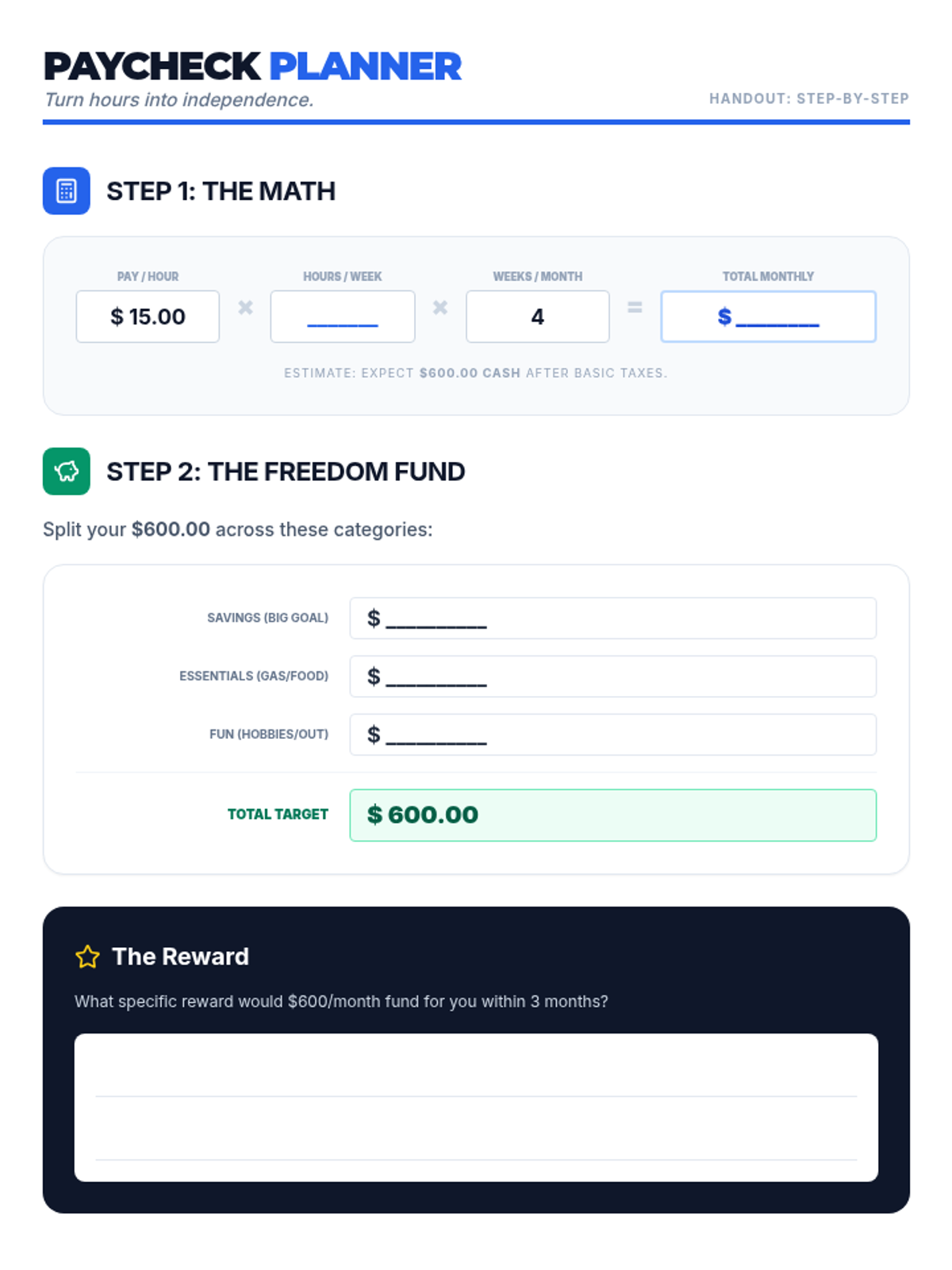
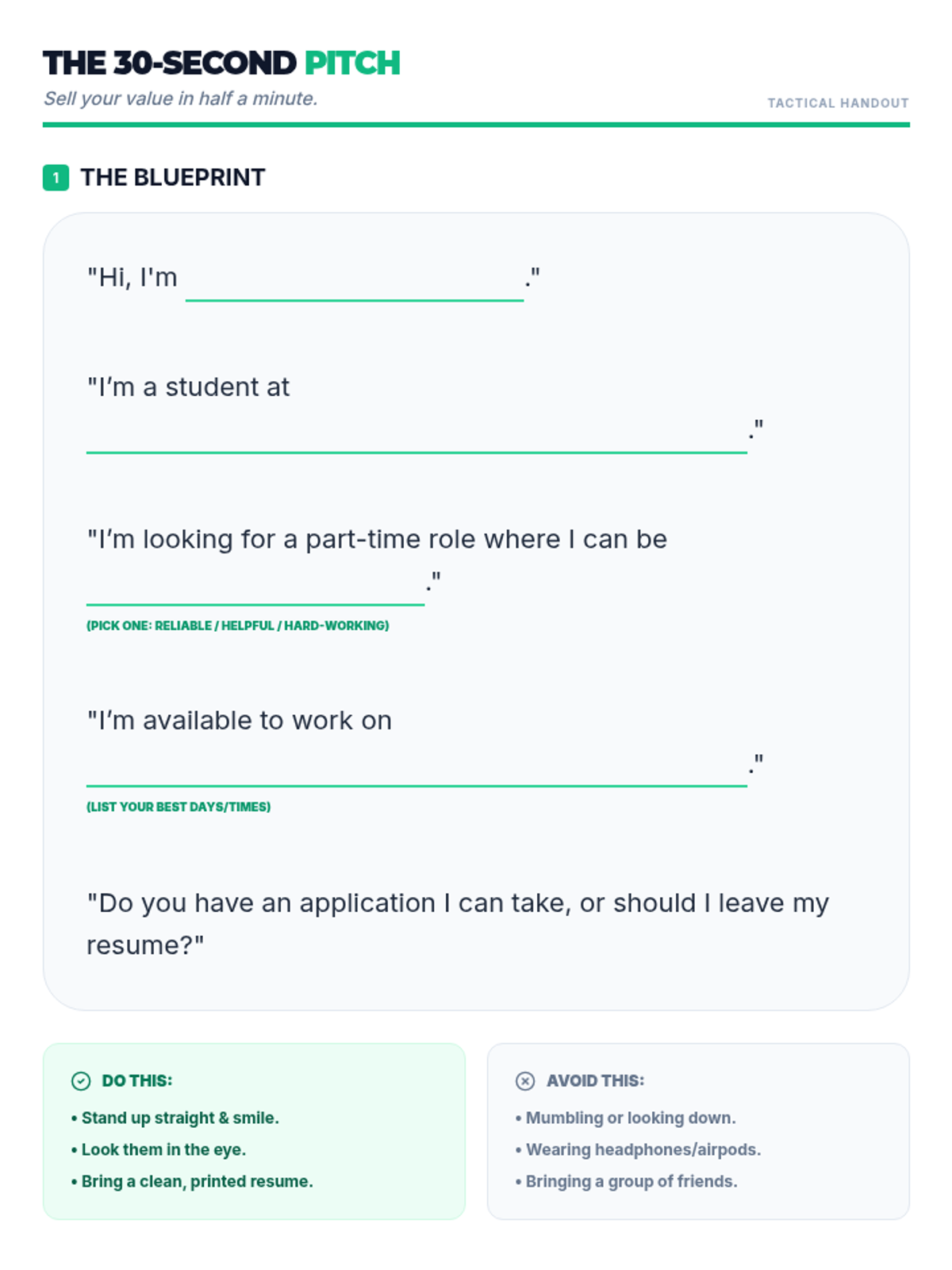
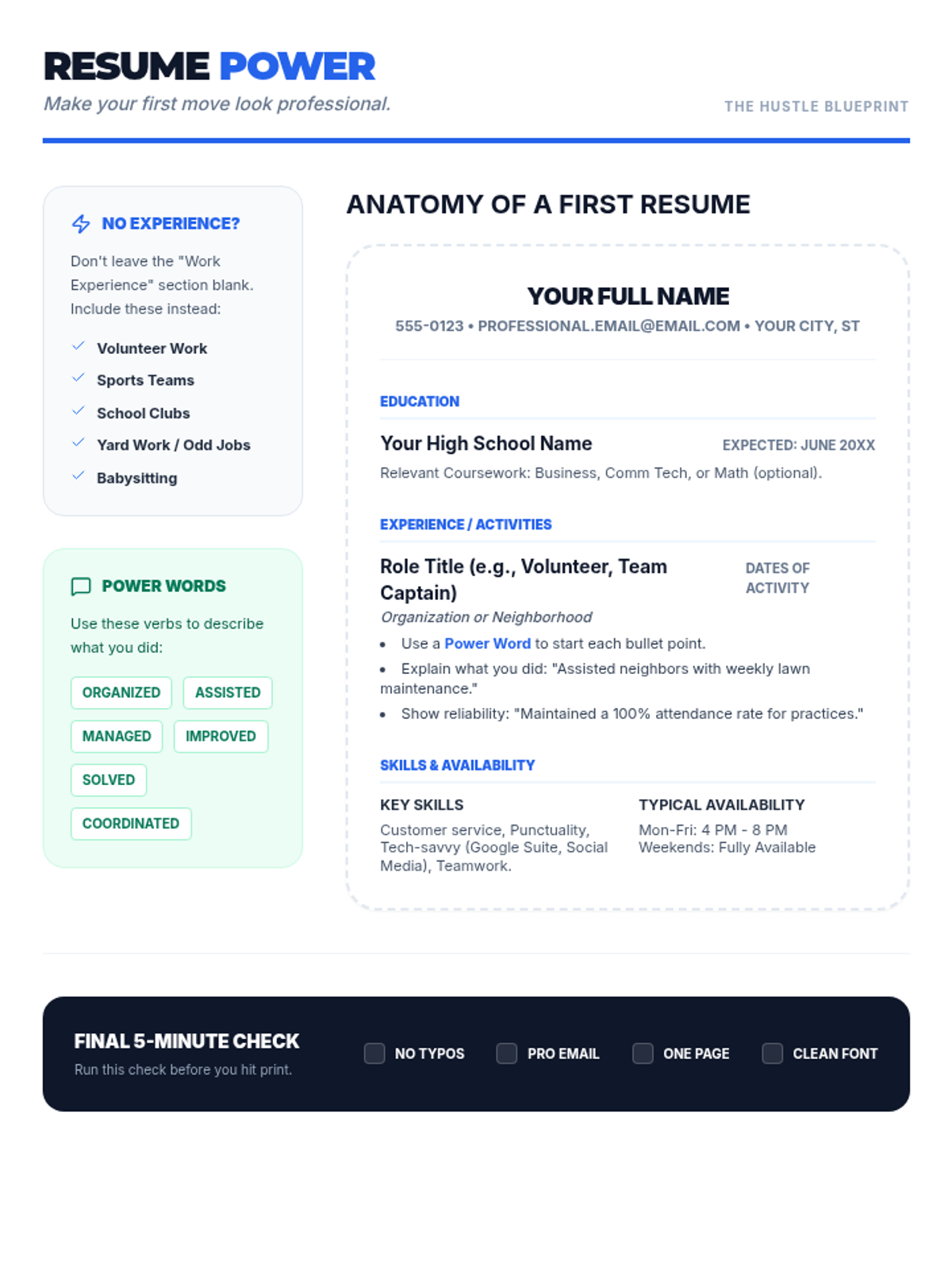
A 2-hour workshop designed for high schoolers to explore entry-level, part-time jobs as a strategic stepping stone toward personal success and independence. Students will redefine success, identify accessible roles that match their interests, and reflect on their long-term goals.
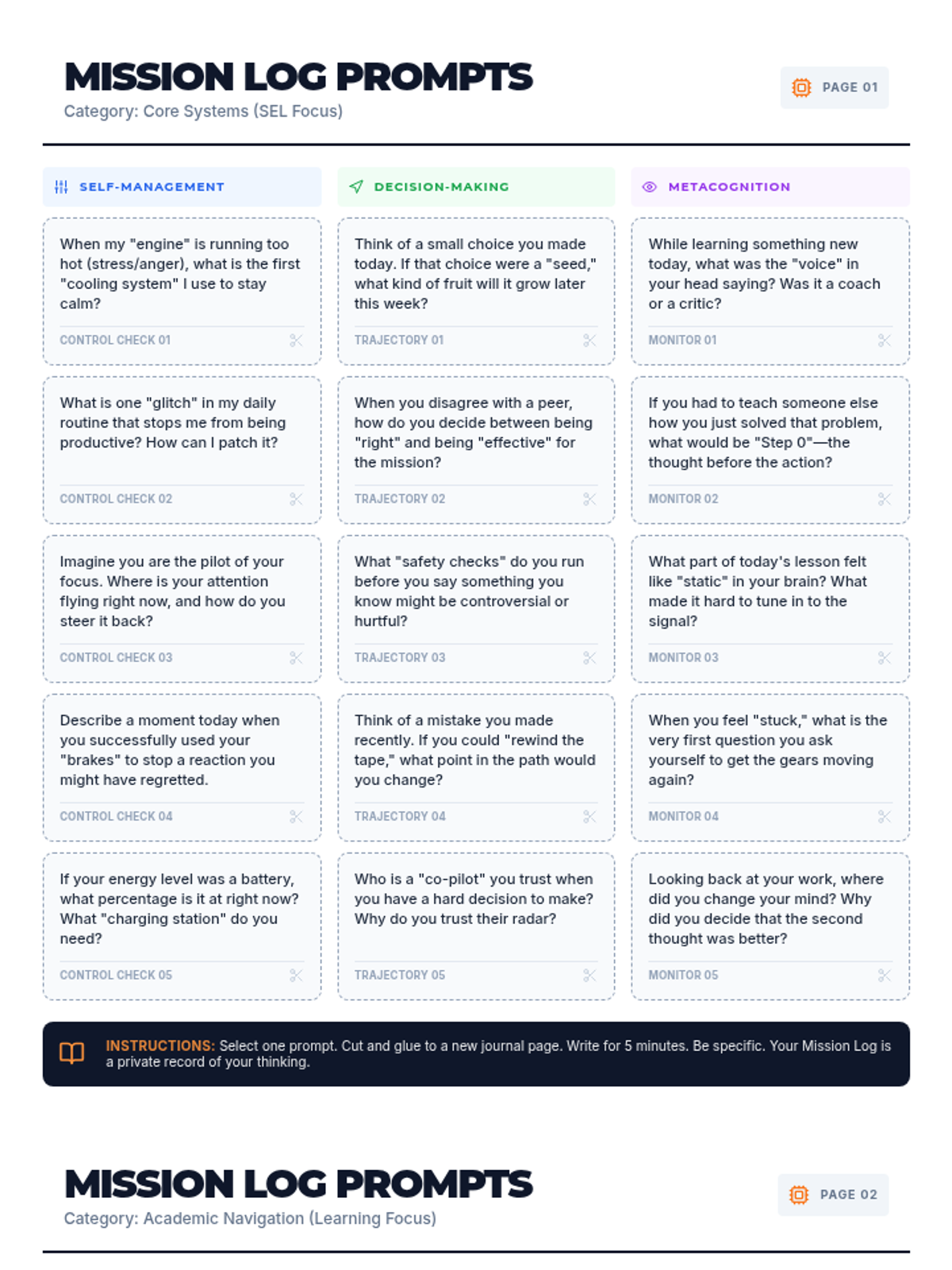
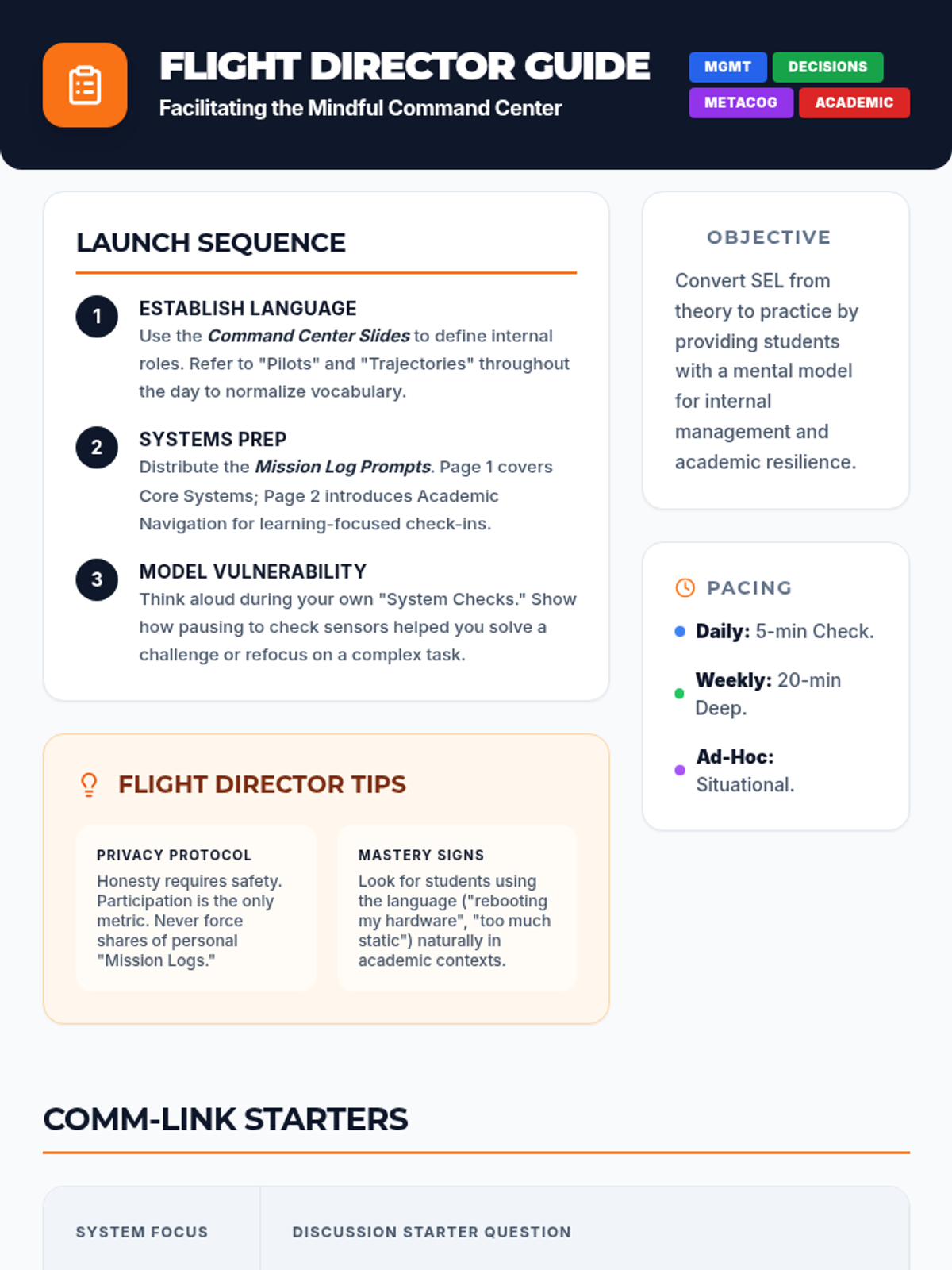
Students explore self-management, decision-making, and metacognition through a 'Command Center' metaphor. This lesson provides visual instruction and a set of reflection prompts for students to integrate into their personal journals.
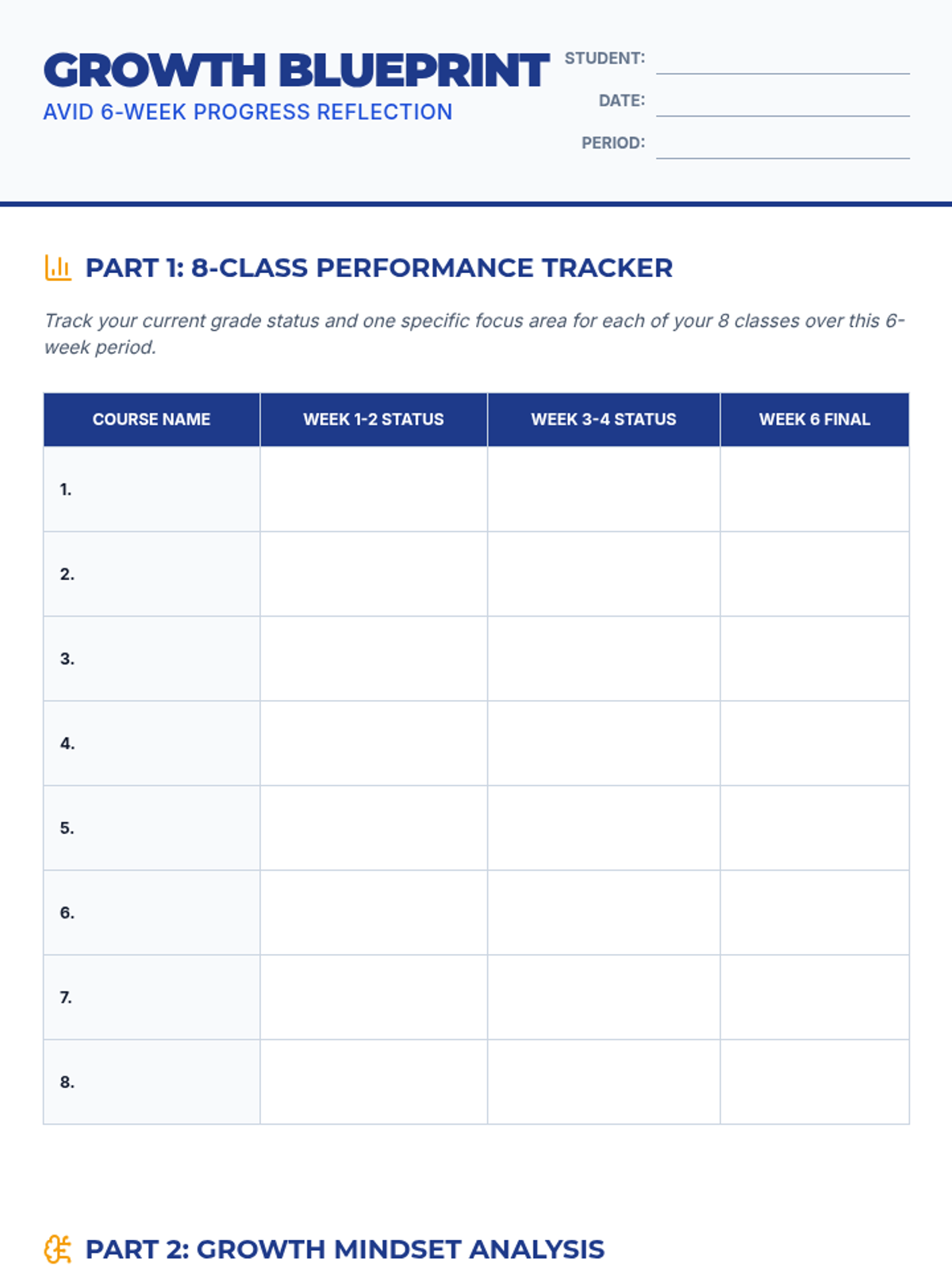
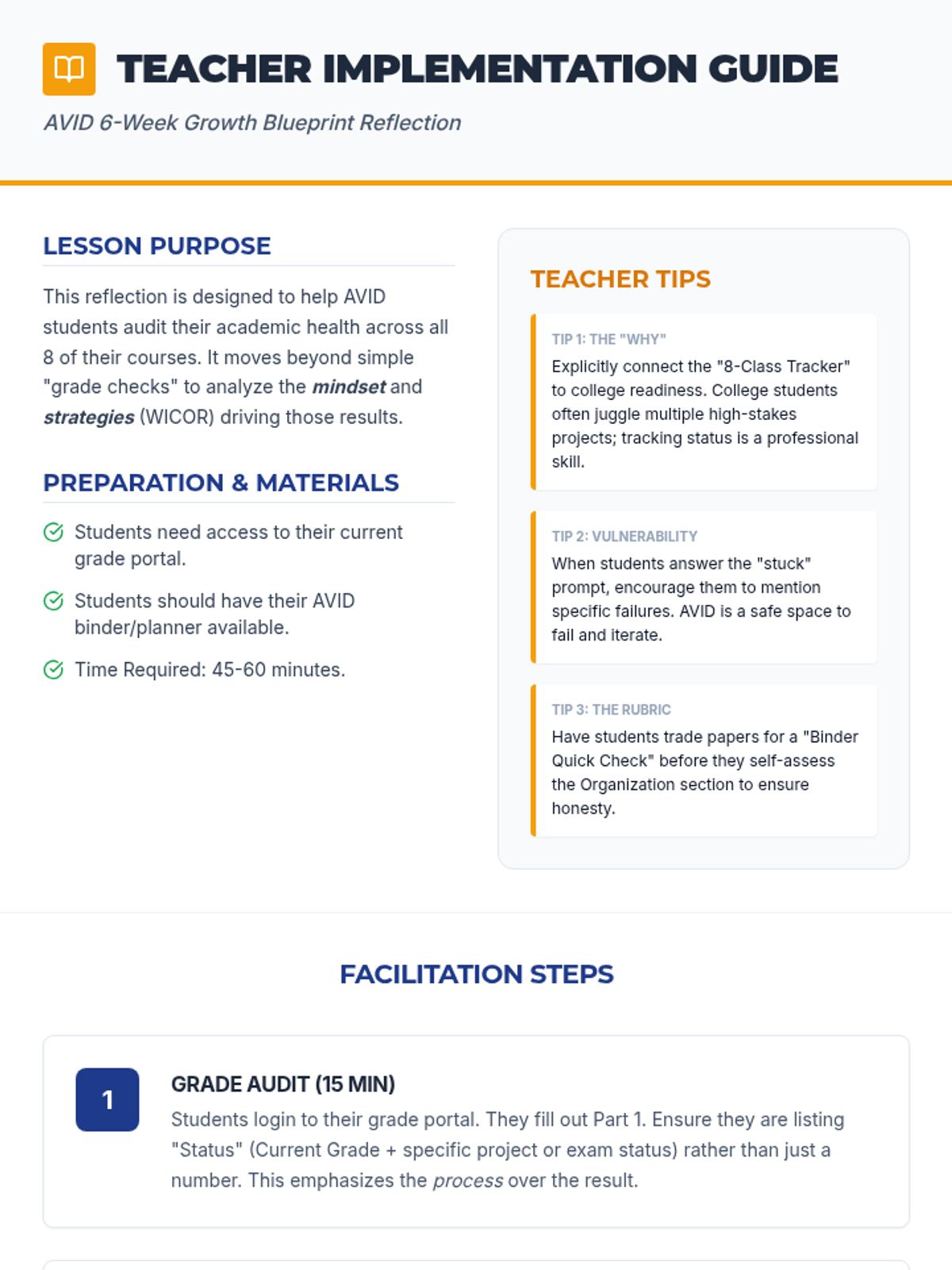
A comprehensive 6-week reflection unit for AVID students to evaluate their academic progress across 8 classes using growth mindset principles and the WICOR framework.
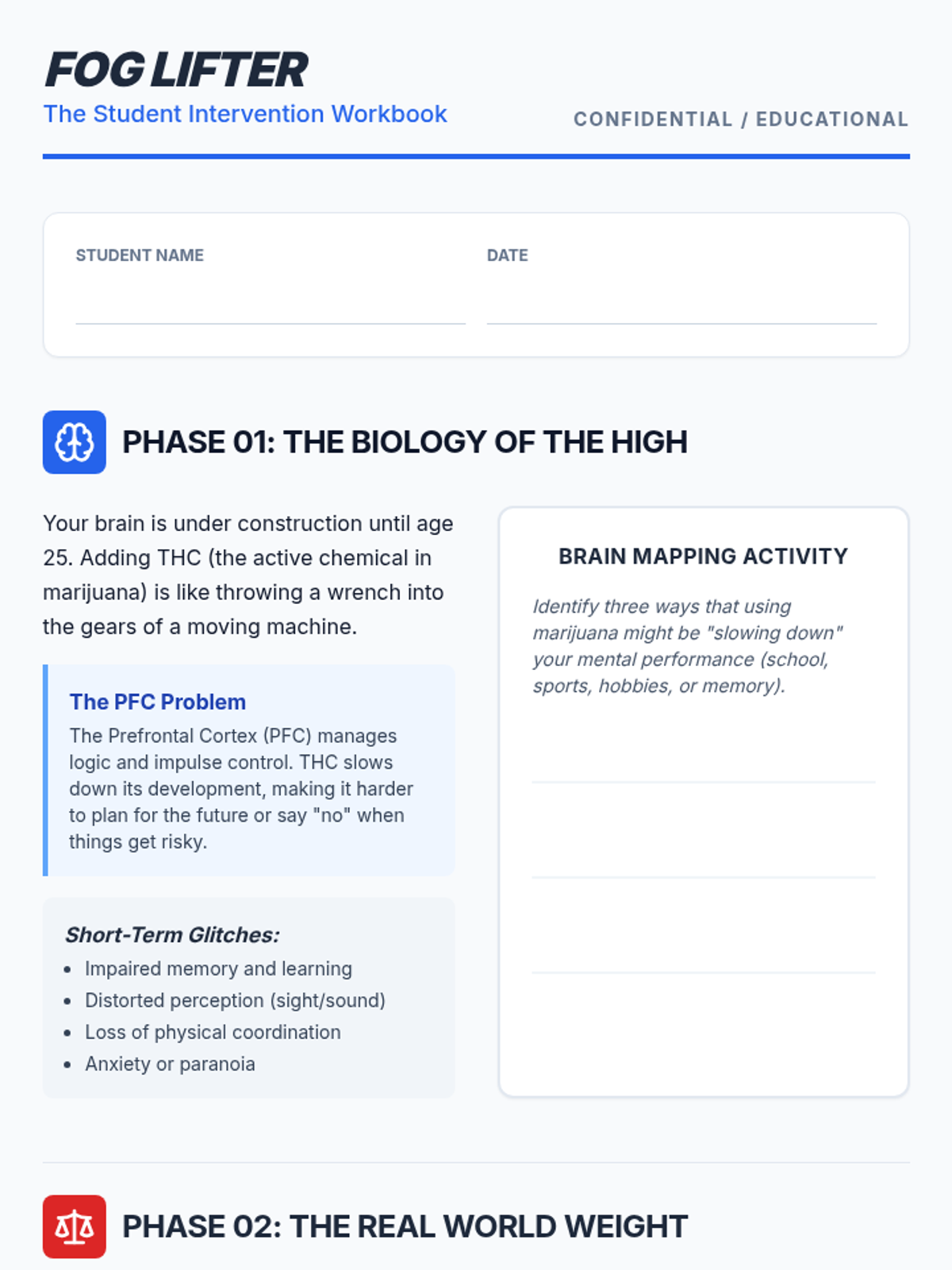
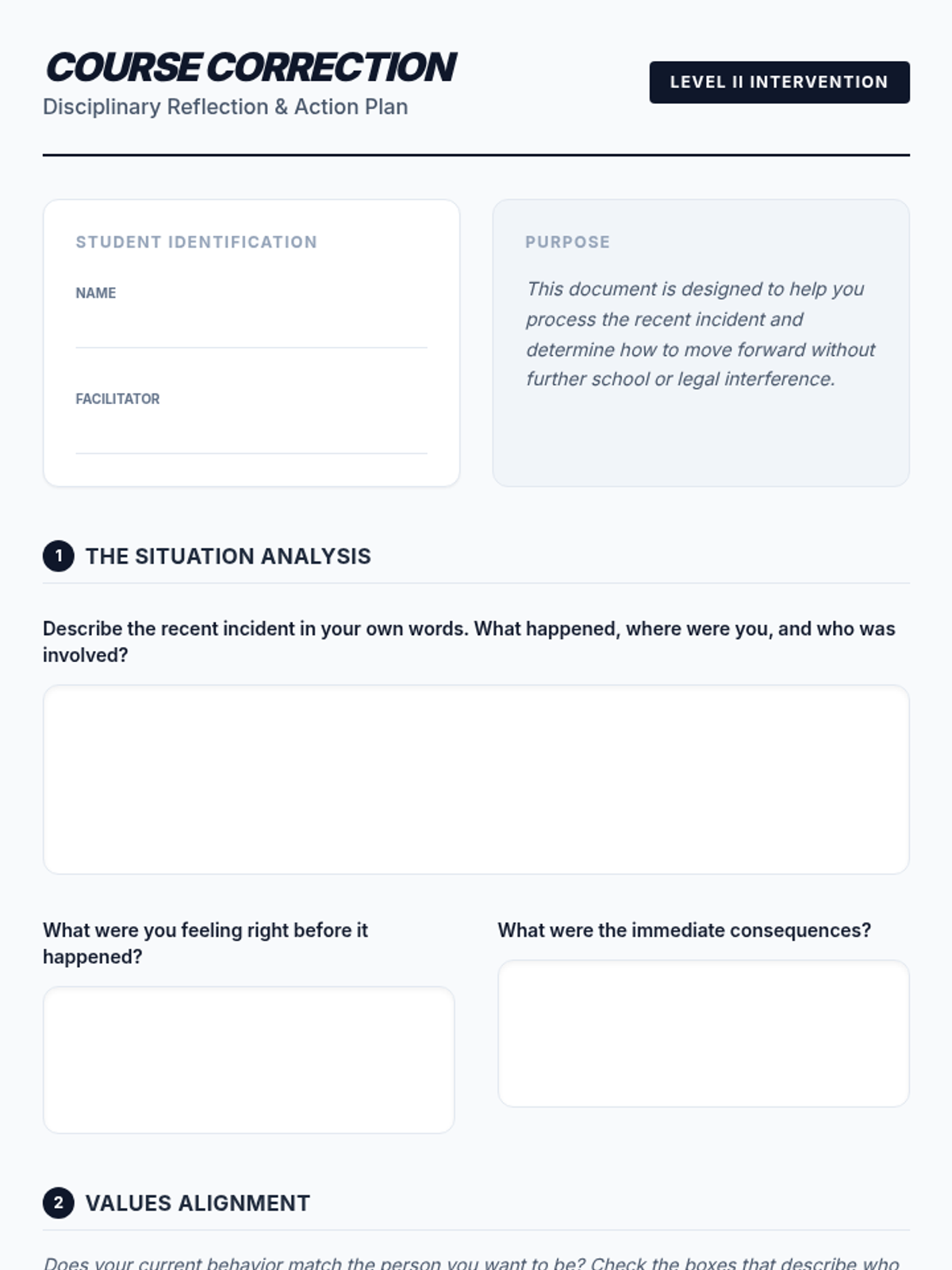
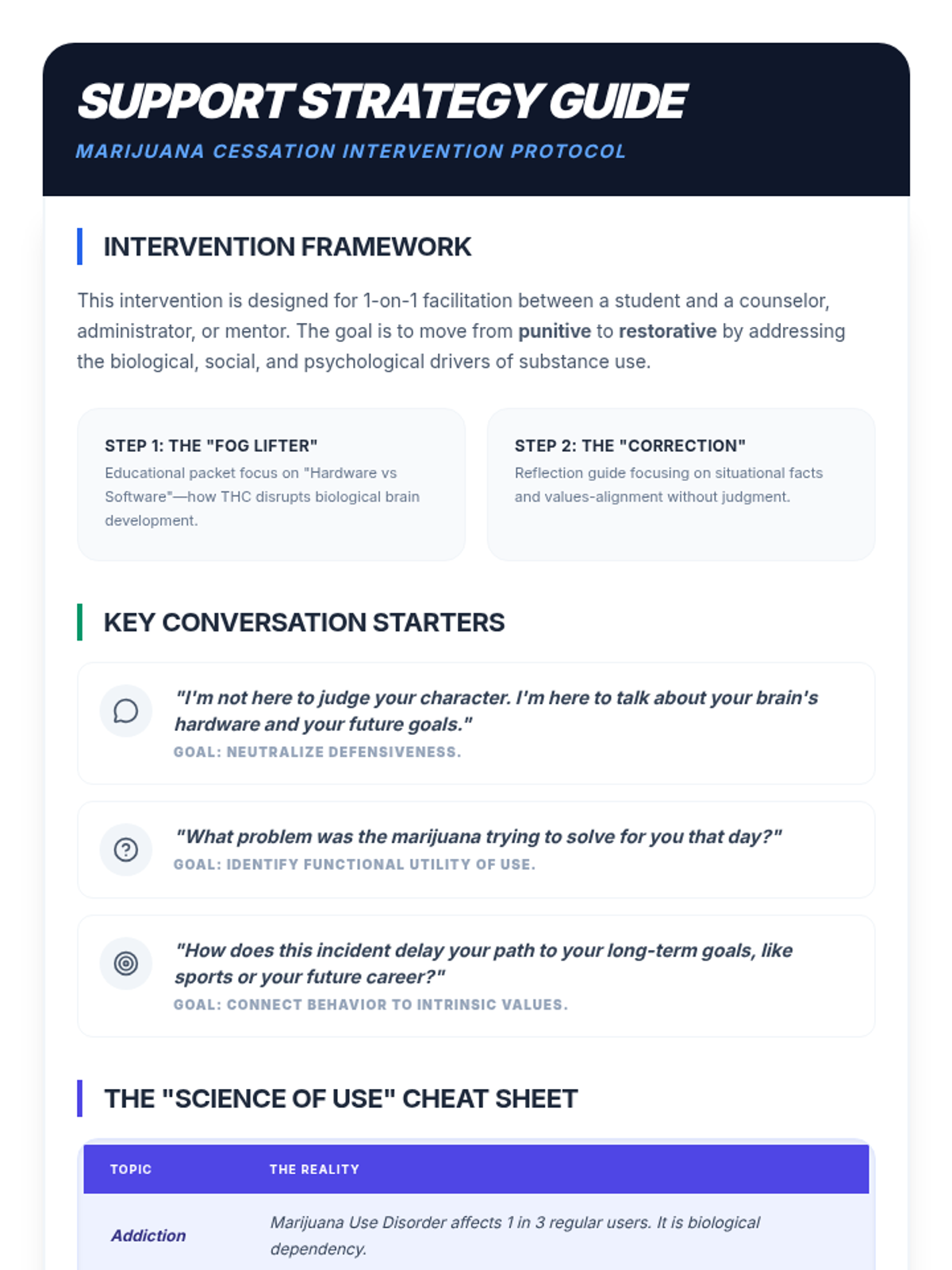
A comprehensive intervention program for students focused on marijuana cessation, brain health, and healthy decision-making.
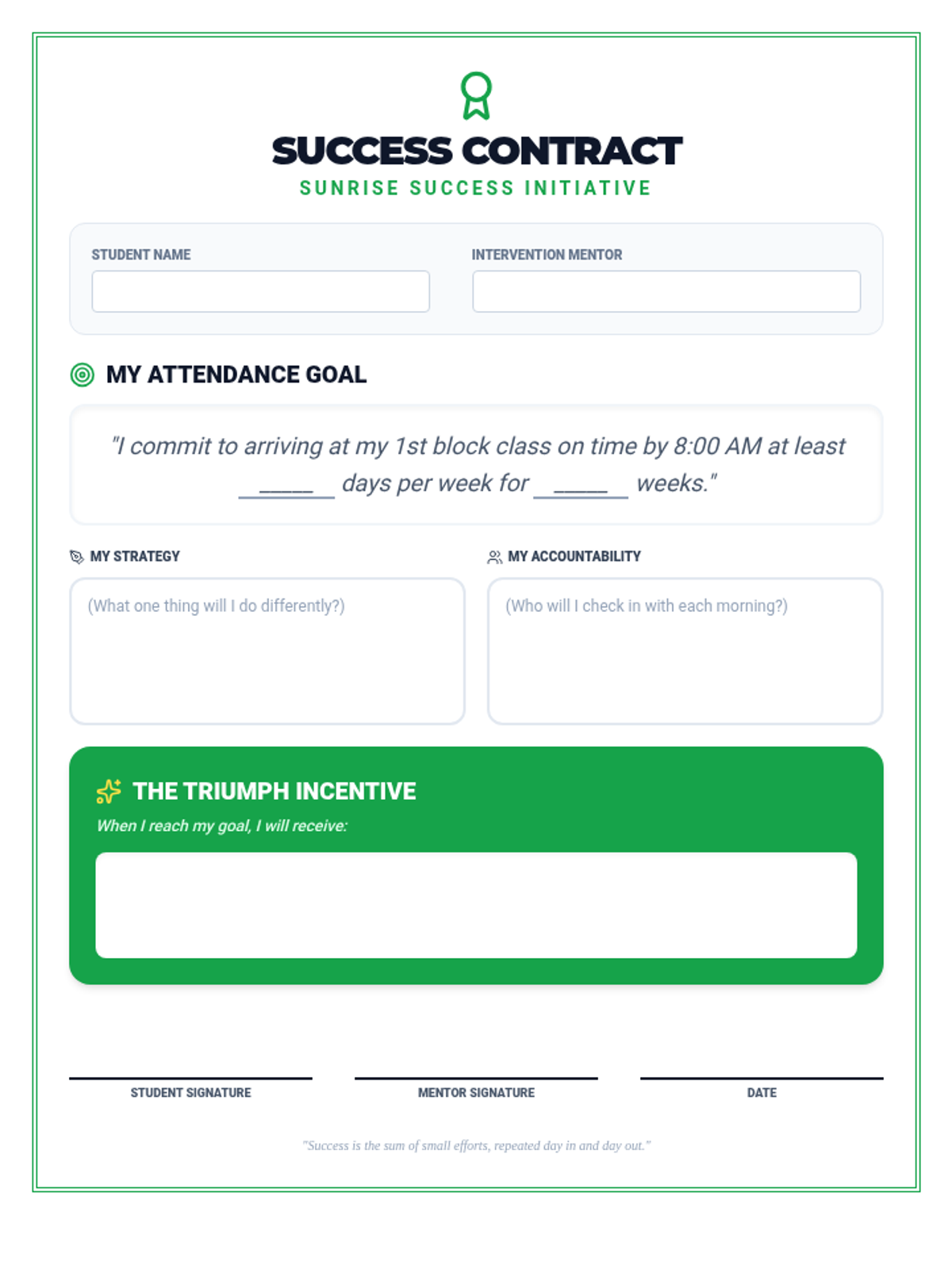
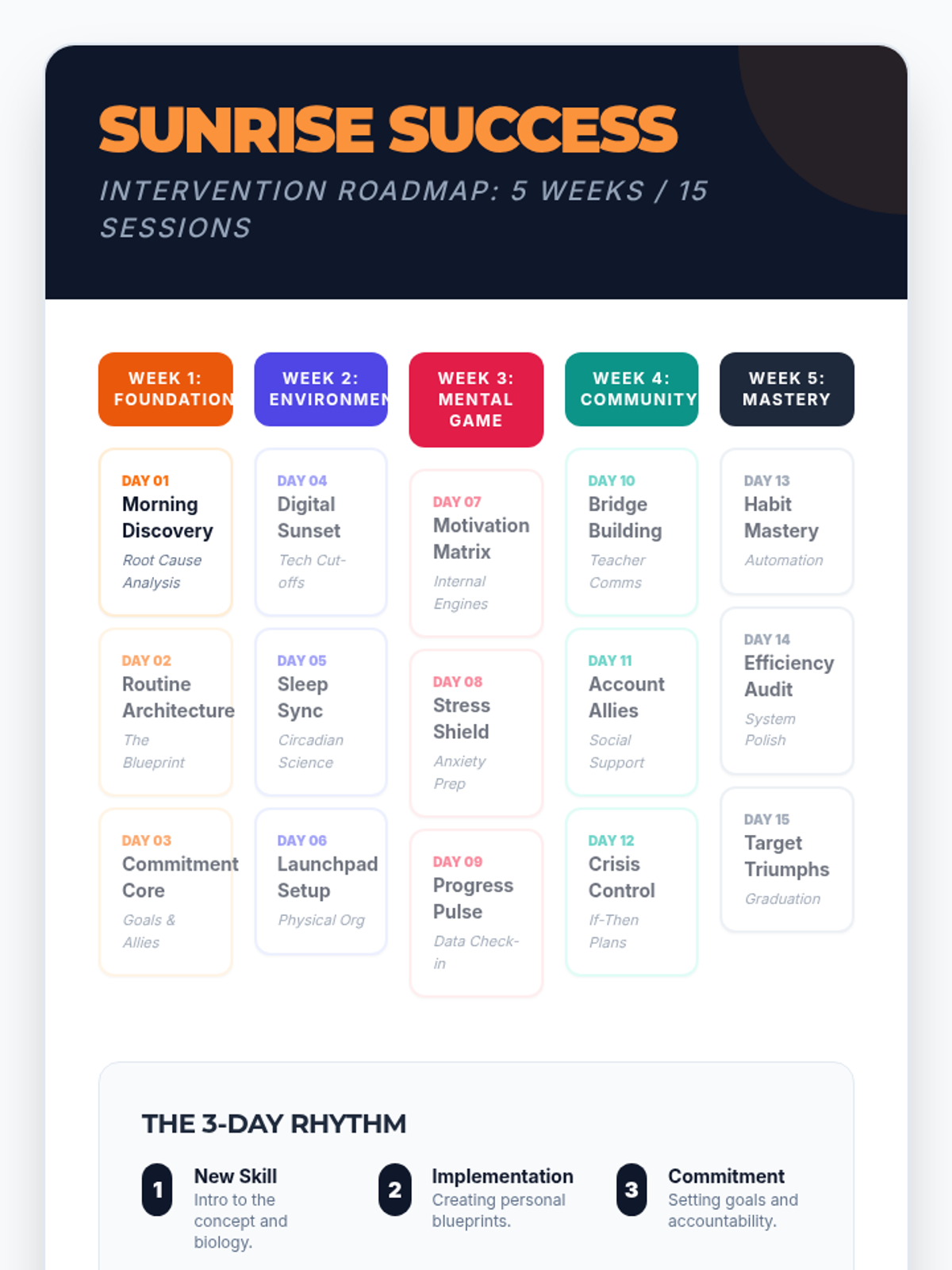
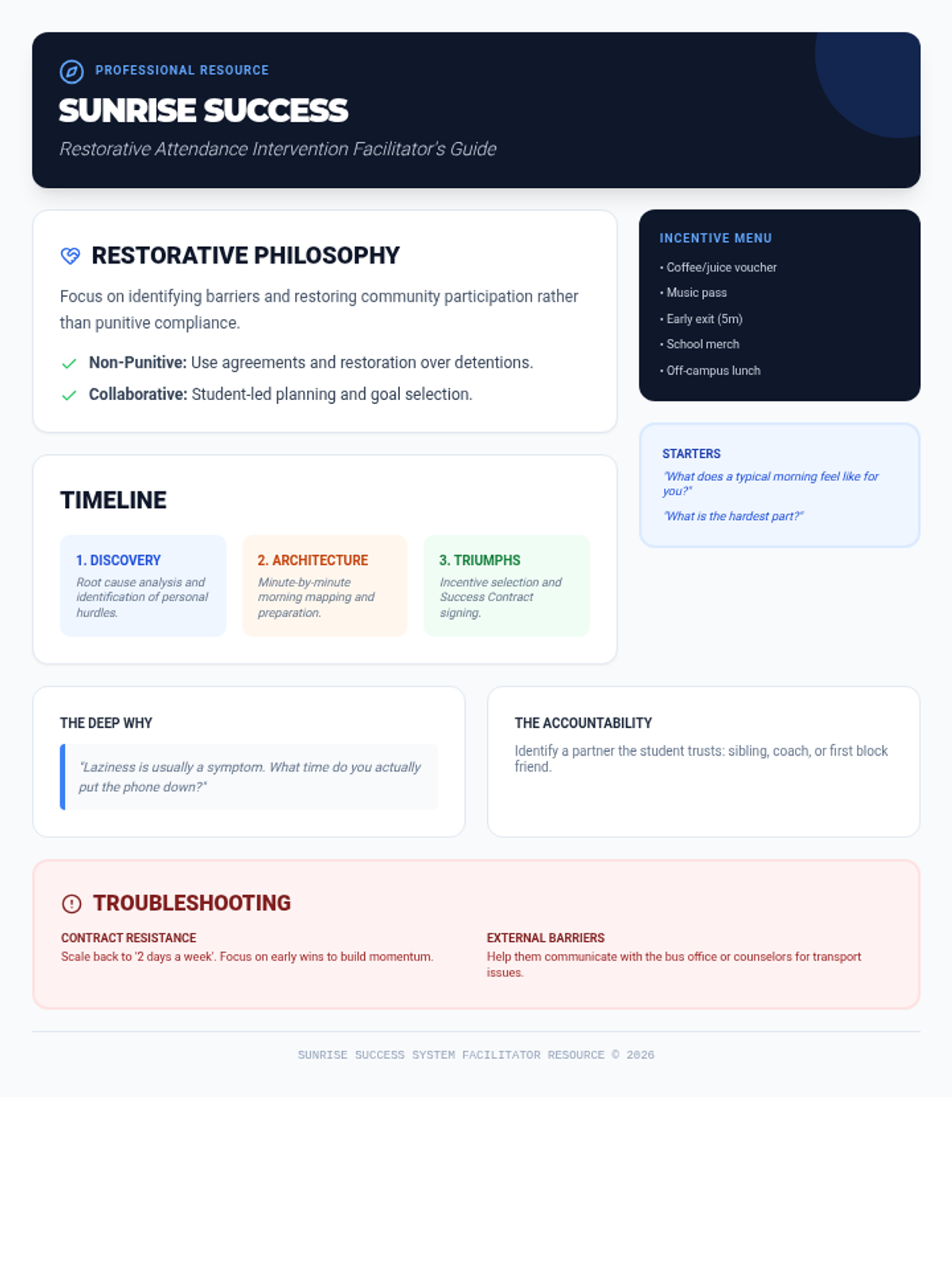
A goal-setting session where the student identifies meaningful incentives and signs a restorative contract for attendance.
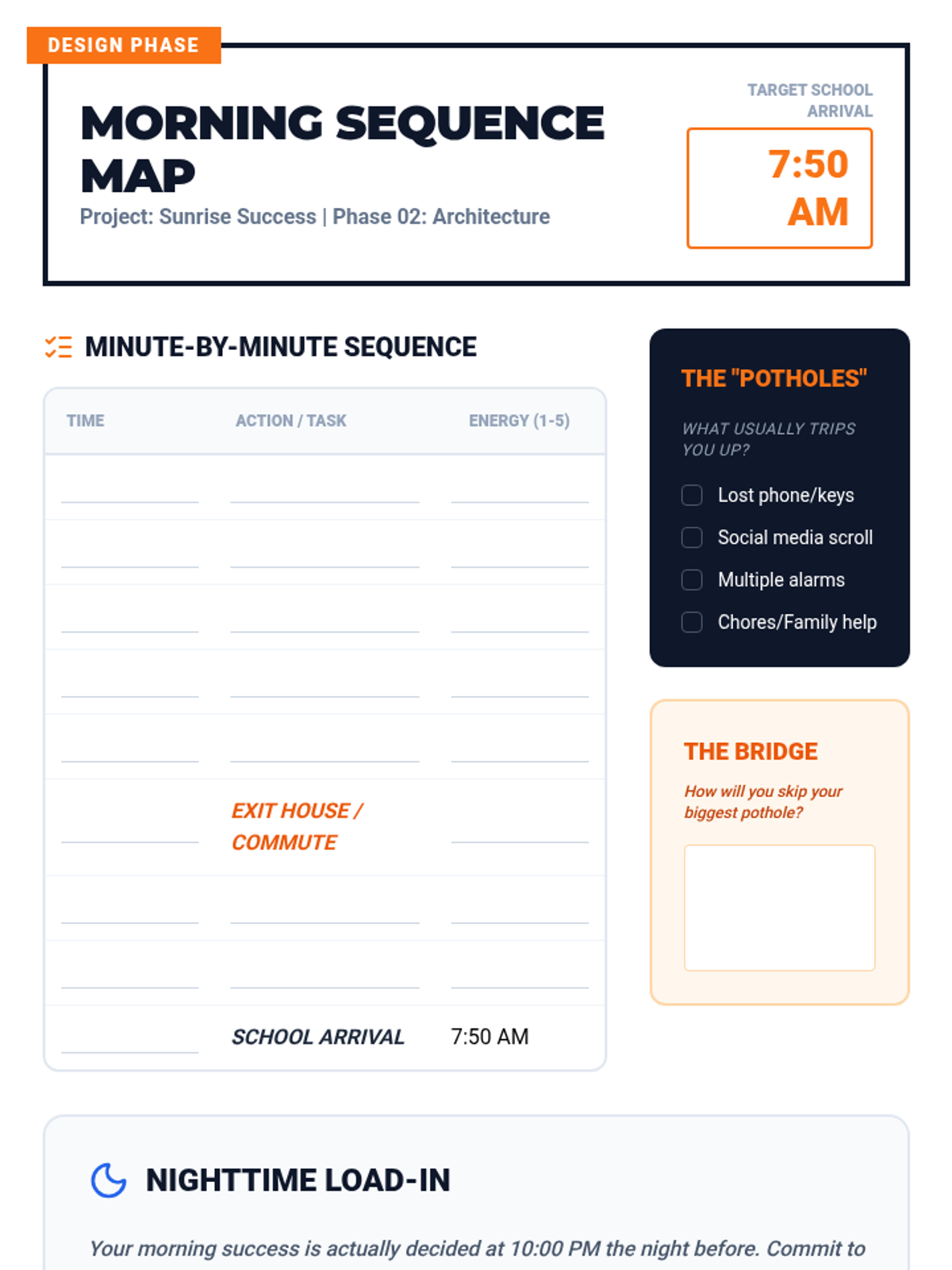
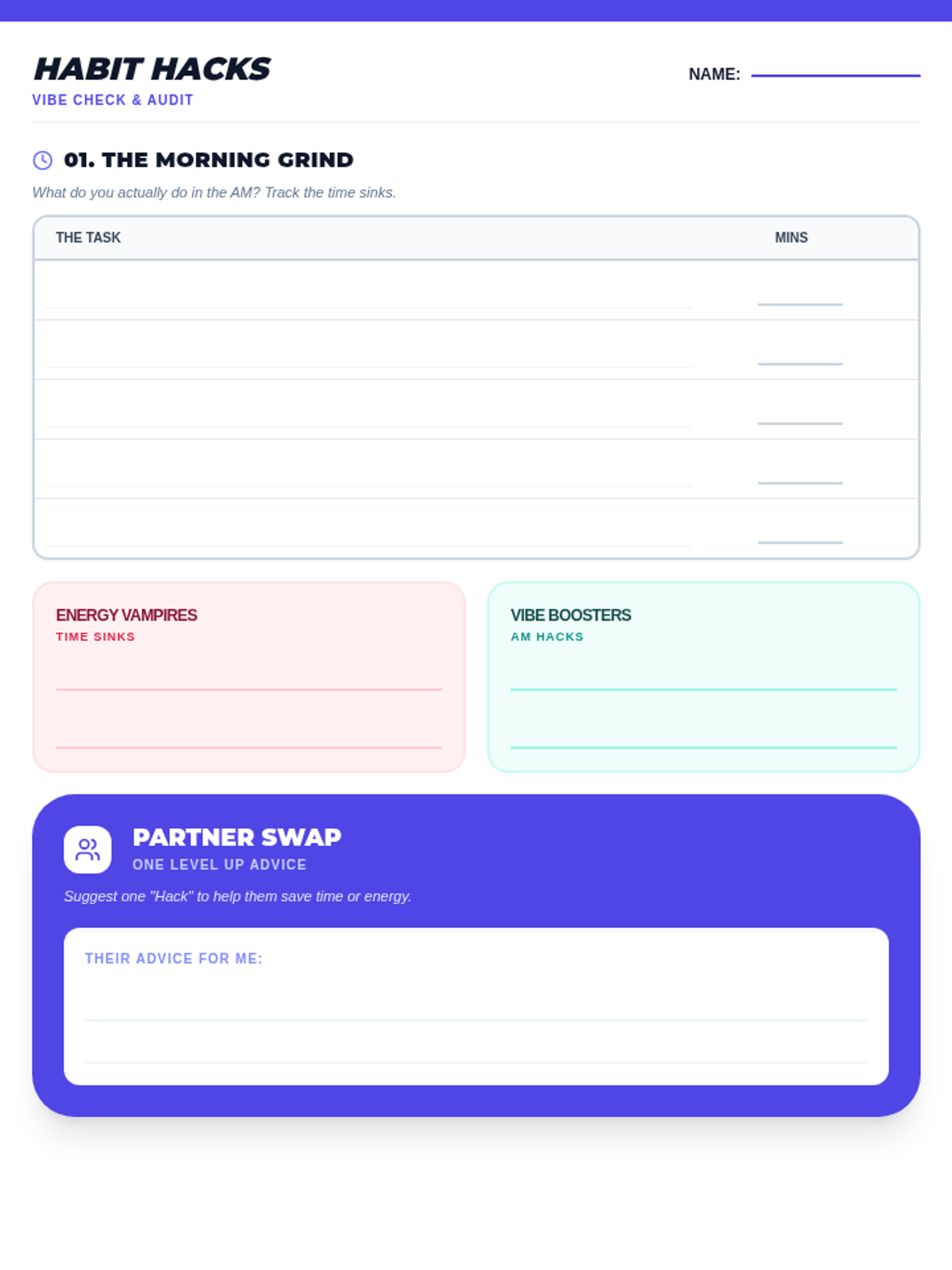
A practical planning session where the student maps out their current morning routine and designs a more efficient 'blueprint' for success.
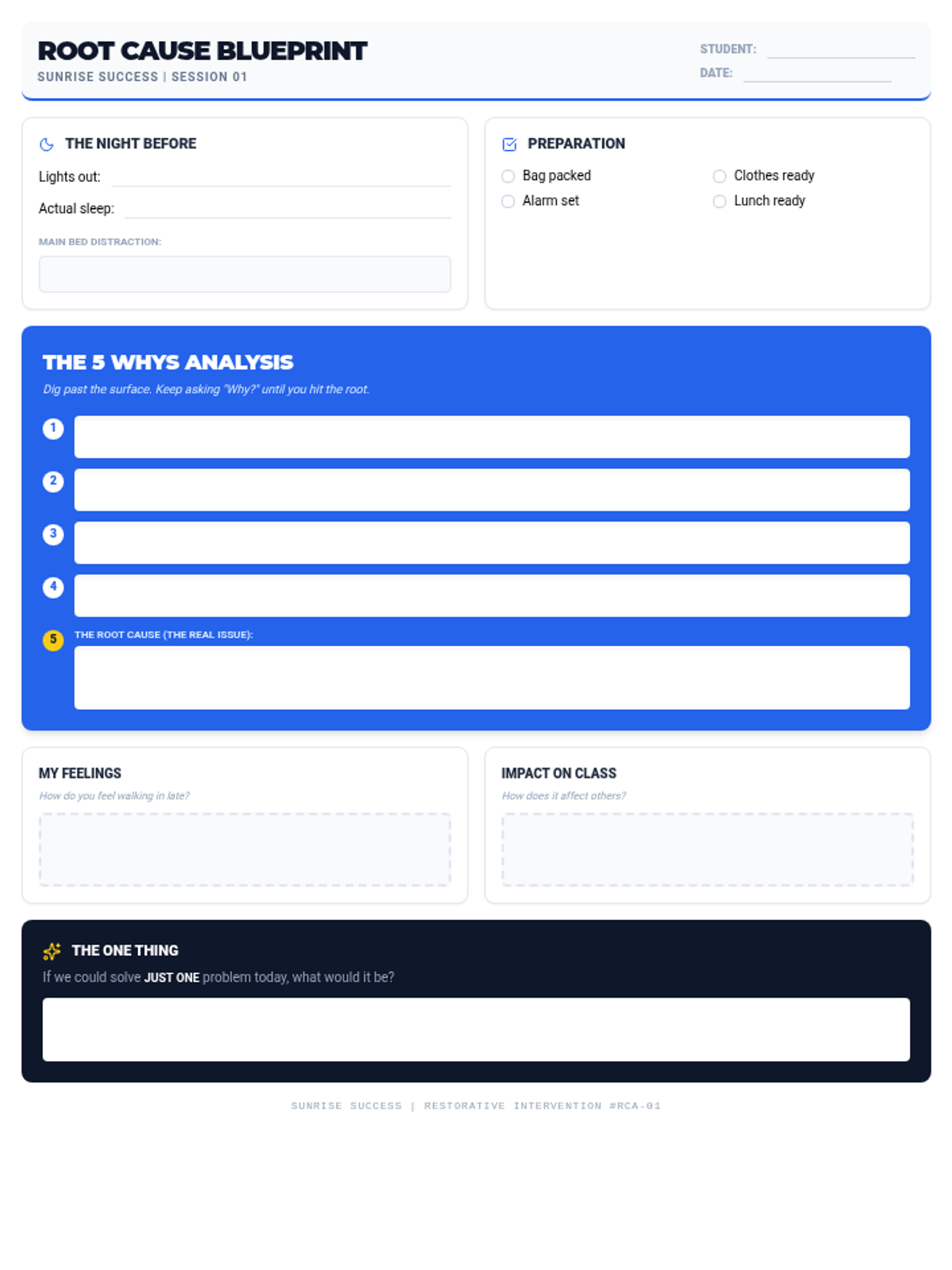
A lesson focused on a non-judgmental exploration of why the student is struggling to arrive on time. It uses root cause analysis to separate symptoms from sources.
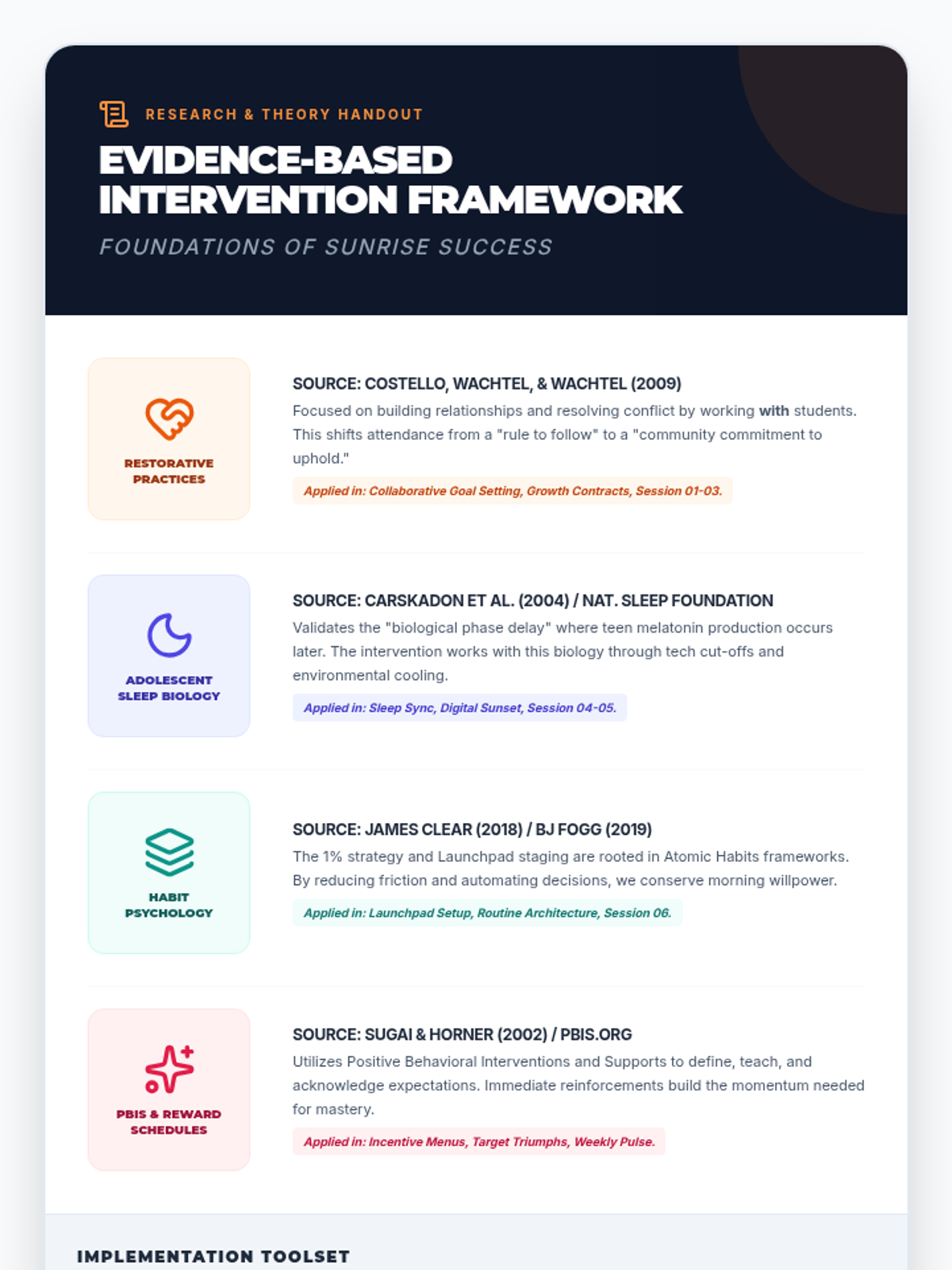
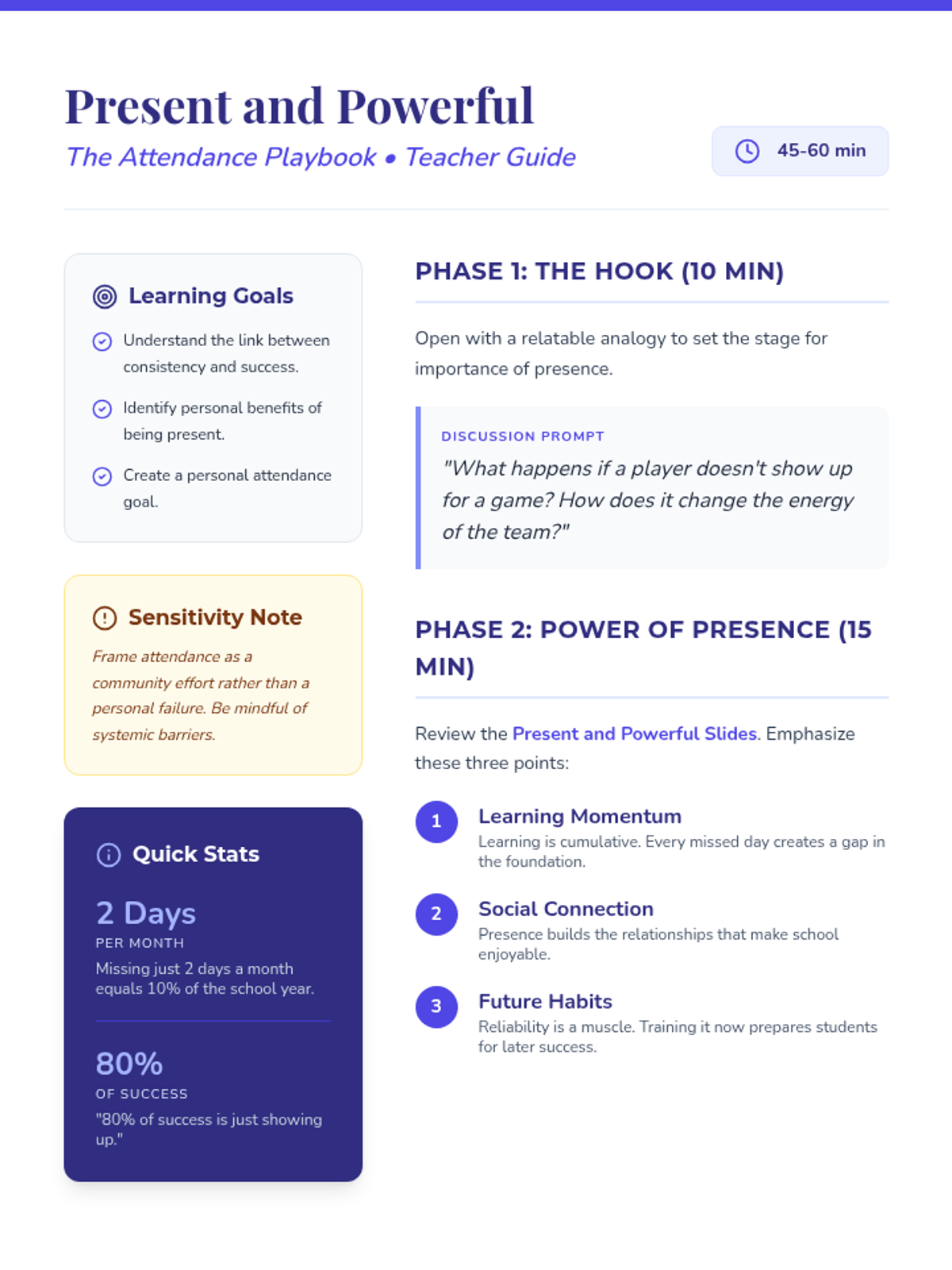
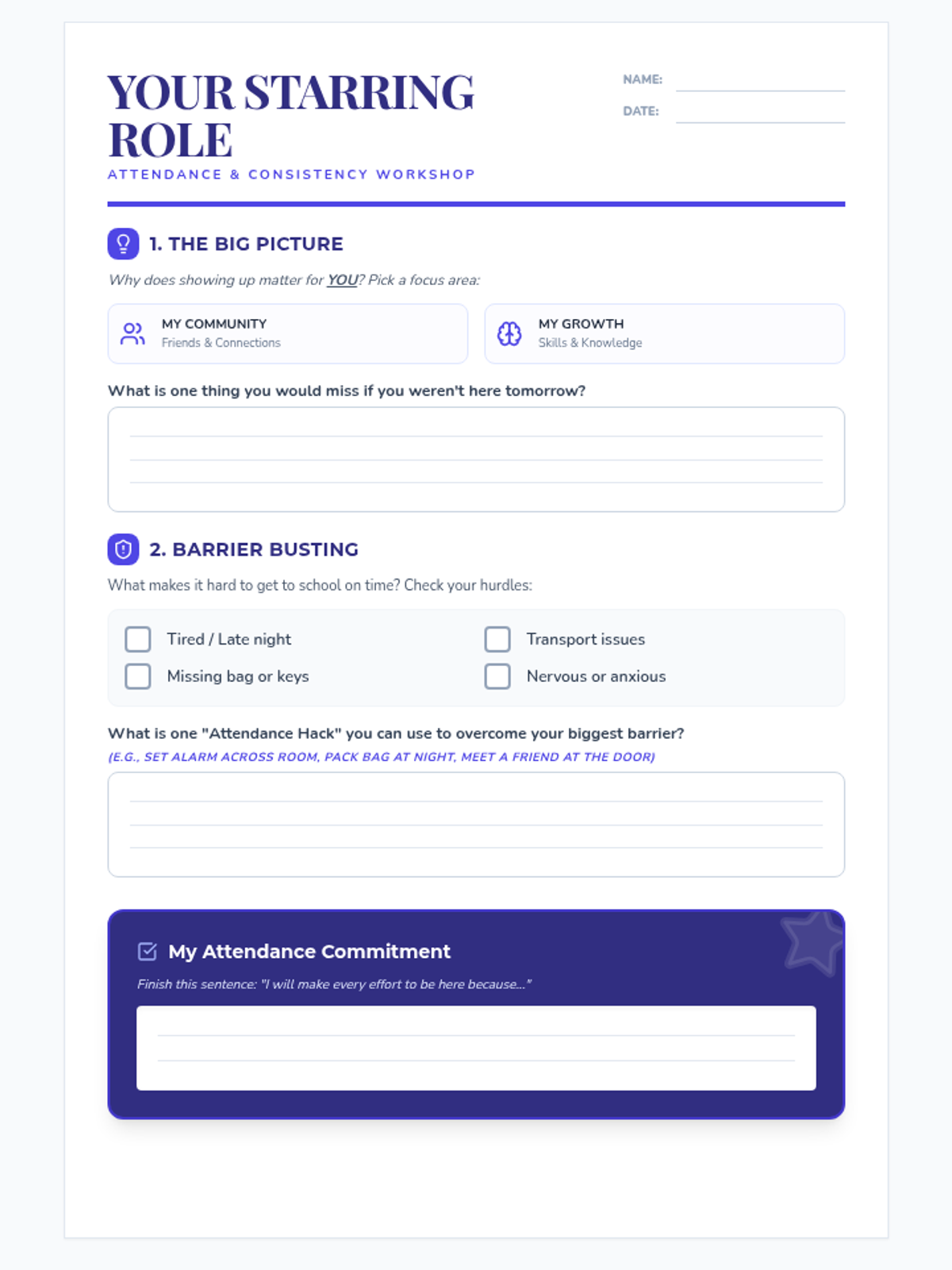
A lesson designed to help students understand the critical link between school attendance and their personal, social, and academic success. It frames attendance as the 'first step' to achieving their goals and building a strong community.
Creating a concrete, actionable plan for the upcoming academic year and celebrating the group's progress.
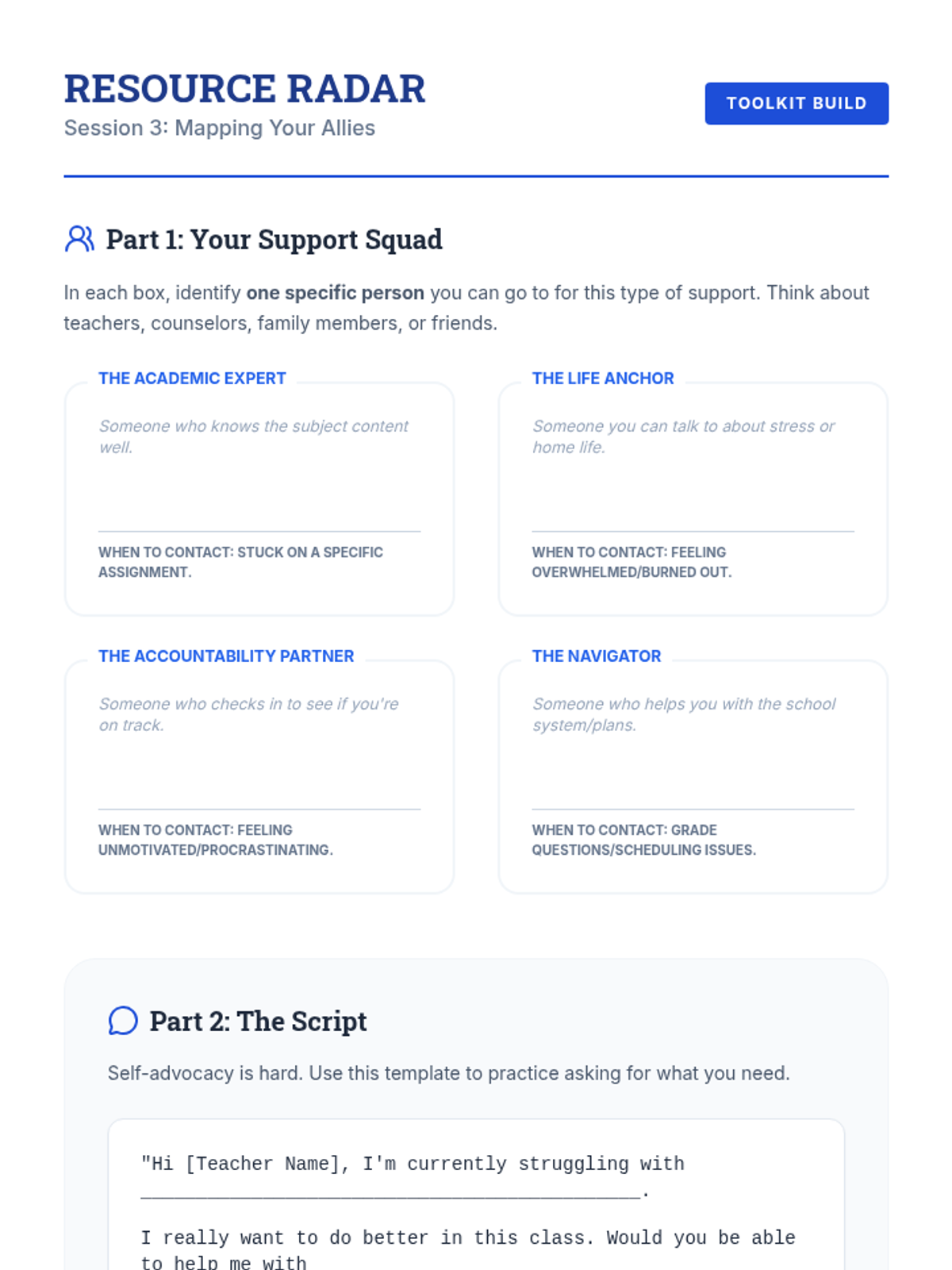
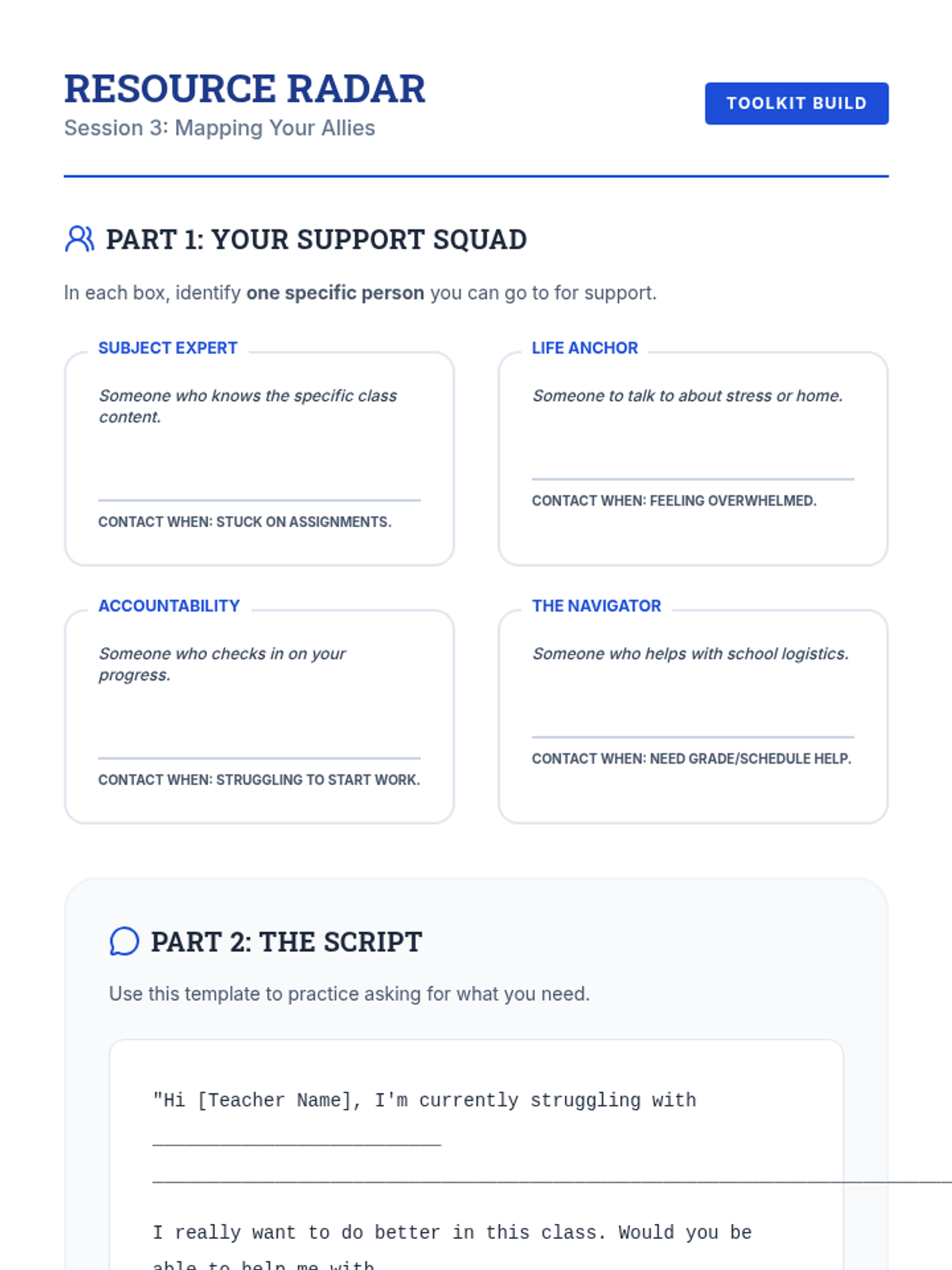
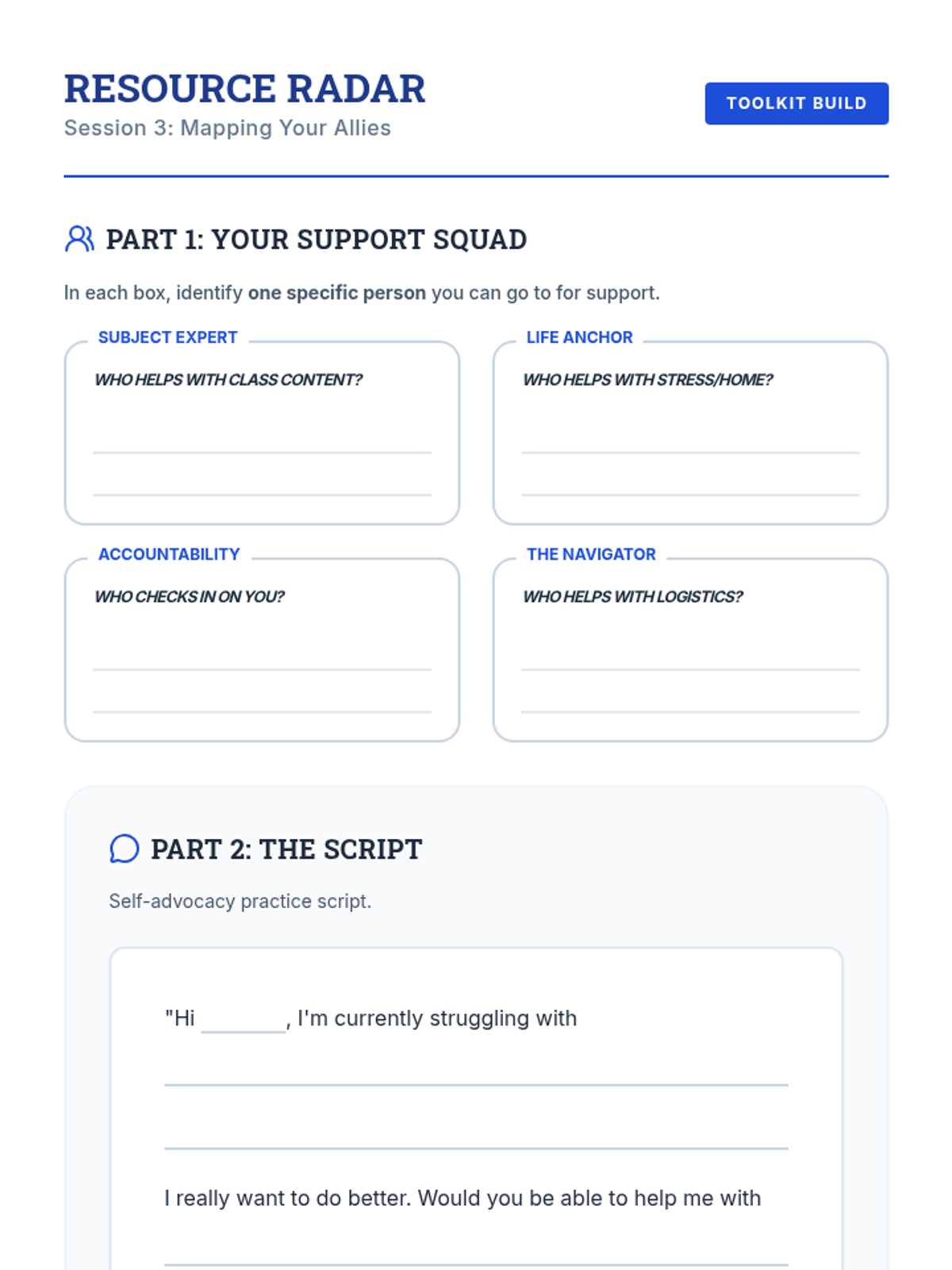
Building a personalized toolkit of strategies based on specific barrier types and identifying a support network.
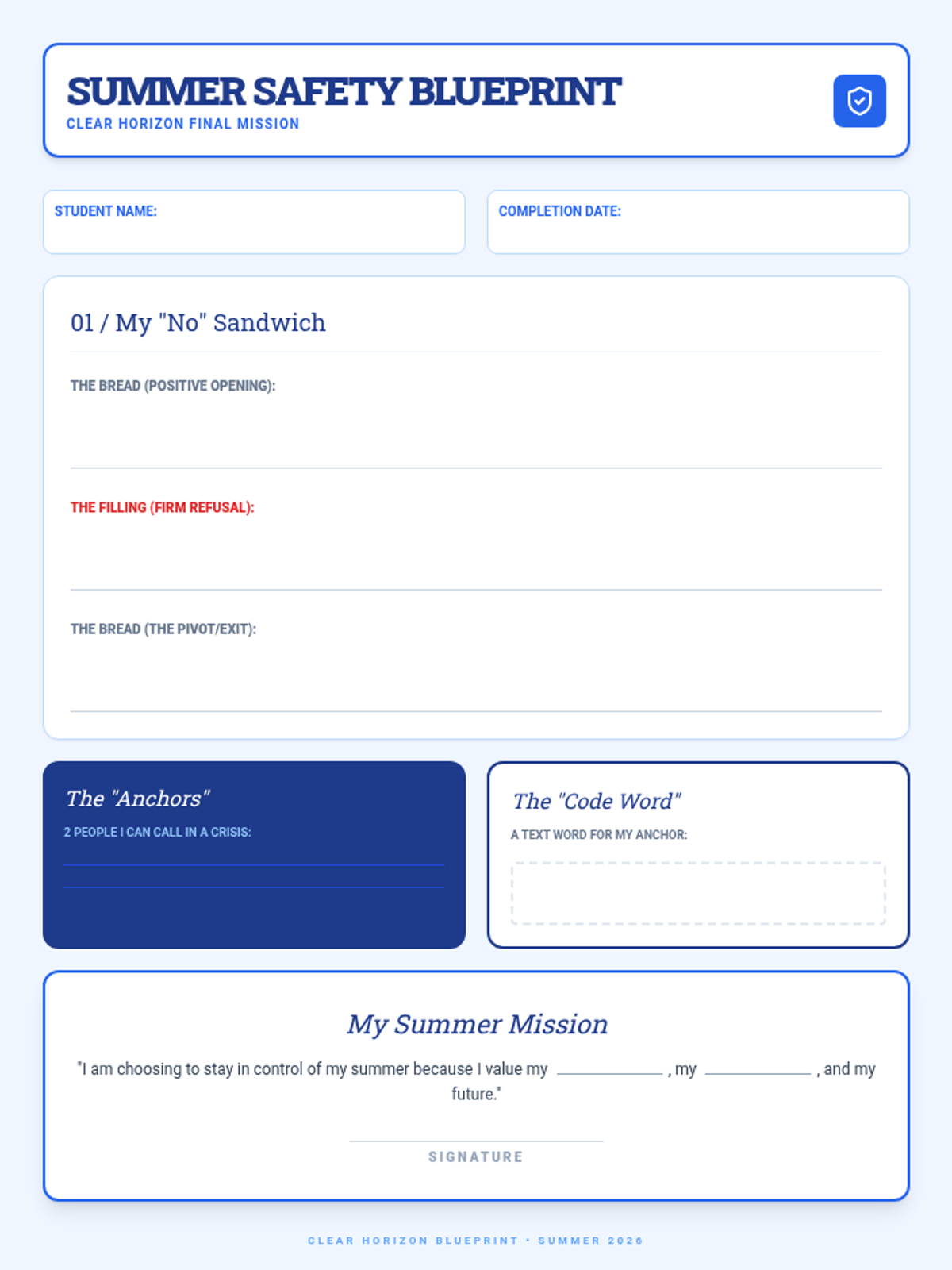
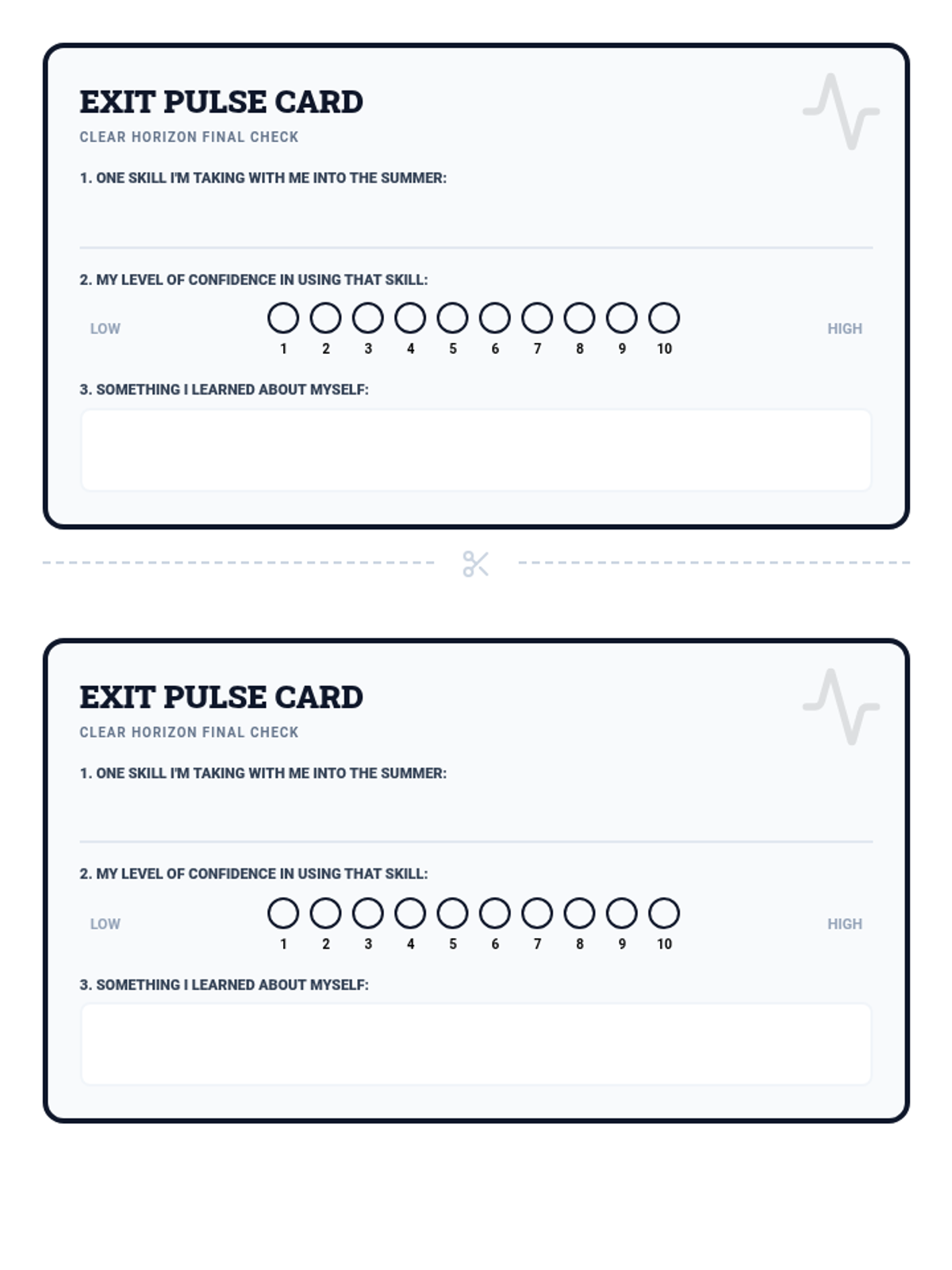
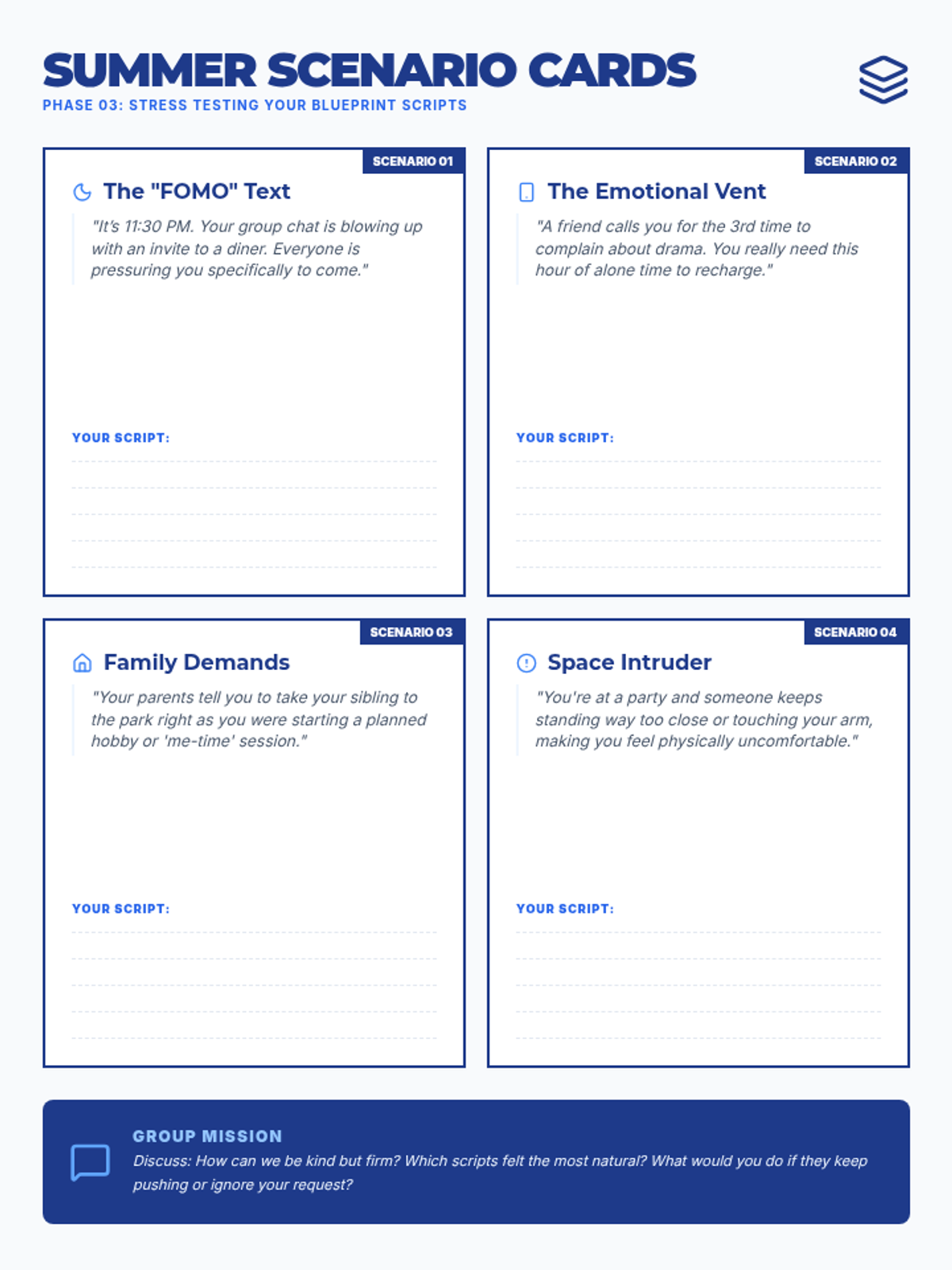
Focuses on practical refusal skills and the creation of a personalized 'Summer Safety Blueprint' for navigating high-pressure social situations.
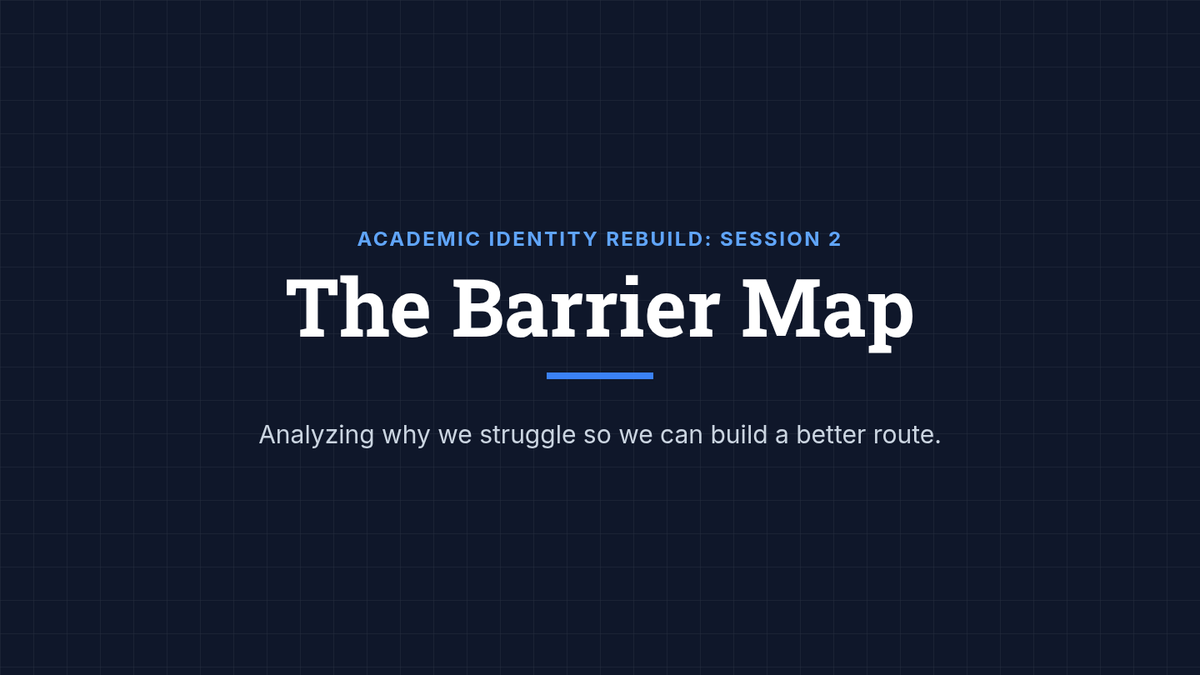
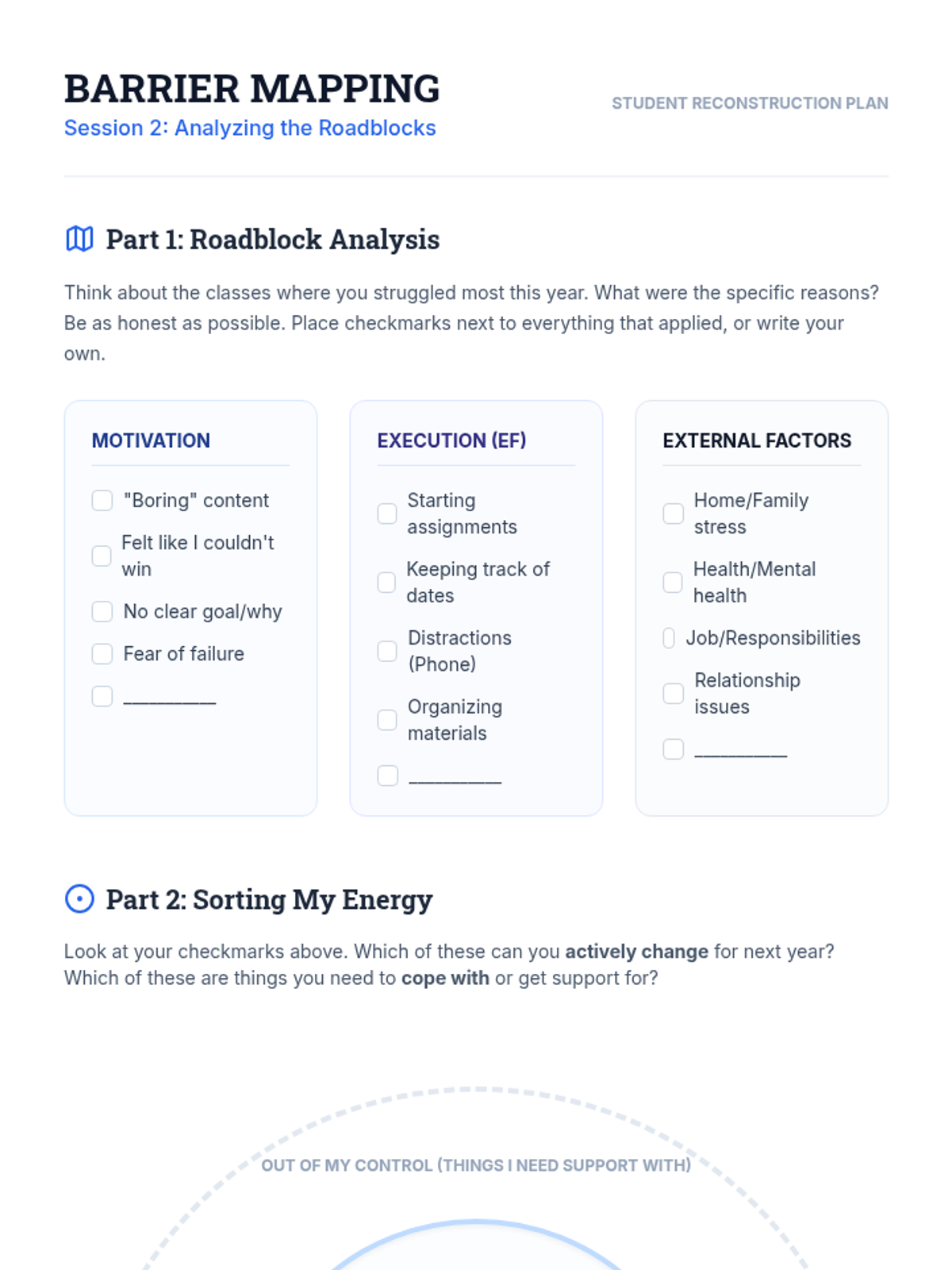
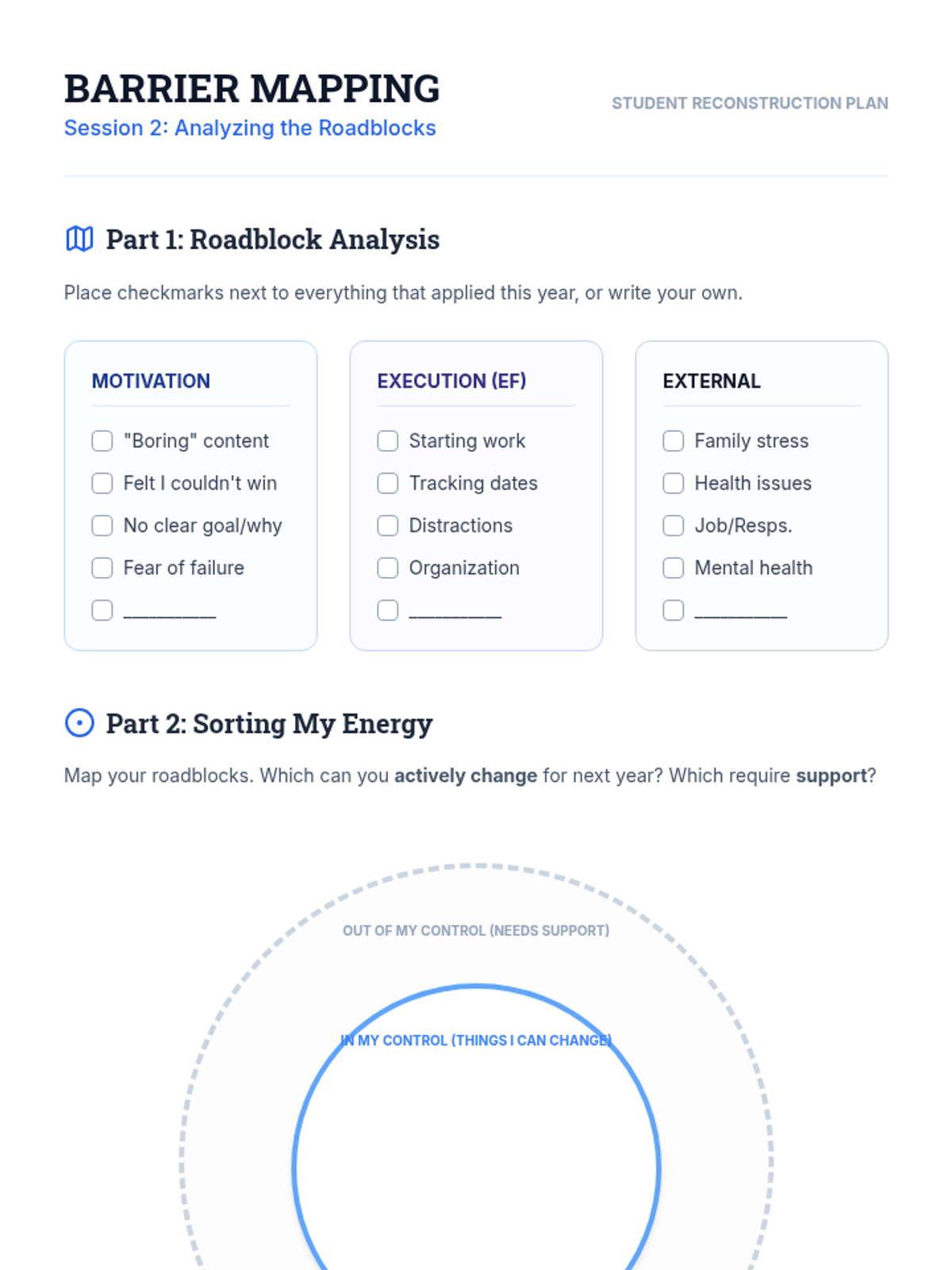
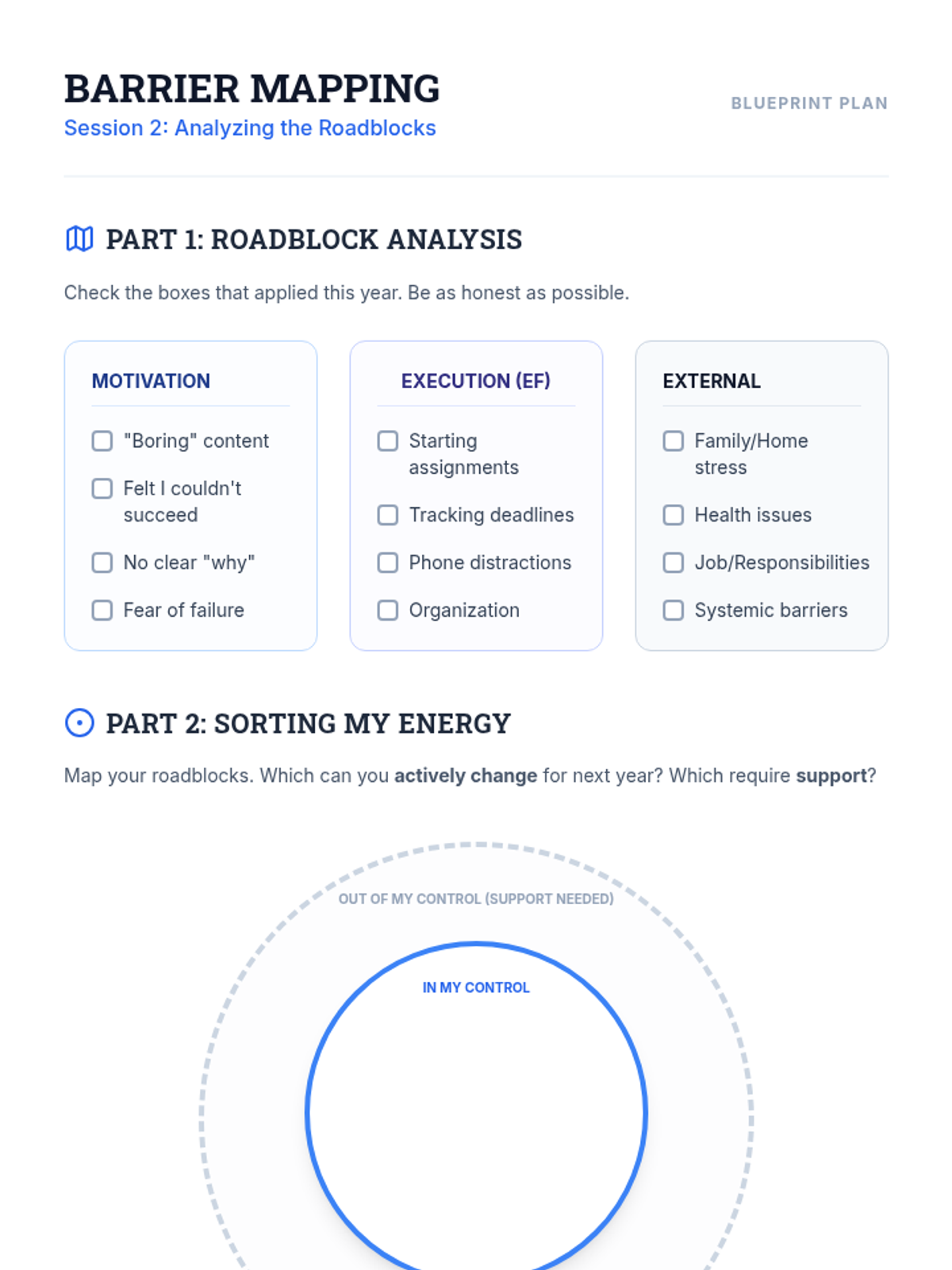
Identifying the root causes of academic struggle by distinguishing between personal habits, executive functioning challenges, and external/systemic factors.
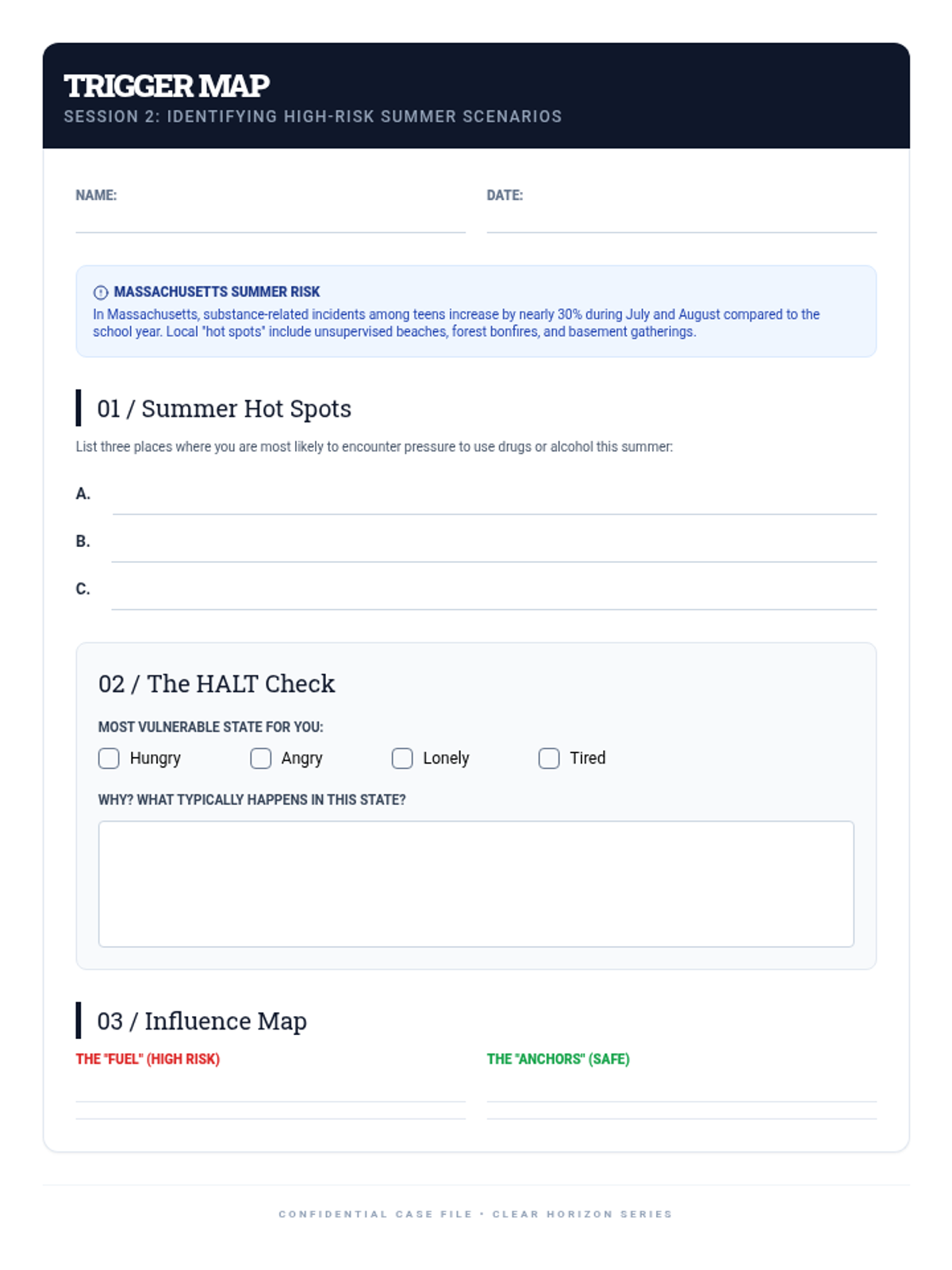
Students identify specific summer risk factors and apply a structured decision-making framework to hypothetical party and social scenarios.
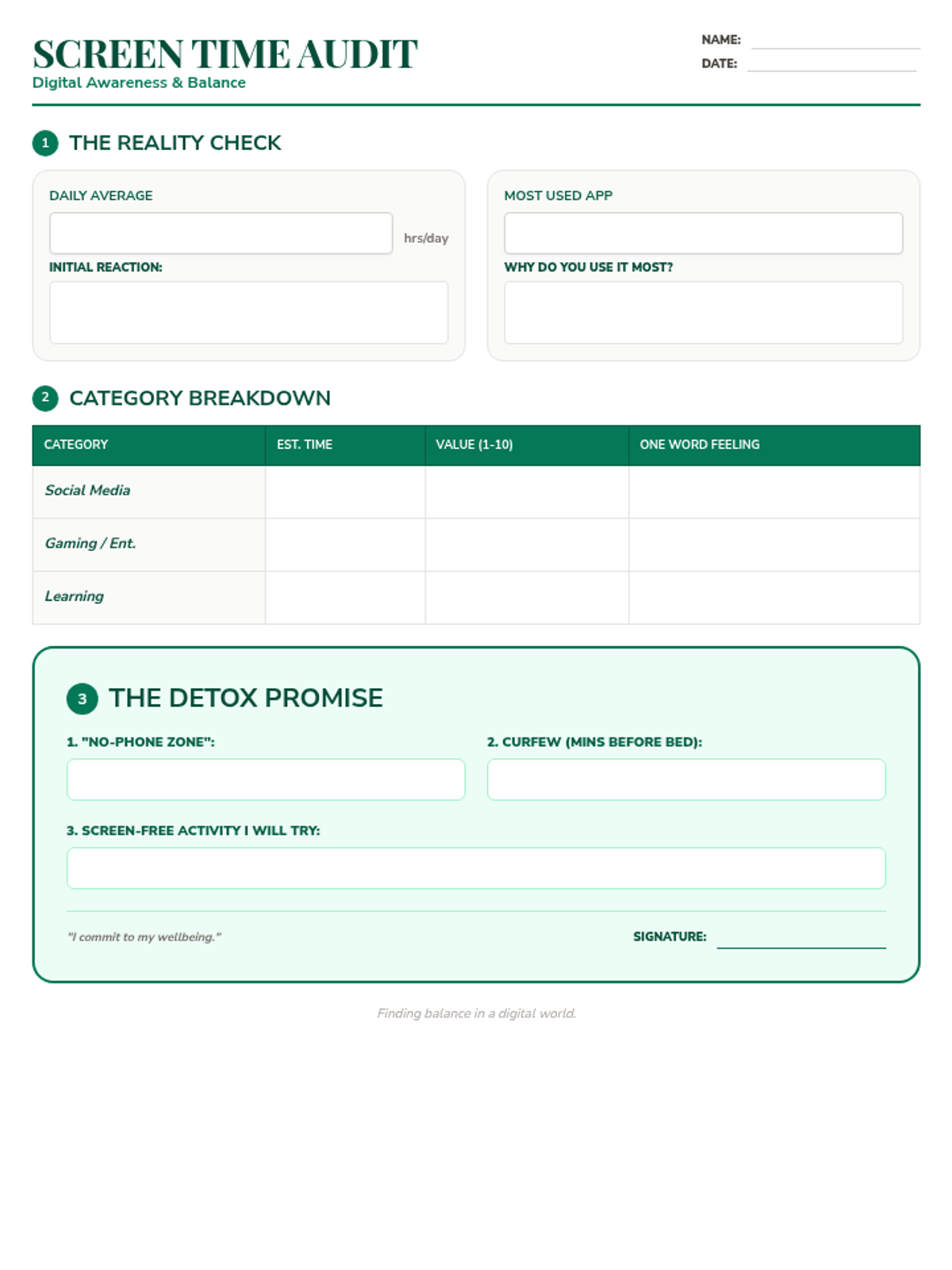
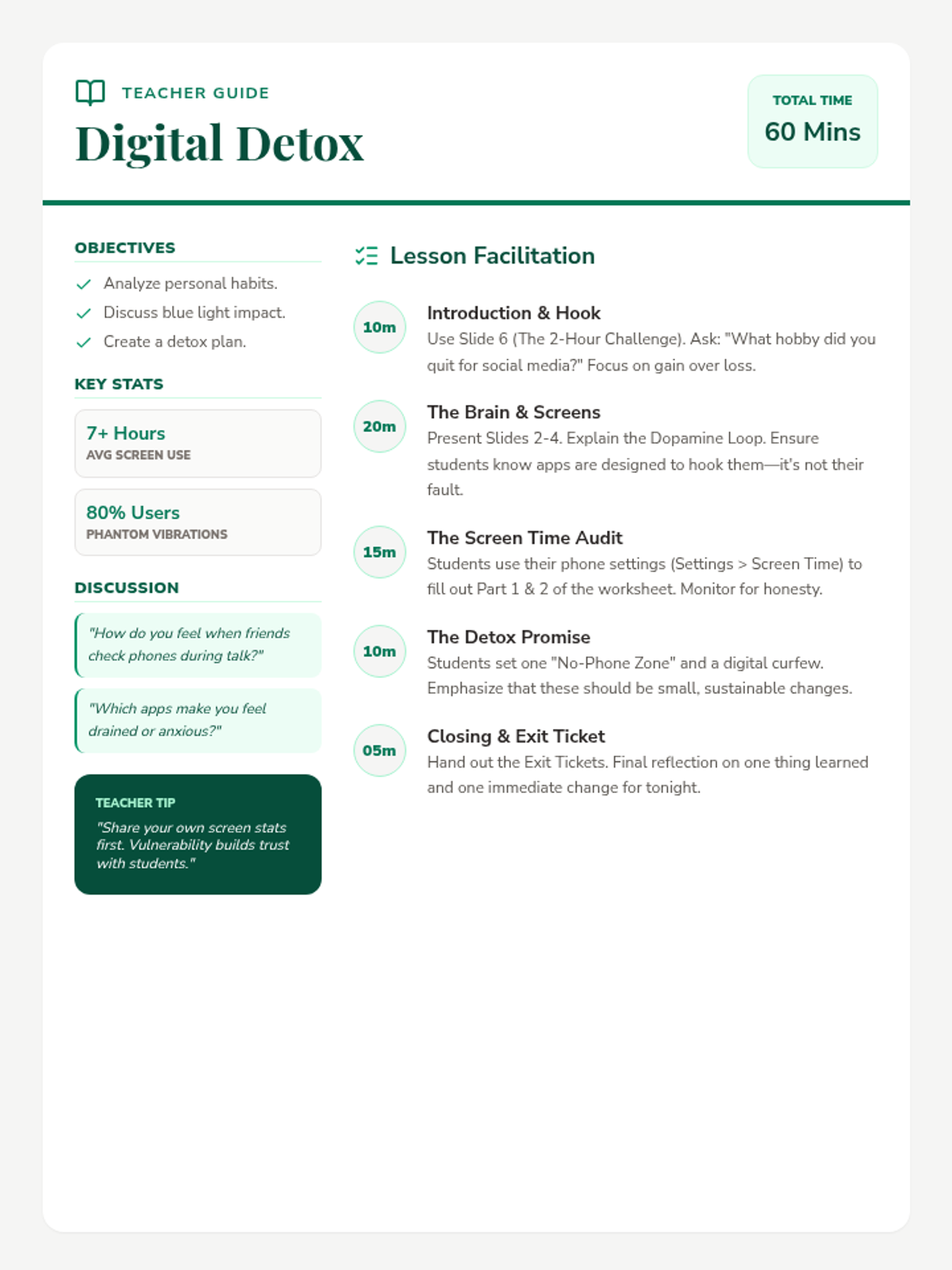
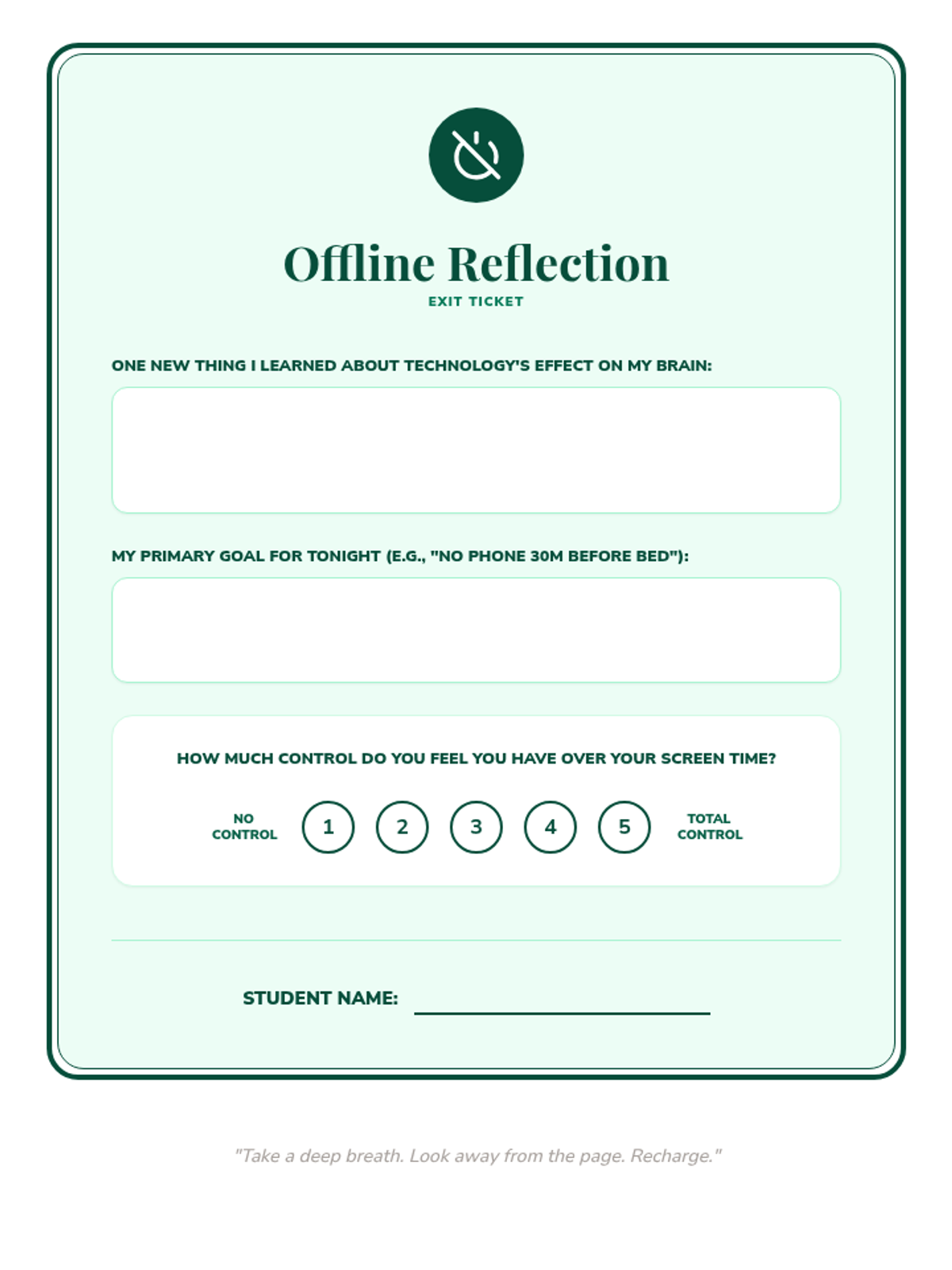
A lesson designed to help students understand the impact of excessive screen time and develop healthy, sustainable digital habits through reflection and goal-setting.
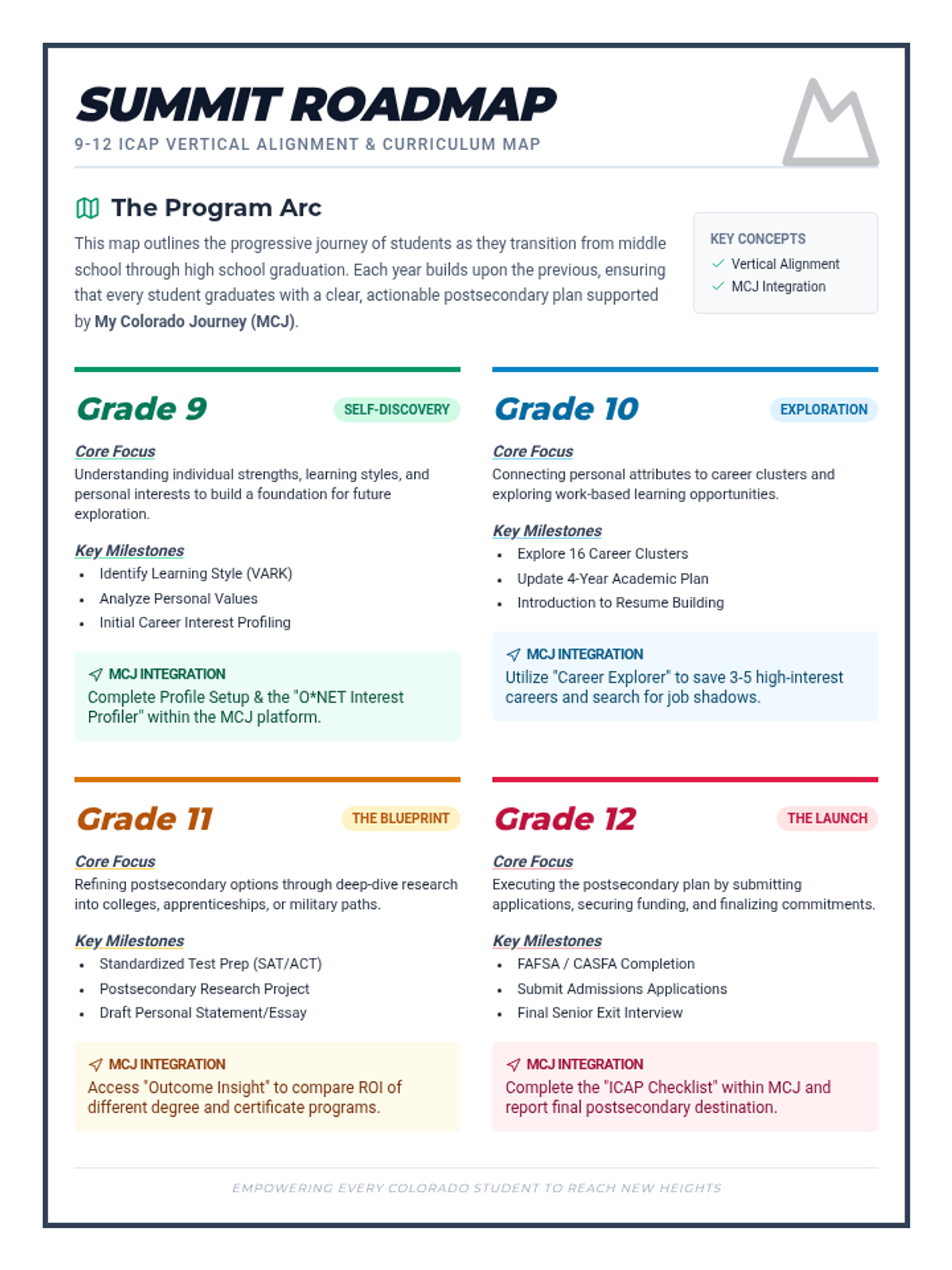
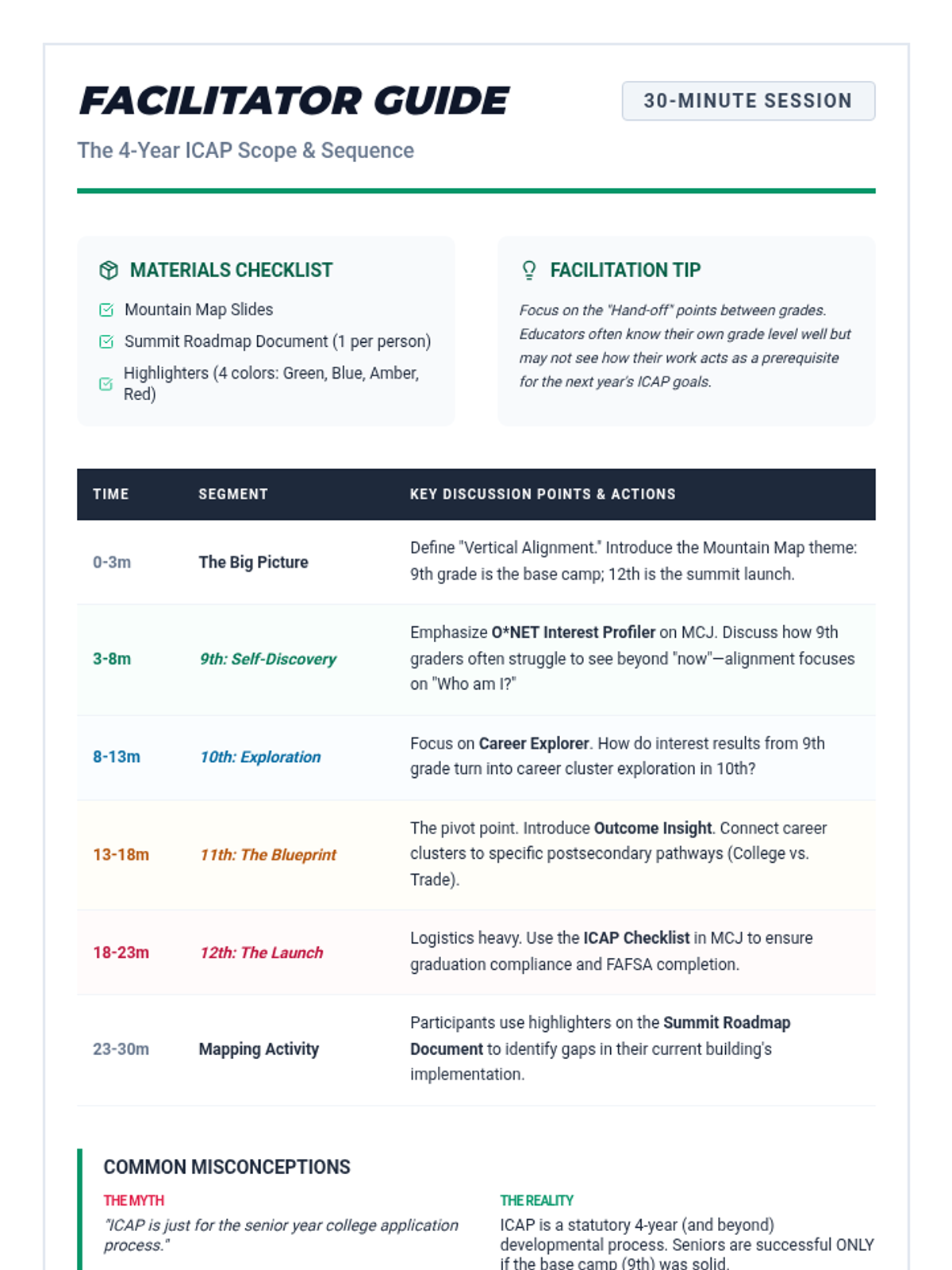
A 30-minute professional development session for educators focused on the vertical alignment of the Individual Career and Academic Plan (ICAP) across grades 9-12, featuring My Colorado Journey integration.
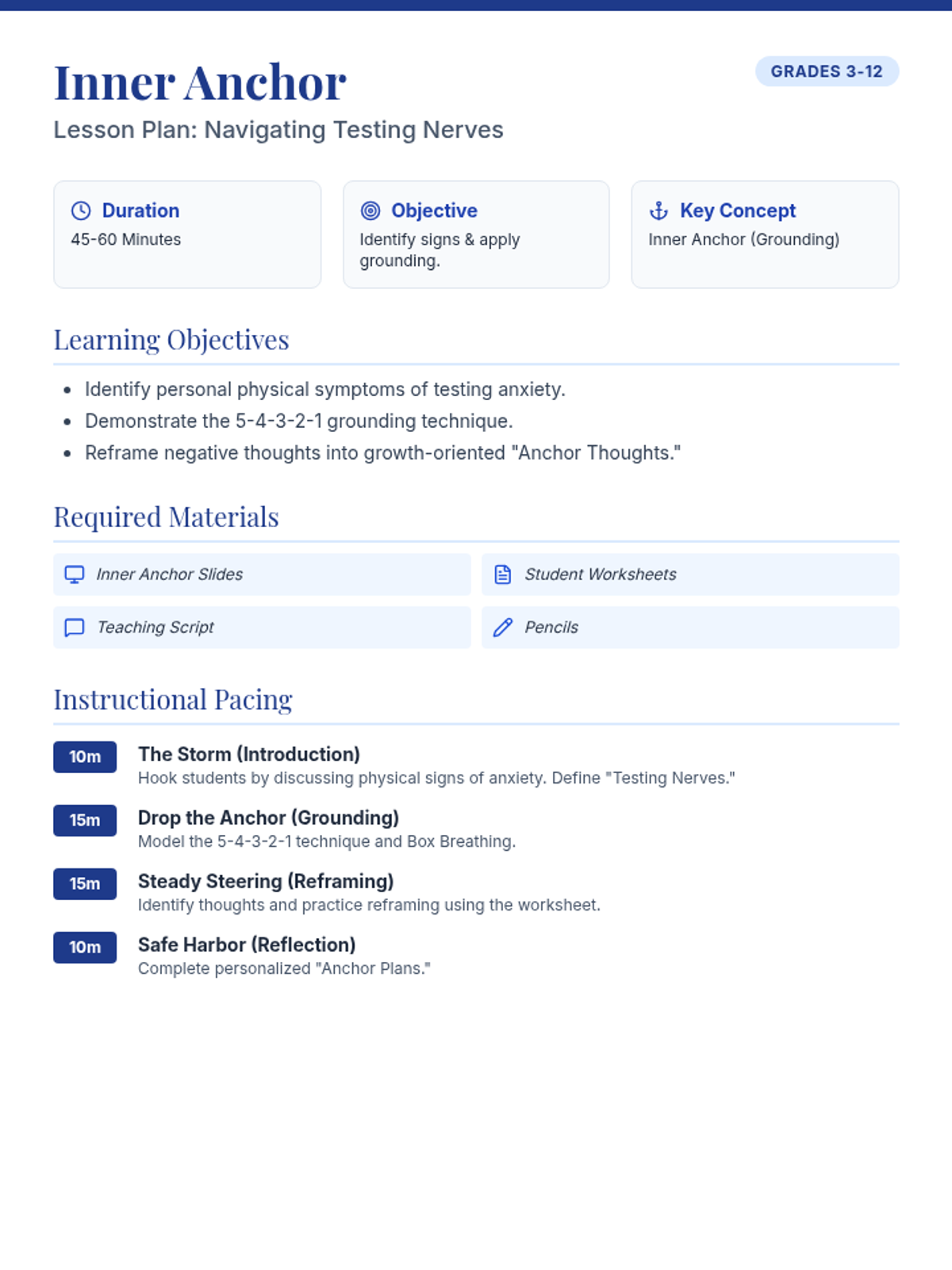
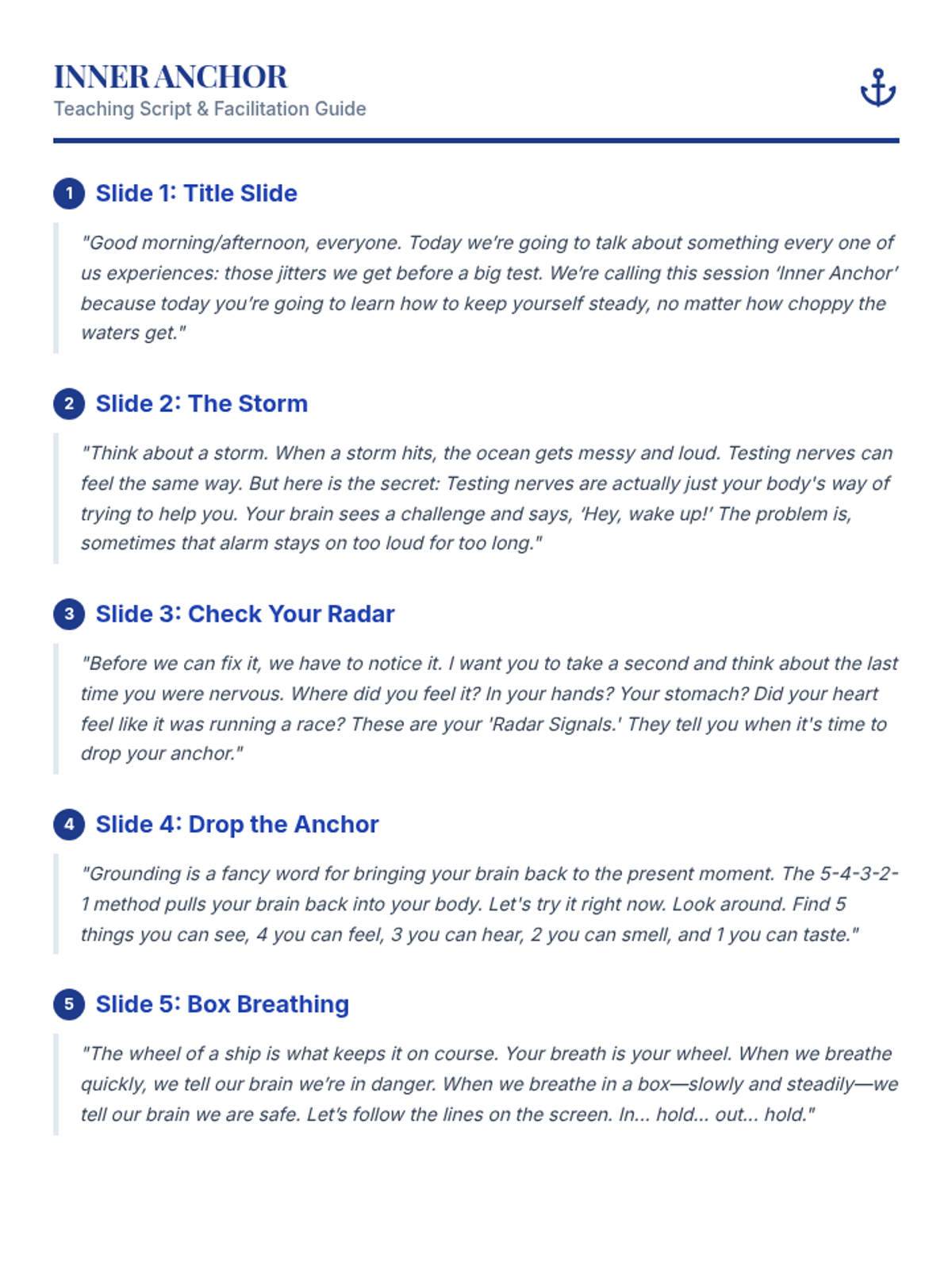
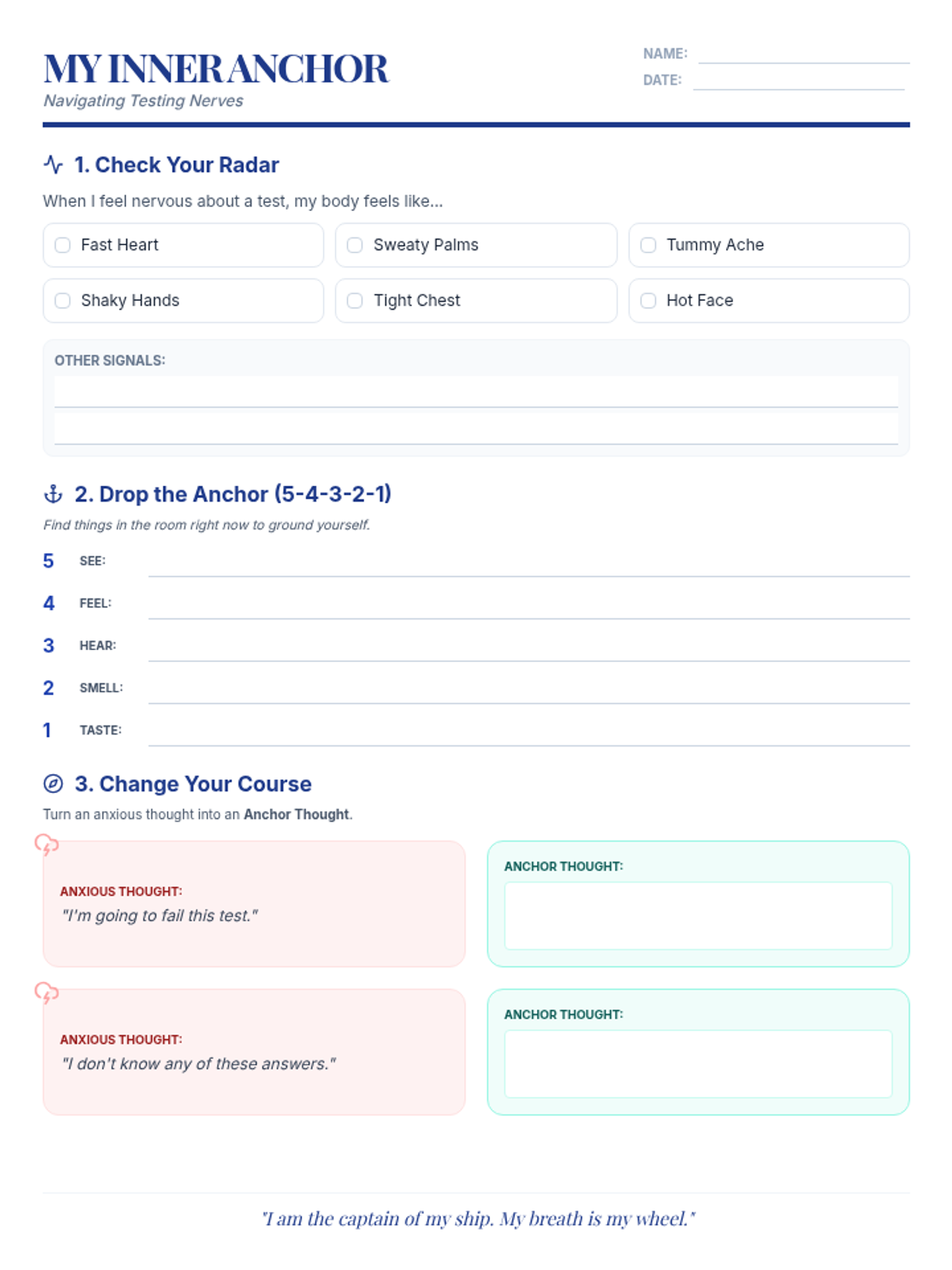
A comprehensive emotional regulation toolkit for students to manage testing anxiety using maritime-themed grounding techniques and cognitive reframing.
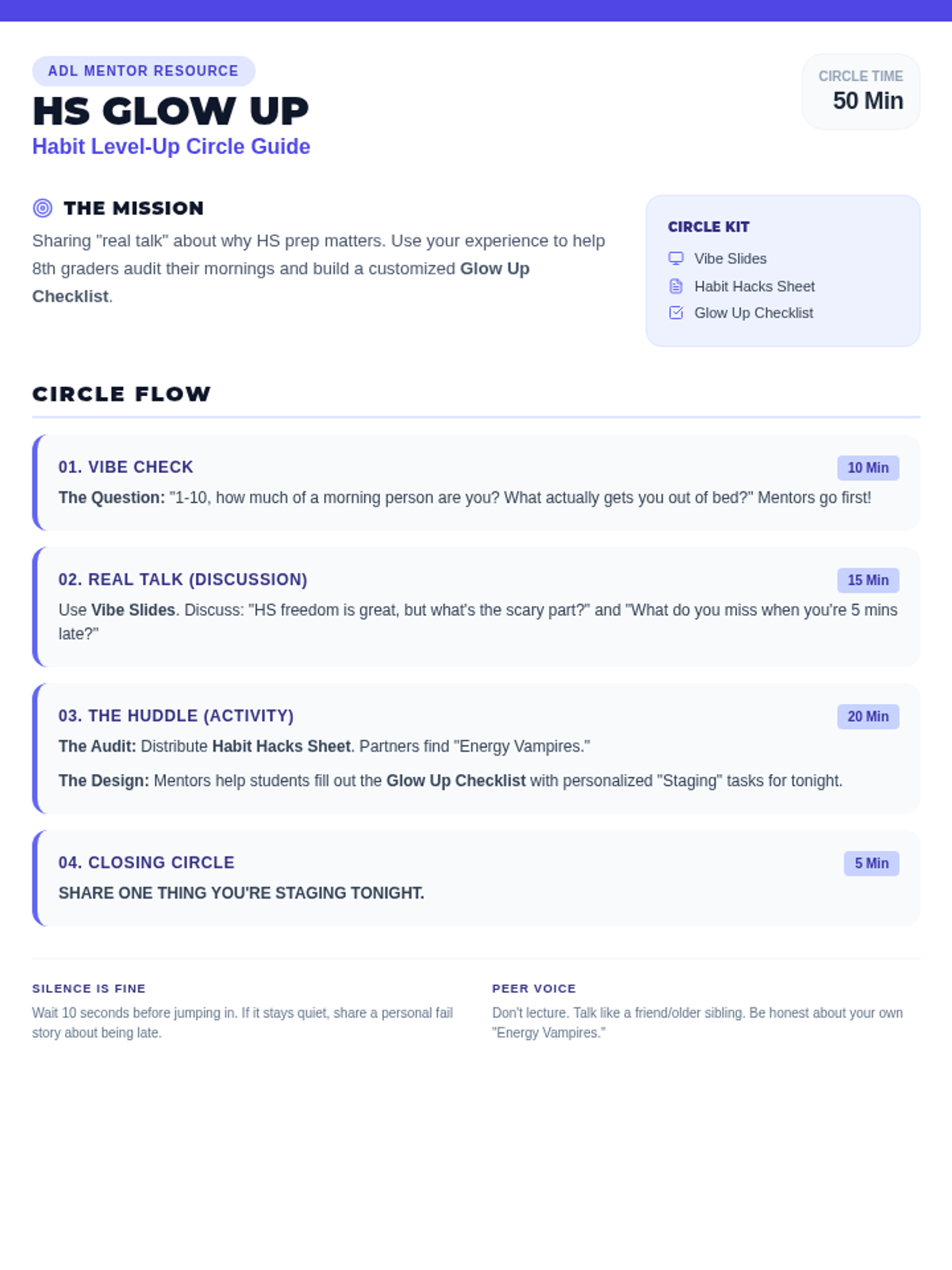
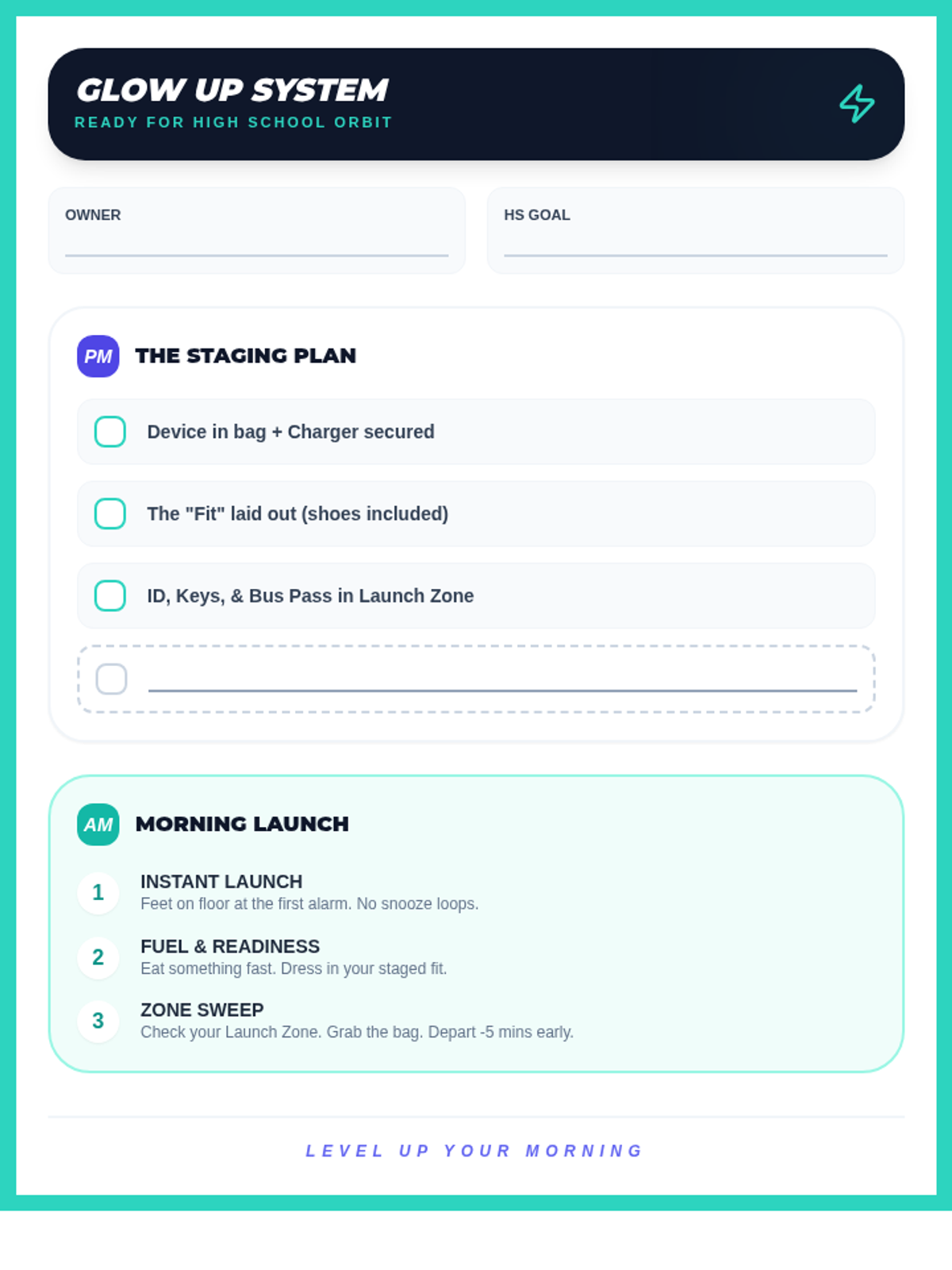
A 50-minute lesson designed to help 8th graders develop punctuality and preparedness habits for the transition to high school. Students will analyze their current routines and create a 'Mission Control' morning checklist.
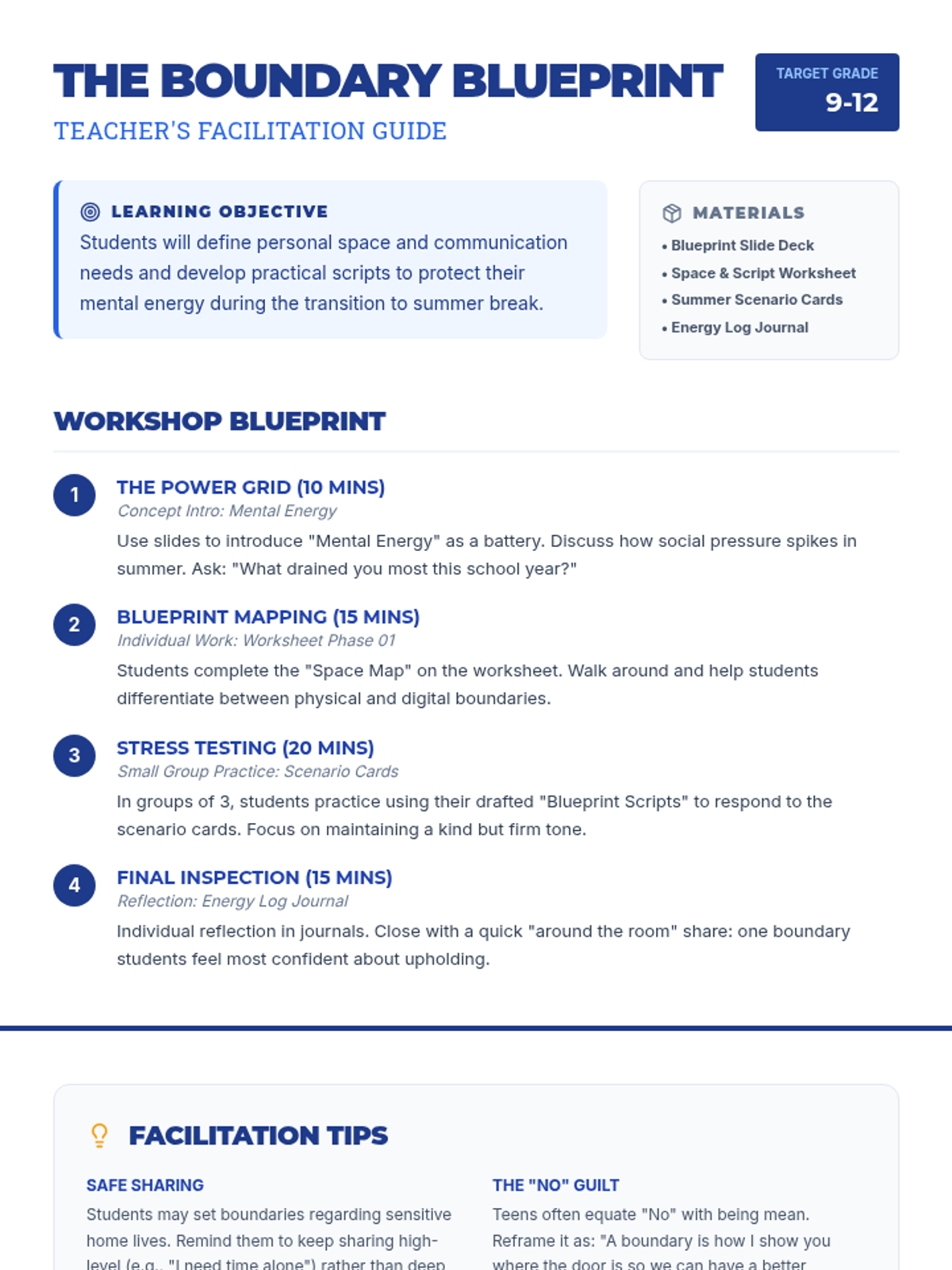
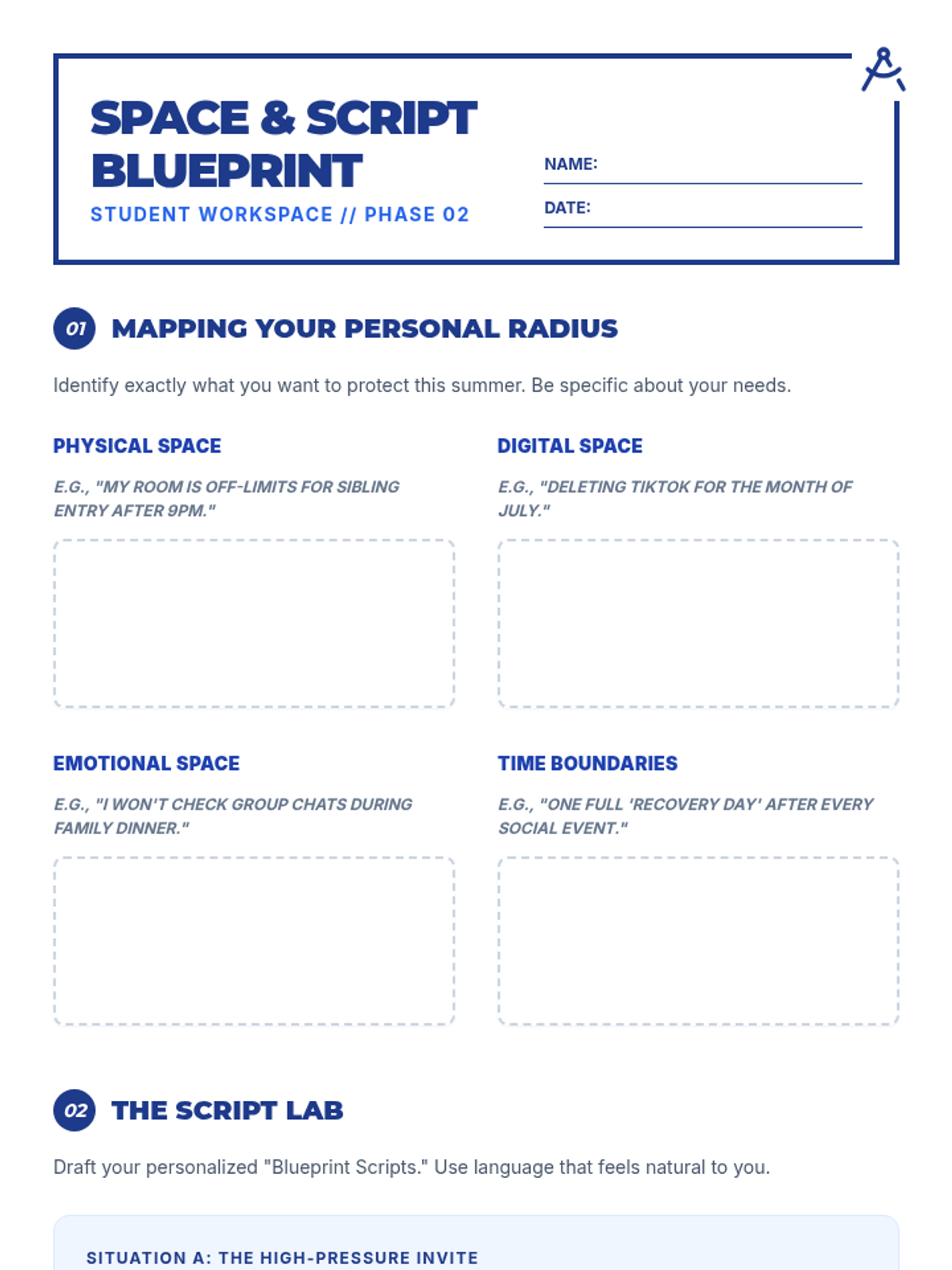
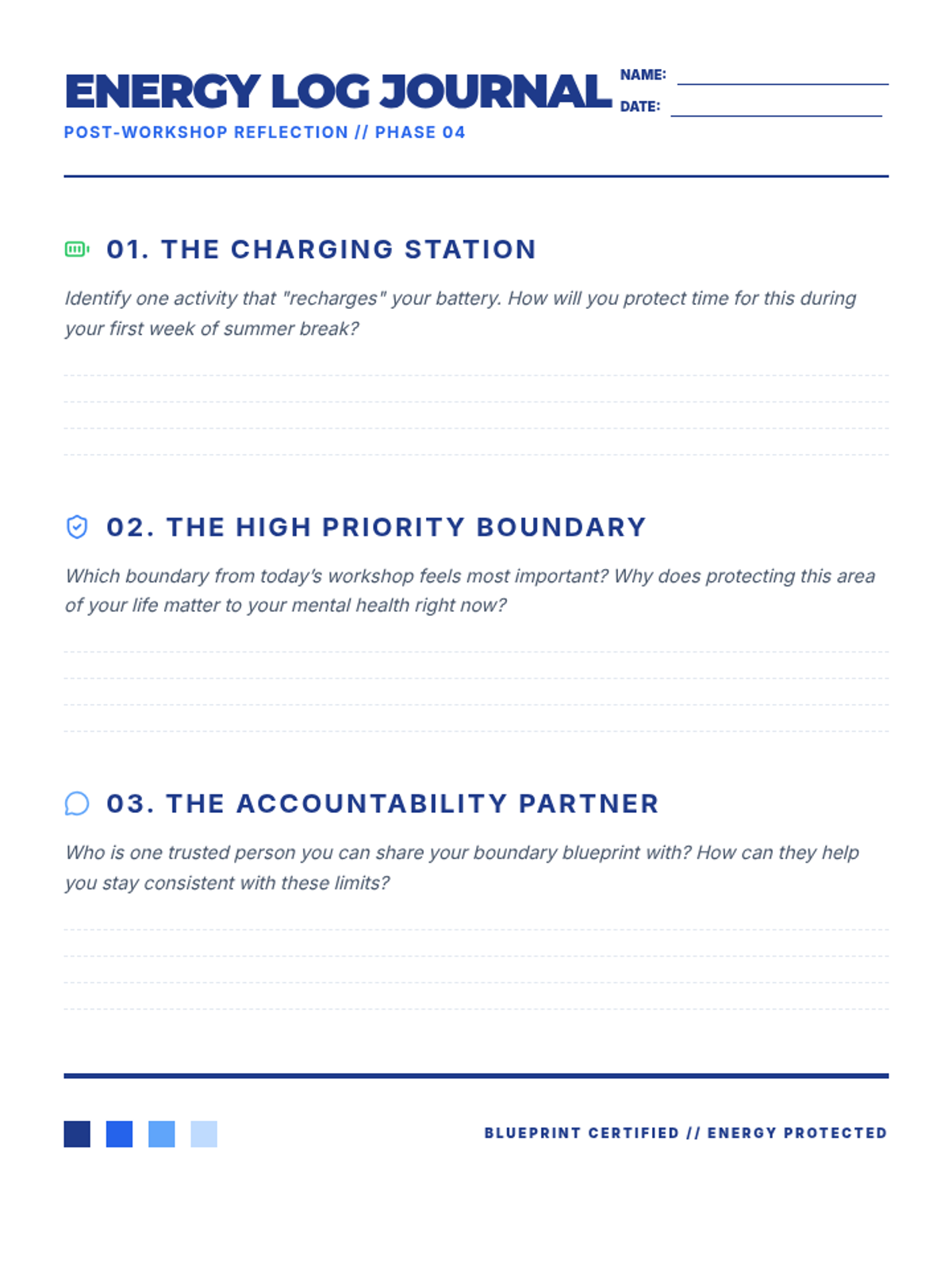
A comprehensive workshop for high schoolers to define personal space and communication needs before summer, using scenario analysis and boundary-setting scripts to protect mental energy.
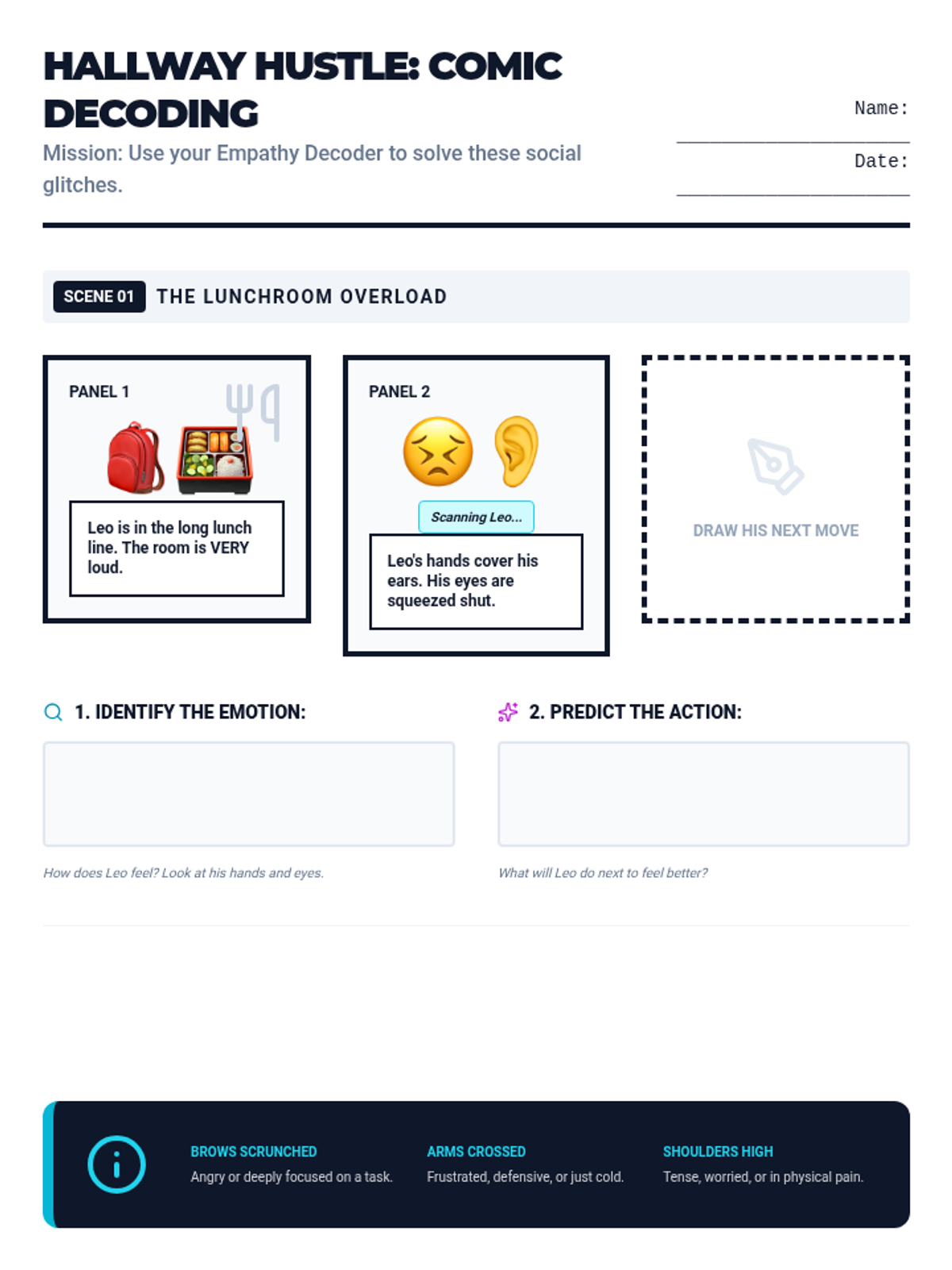
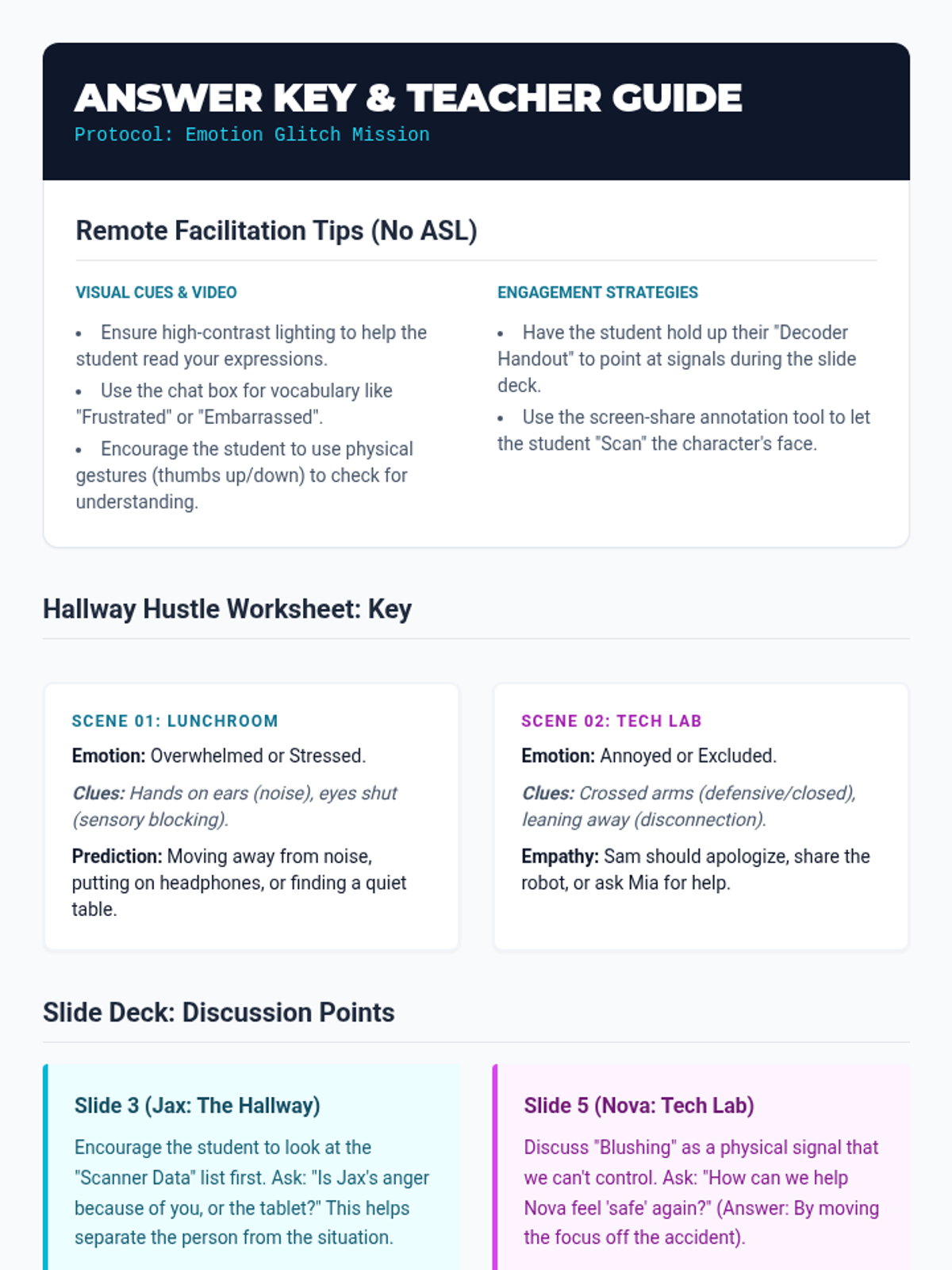
Students explore a futuristic high school hallway and tech lab to identify 'glitches' in social communication. They learn to decode body language and facial expressions in complex social situations.
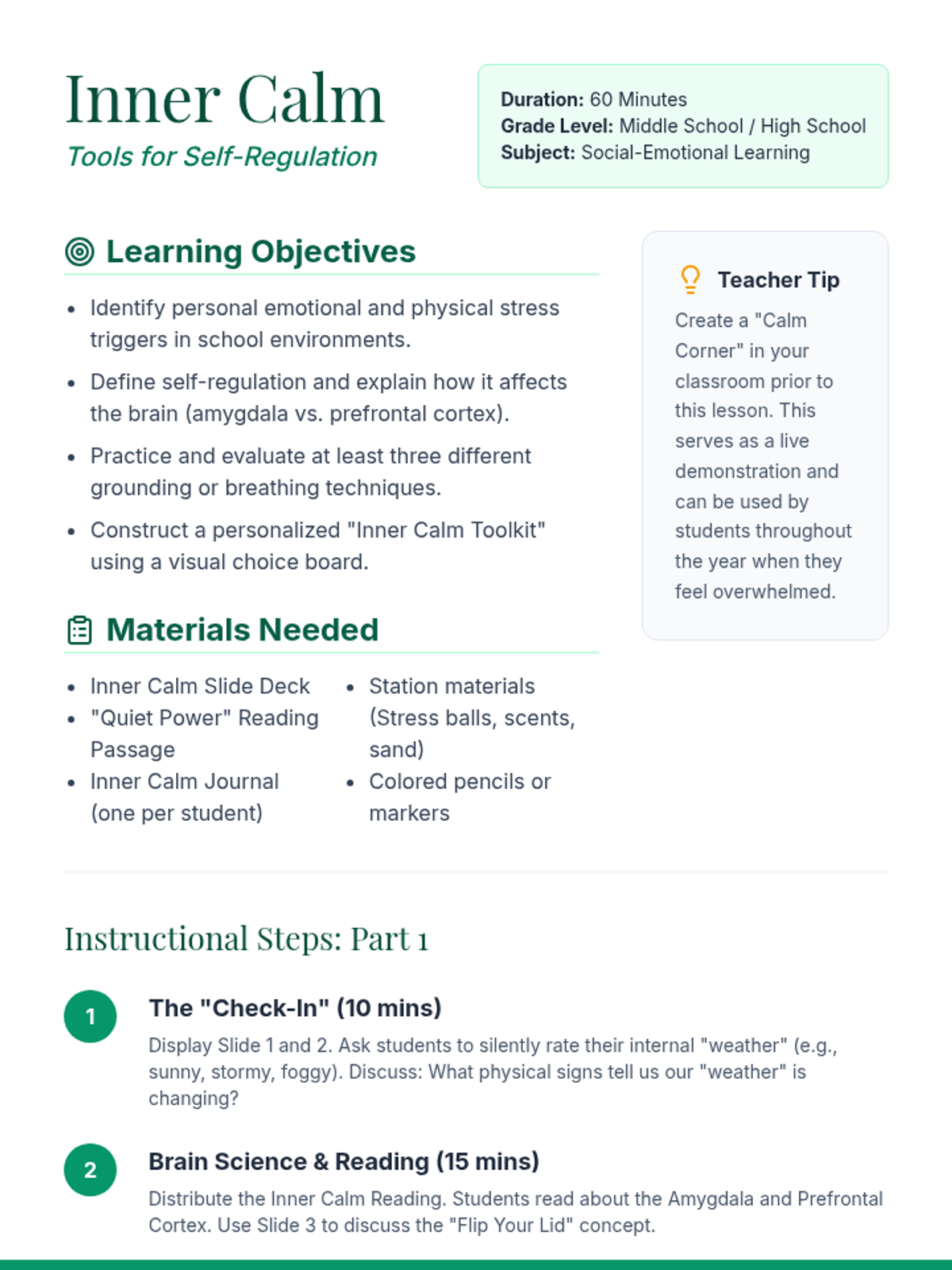
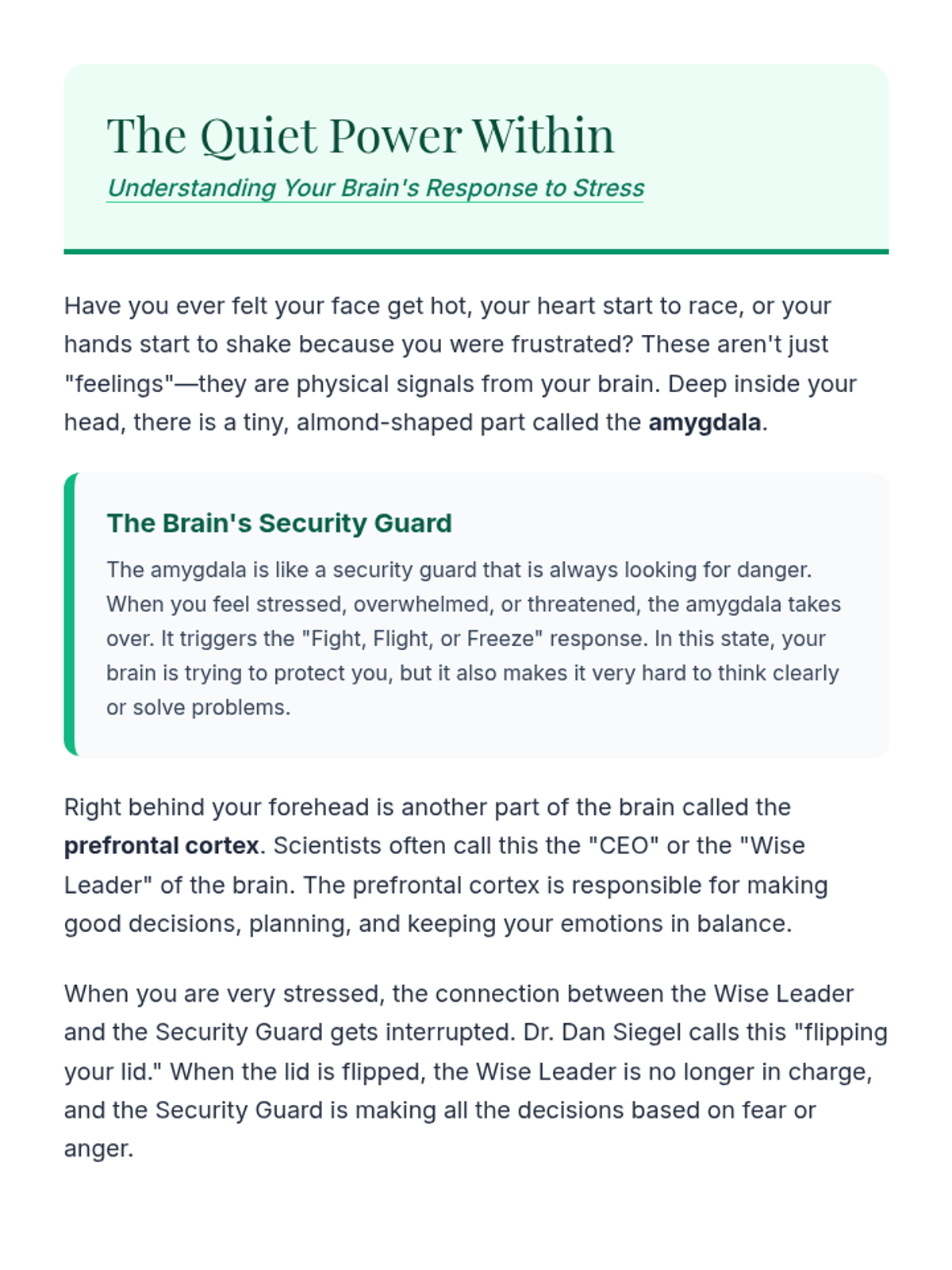
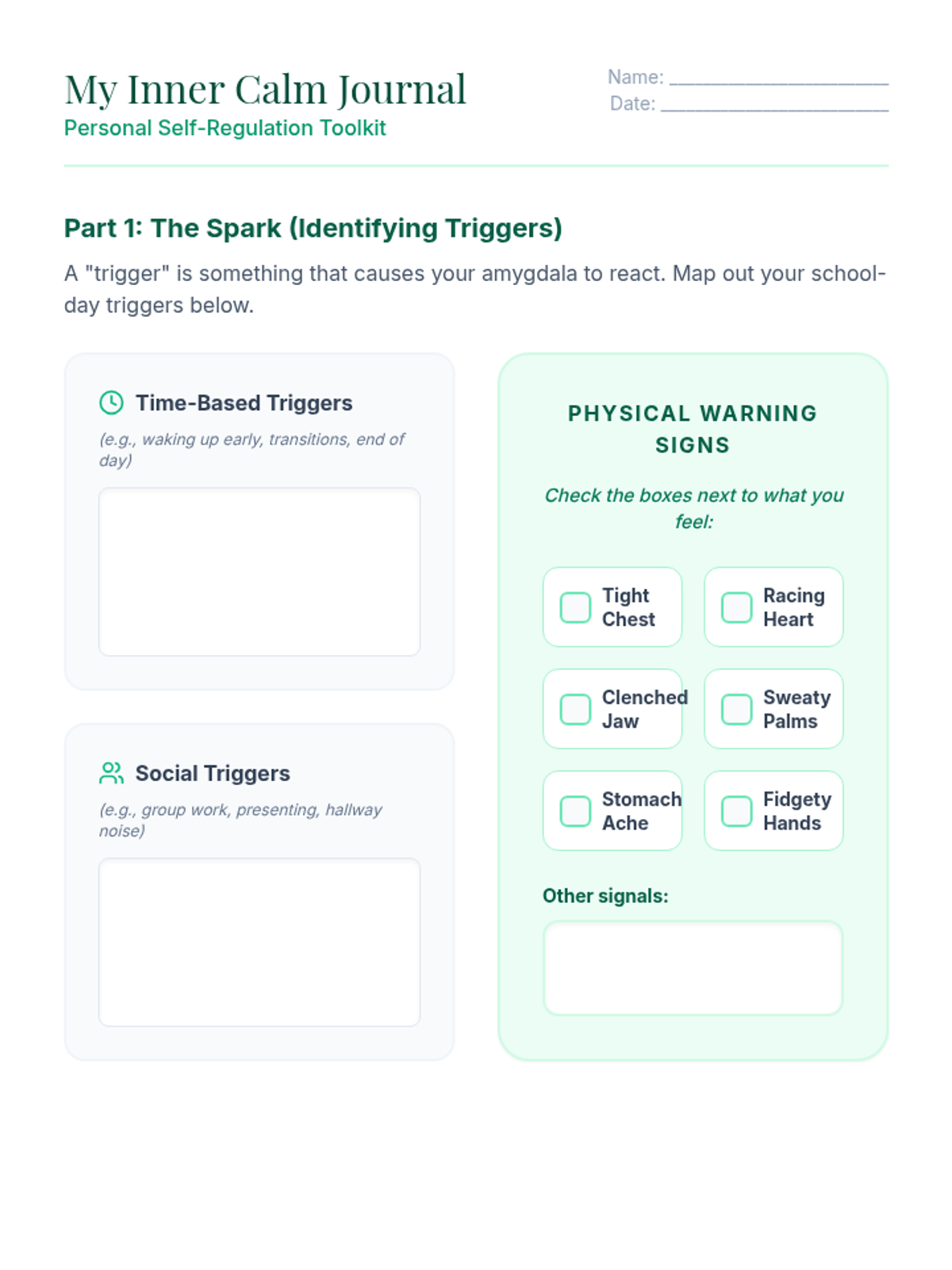
A comprehensive lesson on self-regulation where students identify stress triggers and build a personalized toolkit of mindfulness and grounding strategies.
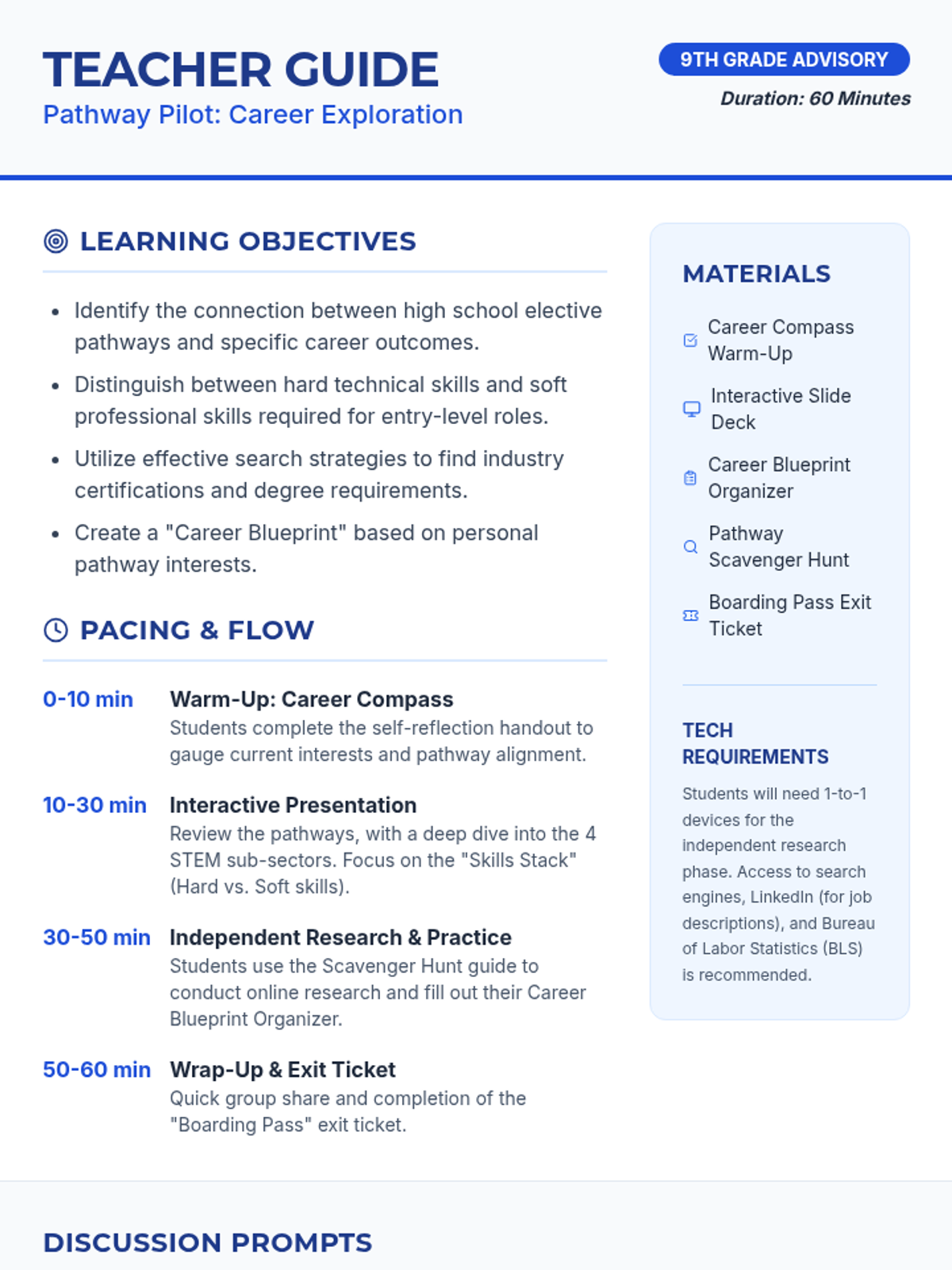
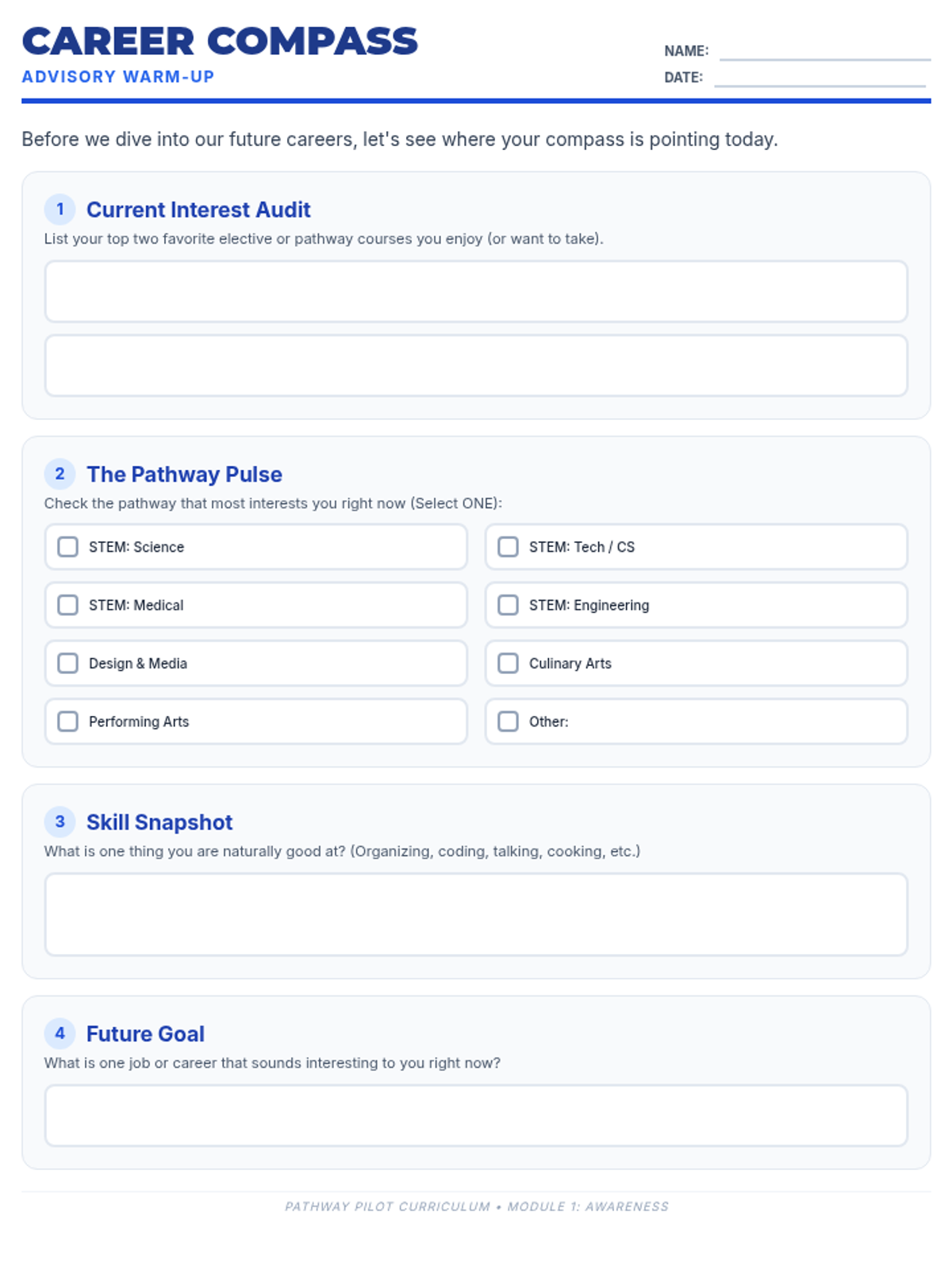
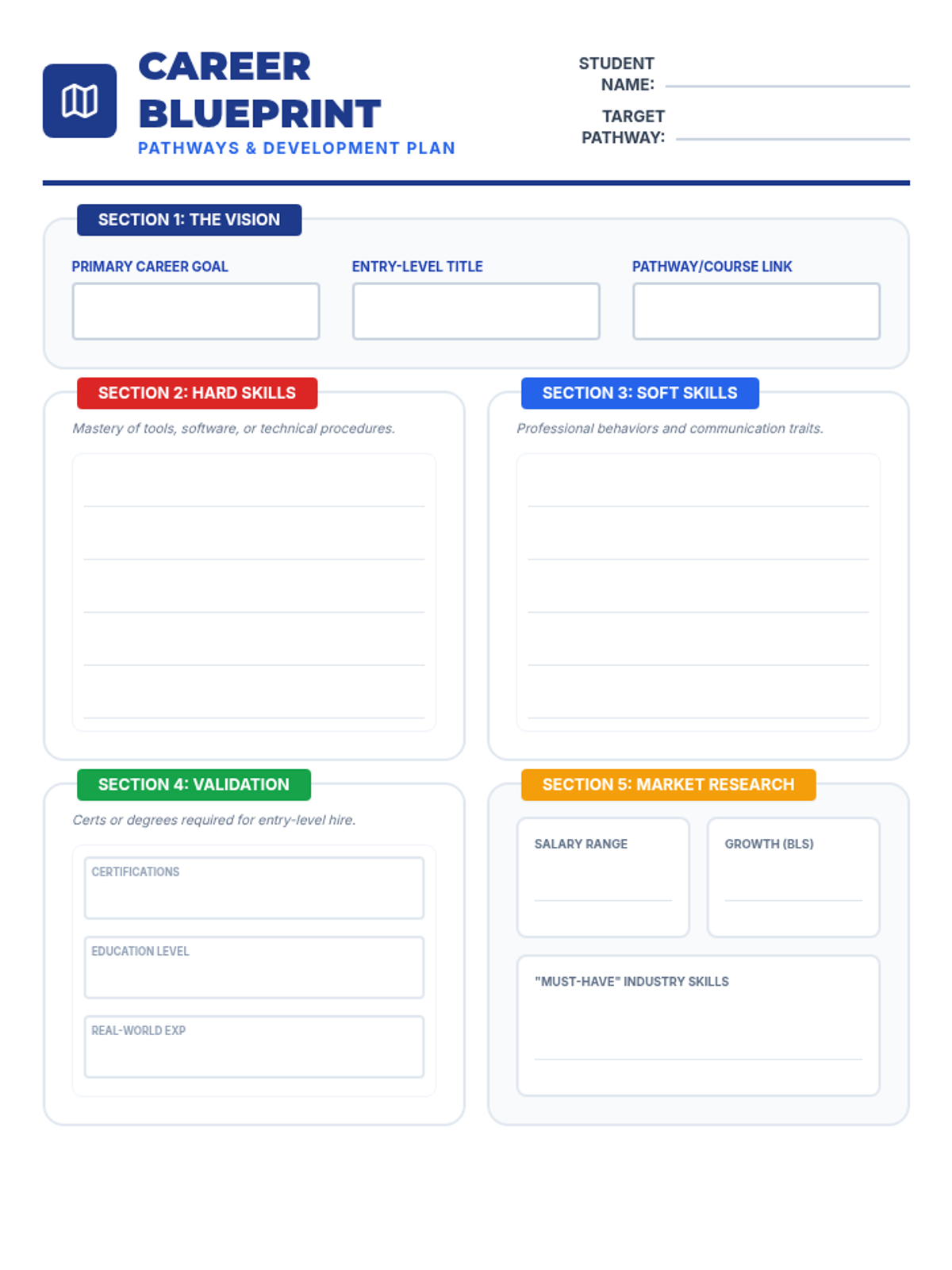
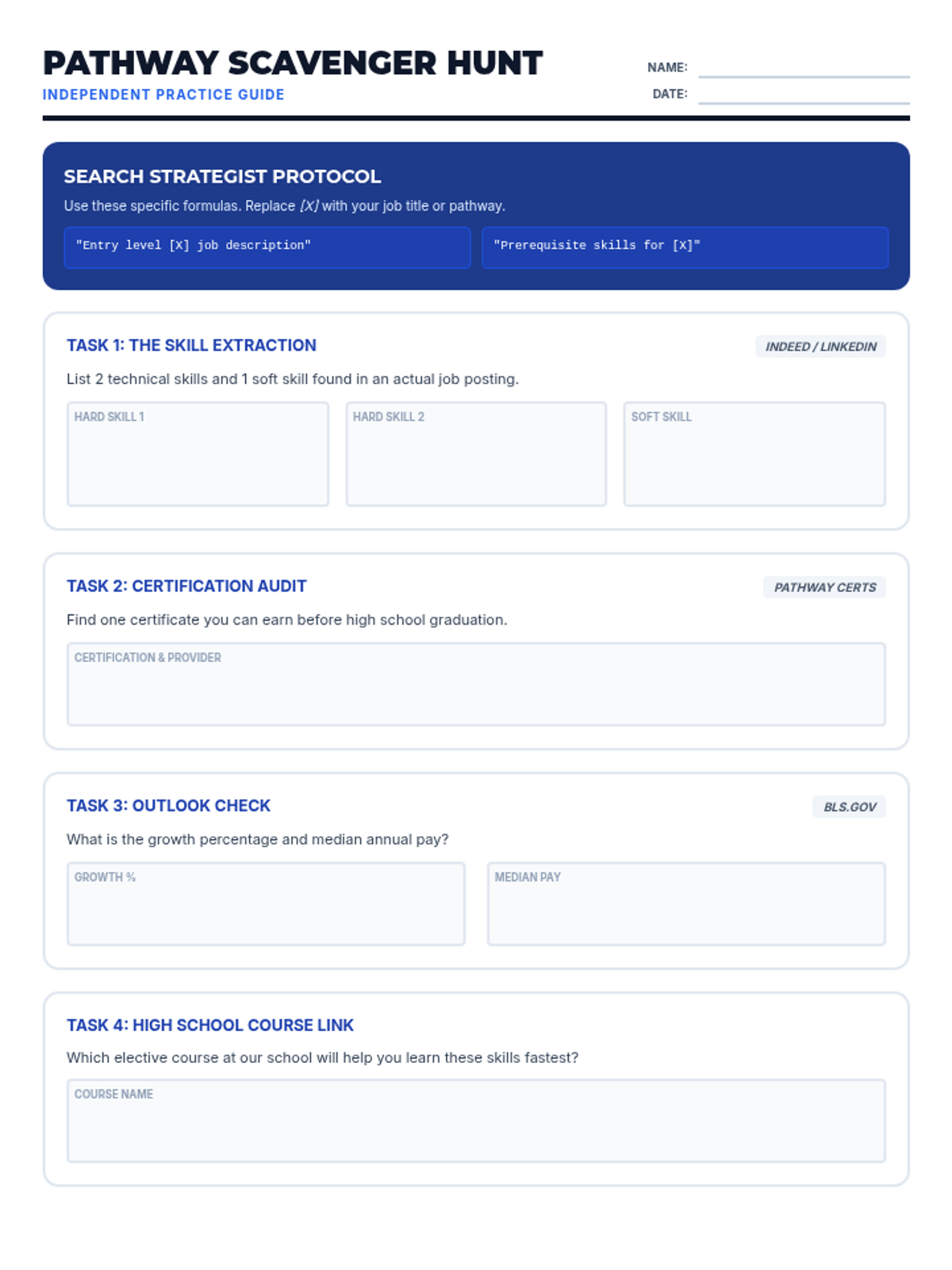
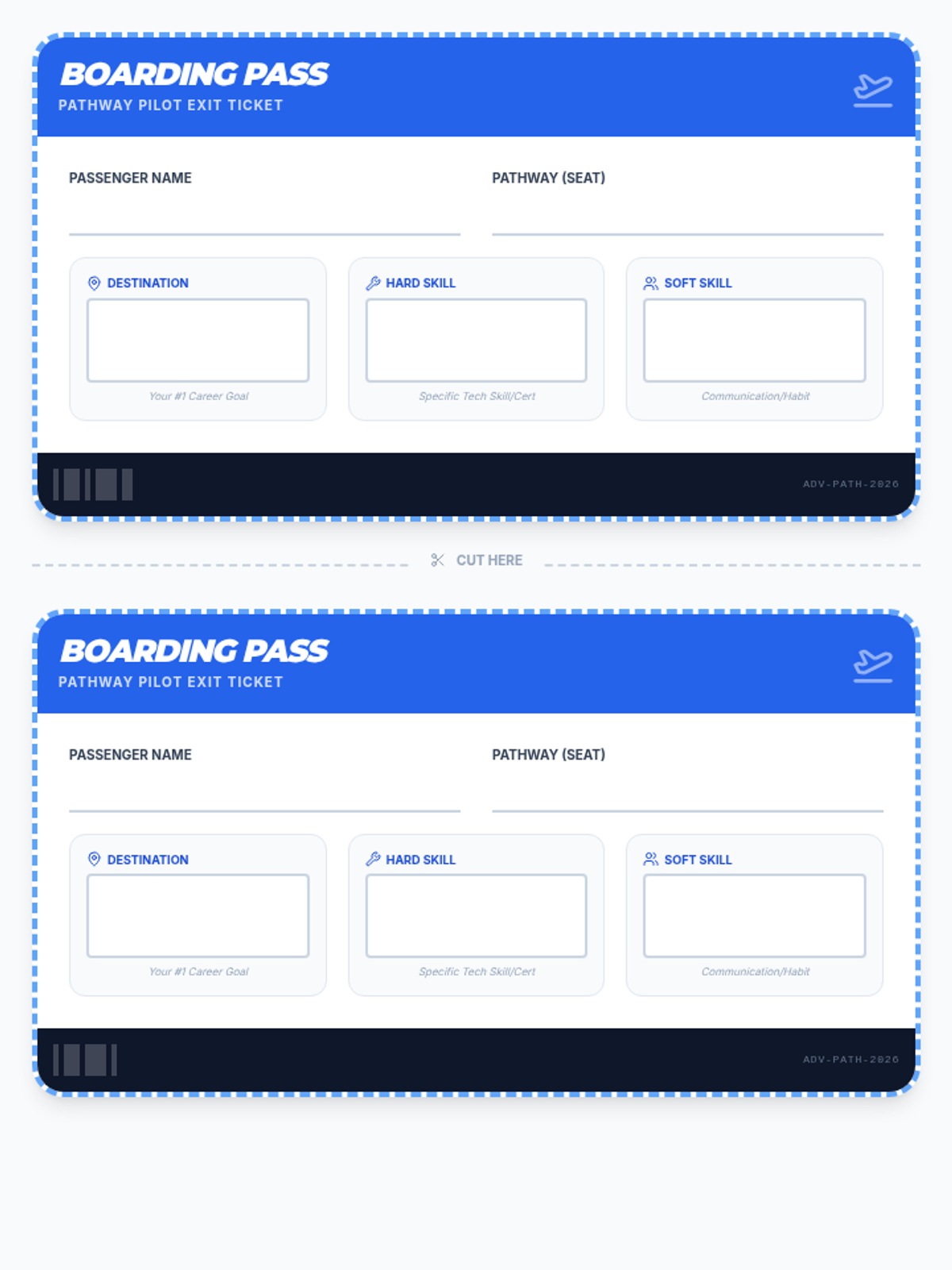
A comprehensive 60-minute advisory lesson designed to help 9th-grade students connect their high school elective pathways (Performing Arts, Design, Culinary, and STEM) to future career requirements, focusing on hard and soft skills, certifications, and research strategies.
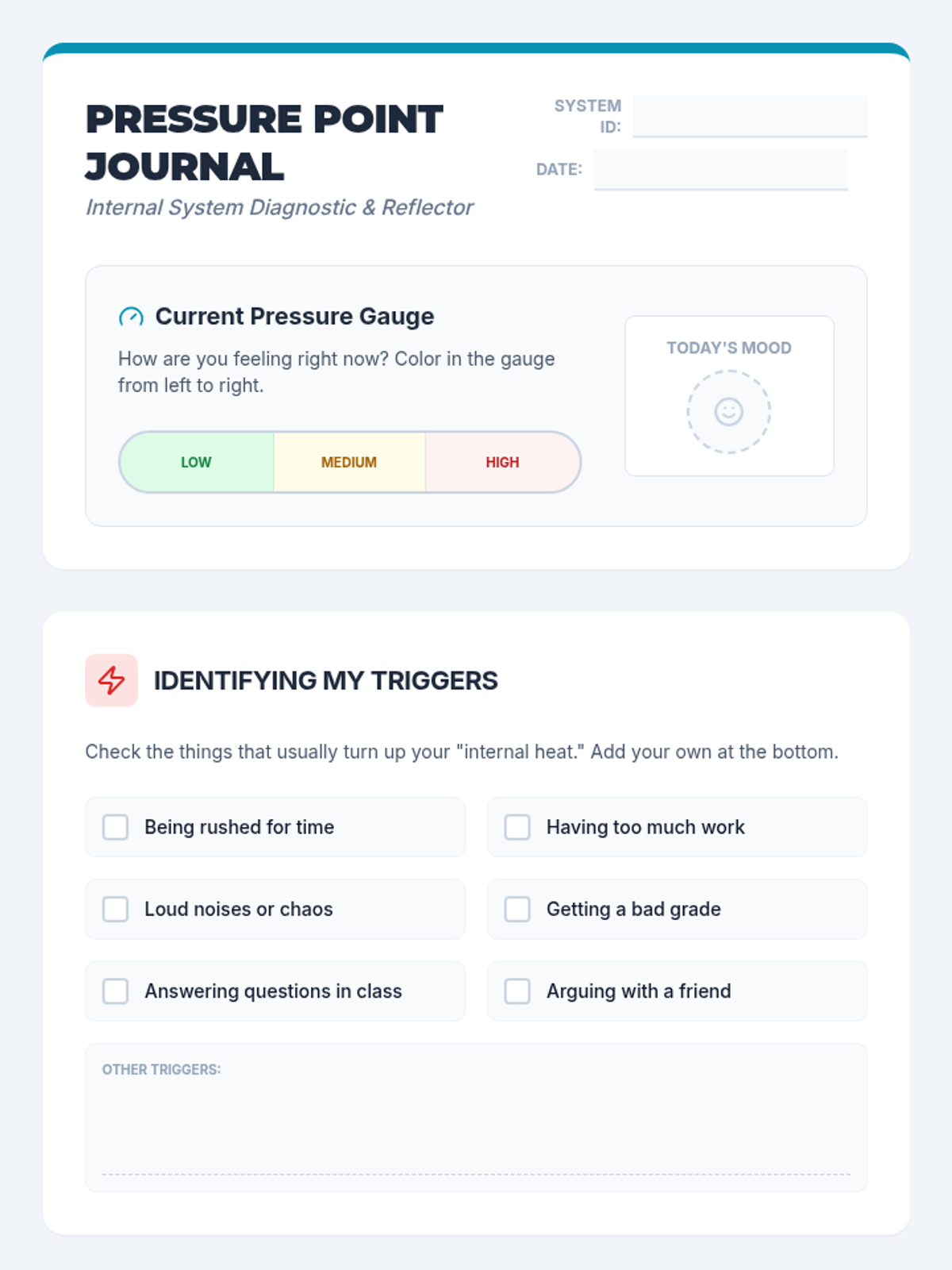
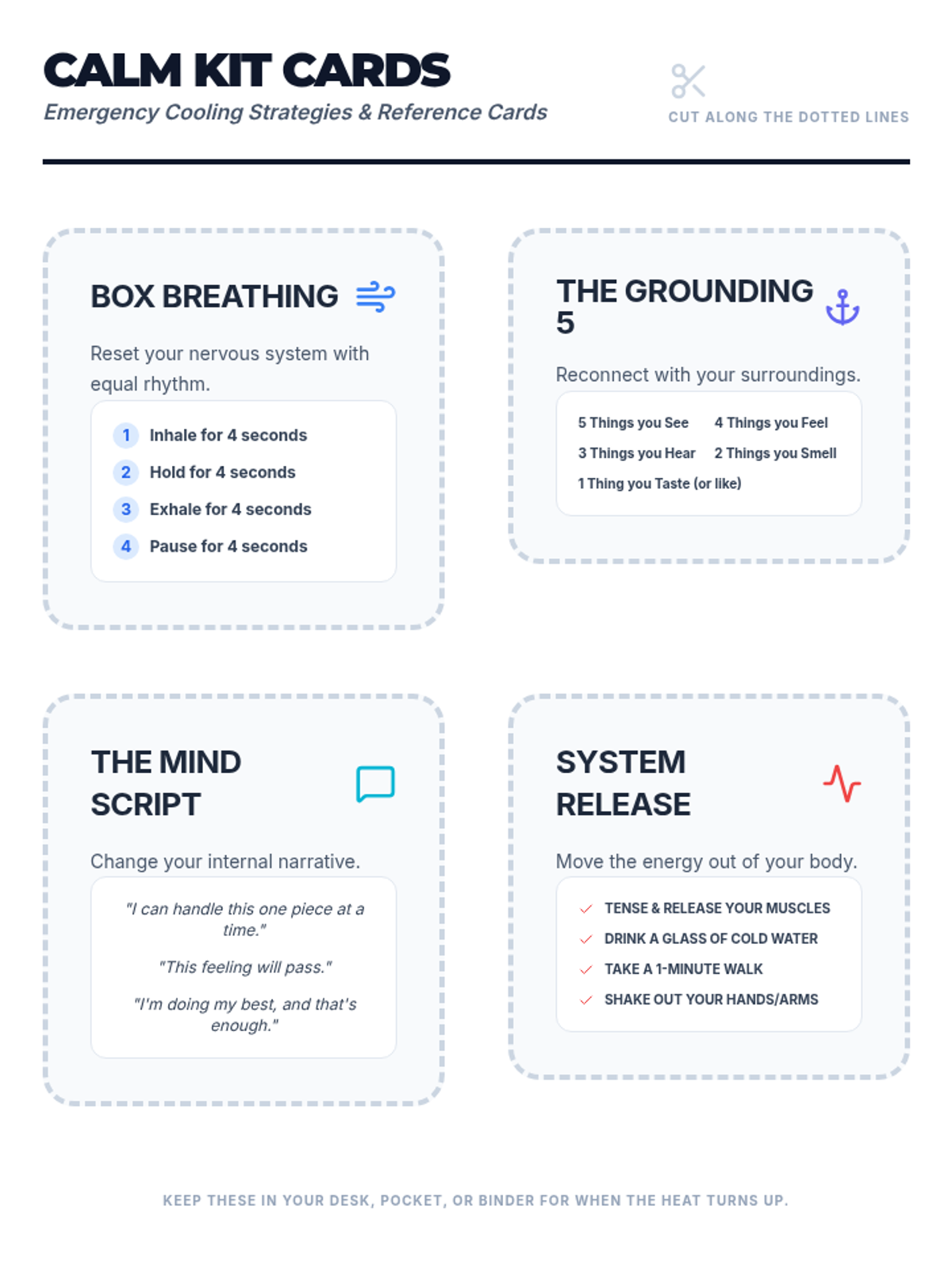
A self-reflection follow-up lesson focused on identifying emotional triggers and practicing coping strategies to manage stress and pressure.
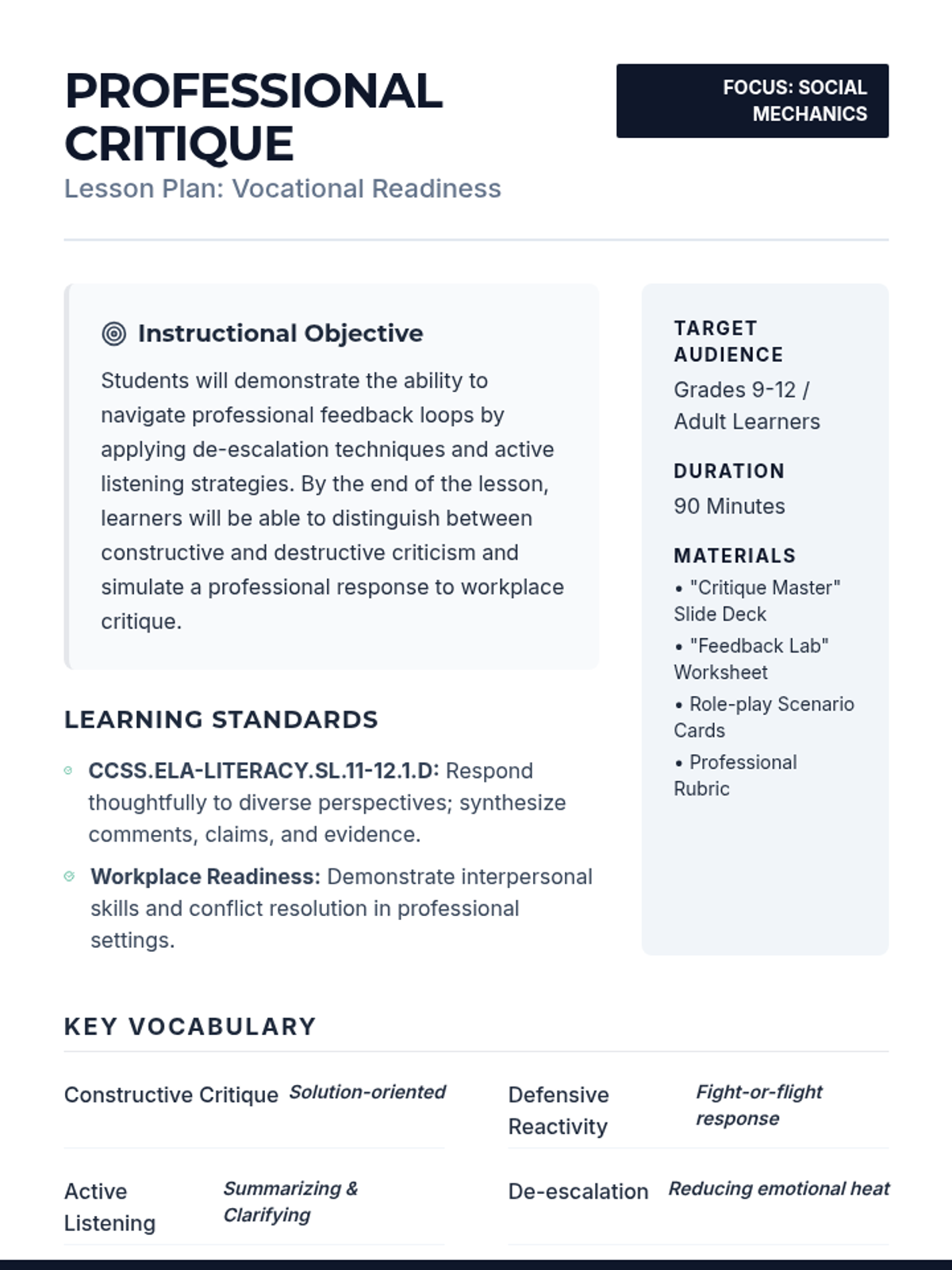
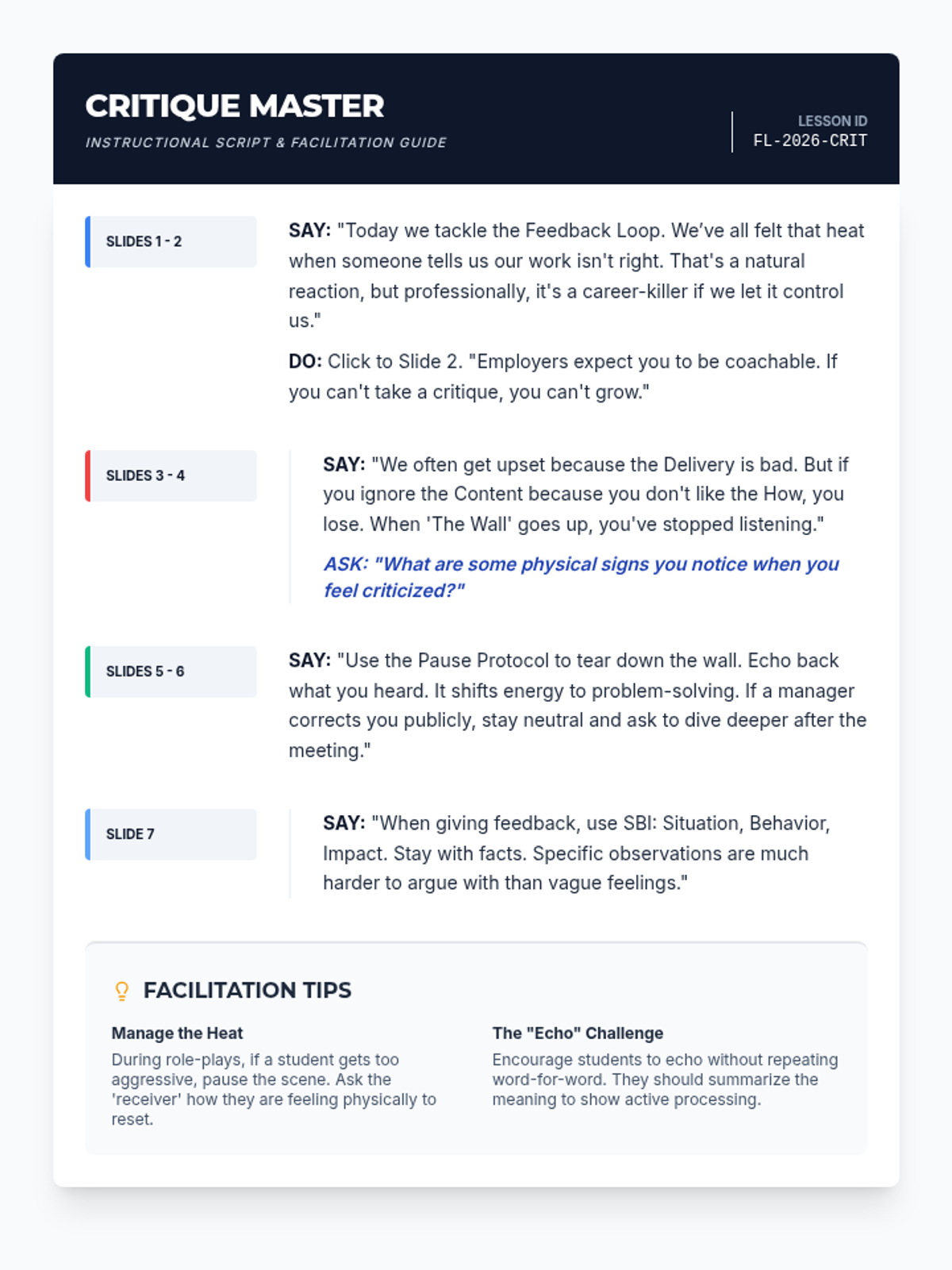
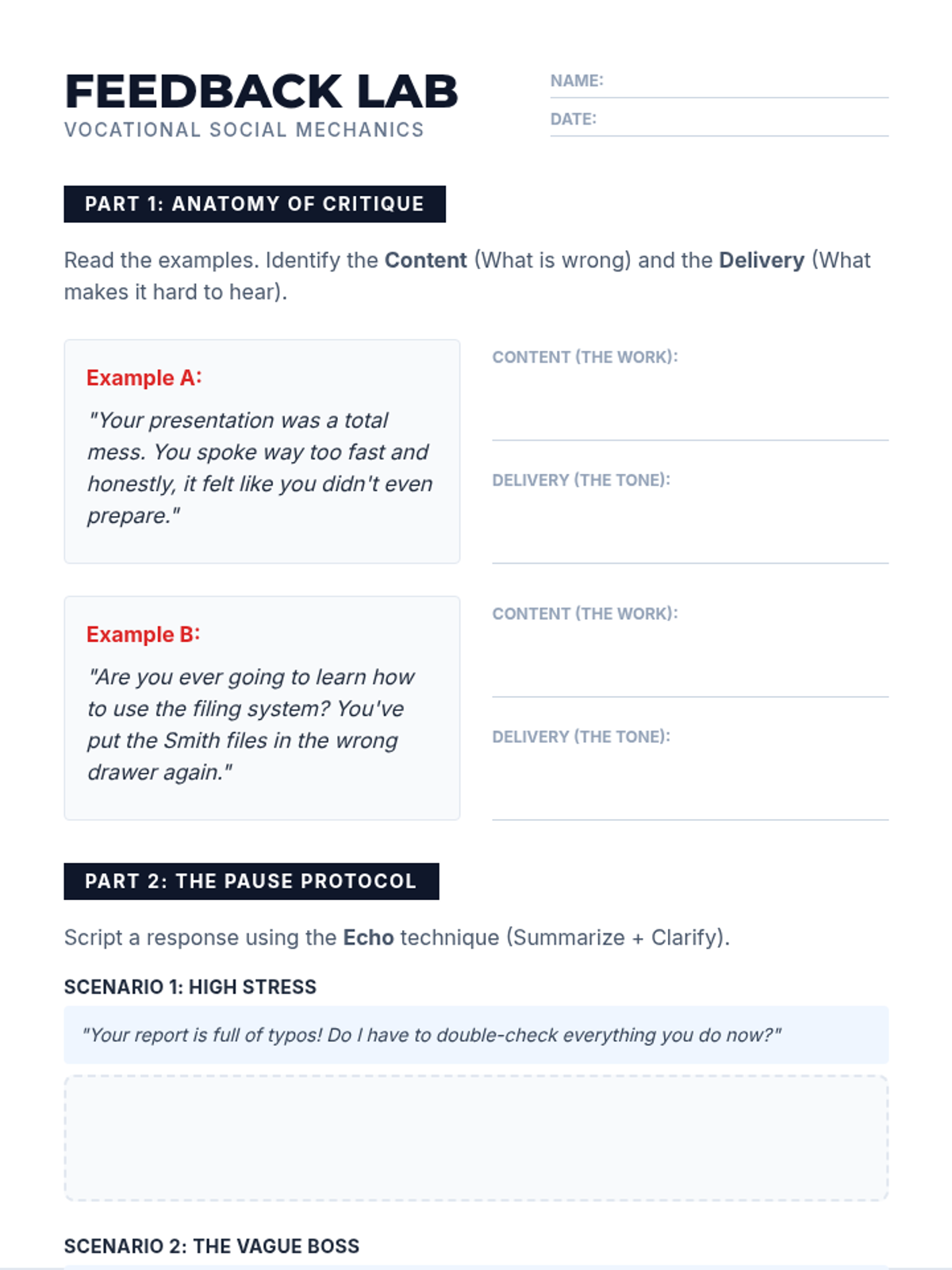
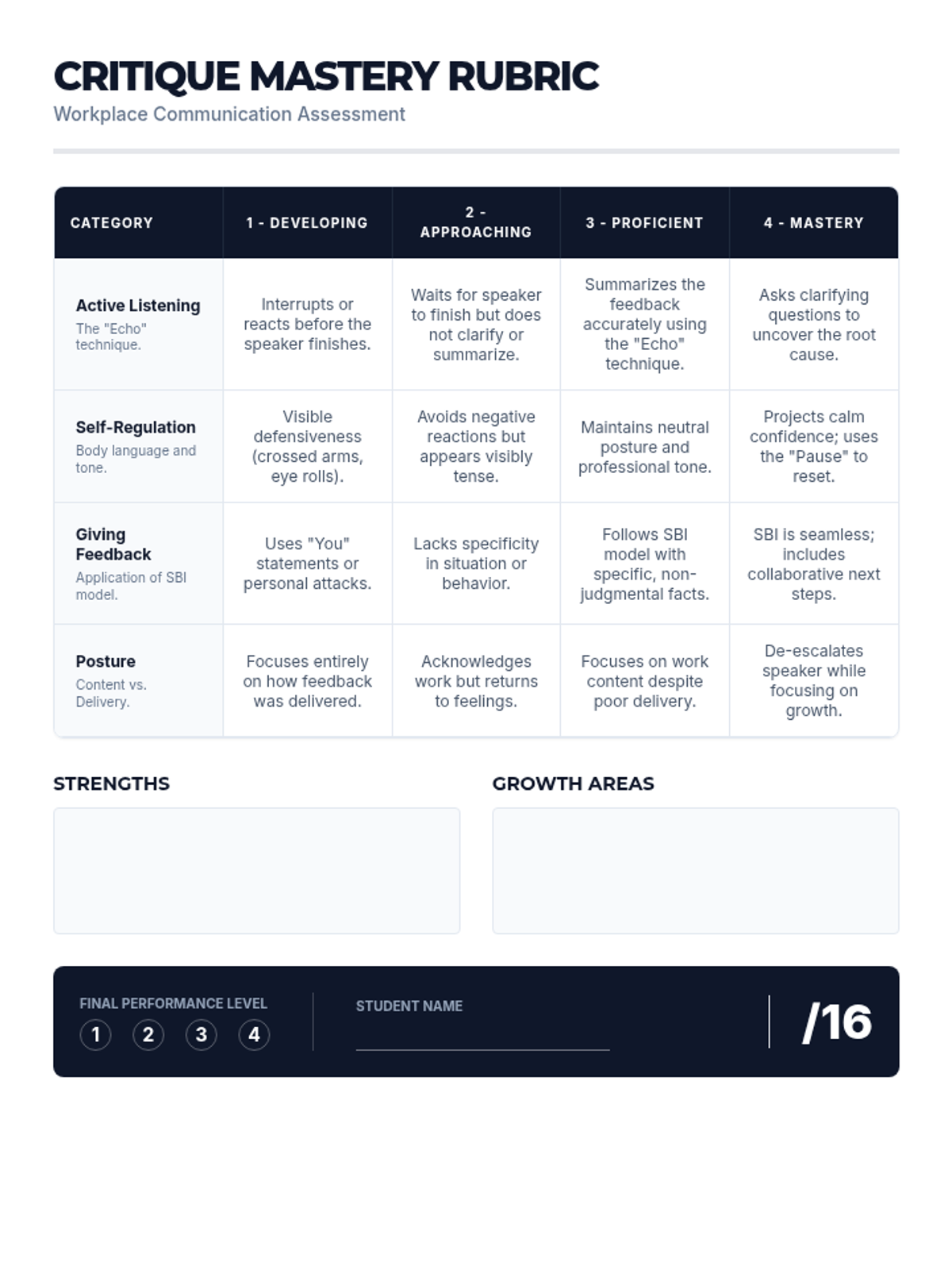
This lesson prepares students for the social complexities of workplace feedback, focusing on active listening, de-escalation techniques, and professional growth.
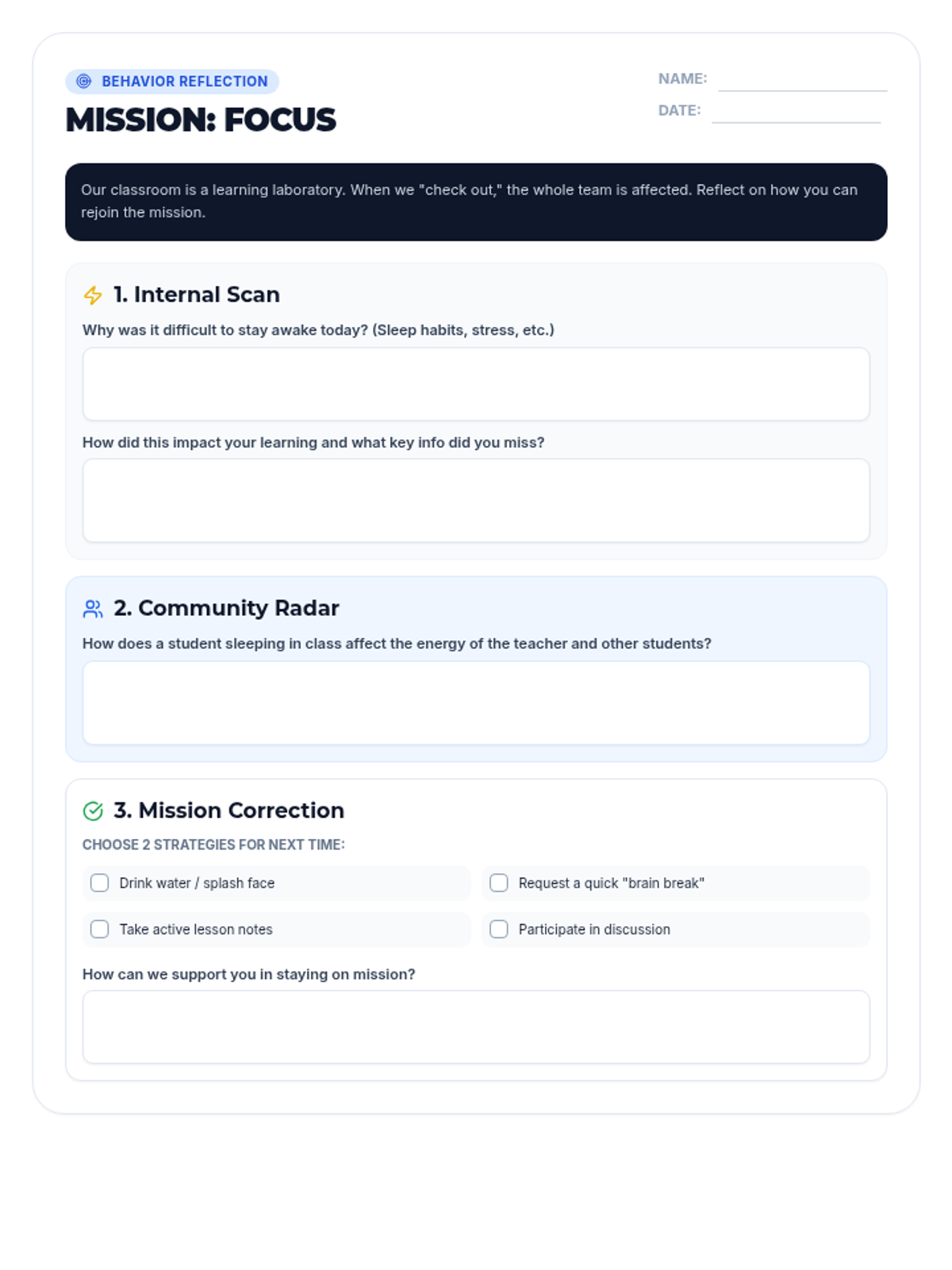
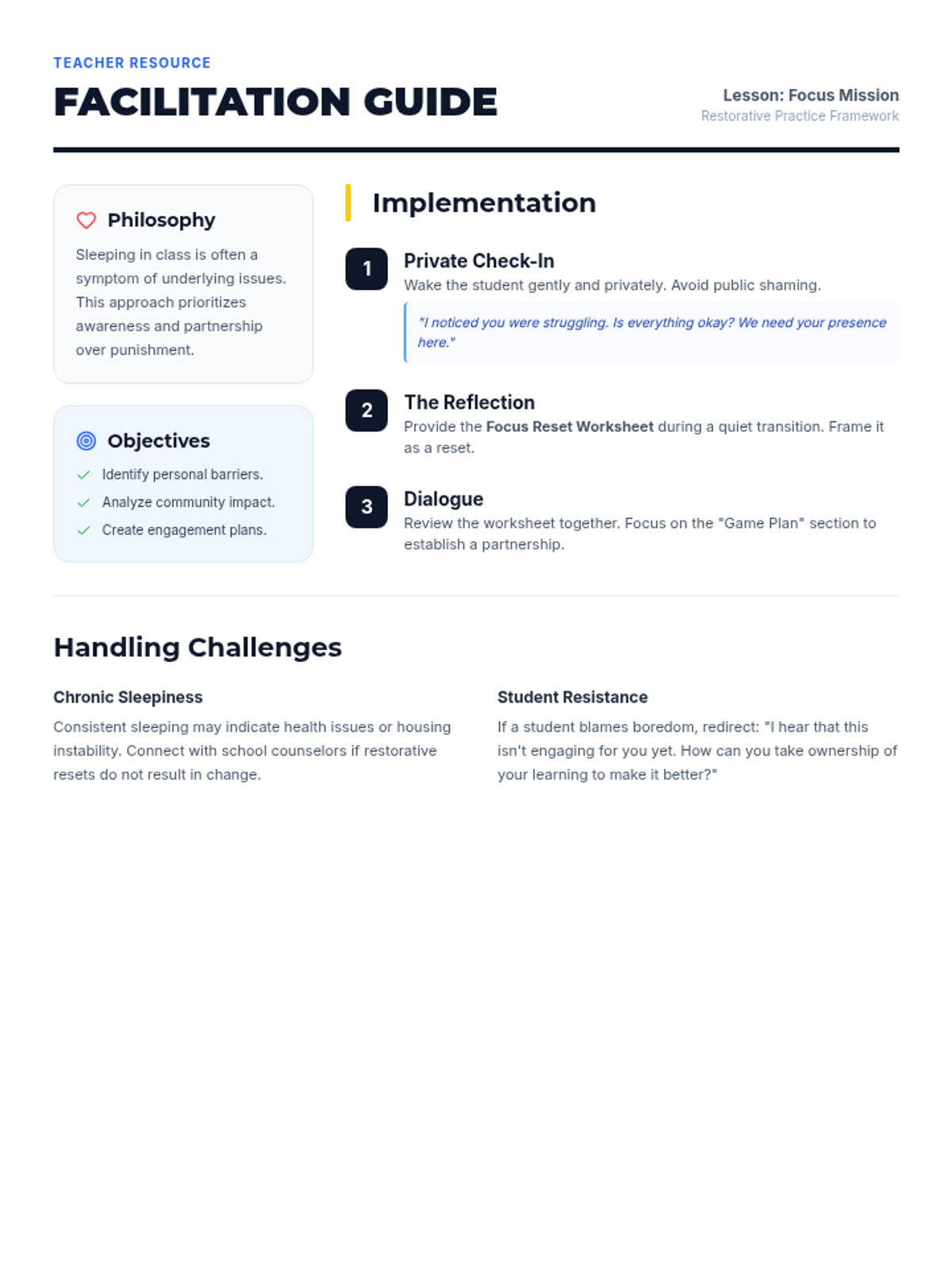
A restorative lesson designed to help students understand the importance of staying awake and engaged in class, focusing on personal success and classroom community respect.
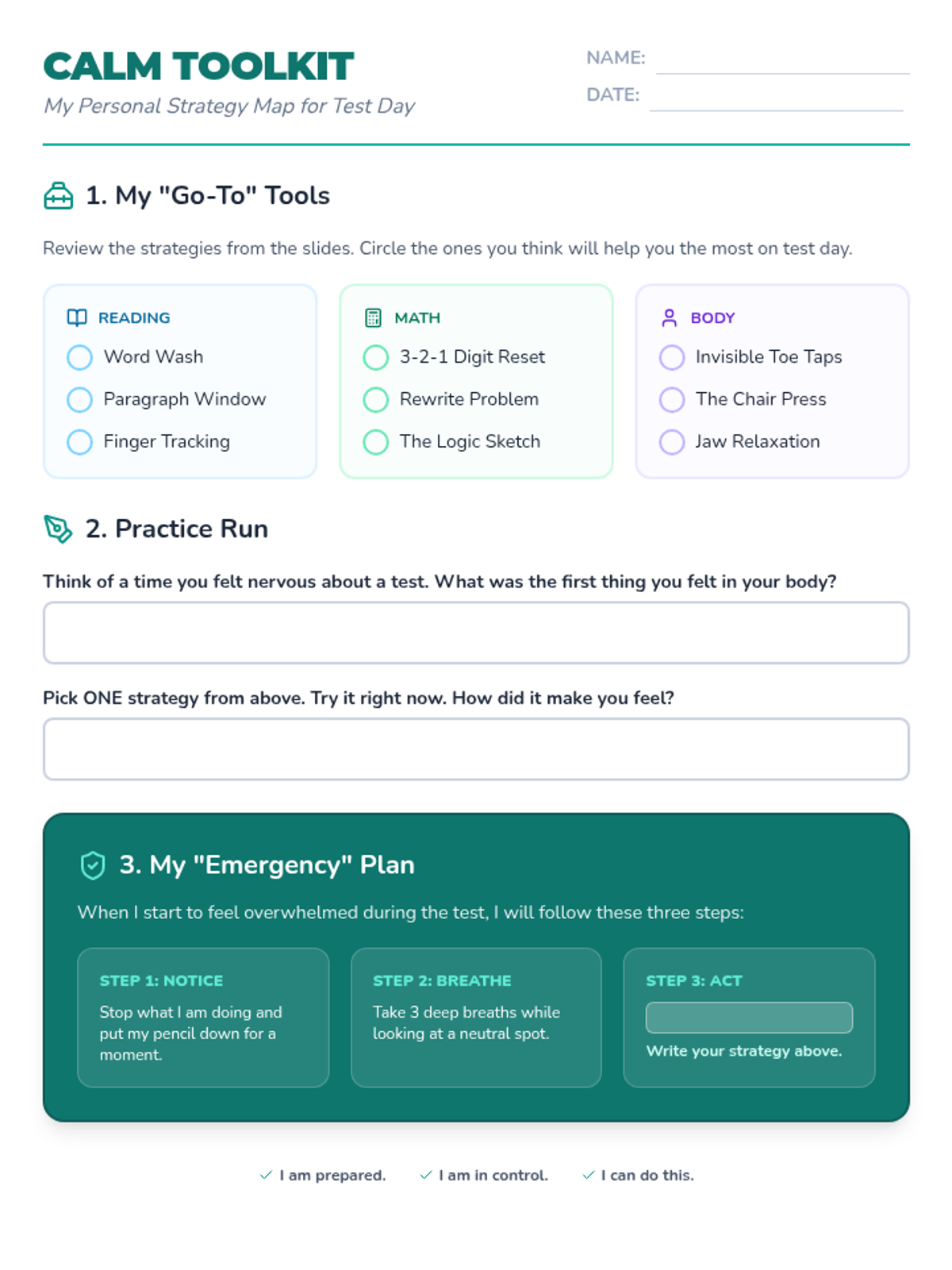
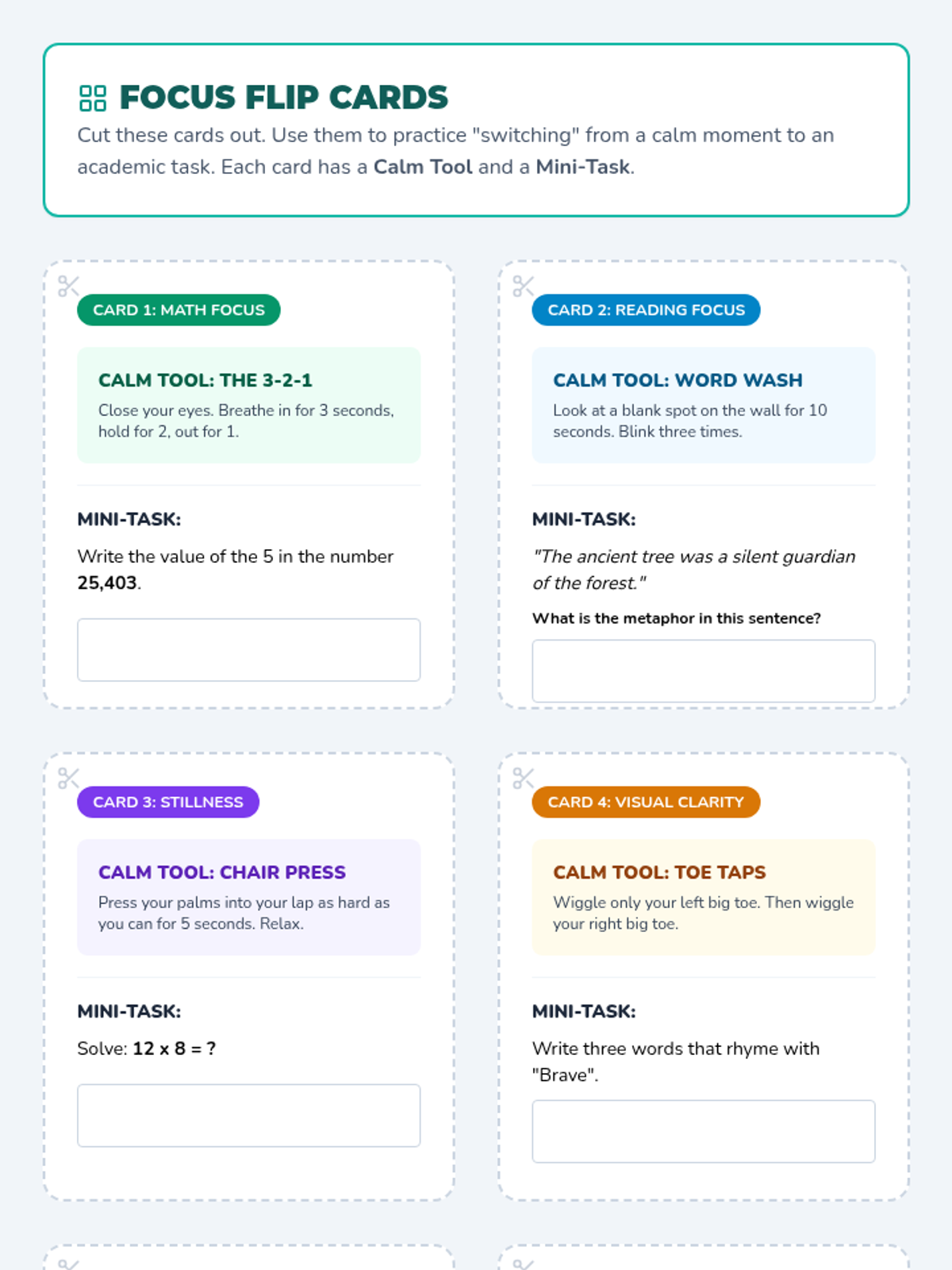
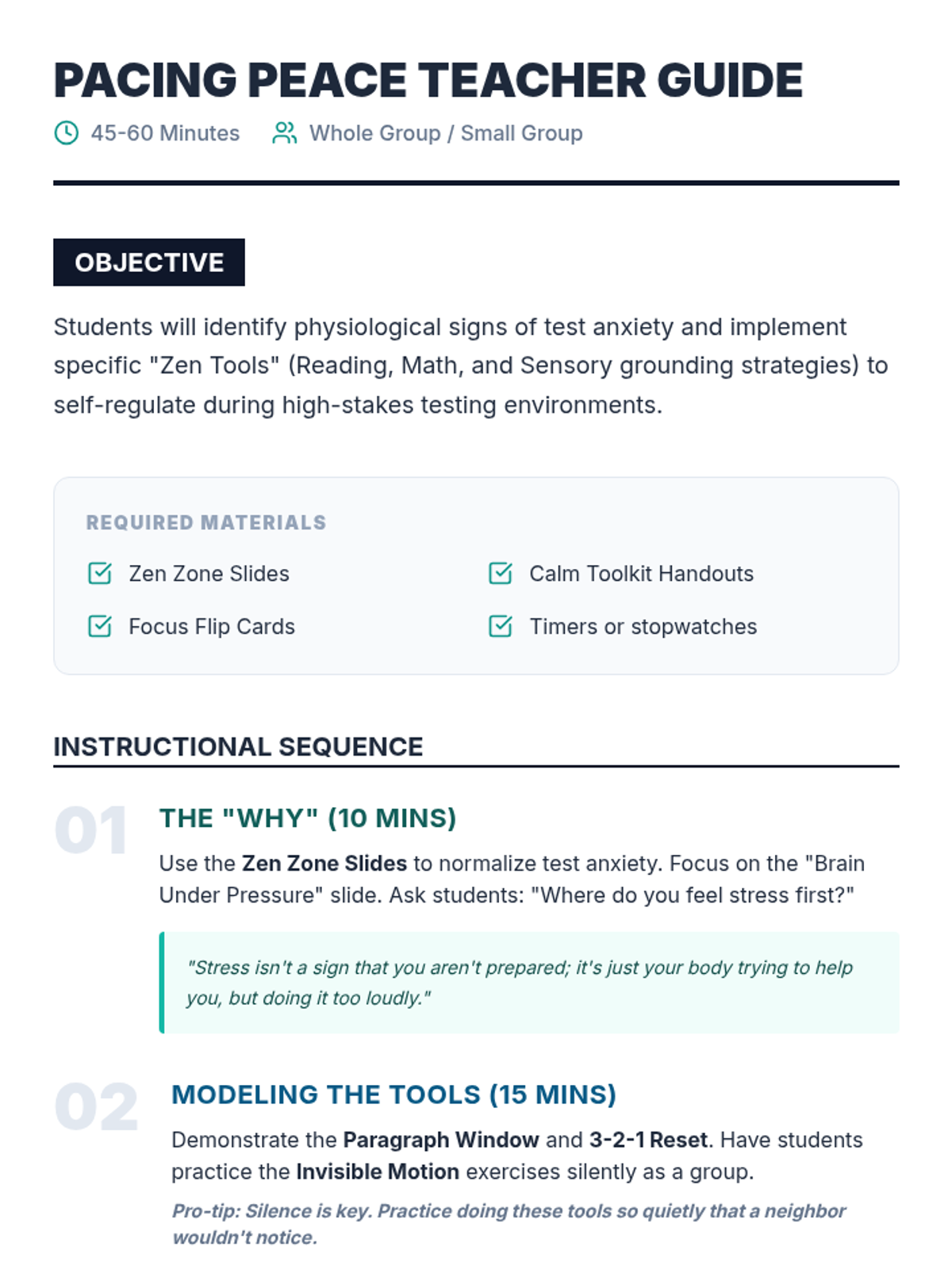
A lesson designed to equip students with practical mindfulness and grounding techniques specifically tailored for the stresses of state testing in Reading and Math, plus strategies for managing physical restlessness.
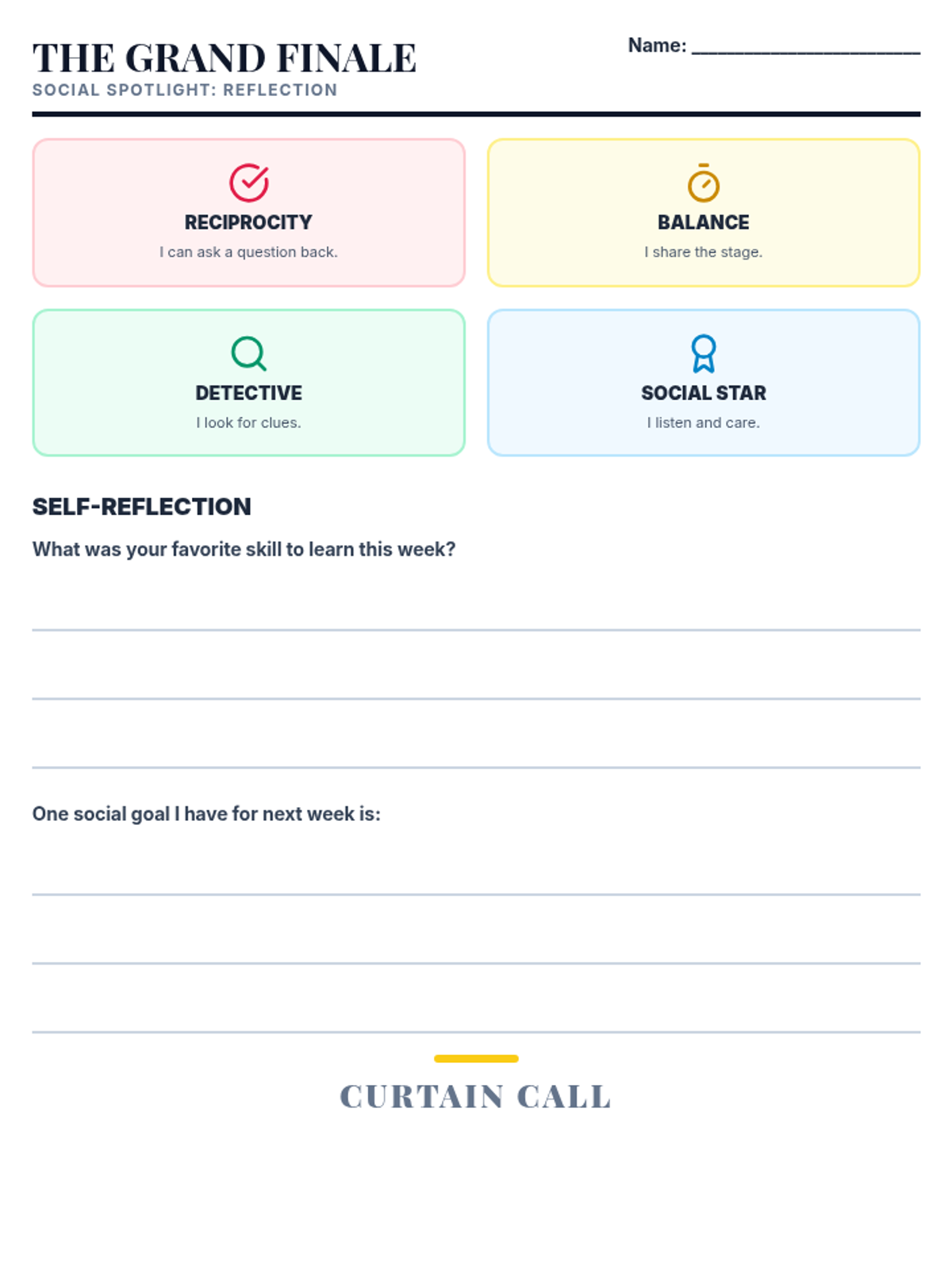
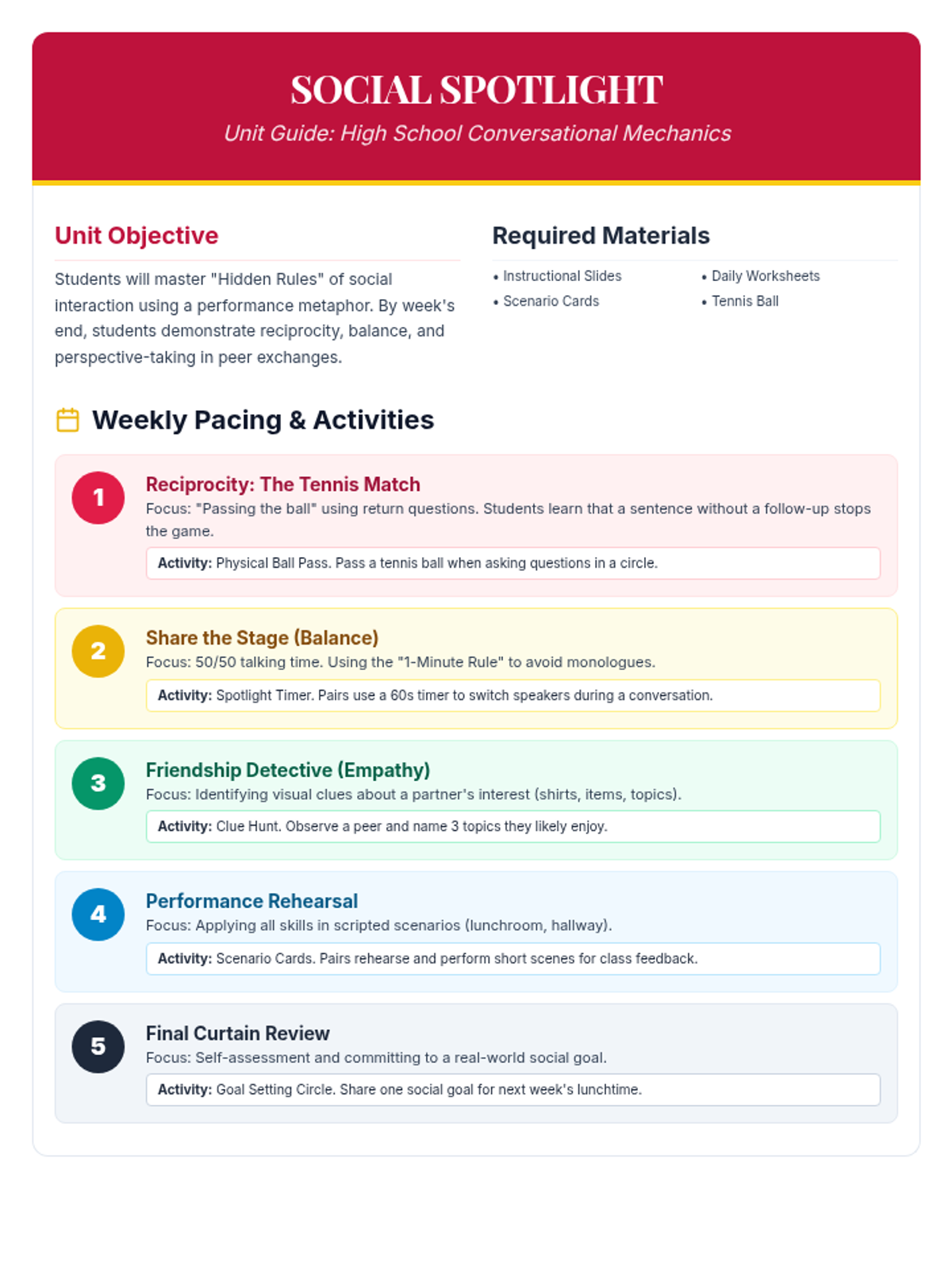
Review of all skills and a final reflection on social growth through the unit.
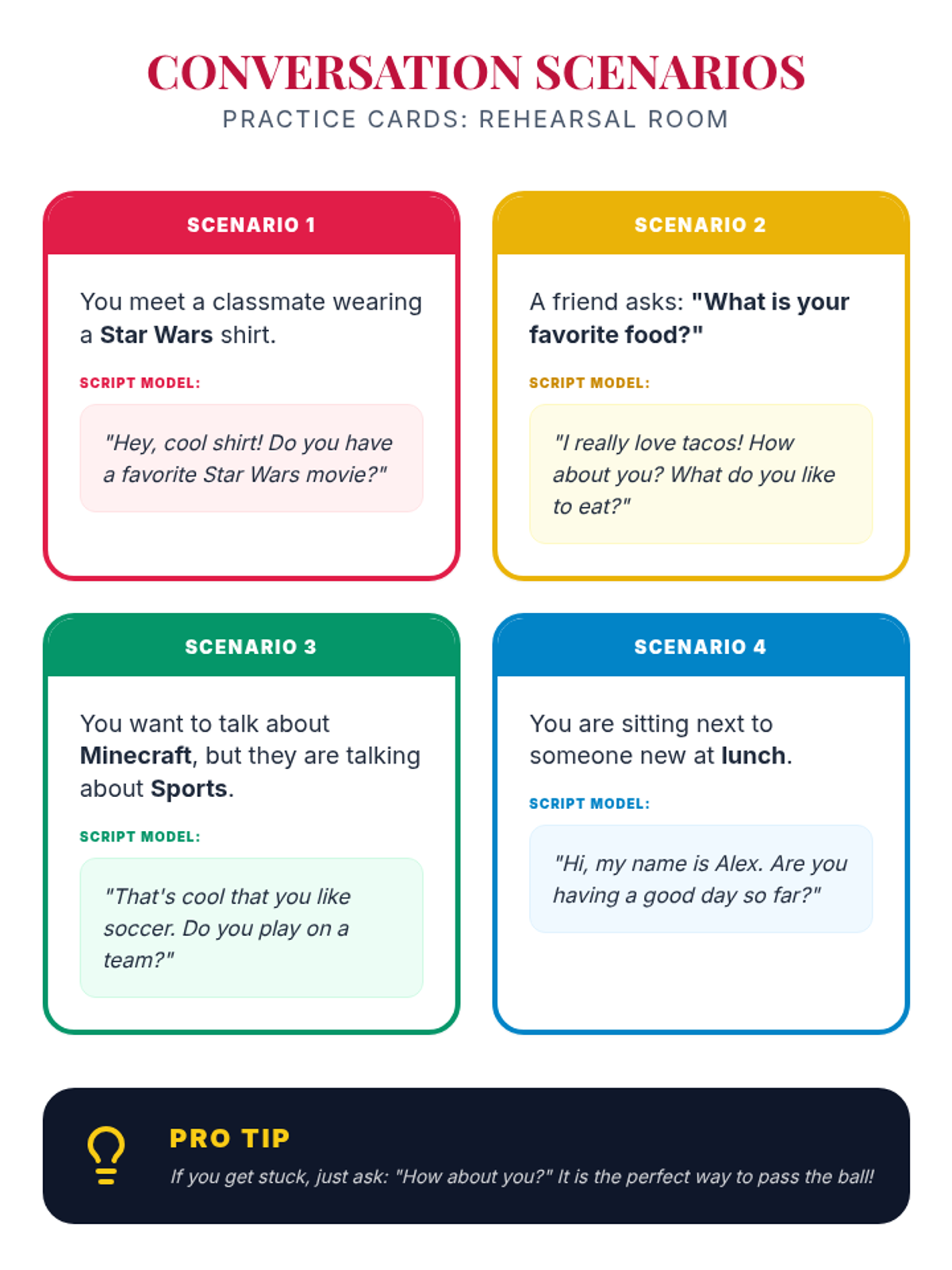
Guided practice sessions using role-play cards to simulate real-world social scenarios.
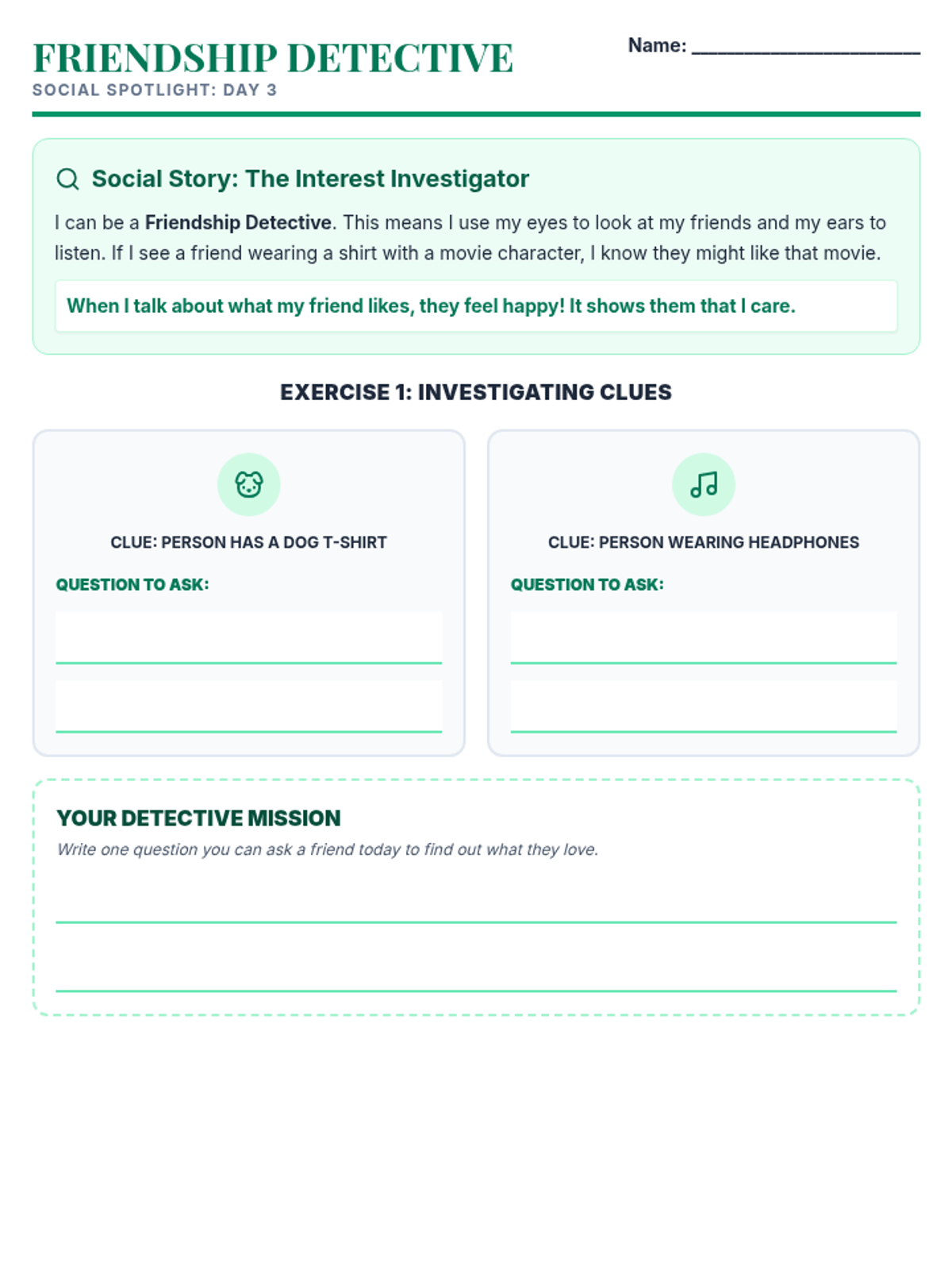
Developing perspective-taking skills to identify and discuss the interests of others during a conversation.
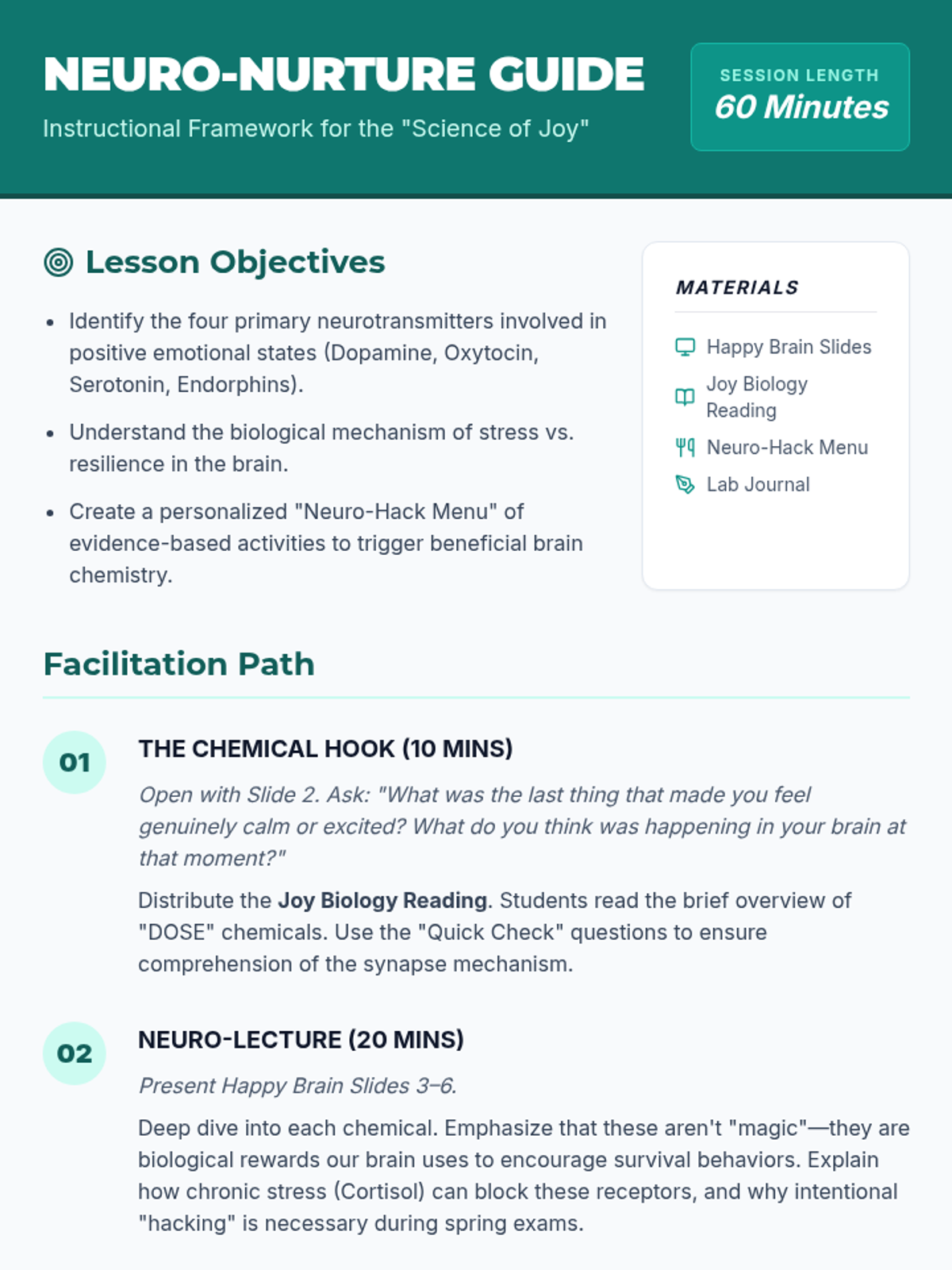
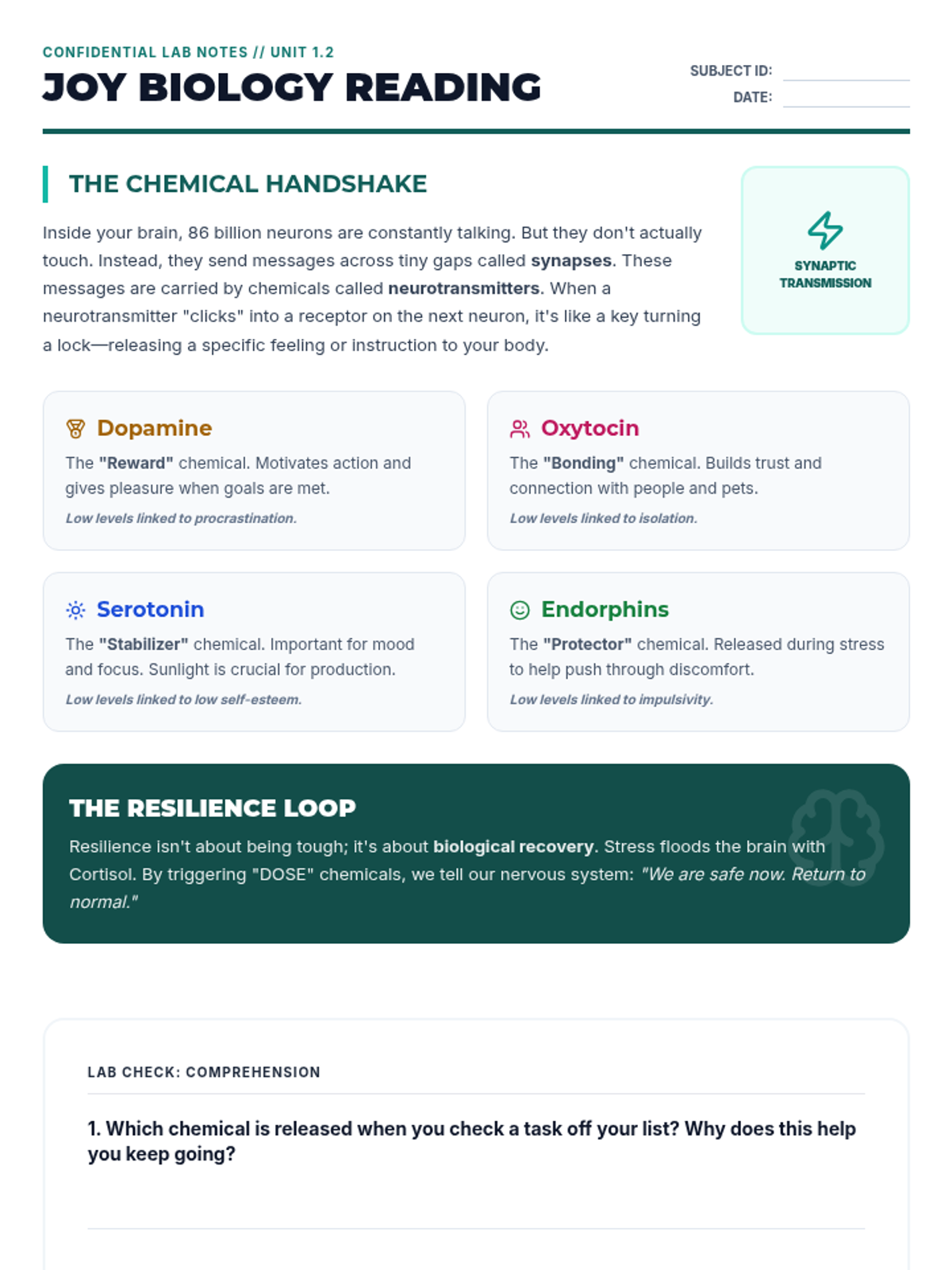
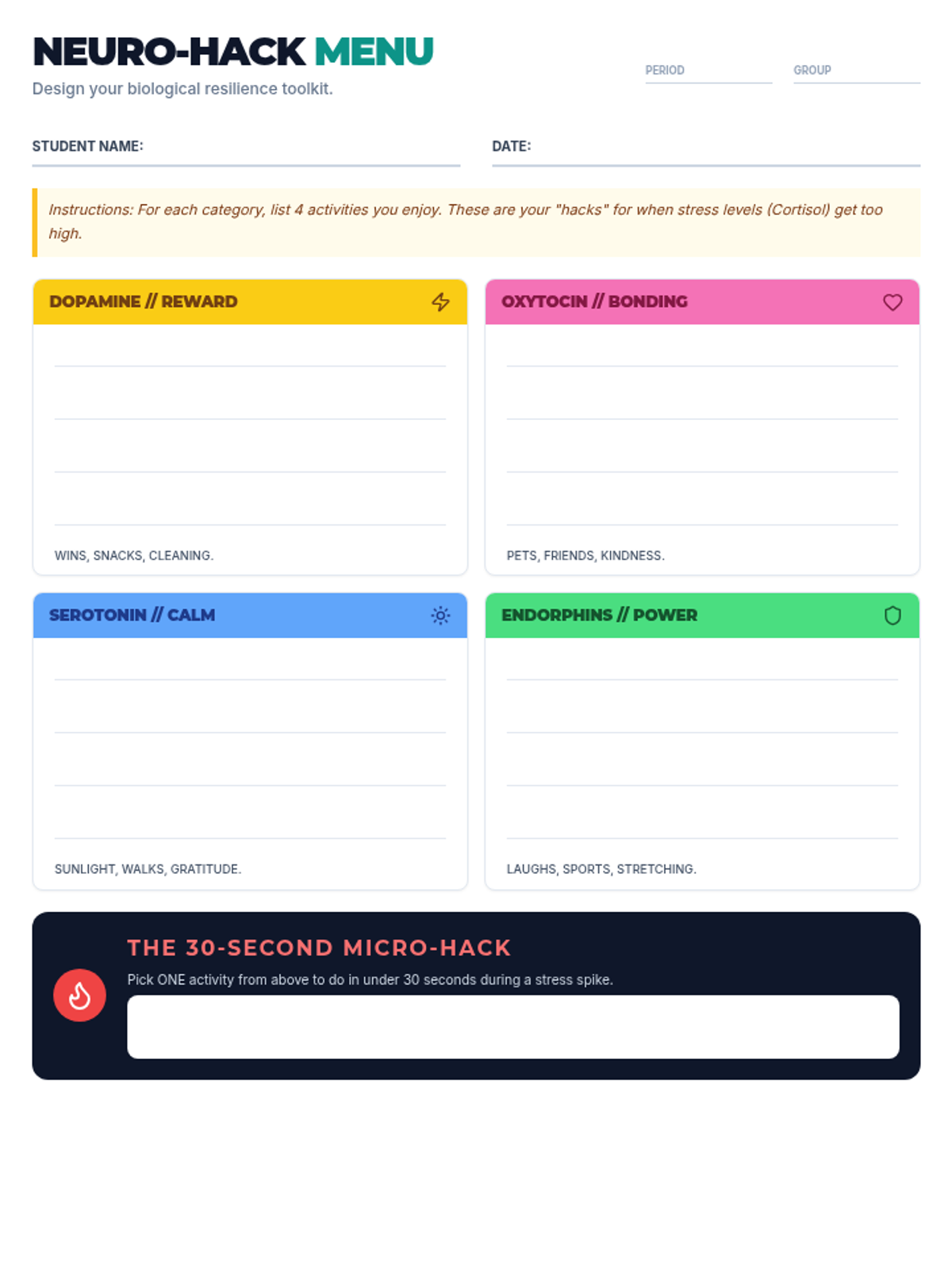
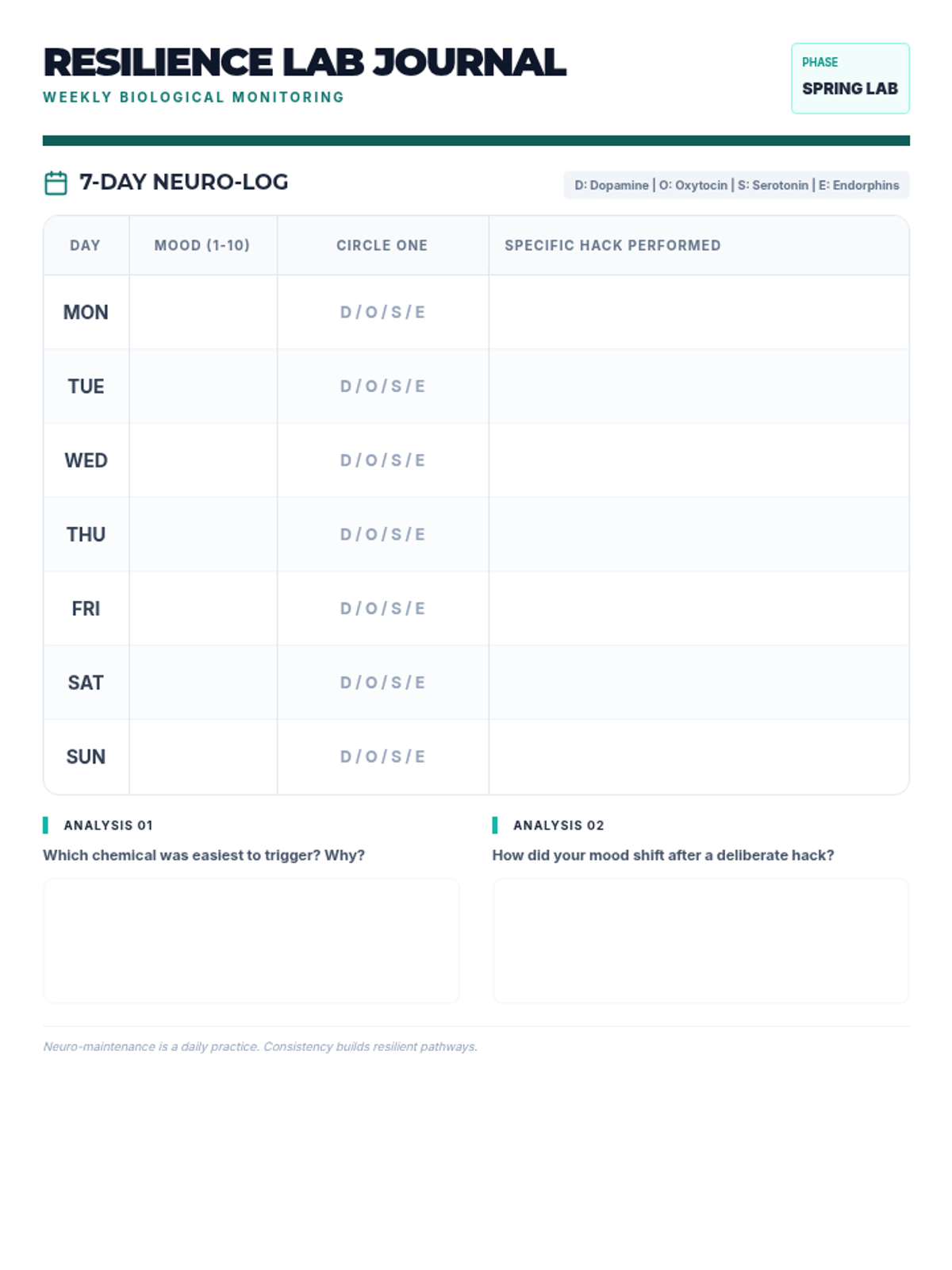
A lesson exploring the neurological basis of joy and resilience, providing students with biological tools to manage stress through the 'DOSE' neurotransmitters (Dopamine, Oxytocin, Serotonin, and Endorphins).
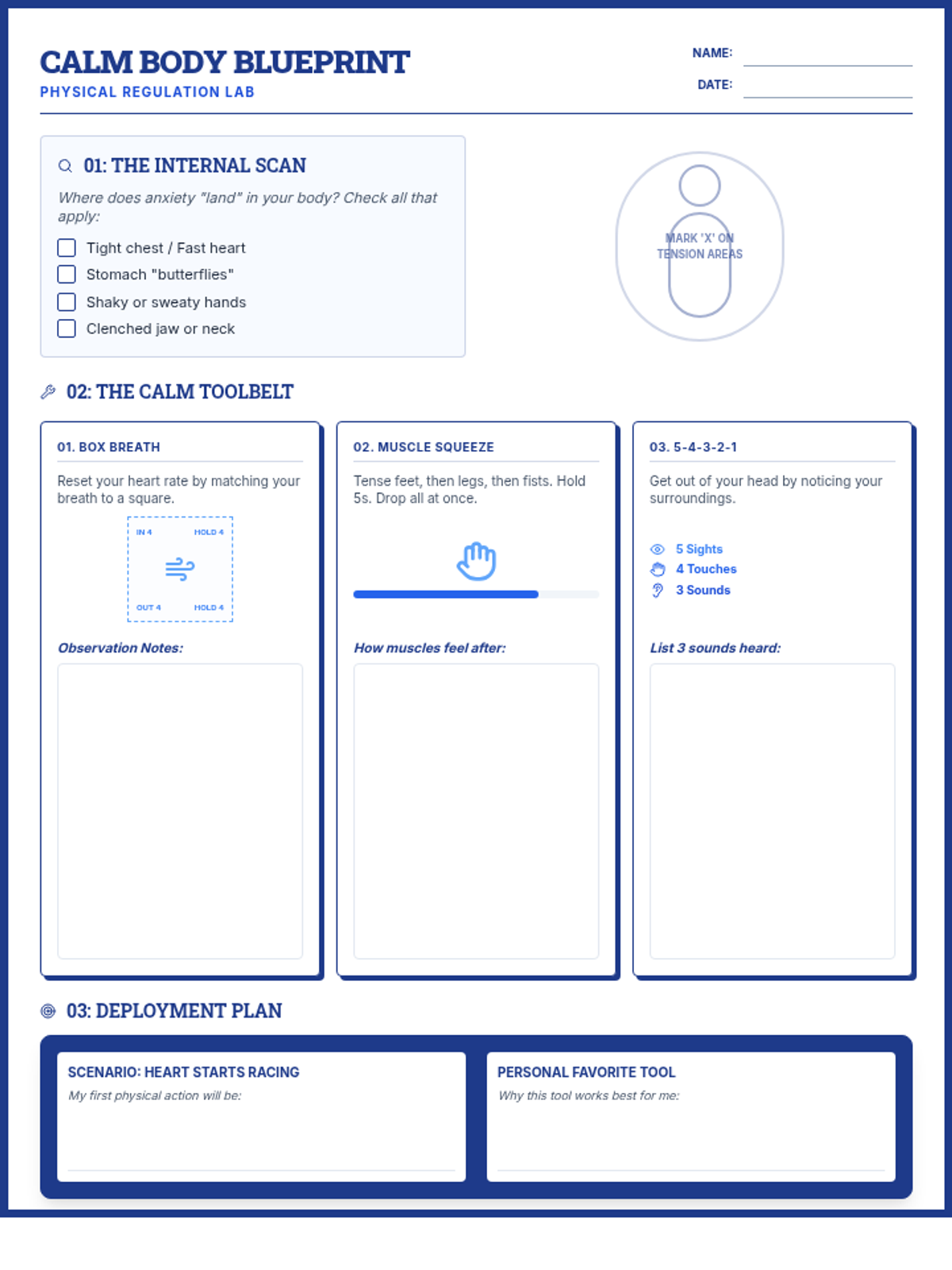
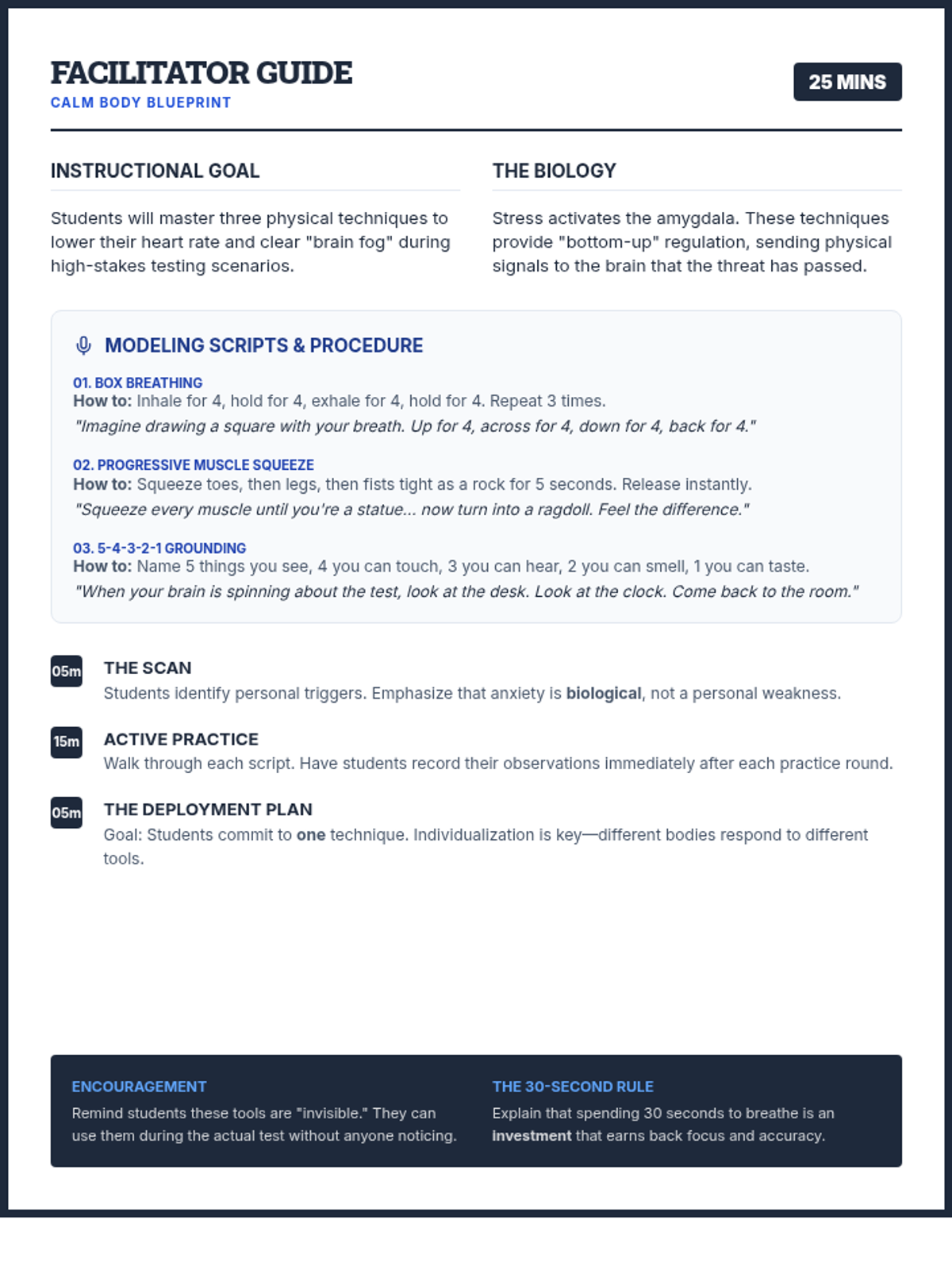
This lesson helps students identify physical symptoms of testing anxiety and practice three concrete physical relaxation techniques: Box Breathing, Progressive Muscle Relaxation, and Grounding.
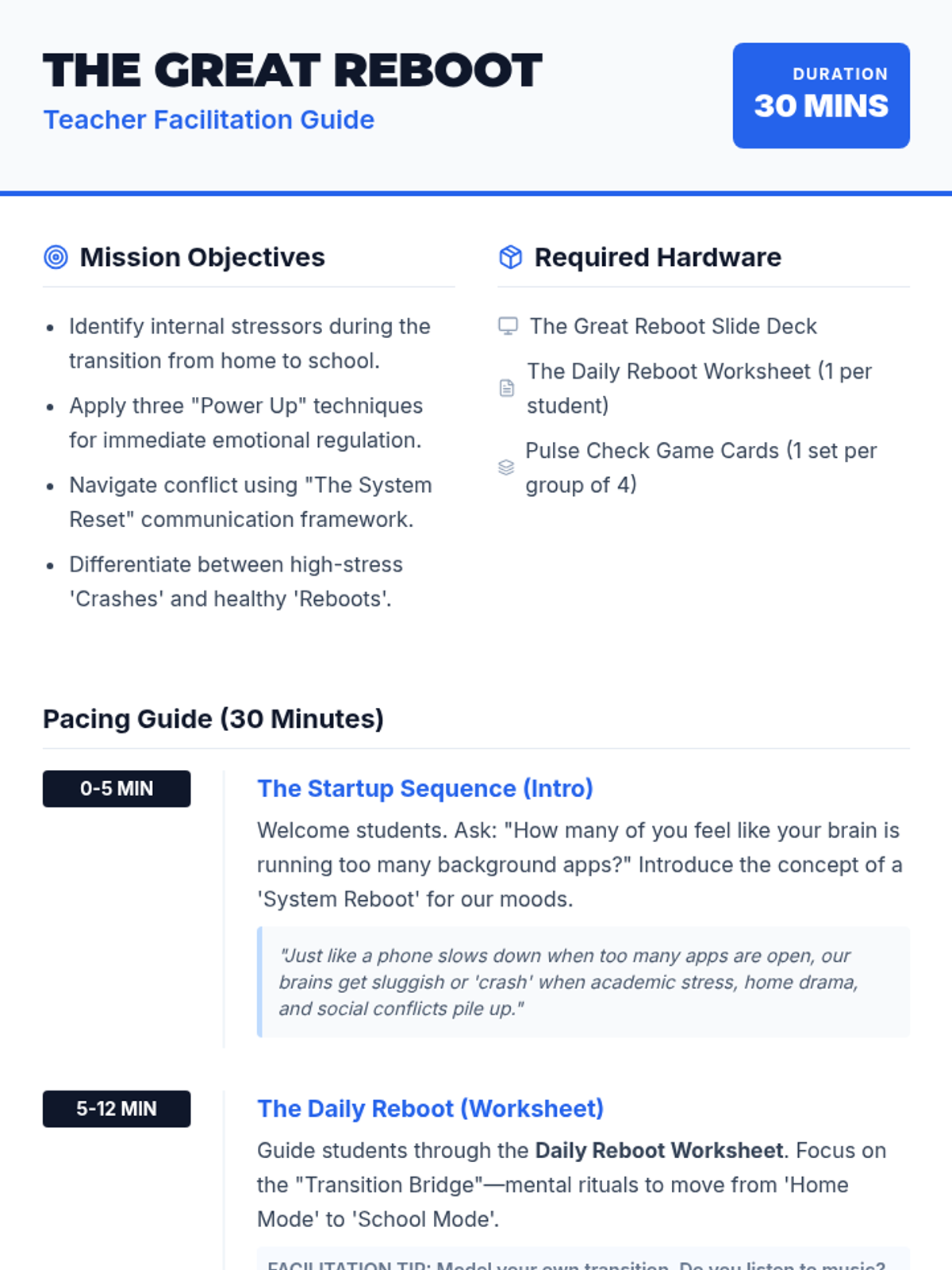
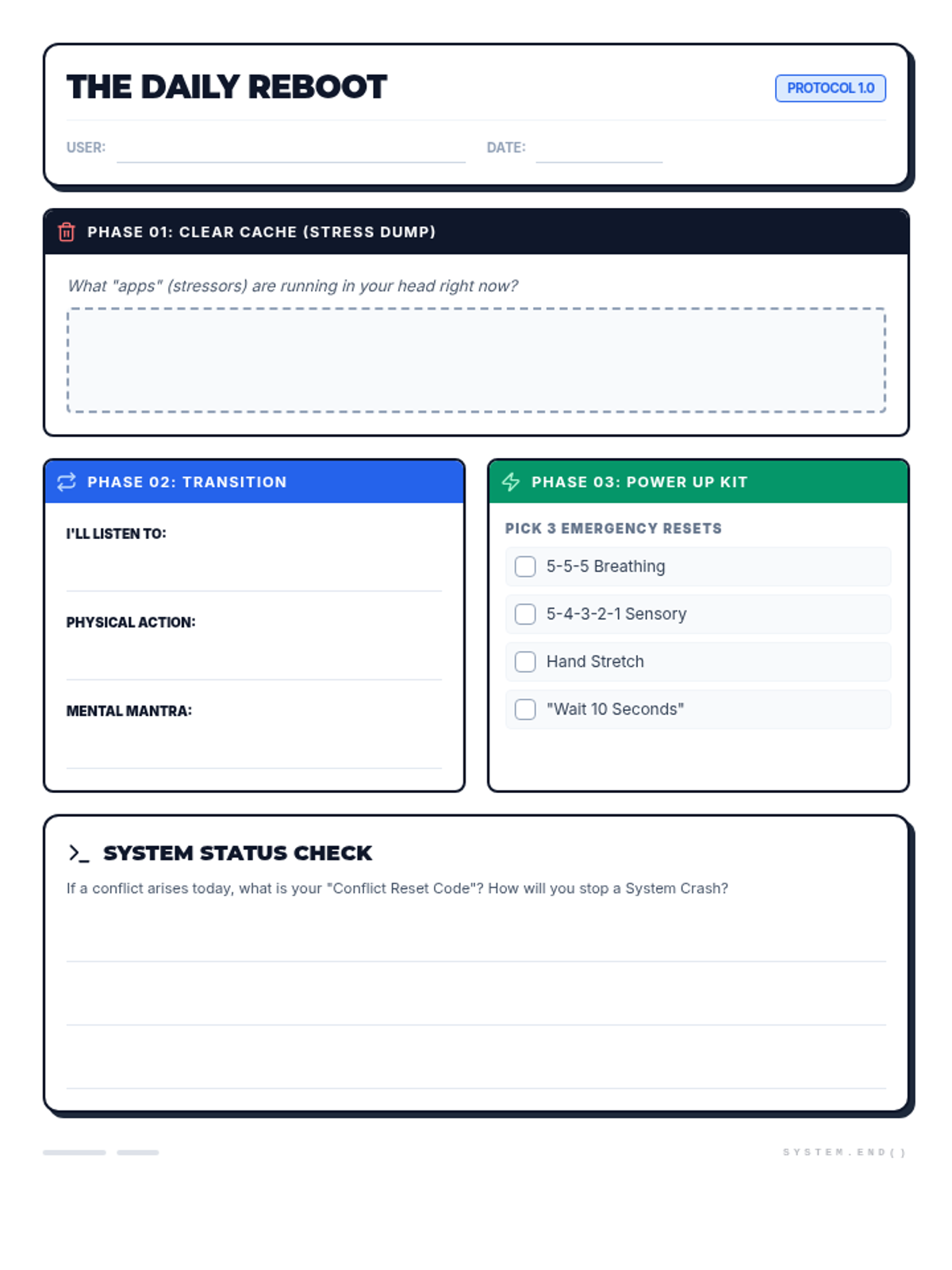
A high-energy, 30-minute social-emotional learning lesson designed for high schoolers. Students learn to navigate academic stress, resolve conflicts, and master the transition from home to school using 'The Great Reboot' framework.
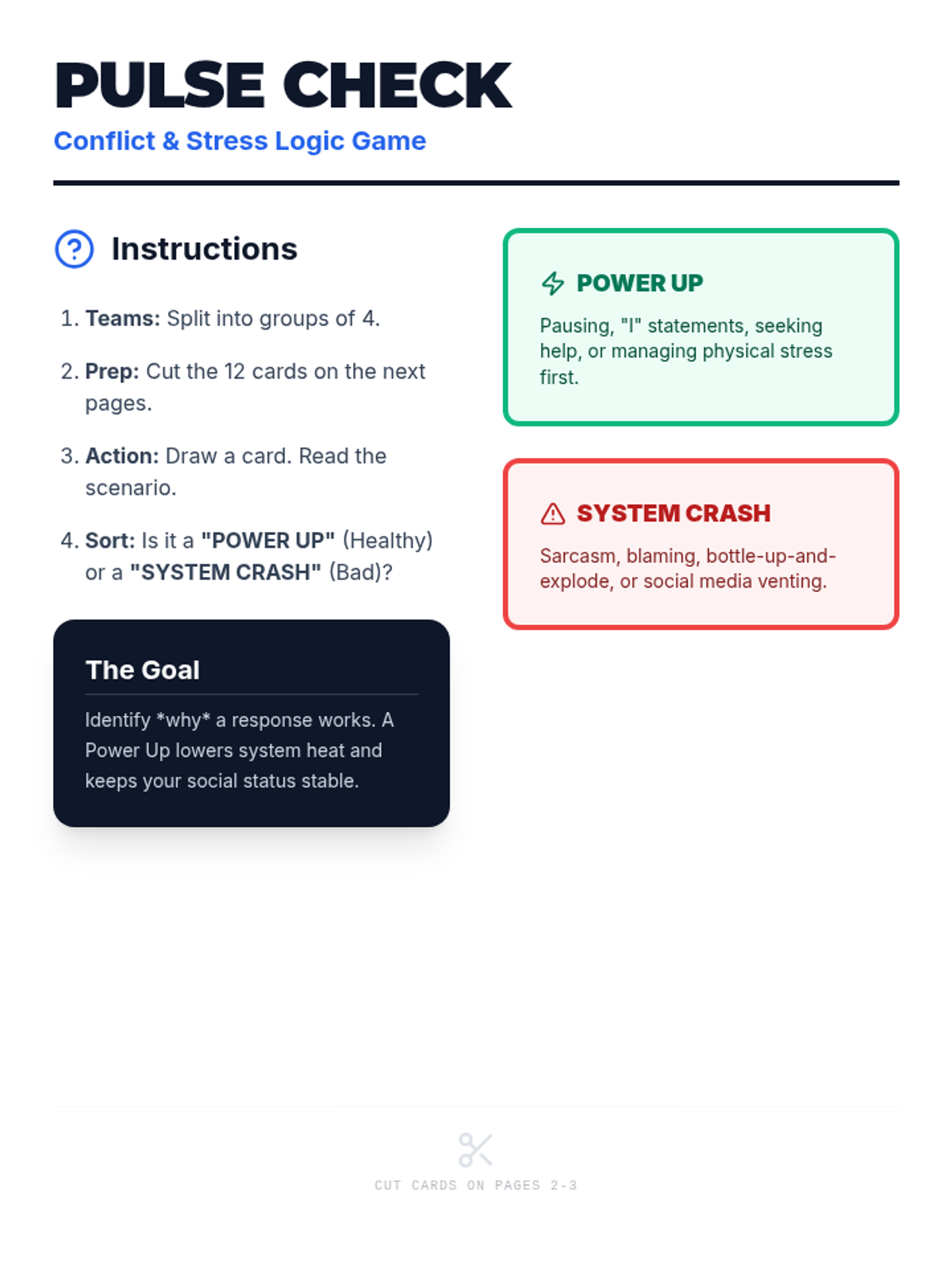
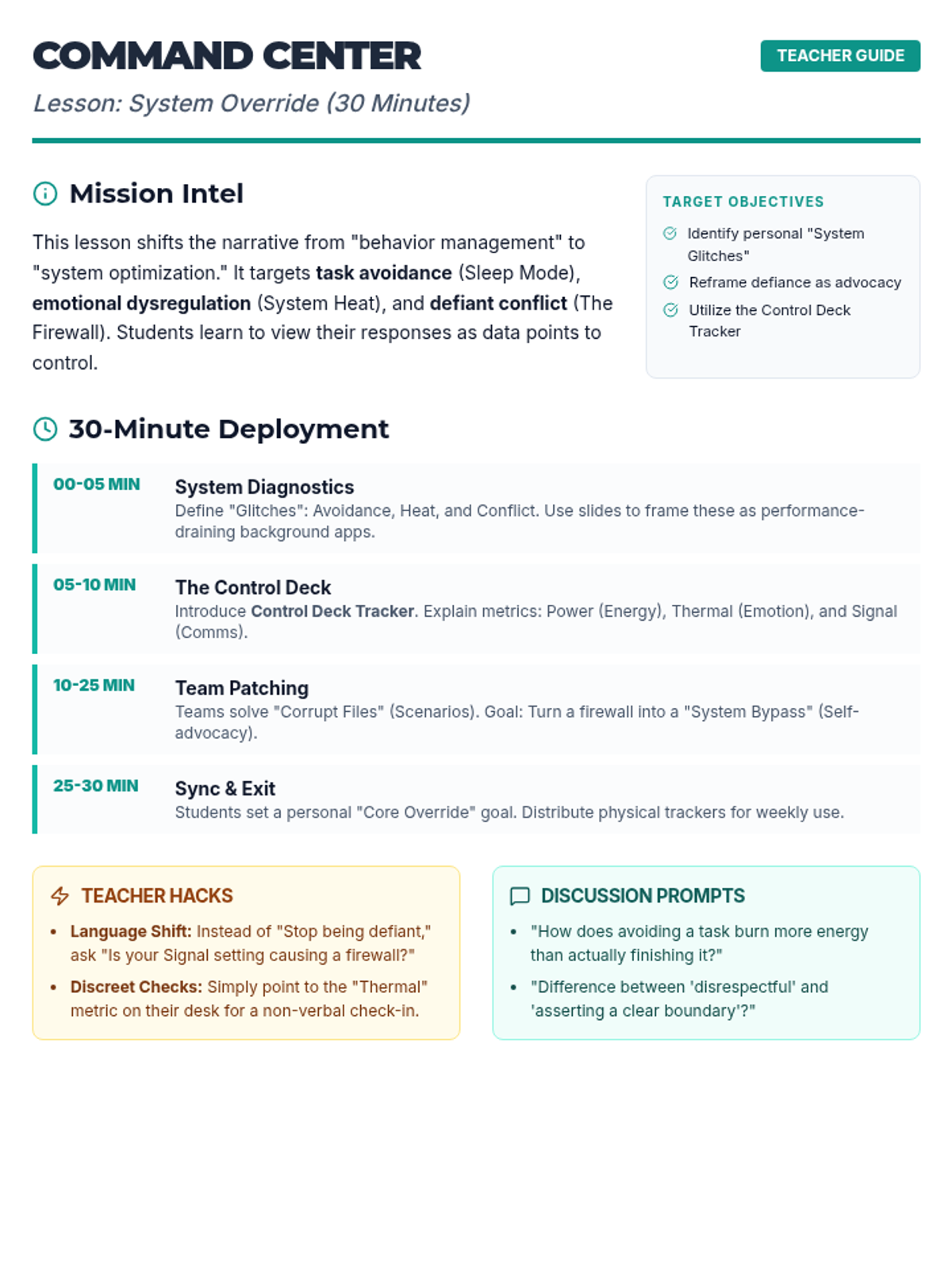
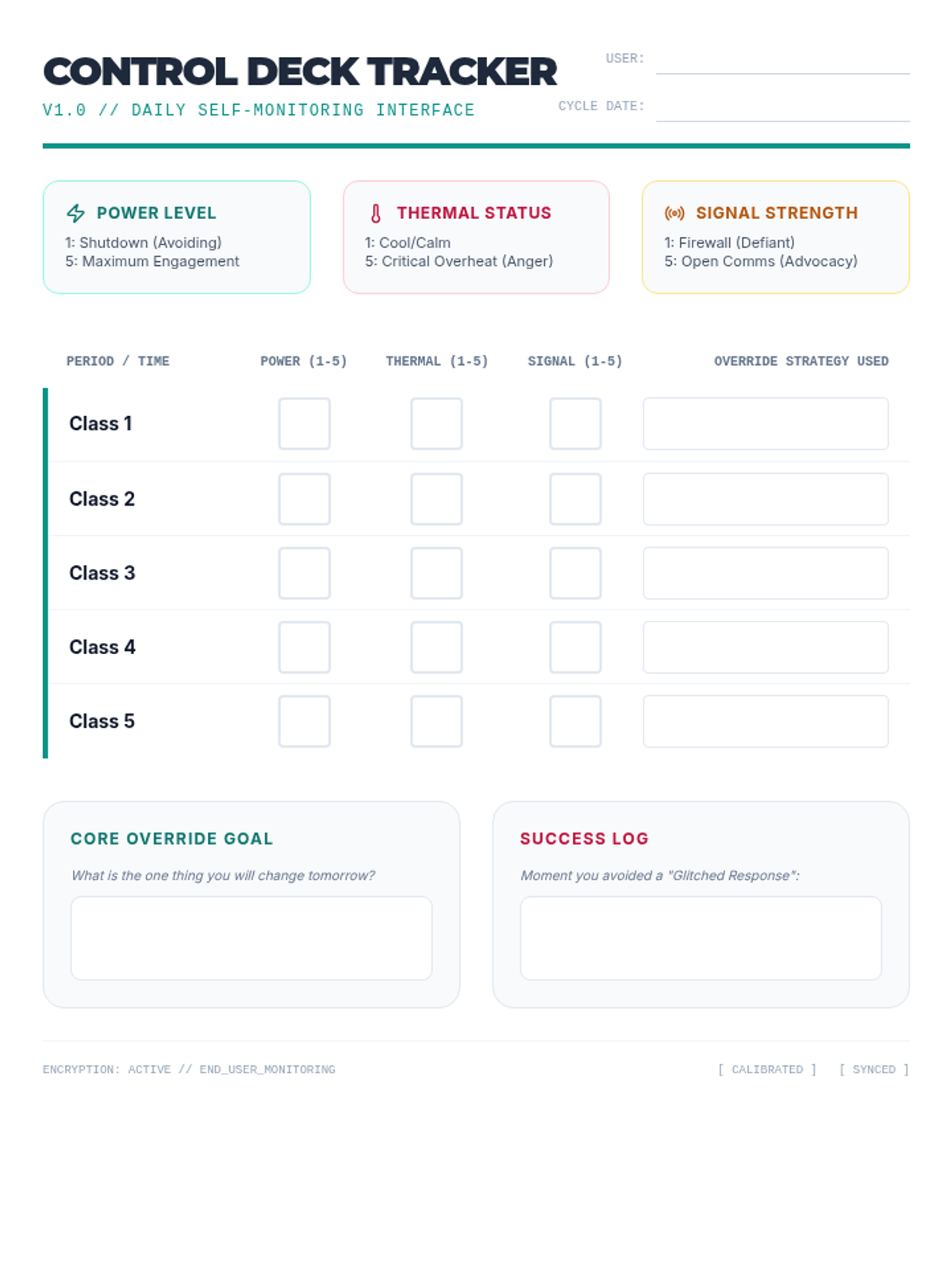
A high-impact lesson designed for high schoolers to master self-regulation and task management through a 'systems interface' lens, focusing on turning defiance into self-advocacy.
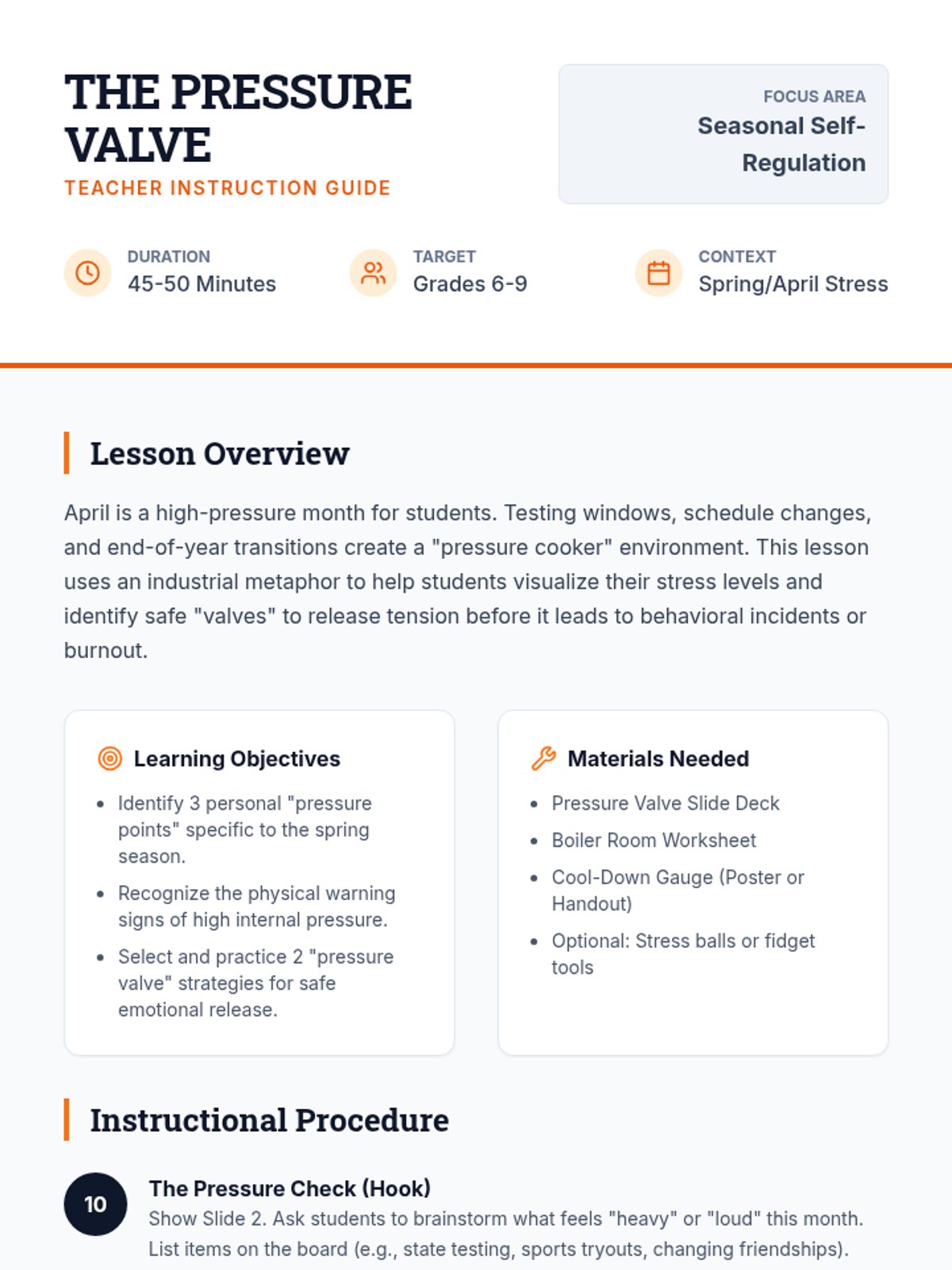
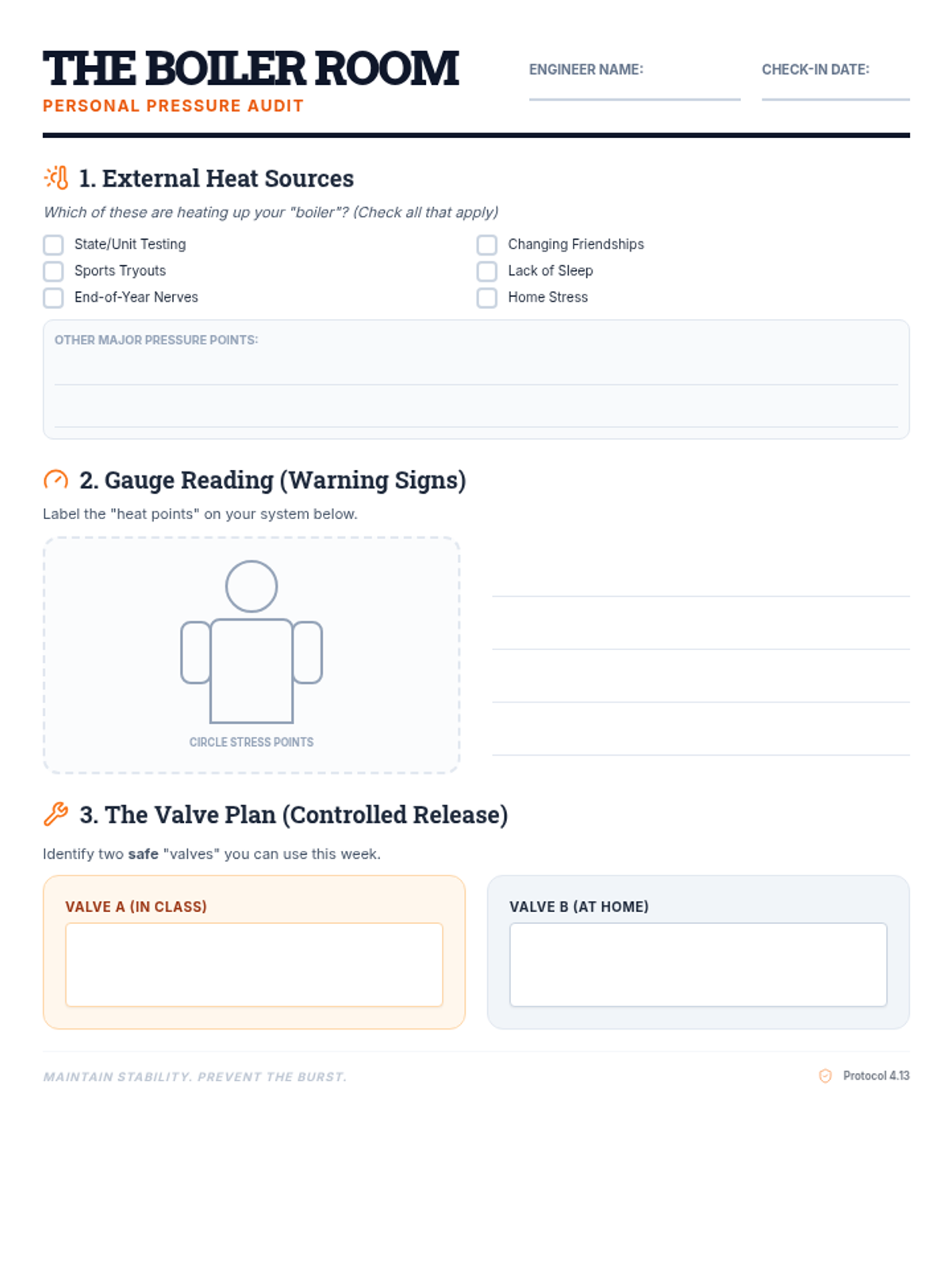
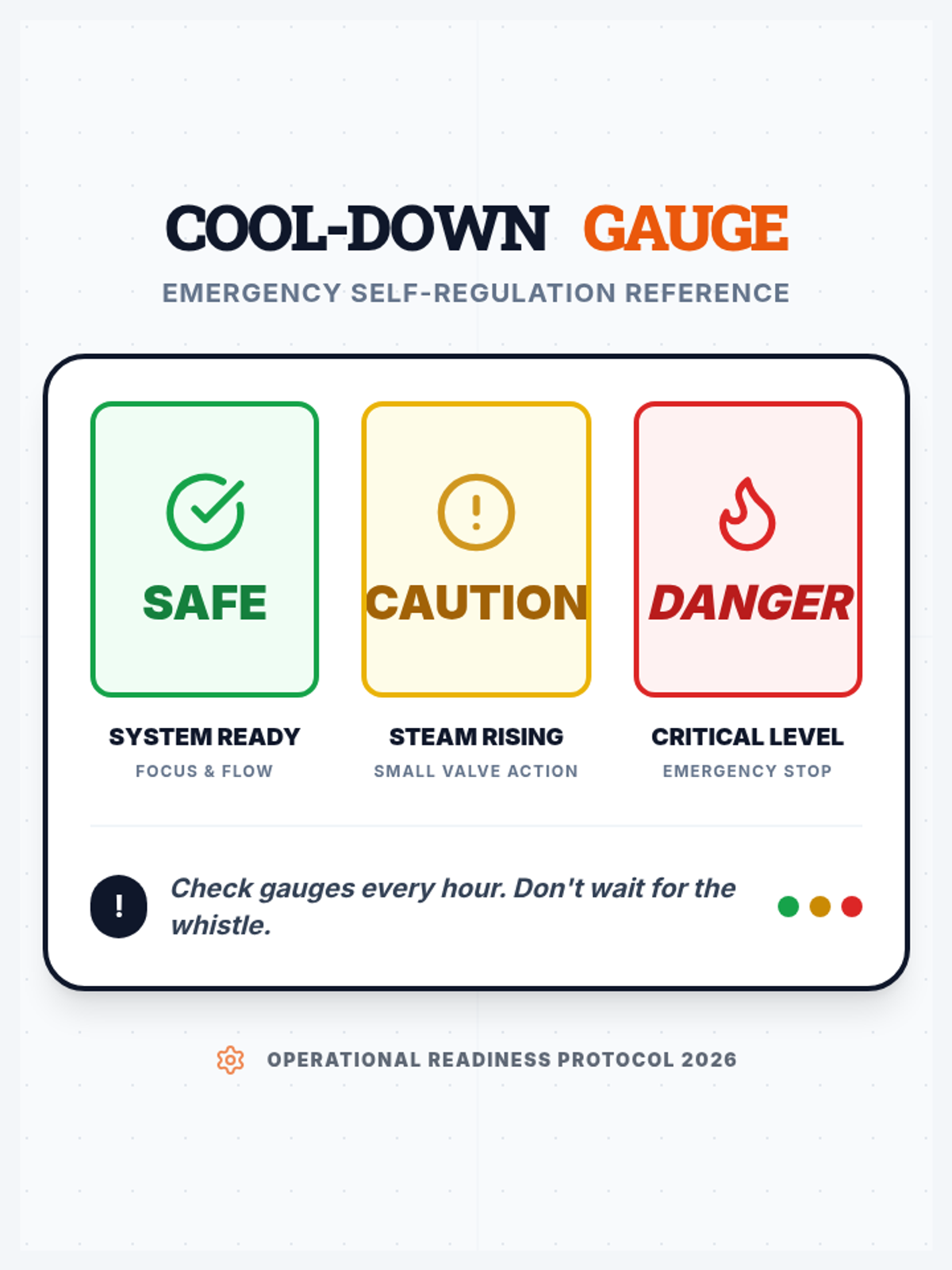
A lesson designed to help students manage the specific stressors of April, such as testing and transitions, using the 'Pressure Valve' metaphor for self-regulation.
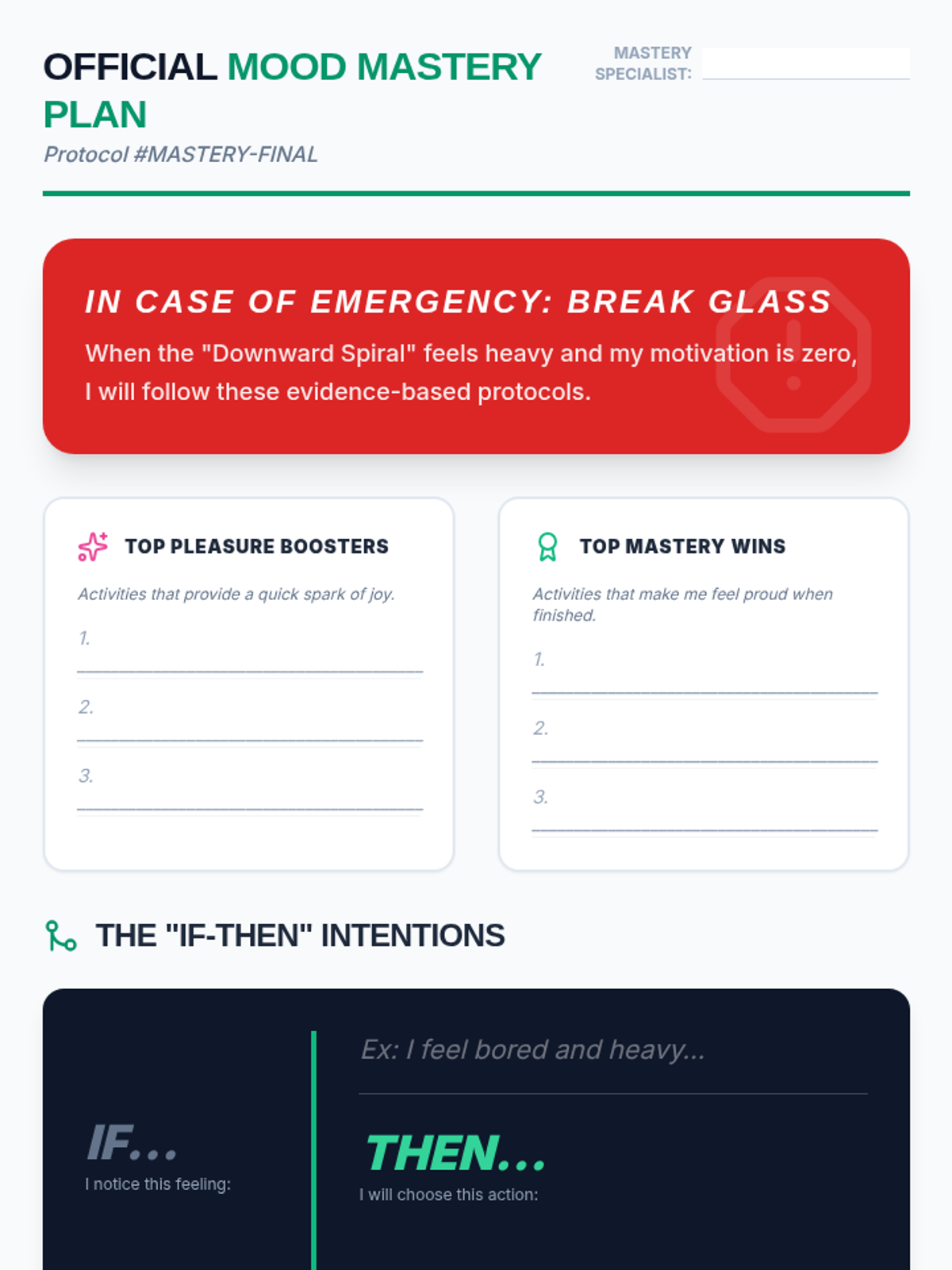
Synthesizing their learning, students create a 'Break the Glass' emergency plan for days when they feel low or anxious. They select their most effective pleasure and mastery activities and write specific implementation intentions (If I feel X, then I will do Y).
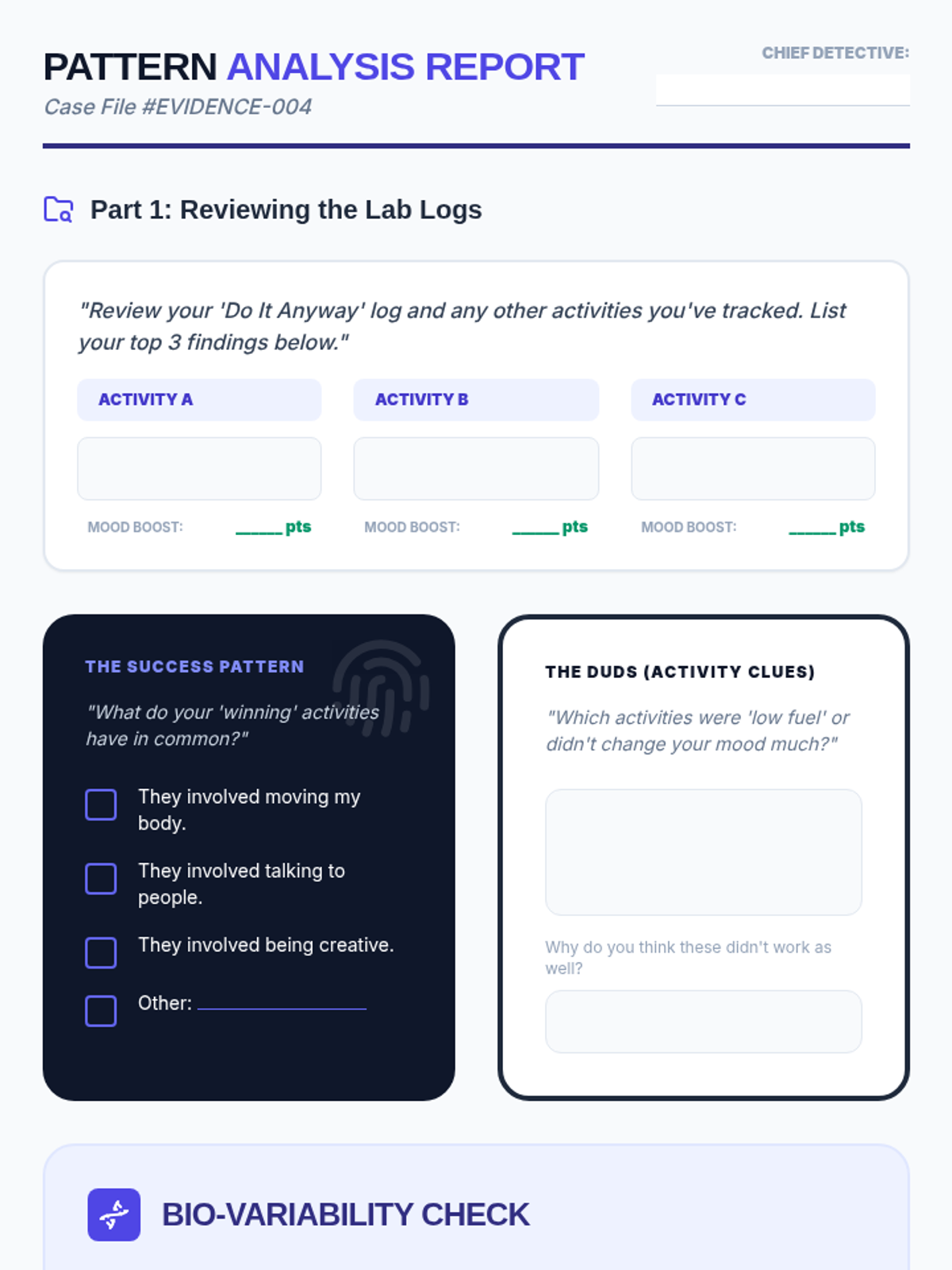
Students review the results of their personal experiments or case study data to identify patterns in how specific activities impact mood. They discuss the variability of results (what works for one person may not work for another) and begin curating their personal 'top hits' for mood improvement.
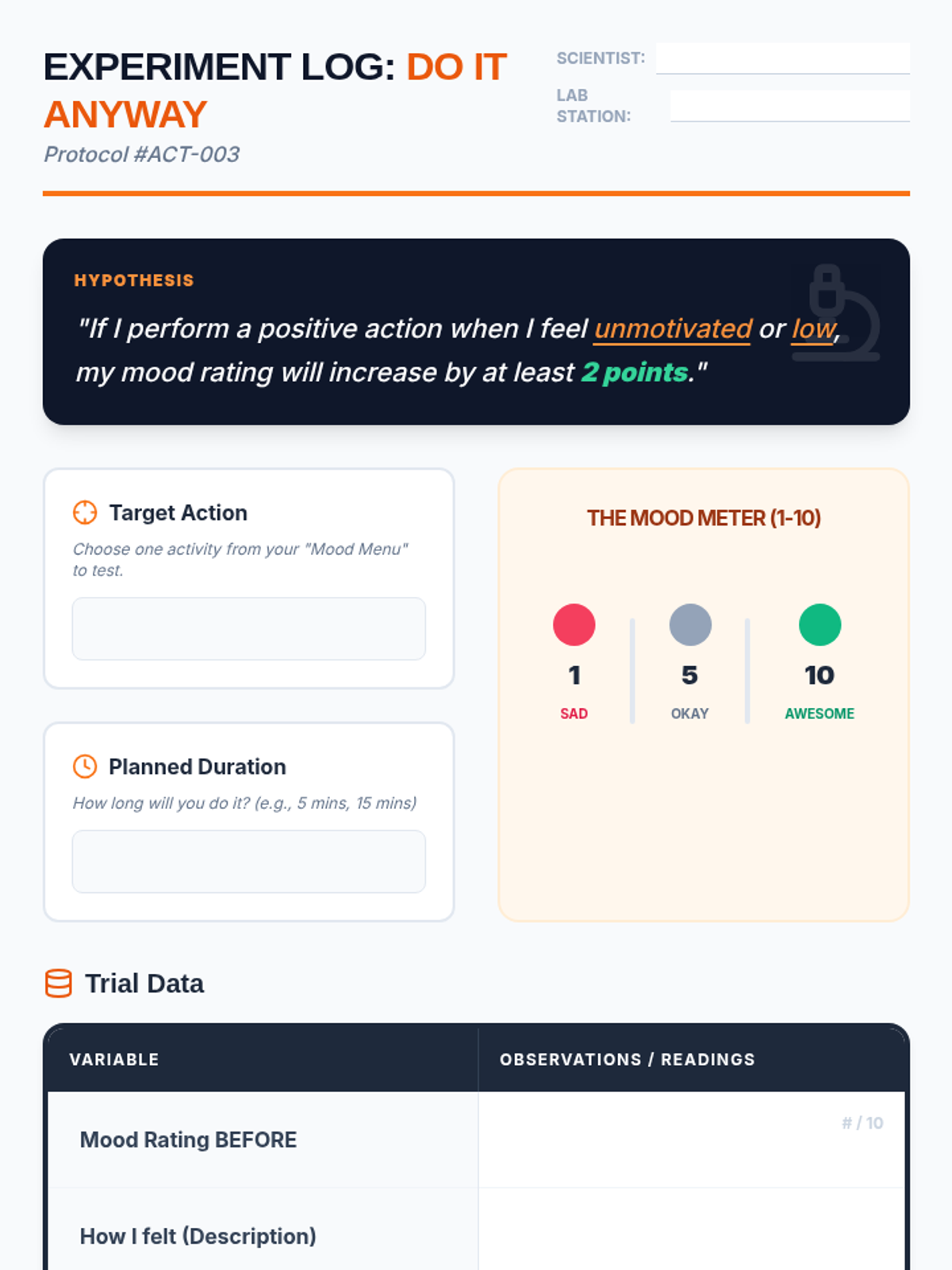
This lesson introduces the concept of 'acting opposite' to an emotion. Students design a short experiment to test the hypothesis that engaging in a positive activity—even when they don't feel like it—can improve their mood rating on a 1-10 scale. They prepare a data collection sheet for a homework experiment.
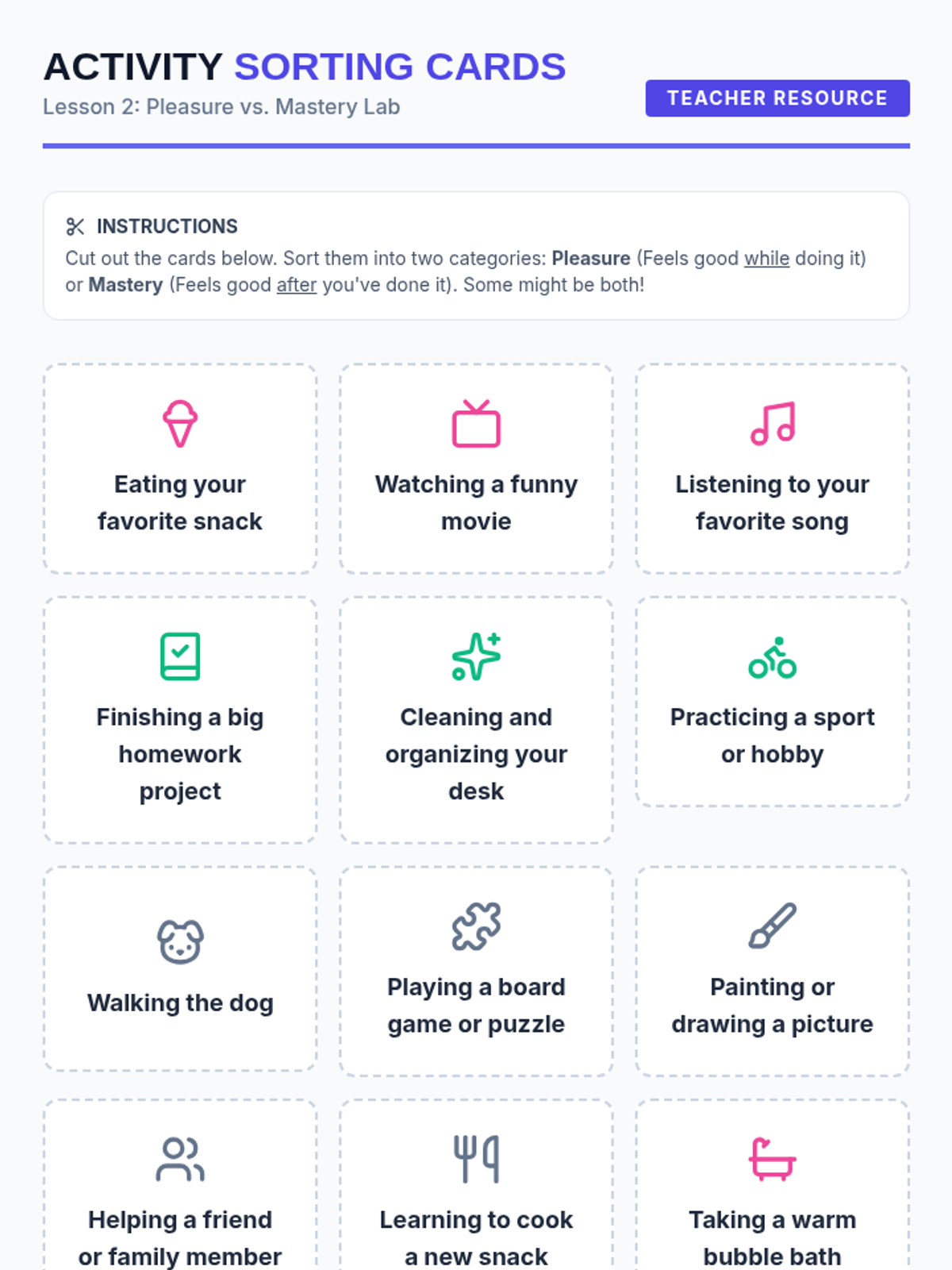
Students distinguish between activities that feel good in the moment (Pleasure) and those that make us feel accomplished (Mastery). Through a sorting workshop, they brainstorm examples for both categories, understanding that a balanced diet of experiences includes both fun and achievement.
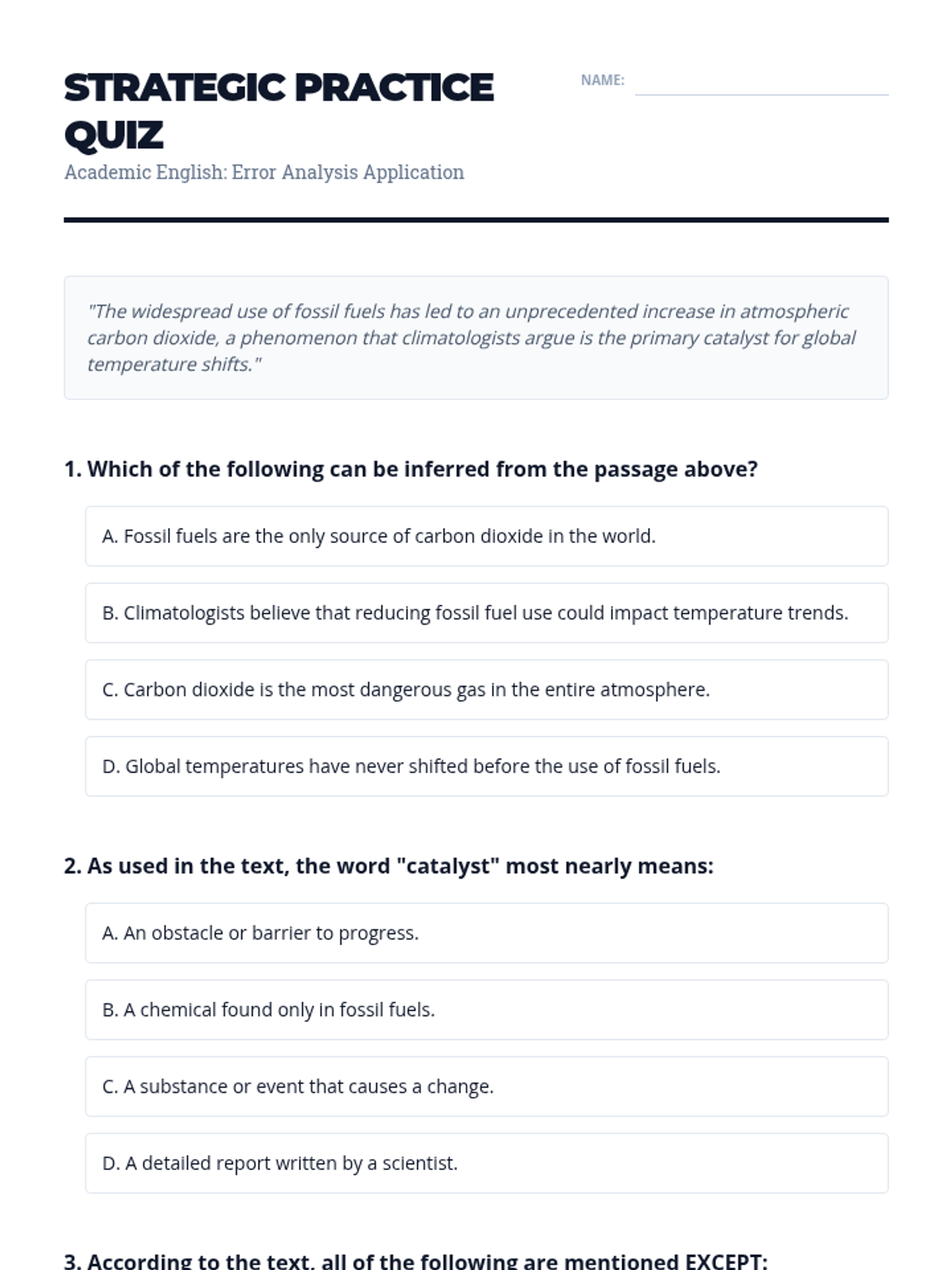
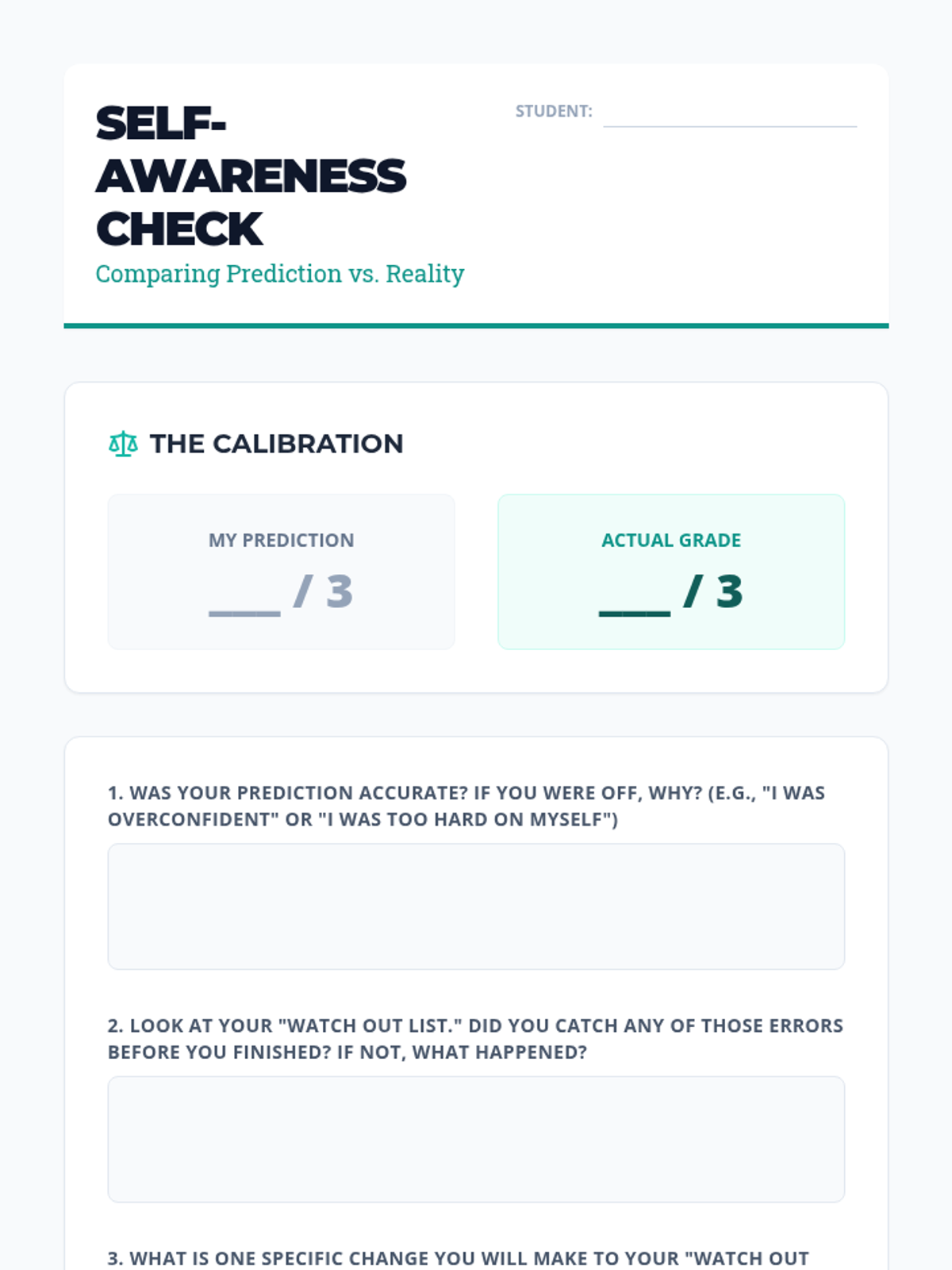
Students take a short assessment and immediately apply their error analysis protocol. They verify if their 'Watch Out' list helped them avoid previous habitual mistakes.
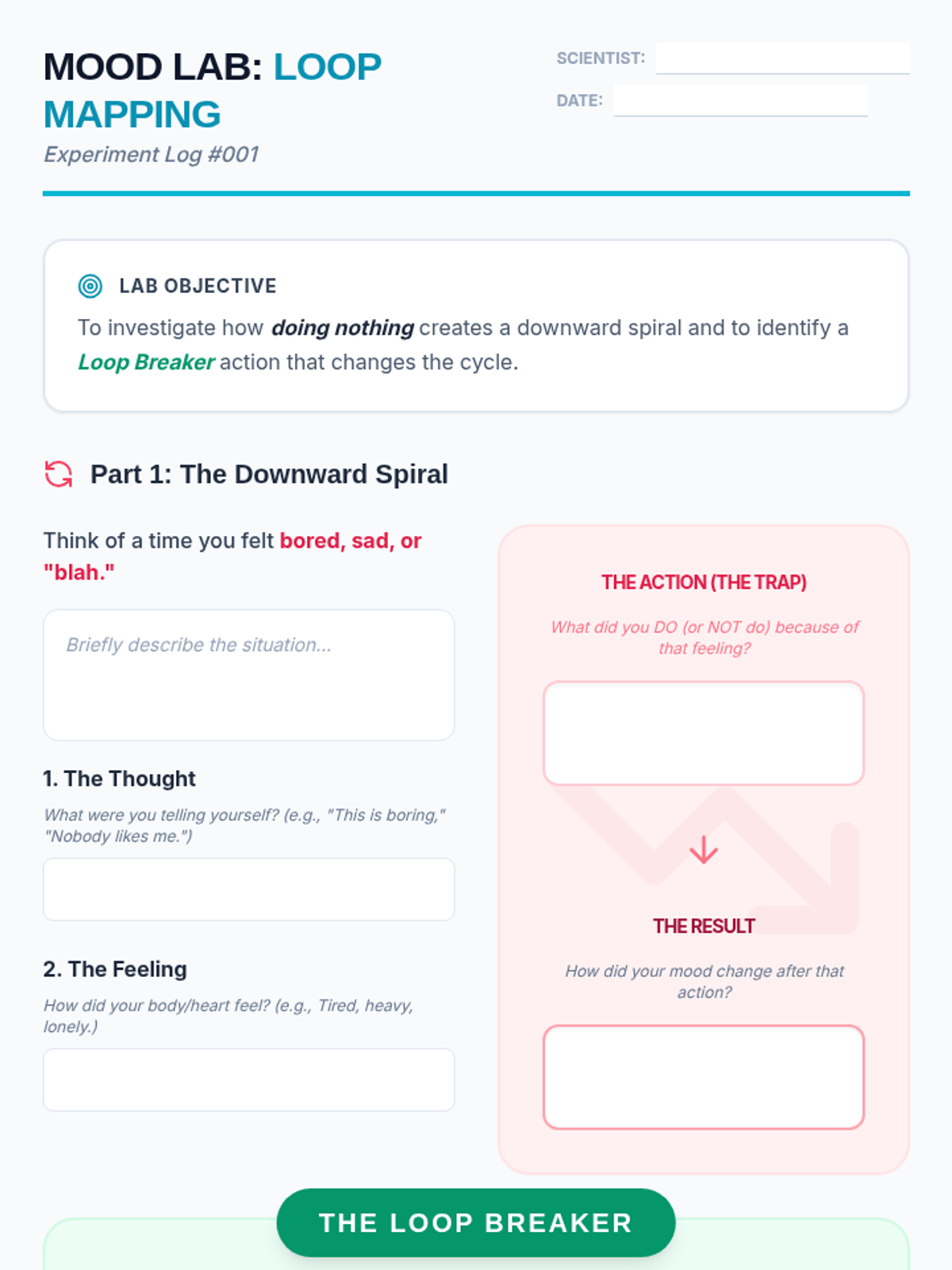
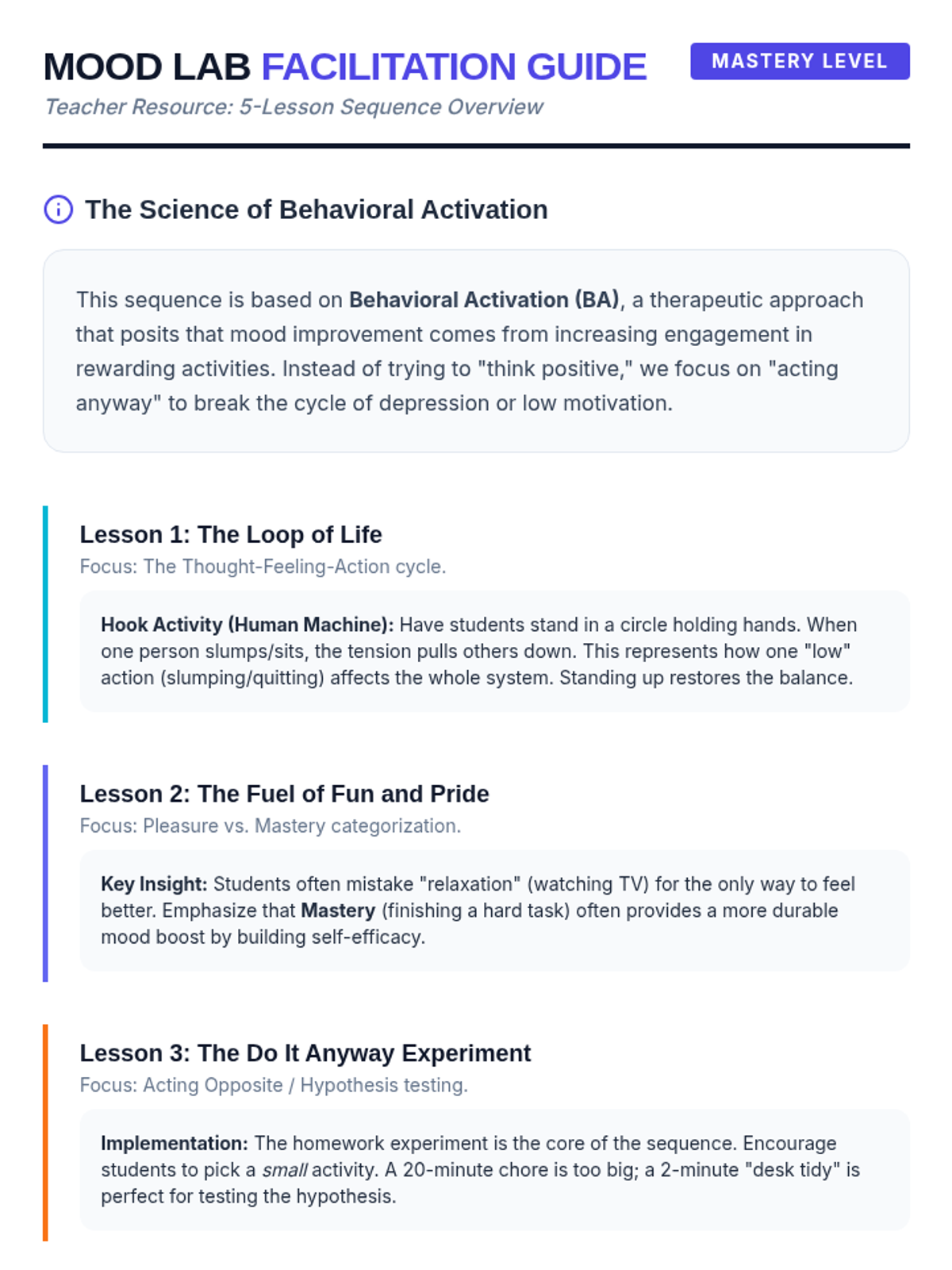
Students participate in a discussion and mapping activity to visualize the cycle between thoughts, feelings, and behaviors. They identify how doing nothing often leads to feeling worse (the downward spiral) and how small actions can reverse this.
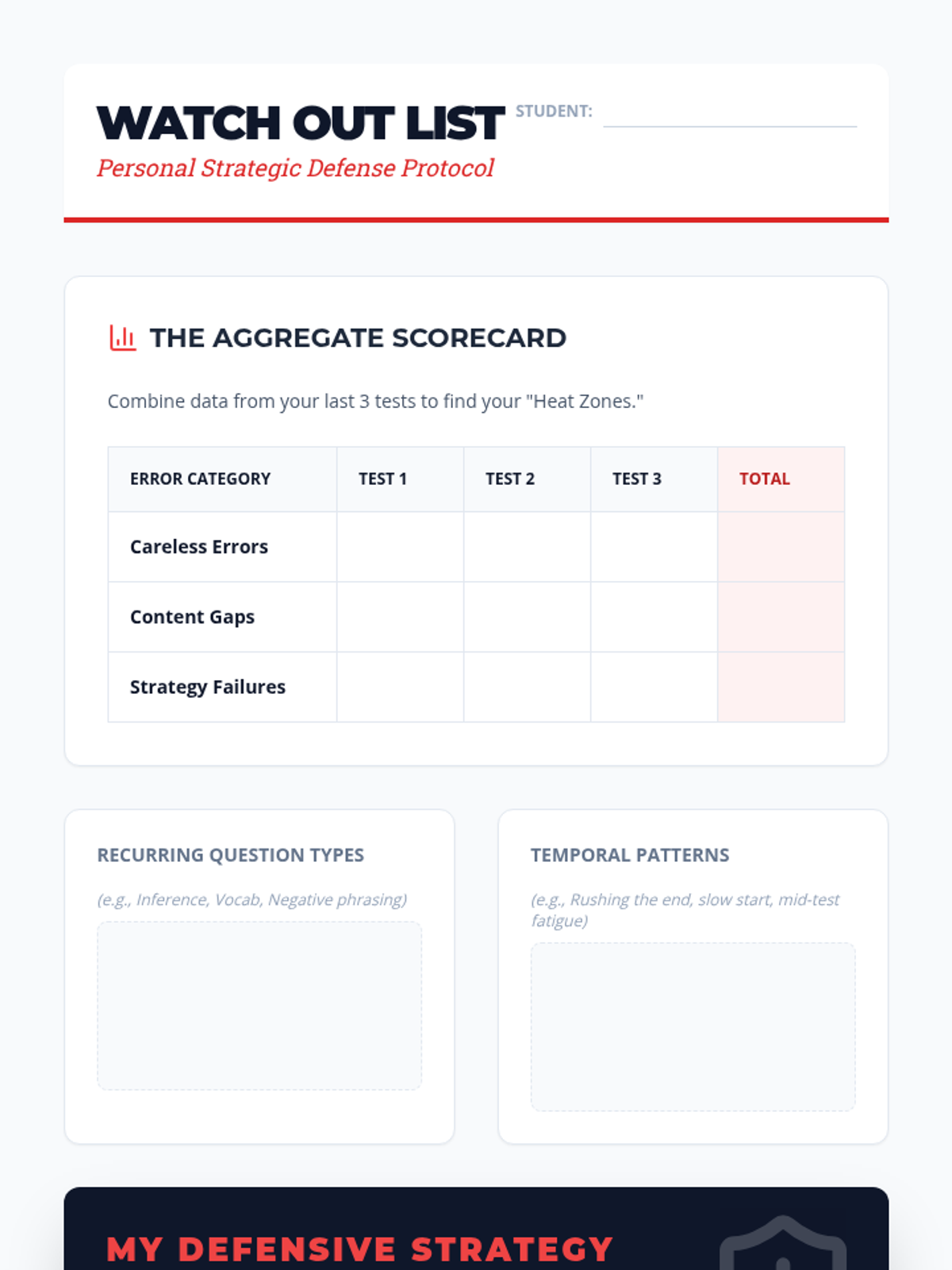
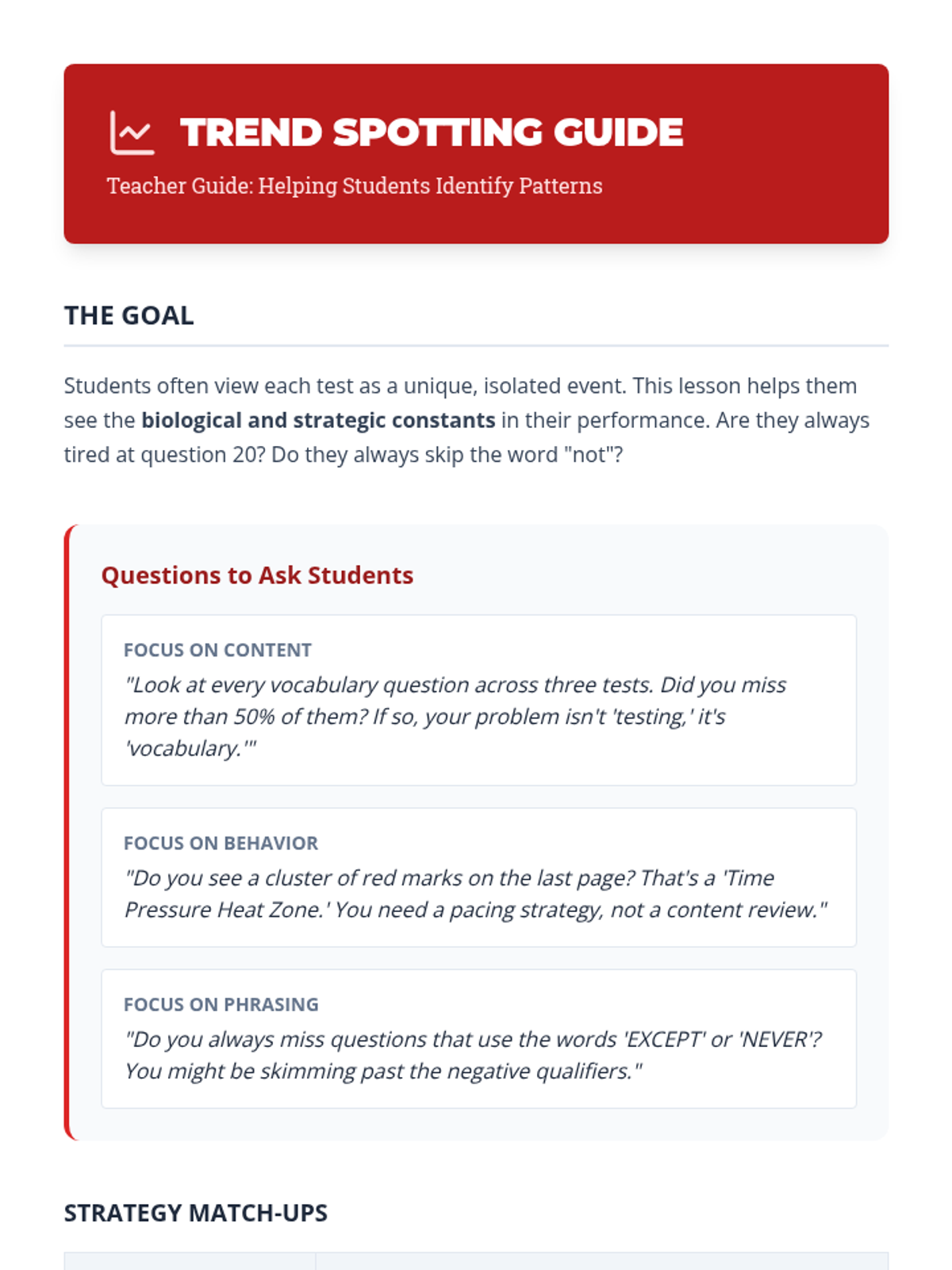
Students aggregate their error data to find personal patterns (e.g., 'I always miss inference questions' or 'I rush the last 5 minutes'). They create a personal 'Watch Out' list for future exams.
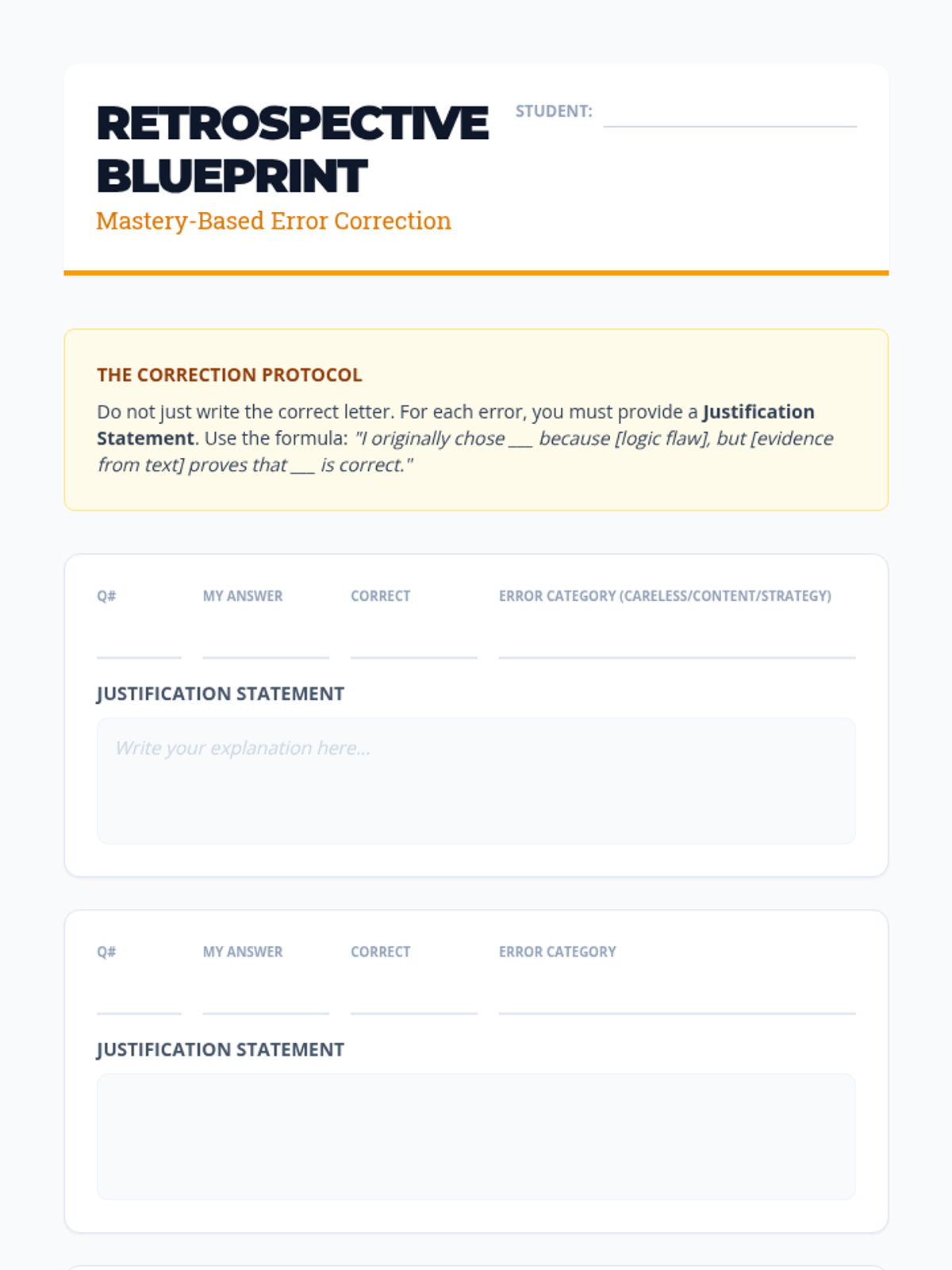
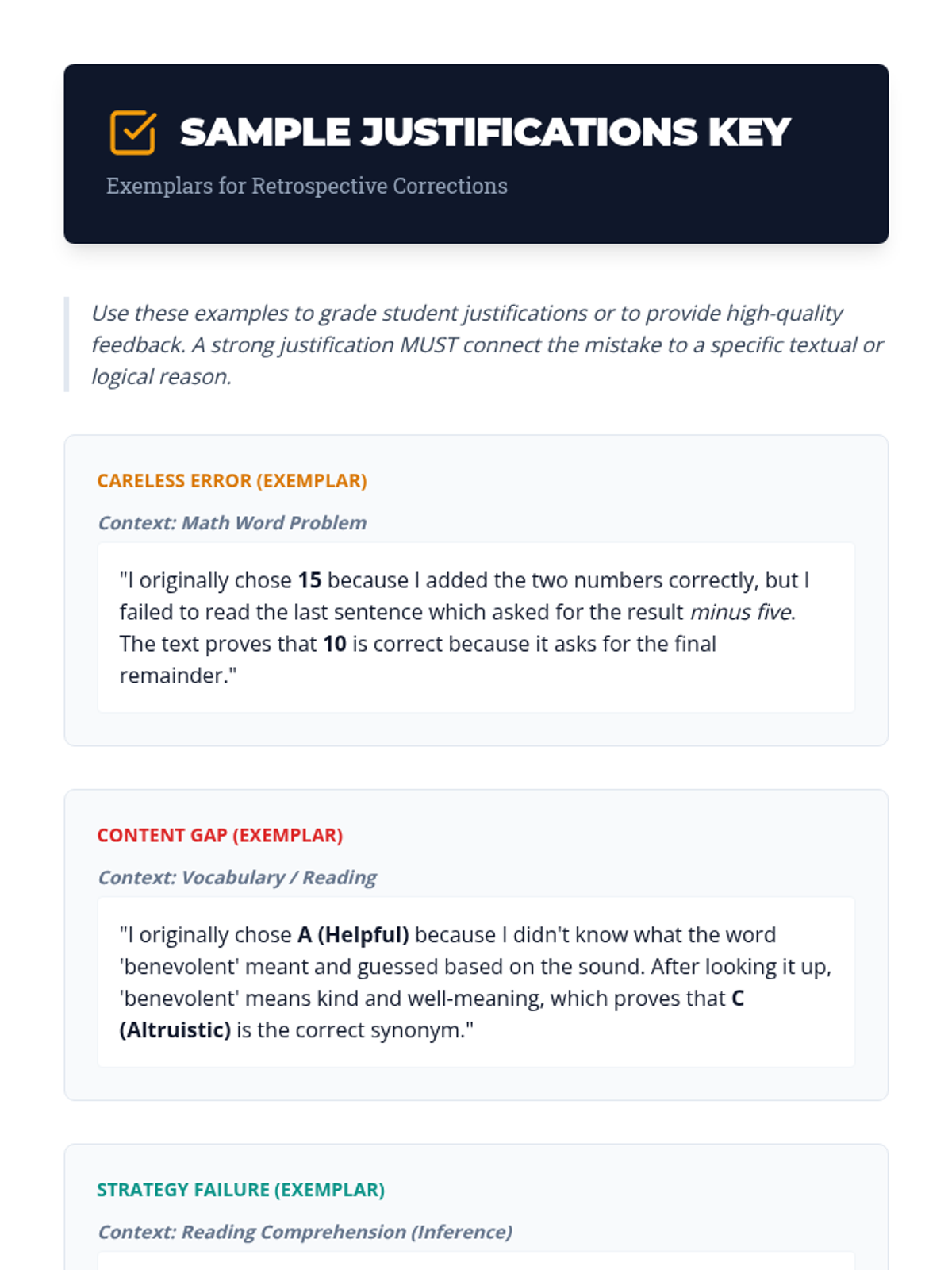
Instead of just marking correct answers, students must write a sentence explaining *why* their original answer was wrong and *why* the new answer is right. This ensures deep processing of the error.
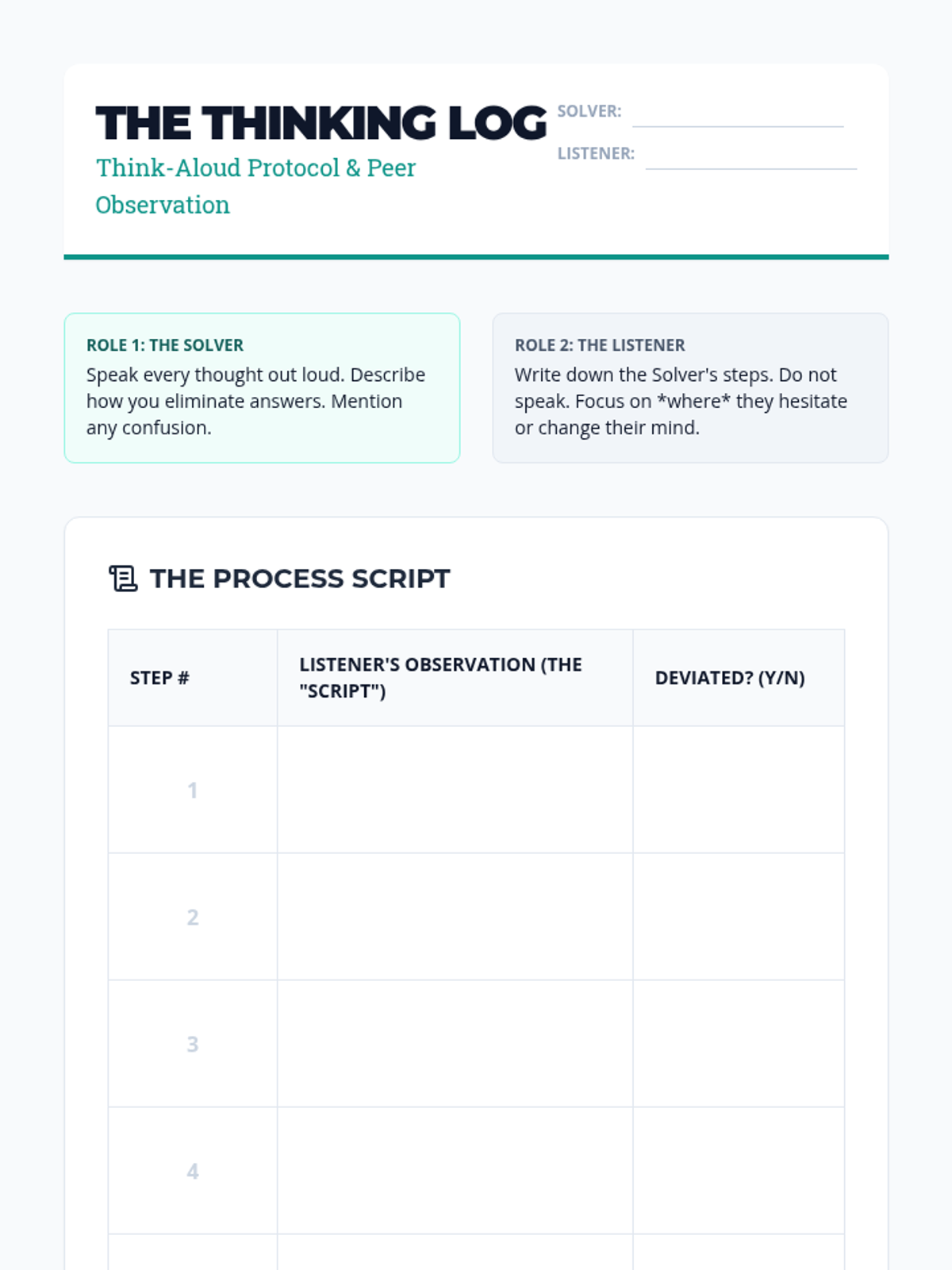
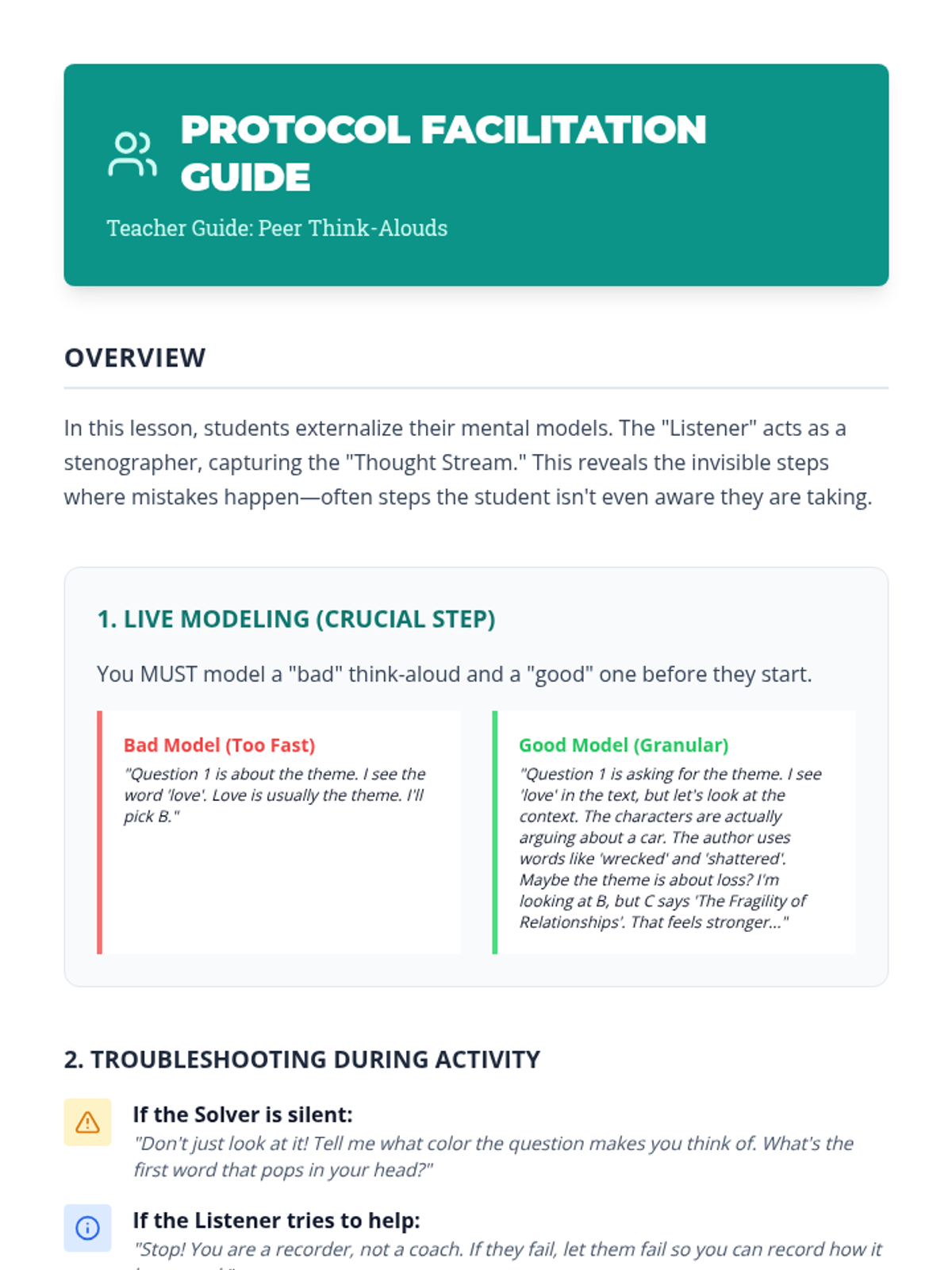
Working in pairs, students vocalize their thinking process while solving a problem while a partner records their steps. They analyze these recordings to identify where their logic deviated from the correct path.
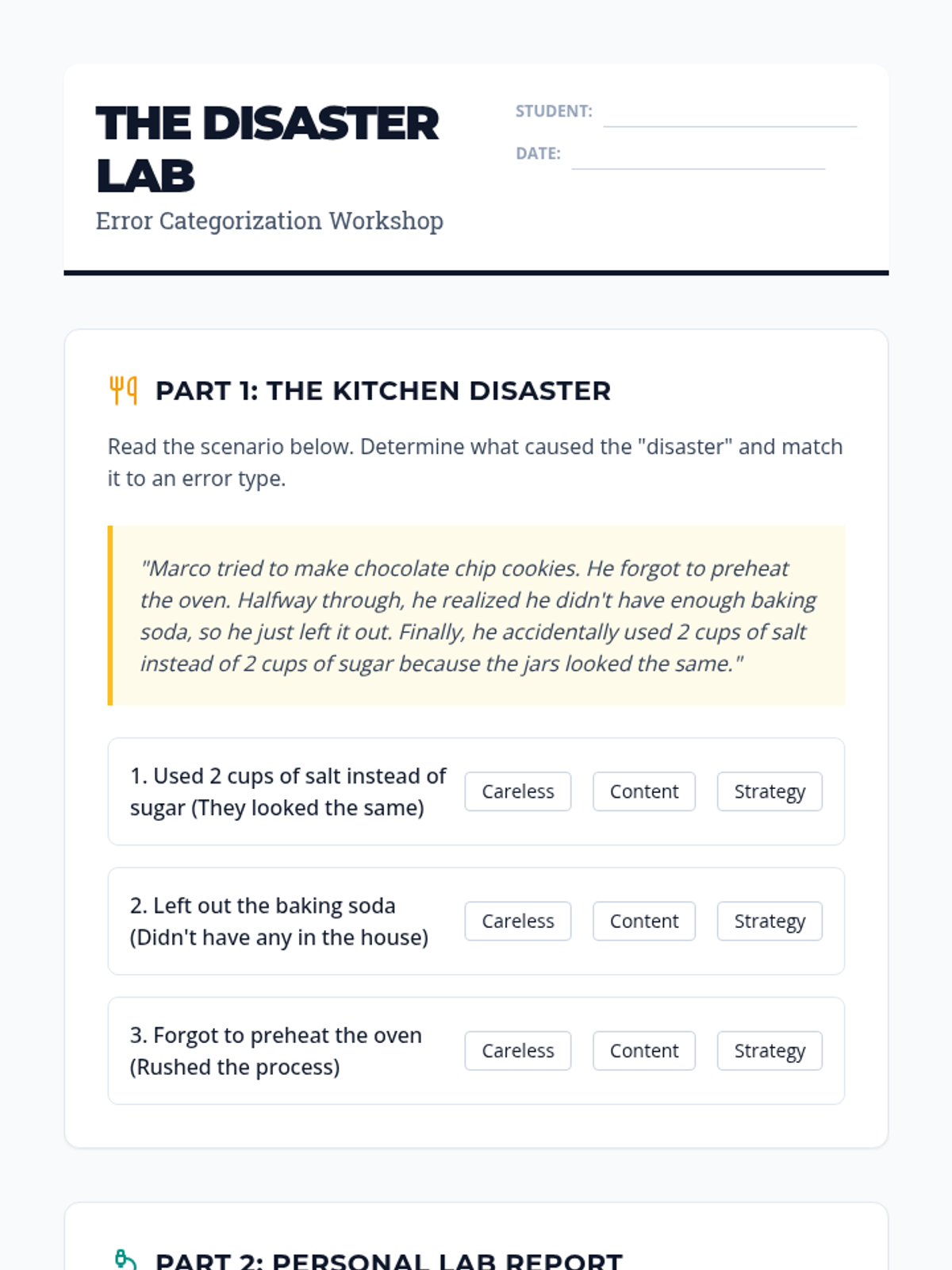
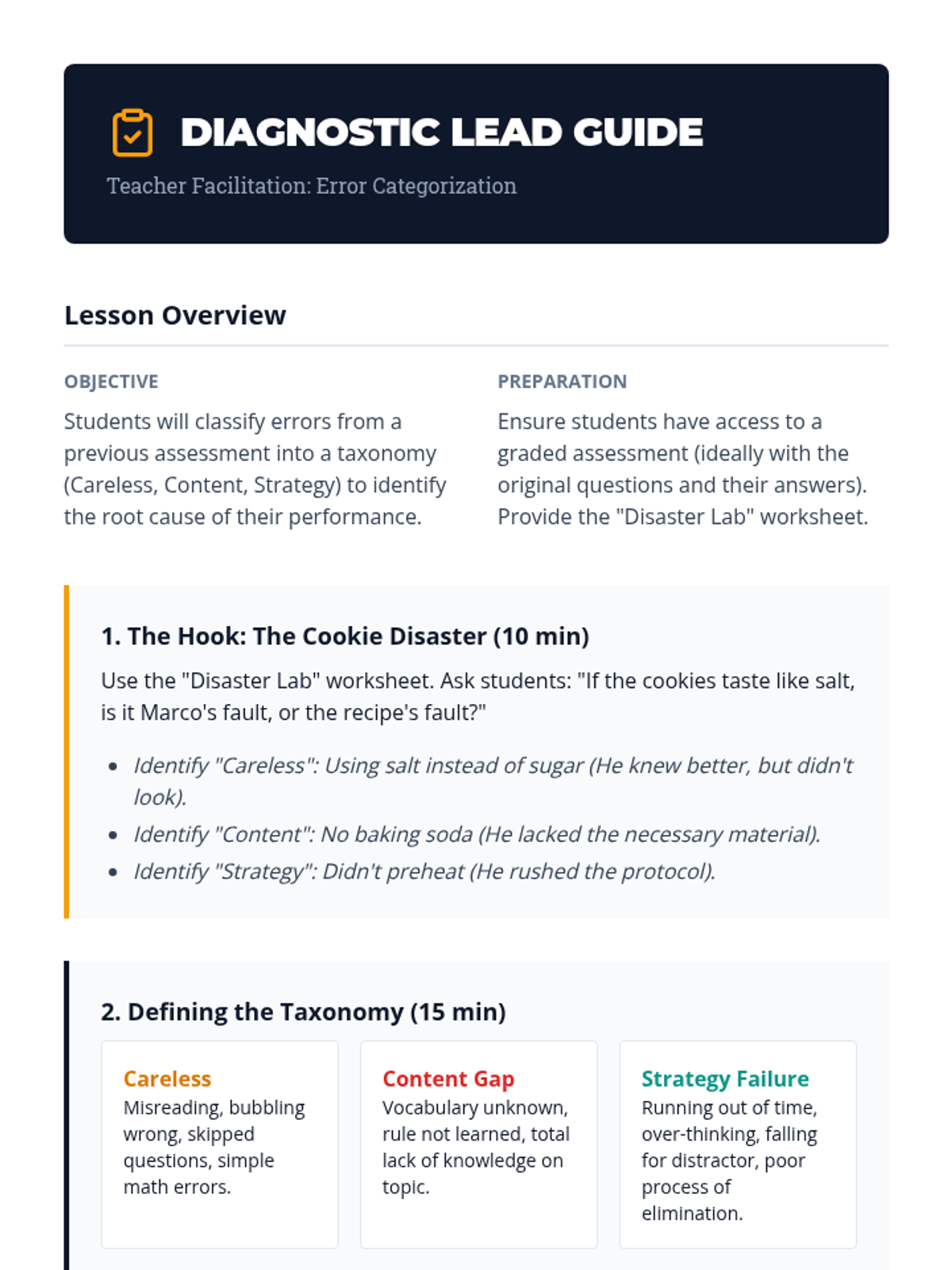
Students review a past assessment and categorize every incorrect answer as a 'Careless Error,' 'Content Gap,' or 'Strategy Failure.' This taxonomy helps them understand that not all mistakes are created equal.
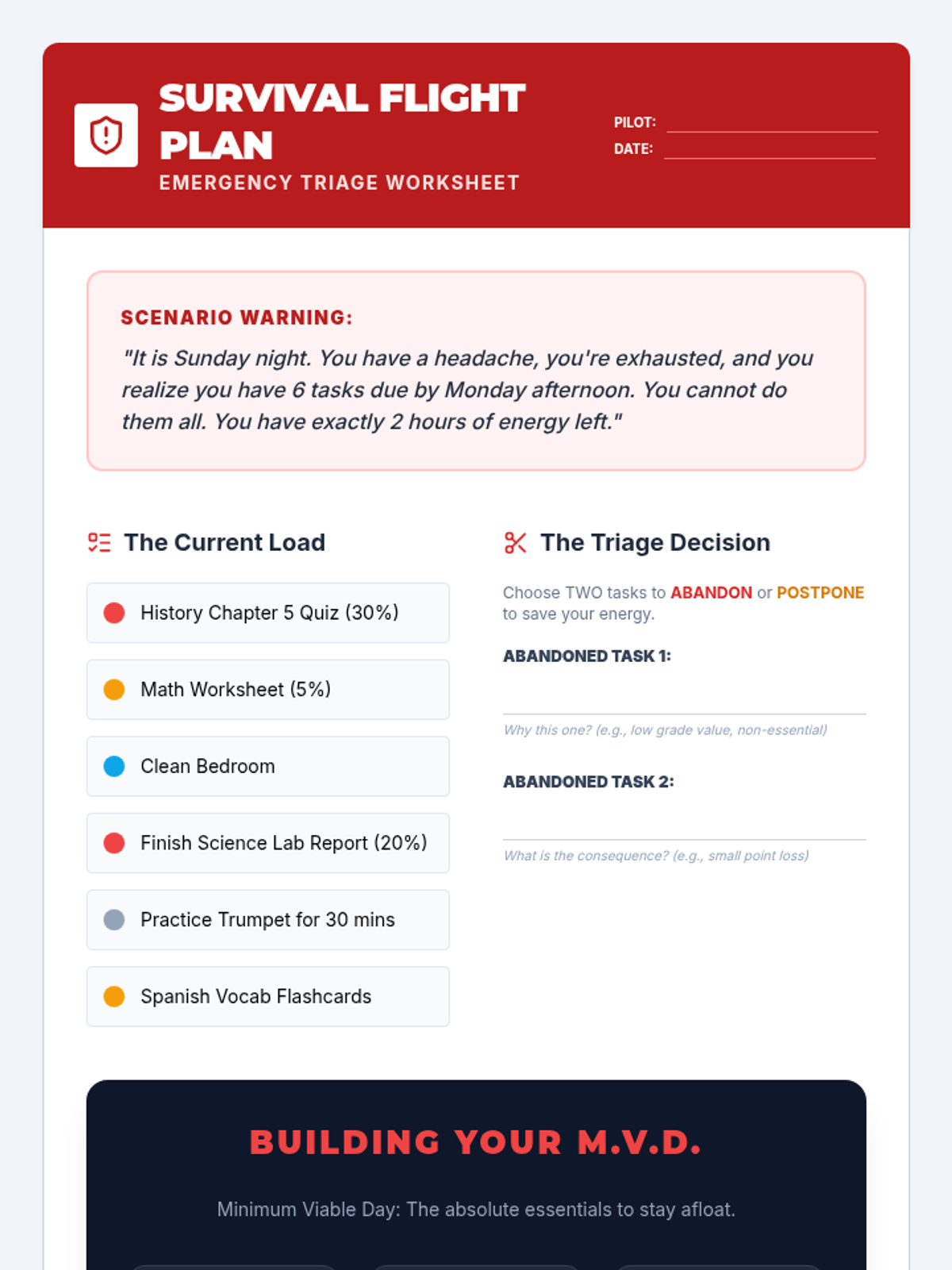
Students develop emergency 'triage' strategies and create a 'Minimum Viable Day' plan for maintaining performance during periods of high stress or illness.
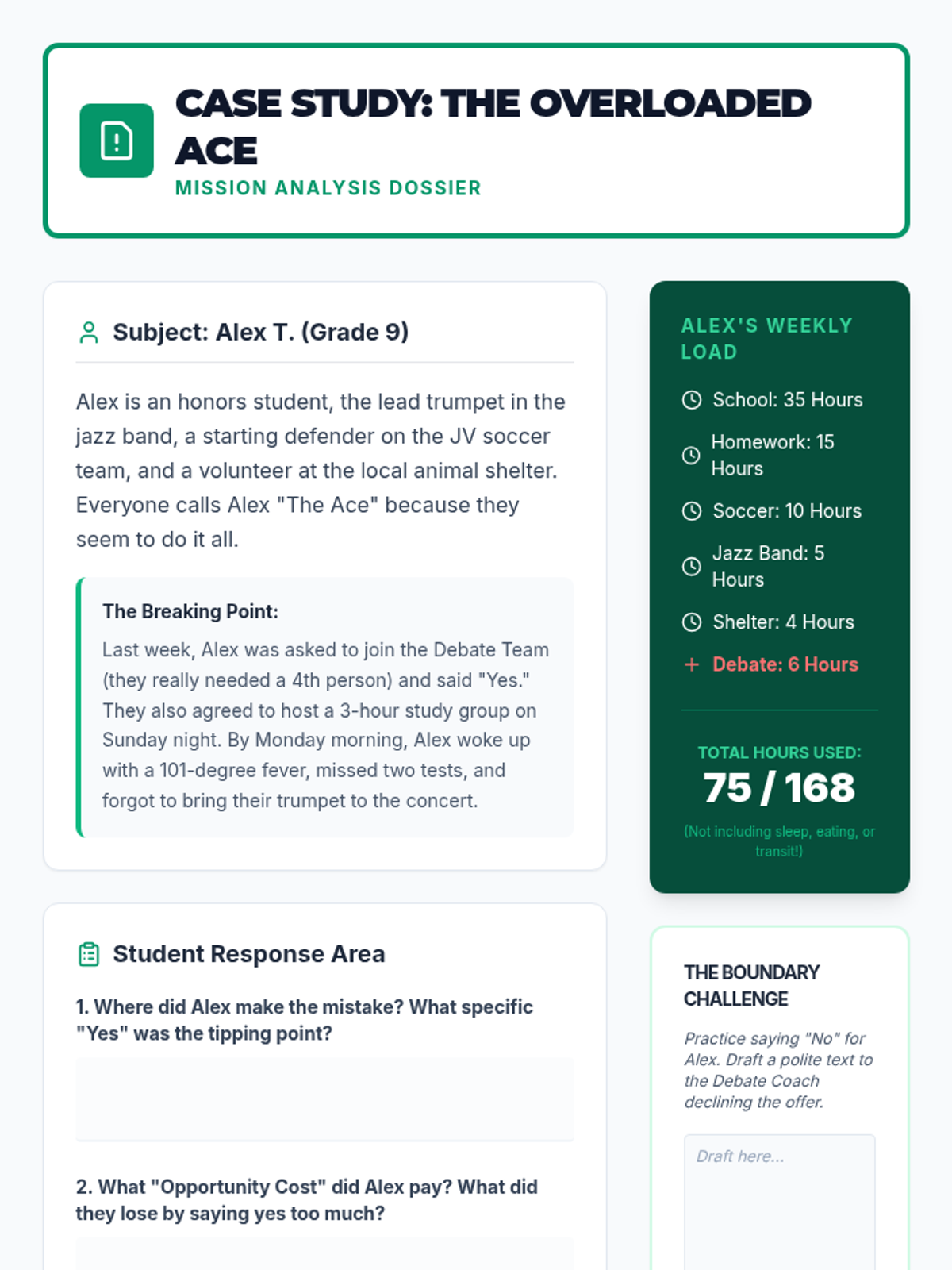
Students explore the concept of opportunity cost and practice strategies for politely but firmly declining optional commitments.
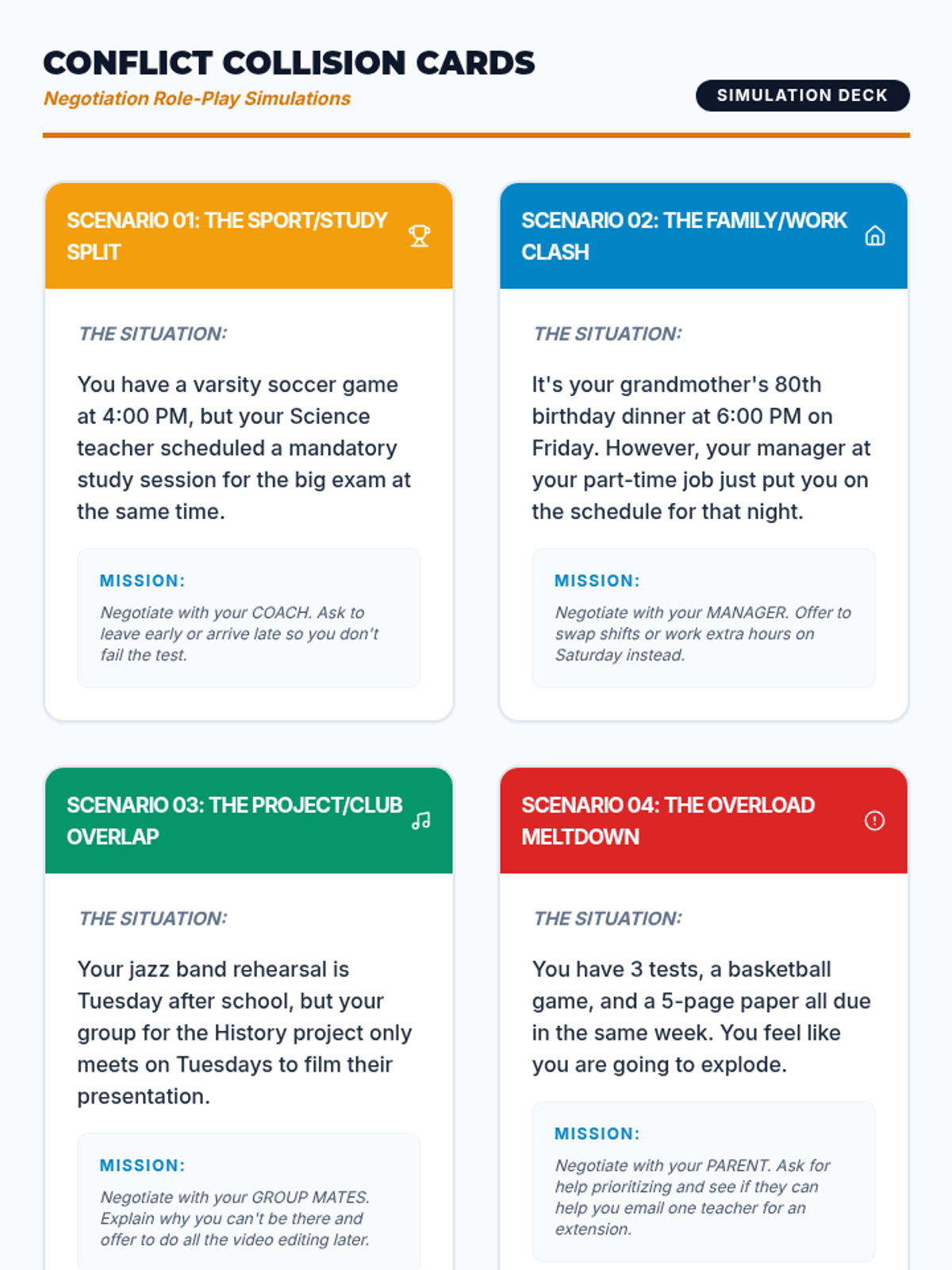
Through role-play and simulation, students practice face-to-face negotiations to resolve scheduling conflicts between multiple commitments.
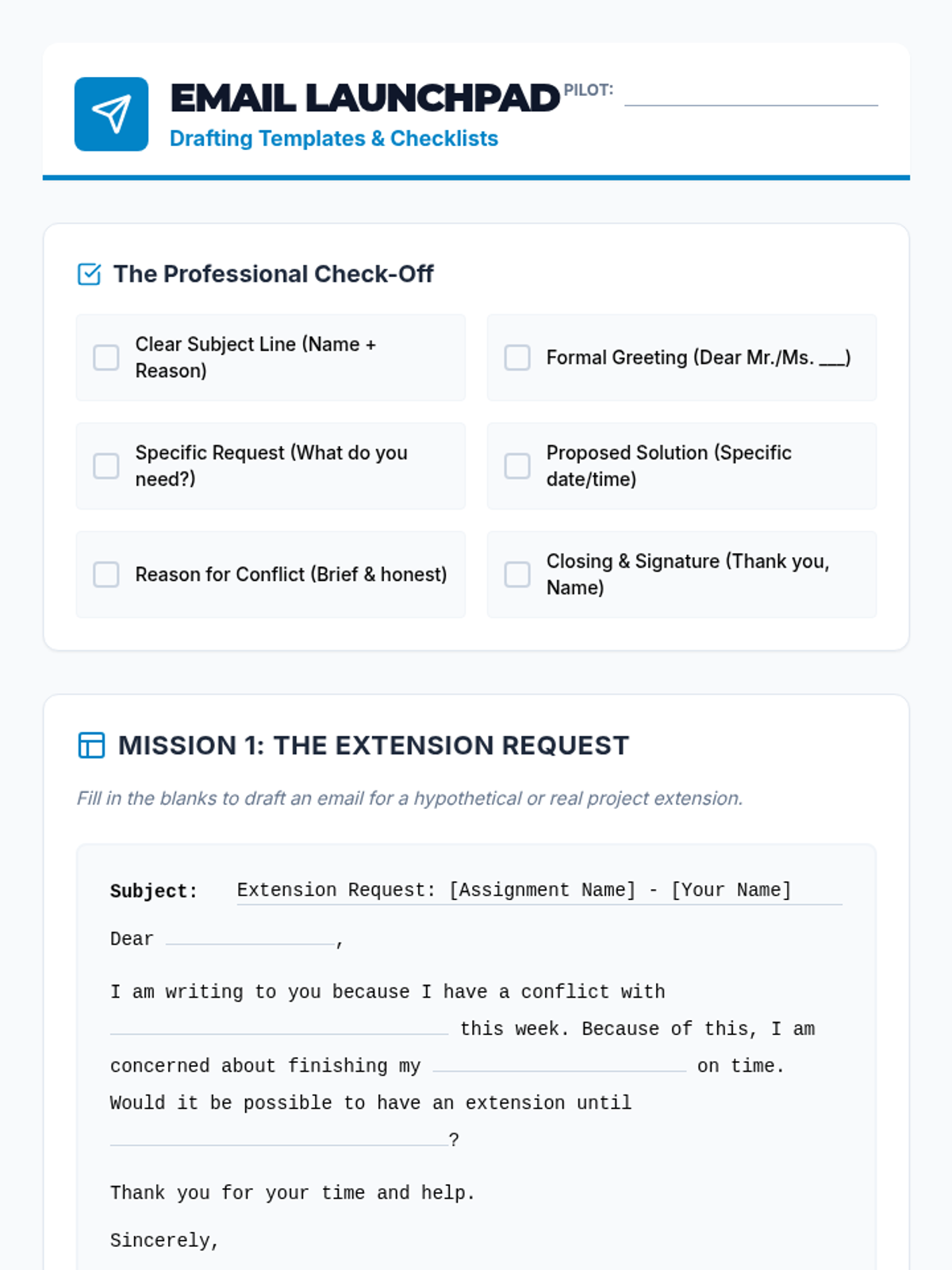
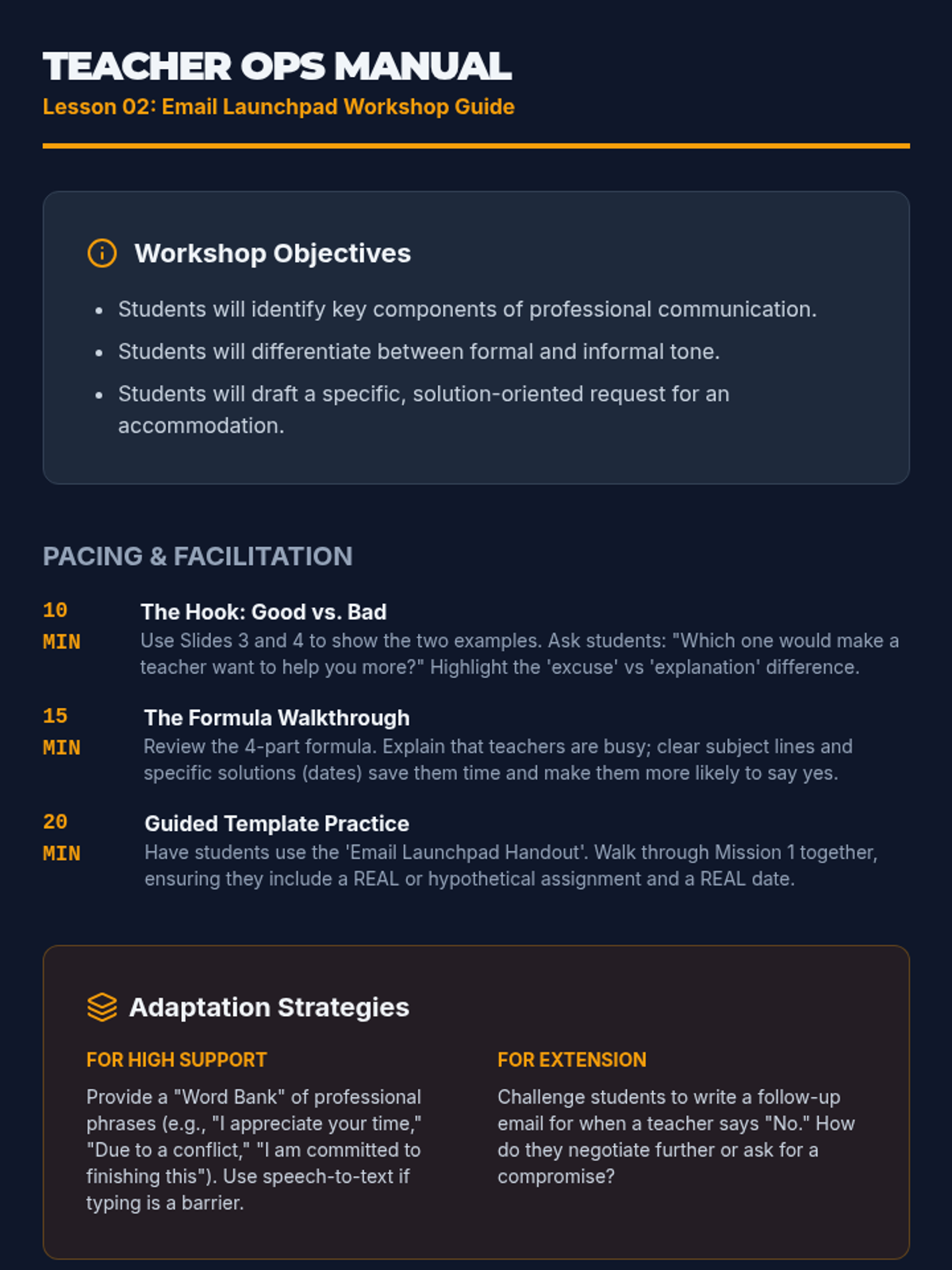
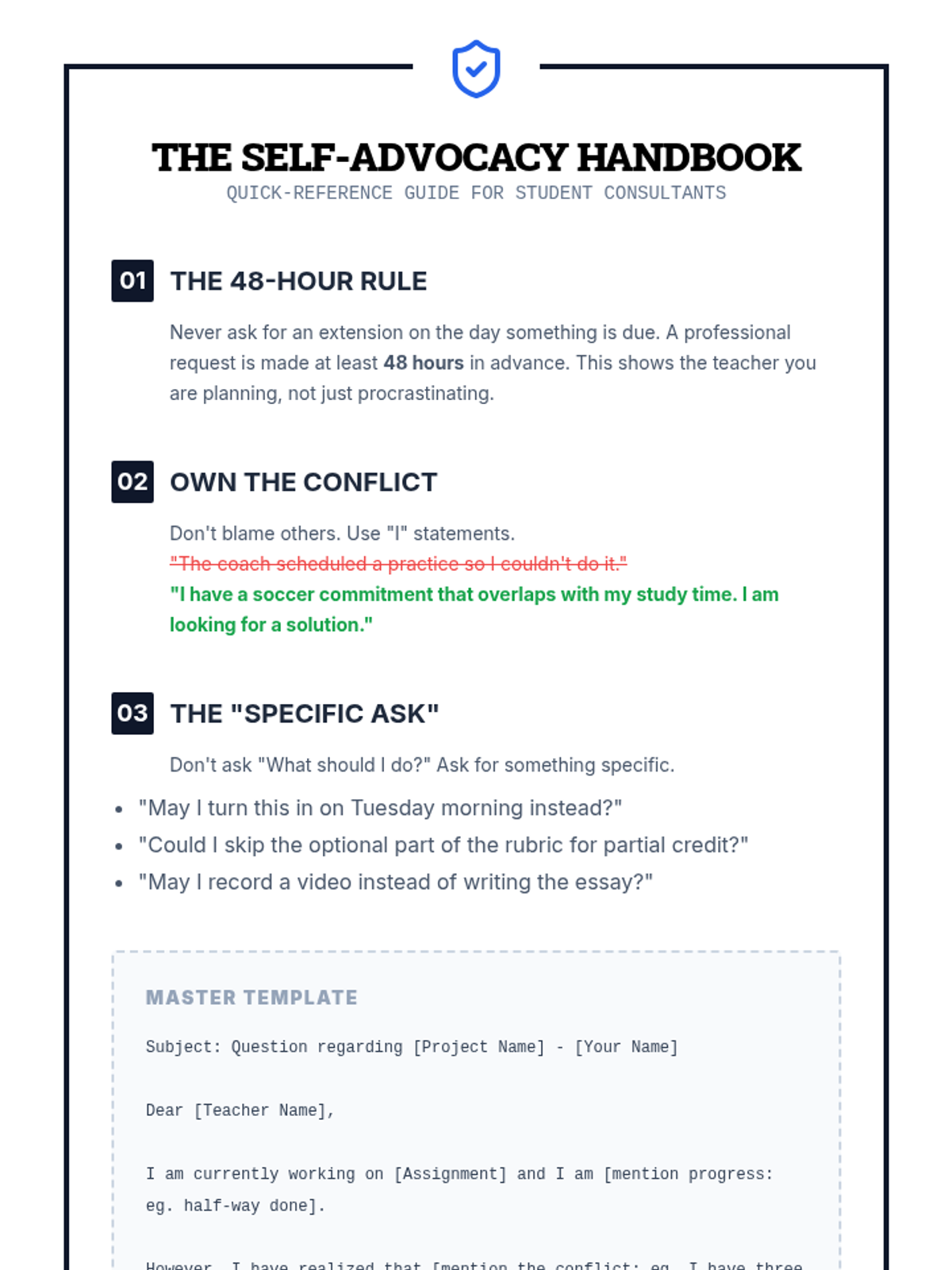
Students master the art of professional email communication, learning to draft responsible and clear requests for extensions or accommodations.
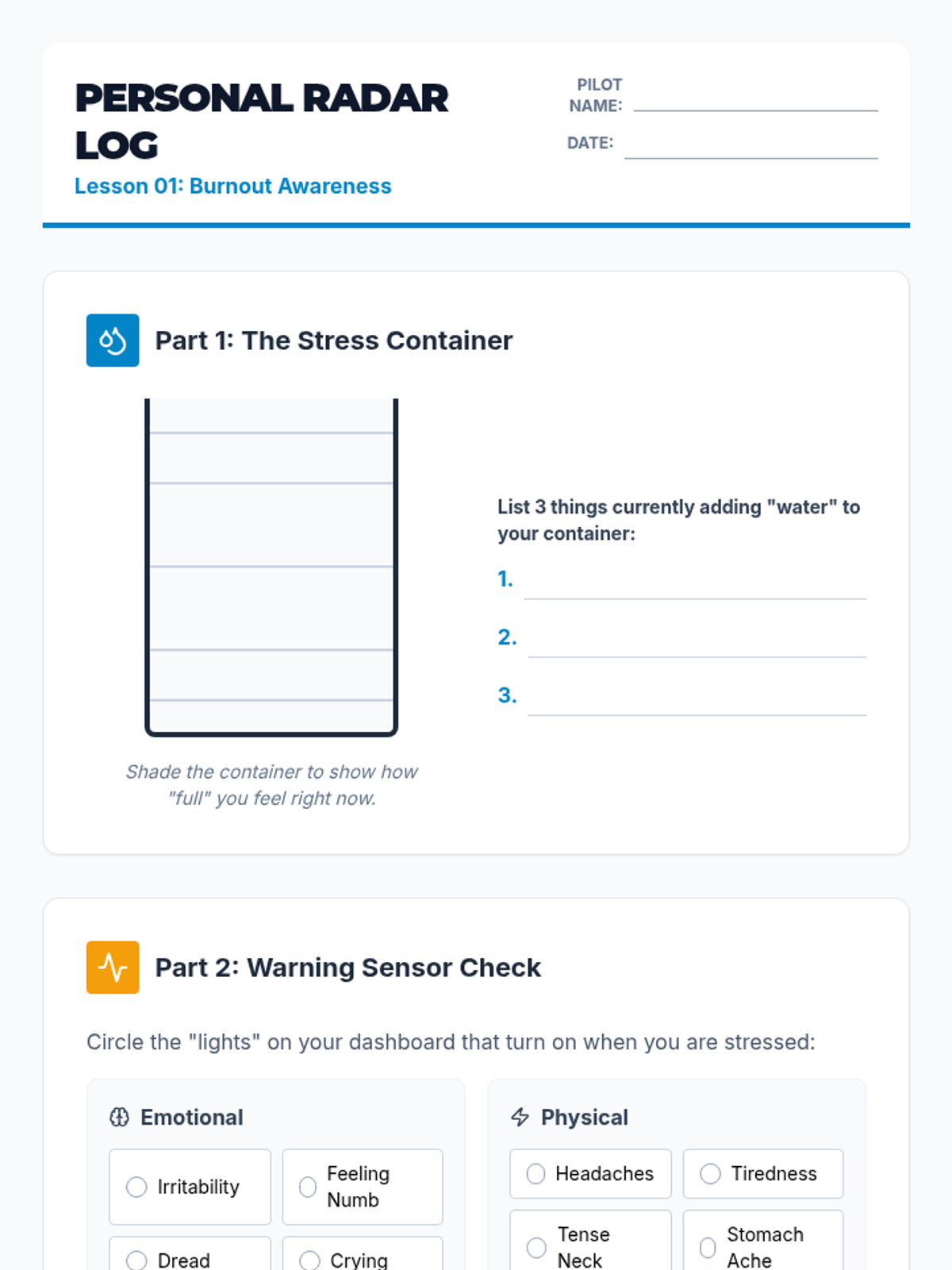
Students identify physical and emotional signs of burnout and use the 'Stress Container' visualization to understand their personal capacity and tipping points.
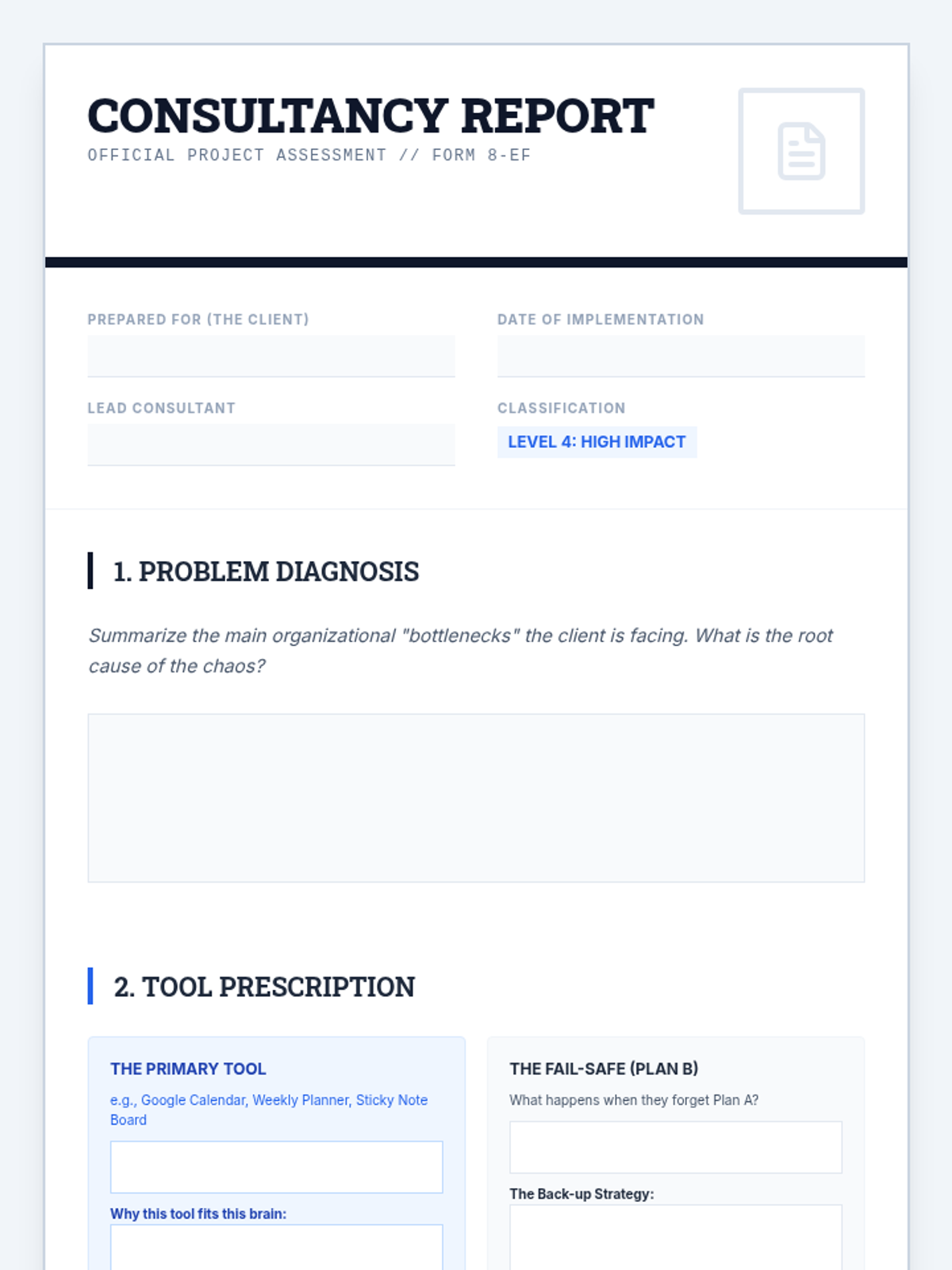
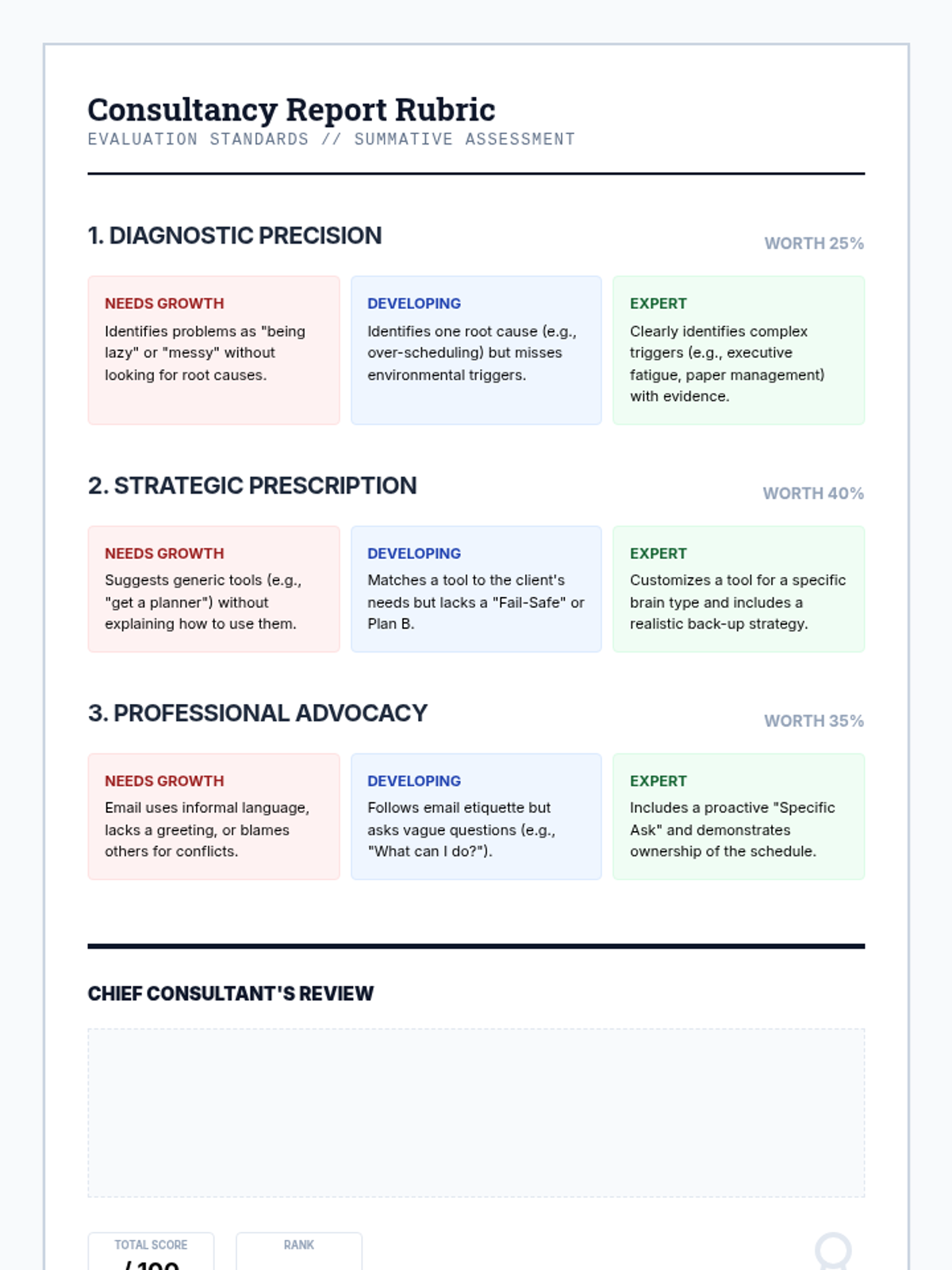
A cumulative assessment where students produce a final 'Consultancy Report' prescribing a comprehensive organizational plan for a client or themselves.
Students evaluate and pitch various organizational tools, from digital apps to paper checklists, learning to match specific scaffolds to different brain types.
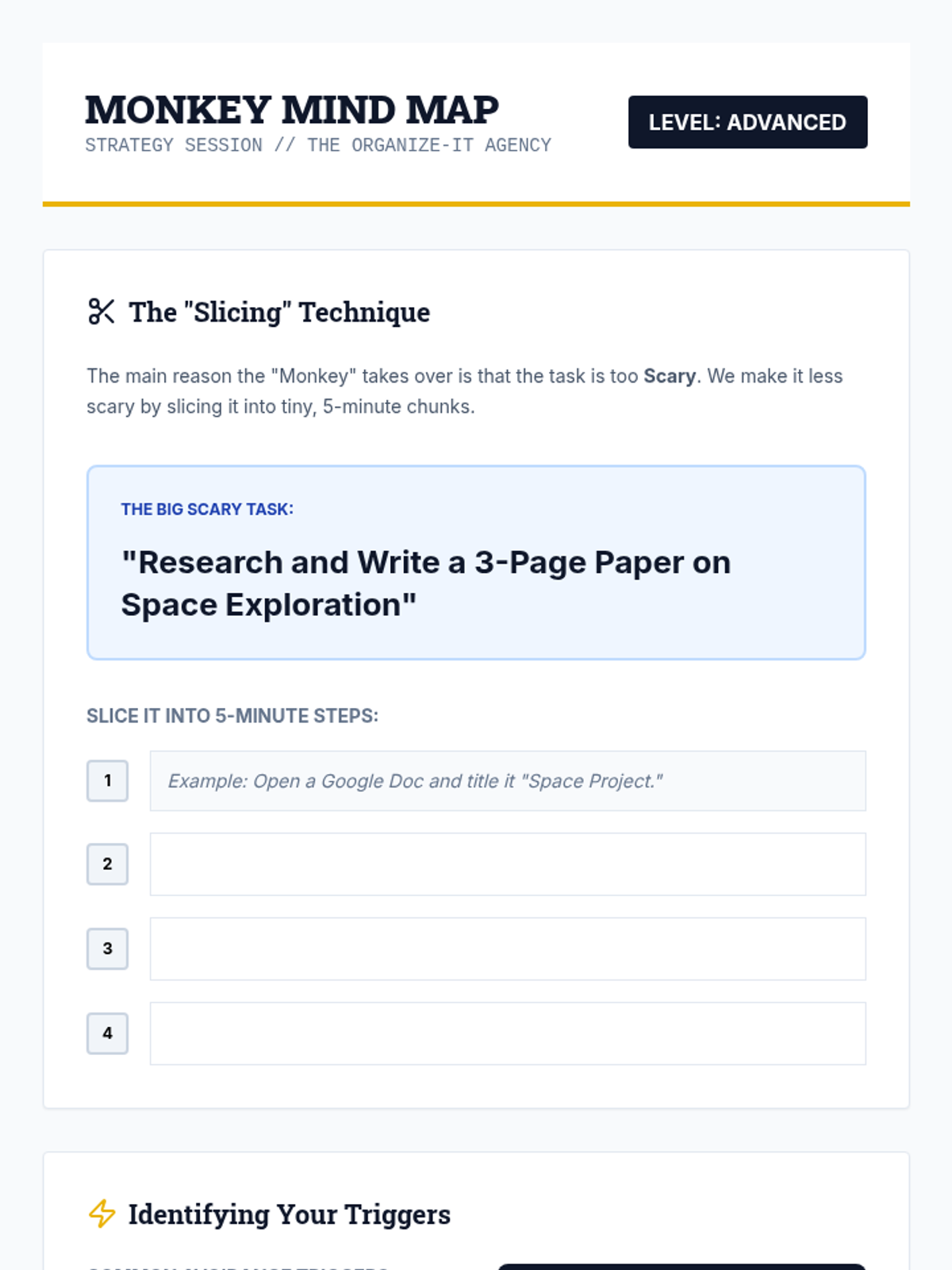
Explores the emotional roots of procrastination and provides concrete strategies like the 5-minute rule to break the cycle of avoidance.
Focuses on professional communication and self-advocacy, teaching students how to request support and extensions effectively before deadlines pass.
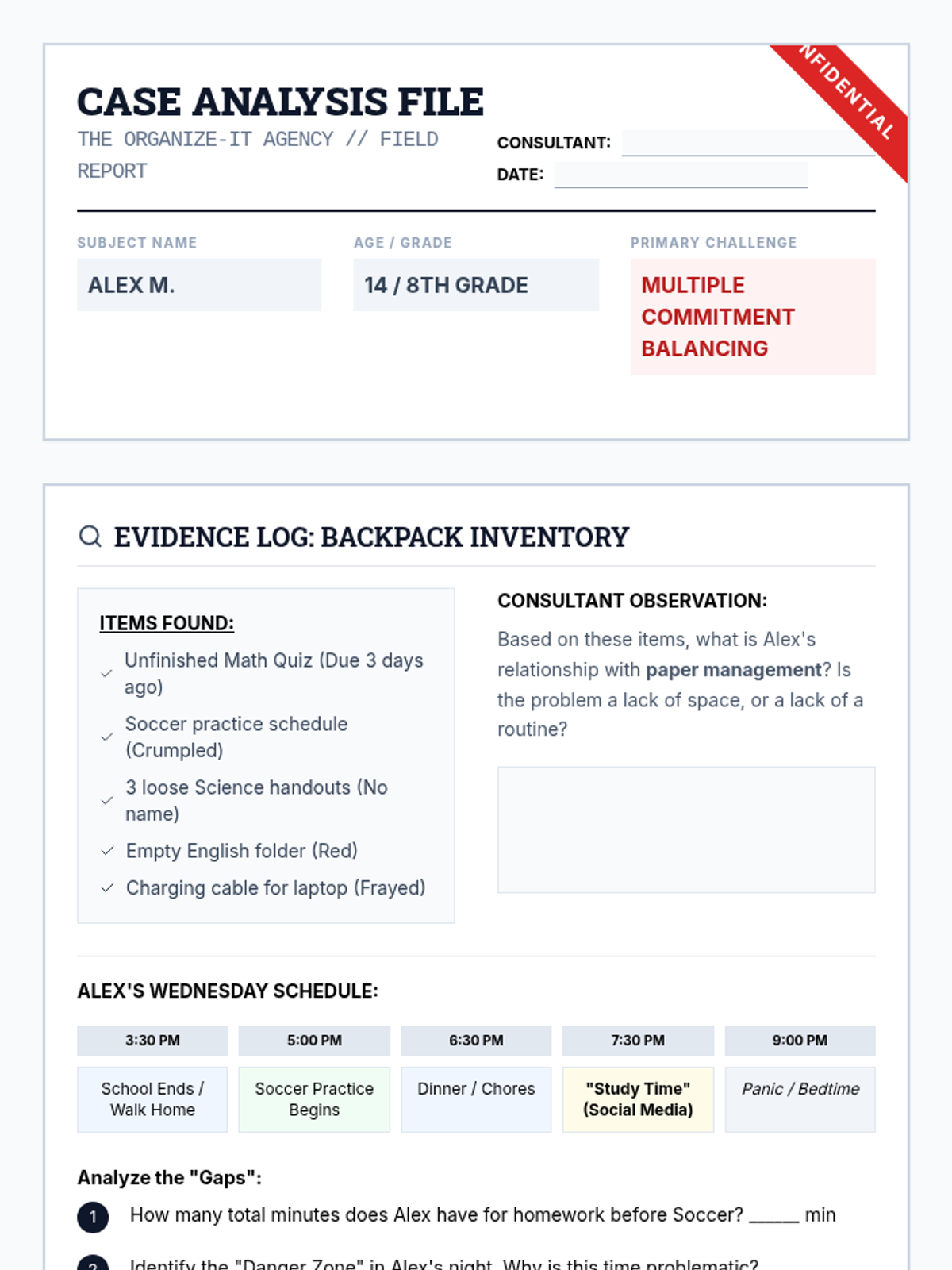
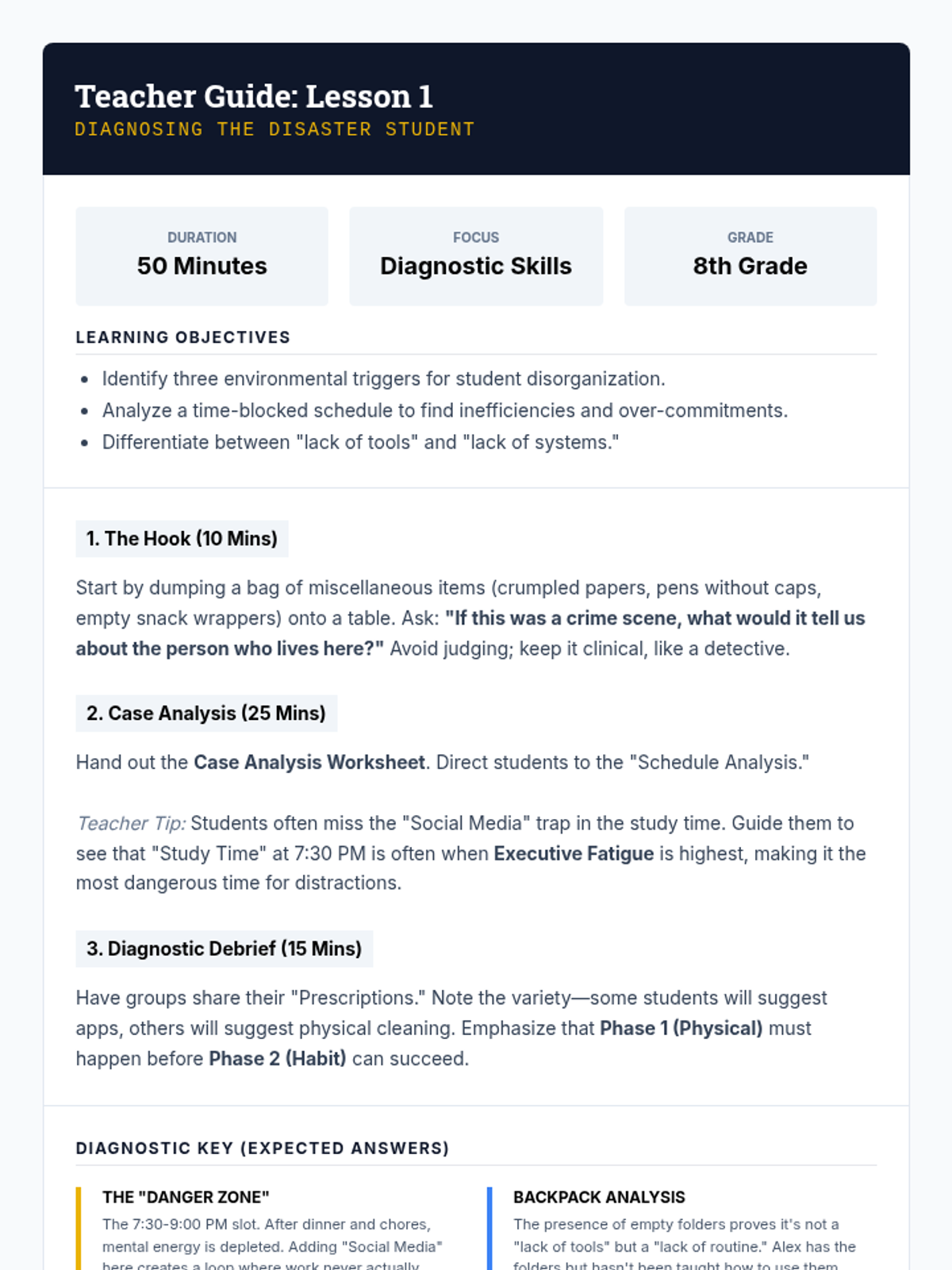
Students step into the role of consultants to analyze a 'disaster' case study, examining a fictional student's backpack and schedule to diagnose root causes of disorganization.
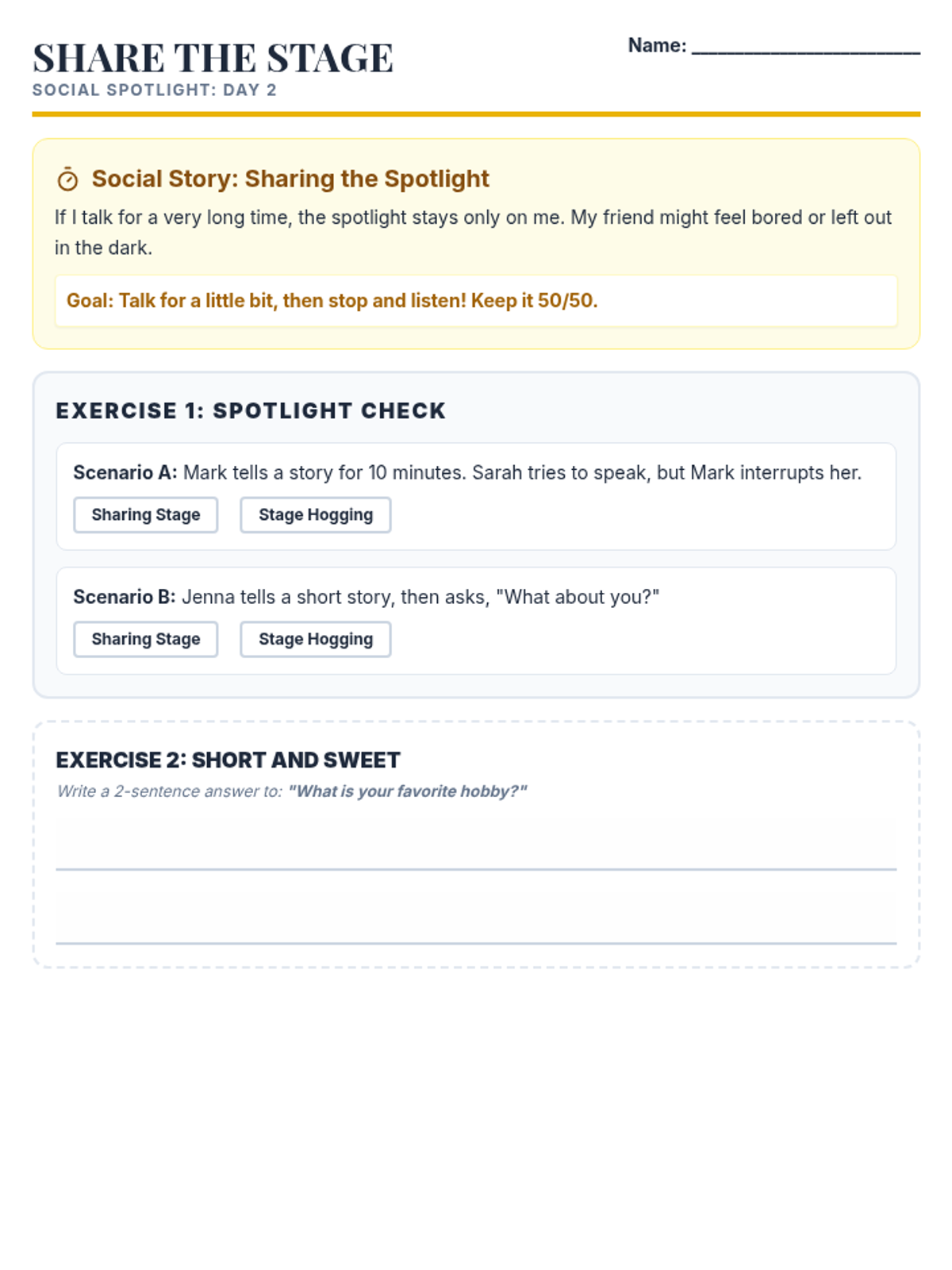
Focusing on the 'Talking Timer' concept to ensure students understand how to share the floor and avoid 'monologuing'.
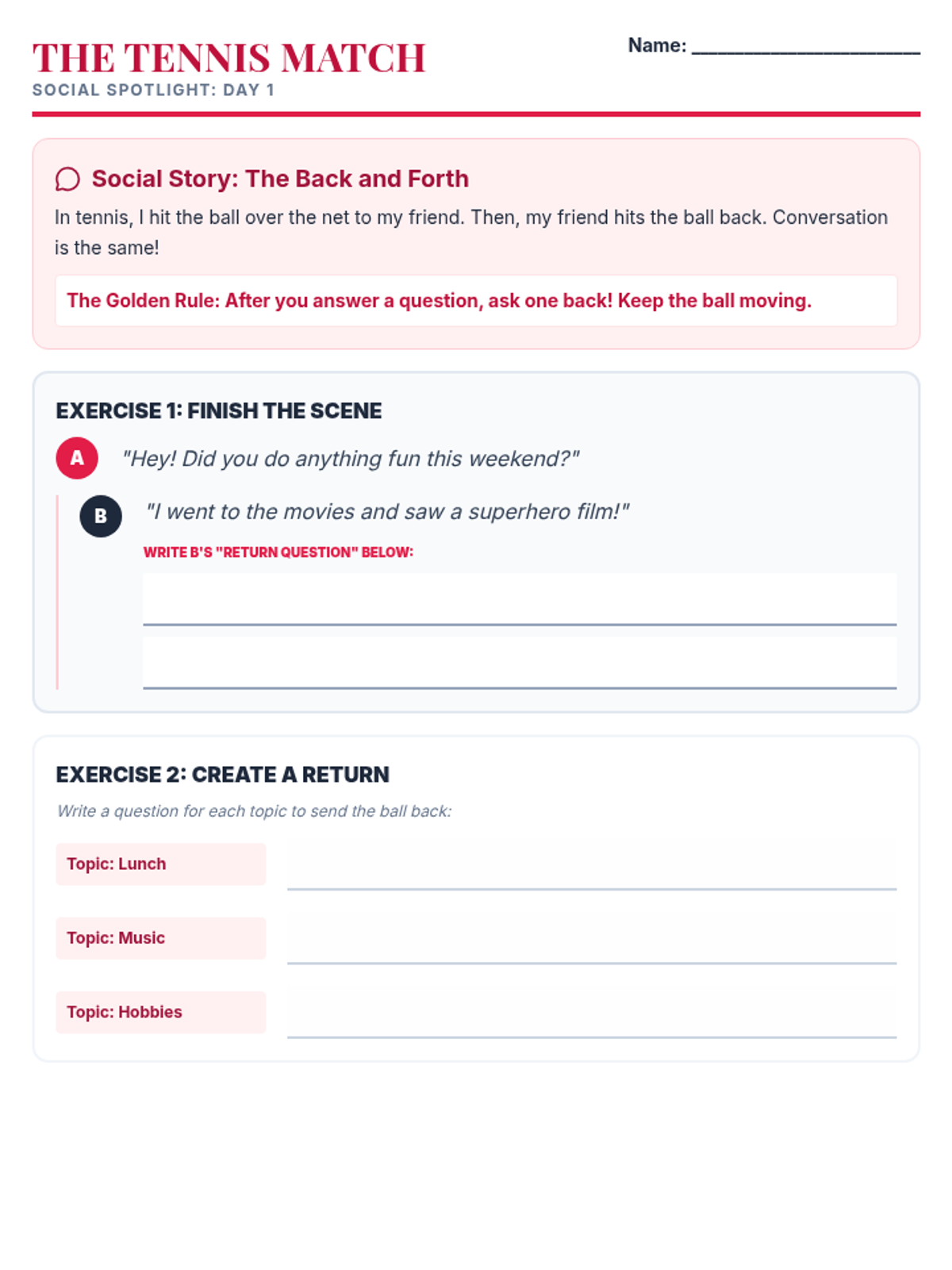
Introduction to reciprocal conversations using the metaphor of a tennis match to visualize the 'back-and-forth' flow.