Emotion recognition ranging from basic feelings to complex nuances and mixed states. Strengthens accurate self-assessment through identity exploration, strength identification, and values-based decision making.
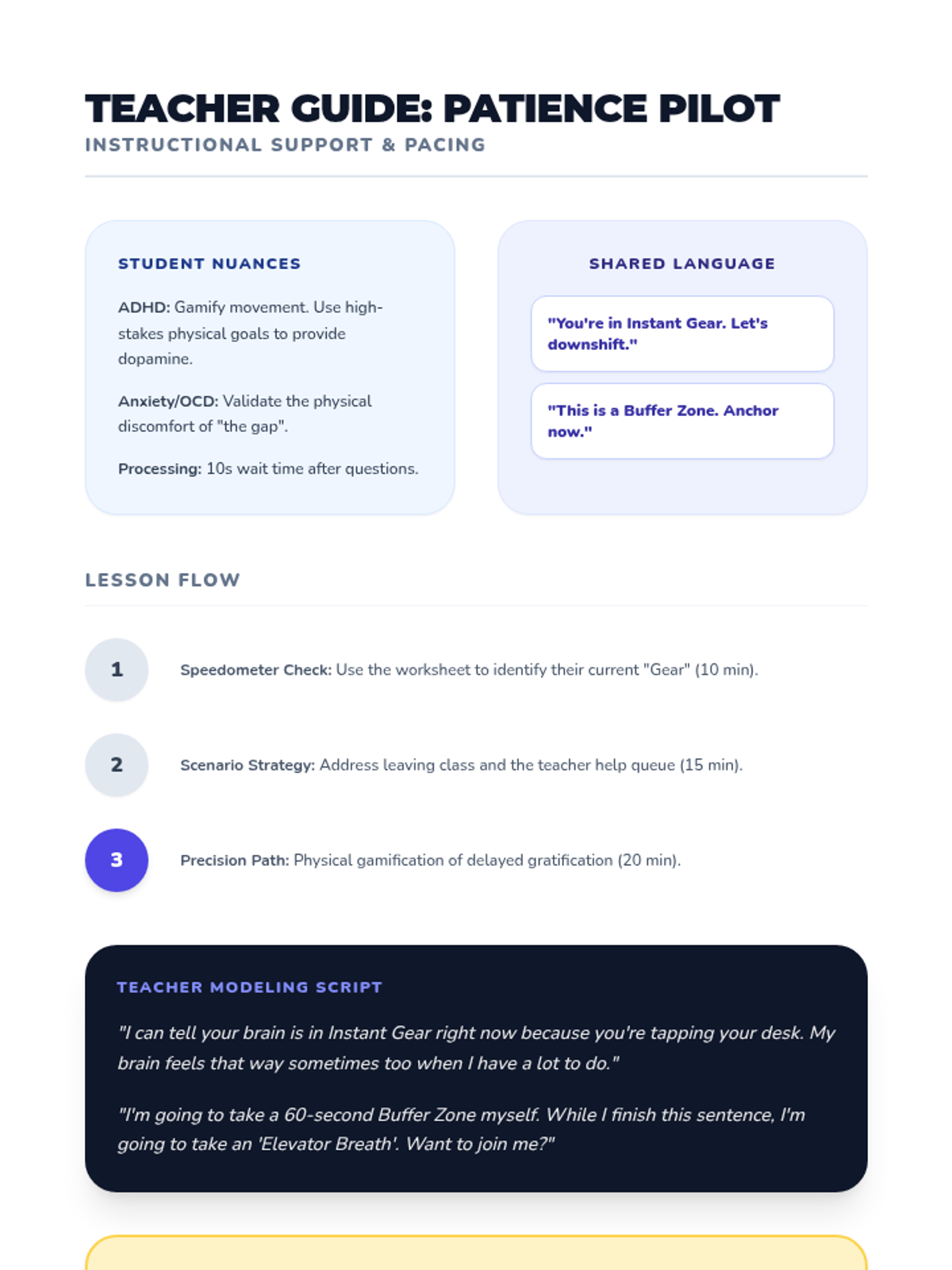
A teacher-facing guide that provides context on how to implement the Patience Pilot materials. It includes pedagogical tips for working with ADHD/OCD/Anxiety, a recommended lesson flow, and scripts for modeling patience.
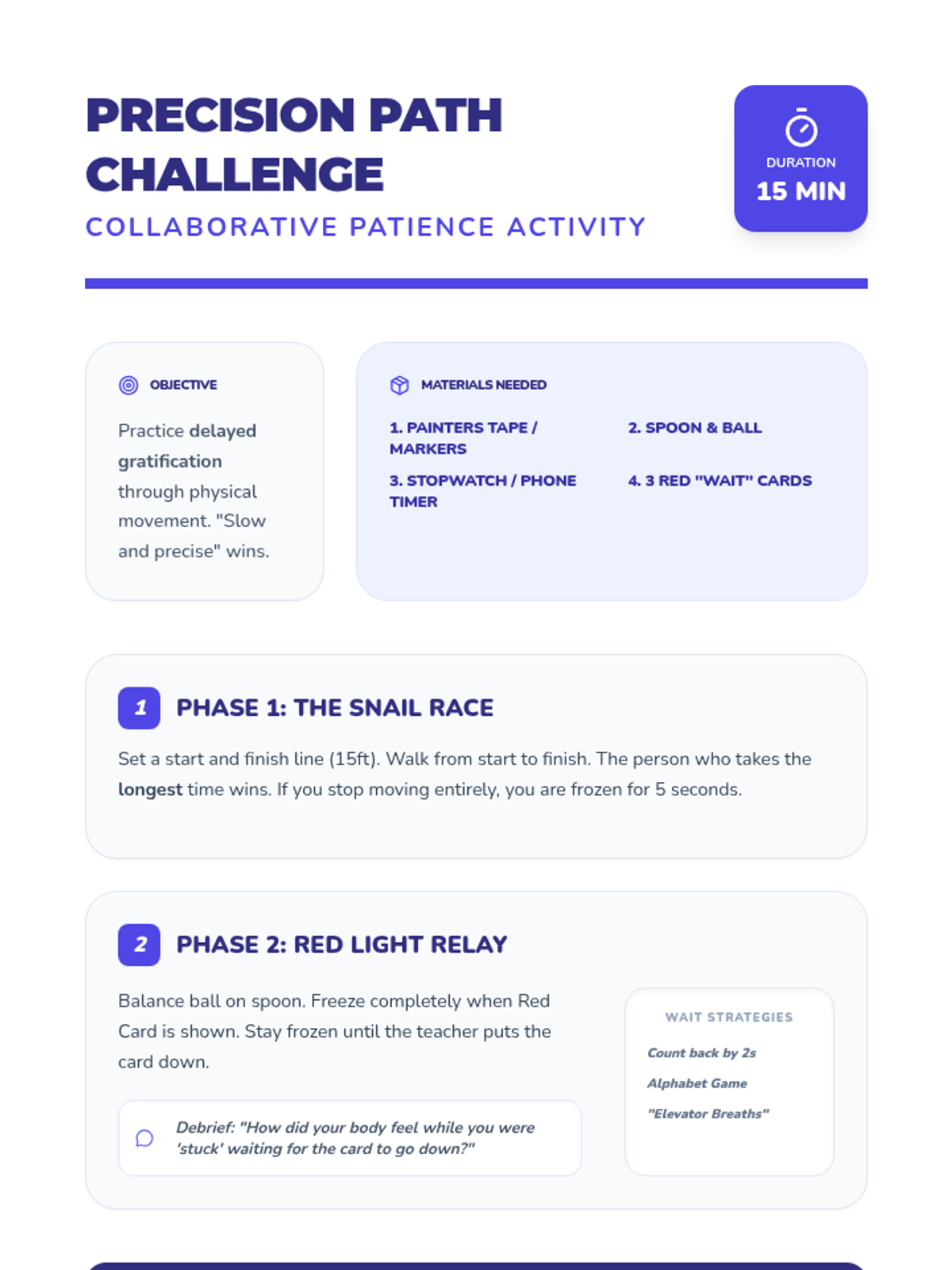
A collaborative, movement-based activity for a teacher and student. It gamifies patience through 'snail racing' and interrupted balancing tasks, specifically designed to simulate the physical tension of waiting.
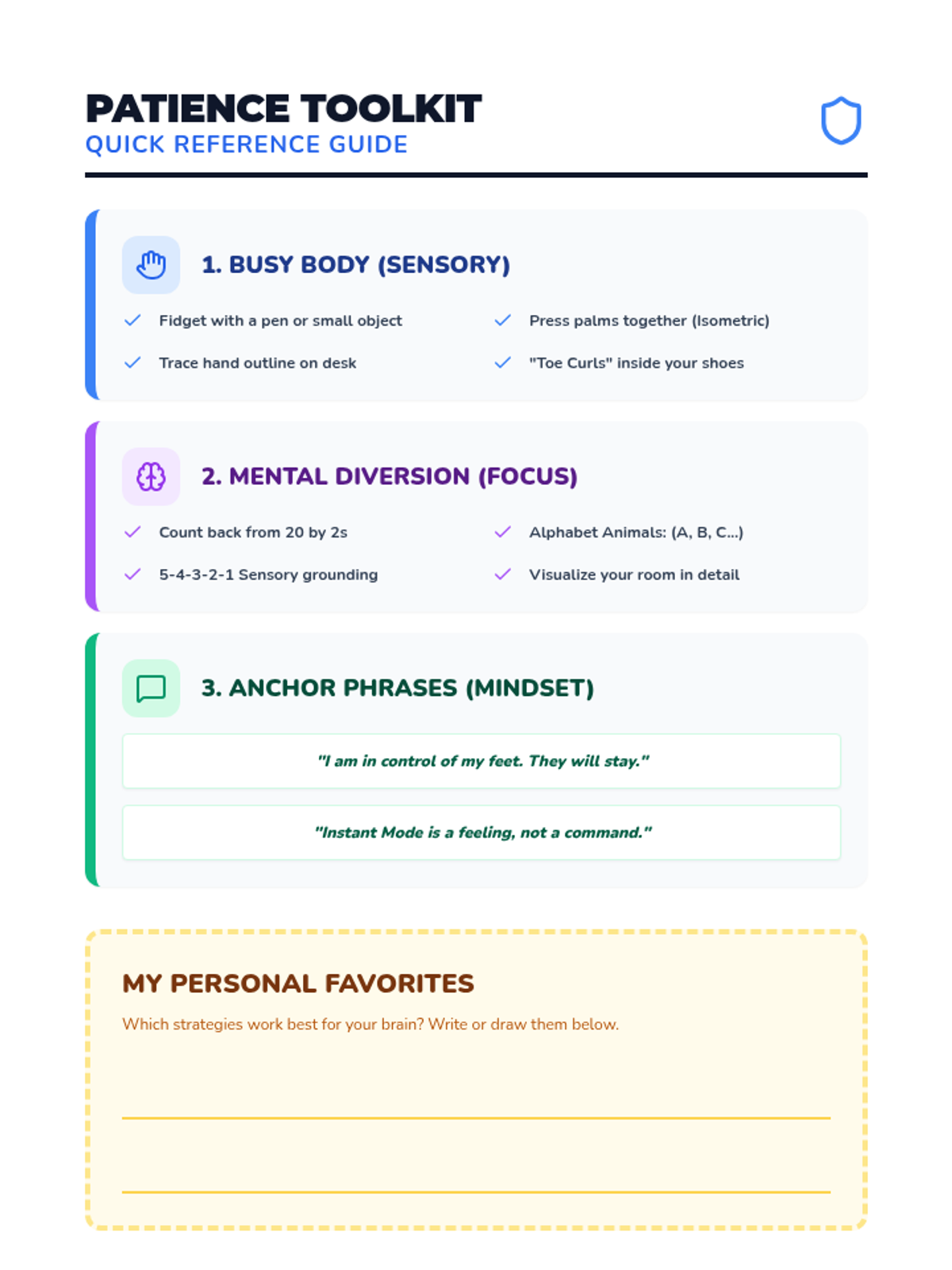
A reference sheet for the student to keep in their binder. It provides a menu of physical, mental, and verbal coping strategies to use during 'waiting gaps' to manage ADHD and anxiety-driven impulsivity.
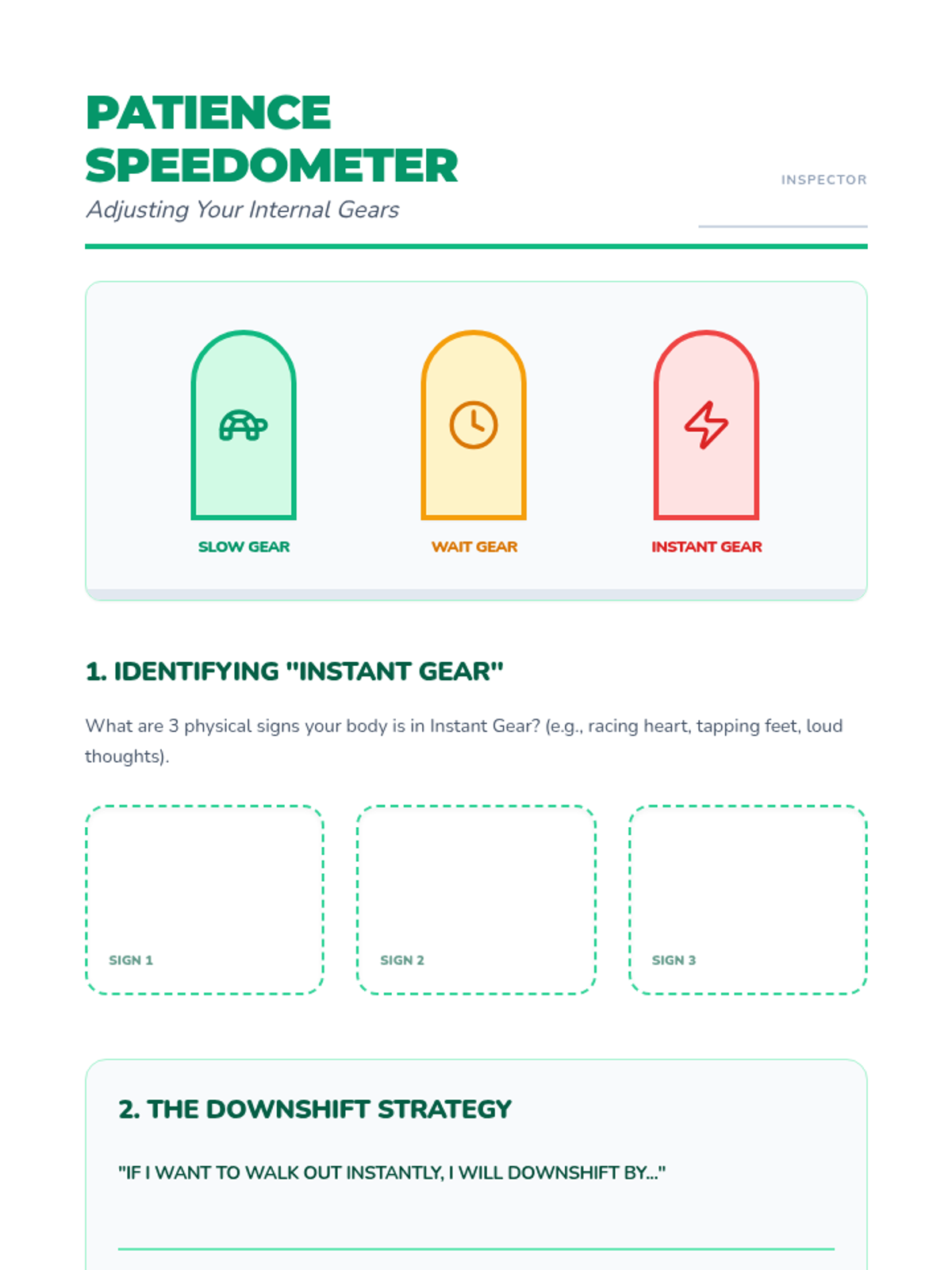
A visual self-regulation worksheet that helps the student identify their 'internal gears' (Slow, Wait, Instant). It focuses on identifying physical triggers of impulsivity and practicing 'downshifting' to a more patient state.
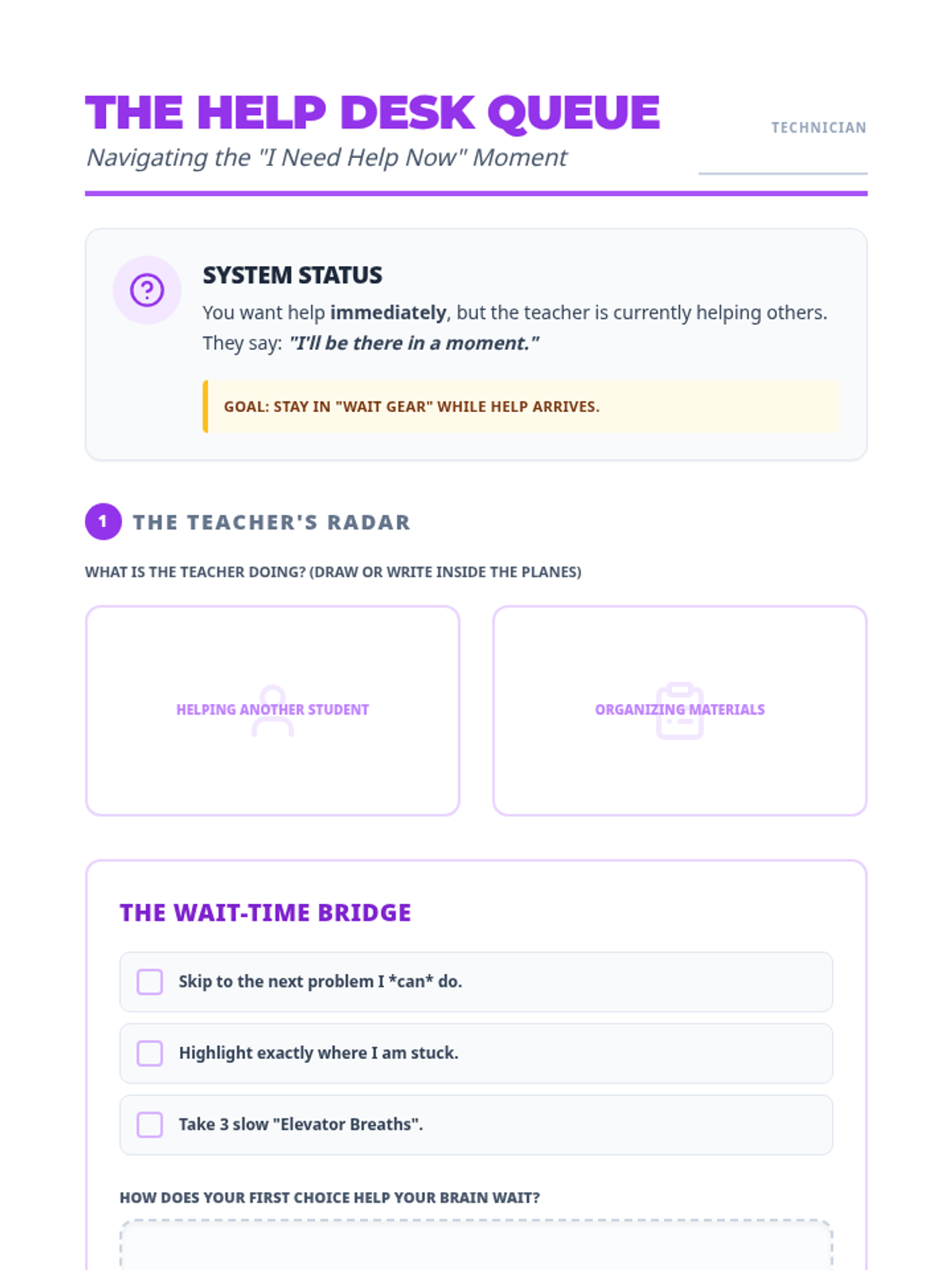
A worksheet designed to address the specific scenario of needing immediate help after previously refusing it. It uses an air traffic controller metaphor to help the student understand the teacher's perspective and provides actionable waiting strategies.
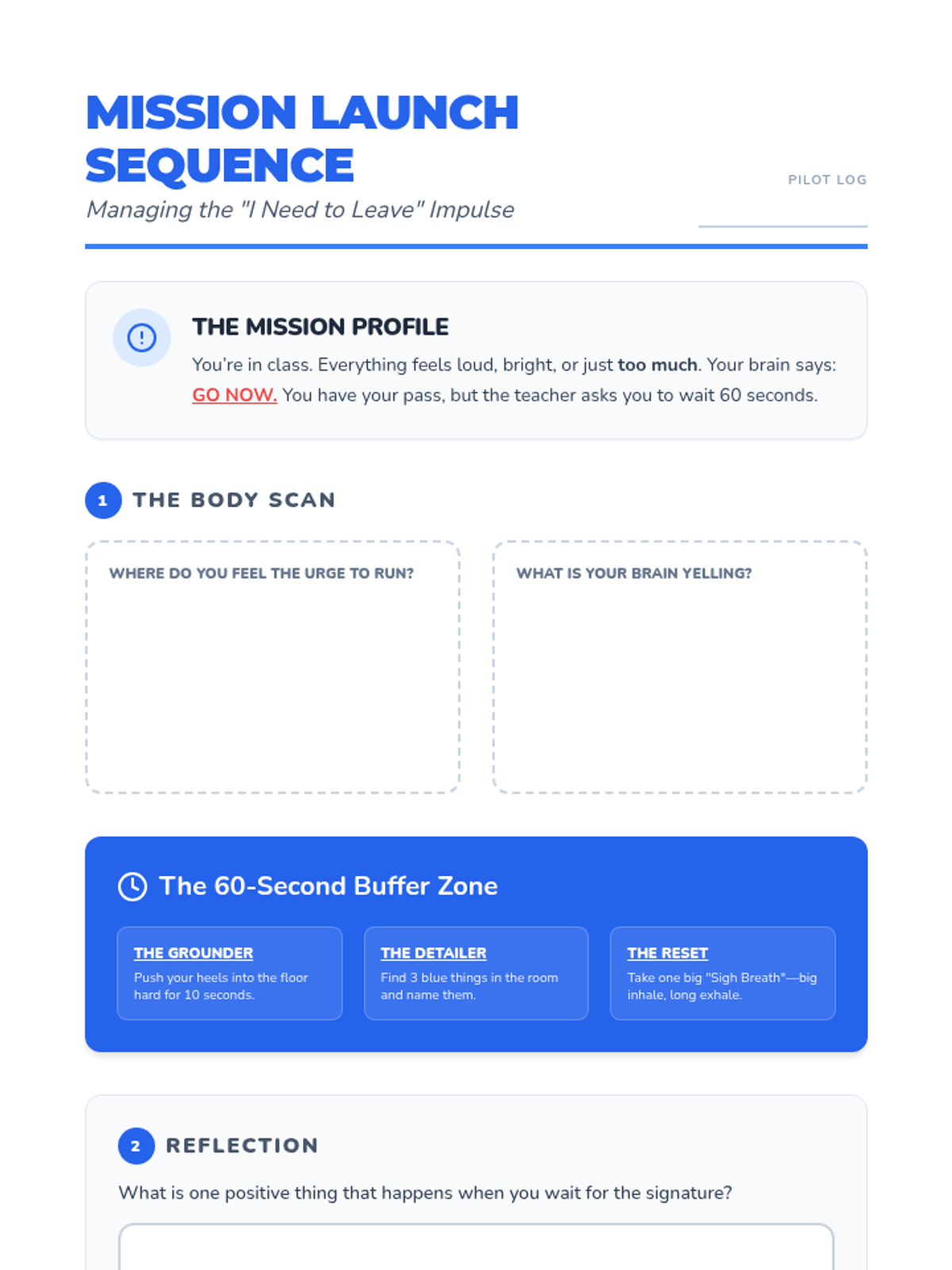
A worksheet focused on the impulsivity of leaving the classroom when overstimulated. It teaches a '60-second buffer' strategy and helps the student identify physical symptoms of anxiety.
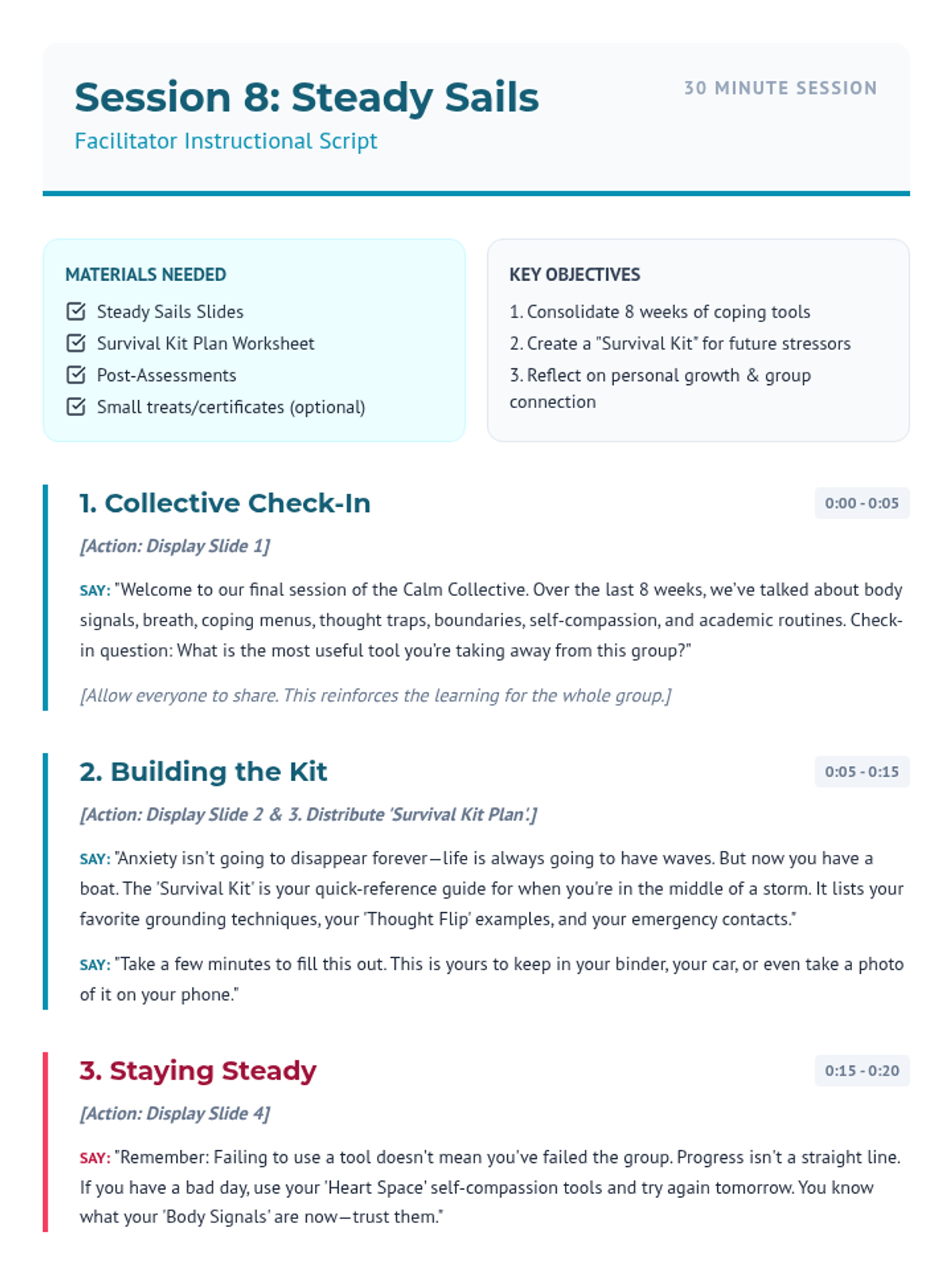
A detailed facilitation script for the final session of the Calm Collective, providing time-stamped sections, "what to say" prompts, and "what to do" instructions for the counselor. Focuses on consolidation and the "Survival Kit."
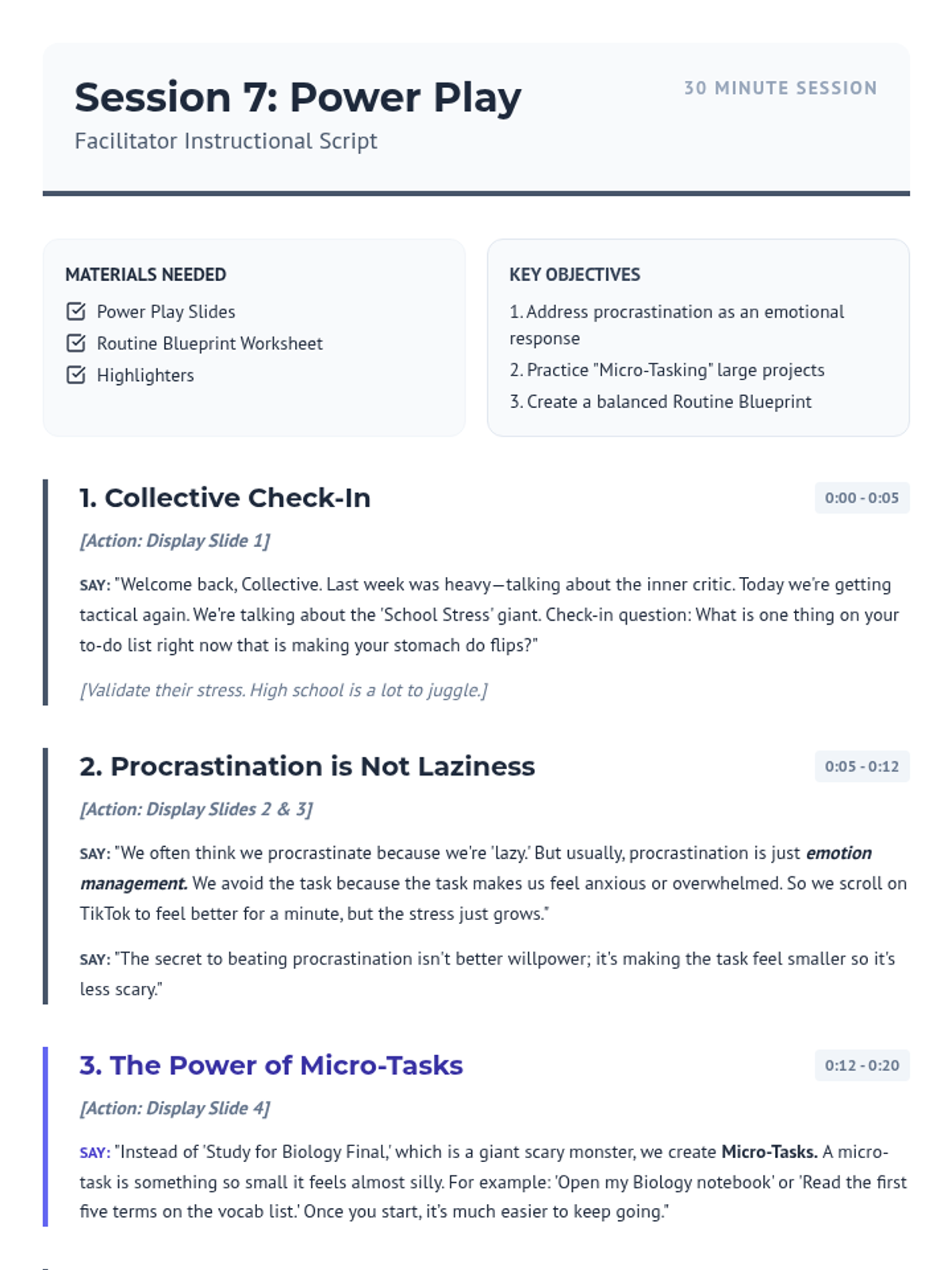
A detailed facilitation script for the seventh session of the Calm Collective, focusing on academic stress management, time-blocking, and overcoming procrastination.
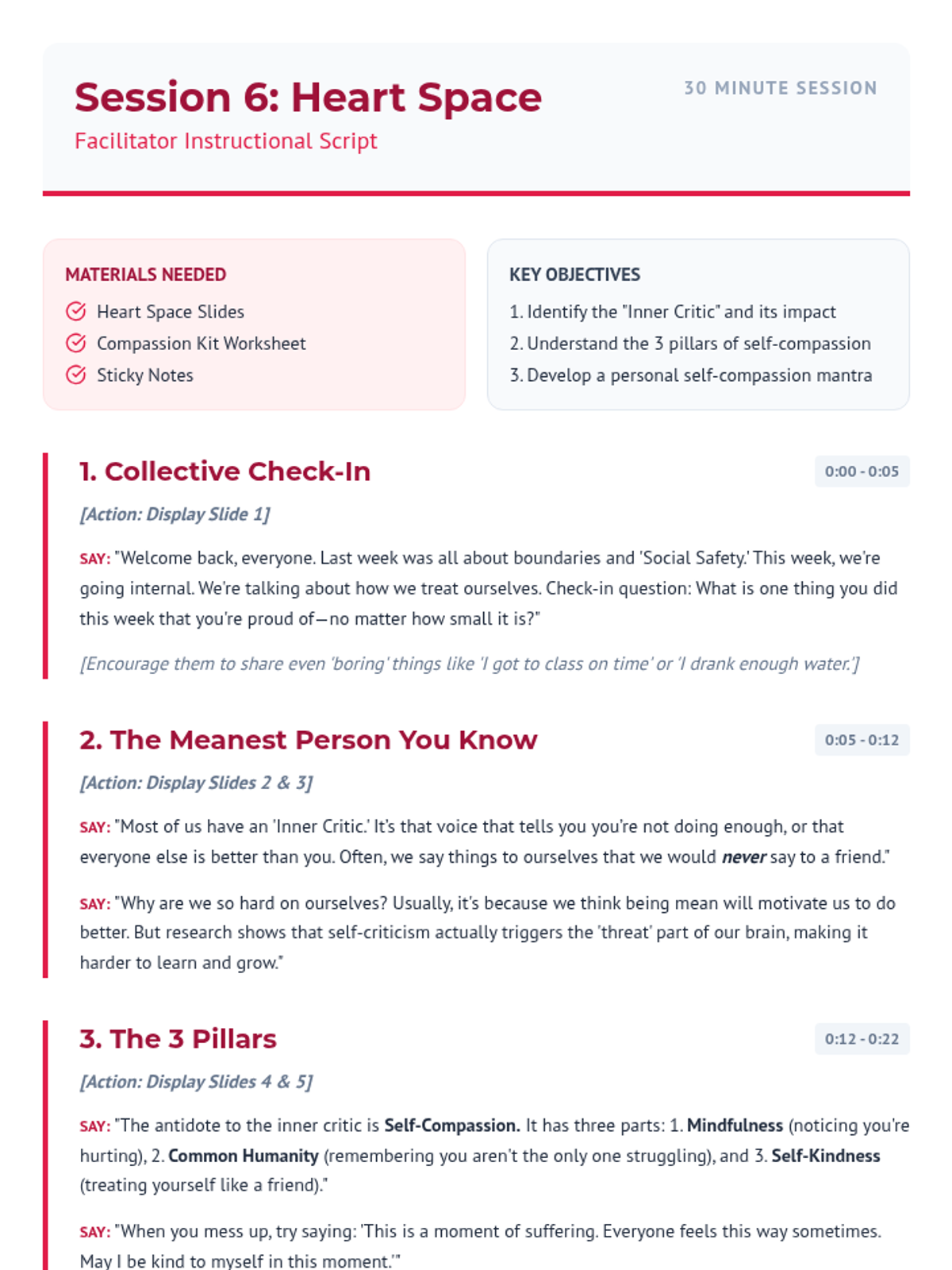
A detailed facilitation script for the sixth session of the Calm Collective, addressing perfectionism, the inner critic, and self-compassion. Fixed icon rendering and page breaks.
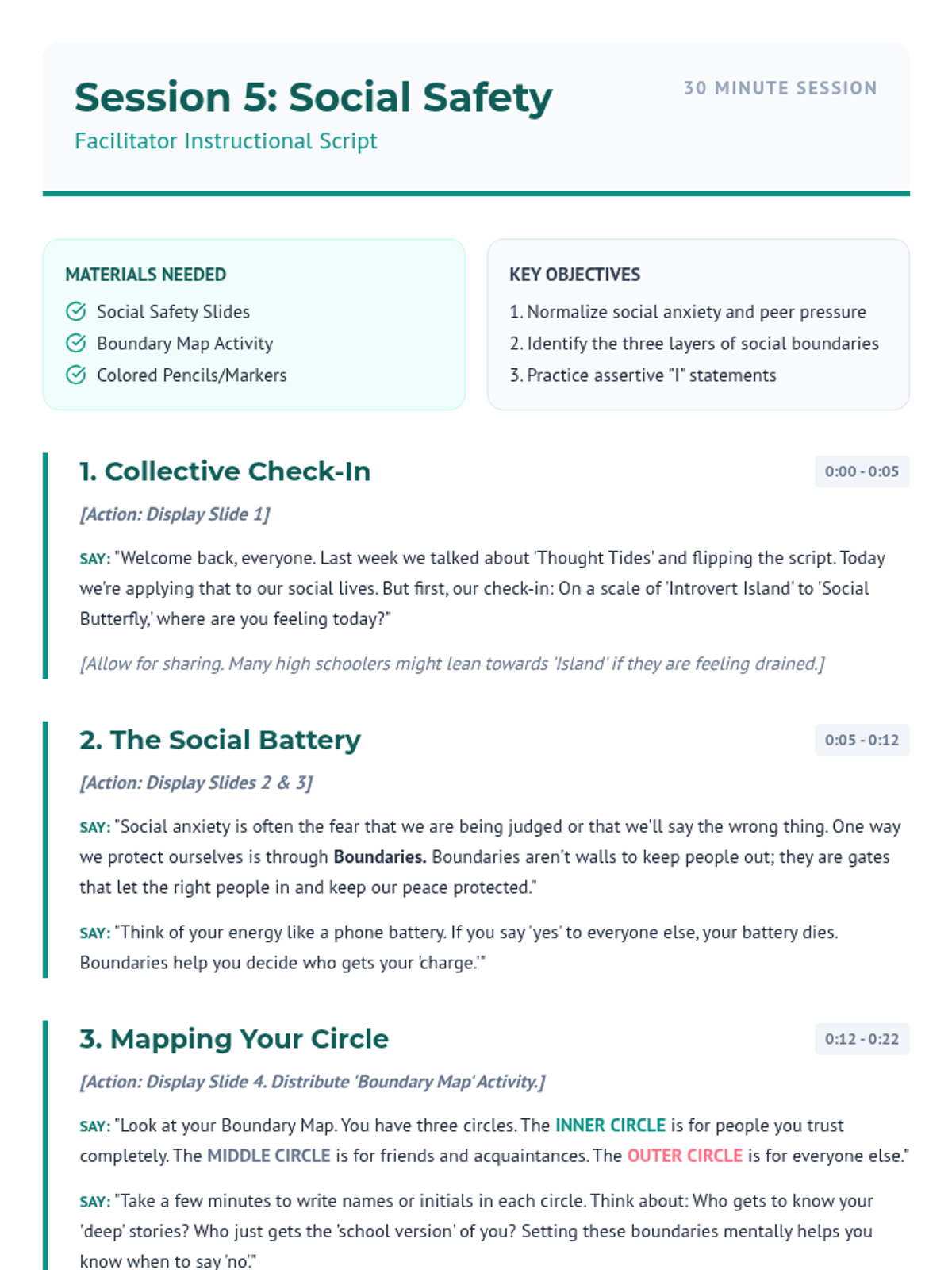
A detailed facilitation script for the fifth session of the Calm Collective, focusing on social anxiety, boundary mapping, and assertive communication skills. Fixed layout overlap and contrast.
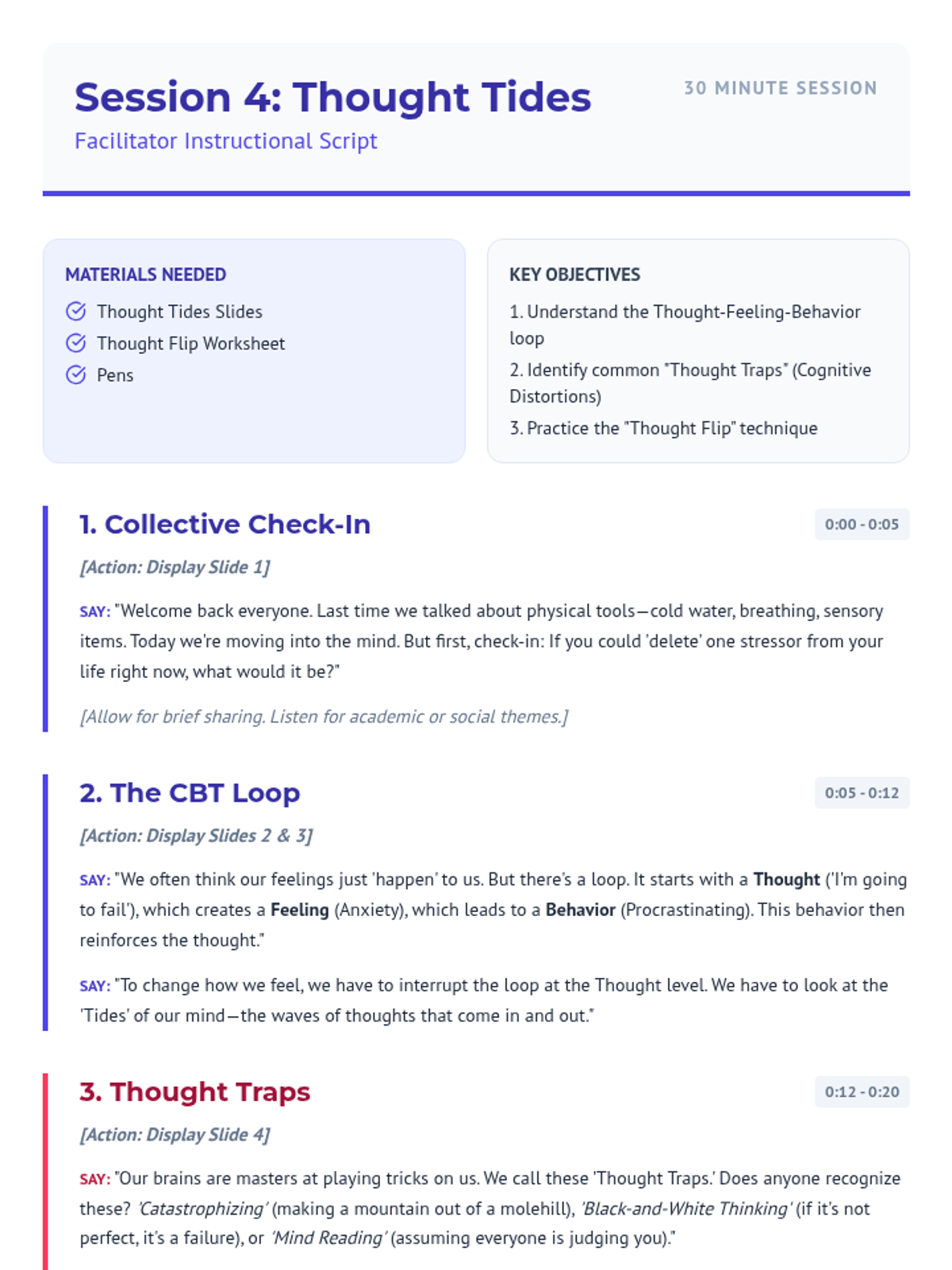
A detailed facilitation script for the fourth session of the Calm Collective, focusing on the CBT loop, identifying thought traps, and practicing cognitive reframing. Fixed icon rendering and page breaks.
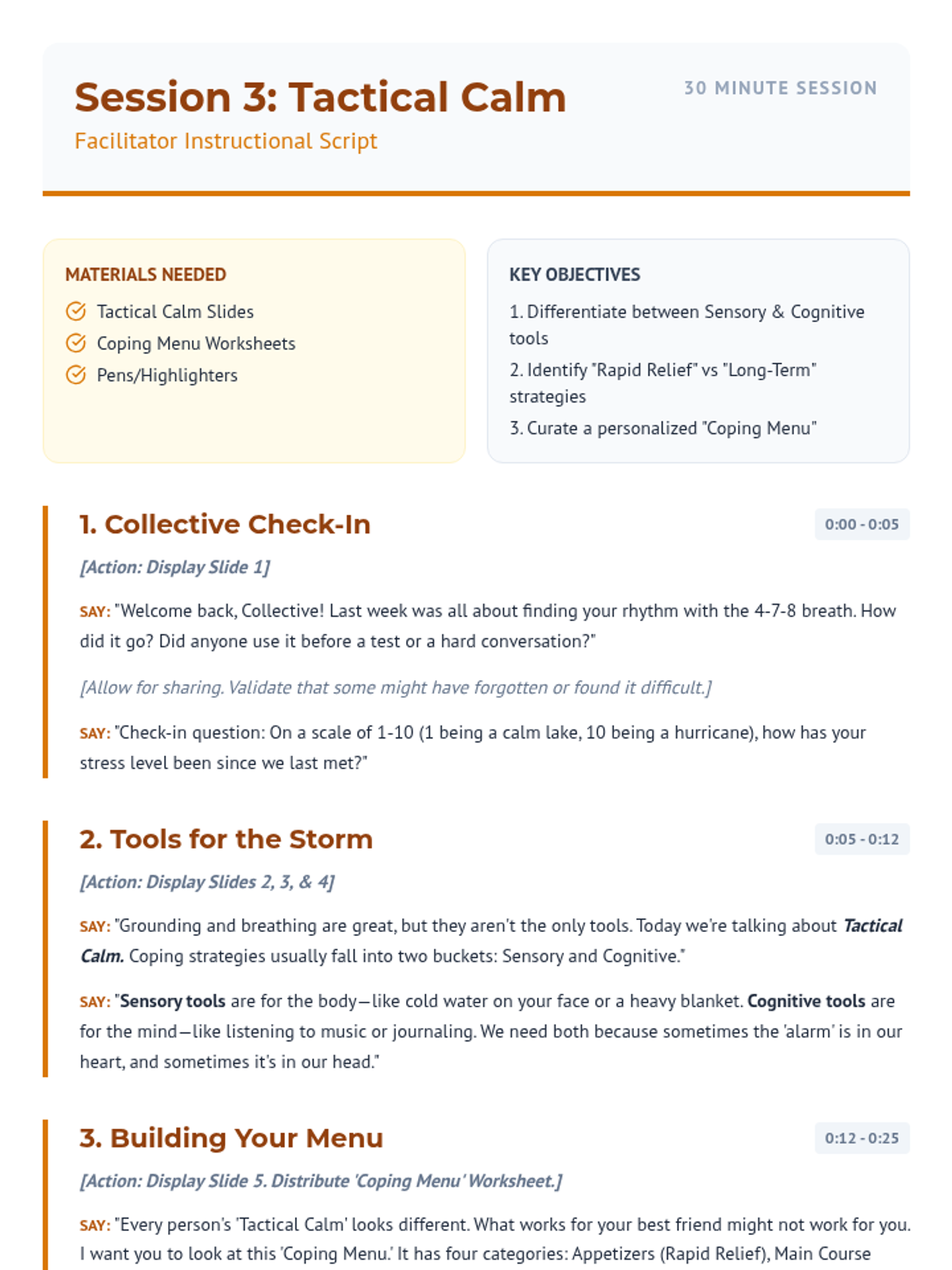
A detailed facilitation script for the third session of the Calm Collective, focusing on sensory vs. cognitive coping strategies and the creation of a personalized Coping Menu. Fixed icon rendering and page breaks.
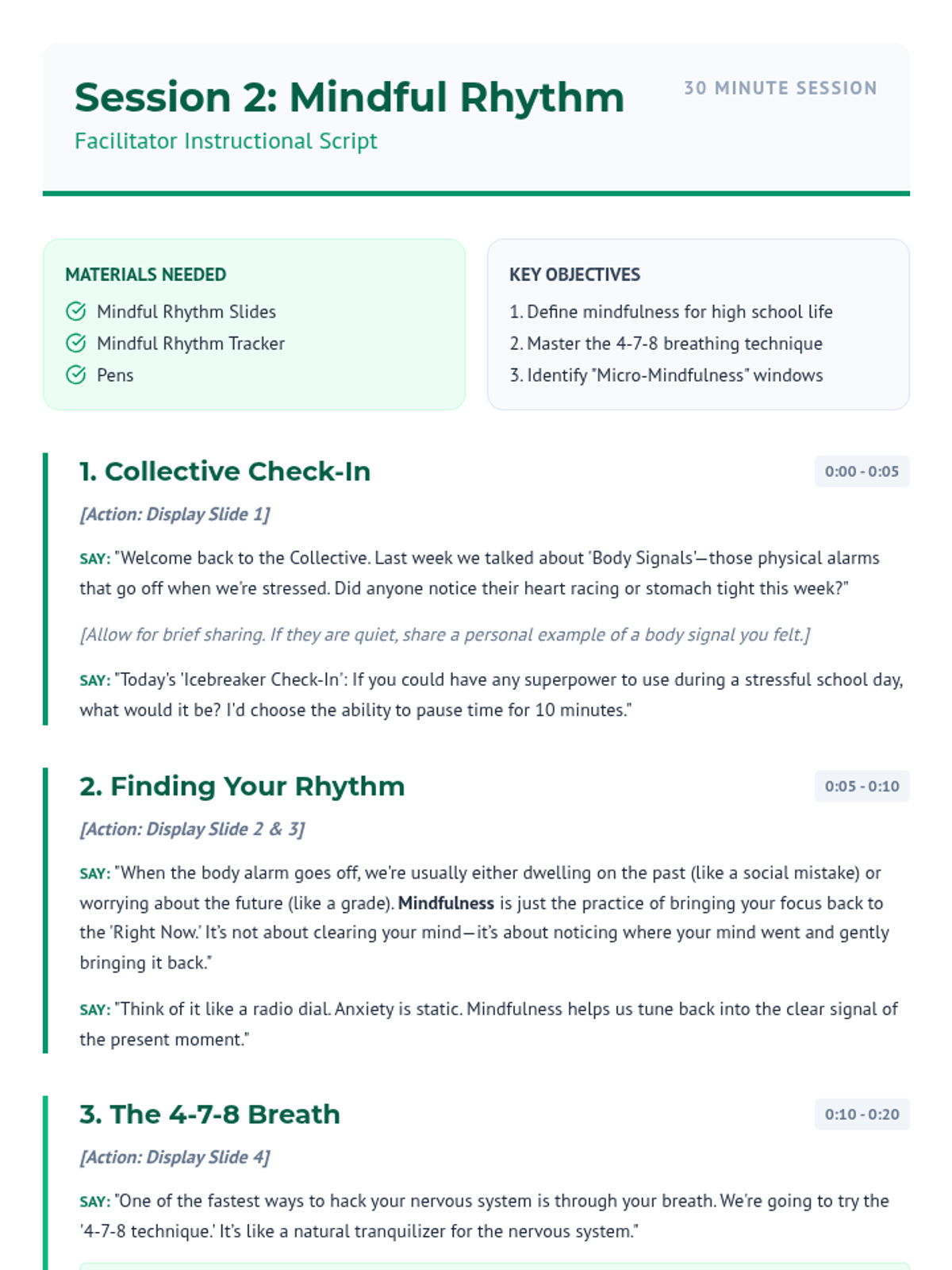
A detailed facilitation script for the second session of the Calm Collective, providing time-stamped sections, "what to say" prompts, and "what to do" instructions for the counselor. Focuses on mindfulness and the 4-7-8 breathing technique. Adjusted colors and fixed page breaks.
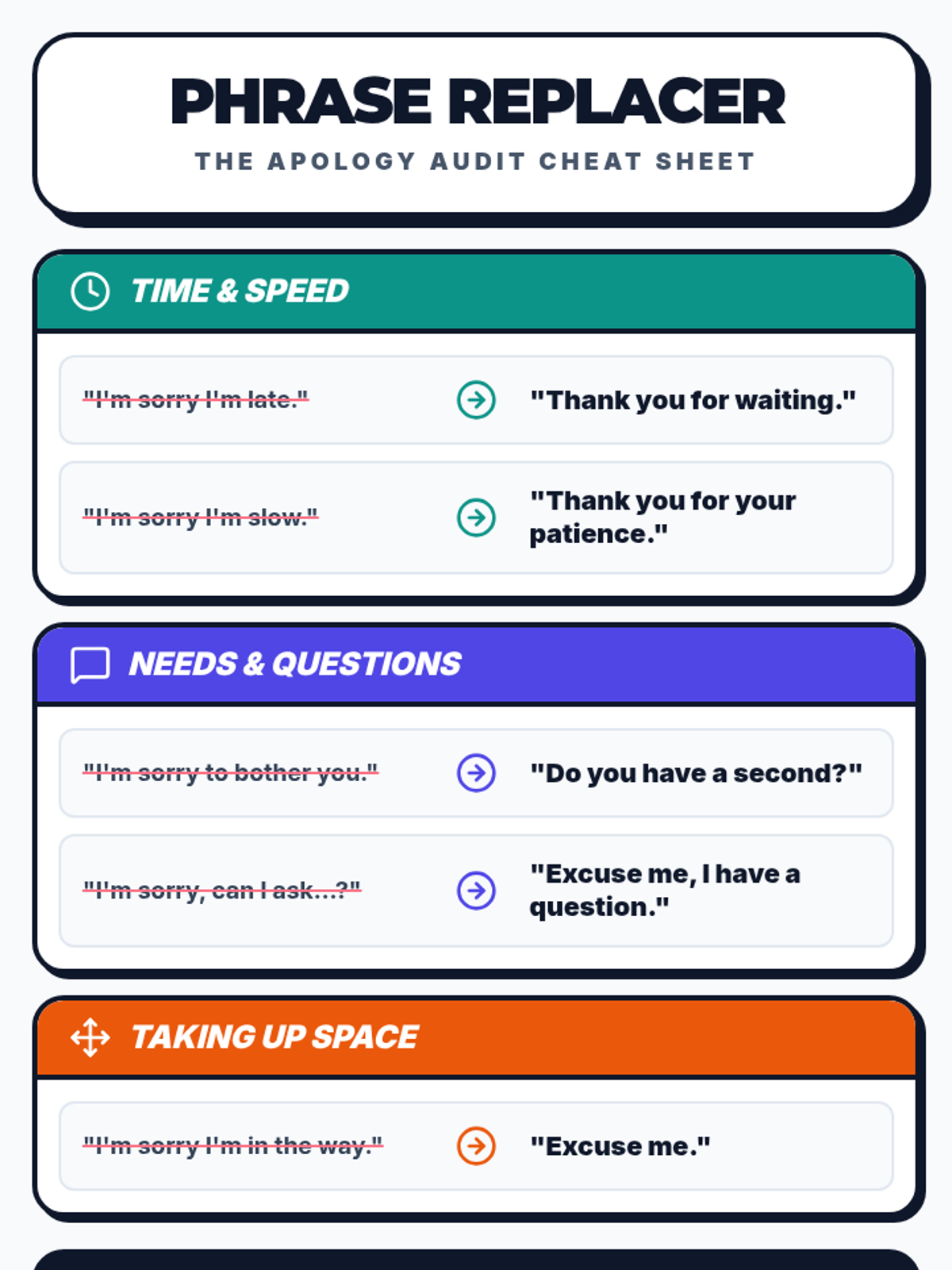
A one-page visual reference guide listing common over-apologies and their more effective replacements, designed for quick desk-side or binder use.
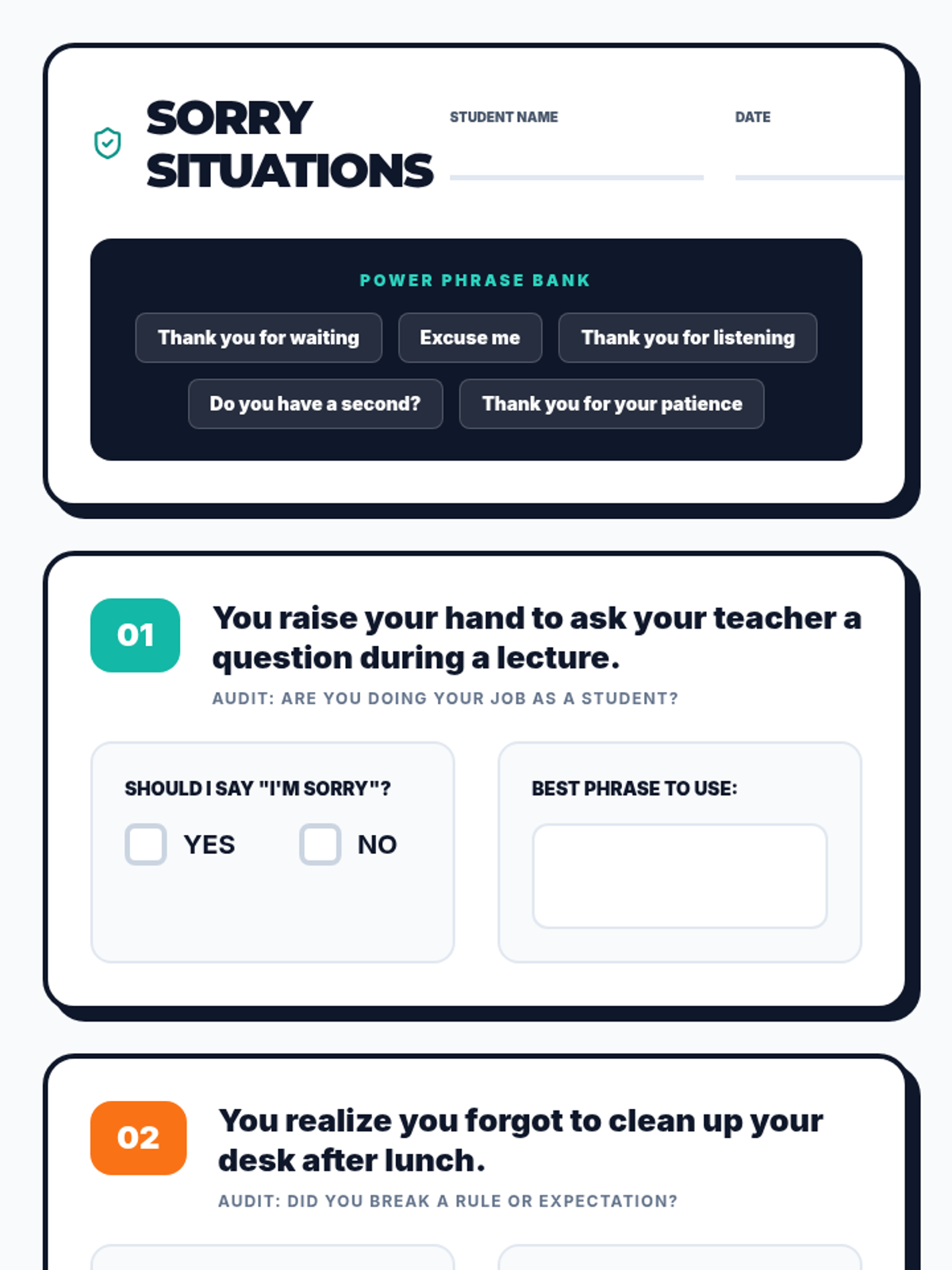
A practice worksheet where students audit various social situations to decide if an apology is necessary and practice replacing it with appropriate "power phrases."
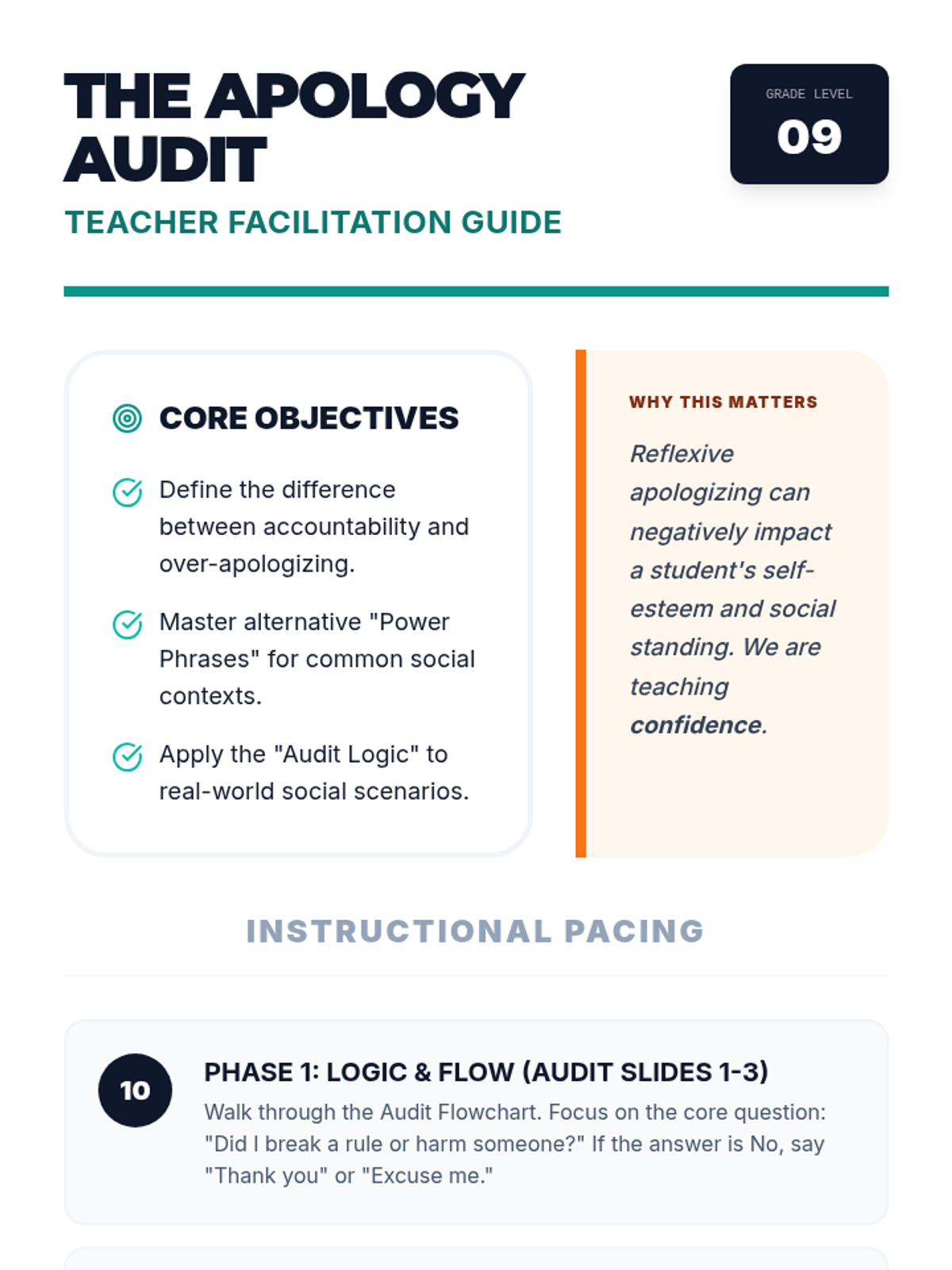
A comprehensive facilitator guide for teachers, providing pedagogical context on over-apologizing in autism, delivery instructions, and troubleshooting tips.
A visually structured slide deck that explains the logic behind apologies, featuring the "Apology Audit" flowchart and "Thank You" power moves for 9th-grade students.
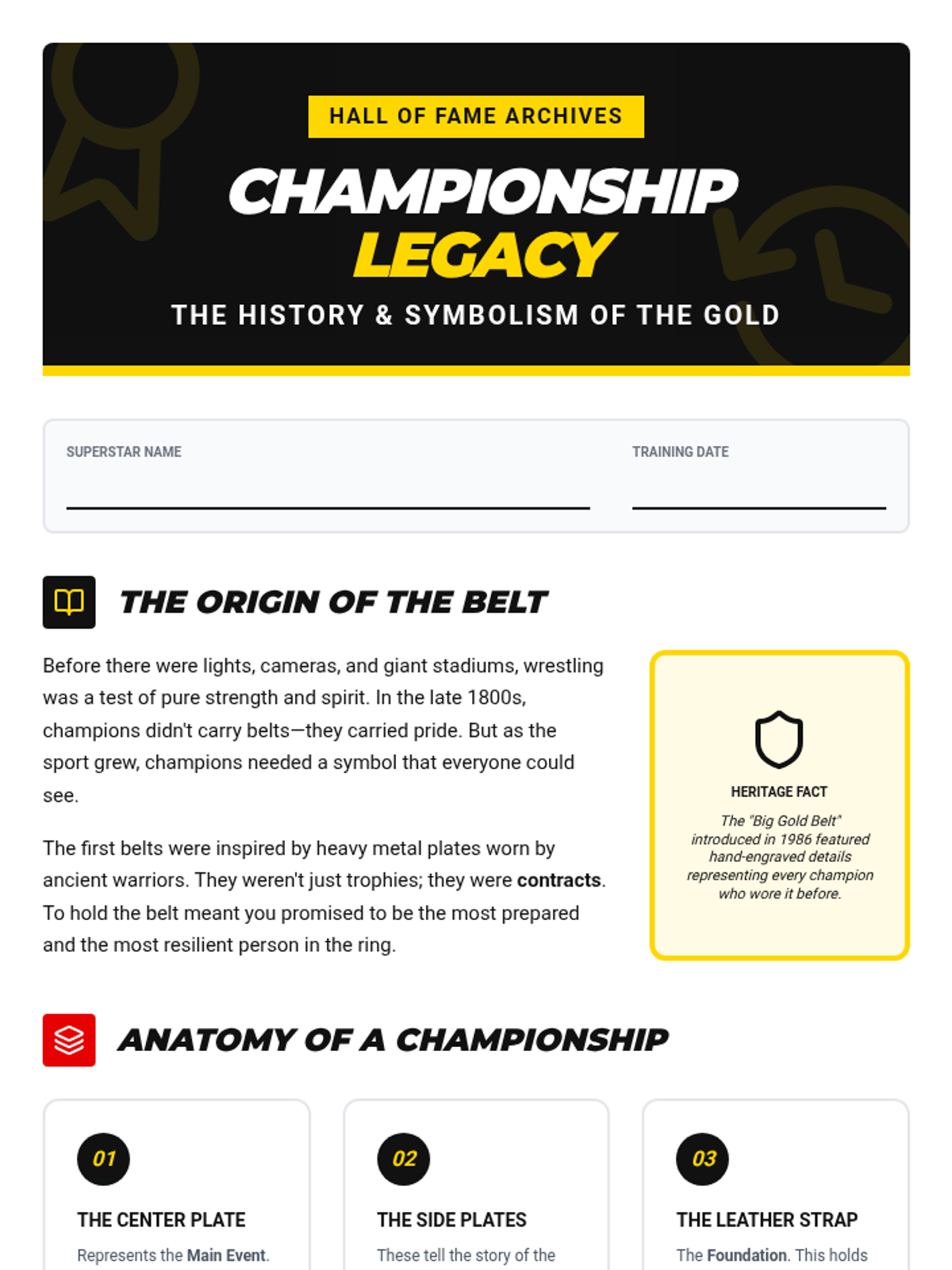
A student-facing reading and activity sheet exploring the history of wrestling championship belts, their symbolism, and how students can build their own academic legacy.
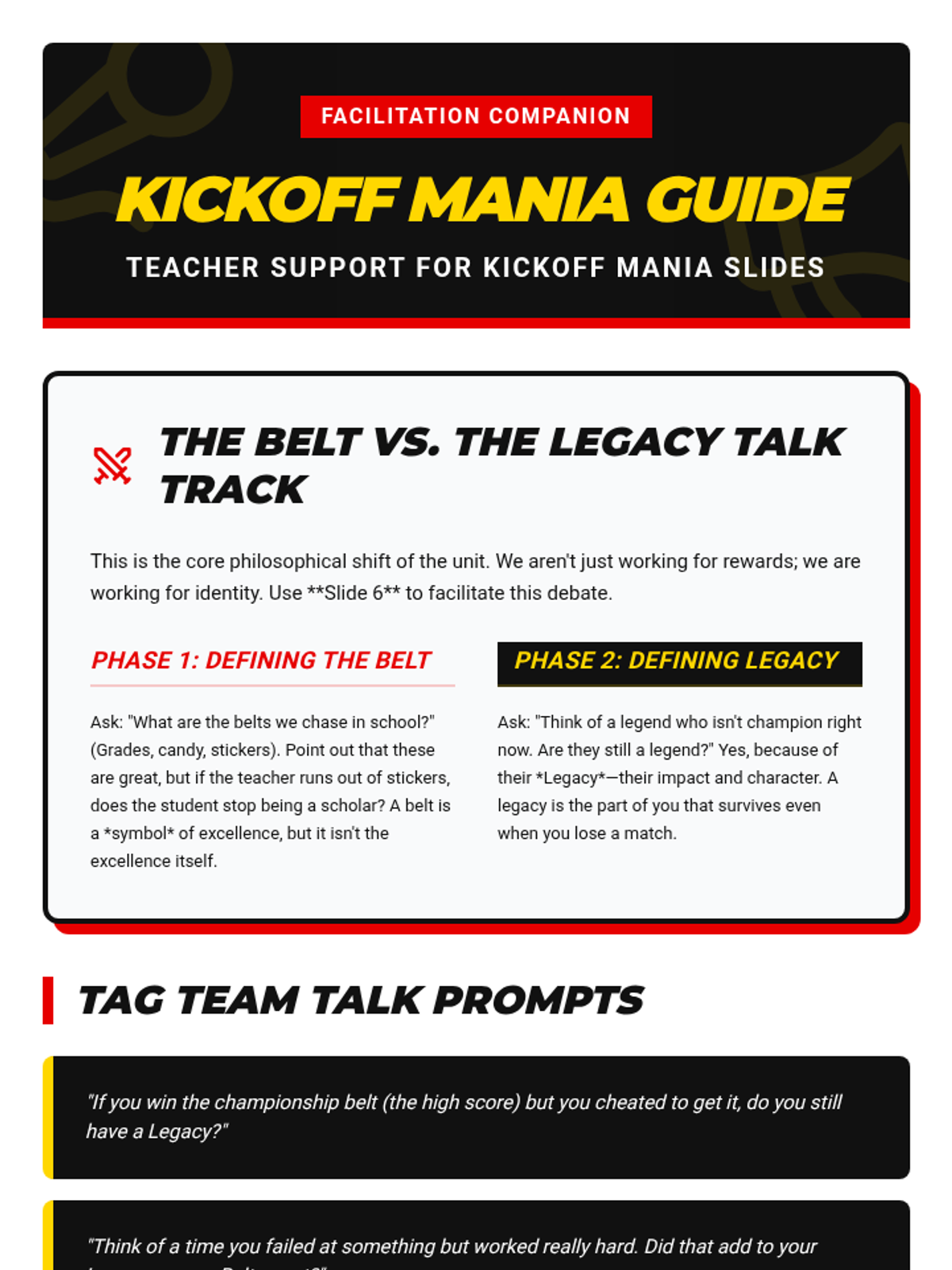
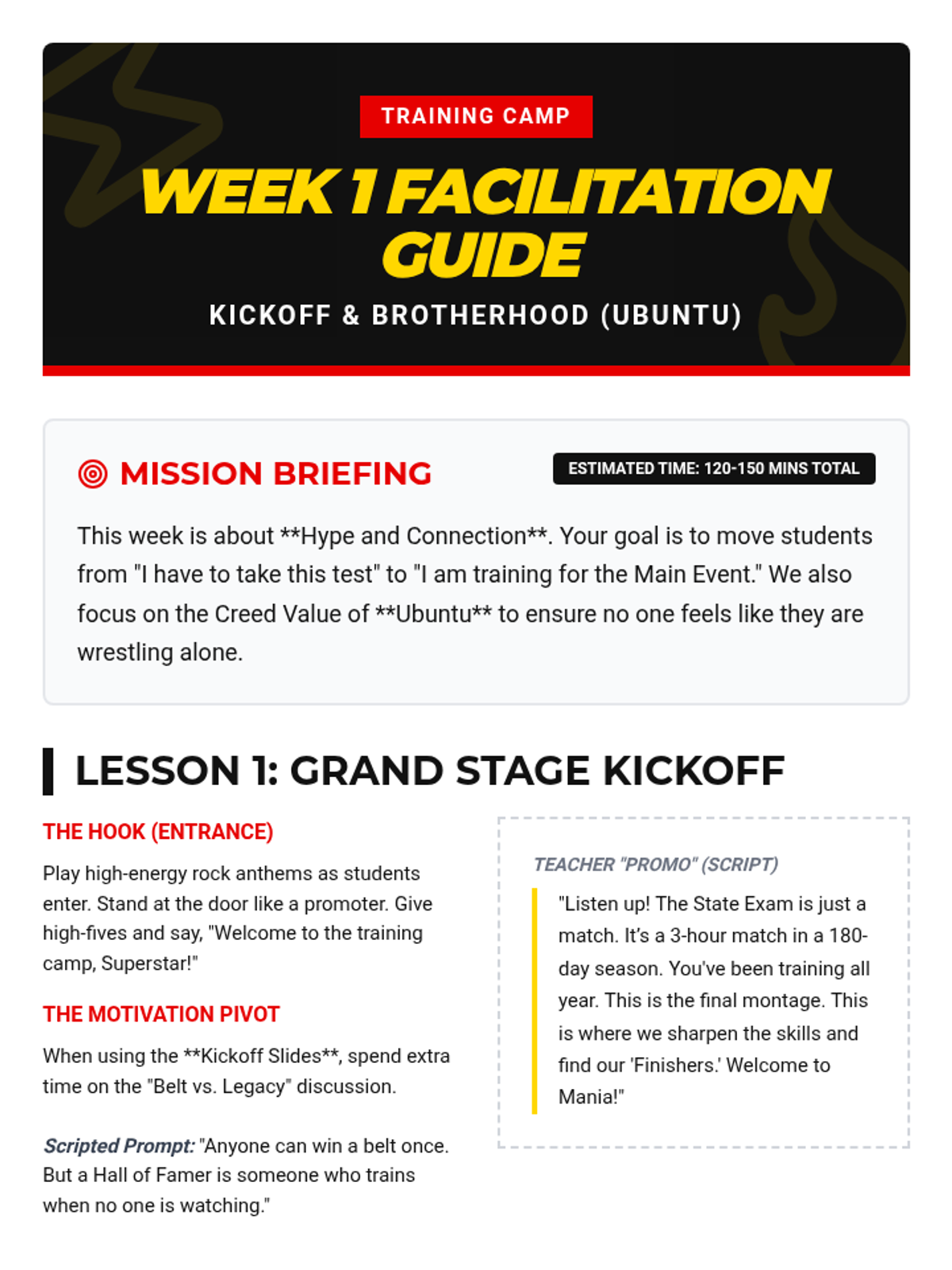
A detailed teacher facilitation companion for the Kickoff Mania slides, providing talk tracks for the 'Belt vs. Legacy' discussion, discussion prompts, and implementation steps for the Ubuntu mission.
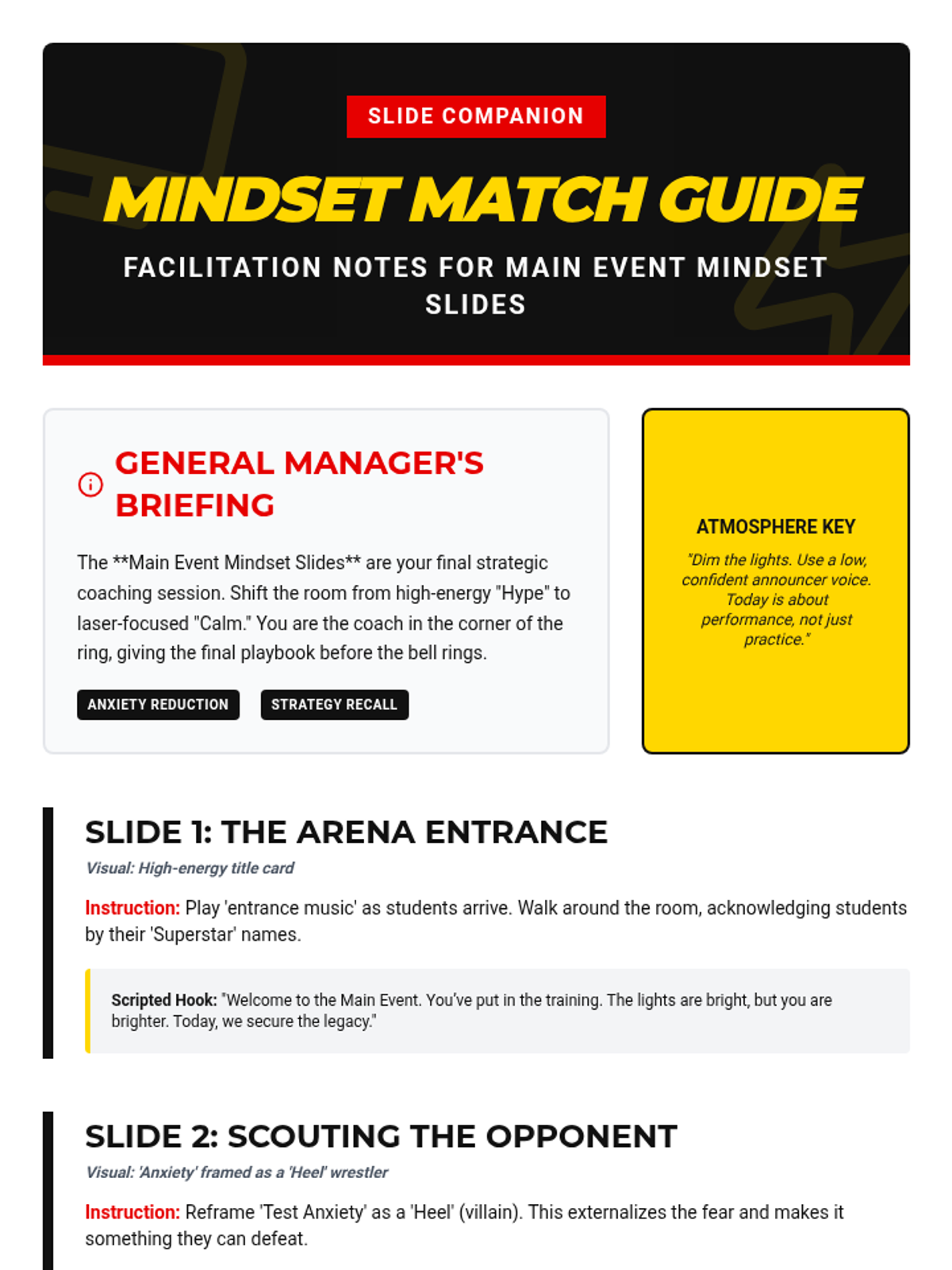
A teacher-facing companion guide for the 'Main Event Mindset' slides, providing slide-by-slide scripts, instructional instructions for managing test anxiety, and post-test decompression strategies.
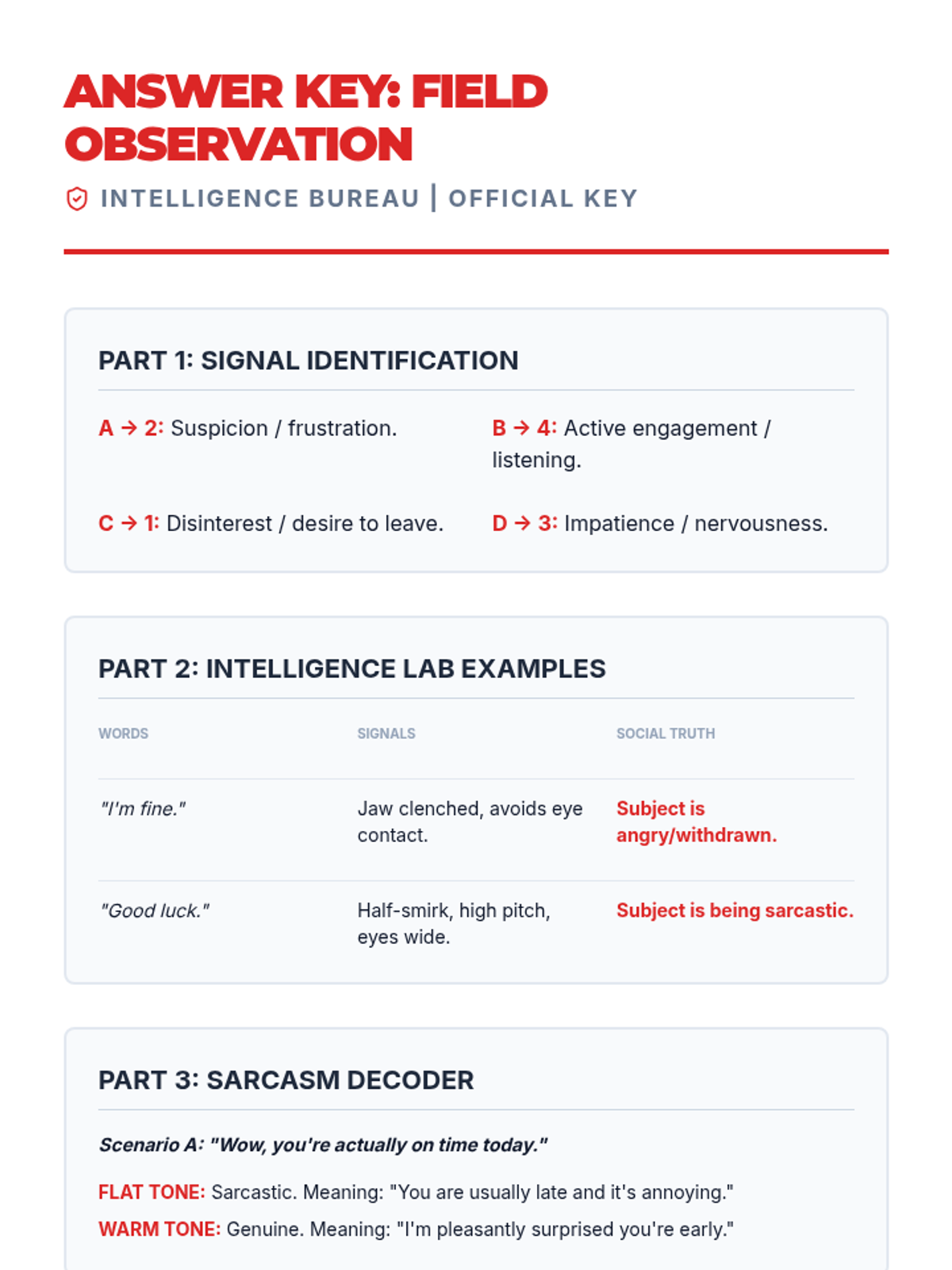
A teacher-facing answer key and discussion guide for the Field Observation Worksheet.
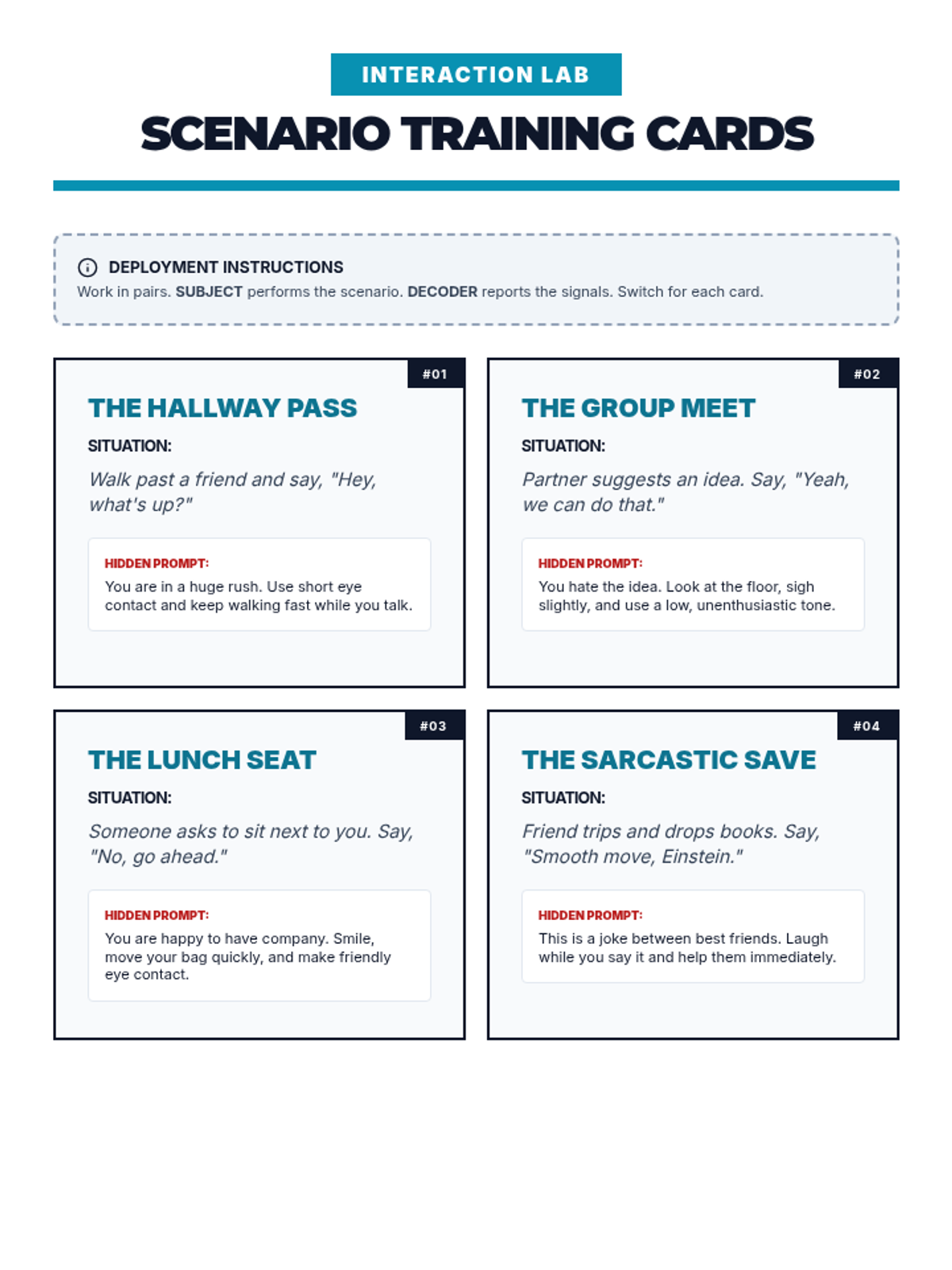
A set of roleplay scenario cards for peer-to-peer interaction, designed to help students practice and decode non-verbal signals in real-time.
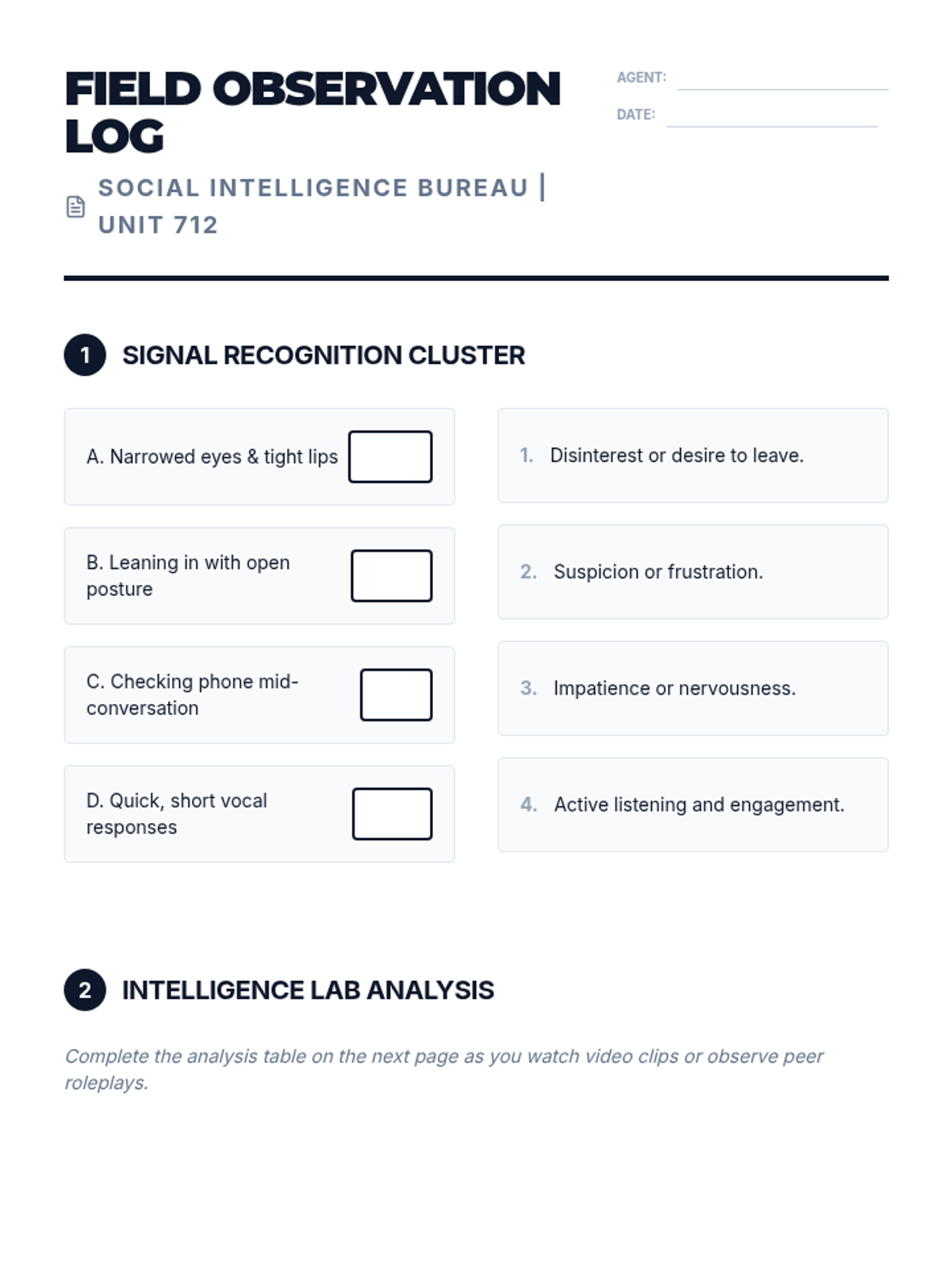
A student worksheet styled as a field observation log, including matching exercises, video analysis charts, and subtext decoding scenarios.
High-impact slide deck for a social signal decoding lesson, featuring the 4 pillars of signaling, proxemics diagrams, and case studies.
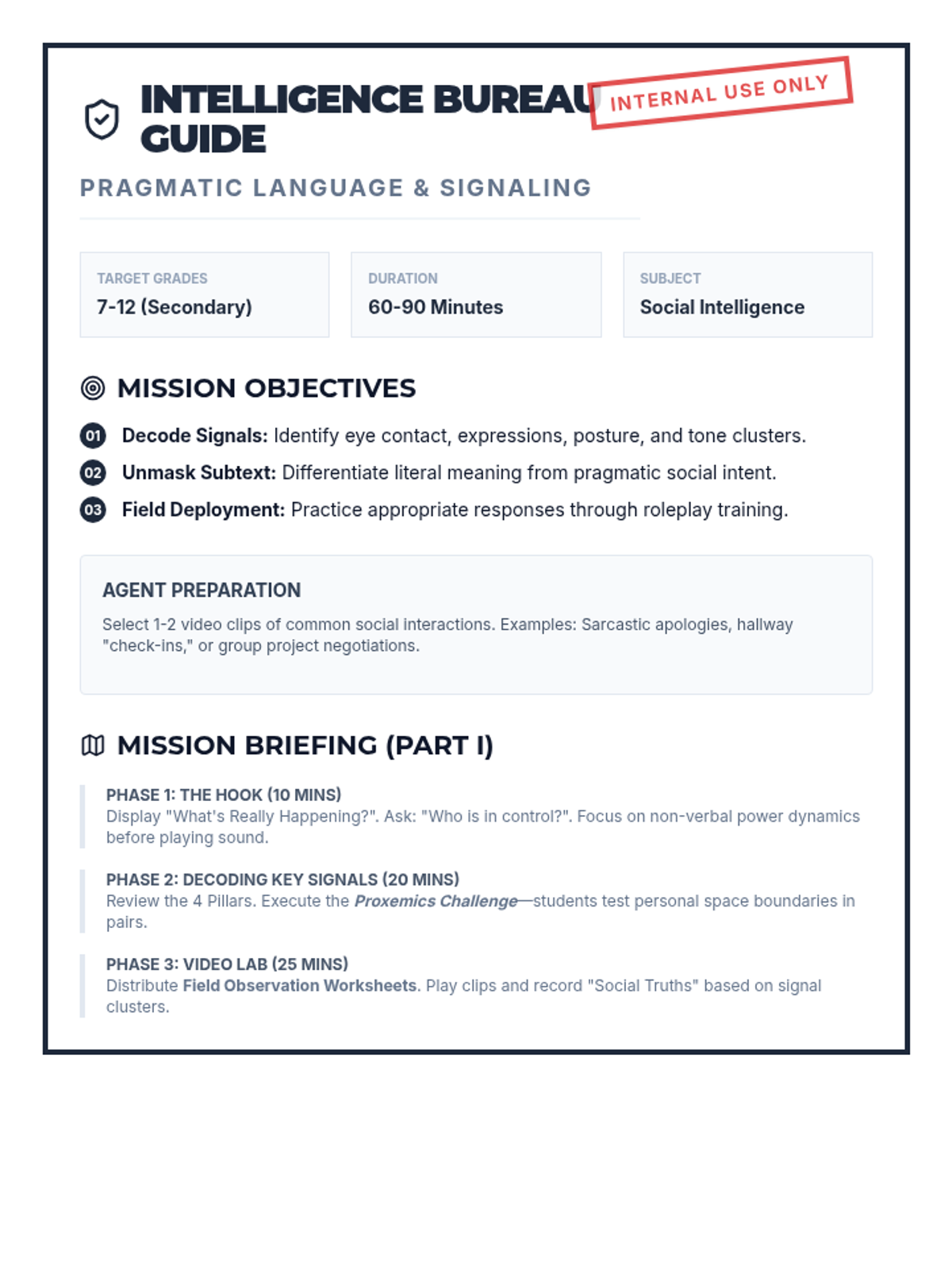
A comprehensive lesson plan for teachers, styled as an Intelligence Bureau field guide, covering objectives, lesson flow, and teaching tips for social signal decoding.
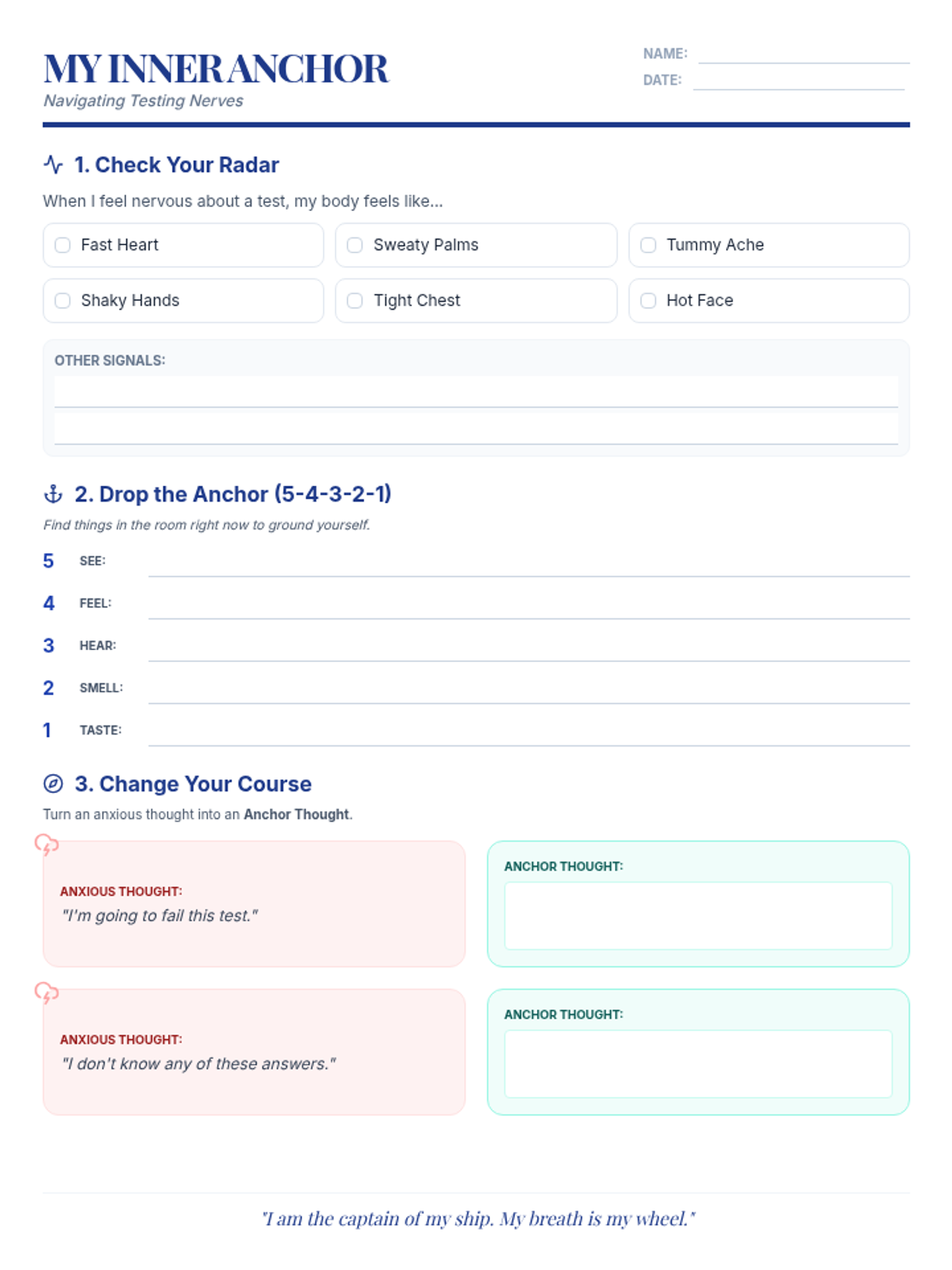
A final consolidated student worksheet that fits perfectly on one page, featuring balanced reframing boxes and darkened grounding lines.
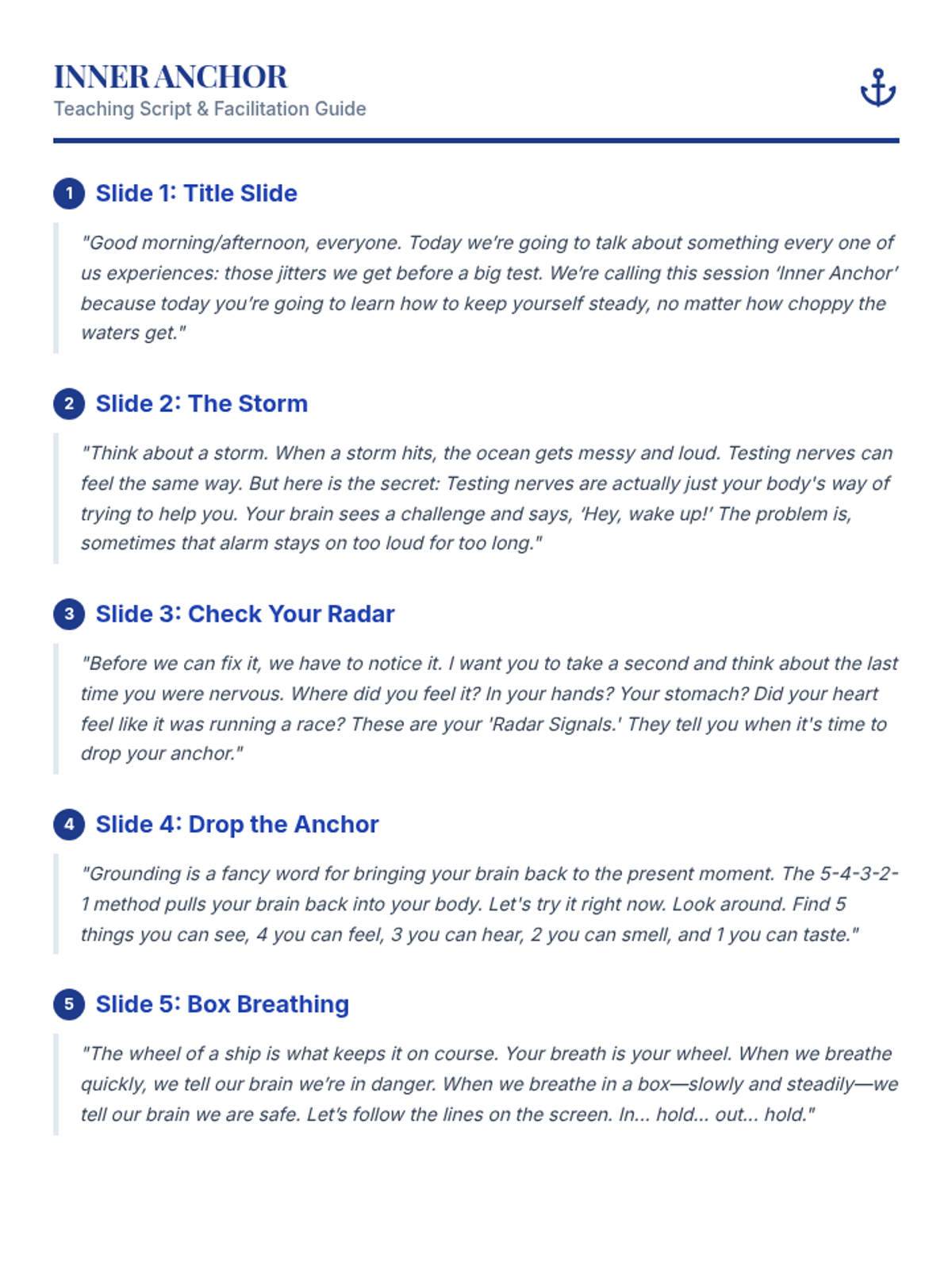
A revised teaching script consolidated into two pages with headers repeated on each page for professional consistency and no awkward splits.
A finalized slide deck with polished text rotation for breathing exercises and improved quote layout.
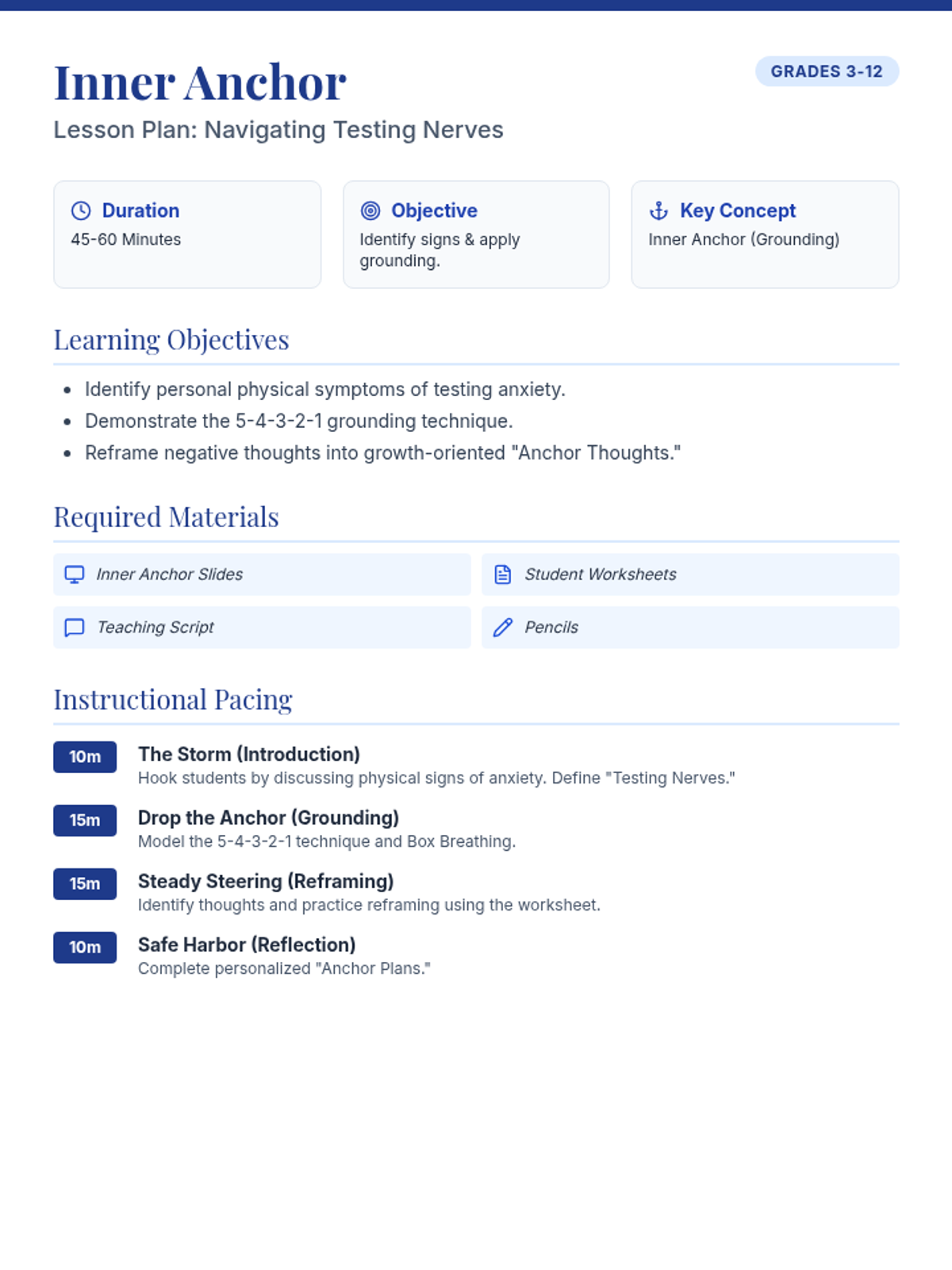
A revised lesson plan for teachers, consolidated into two pages to avoid awkward breaks and improve readability.
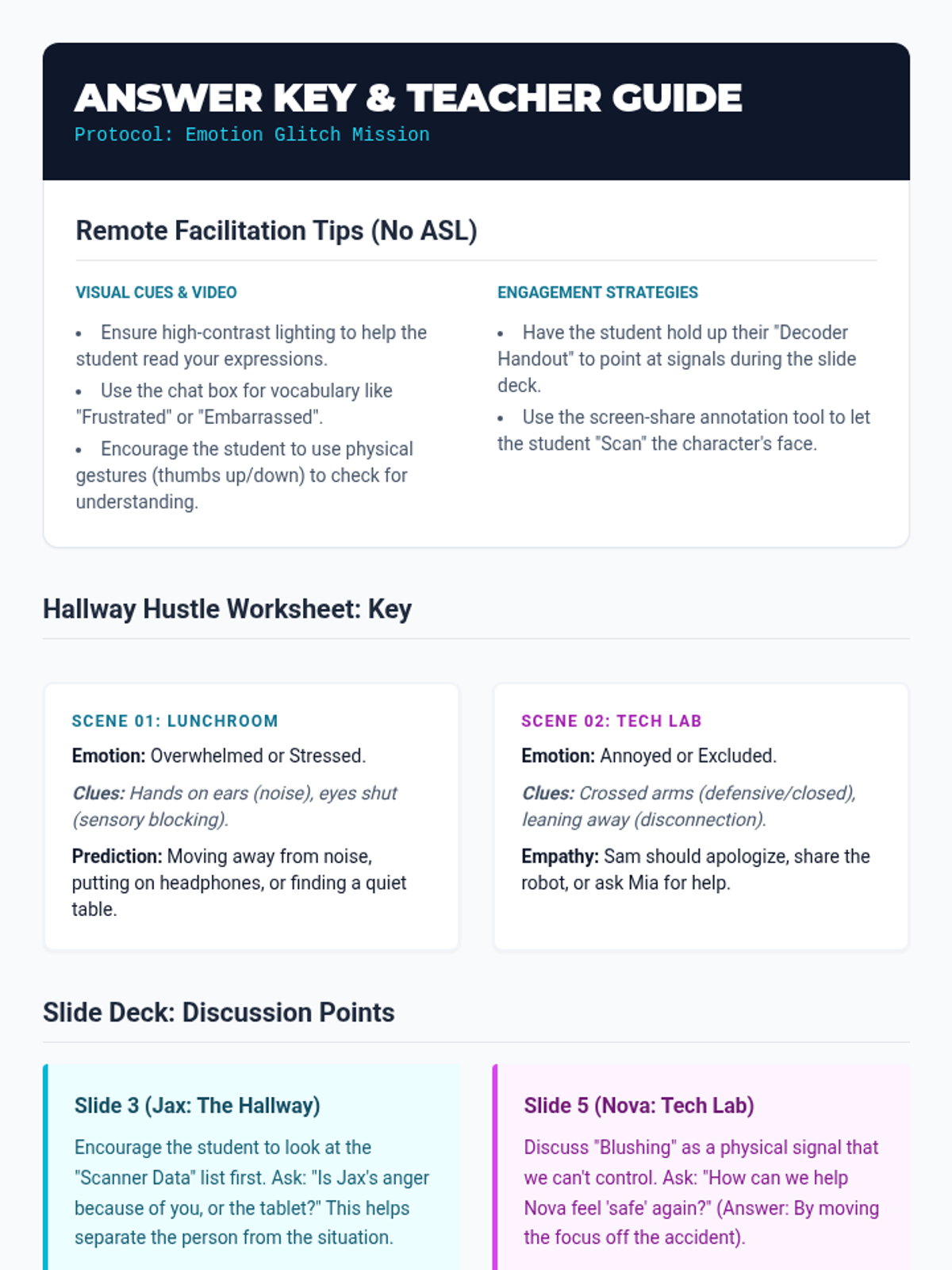
A teacher resource providing the answer key for the Hallway Hustle worksheet and specialized instructional strategies for remote teaching DHH students without the use of ASL.
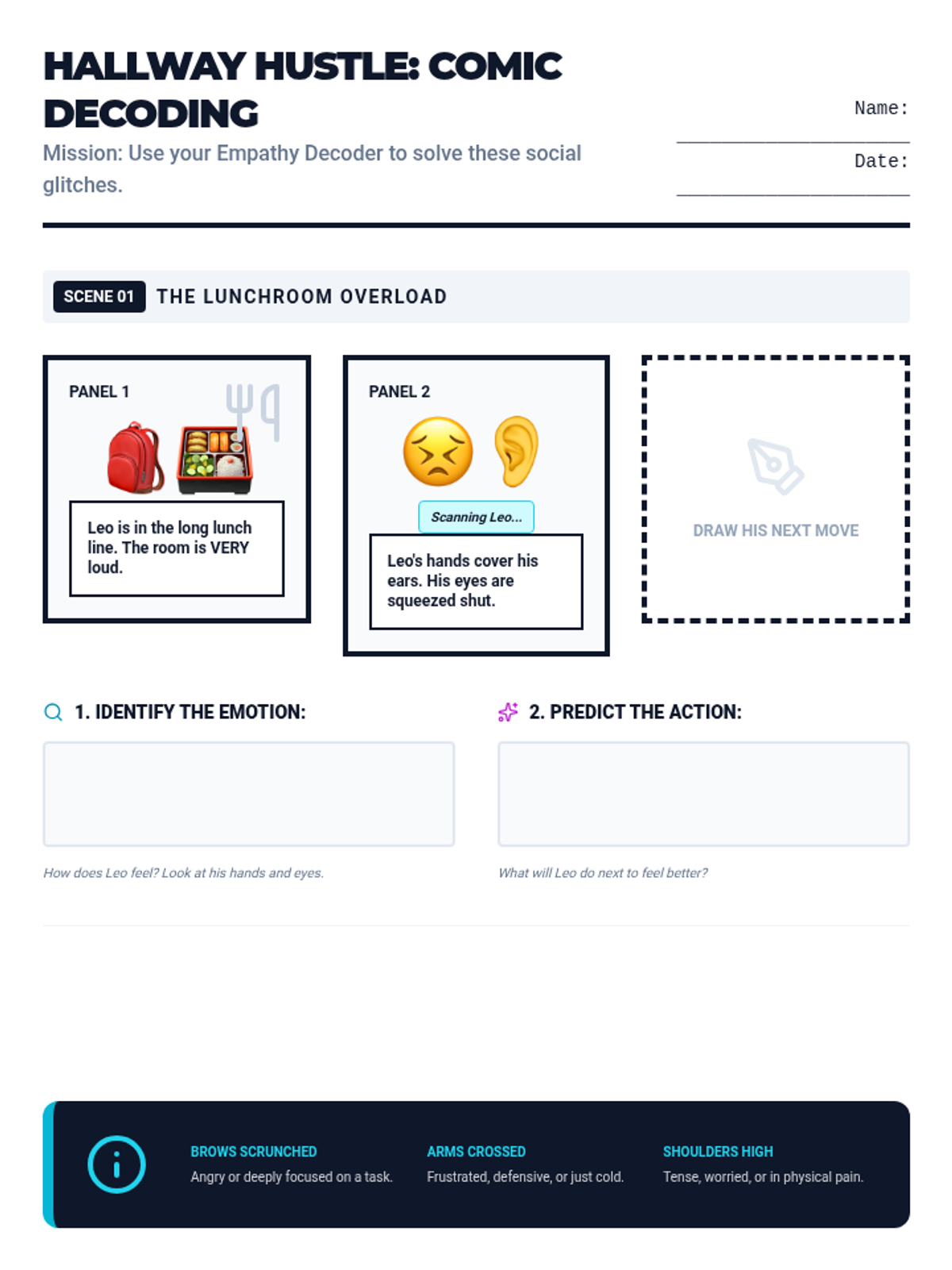
A comic-style worksheet where students analyze social situations in school settings. It includes 'scannable' panels and requires students to identify emotions and predict appropriate social responses.
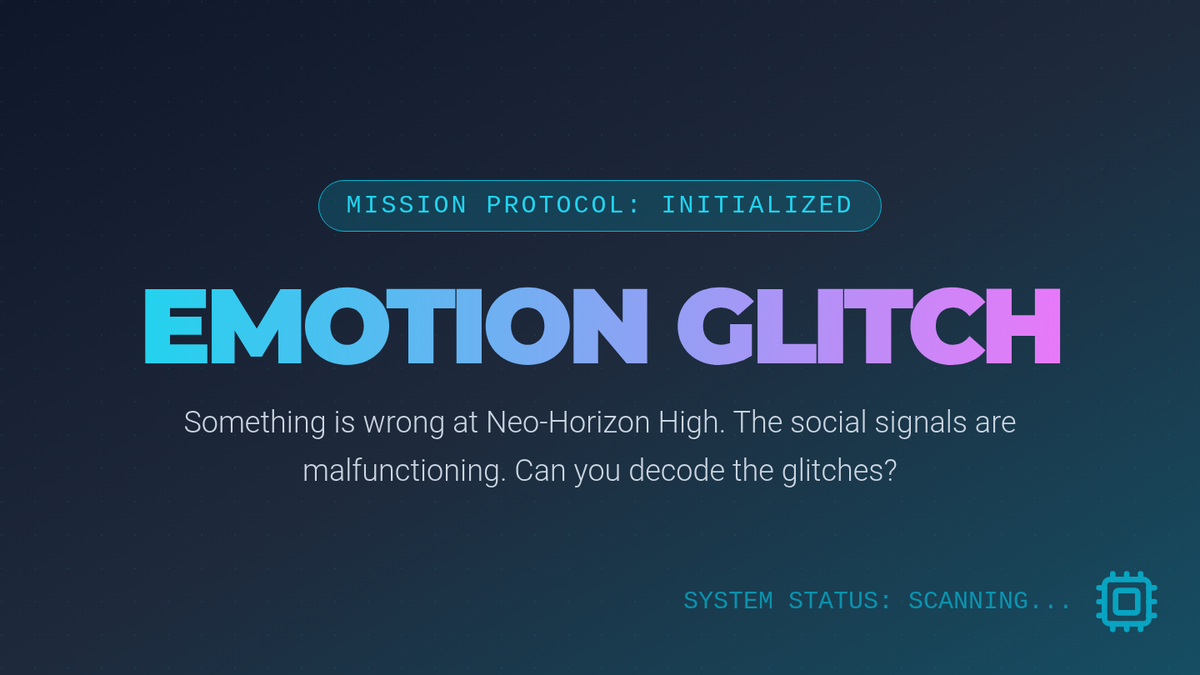
An interactive slide deck set in a futuristic 'cyber-school' environment. Students navigate social scenarios in a hallway and tech lab, practicing emotion recognition and empathy responses through a narrative 'Mission' framework.
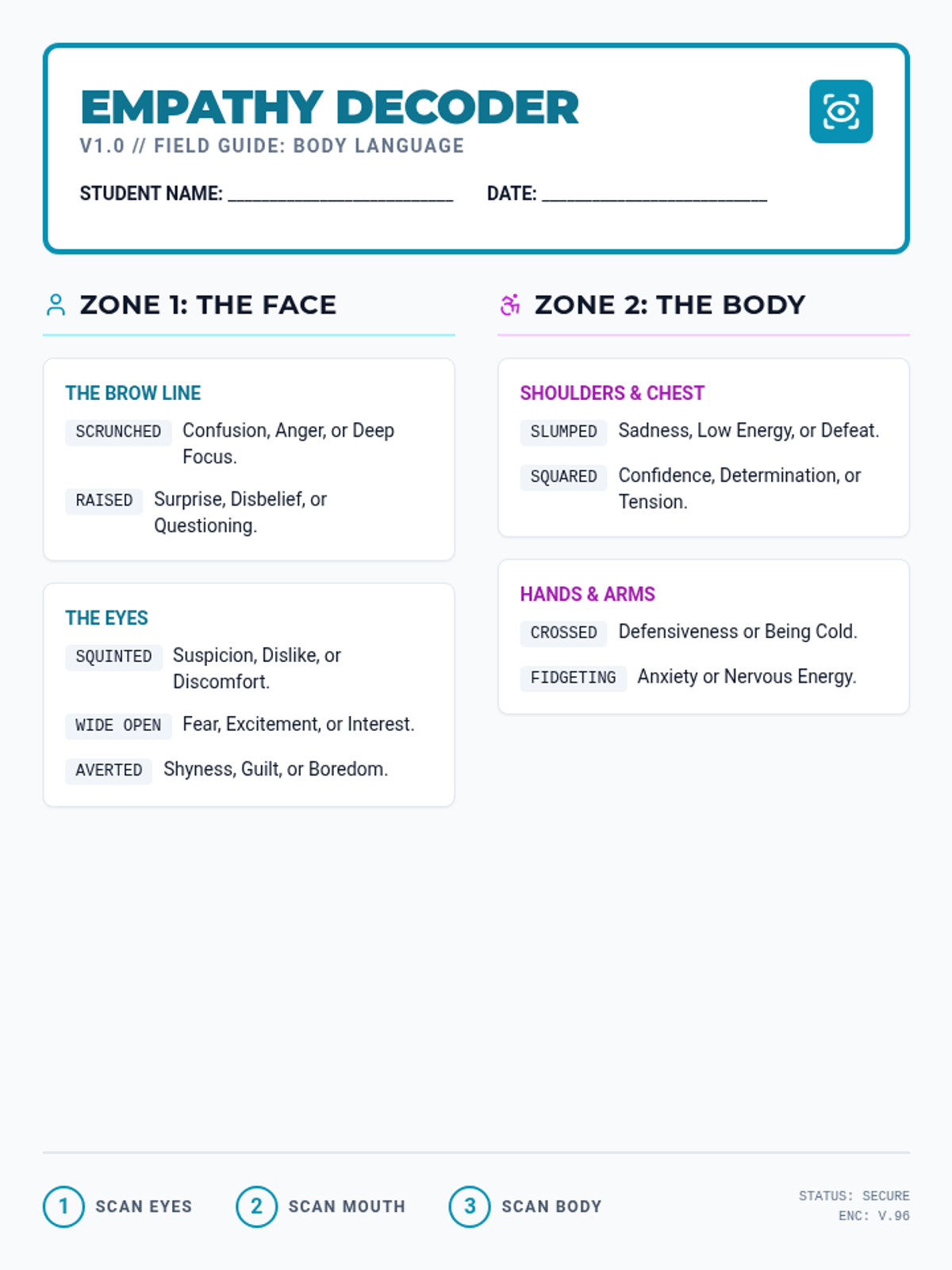
A visual cheat sheet for decoding body language and facial expressions, designed with a futuristic 'cyber-decoder' aesthetic to engage DHH students. Includes specific physical cues for the face and body.
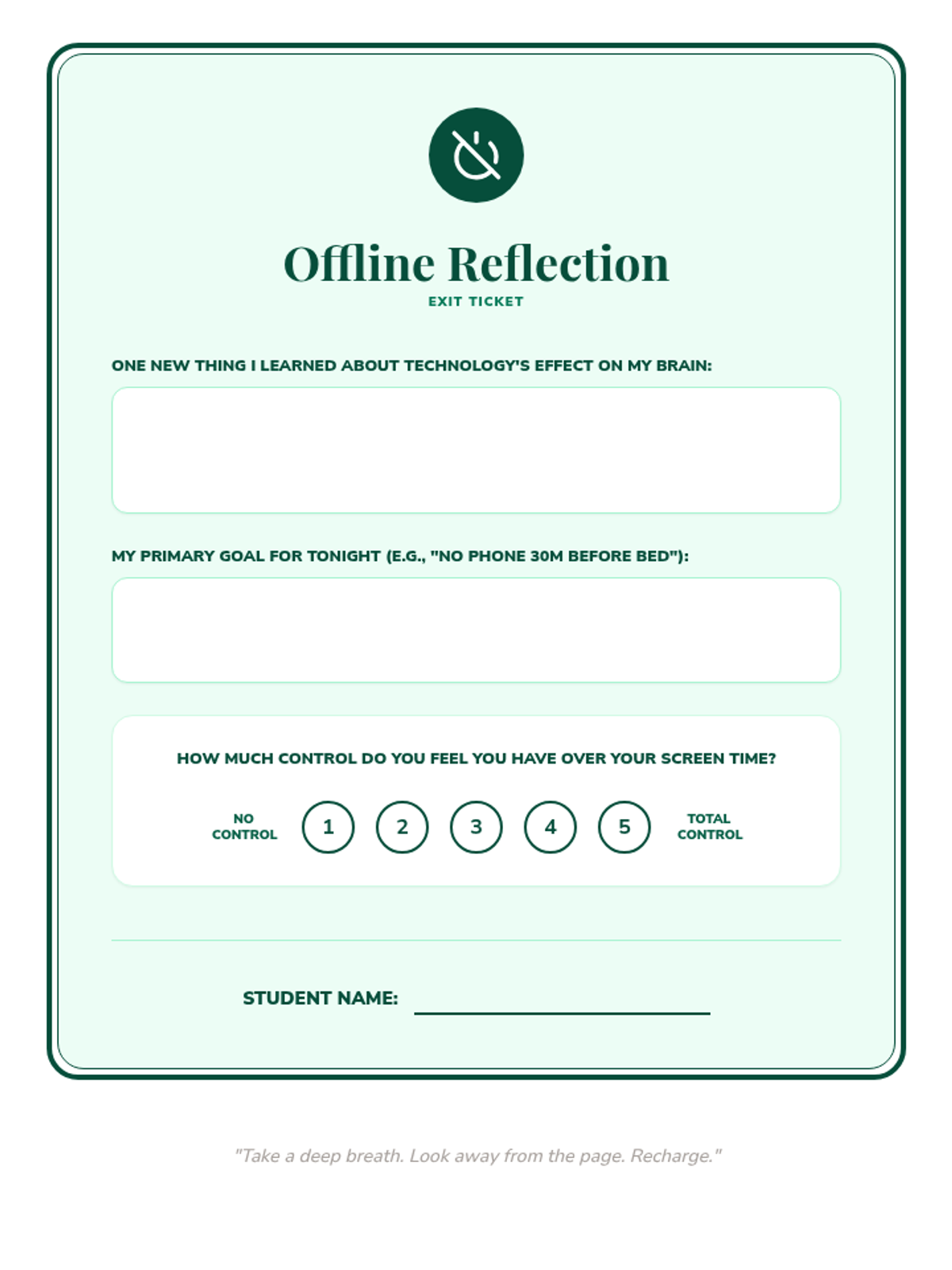
A post-lesson reflection tool for students to articulate their learning and state an immediate goal for their digital habits.
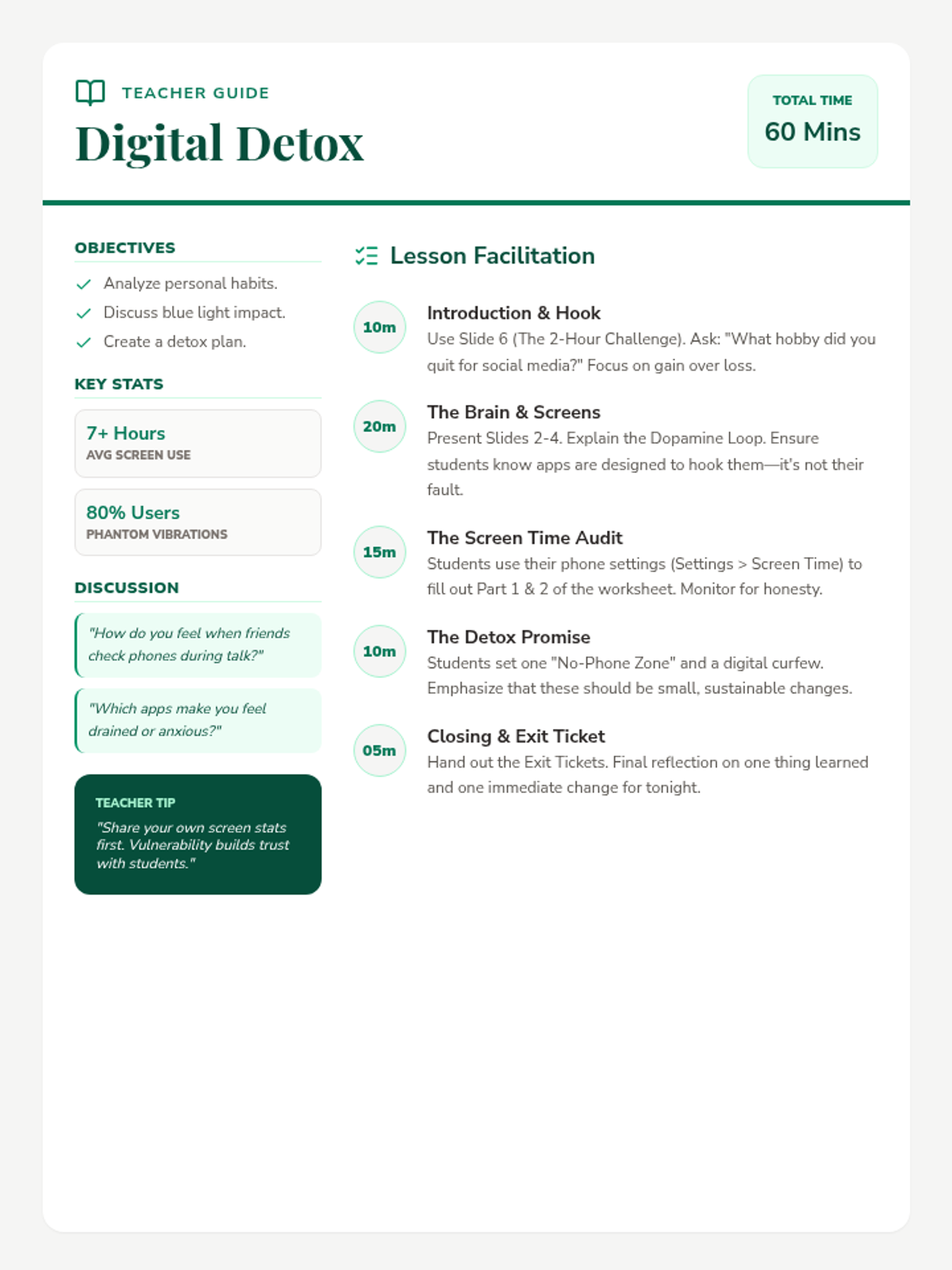
A comprehensive guide for teachers to facilitate the Digital Detox lesson, including pacing, background statistics, and discussion prompts.
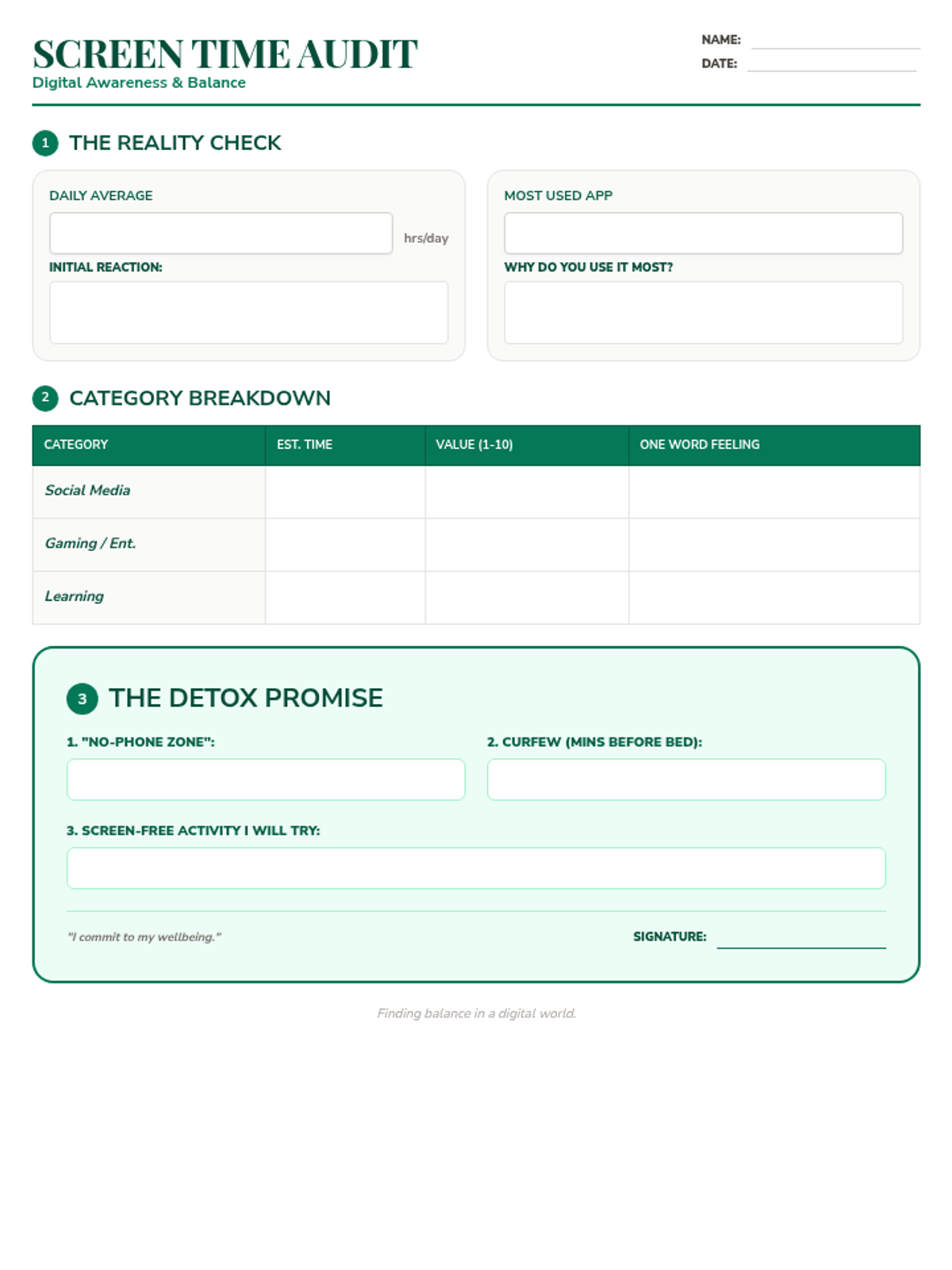
A structured worksheet for students to audit their current screen time habits and commit to specific, manageable goals for a digital detox.
A visually engaging presentation about the impact of screen time on the brain, the benefits of unplugging, and practical strategies for a digital detox.
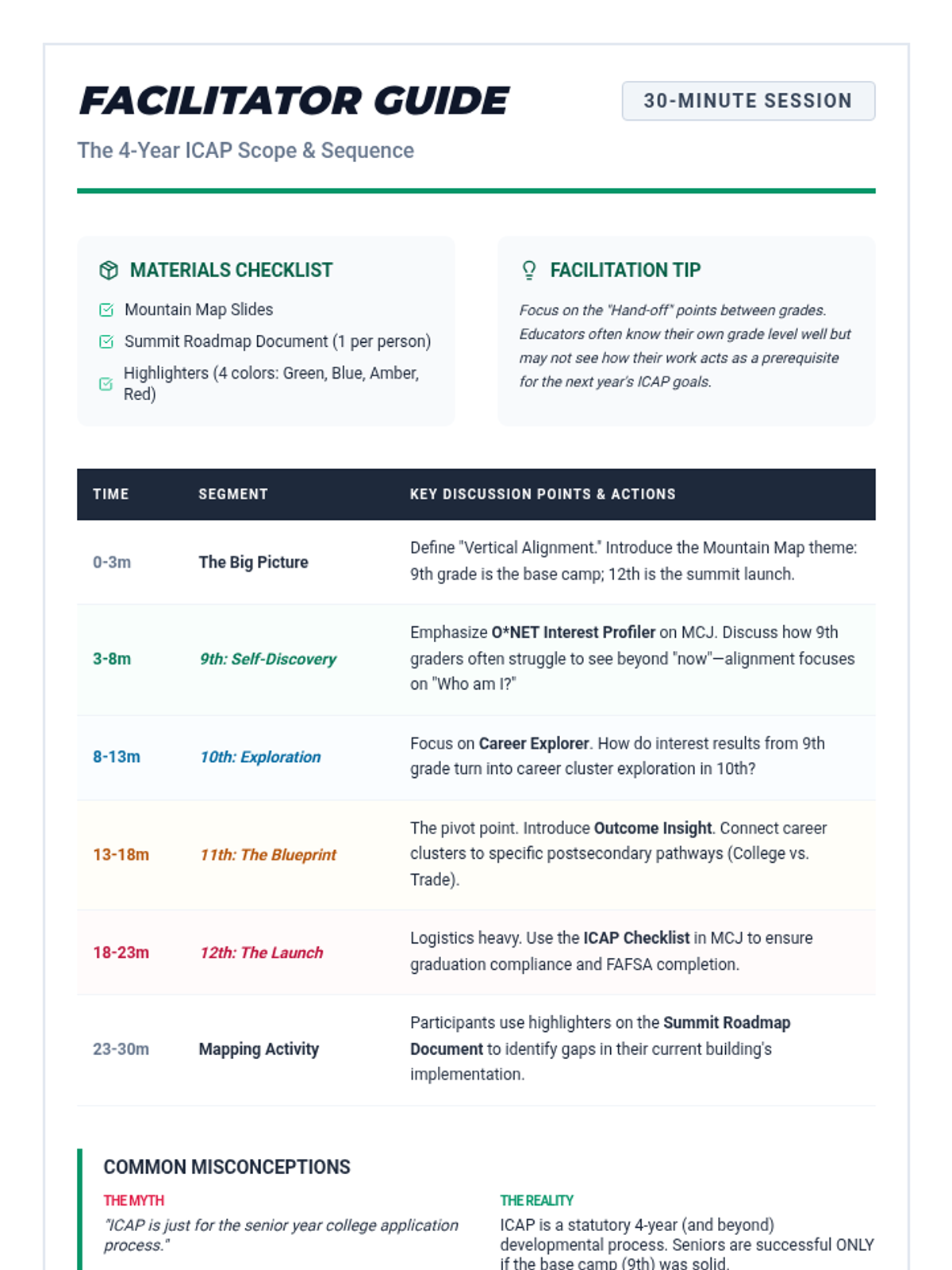
A detailed facilitator guide for leading the 30-minute ICAP vertical alignment professional development session, including a timeline and discussion prompts.
A visual presentation for educators detailing the ICAP 9-12 program arc, grade-level themes, and specific My Colorado Journey tool integration.
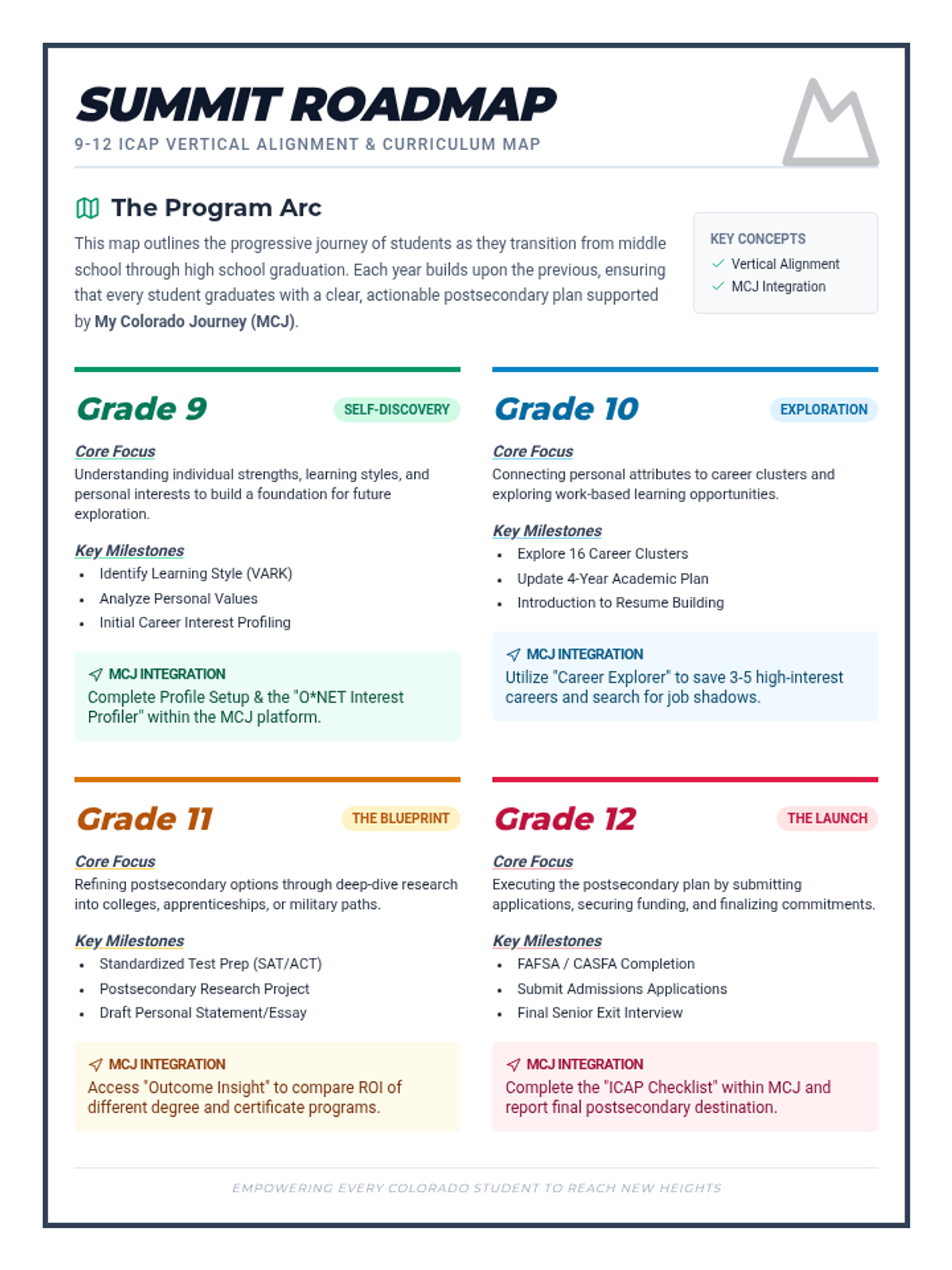
A comprehensive 9-12 curriculum map outlining the vertical progression of ICAP milestones and My Colorado Journey integration.
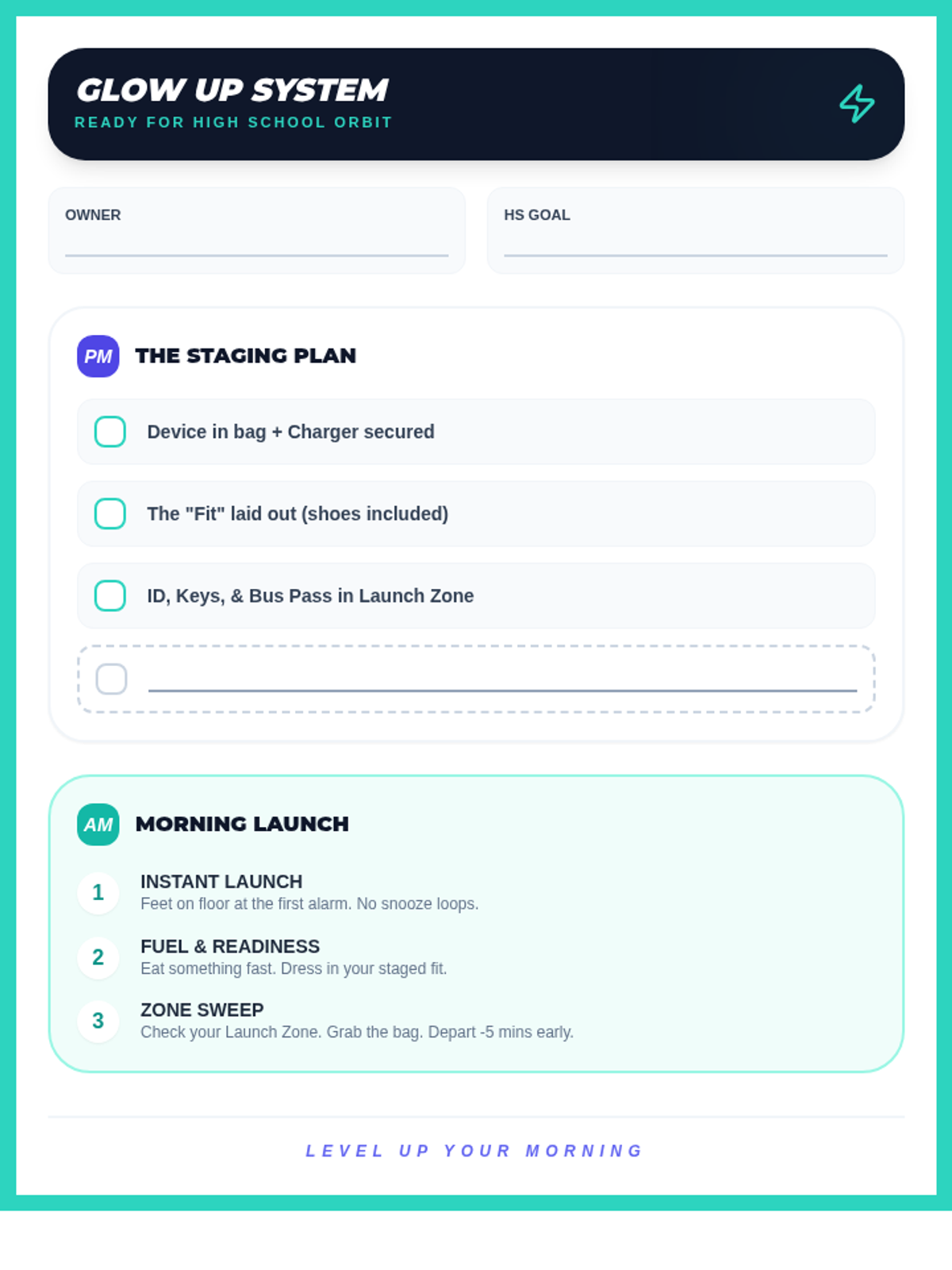
A sleek, one-page morning routine checklist for students to use both at night (for prep) and in the morning (for departure), designed with a modern high-school readiness focus.
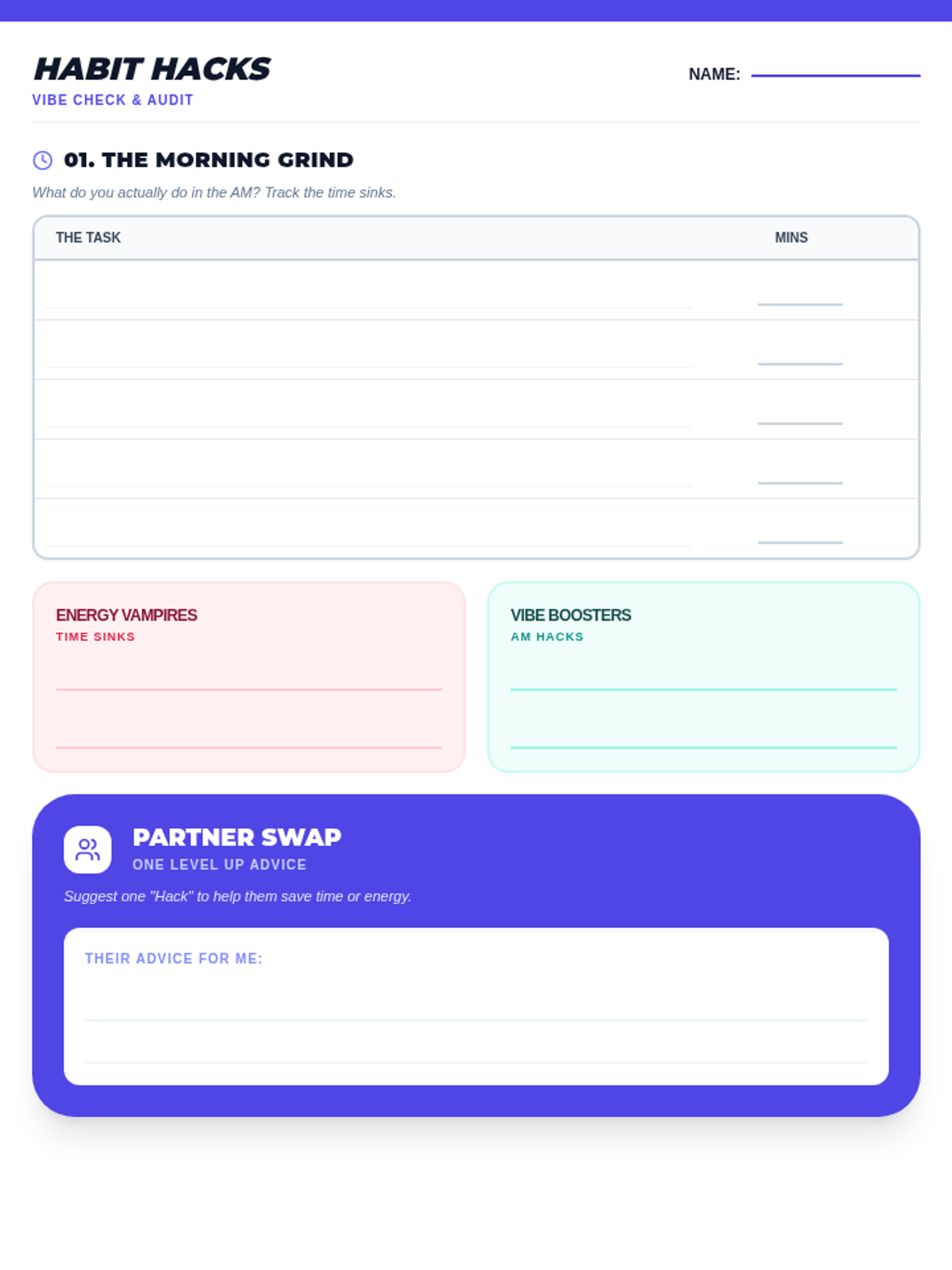
A one-page activity sheet for students to audit their morning habits, identify 'Energy Vampires', and exchange peer advice on improving their morning routines.
An expanded, high-energy slide deck for ADL mentors to lead discussions on high school preparedness, identifying 'Energy Vampires', and morning habit stacking.
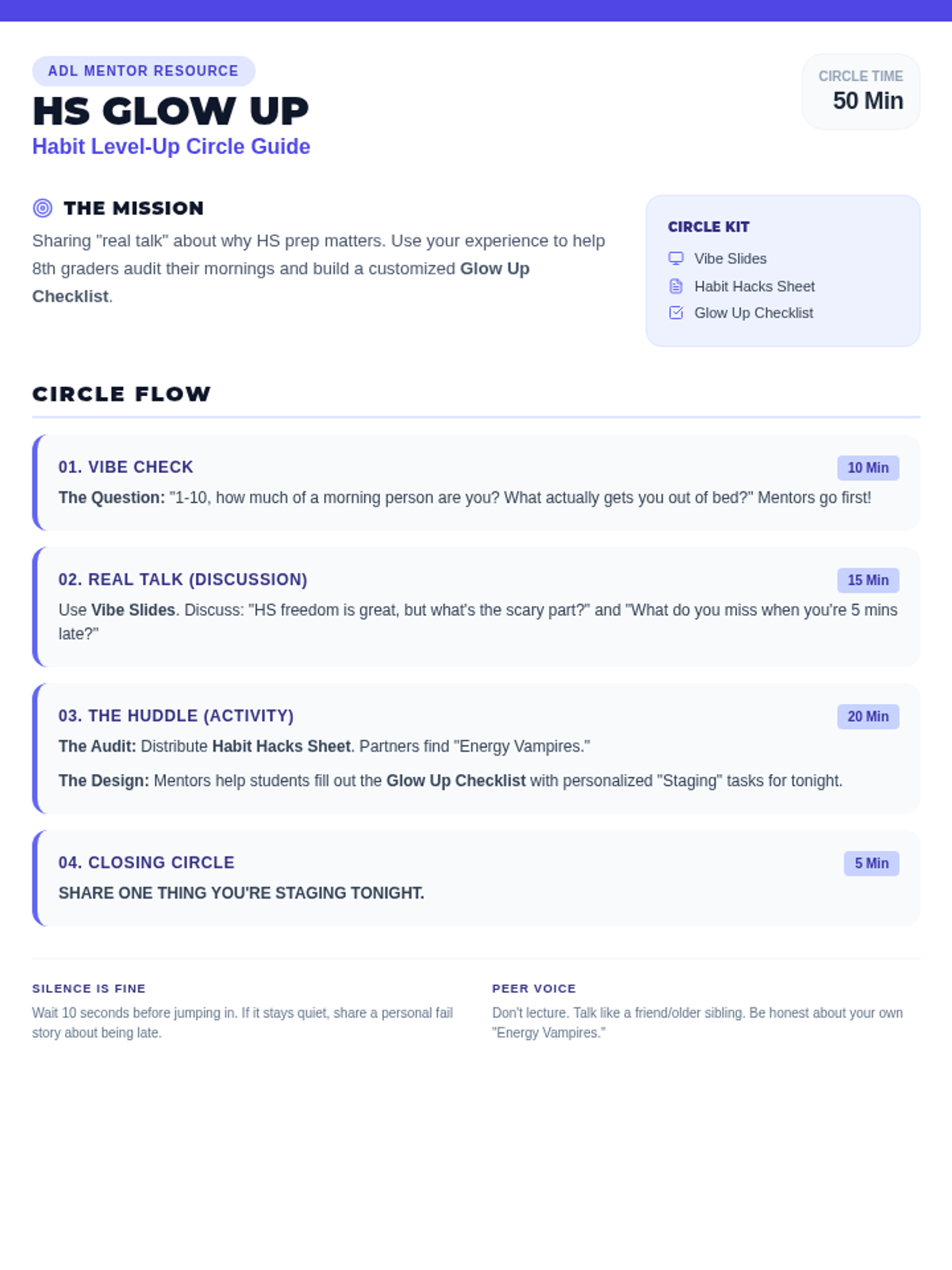
A condensed, one-page peer-to-peer facilitation guide for ADL mentors to lead a community circle on high school readiness, focusing on punctuality and morning habits.
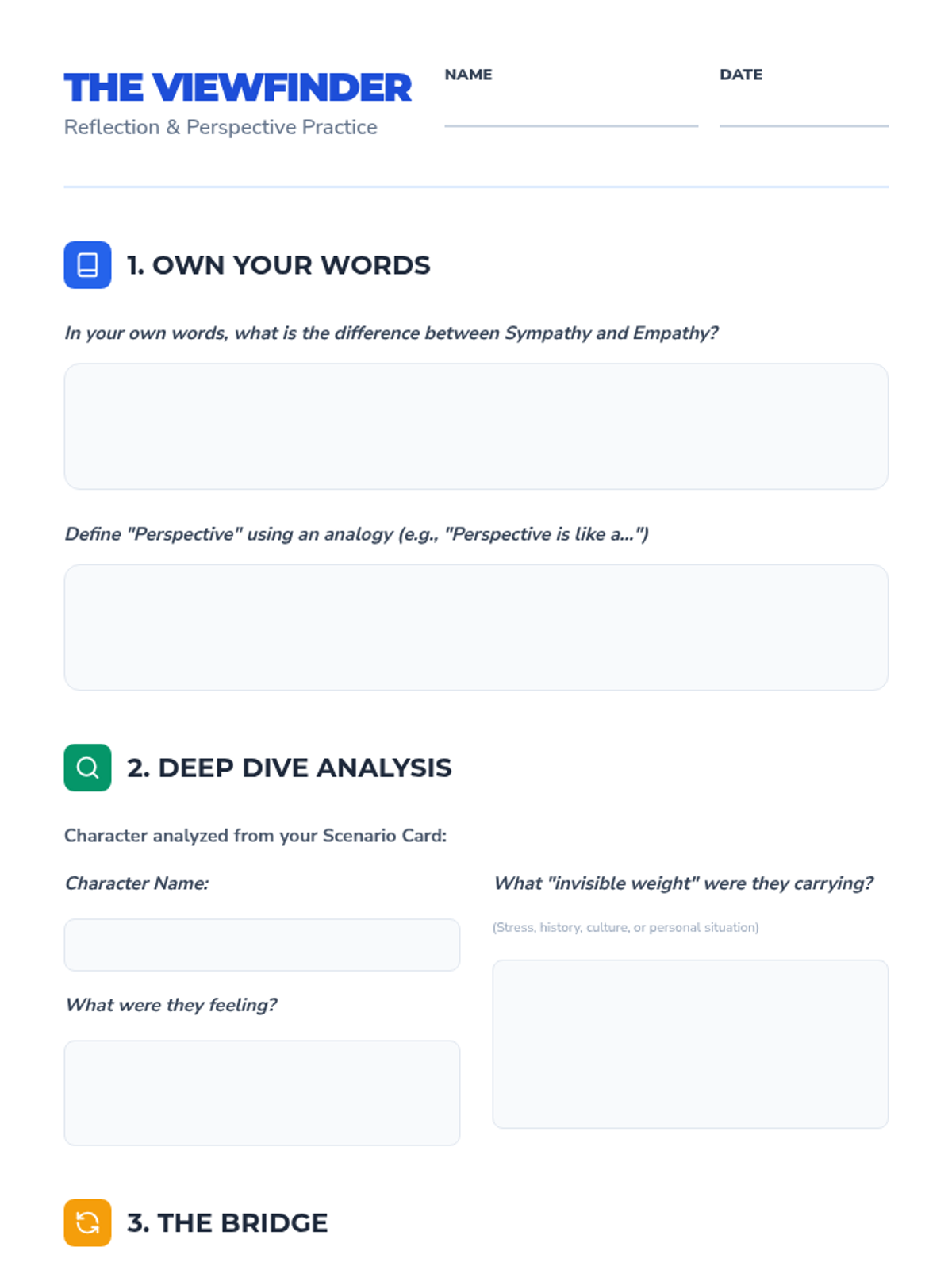
A single-page student reflection worksheet that reinforces vocabulary and includes structured analysis for deeper empathy practice.
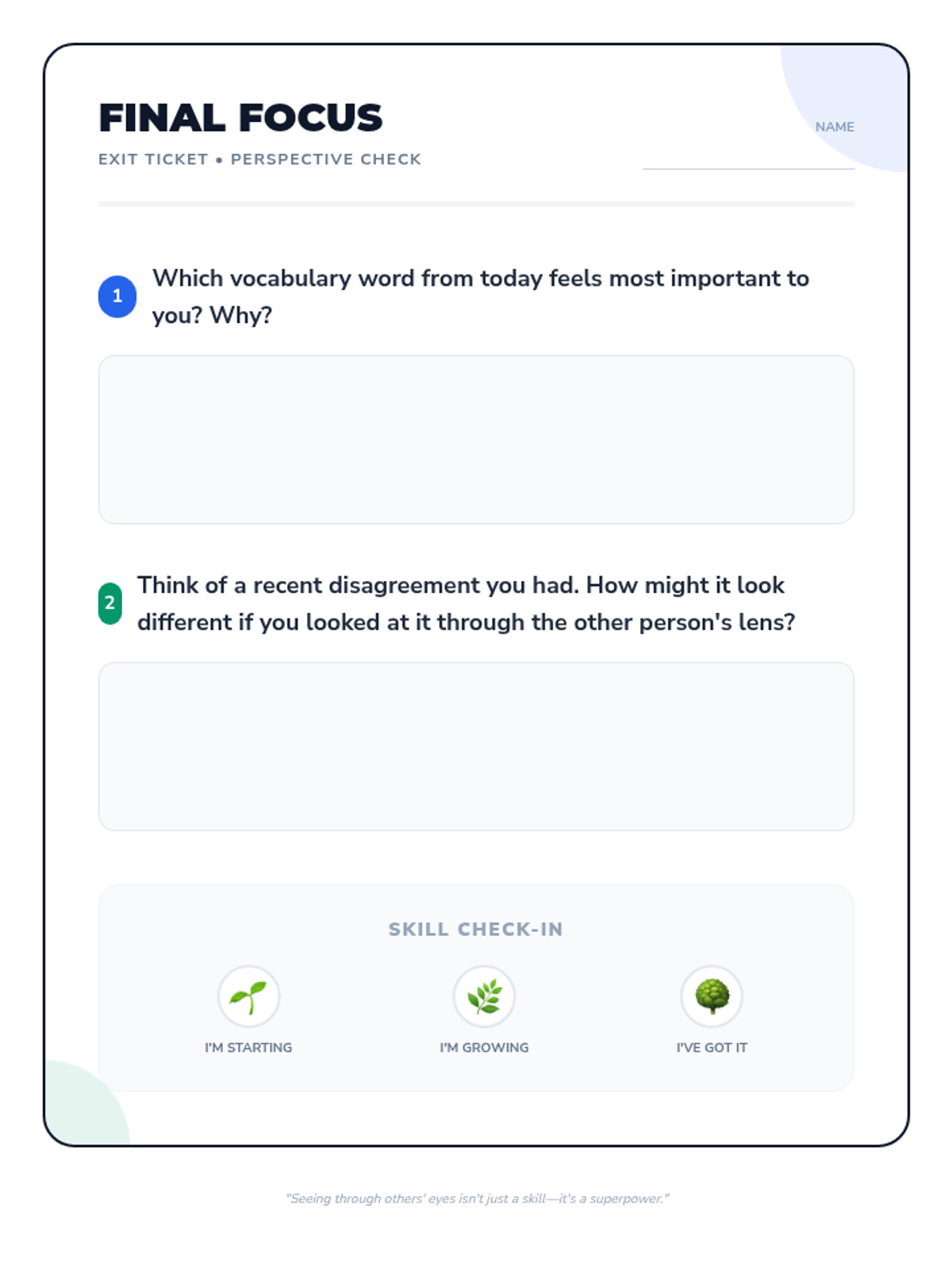
A compact formative assessment (exit ticket) for students to demonstrate understanding of vocabulary and apply perspective-taking to personal experience. Includes a self-assessment scale.
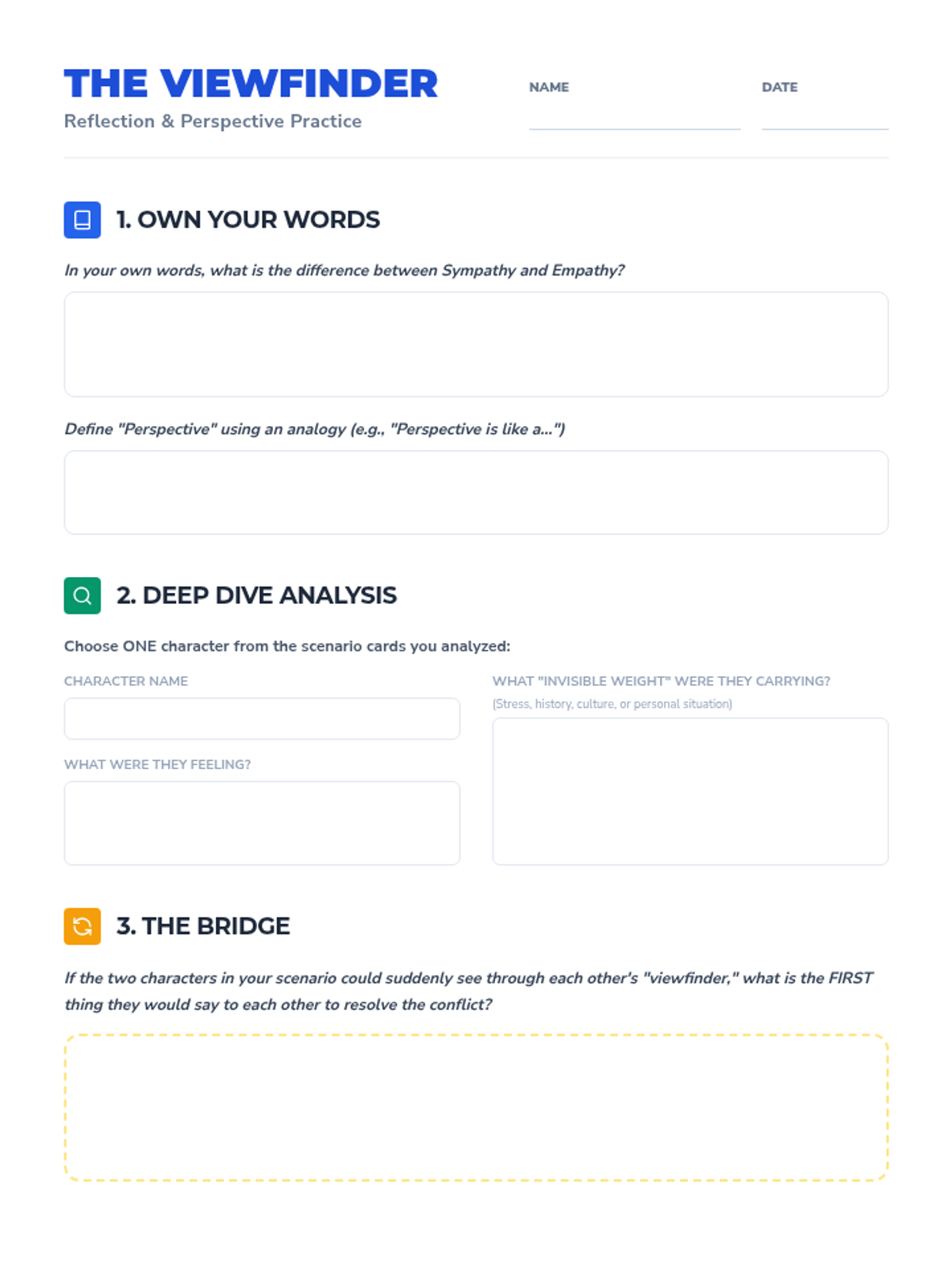
A student reflection worksheet that reinforces vocabulary through recall and analogy. It includes a structured analysis section for deep-diving into character perspectives and a creative response area for conflict resolution through empathy.
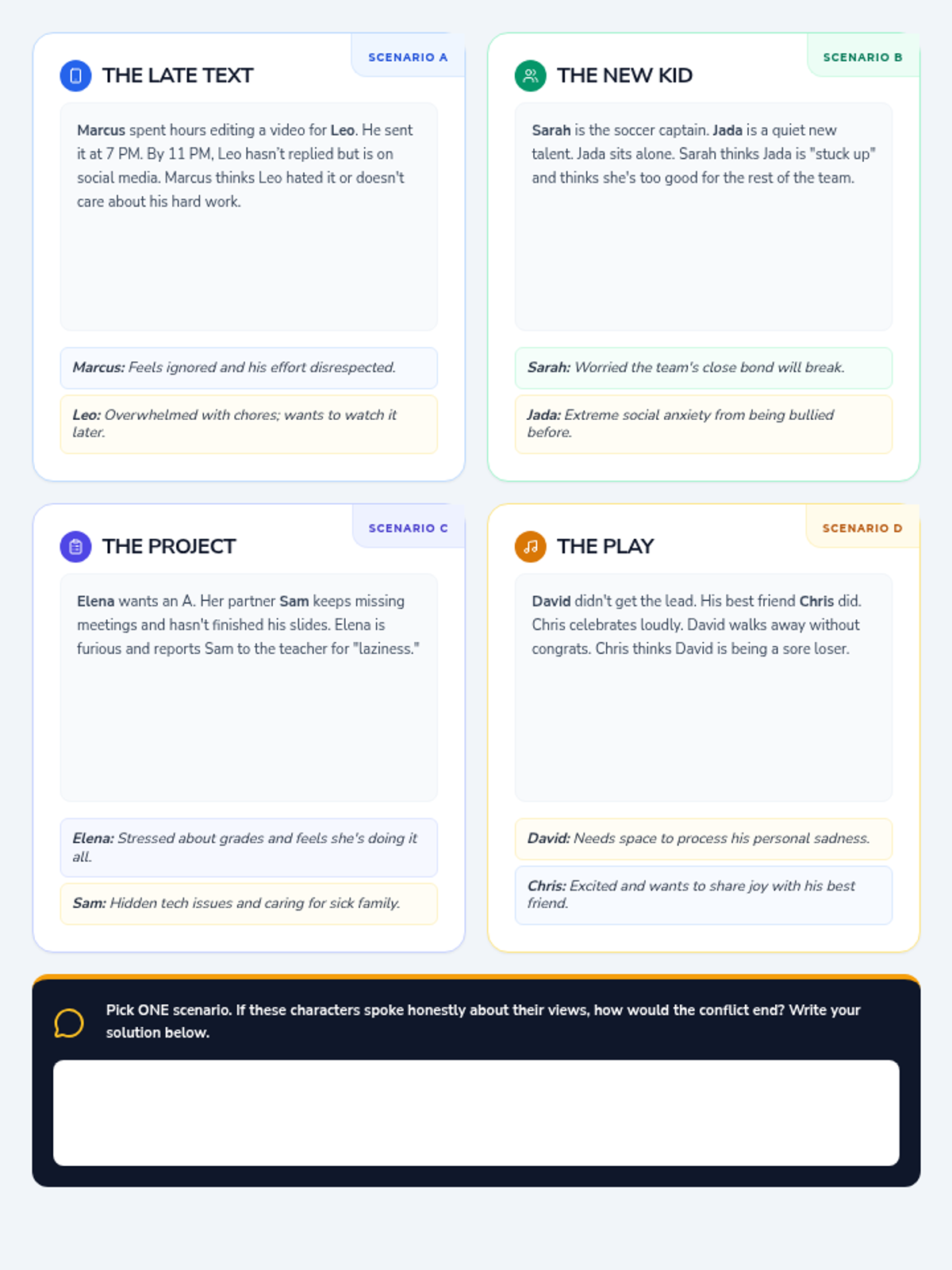
Four printable scenario cards for Grade 9 students to practice identifying perspectives. These fit on a single page for easy distribution.
An engaging slide presentation for Grade 9 SEL. Features visual motifs, vocabulary definitions, and scenario analysis prompts to scaffold empathy and perspective-taking skills.
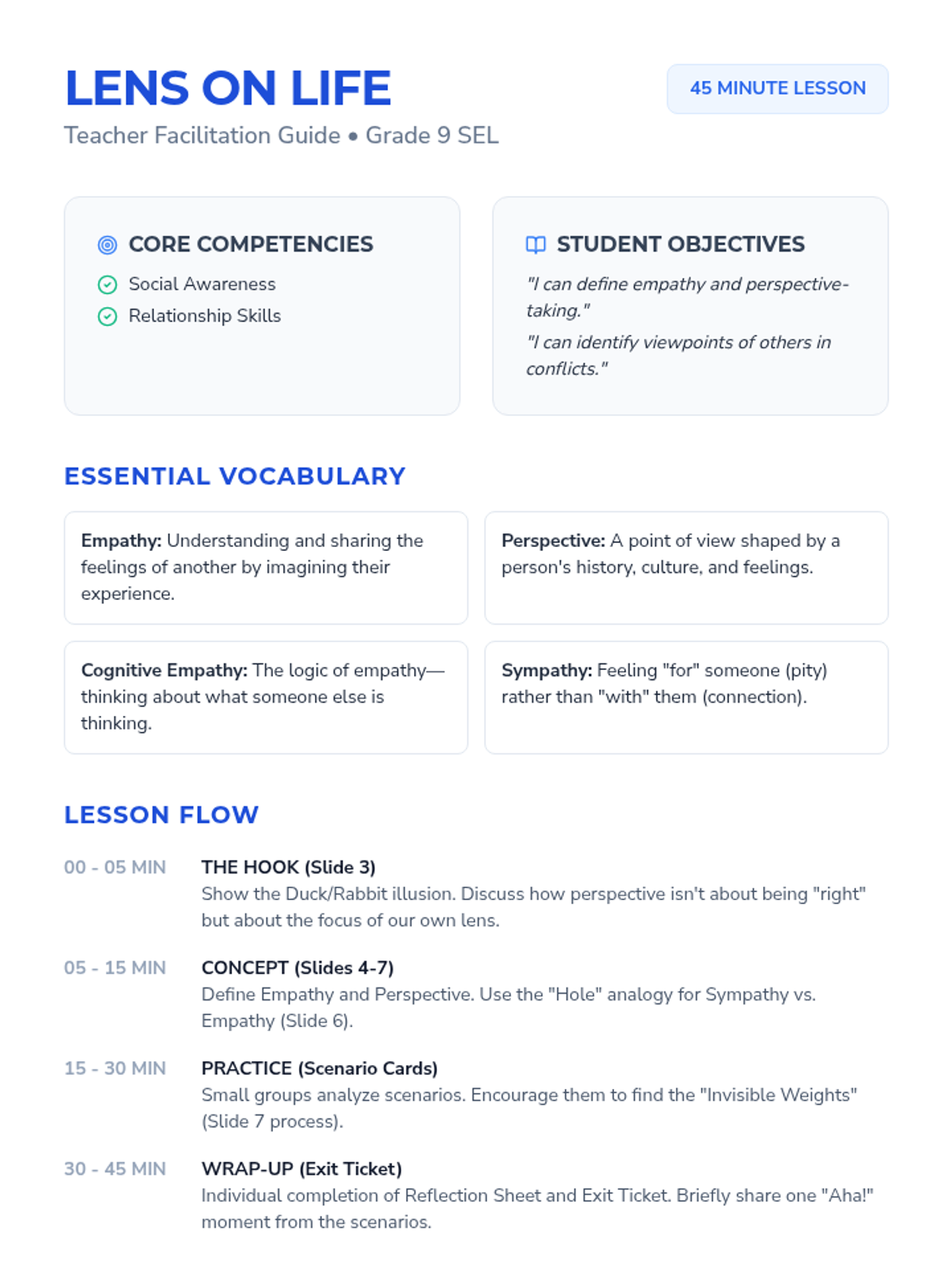
A comprehensive 45-minute lesson guide for teachers, including core competencies, student-friendly objectives, key vocabulary definitions, a detailed pacing guide, and differentiation strategies for Grade 9 SEL.
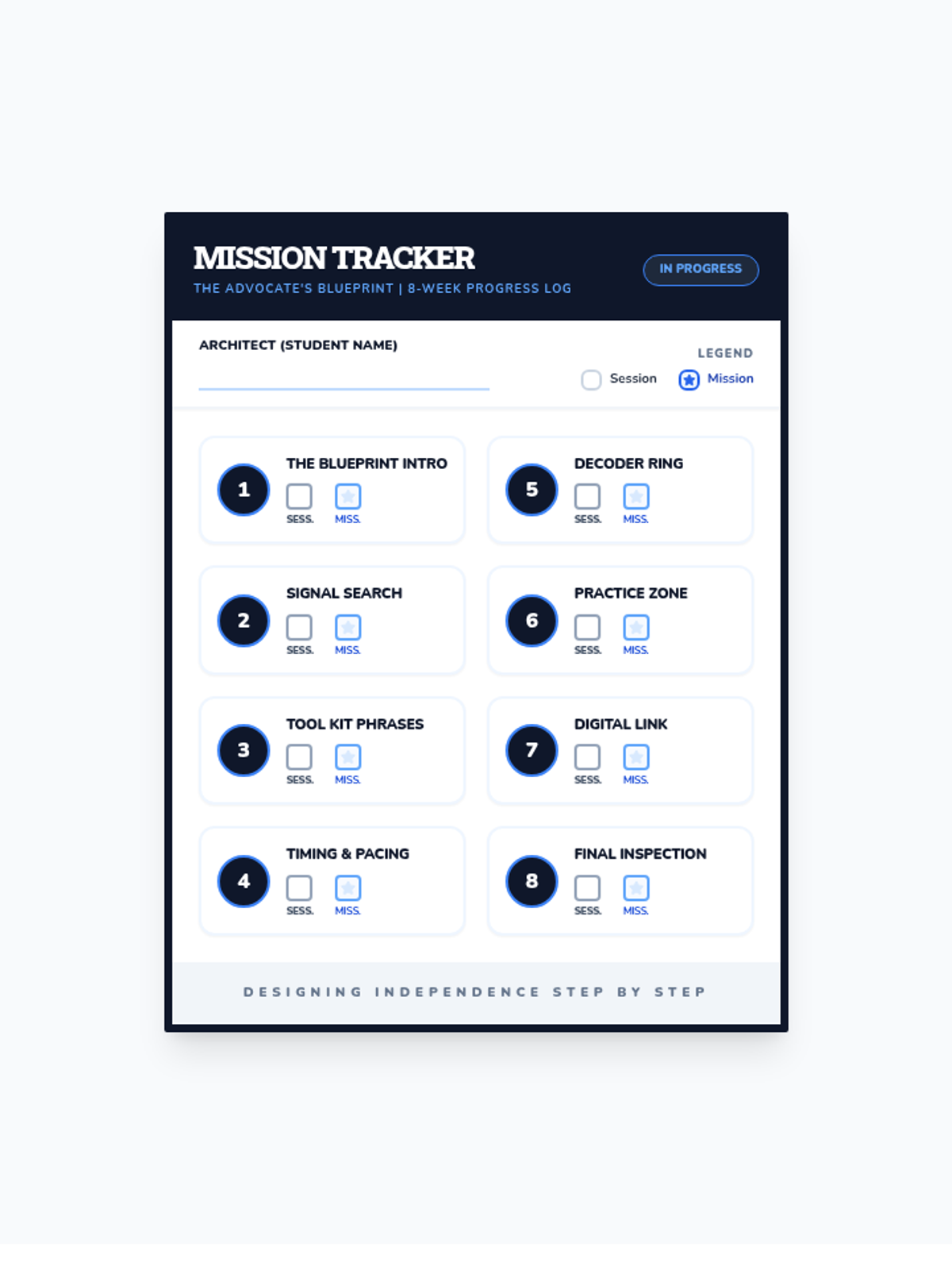
Progress tracker revised with direct checkbox labeling, increased font legibility, and fixed single-page layout. Reverted to the original blue blueprint theme. Fixed label contrast and alignment. Fixed page break.
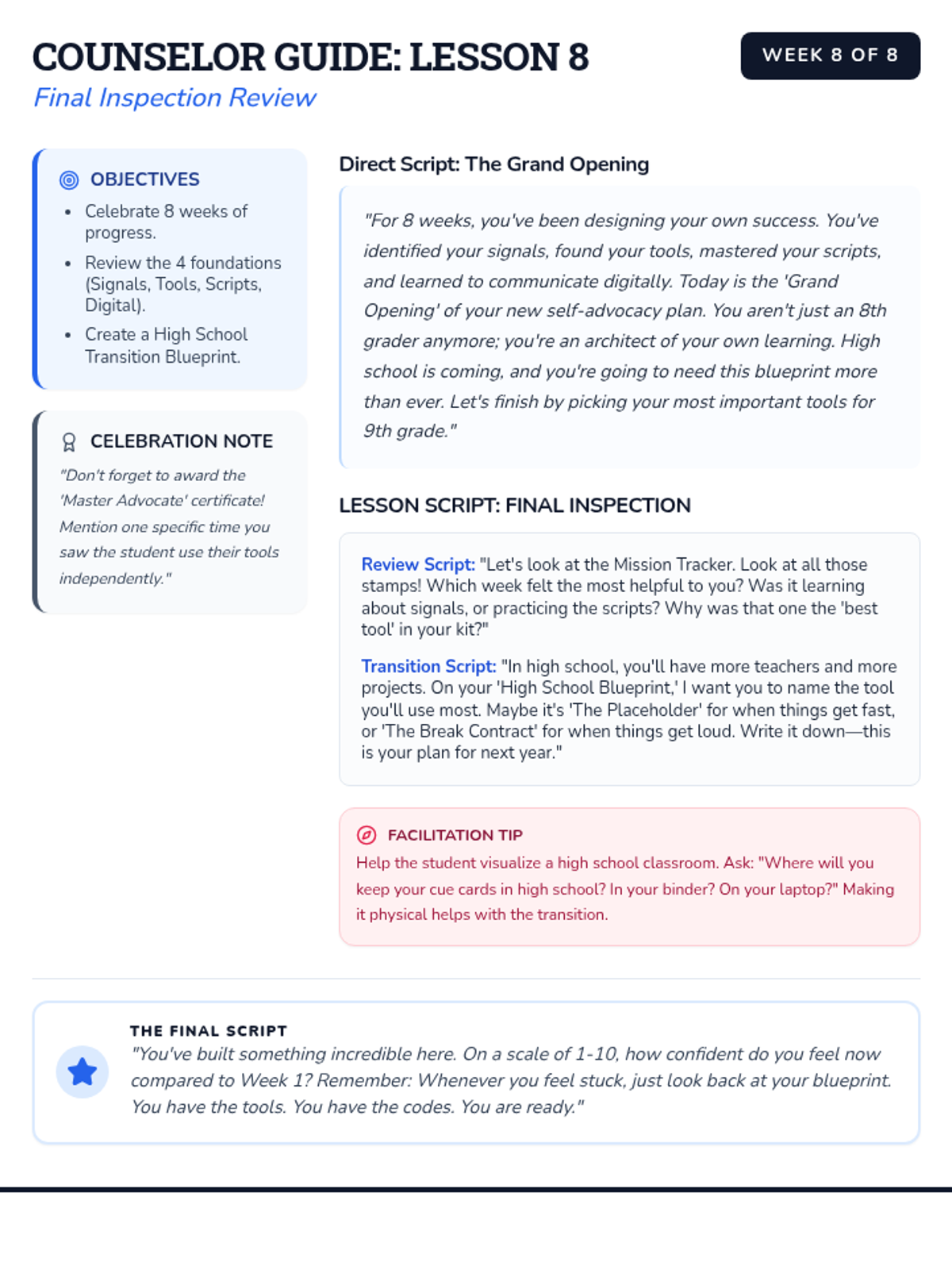
Expanded counselor guide for Week 8 with more detailed word-for-word scripts and instructional notes. Reverted to the original blue blueprint theme. Removed all IEP/Goal terminology.
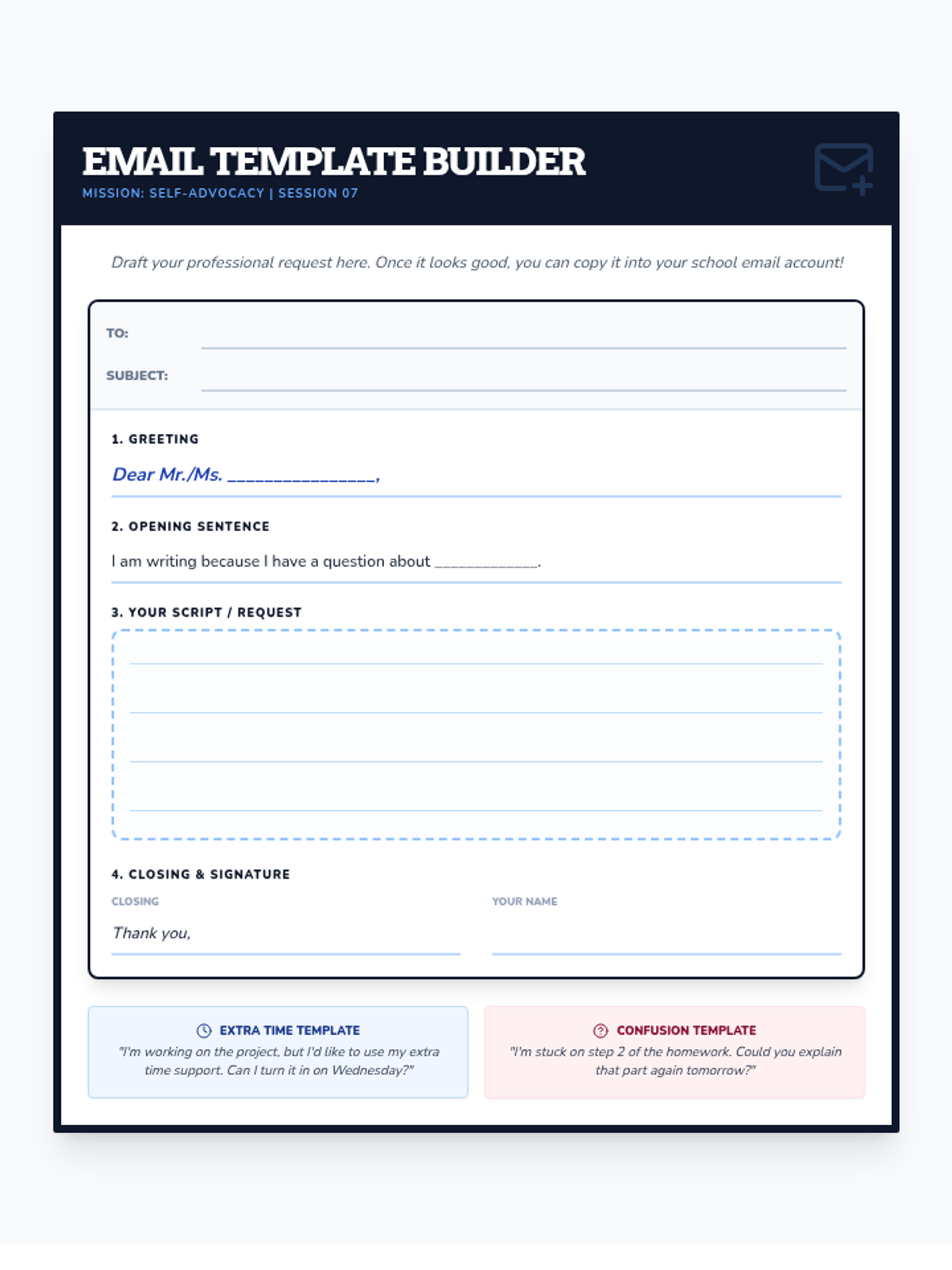
A structured worksheet to help students draft professional advocacy emails to their teachers. Reverted to the original blue blueprint theme. Fixed handwriting space and overlap issues. Removed all IEP/Goal terminology. Fixed page break.
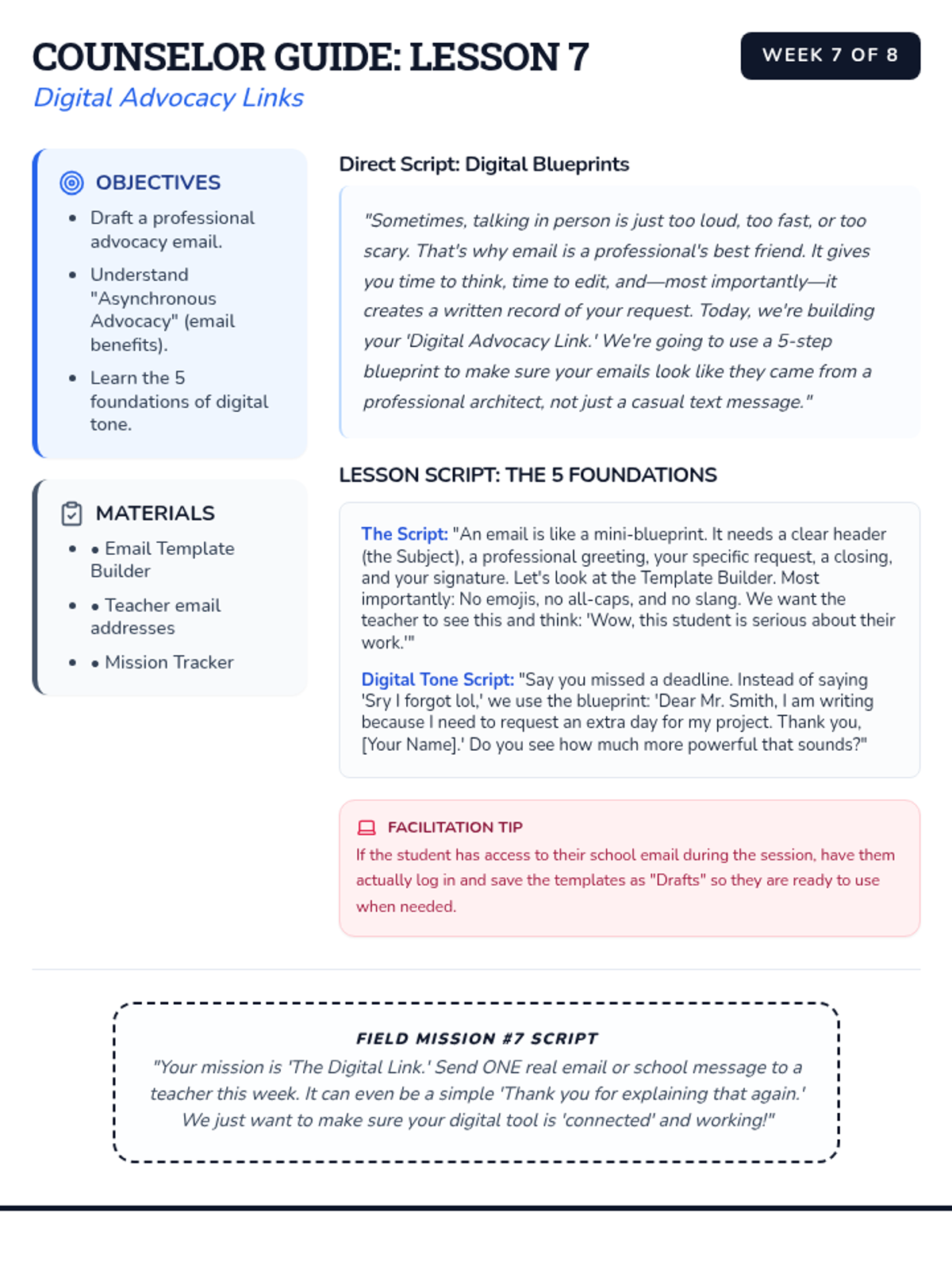
Expanded counselor guide for Week 7 with more detailed word-for-word scripts and instructional notes. Reverted to the original blue blueprint theme. Removed all IEP/Goal terminology.
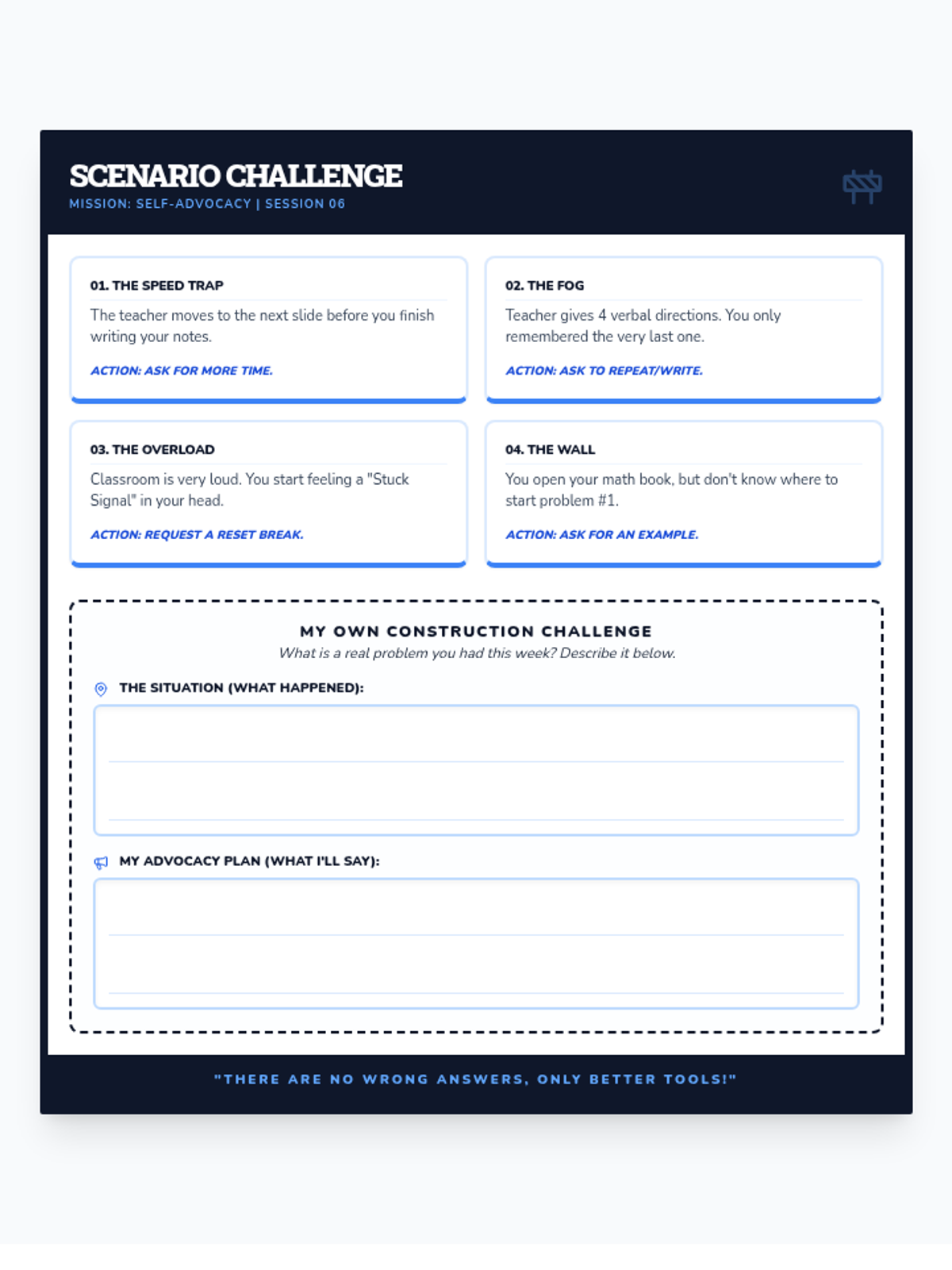
Scenario challenge cards revised with larger font sizes, better writing space in the "Create Your Own" section, and fixed single-page layout. Reverted to the original blue blueprint theme. Fixed contrast and page break.
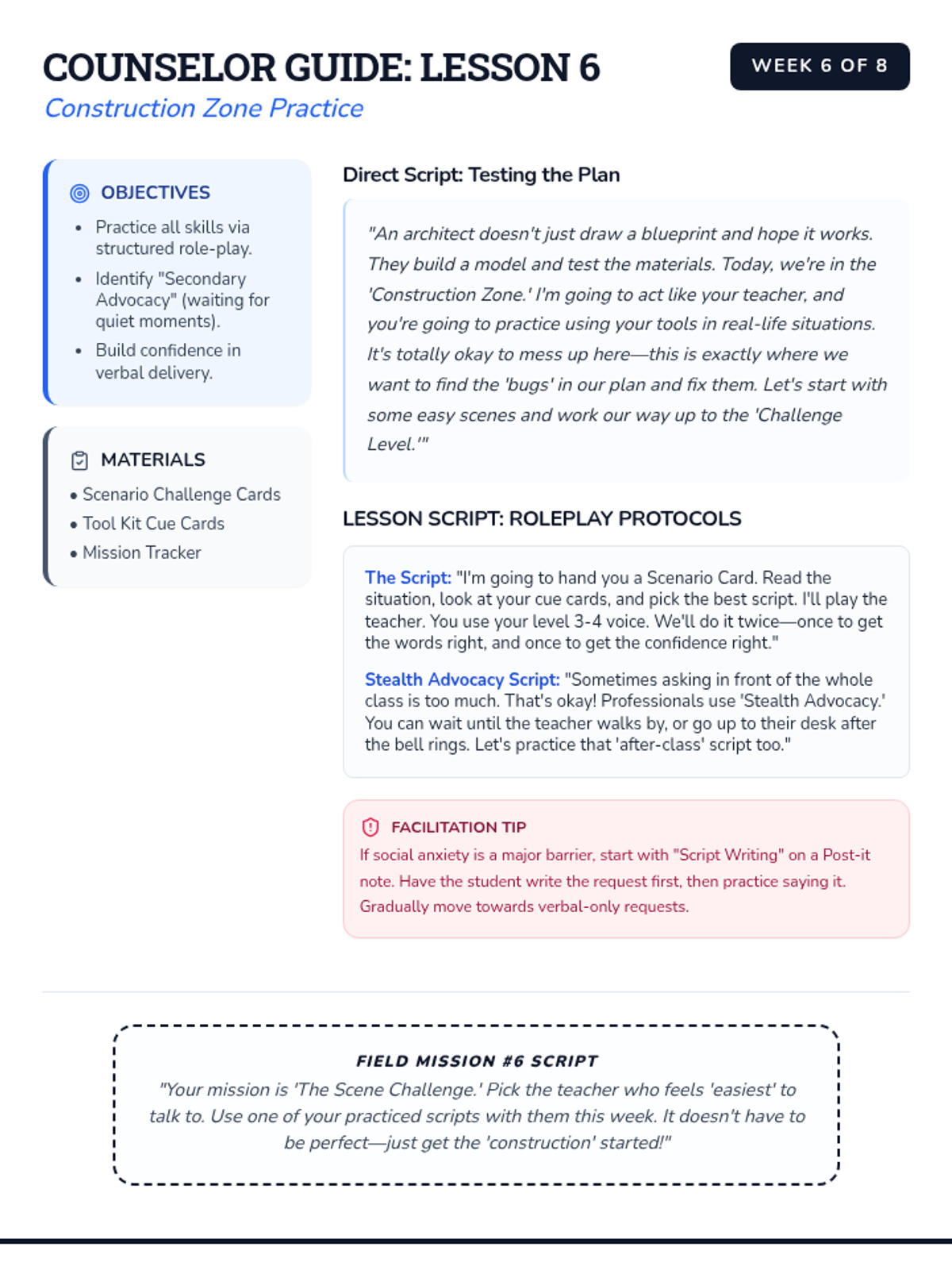
Expanded counselor guide for Week 6 with more detailed word-for-word scripts and instructional notes. Reverted to the original blue blueprint theme. Removed all IEP/Goal terminology.
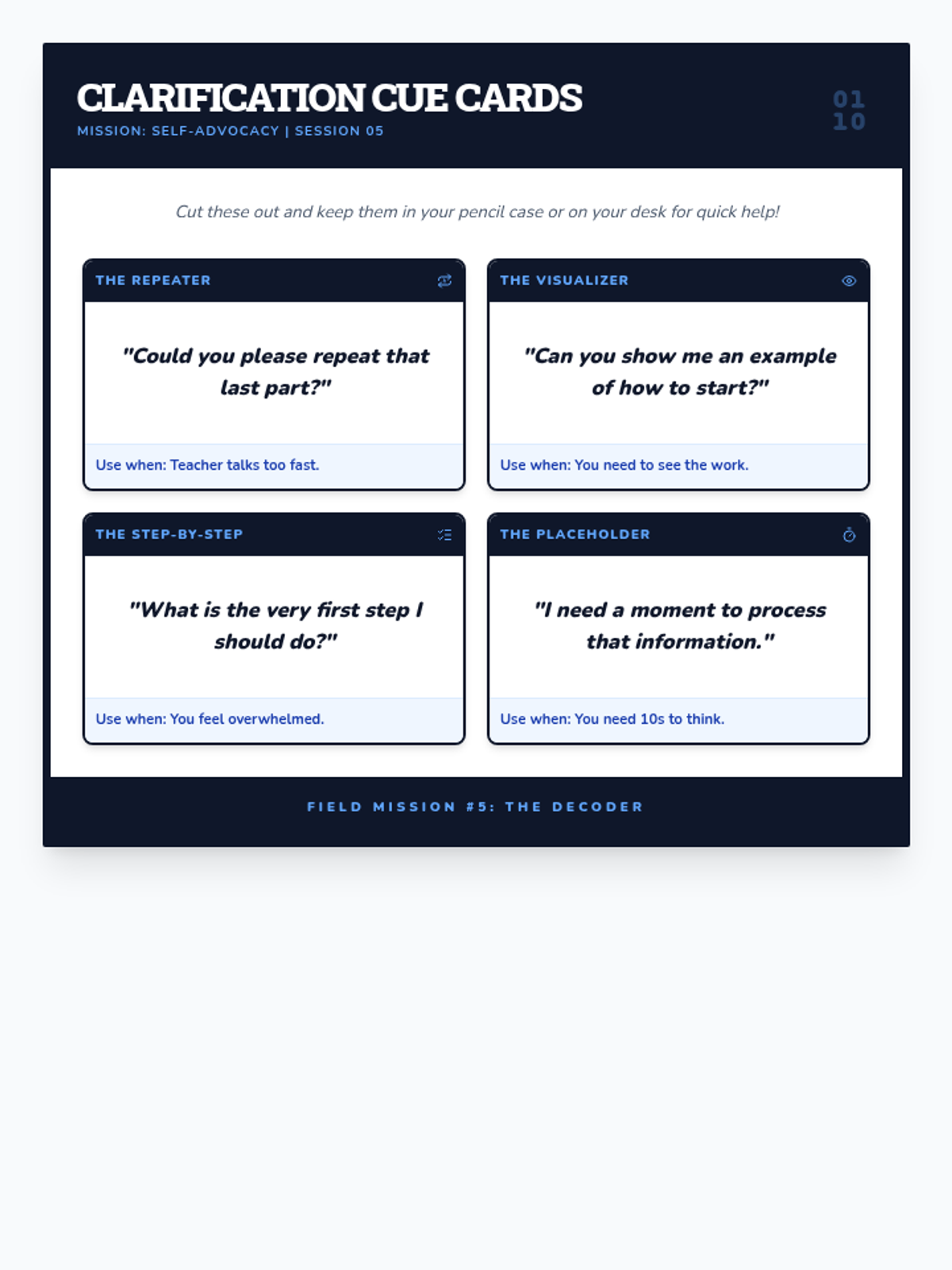
Cue cards revised with uniform card sizes, increased font legibility, and fixed single-page layout. Reverted to the original blue blueprint theme.
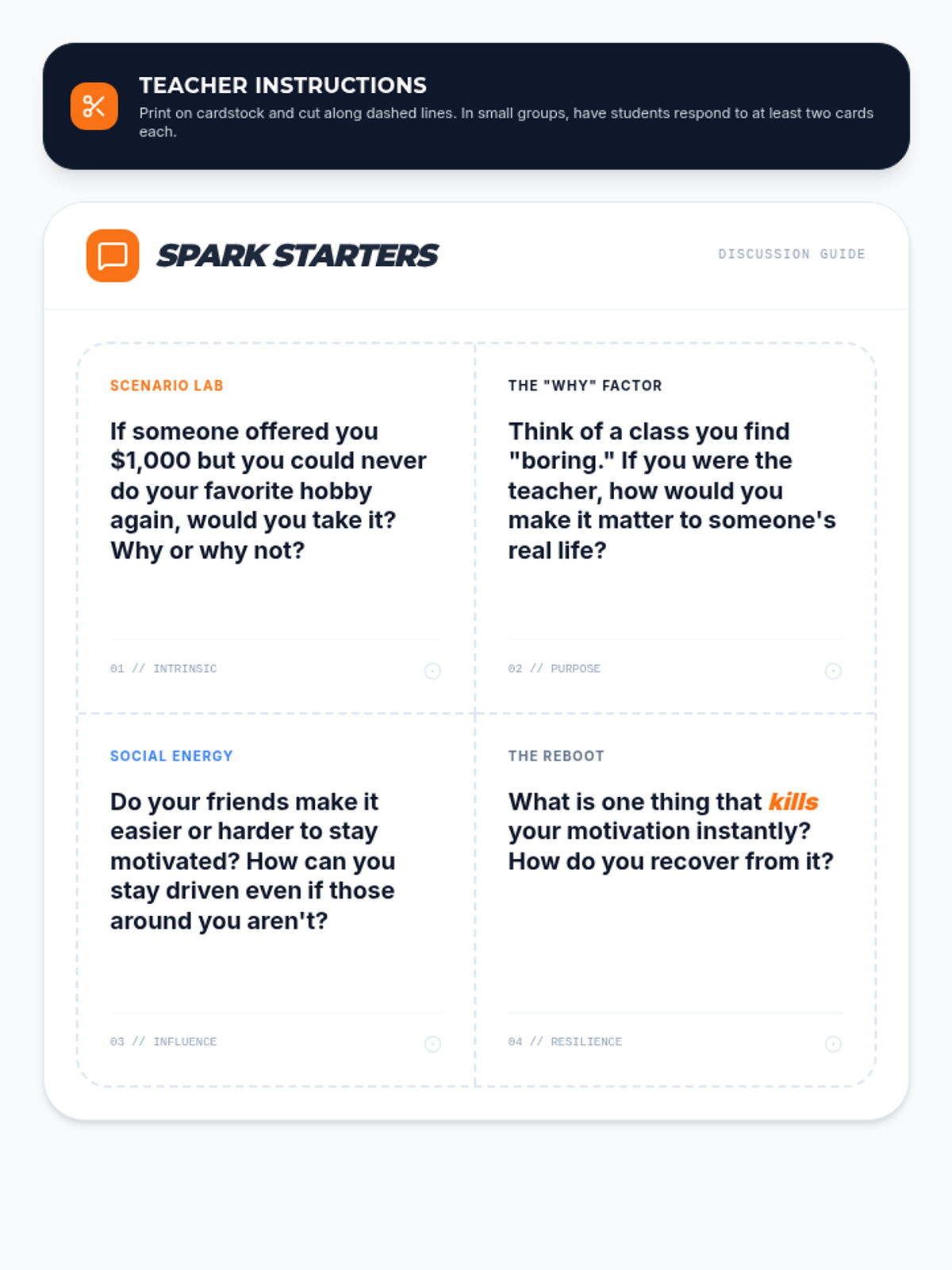
A set of four creative discussion cards for small groups, designed to facilitate conversations about internal values, social influences on motivation, and recovery from academic setbacks.
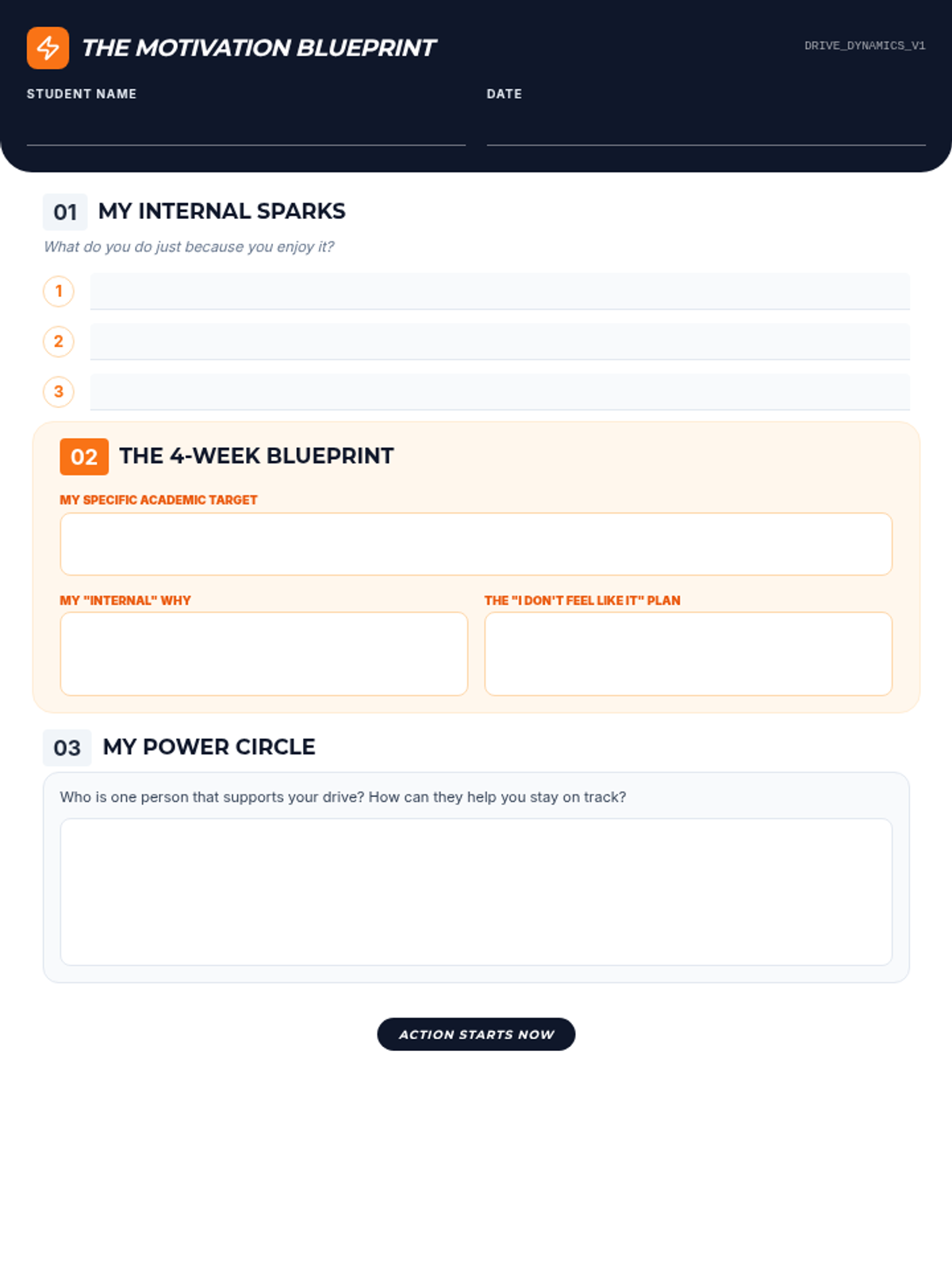
A student worksheet featuring personal motivation identification, a 4-week goal-setting blueprint, and a social support mapping section to help students internalize their academic drive.
A high-impact 5-slide presentation designed to engage students in understanding the difference between intrinsic and extrinsic motivation, while providing a framework for academic goal setting.
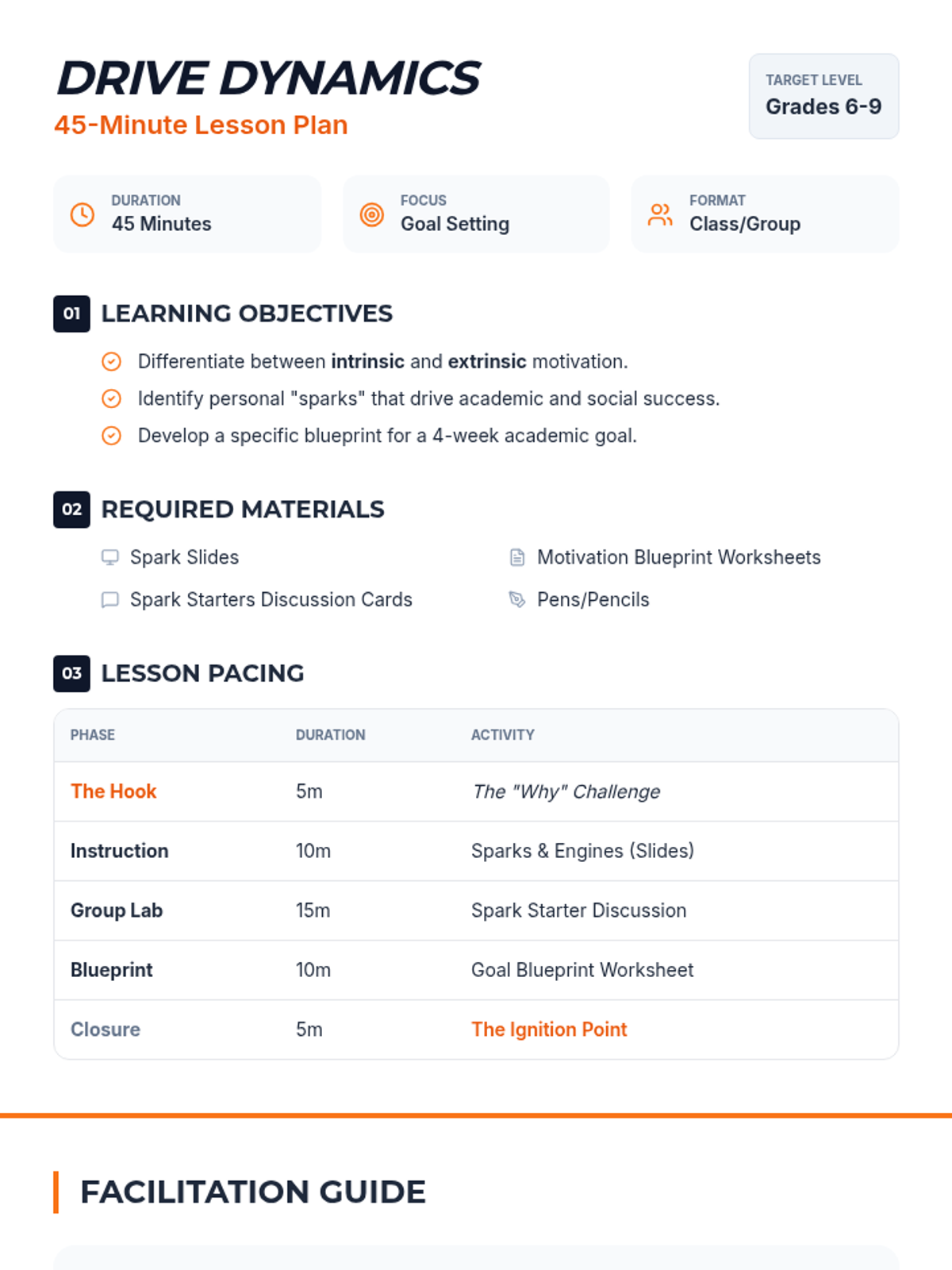
A comprehensive 45-minute lesson plan for educators focusing on social-emotional and academic motivation, including learning objectives, materials, and a step-by-step facilitation guide.
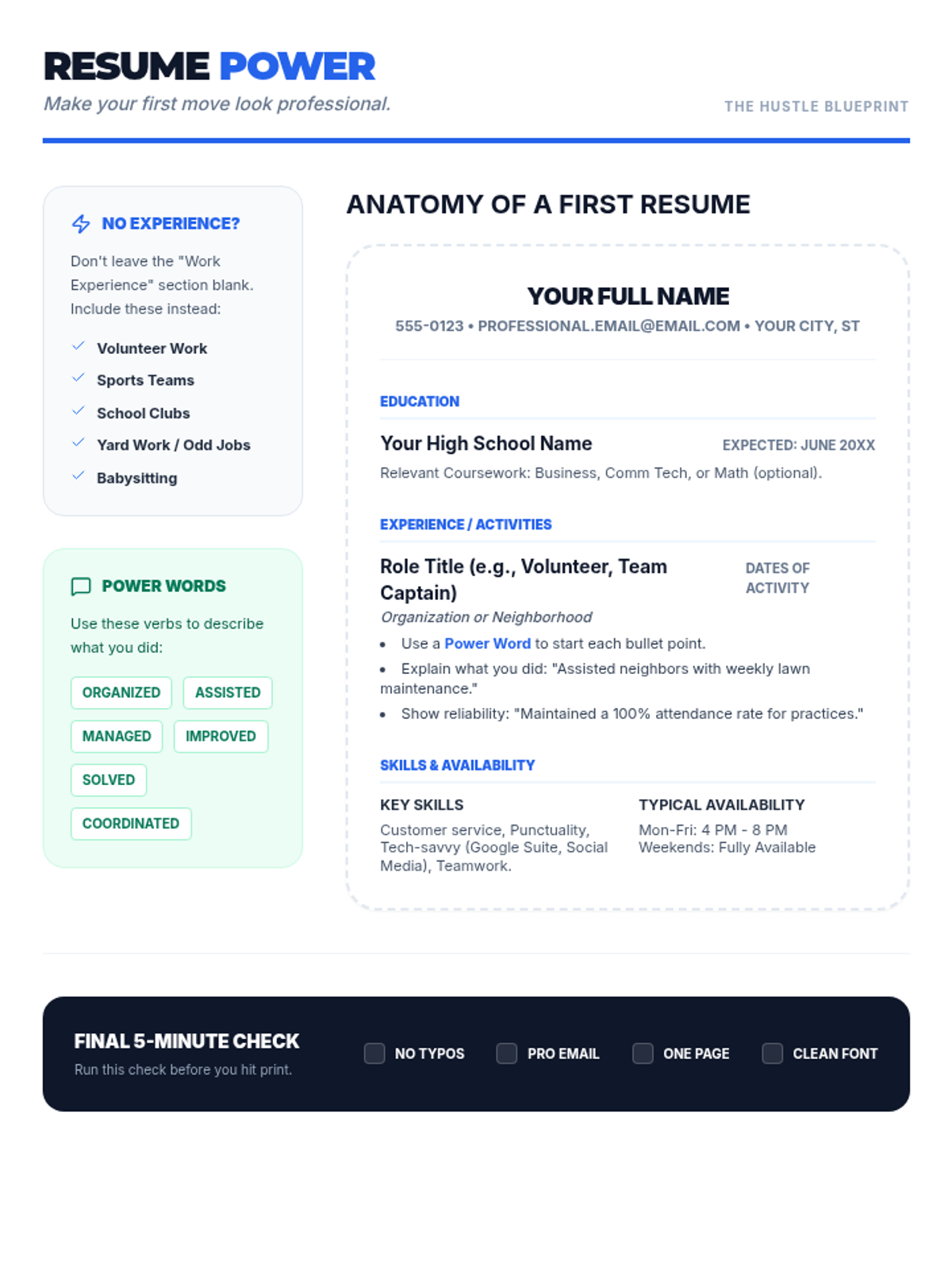
A comprehensive 1-page guide for high schoolers creating their first resume. Includes tips for students with no prior work experience, power words for entry-level skills, and a visual breakdown of a professional resume layout.
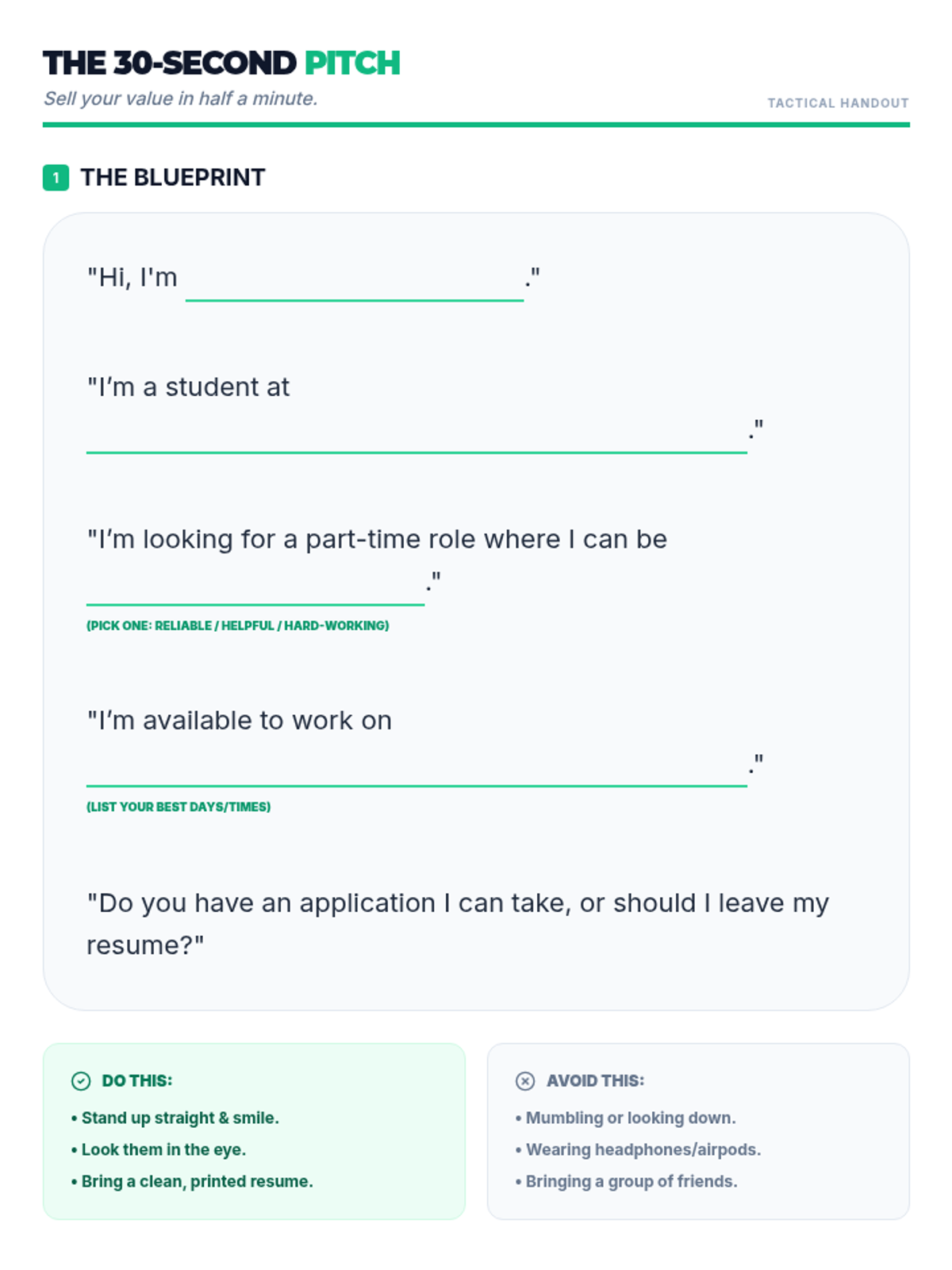
A tactical worksheet for students to script and practice their introductory "pitch" for potential employers, focusing on brevity, value, and professional presentation.
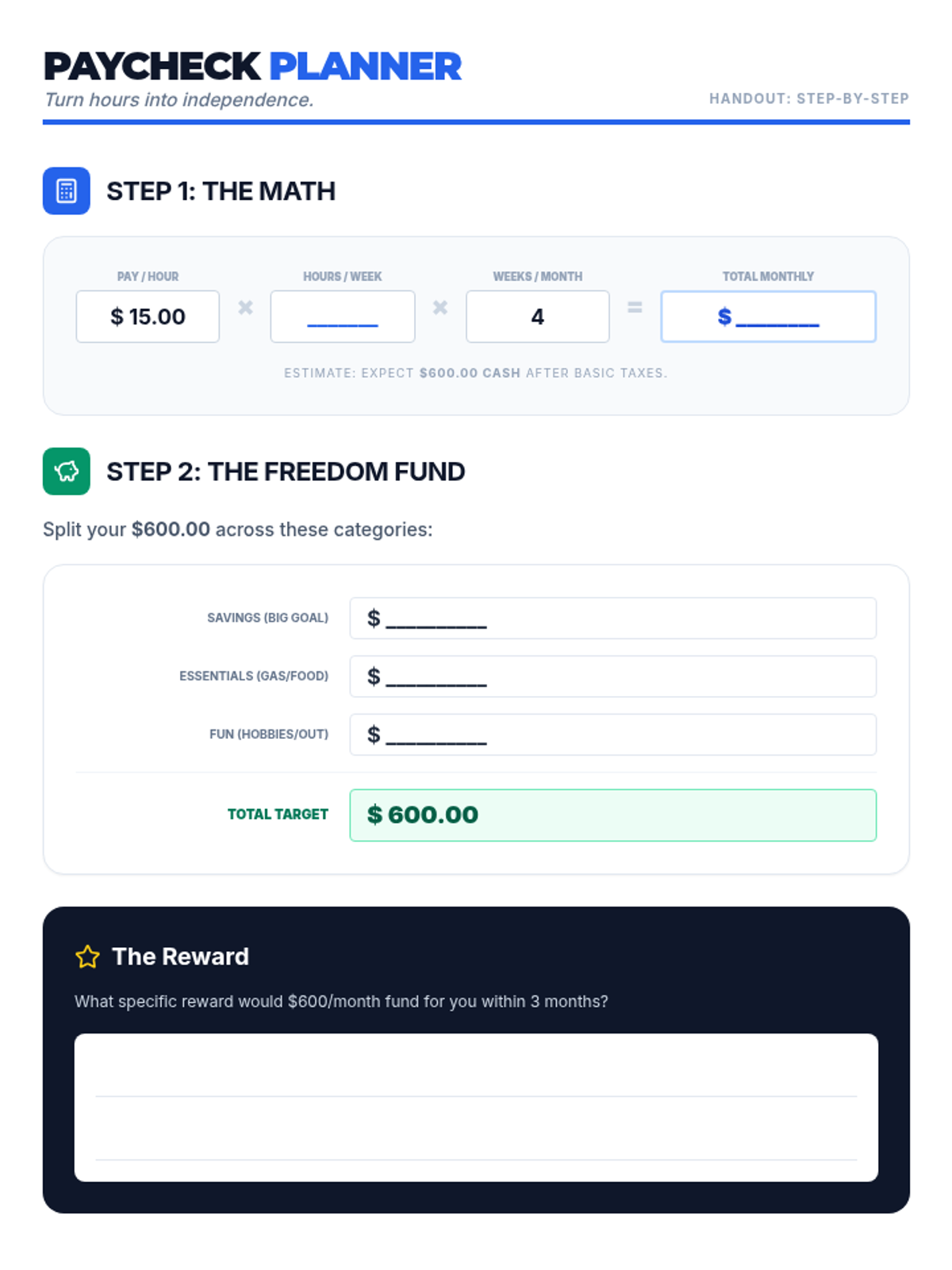
A practical worksheet to help students calculate potential monthly earnings from a part-time job and plan their "freedom fund" to see the tangible benefits of working.
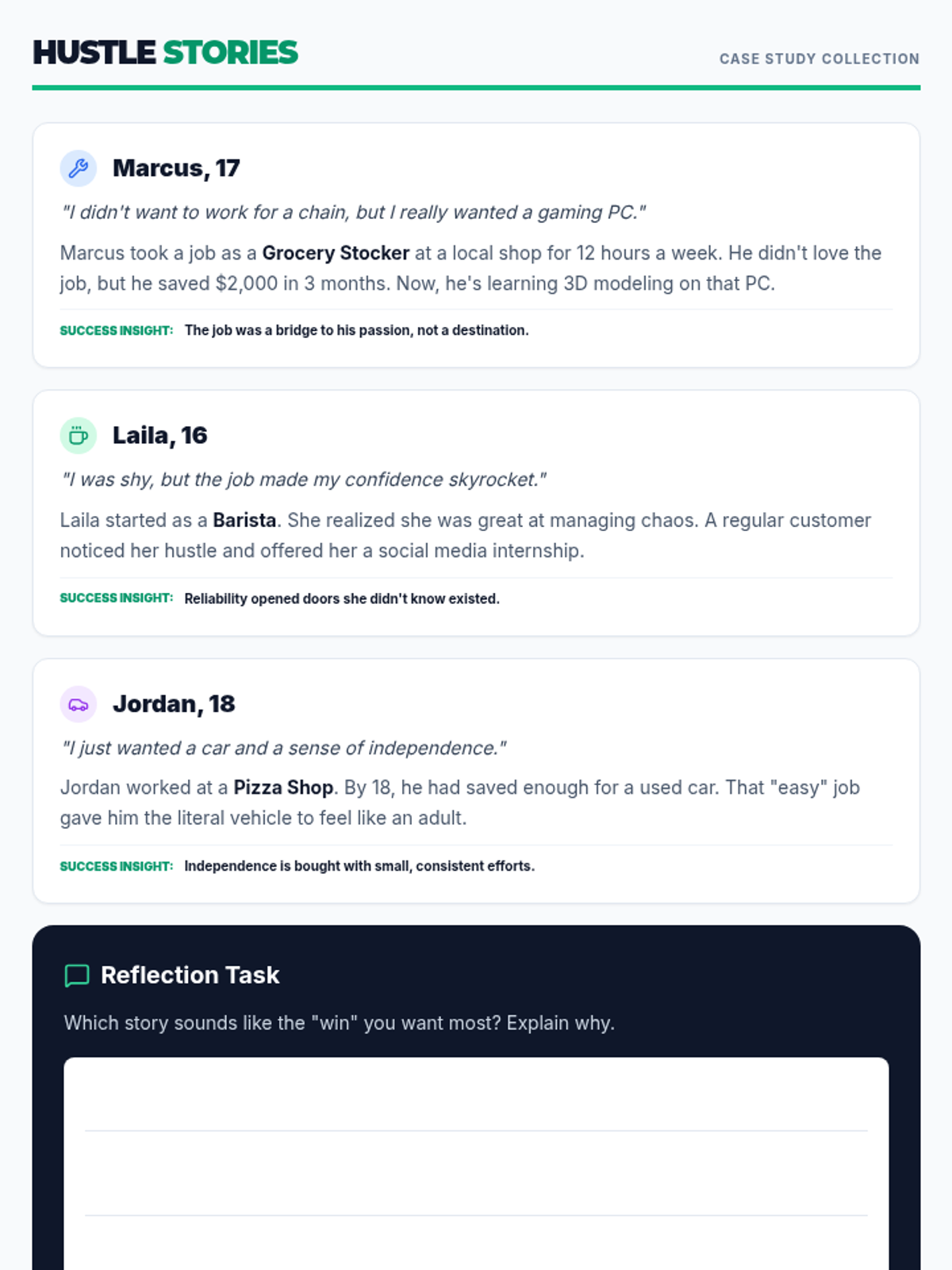
A set of short, engaging case studies featuring high schoolers who used entry-level jobs as stepping stones to personal success and independence. Provides social proof and real-world context for the workshop.
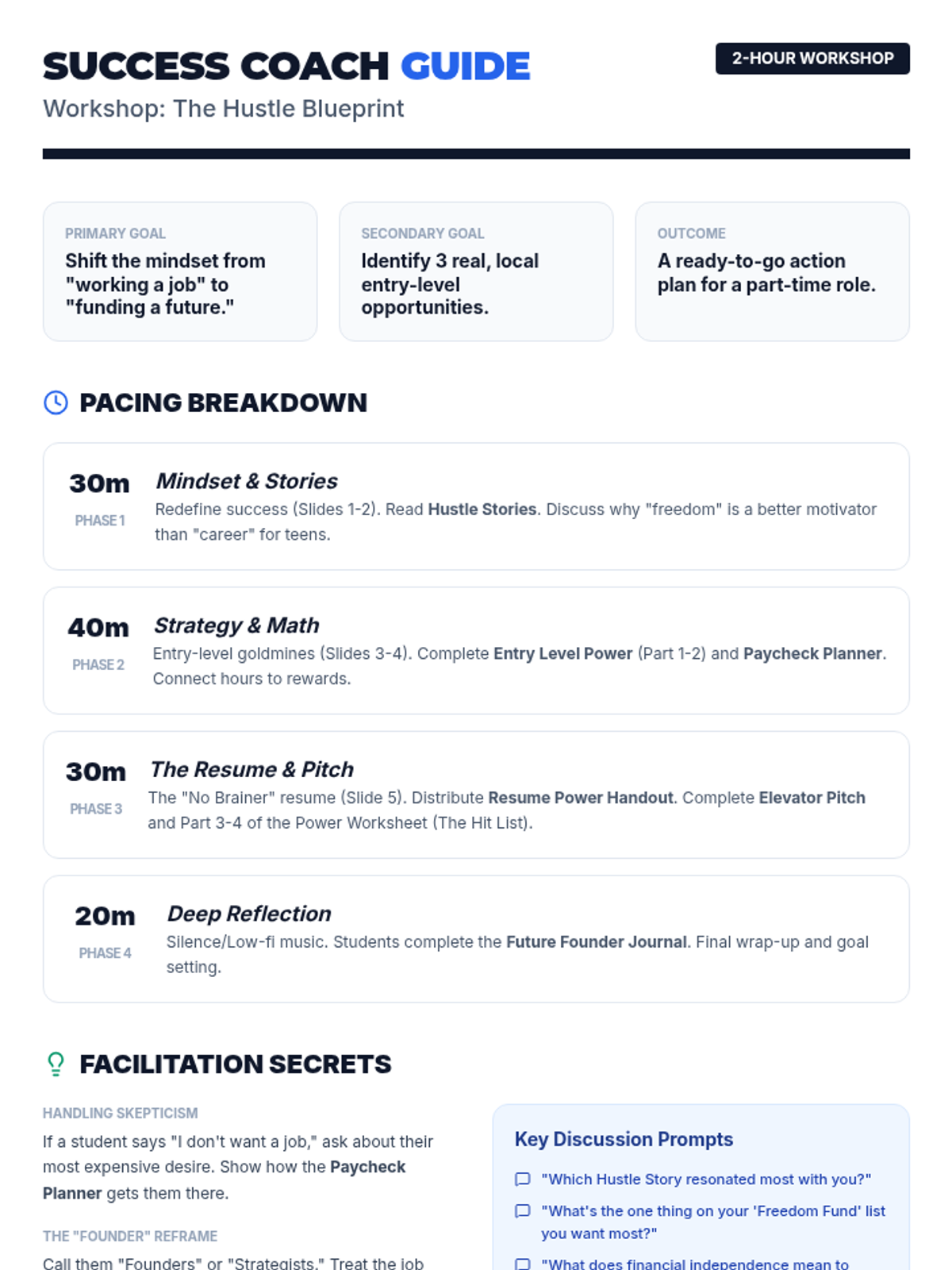
A facilitator's guide for the Hustle Blueprint workshop, including an updated 2-hour pacing guide that incorporates new case studies and tactical worksheets.
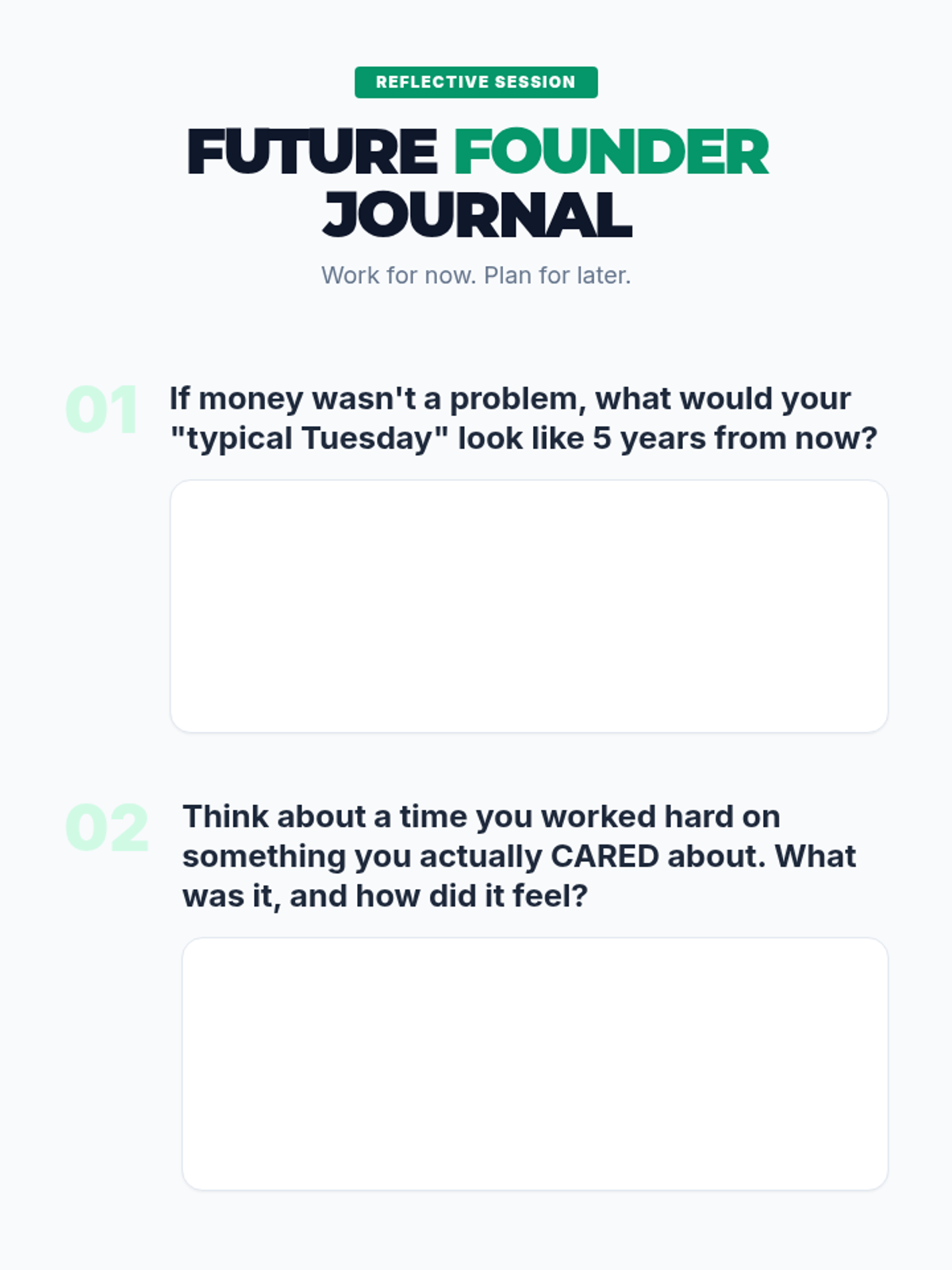
A set of deep reflection prompts for students to connect their personal goals and definitions of success to the practical step of getting a part-time job.
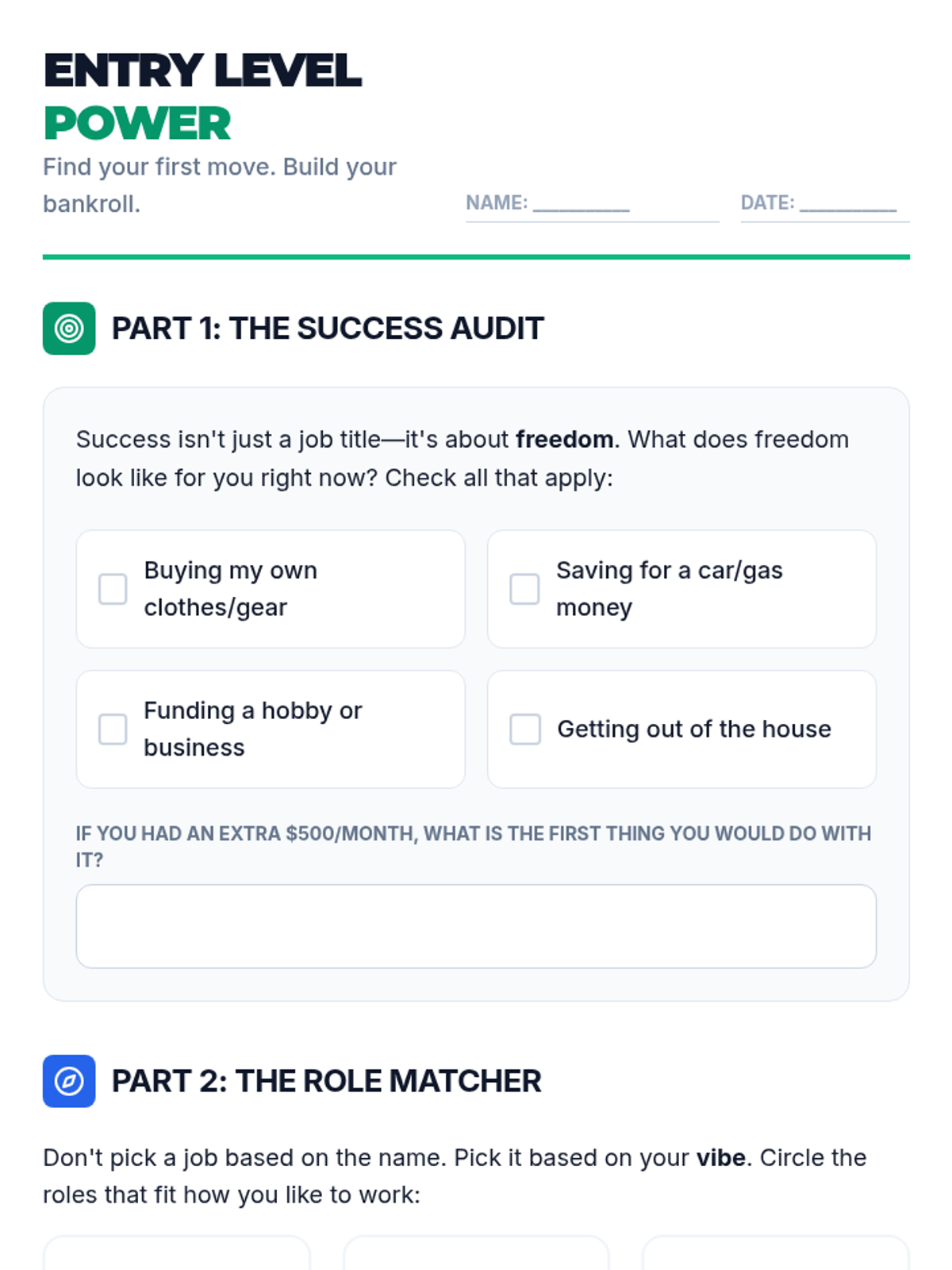
An interactive worksheet for high schoolers to identify their motivations for working, match their personality to entry-level roles, and map out local job opportunities.
A high-impact slide deck for high school students focused on redefining success and identifying entry-level job opportunities. Includes visual guides for resume building and strategic thinking about part-time work.
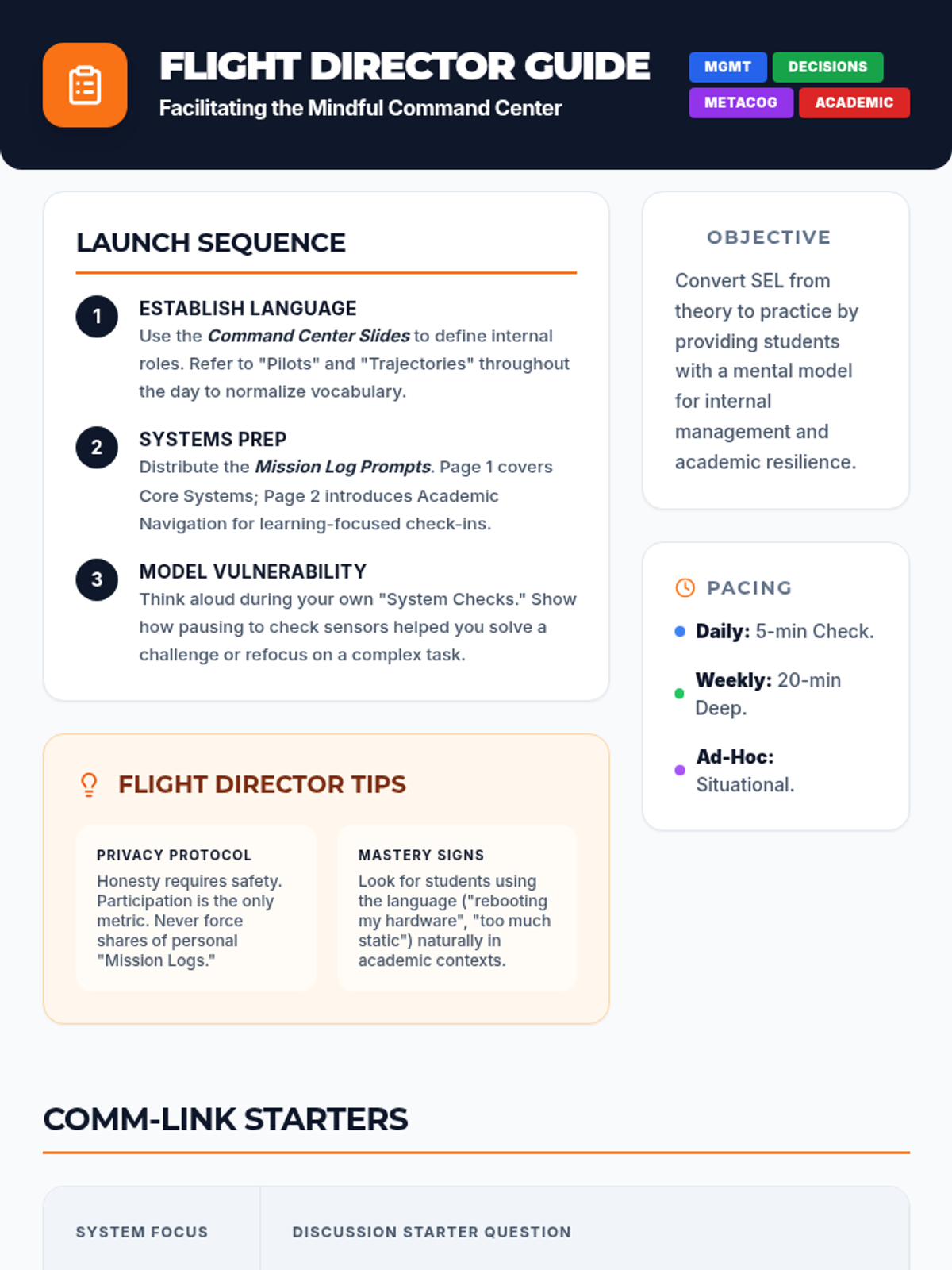
A guide for teachers to implement the 'Command Center' journaling system. Includes pacing suggestions, facilitation tips, and discussion starters.
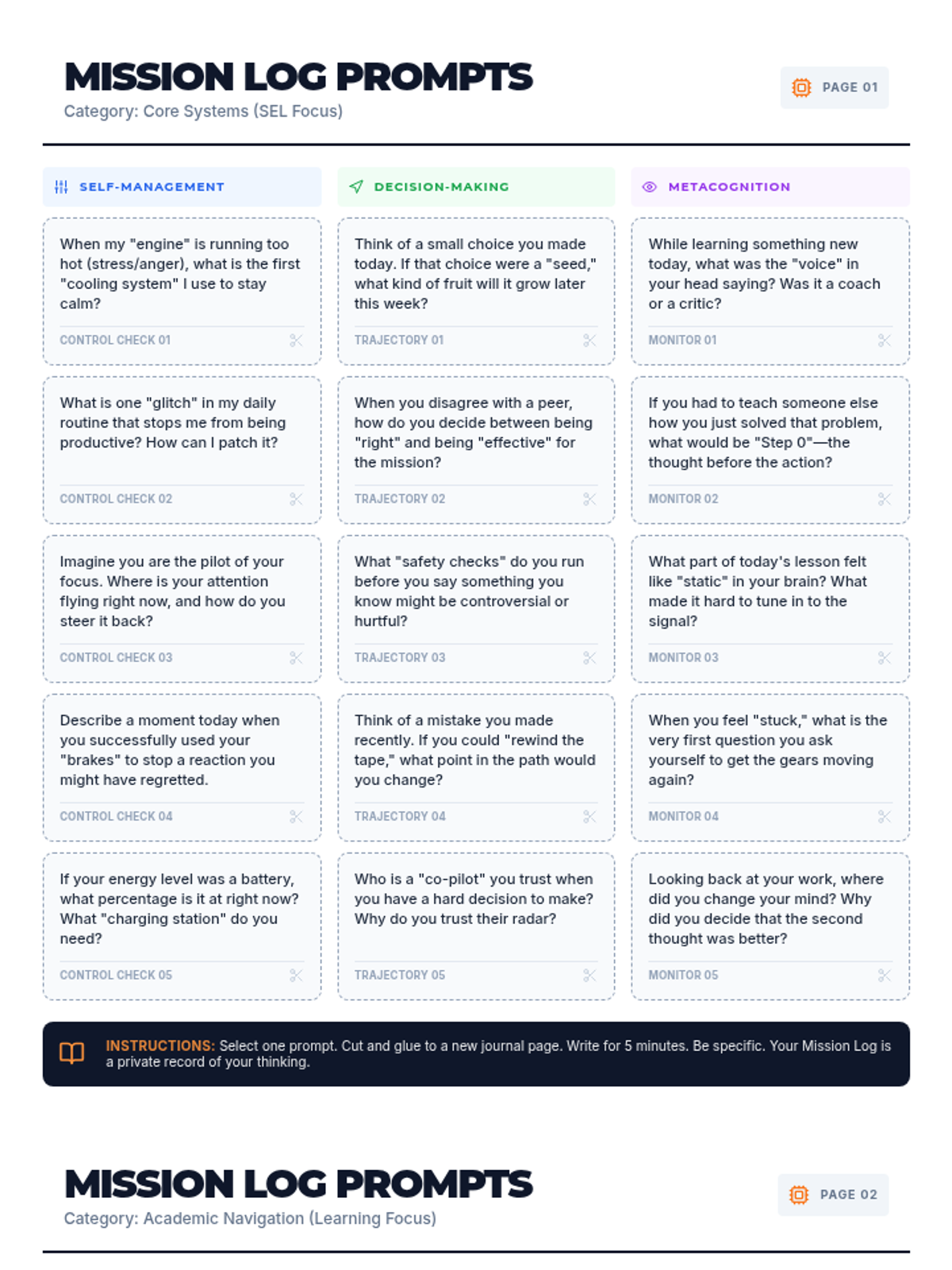
A collection of printable prompt strips categorized by focus area (Core Systems and Academic Navigation). Designed to be cut out and glued into student journals for regular check-ins.
A visual presentation that introduces the 'Command Center' metaphor for self-regulation and metacognition. Includes visual prompts and system-focused slides for classroom discussion.
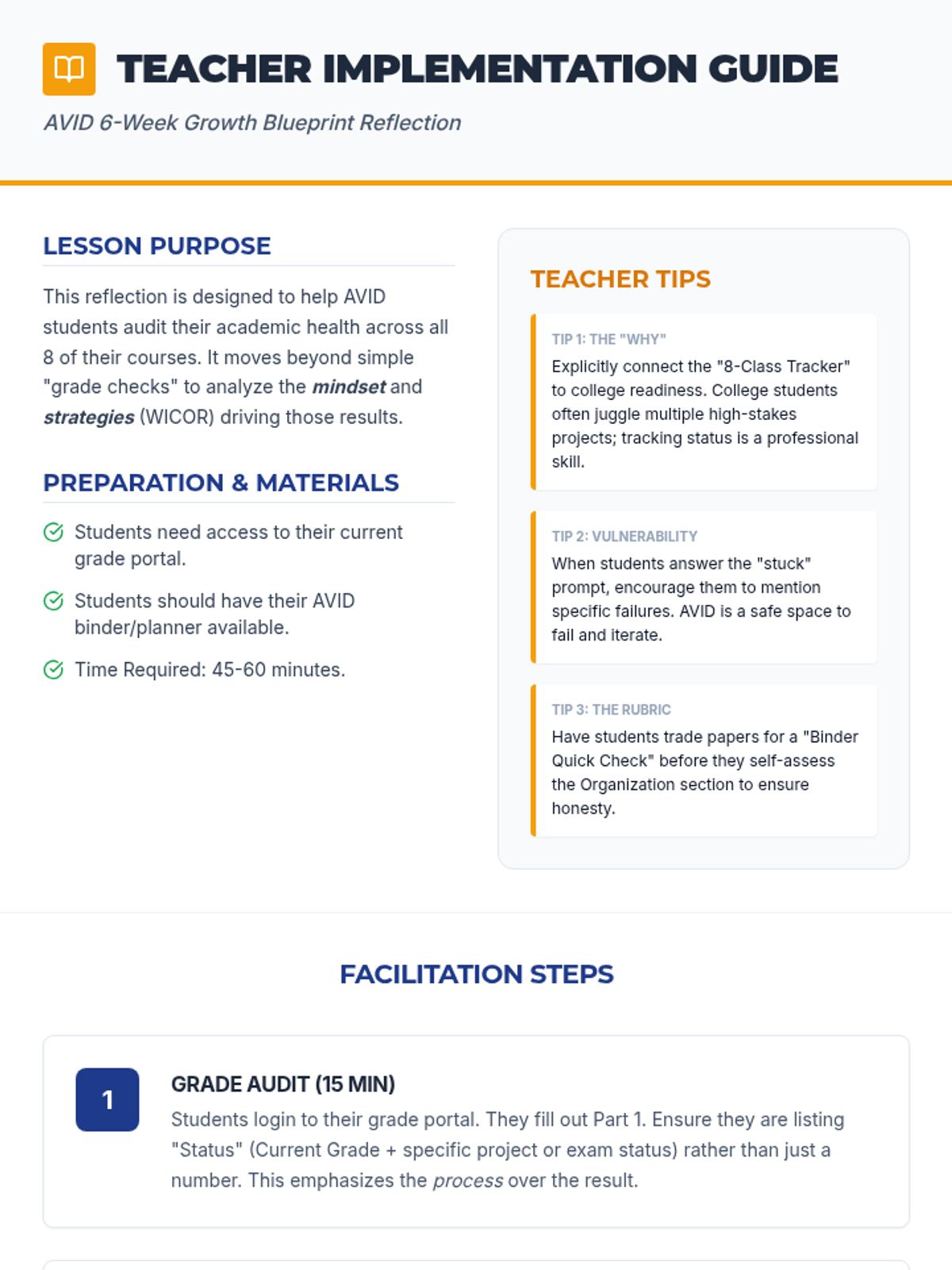
A teacher's guide for implementing the AVID 6-week reflection, including facilitation steps, grading rubrics, and instructional tips for high school CTE educators.
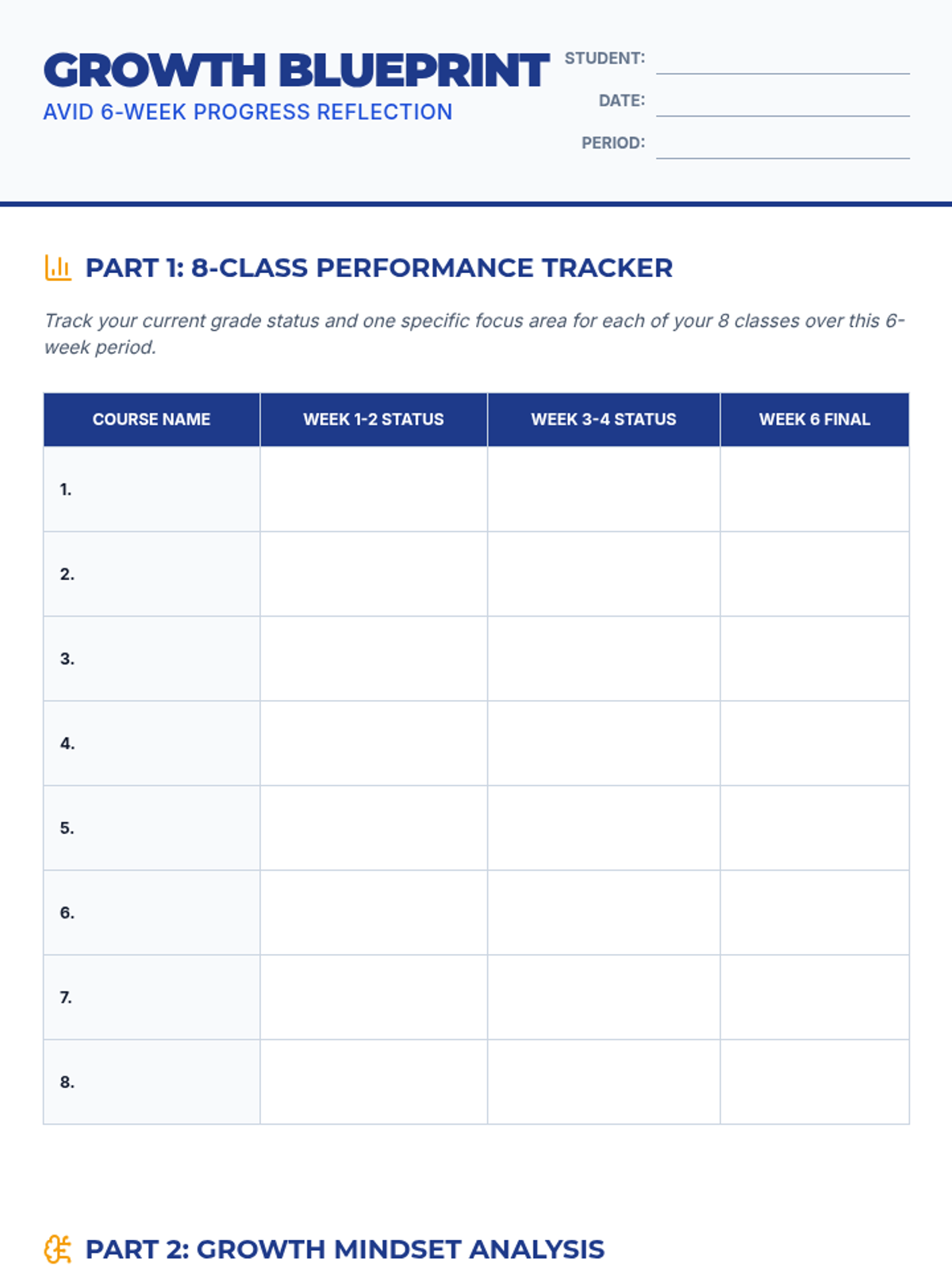
A comprehensive 3-page 6-week reflection document for high school AVID students, featuring an 8-class progress log, growth mindset writing prompts, and a detailed WICOR self-assessment rubric.
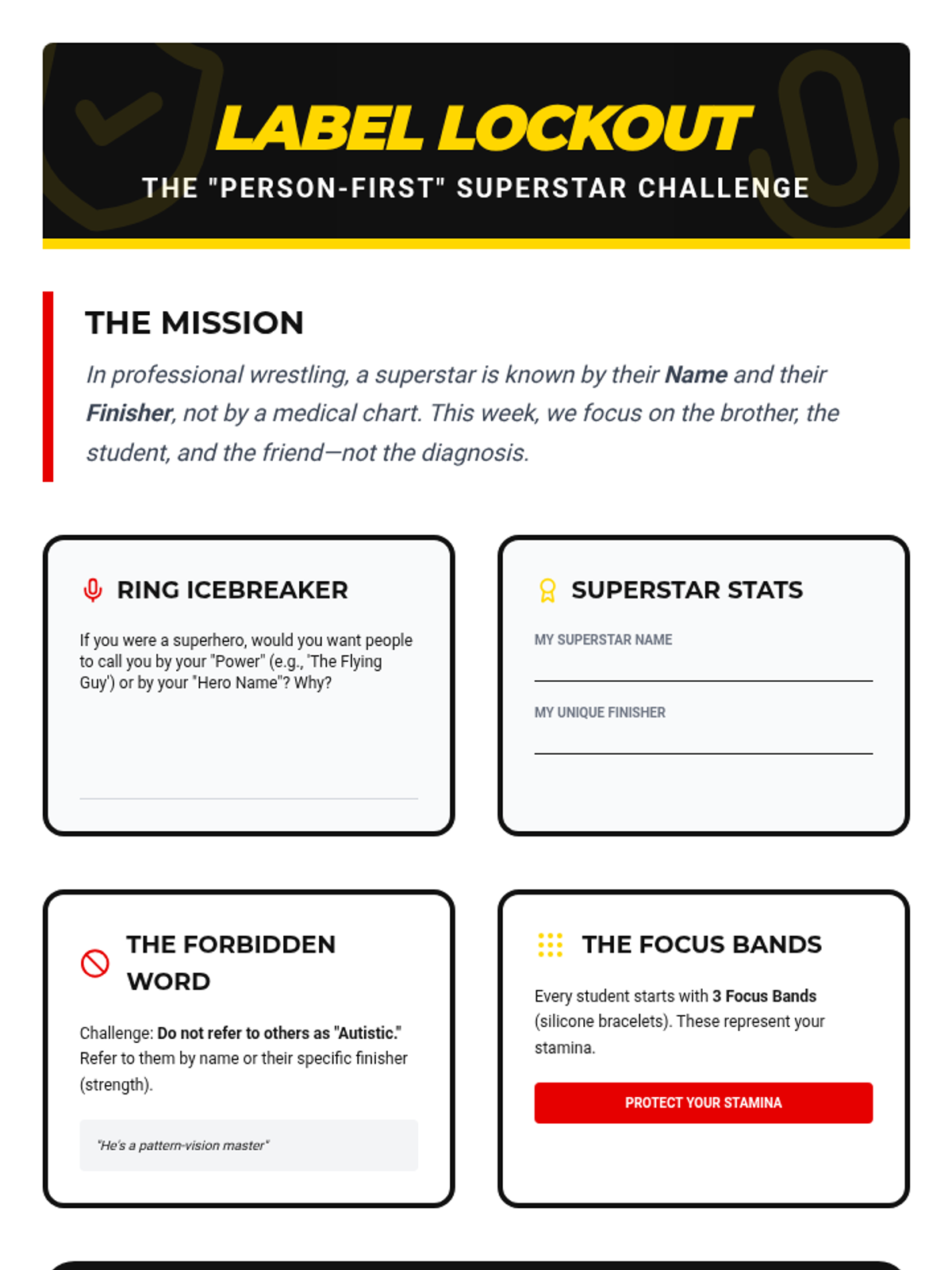
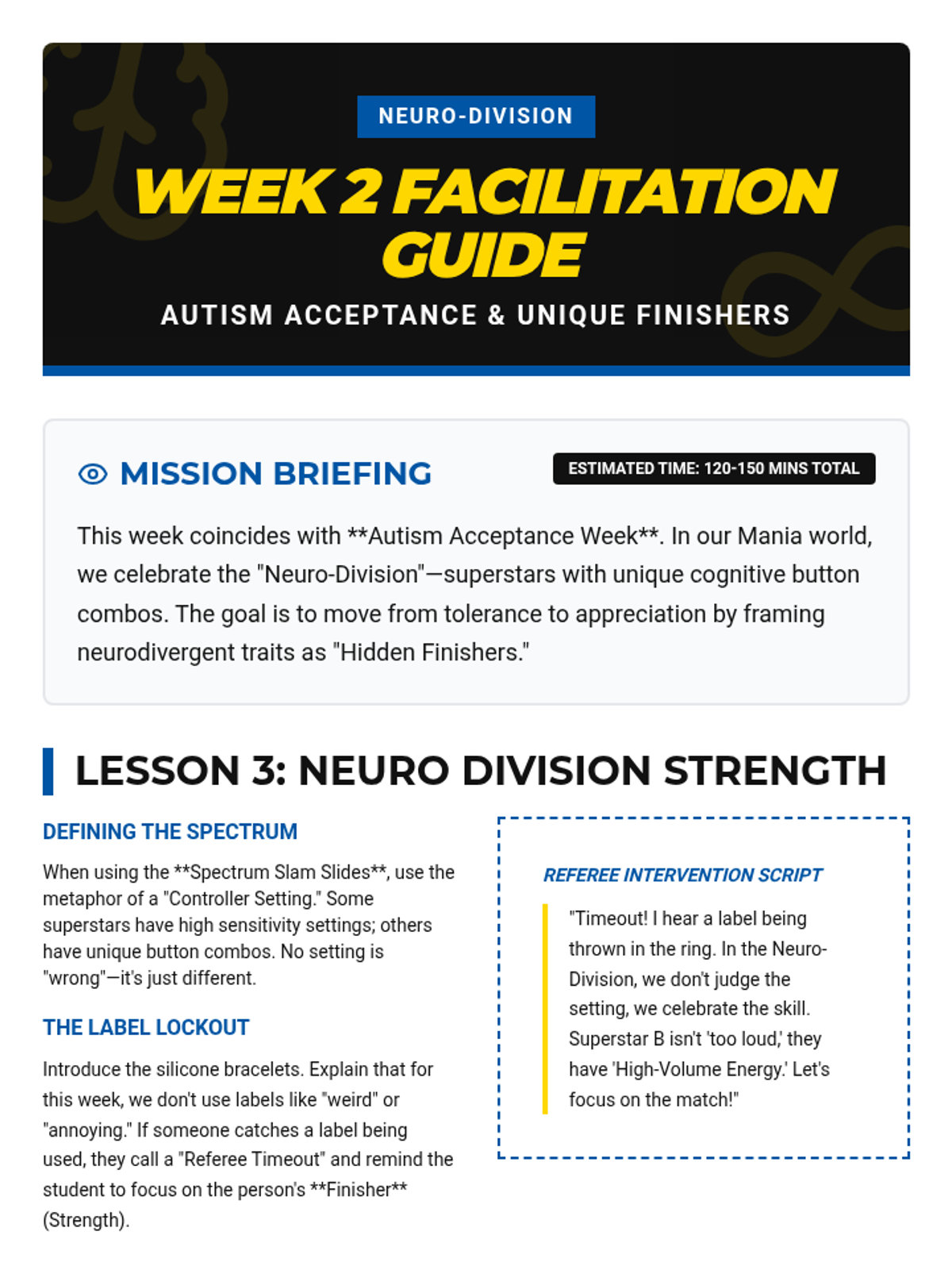
A week-long challenge guide where students avoid labels like 'autistic' to focus on individual strengths, using silicone bracelets as tokens in a 'Referee' style game.
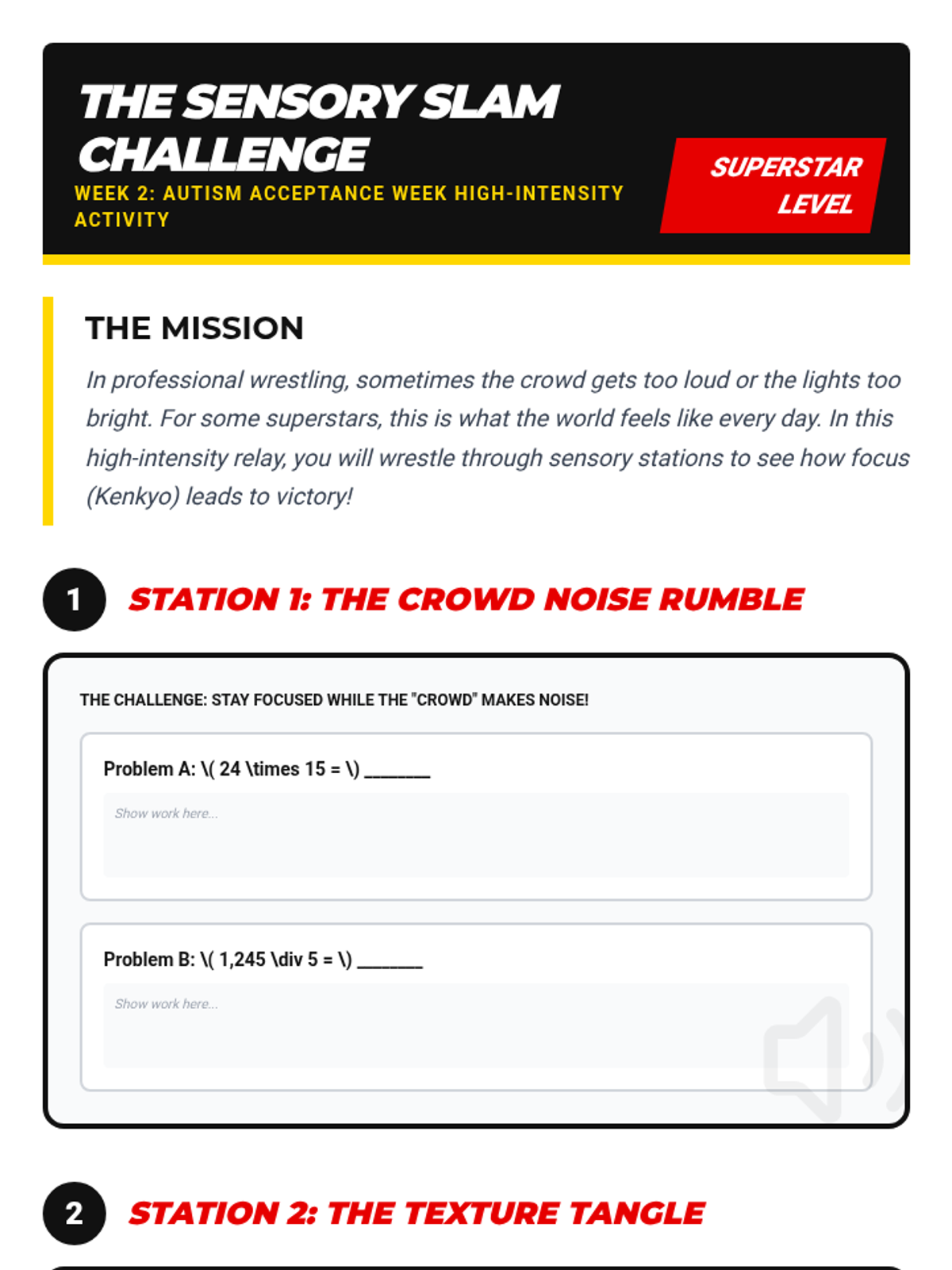
A sensory awareness activity for Autism Acceptance Week that uses high-energy challenges to simulate sensory processing differences and promote inclusive focus strategies.
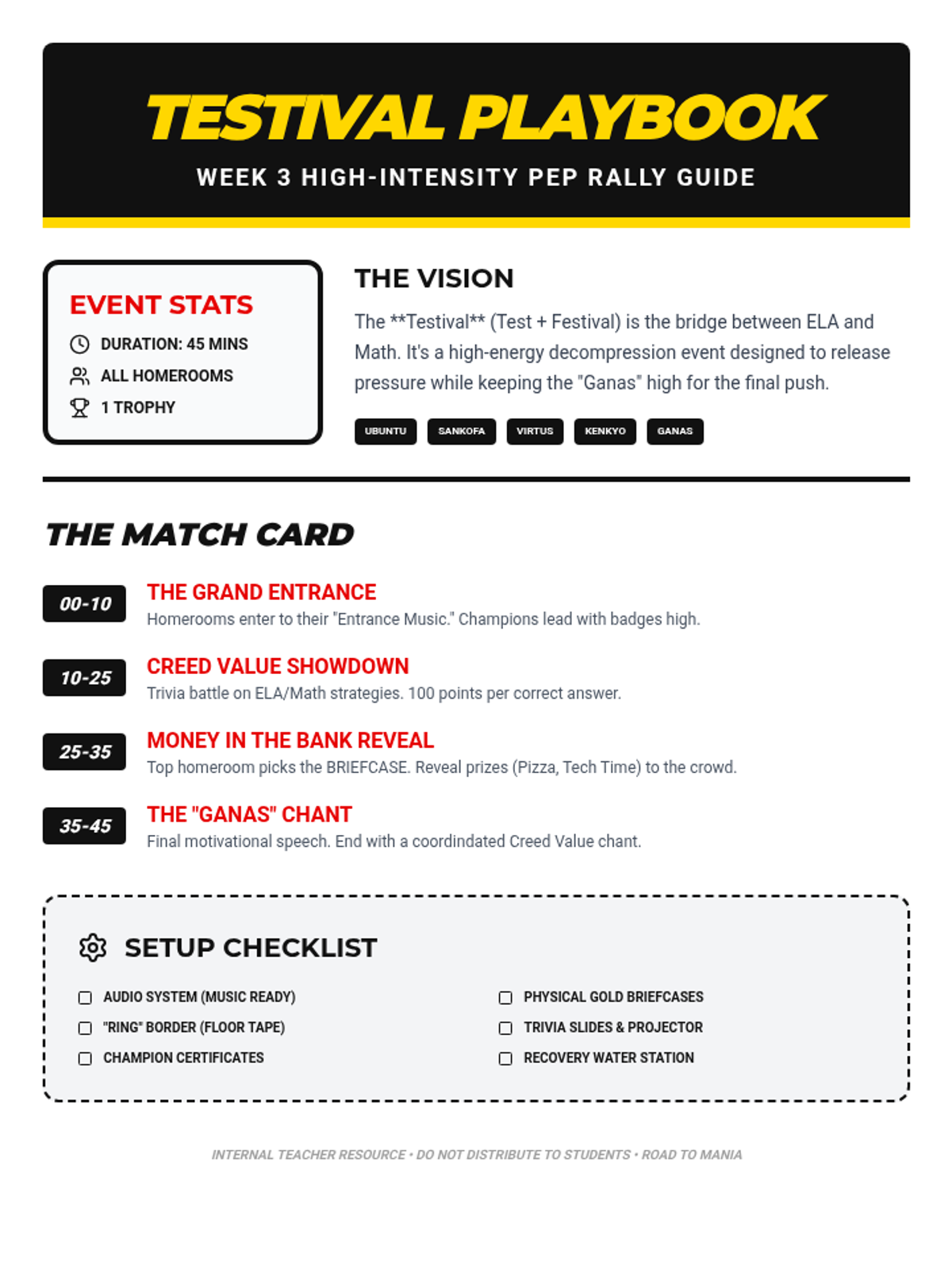
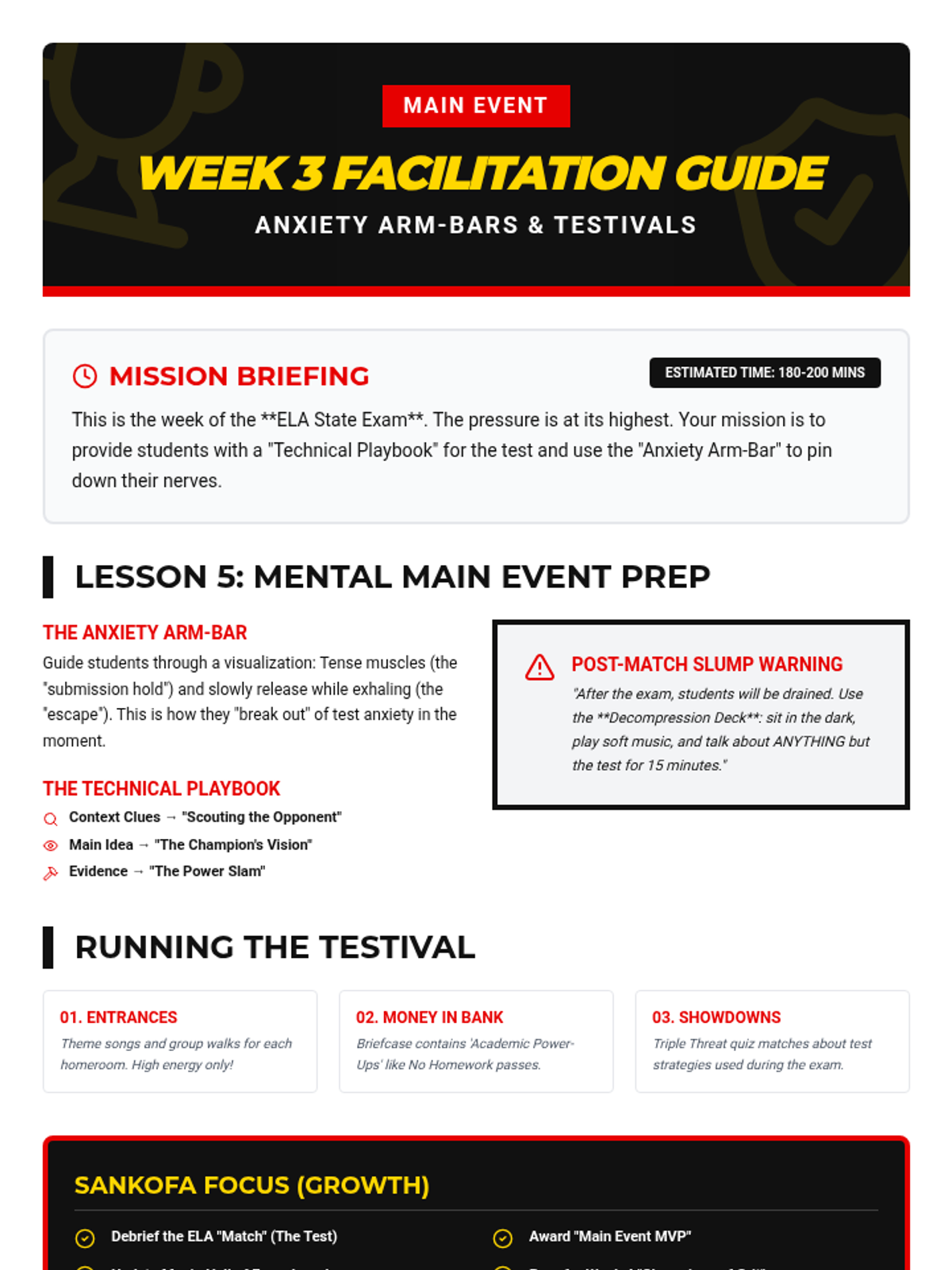
A teacher-facing resource for running a high-intensity 'Testival' (Test + Festival) pep rally, including 'Ring Entrances,' 'Creed Value Showdowns' (academic bowl style), and the 'Money in the Bank' opening.
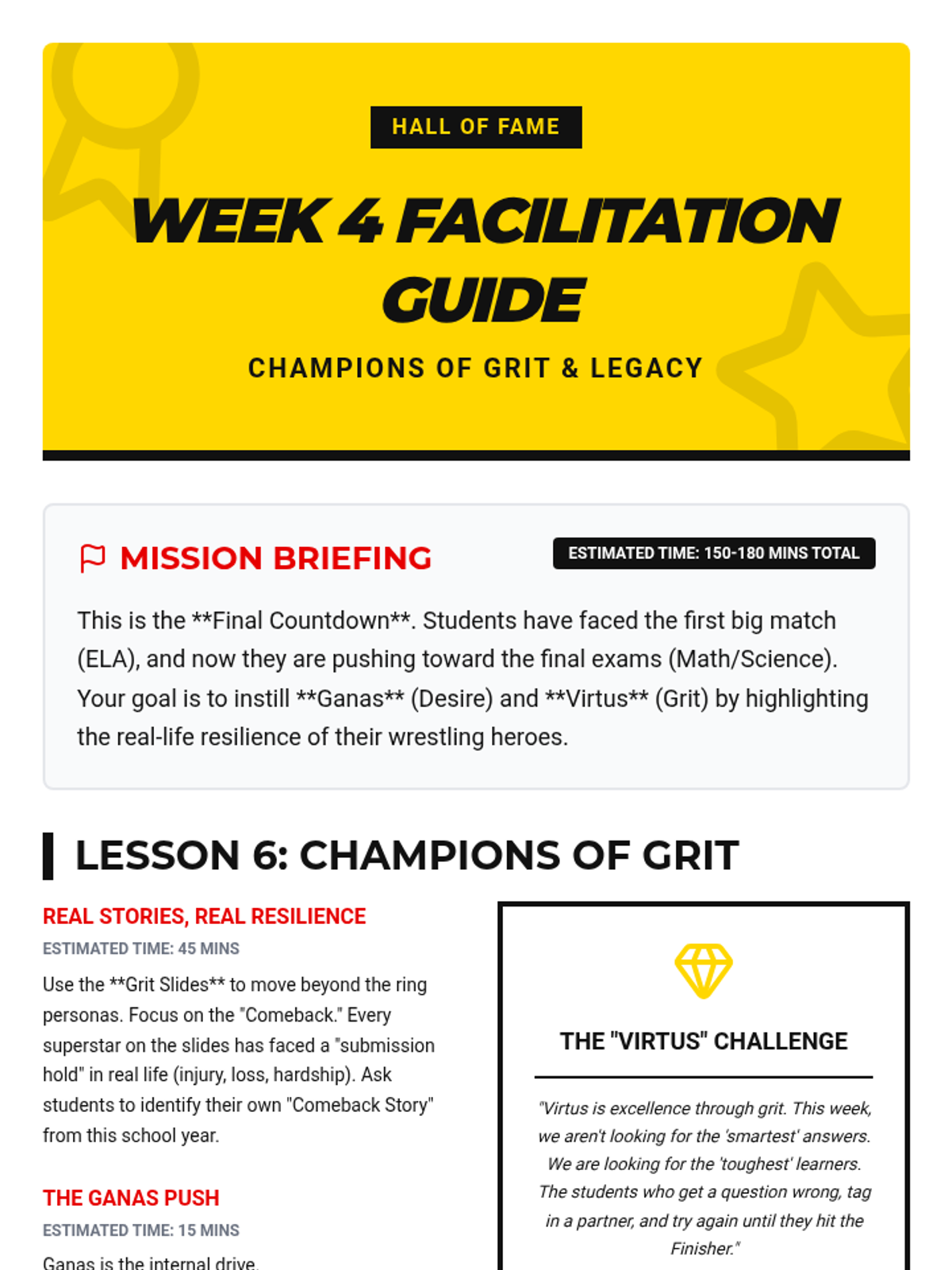
A detailed teacher facilitation guide for Week 4 of the 'Road to State Exam Mania' sequence, focusing on Ganas (drive) and Virtus (grit) for the final exam push and the 'Mania Gala' unit wrap-up.
A detailed teacher facilitation guide for Week 3 of the 'Road to State Exam Mania' sequence, focusing on ELA state exam preparation and the 'Testival' pep rally.
A detailed teacher facilitation guide for Week 2 of the 'Road to State Exam Mania' sequence, focusing on Autism Acceptance Week and celebrating neurodiversity.
A detailed teacher facilitation guide for Week 1 of the 'Road to State Exam Mania' sequence, focusing on kickoff motivation and the Creed Value of Ubuntu.
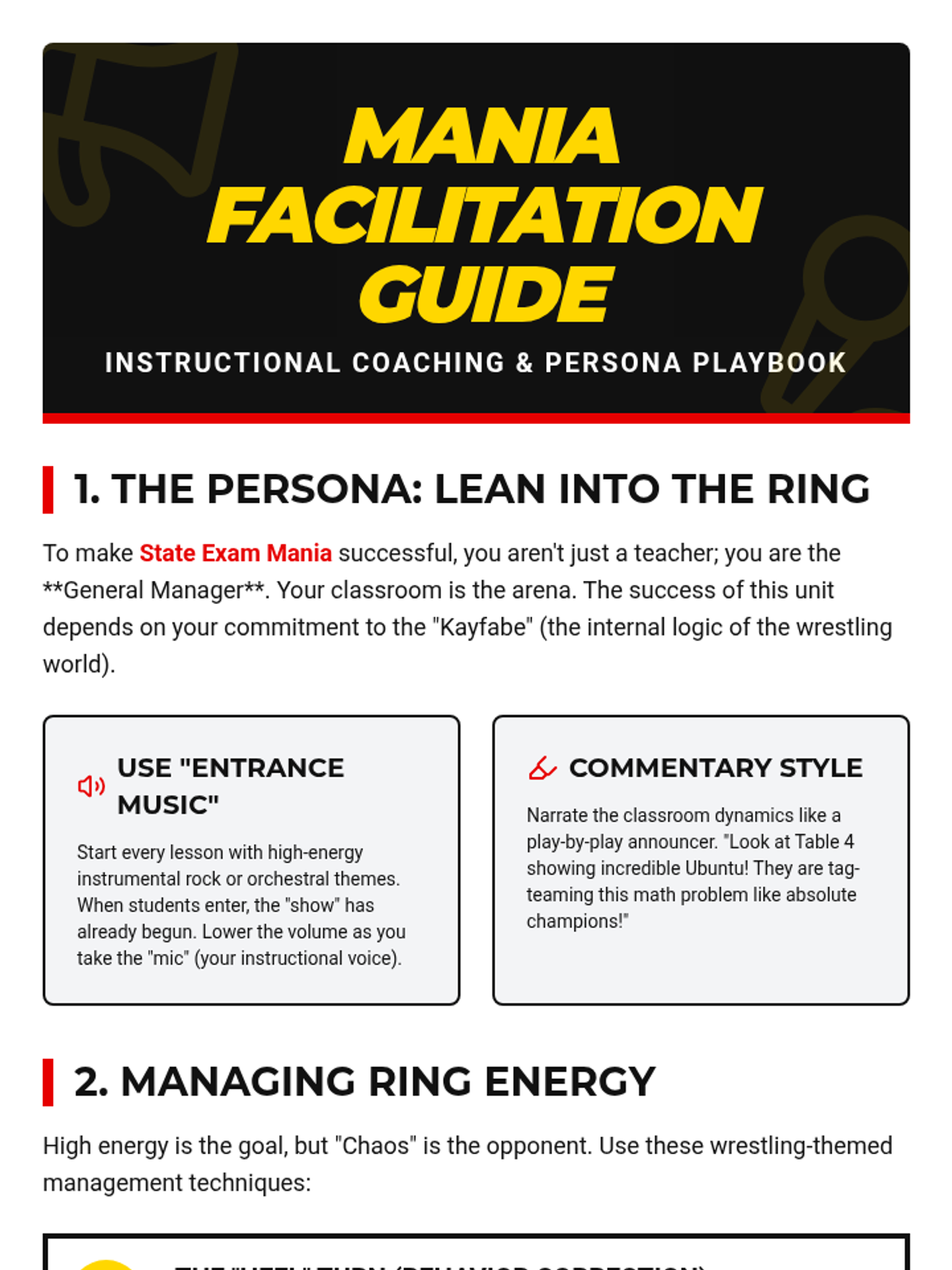
A comprehensive teacher facilitation guide for the 'Road to State Exam Mania' sequence, featuring persona coaching, behavior management strategies (using wrestling metaphors), lesson-specific tips, and a bank of discussion questions.
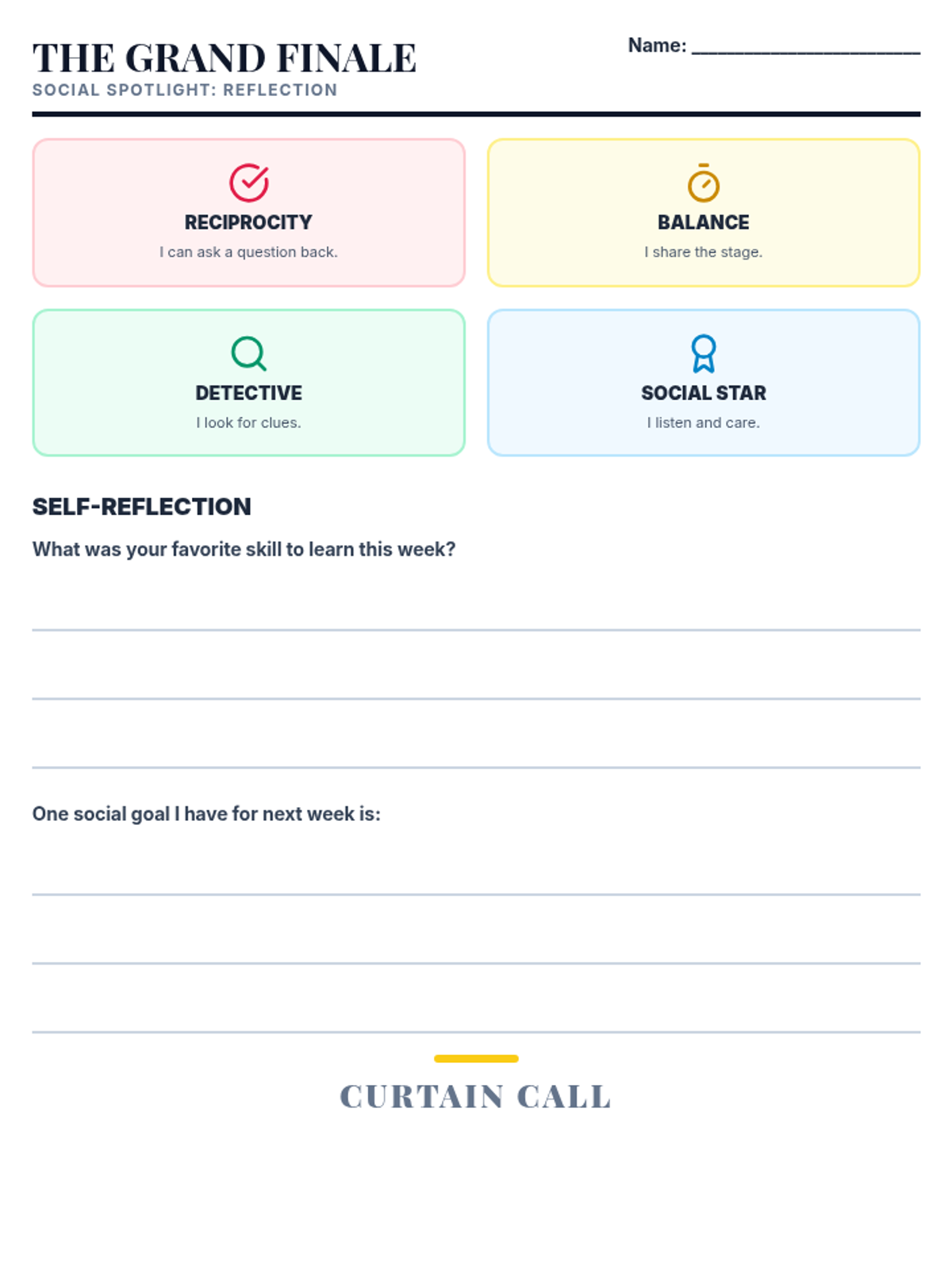
An improved 1-page Day 5 reflection sheet with increased writing space, ruled lines, and fixed footer placement.
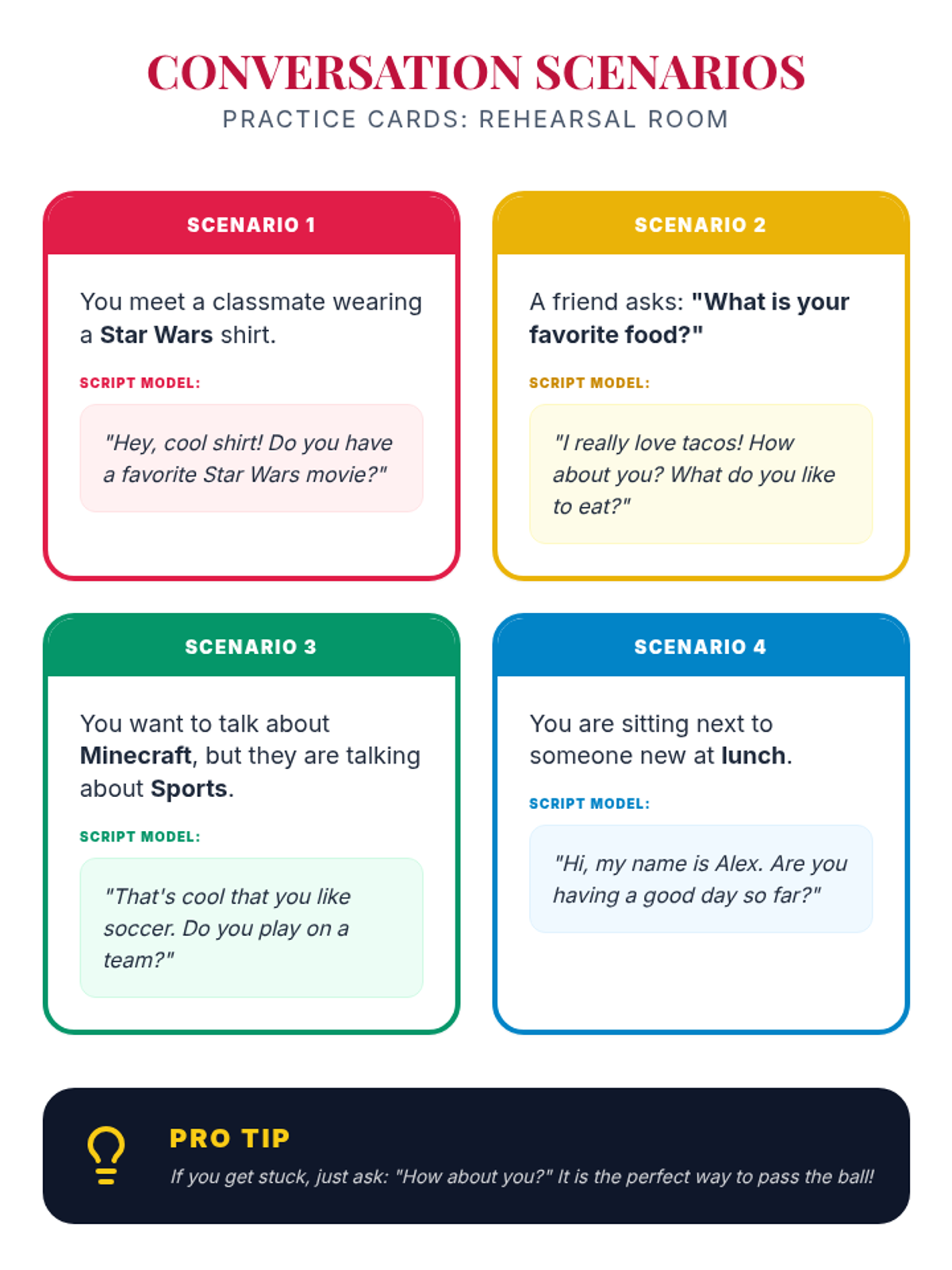
A set of 4 updated role-play scenario cards with actual script models and a printer-friendly white background for Day 4 practice.
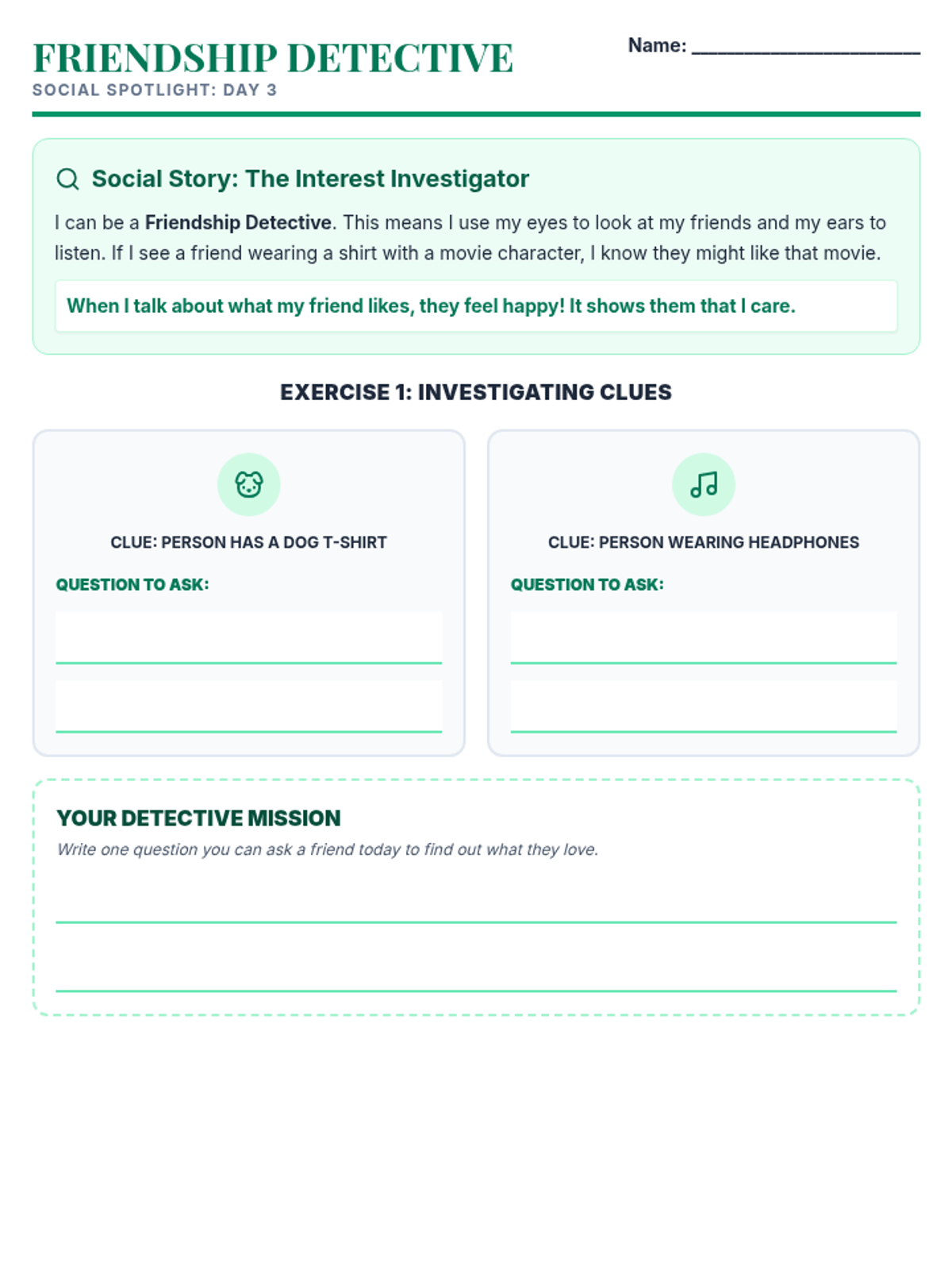
An improved 1-page Day 3 worksheet with Ruled lines, larger work areas, and clear visual prompts for high school students.
An improved 1-page Day 2 worksheet with Ruled lines, clear scenarios, and fixed page flow to ensure prompts and work areas stay together.
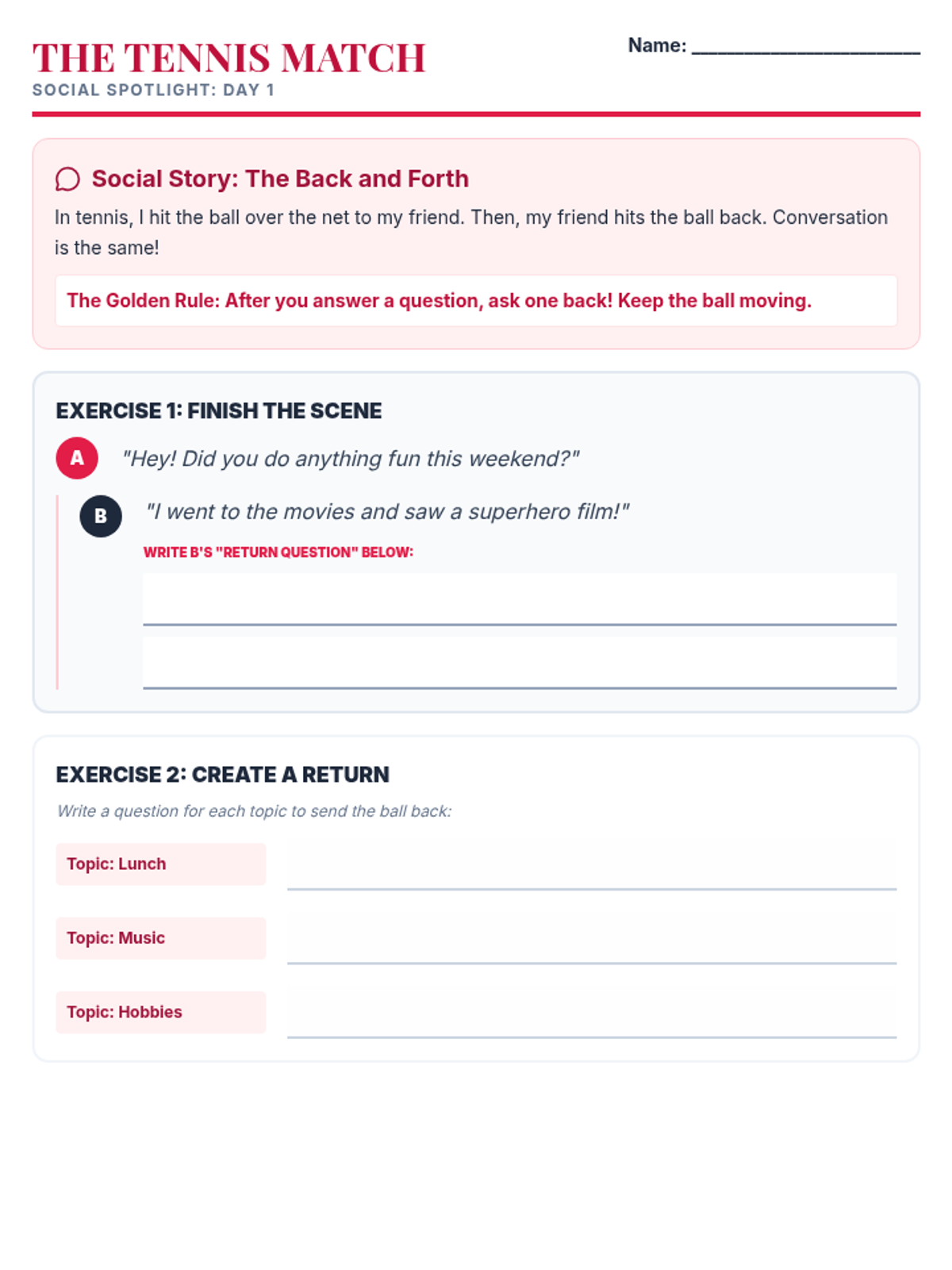
An improved Day 1 worksheet with more writing space, ruled lines, and an additional practice exercise for high school students.
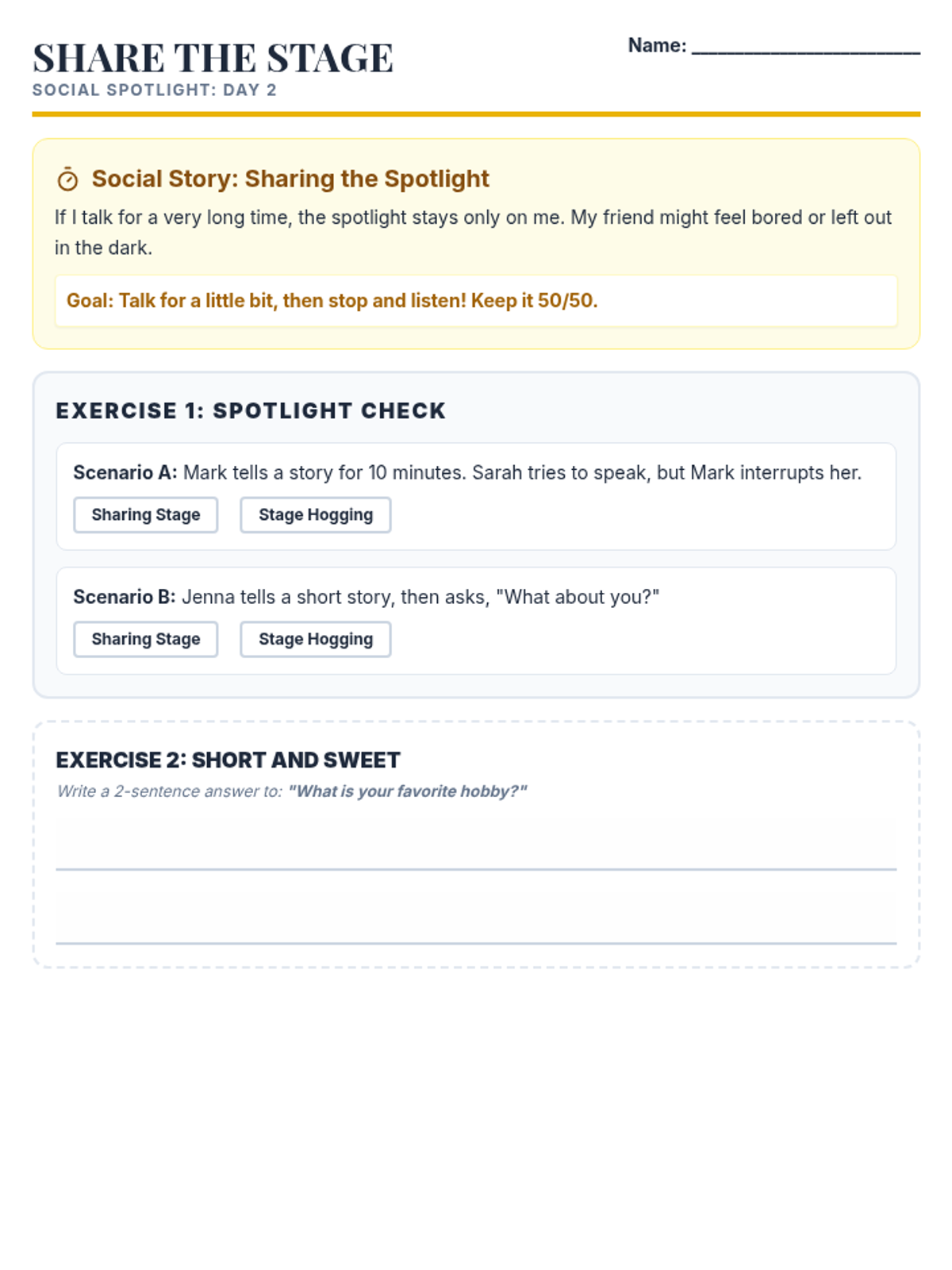
A comprehensive 6-slide instructional deck covering the full 5-day Social Spotlight unit with expanded details for each day. Minimum font size is 24px.
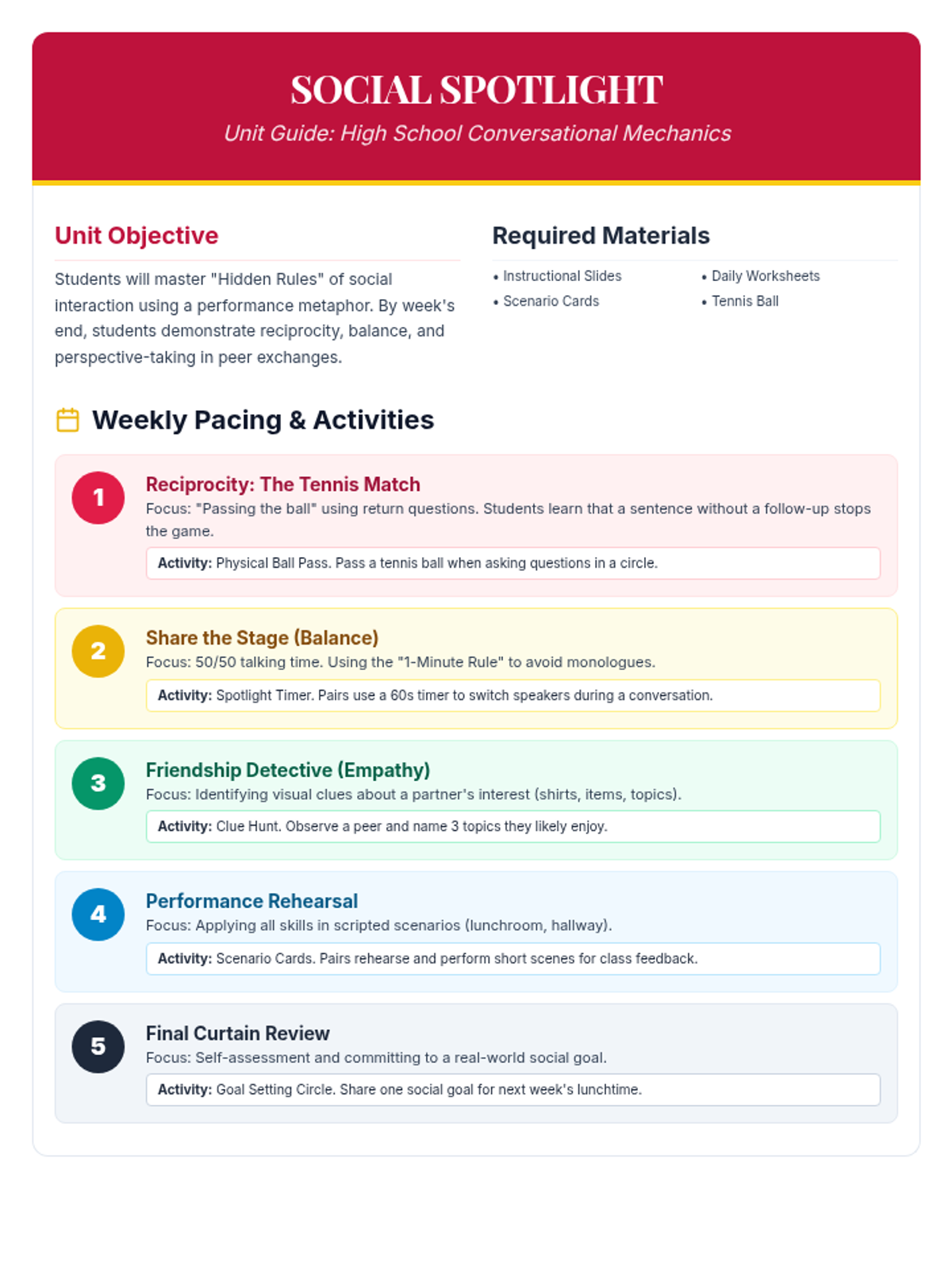
A detailed 1-page unit guide for the Social Spotlight unit, including specific objectives, daily pacing, and activity descriptions for high school special education.
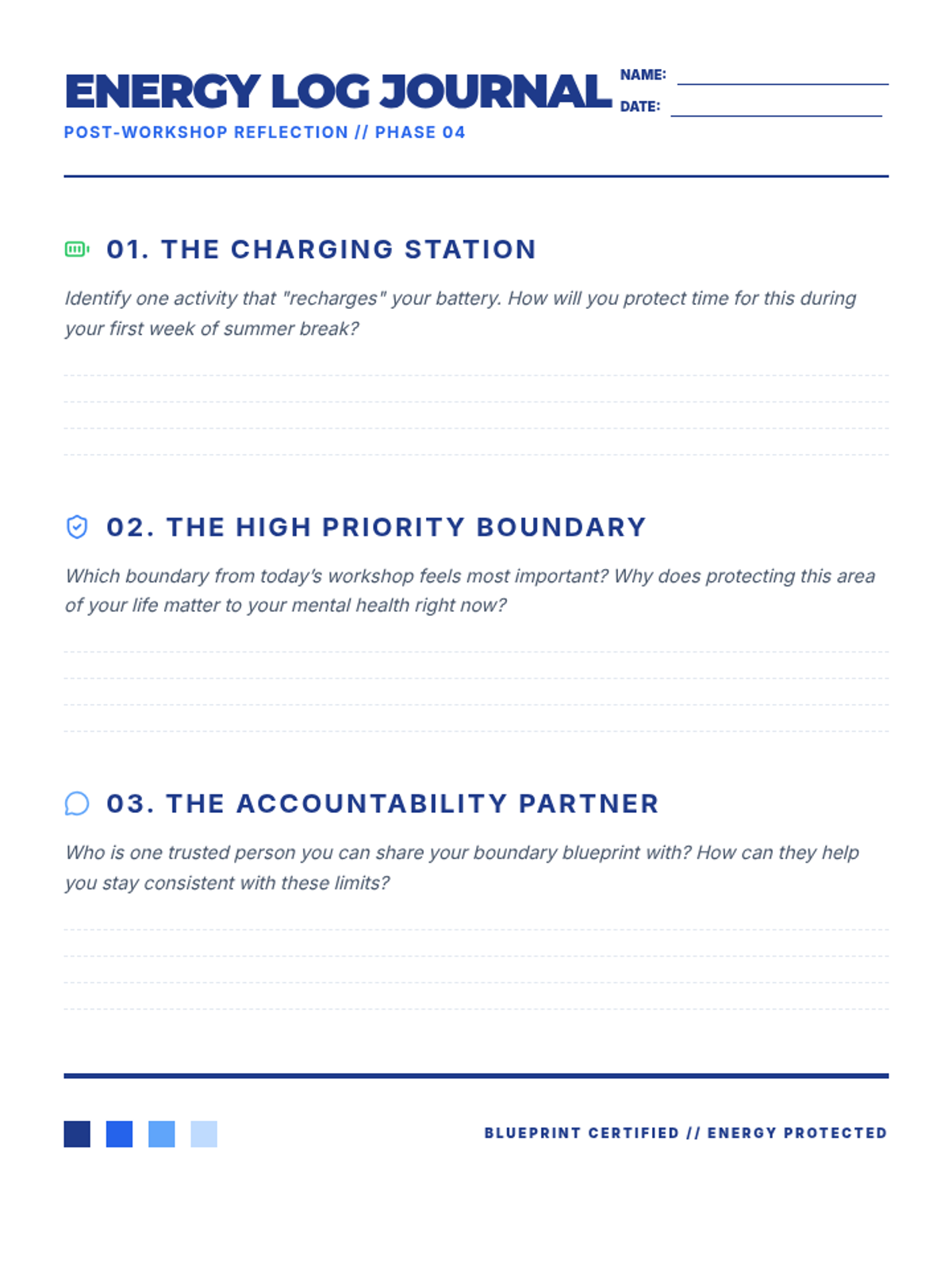
A reflection journal for students to solidify their boundary plans and identify personal recharge strategies after the workshop.
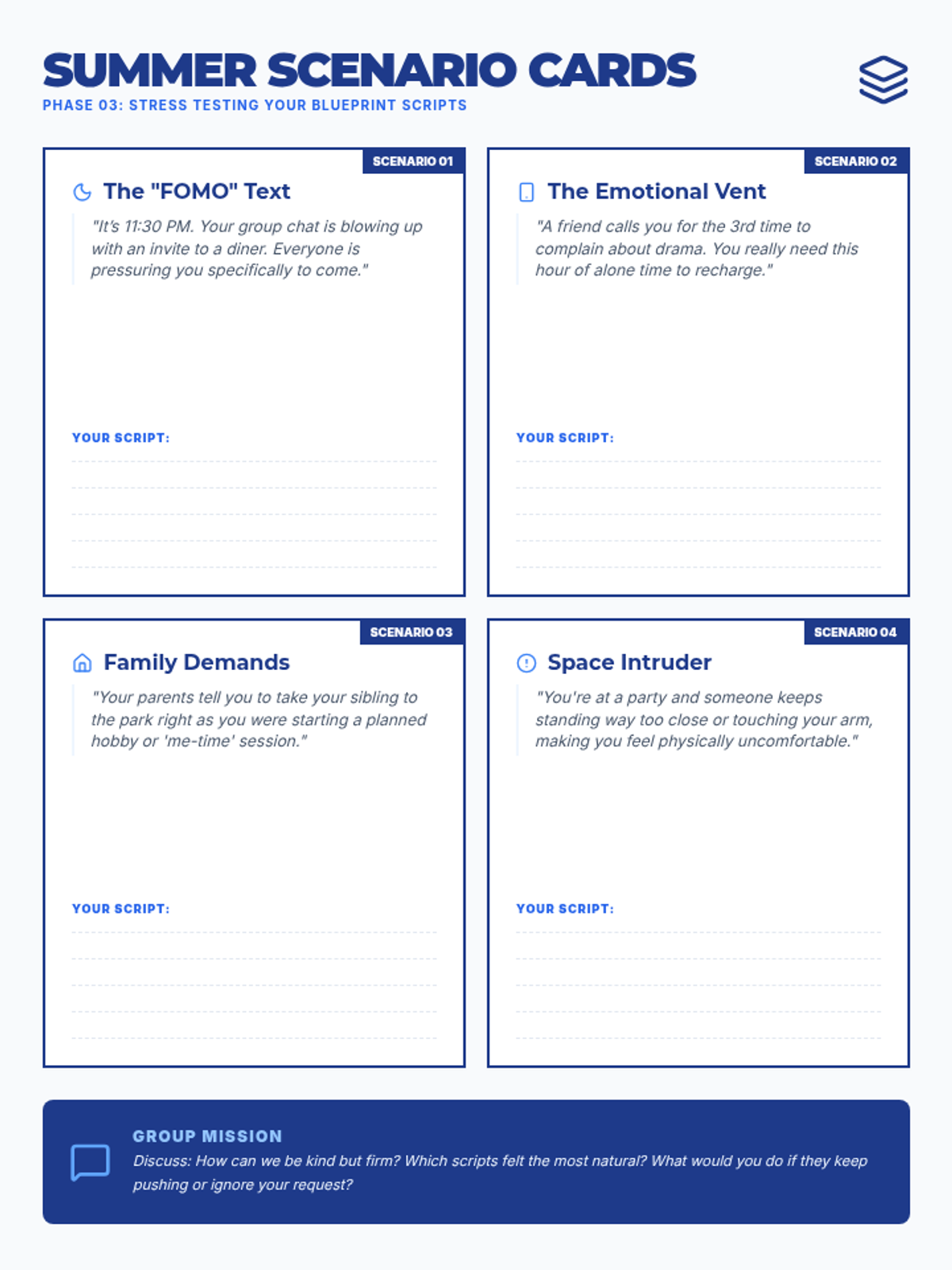
A set of task cards featuring realistic summer scenarios for students to practice applying boundary-setting scripts in small groups.
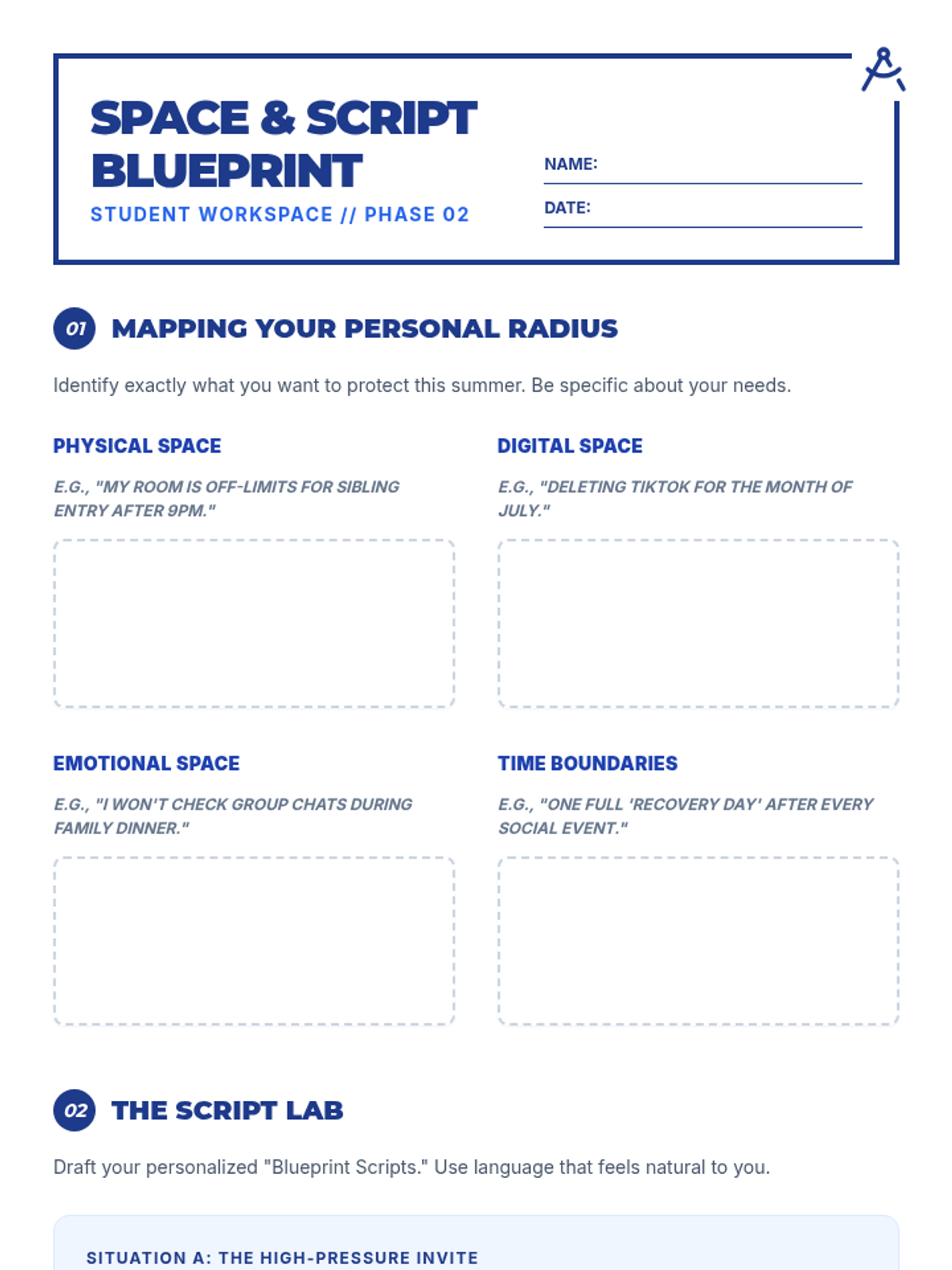
A worksheet for students to map out their physical, digital, and emotional boundaries and draft personalized scripts for challenging summer scenarios.
A dynamic slide deck for the Boundary Blueprint workshop, featuring visuals on mental energy, types of boundaries, and communication scripts.
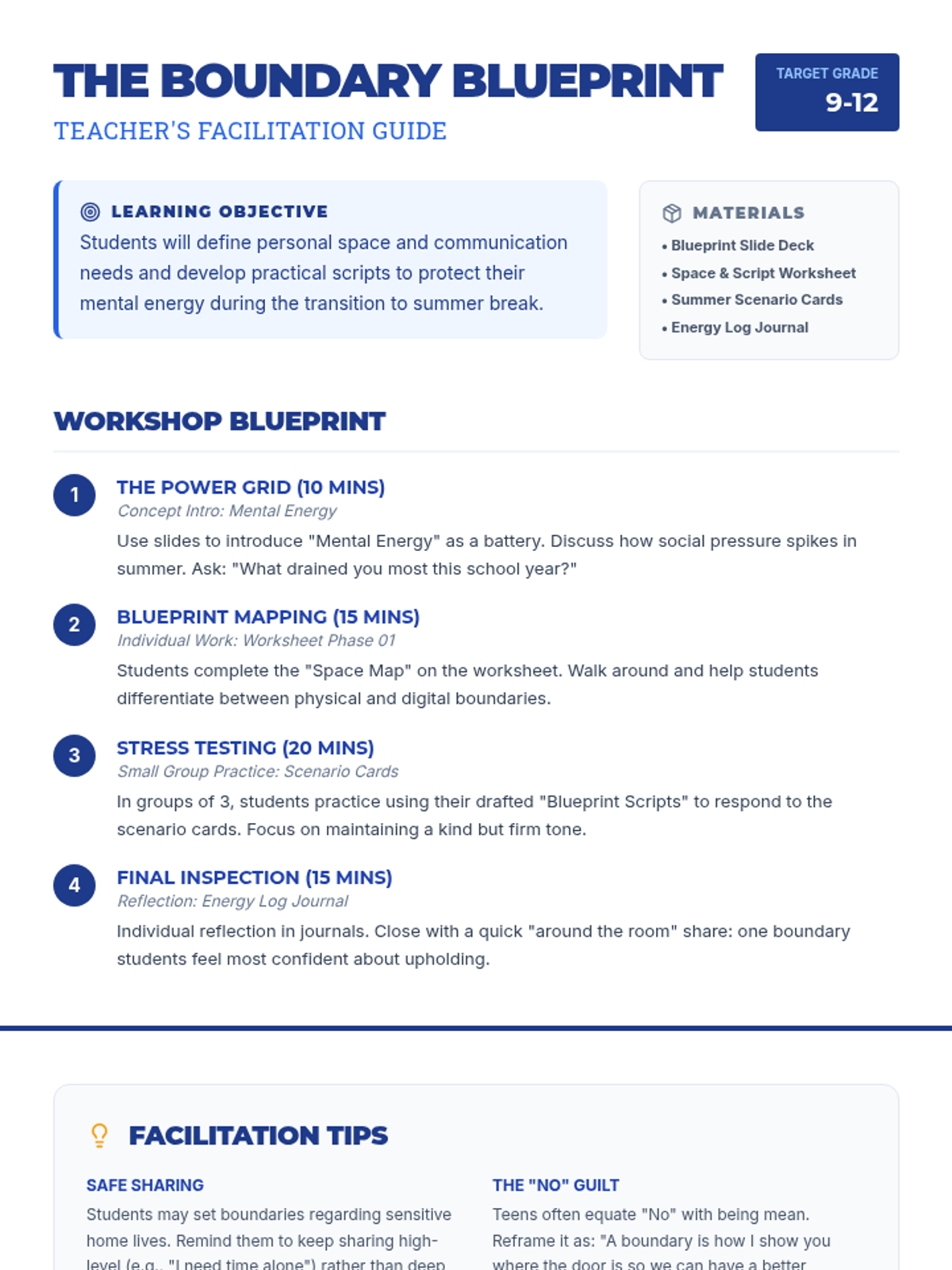
A detailed teacher's guide for facilitating the Boundary Blueprint workshop, including timeline, facilitation tips, and discussion prompts.
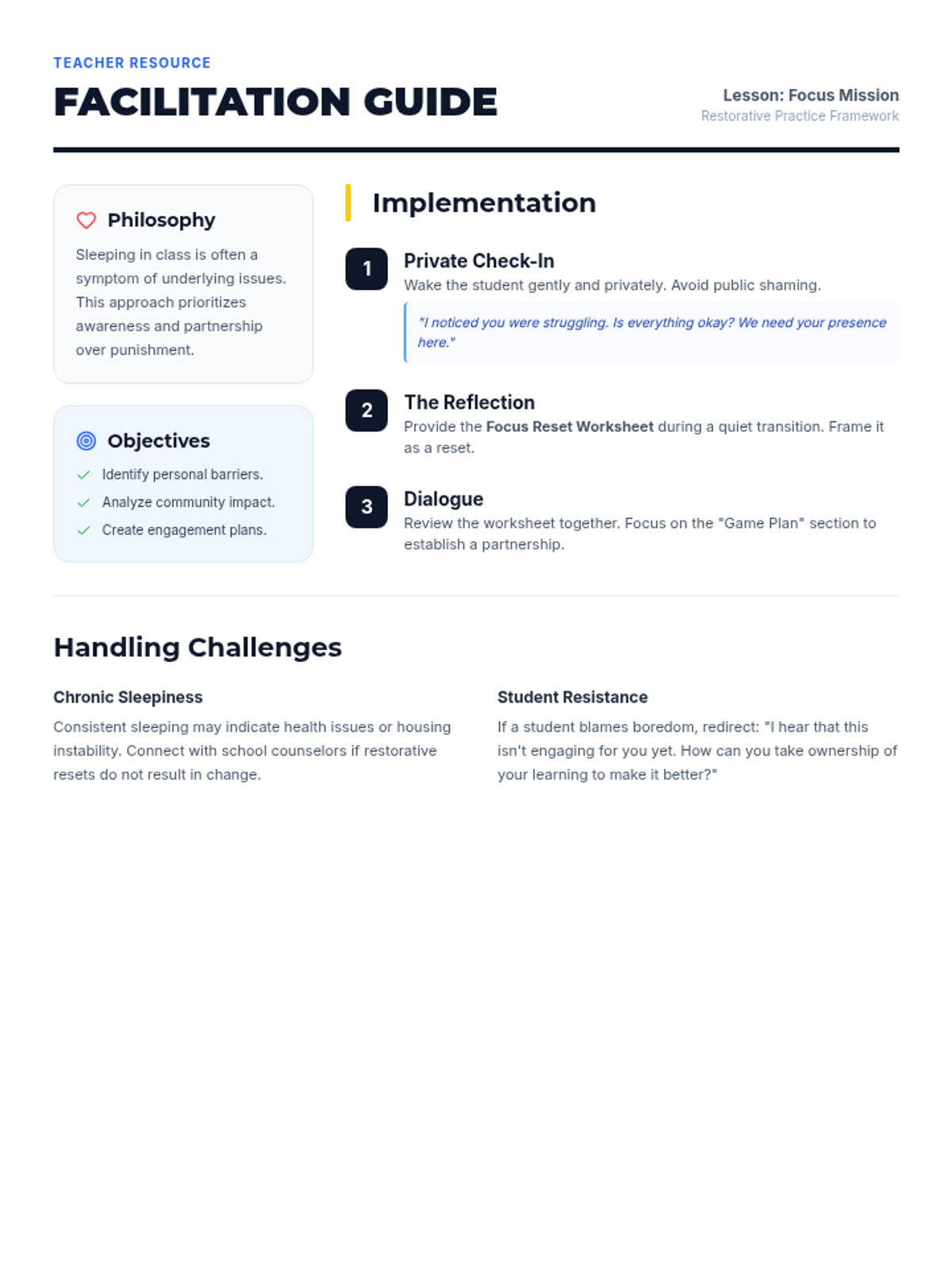
A teacher facilitation guide providing restorative strategies and instructional prompts for addressing classroom sleepiness and using the Focus Mission materials effectively.
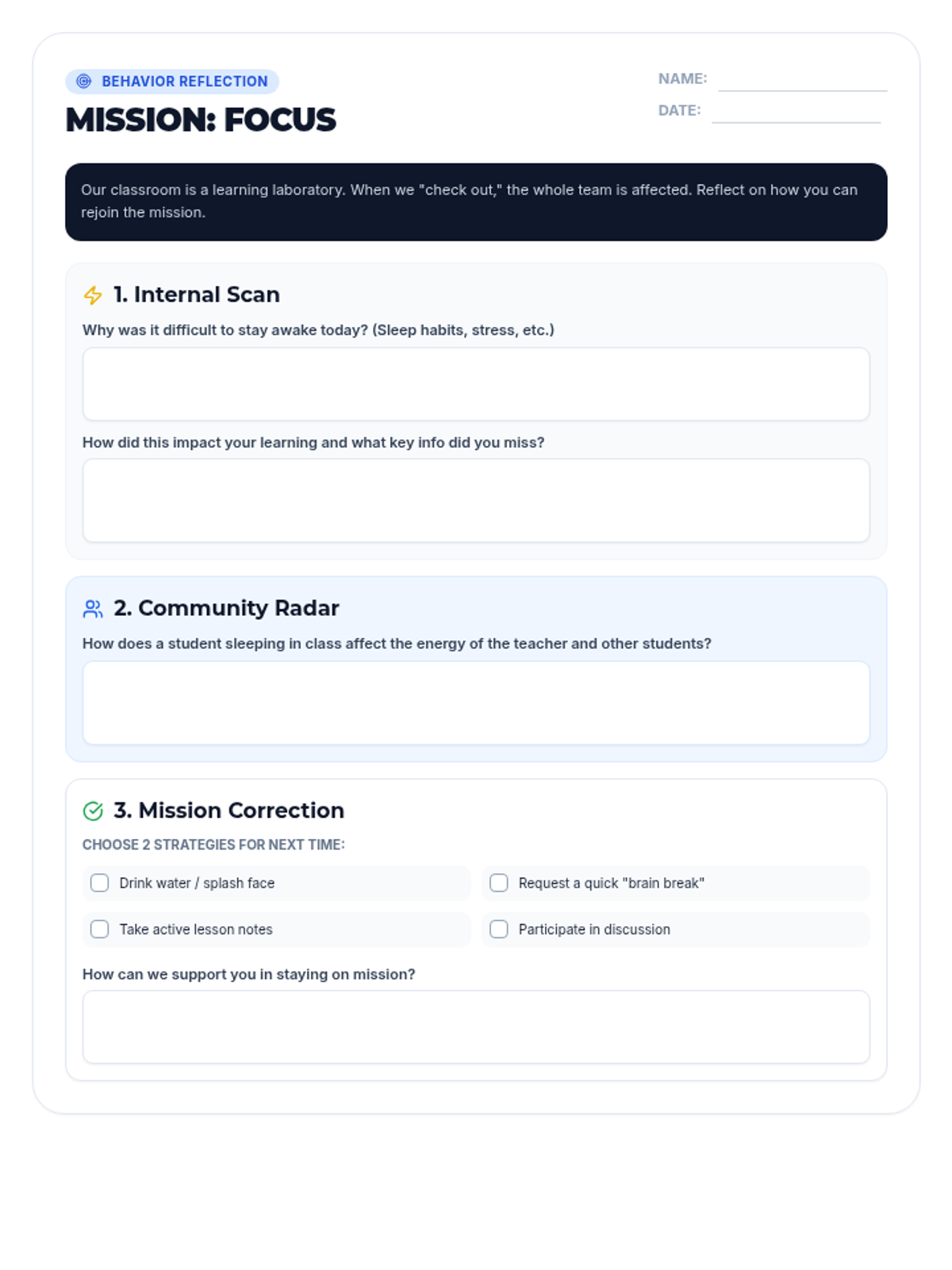
A restorative behavior reflection worksheet that encourages students to evaluate the causes of their drowsiness and understand its impact on their learning and classroom community.
An engaging slide deck explaining the impact of sleeping in class on personal success and the classroom community, featuring restorative strategies for staying engaged.
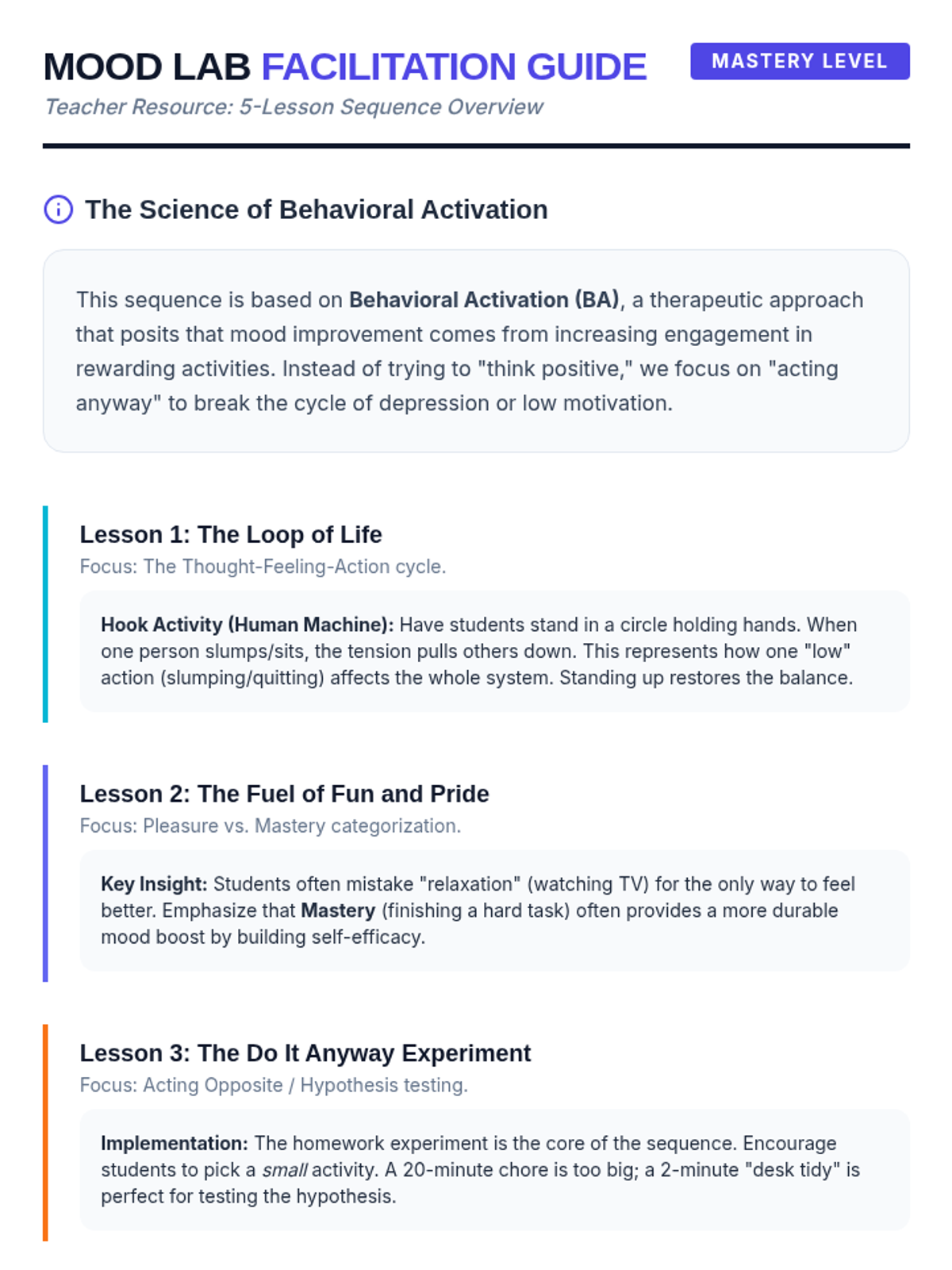
A teacher facilitation guide for the 'Mood Lab Experiment' sequence, providing therapeutic context, hook instructions, and tips for each lesson.
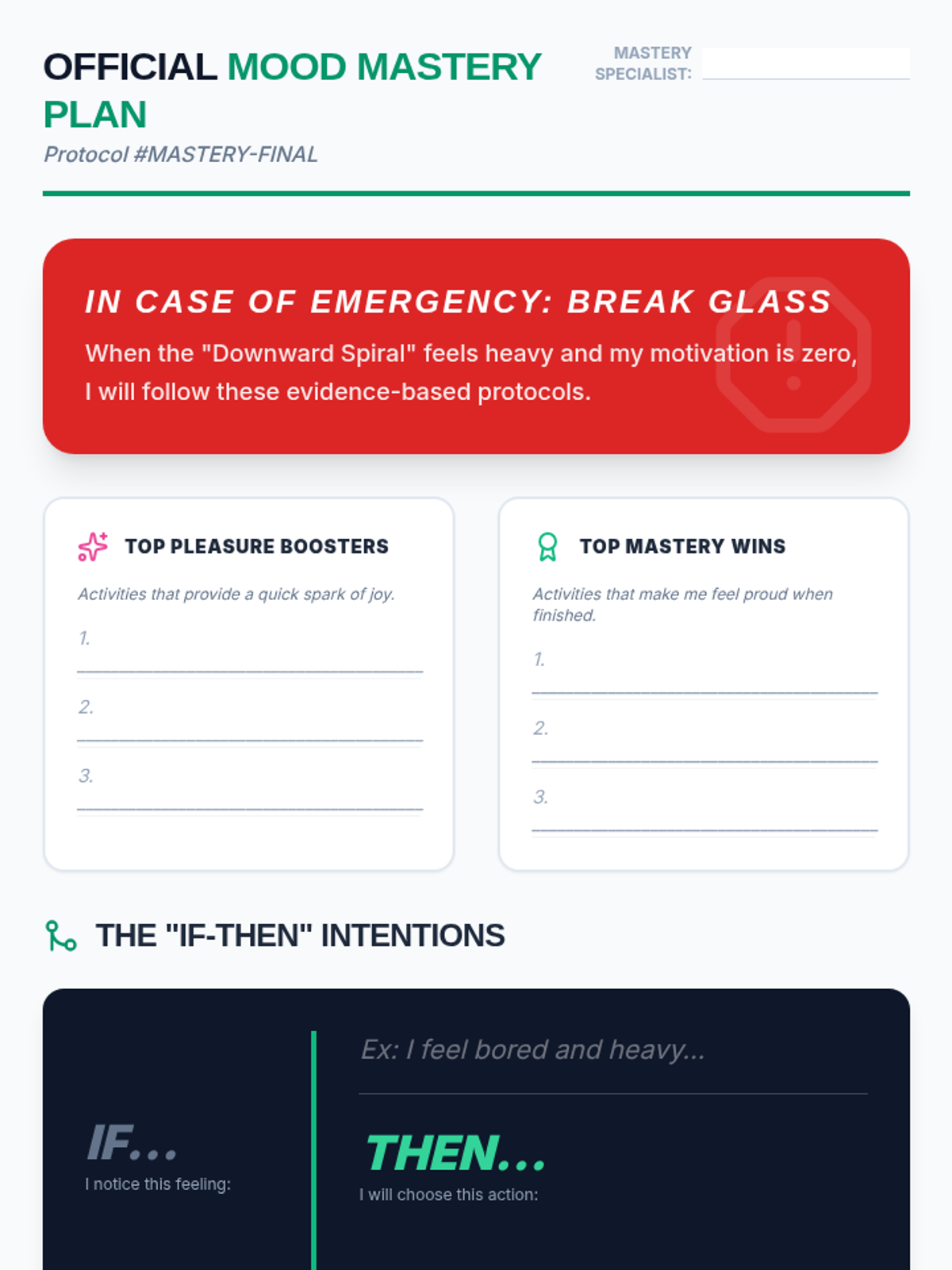
A comprehensive 'Break the Glass' emergency plan worksheet where students synthesize their findings into specific 'If-Then' implementation intentions for mood regulation.
Final slide deck for the 'Mood Mastery Lab' lesson, teaching students how to create implementation intentions and synthesize their learning into an emergency activation plan.
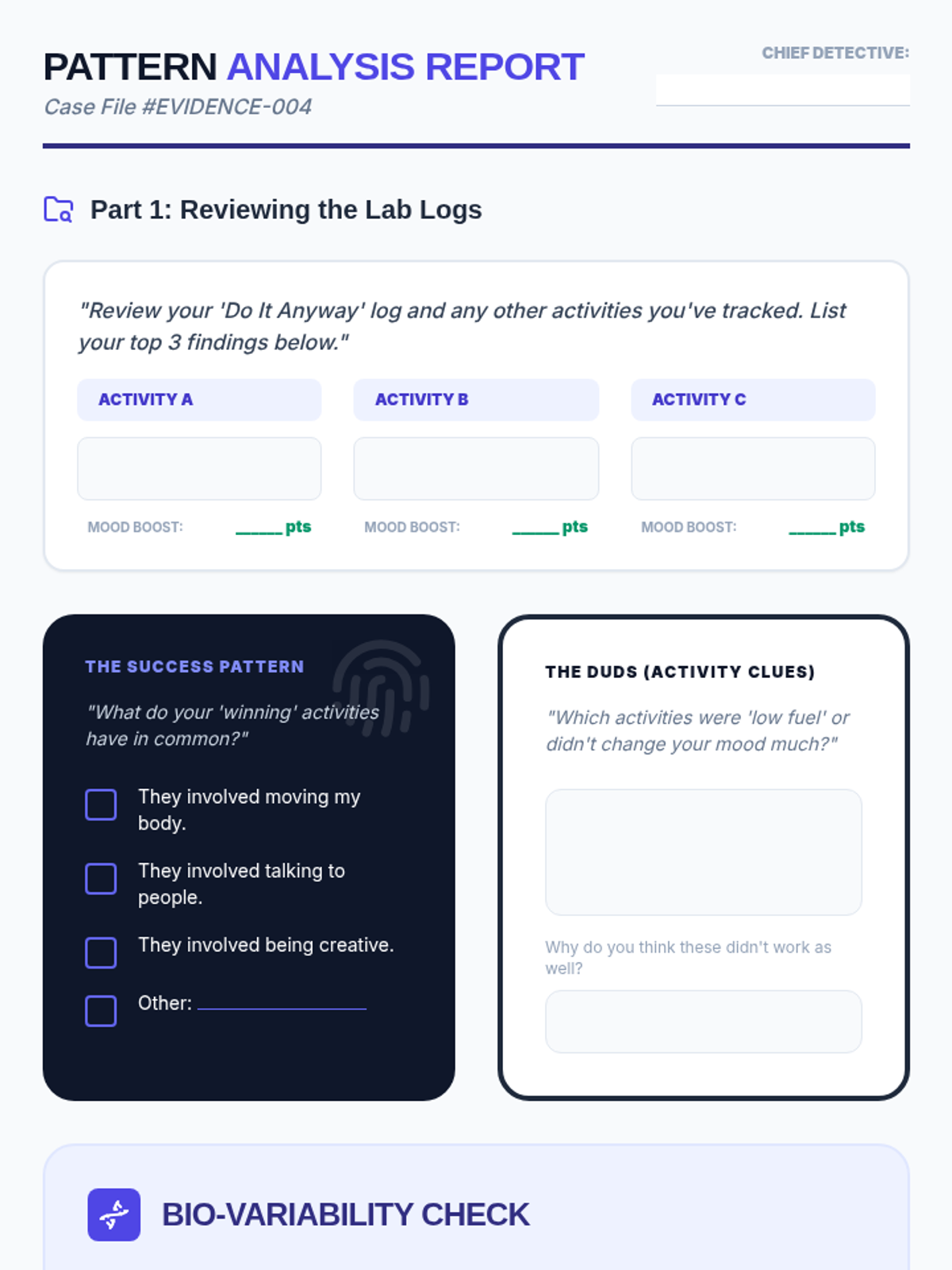
A lab report worksheet for students to analyze their experiment data, identify patterns in effective activities, and reflect on individual differences.
Introductory slides for the 'Mood Pattern Detectives' lesson, helping students analyze their data and understand the concept of individual variability in activity effectiveness.
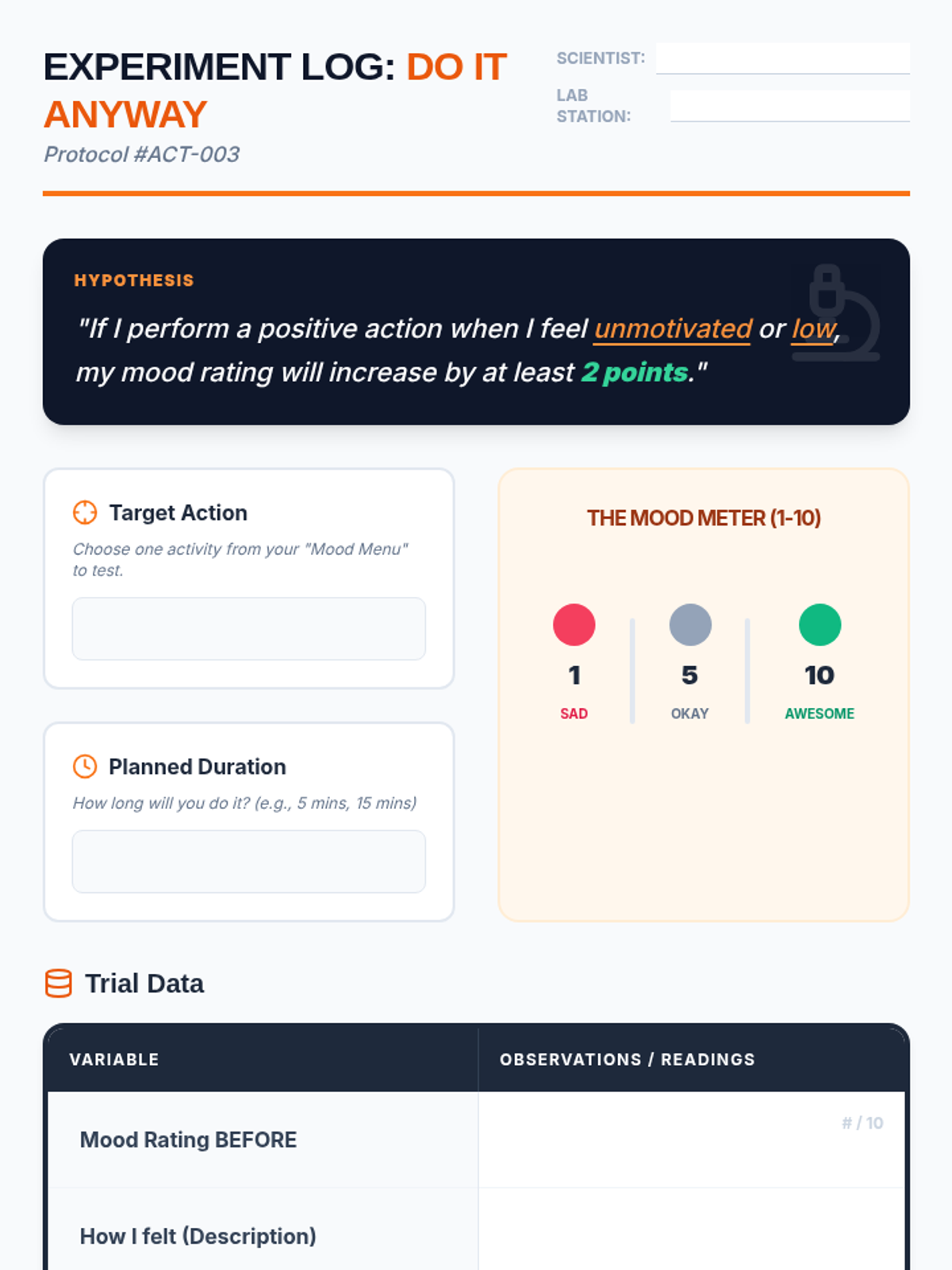
A data collection log for the 'Do It Anyway' experiment, allowing students to track their mood ratings before and after engaging in a positive action.
Introductory slides for the 'Do It Anyway' experiment, explaining the concept of 'acting opposite' and how to track mood data for a personal science experiment.
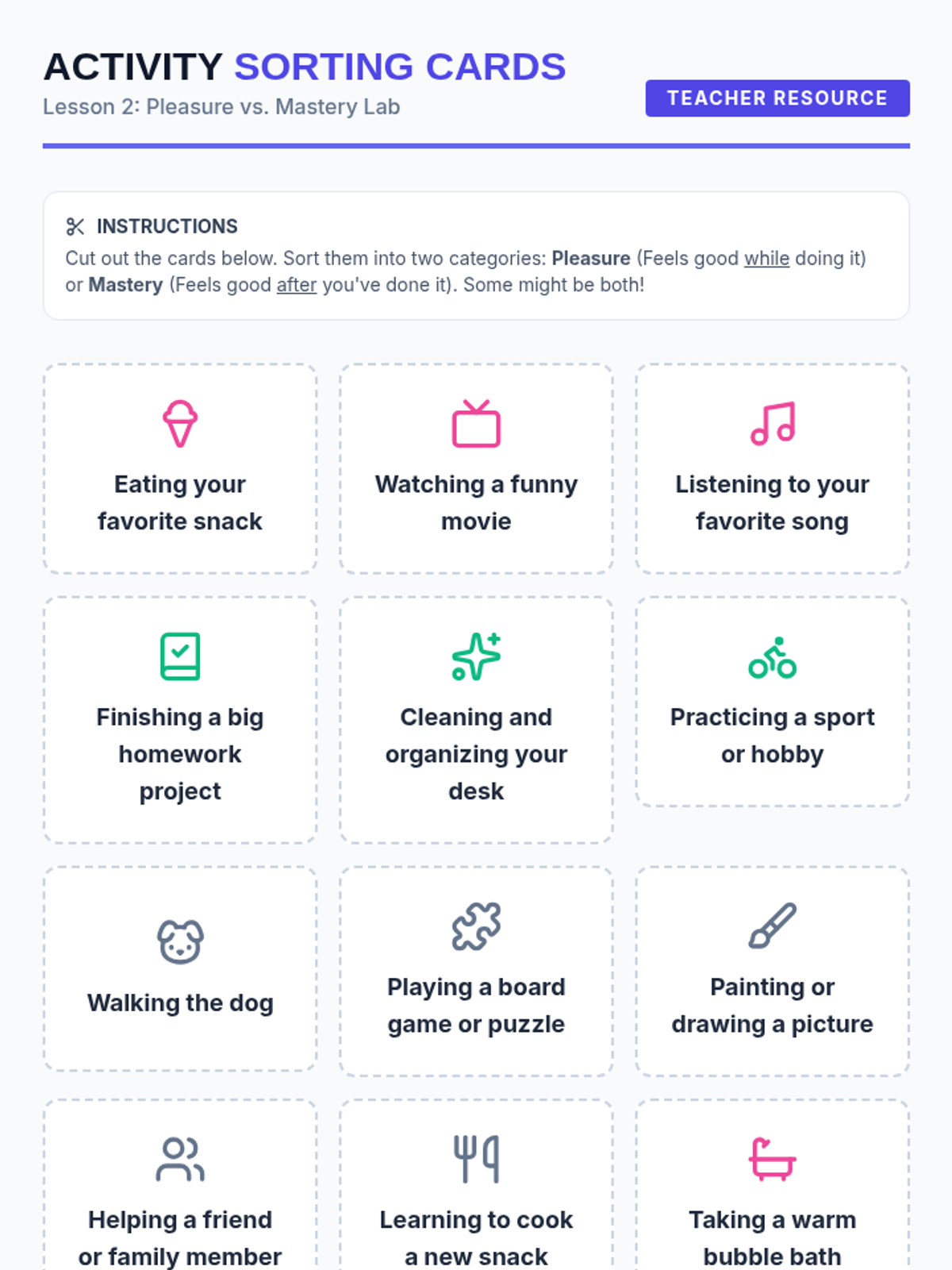
Sorting cards and a categorization t-chart for Lesson 2, helping students distinguish between pleasure-based and mastery-based activities.
Introductory slides for the 'Pleasure and Mastery' lesson, explaining the difference between 'Fun fuel' and 'Proud fuel' and the importance of a balanced activity diet.
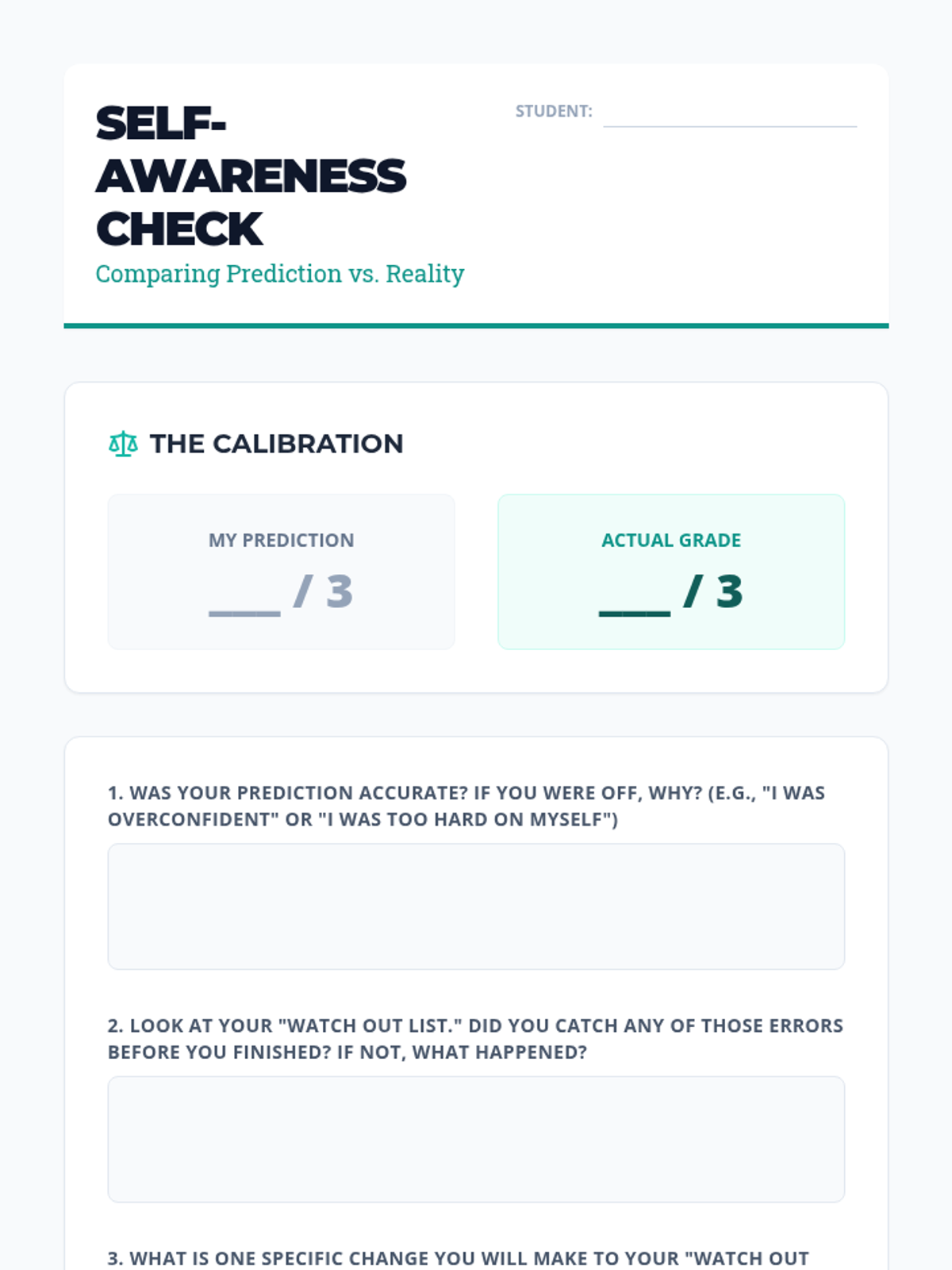
A final reflection sheet for students to compare their quiz predictions with their actual grades, evaluating the effectiveness of their metacognitive strategies.
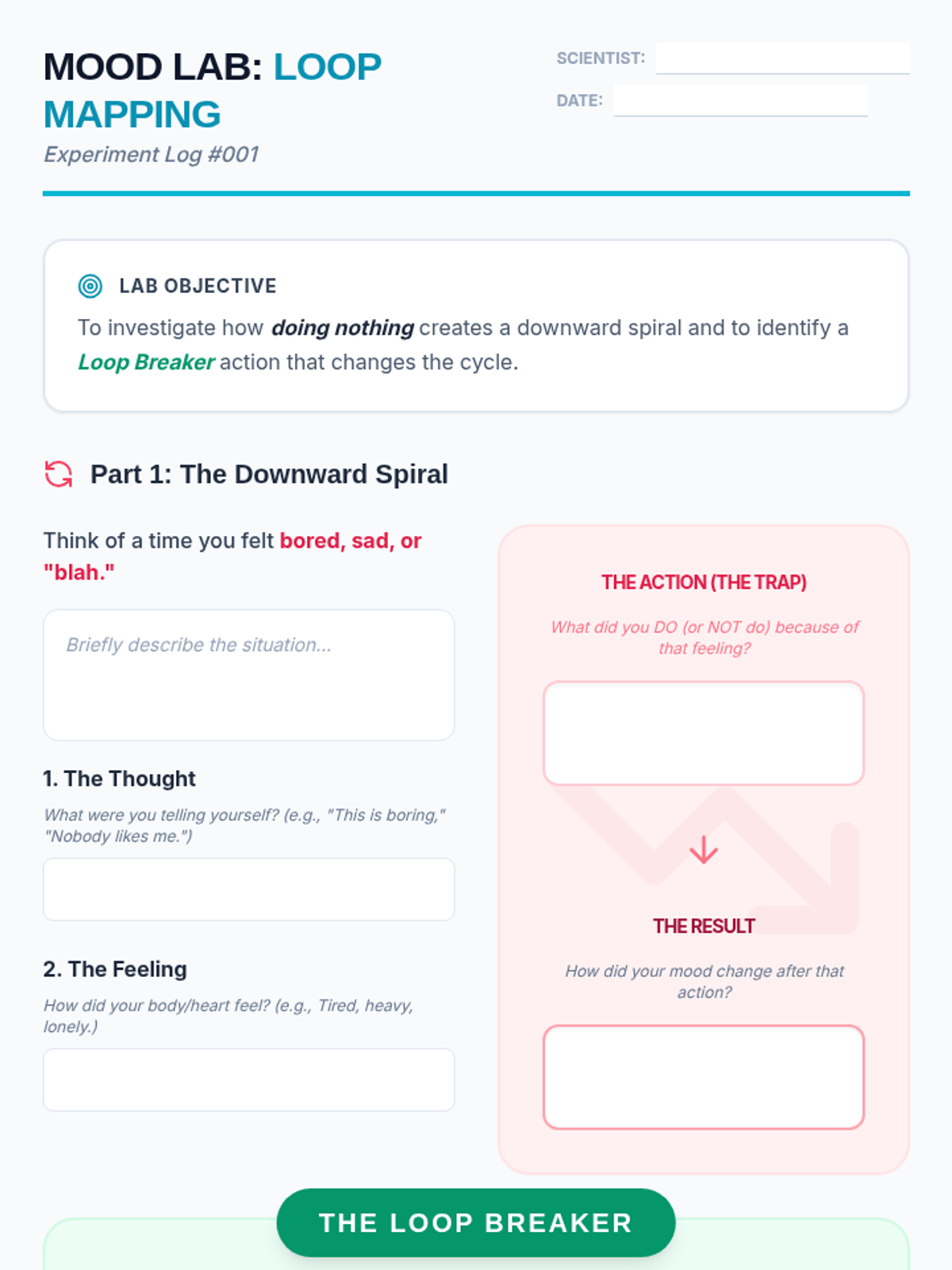
A lab notebook style worksheet for students to map out their own action-emotion loop, identifying a 'downward spiral' moment and a 'loop breaker' action.
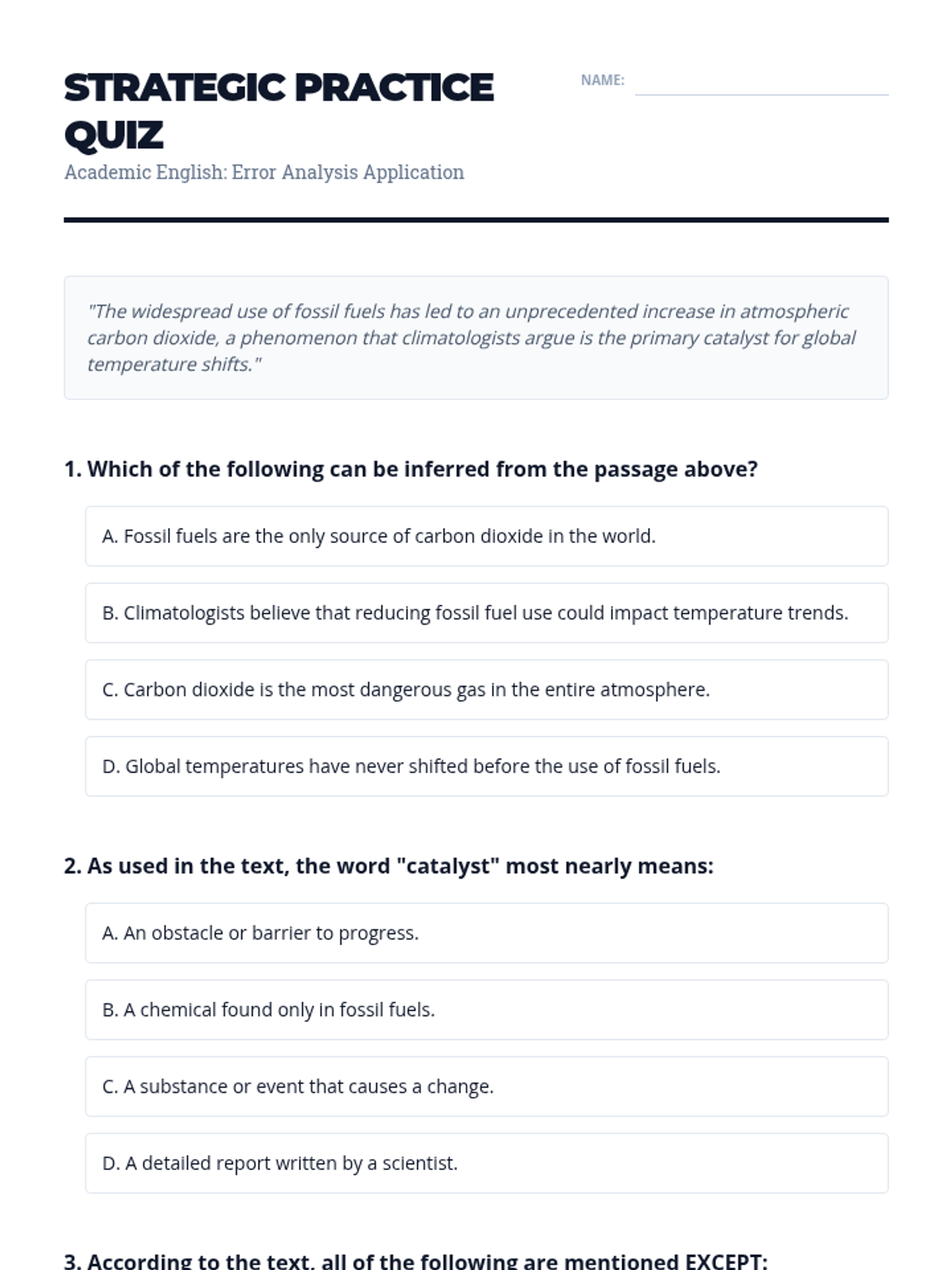
A short Academic English quiz designed to test students' application of their "Watch Out List," including a mandatory pre-grading self-reflection and score prediction section.
Final slides for the sequence focusing on the "Showtime" assessment. It introduces the score prediction challenge and real-time error analysis.
Introductory slides for the 'Loop of Life' lesson, featuring the human machine hook and visual representations of the thought-feeling-action cycle.
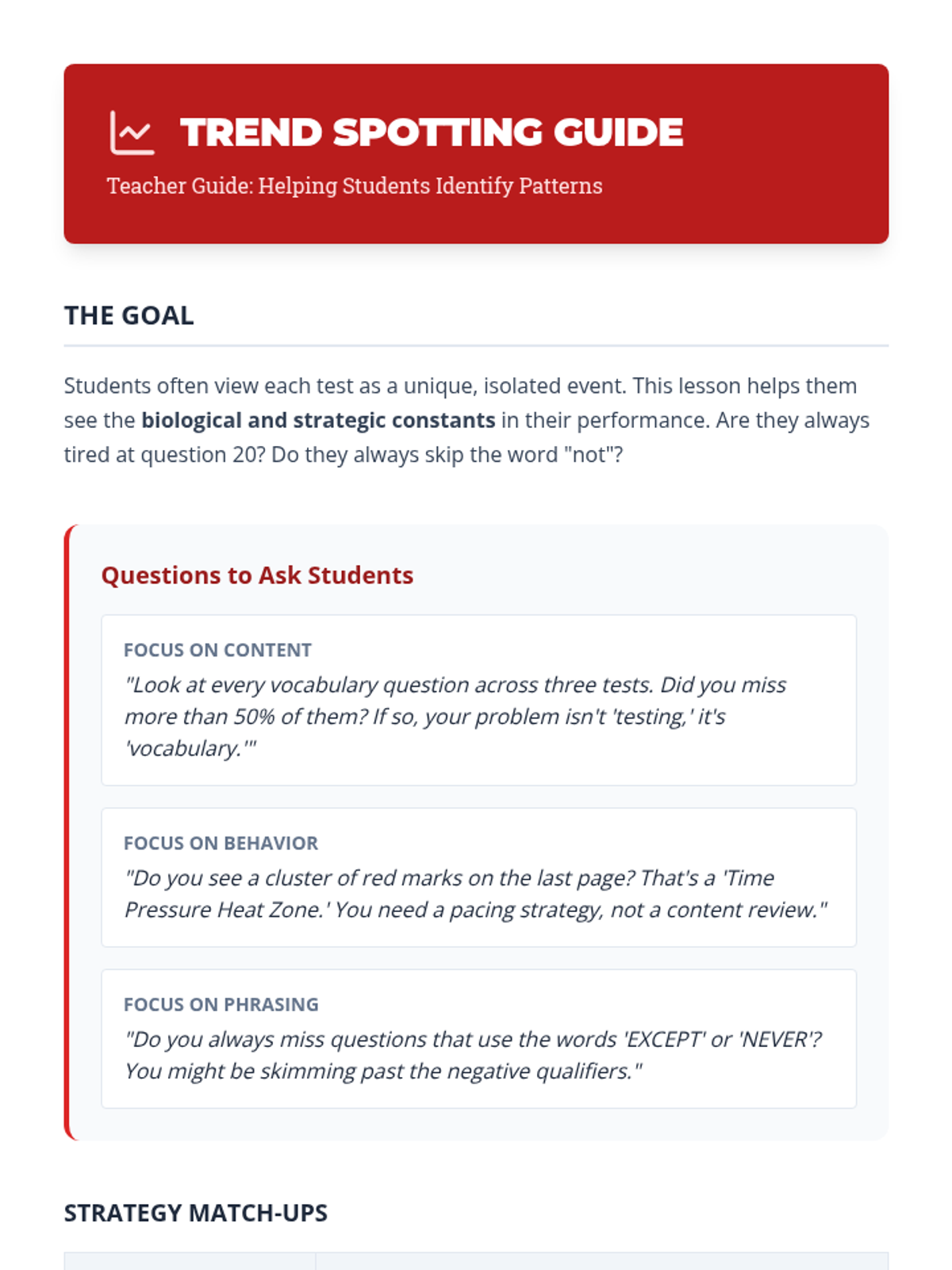
A guide for teachers to help students interpret their error data and connect patterns to specific defensive strategies.
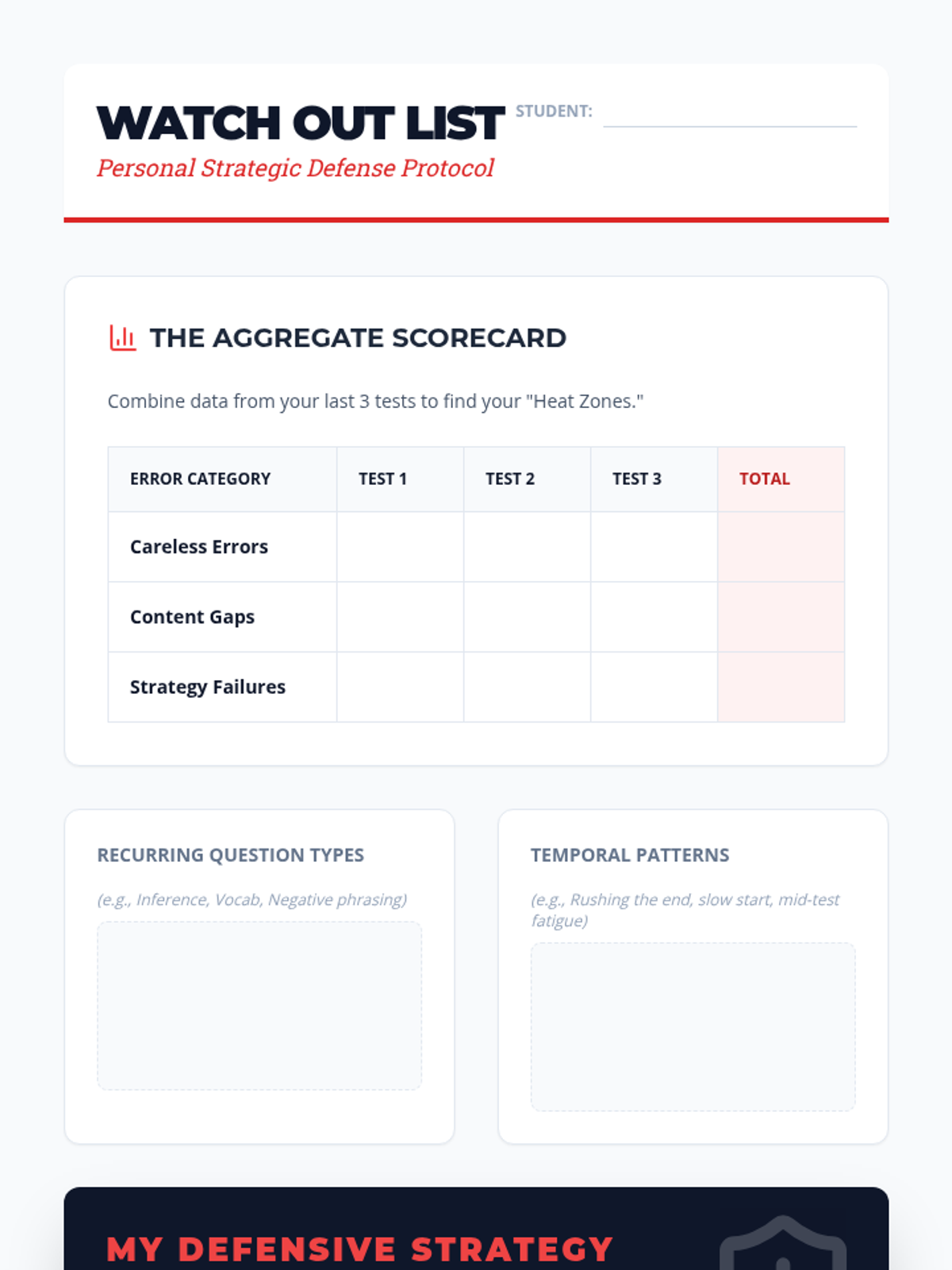
A student worksheet for aggregating error data across multiple assessments and distilling those patterns into a "Watch Out List" for future defense.
Slides for Lesson 4 that use a "Heatmap" analogy to teach students how to aggregate error data and identify recurring personal patterns.
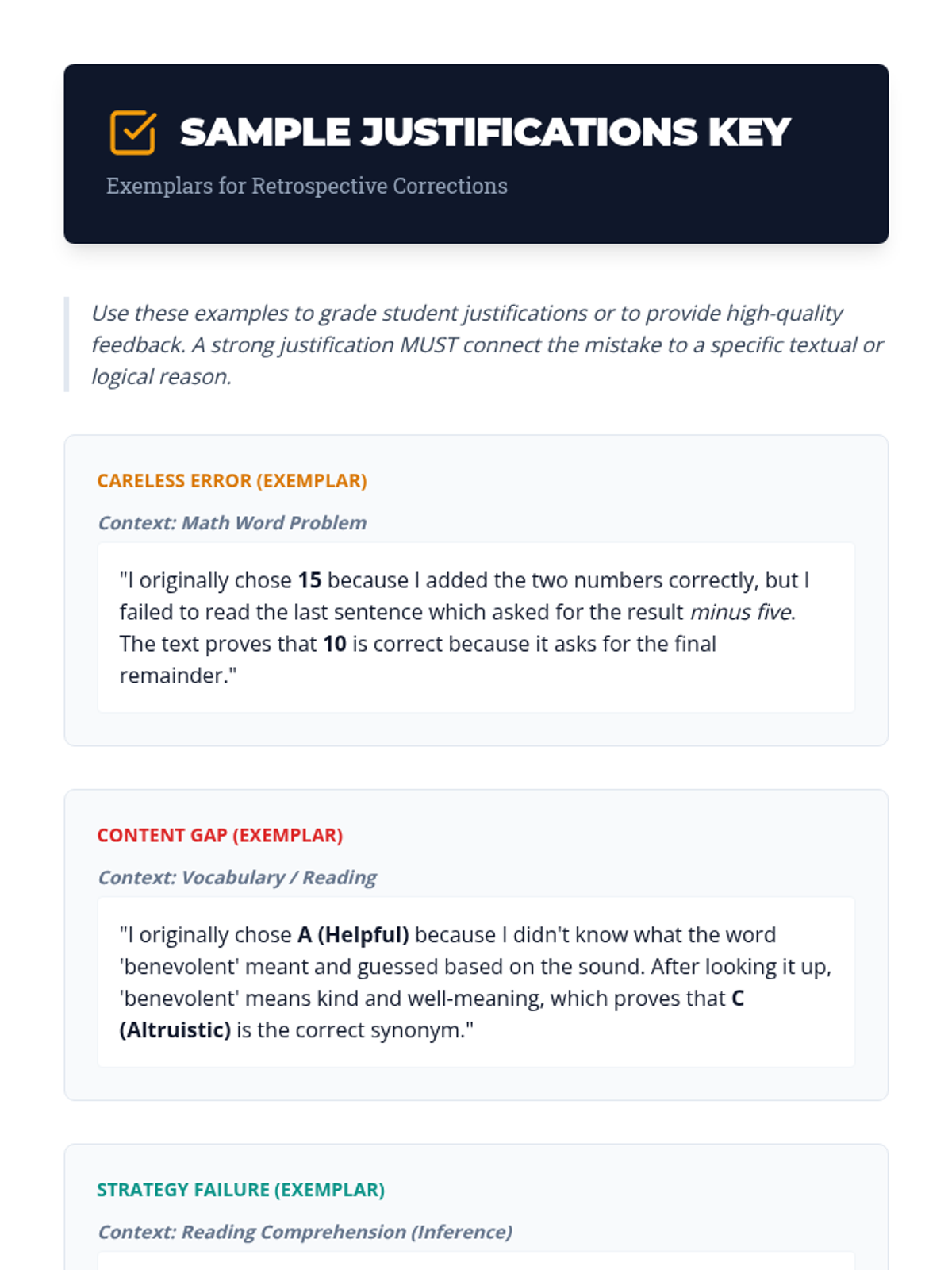
An answer key/exemplar guide for teachers to evaluate student justification statements, showing the difference between weak and mastery-level corrections.
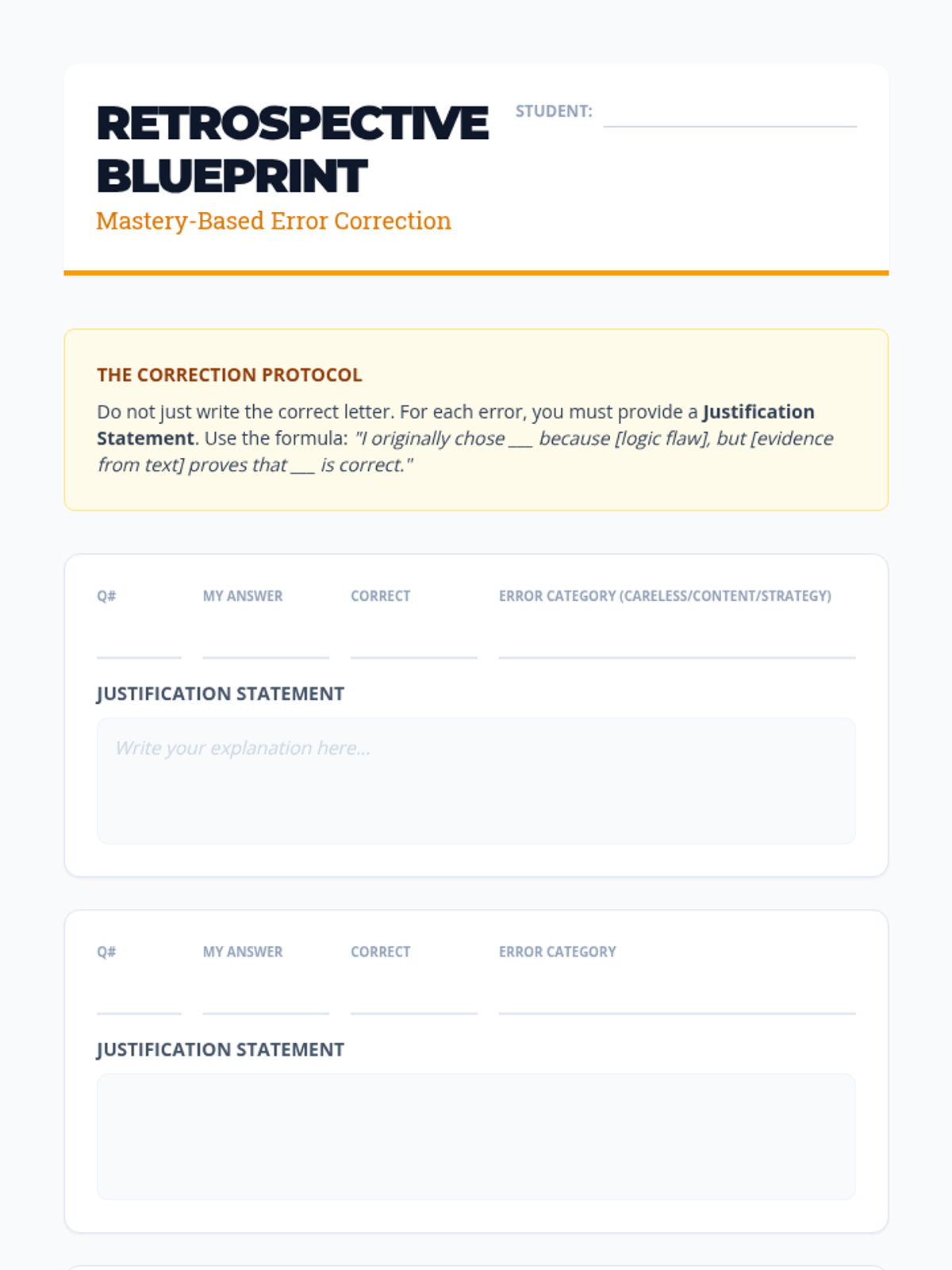
A template for students to perform deep error corrections, requiring them to write justification statements using a specific logic-based formula.
Slides for Lesson 3 introducing the "Justified Fix" method. It emphasizes that students must explain why they were wrong and why the new answer is right using evidence.