Functional behavior assessment, data tracking, and de-escalation strategies for managing classroom conduct. Addresses positive reinforcement, token economies, and individualized behavior contracts to support student self-regulation.
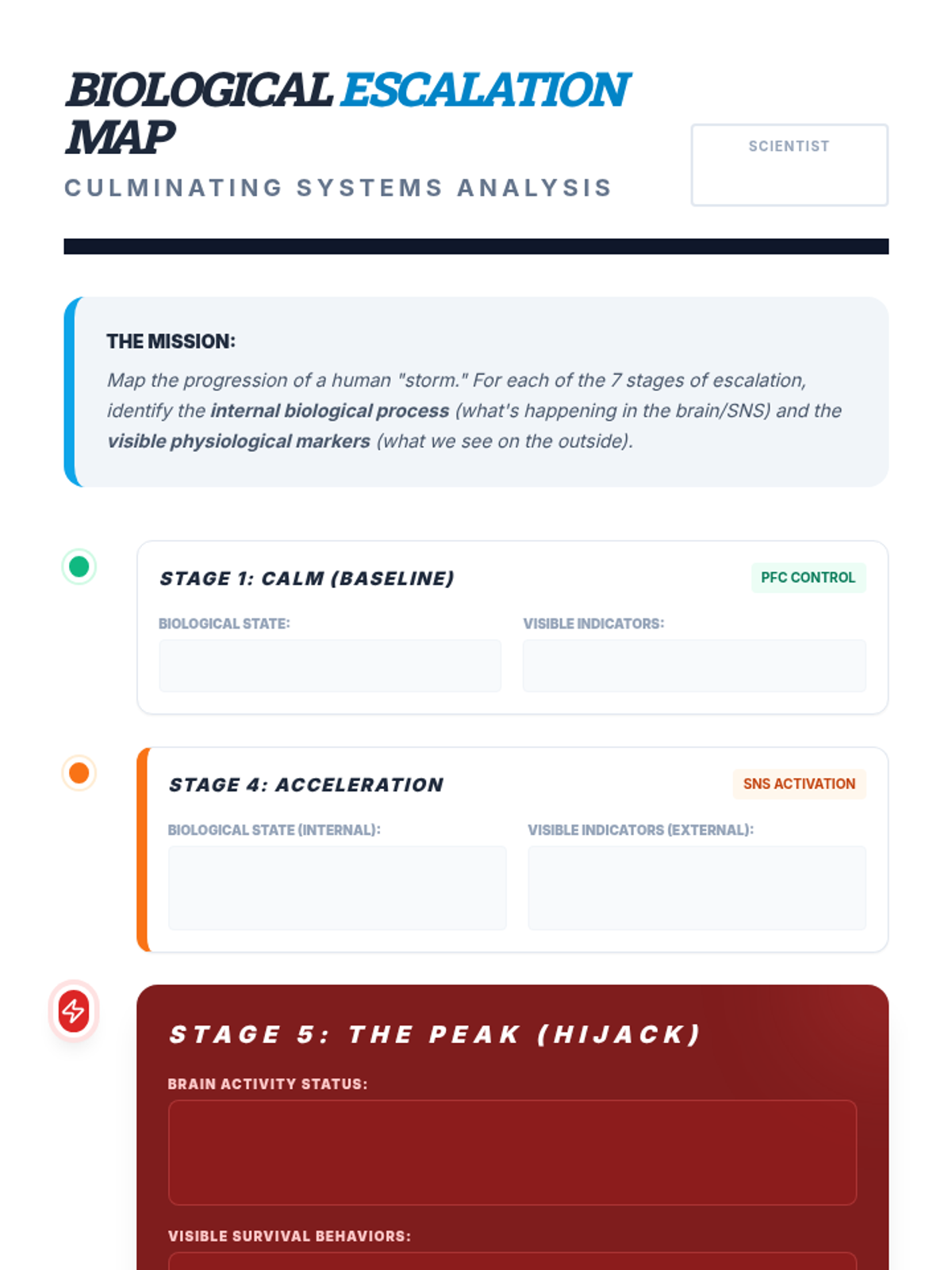
A culminating project sheet for students to map the internal biological states and external physiological markers across the seven stages of behavioral escalation.
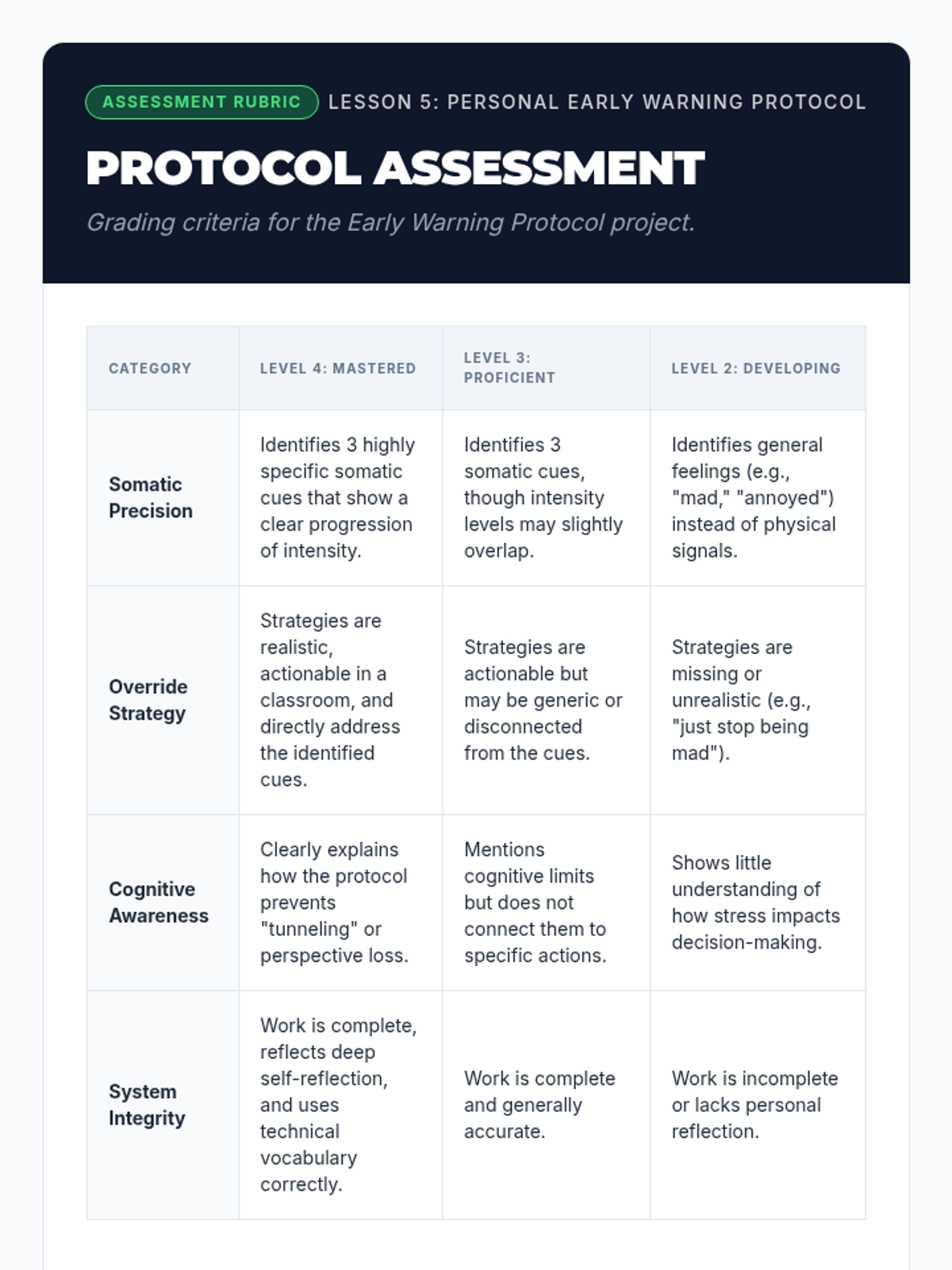
A rubric and feedback guide for teachers to evaluate the students' personal Early Warning Protocols, focusing on specificity and actionability.
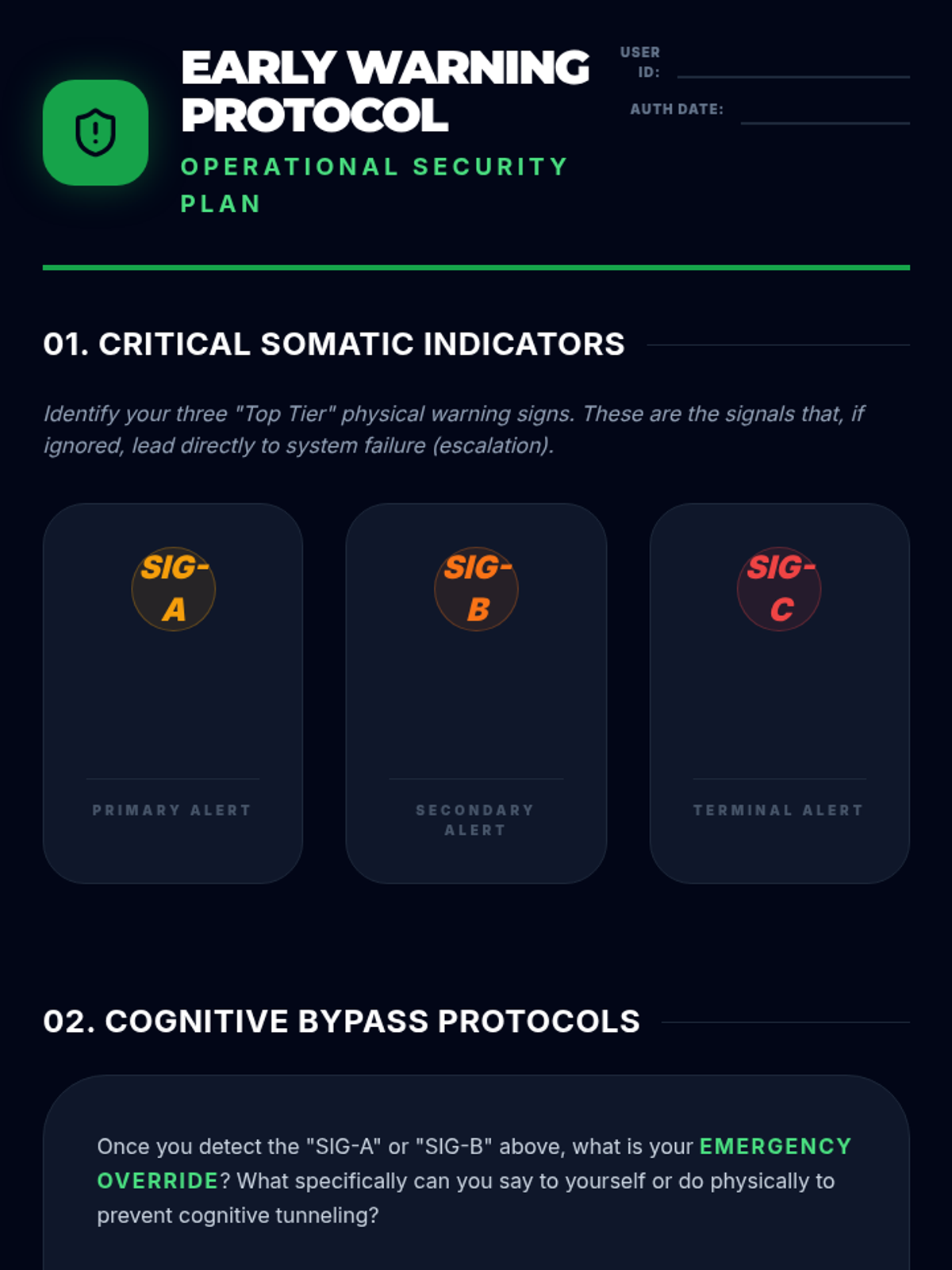
The culminating project document where students synthesize their learning into a formal, personalized 'Early Warning Protocol' for self-regulation.
A visual presentation on the seven stages of behavioral escalation, using a storm forecast metaphor to explain the progression from calm to peak and back to recovery.
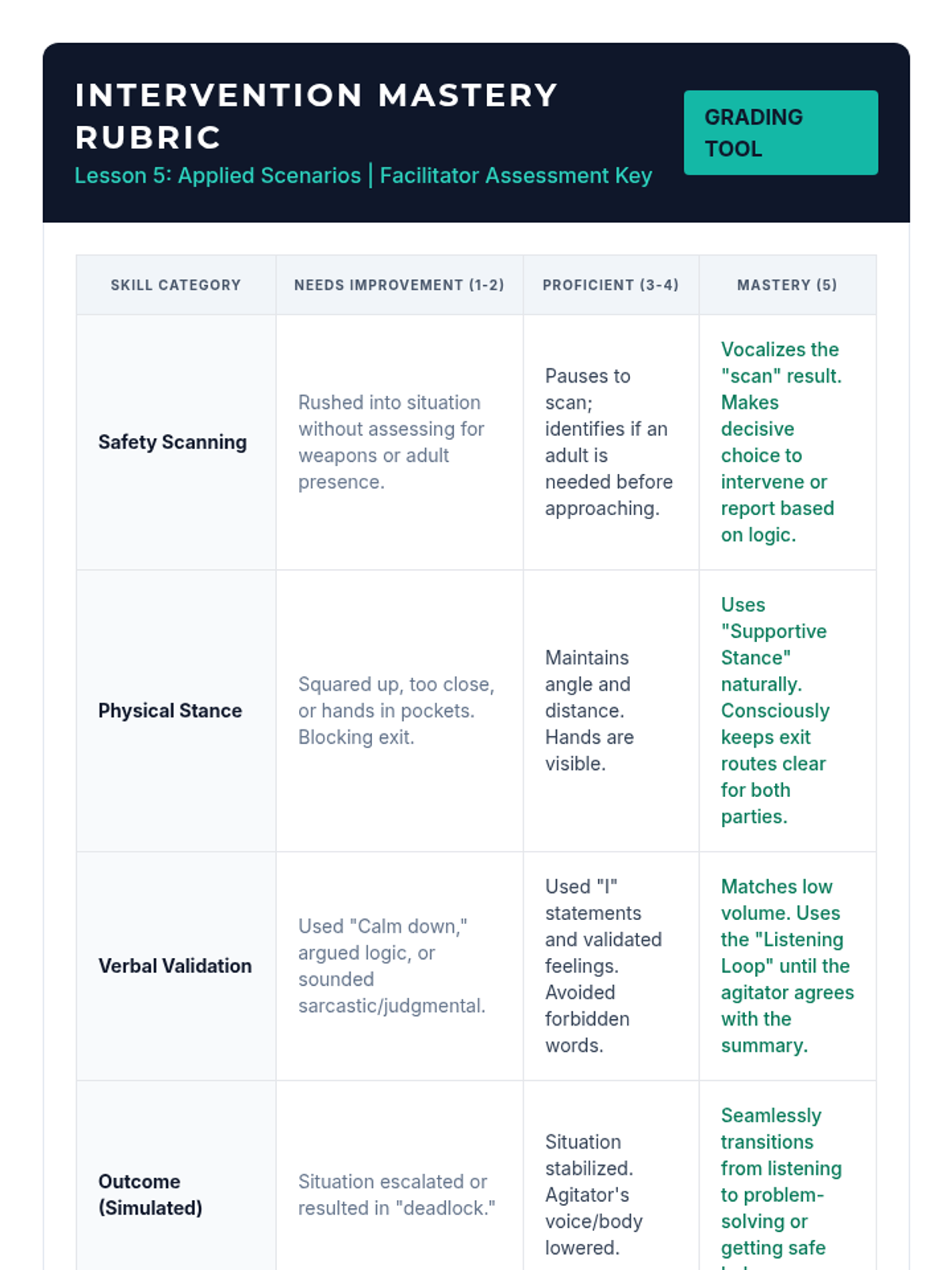
A comprehensive teacher assessment rubric for Lesson 5, detailing mastery levels for each of the 'Peace Protocols' (Scanning, Stance, Validation, Outcome). Includes setup guides for the final mastery stations.
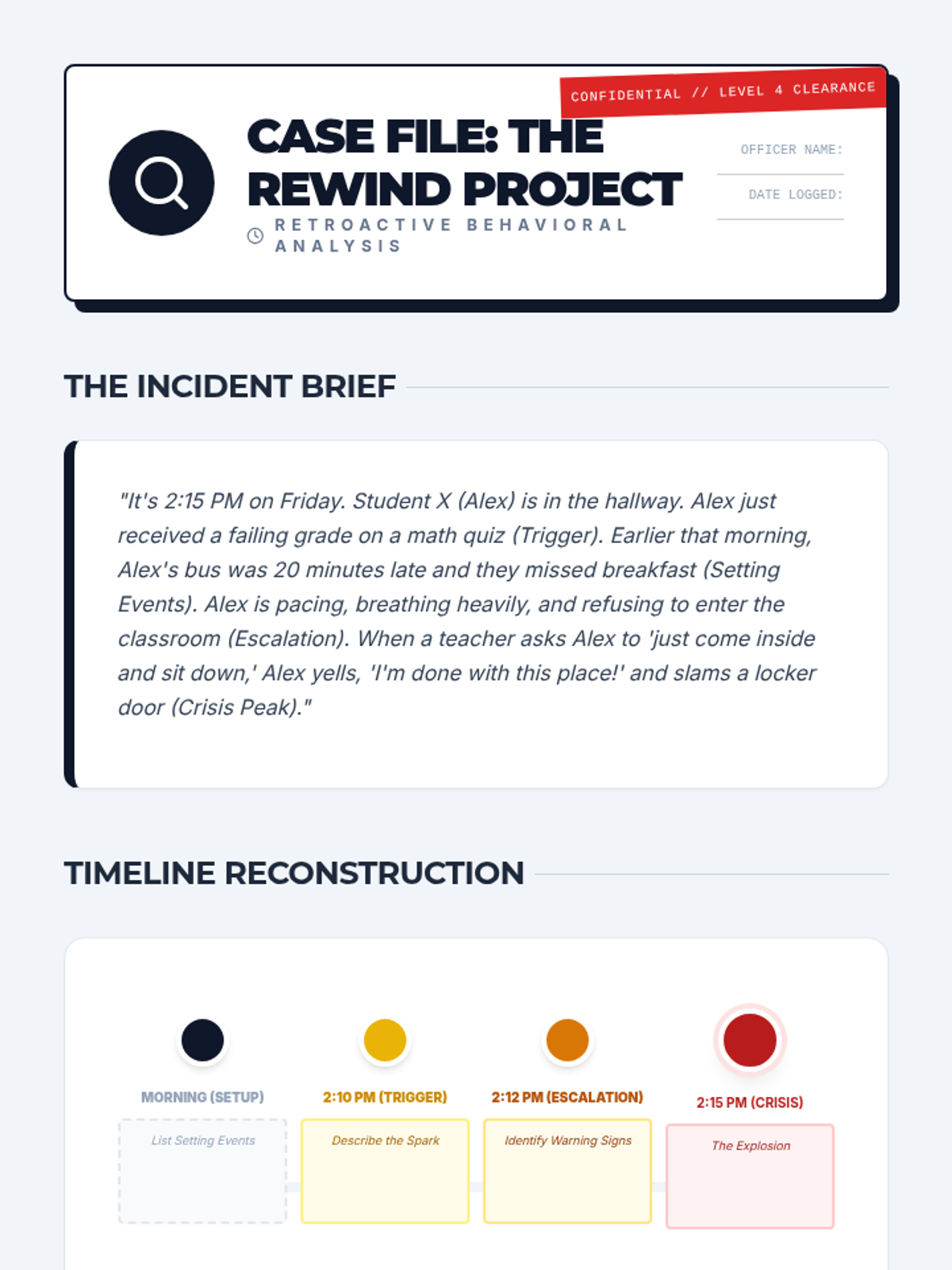
A summative project where students reconstruct a crisis event timeline to identify missed intervention 'off-ramps' and missed warning signs.
Final slide deck for Lesson 5, guiding students through synthesizing their physiological and cognitive knowledge into a personal early warning system.
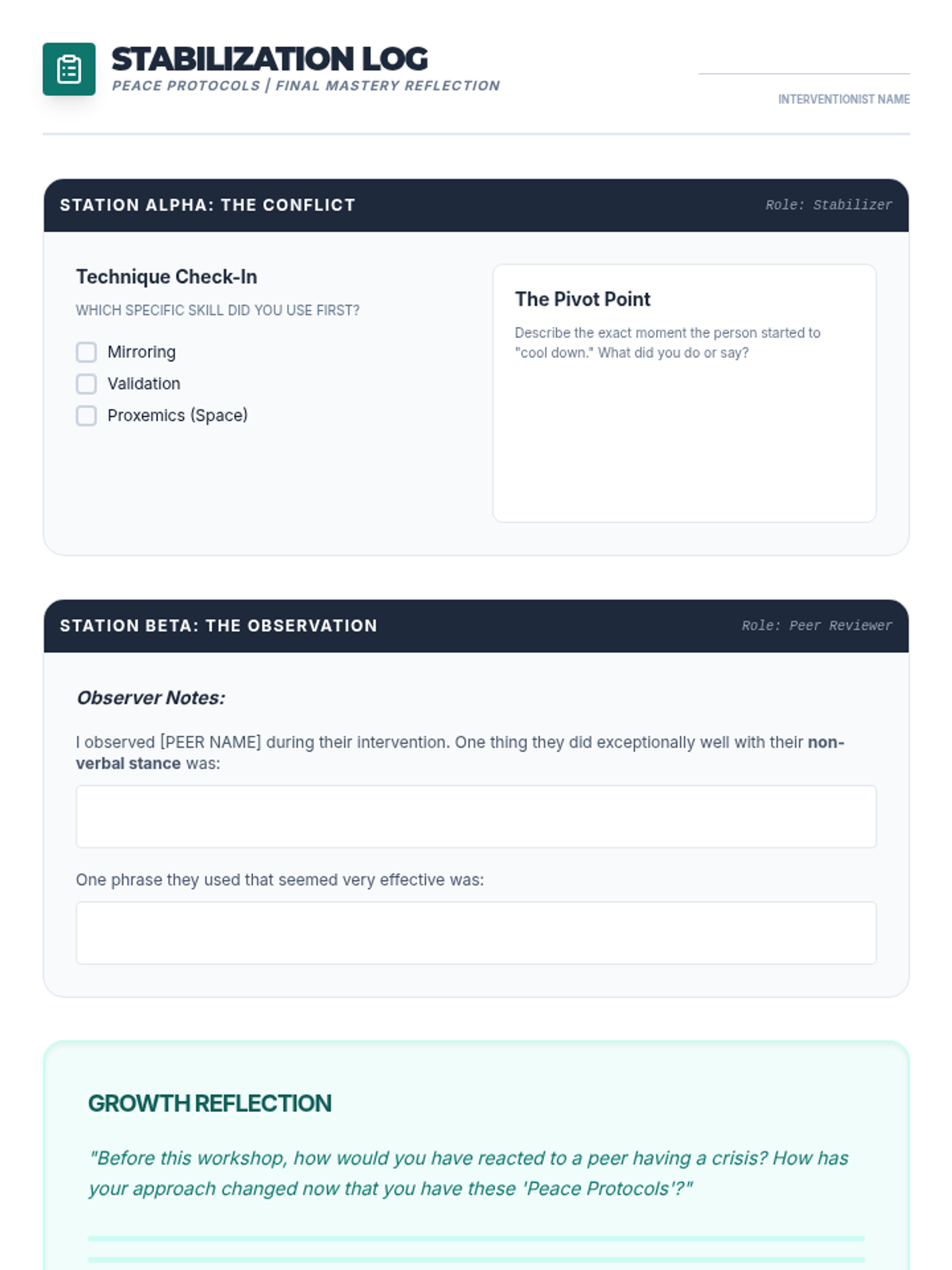
A final reflection and self-assessment journal for Lesson 5. Students document their role-play experiences, analyze 'pivot points' in de-escalation, and reflect on their growth throughout the sequence.
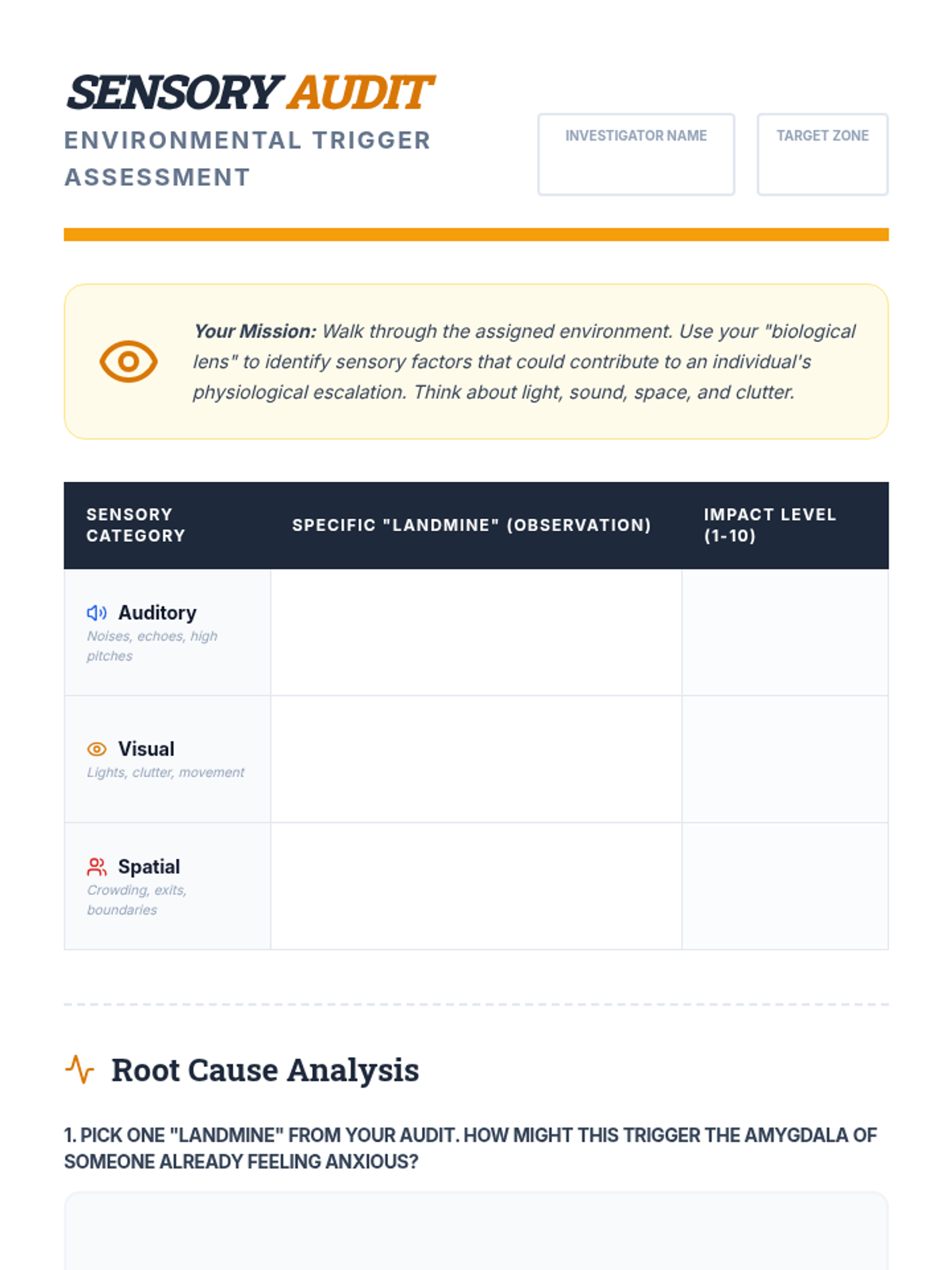
A classroom audit sheet for students to identify and analyze environmental sensory triggers and propose brain-friendly modifications.
Final slide deck for Lesson 5, setting the stage for mastery role-play stations. Outlines assessment criteria, safety rules for simulations, and reviews the core 'Peace Protocols' learned throughout the sequence.
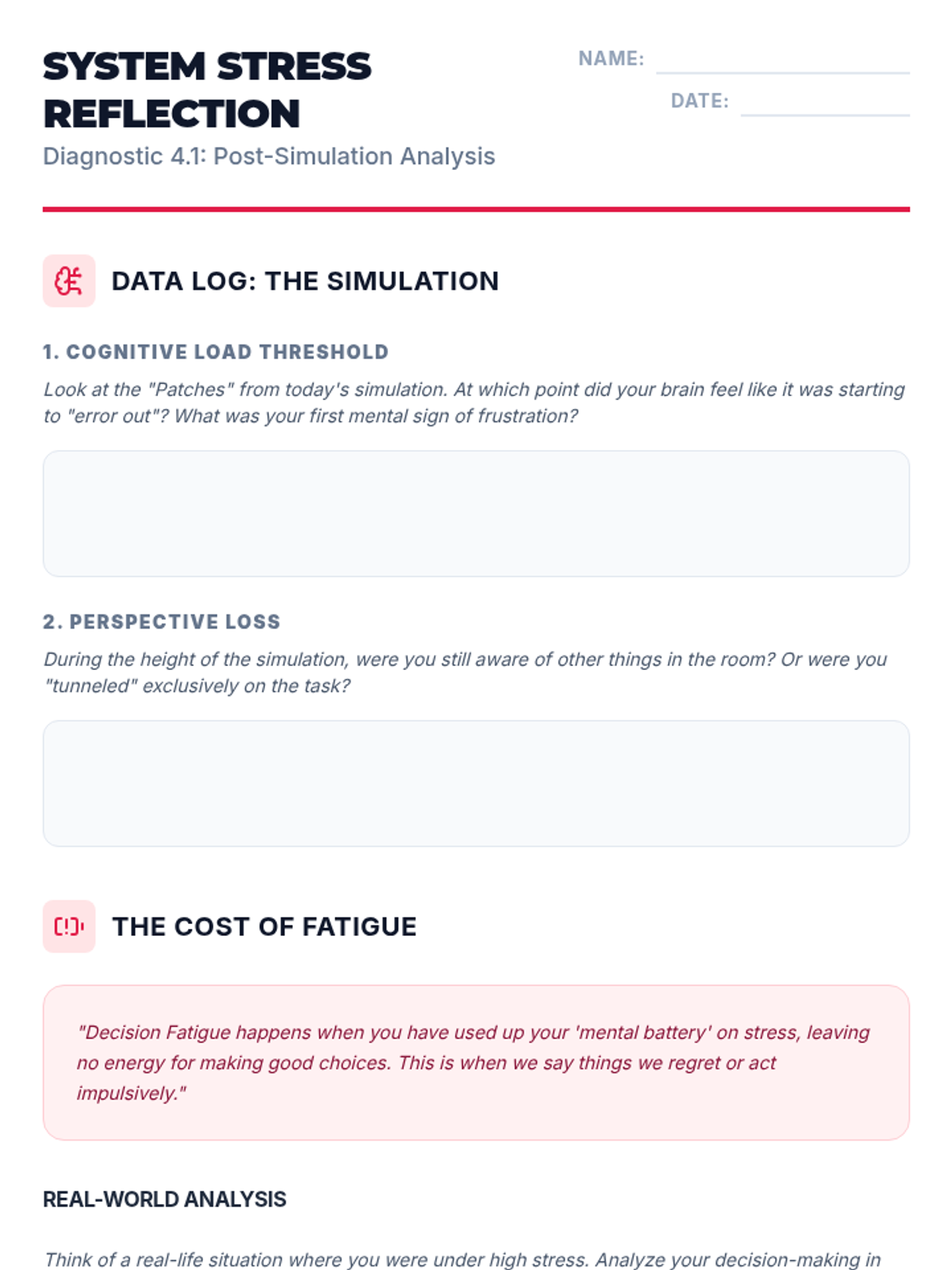
A reflection worksheet for students to analyze their experience during the stress simulation and connect 'decision fatigue' to real-life situations.
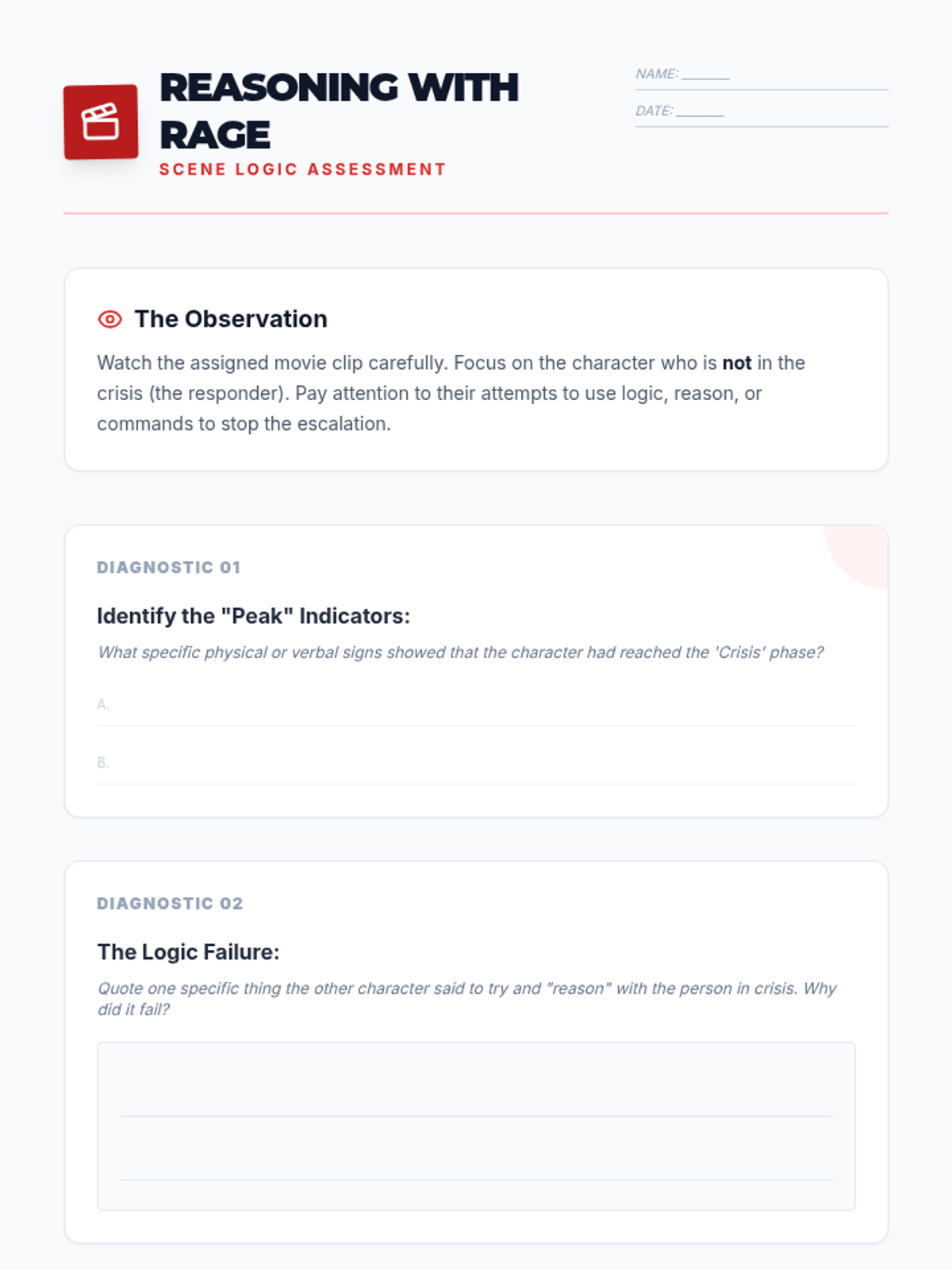
An analysis worksheet for Lesson 4 where students analyze a movie scene of a crisis to identify signs of the peak and why rational reasoning failed.
A visual presentation focusing on sensory overload as a physiological trigger for escalation, exploring the role of the thalamus and identifying common environmental triggers.
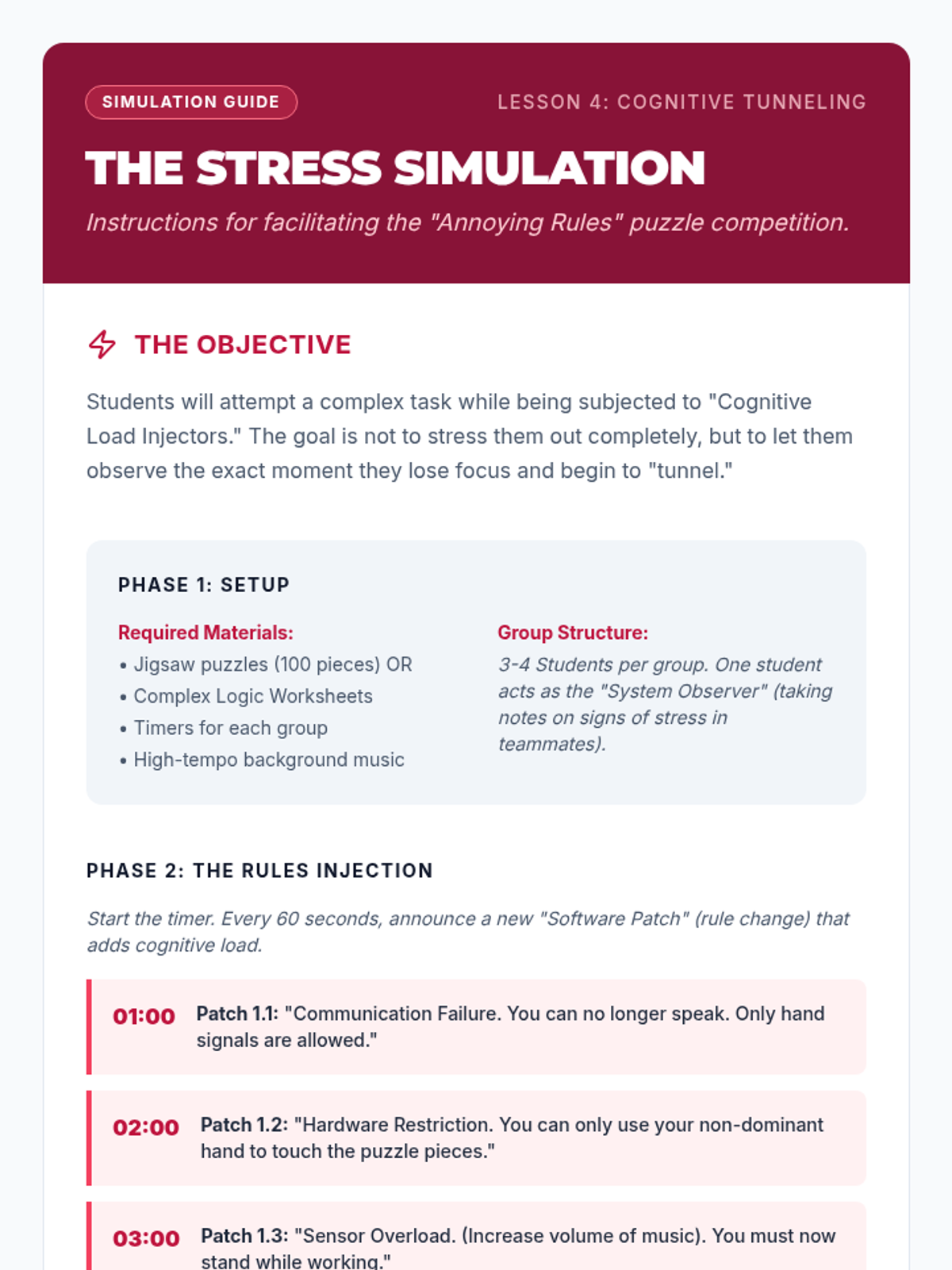
Facilitation guide for a stress-induction simulation designed to help students experience and identify 'cognitive tunneling' in a controlled environment.
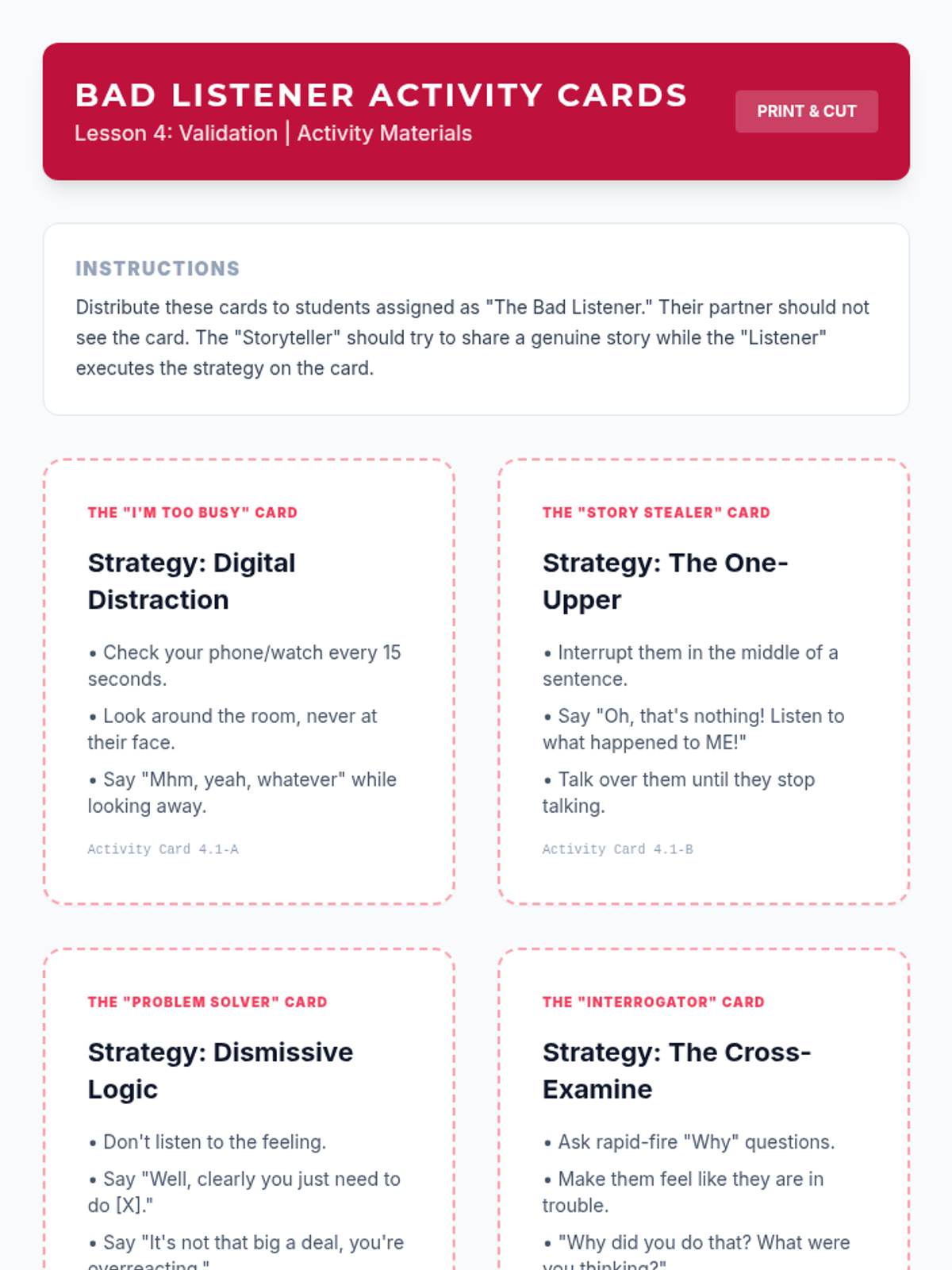
Printable activity cards for the 'Bad Listener' game in Lesson 4, used to demonstrate how poor listening habits escalate frustration and tension.
A slide deck for Lesson 4 exploring the biological 'Amygdala Hijack' and why rational communication fails during the peak of a crisis.
Slide deck for Lesson 4 exploring cognitive tunneling, decision fatigue, and the mental 'shutdown' that occurs during high stress.
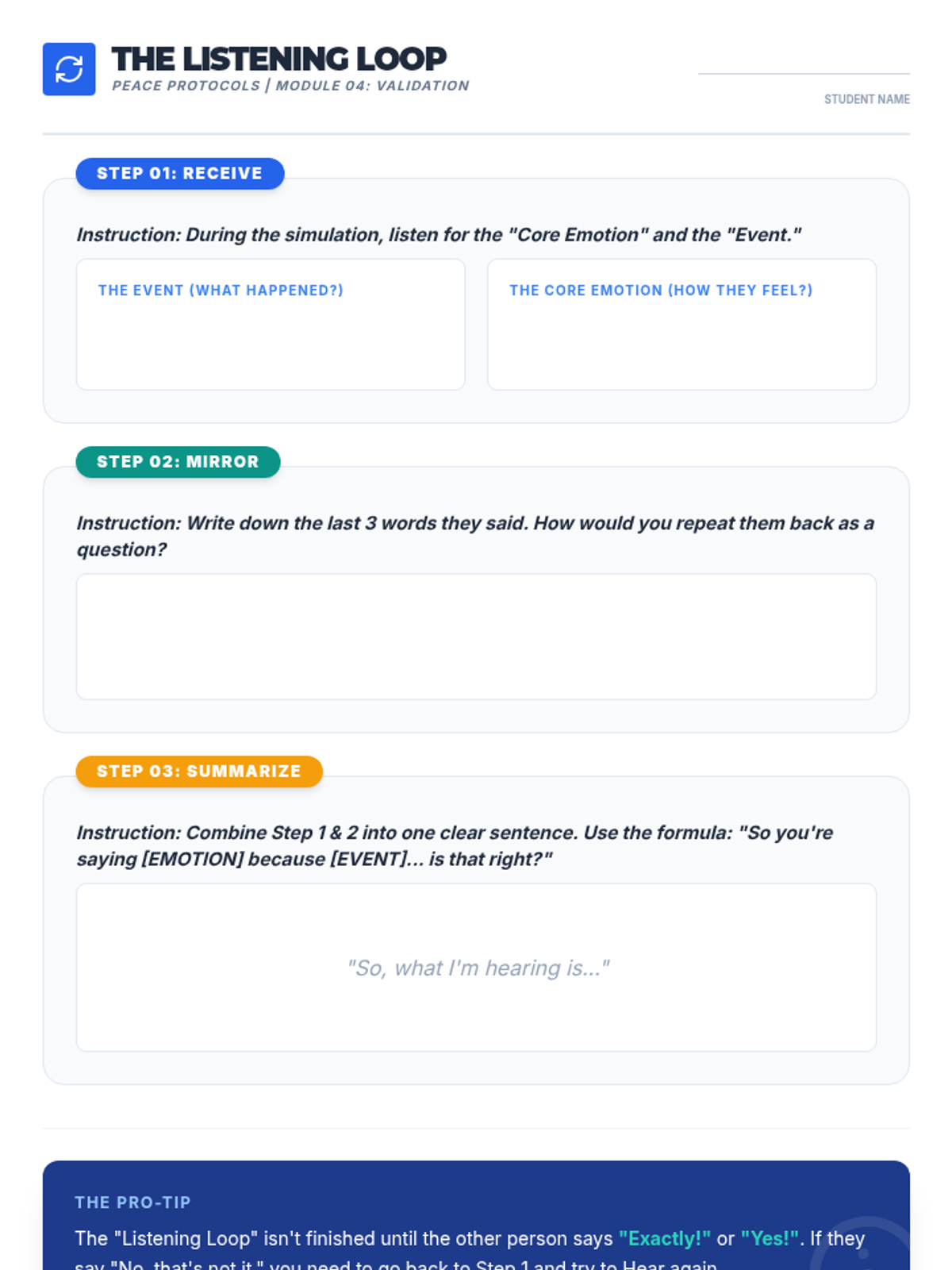
A graphic organizer for Lesson 4 that guides students through the 'Listening Loop' process: receiving the event/emotion, mirroring specific words, and summarizing for verification.
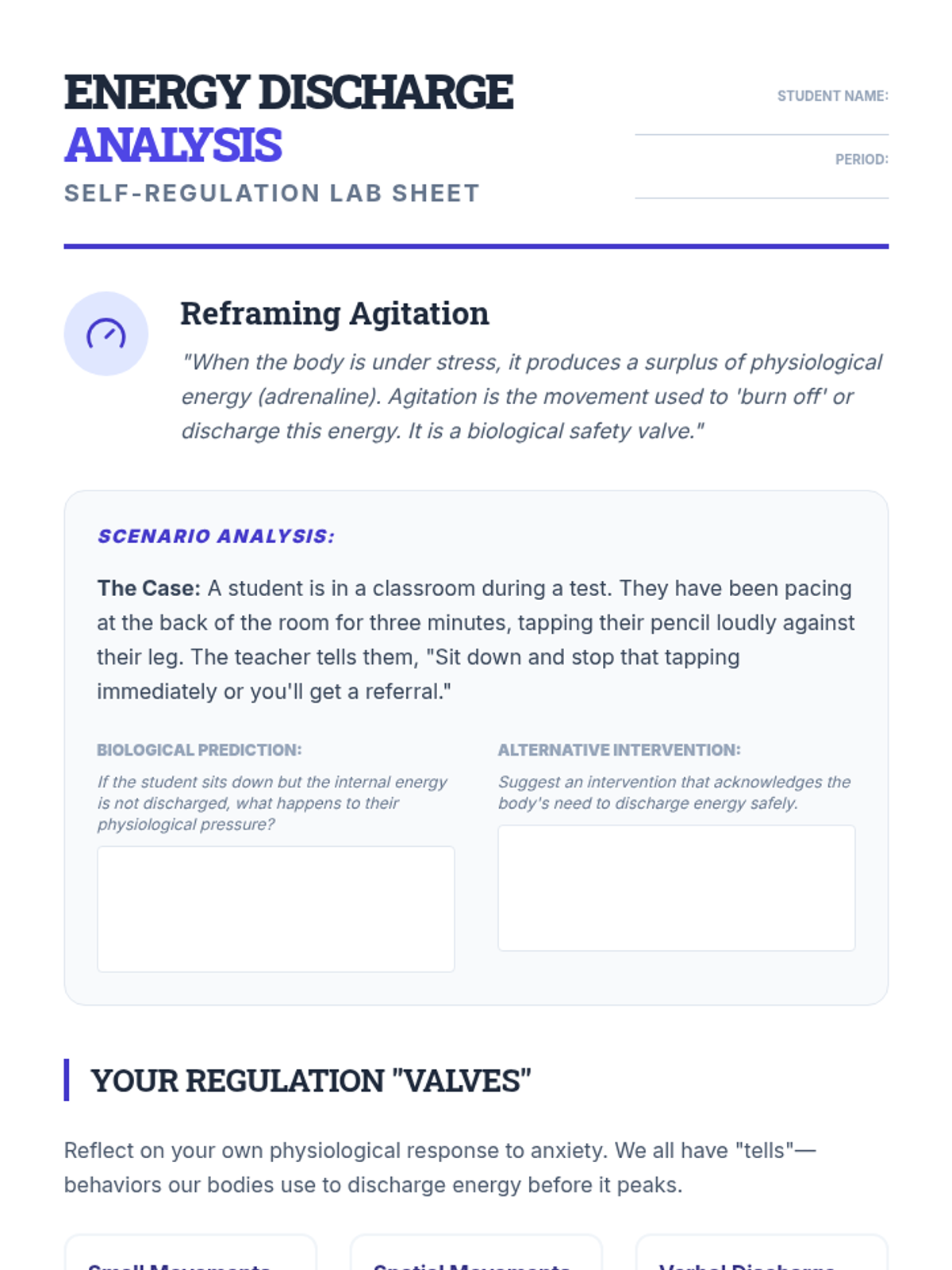
A worksheet for students to identify their own energy discharge behaviors and analyze scenarios through the lens of physiological self-regulation.
Slide deck for Lesson 4 on active listening and validation. Introduces mirroring and summarizing techniques to help agitated peers feel heard and understood, lowering emotional intensity.
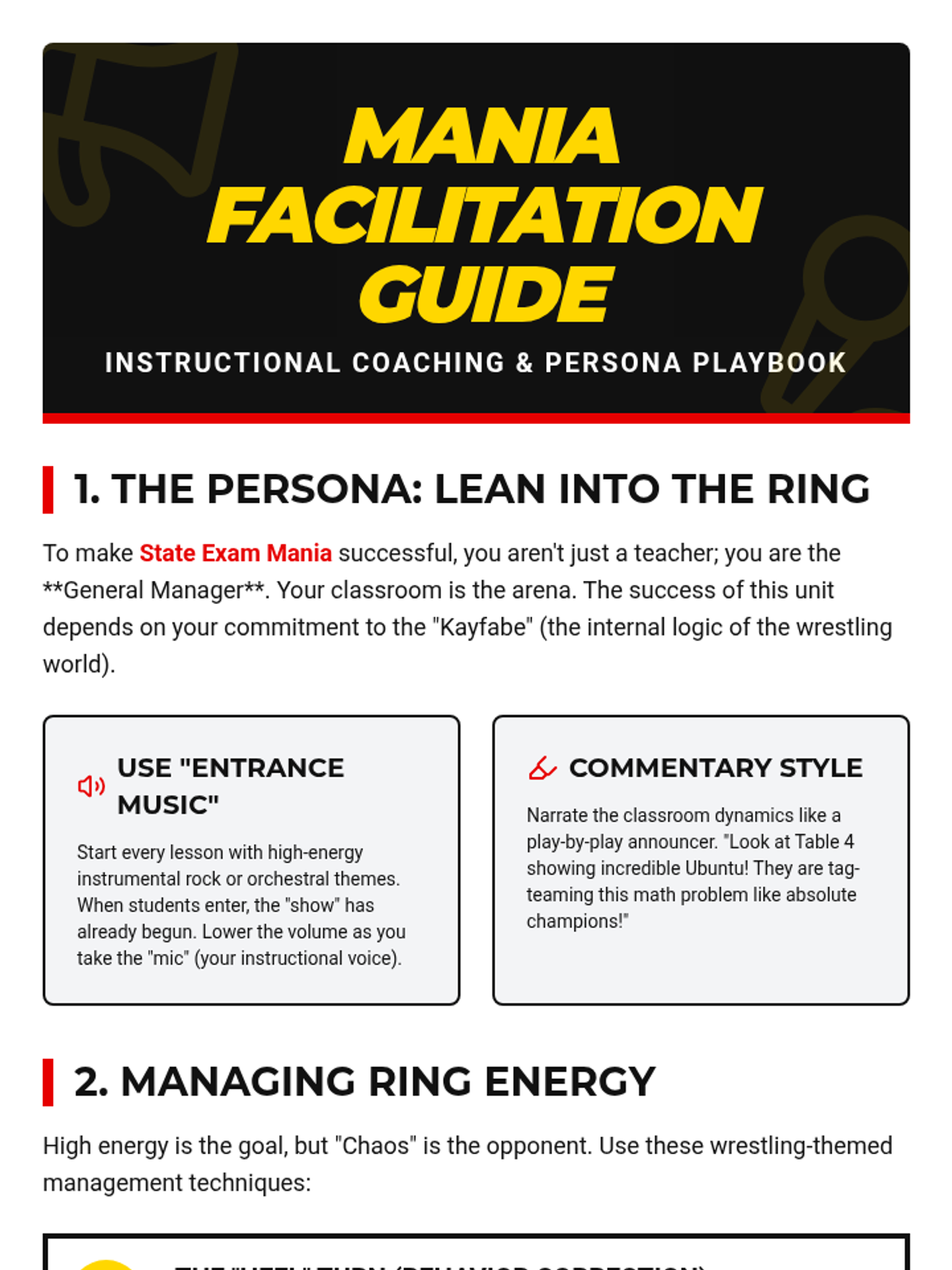
A comprehensive teacher facilitation guide for the 'Road to State Exam Mania' sequence, featuring persona coaching, behavior management strategies (using wrestling metaphors), lesson-specific tips, and a bank of discussion questions.
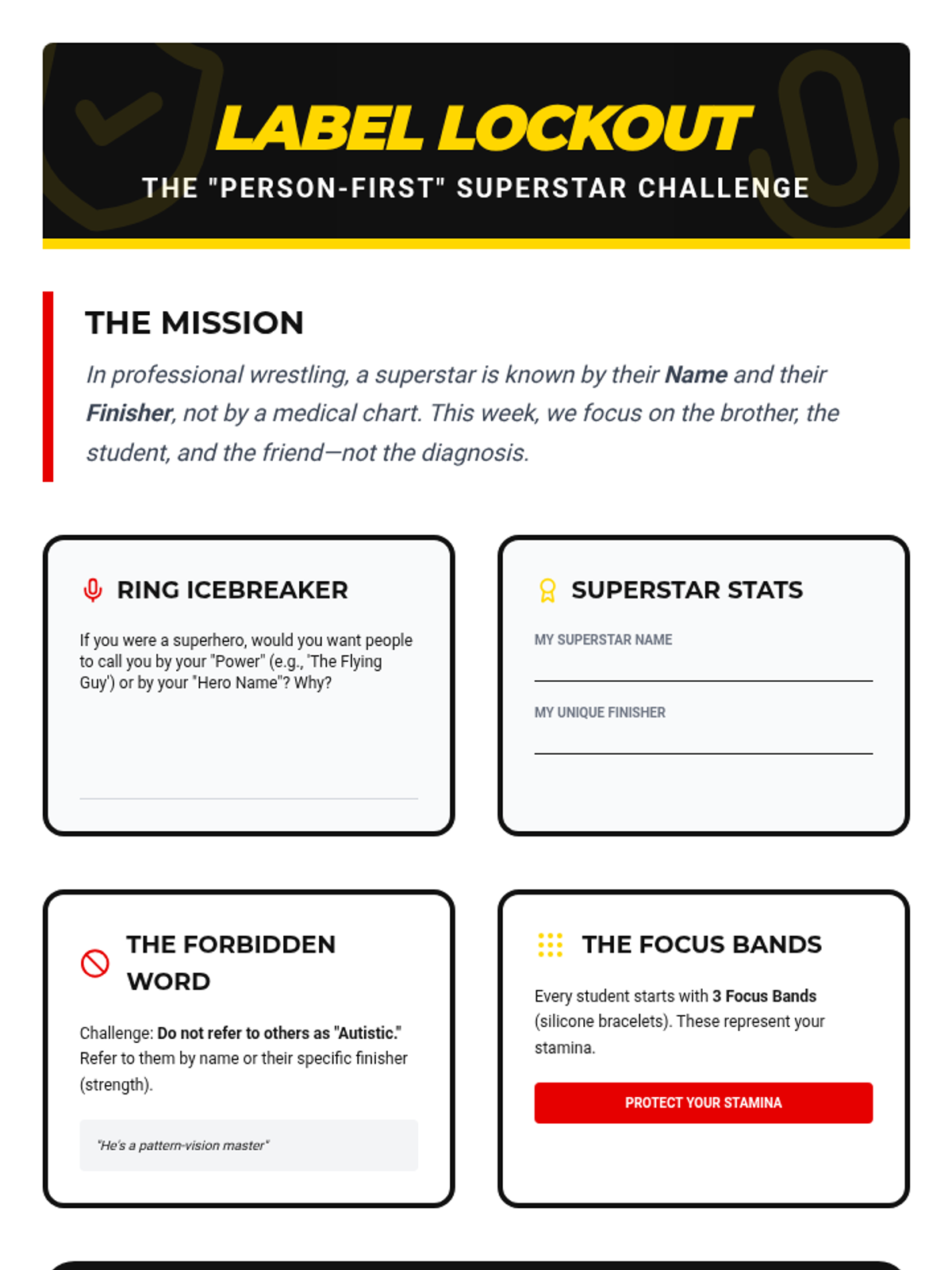
A week-long challenge guide where students avoid labels like 'autistic' to focus on individual strengths, using silicone bracelets as tokens in a 'Referee' style game.
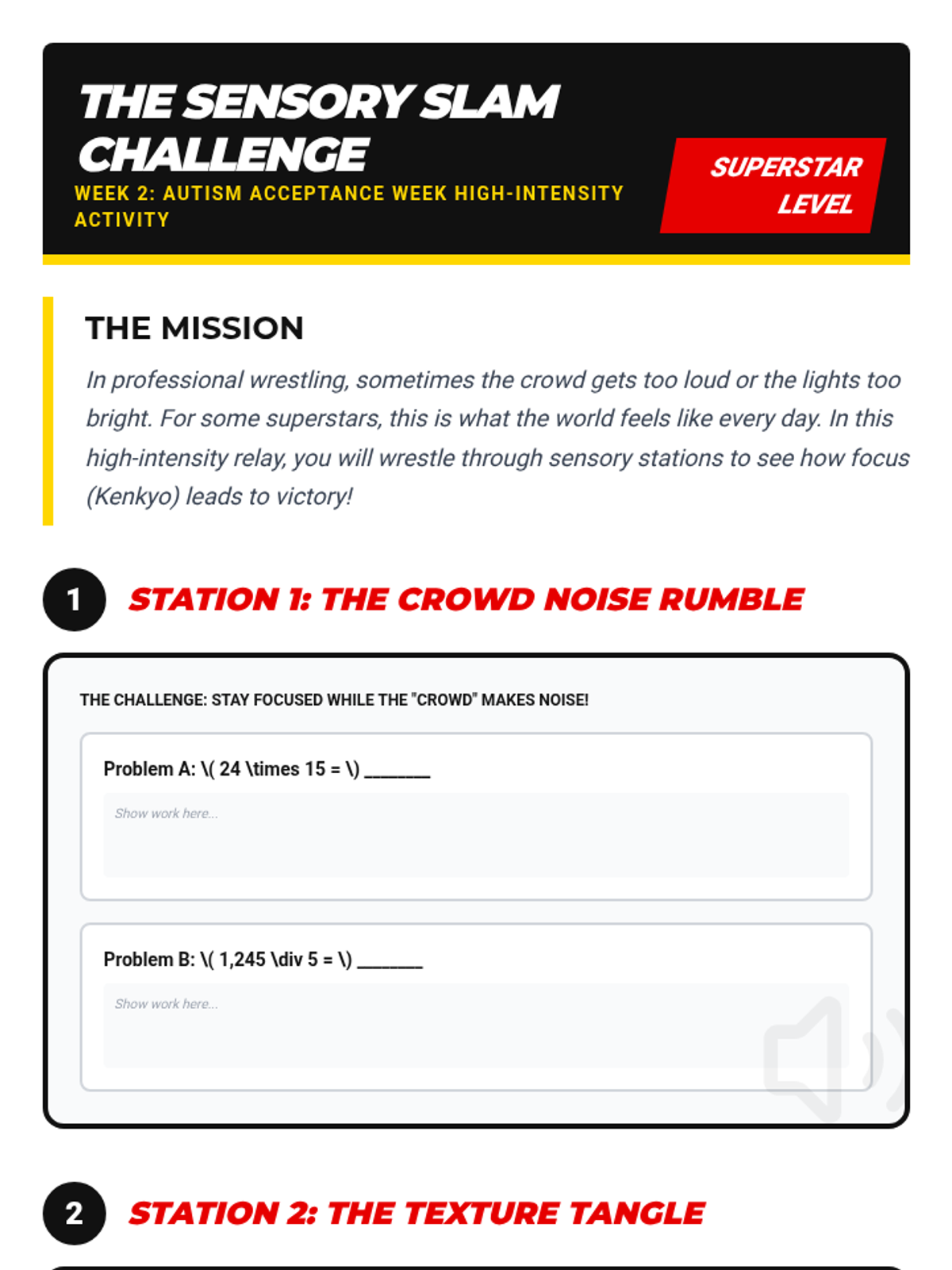
A sensory awareness activity for Autism Acceptance Week that uses high-energy challenges to simulate sensory processing differences and promote inclusive focus strategies.
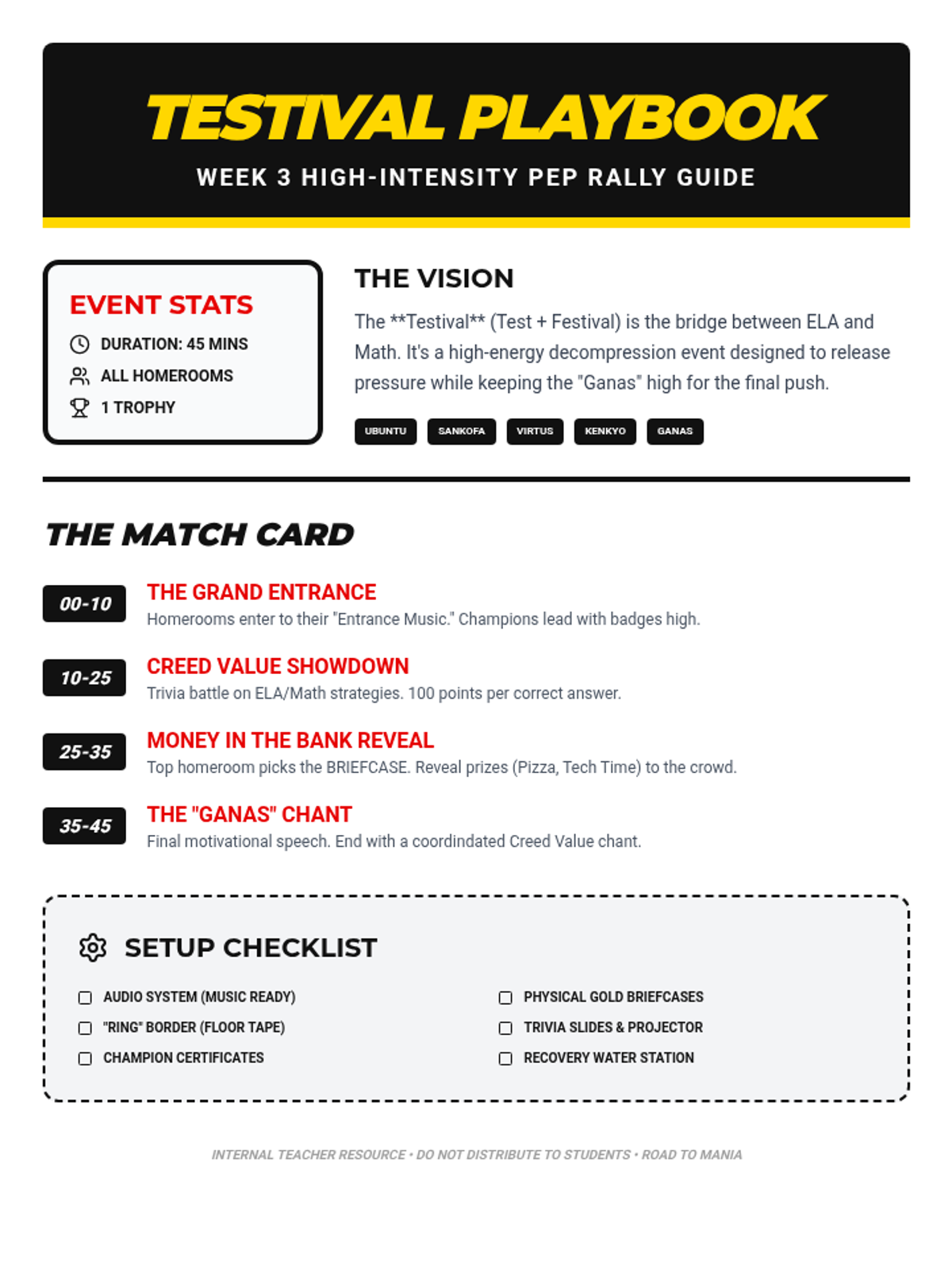
A teacher-facing resource for running a high-intensity 'Testival' (Test + Festival) pep rally, including 'Ring Entrances,' 'Creed Value Showdowns' (academic bowl style), and the 'Money in the Bank' opening.
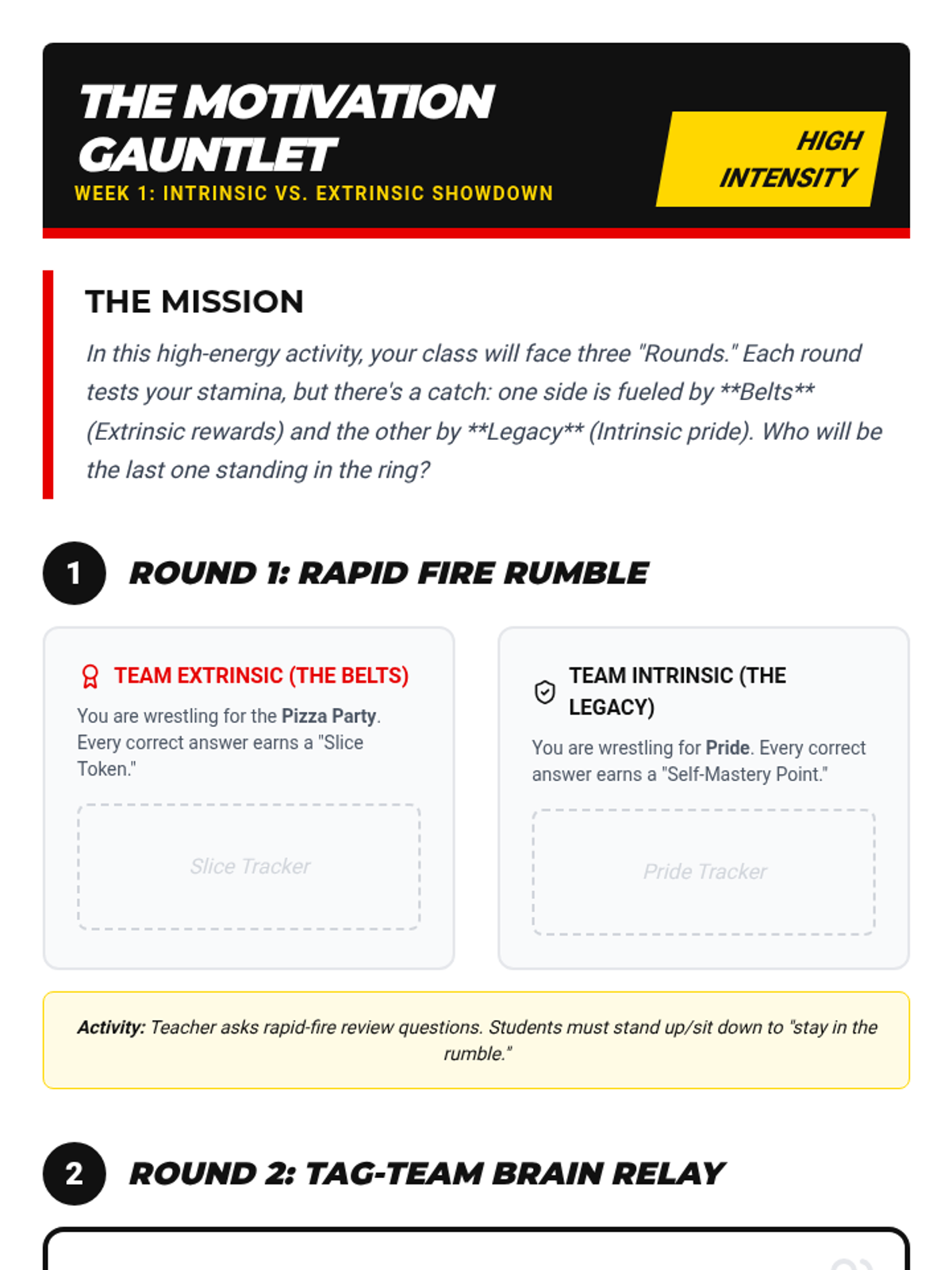
A physical and mental challenge activity where students explore intrinsic vs. extrinsic motivation through high-energy 'rounds' of review and physical exercise.
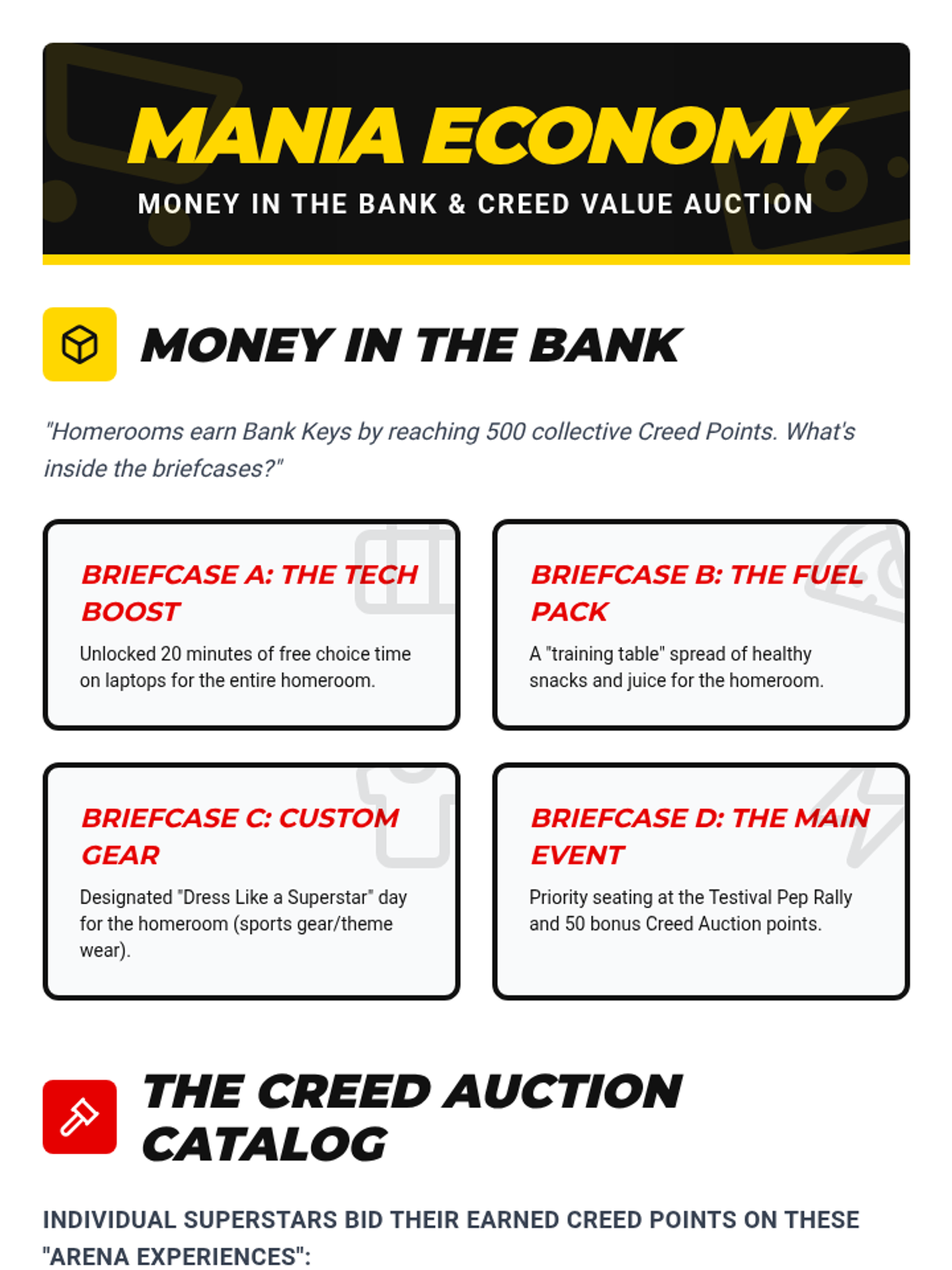
A student-facing guide to the incentive systems of the 4-week sequence, including rewards for Money in the Bank briefcases and a catalog for the Creed Value Auction.
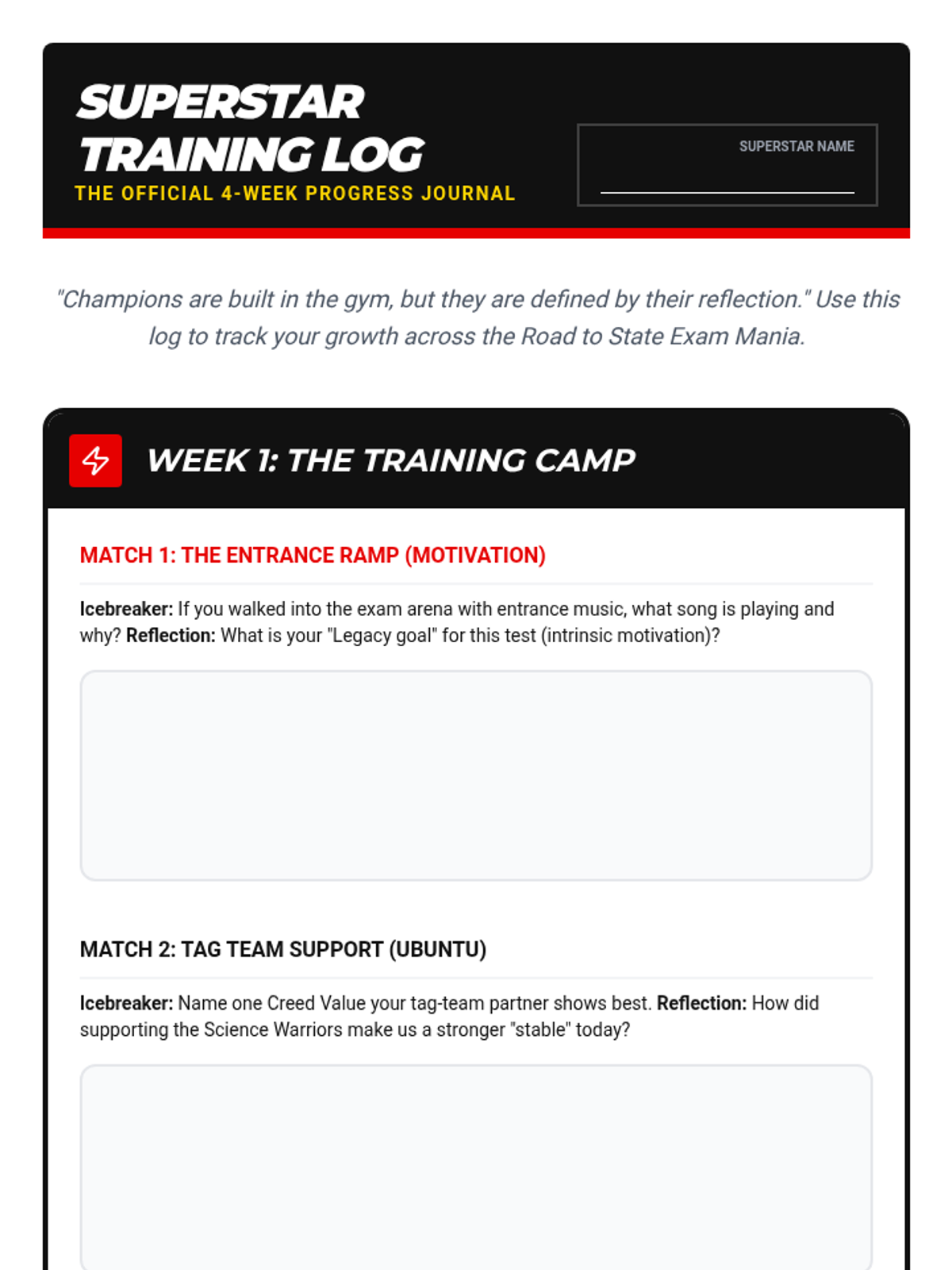
A reflection and icebreaker journal for students to use throughout the 4-week sequence, featuring themed check-ins and a pre-season scouter report for Spring Break and Q4 goals.
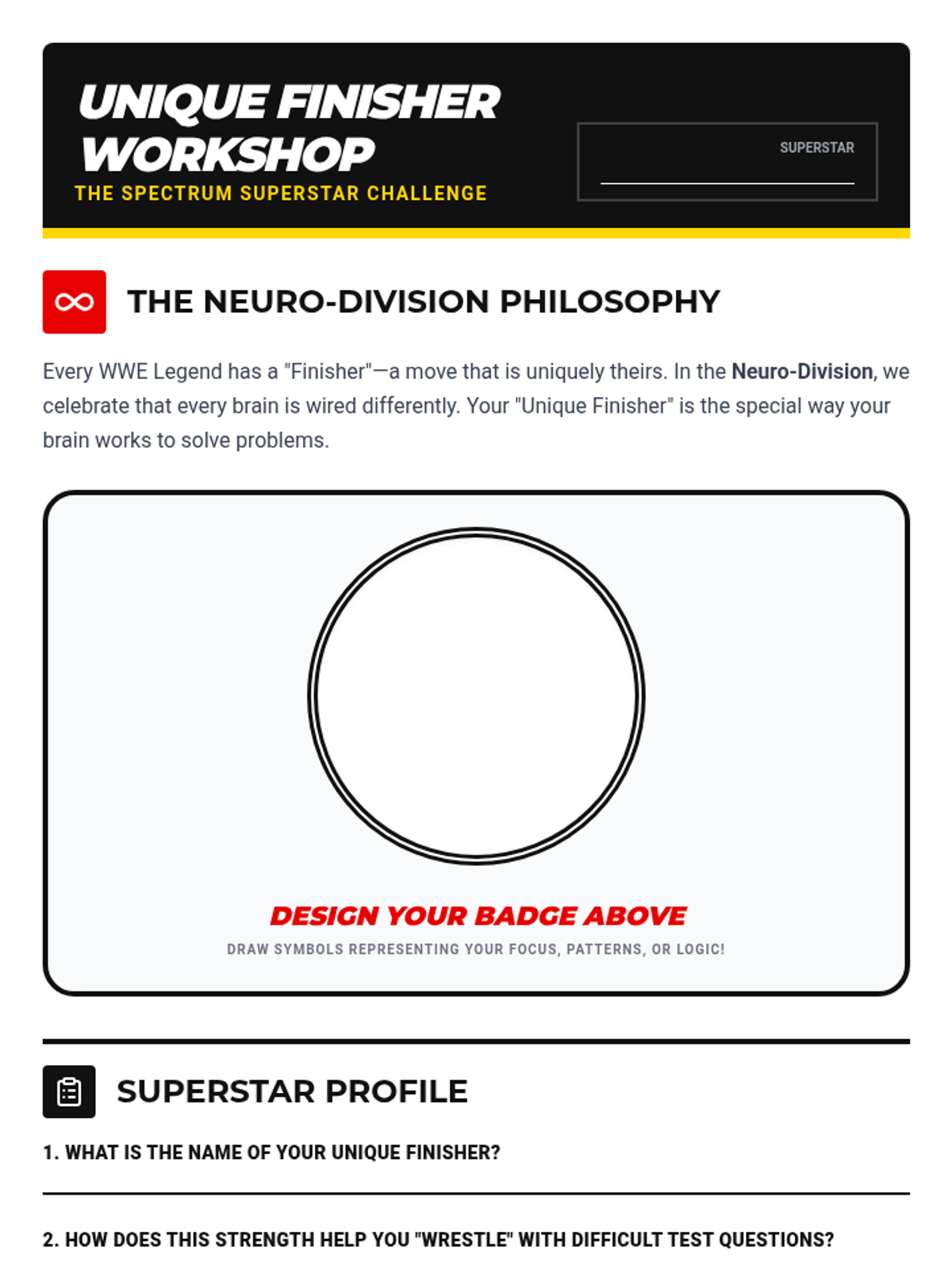
A creative student worksheet for Autism Acceptance Week where students design a 'Unique Finisher' badge representing their neurodivergent strengths and reflect on inclusive support.
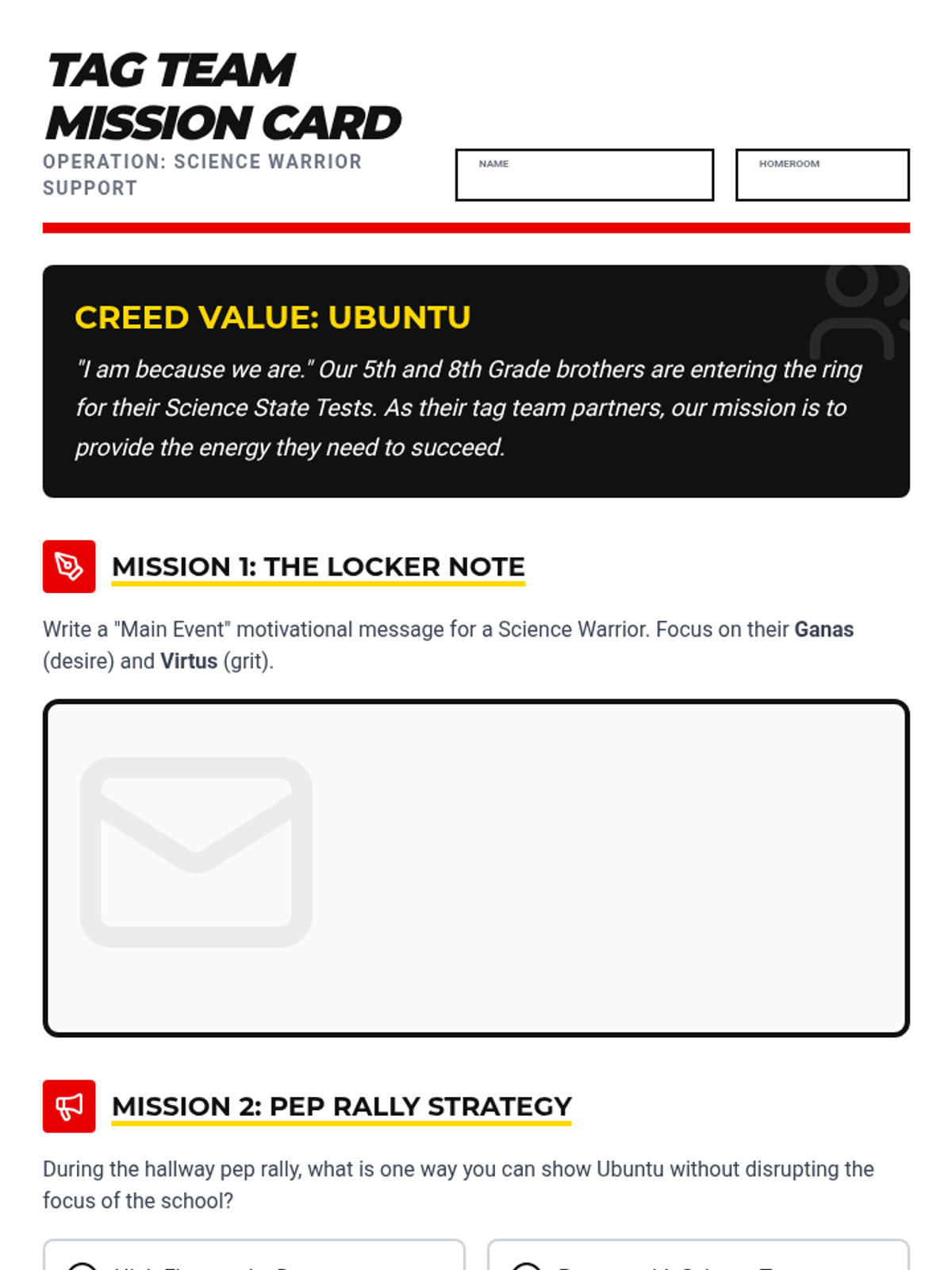
A student activity sheet focused on the Creed Value of Ubuntu, guiding students to support their peers during state science exams through motivational notes and pep rally participation.
A slide deck highlighting the real-life struggles and resilience of WWE superstars, focusing on Ganas (desire) and Virtus (grit) for the final push.
A presentation focused on test anxiety, ELA strategies, and post-test decompression using the 'Heel' and 'Technical Playbook' metaphors.
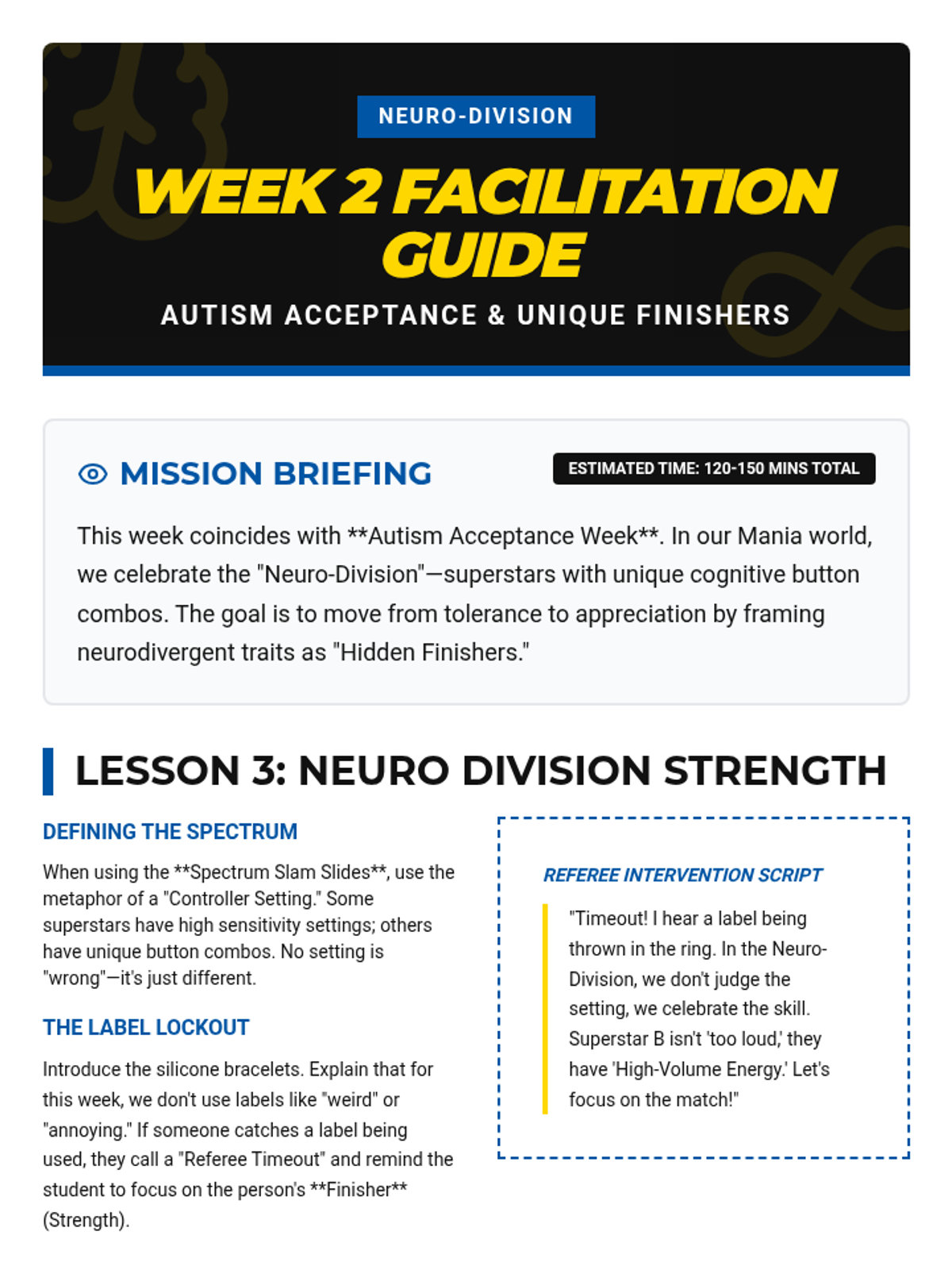
A slide deck for Autism Acceptance Week, using wrestling metaphors to celebrate neurodiversity, unique strengths (finishers), and inclusive support.
A high-energy presentation introducing the State Exam Mania theme, exploring intrinsic vs. extrinsic motivation with a side-by-side 'Belt vs. Legacy' comparison and a video placeholder.
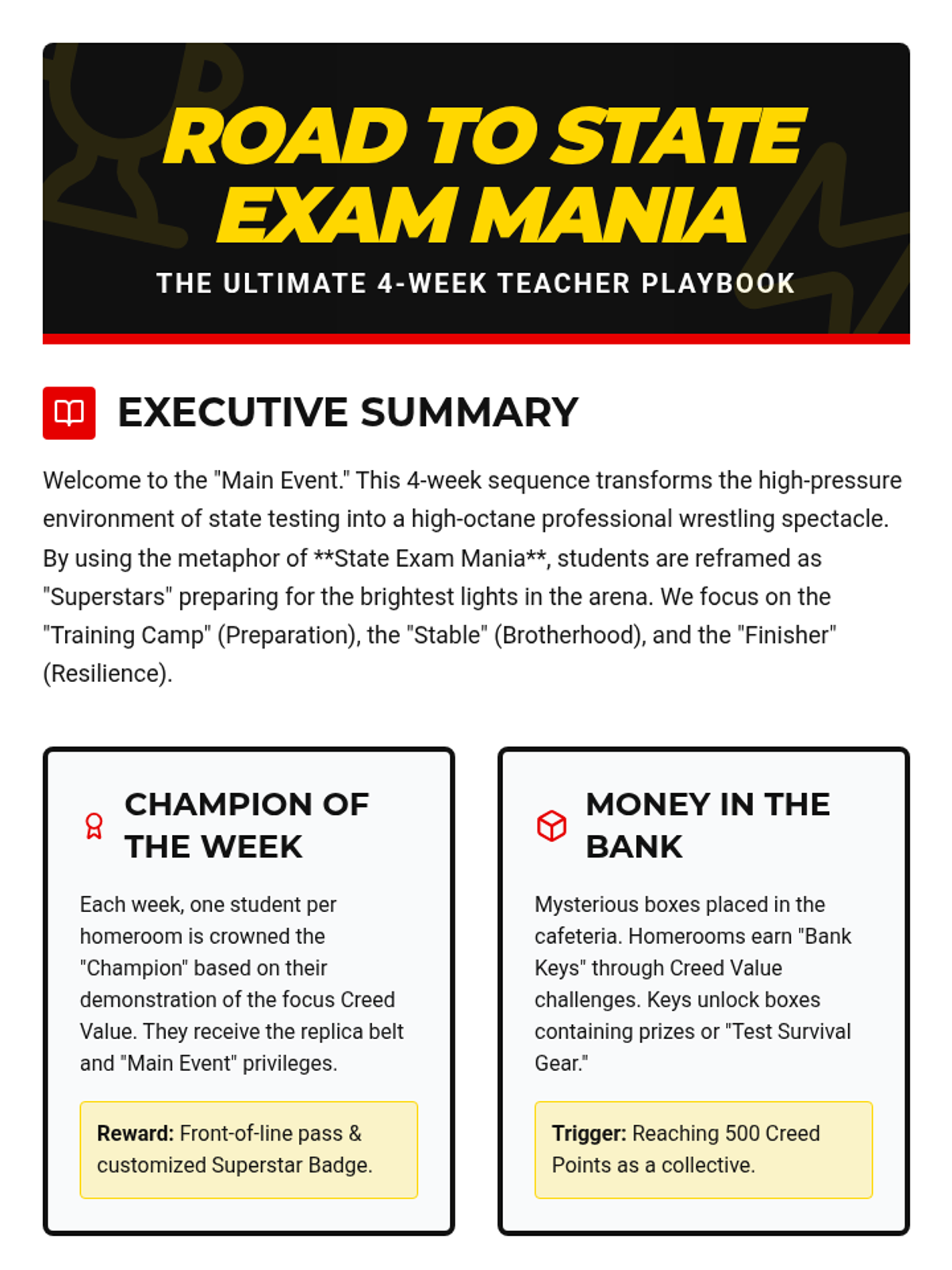
A comprehensive 4-week roadmap for teachers, outlining lesson themes, weekly Creed Value focuses, and competition details like Money in the Bank and Champion of the Week.
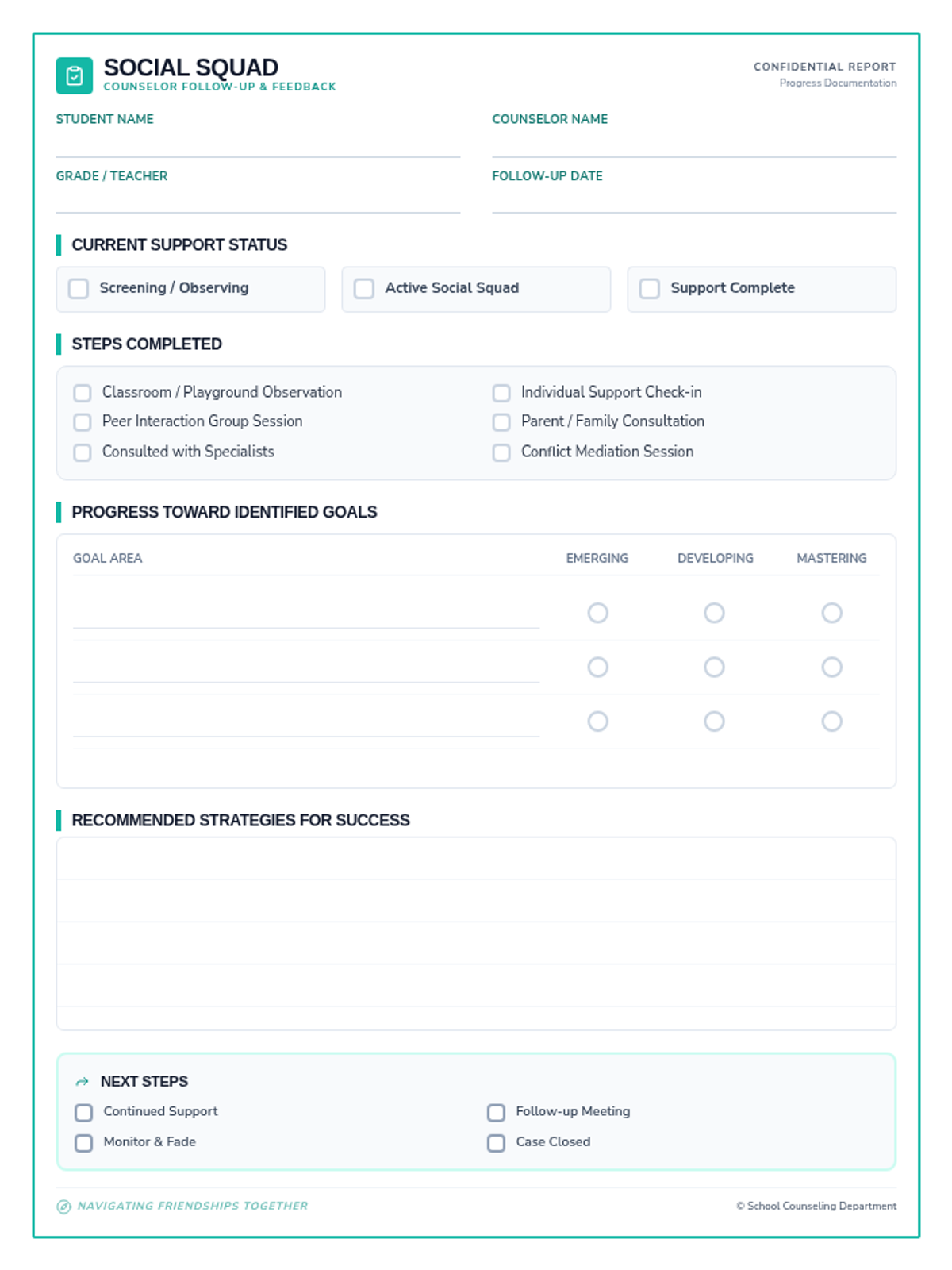
A revised school counselor follow-up and feedback form. It features a new introductory referral sentence, detailed intervention logs with dates and goals, a dedicated 'At this time' status section, and a professional closing message inviting continued collaboration. Now includes 'Outside Referral' in next steps.
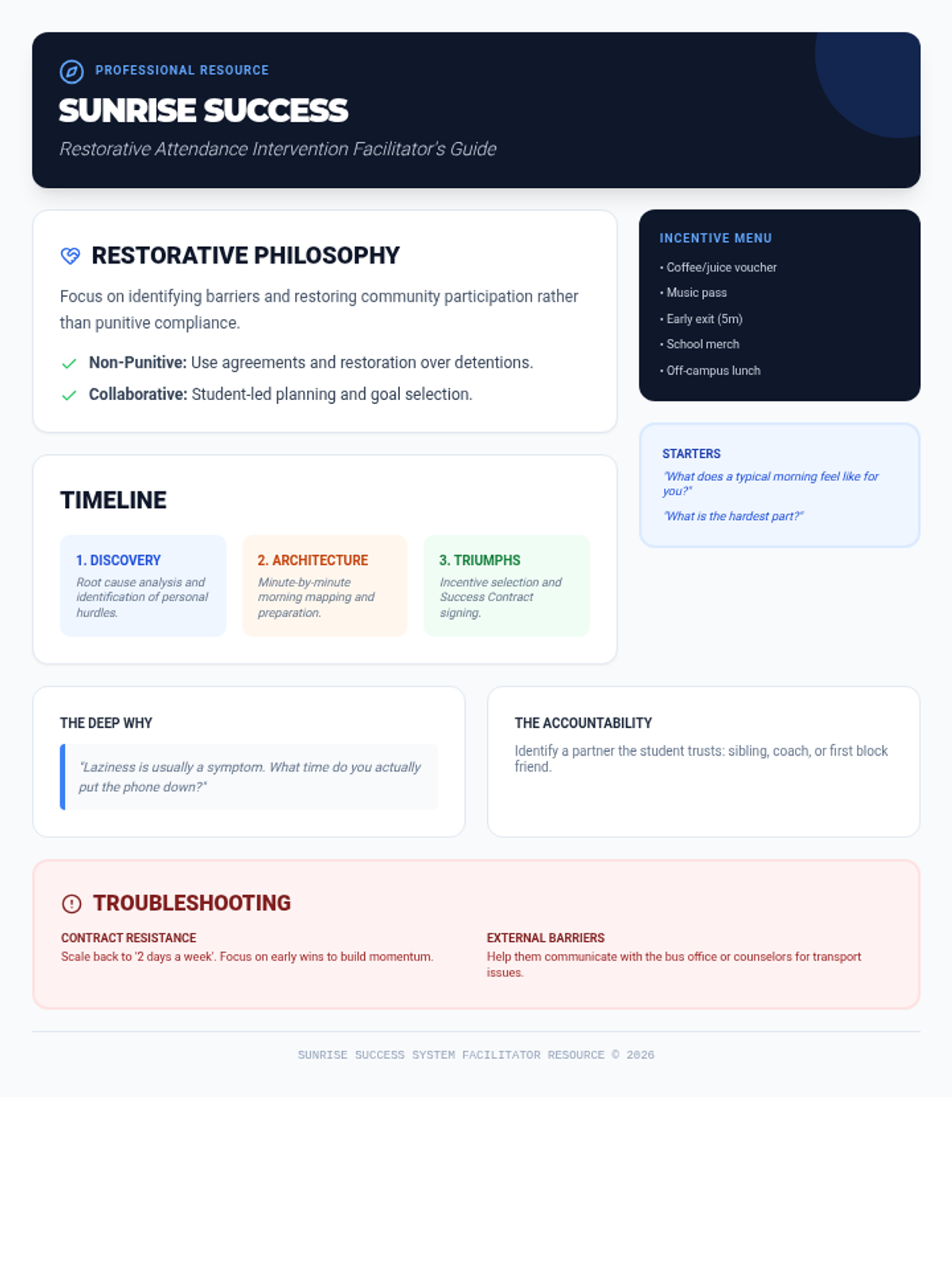
A comprehensive teacher/facilitator guide for implementing the Sunrise Success intervention. It outlines restorative philosophies, provides facilitation scripts, suggests incentive ideas, and offers troubleshooting strategies for high school attendance issues.
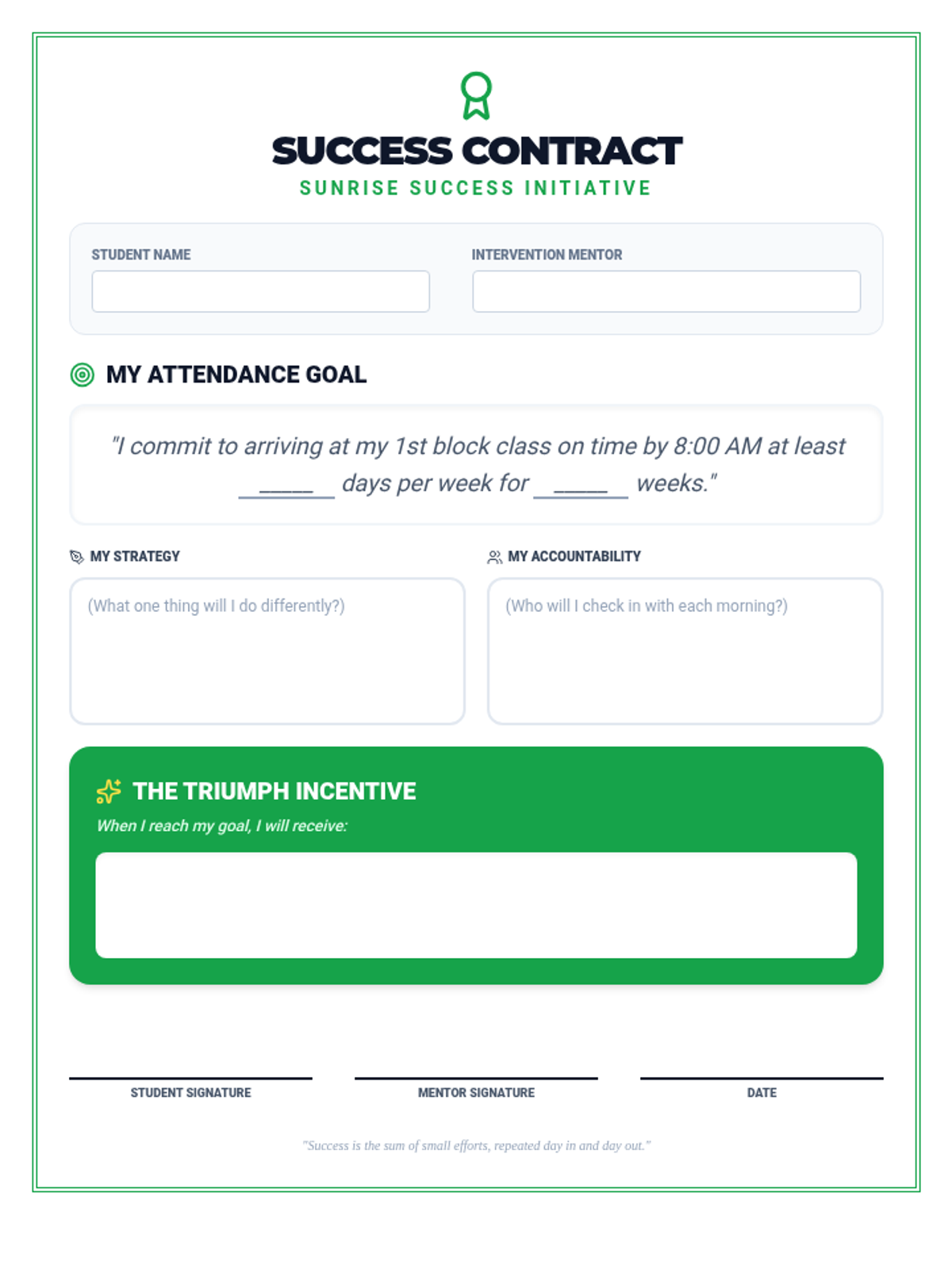
A formal 'Success Contract' for high school students completing an attendance intervention. It includes sections for defining goals, specific morning strategies, accountability partners, and earned incentives.
Presentation for the final session of the Sunrise Success intervention. It focuses on the psychology of incentives, reward selection, and the importance of daily accountability check-ins for high school students.
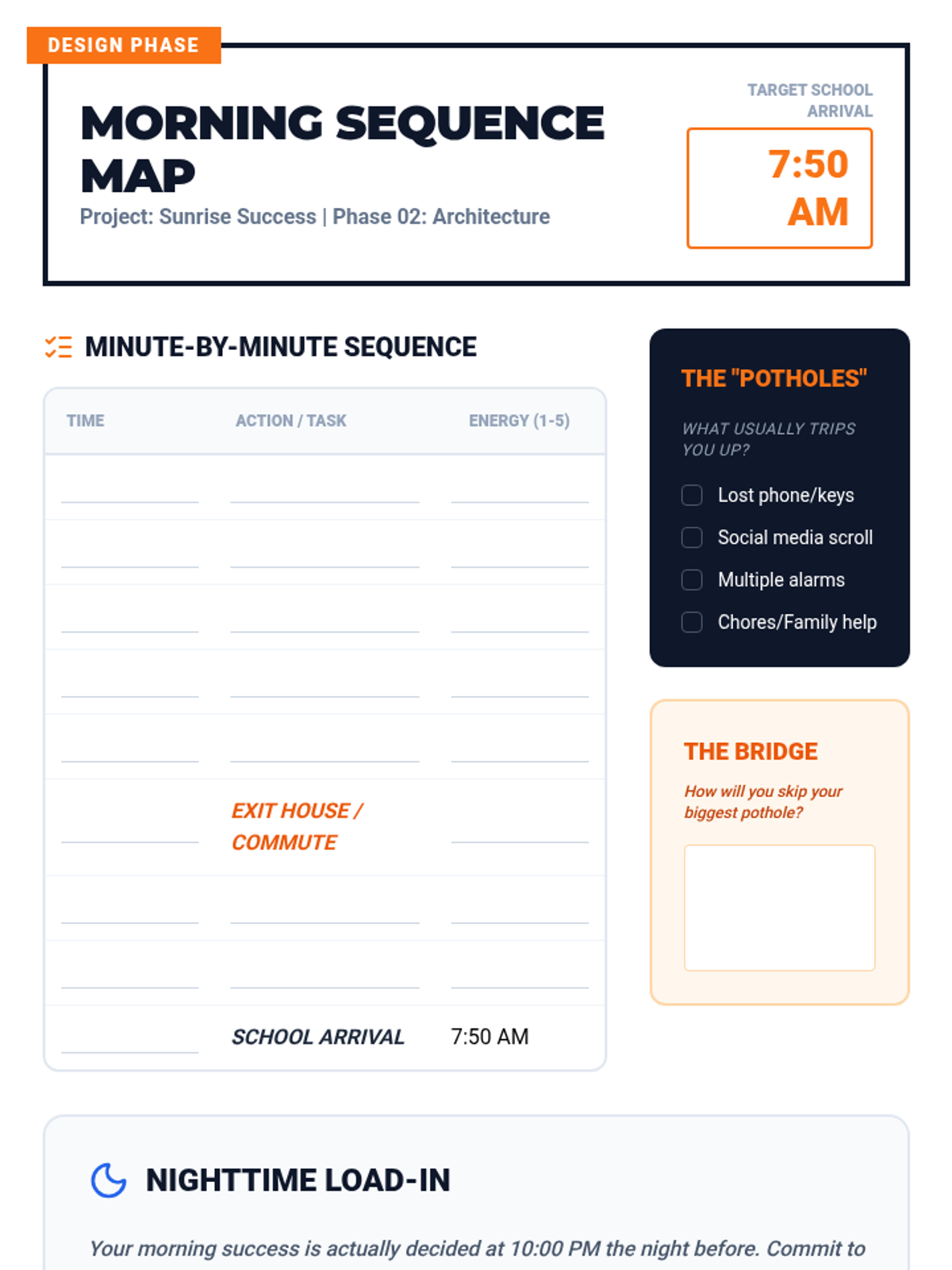
A structured worksheet for high school students to map out their morning routine. It includes a minute-by-minute planning table, identification of 'potholes' (barriers), and a nighttime preparation checklist.
Presentation for the second session of the Sunrise Success intervention. It teaches students practical time management techniques like backward design and decision fatigue reduction to optimize their morning routines.
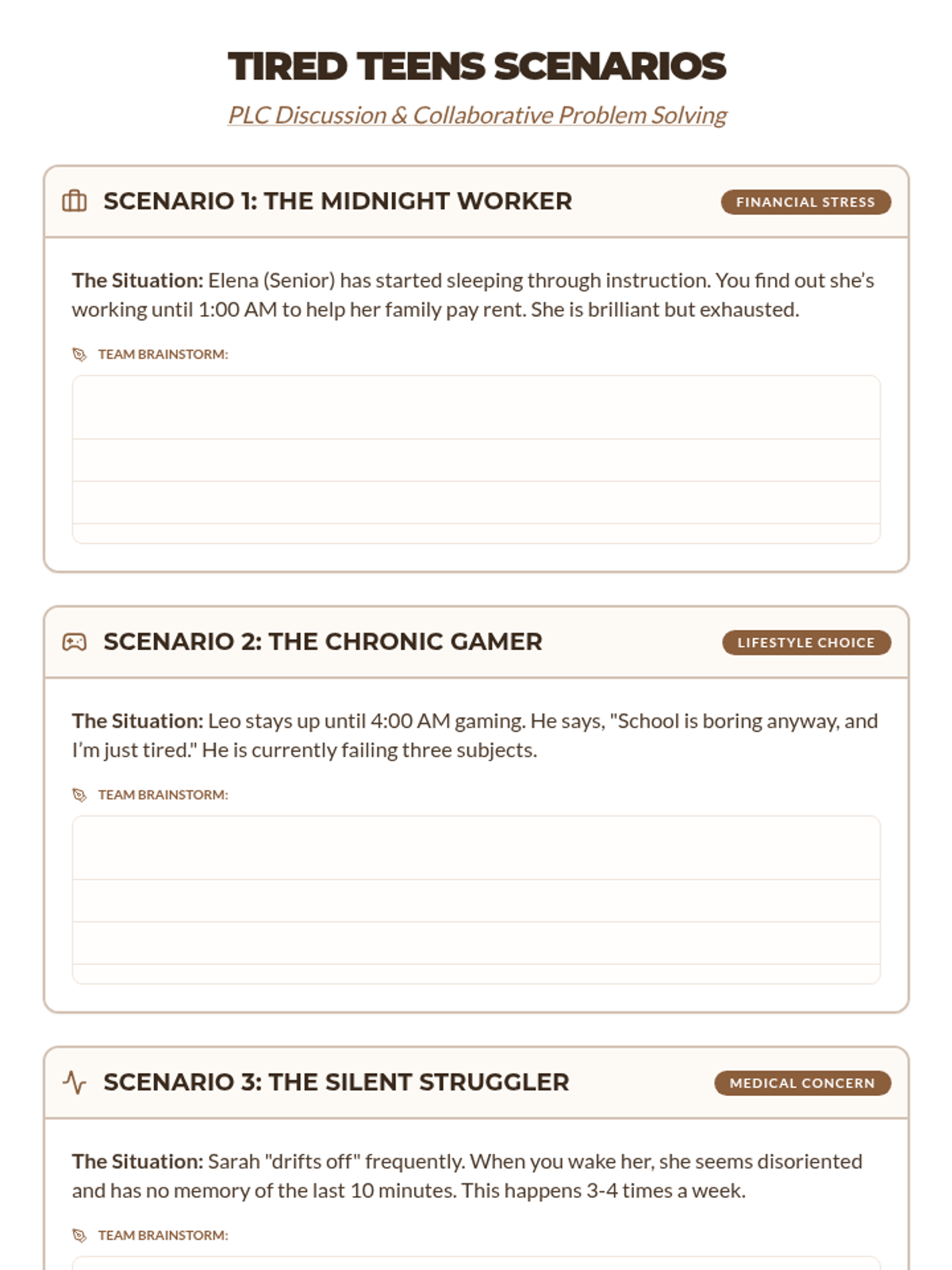
A revised set of discussion scenarios for a PLC meeting, featuring expanded response areas with writing lines and improved visual layout for collaborative teacher work.
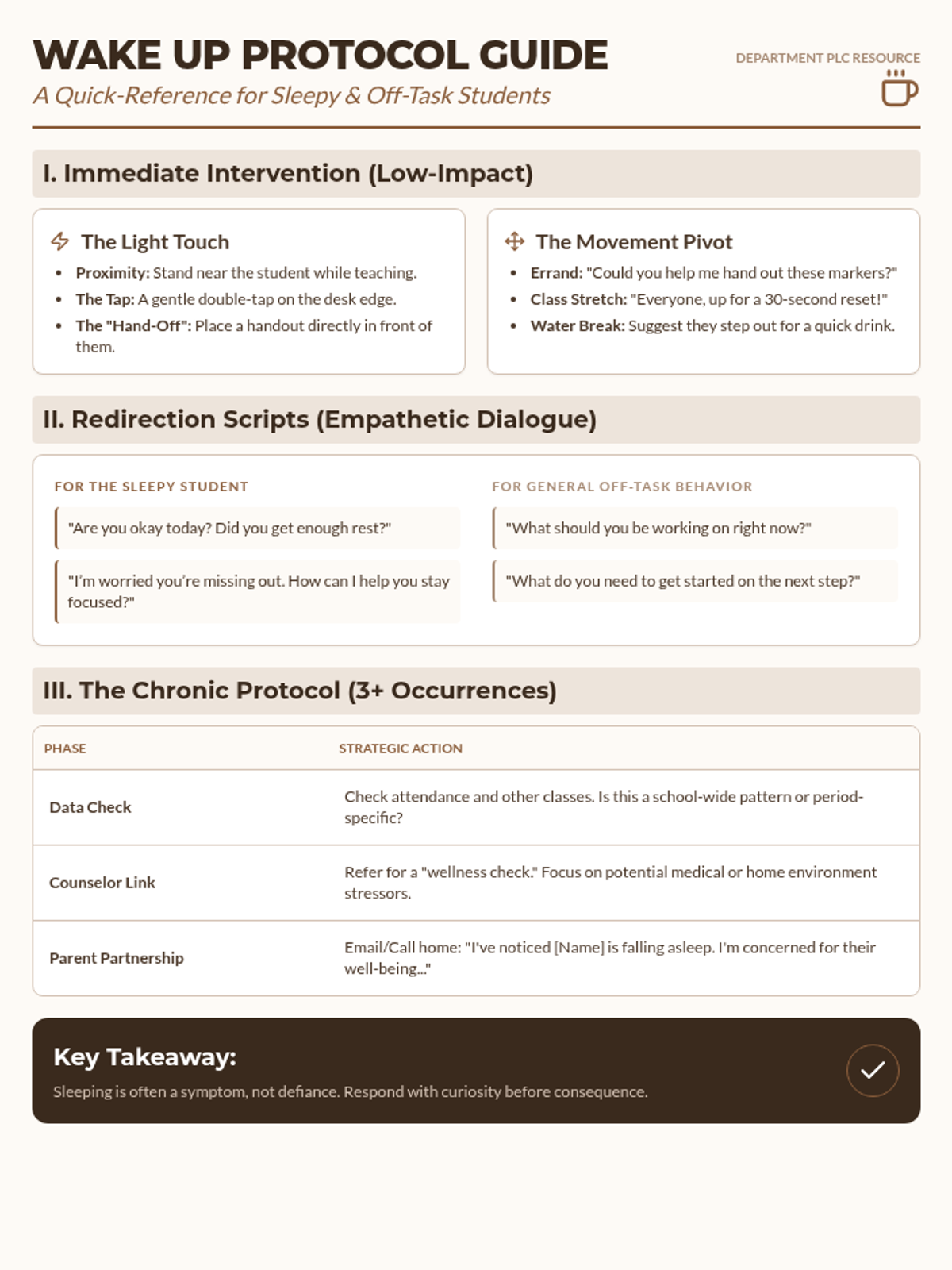
A revised one-page reference guide for teachers outlining immediate interventions and communication scripts for sleepy students, optimized for single-page printing.
A 15-slide PLC presentation for teachers focused on empathetic strategies for managing students sleeping in class, expanded to include general off-task behavior scripts and reflection questions. Based on Edutopia insights.
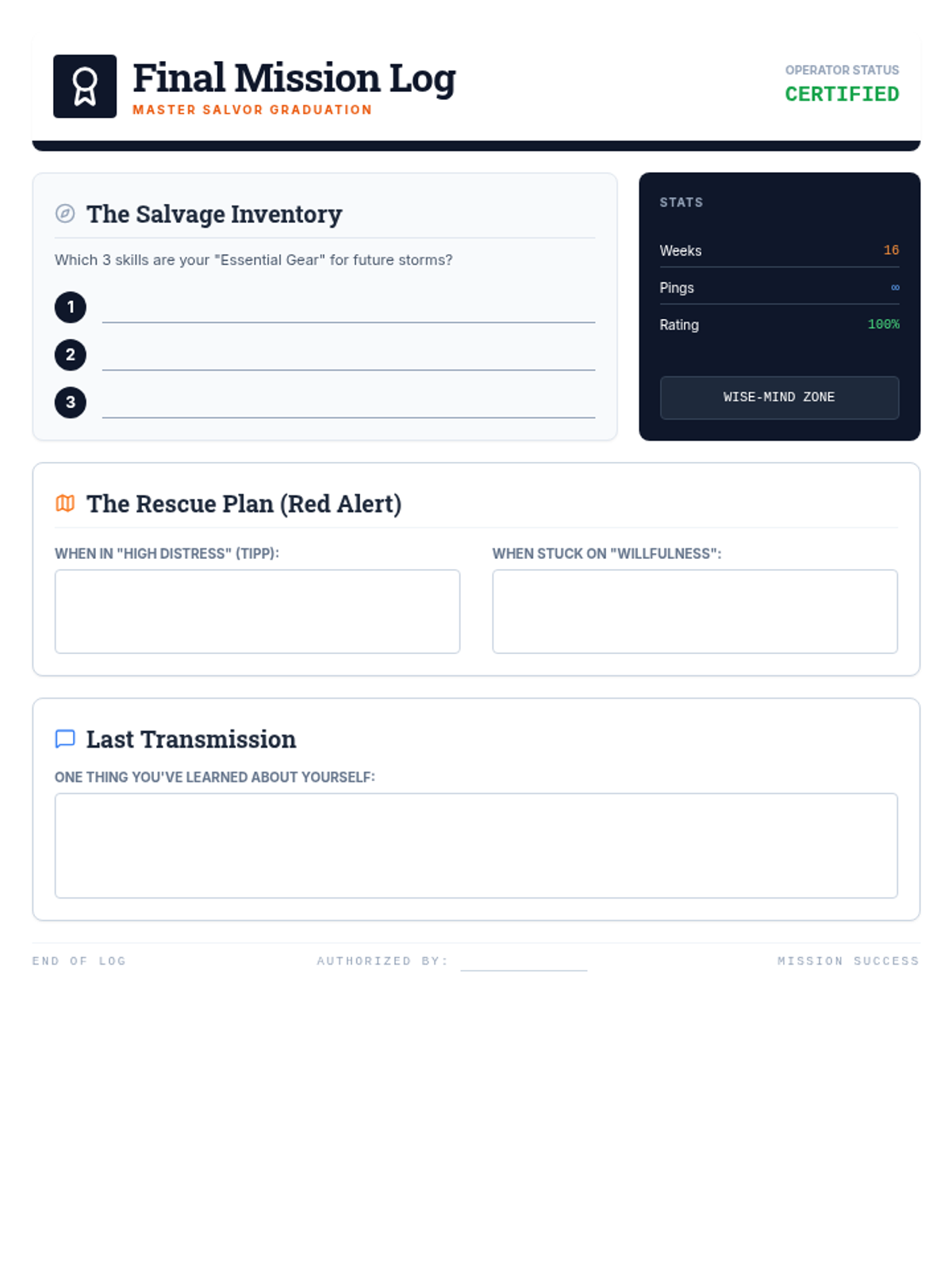
A student graduation log and review sheet for the final week of the Survival and Salvage DBT program. Includes a skill inventory, red alert planning, and a final self-reflection. Revised to fix page boundaries and line visibility.
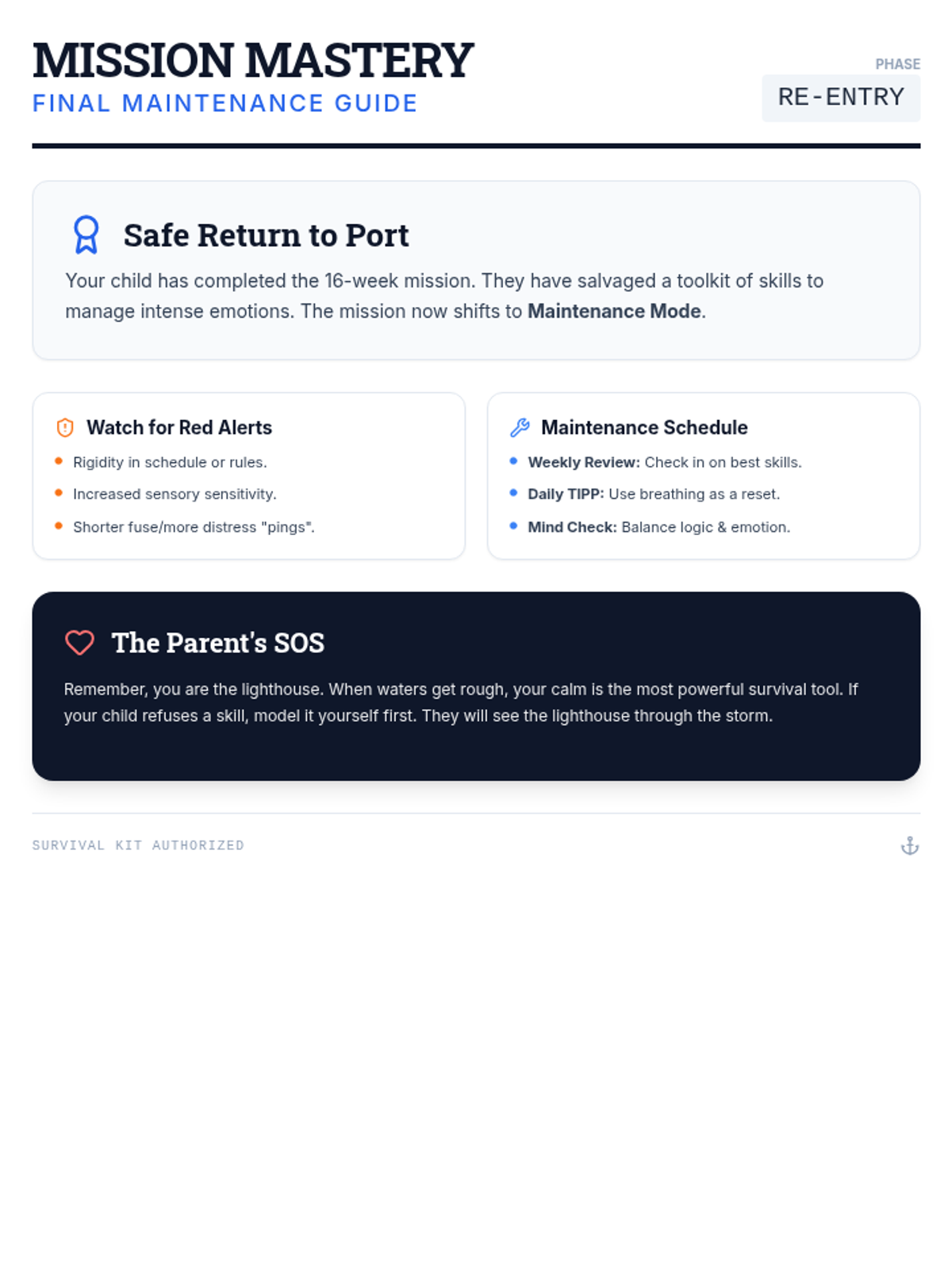
Parent guide for the final week of the Survival and Salvage DBT program, focusing on post-program maintenance and identifying early warning signs for skill reinforcement. Revised to fit a single page.
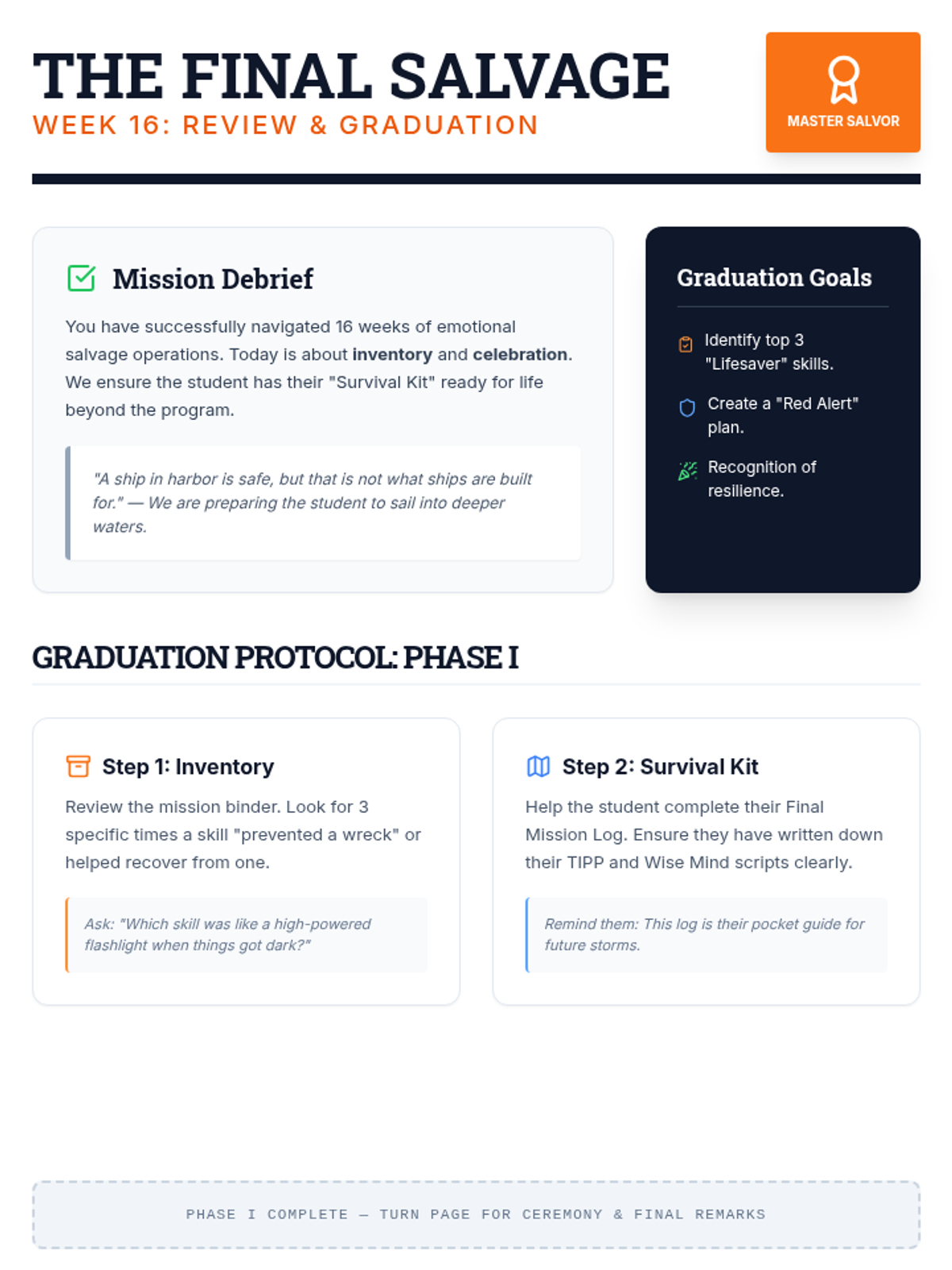
Counselor guide for the final week of the Survival and Salvage DBT program, covering the review of skills, graduation ceremony protocols, and maintenance planning. Revised to fix protocol splitting and layout issues.
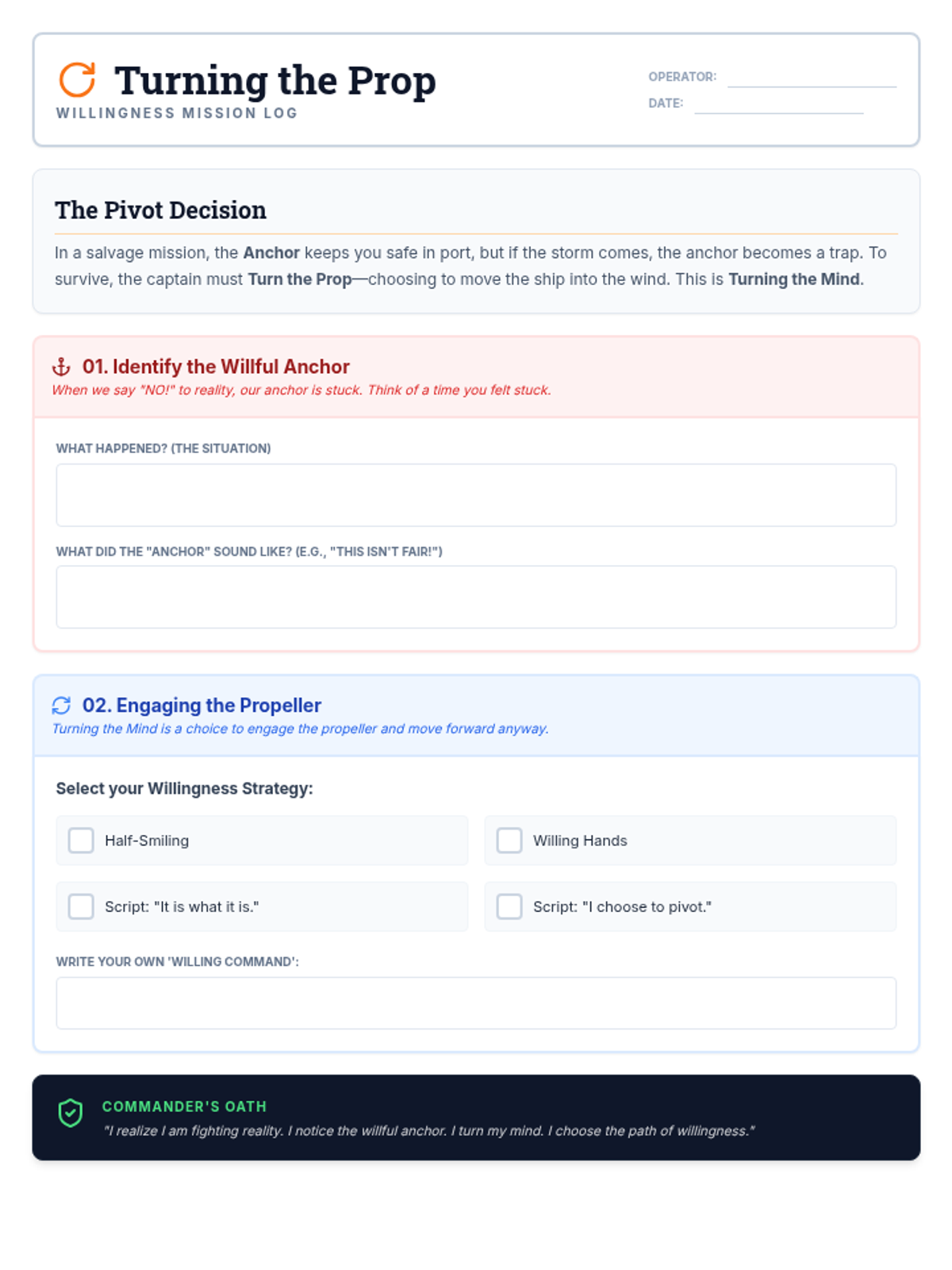
A student-facing worksheet for practicing the Turning the Mind skill using the 'Turning the Prop' metaphor. Includes identification of the 'Willful Anchor' and selection of 'Willingness Strategies'. Revised for single-page layout and white writing areas.
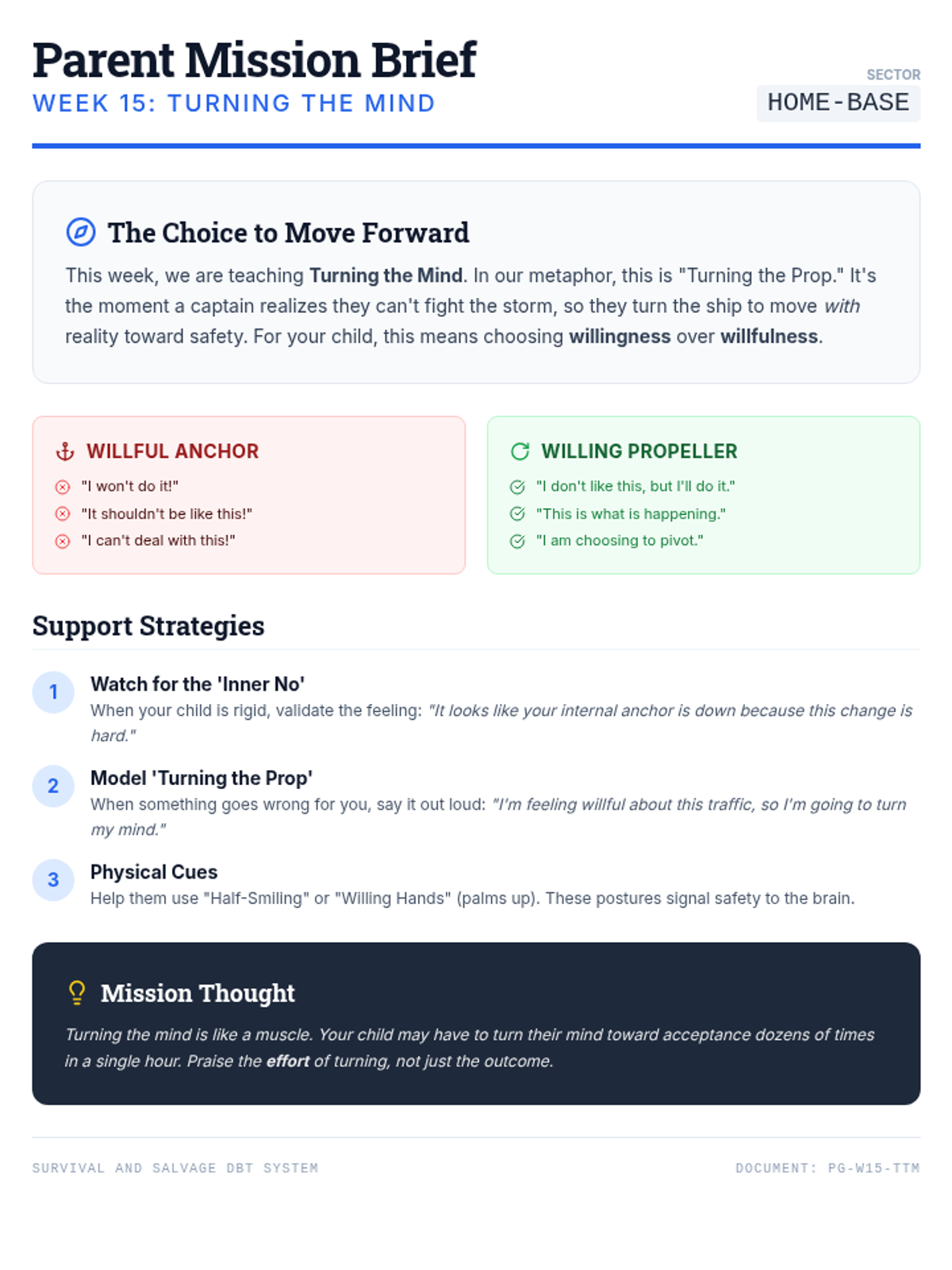
Parent guide for Week 15 of the Survival and Salvage DBT program, explaining the Turning the Mind skill using the 'Turning the Prop' metaphor for autism-friendly communication at home. Revised to fit a single page.
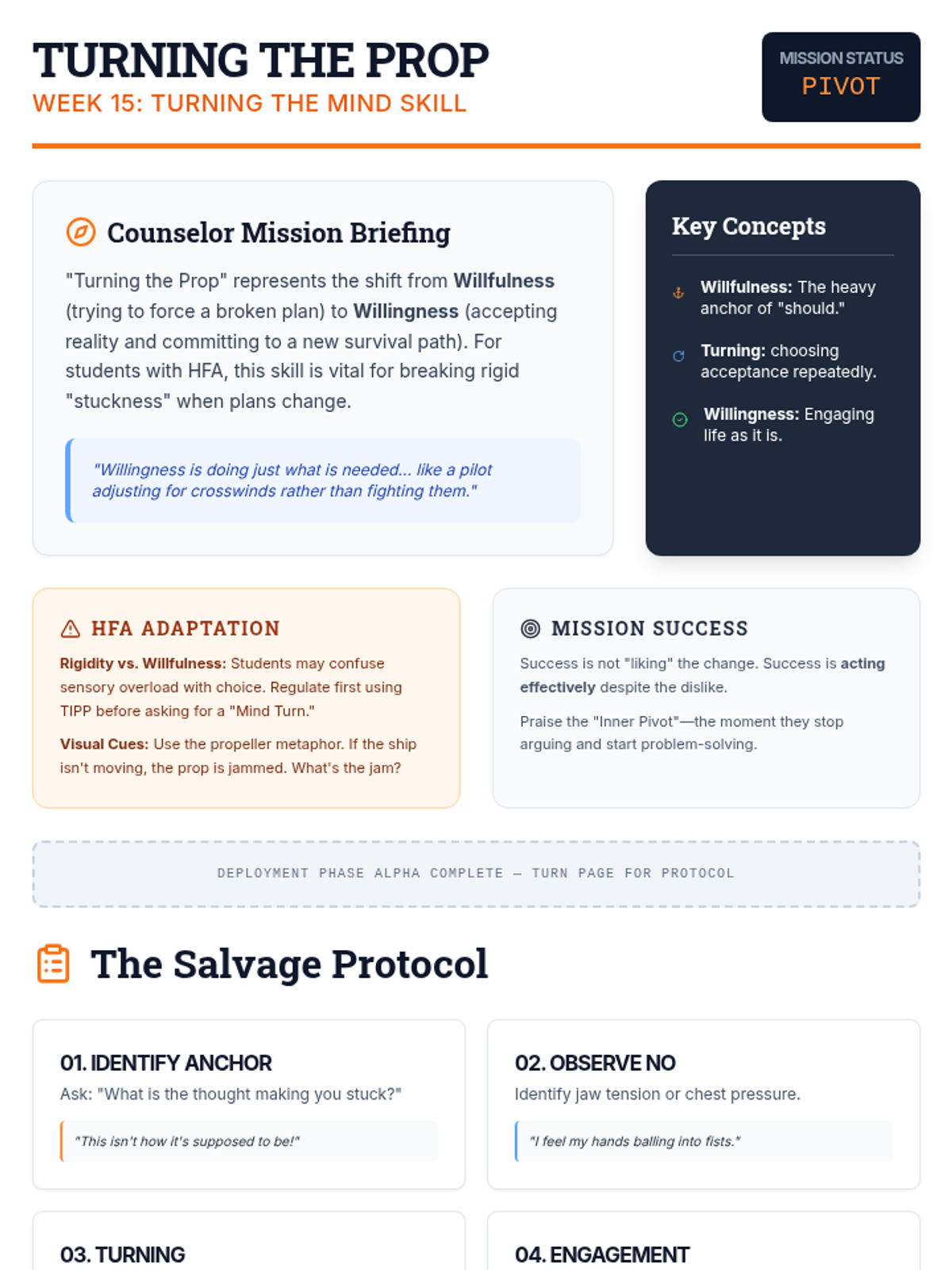
Counselor guide for Week 15 of the Survival and Salvage DBT program, focusing on the Turning the Mind skill using the 'Turning the Prop' metaphor for shifting from willfulness to willingness. Revised to fix page break issues and add notes space.
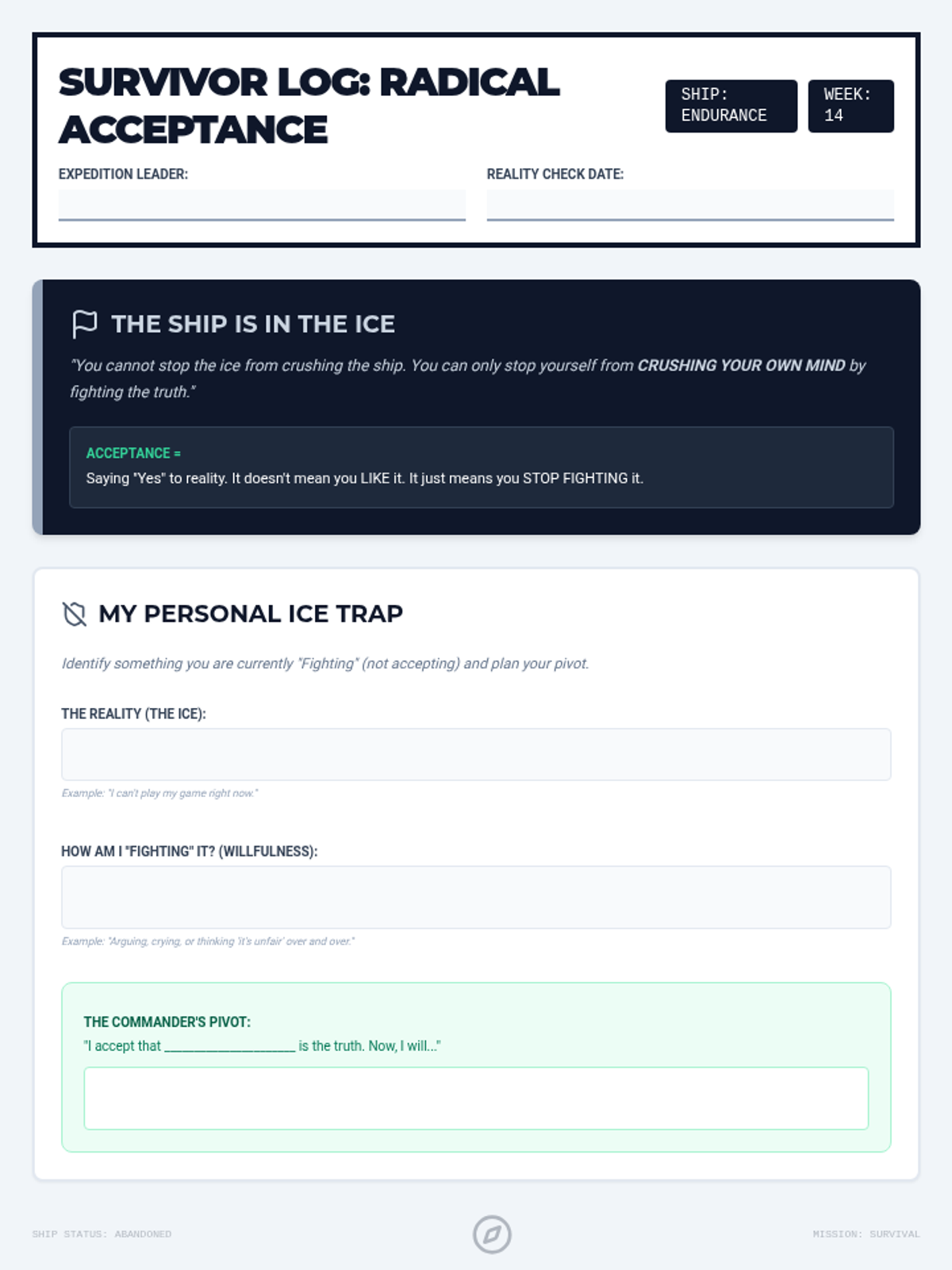
A student-facing worksheet for practicing Radical Acceptance using Shackleton's Endurance story. Includes an 'Ice Trap' analysis and a 'Commander's Pivot' for finding new solutions.
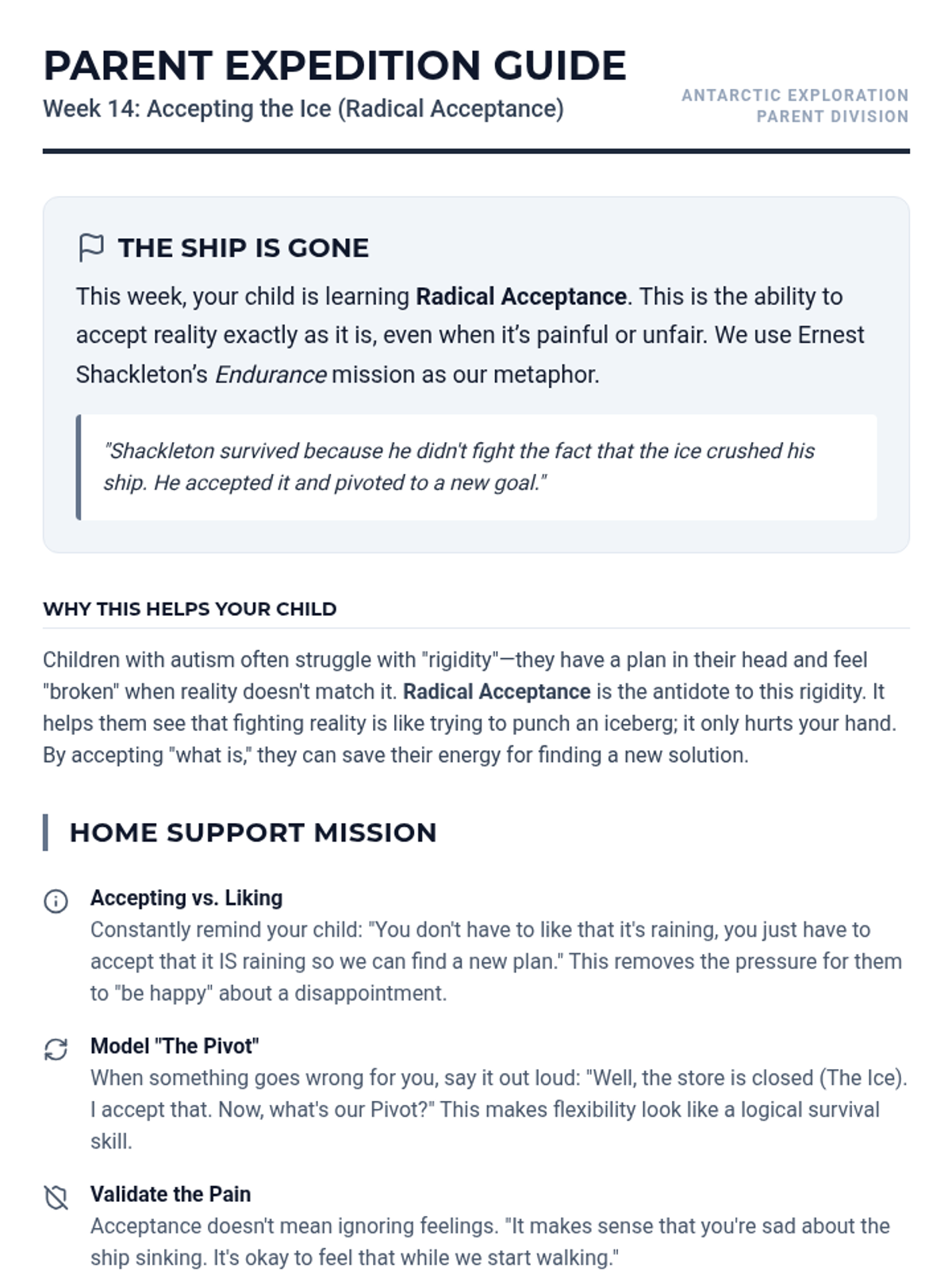
Parent guide for Week 14 of the Survival and Salvage DBT program, explaining Radical Acceptance using Shackleton's Endurance story.
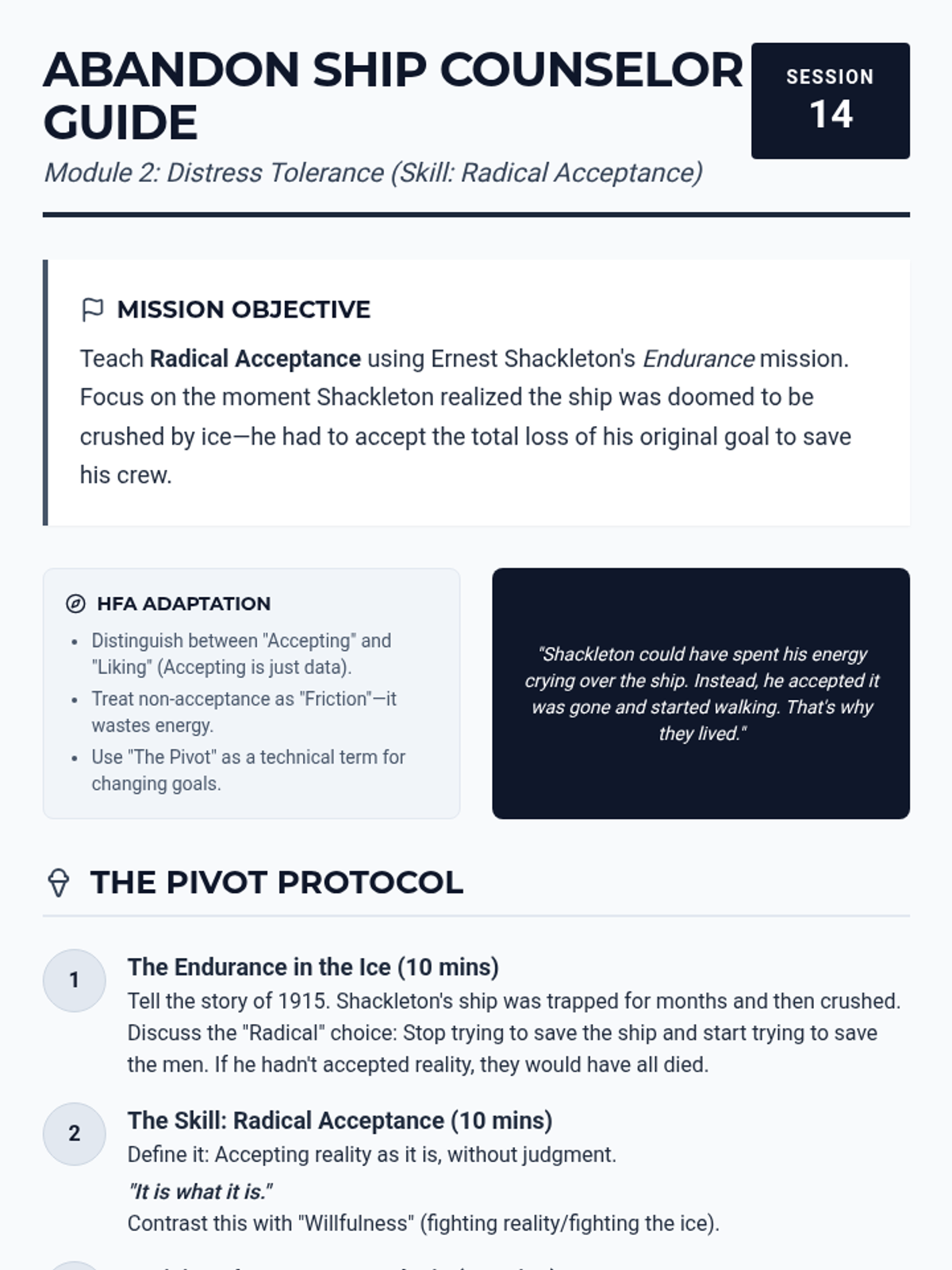
Counselor guide for Week 14 of the Survival and Salvage DBT program, focusing on Radical Acceptance using Shackleton's Endurance story.
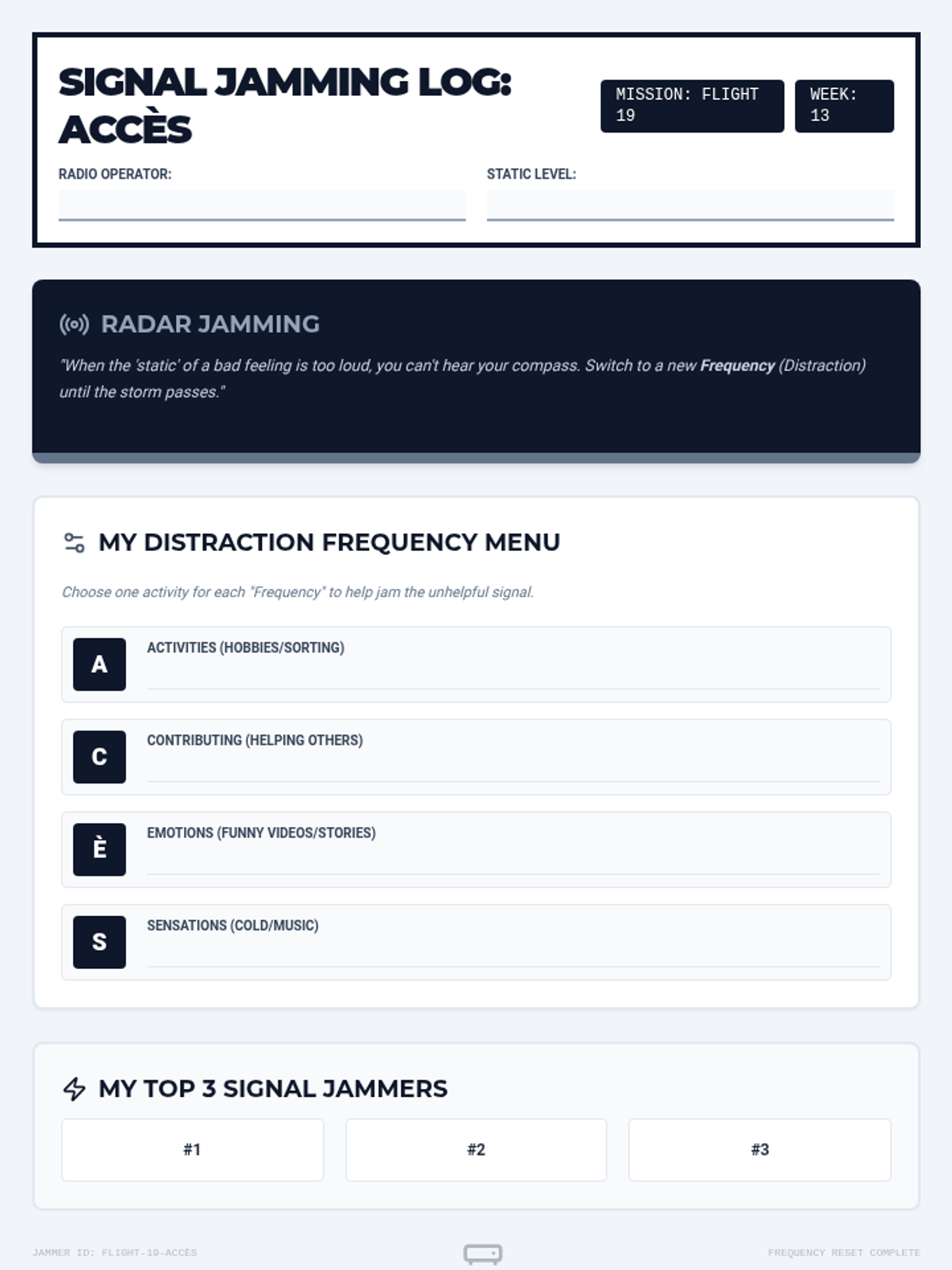
A student-facing worksheet for practicing Distract and ACCÈS skills using radar jamming metaphors. Includes a selection of activities for different distraction modes.
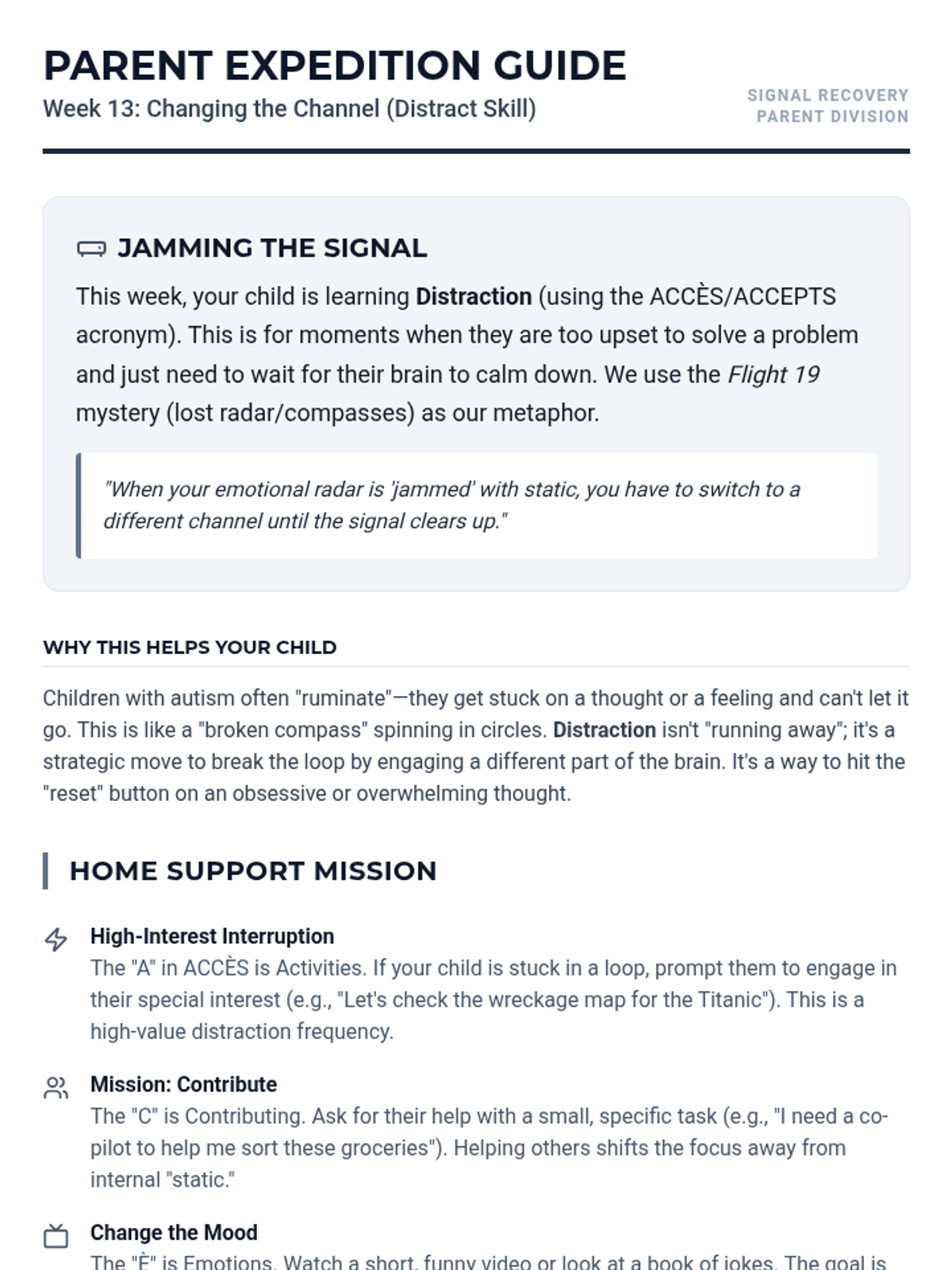
Parent guide for Week 13 of the Survival and Salvage DBT program, explaining Distraction and ACCÈS skills using radar jamming metaphors.
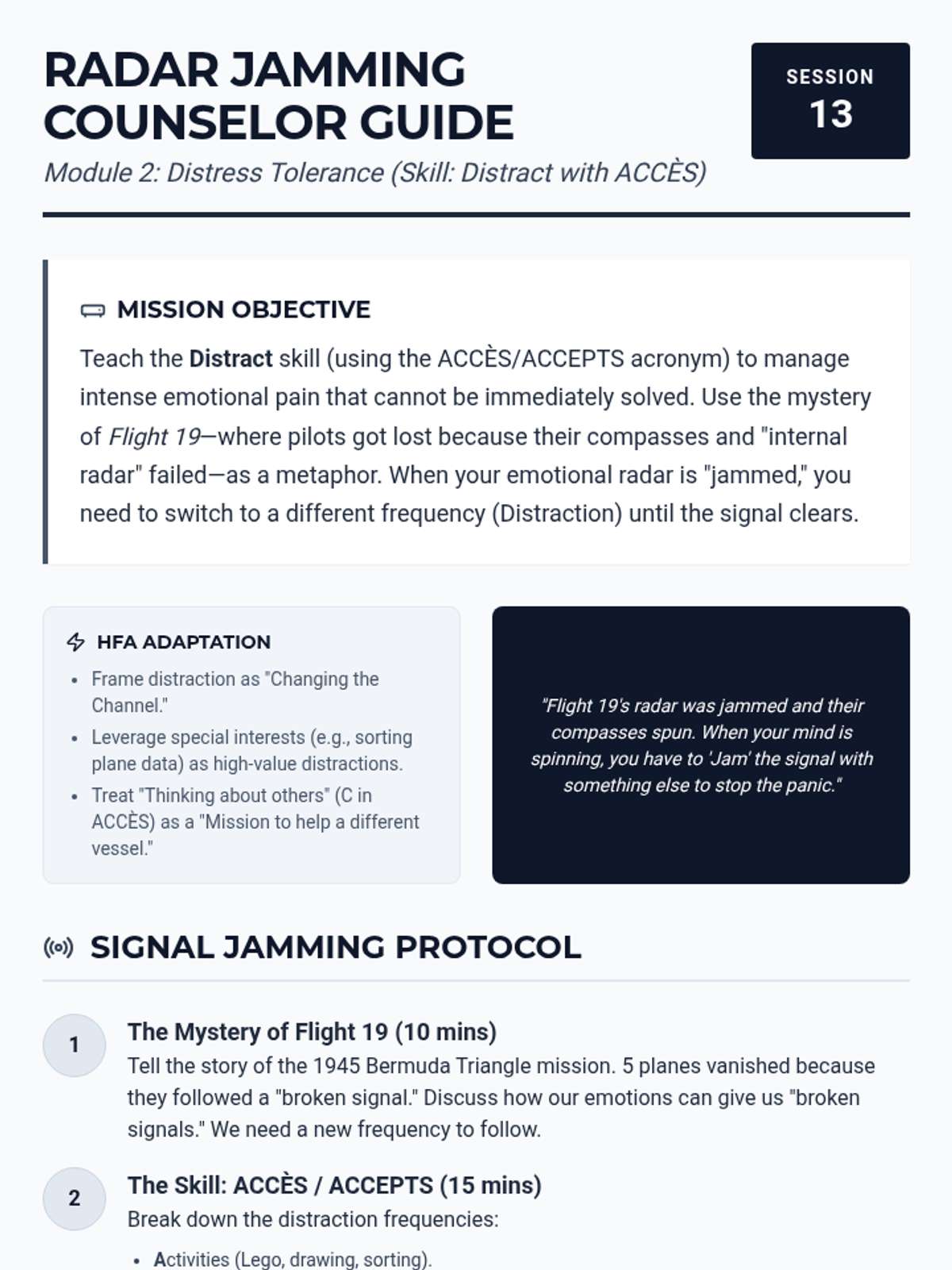
Counselor guide for Week 13 of the Survival and Salvage DBT program, focusing on Distract and ACCÈS skills using radar jamming metaphors.
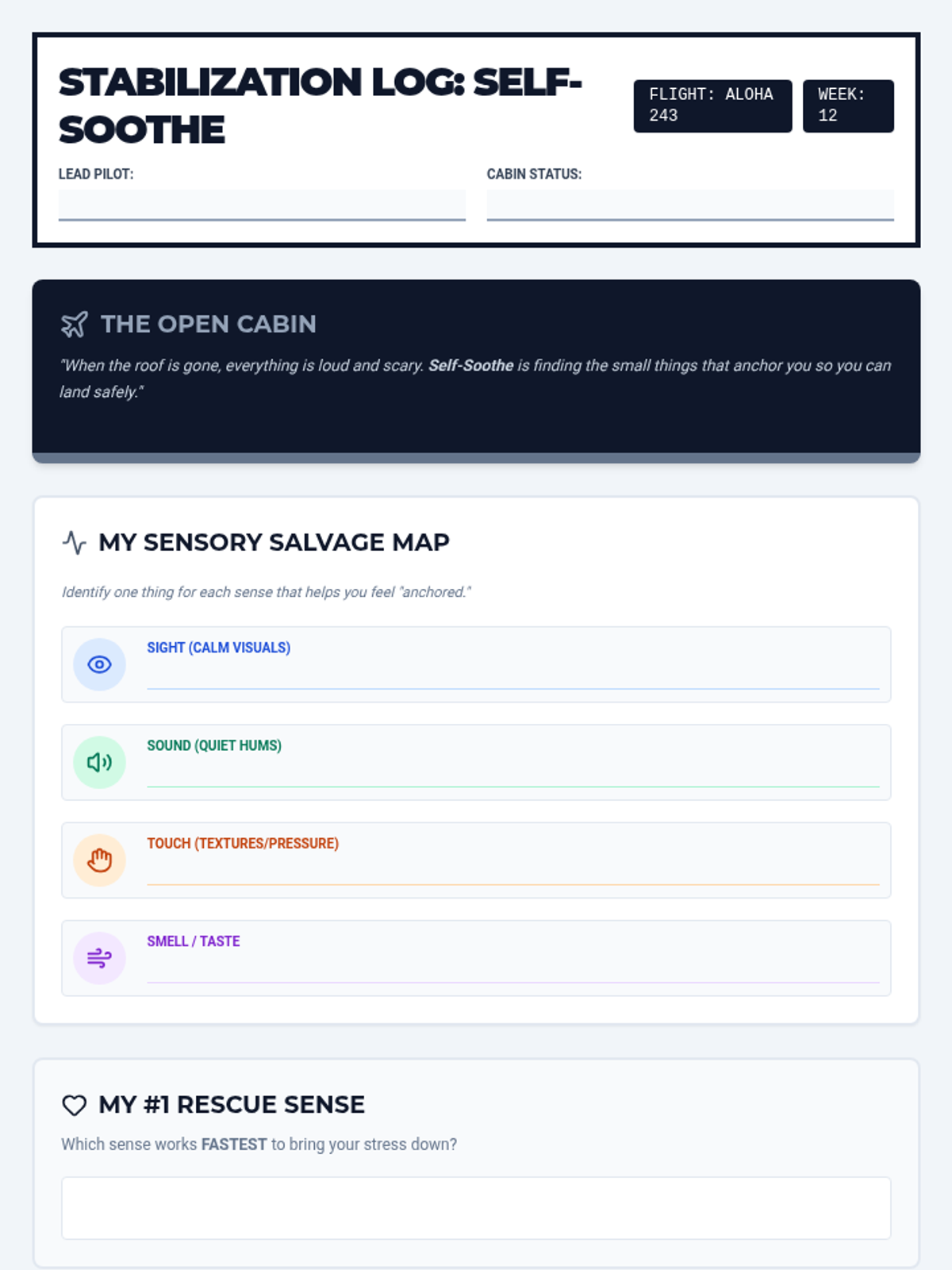
A student-facing worksheet for practicing the Self-Soothe skill using flight survival metaphors. Includes a mapping of the 5 senses and identification of a primary rescue sense.
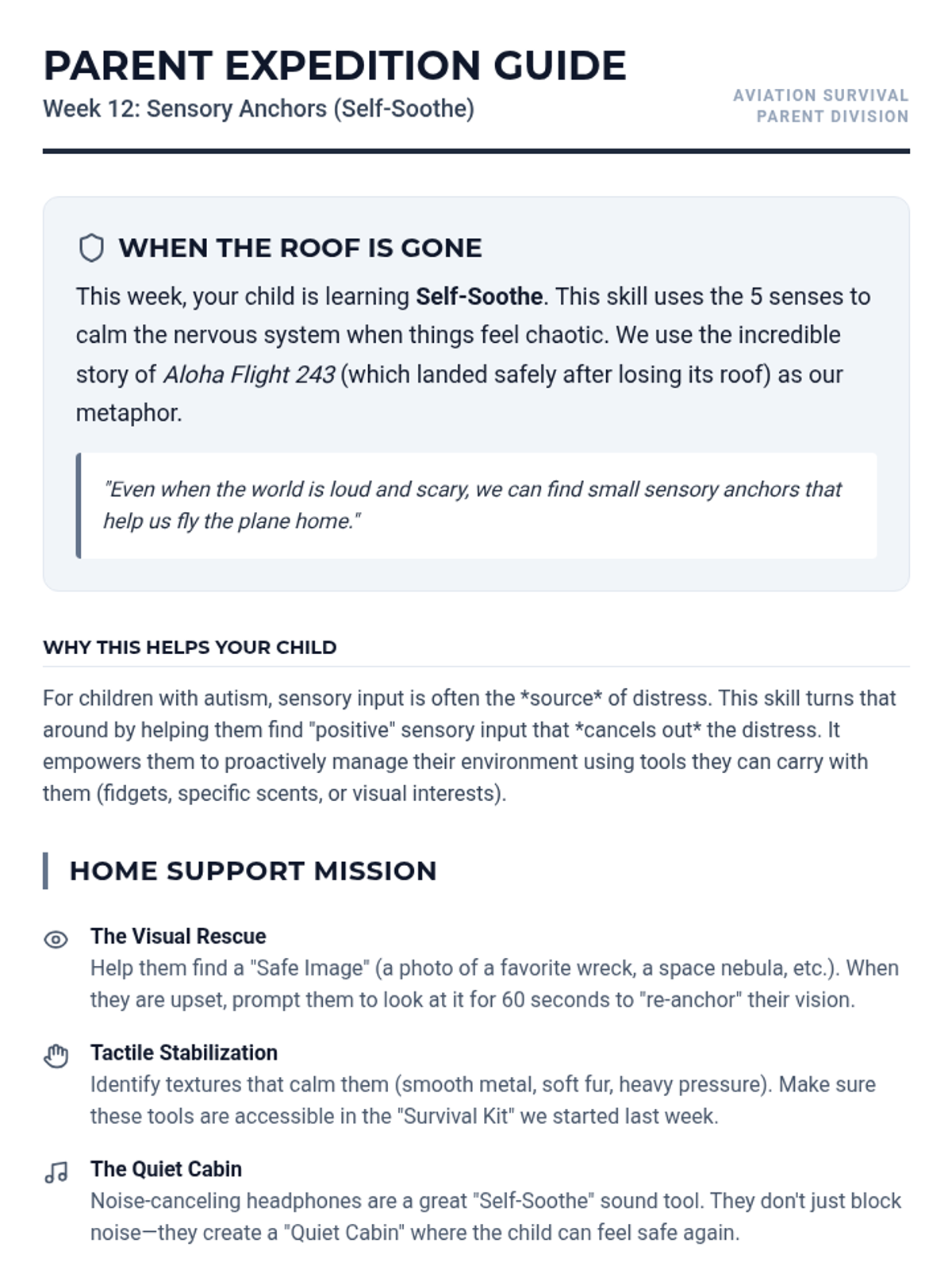
Parent guide for Week 12 of the Survival and Salvage DBT program, explaining the Self-Soothe skill using flight survival metaphors.
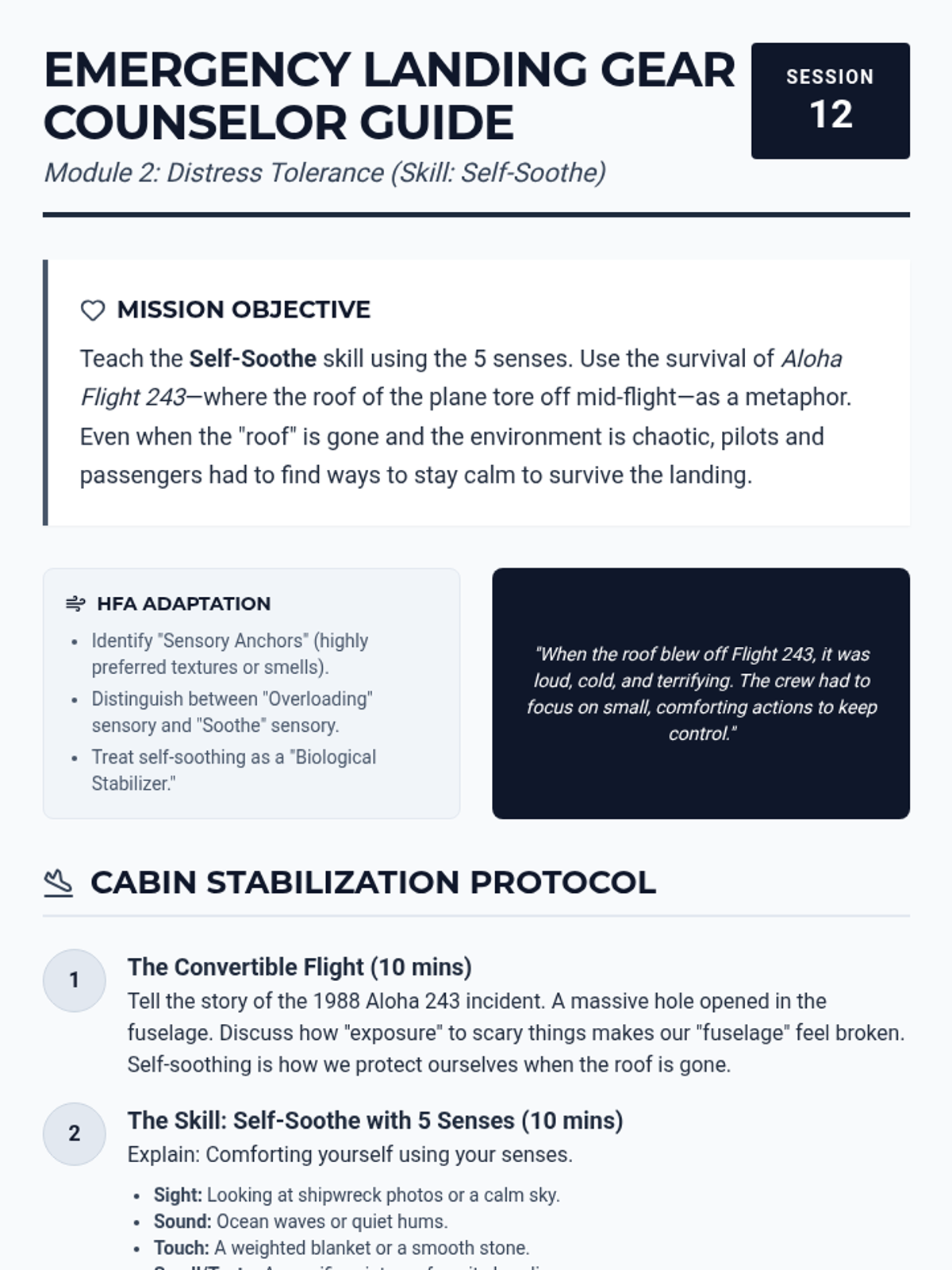
Counselor guide for Week 12 of the Survival and Salvage DBT program, focusing on the Self-Soothe skill using the Aloha Flight 243 survival story.
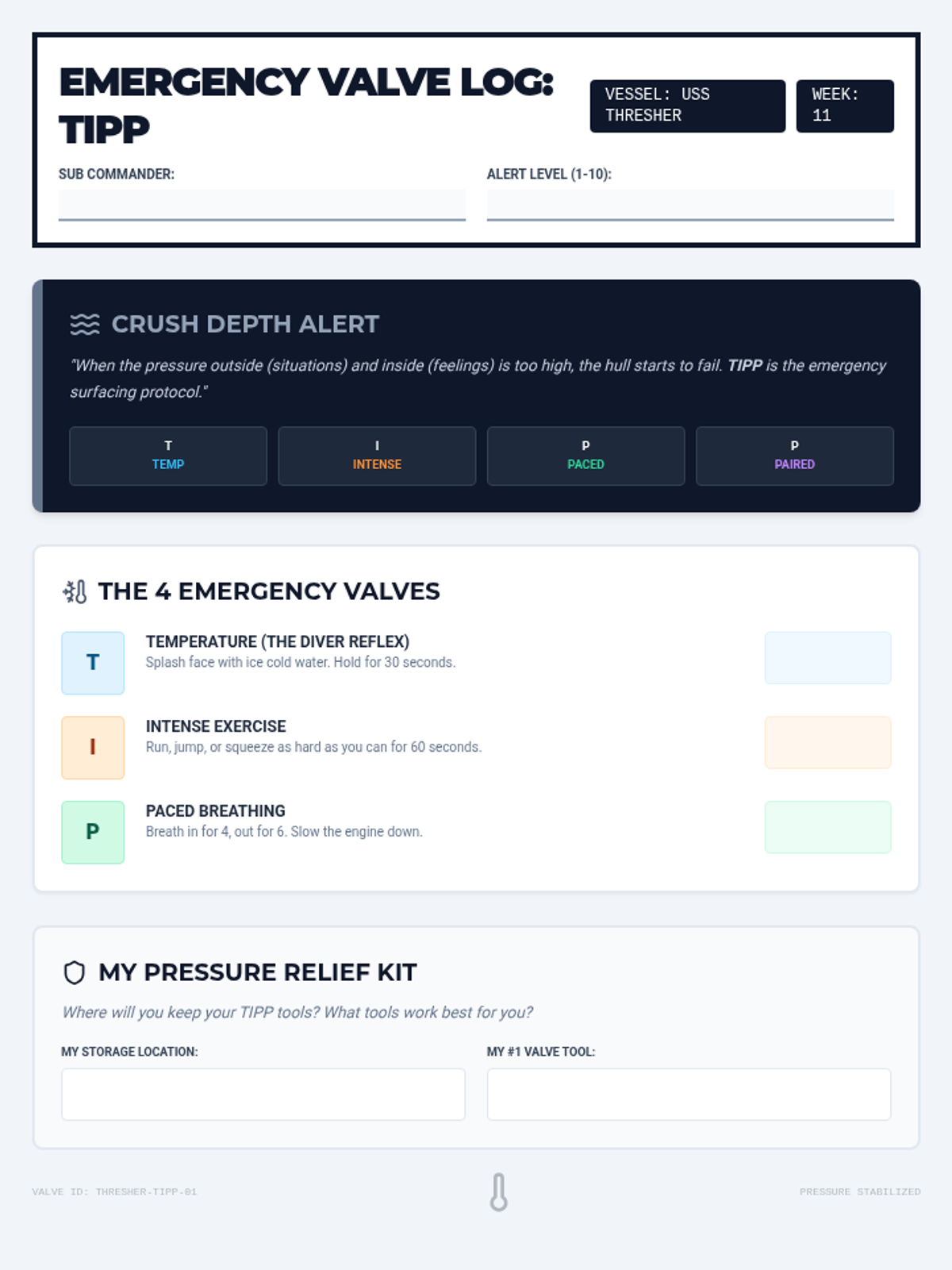
A student-facing worksheet for practicing the TIPP skill using submarine pressure metaphors. Includes a breakdown of T, I, and P (Breathing and Relaxation).
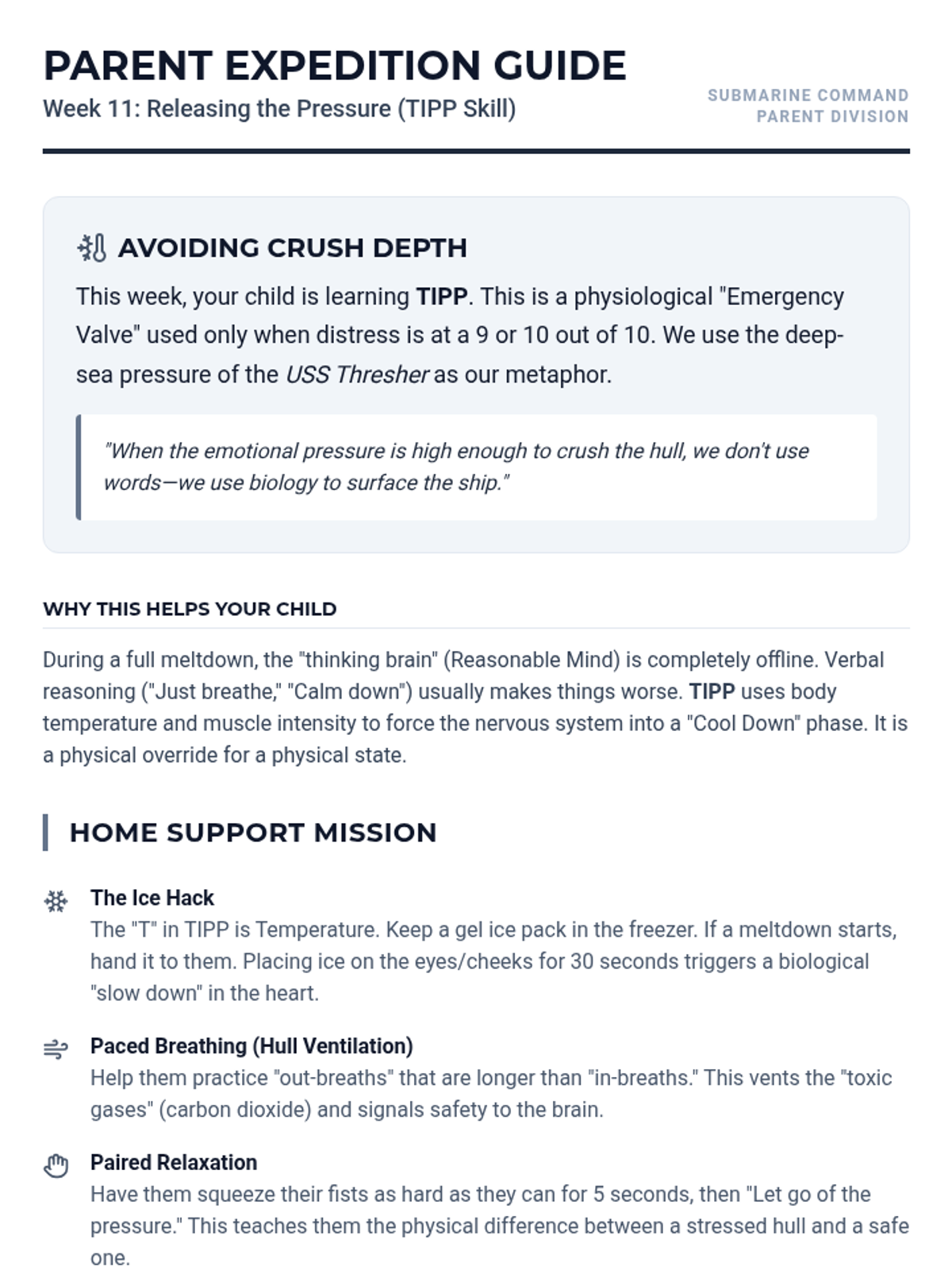
Parent guide for Week 11 of the Survival and Salvage DBT program, explaining the TIPP skill using deep-sea pressure metaphors.
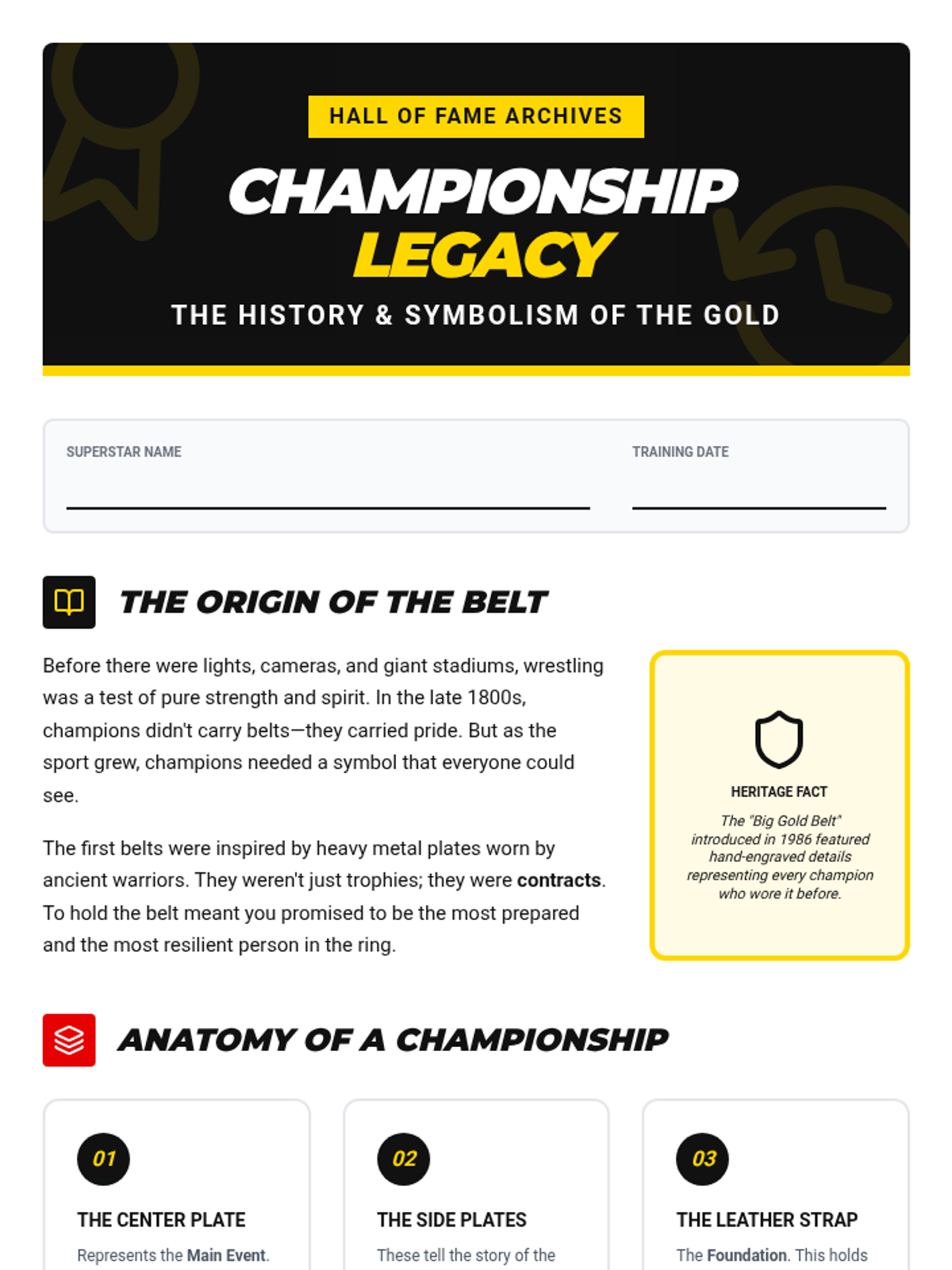
A student-facing reading and activity sheet exploring the history of wrestling championship belts, their symbolism, and how students can build their own academic legacy.
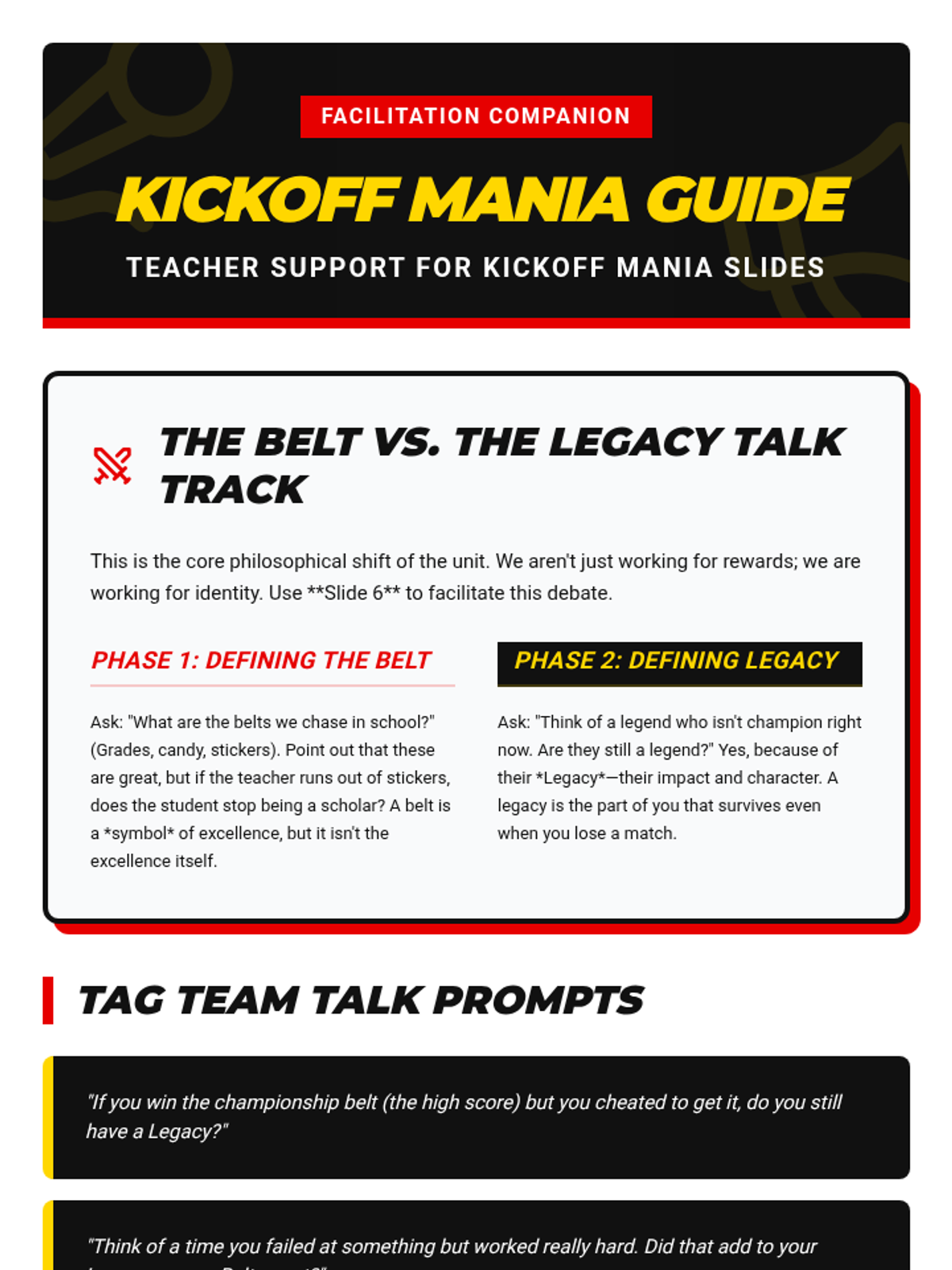
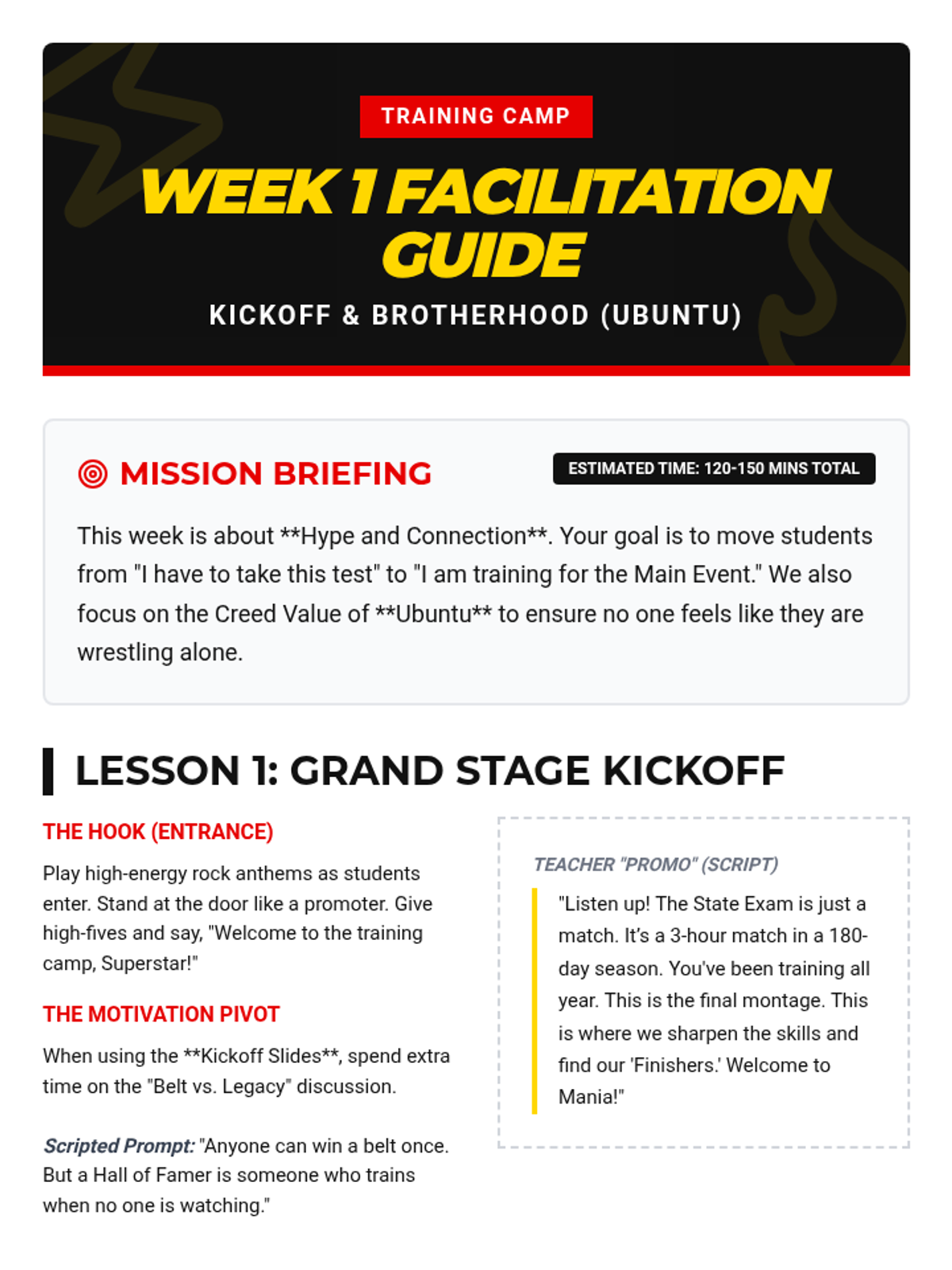
A detailed teacher facilitation companion for the Kickoff Mania slides, providing talk tracks for the 'Belt vs. Legacy' discussion, discussion prompts, and implementation steps for the Ubuntu mission.
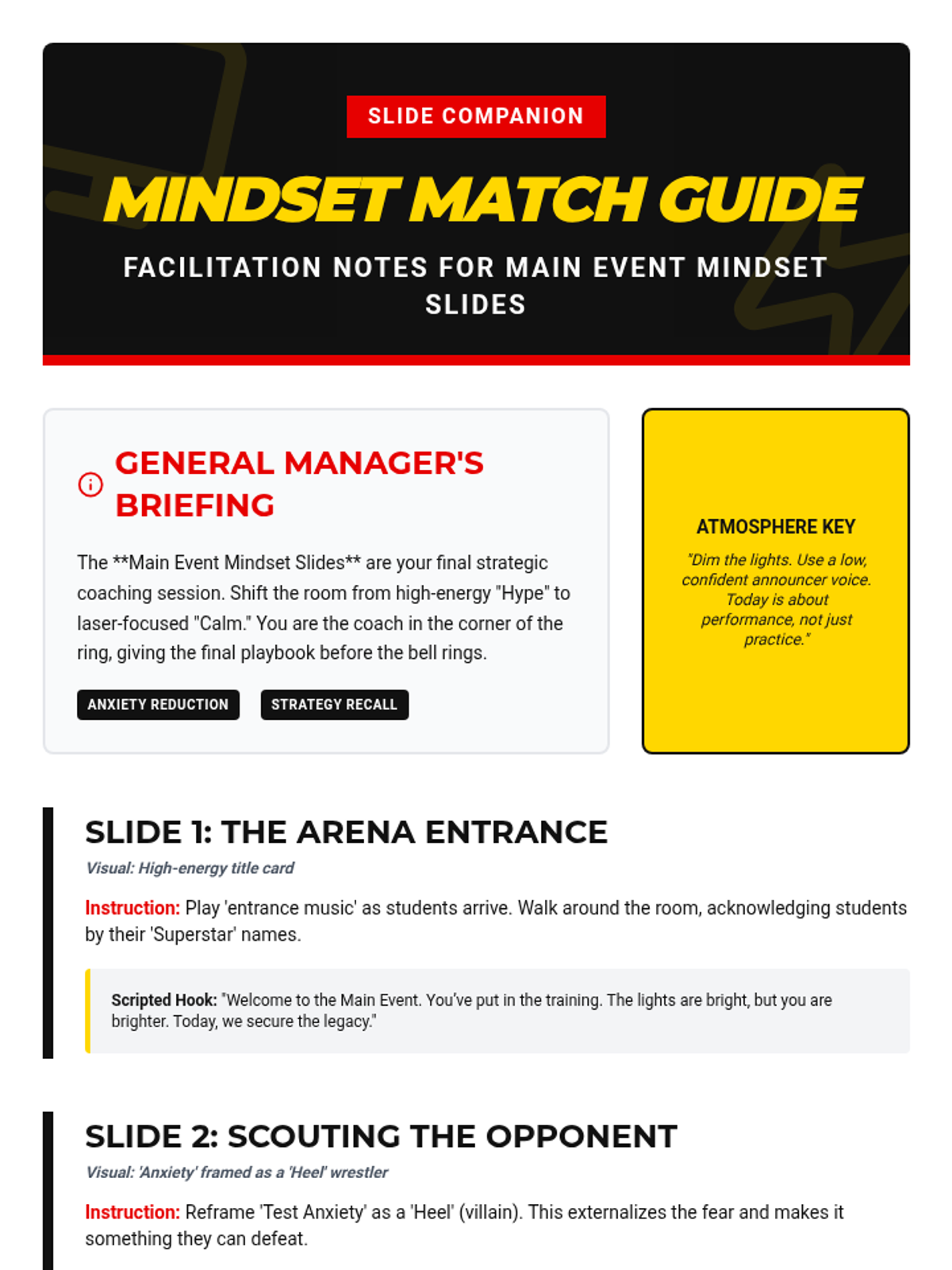
A teacher-facing companion guide for the 'Main Event Mindset' slides, providing slide-by-slide scripts, instructional instructions for managing test anxiety, and post-test decompression strategies.
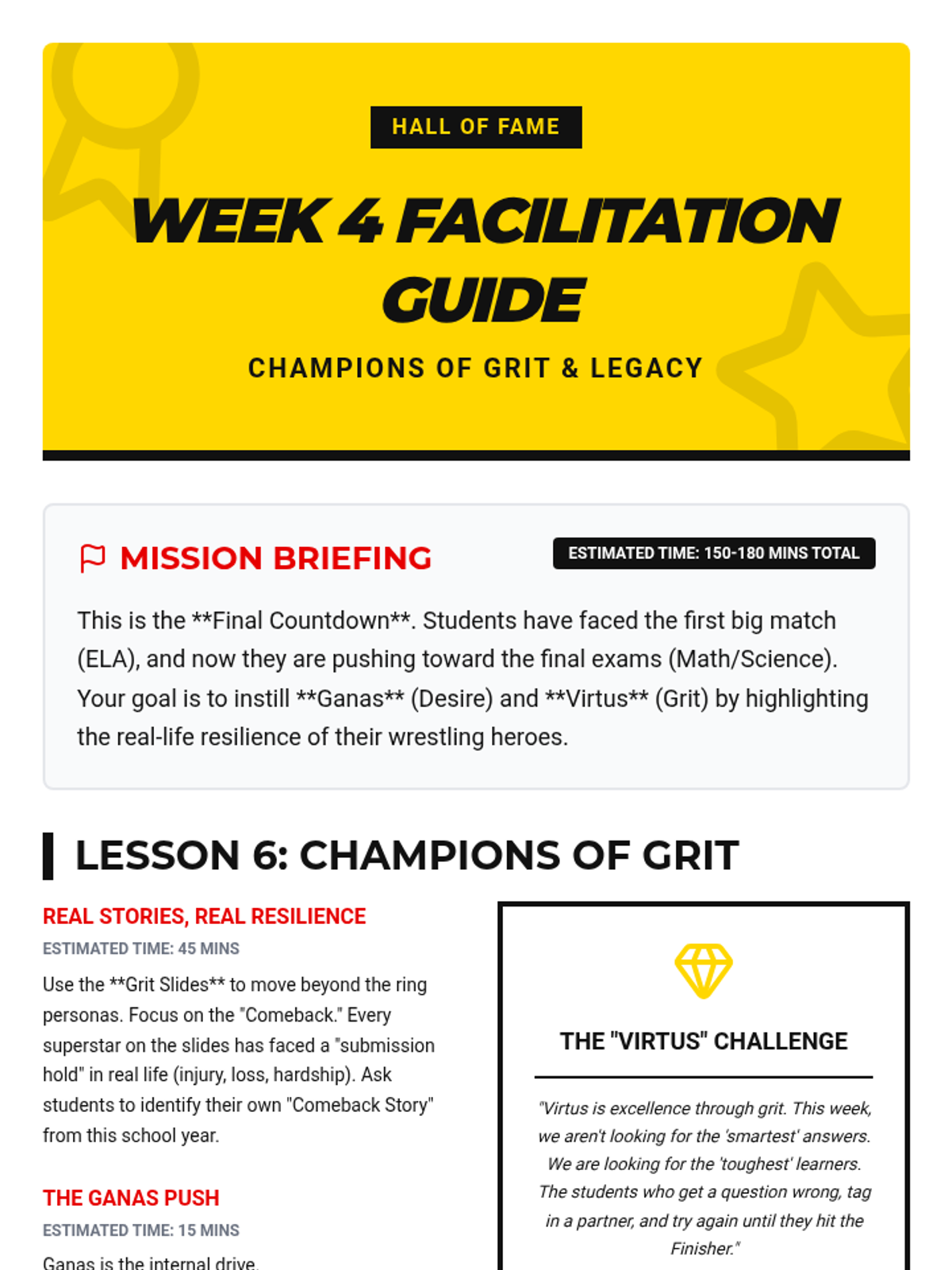
A detailed teacher facilitation guide for Week 4 of the 'Road to State Exam Mania' sequence, focusing on Ganas (drive) and Virtus (grit) for the final exam push and the 'Mania Gala' unit wrap-up.
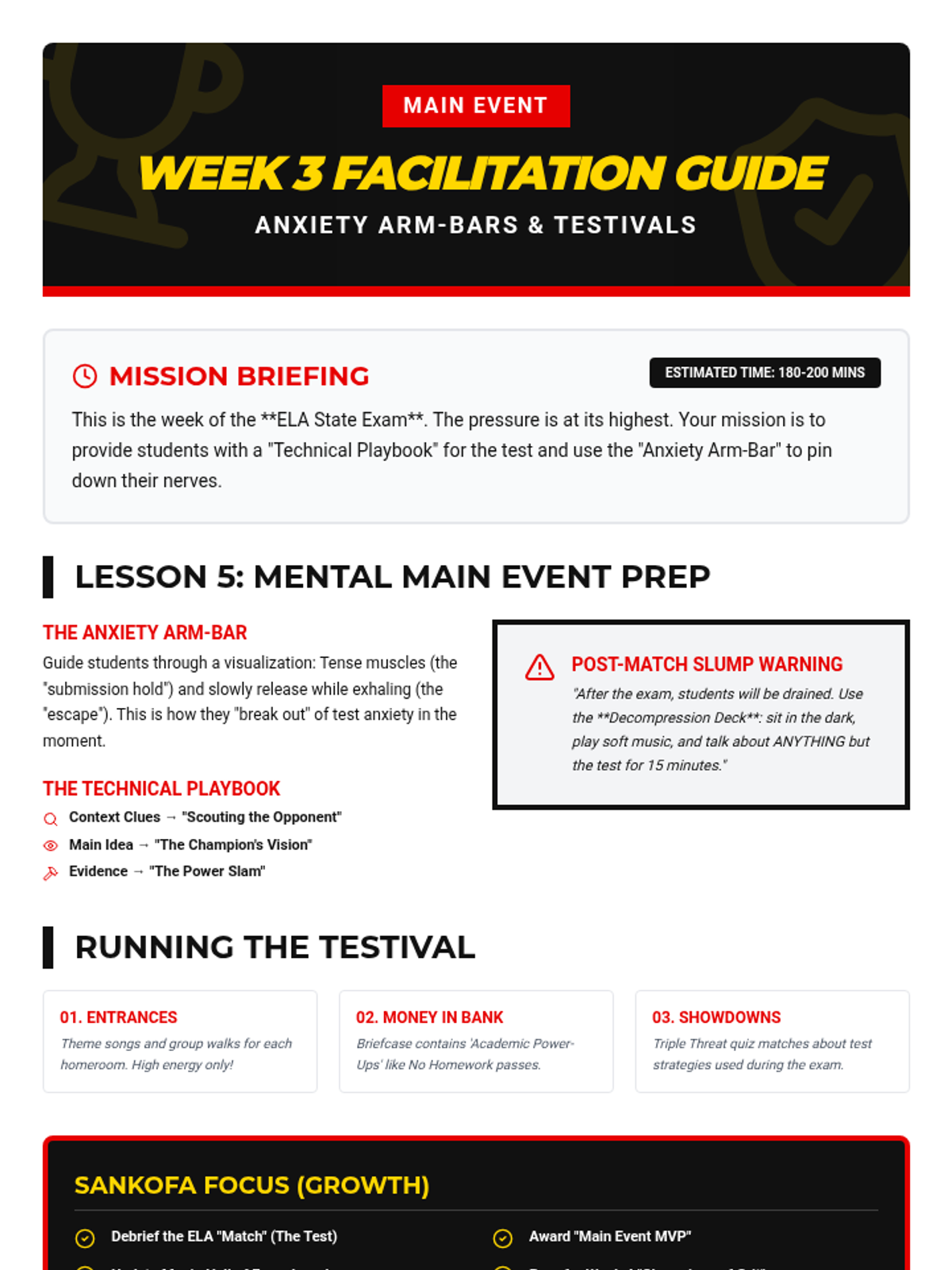
A detailed teacher facilitation guide for Week 3 of the 'Road to State Exam Mania' sequence, focusing on ELA state exam preparation and the 'Testival' pep rally.
A detailed teacher facilitation guide for Week 2 of the 'Road to State Exam Mania' sequence, focusing on Autism Acceptance Week and celebrating neurodiversity.
A detailed teacher facilitation guide for Week 1 of the 'Road to State Exam Mania' sequence, focusing on kickoff motivation and the Creed Value of Ubuntu.
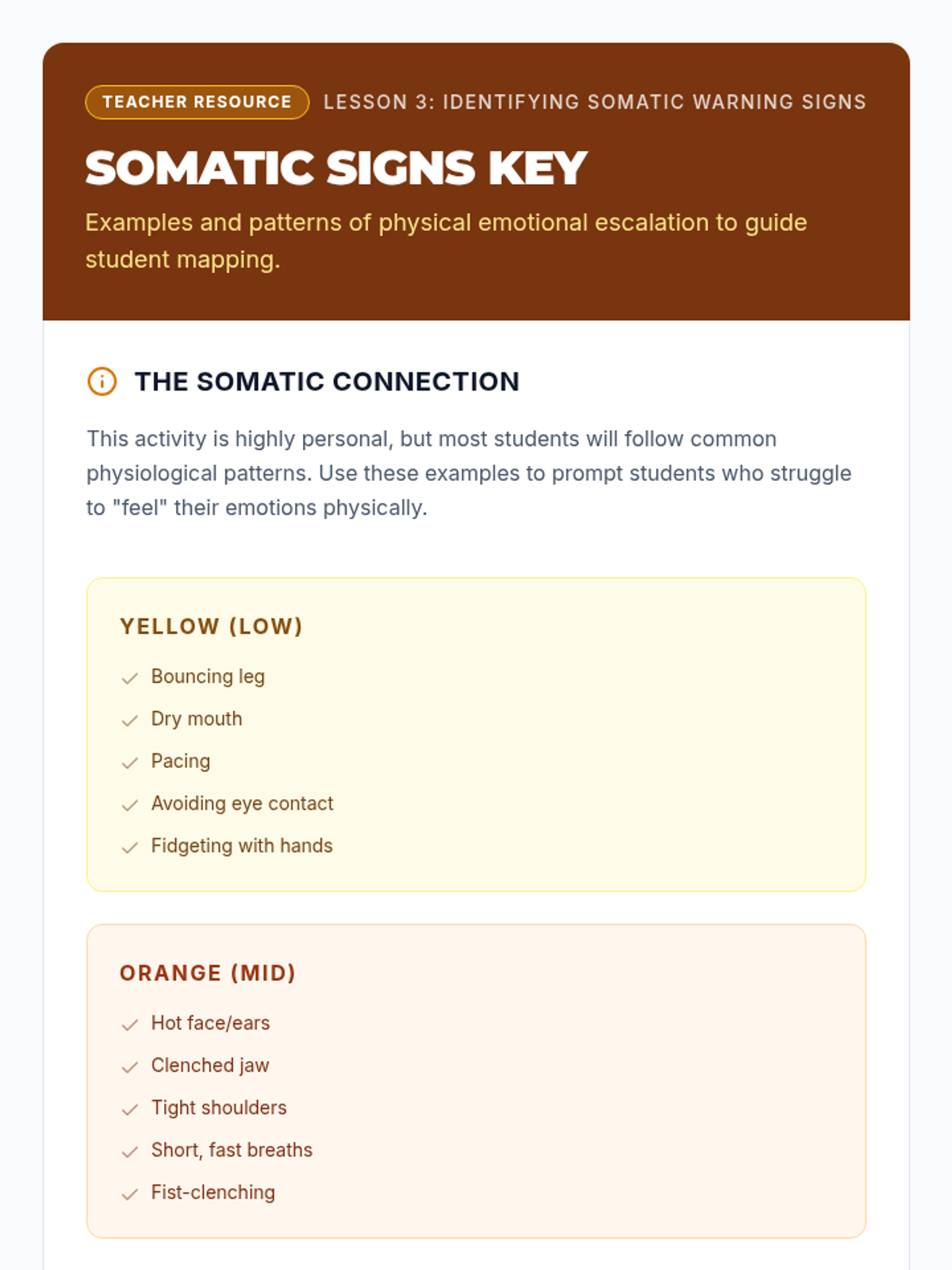
Teacher resource for Lesson 3, providing specific examples of somatic cues at different intensity levels to help students complete their mapping activity.
A visual presentation exploring the connection between internal anxiety and external agitation, reframing discharge behaviors as self-regulation attempts.
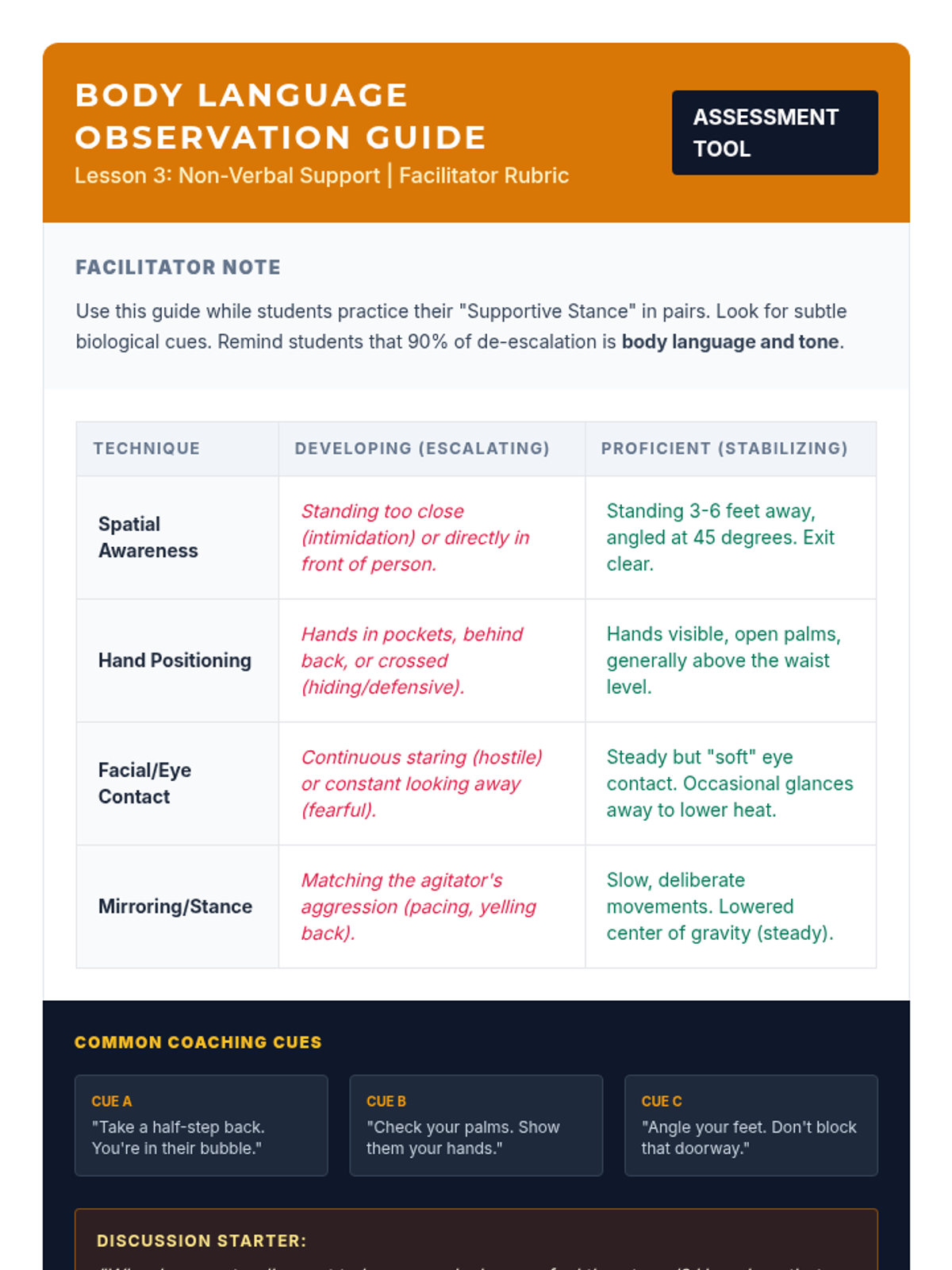
A teacher observation rubric for Lesson 3, detailing specific physical markers of de-escalation versus escalation. Includes coaching cues for real-time feedback during simulations.
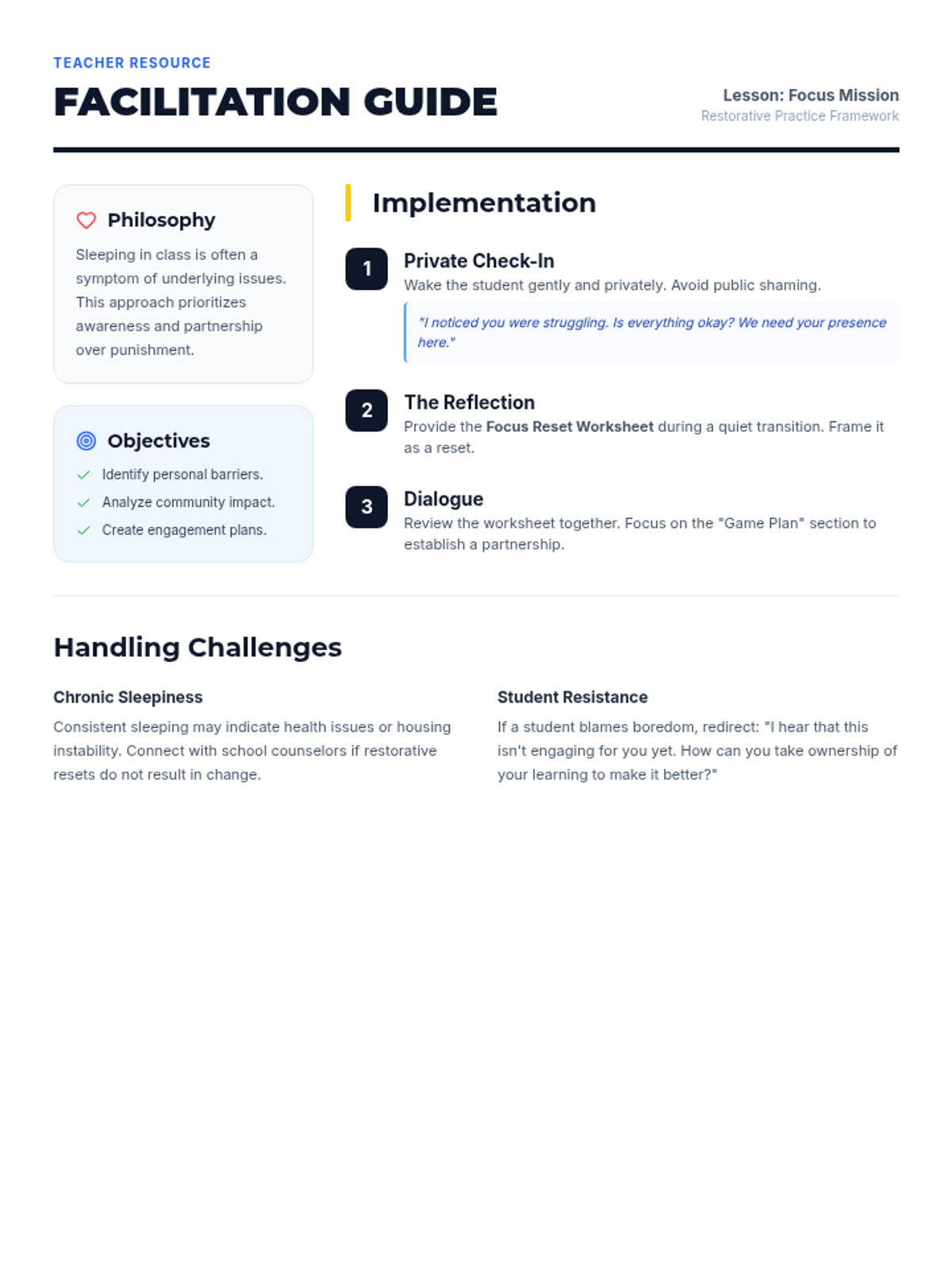
A teacher facilitation guide providing restorative strategies and instructional prompts for addressing classroom sleepiness and using the Focus Mission materials effectively.
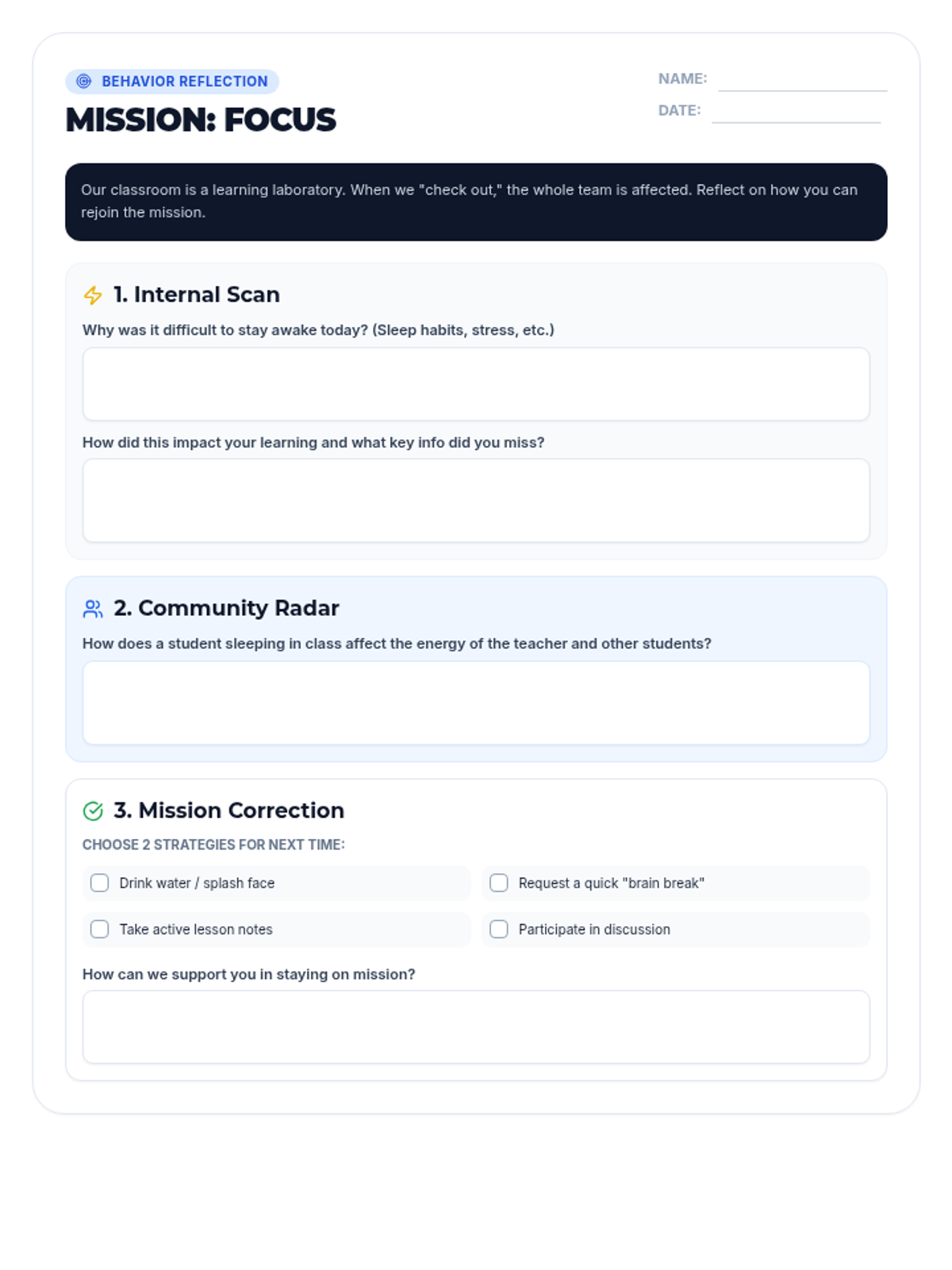
A restorative behavior reflection worksheet that encourages students to evaluate the causes of their drowsiness and understand its impact on their learning and classroom community.
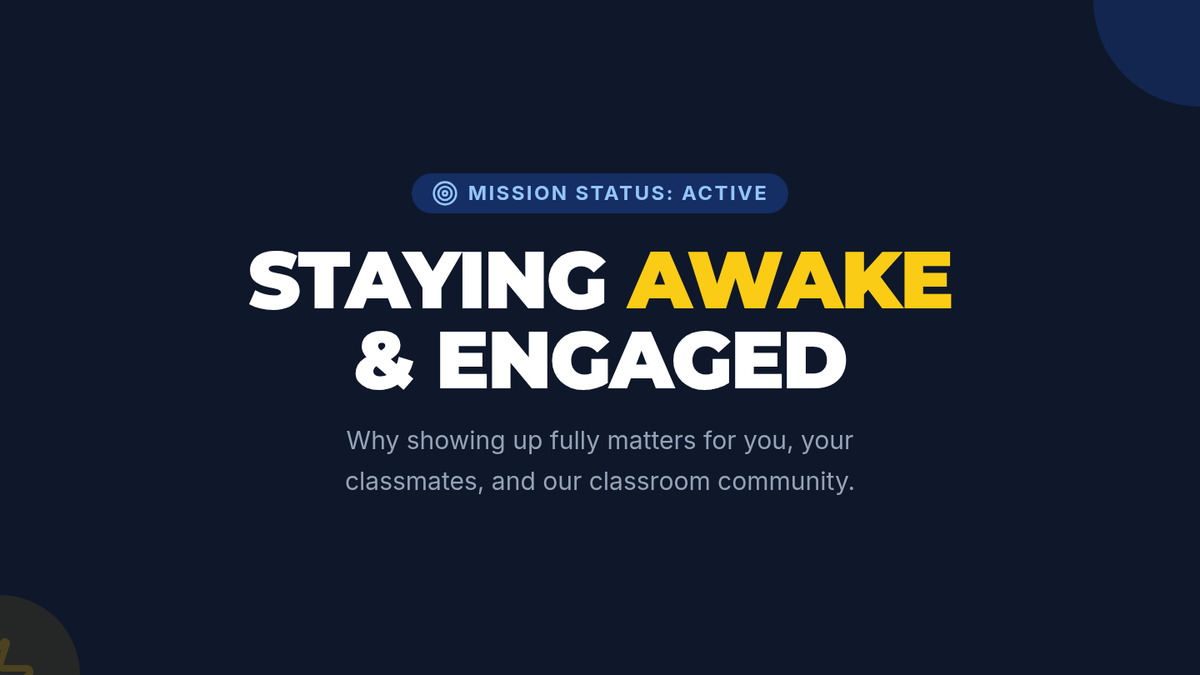
An engaging slide deck explaining the impact of sleeping in class on personal success and the classroom community, featuring restorative strategies for staying engaged.
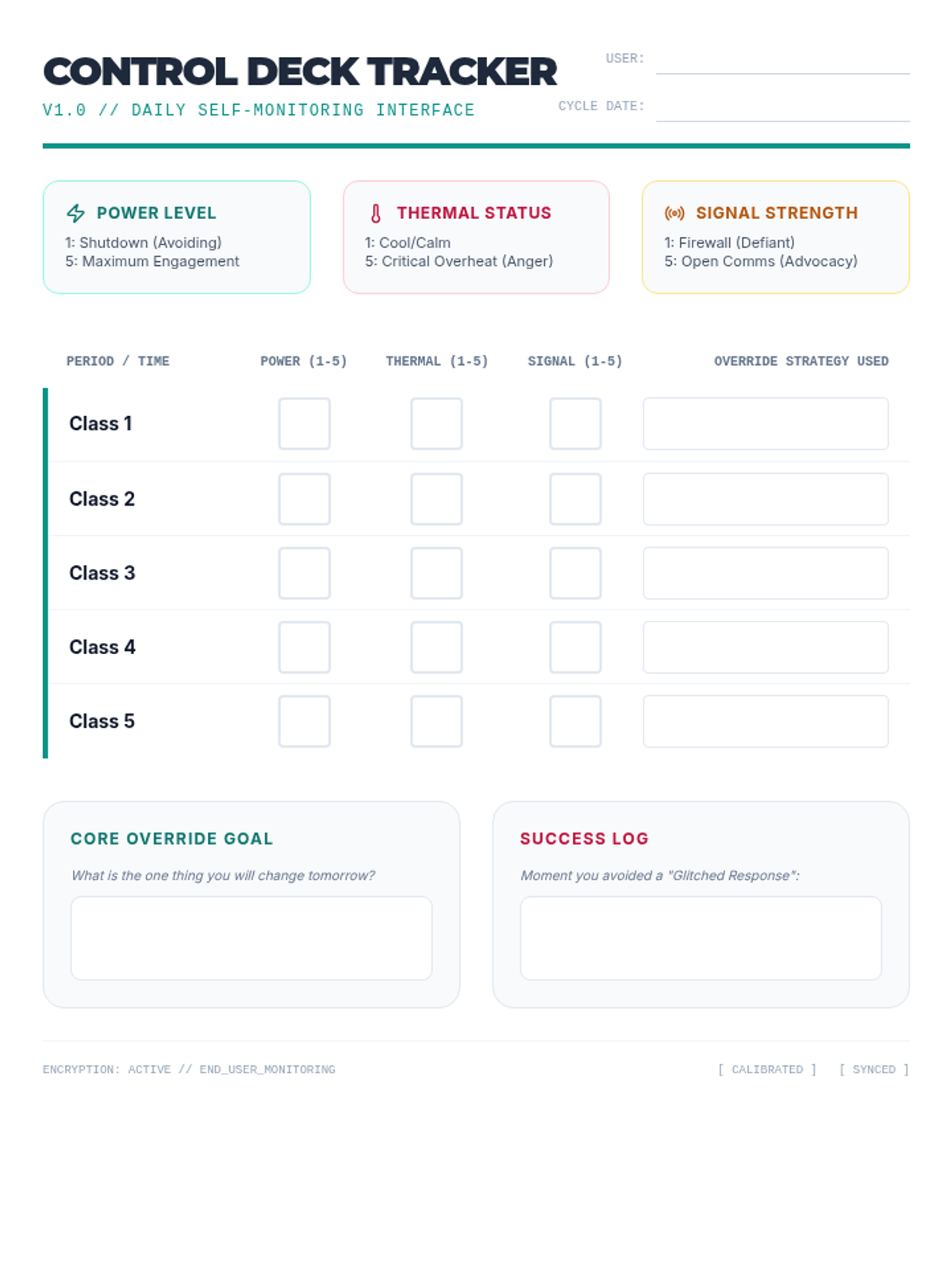
A student-facing self-monitoring tool styled as a sleek 'Control Deck' dashboard. It allows students to track engagement, emotional state, and communication throughout the day.
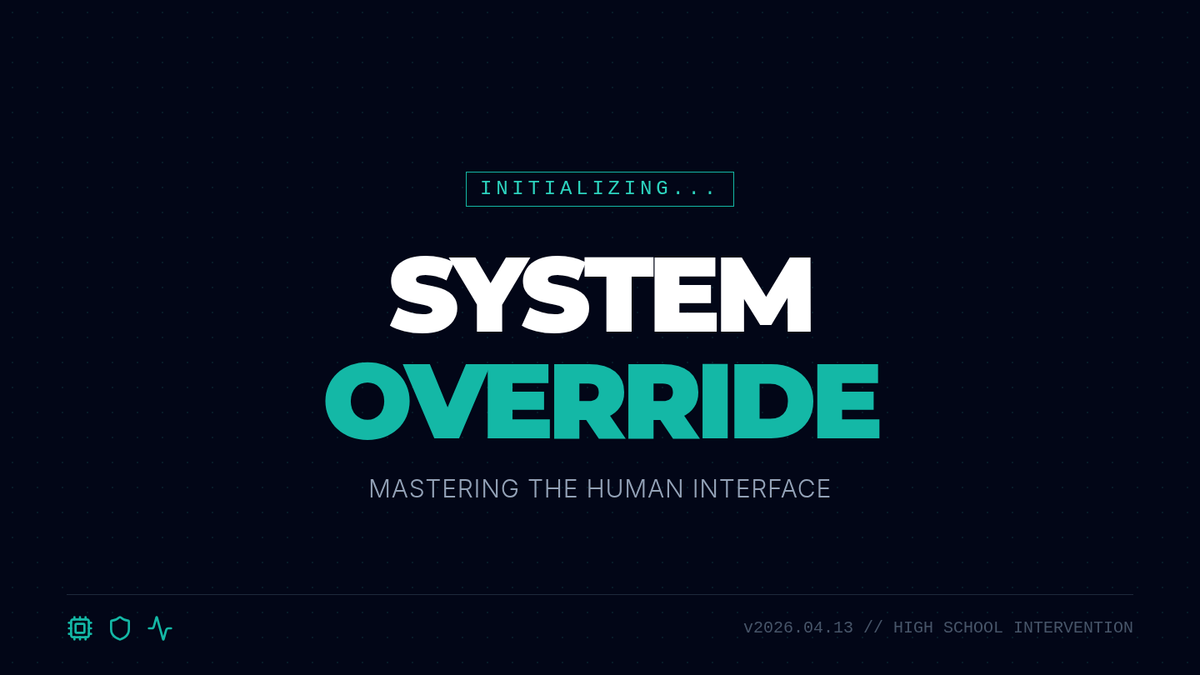
A visually striking, dark-themed slide deck that frames behavior intervention through a 'systems interface' metaphor, making it engaging and high-interest for high schoolers.
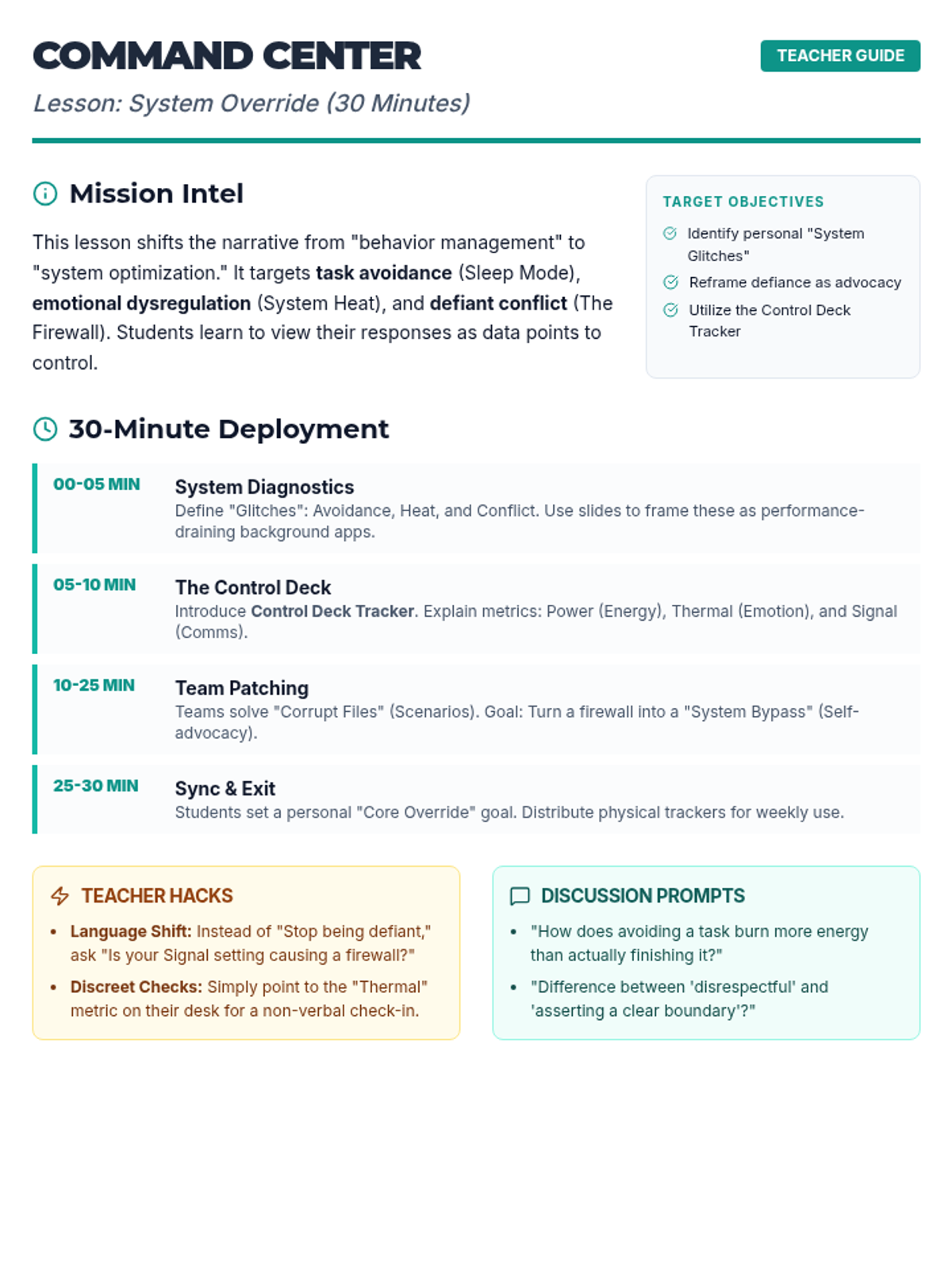
A comprehensive teacher guide for the 30-minute System Override lesson, featuring a minute-by-minute timeline, facilitation hacks, and discussion prompts.
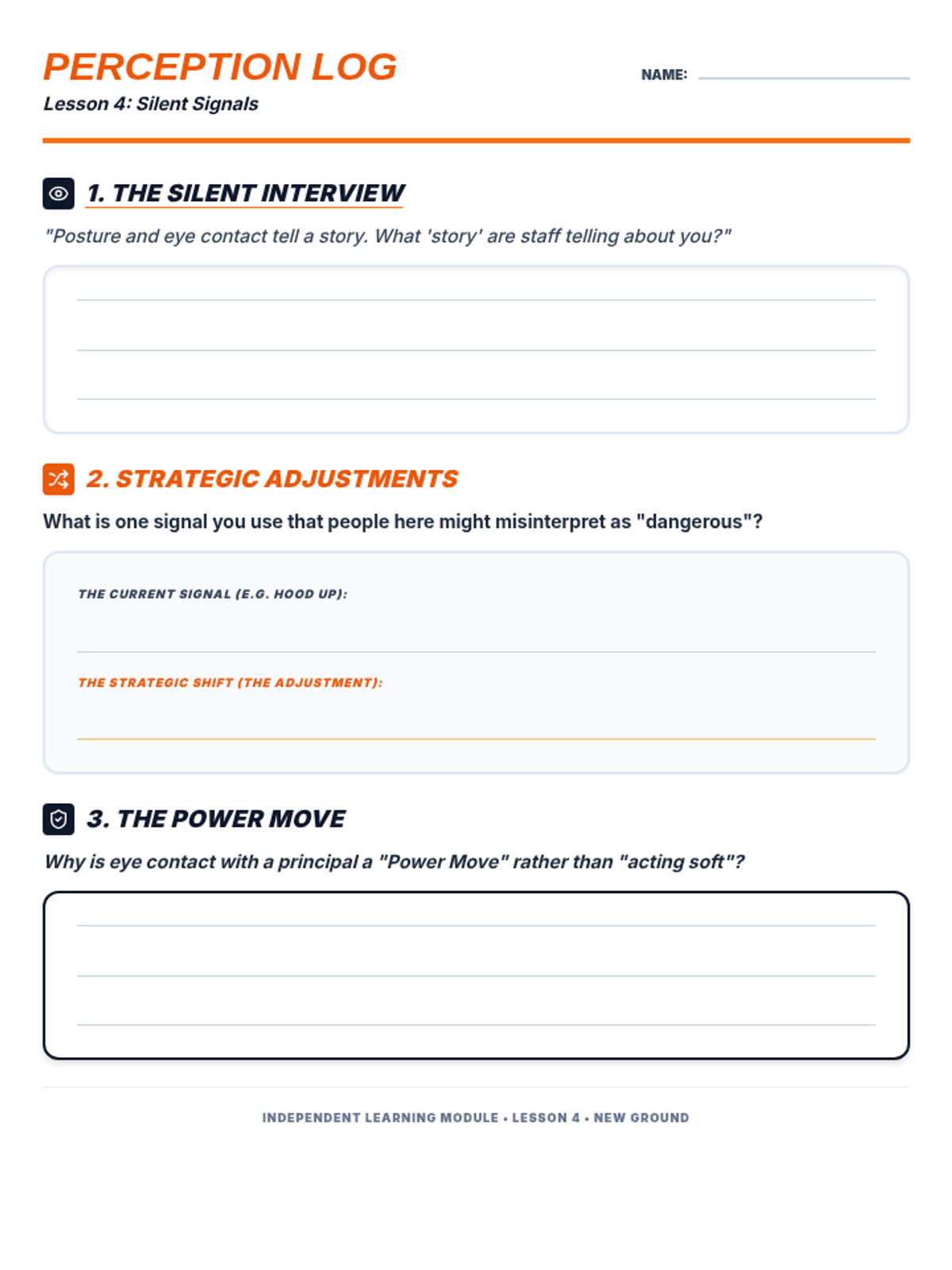
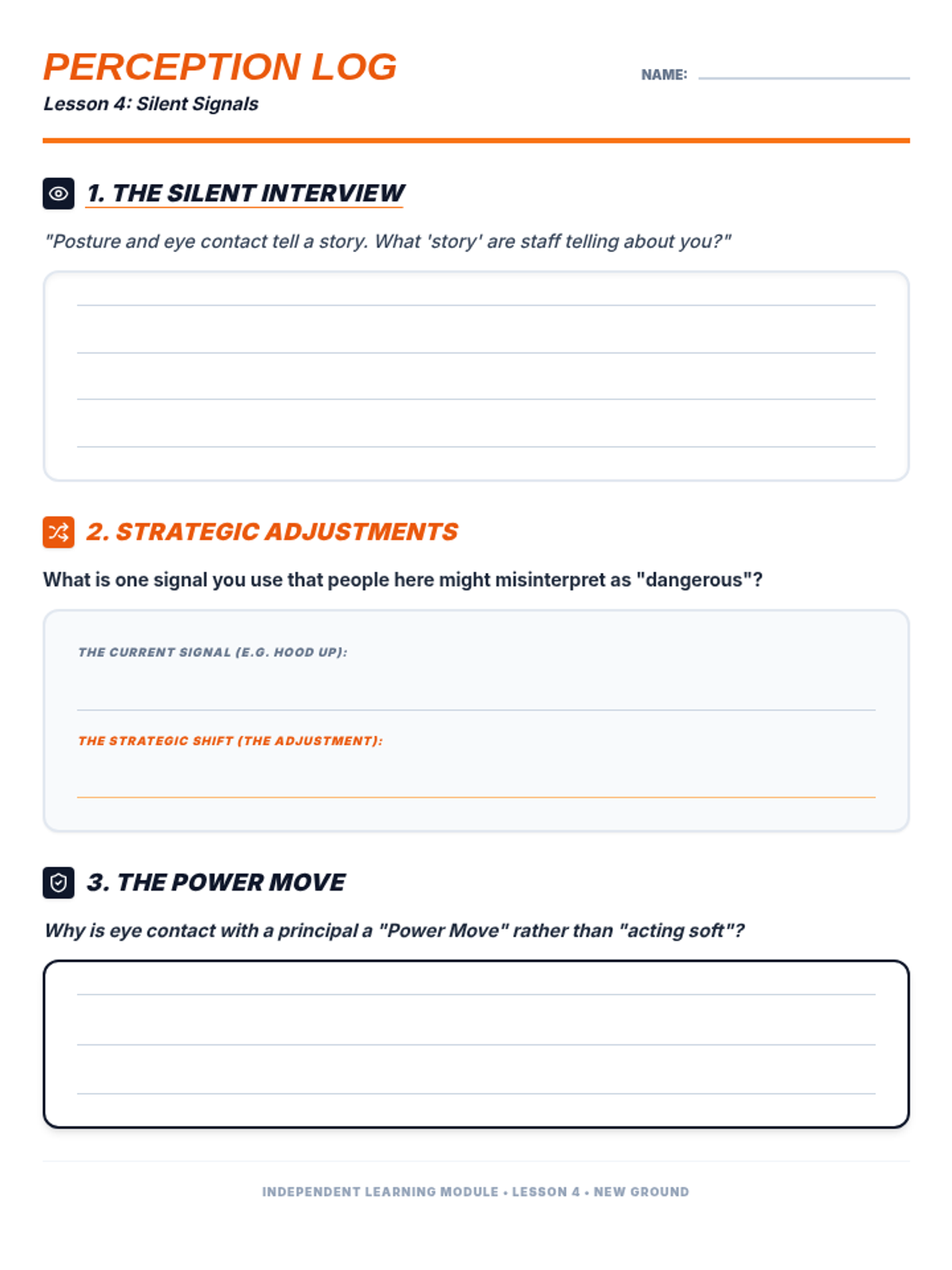
Revised Perception Log for Lesson 4. Fixed header alignment, standardized writing line spacing across all sections, and optimized for single-page printing.
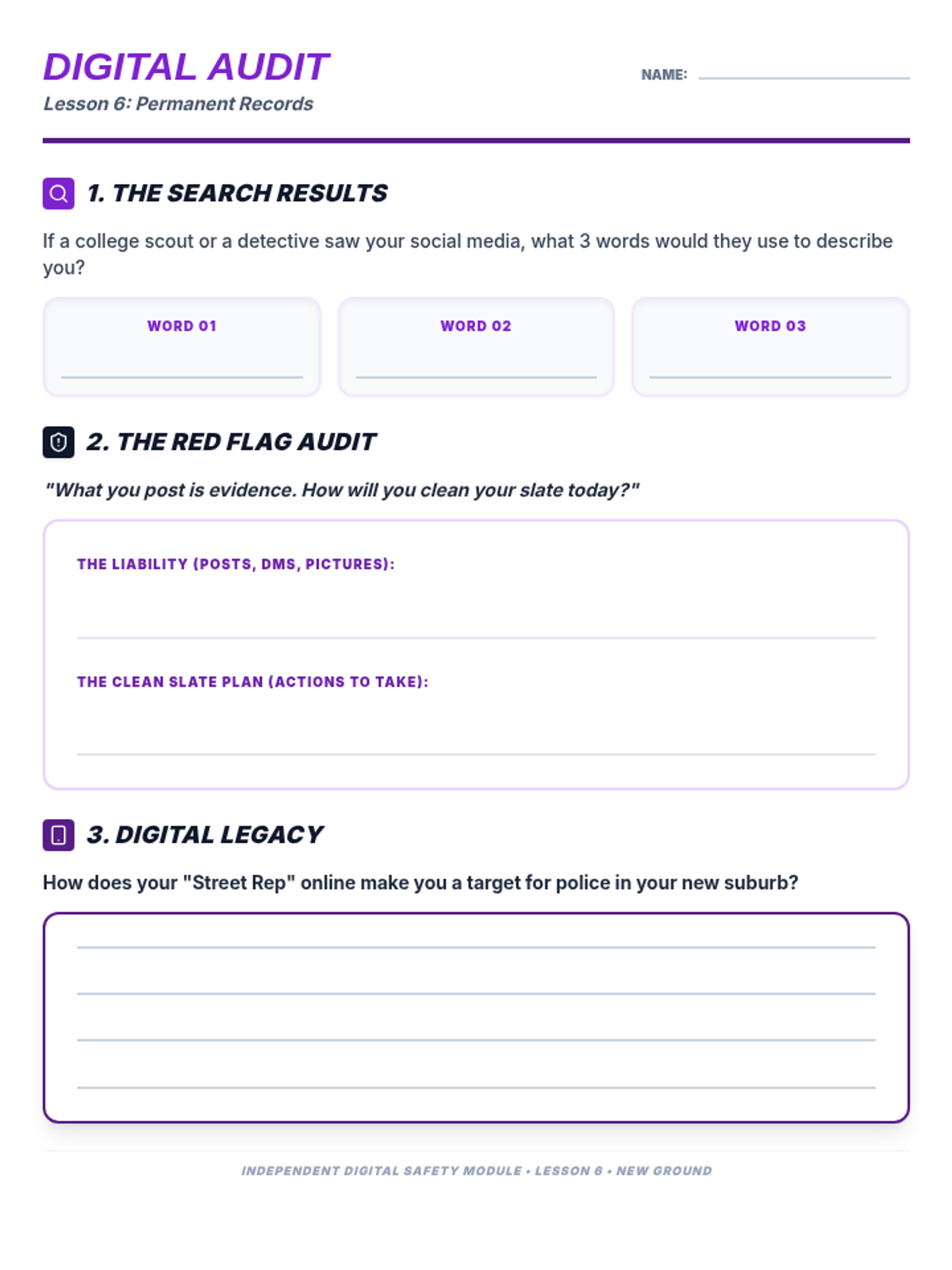
Revised Digital Reputation Audit for Lesson 6. Optimized for single-page layout, fixed text squishing issues, increased label contrast, and improved writing line alignment for actual handwriting.
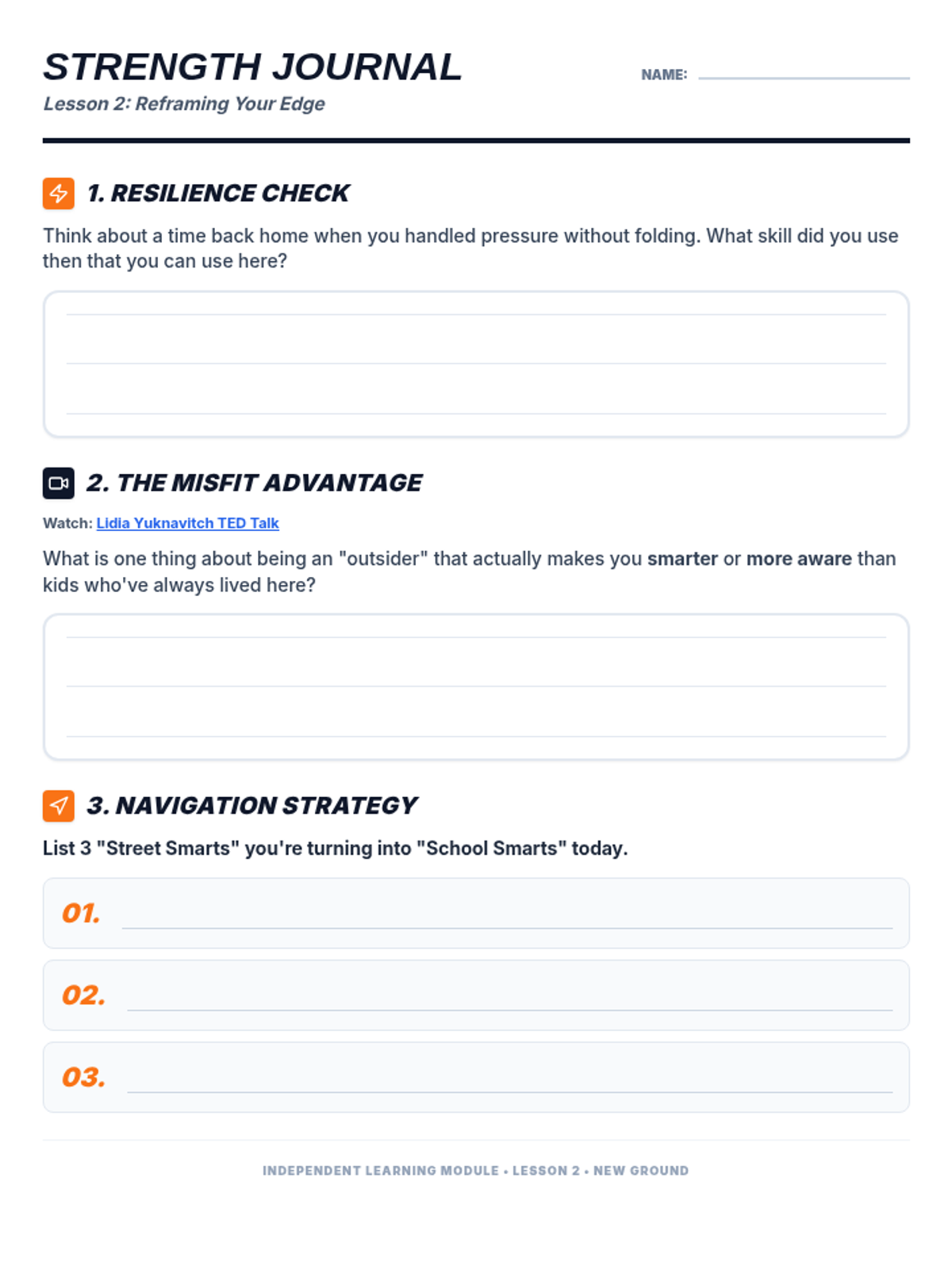
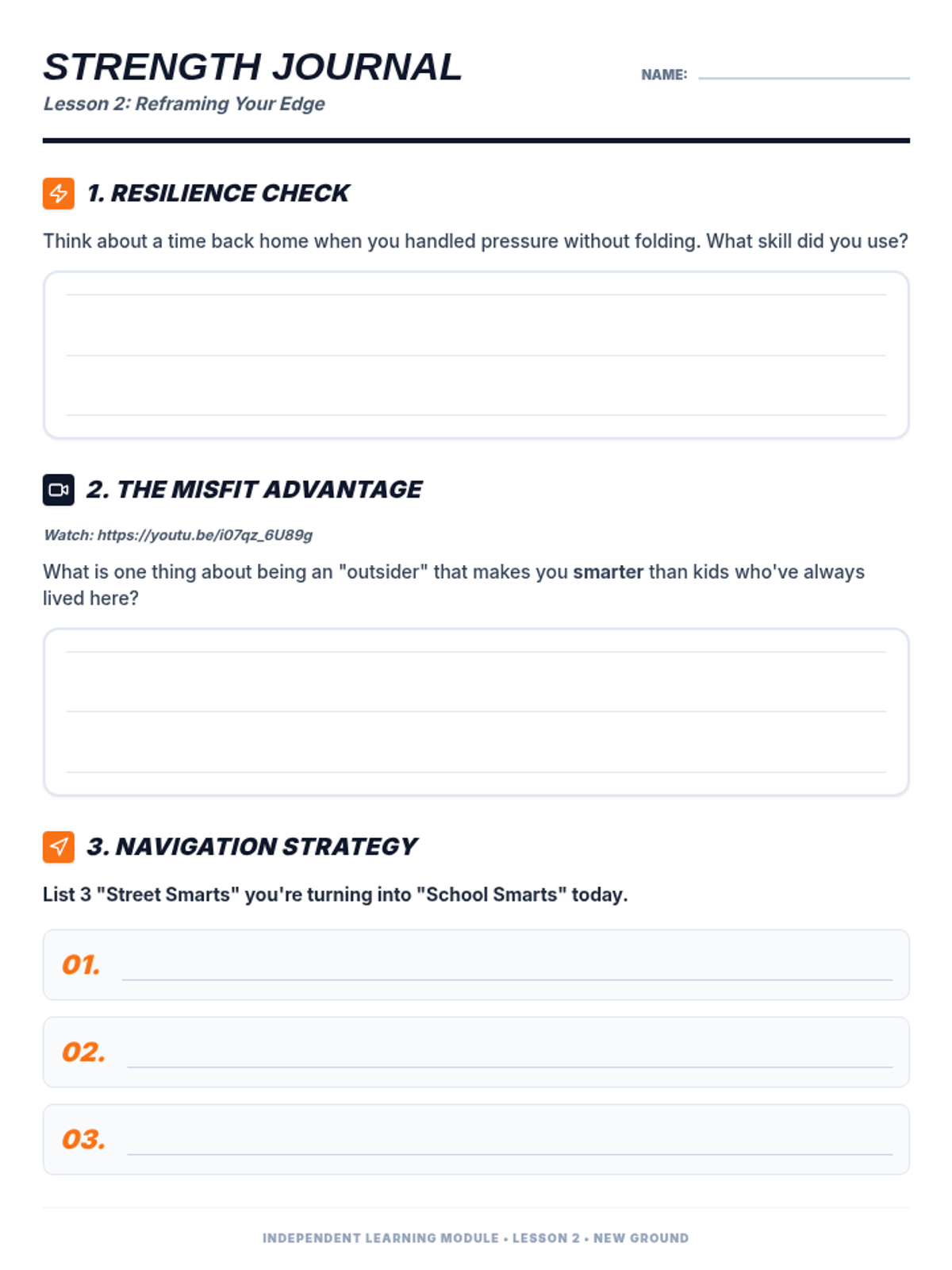
Revised Strength Journal for Lesson 2. Optimized for single-page layout, fixed the private video link with a valid TED URL, made the link clickable, and standardized writing line spacing.
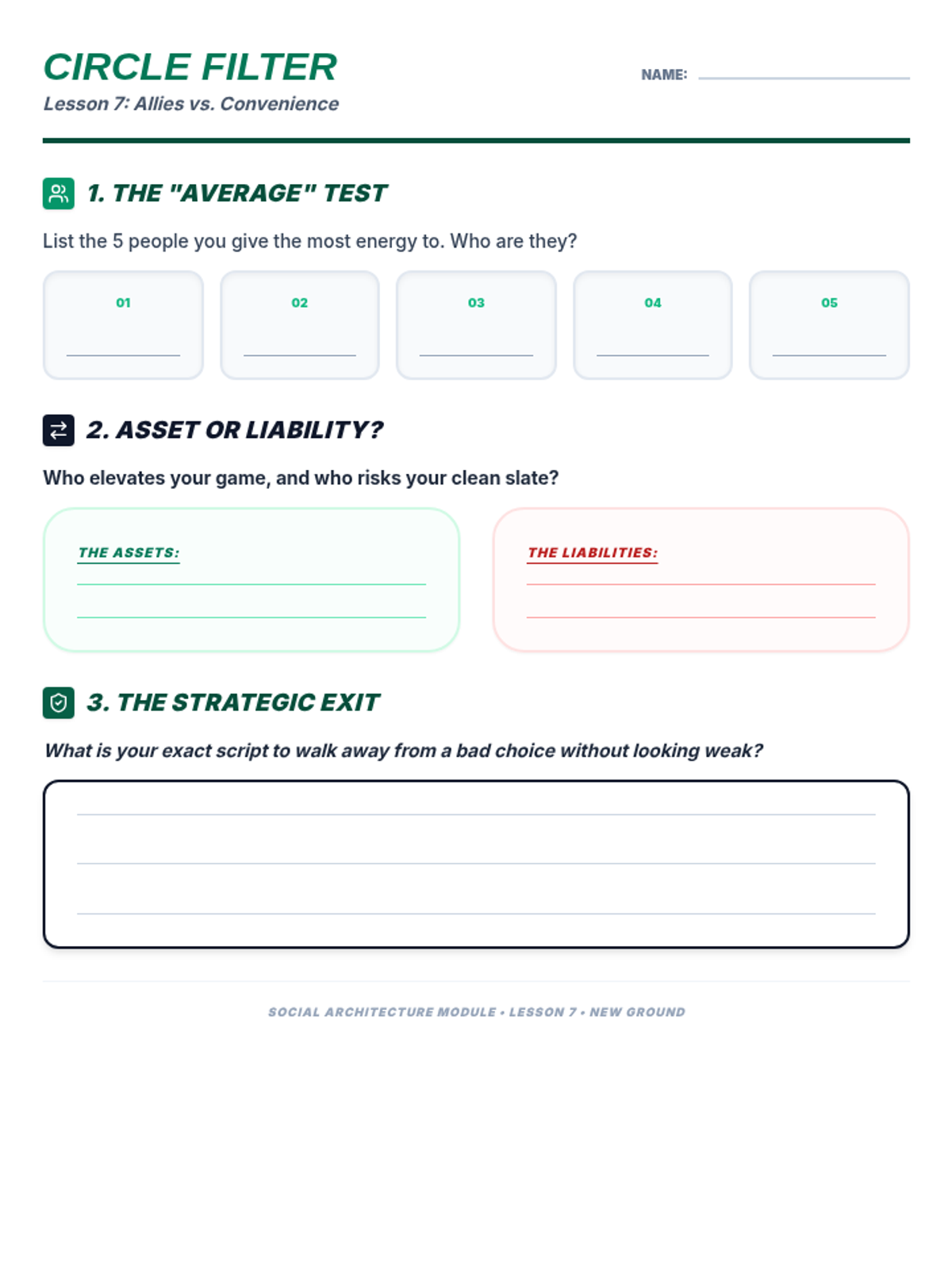
Revised Circle Filter Log for Lesson 7. Optimized for single-page layout, improved heading tracking and line spacing, and darkened writing guides for grayscale printing.
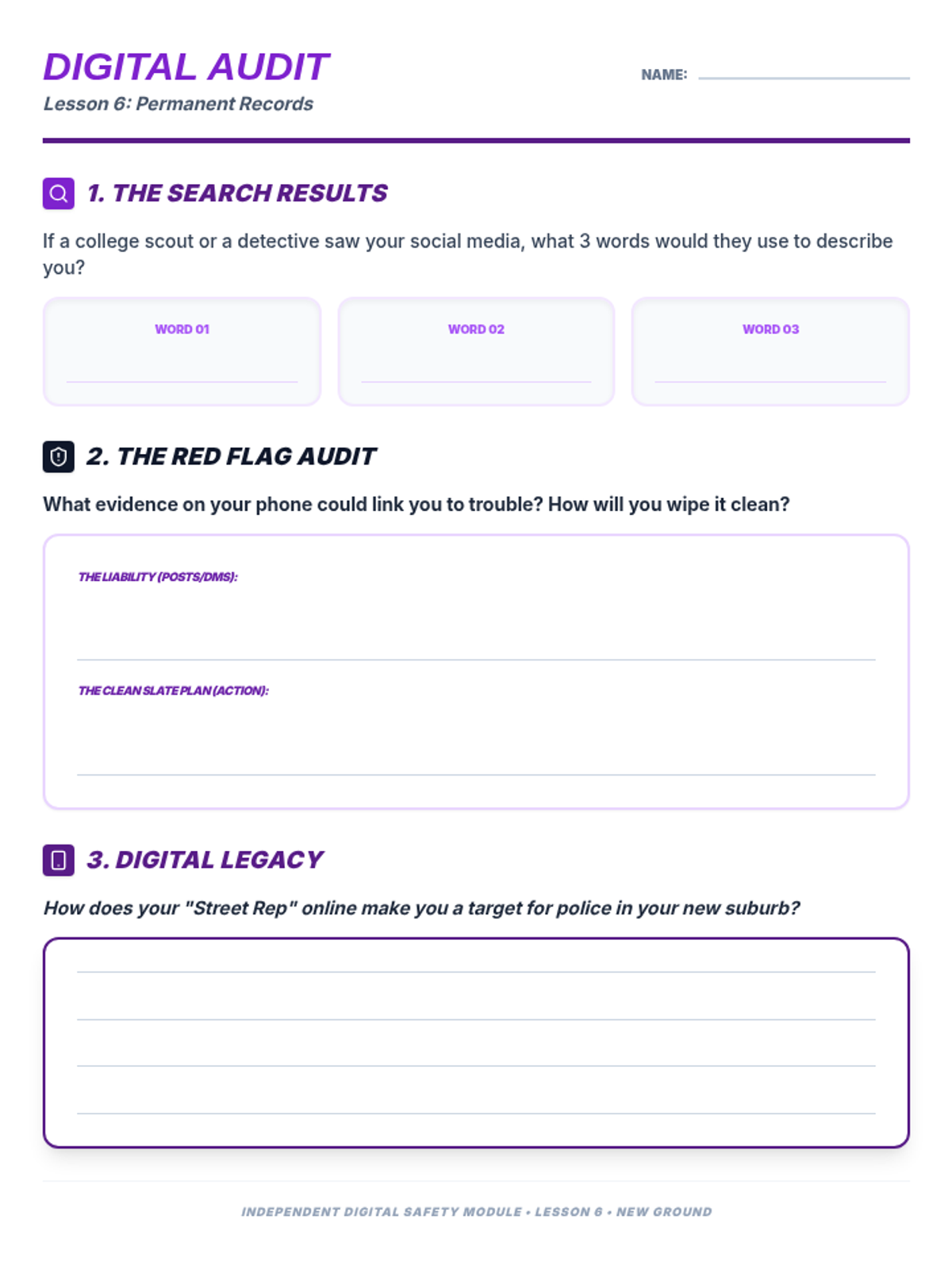
Revised Digital Reputation Audit for Lesson 6. Optimized for single-page layout, unified the purple branding, and provided deeper reflection areas with clear writing guides.
Revised Perception Log for Lesson 4. Optimized for single-page layout, improved heading tracking and line spacing, and ensured high contrast for all student response areas.
Revised Strength Journal for Lesson 2. Optimized for single-page layout, increased writing line spacing for better handwriting, and improved visual contrast for all elements.
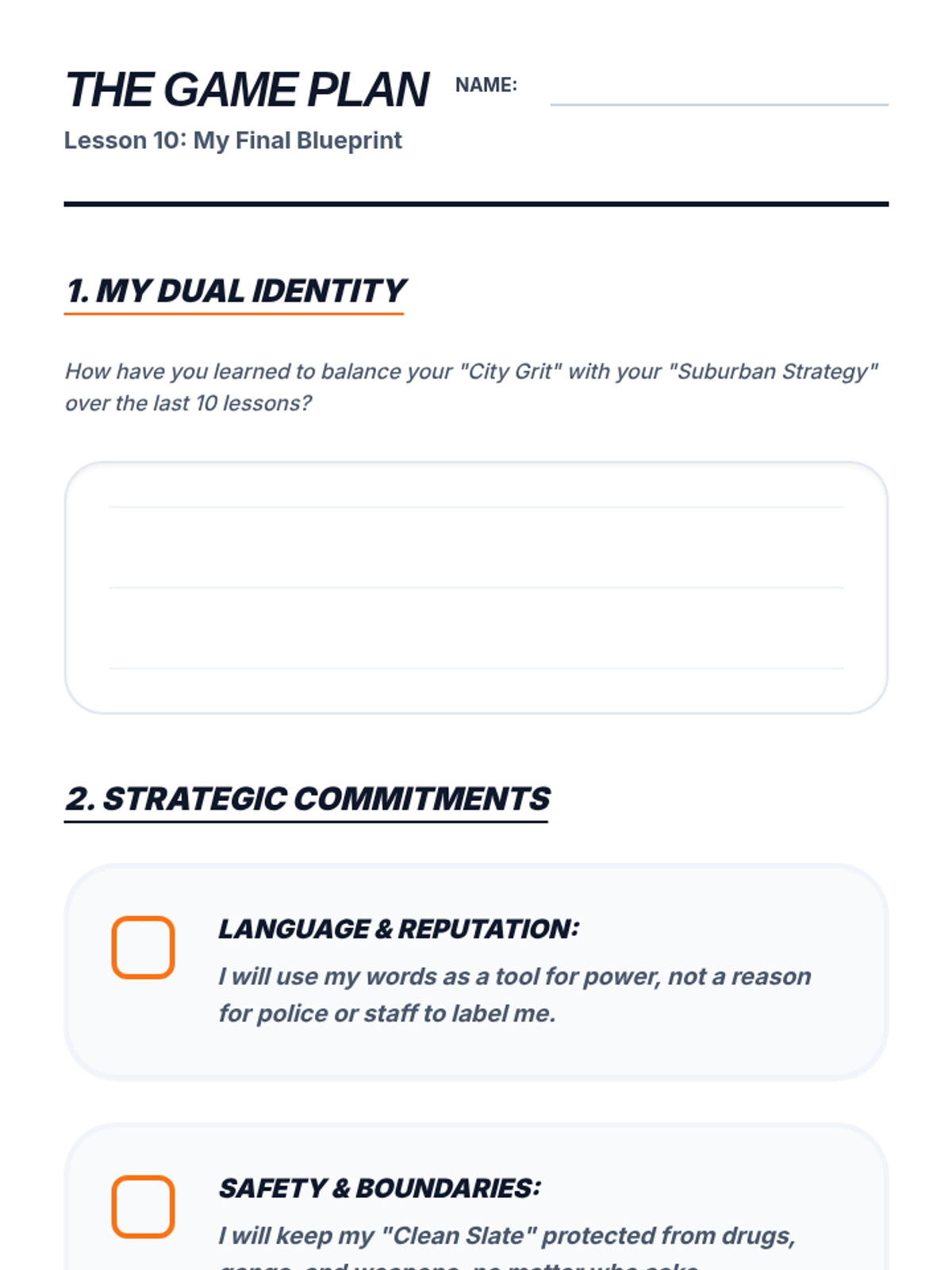
Final synthesis worksheet for the 10-lesson curriculum. Includes dual identity reflection, strategic commitments, and goal setting for the student's new environment.
Final graduation lesson slides synthesizing all themes and focusing on dual citizenship between urban grit and suburban strategy.
Lesson 7 slides exploring the difference between convenience friends and true allies, and the impact of peer circles on reputation and success.
Lesson 6 slides addressing digital reputation, social media surveillance, and the long-term impact of online activity on a student's transition.
Lesson 4 slides exploring the impact of body language and non-verbal communication on perception in a suburban setting.
Lesson 2 slides focusing on identifying urban strengths and reframing the "misfit" identity as a leadership asset. Includes a TED Talk for reflection.
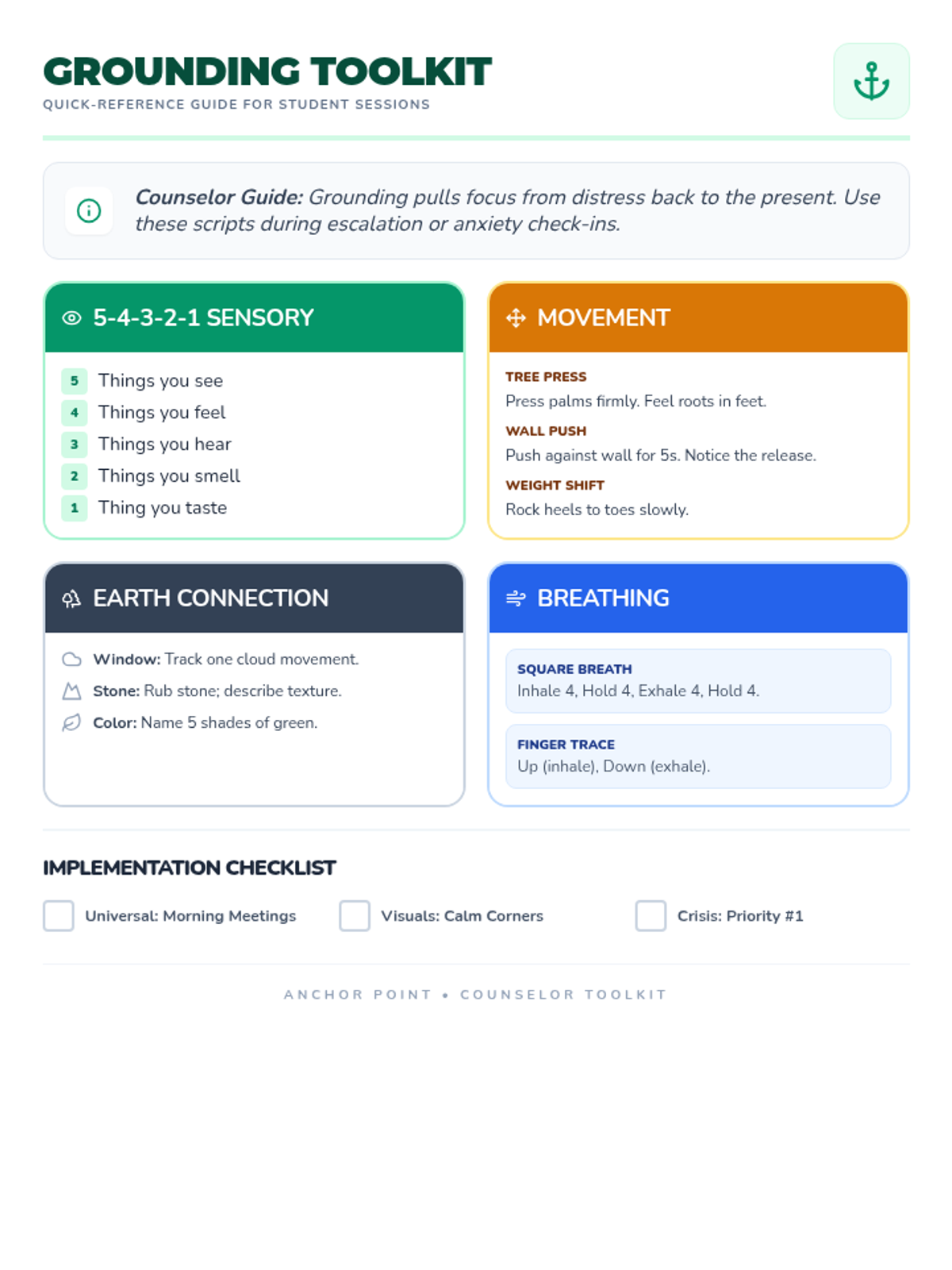
A quick-reference toolkit for school counselors containing specific grounding scripts, movement techniques, nature-based prompts, and breathing exercises. Designed as a desk reference or session handout.
A comprehensive slide deck for school counselors focusing on four primary grounding techniques: the 5-4-3-2-1 sensory method, movement-based grounding, nature connection, and rhythmic breathing. Includes implementation strategies for different tiers of student support.
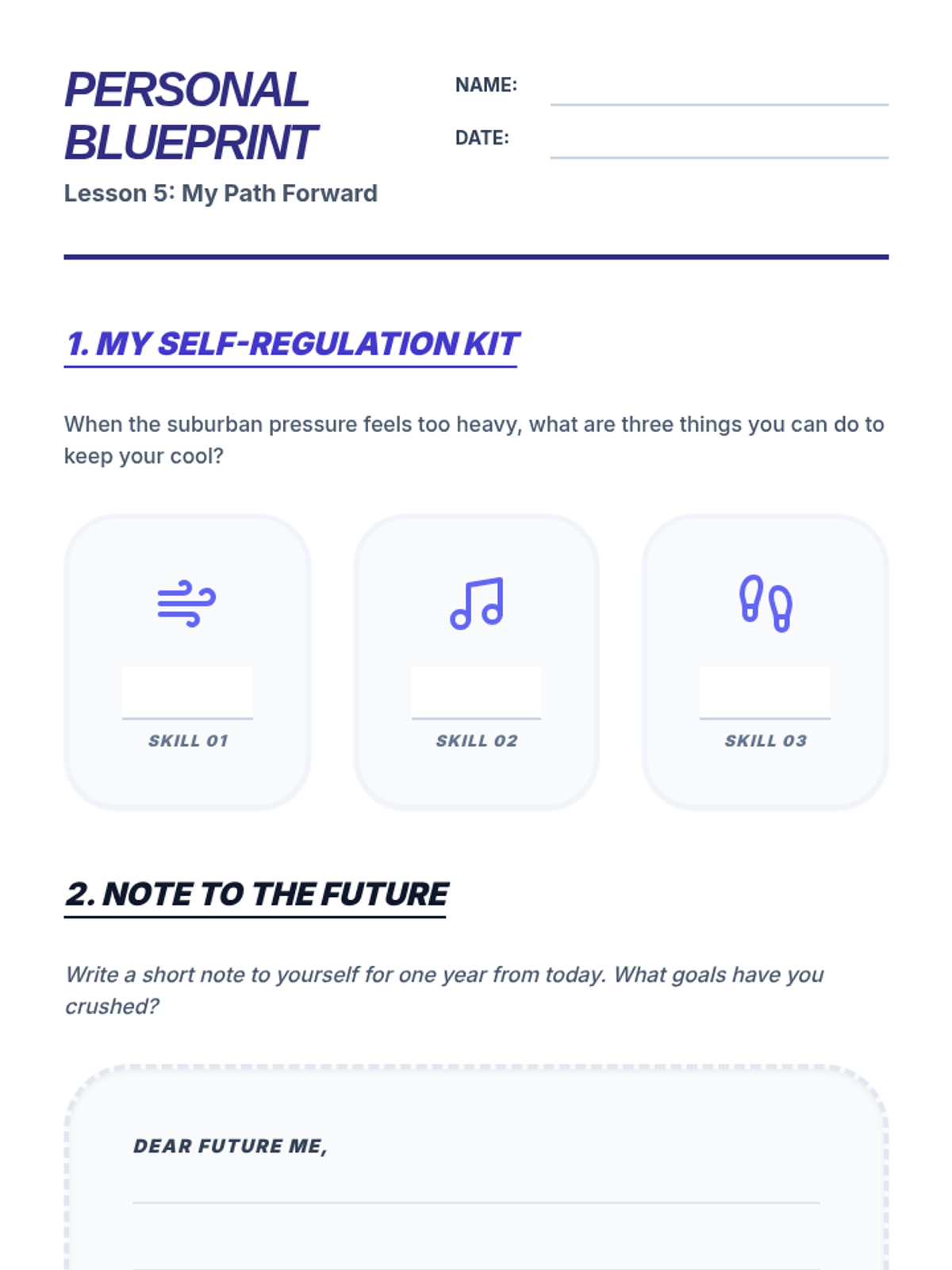
Finalized Lesson 5 worksheet. Addressed reviewer feedback by fixing page breaks, ensuring all sections fit on 2 pages, increasing text contrast for high-school level legibility, and correctly distributing guidance lines in the 'Note to the Future' section.
Lesson 5 slides featuring the self-regulation/self-control video. Focuses on internal navigation and emotional mastery.
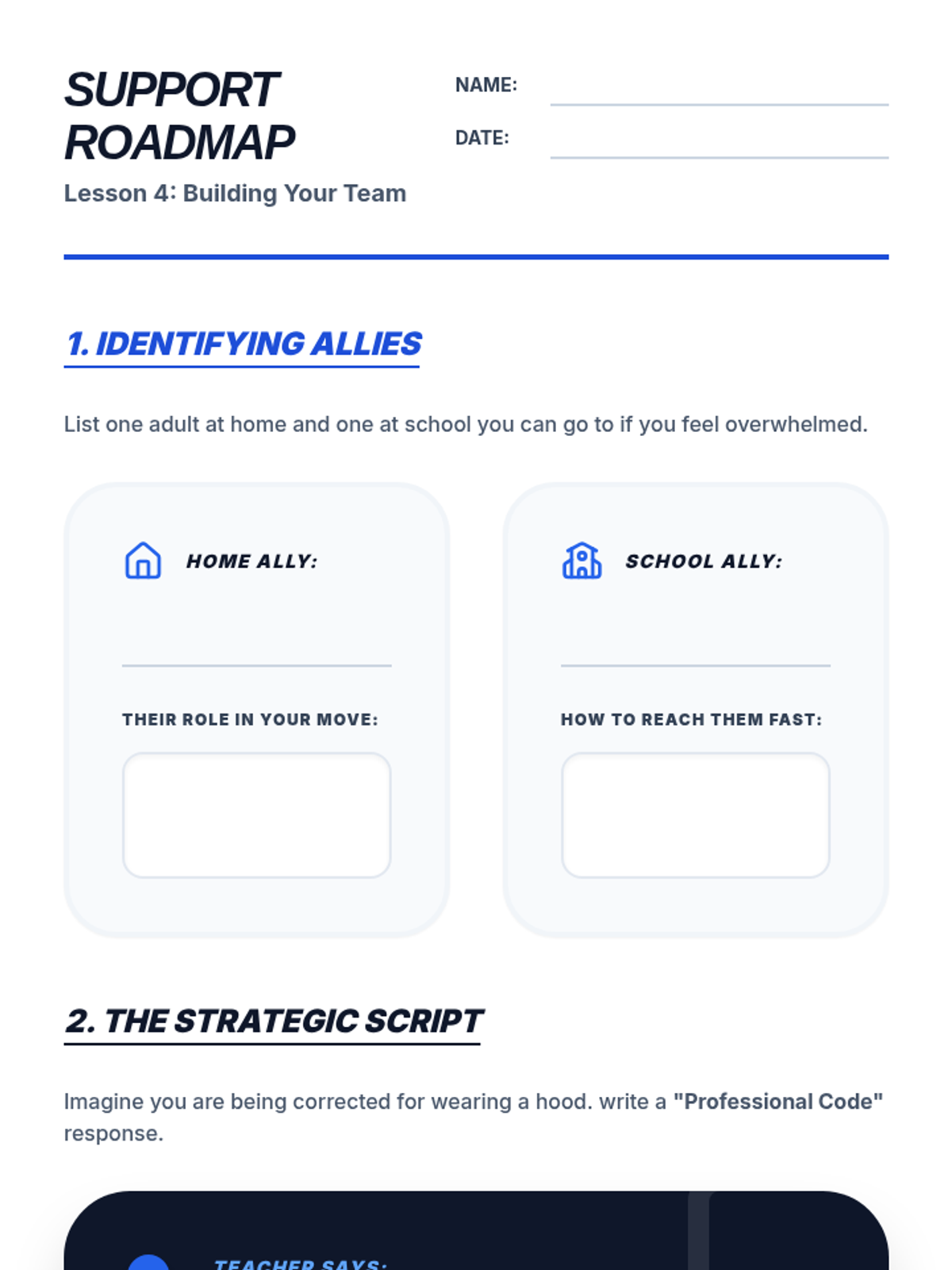
Finalized Lesson 4 worksheet. Addressed reviewer feedback by fixing page breaks, ensuring high contrast for all text, changing response areas to white for handwriting legibility, and correctly distributing guidance lines in the reflection area.
Finalized Lesson 4 presentation. Addressed reviewer feedback by fixing Graphical text spacing (BUILDING THE TEAM), ensuring all content fits within the viewport, and embedding a counselor-style video on de-escalation strategies.