Written and verbal communication standards for the workplace, including email etiquette, presentation delivery, and professional phone conduct. Develops collaborative skills for teamwork, constructive feedback, and efficient time management.
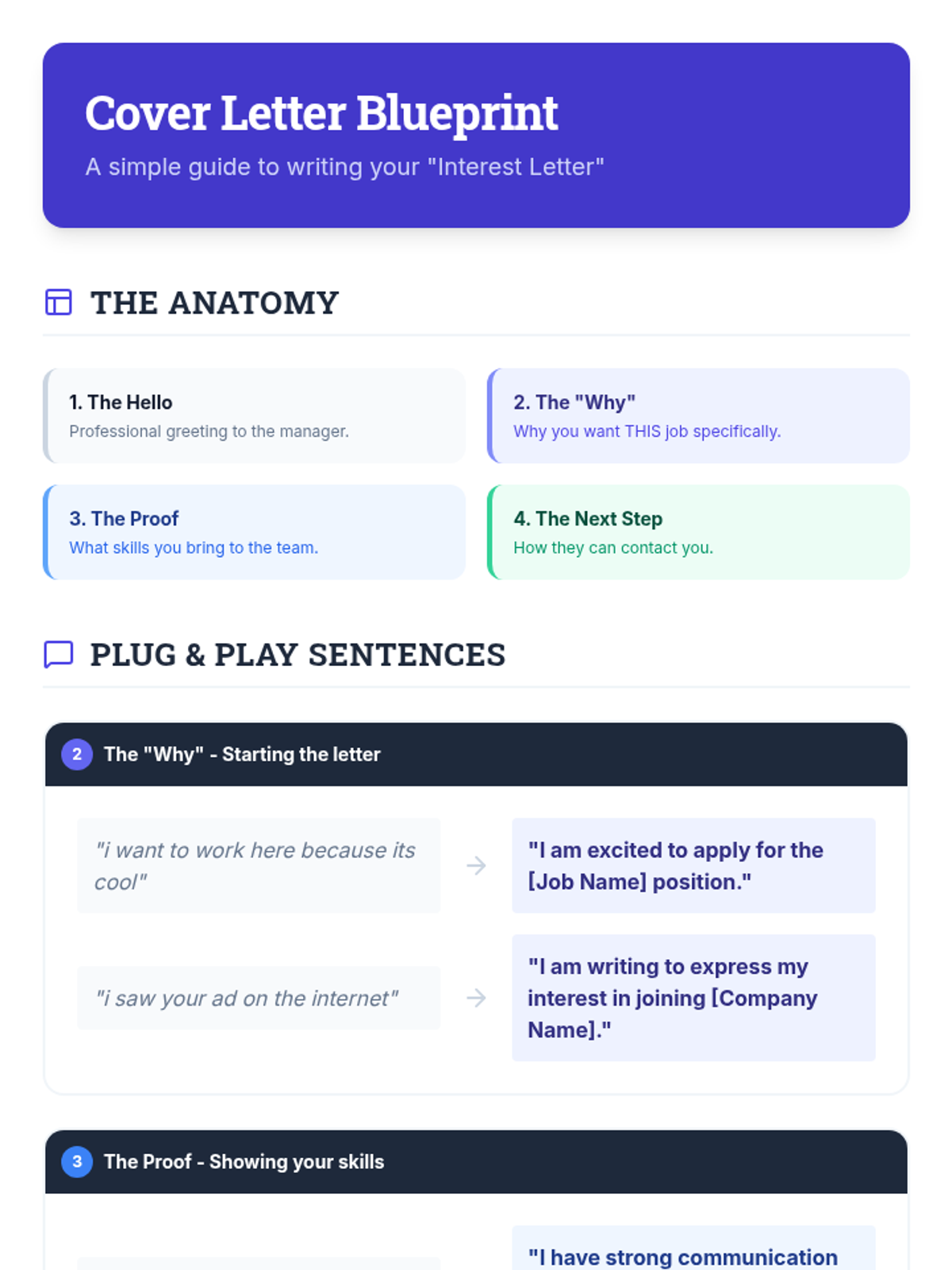
A visual blueprint for writing cover letters, designed for students who struggle with literacy. Includes an anatomy of a cover letter, 'Plug & Play' professional sentence starters, and a fill-in-the-blank template for practice or use.
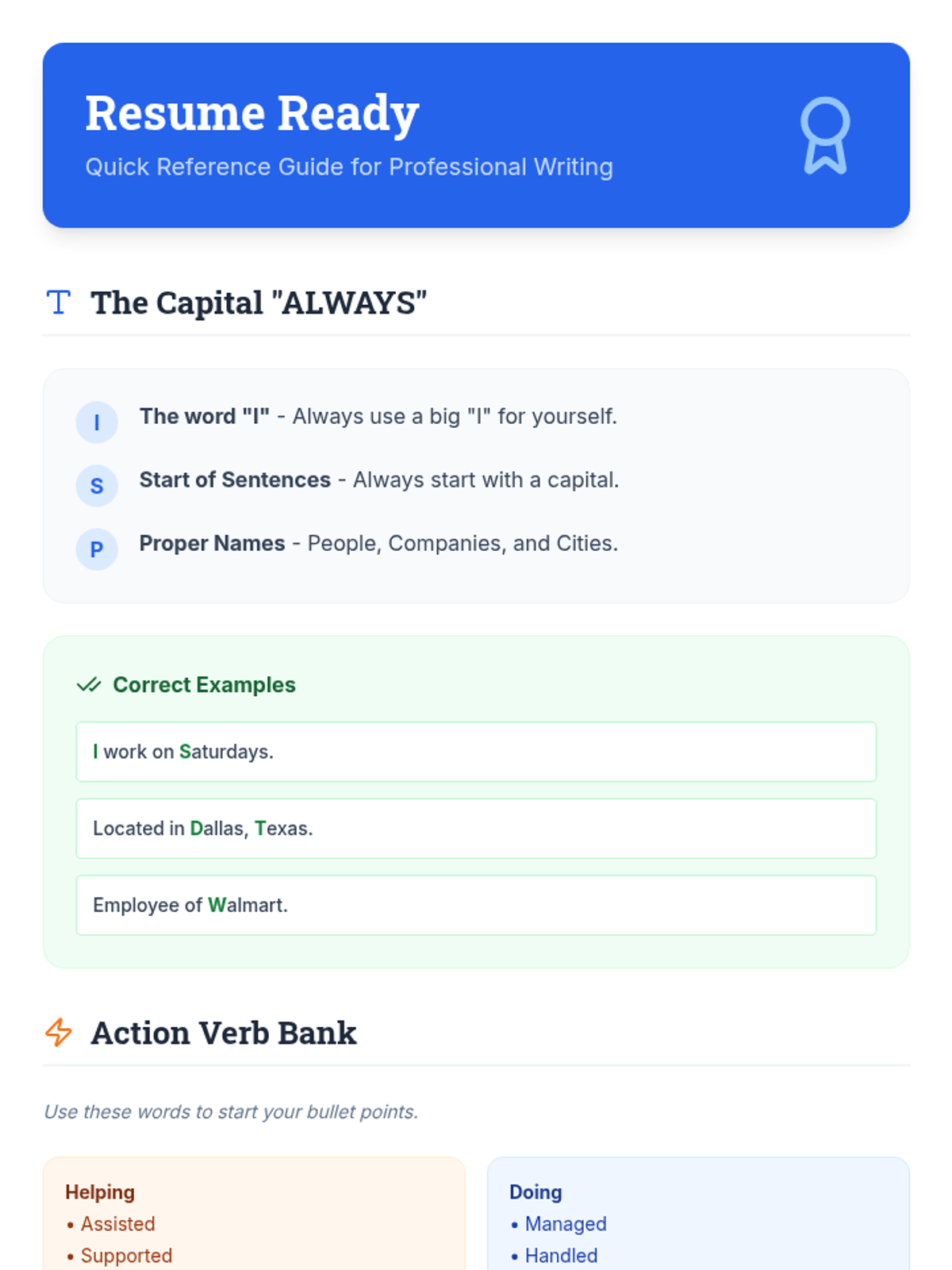
A visual cheat sheet for students containing essential capitalization rules, professional action verbs for resumes, and a punctuation quick-check guide. Designed to be a handy reference for application writing.
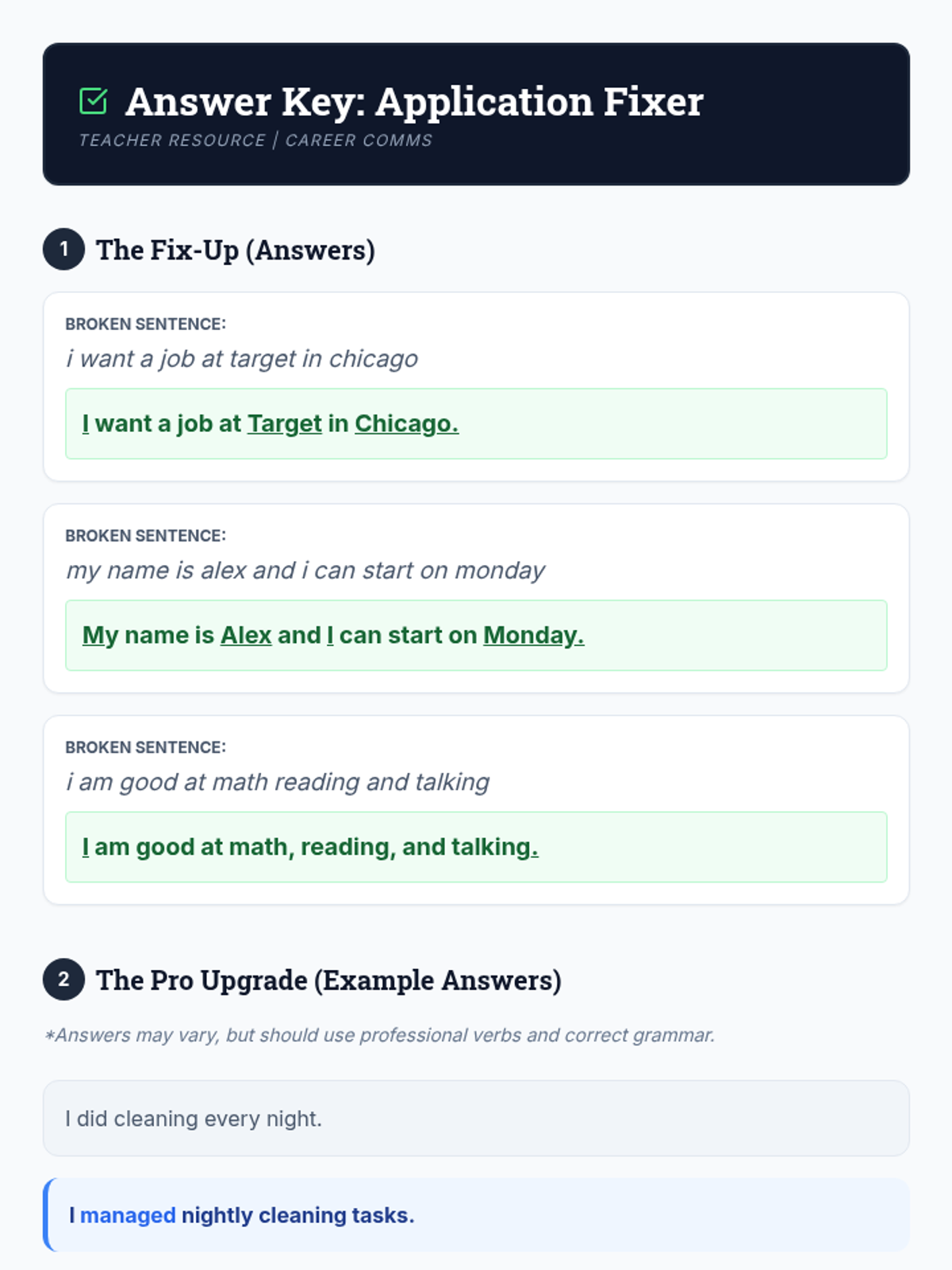
Teacher answer key for the Application Fixer Worksheet. Includes correct capitalization and punctuation for 'Fix-Up' sentences and professional model answers for the 'Pro Upgrade' section.
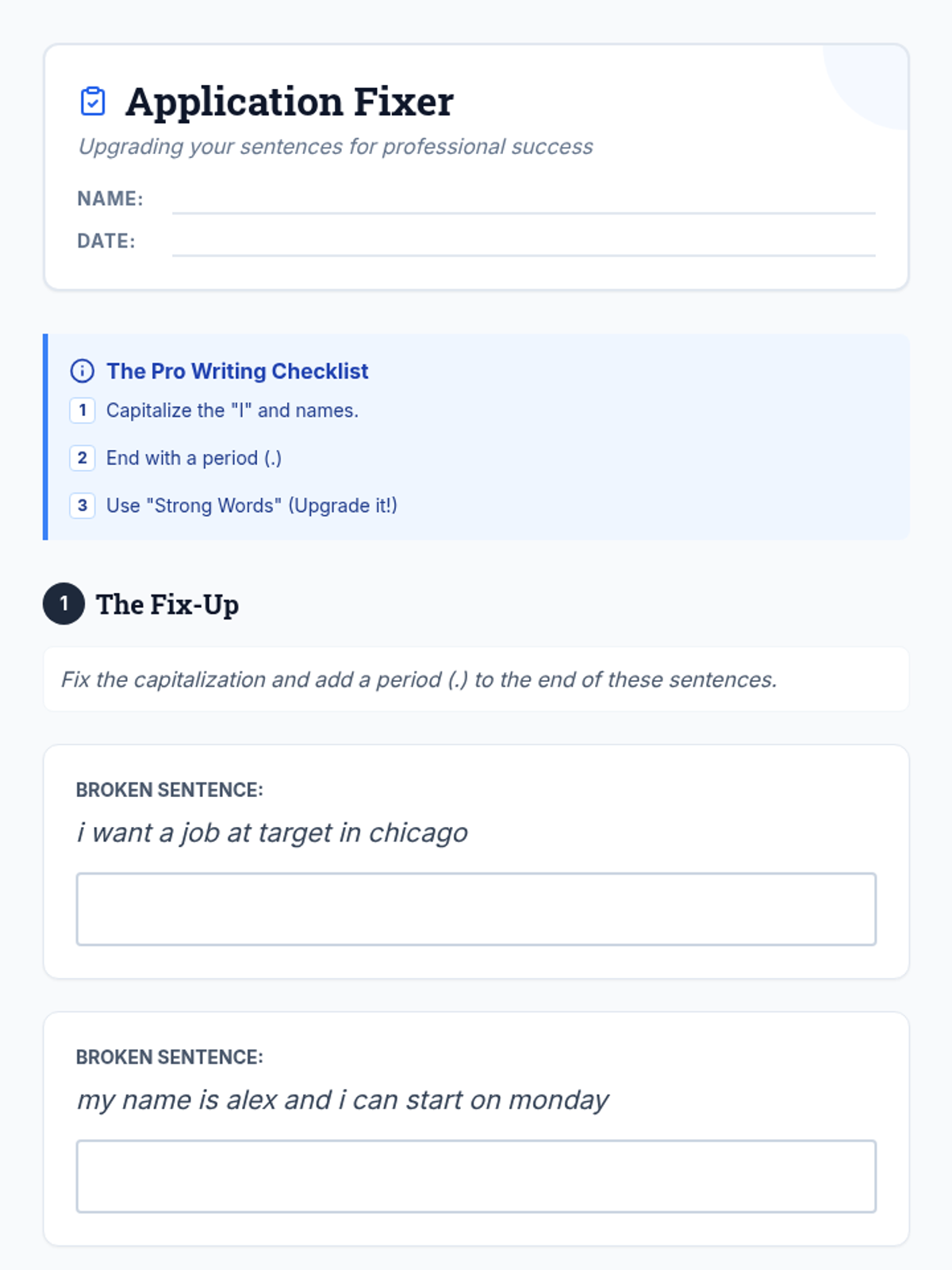
A student practice worksheet focused on fixing capitalization, punctuation, and upgrading casual sentences to professional 'Better' versions for job applications. Includes a 'Strong Words Bank' for support.
Instructional slides for a lesson on professional writing. Features 'Good vs. Better' sentence comparisons, rules for capitalization and punctuation, and visual guides on professional tone for students who struggle with literacy.
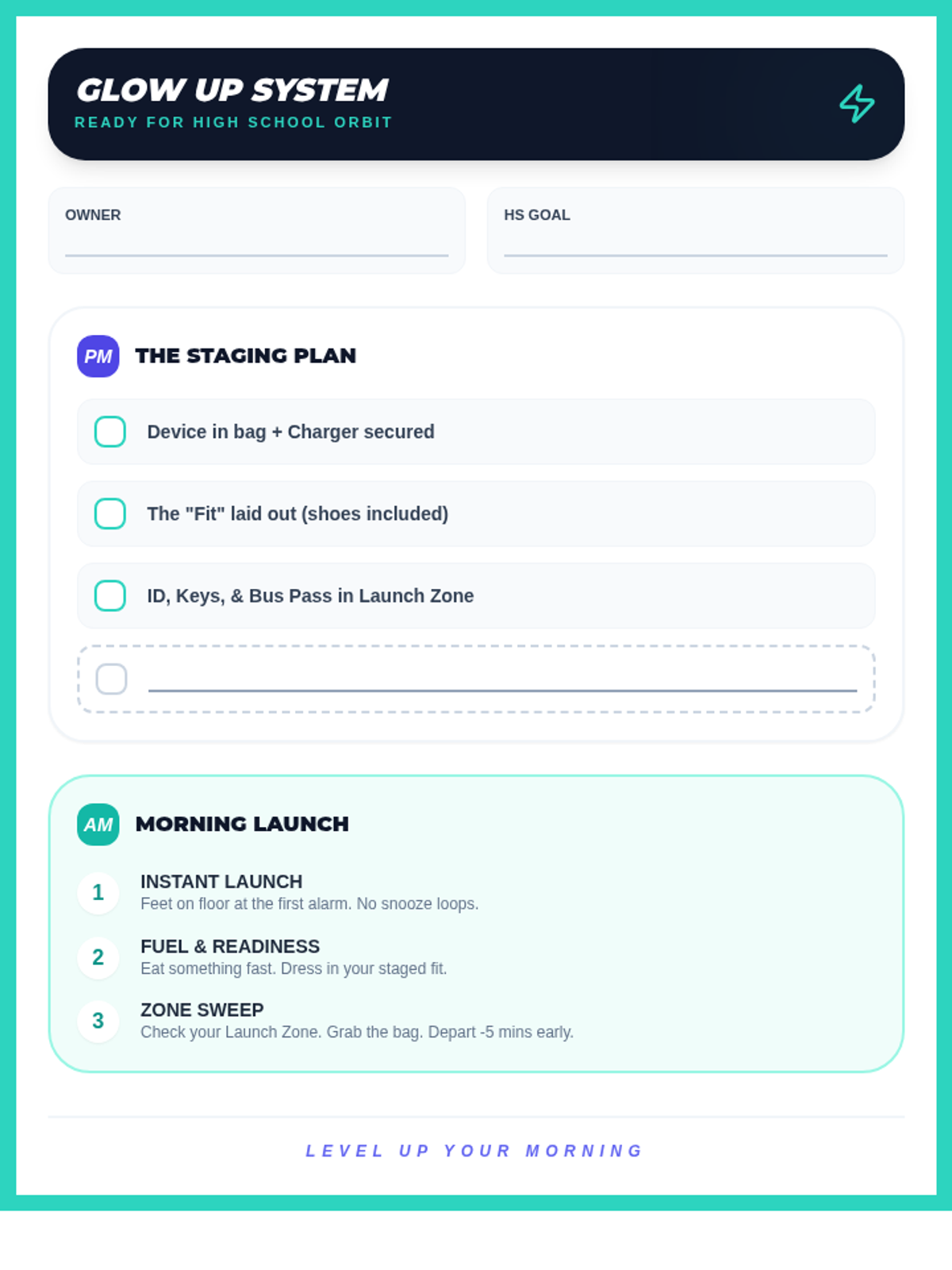
A sleek, one-page morning routine checklist for students to use both at night (for prep) and in the morning (for departure), designed with a modern high-school readiness focus.
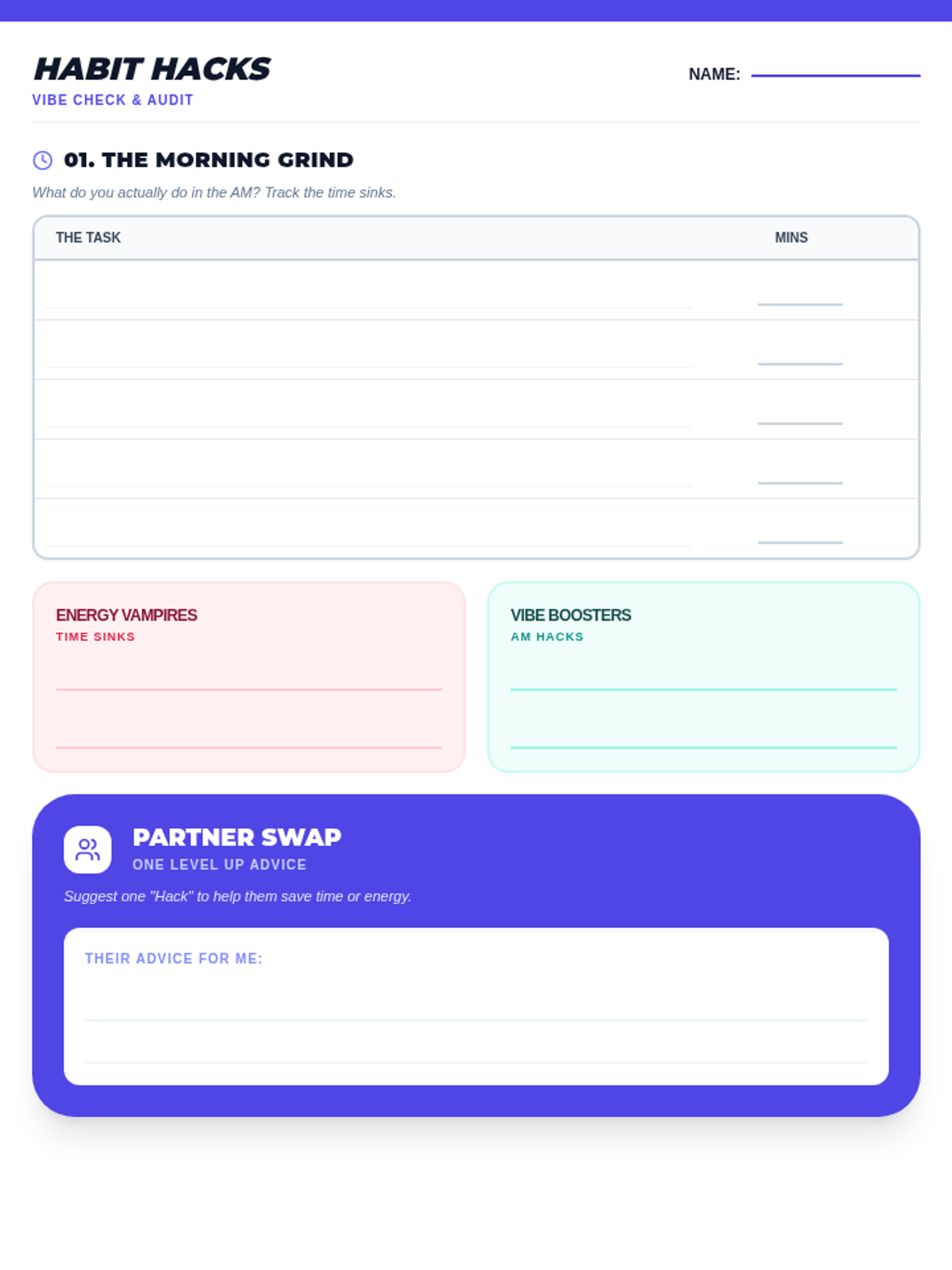
A one-page activity sheet for students to audit their morning habits, identify 'Energy Vampires', and exchange peer advice on improving their morning routines.
An expanded, high-energy slide deck for ADL mentors to lead discussions on high school preparedness, identifying 'Energy Vampires', and morning habit stacking.
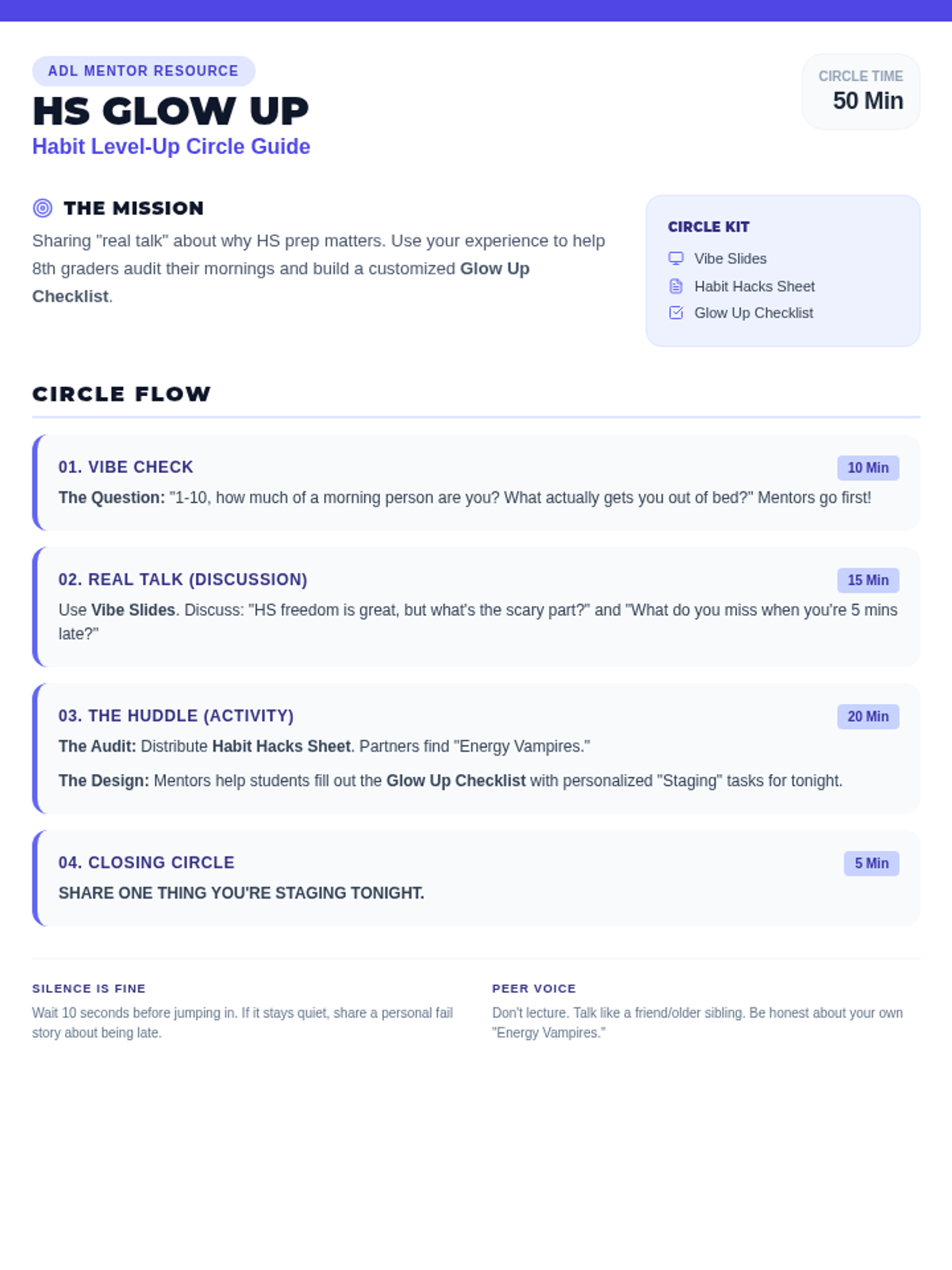
A condensed, one-page peer-to-peer facilitation guide for ADL mentors to lead a community circle on high school readiness, focusing on punctuality and morning habits.
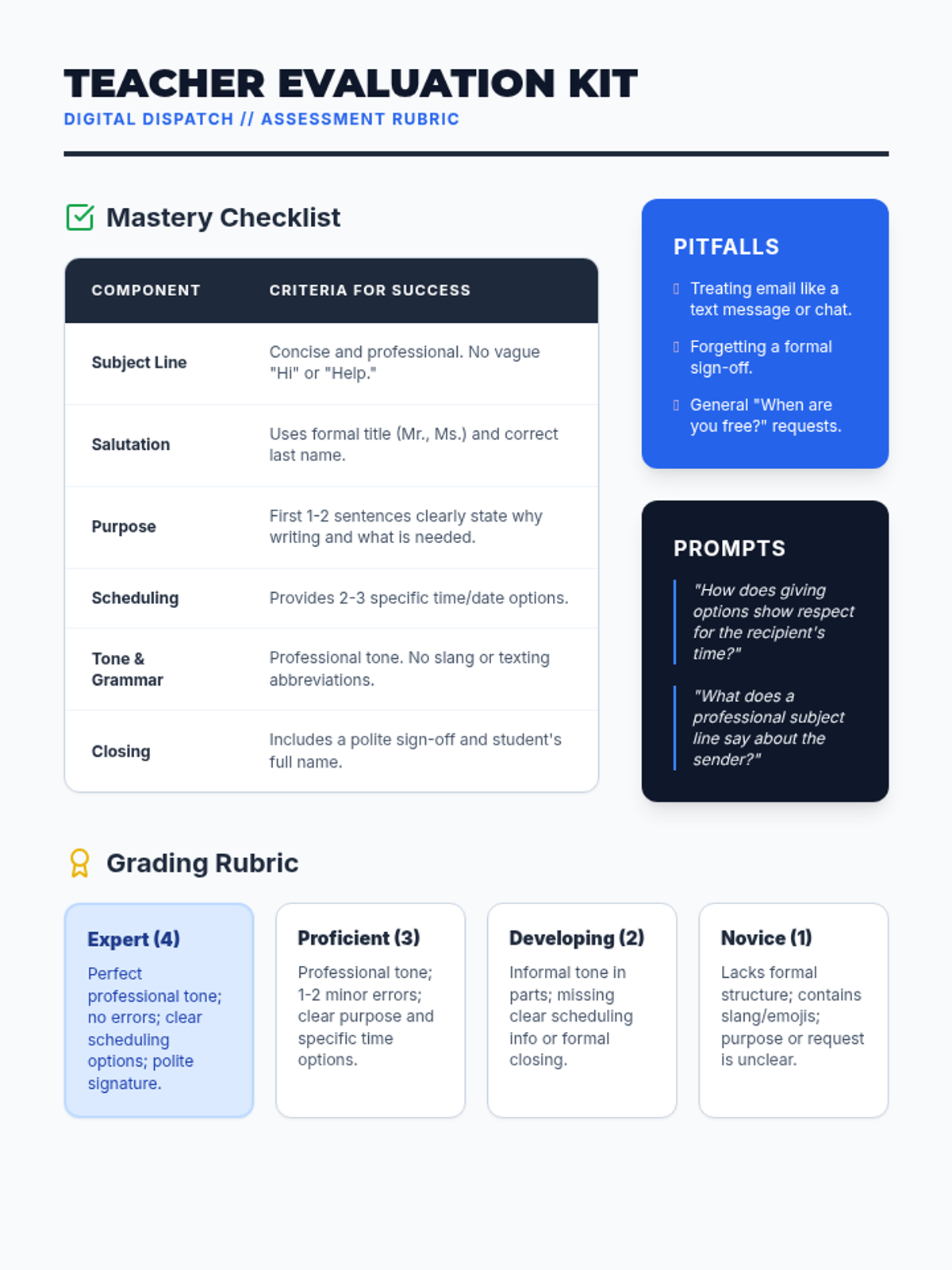
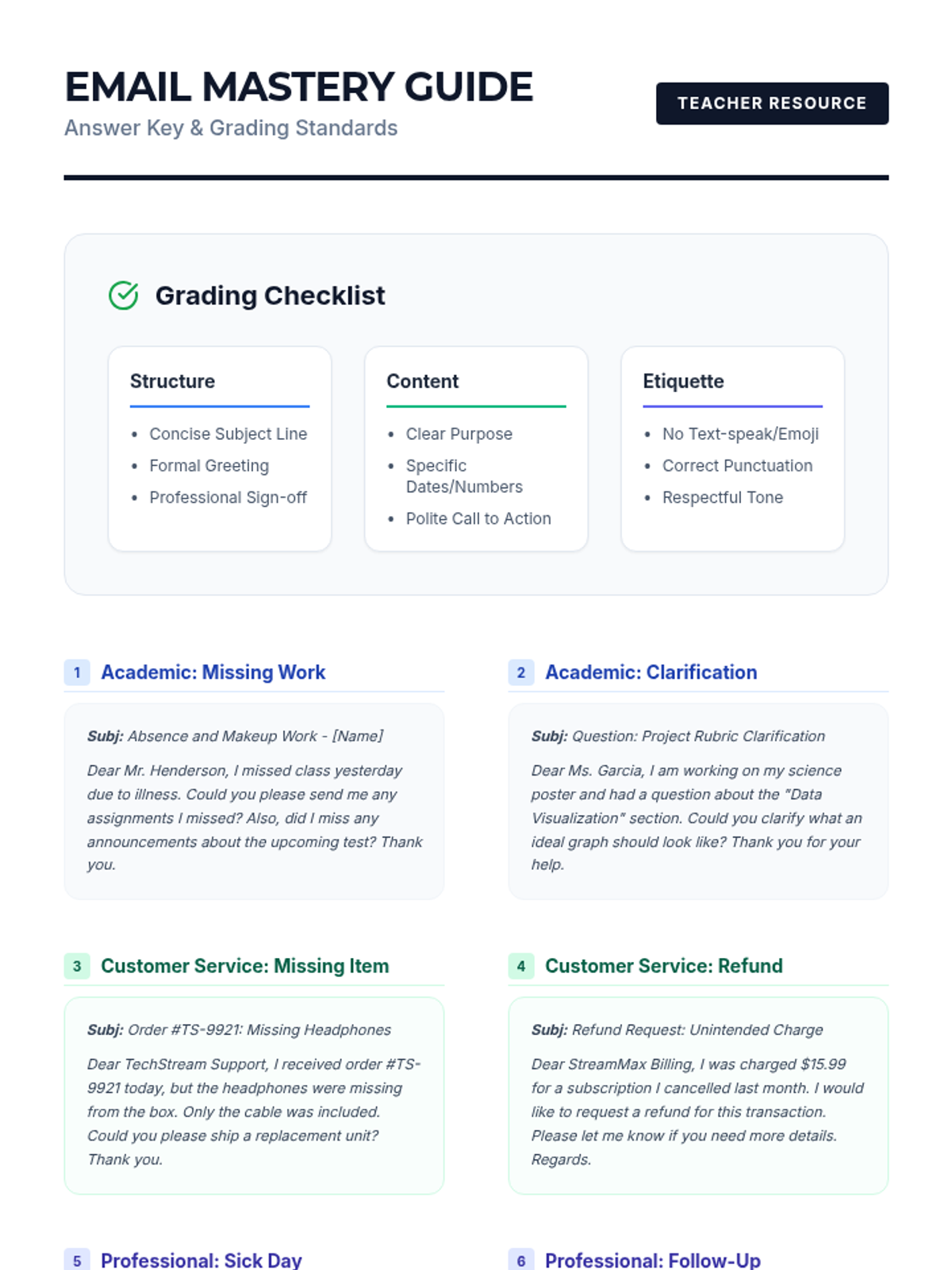
A teacher evaluation resource with a mastery checklist, grading rubric, and common pitfalls to help assess student emails.
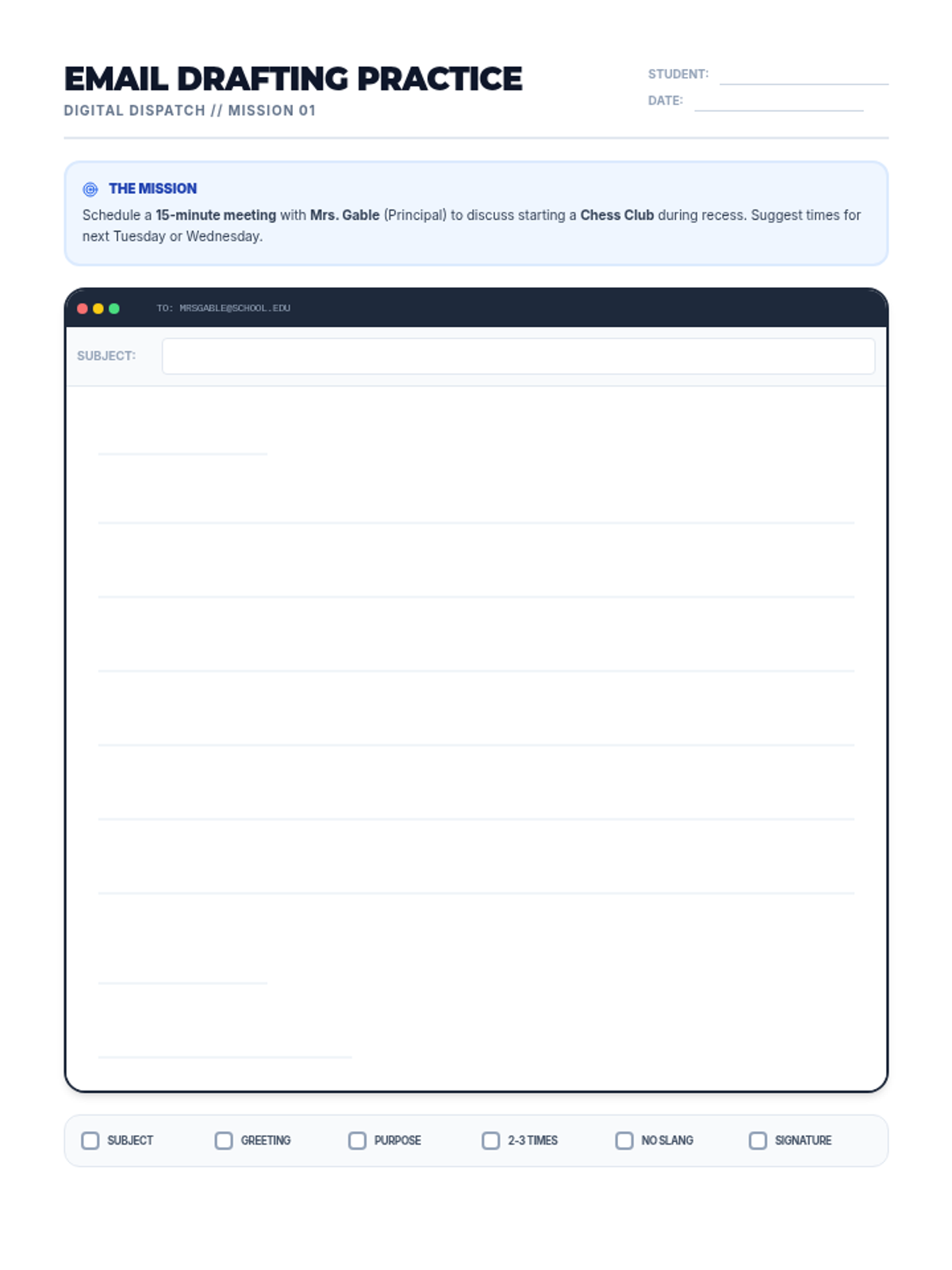
A practice worksheet where students draft their own professional email based on a specific meeting request scenario.
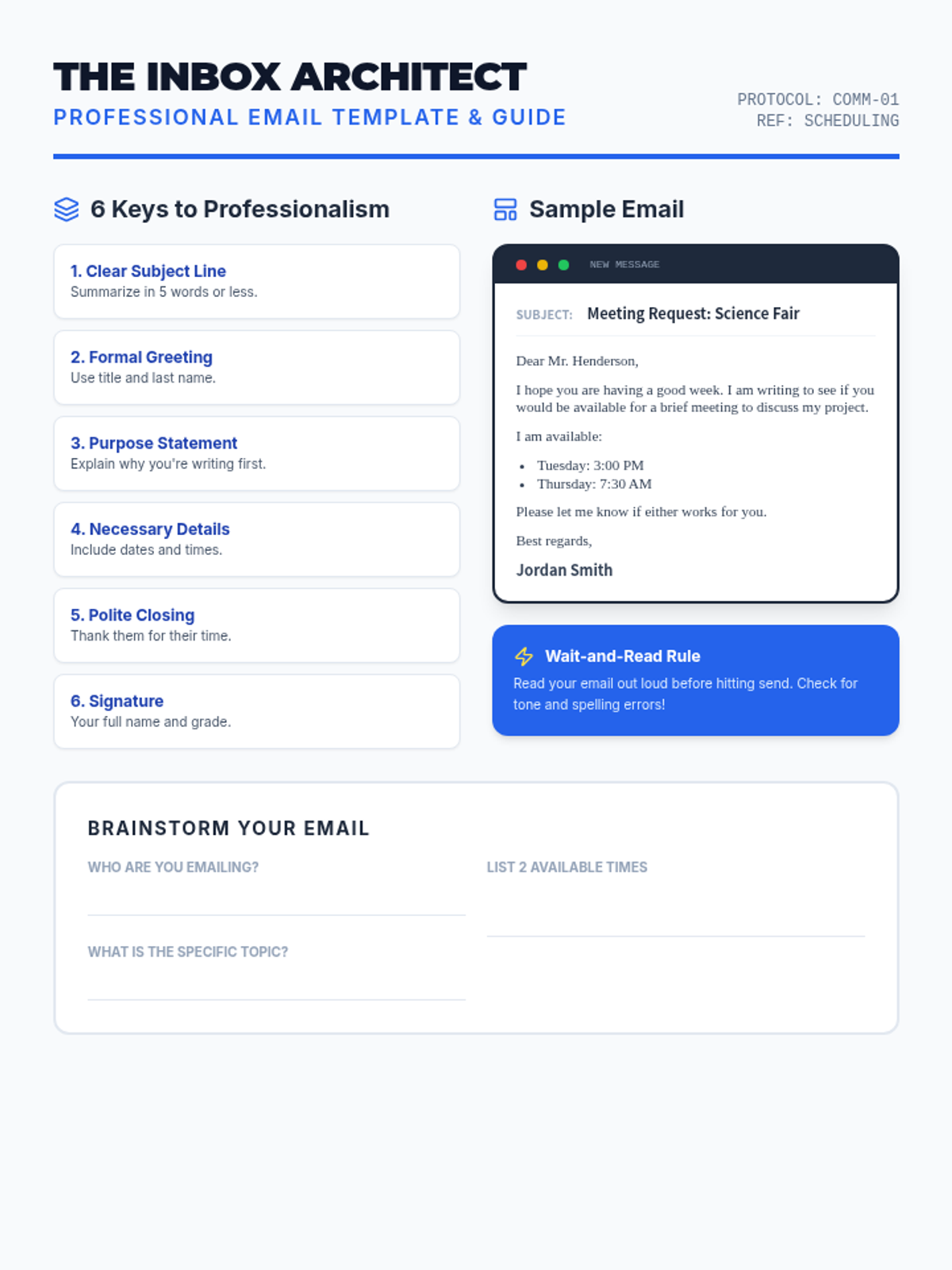
A reference guide and template for students, providing a clear example of a professional email for scheduling a meeting.
A visual presentation covering the essentials of professional email etiquette, designed for middle school students.
A teacher guide containing grading criteria, common pitfalls, and sample email responses for various student scenarios to assist in evaluation and modeling.
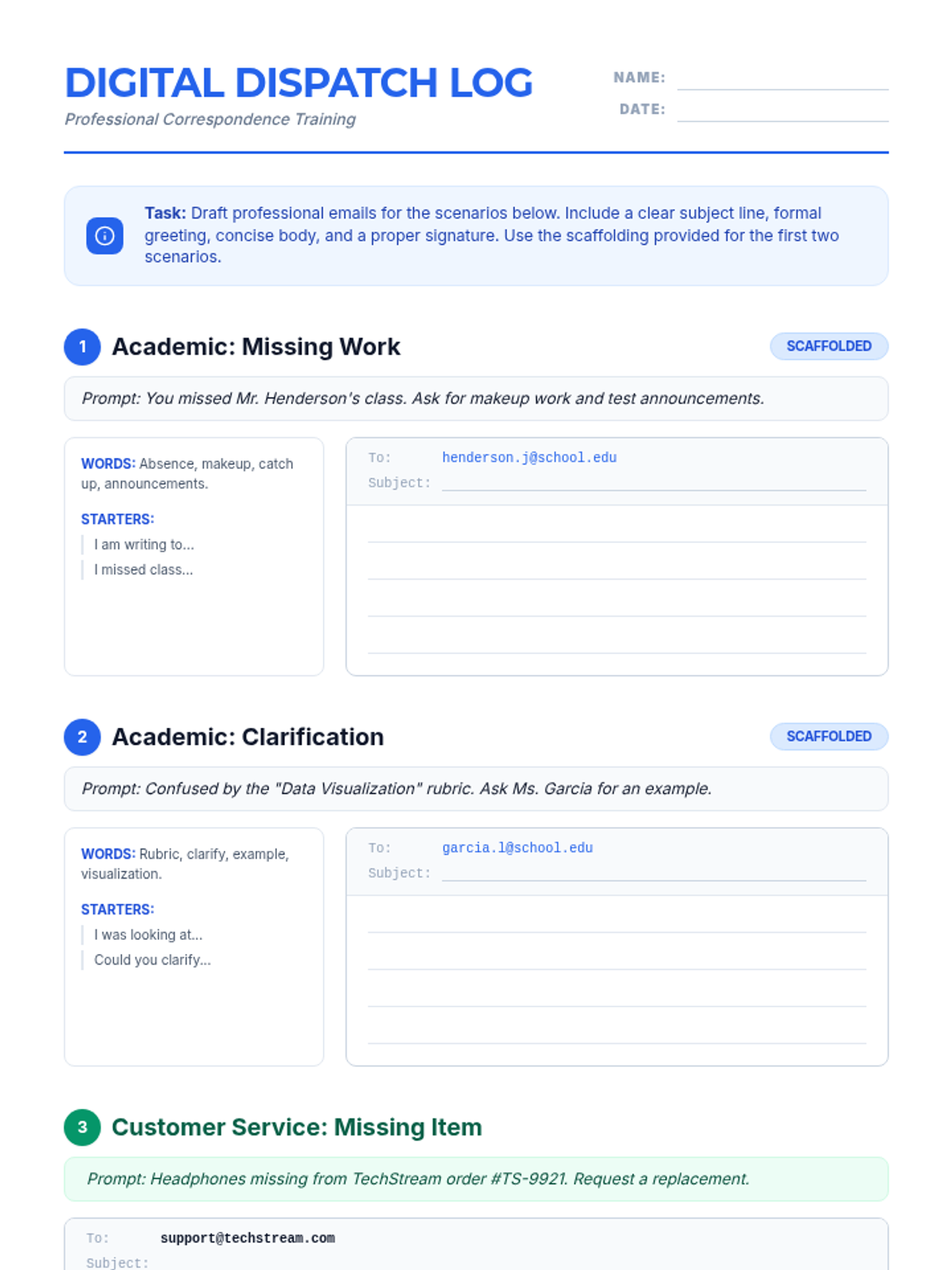
A multi-page worksheet providing structured email templates for 8 different real-world scenarios. Includes scaffolding like word banks and sentence starters for the first two academic scenarios.
A 9-slide presentation covering the structure of formal emails and 8 diverse scenarios for student practice, including academic, customer service, and professional situations. Includes word banks and sentence starters for initial slides.
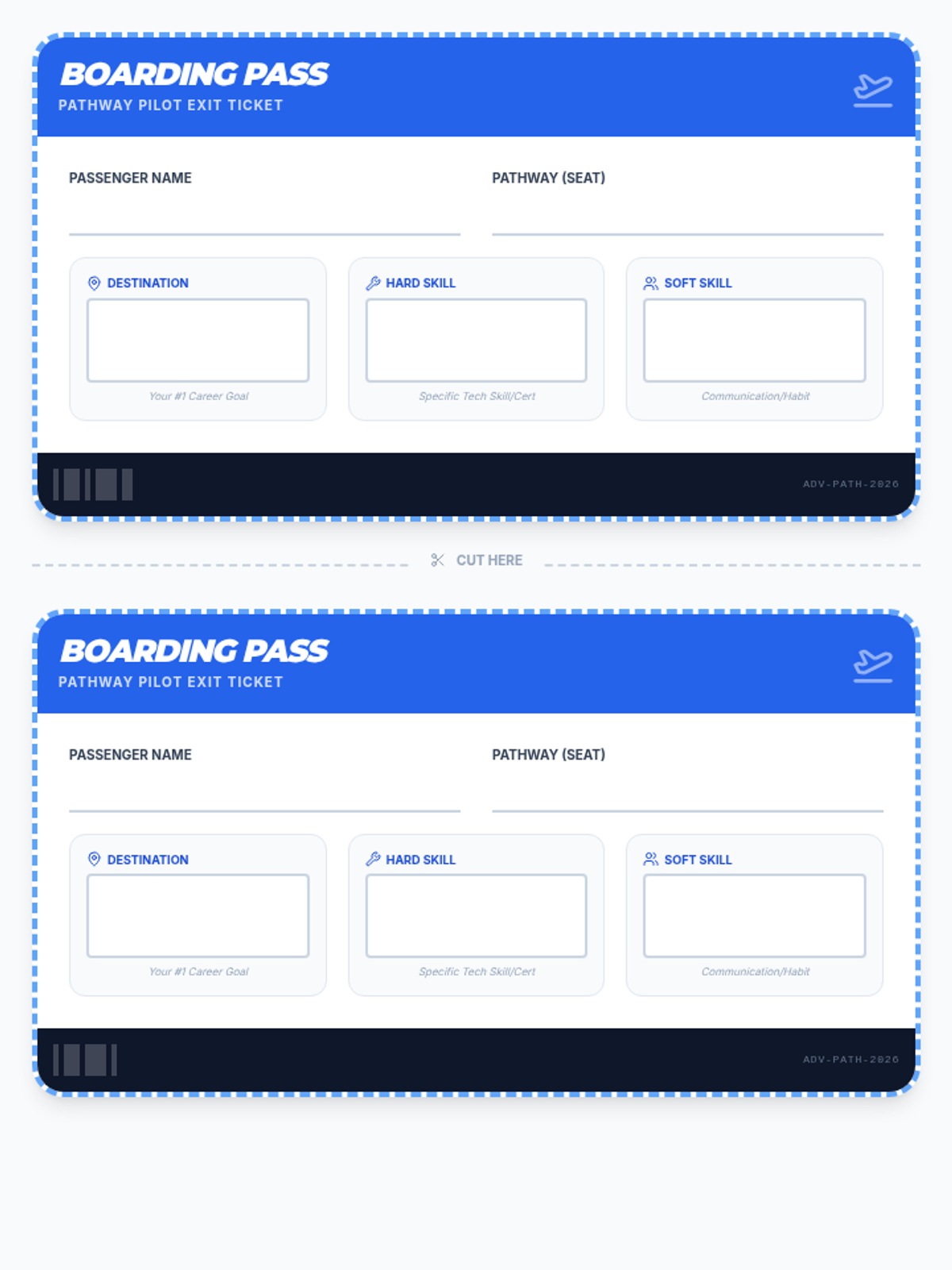
A creative "Boarding Pass" themed exit ticket for students to summarize their career destination, essential skills, and high school course connections. This document is tiled for efficient printing. Revised to fit 2 per page and include soft skills.
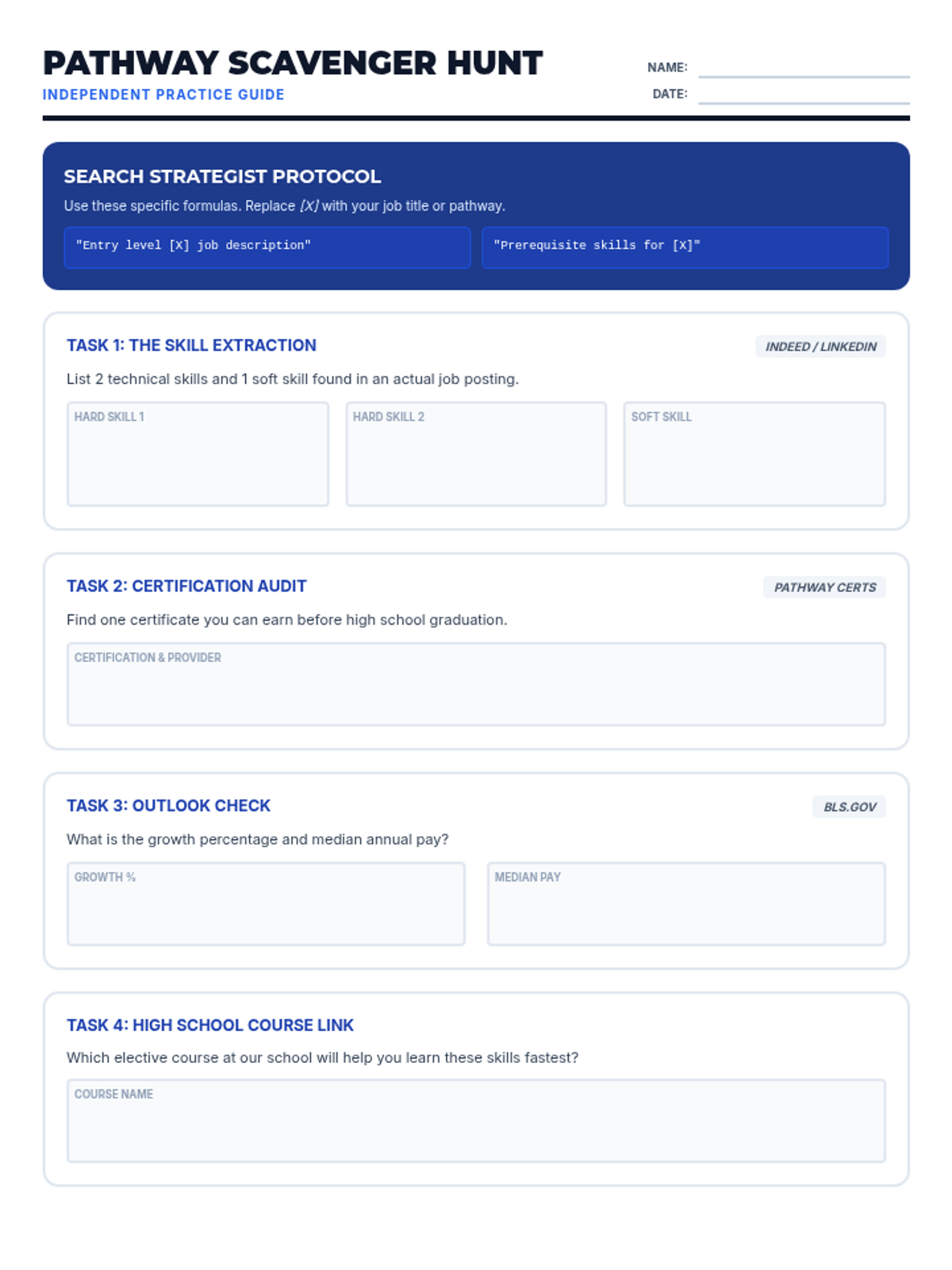
A guided independent practice worksheet featuring a "Scavenger Hunt" that teaches students how to use search formulas to extract real-world career data. Revised to fit on a single page for teacher efficiency.
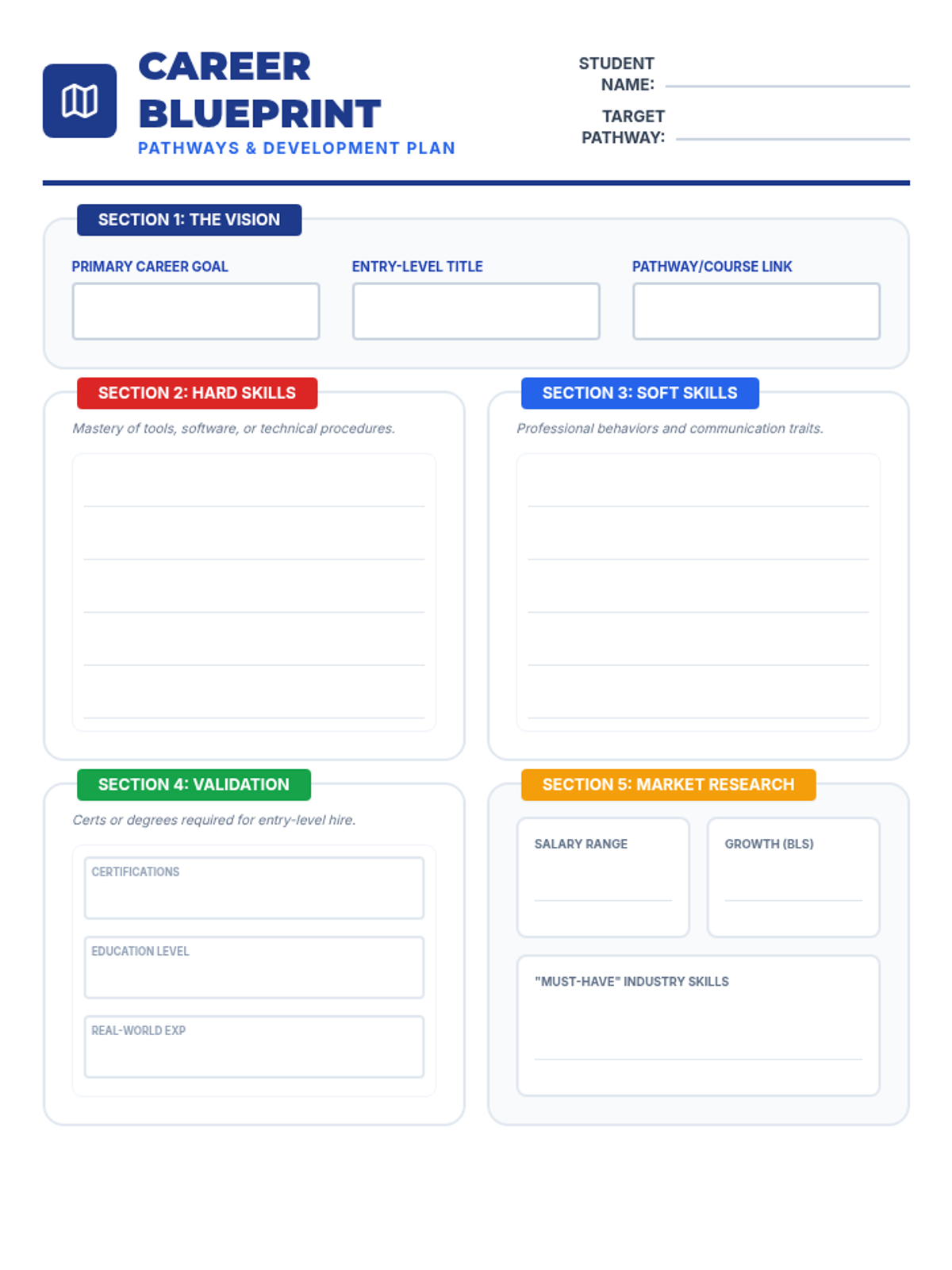
A professional-grade career research graphic organizer for students to map out their future "Career Blueprint," including sections for vision, hard/soft skills, education/validation, and market research. Revised to fit on one page and remove placeholder text.
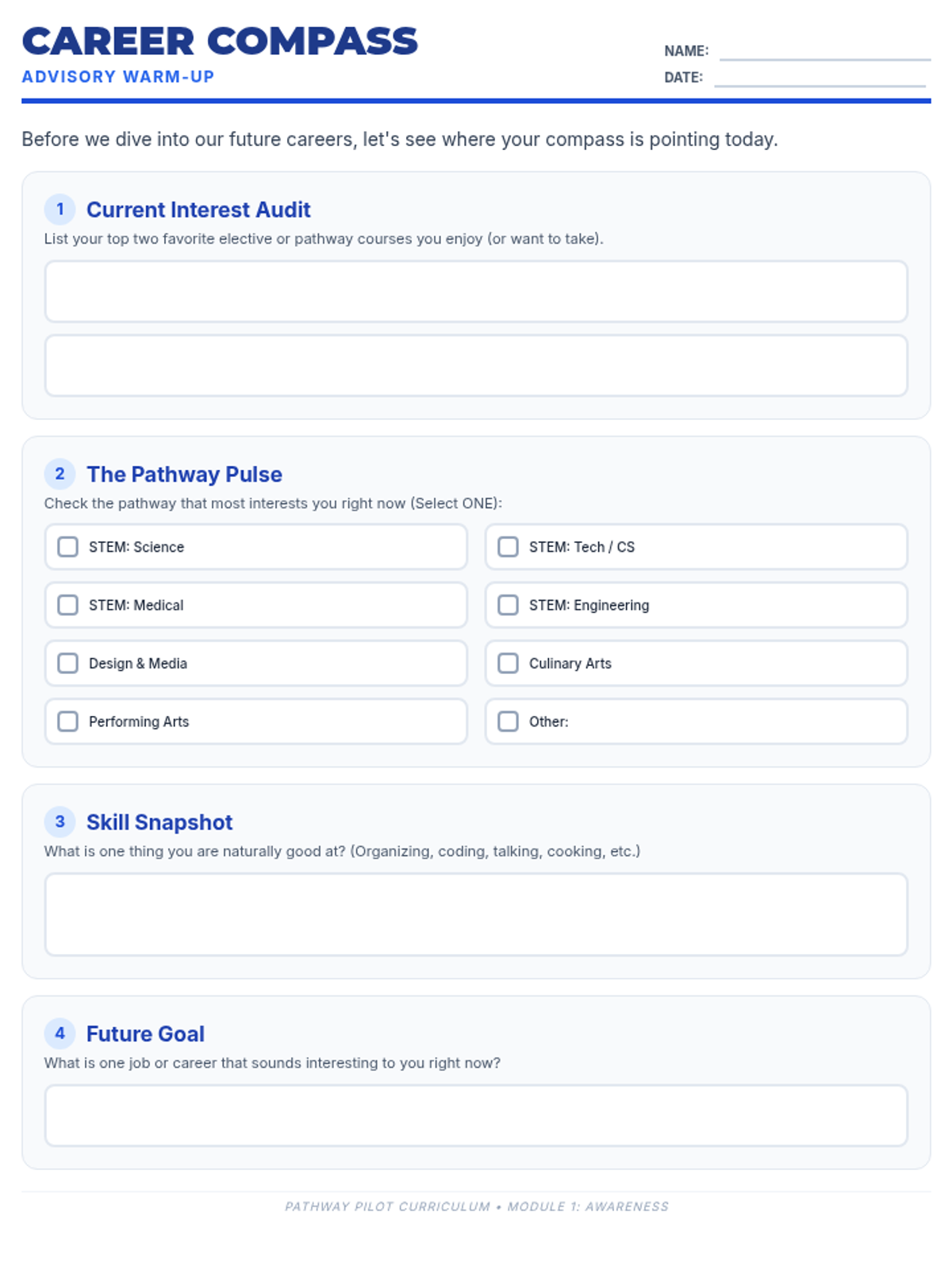
A self-reflection warm-up worksheet for students to audit their current interests, identify their preferred elective pathway, and pinpoint natural strengths. Updated to include specific STEM sub-pathways and polished student work areas.
Interactive slide presentation for the Pathway Pilot lesson, now featuring detailed slides for the four STEM sub-pathways (Science, Tech/CS, Medical, and Engineering) alongside Design, Culinary, and Arts. Includes expanded skills instruction on hard, soft, and transferrable skills.
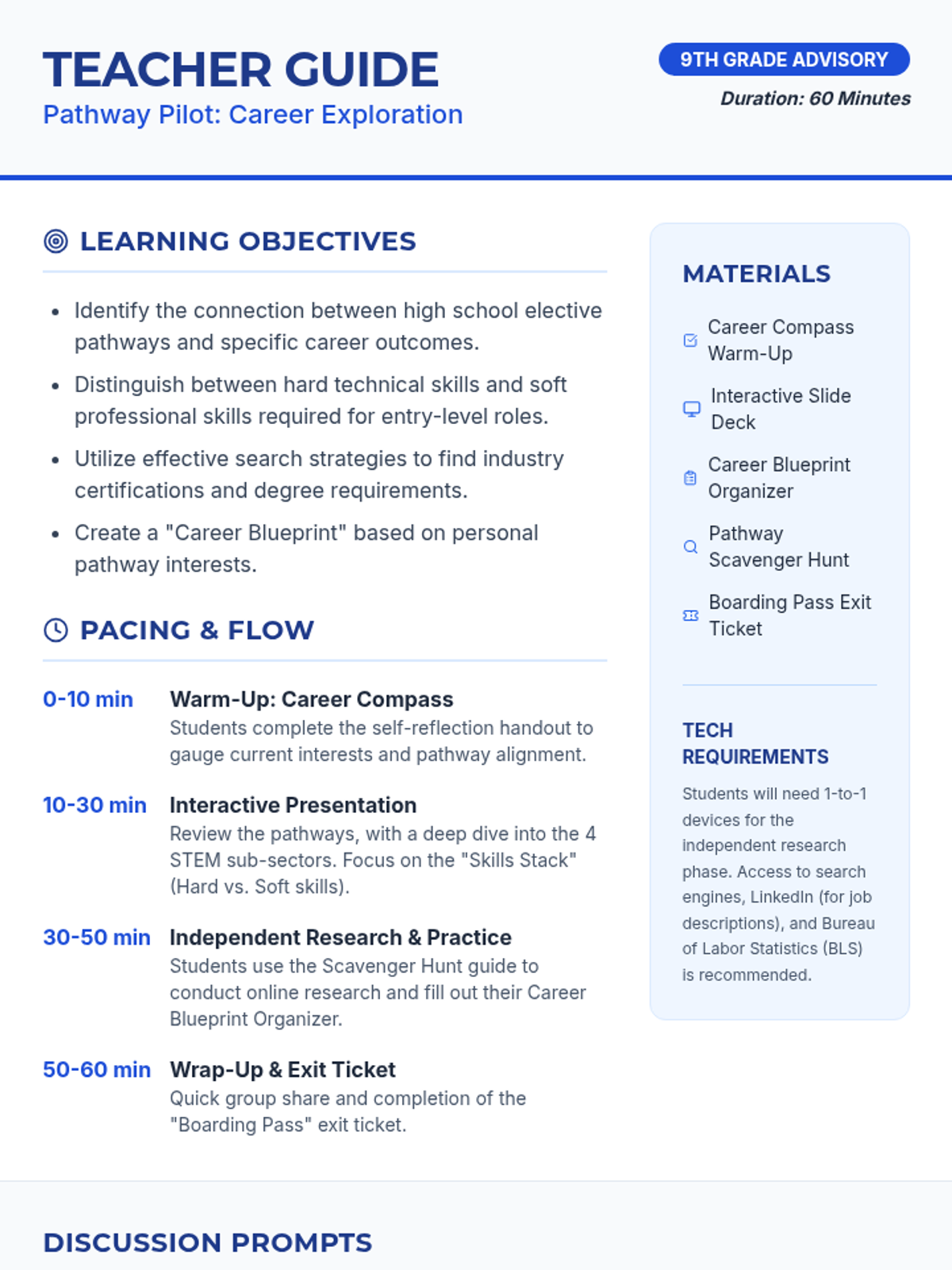
A detailed teacher guide for the Pathway Pilot lesson, including learning objectives, a minute-by-minute pacing guide, materials checklist, and targeted discussion prompts for each pathway, now featuring detailed STEM sub-pathways.
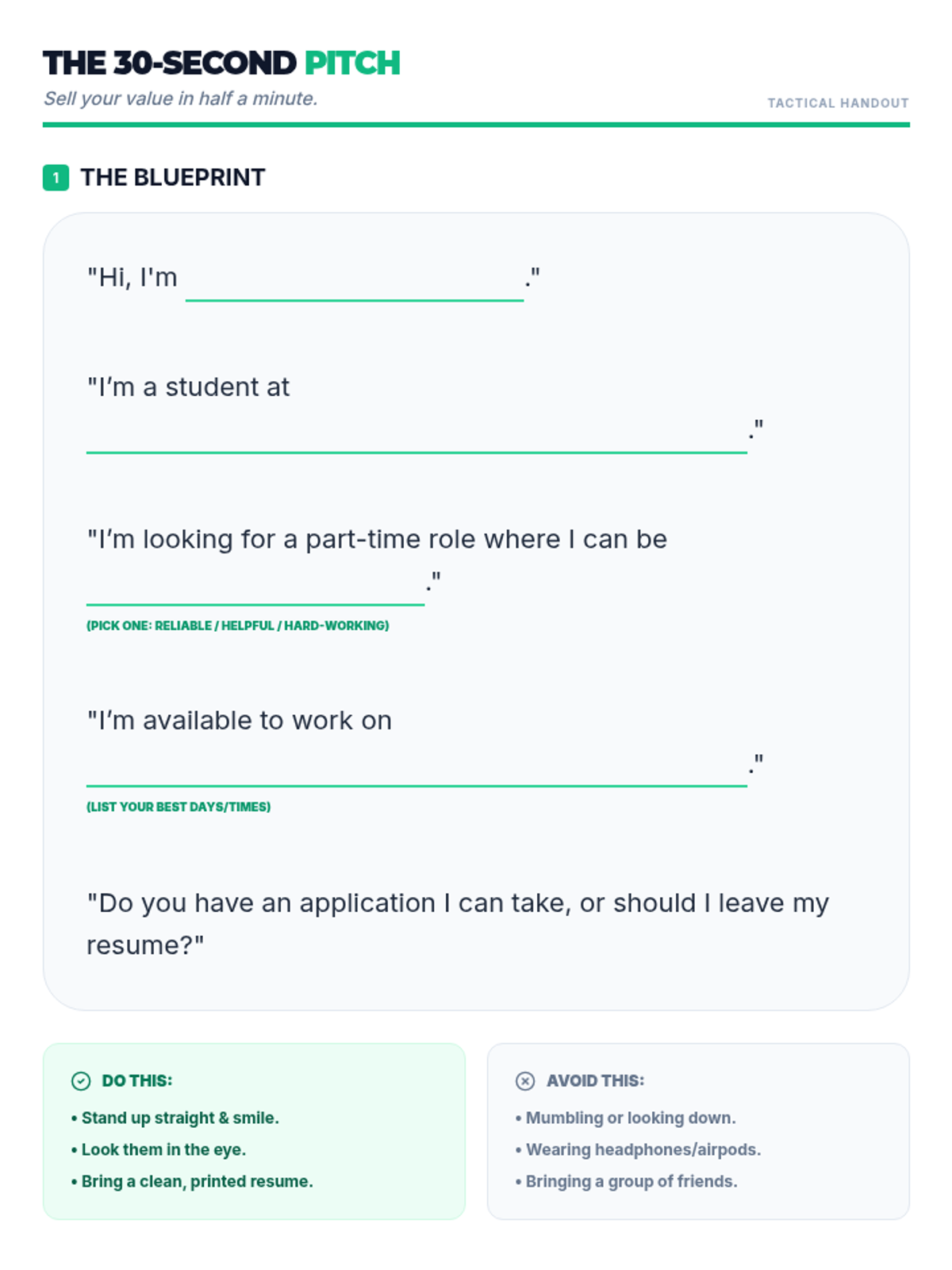
A tactical worksheet for students to script and practice their introductory "pitch" for potential employers, focusing on brevity, value, and professional presentation.
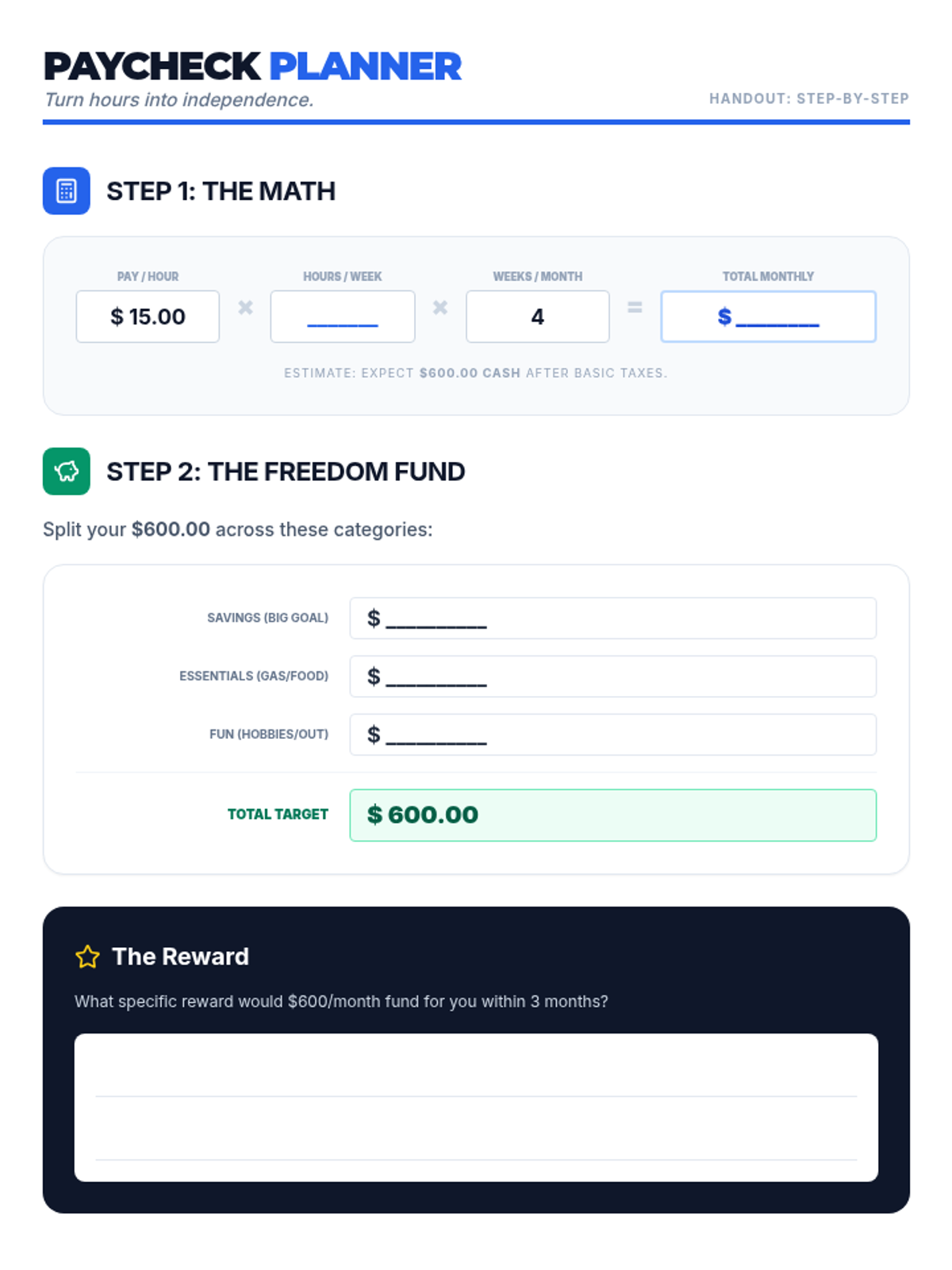
A practical worksheet to help students calculate potential monthly earnings from a part-time job and plan their "freedom fund" to see the tangible benefits of working.
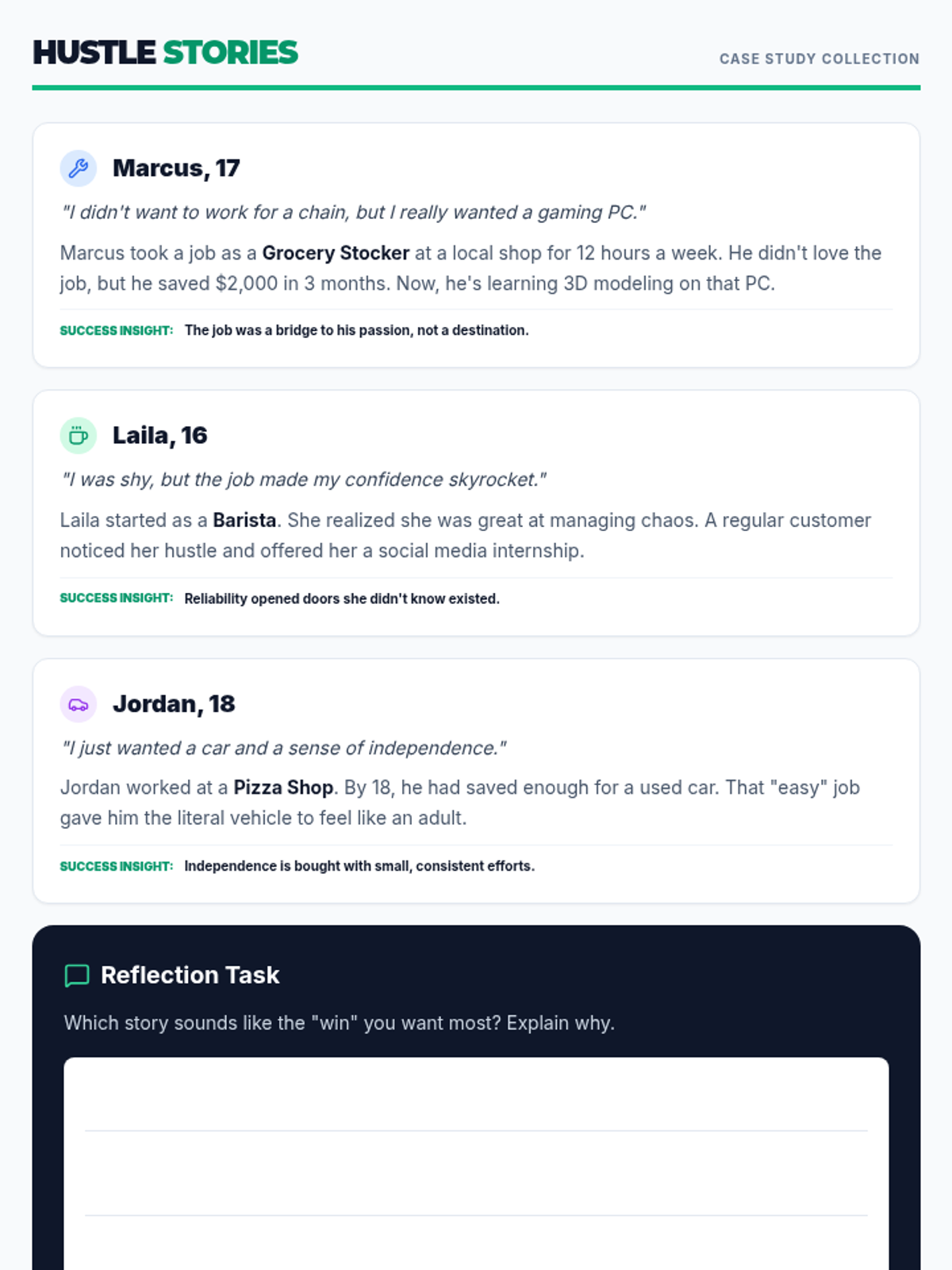
A set of short, engaging case studies featuring high schoolers who used entry-level jobs as stepping stones to personal success and independence. Provides social proof and real-world context for the workshop.
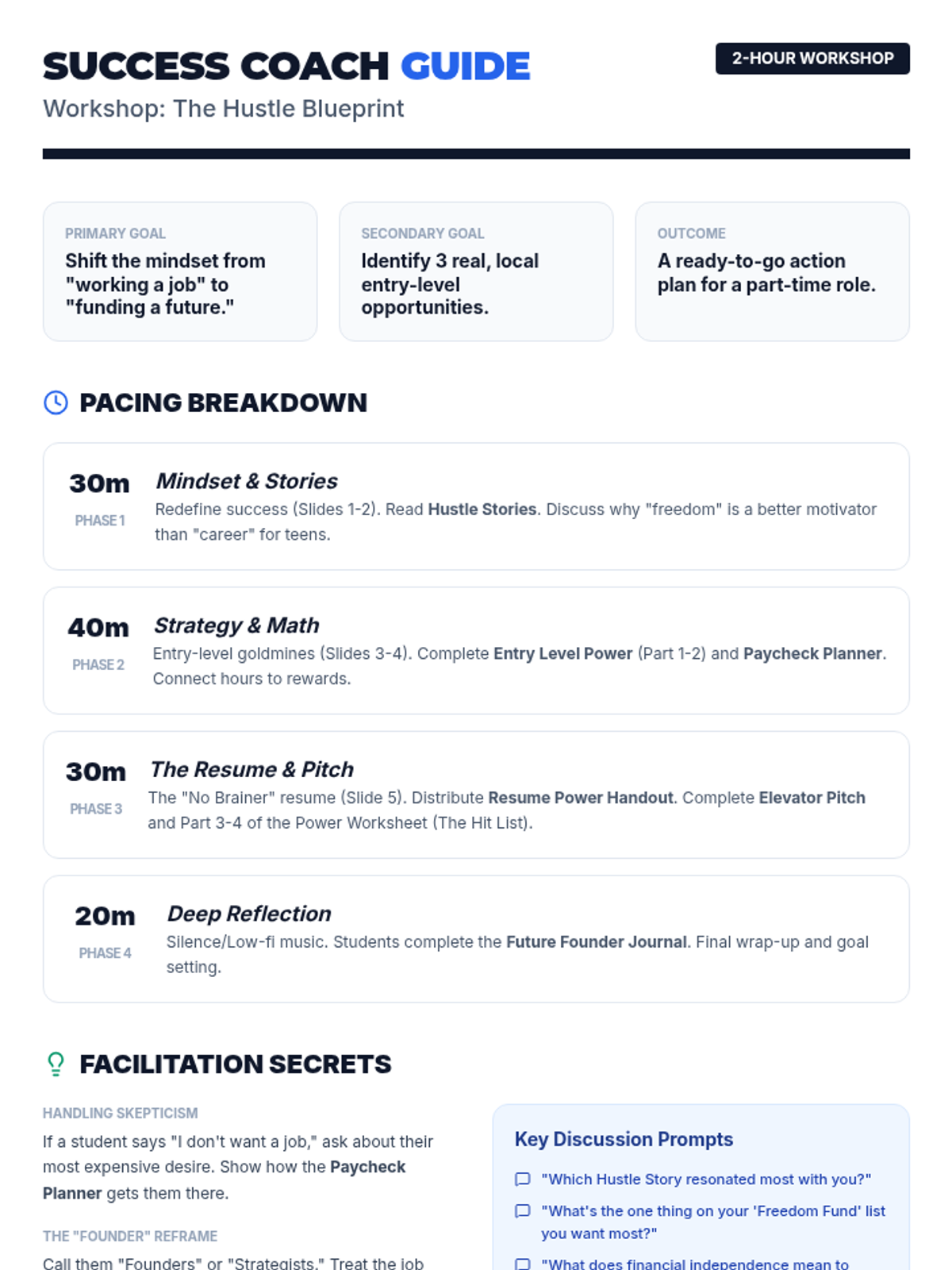
A facilitator's guide for the Hustle Blueprint workshop, including an updated 2-hour pacing guide that incorporates new case studies and tactical worksheets.
A set of deep reflection prompts for students to connect their personal goals and definitions of success to the practical step of getting a part-time job.
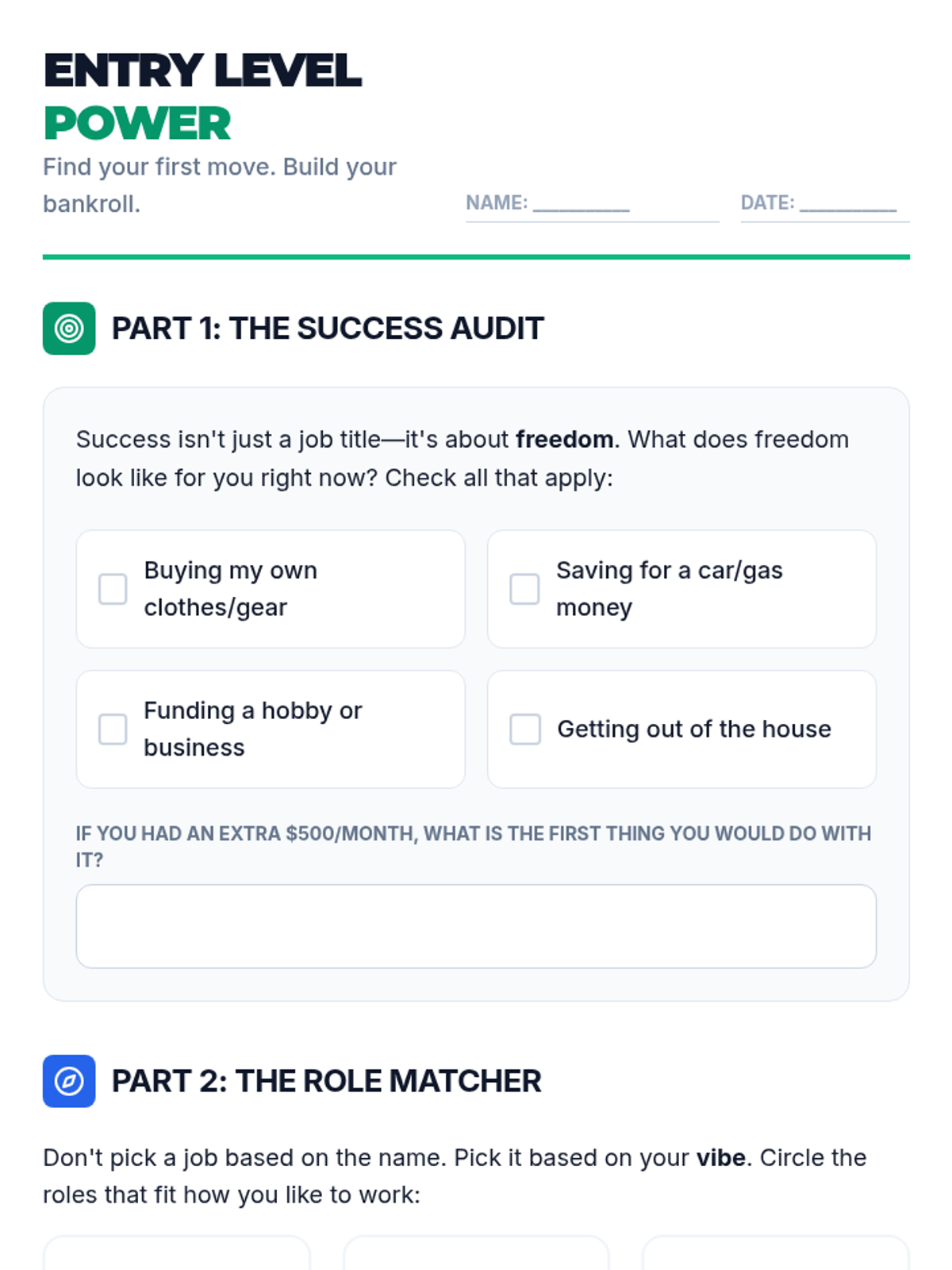
An interactive worksheet for high schoolers to identify their motivations for working, match their personality to entry-level roles, and map out local job opportunities.
A high-impact slide deck for high school students focused on redefining success and identifying entry-level job opportunities. Includes visual guides for resume building and strategic thinking about part-time work.
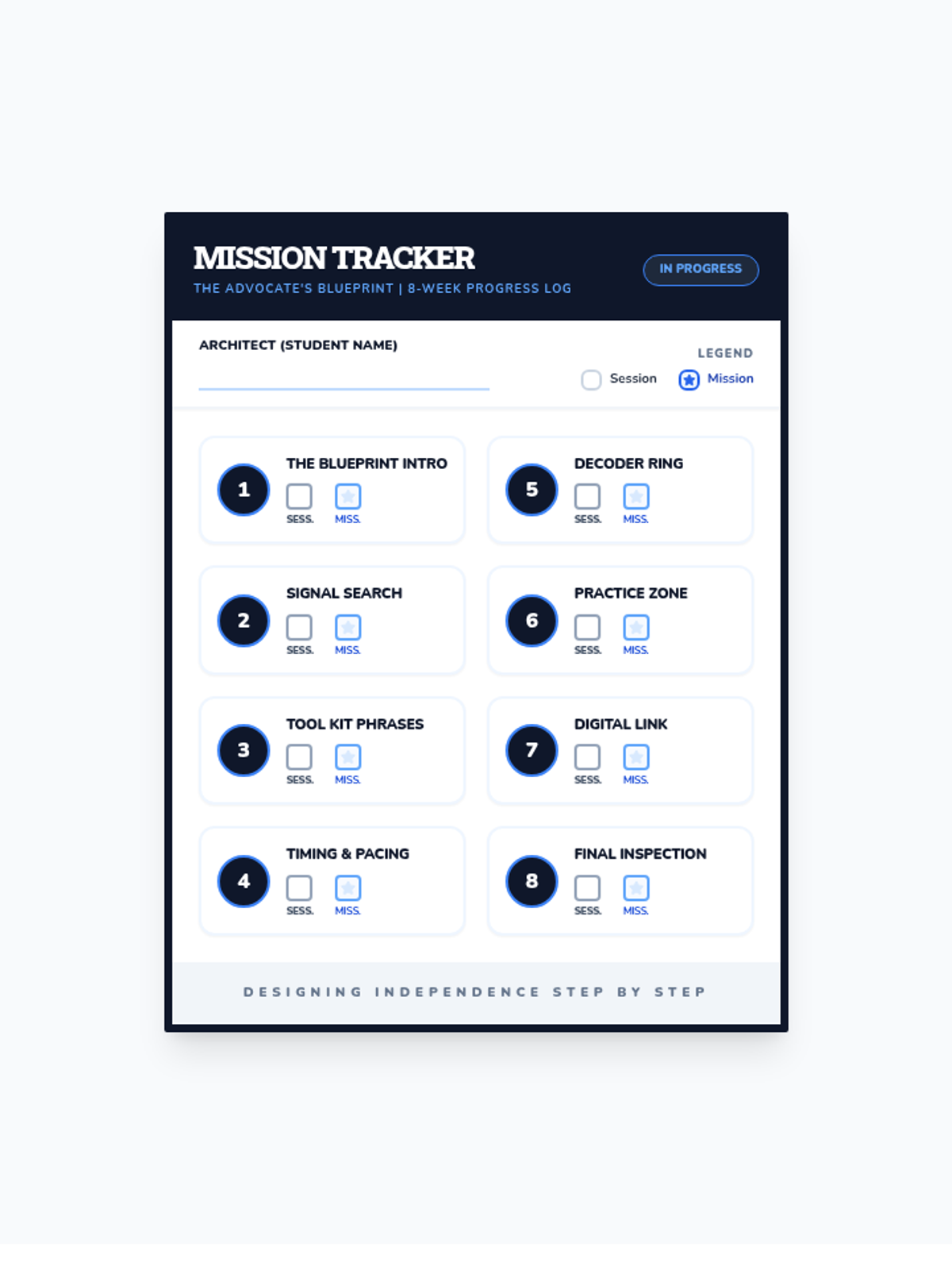
Progress tracker revised with direct checkbox labeling, increased font legibility, and fixed single-page layout. Reverted to the original blue blueprint theme. Fixed label contrast and alignment. Fixed page break.
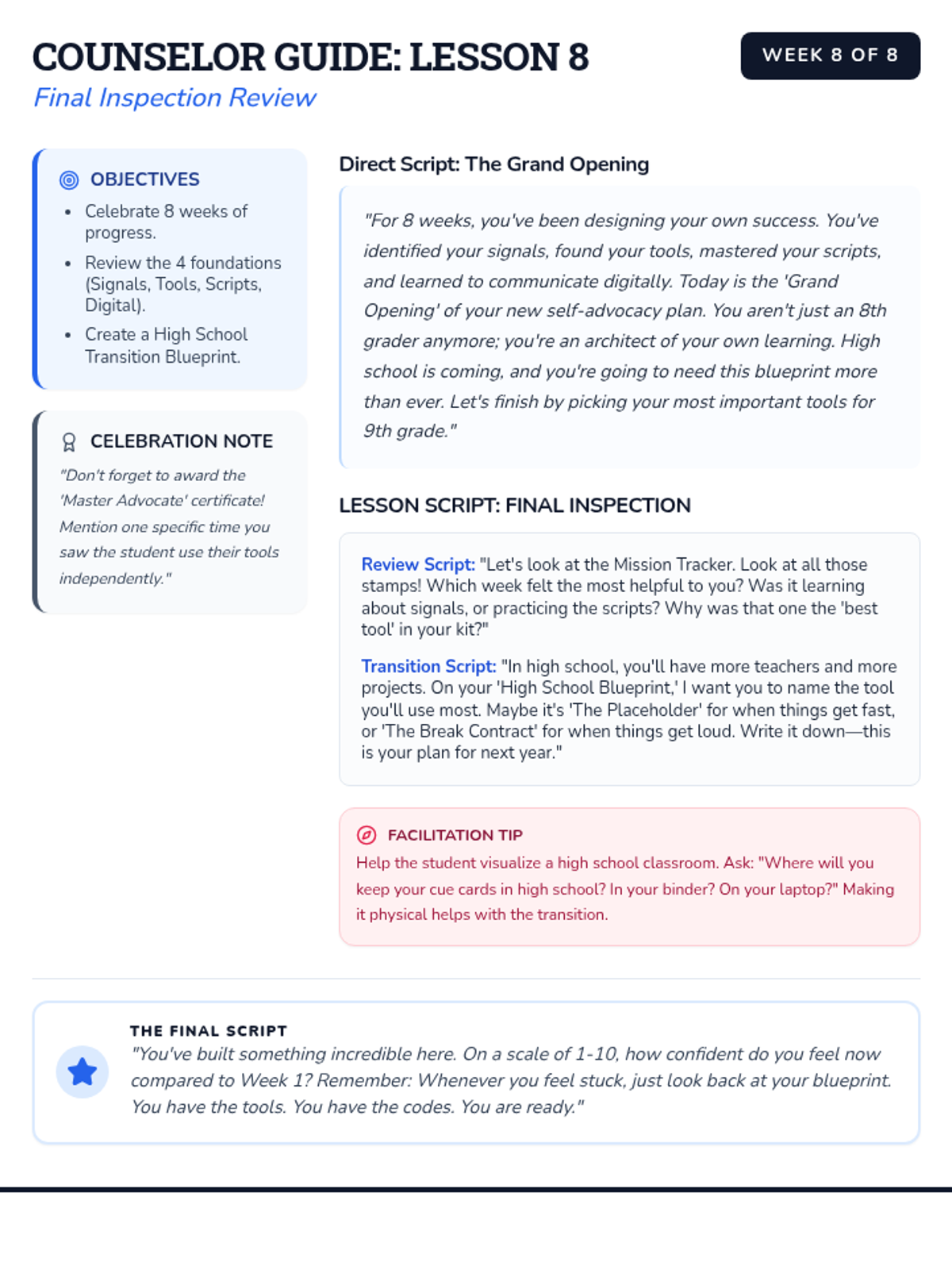
Expanded counselor guide for Week 8 with more detailed word-for-word scripts and instructional notes. Reverted to the original blue blueprint theme. Removed all IEP/Goal terminology.
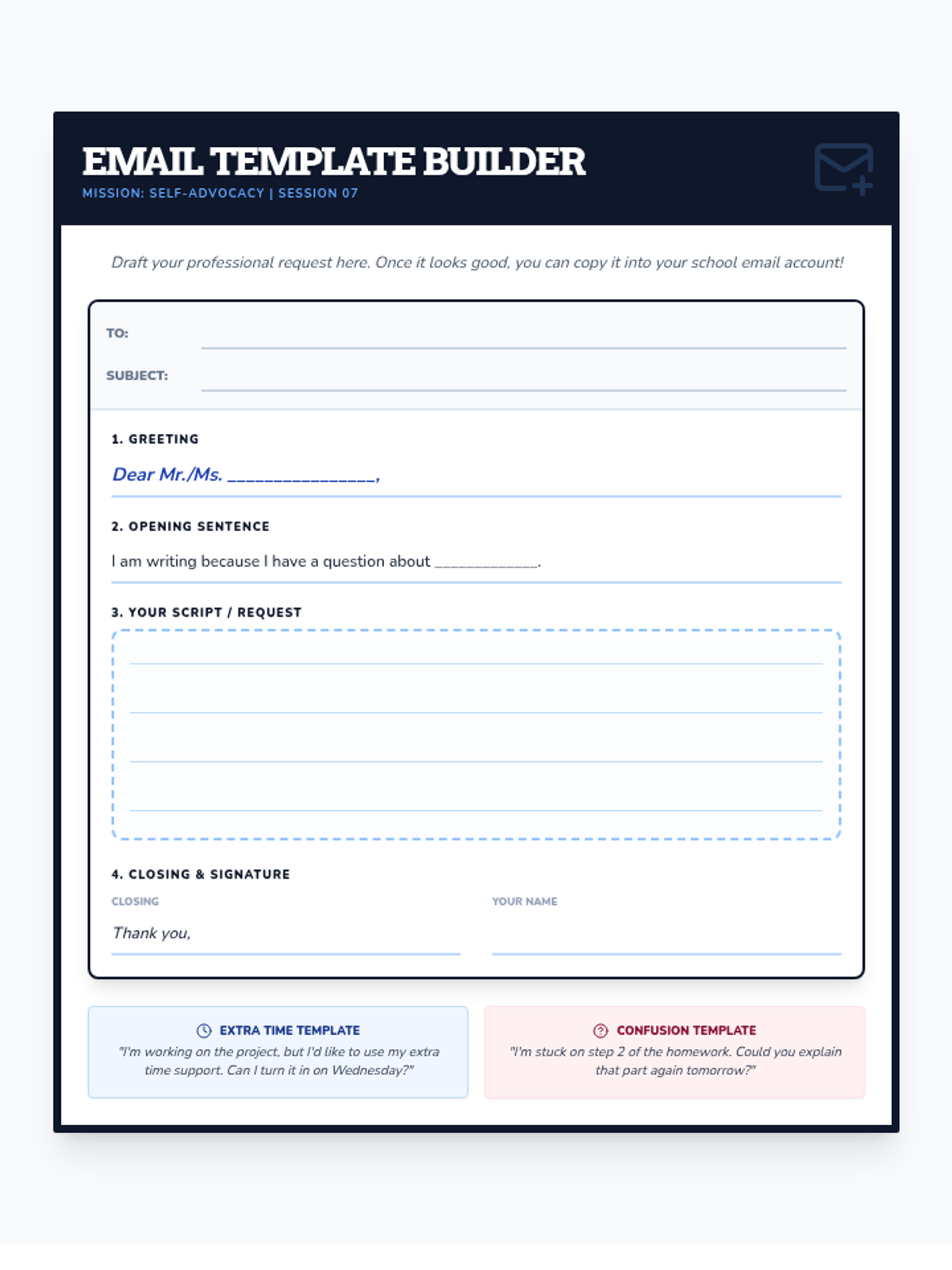
A structured worksheet to help students draft professional advocacy emails to their teachers. Reverted to the original blue blueprint theme. Fixed handwriting space and overlap issues. Removed all IEP/Goal terminology. Fixed page break.
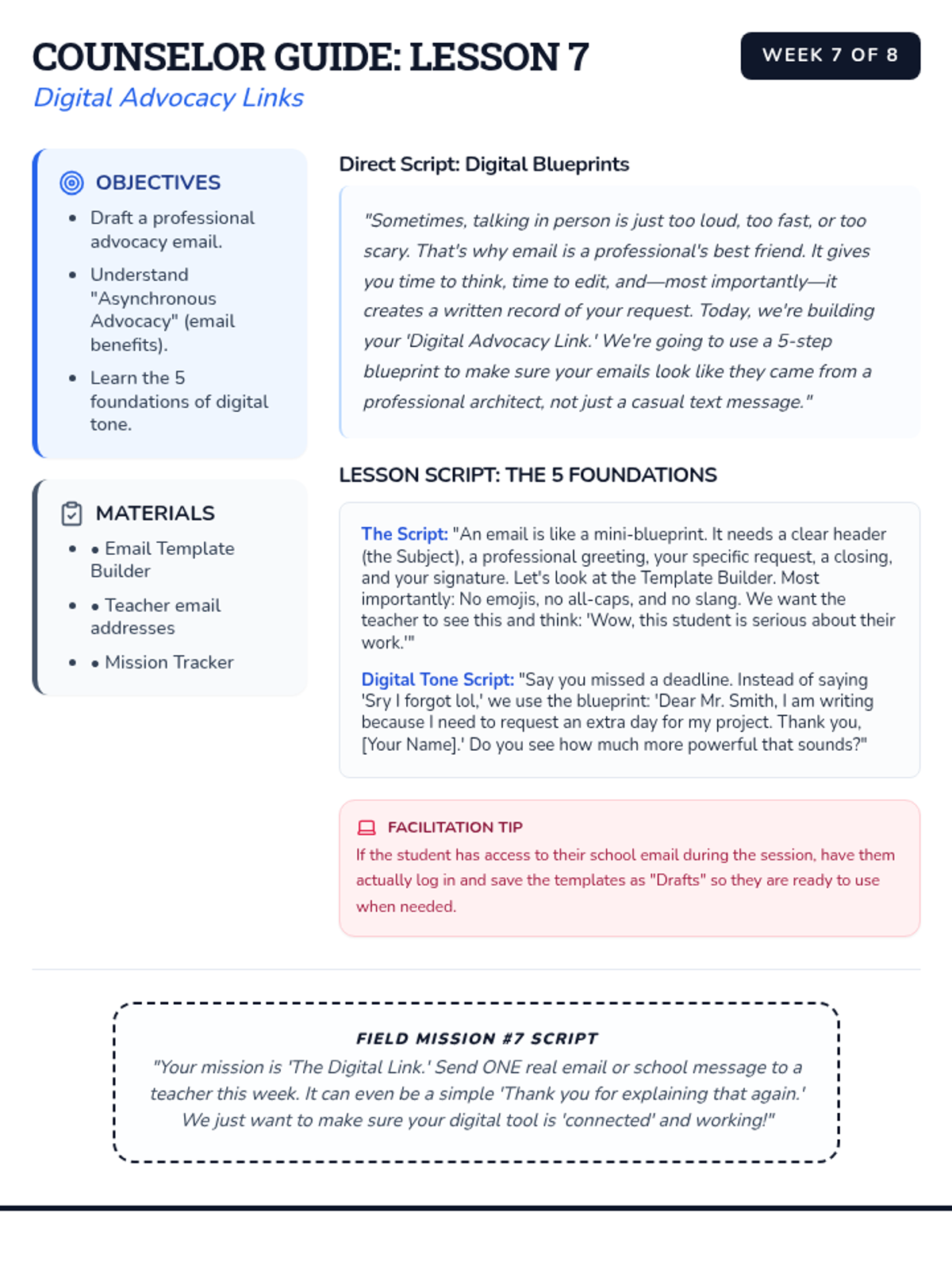
Expanded counselor guide for Week 7 with more detailed word-for-word scripts and instructional notes. Reverted to the original blue blueprint theme. Removed all IEP/Goal terminology.
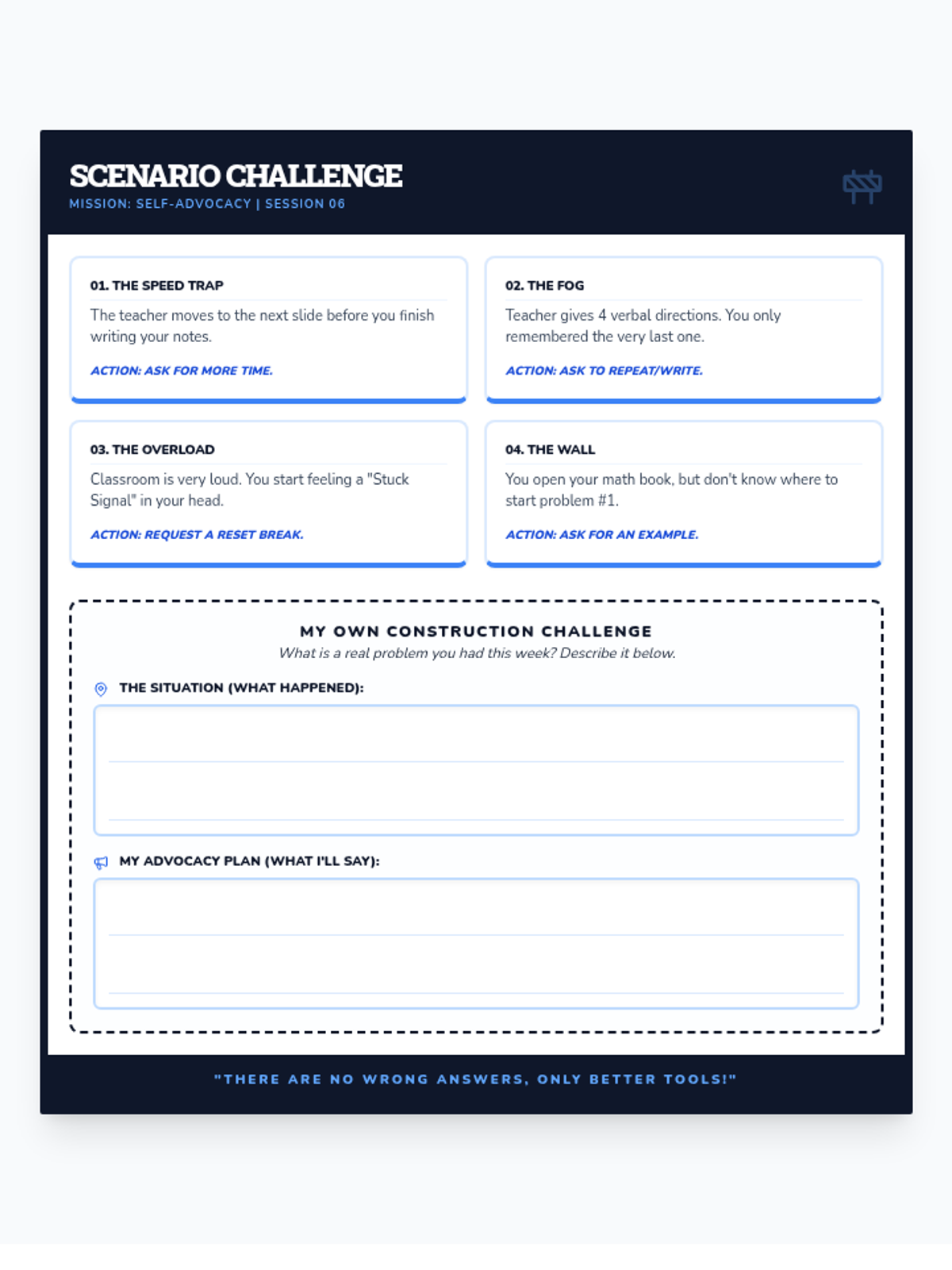
Scenario challenge cards revised with larger font sizes, better writing space in the "Create Your Own" section, and fixed single-page layout. Reverted to the original blue blueprint theme. Fixed contrast and page break.
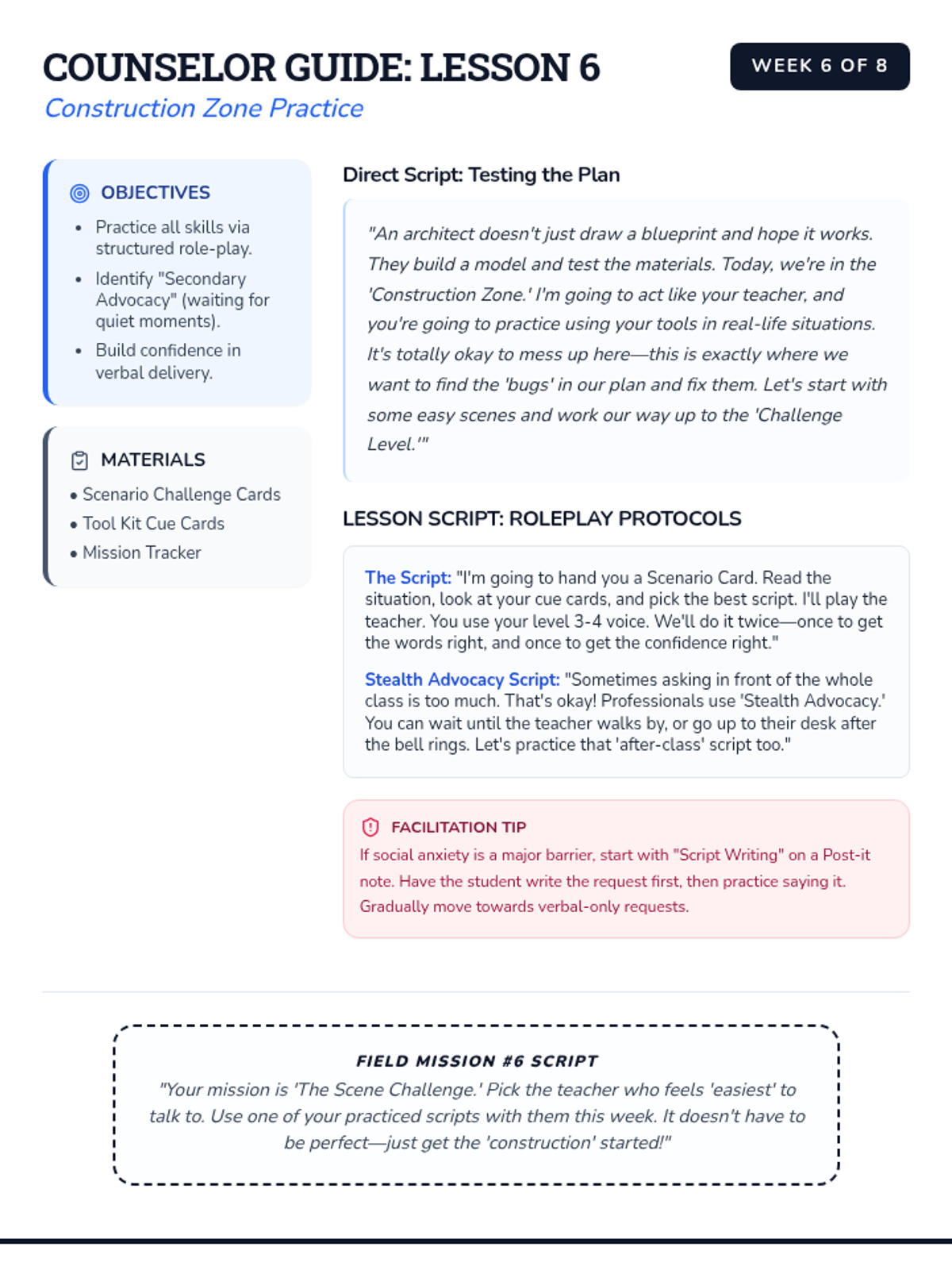
Expanded counselor guide for Week 6 with more detailed word-for-word scripts and instructional notes. Reverted to the original blue blueprint theme. Removed all IEP/Goal terminology.
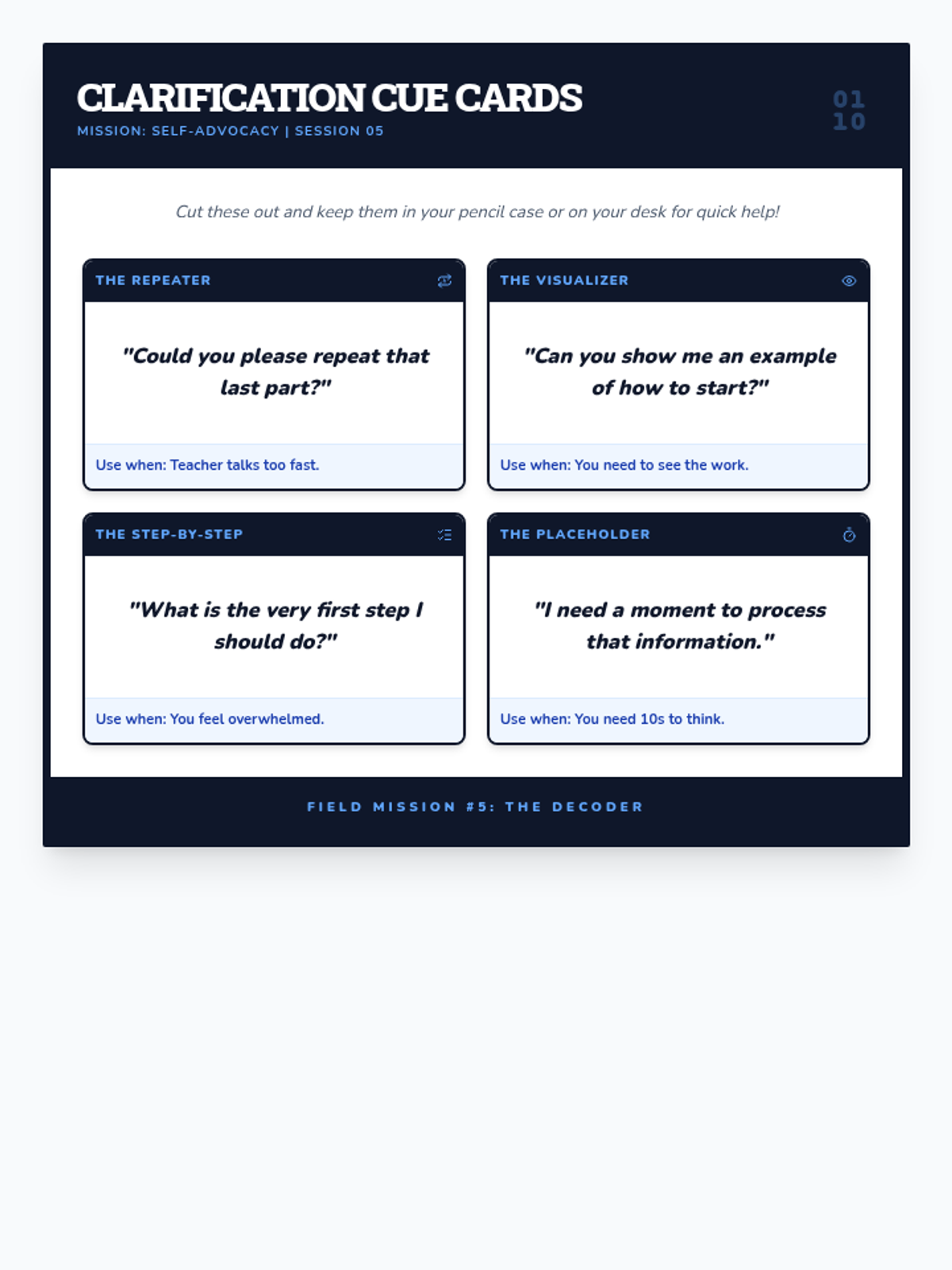
Cue cards revised with uniform card sizes, increased font legibility, and fixed single-page layout. Reverted to the original blue blueprint theme.
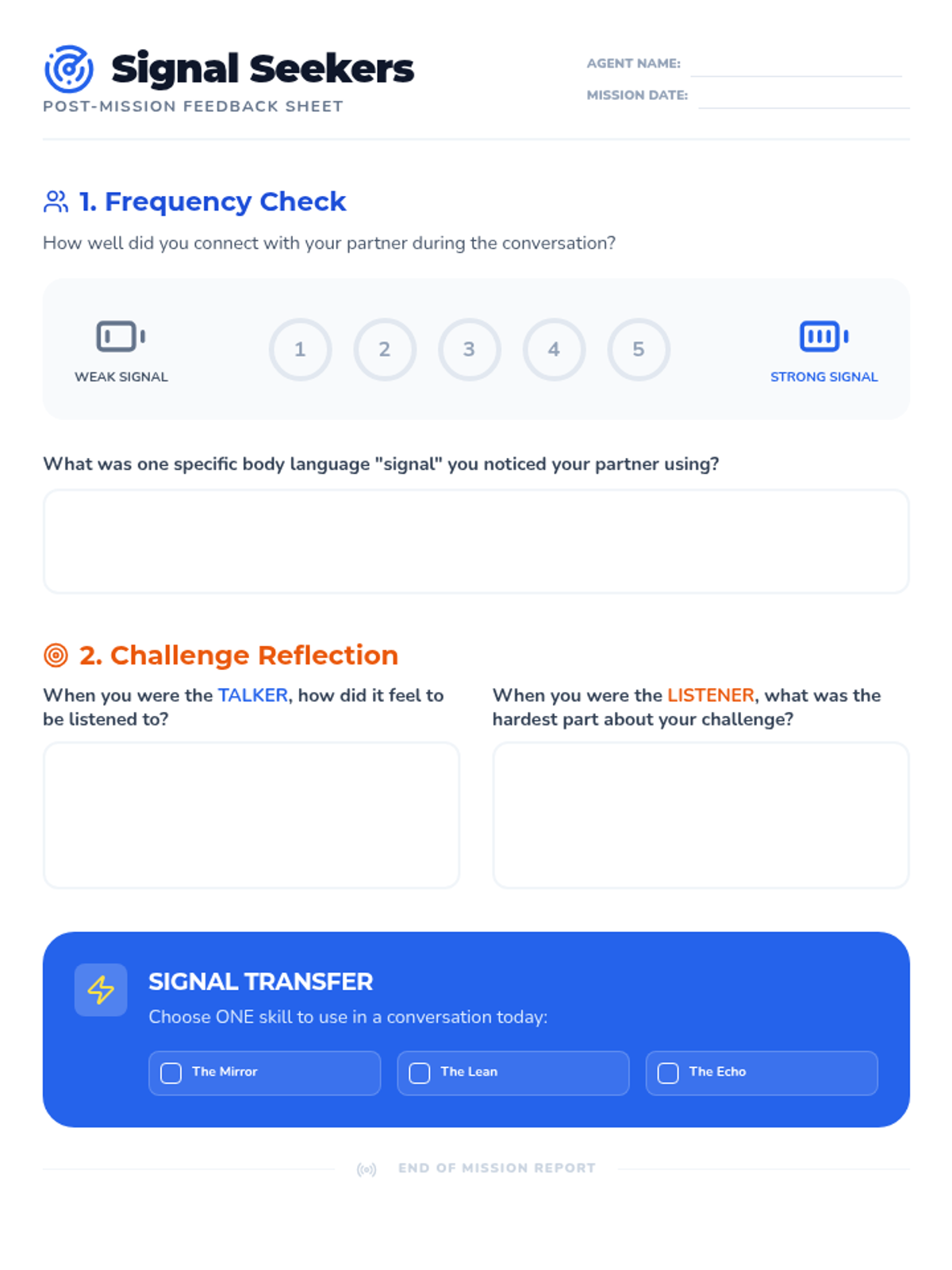
A student reflection worksheet for the Signal Seekers game. Consolidated onto a single page with corrected rating scale styling and improved readability.
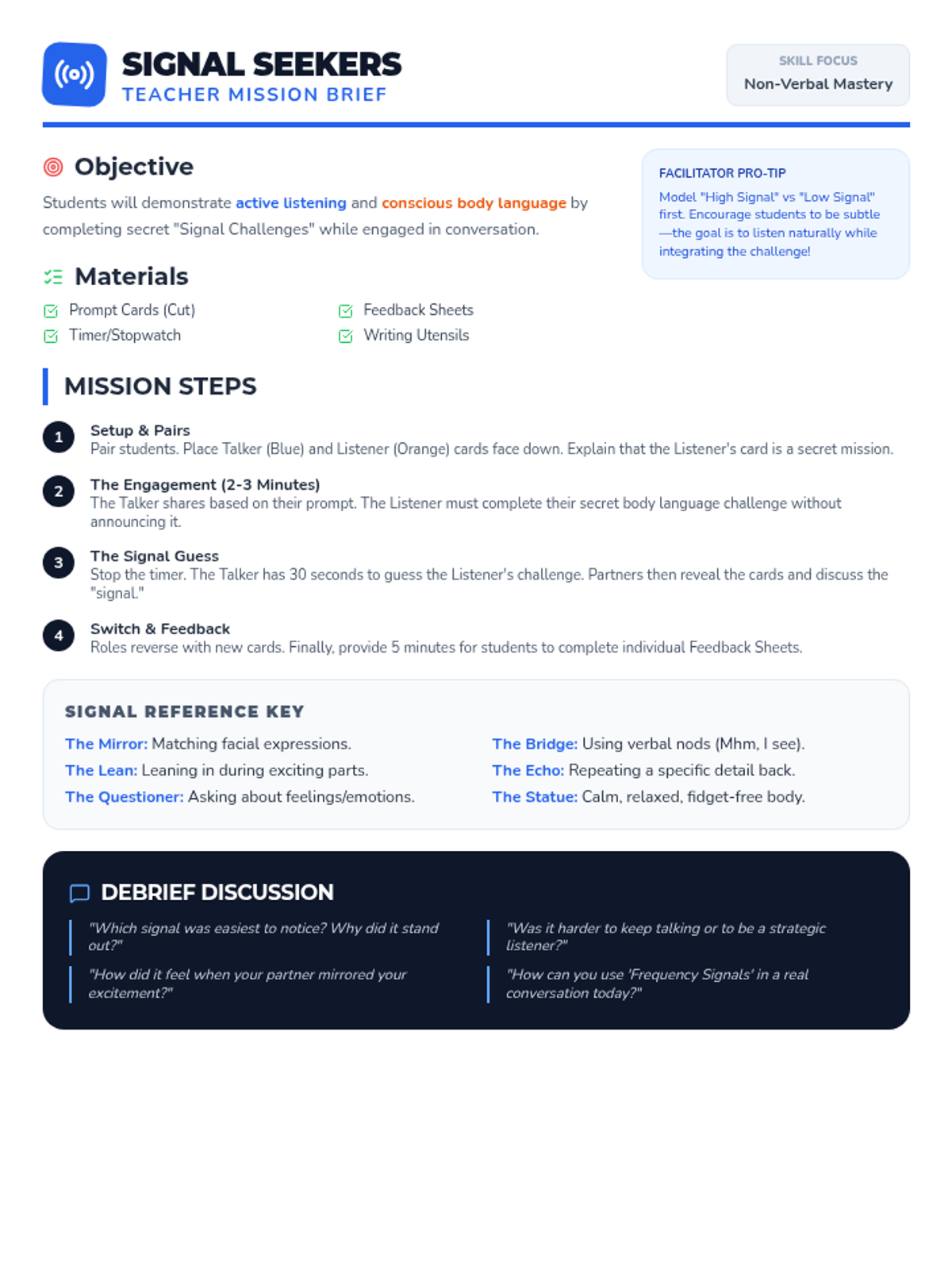
A consolidated one-page facilitator guide for the Signal Seekers game. Includes objectives, procedure, a reference key for the body language signals, and discussion prompts. Updated with improved layout to ensure single-page printing.
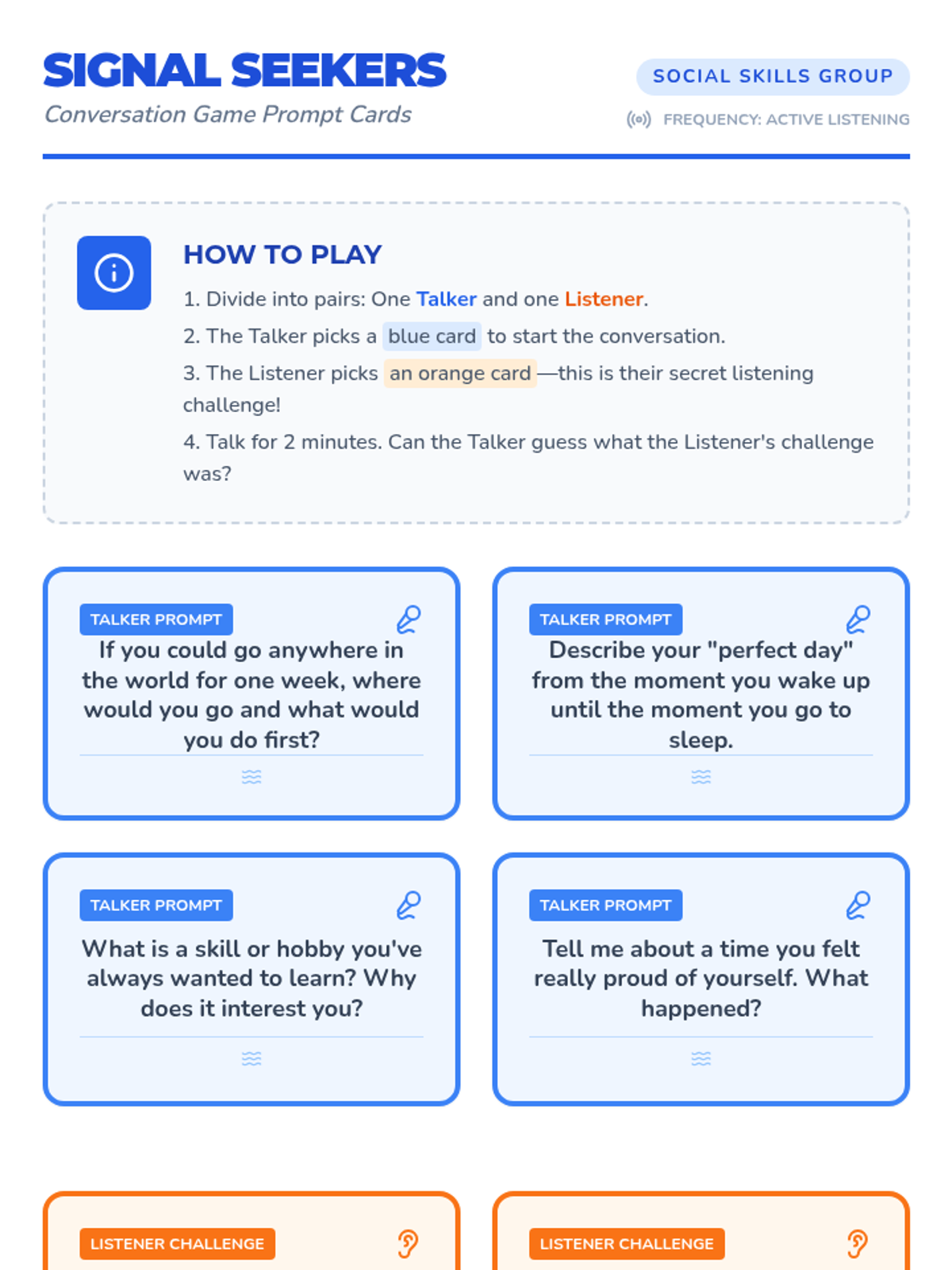
A collection of printable prompt cards for the Signal Seekers game. Includes 4 Talker prompts and 6 Listener challenges that focus on body language and active listening. Updated with corrected grammar and improved print layout.
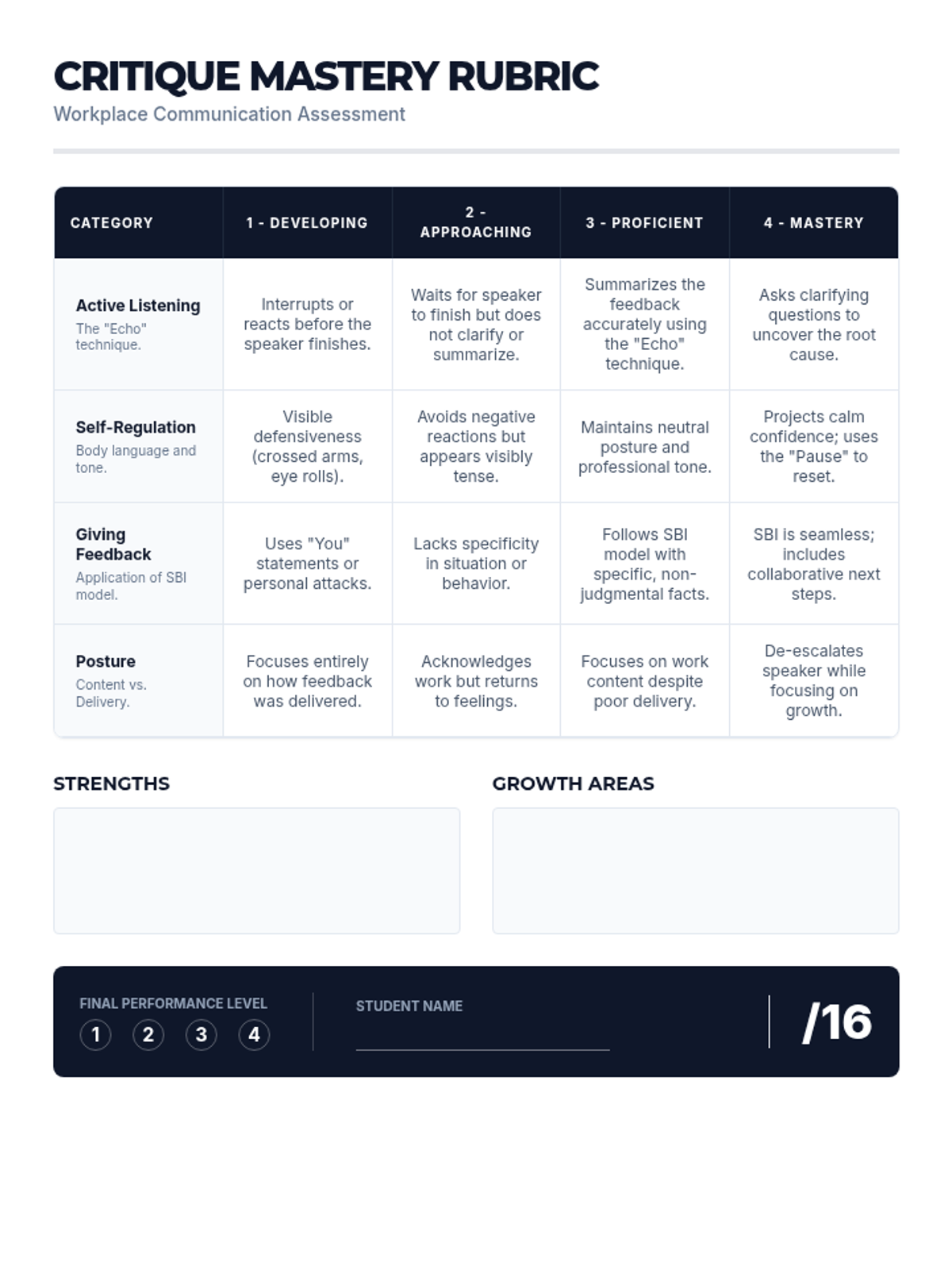
A professional evaluation rubric for assessing student performance. Revised to fit on a single page and improve visual contrast for grading.
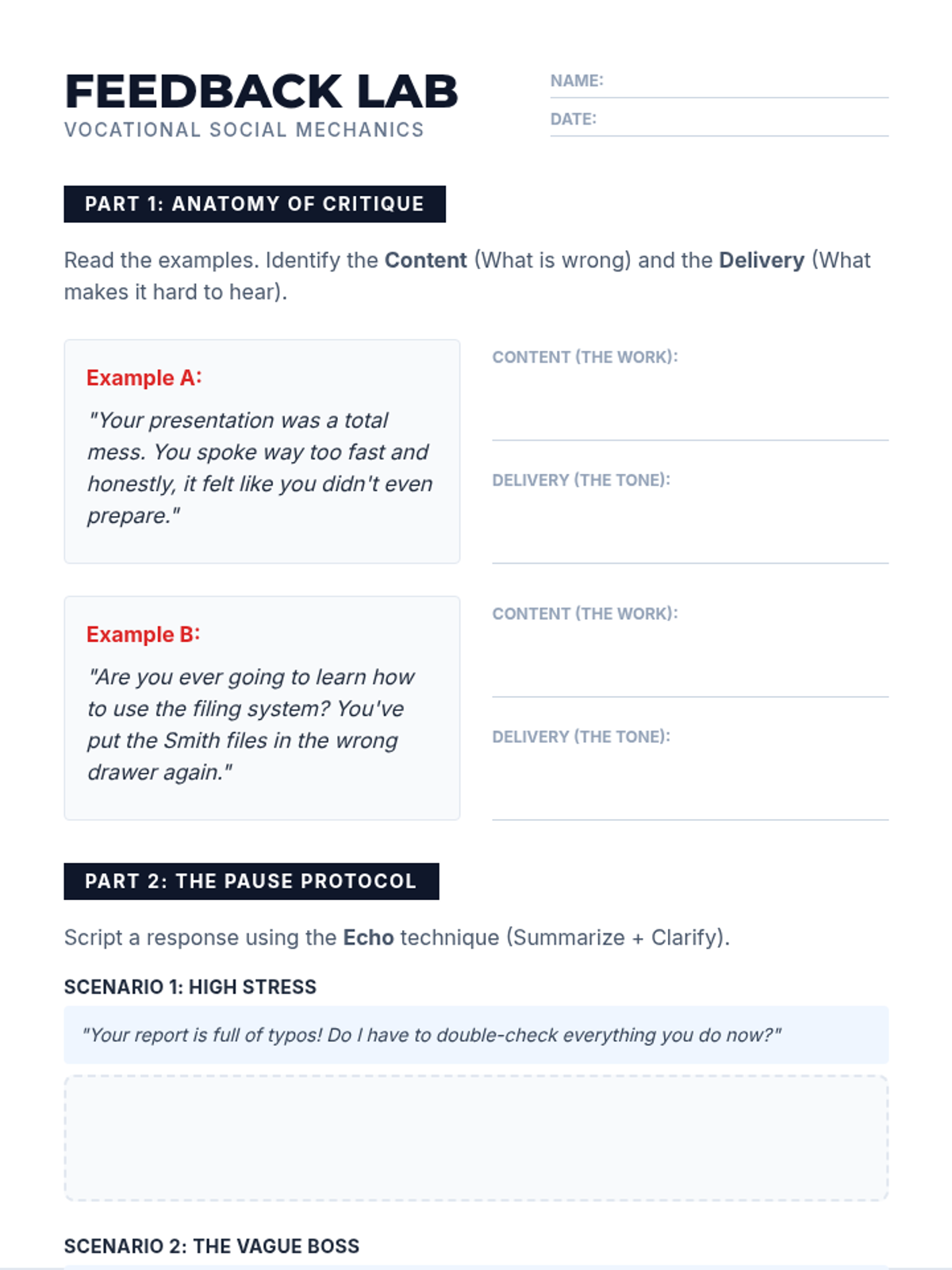
A student worksheet for practicing de-escalation, active listening, and the SBI feedback model. Revised to improve handwriting space and ensure layout consistency across pages.
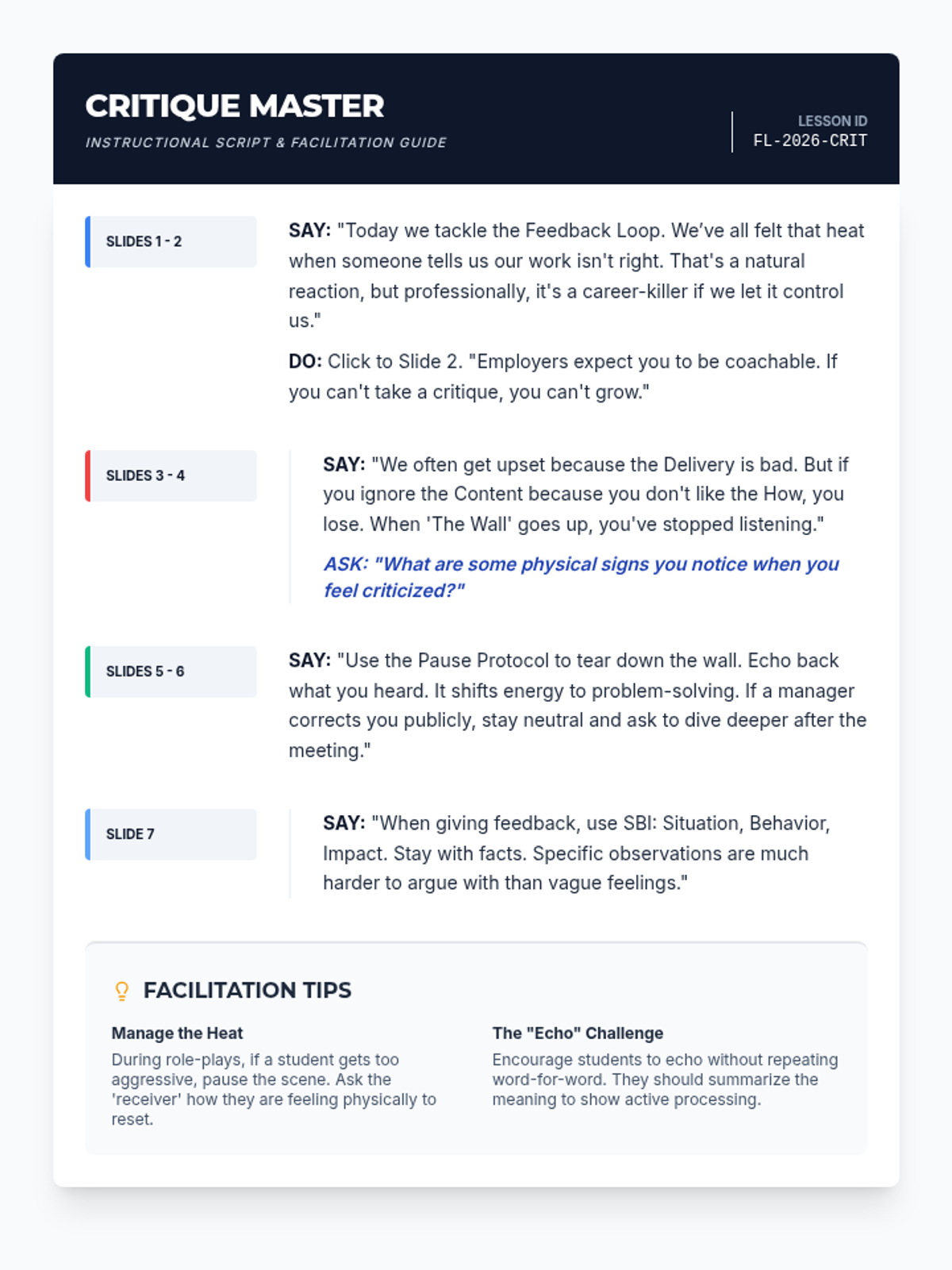
An instructional script for educators to use alongside the 'Feedback Loop' slides. Revised to remove extra pages and ensure all icons render.
A high-impact visual slide deck for delivering instruction on professional feedback, featuring the SBI model, de-escalation tactics, and the 'Pause Protocol'. Revised to fix placeholders and contrast.
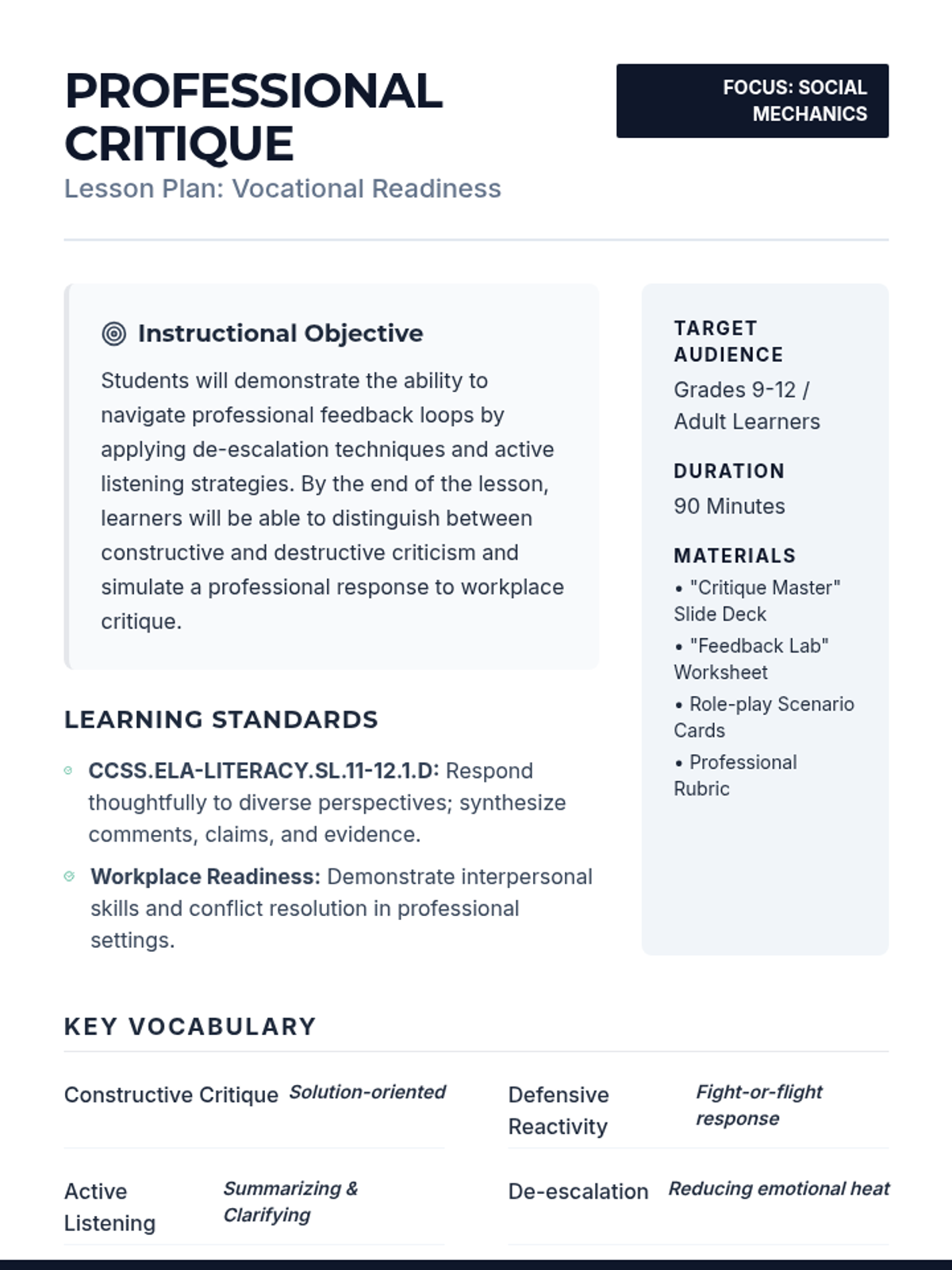
A comprehensive lesson plan for instructors detailing the objectives, standards, and step-by-step procedures for teaching professional feedback and de-escalation skills. Revised for layout and timestamps.
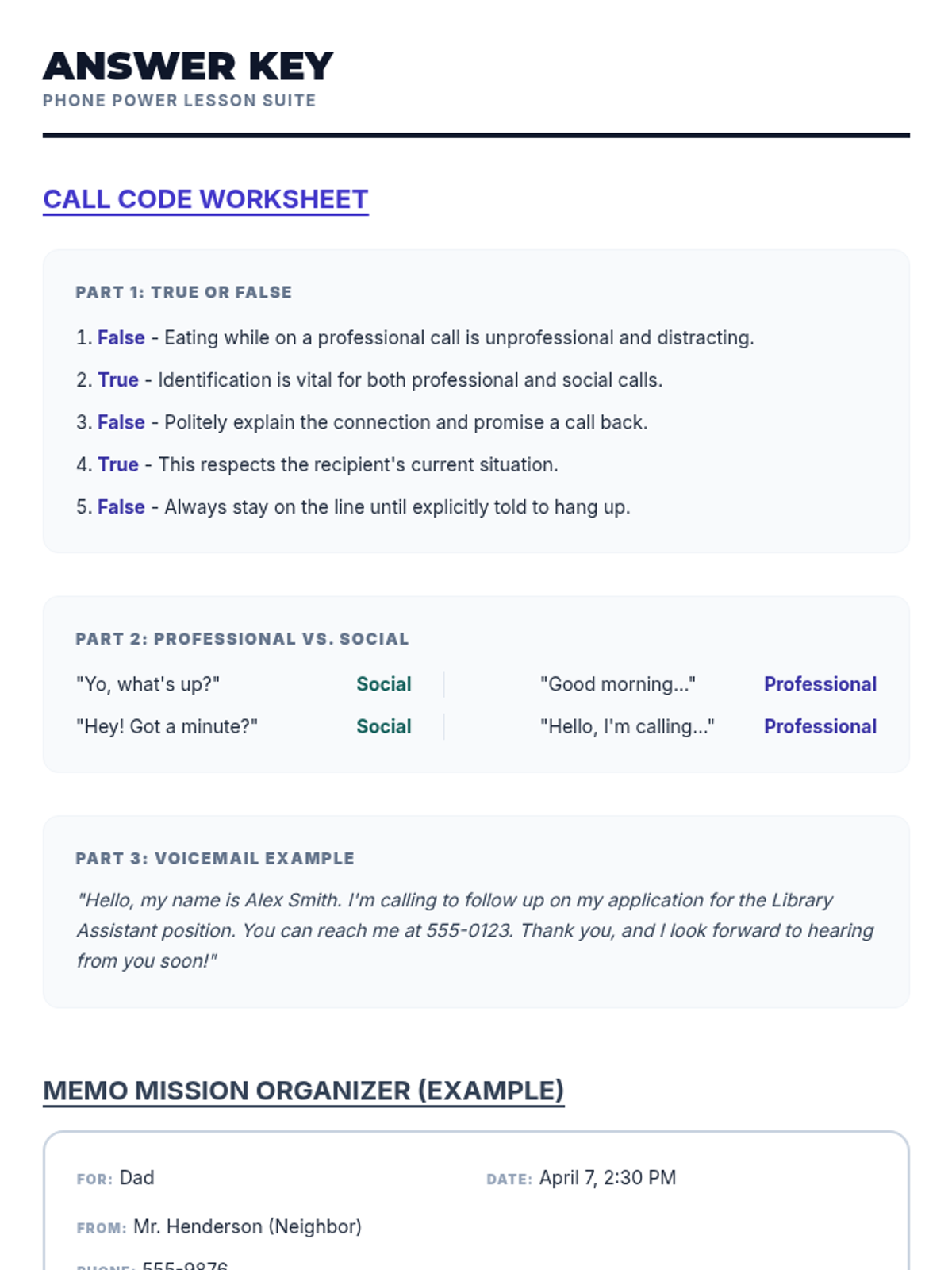
Detailed answer key and exemplar responses for the Call Code Worksheet and Memo Mission Organizer. formatting improved for readability and page flow.
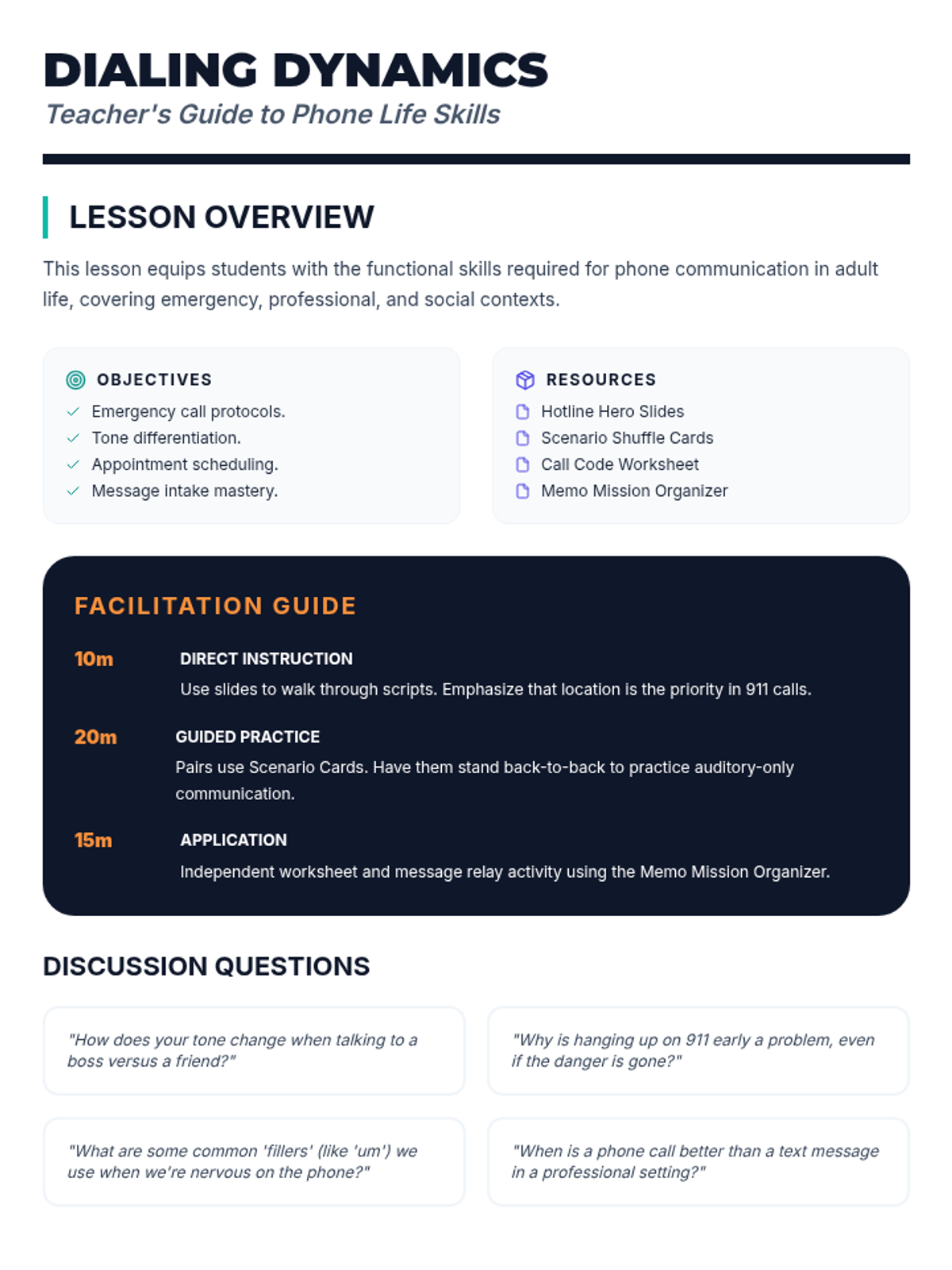
Teacher's guide for the Phone Power lesson, including learning objectives, pacing suggestions, facilitation tips for role-plays, and discussion questions. Adjusted for better flow and spacing.
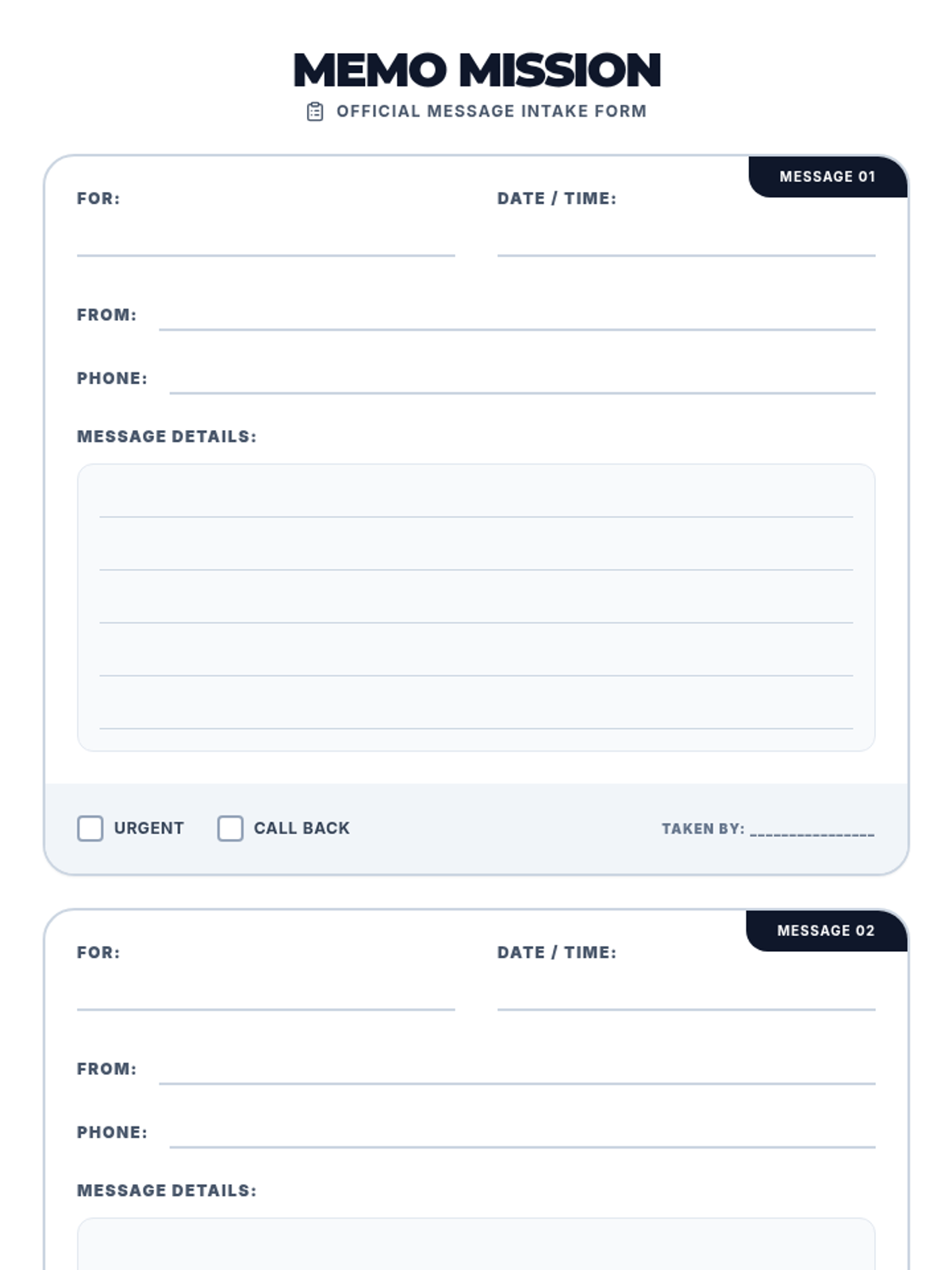
A professional-style graphic organizer for students to practice taking phone messages. High contrast labels and clear page-break-avoidance for printing.
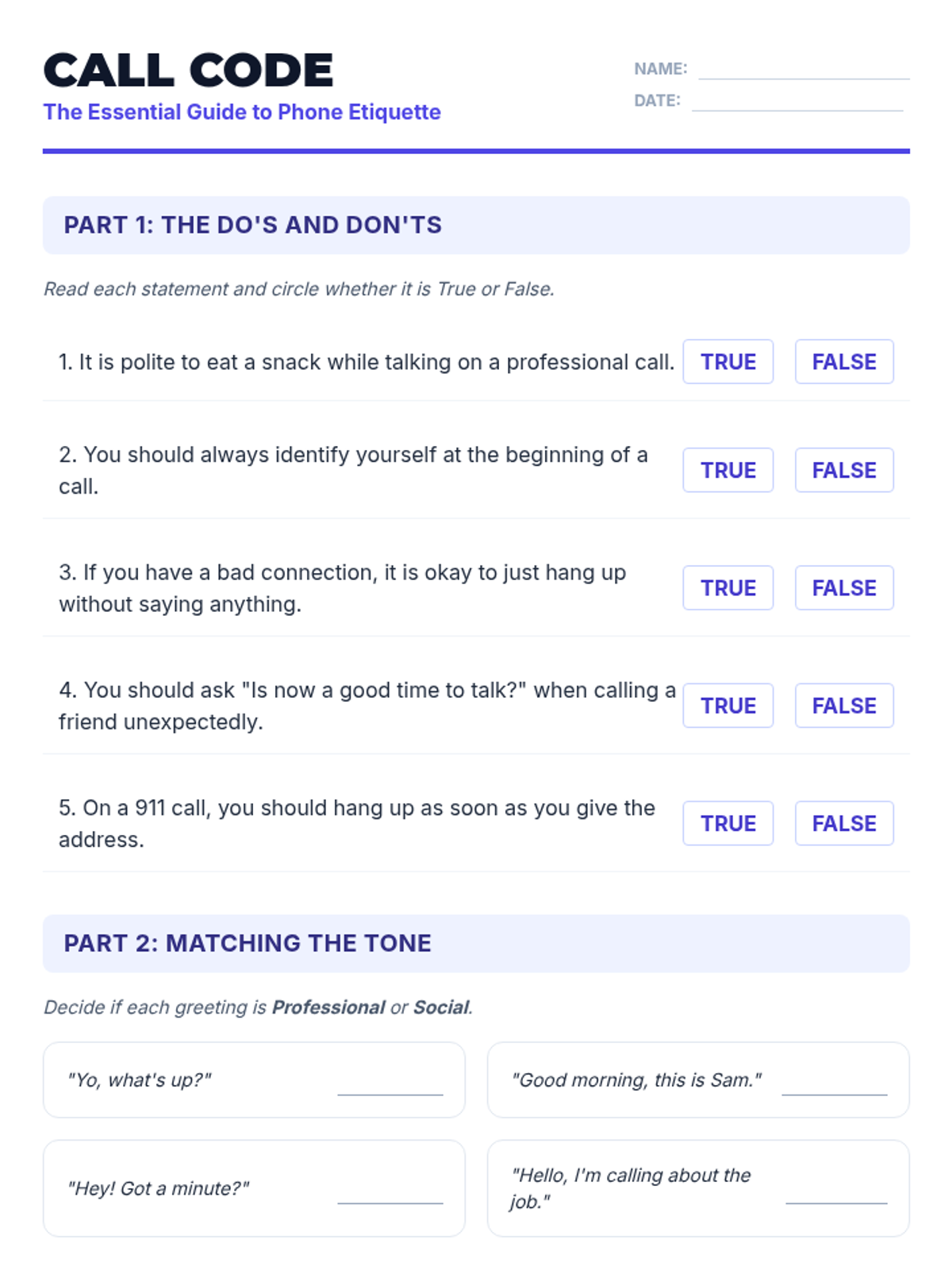
A worksheet focusing on phone etiquette rules, distinguishing between professional and social tones, and practicing leaving an effective voicemail. Fixed page breaks and formatting.
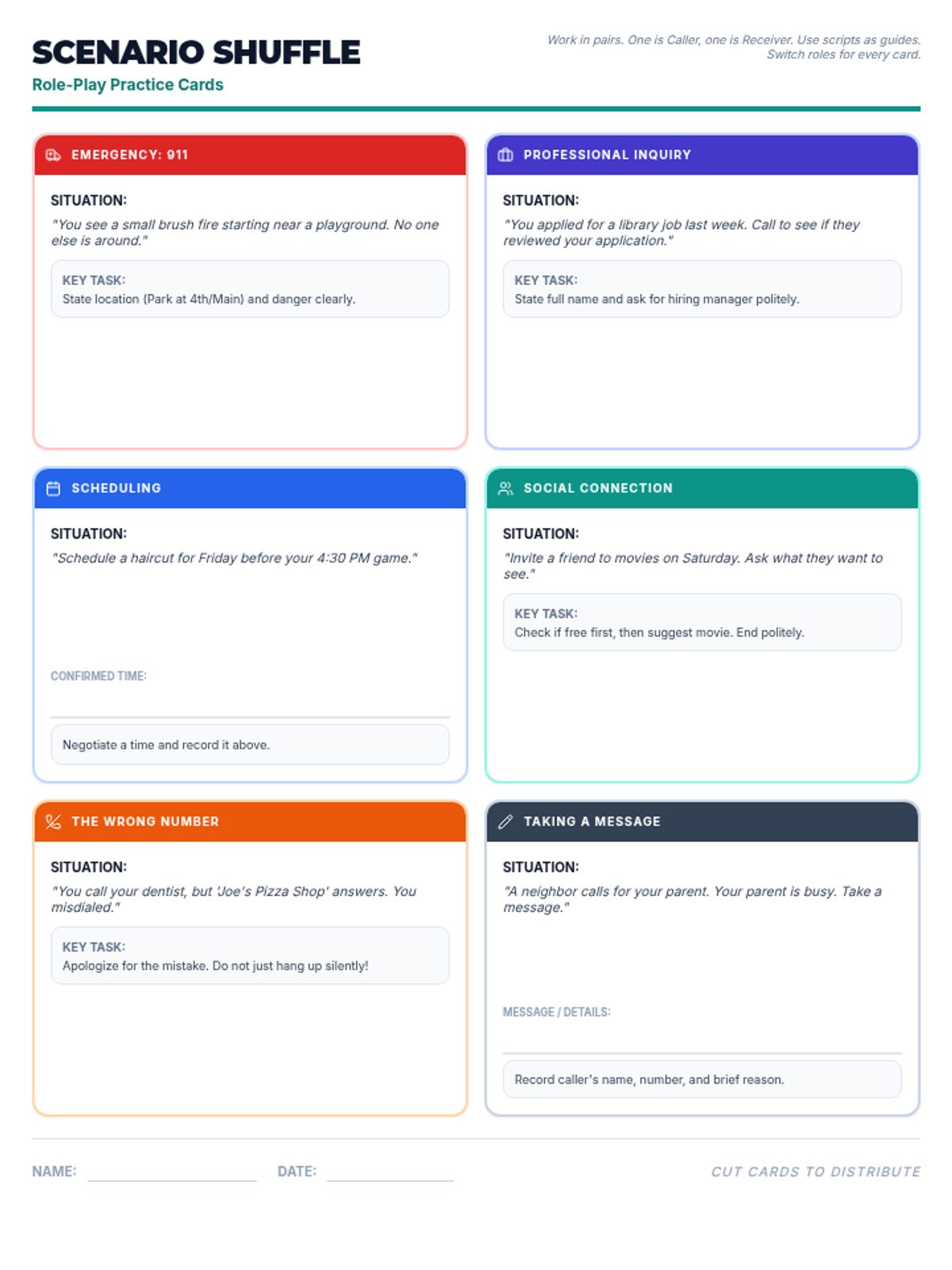
A set of six role-play scenario cards designed to help students practice emergency, professional, social, and message-taking phone calls in a structured classroom setting. fit on a single page.
Visual scripts and essential tips for four types of phone calls: emergency, scheduling, professional, and social. Includes icons and clear prompts for student instruction.
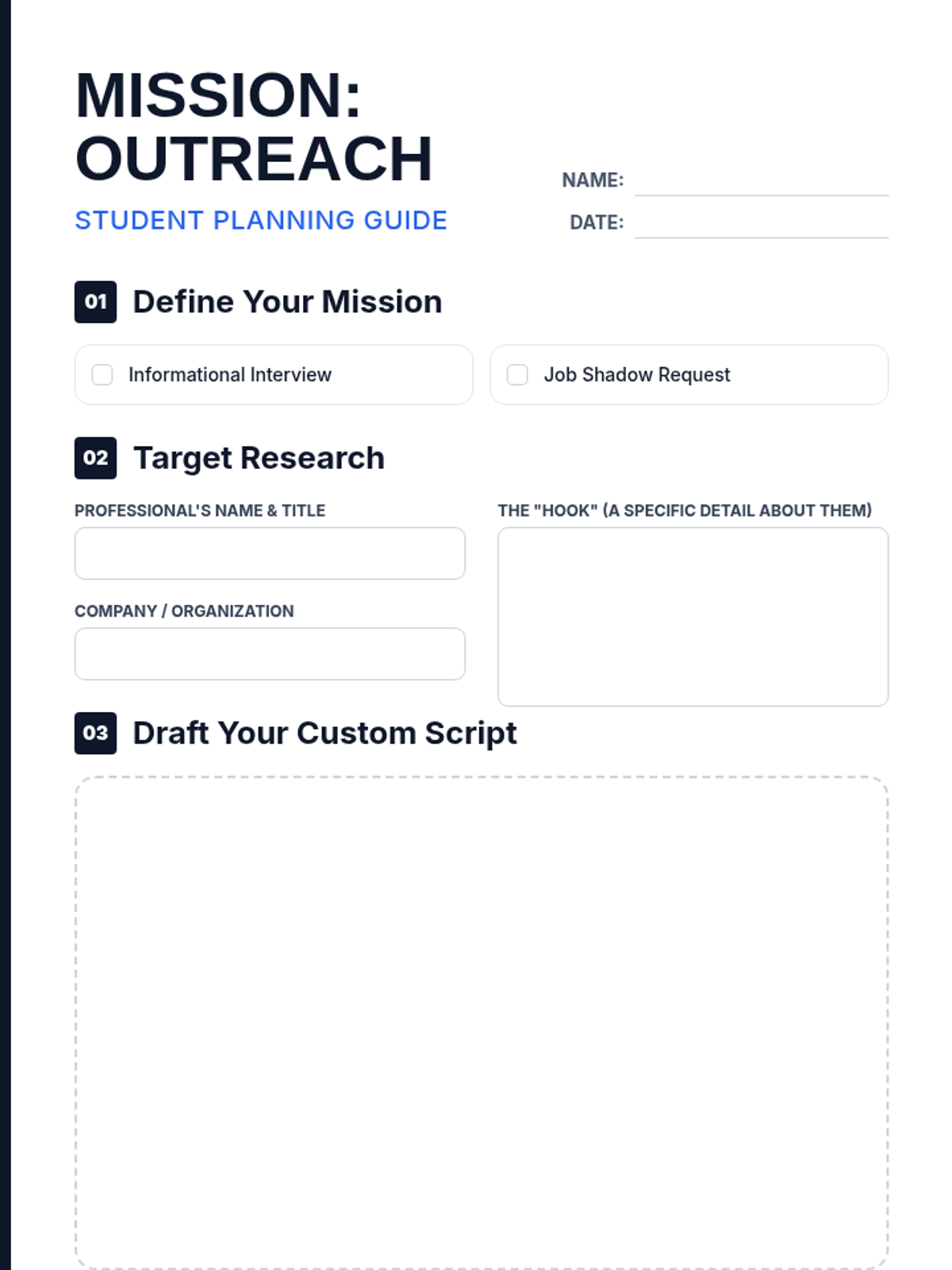
A structured student workbook for planning outreach, now with fixed page breaks, an expanded log table, and consolidated reflection sections.
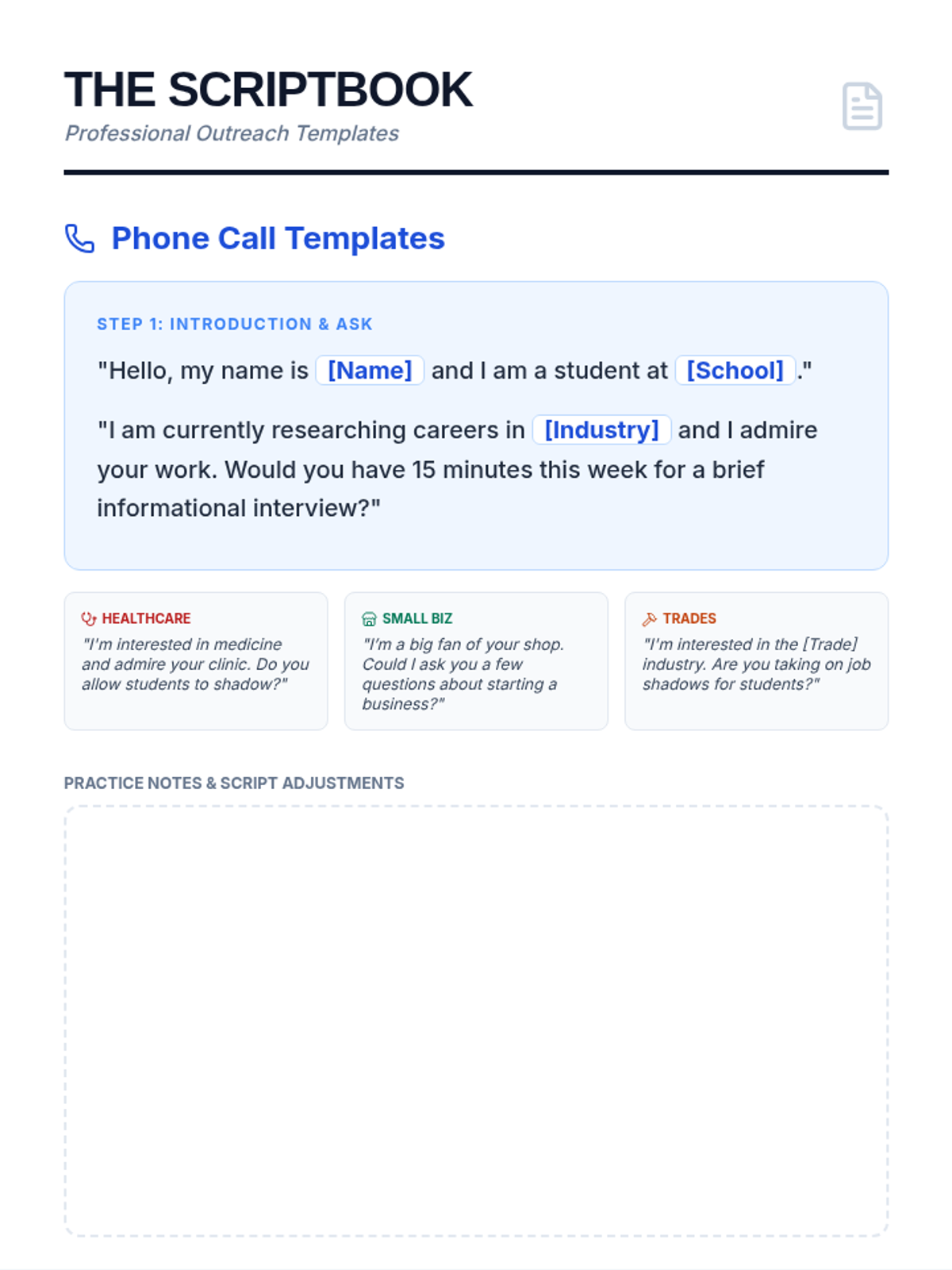
A collection of phone and email scripts for students, now with standardized font sizes, improved placeholders, and fixed page breaks.
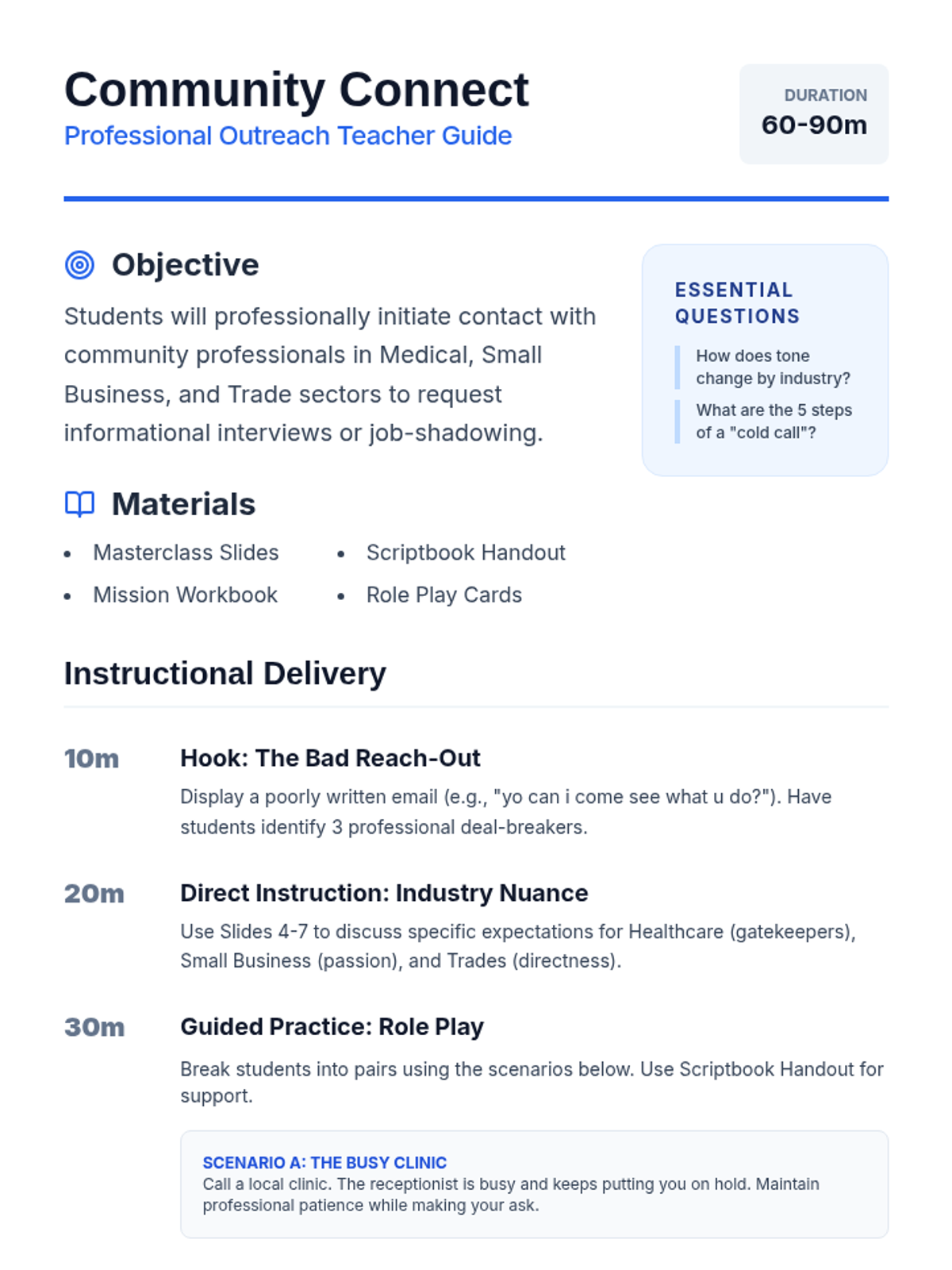
A comprehensive teacher's guide for the Community Connect lesson, now updated with fixed layout and better pagination.
A 16:9 slide deck for teaching high school students professional outreach skills, featuring sector-specific tips for healthcare, business, and trades. now updated with scripts and scenarios.
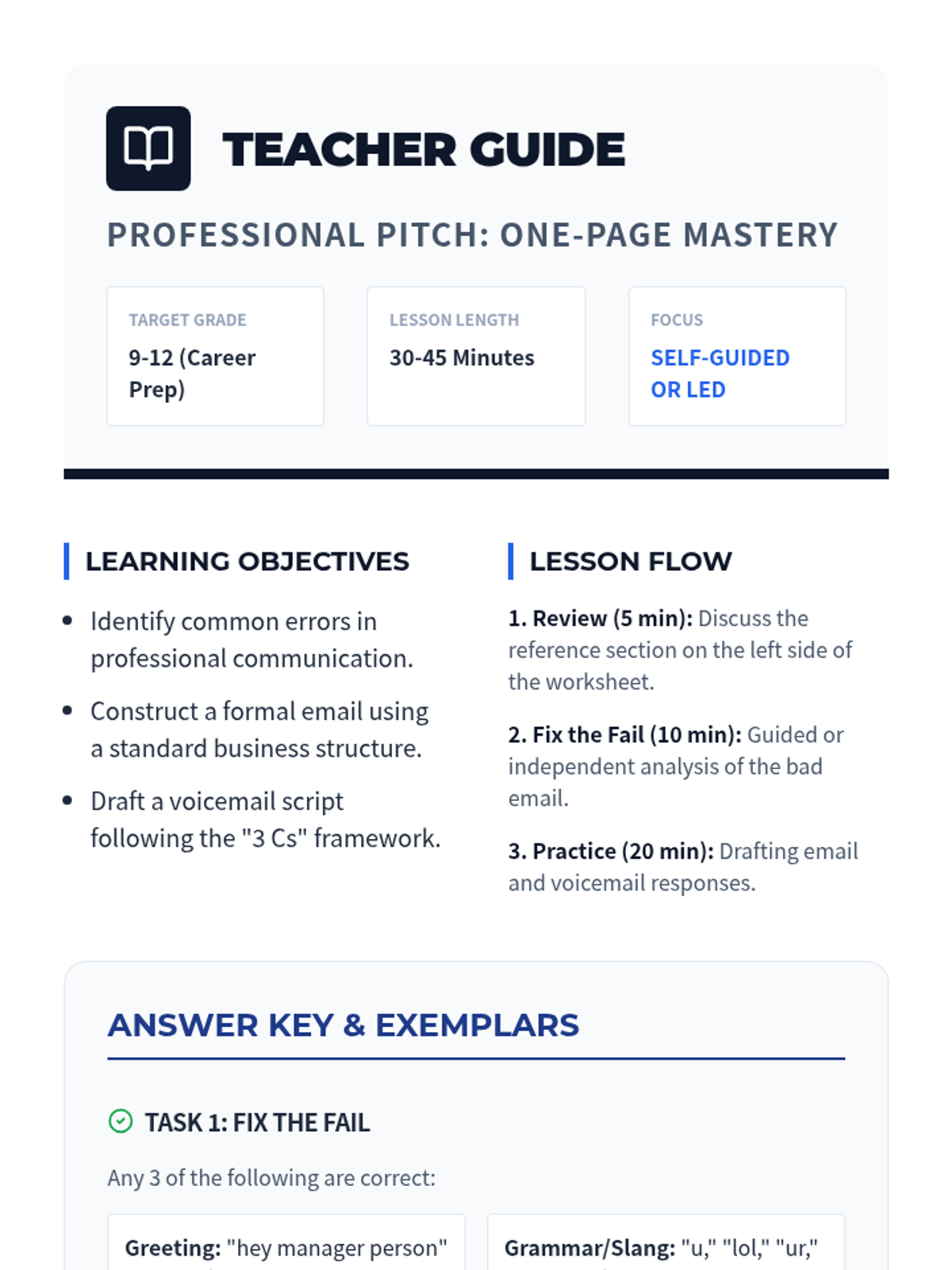
A condensed teacher guide for the one-page Professional Pitch lesson, including learning objectives, a streamlined facilitation plan, and answer keys.
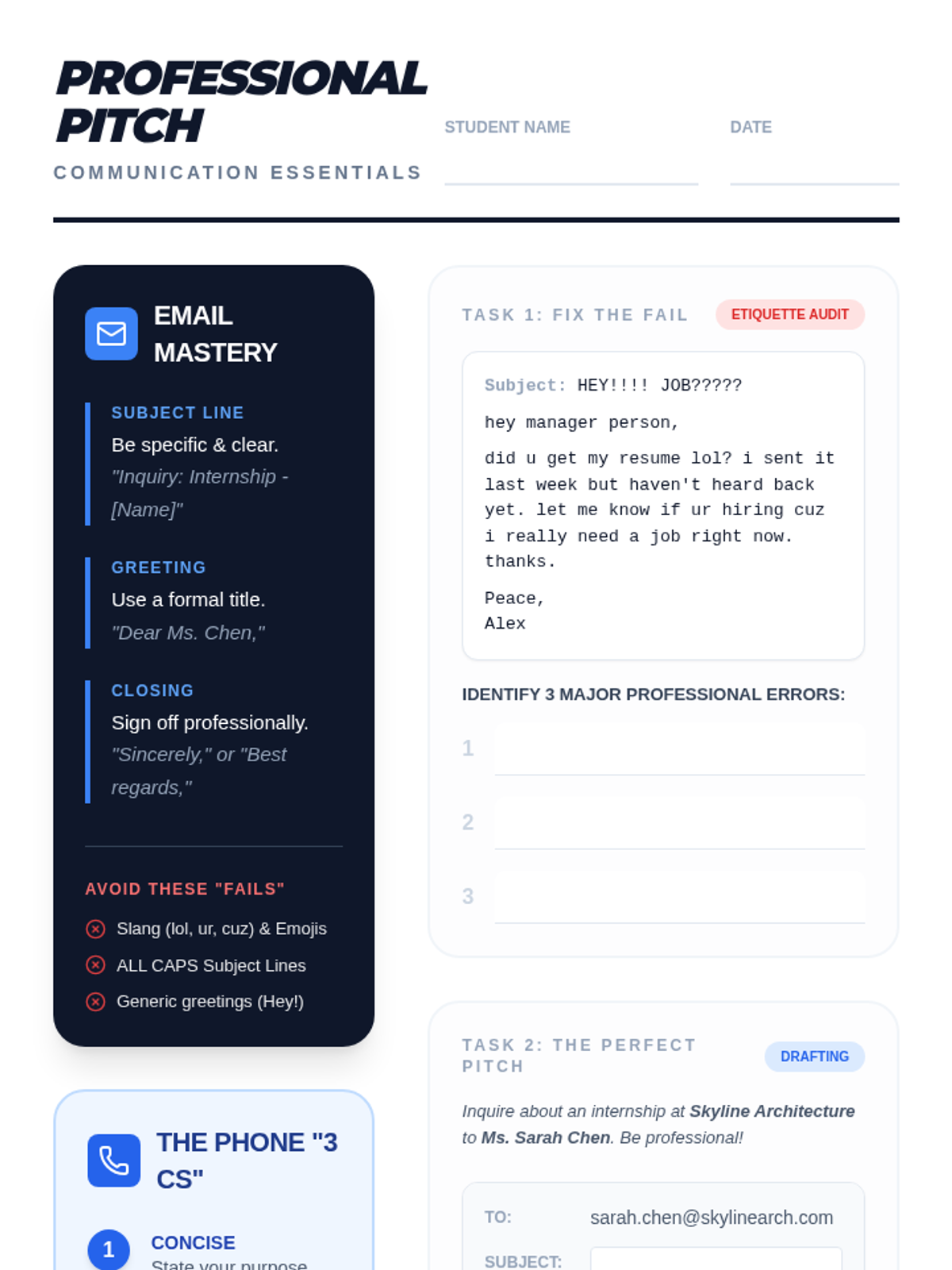
An updated one-page professional communication worksheet with improved spacing, font sizes for readability, and a cleaner layout. Combines instruction with three practice tasks.
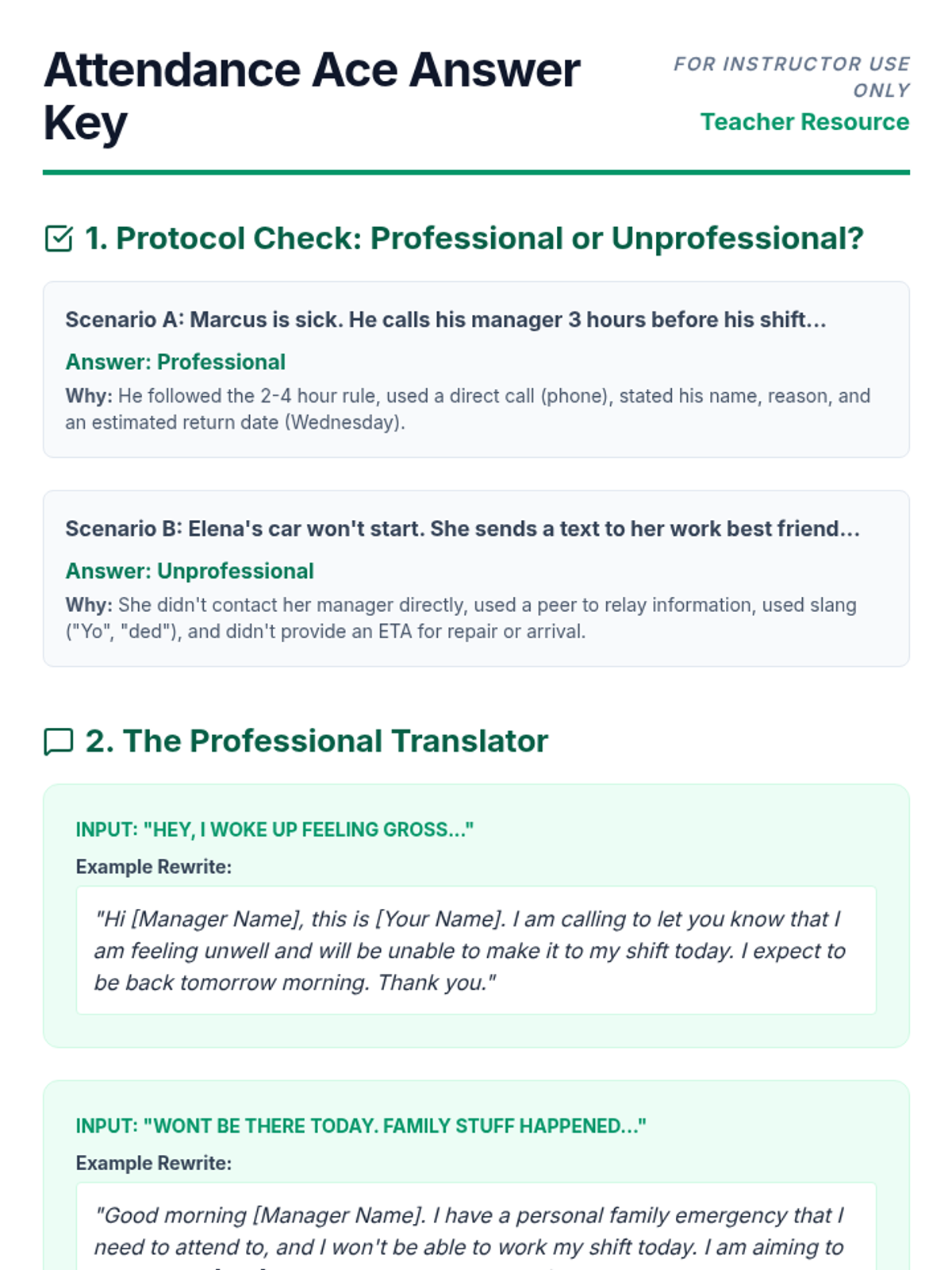
A comprehensive answer key for the Attendance Ace Worksheet, providing example professional rewrites and instructional guidance for the scenario analysis.
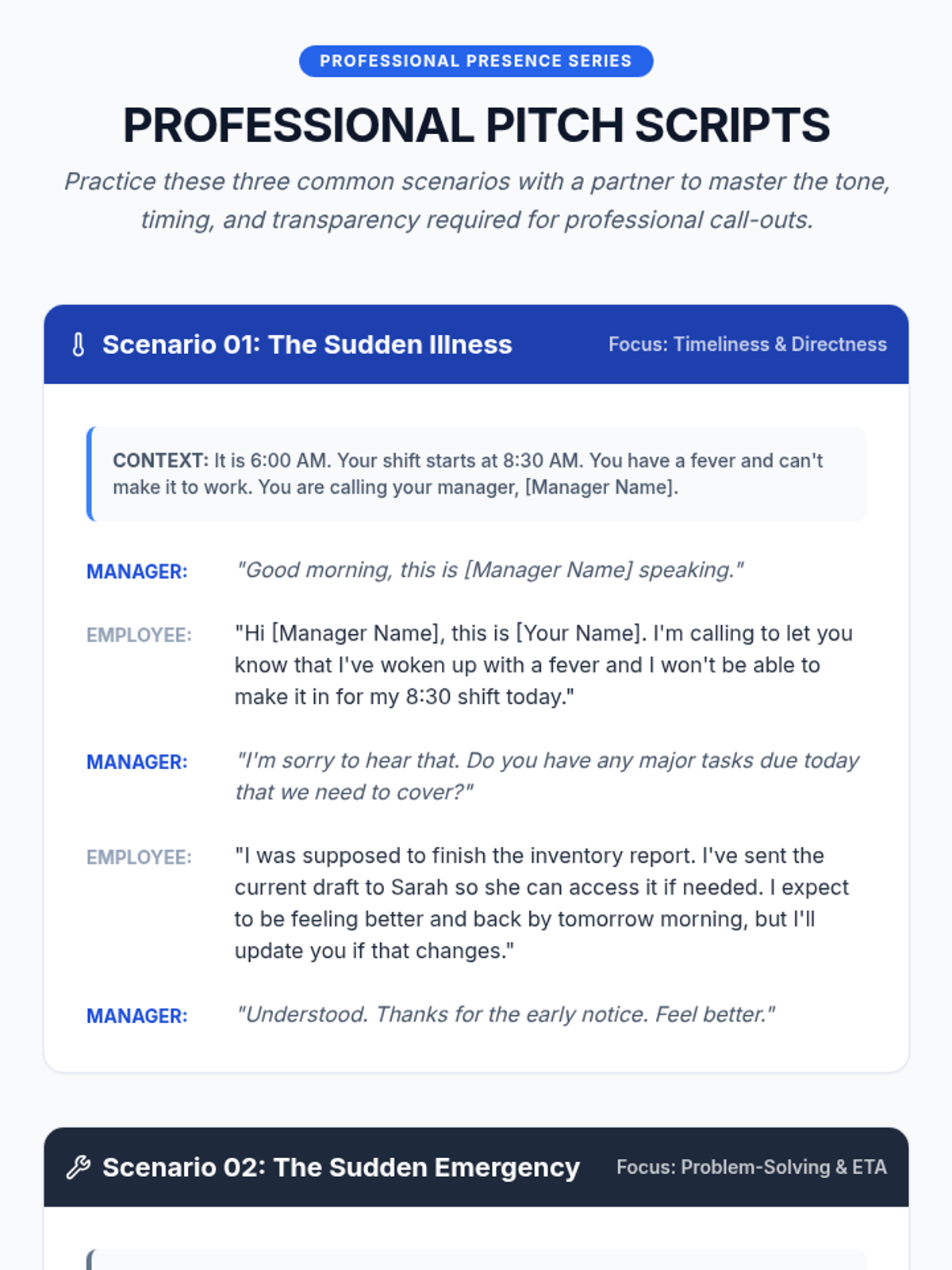
A set of three role-play scripts for practicing professional communication during common call-out scenarios: sudden illness, mechanical emergency, and planned appointments.
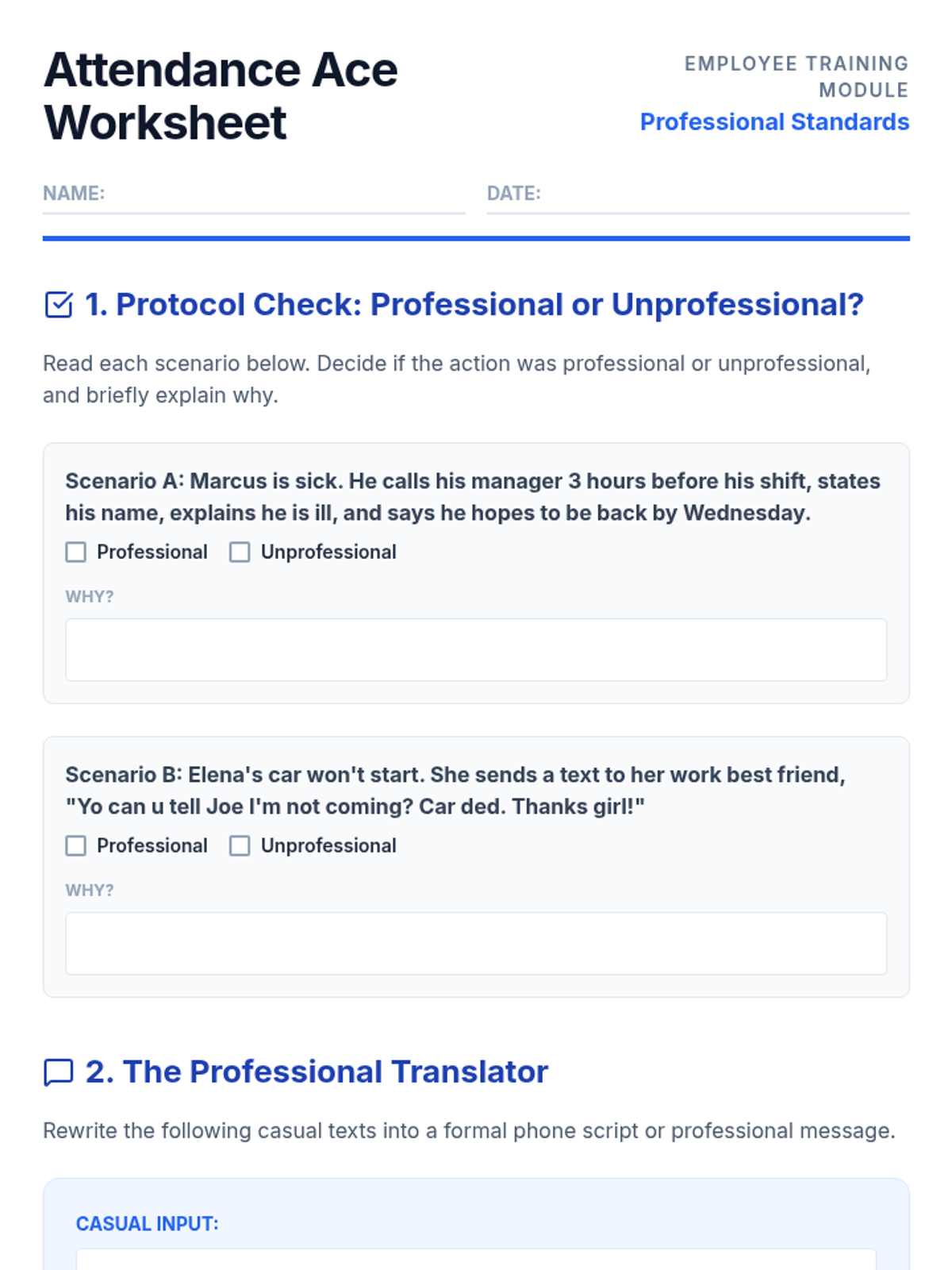
A worksheet for employees to practice professional call-out procedures, featuring scenario analysis, a text translator activity, and short-answer protocol questions.
A comprehensive slide deck for employment training on calling out protocols, covering timing, communication methods, professional phrasing, and medical excuses through informative content and case studies.
A practice workbook for students to identify personal care needs, practice appointment scripts, and complete simplified personal information forms.
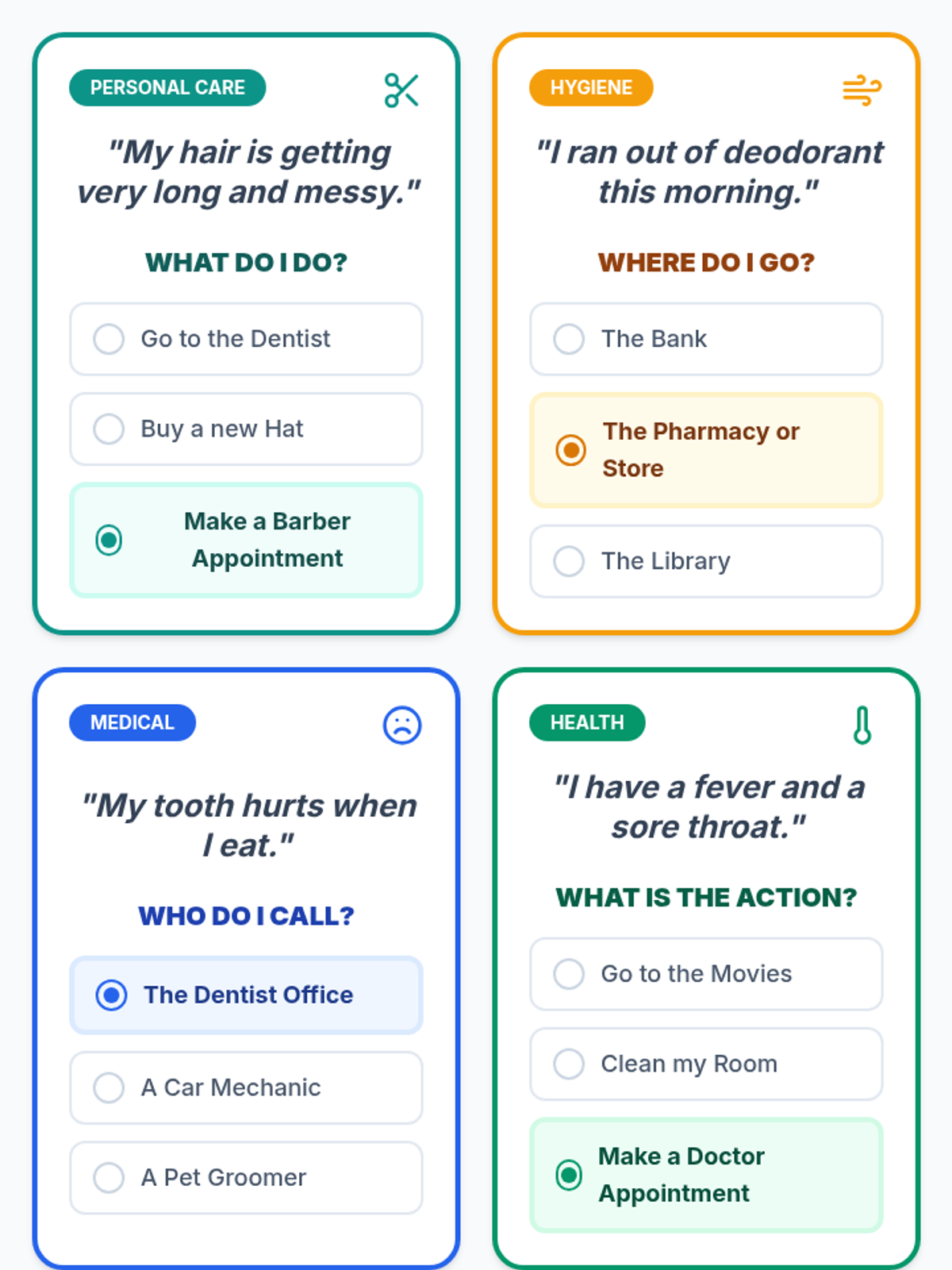
A set of 8 task cards with scenarios for students to identify appropriate personal care actions and hygiene product purchases.
A visual slide presentation designed for high-support students, covering personal hygiene needs, medical appointments, and personal information basics.
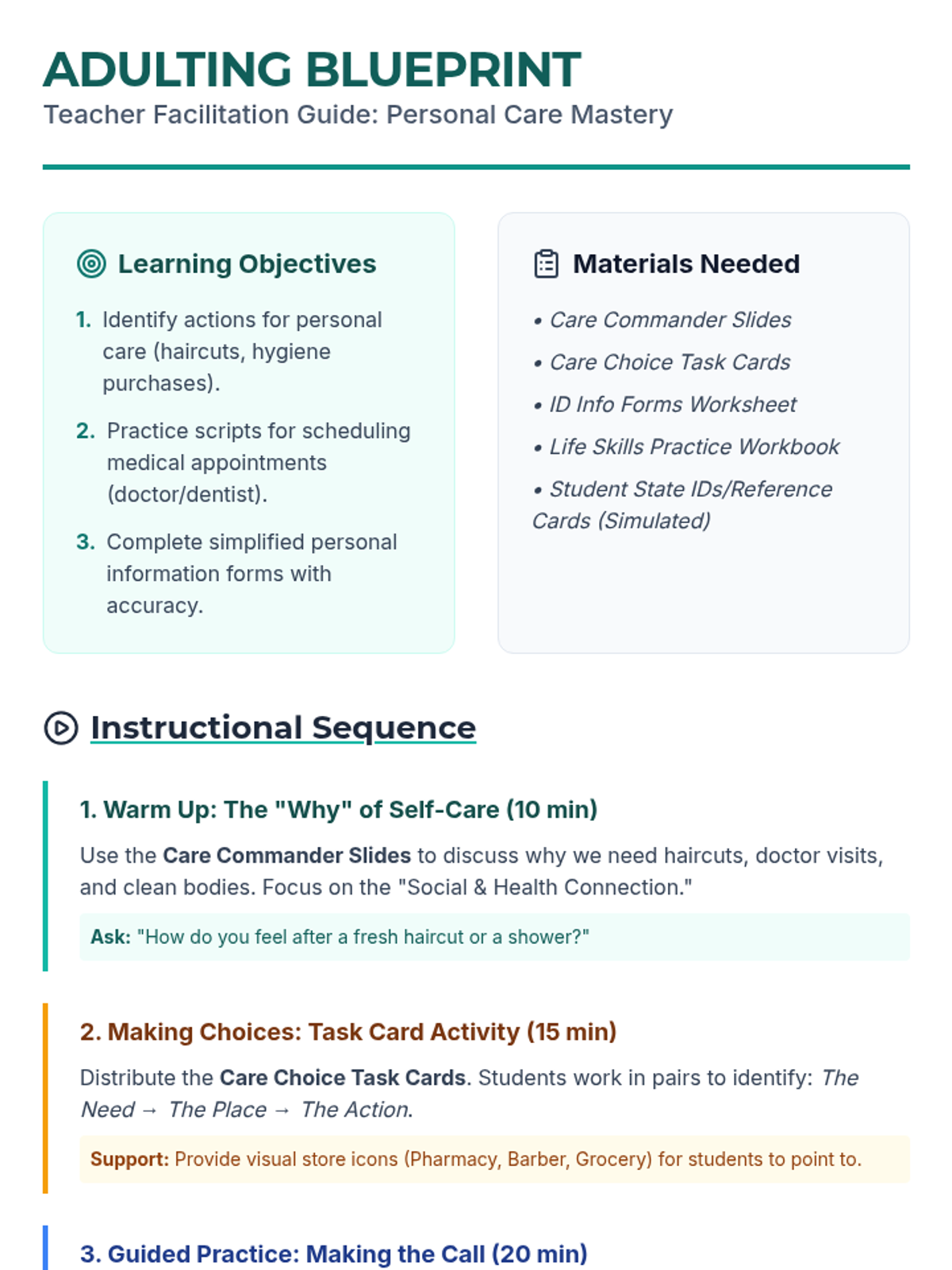
A teacher facilitation guide outlining the lesson flow, objectives, and differentiation strategies for personal care mastery.
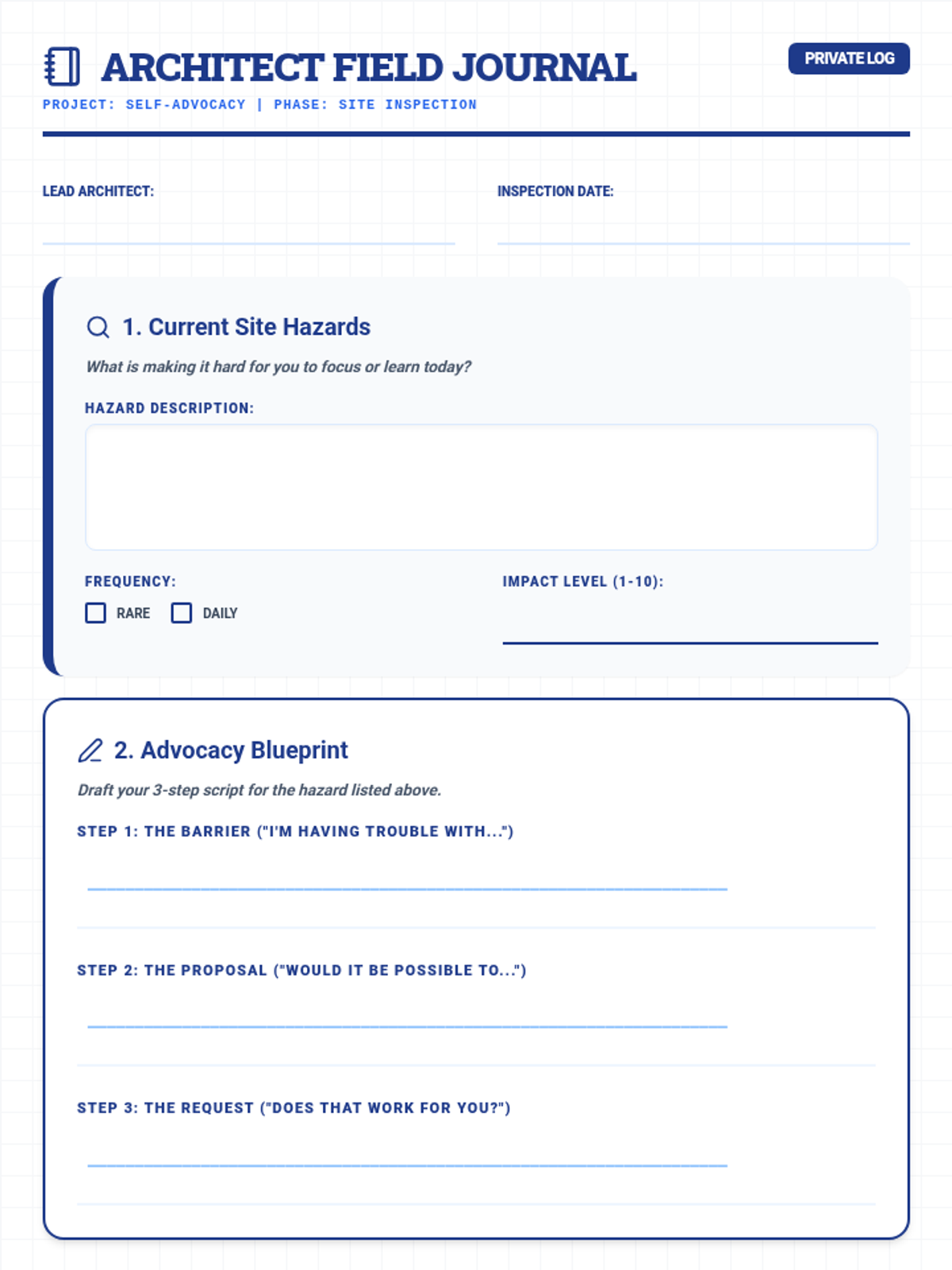
Student reflection journal for the 'Advocacy Architect' lesson. Includes space for identifying classroom hazards, drafting personal advocacy scripts, and reflecting on communication outcomes with teachers.
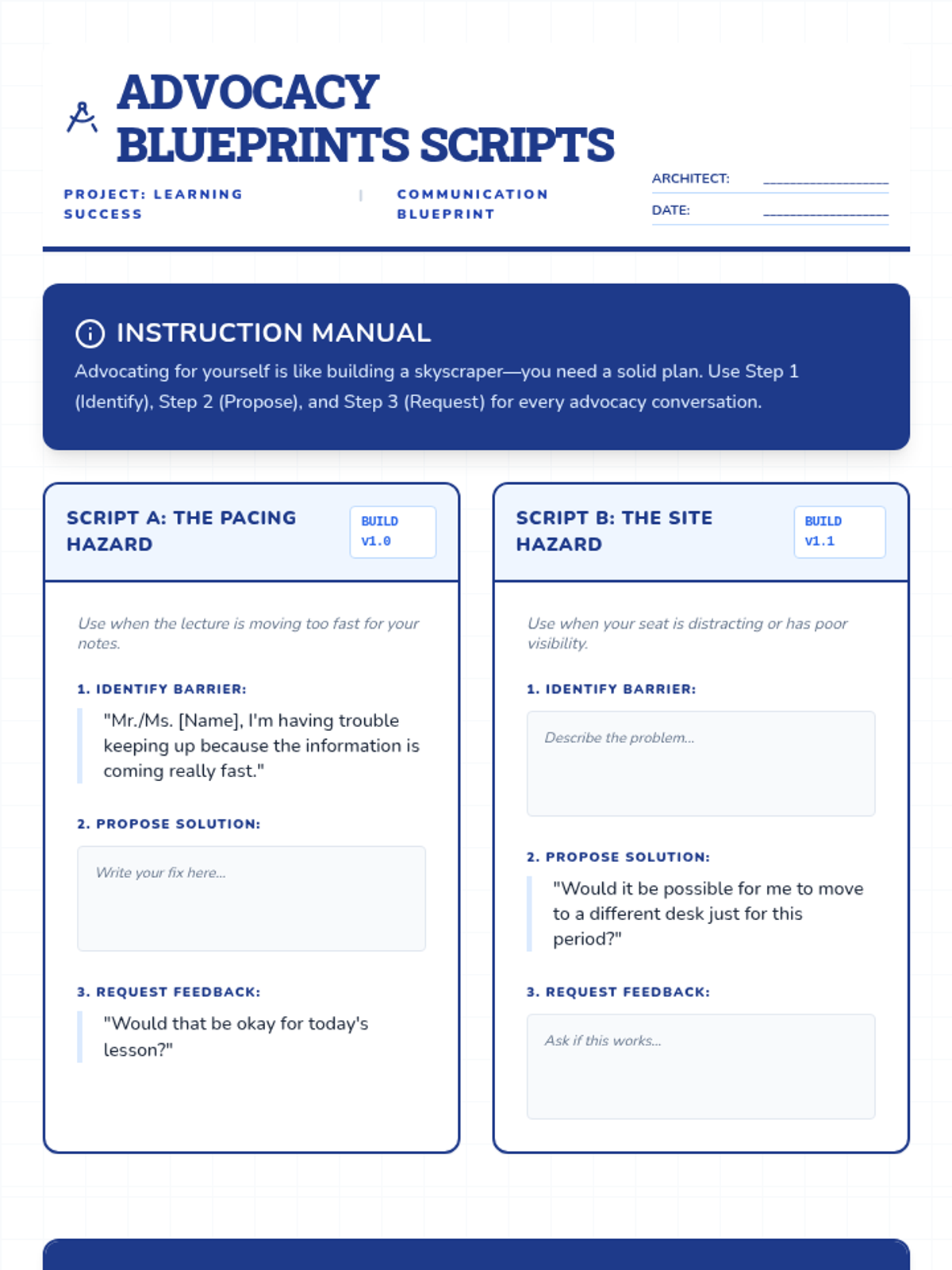
Student-facing script templates for self-advocacy in high school. Features blueprint-styled worksheets for practicing communication about pacing, classroom environment, and academic help.
Classroom presentation for 'Advocacy Architect' featuring the blueprint framework. Includes visual guides for identifying learning hazards and the 3-step script for self-advocacy.
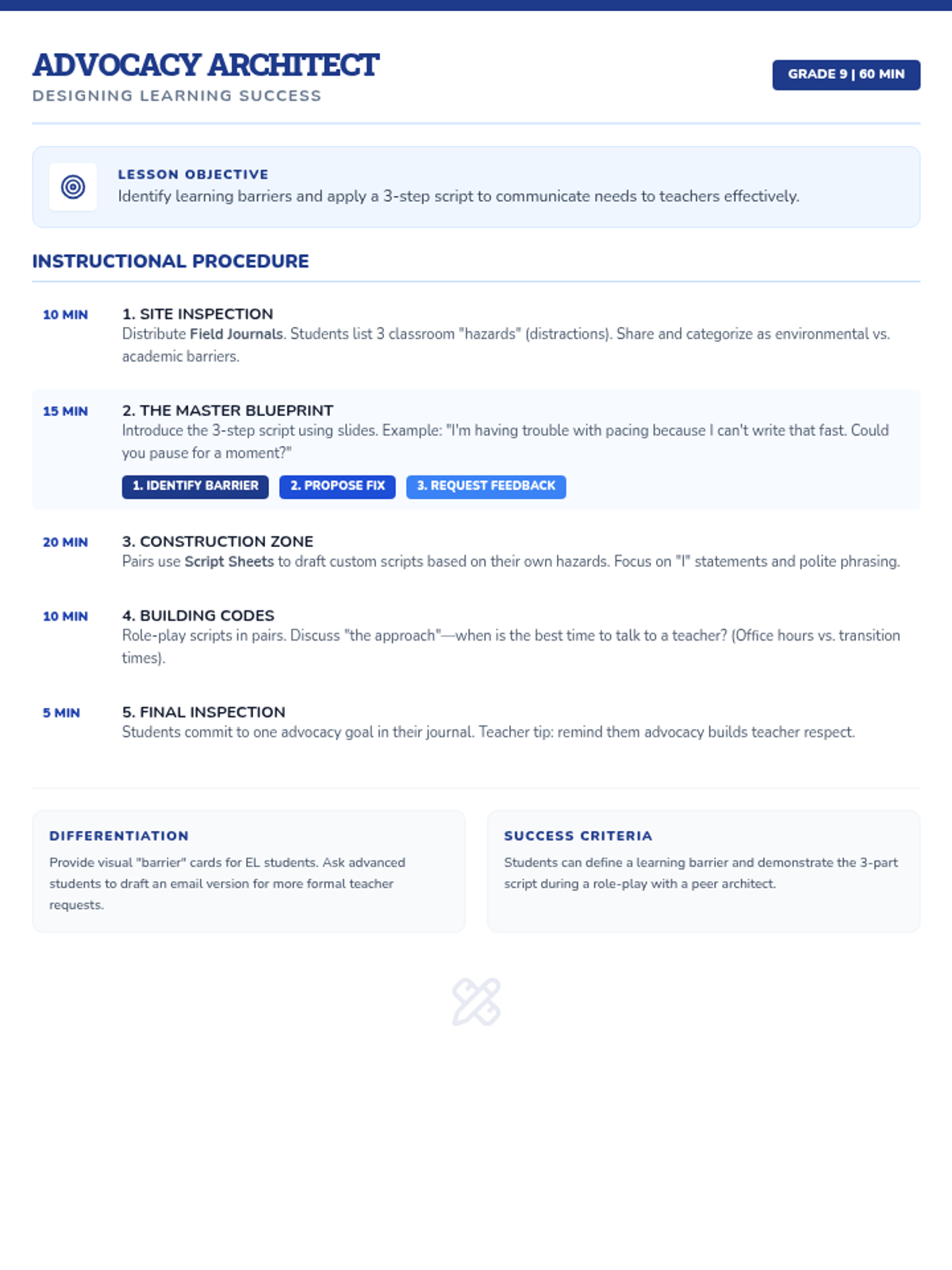
Teacher-facing lesson plan for 'Advocacy Architect', detailing a 60-minute session on high-school self-advocacy. Includes procedures for identifying learning barriers and practicing structured communication scripts.
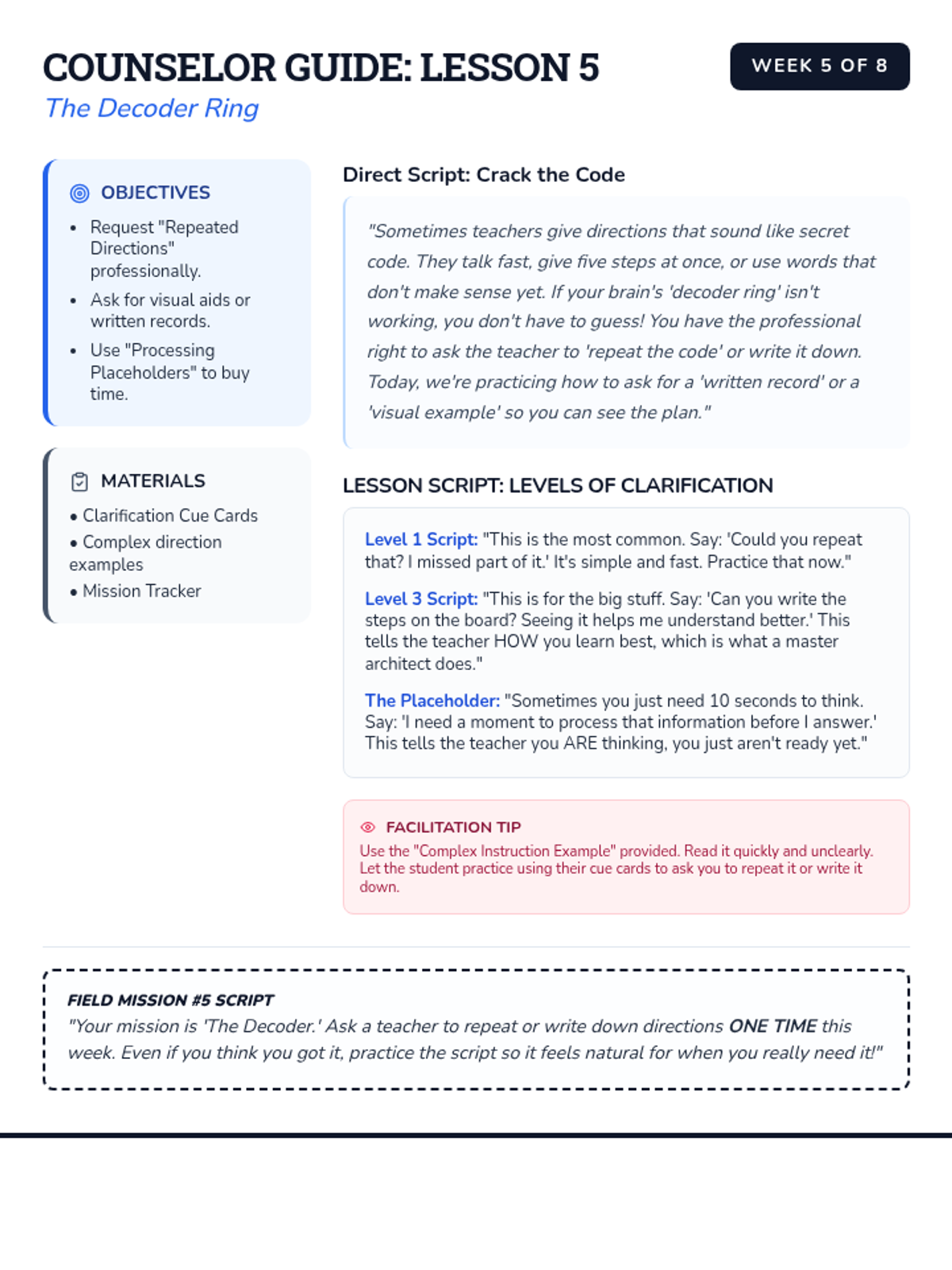
Expanded counselor guide for Week 5 with more detailed word-for-word scripts and instructional notes. Reverted to the original blue blueprint theme. Removed all IEP/Goal terminology.
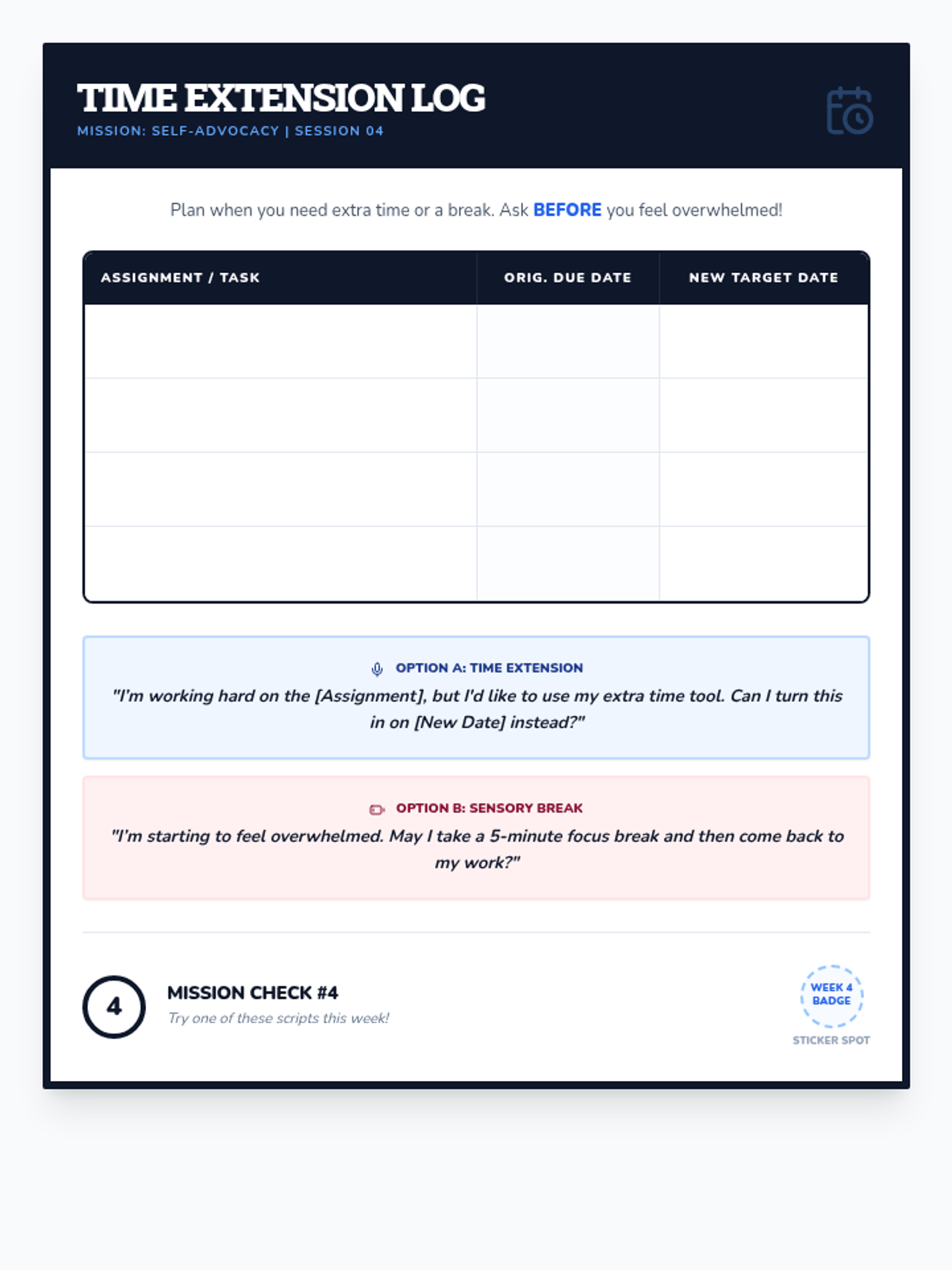
Time request log revised to replace 'Goal Date' with 'Target Date'. Reverted to the original blue blueprint theme. Removed all IEP/Goal terminology.
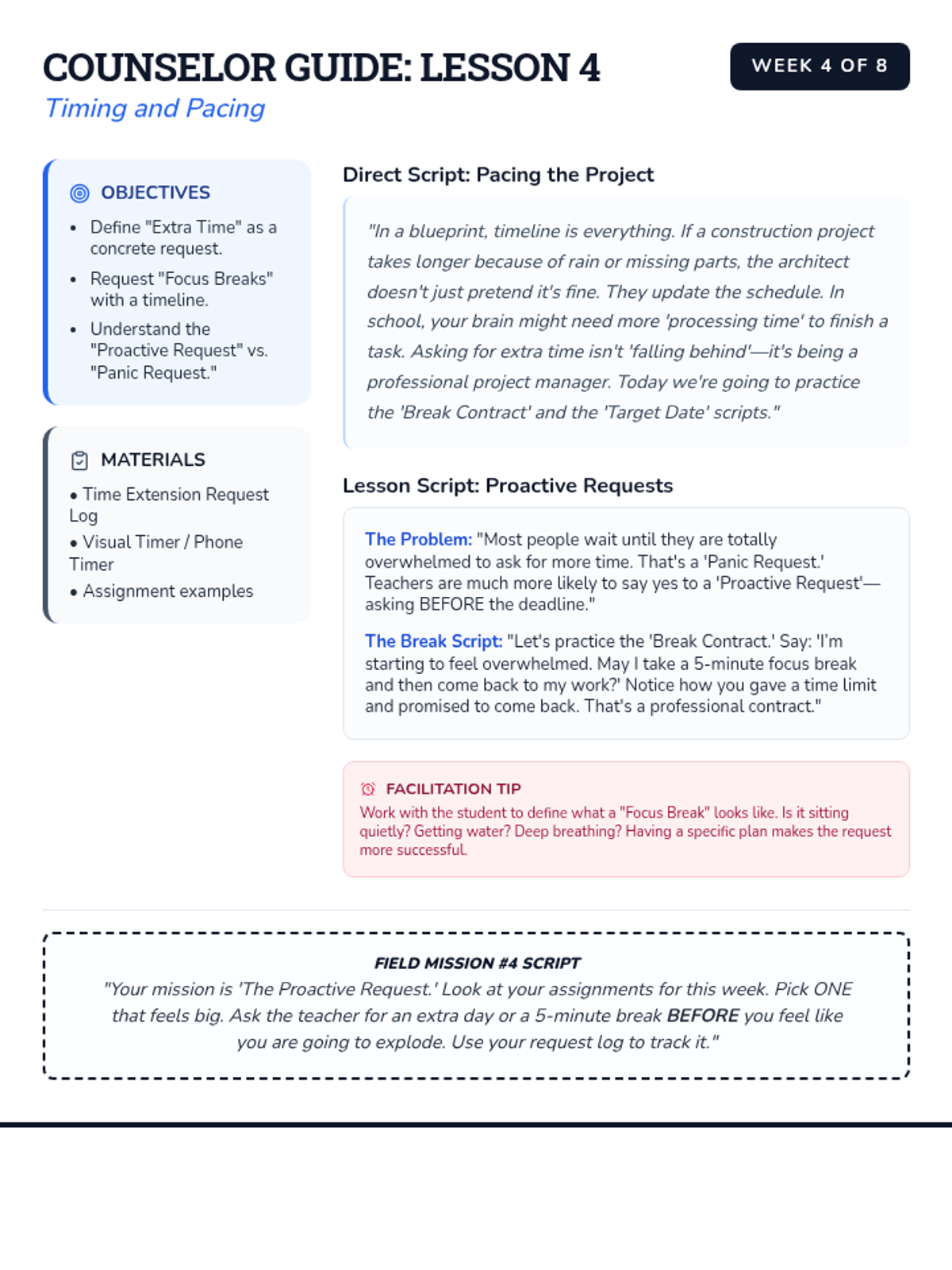
Expanded counselor guide for Week 4 with more detailed word-for-word scripts and instructional notes. Reverted to the original blue blueprint theme. Removed all IEP/Goal terminology.
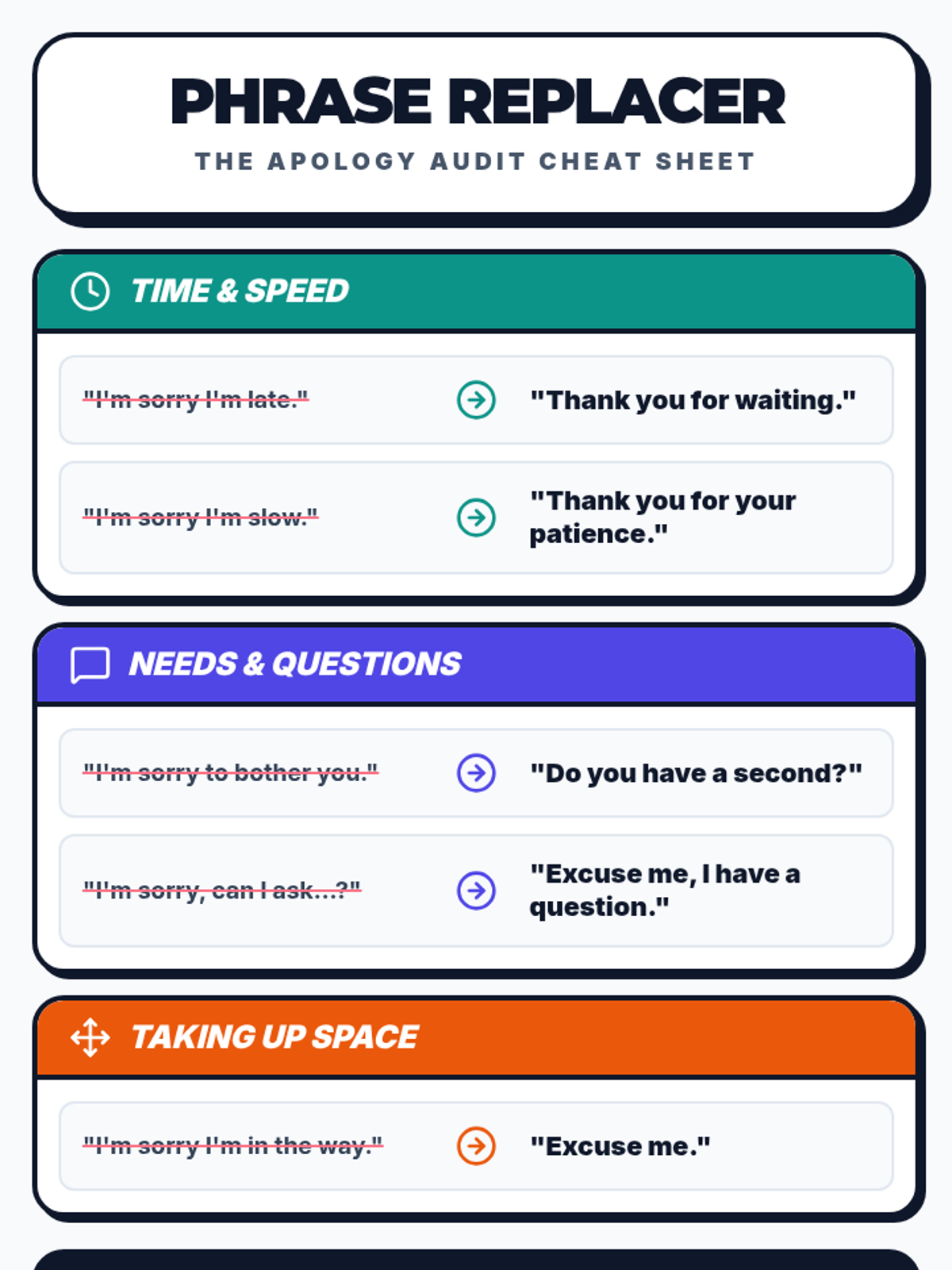
A one-page visual reference guide listing common over-apologies and their more effective replacements, designed for quick desk-side or binder use.
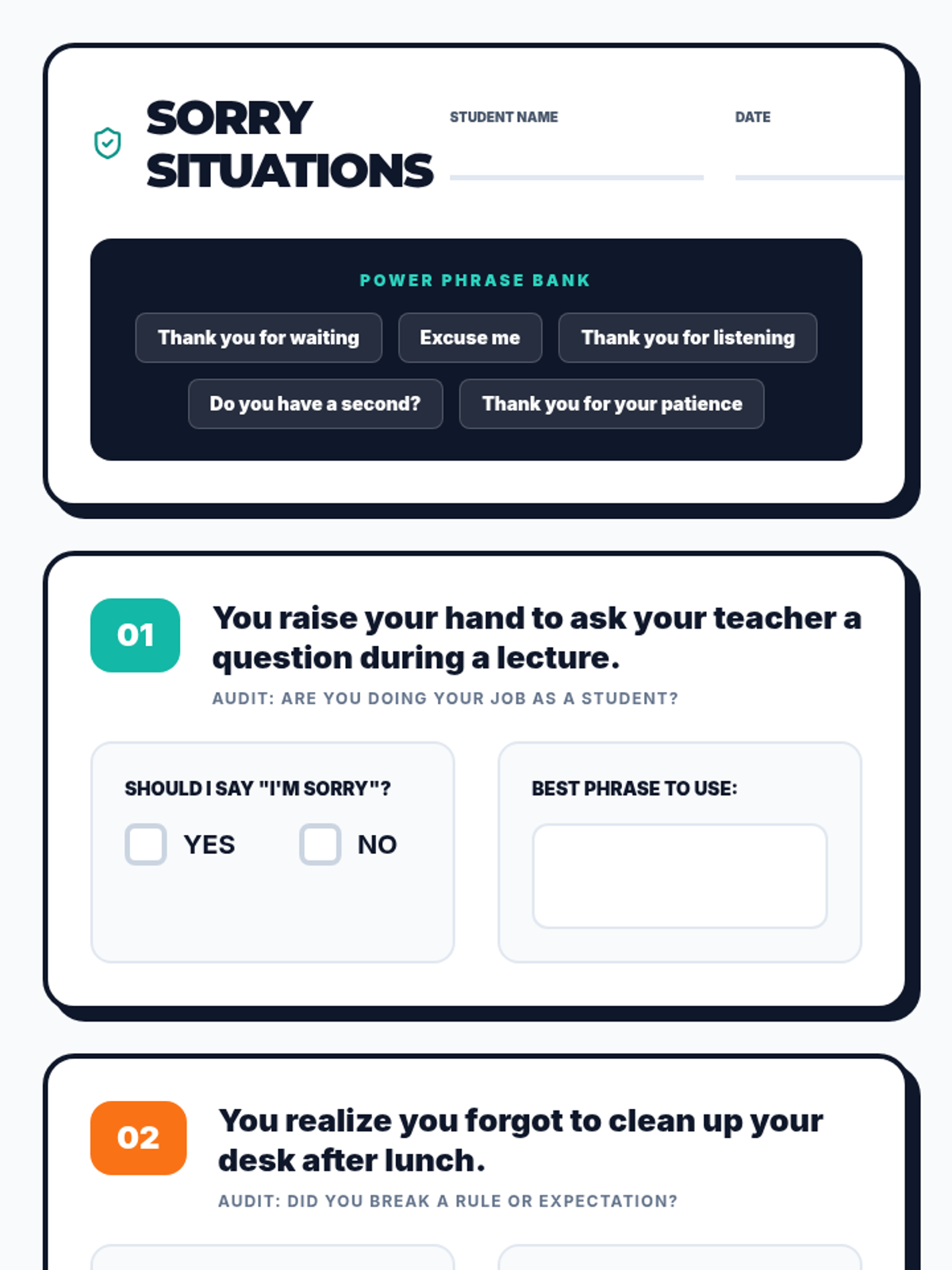
A practice worksheet where students audit various social situations to decide if an apology is necessary and practice replacing it with appropriate "power phrases."
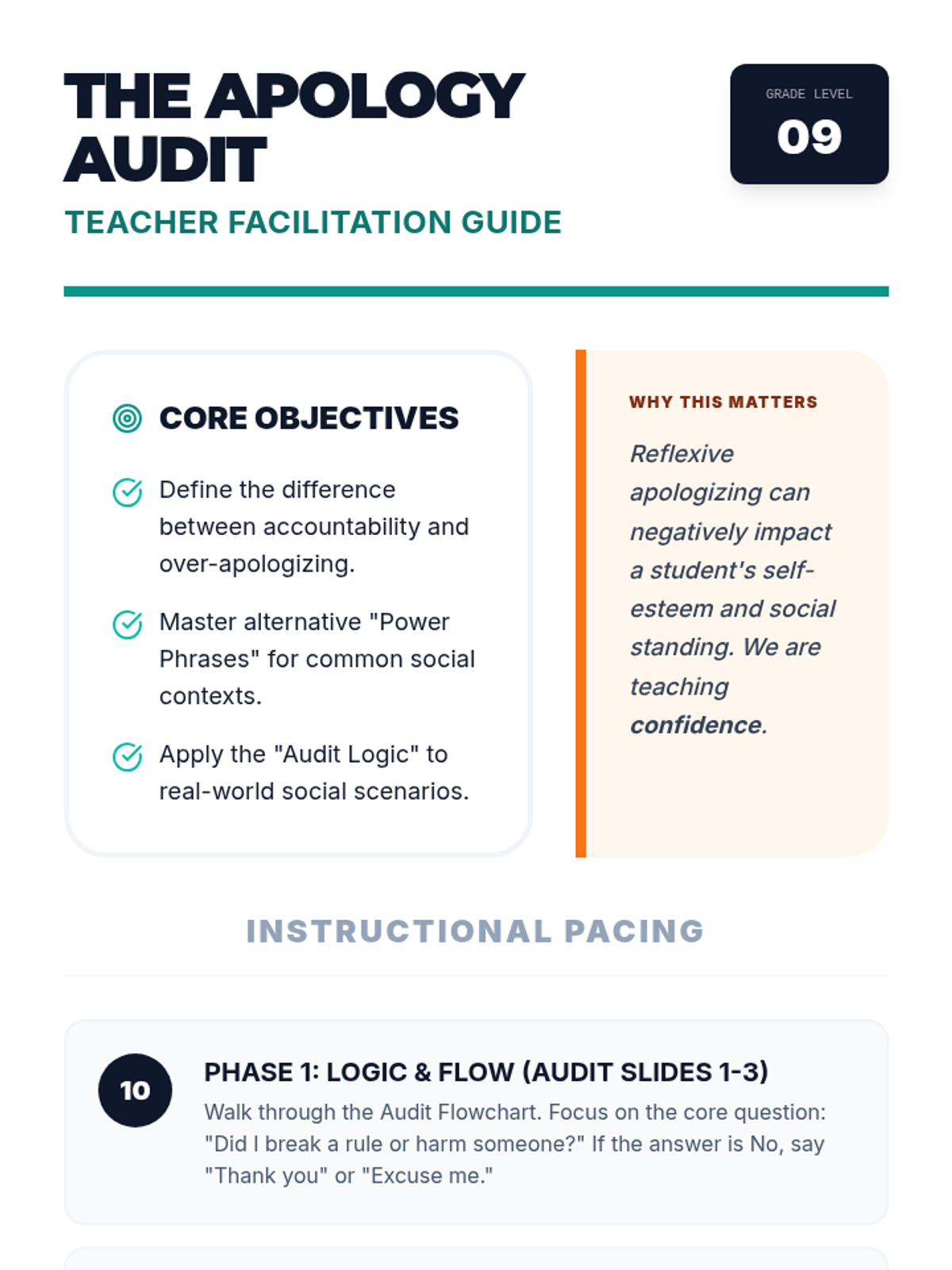
A comprehensive facilitator guide for teachers, providing pedagogical context on over-apologizing in autism, delivery instructions, and troubleshooting tips.
A visually structured slide deck that explains the logic behind apologies, featuring the "Apology Audit" flowchart and "Thank You" power moves for 9th-grade students.
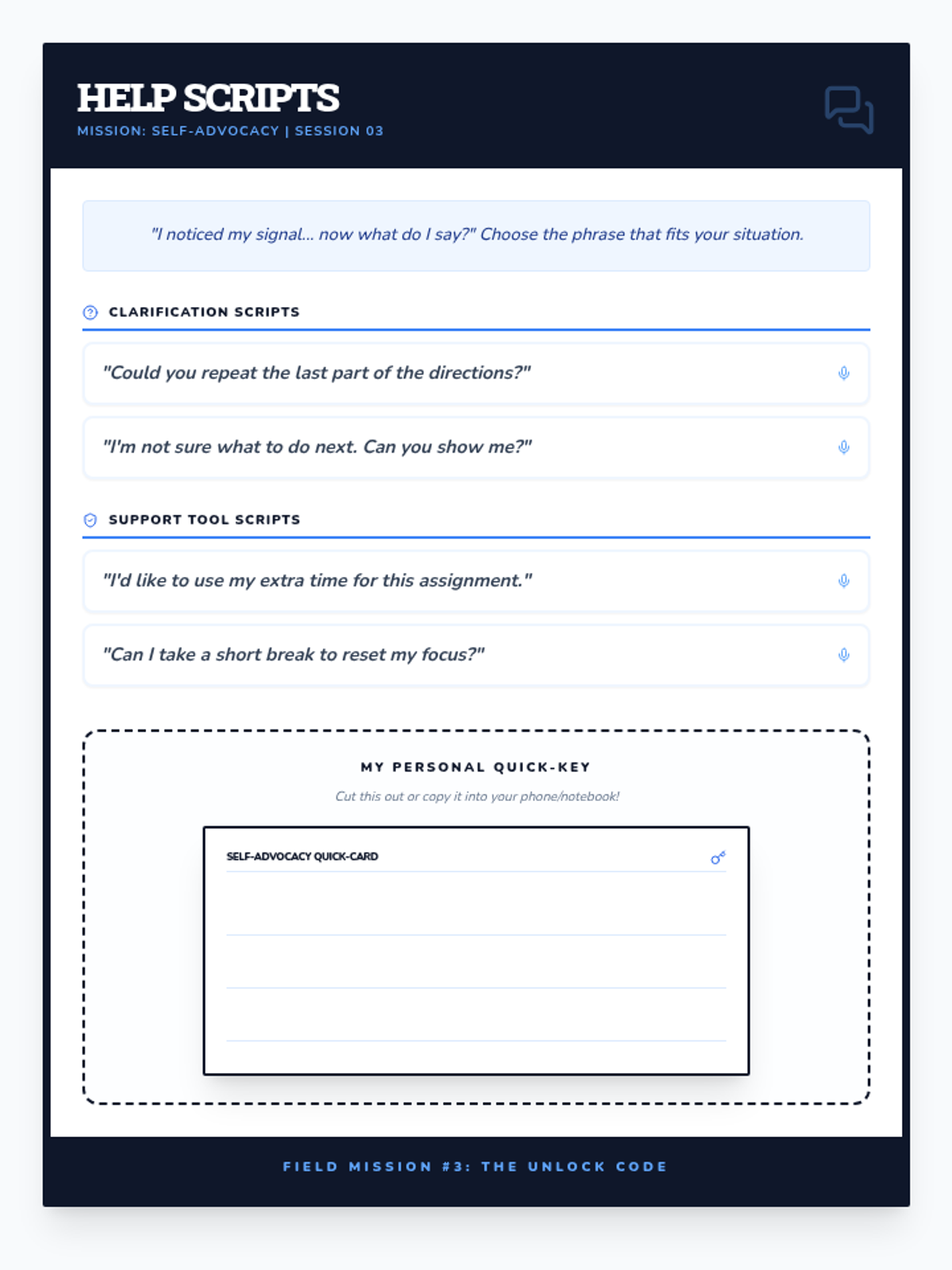
Cheat sheet with revised single-page layout and increased line visibility for the cut-out card activity. Reverted to the original blue blueprint theme. Removed all IEP/Goal terminology.
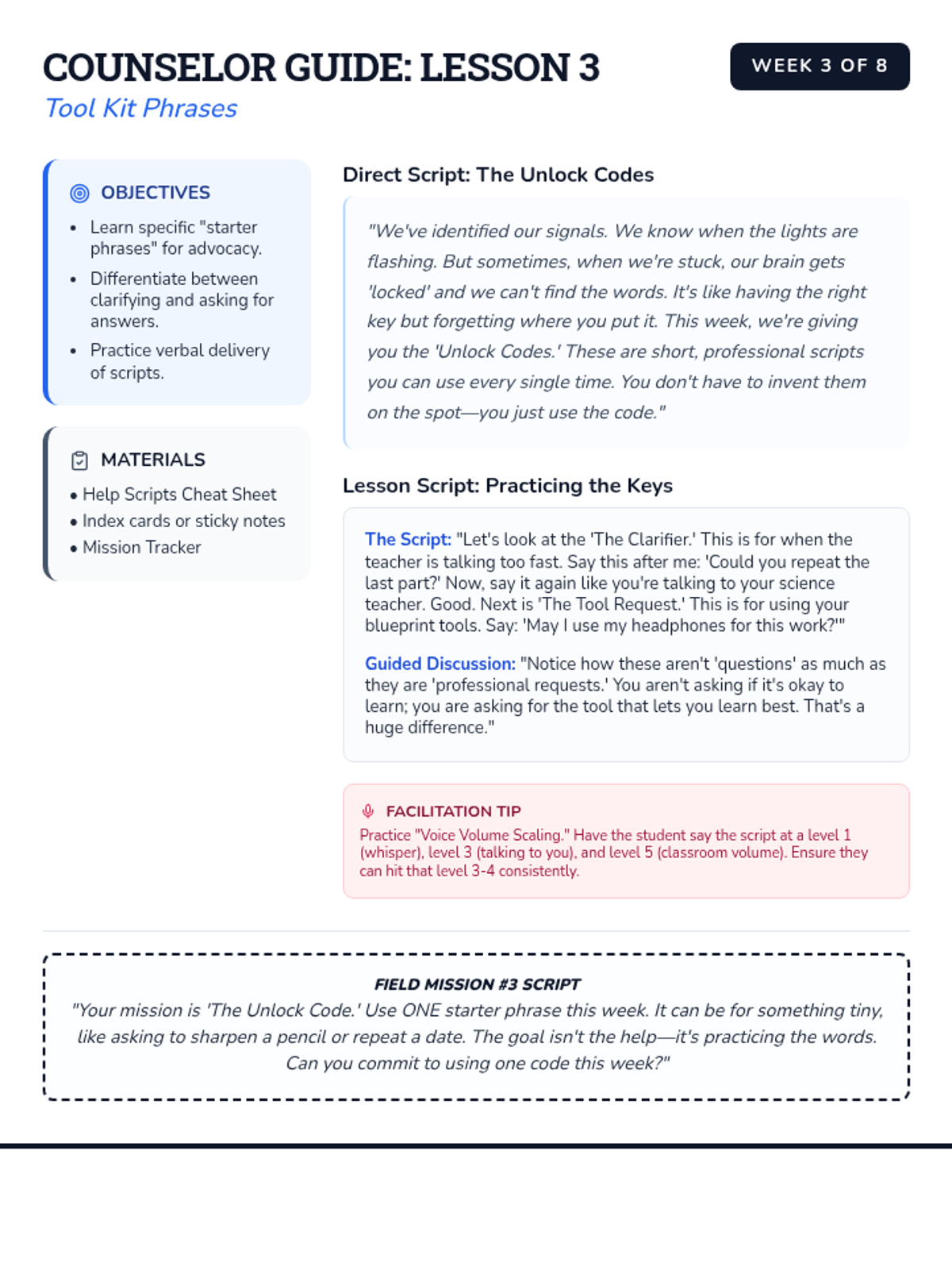
Expanded counselor guide for Week 3 with more detailed word-for-word scripts and instructional notes. Reverted to the original blue blueprint theme. Removed all IEP/Goal terminology.
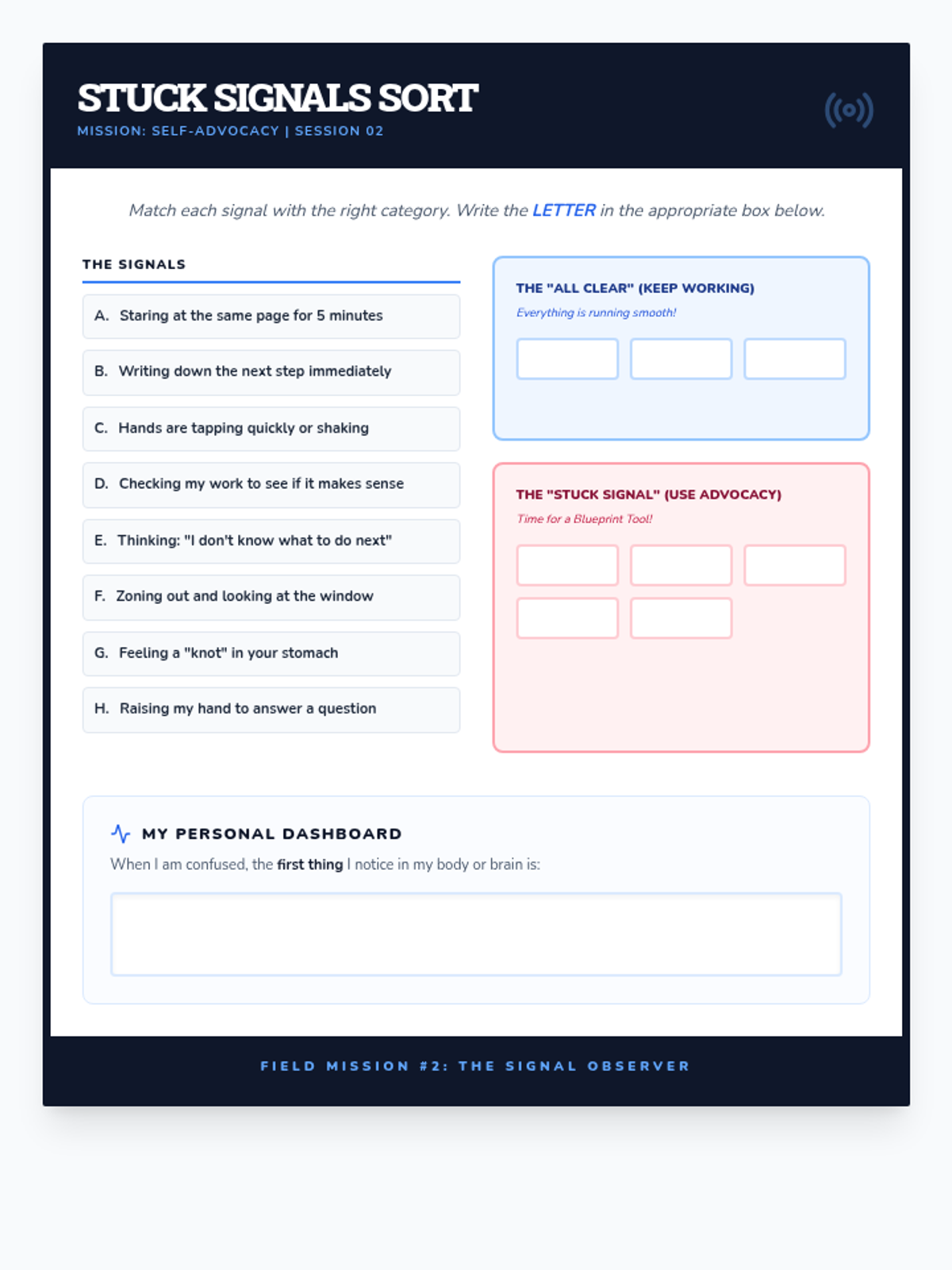
Sorting activity revised with correct signals (including "All Clear" examples) and fixed single-page layout. Reverted to the original blue blueprint theme.
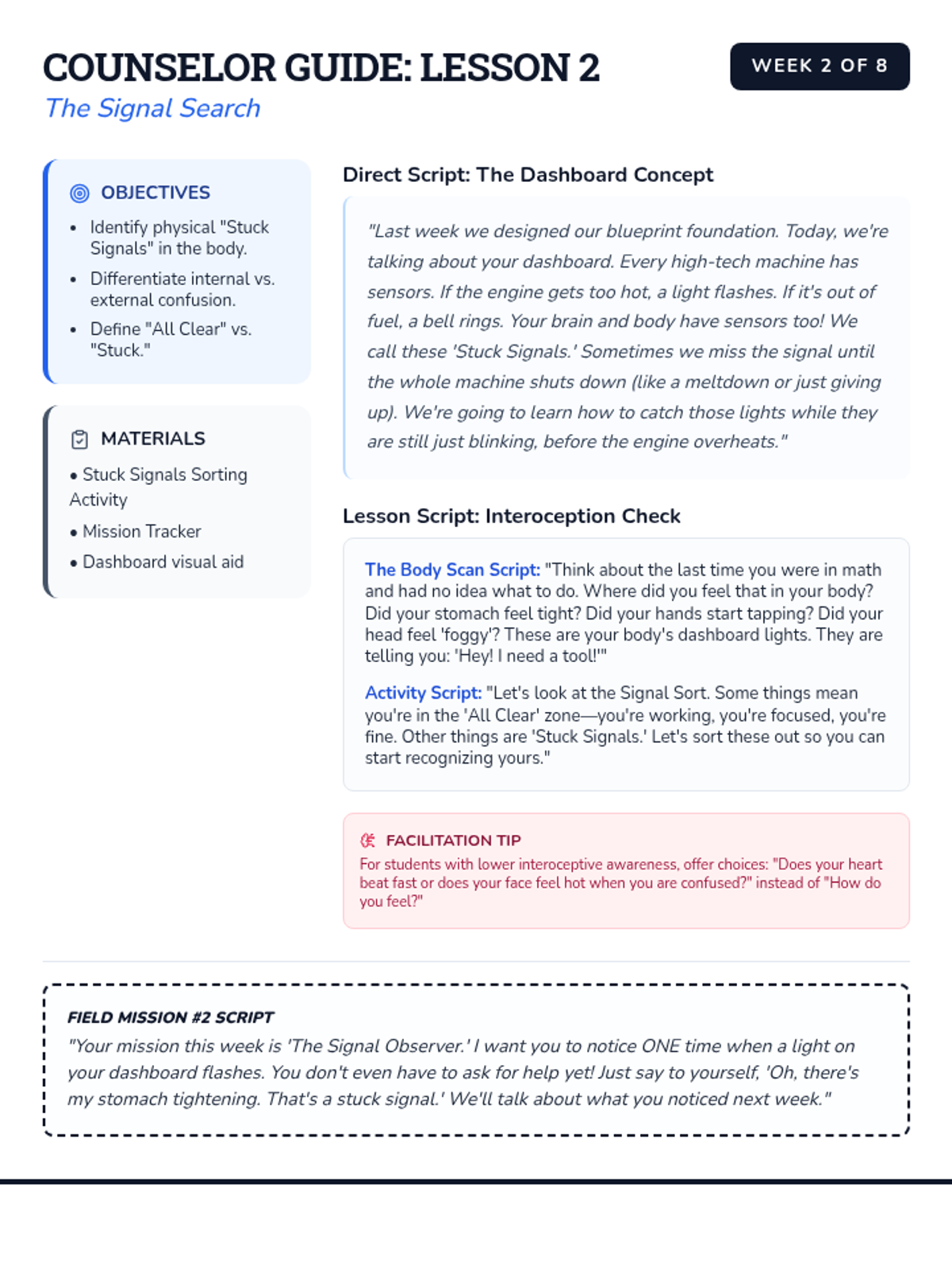
Expanded counselor guide for Week 2 with more detailed word-for-word scripts and instructional notes. Reverted to the original blue blueprint theme. Removed all IEP/Goal terminology.
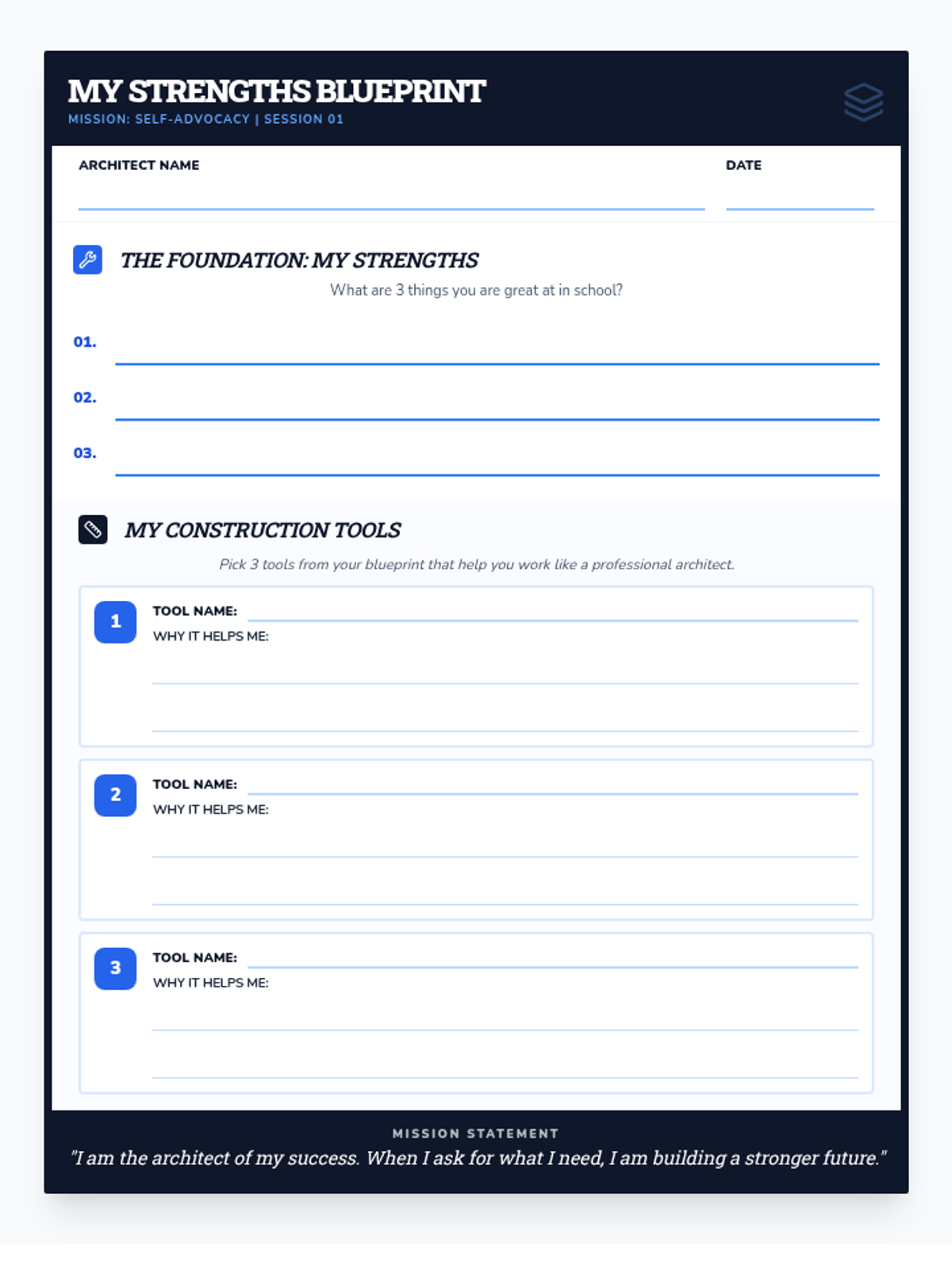
A student worksheet to help students identify their strengths and blueprint tools. Reverted to the original blue blueprint theme. Removed all IEP/Goal terminology. Fixed layout to ensure single-page printing.
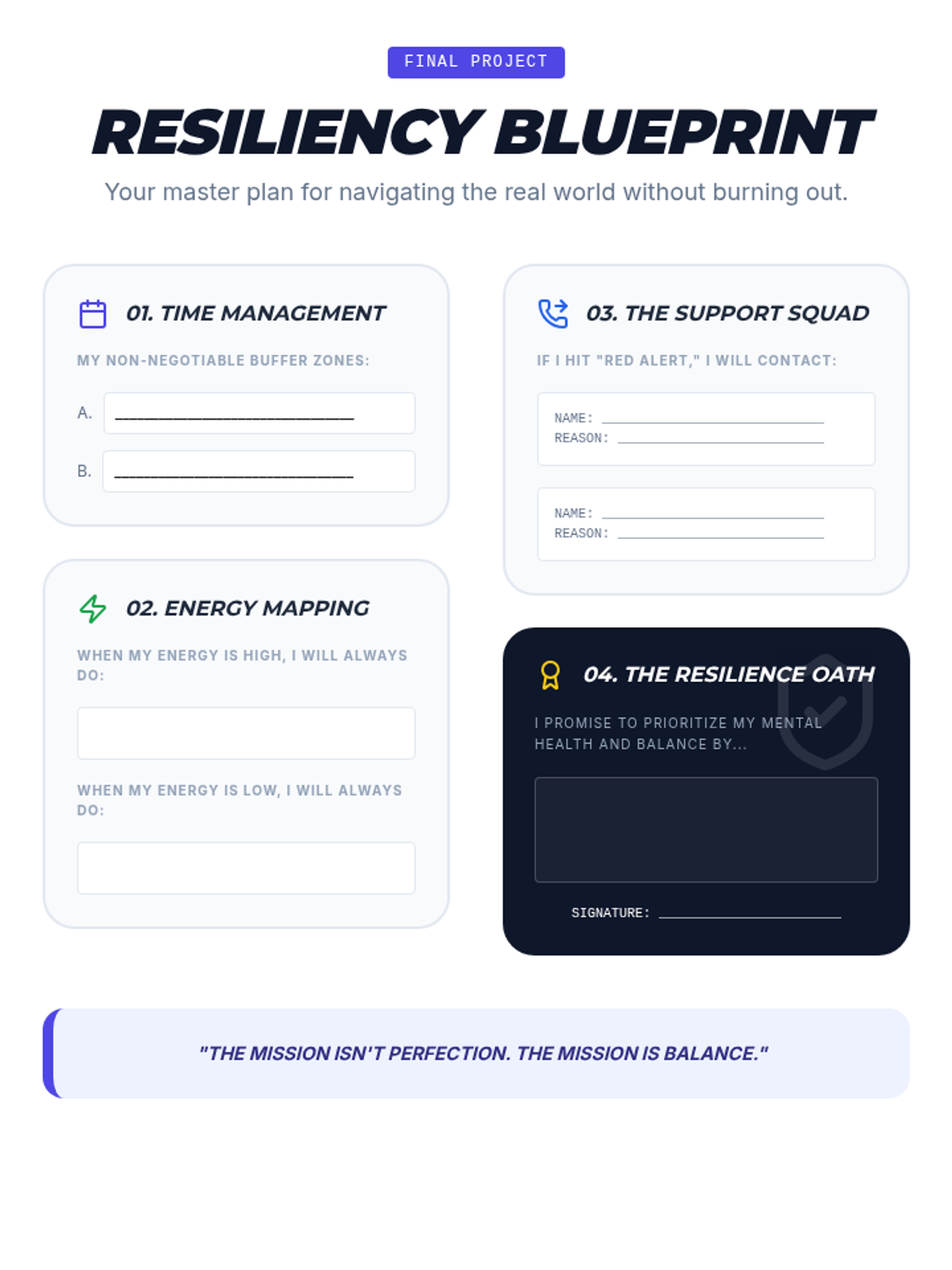
A summative project document where students synthesize everything they have learned into a personal 'Resiliency Blueprint' for real-world application.
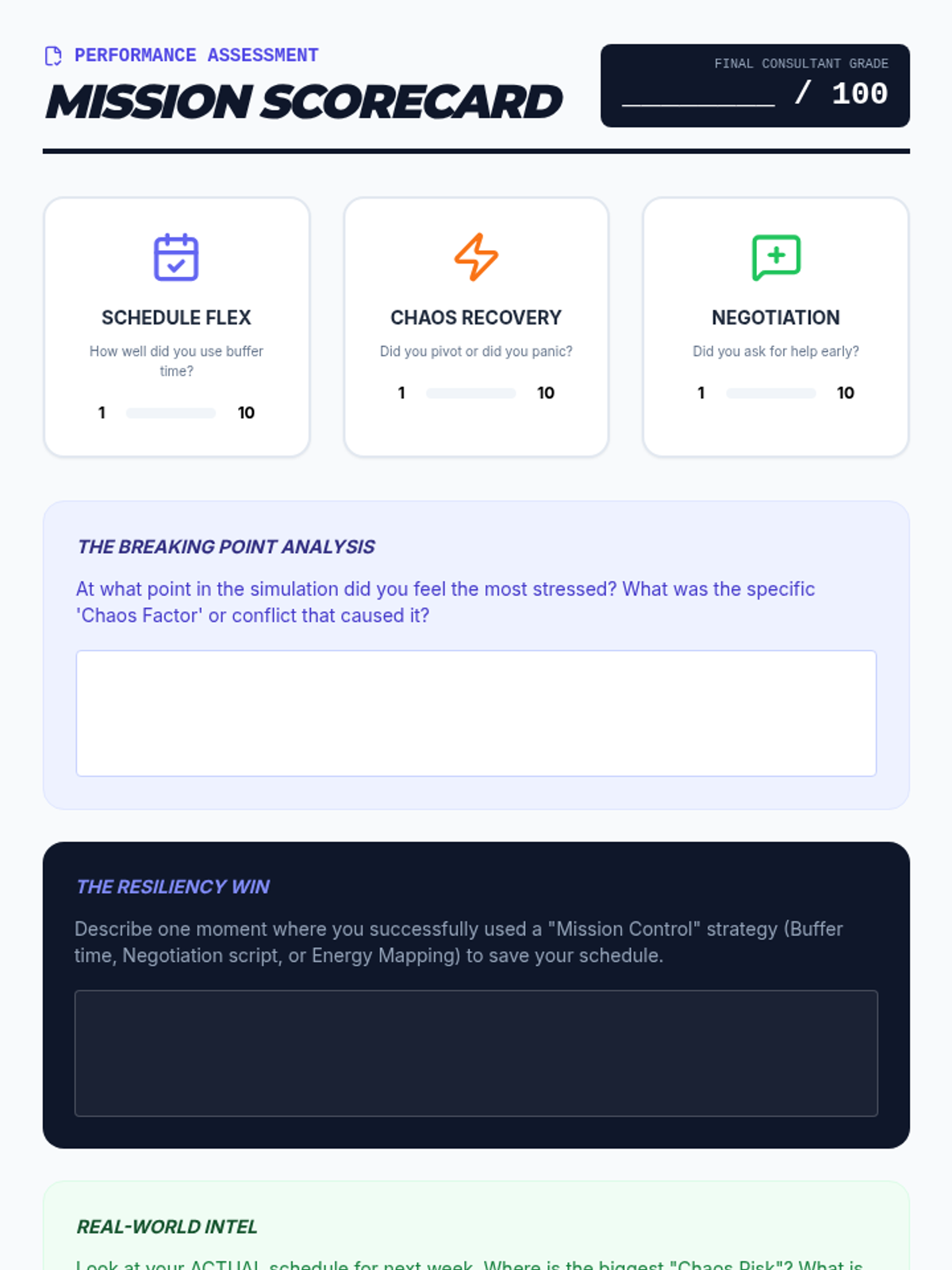
A final self-assessment 'Scorecard' for the Mission Balance sequence, allowing students to rate their performance and reflect on their growth in schedule management and resiliency.
Final presentation for the Mission Balance sequence, reviewing core concepts of chaos management, negotiation, and energy management, and introducing the final scorecard activity.
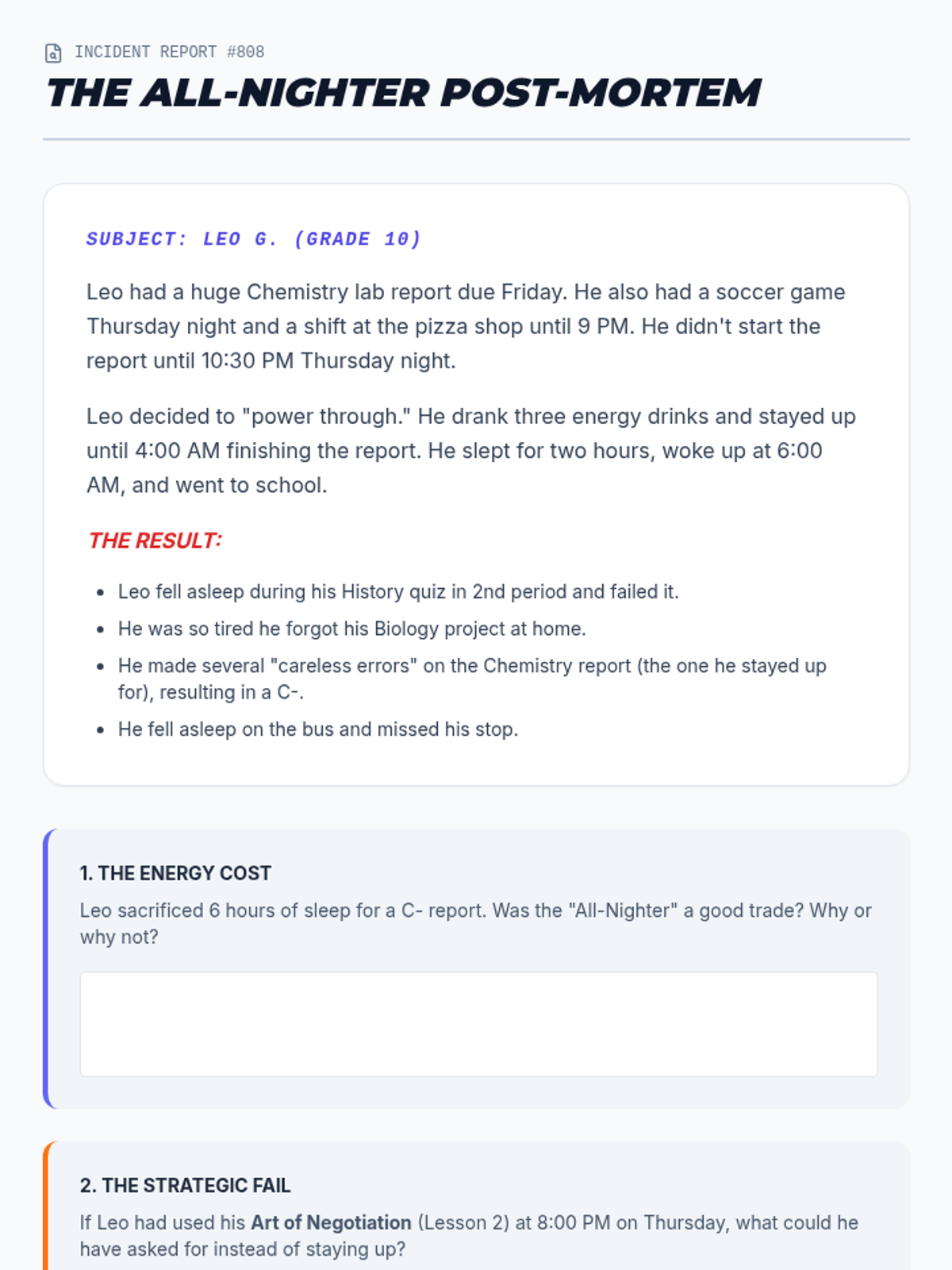
A case study analysis of a student's 'all-nighter' experience, prompting students to evaluate the consequences and identify alternative strategies from the sequence.
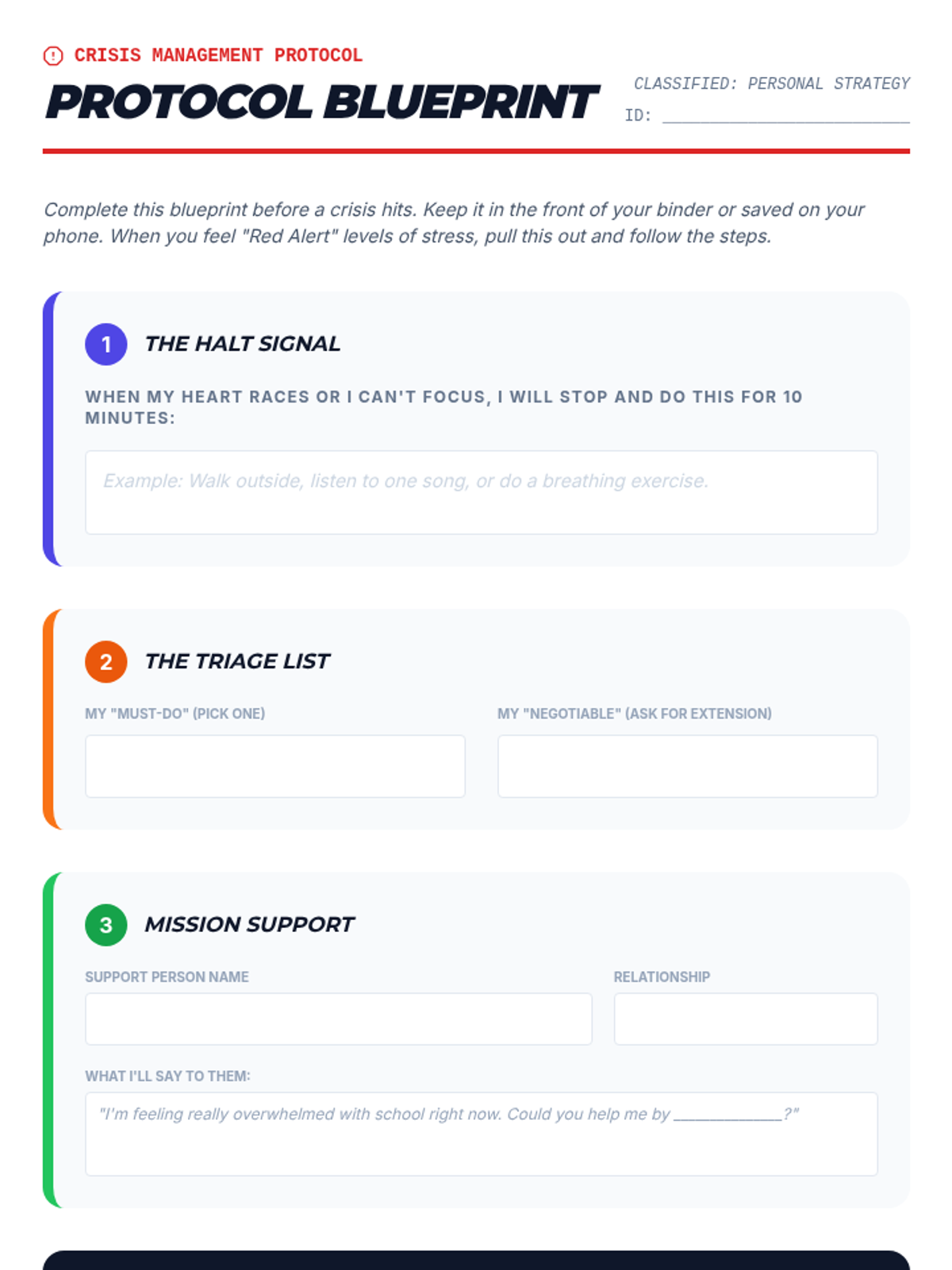
A personal crisis management worksheet where students document their specific 'Red Alert' protocols, including triage strategies, support contacts, and recovery plans.
Lesson 4 slides on crisis management protocols, teaching students how to identify burnout, prioritize tasks during 'Red Alert' scenarios, and activate support systems.
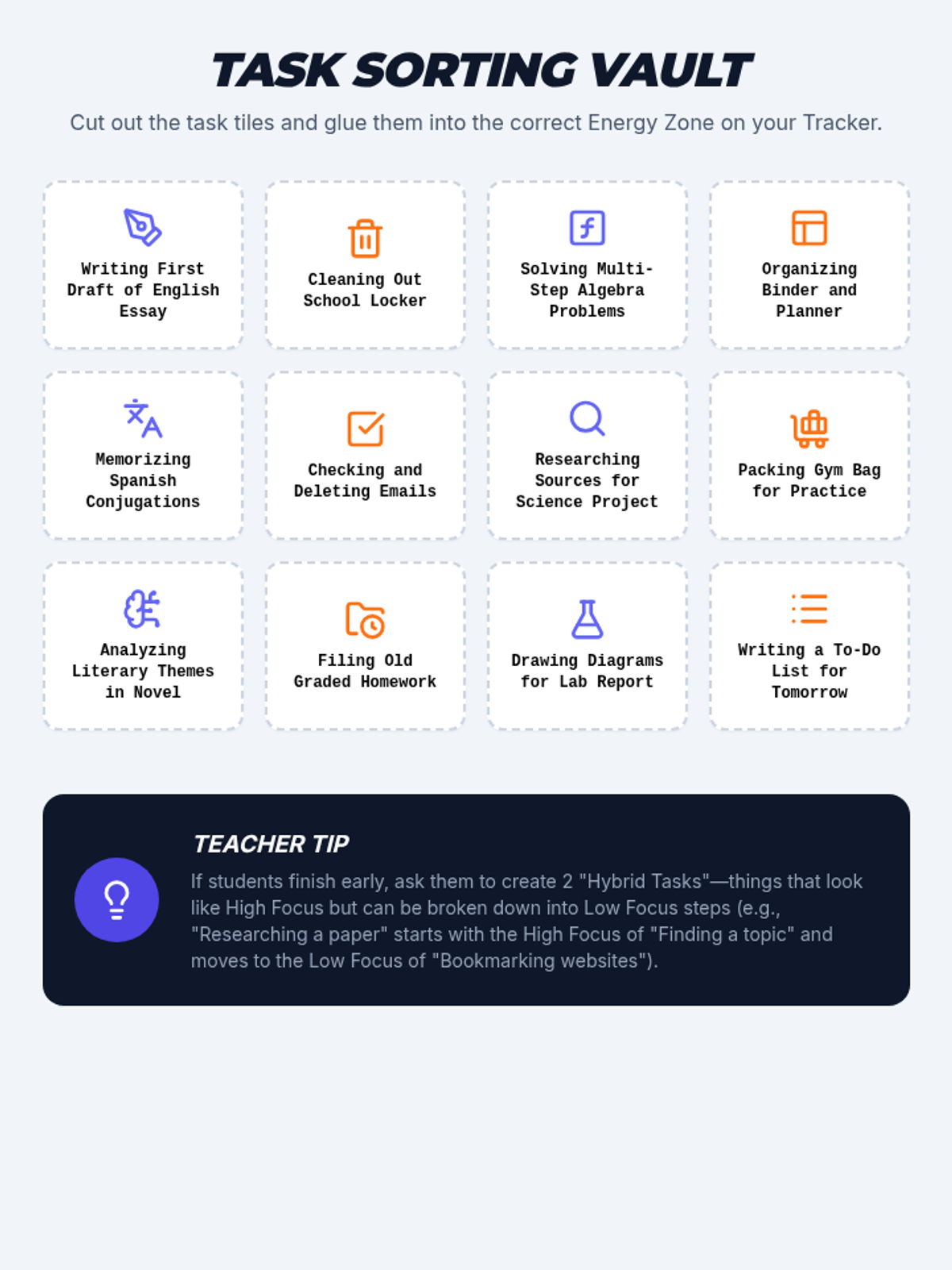
A cut-and-paste sorting activity for students to categorize common school and life tasks as either 'High Focus' or 'Low Focus' energy requirements.
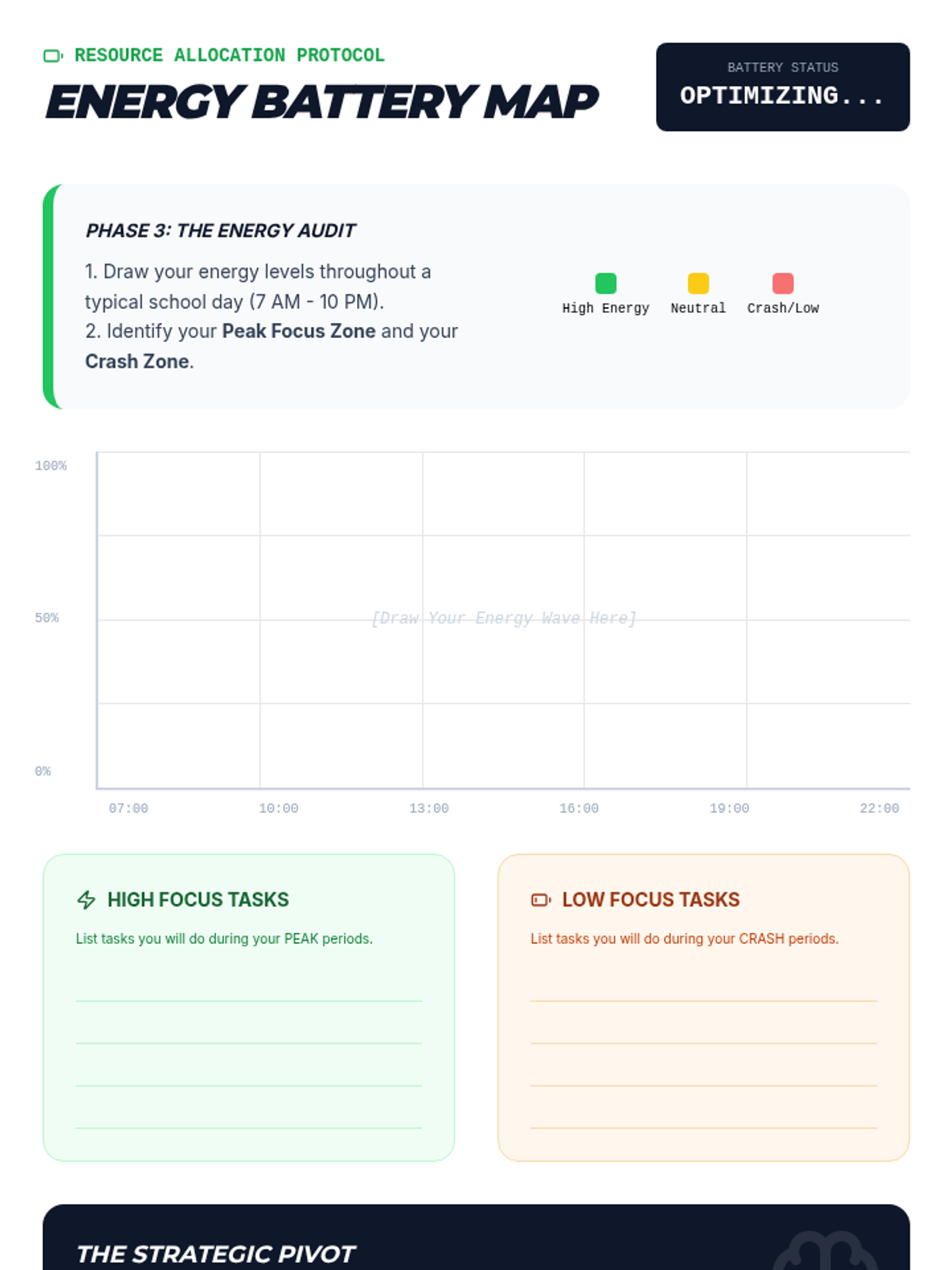
A worksheet for students to map their daily energy levels and strategically assign tasks based on their peak focus periods.
Lesson 3 presentation on energy management, teaching students to differentiate between High Focus and Low Focus tasks and to identify their personal peak energy periods.
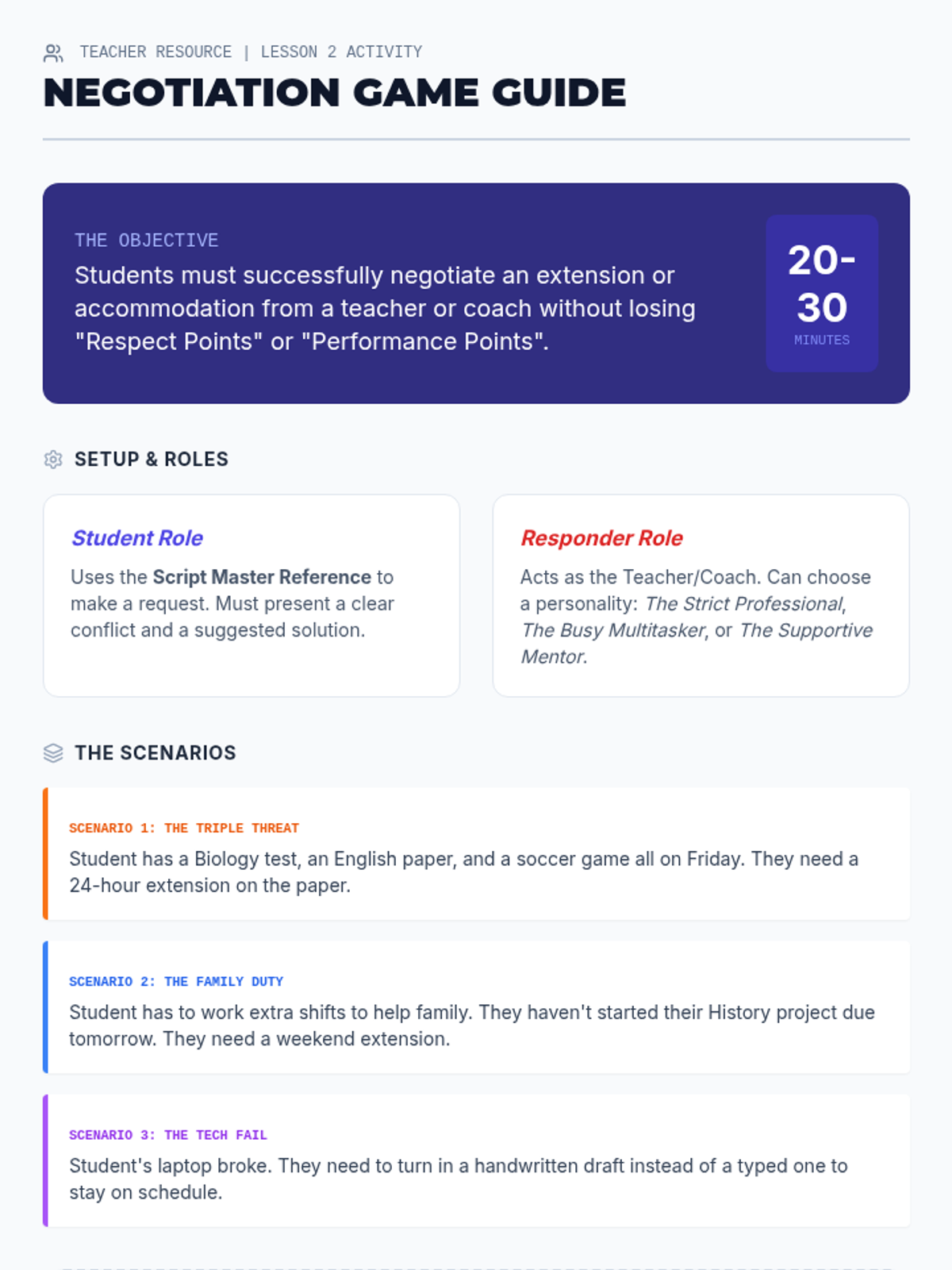
Teacher facilitation guide for the Lesson 2 role-play simulation, providing scenarios, roles, and assessment criteria for student negotiations.
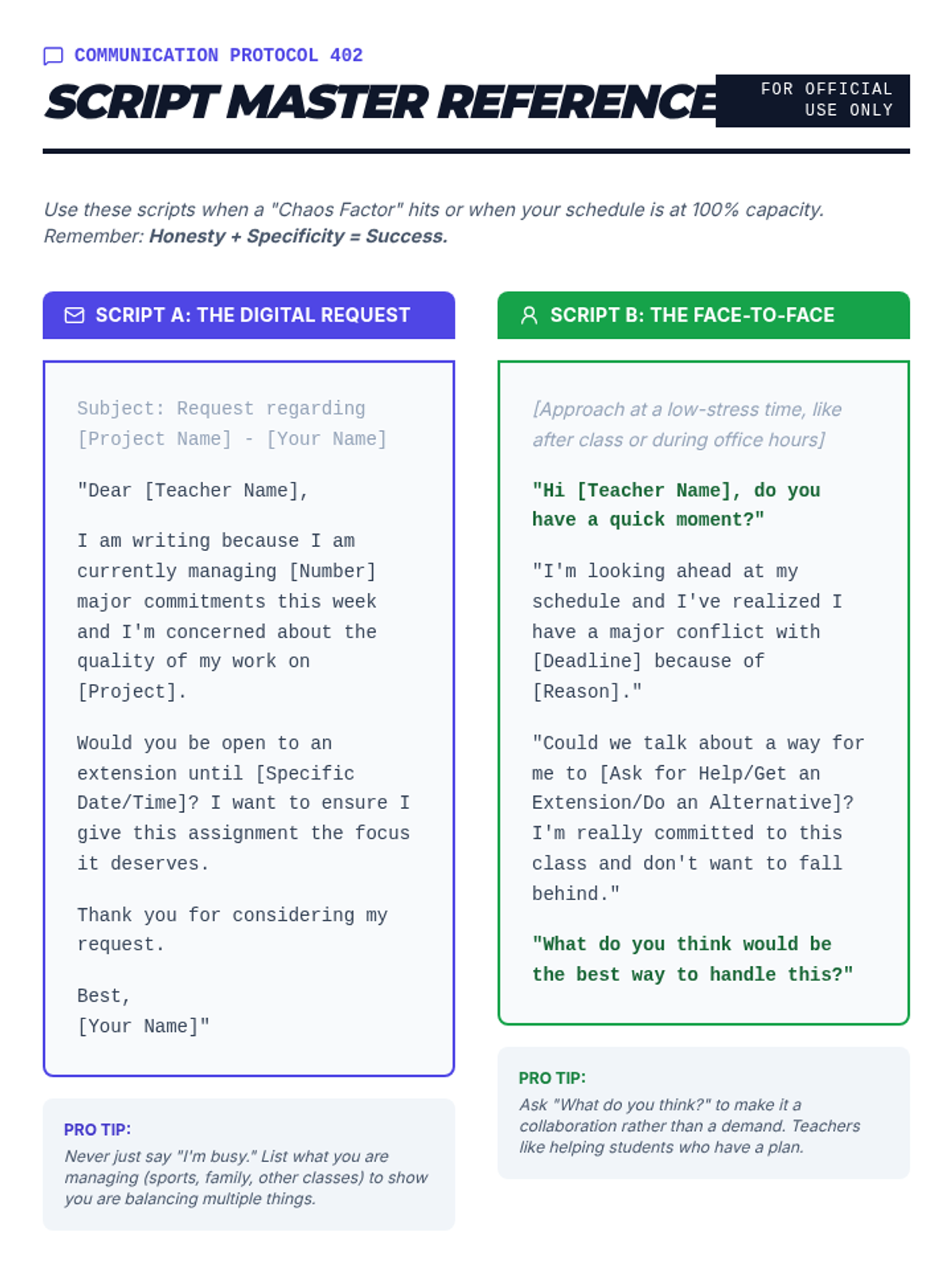
A professional communication guide for students, featuring scripted templates for digital and in-person deadline negotiations, including a practice exercise.
Slide deck for Lesson 2, teaching students the difference between hard and soft deadlines and providing a professional framework for negotiating extensions.
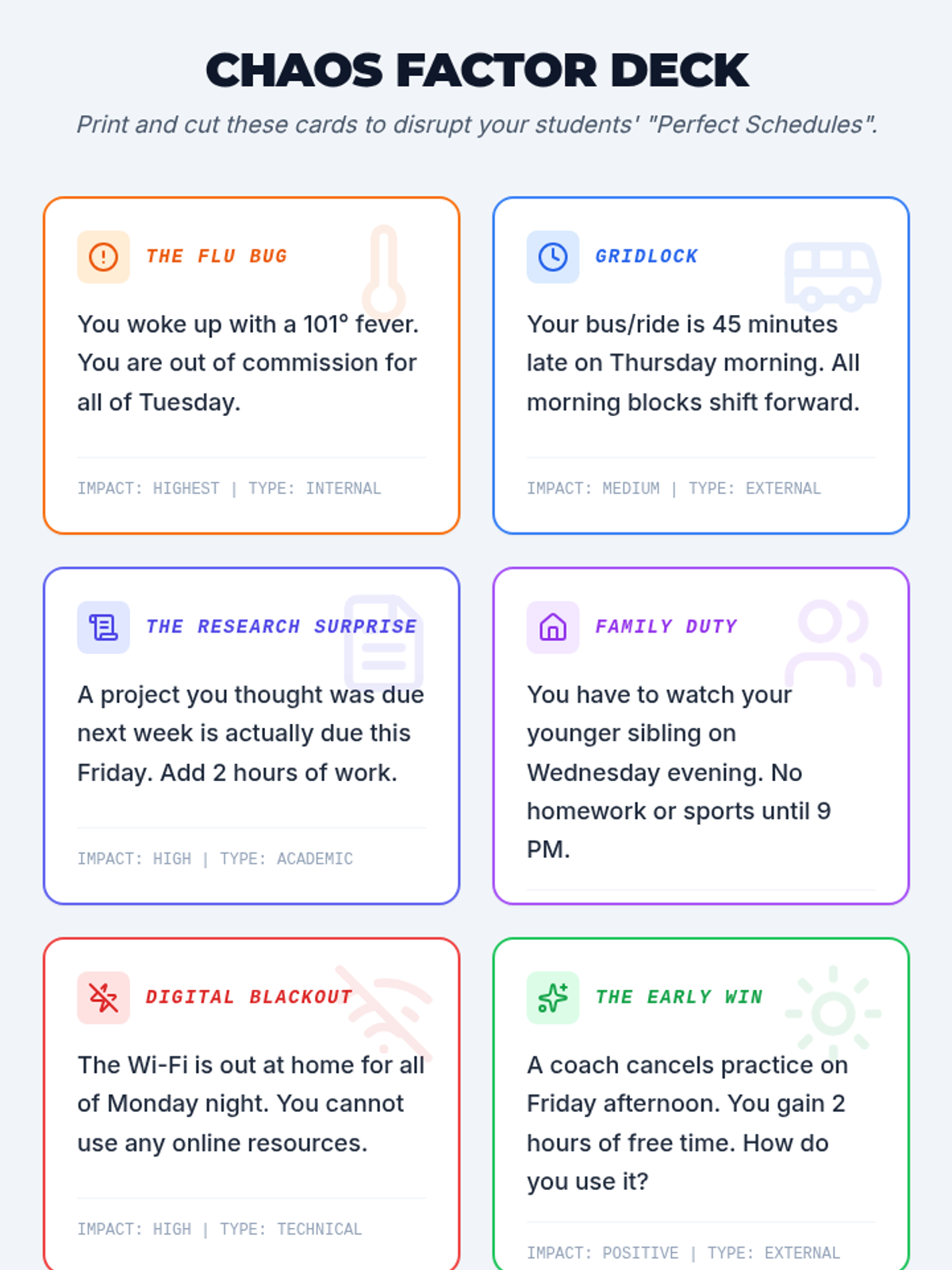
A set of printable 'Chaos Factor' cards for teachers to use in the Mission Balance simulation, featuring various disruptions to a student's schedule.
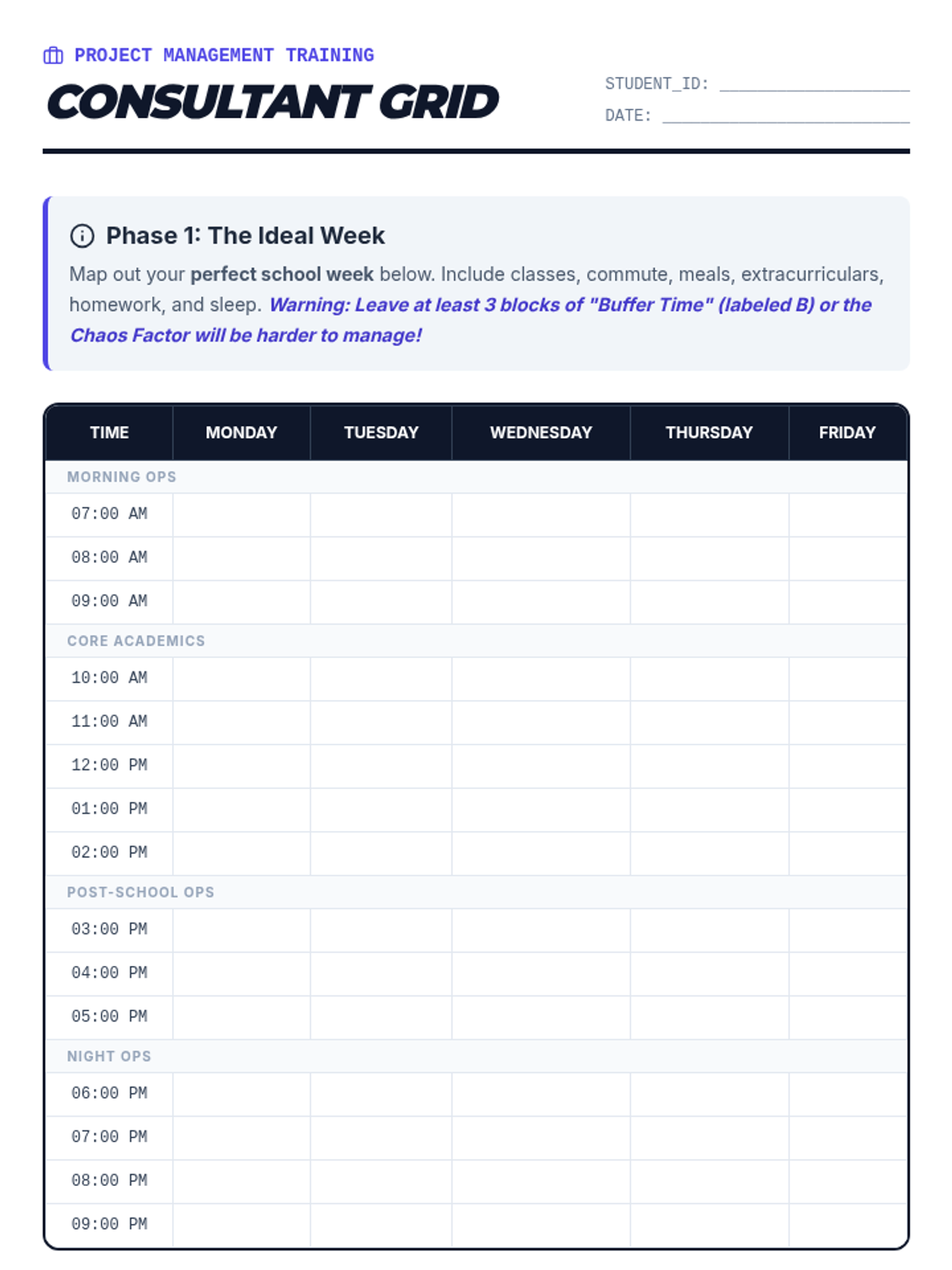
A student-facing weekly scheduling grid designed for the Mission Balance simulation, including a section for analyzing and responding to 'Chaos Factor' disruptions.
Introductory presentation for the Mission Balance sequence, teaching students about the 'Chaos Factor' and the importance of 'Buffer Time' in scheduling.
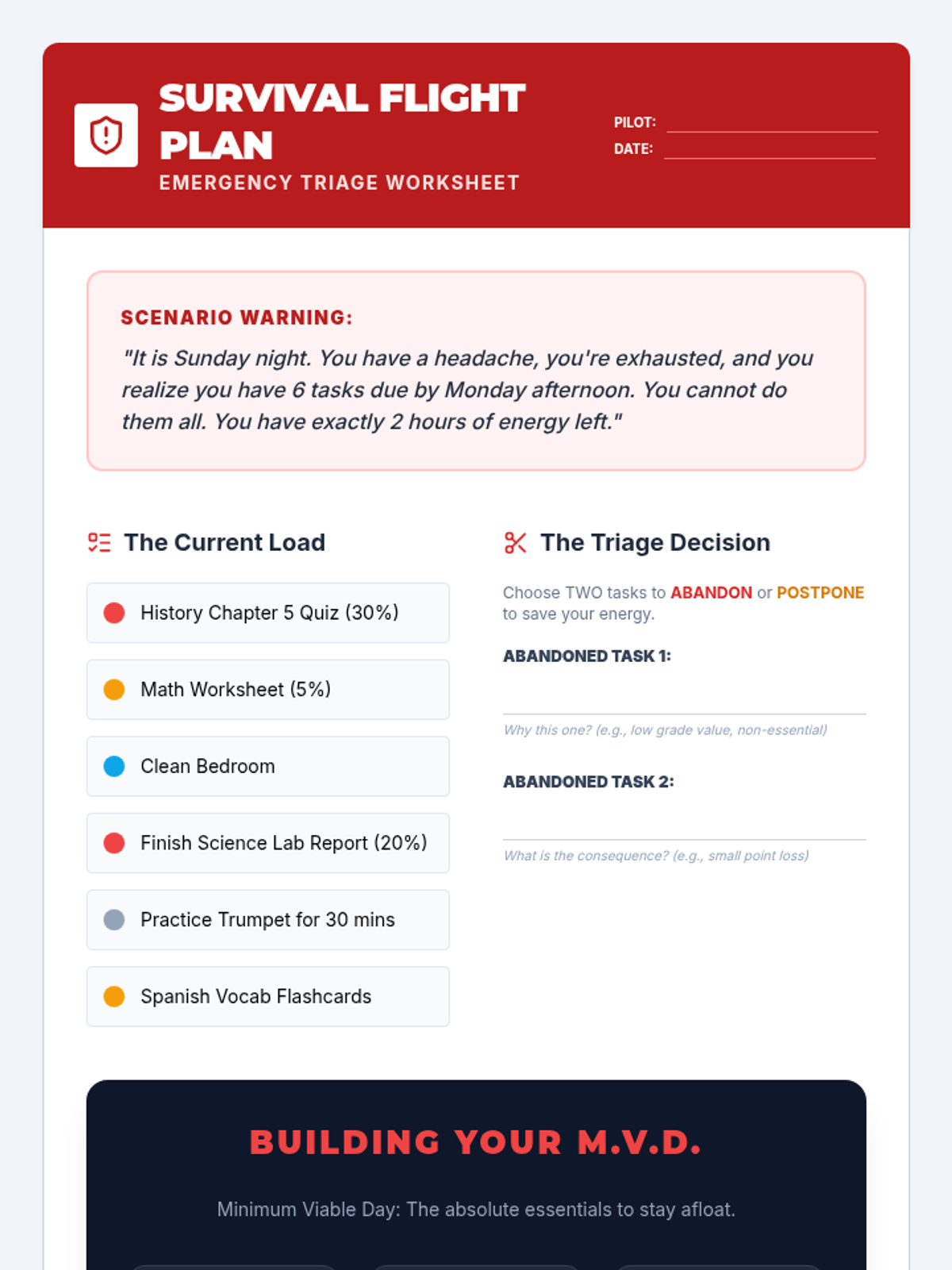
An emergency triage worksheet that guides students through a simulated crisis scenario, helping them identify which tasks to abandon and how to construct a Minimum Viable Day (MVD).
Lesson 5 slide deck on emergency triage and the 'Minimum Viable Day' concept, teaching students how to prioritize critical tasks during periods of crisis or illness.
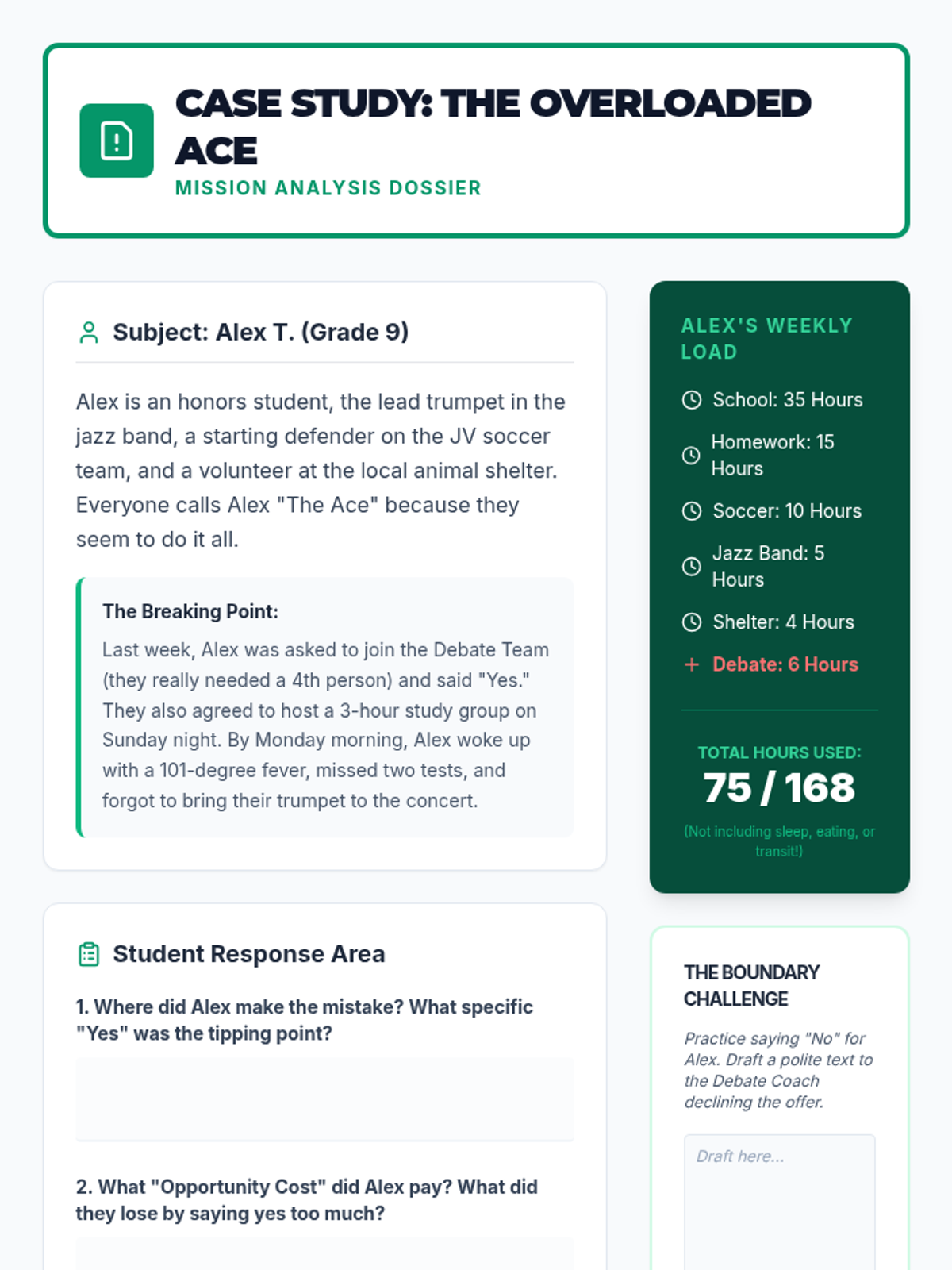
A case study document about 'Alex the Ace', a student who takes on too much, designed to help students analyze the consequences of over-commitment and practice setting boundaries.
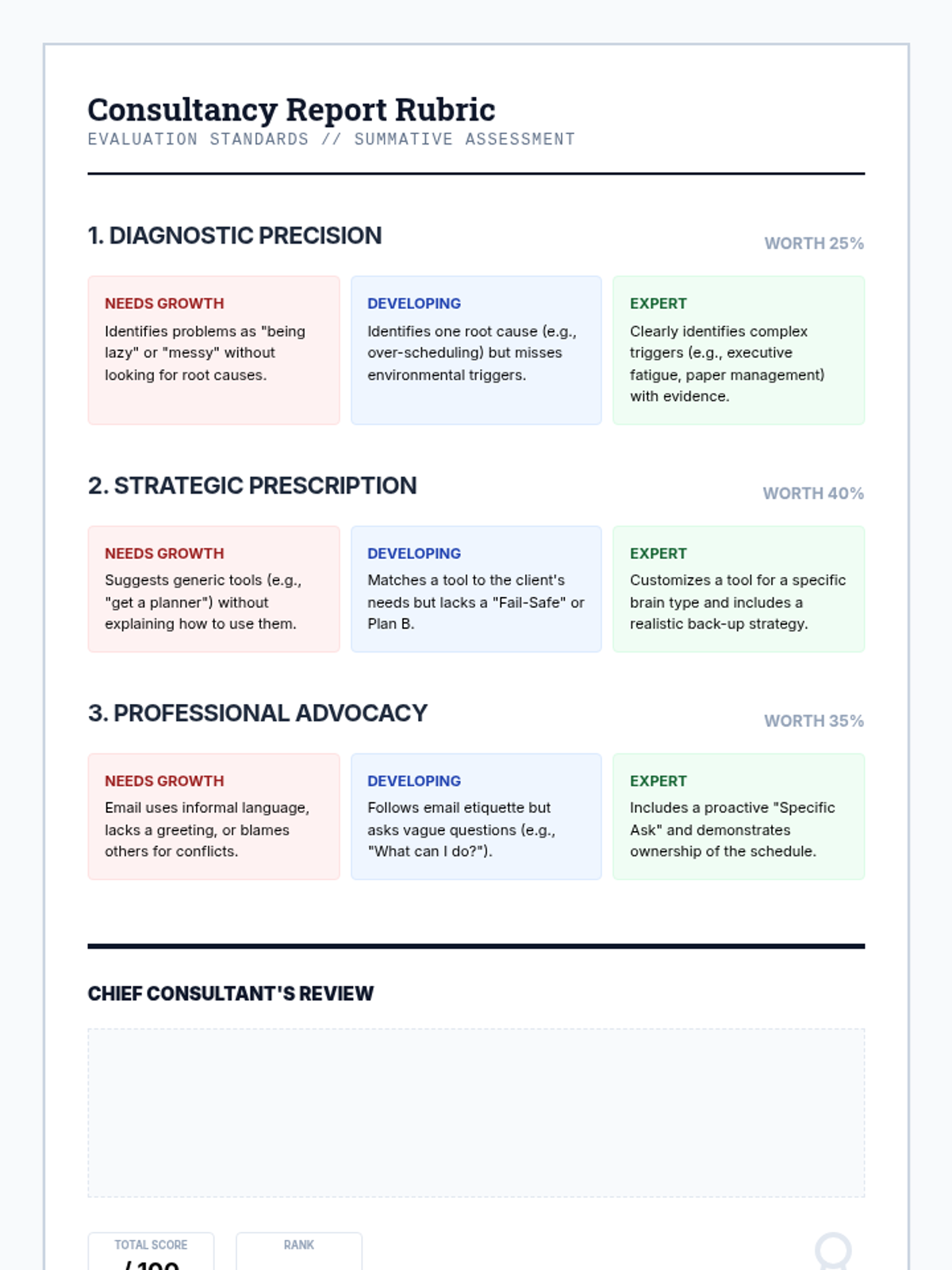
Teacher-facing rubric for assessing the Final Consultancy Report. Evaluates diagnostic precision, strategic prescription (tools), and professional advocacy (communication).
Lesson 4 slide deck introducing the concept of opportunity cost and providing a "No Bank" of polite but firm scripts for setting boundaries.
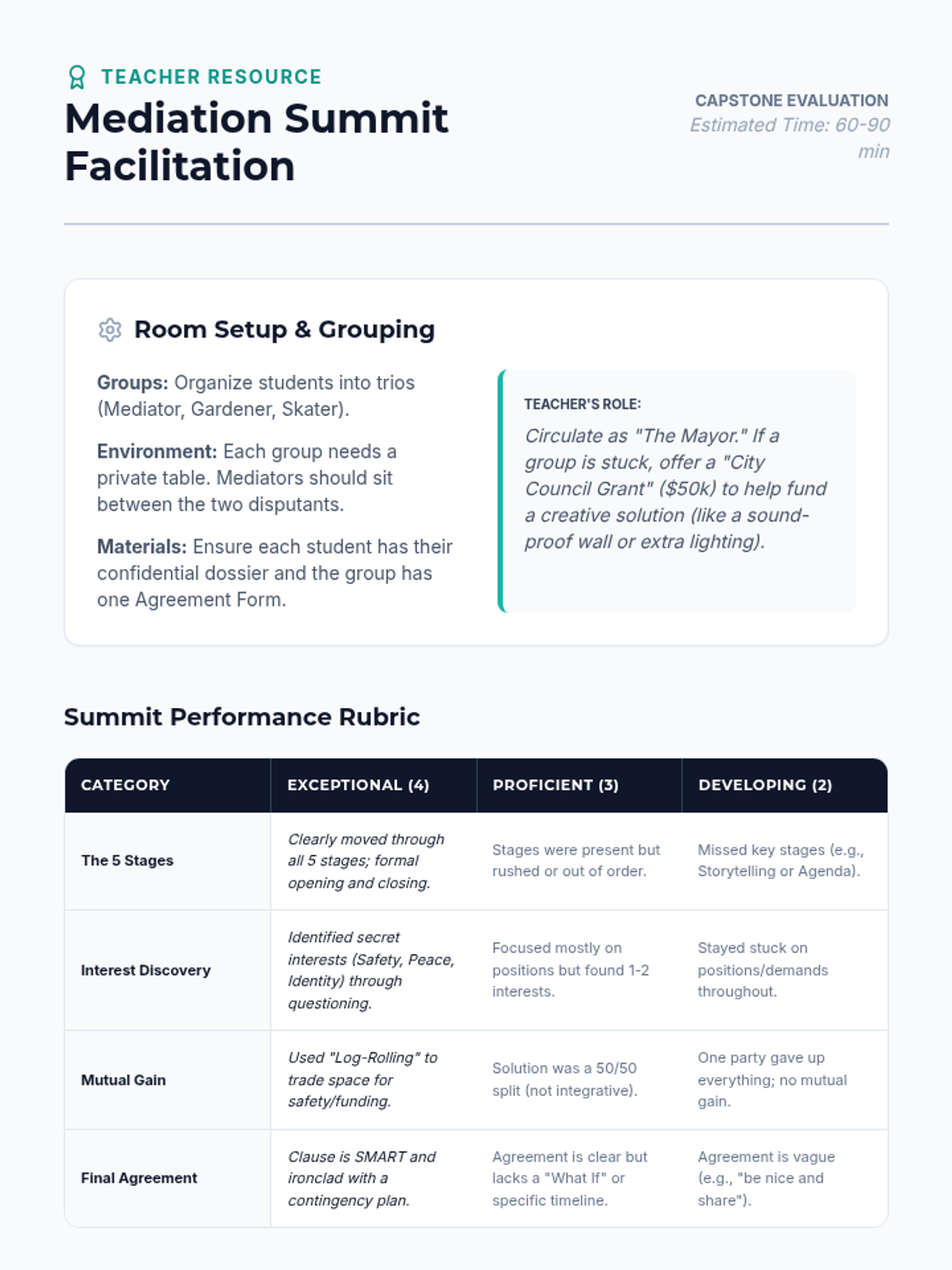
Teacher facilitation guide and evaluation rubric for the Lesson 5 Mediation Summit capstone simulation. Includes setup instructions, a grading rubric, and debrief prompts.
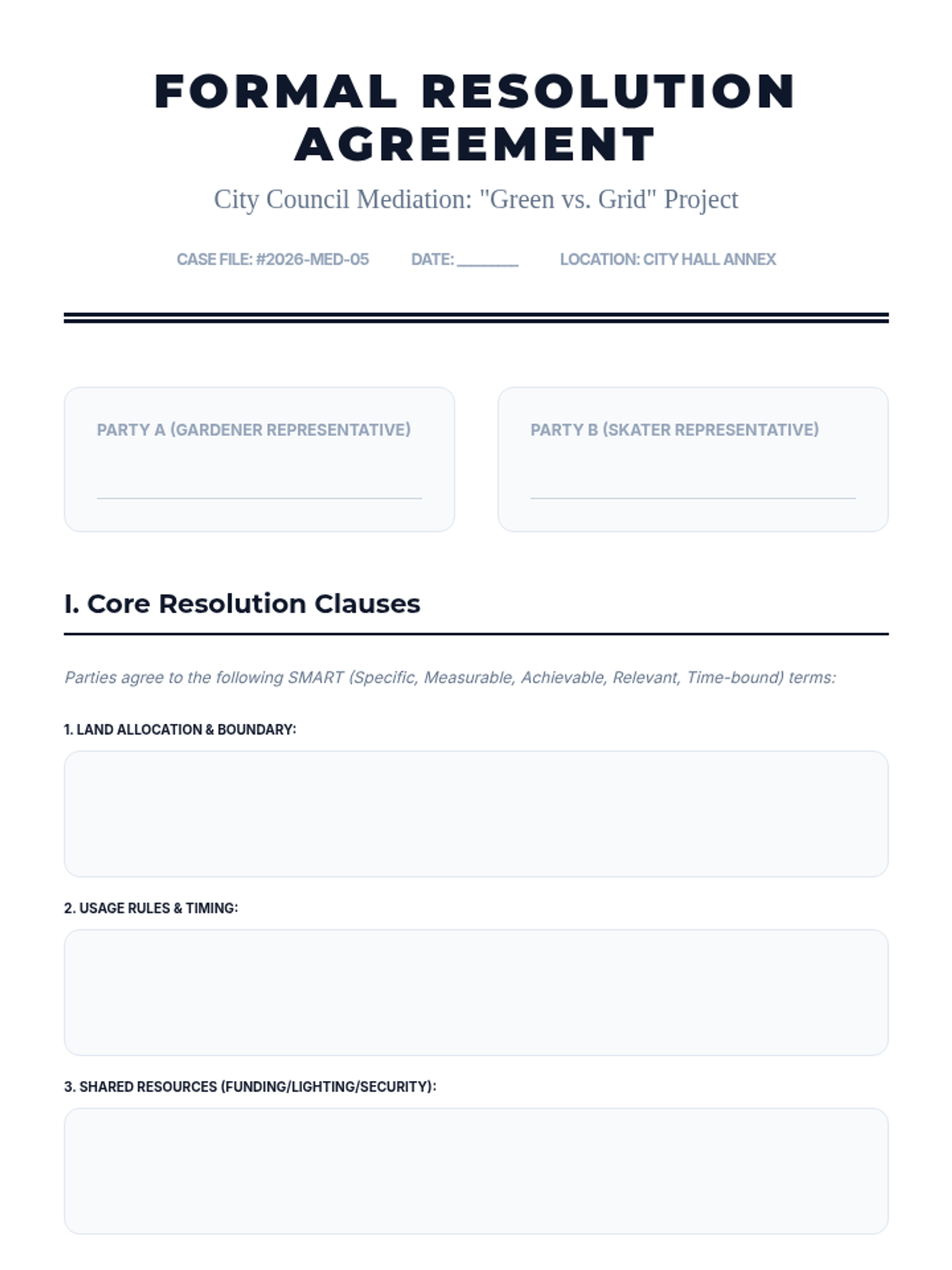
Formal mediation agreement form for the "Green vs. Grid" simulation. Students use this to draft their final SMART resolution clauses and finalize the simulation with signatures.
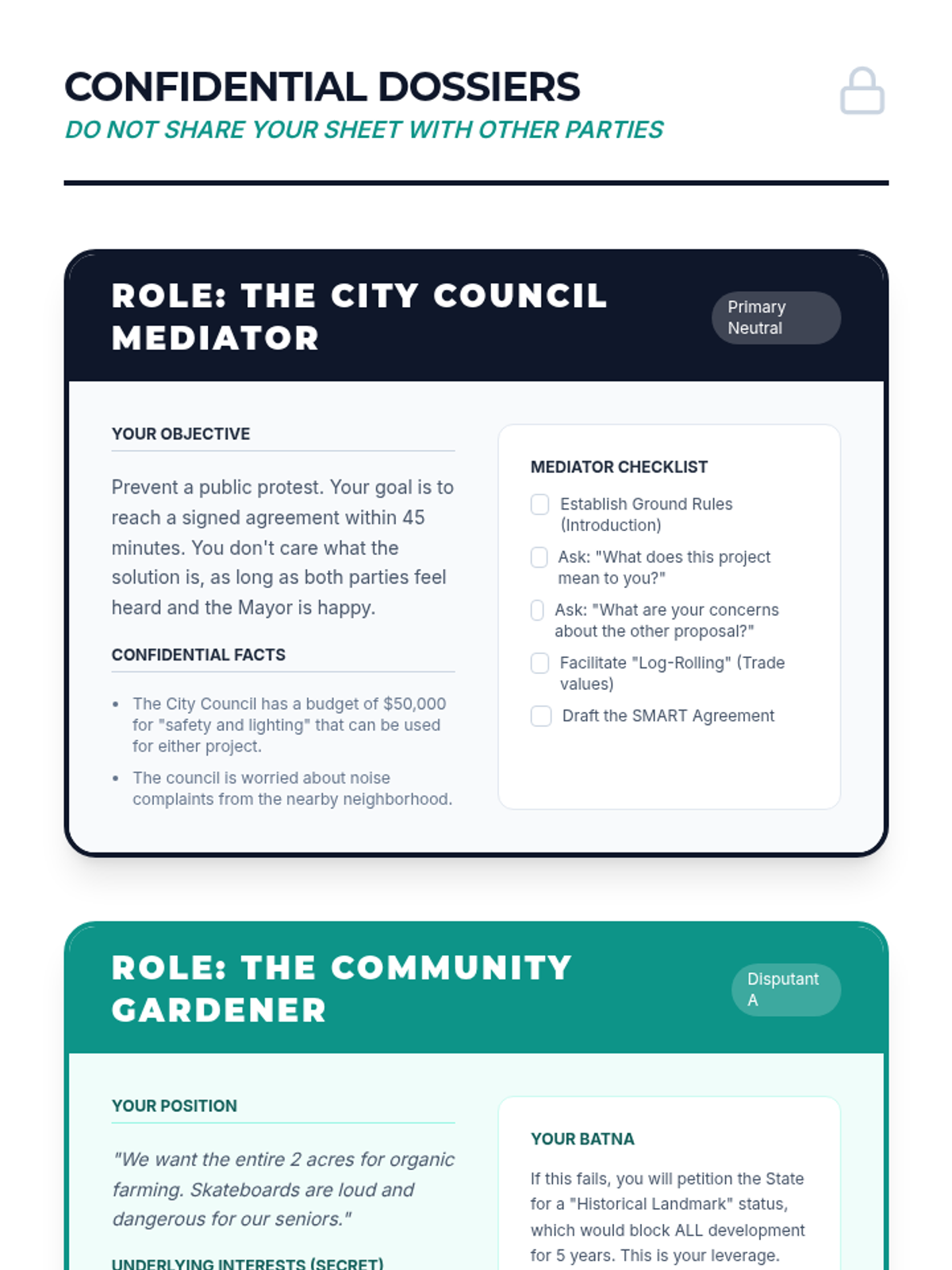
Confidential briefing sheets for the three roles in the "Green vs. Grid" simulation: The Mediator, The Gardener, and The Skater. Includes secret interests and walk-away points.
Briefing slide deck for the Lesson 5 Mediation Summit capstone simulation. Introduces the "Green vs. Grid" land use case, roles, and rules of engagement.
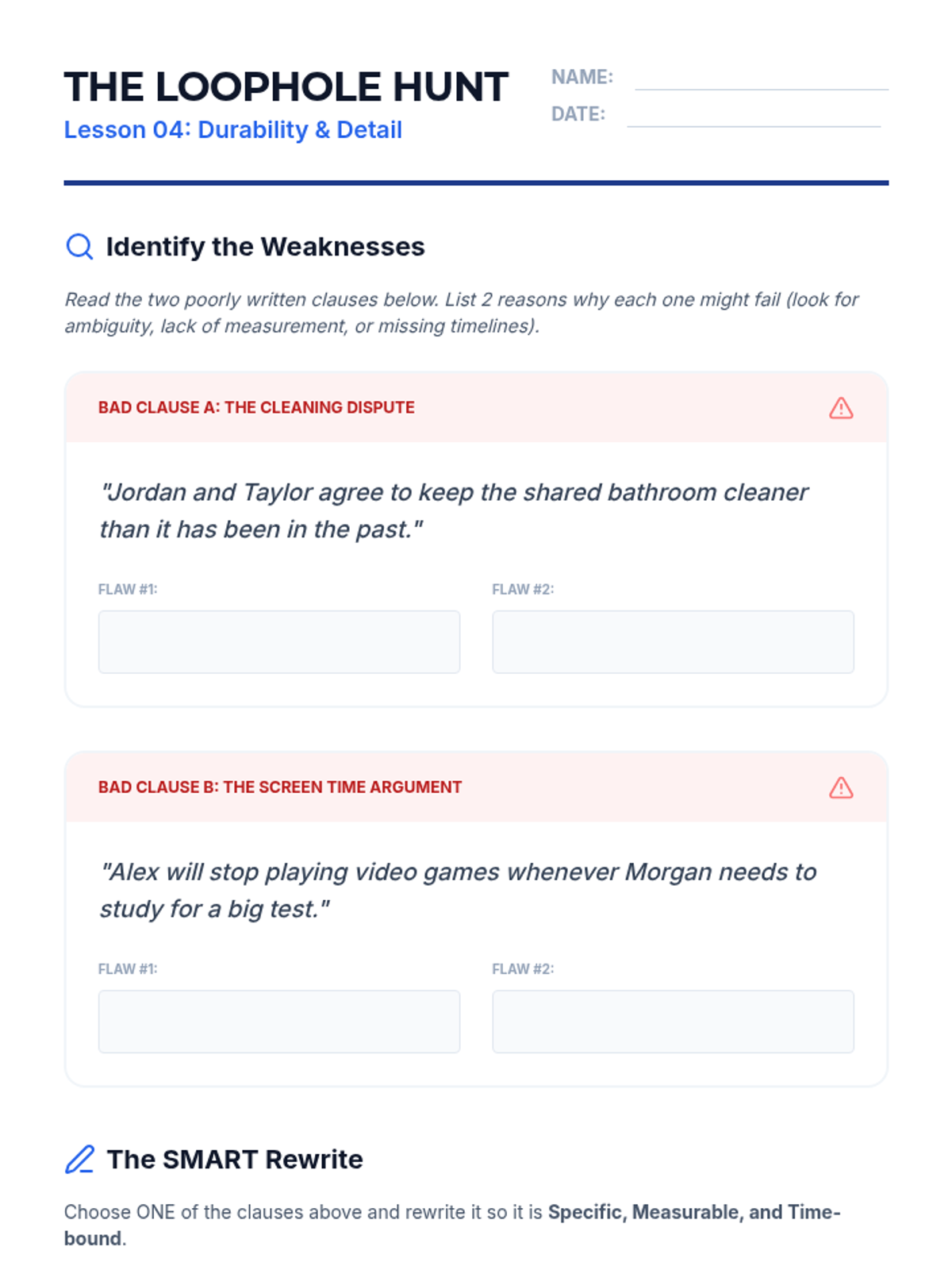
Student worksheet for identifying flaws in poorly written conflict resolution agreements and rewriting them using the SMART framework.
Instructional slide deck for Lesson 4: Drafting Sustainable Agreements. Explains the SMART framework for conflict resolution and the importance of specific clauses and contingency planning.
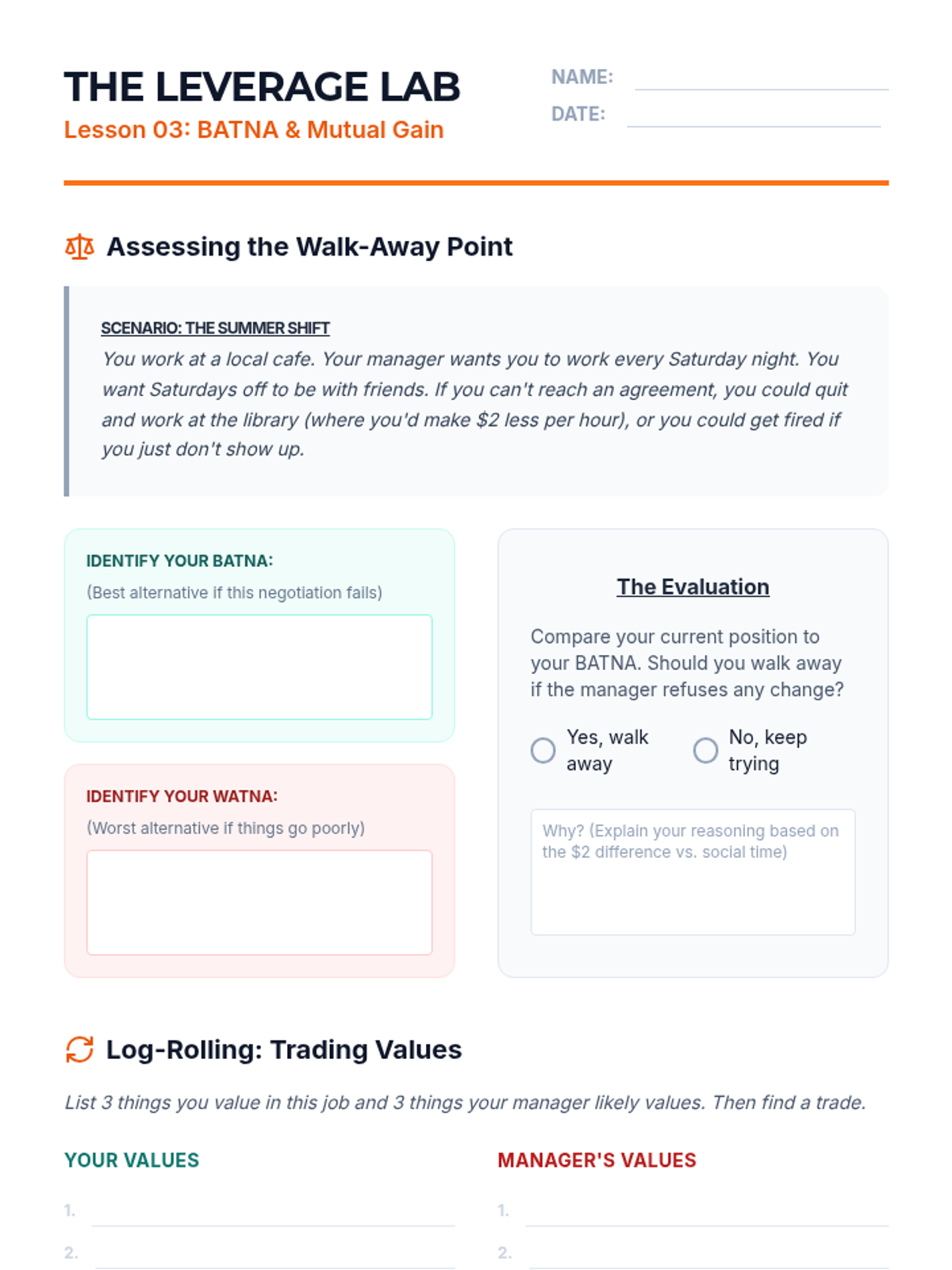
Student worksheet for analyzing BATNA/WATNA and practicing the Log-Rolling technique in a workplace conflict scenario.
Instructional slide deck for Lesson 3: Generating Options for Mutual Gain. Explains BATNA/WATNA, brainstorming rules, and the "Log-Rolling" technique for integrative negotiation.
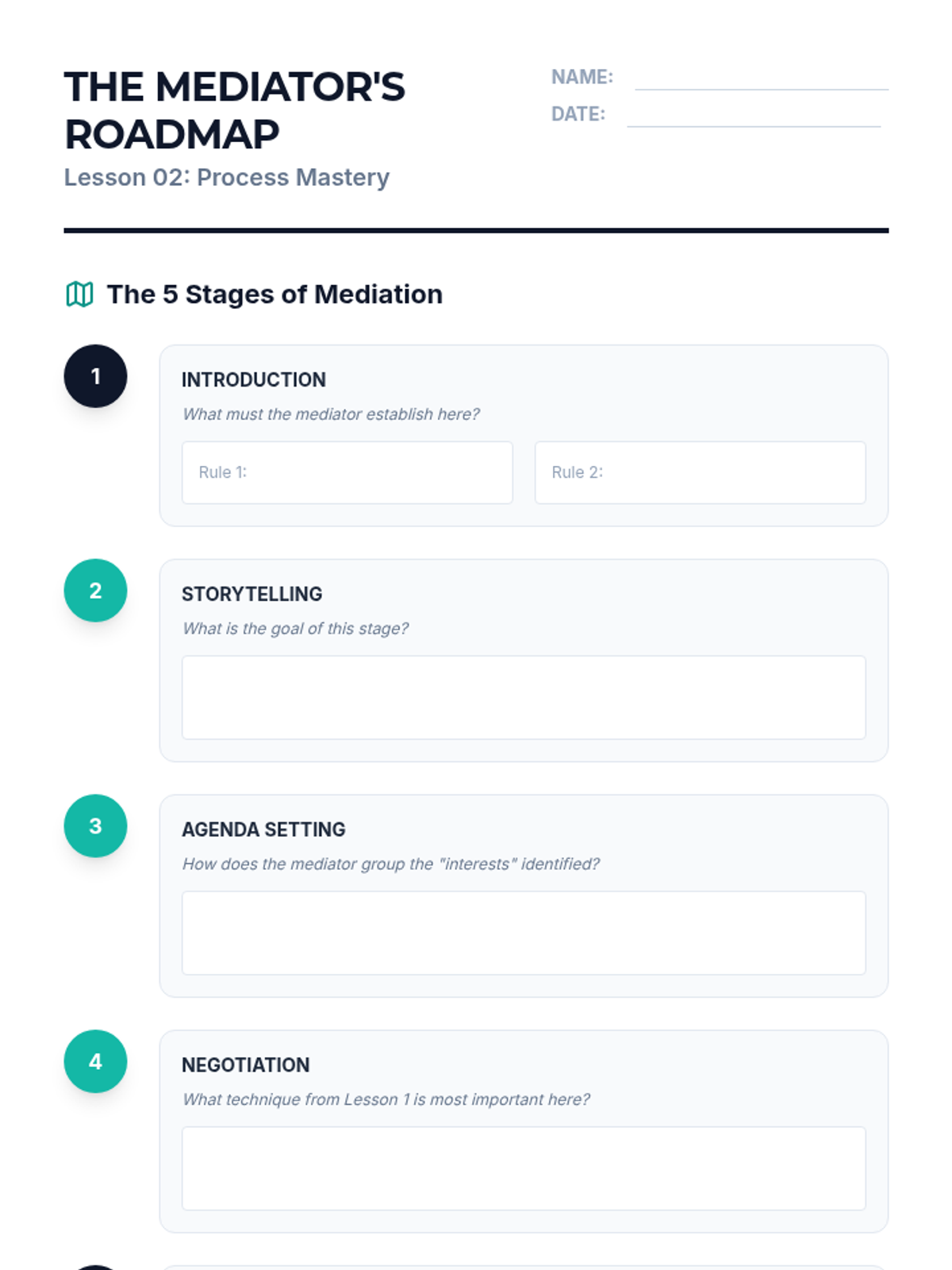
Student worksheet for visualizing the 5 stages of mediation and drafting a professional opening statement. Includes a flowchart and guided scripting area.
Instructional slide deck for Lesson 2: Structuring the Mediation Process. Outlines the 5 stages of mediation, the role of a neutral mediator, and active listening techniques.
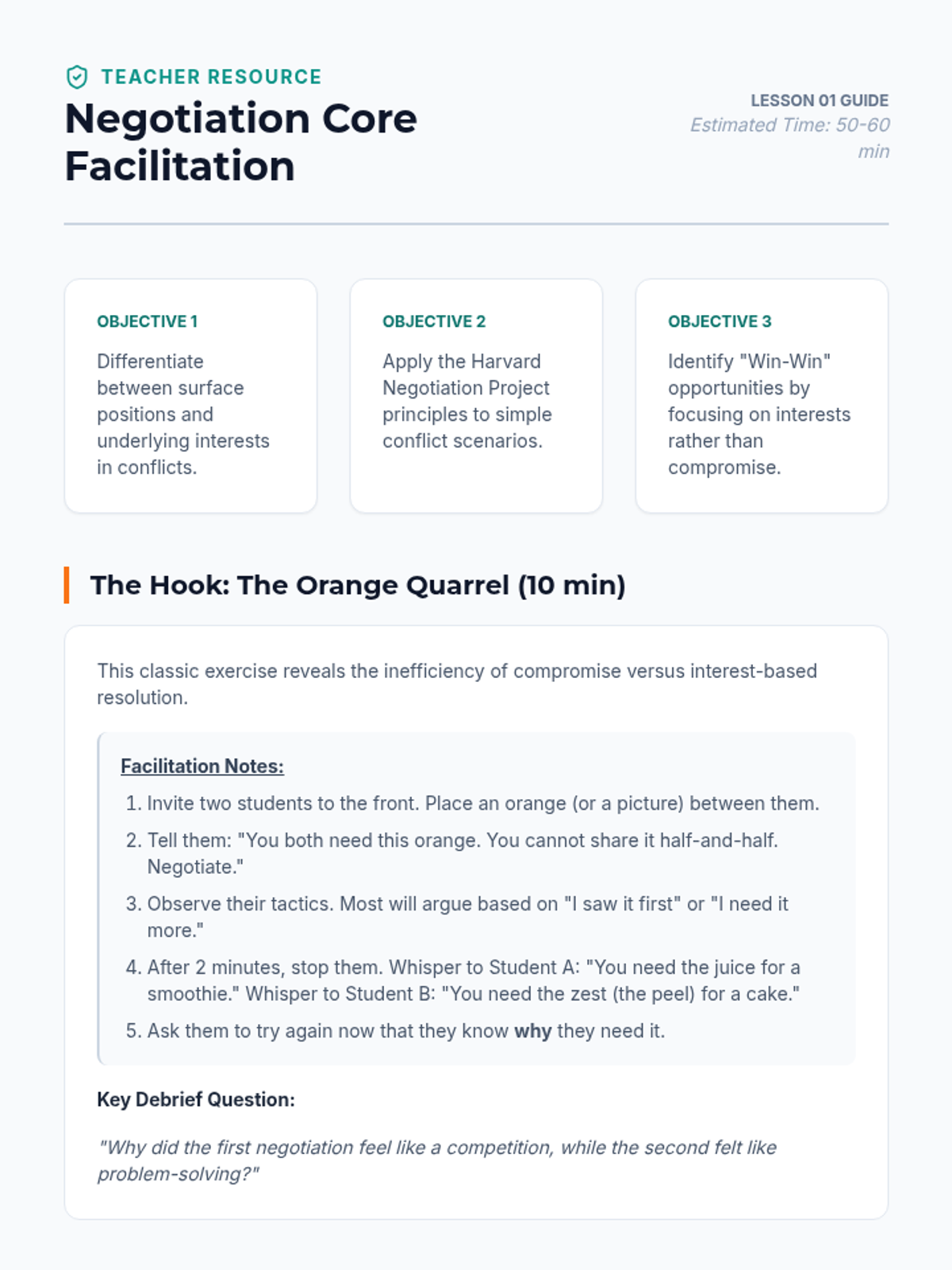
Teacher facilitation guide for Lesson 1. Includes the Orange Quarrel script, objective breakdowns, worksheet answer logic, and case study resolution examples.
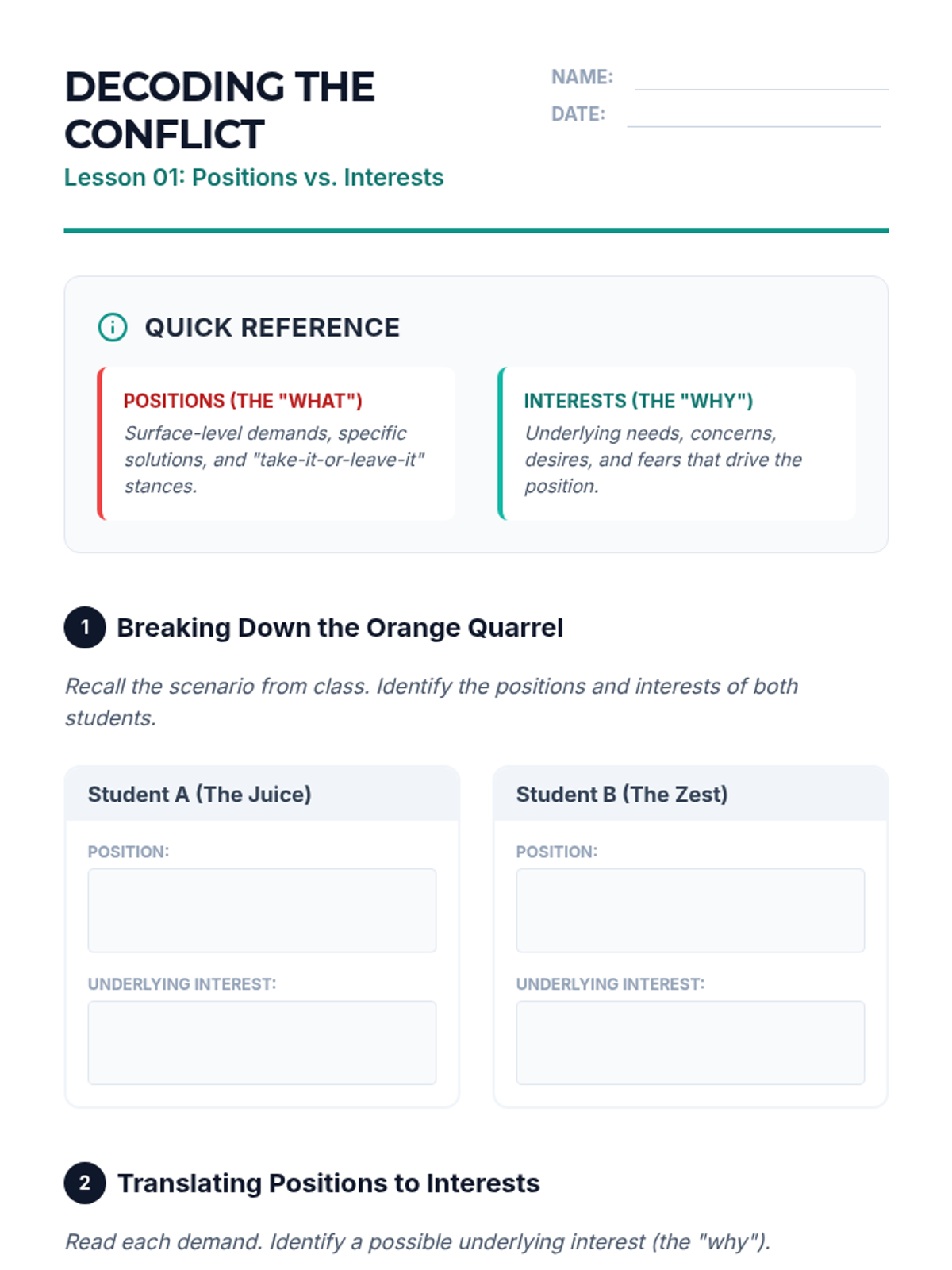
Student worksheet for identifying and translating surface positions into underlying interests. Includes the Orange Quarrel breakdown, a translation table, and a case study on study hall policies.
Instructional slide deck for Lesson 1: Positions vs. Interests. Features the Orange Quarrel hook, the Iceberg Metaphor for negotiation, and the four principles of the Harvard Negotiation Project.
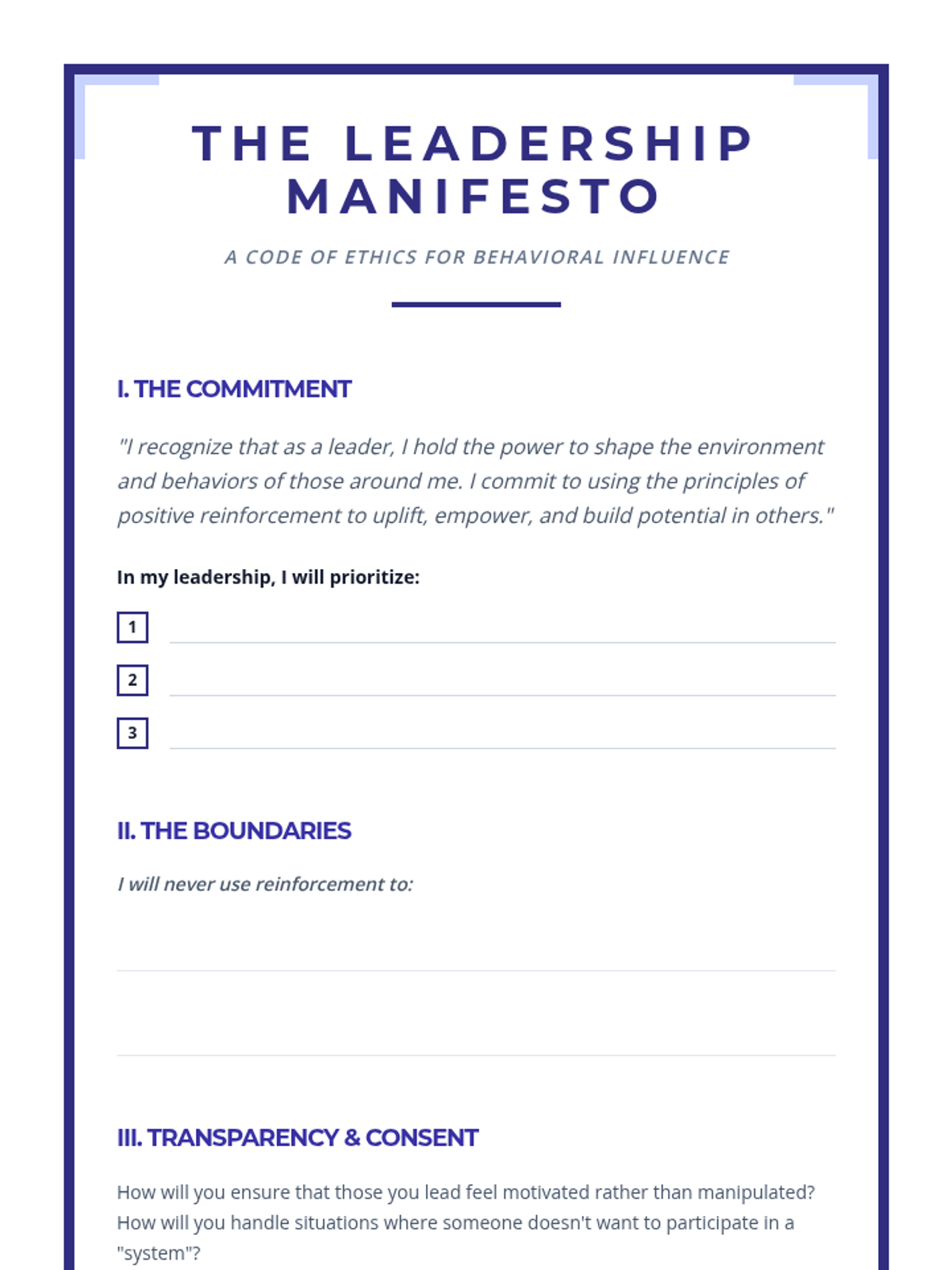
Final reflective project for Lesson 5, where students draft a personal code of ethics for using behavioral influence in their leadership roles.
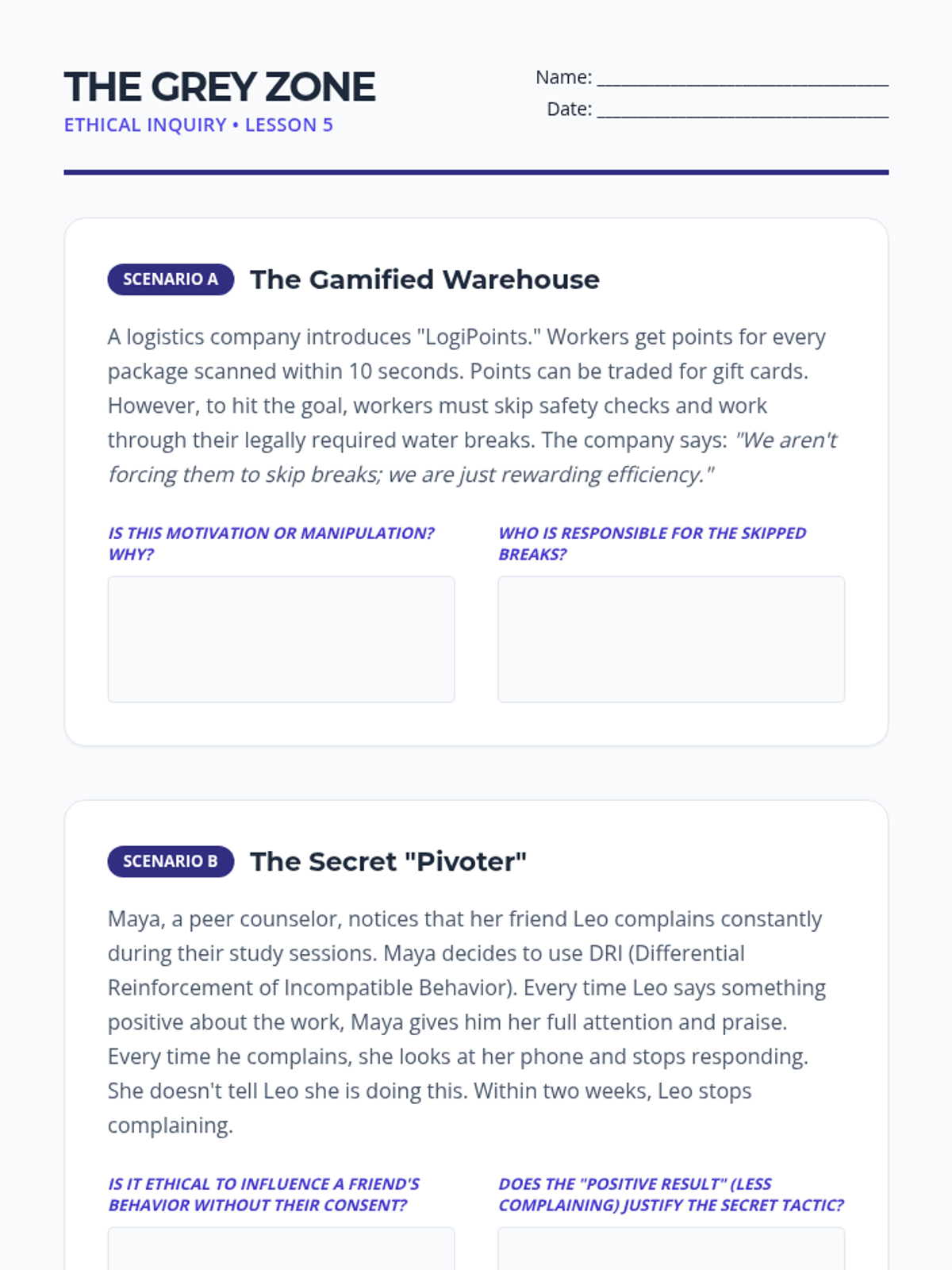
Student worksheet for Lesson 5, featuring ethical case studies and debate prompts regarding the use of behavioral reinforcement in leadership.
Visual presentation slides for Lesson 5, exploring the ethics of behavioral leadership, transparency, and the difference between motivation and manipulation.
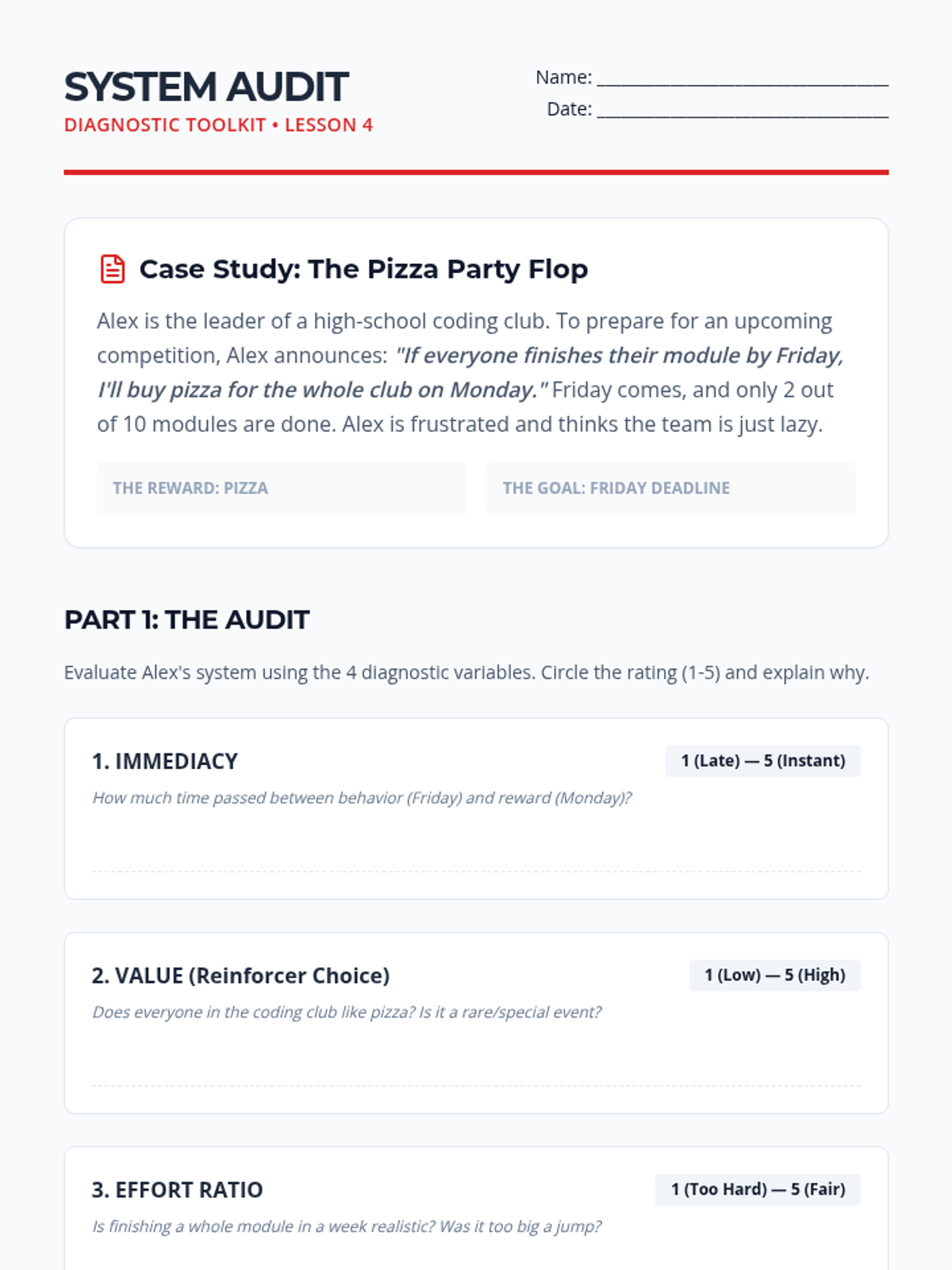
Student worksheet for Lesson 4, featuring a case study analysis and diagnostic checklist to troubleshoot failing reinforcement systems.
Visual presentation slides for Lesson 4, covering the common reasons reinforcement systems fail, including satiation, delay, and poor reinforcer choice.
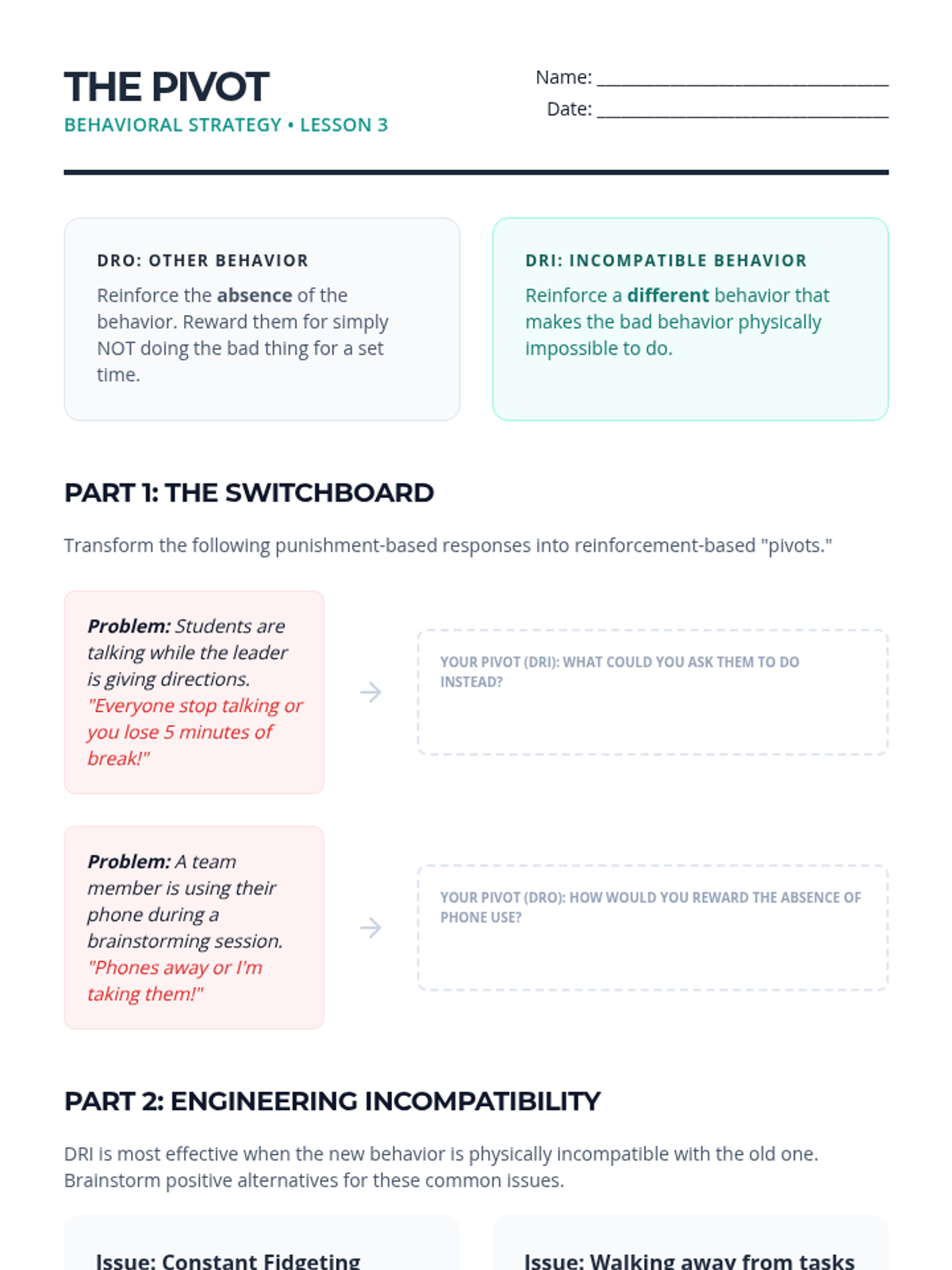
Student worksheet for Lesson 3, featuring exercises to practice Differential Reinforcement of Other Behavior (DRO) and Incompatible Behavior (DRI) in leadership contexts.
Visual presentation slides for Lesson 3, exploring Differential Reinforcement of Other Behavior (DRO) and Incompatible Behavior (DRI) as leadership strategies.
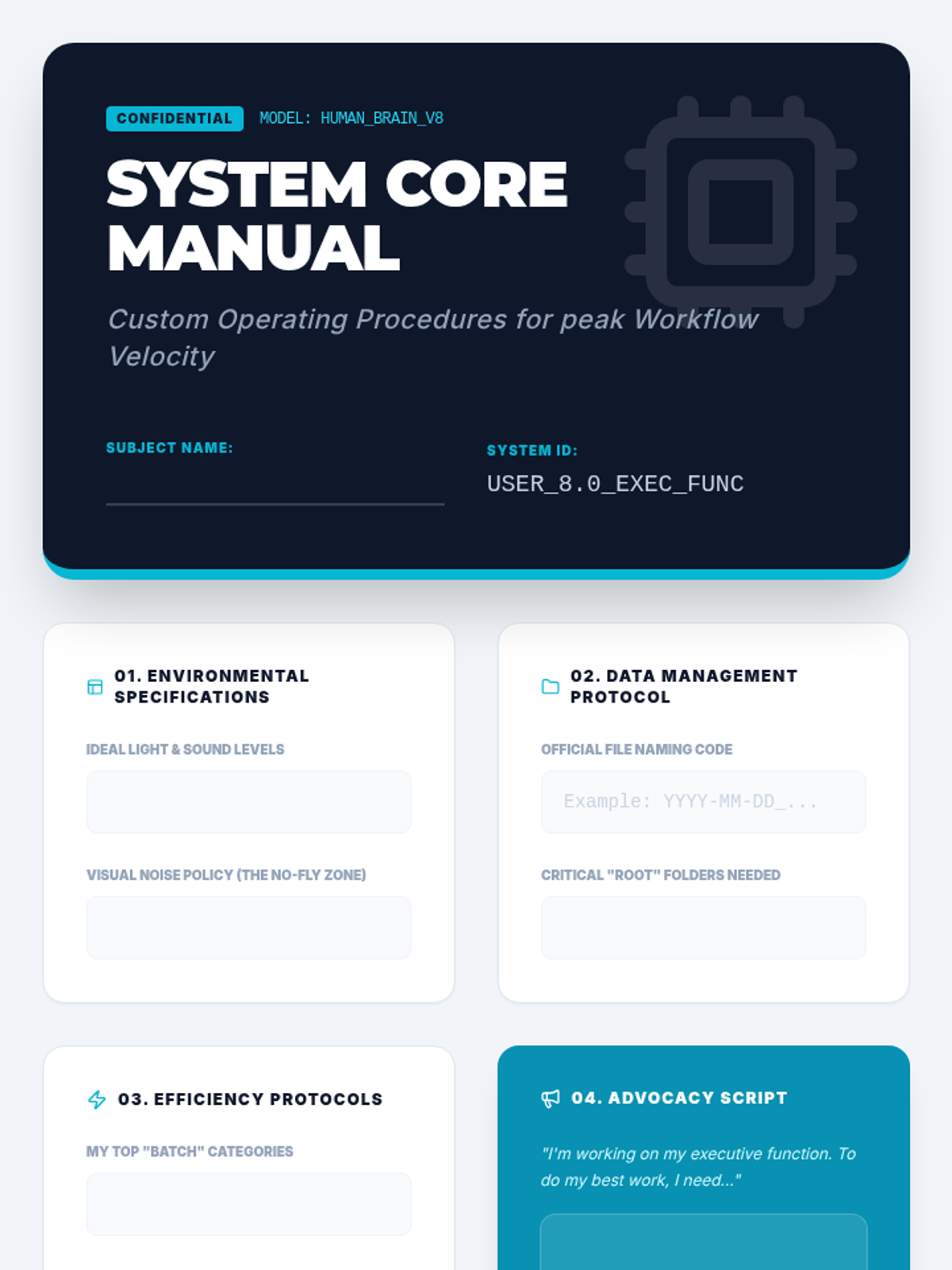
The capstone project template for the sequence. Students synthesize all previous learning into a professional-looking "System Core Manual" that documents their personalized organizational strategies and self-advocacy needs.
Final project presentation guiding students to synthesize their learning into a personal "Operating Manual." Focuses on self-advocacy and developing a set of standard operating procedures for their individual cognitive needs.
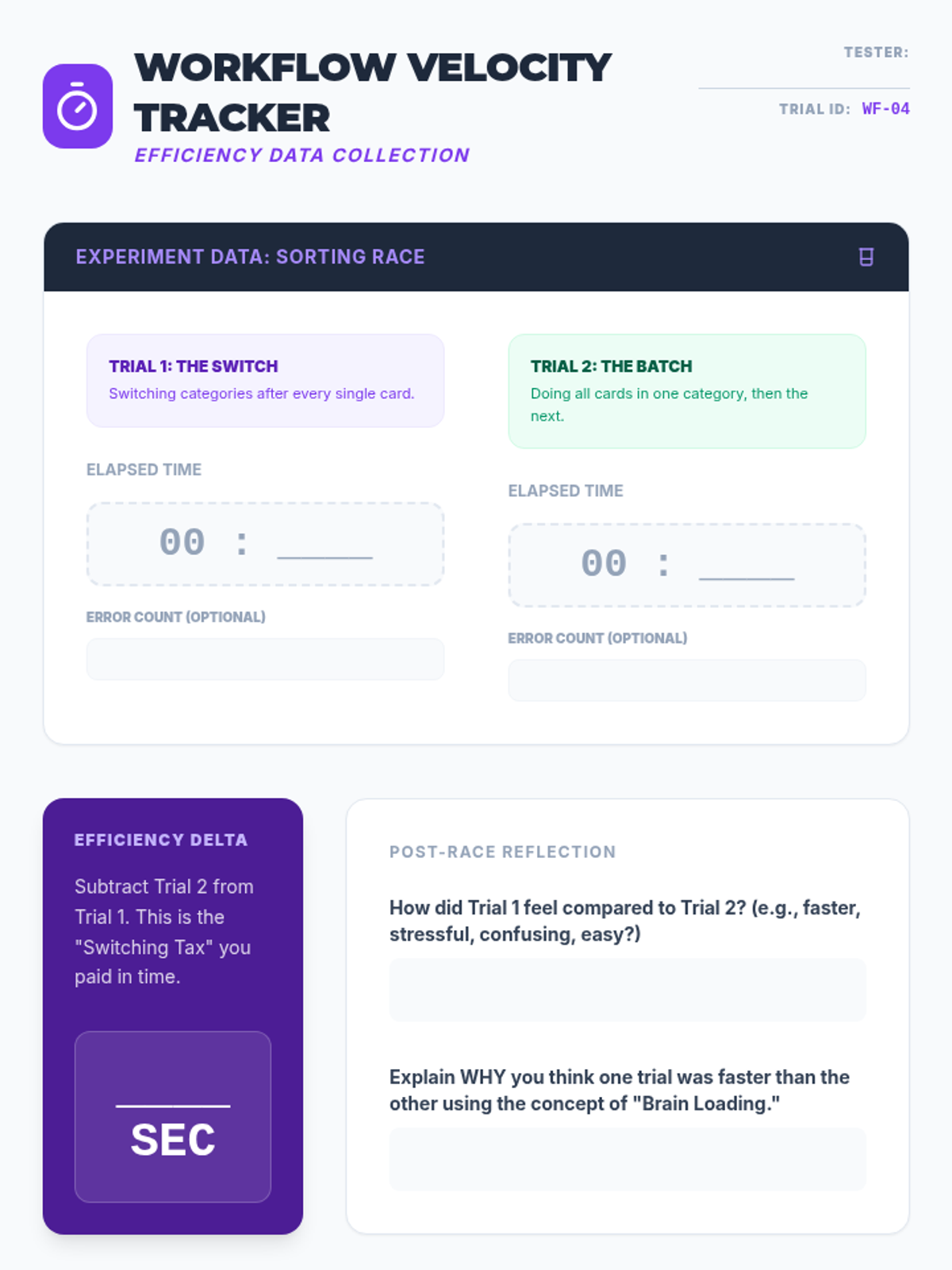
Experimental data tracker for the sorting race. Students record times for sequential versus batched tasks, calculate their efficiency delta, and plan real-world application of batching strategies to their homework.