Budgeting, saving, and investment strategies alongside practical skills for managing credit, taxes, and banking. Addresses insurance needs, employment income, and major purchase decisions to support comprehensive long-term financial planning.
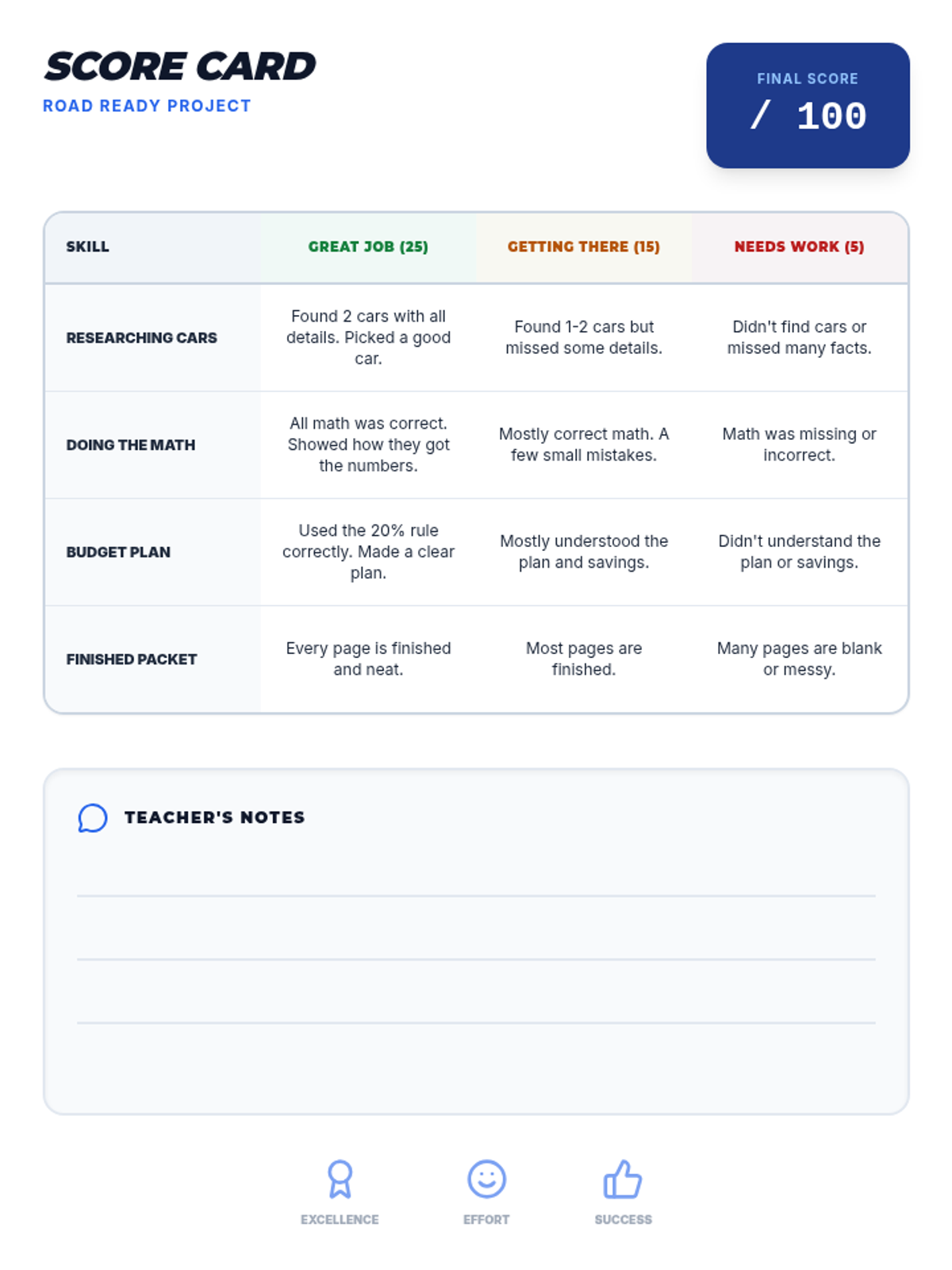
A simplified assessment rubric for lower-level students. It uses a clear 3-point scale (Great Job, Getting There, Needs Work) with plain language and visual icons to make grading and feedback accessible.
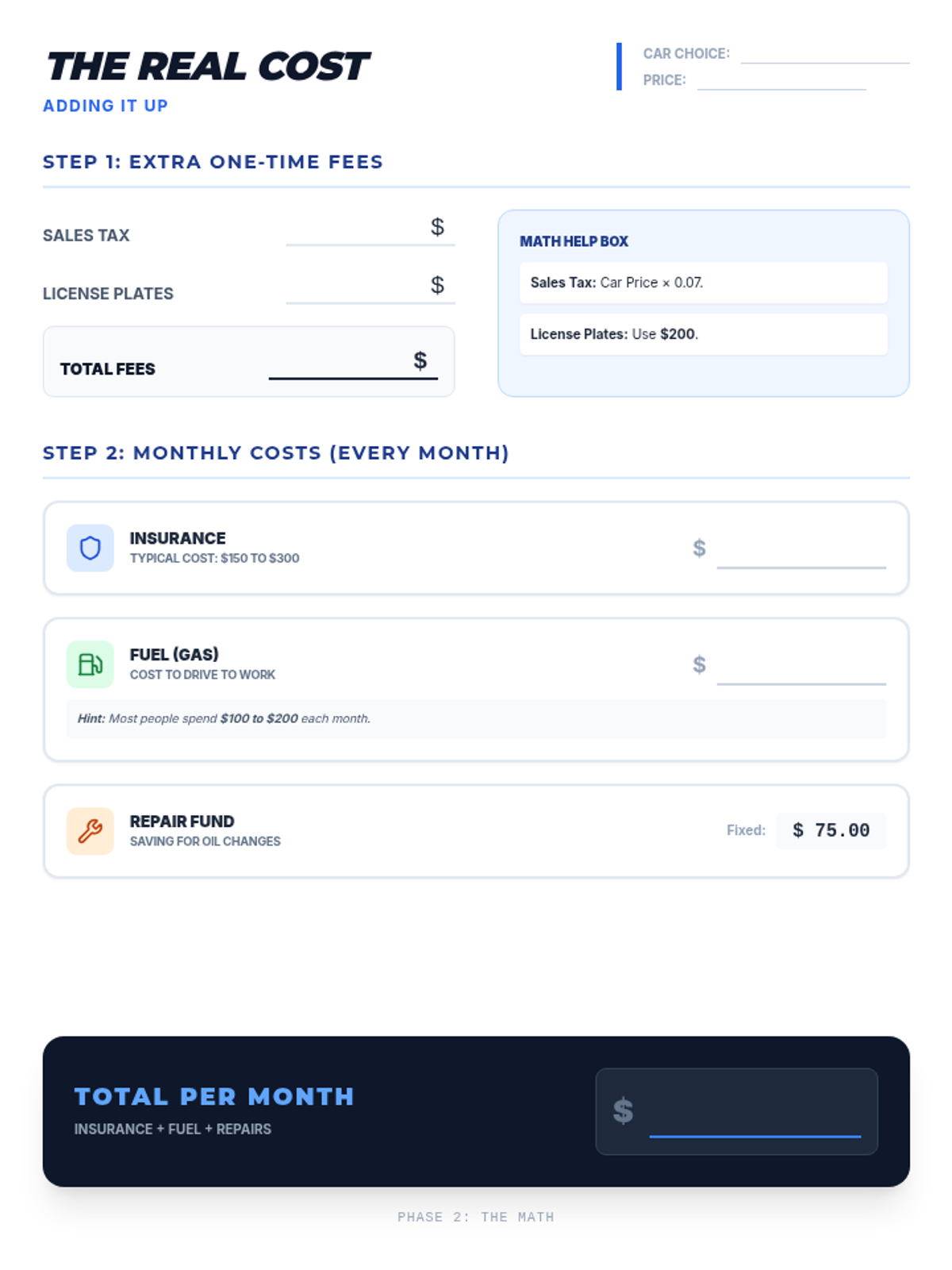
A simplified cost calculator for lower-level students. It breaks down vehicle ownership costs into two steps (fees and monthly costs) using visual icons, clear hints, and a straightforward layout to help students calculate their total monthly expenses.
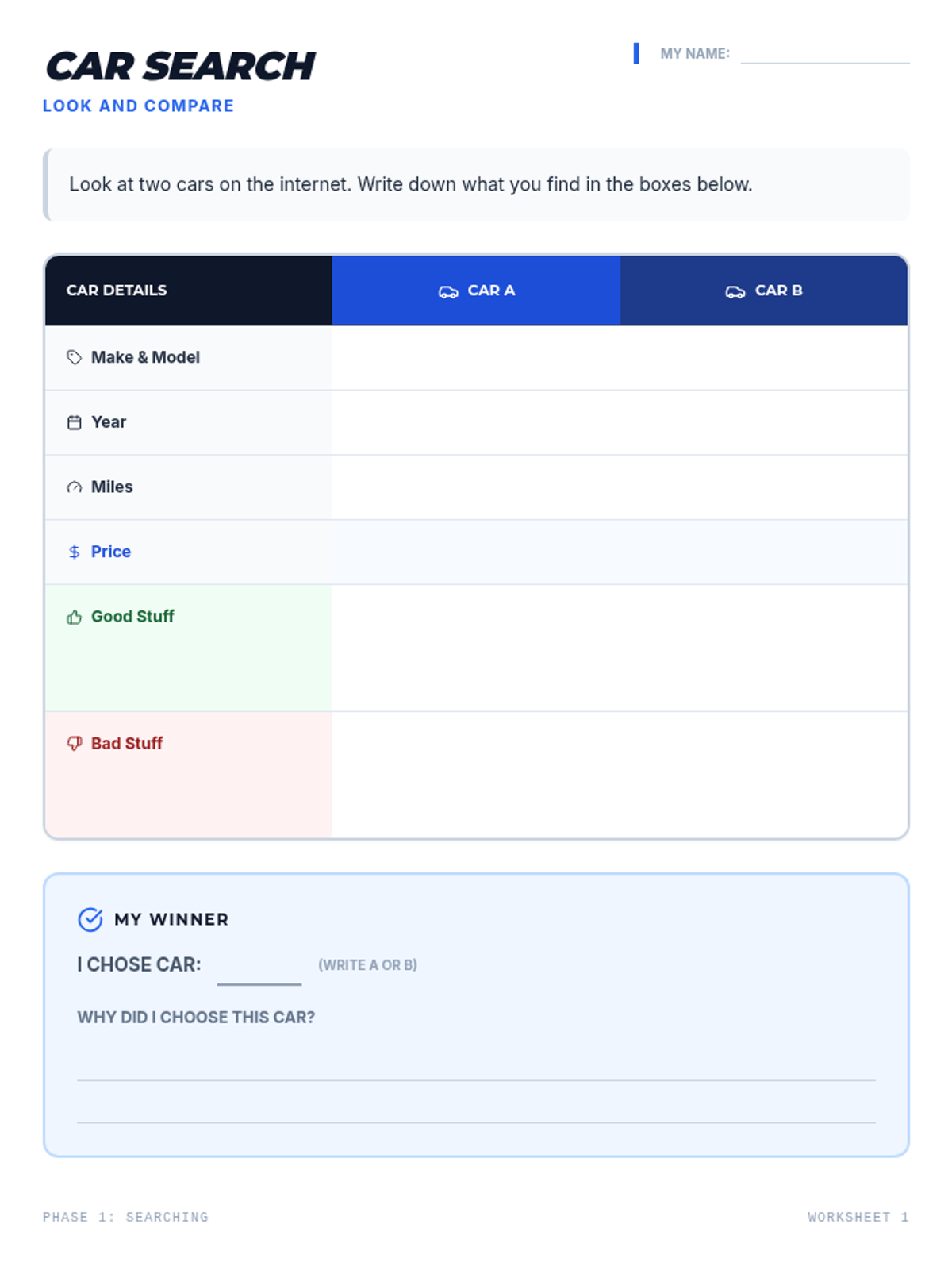
A simplified car research worksheet for lower-level students. It features a side-by-side comparison of two vehicles with clear icons and plain language like "Good Stuff" and "Bad Stuff" to help students make a choice.
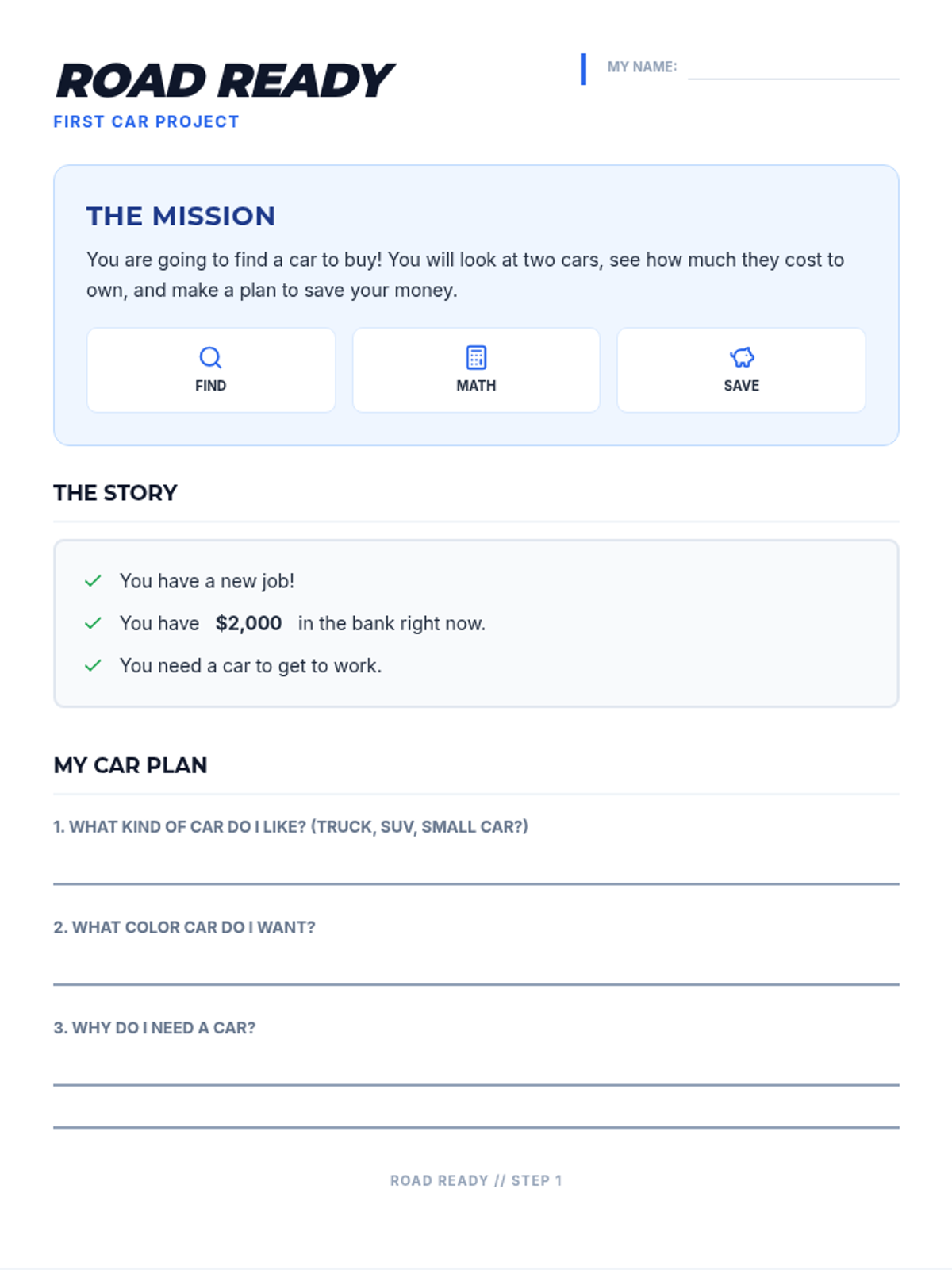
This project guide provides a simplified overview of the "Road Ready" car buying project for lower-level students. It uses clear language, visual steps, and direct prompts to guide students through the vehicle research and financial planning process.
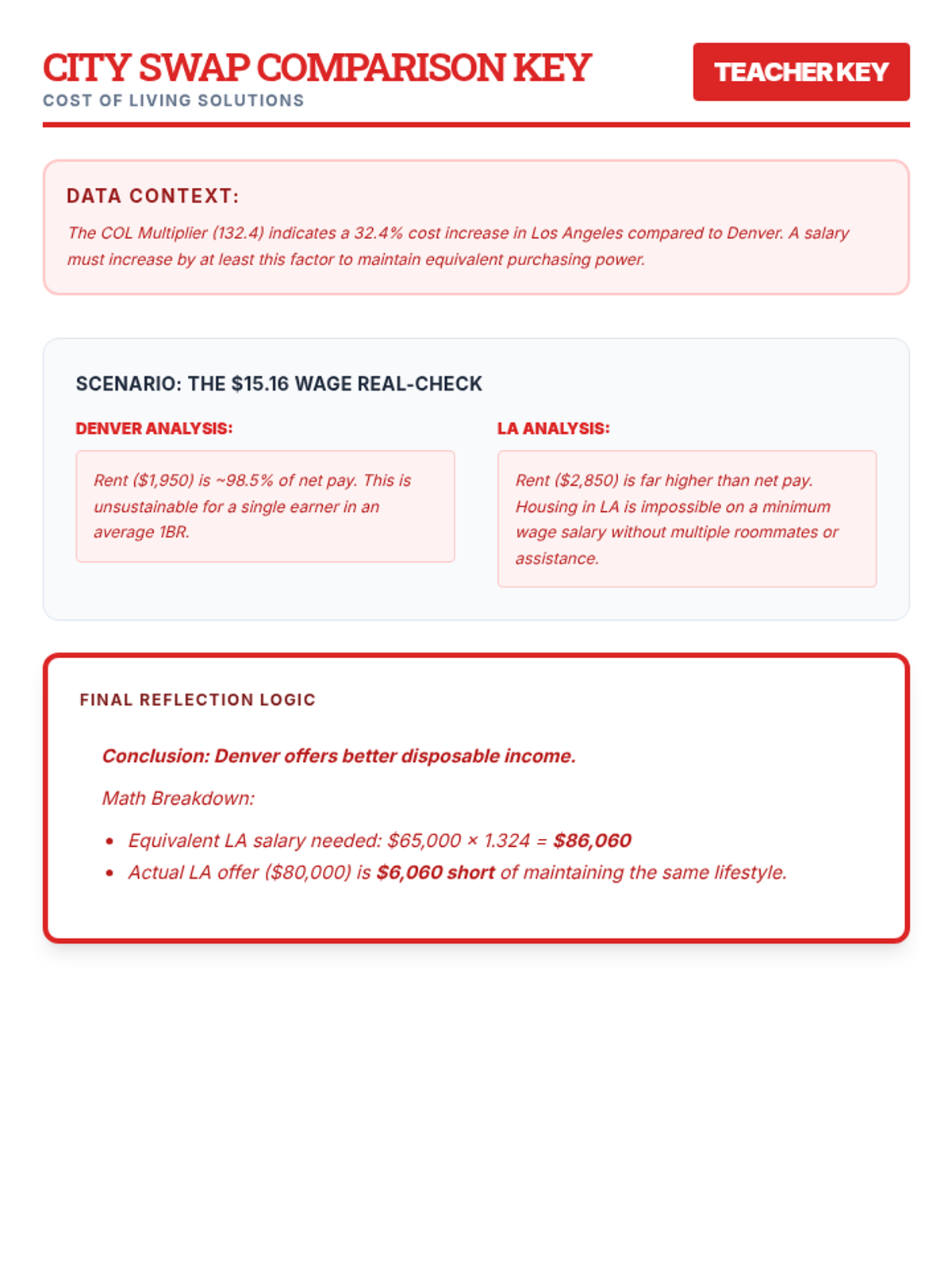
Teacher answer key for the City Swap Worksheet, including percentage calculations for rent affordability and a detailed mathematical justification for choosing Denver's salary over LA's.
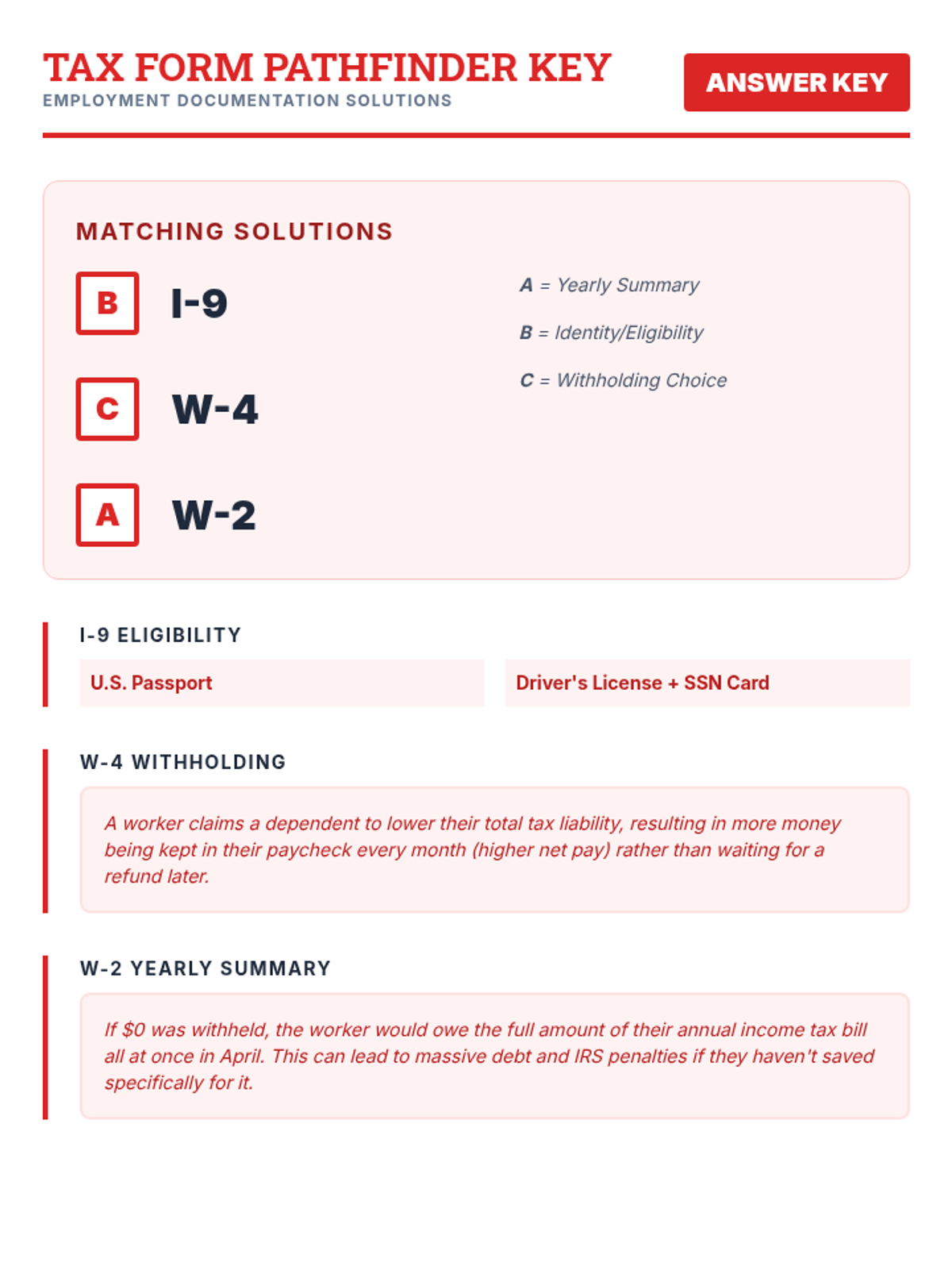
Teacher answer key for the Tax Form Tutorial Guide, providing the matching solutions for I-9, W-4, and W-2 forms along with correct document requirements and financial implications.
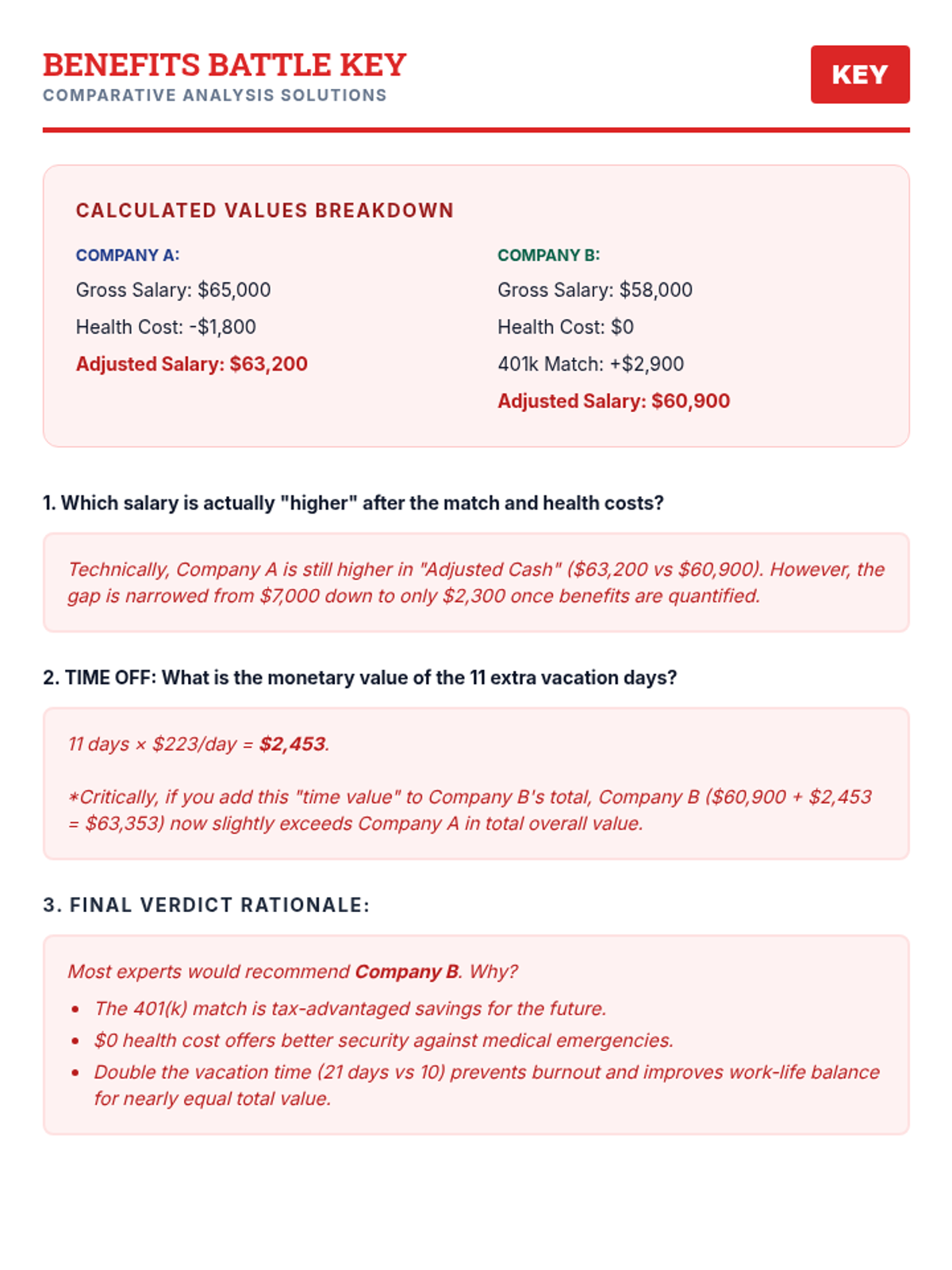
Teacher answer key for the Benefits Battle Worksheet, providing adjusted salary calculations, PTO value analysis, and a professional recommendation for the better total compensation package.
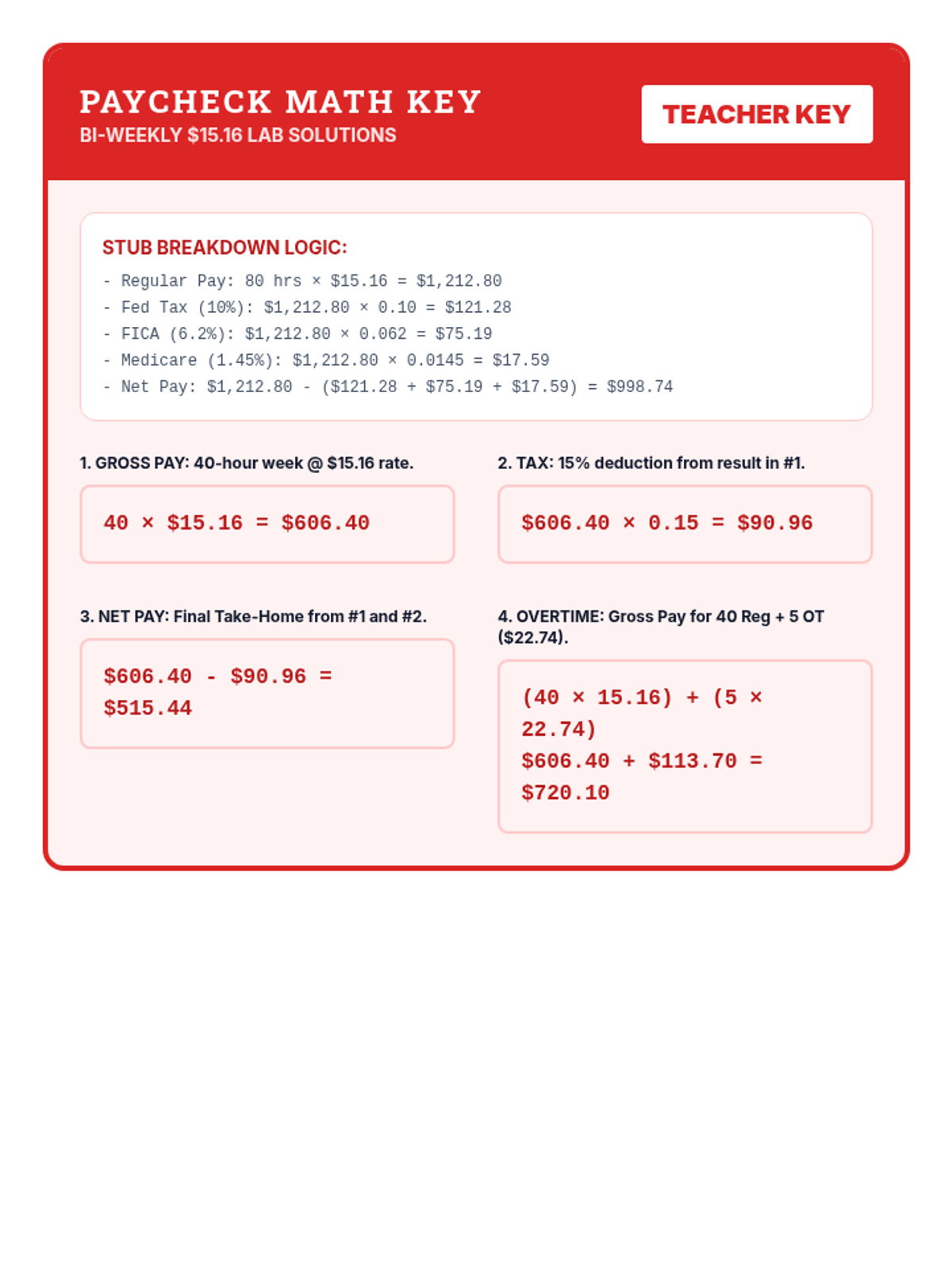
Teacher answer key for the Paycheck Math Worksheet, including step-by-step calculations for weekly gross pay, tax deductions, net pay, and overtime at a $15.16/hour rate.
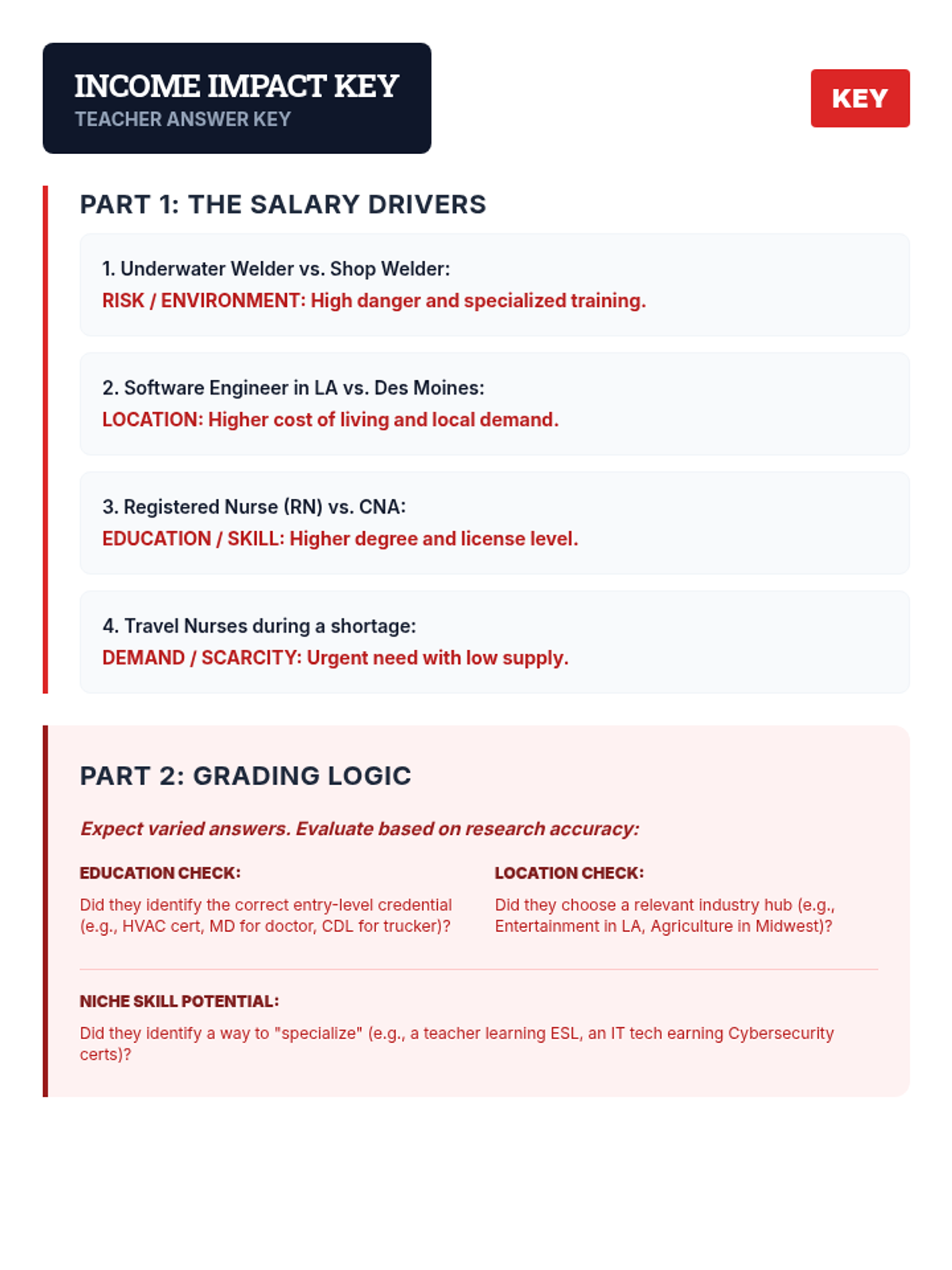
An answer key for the Income Impact Worksheet, providing correct categorizations for career scenarios and grading guidance for the personal career planning section.
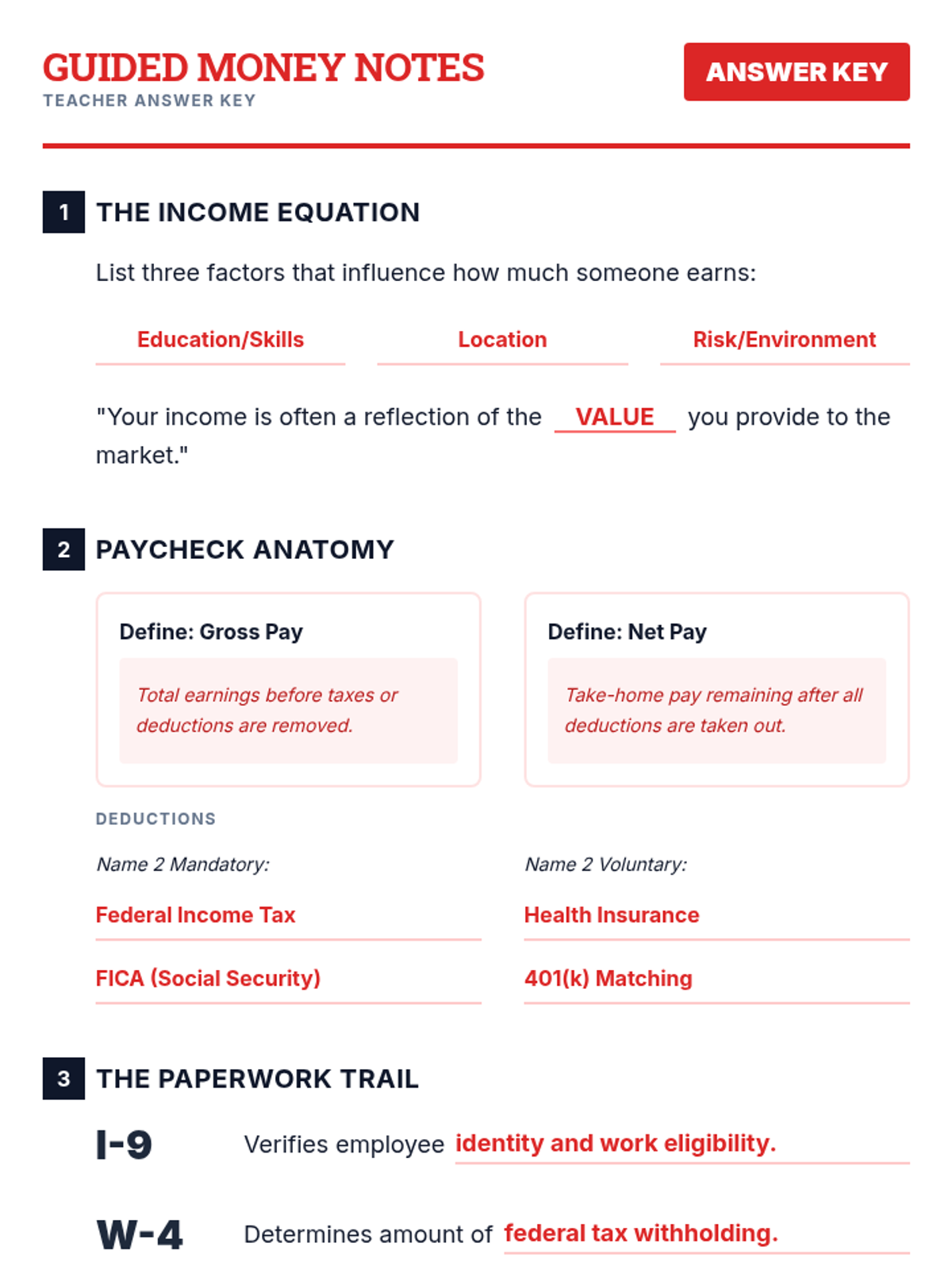
A completed version of the Guided Money Notes for teachers, featuring all correct definitions, form purposes, and financial reasoning.
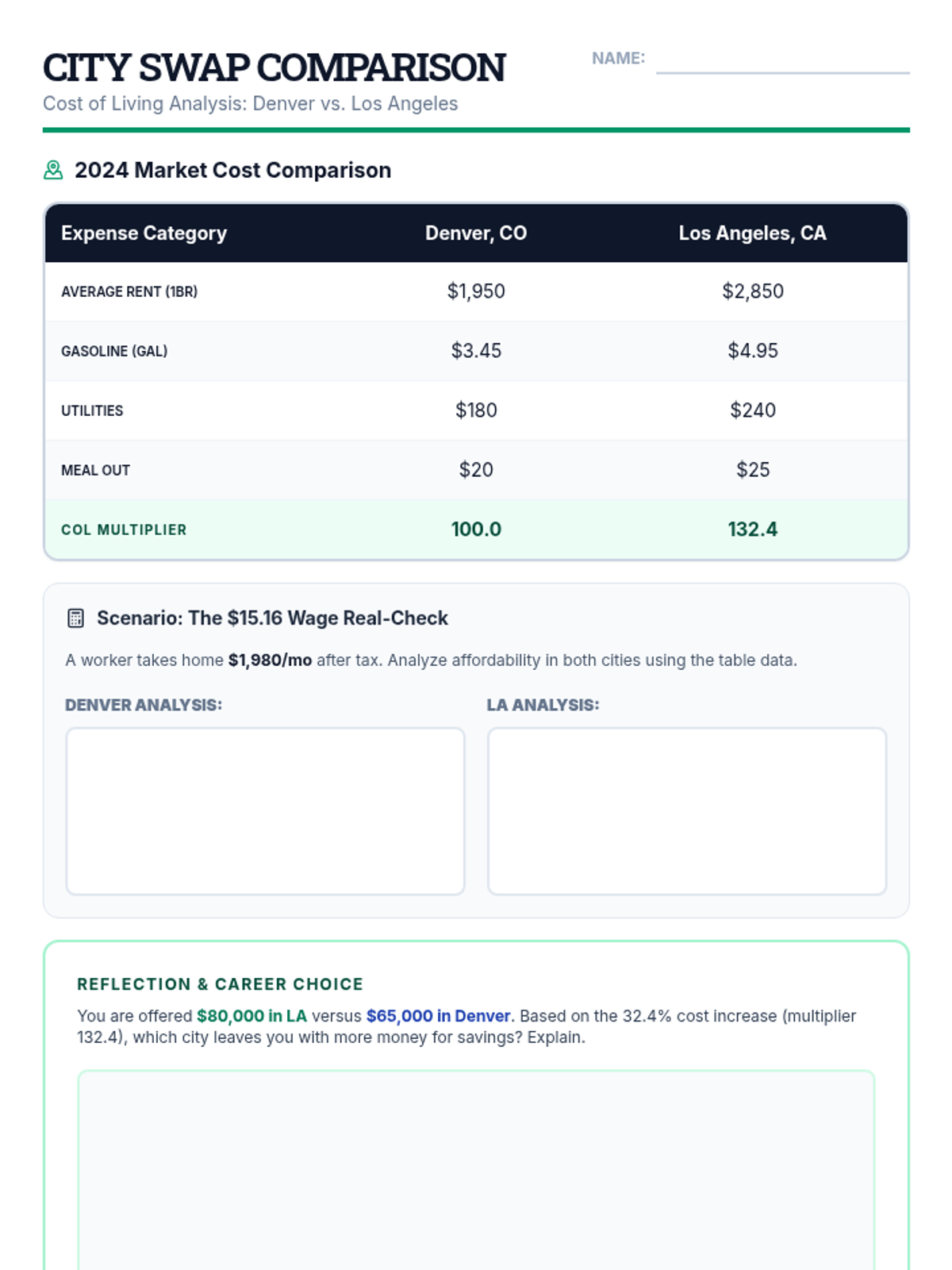
A comparative worksheet analyzing the cost of living differences between Denver and Los Angeles, using real-world data for rent, gas, and utilities to solve financial scenarios.
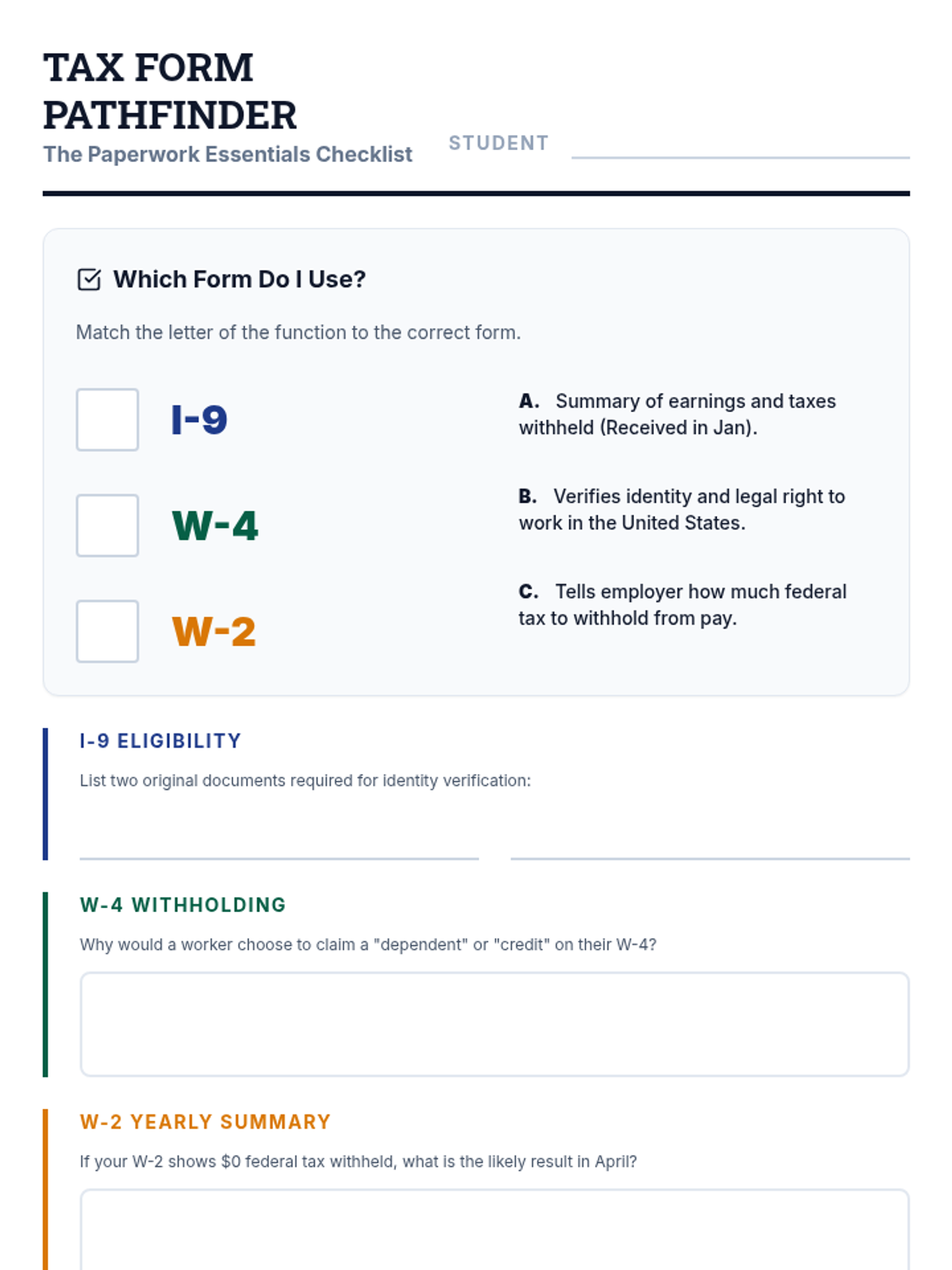
An interactive guide and worksheet covering the purpose and practical application of Form I-9, W-4, and W-2 for new employees.
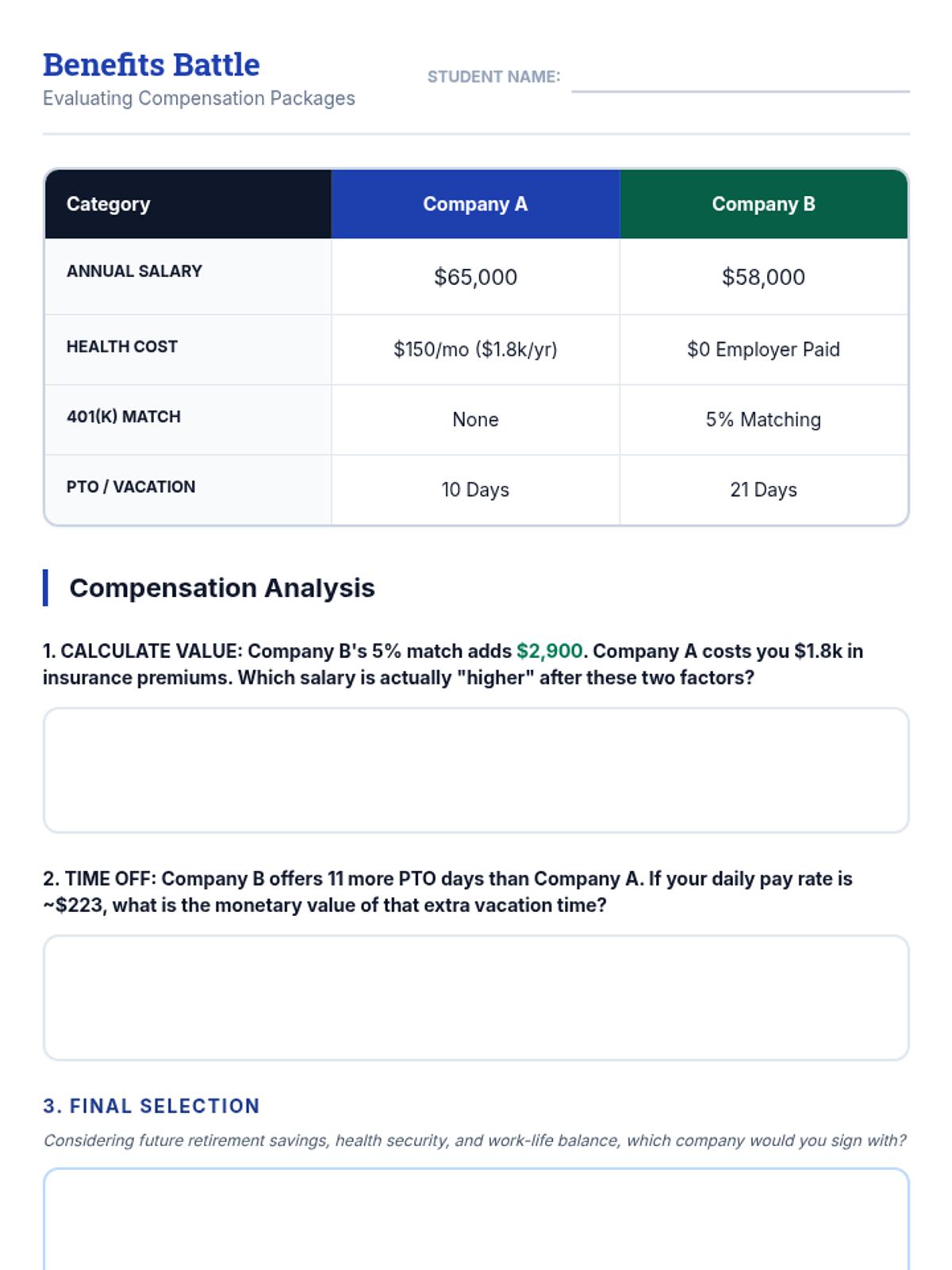
A comparison activity where students evaluate two job offers, weighing base salary against benefits like health insurance, retirement matching, and paid time off.
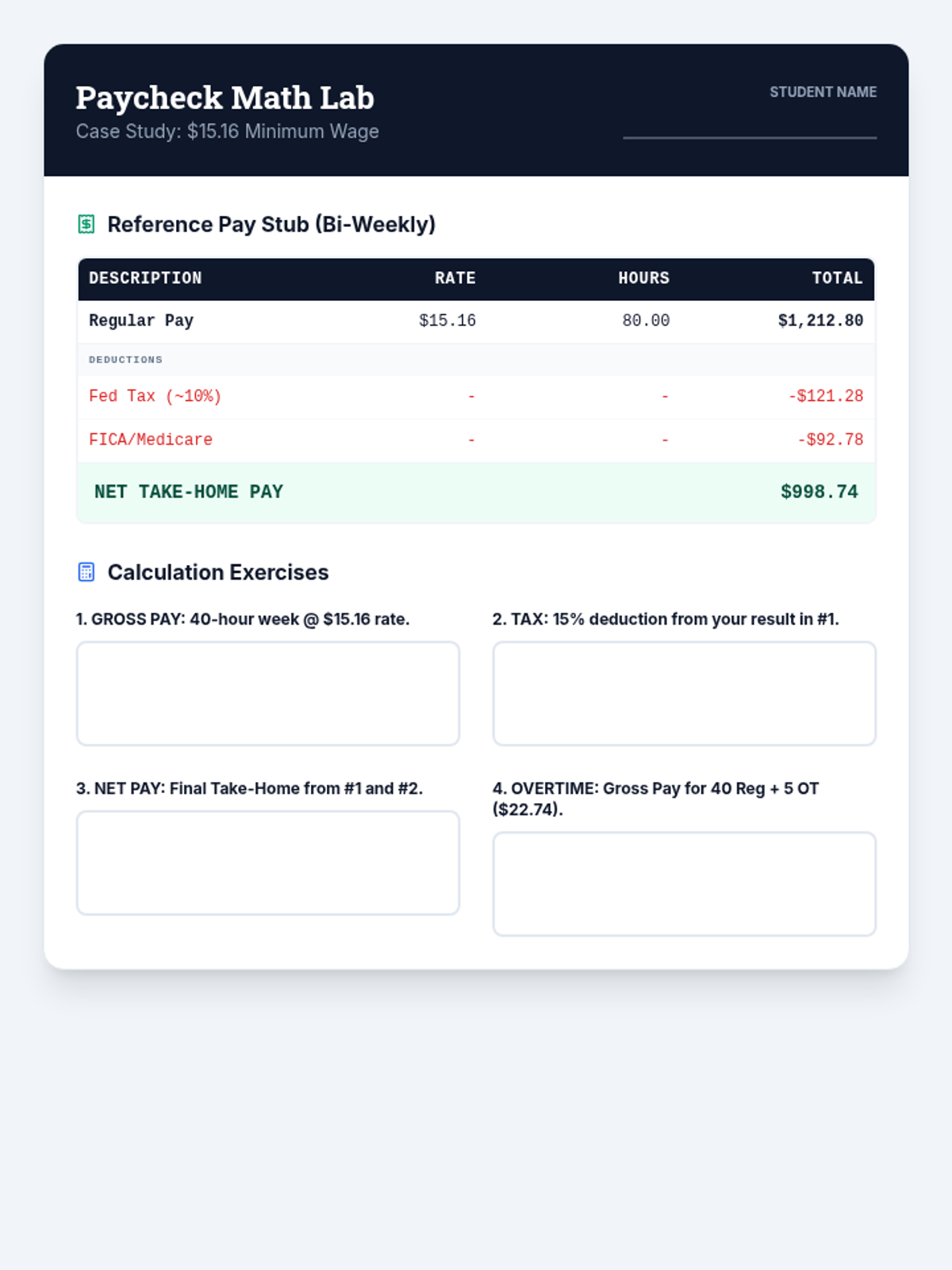
A math-focused worksheet based on a $15.16 minimum wage, featuring a sample pay stub and practical calculations for gross pay, taxes, and overtime.
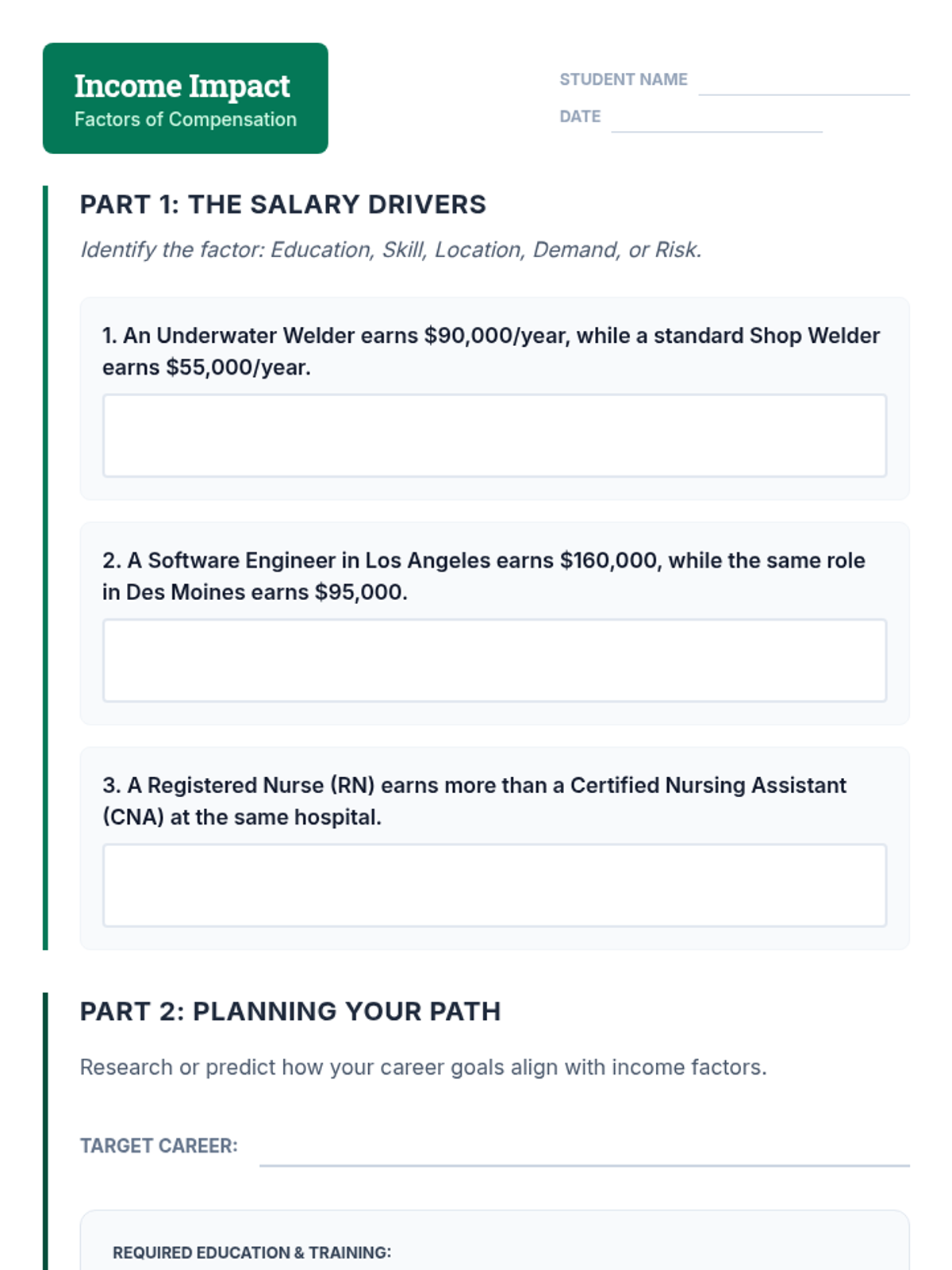
An analysis worksheet where students identify factors such as education, location, and risk that influence income levels across various career scenarios.
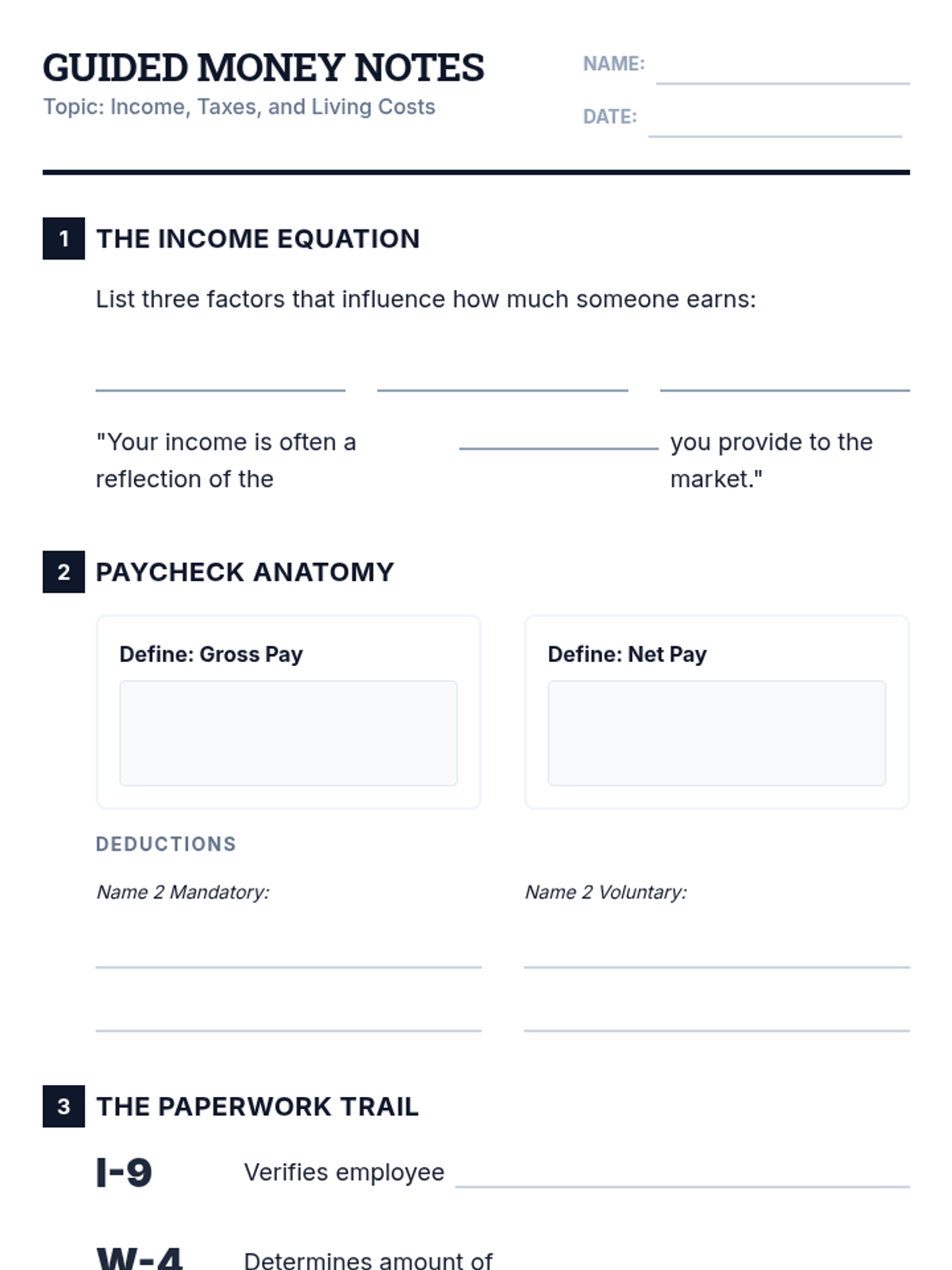
A guided notes worksheet designed to accompany the Payday Playbook slide presentation, featuring fill-in-the-blank sections and definitions for key financial terms.
A comprehensive slide deck covering income factors, paycheck anatomy, employment benefits, essential tax forms (I-9, W-4, W-2), and a cost-of-living comparison between Denver and Los Angeles.
An expanded 7-slide presentation for Module 05: Tax Decoder. Explains the Form Trinity (W-4, W-2, 1040), Gross vs. Net reality, Deduction vs. Credit power moves, the W-4 Gambit, and Audit Defense strategies (record keeping).
An expanded 7-slide presentation for Module 04: Civic Navigator. Covers community ownership, registration logic (citizenship, Selective Service), decoding ballot propositions, the influence grid (Local vs. State vs. Fed), and jury duty requirements.
An expanded 8-slide detailed presentation for Module 03: Health Navigation. Explains the Insurance Trinity (Premium, Deductible, Copay), In-Network vs. Out-of-Network traps, the Triage Protocol (PCP vs. Urgent Care vs. ER), and the math of a major medical bill.
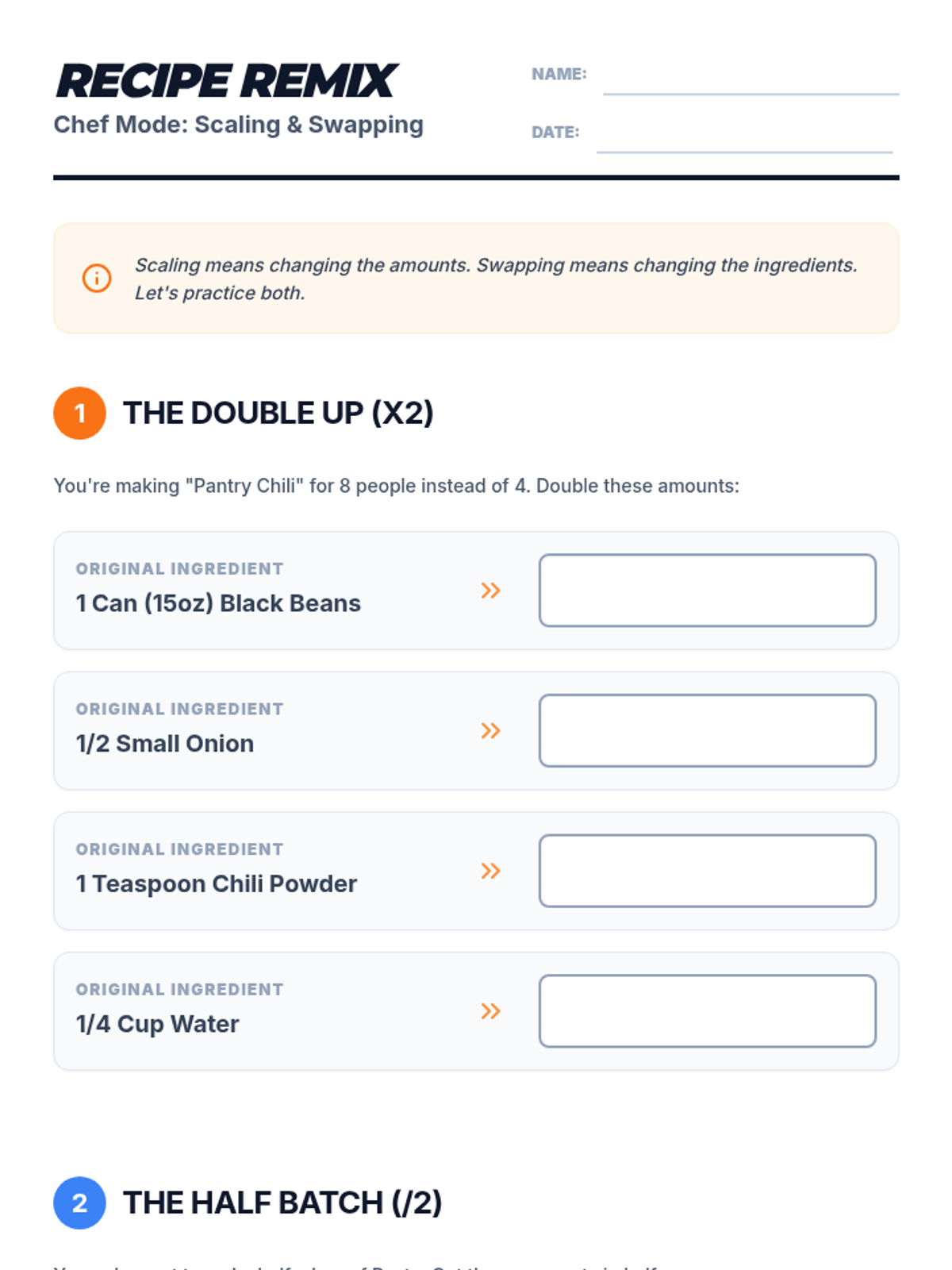
A student worksheet featuring practical exercises for scaling recipes (doubling and halving) and a creative section for planning ingredient substitutions based on personal household needs.
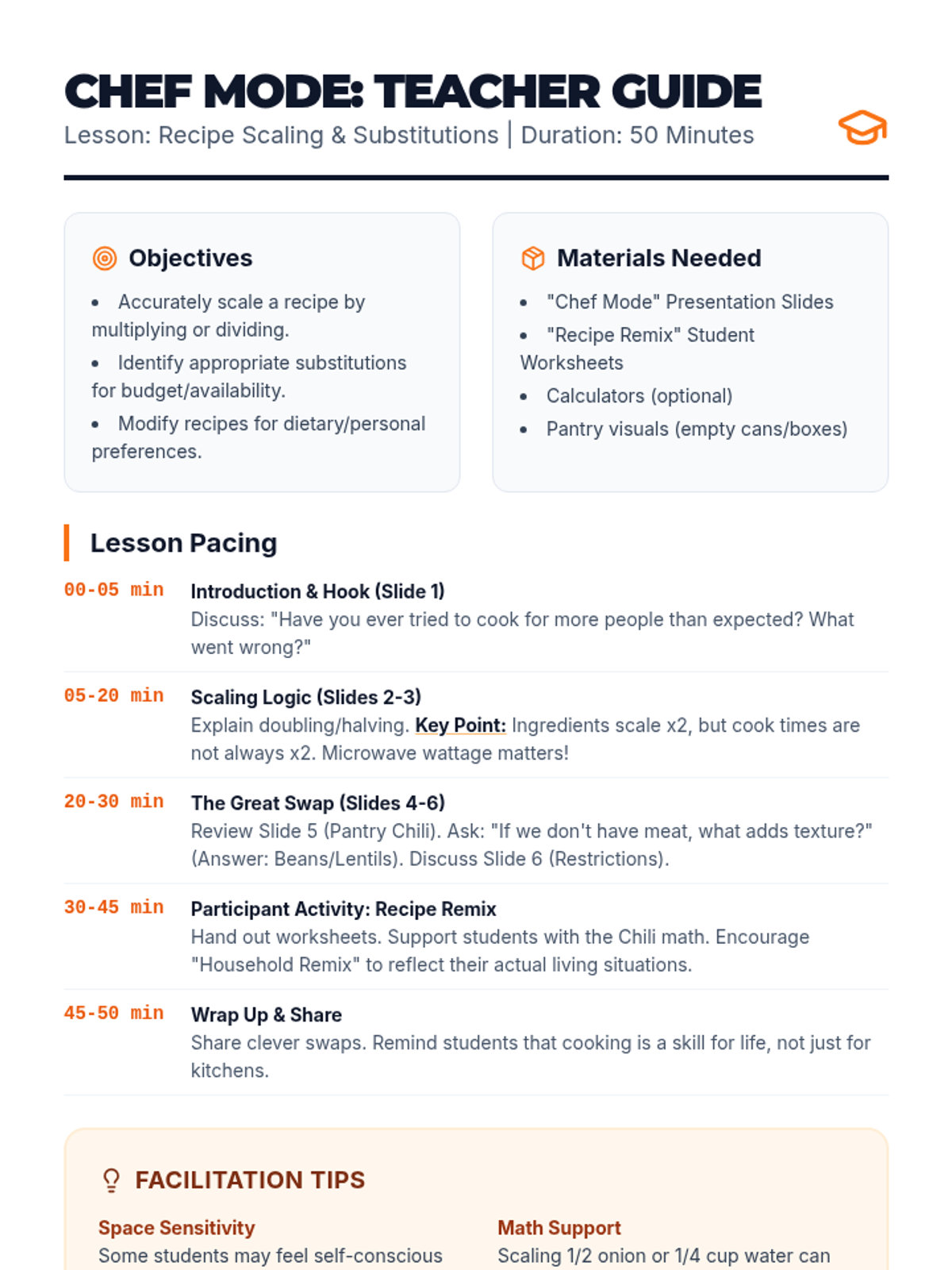
A comprehensive teacher's guide for the Chef Mode lesson, including a 50-minute pacing guide, instructional tips for working with homeless youth, and a full answer key for student activities.
A visual presentation for teaching teens how to scale recipes and make smart ingredient substitutions. Includes visual examples of "The Great Swap" and "The Math of Scaling."
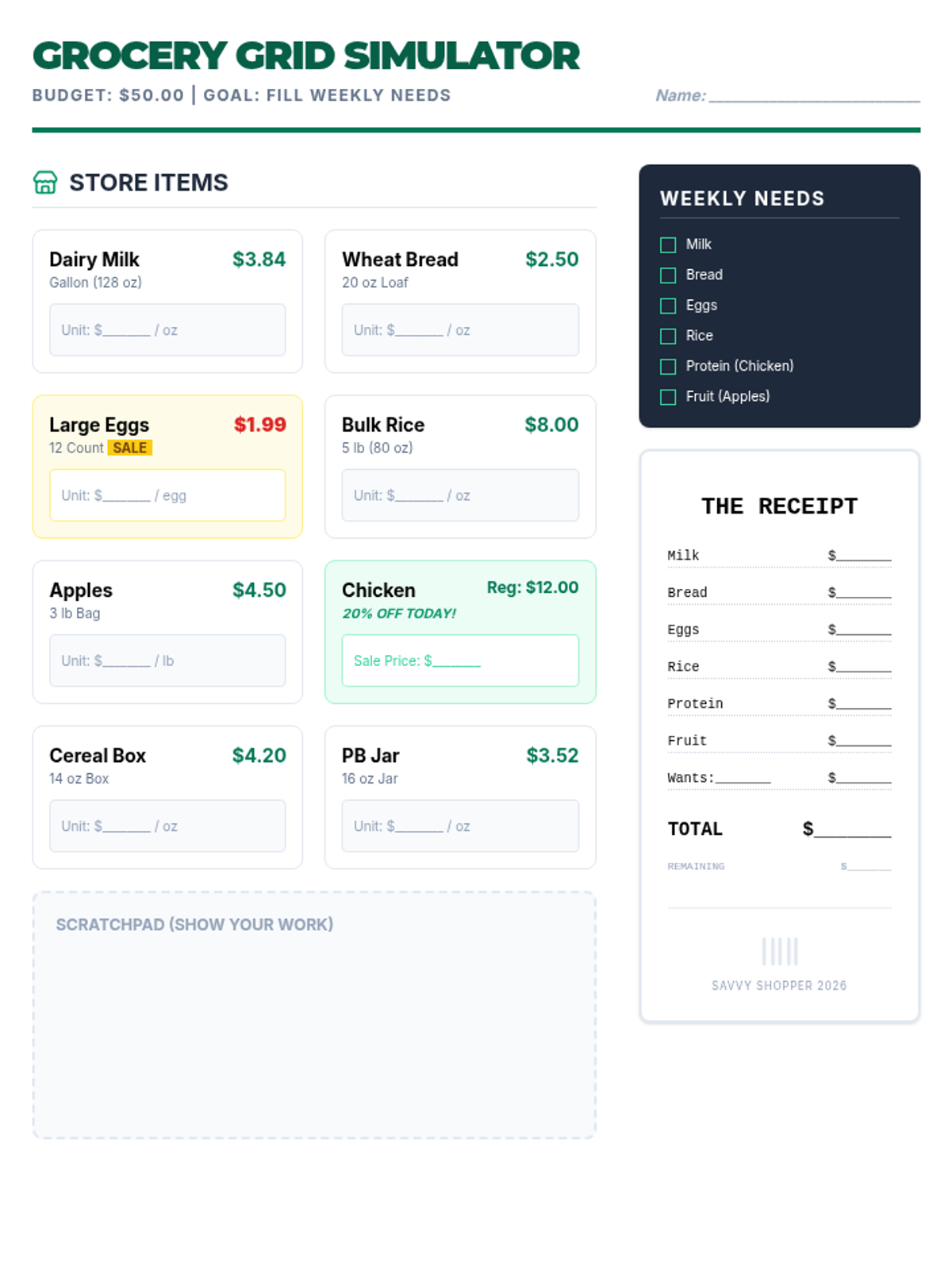
A grocery simulation activity where students manage a $50 budget to purchase essential items while calculating unit prices and discounts to find the best value within a simulated store inventory.
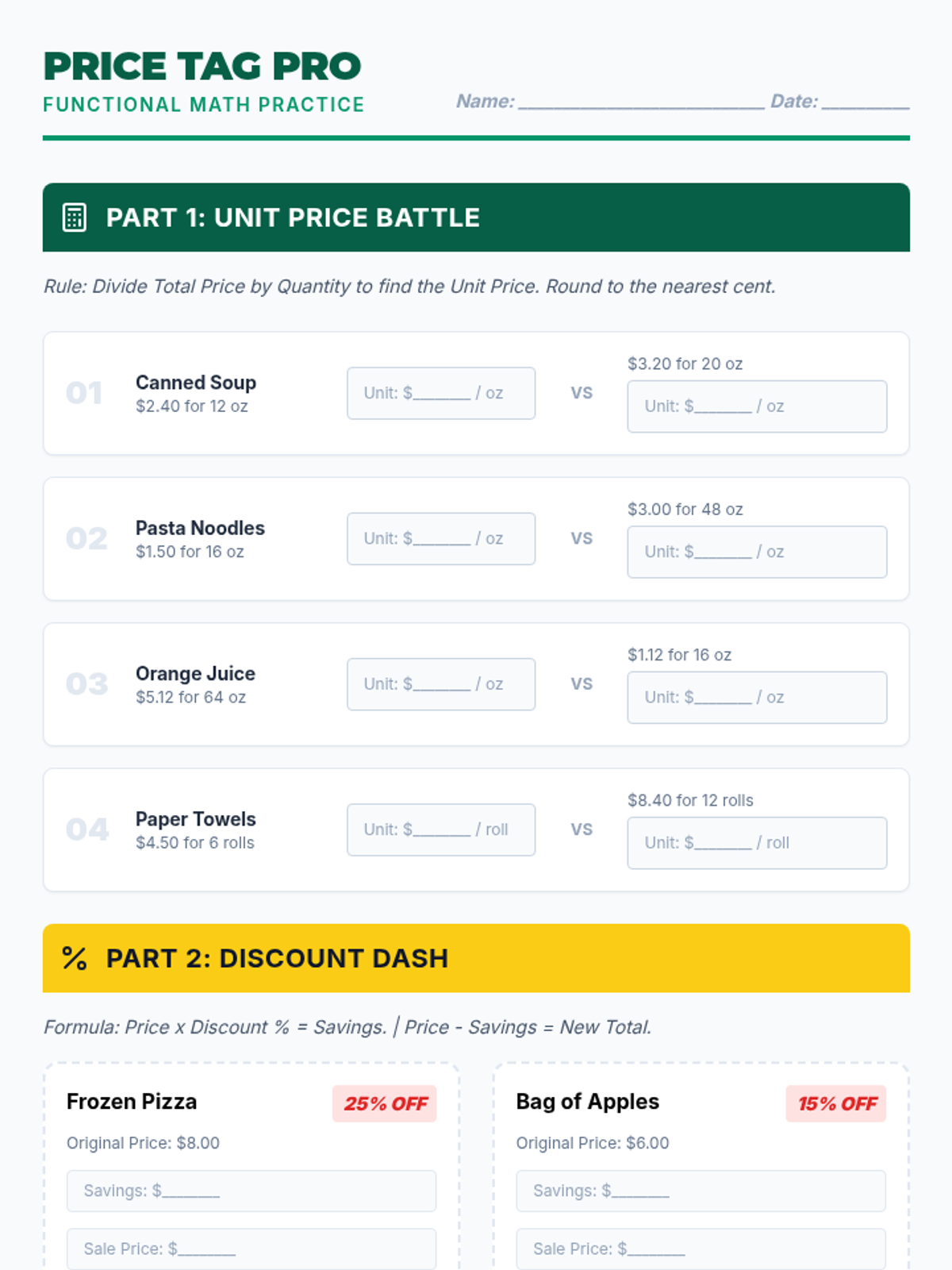
A practice worksheet for calculating unit prices and percentage discounts, designed to help students master the foundational math skills needed for grocery budgeting.
Visual slides for the Savvy Shopper lesson, covering the concept of unit pricing and percentage discounts with clear visual examples and formulas to guide student learning.
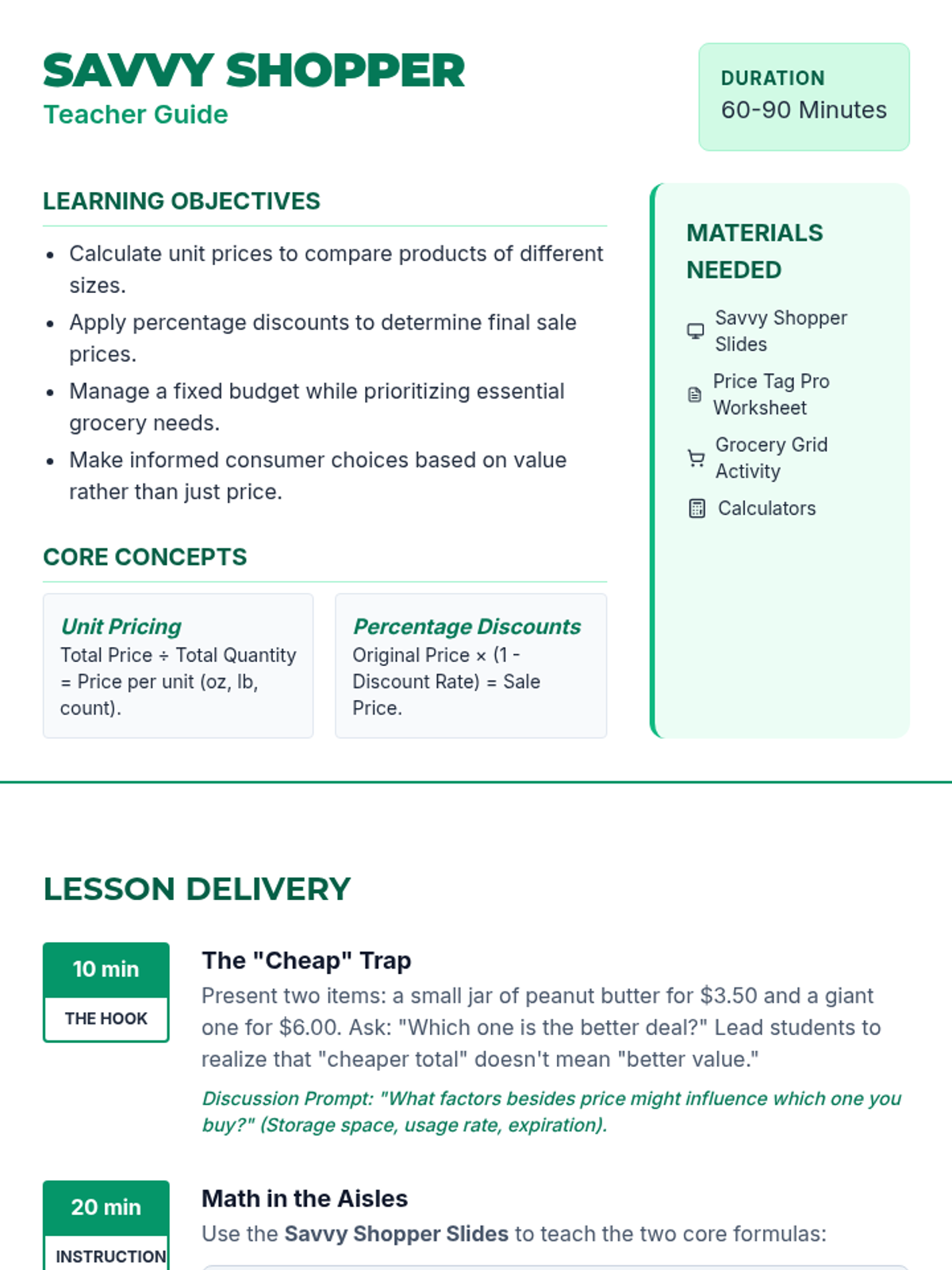
A comprehensive teacher guide for the Savvy Shopper lesson, including objectives, detailed lesson delivery steps, differentiation strategies, and assessment tips for teaching functional grocery math.
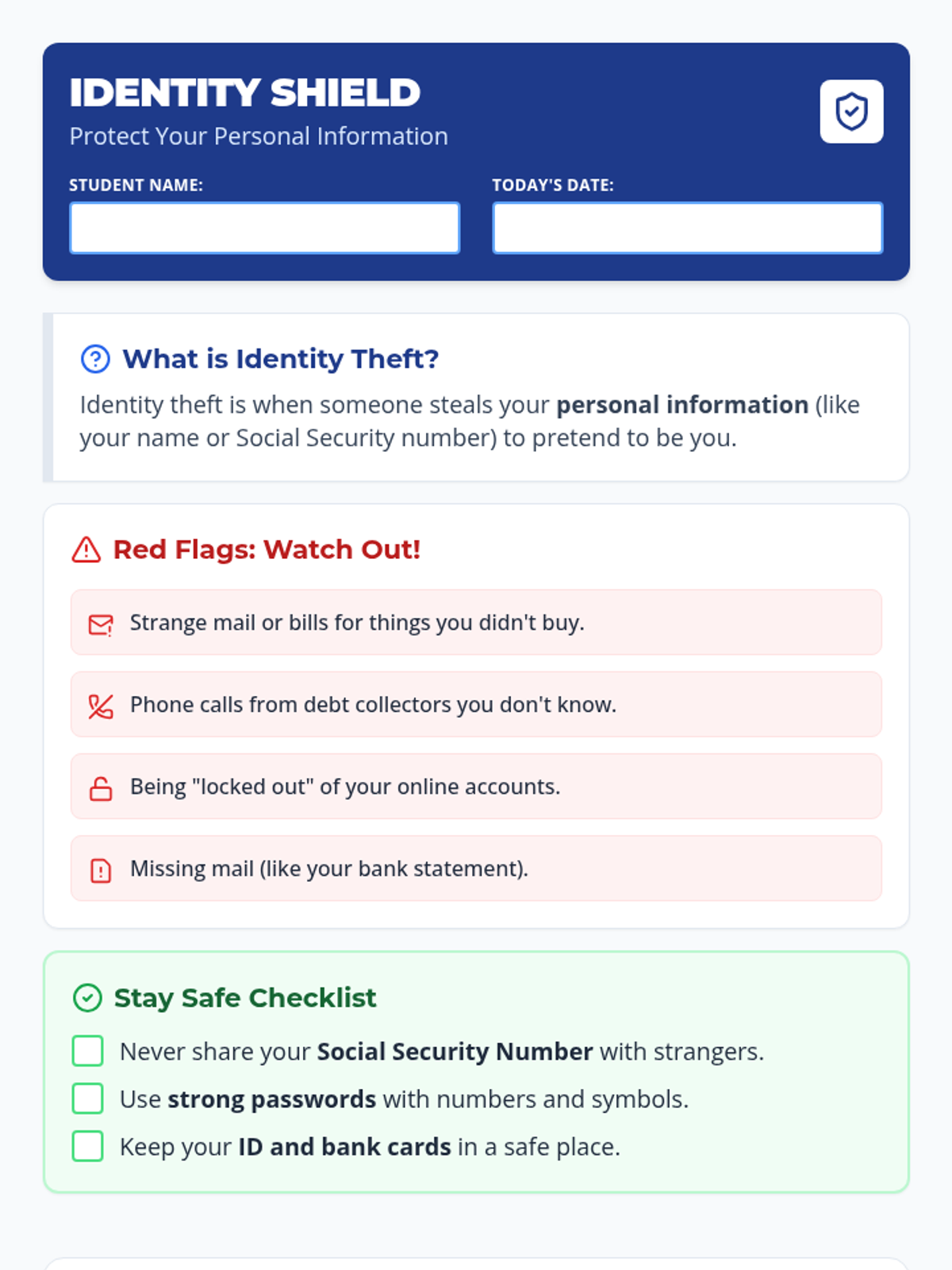
A clear, high-contrast handout for Special Education students explaining identity theft, common warning signs, and safety steps with a practical scenario-based activity.
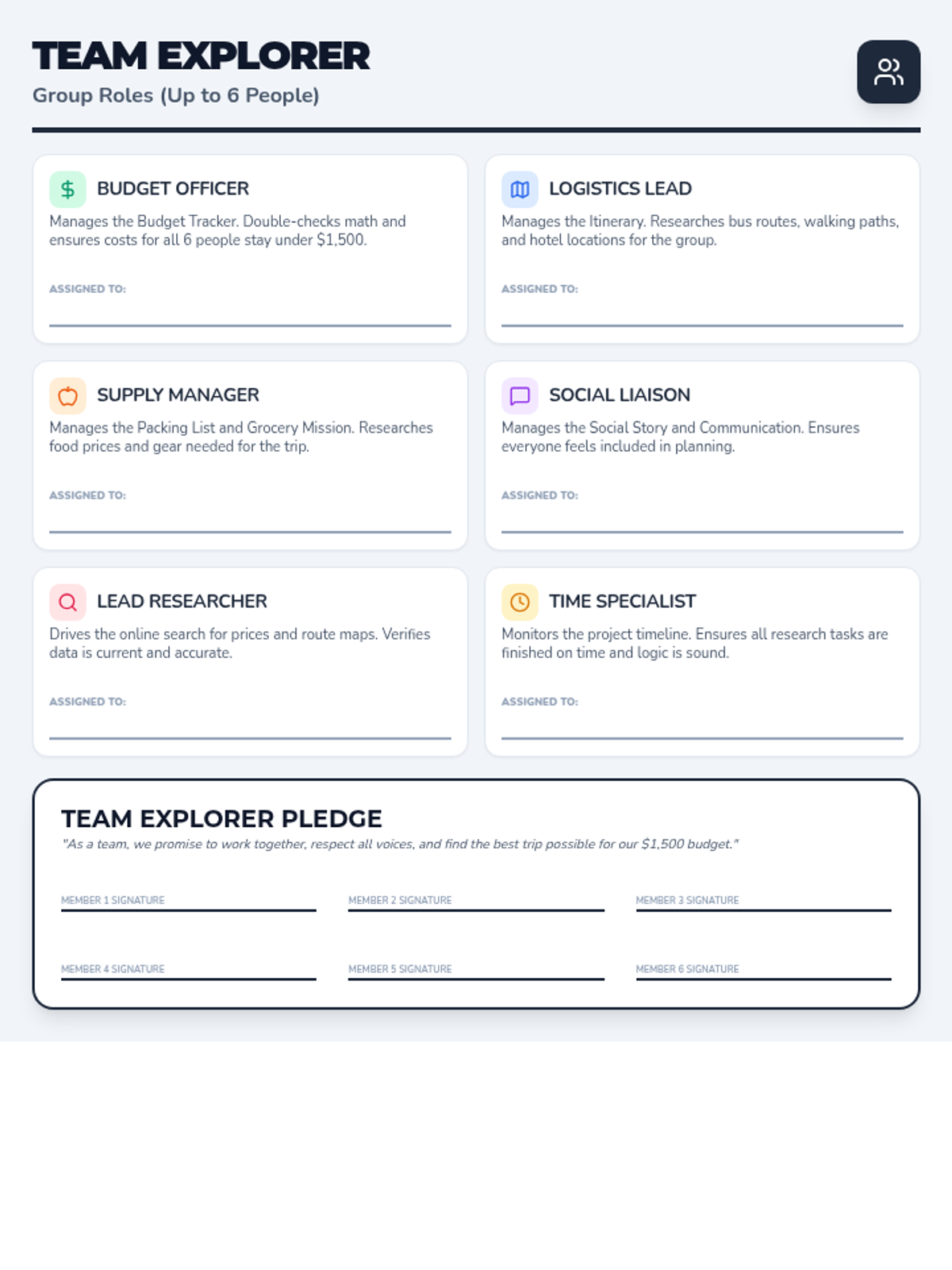
A group roles organizer for 4-6 students to assign specific responsibilities for their community trip research project. Includes 6 distinct roles and a team pledge. Fixes page break and legibility issues.
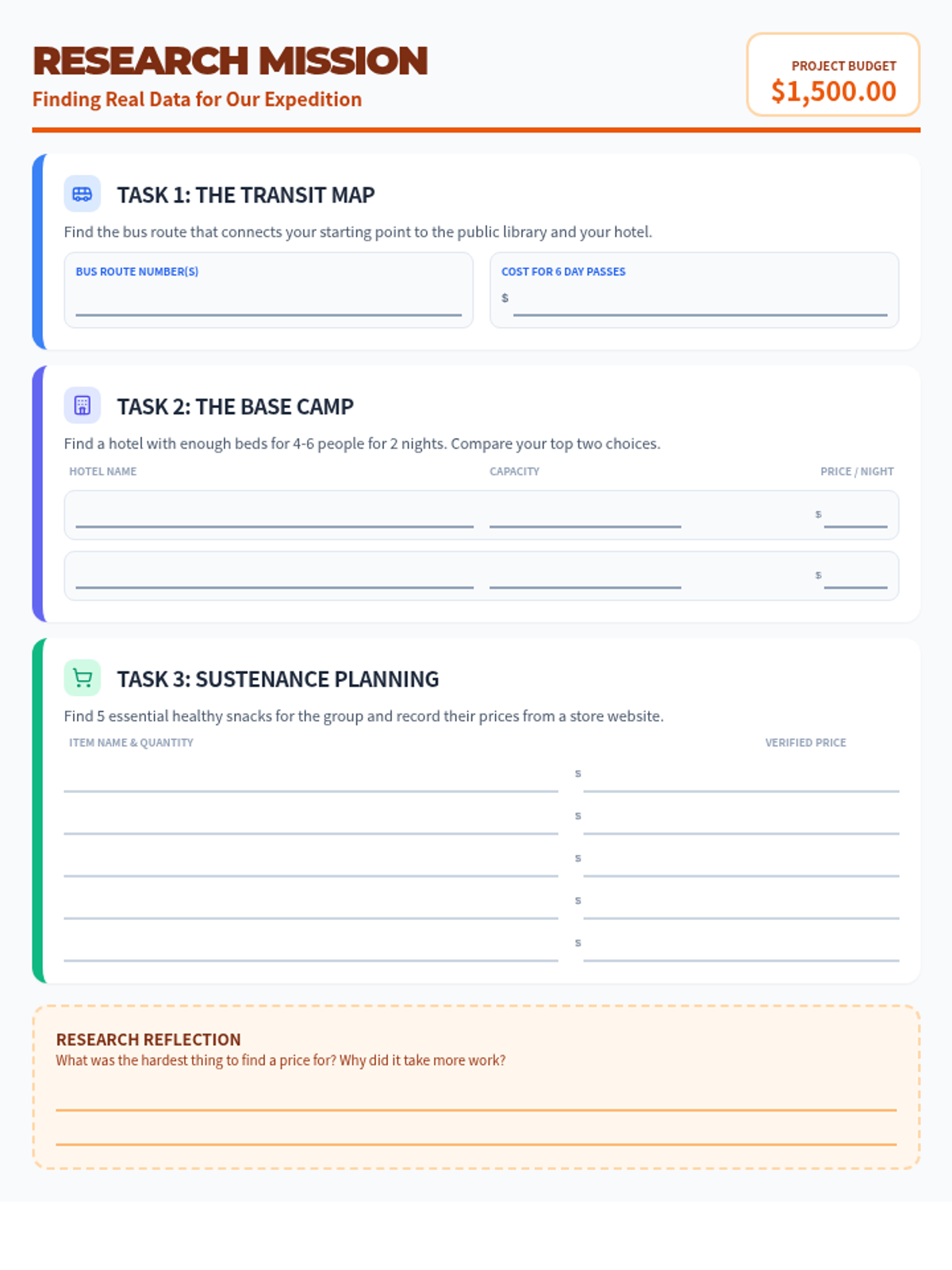
A step-by-step research guide for students to find real-world costs for transit, lodging, and groceries as part of their community trip project. Fixes layout and content completeness issues.
A visual social story for community travel, outlining clear social expectations and behavior protocols for buses, stores, libraries, and hotels, fitting entirely on one page.
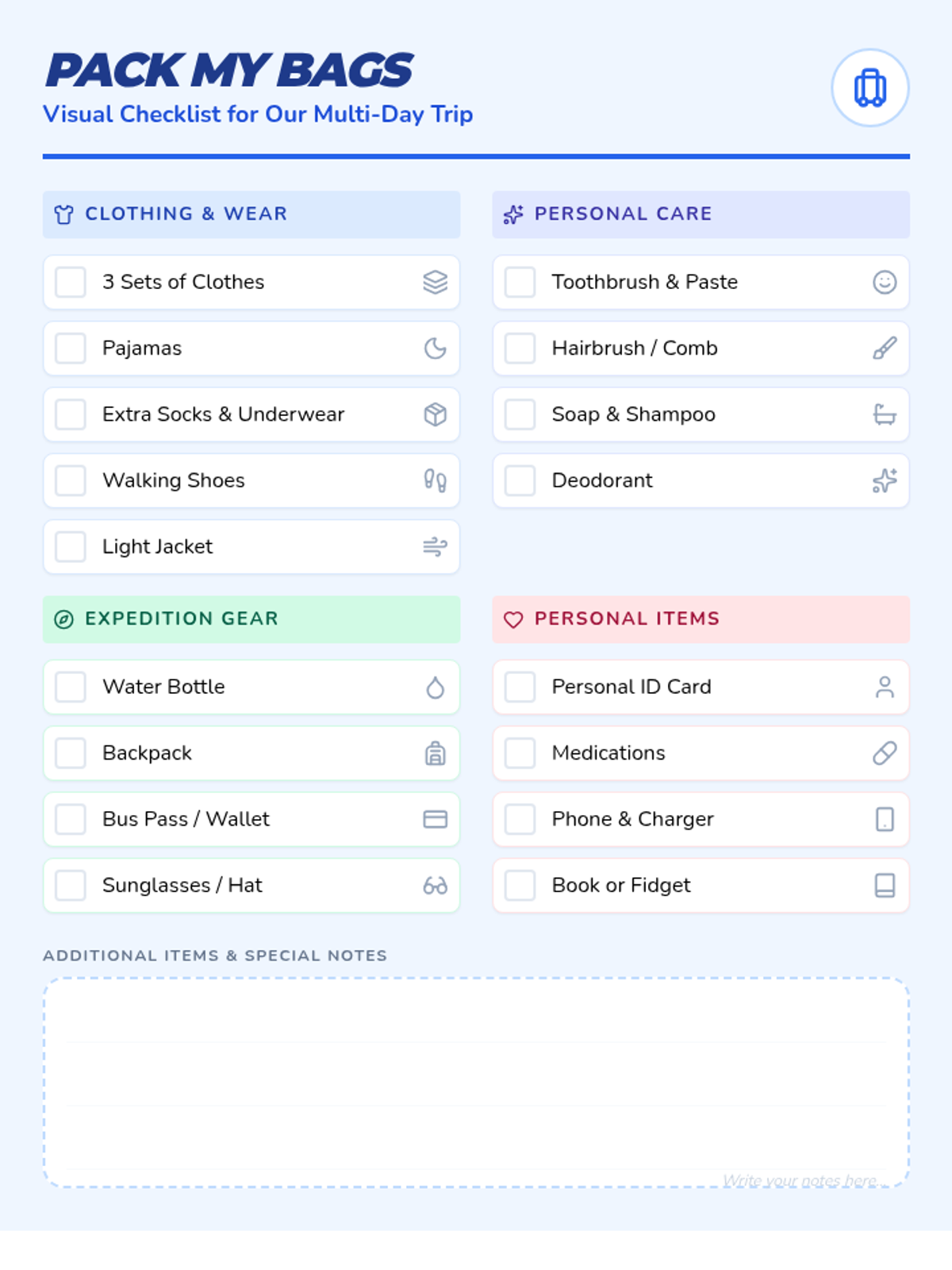
A visually-supported packing checklist designed for students, featuring categorized items with consistent Lucide icons and an expanded notes section for personal trip preparation.
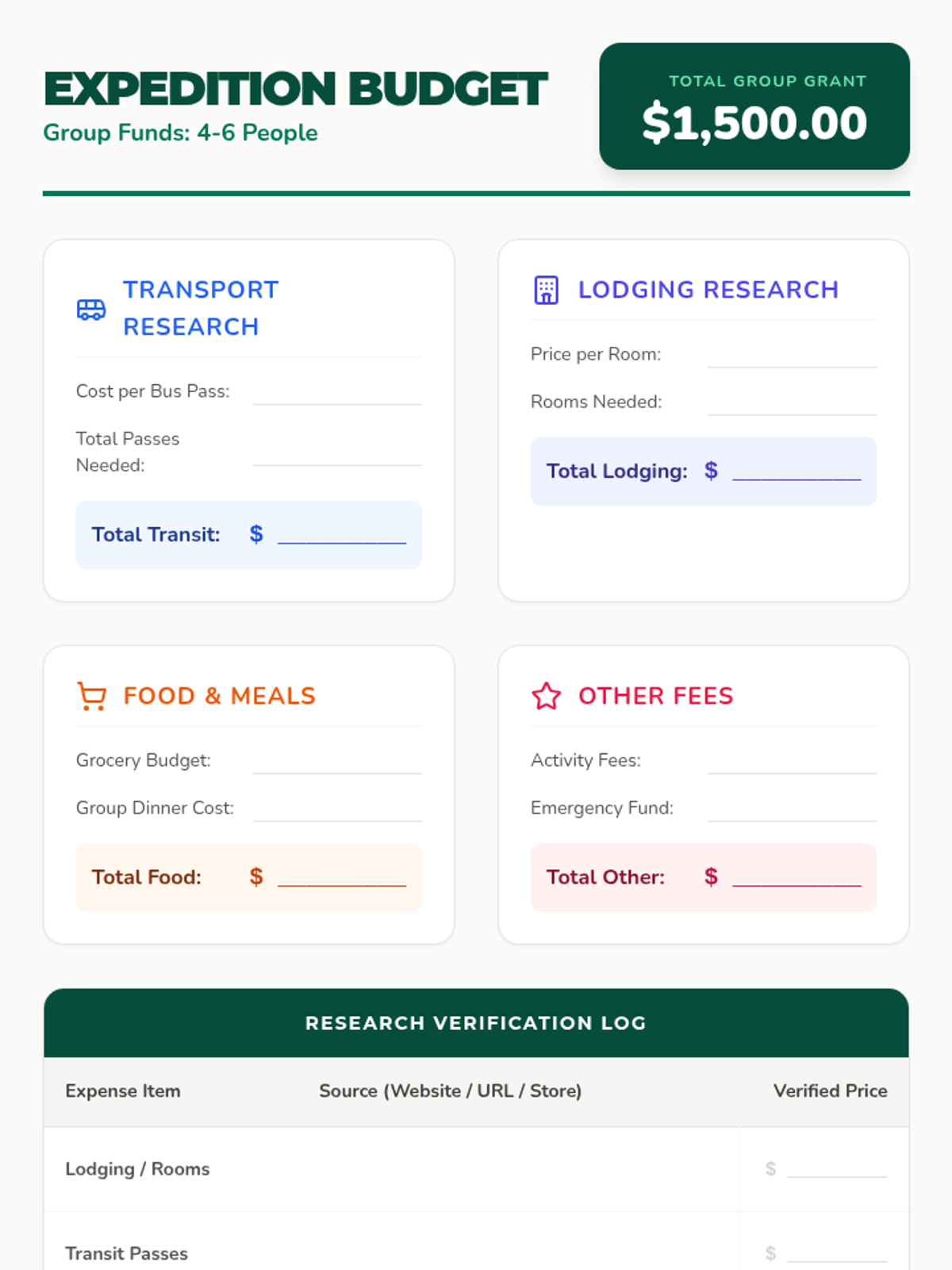
A research-based budget expense tracker for a 4-6 person community trip with a $1,500 grant, including a verification log for students to record their sources and prices. Fixes alignment and page break issues.
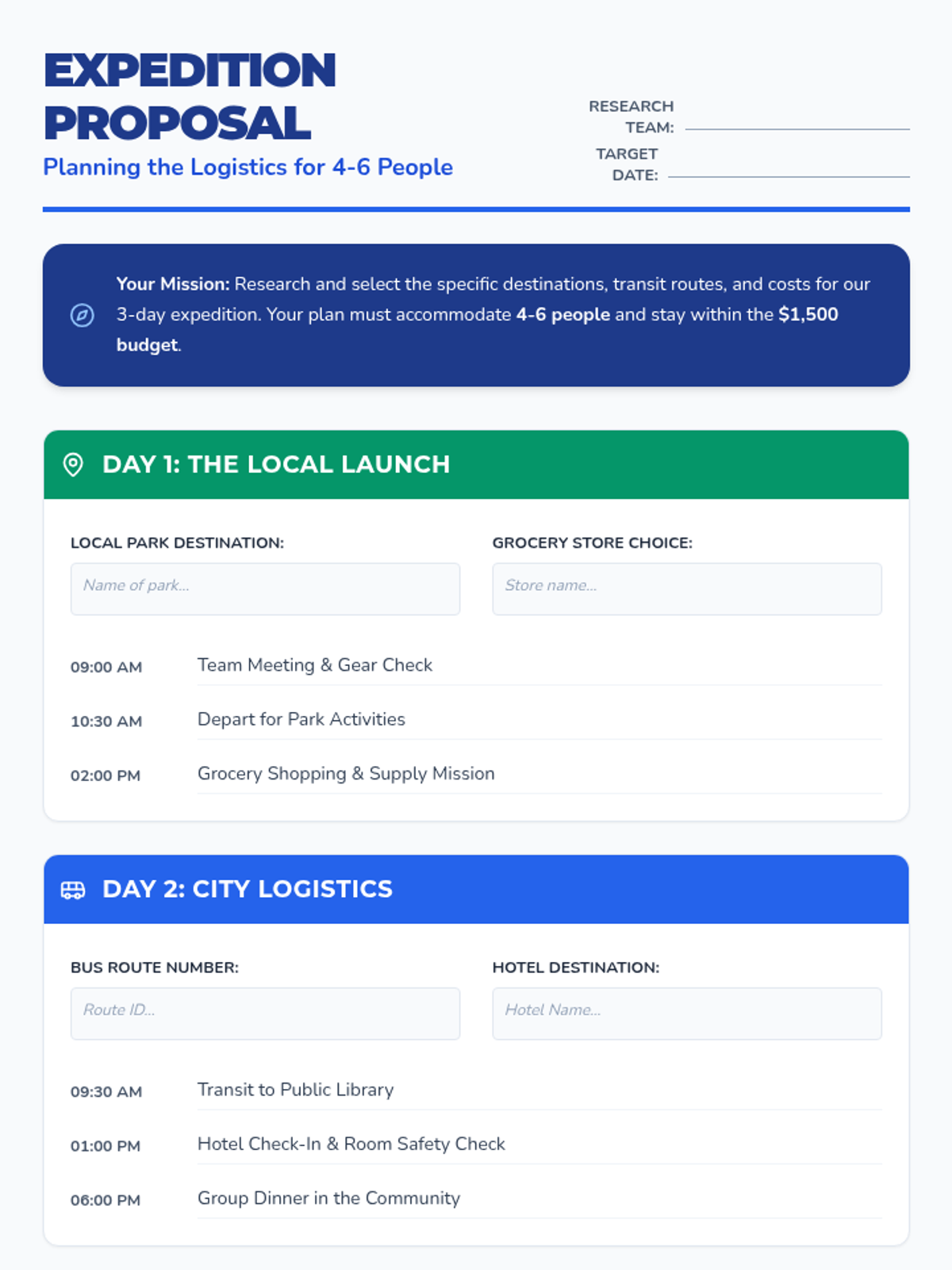
An expedition planning itinerary that requires students to research specific locations, bus routes, and hotel options for a group of 4-6 people. Includes research areas for all 3 days.
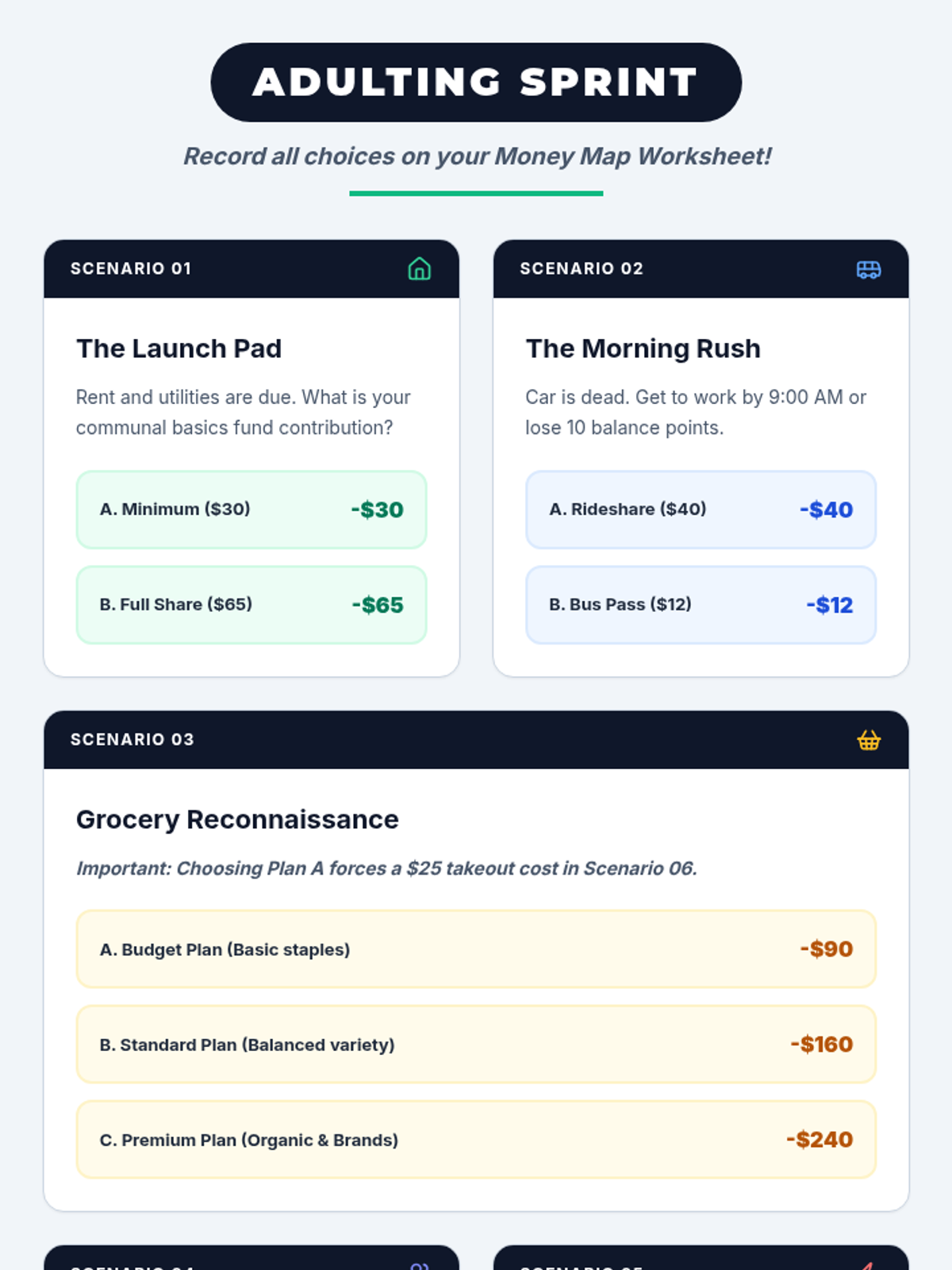
A series of 7 real-world scenarios for the Adulting Navigator simulation, challenging students to make tough financial and time-management decisions.
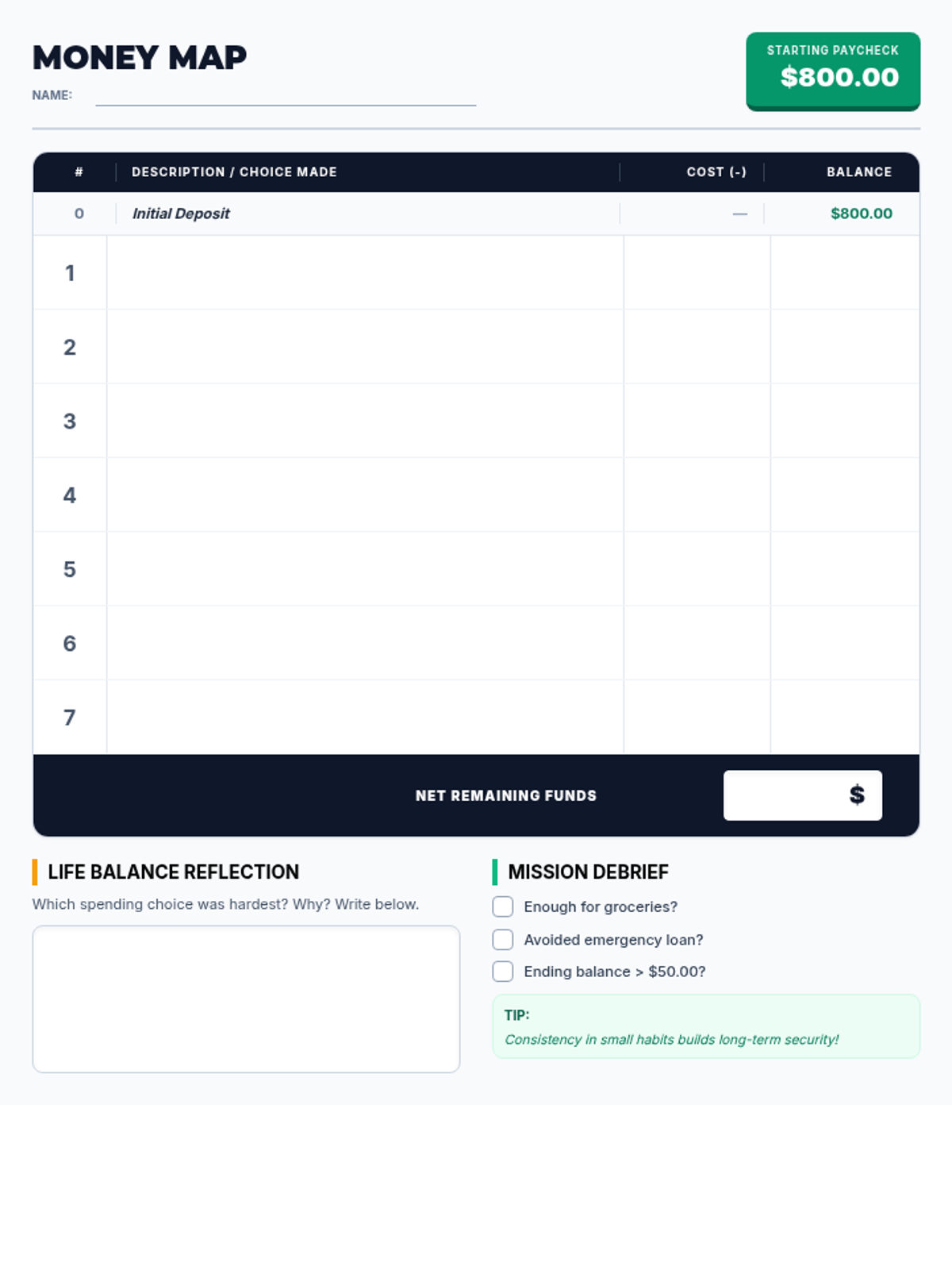
A structured budget tracking ledger for students to use during the Adulting Navigator simulation, featuring space for 7 scenarios and reflection.
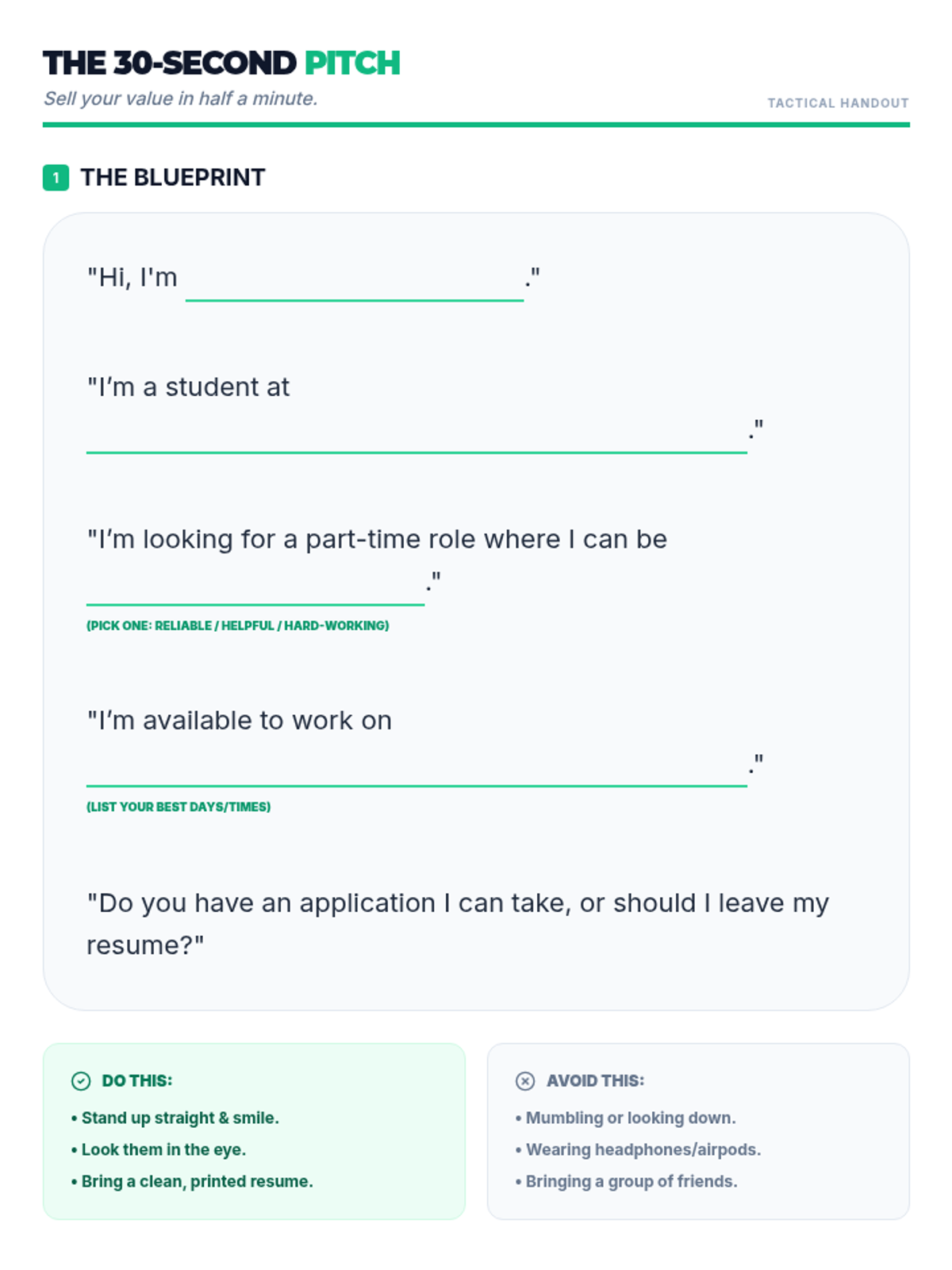
A tactical worksheet for students to script and practice their introductory "pitch" for potential employers, focusing on brevity, value, and professional presentation.
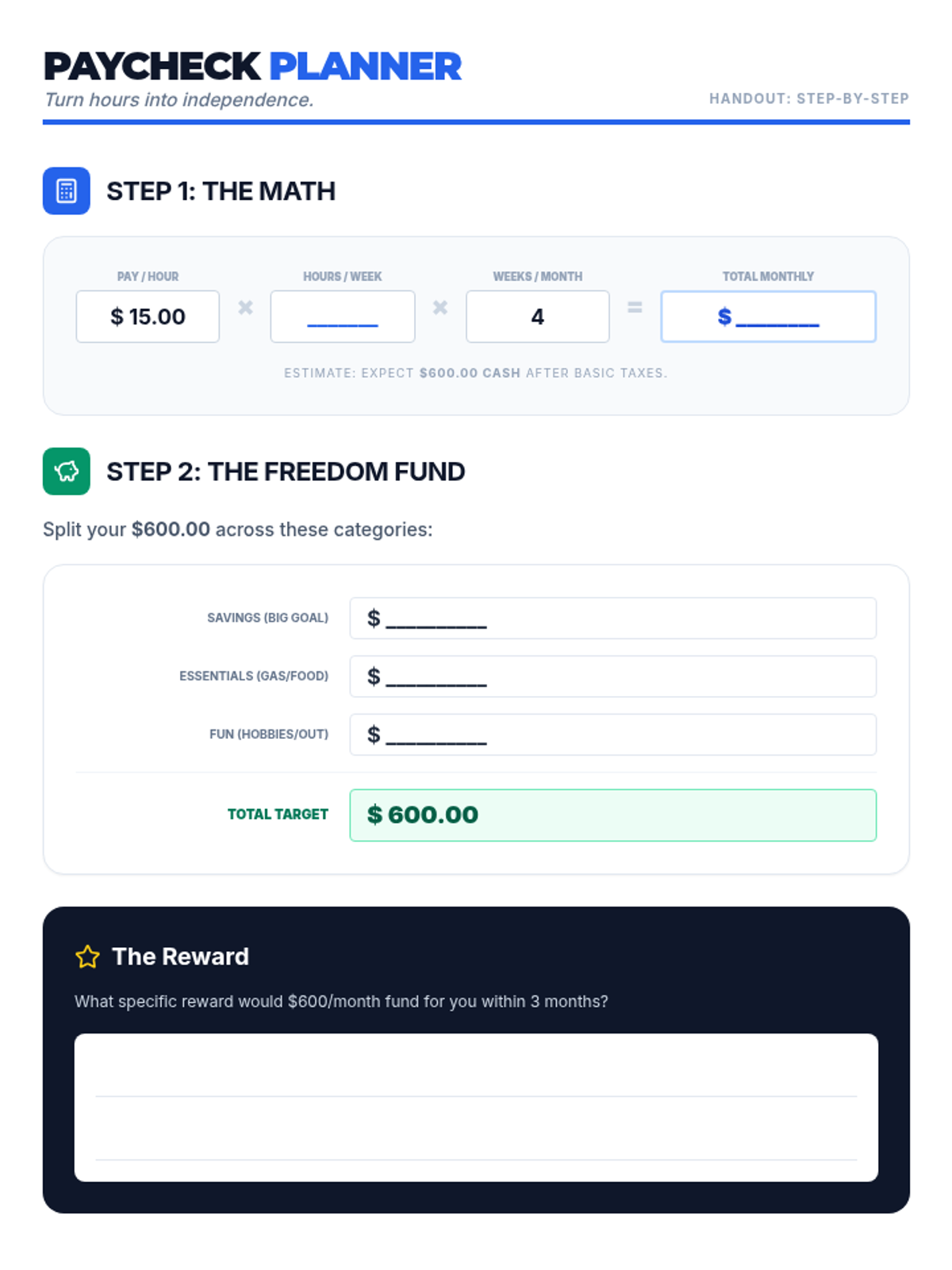
A practical worksheet to help students calculate potential monthly earnings from a part-time job and plan their "freedom fund" to see the tangible benefits of working.
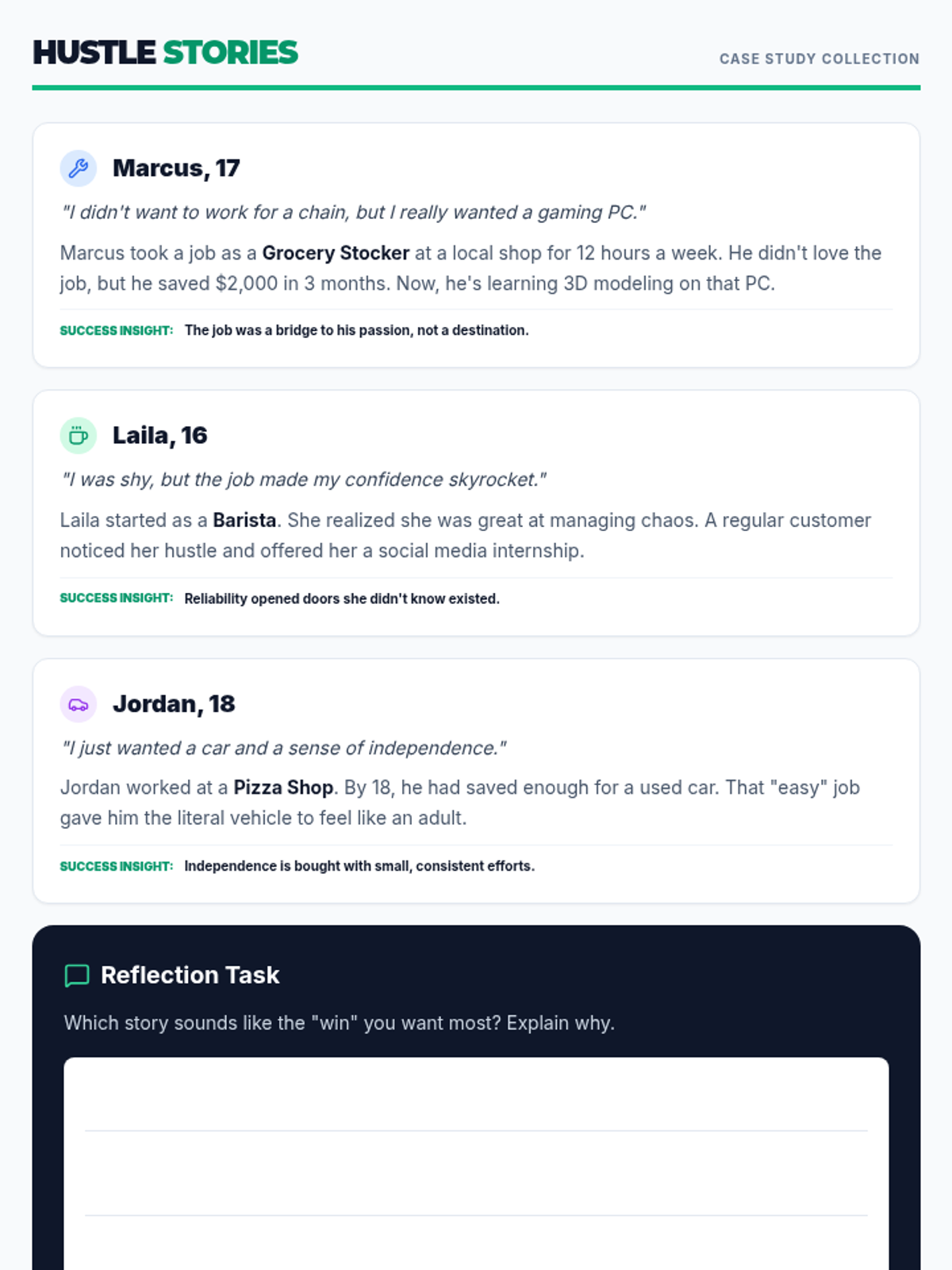
A set of short, engaging case studies featuring high schoolers who used entry-level jobs as stepping stones to personal success and independence. Provides social proof and real-world context for the workshop.
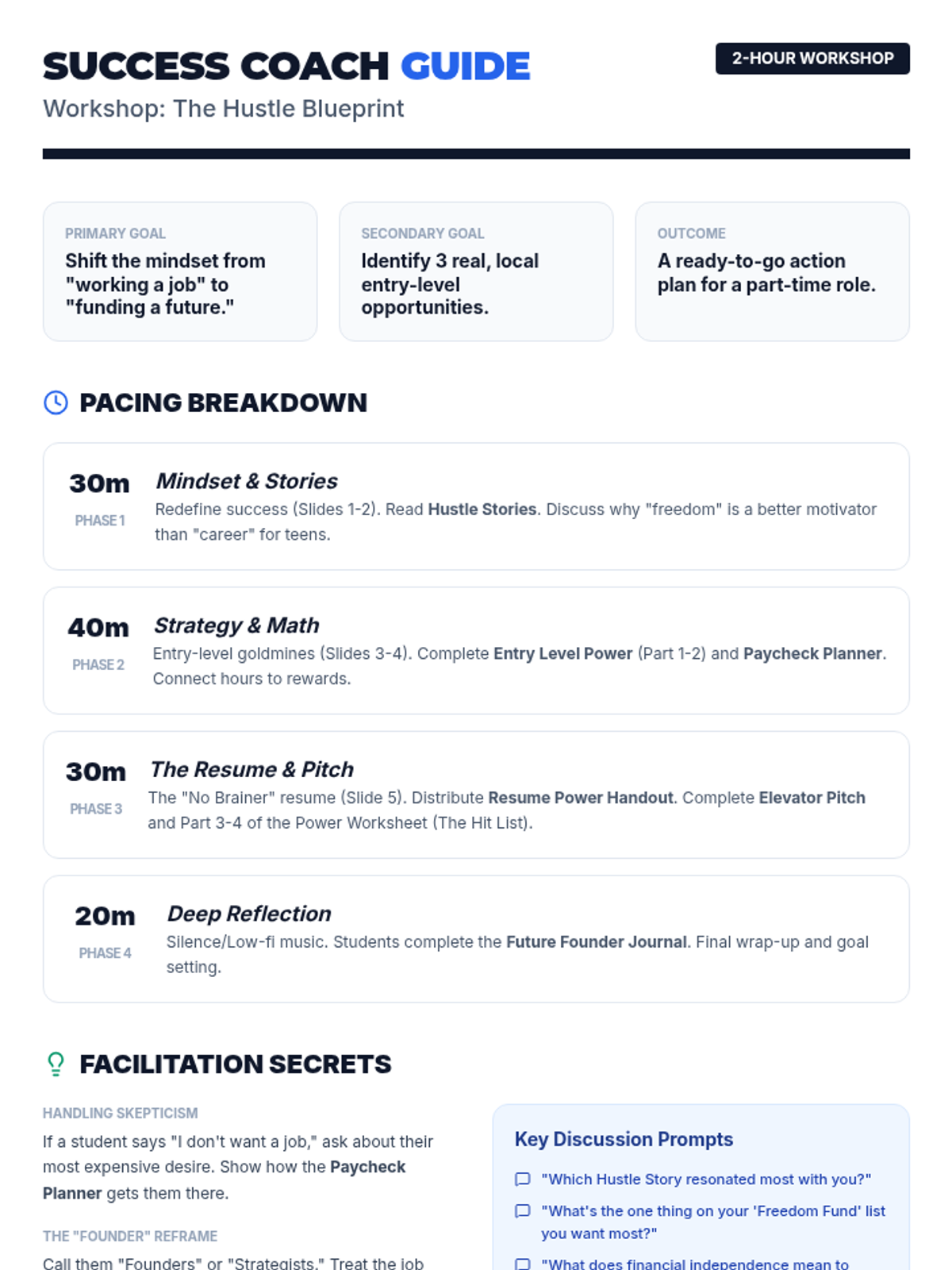
A facilitator's guide for the Hustle Blueprint workshop, including an updated 2-hour pacing guide that incorporates new case studies and tactical worksheets.
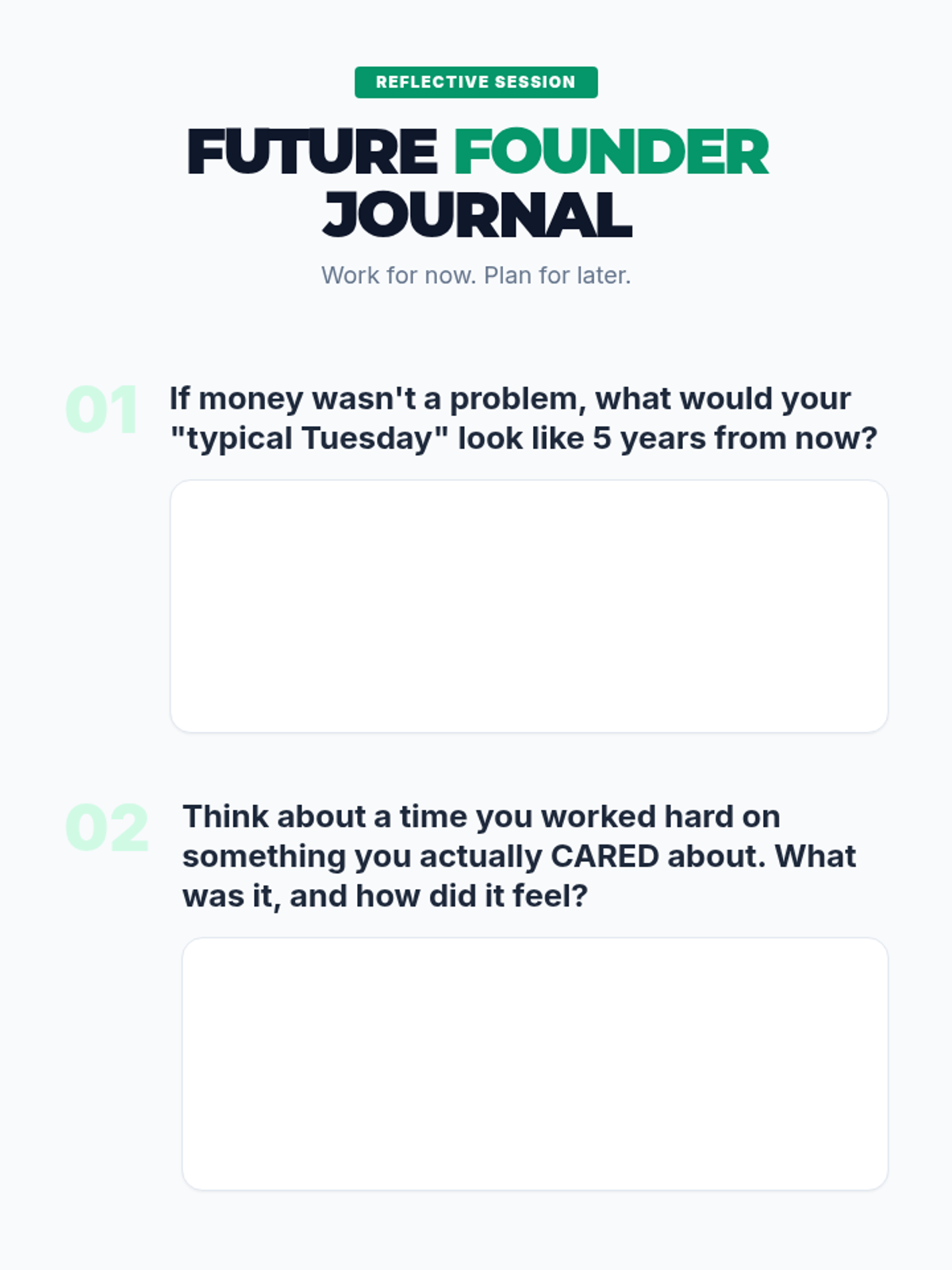
A set of deep reflection prompts for students to connect their personal goals and definitions of success to the practical step of getting a part-time job.
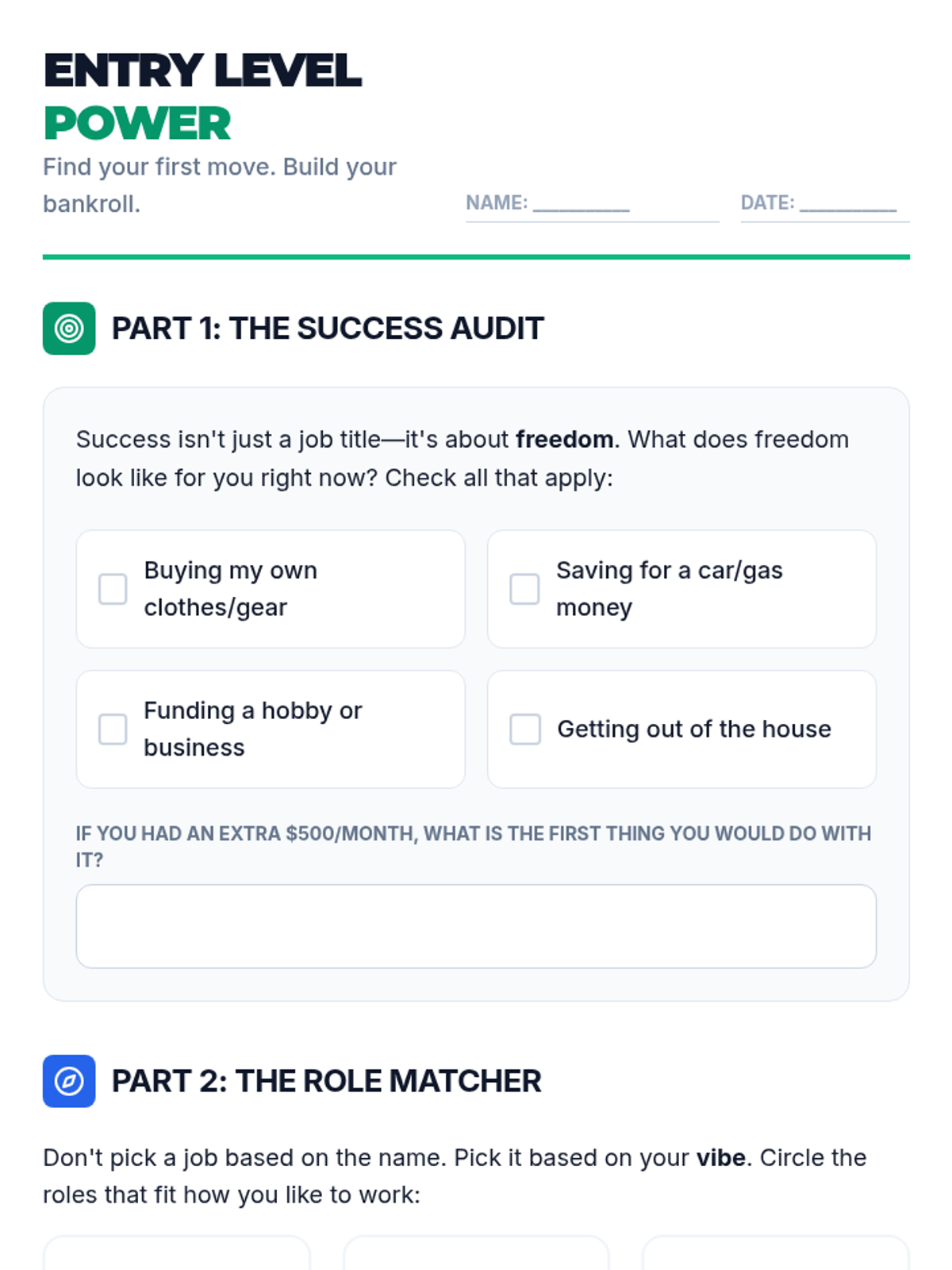
An interactive worksheet for high schoolers to identify their motivations for working, match their personality to entry-level roles, and map out local job opportunities.
A high-impact slide deck for high school students focused on redefining success and identifying entry-level job opportunities. Includes visual guides for resume building and strategic thinking about part-time work.
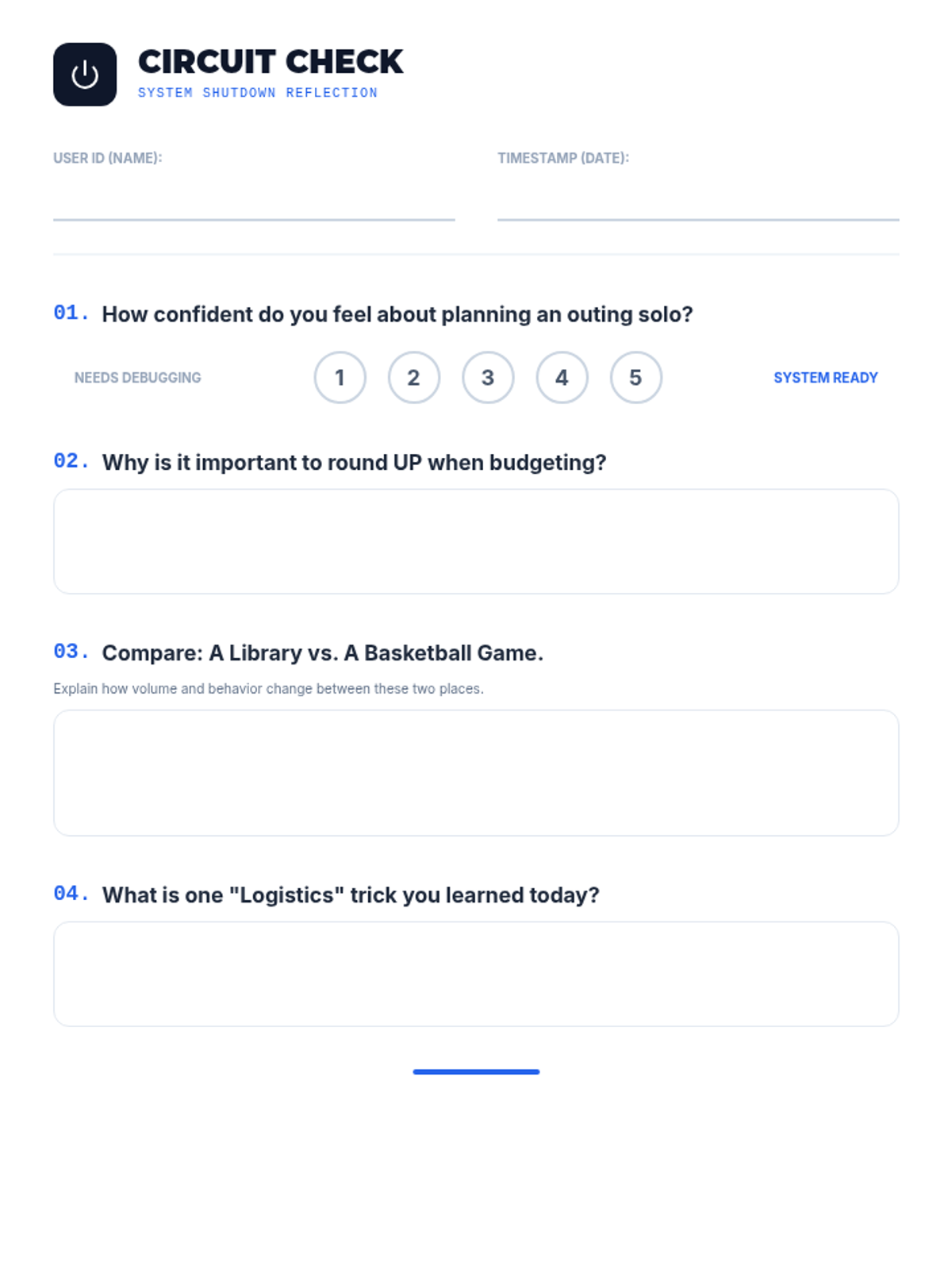
A concise exit ticket that prompts students to reflect on their learning, assess their confidence in planning outings, and articulate key concepts like budgeting safety buffers and situational social norms.
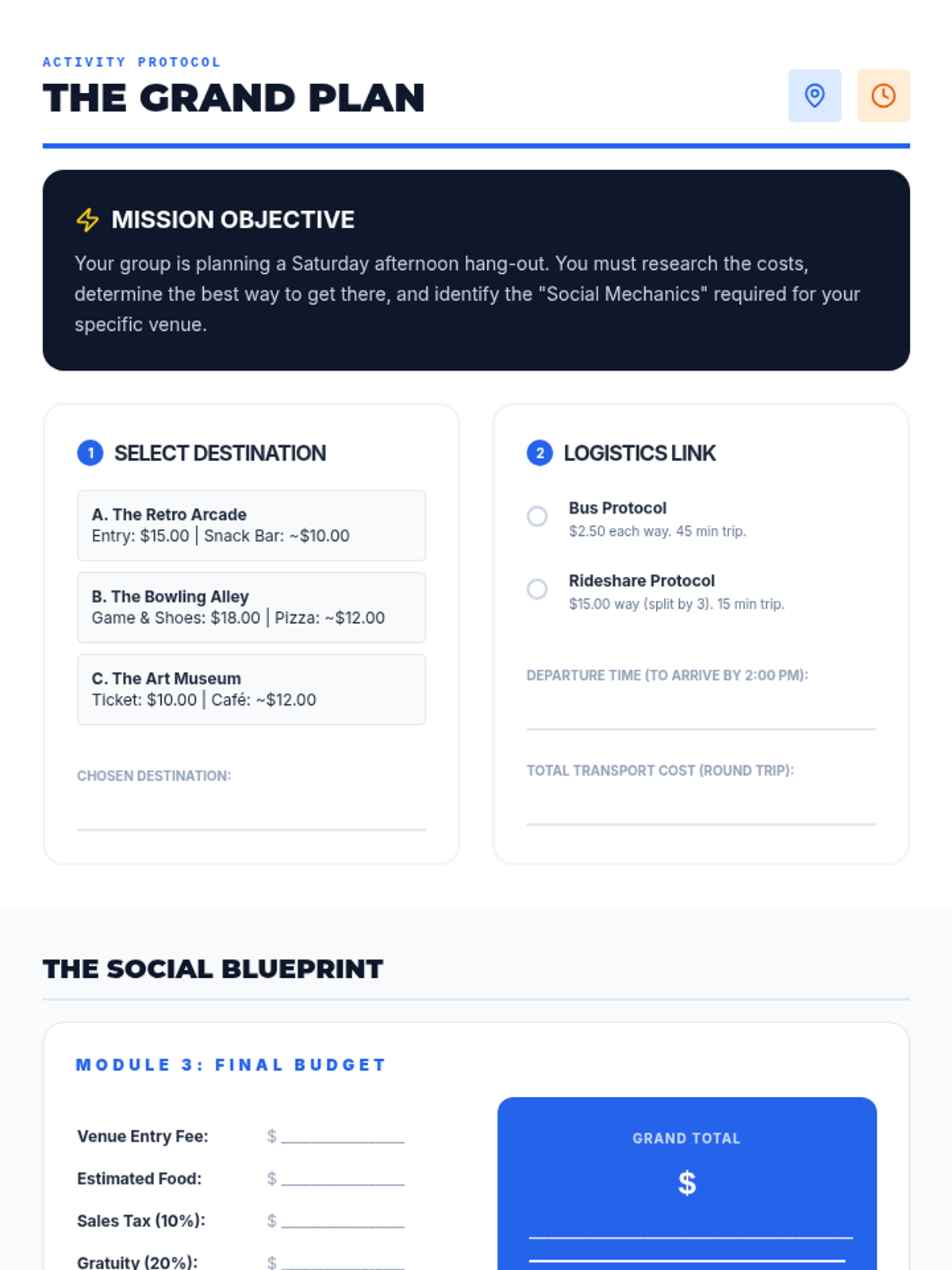
A collaborative activity where students work in groups to plan a complete social outing, from selecting a destination and calculating transit times to identifying venue-specific social norms.
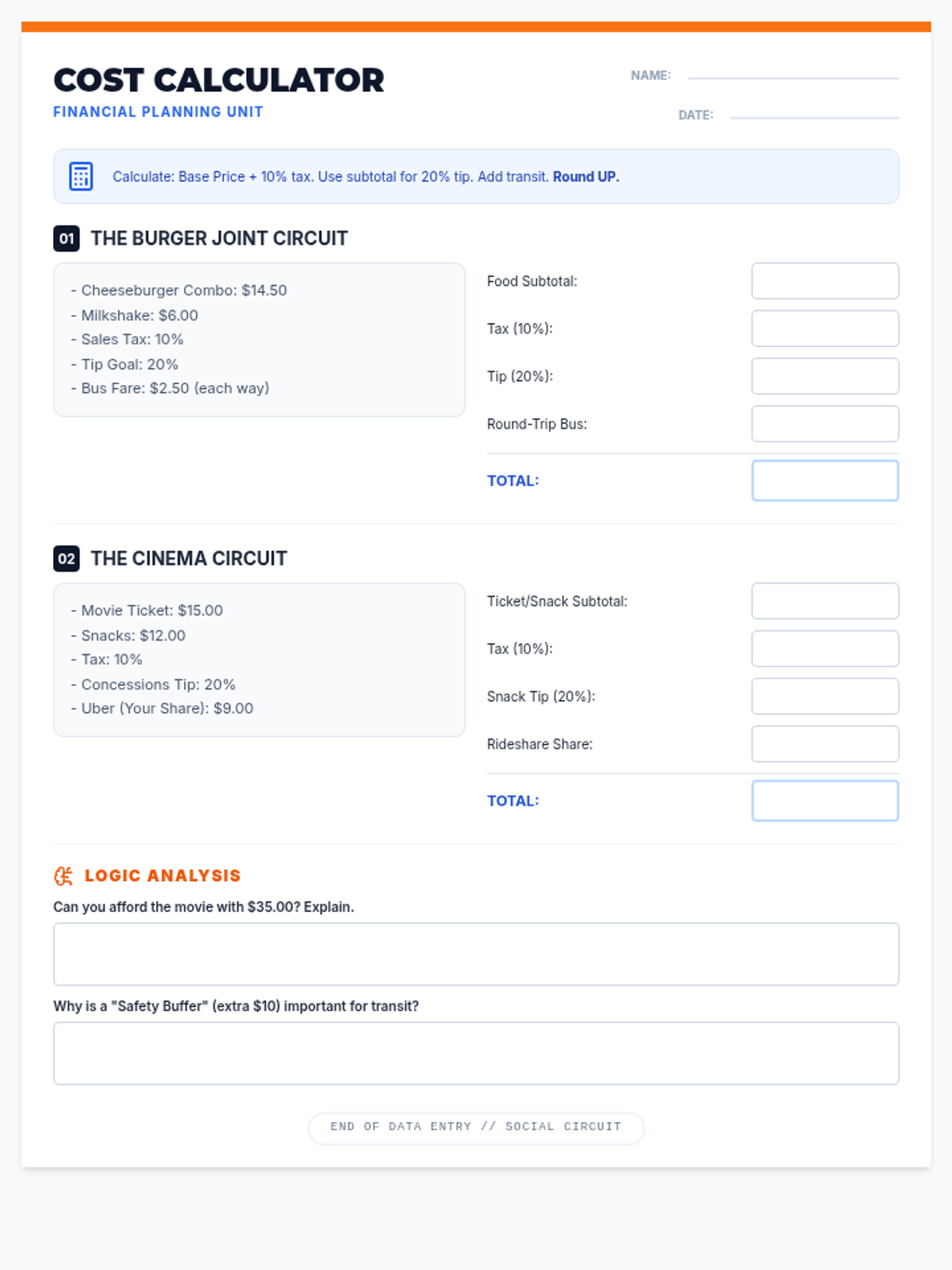
A practical math worksheet that guides students through calculating the total cost of social outings, including taxes, tips, and transportation fees across different scenarios.
An engaging slide deck titled 'Outing Blueprint' that introduces students to the core concepts of social planning: budgeting with tax and tips, transportation logistics, and unspoken social norms.
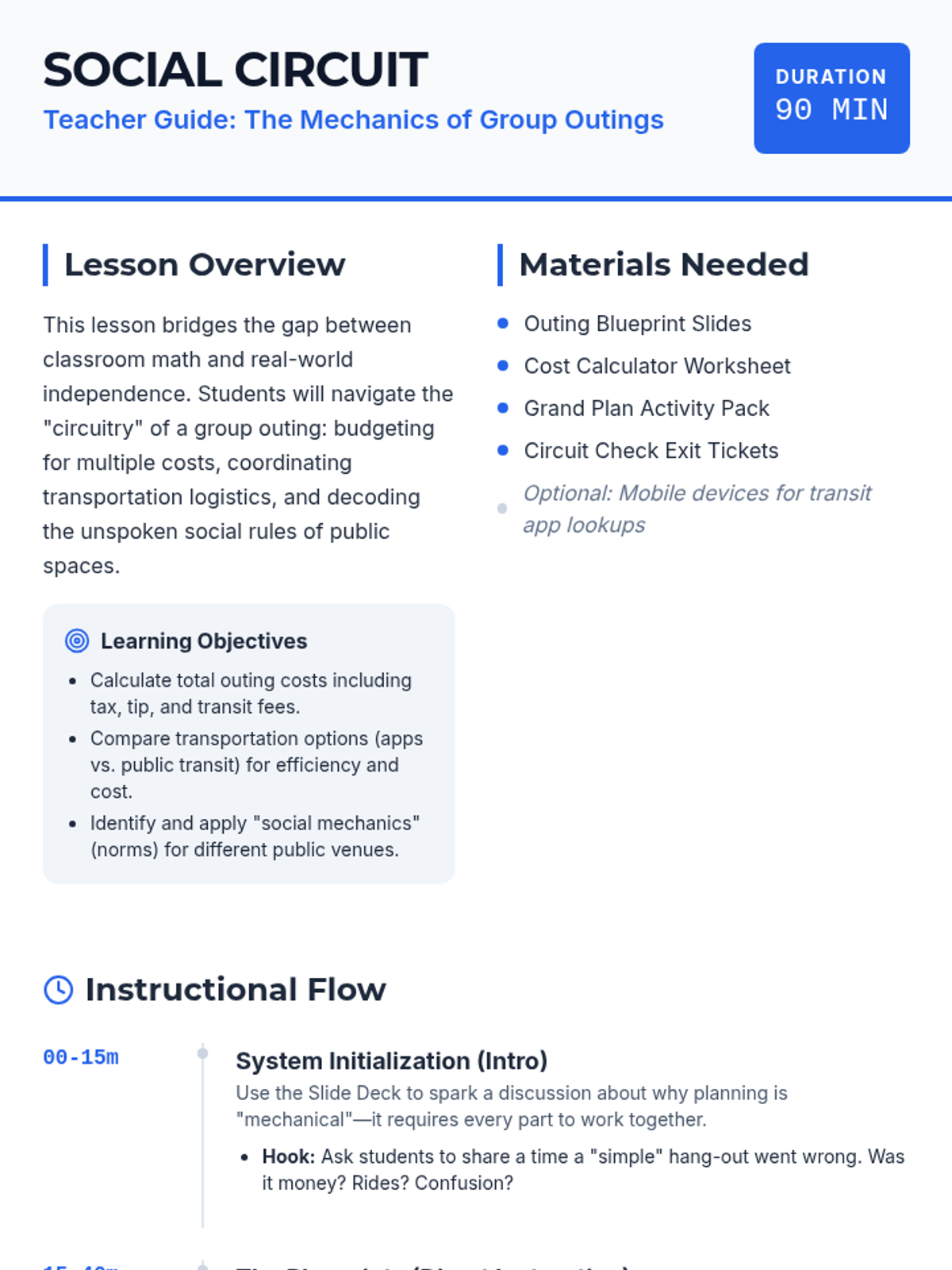
A comprehensive teacher guide for leading the Social Circuit lesson, featuring a structured 90-minute pacing guide, learning objectives, and differentiation strategies for teaching social logistics.
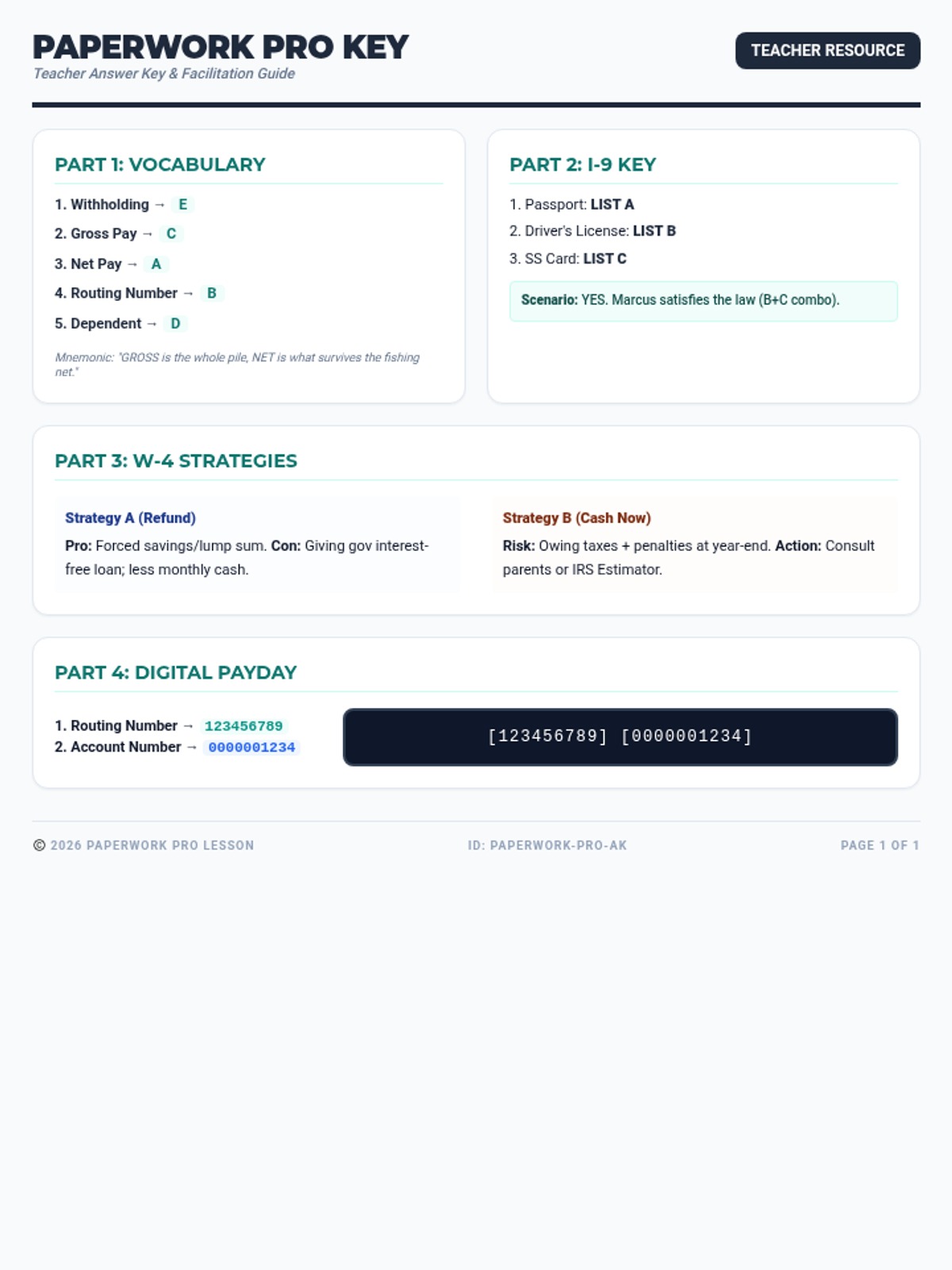
Teacher answer key and facilitation guide for "The Onboarding Maze" worksheet. Includes correct vocabulary matches, document classification keys, and suggested discussion points for tax withholding strategies and direct deposit identification.
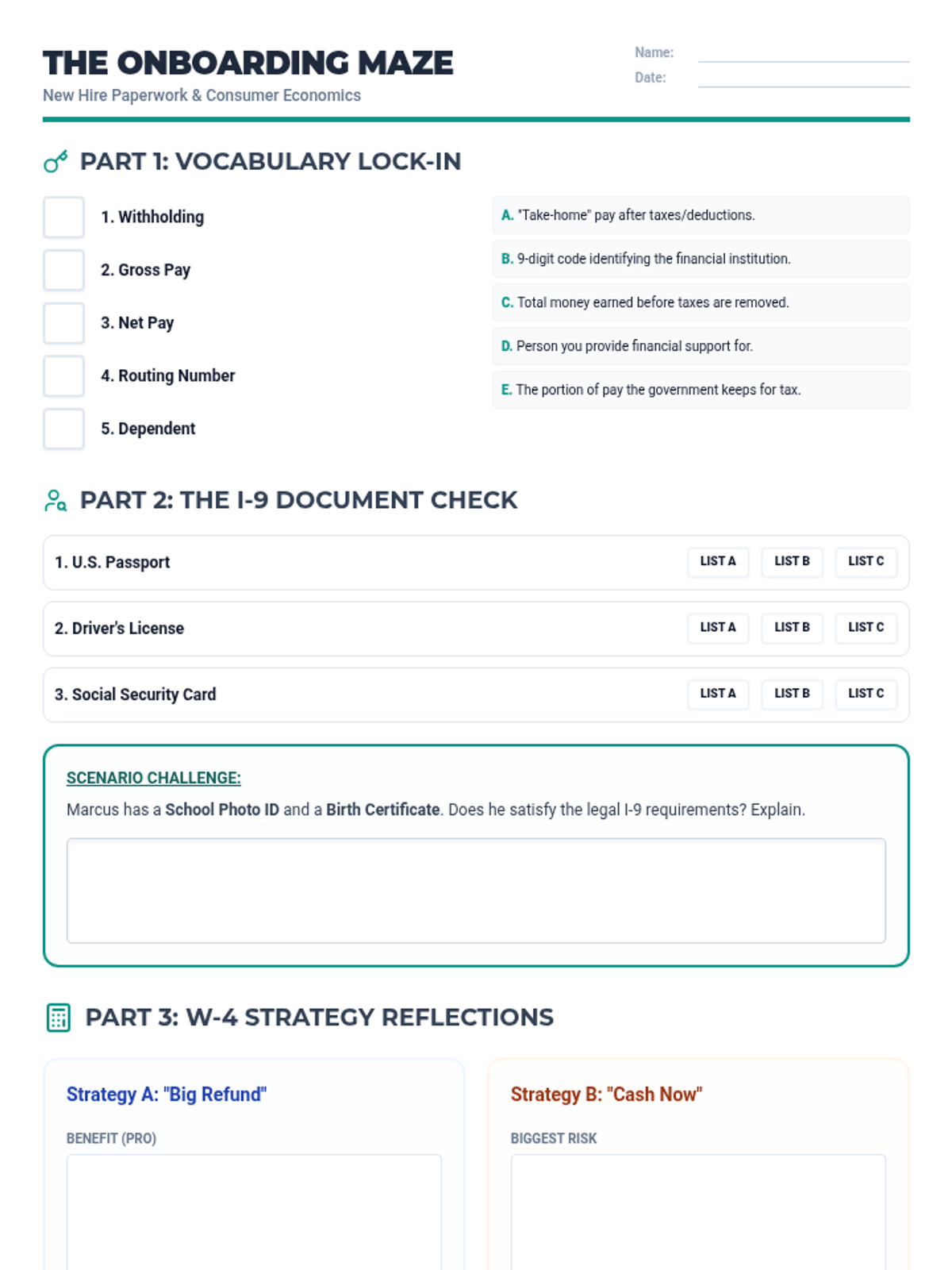
A guided practice worksheet for students to reinforce concepts of new hire paperwork. Includes vocabulary matching, I-9 document classification scenarios, W-4 withholding strategy reflections, and a diagram to identify bank routing and account numbers for direct deposit.
An engaging, professionally-designed slide deck introducing high school students to Form I-9, Form W-4, and Direct Deposit authorization. Features clear visual breakdowns of document requirements, tax withholding concepts, and bank account information identification.
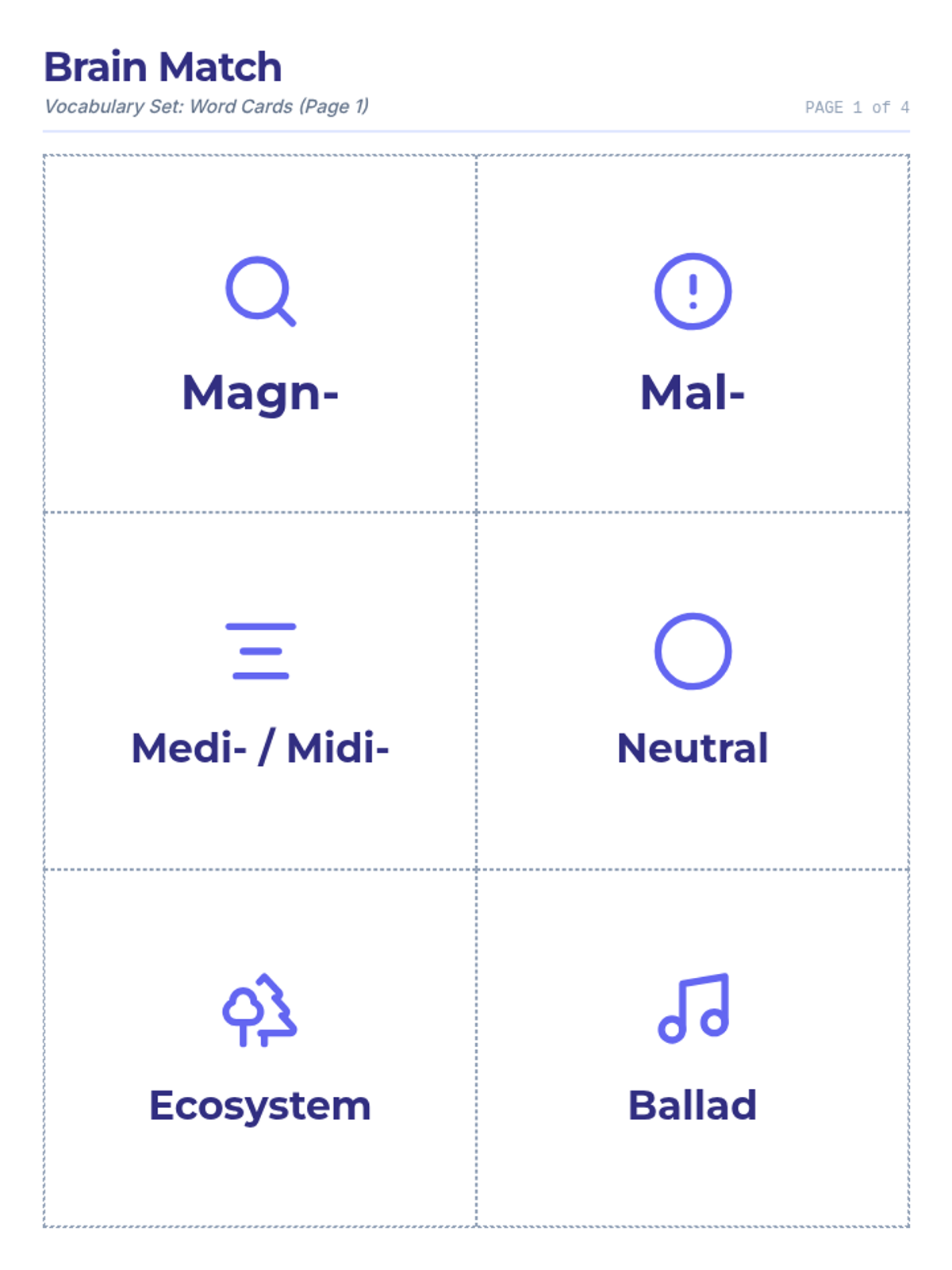
A final set of large-format vocabulary matching cards spanning 4 pages (6 cards per page). Features a unified Indigo theme, dashed cutting guides, and matching iconography. To prevent "cheating" by matching icons, definition cards use subtle grayscale versions of the icons. Card sizing is strictly controlled to ensure no page overflow.
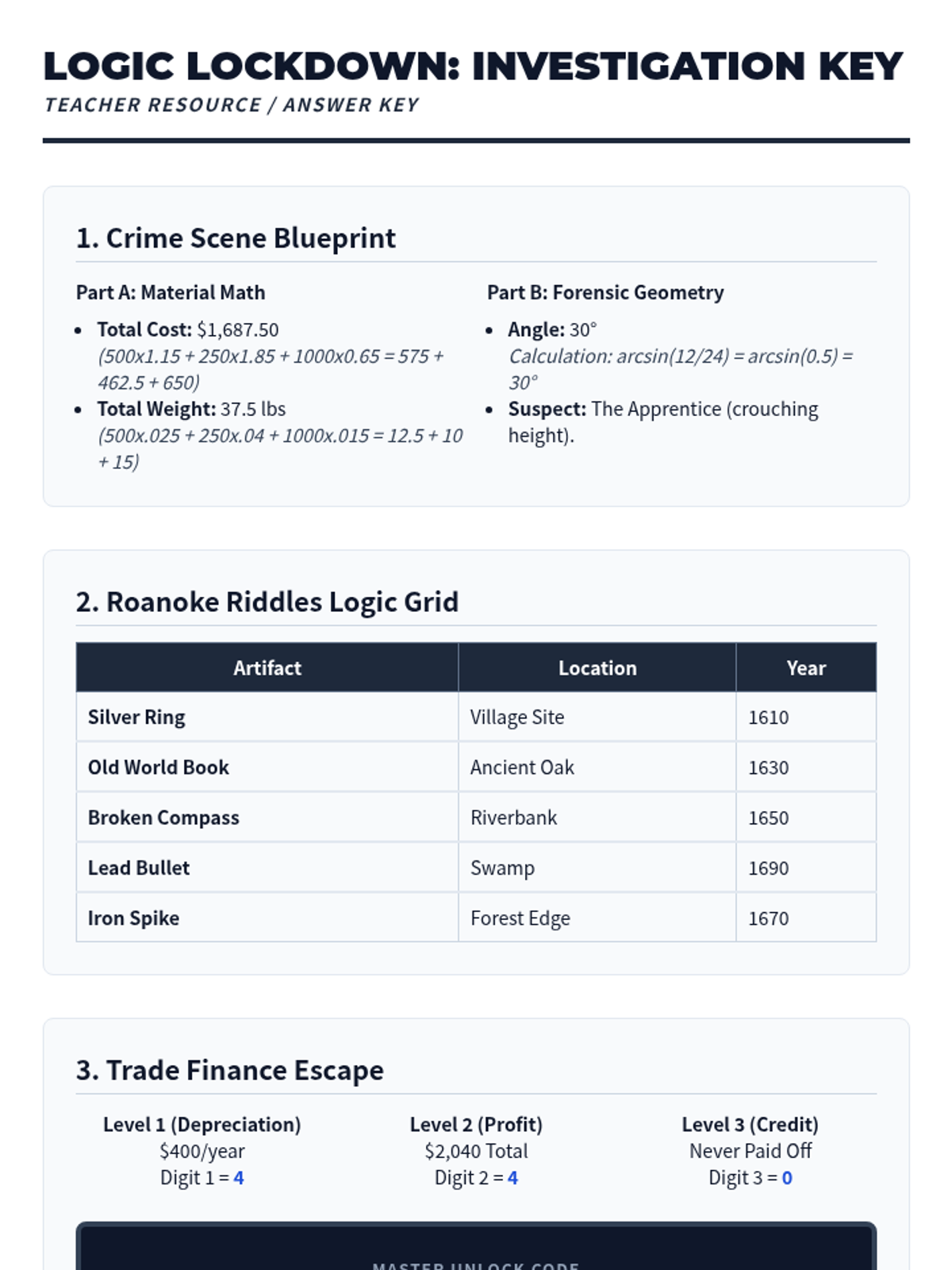
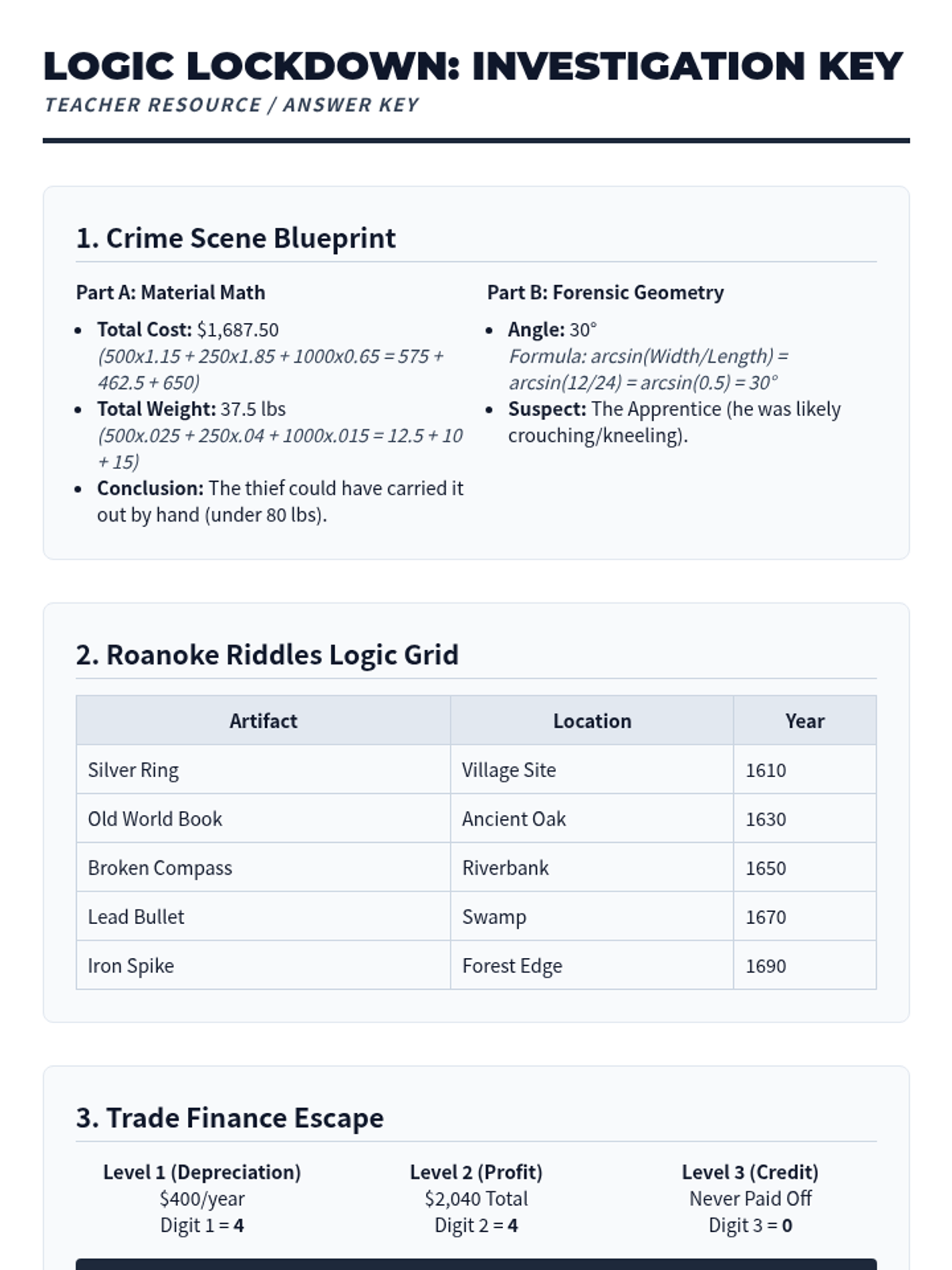
Complete answer key and logic walkthrough for the Logic Lockdown lesson. Revised for math clarity, contrast, and layout stability.
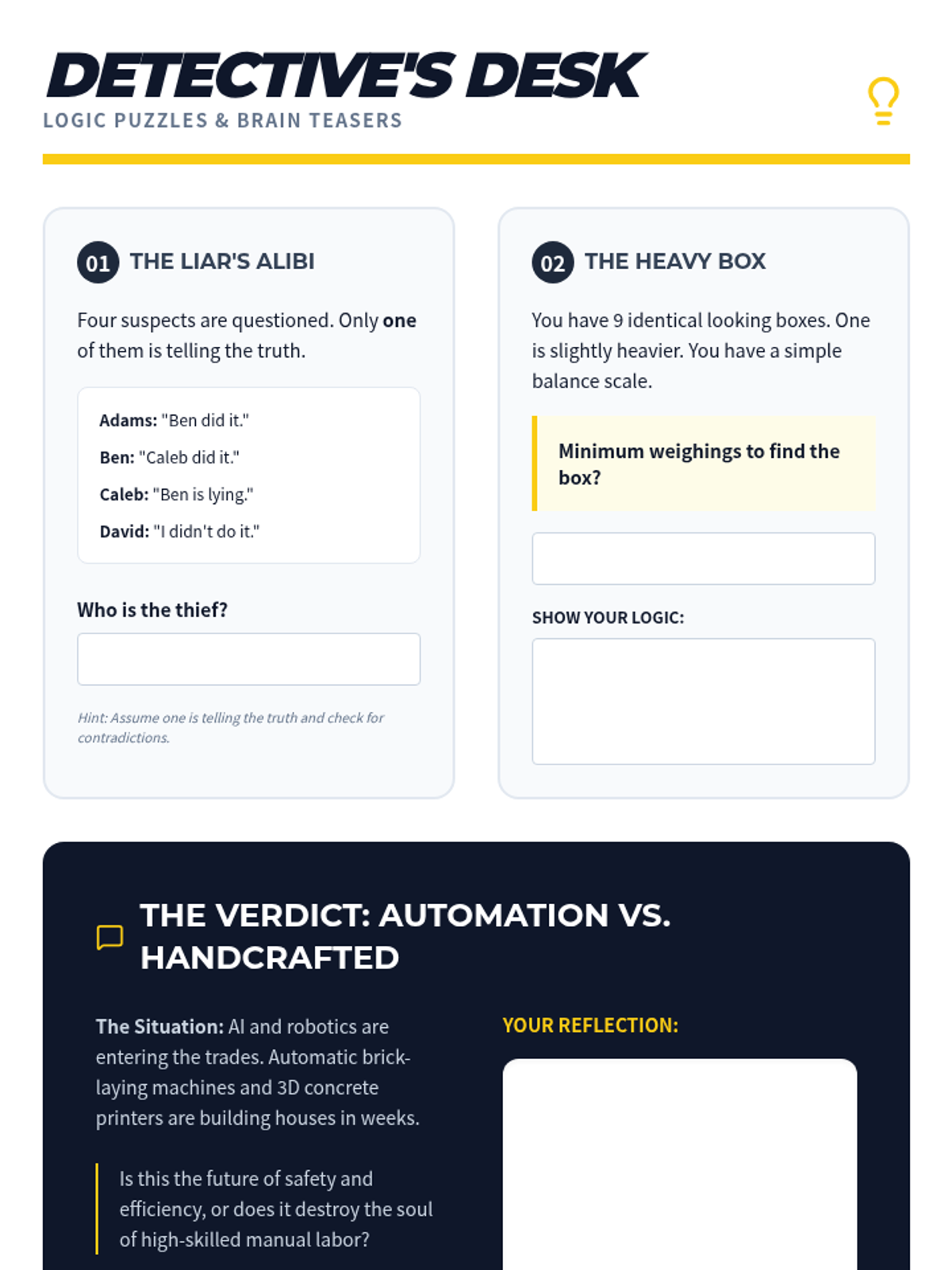
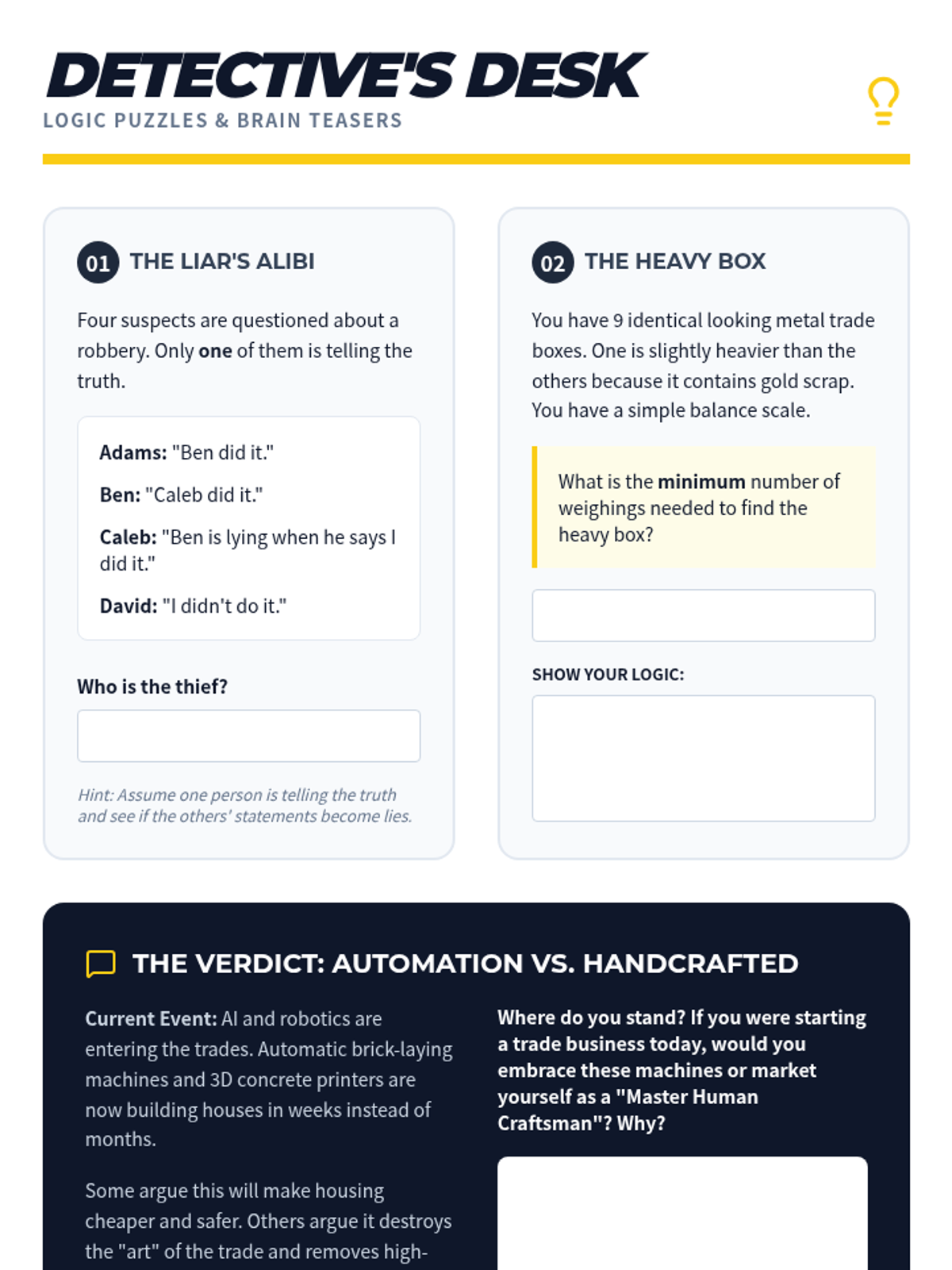
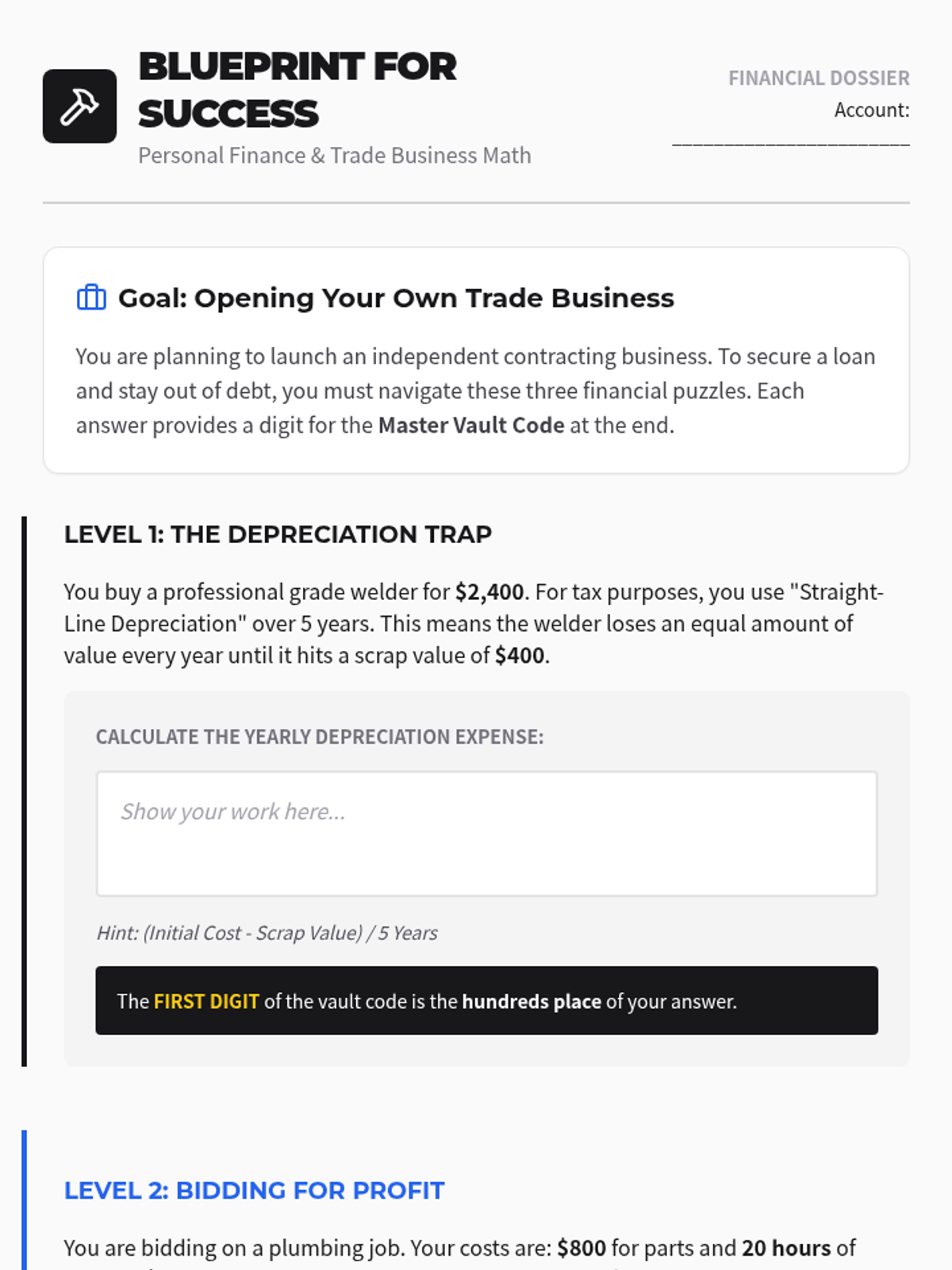
A collection of brain teasers and a critical thinking writing prompt focused on the trades. Revised to fix page breaks, syntax, and increase writing space.
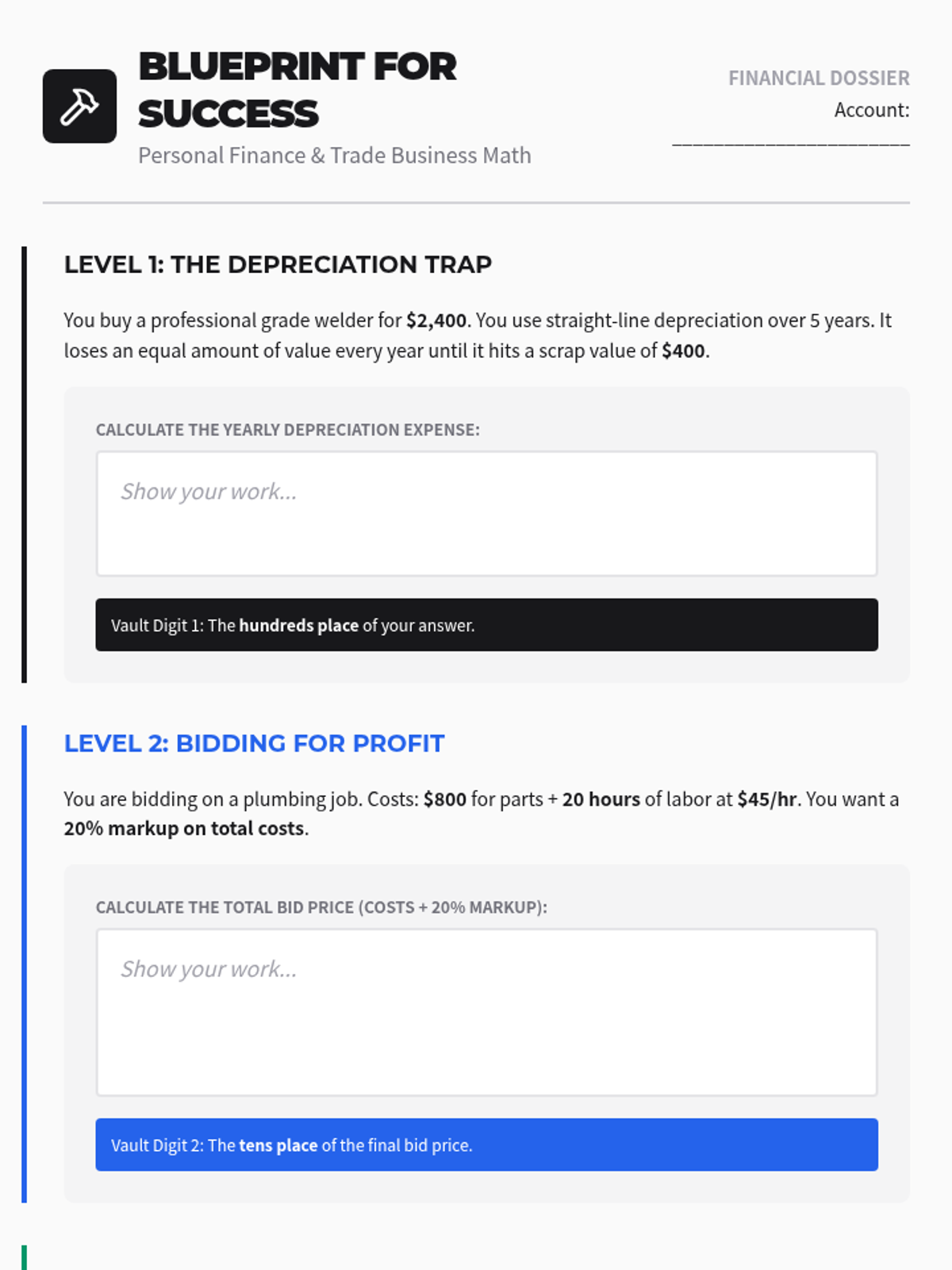
A math-based escape room activity. Revised to clarify "markup" terminology, fix answer choice styling, and ensure Level 2 stays together on one page.
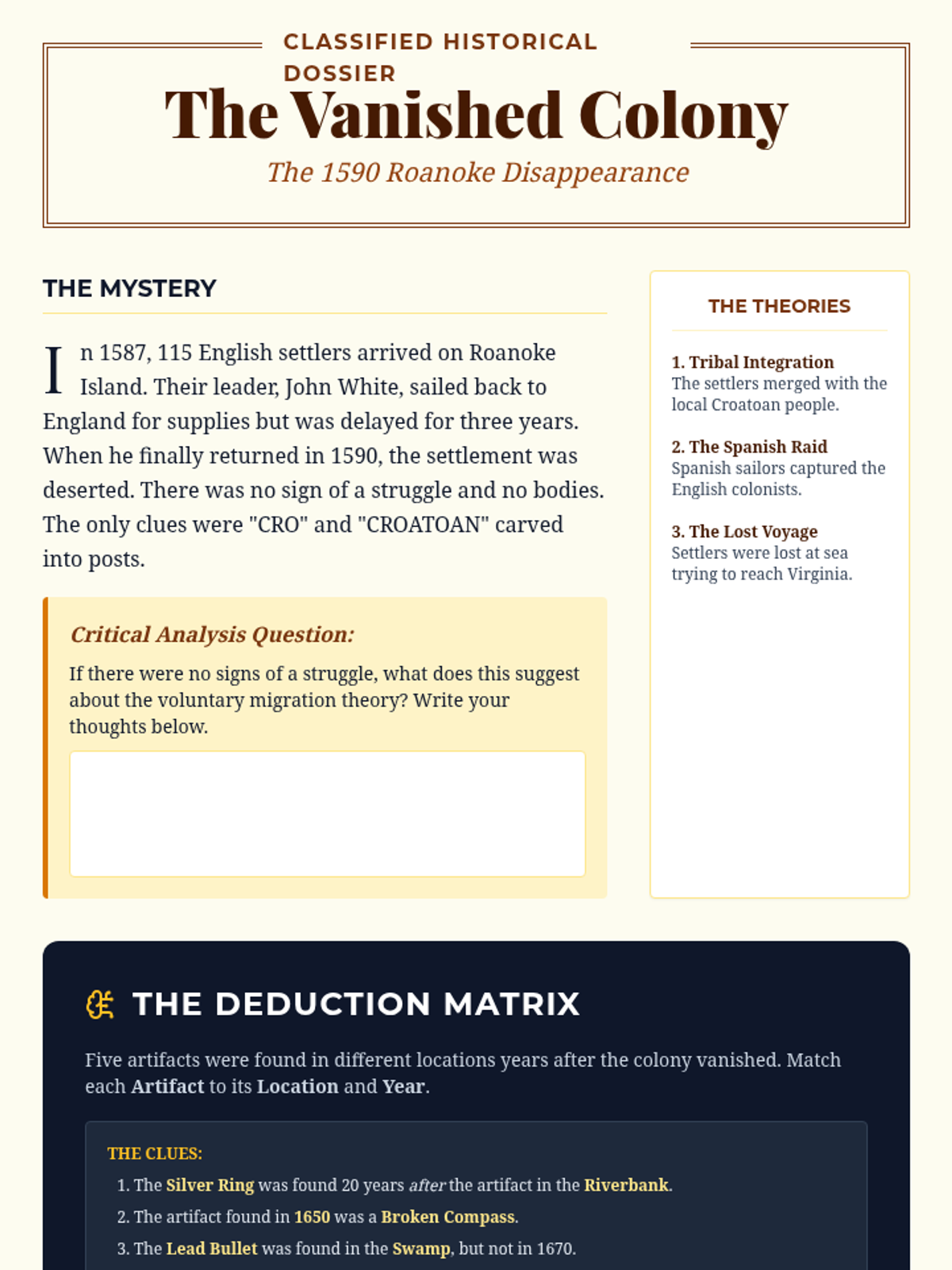
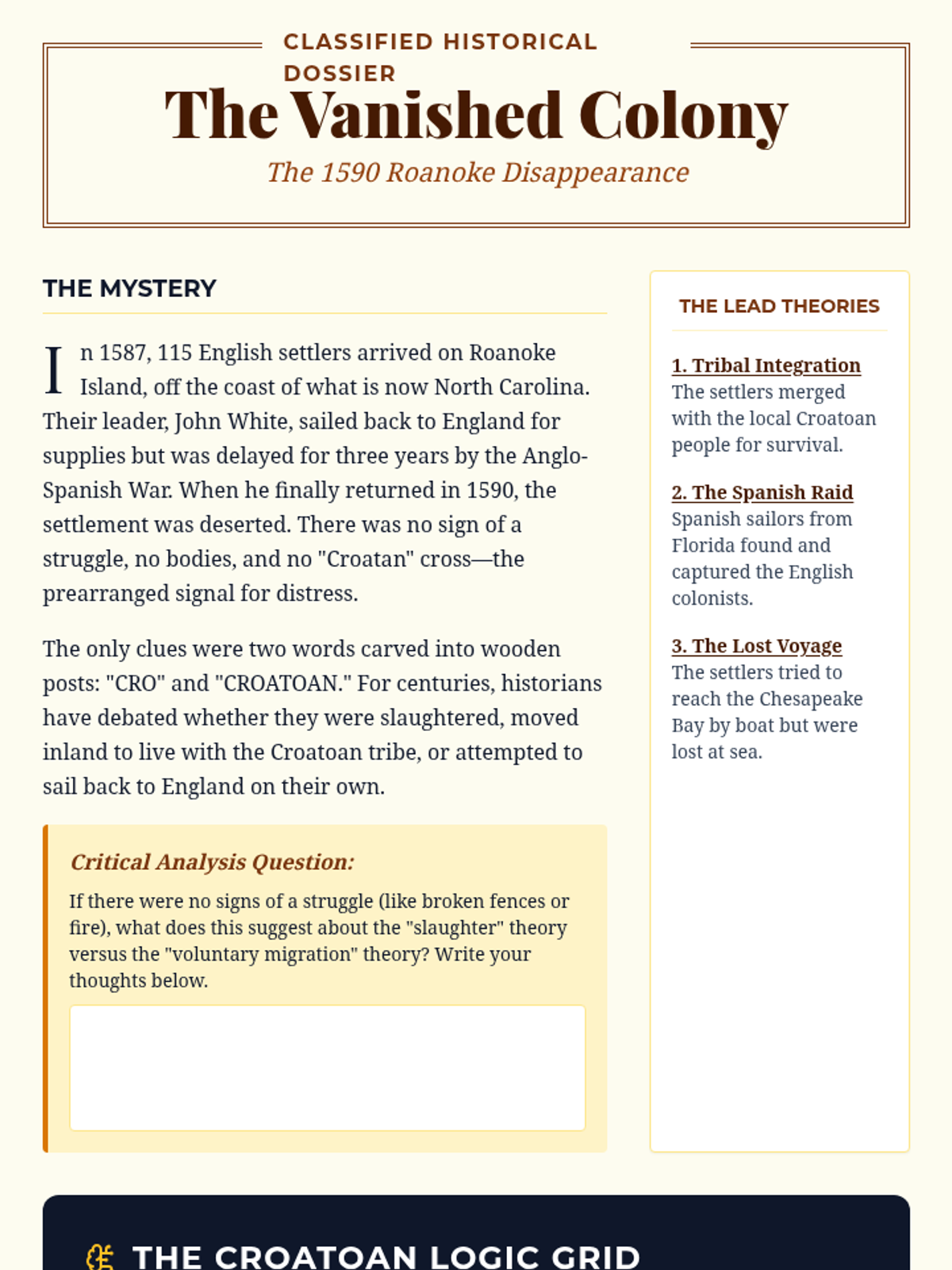
A reading comprehension and historical analysis document about the Roanoke colony, paired with a deductive logic puzzle. Revised to add a logic grid matrix and fix consistency.
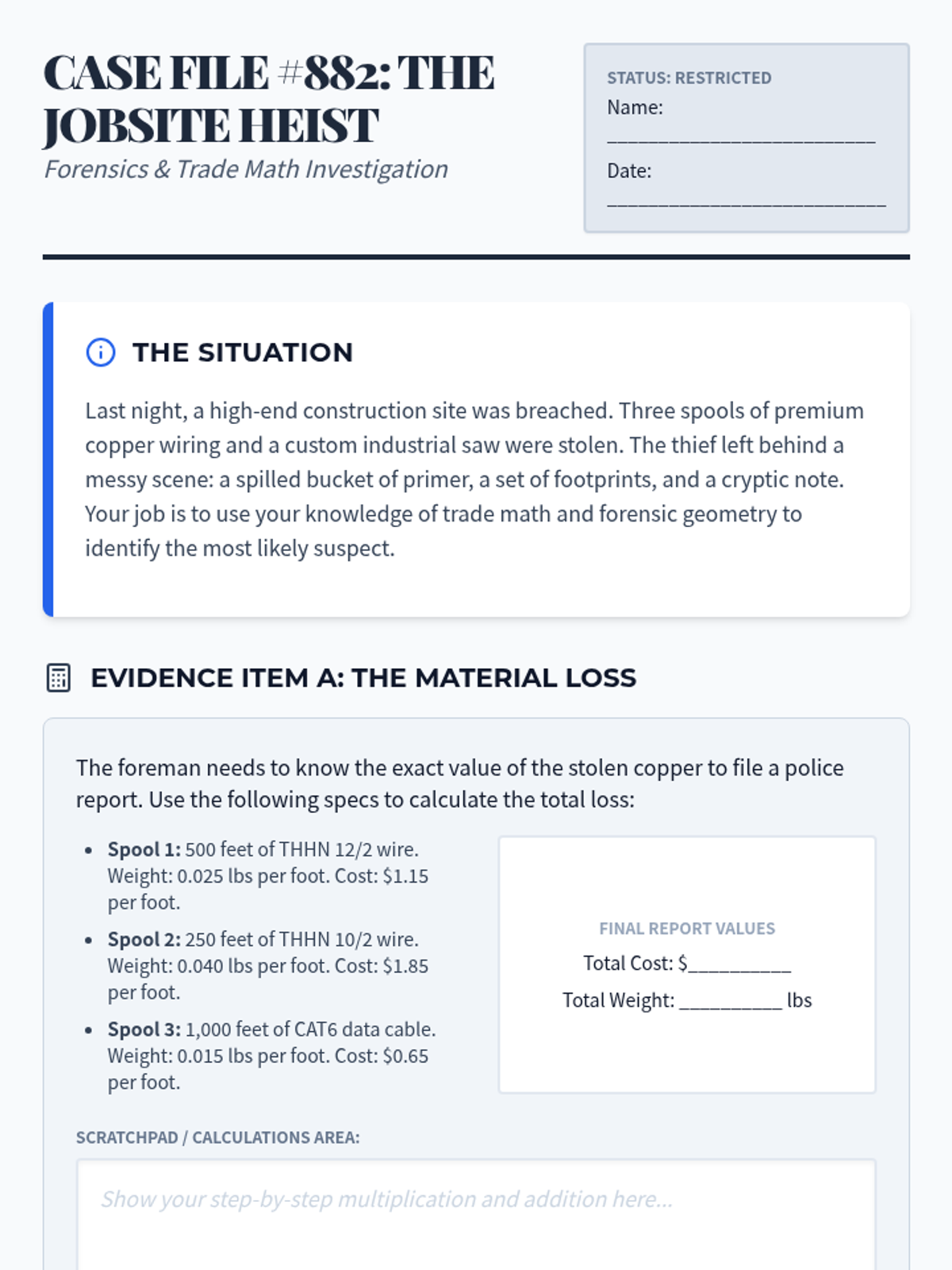
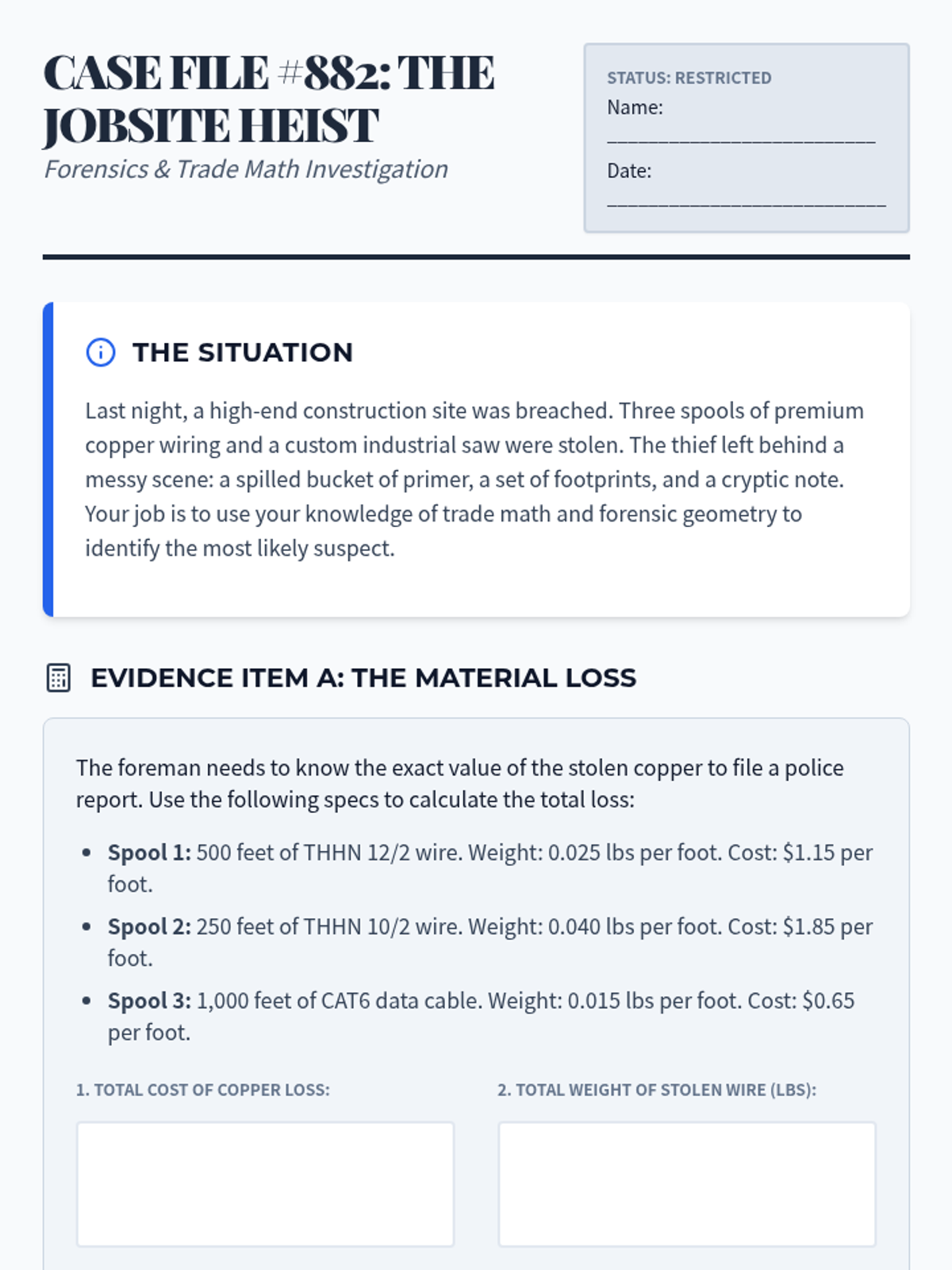
A forensic-themed worksheet that combines trade-based math (material cost and weight) with geometric spatter analysis to solve a construction site theft. Revised to fix calculations area and table layout.
Complete answer key and logic walkthrough for the Logic Lockdown lesson. Revised to fix LaTeX rendering, page breaks, and text contrast.
A collection of brain teasers and a critical thinking writing prompt focused on the trades. Revised to fix page breaks, syntax errors, and workspace sizing.
A math-based "escape room" style activity focusing on trade-related personal finance. Revised to fix page breaks, uniform answer styling, and logic phrasing.
A reading comprehension and historical analysis document about the Roanoke colony, paired with a grid-based logic puzzle. Revised to fix artifact count, formatting, and contrast.
A forensic-themed worksheet that combines trade-based math (material cost and weight) with geometric spatter analysis to solve a construction site theft. Revised to fix LaTeX rendering and table page breaks.
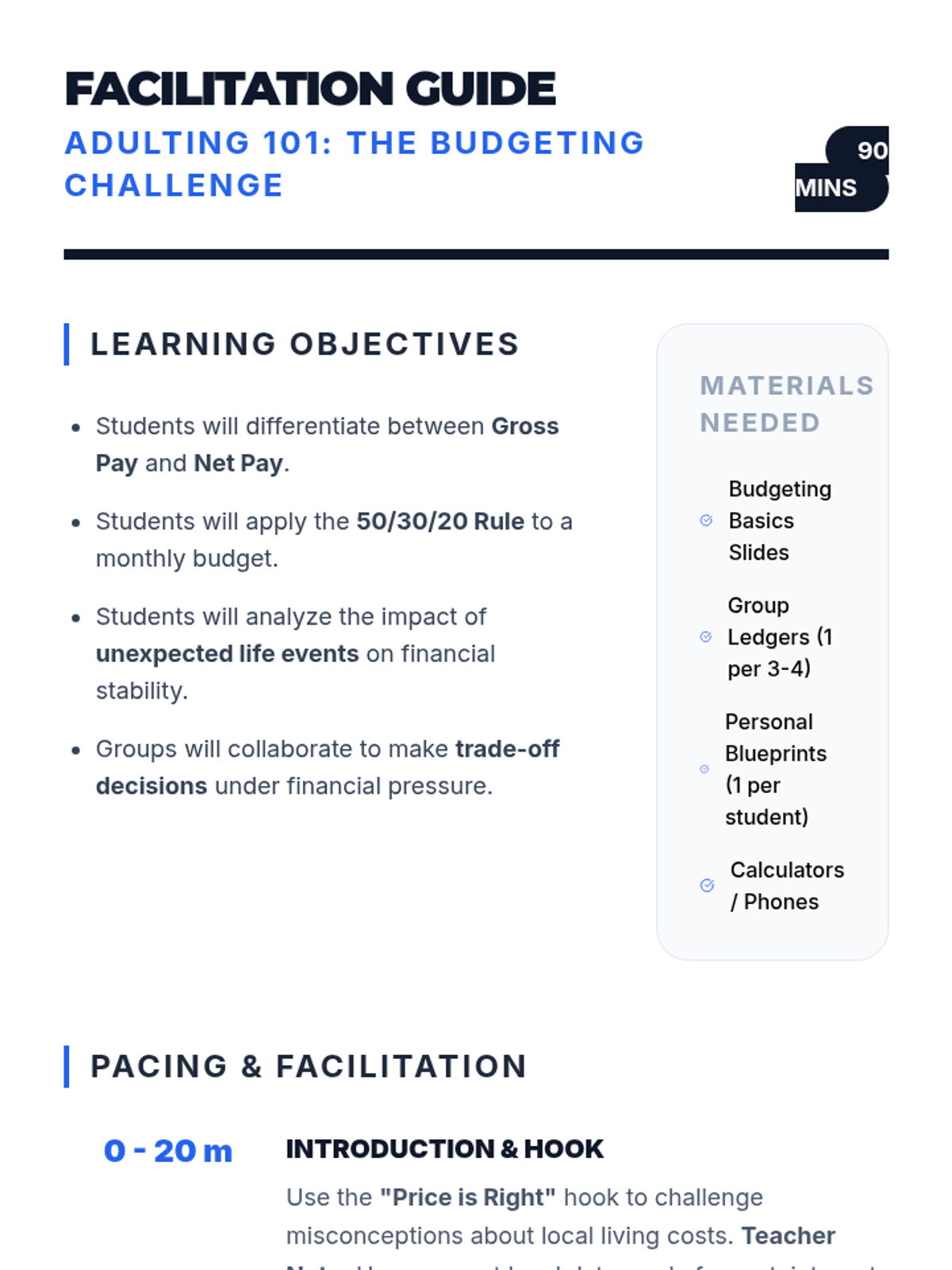
A facilitation guide for teachers to manage the 90-minute Adulting 101 workshop, including pacing, learning objectives, and simulation keys.
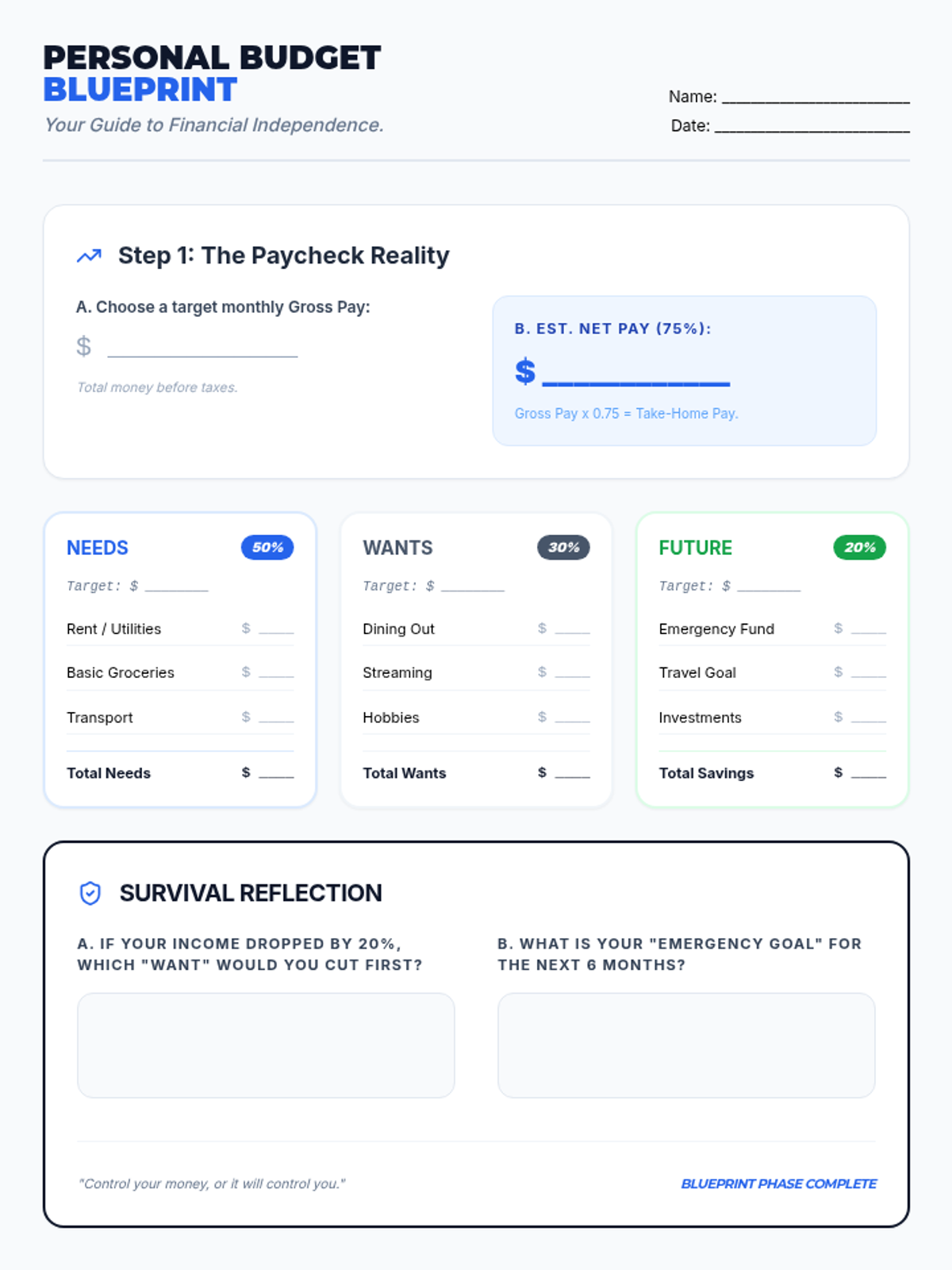
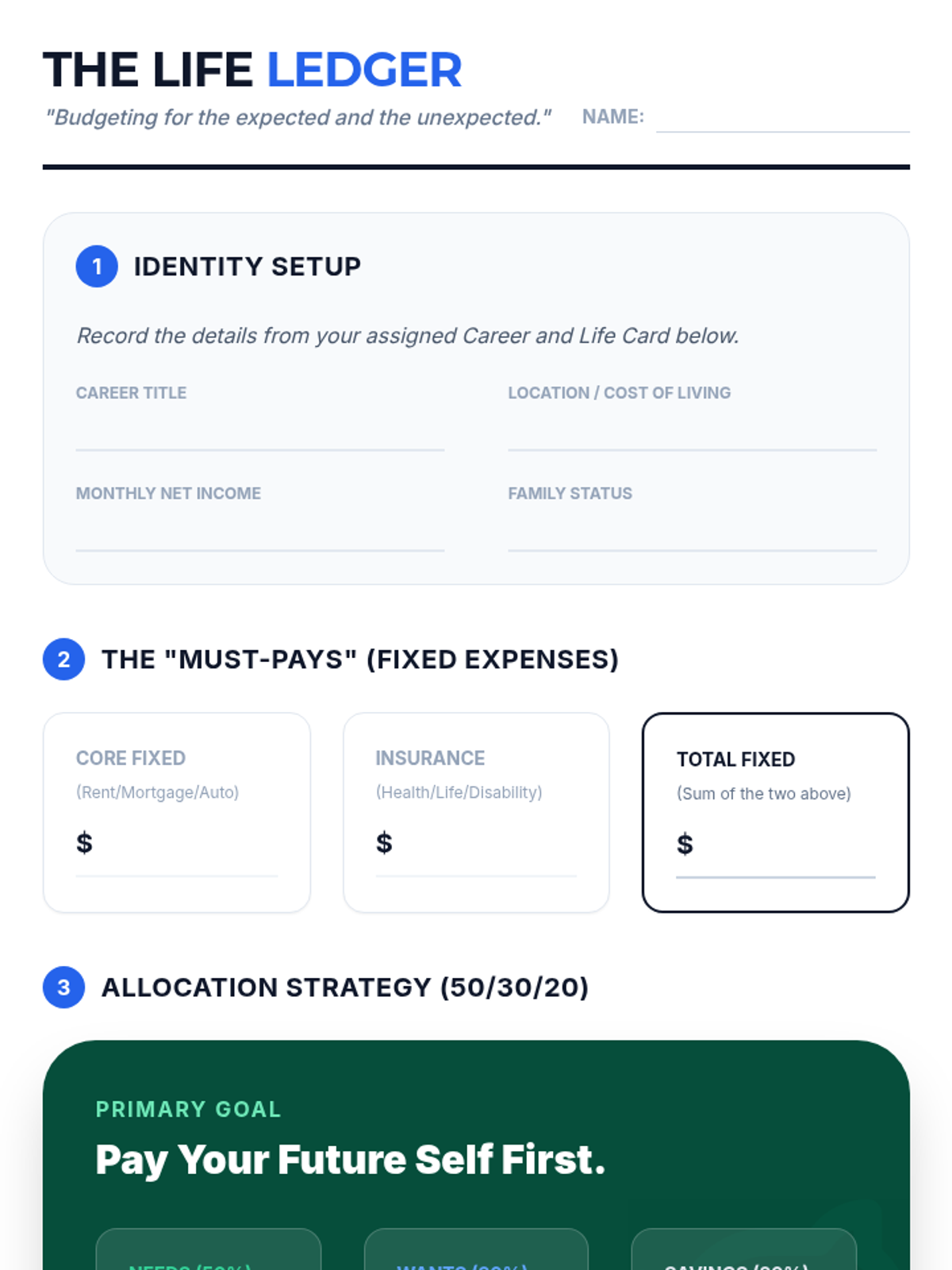
A personal budgeting blueprint where students apply the 50/30/20 rule to a target income, calculating net pay and allocating funds for needs, wants, and savings.
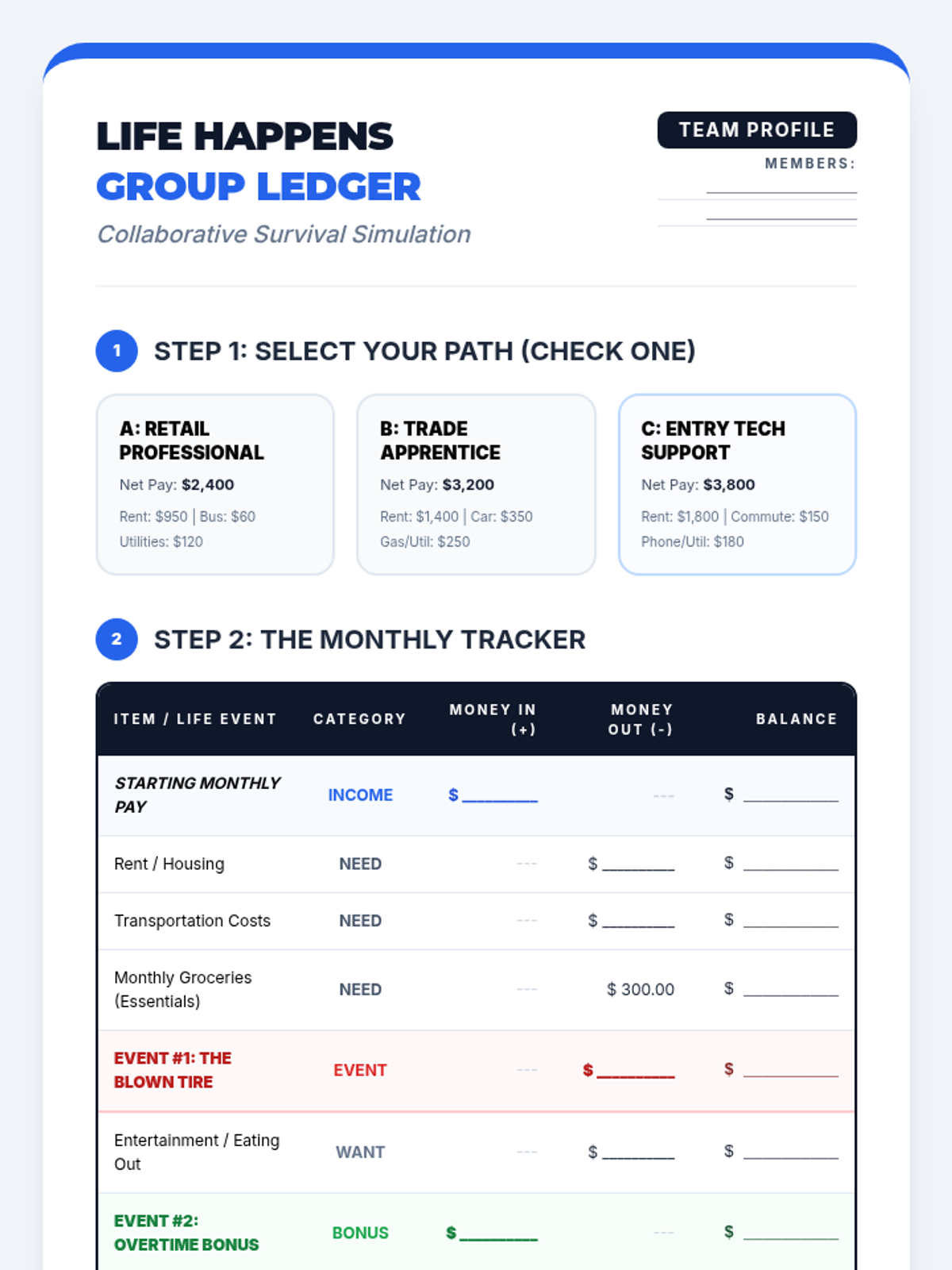
A collaborative group worksheet where students pick a career profile, track a month of income and expenses, and navigate unexpected 'Life Events' together using a structured ledger.
A comprehensive slide deck for a 90-minute budgeting workshop, featuring a 'Price is Right' hook, gross vs. net pay explanations, the 50/30/20 rule, and interactive group simulation scenarios.
An expanded 7-slide professional presentation for Module 02: Career Trajectory. Explores resume vs. network, ATS bot secrets, the Elevator Pitch framework, the STAR method for interviews, and Professionalism 2.0 (etiquette and reliability).
An expanded 7-slide deep-dive presentation for Module 01: Money Mastery. Covers the 50/30/20 rule, banking logistics (Checking vs Savings vs HYSA), credit score DNA, compound interest math, and debt types.
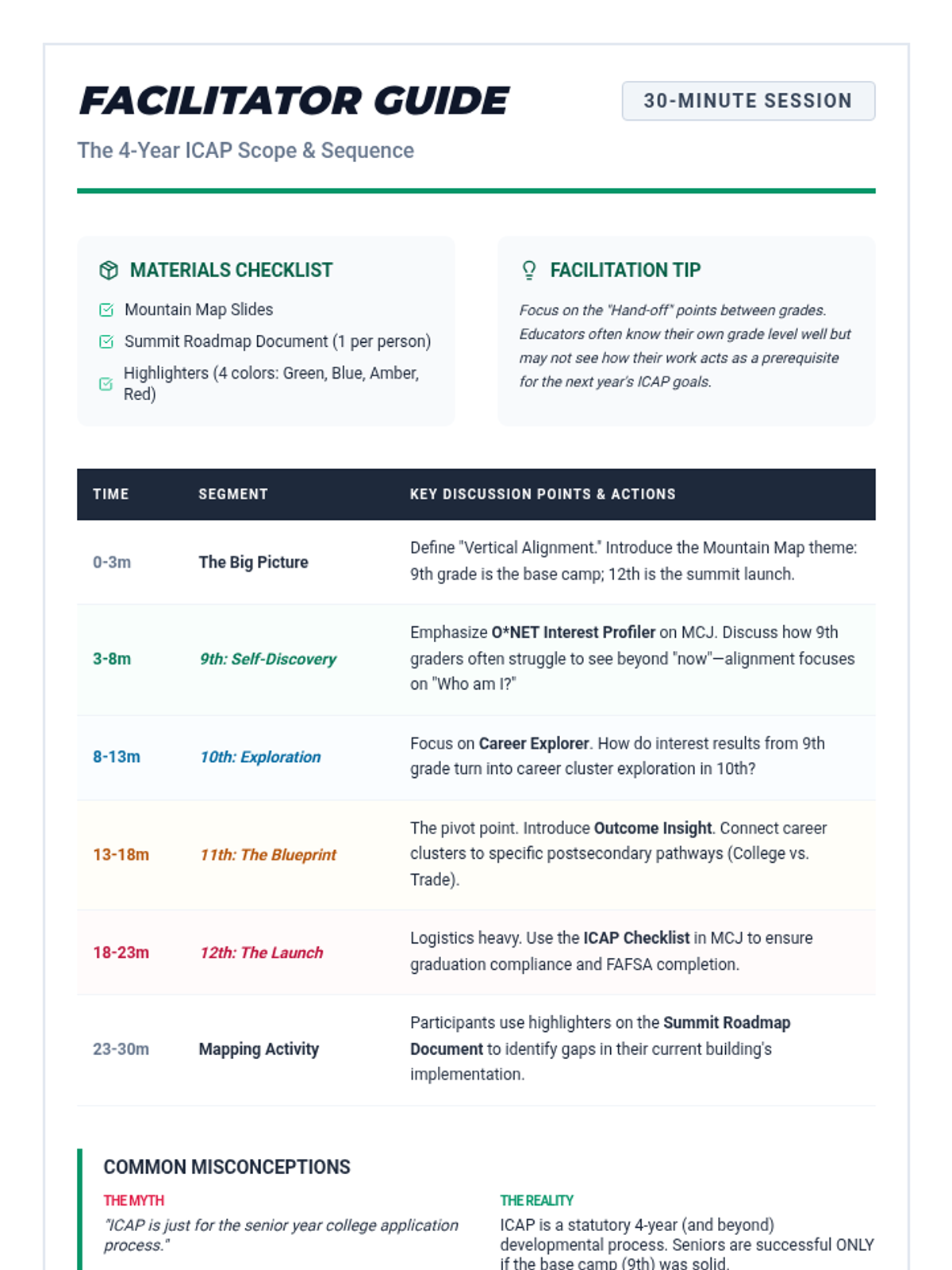
A detailed facilitator guide for leading the 30-minute ICAP vertical alignment professional development session, including a timeline and discussion prompts.
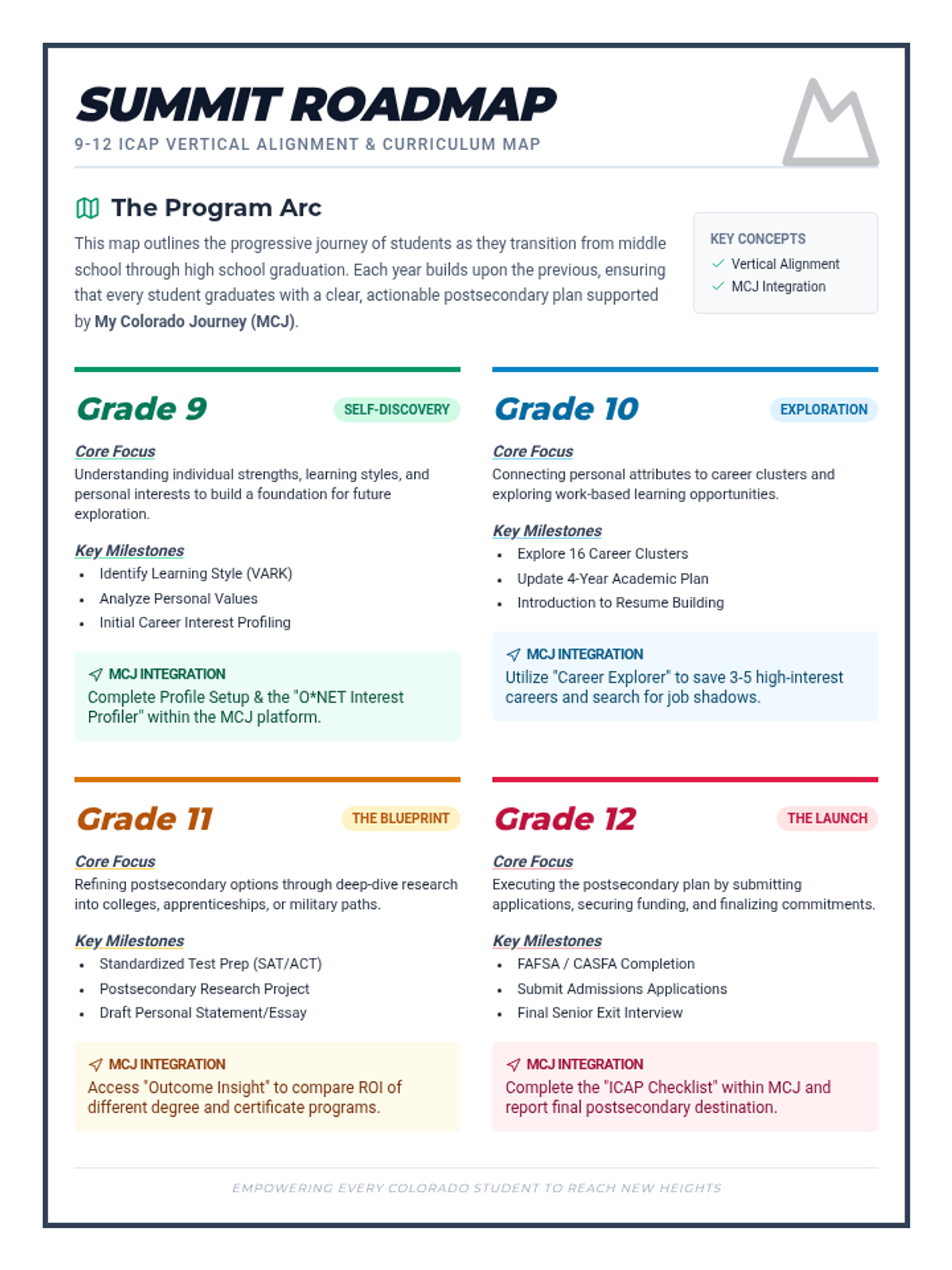
A visual presentation for educators detailing the ICAP 9-12 program arc, grade-level themes, and specific My Colorado Journey tool integration.
A comprehensive 9-12 curriculum map outlining the vertical progression of ICAP milestones and My Colorado Journey integration.
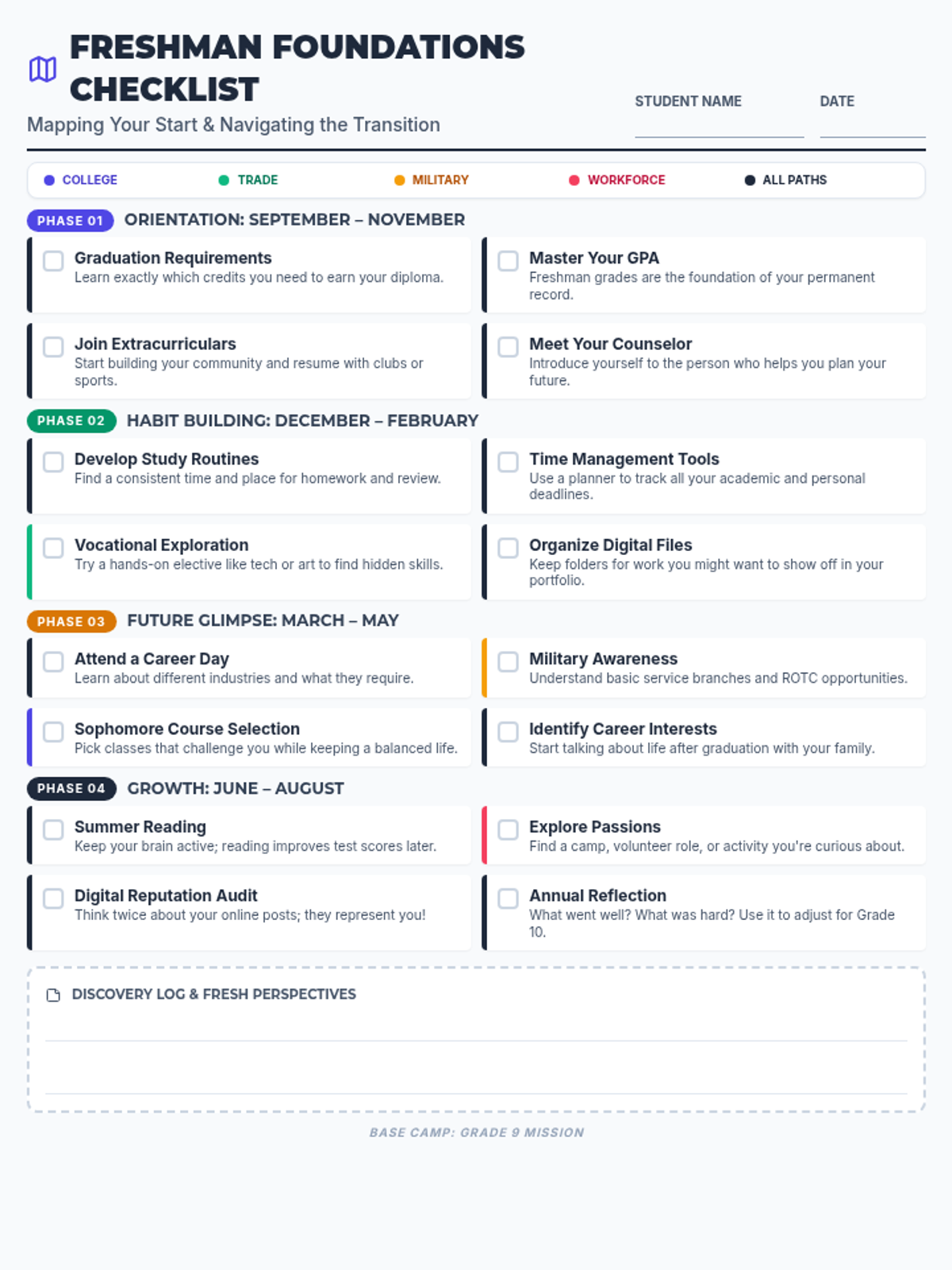
A comprehensive one-page checklist for high school freshmen, organized by seasonal phases and color-coded by post-secondary path (College, Trade, Military, Workforce). Focuses on building academic foundations, exploring interests, and developing essential study habits.
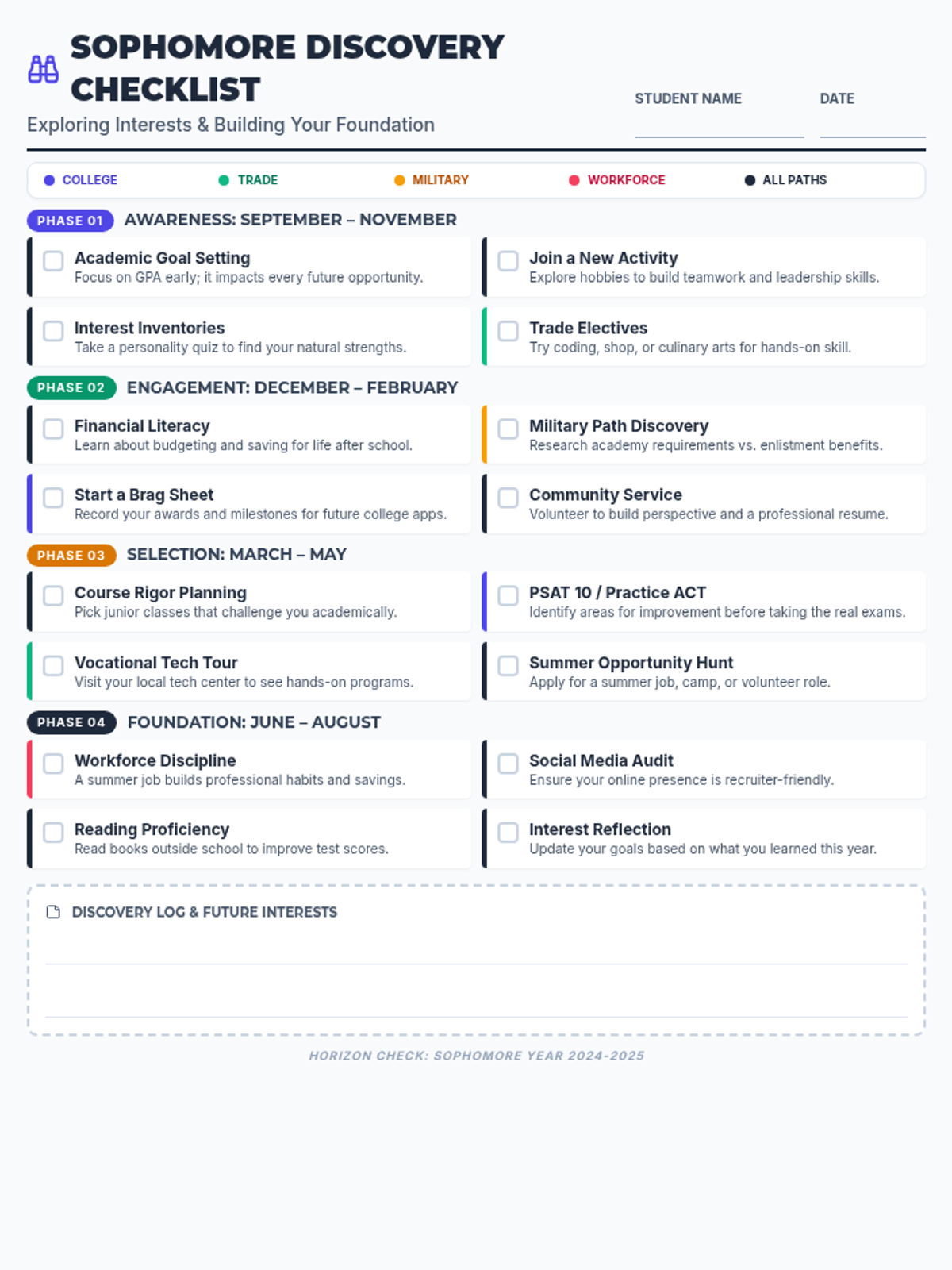
A comprehensive one-page checklist for high school sophomores, organized by seasonal phases and color-coded by post-secondary path (College, Trade, Military, Workforce). Focuses on interest exploration and building an academic and extracurricular foundation.
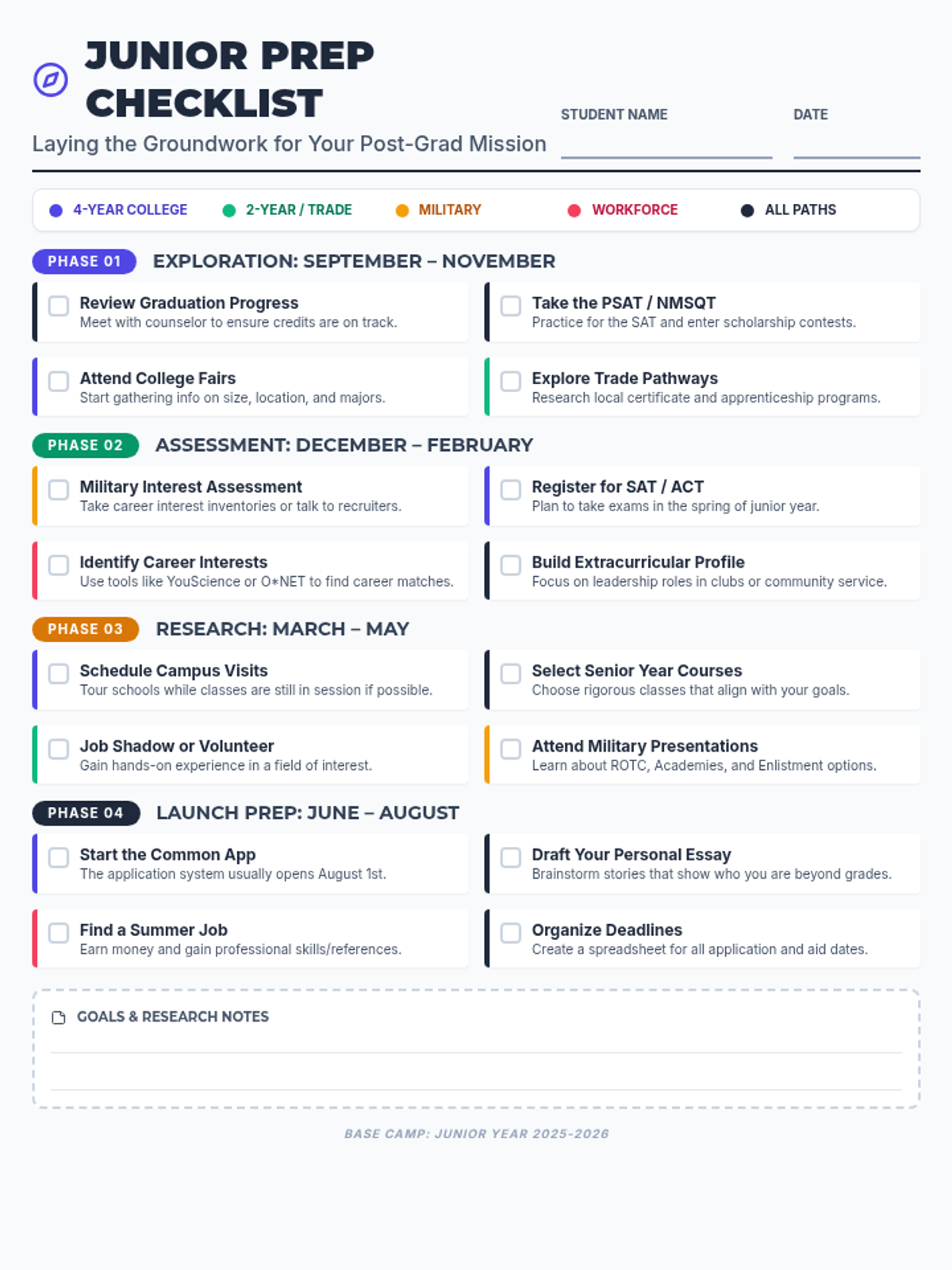
A comprehensive one-page checklist for high school juniors, organized by seasonal phases and color-coded by post-secondary path (College, Trade, Military, Workforce). Helps students lay the groundwork for their senior year mission.
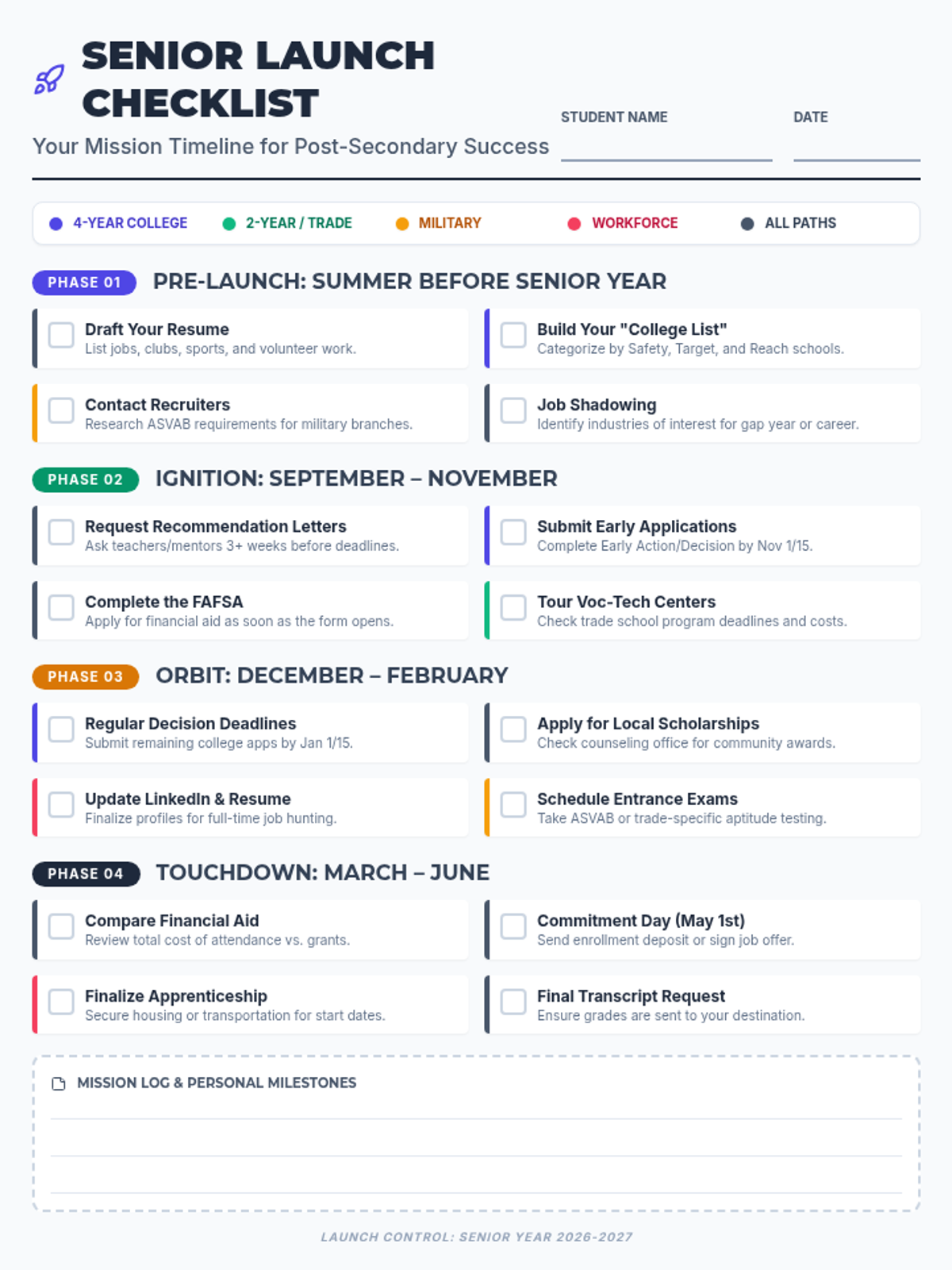
A comprehensive one-page checklist for high school seniors, organized by seasonal phases and color-coded by post-secondary path (College, Trade, Military, Workforce). Includes space for notes and tracking major milestones from summer through graduation.
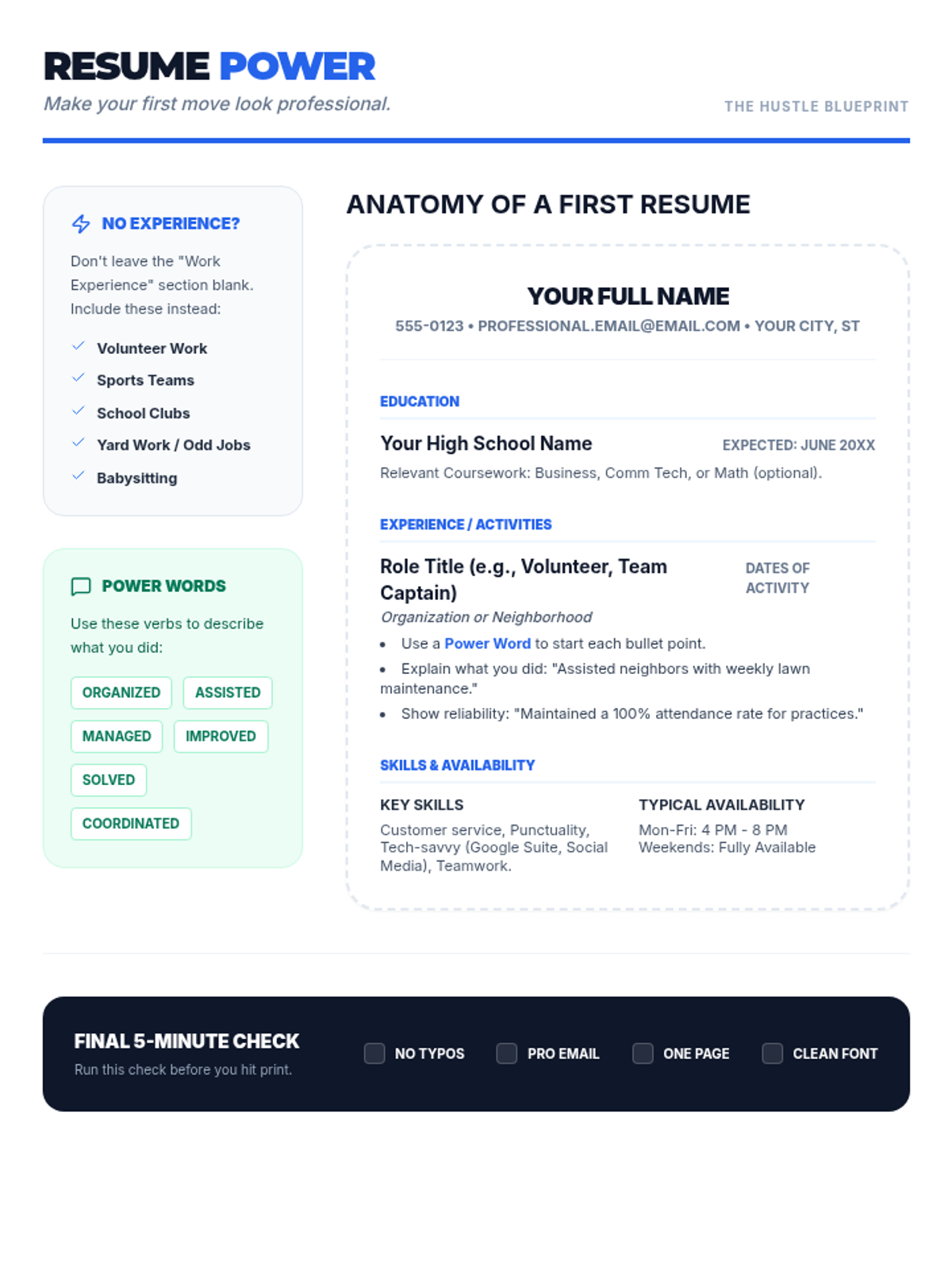
A comprehensive 1-page guide for high schoolers creating their first resume. Includes tips for students with no prior work experience, power words for entry-level skills, and a visual breakdown of a professional resume layout.
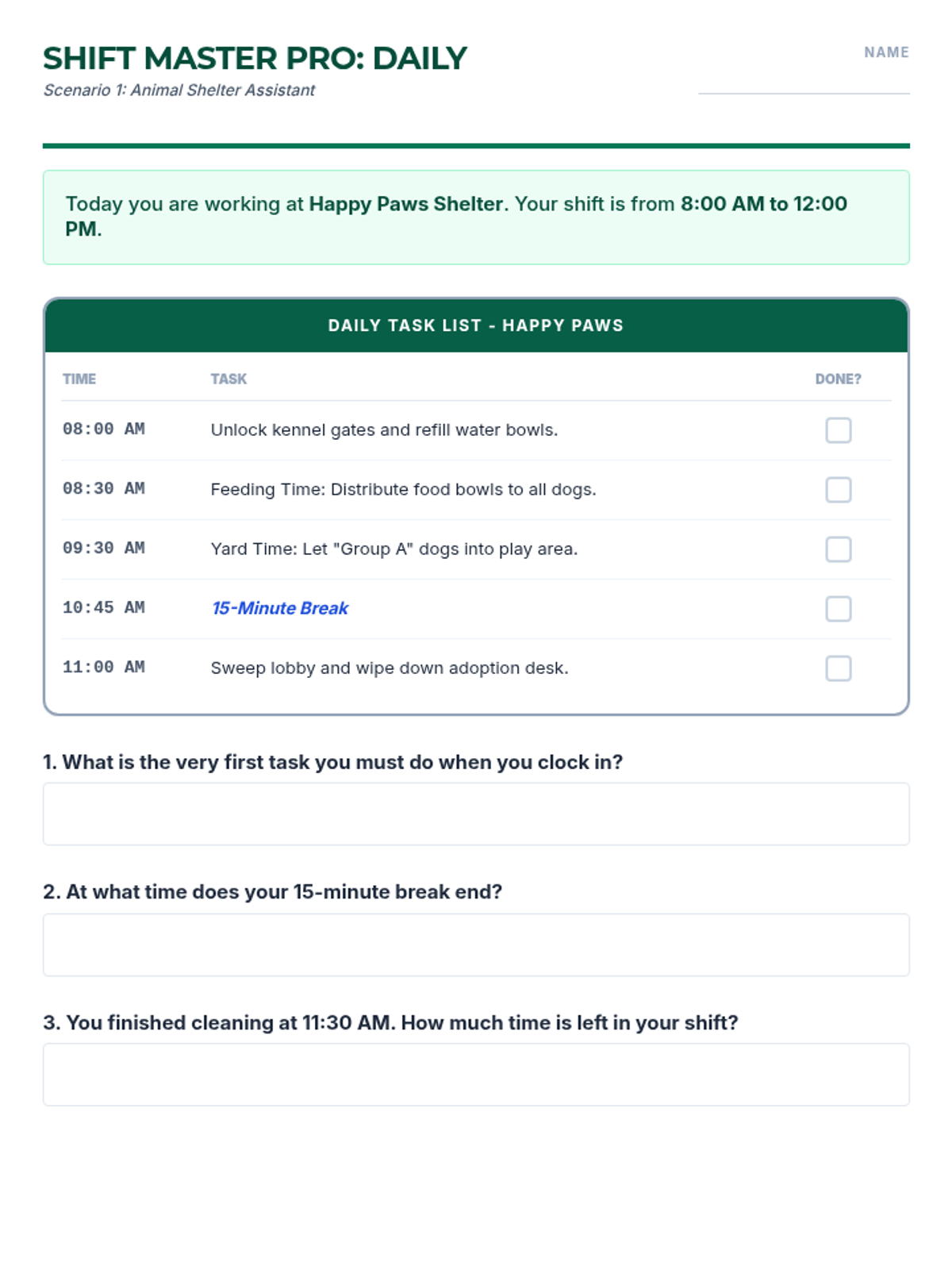
A 10-page practice packet designed for independent students to master workplace schedules. It mirrors the 'Shift Master' style but offers more variety with scenarios including an animal shelter, tech support, fast food, seasonal planning, a pet shop, a coffee shop, an auto shop, and a community center across multiple pages. Revised for better page layout and handwriting legibility.
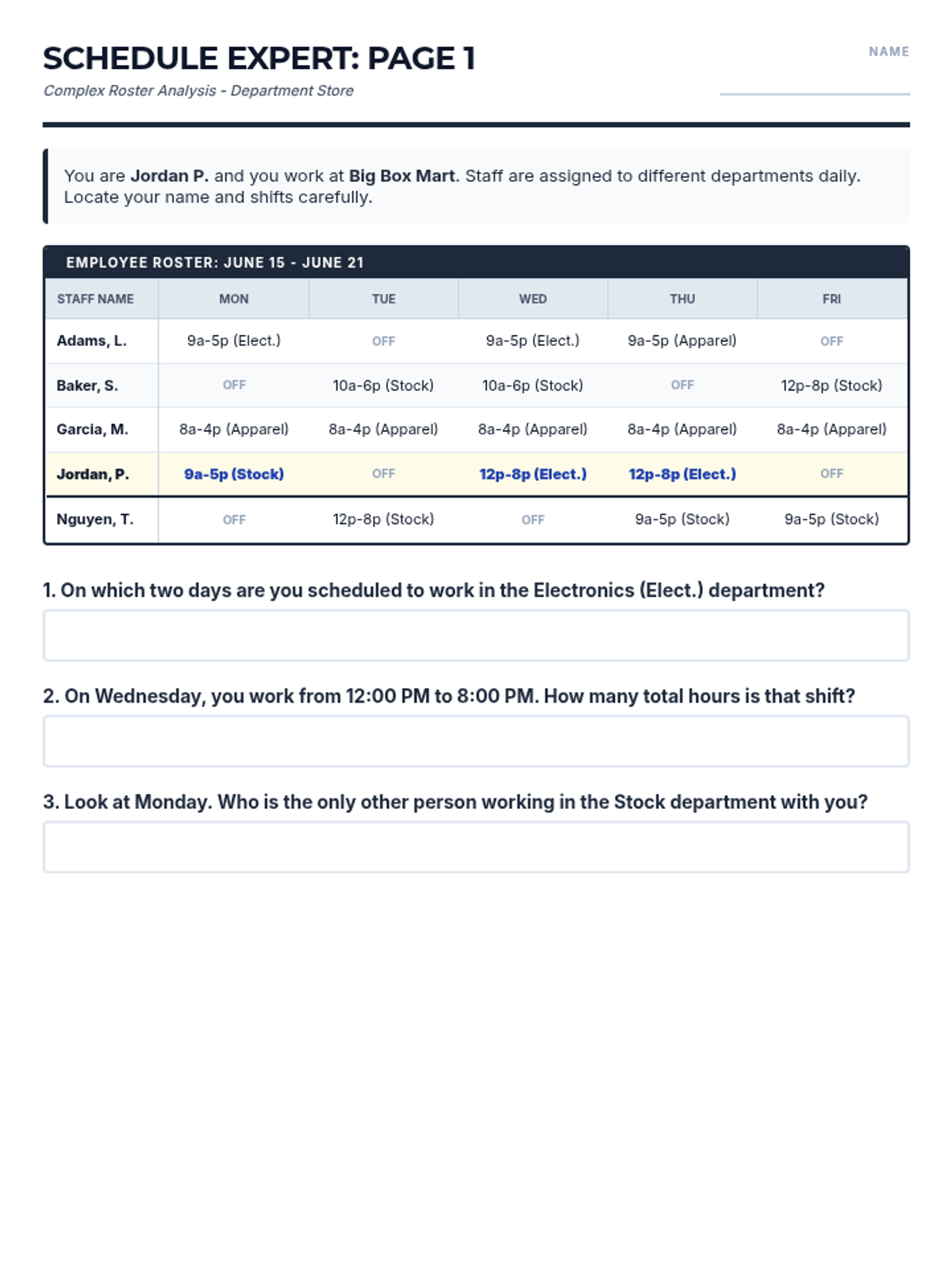
An advanced, 5-page practice packet designed for independent students to master workplace scheduling. It includes complex roster reading with multiple departments, time card comparison for punctuality, employee handbook analysis, payday planning with basic financial math, and a leadership logic puzzle for managing staff breaks. Corrected for page breaks and numbering.
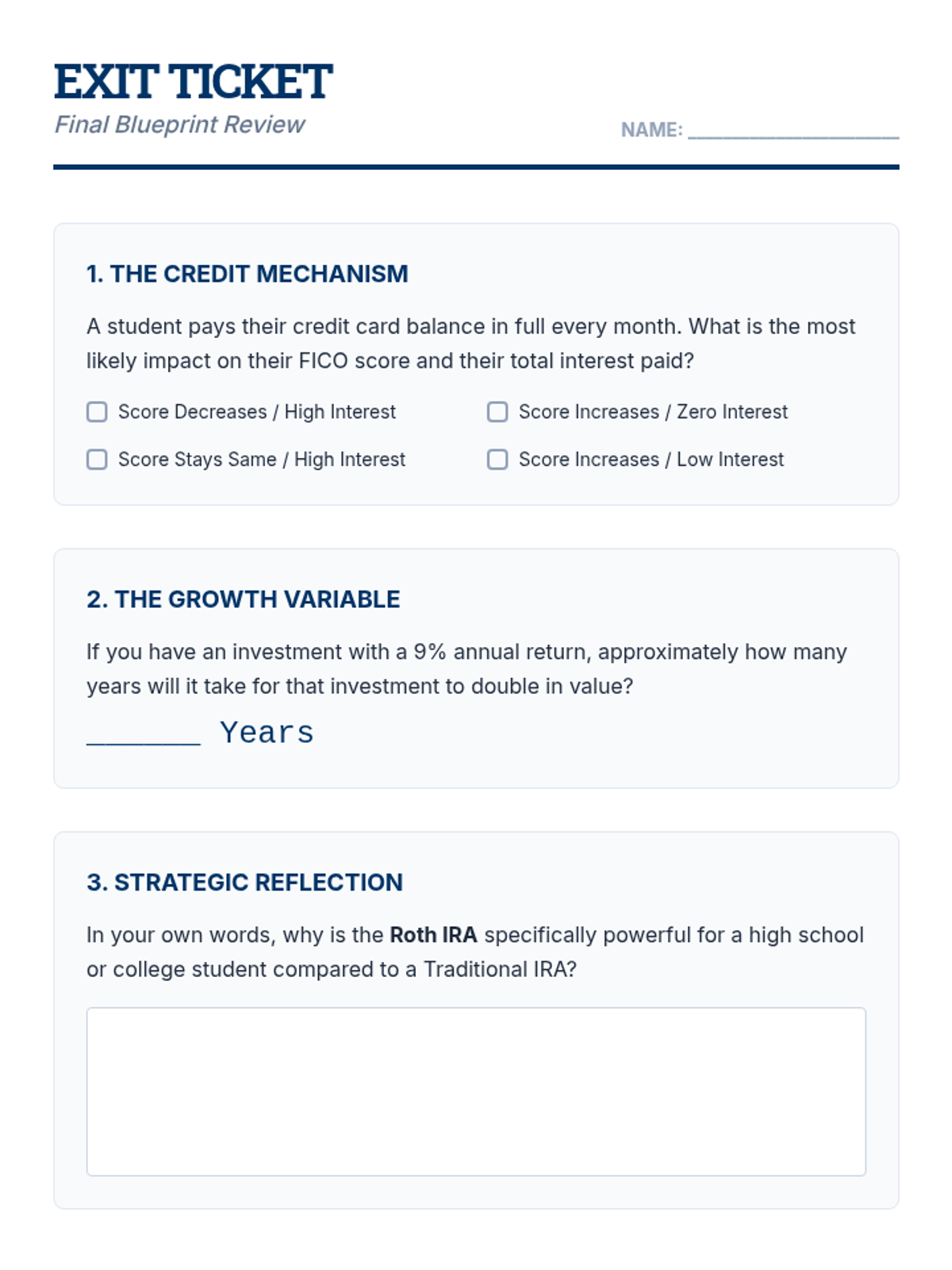
A quick check-for-understanding for the end of the lesson. Covers credit mechanics, the Rule of 72, and the strategic benefits of a Roth IRA for young investors.
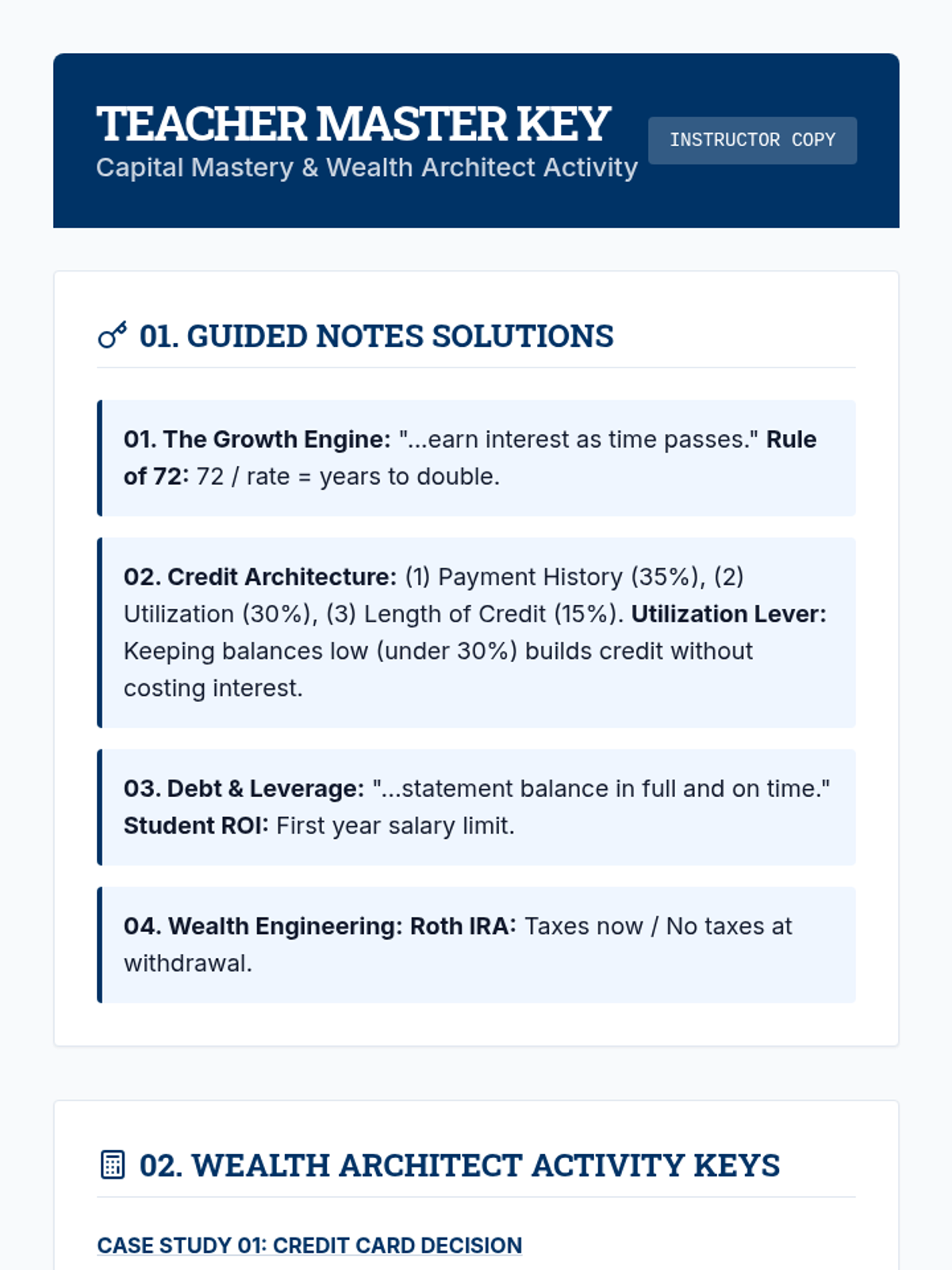
A teacher-facing answer key and instructional guide for the Capital Mastery lesson. Includes specific mathematical breakdowns for the credit card, student loan, and investment case studies, as well as pedagogical discussion prompts.
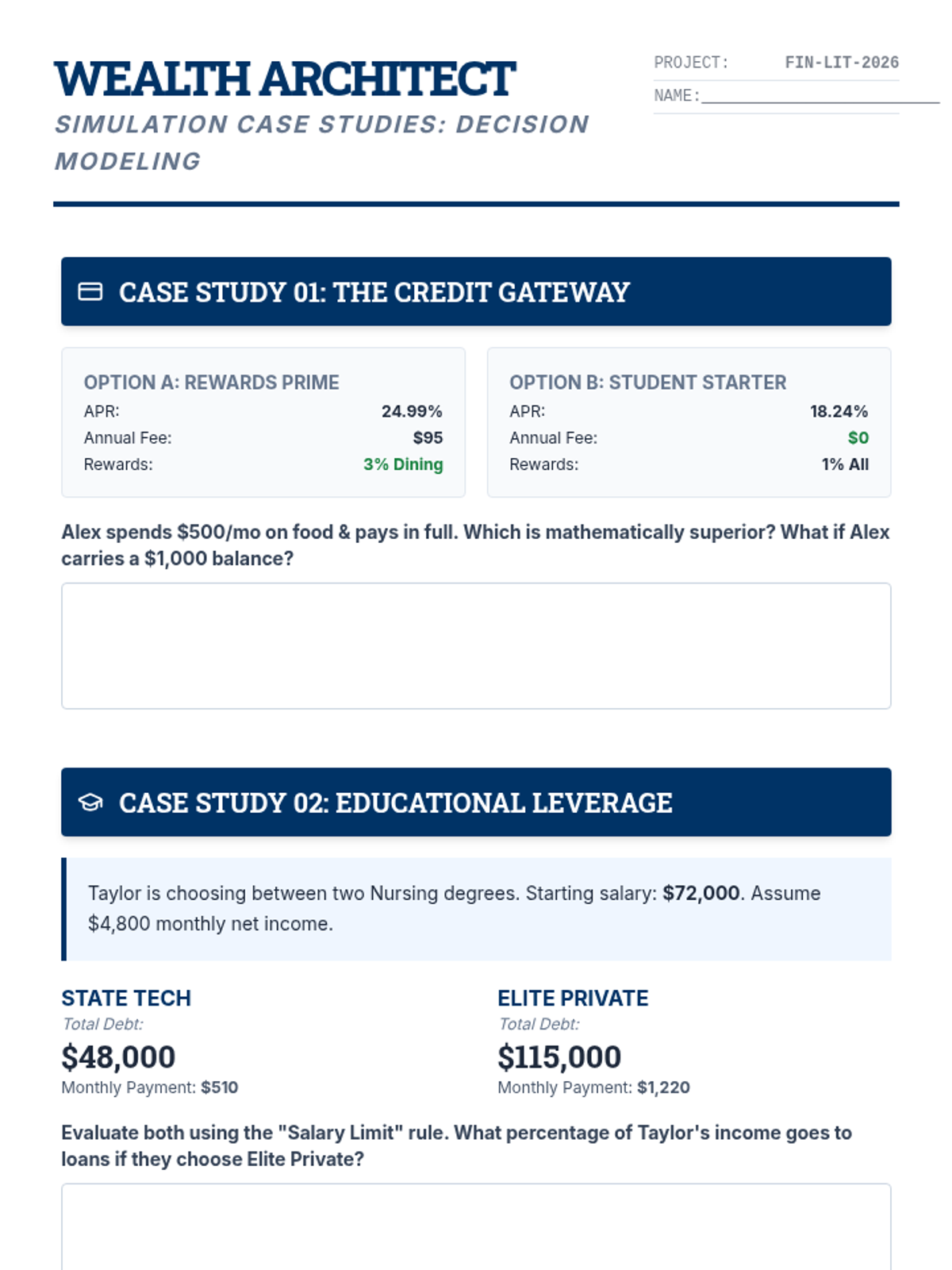
A student activity worksheet featuring three complex financial case studies: credit card evaluation, student loan ROI modeling, and index fund vs. active fund analysis. Designed for advanced high school students to apply mathematical and strategic reasoning to real-world financial decisions.
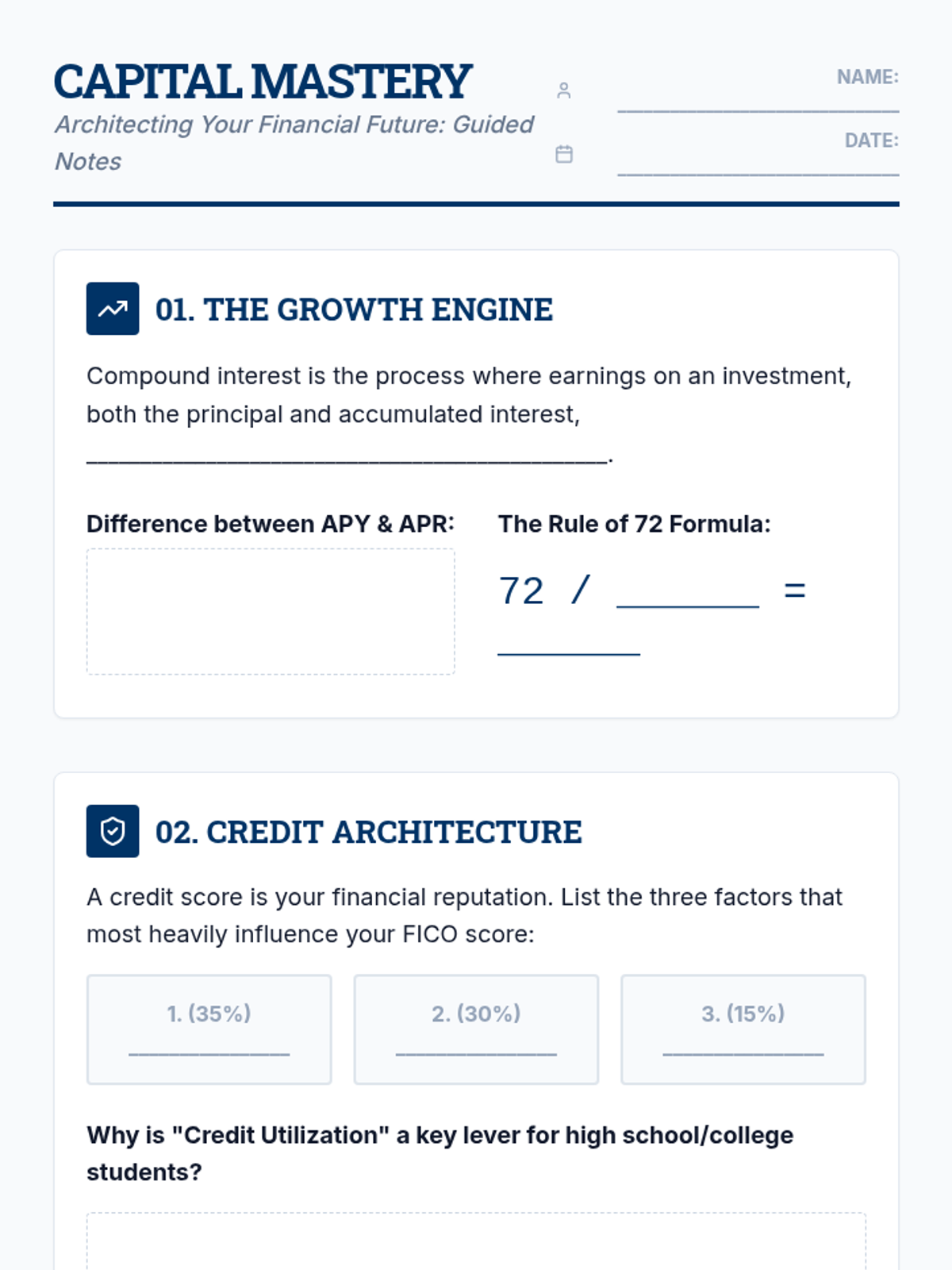
A student-facing guided notes document to be used during the Capital Blueprint Slides presentation. Includes fill-in-the-blanks, summary boxes, and reflective spaces designed with a blueprint-themed aesthetic to maintain lesson cohesion.
A comprehensive 10-slide presentation designed for advanced high school students, exploring the architectural principles of personal finance. It covers compound interest, credit scoring mechanics, the dangers of minimum payments, strategic student debt, index fund investing, and tax-advantaged accounts with a professional blueprint-inspired aesthetic.
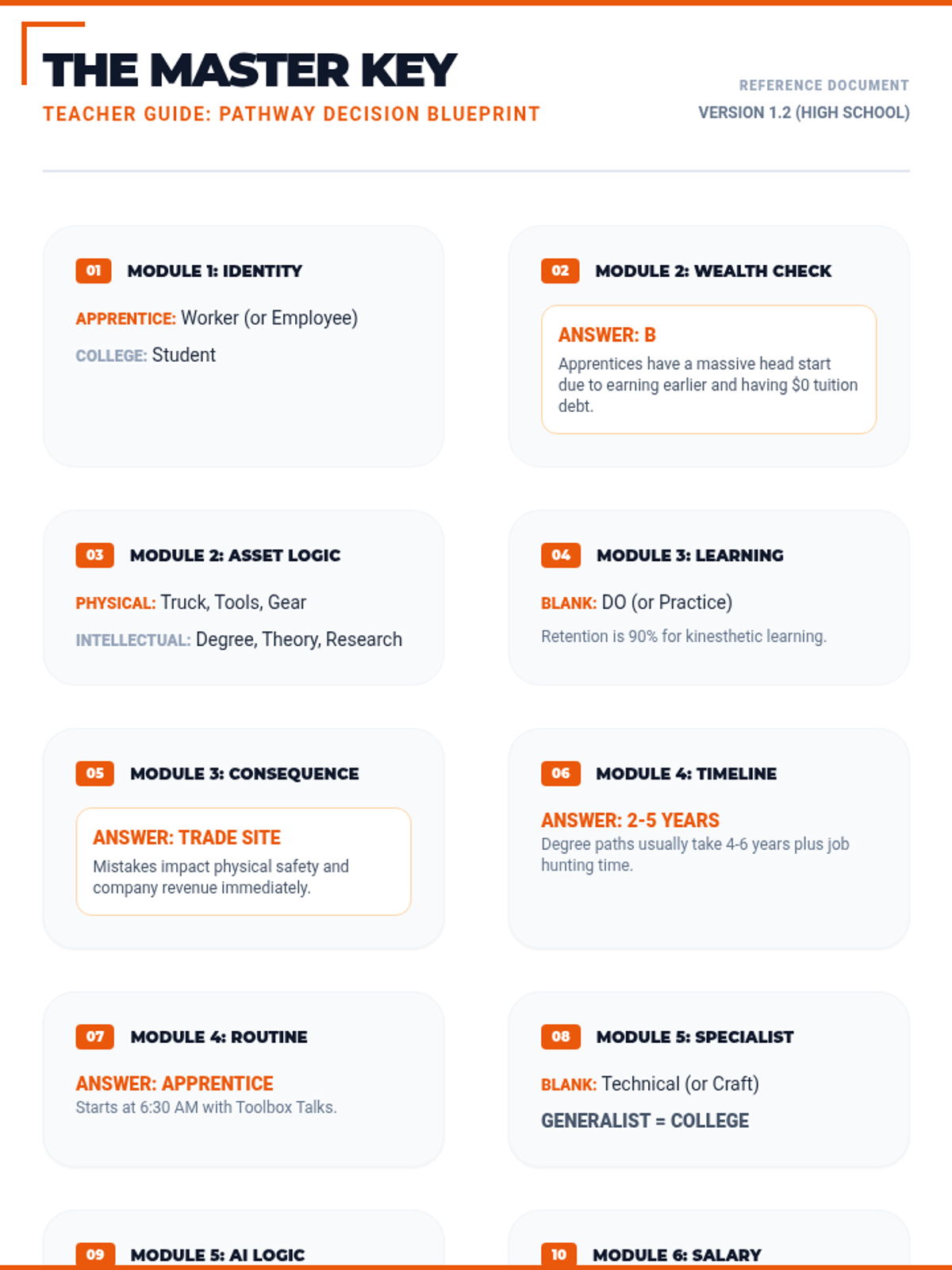
A teacher's master answer key for the Pathway Decision Blueprint Worksheet (15-section version), provided in a clean print layout with a Safety Orange and Slate theme.
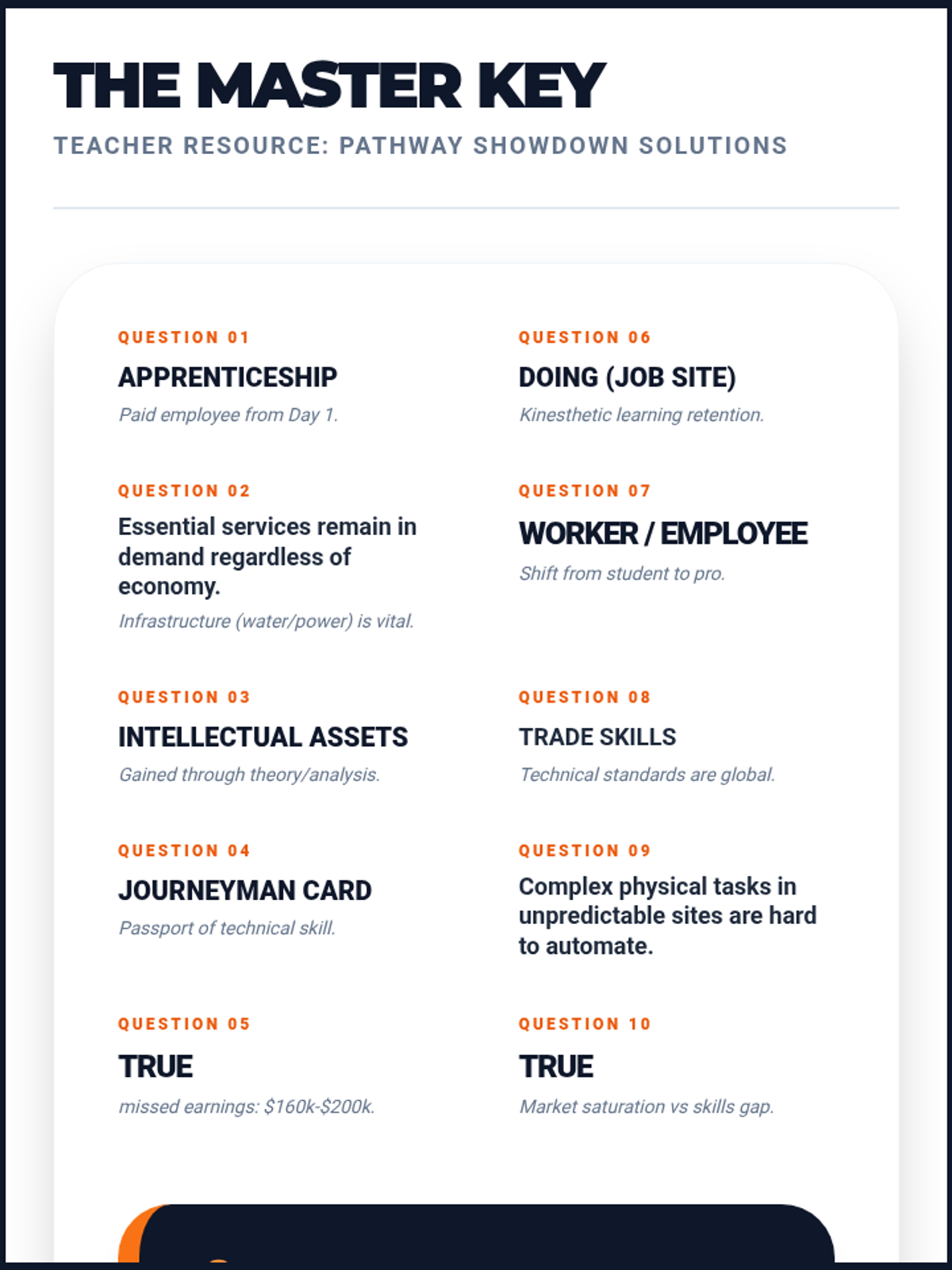
A standalone print-ready teacher answer key for the Pathway Showdown Info Sheet, featuring solutions for all 10 knowledge-check questions with detailed explanations.
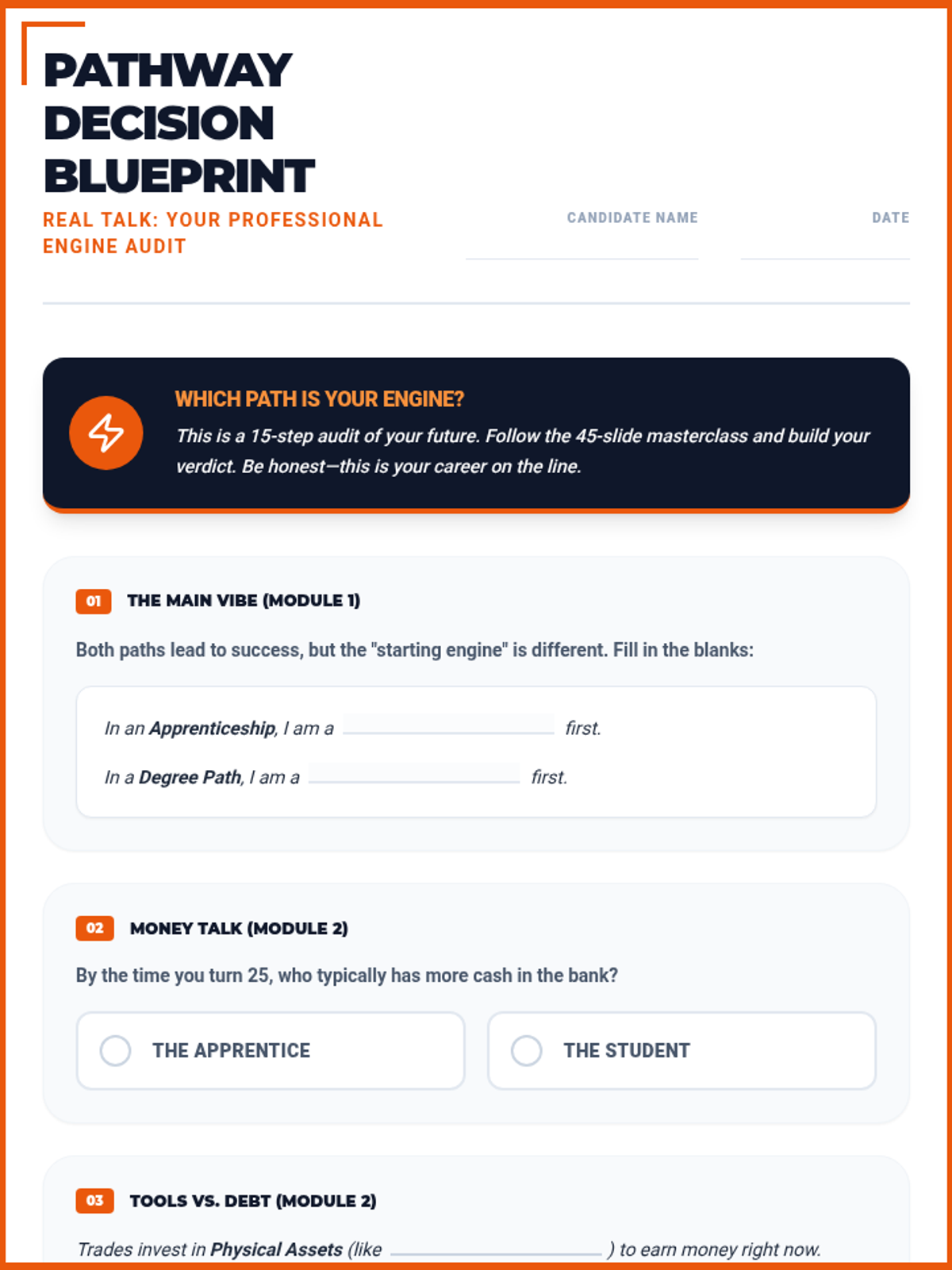
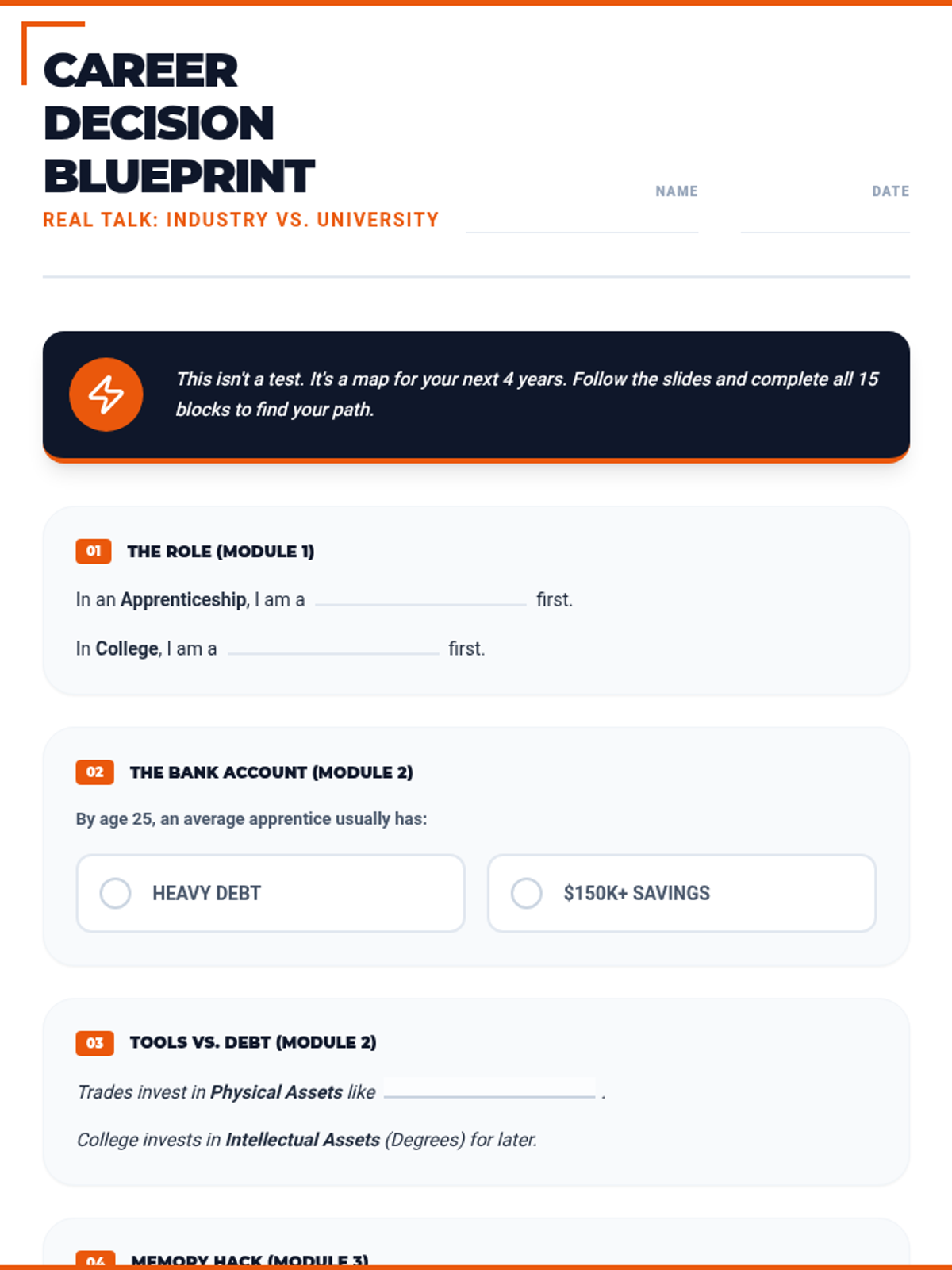
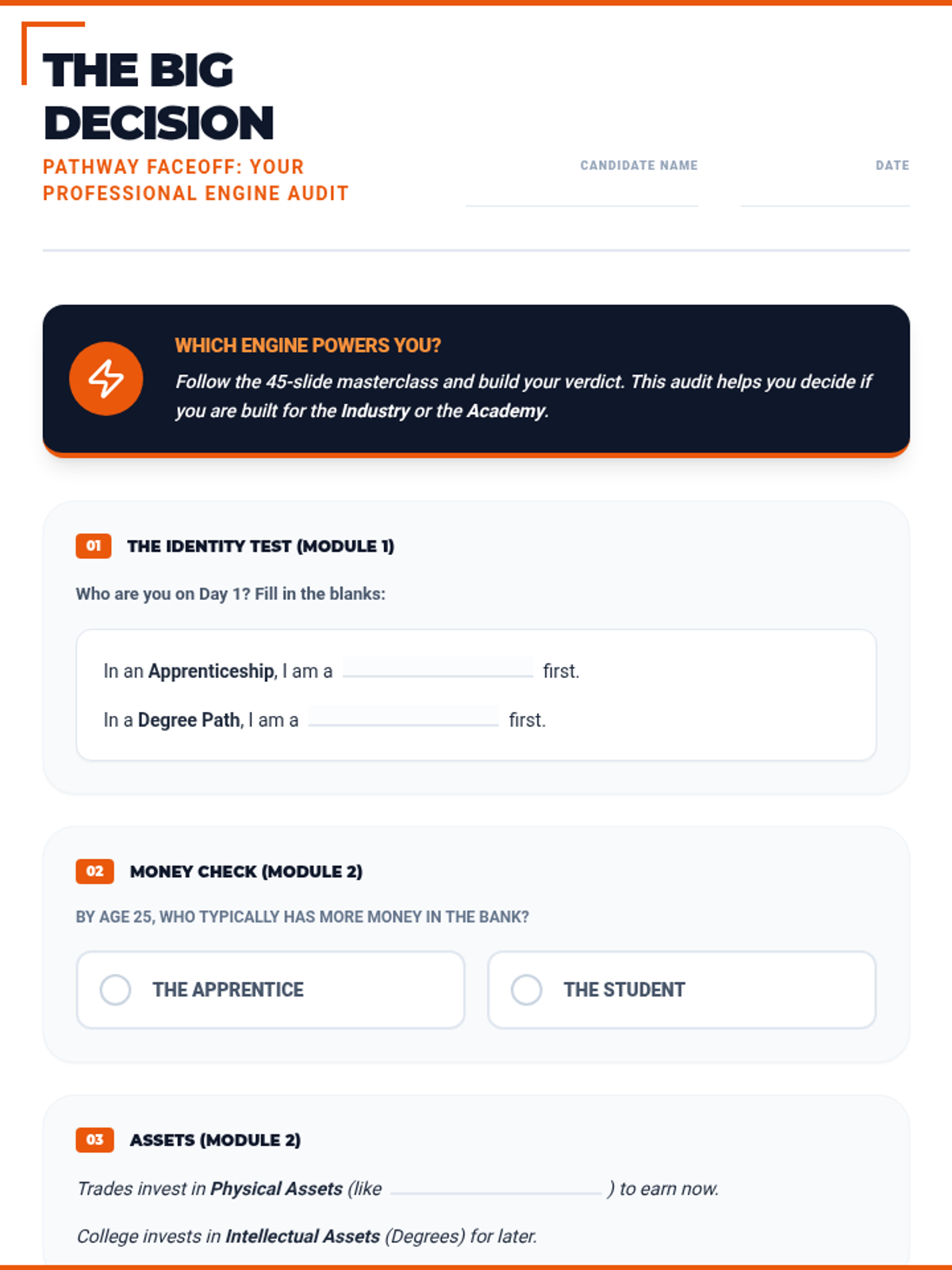
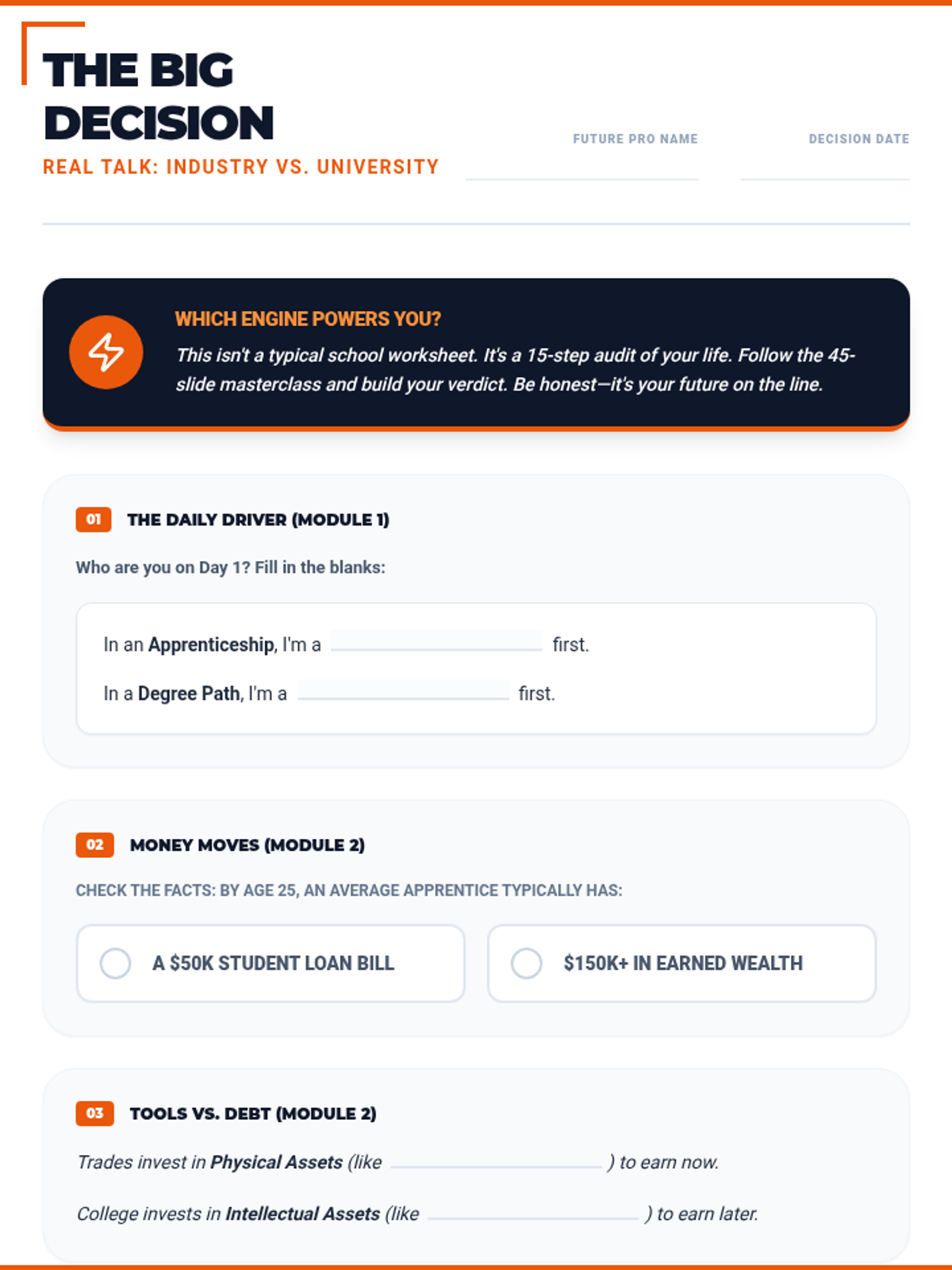
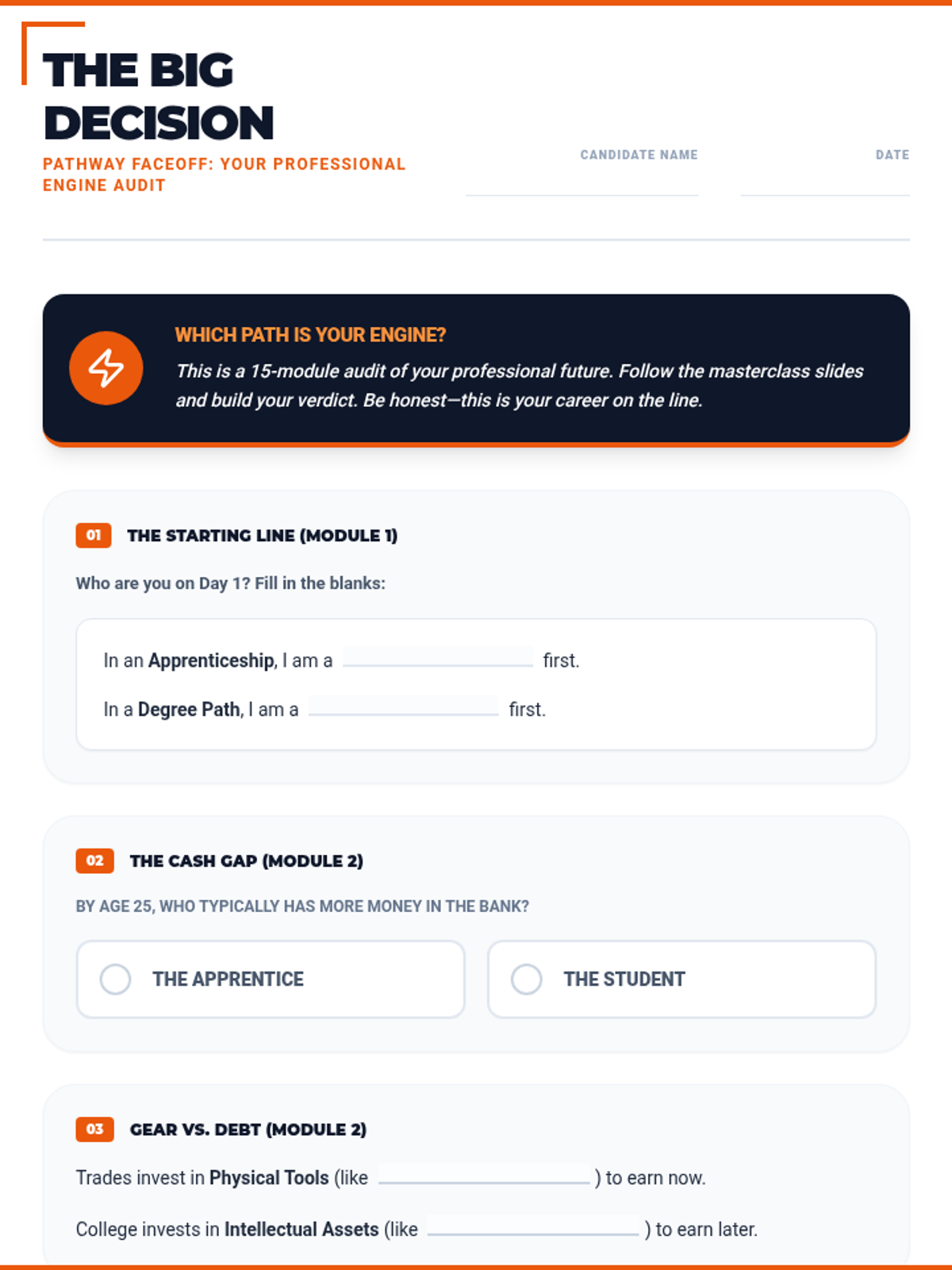
A simplified 15-section career exploration worksheet designed for 16-year-old high school students, featuring punchy, relatable titles and a "Safety Orange & Slate" theme. Meticulously aligned with the 45-slide masterclass. All correct answer highlights have been removed for student use.
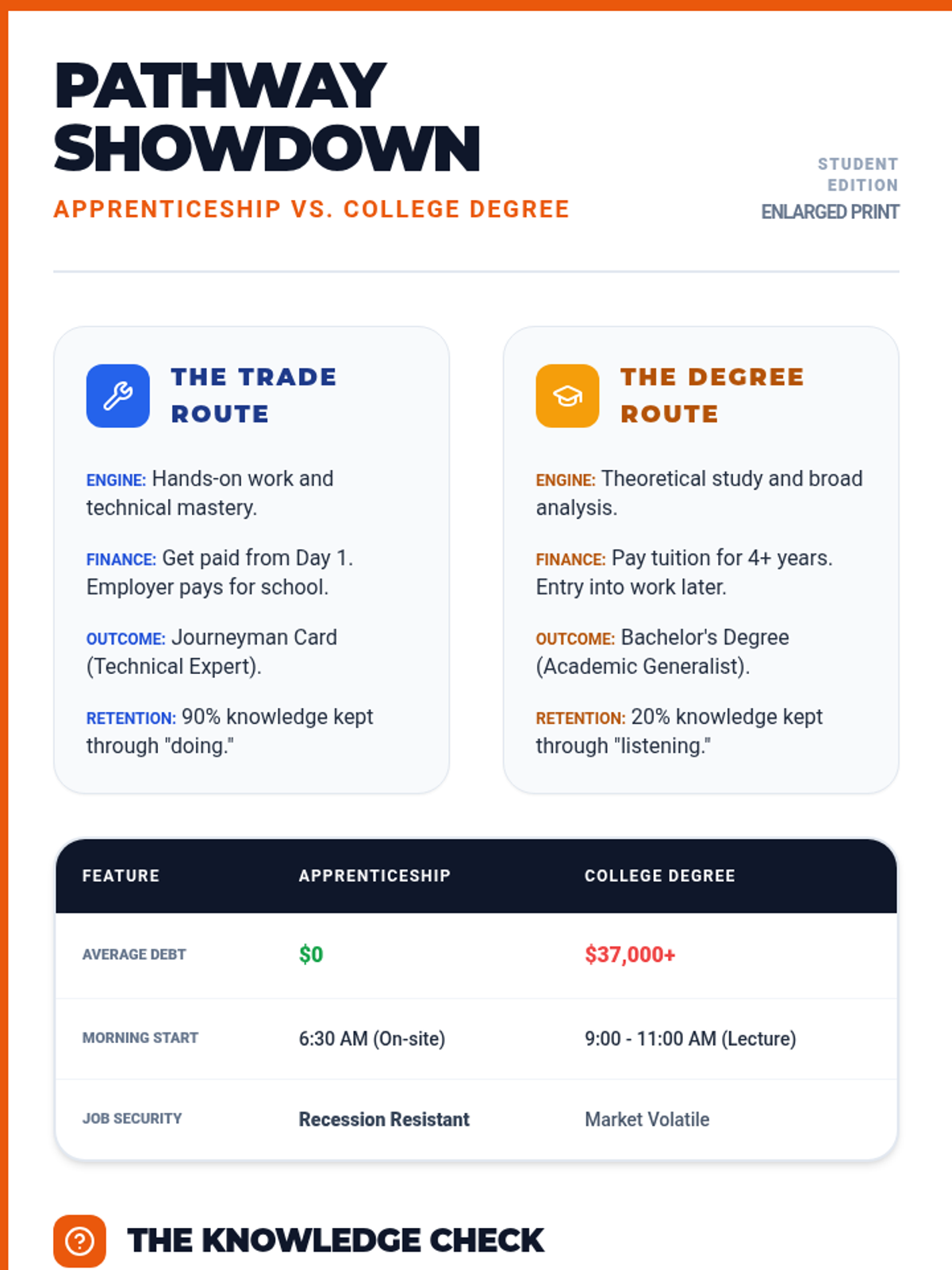
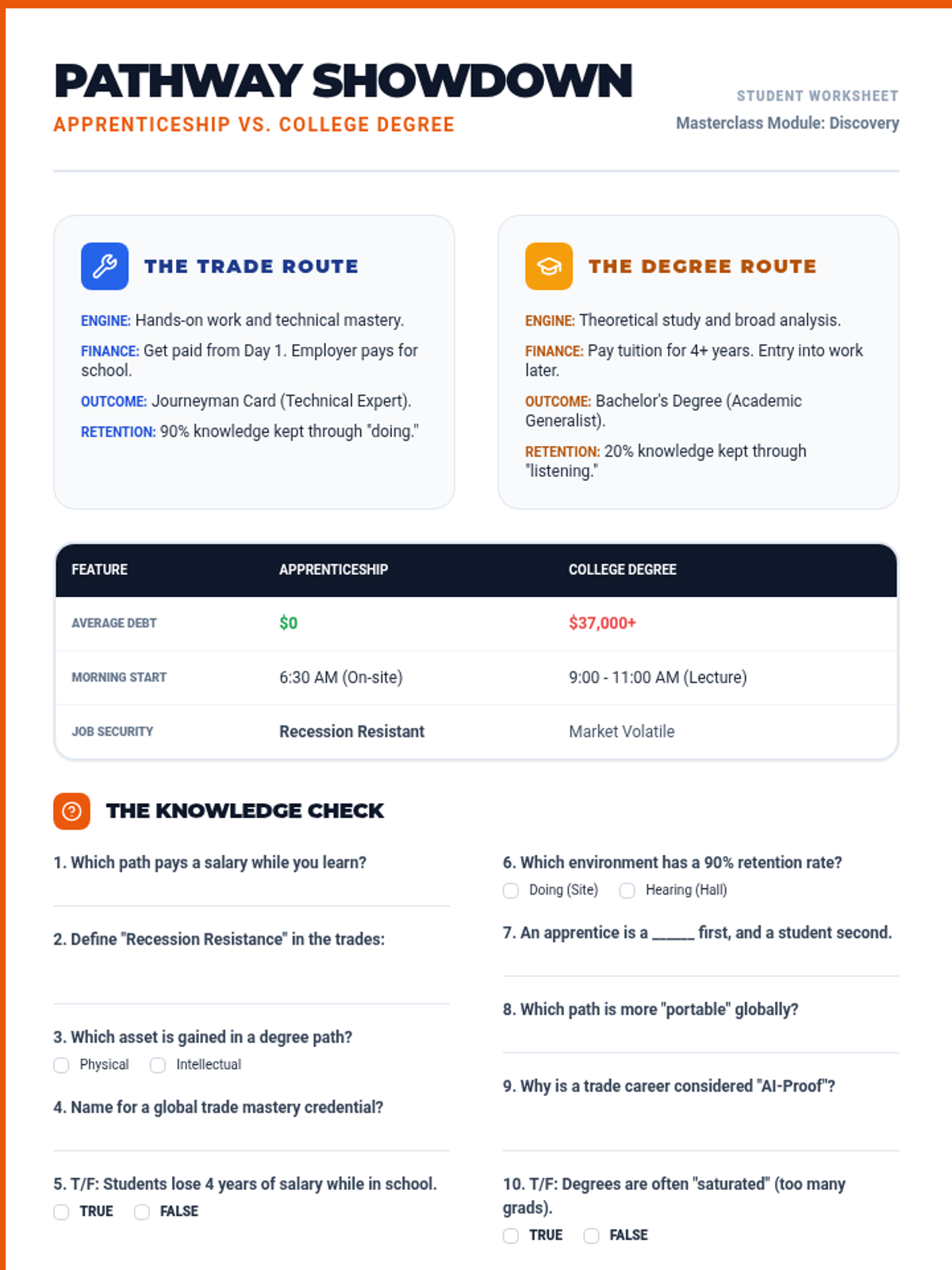
A 1-page enlarged informational summary comparing Apprenticeships and College Degrees, designed for maximum readability. Includes a facts breakdown, comparison table, and 6 key knowledge-check questions.
A 1-page informational summary comparing Apprenticeships and College Degrees, featuring a facts breakdown, comparison table, and 10 knowledge-check questions.
A student-facing budget tracker for the "Wealth Builders" simulation game, featuring profile setup, budget allocation areas, and a multi-day event log.
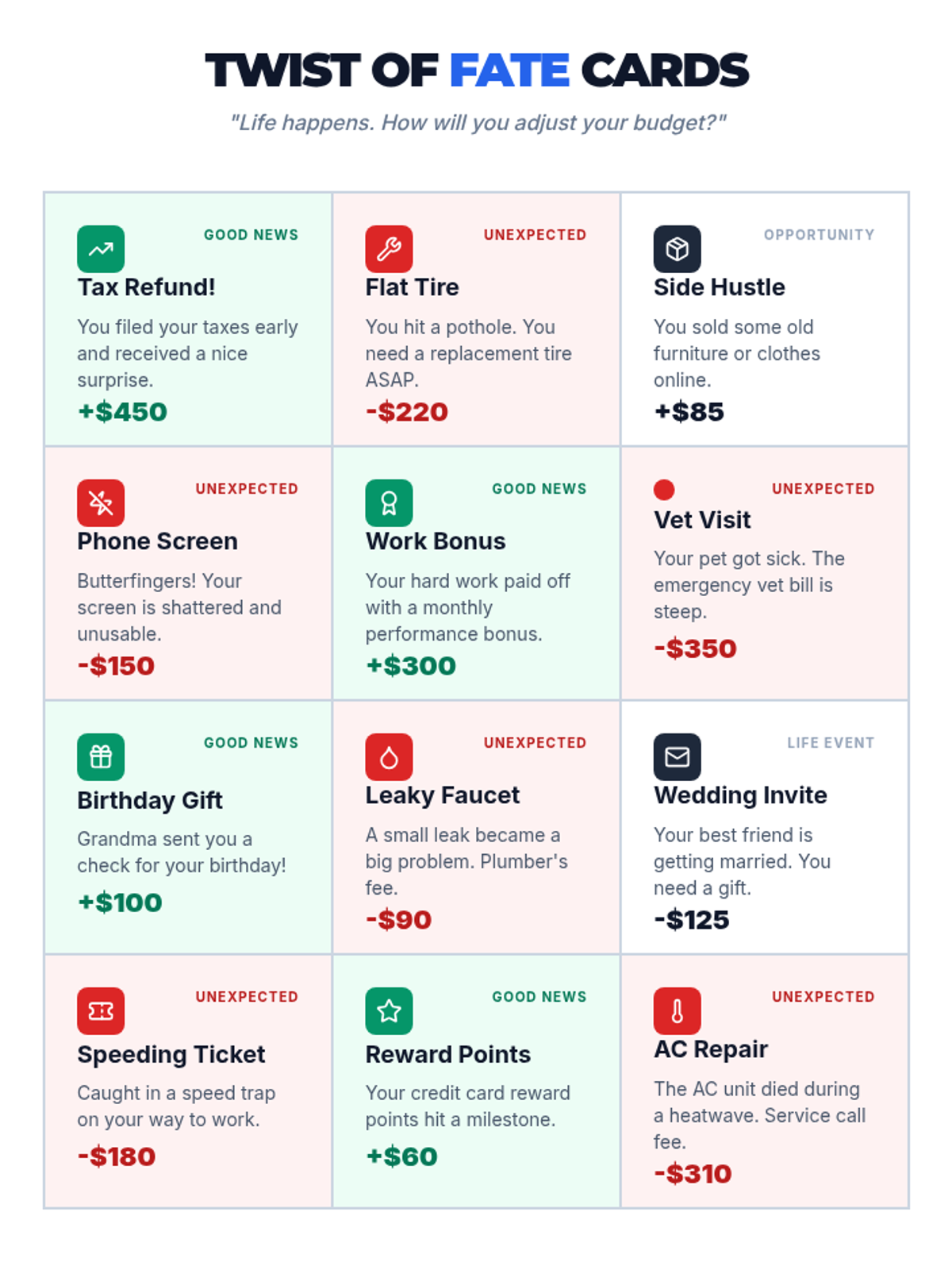
A set of 12 "Twist of Fate" cards containing positive and negative financial surprises to be used in the budget simulation game.
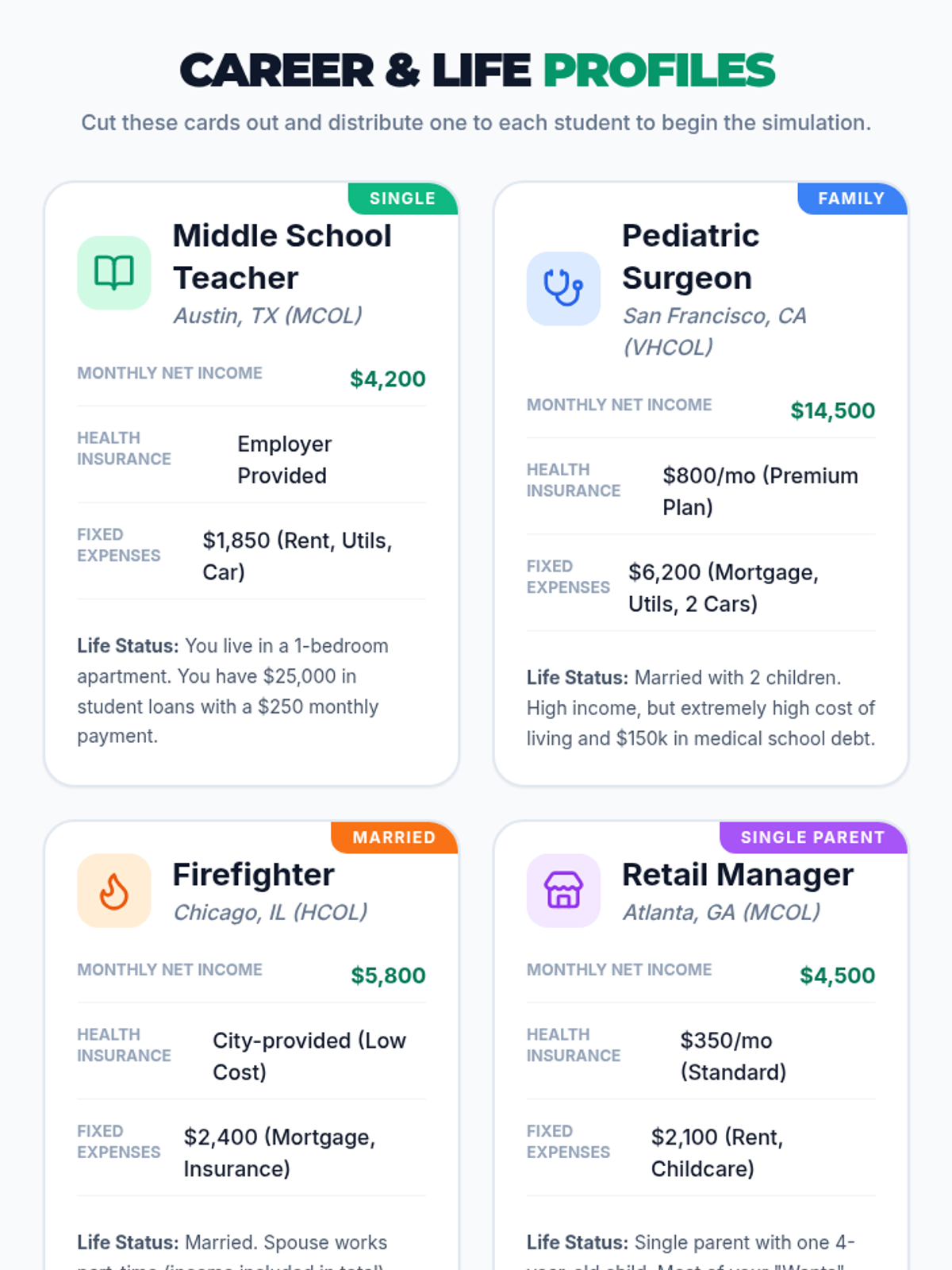
A set of 6 diverse career and life scenario cards for a classroom budget simulation, detailing income, location, family status, and fixed expenses.
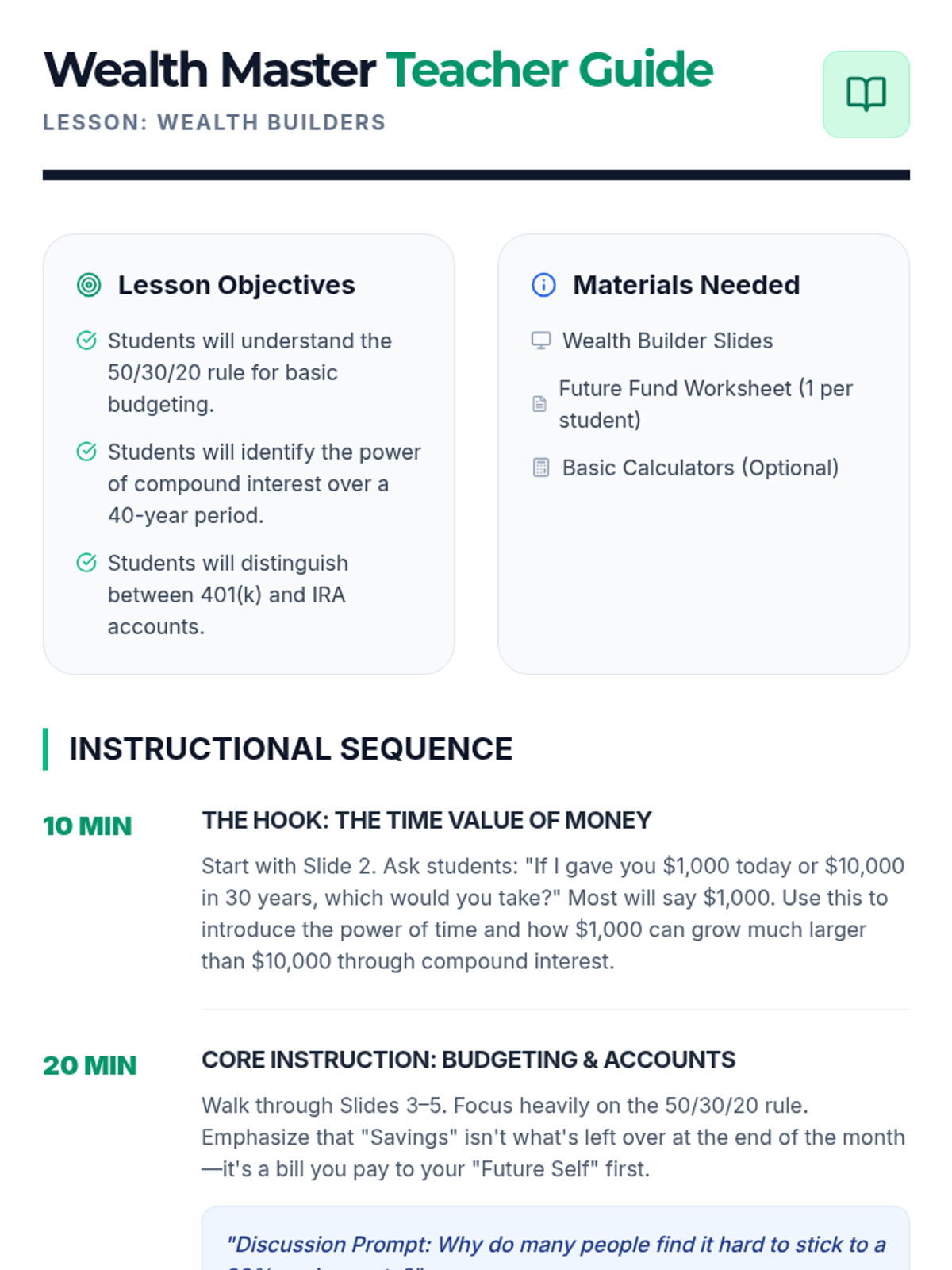
A 2-page teacher's guide including lesson objectives, a detailed instructional sequence, answer keys for the worksheet, and common student misconceptions about retirement and saving.
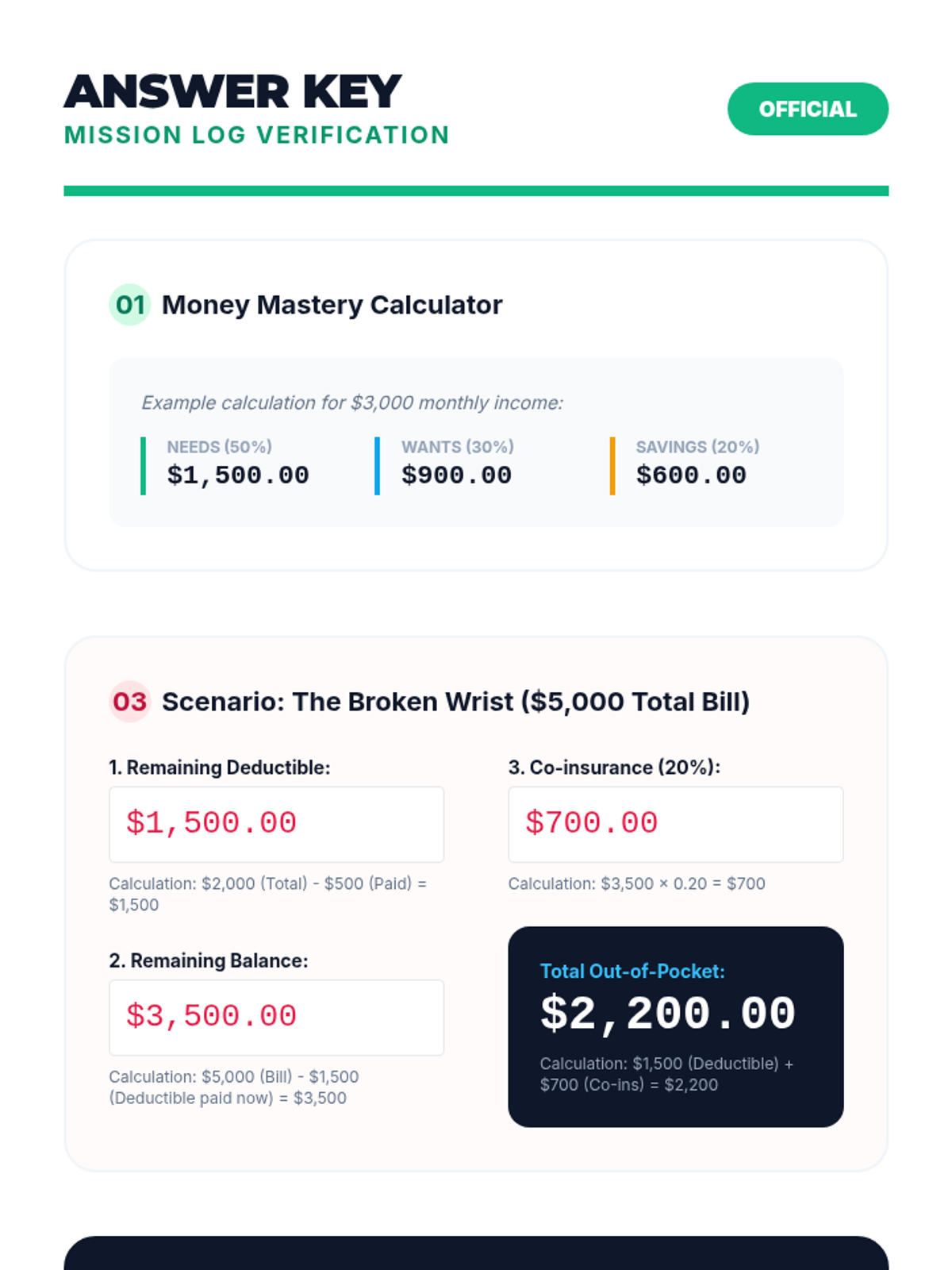
An answer key for the Mission Log Portfolio. Provides worked-out solutions for the 50/30/20 budget calculator, the health insurance 'Broken Wrist' scenario, and the tax pay stub breakdown.
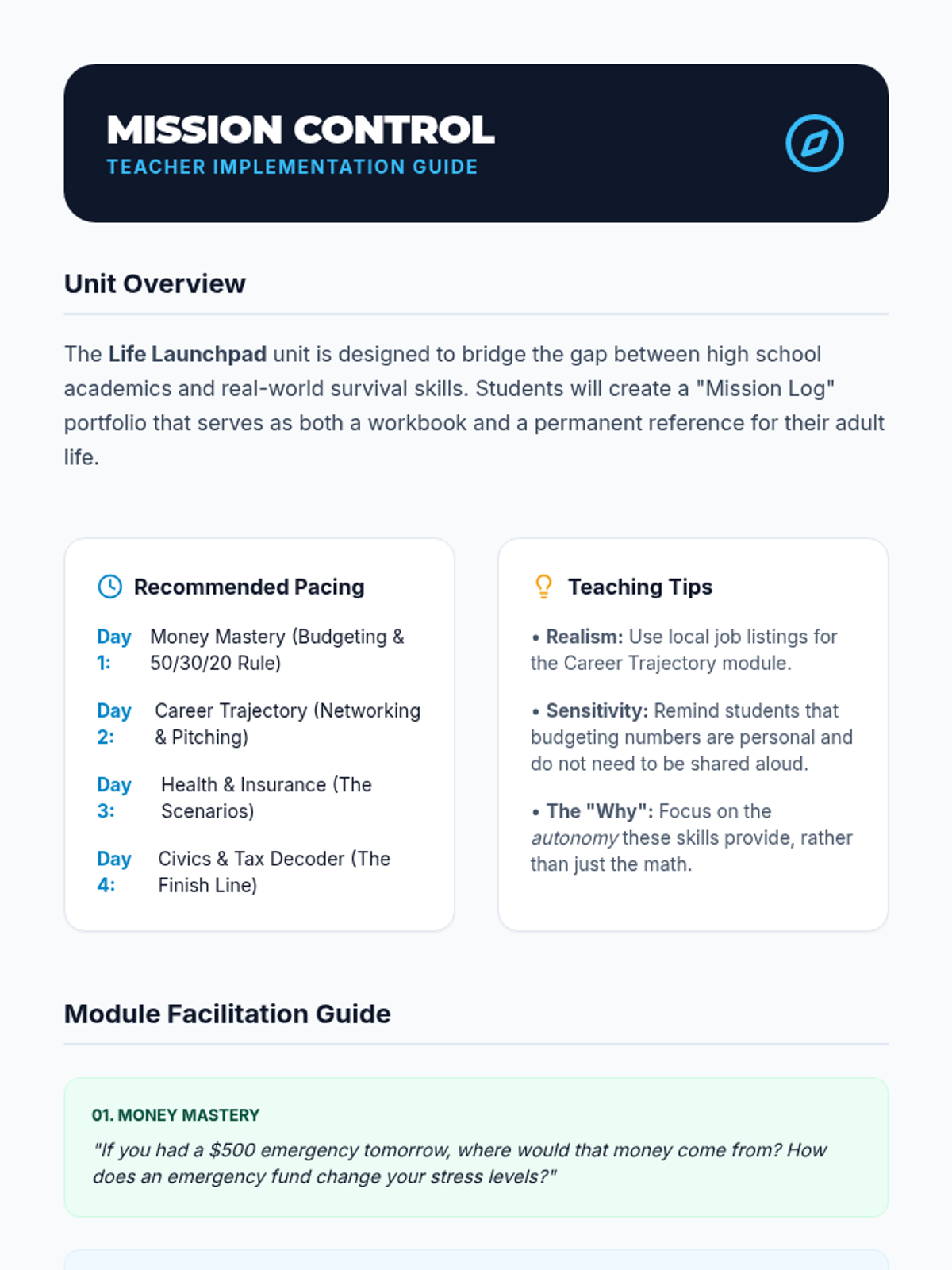
A facilitation guide for teachers implementing the Life Launchpad unit. Includes recommended pacing (4-day plan), module-specific discussion prompts, and differentiation strategies for varied learner levels.
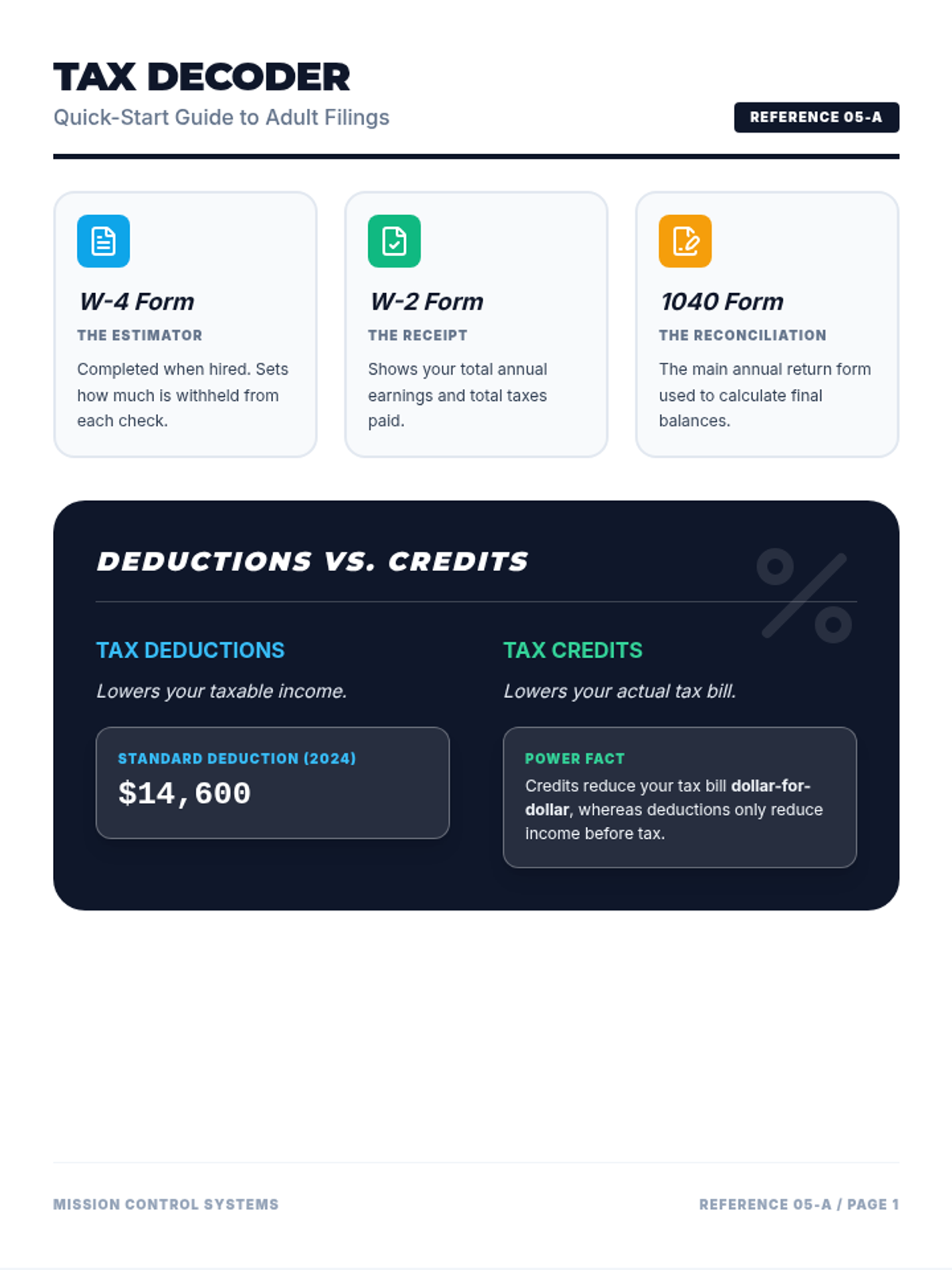
A two-page reference sheet that breaks down the difference between W-4, W-2, and 1040 forms, along with tax deductions and payroll withholdings. Features improved page breaks and text contrast.
An expanded 8-slide introductory presentation for the Life Launchpad curriculum. Covers mindset, SMART goals, the purpose of the Mission Log portfolio, and cross-system integration between money, career, and health.
A 7-page comprehensive personal portfolio workbook for young adults. It features modules on budgeting, career planning, health insurance scenarios, civic engagement, and tax document analysis with white work areas for handwriting. Includes a concrete elevator pitch example.
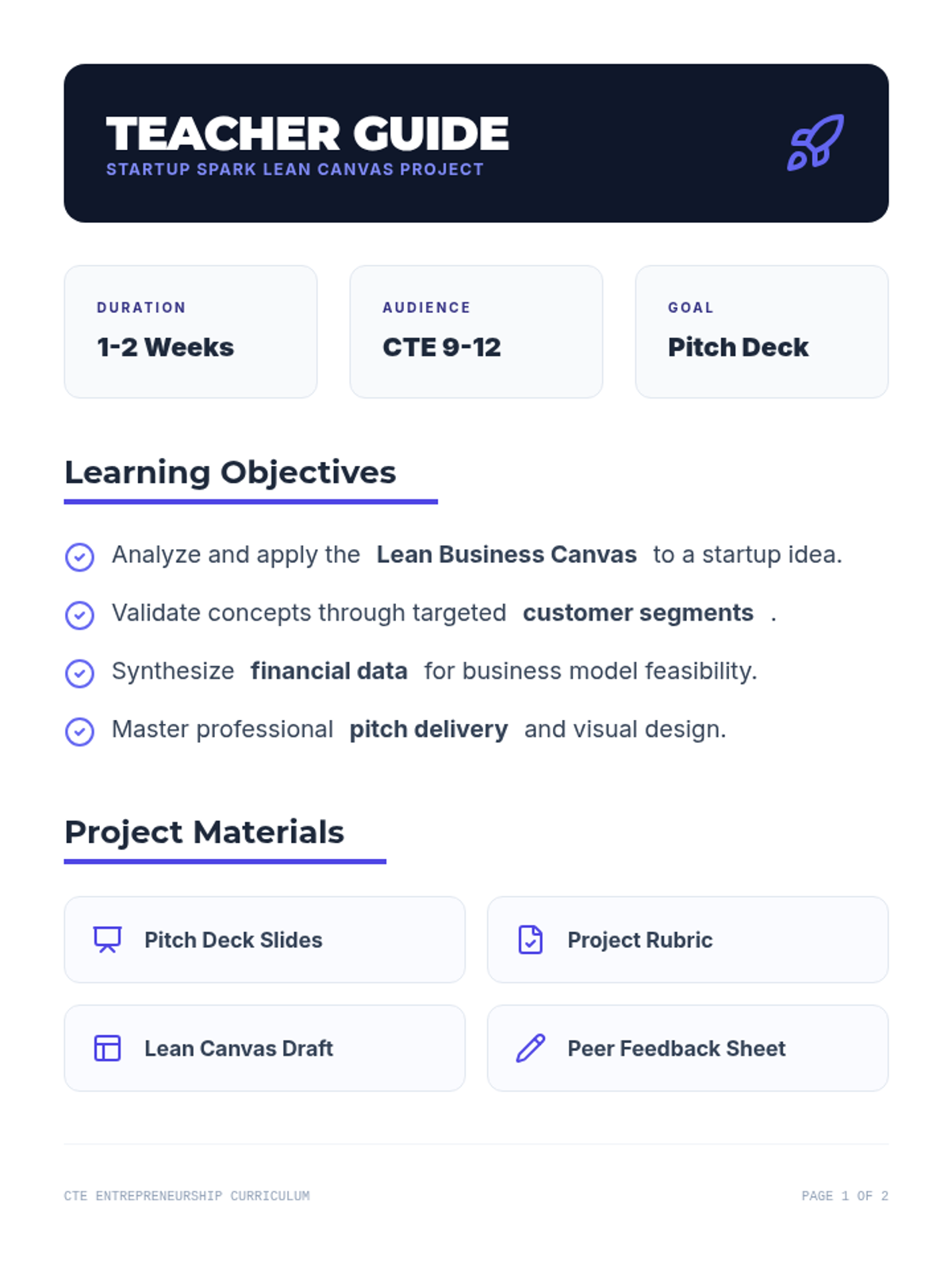
Instructional guide for teachers implementing the Startup Spark project, including pacing, learning objectives, and tips for student success.
A high-energy, modern pitch deck template for CTE Entrepreneurship students to develop and present their Lean Business Canvas models. Includes 10 content slides plus title and summary rubric.
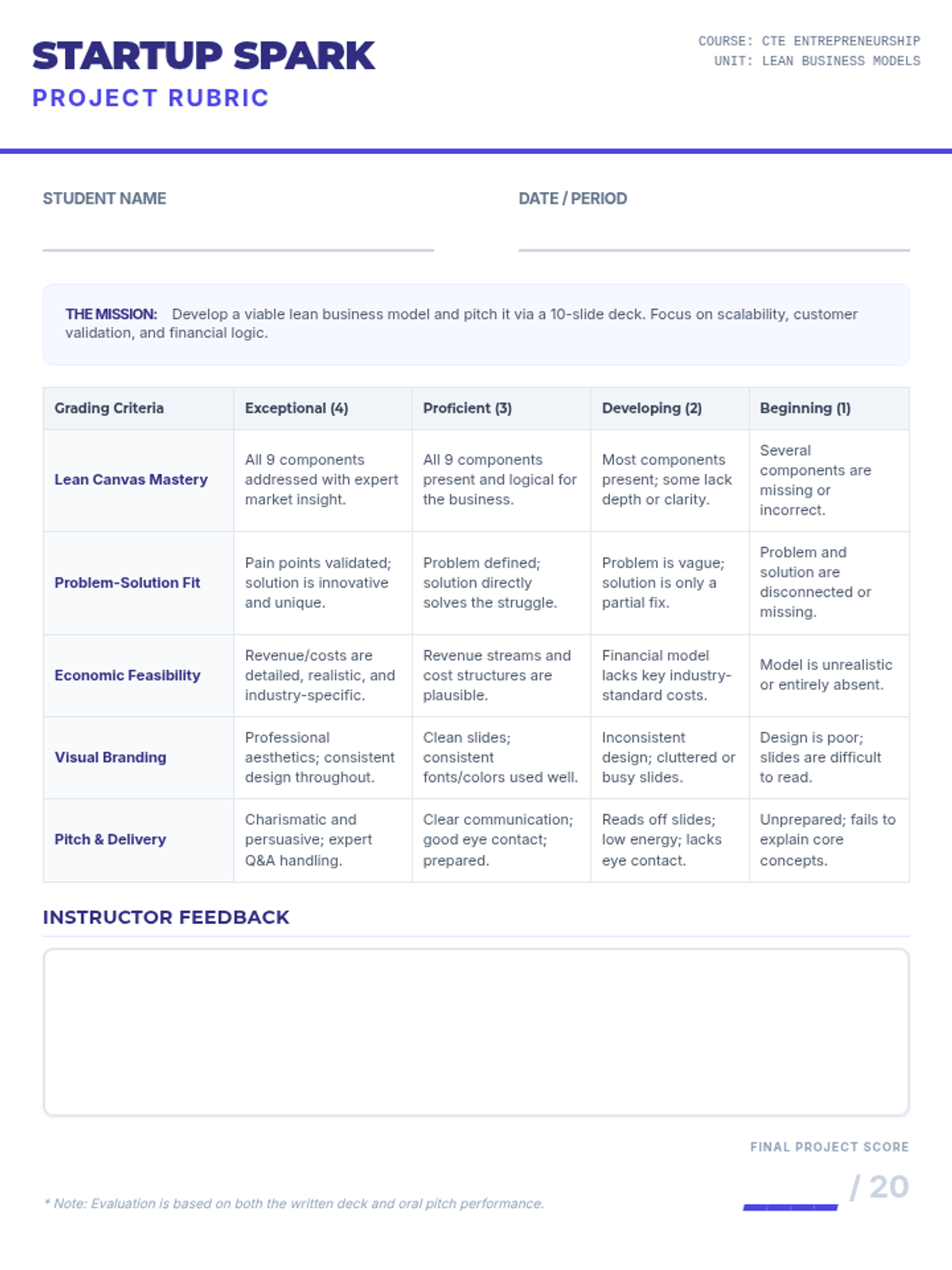
A comprehensive rubric for evaluating the Startup Spark Lean Business Plan project, focusing on content mastery, feasibility, design, and presentation skills.
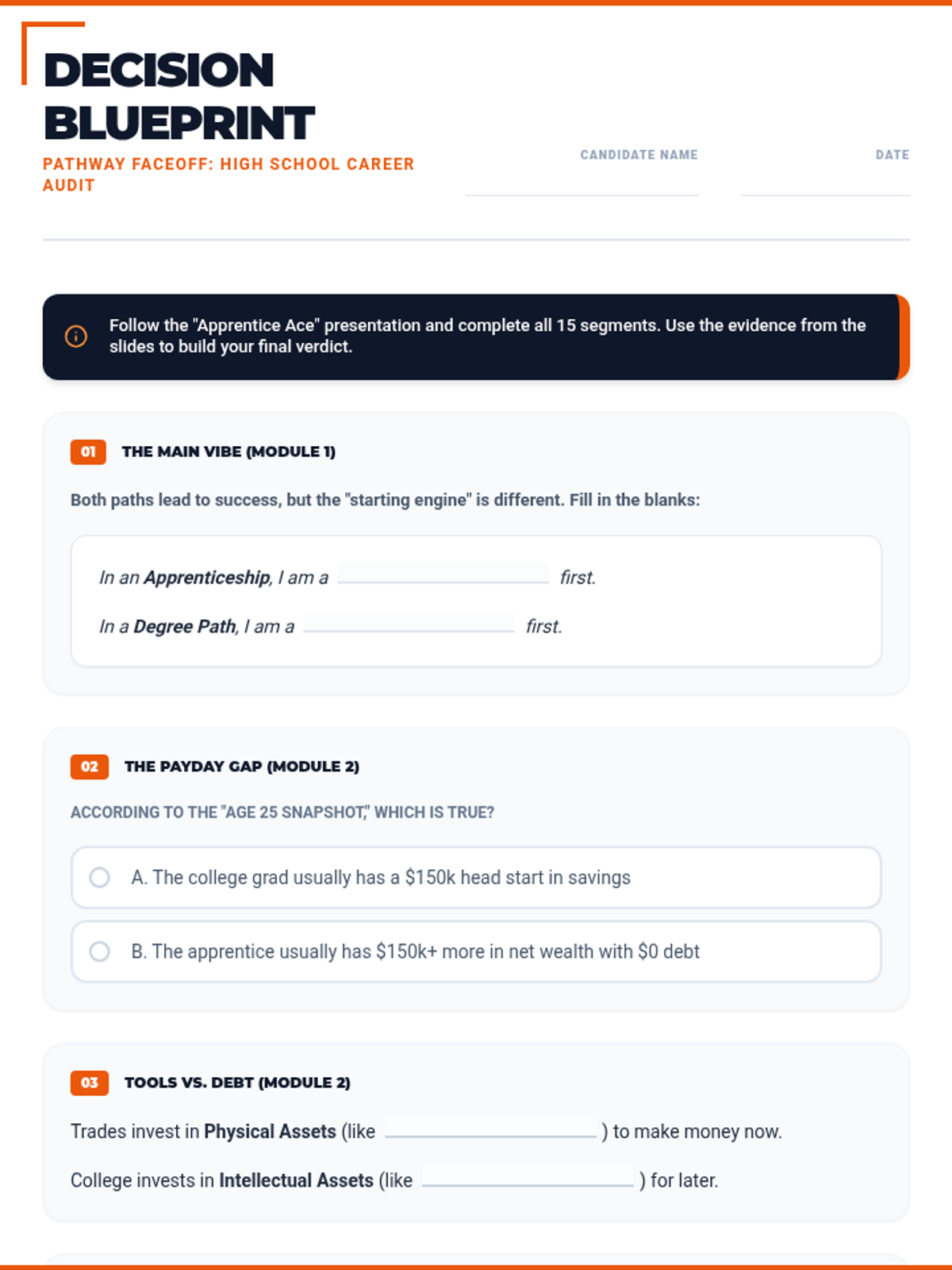
A 15-section career exploration worksheet designed for 16-year-old high school students, featuring punchy, relatable titles and refined "Real Talk" language like "The Main Vibe" and "Why I'll crush it." Meticulously aligned with the 45-slide masterclass. All correct answer highlights have been removed for student use.
A 15-section career exploration worksheet designed for 16-year-old high school students, featuring punchy, relatable titles and a "Safety Orange & Slate" theme. Meticulously aligned with the 45-slide masterclass. All correct answer highlights have been removed for student use.
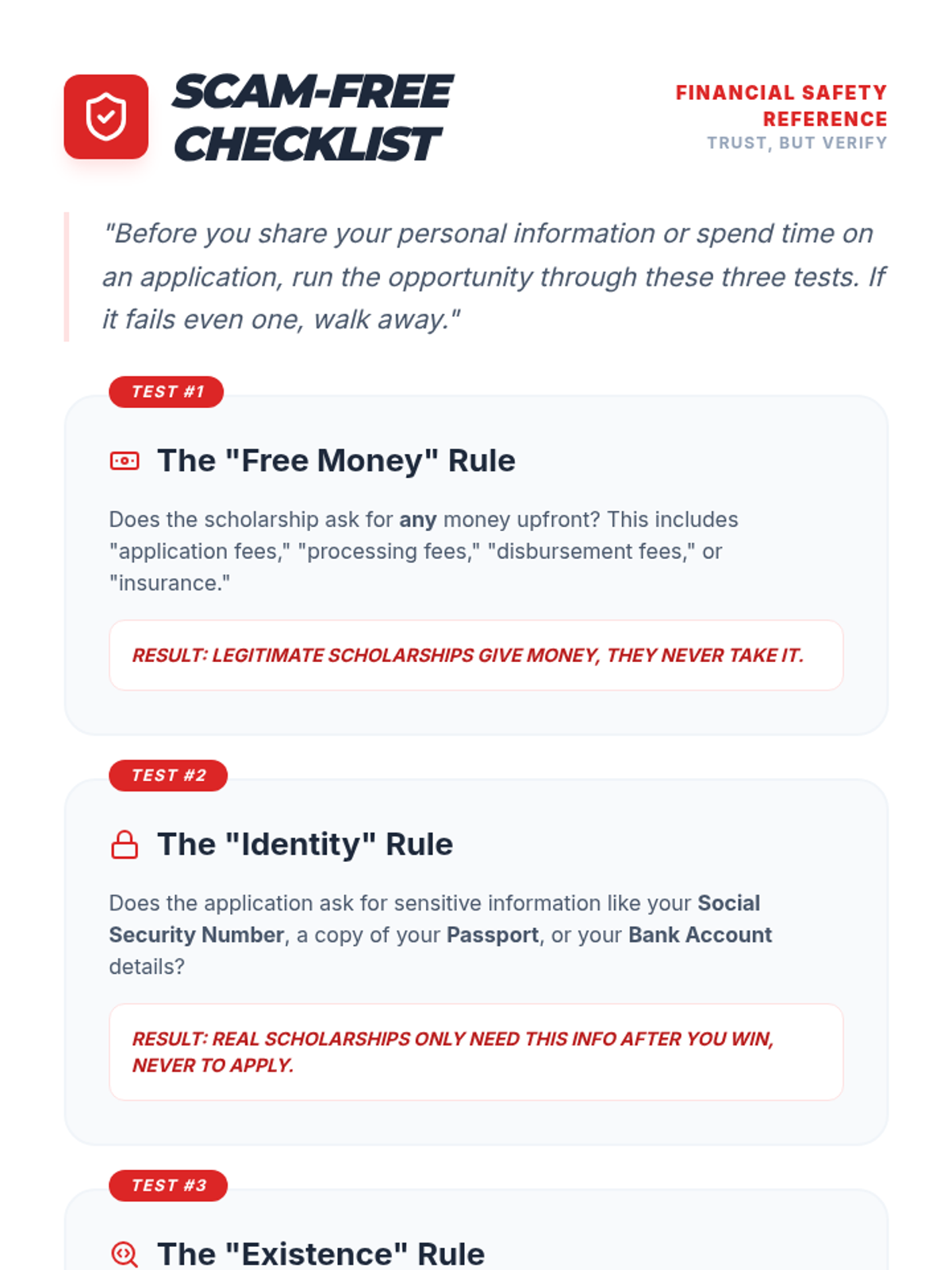
A quick-reference checklist for students to use when evaluating the legitimacy of scholarship opportunities, featuring red flag phrases and safety rules.
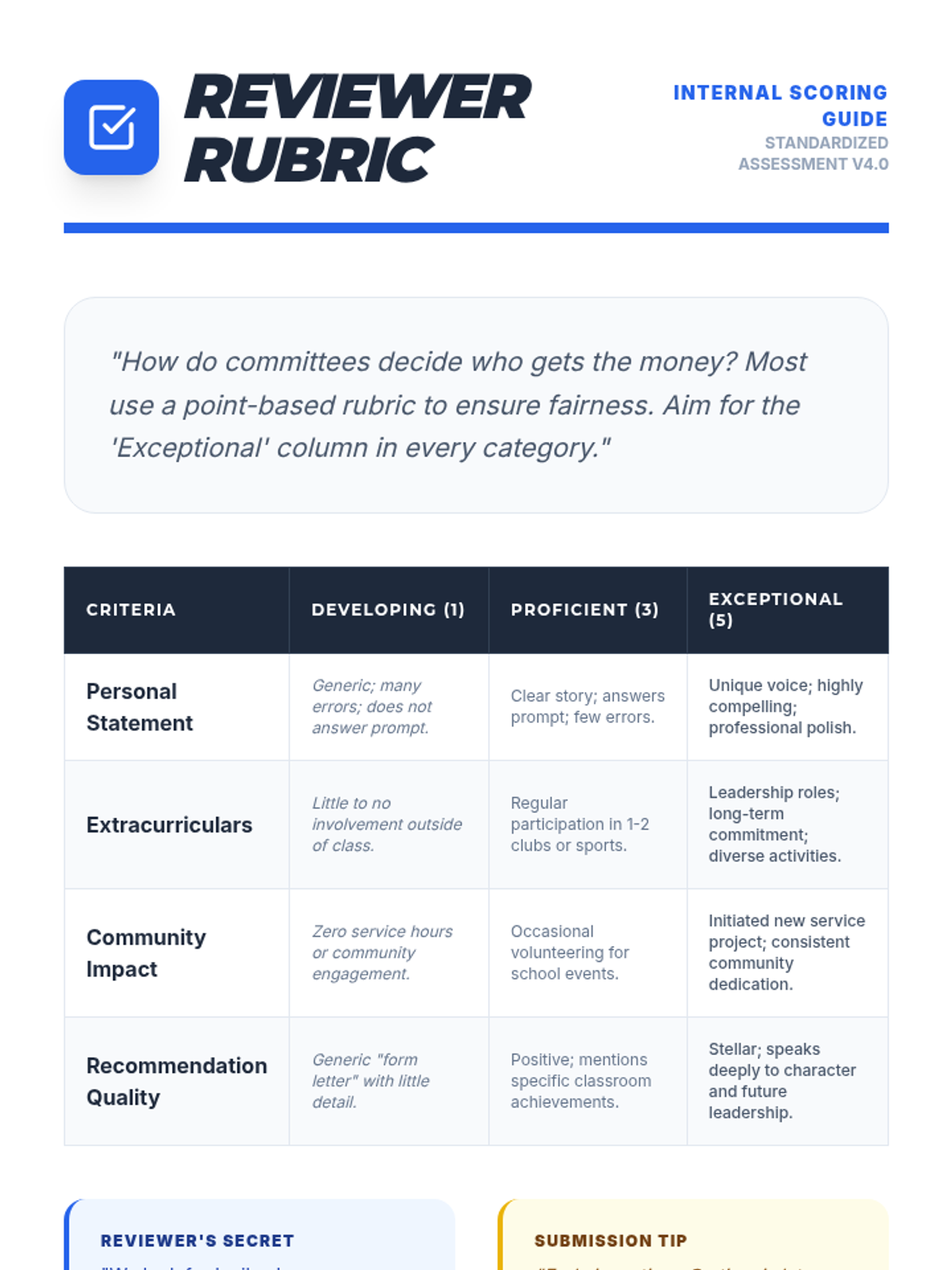
A reference guide showing the rubric and criteria that scholarship committees use to evaluate and score applications.
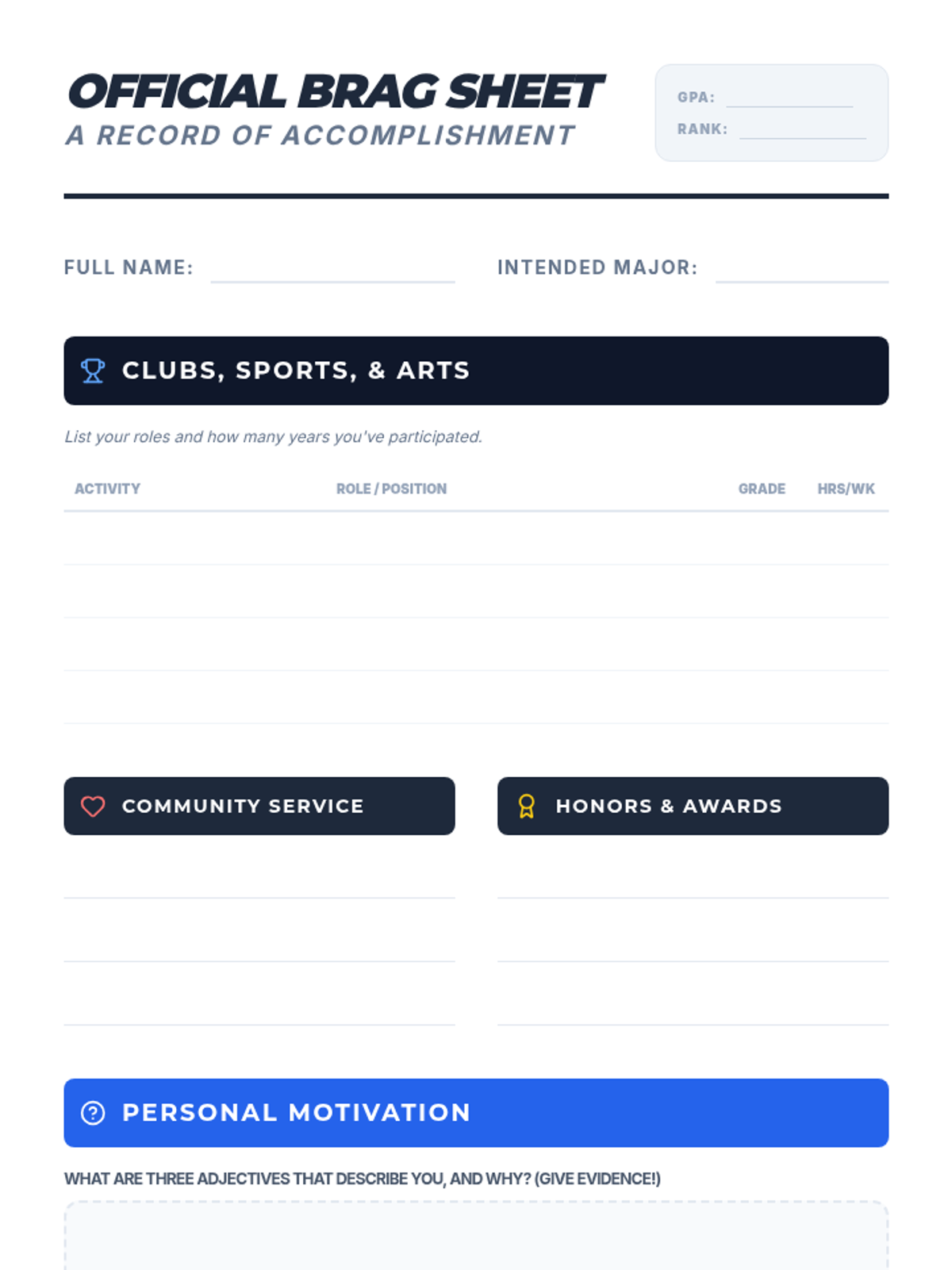
A comprehensive brag sheet template for 9th-grade students to document their extracurricular activities, awards, and personal traits in preparation for scholarship applications.
Instructional slides for Lesson 5, guiding students through the structured peer review process and the '10-Second Test' for essay hooks.
Slides for Lesson 5, exploring common scholarship application components and the strategic importance of building a 'brag sheet' early in high school.
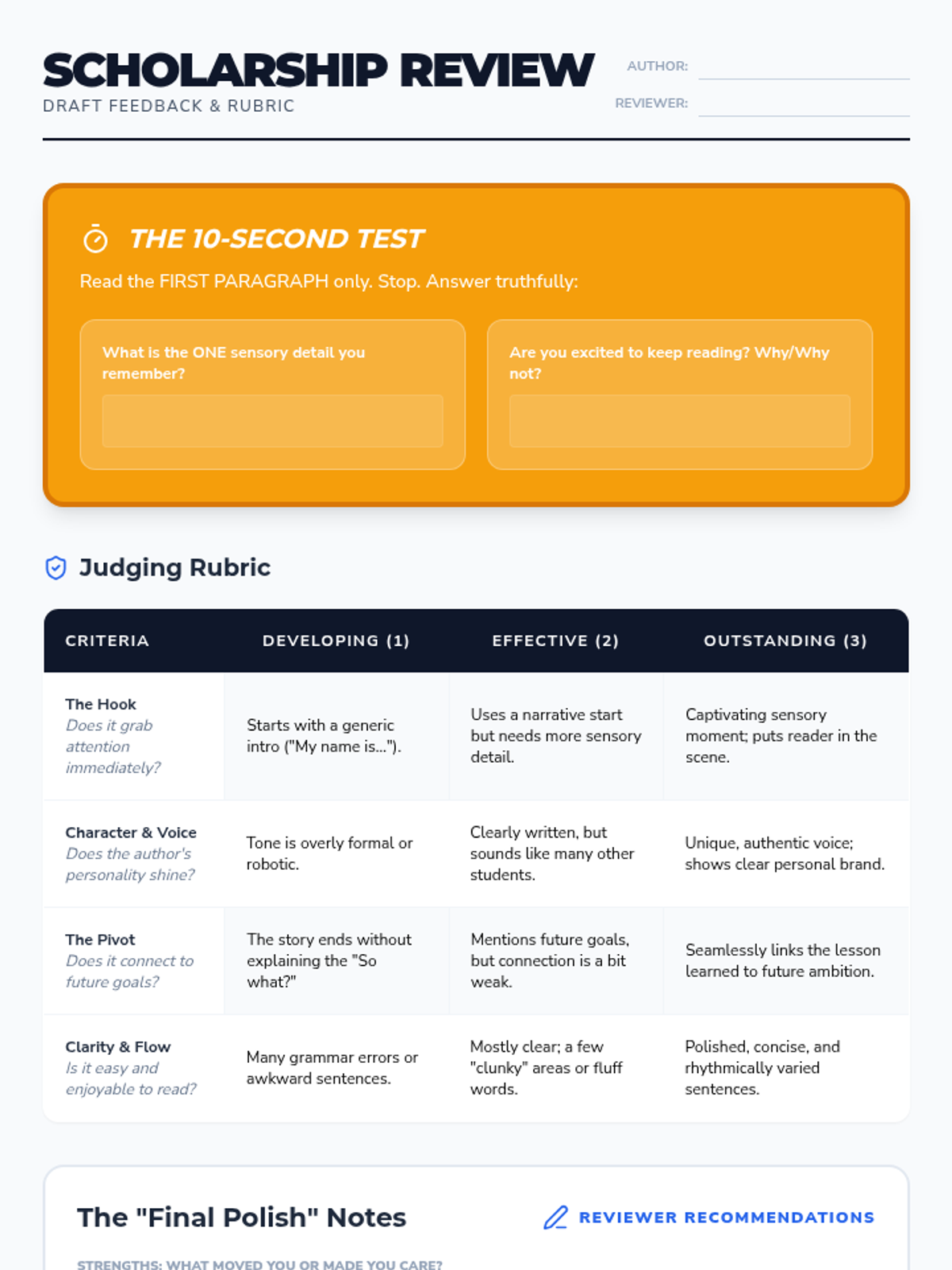
A structured peer review rubric and feedback form that uses scholarship-level criteria to help students evaluate and improve their essay drafts.
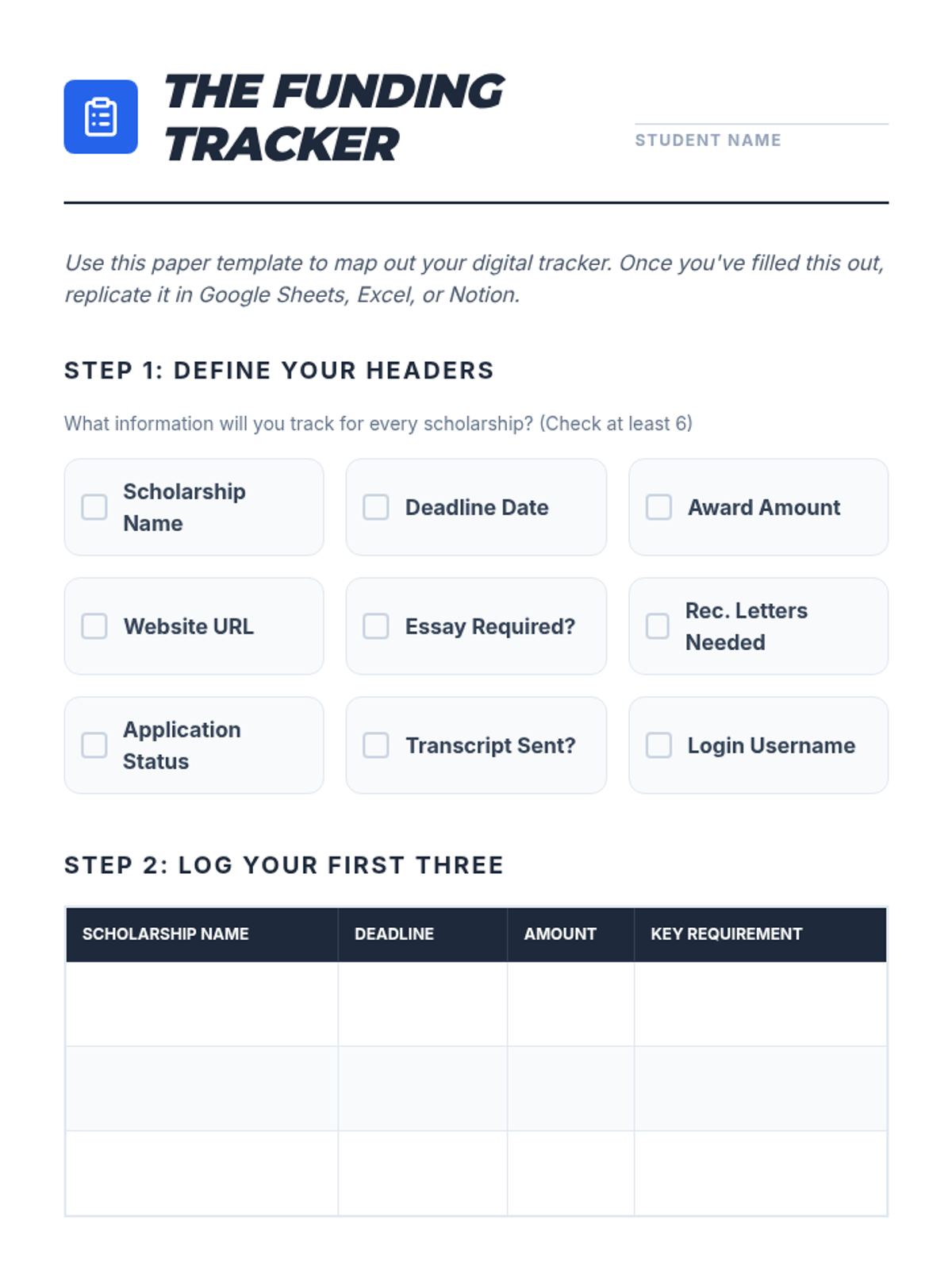
A planning worksheet for students to design their digital scholarship tracking system and log their first three opportunities.
Slides for Lesson 4, focusing on the importance of organization in the scholarship search process and how to build a digital tracking system.
Instructional slides for Lesson 4, teaching students how to adapt a core personal story to multiple essay prompts through the 'pivot' technique.
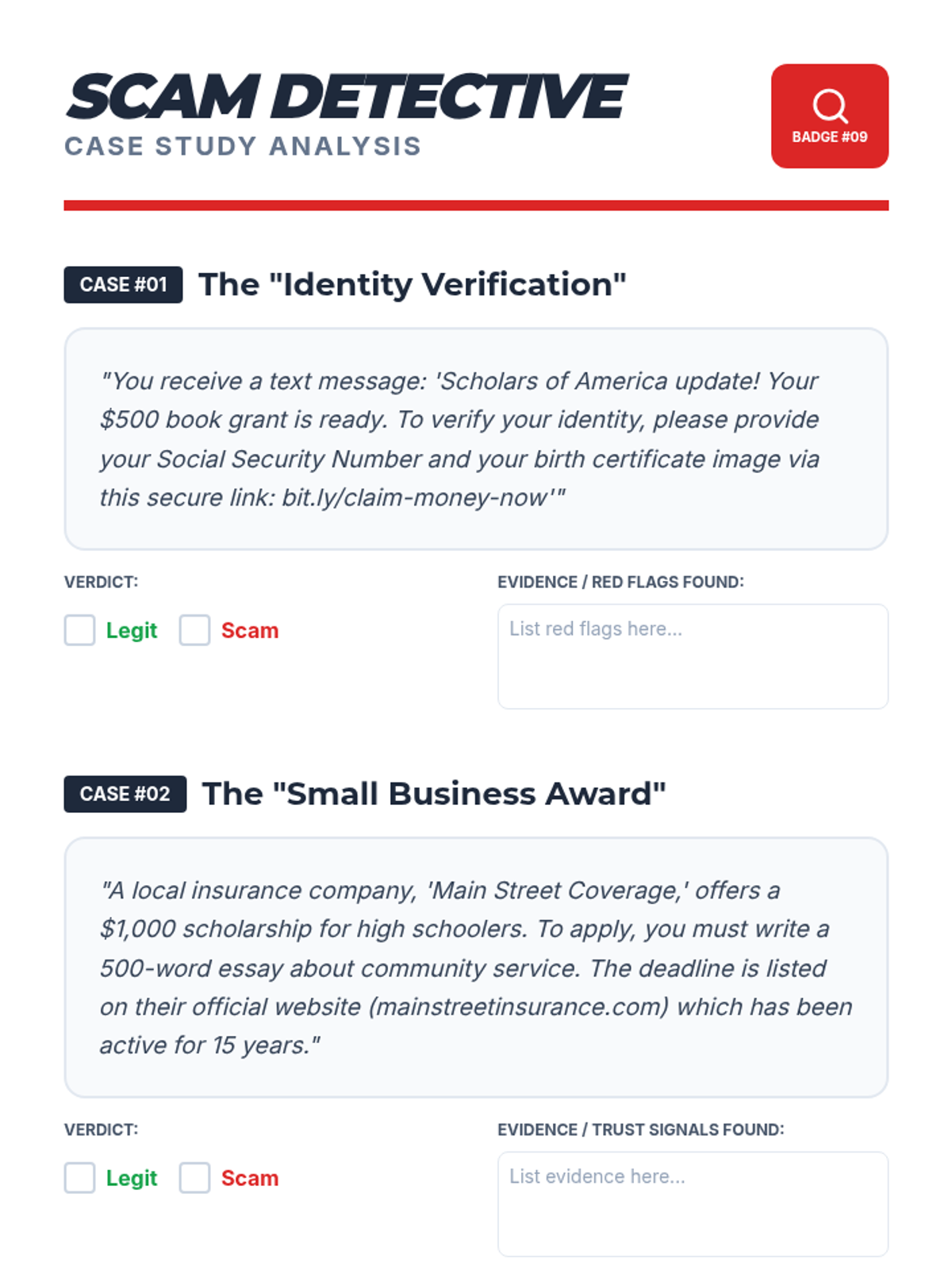
A case study worksheet where students analyze two scholarship scenarios to determine if they are legitimate or scams based on red flags and trust signals.
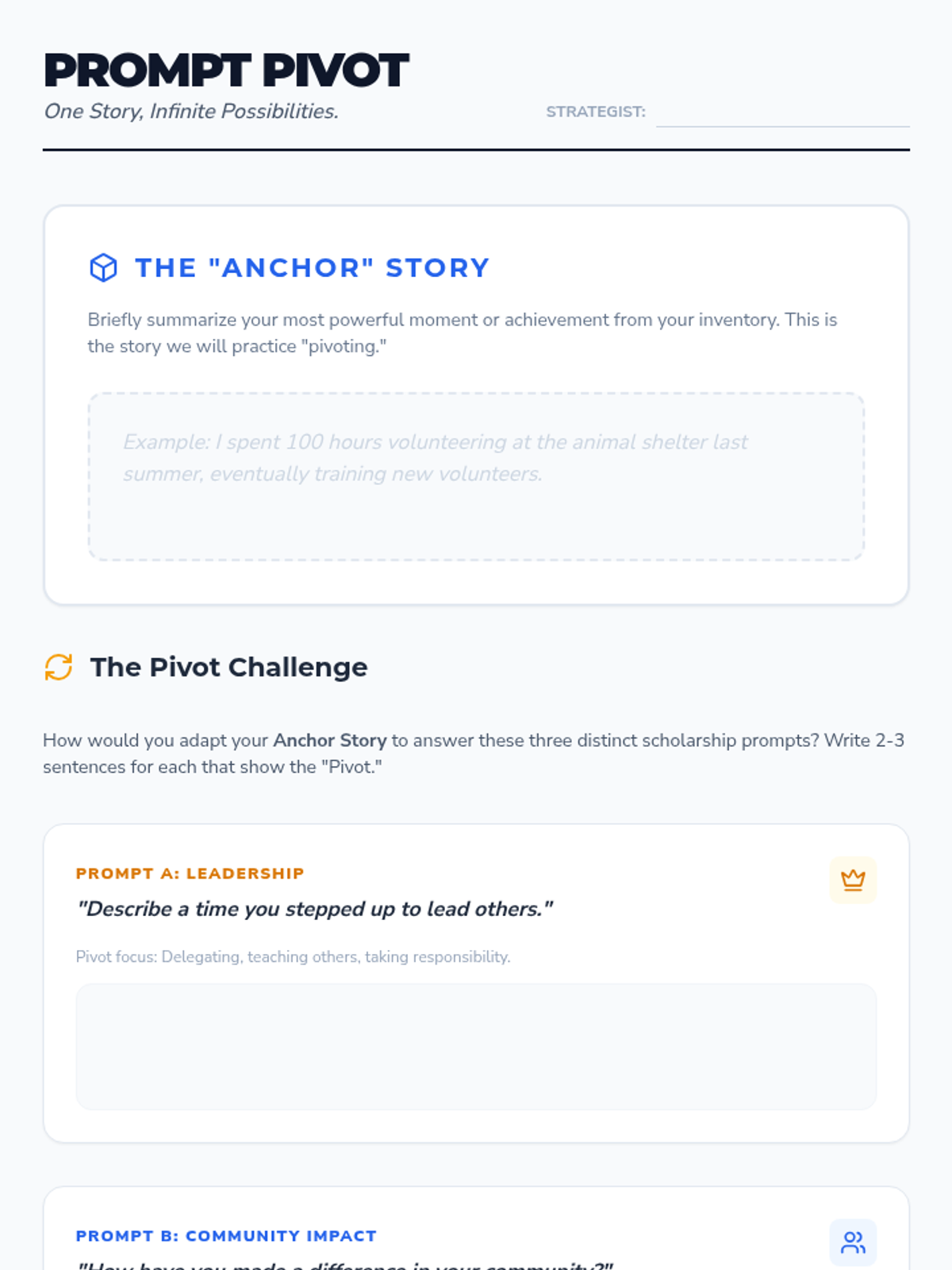
Students learn how to adapt a core personal story to fit different common essay prompts, practicing the 'pivot' technique to maintain relevance while using their strongest narrative assets.
Slides for Lesson 3, identifying red flags and warning signs of scholarship scams and fraudulent financial aid offers.
Instructional slides for Lesson 3, teaching the 'Show, Don't Tell' technique and how to capture a reviewer's attention in the first 10 seconds.
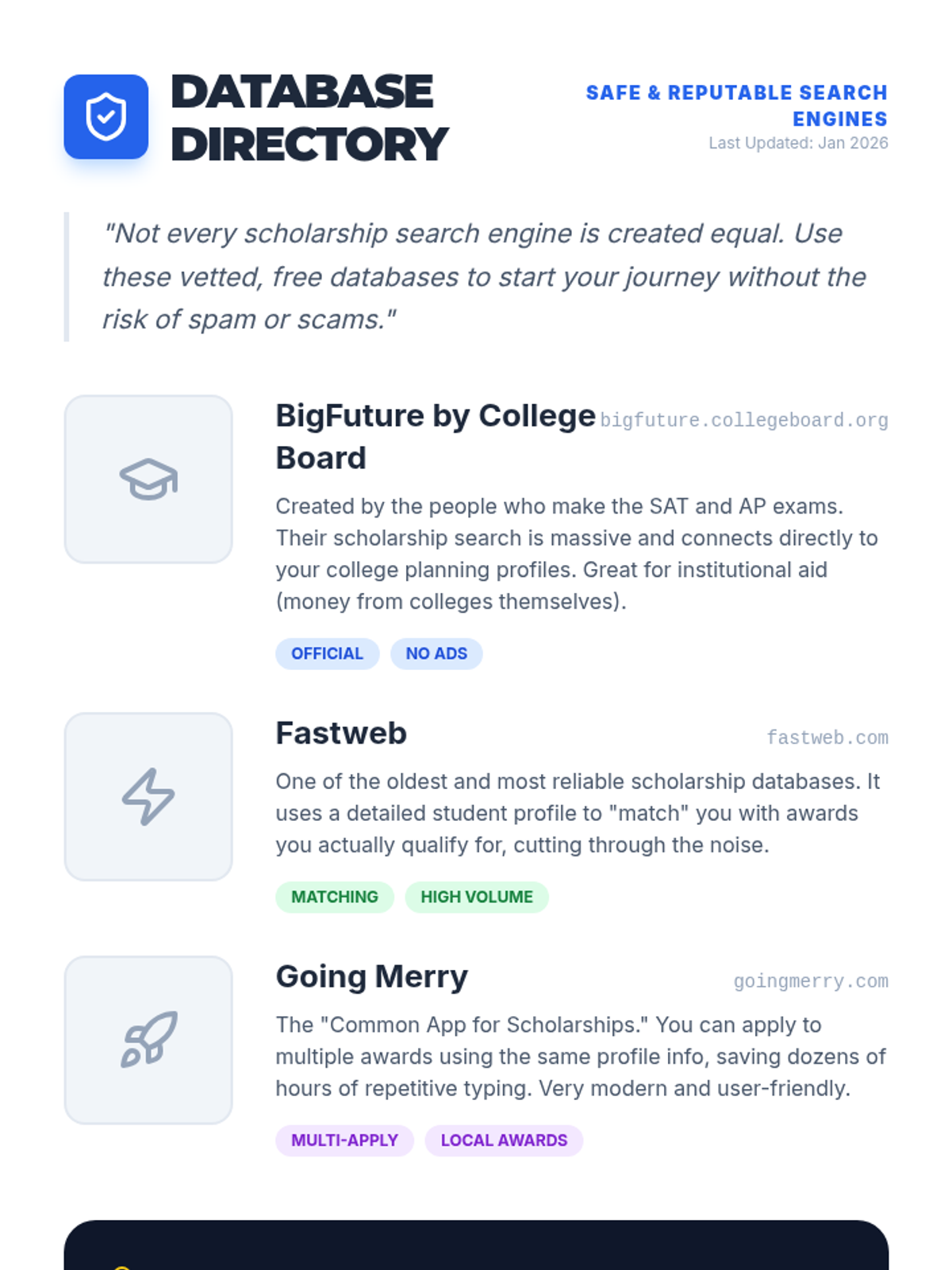
A curated directory of reputable scholarship search engines with descriptions and usage tips for students.
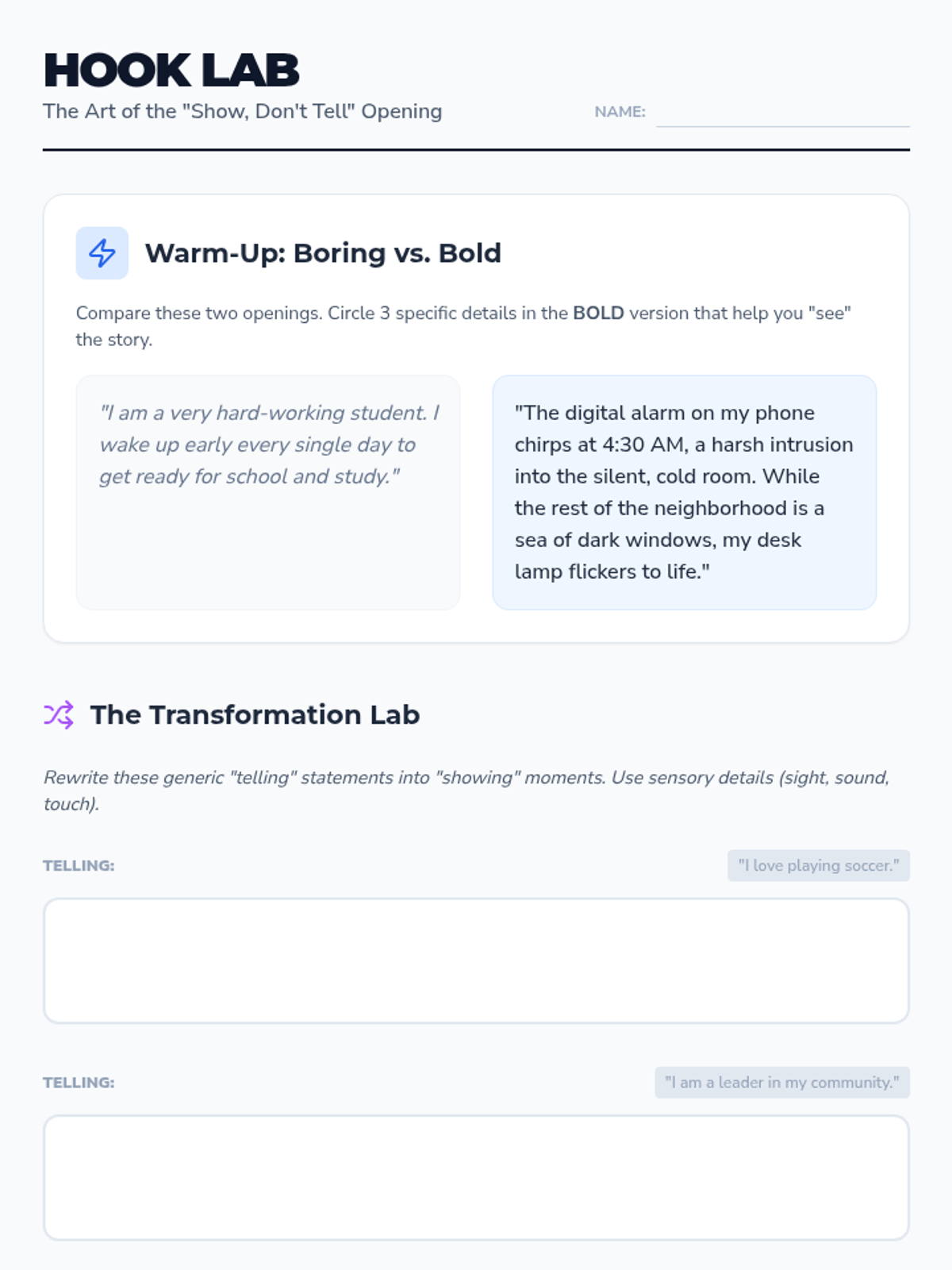
Focused on the introduction, students learn the 'Show, Don't Tell' technique to write engaging opening lines and sensory-rich narratives.
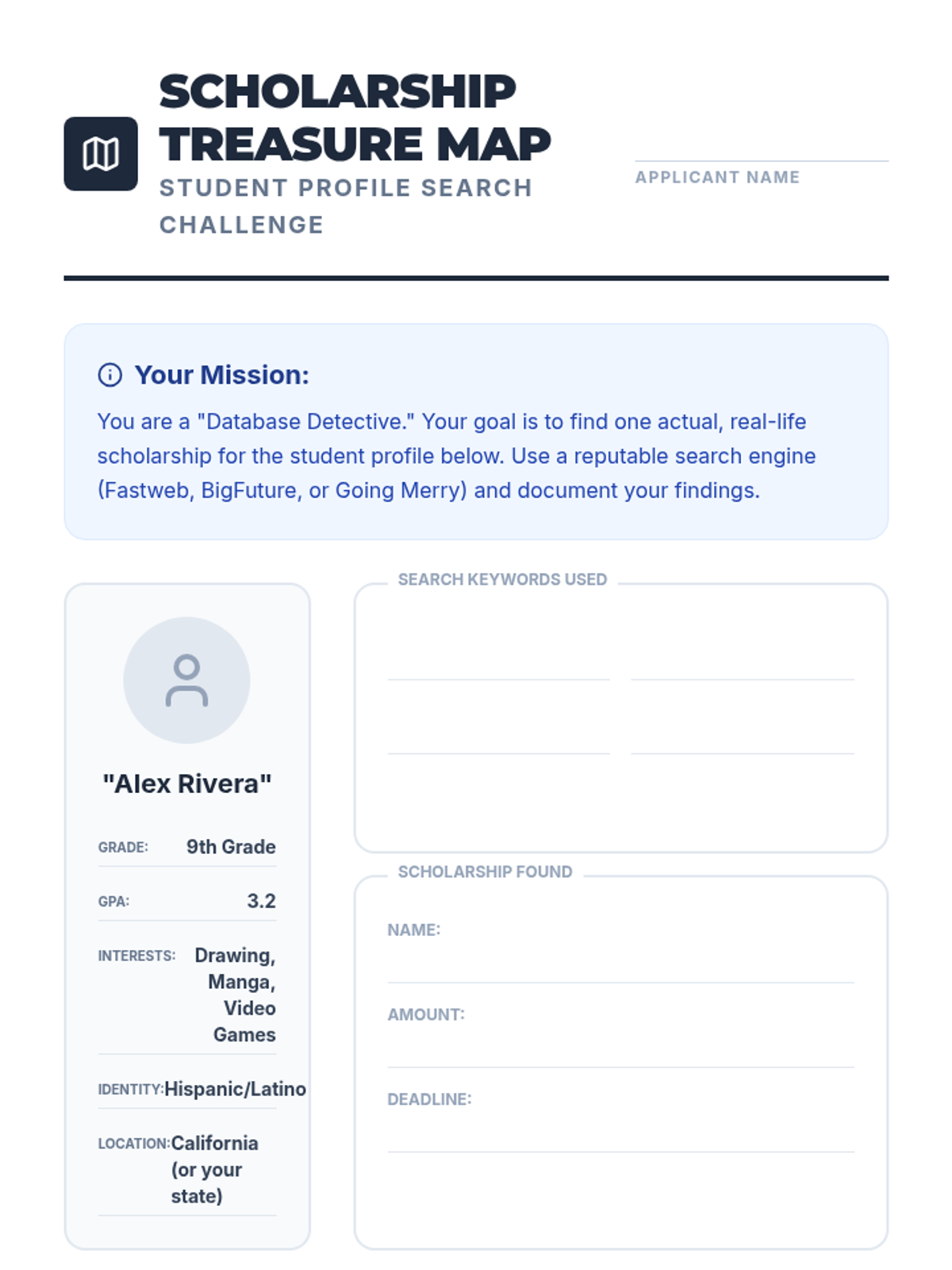
A search activity where students use scholarship databases to find actual funding opportunities for a fictional 9th-grade student profile.
Slides for Lesson 2, deconstructing the structural elements of a scholarship essay and introducing the 'Clarity, Concision, Character' framework.
Slides for Lesson 2, teaching students how to effectively use scholarship search engines, use filters, and search for local opportunities.
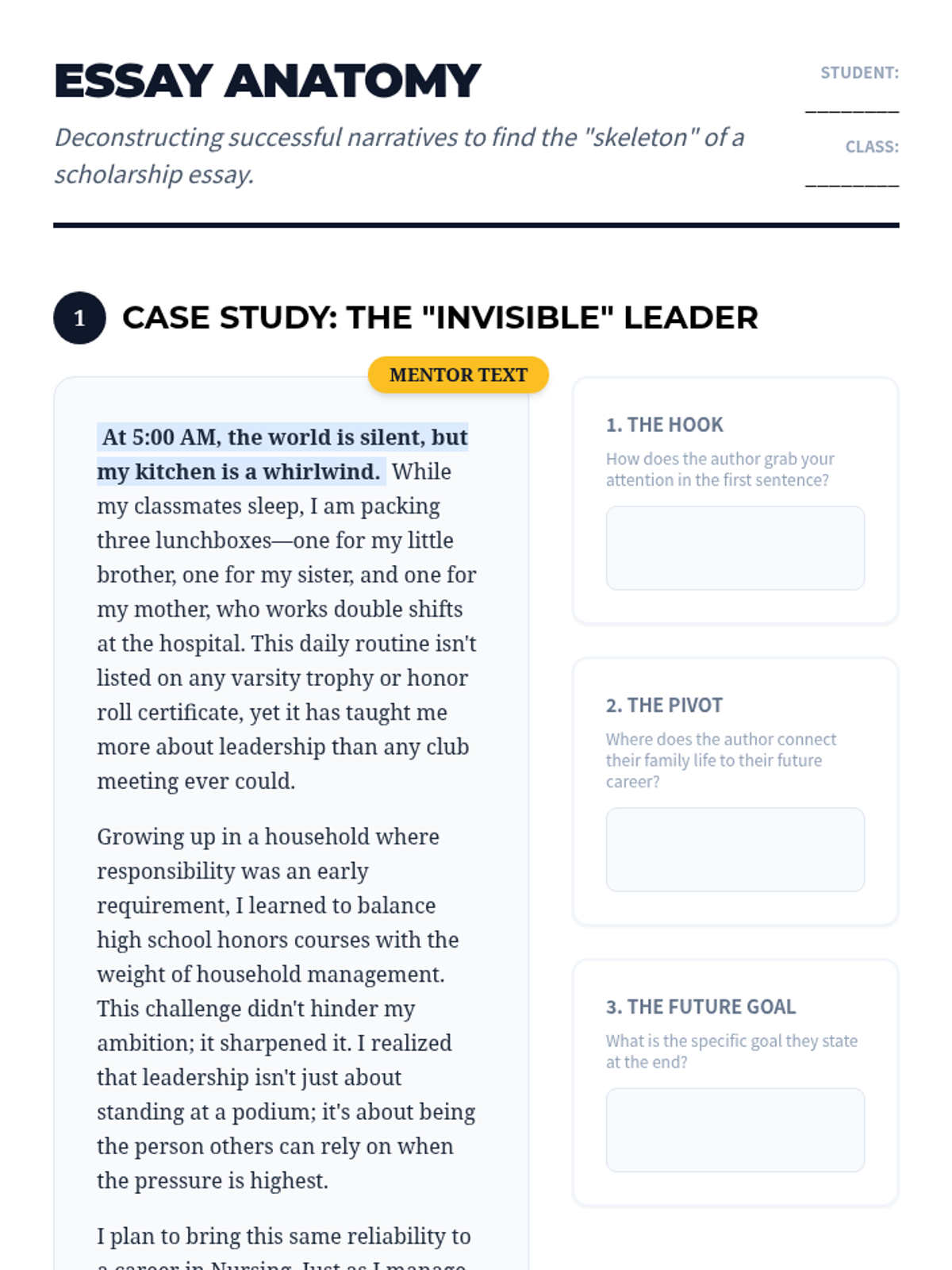
Students analyze a mentor text to identify the hook, the narrative arc, and the statement of future goals, concluding with a character sketch of the author.
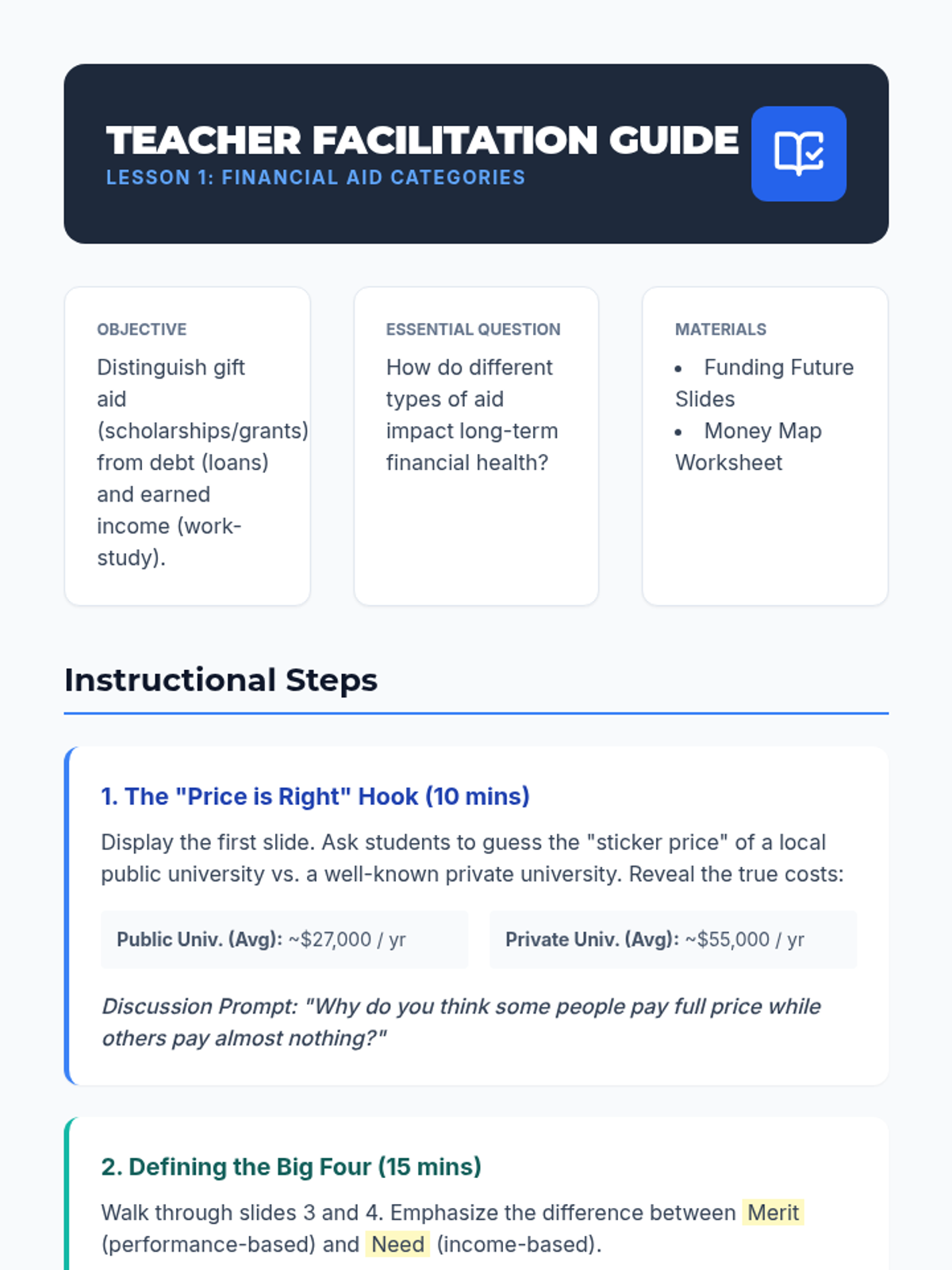
A comprehensive teacher guide for Lesson 1, including pacing, discussion prompts, and an answer key for the student worksheet.