A collection of brain teasers and a critical thinking writing prompt focused on the trades. Revised to fix page breaks, syntax, and increase writing space.
A teacher guide containing grading criteria, common pitfalls, and sample email responses for various student scenarios to assist in evaluation and modeling.
A multi-page worksheet providing structured email templates for 8 different real-world scenarios. Includes scaffolding like word banks and sentence starters for the first two academic scenarios.
A 9-slide presentation covering the structure of formal emails and 8 diverse scenarios for student practice, including academic, customer service, and professional situations. Includes word banks and sentence starters for initial slides.
A comprehensive one-page overview for administrators detailing the benefits of Lenny Learning for both teachers and district leadership.
A professional presentation designed for school administrators, introducing Lenny Learning as an AI instructional partner that streamlines planning and ensures curricular consistency.
A 20-slide presentation designed for high school counselors to lead Junior students through the college application journey, featuring YouScience discovery, Scoir search filters, and application timelines.
A student reflection worksheet for the Signal Seekers game. Consolidated onto a single page with corrected rating scale styling and improved readability.
A consolidated one-page facilitator guide for the Signal Seekers game. Includes objectives, procedure, a reference key for the body language signals, and discussion prompts. Updated with improved layout to ensure single-page printing.
A collection of printable prompt cards for the Signal Seekers game. Includes 4 Talker prompts and 6 Listener challenges that focus on body language and active listening. Updated with corrected grammar and improved print layout.
A creative "Boarding Pass" themed exit ticket for students to summarize their career destination, essential skills, and high school course connections. This document is tiled for efficient printing. Revised to fit 2 per page and include soft skills.
A guided independent practice worksheet featuring a "Scavenger Hunt" that teaches students how to use search formulas to extract real-world career data. Revised to fit on a single page for teacher efficiency.
A professional-grade career research graphic organizer for students to map out their future "Career Blueprint," including sections for vision, hard/soft skills, education/validation, and market research. Revised to fit on one page and remove placeholder text.
A self-reflection warm-up worksheet for students to audit their current interests, identify their preferred elective pathway, and pinpoint natural strengths. Updated to include specific STEM sub-pathways and polished student work areas.
Interactive slide presentation for the Pathway Pilot lesson, now featuring detailed slides for the four STEM sub-pathways (Science, Tech/CS, Medical, and Engineering) alongside Design, Culinary, and Arts. Includes expanded skills instruction on hard, soft, and transferrable skills.
A detailed teacher guide for the Pathway Pilot lesson, including learning objectives, a minute-by-minute pacing guide, materials checklist, and targeted discussion prompts for each pathway, now featuring detailed STEM sub-pathways.
A set of four creative discussion cards for small groups, designed to facilitate conversations about internal values, social influences on motivation, and recovery from academic setbacks.
A student worksheet featuring personal motivation identification, a 4-week goal-setting blueprint, and a social support mapping section to help students internalize their academic drive.
A high-impact 5-slide presentation designed to engage students in understanding the difference between intrinsic and extrinsic motivation, while providing a framework for academic goal setting.
A comprehensive 45-minute lesson plan for educators focusing on social-emotional and academic motivation, including learning objectives, materials, and a step-by-step facilitation guide.
A one-page visual reference guide listing common over-apologies and their more effective replacements, designed for quick desk-side or binder use.
A practice worksheet where students audit various social situations to decide if an apology is necessary and practice replacing it with appropriate "power phrases."
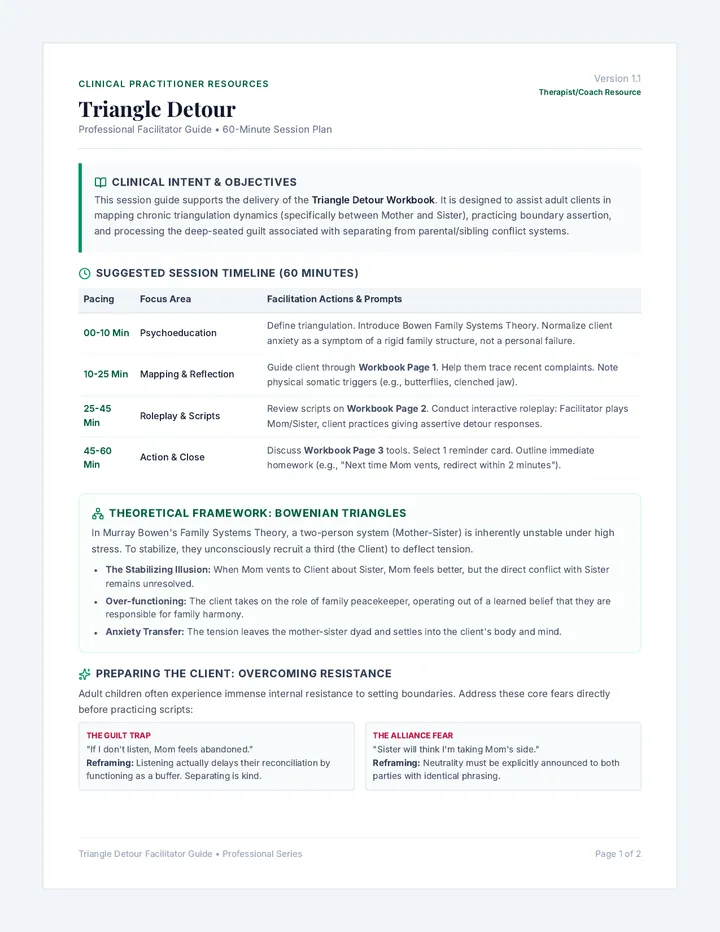
A comprehensive facilitator guide for teachers, providing pedagogical context on over-apologizing in autism, delivery instructions, and troubleshooting tips.
A visually structured slide deck that explains the logic behind apologies, featuring the "Apology Audit" flowchart and "Thank You" power moves for 9th-grade students.
A quick assessment tool where students translate data from a dot plot into a five-number summary and a box-and-whisker plot.
A professional-grade statistics worksheet where students analyze basketball scores by creating ordered lists, 5-number summaries, and dual data visualizations.
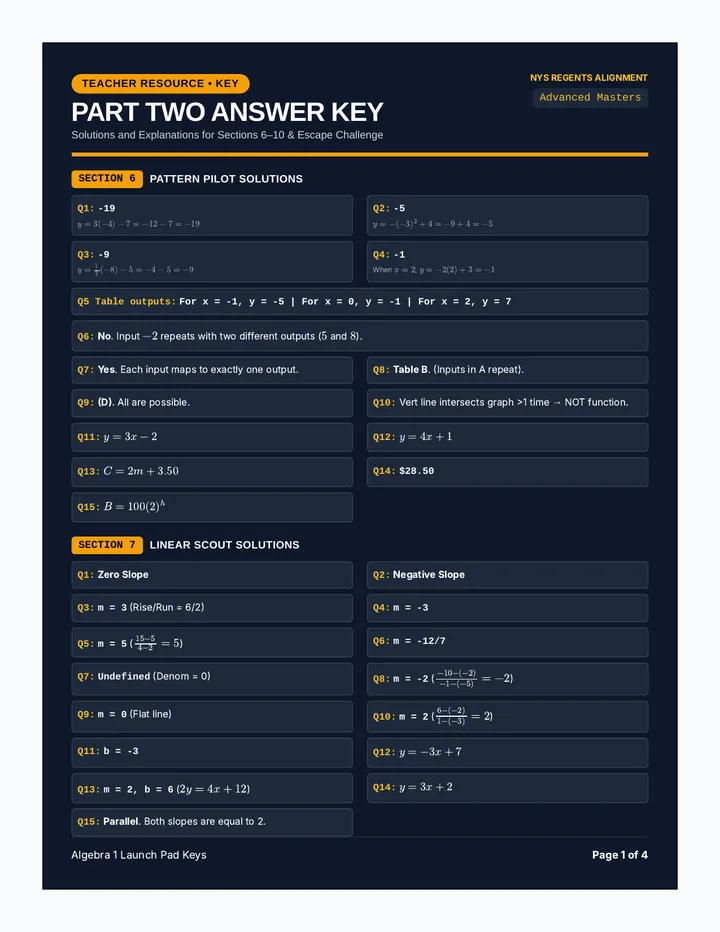
An essential teacher reference guide providing answer keys for all student activities and worksheets, along with grading rubrics and discussion prompts for specific mathematical pitfalls.
A quick assessment tool for the end of the lesson, checking students' ability to compare medians and IQRs, identify skewness, and apply the concept of consistency in a real-world context.
A quick assessment tool for the end of the lesson, featuring three questions to check for understanding of positive and negative correlation trends.
A concise exit ticket to assess student understanding of trend lines and the difference between interpolation and extrapolation at the end of the lesson.
A class-wide data collection and visualization activity where students survey each other on screen time and collectively build statistical models.
An independent practice worksheet containing two real-world scenarios (phone battery life and commute times) requiring students to analyze and compare multiple box plots. Focuses on consistency, variation, and data-driven decision making.
An independent practice worksheet where students apply their knowledge of trend lines to make specific data predictions, identifying and performing both interpolation and extrapolation.