Root cause analysis and brainstorming techniques for everyday problem-solving. Equips learners with ethical frameworks and risk-benefit evaluation skills to predict consequences and make informed choices.
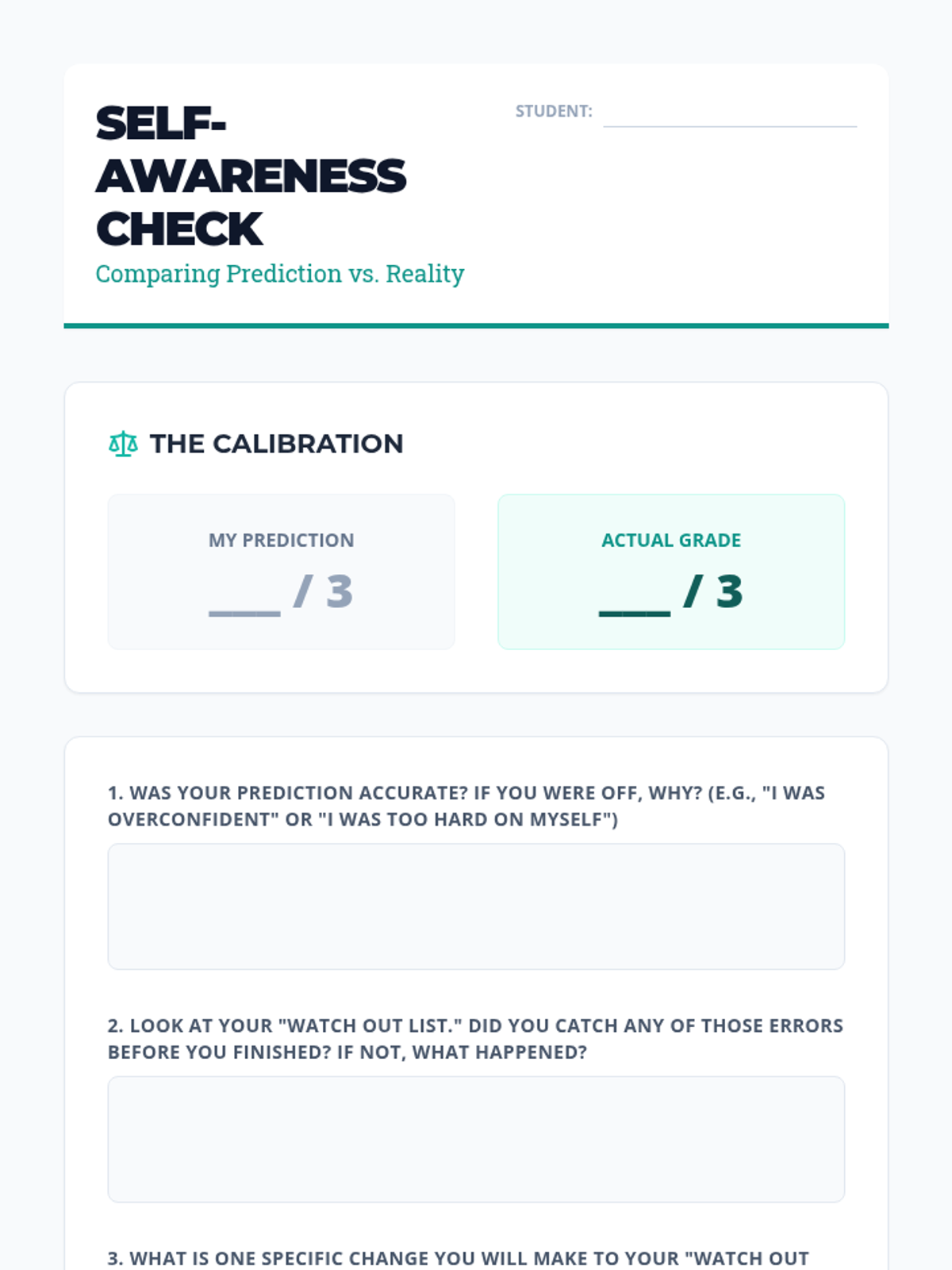
Students take a short assessment and immediately apply their error analysis protocol. They verify if their 'Watch Out' list helped them avoid previous habitual mistakes.
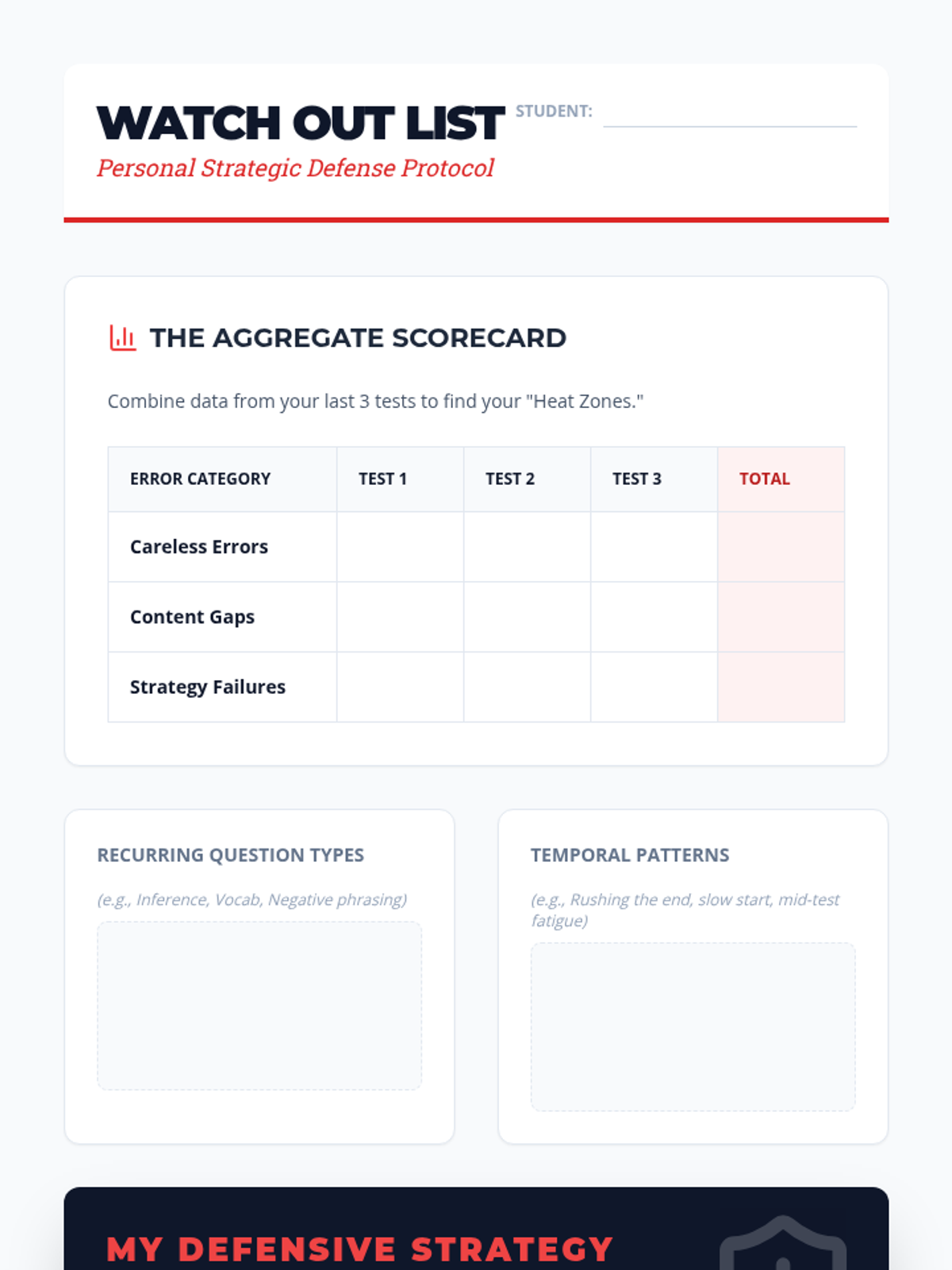
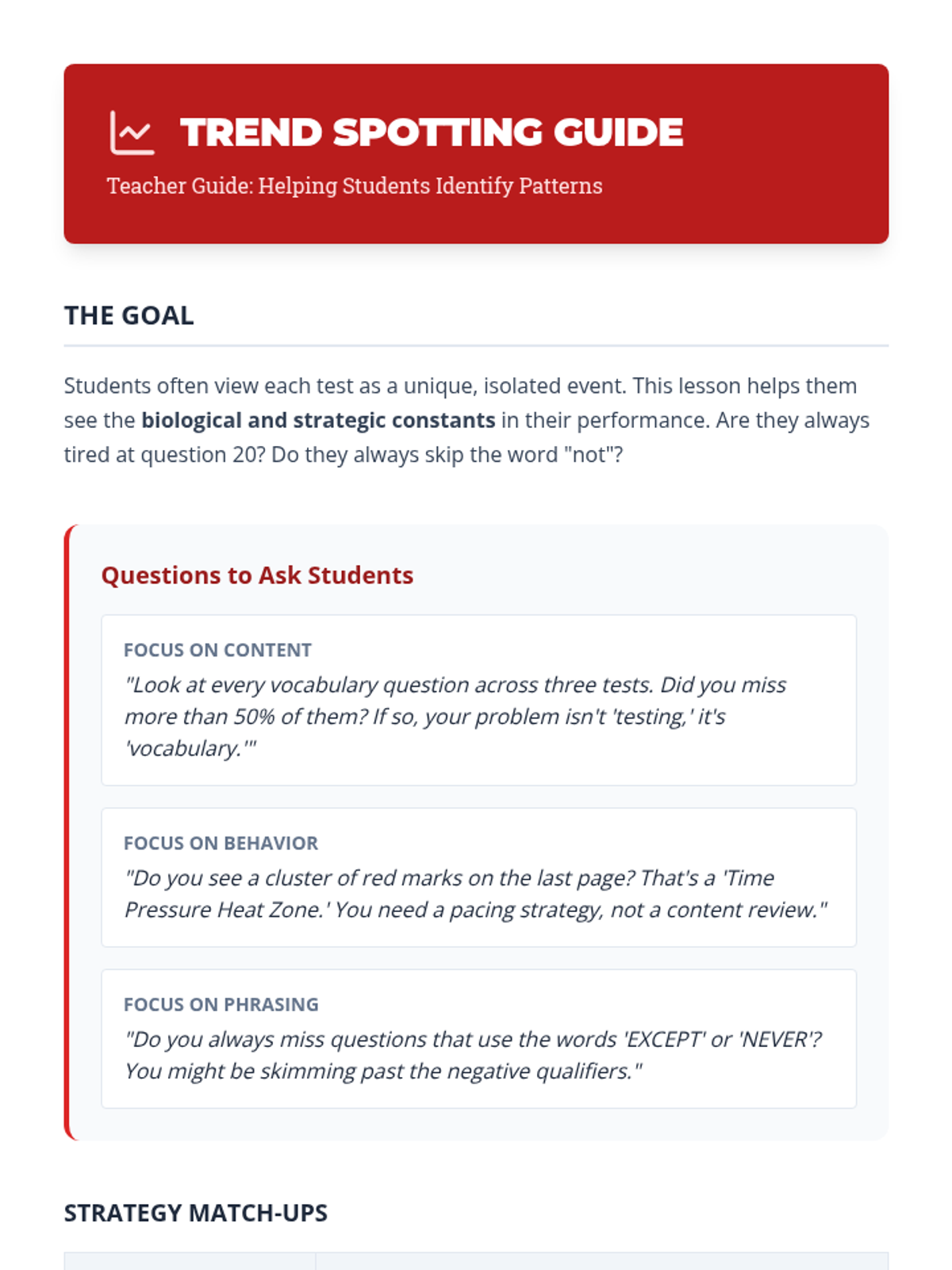
Students aggregate their error data to find personal patterns (e.g., 'I always miss inference questions' or 'I rush the last 5 minutes'). They create a personal 'Watch Out' list for future exams.
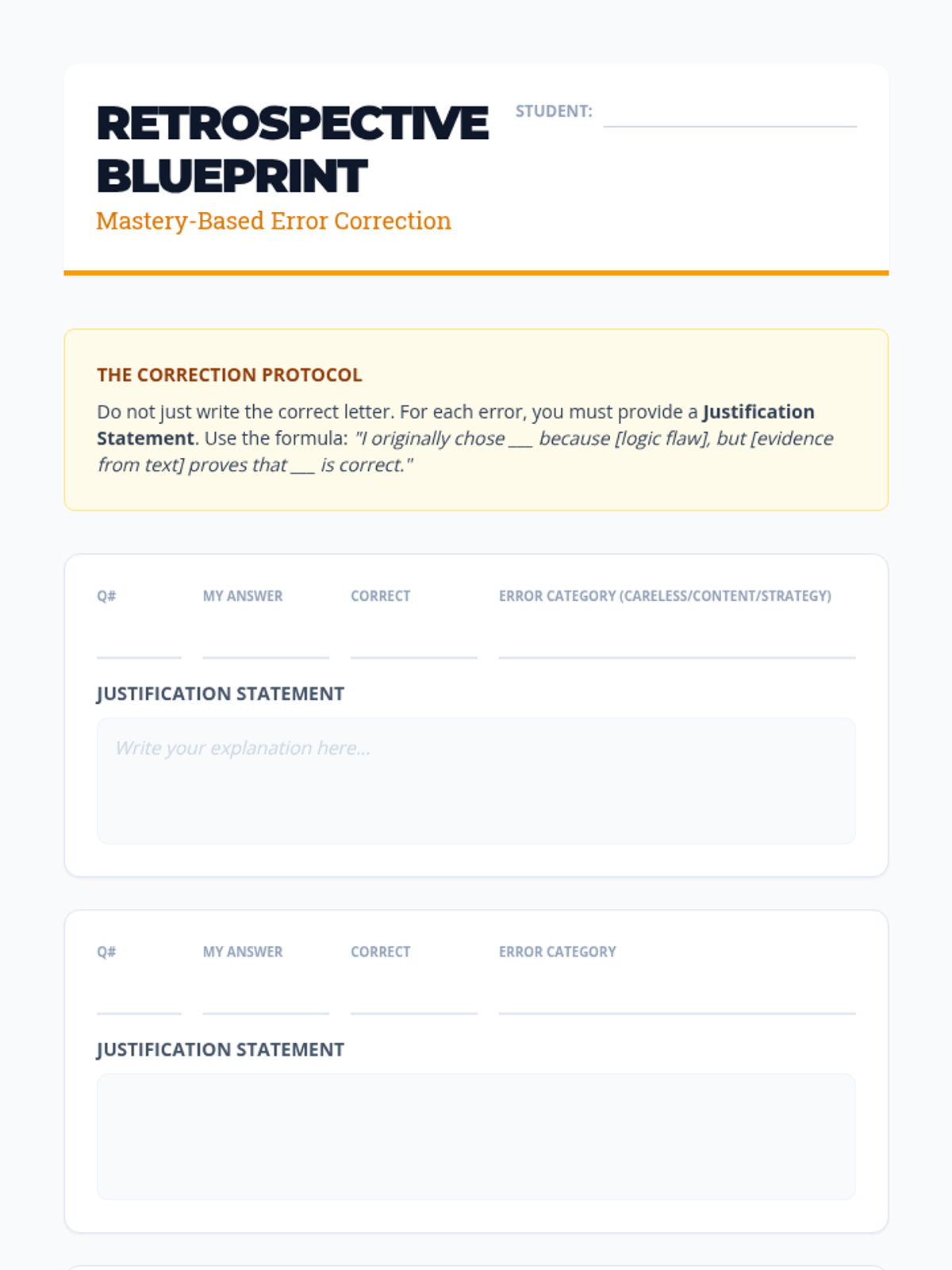
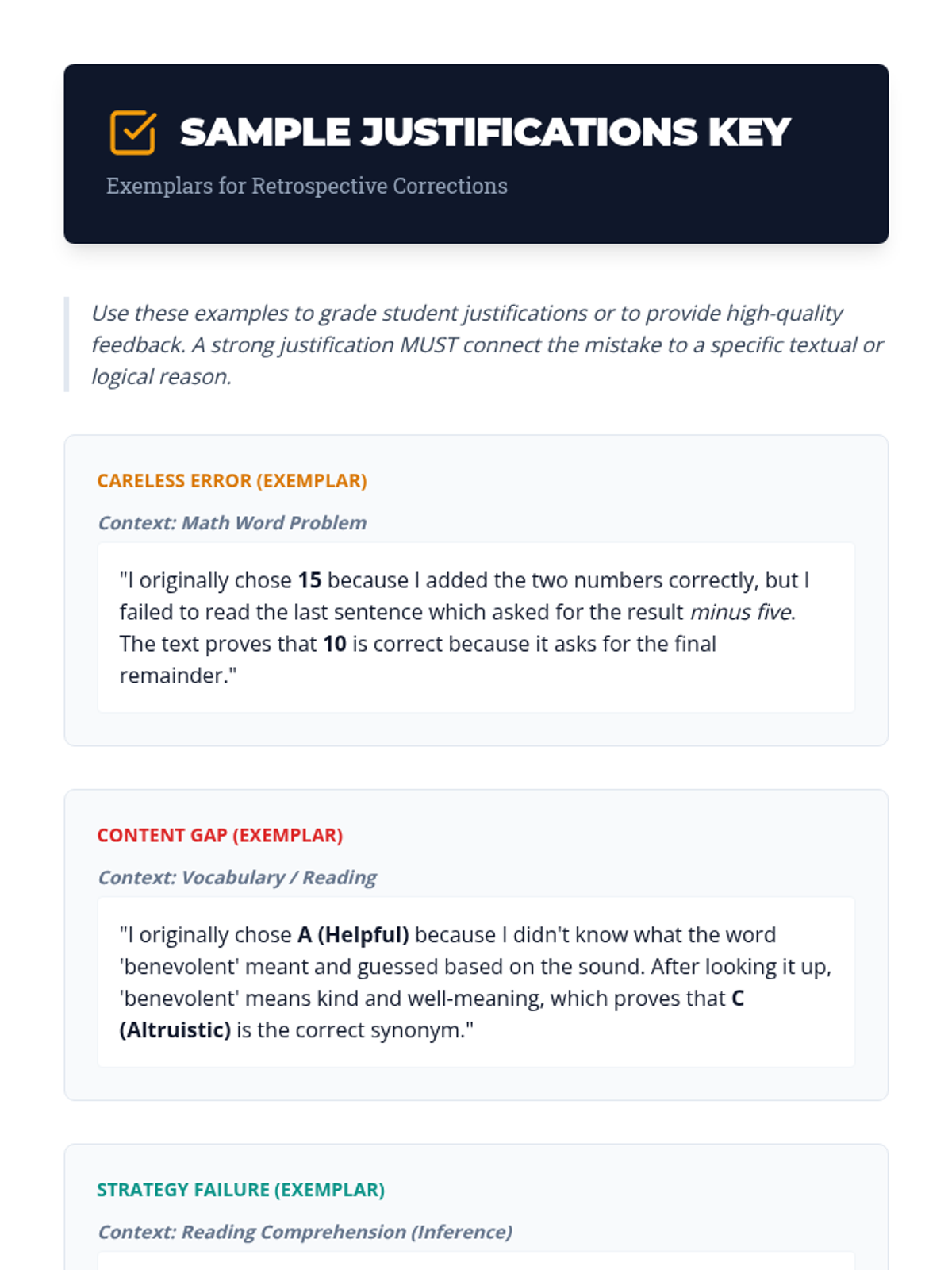
Instead of just marking correct answers, students must write a sentence explaining *why* their original answer was wrong and *why* the new answer is right. This ensures deep processing of the error.
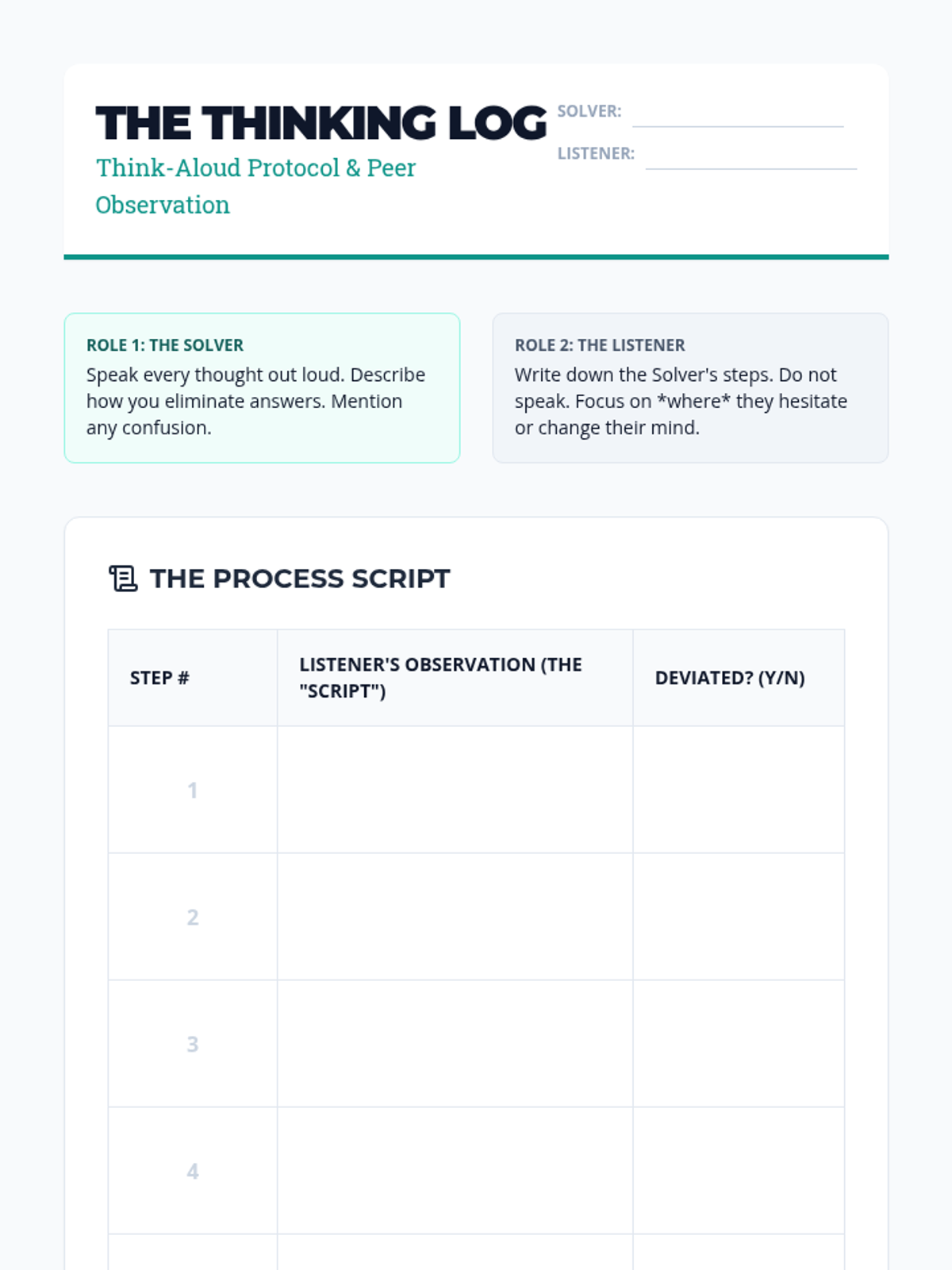
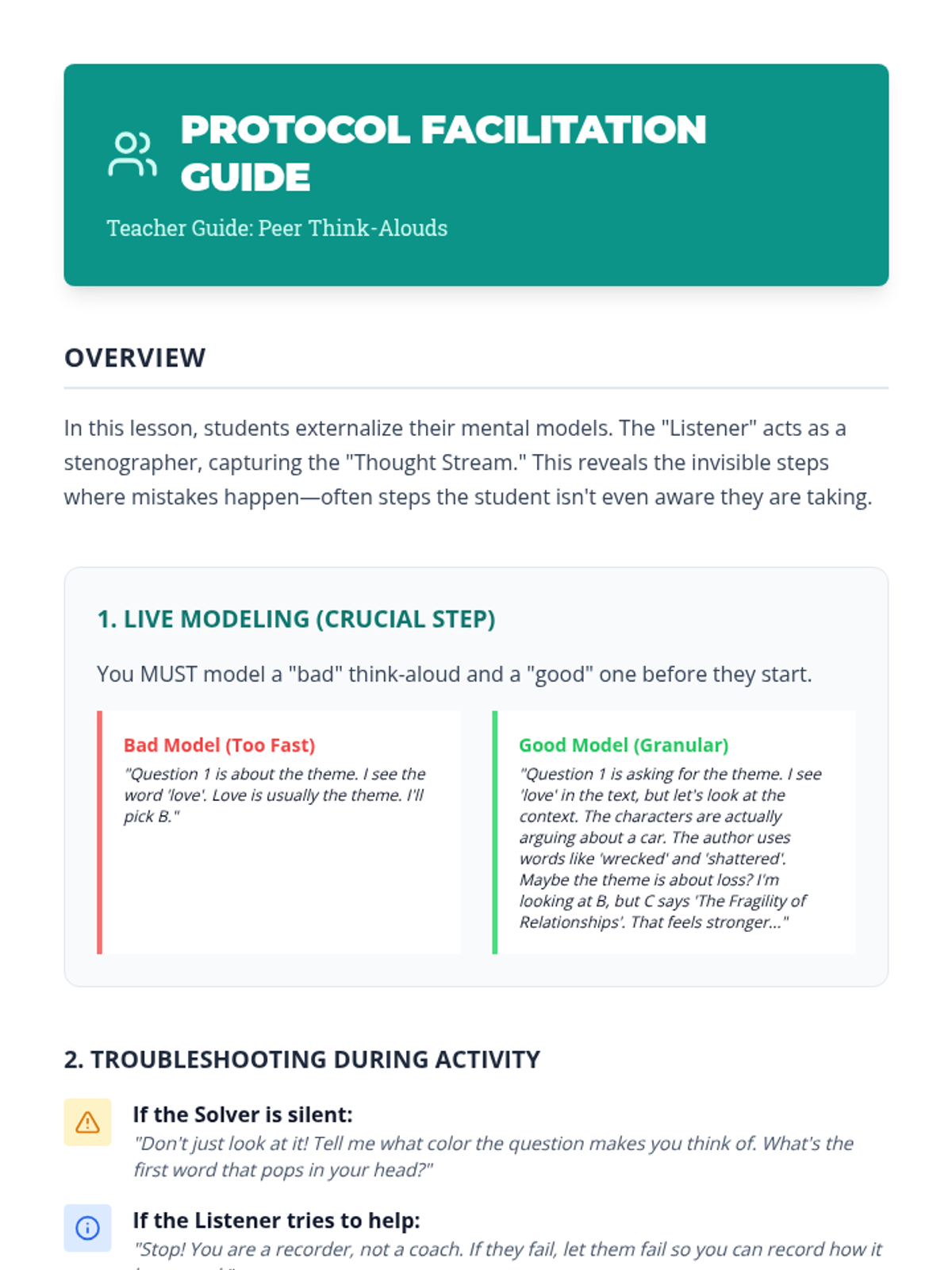
Working in pairs, students vocalize their thinking process while solving a problem while a partner records their steps. They analyze these recordings to identify where their logic deviated from the correct path.
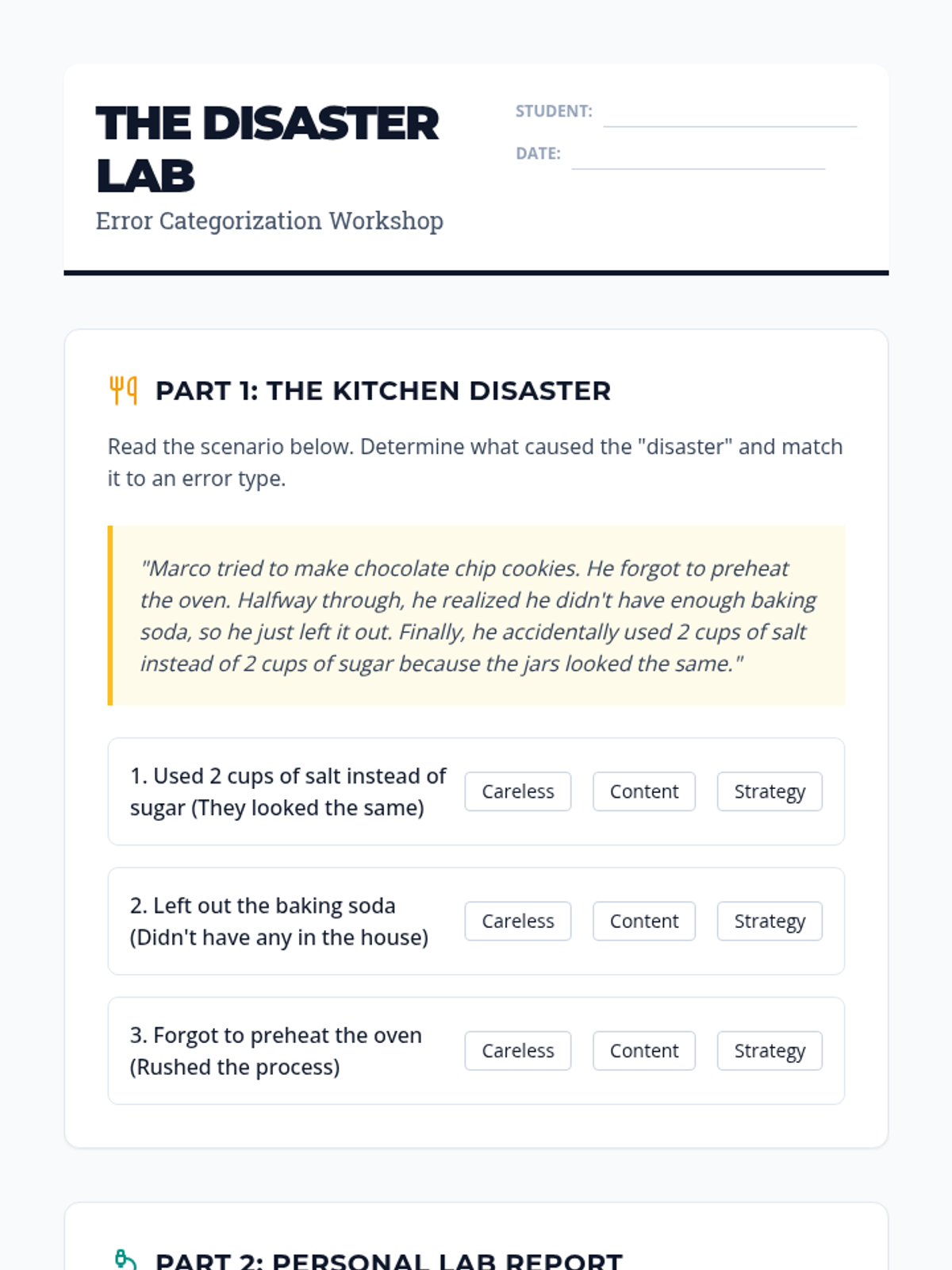
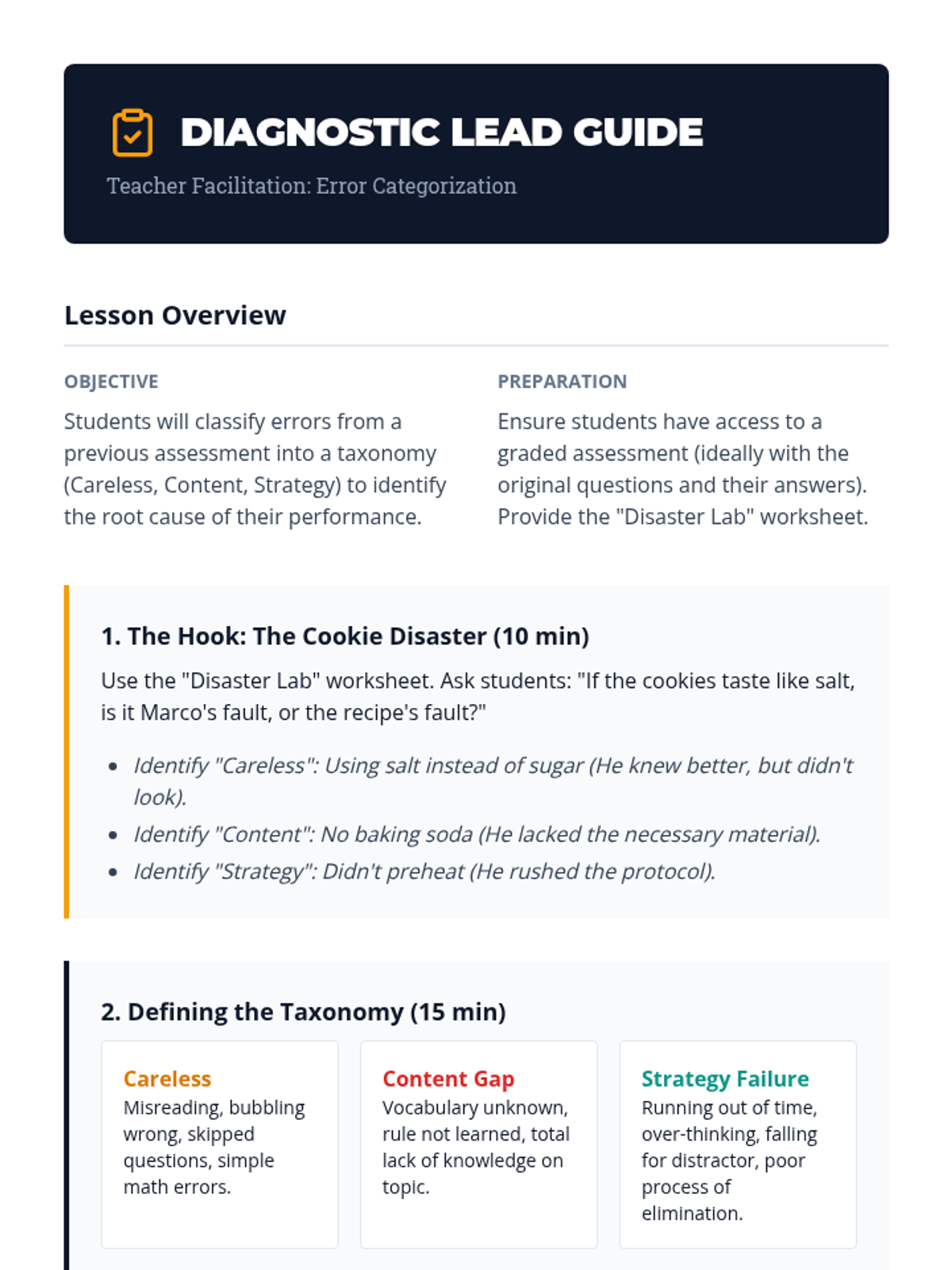
Students review a past assessment and categorize every incorrect answer as a 'Careless Error,' 'Content Gap,' or 'Strategy Failure.' This taxonomy helps them understand that not all mistakes are created equal.
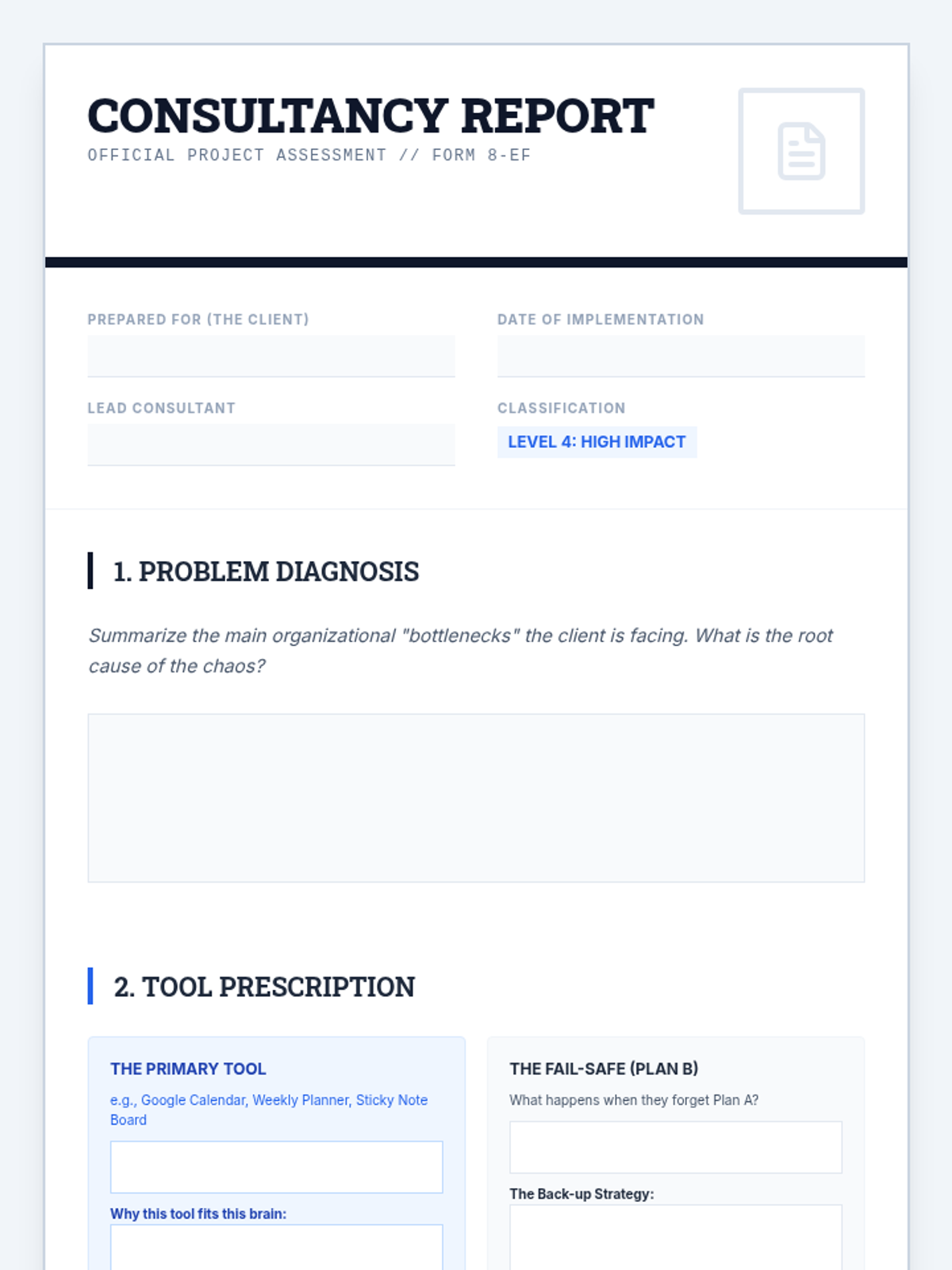
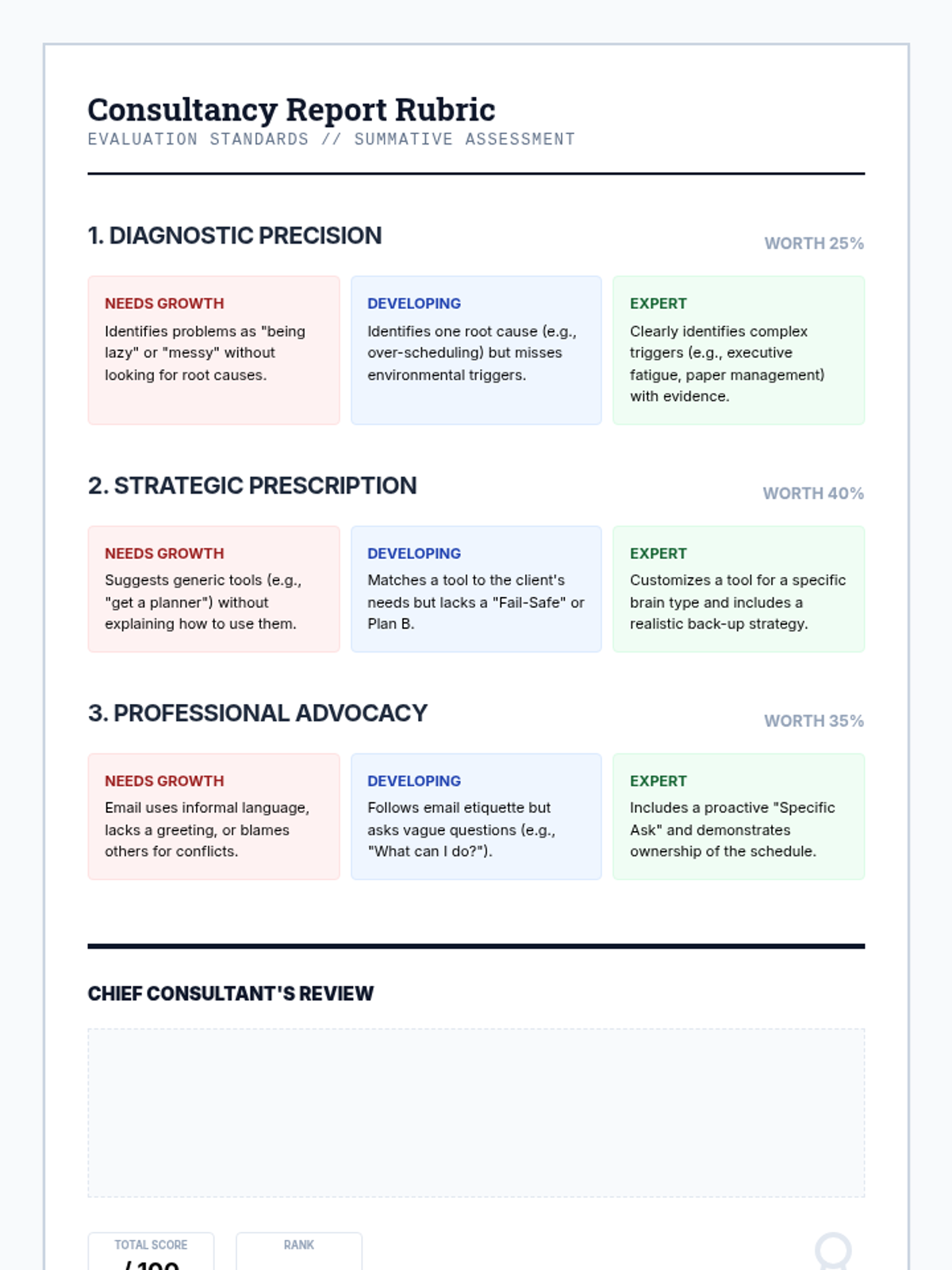
A cumulative assessment where students produce a final 'Consultancy Report' prescribing a comprehensive organizational plan for a client or themselves.
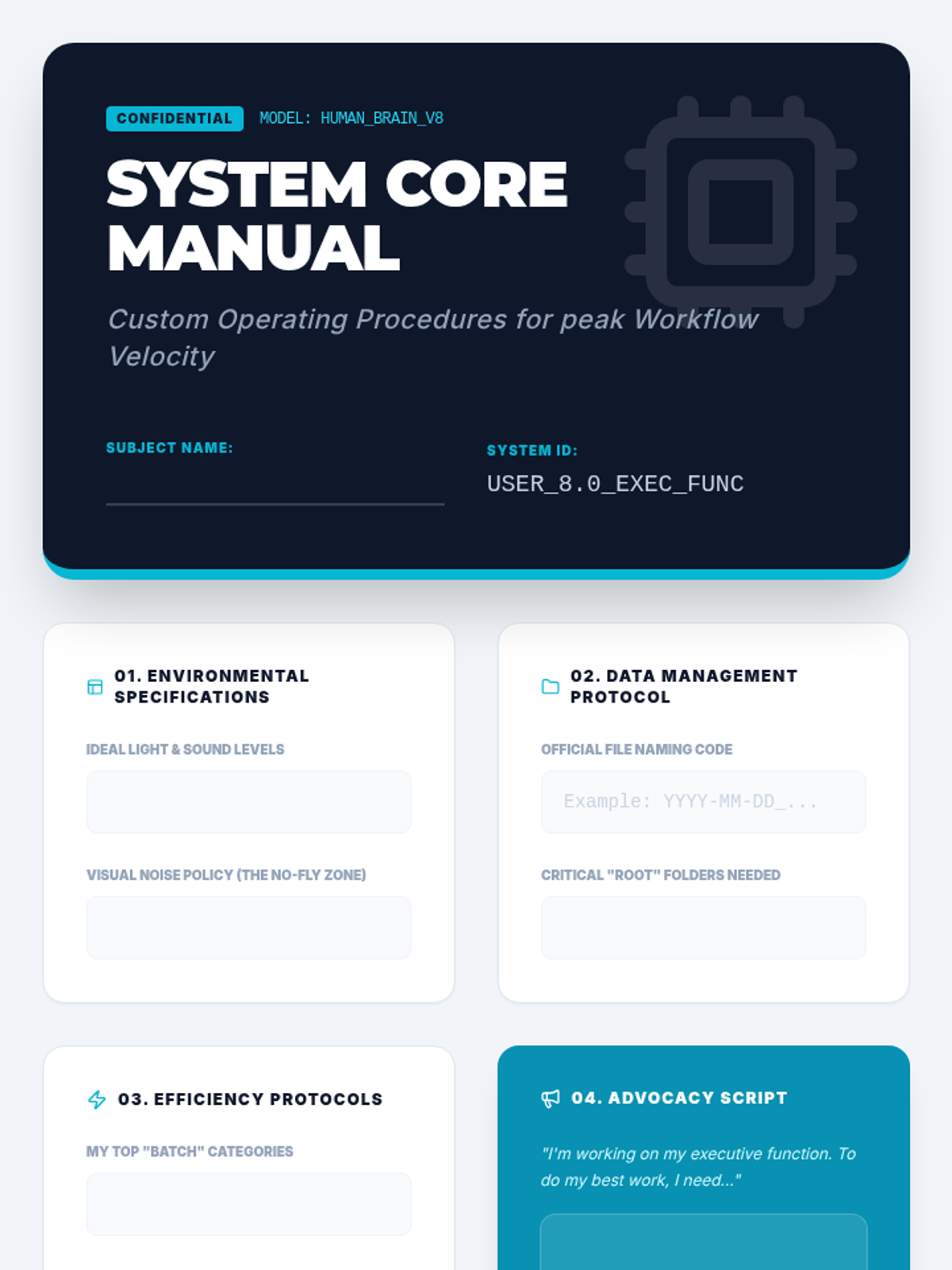
In this capstone lesson, students synthesize their learning into a 'User Manual' for their own brain. They document personalized strategies for physical, digital, and temporal organization to build self-advocacy and long-term habits.
Students evaluate and pitch various organizational tools, from digital apps to paper checklists, learning to match specific scaffolds to different brain types.
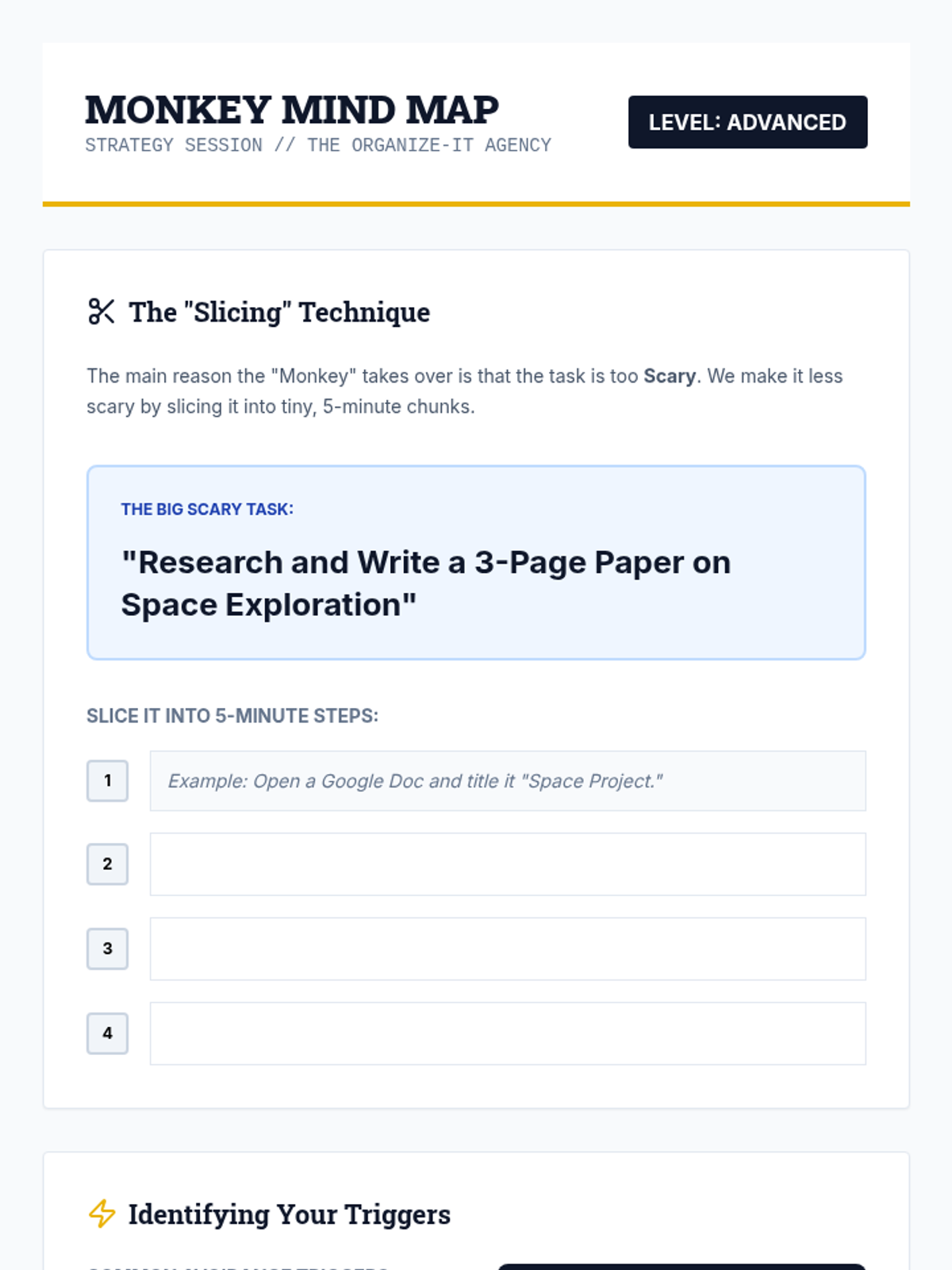
Explores the emotional roots of procrastination and provides concrete strategies like the 5-minute rule to break the cycle of avoidance.
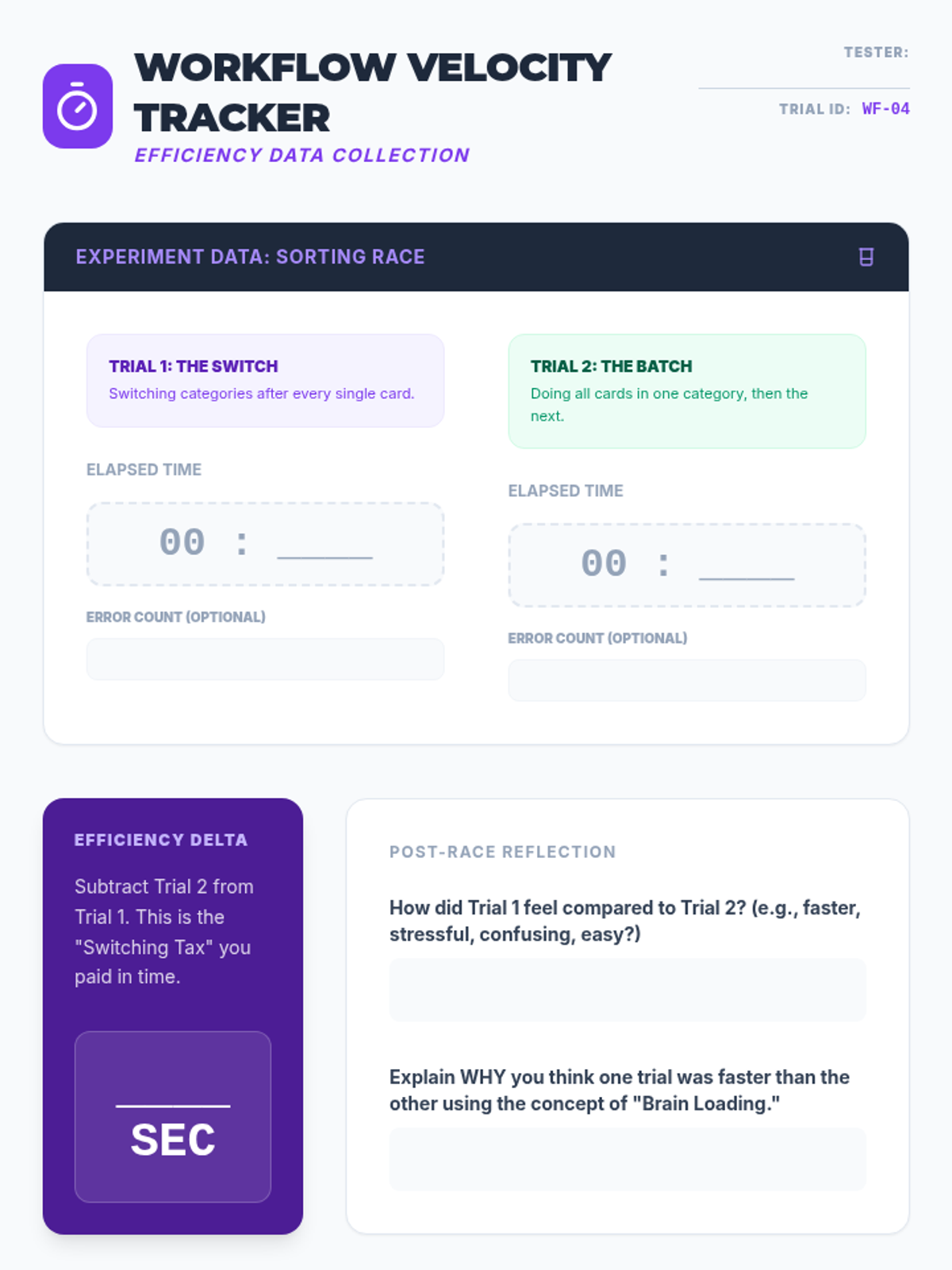
Students investigate the efficiency costs of multitasking and context switching. Through timed experiments, they compare sequential task completion with 'batching' strategies to develop more efficient workflow habits.
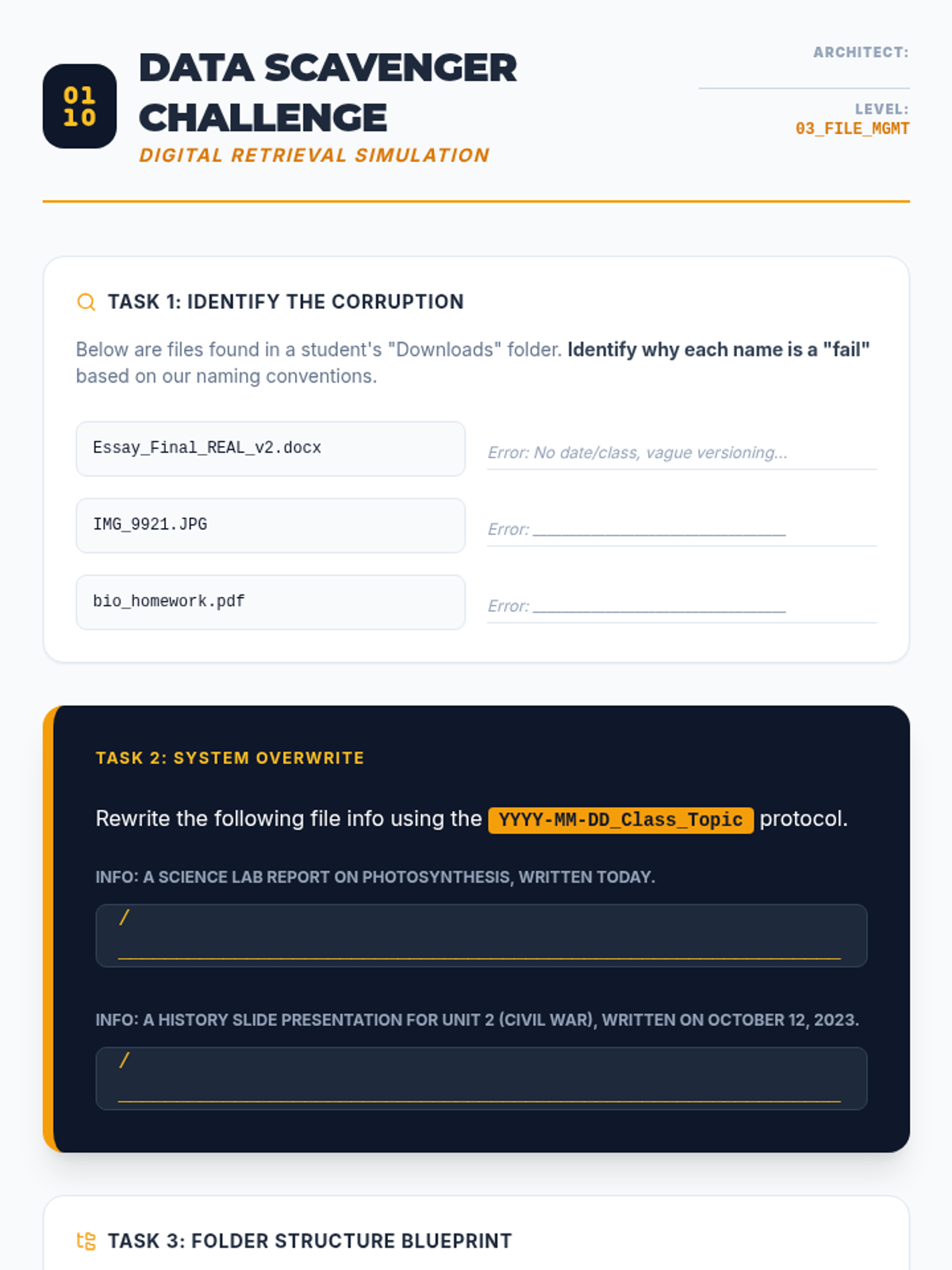
This lesson focuses on digital literacy through the lens of organization. Students learn effective file naming conventions, folder hierarchies, and inbox management strategies to prevent 'digital hoarding' and improve information retrieval speed.
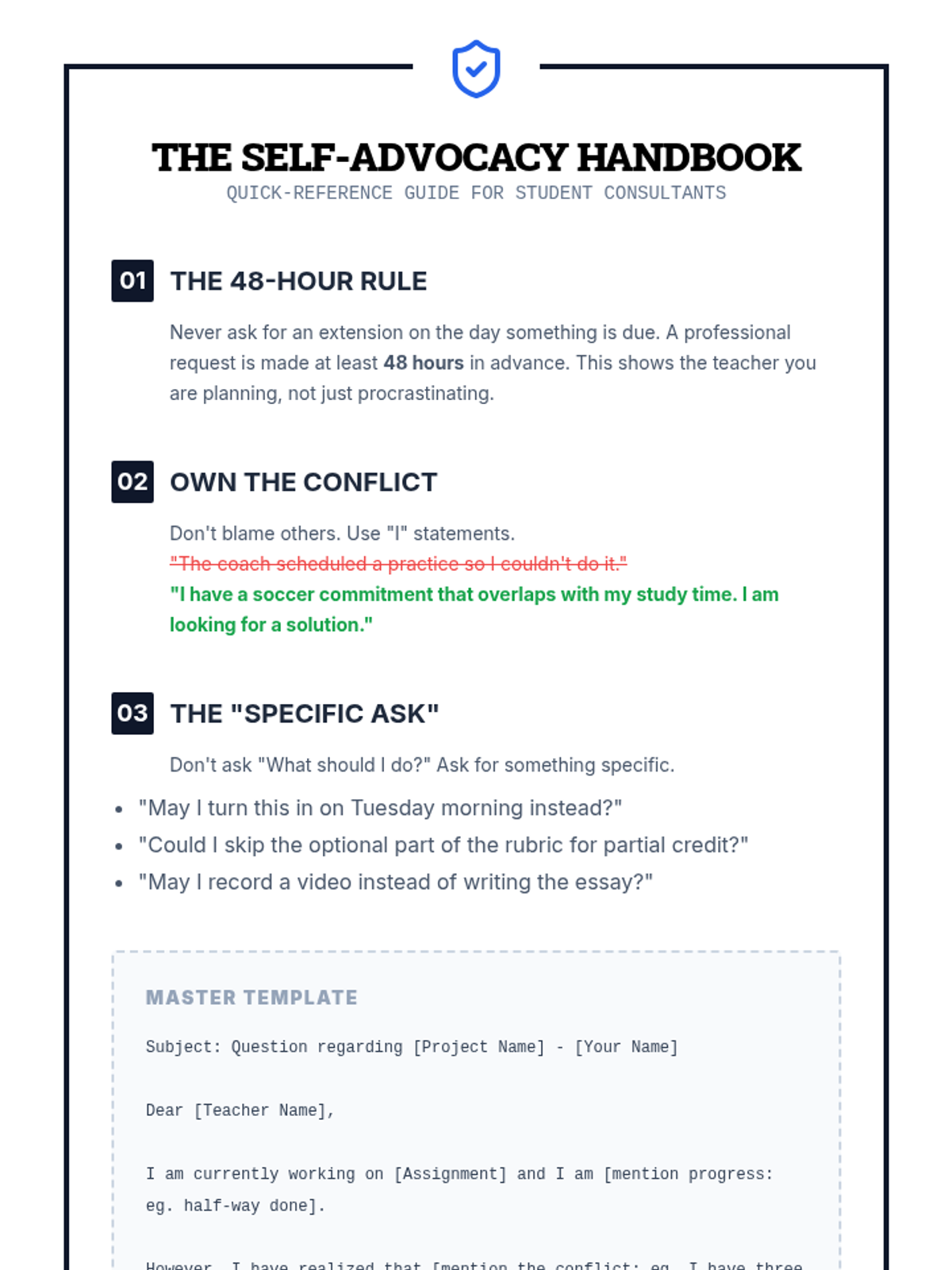
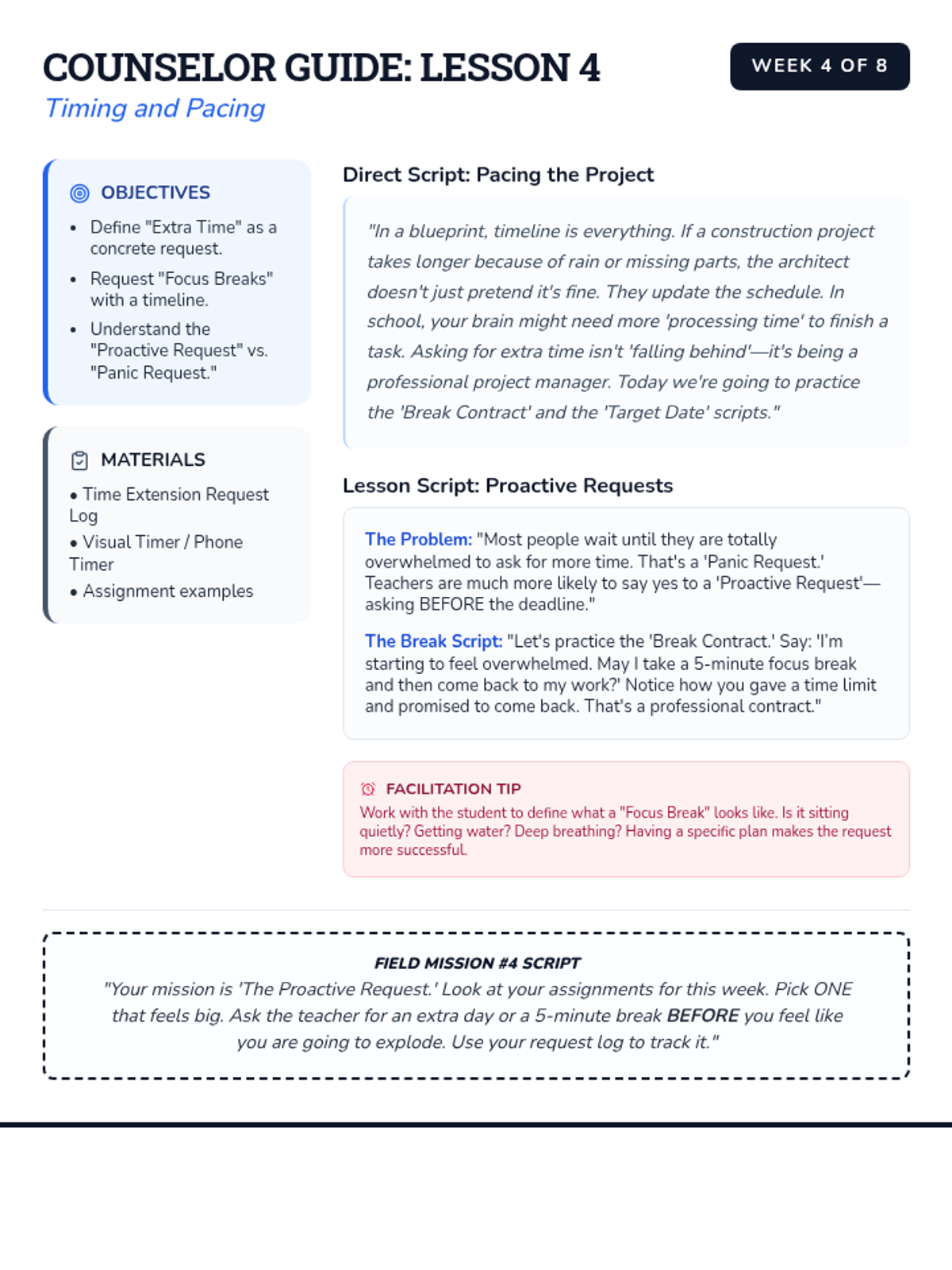
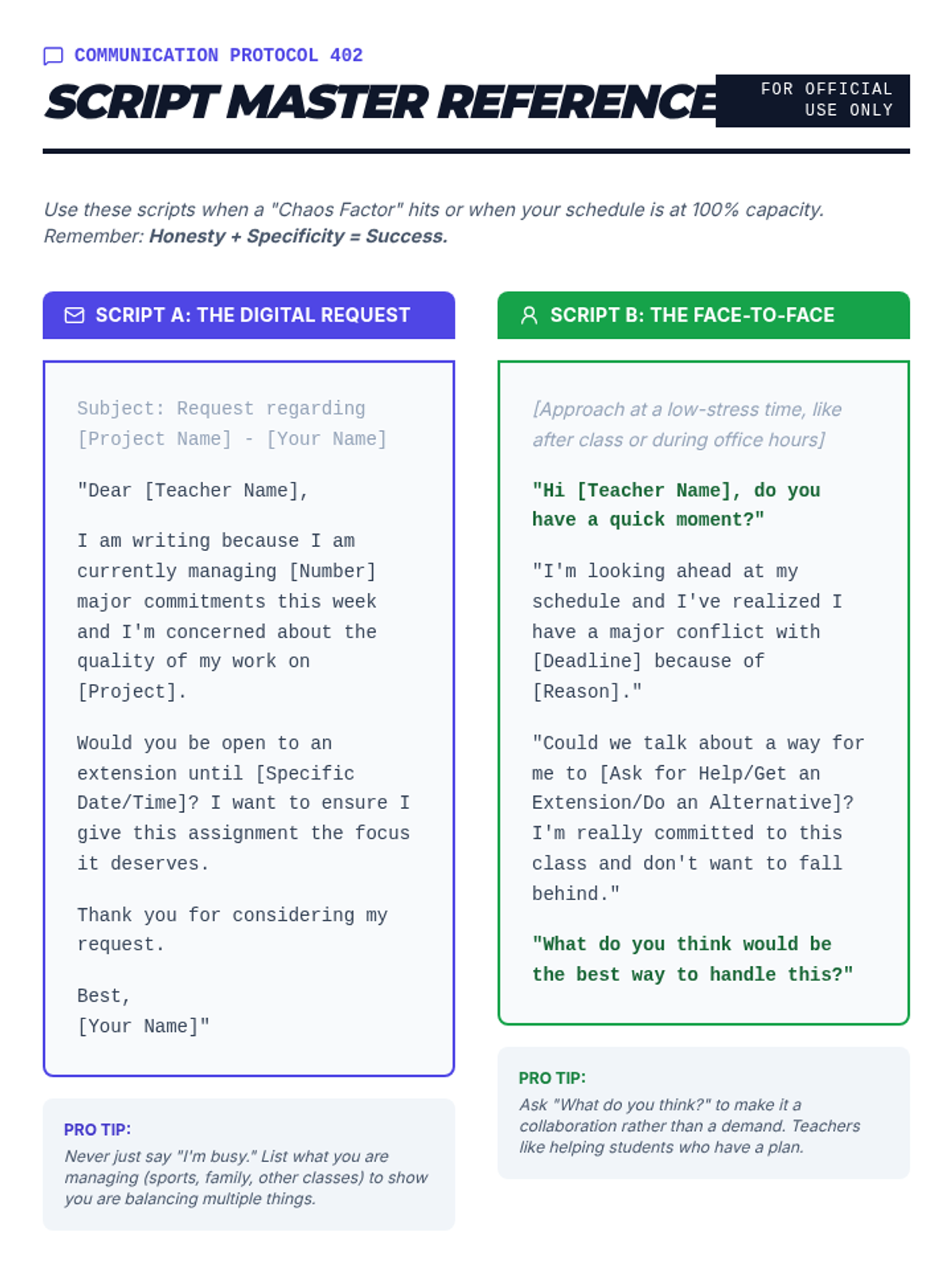
Focuses on professional communication and self-advocacy, teaching students how to request support and extensions effectively before deadlines pass.
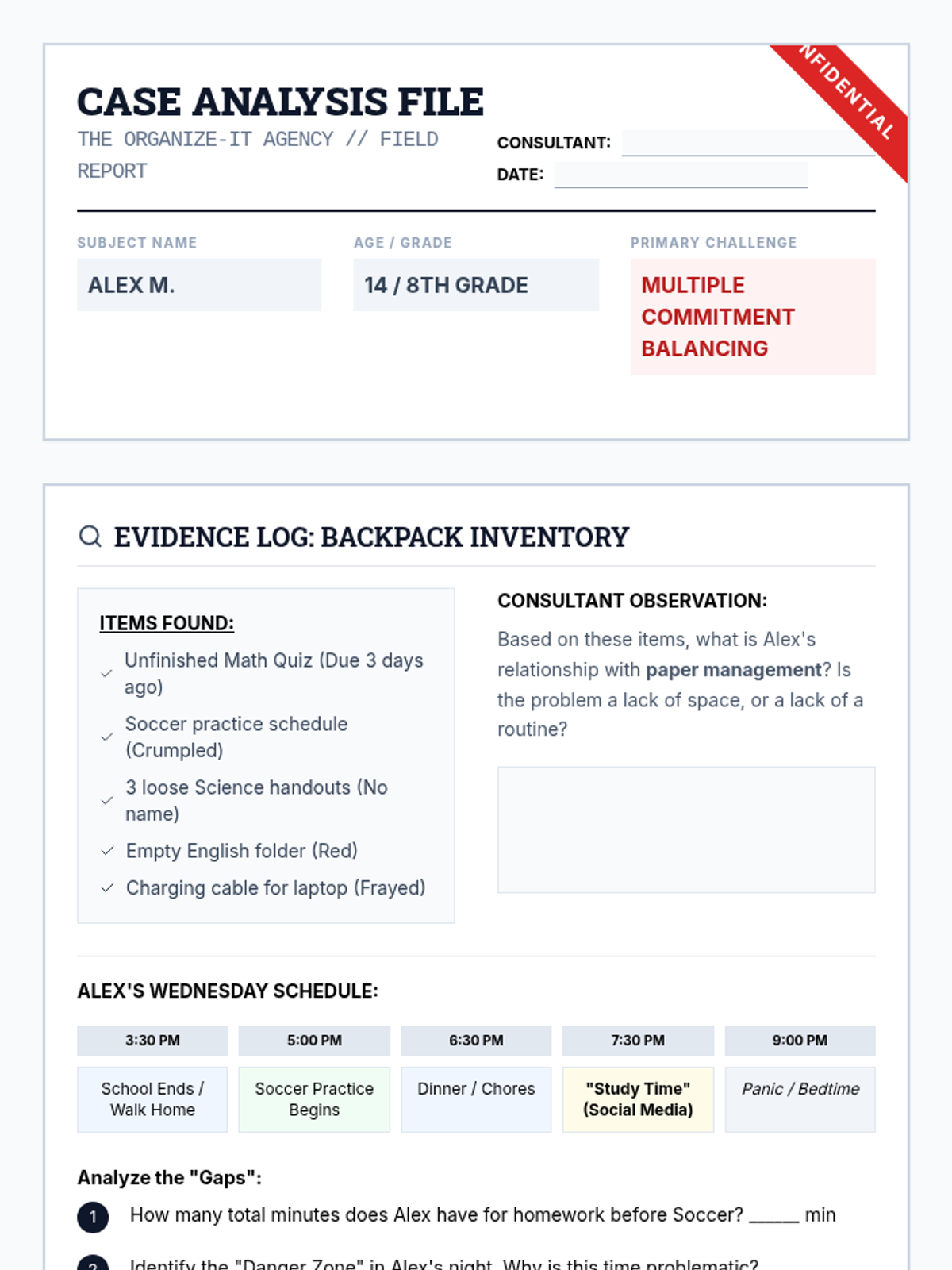
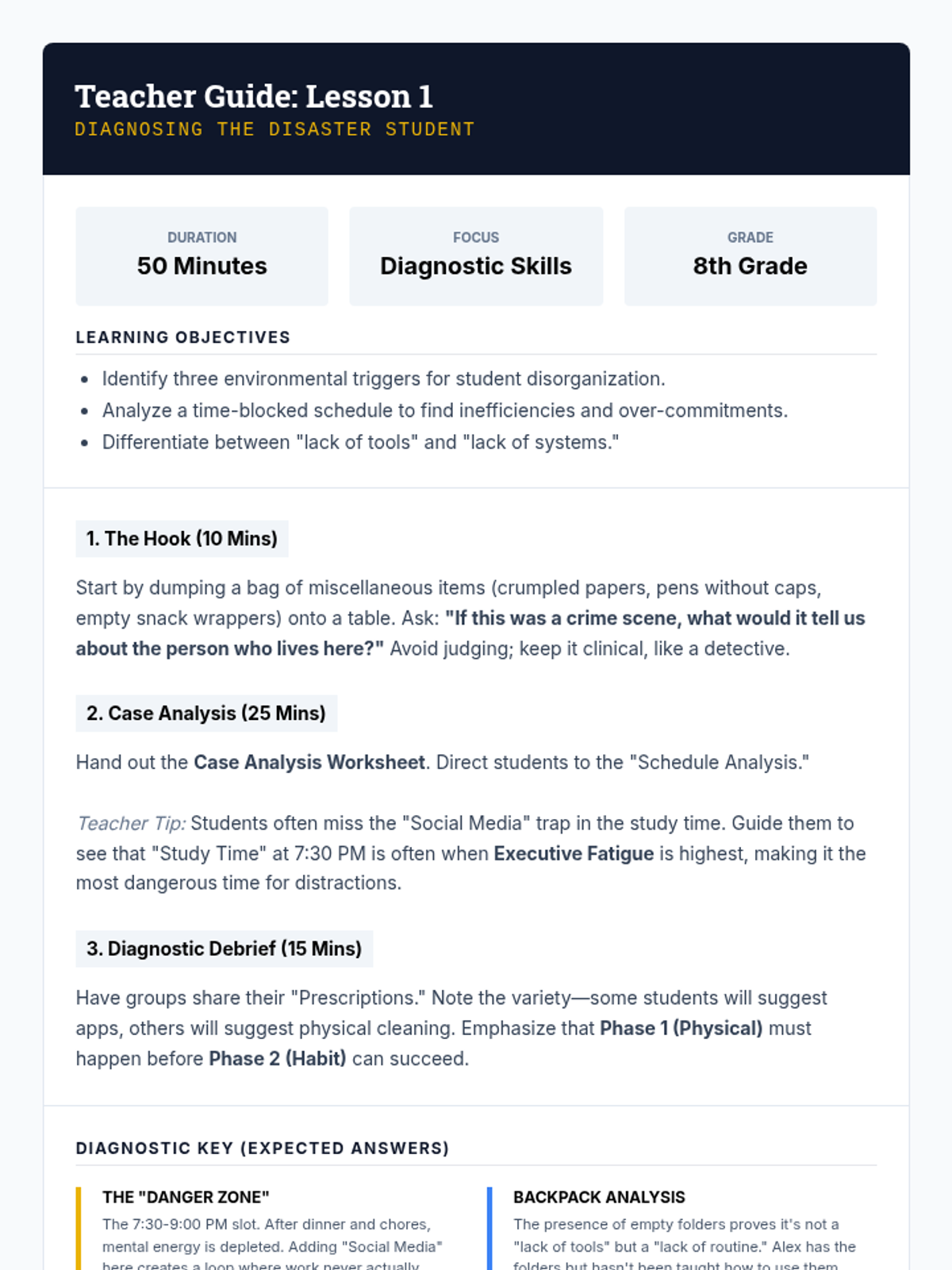
Students step into the role of consultants to analyze a 'disaster' case study, examining a fictional student's backpack and schedule to diagnose root causes of disorganization.
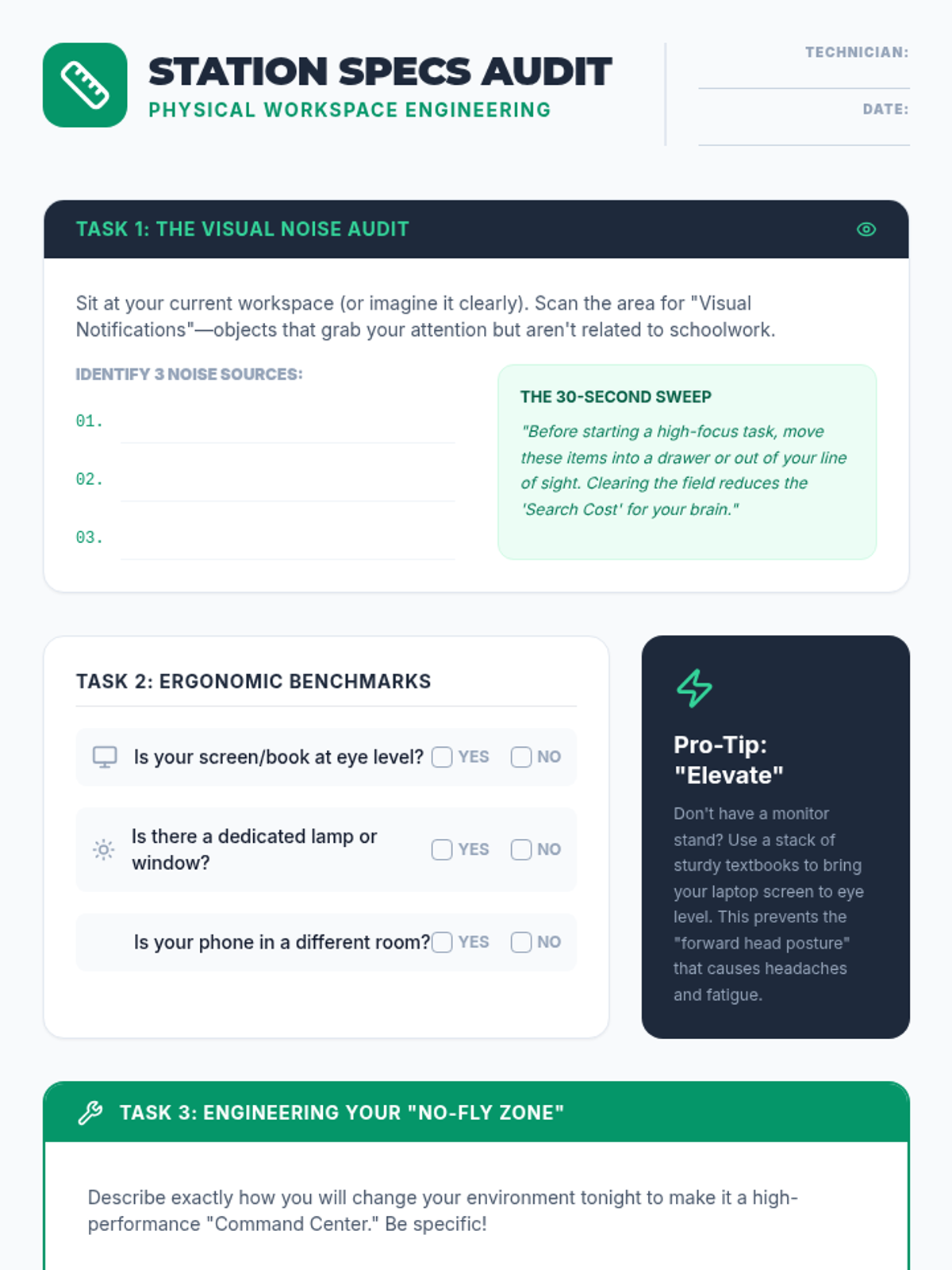
Students analyze the impact of their physical environment on focus and productivity. By auditing workspace case studies and their own study areas, they learn to design spaces that minimize distractions and optimize ergonomics.
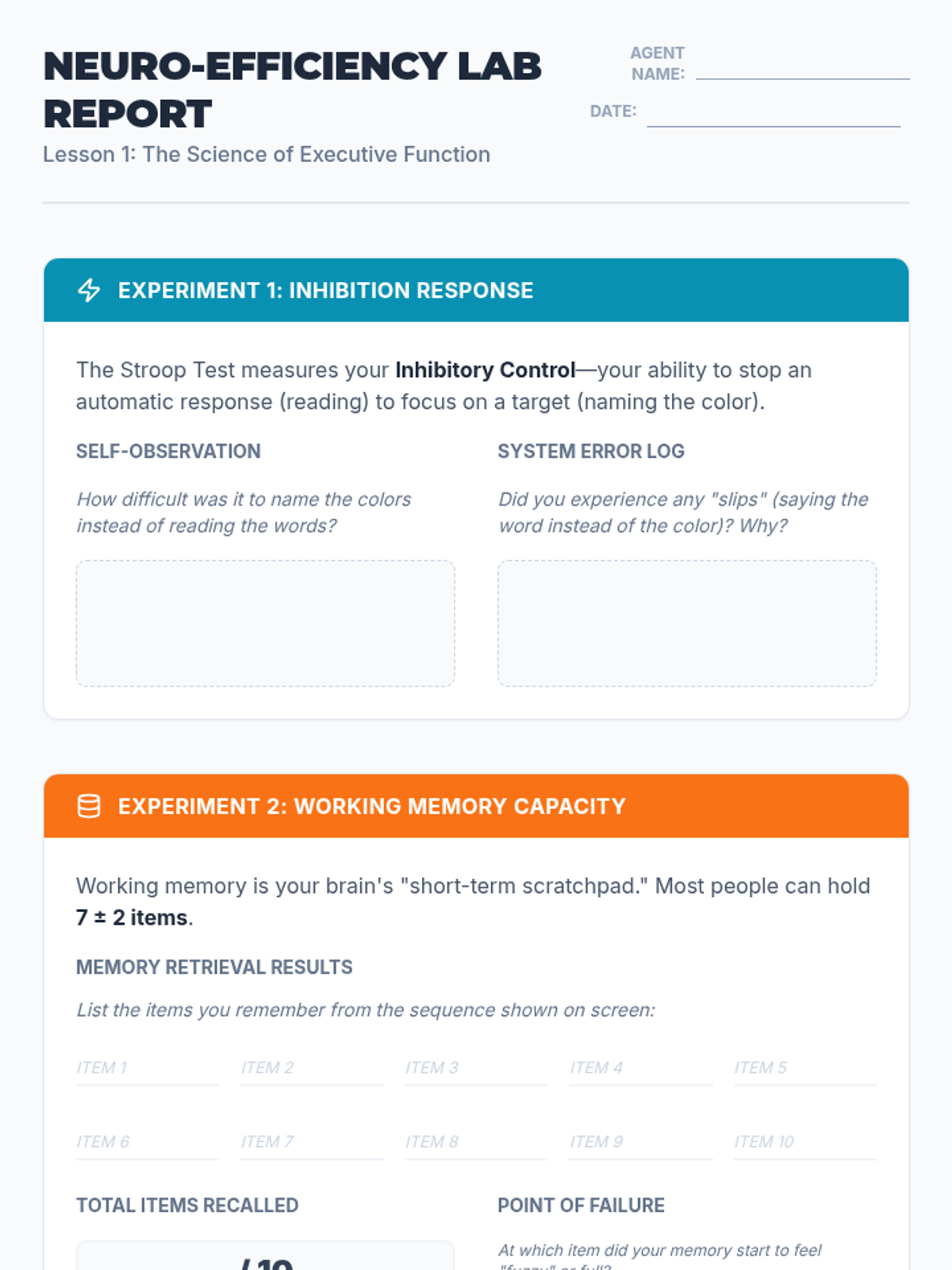
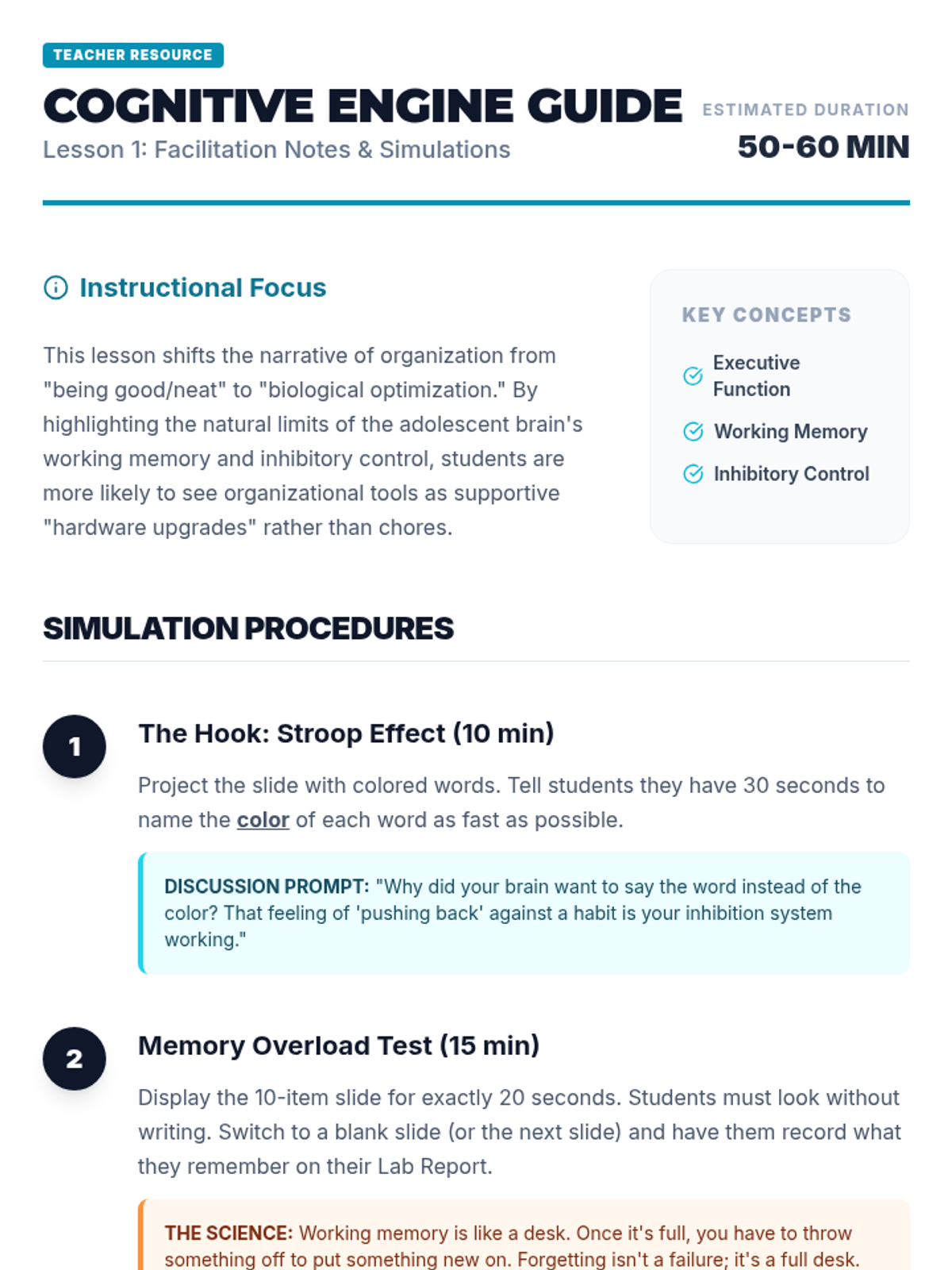
Students explore the neurological basis of executive function, focusing on working memory and inhibition. They engage in simulations like the Stroop Effect and memory overload tasks to understand why organizational systems are necessary for cognitive efficiency.
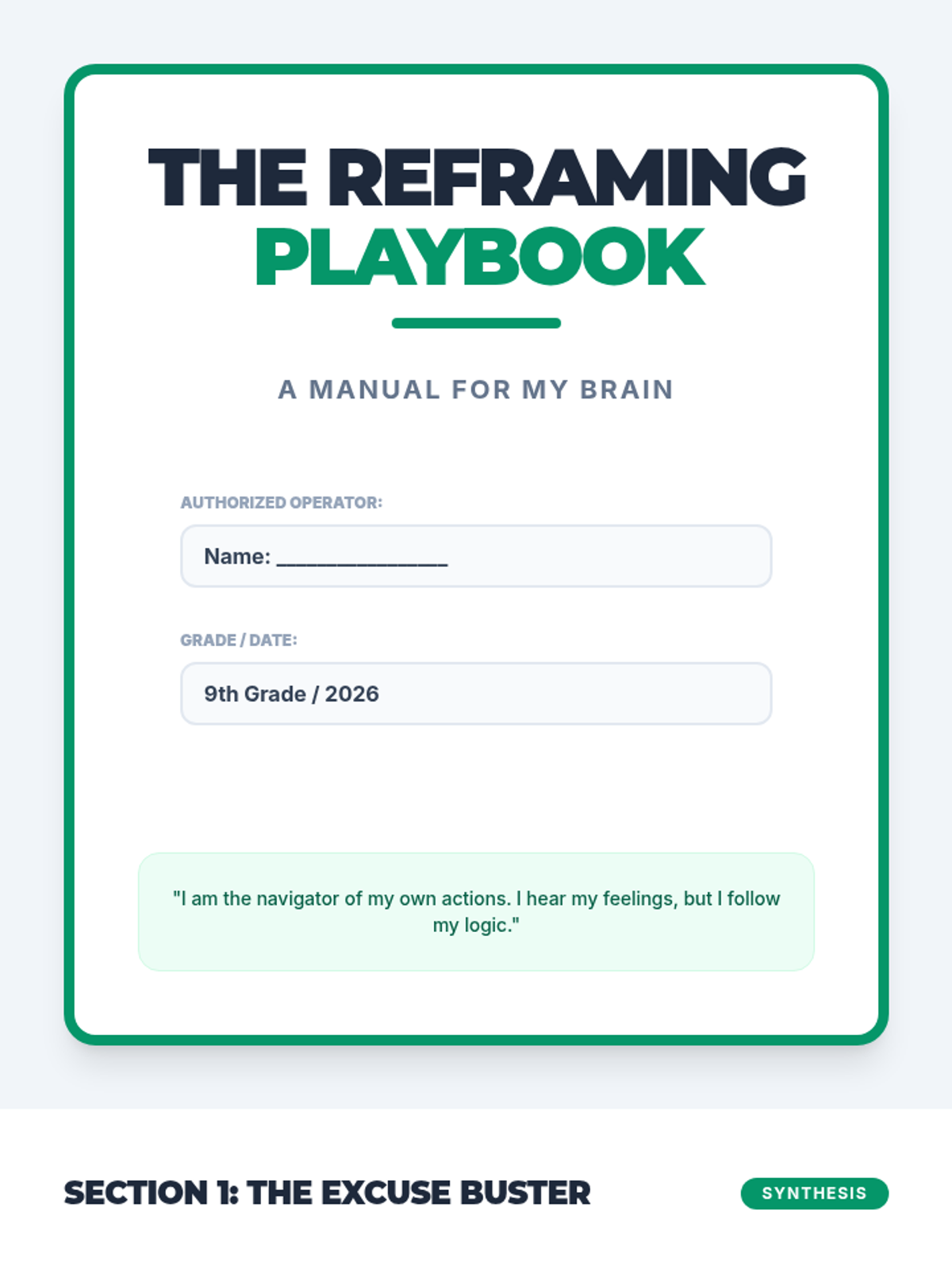
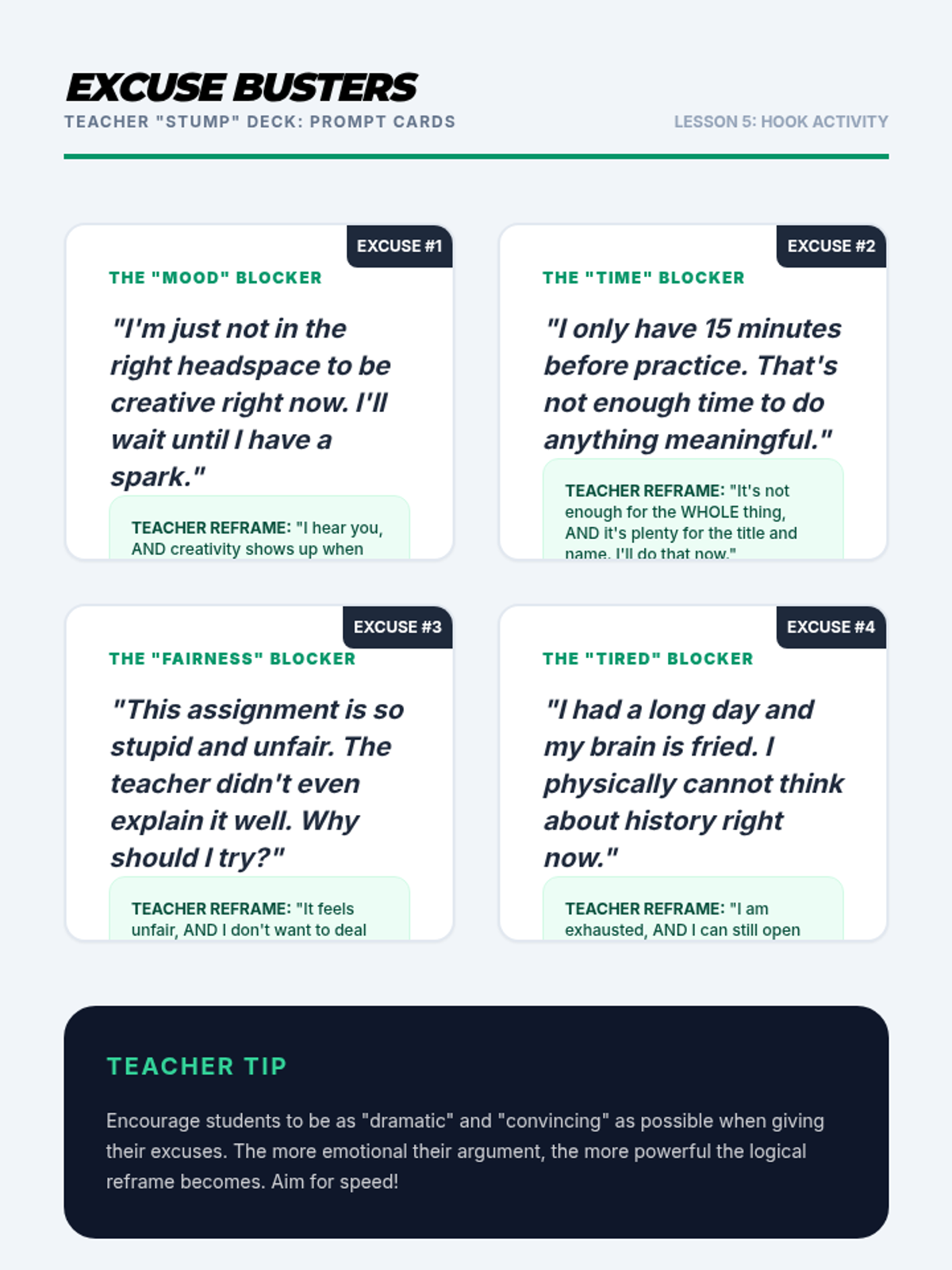
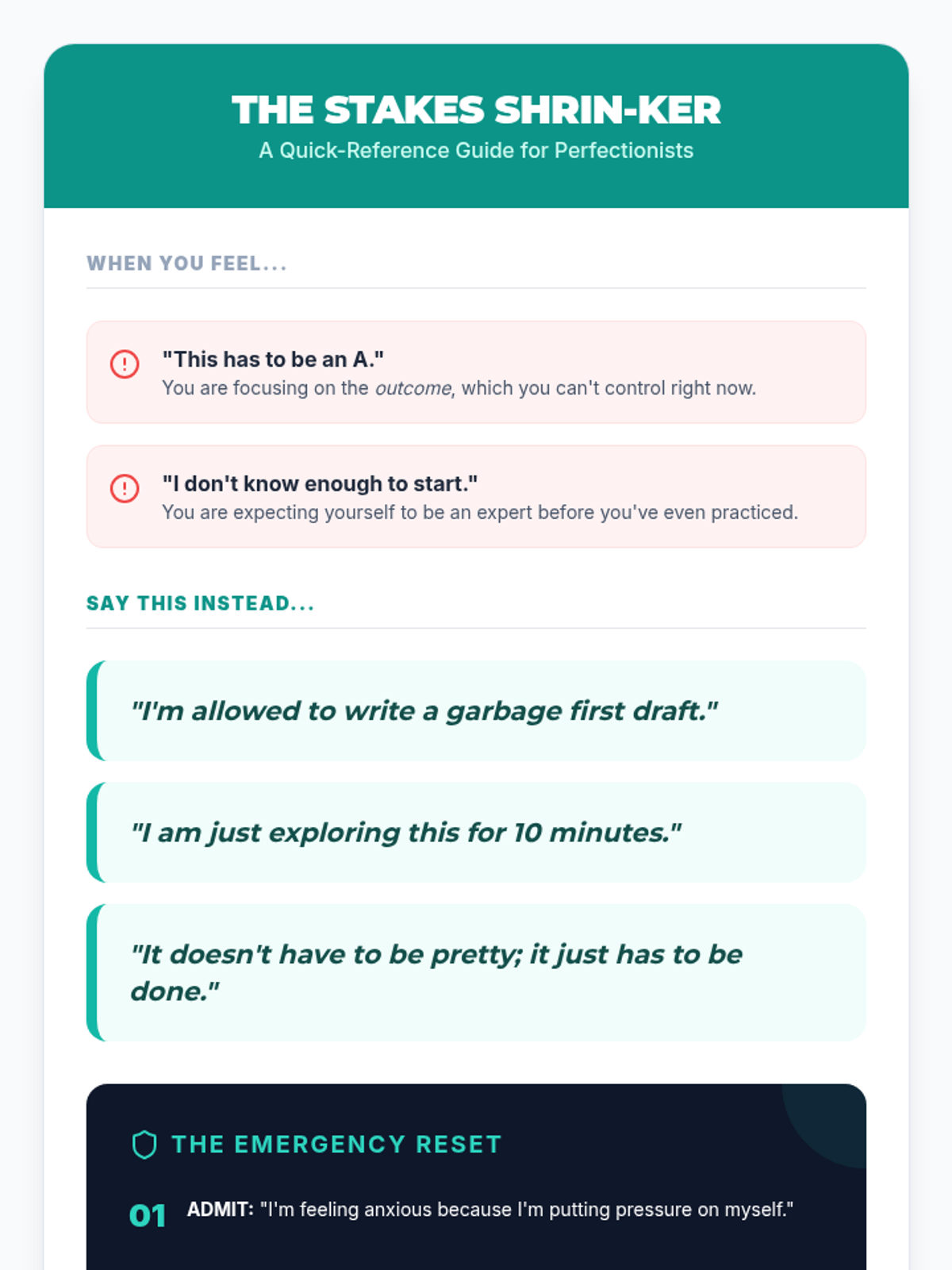
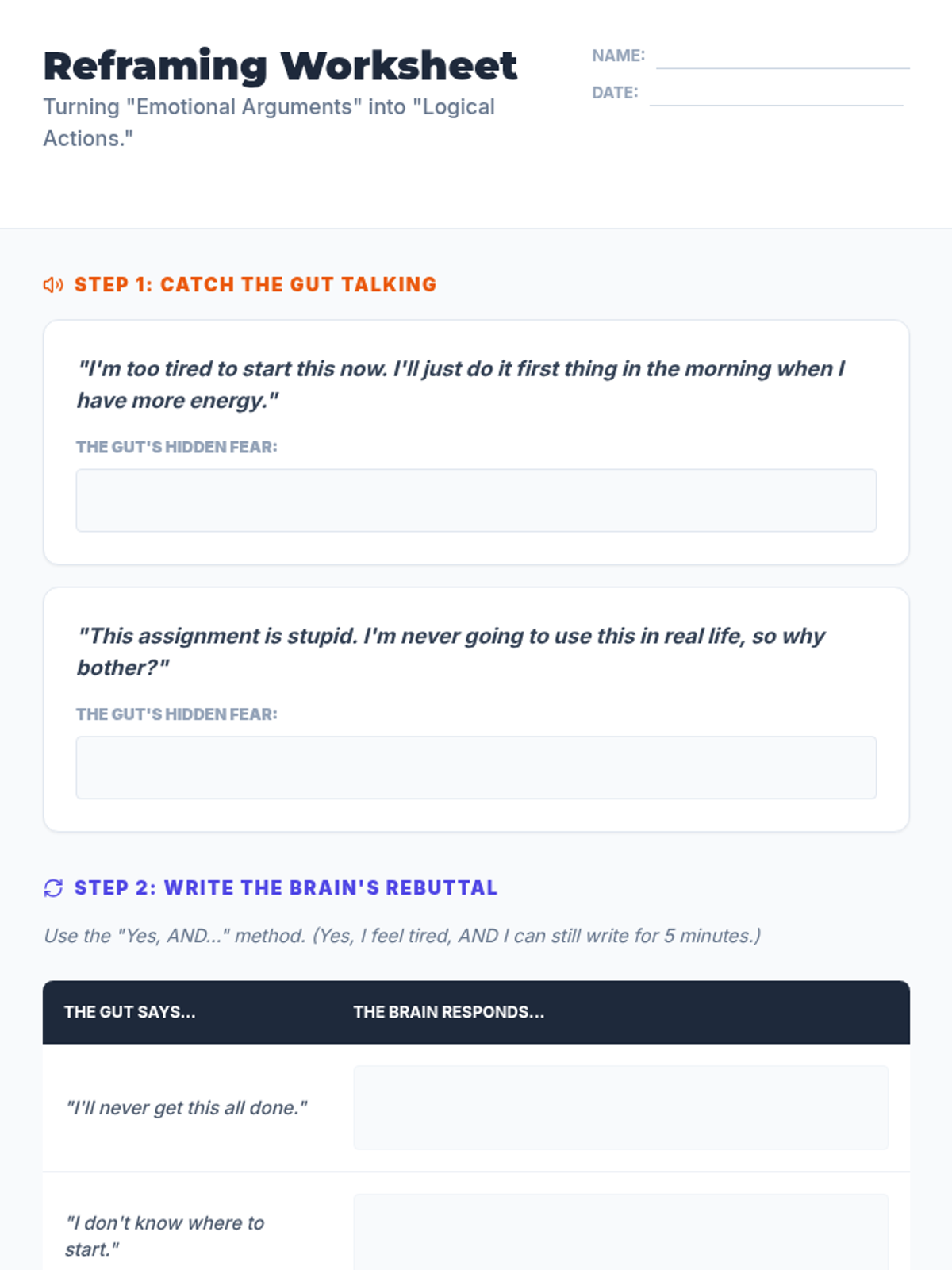
Students synthesize their learning by creating a reference guide that maps common complaints to effective rebuttals, creating a personalized tool for future task management.
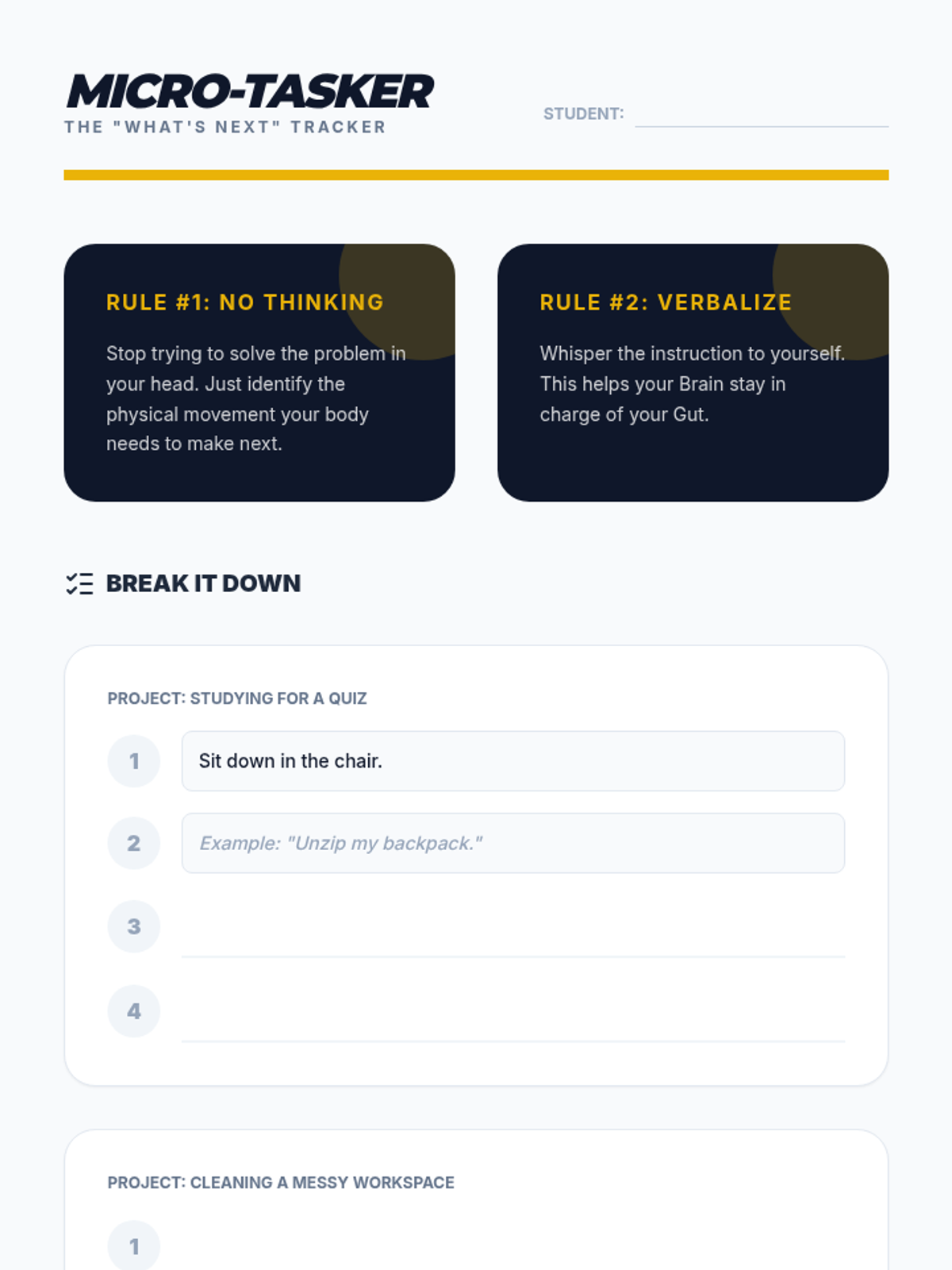
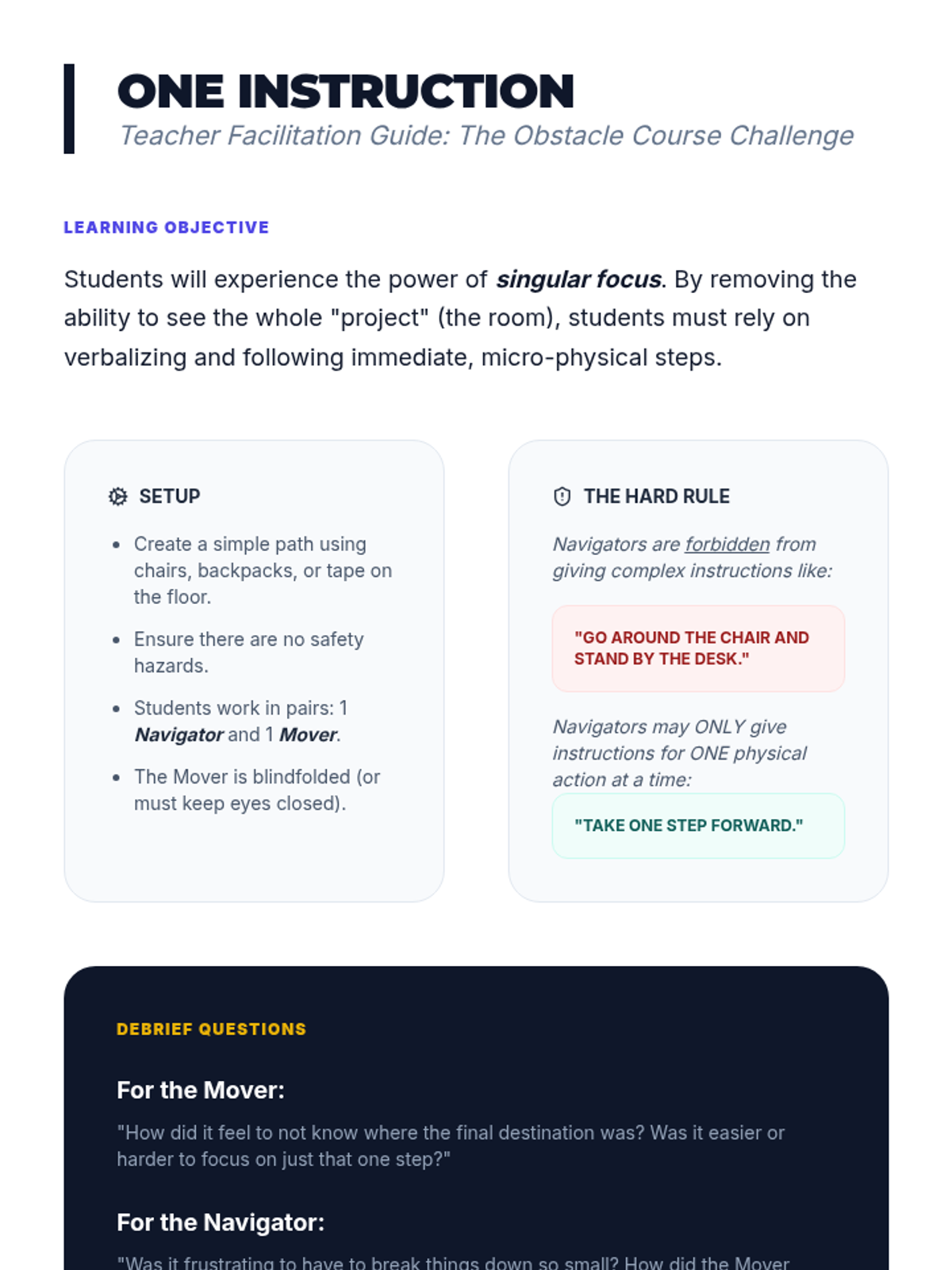
Students practice ignoring the whole project and verbally identifying only the immediate next physical action to train the brain to focus on doable micro-tasks.
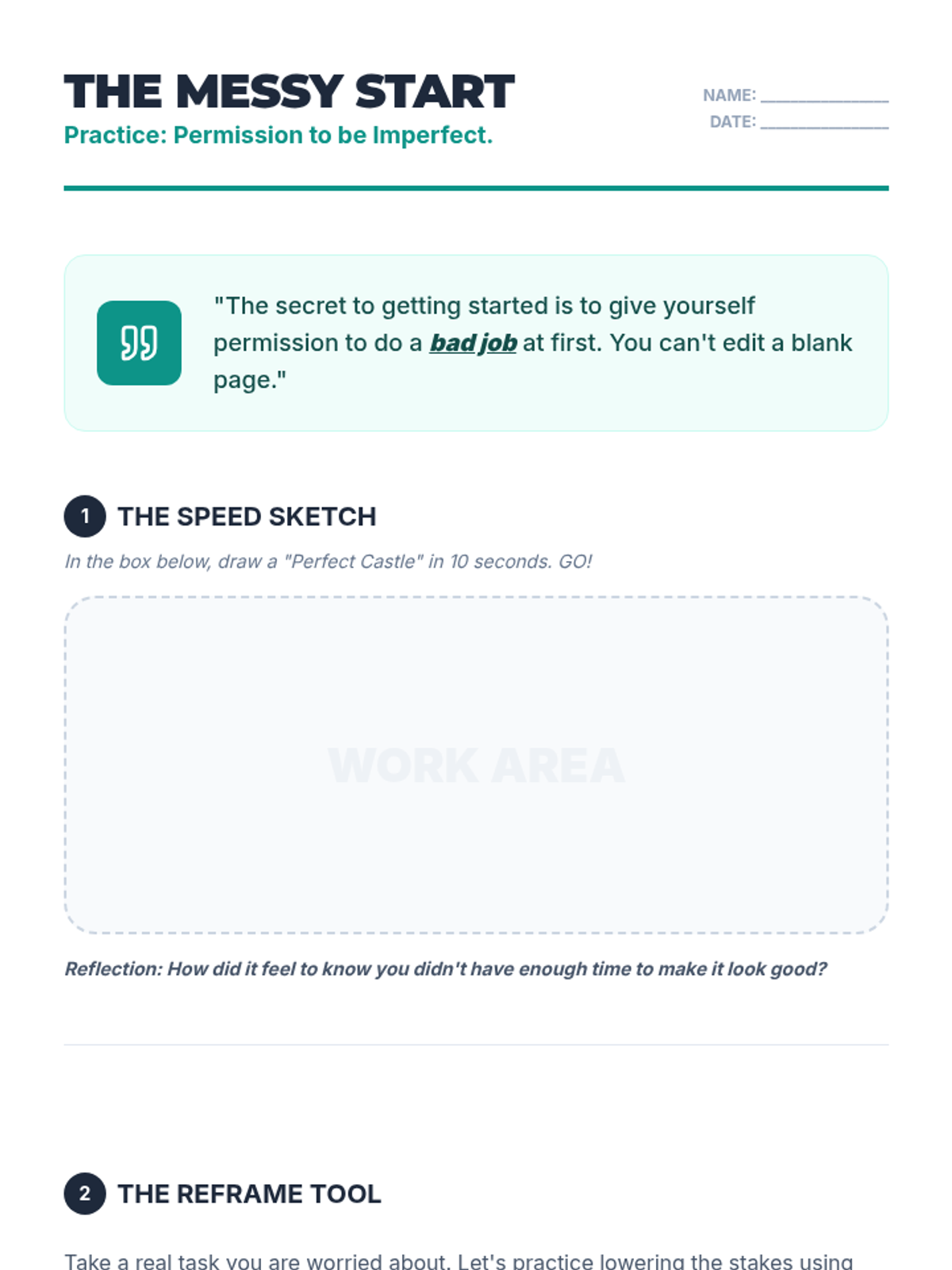
Focusing on the 'Perfectionist' blocker, students learn self-talk strategies to lower the stakes of a task by emphasizing 'rough drafts' and 'messy starts' over perfect outcomes.
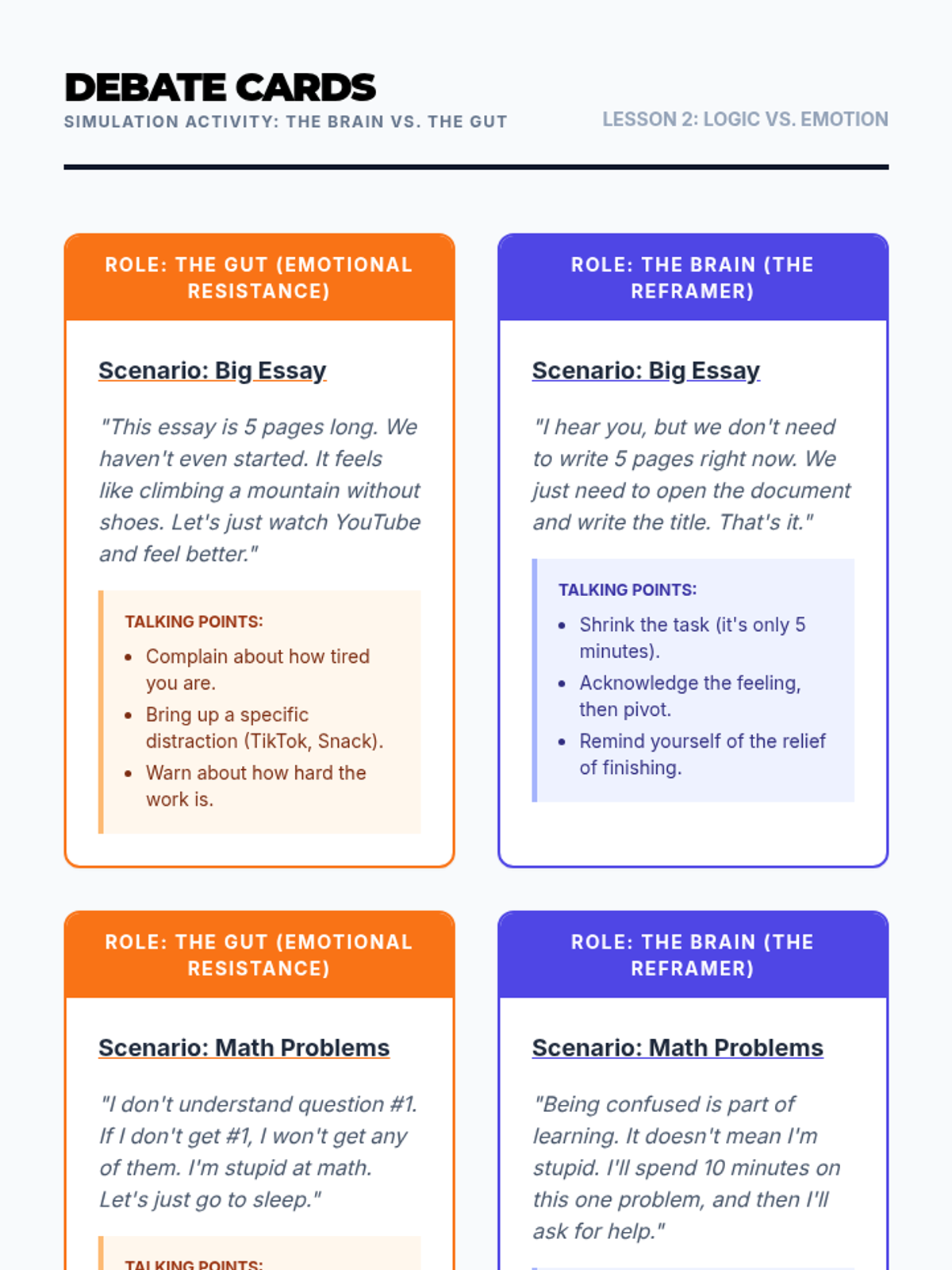
Students role-play a debate between 'The Brain' (Executive Function) and 'The Gut' (Emotional Resistance) to practice using logical self-talk statements to counter emotional arguments for delay.
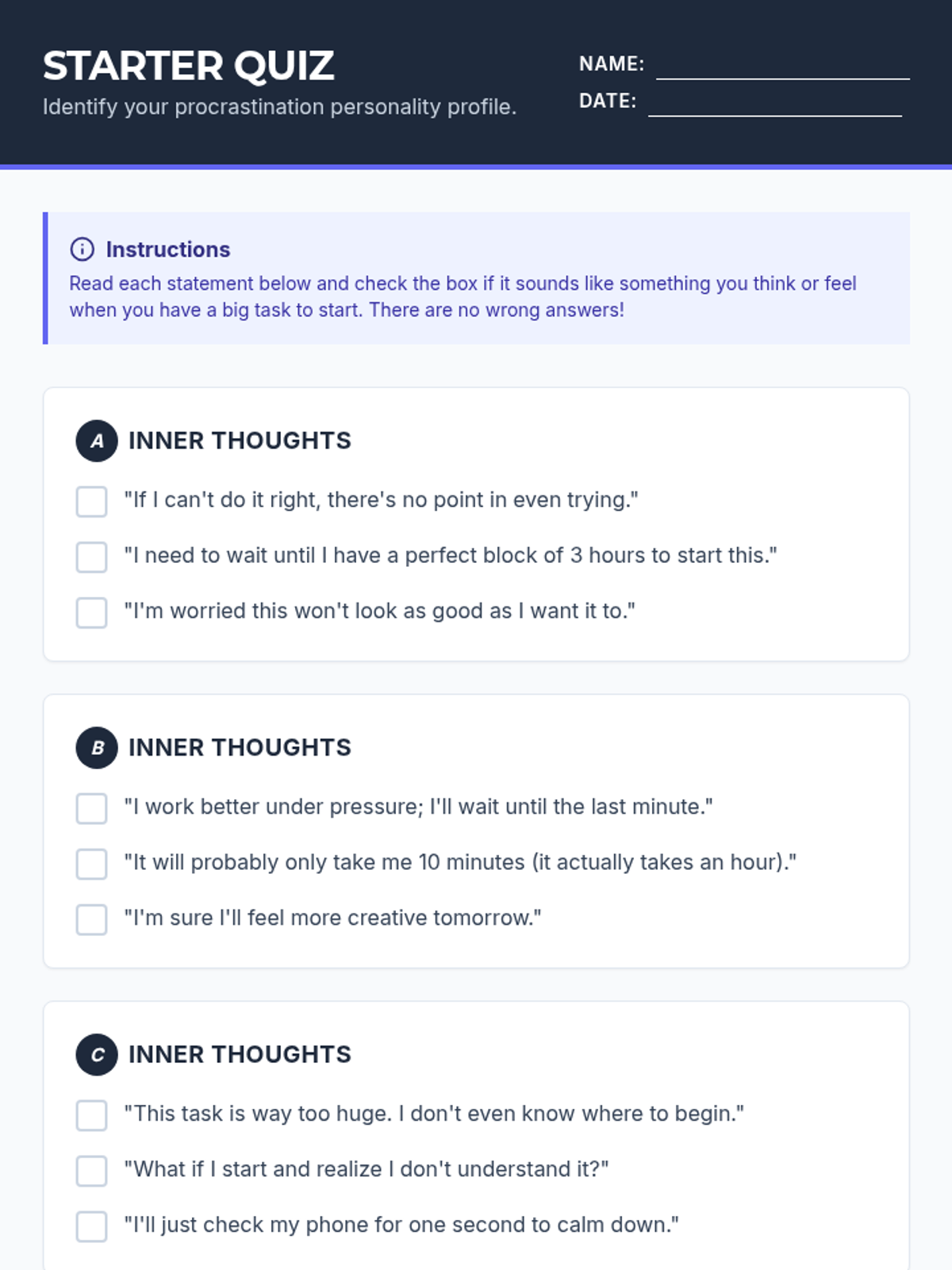
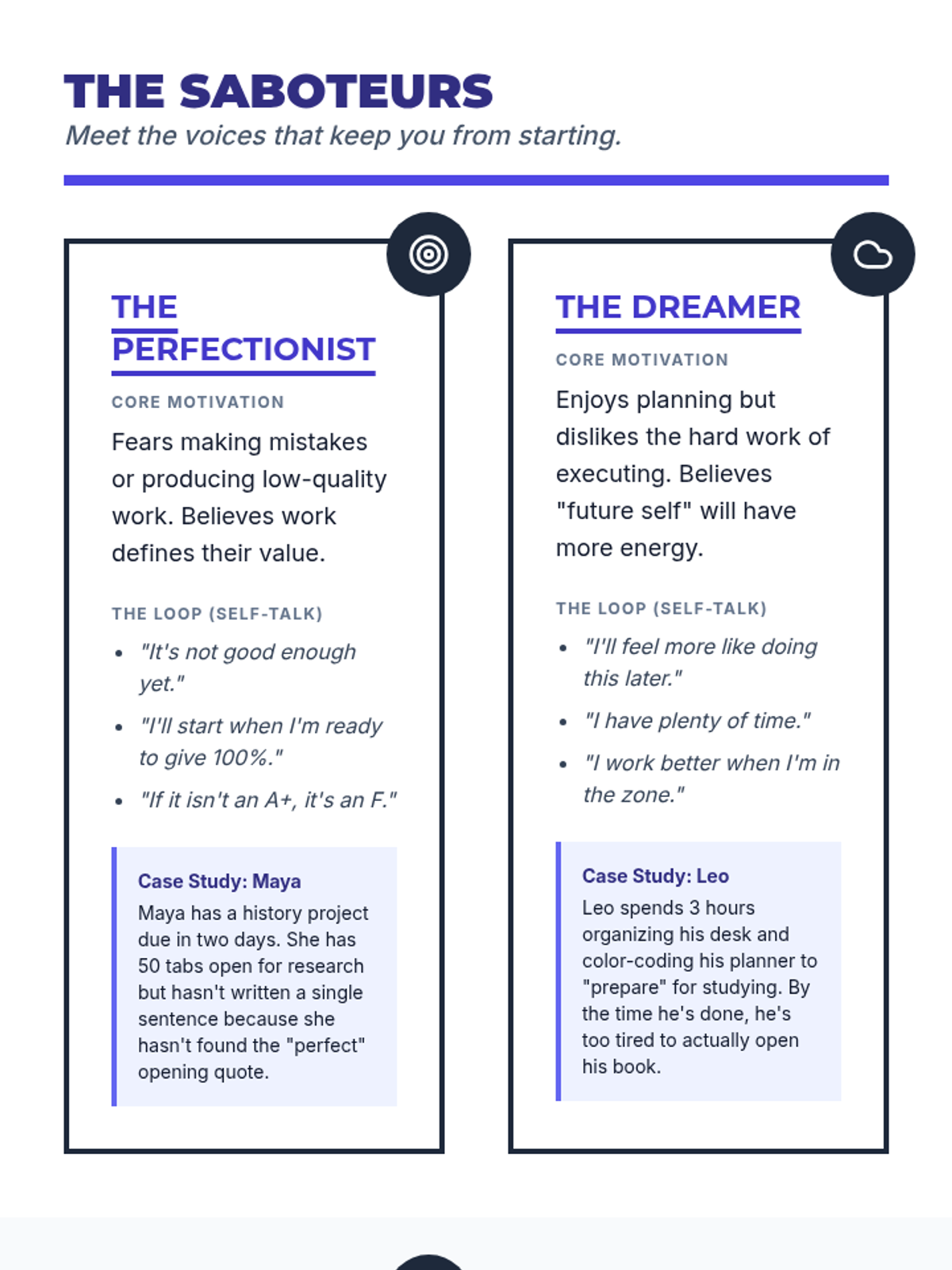
Students analyze case studies of different procrastinator types (e.g., The Perfectionist, The Dreamer, The Worrier) to identify the specific negative self-talk loops associated with each profile.
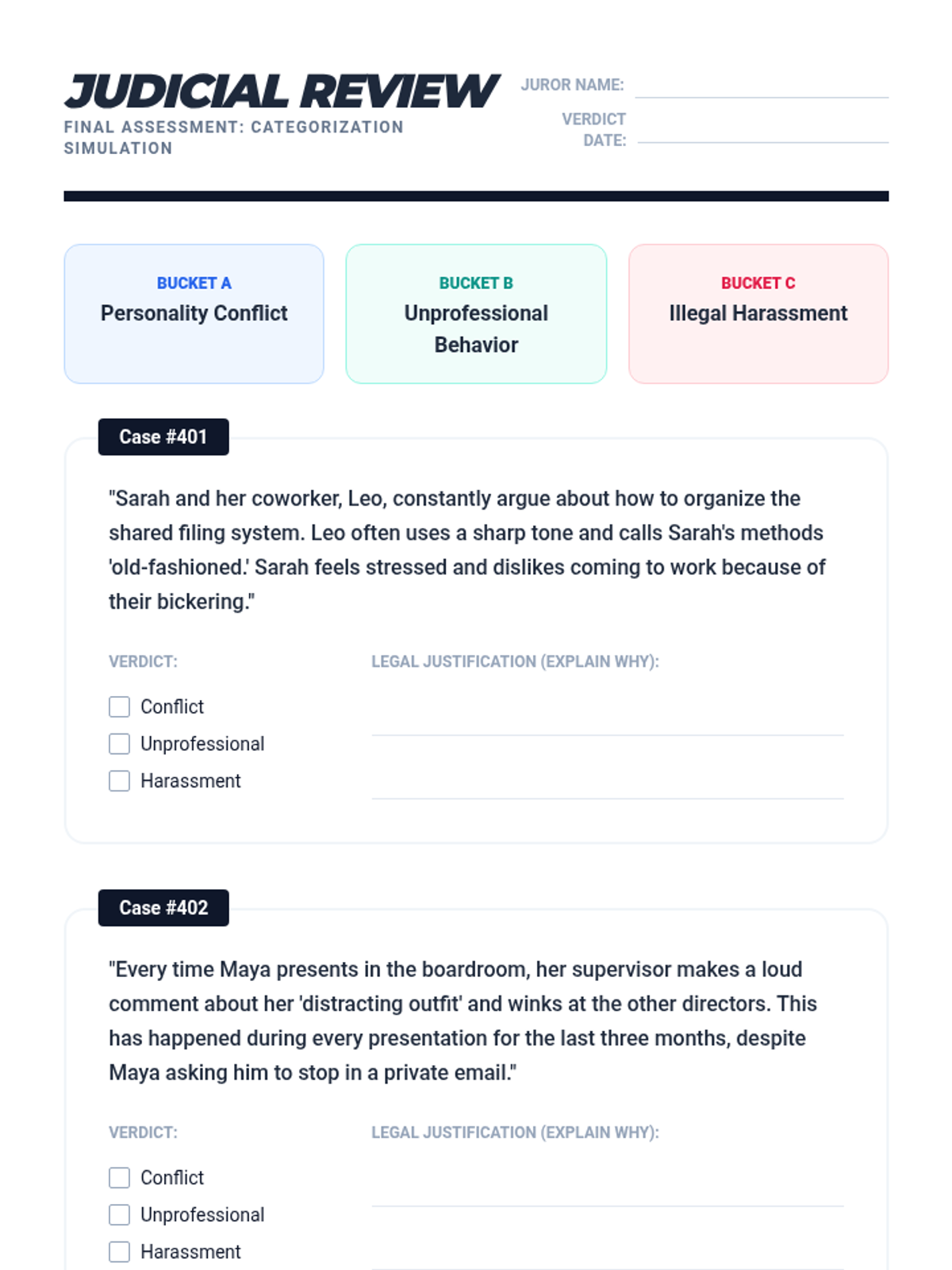
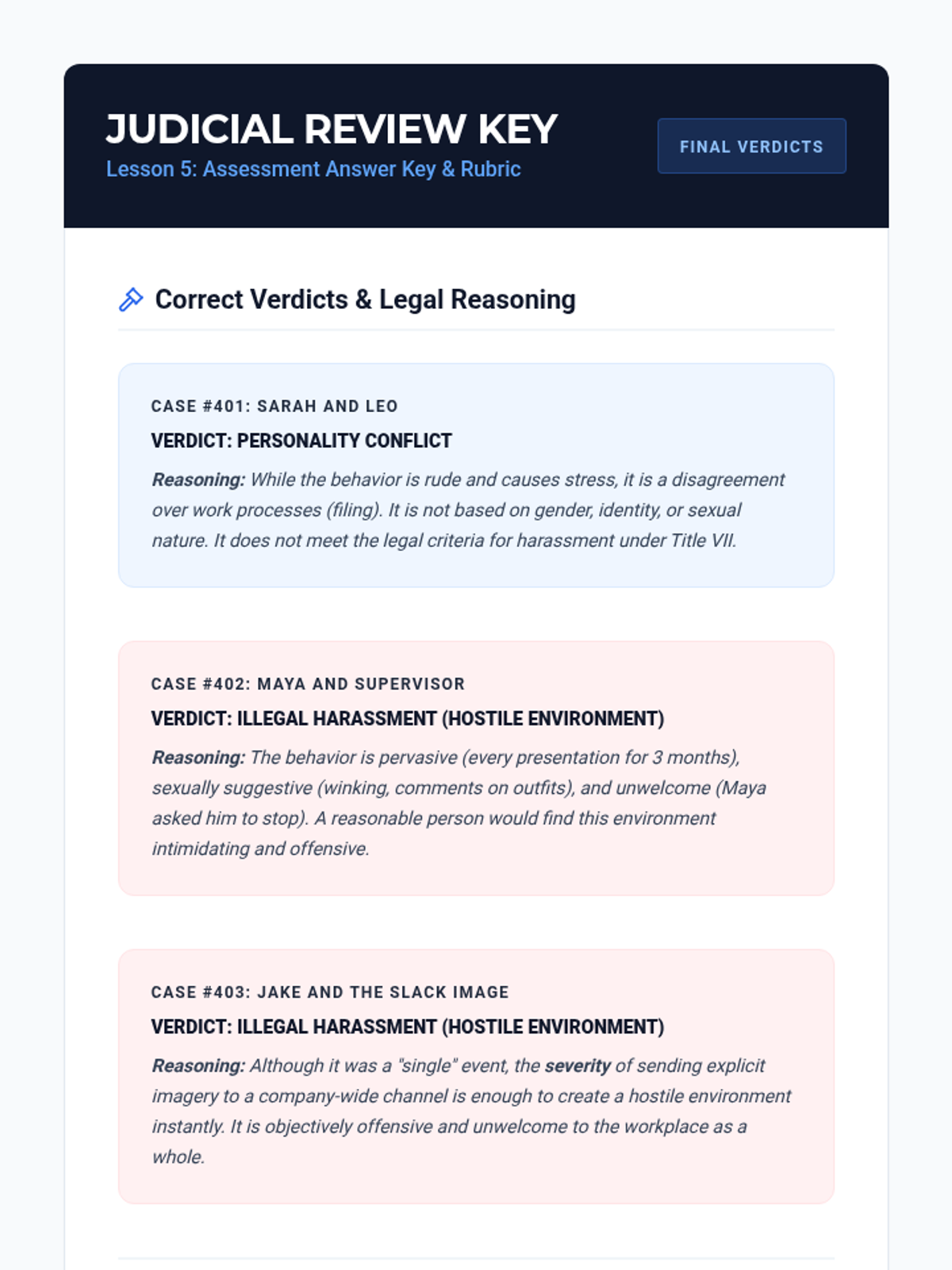
Students participate in a 'judicial review' simulation where they categorize complex scenarios as 'Personality Conflict,' 'Unprofessional,' or 'Illegal Harassment.' They must justify their categorization using criteria learned in the sequence.
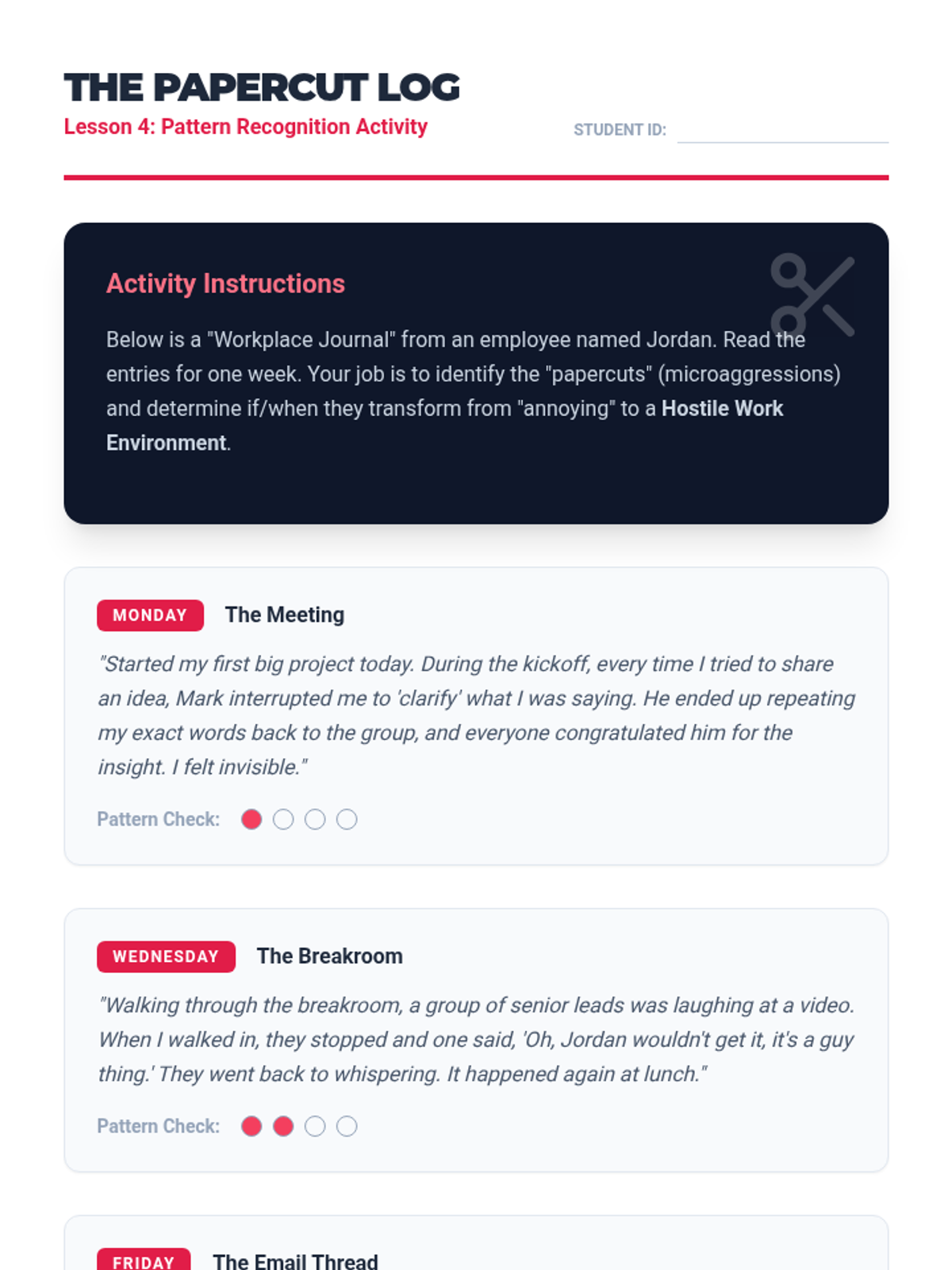
Students examine how microaggressions contribute to a hostile work environment over time. The lesson emphasizes recognizing patterns of behavior that may not be explicit harassment in isolation but become toxic cumulatively.
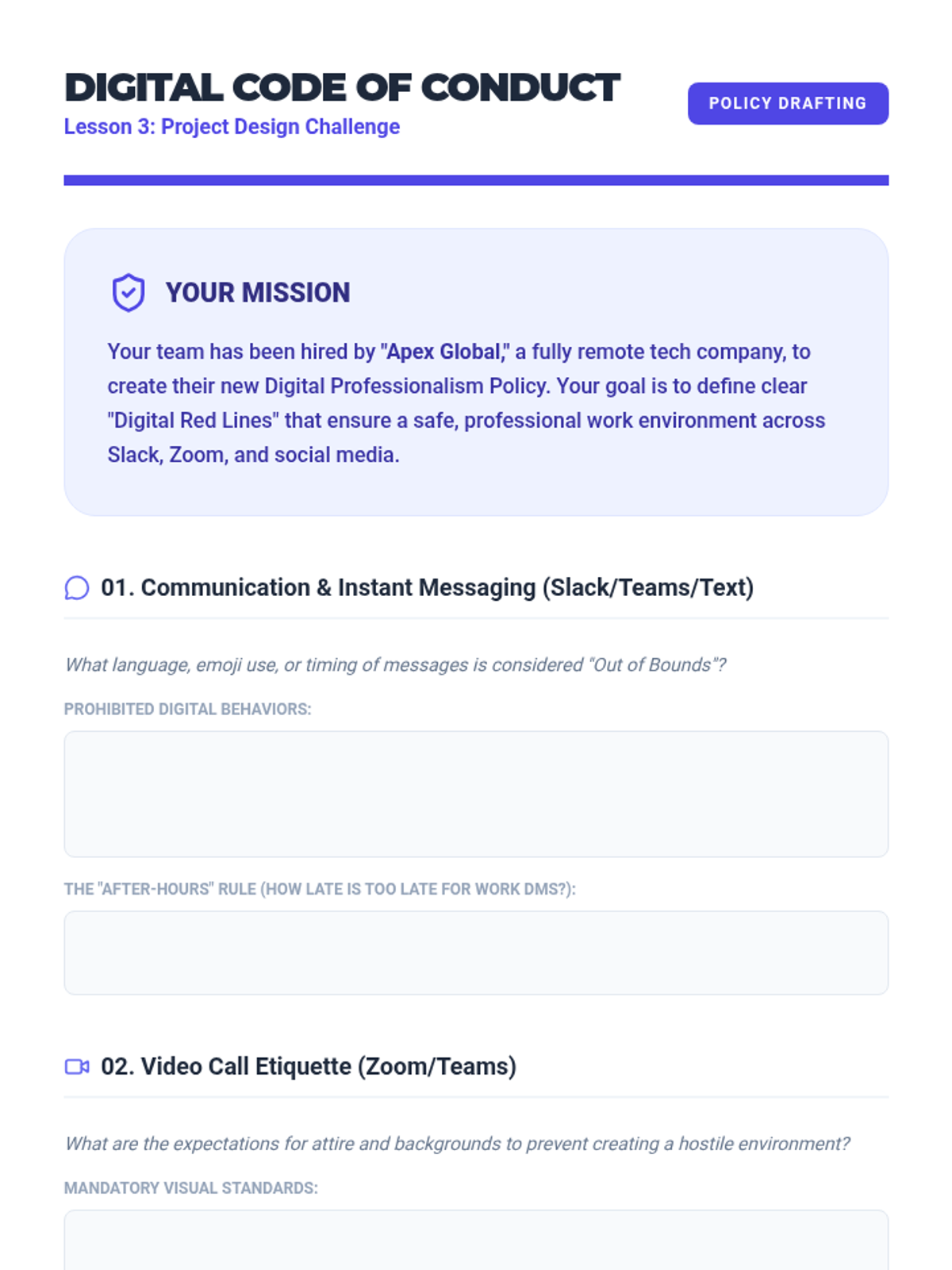
Students explore how harassment manifests in remote work and digital spaces, including inappropriate texts, emails, and social media interactions. They develop a code of conduct for digital professional communication.
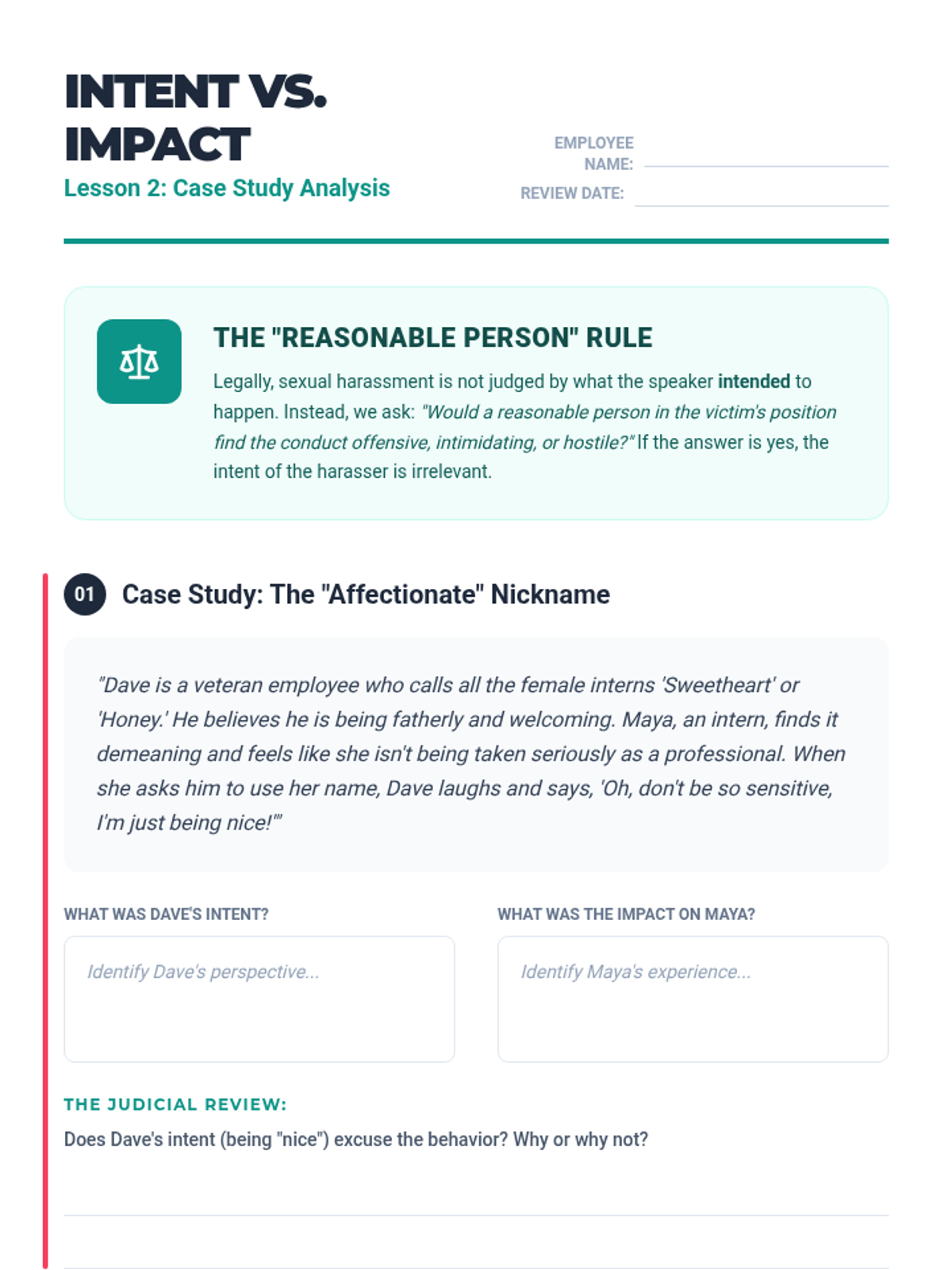
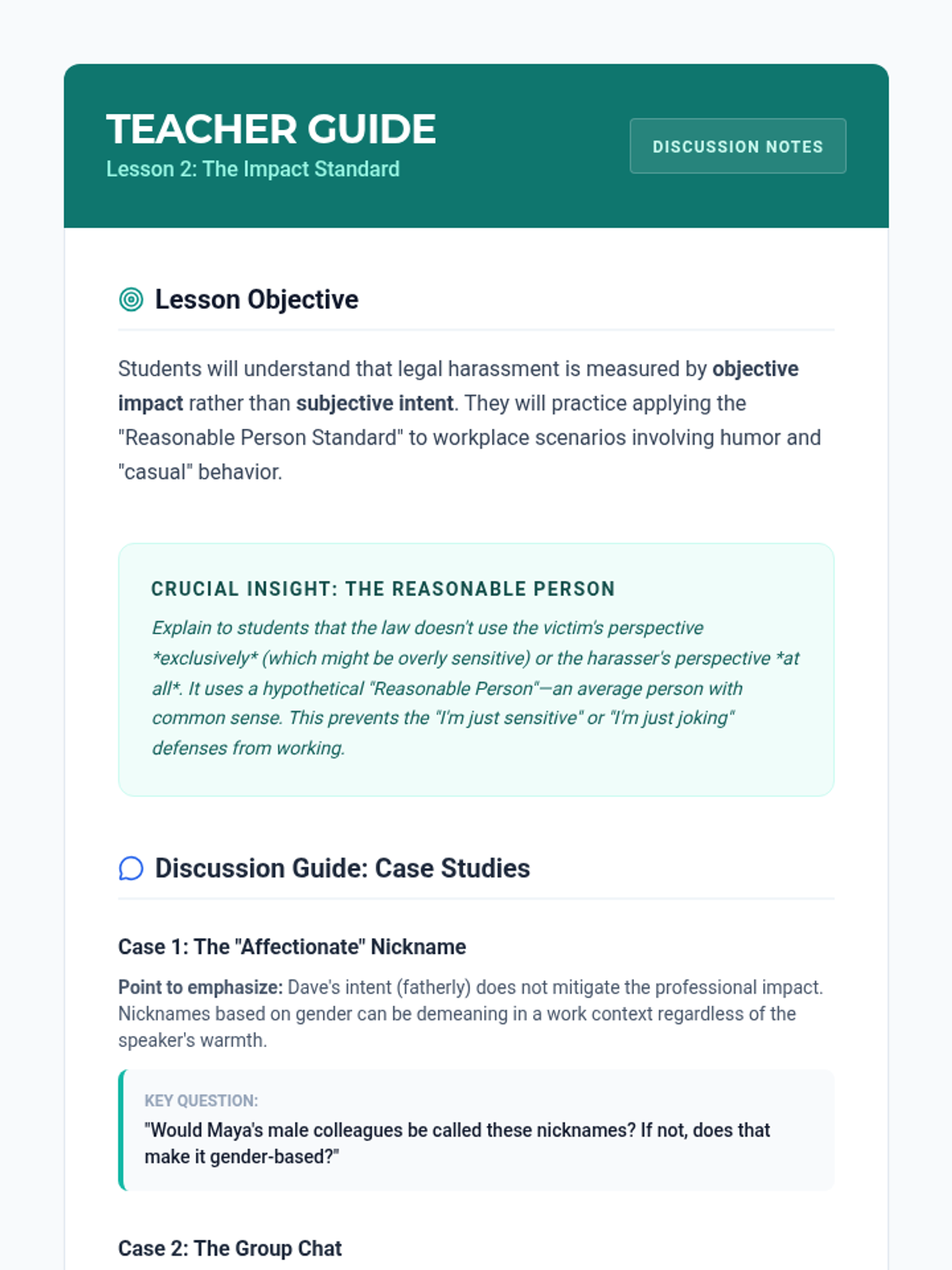
This lesson focuses on the legal standard that harassment is judged by its impact on the victim, not the intent of the harasser. Students review scenarios where 'jokes' constitute harassment.
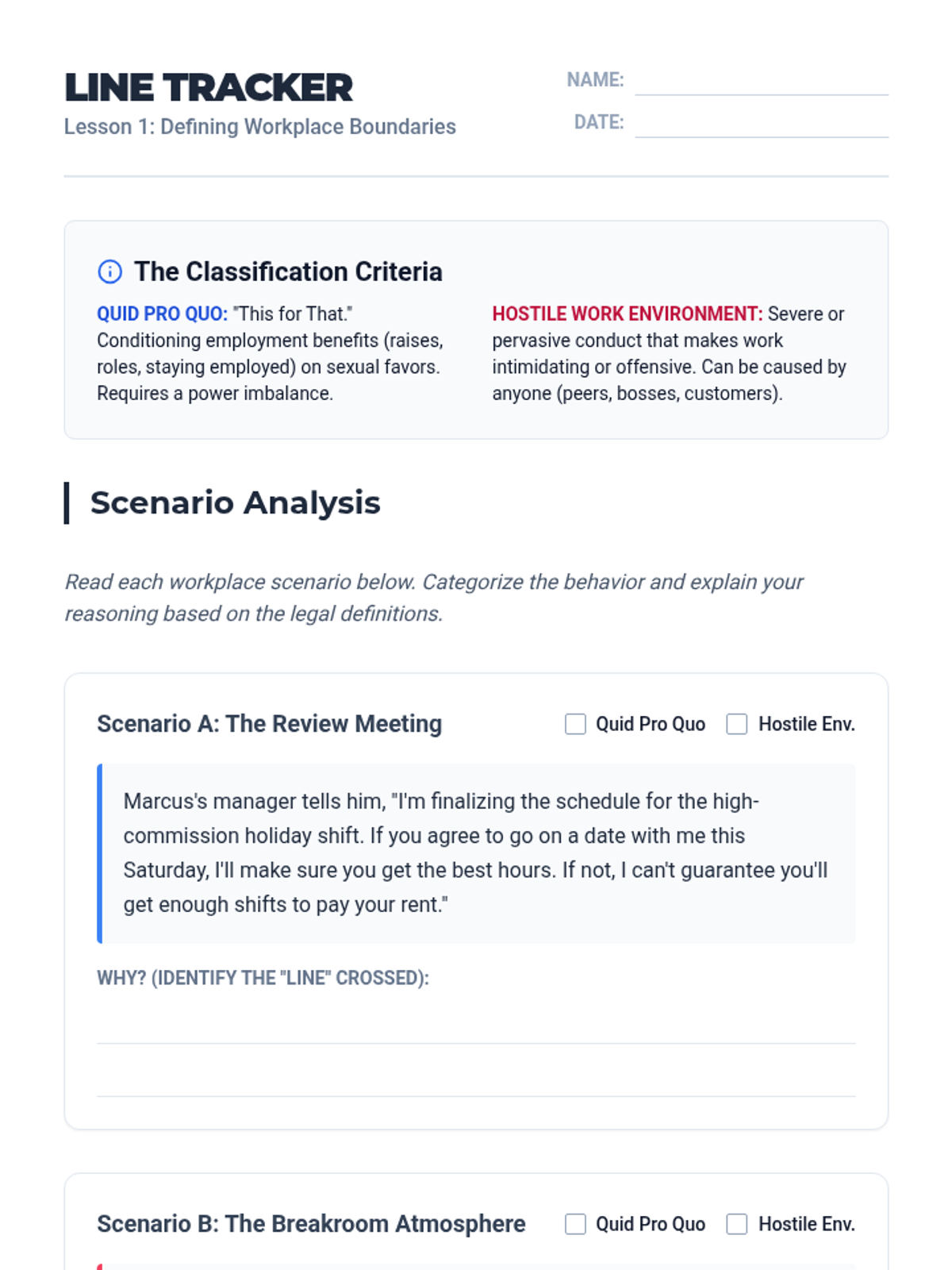
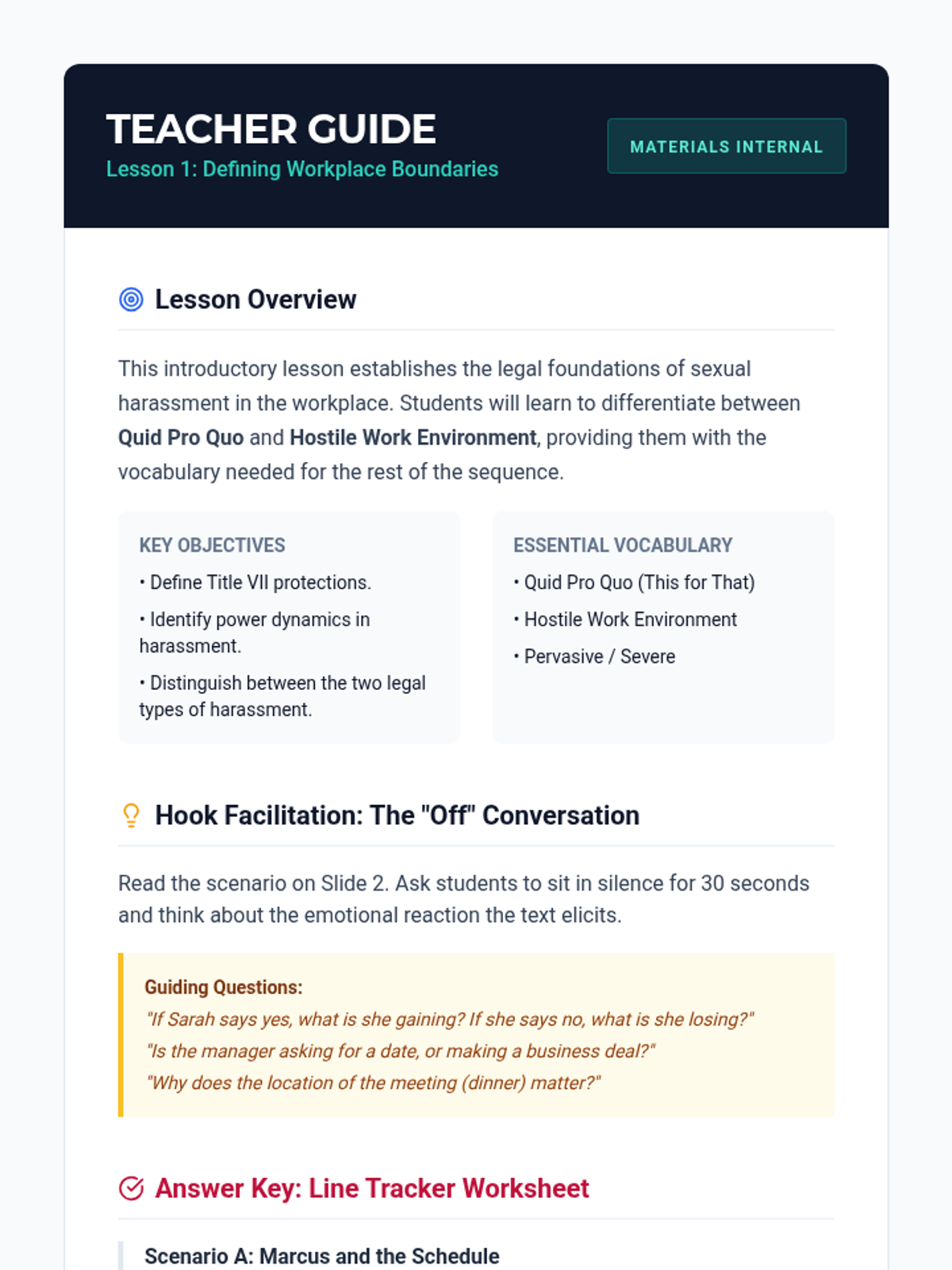
Students distinguish between the two primary legal types of sexual harassment: 'this for that' (quid pro quo) and pervasive hostile environments. They analyze clear-cut examples of each to build a working definition.
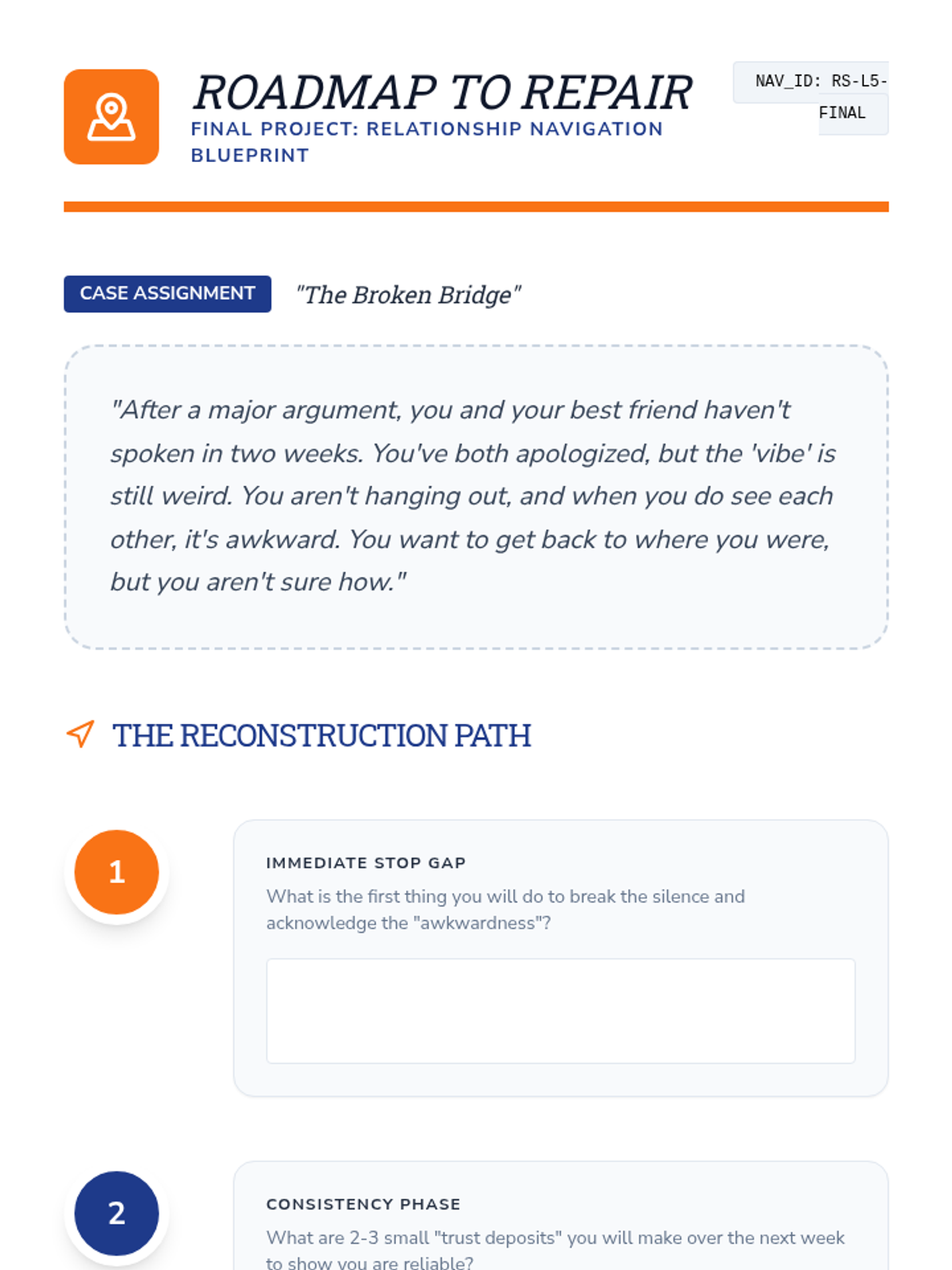
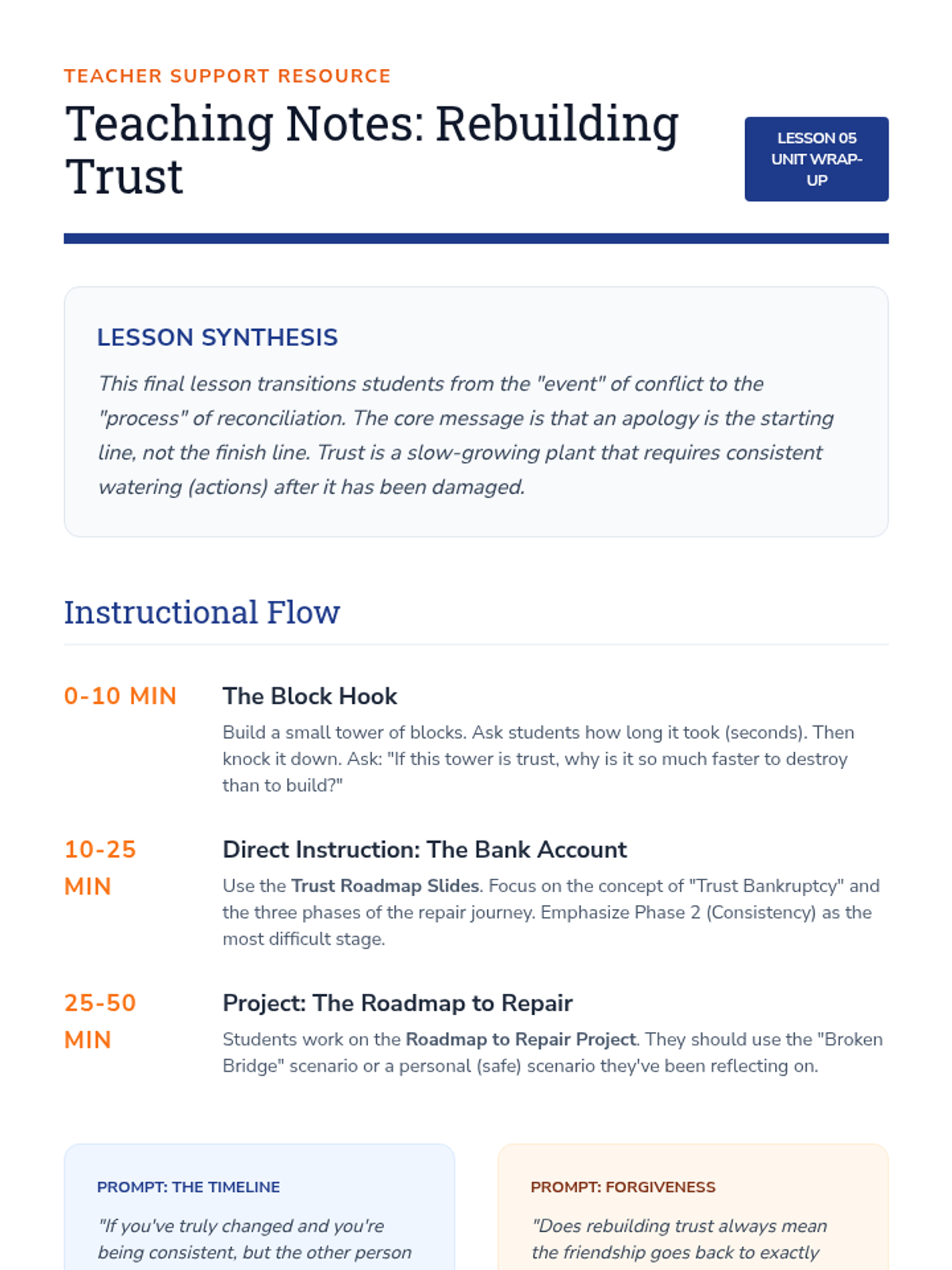
Students learn that trust is built slowly over time and create a 'Roadmap to Repair' outlining consistent actions needed to re-establish a friendship.
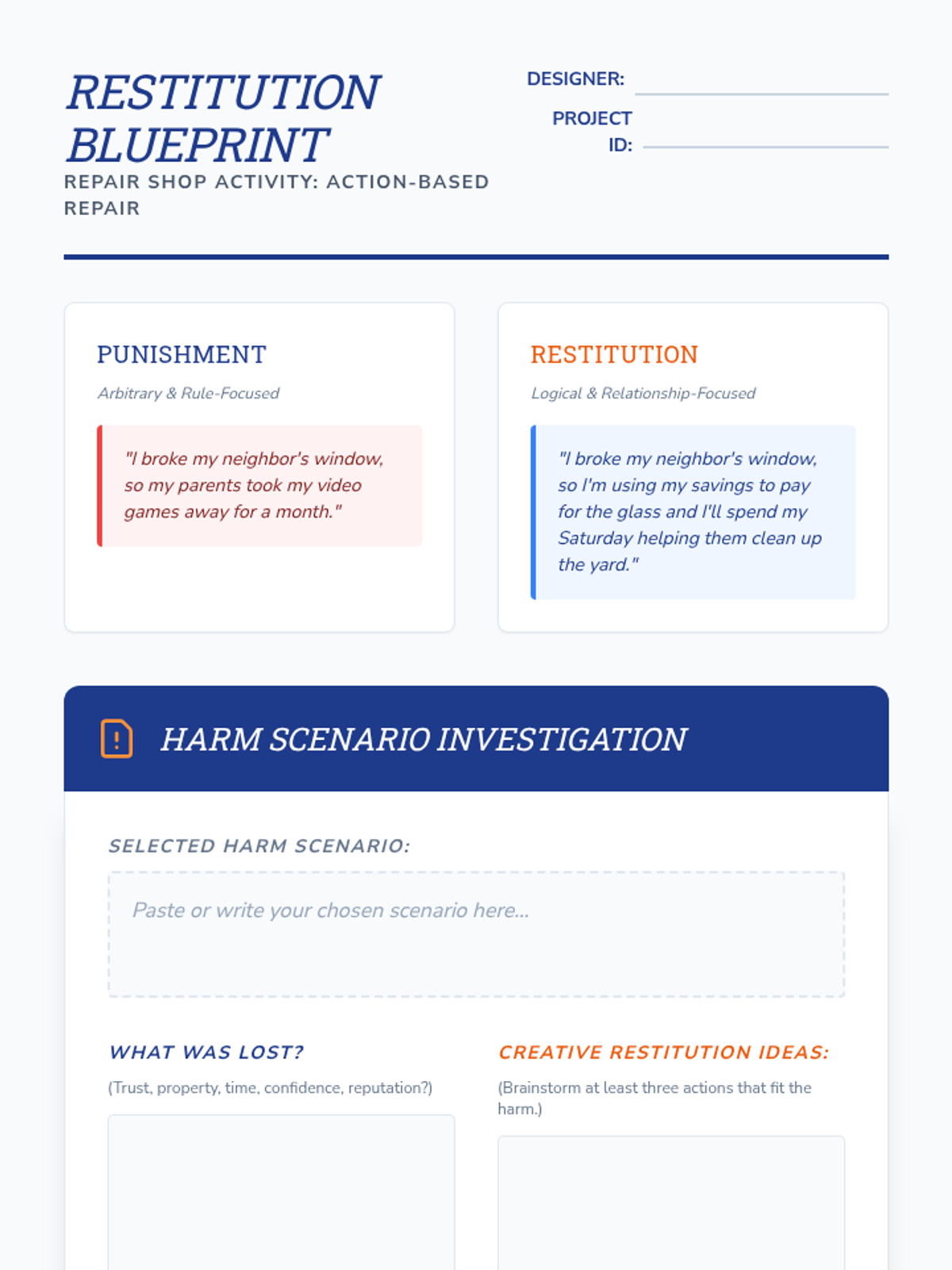
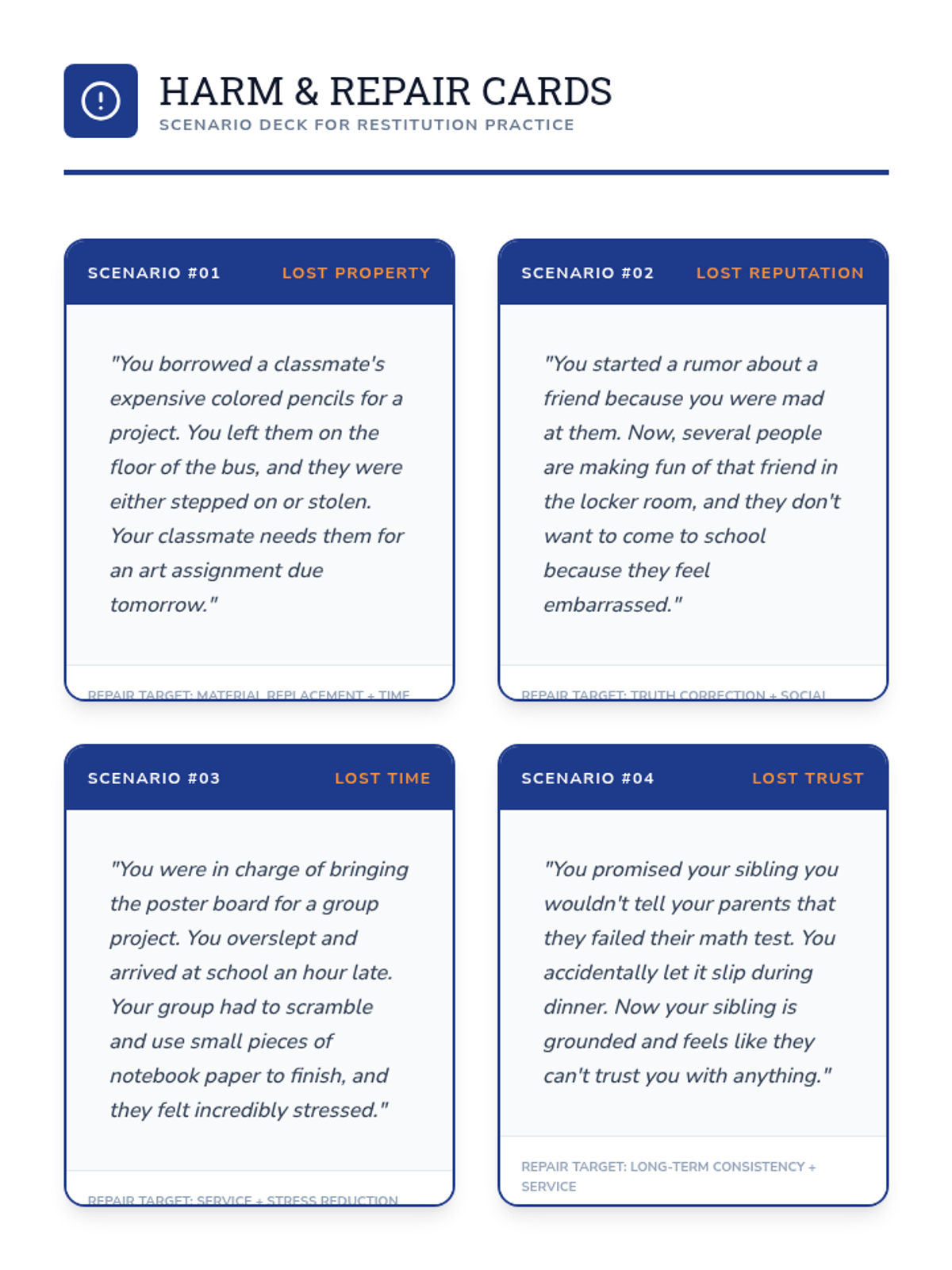
This lesson moves beyond words to action, brainstorming creative ways to 'make it right' or offer restitution relevant to the harm caused.
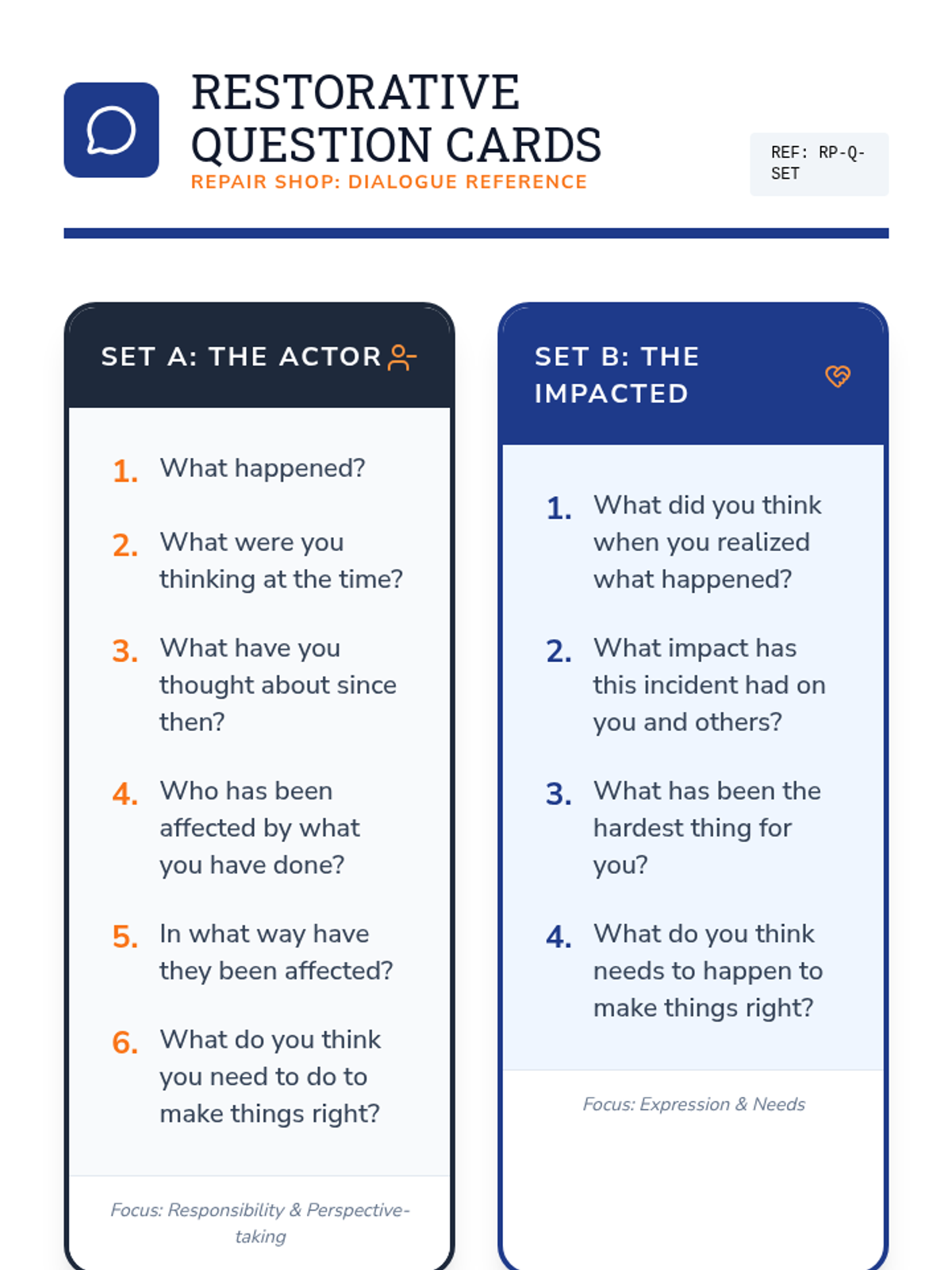
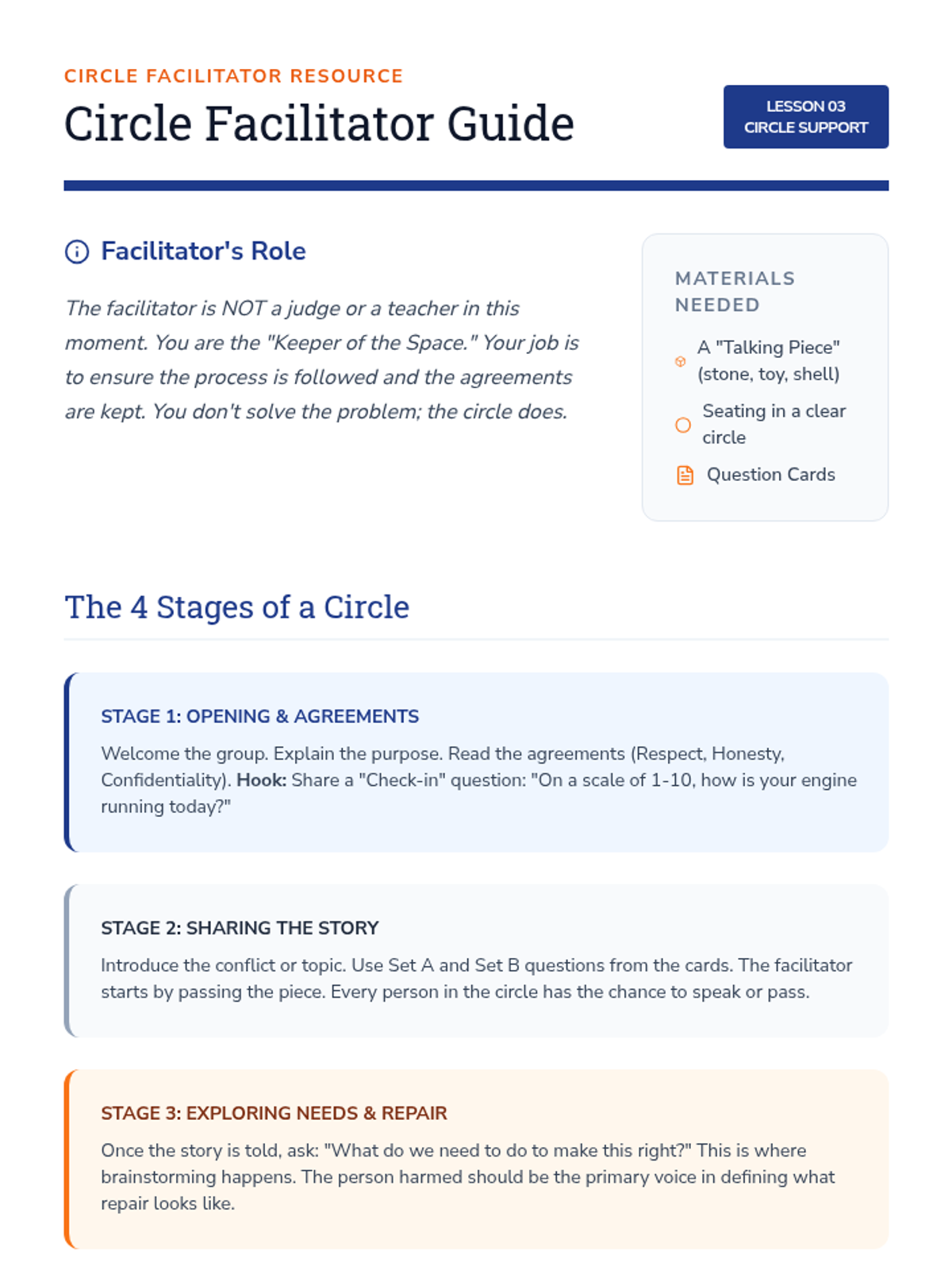
Students participate in a structured circle process to practice sharing feelings and listening to others' experiences of harm using restorative justice questions.
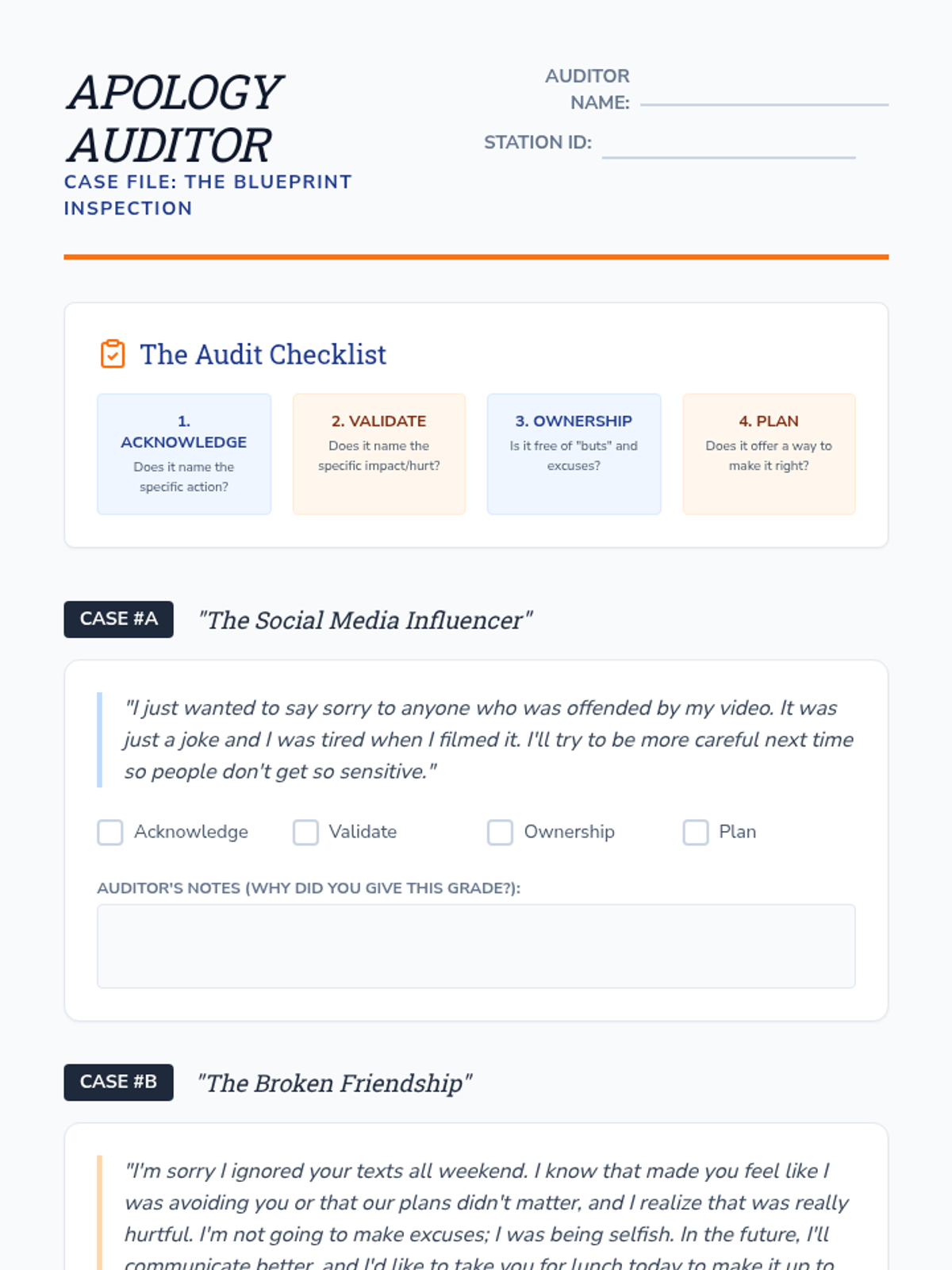
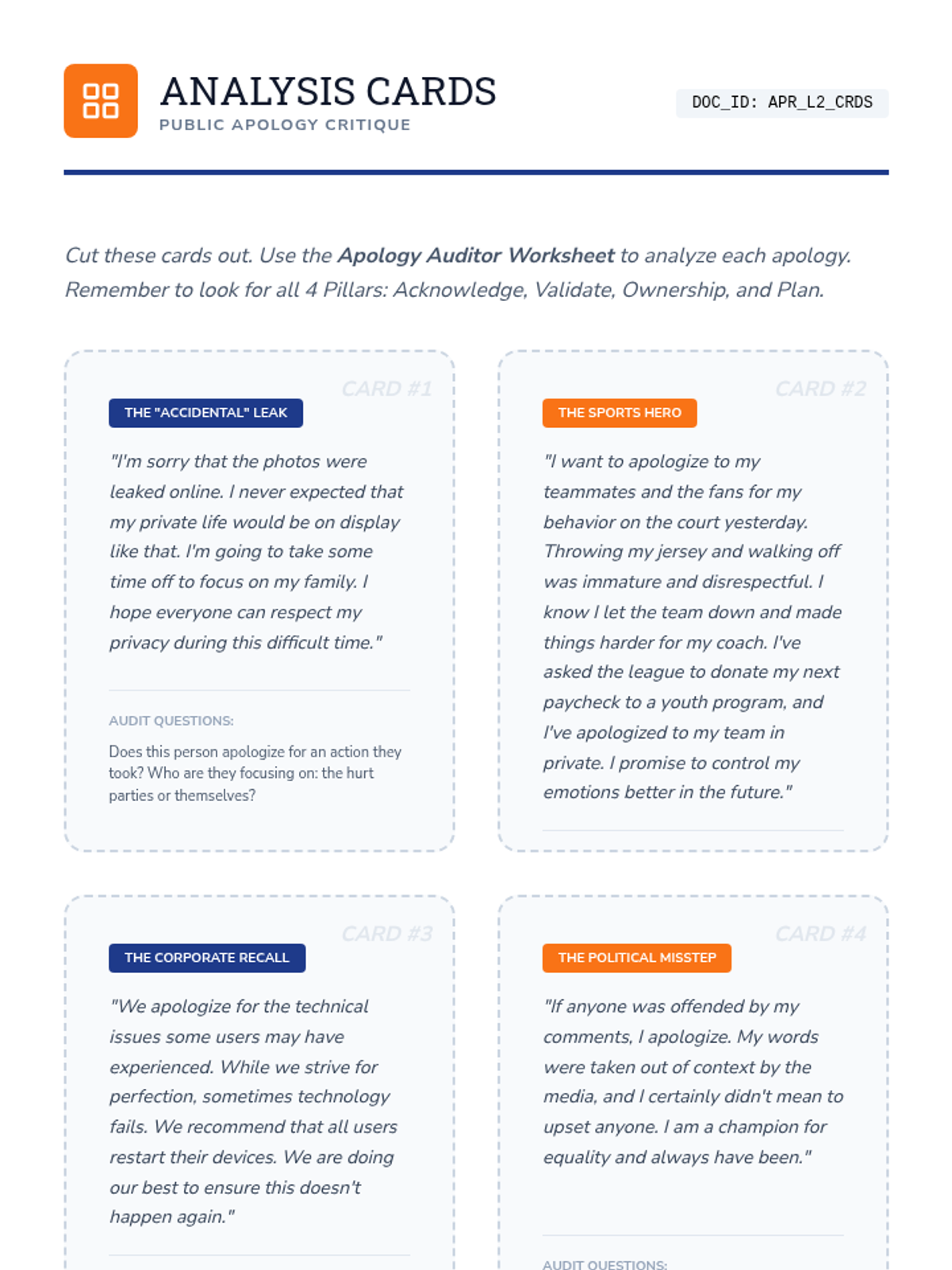
Students deconstruct apologies to identify key components: acknowledging the act, validating hurt, accepting responsibility, and making a plan for change. They critique public apologies.
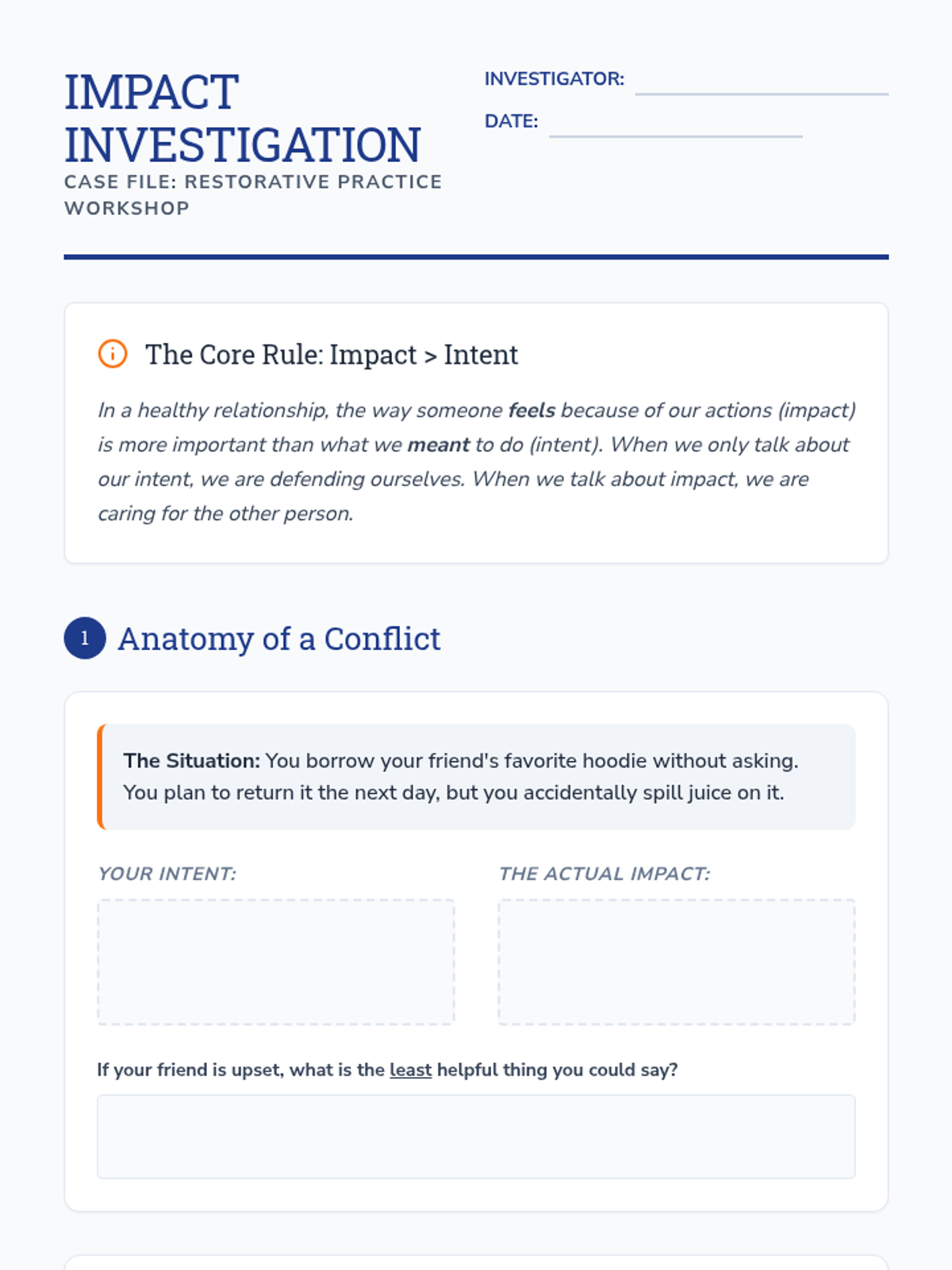
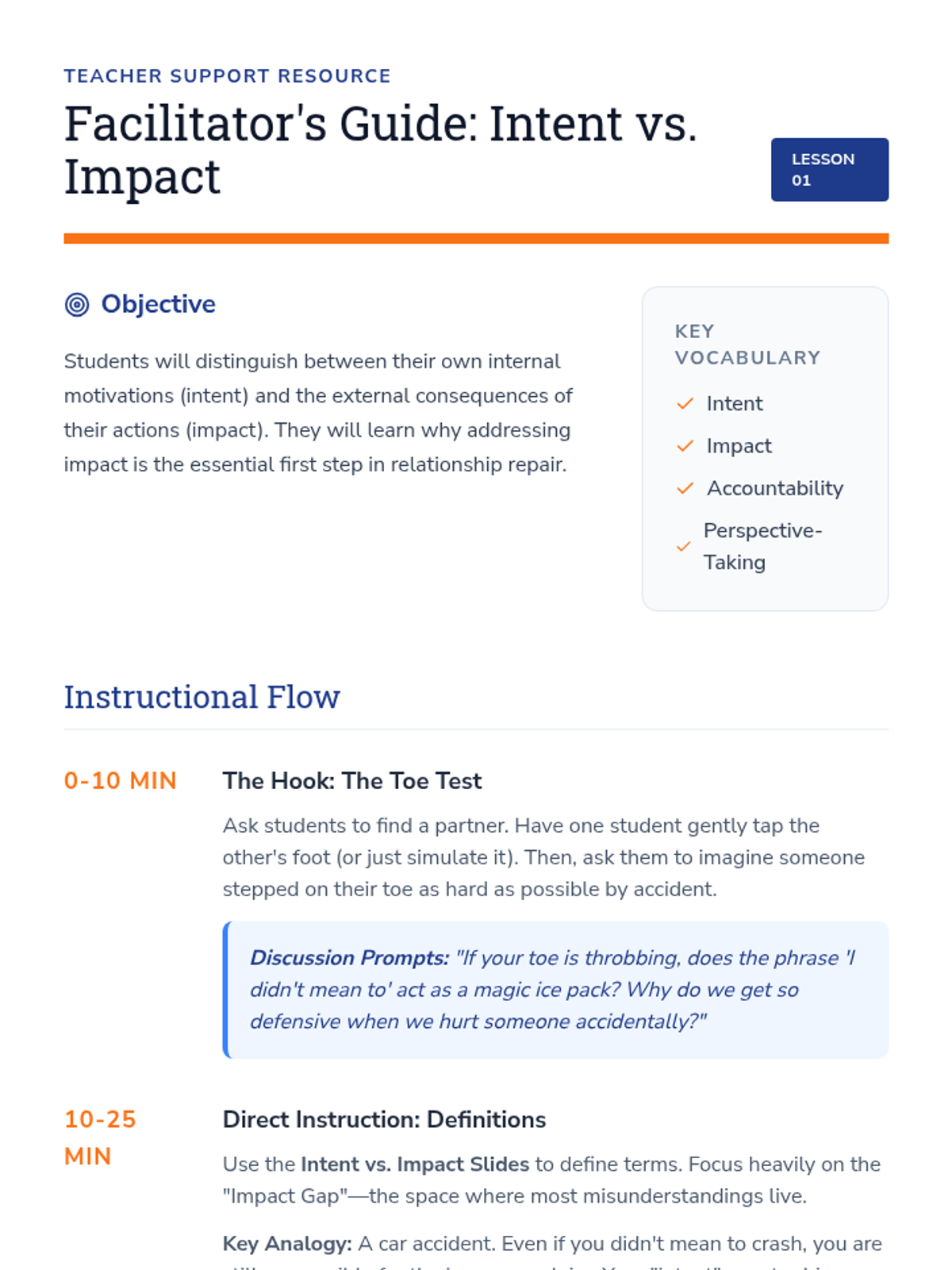
Students explore the gap between what they meant to do (intent) and how it affected others (impact). They analyze scenarios where good intentions still caused harm and discuss why impact must be addressed first.
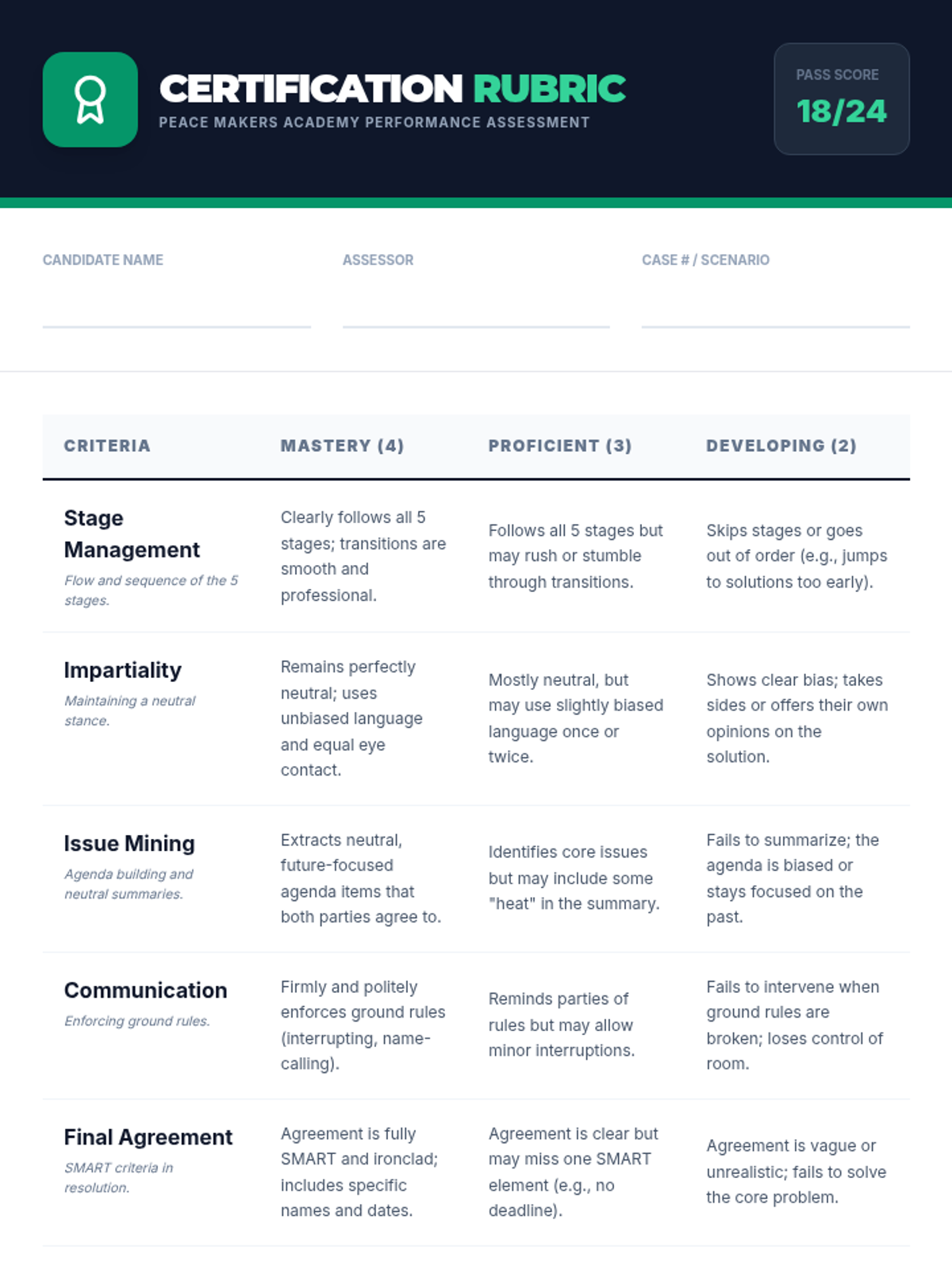
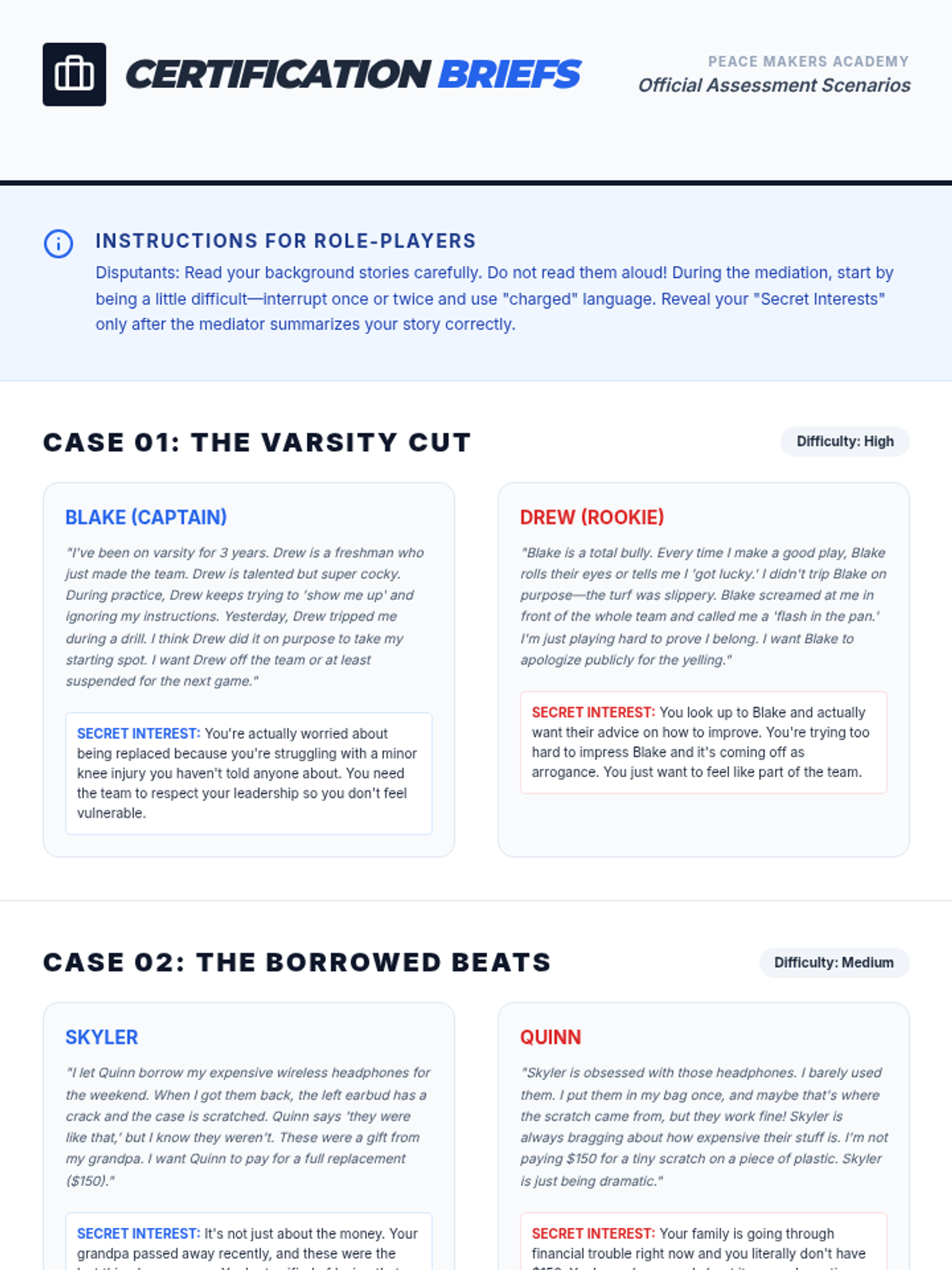
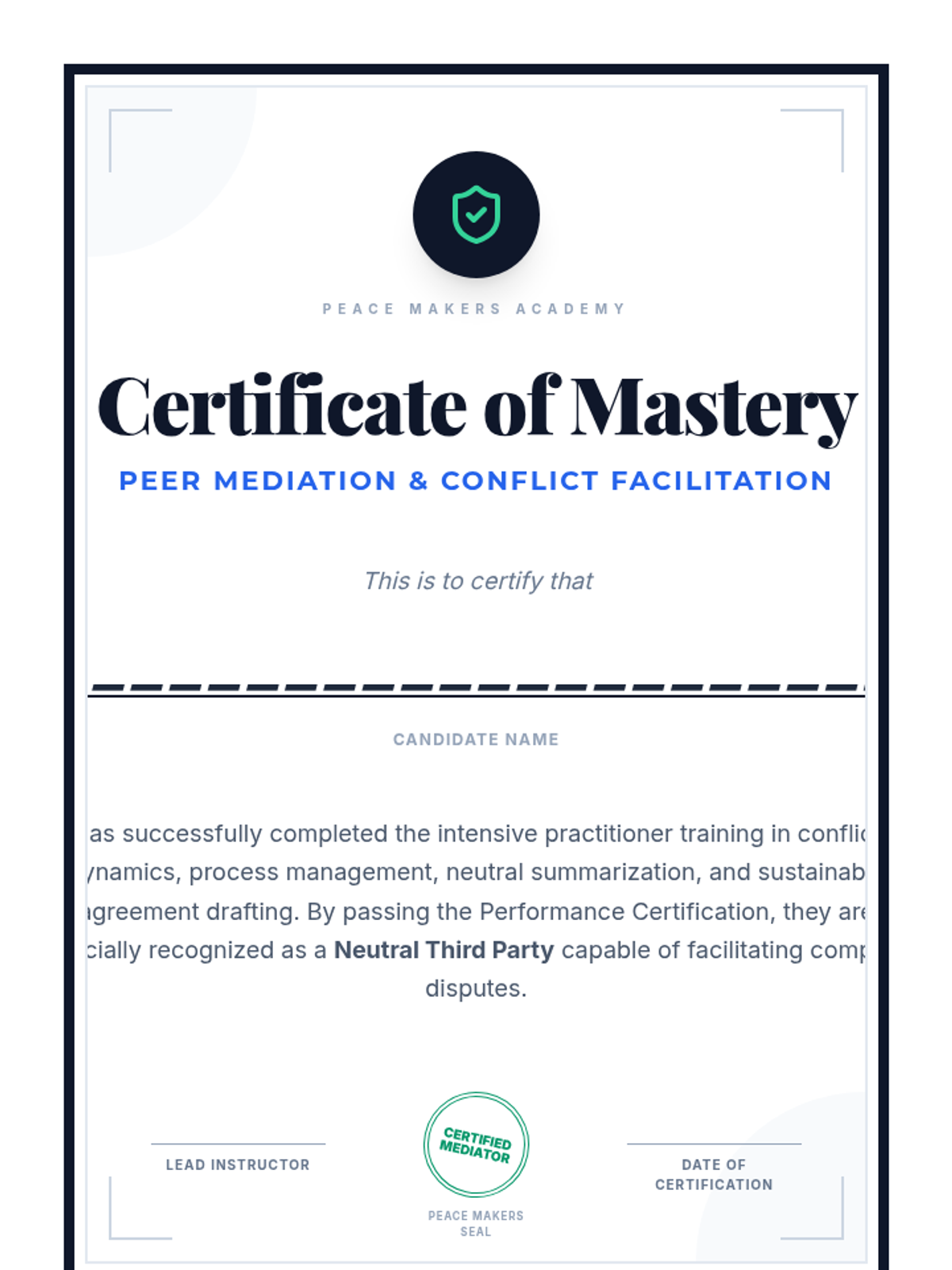
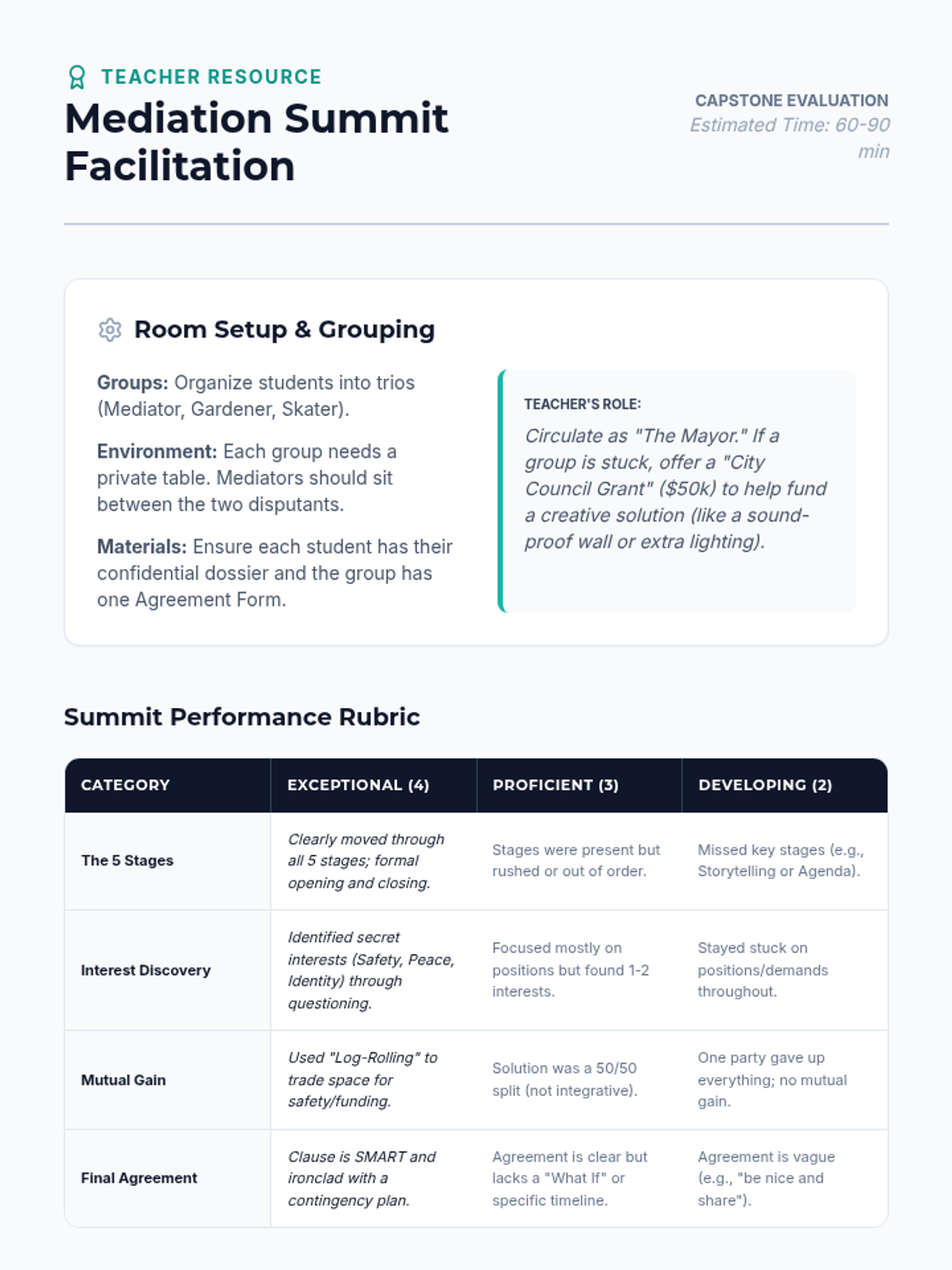
A performance-based assessment where students facilitate complex disputes to earn their peer mediation certification, evaluated on neutrality, process management, and resolution.
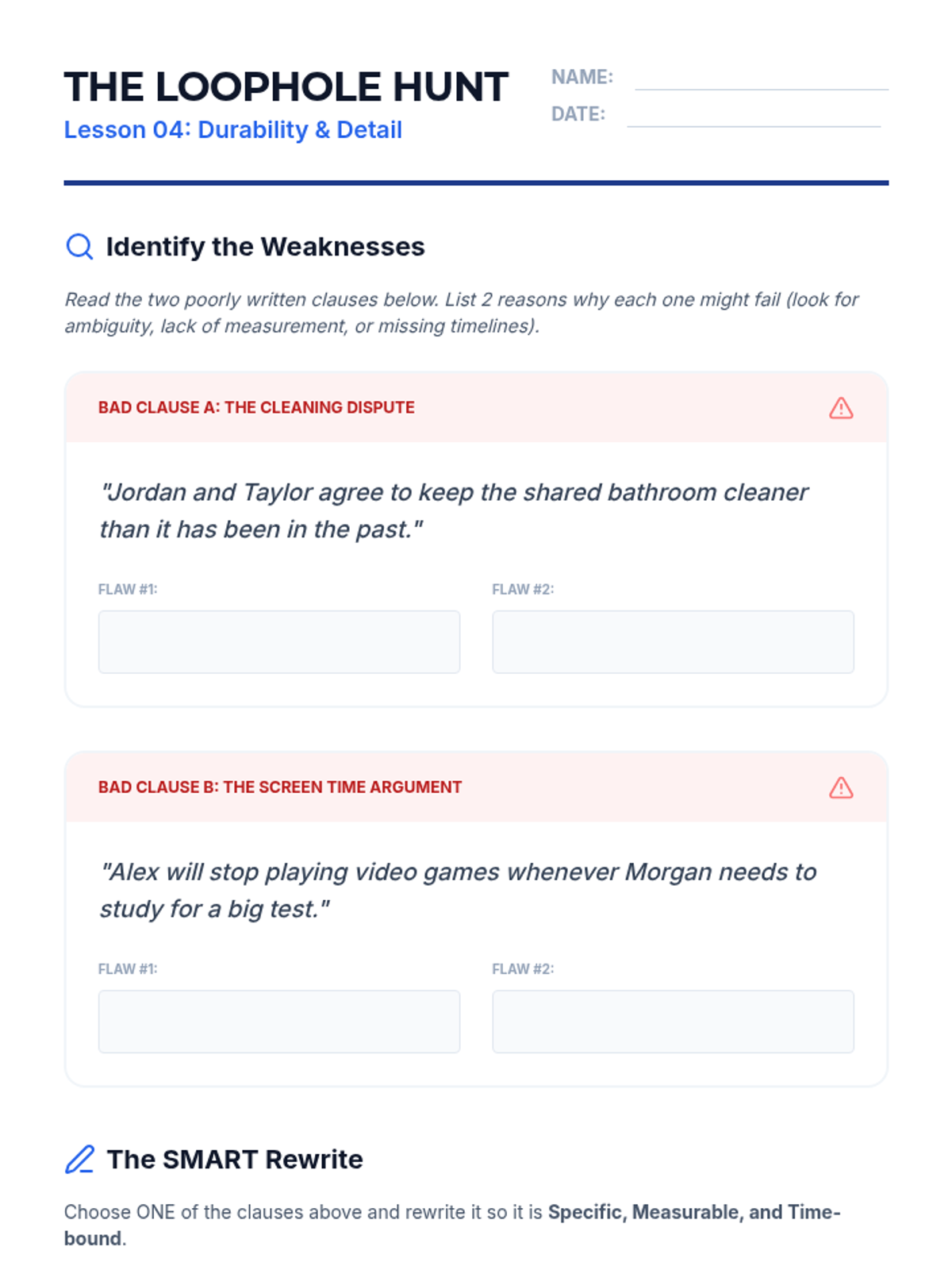
Students apply SMART criteria to craft durable conflict agreements, learning how to write clear, ironclad clauses that prevent future disputes.
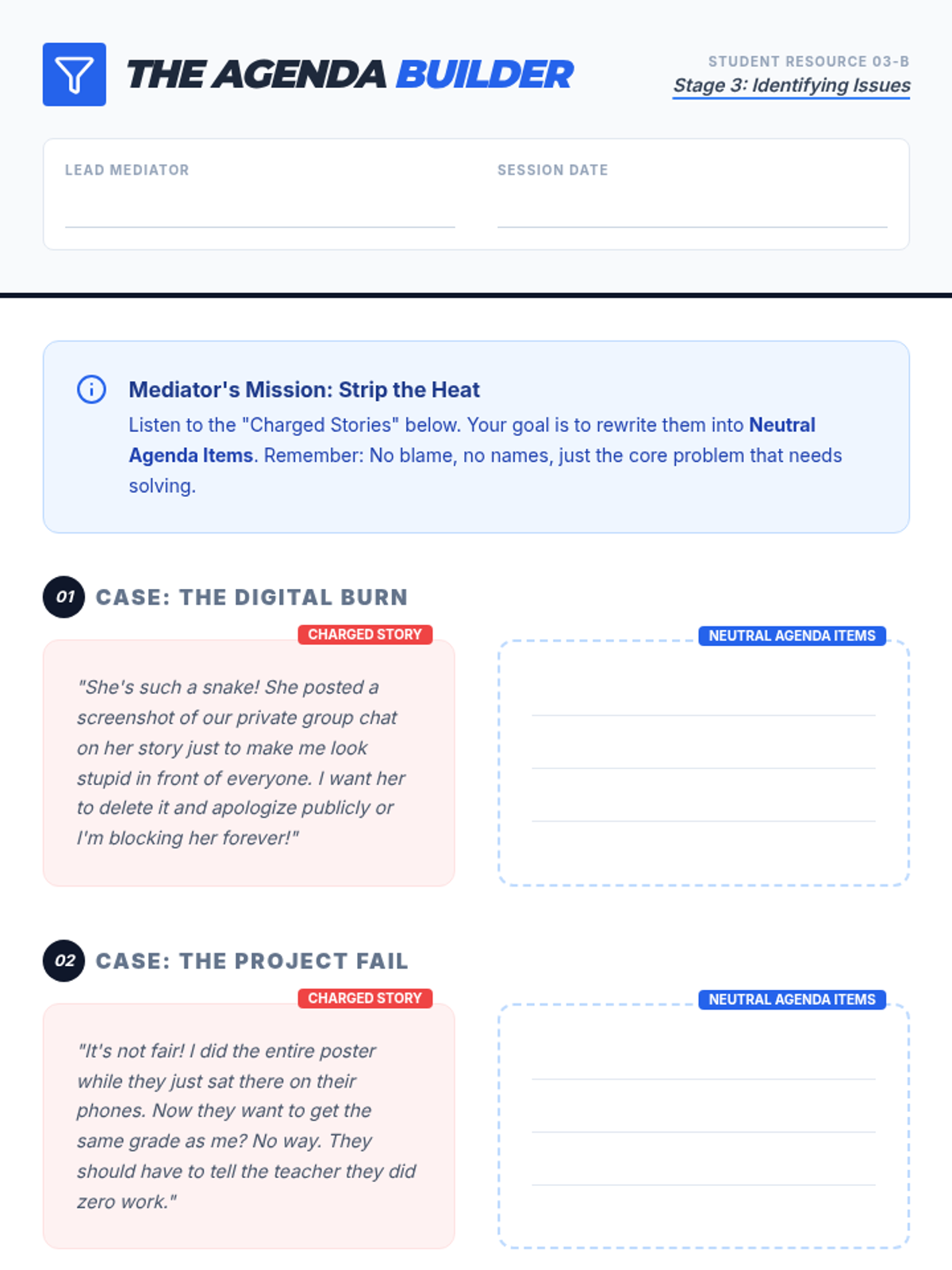
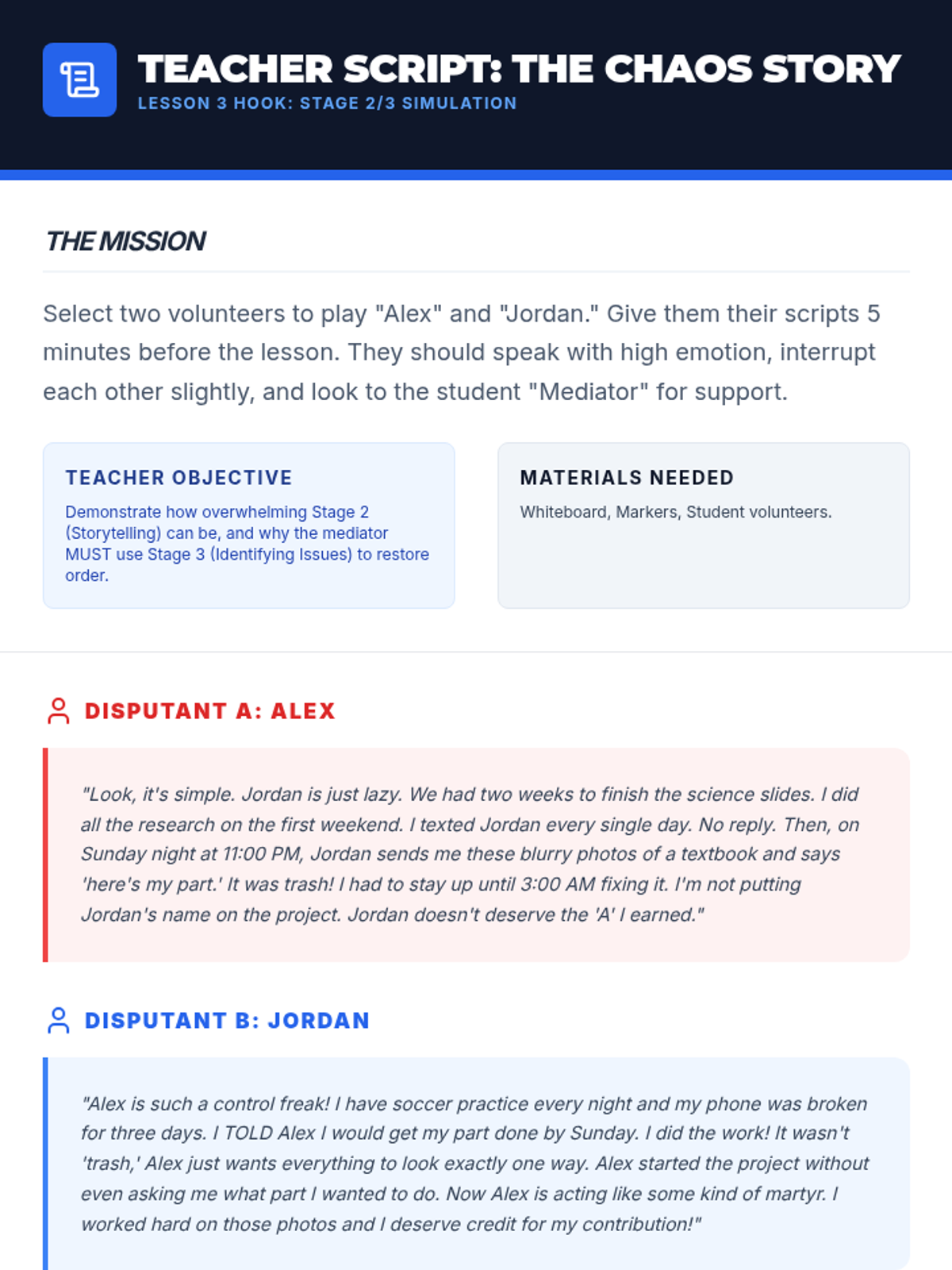
Mediators learn to 'mine' for underlying issues and interests within emotional narratives, transforming rambling stories into neutral, summarized agendas.
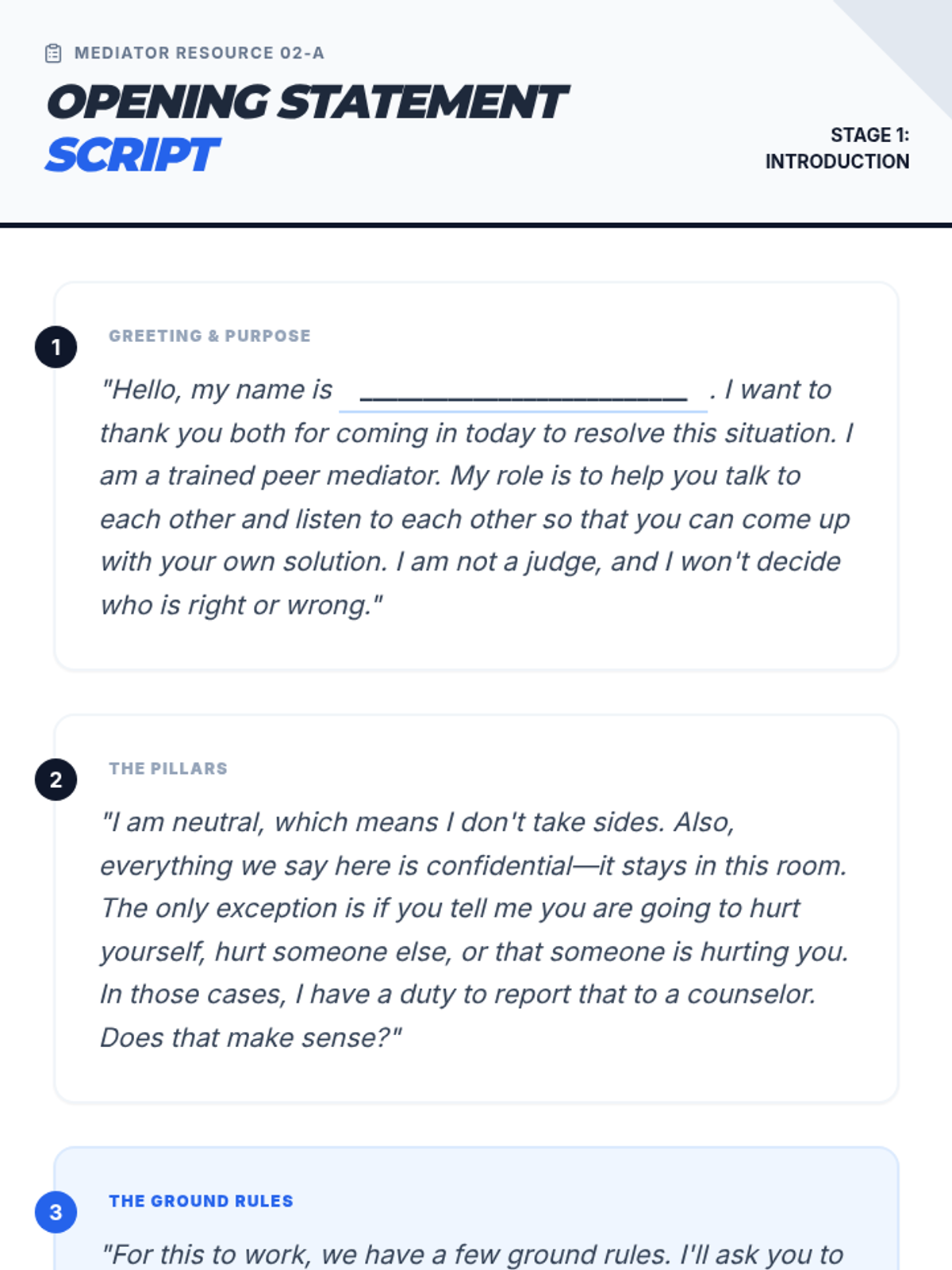
A deep dive into the five stages of a mediation session, including the memorization and practice of the mediator opening script to establish a safe environment.
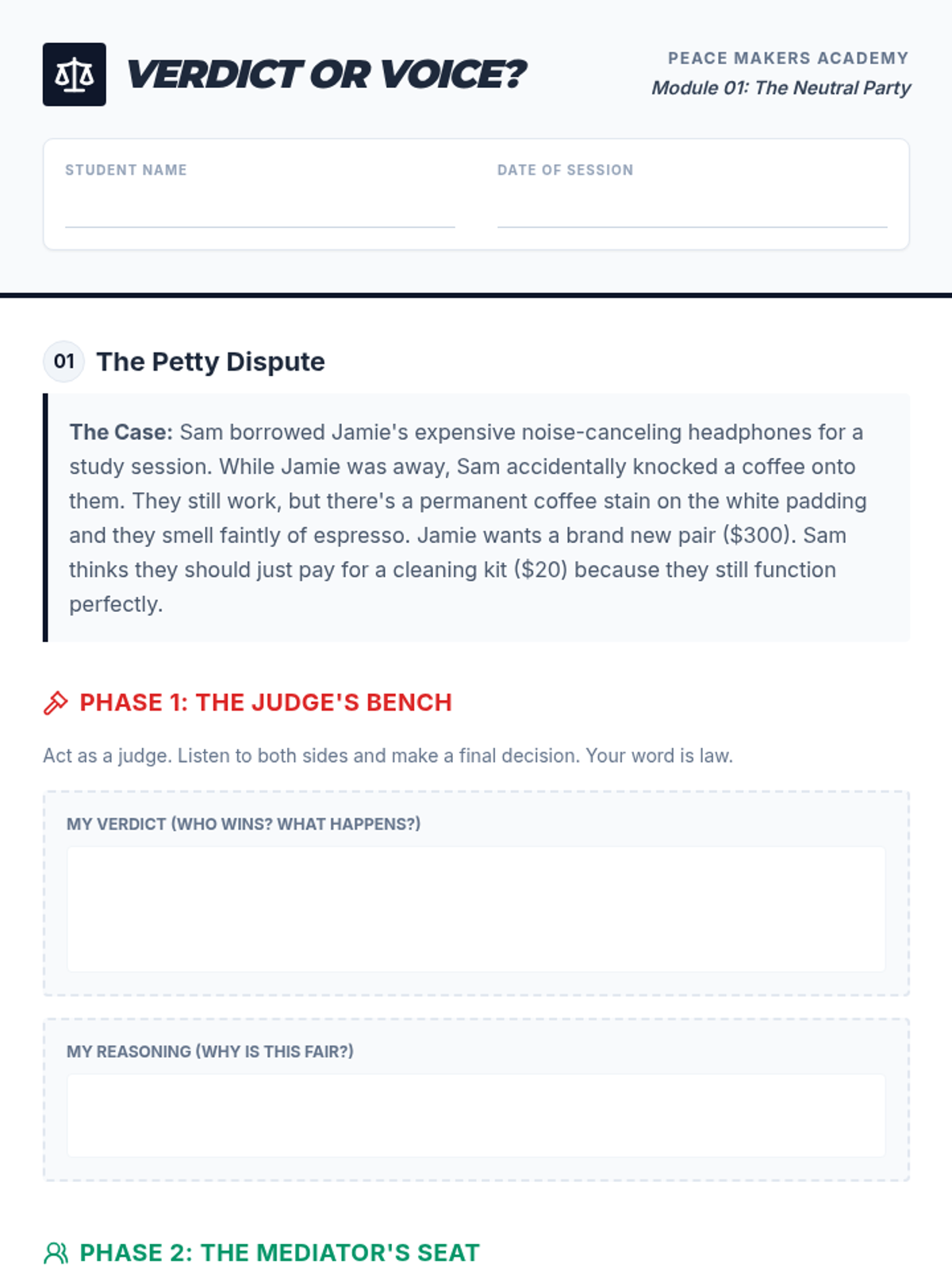
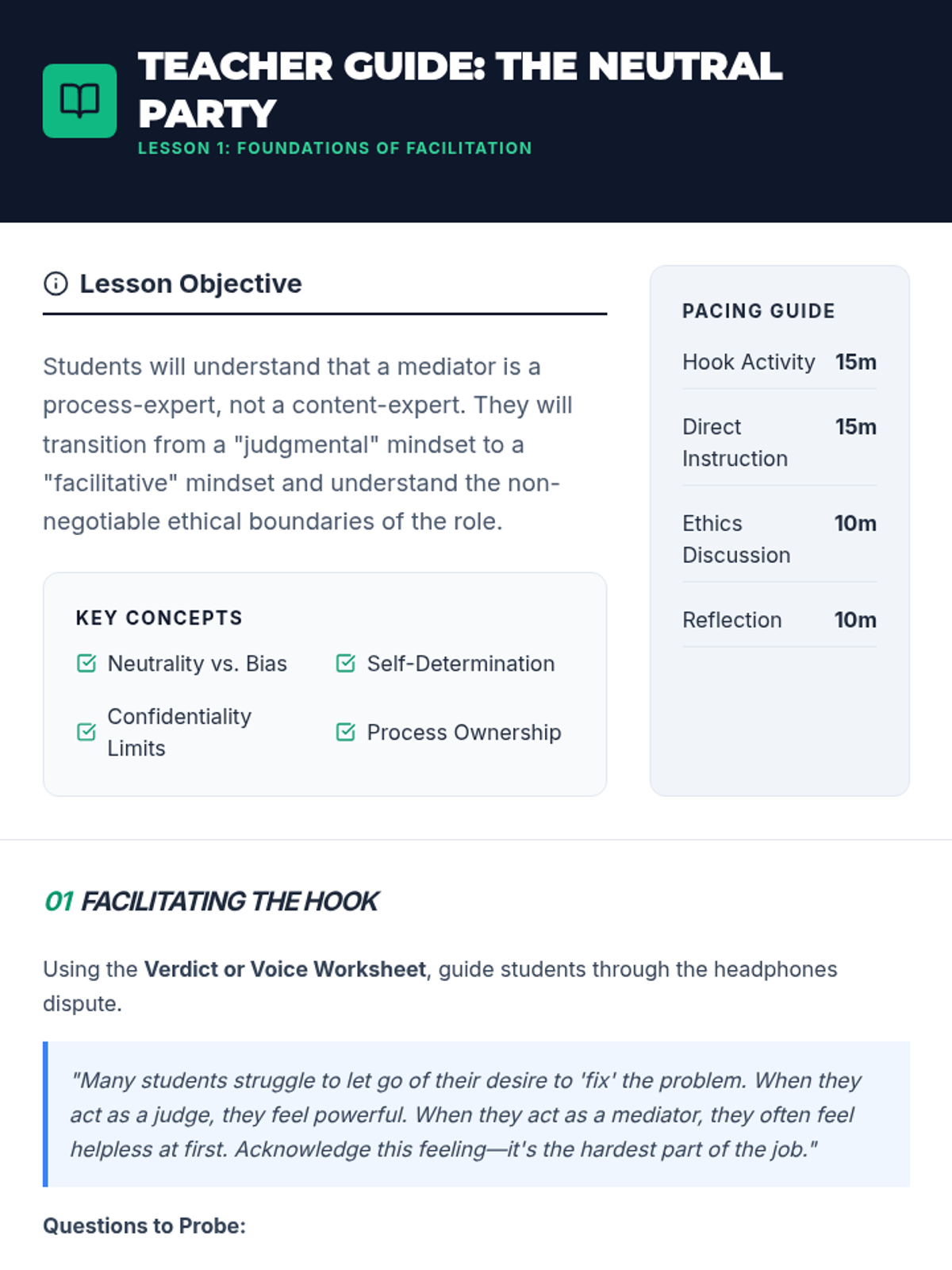
Students define the role of a mediator as a neutral facilitator, distinguish it from a judge or arbitrator, and explore the ethical foundations of confidentiality and impartiality.
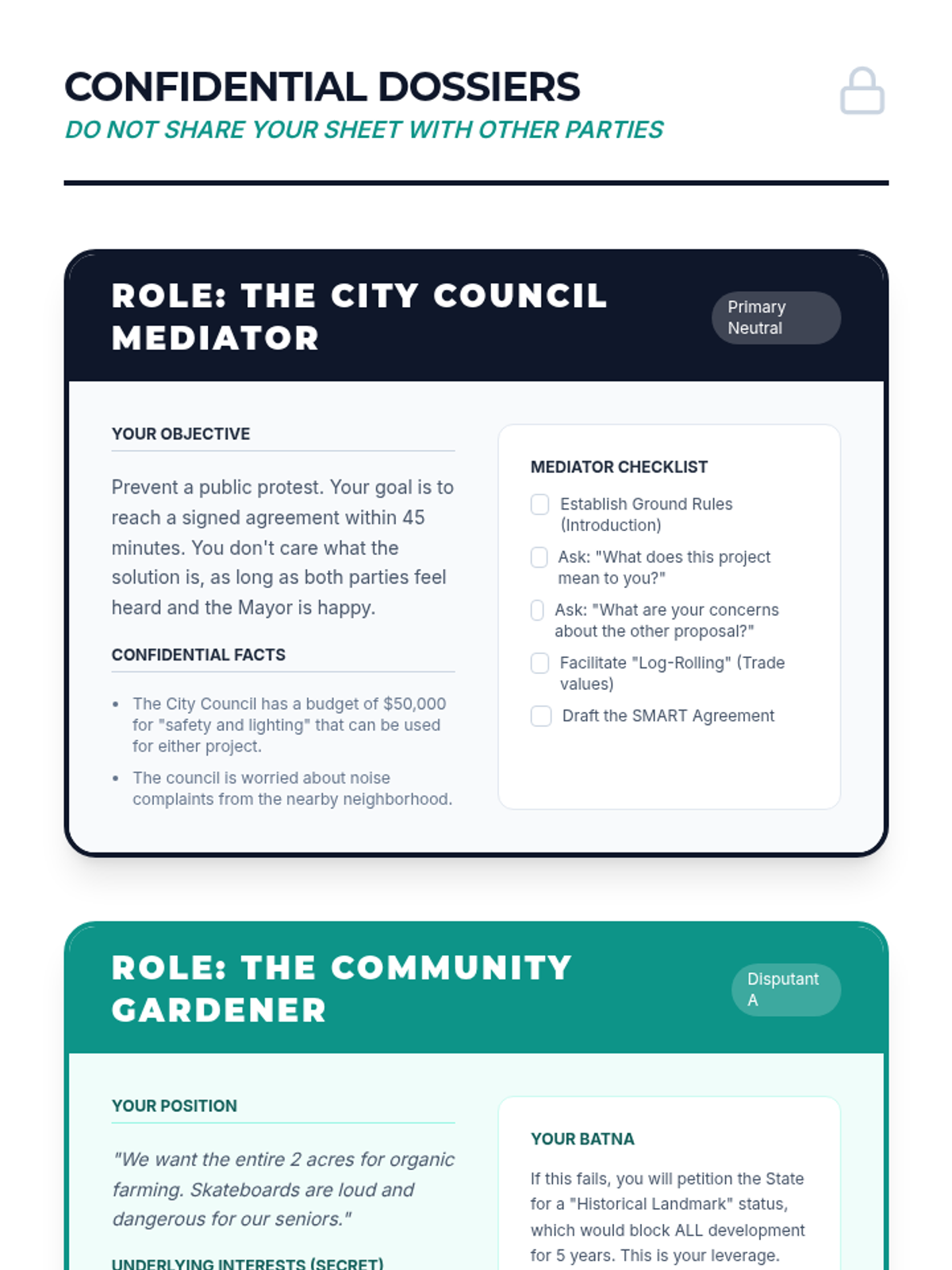
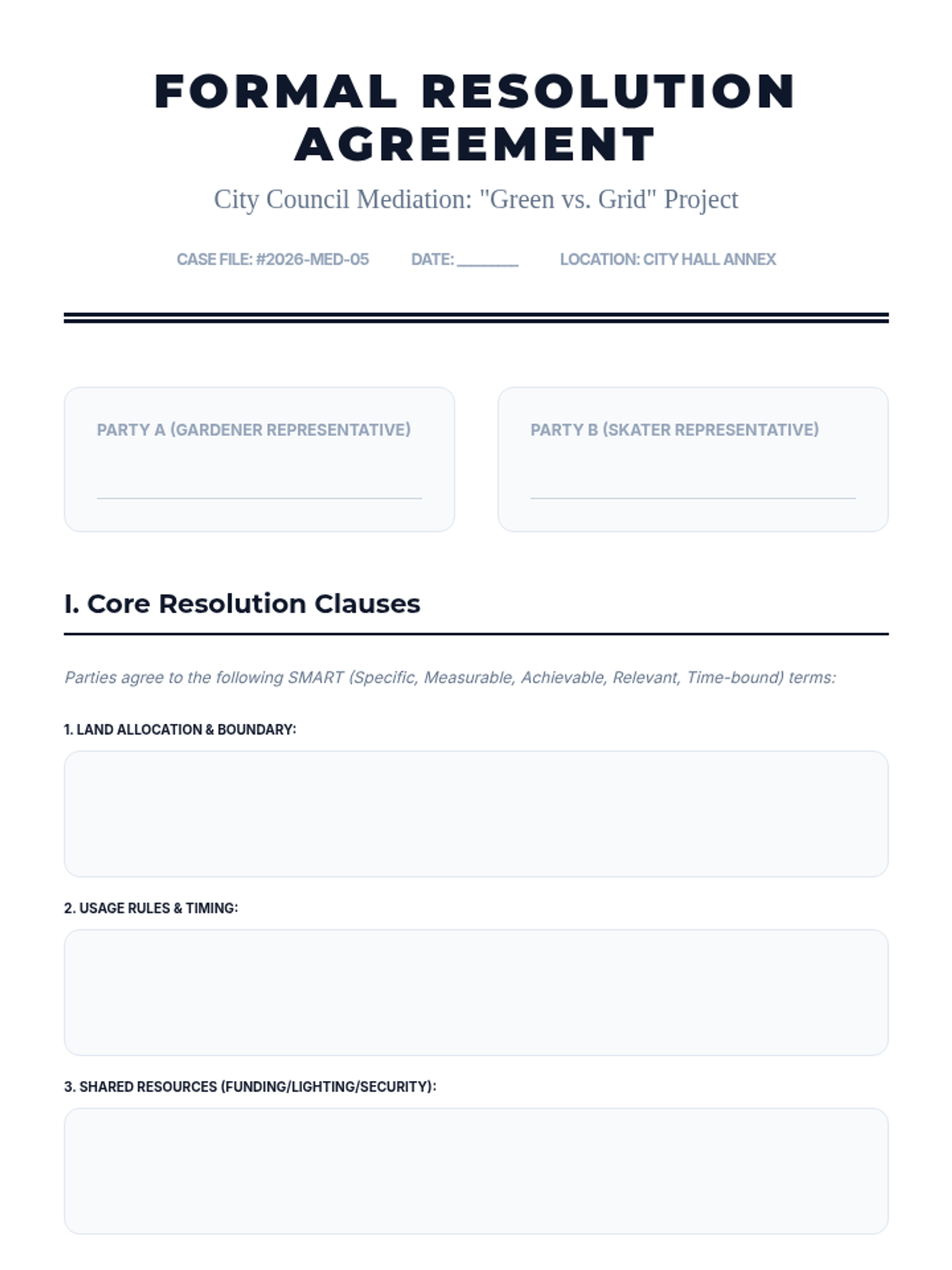
Students assume roles of mediators and disputants in a complex, multi-party dispute scenario (e.g., a land use dispute or school policy change). Mediators must facilitate the process, uncover interests, help generate options, and finalize a written agreement. The lesson focuses on synthesizing all previous frameworks into a cohesive professional performance.
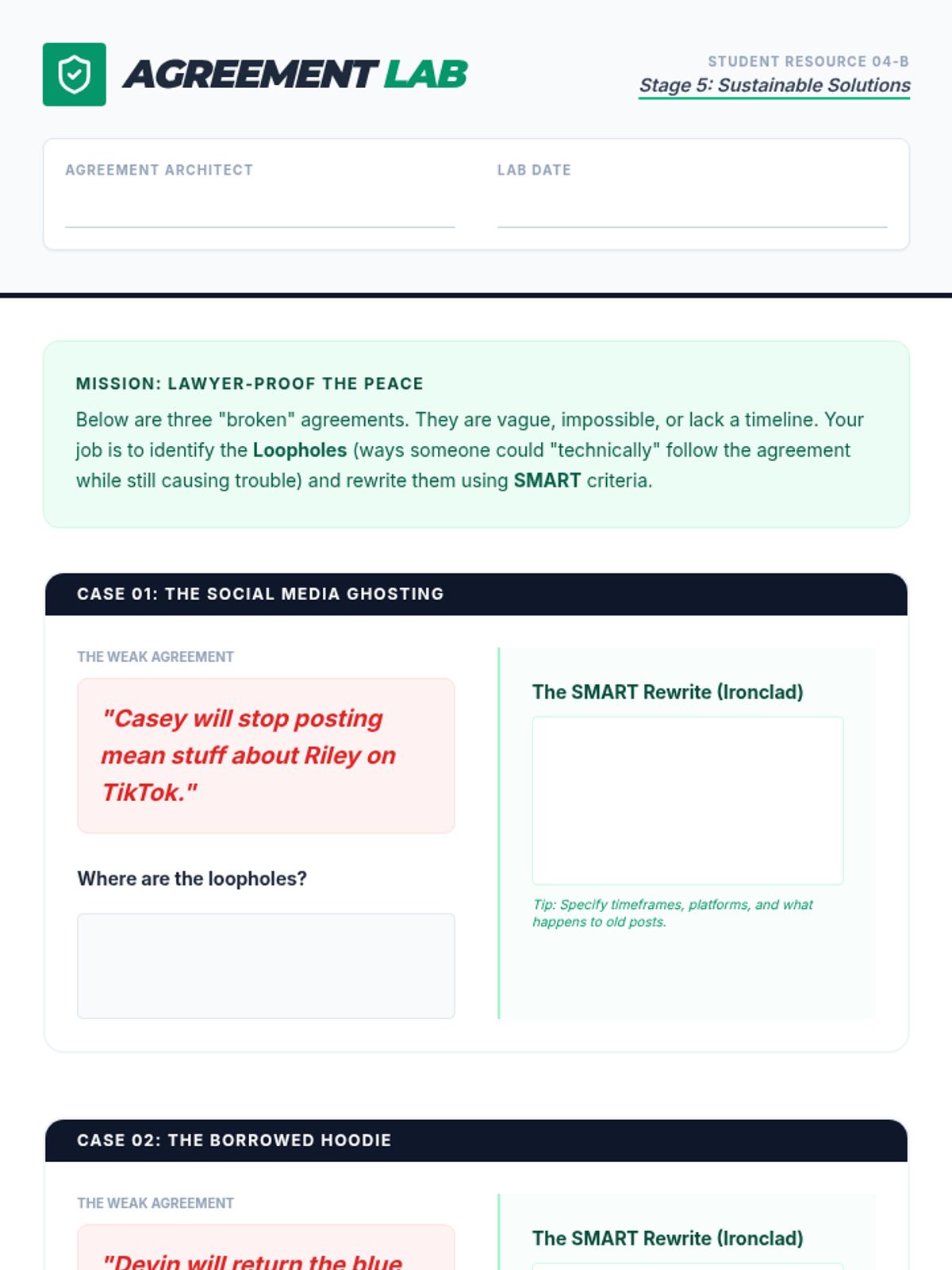
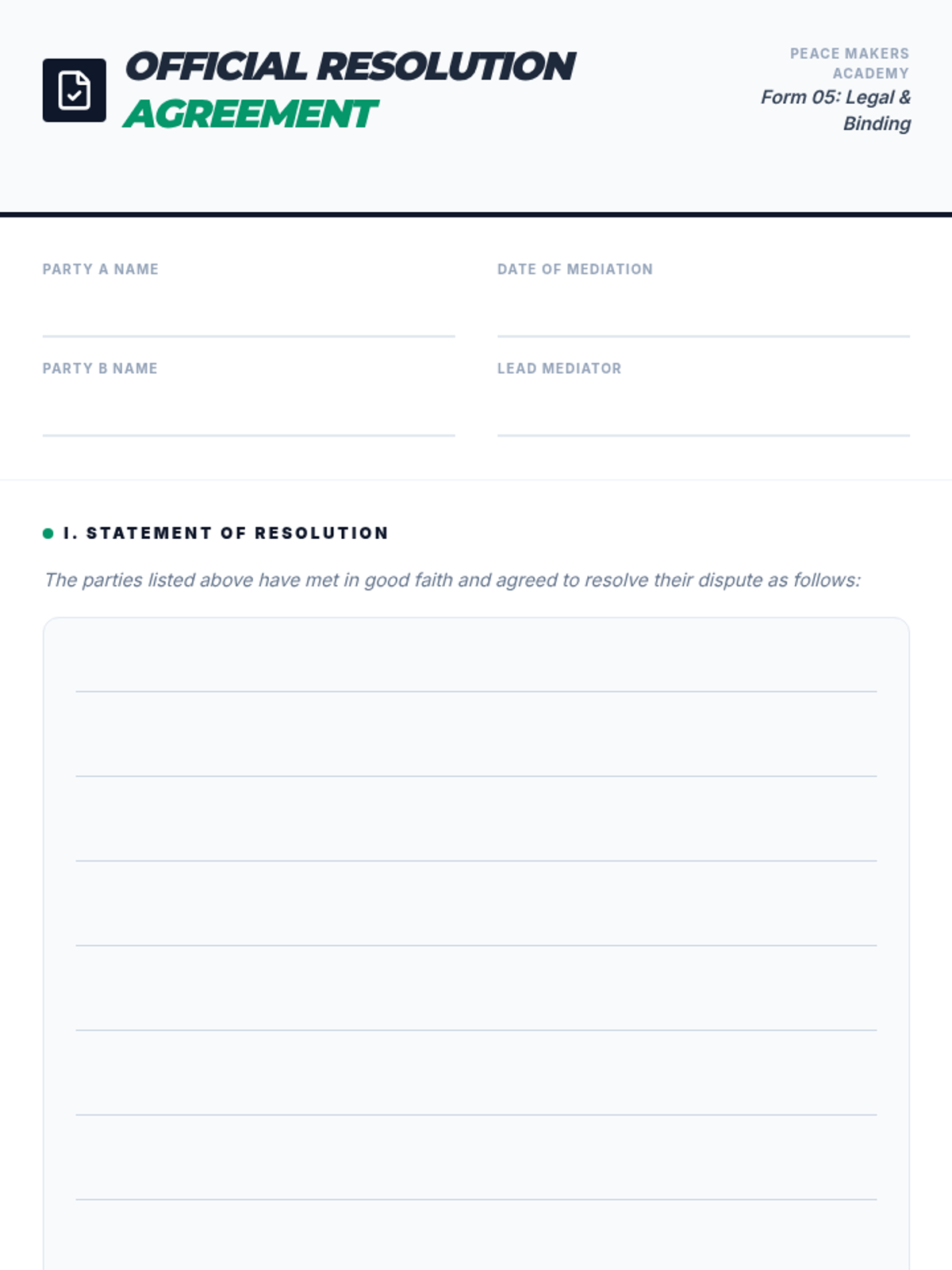
Resolving the conflict is only half the battle; writing a durable agreement is the rest. Students learn the components of a SMART agreement (Specific, Measurable, Achievable, Relevant, Time-bound) in a conflict context. They review failed contracts or treaties to identify loopholes and ambiguity, then practice drafting ironclad resolution clauses.
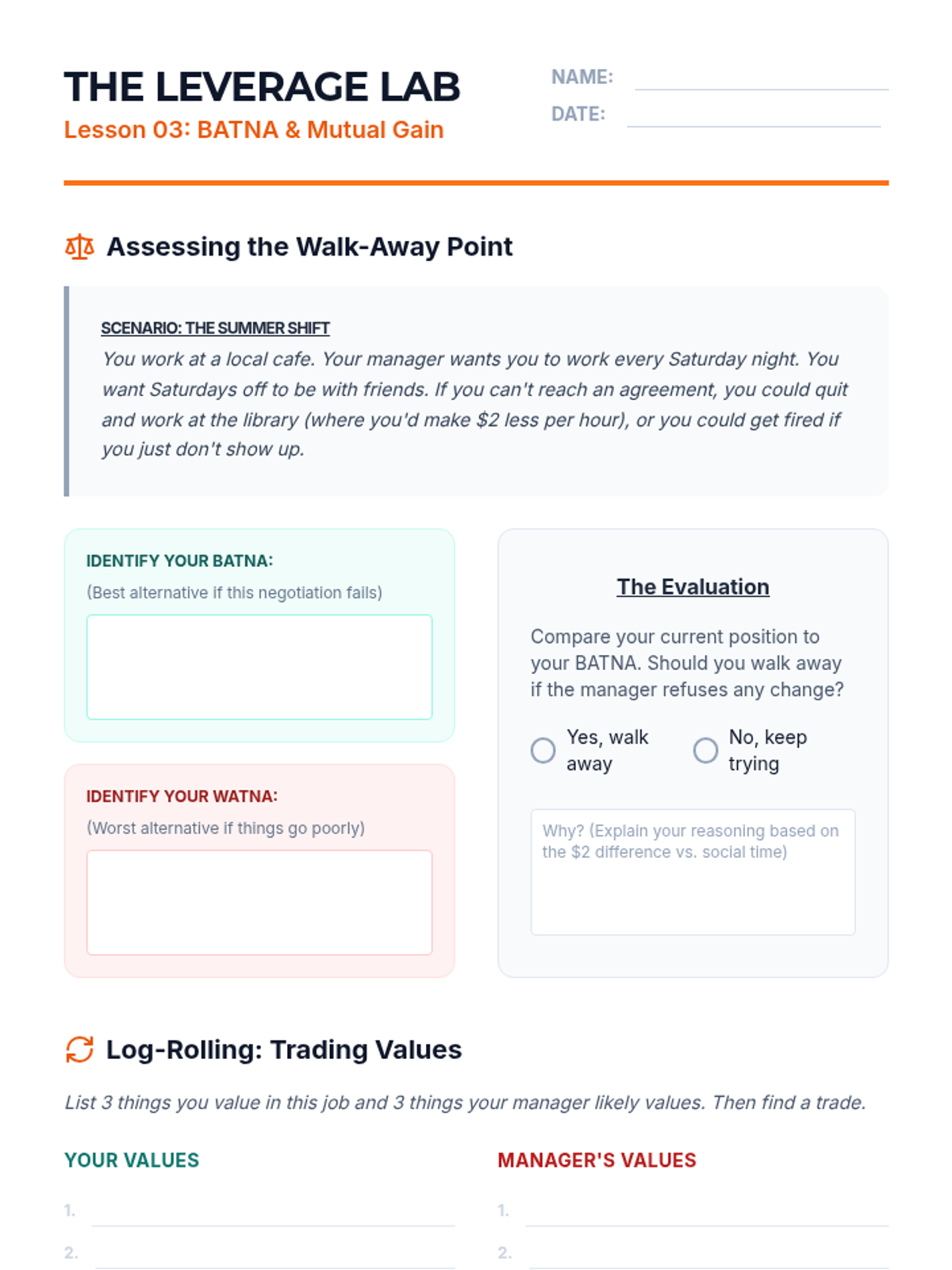
Students practice brainstorming techniques designed to break deadlocks. They learn about BATNA (Best Alternative to a Negotiated Agreement) and WATNA (Worst Alternative) to assess leverage. The class engages in exercises to expand the 'pie' rather than just dividing it, finding creative solutions that satisfy multiple interests.
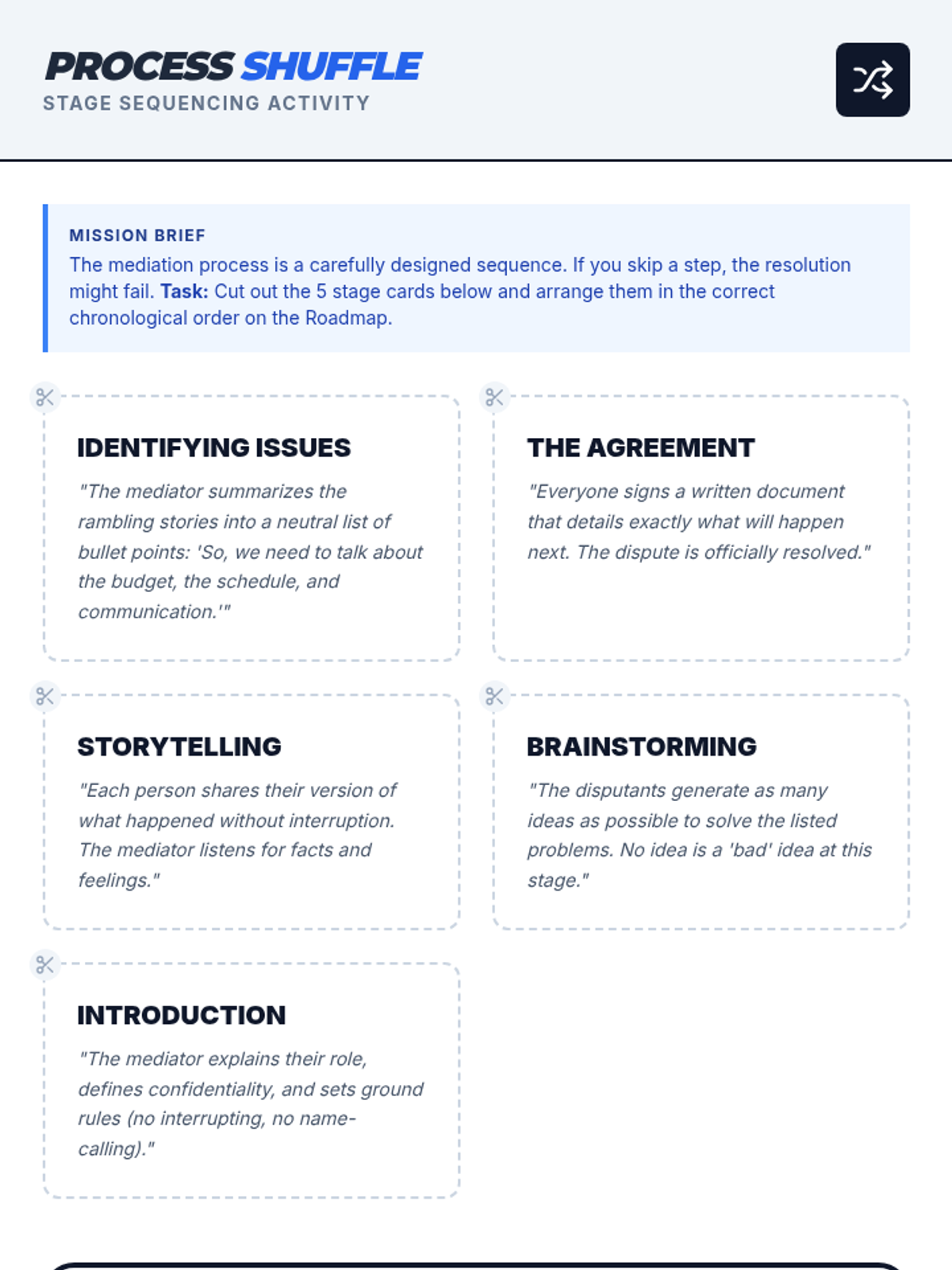
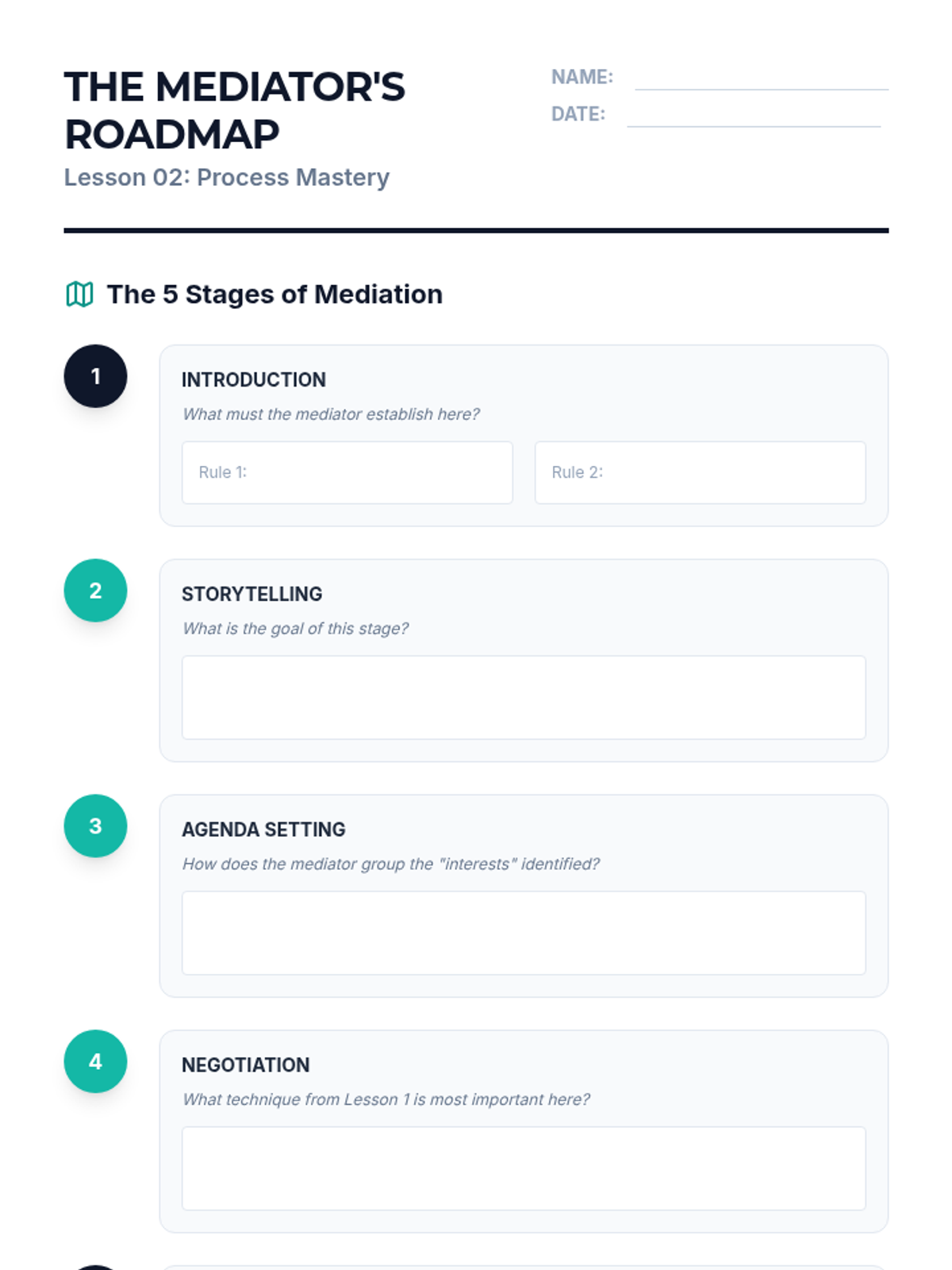
This lesson outlines the formal stages of mediation: Introduction, Storytelling, Agenda Setting, Negotiation, and Agreement. Students learn the procedural responsibilities of a mediator to maintain safety and order. They create visual flowcharts of the process to understand how to guide disputants from chaos to order.
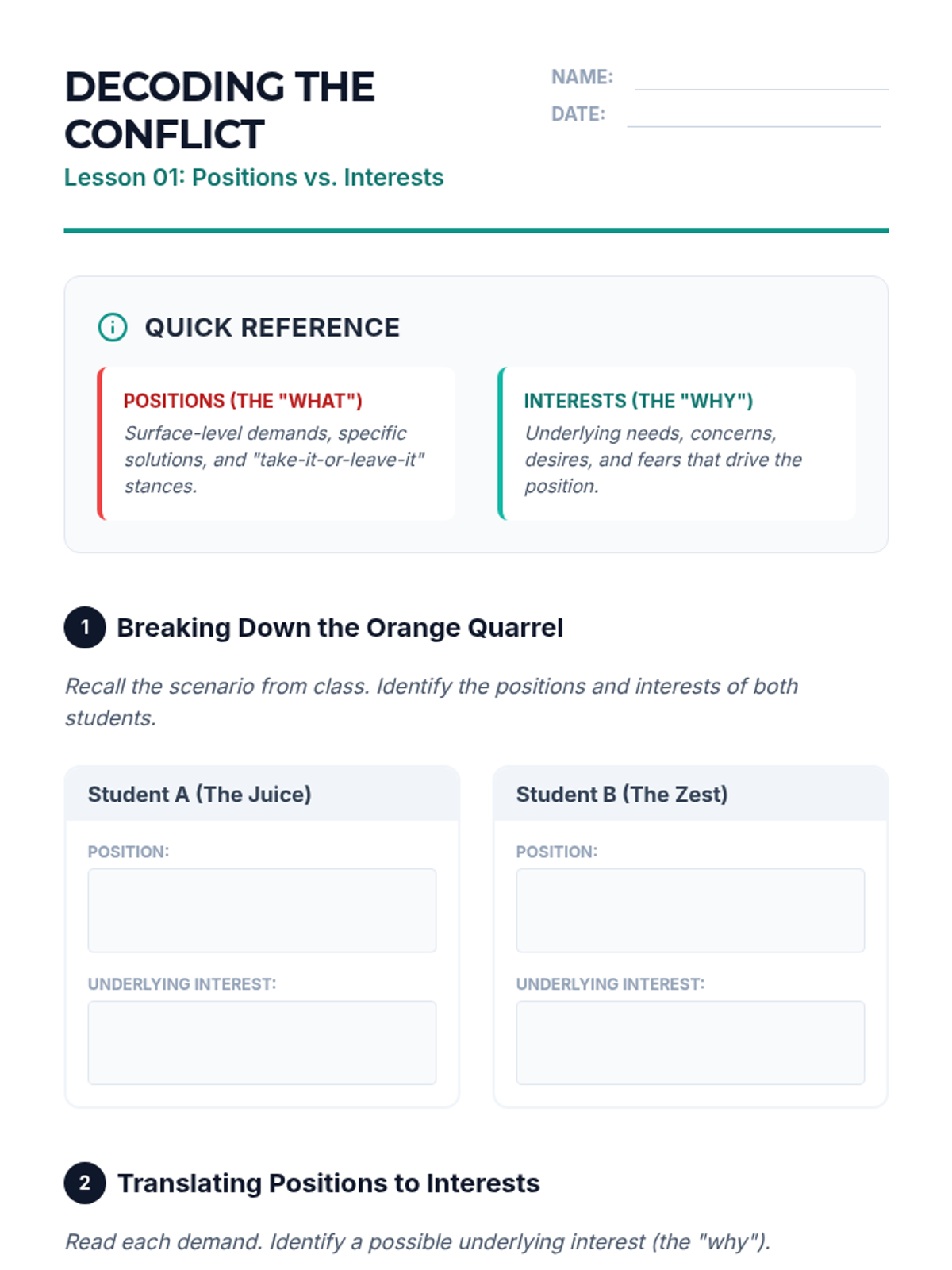
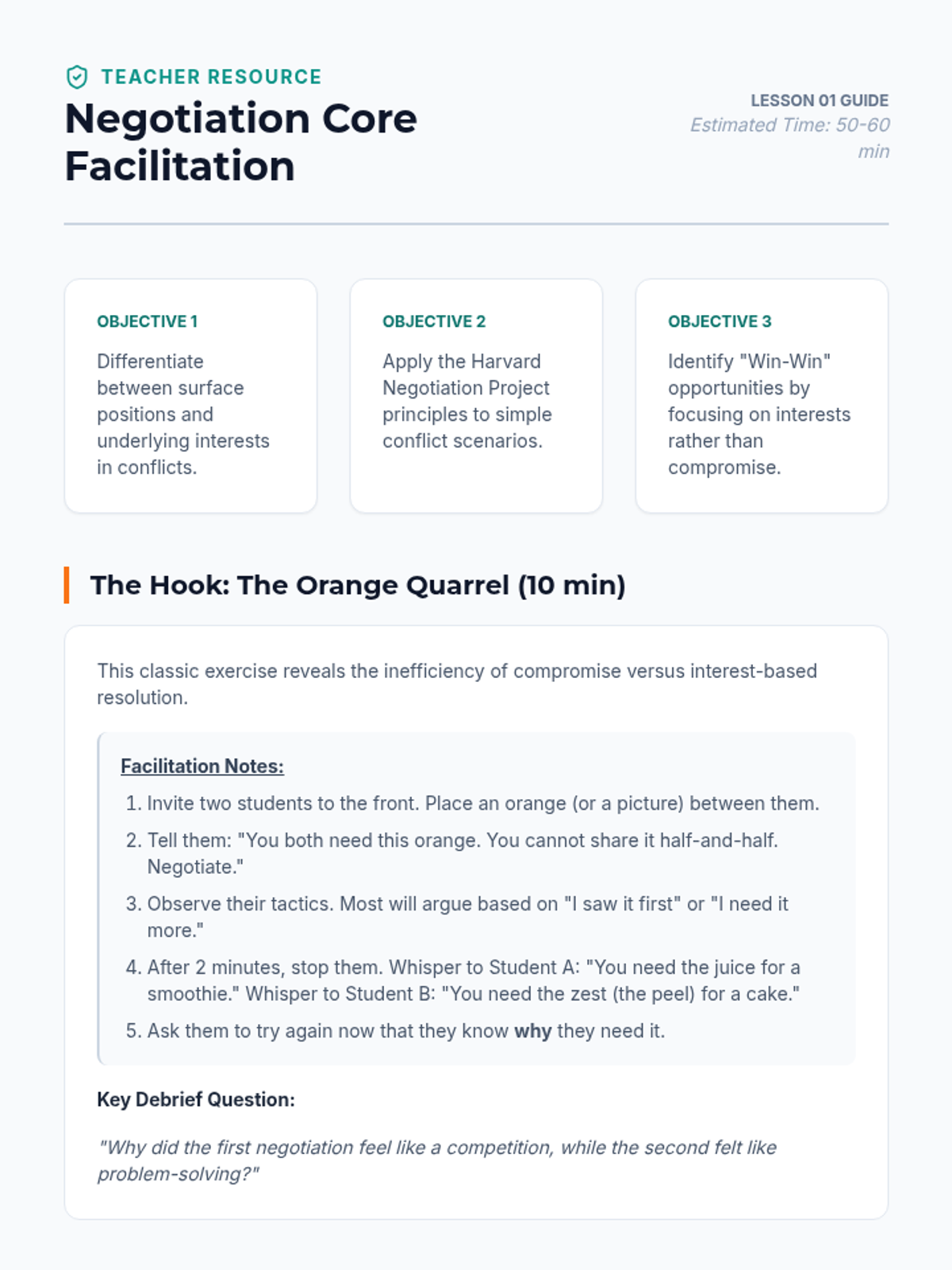
Students learn to distinguish between surface-level positions and underlying interests using the Harvard Negotiation Project model. The lesson introduces Interest-Based Negotiation (IBN) through the classic 'Orange Quarrel' scenario and case study analysis.
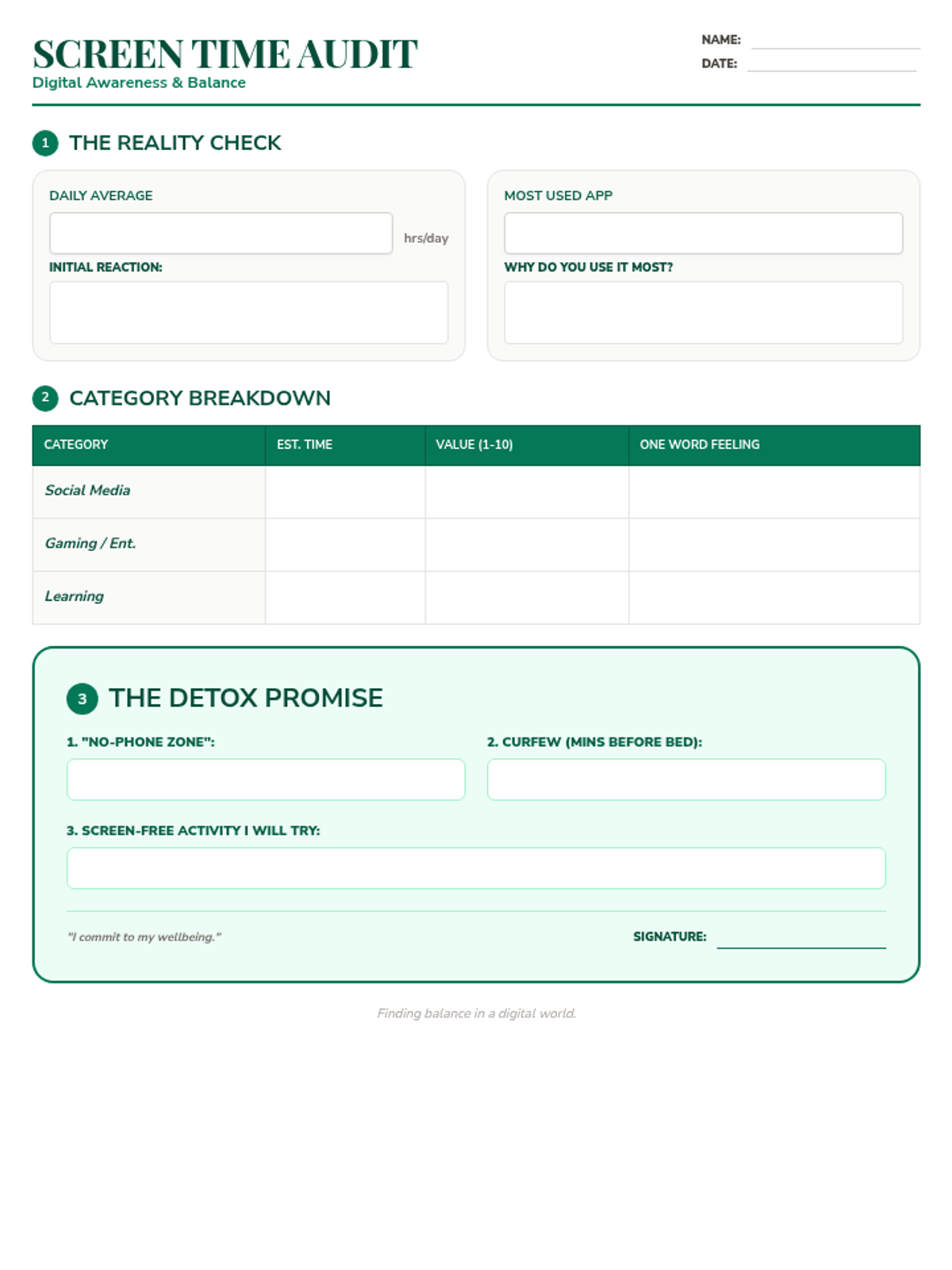
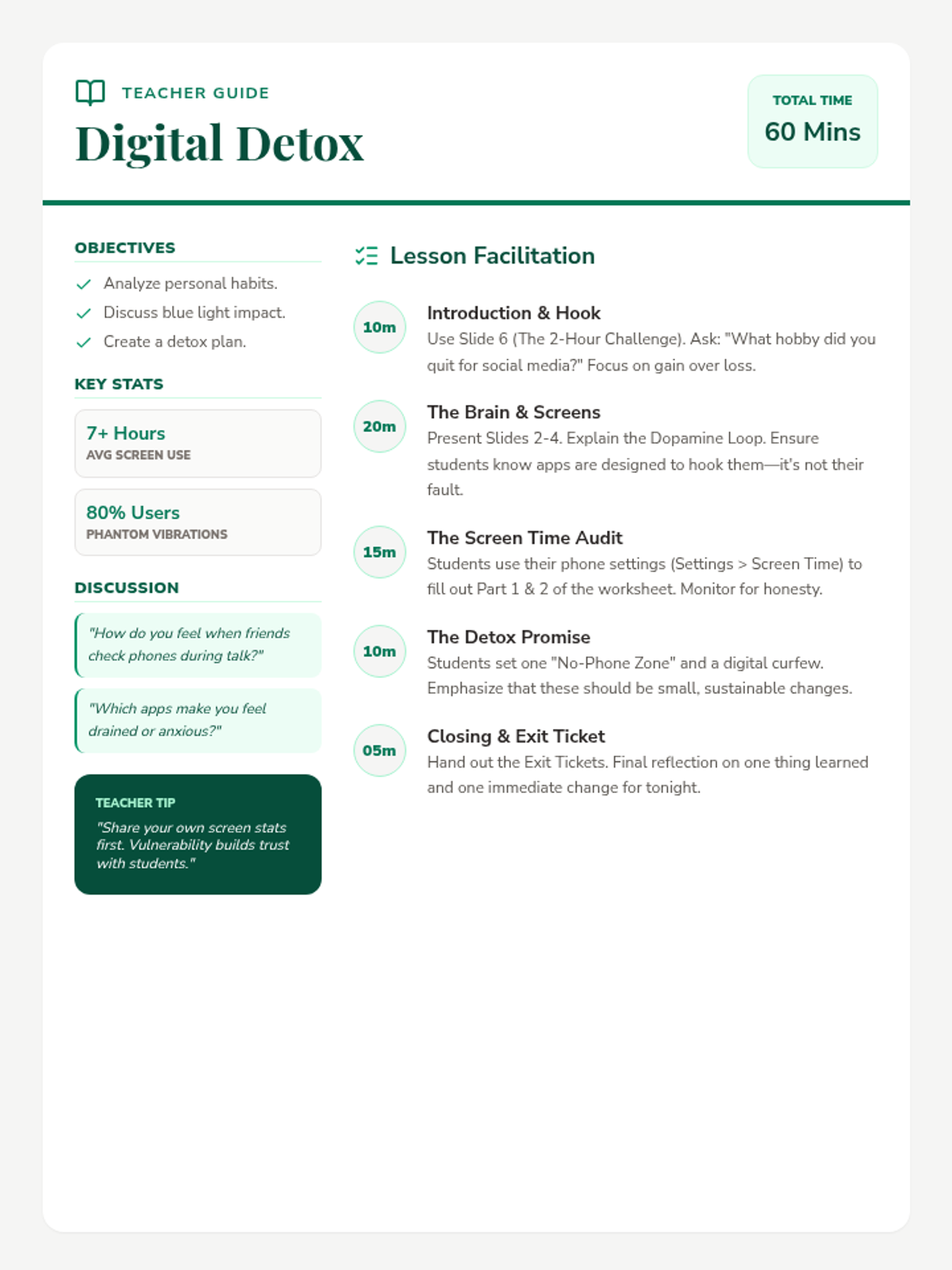
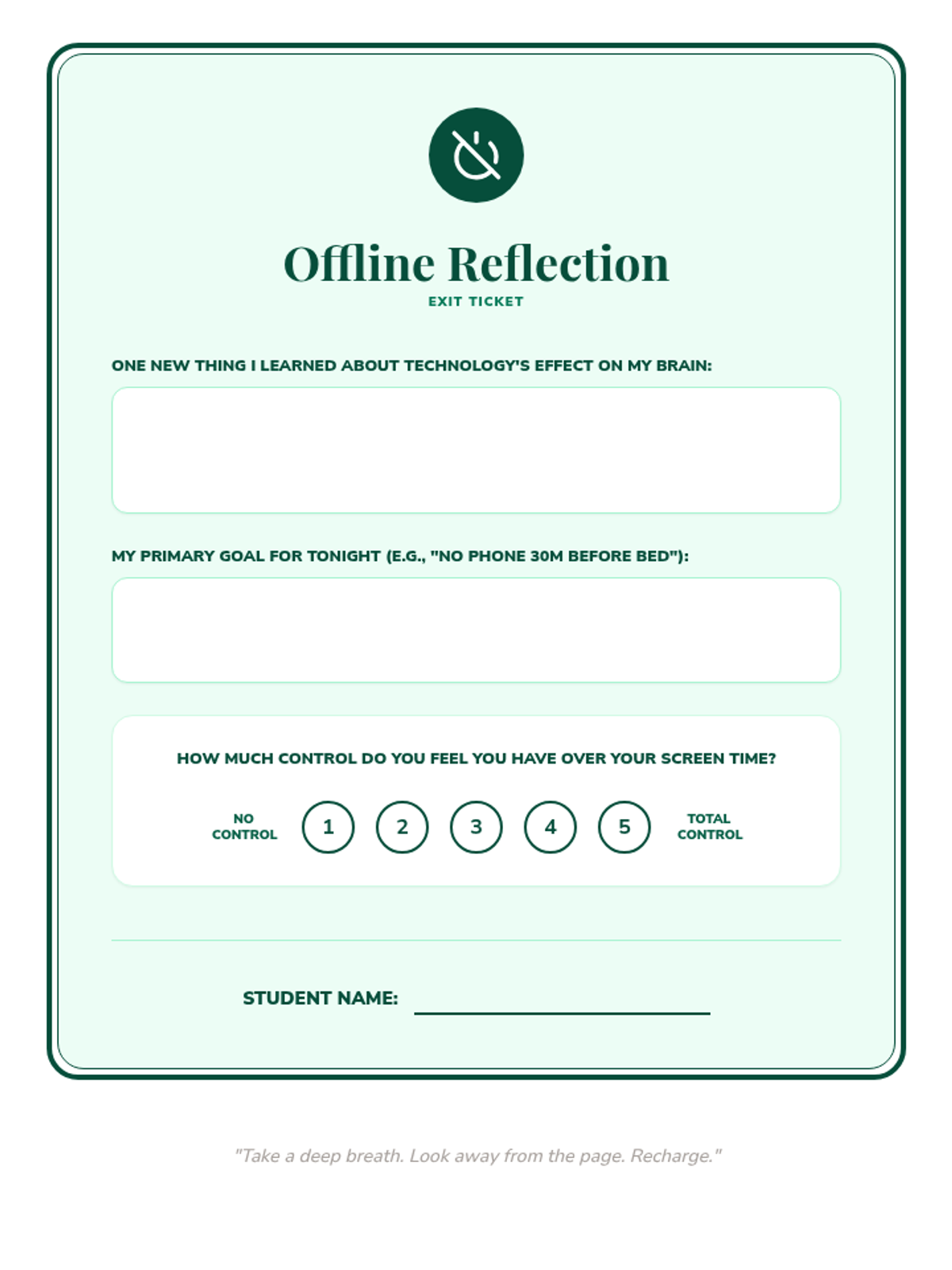
A lesson designed to help students understand the impact of excessive screen time and develop healthy, sustainable digital habits through reflection and goal-setting.
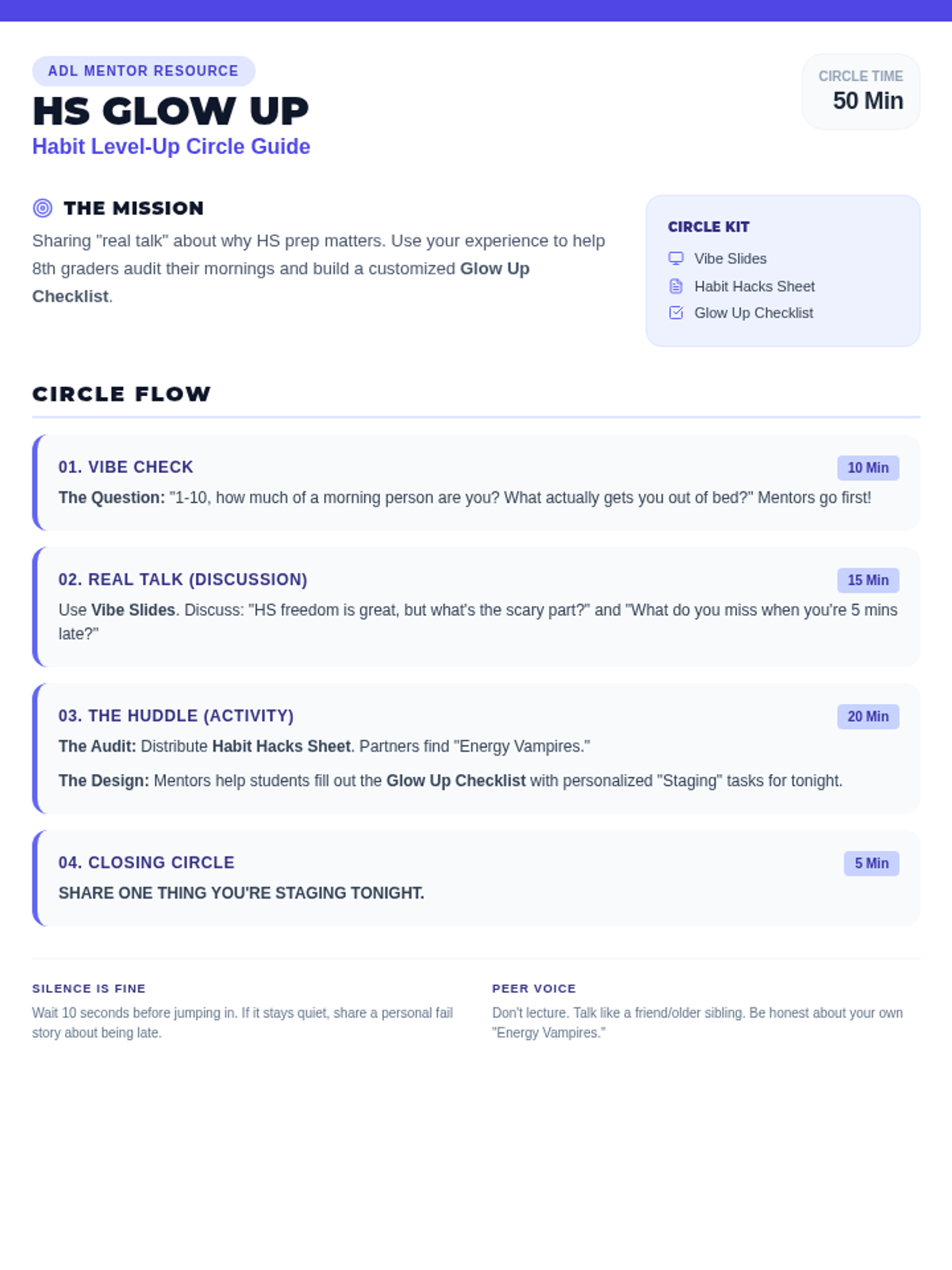
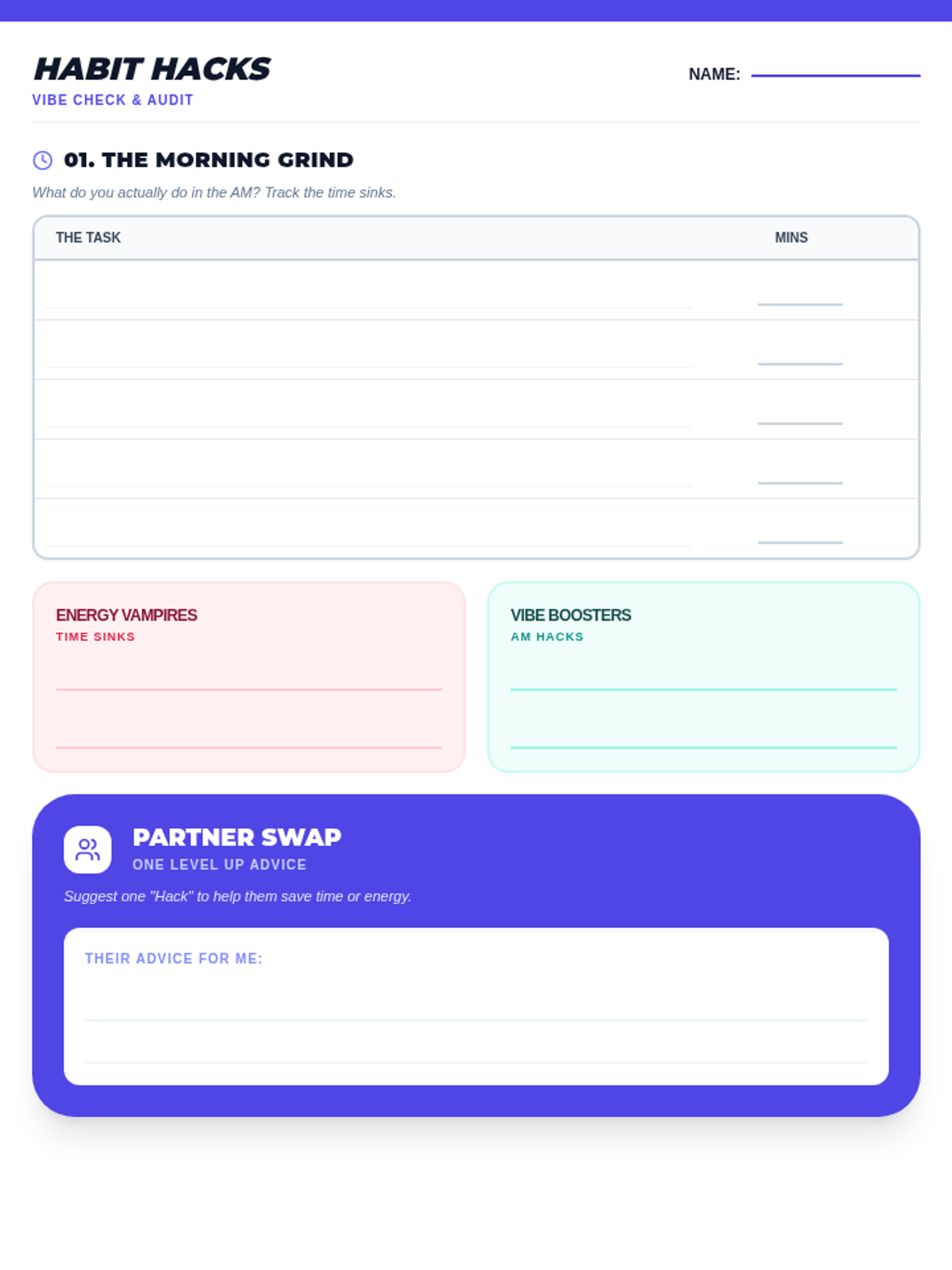
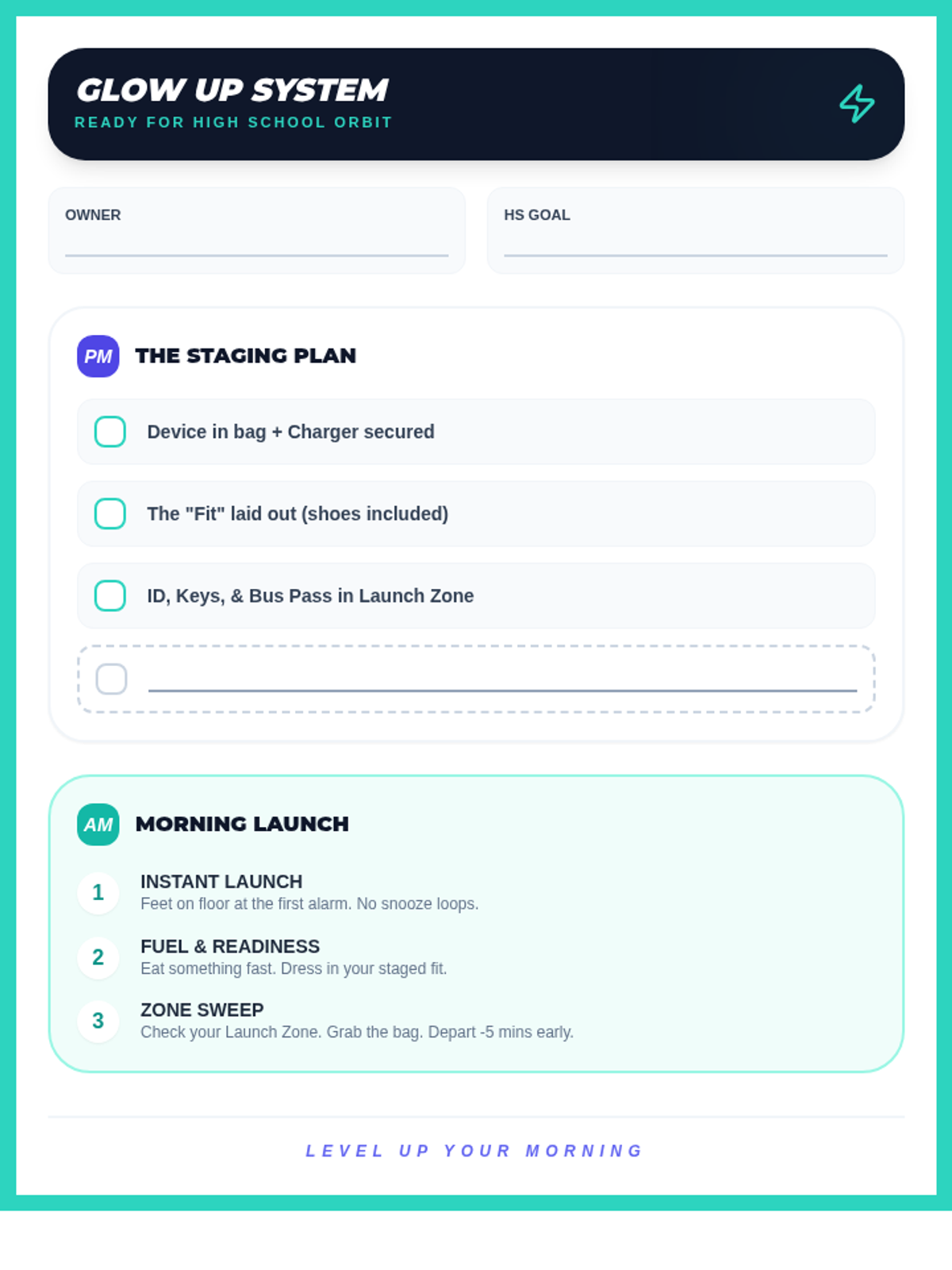
A 50-minute lesson designed to help 8th graders develop punctuality and preparedness habits for the transition to high school. Students will analyze their current routines and create a 'Mission Control' morning checklist.
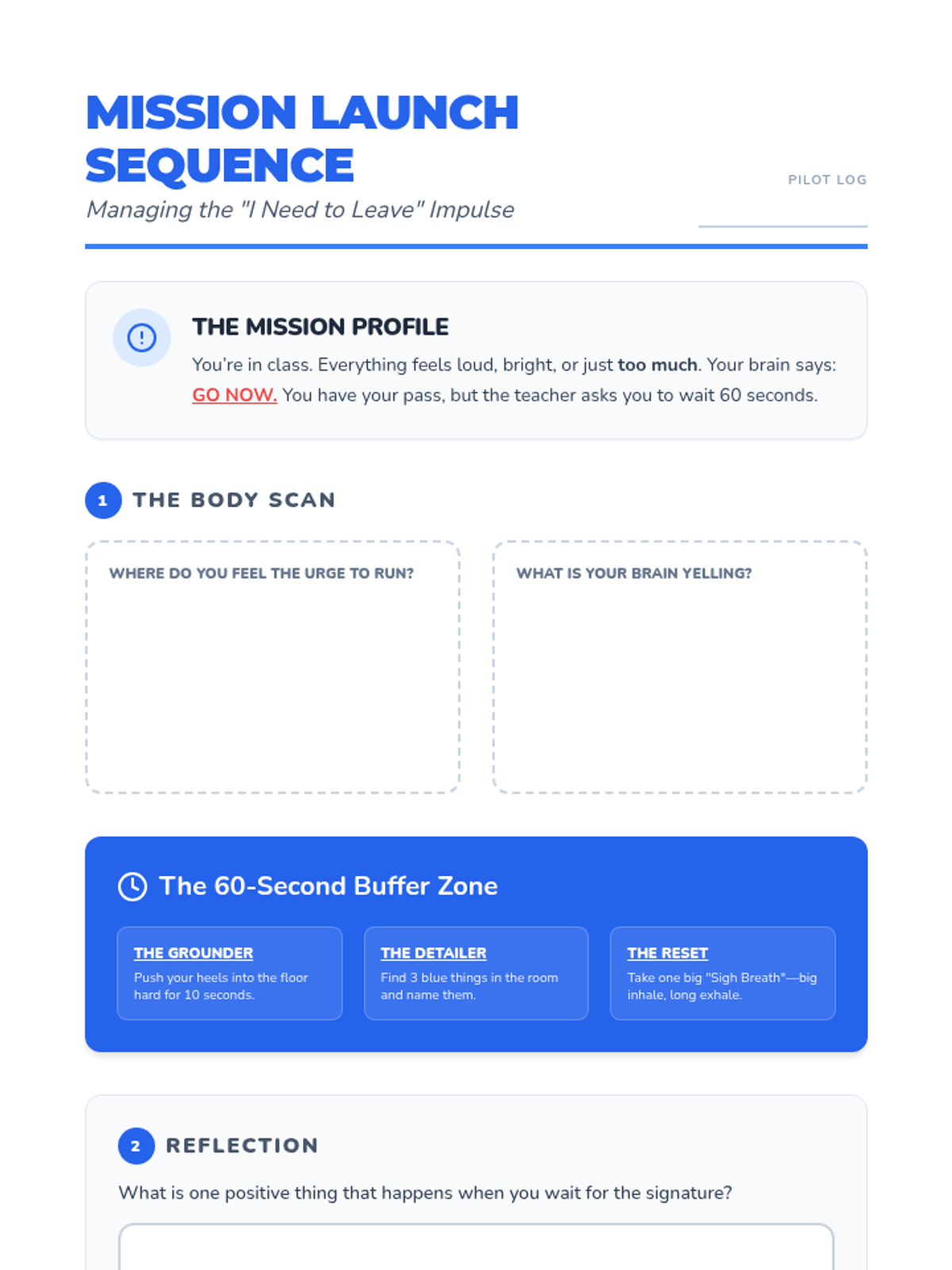
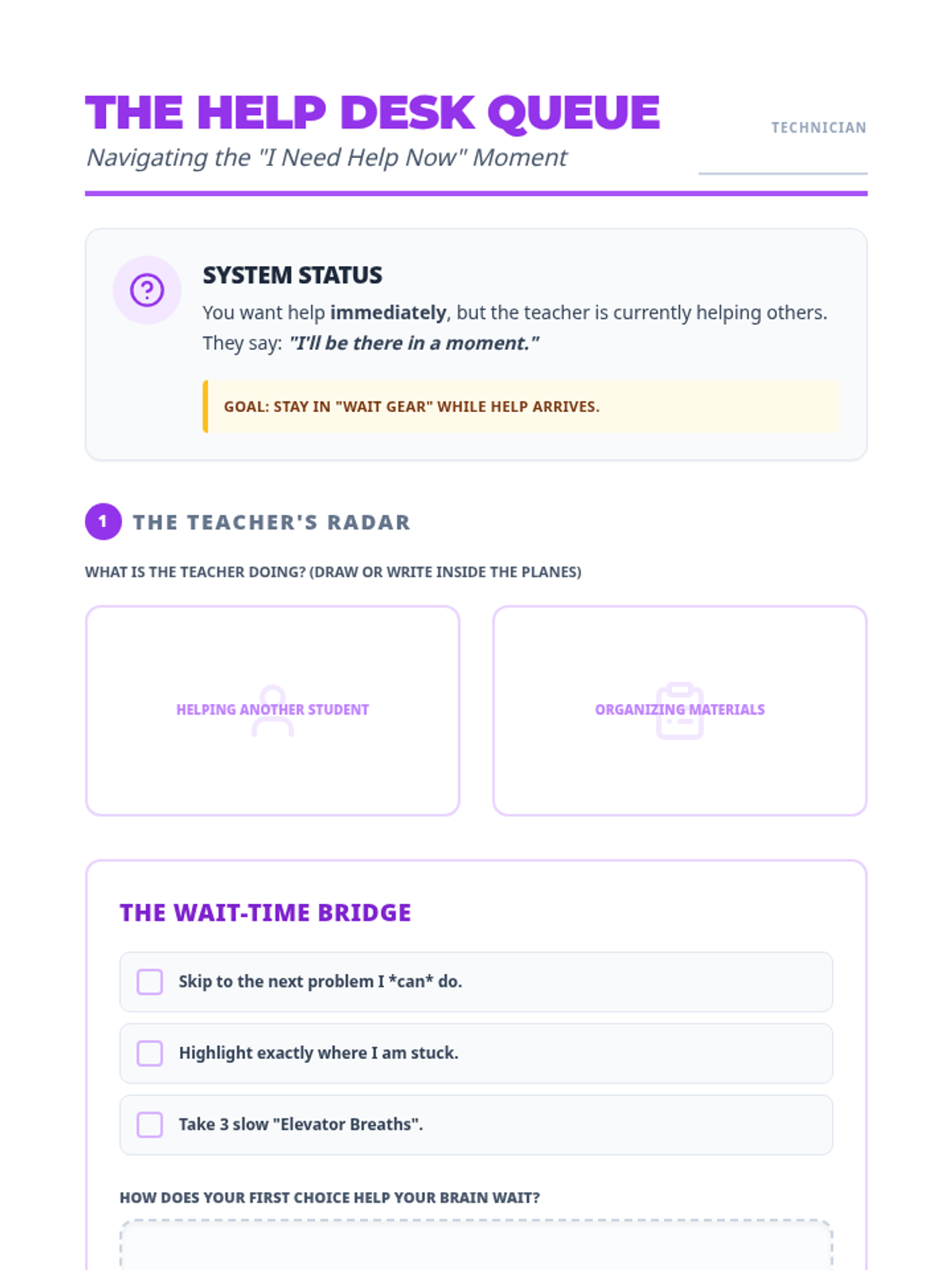
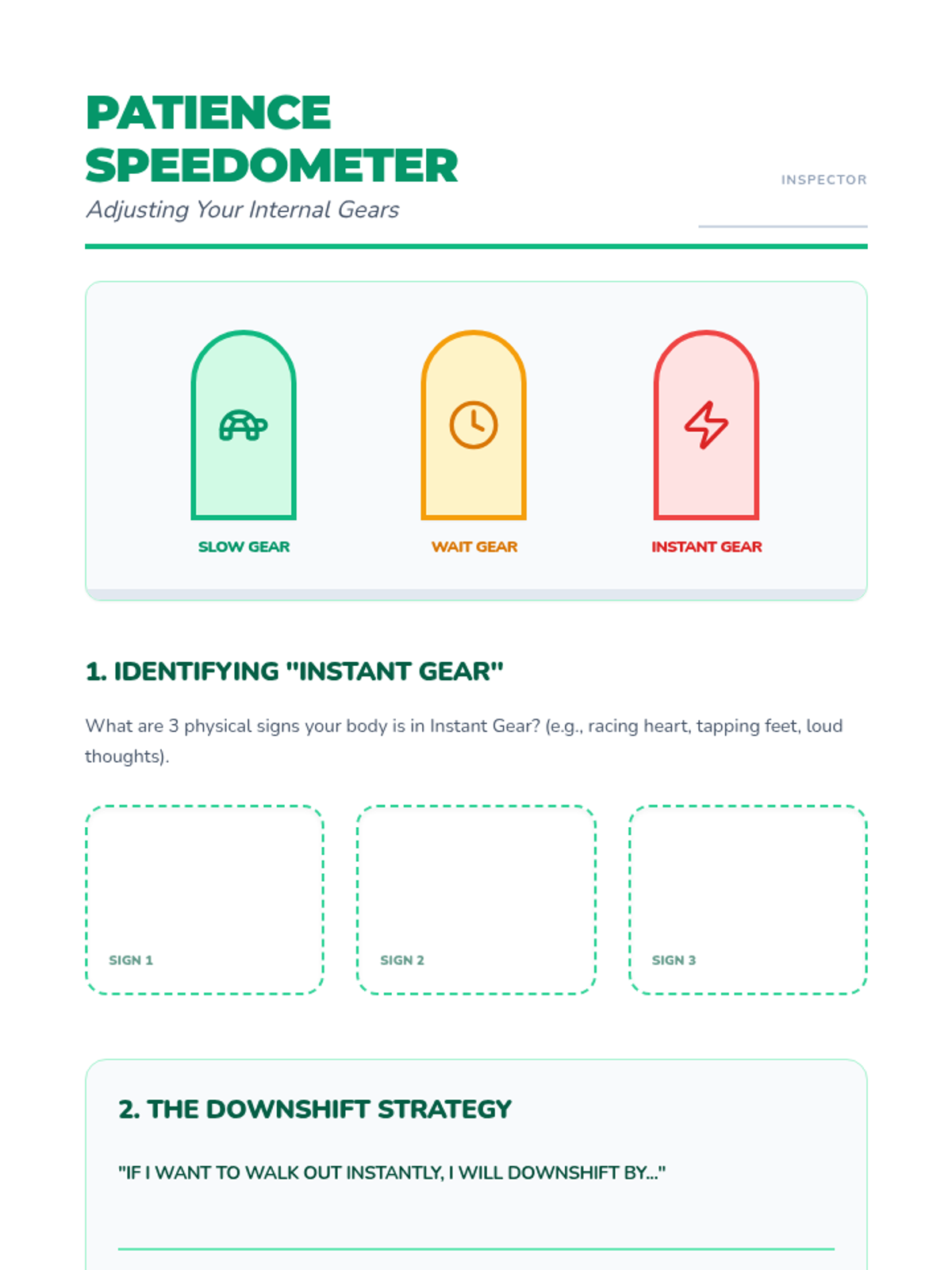
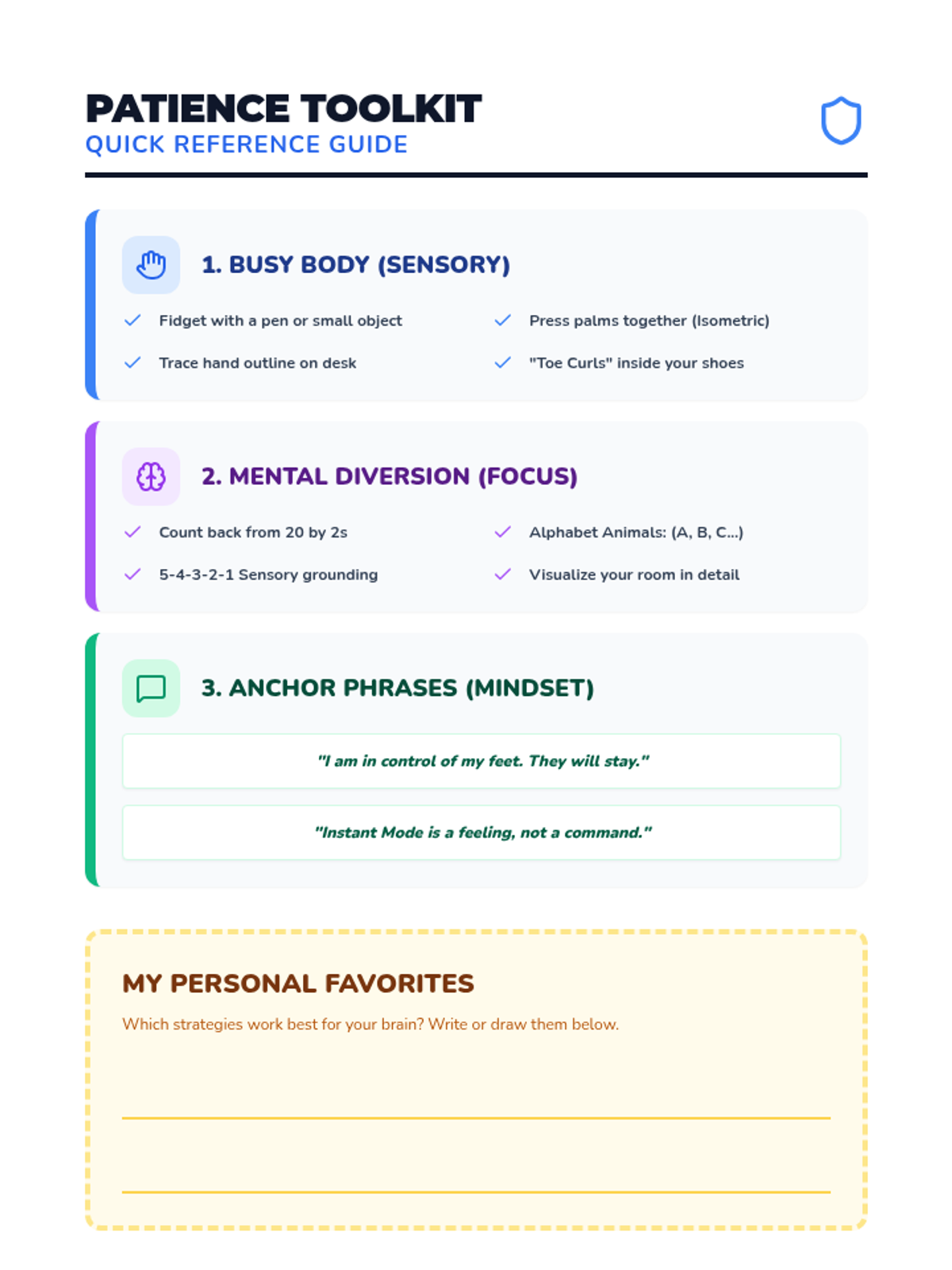
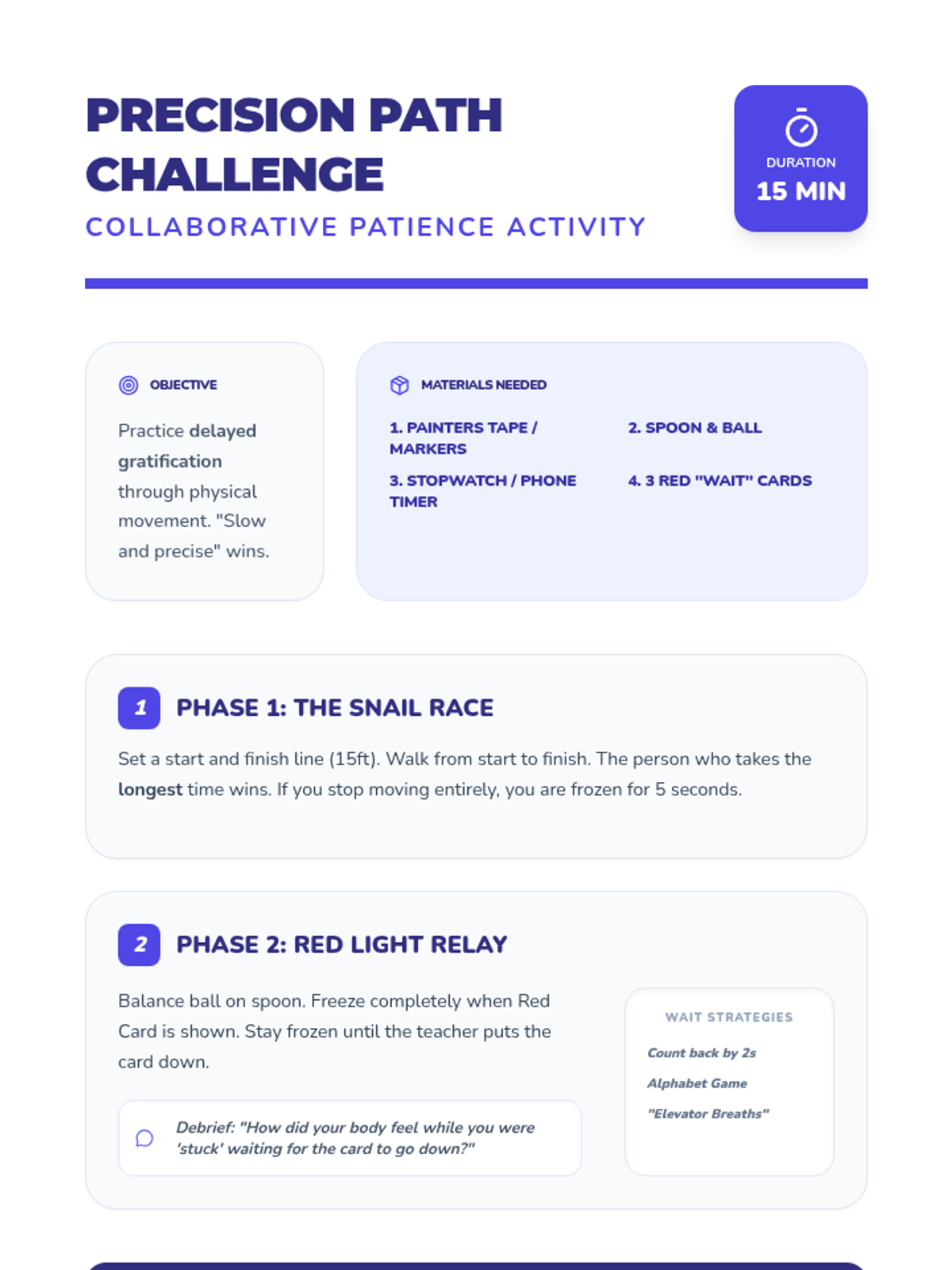
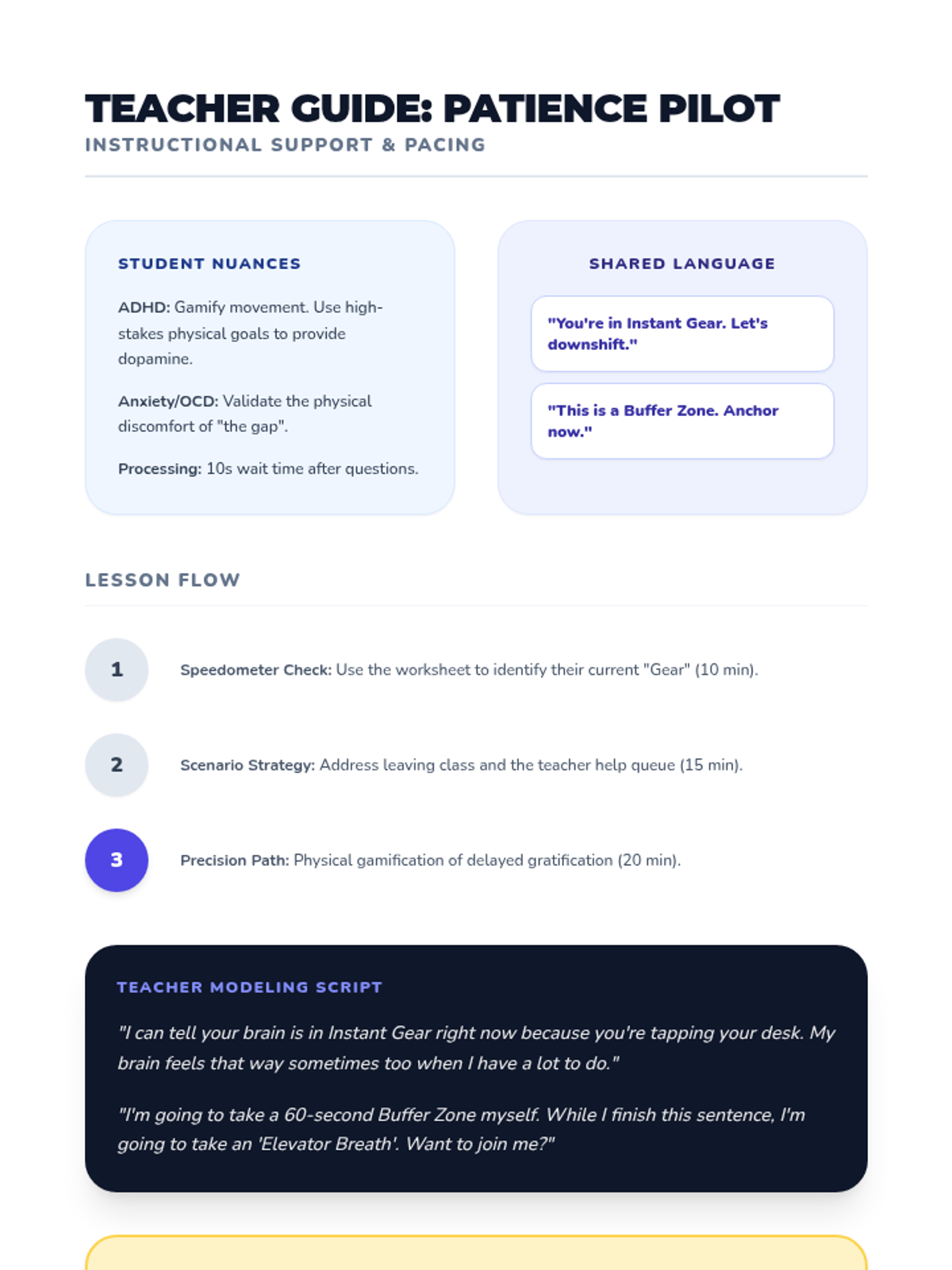
This lesson introduces the concept of the 'Waiting Gap' and provides practical tools for managing the physical and emotional urge to act instantly. Includes worksheets on specific classroom scenarios and a movement-based activity for building delayed gratification.
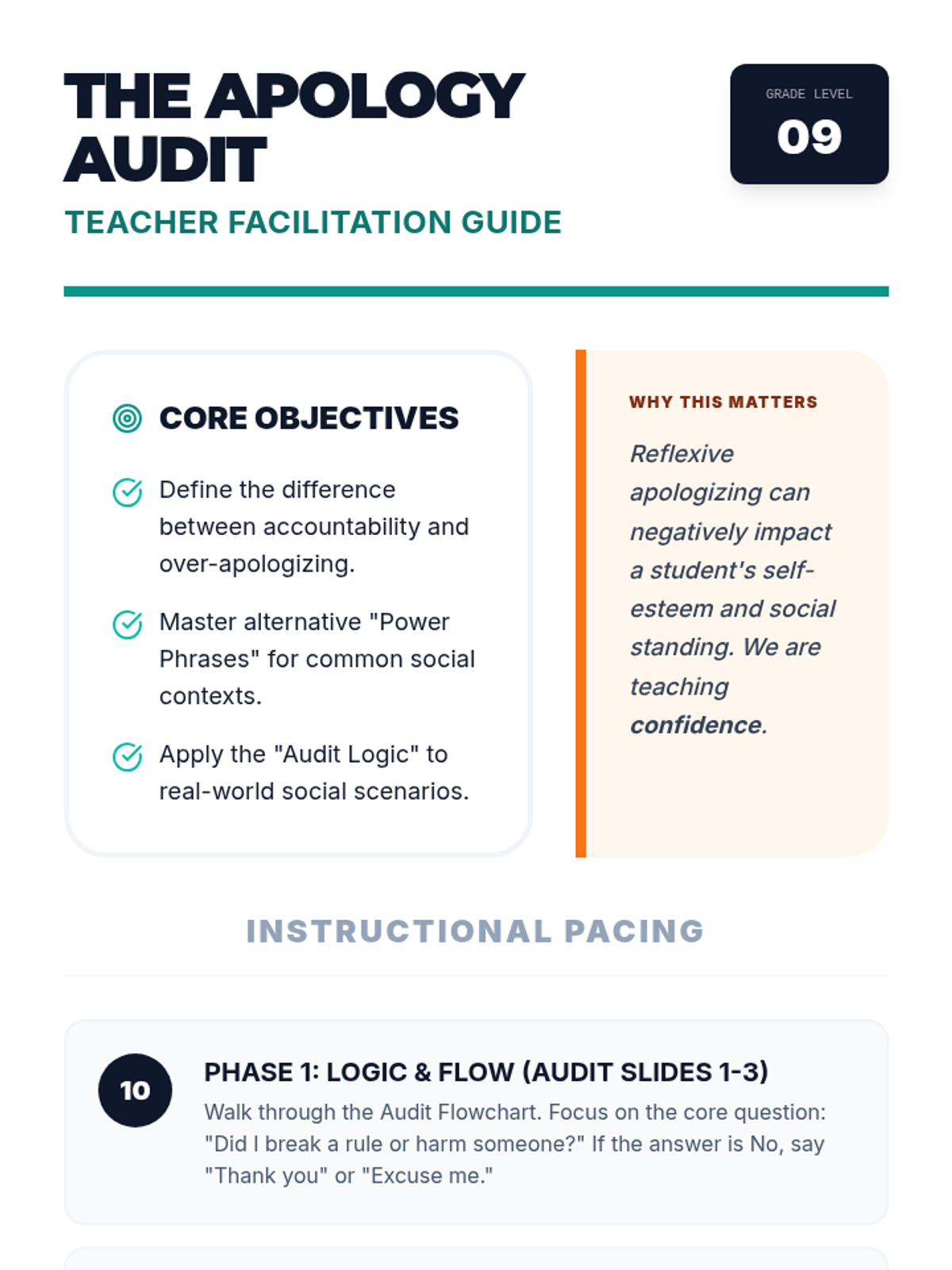
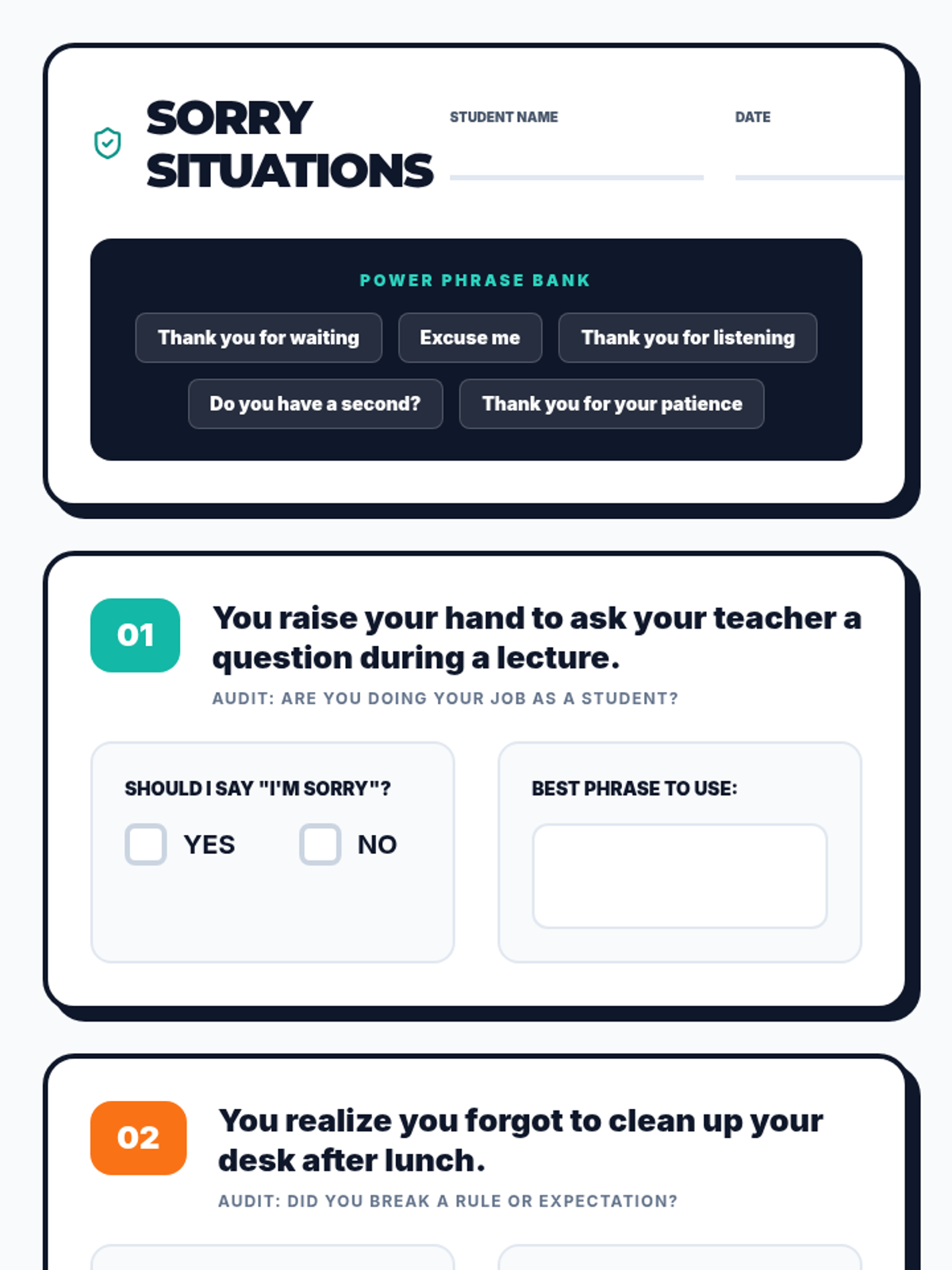
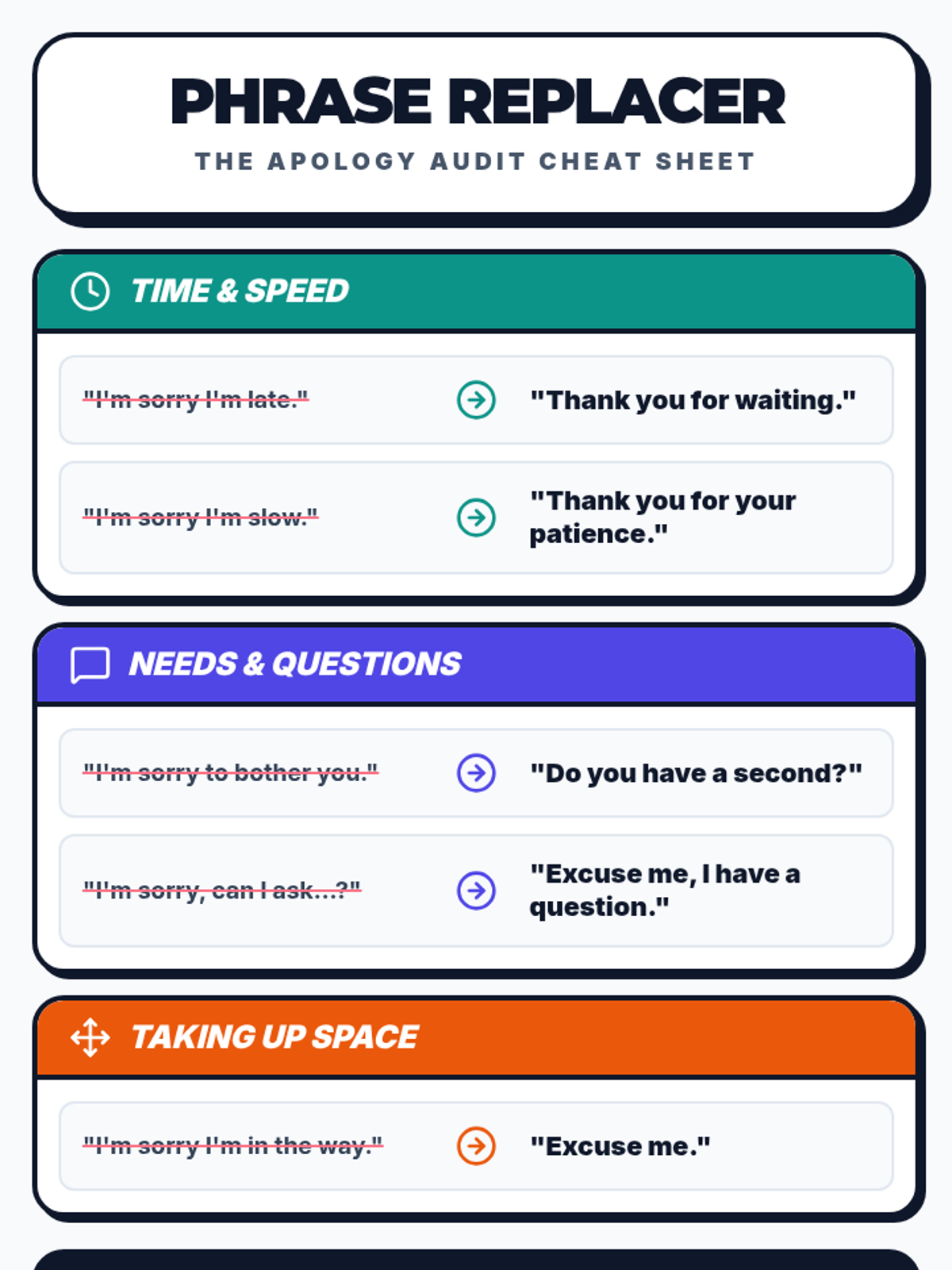
A lesson designed for high school students to differentiate between appropriate apologies and over-apologizing, featuring social scripts and alternative communication strategies.
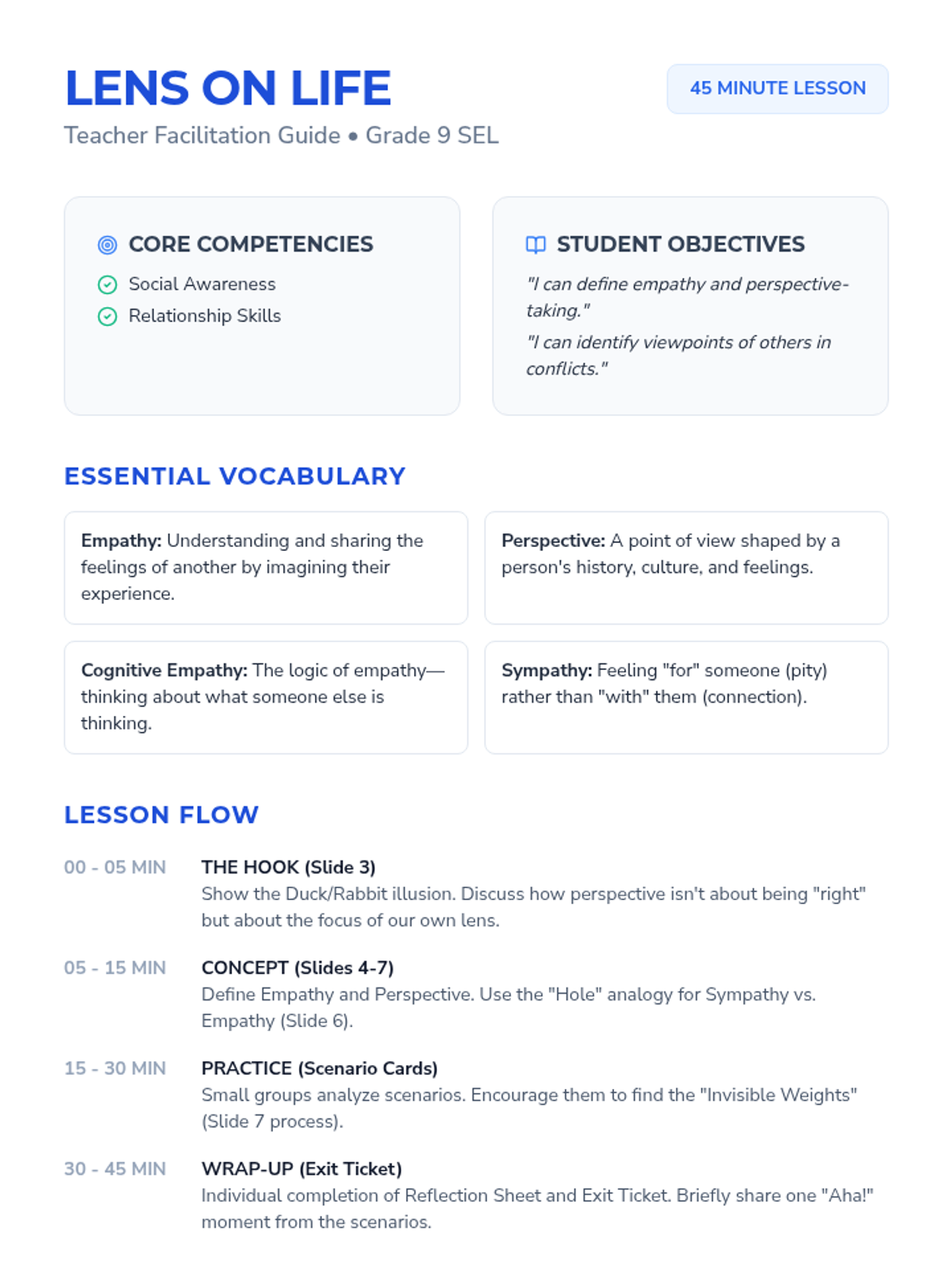
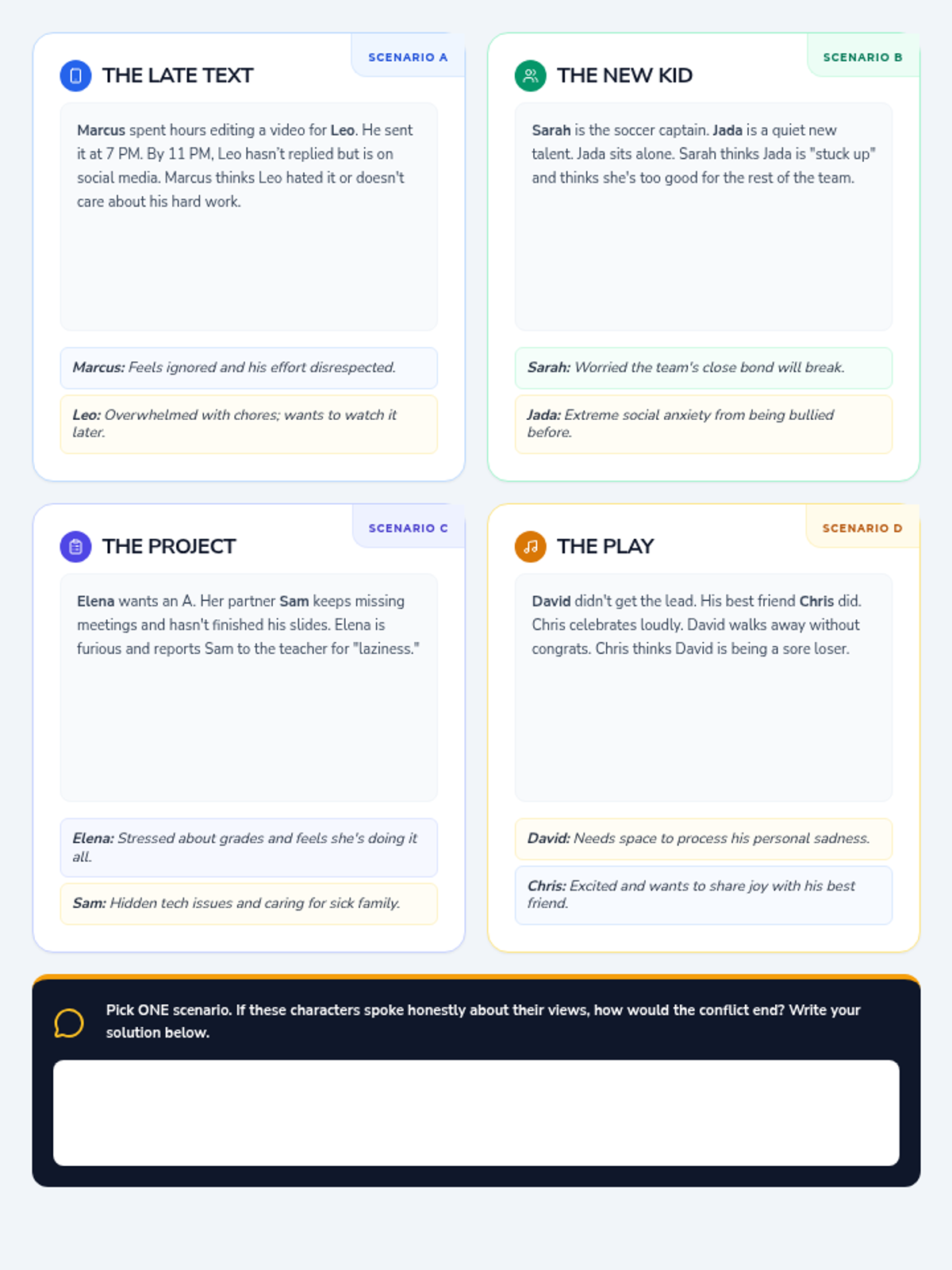
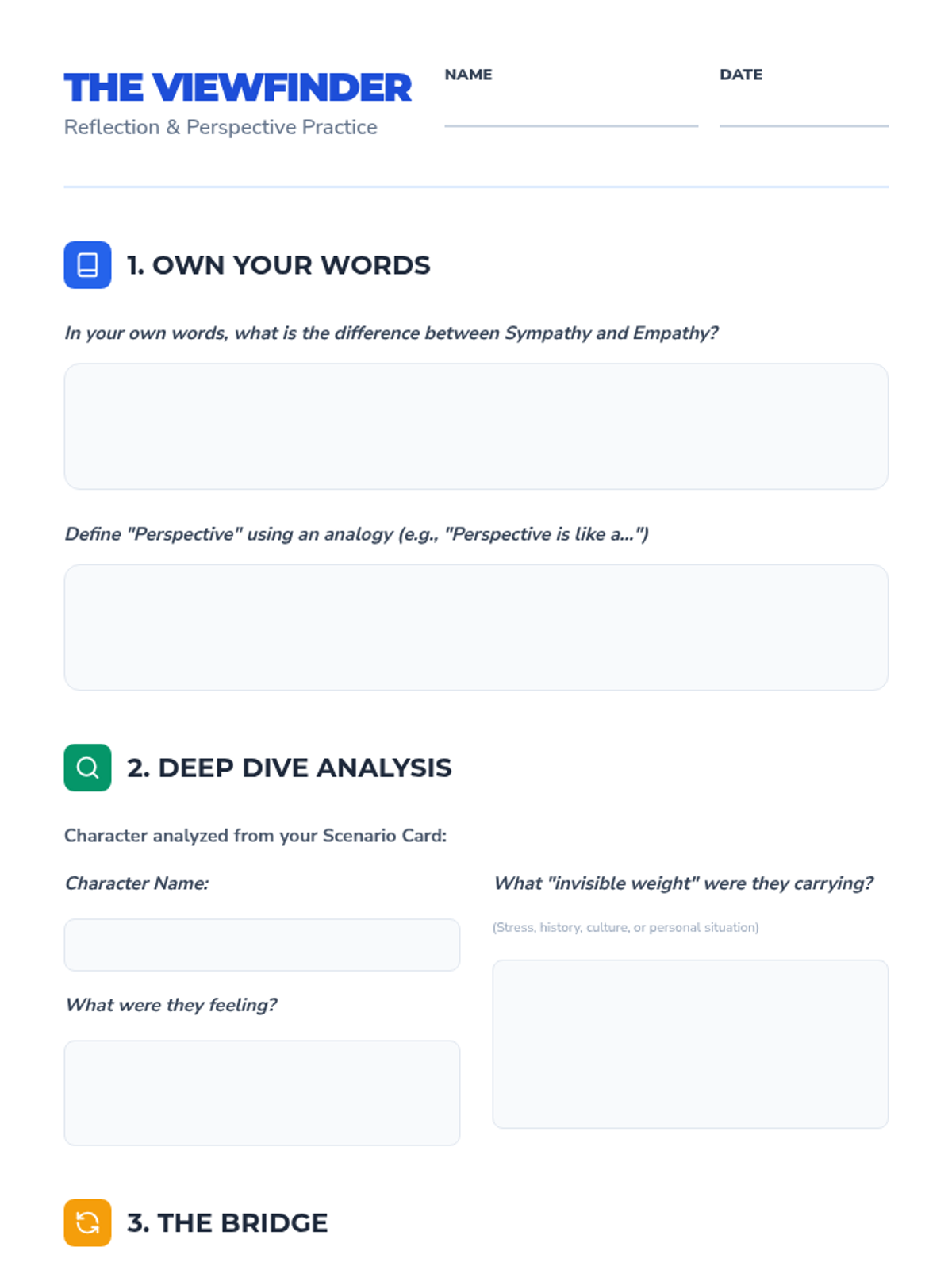
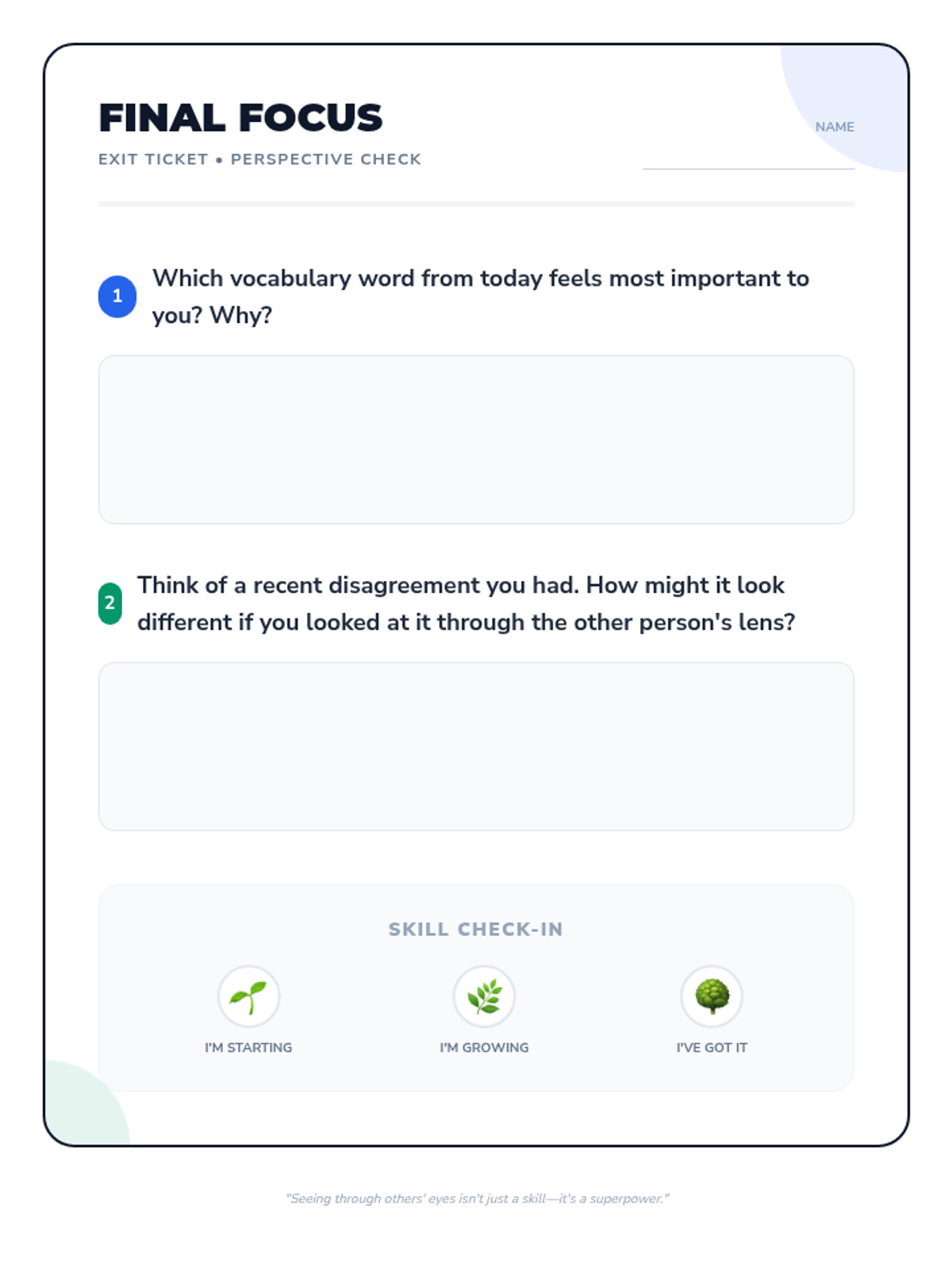
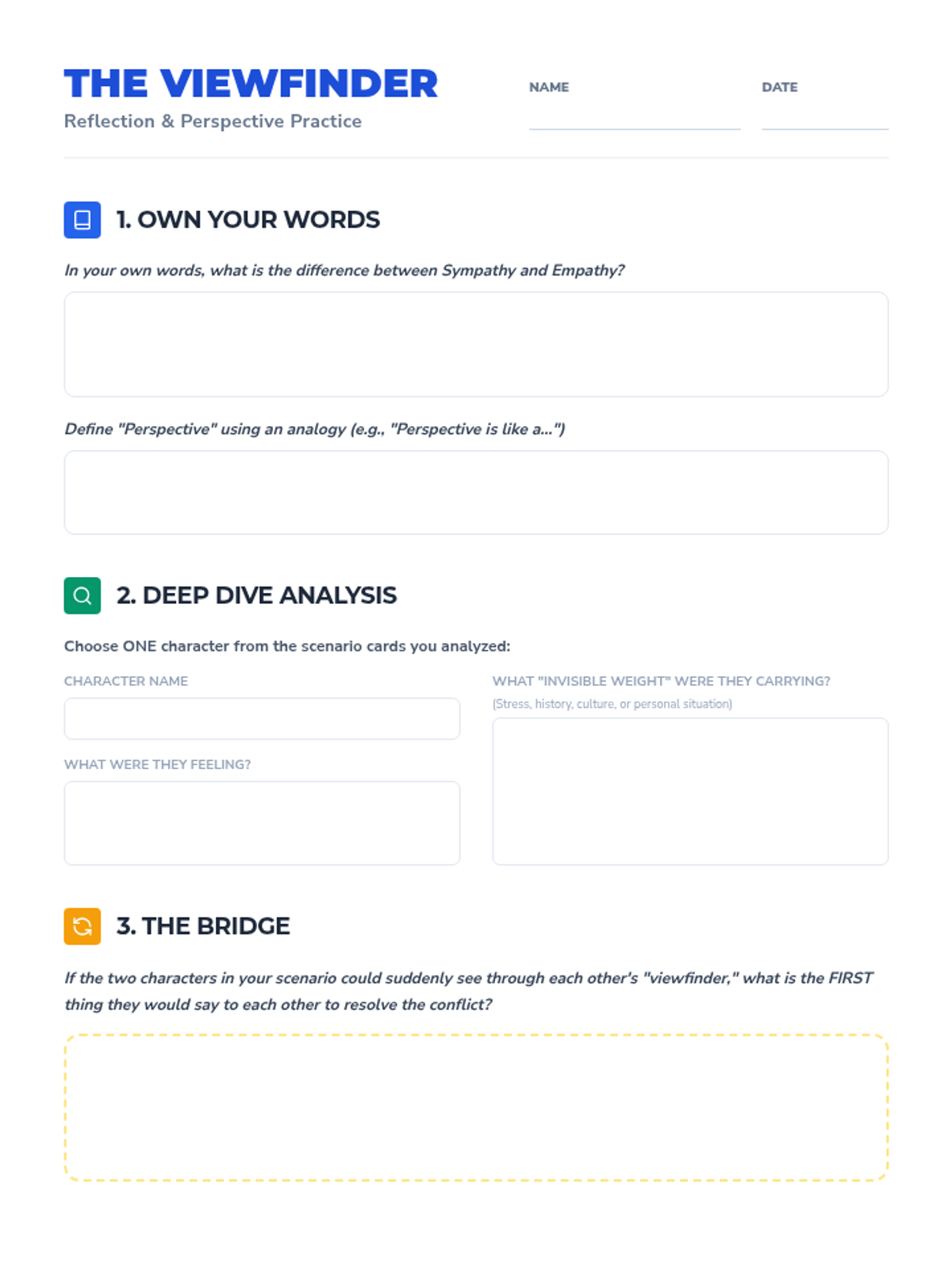
A Grade 9 SEL lesson focused on developing empathy and perspective-taking through interactive scenarios and reflections. Students will learn to identify others' emotions and understand different points of view.
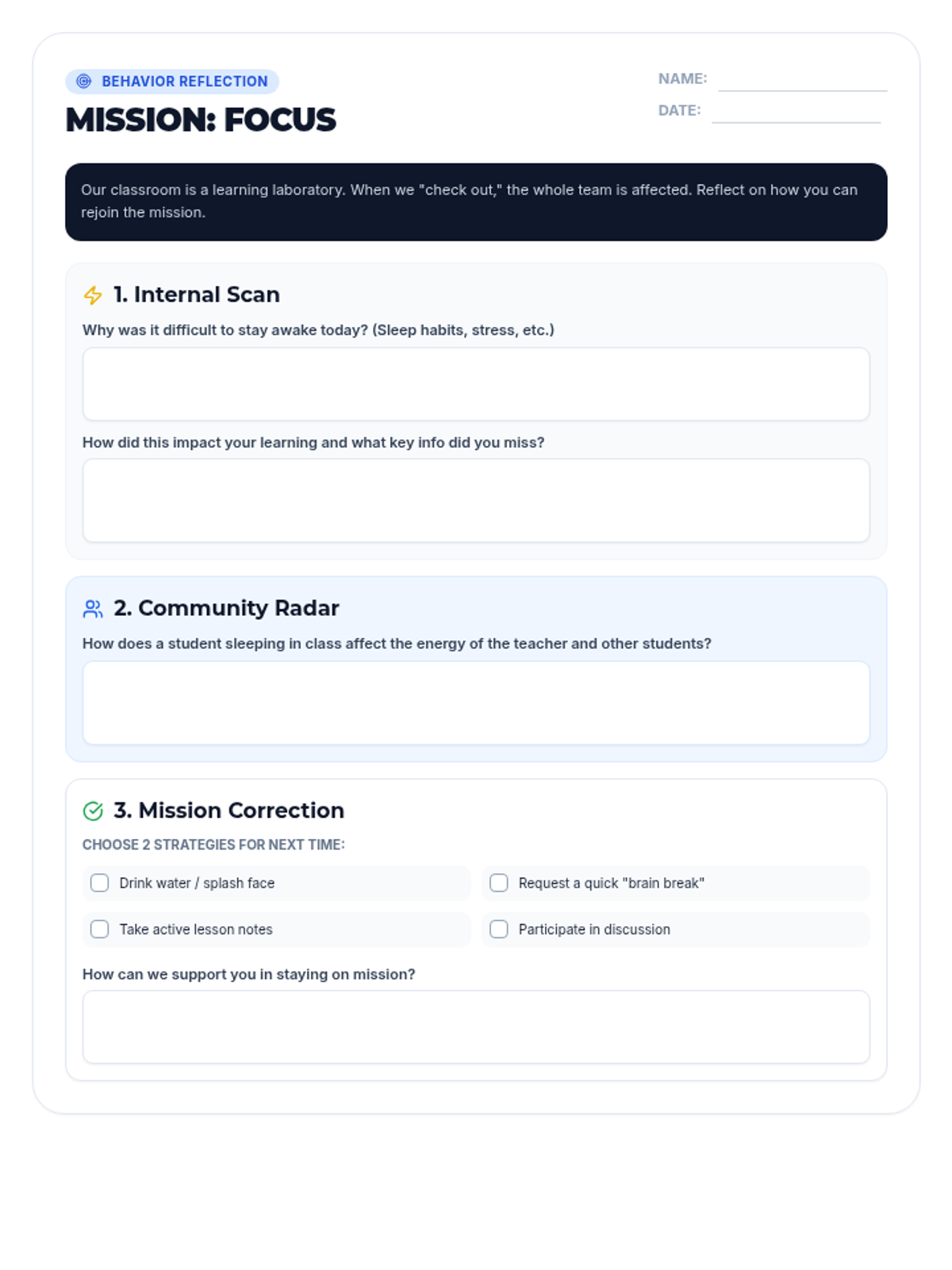
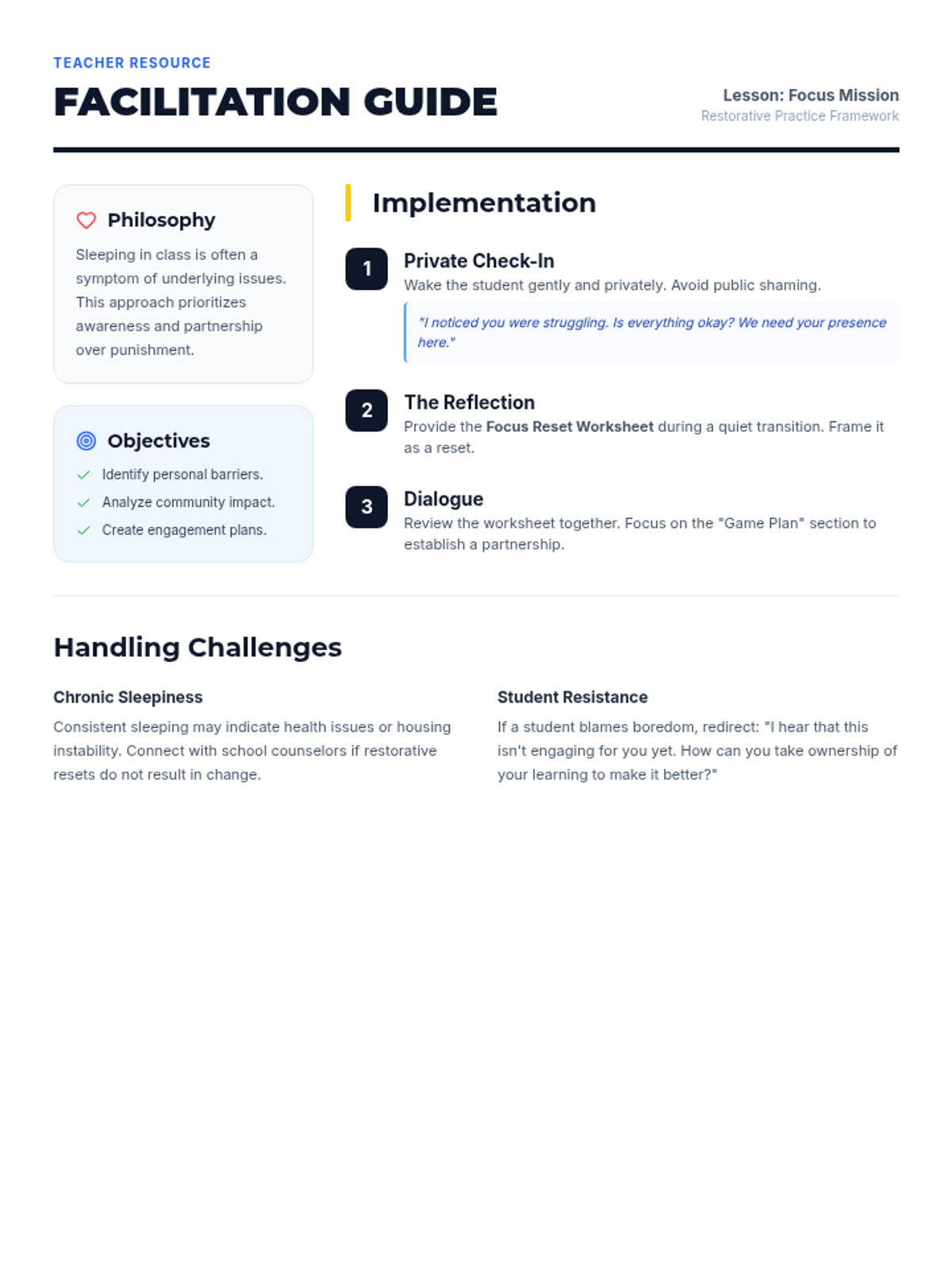
A restorative lesson designed to help students understand the importance of staying awake and engaged in class, focusing on personal success and classroom community respect.
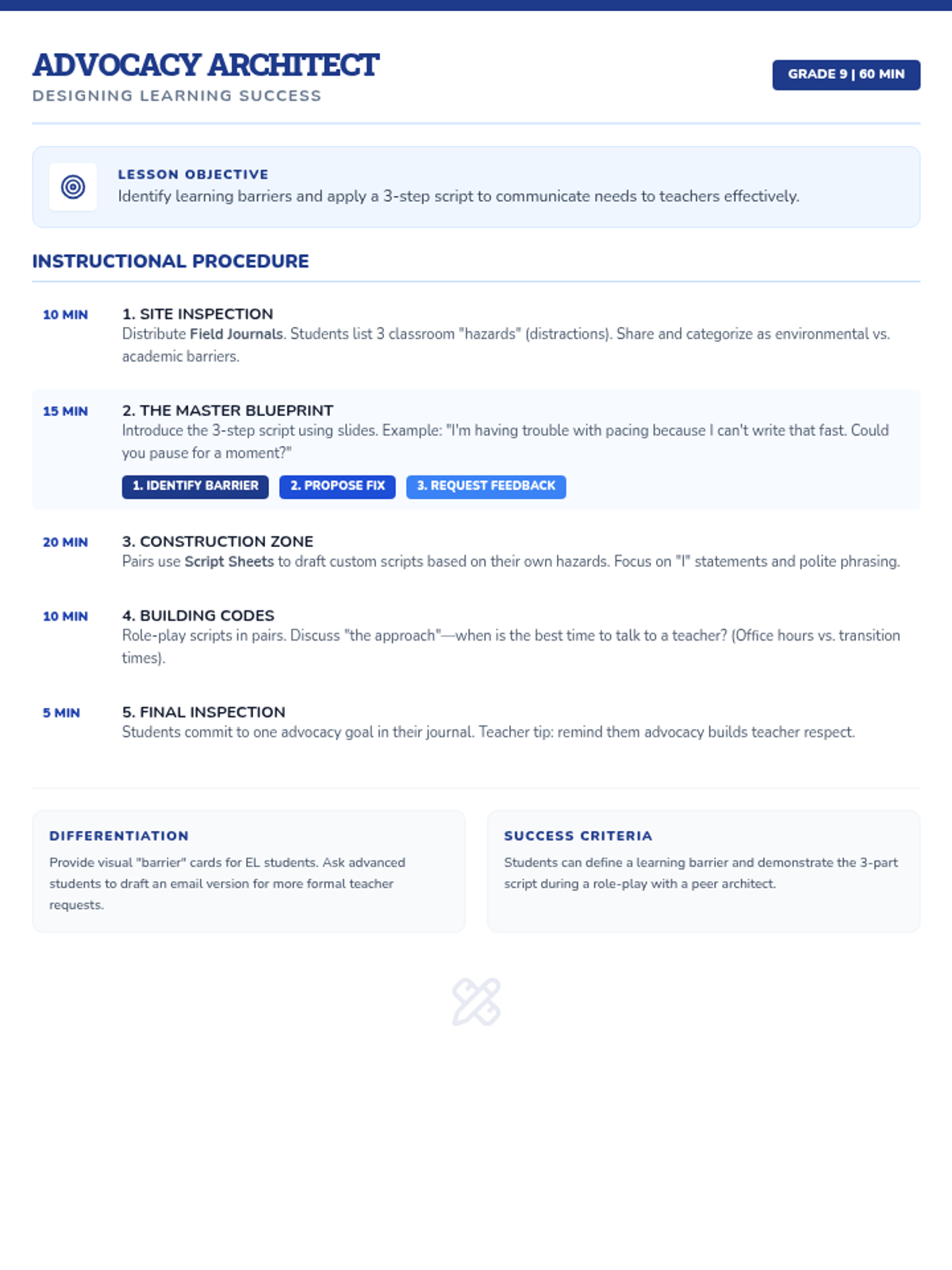
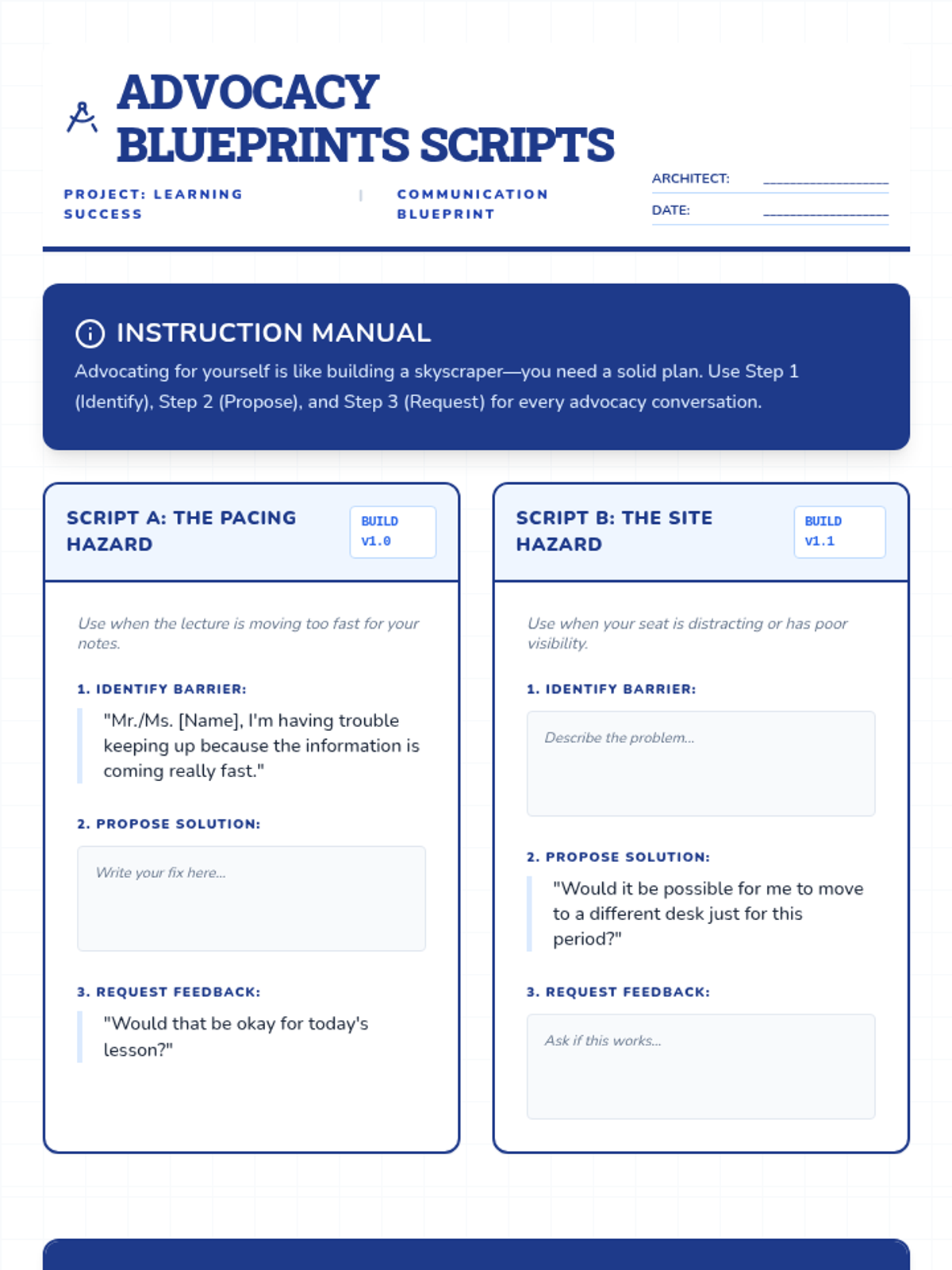
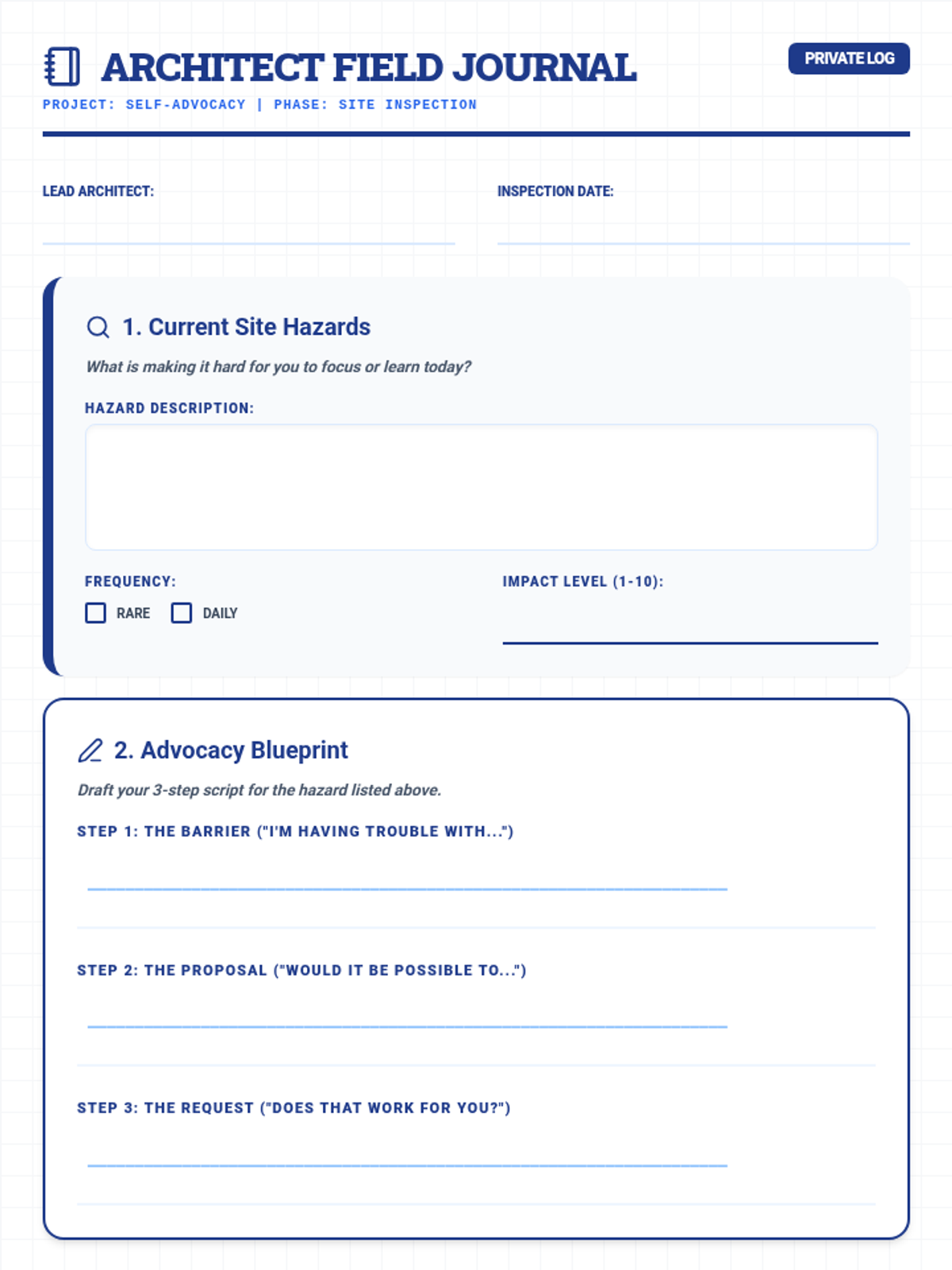
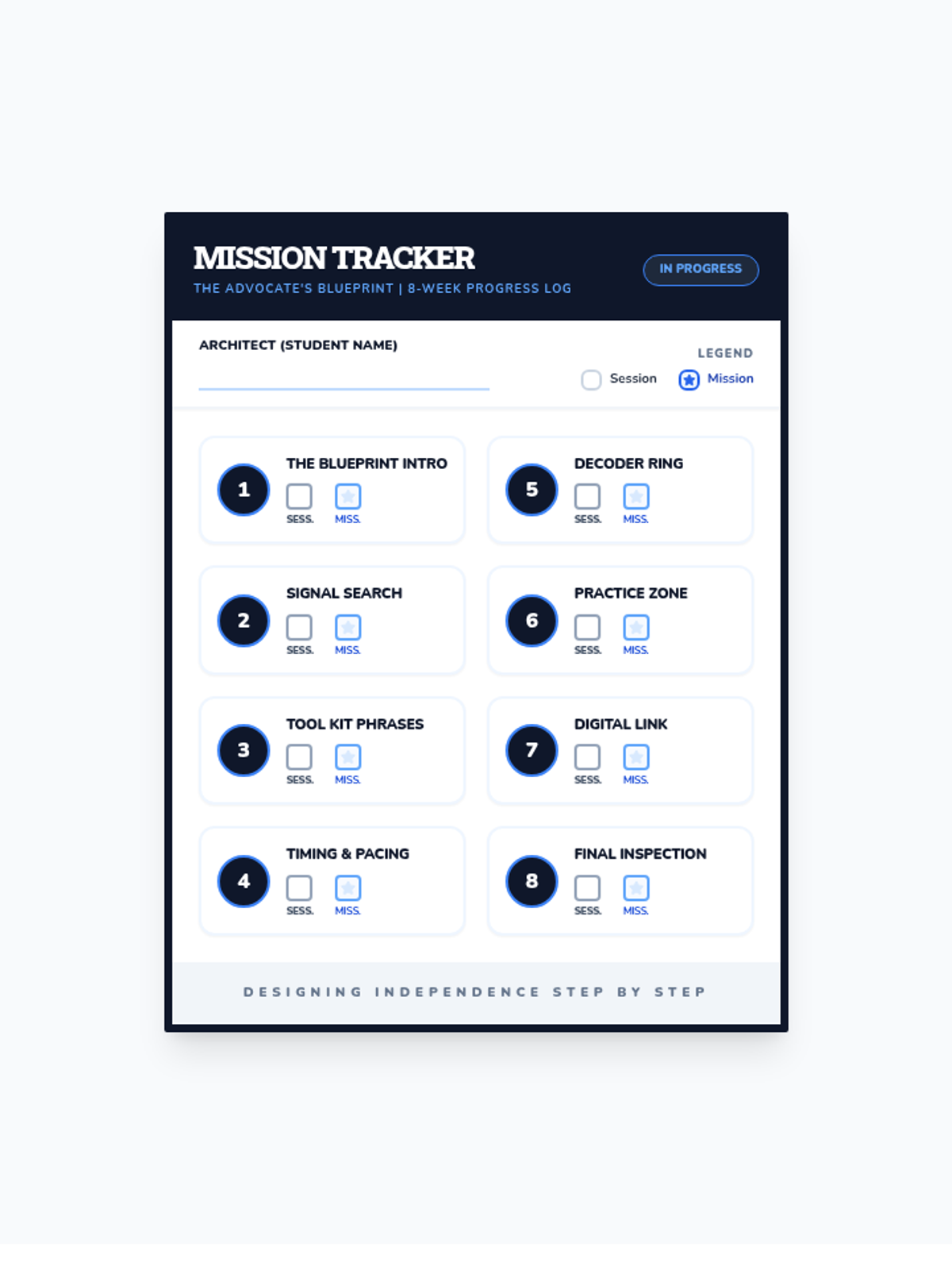
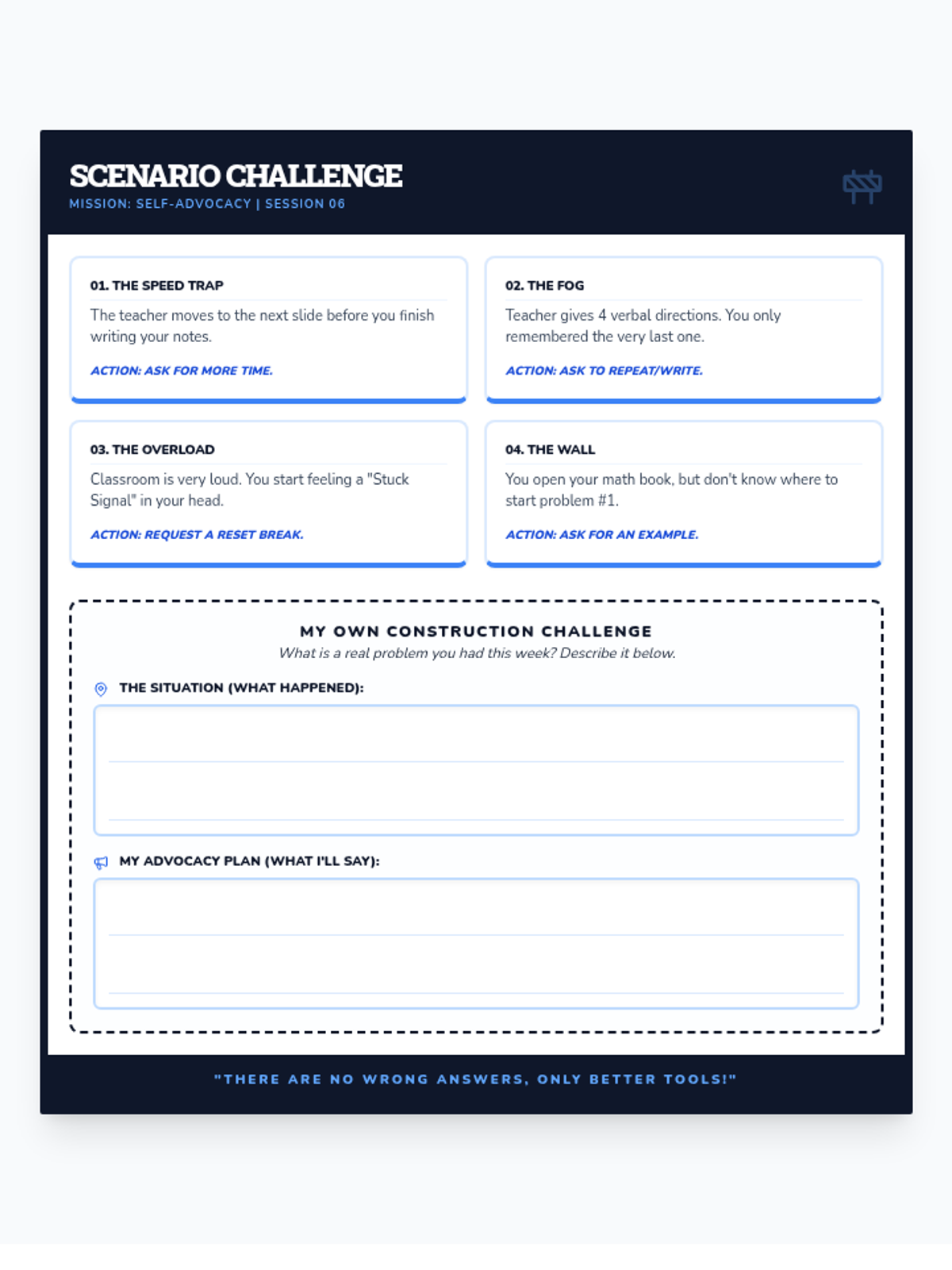
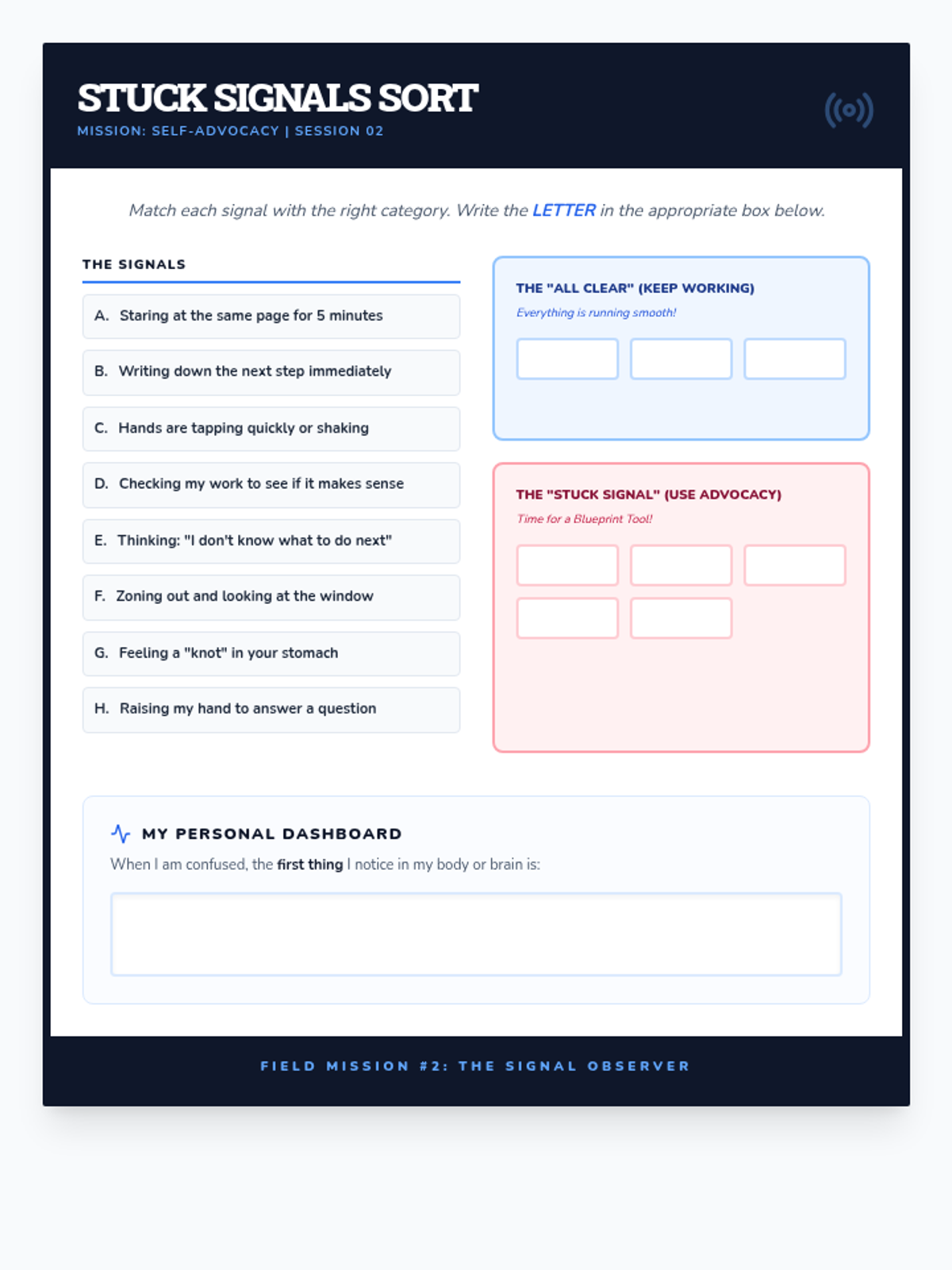
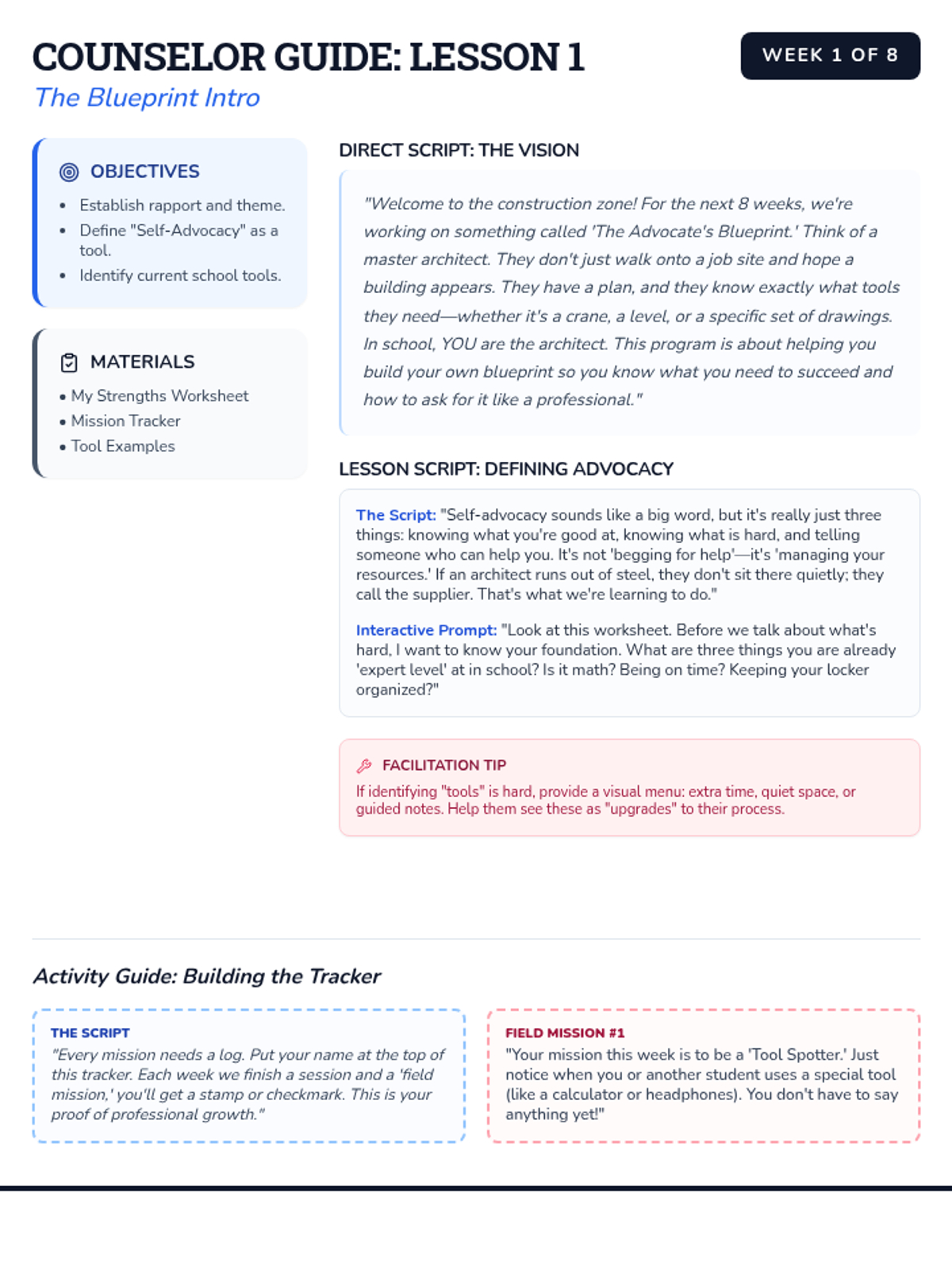
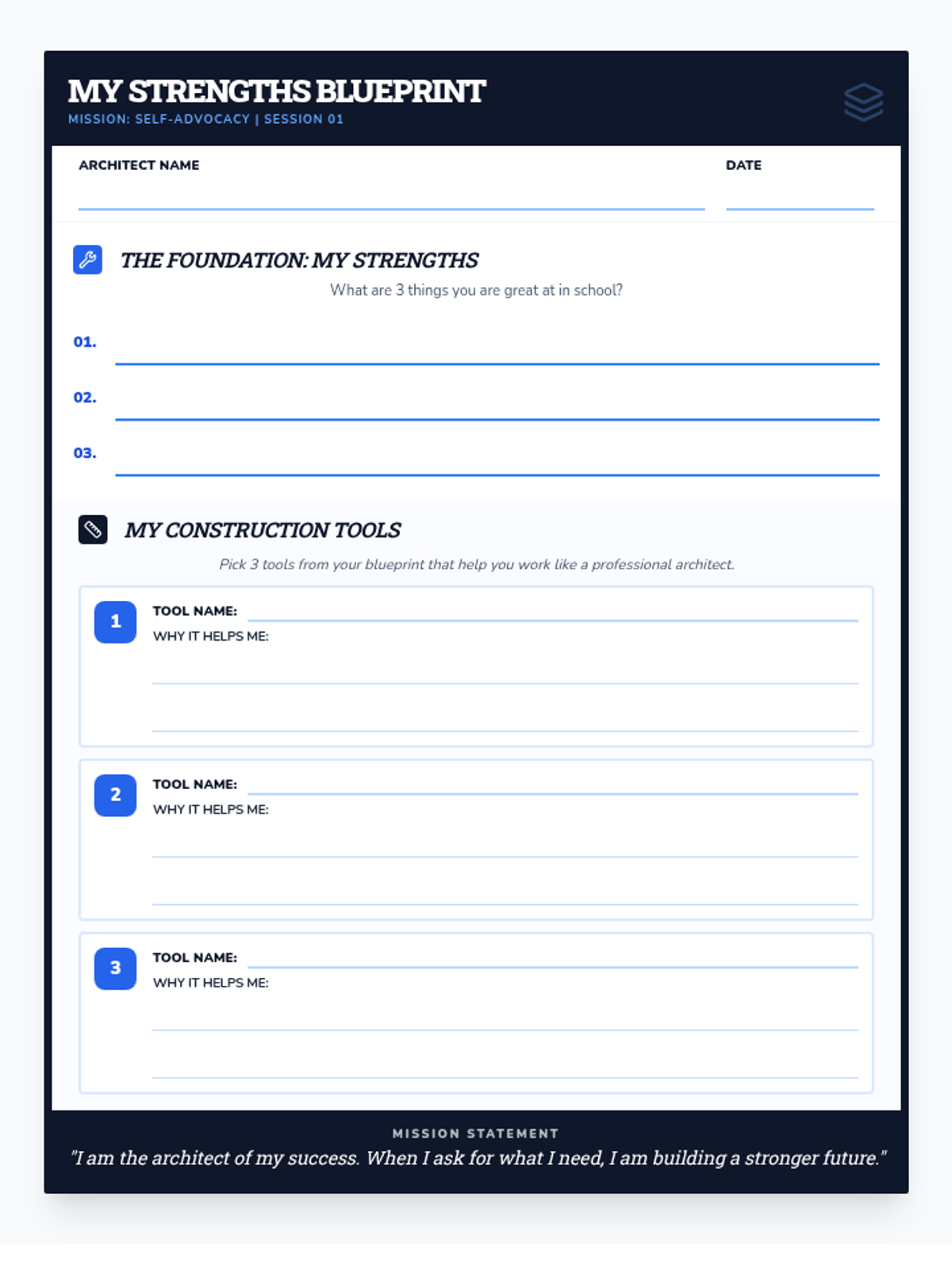
Students learn to identify personal learning barriers and use structured scripts to advocate for their needs in high school environments. This lesson builds self-advocacy skills through a blueprint-themed framework of 'The Advocacy Architect'.
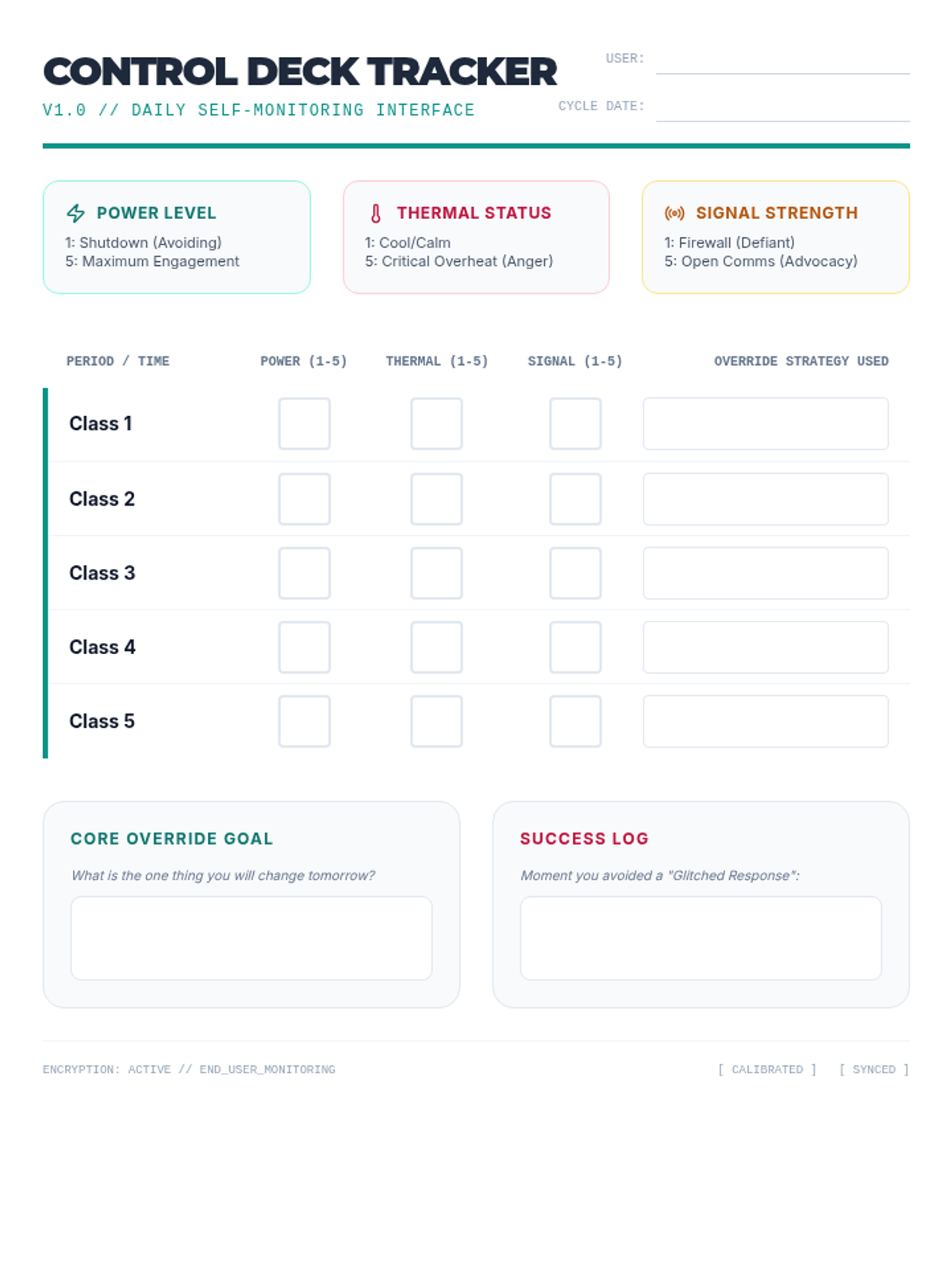
A high-impact lesson designed for high schoolers to master self-regulation and task management through a 'systems interface' lens, focusing on turning defiance into self-advocacy.
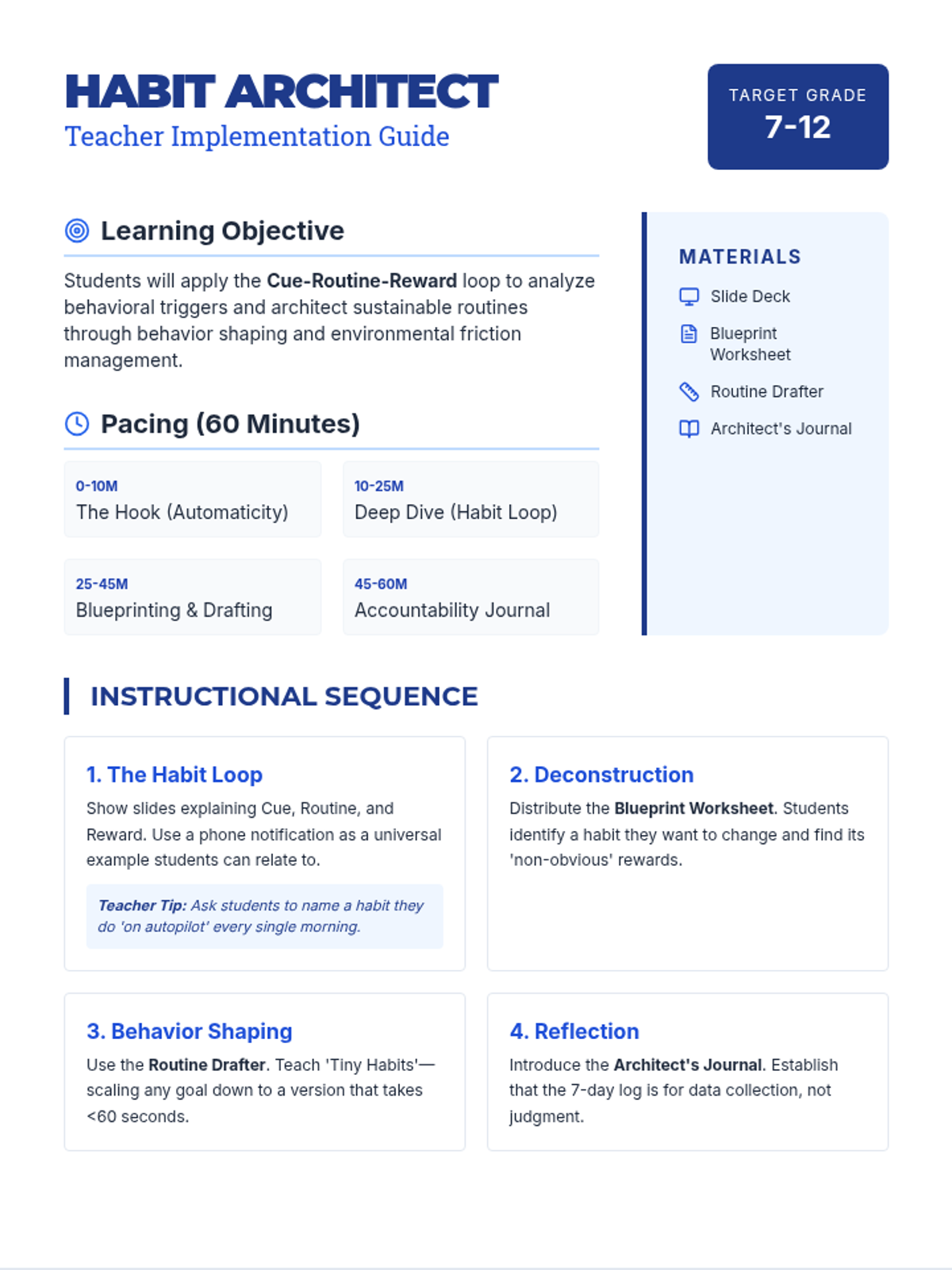
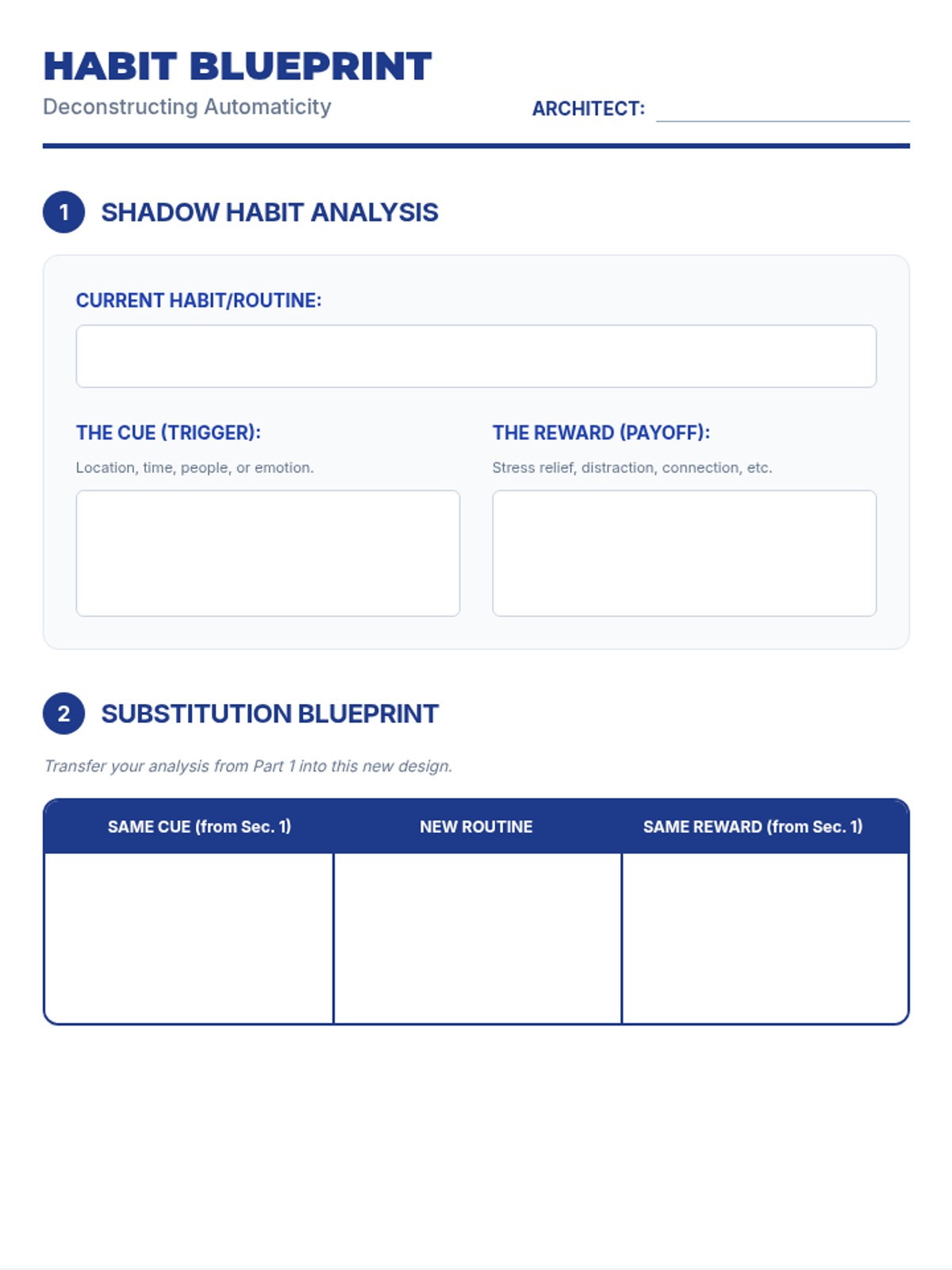
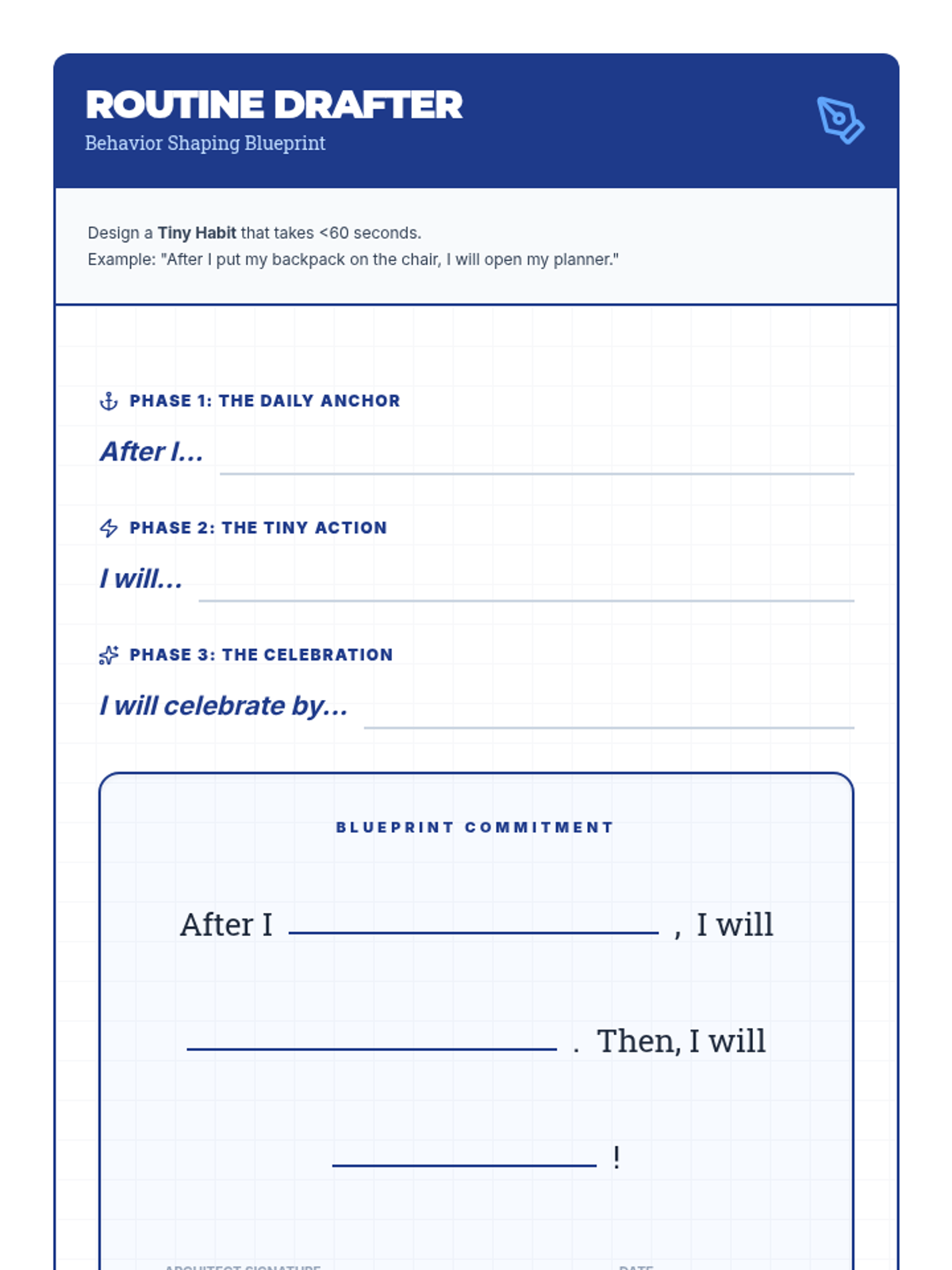
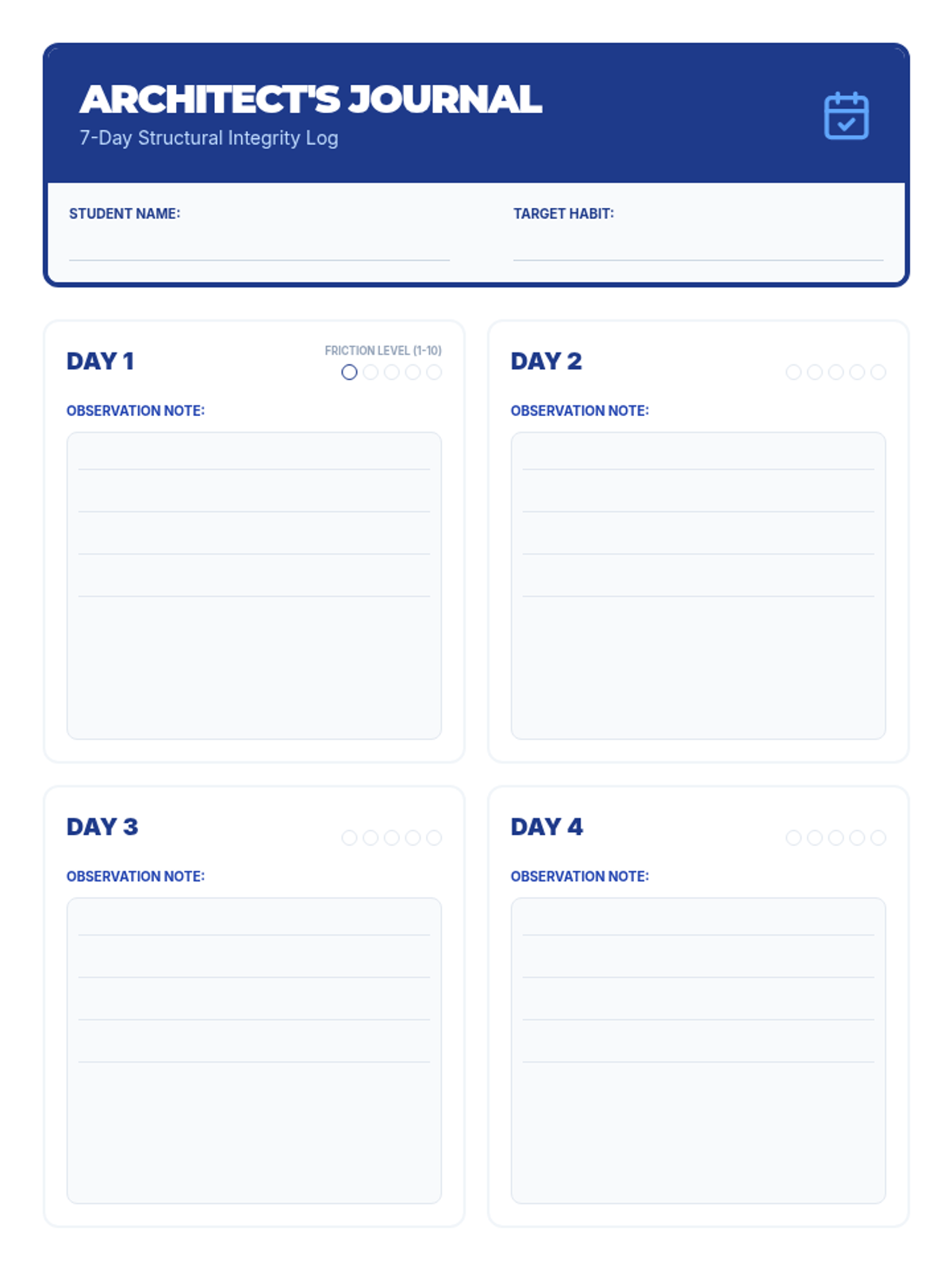
Students explore the behavioral psychology of habits using the 'cue-routine-reward' loop to design sustainable academic and personal routines through incremental change.
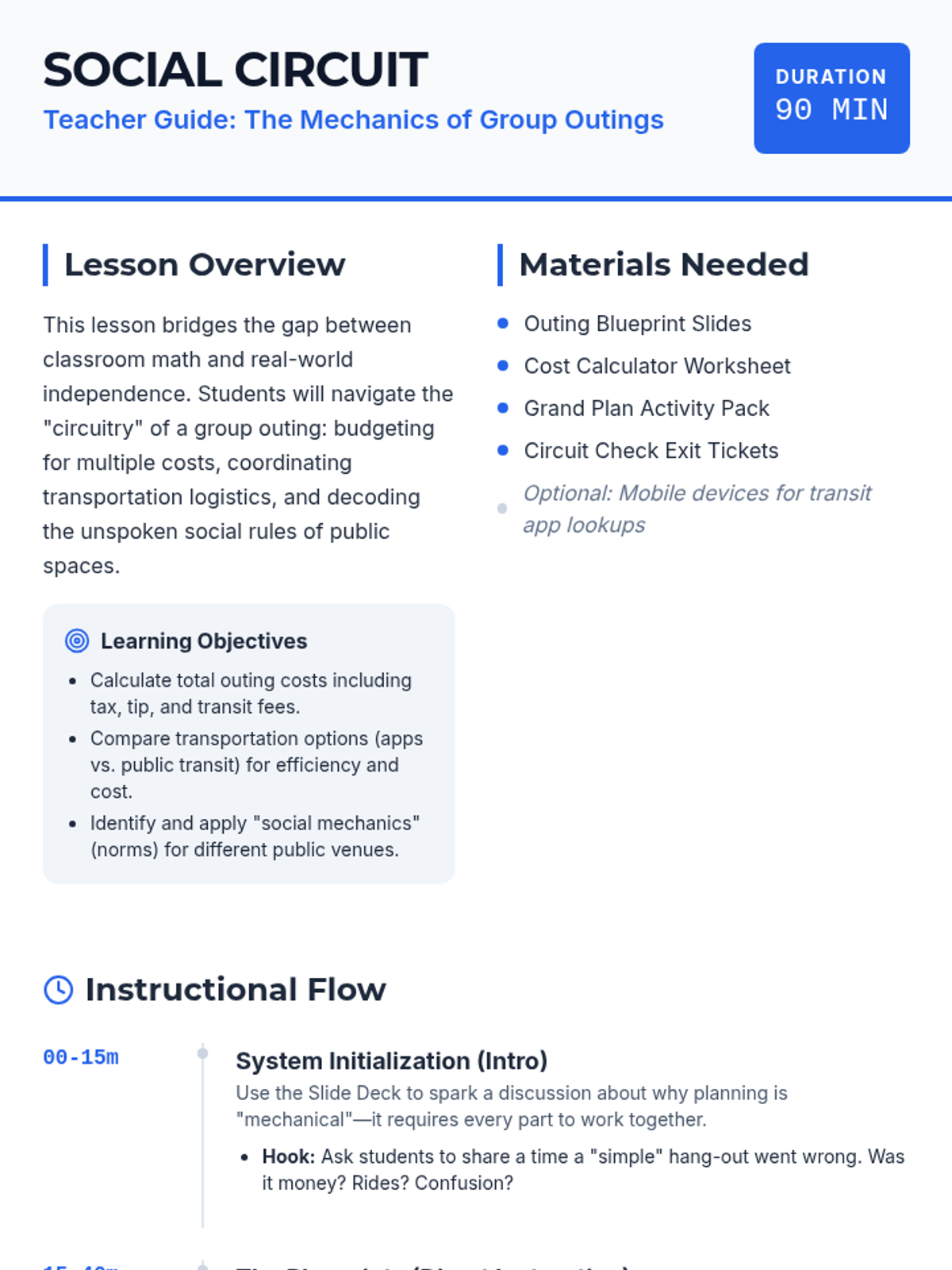
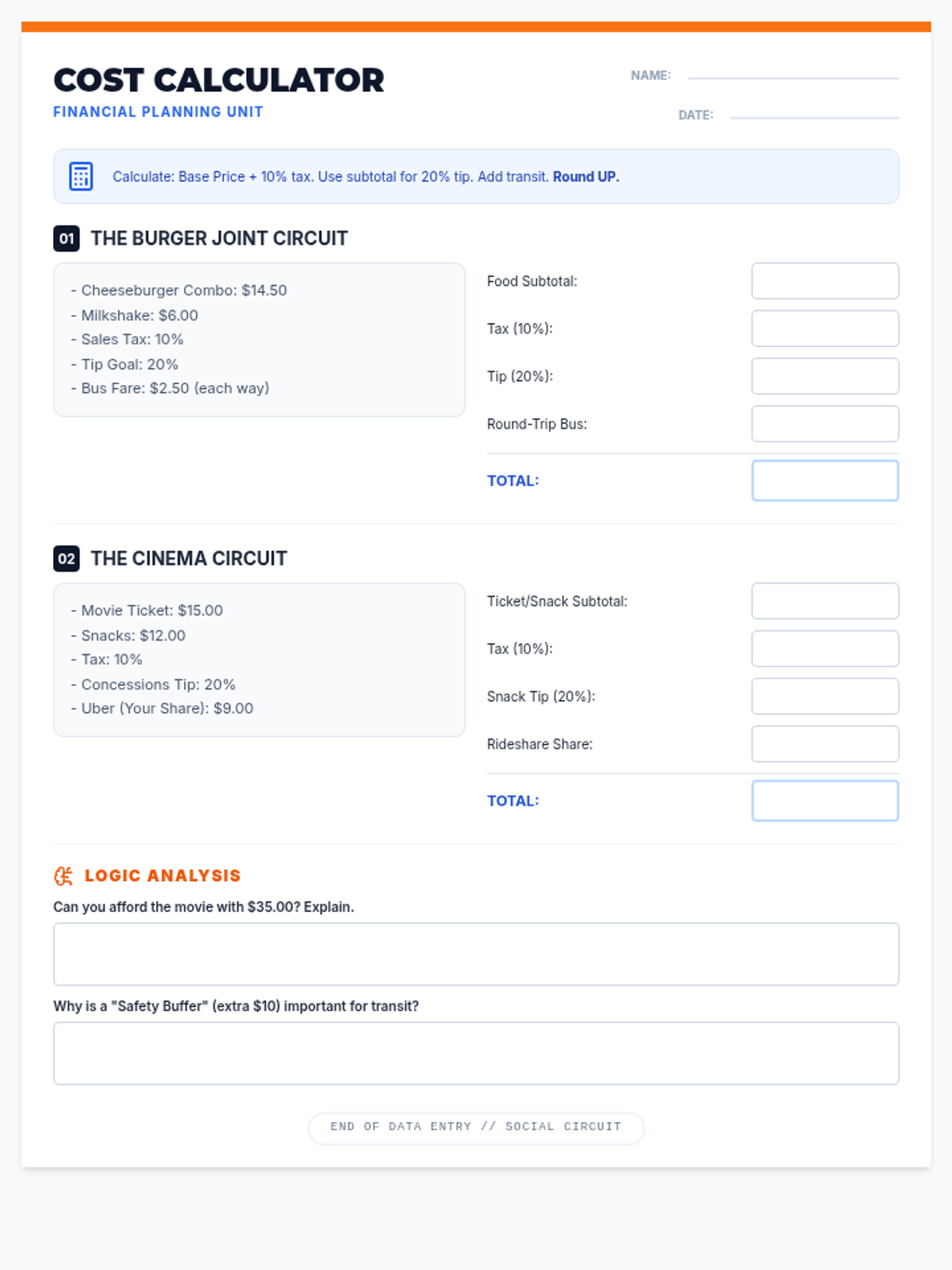
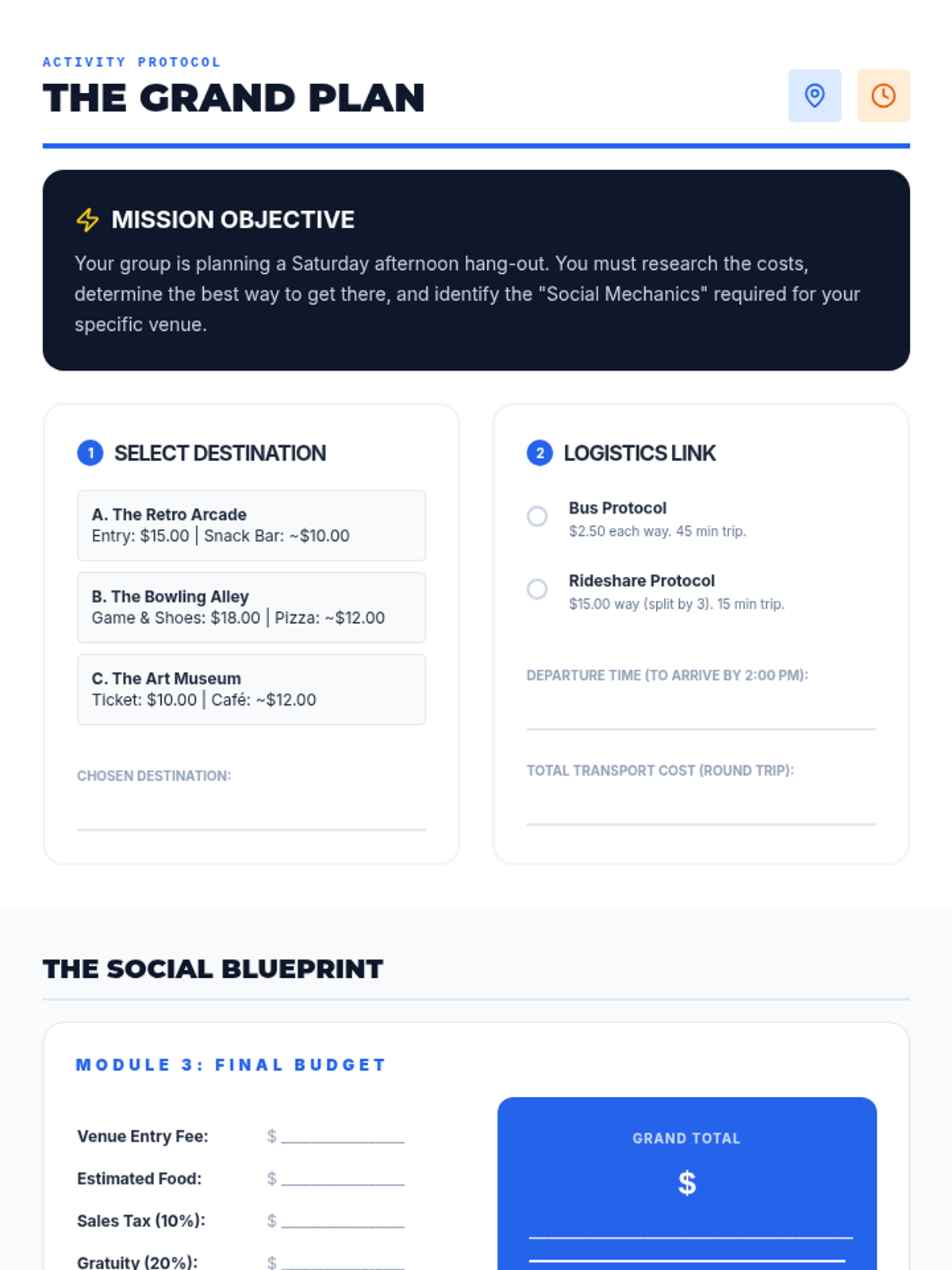
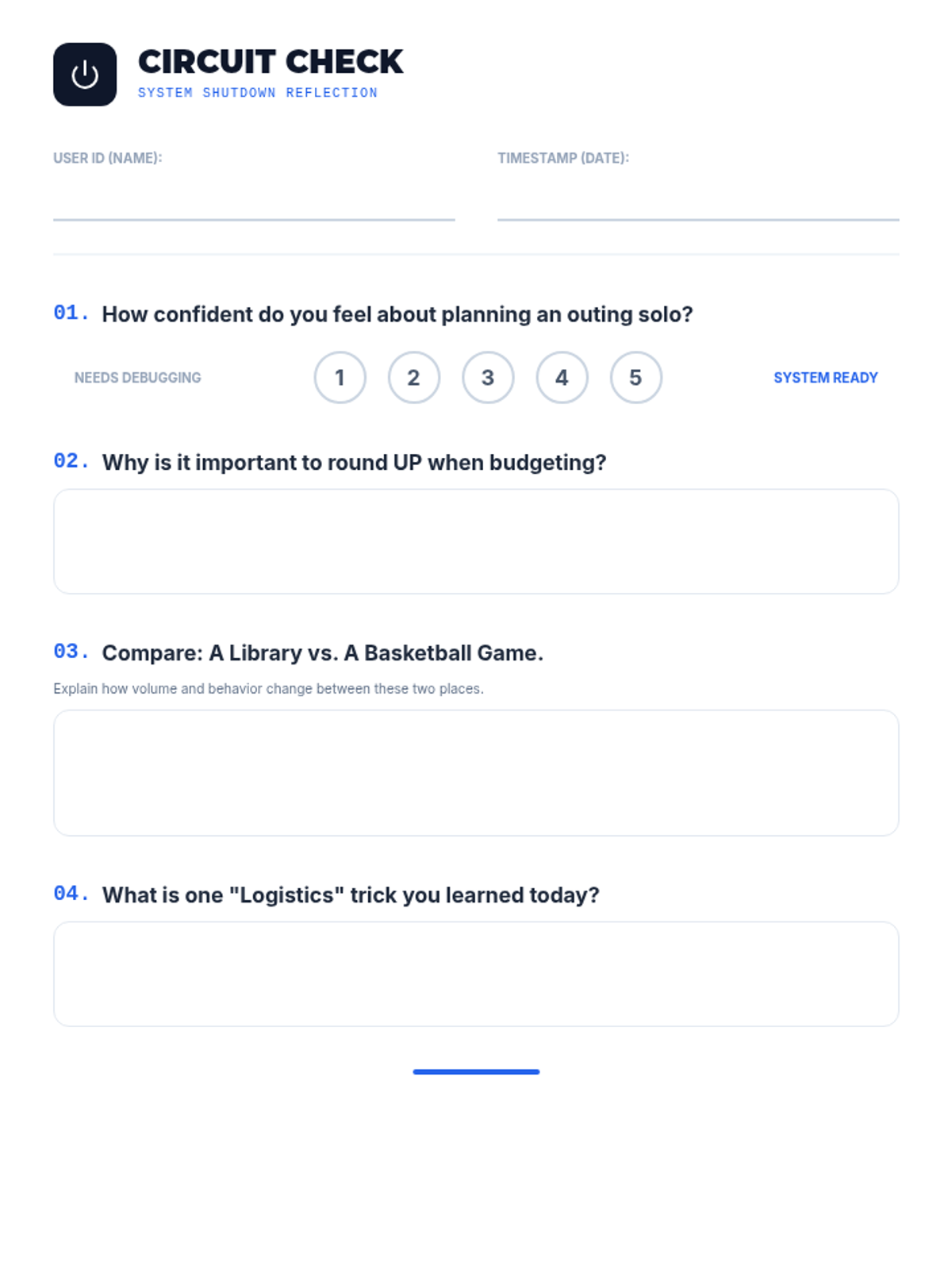
A practical guide for students to master the logistics of social outings, covering budgeting, transit coordination, and social etiquette to build post-graduation independence.
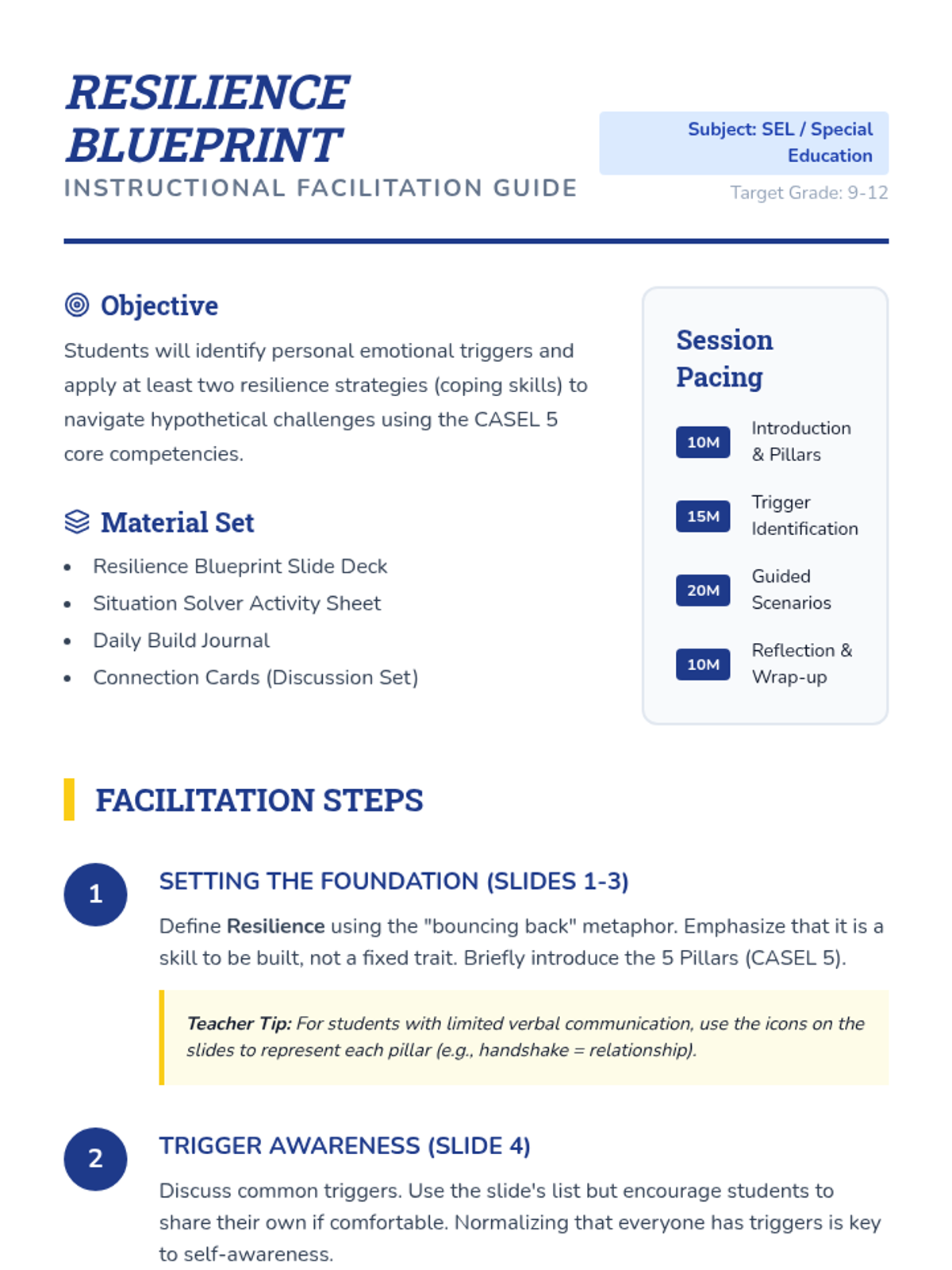
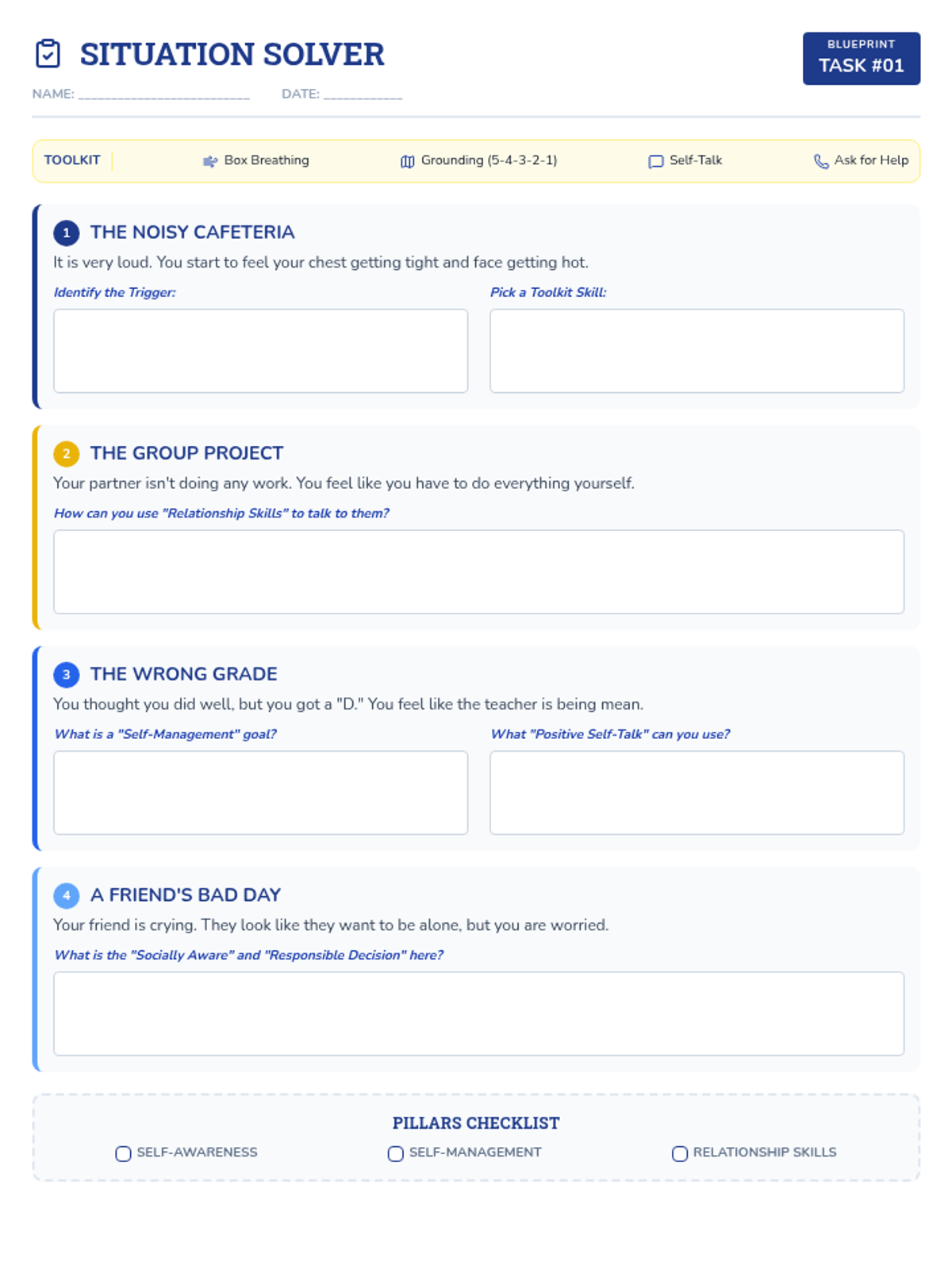
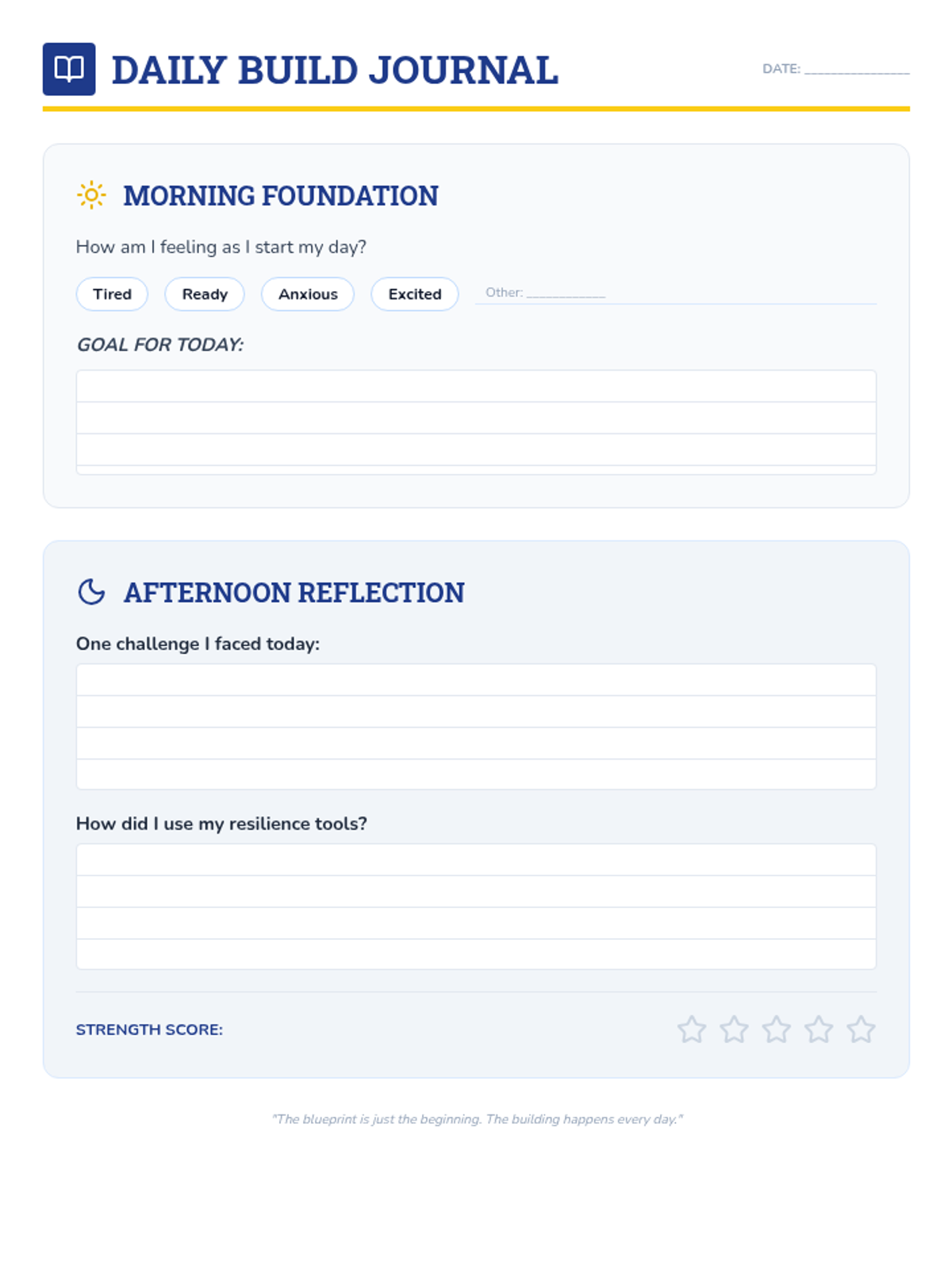
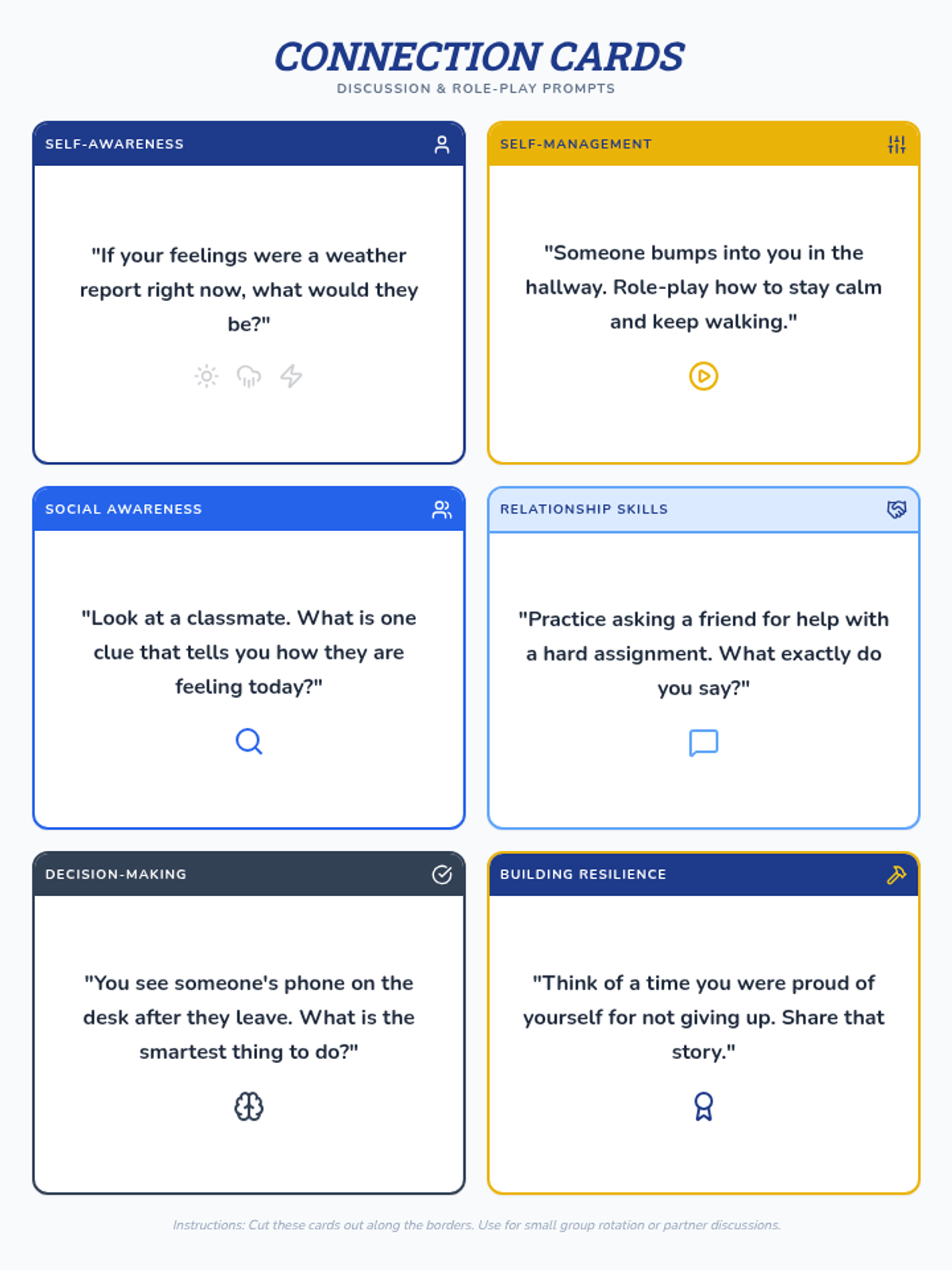
This lesson focuses on building the five core SEL competencies through a 'Blueprint' metaphor, helping high school students in special education develop resilience, self-awareness, and relationship skills. Students will explore emotional triggers, coping strategies, and responsible decision-making through guided instruction and interactive reflection.
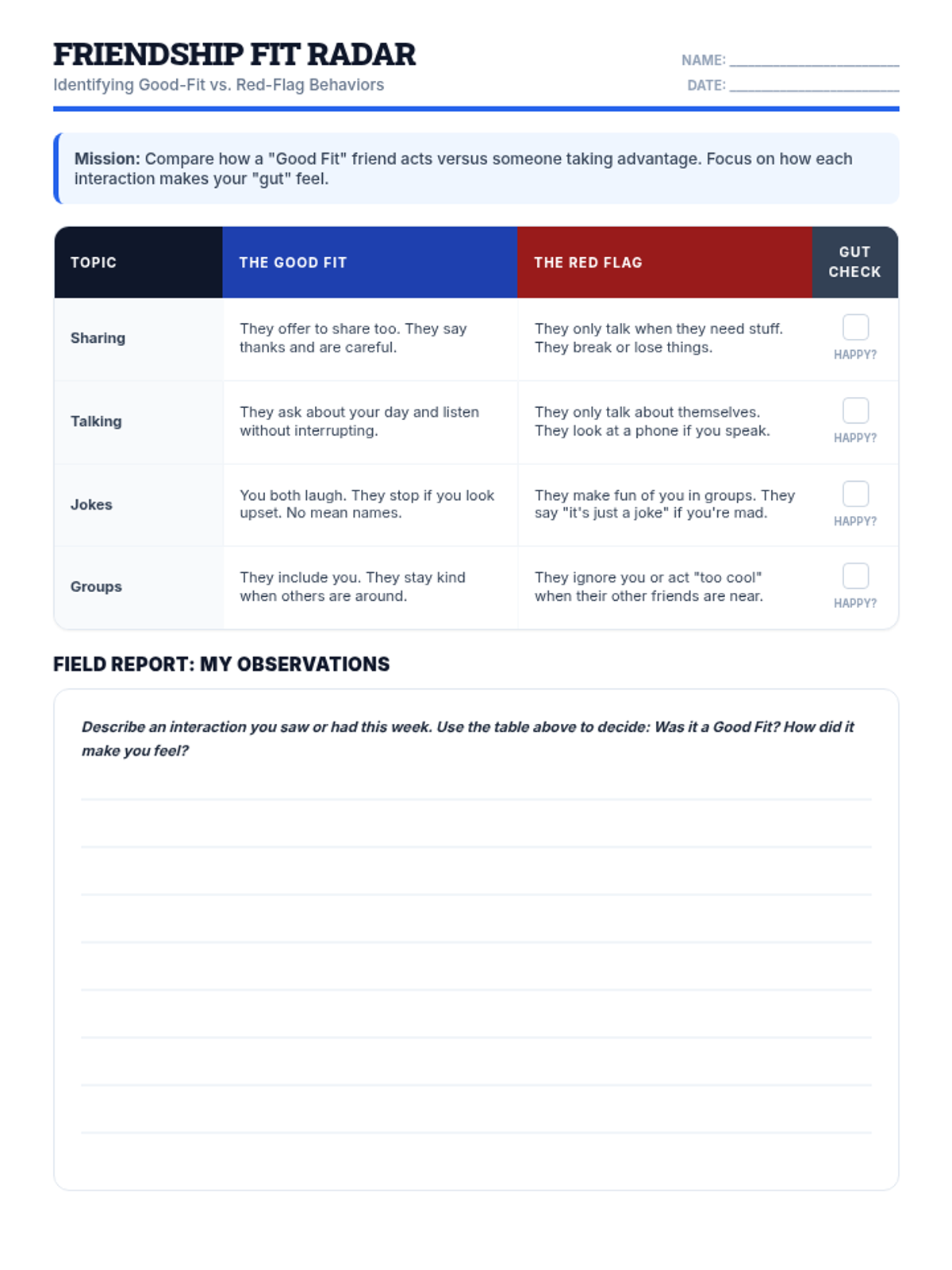
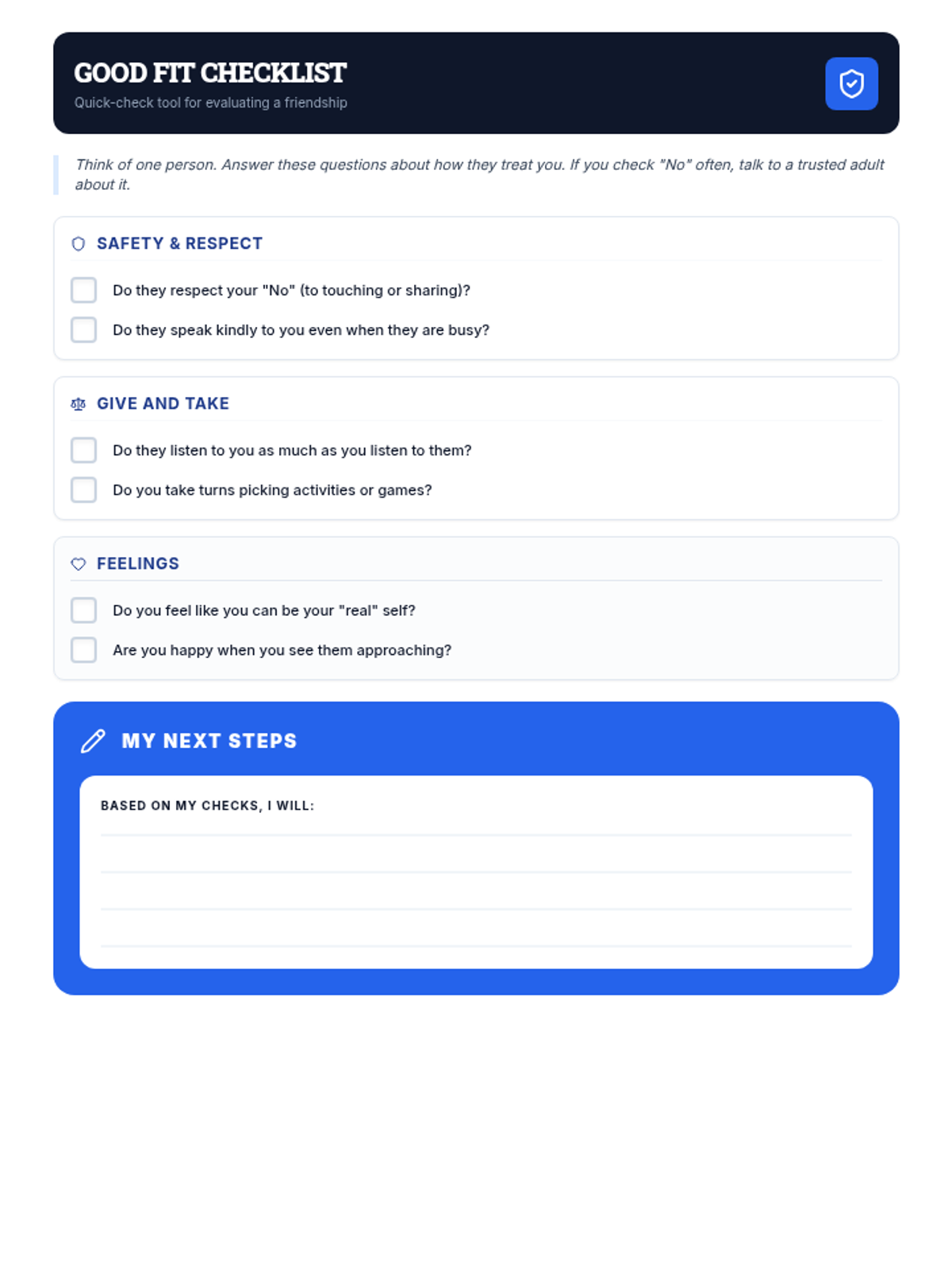
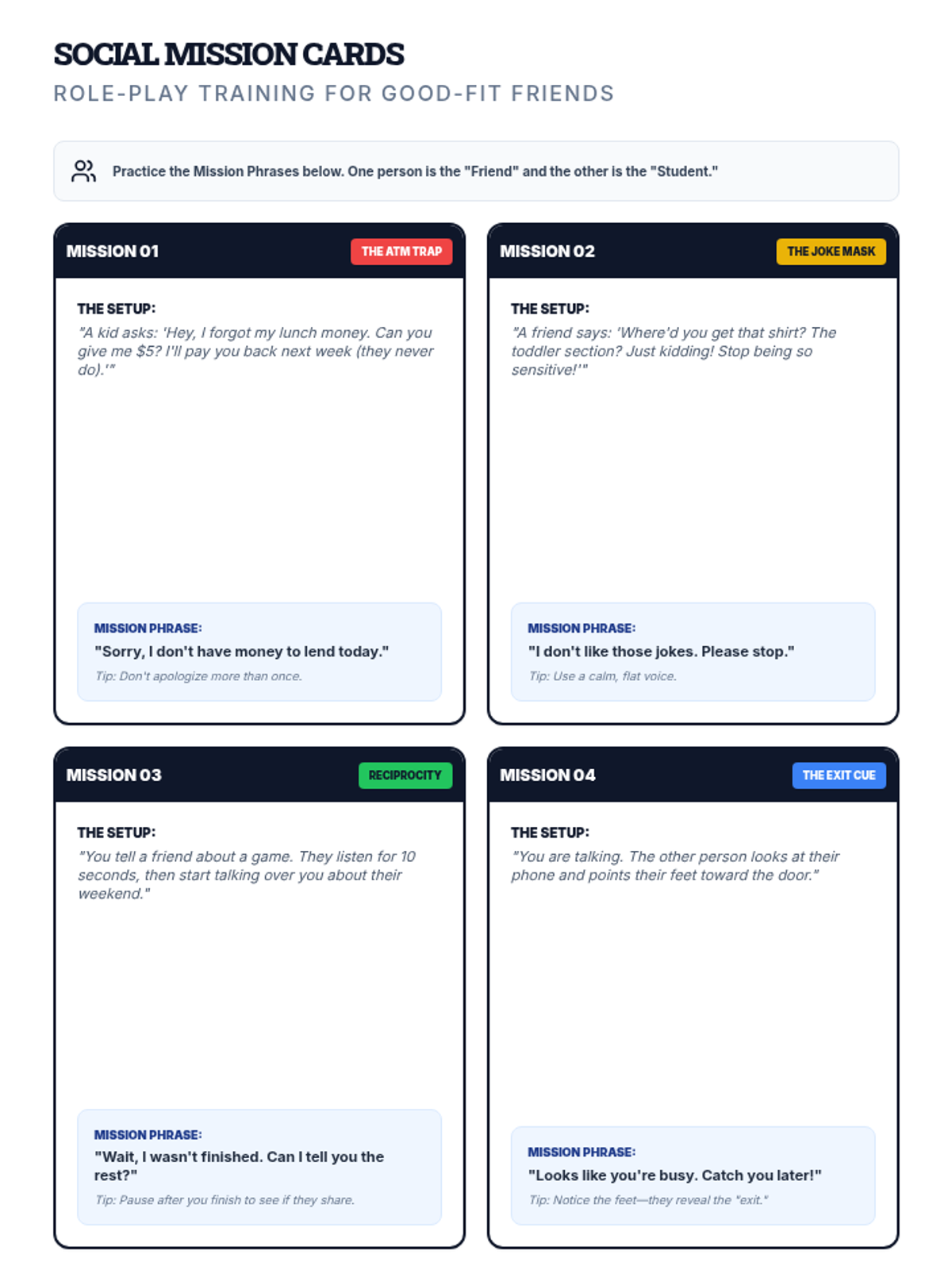
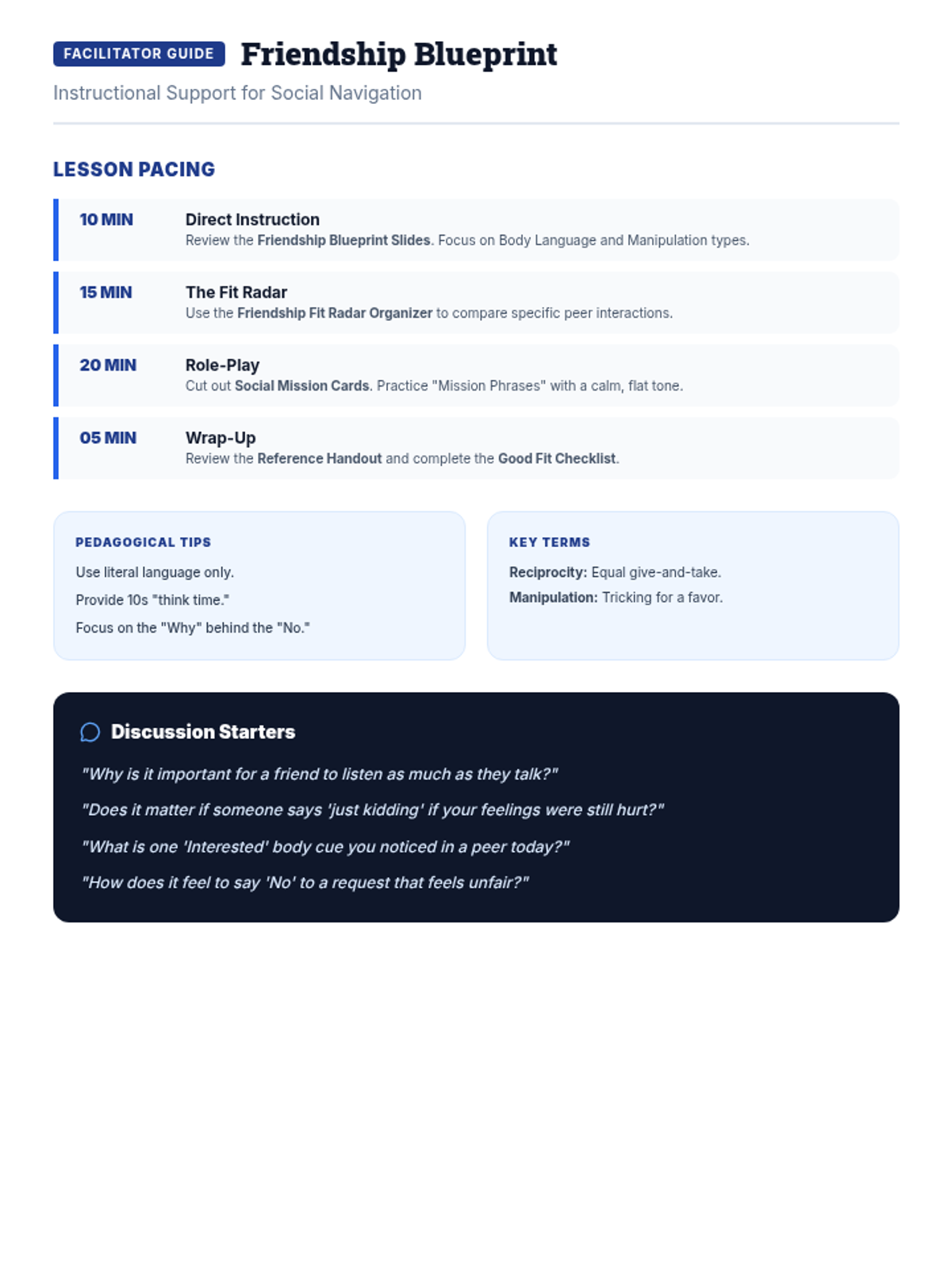
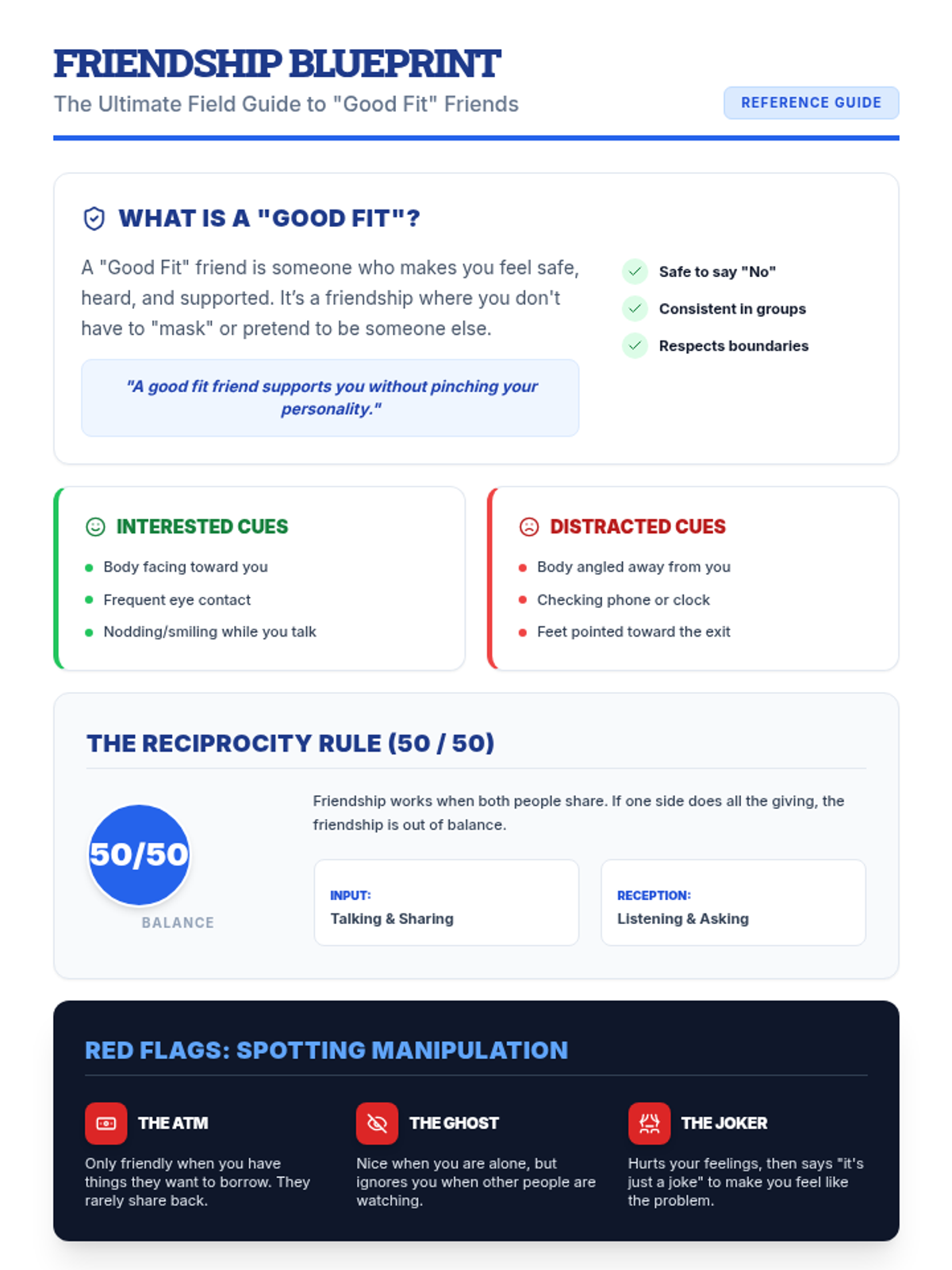
A comprehensive lesson designed for middle school students to navigate the complexities of friendship, focusing on identifying reciprocal sharing, reading body language, and spotting manipulation.
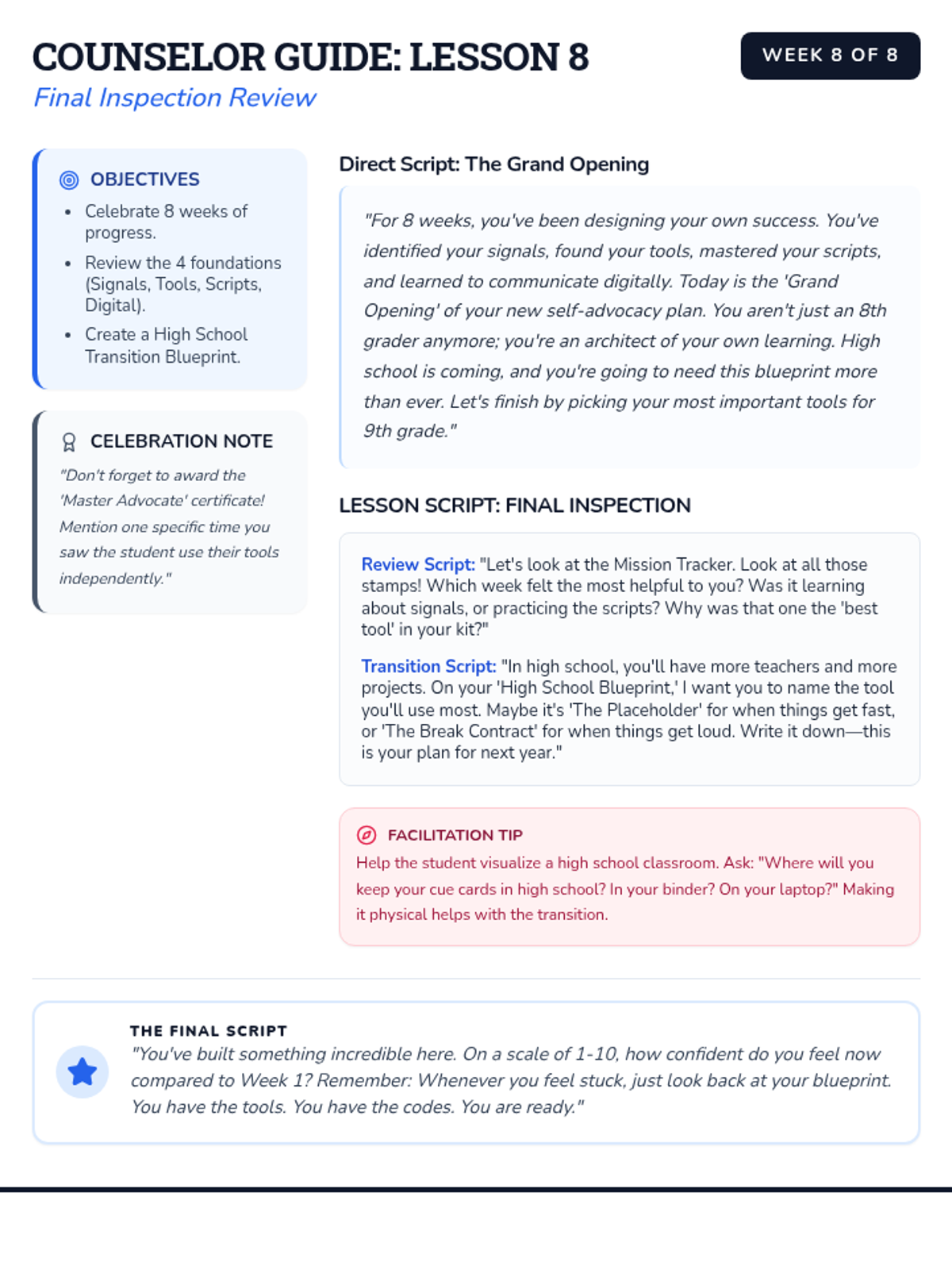
Reviewing progress, finalizing the personal advocacy plan, and celebrating growth.
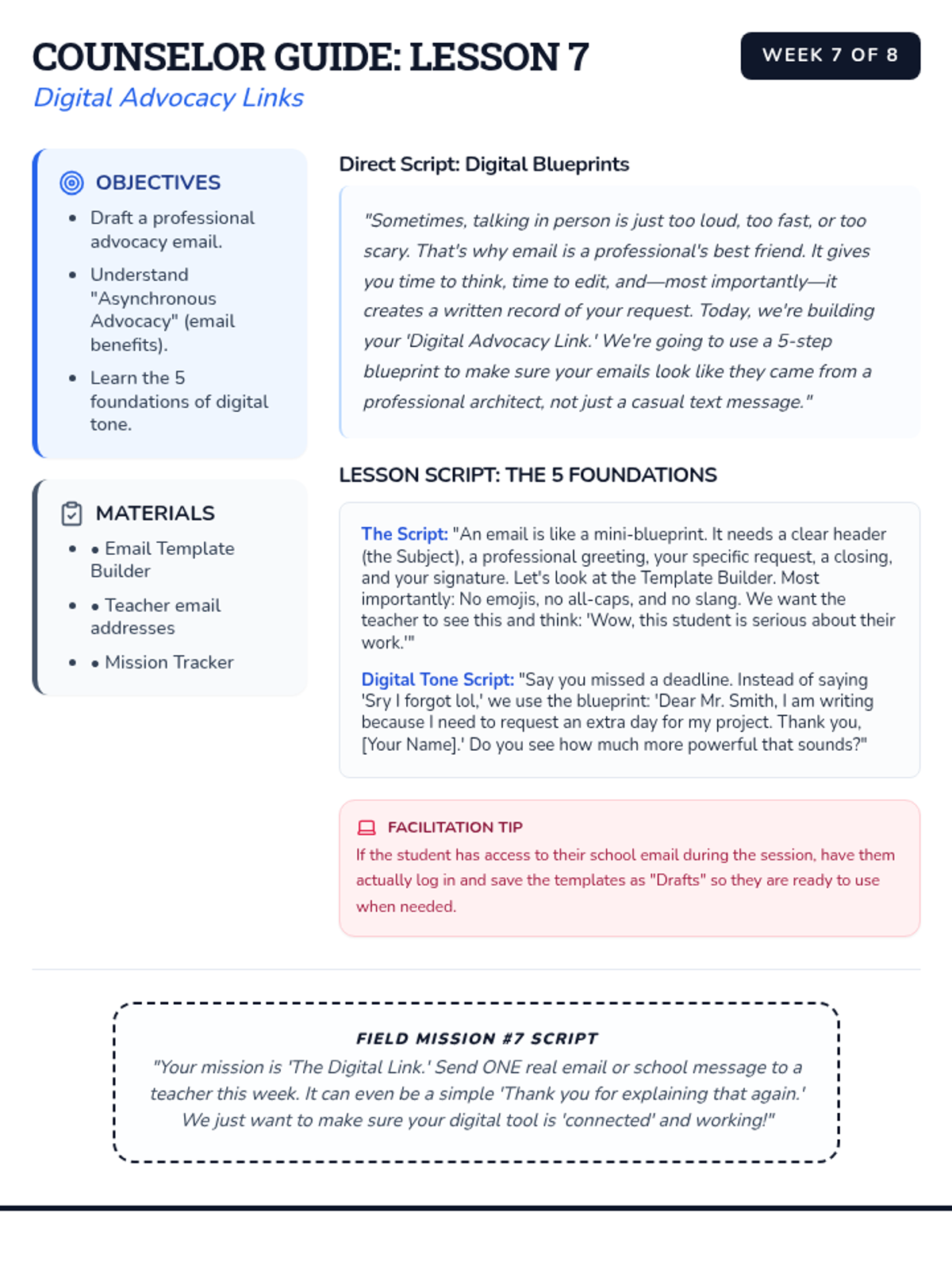
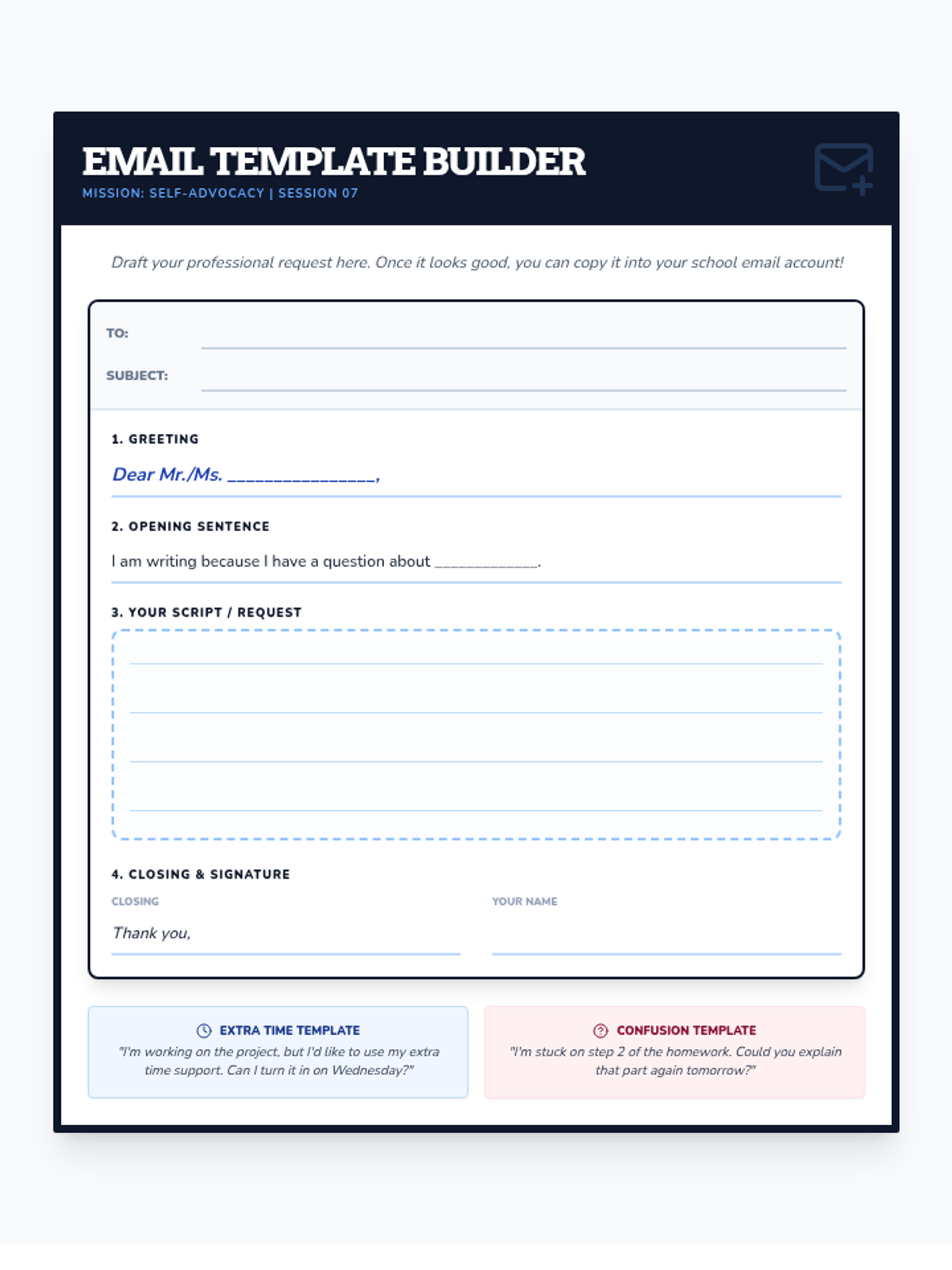
Learning how to professionally request help and tools via email or school messaging systems.
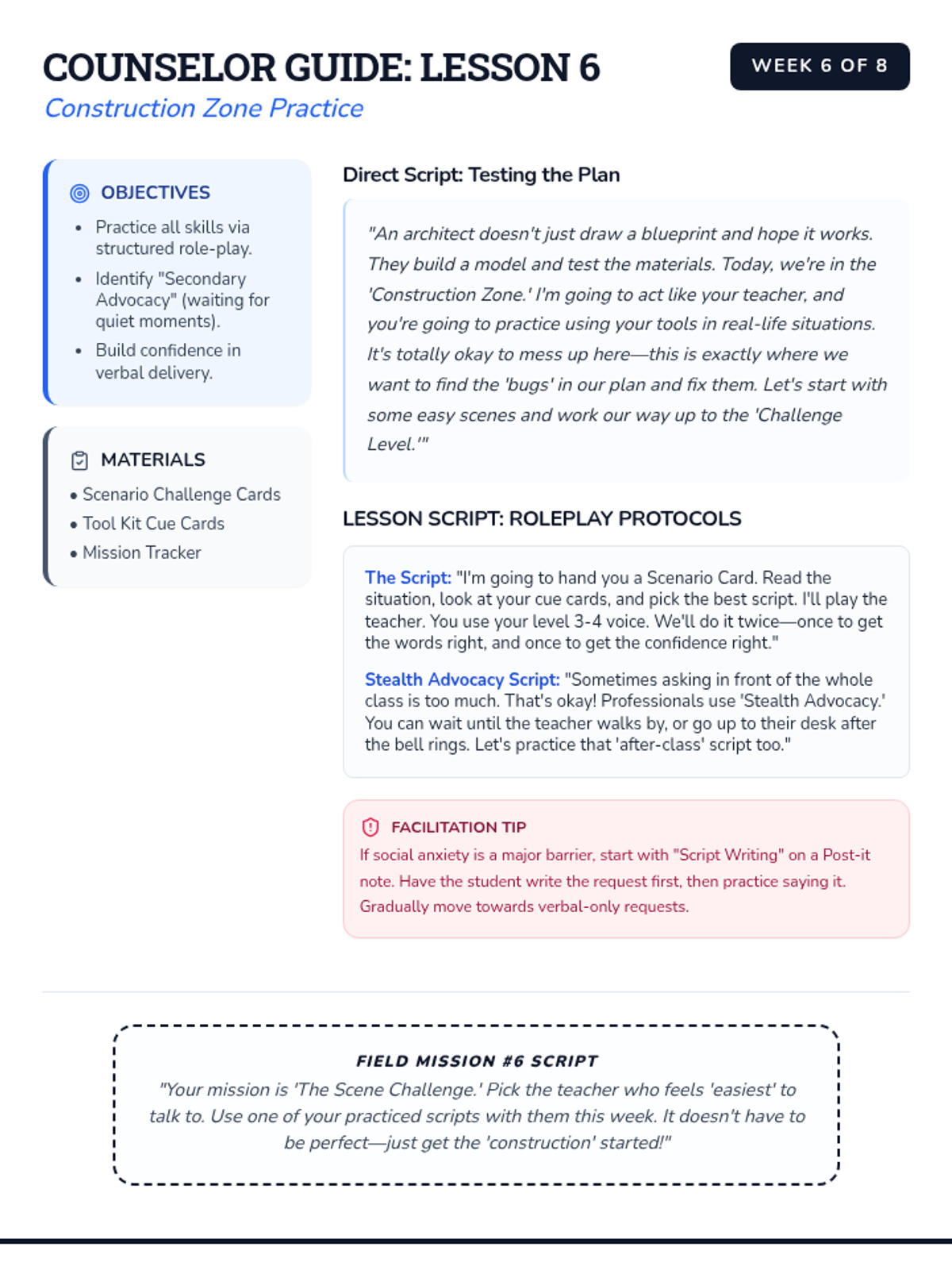
Practicing self-advocacy scripts through structured role-play in various school scenarios.
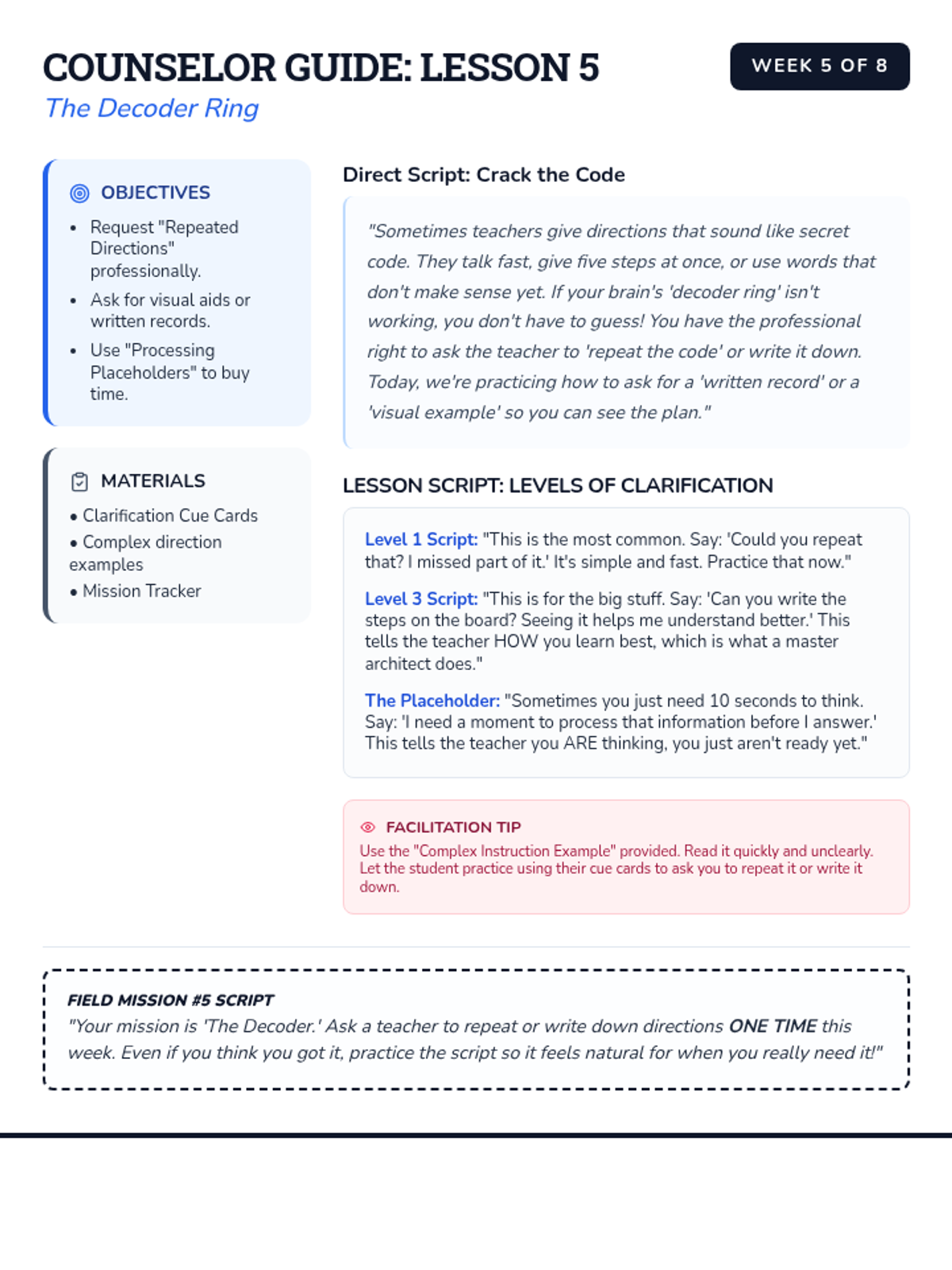
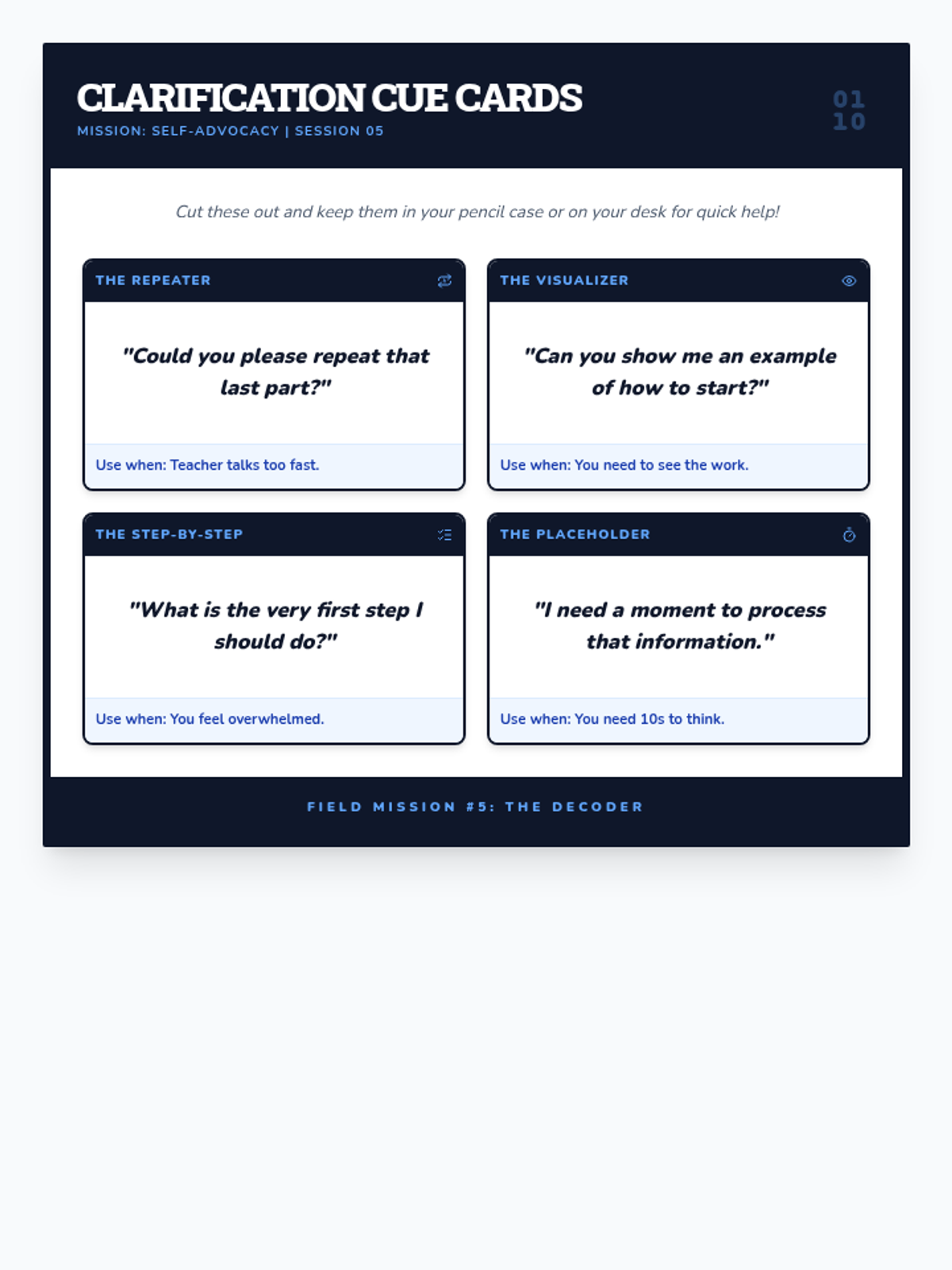
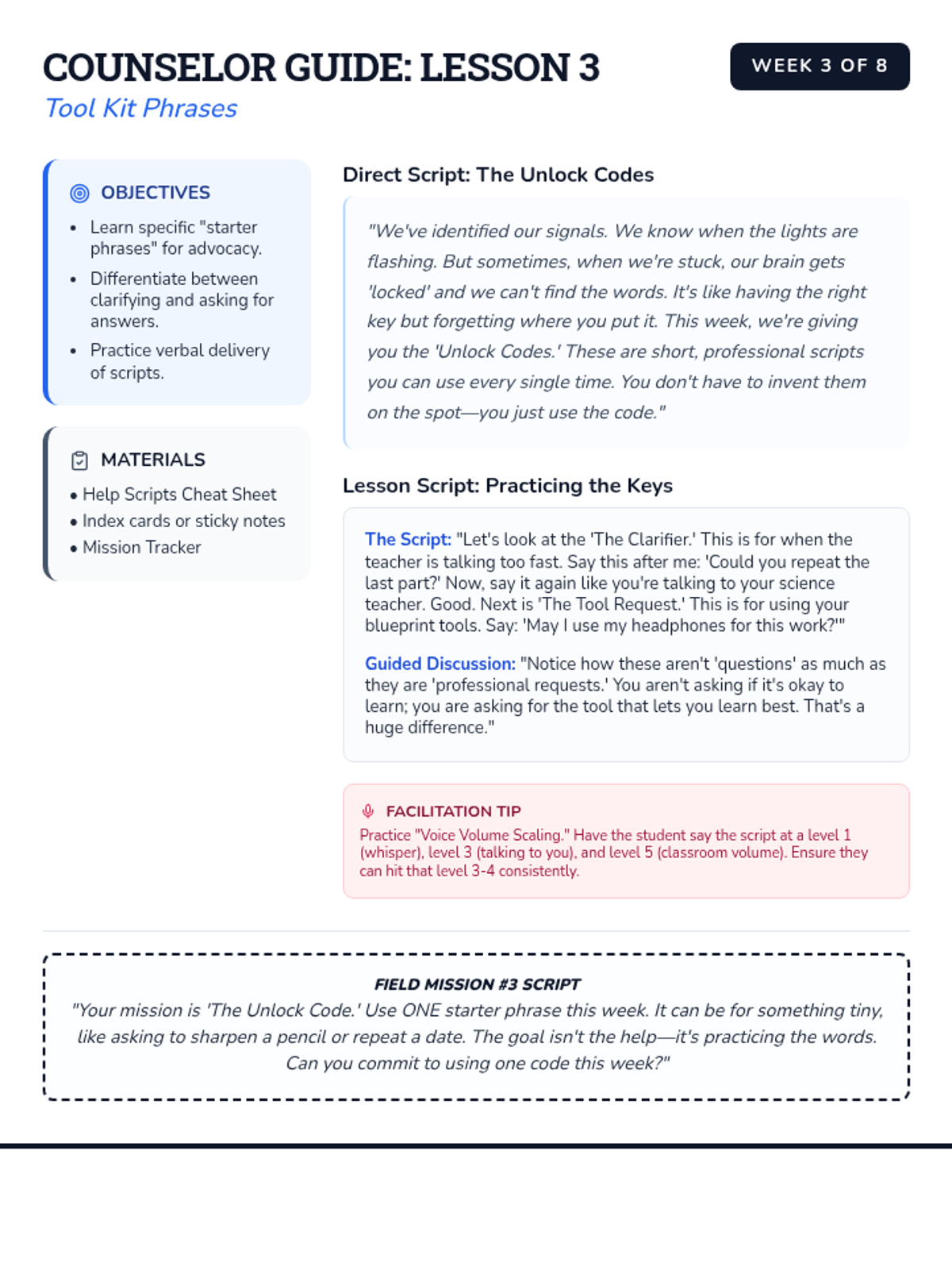
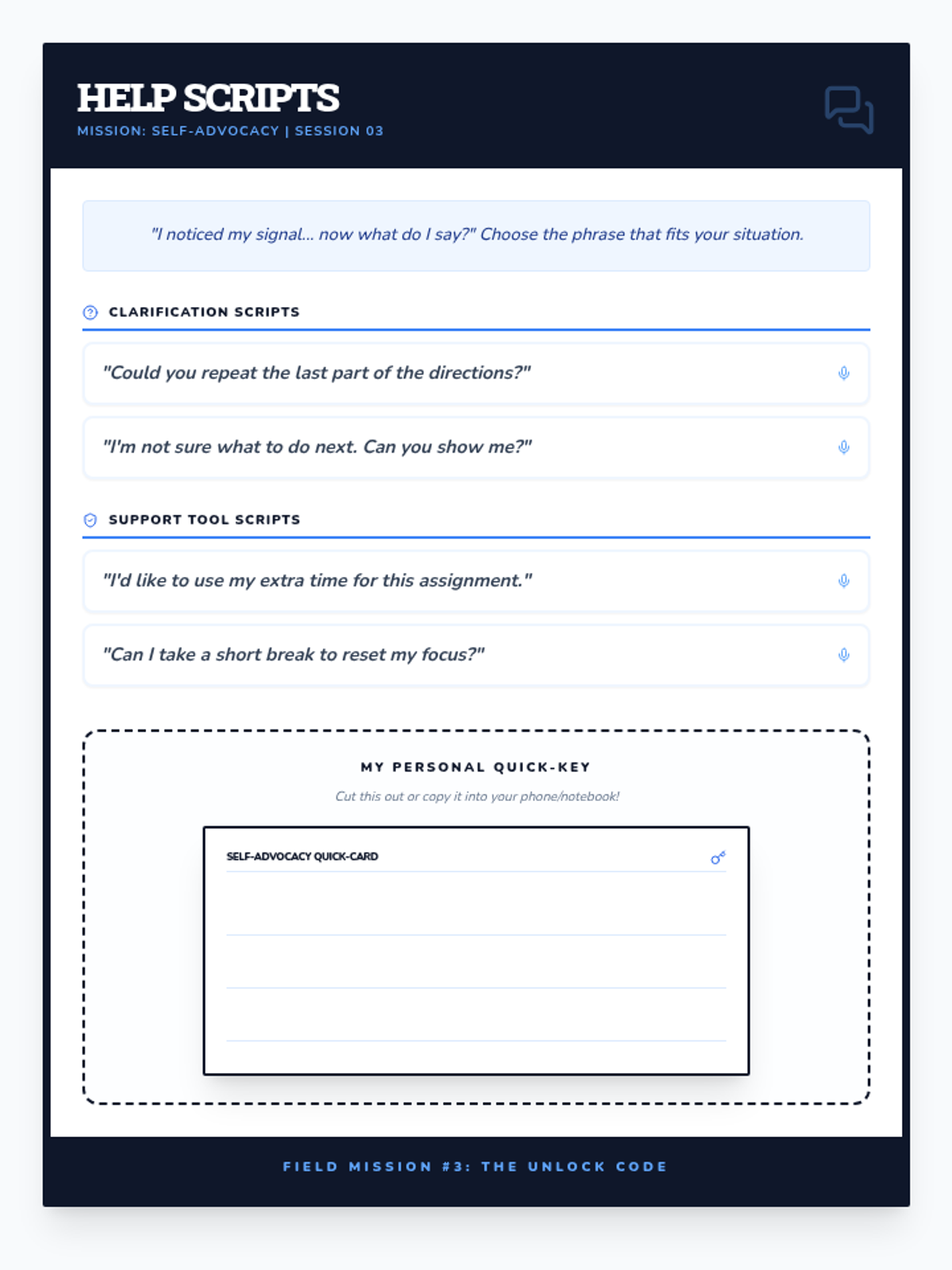
Techniques for asking teachers to repeat directions or simplify complex instructions.
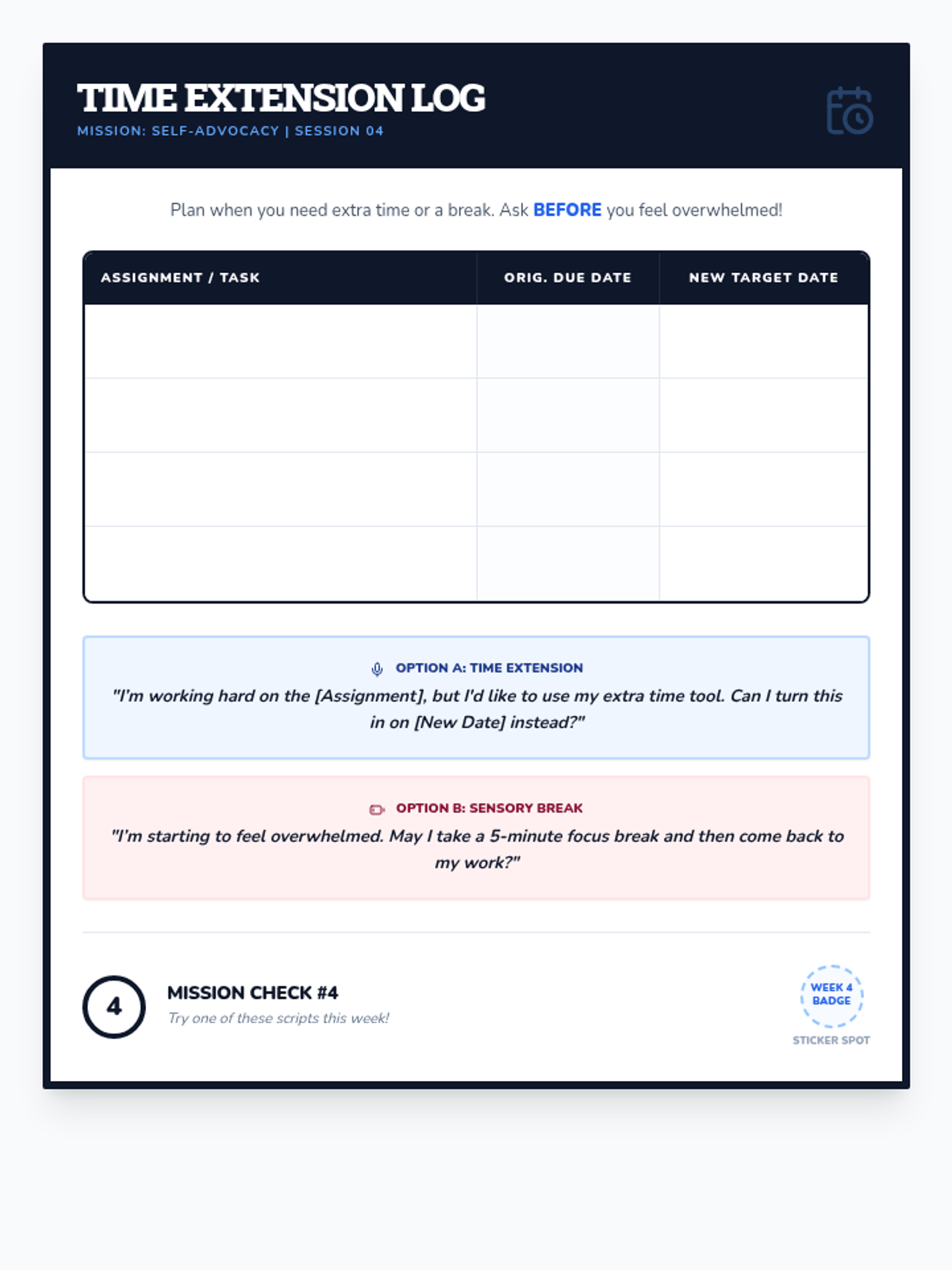
Focusing on self-advocating for time-based tools like extra time or short breaks.
Building a collection of specific scripts and phrases for asking for help and clarification.
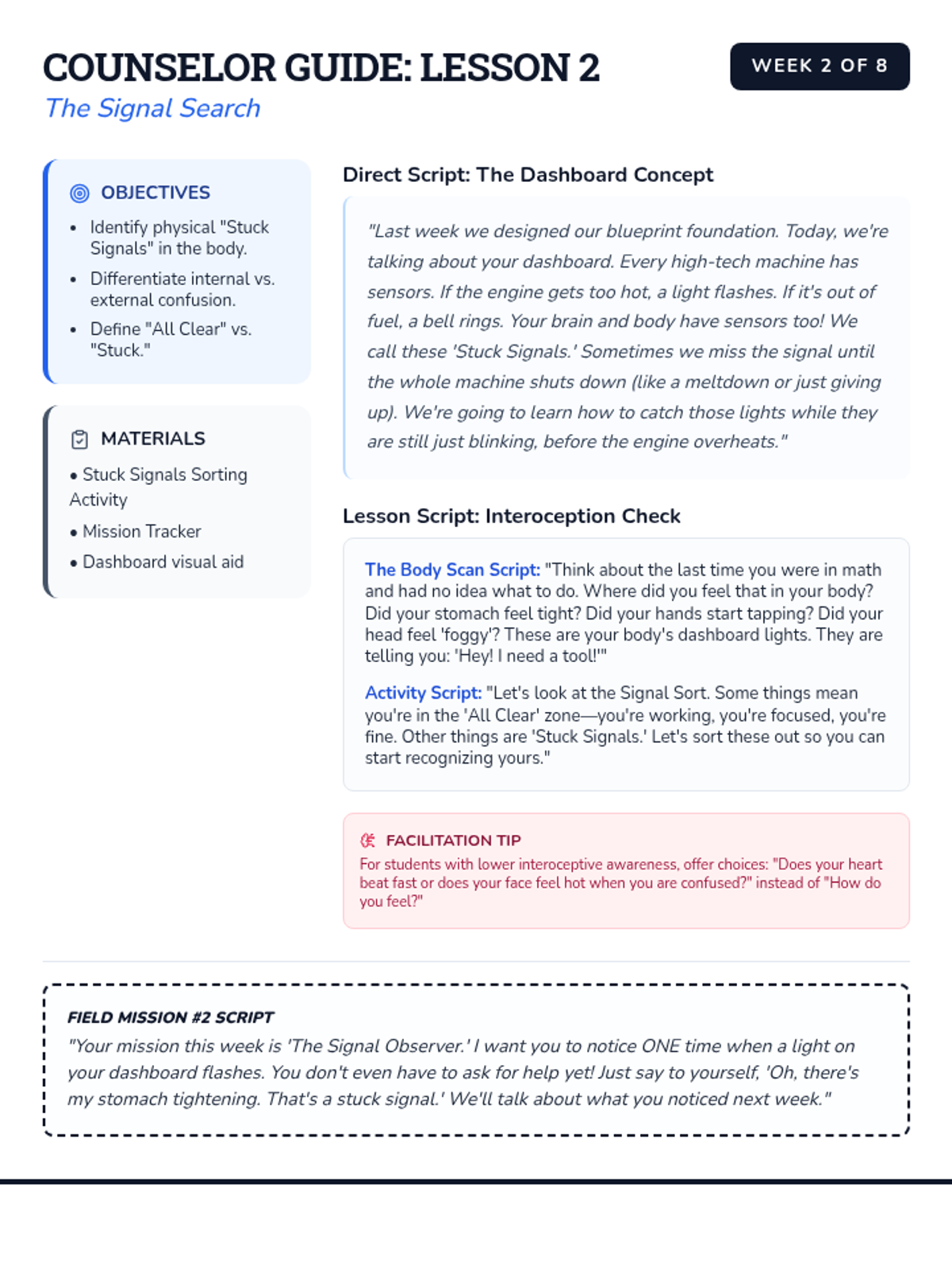
Learning to identify internal and external cues that indicate a need for help or clarification.
Introduction to the concept of self-advocacy and understanding the student's specific strengths and learning tools.
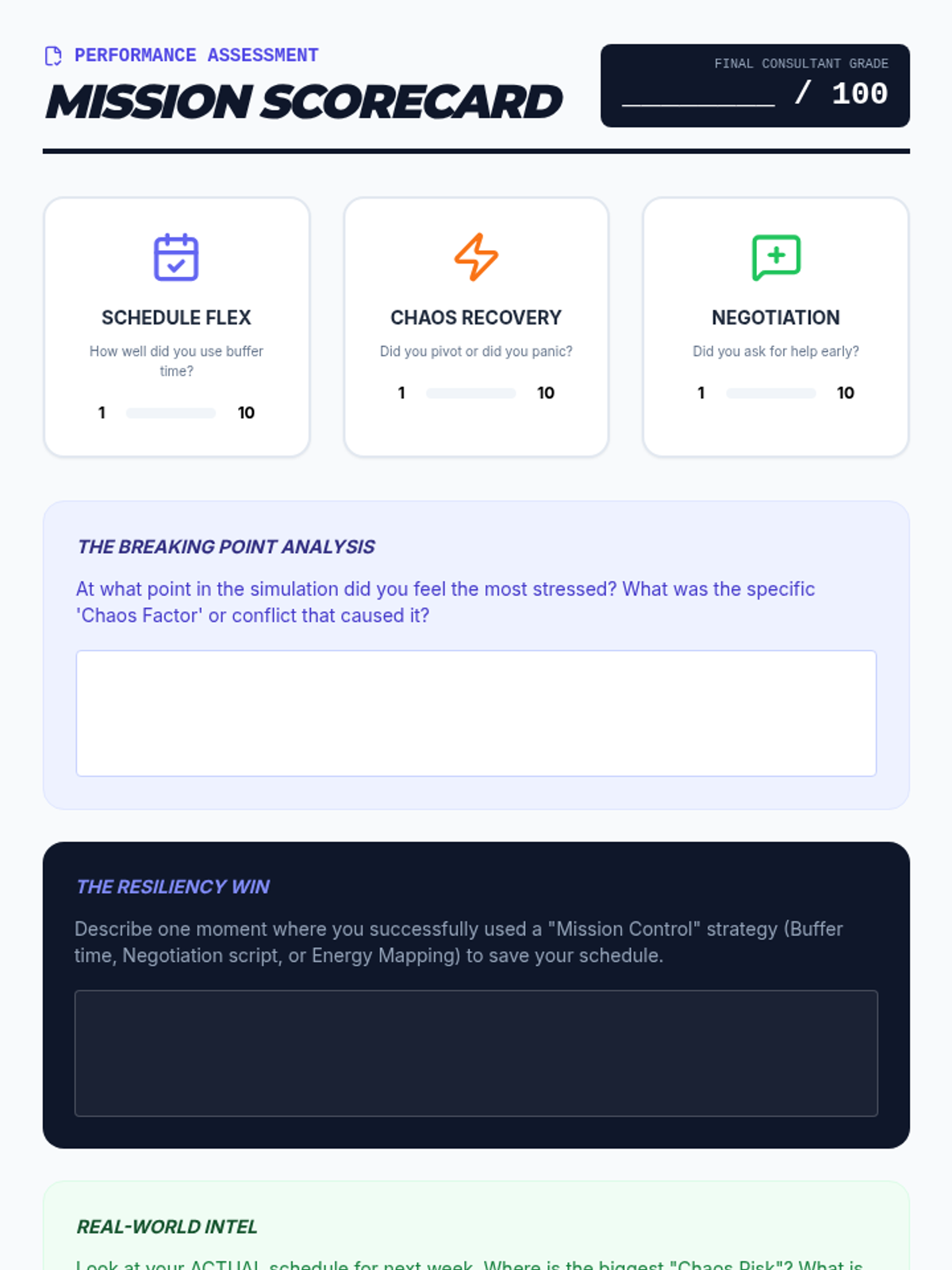
A final reflection on the simulation where students analyze their performance, identify breaking points, and create a long-term strategy for real-world balance.
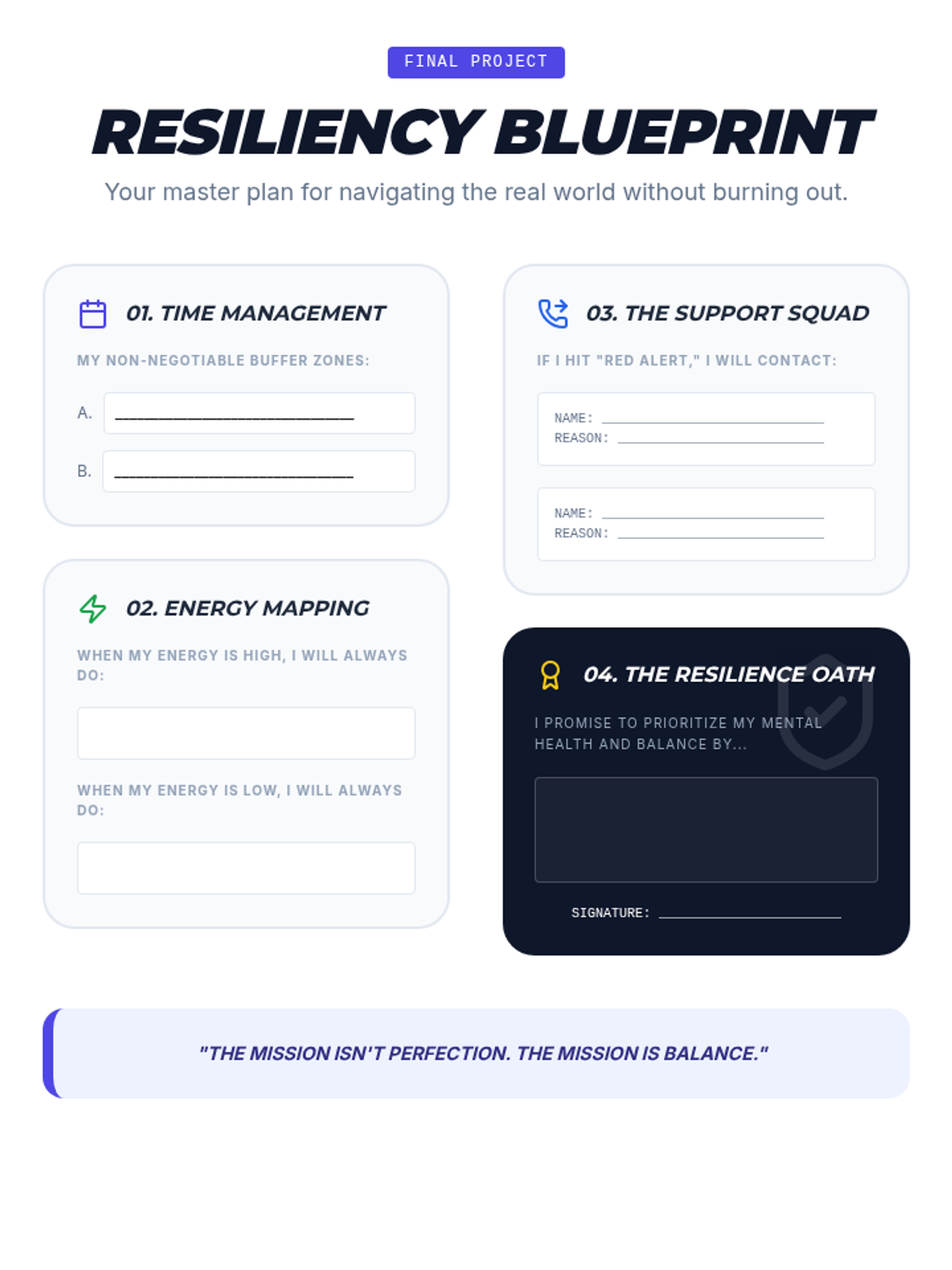
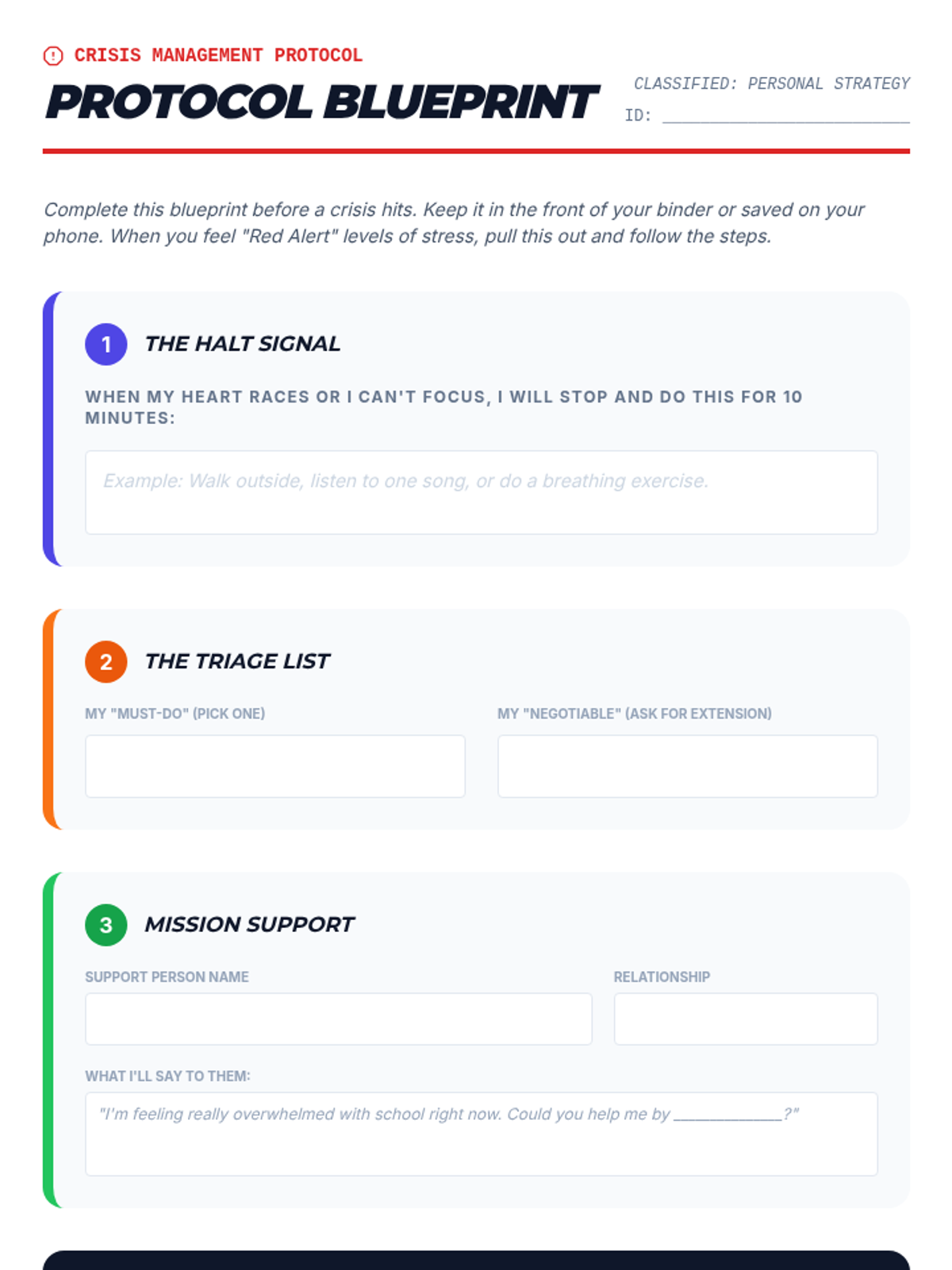
Students create a personal 'Emergency Protocol' for overwhelming situations, learning how to prioritize tasks to drop and identifying support systems for recovery.
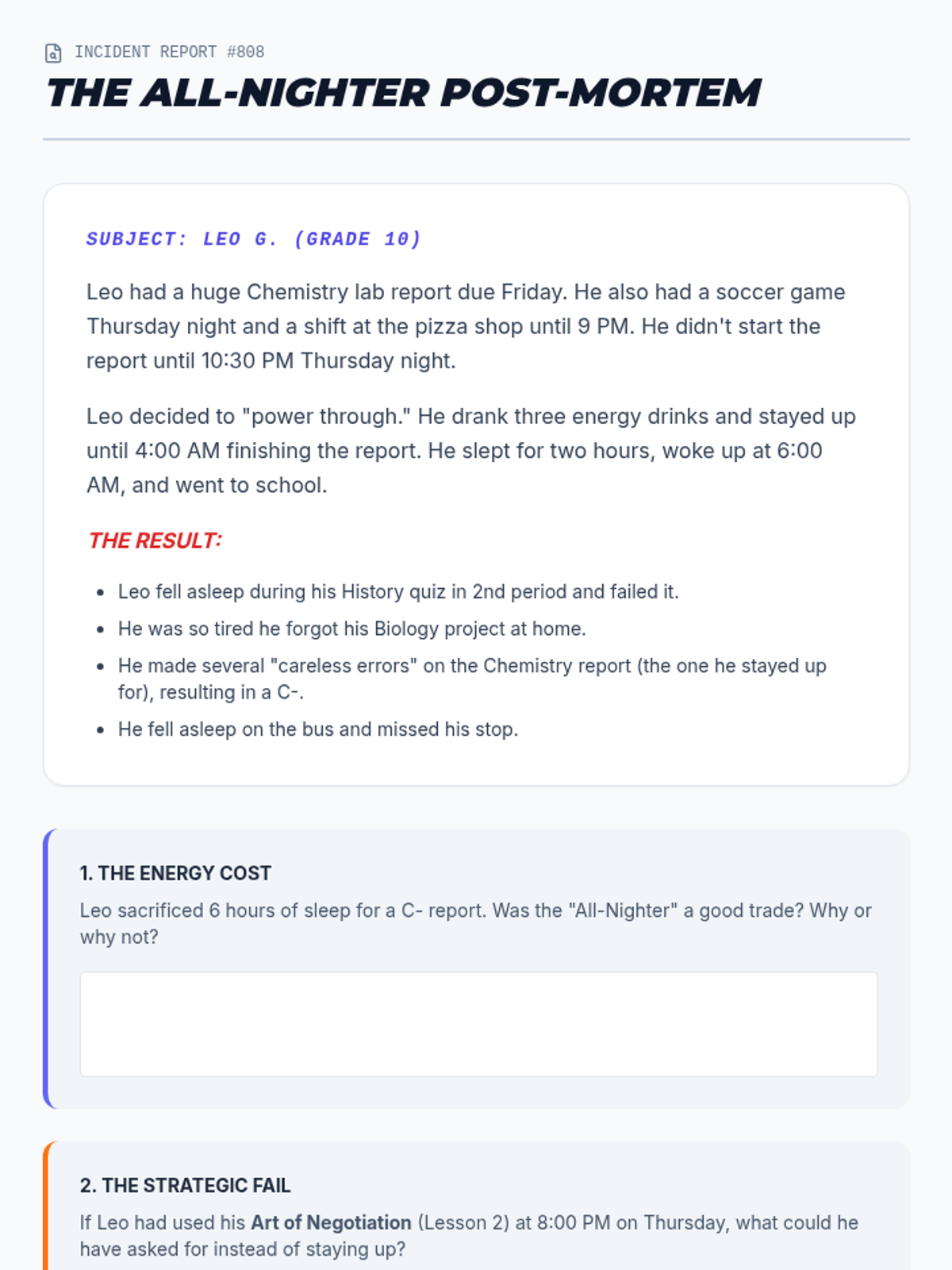
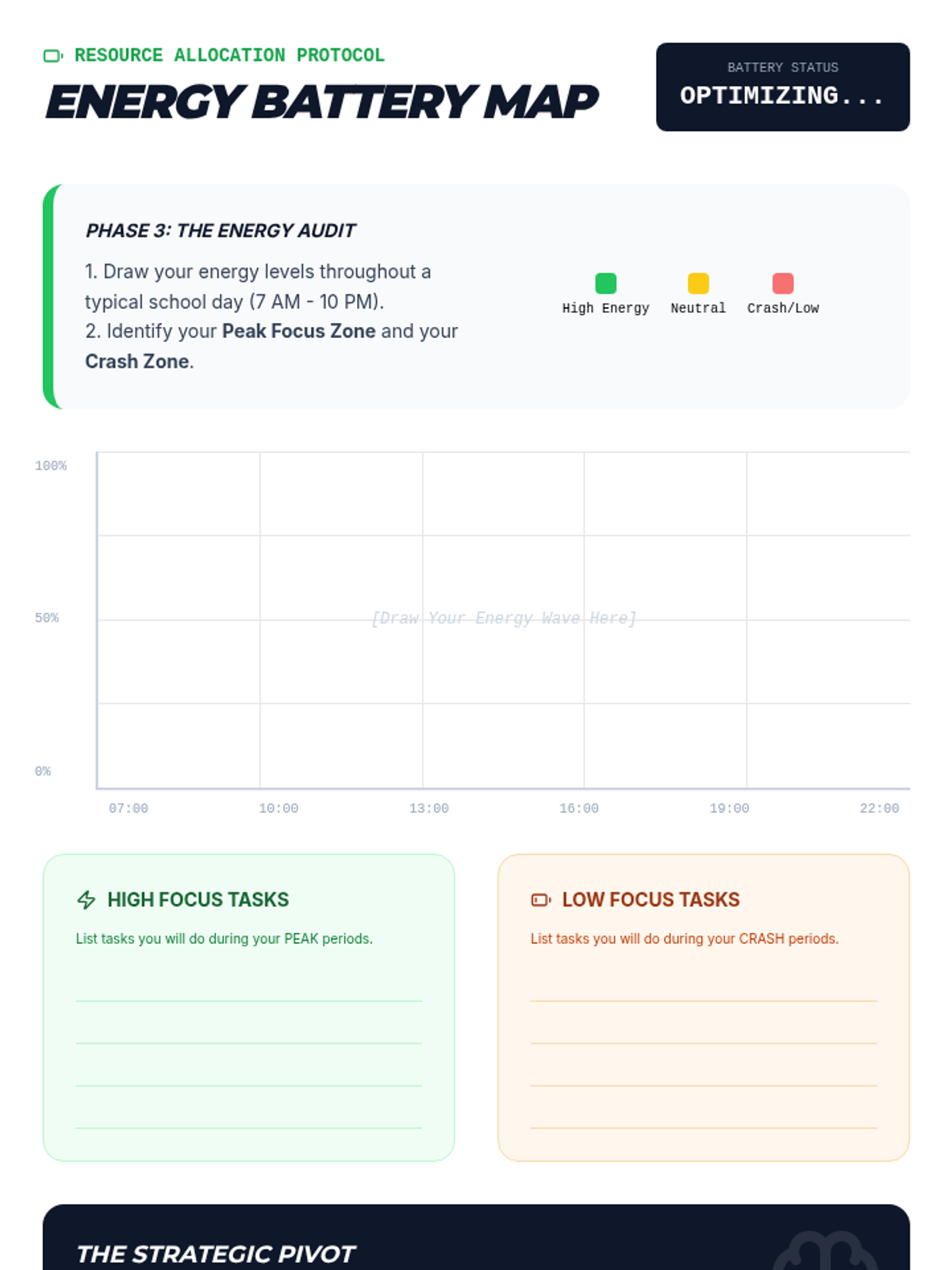
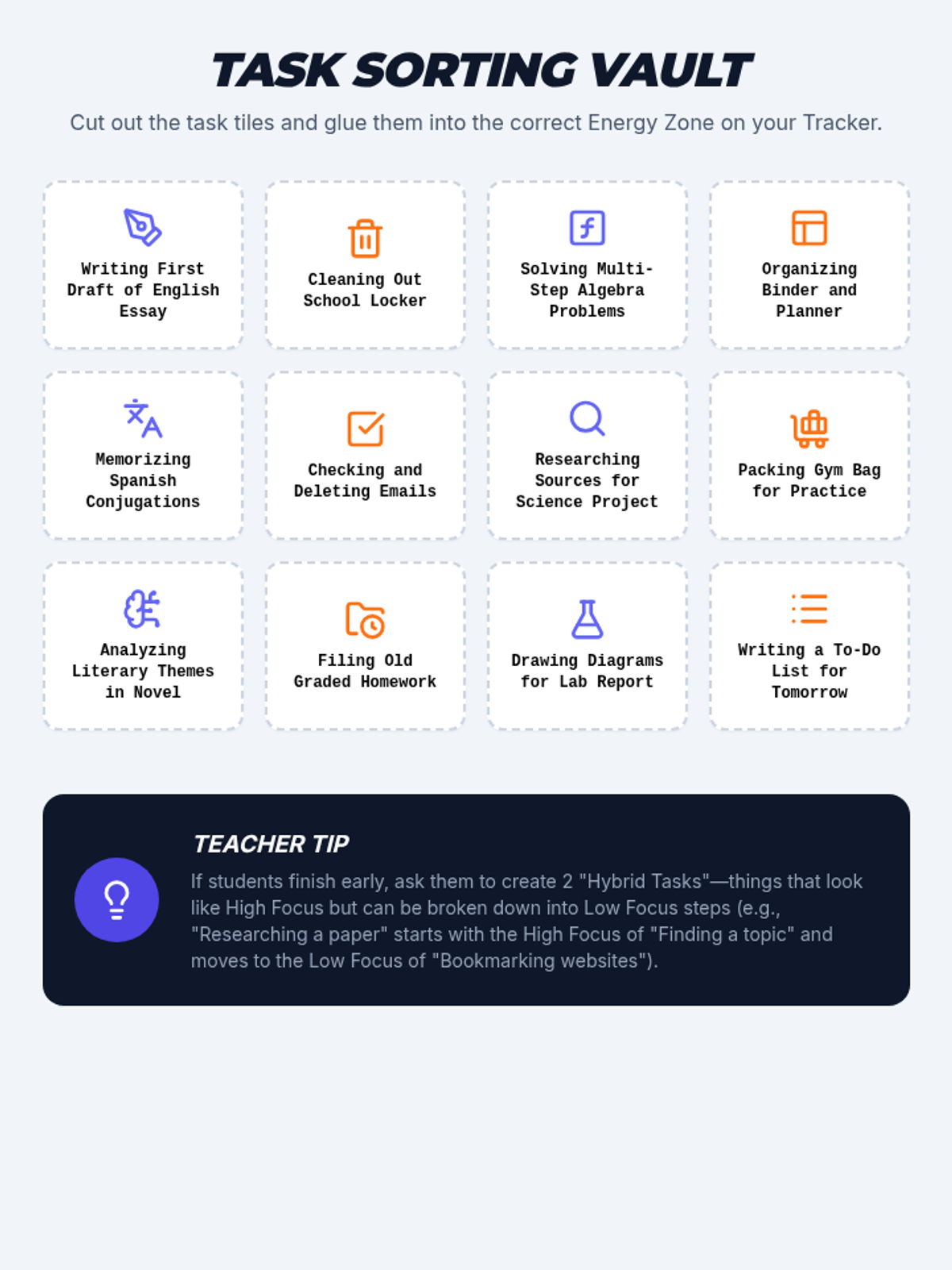
Students analyze their personal energy cycles to match high-demand tasks with high-energy periods, moving beyond simple time management to strategic resource allocation.
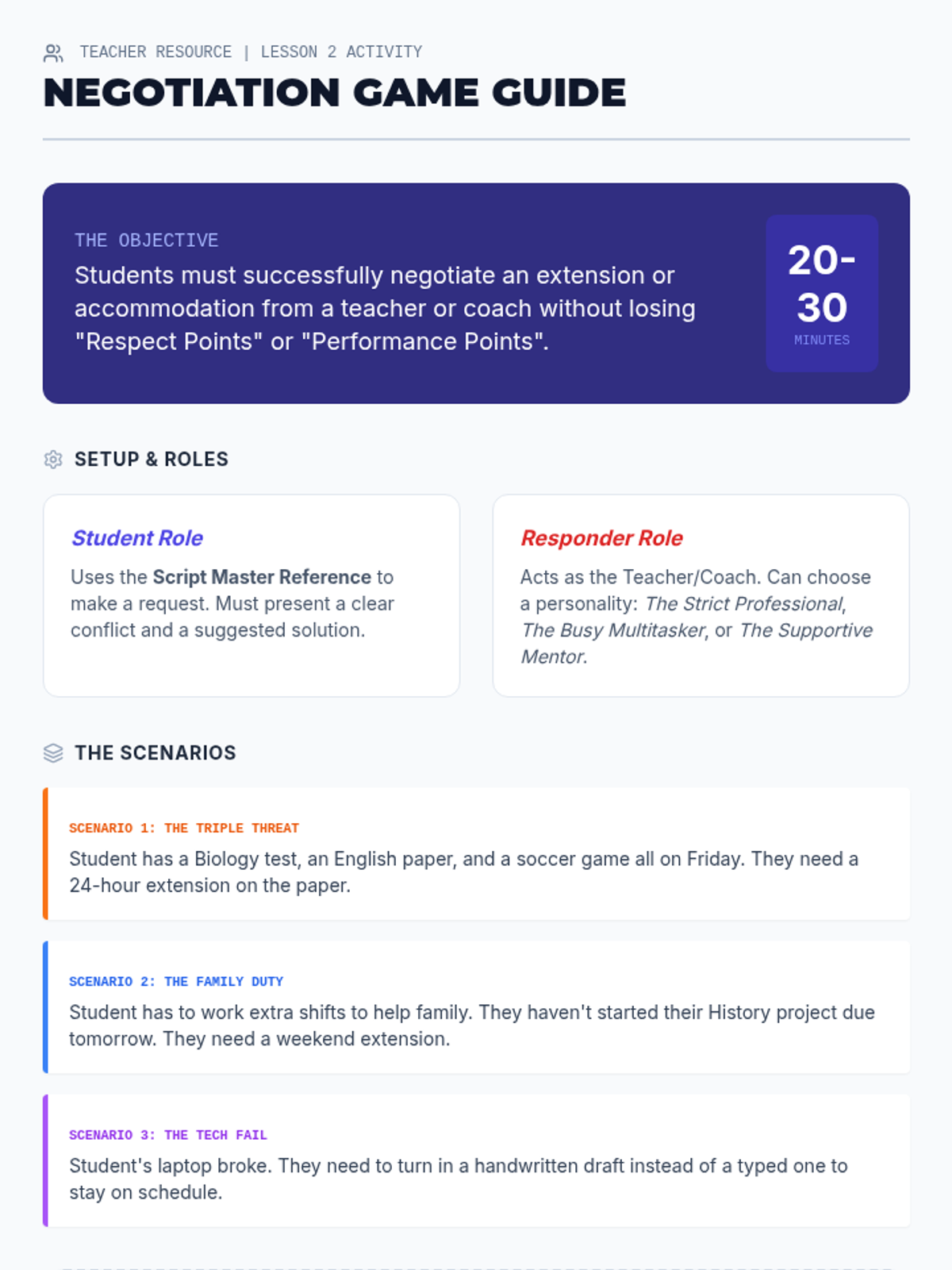
Focuses on professional communication and the distinction between hard and soft deadlines. Students practice scripts to negotiate extensions and help before a crisis occurs.
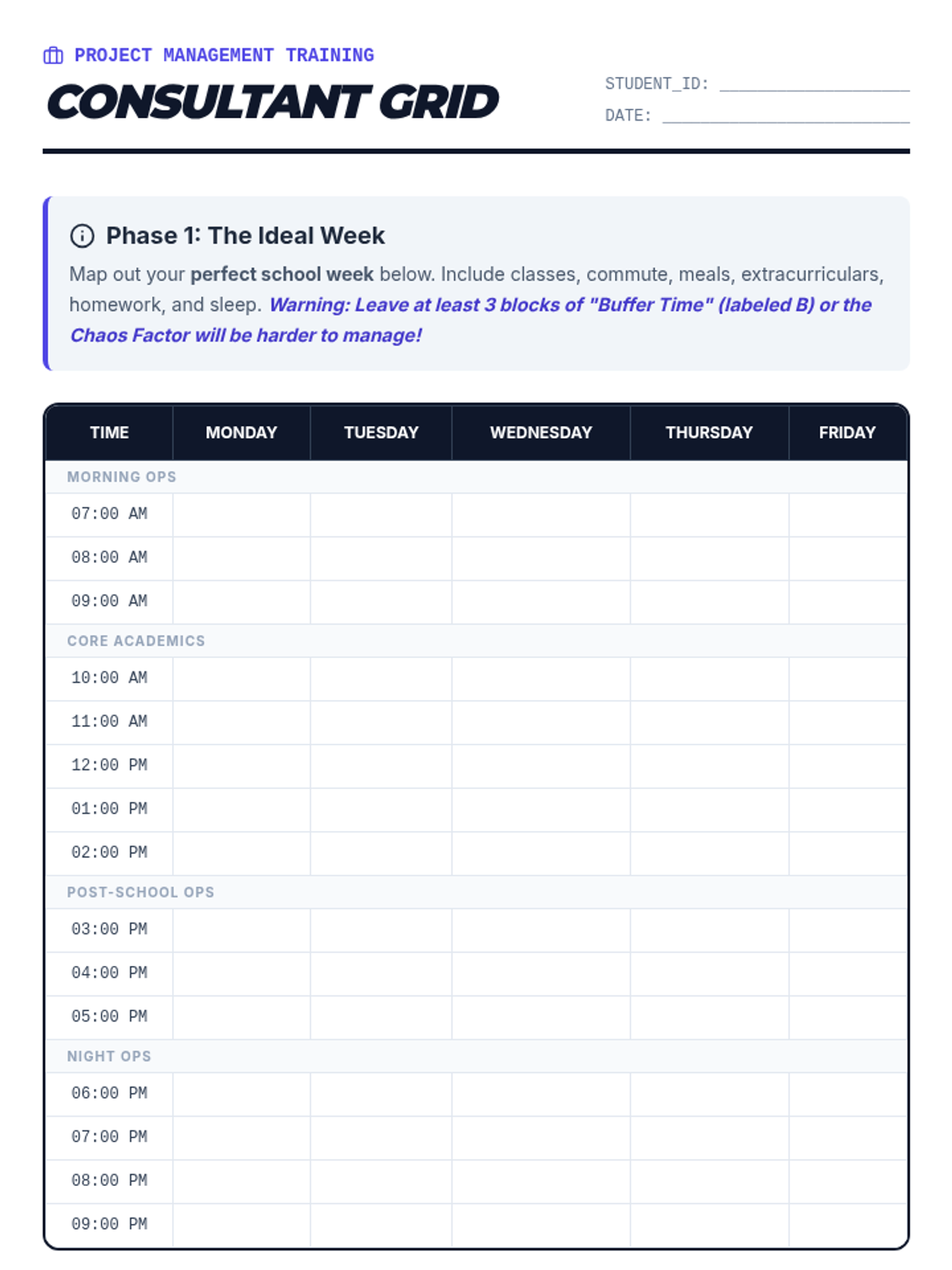
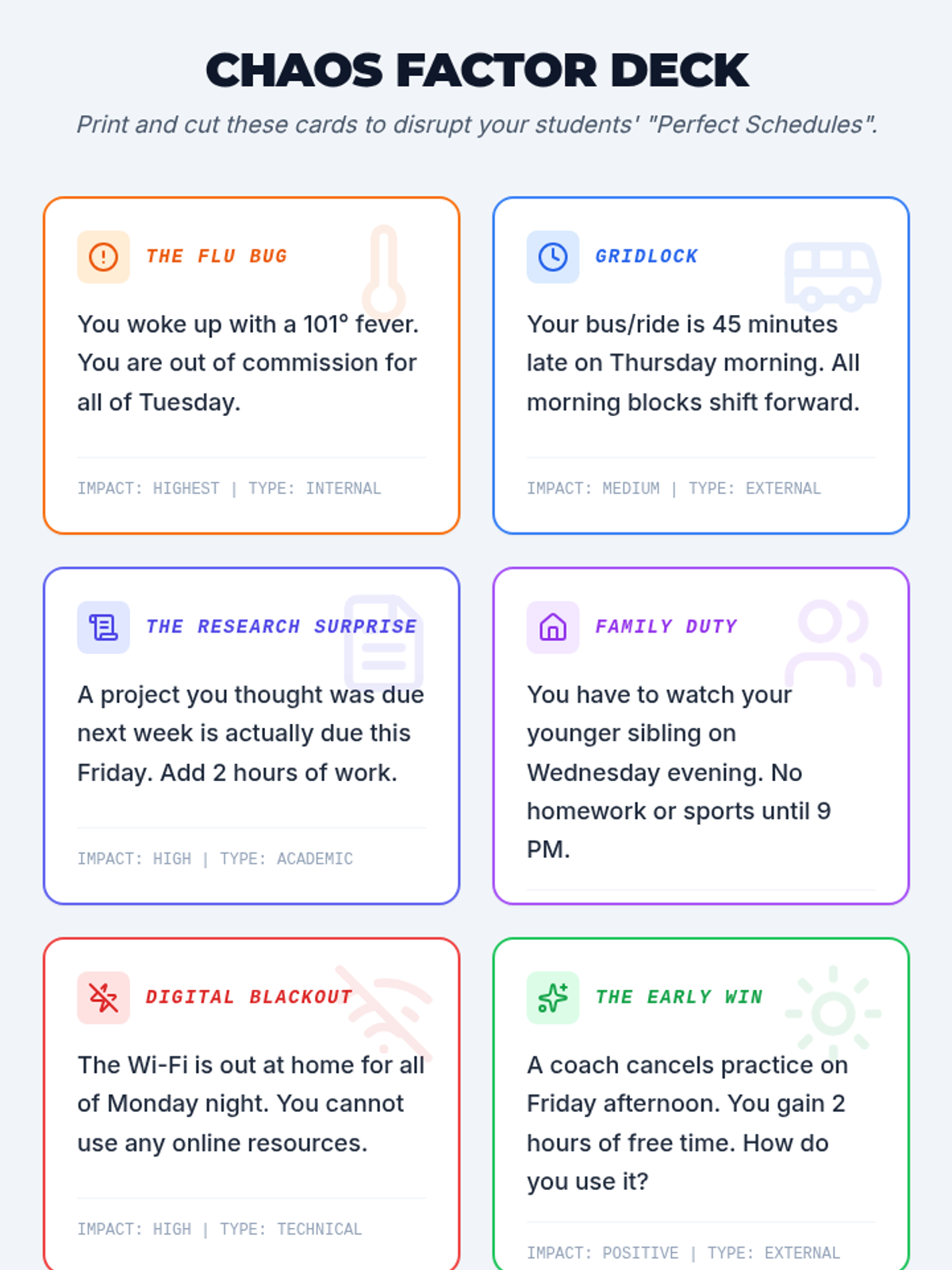
Students design an ideal weekly schedule and are immediately introduced to the 'Chaos Factor'—unpredictable life events that disrupt plans. They identify the need for buffer time and flexible scheduling.
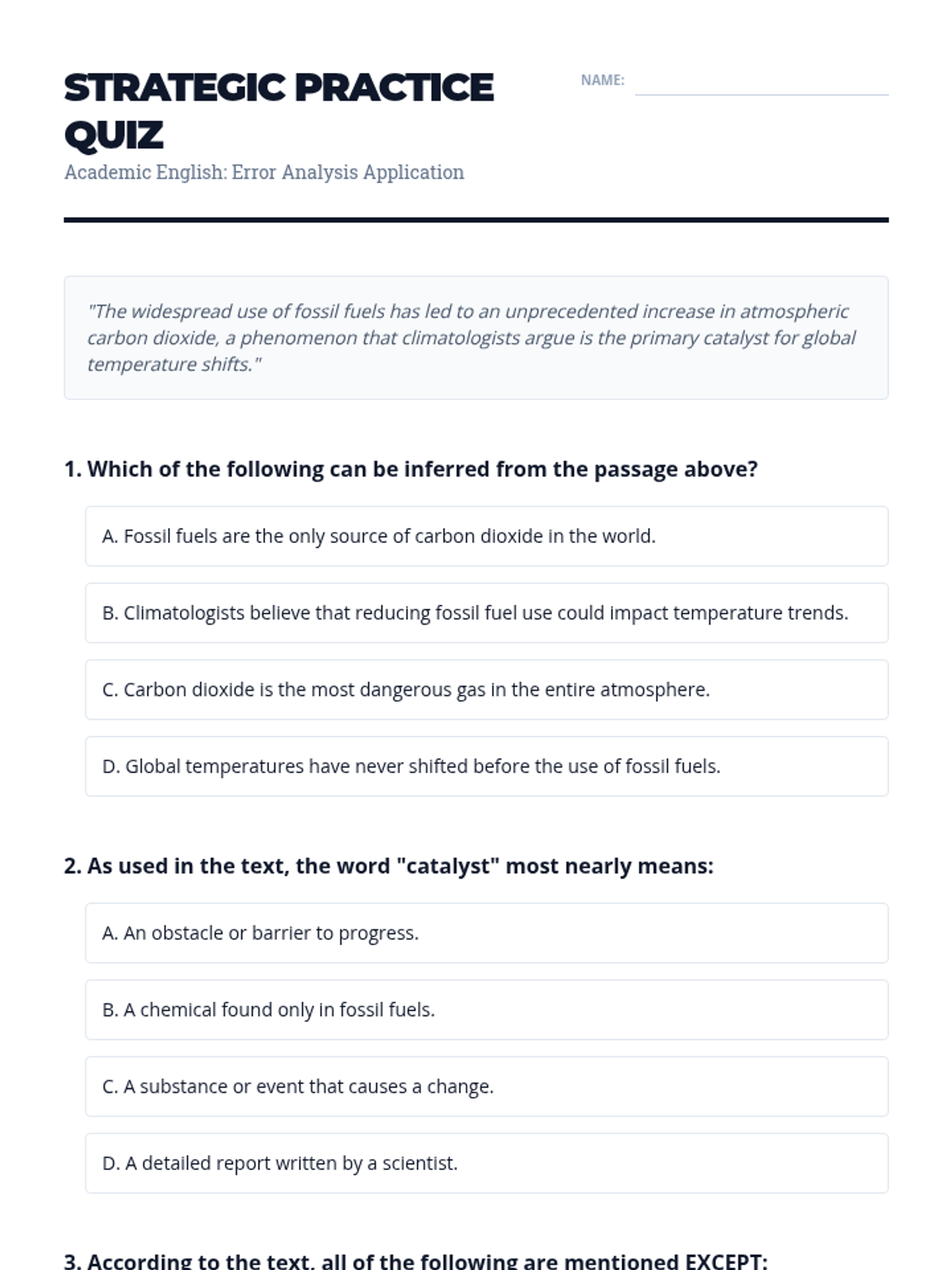
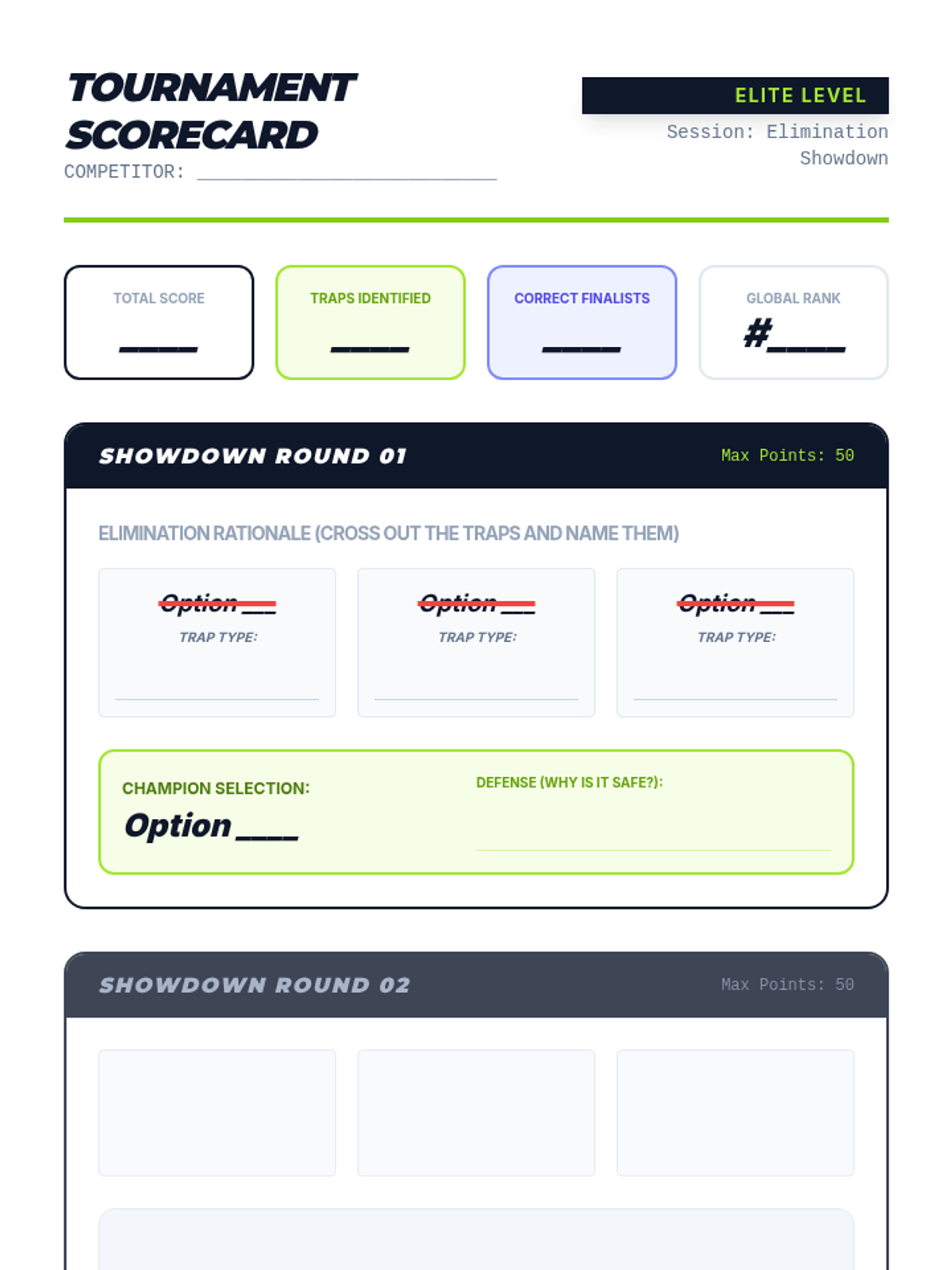
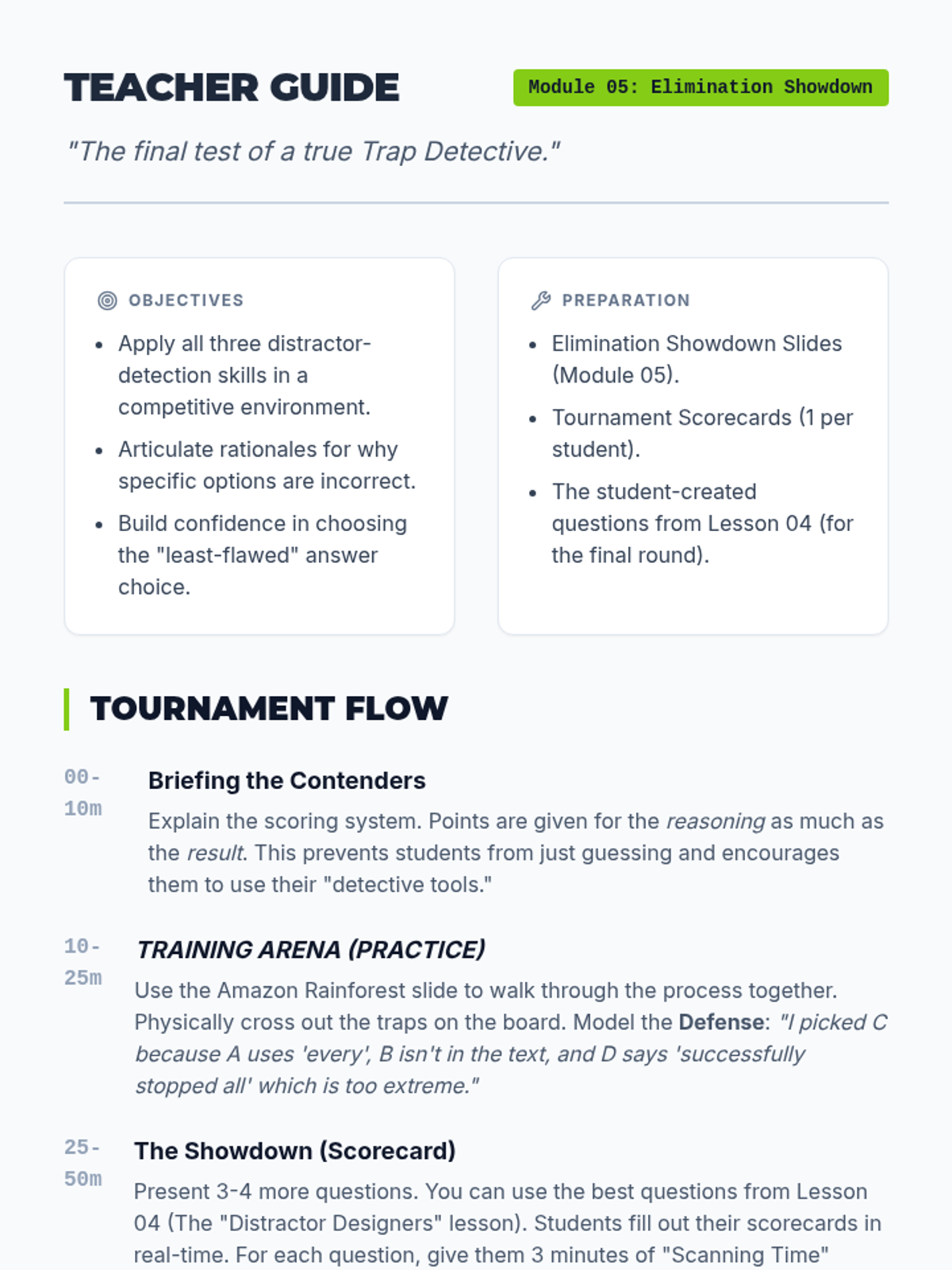
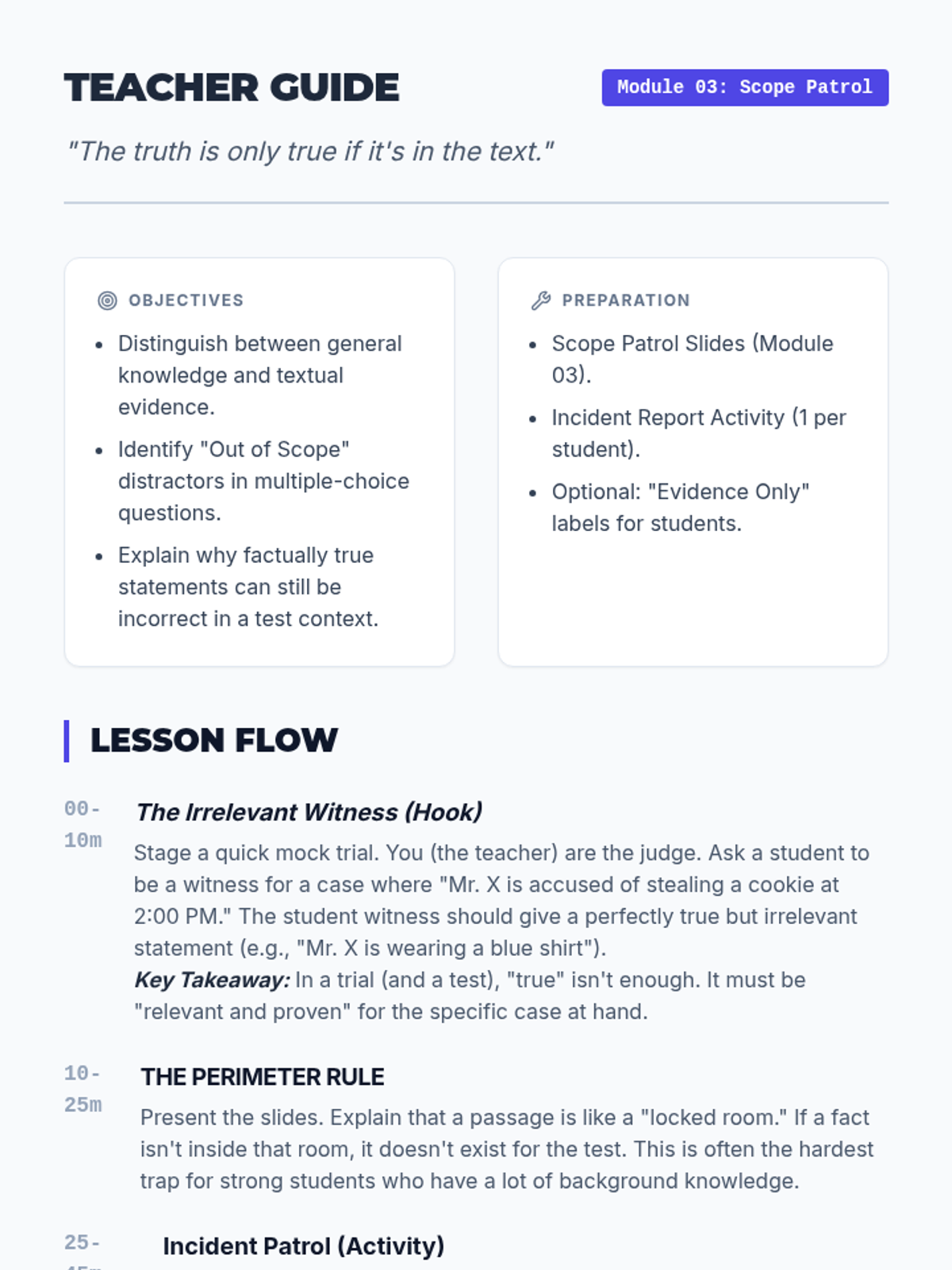
A competitive review tournament where students physically eliminate distractors with a rationale. Points are awarded for identifying specific trap types before selecting the correct answer.
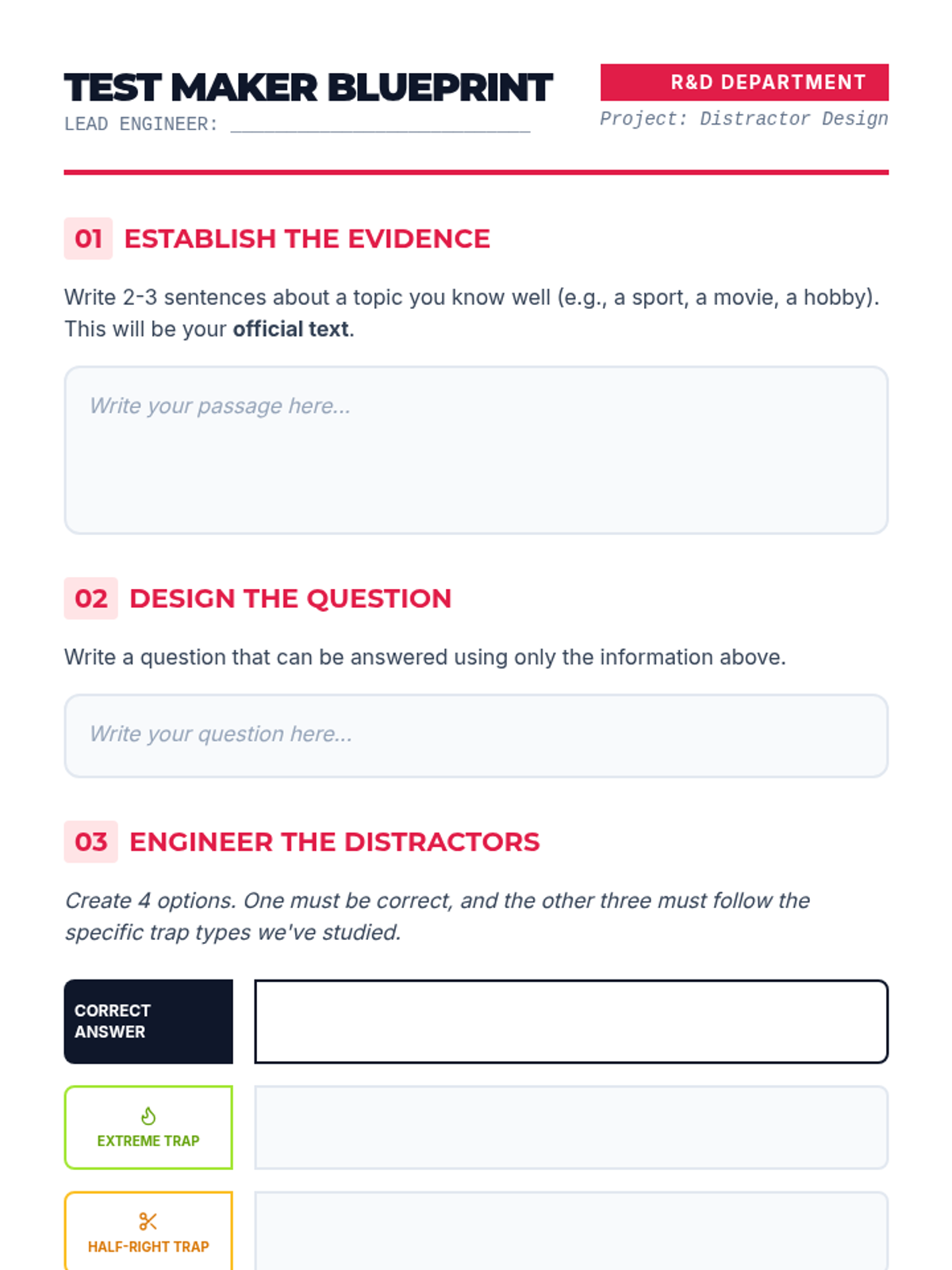
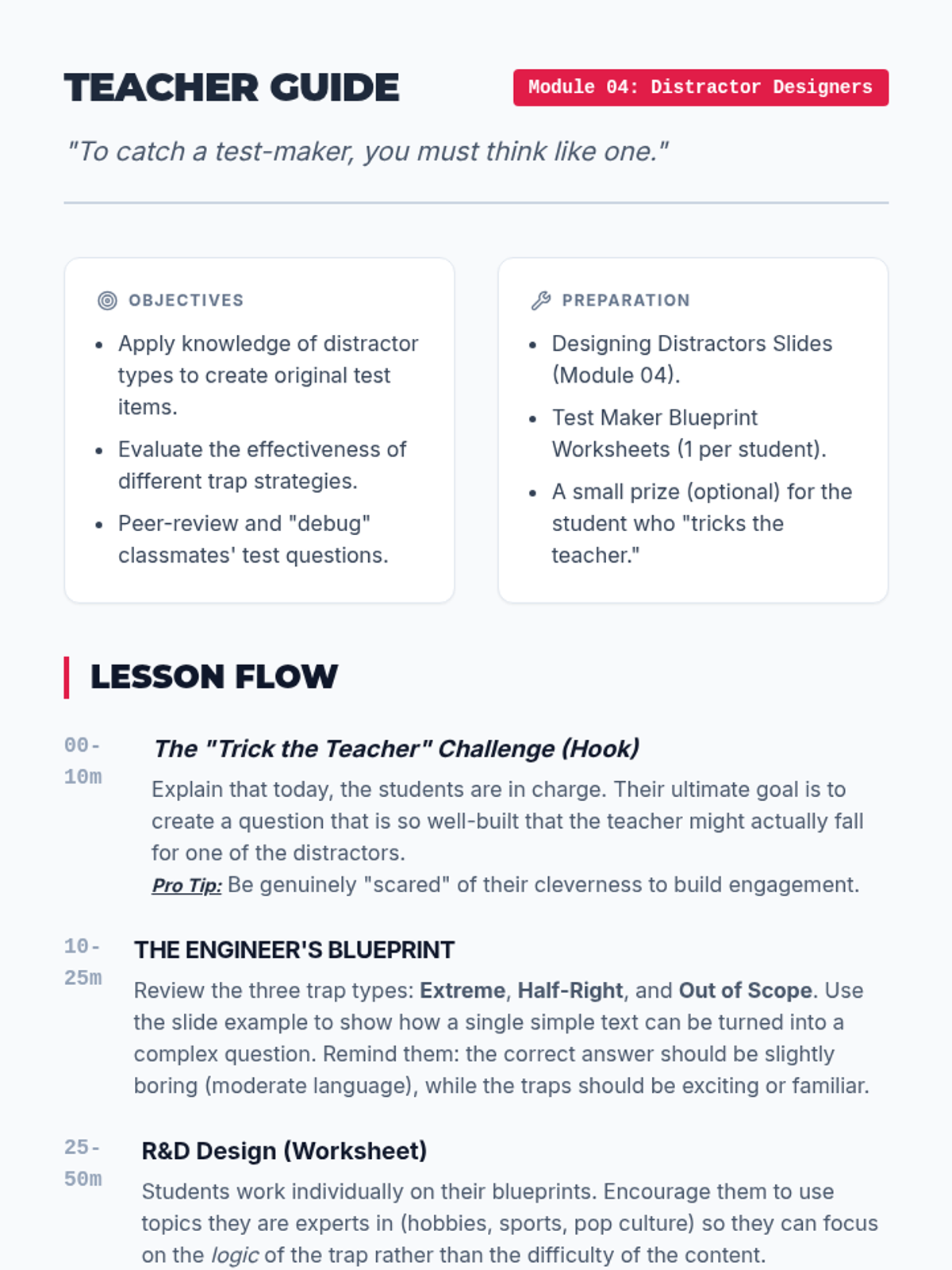
Students become test-makers by writing their own multiple-choice questions with deliberate traps. This role-reversal helps them internalize the logic behind distractor construction.
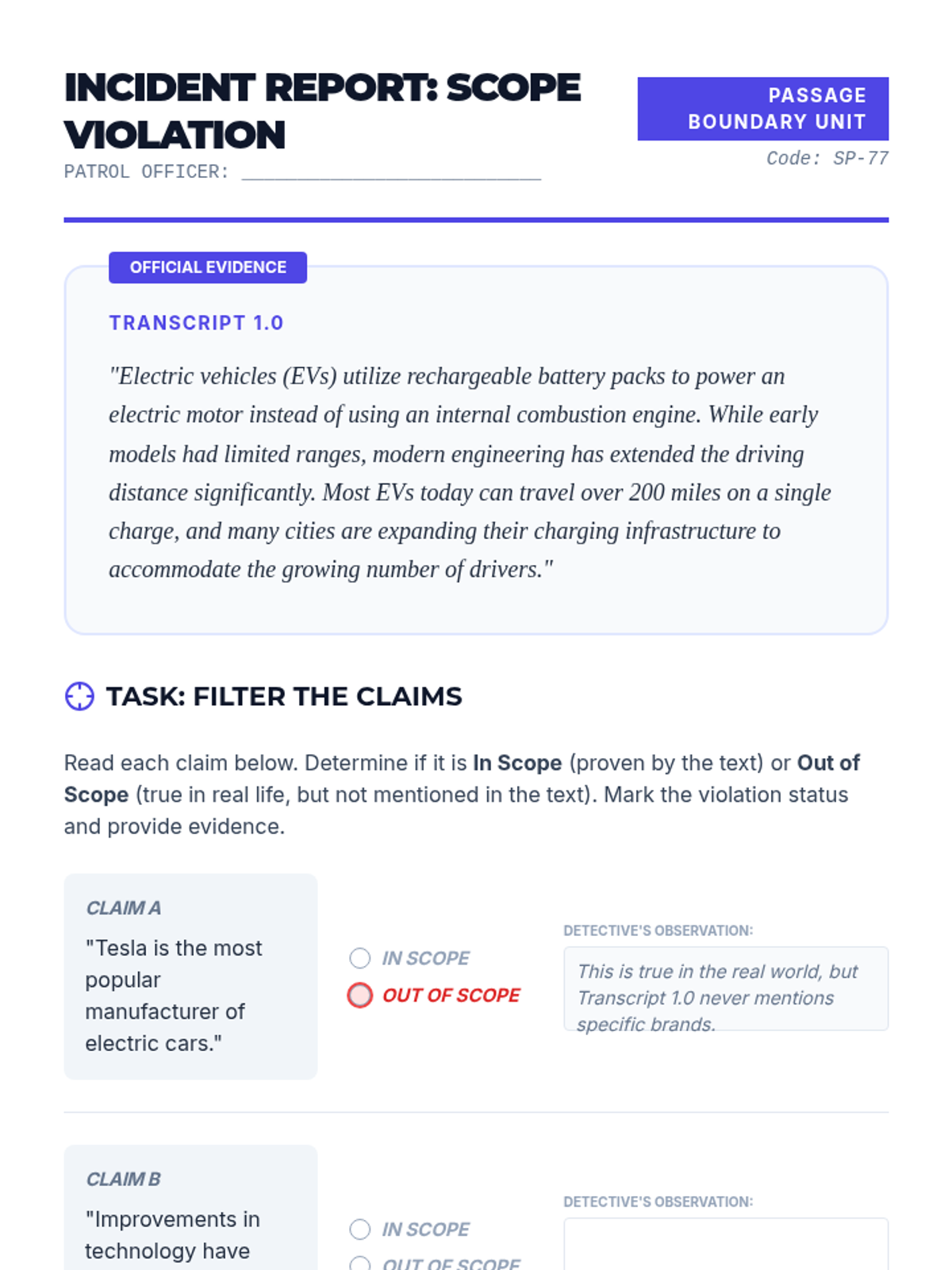
Students identify statements that are factually true in the real world but are not supported by the specific text provided. The focus is on maintaining evidence-based focus within the scope of the passage.
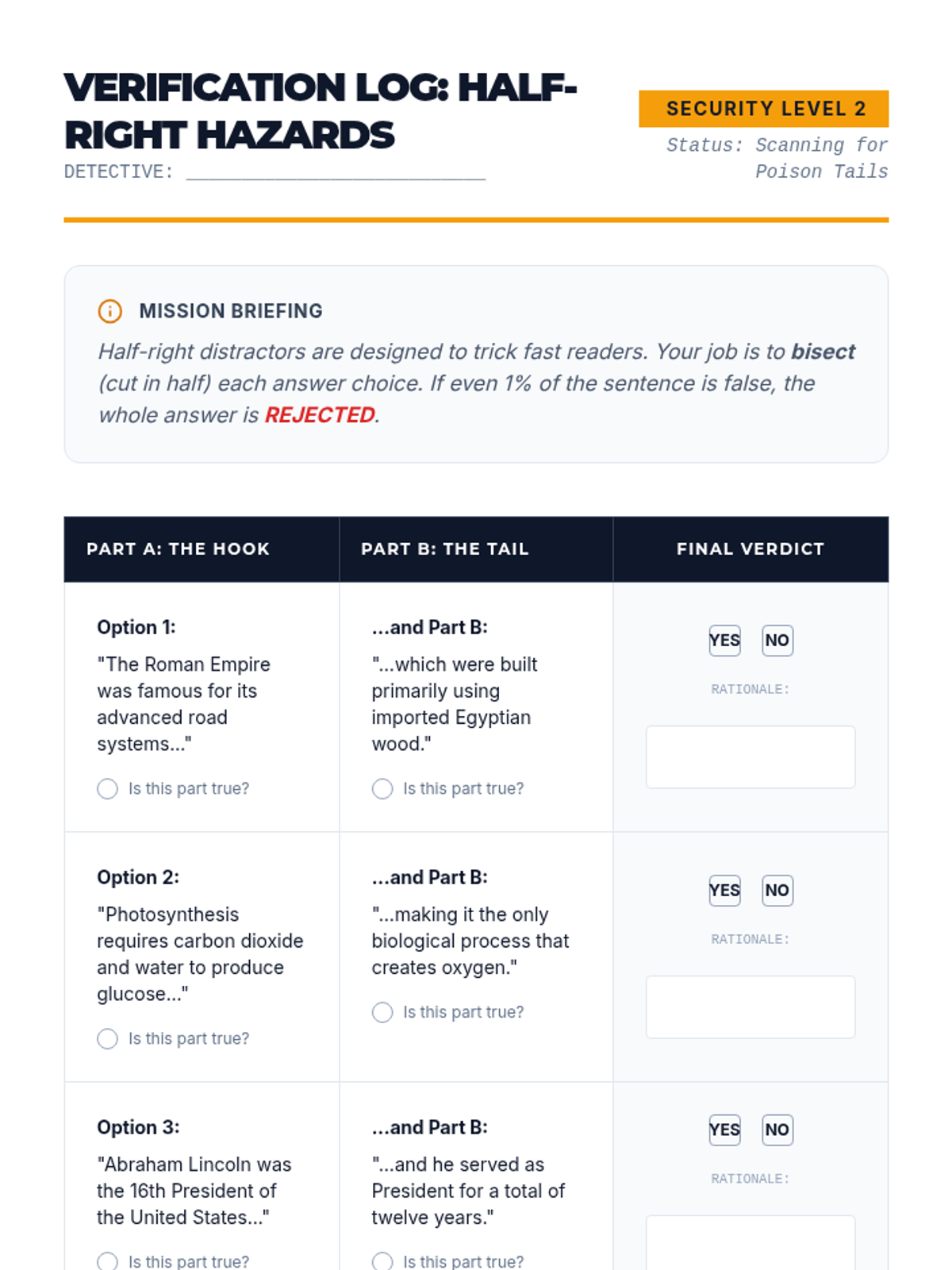
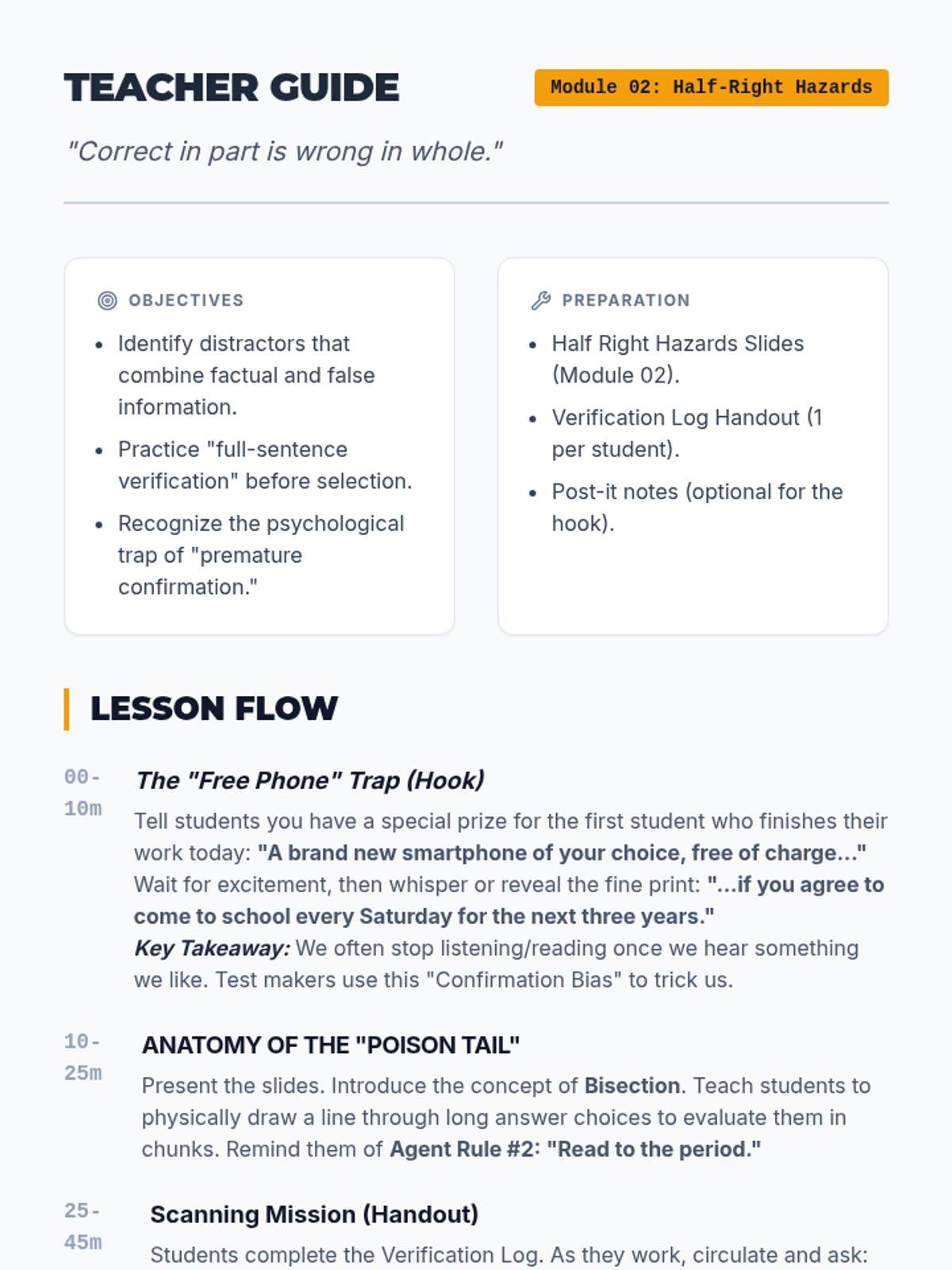
Learners analyze options that are partially correct but ultimately false. This lesson emphasizes the importance of reading every word of an answer choice to catch subtle inaccuracies.
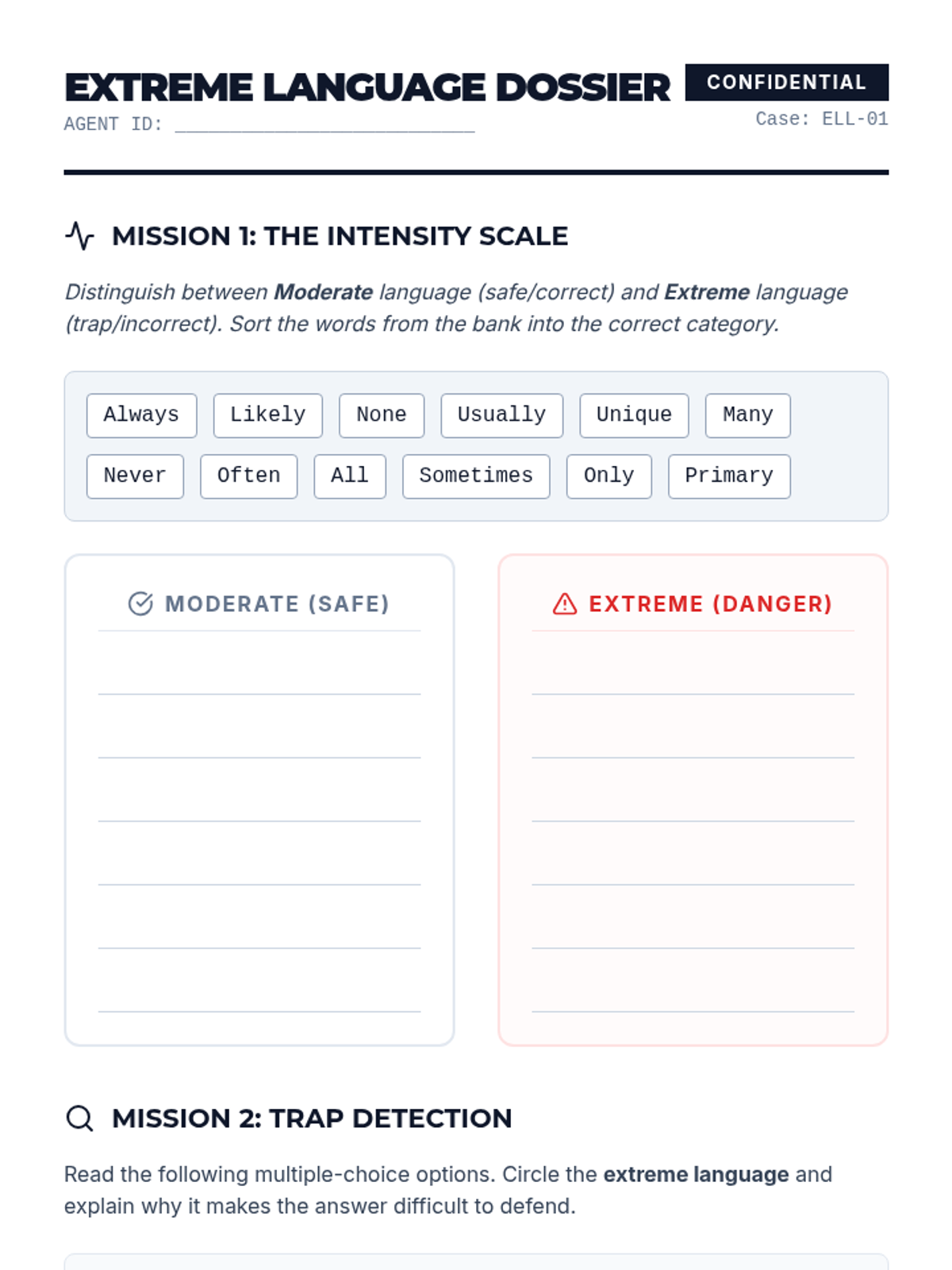
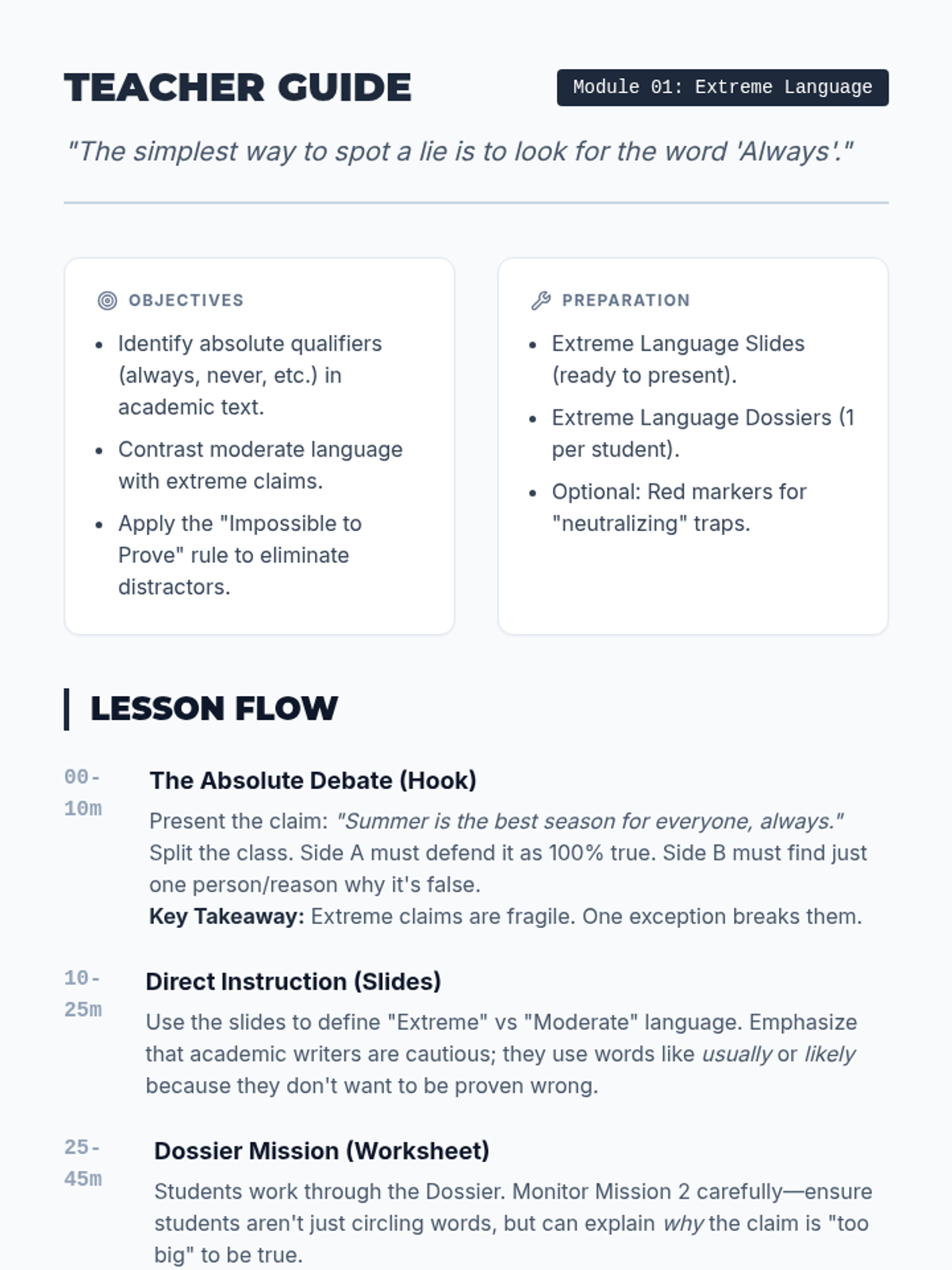
Students learn to identify absolute qualifiers like 'always' and 'never' that signal incorrect answers. They practice categorizing statements by their degree of intensity to evaluate their validity in a test context.
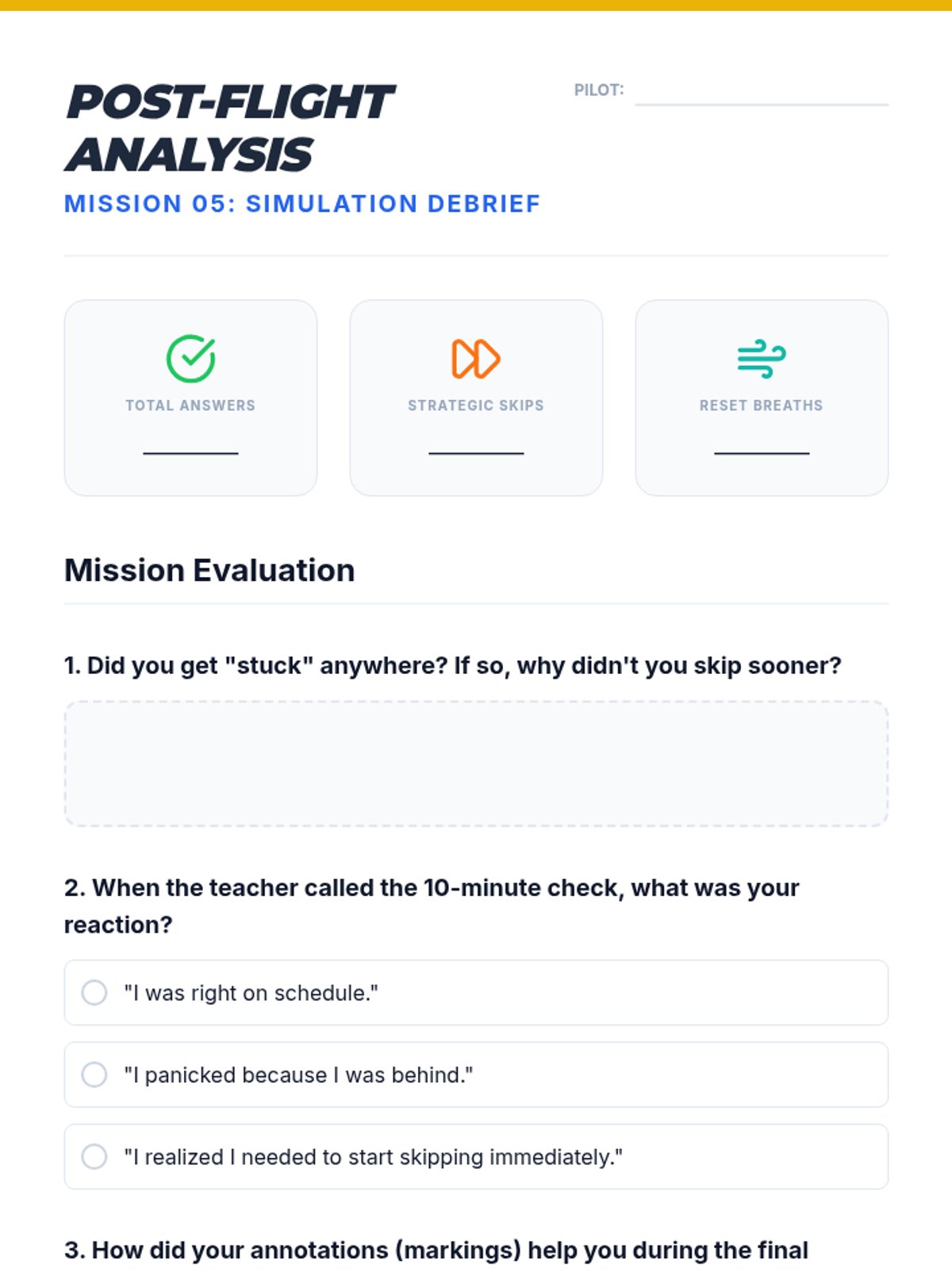
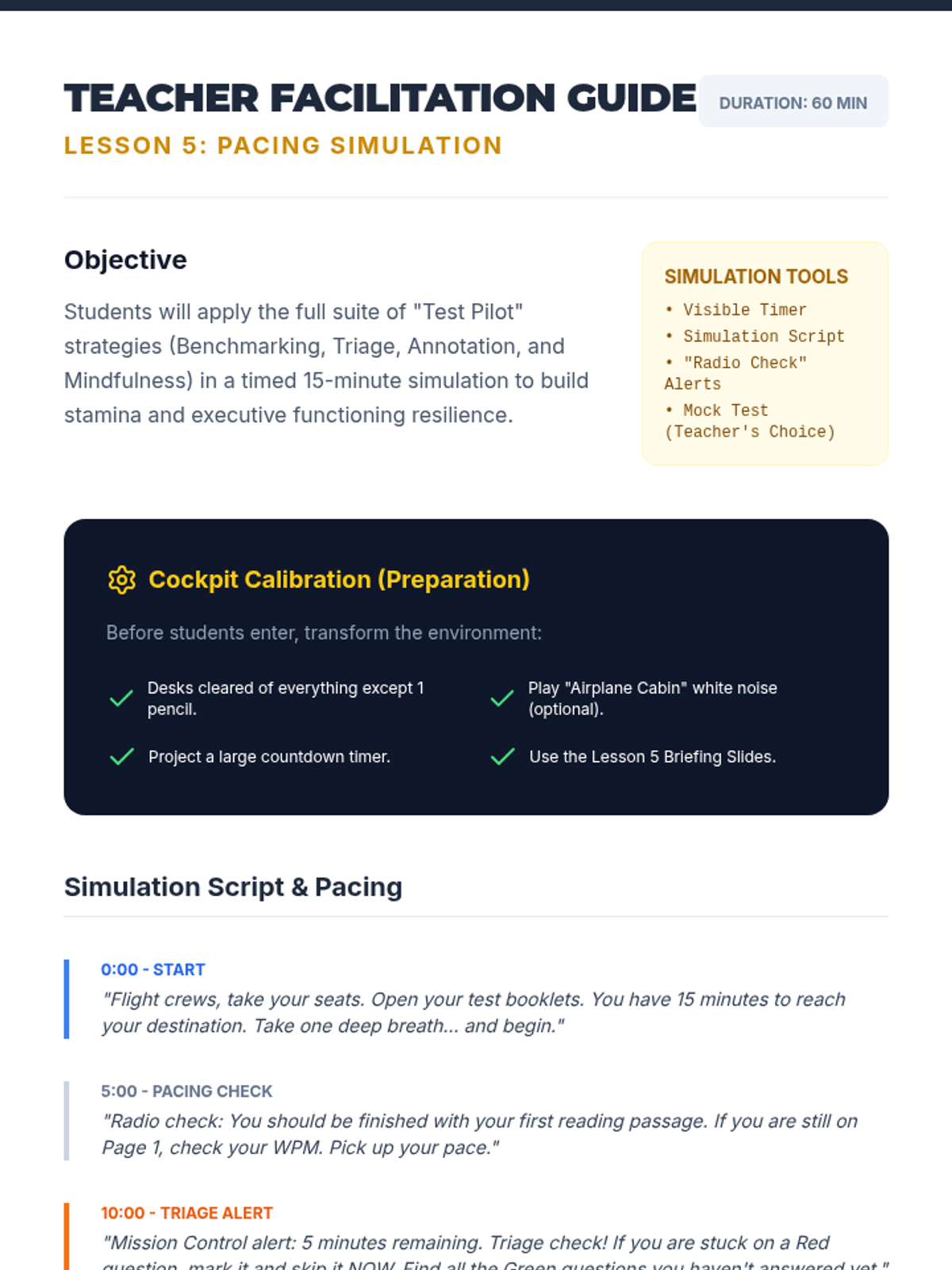
A cumulative simulation where students apply time management and emotional regulation skills in a timed testing environment, followed by a reflective debrief.
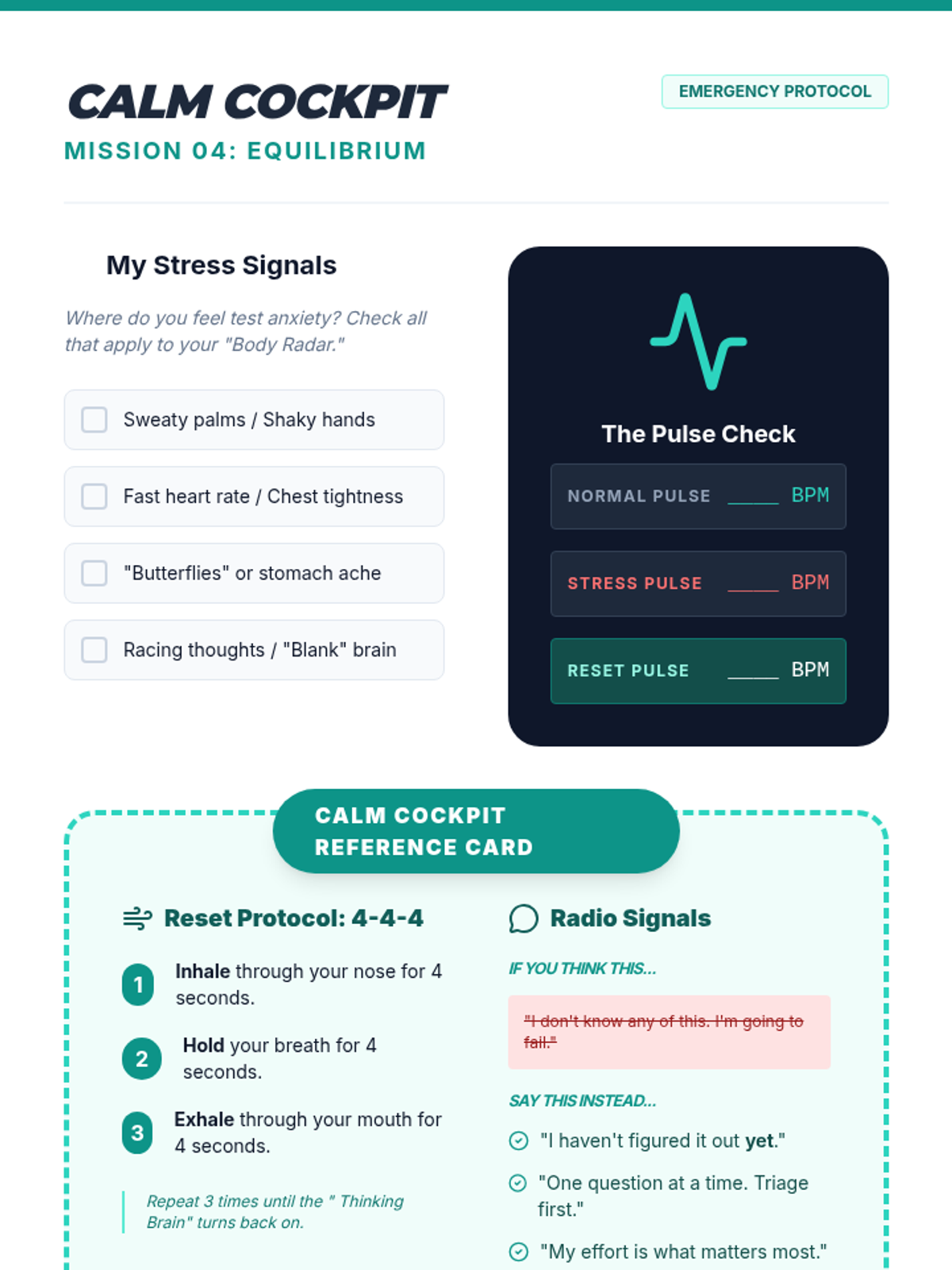
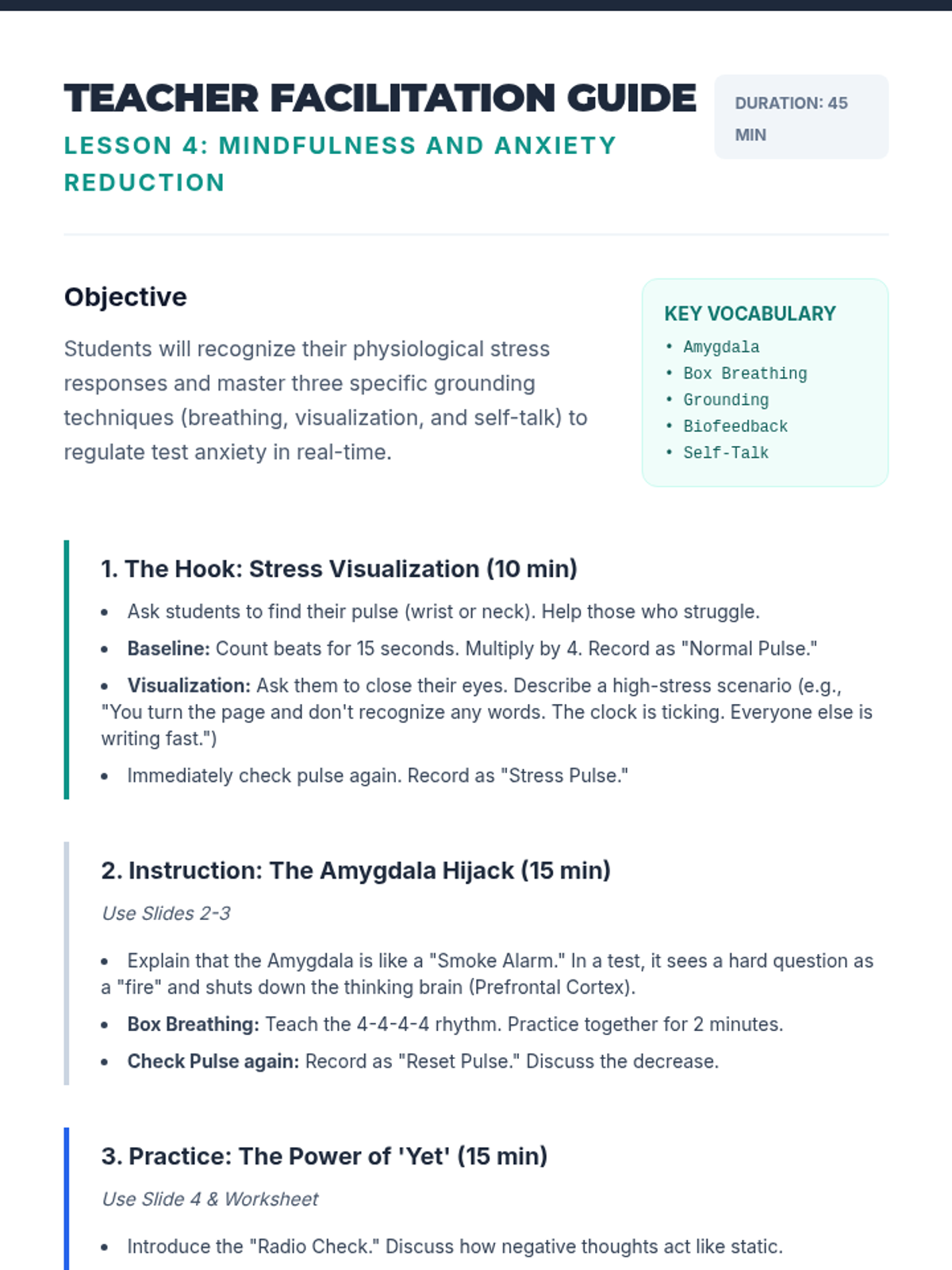
Exploring the physical and mental effects of test anxiety and learning grounding techniques to stay calm and focused during high-stakes moments.
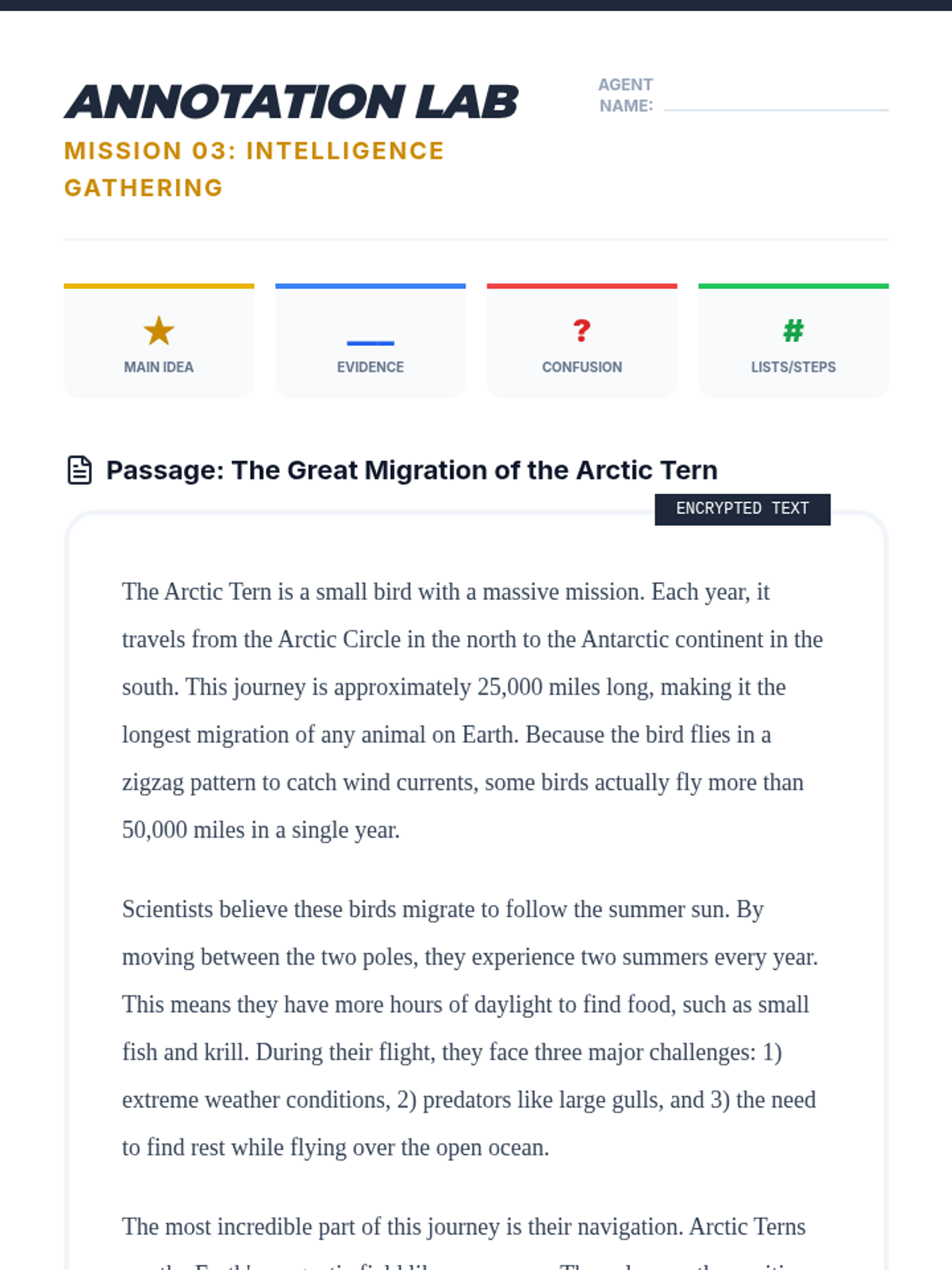
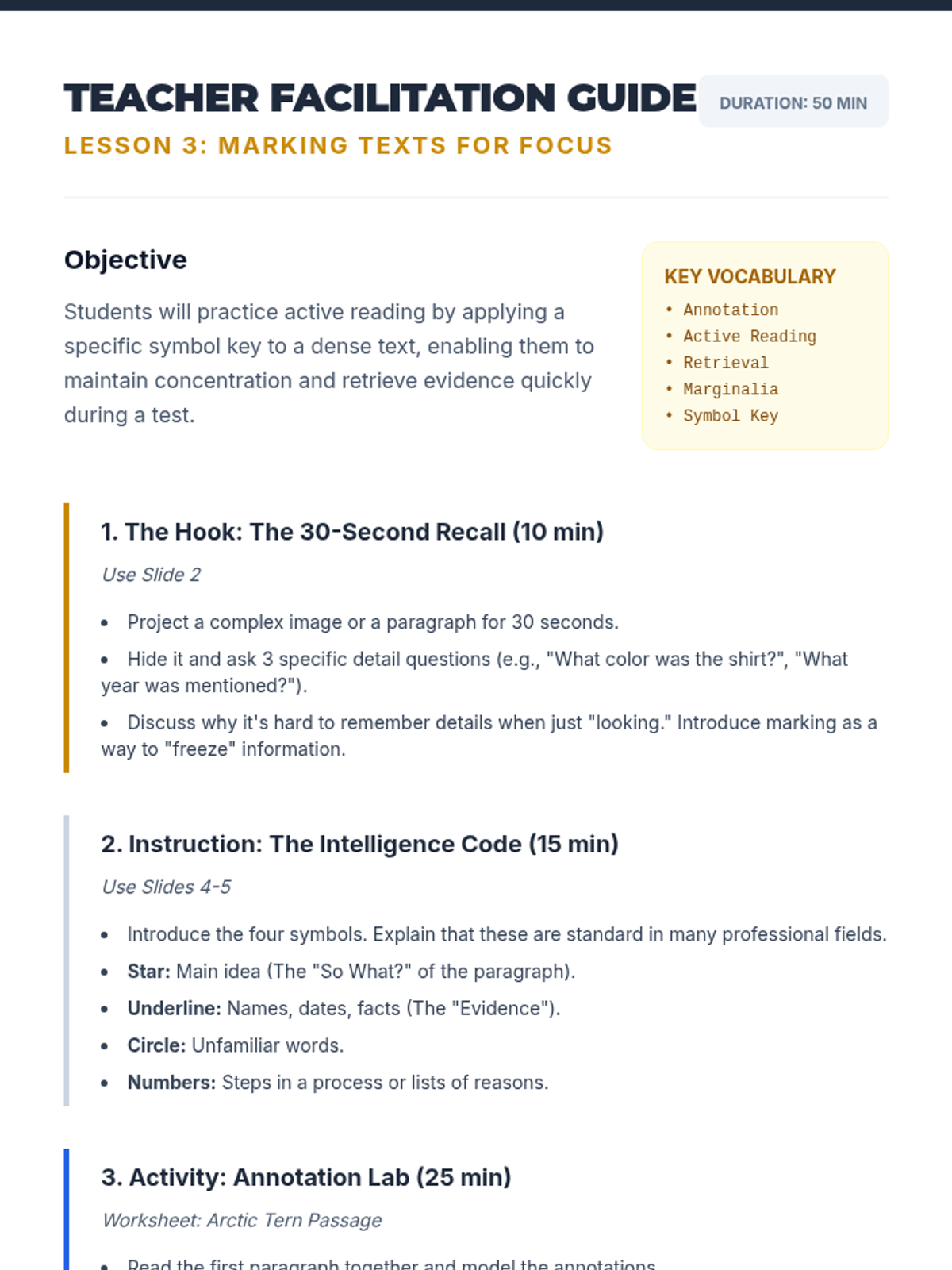
Active reading strategies for testing, focusing on specific annotation systems that help maintain focus and allow for quick evidence retrieval.
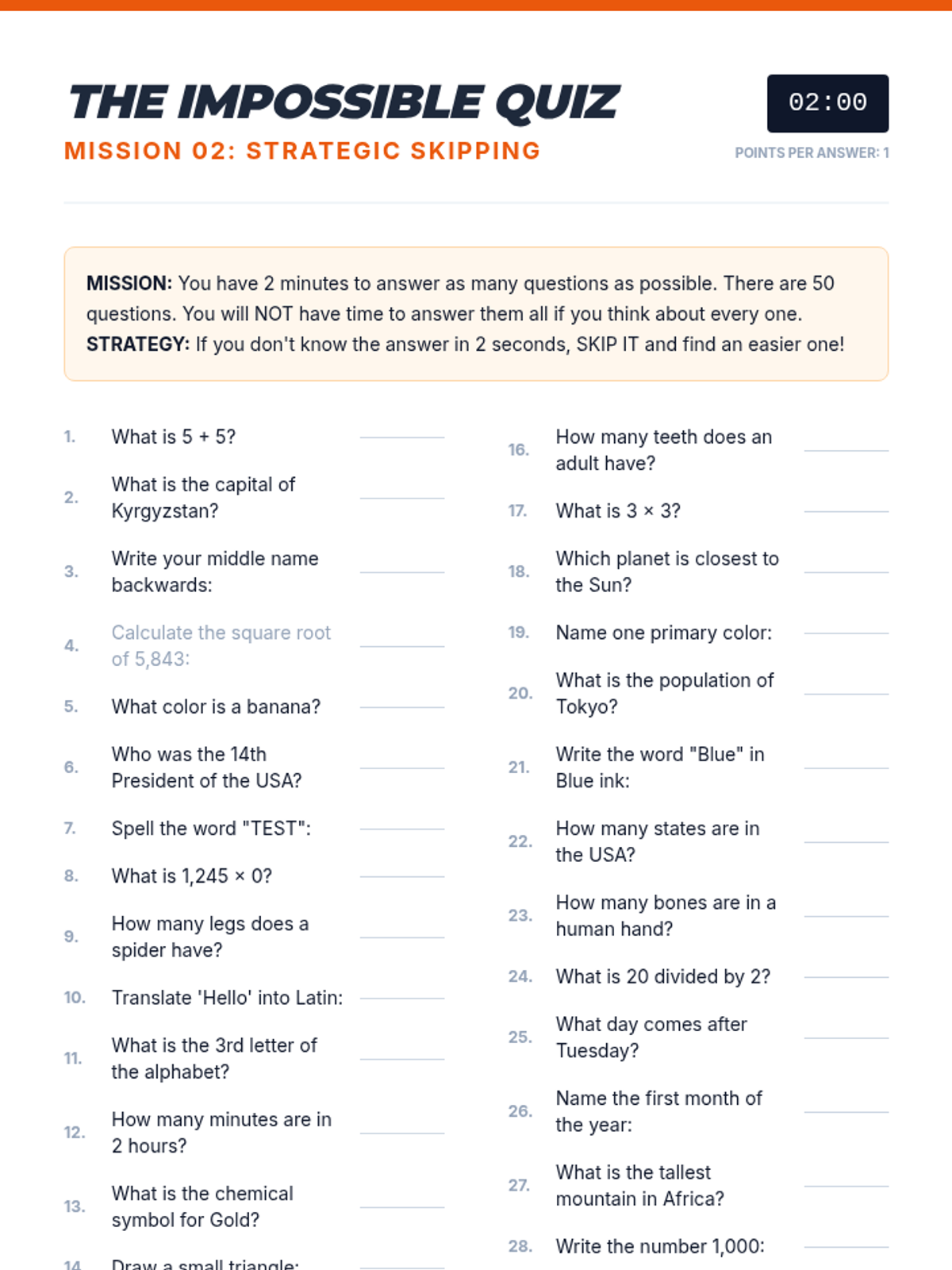
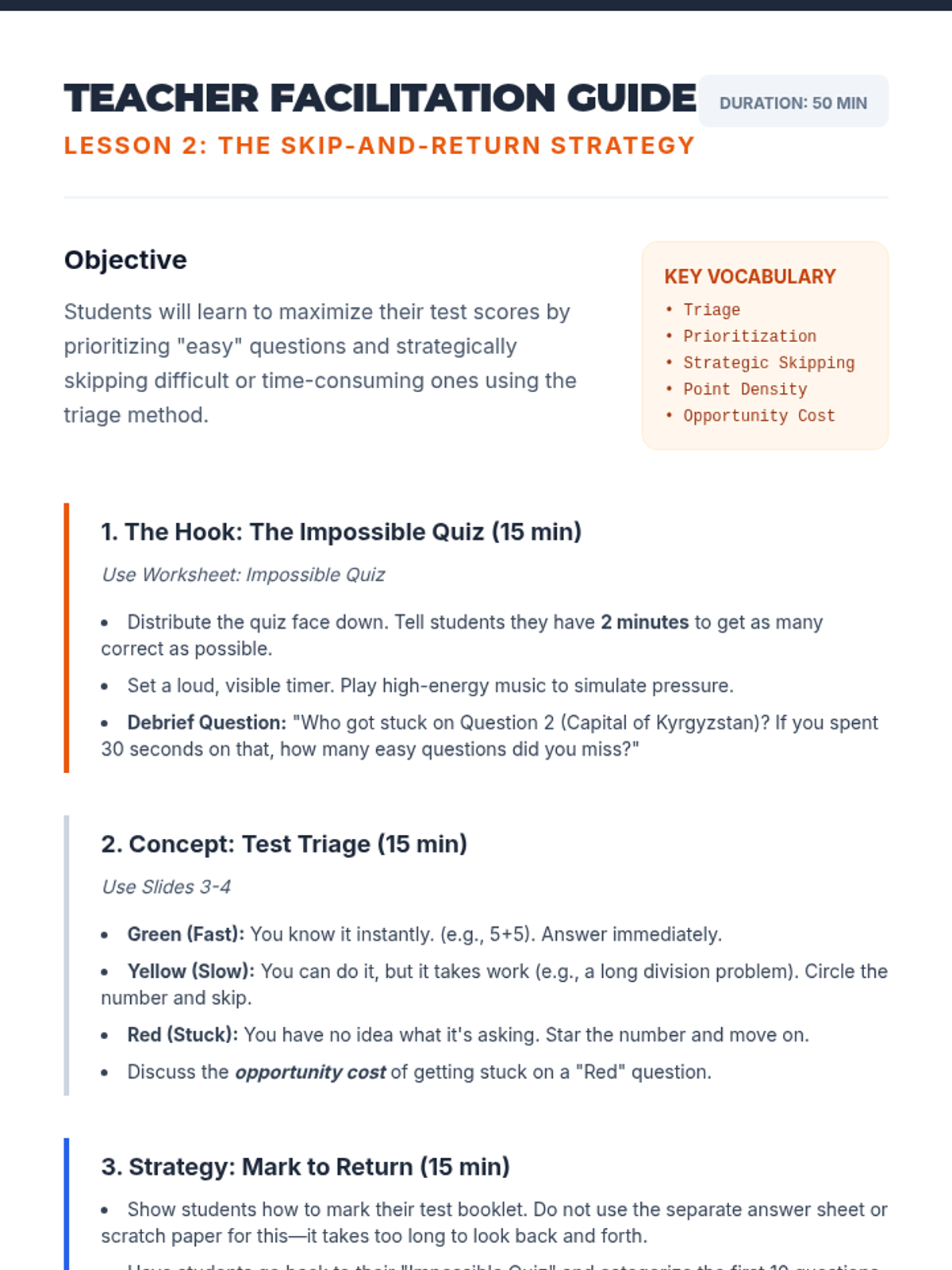
Students learn the 'triage' method for tests, identifying which questions to answer immediately and which to 'skip and return' to maximize points.
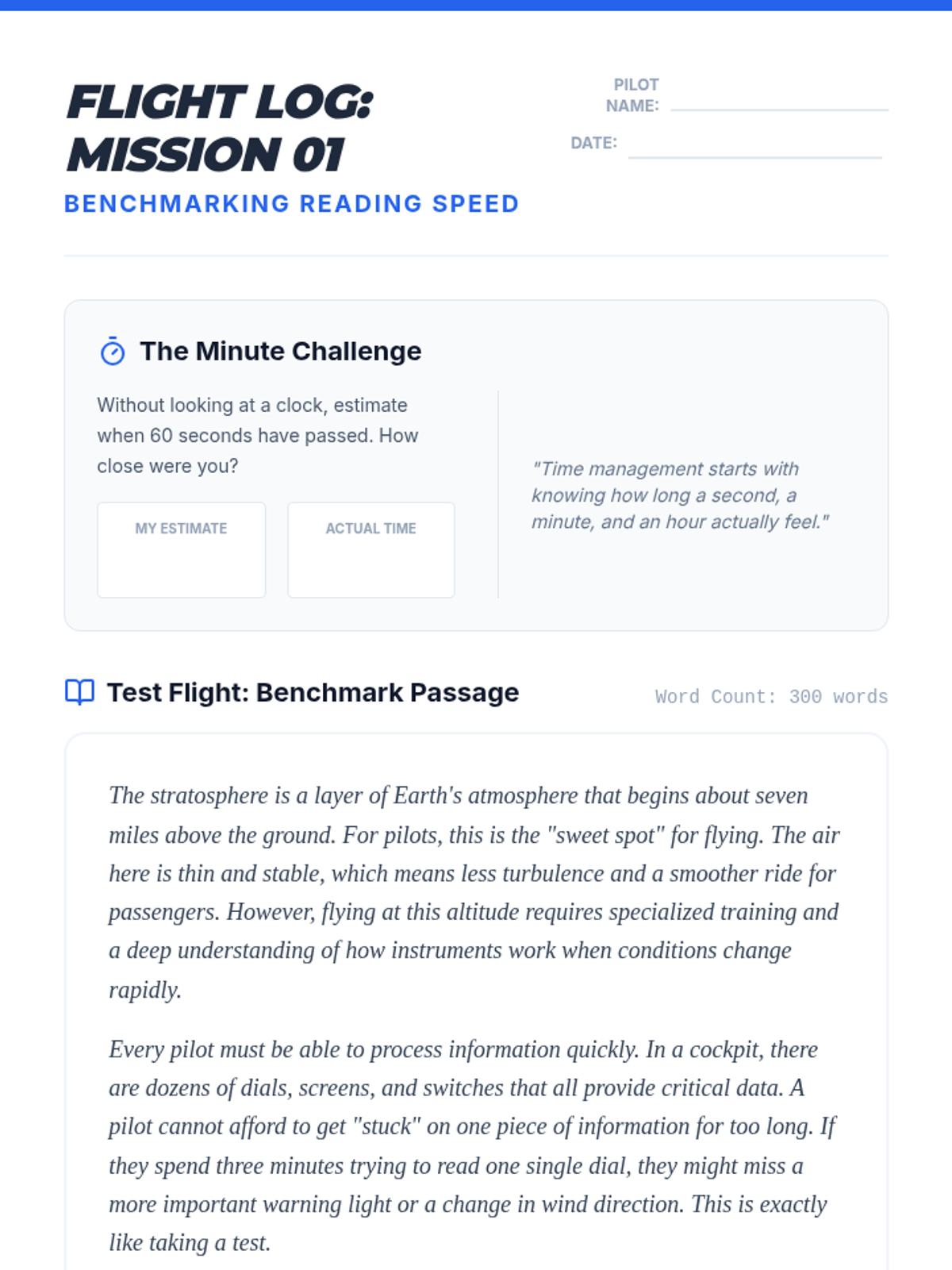
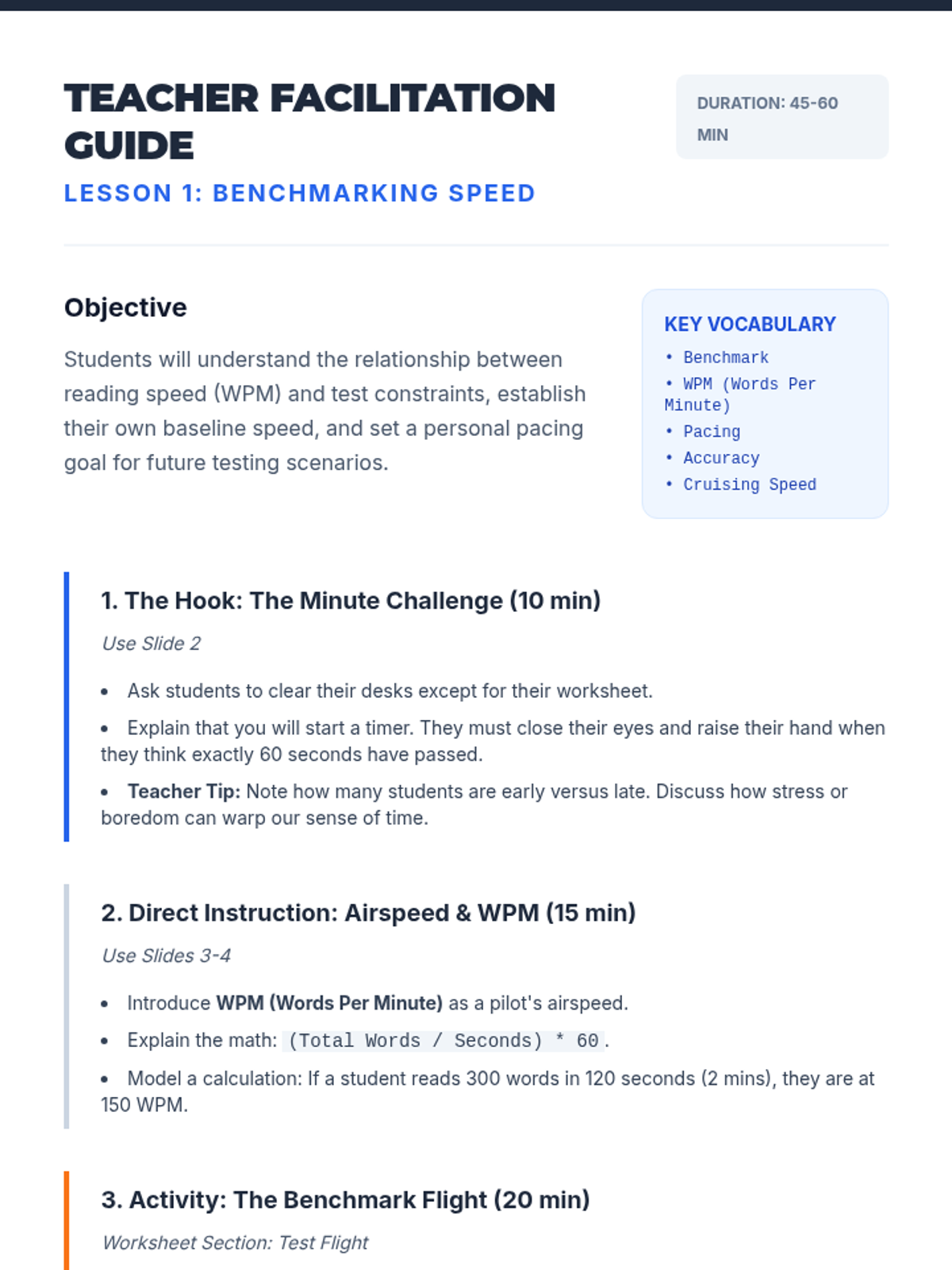
Students establish a baseline for their reading speed and understand how it relates to test time constraints. They learn to calculate Words Per Minute (WPM) and set realistic pacing goals.
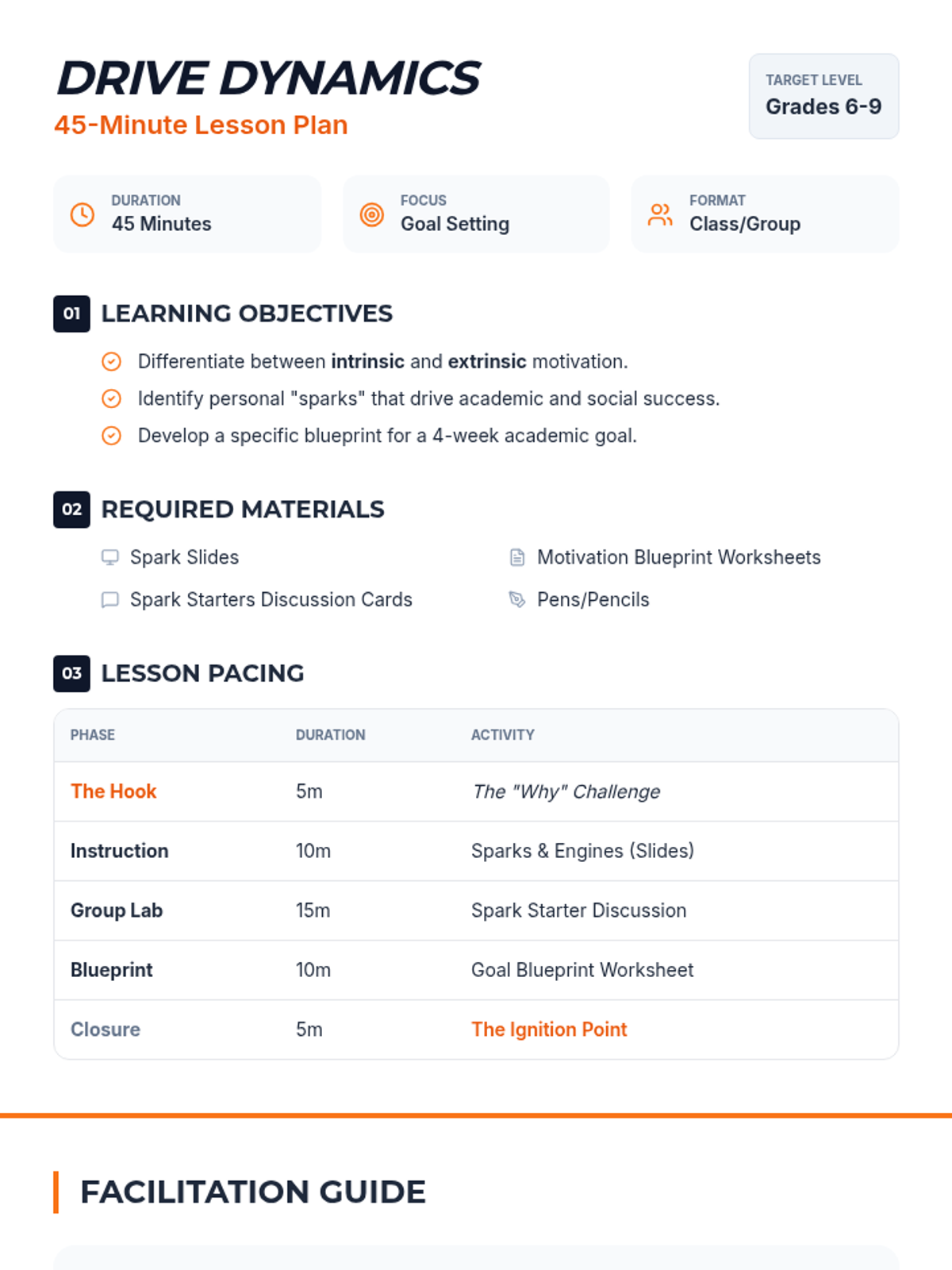
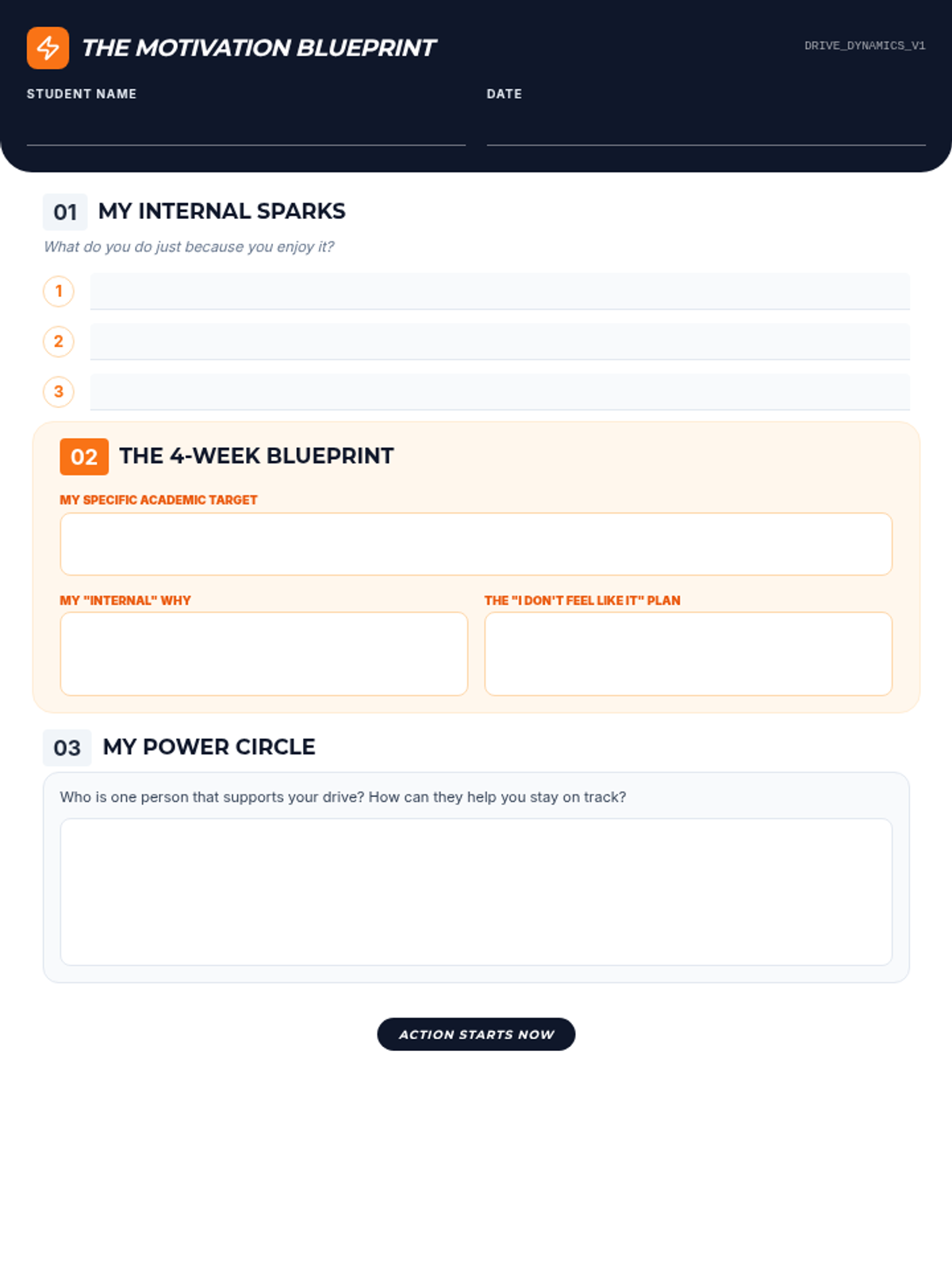
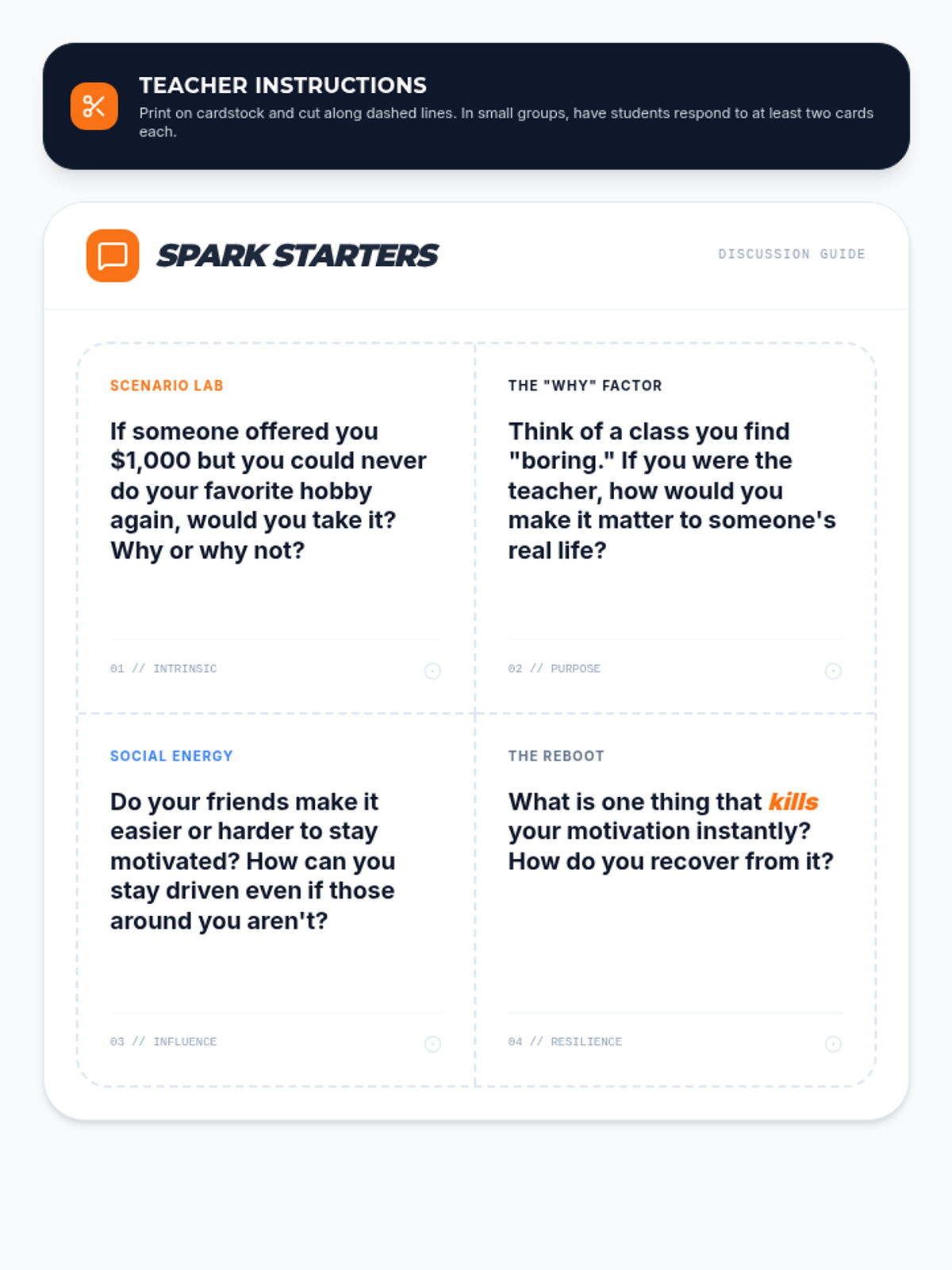
A comprehensive session focused on uncovering internal drivers, setting meaningful academic goals, and building social-emotional resilience through motivation strategies.
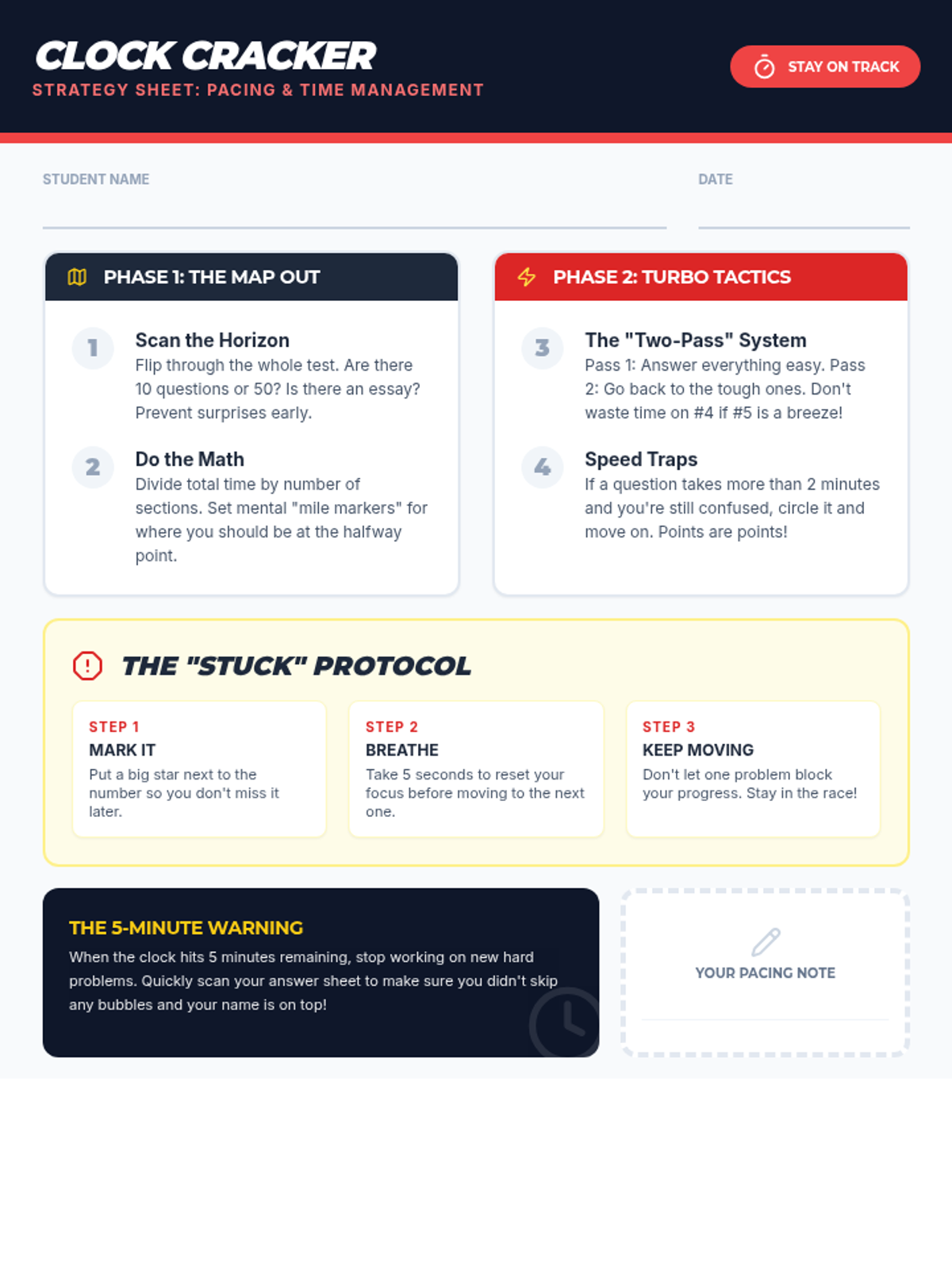
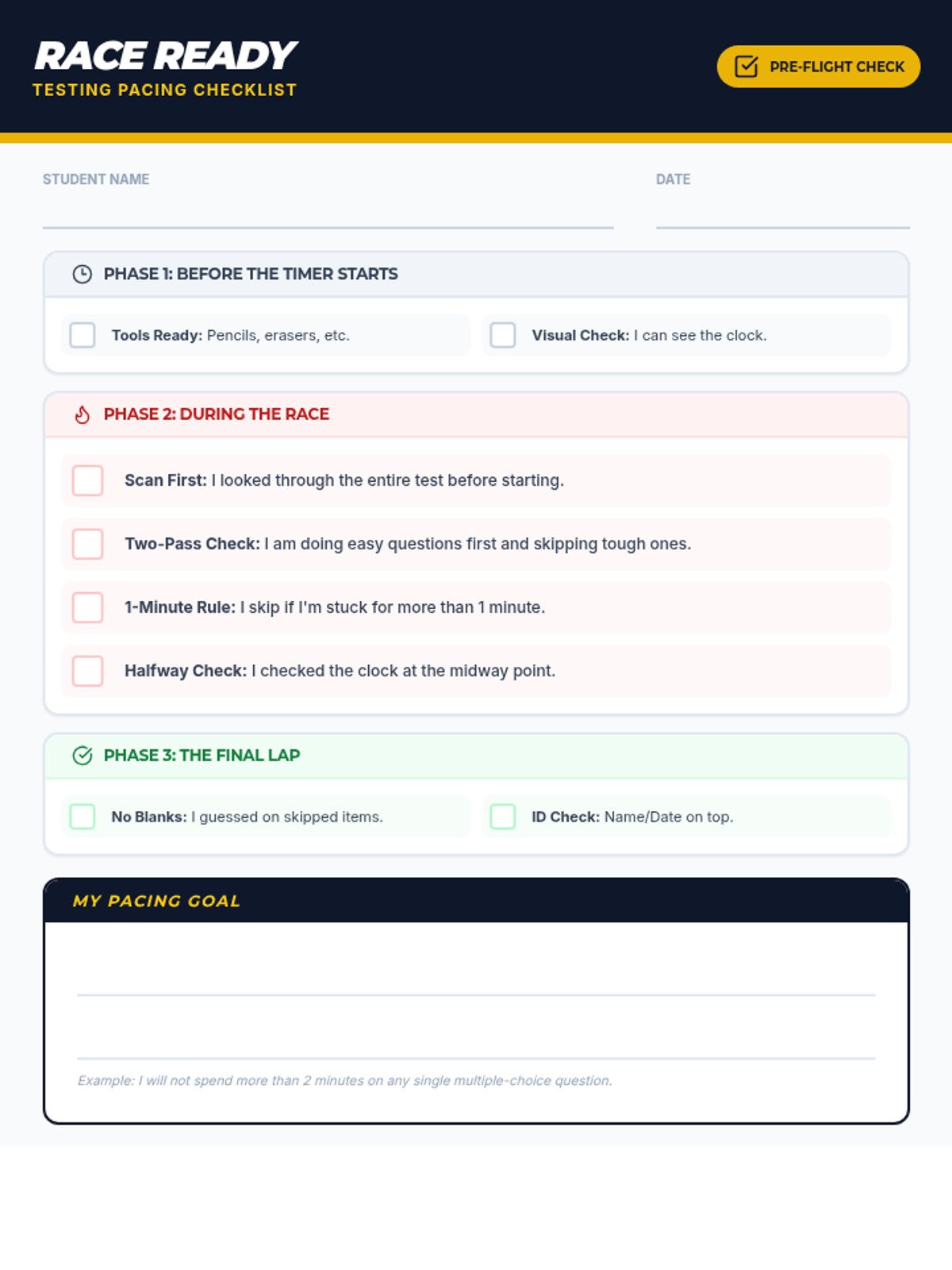
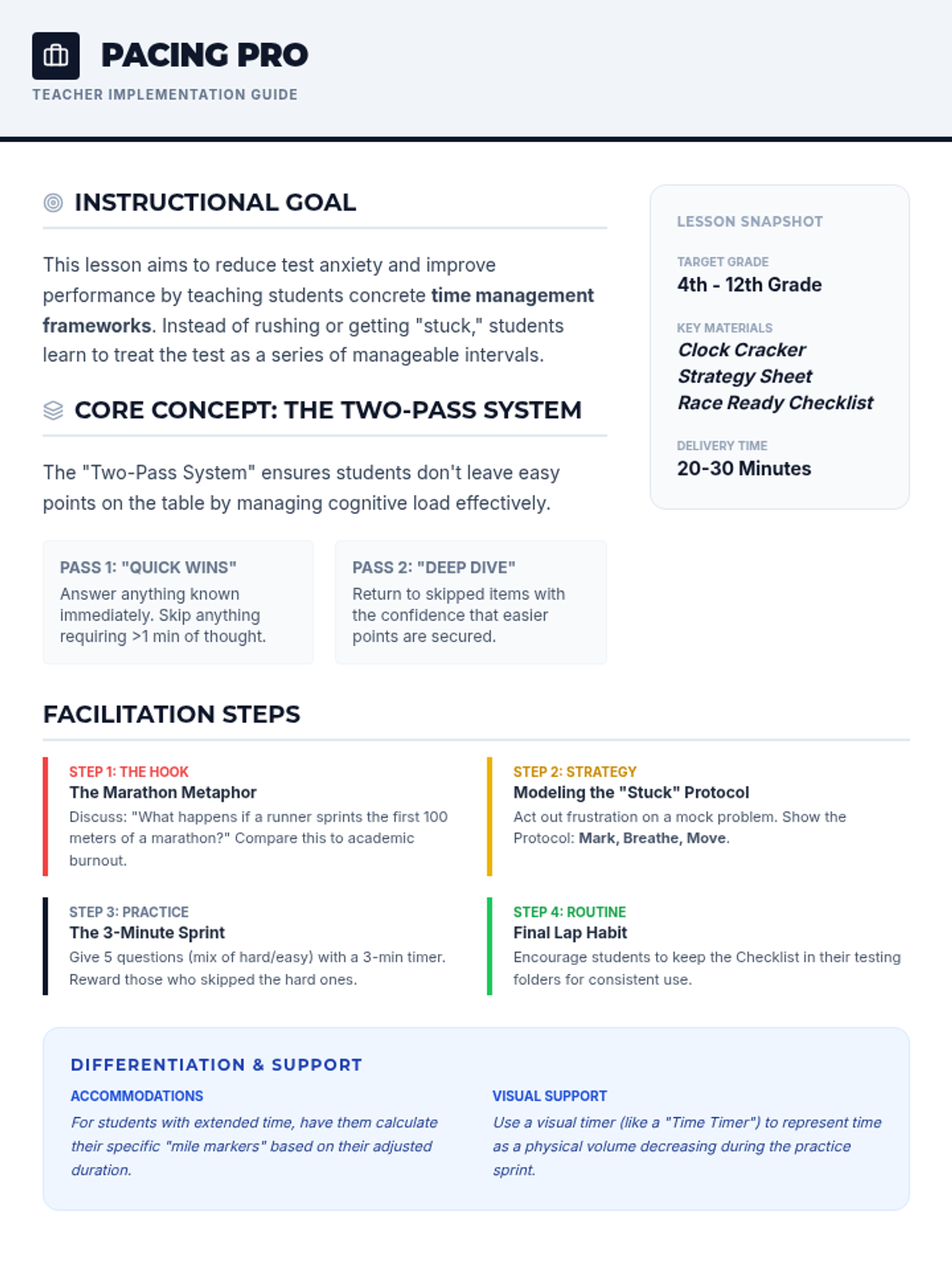
A high-energy set of resources focused on mastering test-taking pacing and time management strategies to help students finish exams with confidence.
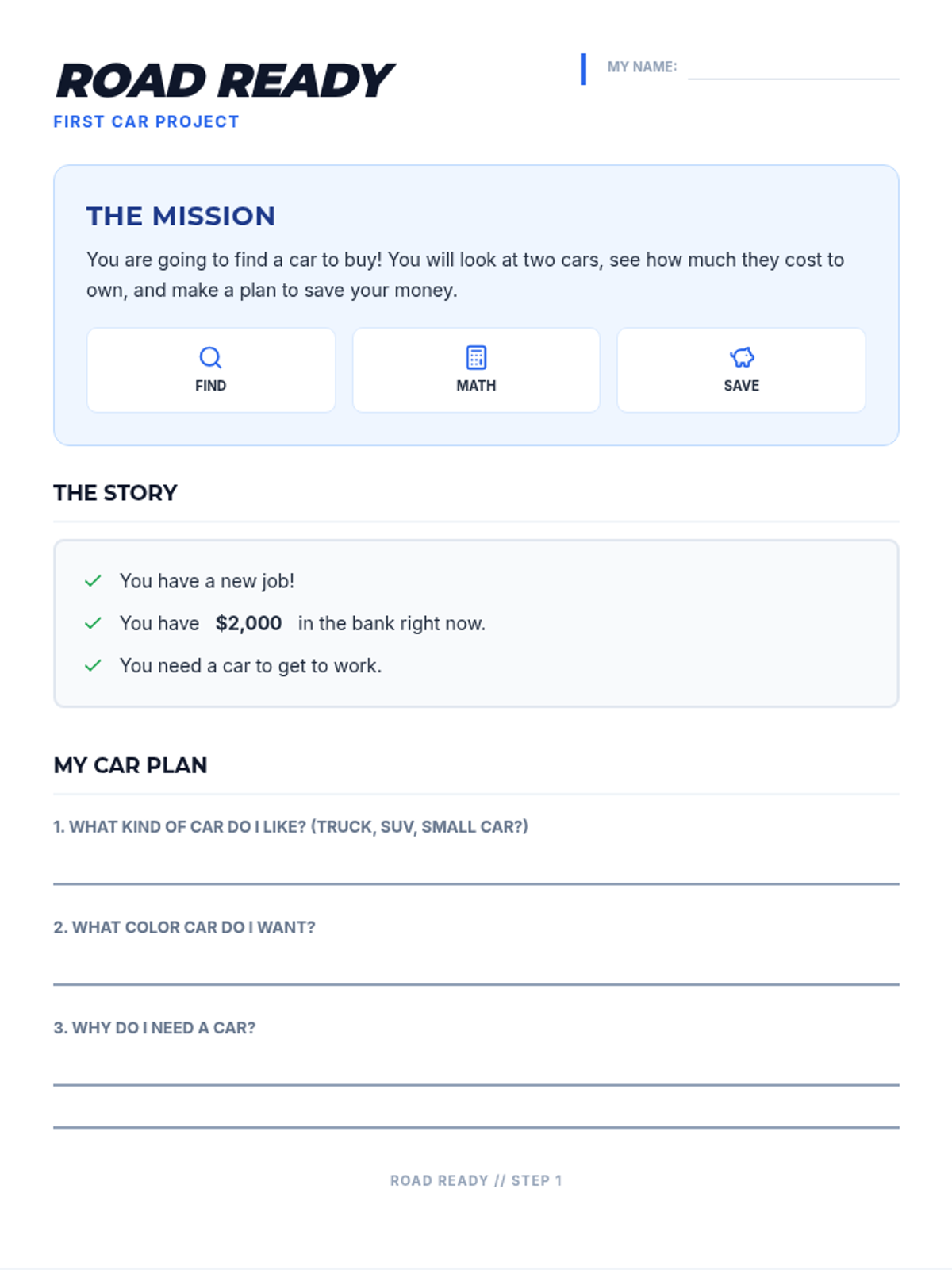
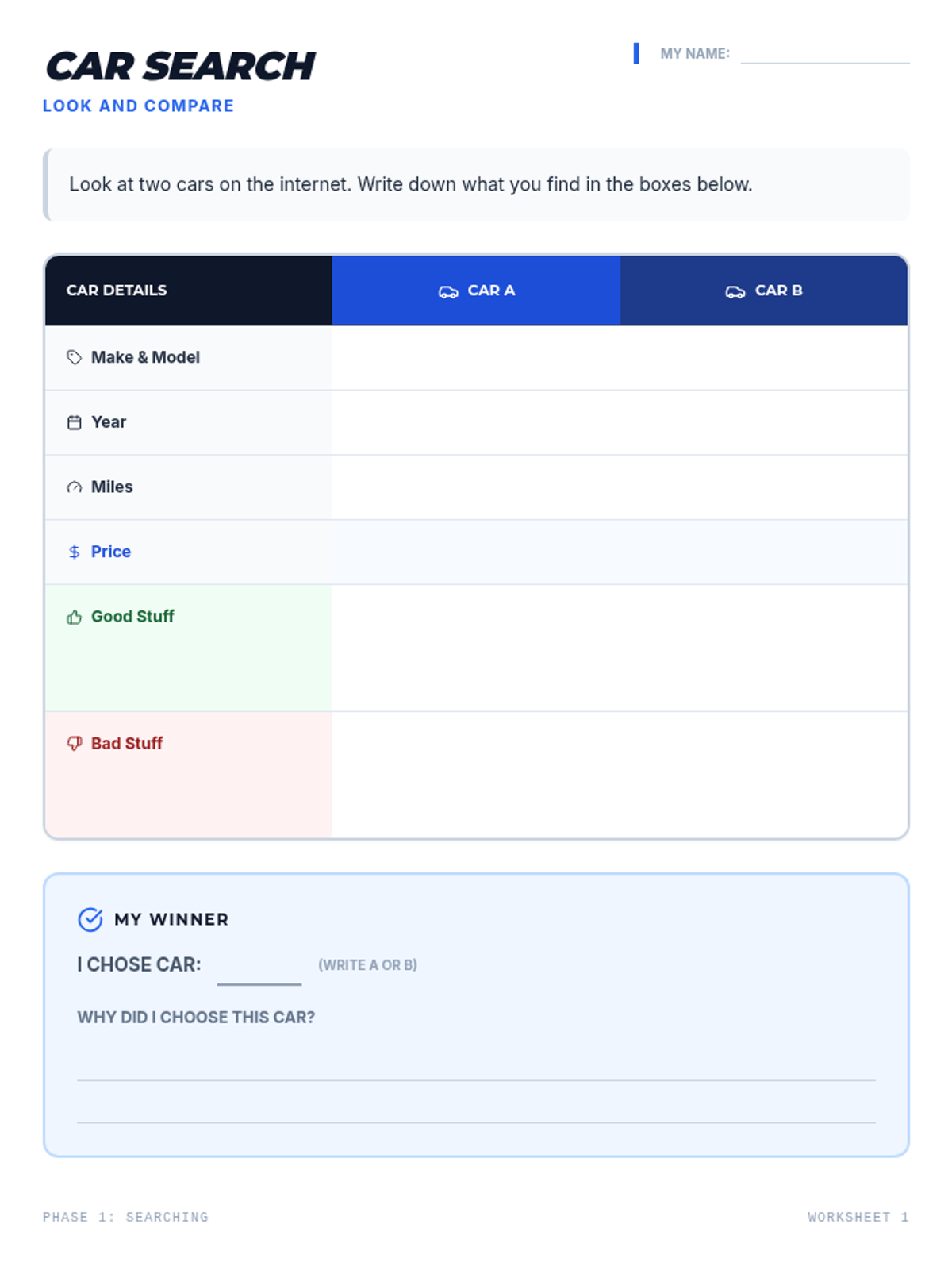
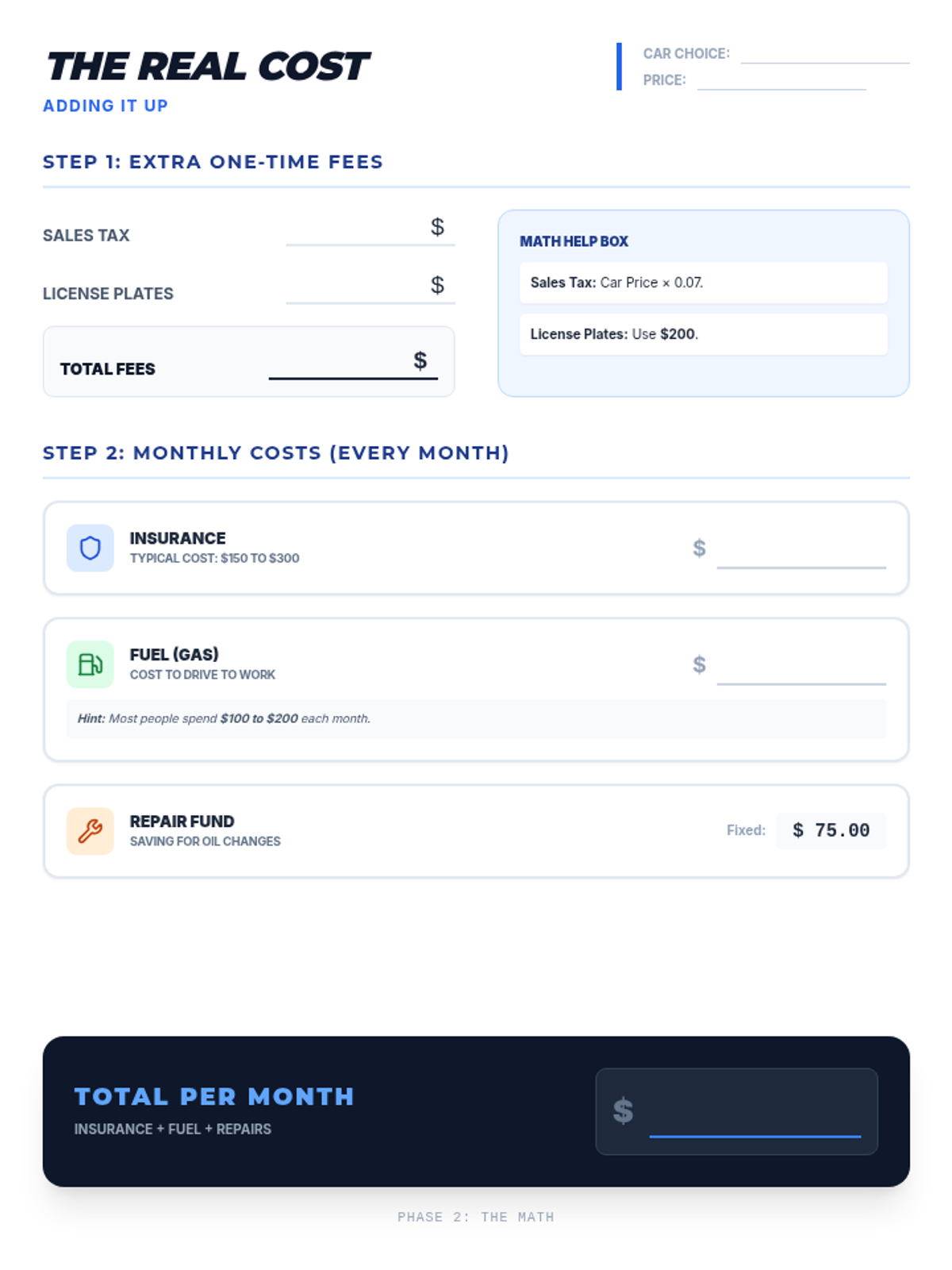
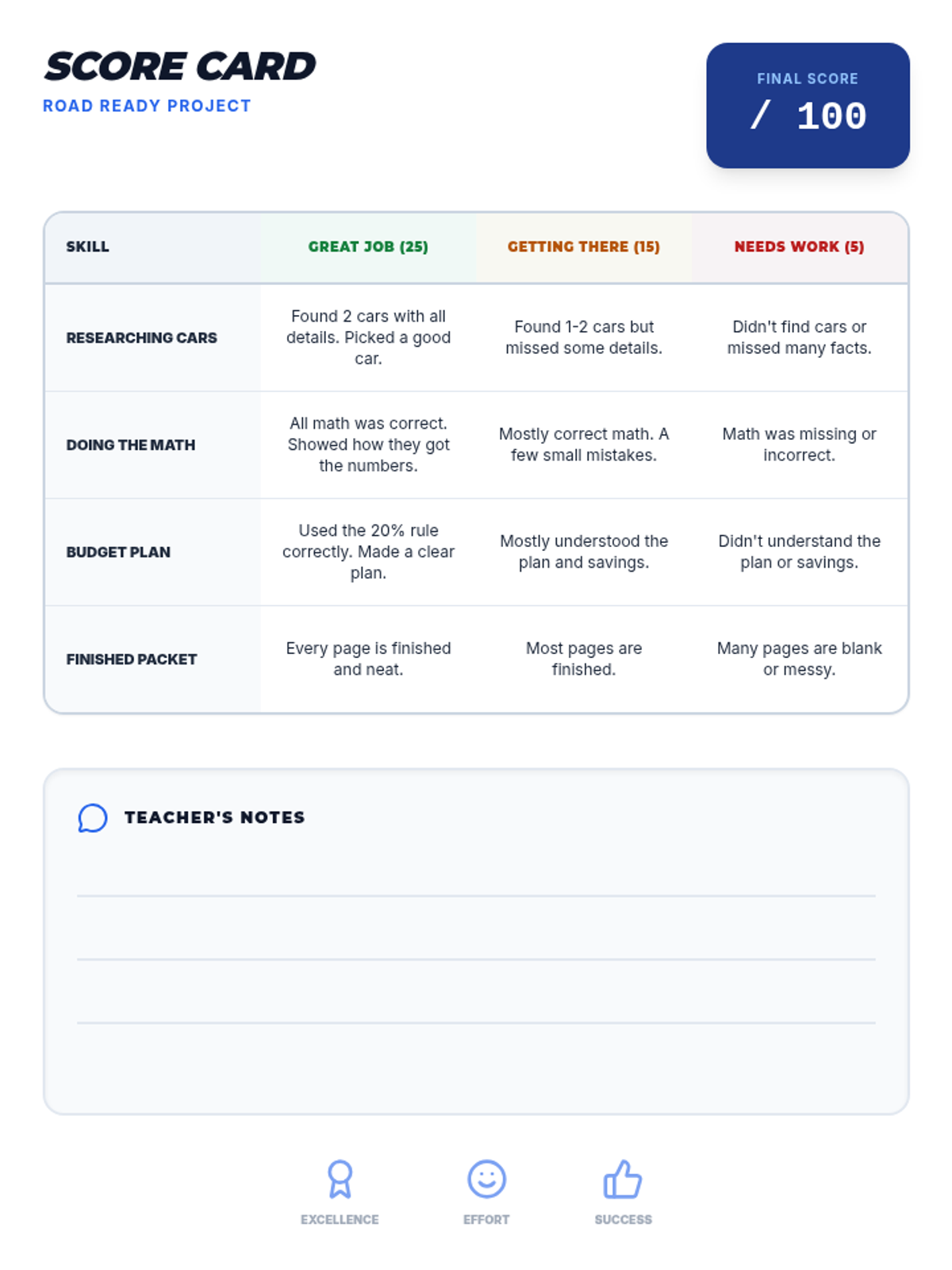
A comprehensive multi-day project where students research, compare, and budget for their first vehicle, focusing on total cost of ownership and financial planning.
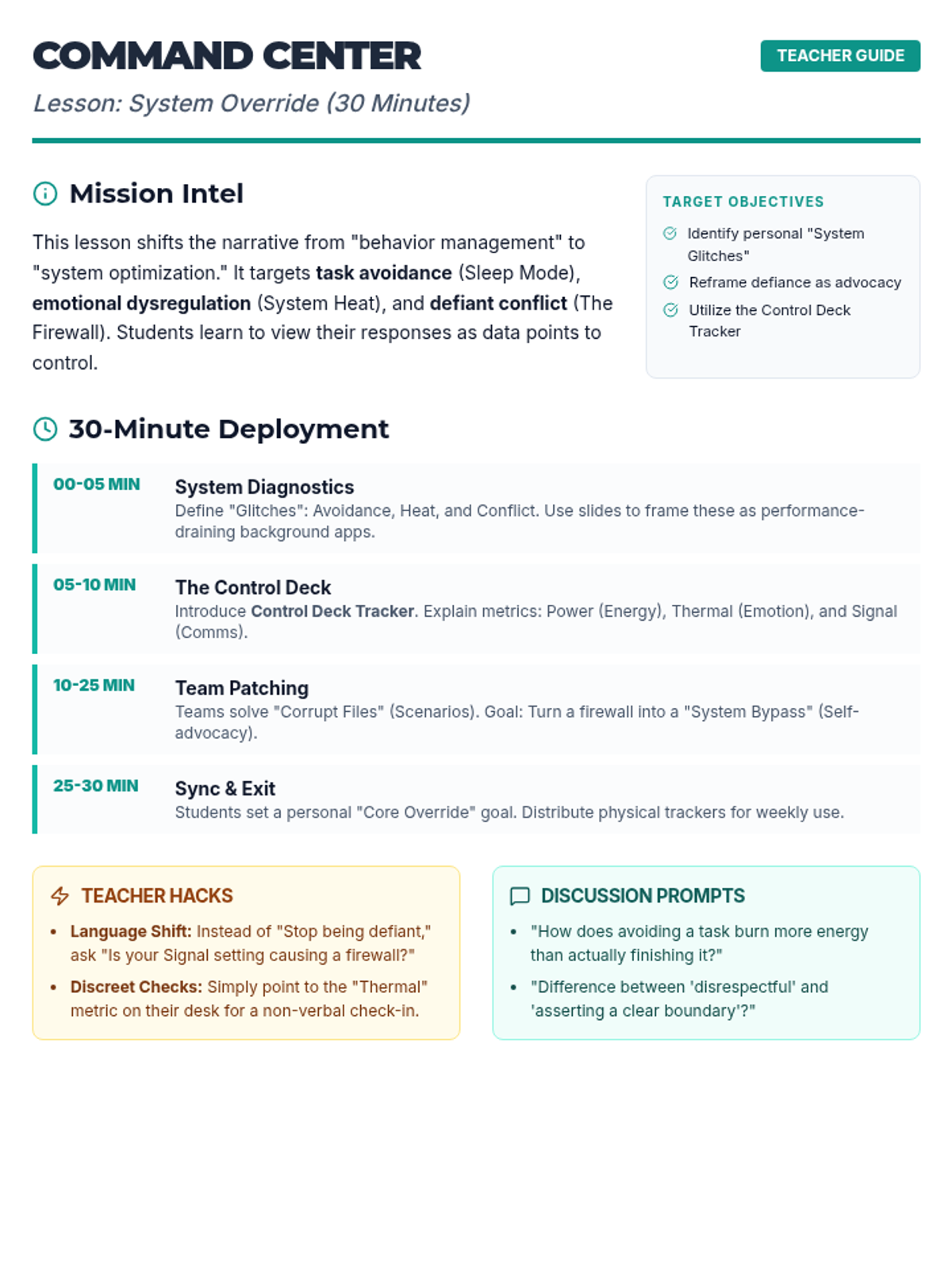
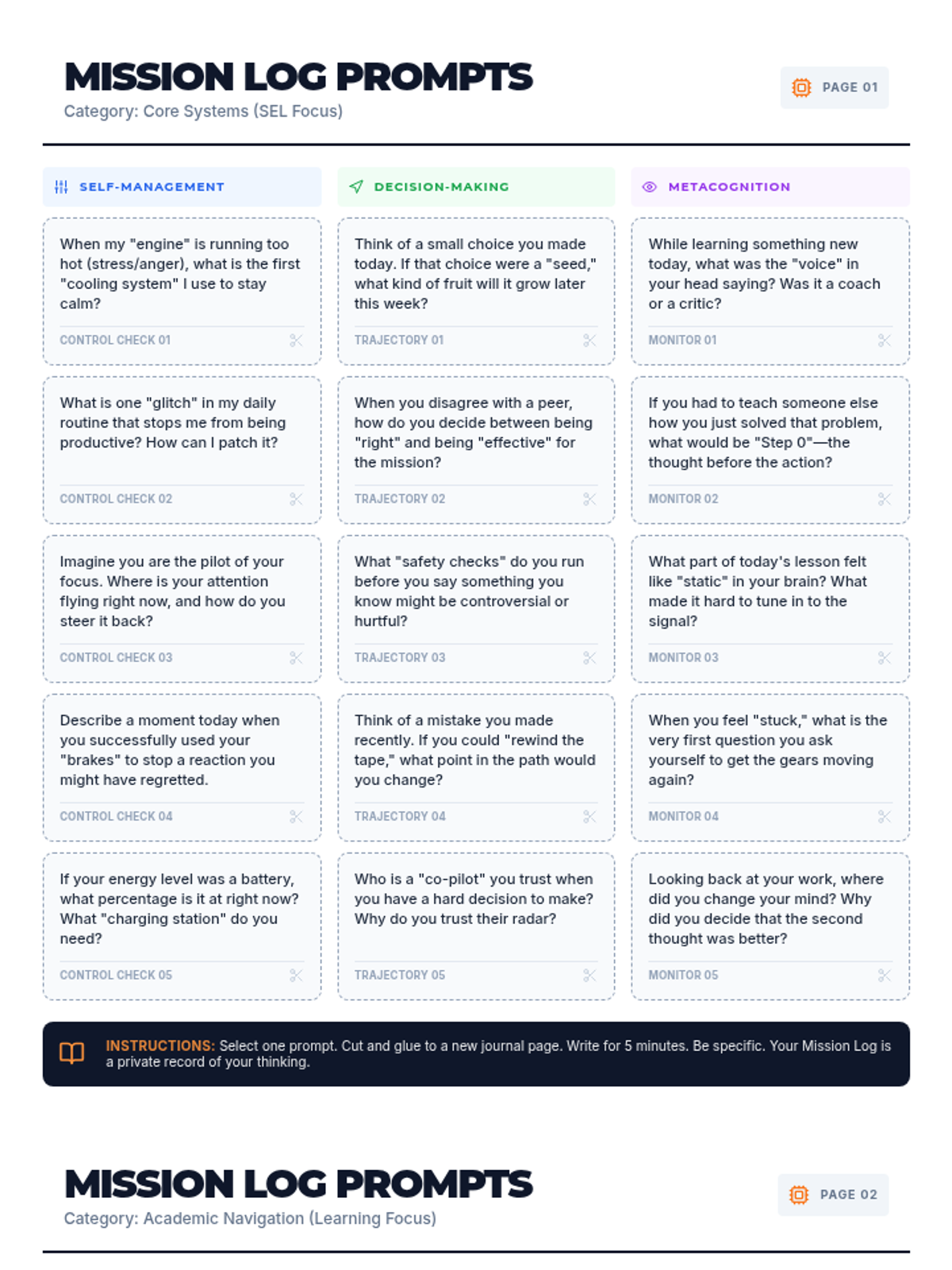
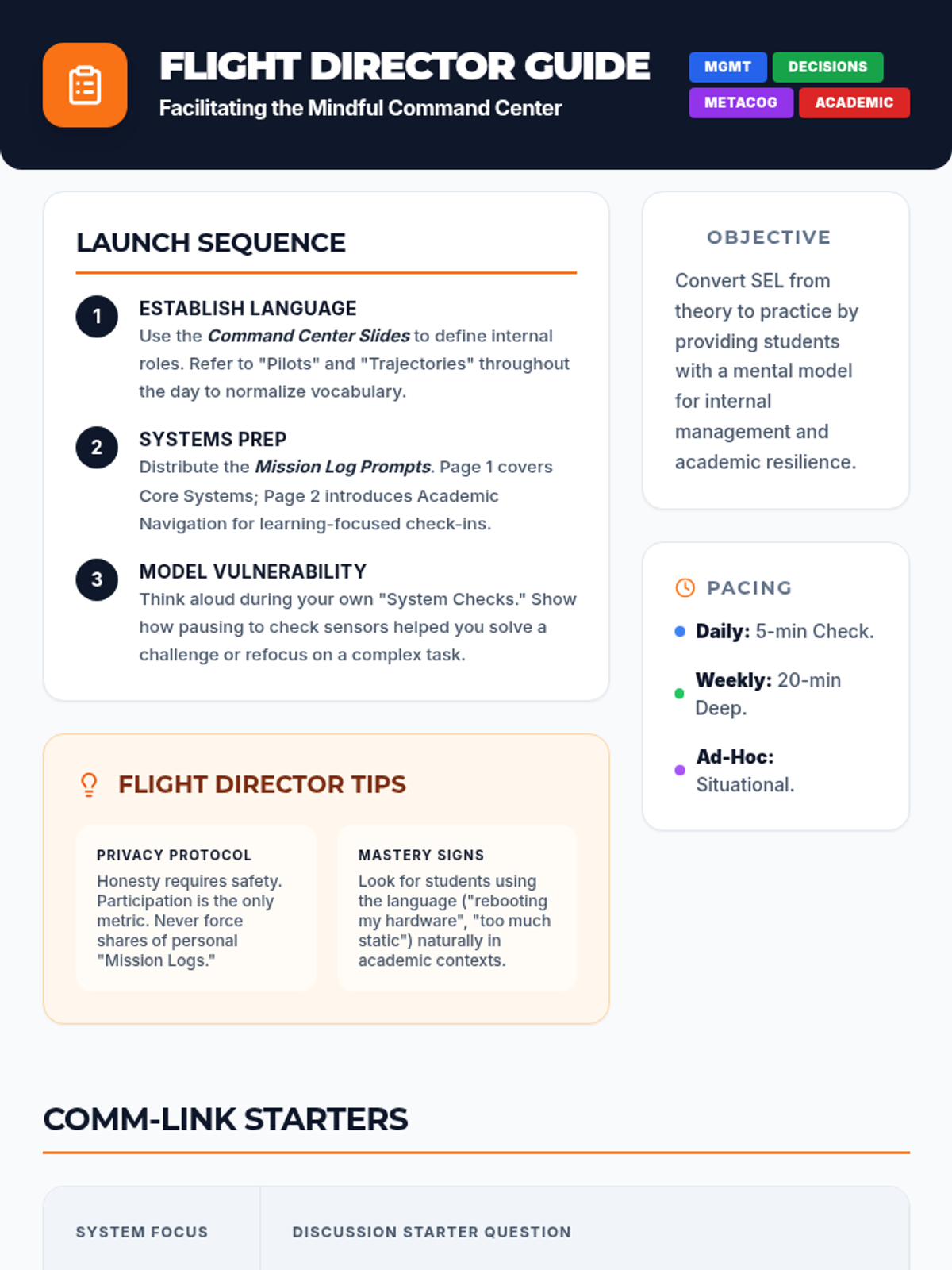
Students explore self-management, decision-making, and metacognition through a 'Command Center' metaphor. This lesson provides visual instruction and a set of reflection prompts for students to integrate into their personal journals.
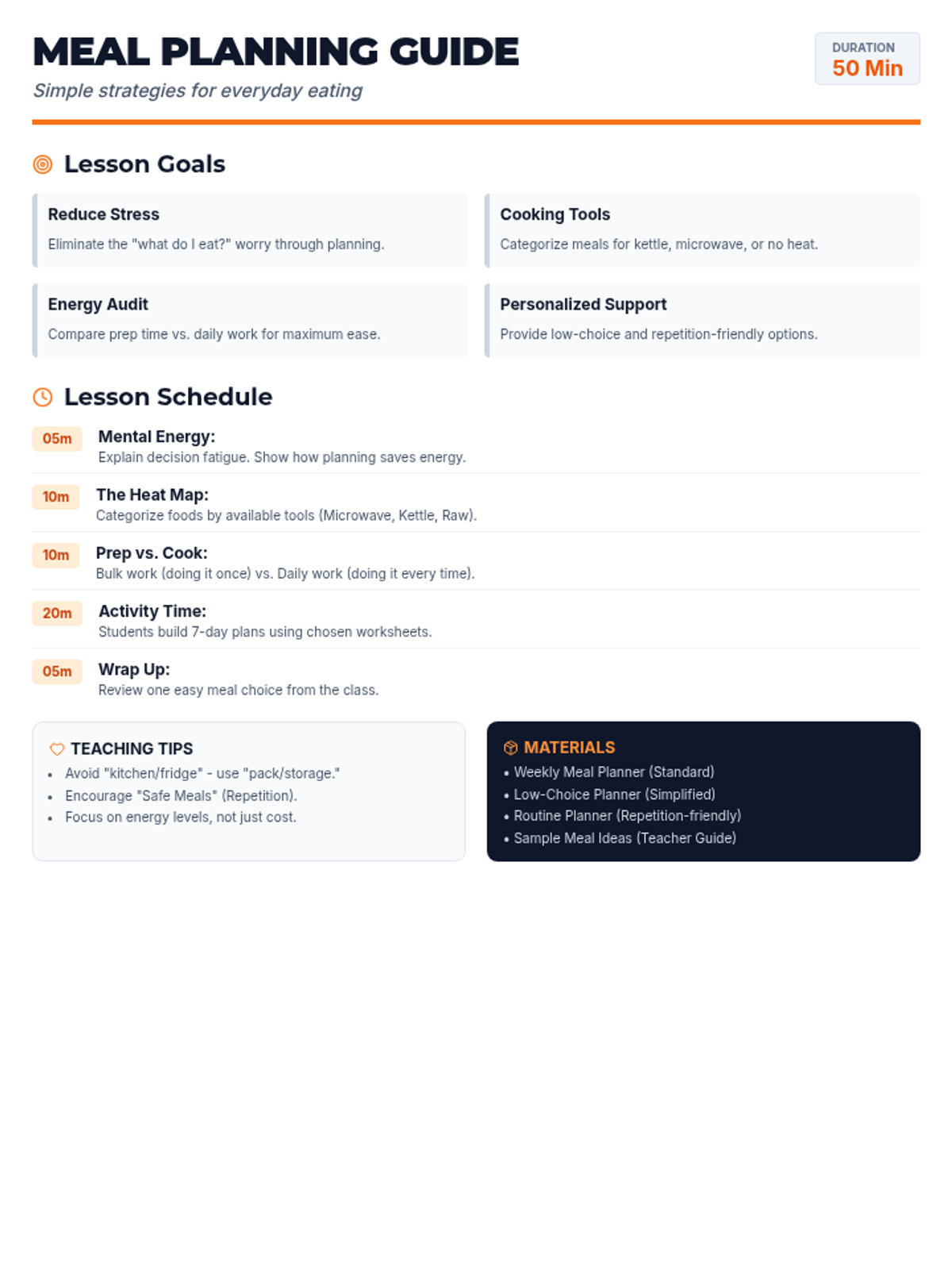
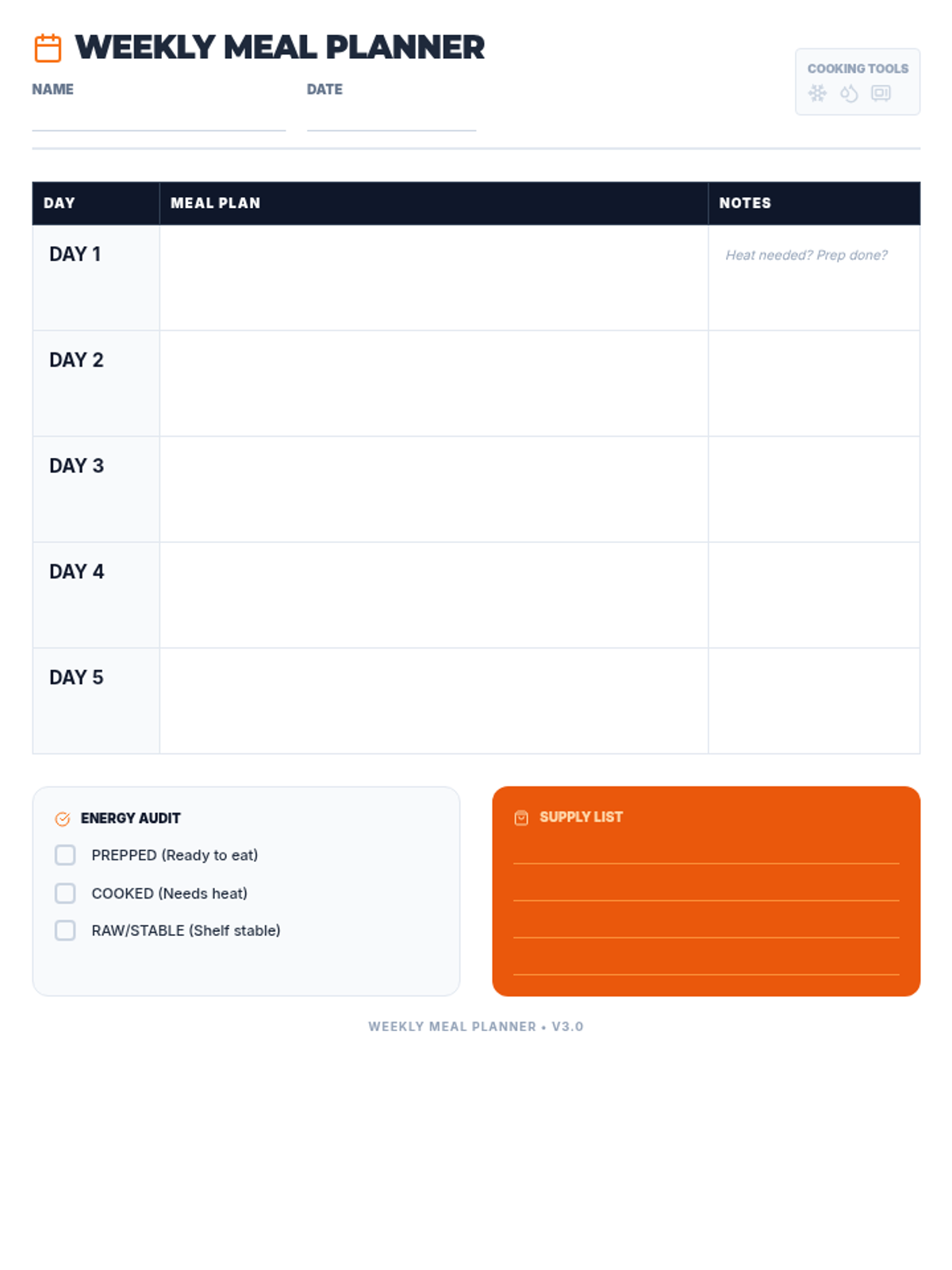
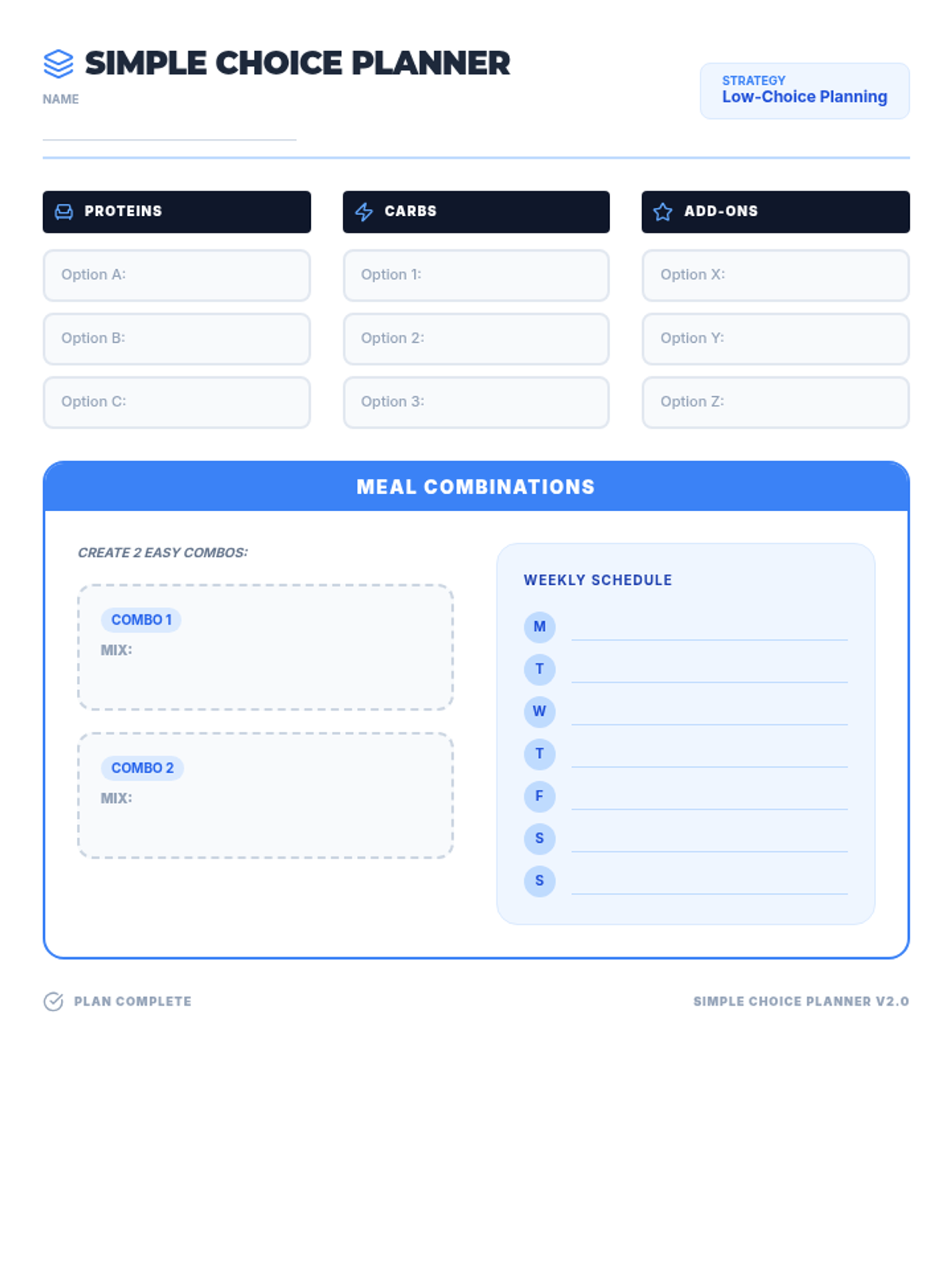
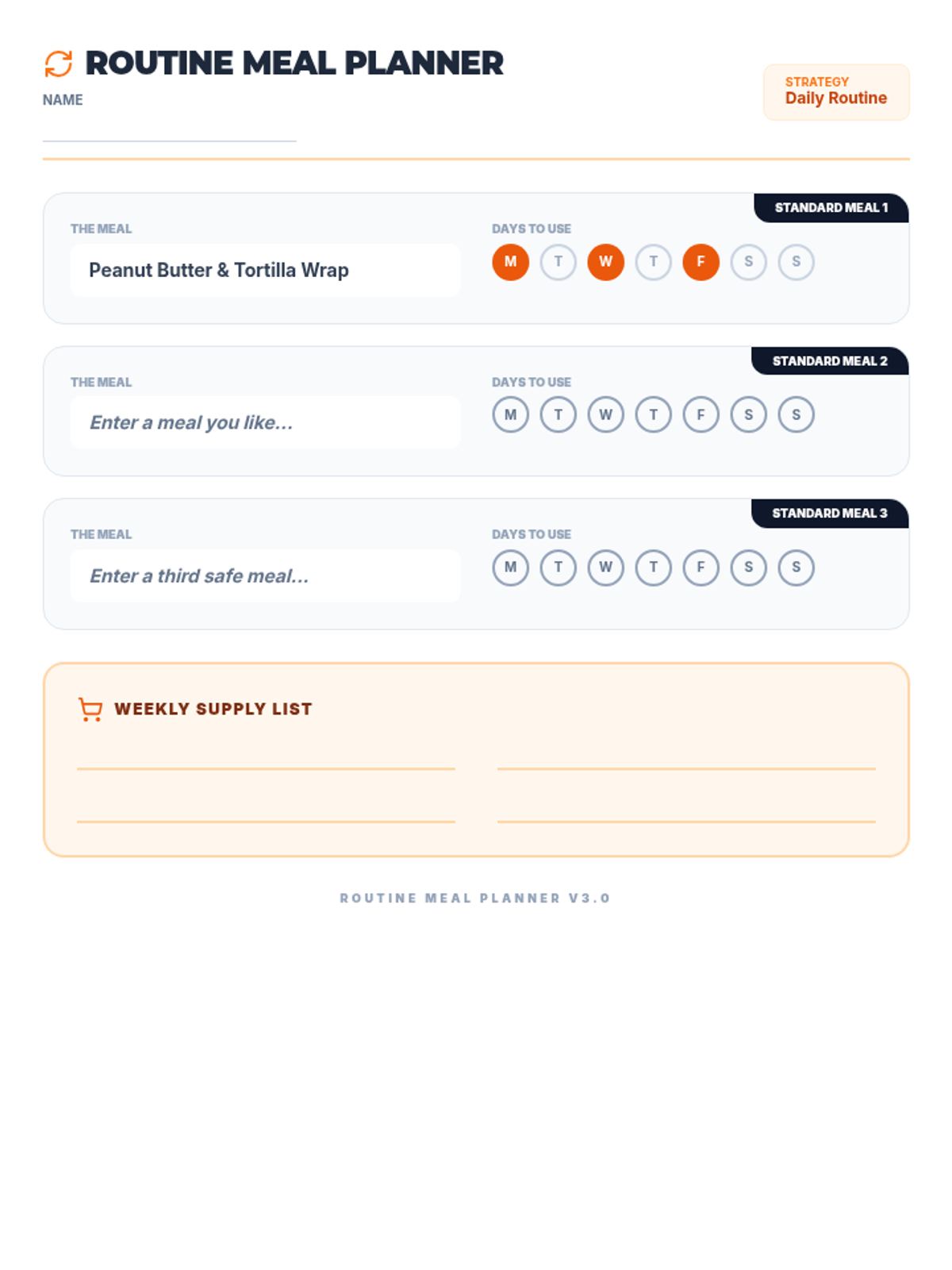
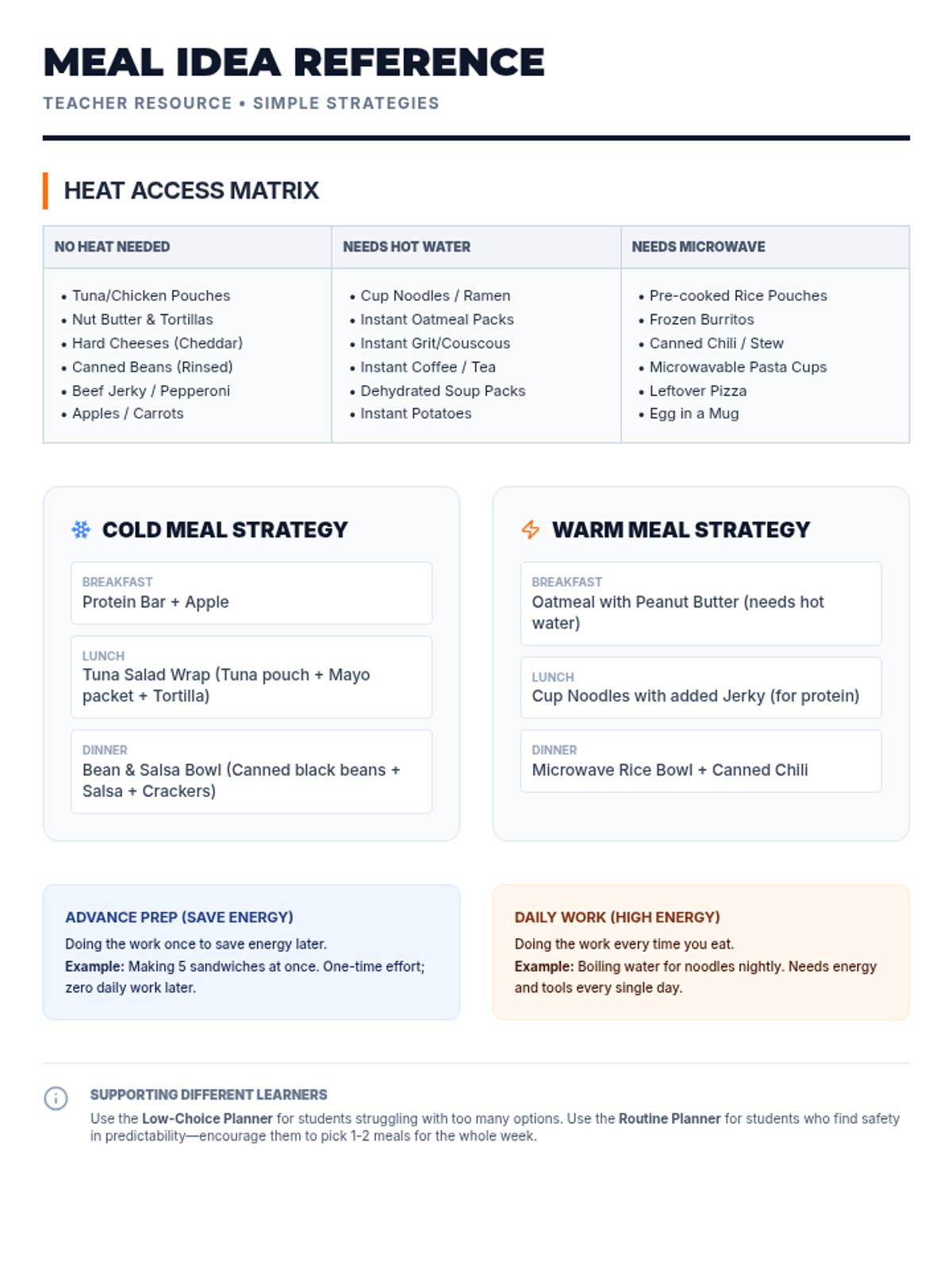
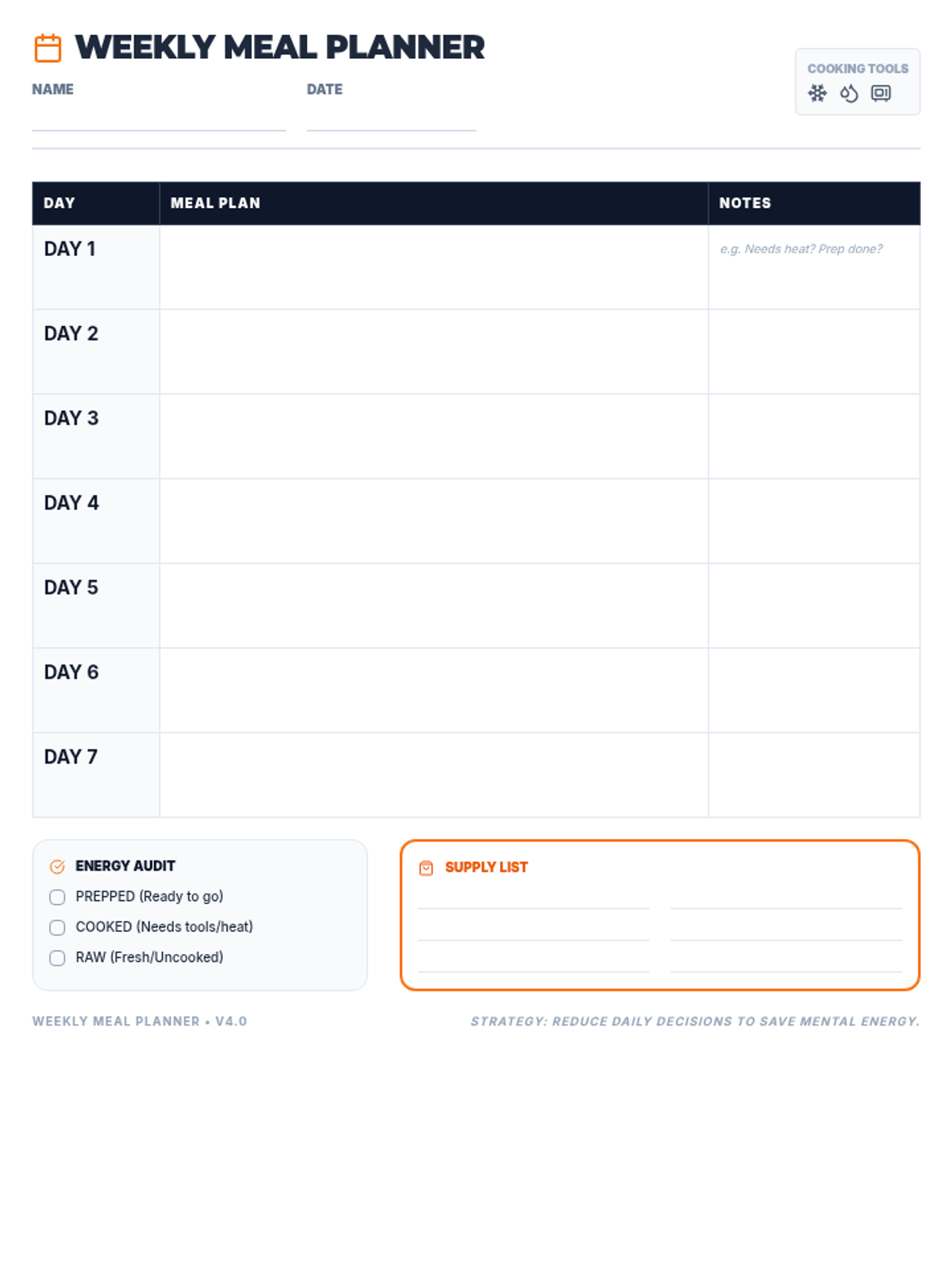
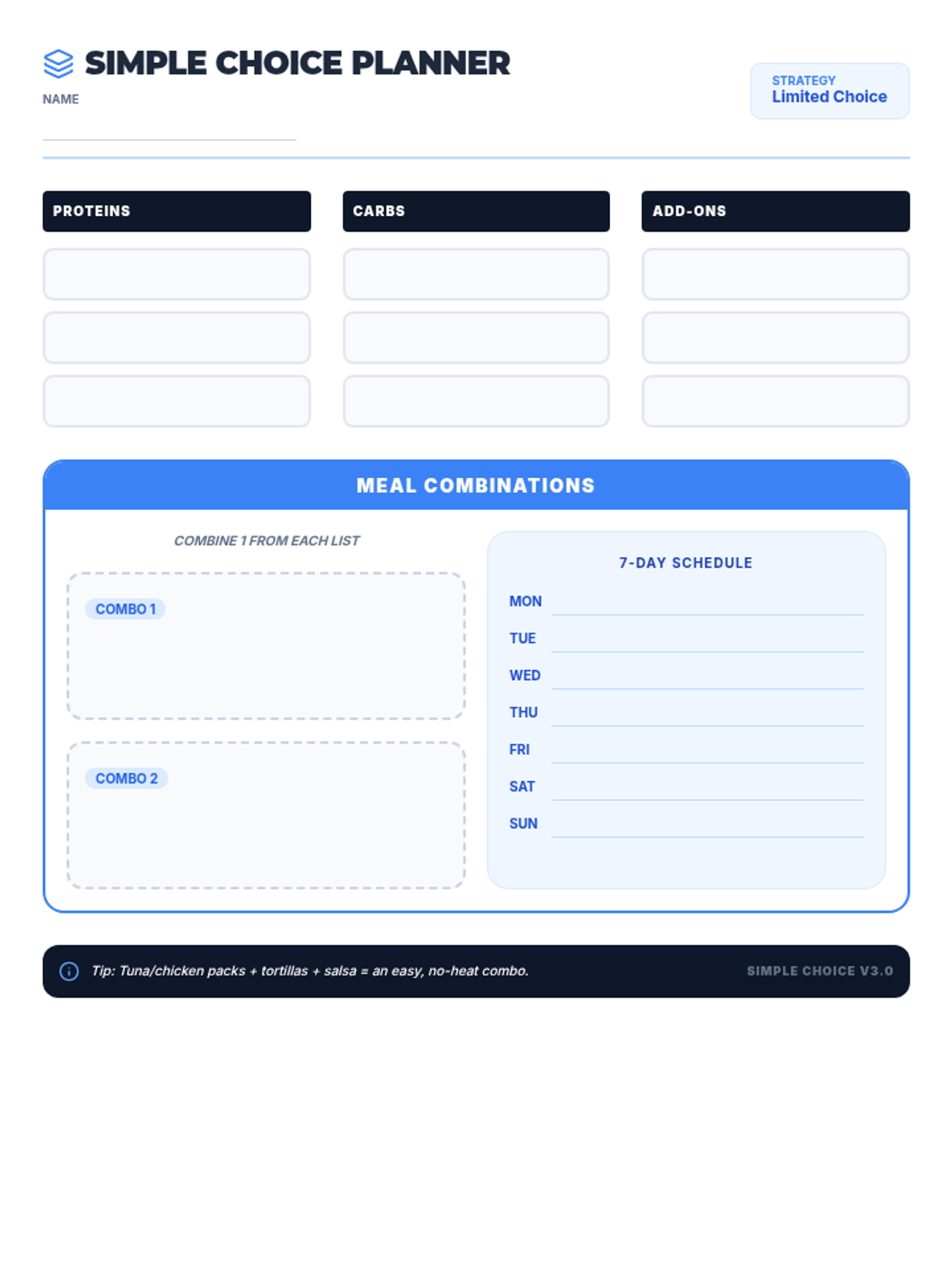
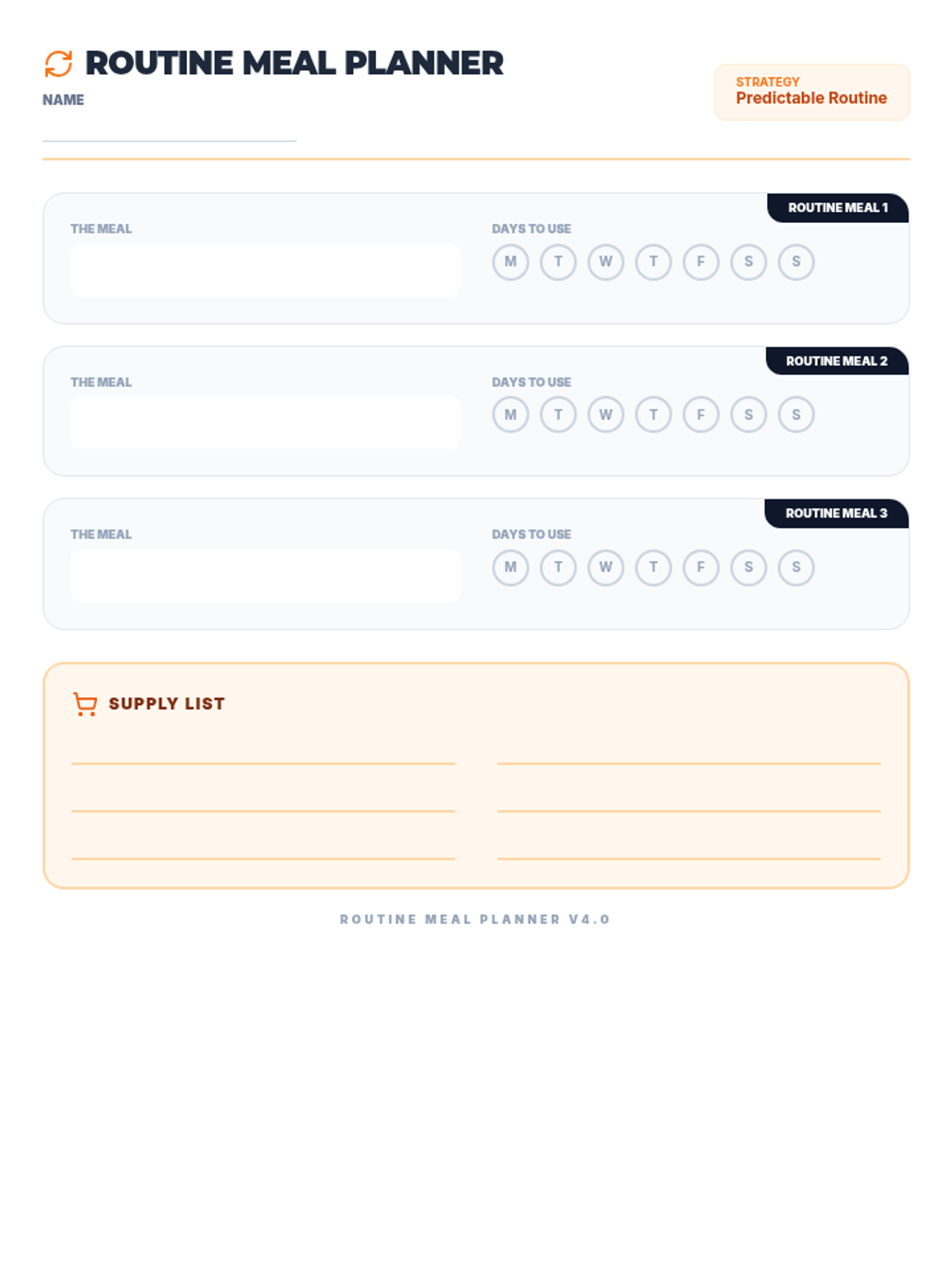
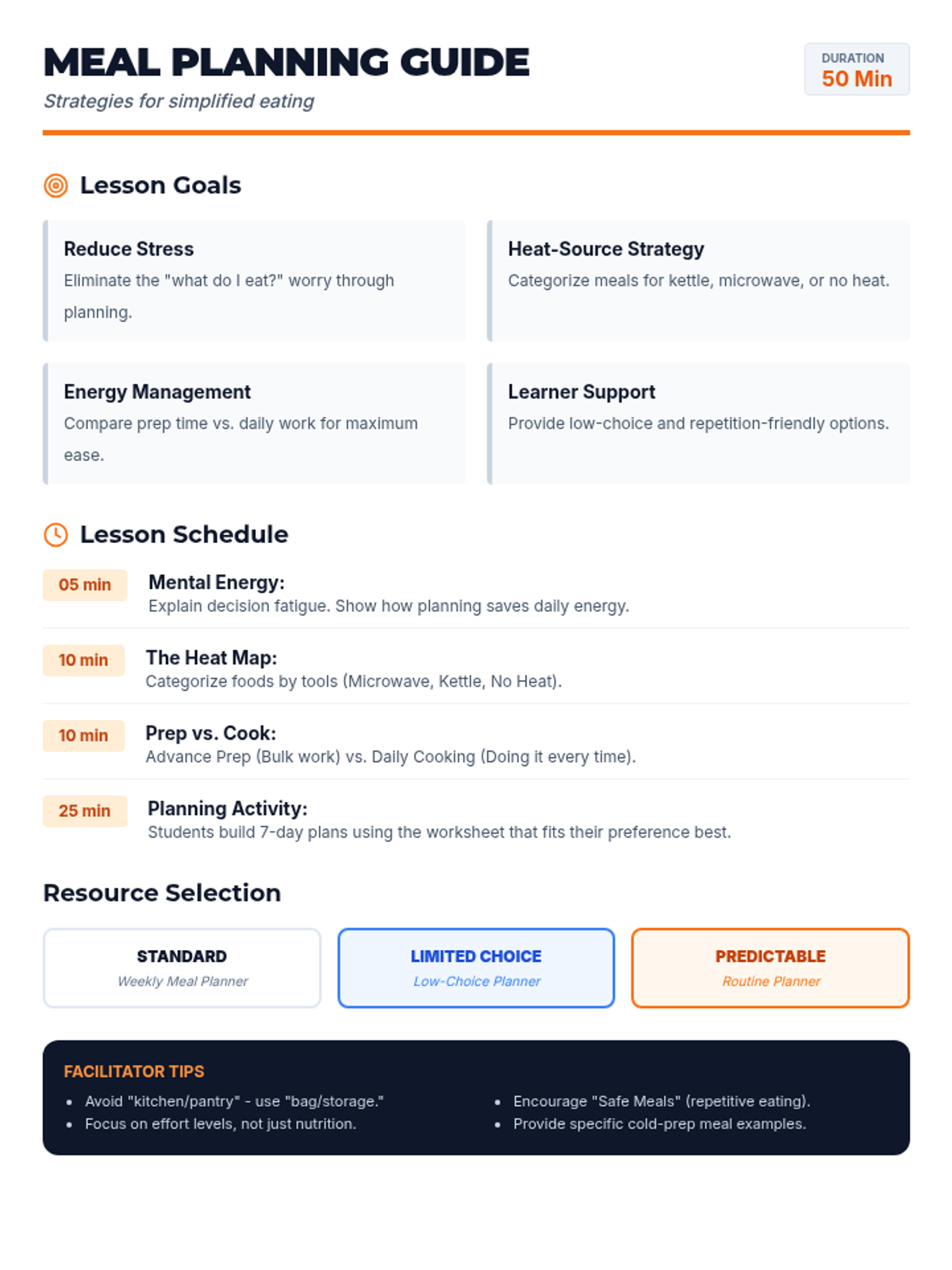
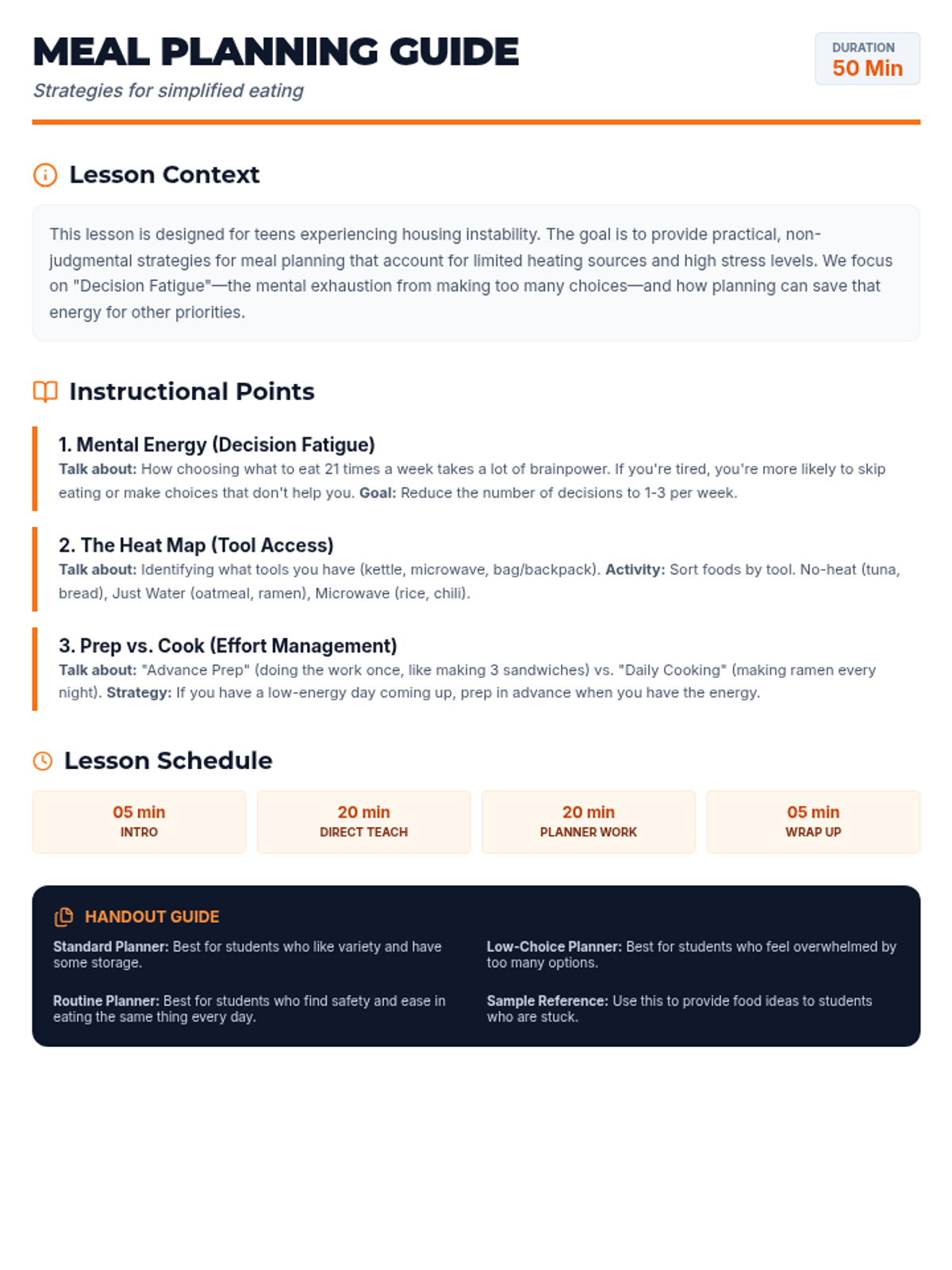
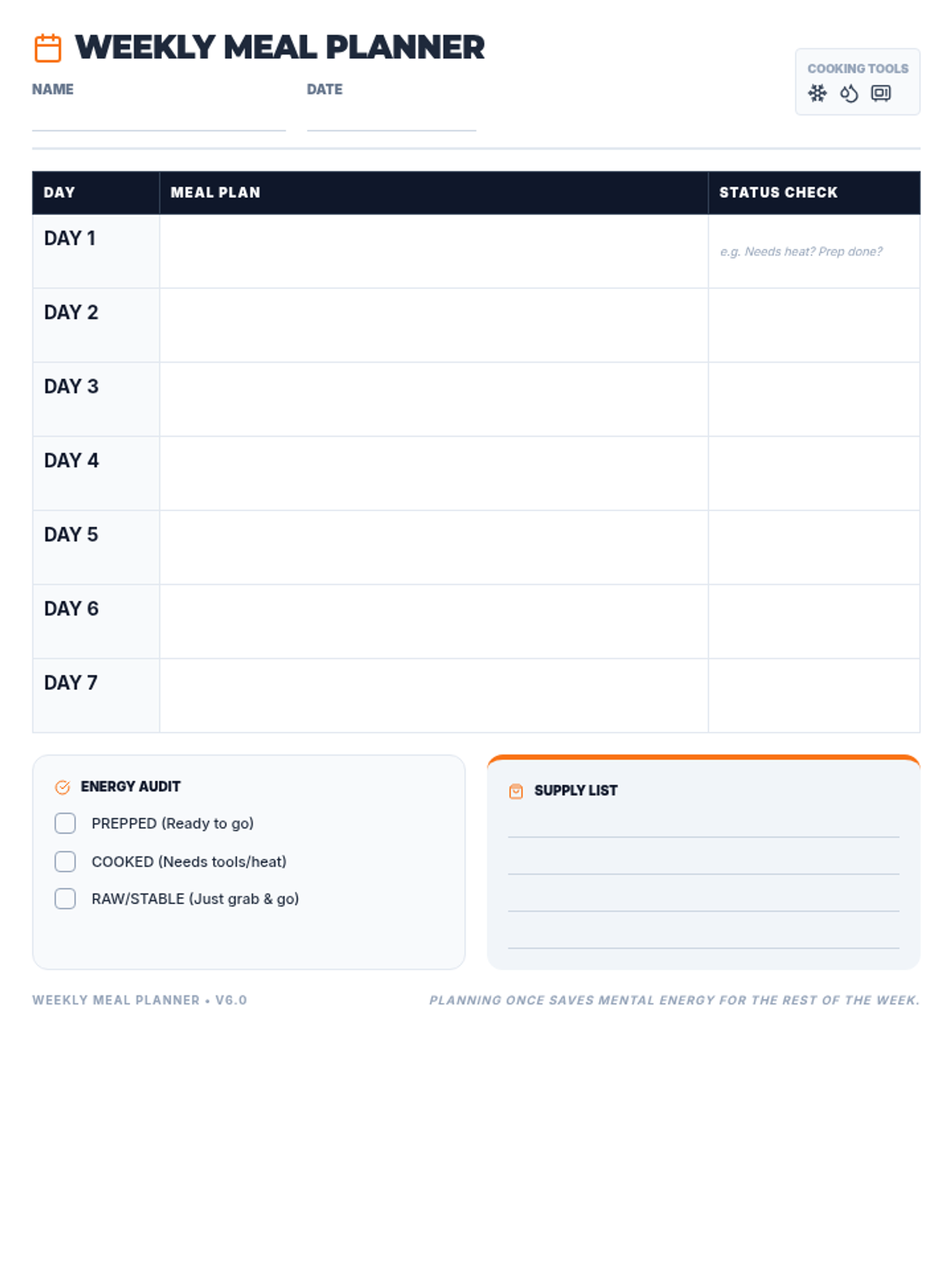
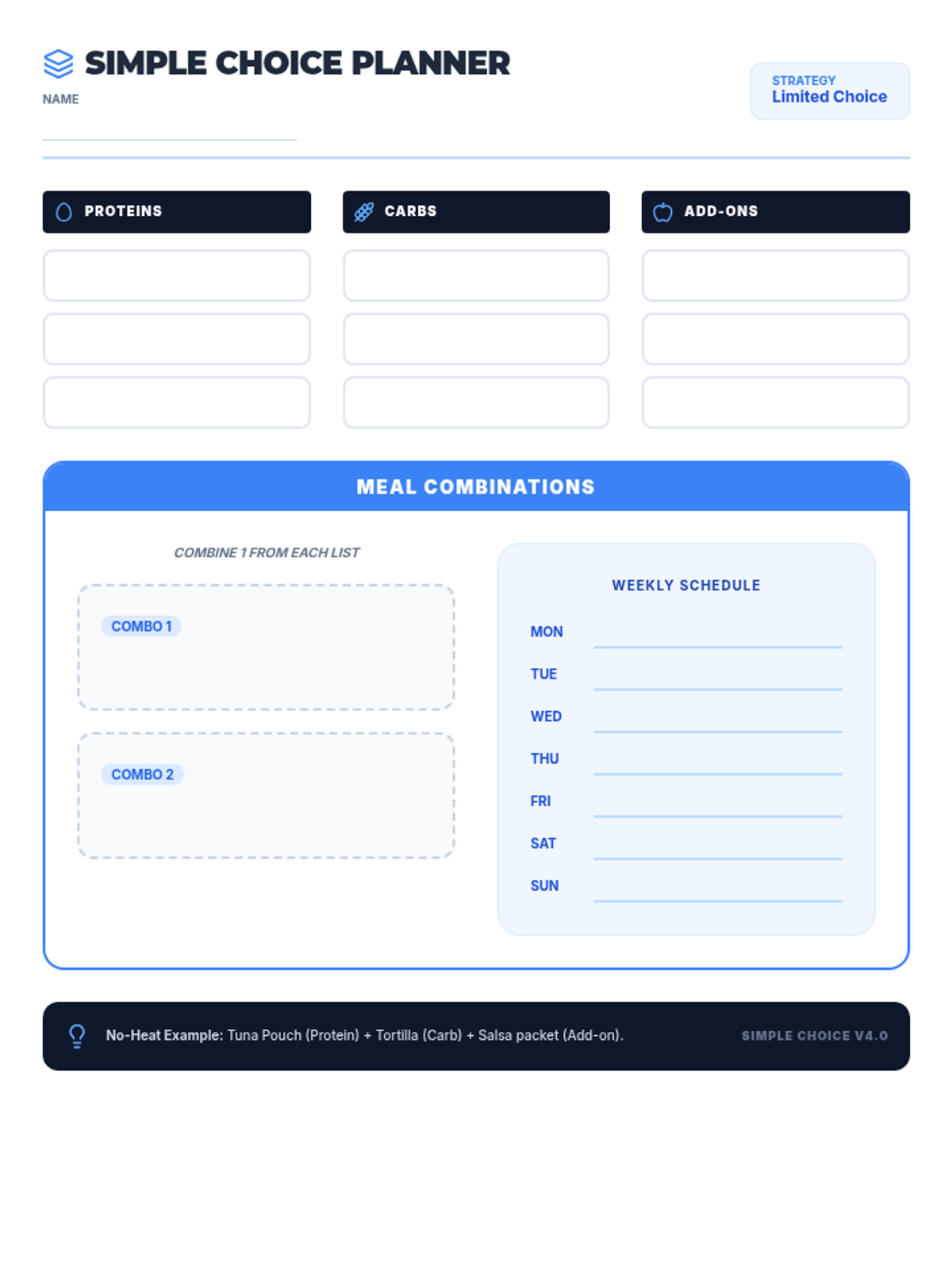
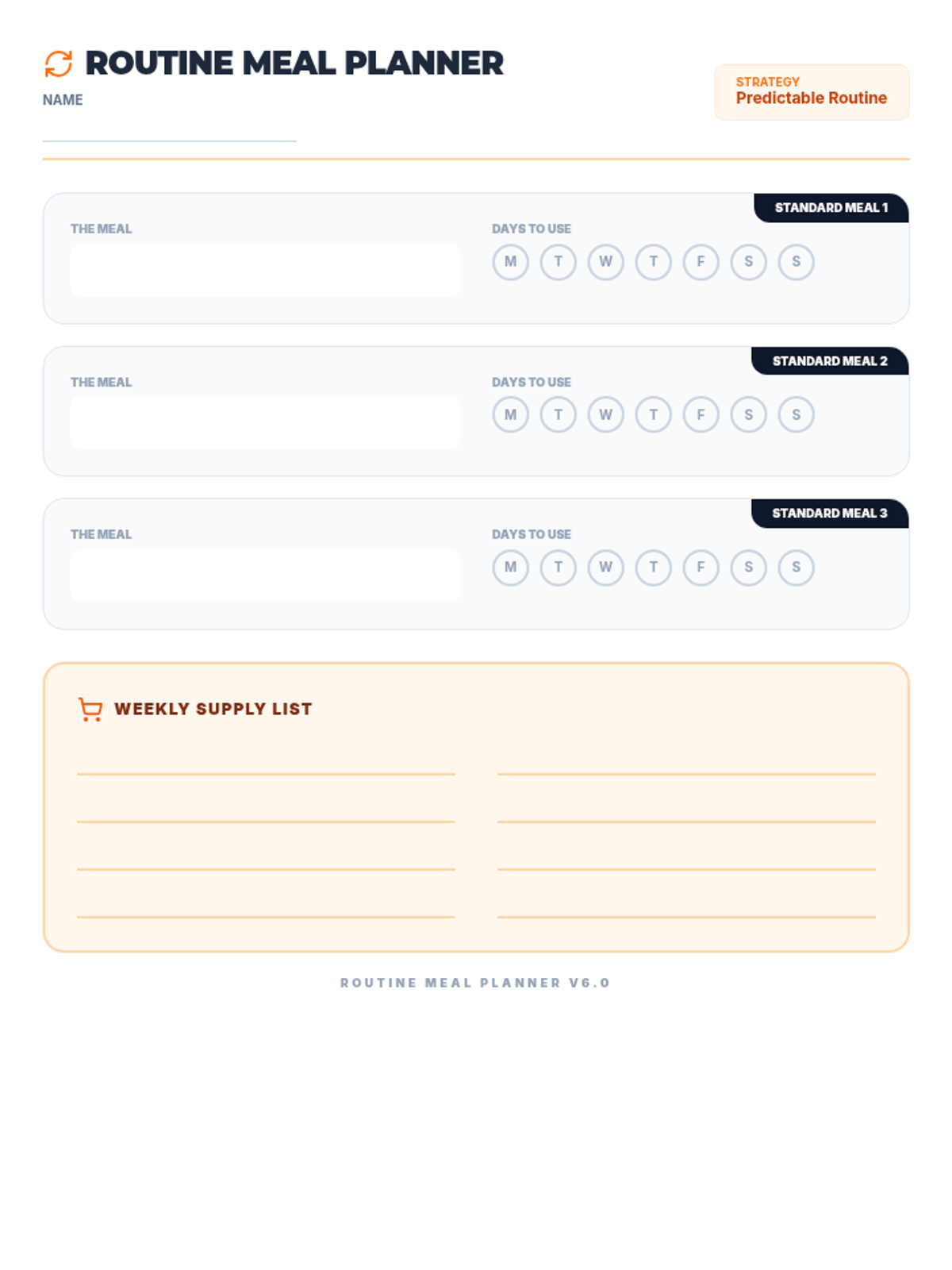
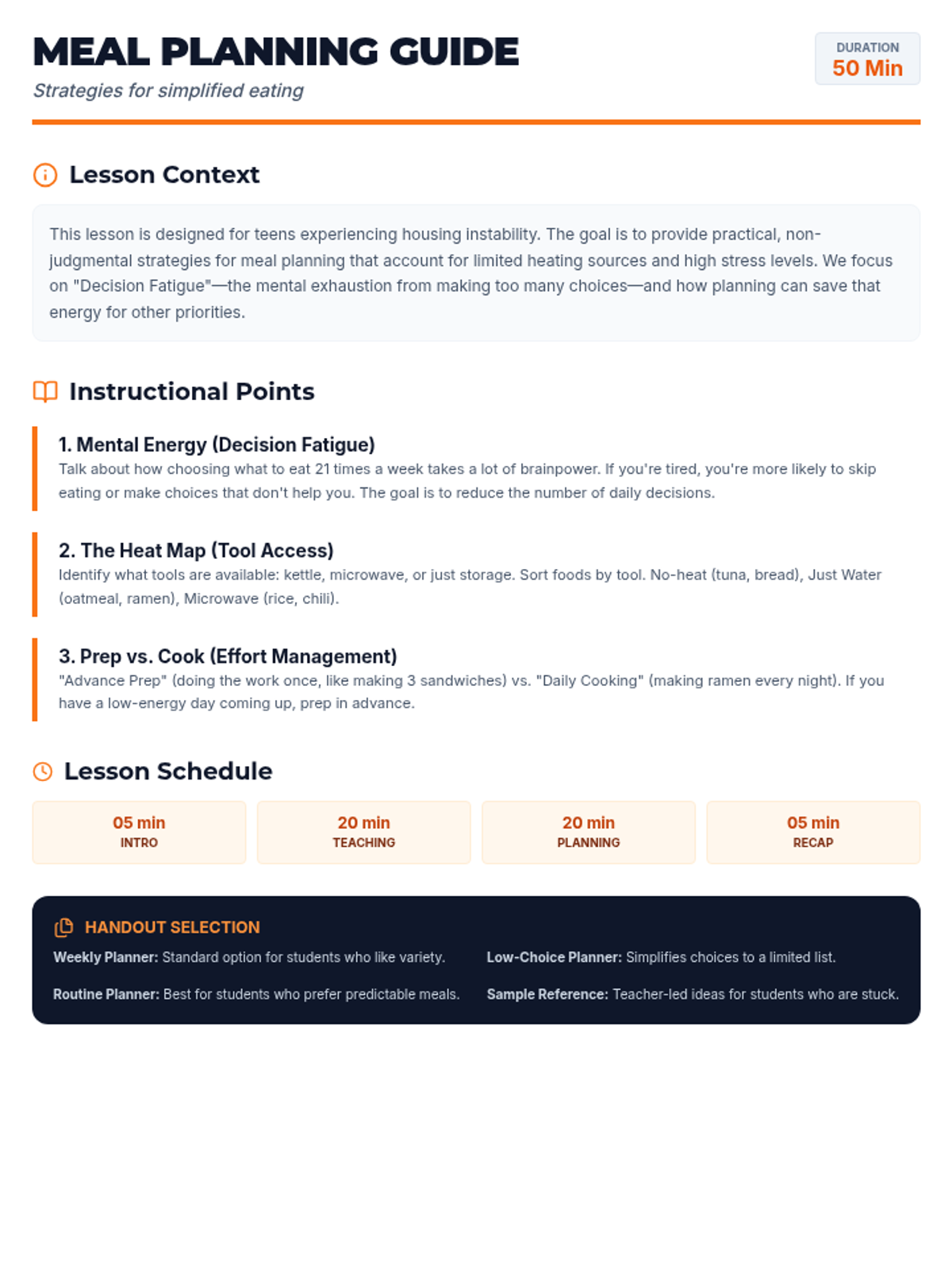
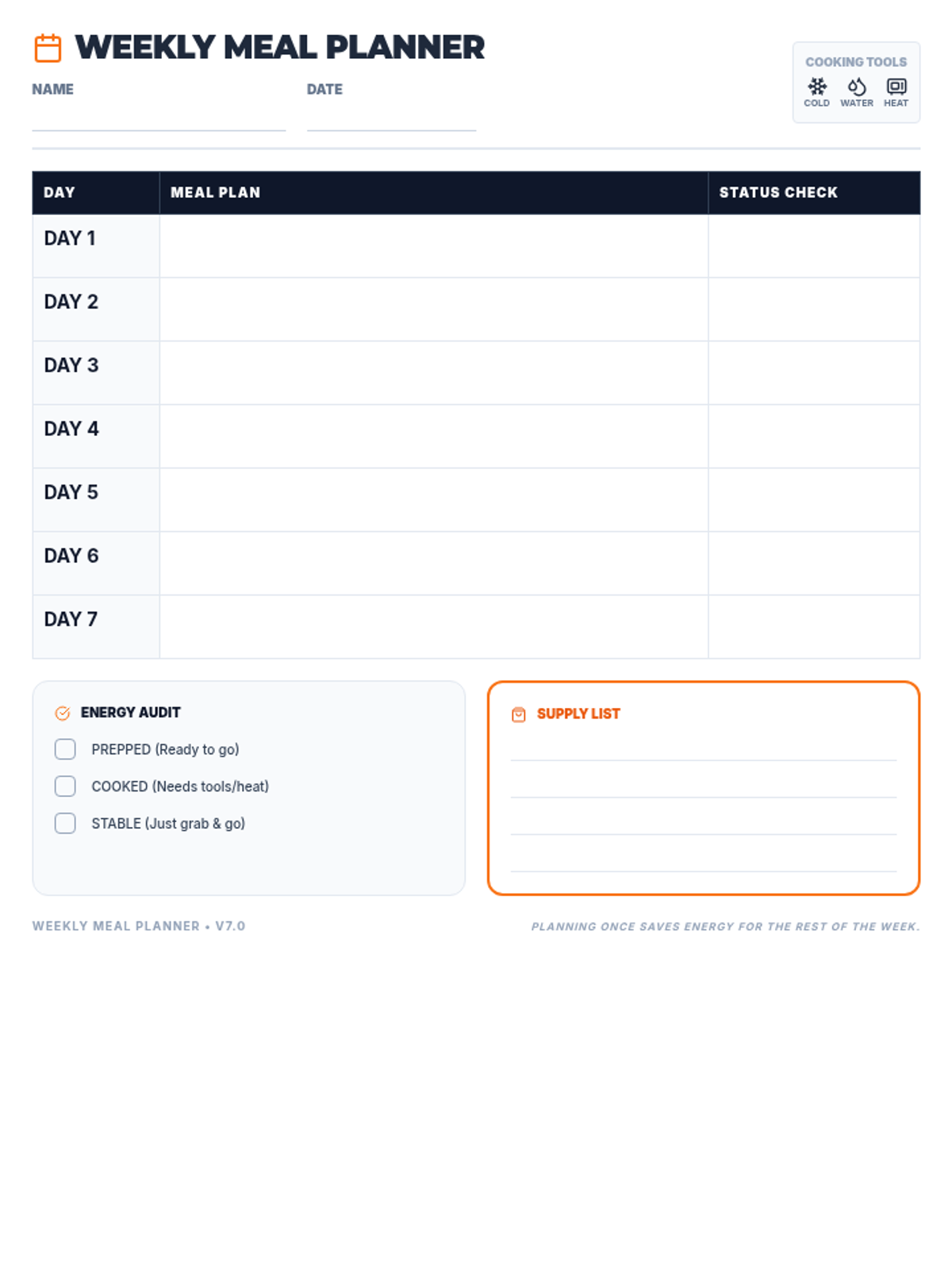
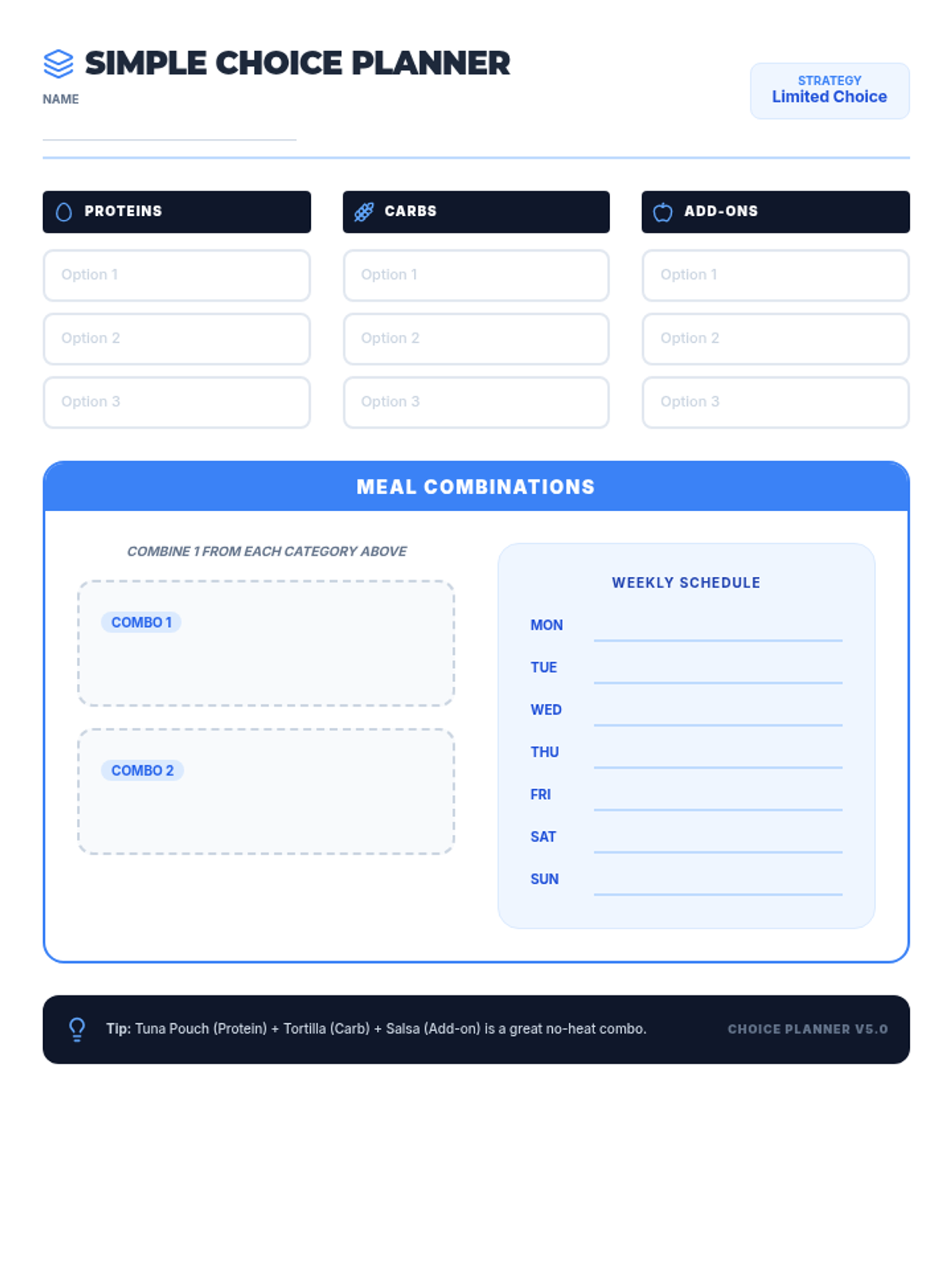
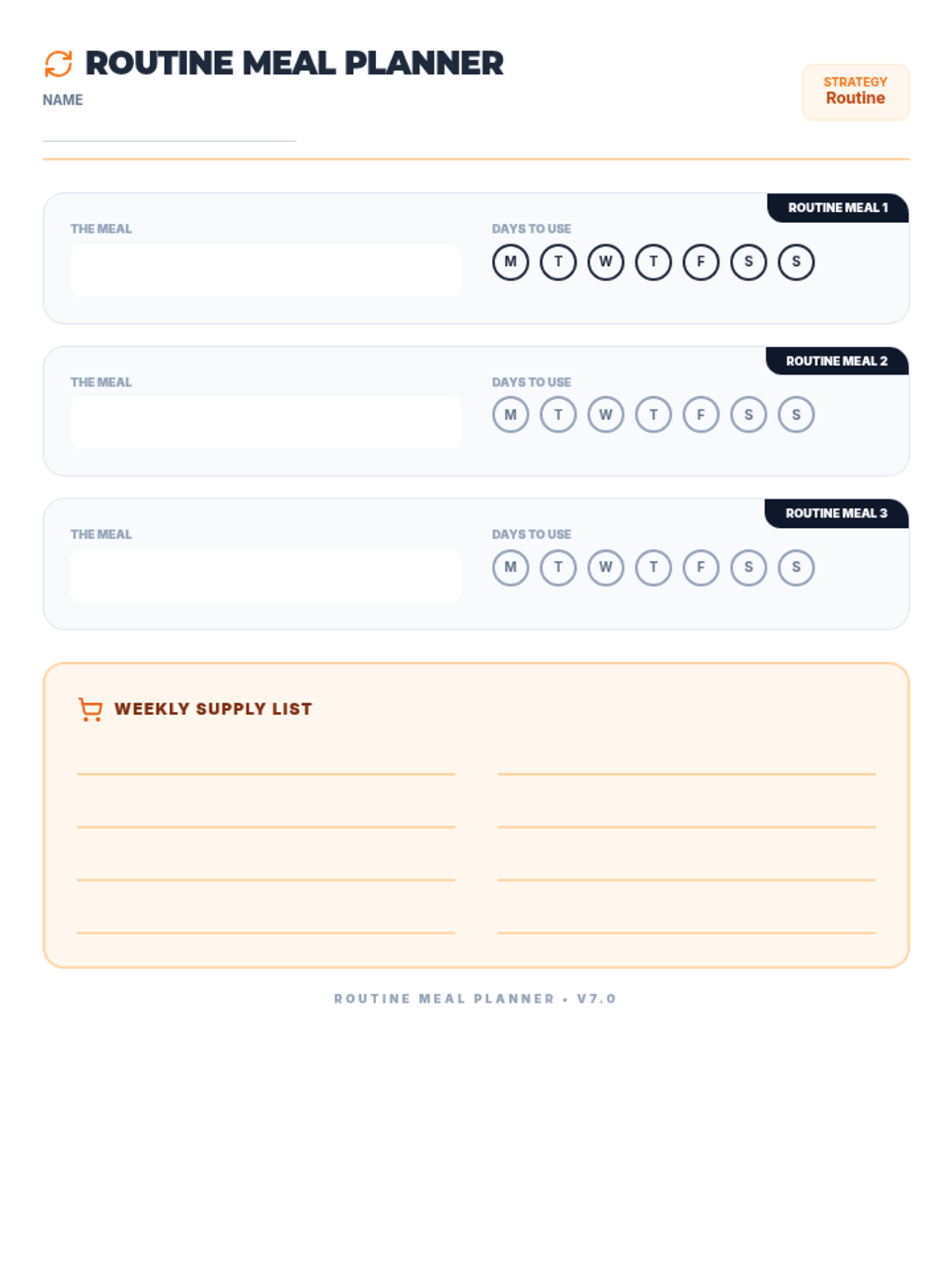
A 50-minute lesson designed for teens experiencing homelessness, focusing on reducing decision fatigue through strategic meal planning with limited heating sources. The lesson includes neurodiverse supports for low-choice and repetition-friendly routines.
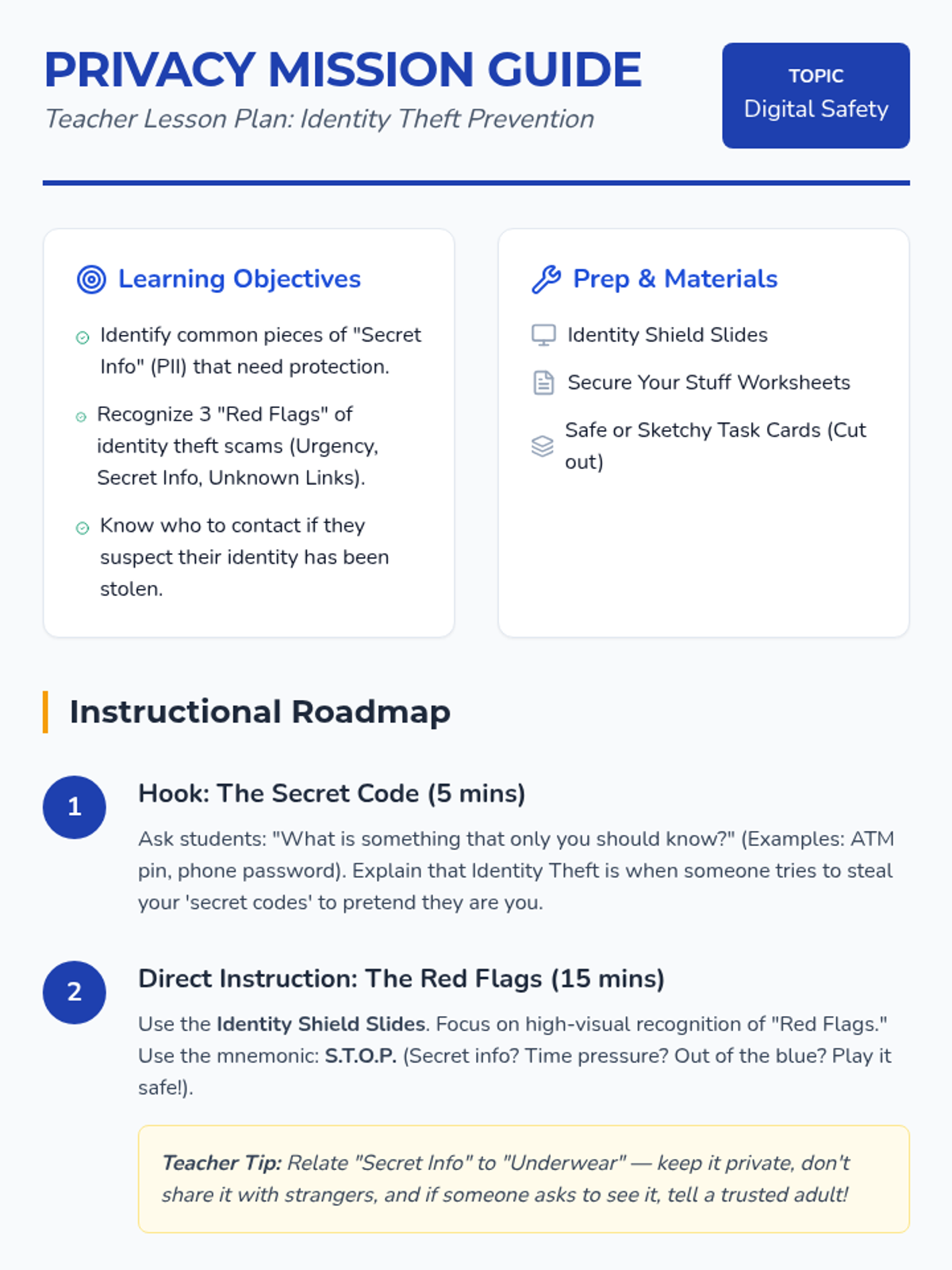
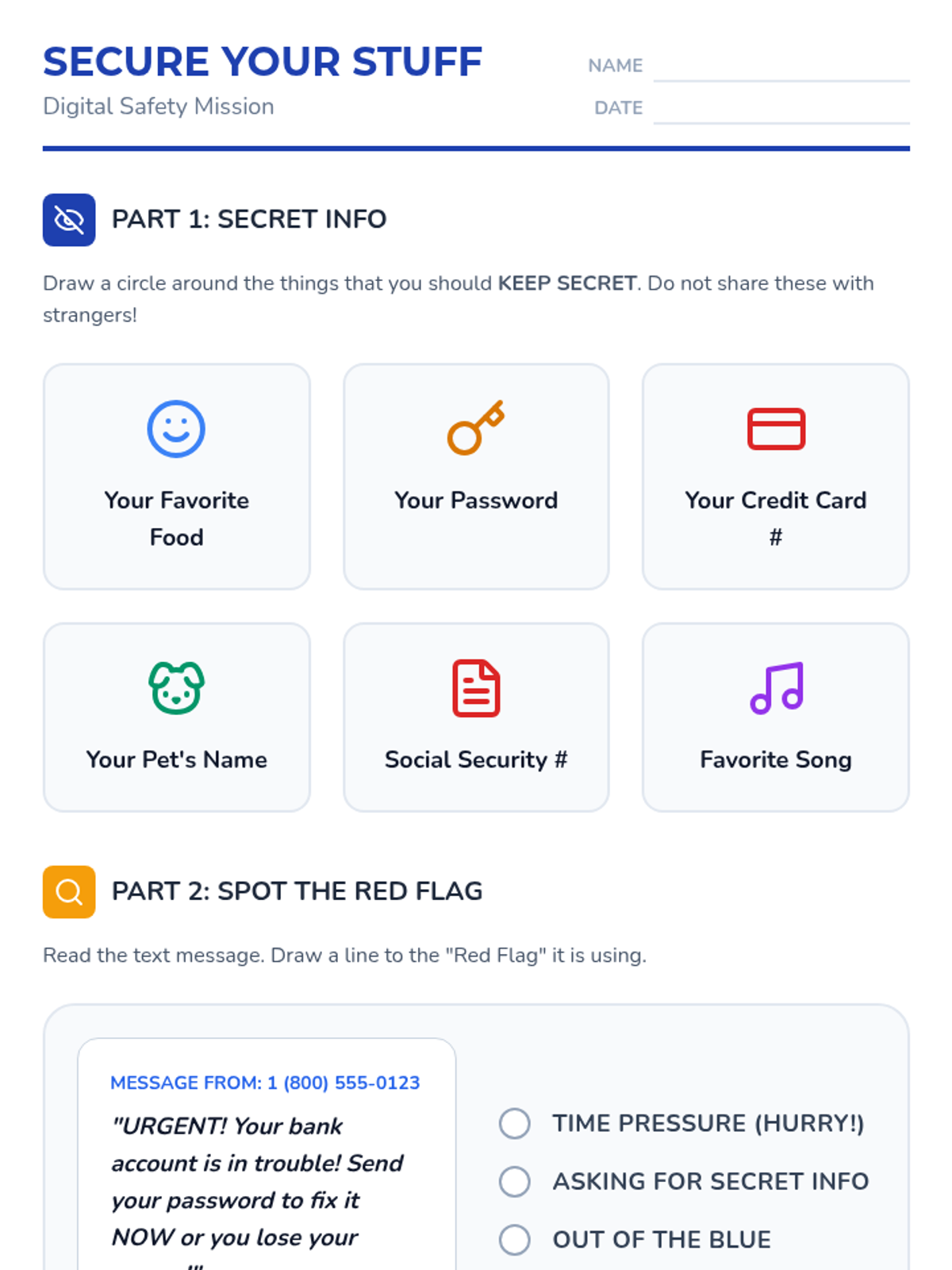
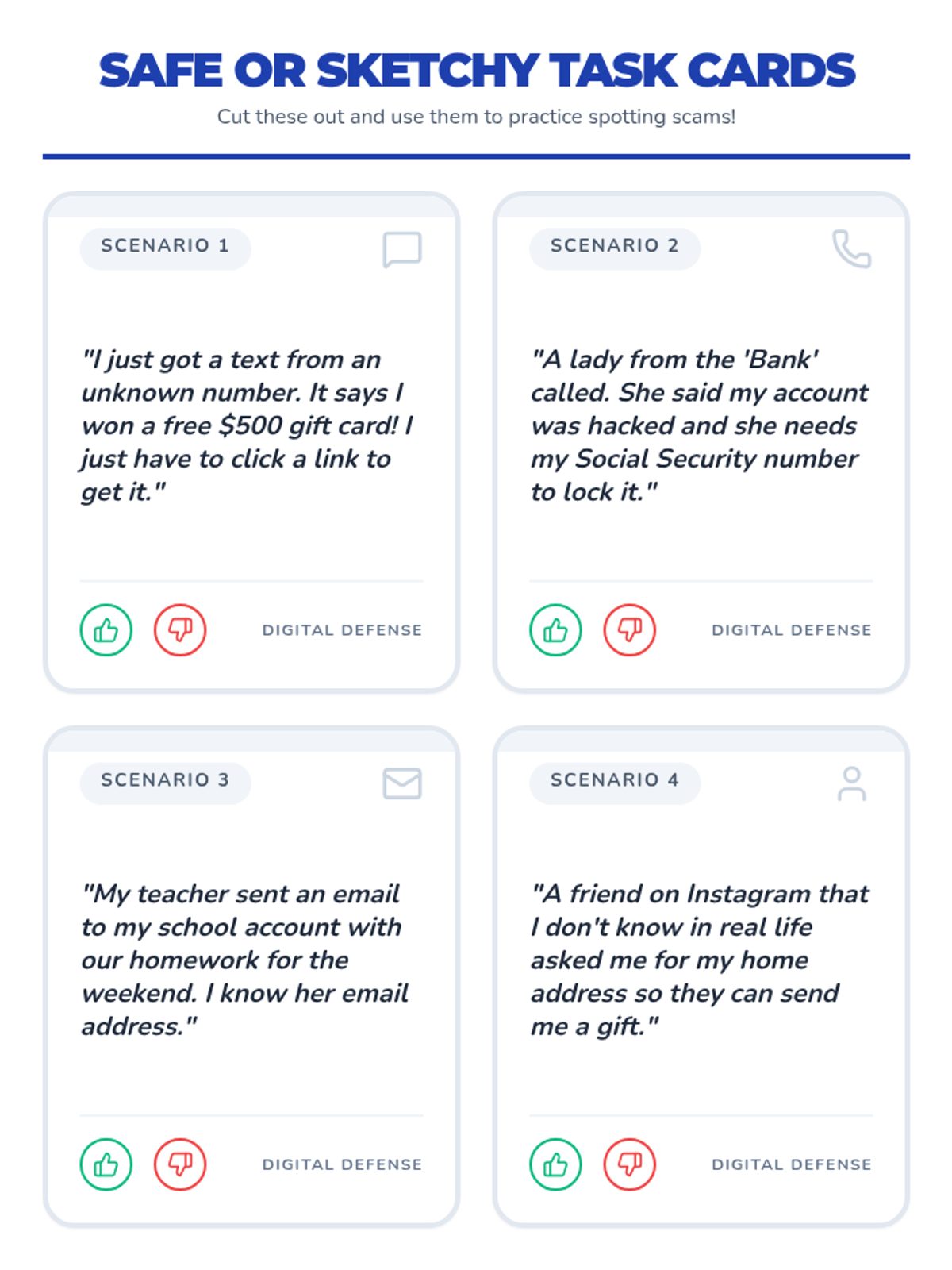
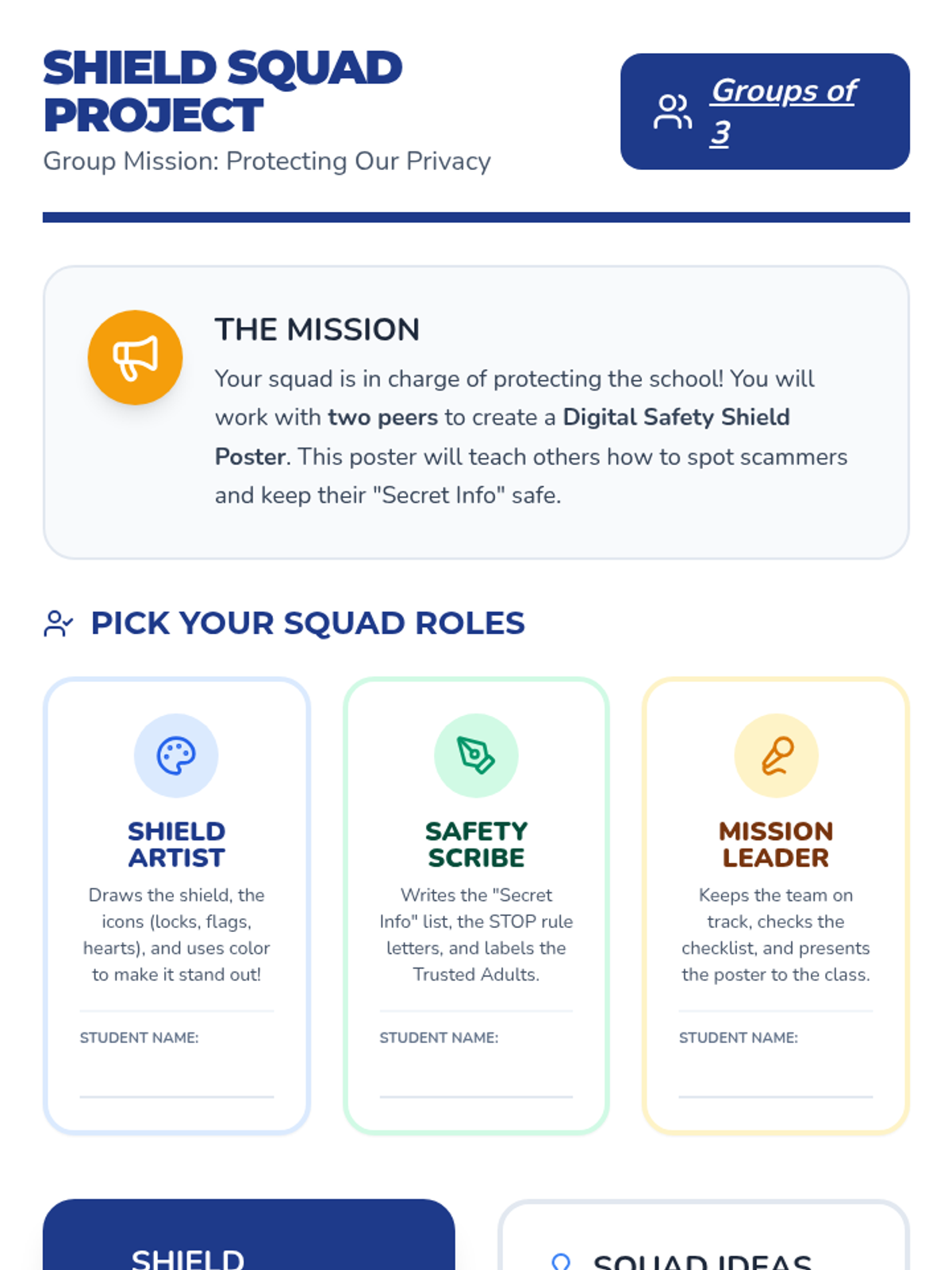
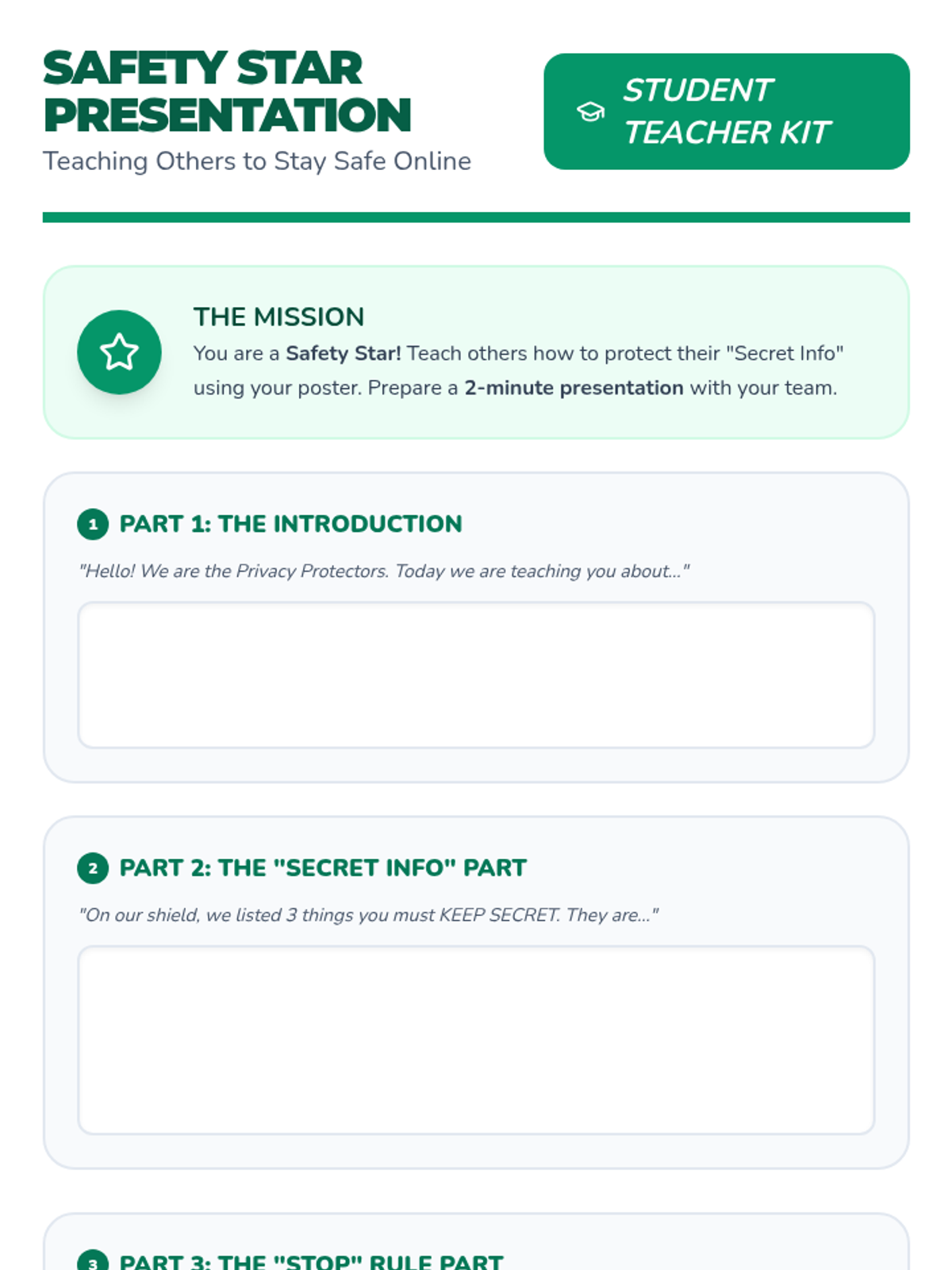
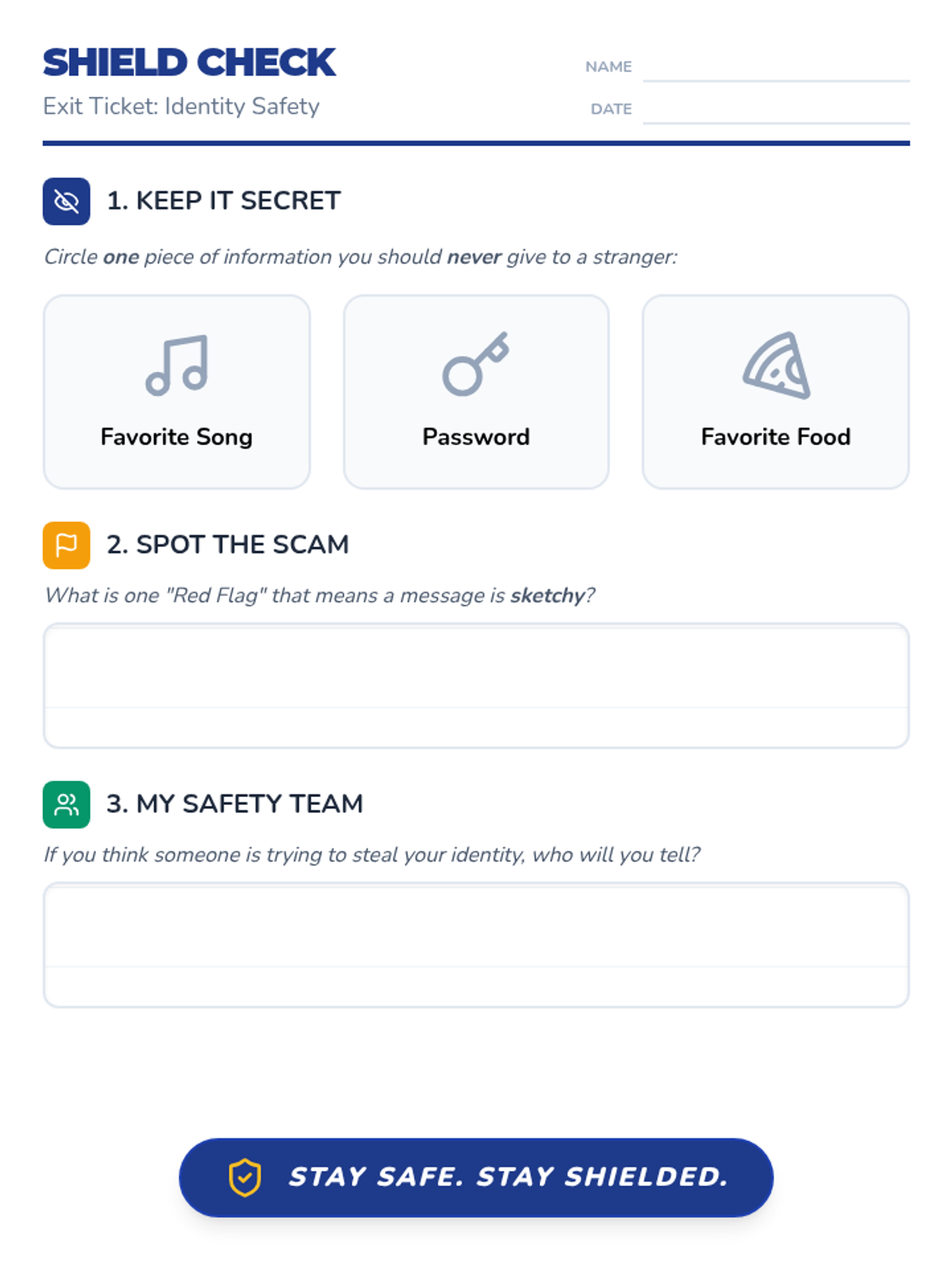
A comprehensive lesson on identity theft designed for high school special education students, focusing on recognizing red flags and protecting personal information through practical scenarios and visual aids.
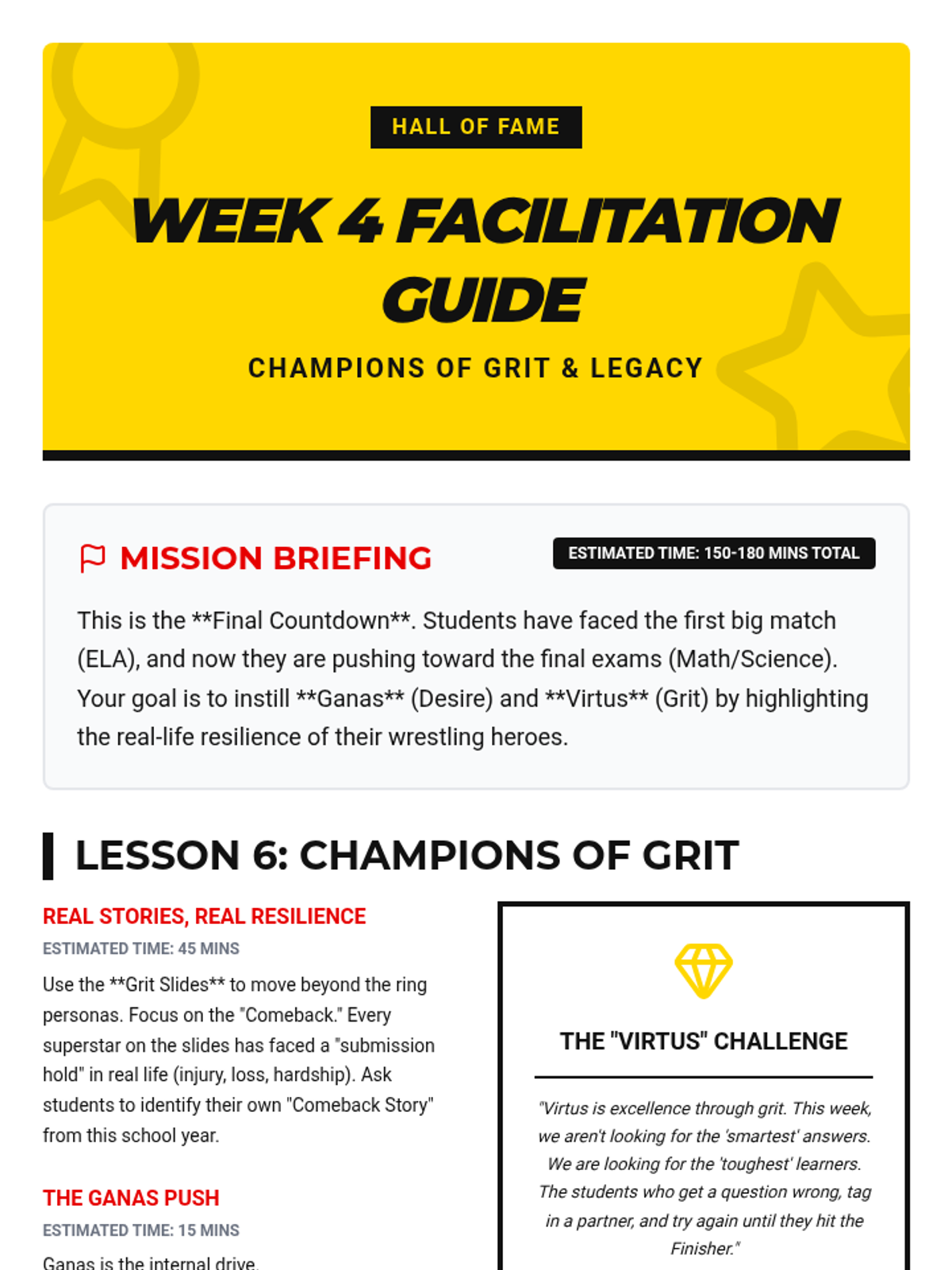
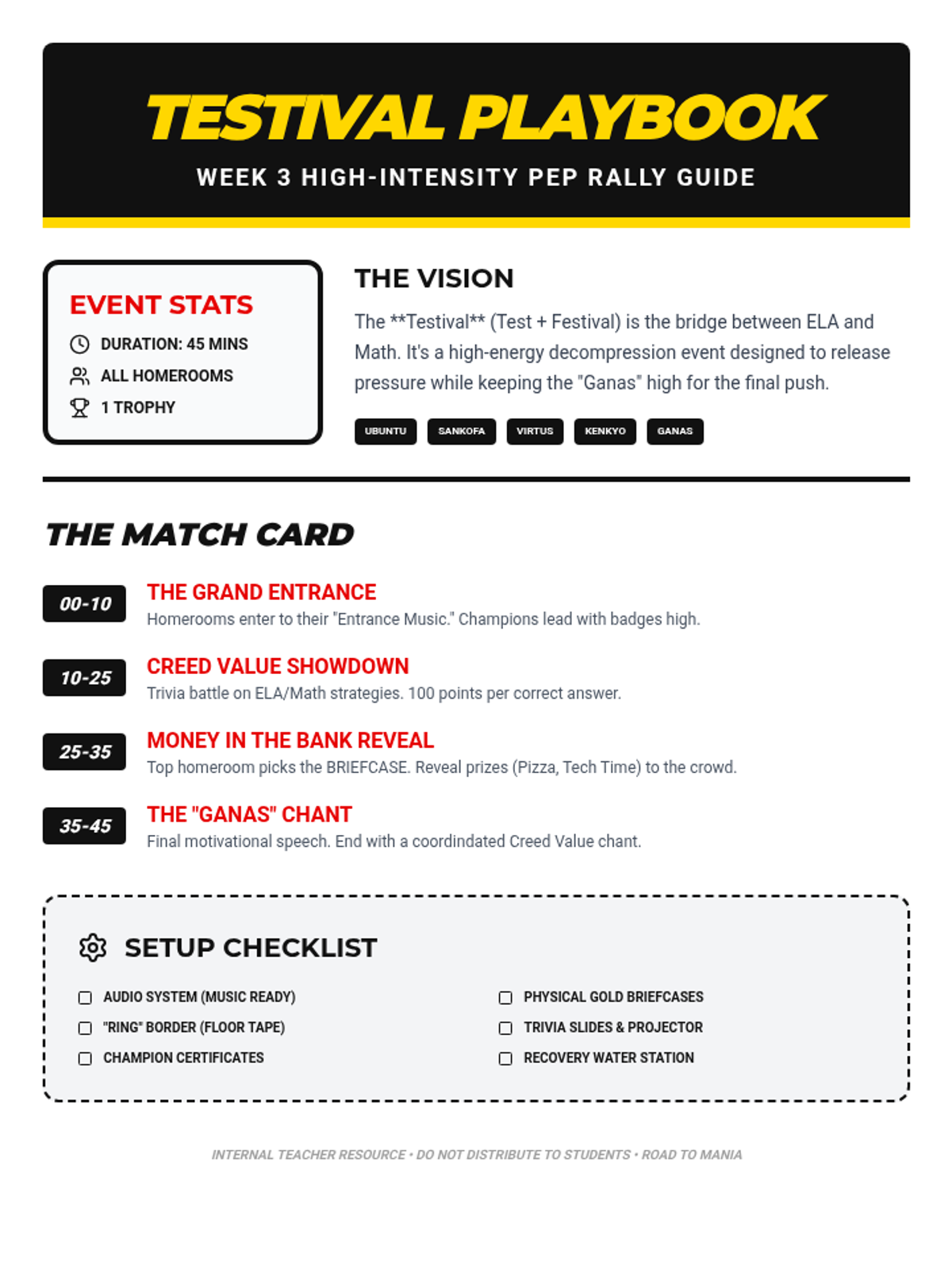
Examining real-life challenges faced by WWE stars to inspire resilience, grit, and the 'Ganas' required for the final push.
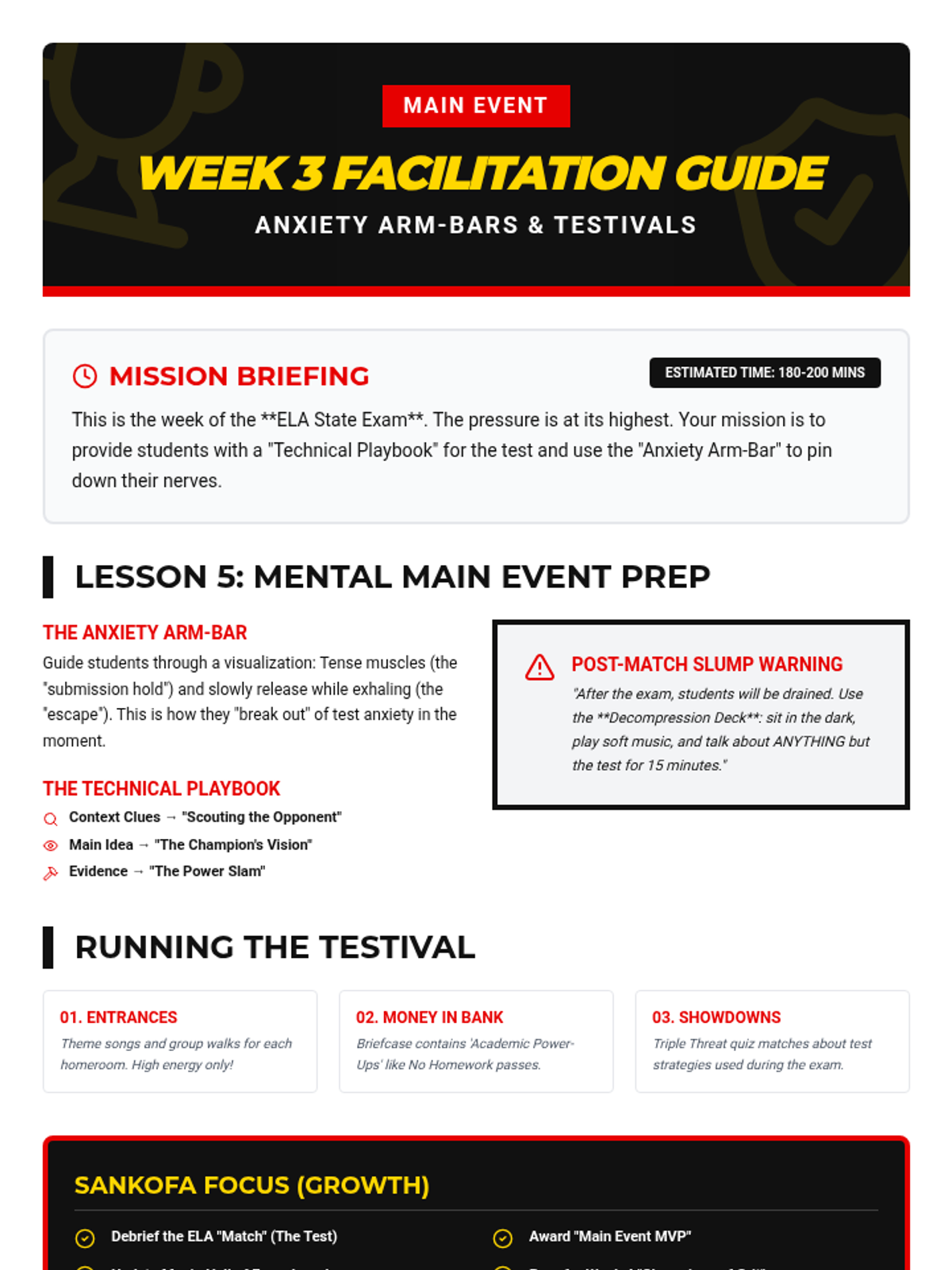
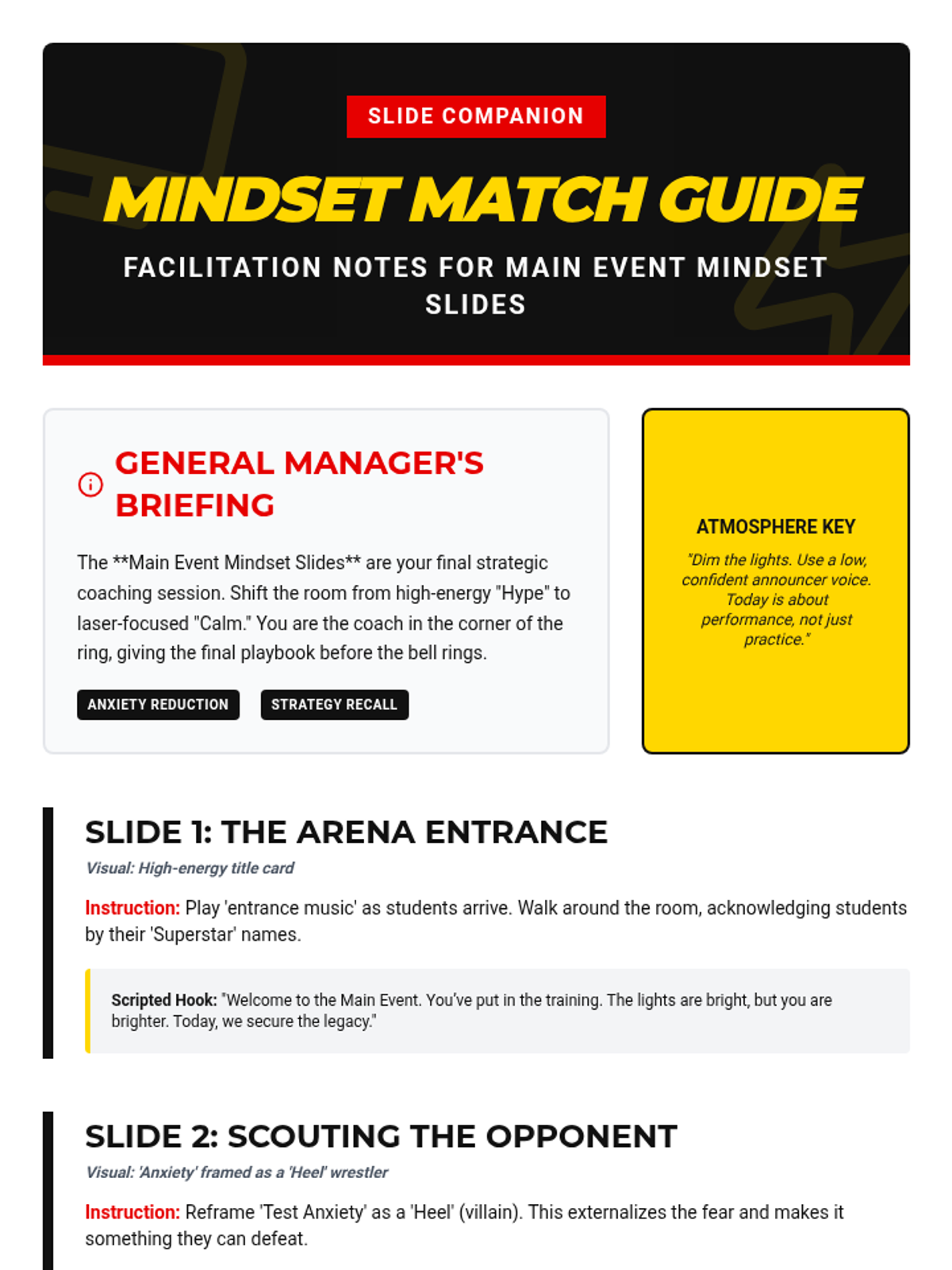
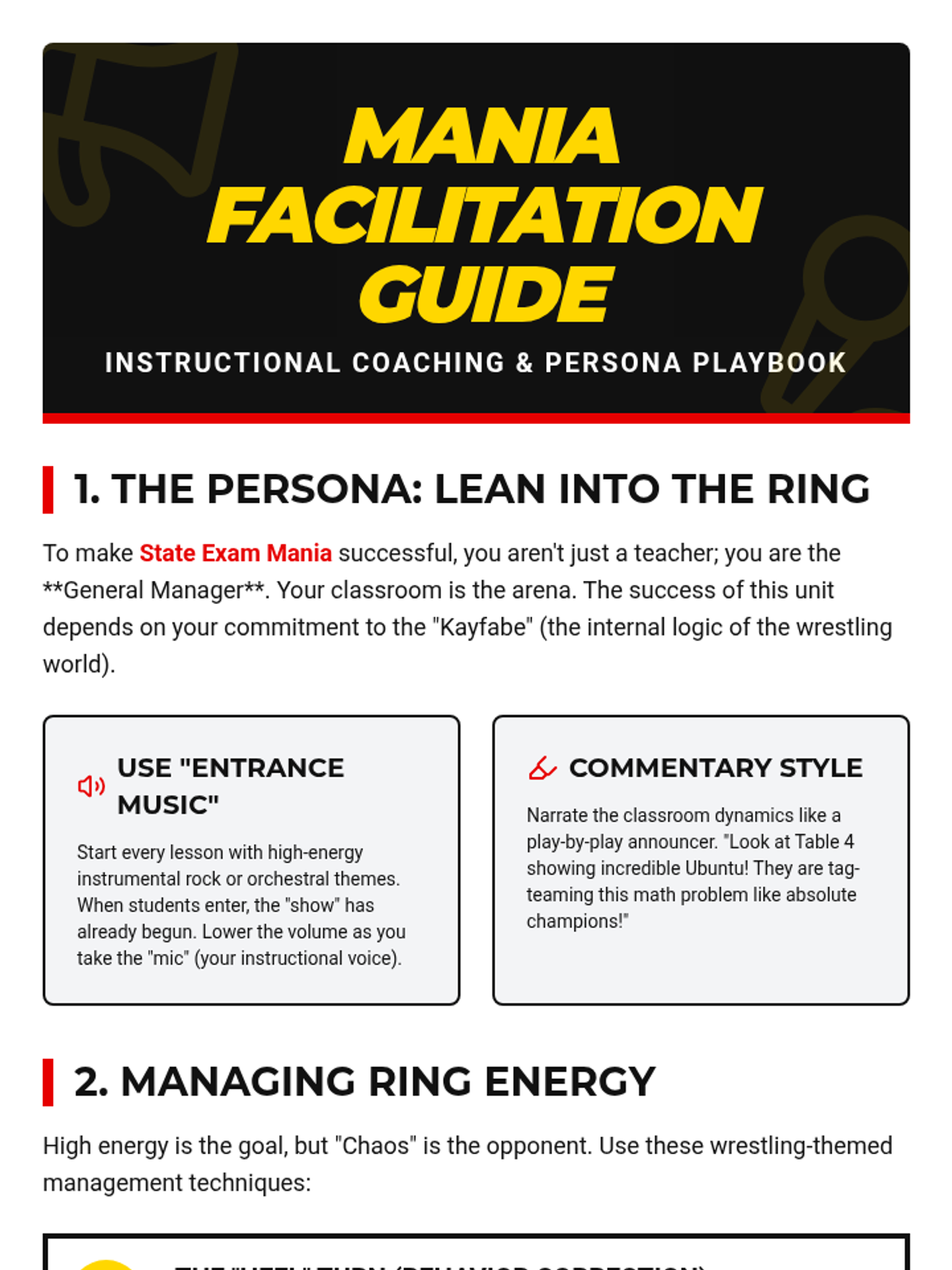
Addressing test anxiety and ELA state exam preparation, including decompression strategies to stay 'main event' ready.
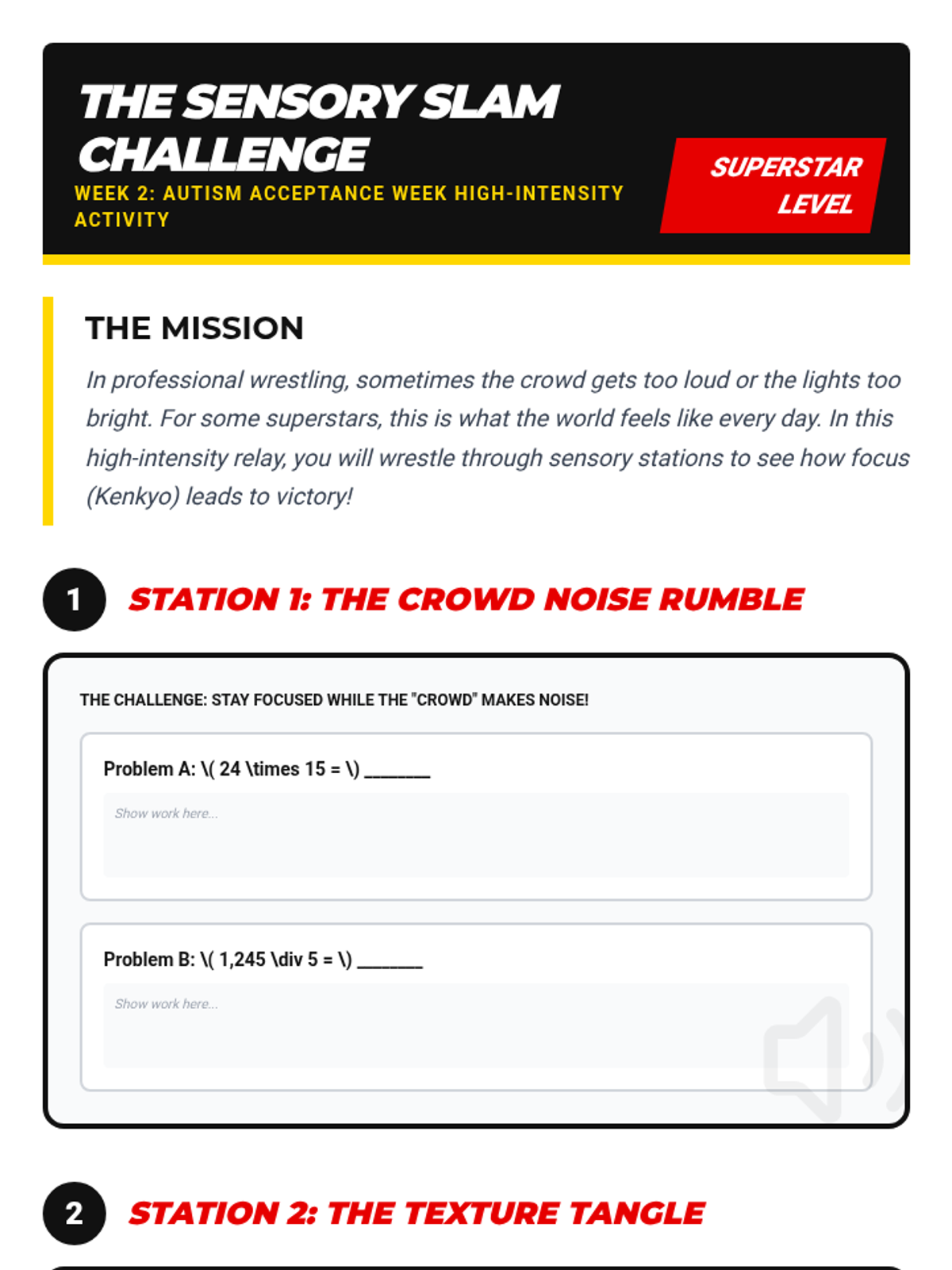
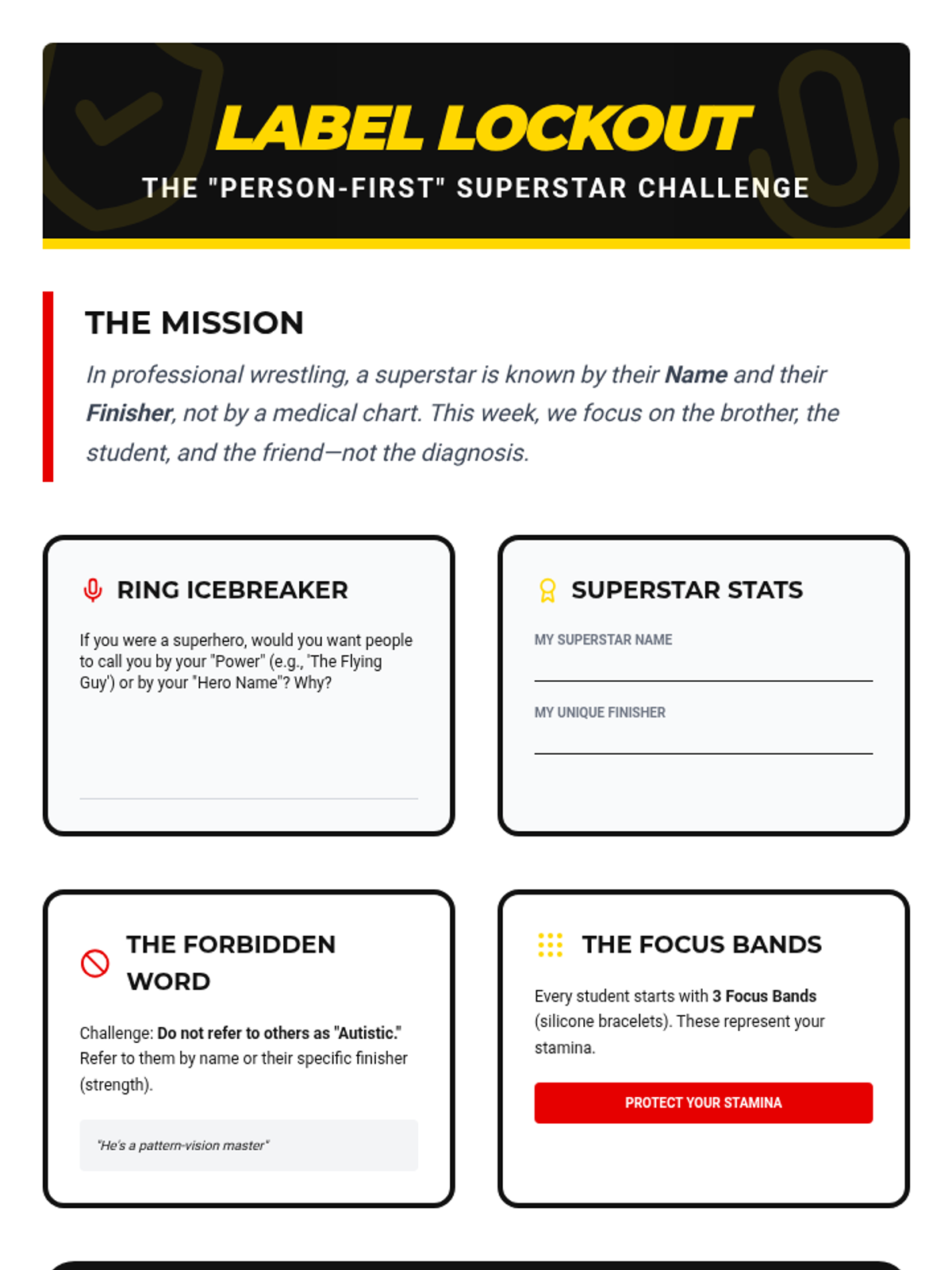
A high-energy activity focusing on inclusivity and celebrating different ways of thinking and 'wrestling' with challenges.
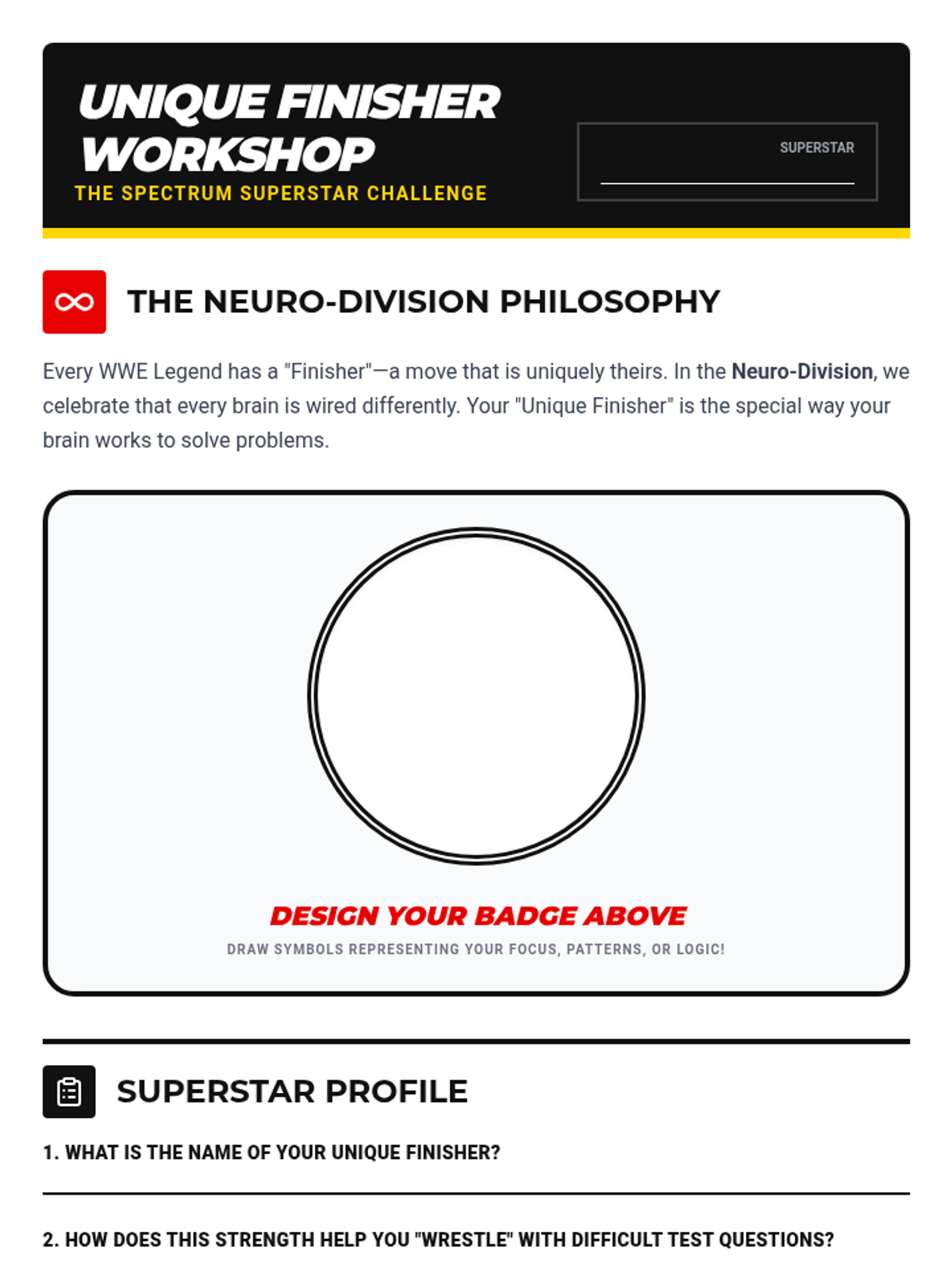
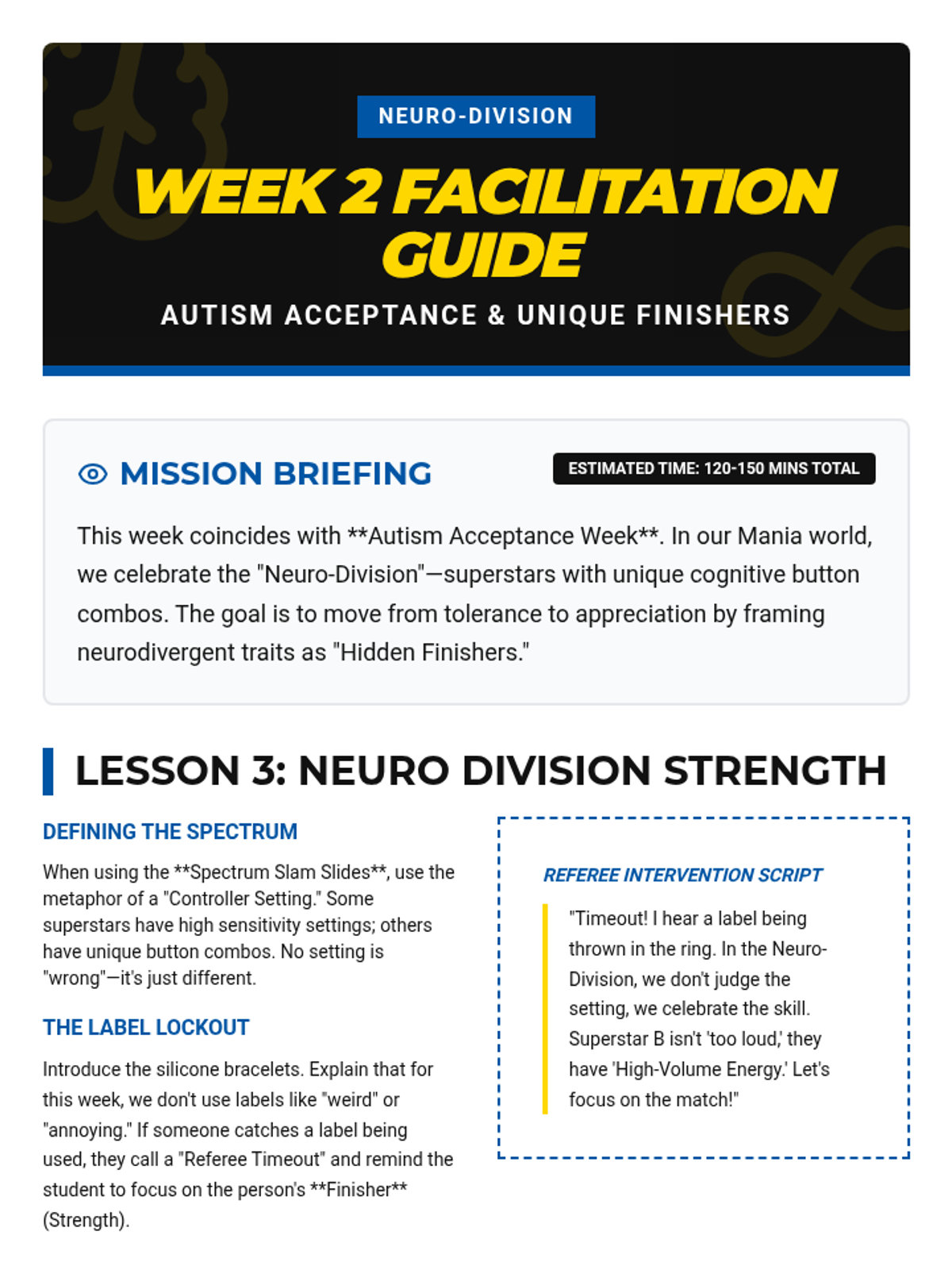
The first of two activities celebrating Autism Acceptance Week, highlighting the unique 'finishers' and strengths of neurodivergent individuals.
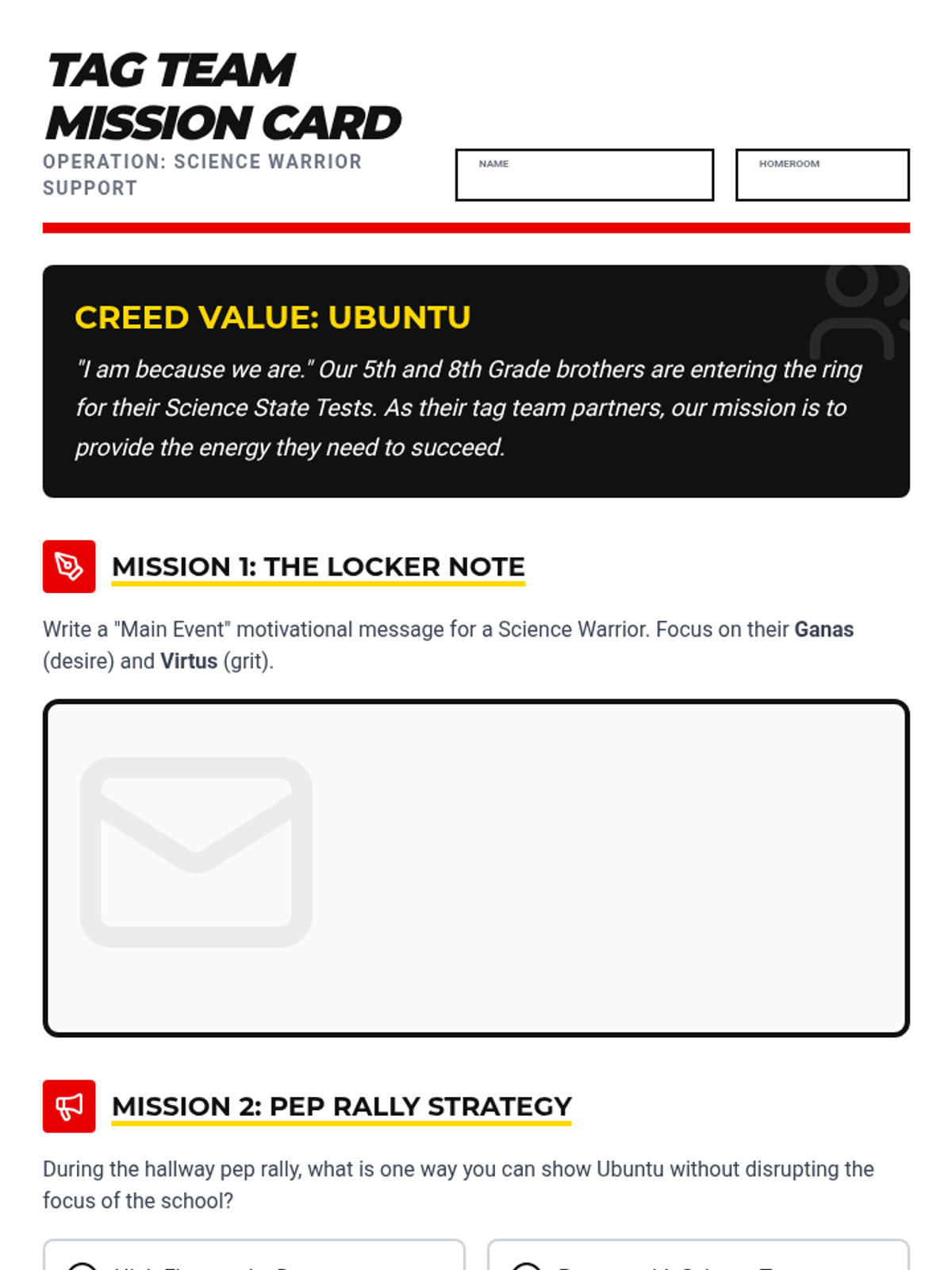
Focus on the Creed Value of Ubuntu and brotherhood, preparing students to support their peers during science test pep rallies.
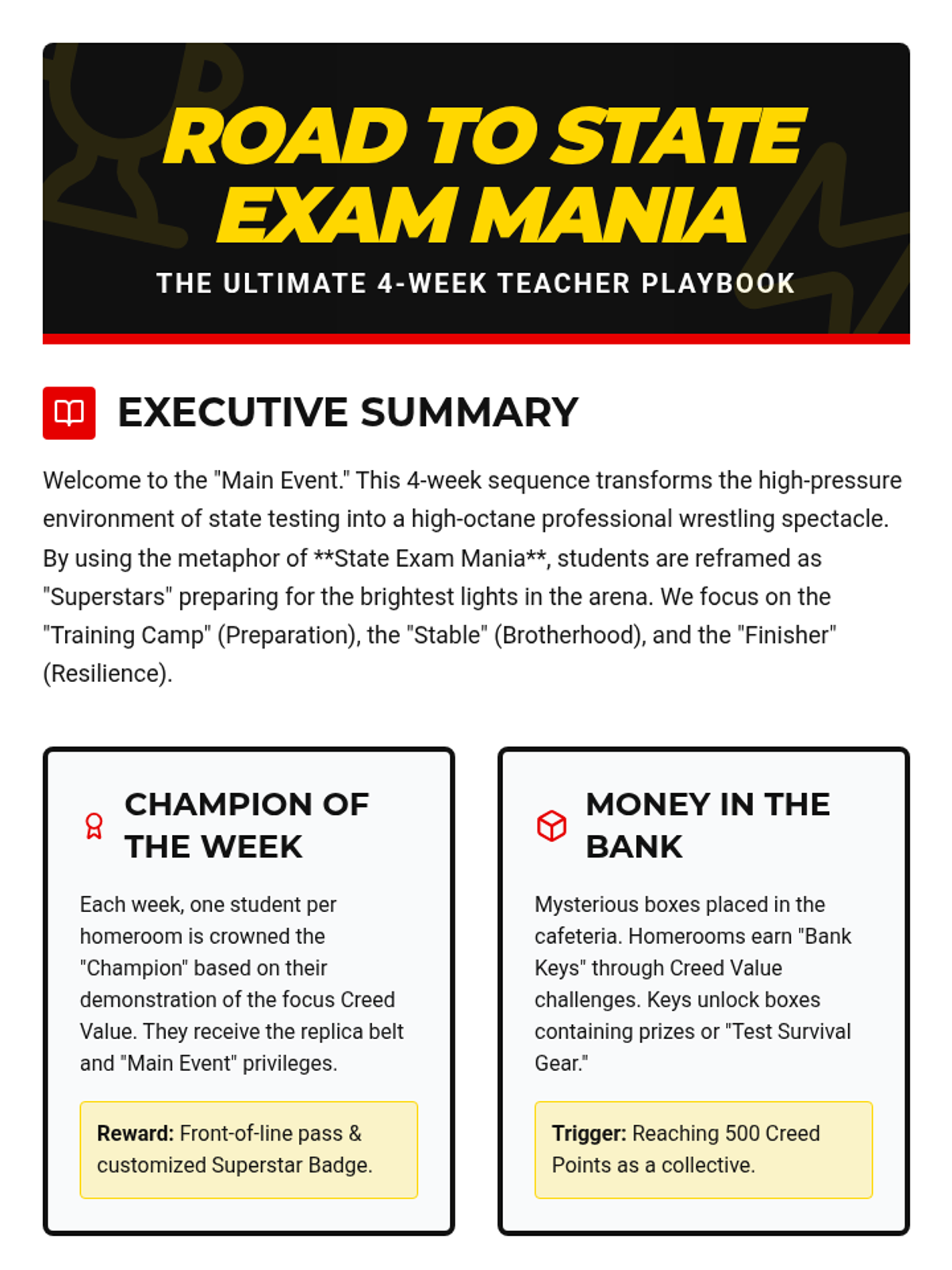
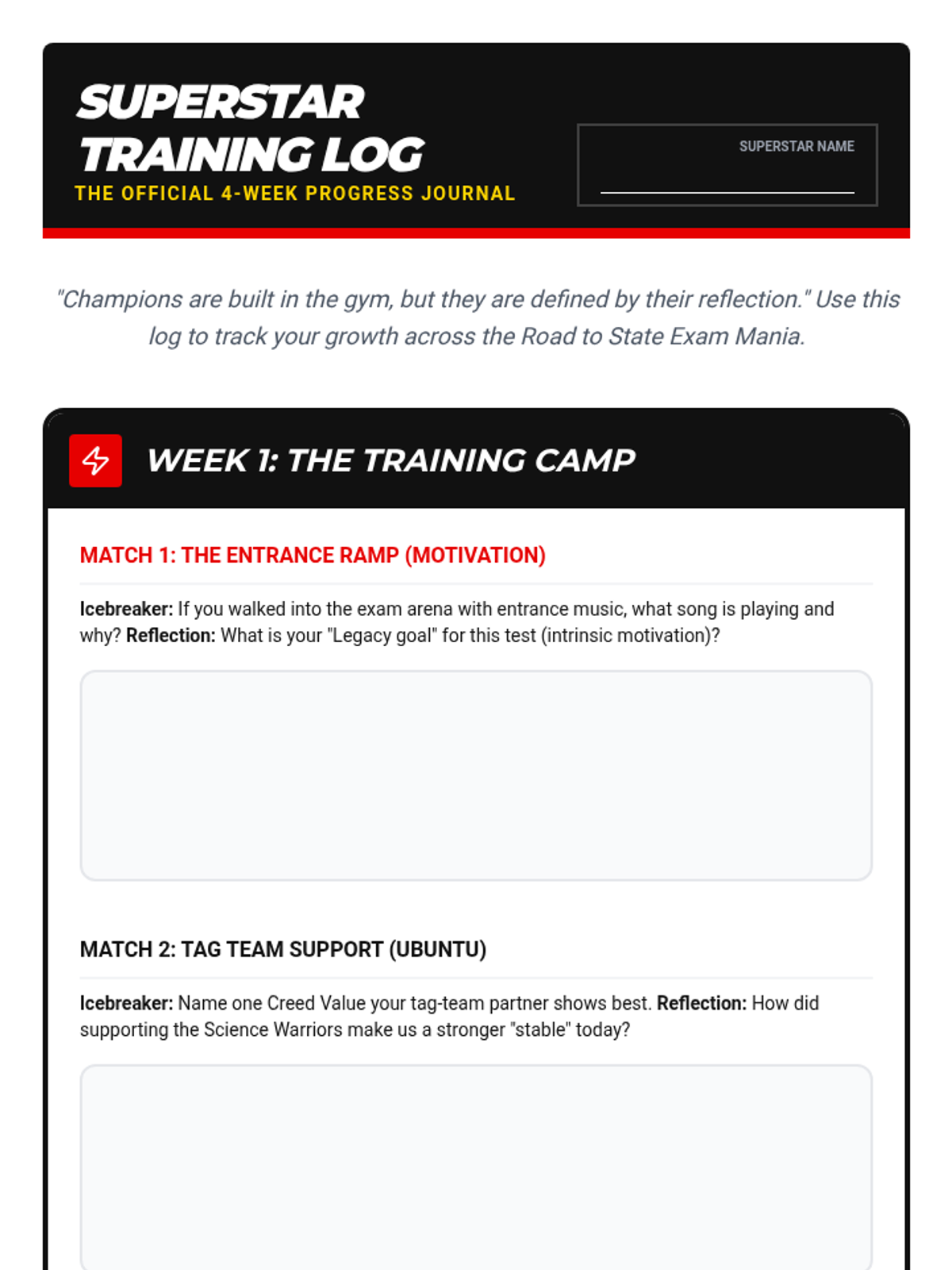
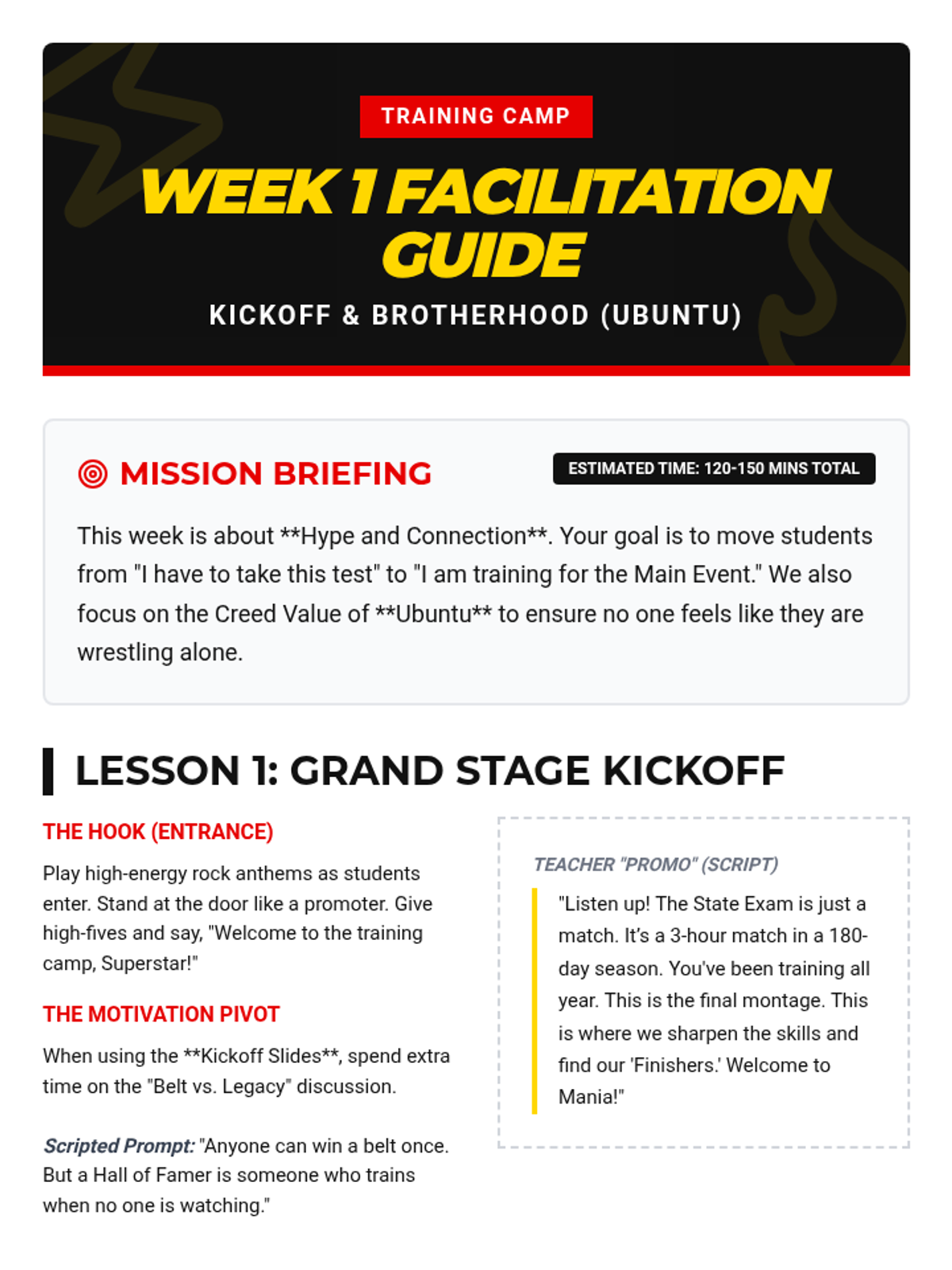
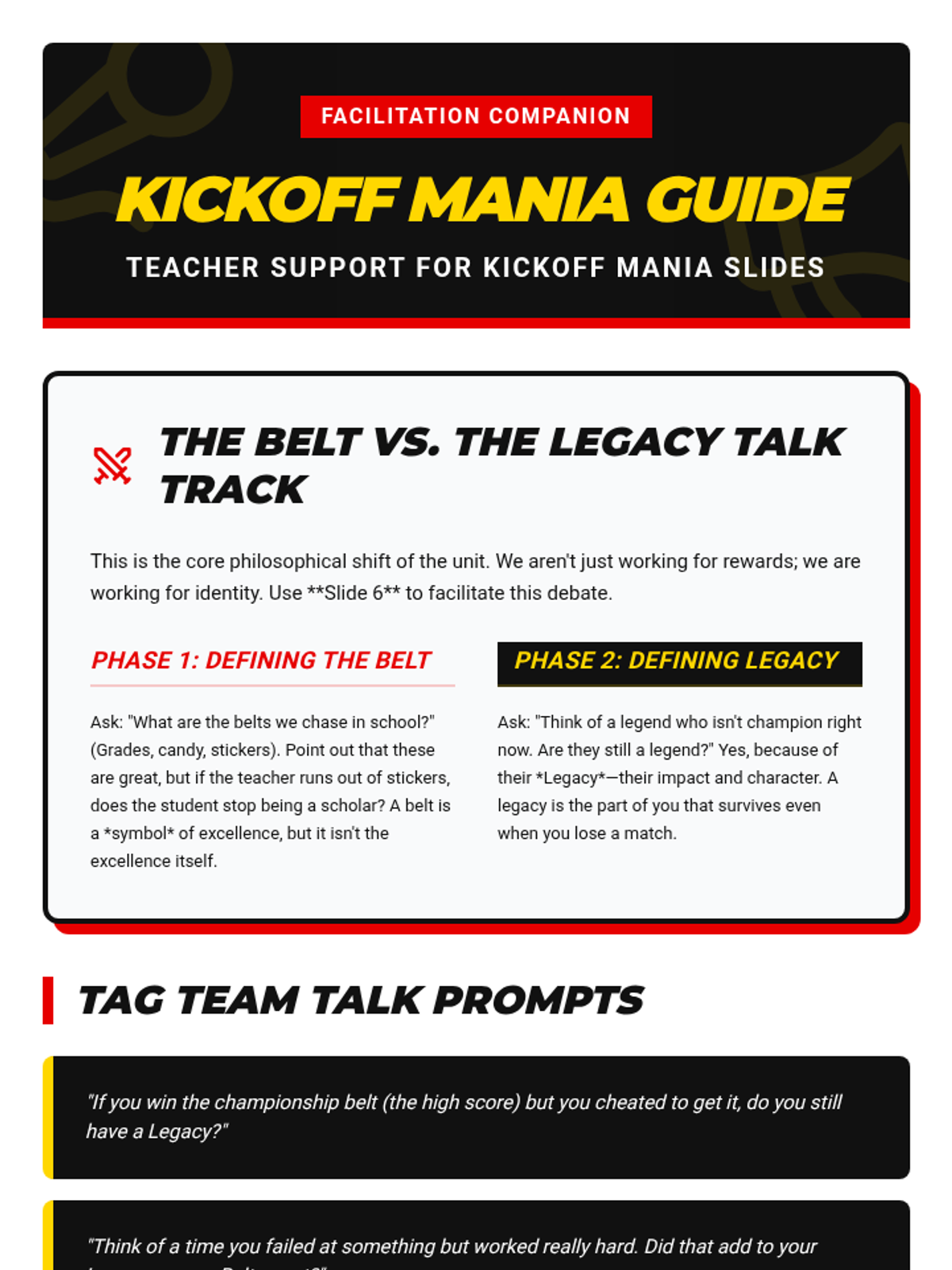
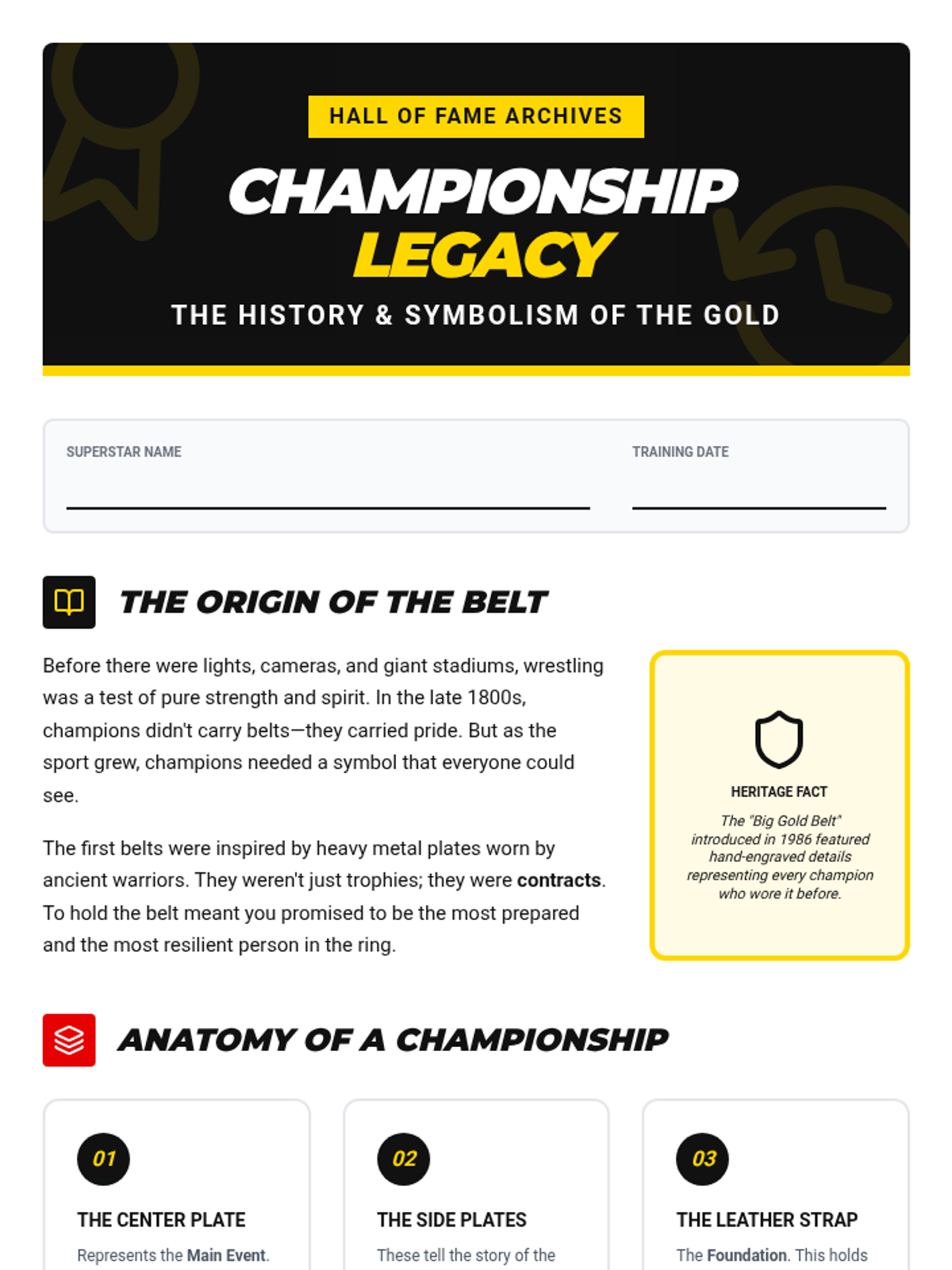
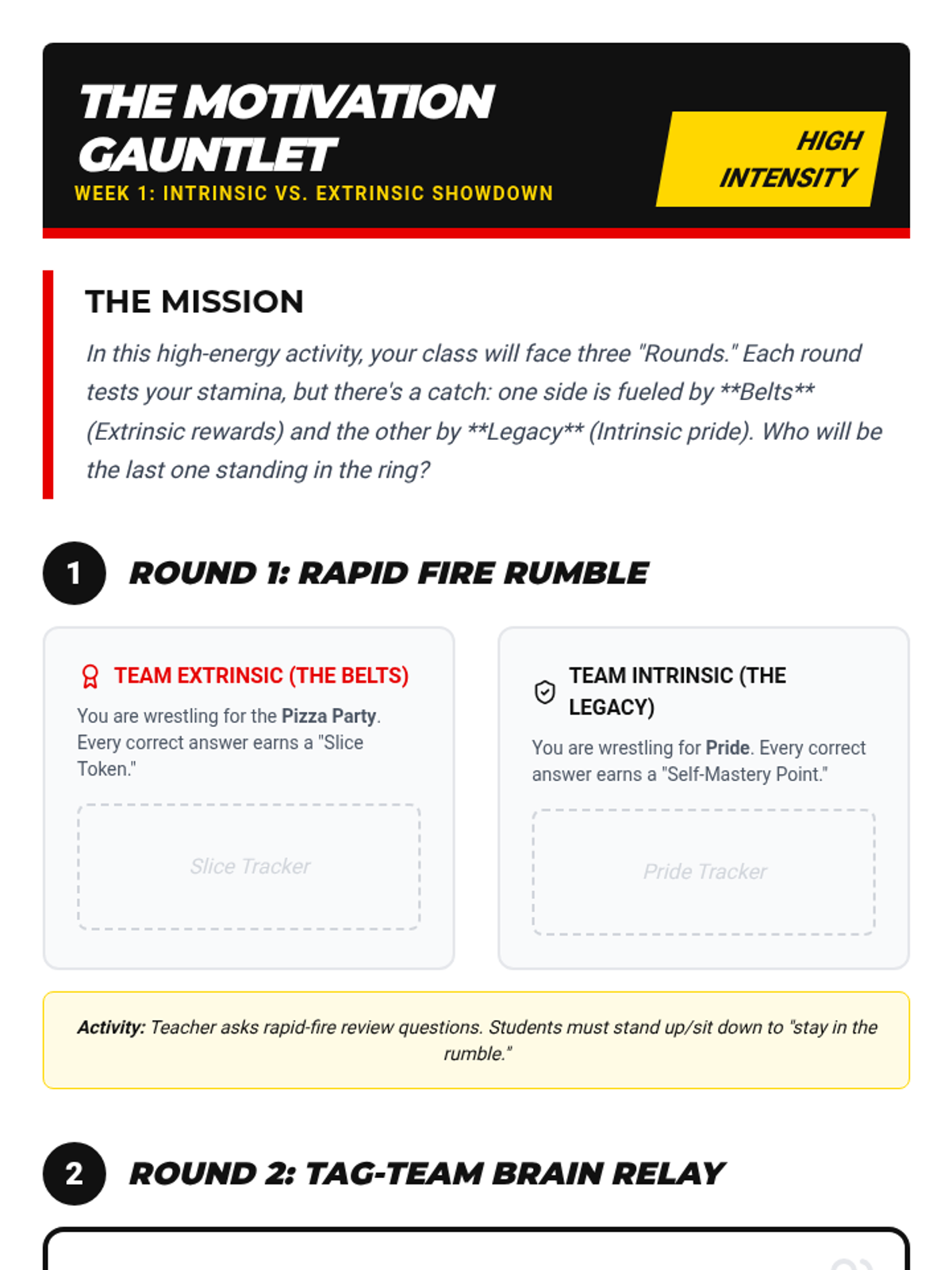
Introduce the 'State Exam Mania' theme, focusing on the difference between intrinsic and extrinsic motivation using the metaphor of championship belts vs. personal legacy.
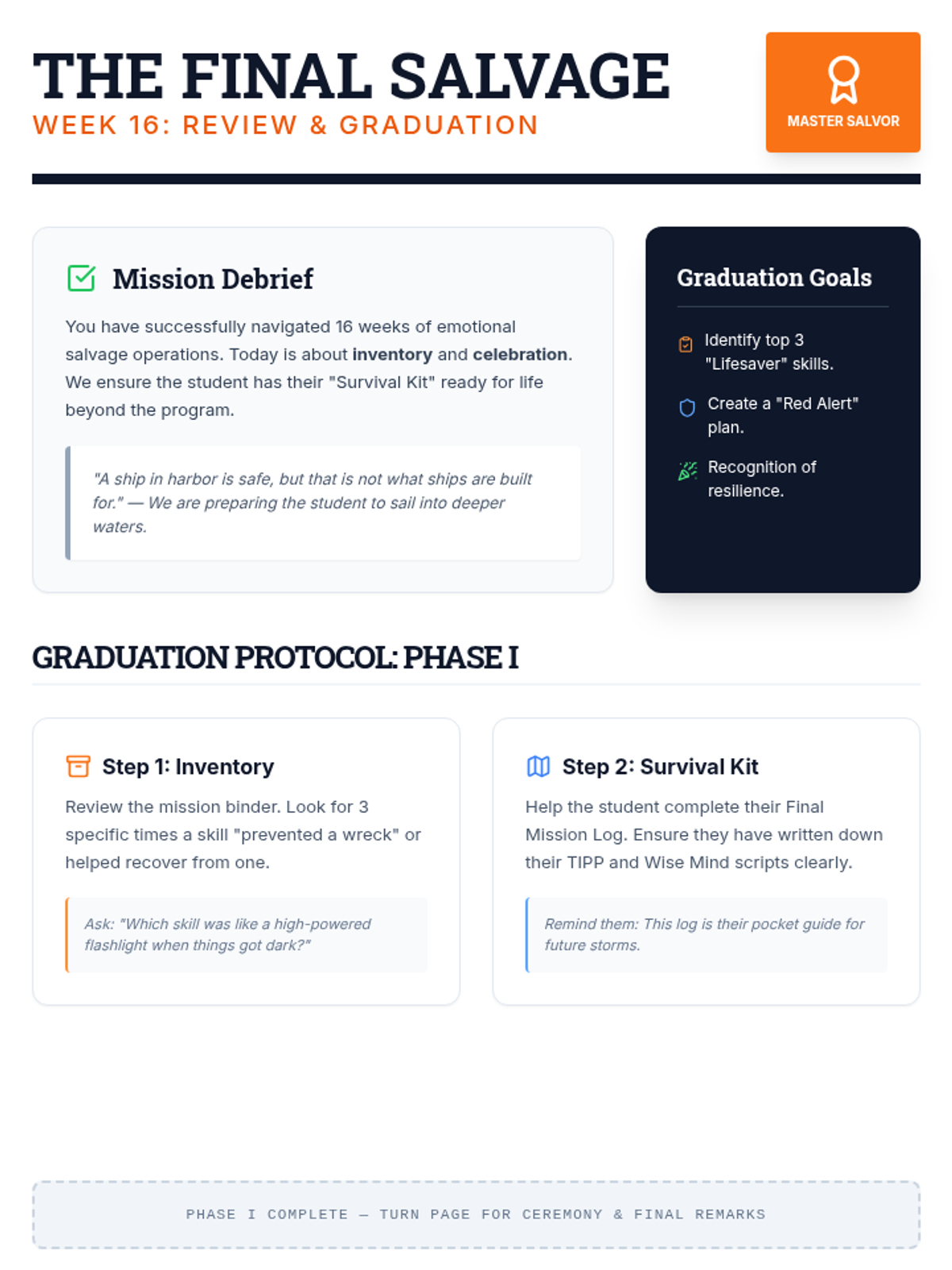
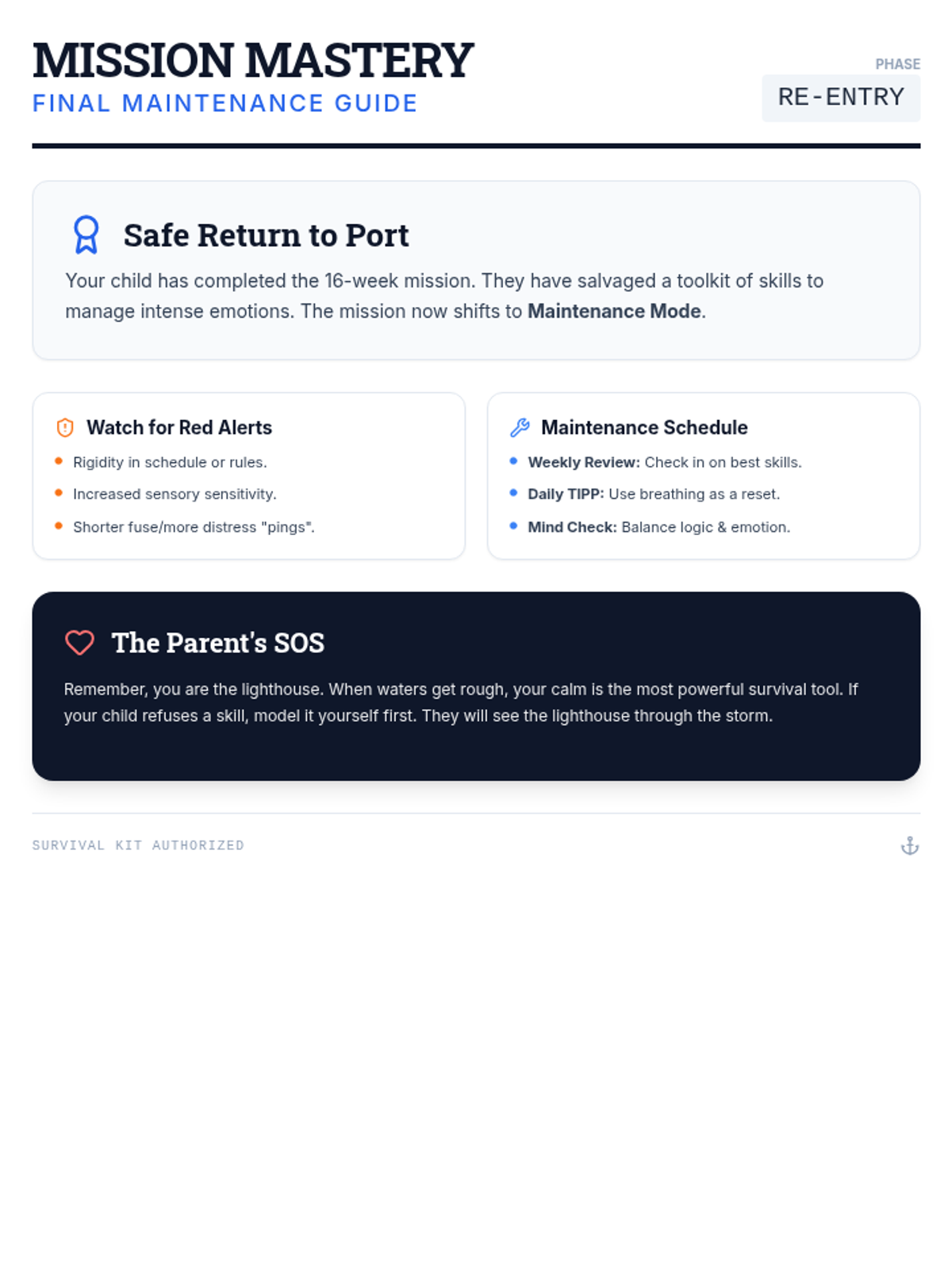
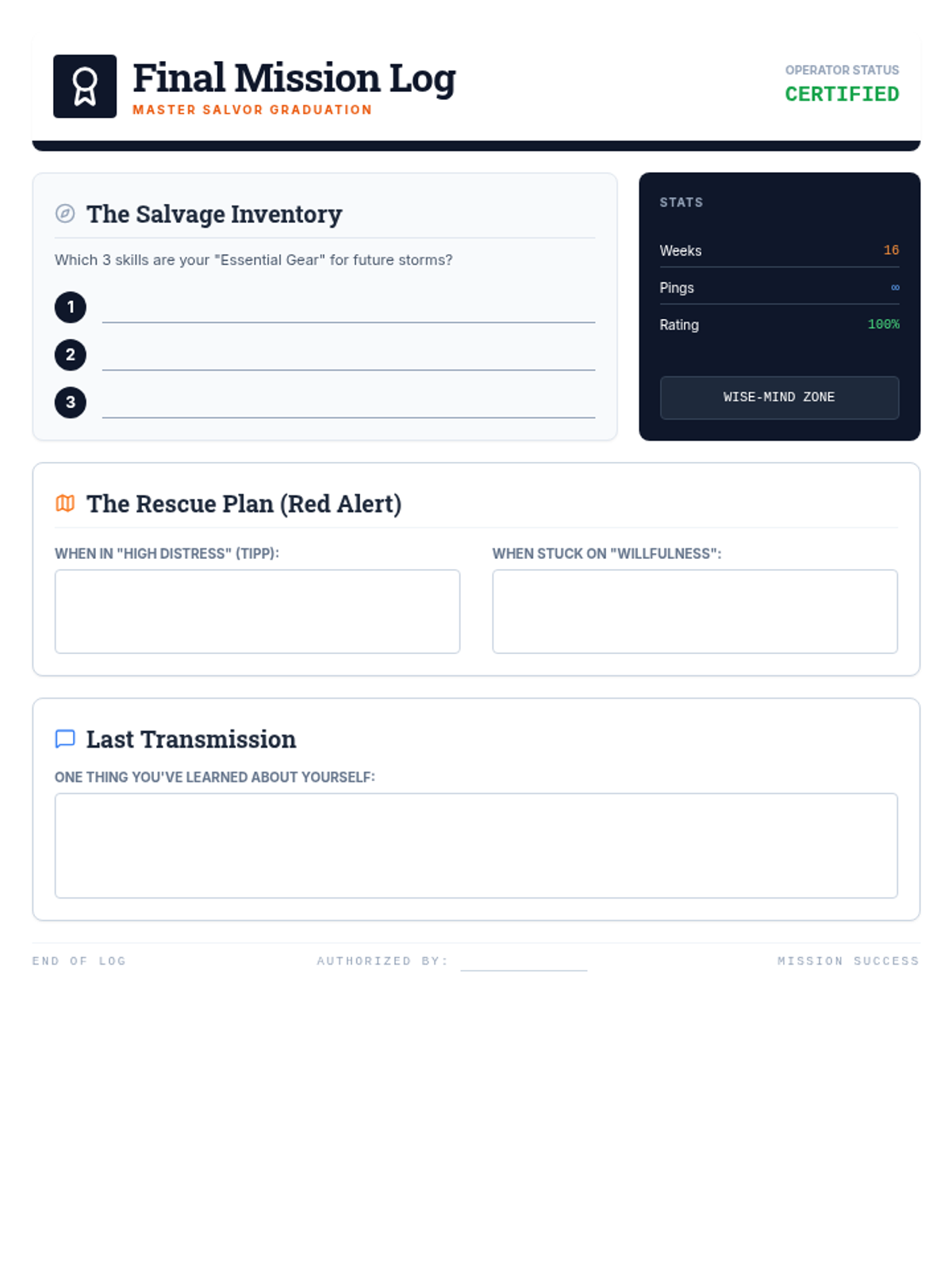
Comprehensive review and graduation from the Survival and Salvage DBT program.
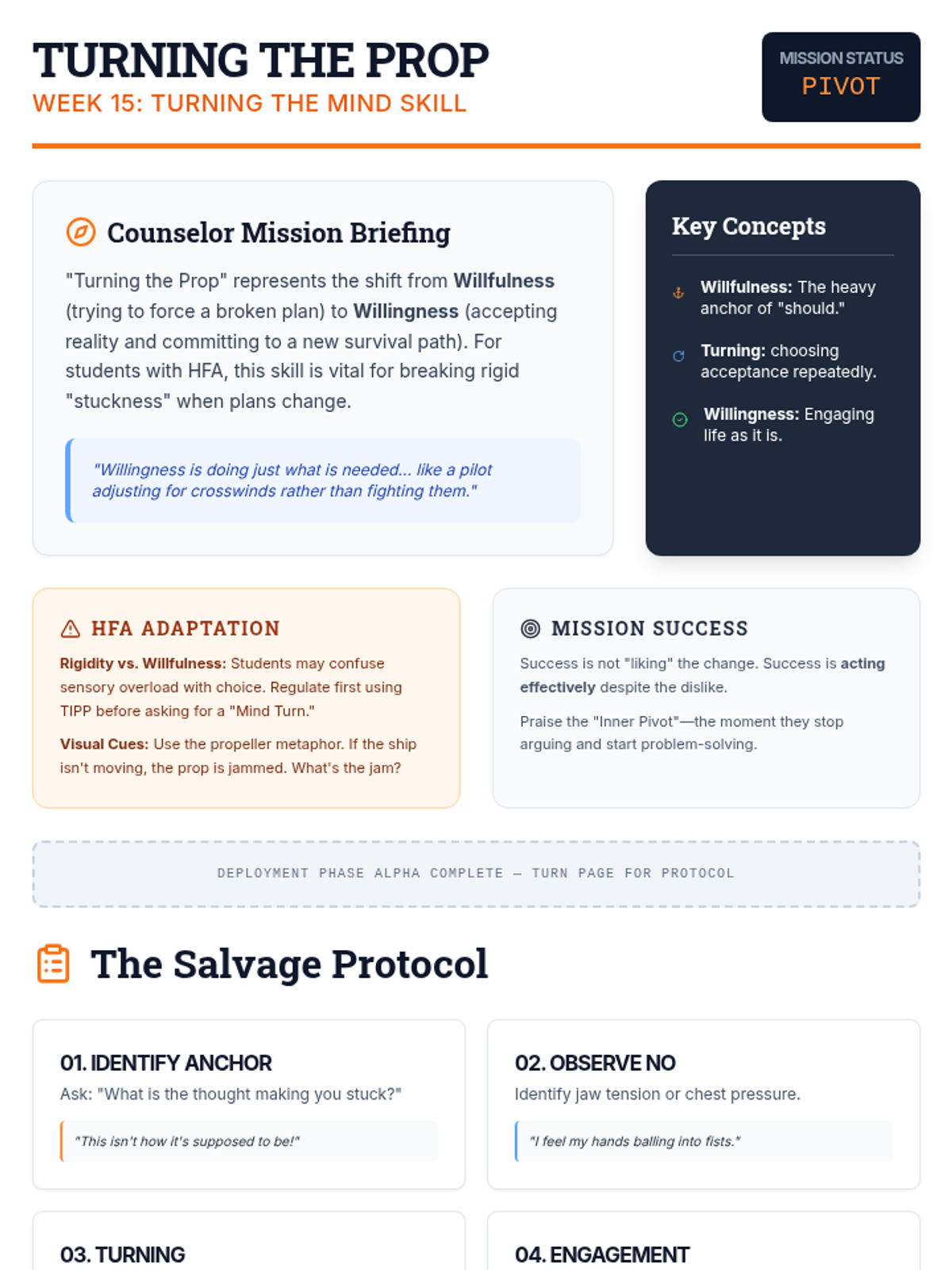
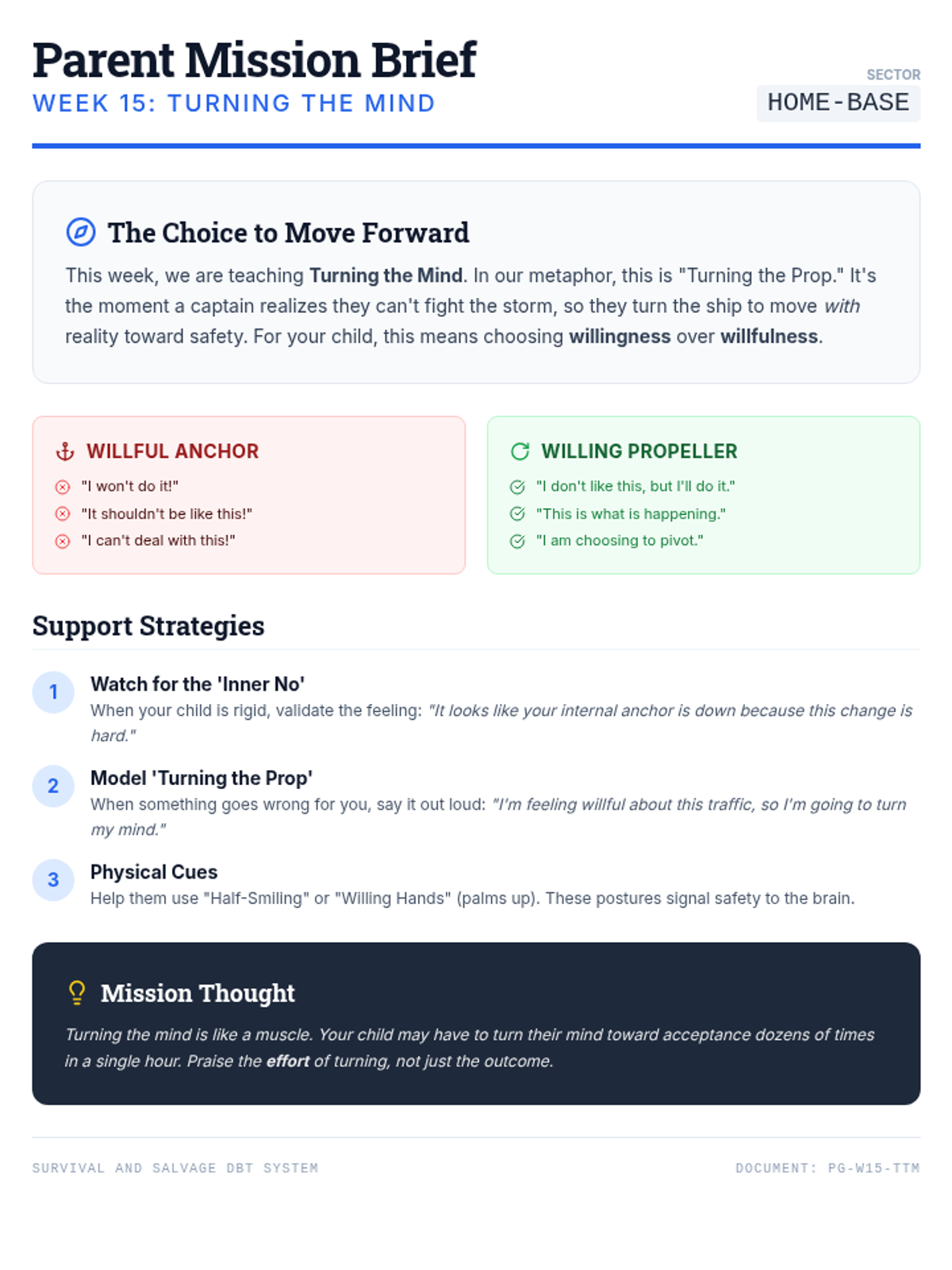
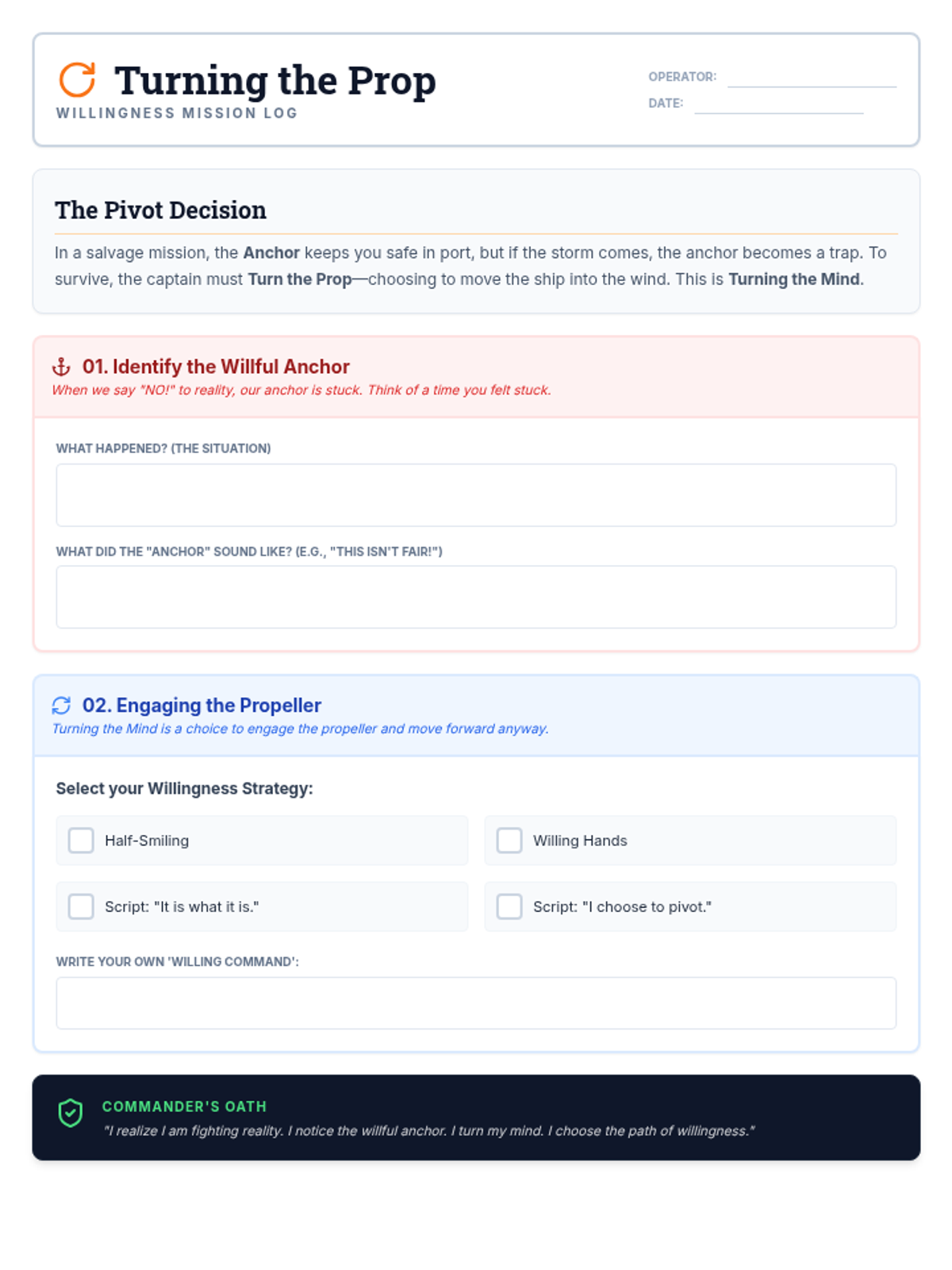
Committing to a new path (Turning the Mind) using the decision to pivot from salvage to survival.
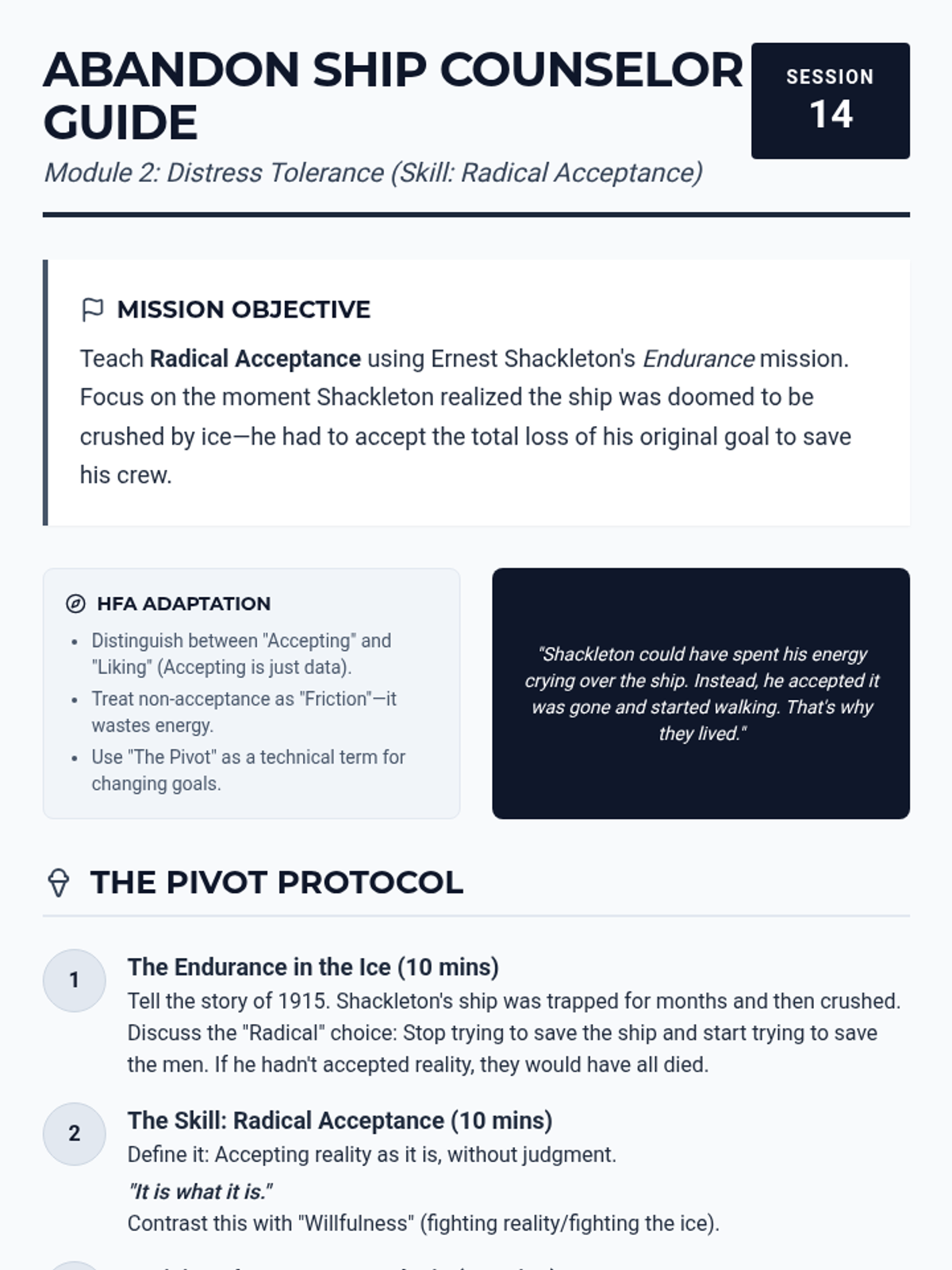
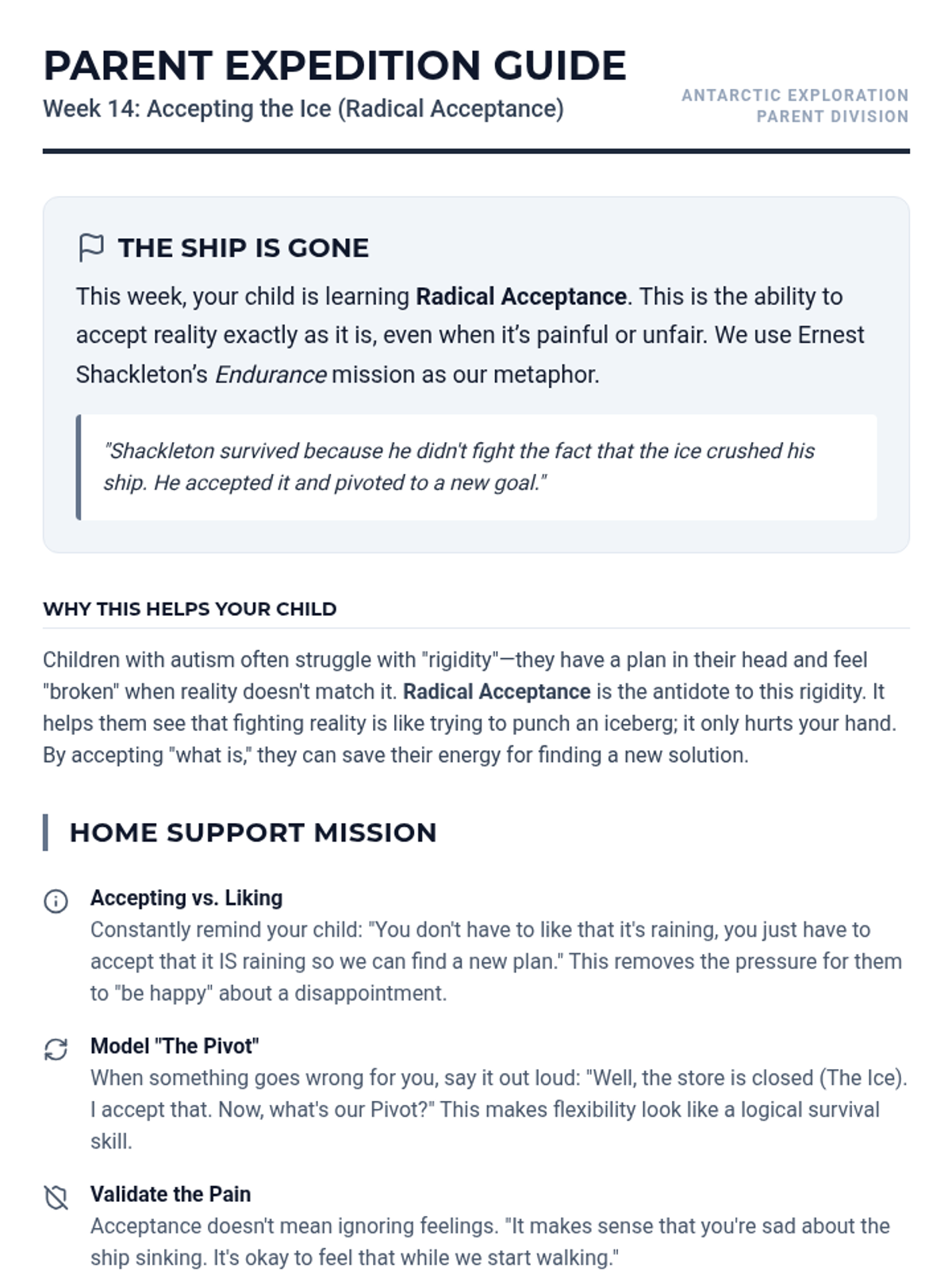
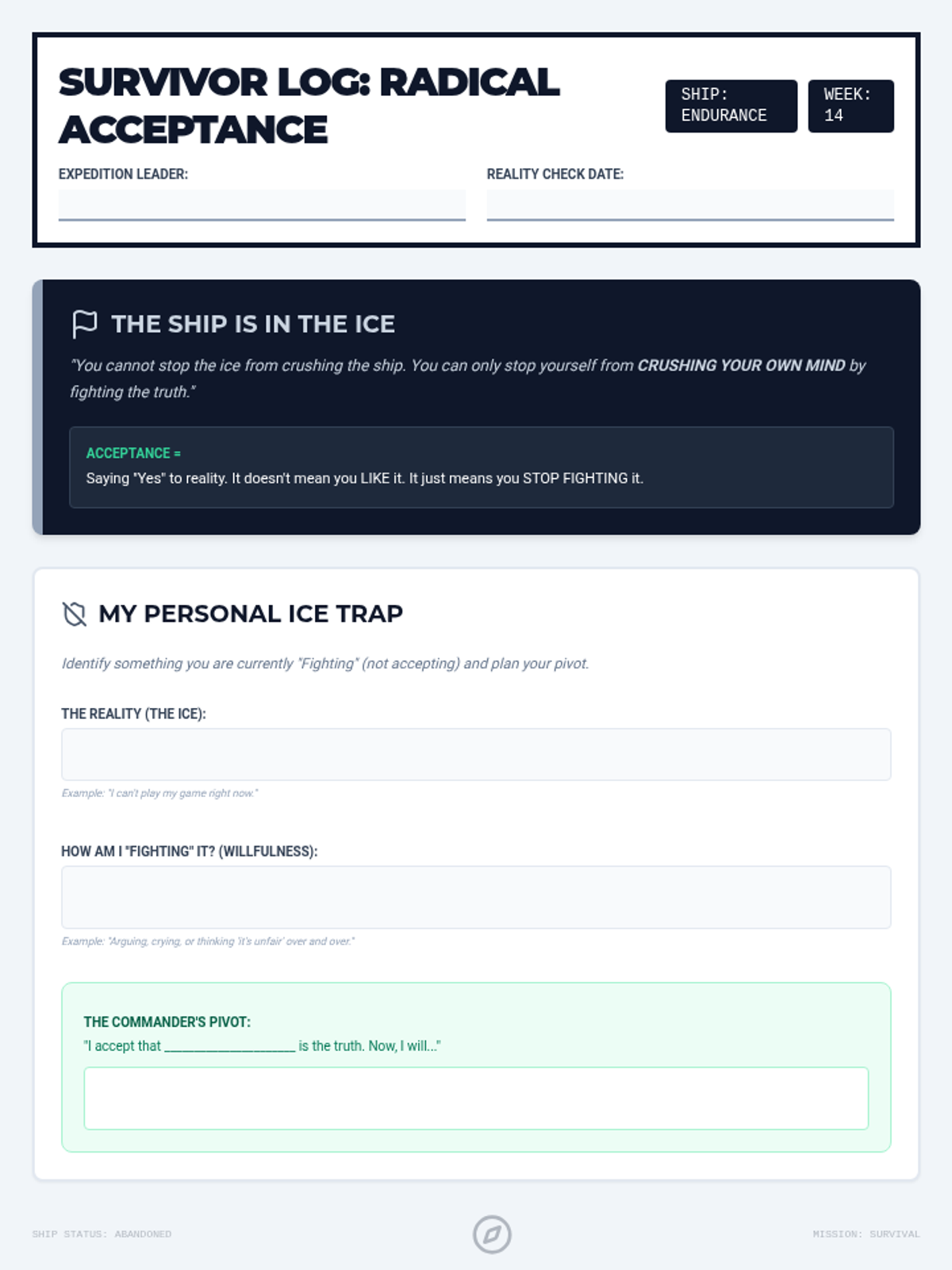
Accepting reality without judgment (Radical Acceptance) using Shackleton's Endurance survival story.
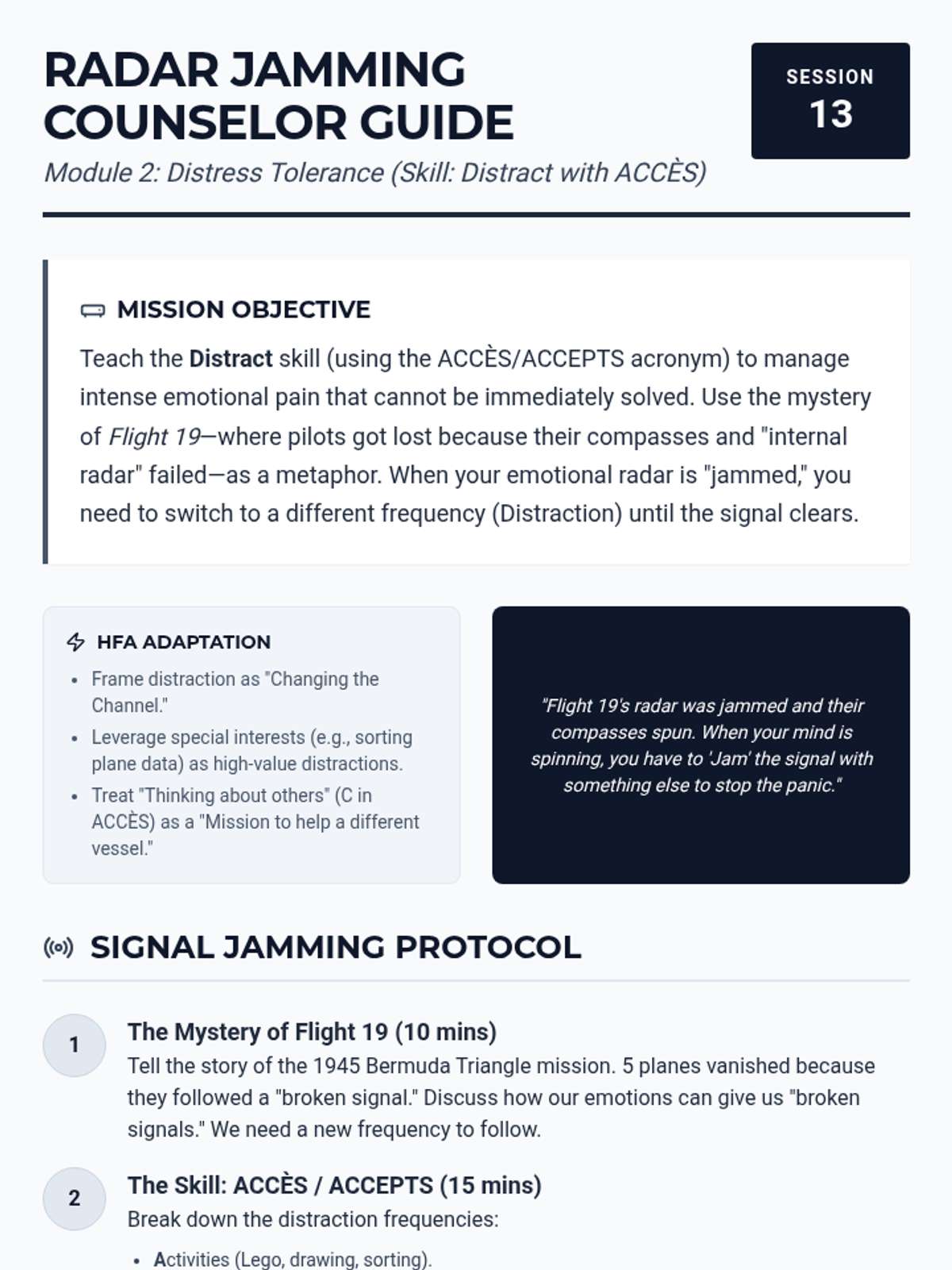
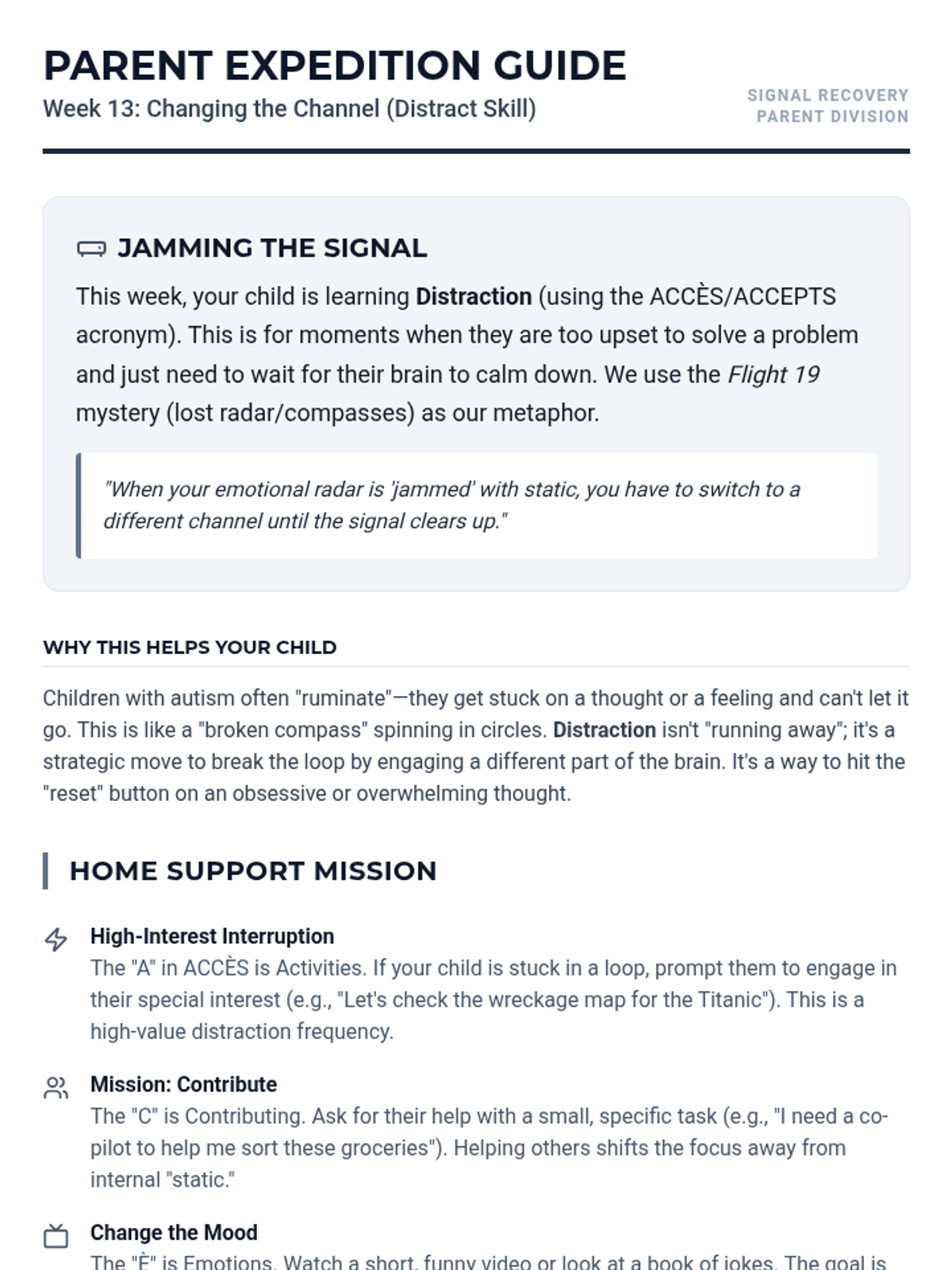
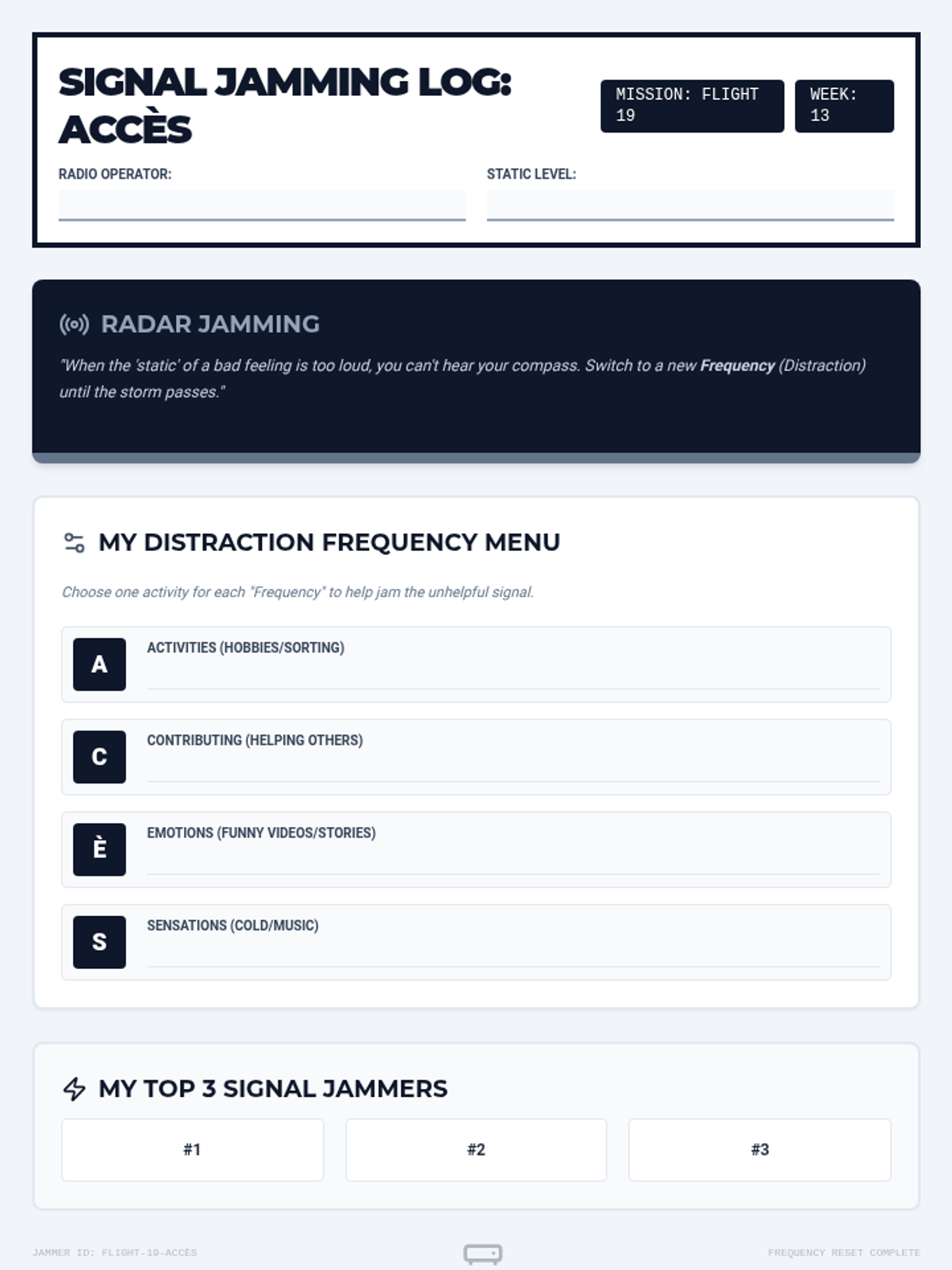
Using distraction and ACCÈS skills to manage distress, using the radar jamming metaphors of the Flight 19 mystery.
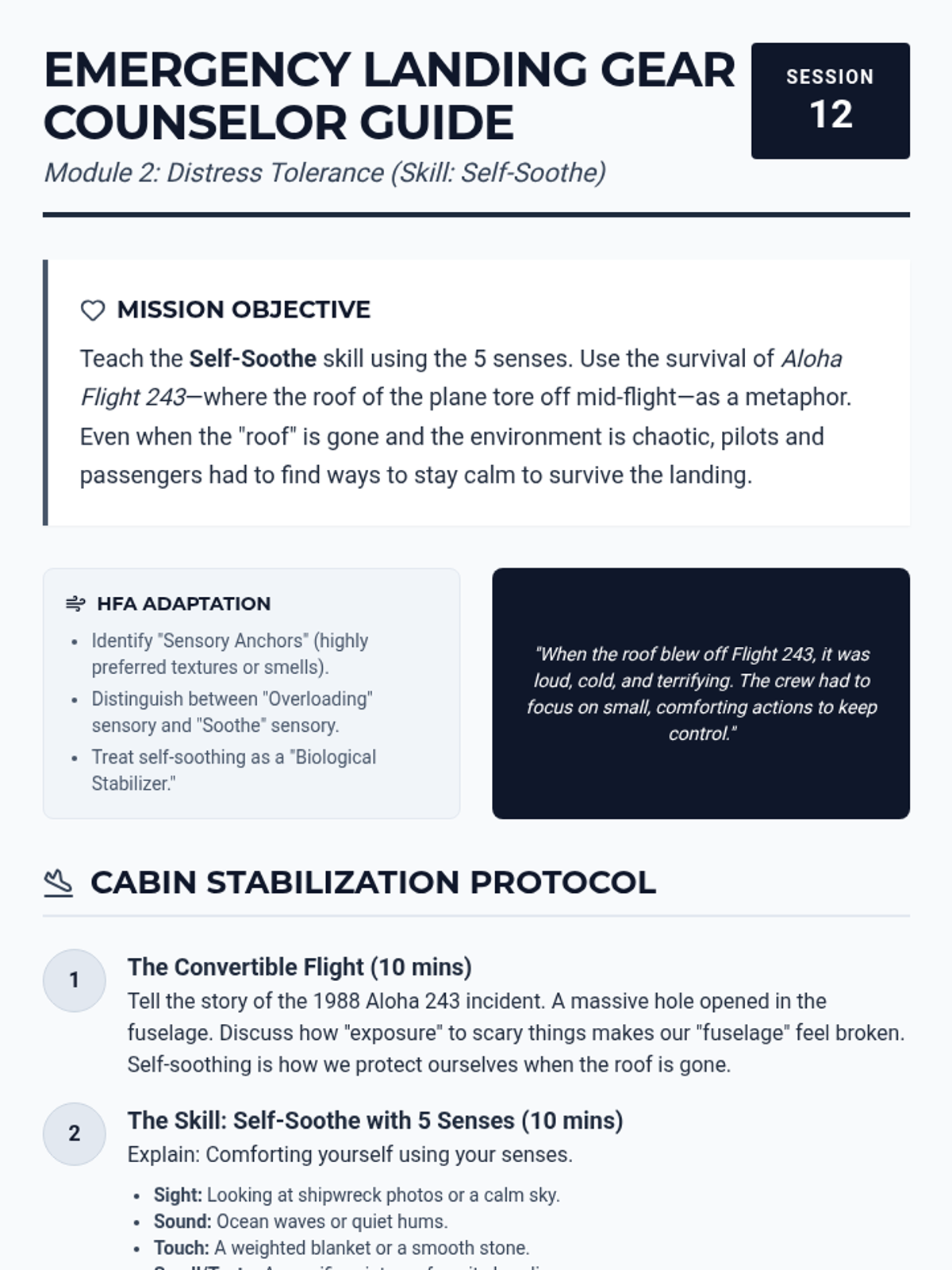
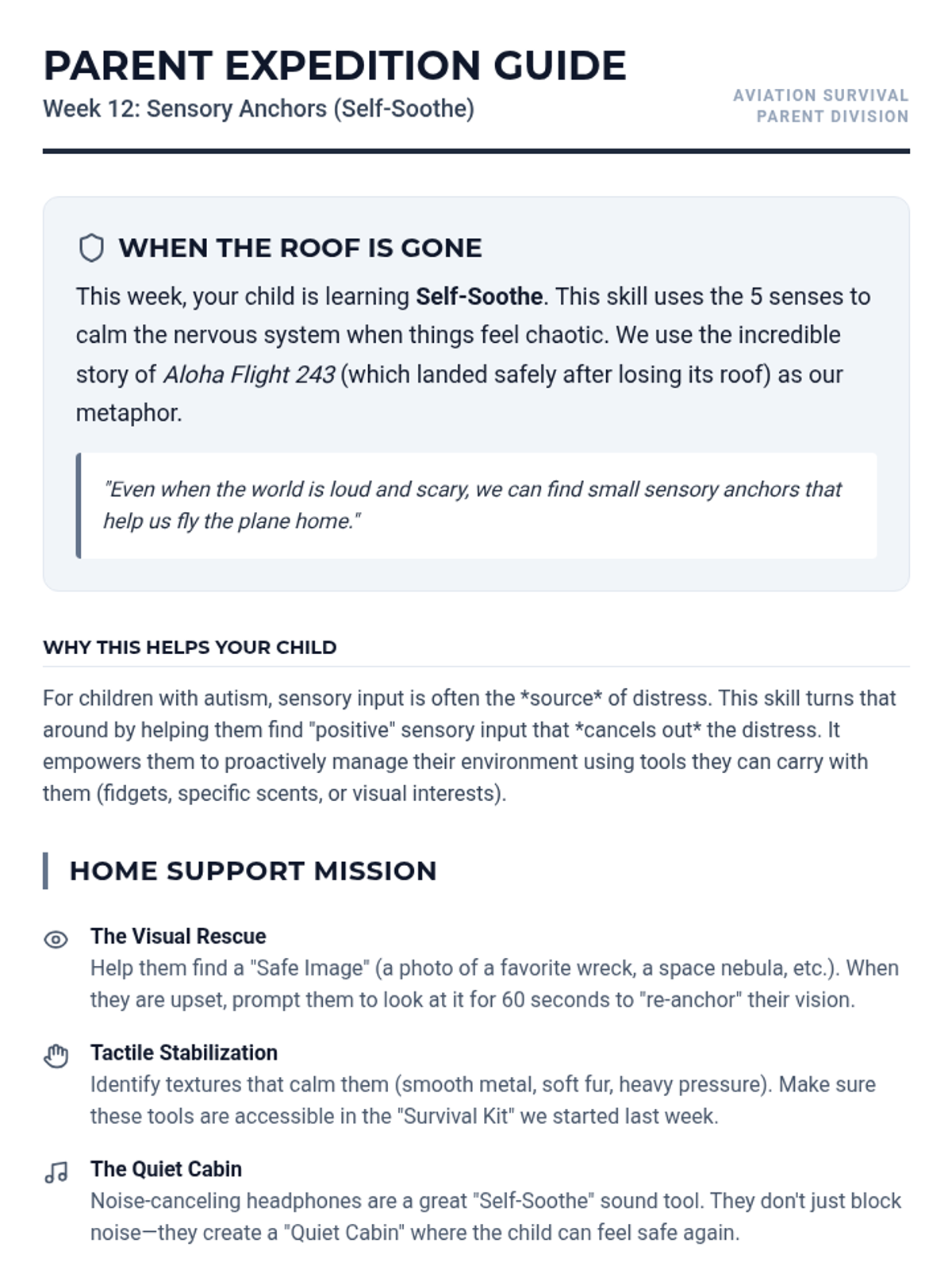
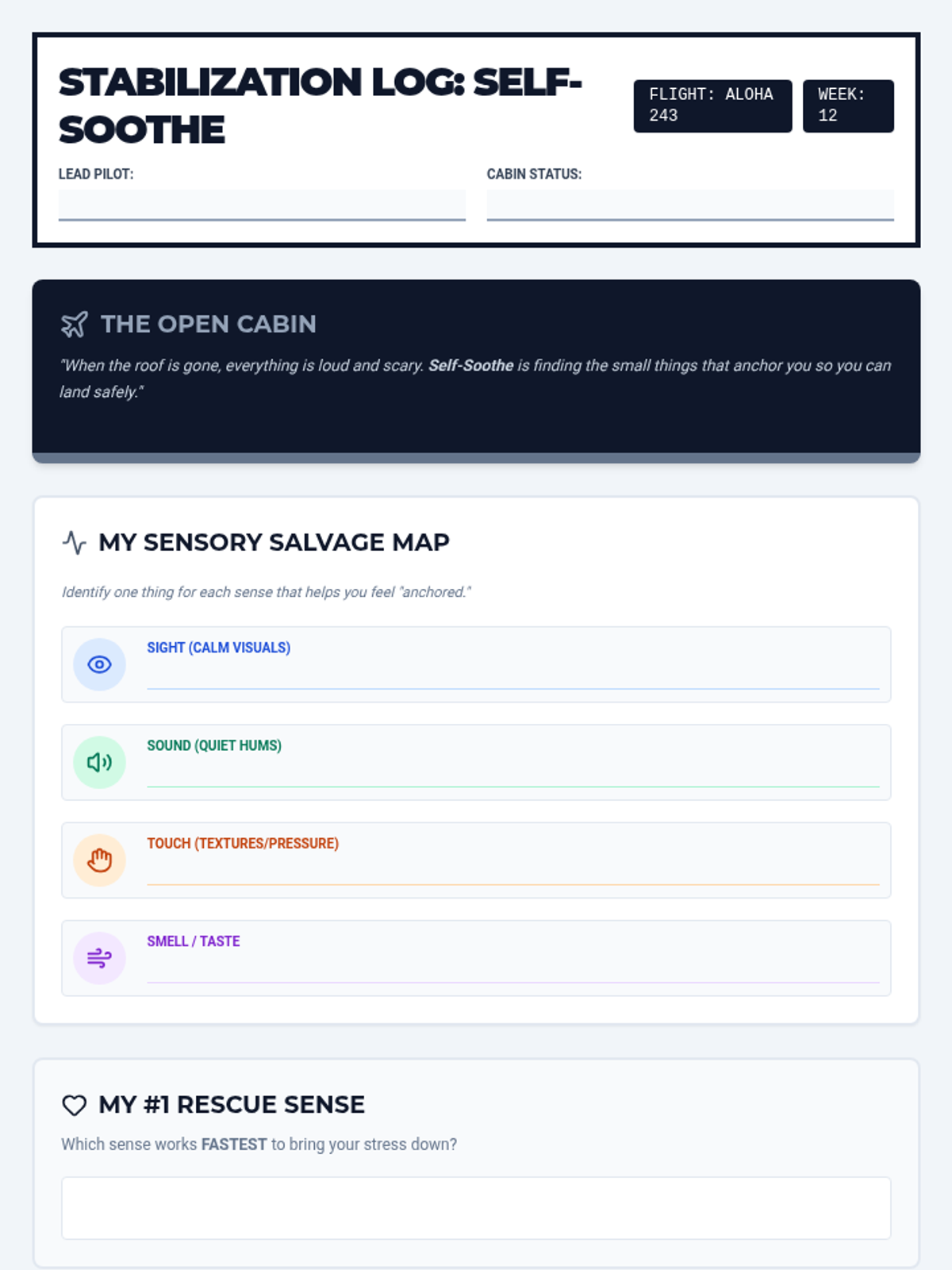
Developing self-soothing techniques (Self-Soothe) using the survival of Aloha Flight 243 after losing its roof.
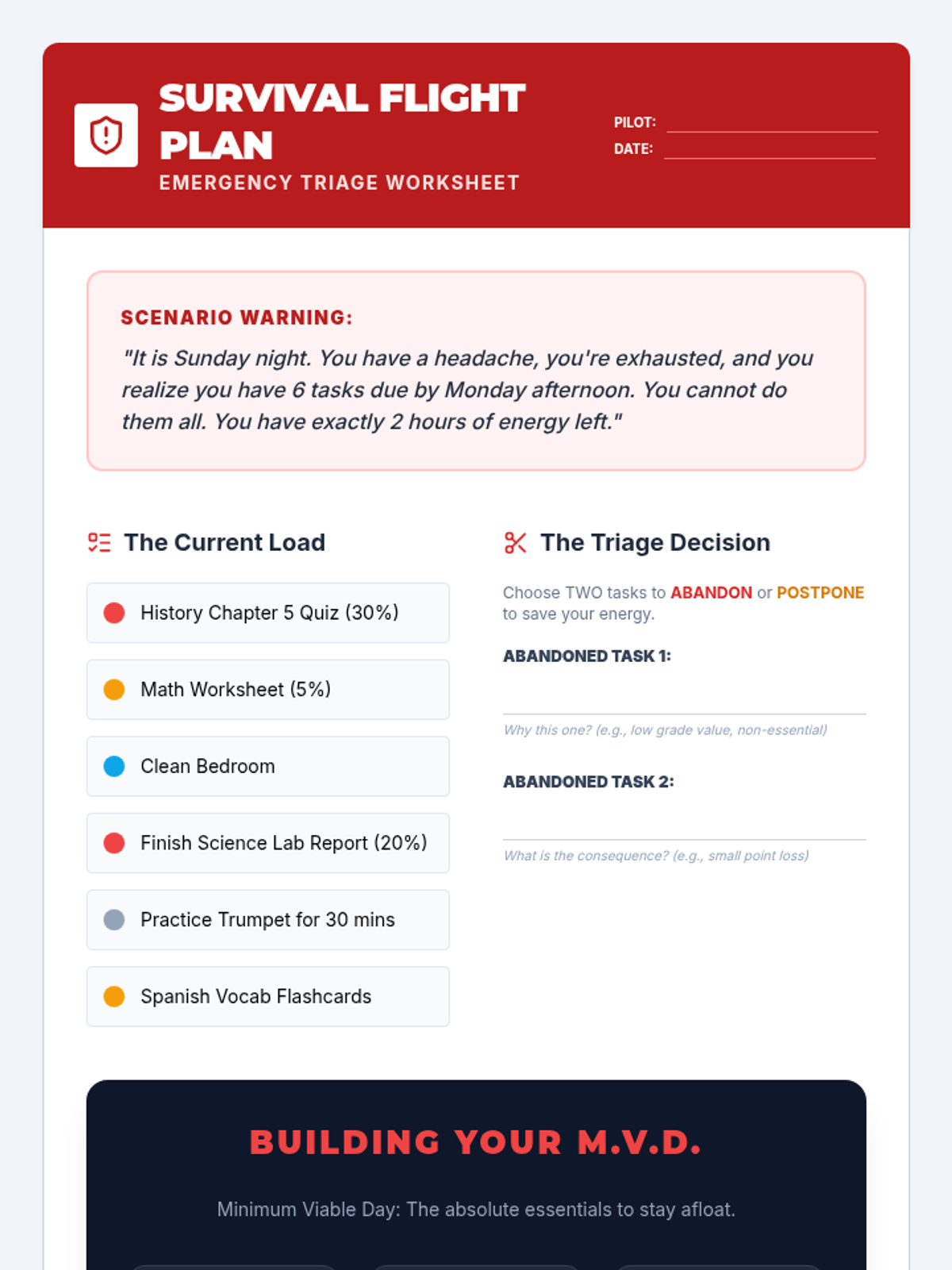
Students develop emergency 'triage' strategies and create a 'Minimum Viable Day' plan for maintaining performance during periods of high stress or illness.
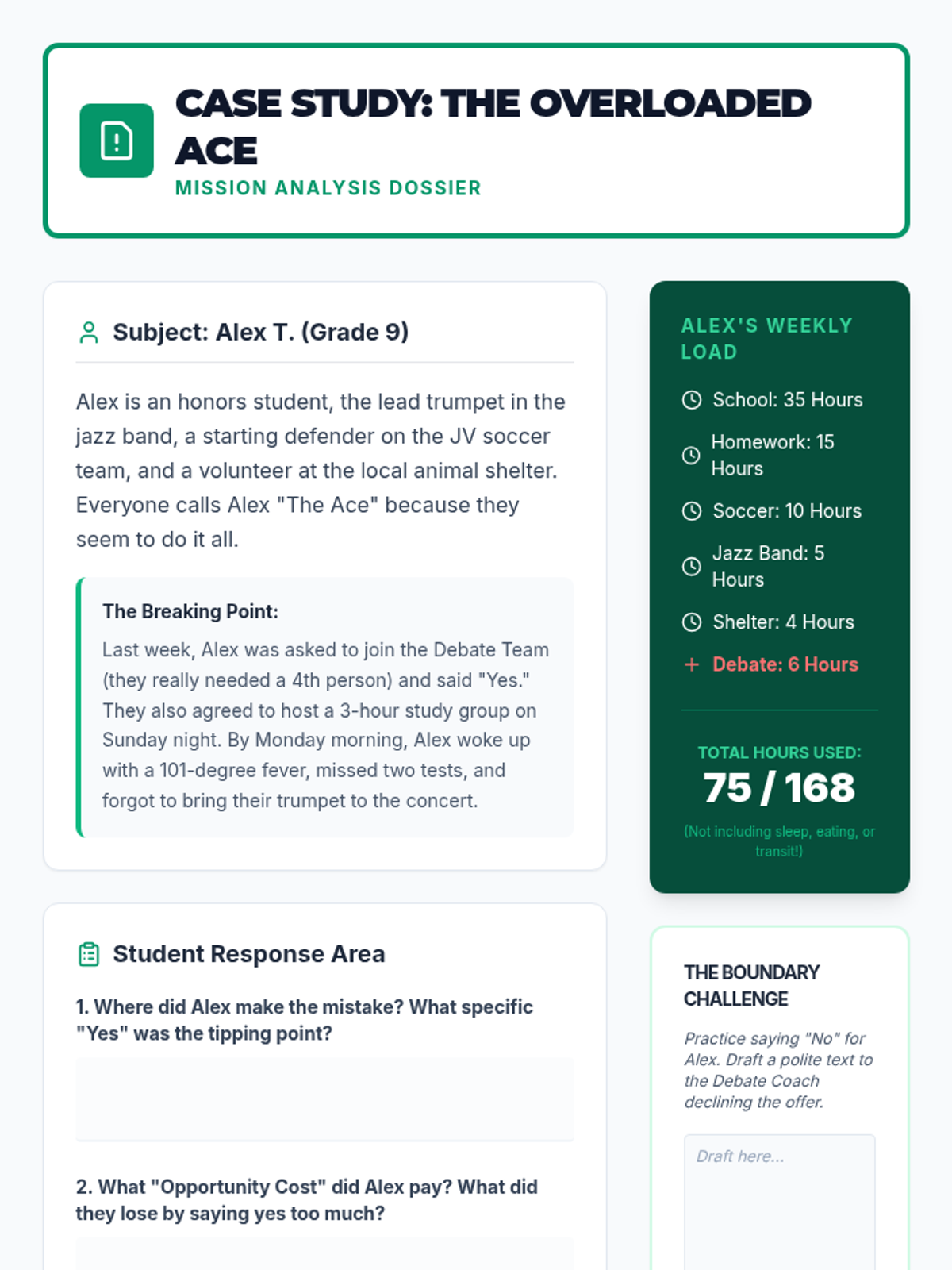
Students explore the concept of opportunity cost and practice strategies for politely but firmly declining optional commitments.
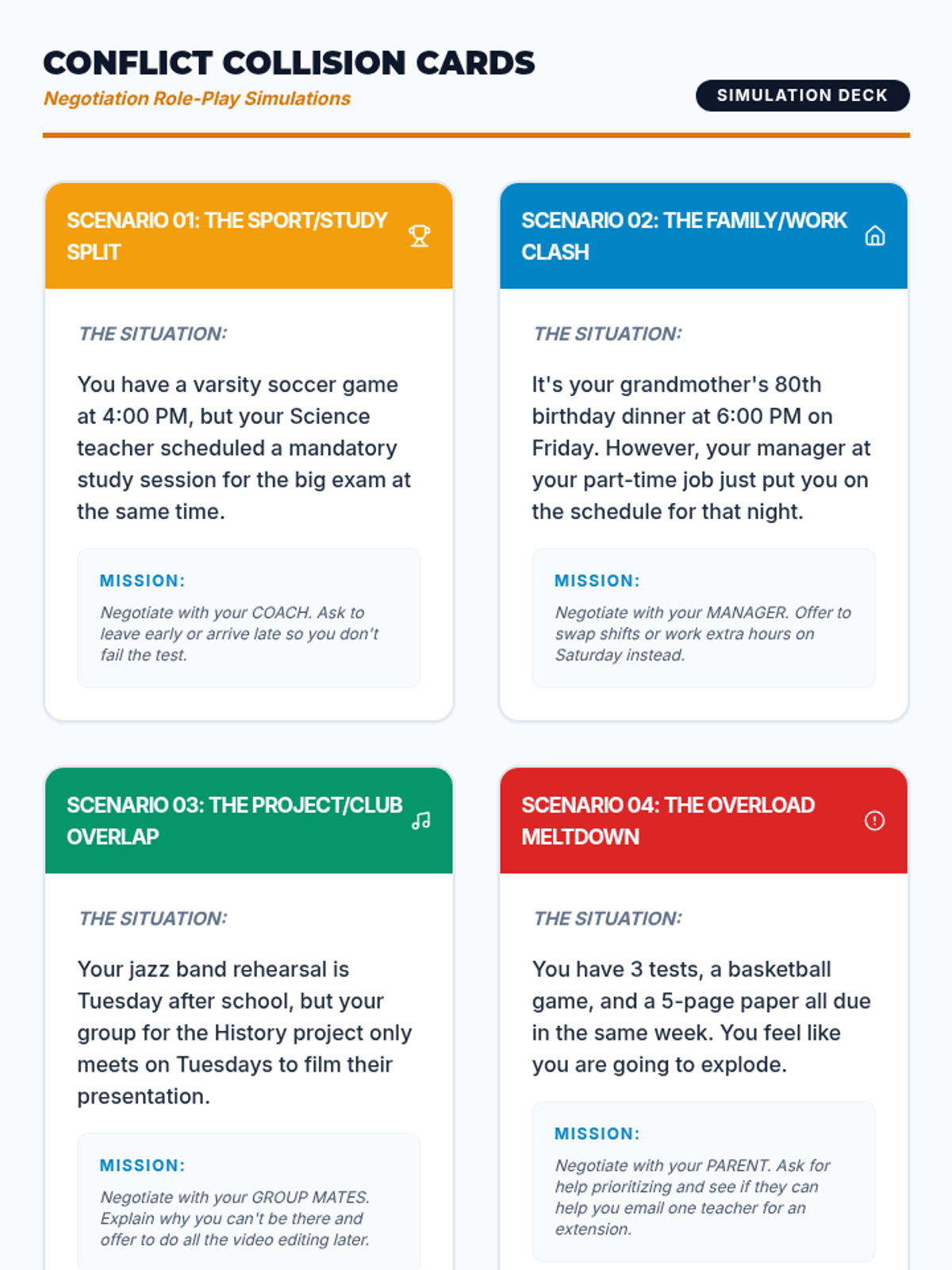
Through role-play and simulation, students practice face-to-face negotiations to resolve scheduling conflicts between multiple commitments.
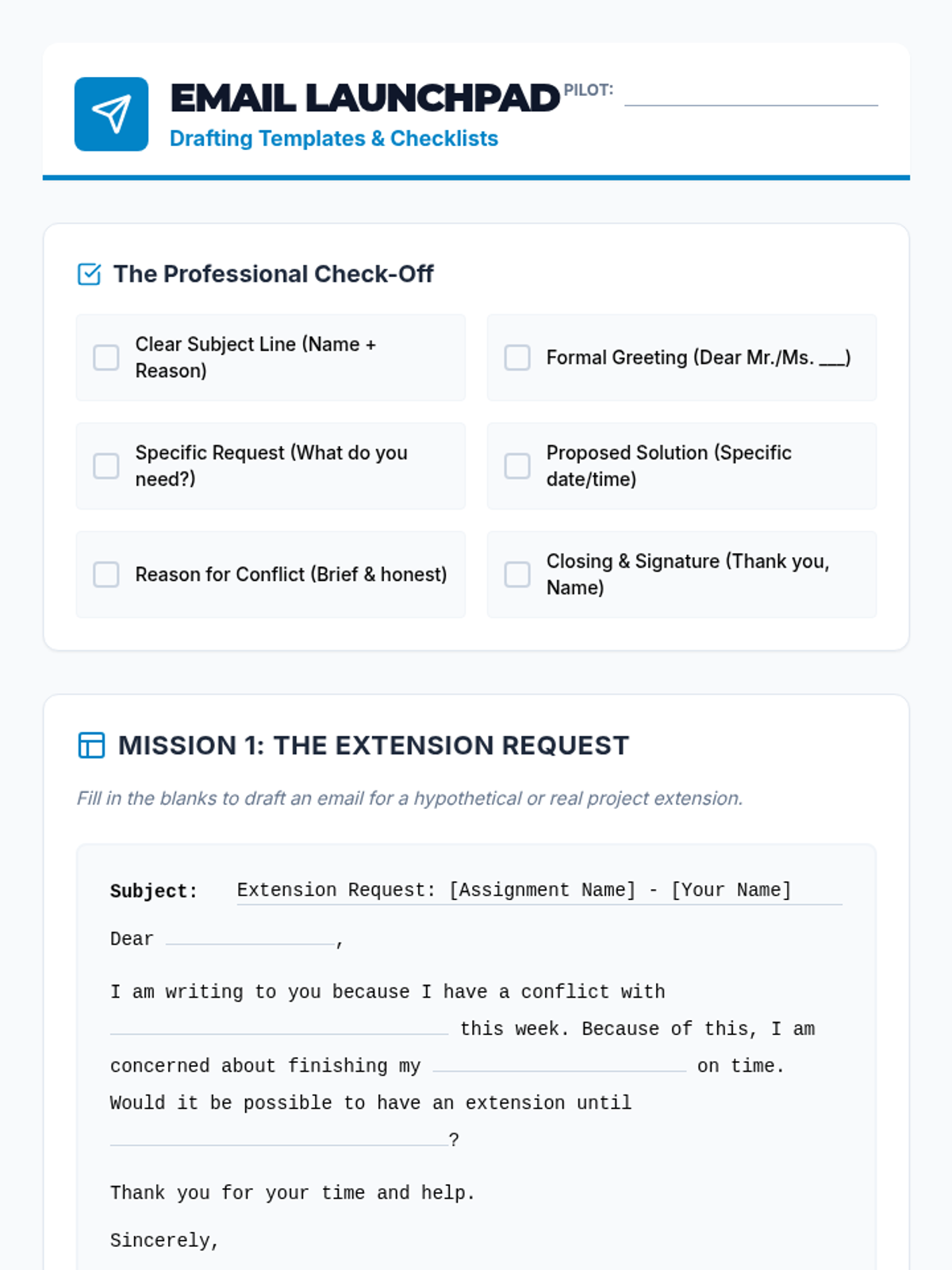
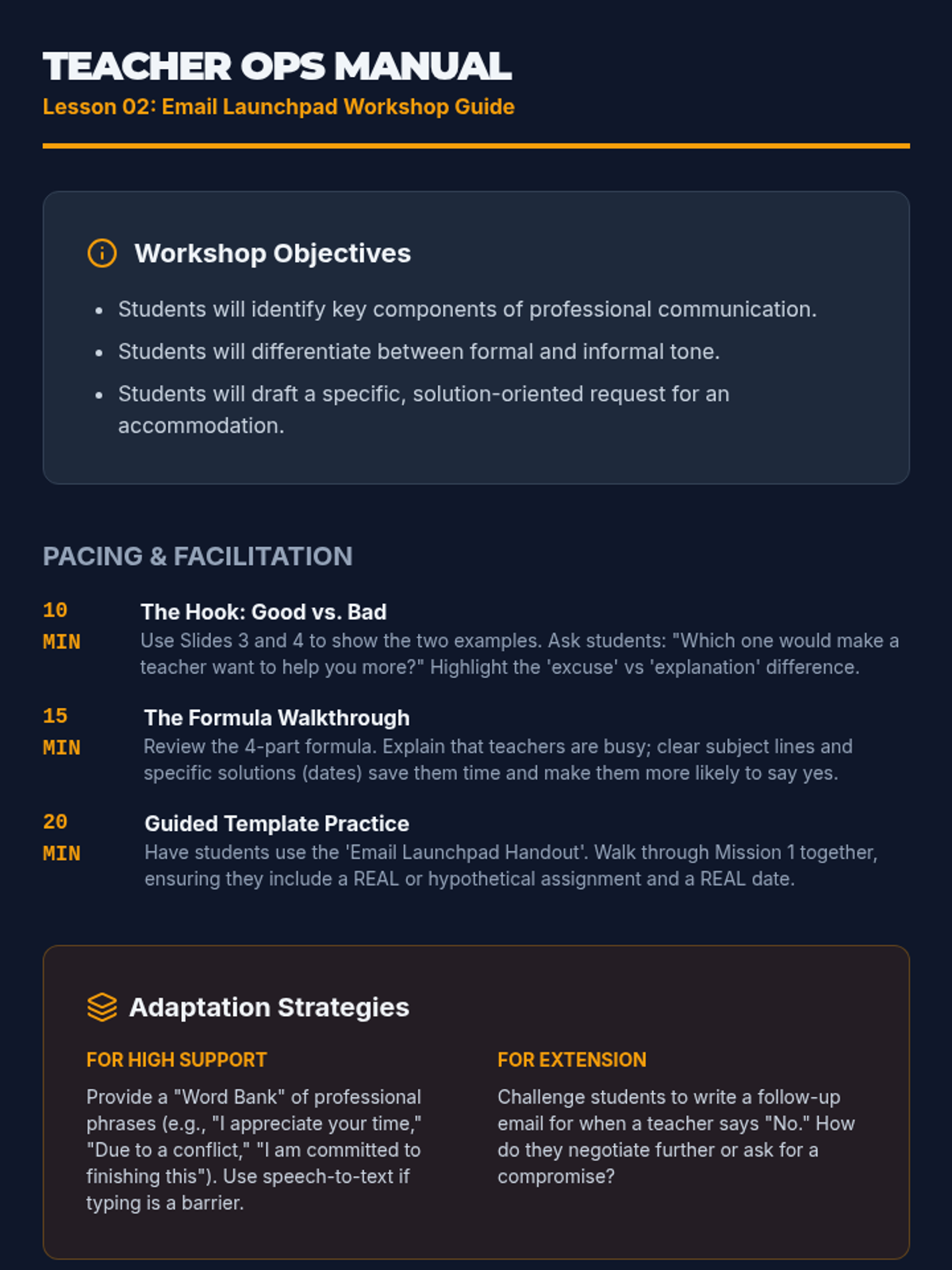
Students master the art of professional email communication, learning to draft responsible and clear requests for extensions or accommodations.
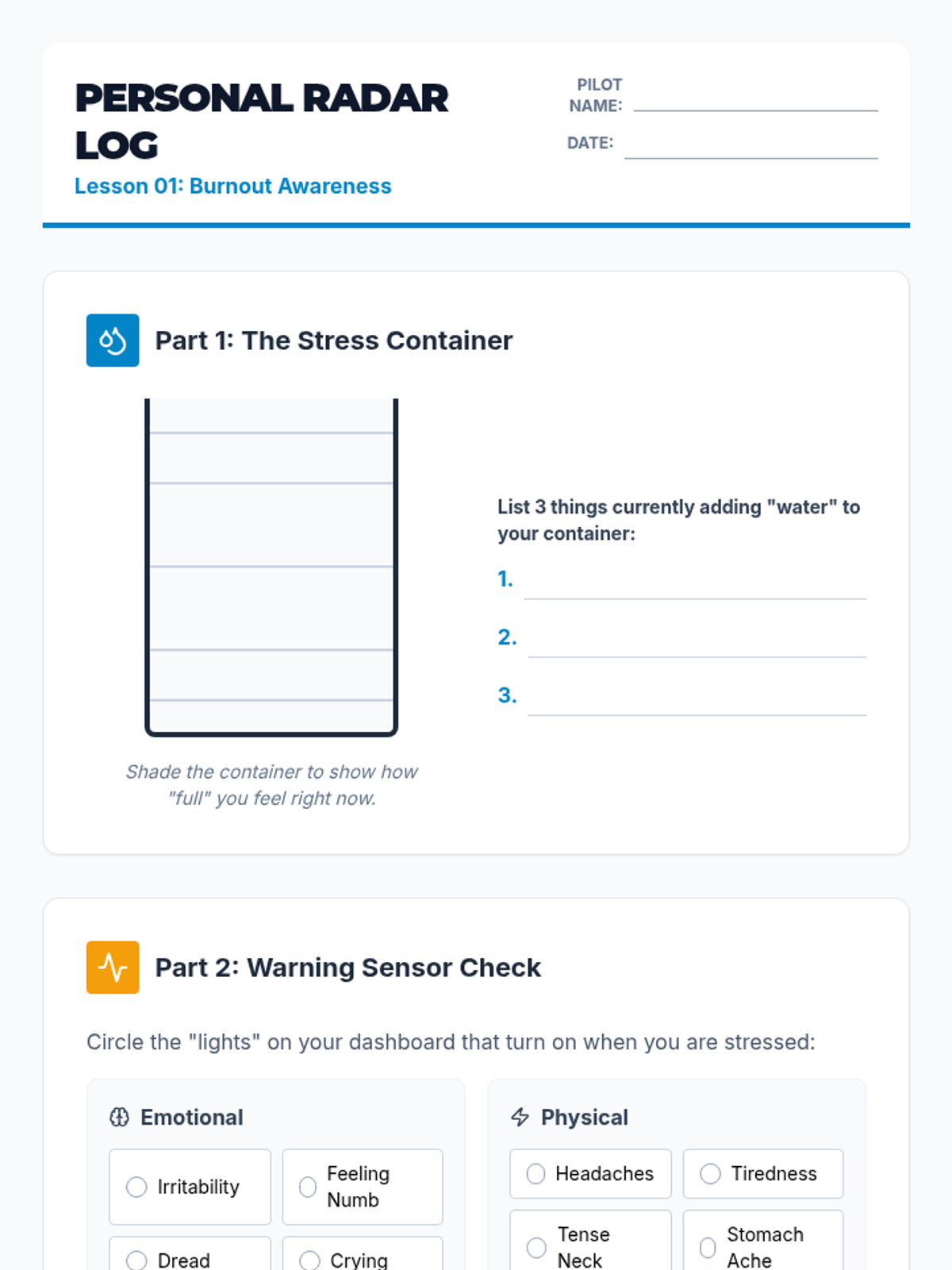
Students identify physical and emotional signs of burnout and use the 'Stress Container' visualization to understand their personal capacity and tipping points.
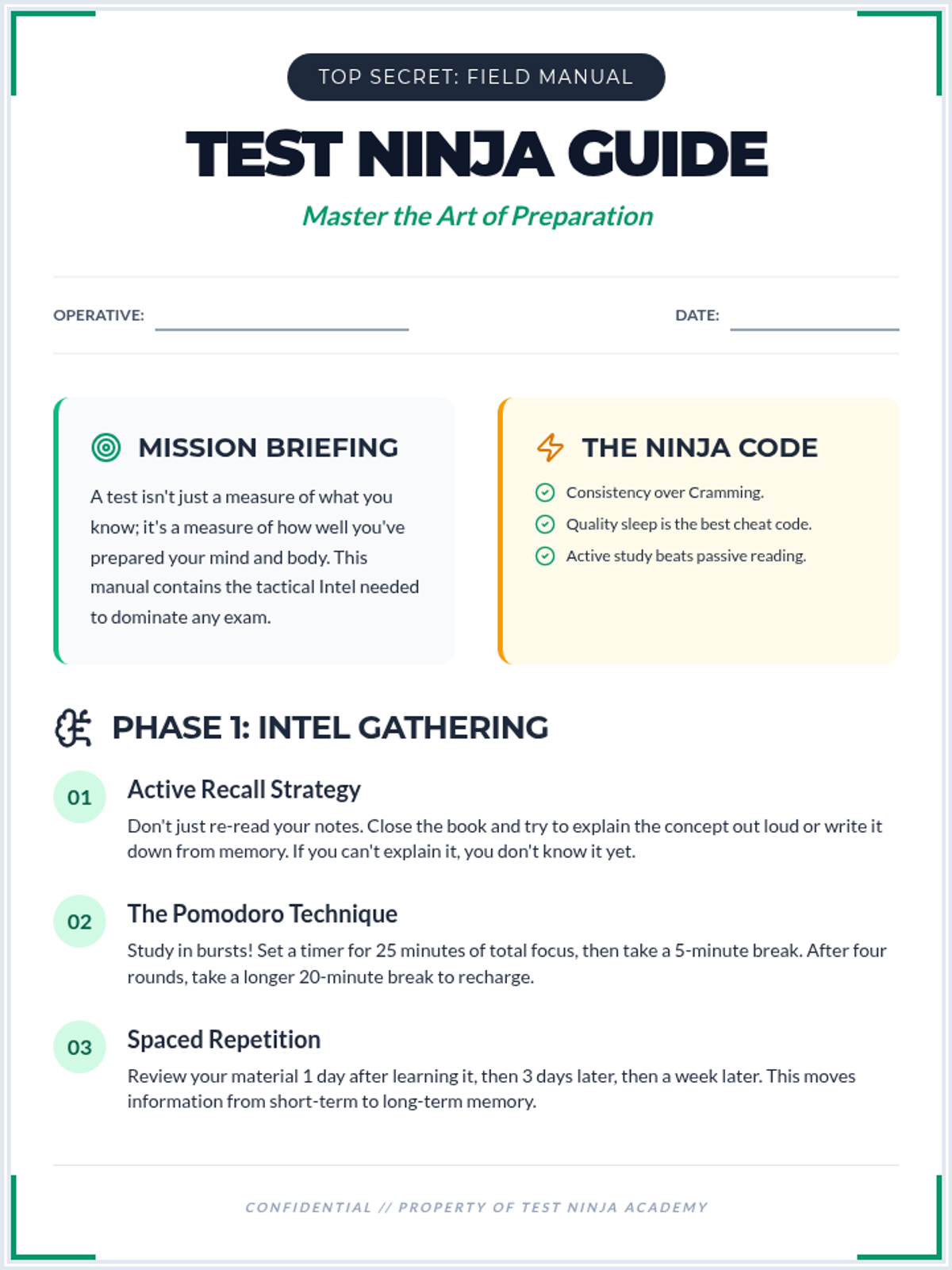
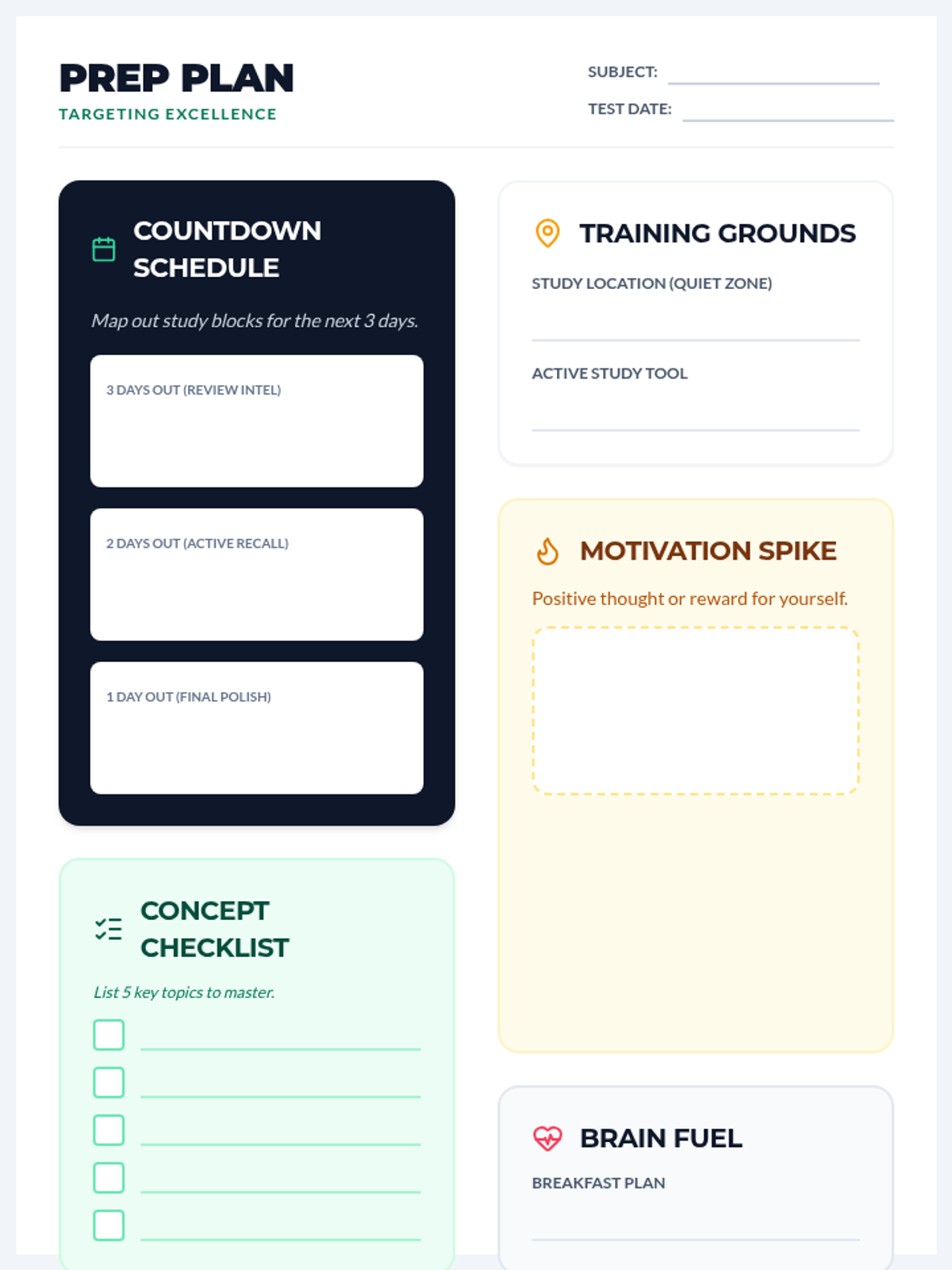
A comprehensive guide to preparing students for exams through effective study habits, mental preparation, and tactical test-day strategies.