Active listening, assertive expression, and boundary-setting strategies for interpersonal success. Develops proficiency in conflict mediation, cooperative teamwork, and the cultivation of healthy romantic and platonic connections.
A 120-minute, step-by-step training lesson designed to help learners with social anxiety identify their professional skills, build interactive communication confidence, and master critical task-oriented and interview conversations. Includes comprehensive facilitator scripts, structured activities, and coping mechanisms.
An immersive, hands-on workshop focused on developing core emotional intelligence skills: self-awareness, self-regulation, empathy, and social skills.
A comprehensive training lesson designed to teach middle/high school students and social work interns how to navigate emotionally charged, difficult conversations using empathetic listening and structured communication frameworks.
A growth-mindset coaching framework designed specifically for young adults (18+) navigating transition. Focuses on actionable cognitive reframing, emotional regulation, and interactive role-play scenarios covering work/academic feedback, roommate/friendship friction, and emerging adult family boundaries.
A structured problem-solving framework designed for students who use avoidance as a coping mechanism. This lesson provides practical tools for cognitive reframing, sensory grounding, self-advocacy, and task-chunking to help students move from avoidance to action.
A comprehensive lesson designed for adult learners to master assertive communication techniques including I-Statements and the DBT DEAR MAN framework to effectively express personal needs in a mental health context.
Synthesis of skills through 'Walking the Middle Path'—balancing the pain of loss with the necessity of moving forward.
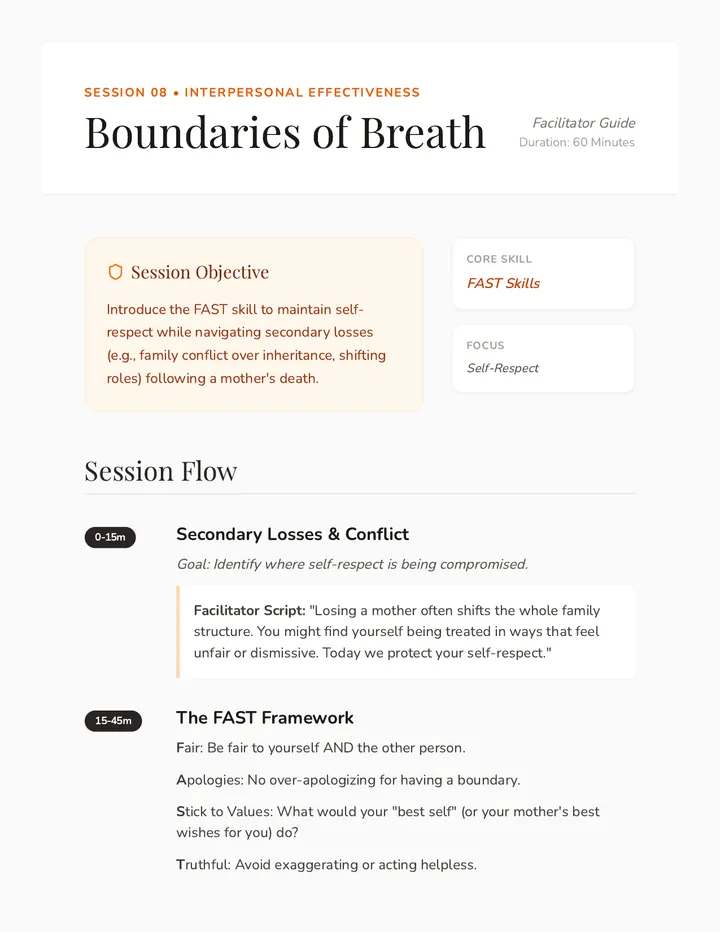
Applying the FAST skill to maintain self-respect and values when navigating the secondary losses associated with maternal death.
Using the DEAR MAN skill to communicate needs and boundaries to family and friends during the grieving process.
Implementing 'Opposite Action' and 'Building a Life Worth Living' by intentionally engaging in activities that honor the relationship.
Applying 'Check the Facts' to common grief-related emotions like guilt, shame, and regret.
Using the five senses to create a self-soothing ritual for times when the absence of a mother is felt most acutely.
Teaching the TIPP skill to manage acute, overwhelming moments of distress during the mourning process.
Exploring the balance between the 'Emotional Mind' of grief and the 'Rational Mind' of daily life to find 'Wise Mind'.
Introduction to Radical Acceptance and the concept of 'Mindfulness of Current Emotion' as it pertains to the initial stages of grief.
An interactive scenario-based session for clients in MH/SA or forensic settings to practice communication styles. Participants evaluate their responses using color-coded styles and SFBT scaling to identify patterns and areas for growth.
A comprehensive personal development lesson designed for young adults transitioning into independence. It features a 10-page workbook centered on values, emotional intelligence, and life skills, paired with a facilitator guide for mentors or therapists.
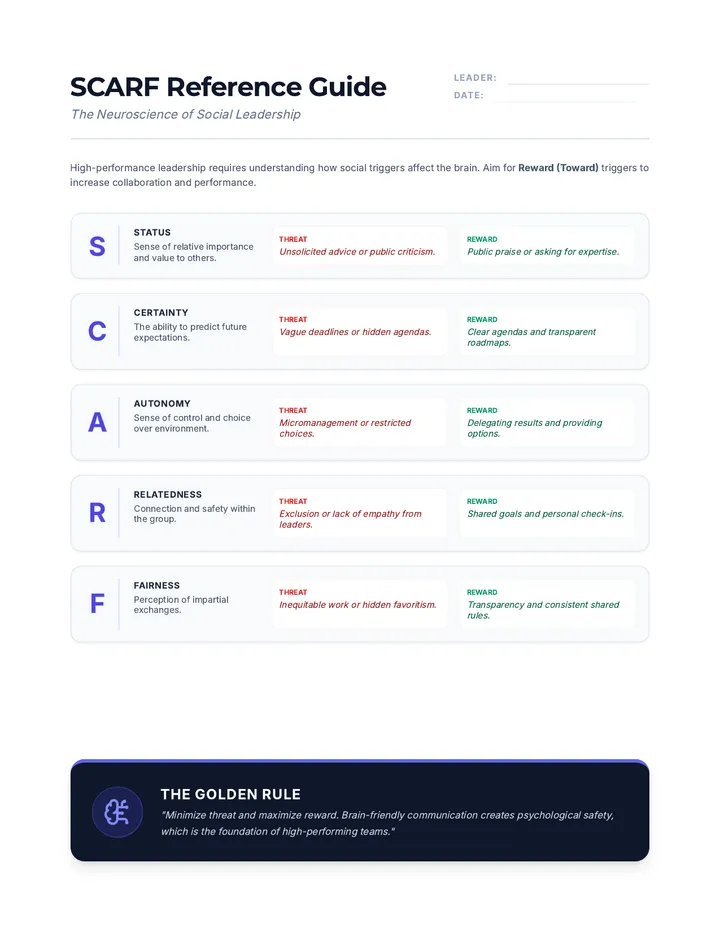
A toolkit for leaders to apply David Rock's SCARF model to communication, ensuring they trigger reward responses rather than threat responses in their teams.
A 60-minute group session focused on empowering adults in PSR programs to understand their personal rights and practice assertive communication in real-world situations.
A comprehensive training package for volunteers entering the juvenile justice system, focusing on trauma-informed care, mentorship, boundaries, and conflict resolution.
An interactive 1-hour workshop on empathy and social awareness in everyday adult life, focusing on friendships, job hunting, workplaces, and navigating daily community interactions with mutual respect.
A lesson designed to empower clients in recovery to understand and write their own narrative progress notes, focusing on self-evaluation of group participation, behavior, and future goals.
A 90-minute workshop on navigating feedback anxiety, responding with composure, and managing everyday stress through practical tools and frameworks.
A supportive final session for counseling groups focused on reflecting on interpersonal growth, shared experiences, and the process of saying goodbye.
A comprehensive 90-minute lesson covering first impressions, the STAR method for behavioral questions, and professional etiquette for job seekers.
This lesson introduces students to Carl Rogers' Person-Centered Therapy, focusing on the three core conditions for growth and the concept of self-actualization. Students will explore how empathy, congruence, and unconditional positive regard create a safe environment for personal development.
A 90-minute verbal-only workshop on body language in workplace, retail, clinical, and social settings. Uses interactive live acting and guided group discussion.
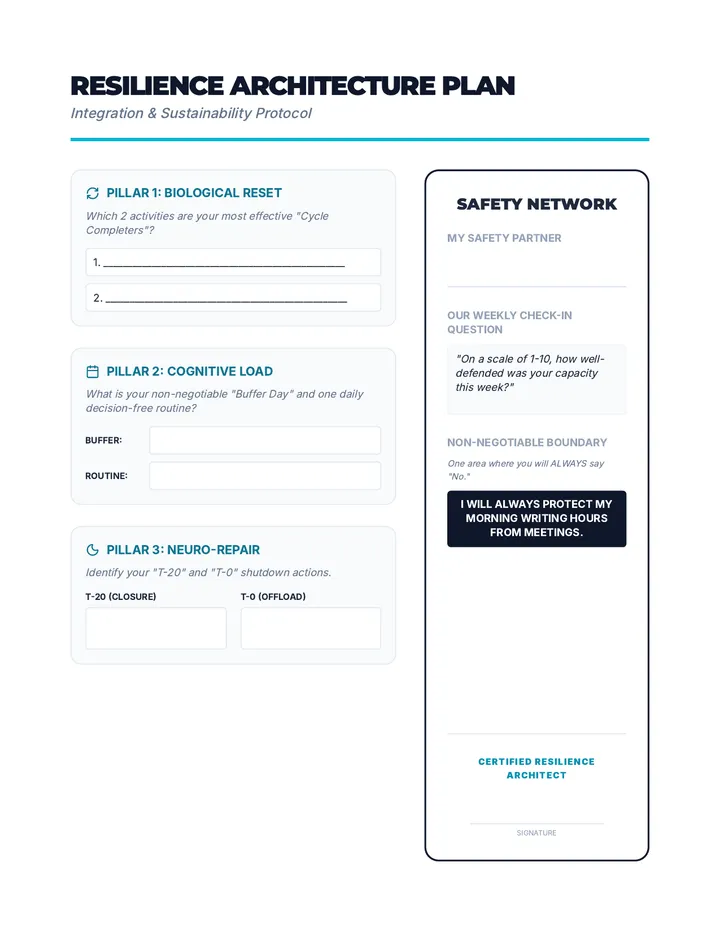
Final synthesis where students integrate all learned modules into a personalized Resilience Architecture plan and a portable Crisis Card for emergency restoration.
Addresses the pressure to overcommit in academia by teaching the 'Strategic No' as a tool for protecting capacity and ensuring career longevity.
Explores the neurobiology of sleep and its role in emotional regulation, culminating in the design of a 'shutdown ritual' to combat revenge bedtime procrastination.
Reframes time management as a tool for reducing cognitive load and anxiety, teaching graduate students to design schedules based on energy levels and buffer capacity.
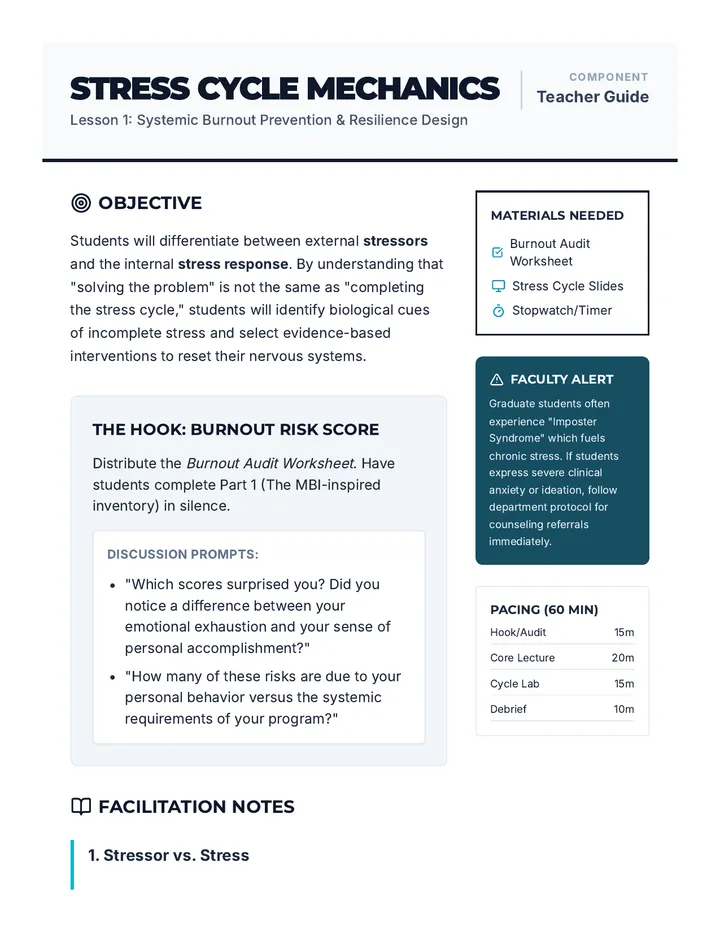
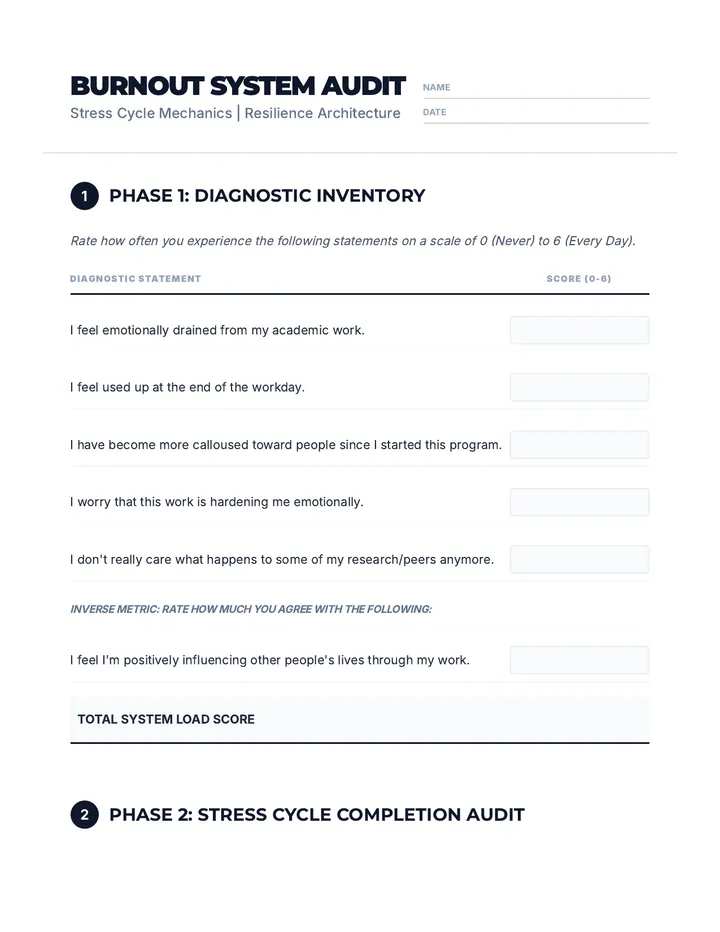
Students distinguish between stressors and the physiological stress response, auditing their current routines to ensure they are completing the stress cycle to prevent chronic burnout.
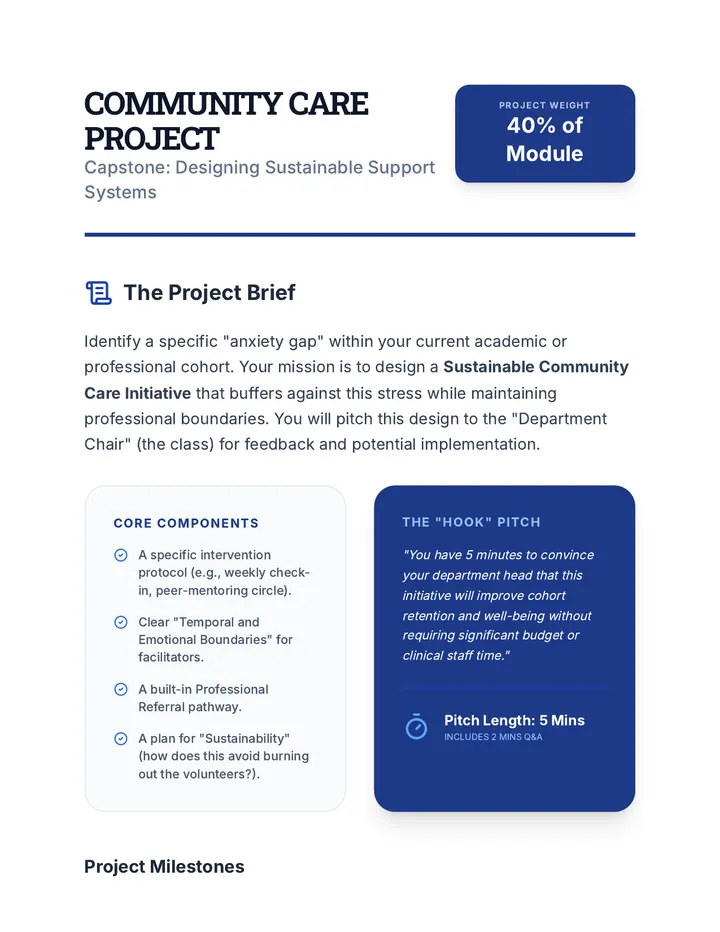
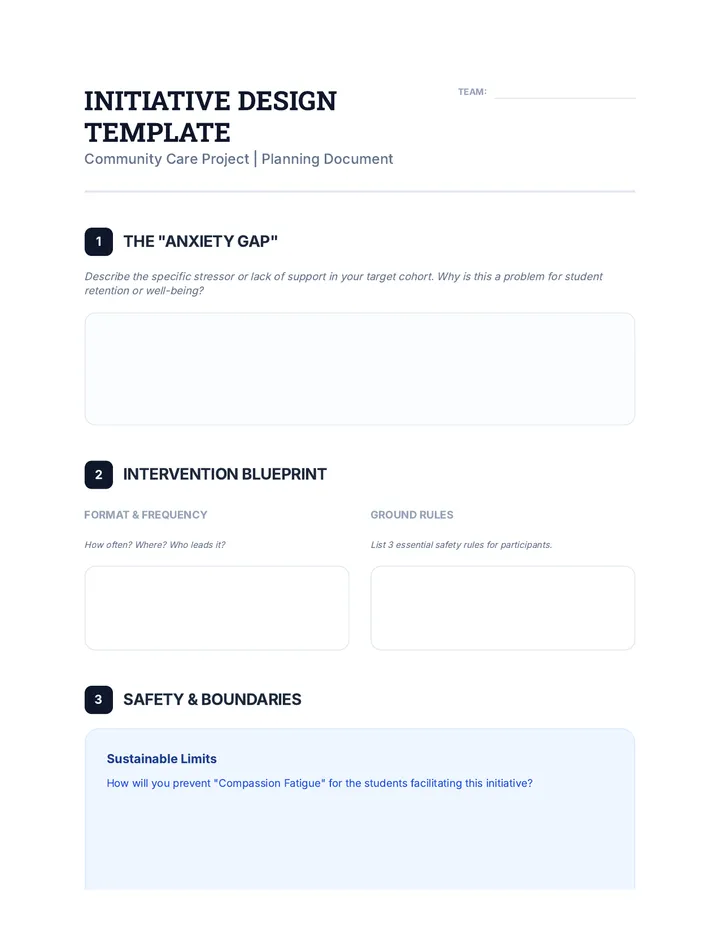
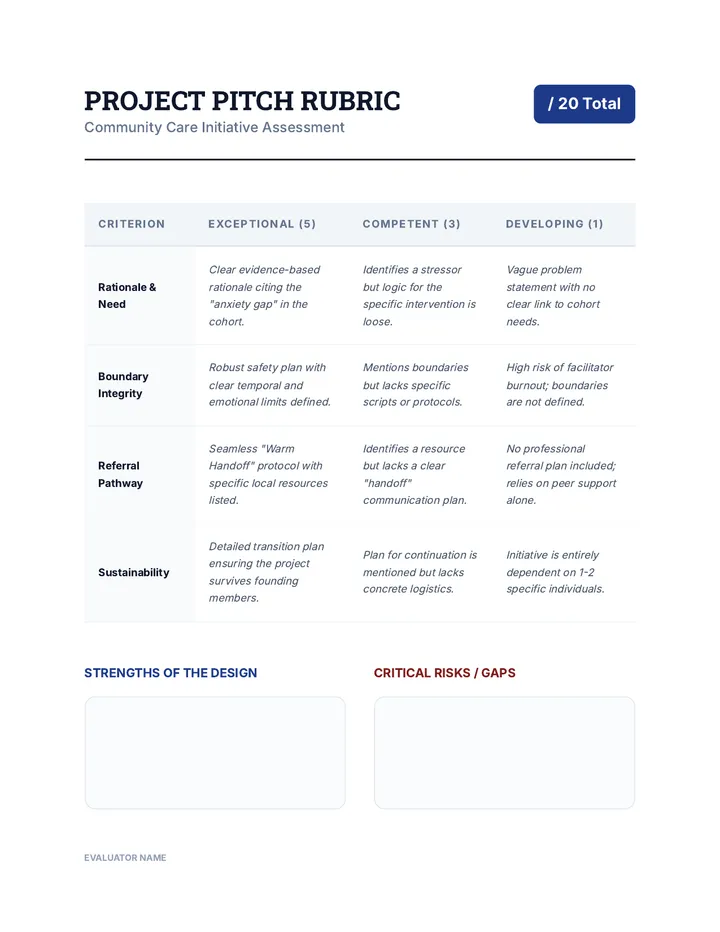
Students design and pitch a sustainable community care initiative tailored to their specific academic or professional cohort.
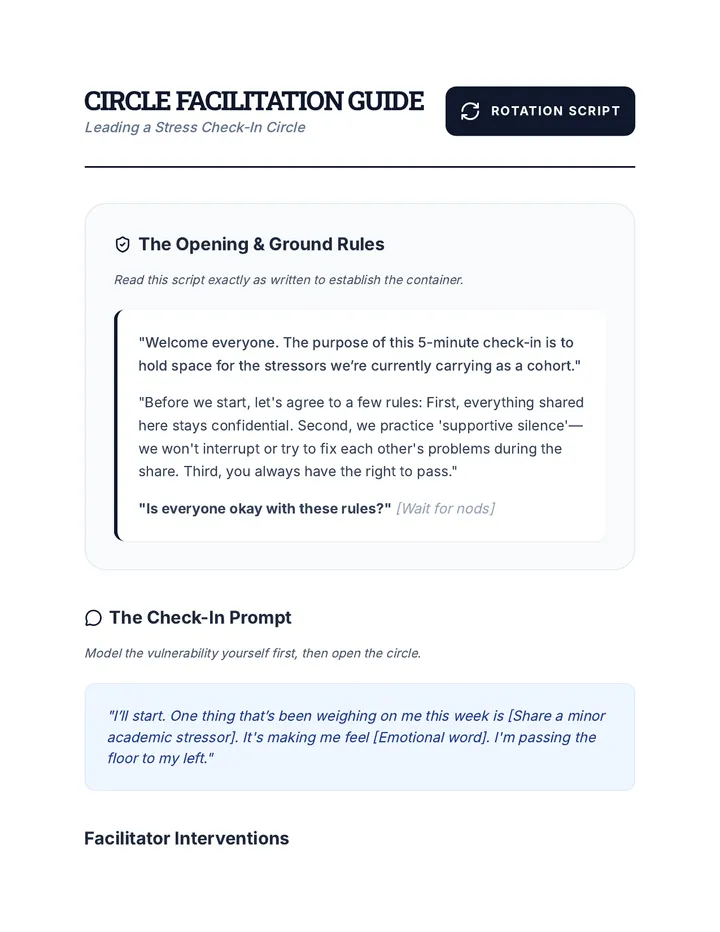
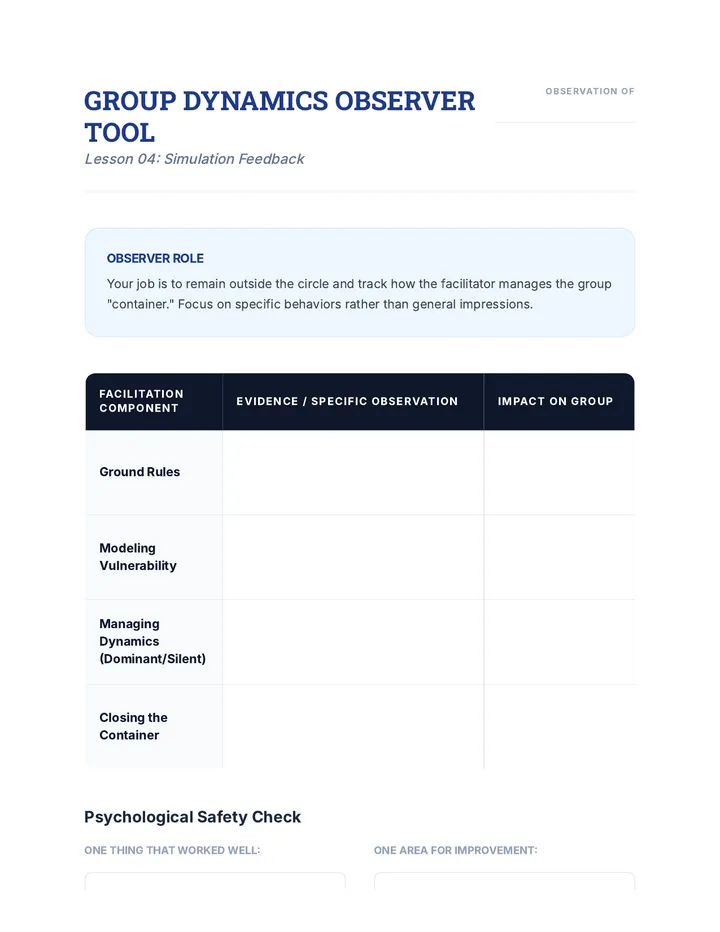
Develops skills for leading group stress check-ins, managing dynamics, and ensuring psychological safety in group settings.
Focuses on preventing compassion fatigue through emotional and temporal boundaries and professional referral protocols.
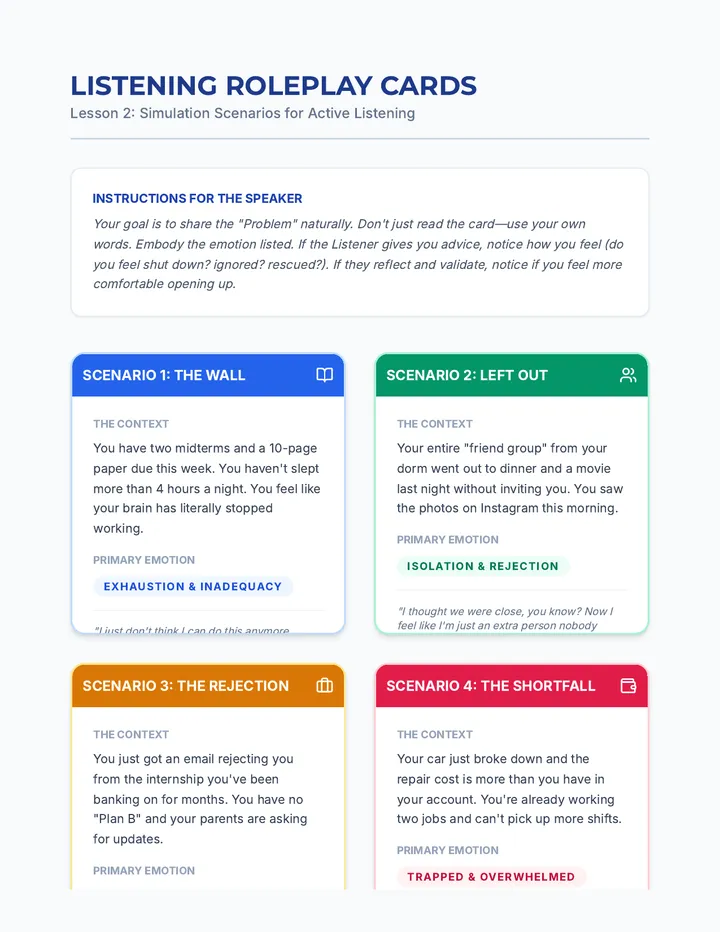
Practical workshop on active listening, validation, and holding space for peers without the pressure to provide immediate solutions.
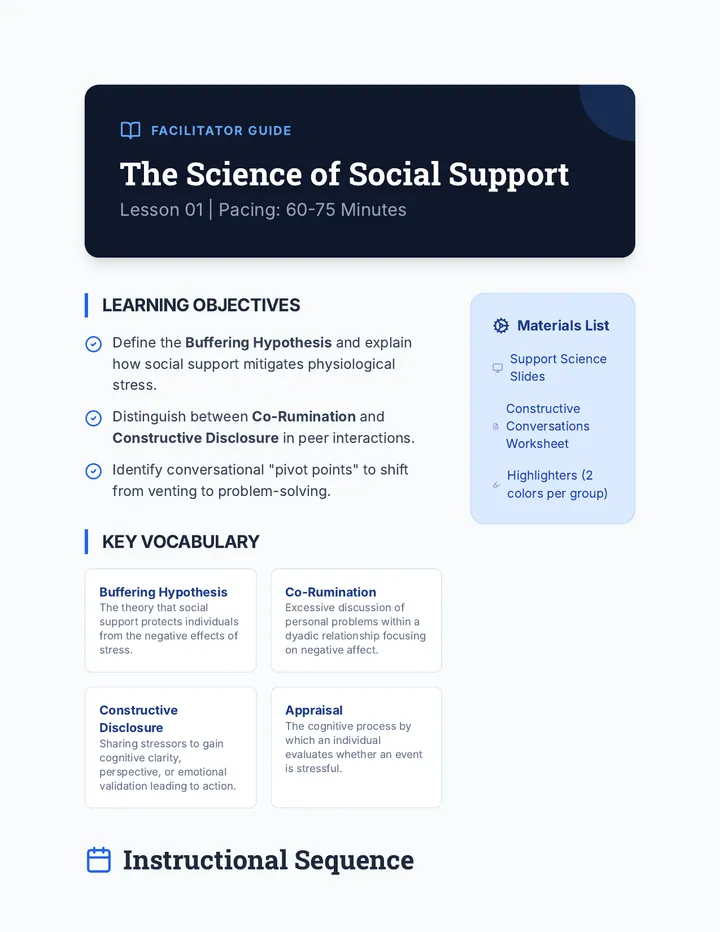
Examines the buffering hypothesis and the psychological mechanics of how social connection mitigates stress, contrasting co-rumination with constructive disclosure.
Students design a framework for a community care plan, producing a 'Community Charter' for peer support in a specific campus context.
A facilitated dialogue session focusing on common undergraduate stressors, practicing normalization and collective coping strategies.
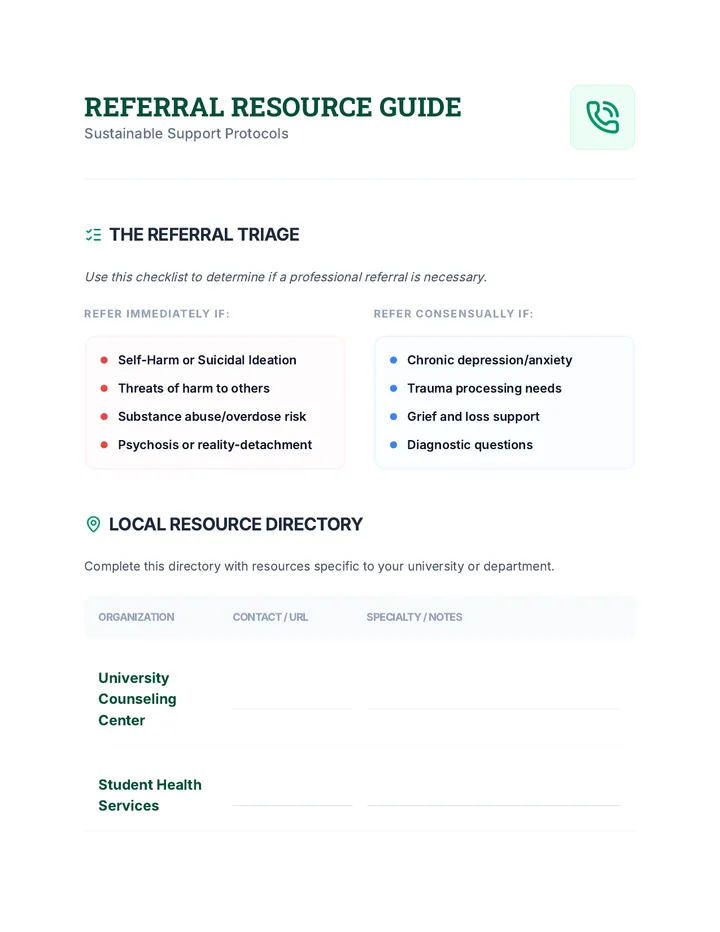
Training on recognizing the limits of peer support and when to refer to professionals, with a focus on setting emotional boundaries to prevent burnout.
A skill-building session on non-judgmental listening, reflecting, and validating emotions, focusing on 'holding space' rather than problem-solving.
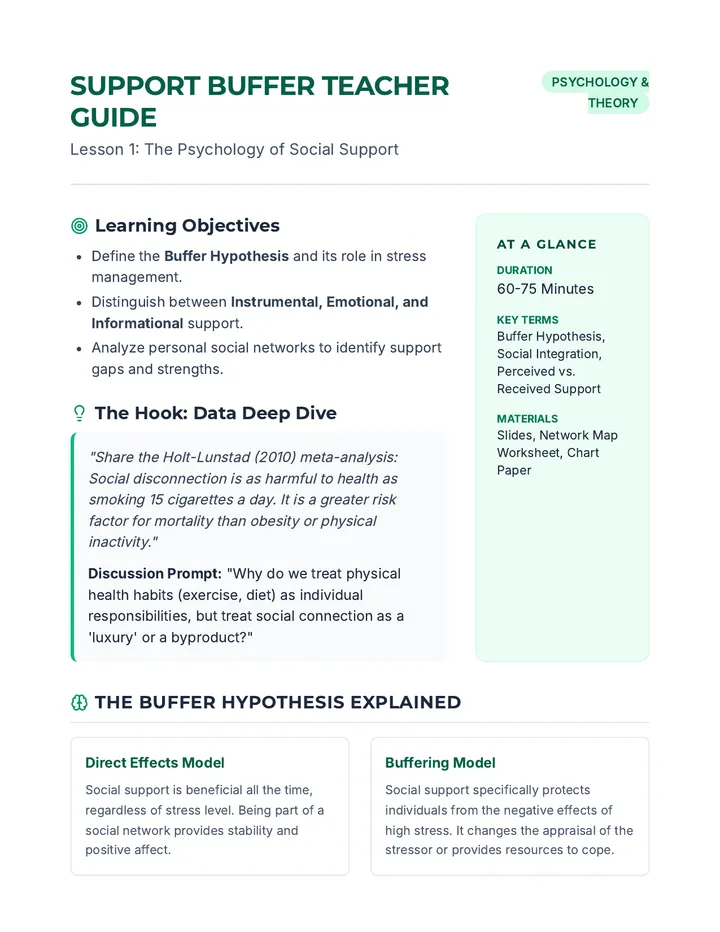
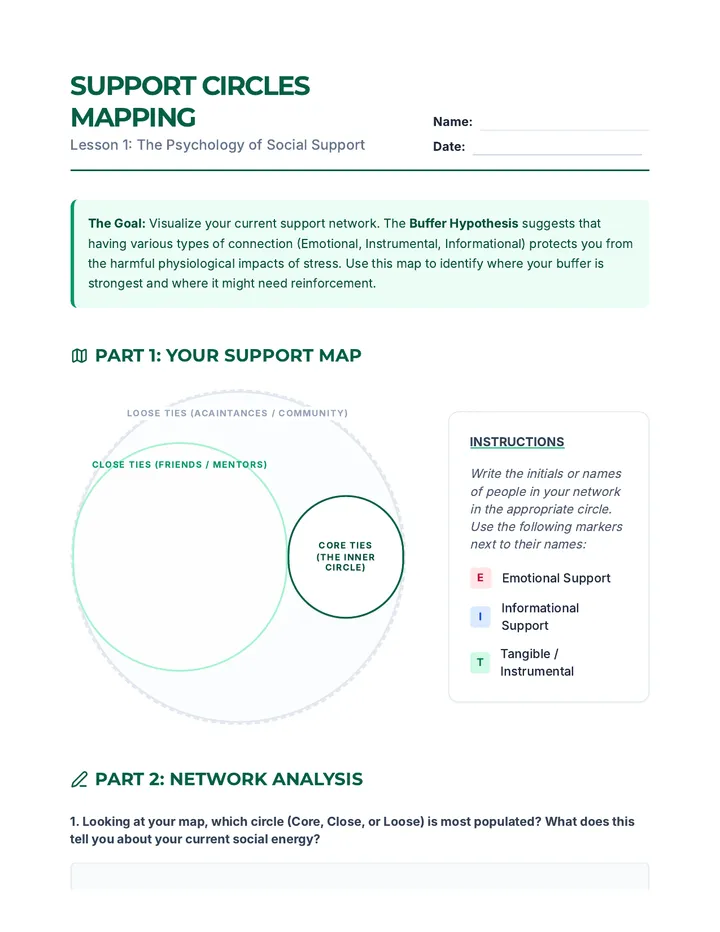
Students explore the 'Buffer Hypothesis' and how social connection mitigates the health impacts of stress, focusing on the difference between instrumental, emotional, and informational support.
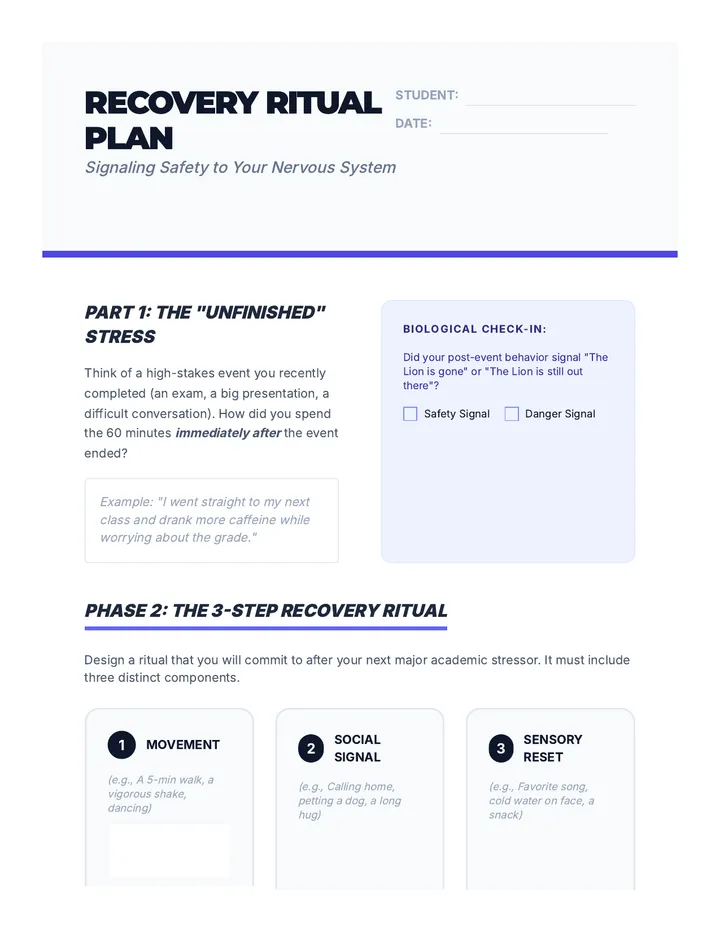
Covers the physiological completion of the stress cycle to prevent burnout. Students design personalized post-event rituals to signal safety to their nervous systems.
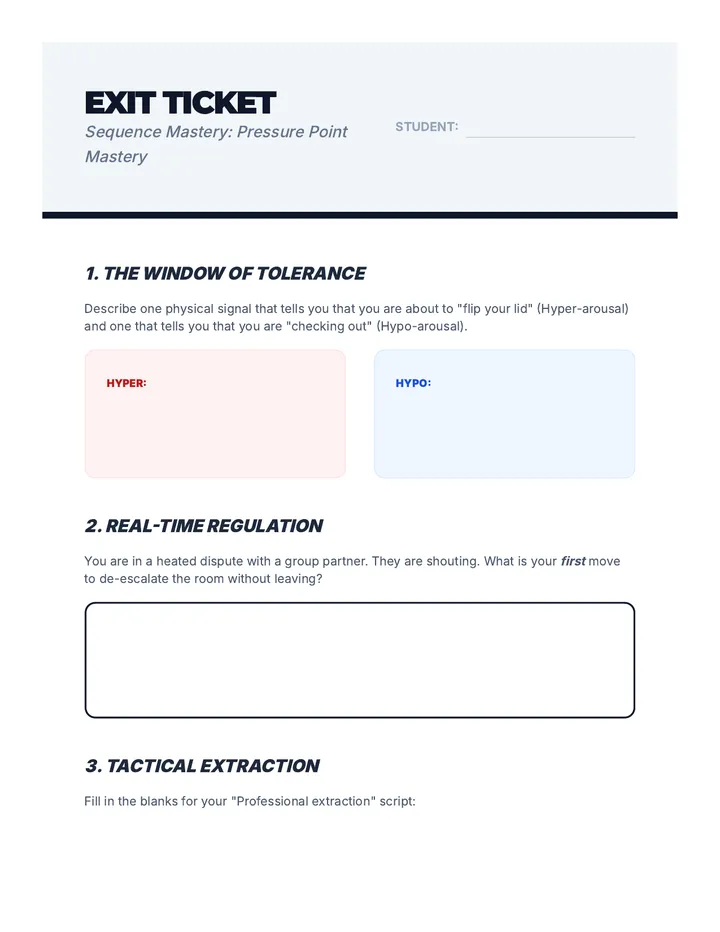
Explores intense de-escalation scenarios, teaching 'stepping away' and 'returning' strategies. Students learn assertive communication to buy time during high-stress professional or personal demands.
Students practice de-escalating interpersonal conflict through role-play and games. The lesson emphasizes pausing, breathing, and regulating vocal tone to prevent escalation.
Focuses on test anxiety and public speaking, teaching stealth grounding techniques and cognitive reframing. Students practice converting anxiety signals into readiness signals through simulations.
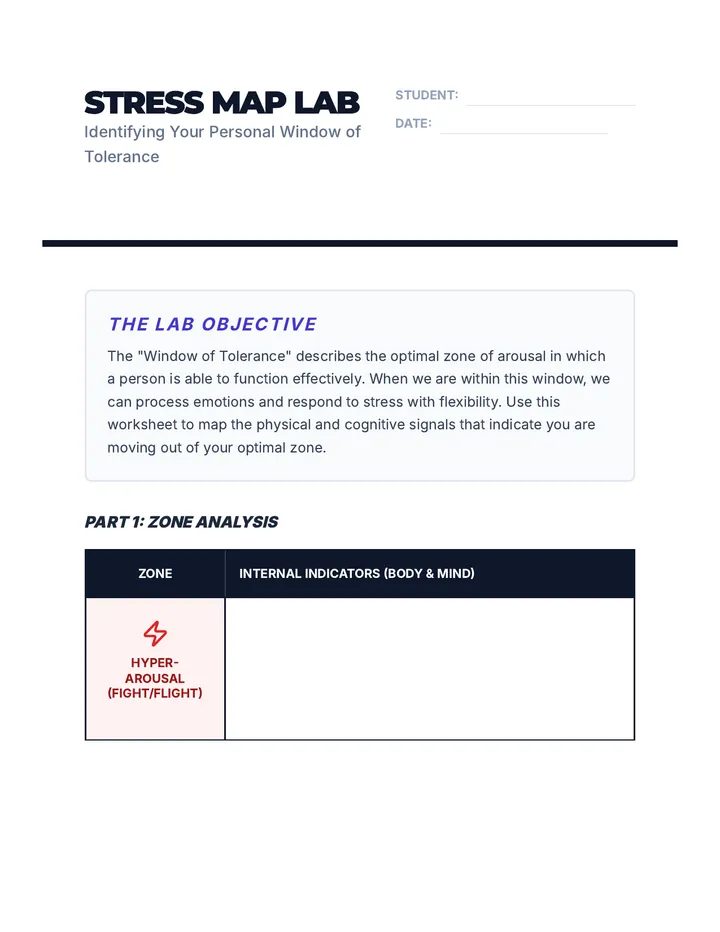
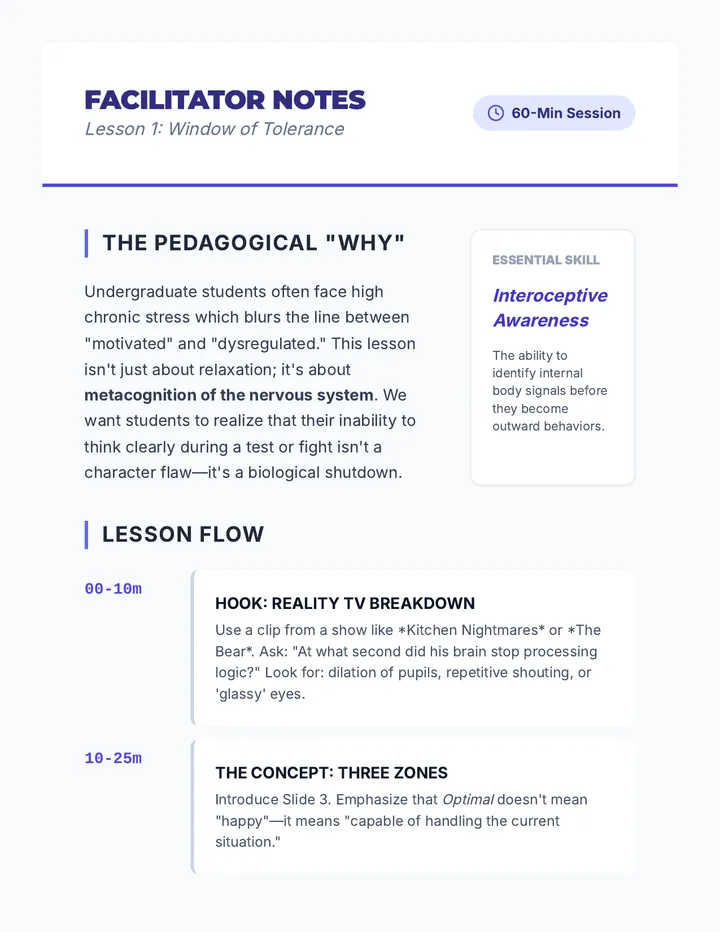
Students define their personal Window of Tolerance and identify signs of hyper-arousal and hypo-arousal in response to stressors. They analyze real-world behaviors to map their own emotional boundaries.
A comprehensive lesson on establishing healthy boundaries within adult friendships, focusing on identifying boundary types, navigating common social scenarios, and practicing effective communication scripts.
A dual-track 90-minute activity sequence on pattern recognition, offering a professional development seminar for workplace efficiency and a supportive, scaffolded module for adults with IDD.
A lesson focused on assertive communication strategies for when others interrupt, including techniques to reclaim the floor and manage conversational 'steamrollers' in professional settings.
A specialized lesson on the nuances of interrupting in professional and social settings, focusing on appropriate timing, polite interjection phrases, and situational awareness.
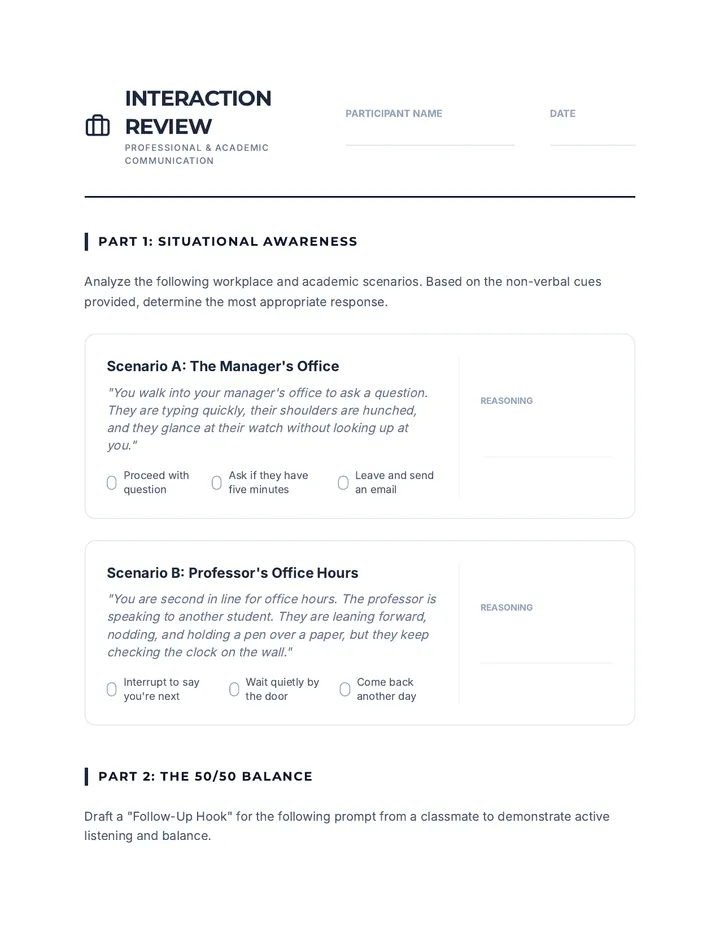
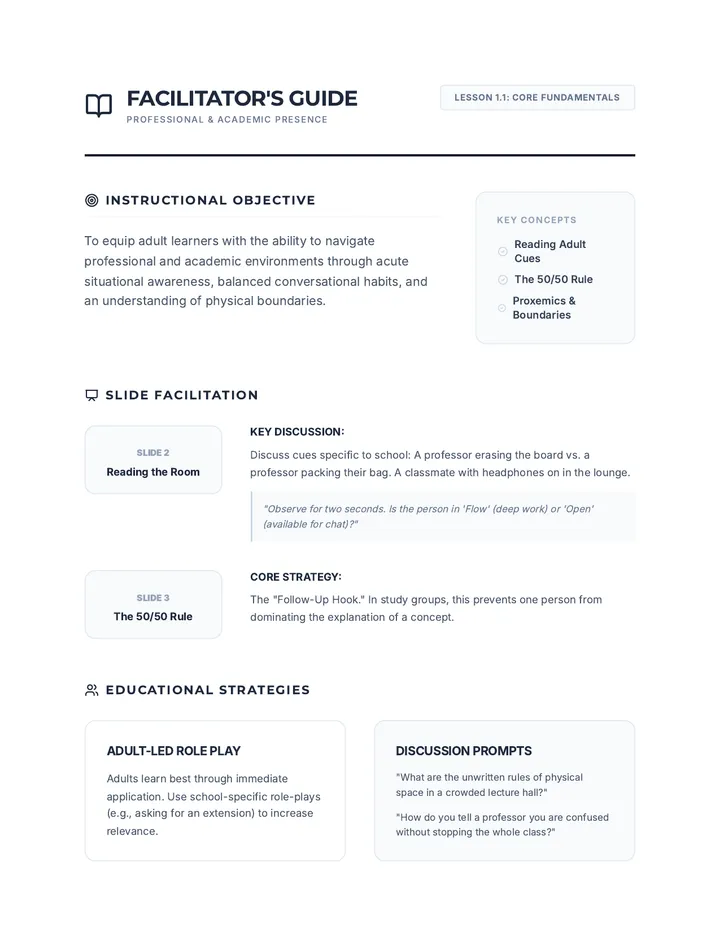
A foundational lesson on non-verbal cues, professional body language, and the mechanics of a balanced conversation in adult settings.
Closing rituals, community celebration, and honoring the collective journey.
Using objects and metaphors to narrate life transitions and future hopes.
Introduction to sociometry and spontaneous role-play for perspective-taking.
Transforming personal narratives through melodic expression and song-weaving.
Using rhythm and percussion to foster group cohesion and personal grounding.
The sequence concludes with students designing a 'Community Care Agreement' to establish norms for mutual support and collective rest in their own communities.
This lesson teaches specific bystander intervention strategies to bridge the gap between noticing distress and connecting a peer to resources.
Students learn to identify subtle behavioral and non-verbal signs of distress in their peers and practice gentle intervention strategies.
A workshop focusing on the listening skills required to support peers, emphasizing validation over immediate problem-solving.
Students define psychological safety and analyze its impact on team performance, using Google's 'Project Aristotle' as a primary case study.
Synthesizing the sequence, students draft a professional bio or personal statement that authentically claims their skills. Peers review these drafts to ensure the language used is confident and accurate, stripping away qualifiers.
The class explores the role of social comparison in fueling inadequacy, discussing how social media and competitive grading skew reality. Students develop a 'stay in your lane' contract to limit toxic comparison behaviors.
Students bring objective evidence of their skills (grades, feedback, completed projects) and present them to a small peer group. The group provides objective validation, helping the presenter bridge the gap between their perception and reality.
Participants learn Cognitive Behavioral Therapy (CBT) inspired techniques to identify and challenge cognitive distortions related to their performance. They practice reframing 'I got lucky' statements into 'I worked hard' statements with partners.
Introduction to the Imposter Cycle and the environmental factors in higher education that trigger self-doubt.
An interactive session using gamified scarcity and elimination to distill personal values, followed by scenario-based practice in setting boundaries and managing recovery challenges.
Full-scale simulation of a multi-party dispute involving legal and interpersonal elements. Students draft a Memorandum of Understanding (MOU) that is stress-tested for durability and clarity.
Identification of power imbalances and calculation of the Best Alternative to a Negotiated Agreement (BATNA). Students analyze the Zone of Possible Agreement (ZOPA) in complex organizational scenarios.
Practice in reframing toxic language into neutral, problem-solving statements and utilizing circular questioning to uncover systemic issues. Focuses on the linguistic tools required for effective mediation facilitation.
Exploration of the 'amygdala hijack' and its impact on rational decision-making during disputes. Students practice de-escalation techniques and neutrality maintenance while managing their own physiological responses to high-arousal emotions.
Students analyze the theoretical distinction between surface-level demands (positions) and underlying needs (interests) using the 'Iceberg Model' of conflict. They will diagnose root causes in complex disputes and apply the Harvard Negotiation Project framework.
Synthesize legal and ethical knowledge to design a comprehensive crisis response protocol for professional practice.
Examine the ethical complexities of substance use crisis referrals, focusing on beneficence vs. autonomy and legal risks.
Research state laws regarding Tarasoff warnings and how crisis hotline referrals fulfill or fall short of legal duties.
Investigate the technical realities of anonymity and geolocation in modern crisis services, including 'active rescue' policies.
Analyze the intersection of HIPAA, 42 CFR Part 2, and crisis hotline privacy policies to understand what information can be shared during emergencies.
Final mastery-based simulations navigating complex professional and clinical boundary violations with real-time coaching and fidelity assessment.
Transition from practitioner to facilitator, learning how to psychoeducate clients on DEAR MAN and address common resistances to the protocol.
Train in the execution phase (Mindful, Appear Confident, Negotiate) through video analysis and intensive 'persistence gauntlet' dyadic exercises.
Workshop the first half of the acronym (Describe, Express, Assert, Reinforce) with a focus on separating objective facts from subjective judgments in clinical scripting.
Examine the theoretical context of DEAR MAN within DBT Interpersonal Effectiveness, focusing on the trio of effectiveness goals and identifying communication breakdowns in clinical vignettes.
The culmination of the sequence, focusing on the timing and execution of the final 'sting' question.
Developing questions that target causal links and expose logical fallacies in policy chains.
Techniques for maintaining time dominance and managing filibustering opponents during cross-examination.
Introduction to the 'Funnel Method,' teaching students to sequence questions from broad agreements to specific traps.
Students analyze the syntactic differences between open-ended and closed leading questions, practicing how to convert inquiries into controlling statements.
A comprehensive lesson on mastering non-verbal communication across interpersonal relationships, professional interviews, and high-stakes de-escalation scenarios. Students learn to decode 'silent signals' to improve empathy, professionalism, and safety.
A comprehensive 3-hour workshop exploring the physiological and psychological impact of stress on interpersonal relationships, featuring practical strategies for individual and co-regulation.
A comprehensive three-hour workshop for women focusing on self-love, different types of love, and the importance of healthy relationships. Includes guided reflections, interactive scenarios, and personal growth exercises.
The sequence concludes with a practicum on structuring high-stakes conversations. Students design a 'container' for a difficult dialogue, including pre-framing, ground rules, and exit strategies.
Students study the mechanics of apology and repair. The lesson focuses on the 'aftermath' of a fight, teaching specific protocols for processing regrettable incidents to prevent long-term resentment.
This lesson covers the Wheel of Consent and advanced negotiation strategies for physical and emotional intimacy. Students analyze power dynamics and practice scripts for establishing continuous, affirmative consent.
A culminating project where students integrate all previous concepts to conduct a comprehensive assessment of a complex relationship case file.
Moving beyond basic 'I statements,' this lesson delves into the nuance of needs versus strategies. Students practice translating judgments and diagnoses of partners into expressions of unmet universal needs.
Students explore Bowen Family Systems Theory to understand 'differentiation of self' as a prerequisite for healthy boundaries. The lesson involves mapping personal boundary styles and identifying where fusion or emotional cutoff occurs.
Focusing on the Gottman Method, students identify 'Four Horsemen' and practice behavioral coding to predict relationship outcomes based on conflict styles.
Students explore the physiological markers of safety in relationships, contrasting high-arousal infatuation with sustainable co-regulation and ventral vagal engagement.
This lesson examines the subtle mechanisms of power and control, helping students distinguish between normative conflict and coercive control through the lens of risk assessment.
Students analyze adult attachment styles through clinical vignettes, focusing on how these patterns manifest in interactional cycles and partner selection.
Provides frameworks for evaluating relationship viability and ending connections respectfully, culminating in a personal relationship protocol.
Identifies individual conflict default styles and teaches practical de-escalation techniques through active listening and role-play.
Explores consent as a collaborative process across both sexual and non-sexual contexts, examining legal and ethical gray areas.
Students analyze subtle markers of healthy versus toxic dynamics using a Relationship Spectrum framework and critique modern social media advice.
A 15-minute workshop for adults that introduces the concept of rupture and repair in relationships, offering practical steps to mend connections and build stronger bonds.
A 90-minute session for adults to identify relationship green and red flags, define personal boundaries, and practice a 3-step communication model for asking, accepting, and declining.
A capstone performance evaluation where students demonstrate clinical competency through a continuous role-play and coaching session.
Focuses on using dialectical strategies to address the fear of abandonment as a primary barrier to practicing FAST skills.
Students facilitate a mock group session to manage conflicting values among members while teaching self-respect skills.
A behavioral shaping simulation aimed at breaking the apology reflex through rapid-fire interactions and real-time coaching.
Students practice introducing the FAST acronym using the teach-back method, specifically focusing on validating client resistance to self-respect.
Students engage in a complex role-play scenario where they must negotiate a support plan with a skeptical 'professor' or 'manager.' Peers observe and provide feedback on tone, clarity, and persistence.
Focusing on real-time interactions, this lesson teaches verbal scripts for setting boundaries in group projects or meetings. Students practice 'I' statements and the DEAR MAN technique from DBT to assert needs effectively.
Students analyze successful and unsuccessful email requests for extensions, mental health days, or additional tutoring. They practice writing concise, professional emails that state needs clearly without over-apologizing.
This lesson covers the technical aspects of requesting support, including understanding syllabus policies, disability services, and workplace accommodation laws (ADA). Students learn the difference between a preference and a protected right.
Students participate in a Socratic seminar exploring the cultural narratives surrounding 'grit' and 'resilience' versus help-seeking. They critique the 'ideal worker' norm and discuss the long-term professional costs of burnout.
This lesson provides a deep dive into Adlerian Therapy as applied to various group counseling contexts, focusing on social interest, purposeful behavior, and the four phases of the group process for graduate-level school counseling students.
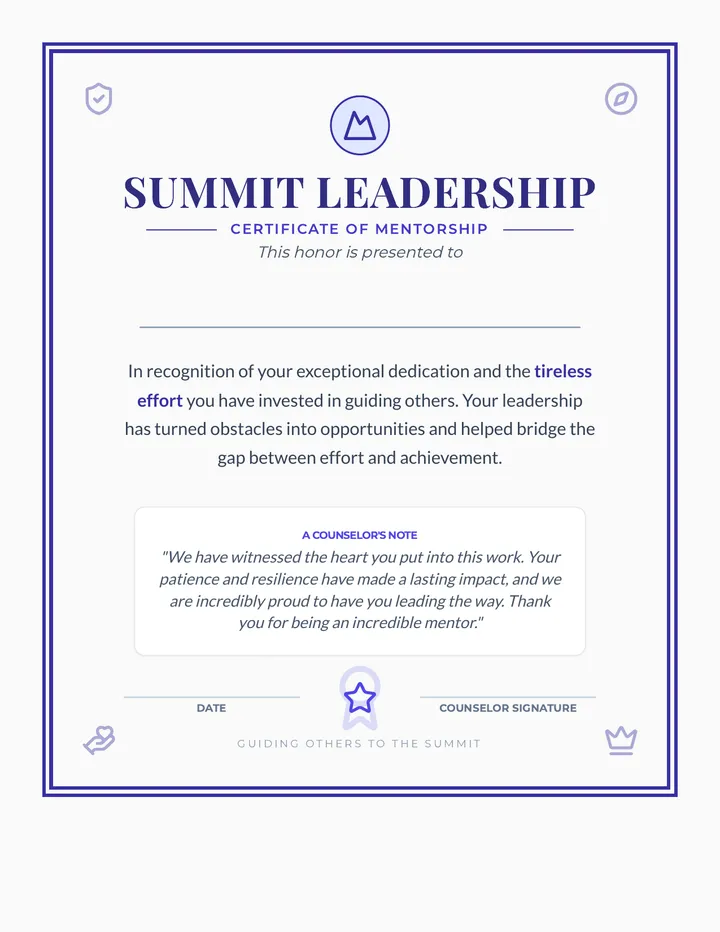
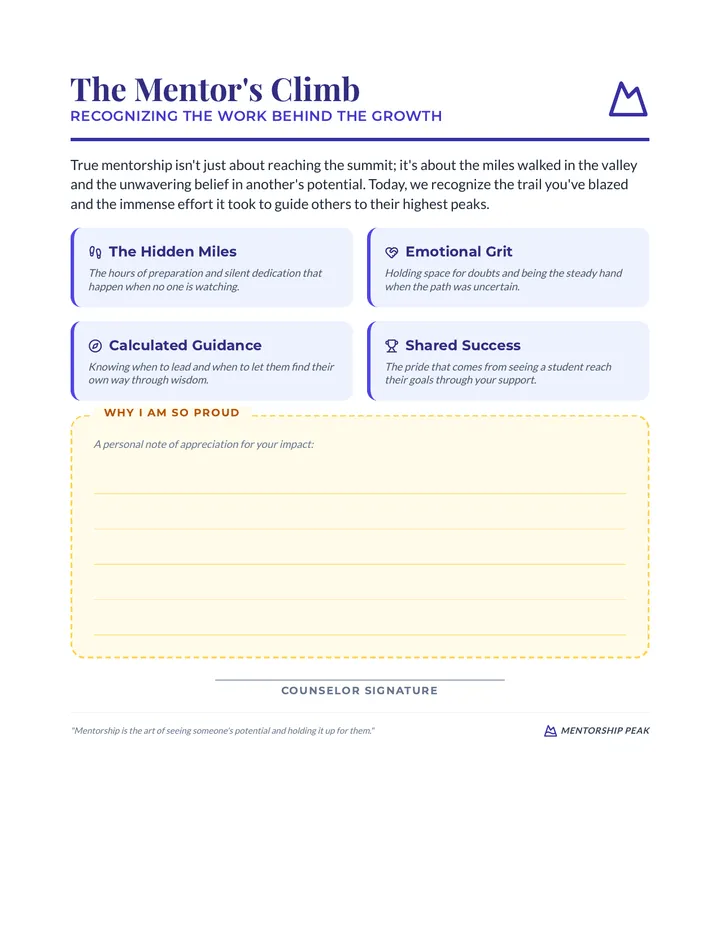
A collection of materials to celebrate and recognize the hard work and dedication of mentors, focusing on their growth and impact.
An exploration of Person-Centered Approach (PCA) applied to various school counseling group formats, focusing on core conditions and growth.
This lesson introduces students to the core concepts of Agile and Scrum through the lens of team dynamics. Students will explore roles, ceremonies, and the critical importance of communication in high-performing teams.
A high-level exploration of Cognitive Behavioral Therapy (CBT) specifically tailored for group settings, focusing on the unique therapeutic factors and structured protocols used in master's level clinical practice.
A 2-hour graduate seminar focused on the clinical application of group counseling exercises, focus management, and the depth chart based on Chapters 10 and 11 of Jacobs et al.
A vibrant, spring-themed 'Price is Right' game show featuring seasonal items, interactive rounds, and a high-stakes Showcase Showdown.
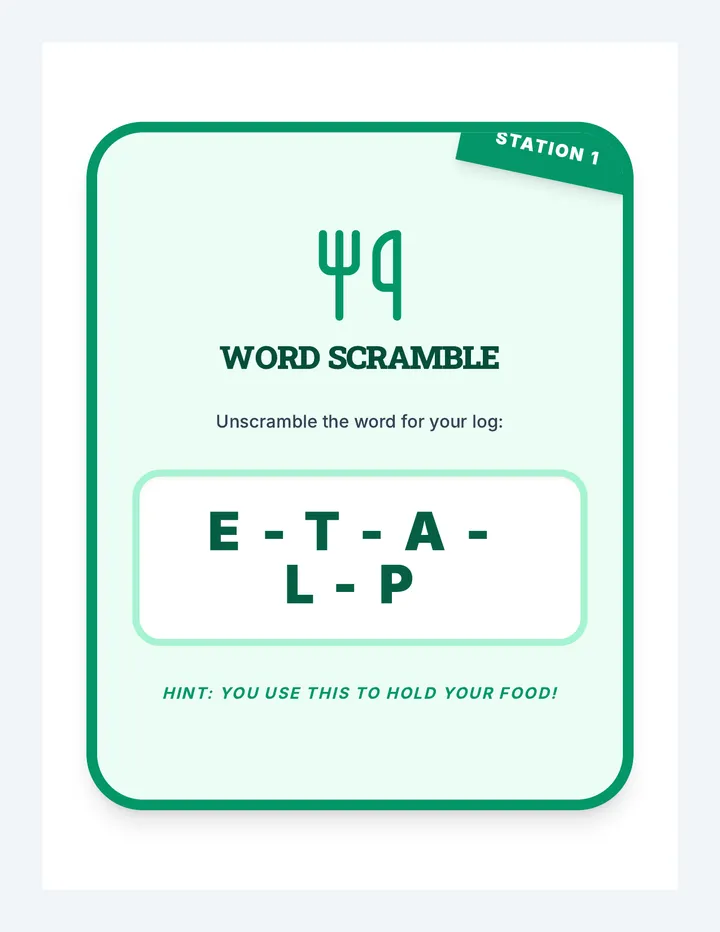
An indoor scavenger hunt focused on teamwork, communication, and problem-solving for adult learners. Participants work in groups to solve puzzles and find 'gold' through collaborative effort.
A deep dive into Taylor Swift's career, focusing on her growth as a songwriter, the power of storytelling, and the importance of resilience through her different "Eras."
A professional development lesson focused on building workplace confidence and communication skills for quiet employees, covering asking for help, expressing opinions, and initiating conversations.
Focuses on the essential skills of big-picture and session-specific planning for school counseling groups, drawing from key texts by Jacobs, Coogan, Steen, and Salerno. Students will learn to structure sessions from warm-up to closing while balancing content and process.
A comprehensive team-building lesson designed to foster cooperation, communication, problem-solving, and trust through a series of interactive 'missions'.
A comprehensive lesson on Benne and Sheats' functional group roles, tailored for graduate-level school counseling students to understand group dynamics in educational settings.
A comprehensive lesson for school counseling graduate students to master group member roles and intervention strategies for challenging group dynamics. Students will move from theory to application through case study analysis and self-reflection.