Functional behavior assessment, data tracking, and de-escalation strategies for managing classroom conduct. Addresses positive reinforcement, token economies, and individualized behavior contracts to support student self-regulation.
Mastery of the Behavioral Skills Training (BST) model to effectively train staff and ensure the maintenance of skills through reinforcement.
Design of reinforcement systems using non-monetary incentives, gamification, and social recognition to drive workplace performance.
Exploration of feedback as a reinforcer, focusing on the delivery of specific, immediate behavioral feedback in management contexts.
Introduction to the Performance Diagnostic Checklist (PDC) as a tool for root cause analysis to distinguish between skill deficits and motivational issues.
Students learn to translate vague organizational goals into pinpointed, observable behaviors and develop measurement systems for workplace environments.
Examine the 'observer effect' and reactivity in behavioral data. Students develop strategies to ensure data reflects naturalistic behavior while minimizing the psychological stress of being watched.
Shift from compliance to partnership by involving students in their own data collection. Students practice soliciting assent and co-constructing behavioral goals and tracking mechanisms.
Audit behavioral codes for subjective bias and cultural misalignment. Students learn to recognize how 'disrespect' and 'defiance' are coded and rewrite them to be culturally sustaining and objective.
Analyze the long-term impact of extrinsic reward systems on intrinsic motivation. Students explore the overjustification effect and learn to design tracking tools that bridge students toward internal self-regulation.
Investigate the legal and psychological ramifications of public behavior charts. Students analyze FERPA compliance and the impact of 'shame-based' tracking on student mental health and privacy.
Students integrate all observed markers into a comprehensive Warning Sign Profile for a complex case study, predicting crisis timing based on behavioral evidence.
Exploration of 'quiet' escalation signs such as withdrawal, avoidance, and work cessation, which are frequently overlooked but indicate high risk for crisis.
Students analyze changes in volume, cadence, and tone (para-verbals) to identify escalation, distinguishing the quality of delivery from the literal content of speech.
Synthesizes learning into a visual map connecting internal biology to external behavior for proactive intervention planning.
Identifies the 'freeze' response and dissociation, differentiating between intentional defiance and neurobiological shutdown.
A deep dive into the physical manifestations of early escalation, focusing on micro-movements and motor agitation that often precede vocal outbursts.
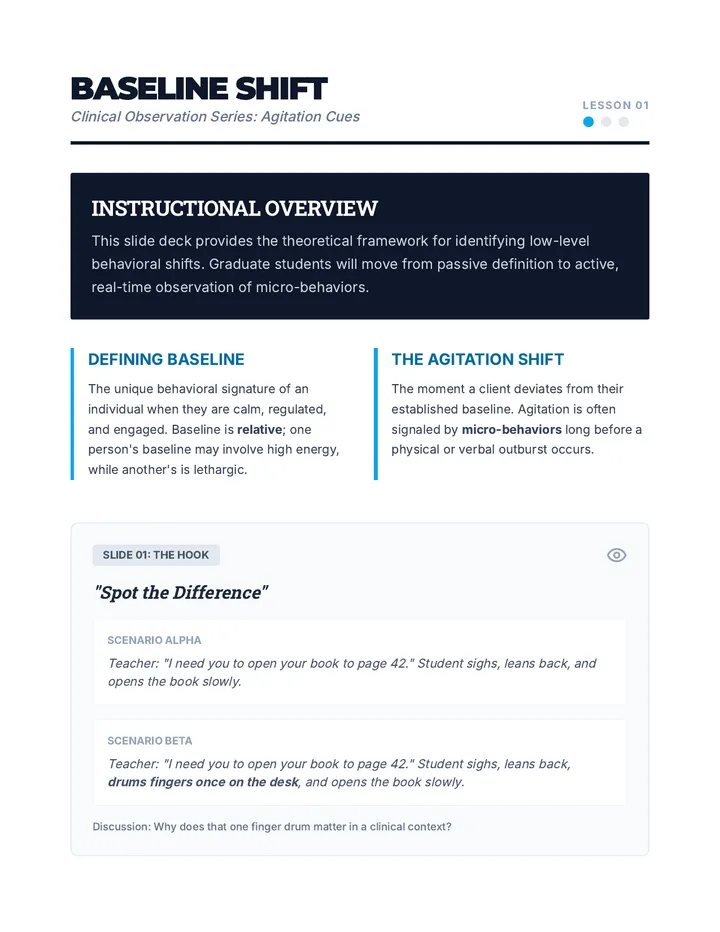
Students define and observe 'baseline' behavior to distinguish between a student's normal state and signs of deviation. This lesson emphasizes cultural context and personality in behavioral documentation.
Analyzes changes in breathing patterns and muscle tension as signs of the body preparing for physical defense or flight.
Focuses on involuntary somatic markers like skin flushing, sweating, and pupil dilation as early indicators of physiological arousal.
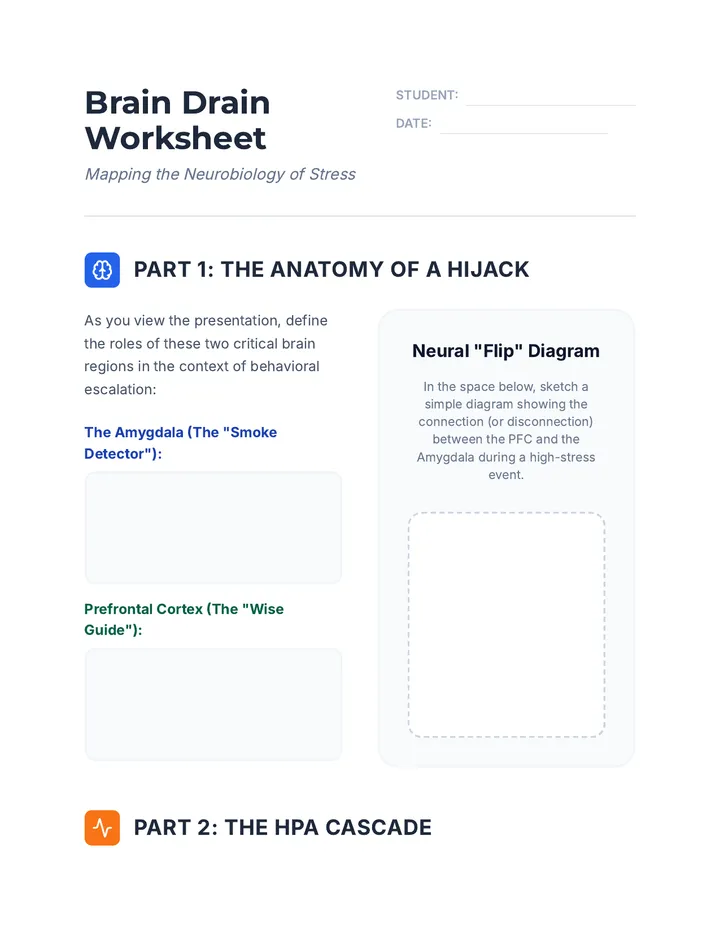
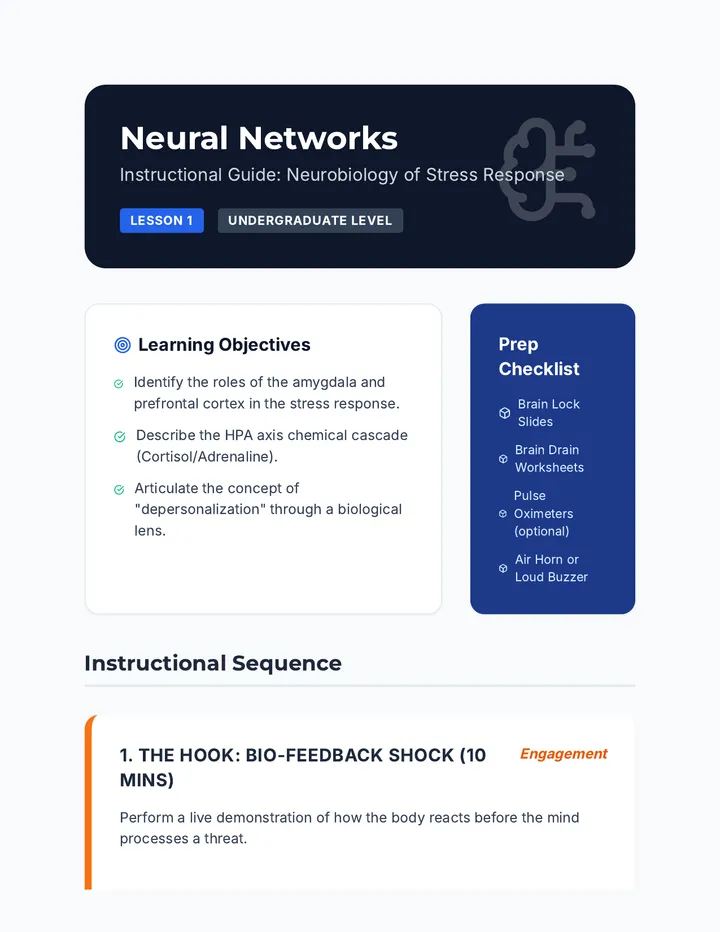
Explores the limbic system, prefrontal cortex, and the 'amygdala hijack' to understand why rational thinking fails during high-stress escalation.
A capstone simulation where students must rapidly assess and report on a high-fidelity crisis scenario within 60 seconds.
Distinguishes between intentional 'testing' behaviors/power struggles and genuine loss of emotional control.
Trains students to use their own physiological and emotional reactions (counter-transference) as data points for recognizing client agitation.
Explores the use of physical space and proxemics as a primary indicator of behavioral escalation and safety risk.
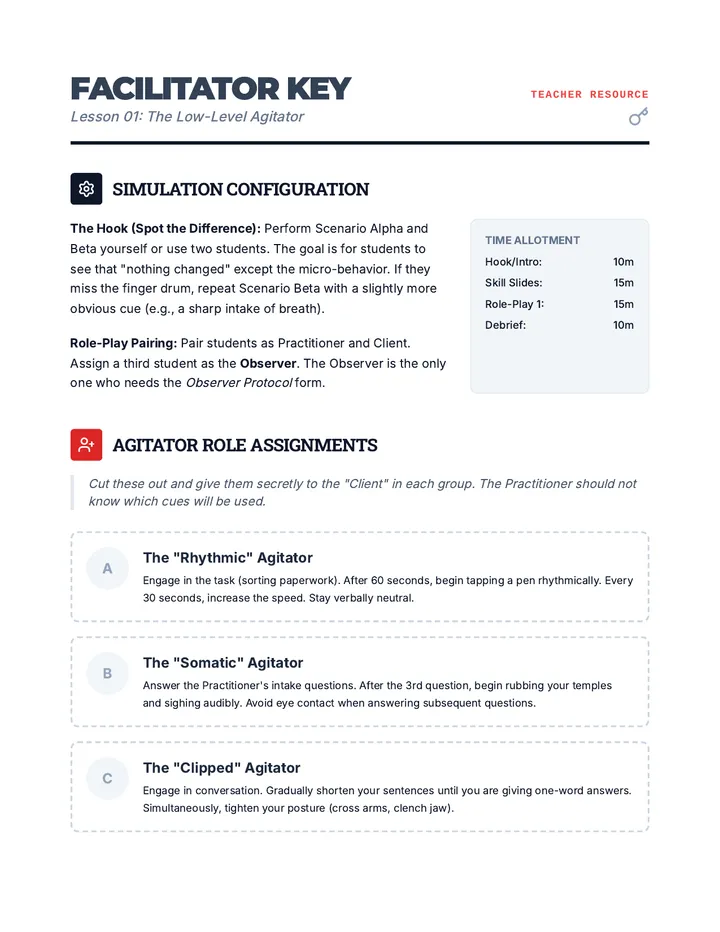
Focuses on identifying subtle baseline shifts and micro-behaviors (tapping, sighing, avoiding eye contact) in real-time interactions.
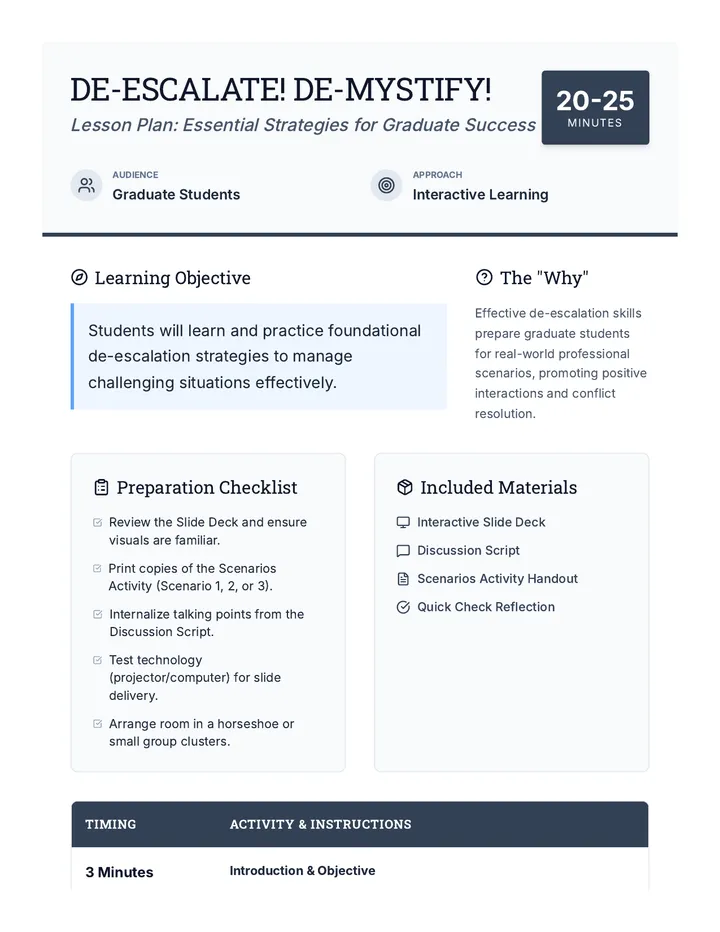
A 20-25 minute interactive lesson for graduate students focused on foundational de-escalation strategies, including active listening, empathy, and boundary setting.
A 90-minute workshop for adults on the principles of active supervision: scanning, positioning, and engaging. Participants will learn to enhance safety and engagement through interactive scenarios and personal reflection.
Culminating lesson on designing sustainable, team-based monitoring systems and data dashboards to ensure long-term implementation success and student progress.
Explores the ethical considerations and clinical frameworks for modifying Behavior Intervention Plans when fidelity is high but outcomes are poor, focusing on the Least Restrictive Environment.
Students learn to plot and analyze fidelity data alongside student behavior data using dual-axis graphs to distinguish between intervention failure and implementation failure.
Focuses on the data-driven supervision of educational staff using the Performance Diagnostic Checklist (PDC). Students practice providing objective performance feedback to improve implementation integrity.
Students define treatment integrity and learn to create fidelity checklists from Behavior Intervention Plans (BIPs). The lesson introduces the 'Type III error' and the necessity of implementation data for valid clinical decision-making.
Students design the implementation launch, focusing on the ritual of signing to increase commitment. They create scripts for explaining the contract to the student and all implementing adults.
Students learn strategies to align parents and classroom teachers with the contract terms to ensure consistency across environments. The lesson addresses resistance from stakeholders who may view contracts as 'rewarding bad behavior'.
This lesson focuses on the bargaining phase of contracting, teaching graduate students how to manage unrealistic student requests while maintaining the integrity of the intervention. It covers strategies for compromise and guided choice.
Students practice specific Motivational Interviewing (MI) techniques to help K-12 students articulate their own behavioral goals. The lesson involves analyzing transcripts of counseling sessions to identify change talk.
Explores Self-Determination Theory (SDT) and its application to behavior contracting, shifting the focus from external control to internal motivation.
A comprehensive case conceptualization of Howard Hughes using a Behavioral Therapy framework, including a clinical presentation and a formal research paper.
A comprehensive toolkit for school psychologists to navigate the consultation process, implement evidence-based interventions with fidelity, and measure the success of their collaborative efforts.
A seminar session for graduate school counseling students exploring Dr. Anthony Salerno's R.O.P.E.S. curriculum, a multi-sensory instructional framework for group counseling and classroom guidance.
Synthesis lesson where students design a detailed behavior modification plan addressing attention, retention, and motivation for a complex case.
Evaluates systemic modeling in organizational and educational contexts, including mentorship and leadership replication.
Explores the selection of coping versus mastery models to maximize observer self-efficacy through vicarious experience.
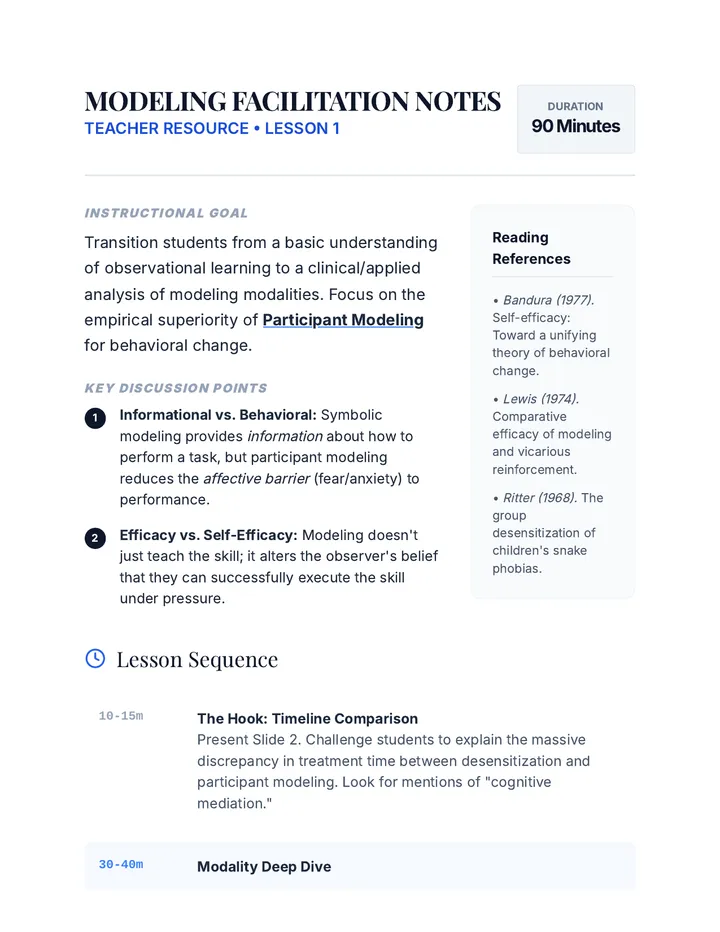
Focuses on participant modeling where the therapist models behavior and guides the client through scaffolding and mastery.
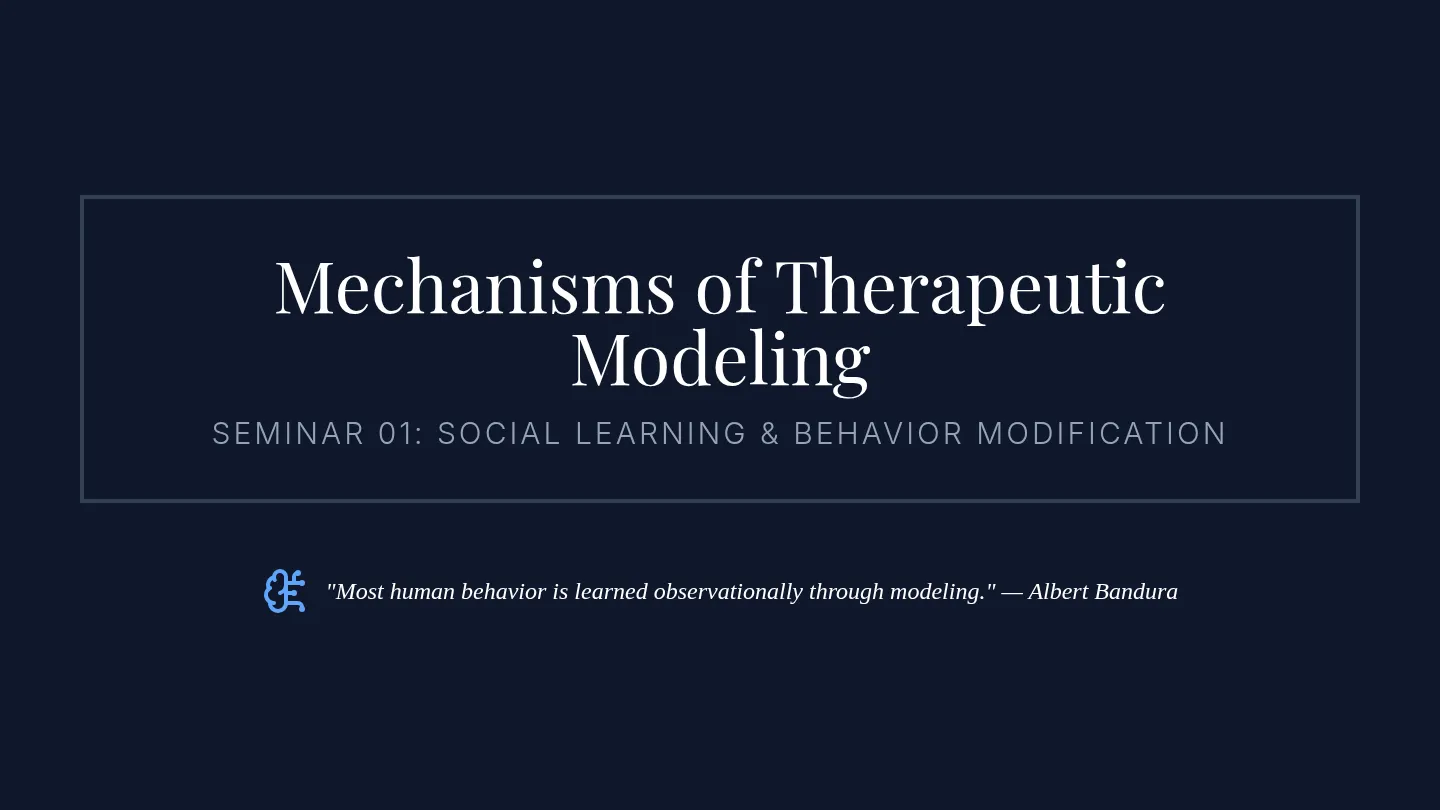
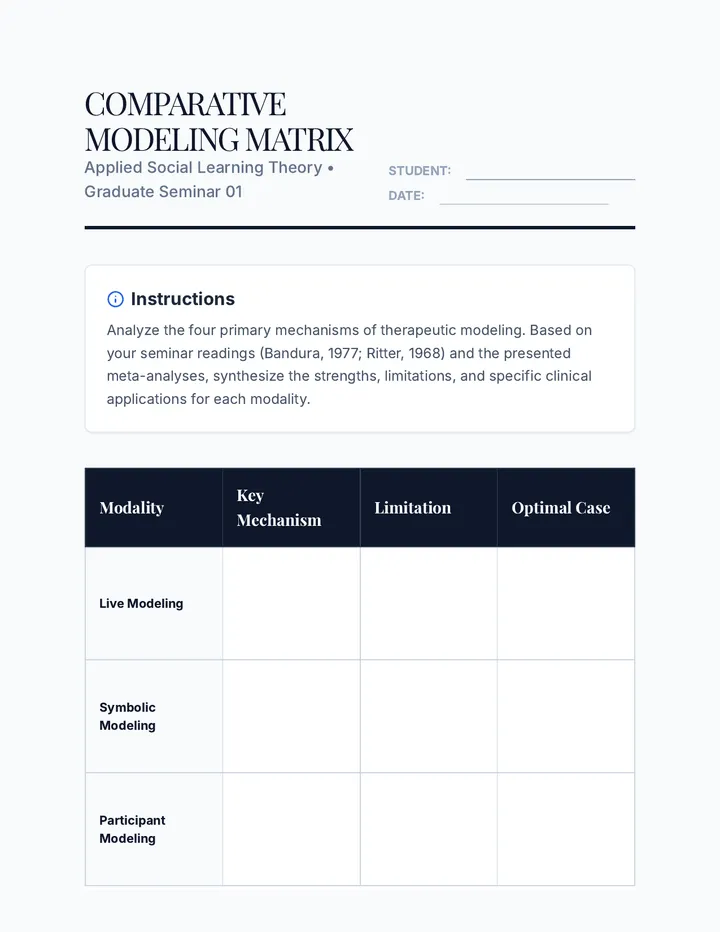
Students analyze the efficacy of different modeling types (live, symbolic, participant, covert) and evaluate meta-analyses comparing these techniques in treating anxiety and skills deficits.
A therapeutic tool for patients to analyze their behavior patterns, identify triggers, and develop healthier alternative responses using the ABC model.
A comprehensive lesson on Benne and Sheats' functional group roles, tailored for graduate-level school counseling students to understand group dynamics in educational settings.
An in-depth look at the Comprehensive School Threat Assessment Guidelines (CSTAG) protocol, focusing on the decision-making process for school-based teams.
A comprehensive training package for volunteers entering the juvenile justice system, focusing on trauma-informed care, mentorship, boundaries, and conflict resolution.
A comprehensive lesson on mastering non-verbal communication across interpersonal relationships, professional interviews, and high-stakes de-escalation scenarios. Students learn to decode 'silent signals' to improve empathy, professionalism, and safety.