Mindful breathing and body scan meditation techniques integrated with daily self-care routines. Develops strategies for balancing life demands and advocating for personal wellness needs.
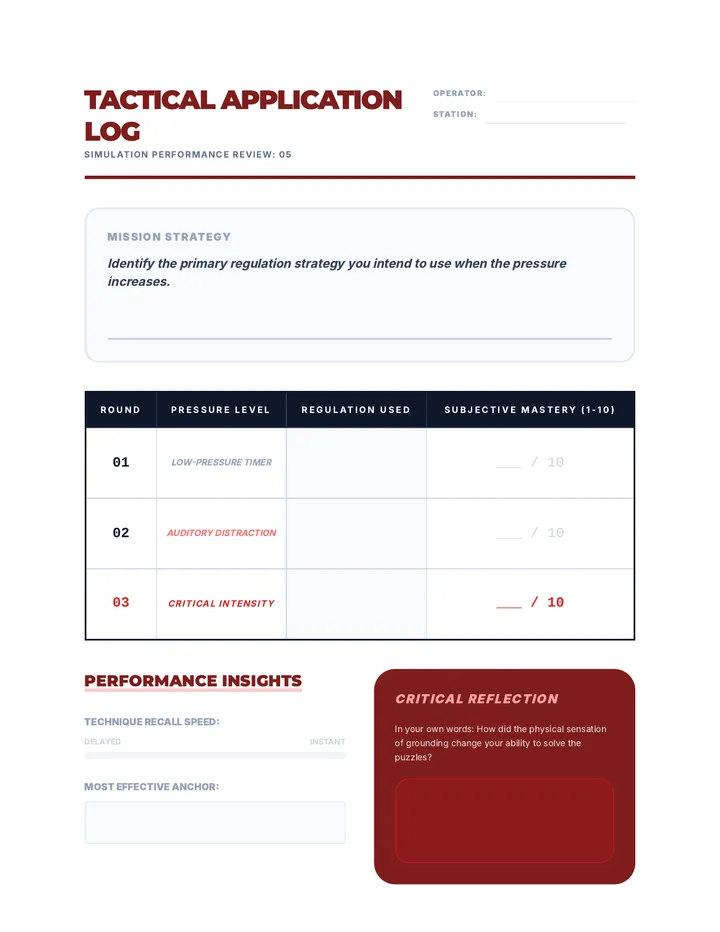
A culminating simulation where students face timed cognitive challenges while practicing their chosen regulation techniques. This bridges the gap between knowing a technique and using it under pressure.
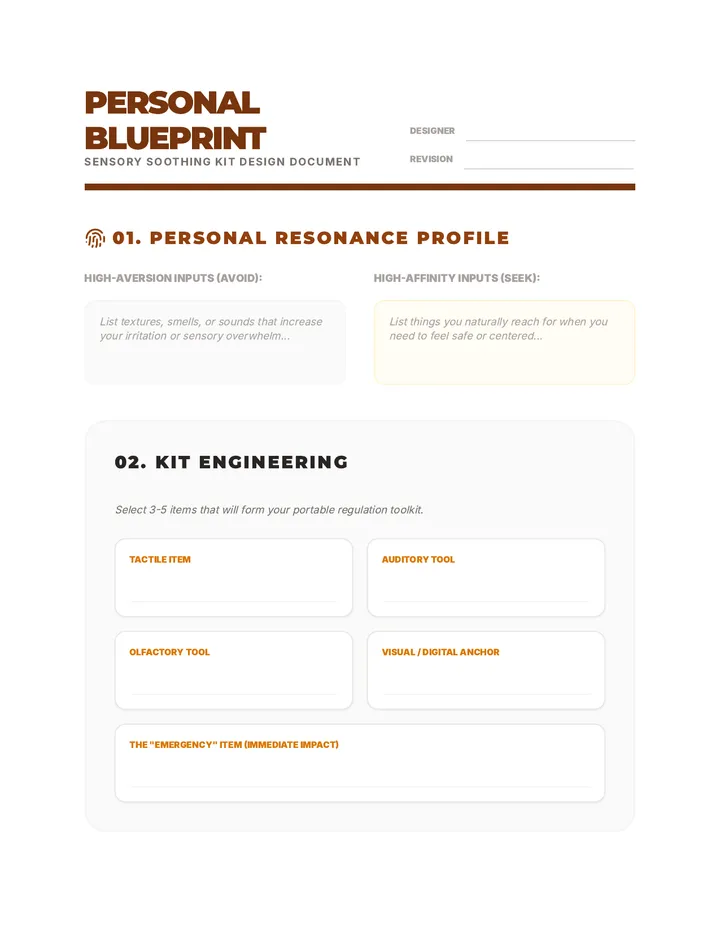
Learners identify personal sensory preferences that induce calm. They design and assemble a portable or digital 'kit' of resources to use during high-stress periods.
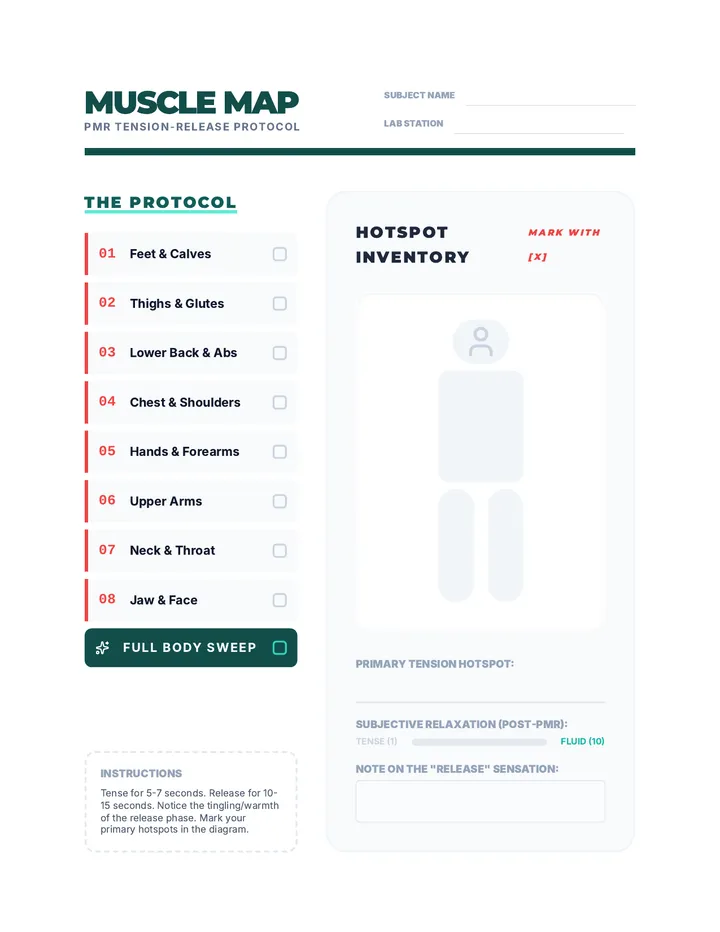
Students learn the sequence of tensing and releasing muscle groups to identify and release held physical tension. The lesson emphasizes the connection between physical relaxation and mental clarity.
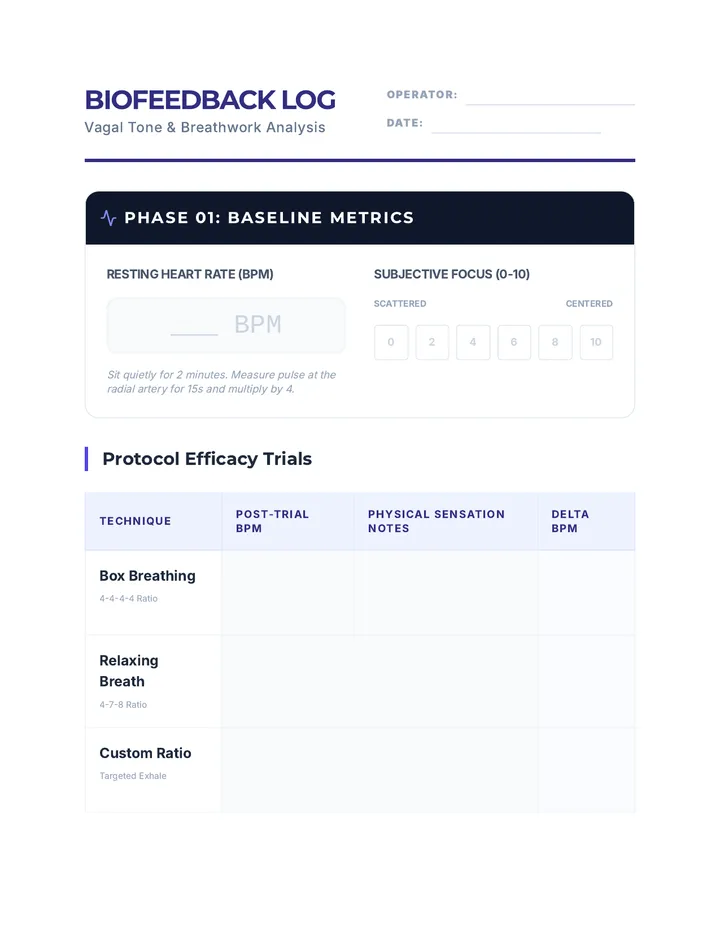
A technical workshop on breathwork, focusing on Box Breathing and 4-7-8 breathing to stimulate the parasympathetic nervous system. Students use biofeedback tools to measure the efficacy of different ratios.
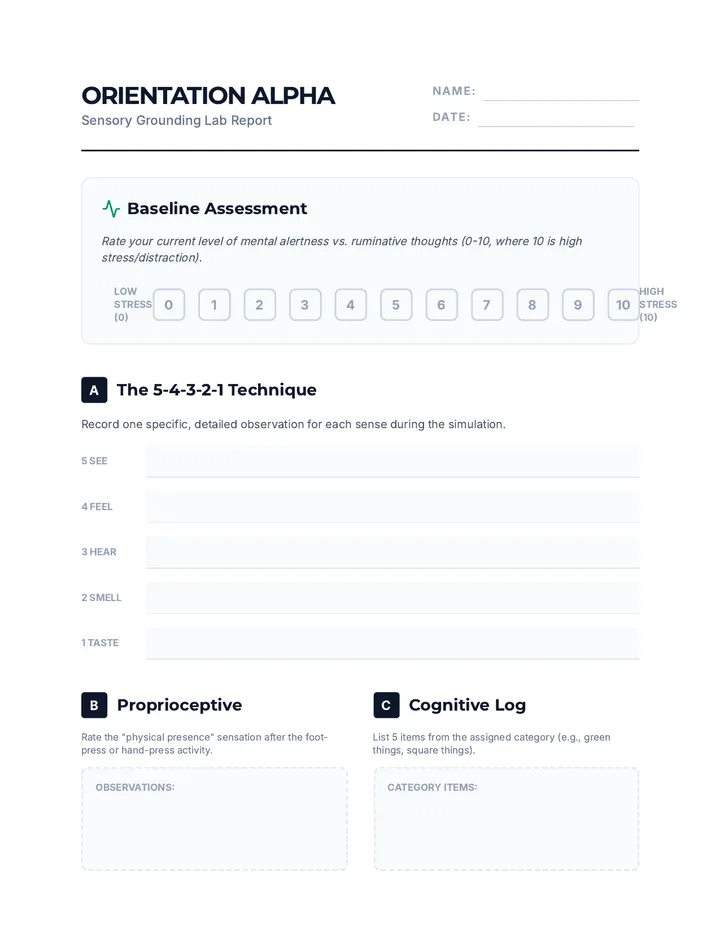
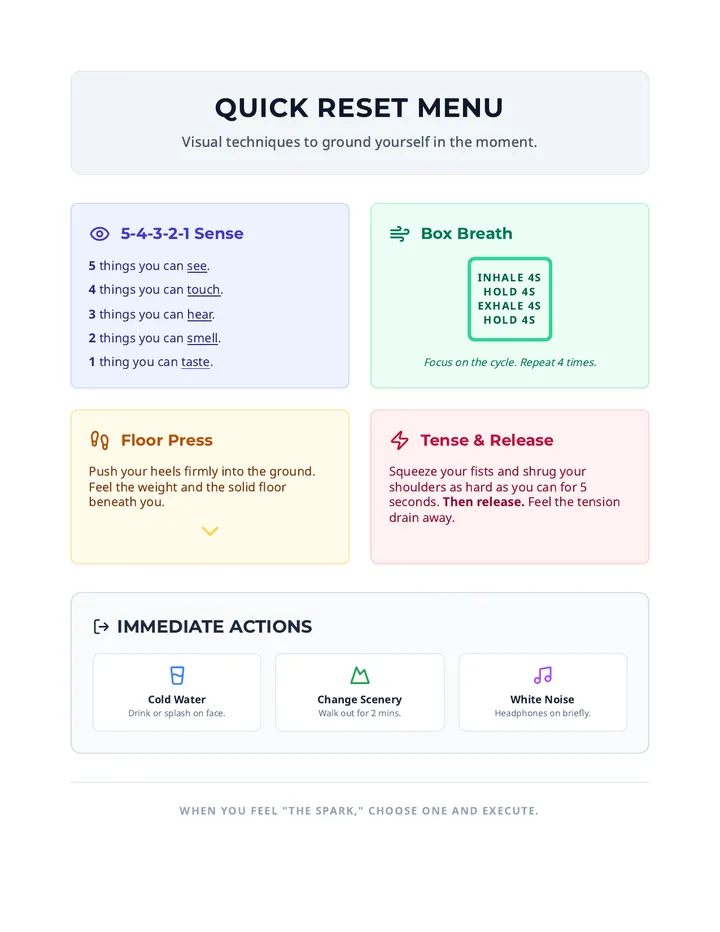
Students practice the 5-4-3-2-1 technique and other sensory-based orientation strategies to reconnect with the present moment. The lesson explains the science of how sensory input overrides ruminative thought loops.
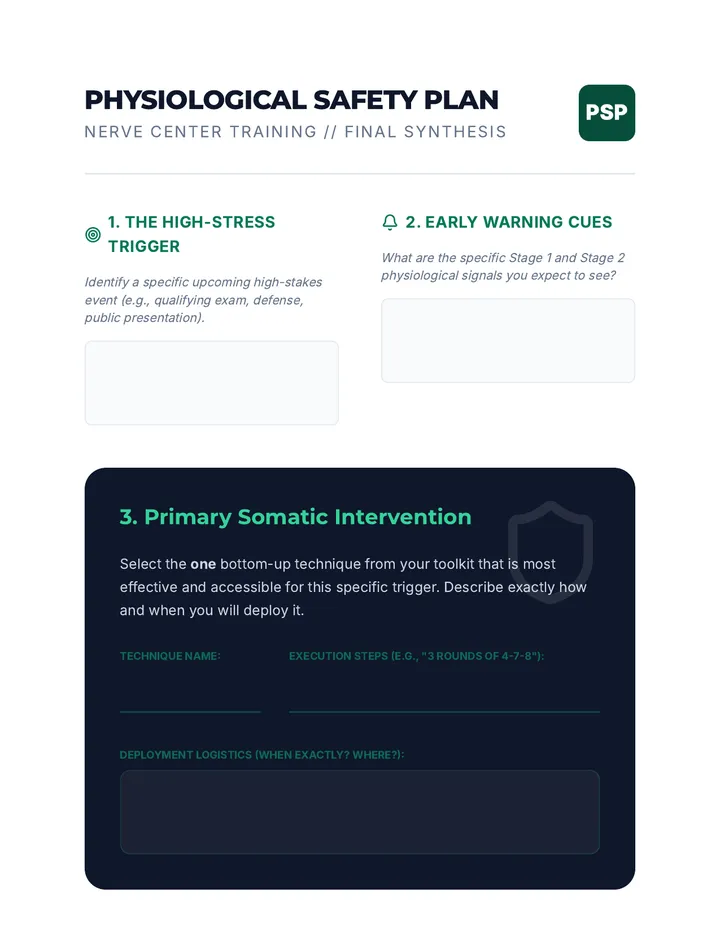
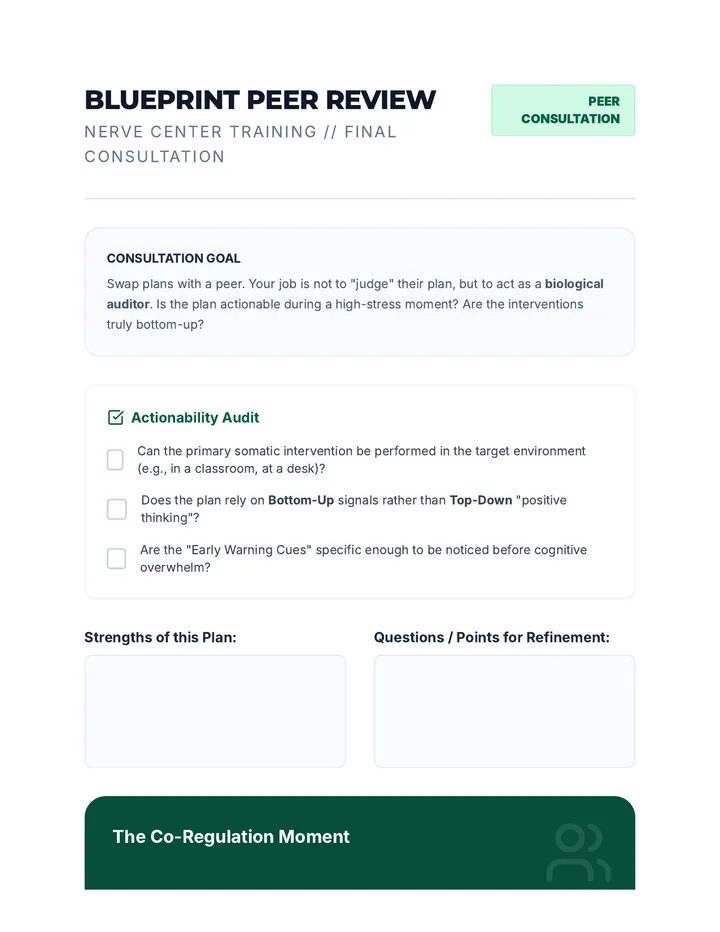
Students synthesize their knowledge to create a personalized physiological safety plan for high-stress periods. They identify triggers, early warning signs, and pre-planned somatic interventions.
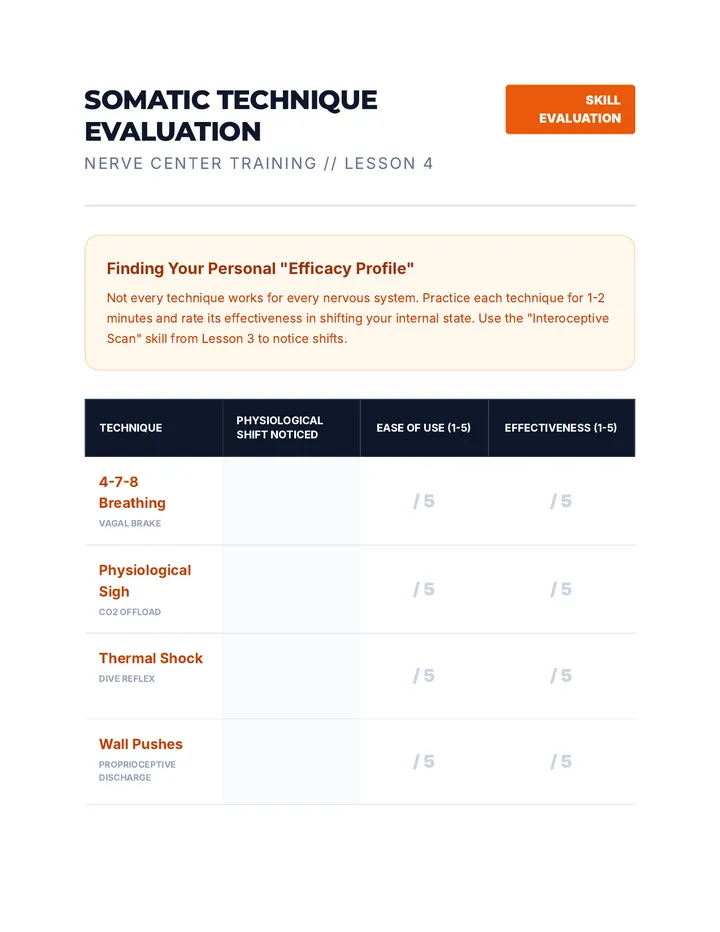
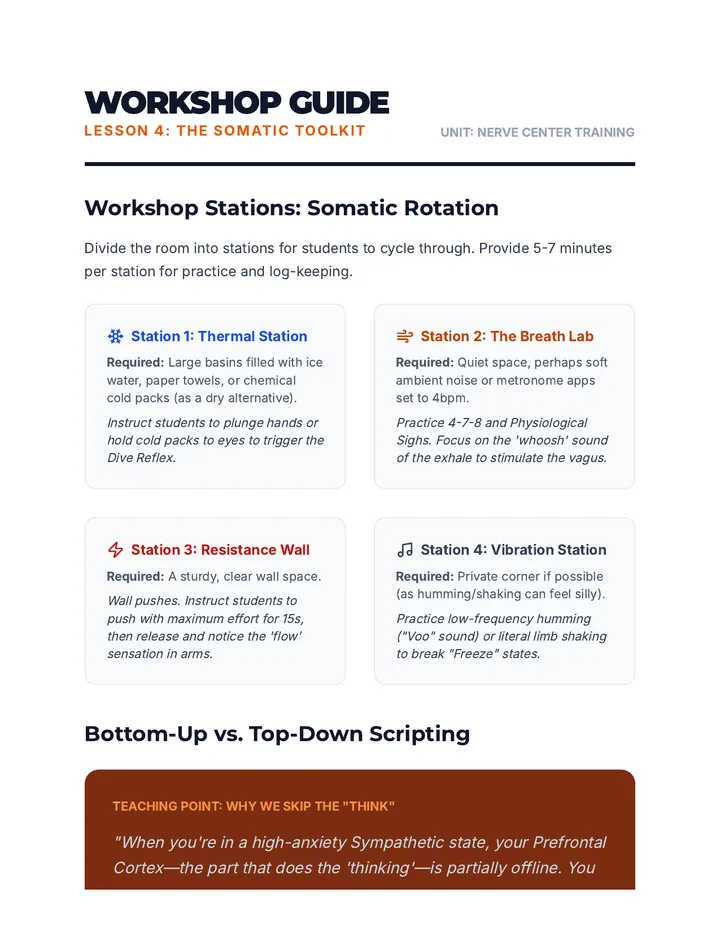
Students evaluate somatic bottom-up processing techniques like diaphragmatic breathing and thermal regulation. They learn to choose the right physical strategy for their specific physiological profile.
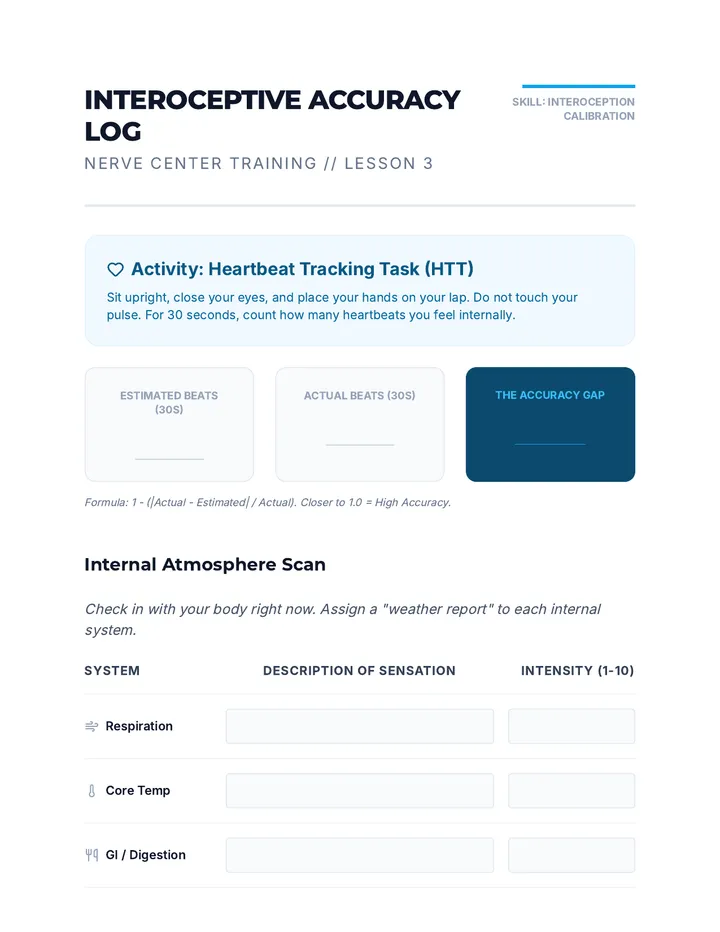
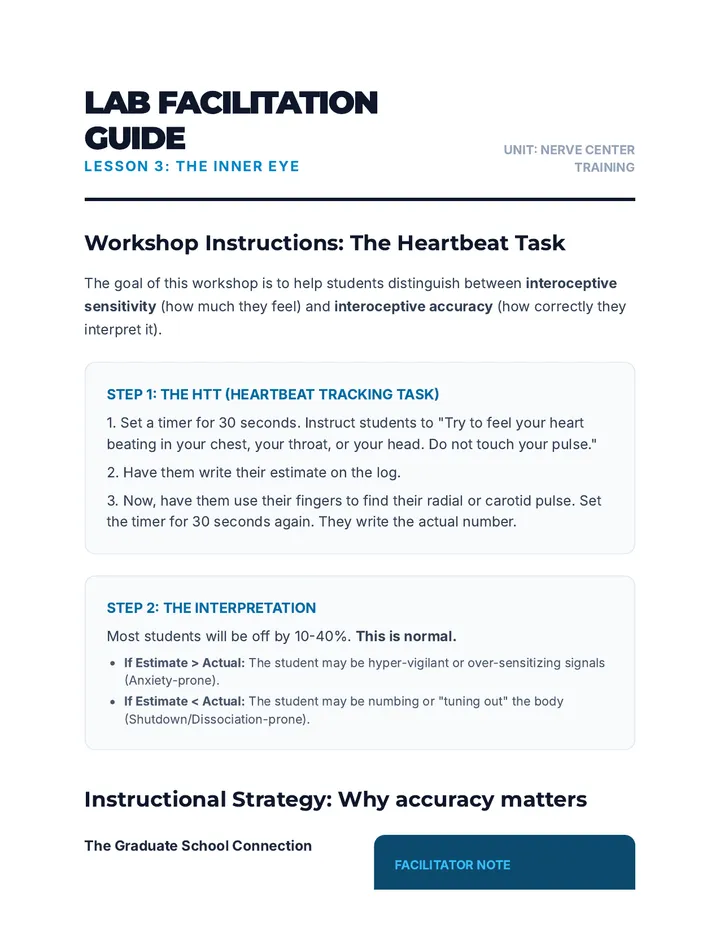
Learners practice interoception—the sense of the internal state of the body. They test their accuracy in detecting heart rate and tension, connecting poor awareness with high anxiety.
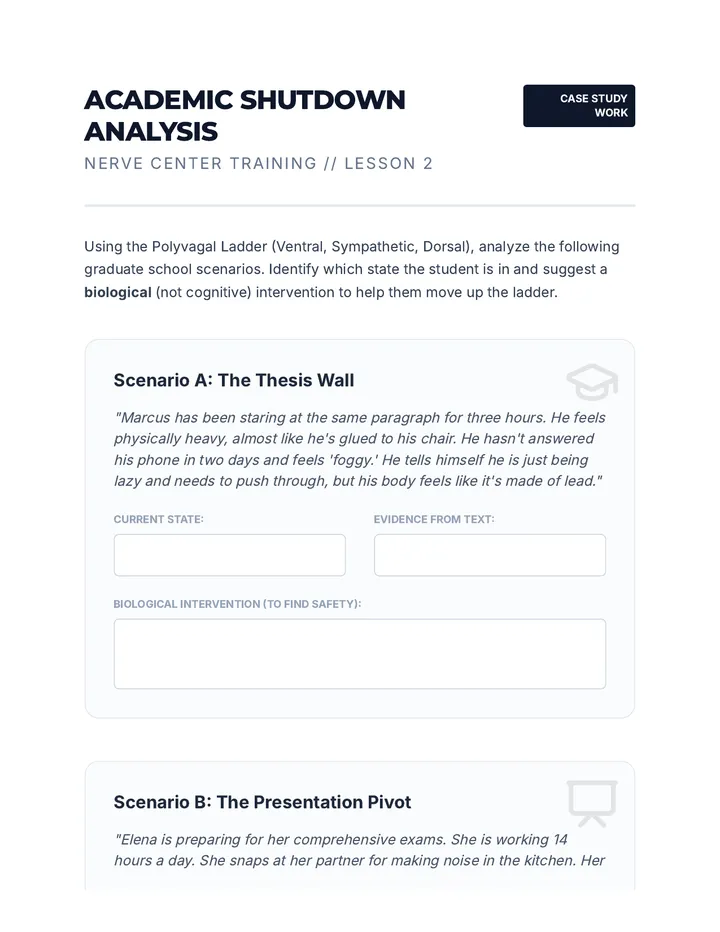
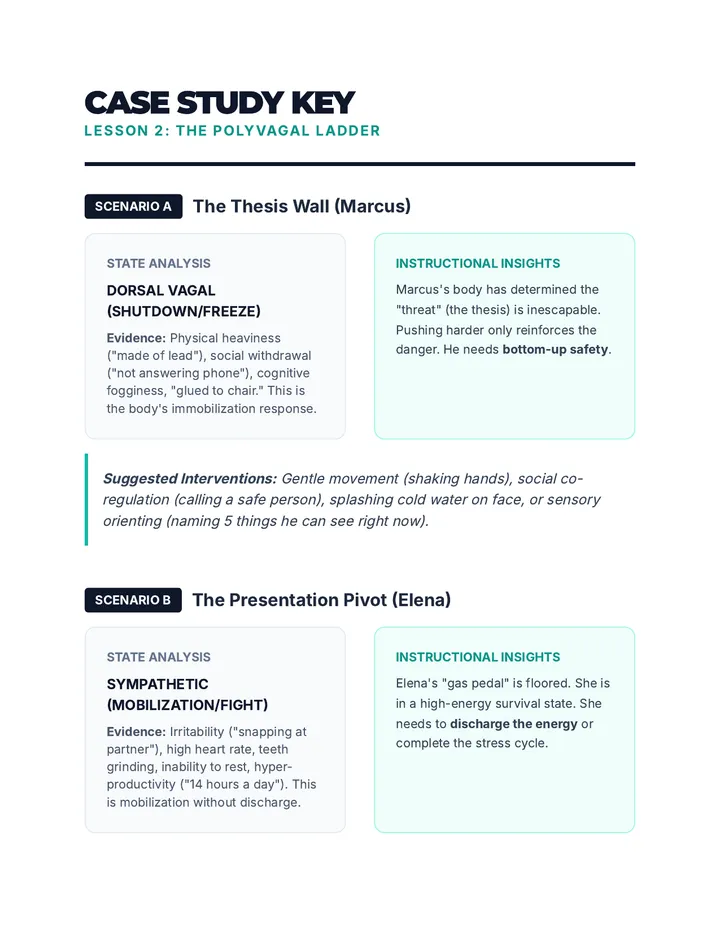
Dives into Polyvagal Theory to distinguish between fight/flight mobilization and dorsal vagal shutdown. Students analyze behaviors like procrastination and isolation as biological responses.
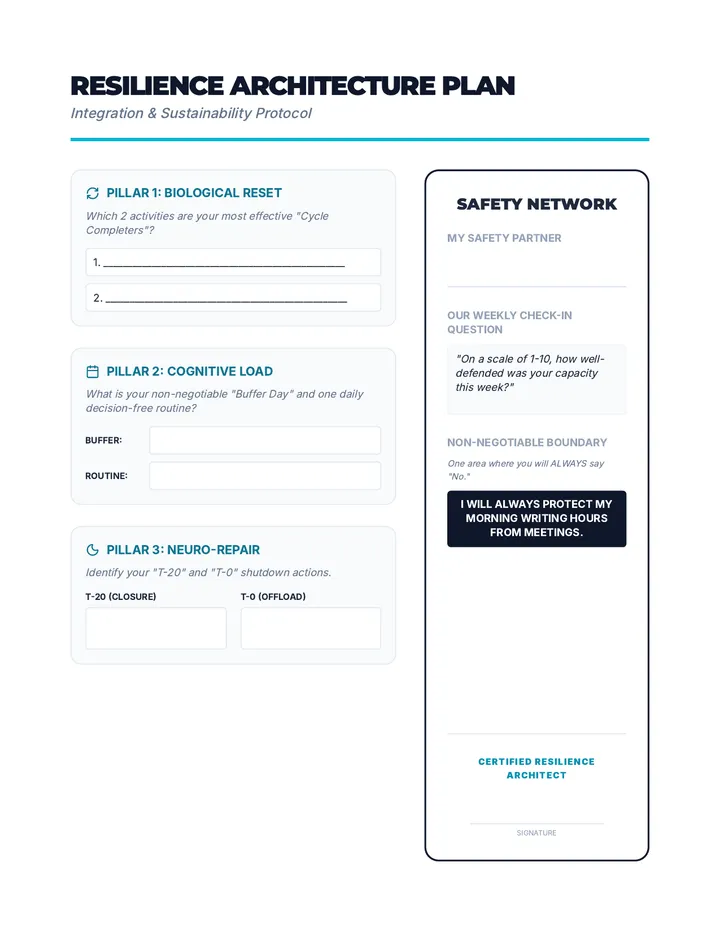
Final synthesis where students integrate all learned modules into a personalized Resilience Architecture plan and a portable Crisis Card for emergency restoration.
Addresses the pressure to overcommit in academia by teaching the 'Strategic No' as a tool for protecting capacity and ensuring career longevity.
Explores the neurobiology of sleep and its role in emotional regulation, culminating in the design of a 'shutdown ritual' to combat revenge bedtime procrastination.
Reframes time management as a tool for reducing cognitive load and anxiety, teaching graduate students to design schedules based on energy levels and buffer capacity.
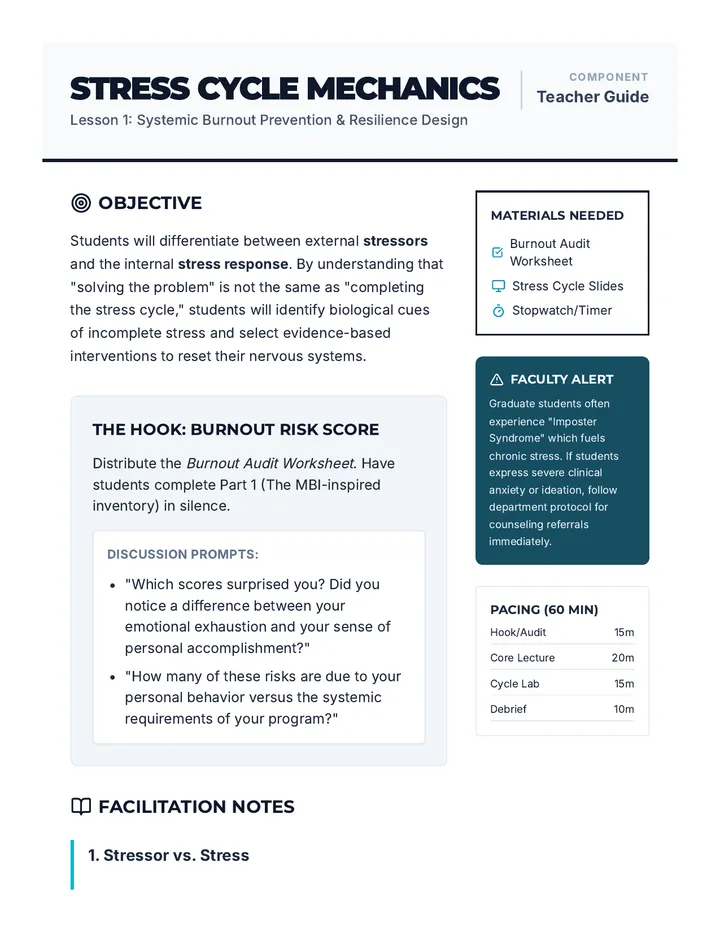
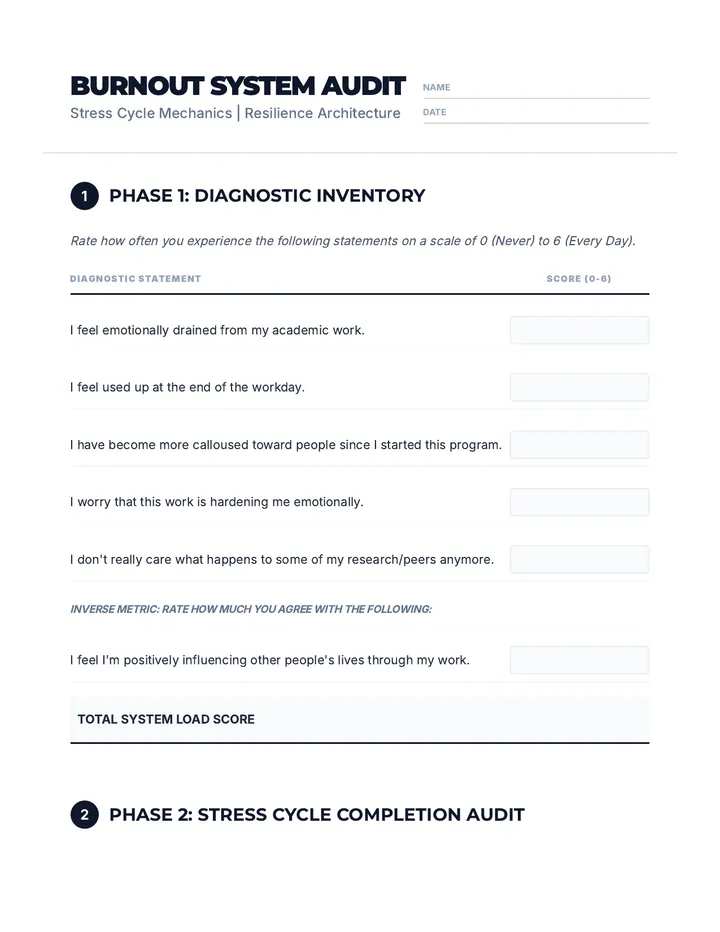
Students distinguish between stressors and the physiological stress response, auditing their current routines to ensure they are completing the stress cycle to prevent chronic burnout.
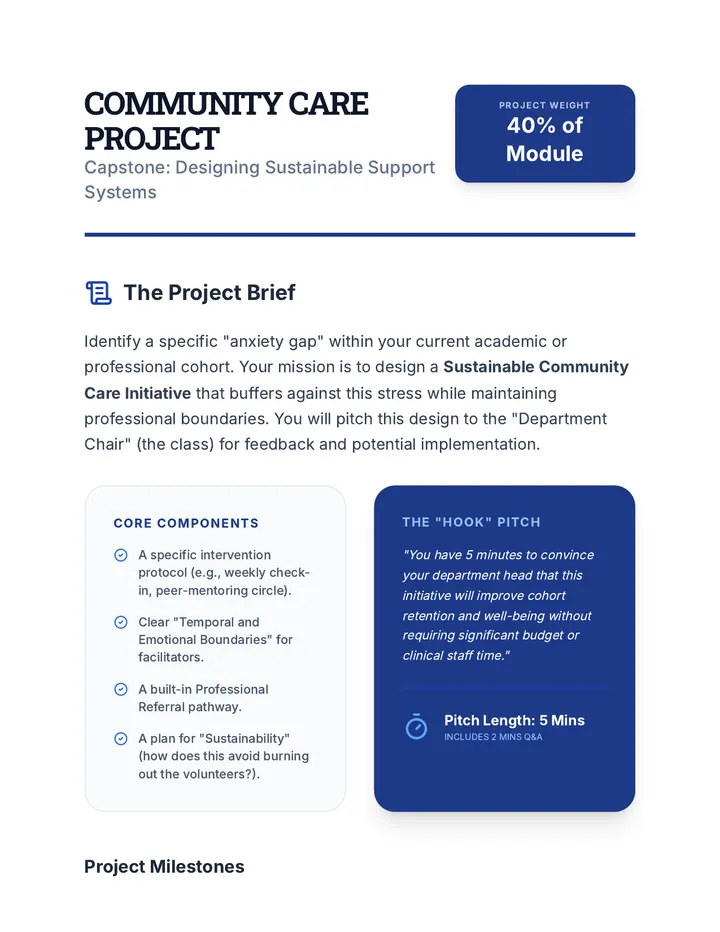
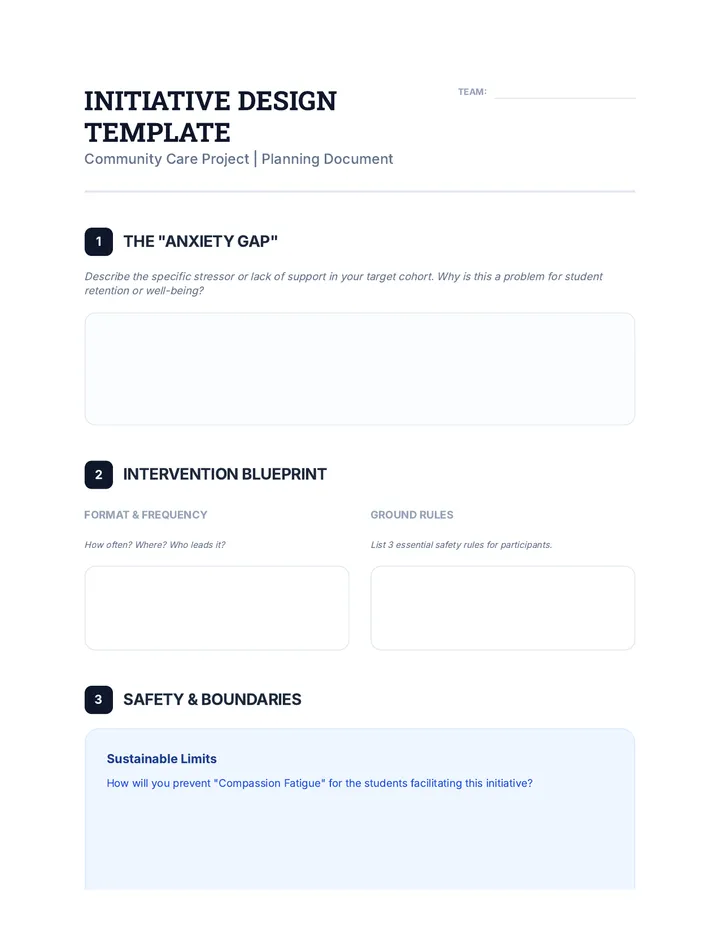
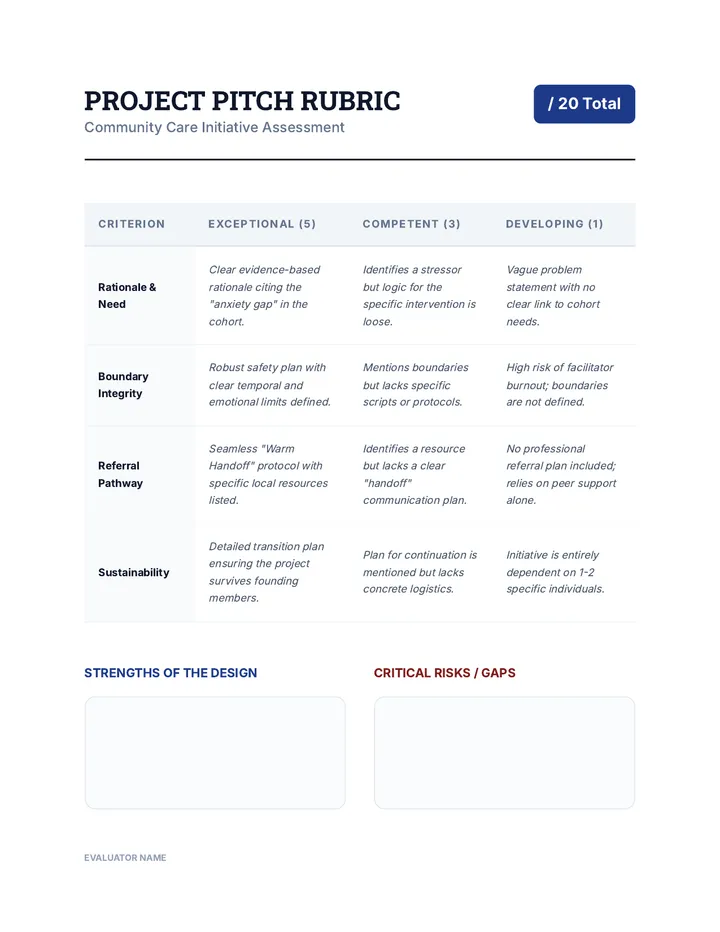
Students design and pitch a sustainable community care initiative tailored to their specific academic or professional cohort.
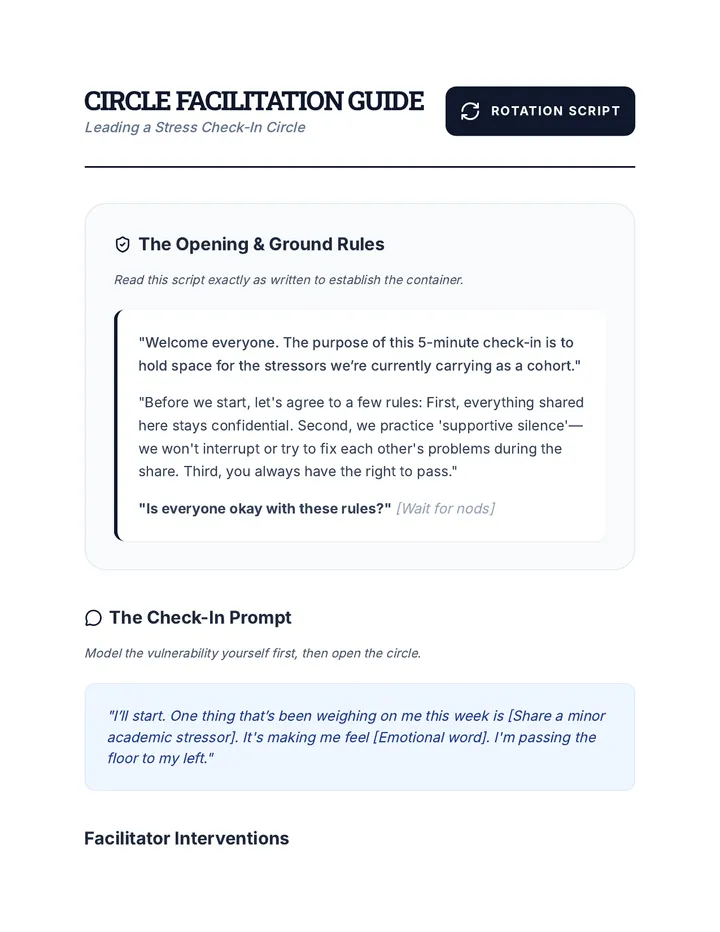
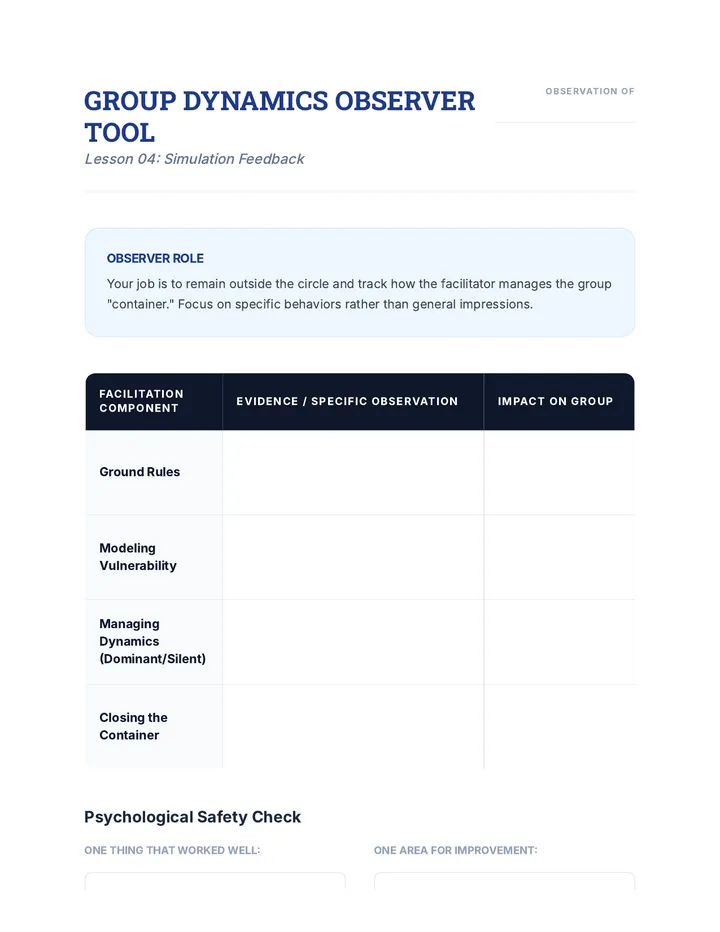
Develops skills for leading group stress check-ins, managing dynamics, and ensuring psychological safety in group settings.
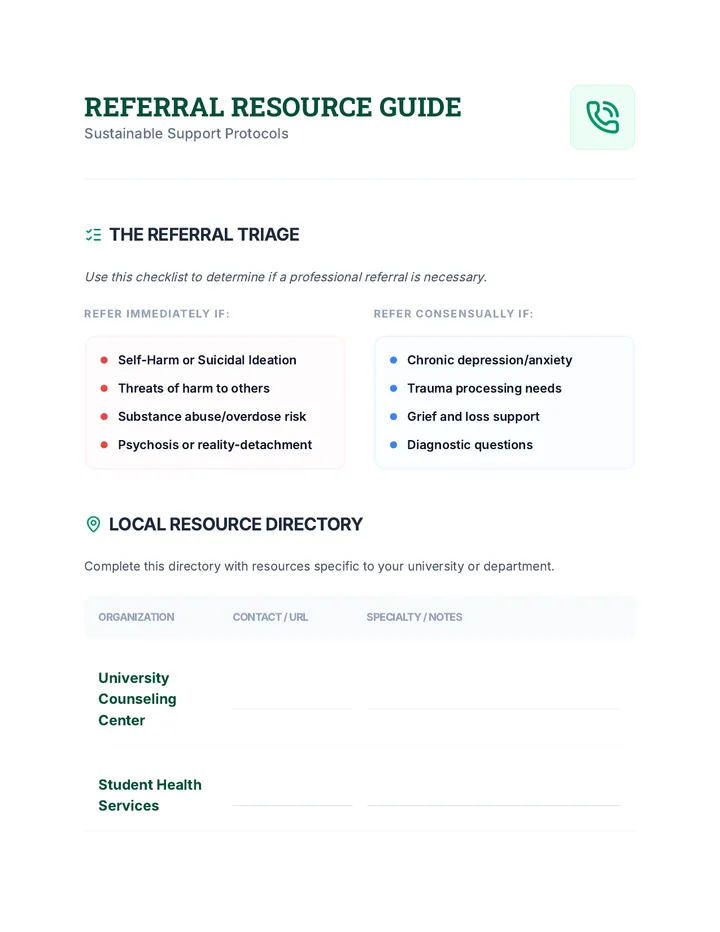
Focuses on preventing compassion fatigue through emotional and temporal boundaries and professional referral protocols.
Practical workshop on active listening, validation, and holding space for peers without the pressure to provide immediate solutions.
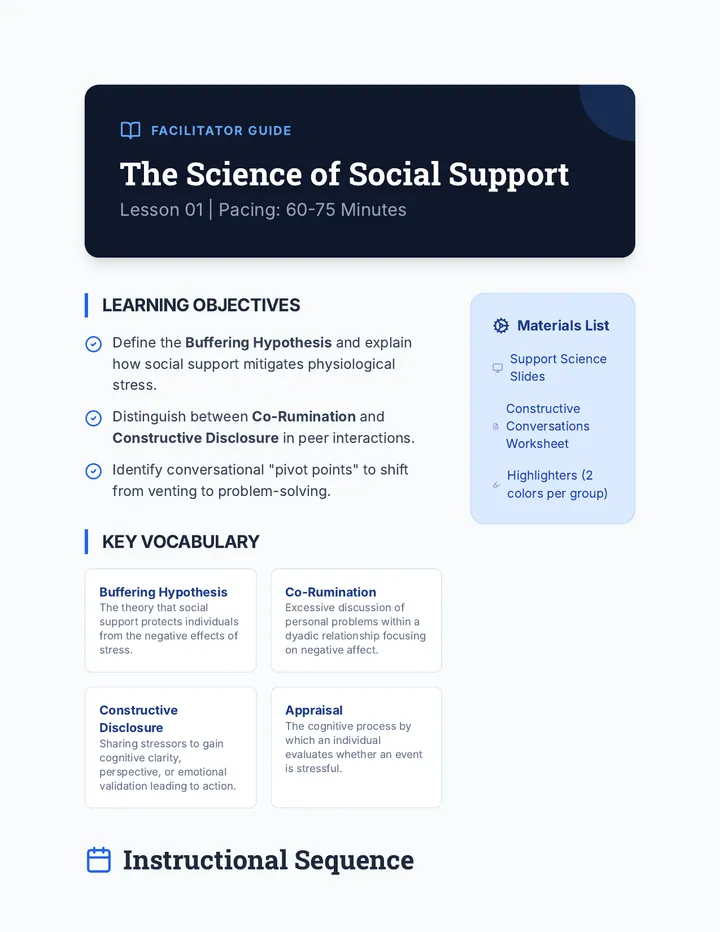
Examines the buffering hypothesis and the psychological mechanics of how social connection mitigates stress, contrasting co-rumination with constructive disclosure.
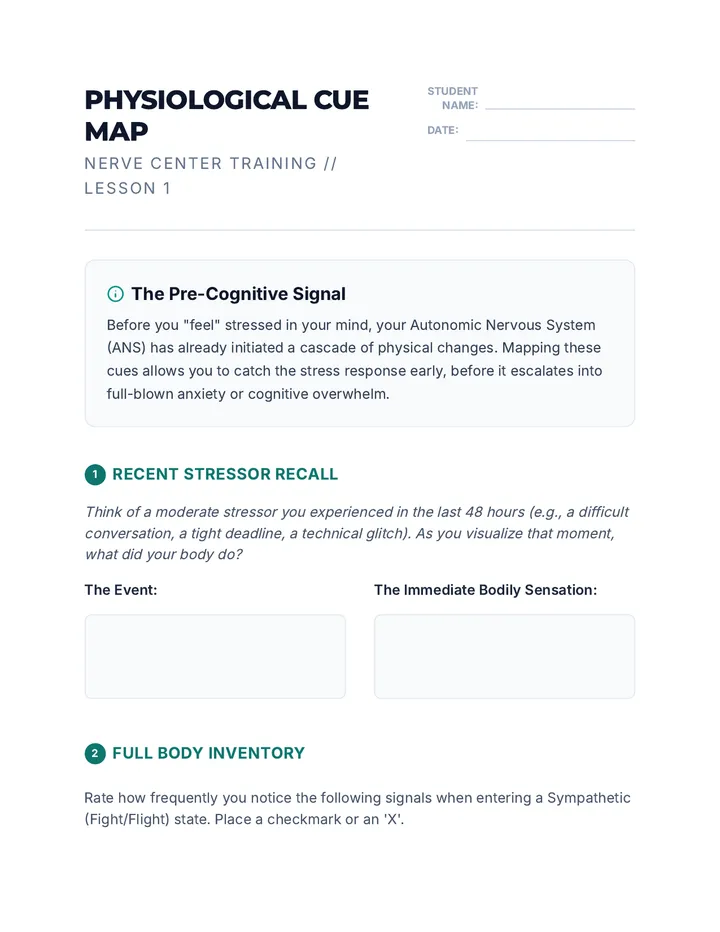
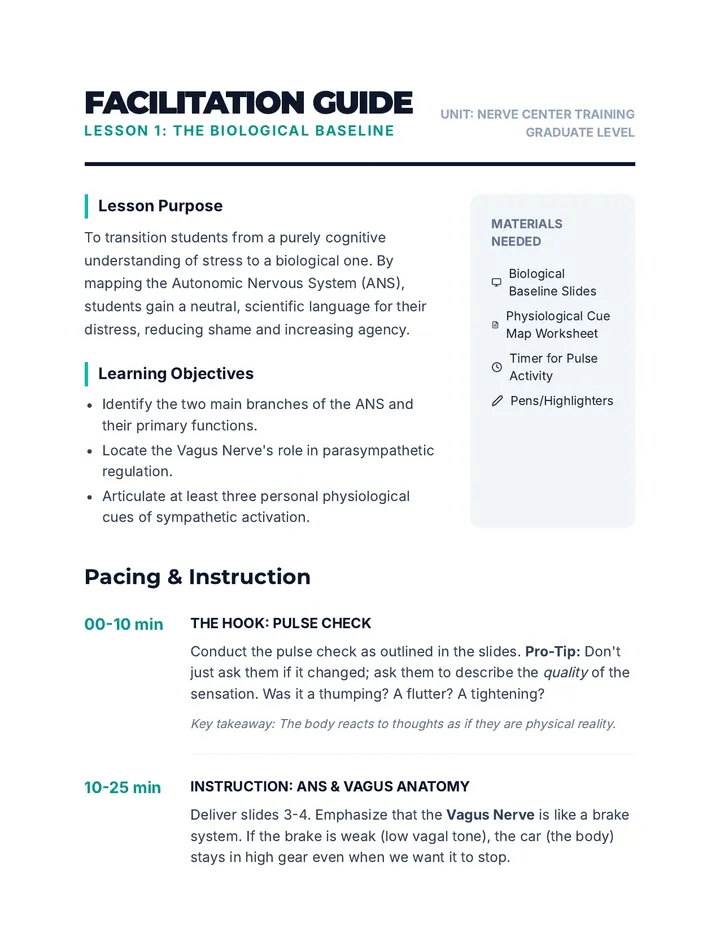
Focuses on the anatomy of the stress response, the sympathetic and parasympathetic branches of the ANS, and the role of the vagus nerve. Students map their own physiological 'early warning signs'.
An informational lesson exploring the rich history, core methods, and global legacy of the Burmese Vipassana meditation movement.
A complete therapeutic game system designed to adapt UNO Show 'Em No Mercy into an active MH/SA coping skills group. Includes a high-visibility clinical rules board, somatic/mindfulness coping skill cards, and 20 CBT-based stress questions to turn gameplay tension into real-time regulation practice.
A 2-hour psychoeducational session for domestic violence survivors focused on emotional awareness, body signals, and identifying secondary emotions below the surface.
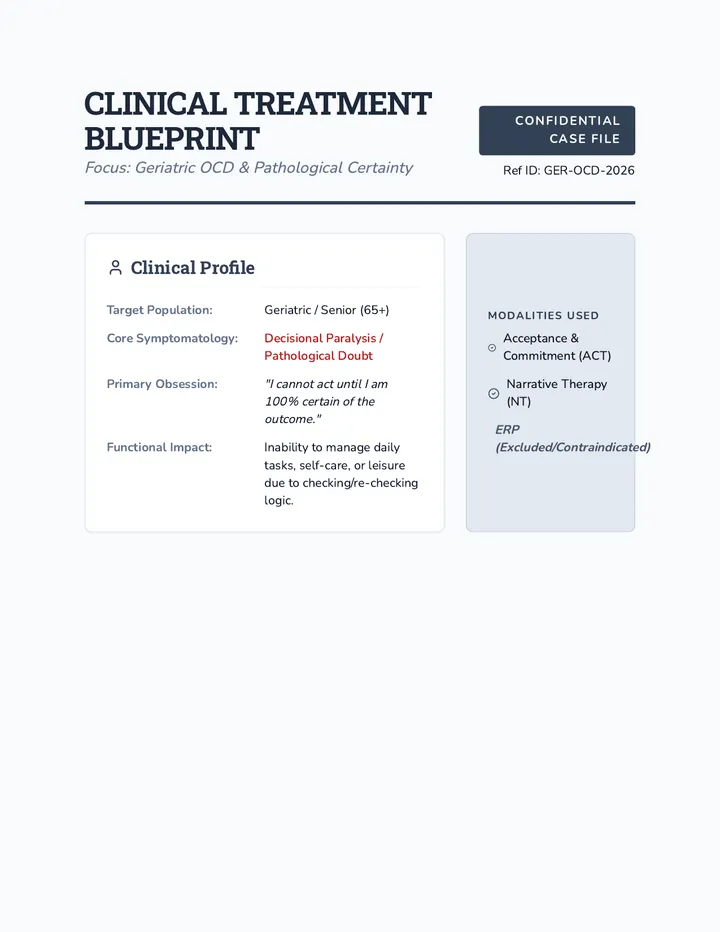
A comprehensive clinical treatment framework for geriatric OCD focused on pathological doubt, utilizing Acceptance and Commitment Therapy (ACT) and Narrative Therapy to bypass traditional ERP.
An interactive PSR group lesson centered on the movie 'Anger Management,' focusing on identifying personal triggers and building a hierarchy of coping skills from moderate stress to severe anger.
This lesson introduces the fundamentals of somatic tracking, a technique used to re-train the brain's response to physical sensations by observing them through a lens of safety and curiosity. Students will learn the four-step process of anchoring, noticing, describing, and reassuring to build foundational body awareness.
A comprehensive session on Radical Acceptance for adult counseling groups, focusing on the DBT concept of accepting reality without judgment to reduce suffering. The lesson includes a facilitator guide, visual slides, a participant worksheet, and a reference anchor sheet.
A lesson exploring the tangible physiological and psychological benefits of mindfulness, focusing on brain science, stress reduction, and workplace wellbeing.
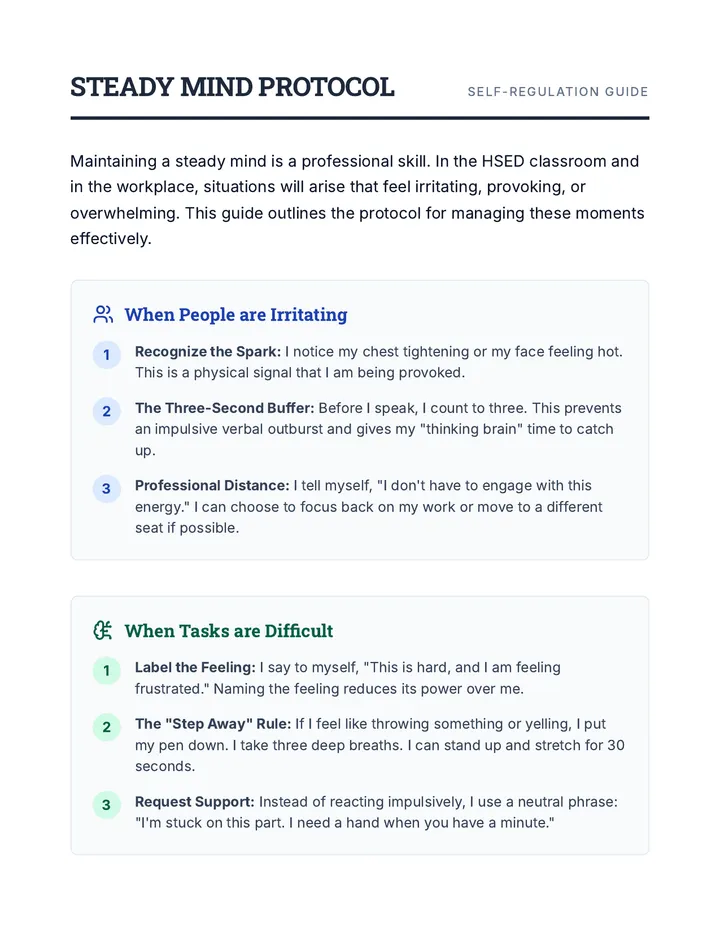
A comprehensive set of self-regulation tools for adult learners, focusing on managing frustration, impulsivity, and social provocation in educational and professional settings.
A social-emotional learning lesson that uses weather metaphors to help students identify, track, and regulate their emotions through 'internal forecasting' and grounding techniques.
An art therapy session focused on exploring self-identity, navigating emotional transitions, and building distress tolerance through creative expression and mindfulness.
A 40-minute graduate-level counseling lesson focused on debriefing interpersonal group feedback and introducing professional stress management techniques for clinicians.
A comprehensive introduction to mindfulness and journaling, designed to help learners of all ages develop self-awareness, emotional regulation, and a consistent reflection practice.
A psychoeducational lesson designed for clinical staff to help clients understand their physiological responses to stress and trauma through the metaphor of a 'Body Alarm System'.
A comprehensive 5-hour Psychosocial Rehabilitation (PSR) group session focused on the gut-brain connection, identifying emotional eating patterns, and building mindful eating skills to improve mental health.
A comprehensive set of personal growth tools branded for Wellness Hub with Miss Panoam. Includes Spark Cards for motivation and Calm Cards for mindfulness, alongside a structured journal for daily reflection.
A set of practical tools and scripts designed to help young adults manage physical symptoms of anxiety, specifically chest tightness and muscle tension.
Introduces mindfulness practices and relaxation techniques to help clients ground themselves in the present moment and manage physiological arousal.
Utilizes behavioral experiments and structured activity scheduling to test anxious predictions and increase engagement in rewarding activities.
Guides clients through the process of systematic desensitization and exposure therapy to reduce avoidance behaviors and build courage.
A reflective lesson designed to introduce students or individuals to stress management, anxiety reduction, and work-life balance through the practice of structured affirmations and mindful self-reflection.
A therapeutic lesson designed for telehealth sessions to guide young adults in managing social anxiety. It teaches emotion labeling, grounding, deep breathing, cognitive reframing, and structured role-play.
A 120-minute, step-by-step training lesson designed to help learners with social anxiety identify their professional skills, build interactive communication confidence, and master critical task-oriented and interview conversations. Includes comprehensive facilitator scripts, structured activities, and coping mechanisms.
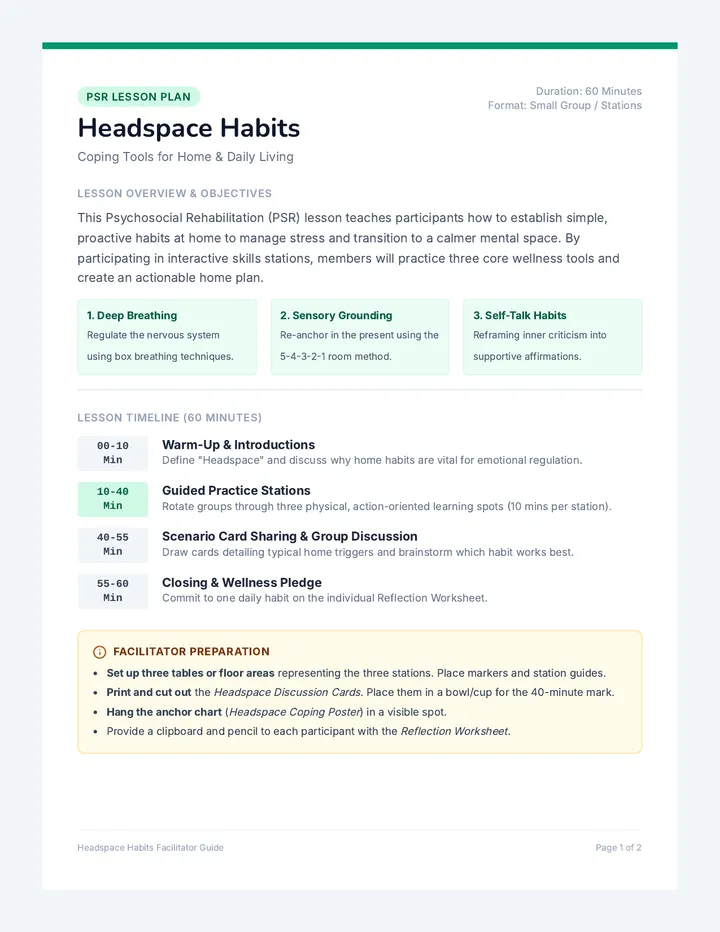
A comprehensive 1-hour PSR (Psychosocial Rehabilitation) lesson designed to teach practical, actionable coping habits—deep breathing, sensory grounding, and positive self-talk—to cultivate a healthier headspace at home. Includes a step-by-step facilitator guide, student reflection worksheets with a coping checklist, a printable anchor chart poster, and group discussion scenario cards.
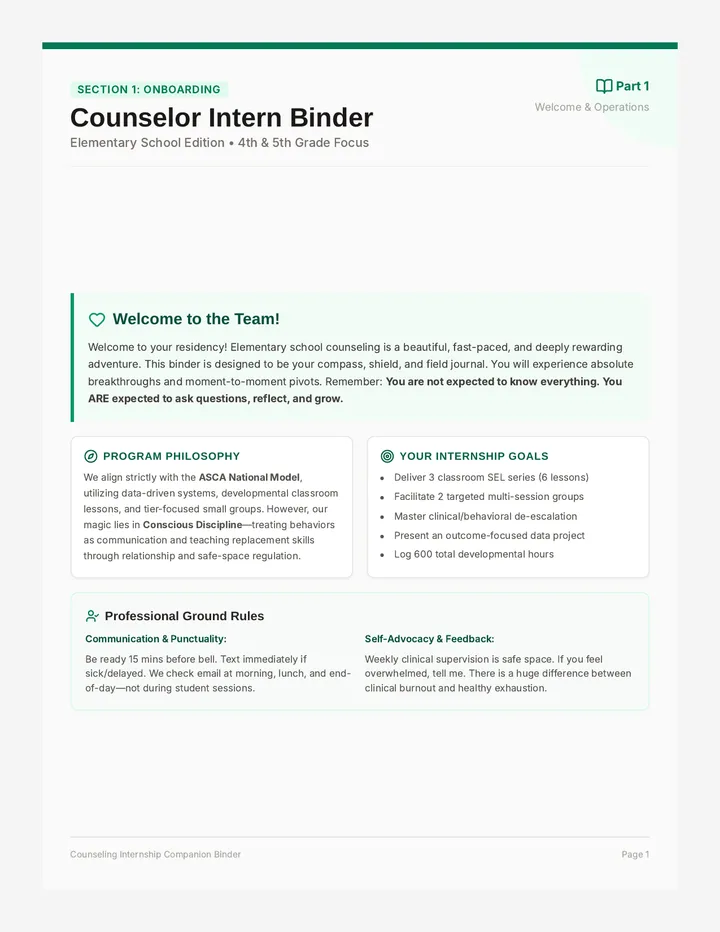
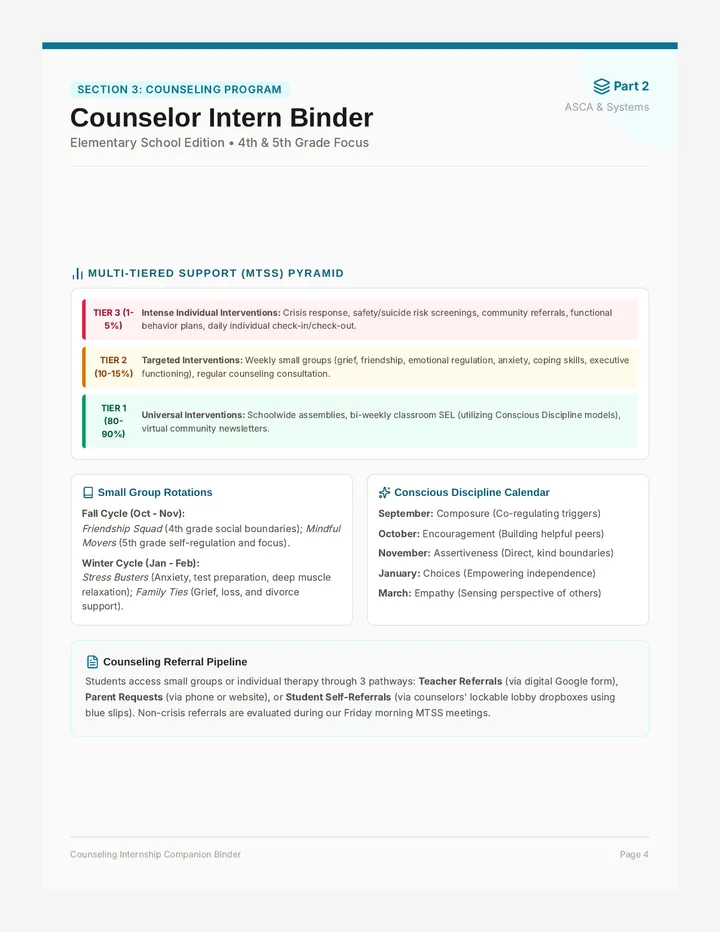
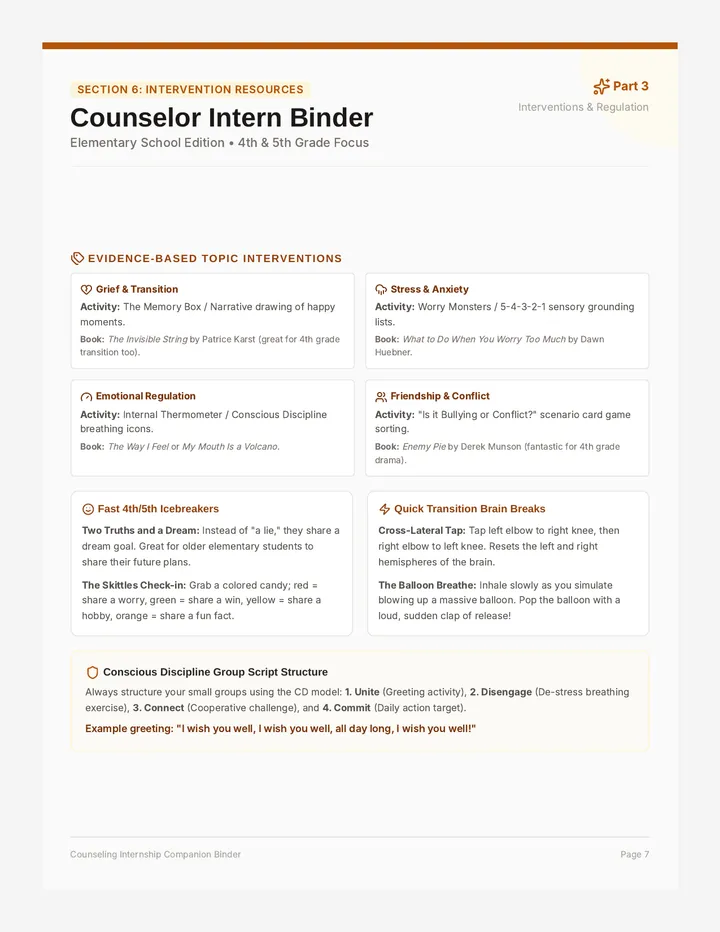
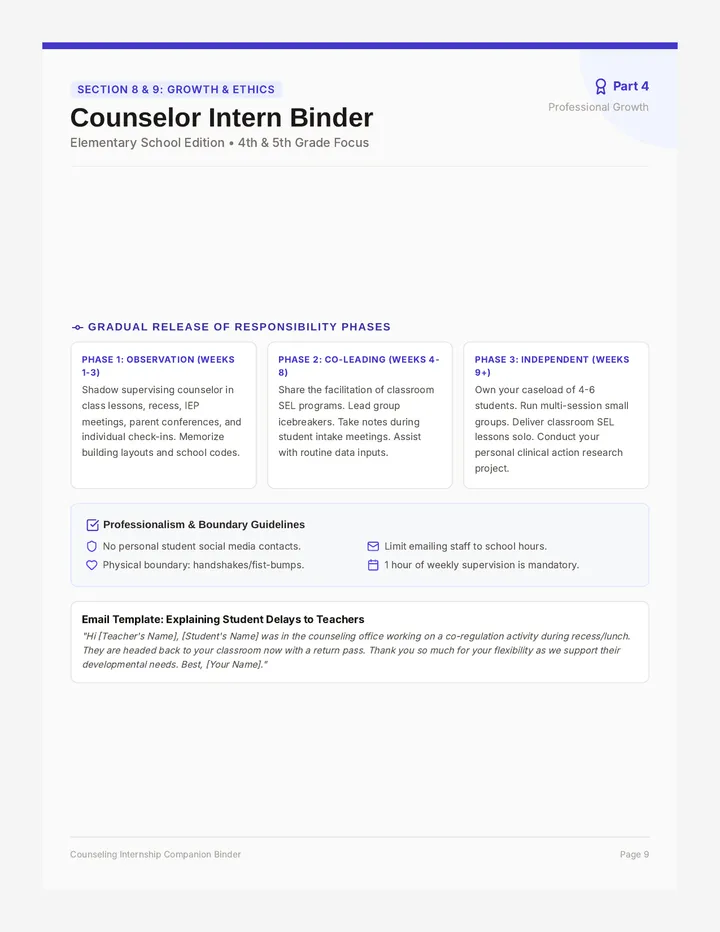
The complete suite of internship binder materials designed to welcome, guide, and support school counseling interns through clinical expectations, daily operations, and self-care.
A wellness-focused lesson providing adult students with stress-management techniques specifically tailored for the transition from the classroom to the workforce. Includes a facilitator guide, instructional slides, and a guided reflection journal.
Synthesis of skills through 'Walking the Middle Path'—balancing the pain of loss with the necessity of moving forward.
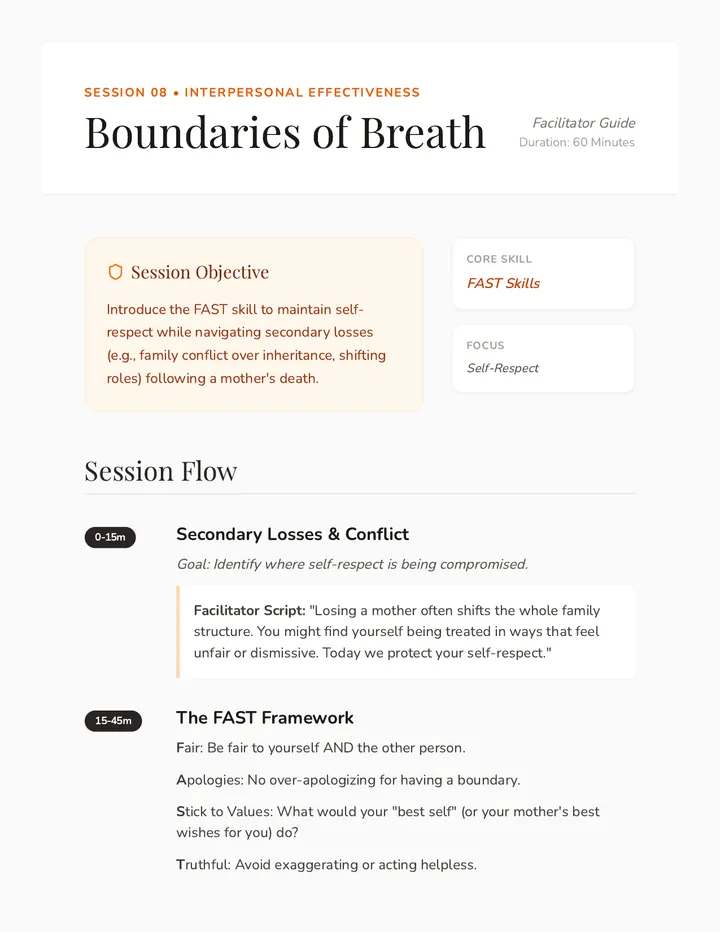
Applying the FAST skill to maintain self-respect and values when navigating the secondary losses associated with maternal death.
Using the DEAR MAN skill to communicate needs and boundaries to family and friends during the grieving process.
Implementing 'Opposite Action' and 'Building a Life Worth Living' by intentionally engaging in activities that honor the relationship.
Applying 'Check the Facts' to common grief-related emotions like guilt, shame, and regret.
Using the five senses to create a self-soothing ritual for times when the absence of a mother is felt most acutely.
Teaching the TIPP skill to manage acute, overwhelming moments of distress during the mourning process.
Exploring the balance between the 'Emotional Mind' of grief and the 'Rational Mind' of daily life to find 'Wise Mind'.
Introduction to Radical Acceptance and the concept of 'Mindfulness of Current Emotion' as it pertains to the initial stages of grief.
A comprehensive personal development lesson designed for young adults transitioning into independence. It features a 10-page workbook centered on values, emotional intelligence, and life skills, paired with a facilitator guide for mentors or therapists.
A comprehensive training package for volunteers entering the juvenile justice system, focusing on trauma-informed care, mentorship, boundaries, and conflict resolution.
Students finalize their protocols and establish a formal maintenance contract to ensure long-term adherence and habit formation.
Students evaluate digital tools, apps, and wearables to integrate effective technological supports into their personalized regulation protocols.
Students identify obstacles to their regulation plan and develop 'If-Then' implementation intentions to navigate triggers and barriers.
Students use a triage metaphor to design a three-tiered response plan, assigning specific self-calming tools to different intensities of distress.
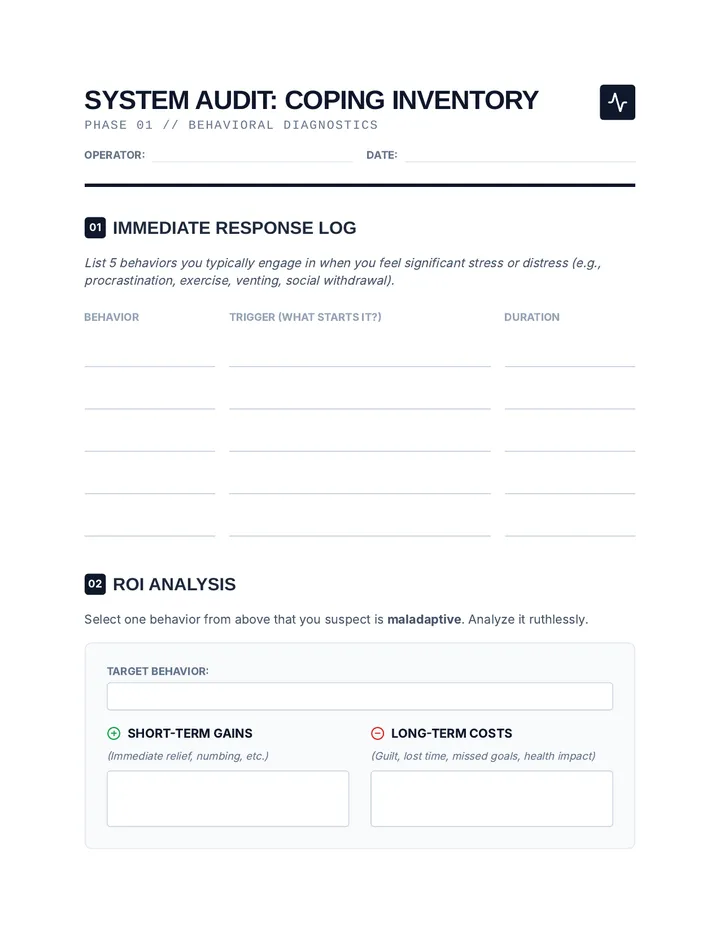
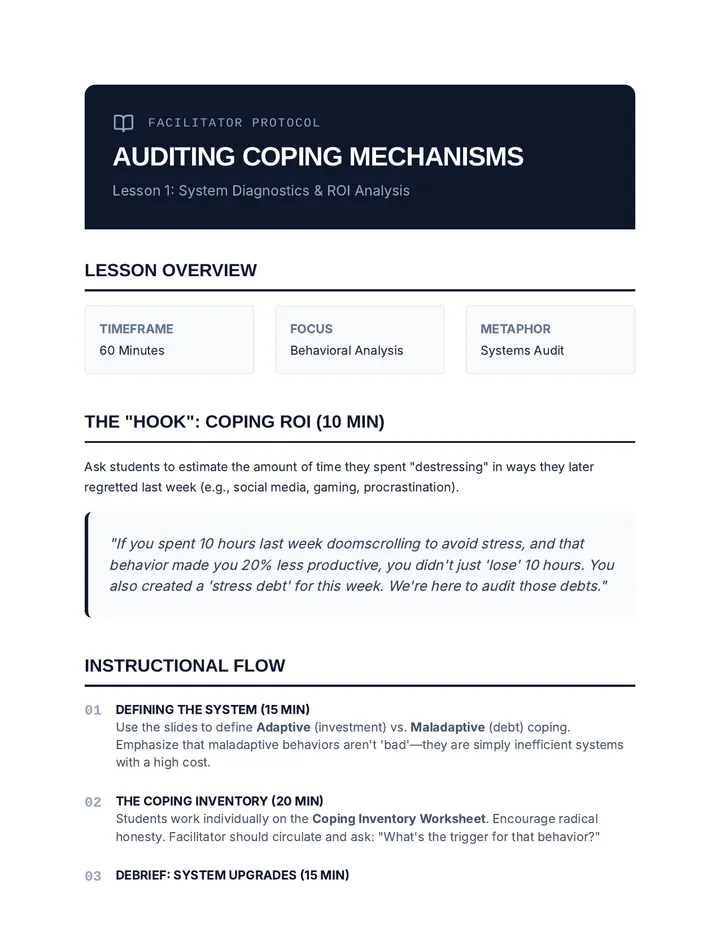
Students conduct an inventory of current stress responses and perform a cost-benefit analysis to distinguish between adaptive and maladaptive behaviors.
Advanced clinical training on identifying when PLEASE skills might be co-opted by disordered eating pathology. Students practice modifying interventions for high-risk populations and assessing for orthorexia and exercise compulsion.
This lesson focuses on the 'Get Exercise' component of PLEASE as a form of behavioral activation. Students develop strategies for implementing movement with clients experiencing severe lethargy or physical barriers without reinforcing perfectionistic or aesthetic-focused exercise.
A review of the physiological links between nutrition and mental health, focusing on the evidence base for nutritional psychiatry. Students learn to provide non-prescriptive psychoeducation that supports client autonomy and emotional resilience.
Students examine the 'PLEASE' skills (Physical illness, Lunch/Eating, Avoid mood-altering substances, Sleep, Exercise) through a critical lens, deconstructing diet culture influences and reframing nutrition as a tool for neurochemical stability rather than weight control.
A workshop focused on self-care, wellness dimensions, and building sustainable maintenance and renovation plans for independent living.
Uses prayer as a tool for realignment rather than just petition, focusing on 'not my will but thine' as a release of unrealistic burdens.
Identifies and provides tools to counter common scrupulous cognitive distortions like overestimating demands and underestimating grace.
Focuses on the transformation of our nature (becoming) rather than the tallying of individual deeds.
Shifts focus from fear-driven checklist religion to the Savior’s model of invitation and lack of condemnation.
Discusses the reality of imperfect leaders and institutions as a reflection of the divine pattern of working with flawed individuals.
Explores the divine purpose of weakness as taught in Ether 12, reframing struggle as a tool for humility rather than evidence of failure.
Addresses the clinical cycle of religious OCD, focusing on how hyper-monitoring and fear distort our self-perception and spiritual experience.
Reframes the command to 'be perfect' using the Greek 'teleios,' shifting the focus from 'flawless' to 'whole' and 'complete in Christ.'