Root cause analysis and brainstorming techniques for everyday problem-solving. Equips learners with ethical frameworks and risk-benefit evaluation skills to predict consequences and make informed choices.
In this culminating lesson, students design individualized PLEASE plans for complex client profiles. They must account for comorbidities, socioeconomic status, and physical ability levels.
This lesson navigates the complex 'A' skill, distinguishing between prescribed psychotropics and non-prescribed substances. Students discuss harm reduction frameworks and how to track the emotional half-life of various substances.
Students address the 'PL' (Treat Physical Illness) component, exploring how to support clients who avoid medical care due to anxiety or financial/systemic barriers. The lesson includes navigating the healthcare system as an advocate.
This lesson focuses on the micro-assessment of problem behaviors, specifically tracing back to vulnerability factors like hunger, fatigue, or illness. Students practice identifying the 'weak links' in the chain related to the PLEASE skills.
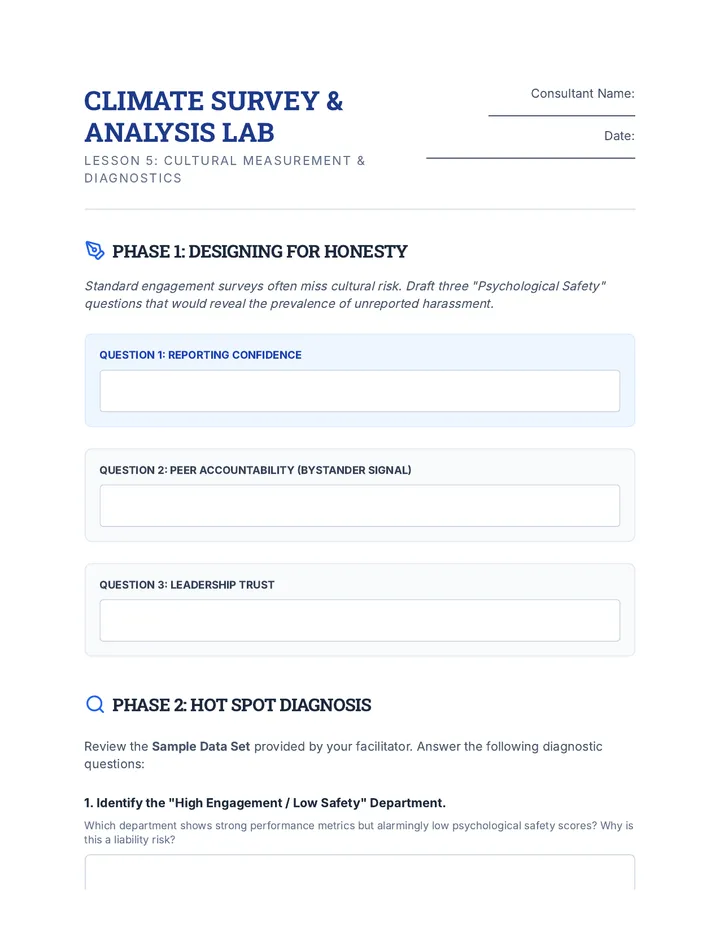
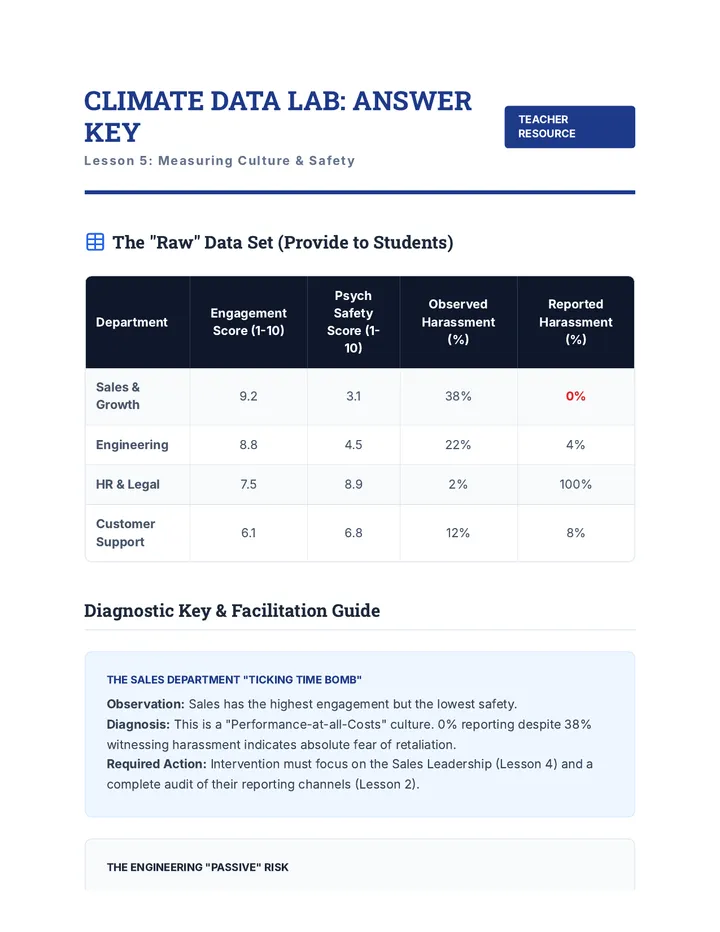
How do you know if prevention is working? Students learn to design climate surveys and interpret data to assess the prevalence of unreported harassment and the general level of psychological safety in an organization.
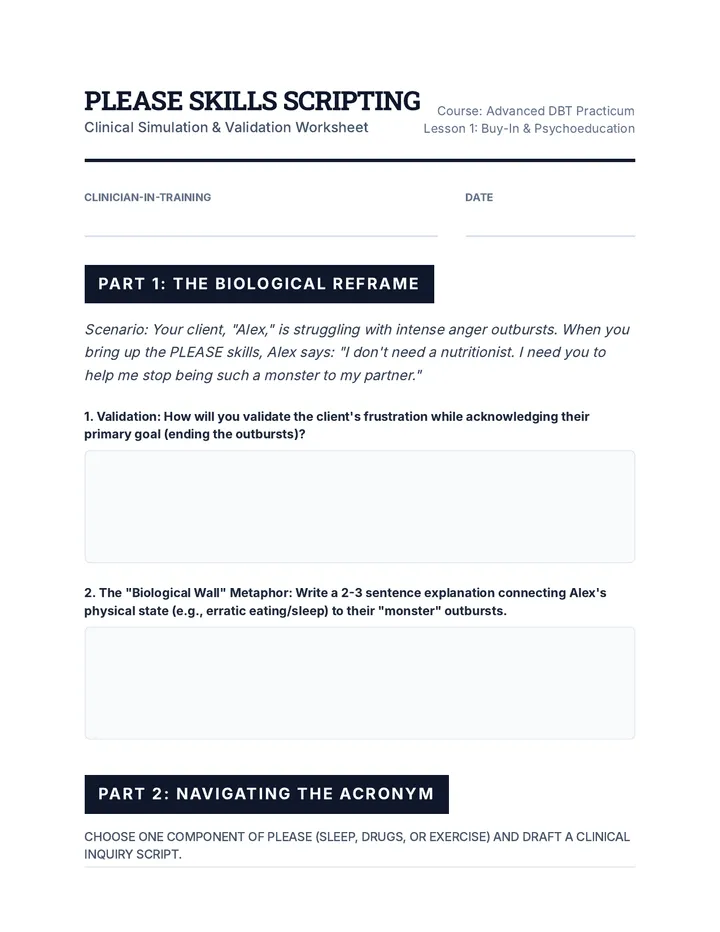
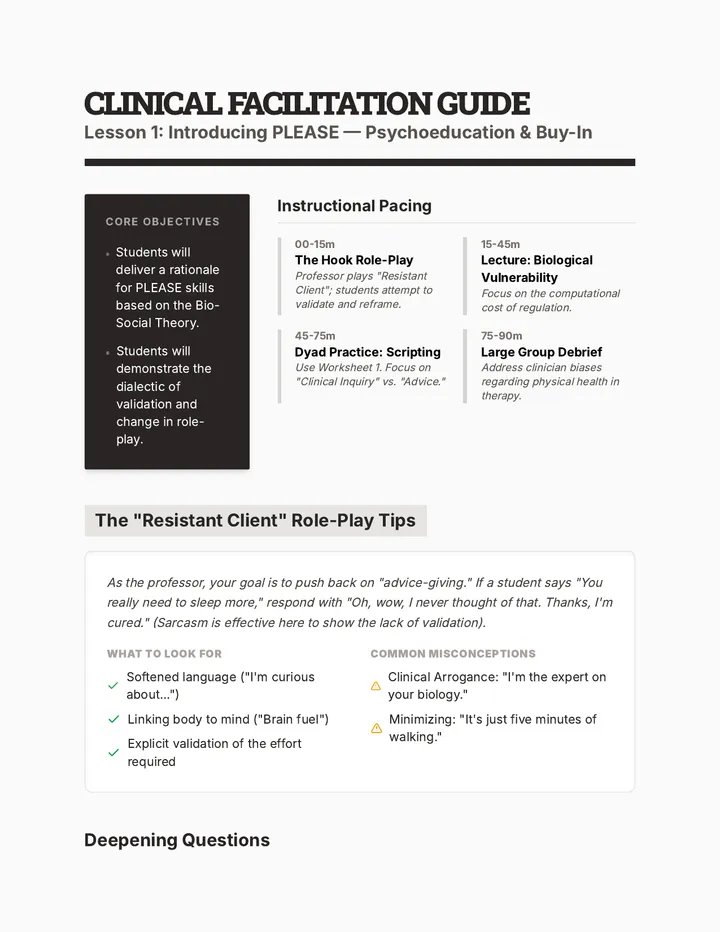
Students practice introducing the PLEASE acronym to clients, focusing on building motivation for lifestyle changes in a therapeutic context. They learn strategies to validate the difficulty of these tasks while maintaining the necessity of change.
Synthesize learning to create a roadmap for 'Just Culture,' integrating physical and psychological safety as core organizational values.
Explore the impact of leadership communication and behavior on safety culture, including practical techniques for management-led safety walks and trust-building.
Investigate the systemic and cultural factors that lead to under-reporting of incidents and design alternative incentive structures to promote transparency.
Analyze the legal protections afforded to whistleblowers under the OSH Act and develop organizational policies that prevent retaliation and encourage ethical reporting.
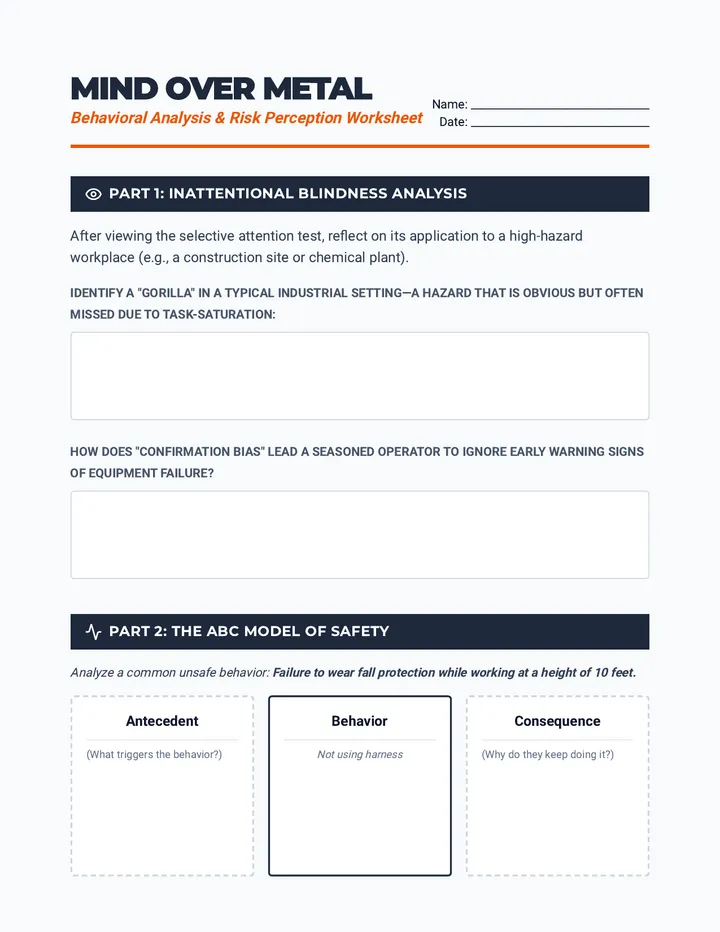
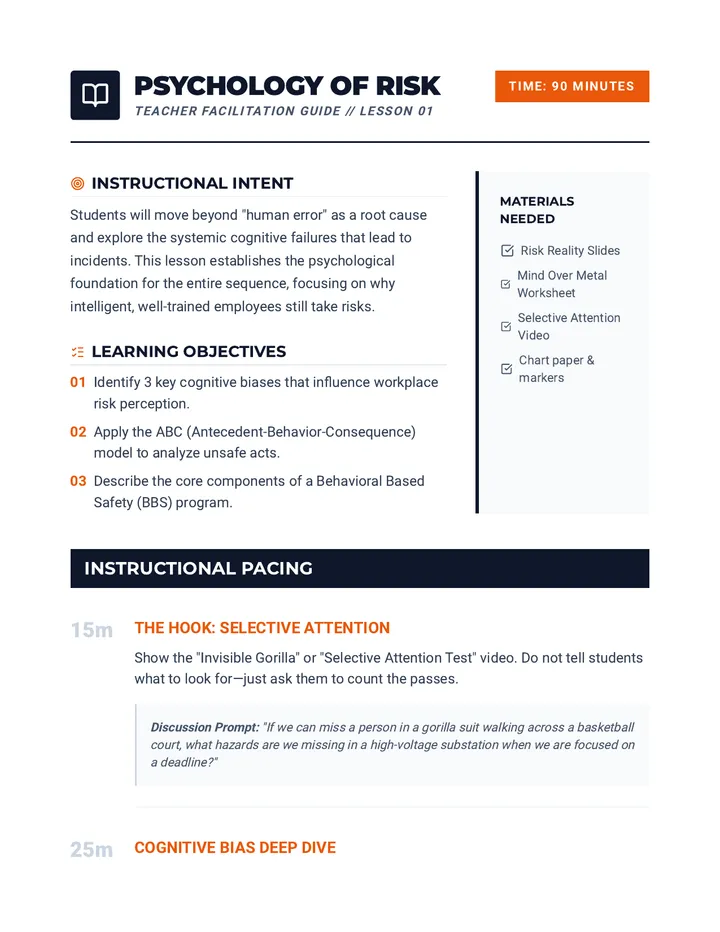
Examine the cognitive biases and psychological factors that influence risk perception and safety-related behavior in industrial and corporate environments.
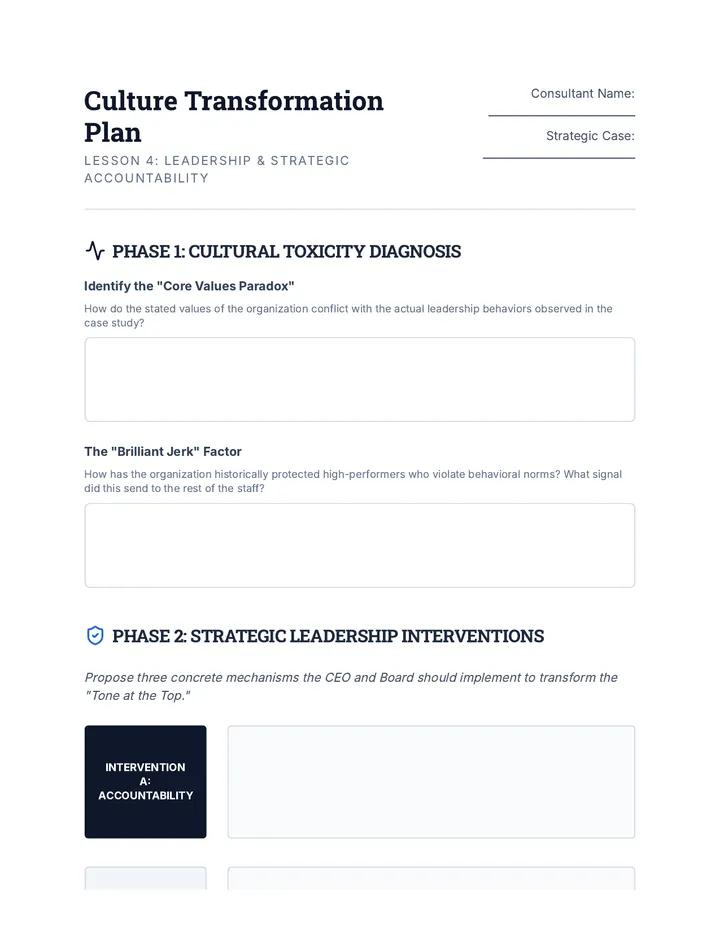
This lesson examines the concept of 'tone at the top.' Students analyze case studies of organizations that successfully transformed toxic cultures through leadership transparency and accountability mechanisms.
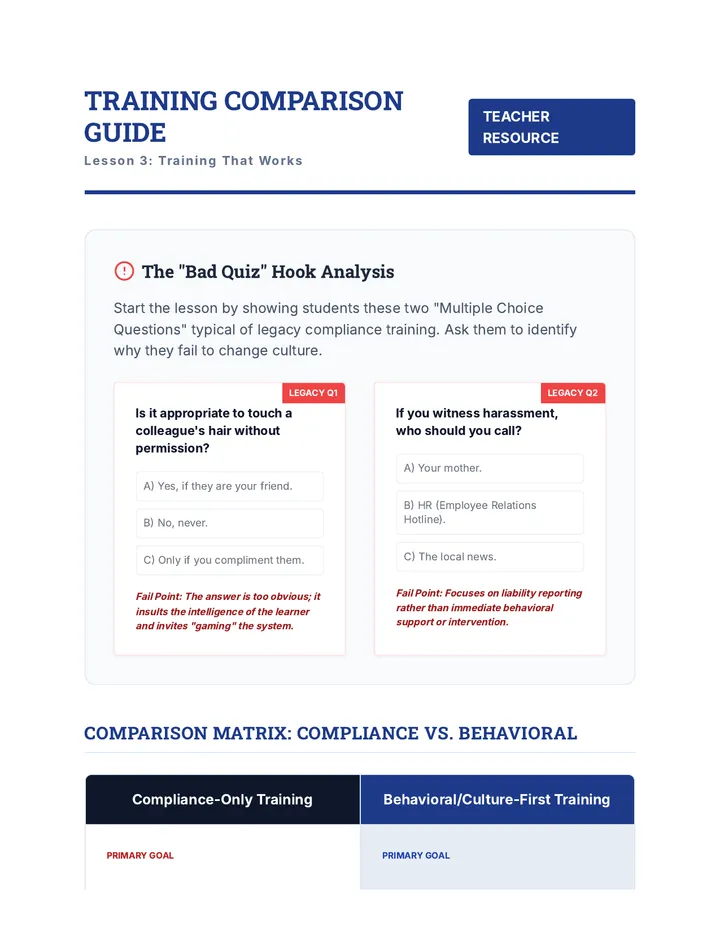
Analyzing why traditional sexual harassment training often fails, this lesson explores interactive and behavioral-based training models. Students design a training module that focuses on civility and respect rather than just liability avoidance.
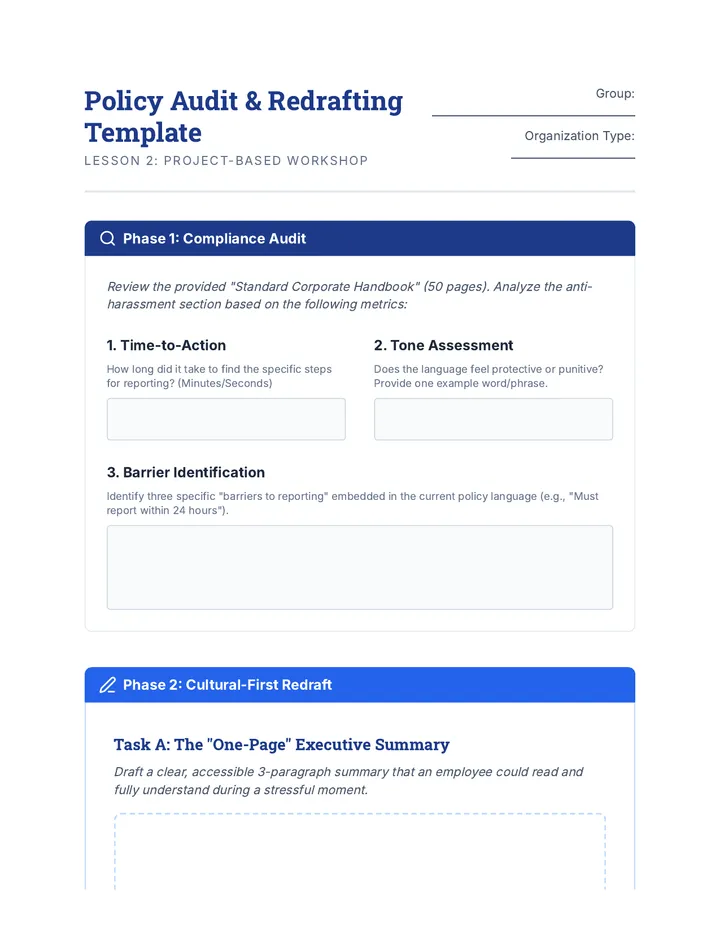
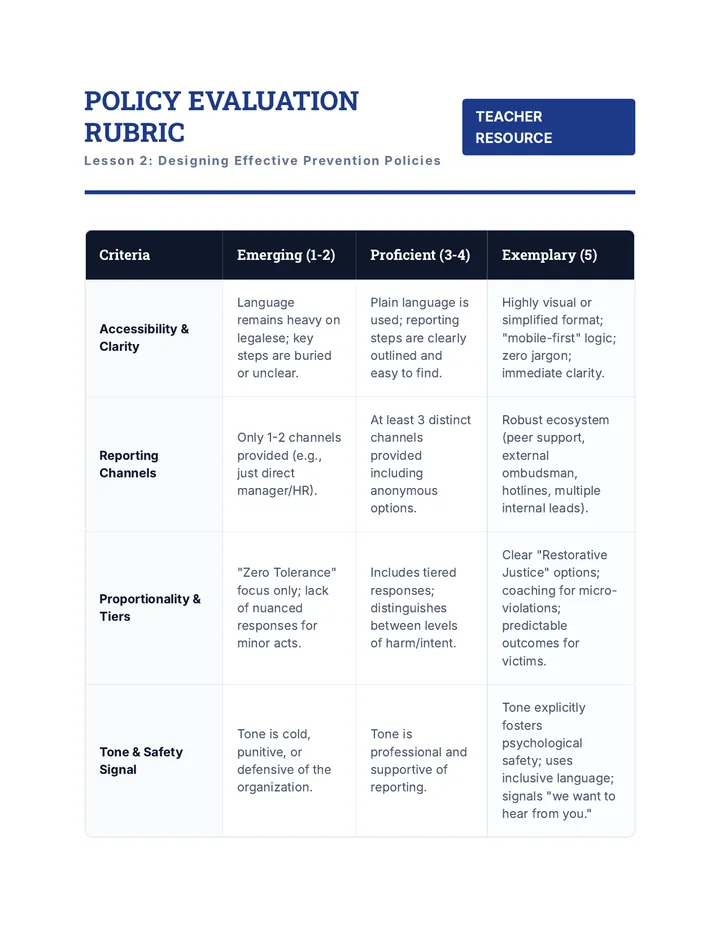
Critique standard zero-tolerance policies and explore nuanced approaches that encourage reporting and cultural health through effective policy design.
Concludes with the technical skills needed to draft a defensible investigation report and recommend appropriate remediation.
Teaches students how to weigh conflicting testimony and apply the preponderance of evidence standard to make formal findings of fact.
Develops skills for interviewing the accused and witnesses, focusing on non-leading questions and managing high-conflict interactions.
Covers strategic planning for an investigation, identifying witnesses, and managing digital and physical evidence.
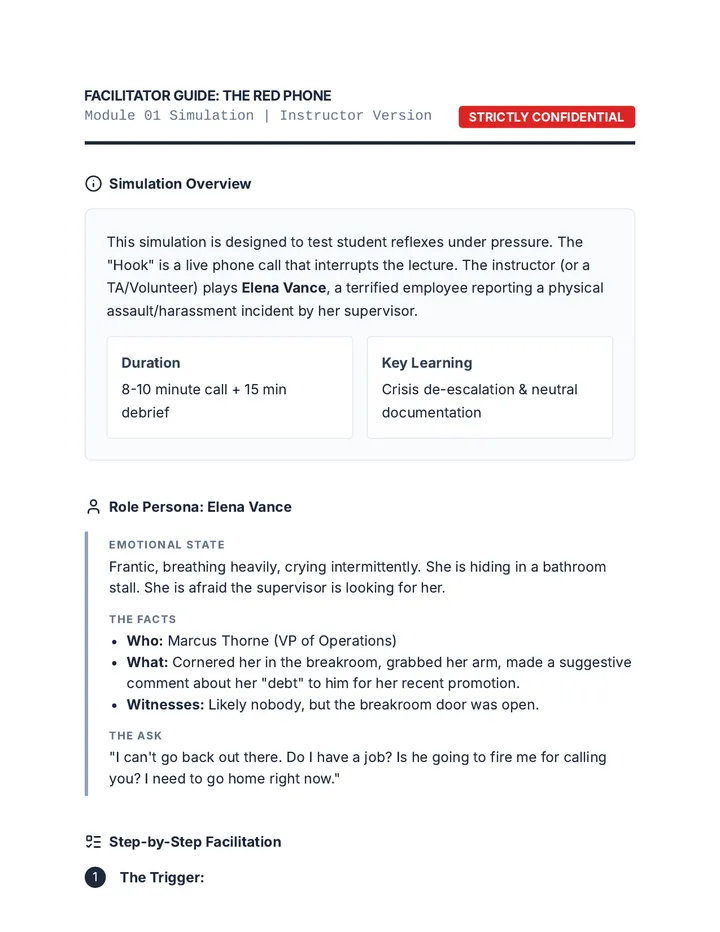
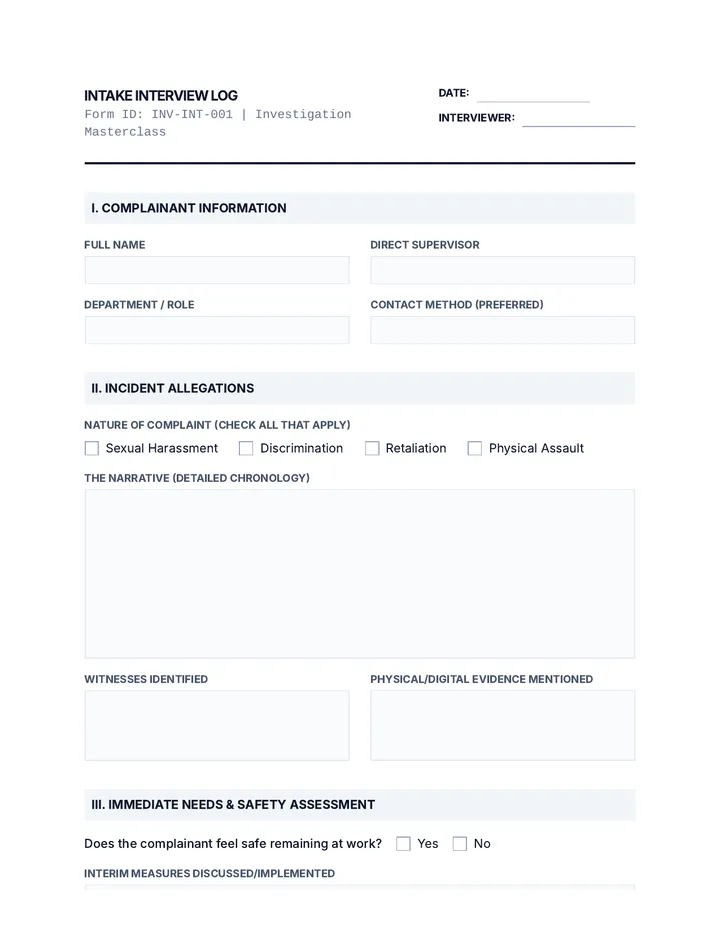
Focuses on the immediate response to a complaint, including conducting the intake interview and determining if interim measures like administrative leave are necessary.
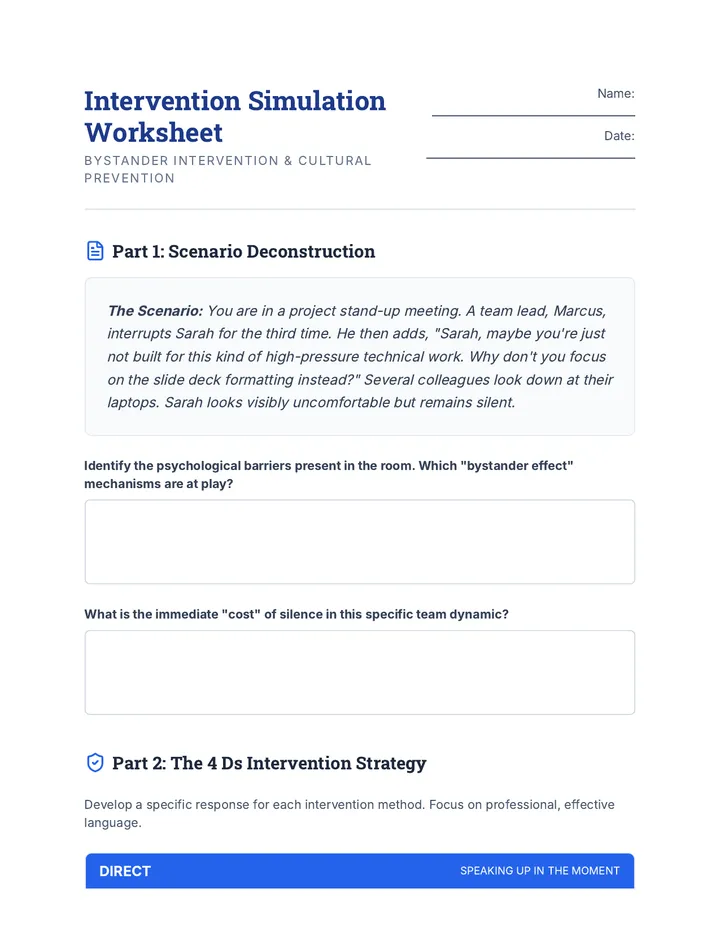
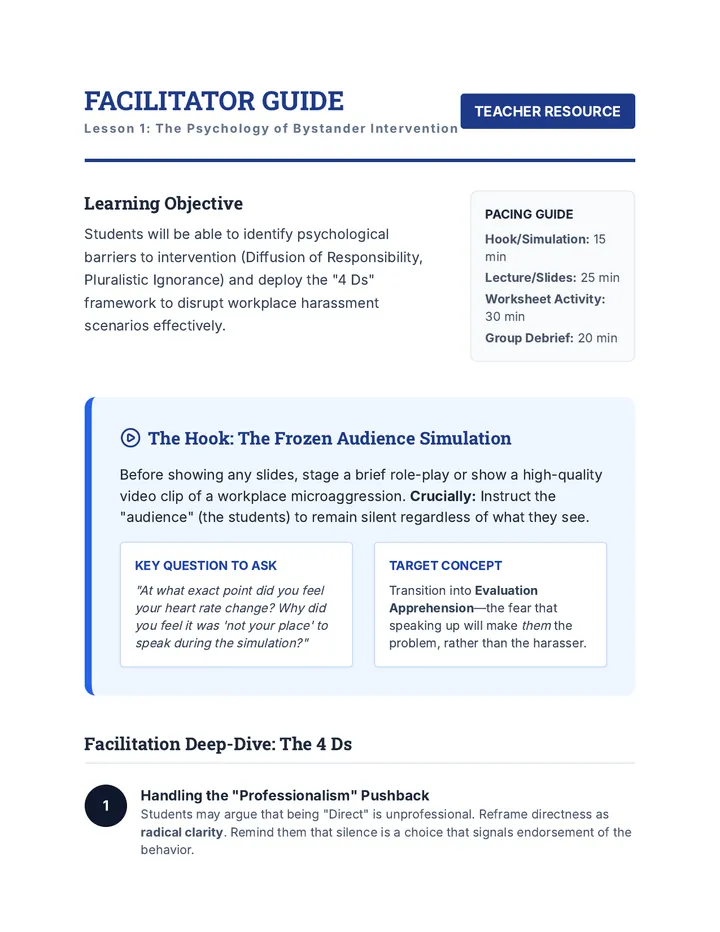
Explore the psychological barriers to intervening in workplace harassment and master the 4 Ds of bystander intervention through simulation and analysis.
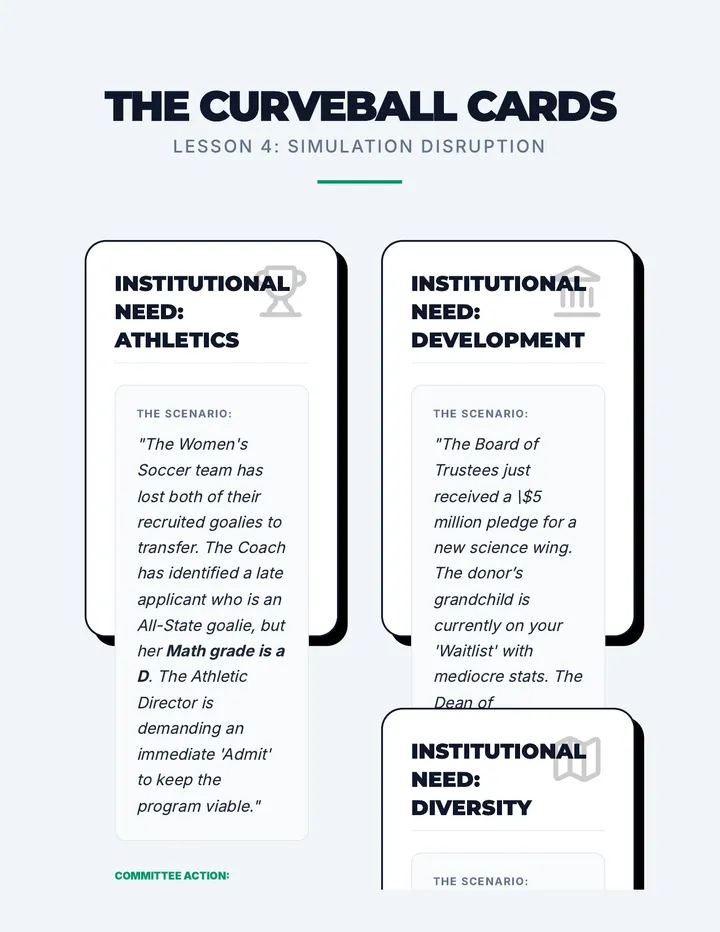
Students step out of role to analyze the simulation outcomes, discussing where systemic bias entered the process. The lesson culminates in a proposal for improving the equity of the admissions review workflow.
The simulation introduces real-world constraints such as legacy preferences, athletic recruitment needs, and yield protection strategies. Students must adjust their cohort selections to meet these external institutional demands.
Functioning as regional admissions officers, students present their assigned applicants to a small group, advocating for acceptance or rejection based on evidence. The focus is on articulating a clear argument grounded in the application materials.
Participants review redacted application files, practicing the skill of 'reading between the lines' of transcripts and standardized test reports. They learn to identify rigorous course sequencing and contextualize GPA within school profiles.
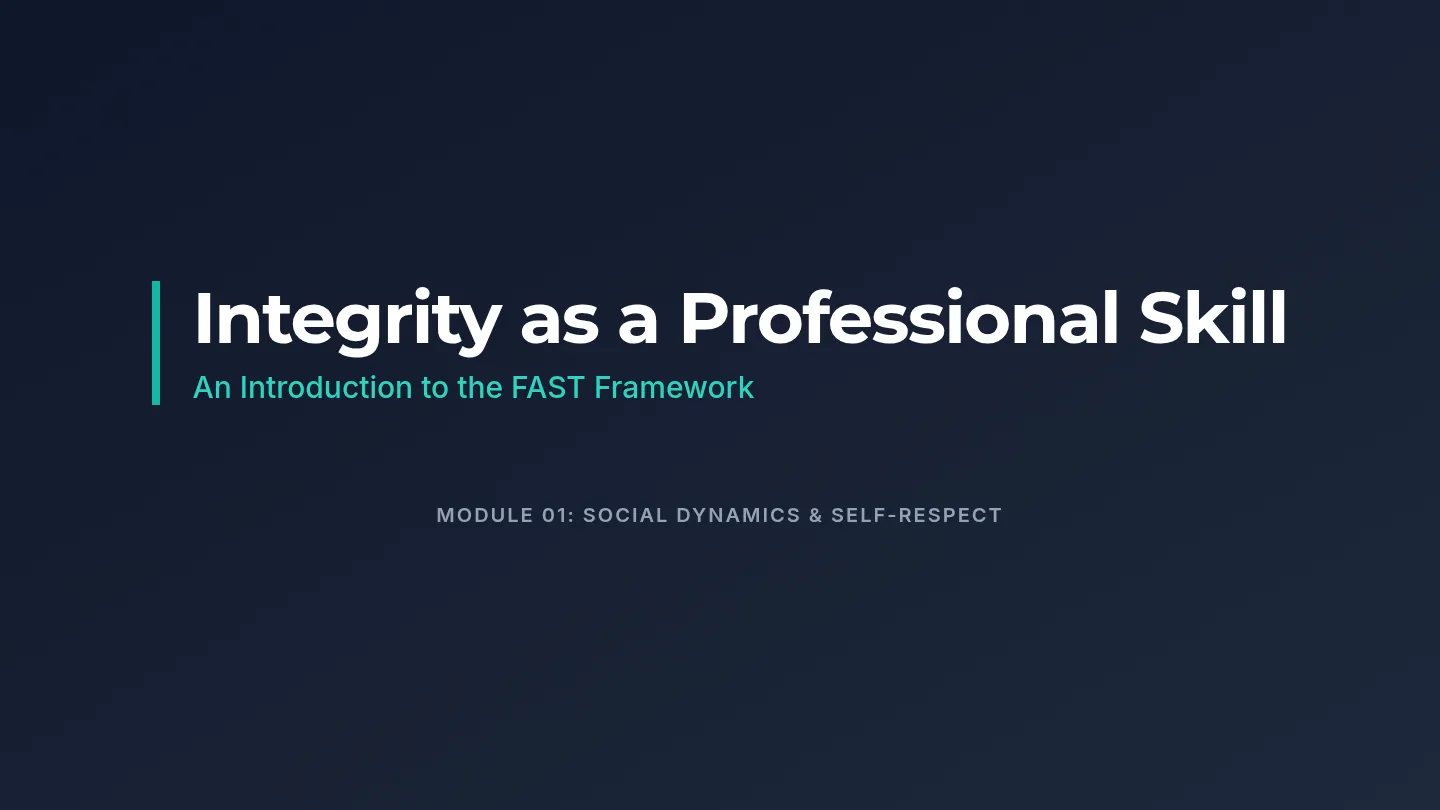
A synthesis project where students analyze a public or fictional crisis of self-respect, mapping pivot points where FAST skills could have altered the outcome.
Examines the 'T' (Truthful) skill in difficult conversations, teaching students to avoid sugar-coating or acting helpless in favor of direct, respectful honesty.
Students explore 'S' (Stick to Values) by navigating ethical dilemmas where personal integrity conflicts with organizational pressure or authority figures.
Focuses on the 'A' (No Apologies) element of FAST, analyzing how over-apologizing in leadership roles diminishes authority and self-worth through comparative transcript analysis.
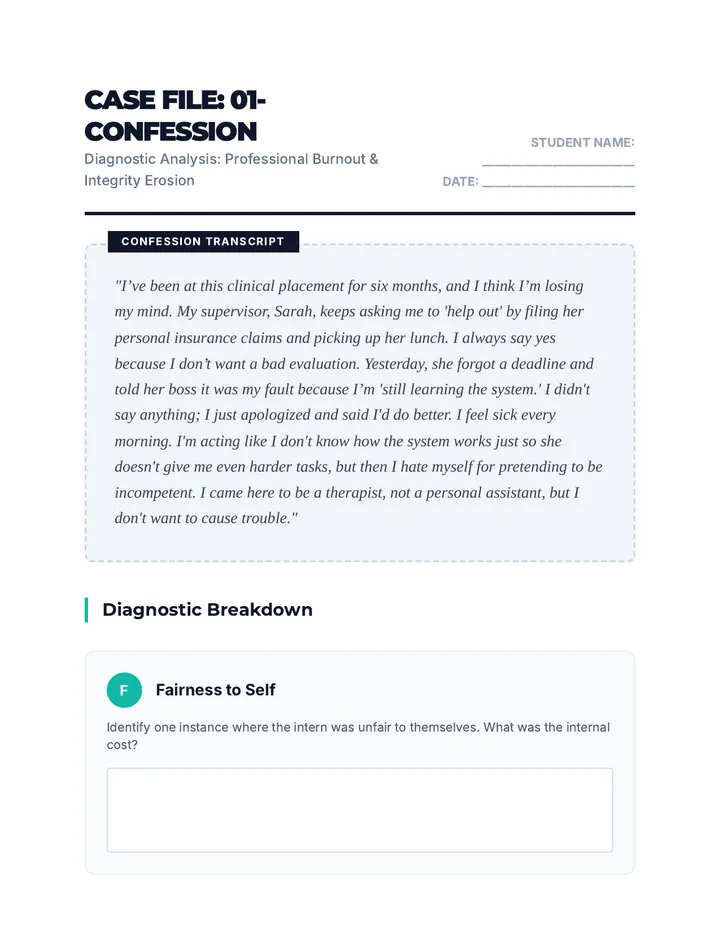
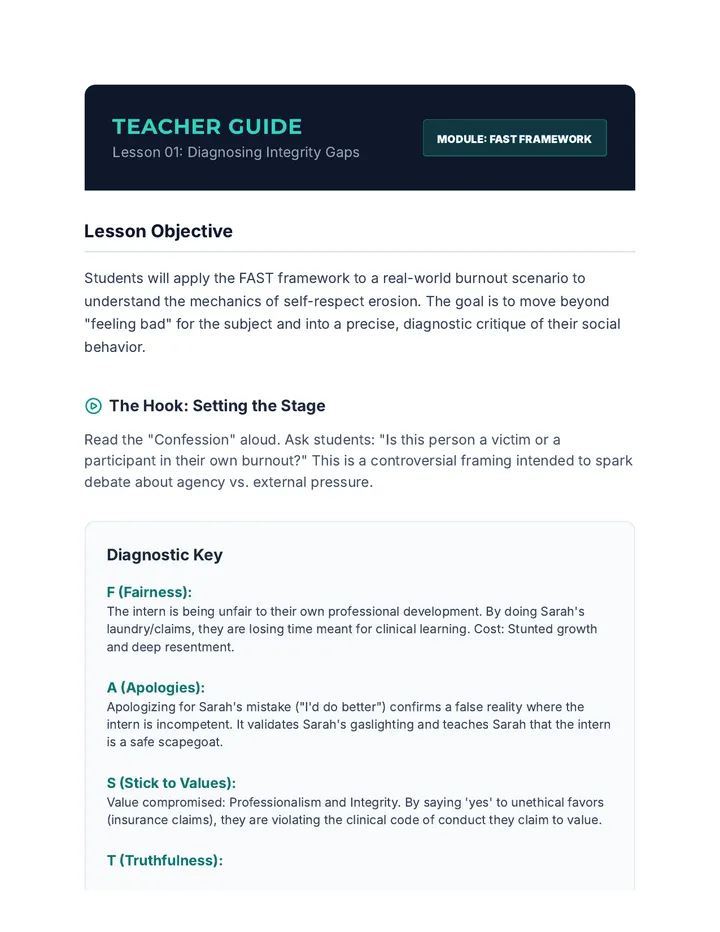
Students analyze early-career burnout cases through the FAST framework, diagnosing failures in Fairness, Apologies, Values, and Truth to understand how self-respect is compromised.
A strategy-focused session where students develop decision-making frameworks for advising applicants on score submission in a post-test-optional world.
Students learn to use school profiles to contextualize student performance relative to the opportunities and constraints of their secondary school environment.
An analysis of the strategic and ethical shifts toward test-optional and test-blind policies and their impact on university diversity and enrollment trends.
A critical examination of the history, psychometrics, and predictive validity of standardized tests, with a focus on their correlation with socioeconomic status.
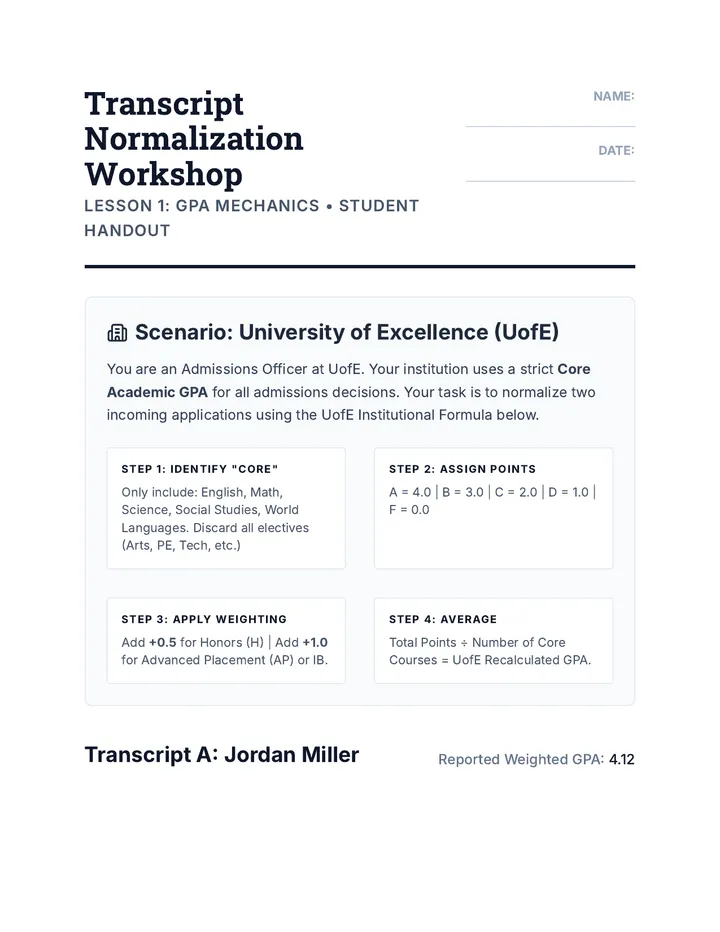
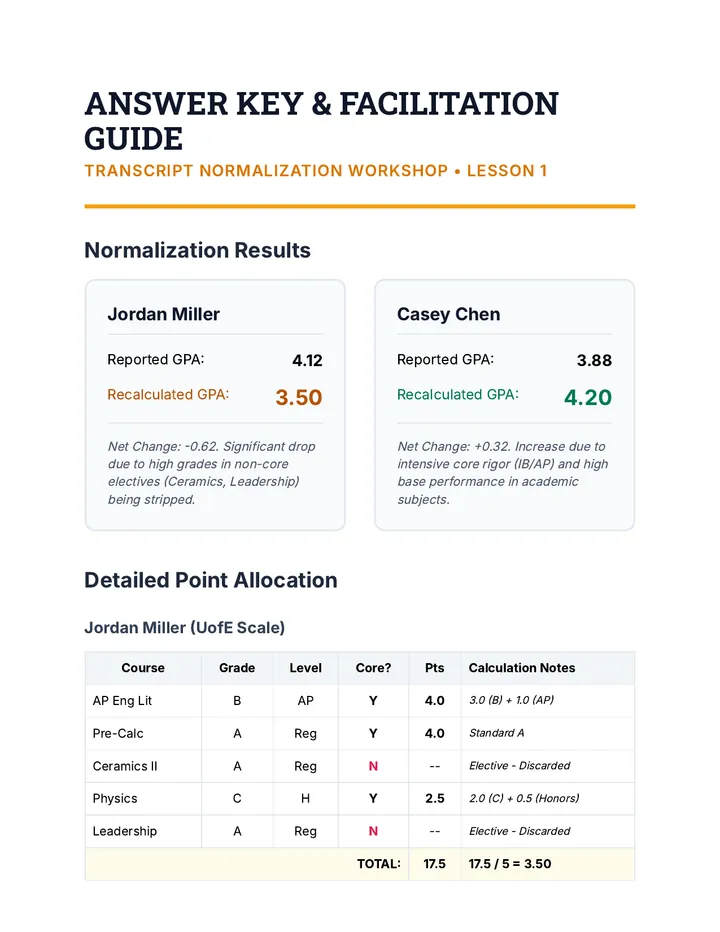
Students explore how higher education institutions normalize diverse high school transcripts by stripping electives and applying specific weights to core academic subjects.
A technical walkthrough of major application portals and the operational steps for credential submission and verification.
Students practice conducting a 'holistic audit' of a mock application, checking for consistency and synergy between all documents.
Covers the legal and ethical aspects of FERPA waivers and the confidentiality of recommendations in the admissions process.
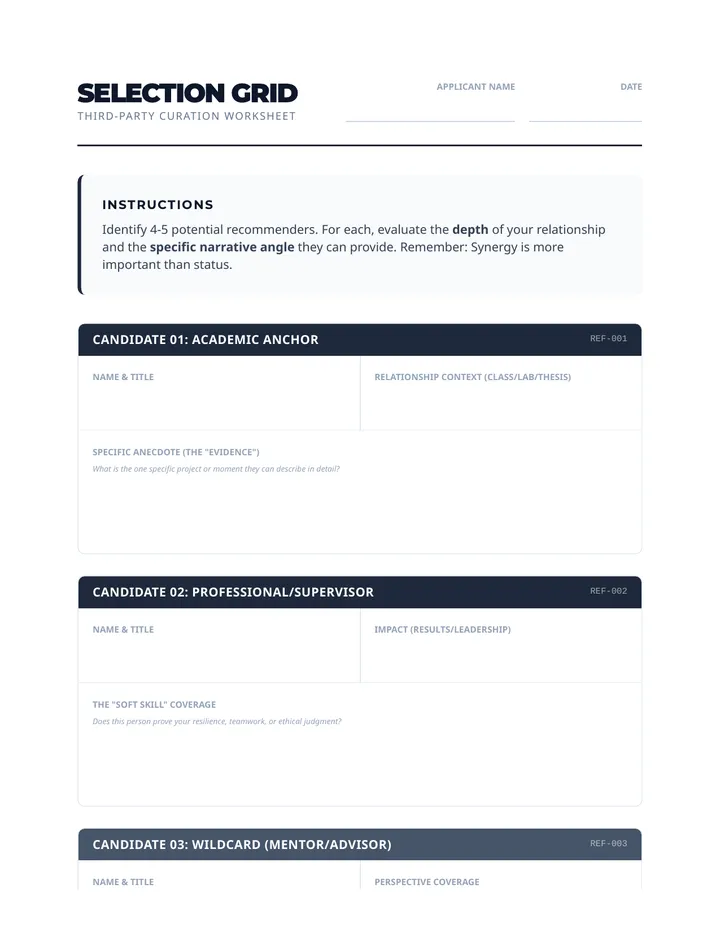
Participants learn to create supporting documents that help recommenders write detailed, anecdotal letters through effective brag sheets.
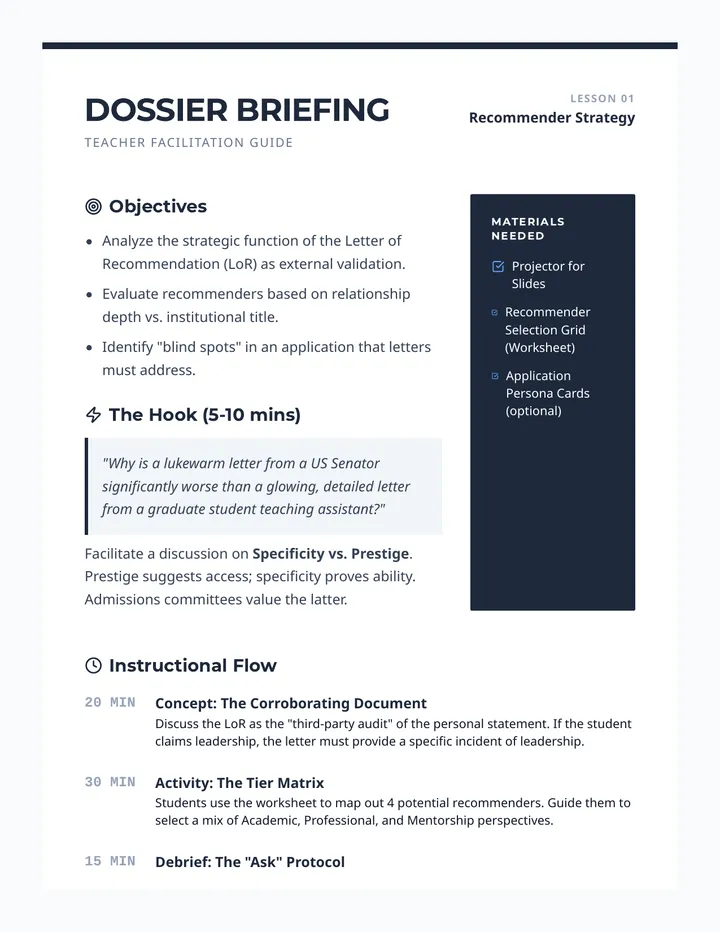
Students analyze the function of the recommendation letter as a corroborating document, focusing on relationship depth over titles.
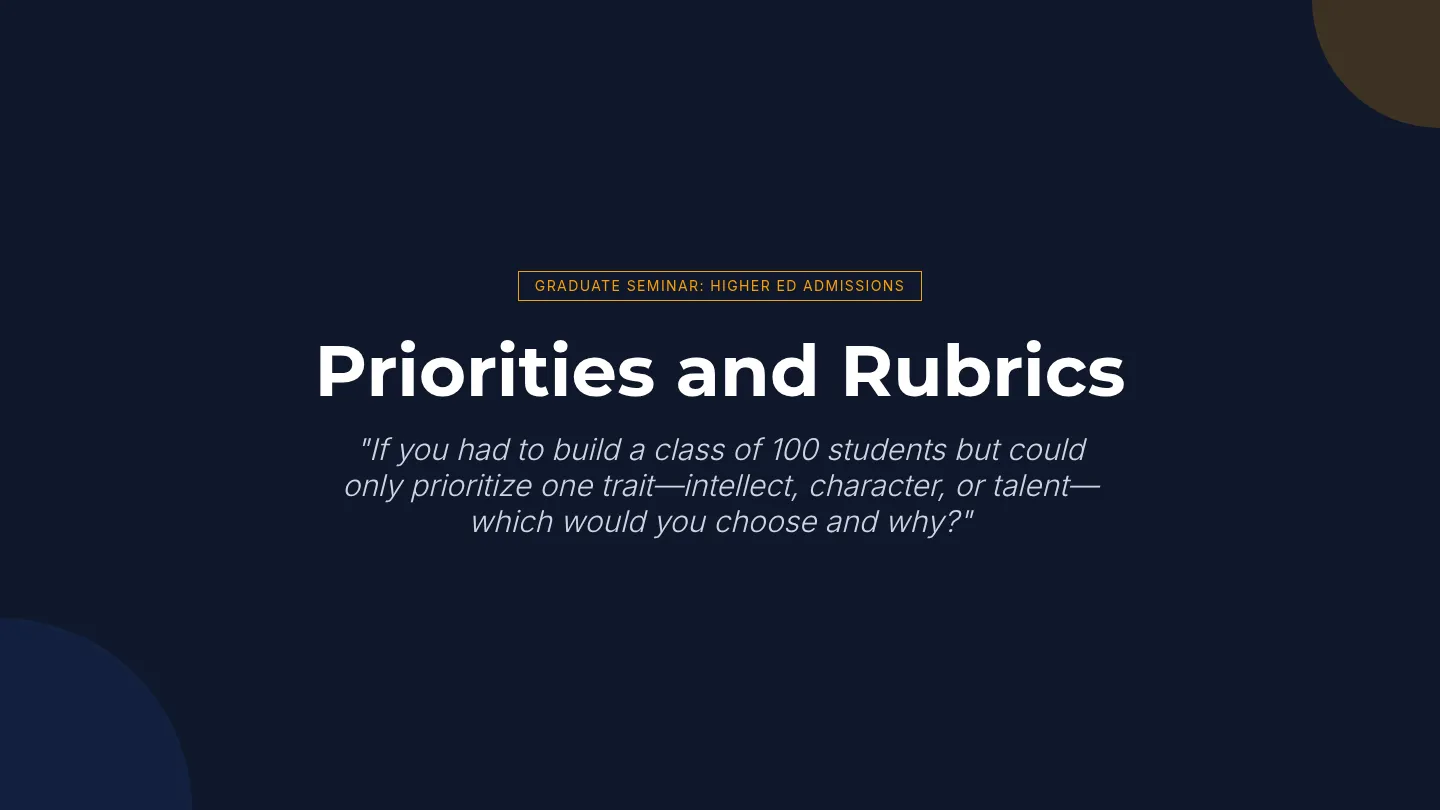
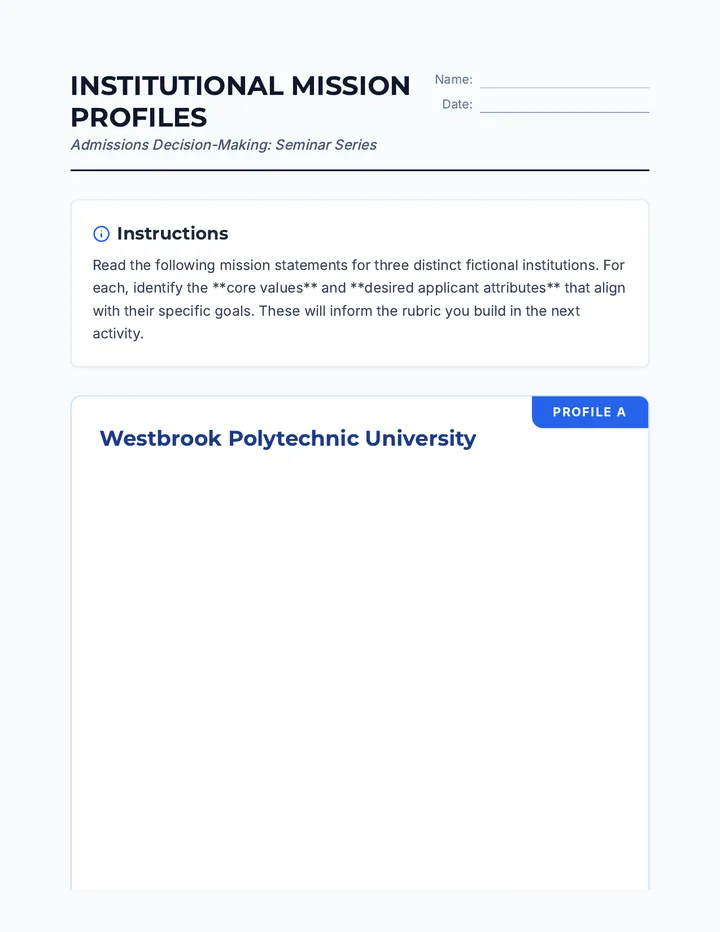
Students analyze mission statements from diverse institution types to create weighted admissions rubrics, determining the value of quantitative metrics versus qualitative attributes.
Students finalize their protocols and establish a formal maintenance contract to ensure long-term adherence and habit formation.
Students evaluate digital tools, apps, and wearables to integrate effective technological supports into their personalized regulation protocols.
Students identify obstacles to their regulation plan and develop 'If-Then' implementation intentions to navigate triggers and barriers.
Students use a triage metaphor to design a three-tiered response plan, assigning specific self-calming tools to different intensities of distress.
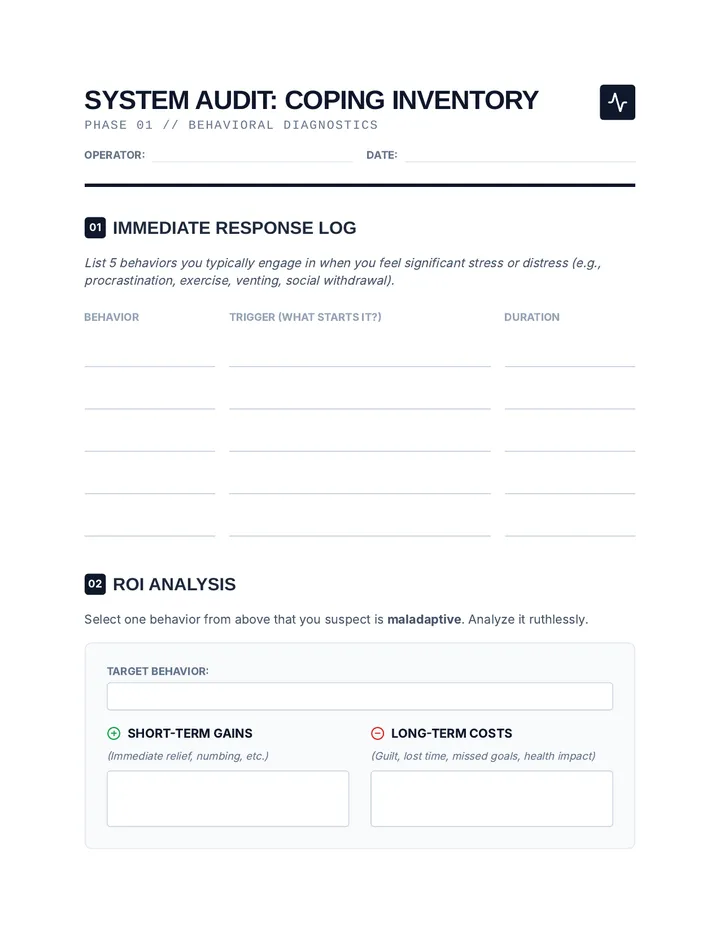
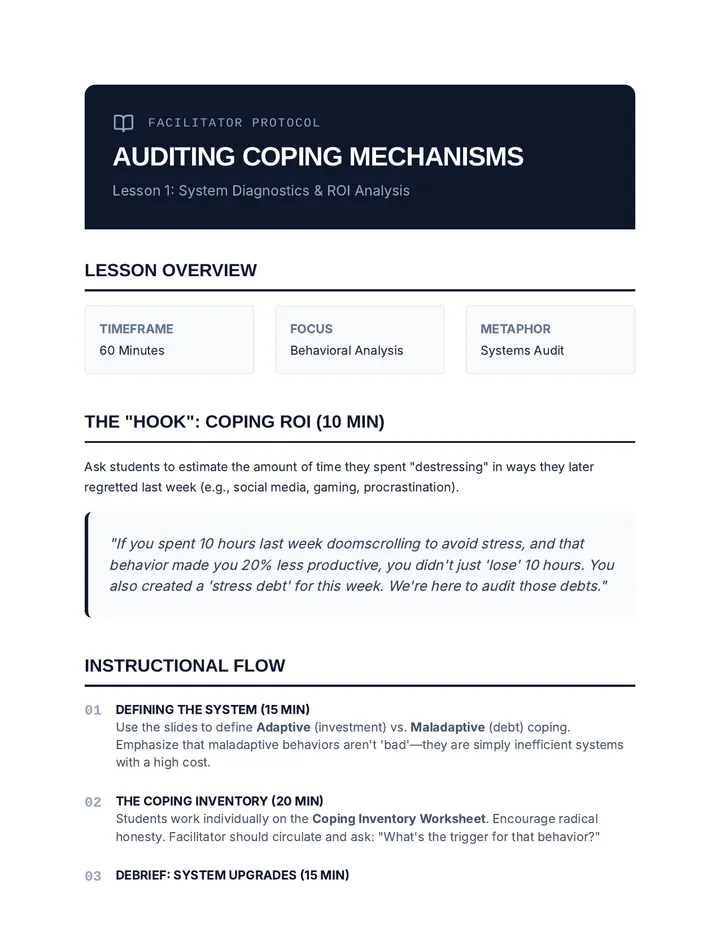
Students conduct an inventory of current stress responses and perform a cost-benefit analysis to distinguish between adaptive and maladaptive behaviors.
A full-length practice simulation designed to build cognitive endurance and practice micro-break techniques.
Teaches statistical and logical strategies for educated guessing when an answer is not immediately clear.
Explores techniques for maintaining focus and reducing anxiety during high-pressure assessments.
Focuses on the 'triage' method to prioritize questions and manage time effectively during an exam.
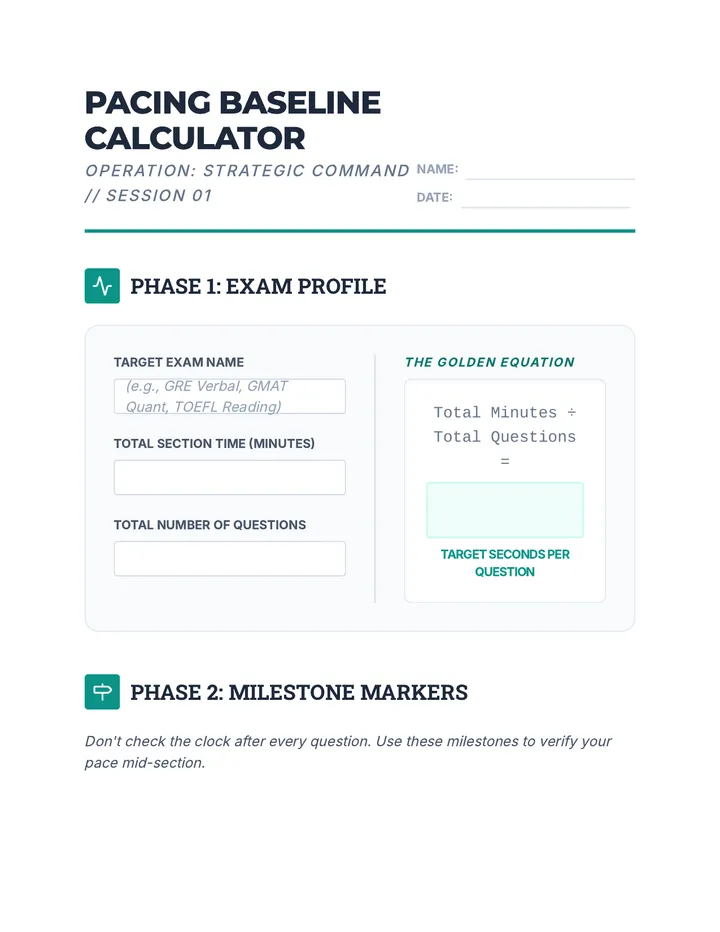
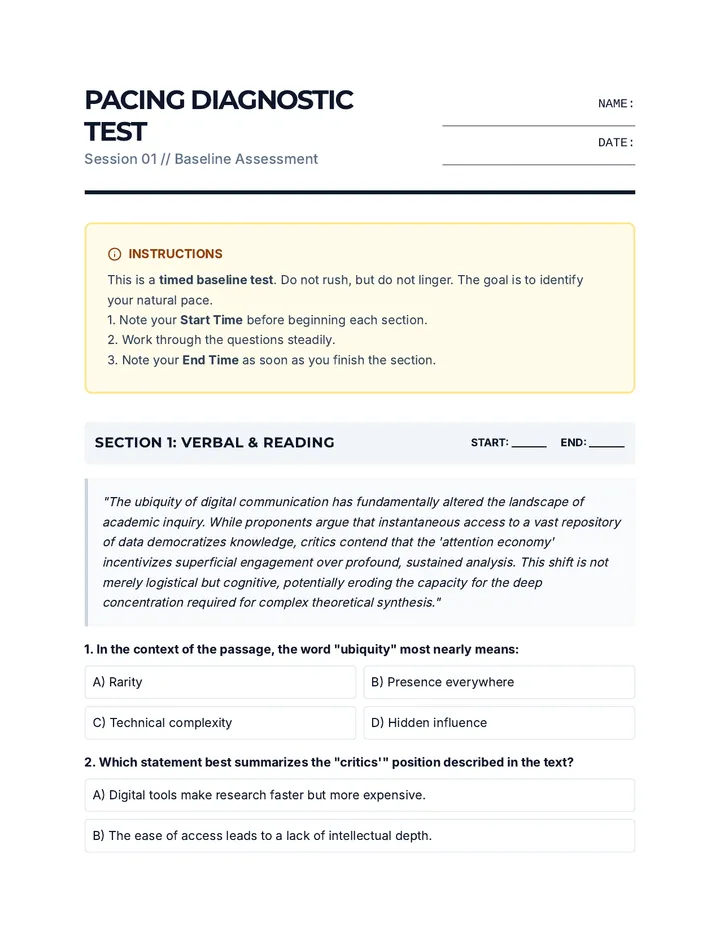
Students determine their current testing pace and learn to calculate precise time allocations for specific exams.
A growth-mindset coaching framework designed specifically for young adults (18+) navigating transition. Focuses on actionable cognitive reframing, emotional regulation, and interactive role-play scenarios covering work/academic feedback, roommate/friendship friction, and emerging adult family boundaries.
A high-impact, 30-minute session for fellowship-level learners focusing on the transition from a fixed to a growth mindset through deep contemplation (Chintan).
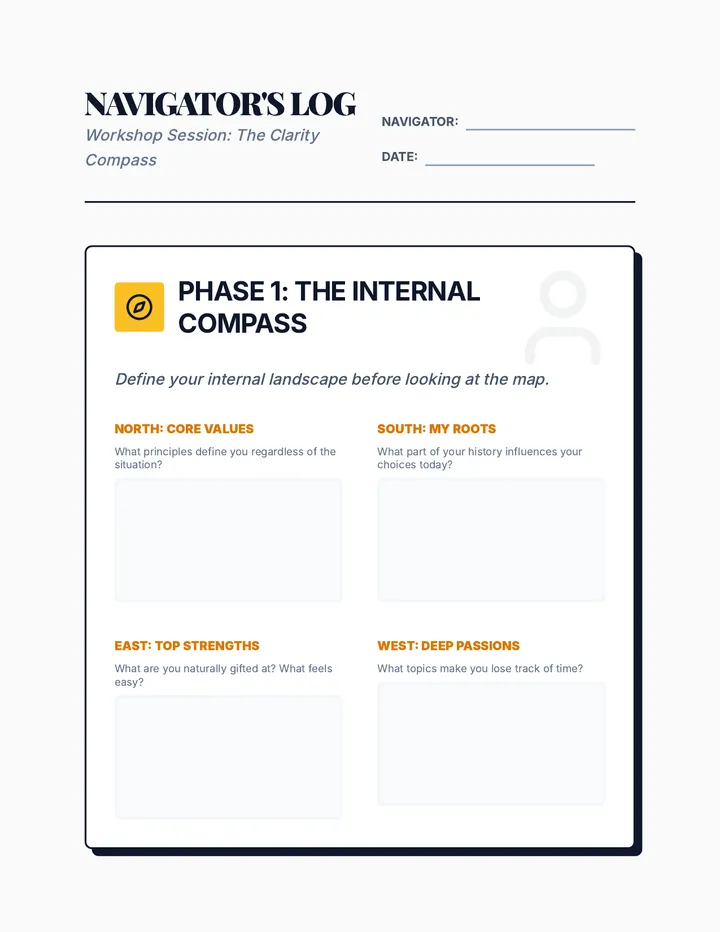
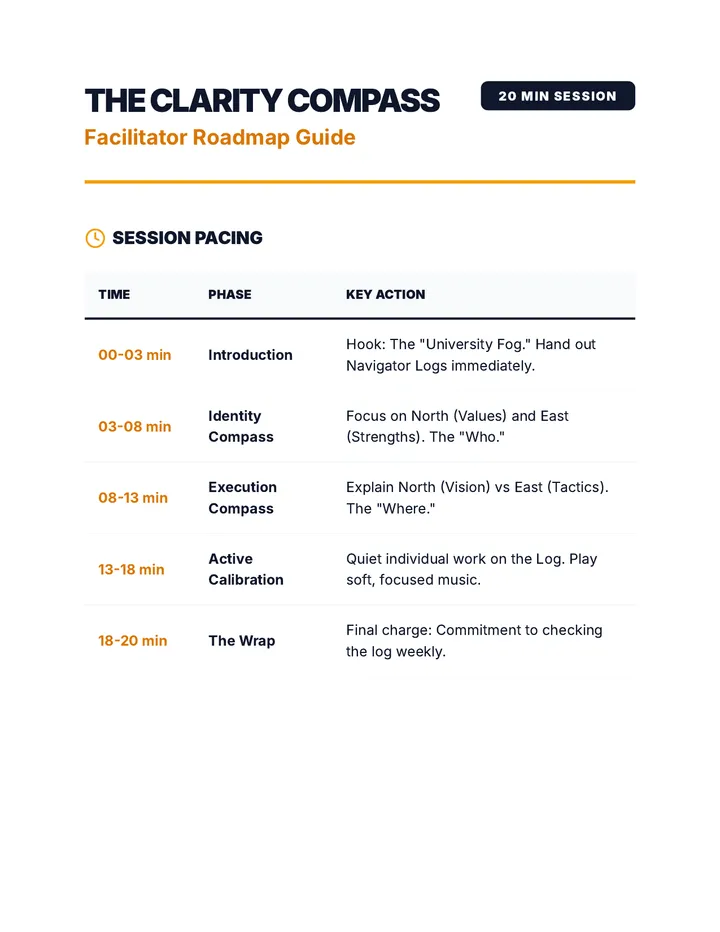
An introductory session that explores the Internal and External Clarity Compasses to help students align their personal values with actionable goals.
A high-impact exploration of business ethics through real-world dilemmas in finance, retail, and marketing. Students analyze complex scenarios to develop their professional decision-making skills.
A 90-minute capstone session focused on synthesizing executive functioning skills, troubleshooting personal workflows, and creating a long-term optimization plan.
A comprehensive lesson for adult learners in a counseling setting focused on developing self-control through heightened self-awareness. It explores the 'Pause and Pivot' technique to manage emotional impulses.
A comprehensive lesson for graduate students on DBT skills: Check the Facts and Problem Solving, using school-based scenarios to prepare them for K-12 implementation.
A comprehensive set of planning tools for a budget-conscious backyard wedding, focusing on organization, logistics, and DIY execution.
An interactive session using gamified scarcity and elimination to distill personal values, followed by scenario-based practice in setting boundaries and managing recovery challenges.
This lesson provides Master-level counseling students with a clinical framework for group termination based on the Corey model, focusing on consolidation of learning, processing unfinished business, and applying therapeutic gains to daily life.
A concluding hour session for PSR groups focusing on balancing Emotion Mind and Reason Mind to find Wise Mind, concluding with a scenario-based game.
A sophisticated workshop for graduate students and clinical staff focused on navigating complex ethical dilemmas during the high-stress end-of-year school transition using a maritime-themed framework.
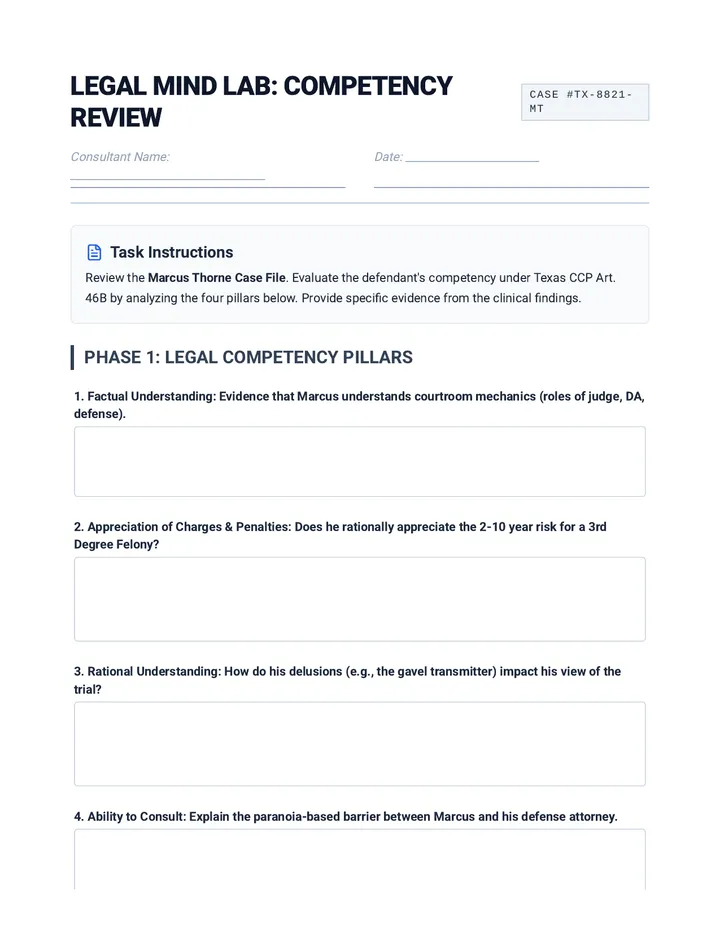
A forensic mental health simulation where students or patients analyze a criminal case and competency report for a defendant with Schizoaffective Disorder charged with a felony in Texas.
An adult-focused lesson exploring Aristotle's Theory of the Mean to develop assertiveness through the virtues of Truthfulness and Courage. Students will analyze scenarios to find the 'Golden Mean' between deficiency and excess.
A comprehensive guide to the home buying process, covering financial preparation, mortgage types, home inspections, and the legal closing process. Students will learn how to navigate the complex journey of purchasing their first home with confidence and financial savvy.
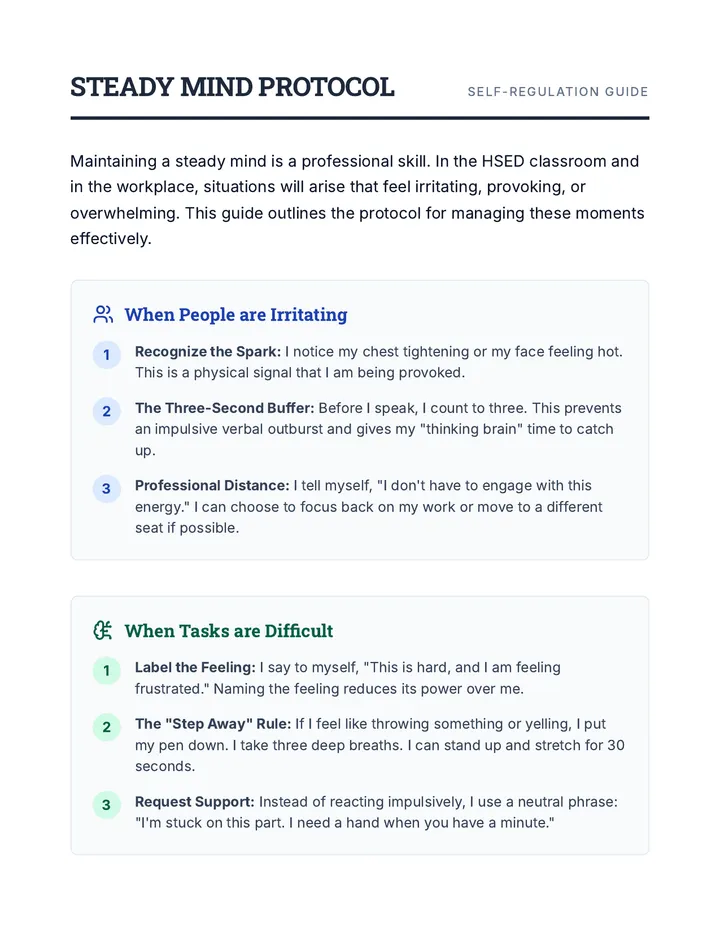
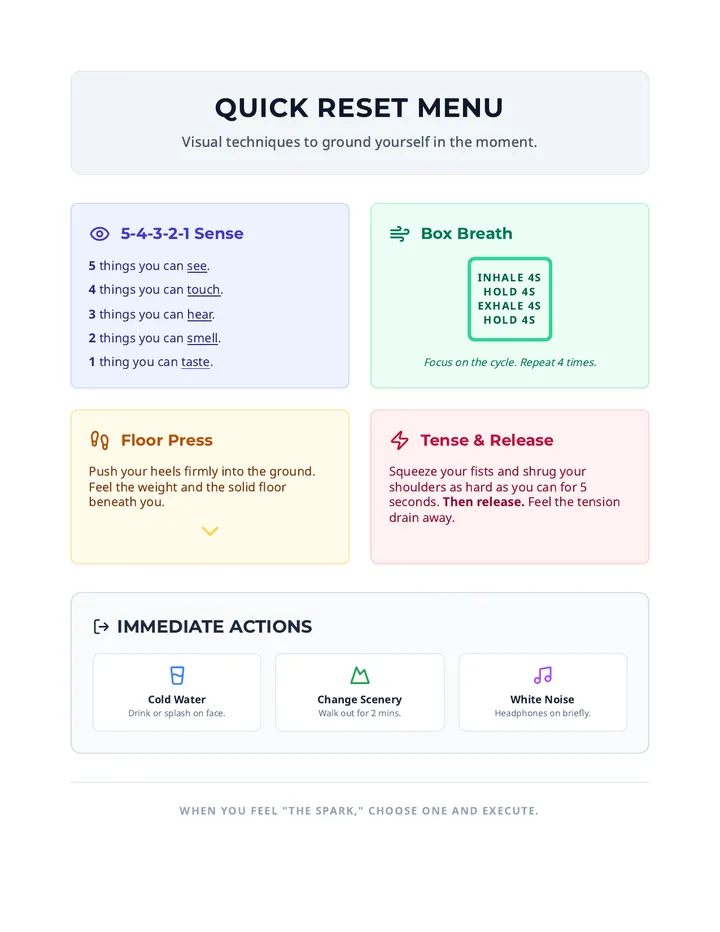
A comprehensive set of self-regulation tools for adult learners, focusing on managing frustration, impulsivity, and social provocation in educational and professional settings.
Students learn the art of negotiation, focusing on moving from conflict to collaboration through win-win strategies and effective compromise.
A comprehensive workshop on principled negotiation for adult learners, focusing on moving from positions to interests and finding mutual gain.
A comprehensive lesson for adult learners on navigating everyday negotiations with family, friends, and peers using interest-based strategies and effective communication.
A vibrant, spring-themed 'Price is Right' game show featuring seasonal items, interactive rounds, and a high-stakes Showcase Showdown.