Written and verbal communication standards for the workplace, including email etiquette, presentation delivery, and professional phone conduct. Develops collaborative skills for teamwork, constructive feedback, and efficient time management.
A mastery-focused session on technical compliance, formatting, and the final quality assurance checks required before submission.
An audit of the student's digital footprint to ensure professional alignment across platforms like LinkedIn and ResearchGate.
Students workshop their academic CVs to highlight funding-specific achievements and optimize for the '30-second scan' used by reviewers.
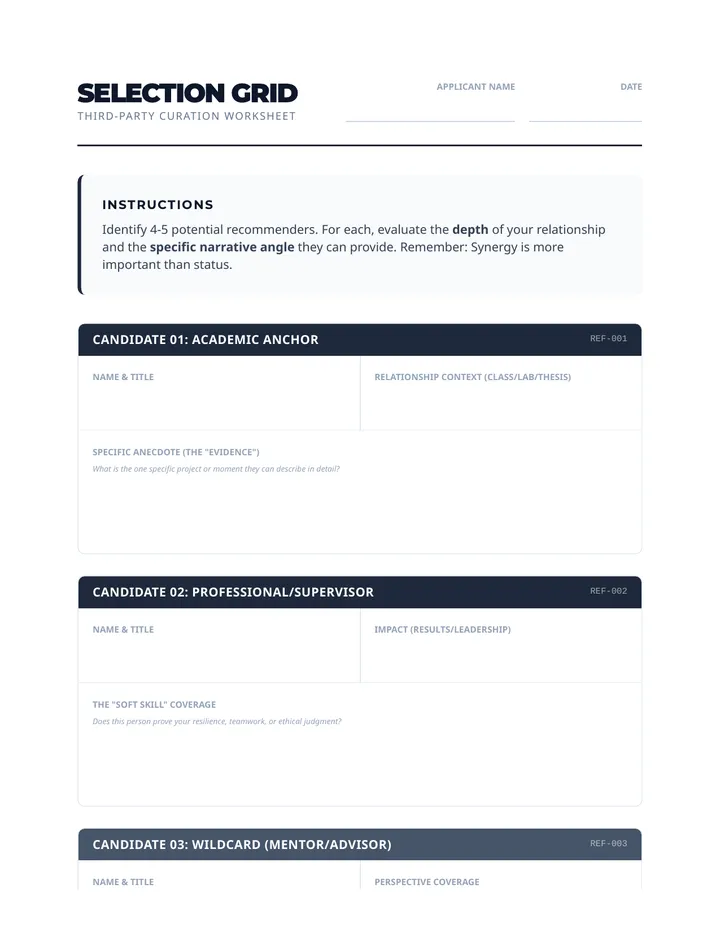
Focuses on the professional etiquette and strategic preparation needed to secure high-impact letters of recommendation through comprehensive recommender packets.
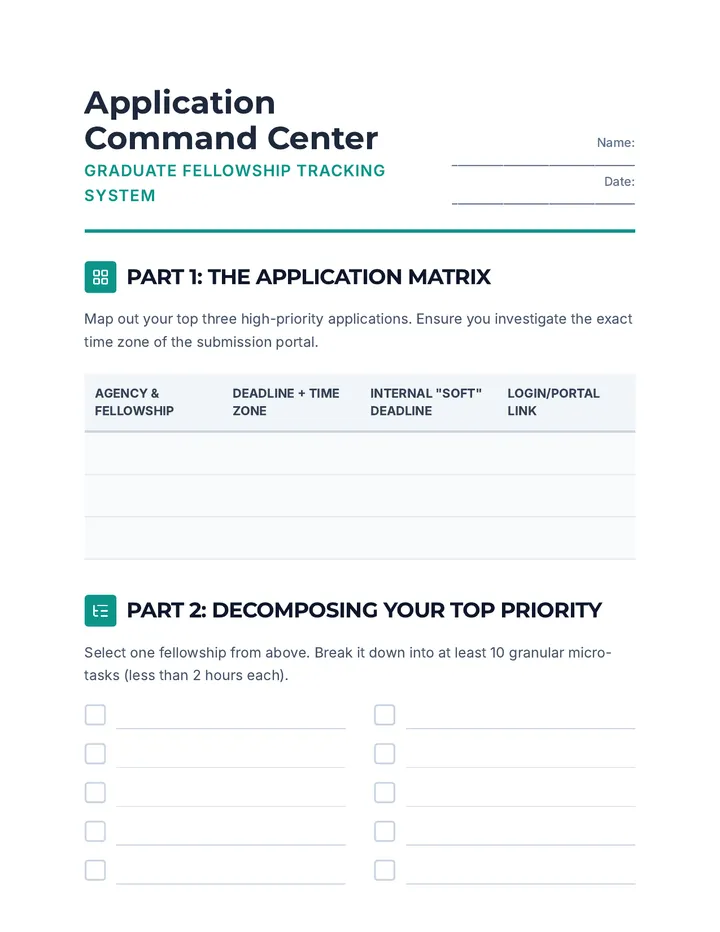
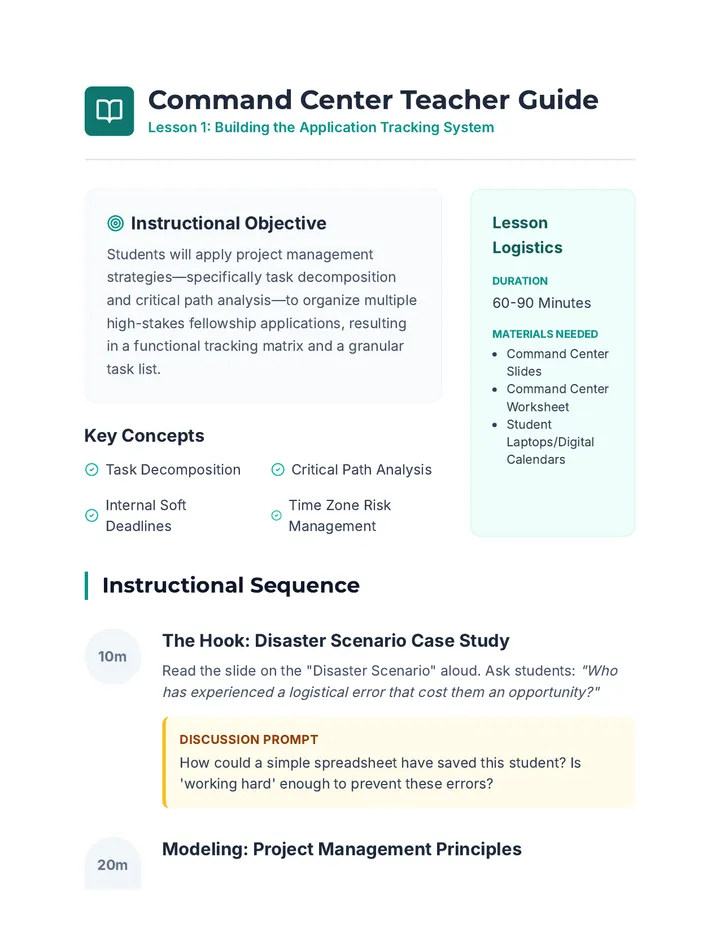
Students learn to apply project management principles to application cycles, creating a robust digital tracking system to manage deadlines and requirements.
The sequence concludes with students building a multi-year funding strategy that accounts for application cycles, research phases, and diverse revenue streams. They create a master calendar integrating preparation time, deadlines, and announcement dates.
Students learn strategies for contacting program officers and potential faculty mentors to inquire about funding availability. The lesson covers email etiquette, elevator pitches, and how to ask about supplemental funding.
Students perform a rhetorical analysis of mission statements and profiles of previous award winners for top-tier fellowships. This reverse-engineering process helps students understand the implicit criteria and values of funding bodies.
This lesson moves beyond general search engines to utilize specialized databases (like pivot or Grants.gov) and professional society listings. Students conduct a 'deep dive' search to find high-value, low-competition opportunities specific to their discipline.
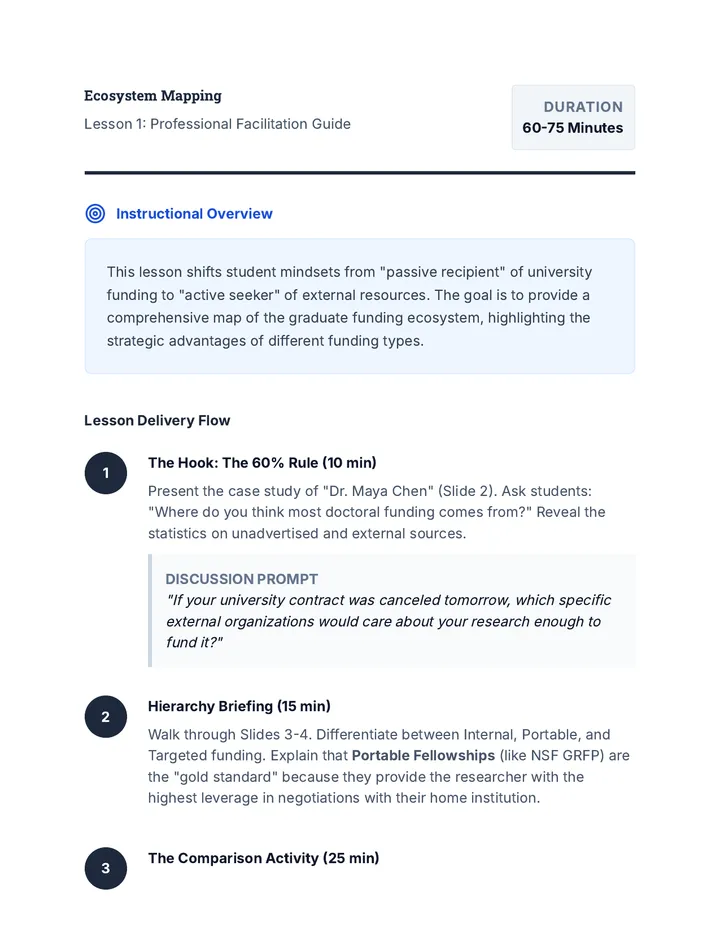
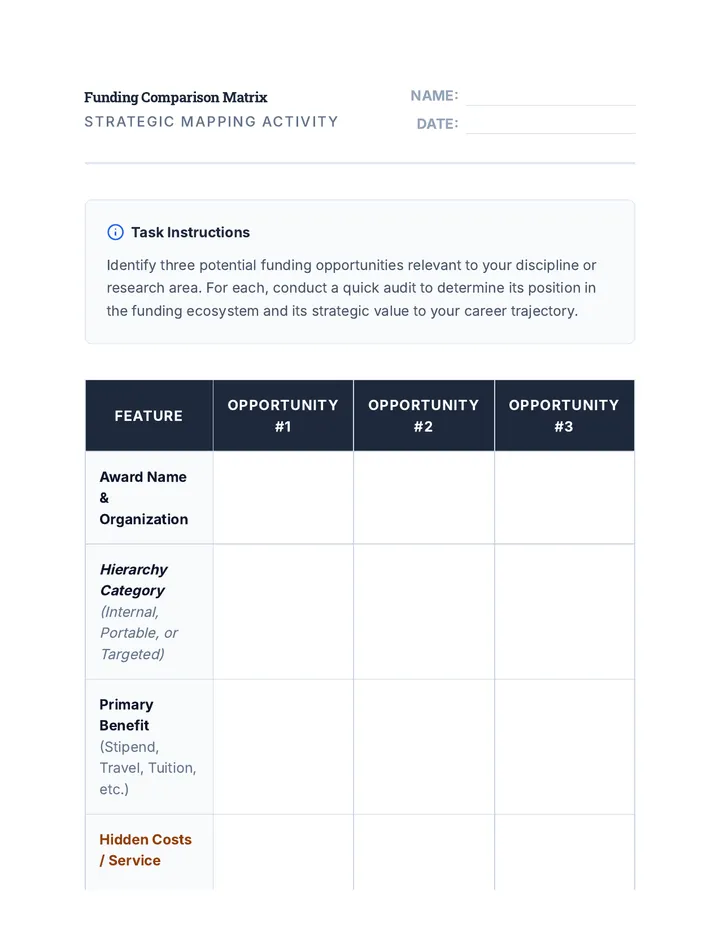
Students explore the hierarchy of graduate funding, distinguishing between internal assistantships, external portable fellowships, and specific research grants. They analyze the benefits and restrictions of each type to determine which best supports their academic trajectory.
The final lesson integrates all FAST skills into broader career management, including salary negotiation, addressing unethical behavior in the workplace, and advocating for systemic changes.
Students explore the 'Truthful' (T) skill in the context of documentation and supervision, examining the ethical implications of hiding mistakes and the courage required for authentic professional growth.
This lesson addresses imposter syndrome and the habit of over-apologizing ('Apologies'), teaching students to distinguish between clinical accountability and unnecessary minimizing language.
Focusing on the 'Fair' (F) in FAST, students analyze the 'martyr complex' and learn to set fair limits on their professional lives to prevent burnout and maintain ethical practice.
Students identify core professional values ('Stick to Values') and examine how these values inform their professional identity and clinical boundaries through a 'Values Auction' activity.
A technical walkthrough of major application portals and the operational steps for credential submission and verification.
Students practice conducting a 'holistic audit' of a mock application, checking for consistency and synergy between all documents.
Covers the legal and ethical aspects of FERPA waivers and the confidentiality of recommendations in the admissions process.
Participants learn to create supporting documents that help recommenders write detailed, anecdotal letters through effective brag sheets.
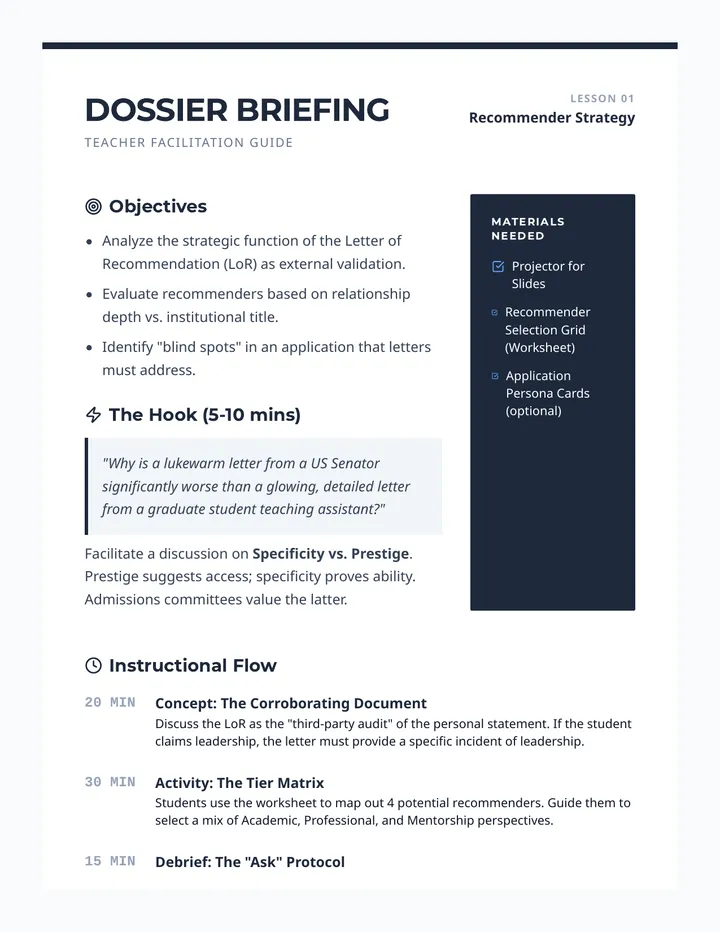
Students analyze the function of the recommendation letter as a corroborating document, focusing on relationship depth over titles.
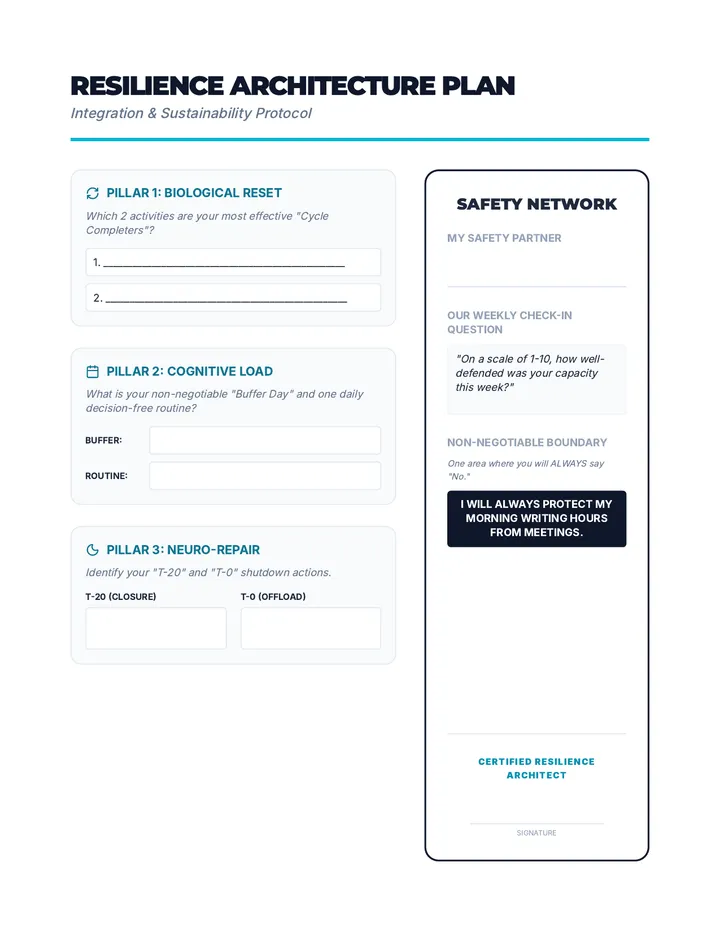
Final synthesis where students integrate all learned modules into a personalized Resilience Architecture plan and a portable Crisis Card for emergency restoration.
Addresses the pressure to overcommit in academia by teaching the 'Strategic No' as a tool for protecting capacity and ensuring career longevity.
Explores the neurobiology of sleep and its role in emotional regulation, culminating in the design of a 'shutdown ritual' to combat revenge bedtime procrastination.
Reframes time management as a tool for reducing cognitive load and anxiety, teaching graduate students to design schedules based on energy levels and buffer capacity.
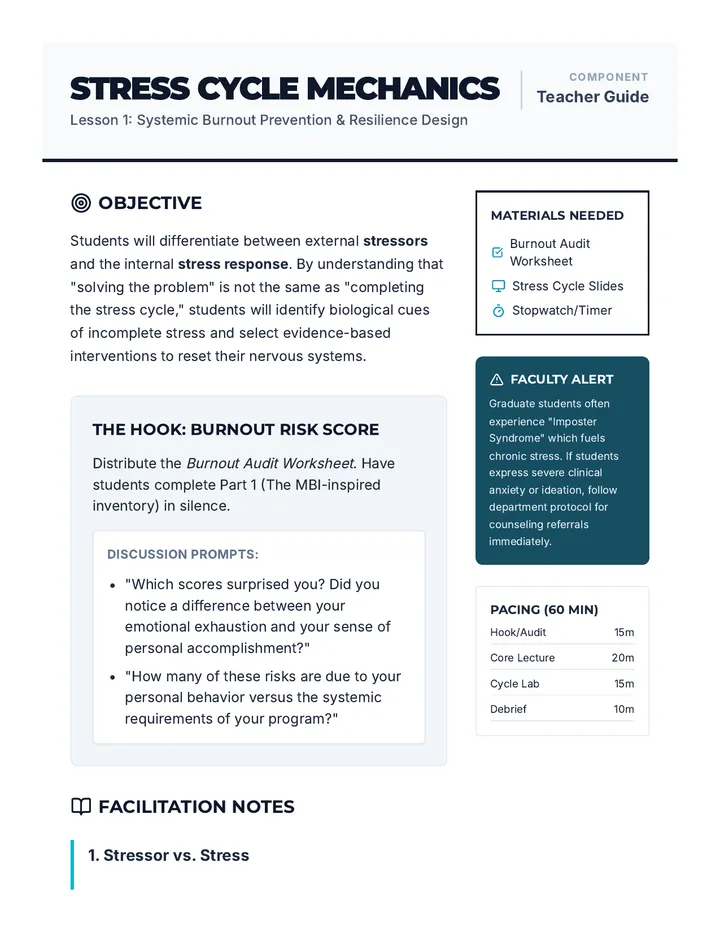
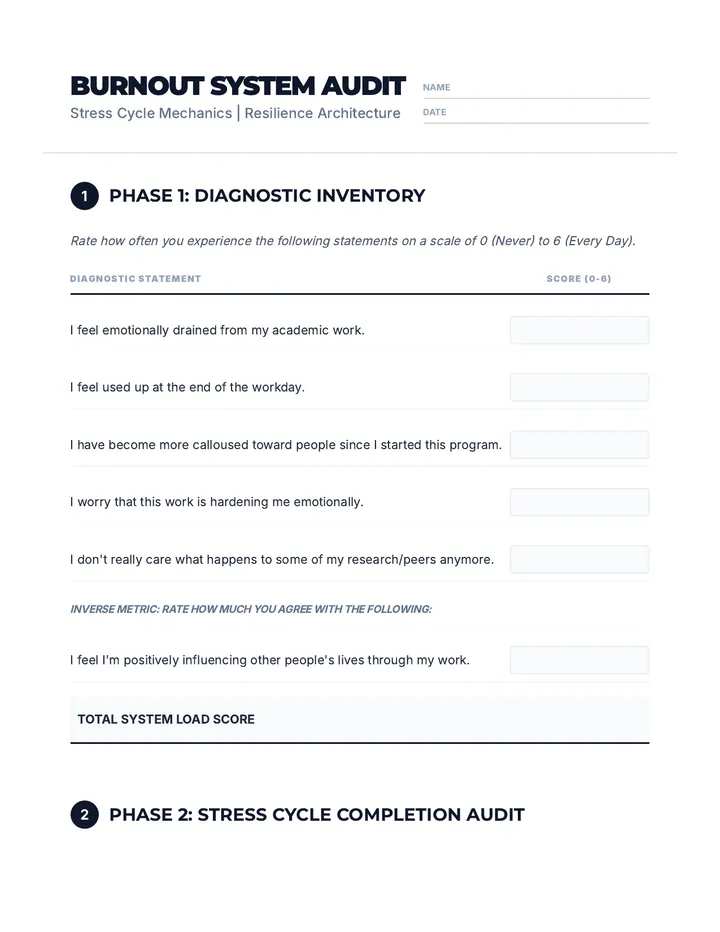
Students distinguish between stressors and the physiological stress response, auditing their current routines to ensure they are completing the stress cycle to prevent chronic burnout.
Students synthesize their learning by constructing a Professional Resilience Manifesto and practicing cognitive rehearsal to prepare for future academic challenges.
Participants distinguish between adaptive excellence and maladaptive perfectionism, exploring the 'law of diminishing returns' in academic work and its anxiety cost.
This lesson focuses on detaching self-worth from academic critique, practicing objective responses to harsh feedback and adopting a growth mindset toward evaluation.
Students learn to identify common cognitive distortions like catastrophizing and all-or-nothing thinking using CBT frameworks to provide a vocabulary for cognitive restructuring.
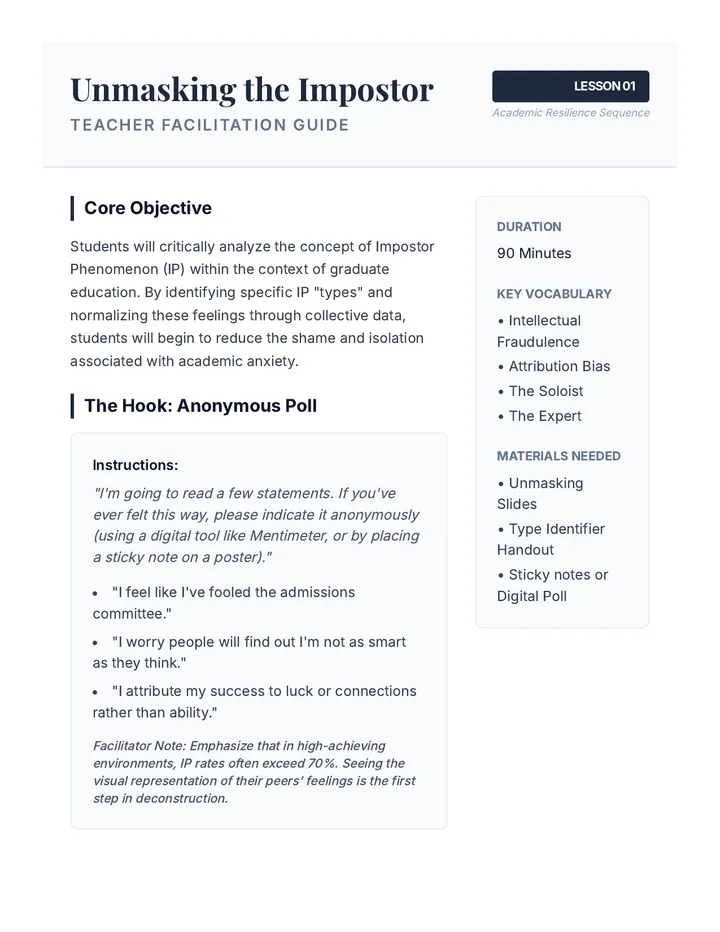
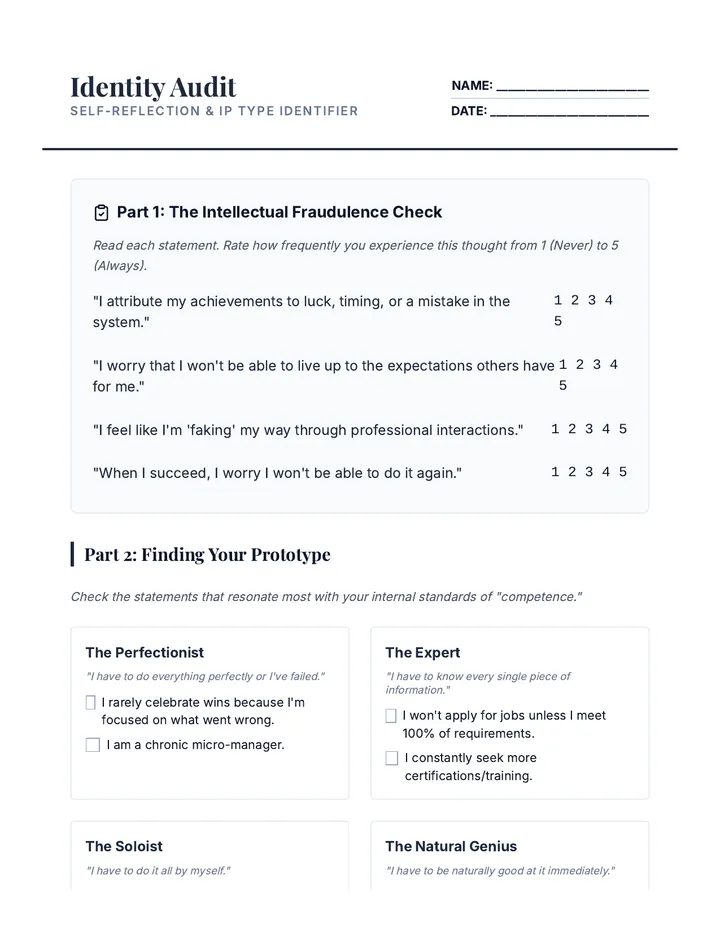
Students analyze the Impostor Phenomenon (IP) in higher education, identifying the five types of 'impostors' and normalizing their experiences within the academic community.
Concludes with the technical skills needed to draft a defensible investigation report and recommend appropriate remediation.
Teaches students how to weigh conflicting testimony and apply the preponderance of evidence standard to make formal findings of fact.
Develops skills for interviewing the accused and witnesses, focusing on non-leading questions and managing high-conflict interactions.
Covers strategic planning for an investigation, identifying witnesses, and managing digital and physical evidence.
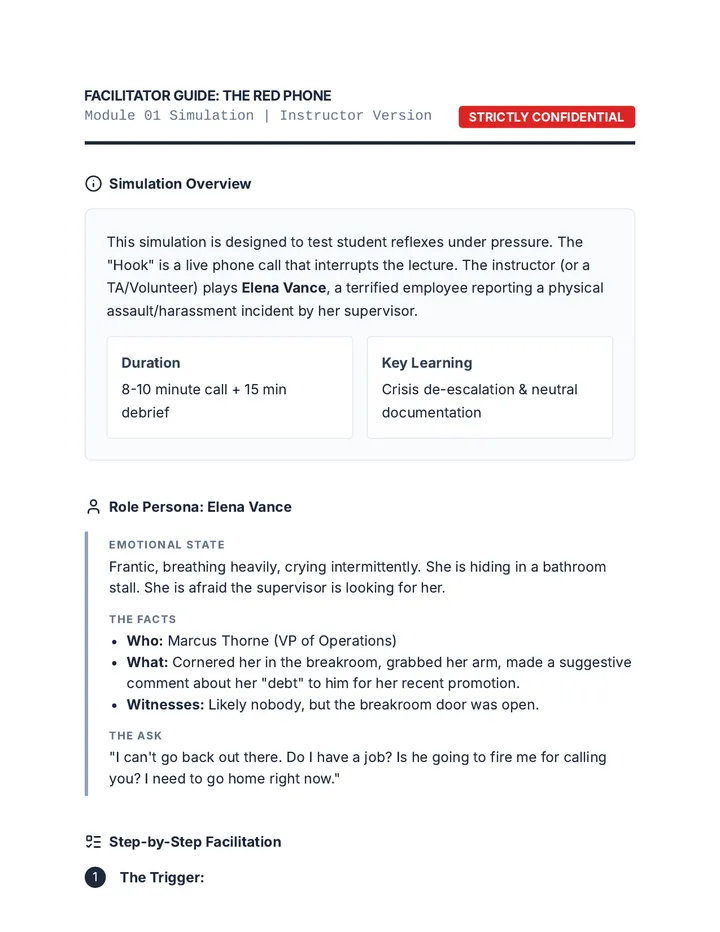
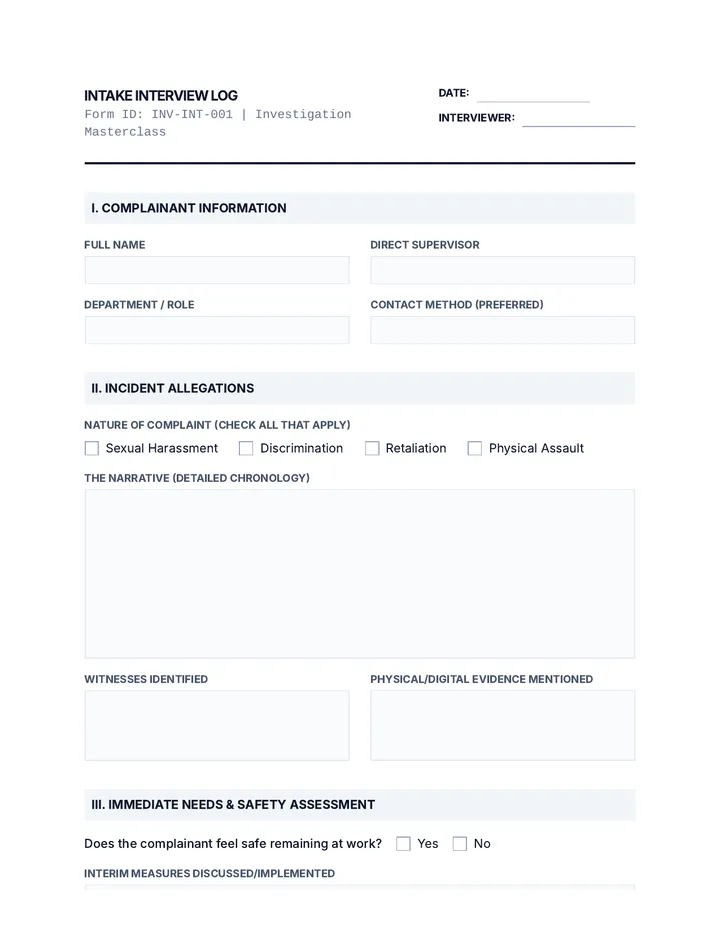
Focuses on the immediate response to a complaint, including conducting the intake interview and determining if interim measures like administrative leave are necessary.
A high-impact 75-minute workshop designed to prepare candidates for interviews through research, personal branding (The Master Pitch), and behavioral storytelling (STAR Method). This condensed version focuses on active, hands-on practice and immediate application.
A comprehensive 90-minute lesson covering first impressions, the STAR method for behavioral questions, and professional etiquette for job seekers.
A 90-minute verbal-only workshop on body language in workplace, retail, clinical, and social settings. Uses interactive live acting and guided group discussion.
A comprehensive lesson on mastering non-verbal communication across interpersonal relationships, professional interviews, and high-stakes de-escalation scenarios. Students learn to decode 'silent signals' to improve empathy, professionalism, and safety.
A comprehensive 90-minute workshop on the fundamentals of tipping. This session covers legal rights under the FLSA, the mechanics of tip credits, and paycheck auditing.
This area contains lessons and materials that have been removed from the active sequence. They are kept here due to technical storage requirements but should not be used for instruction.
A lesson focused on assertive communication strategies for when others interrupt, including techniques to reclaim the floor and manage conversational 'steamrollers' in professional settings.
A specialized lesson on the nuances of interrupting in professional and social settings, focusing on appropriate timing, polite interjection phrases, and situational awareness.
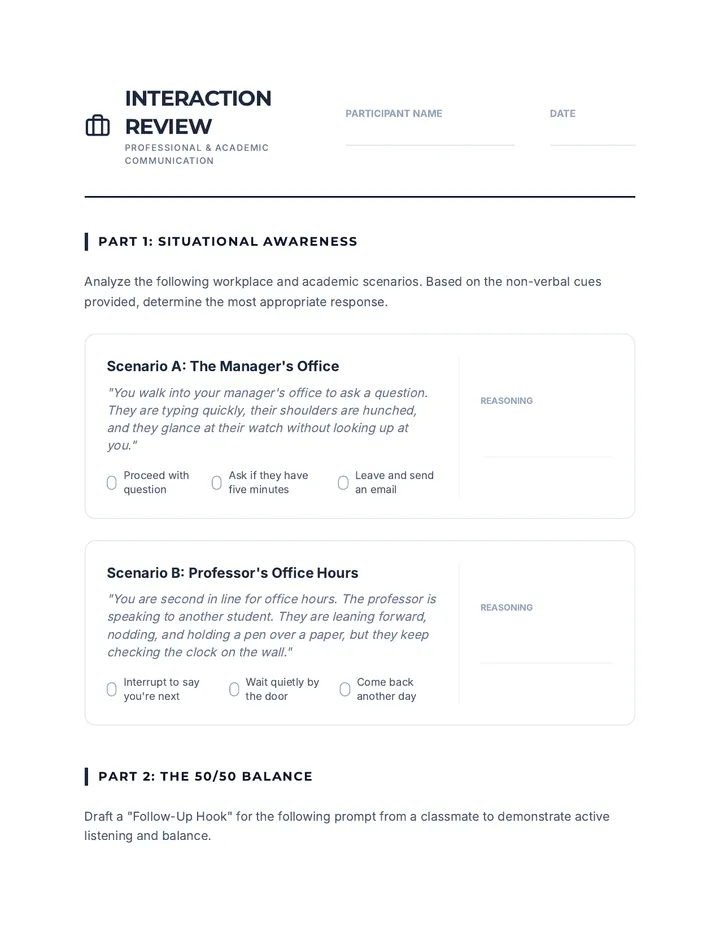
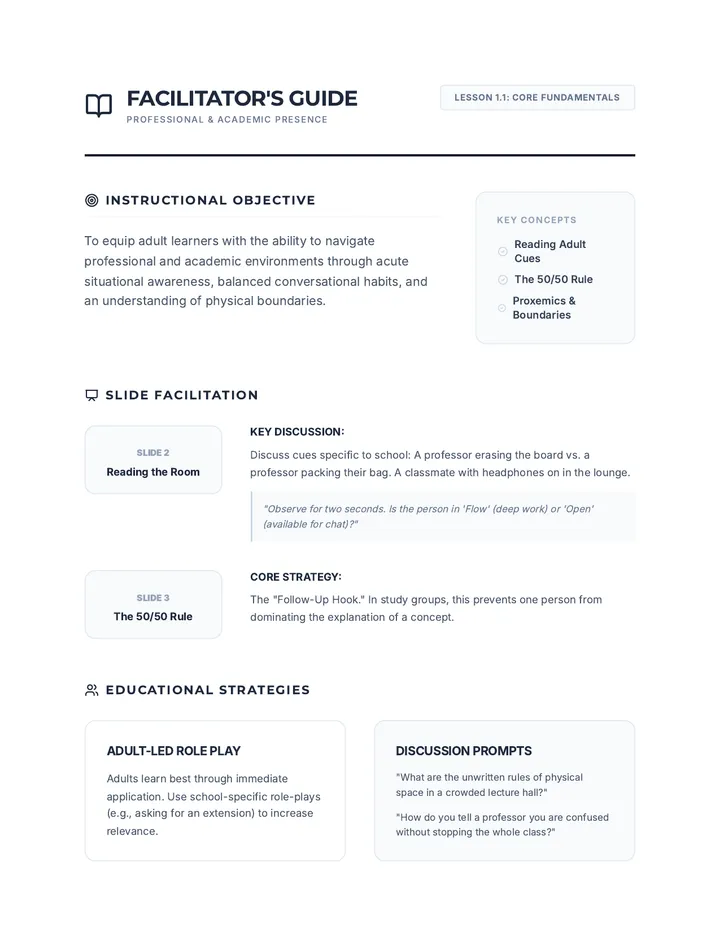
A foundational lesson on non-verbal cues, professional body language, and the mechanics of a balanced conversation in adult settings.
A comprehensive orientation for the Workforce Internship program, covering policies, expectations, and success strategies for new interns at Commonpoint Queens.
A comprehensive lesson introducing the 'Skill-of-the-Month' initiative to college students, focusing on Public Speaking and Persuasion through a real-world case study of student success.
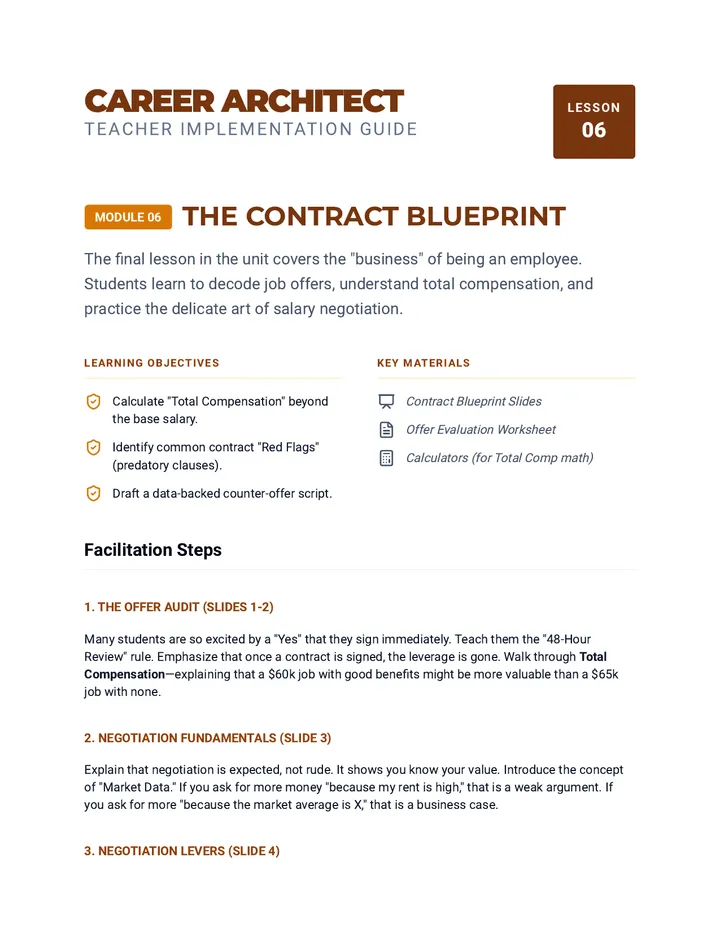
Teaches students how to evaluate job offers, negotiate salary and benefits, and prepare for the professional transition into a new role. Focuses on the "business" side of starting a career.
Focuses on the critical period after the interview. Students learn to craft high-impact thank-you notes, manage follow-up timelines, and leverage post-interview feedback to refine their approach.
Focuses on translating research into action. Students learn to tailor their resumes and cover letters using the data gathered during their 'Company Recon' to stand out from generic applicants.
Prepares students for various interview formats and difficult scenarios. Focuses on the STAR method for behavioral questions, researching the interviewers themselves, and practicing high-pressure situational responses.
Teaches students how to move beyond surface-level job descriptions. Focuses on researching company culture, financial health, and industry positioning to tailor applications and demonstrate genuine interest and fit.
Focuses on the 'hidden job market' and the power of professional networking. Students learn how to identify potential connections, conduct informational interviews, and leverage their existing circle to find opportunities before they are posted publicly.
A comprehensive training lesson designed to teach middle/high school students and social work interns how to navigate emotionally charged, difficult conversations using empathetic listening and structured communication frameworks.
This lesson provides a rapid onboarding path for junior Product Managers transitioning into AI, covering technical foundations, the ML lifecycle, and AI-specific product strategy.
An interactive scenario-based session for clients in MH/SA or forensic settings to practice communication styles. Participants evaluate their responses using color-coded styles and SFBT scaling to identify patterns and areas for growth.
A 60-minute group session focused on empowering adults in PSR programs to understand their personal rights and practice assertive communication in real-world situations.
A 90-minute capstone session focused on synthesizing executive functioning skills, troubleshooting personal workflows, and creating a long-term optimization plan.
A sophisticated workshop for graduate students and clinical staff focused on navigating complex ethical dilemmas during the high-stress end-of-year school transition using a maritime-themed framework.
An adult-focused lesson exploring Aristotle's Theory of the Mean to develop assertiveness through the virtues of Truthfulness and Courage. Students will analyze scenarios to find the 'Golden Mean' between deficiency and excess.
This lesson introduces students to the core concepts of Agile and Scrum through the lens of team dynamics. Students will explore roles, ceremonies, and the critical importance of communication in high-performing teams.
A comprehensive 90-minute training session designed for college students in creative fields (specifically animation) to identify their skills, explore career paths, and build a professional resume.
A comprehensive lesson for adults with disabilities on navigating conflicts in workplace, residential, community, and social settings using structured communication tools.
A practical guide to managing wait times in a nursing home setting, teaching caregivers how to use the WAIT framework to reduce resident anxiety and improve the care experience.
A dual-track 90-minute activity sequence on pattern recognition, offering a professional development seminar for workplace efficiency and a supportive, scaffolded module for adults with IDD.
Students learn the art of negotiation, focusing on moving from conflict to collaboration through win-win strategies and effective compromise.
An interactive 1-hour workshop on empathy and social awareness in everyday adult life, focusing on friendships, job hunting, workplaces, and navigating daily community interactions with mutual respect.
A comprehensive personal development lesson designed for young adults transitioning into independence. It features a 10-page workbook centered on values, emotional intelligence, and life skills, paired with a facilitator guide for mentors or therapists.
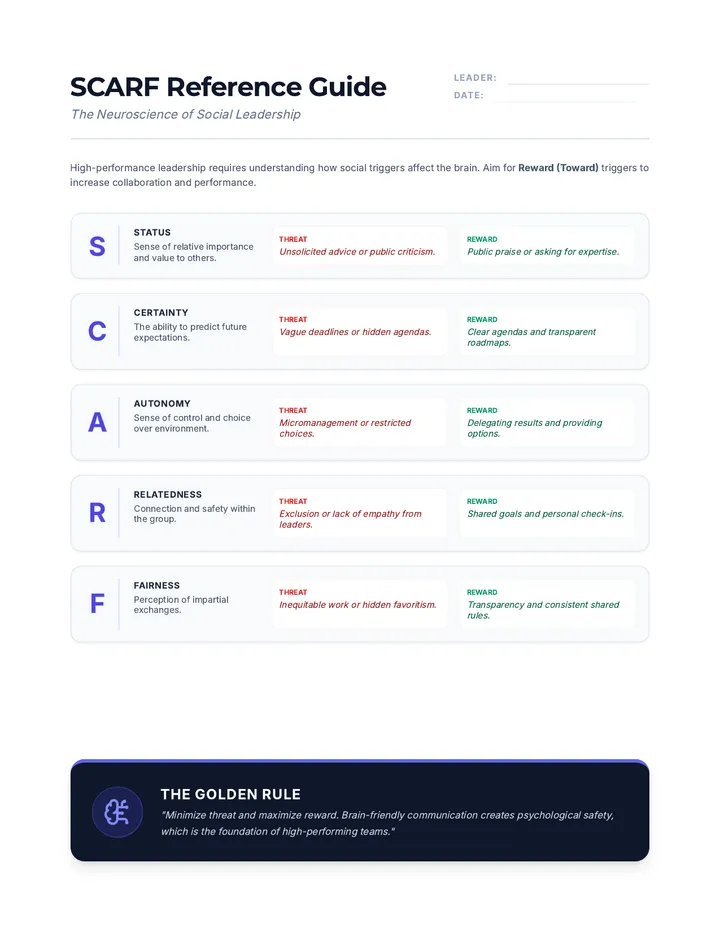
A toolkit for leaders to apply David Rock's SCARF model to communication, ensuring they trigger reward responses rather than threat responses in their teams.
A one-hour workshop focused on mastering both factual accuracy and emotional empathy in professional listening scenarios. Participants practice capturing critical details while identifying the underlying feelings of the speaker.
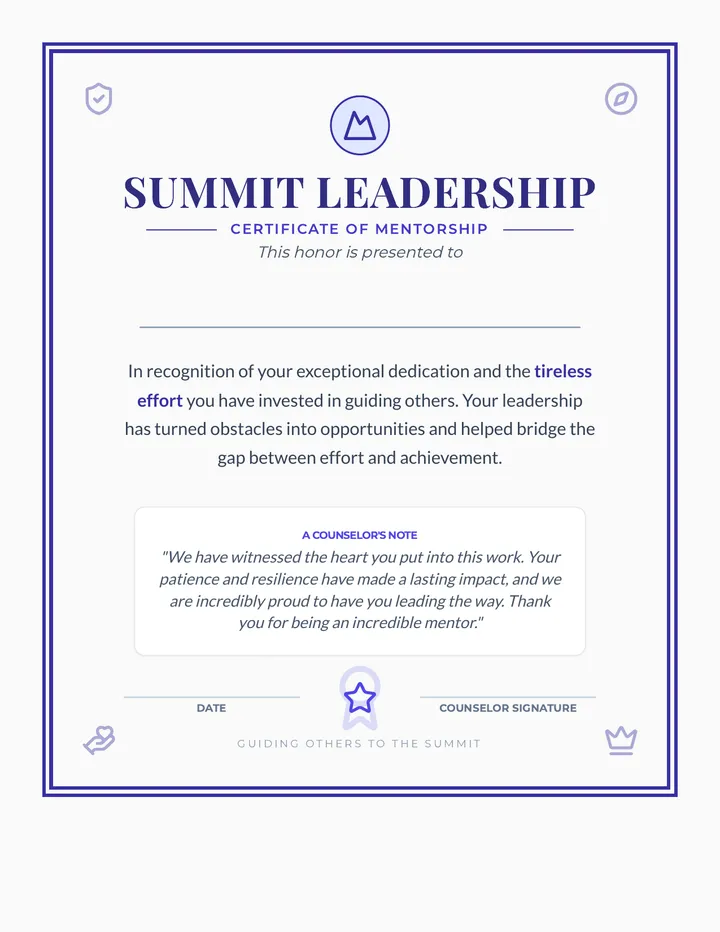
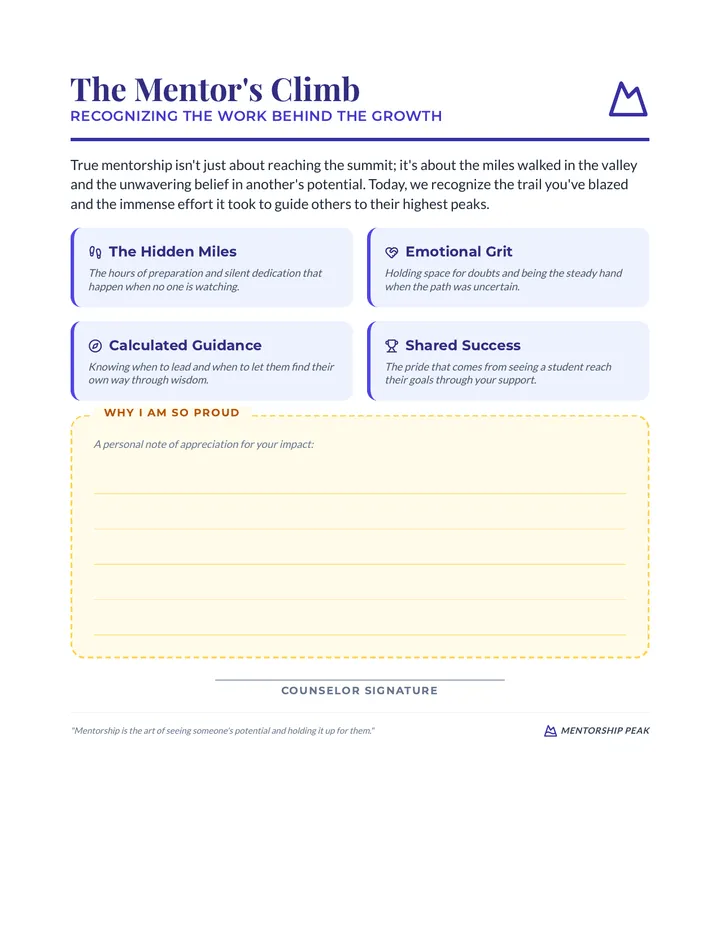
A collection of materials to celebrate and recognize the hard work and dedication of mentors, focusing on their growth and impact.
A 120-minute, step-by-step training lesson designed to help learners with social anxiety identify their professional skills, build interactive communication confidence, and master critical task-oriented and interview conversations. Includes comprehensive facilitator scripts, structured activities, and coping mechanisms.
A 90-minute workshop on navigating feedback anxiety, responding with composure, and managing everyday stress through practical tools and frameworks.
A collection of relatable office-themed memes and teaching strategies to explore workplace culture, digital literacy, and the common frustrations of modern technology through humor and sarcasm.
A 90-minute workshop designed to help students and professionals master time management, task initiation, and the balance between school, work, and personal life.
A lesson exploring the tangible physiological and psychological benefits of mindfulness, focusing on brain science, stress reduction, and workplace wellbeing.
This lesson provides the foundational tools for the Focus Flight system: quick-capture sticky notes, a visual mindset poster, and structured reflection prompts to support a two-semester research thesis.
A comprehensive lesson designed to help learners master workplace communication by reducing over-explaining, mastering small talk, following directions, reporting errors, and setting boundaries.
A comprehensive lesson designed to help high school and college students discover their unique learning profiles, set personalized goals, and develop self-advocacy skills. Students engage in reflective mapping and modality exploration to take charge of their academic journey.
A structured feedback and evaluation lesson for clinical counseling supervisors to facilitate deep reflection, clinical growth, and relationship safety assessments at the conclusion of a supervisory year.
A comprehensive training module for mental health professionals to master the art of writing SMART goals for clinical documentation and professional growth.
A comprehensive lesson on establishing healthy boundaries within adult friendships, focusing on identifying boundary types, navigating common social scenarios, and practicing effective communication scripts.
A comprehensive lesson on professionalism in Early Childhood Education, focusing on effective communication strategies for interacting with parents and colleagues. Students will engage in role-play, scenario analysis, and professional writing practice.
A 40-minute graduate-level counseling lesson focused on debriefing interpersonal group feedback and introducing professional stress management techniques for clinicians.
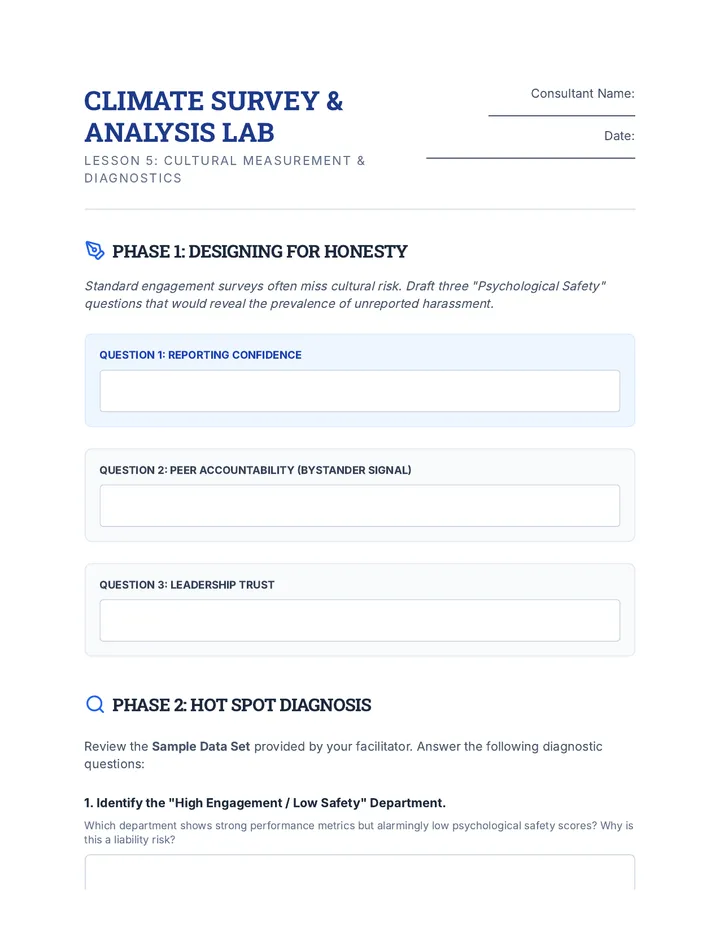
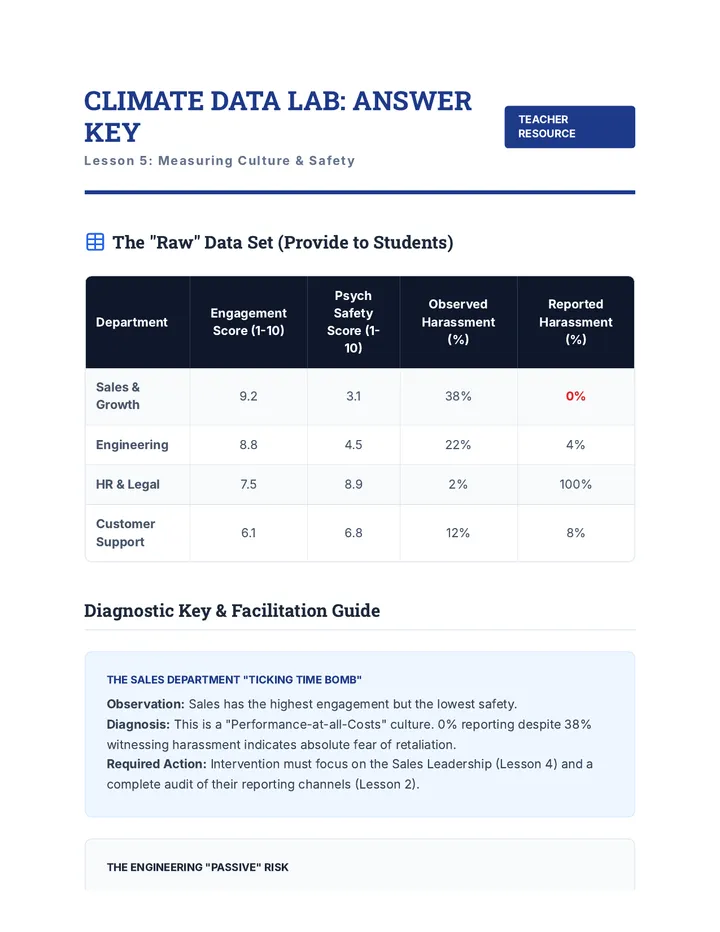
How do you know if prevention is working? Students learn to design climate surveys and interpret data to assess the prevalence of unreported harassment and the general level of psychological safety in an organization.
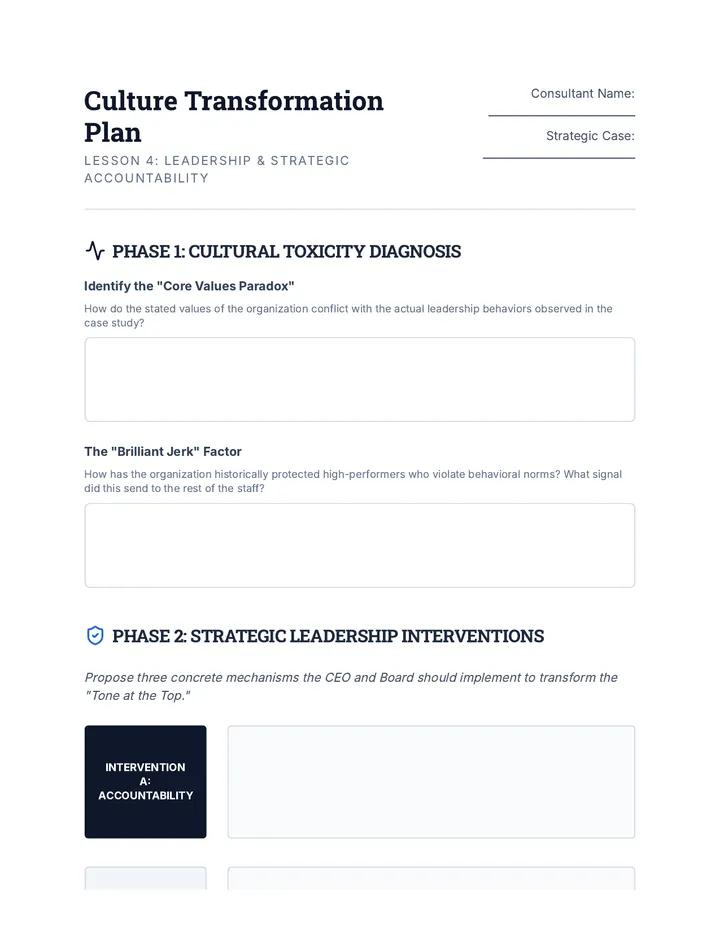
This lesson examines the concept of 'tone at the top.' Students analyze case studies of organizations that successfully transformed toxic cultures through leadership transparency and accountability mechanisms.
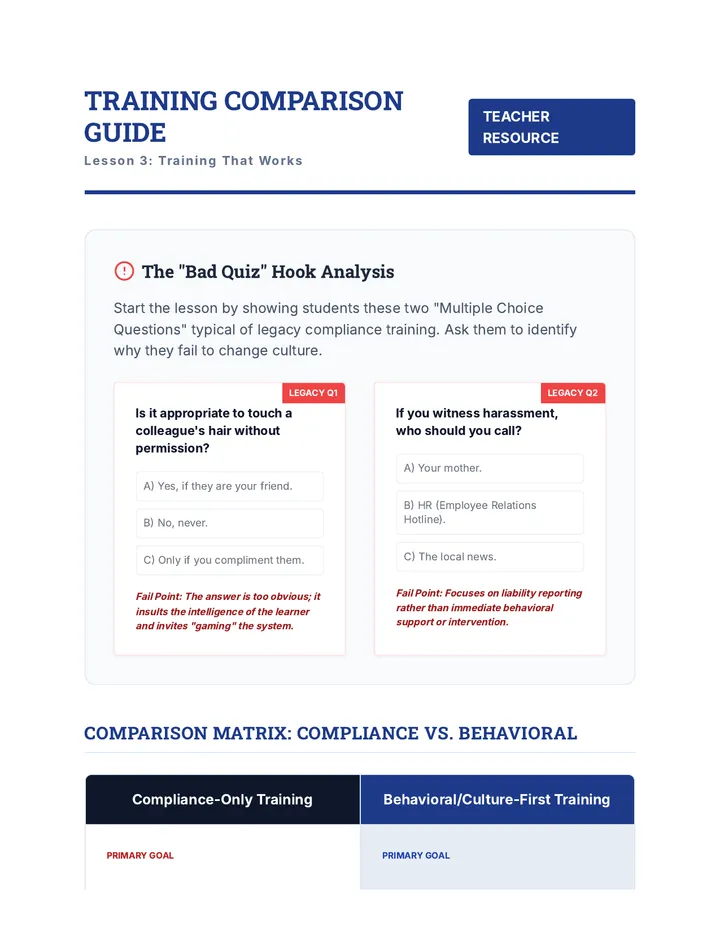
Analyzing why traditional sexual harassment training often fails, this lesson explores interactive and behavioral-based training models. Students design a training module that focuses on civility and respect rather than just liability avoidance.
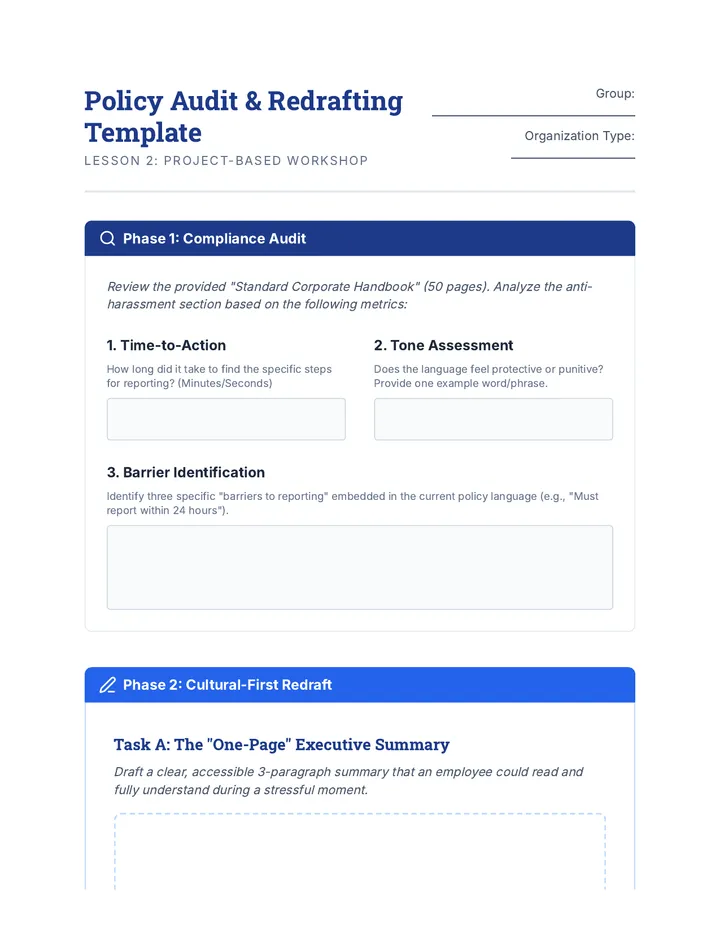
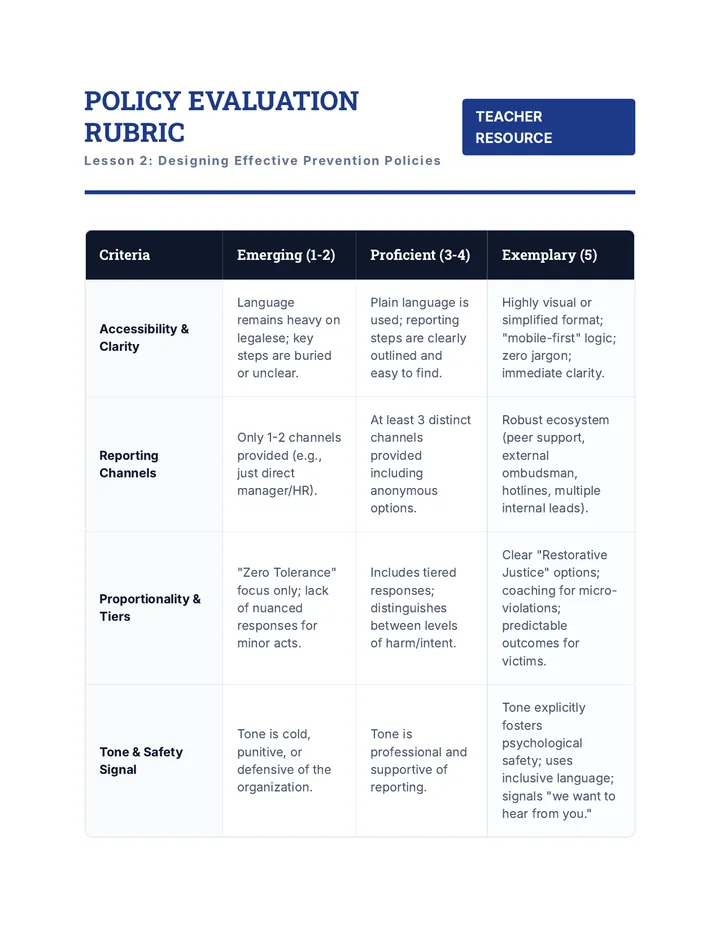
Critique standard zero-tolerance policies and explore nuanced approaches that encourage reporting and cultural health through effective policy design.
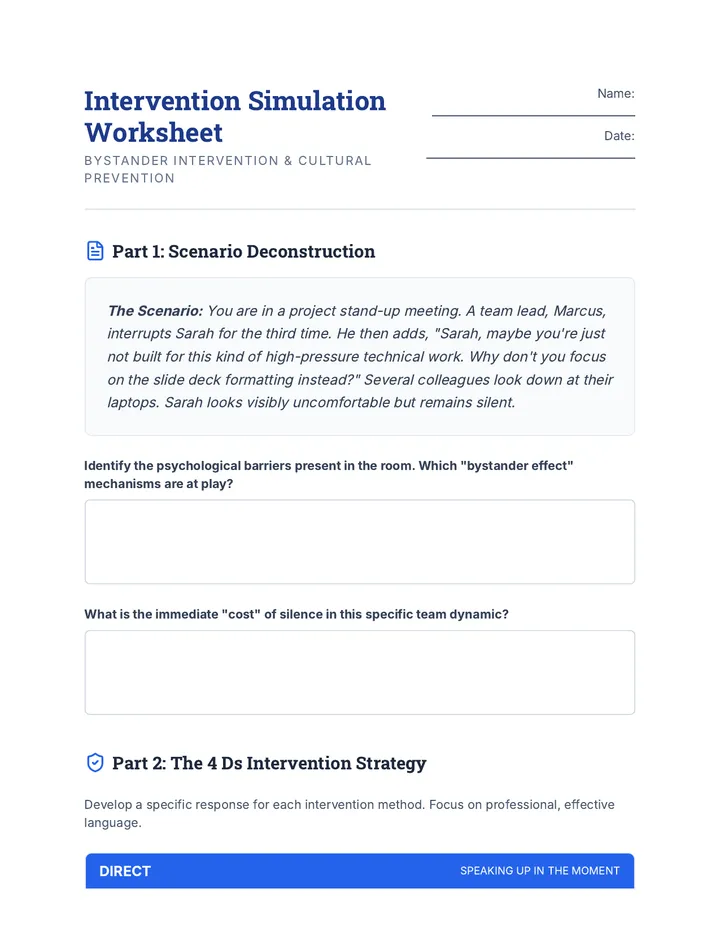
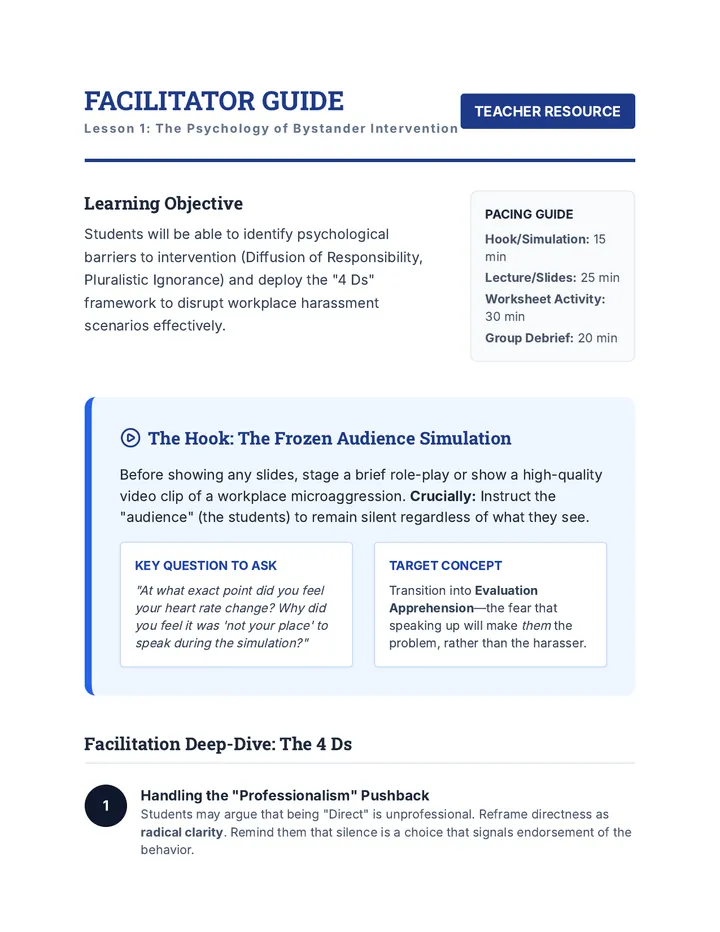
Explore the psychological barriers to intervening in workplace harassment and master the 4 Ds of bystander intervention through simulation and analysis.
Students engage in a complex role-play scenario where they must negotiate a support plan with a skeptical 'professor' or 'manager.' Peers observe and provide feedback on tone, clarity, and persistence.
Focusing on real-time interactions, this lesson teaches verbal scripts for setting boundaries in group projects or meetings. Students practice 'I' statements and the DEAR MAN technique from DBT to assert needs effectively.
Students analyze successful and unsuccessful email requests for extensions, mental health days, or additional tutoring. They practice writing concise, professional emails that state needs clearly without over-apologizing.
This lesson covers the technical aspects of requesting support, including understanding syllabus policies, disability services, and workplace accommodation laws (ADA). Students learn the difference between a preference and a protected right.
Students participate in a Socratic seminar exploring the cultural narratives surrounding 'grit' and 'resilience' versus help-seeking. They critique the 'ideal worker' norm and discuss the long-term professional costs of burnout.
Culminates in the creation and peer review of a personalized, sustainable resilience action plan.
Introduces structured consultancy protocols for collaborative problem-solving of professional challenges.
Reviews academic burnout literature and critiques recovery strategies through inquiry-based case analysis.
Focuses on maintaining professional composure and perspective-taking during high-stakes interpersonal challenges with advisors.
Students analyze case studies to identify and categorize systemic versus individual stressors in the graduate experience.
Students synthesize their learning to design a professional development workshop for a non-arts sector (e.g., medical residents, attorneys). They must justify their chosen theater activities with clear professional learning objectives and business outcomes.
Students utilize role-reversal techniques to prepare for difficult negotiations or conflict resolution. By physically embodying the opposing party's arguments and emotions, students develop strategic empathy and anticipate counter-arguments more effectively.
This lesson bridges the gap between raw data and persuasion. Students use narrative improvisation techniques to humanize data points, practicing how to tell compelling stories that drive organizational change and motivate teams.
Using advanced improv forms, students simulate high-pressure environments where information is incomplete or changing rapidly. The lesson focuses on maintaining executive presence and decision-making clarity amidst chaos, drawing parallels to crisis management.
Students deconstruct the foundational rule of 'Yes, And' not just as a comedy tool, but as a communication protocol for innovation. They analyze how blocking (saying 'No') halts progress in organizational meetings and practice additive communication techniques.