Written and verbal communication standards for the workplace, including email etiquette, presentation delivery, and professional phone conduct. Develops collaborative skills for teamwork, constructive feedback, and efficient time management.
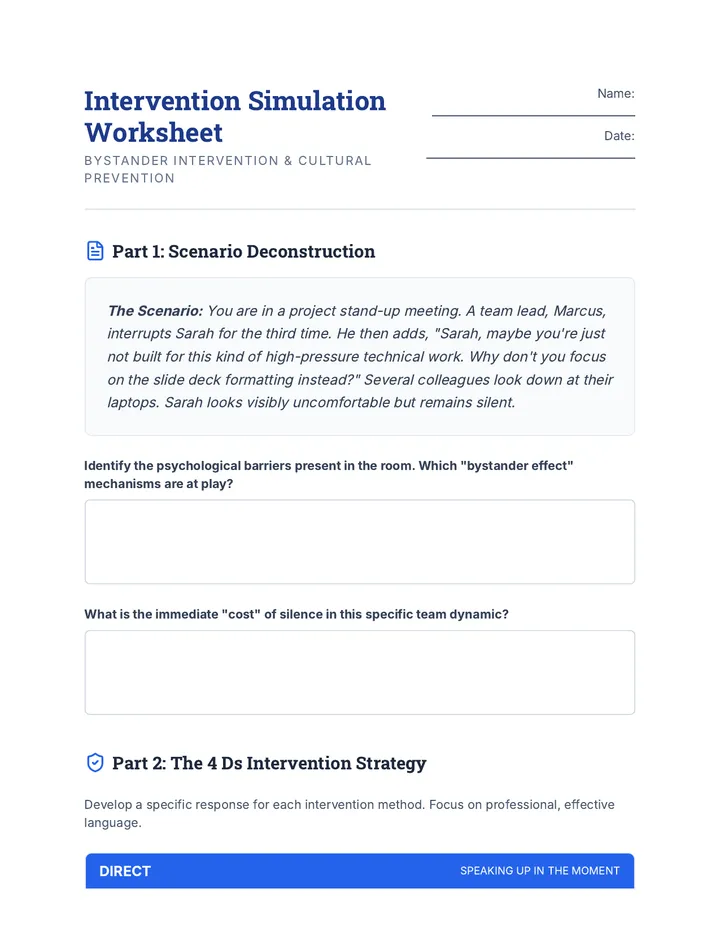
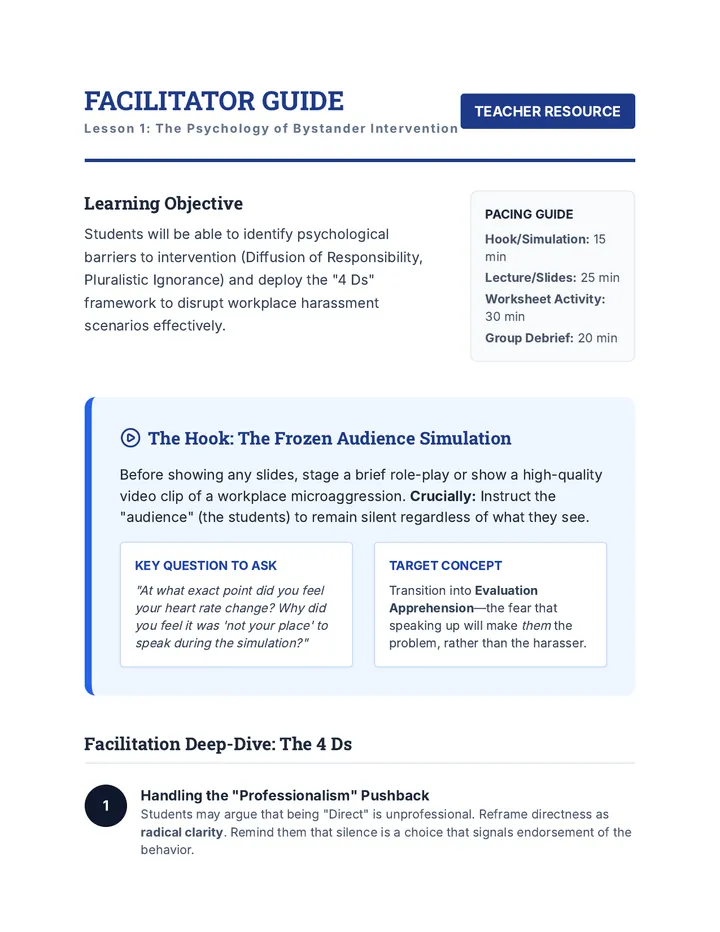
A graduate-level exploration of proactive workplace harassment prevention, focusing on bystander intervention, organizational policy design, leadership accountability, and cultural measurement to foster psychological safety.
This sequence equips undergraduate students with the rhetorical skills and legal knowledge to advocate for their needs in academic and professional settings. It transitions from exploring cultural stigmas around help-seeking to practical skill-building in written and verbal communication, culminating in high-stakes negotiation simulations.
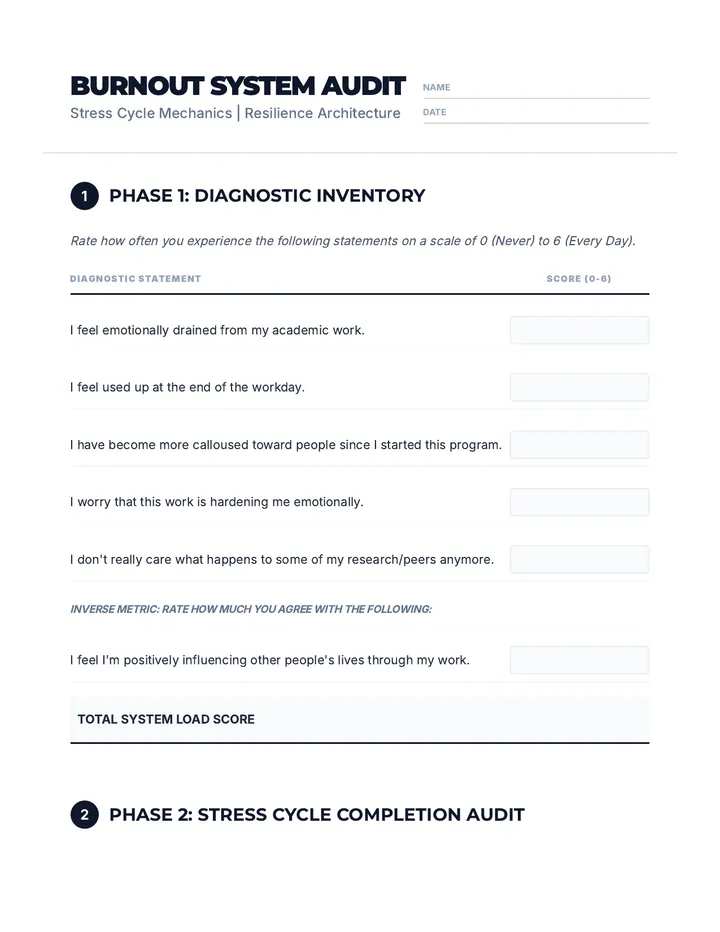
A case-study-driven sequence for graduate students to analyze professional stressors and develop evidence-based resilience strategies through collective insight.
This graduate-level sequence bridges the gap between improvisational theater techniques and organizational leadership. Students explore how the mechanics of spontaneity, 'Yes, And' communication protocols, and narrative arcs can be applied to crisis management, negotiation, and high-stakes corporate communication.
A comprehensive training program for graduate students to master non-verbal communication in virtual interviews. The sequence covers eye contact, framing, digital active listening, vocal modulation, and self-critique using video playback.
A graduate-level sequence focused on the intersection of implementation science and behavior analysis. Students learn to measure treatment fidelity, provide performance feedback, and ethically modify Behavior Intervention Plans (BIPs) based on concurrent implementation and outcome data.
An advanced course for graduate students exploring the intersection of neurobiology, psychological theory, and organizational leadership. Students develop high-level social and emotional competencies to navigate complex professional environments and foster psychological safety.
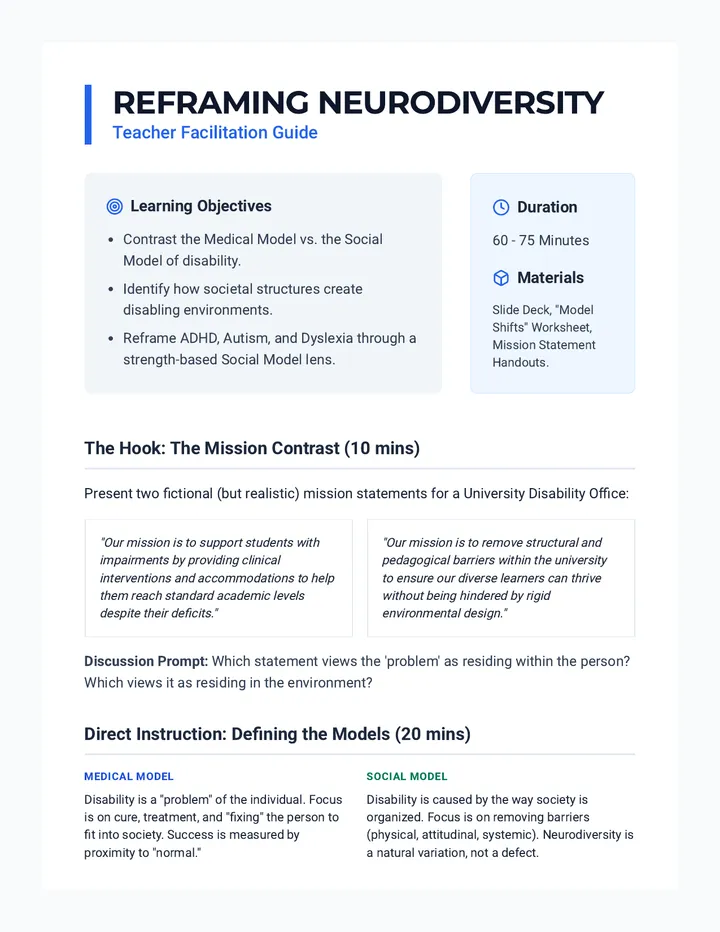
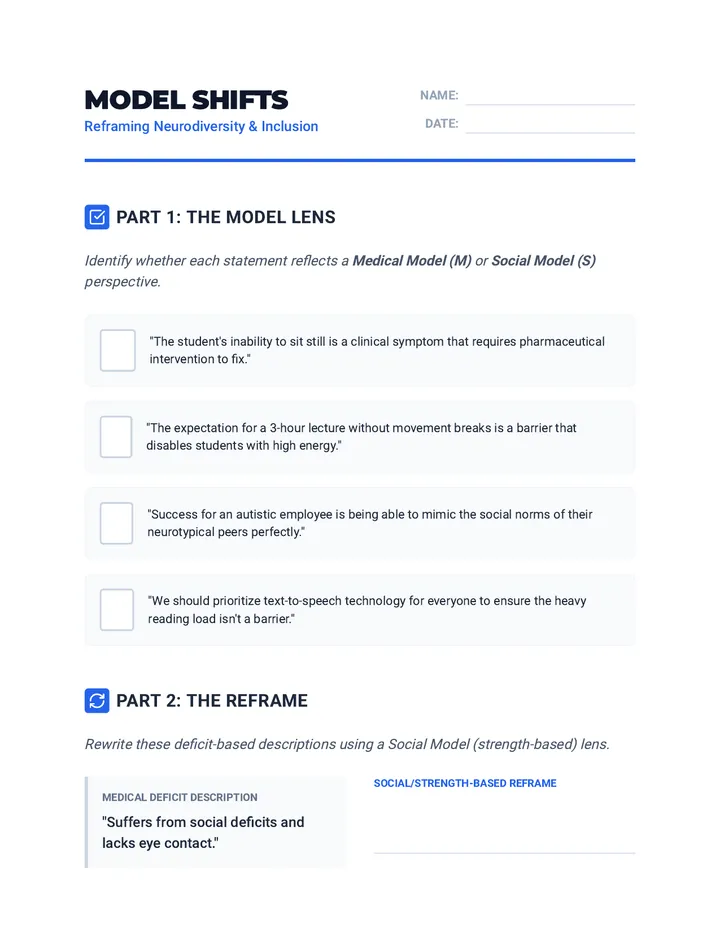
This sequence explores neurodiversity through the Social Model of disability, challenging traditional norms of professionalism and designing inclusive environments. Students will move from theoretical understanding to practical application in organizational policy and advocacy.
This workshop-style sequence for graduate students focuses on the interpersonal dimensions of adaptability, training them to diagnose and adjust communication styles for diverse professional audiences across cultural, disciplinary, and hierarchical boundaries.
This sequence equips graduate students with the tactical communication skills needed to manage professional references. It focuses on shifting from a passive 'ask' to an active 'briefing' strategy, ensuring references are prepared with specific talking points and context to advocate effectively for the candidate.
A comprehensive training program for undergraduate students to master the GIVE skills (Gentle, Interested, Validate, Easy manner) through physiological awareness and high-stakes simulations. Students move from understanding their own biological responses to managing complex group conflicts while preserving relationship integrity.
A comprehensive sequence for undergraduate psychology and social work students focusing on the 'GIVE' skill set within Dialectical Behavior Therapy (DBT). This course covers interpersonal effectiveness, prioritizing relationships, and the technical application of gentleness, interest, validation, and an easy manner in therapeutic and personal communication.
This sequence provides undergraduate counseling students with a structured progression from non-verbal presence to complex group facilitation. It emphasizes active listening, reflective responding, internal bias management, and constructive feedback loops using the SBI model.
A high-level sequence for graduate students focusing on the rhetorical and leadership elements of the STAR method. Students move beyond basic reporting to craft sophisticated narratives that demonstrate vision, emotional intelligence, and organizational alignment for executive-level roles.
A comprehensive sequence designed for undergraduate students to master the art of real-time fallacy identification and verbal refutation. Students transition from foundational argument tracking to advanced rhetorical techniques like the 'Even If' strategy, culminating in a live debate-style assessment.
This graduate-level sequence prepares students to design, audit, and implement institutional safety protocols for human and child trafficking. Students will move from policy critique to the construction of interagency collaboration models, culminating in a professional-grade Standard Operating Procedure (SOP).
This sequence explores the intersection of ethical theory and organizational leadership for graduate-level students. It covers fundamental corporate theories, the moral complexities of whistleblowing, the realities of CSR, behavioral ethics in leadership, and ethical crisis management.
This graduate-level sequence guides clinical psychology students through the process of synthesizing assessment data into measurable treatment plans. Students will master the 'Golden Thread' of clinical documentation, integrate evidence-based practices, and utilize routine outcome monitoring to ensure professional accountability and patient progress.
This graduate-level sequence explores the macroeconomic and organizational shifts caused by the decoupling of labor from location. It covers telemigration, asynchronous management, urban economic impacts, and cross-cultural digital leadership, culminating in a strategic workforce planning capstone.
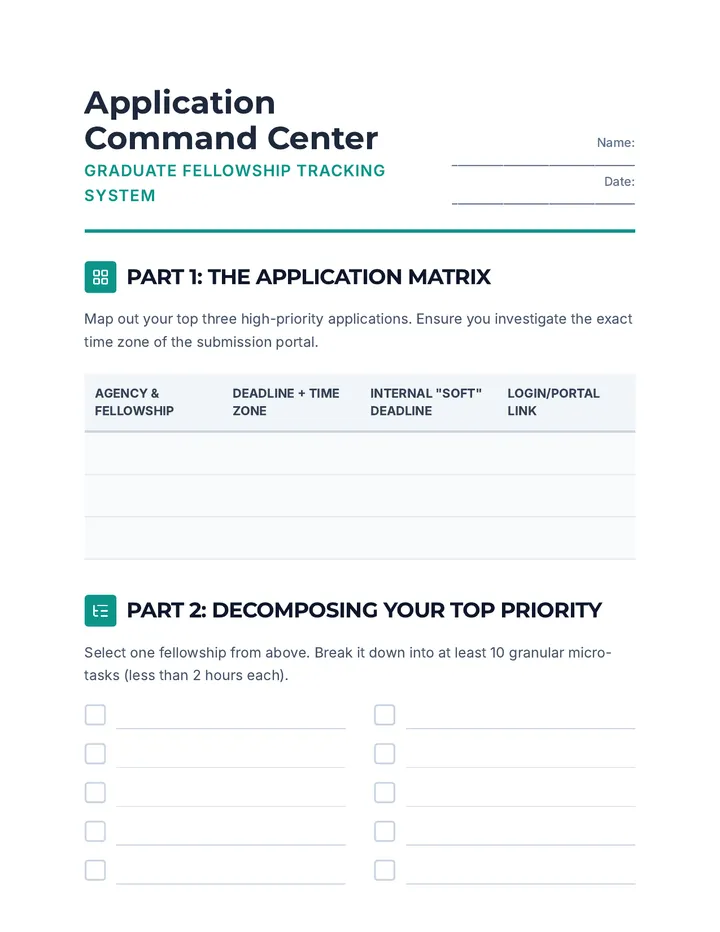
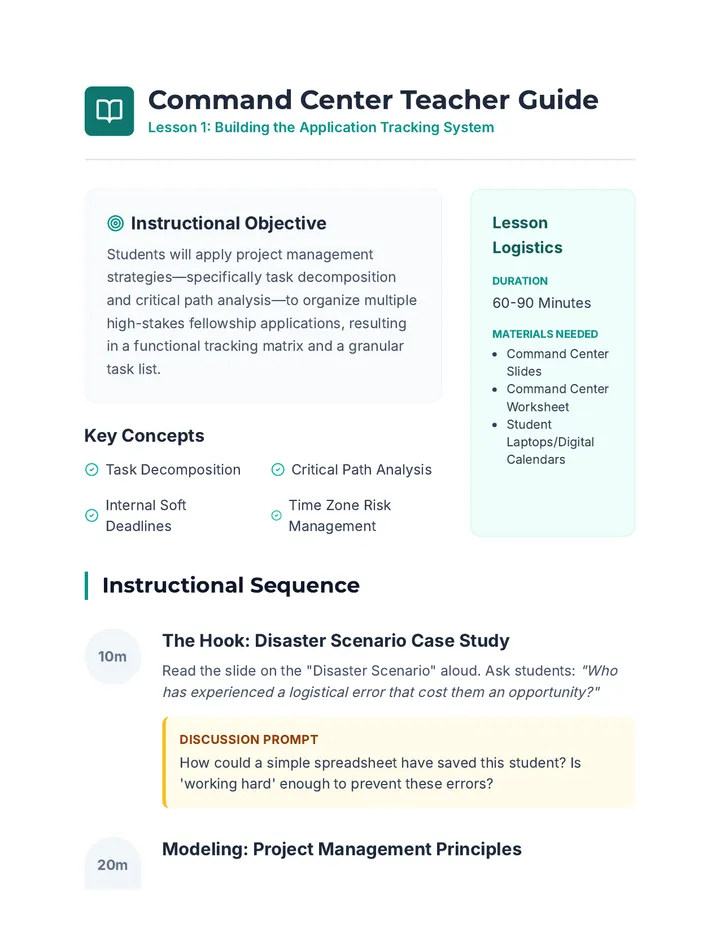
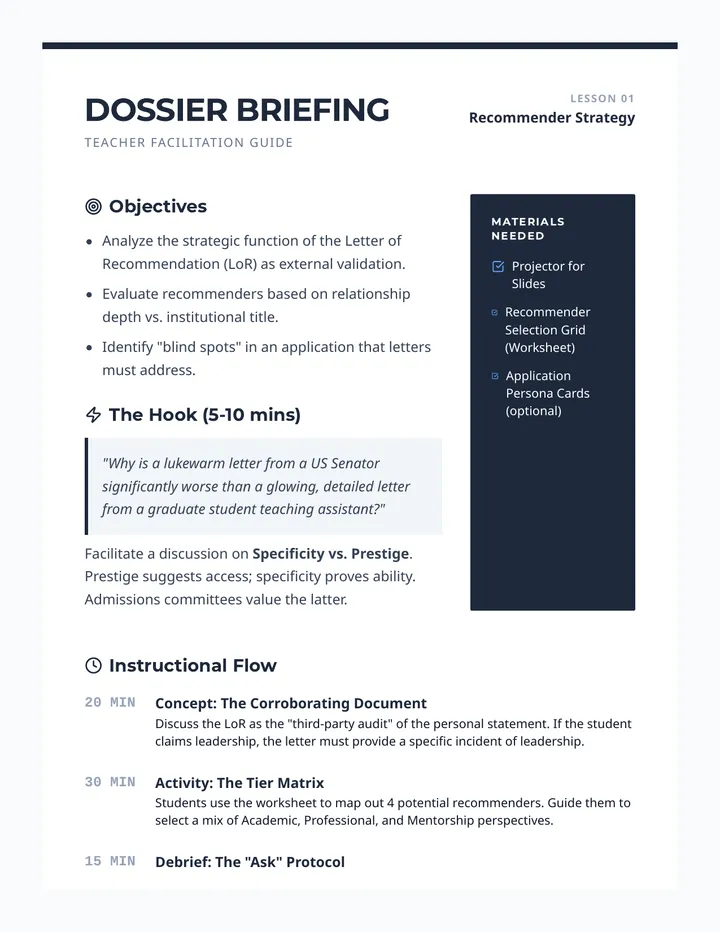
A comprehensive graduate-level sequence focused on the professional project management of fellowship and scholarship applications. Students learn to build tracking systems, manage recommenders strategically, curate funding-specific CVs, and ensure quality control for final submissions.
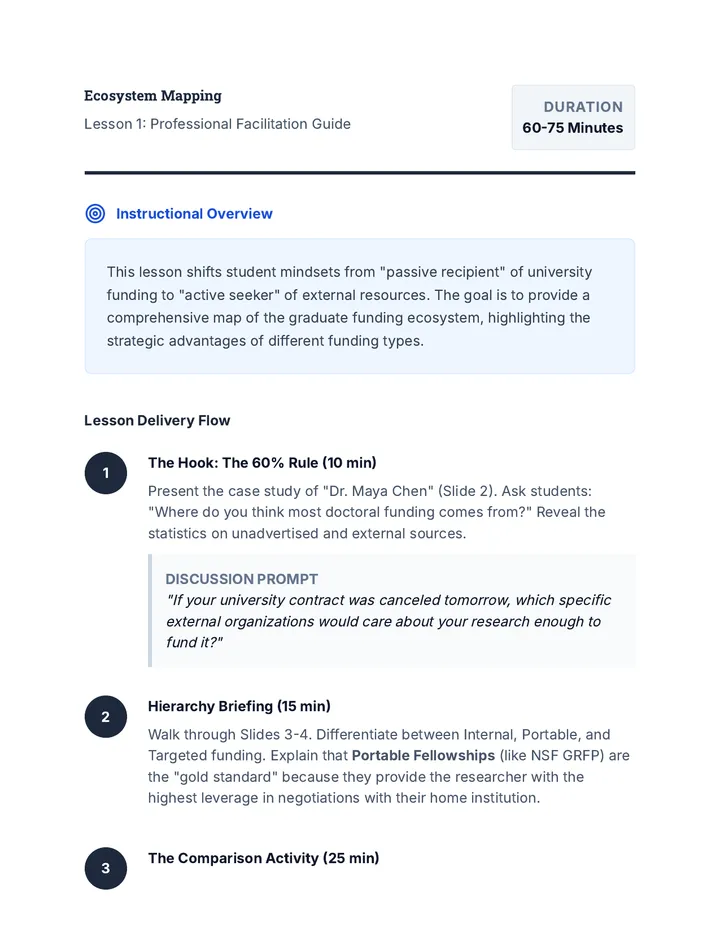
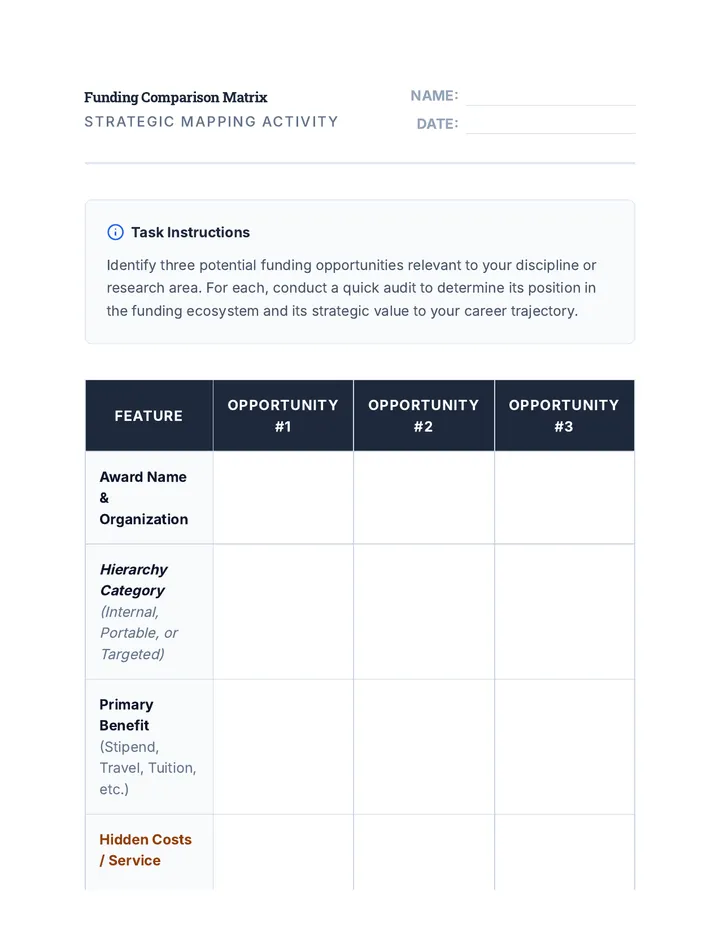
A comprehensive sequence for graduate students to navigate the complex landscape of advanced degree funding, including fellowships, grants, and assistantships. Students will learn to analyze funder missions, leverage niche databases, and build a strategic 12-month funding roadmap.
A graduate-level sequence focused on applying FAST skills (Fair, Apologies, Stick to Values, Truthful) to professional identity, boundary setting, and therapist resilience. Students learn to navigate imposter syndrome, ethical documentation, and career advocacy through a clinician-centered lens.
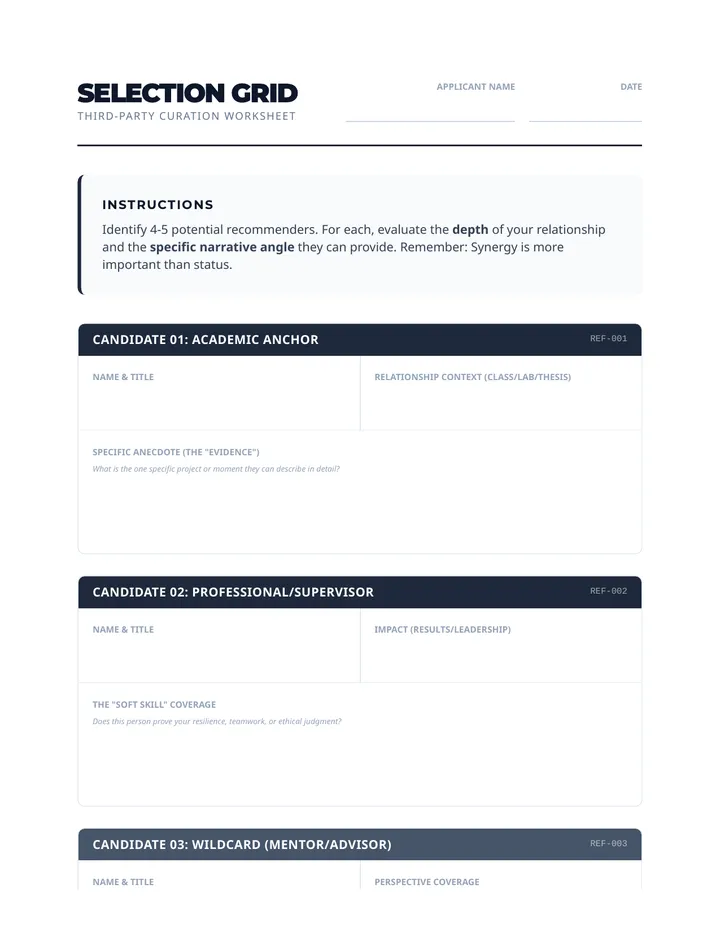
A comprehensive project-based sequence for graduate students focusing on the strategic curation and management of third-party application materials. Students learn to select recommenders, draft 'brag sheets', navigate ethical considerations like FERPA, and audit application packets for narrative consistency.
A comprehensive sequence for graduate students focused on converting interview setbacks into networking opportunities and long-term career growth through professional resilience, feedback solicitation, and relationship management.
A comprehensive guide for graduate students on navigating the complexities of post-interview logistics, recruitment cycles, and managing multiple job offers with professional etiquette.
This graduate-level sequence focuses on post-interview communication as a strategic tool. Students learn to analyze interview performance, draft value-driven correspondence, mitigate weaknesses, and navigate complex stakeholder dynamics to reinforce their professional brand.
A comprehensive unit for undergraduate students to master the financial and legal aspects of job offers, focusing on total compensation analysis, cost-of-living adjustments, and professional negotiation skills.
This sequence focuses on the critical 'after' phase of the interview process, teaching undergraduate students how to analyze their performance, interpret outcomes, and manage professional relationships long-term. Students move from self-reflection and performance analysis to navigating offers and maintaining a strategic network, turning every interview into a growth opportunity.
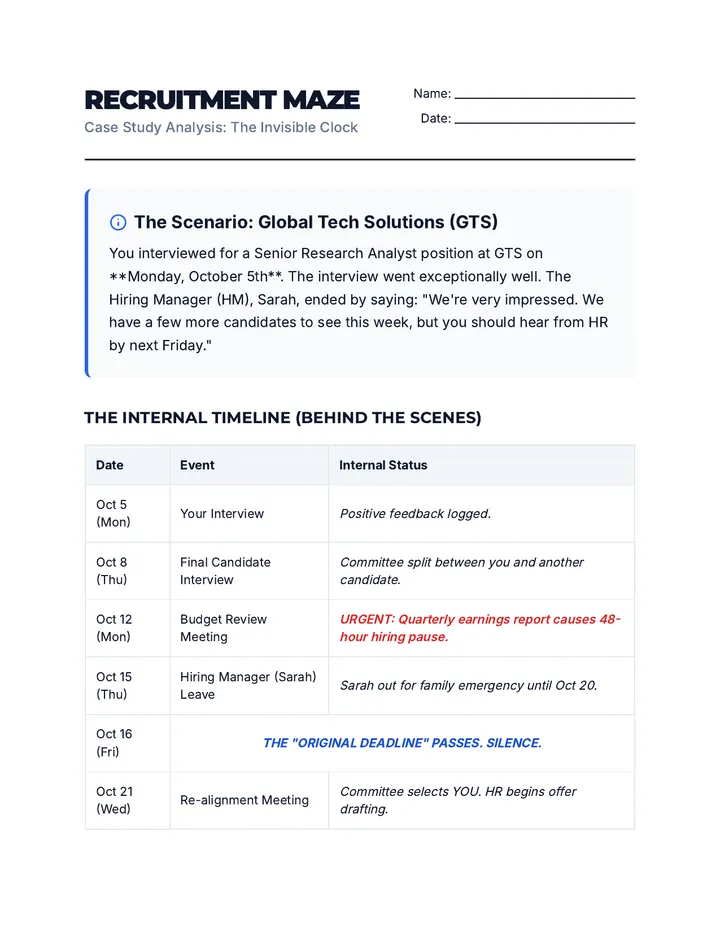
This comprehensive sequence guides undergraduate students through the strategic nuances of post-interview communication. Students will master the art of writing high-impact thank-you notes, addressing interview gaps, navigating professional etiquette, and managing communication during hiring delays to build a robust professional portfolio.
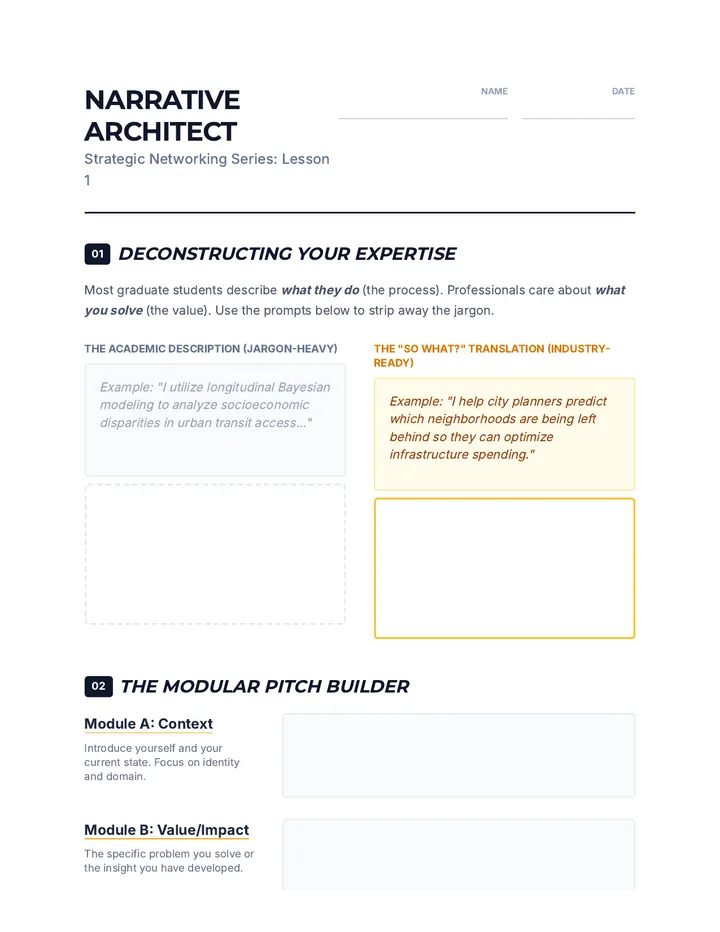
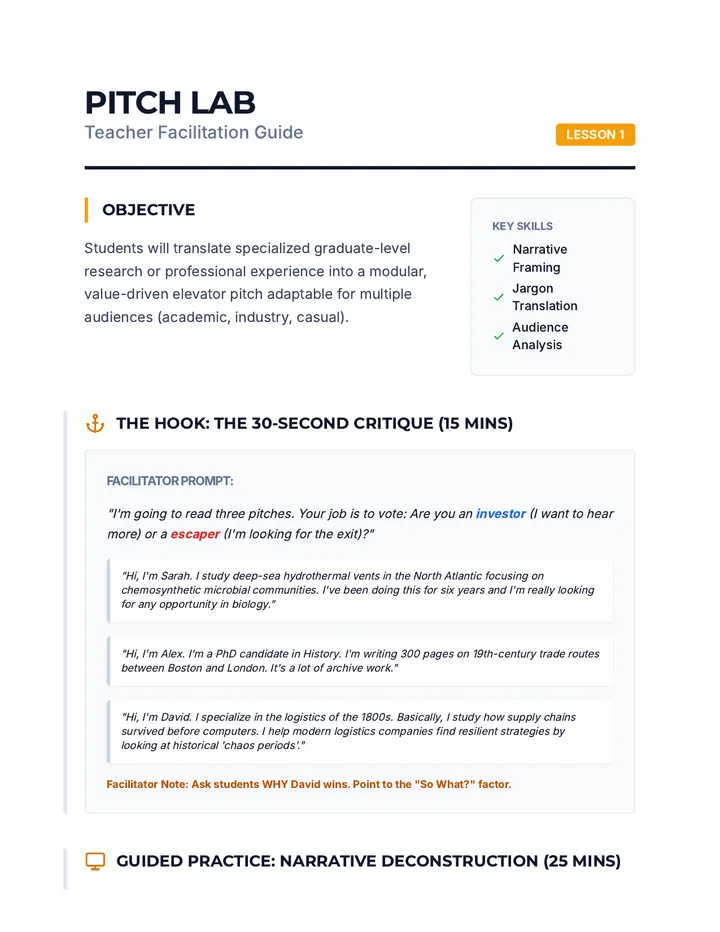
This advanced sequence guides graduate students through the strategic development of a professional network essential for accessing the hidden job market. Students move from refining their personal narrative and value proposition to tactical digital mapping, effective outreach, informational interviewing, and long-term relationship stewardship.
This graduate-level sequence focuses on the rhetorical architecture of professional cover letters. Students move beyond templates to master persuasive structure, visual hierarchy, and narrative argumentation, culminating in the ability to craft compelling, high-stakes professional correspondence.
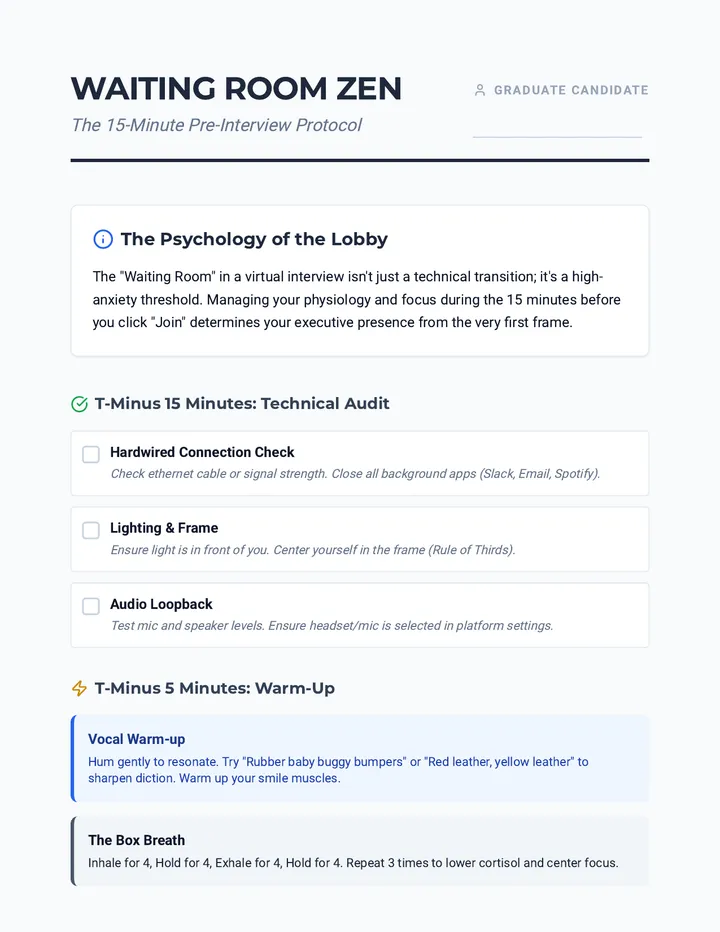
A comprehensive sequence for graduate students to synthesize technical setup, non-verbal communication, and behavioral performance into a professional virtual interview presence. Students move from pre-interview preparation to real-time delivery and post-interview follow-up.
This graduate-level sequence explores the intersection of high-performance sports management and digital technology. Students will learn to evaluate tech stacks, manage remote scouting networks, visualize complex analytics, navigate biometric ethics, and coordinate digital crisis responses to maintain human connection in a data-driven industry.
A comprehensive guide for undergraduate students to master the interpersonal dynamics and communication strategies required for managing professional reference relationships. This sequence covers everything from the initial request to interpreting hesitation, coaching references for success, and maintaining long-term professional bonds.
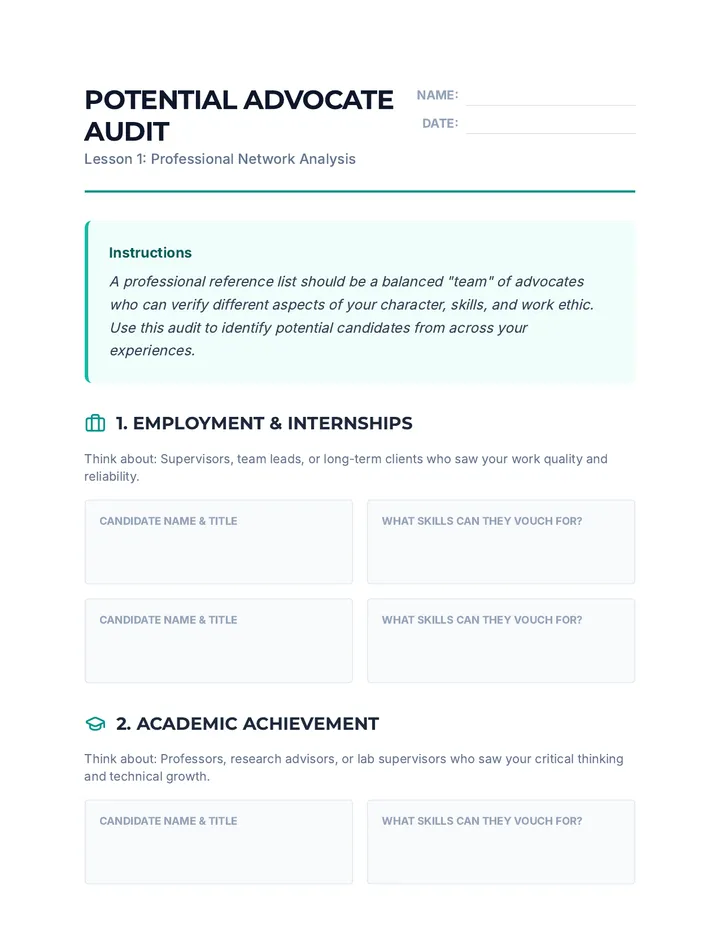
A comprehensive workshop series for undergraduate students to identify, secure, and format professional references for their job search. Students move from auditing their network to finalizing a polished reference document and practicing interview responses.
A comprehensive workshop series for graduate students on formatting, presenting, and securing professional reference dossiers. This sequence moves from basic data accuracy to advanced personal branding and digital reputation management.
A comprehensive sequence for graduate students focusing on the strategic identification, selection, and long-term cultivation of professional references to validate career competencies and professional narratives.
A focused 90-minute workshop on the fundamentals of tipping. Workers learn their legal rights under the FLSA, master the math of tip credits and shortfall payments, and practice auditing pay summaries for errors and illegal deductions.
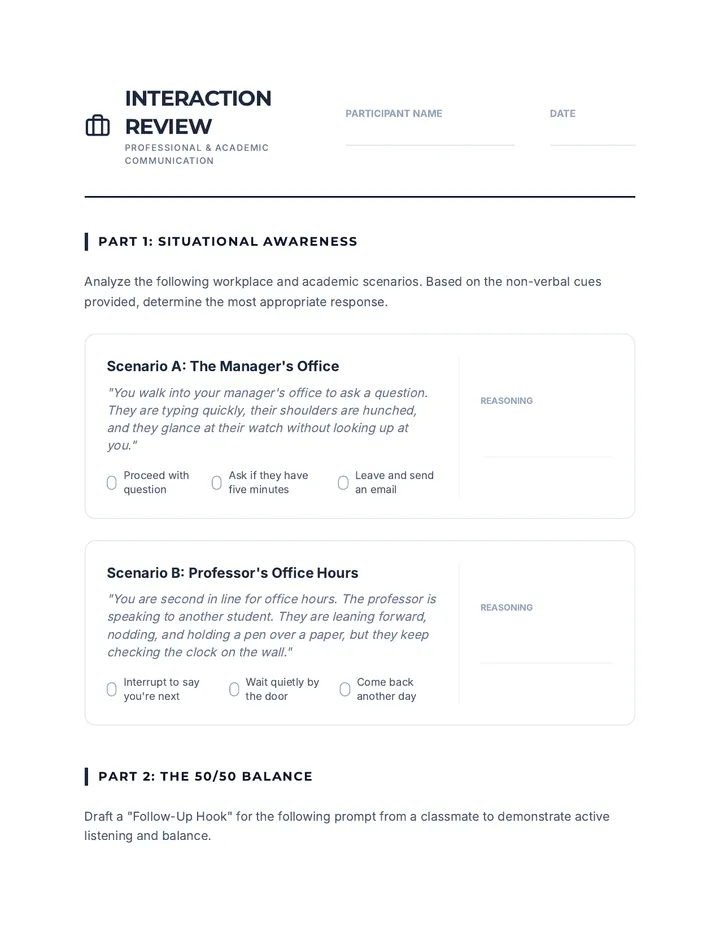
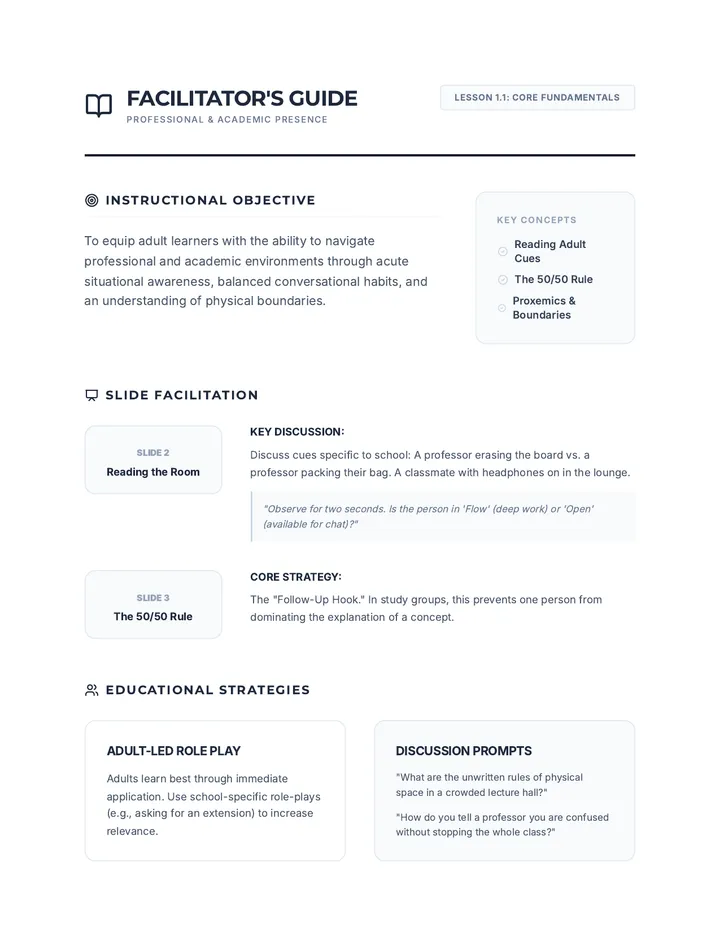
A series of lessons designed to enhance social and professional communication skills for adult learners, focusing on workplace and community interactions.
A comprehensive unit designed to guide students through the modern job application process, focusing on strategic networking, deep company research, and high-stakes interview preparation. Students will learn to build professional connections and tailor their approach to specific company cultures and scenarios.
A comprehensive suite of professional resources for social work students and practitioners, covering ethical decision-making, crisis management, grant acquisition, trauma-informed practices, and community evaluation.
A comprehensive role-playing experience designed for adult learners and college students to master the art of networking and professional interviewing. The sequence uses a 'circuit' theme, guiding students through high-stakes scenarios and peer feedback loops.
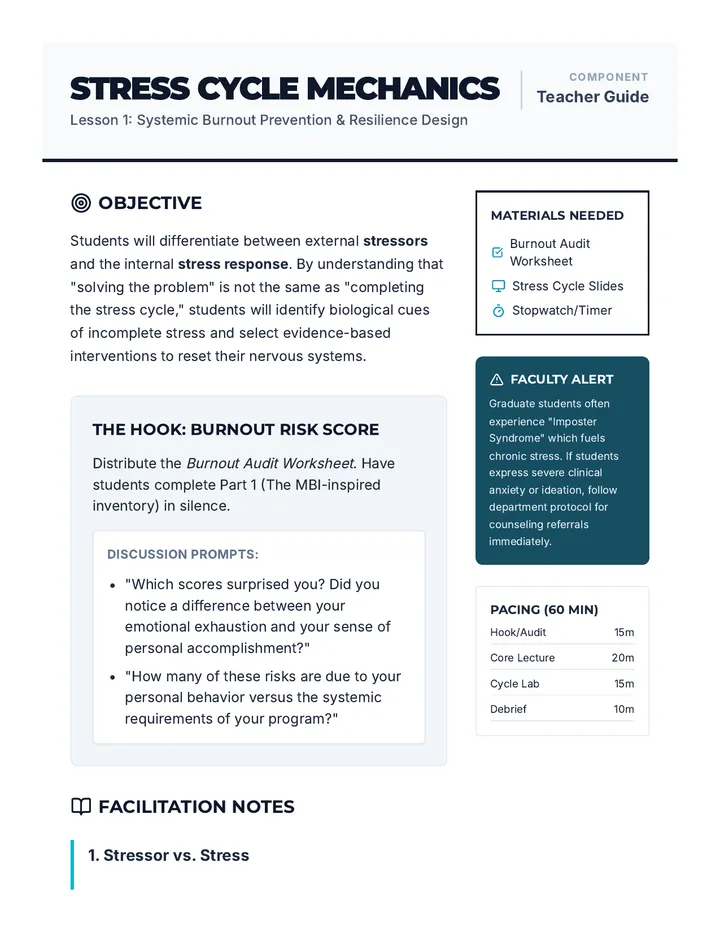
A systemic approach to stress and burnout prevention for graduate students, reframing personal well-being as a design challenge. Students develop a personalized 'resilience architecture' through structural changes in time management, sleep hygiene, and boundary setting.
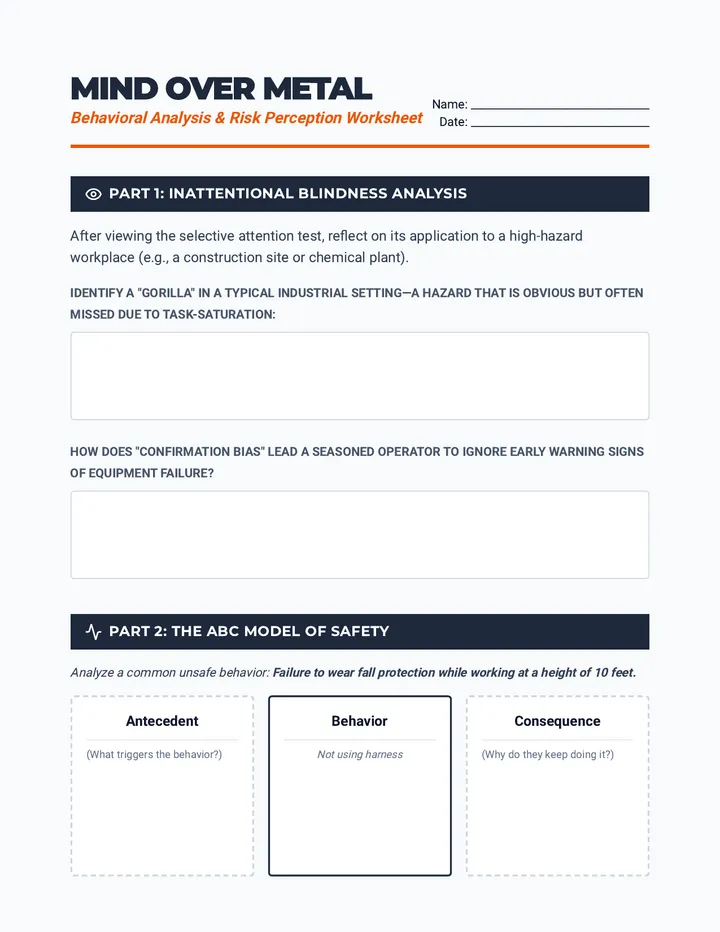
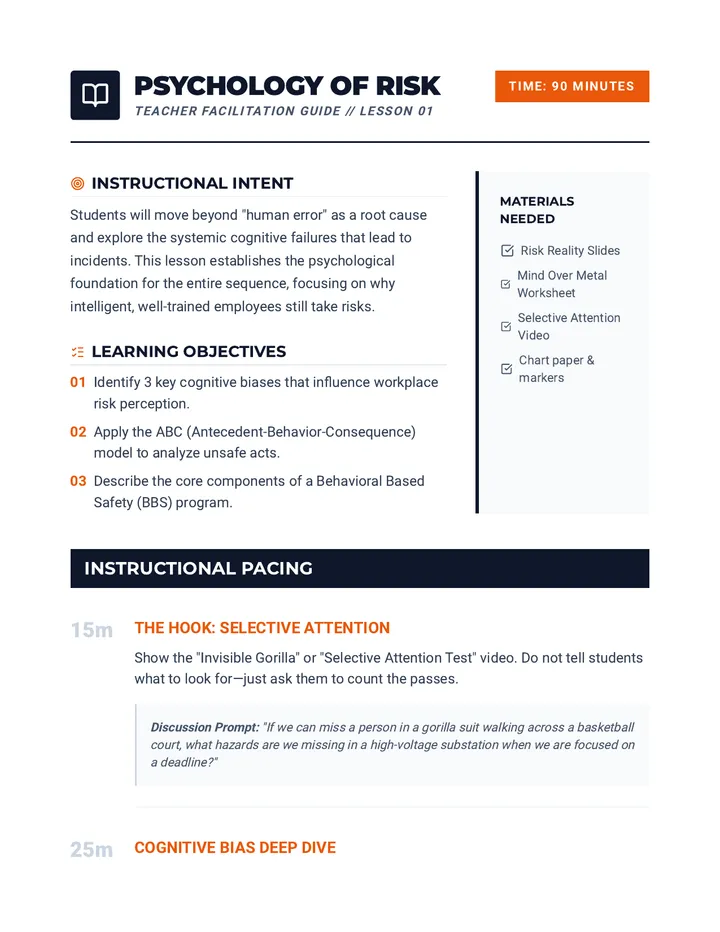
An advanced graduate-level exploration of the intersection between organizational psychology and workplace safety, focusing on Behavioral Based Safety, whistleblower protections, and the cultivation of a 'Just Culture' that encourages transparent incident reporting.
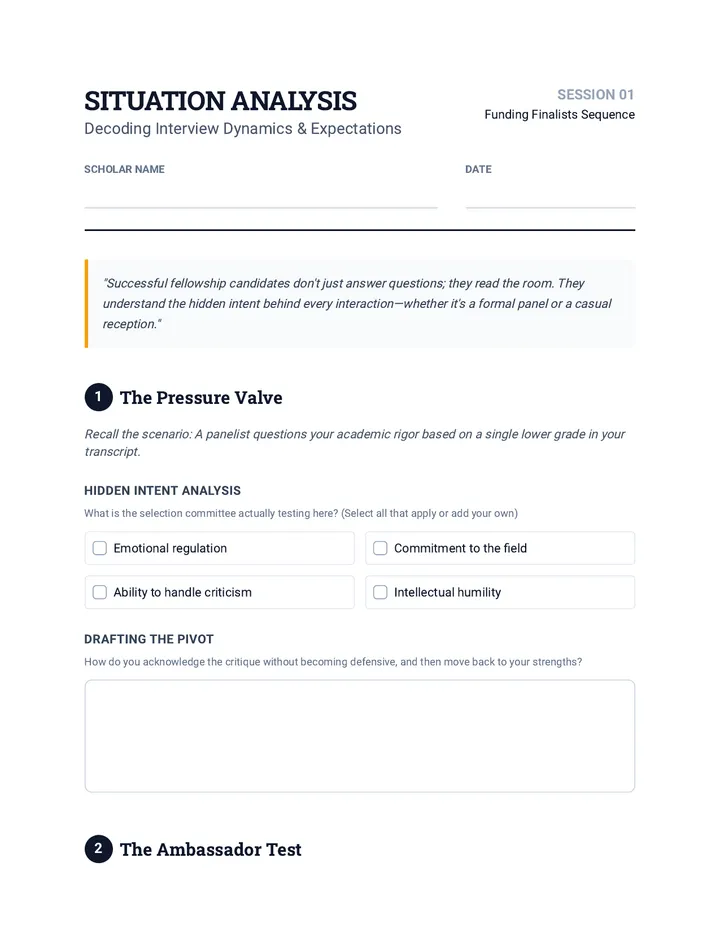
A comprehensive training program for graduate students preparing for prestigious fellowship interviews, focusing on various formats, research communication, behavioral responses, and intellectual agility.
A comprehensive sequence for graduate students focusing on the craft of personal statements for competitive fellowships. Students will learn to deconstruct complex prompts, mine their life experiences for compelling hooks, bridge their past achievements with future goals, and tailor their narratives for diverse funding audiences through rigorous revision.
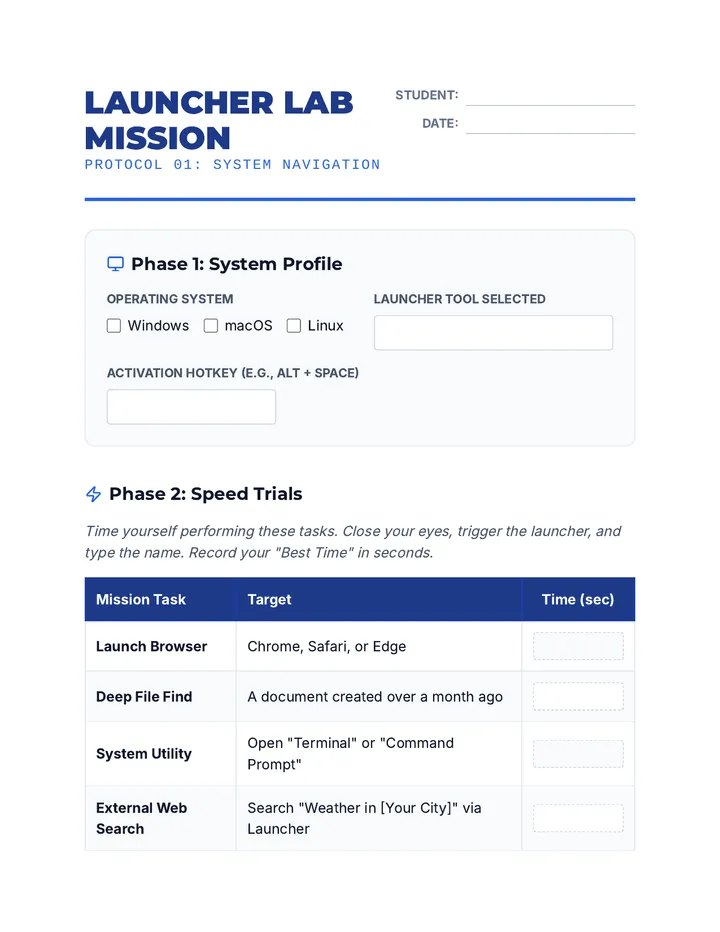
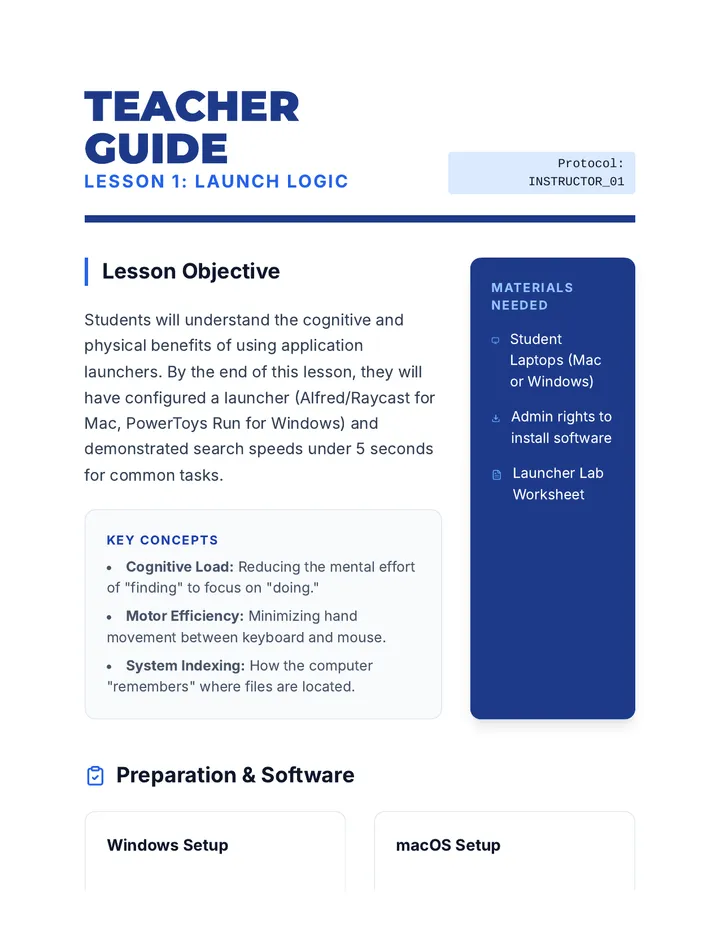
A 5-lesson project-based sequence for undergraduate students focused on assistive technology and workflow optimization. Students move from basic application launchers to creating custom macros and multi-app workflows, culminating in a personalized productivity setup project.
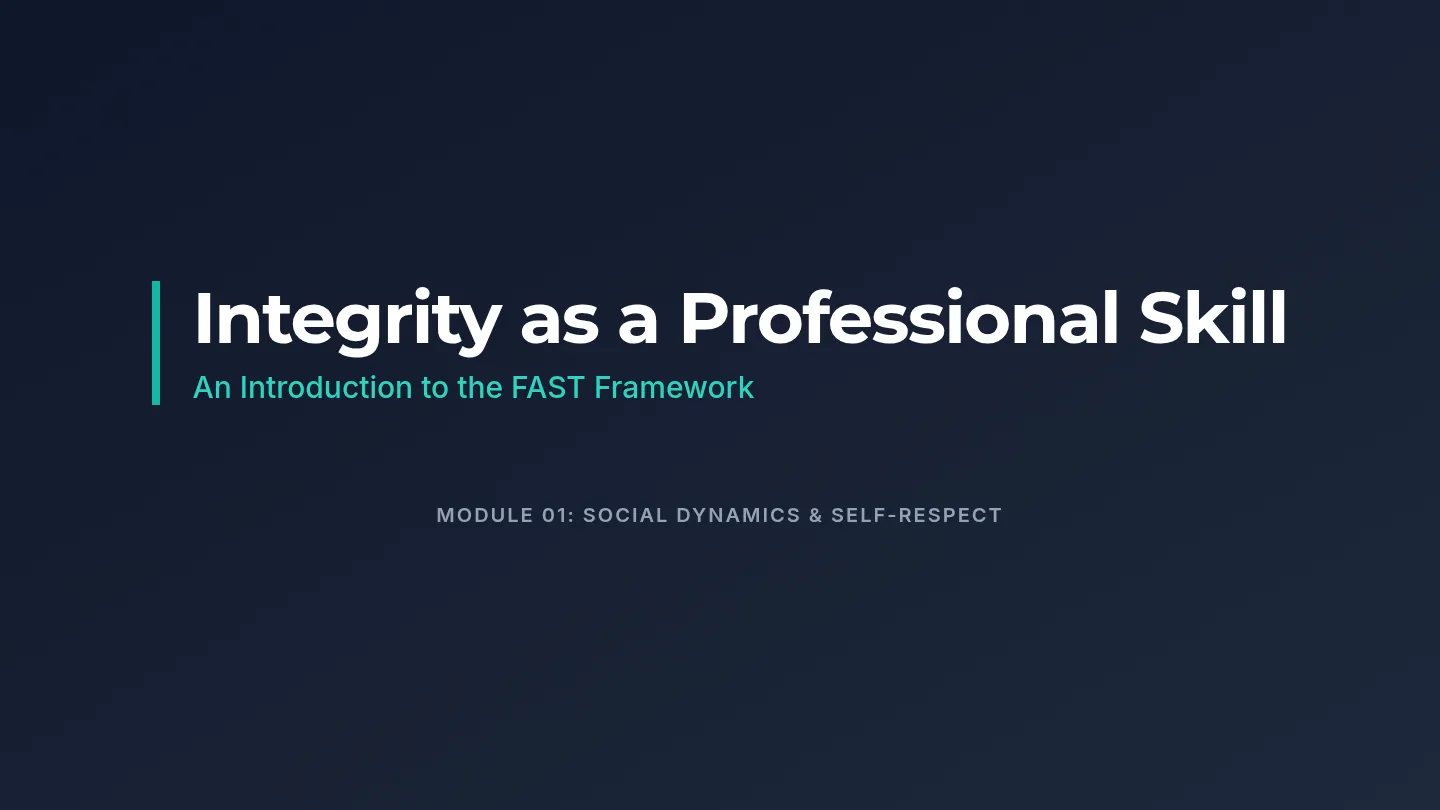
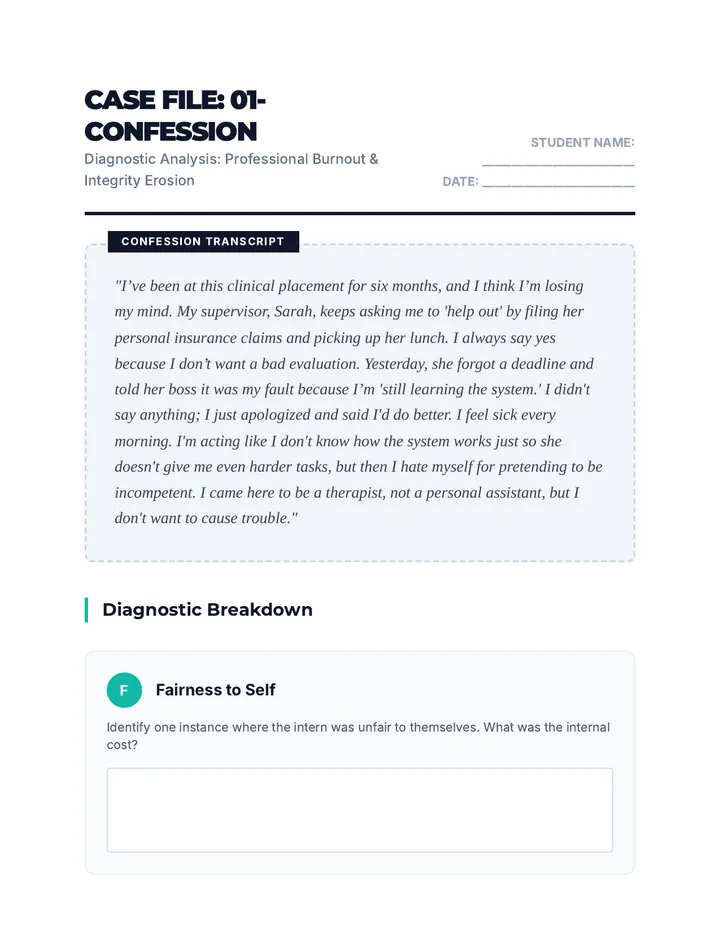
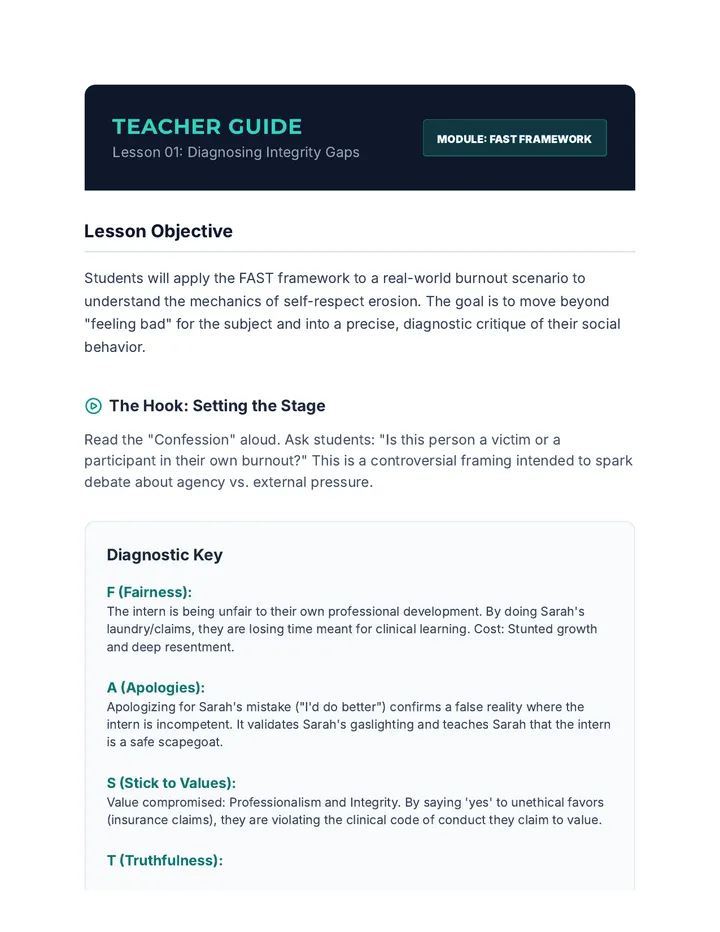
This sequence uses the FAST framework (DBT) to analyze professional social dynamics, helping undergraduate students identify and mitigate the erosion of self-respect in high-stakes environments like internships and early careers. Students progress from diagnostic analysis of professional failure scenarios to prescriptive intervention design.
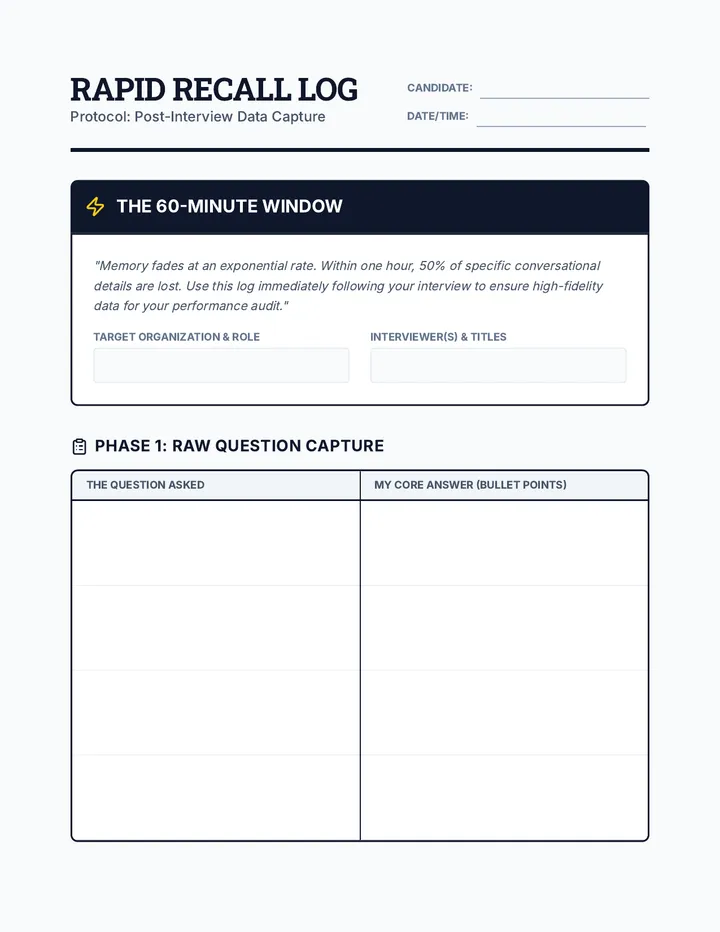
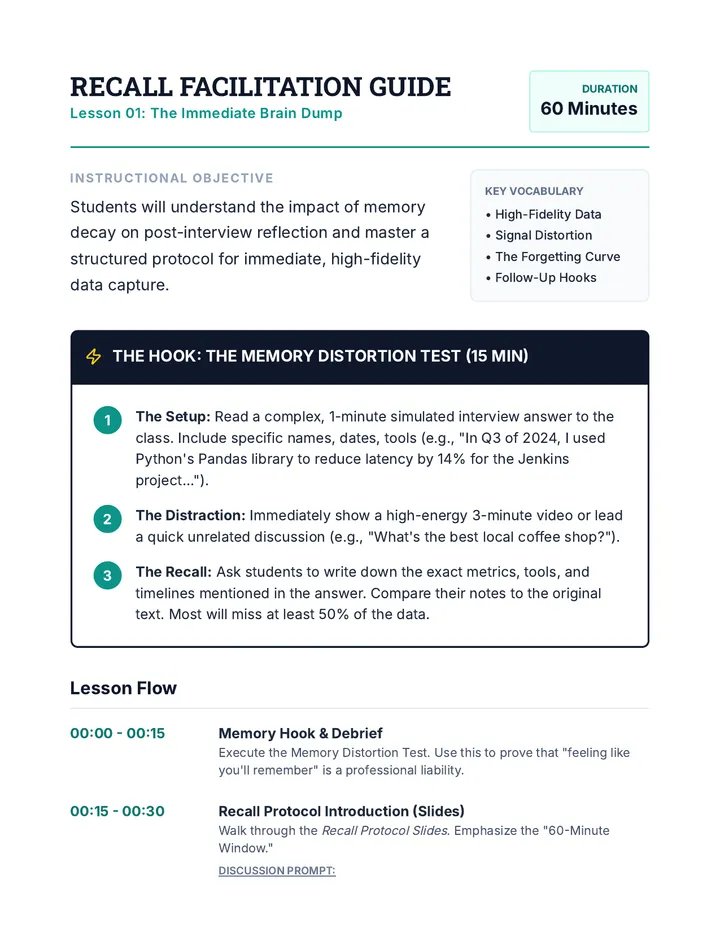
A graduate-level sequence focused on interview follow-up through a data-driven self-audit lens. Students move from immediate memory capture to performance scoring, gap analysis, and long-term professional development planning.
A professional development sequence for graduate students focused on navigating and negotiating employer-sponsored continuing education. Students learn to analyze corporate policies, build strategic business cases, and negotiate for flexibility to support their educational goals.
This sequence equips graduate students with the quantitative tools and financial literacy needed to assess the true ROI of pursuing further advanced education. Students will model opportunity costs, analyze funding strategies, and forecast break-even points to create a comprehensive financial feasibility study.
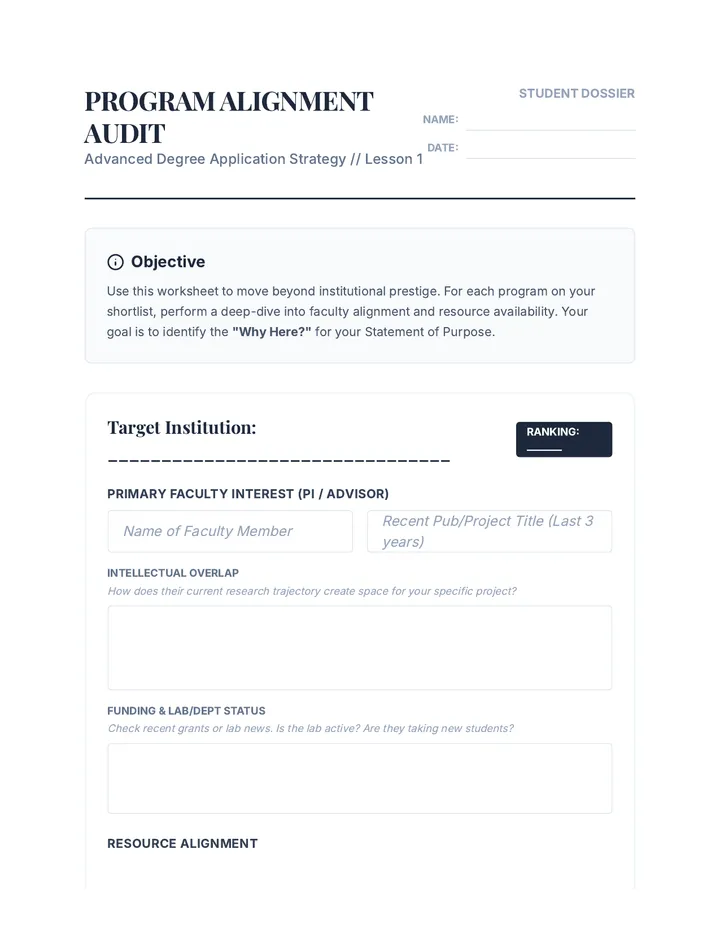
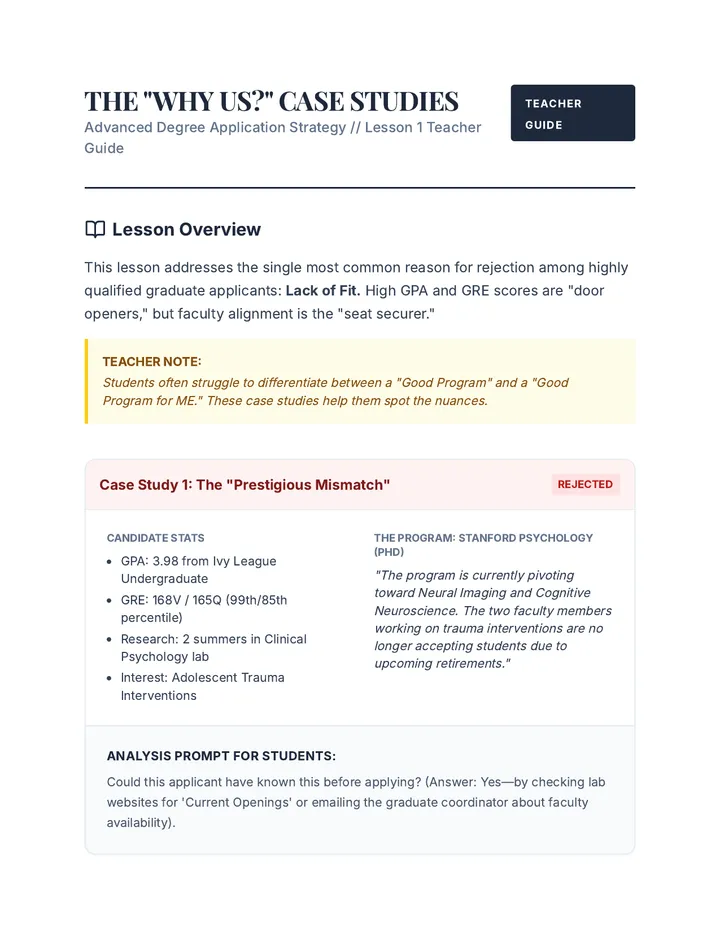
A comprehensive workshop sequence for graduate students applying to terminal degree programs (Ph.D., Ed.D., JD, MD) or competitive fellowships. This series shifts focus from basic qualifications to strategic narrative alignment and research fit.
A comprehensive sequence for graduate students to master the distinct conventions of academic and industry cover letters, focusing on genre analysis, narrative construction, and sector-specific adaptation.
This sequence guides graduate students through a mastery-based revision process for cover letters. It moves from high-level hiring manager simulations to structural logic, linguistic precision, technical proofreading, and finally, a strategic defense of their writing choices.
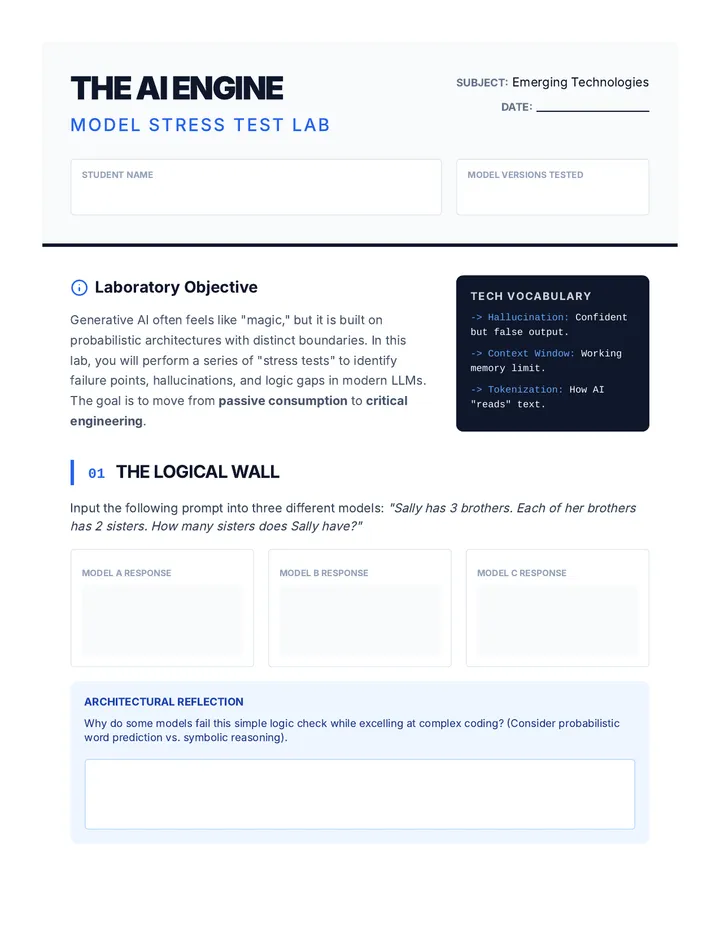
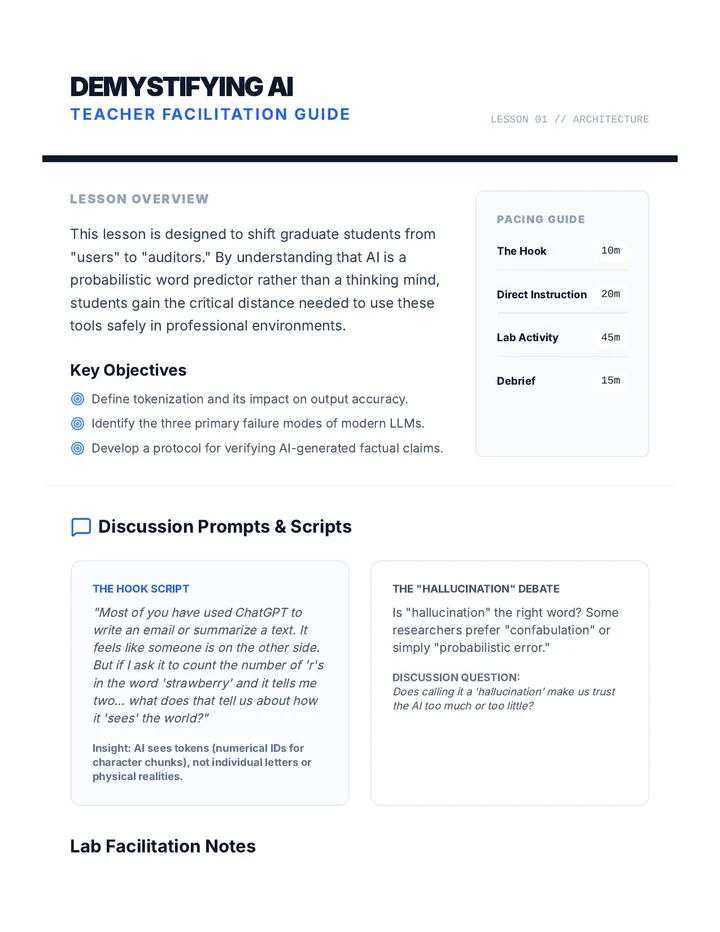
A graduate-level sequence focused on the practical integration of emerging technologies like LLMs and workflow automation into professional workflows, emphasizing technical literacy, prompt engineering, and career strategy.
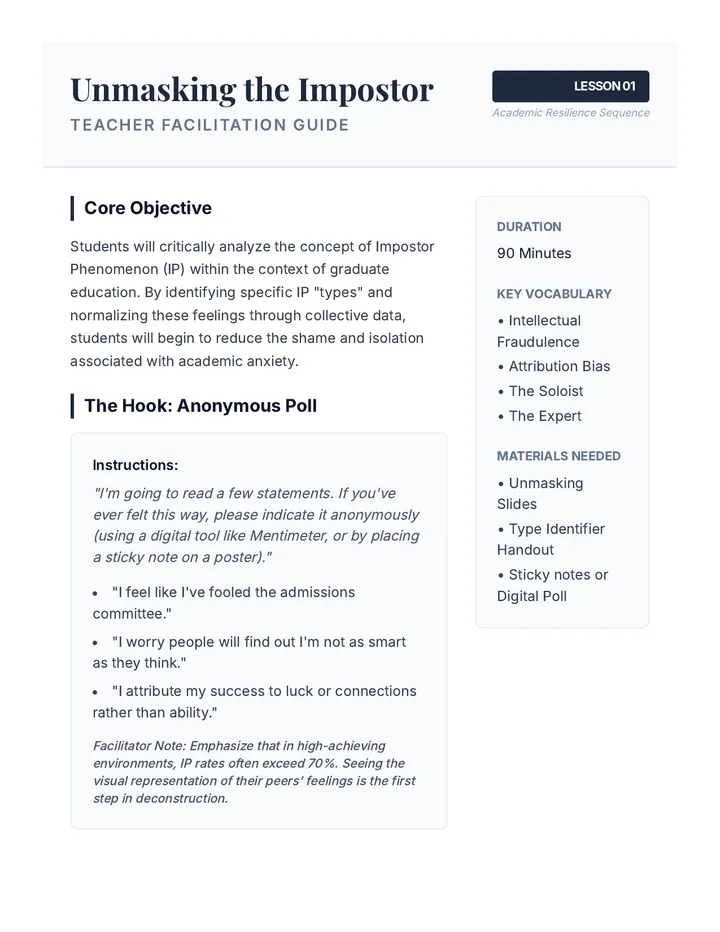
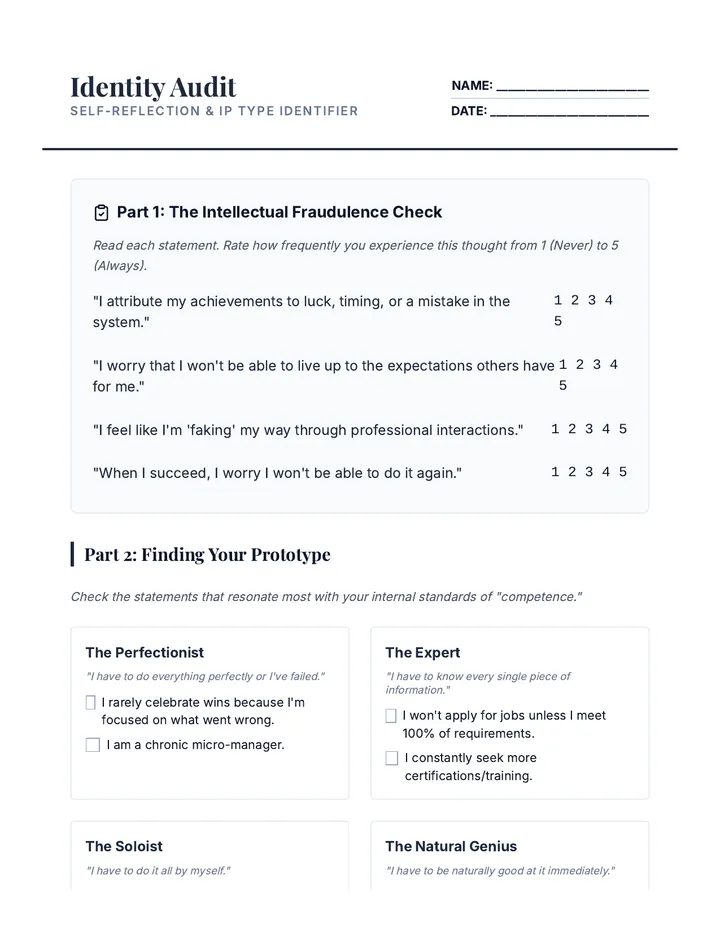
A comprehensive workshop sequence for graduate students to address academic anxiety through cognitive restructuring. The sequence explores Impostor Phenomenon, cognitive distortions, perfectionism, and professional identity to build long-term resilience.
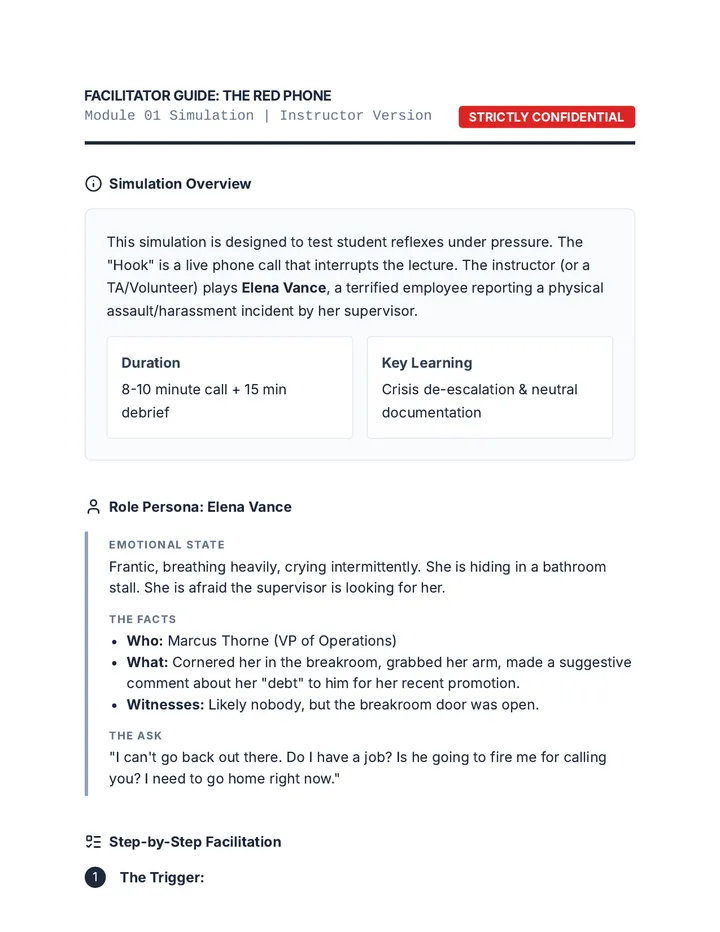
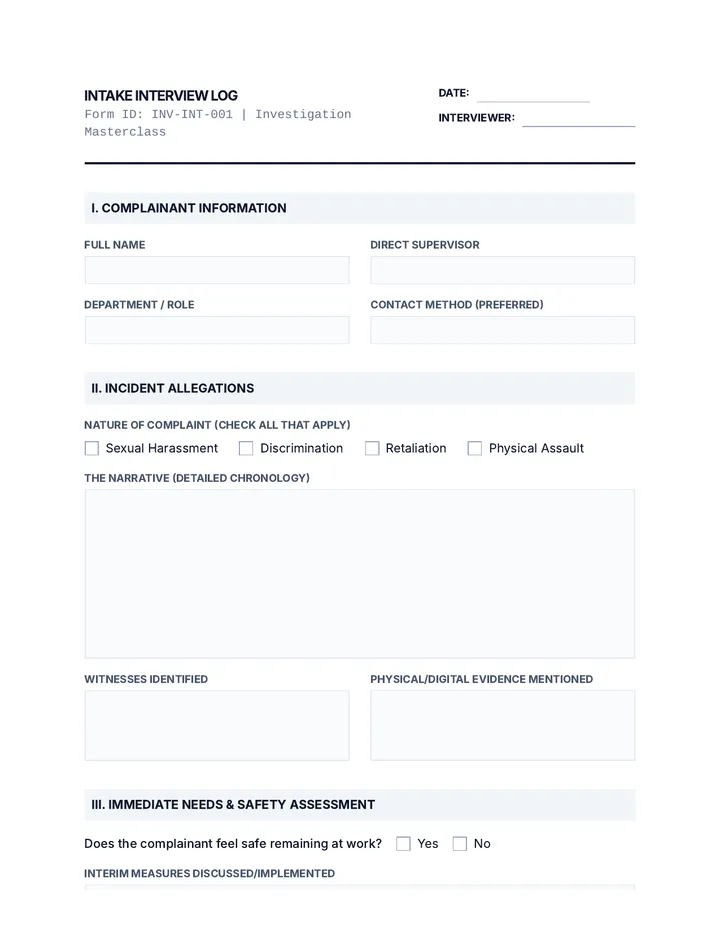
A comprehensive graduate-level simulation-based course on handling workplace harassment and discrimination complaints. Students progress from initial intake to final report writing, focusing on procedural fairness, neutrality, and evidence-based determination.
A comprehensive sequence for undergraduate students focusing on using graphic organizers to support working memory during fast-paced lectures. Students learn to prepare skeletal notes, map STEM logic, track humanities arguments, leverage digital tools, and synthesize notes for long-term retention.
This sequence applies Organizational Behavior Management (OBM) principles to improve employee performance and organizational systems through positive reinforcement, pinpointing, and evidence-based training models.
A professional workshop series for graduate students to master peer support, empathetic communication, and collective problem-solving within high-pressure academic cohorts.
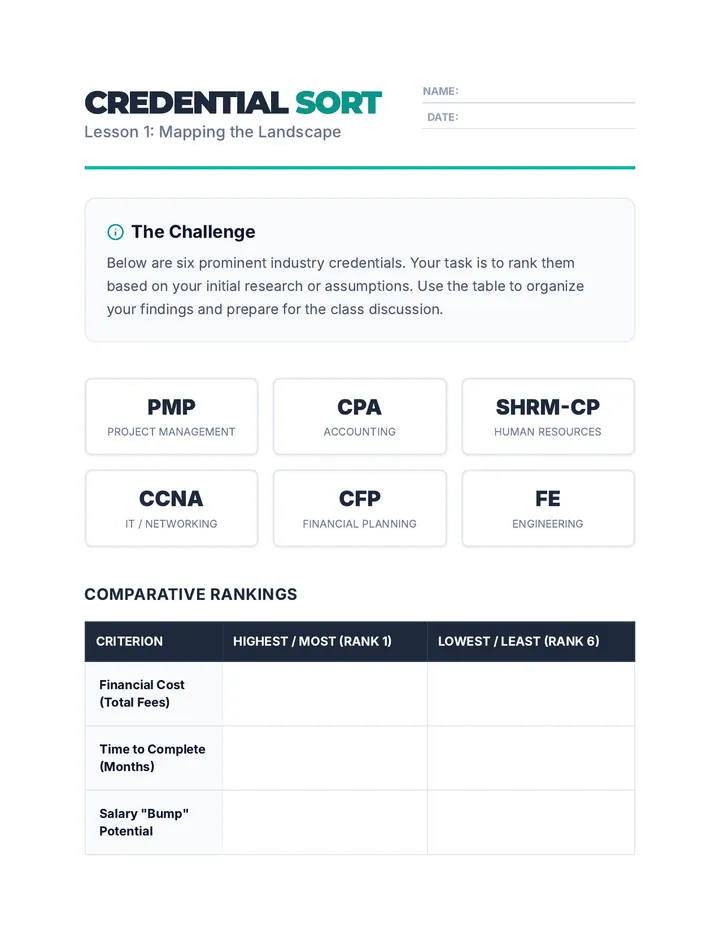
This sequence guides undergraduate students through the complex landscape of professional certifications, micro-credentials, and licensures. Students will learn to evaluate the market value, legitimacy, and strategic fit of various post-secondary credentials to enhance their early career trajectories.
A comprehensive system for young adult researchers to manage long-term projects using GTD principles adapted for high-energy 'hummingbird' chronotypes. Focuses on capturing ideas quickly, maintaining visual momentum, and deep weekly reflection.
A professional development series for nursing home staff and volunteers focused on enhancing resident communication and emotional support through practical strategies.
A specialized sequence for undergraduate counseling students focusing on the 'PL' (Treat Physical Illness) and 'A' (Avoid Mood-Altering Substances) components of the PLEASE skill. Students develop clinical assessment, motivational interviewing, and interdisciplinary collaboration skills to address medical and substance-related barriers to emotional regulation.
A comprehensive training sequence for undergraduate students focused on the clinical application of Thought Record tracking. Students transition from understanding the tool to facilitating it, mastering psychoeducation, Socratic questioning, and managing clinical resistance.
This graduate-level sequence critically examines the DBT FAST skills (Fair, Apology-free, Stick to values, Truthful) through the lenses of cultural humility, intersectionality, and systemic power dynamics. Students will move beyond a Eurocentric assertiveness model to develop nuanced, safe, and culturally responsive clinical interventions.
A graduate-level sequence exploring the professional, economic, and collaborative landscapes of contemporary printmaking. Students transition from studio practice to professional engagement through market analysis, collaborative simulations, and grant writing.
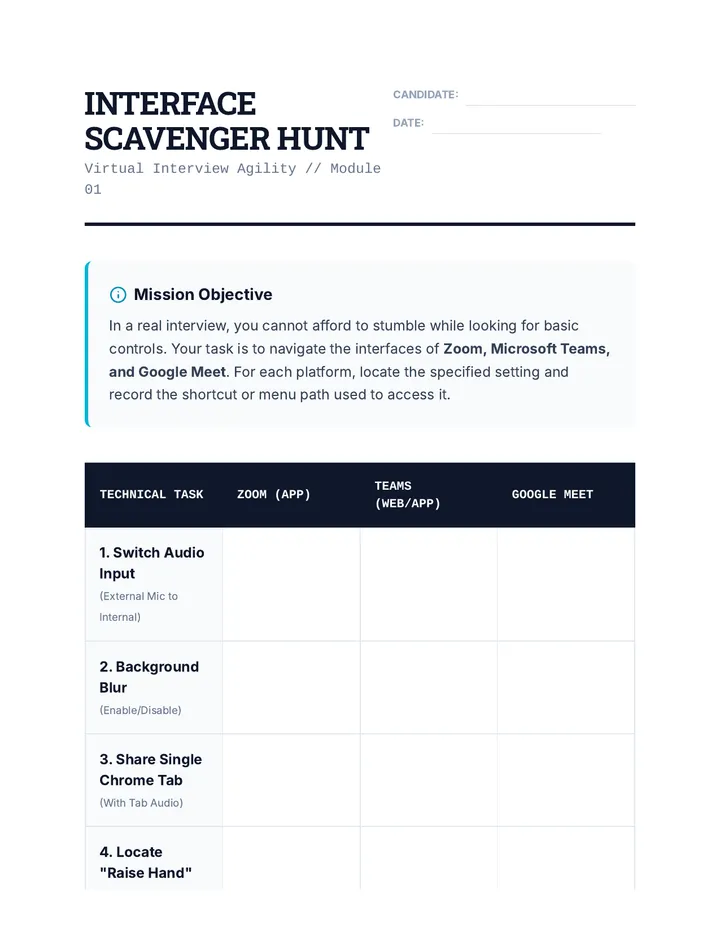
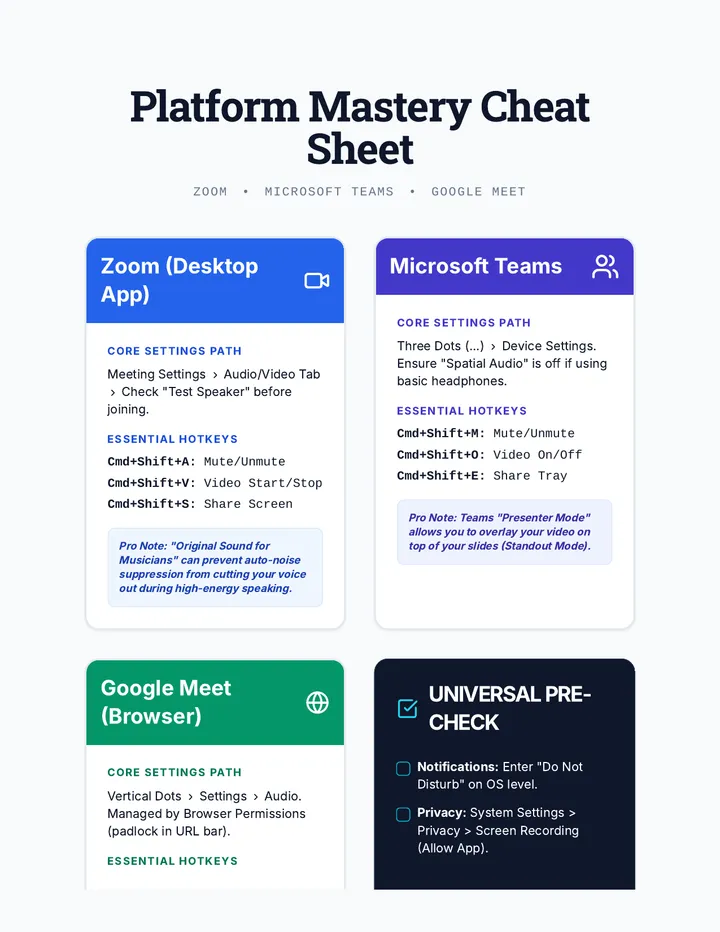
A specialized sequence for graduate students to master the technical nuances of virtual interview platforms, focusing on professional screen sharing, systematic troubleshooting, and contingency planning for high-stakes digital environments.
An advanced graduate-level sequence focused on the synthesis and application of federal employment laws (FLSA, Title VII, ADA, FMLA) in organizational leadership. Students act as consultants to audit policies, resolve complex personnel disputes, and design strategic compliance frameworks that balance legal risk with ethical culture.
A comprehensive sequence for undergraduate students focused on mastering virtual interview platforms (Zoom, Teams, WebEx) and developing the resilience needed to handle technical failures with professional grace. Students move from platform fluency to real-time crisis management simulations.
An advanced clinical training sequence for graduate students to master the DBT DEAR MAN communication protocol, focusing on theoretical depth, precise scripting, and high-fidelity simulation.