Active listening, assertive expression, and boundary-setting strategies for interpersonal success. Develops proficiency in conflict mediation, cooperative teamwork, and the cultivation of healthy romantic and platonic connections.
A 9-week therapeutic curriculum for adults processing maternal loss, integrating Dialectical Behavior Therapy (DBT) skills to foster acceptance, emotional regulation, and resilience.
A unit exploring the foundations of humanistic psychology, focusing on person-centered approaches, therapeutic relationships, and the drive toward self-actualization.
A series of advanced counseling assignments covering Case Conceptualization and Theory/Intervention for CSL 686.
A professional development series for nursing home staff and volunteers focused on enhancing resident communication and emotional support through practical strategies.
A comprehensive graduate-level seminar series on advanced group counseling facilitation, focusing on instructional frameworks, clinical process, and cultural sensitivity.
A collection of lessons that use modern cultural icons to teach literacy, social-emotional skills, and creative expression to elementary and middle school students.
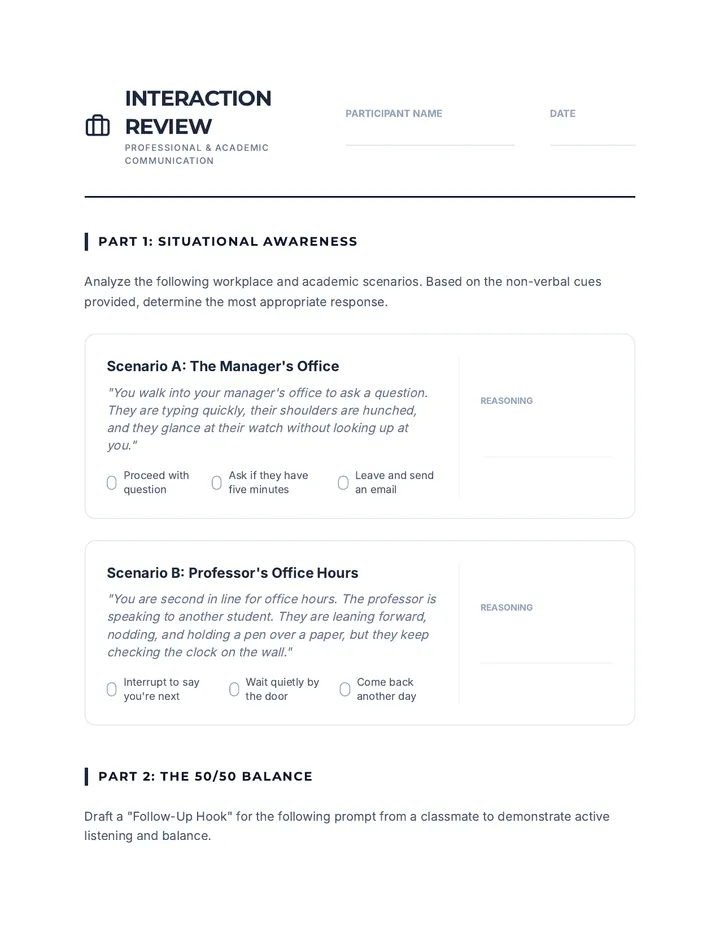
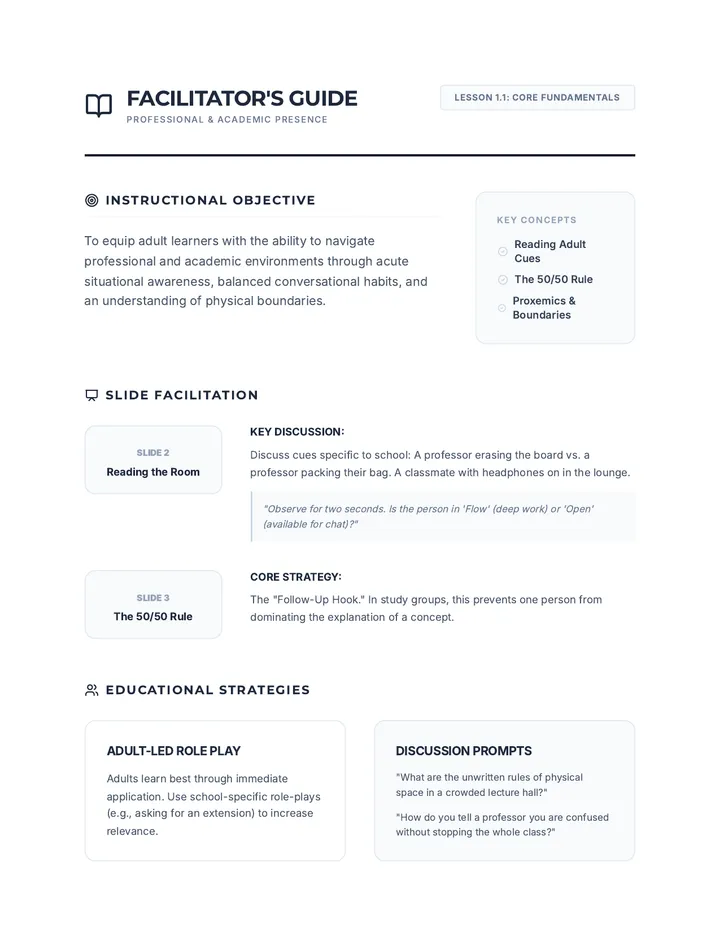
A series of lessons designed to enhance social and professional communication skills for adult learners, focusing on workplace and community interactions.
A comprehensive unit designed to guide students through the modern job application process, focusing on strategic networking, deep company research, and high-stakes interview preparation. Students will learn to build professional connections and tailor their approach to specific company cultures and scenarios.
A comprehensive 15-day expressive arts therapy program for adults, integrating visual arts, music, dance, psychodrama, storytelling, and professional ethics.
A comprehensive suite of professional resources for social work students and practitioners, covering ethical decision-making, crisis management, grant acquisition, trauma-informed practices, and community evaluation.
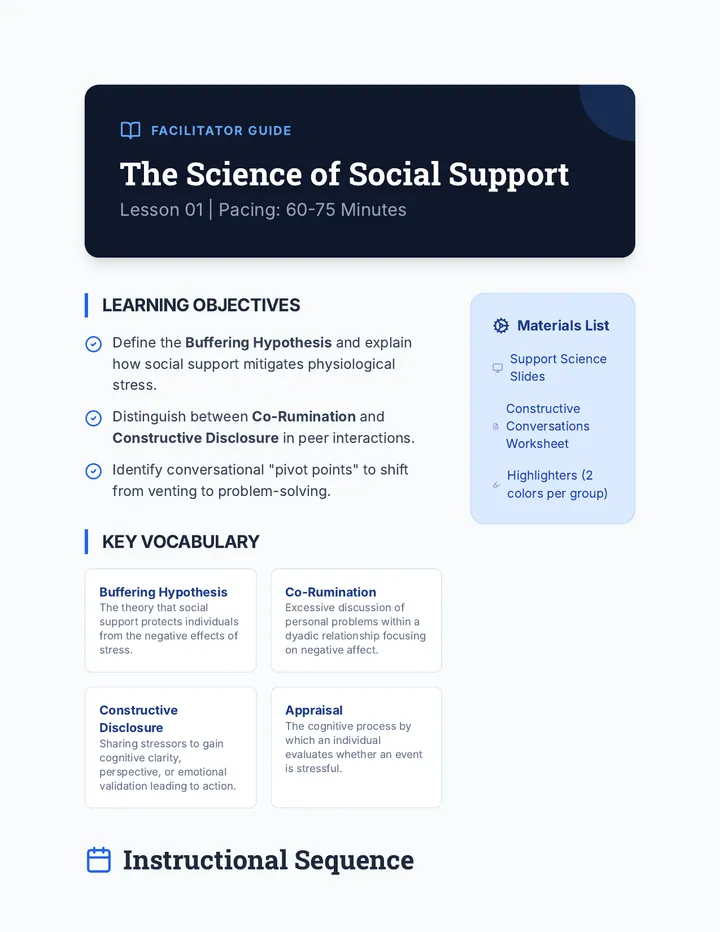
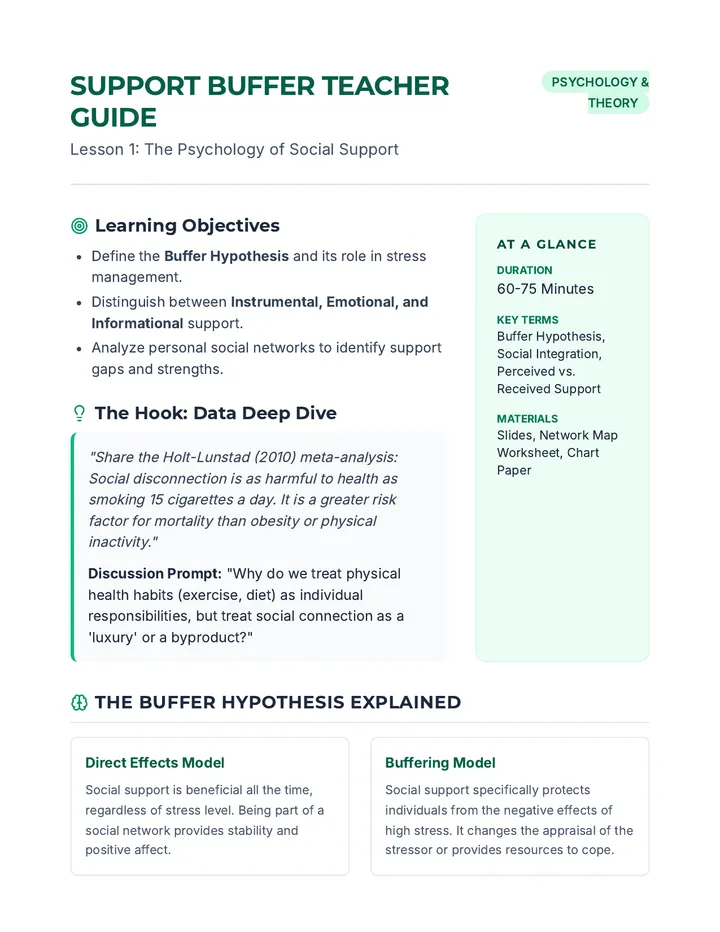
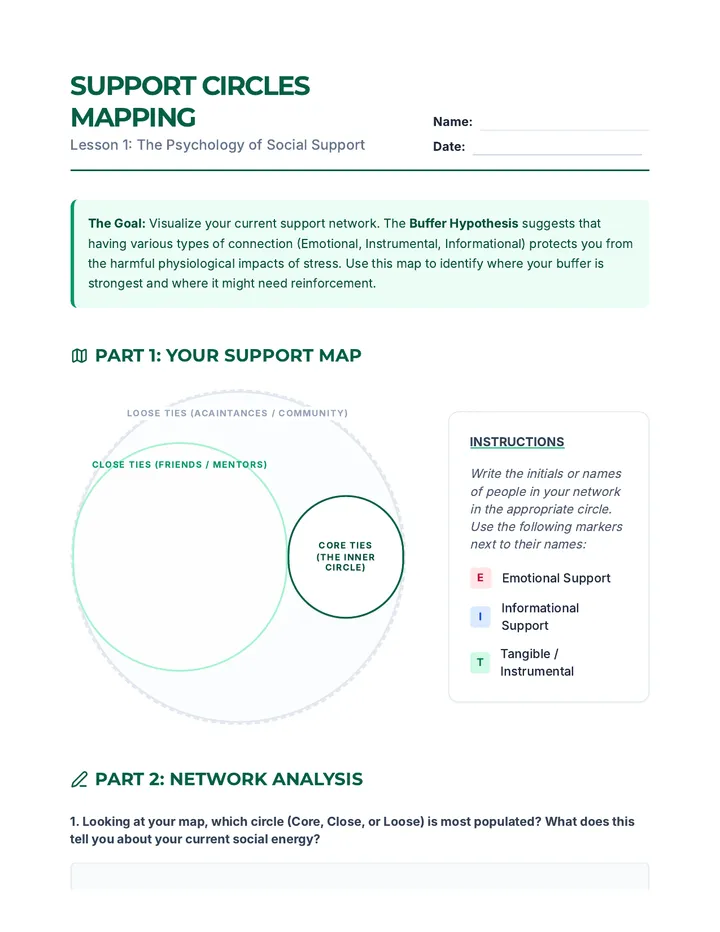
A graduate-level training sequence on facilitating peer support systems to mitigate stress and anxiety. Students learn the science of social support, micro-skills for active listening, boundary setting to prevent burnout, and group facilitation techniques to create sustainable communities of care.
A comprehensive sequence for undergraduate students exploring the social psychology of stress and the practical skills needed to build resilient peer support networks. Students move from theoretical understanding to practical facilitation and community planning.
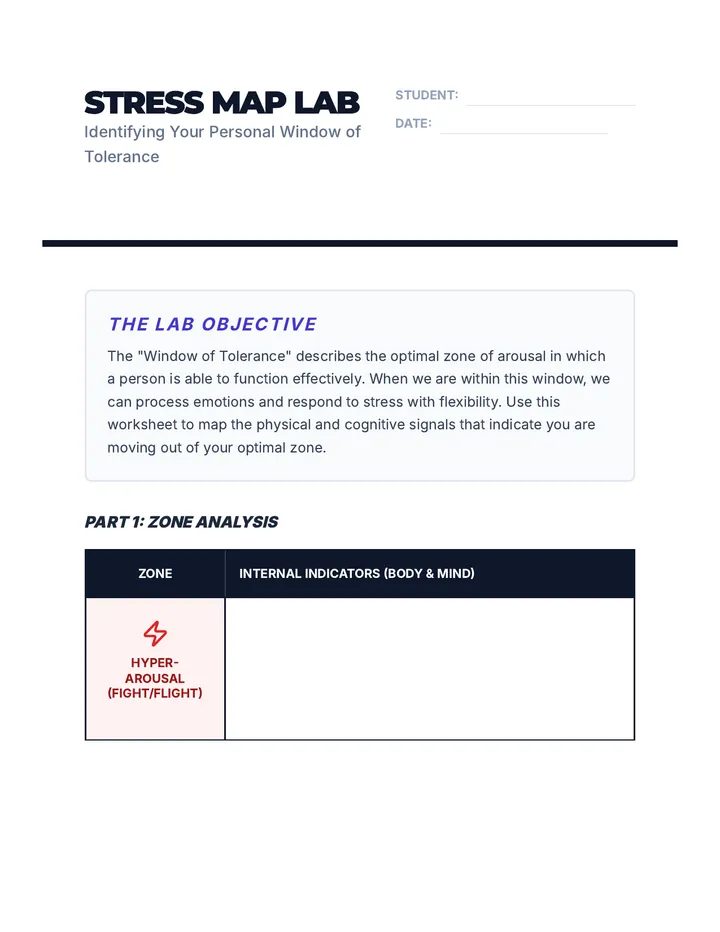
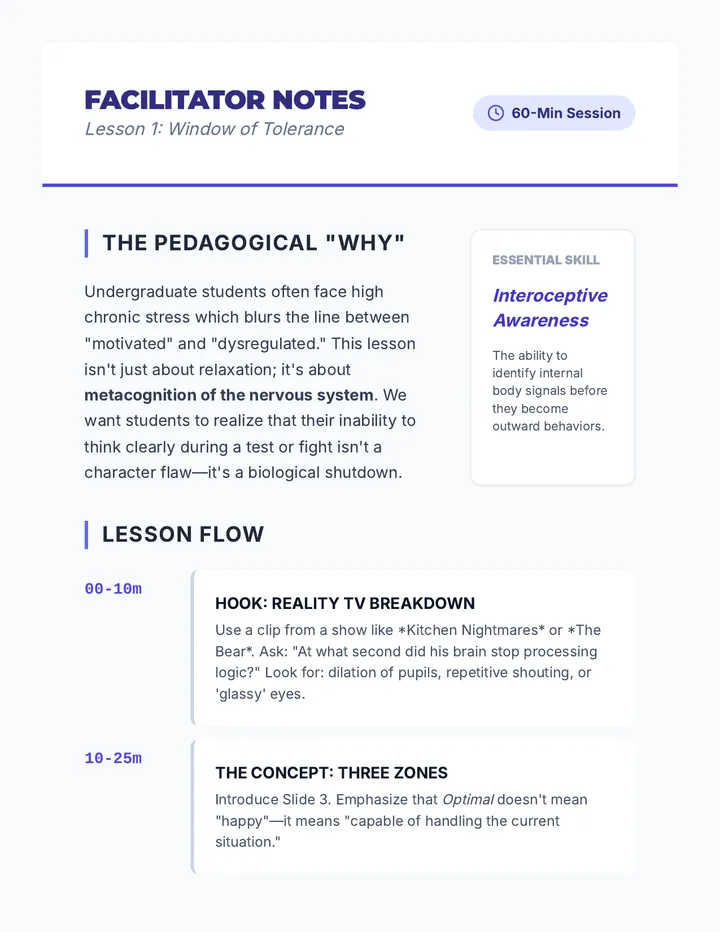
An applied sequence for undergraduate students to master self-regulation and de-escalation techniques in high-pressure academic and interpersonal contexts. Students move from identifying personal physiological triggers to practicing real-time regulation during active conflict and performance.
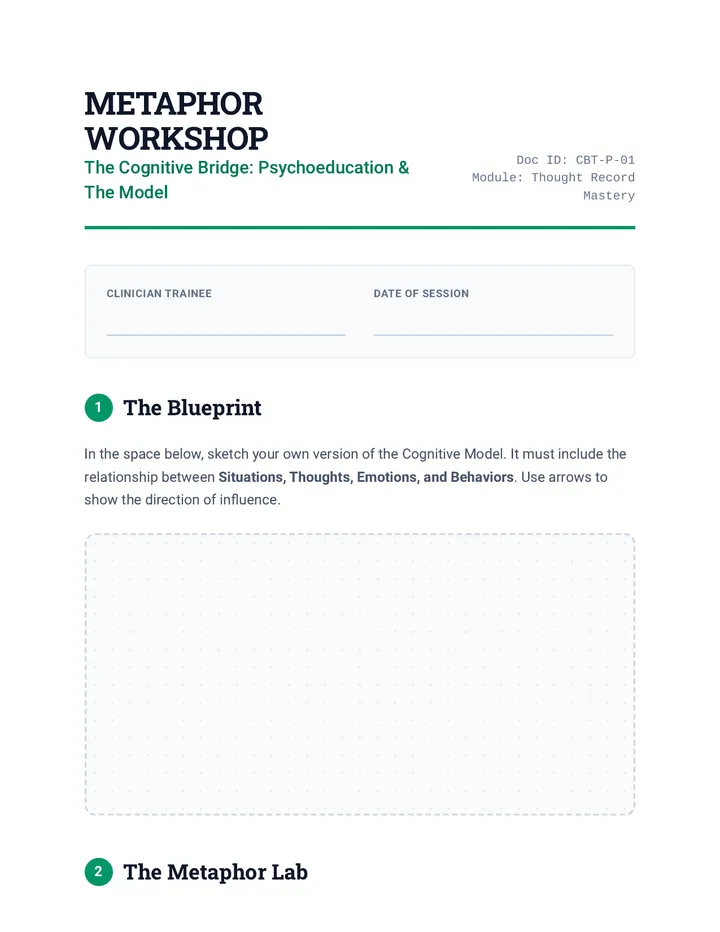
A comprehensive training workshop for graduate students on the clinical implementation of the standard 7-column thought record in Cognitive Behavioral Therapy (CBT). Students move from initial psychoeducation to the precise mechanics of cognitive restructuring and troubleshooting client compliance.
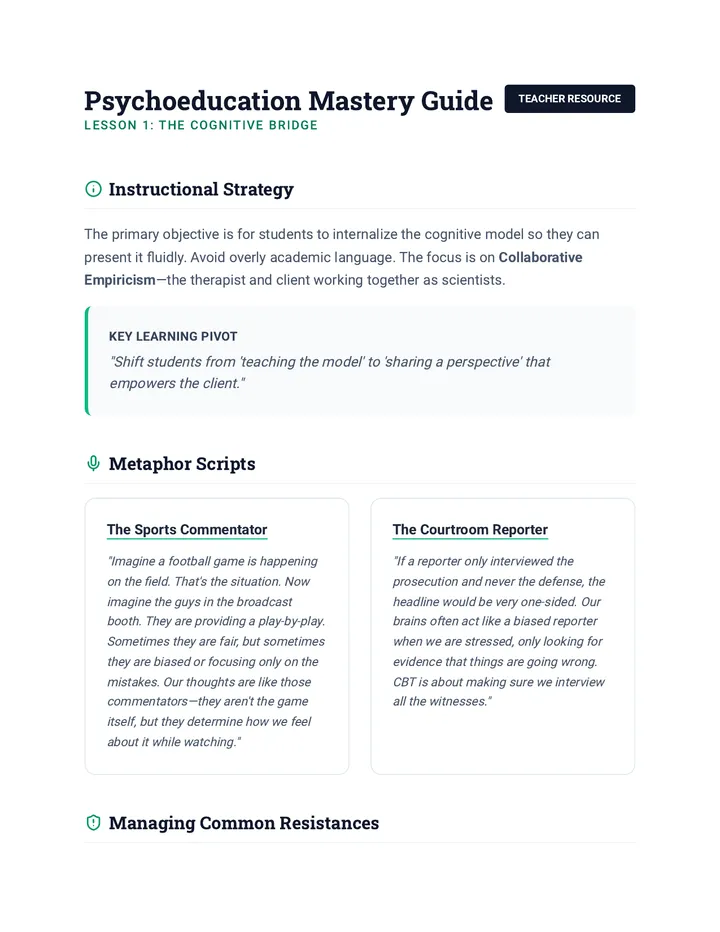
A comprehensive training sequence for undergraduate students focused on the clinical application of Thought Record tracking. Students transition from understanding the tool to facilitating it, mastering psychoeducation, Socratic questioning, and managing clinical resistance.
A clinical training laboratory for graduate students to master the coaching and implementation of DBT FAST skills. Focuses on move from theory to practice through simulation, peer feedback, and managing client resistance.
This graduate-level sequence explores the clinical application of FAST skills in DBT, focusing on the conceptualization of self-respect deficits and the prioritization of integrity in interpersonal conflict. Students will move from theoretical differentiation of effectiveness goals to advanced case formulation and treatment planning.
An inquiry-based exploration of the FAST skills (Fairness, Apologies, Stick to Values, Truthfulness) for undergraduate students. This sequence moves from internal value identification to external boundary setting and integrity planning.
This sequence immerses undergraduate students in the theoretical and practical application of advanced conflict resolution, moving beyond basic interpersonal skills to systemic mediation strategies. Students will master interest-based negotiation, emotional regulation, reframing, and power analysis through simulations and case studies.
This sequence explores the psychology of group dynamics and community care. Students learn to recognize burnout, offer effective support, and advocate for cultures where requesting breaks is normalized and valued.
An advanced clinical sequence for graduate students focusing on the assessment of romantic relationship dynamics through attachment theory, neurobiology, and evidence-based frameworks. It bridges theory with clinical application, focusing on adult attachment, power dynamics, and conflict styles.
An advanced workshop-style sequence for graduate students focusing on communication architectures, differentiation of self, and the practical mastery of healthy relationship dynamics. Students will move from theoretical frameworks (Bowen Family Systems, NVC) to high-stakes practical simulations.
A comprehensive unit for undergraduate students exploring the nuances of human connection, boundary setting, and conflict resolution in academic and professional contexts.
A comprehensive lesson sequence for adults focused on identifying healthy relationship traits, setting personal boundaries, and mastering effective communication scripts.
A professional workshop series for graduate students to master peer support, empathetic communication, and collective problem-solving within high-pressure academic cohorts.
A comprehensive sequence for undergraduate students exploring high-stakes problem-solving through outdoor and adventure activities. Students move from analyzing communication systems to executing adaptive strategies, culminating in professional leadership development plans.
A sequence for graduate students exploring mindfulness as a tool for emotional intelligence and resilient leadership. Focuses on moving from internal regulation to interpersonal effectiveness in professional settings.
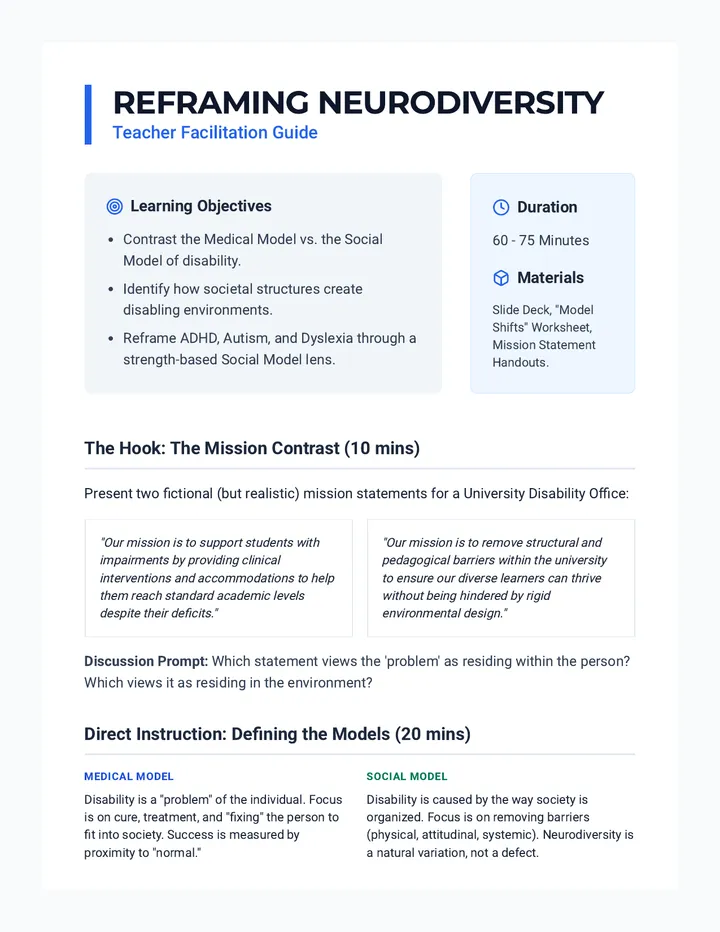
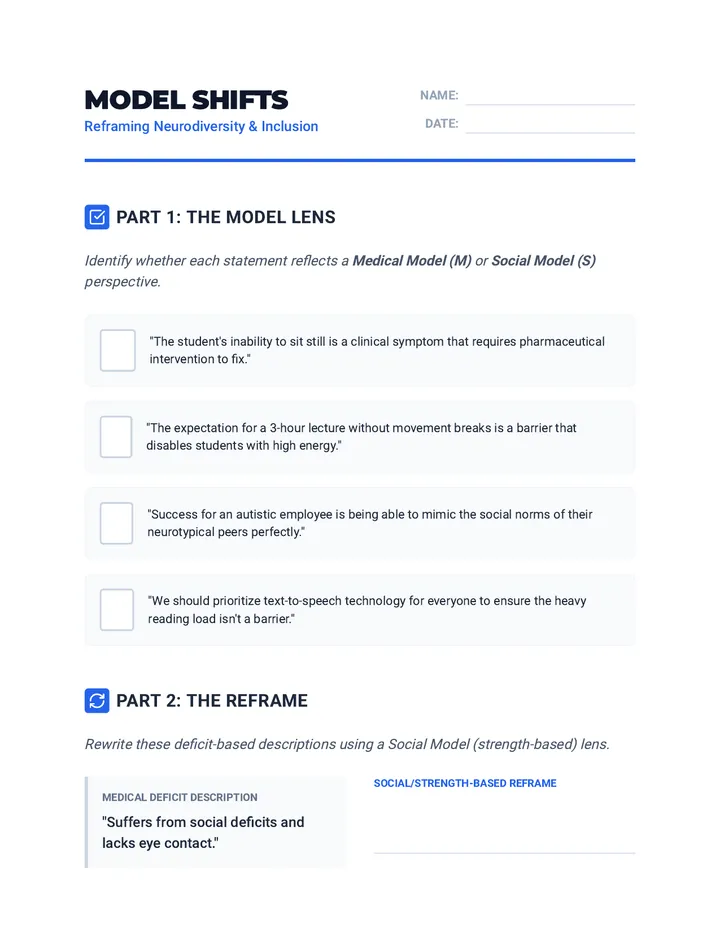
This sequence explores neurodiversity through the Social Model of disability, challenging traditional norms of professionalism and designing inclusive environments. Students will move from theoretical understanding to practical application in organizational policy and advocacy.
A graduate-level sequence exploring the ethical, legal, and leadership dimensions of collaborative arts practice. Students investigate authorship, intellectual property, and conflict resolution to prepare for professional creative leadership.
This sequence guides undergraduate students through collaborative strategies to support working memory during note review and organization. Students move from individual note consolidation to creating shared study artifacts and teaching peers, culminating in a capstone 'Teach-Back' session.
This inquiry-based sequence flips the table, placing graduate students in the role of the recruiter or hiring manager to understand the reference check process from the employer's perspective. Students analyze scripts, interpret subtext, examine red flags, and simulate hiring decisions to better select and prepare their own professional references.
A comprehensive sequence for graduate students focusing on the strategic identification, selection, and long-term cultivation of professional references to validate career competencies and professional narratives.
This sequence provides undergraduate counseling students with a structured progression from non-verbal presence to complex group facilitation. It emphasizes active listening, reflective responding, internal bias management, and constructive feedback loops using the SBI model.
A comprehensive sequence for undergraduate counseling students focused on building psychological safety, co-creating group norms, and mastering the structural elements of group facilitation. Students progress from theoretical understanding to simulated practice of establishing and maintaining safe group containers.
A graduate-level exploration of systems-based approaches to opioid recovery, focusing on integrated care models, recovery capital, and the creation of recovery-ready communities. Students analyze the 'Continuum of Care' and develop strategies for sustainable social reintegration.
This graduate-level sequence guides clinical psychology students through the process of synthesizing assessment data into measurable treatment plans. Students will master the 'Golden Thread' of clinical documentation, integrate evidence-based practices, and utilize routine outcome monitoring to ensure professional accountability and patient progress.
A comprehensive sequence for university students to master advanced problem-solving strategies. The sequence covers core principles, analytical frameworks, creative techniques, and real-world applications through interactive lessons and a long-term project.
A comprehensive training for graduate student leaders on the legal, ethical, and systemic dimensions of peer gatekeeping in university settings. This sequence bridges the gap between supportive listening and institutional crisis intervention.
A comprehensive unit for undergraduate students focusing on the aftermath of human trafficking. Students explore trauma-informed care, legal advocacy for survivors, ethical storytelling, the neurological impacts of trauma, and community-based action planning to support recovery and reintegration.
This sequence trains undergraduate students in the foundational mechanisms required to build and maintain safe peer support environments. Students progress from theoretical psychological safety to practical microskills, empathy, boundary management, and group facilitation.
This graduate-level sequence focuses on the ethical and practical frameworks required to maintain psychological safety in group counseling. Students progress from initial contracting to managing complex dynamics like over-disclosure, trauma-informed gatekeeping, and conflict resolution, concluding with professional closure protocols.
A comprehensive sequence for undergraduate students on managing the ethical complexities of peer support, focusing on professional boundaries, disclosure limits, and crisis management.
This graduate-level sequence explores narrative and musical modalities in group grief support, focusing on the therapeutic power of storytelling and music to foster connection and meaning reconstruction.
A comprehensive graduate-level course exploring the intersection of ethical codes, legal requirements, and cultural competence in clinical psychology, featuring case-based learning and critical decision-making models.
A graduate-level exploration of the ethical and legal complexities surrounding the use of crisis hotlines in clinical practice, focusing on HIPAA, state-specific mandates, and the balance between client autonomy and the duty to protect.
An advanced clinical training sequence for graduate students to master the DBT DEAR MAN communication protocol, focusing on theoretical depth, precise scripting, and high-fidelity simulation.
A comprehensive workshop sequence for undergraduate students to master the mechanics of strategic inquiry, moving from individual question syntax to complex lines of questioning designed to force logical concessions.
An advanced course for graduate students exploring the intersection of neurobiology, psychological theory, and organizational leadership. Students develop high-level social and emotional competencies to navigate complex professional environments and foster psychological safety.
A 5-lesson series for graduate students focused on navigating the systemic stressors of academia, setting professional boundaries, and preventing burnout through neurobiological understanding and assertive communication.
This graduate-level sequence focuses on the interpersonal and therapeutic aspects of behavior contracting. Rather than treating the contract as a static document, students explore it as a collaborative intervention designed to build student agency, self-regulation, and stakeholder alignment using Motivational Interviewing and negotiation strategies.
An advanced sequence for graduate students focusing on crisis leadership, strategic agility, and high-stakes communication. Students progress through theoretical analysis into an immersive simulation where they must pivot strategies amidst shifting data and stakeholder resistance.
An advanced clinical training sequence for graduate counseling students focused on the "Self of the Therapist" through the application of GIVE skills in high-stakes professional and therapeutic scenarios. Students move from theoretical understanding to high-fidelity simulations and micro-analytical self-assessment.
This graduate-level sequence deconstructs the GIVE skill set (Gentle, Interested, Validate, Easy Manner) within DBT, focusing on clinical conceptualization, neurobiological underpinnings, and differential application in complex interpersonal systems. Students progress from theoretical analysis to sophisticated treatment planning and case conceptualization.
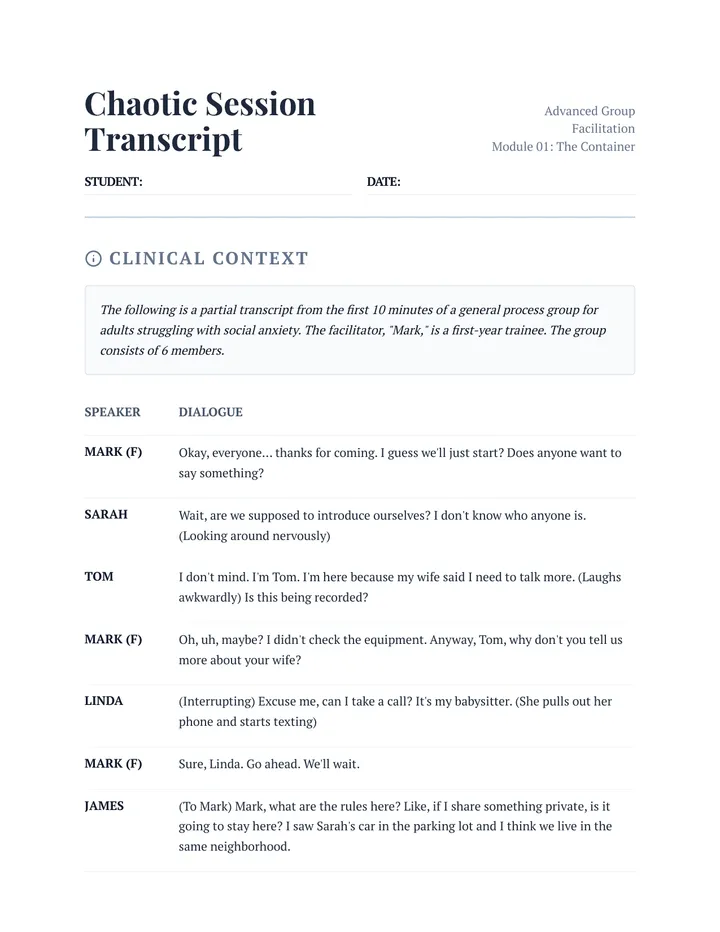
A comprehensive graduate-level sequence exploring conflict resolution, challenging member behaviors, and crisis management within group therapy. Students move from theoretical 'Storming' stage frameworks to hands-on simulation of de-escalation and restorative dialogue.
A 5-lesson workshop sequence for undergraduate students to understand, challenge, and overcome imposter syndrome through peer validation and evidence-based identity building.
A 5-lesson sequence for undergraduate students focused on deconstructing academic failure, understanding stress physiology, practicing vulnerability through storytelling, and creating personalized resilience frameworks through peer support.
A case-study-driven sequence for graduate students to analyze professional stressors and develop evidence-based resilience strategies through collective insight.
A comprehensive sequence designed for graduate students transitioning from academia to industry. It focuses on identifying transferable skills, quantifying academic achievements, and crafting a strategic cover letter that highlights professional value over academic credentials.
This graduate-level sequence bridges the gap between improvisational theater techniques and organizational leadership. Students explore how the mechanics of spontaneity, 'Yes, And' communication protocols, and narrative arcs can be applied to crisis management, negotiation, and high-stakes corporate communication.
A comprehensive sequence for graduate students to master executive functioning, long-term project management, and high-stakes assessment preparation, treating their degree as a professional project.
A case-study-driven sequence where students act as external consultants to diagnose communication breakdowns, analyze feedback systems like 360-degree reviews and PIPs, and design a positive corporate culture.
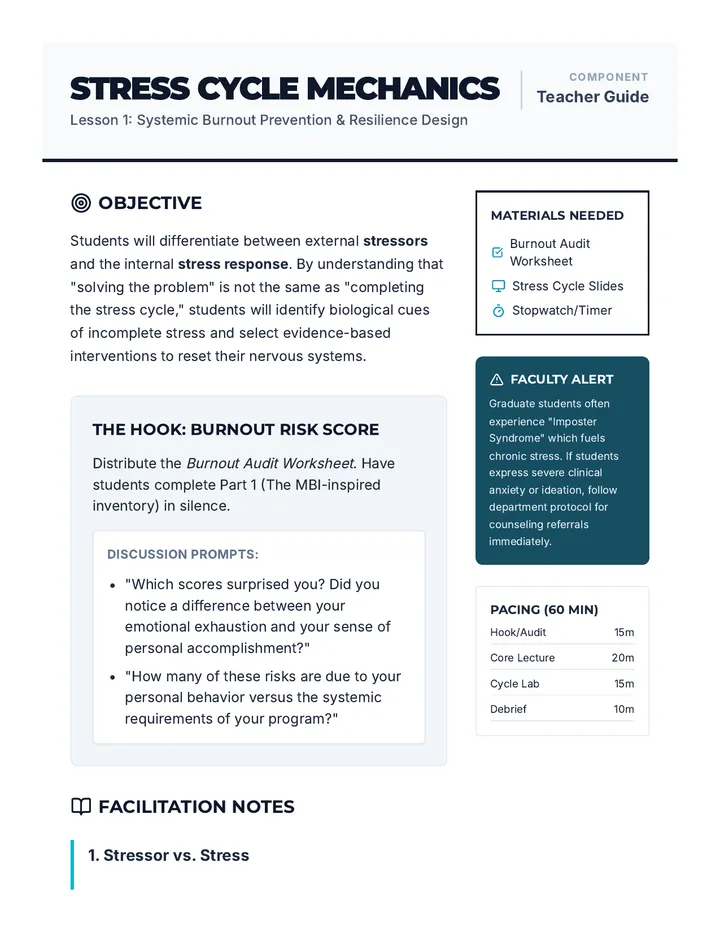
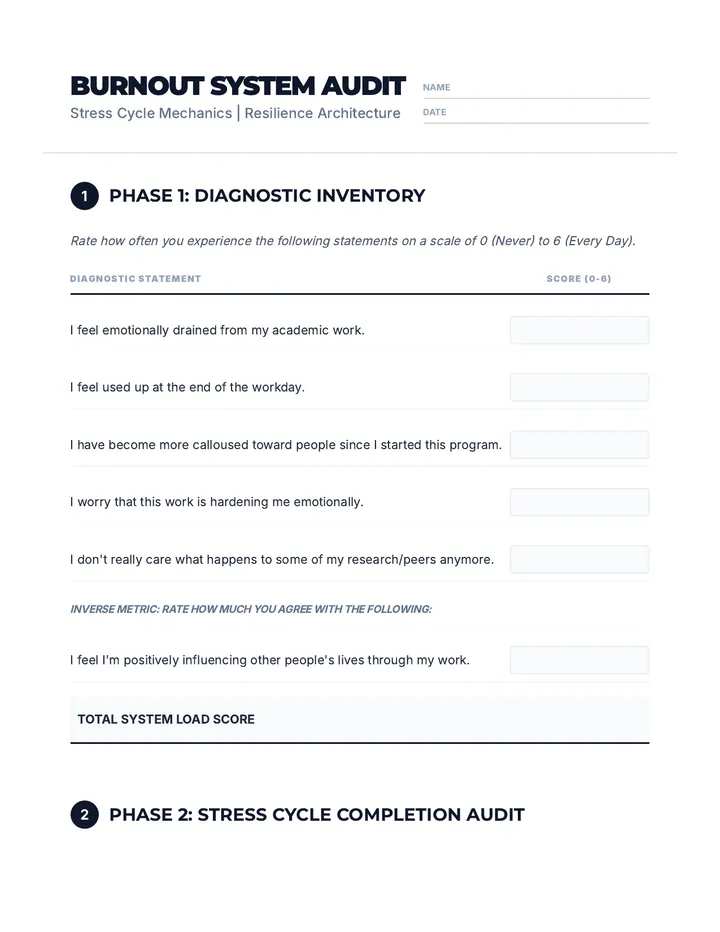
A systemic approach to stress and burnout prevention for graduate students, reframing personal well-being as a design challenge. Students develop a personalized 'resilience architecture' through structural changes in time management, sleep hygiene, and boundary setting.
This sequence equips undergraduate students with the rhetorical skills and legal knowledge to advocate for their needs in academic and professional settings. It transitions from exploring cultural stigmas around help-seeking to practical skill-building in written and verbal communication, culminating in high-stakes negotiation simulations.
This sequence equips undergraduate counseling students with the interpersonal and procedural skills necessary for suicide intervention, covering direct communication, de-escalation, safety planning, lethal means counseling, and legal/ethical mandates.
This graduate-level sequence prepares clinical students to effectively triage crises and manage hotline referrals. It covers lethality assessment, the technical mechanics of warm handoffs, involuntary intervention protocols, risk management documentation, and post-crisis therapeutic repair.
A practicum-style sequence for graduate students focusing on SBIRT techniques, institutional risk assessment, and emergency overdose protocols. Students move from environmental auditing to high-intensity crisis simulation and post-crisis management.
An advanced sequence for graduate counseling students focusing on the theoretical and practical application of building psychological safety, group cohesion, and navigating developmental stages in therapeutic groups.
A comprehensive training program for undergraduate students to master the GIVE skills (Gentle, Interested, Validate, Easy manner) through physiological awareness and high-stakes simulations. Students move from understanding their own biological responses to managing complex group conflicts while preserving relationship integrity.
A therapeutic series designed to help individuals in recovery identify their non-negotiable core values through high-stakes decision-making and real-world application. Students move from broad concepts to a refined personal compass.
A graduate-level sequence focused on applying FAST skills (Fair, Apologies, Stick to Values, Truthful) to professional identity, boundary setting, and therapist resilience. Students learn to navigate imposter syndrome, ethical documentation, and career advocacy through a clinician-centered lens.
This graduate-level sequence critically examines the DBT FAST skills (Fair, Apology-free, Stick to values, Truthful) through the lenses of cultural humility, intersectionality, and systemic power dynamics. Students will move beyond a Eurocentric assertiveness model to develop nuanced, safe, and culturally responsive clinical interventions.
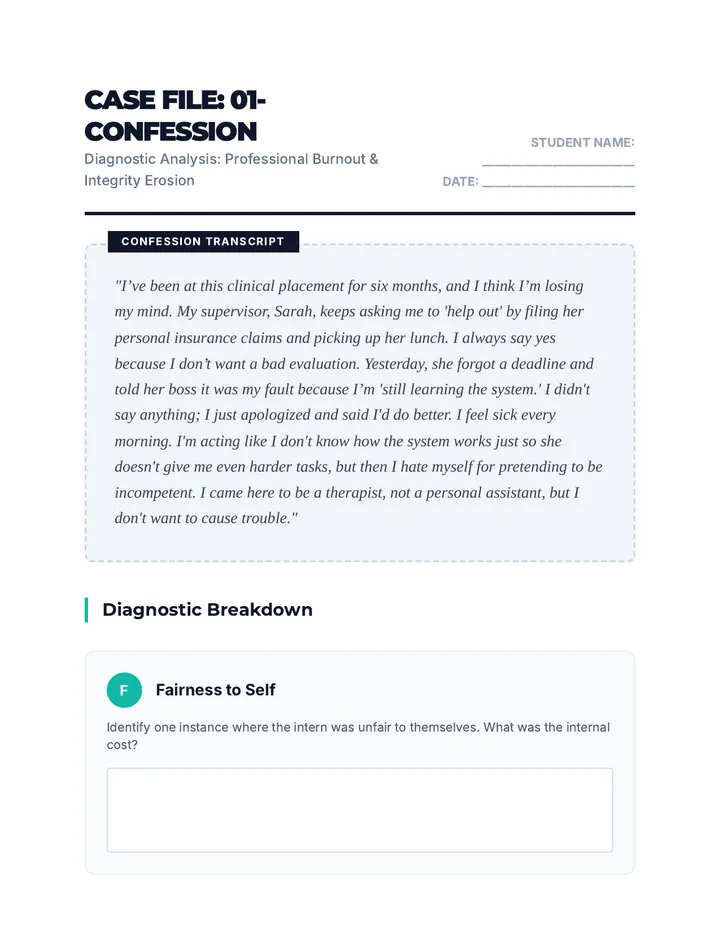
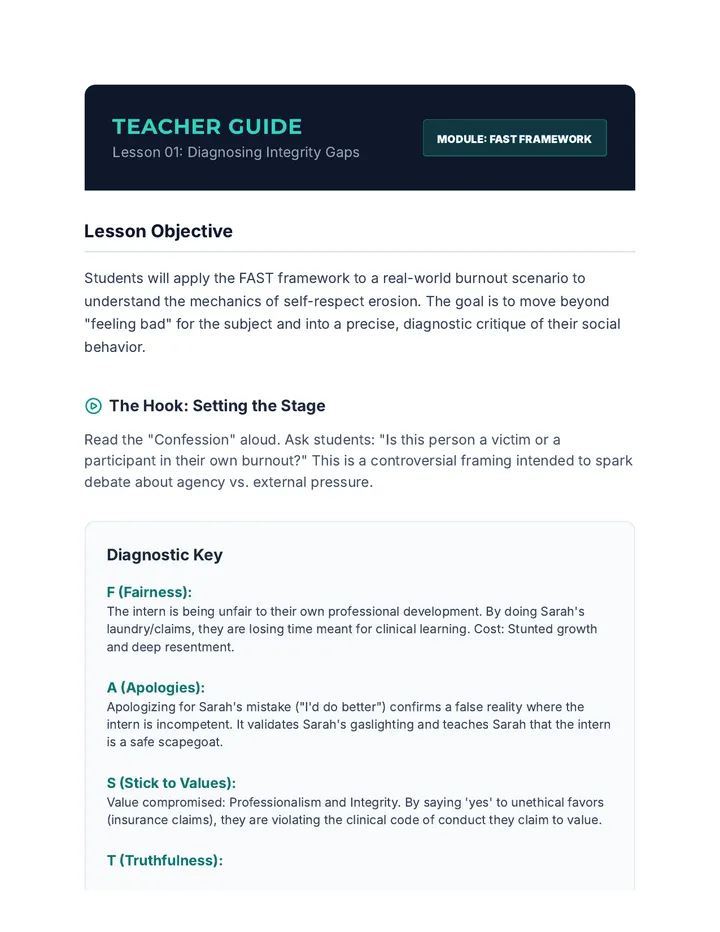
This sequence uses the FAST framework (DBT) to analyze professional social dynamics, helping undergraduate students identify and mitigate the erosion of self-respect in high-stakes environments like internships and early careers. Students progress from diagnostic analysis of professional failure scenarios to prescriptive intervention design.
A specialized curriculum for adults on mastering emotional regulation, focusing on the mechanics of anger explosions, identifying vulnerabilities, and understanding the long-term impact of emotional reactivity.
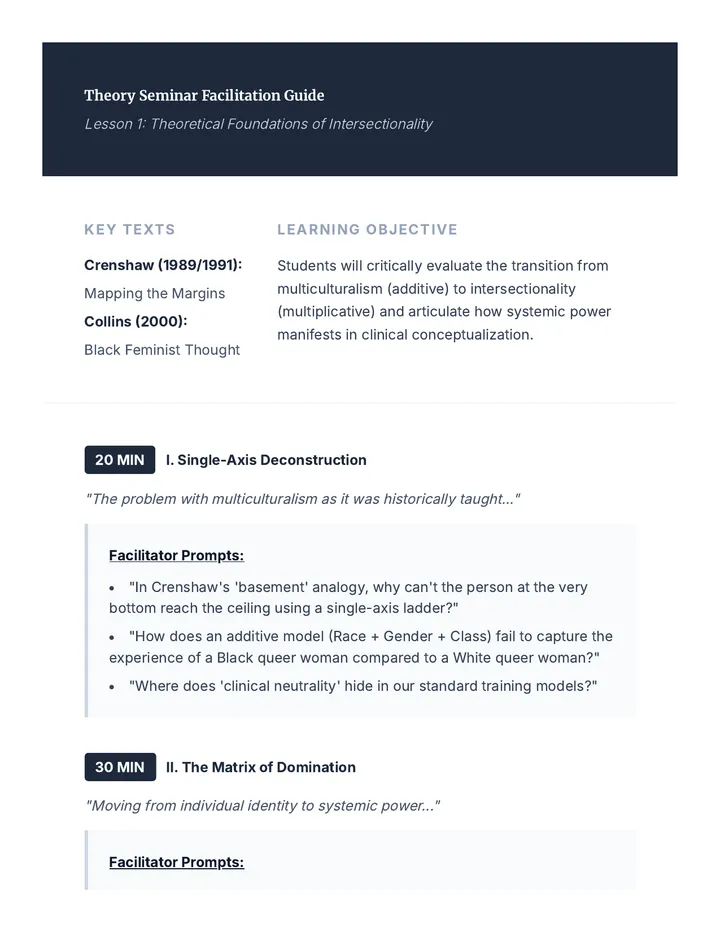
A 5-lesson sequence for graduate counseling students to explore intersectionality, social location, and family scripts to build cultural humility and professional identity. Students move from theoretical critique to personal excavation and clinical application.
This sequence explores how societal narratives shape personal identity. Students learn to deconstruct dominant cultural 'scripts', utilize Narrative Therapy frameworks like the Landscape of Action/Identity, and practice Outsider Witnessing to formalize new, preferred stories of agency and resilience.